window.__IS_SSR__=true
window.__INITIAL_STATE__={
"attachmentsReducer": {
"audio_0": {
"type": "attachments",
"id": "audio_0",
"imgSizes": {
"kqedFullSize": {
"file": "https://ww2.kqed.org/news/wp-content/themes/KQED-unified/img/audio_bgs/background0.jpg"
}
}
},
"audio_1": {
"type": "attachments",
"id": "audio_1",
"imgSizes": {
"kqedFullSize": {
"file": "https://ww2.kqed.org/news/wp-content/themes/KQED-unified/img/audio_bgs/background1.jpg"
}
}
},
"audio_2": {
"type": "attachments",
"id": "audio_2",
"imgSizes": {
"kqedFullSize": {
"file": "https://ww2.kqed.org/news/wp-content/themes/KQED-unified/img/audio_bgs/background2.jpg"
}
}
},
"audio_3": {
"type": "attachments",
"id": "audio_3",
"imgSizes": {
"kqedFullSize": {
"file": "https://ww2.kqed.org/news/wp-content/themes/KQED-unified/img/audio_bgs/background3.jpg"
}
}
},
"audio_4": {
"type": "attachments",
"id": "audio_4",
"imgSizes": {
"kqedFullSize": {
"file": "https://ww2.kqed.org/news/wp-content/themes/KQED-unified/img/audio_bgs/background4.jpg"
}
}
},
"placeholder": {
"type": "attachments",
"id": "placeholder",
"imgSizes": {
"thumbnail": {
"file": "https://cdn.kqed.org/wp-content/uploads/2024/12/KQED-Default-Image-816638274-2000x1333-1-160x107.jpg",
"width": 160,
"height": 107,
"mimeType": "image/jpeg"
},
"medium": {
"file": "https://cdn.kqed.org/wp-content/uploads/2024/12/KQED-Default-Image-816638274-2000x1333-1-800x533.jpg",
"width": 800,
"height": 533,
"mimeType": "image/jpeg"
},
"medium_large": {
"file": "https://cdn.kqed.org/wp-content/uploads/2024/12/KQED-Default-Image-816638274-2000x1333-1-768x512.jpg",
"width": 768,
"height": 512,
"mimeType": "image/jpeg"
},
"large": {
"file": "https://cdn.kqed.org/wp-content/uploads/2024/12/KQED-Default-Image-816638274-2000x1333-1-1020x680.jpg",
"width": 1020,
"height": 680,
"mimeType": "image/jpeg"
},
"1536x1536": {
"file": "https://cdn.kqed.org/wp-content/uploads/2024/12/KQED-Default-Image-816638274-2000x1333-1-1536x1024.jpg",
"width": 1536,
"height": 1024,
"mimeType": "image/jpeg"
},
"fd-lrg": {
"file": "https://cdn.kqed.org/wp-content/uploads/2024/12/KQED-Default-Image-816638274-2000x1333-1-1536x1024.jpg",
"width": 1536,
"height": 1024,
"mimeType": "image/jpeg"
},
"fd-med": {
"file": "https://cdn.kqed.org/wp-content/uploads/2024/12/KQED-Default-Image-816638274-2000x1333-1-1020x680.jpg",
"width": 1020,
"height": 680,
"mimeType": "image/jpeg"
},
"fd-sm": {
"file": "https://cdn.kqed.org/wp-content/uploads/2024/12/KQED-Default-Image-816638274-2000x1333-1-800x533.jpg",
"width": 800,
"height": 533,
"mimeType": "image/jpeg"
},
"post-thumbnail": {
"file": "https://cdn.kqed.org/wp-content/uploads/2024/12/KQED-Default-Image-816638274-2000x1333-1-672x372.jpg",
"width": 672,
"height": 372,
"mimeType": "image/jpeg"
},
"twentyfourteen-full-width": {
"file": "https://cdn.kqed.org/wp-content/uploads/2024/12/KQED-Default-Image-816638274-2000x1333-1-1038x576.jpg",
"width": 1038,
"height": 576,
"mimeType": "image/jpeg"
},
"xxsmall": {
"file": "https://cdn.kqed.org/wp-content/uploads/2024/12/KQED-Default-Image-816638274-2000x1333-1-160x107.jpg",
"width": 160,
"height": 107,
"mimeType": "image/jpeg"
},
"xsmall": {
"file": "https://cdn.kqed.org/wp-content/uploads/2024/12/KQED-Default-Image-816638274-2000x1333-1-672x372.jpg",
"width": 672,
"height": 372,
"mimeType": "image/jpeg"
},
"small": {
"file": "https://cdn.kqed.org/wp-content/uploads/2024/12/KQED-Default-Image-816638274-2000x1333-1-672x372.jpg",
"width": 672,
"height": 372,
"mimeType": "image/jpeg"
},
"xlarge": {
"file": "https://cdn.kqed.org/wp-content/uploads/2024/12/KQED-Default-Image-816638274-2000x1333-1-1020x680.jpg",
"width": 1020,
"height": 680,
"mimeType": "image/jpeg"
},
"full-width": {
"file": "https://cdn.kqed.org/wp-content/uploads/2024/12/KQED-Default-Image-816638274-2000x1333-1-1920x1280.jpg",
"width": 1920,
"height": 1280,
"mimeType": "image/jpeg"
},
"guest-author-32": {
"file": "https://cdn.kqed.org/wp-content/uploads/2025/01/KQED-Default-Image-816638274-1333x1333-1-160x160.jpg",
"width": 32,
"height": 32,
"mimeType": "image/jpeg"
},
"guest-author-50": {
"file": "https://cdn.kqed.org/wp-content/uploads/2025/01/KQED-Default-Image-816638274-1333x1333-1-160x160.jpg",
"width": 50,
"height": 50,
"mimeType": "image/jpeg"
},
"guest-author-64": {
"file": "https://cdn.kqed.org/wp-content/uploads/2025/01/KQED-Default-Image-816638274-1333x1333-1-160x160.jpg",
"width": 64,
"height": 64,
"mimeType": "image/jpeg"
},
"guest-author-96": {
"file": "https://cdn.kqed.org/wp-content/uploads/2025/01/KQED-Default-Image-816638274-1333x1333-1-160x160.jpg",
"width": 96,
"height": 96,
"mimeType": "image/jpeg"
},
"guest-author-128": {
"file": "https://cdn.kqed.org/wp-content/uploads/2025/01/KQED-Default-Image-816638274-1333x1333-1-160x160.jpg",
"width": 128,
"height": 128,
"mimeType": "image/jpeg"
},
"detail": {
"file": "https://cdn.kqed.org/wp-content/uploads/2025/01/KQED-Default-Image-816638274-1333x1333-1-160x160.jpg",
"width": 160,
"height": 160,
"mimeType": "image/jpeg"
},
"kqedFullSize": {
"file": "https://cdn.kqed.org/wp-content/uploads/2024/12/KQED-Default-Image-816638274-2000x1333-1.jpg",
"width": 2000,
"height": 1333
}
}
},
"bayareabites_134311": {
"type": "attachments",
"id": "bayareabites_134311",
"meta": {
"index": "attachments_1716263798",
"site": "bayareabites",
"id": "134311",
"found": true
},
"parent": 134310,
"imgSizes": {
"twentyfourteen-full-width": {
"file": "https://ww2.kqed.org/app/uploads/sites/24/2019/07/gettyimages-1142592723-afc8297a3215f319aaf067989fc8f313aa3afd61-1038x576.jpg",
"width": 1038,
"mimeType": "image/jpeg",
"height": 576
},
"thumbnail": {
"file": "https://ww2.kqed.org/app/uploads/sites/24/2019/07/gettyimages-1142592723-afc8297a3215f319aaf067989fc8f313aa3afd61-160x120.jpg",
"width": 160,
"mimeType": "image/jpeg",
"height": 120
},
"post-thumbnail": {
"file": "https://ww2.kqed.org/app/uploads/sites/24/2019/07/gettyimages-1142592723-afc8297a3215f319aaf067989fc8f313aa3afd61-672x372.jpg",
"width": 672,
"mimeType": "image/jpeg",
"height": 372
},
"kqedFullSize": {
"file": "https://ww2.kqed.org/app/uploads/sites/24/2019/07/gettyimages-1142592723-afc8297a3215f319aaf067989fc8f313aa3afd61-e1564524008438.jpg",
"width": 1920,
"height": 1440
},
"large": {
"file": "https://ww2.kqed.org/app/uploads/sites/24/2019/07/gettyimages-1142592723-afc8297a3215f319aaf067989fc8f313aa3afd61-1020x765.jpg",
"width": 1020,
"mimeType": "image/jpeg",
"height": 765
},
"complete_open_graph": {
"file": "https://ww2.kqed.org/app/uploads/sites/24/2019/07/gettyimages-1142592723-afc8297a3215f319aaf067989fc8f313aa3afd61-1200x900.jpg",
"width": 1200,
"mimeType": "image/jpeg",
"height": 900
},
"full-width": {
"file": "https://ww2.kqed.org/app/uploads/sites/24/2019/07/gettyimages-1142592723-afc8297a3215f319aaf067989fc8f313aa3afd61-1920x1440.jpg",
"width": 1920,
"mimeType": "image/jpeg",
"height": 1440
},
"medium": {
"file": "https://ww2.kqed.org/app/uploads/sites/24/2019/07/gettyimages-1142592723-afc8297a3215f319aaf067989fc8f313aa3afd61-800x600.jpg",
"width": 800,
"mimeType": "image/jpeg",
"height": 600
},
"medium_large": {
"file": "https://ww2.kqed.org/app/uploads/sites/24/2019/07/gettyimages-1142592723-afc8297a3215f319aaf067989fc8f313aa3afd61-768x576.jpg",
"width": 768,
"mimeType": "image/jpeg",
"height": 576
}
},
"publishDate": 1564523915,
"modified": 1564524023,
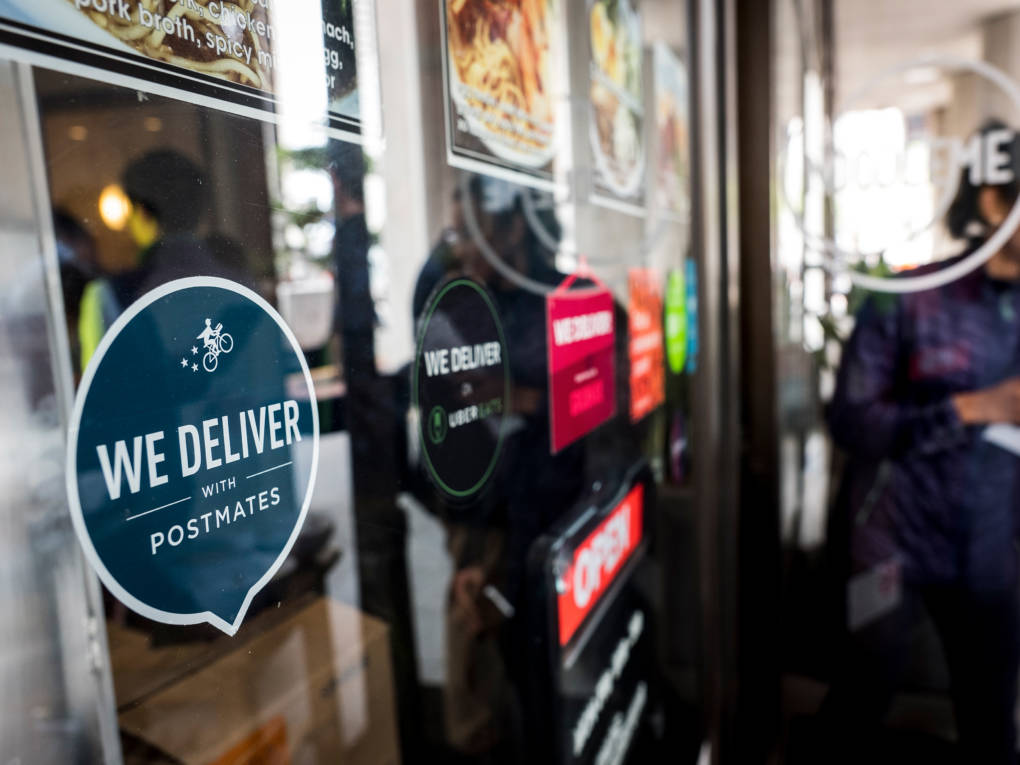
"caption": "A restaurant in San Francisco displays the logo of Postmates food delivery company.",
"description": "A restaurant in San Francisco displays the logo of Postmates food delivery company.",
"title": "A restaurant in San Francisco displays the logo of Postmates food delivery company.",
"credit": "Bloomberg via Getty Images",
"status": "inherit",
"isLoading": false,
"fetchFailed": false
},
"bayareabites_134293": {
"type": "attachments",
"id": "bayareabites_134293",
"meta": {
"index": "attachments_1716263798",
"site": "bayareabites",
"id": "134293",
"found": true
},
"parent": 134292,
"imgSizes": {
"twentyfourteen-full-width": {
"file": "https://ww2.kqed.org/app/uploads/sites/24/2019/07/img_8522_custom-cc6ecfd346621501f107f1d85f6f40cc1a8e2ace-1038x576.jpg",
"width": 1038,
"mimeType": "image/jpeg",
"height": 576
},
"thumbnail": {
"file": "https://ww2.kqed.org/app/uploads/sites/24/2019/07/img_8522_custom-cc6ecfd346621501f107f1d85f6f40cc1a8e2ace-160x108.jpg",
"width": 160,
"mimeType": "image/jpeg",
"height": 108
},
"post-thumbnail": {
"file": "https://ww2.kqed.org/app/uploads/sites/24/2019/07/img_8522_custom-cc6ecfd346621501f107f1d85f6f40cc1a8e2ace-672x372.jpg",
"width": 672,
"mimeType": "image/jpeg",
"height": 372
},
"kqedFullSize": {
"file": "https://ww2.kqed.org/app/uploads/sites/24/2019/07/img_8522_custom-cc6ecfd346621501f107f1d85f6f40cc1a8e2ace-e1564439251160.jpg",
"width": 1920,
"height": 1294
},
"large": {
"file": "https://ww2.kqed.org/app/uploads/sites/24/2019/07/img_8522_custom-cc6ecfd346621501f107f1d85f6f40cc1a8e2ace-1020x688.jpg",
"width": 1020,
"mimeType": "image/jpeg",
"height": 688
},
"complete_open_graph": {
"file": "https://ww2.kqed.org/app/uploads/sites/24/2019/07/img_8522_custom-cc6ecfd346621501f107f1d85f6f40cc1a8e2ace-1200x809.jpg",
"width": 1200,
"mimeType": "image/jpeg",
"height": 809
},
"full-width": {
"file": "https://ww2.kqed.org/app/uploads/sites/24/2019/07/img_8522_custom-cc6ecfd346621501f107f1d85f6f40cc1a8e2ace-1920x1294.jpg",
"width": 1920,
"mimeType": "image/jpeg",
"height": 1294
},
"medium": {
"file": "https://ww2.kqed.org/app/uploads/sites/24/2019/07/img_8522_custom-cc6ecfd346621501f107f1d85f6f40cc1a8e2ace-800x539.jpg",
"width": 800,
"mimeType": "image/jpeg",
"height": 539
},
"medium_large": {
"file": "https://ww2.kqed.org/app/uploads/sites/24/2019/07/img_8522_custom-cc6ecfd346621501f107f1d85f6f40cc1a8e2ace-768x518.jpg",
"width": 768,
"mimeType": "image/jpeg",
"height": 518
}
},
"publishDate": 1564439185,
"modified": 1564439244,
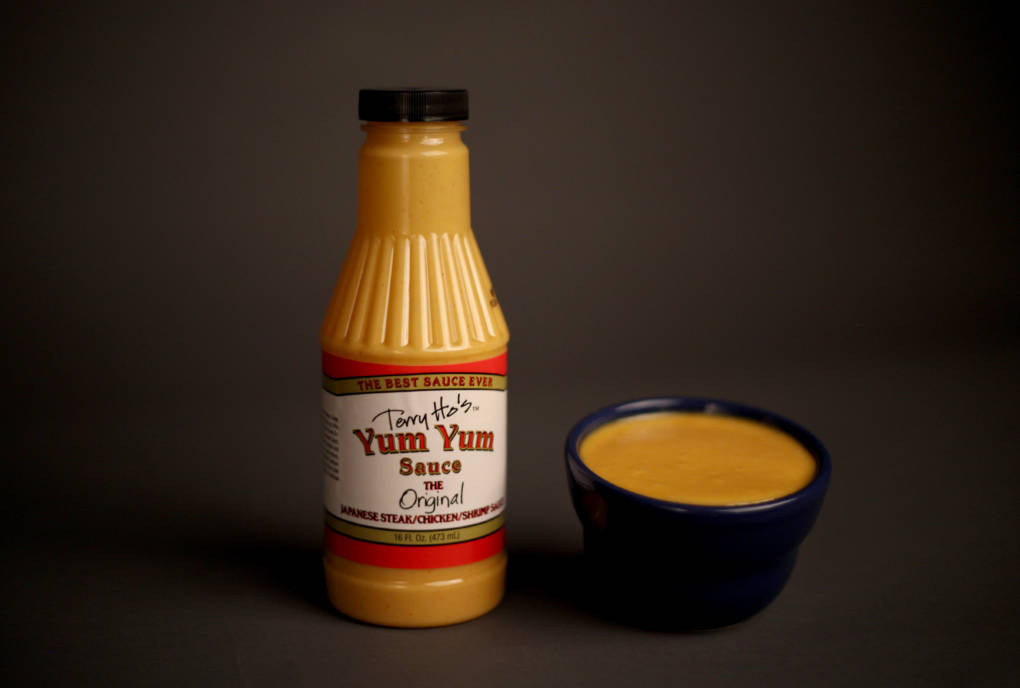
"caption": "Japanese steakhouses often serve a creamy orange-pink sauce alongside a steaming meal. The popularity and intrigue around the sauce led one teppanyaki restaurant owner, Terry Ho, to start bottling it in bulk under the name Yum Yum Sauce.",
"description": "Japanese steakhouses often serve a creamy orange-pink sauce alongside a steaming meal. The popularity and intrigue around the sauce led one teppanyaki restaurant owner, Terry Ho, to start bottling it in bulk under the name Yum Yum Sauce.",
"title": "Japanese steakhouses often serve a creamy orange-pink sauce alongside a steaming meal. The popularity and intrigue around the sauce led one teppanyaki restaurant owner, Terry Ho, to start bottling it in bulk under the name Yum Yum Sauce.",
"credit": "Olivia Falcigno/NPR",
"status": "inherit",
"isLoading": false,
"fetchFailed": false
},
"bayareabites_134275": {
"type": "attachments",
"id": "bayareabites_134275",
"meta": {
"index": "attachments_1716263798",
"site": "bayareabites",
"id": "134275",
"found": true
},
"parent": 134274,
"imgSizes": {
"twentyfourteen-full-width": {
"file": "https://ww2.kqed.org/app/uploads/sites/24/2019/07/img_6121-d7ab8594e13a225398da5a8f7578173020ca454d-1038x576.jpg",
"width": 1038,
"mimeType": "image/jpeg",
"height": 576
},
"thumbnail": {
"file": "https://ww2.kqed.org/app/uploads/sites/24/2019/07/img_6121-d7ab8594e13a225398da5a8f7578173020ca454d-160x120.jpg",
"width": 160,
"mimeType": "image/jpeg",
"height": 120
},
"post-thumbnail": {
"file": "https://ww2.kqed.org/app/uploads/sites/24/2019/07/img_6121-d7ab8594e13a225398da5a8f7578173020ca454d-672x372.jpg",
"width": 672,
"mimeType": "image/jpeg",
"height": 372
},
"kqedFullSize": {
"file": "https://ww2.kqed.org/app/uploads/sites/24/2019/07/img_6121-d7ab8594e13a225398da5a8f7578173020ca454d-e1564086348467.jpg",
"width": 1920,
"height": 1440
},
"large": {
"file": "https://ww2.kqed.org/app/uploads/sites/24/2019/07/img_6121-d7ab8594e13a225398da5a8f7578173020ca454d-1020x765.jpg",
"width": 1020,
"mimeType": "image/jpeg",
"height": 765
},
"complete_open_graph": {
"file": "https://ww2.kqed.org/app/uploads/sites/24/2019/07/img_6121-d7ab8594e13a225398da5a8f7578173020ca454d-1200x900.jpg",
"width": 1200,
"mimeType": "image/jpeg",
"height": 900
},
"full-width": {
"file": "https://ww2.kqed.org/app/uploads/sites/24/2019/07/img_6121-d7ab8594e13a225398da5a8f7578173020ca454d-1920x1440.jpg",
"width": 1920,
"mimeType": "image/jpeg",
"height": 1440
},
"medium": {
"file": "https://ww2.kqed.org/app/uploads/sites/24/2019/07/img_6121-d7ab8594e13a225398da5a8f7578173020ca454d-800x600.jpg",
"width": 800,
"mimeType": "image/jpeg",
"height": 600
},
"medium_large": {
"file": "https://ww2.kqed.org/app/uploads/sites/24/2019/07/img_6121-d7ab8594e13a225398da5a8f7578173020ca454d-768x576.jpg",
"width": 768,
"mimeType": "image/jpeg",
"height": 576
}
},
"publishDate": 1564086321,
"modified": 1564086390,
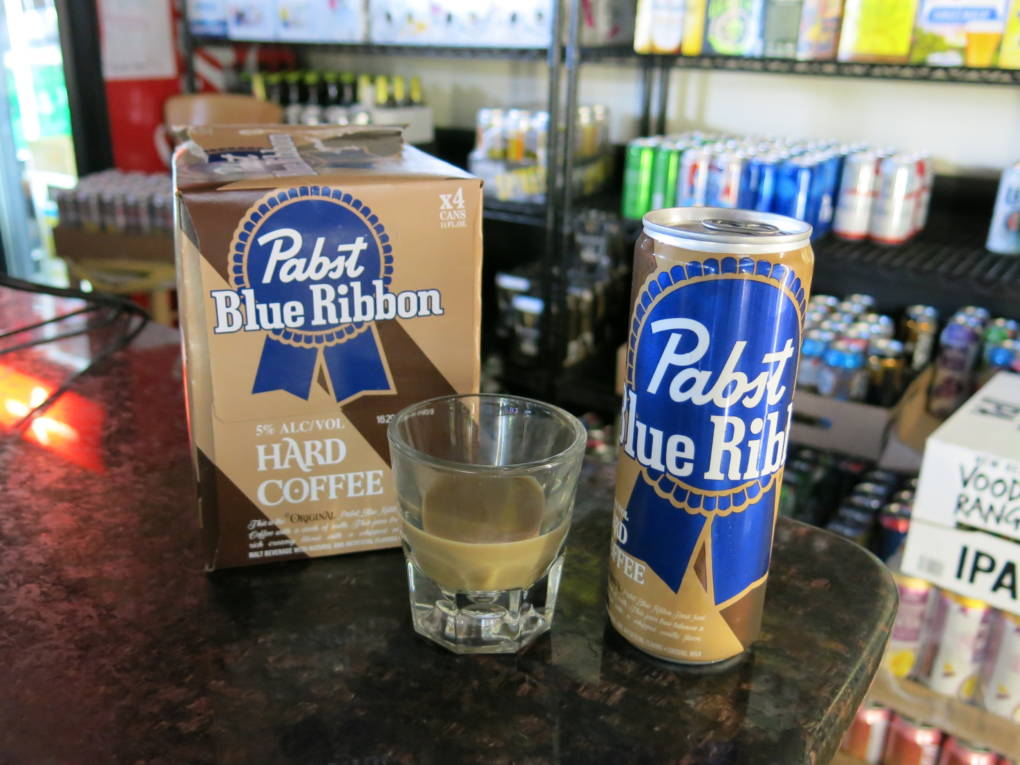
"caption": "Big breweries are selling less beer, so they're getting creative to attract customers. Pabst Blue Ribbon is market testing hard coffee in Pennsylvania, New Jersey, Maine, Georgia and Florida.",
"description": "Big breweries are selling less beer, so they're getting creative to attract customers. Pabst Blue Ribbon is market testing hard coffee in Pennsylvania, New Jersey, Maine, Georgia and Florida.",
"title": "Big breweries are selling less beer, so they're getting creative to attract customers. Pabst Blue Ribbon is market testing hard coffee in Pennsylvania, New Jersey, Maine, Georgia and Florida.",
"credit": "Jeff Brady/NPR",
"status": "inherit",
"isLoading": false,
"fetchFailed": false
},
"bayareabites_134265": {
"type": "attachments",
"id": "bayareabites_134265",
"meta": {
"index": "attachments_1716263798",
"site": "bayareabites",
"id": "134265",
"found": true
},
"parent": 134264,
"imgSizes": {
"twentyfourteen-full-width": {
"file": "https://ww2.kqed.org/app/uploads/sites/24/2019/07/gettyimages-931628074_custom-bfb4eb6ed4a565a4e27c35f7452bb961de4cc43d-1038x576.jpg",
"width": 1038,
"mimeType": "image/jpeg",
"height": 576
},
"thumbnail": {
"file": "https://ww2.kqed.org/app/uploads/sites/24/2019/07/gettyimages-931628074_custom-bfb4eb6ed4a565a4e27c35f7452bb961de4cc43d-160x107.jpg",
"width": 160,
"mimeType": "image/jpeg",
"height": 107
},
"post-thumbnail": {
"file": "https://ww2.kqed.org/app/uploads/sites/24/2019/07/gettyimages-931628074_custom-bfb4eb6ed4a565a4e27c35f7452bb961de4cc43d-672x372.jpg",
"width": 672,
"mimeType": "image/jpeg",
"height": 372
},
"kqedFullSize": {
"file": "https://ww2.kqed.org/app/uploads/sites/24/2019/07/gettyimages-931628074_custom-bfb4eb6ed4a565a4e27c35f7452bb961de4cc43d-e1564070196493.jpg",
"width": 1920,
"height": 1278
},
"large": {
"file": "https://ww2.kqed.org/app/uploads/sites/24/2019/07/gettyimages-931628074_custom-bfb4eb6ed4a565a4e27c35f7452bb961de4cc43d-1020x679.jpg",
"width": 1020,
"mimeType": "image/jpeg",
"height": 679
},
"complete_open_graph": {
"file": "https://ww2.kqed.org/app/uploads/sites/24/2019/07/gettyimages-931628074_custom-bfb4eb6ed4a565a4e27c35f7452bb961de4cc43d-1200x799.jpg",
"width": 1200,
"mimeType": "image/jpeg",
"height": 799
},
"full-width": {
"file": "https://ww2.kqed.org/app/uploads/sites/24/2019/07/gettyimages-931628074_custom-bfb4eb6ed4a565a4e27c35f7452bb961de4cc43d-1920x1278.jpg",
"width": 1920,
"mimeType": "image/jpeg",
"height": 1278
},
"medium": {
"file": "https://ww2.kqed.org/app/uploads/sites/24/2019/07/gettyimages-931628074_custom-bfb4eb6ed4a565a4e27c35f7452bb961de4cc43d-800x533.jpg",
"width": 800,
"mimeType": "image/jpeg",
"height": 533
},
"medium_large": {
"file": "https://ww2.kqed.org/app/uploads/sites/24/2019/07/gettyimages-931628074_custom-bfb4eb6ed4a565a4e27c35f7452bb961de4cc43d-768x511.jpg",
"width": 768,
"mimeType": "image/jpeg",
"height": 511
}
},
"publishDate": 1564070168,
"modified": 1564070214,
"caption": "Increased U.S. demand and a decreased California crop have nearly doubled the price of the beloved green fruits.",
"description": "Increased U.S. demand and a decreased California crop have nearly doubled the price of the beloved green fruits.",
"title": "Increased U.S. demand and a decreased California crop have nearly doubled the price of the beloved green fruits.",
"credit": "Flo Schneider/EyeEm/Getty Images",
"status": "inherit",
"isLoading": false,
"fetchFailed": false
},
"bayareabites_134213": {
"type": "attachments",
"id": "bayareabites_134213",
"meta": {
"index": "attachments_1716263798",
"site": "bayareabites",
"id": "134213",
"found": true
},
"parent": 134212,
"imgSizes": {
"twentyfourteen-full-width": {
"file": "https://ww2.kqed.org/app/uploads/sites/24/2019/07/gettyimages-517427626_custom-8988769c86b72342993897c645b4bdd9df290592-1024x576.jpg",
"width": 1024,
"mimeType": "image/jpeg",
"height": 576
},
"thumbnail": {
"file": "https://ww2.kqed.org/app/uploads/sites/24/2019/07/gettyimages-517427626_custom-8988769c86b72342993897c645b4bdd9df290592-160x123.jpg",
"width": 160,
"mimeType": "image/jpeg",
"height": 123
},
"post-thumbnail": {
"file": "https://ww2.kqed.org/app/uploads/sites/24/2019/07/gettyimages-517427626_custom-8988769c86b72342993897c645b4bdd9df290592-672x372.jpg",
"width": 672,
"mimeType": "image/jpeg",
"height": 372
},
"kqedFullSize": {
"file": "https://ww2.kqed.org/app/uploads/sites/24/2019/07/gettyimages-517427626_custom-8988769c86b72342993897c645b4bdd9df290592.jpg",
"width": 1024,
"height": 785
},
"large": {
"file": "https://ww2.kqed.org/app/uploads/sites/24/2019/07/gettyimages-517427626_custom-8988769c86b72342993897c645b4bdd9df290592-1020x782.jpg",
"width": 1020,
"mimeType": "image/jpeg",
"height": 782
},
"medium": {
"file": "https://ww2.kqed.org/app/uploads/sites/24/2019/07/gettyimages-517427626_custom-8988769c86b72342993897c645b4bdd9df290592-800x613.jpg",
"width": 800,
"mimeType": "image/jpeg",
"height": 613
},
"medium_large": {
"file": "https://ww2.kqed.org/app/uploads/sites/24/2019/07/gettyimages-517427626_custom-8988769c86b72342993897c645b4bdd9df290592-768x589.jpg",
"width": 768,
"mimeType": "image/jpeg",
"height": 589
}
},
"publishDate": 1563820893,
"modified": 1563821079,
"caption": "Some of the space food that was scheduled to be carried on the Apollo 11 lunar landing mission included (from left to right): chicken and vegetables, beef hash, and beef and gravy.",
"description": "Some of the space food that was scheduled to be carried on the Apollo 11 lunar landing mission included (from left to right): chicken and vegetables, beef hash, and beef and gravy.",
"title": "Some of the space food that was scheduled to be carried on the Apollo 11 lunar landing mission included (from left to right): chicken and vegetables, beef hash, and beef and gravy.",
"credit": "Bettmann/Bettmann Archive",
"status": "inherit",
"isLoading": false,
"fetchFailed": false
},
"bayareabites_134202": {
"type": "attachments",
"id": "bayareabites_134202",
"meta": {
"index": "attachments_1716263798",
"site": "bayareabites",
"id": "134202",
"found": true
},
"parent": 134201,
"imgSizes": {
"twentyfourteen-full-width": {
"file": "https://ww2.kqed.org/app/uploads/sites/24/2019/07/gettyimages-688974837_custom-05a1fe7c8ce05a3a307dc7aa2af024713745dfe2-1038x576.jpg",
"width": 1038,
"mimeType": "image/jpeg",
"height": 576
},
"thumbnail": {
"file": "https://ww2.kqed.org/app/uploads/sites/24/2019/07/gettyimages-688974837_custom-05a1fe7c8ce05a3a307dc7aa2af024713745dfe2-160x107.jpg",
"width": 160,
"mimeType": "image/jpeg",
"height": 107
},
"post-thumbnail": {
"file": "https://ww2.kqed.org/app/uploads/sites/24/2019/07/gettyimages-688974837_custom-05a1fe7c8ce05a3a307dc7aa2af024713745dfe2-672x372.jpg",
"width": 672,
"mimeType": "image/jpeg",
"height": 372
},
"kqedFullSize": {
"file": "https://ww2.kqed.org/app/uploads/sites/24/2019/07/gettyimages-688974837_custom-05a1fe7c8ce05a3a307dc7aa2af024713745dfe2-e1563471731586.jpg",
"width": 1920,
"height": 1278
},
"large": {
"file": "https://ww2.kqed.org/app/uploads/sites/24/2019/07/gettyimages-688974837_custom-05a1fe7c8ce05a3a307dc7aa2af024713745dfe2-1020x679.jpg",
"width": 1020,
"mimeType": "image/jpeg",
"height": 679
},
"complete_open_graph": {
"file": "https://ww2.kqed.org/app/uploads/sites/24/2019/07/gettyimages-688974837_custom-05a1fe7c8ce05a3a307dc7aa2af024713745dfe2-1200x799.jpg",
"width": 1200,
"mimeType": "image/jpeg",
"height": 799
},
"full-width": {
"file": "https://ww2.kqed.org/app/uploads/sites/24/2019/07/gettyimages-688974837_custom-05a1fe7c8ce05a3a307dc7aa2af024713745dfe2-1920x1278.jpg",
"width": 1920,
"mimeType": "image/jpeg",
"height": 1278
},
"medium": {
"file": "https://ww2.kqed.org/app/uploads/sites/24/2019/07/gettyimages-688974837_custom-05a1fe7c8ce05a3a307dc7aa2af024713745dfe2-800x533.jpg",
"width": 800,
"mimeType": "image/jpeg",
"height": 533
},
"medium_large": {
"file": "https://ww2.kqed.org/app/uploads/sites/24/2019/07/gettyimages-688974837_custom-05a1fe7c8ce05a3a307dc7aa2af024713745dfe2-768x511.jpg",
"width": 768,
"mimeType": "image/jpeg",
"height": 511
}
},
"publishDate": 1563471293,
"modified": 1563471752,
"caption": "Researchers project that by 2050, an estimated 1.5 billion more people will live in places with insufficient supply of fruits and vegetables to meet their daily intake recommendations – unless challenges such as food waste and improved productivity are solved.",
"description": "Researchers project that by 2050, an estimated 1.5 billion more people will live in places with insufficient supply of fruits and vegetables to meet their daily intake recommendations – unless challenges such as food waste and improved productivity are solve",
"title": "Researchers project that by 2050, an estimated 1.5 billion more people will live in places with insufficient supply of fruits and vegetables to meet their daily intake recommendations – unless challenges such as food waste and improved productivity are solved.",
"credit": "Wanwisa Hernandez/EyeEm/Getty Images",
"status": "inherit",
"isLoading": false,
"fetchFailed": false
},
"bayareabites_134147": {
"type": "attachments",
"id": "bayareabites_134147",
"meta": {
"index": "attachments_1716263798",
"site": "bayareabites",
"id": "134147",
"found": true
},
"parent": 134146,
"imgSizes": {
"twentyfourteen-full-width": {
"file": "https://ww2.kqed.org/app/uploads/sites/24/2019/07/gettyimages-583567850_custom-c44951ae23417a2d20a3ab646649c241a7358c1b-1038x576.jpg",
"width": 1038,
"mimeType": "image/jpeg",
"height": 576
},
"thumbnail": {
"file": "https://ww2.kqed.org/app/uploads/sites/24/2019/07/gettyimages-583567850_custom-c44951ae23417a2d20a3ab646649c241a7358c1b-160x107.jpg",
"width": 160,
"mimeType": "image/jpeg",
"height": 107
},
"post-thumbnail": {
"file": "https://ww2.kqed.org/app/uploads/sites/24/2019/07/gettyimages-583567850_custom-c44951ae23417a2d20a3ab646649c241a7358c1b-672x372.jpg",
"width": 672,
"mimeType": "image/jpeg",
"height": 372
},
"kqedFullSize": {
"file": "https://ww2.kqed.org/app/uploads/sites/24/2019/07/gettyimages-583567850_custom-c44951ae23417a2d20a3ab646649c241a7358c1b.jpg",
"width": 2121,
"height": 1412
},
"large": {
"file": "https://ww2.kqed.org/app/uploads/sites/24/2019/07/gettyimages-583567850_custom-c44951ae23417a2d20a3ab646649c241a7358c1b-1020x679.jpg",
"width": 1020,
"mimeType": "image/jpeg",
"height": 679
},
"complete_open_graph": {
"file": "https://ww2.kqed.org/app/uploads/sites/24/2019/07/gettyimages-583567850_custom-c44951ae23417a2d20a3ab646649c241a7358c1b-1200x799.jpg",
"width": 1200,
"mimeType": "image/jpeg",
"height": 799
},
"full-width": {
"file": "https://ww2.kqed.org/app/uploads/sites/24/2019/07/gettyimages-583567850_custom-c44951ae23417a2d20a3ab646649c241a7358c1b-1920x1278.jpg",
"width": 1920,
"mimeType": "image/jpeg",
"height": 1278
},
"medium": {
"file": "https://ww2.kqed.org/app/uploads/sites/24/2019/07/gettyimages-583567850_custom-c44951ae23417a2d20a3ab646649c241a7358c1b-800x533.jpg",
"width": 800,
"mimeType": "image/jpeg",
"height": 533
},
"medium_large": {
"file": "https://ww2.kqed.org/app/uploads/sites/24/2019/07/gettyimages-583567850_custom-c44951ae23417a2d20a3ab646649c241a7358c1b-768x511.jpg",
"width": 768,
"mimeType": "image/jpeg",
"height": 511
}
},
"publishDate": 1563210246,
"modified": 1563210246,
"caption": null,
"description": "Drinking alcohol is linked to an increased risk of skin cancer. Part of the risk may be explained by the direct effect that alcohol has on antioxidant levels in the skin, which can hasten a sunburn.",
"title": "Drinking alcohol is linked to an increased risk of skin cancer. Part of the risk may be explained by the direct effect that alcohol has on antioxidant levels in the skin, which can hasten a sunburn.",
"credit": null,
"status": "inherit",
"isLoading": false,
"fetchFailed": false
},
"bayareabites_134140": {
"type": "attachments",
"id": "bayareabites_134140",
"meta": {
"index": "attachments_1716263798",
"site": "bayareabites",
"id": "134140",
"found": true
},
"parent": 134139,
"imgSizes": {
"twentyfourteen-full-width": {
"file": "https://ww2.kqed.org/app/uploads/sites/24/2019/07/patima-1260x709_custom-d66a609414eaa0e45dd3f097ce21d6cbd59370ad-1038x576.jpg",
"width": 1038,
"mimeType": "image/jpeg",
"height": 576
},
"thumbnail": {
"file": "https://ww2.kqed.org/app/uploads/sites/24/2019/07/patima-1260x709_custom-d66a609414eaa0e45dd3f097ce21d6cbd59370ad-160x90.jpg",
"width": 160,
"mimeType": "image/jpeg",
"height": 90
},
"post-thumbnail": {
"file": "https://ww2.kqed.org/app/uploads/sites/24/2019/07/patima-1260x709_custom-d66a609414eaa0e45dd3f097ce21d6cbd59370ad-672x372.jpg",
"width": 672,
"mimeType": "image/jpeg",
"height": 372
},
"kqedFullSize": {
"file": "https://ww2.kqed.org/app/uploads/sites/24/2019/07/patima-1260x709_custom-d66a609414eaa0e45dd3f097ce21d6cbd59370ad.jpg",
"width": 1259,
"height": 709
},
"large": {
"file": "https://ww2.kqed.org/app/uploads/sites/24/2019/07/patima-1260x709_custom-d66a609414eaa0e45dd3f097ce21d6cbd59370ad-1020x574.jpg",
"width": 1020,
"mimeType": "image/jpeg",
"height": 574
},
"complete_open_graph": {
"file": "https://ww2.kqed.org/app/uploads/sites/24/2019/07/patima-1260x709_custom-d66a609414eaa0e45dd3f097ce21d6cbd59370ad-1200x676.jpg",
"width": 1200,
"mimeType": "image/jpeg",
"height": 676
},
"medium": {
"file": "https://ww2.kqed.org/app/uploads/sites/24/2019/07/patima-1260x709_custom-d66a609414eaa0e45dd3f097ce21d6cbd59370ad-800x451.jpg",
"width": 800,
"mimeType": "image/jpeg",
"height": 451
},
"medium_large": {
"file": "https://ww2.kqed.org/app/uploads/sites/24/2019/07/patima-1260x709_custom-d66a609414eaa0e45dd3f097ce21d6cbd59370ad-768x432.jpg",
"width": 768,
"mimeType": "image/jpeg",
"height": 432
}
},
"publishDate": 1563209813,
"modified": 1563210484,
"caption": "Patima Tungpuchayakul (right), a Thai abolitionist, with members of her team on a trip to free enslaved fishermen.",
"description": "Patima Tungpuchayakul (right), a Thai abolitionist, with members of her team on a trip to free enslaved fishermen.",
"title": "Patima Tungpuchayakul (right), a Thai abolitionist, with members of her team on a trip to free enslaved fishermen.",
"credit": "Courtesy of Ghost Fleet",
"status": "inherit",
"isLoading": false,
"fetchFailed": false
},
"bayareabites_134125": {
"type": "attachments",
"id": "bayareabites_134125",
"meta": {
"index": "attachments_1716263798",
"site": "bayareabites",
"id": "134125",
"found": true
},
"parent": 134124,
"imgSizes": {
"twentyfourteen-full-width": {
"file": "https://ww2.kqed.org/app/uploads/sites/24/2019/07/lilses.springmenu-3-1-_custom-7f2ca1a42c8e96fa85aced3be70aa48006feca37-1038x576.jpg",
"width": 1038,
"mimeType": "image/jpeg",
"height": 576
},
"thumbnail": {
"file": "https://ww2.kqed.org/app/uploads/sites/24/2019/07/lilses.springmenu-3-1-_custom-7f2ca1a42c8e96fa85aced3be70aa48006feca37-160x107.jpg",
"width": 160,
"mimeType": "image/jpeg",
"height": 107
},
"post-thumbnail": {
"file": "https://ww2.kqed.org/app/uploads/sites/24/2019/07/lilses.springmenu-3-1-_custom-7f2ca1a42c8e96fa85aced3be70aa48006feca37-672x372.jpg",
"width": 672,
"mimeType": "image/jpeg",
"height": 372
},
"kqedFullSize": {
"file": "https://ww2.kqed.org/app/uploads/sites/24/2019/07/lilses.springmenu-3-1-_custom-7f2ca1a42c8e96fa85aced3be70aa48006feca37-e1562776061142.jpg",
"width": 1920,
"height": 1281
},
"large": {
"file": "https://ww2.kqed.org/app/uploads/sites/24/2019/07/lilses.springmenu-3-1-_custom-7f2ca1a42c8e96fa85aced3be70aa48006feca37-1020x681.jpg",
"width": 1020,
"mimeType": "image/jpeg",
"height": 681
},
"complete_open_graph": {
"file": "https://ww2.kqed.org/app/uploads/sites/24/2019/07/lilses.springmenu-3-1-_custom-7f2ca1a42c8e96fa85aced3be70aa48006feca37-1200x801.jpg",
"width": 1200,
"mimeType": "image/jpeg",
"height": 801
},
"full-width": {
"file": "https://ww2.kqed.org/app/uploads/sites/24/2019/07/lilses.springmenu-3-1-_custom-7f2ca1a42c8e96fa85aced3be70aa48006feca37-1920x1281.jpg",
"width": 1920,
"mimeType": "image/jpeg",
"height": 1281
},
"medium": {
"file": "https://ww2.kqed.org/app/uploads/sites/24/2019/07/lilses.springmenu-3-1-_custom-7f2ca1a42c8e96fa85aced3be70aa48006feca37-800x534.jpg",
"width": 800,
"mimeType": "image/jpeg",
"height": 534
},
"medium_large": {
"file": "https://ww2.kqed.org/app/uploads/sites/24/2019/07/lilses.springmenu-3-1-_custom-7f2ca1a42c8e96fa85aced3be70aa48006feca37-768x513.jpg",
"width": 768,
"mimeType": "image/jpeg",
"height": 513
}
},
"publishDate": 1562775974,
"modified": 1562776096,
"caption": "High in fiber and protein, chickpeas are playing a starring role on menus at fast-casual chains like Little Sesame in Washington, where hummus bowls abound. Chickpeas also are good for soil health — and growing demand could help restore soils depleted by decades of intensive farming.",
"description": "High in fiber and protein, chickpeas are playing a starring role on menus at fast-casual chains like Little Sesame in Washington, where hummus bowls abound. Chickpeas also are good for soil health — and growing demand could help restore soils depleted by decades of intensive farming.",
"title": "High in fiber and protein, chickpeas are playing a starring role on menus at fast-casual chains like Little Sesame in Washington, where hummus bowls abound. Chickpeas also are good for soil health — and growing demand could help restore soils depleted by decades of intensive farming.",
"credit": "Anna Meyer",
"status": "inherit",
"isLoading": false,
"fetchFailed": false
},
"bayareabites_134007": {
"type": "attachments",
"id": "bayareabites_134007",
"meta": {
"index": "attachments_1716263798",
"site": "bayareabites",
"id": "134007",
"found": true
},
"parent": 134003,
"imgSizes": {
"twentyfourteen-full-width": {
"file": "https://ww2.kqed.org/app/uploads/sites/24/2019/06/GettyImages-1145146912-1038x576.jpg",
"width": 1038,
"mimeType": "image/jpeg",
"height": 576
},
"thumbnail": {
"file": "https://ww2.kqed.org/app/uploads/sites/24/2019/06/GettyImages-1145146912-160x106.jpg",
"width": 160,
"mimeType": "image/jpeg",
"height": 106
},
"post-thumbnail": {
"file": "https://ww2.kqed.org/app/uploads/sites/24/2019/06/GettyImages-1145146912-672x372.jpg",
"width": 672,
"mimeType": "image/jpeg",
"height": 372
},
"kqedFullSize": {
"file": "https://ww2.kqed.org/app/uploads/sites/24/2019/06/GettyImages-1145146912.jpg",
"width": 1920,
"height": 1274
},
"large": {
"file": "https://ww2.kqed.org/app/uploads/sites/24/2019/06/GettyImages-1145146912-1020x677.jpg",
"width": 1020,
"mimeType": "image/jpeg",
"height": 677
},
"complete_open_graph": {
"file": "https://ww2.kqed.org/app/uploads/sites/24/2019/06/GettyImages-1145146912-1200x796.jpg",
"width": 1200,
"mimeType": "image/jpeg",
"height": 796
},
"full-width": {
"file": "https://ww2.kqed.org/app/uploads/sites/24/2019/06/GettyImages-1145146912-1920x1274.jpg",
"width": 1920,
"mimeType": "image/jpeg",
"height": 1274
},
"medium": {
"file": "https://ww2.kqed.org/app/uploads/sites/24/2019/06/GettyImages-1145146912-800x531.jpg",
"width": 800,
"mimeType": "image/jpeg",
"height": 531
},
"medium_large": {
"file": "https://ww2.kqed.org/app/uploads/sites/24/2019/06/GettyImages-1145146912-768x510.jpg",
"width": 768,
"mimeType": "image/jpeg",
"height": 510
}
},
"publishDate": 1560981029,
"modified": 1560981055,
"caption": "LOS ANGELES, CALIFORNIA - APRIL 25: A woman walks outside of City Hall on April 25, 2019 in Los Angeles, California, According to a Bloomberg study of the most recent Bureau of Economic Analysis data, Los Angeles County produced the highest gross domestic product (GDP) of any county in the country in 2015. The $656 billion produced was approximate to the economic clout of Saudi Arabia. (Photo by Mario Tama/Getty Images)",
"description": "A woman walks outside of City Hall on April 25, 2019 in Los Angeles, California",
"title": "Los Angeles County Holds Highest GDP Among U.S. Counties",
"credit": "Mario Tama/Getty Images",
"status": "inherit",
"isLoading": false,
"fetchFailed": false
},
"bayareabites_133961": {
"type": "attachments",
"id": "bayareabites_133961",
"meta": {
"index": "attachments_1716263798",
"site": "bayareabites",
"id": "133961",
"found": true
},
"parent": 133959,
"imgSizes": {
"twentyfourteen-full-width": {
"file": "https://ww2.kqed.org/app/uploads/sites/24/2019/06/ewp2018_lacocina_aliciastamales-5283_custom-d6297130046ad7dea0c96567b034b1fe0f9f091a-s1600-c85-1038x576.jpg",
"width": 1038,
"mimeType": "image/jpeg",
"height": 576
},
"thumbnail": {
"file": "https://ww2.kqed.org/app/uploads/sites/24/2019/06/ewp2018_lacocina_aliciastamales-5283_custom-d6297130046ad7dea0c96567b034b1fe0f9f091a-s1600-c85-160x107.jpg",
"width": 160,
"mimeType": "image/jpeg",
"height": 107
},
"post-thumbnail": {
"file": "https://ww2.kqed.org/app/uploads/sites/24/2019/06/ewp2018_lacocina_aliciastamales-5283_custom-d6297130046ad7dea0c96567b034b1fe0f9f091a-s1600-c85-672x372.jpg",
"width": 672,
"mimeType": "image/jpeg",
"height": 372
},
"kqedFullSize": {
"file": "https://ww2.kqed.org/app/uploads/sites/24/2019/06/ewp2018_lacocina_aliciastamales-5283_custom-d6297130046ad7dea0c96567b034b1fe0f9f091a-s1600-c85.jpg",
"width": 1600,
"height": 1067
},
"large": {
"file": "https://ww2.kqed.org/app/uploads/sites/24/2019/06/ewp2018_lacocina_aliciastamales-5283_custom-d6297130046ad7dea0c96567b034b1fe0f9f091a-s1600-c85-1020x680.jpg",
"width": 1020,
"mimeType": "image/jpeg",
"height": 680
},
"complete_open_graph": {
"file": "https://ww2.kqed.org/app/uploads/sites/24/2019/06/ewp2018_lacocina_aliciastamales-5283_custom-d6297130046ad7dea0c96567b034b1fe0f9f091a-s1600-c85-1200x800.jpg",
"width": 1200,
"mimeType": "image/jpeg",
"height": 800
},
"medium": {
"file": "https://ww2.kqed.org/app/uploads/sites/24/2019/06/ewp2018_lacocina_aliciastamales-5283_custom-d6297130046ad7dea0c96567b034b1fe0f9f091a-s1600-c85-800x534.jpg",
"width": 800,
"mimeType": "image/jpeg",
"height": 534
},
"medium_large": {
"file": "https://ww2.kqed.org/app/uploads/sites/24/2019/06/ewp2018_lacocina_aliciastamales-5283_custom-d6297130046ad7dea0c96567b034b1fe0f9f091a-s1600-c85-768x512.jpg",
"width": 768,
"mimeType": "image/jpeg",
"height": 512
}
},
"publishDate": 1560791362,
"modified": 1560791381,
"caption": "From left: Gloria Amaya, José Amaya, Silvia Gómez, and Alicia Villanueva, the founder of Tamales Los Mayas. A graduate of La Cocina's program for food entrepreneurs, Villanueva now provides catering to scores of Bay Area companies each month, and her tamales are sold in Northern California Whole Foods stores.",
"description": "From left: Gloria Amaya, José Amaya, Silvia Gómez, and Alicia Villanueva, the founder of Tamales Los Mayas. A graduate of La Cocina's program for food entrepreneurs, Villanueva now provides catering to scores of Bay Area companies each month, and her tamales are sold in Northern California Whole Foods stores.",
"title": "ewp2018_lacocina_aliciastamales-5283_custom-d6297130046ad7dea0c96567b034b1fe0f9f091a-s1600-c85",
"credit": "Eric Wolfinger",
"status": "inherit",
"isLoading": false,
"fetchFailed": false
},
"bayareabites_133934": {
"type": "attachments",
"id": "bayareabites_133934",
"meta": {
"index": "attachments_1716263798",
"site": "bayareabites",
"id": "133934",
"found": true
},
"parent": 133932,
"imgSizes": {
"thumbnail": {
"file": "https://ww2.kqed.org/app/uploads/sites/24/2019/06/gettyimages-593279538-30f4568f0abfb2258fd653112aeaabb22c02579a-s1600-c85-160x120.jpg",
"width": 160,
"mimeType": "image/jpeg",
"height": 120
},
"post-thumbnail": {
"file": "https://ww2.kqed.org/app/uploads/sites/24/2019/06/gettyimages-593279538-30f4568f0abfb2258fd653112aeaabb22c02579a-s1600-c85-672x372.jpg",
"width": 672,
"mimeType": "image/jpeg",
"height": 372
},
"kqedFullSize": {
"file": "https://ww2.kqed.org/app/uploads/sites/24/2019/06/gettyimages-593279538-30f4568f0abfb2258fd653112aeaabb22c02579a-s1600-c85.jpg",
"width": 677,
"height": 508
}
},
"publishDate": 1560197244,
"modified": 1560197280,
"caption": "An engraving shows Galla Placidia (390-450), daughter of Roman emperor Theodosius I, in captivity. New research shows in some cases, we are drinking almost the exact same wine as Roman emperors — our Pinot Noir and Syrah grapes are \"siblings\" of the ancient Roman varieties.",
"description": "An engraving shows Galla Placidia (390-450), daughter of Roman emperor Theodosius I, in captivity. New research shows in some cases, we are drinking almost the exact same wine as Roman emperors — our Pinot Noir and Syrah grapes are \"siblings\" of the ancient Roman varieties.",
"title": "roman-engraving-pinot-noir",
"credit": "Leemage/Corbis via Getty Images",
"status": "inherit",
"isLoading": false,
"fetchFailed": false
}
},
"audioPlayerReducer": {
"postId": "stream_live",
"isPaused": true,
"isPlaying": false,
"pfsActive": false,
"pledgeModalIsOpen": true,
"playerDrawerIsOpen": false,
"liveAudioPlayStartedAt": 0,
"liveAudioPlayContext": ""
},
"authorsReducer": {
"byline_bayareabites_134310": {
"type": "authors",
"id": "byline_bayareabites_134310",
"meta": {
"override": true
},
"slug": "byline_bayareabites_134310",
"name": "Dani Matias, NPR Food",
"isLoading": false
},
"byline_bayareabites_134292": {
"type": "authors",
"id": "byline_bayareabites_134292",
"meta": {
"override": true
},
"slug": "byline_bayareabites_134292",
"name": "Oliver Whang",
"isLoading": false
},
"byline_bayareabites_134274": {
"type": "authors",
"id": "byline_bayareabites_134274",
"meta": {
"override": true
},
"slug": "byline_bayareabites_134274",
"name": "Jeff Brady, All Things Considered",
"isLoading": false
},
"byline_bayareabites_134264": {
"type": "authors",
"id": "byline_bayareabites_134264",
"meta": {
"override": true
},
"slug": "byline_bayareabites_134264",
"name": "Mandalit del Barco, NPR Food",
"isLoading": false
},
"byline_bayareabites_134212": {
"type": "authors",
"id": "byline_bayareabites_134212",
"meta": {
"override": true
},
"slug": "byline_bayareabites_134212",
"name": "Susie Neilson, NPR Food",
"isLoading": false
},
"byline_bayareabites_134201": {
"type": "authors",
"id": "byline_bayareabites_134201",
"meta": {
"override": true
},
"slug": "byline_bayareabites_134201",
"name": "Allison Aubrey, NPR Food",
"isLoading": false
},
"byline_bayareabites_134146": {
"type": "authors",
"id": "byline_bayareabites_134146",
"meta": {
"override": true
},
"slug": "byline_bayareabites_134146",
"name": "Allison Aubrey, NPR Food",
"isLoading": false
},
"byline_bayareabites_134139": {
"type": "authors",
"id": "byline_bayareabites_134139",
"meta": {
"override": true
},
"slug": "byline_bayareabites_134139",
"name": "Samuel Fromartz, Food & Environment Reporting Network",
"isLoading": false
},
"byline_bayareabites_134124": {
"type": "authors",
"id": "byline_bayareabites_134124",
"meta": {
"override": true
},
"slug": "byline_bayareabites_134124",
"name": "Whitney Pipkin",
"isLoading": false
},
"byline_bayareabites_134003": {
"type": "authors",
"id": "byline_bayareabites_134003",
"meta": {
"override": true
},
"slug": "byline_bayareabites_134003",
"name": "Ari Shapiro, All Things Considered",
"isLoading": false
},
"byline_bayareabites_133959": {
"type": "authors",
"id": "byline_bayareabites_133959",
"meta": {
"override": true
},
"slug": "byline_bayareabites_133959",
"name": "Mandalit del Barco, NPR Food",
"isLoading": false
},
"byline_bayareabites_133932": {
"type": "authors",
"id": "byline_bayareabites_133932",
"meta": {
"override": true
},
"slug": "byline_bayareabites_133932",
"name": "Susie Neilson, NPR Food",
"isLoading": false
}
},
"pagesReducer": {
"bayareabites_category_npr-food": {
"type": "terms",
"id": "bayareabites_10916",
"meta": {
"index": "terms_1716263798",
"site": "bayareabites",
"id": "10916",
"score": 13.894455
},
"featImg": null,
"name": "NPR food",
"description": null,
"taxonomy": "category",
"headData": {
"twImgId": null,
"twTitle": null,
"ogTitle": null,
"ogImgId": null,
"twDescription": null,
"description": null,
"title": "NPR food Archives | KQED Bay Area Bites",
"ogDescription": null
},
"ttid": 5375,
"slug": "npr-food",
"isLoading": false,
"title": "NPR food",
"pageMeta": {
"site": "bayareabites",
"WpPageTemplate": "page-topic-editorial",
"currentPage": 4
},
"blocks": [
{
"blockName": "kqed/post-list",
"attrs": {
"layout": "cardArticle2",
"query": "posts/bayareabites?category=npr-food",
"seeMore": false,
"paginated": true,
"page": 4
}
},
{
"blockName": "kqed/ad"
}
]
}
},
"pfsSessionReducer": {},
"postsReducer": {
"stream_live": {
"type": "live",
"id": "stream_live",
"audioUrl": "https://hls.kqed.org/hls/kqed_app/playlist.m3u8",
"title": "Live Stream",
"excerpt": "Live Stream information currently unavailable.",
"link": "/radio",
"featImg": "",
"label": {
"name": "KQED Live",
"link": "/"
}
},
"stream_kqedNewscast": {
"type": "posts",
"id": "stream_kqedNewscast",
"audioUrl": "https://www.kqed.org/.stream/anon/radio/RDnews/newscast.mp3?_=1",
"title": "KQED Newscast",
"featImg": "",
"label": {
"name": "88.5 FM",
"link": "/"
}
},
"bayareabites_134310": {
"type": "posts",
"id": "bayareabites_134310",
"meta": {
"index": "posts_1716263798",
"site": "bayareabites",
"id": "134310",
"score": null,
"sort": [
1564524271000
]
},
"parent": 0,
"labelTerm": {
"site": "bayareabites"
},
"blocks": [],
"publishDate": 1564524271,
"format": "standard",
"disqusTitle": "1 In 4 Food Delivery Drivers Admit To Eating Your Food",
"title": "1 In 4 Food Delivery Drivers Admit To Eating Your Food",
"headTitle": "Bay Area Bites | KQED Food",
"content": "\u003cp>[aside tag='food-delivery' label='More on Food Delivery Services']\u003c/p>\n\u003cp>The smell of a mouthwatering meal is hard to ignore — especially when it belongs to someone else. At least that's the suggestion of a recent study which found that nearly 30% of drivers are snacking from the food they're responsible for delivering. \u003c/p>\n\u003cp>\u003ca href=\"https://www.usfoods.com/our-services/business-trends/2019-food-delivery-statistics.html\">The survey\u003c/a> conducted by US Foods, which supplies food to restaurants, gathered information from about 500 food delivery drivers and more than 1,500 customers in America who order through apps such as DoorDash, Postmates, Grubhub and UberEats. \u003c/p>\n\u003cp>Respondents ranged from 18 to 77 years old, with a median age of 31. Drivers who reported working for at least one food delivery app had a median age of 30. In an effort to better understand the process of ordering and delivering meals, the company asked both groups about their \"habits and pain points.\"\u003c/p>\n\u003cp>Fifty-four percent of the drivers surveyed admitted to being tempted by the smell of a customer's food, and about half of them actually took a bite. \u003c/p>\n\u003cp>[ad fullwidth]\u003c/p>\n\u003cp>\"We're sorry to report that sometimes, impulse gets the best of deliverers, and they violate their sacred duty by taking some of the food!\" US Foods said in a statement. \u003c/p>\n\u003cp>When asked if they minded if their driver snagged a few fries, the average customer response was an 8.4 out of 10 — 1 represented \"no big deal\" and 10 signified \"absolutely unacceptable.\" \u003c/p>\n\u003cp>To remedy the problem, 85% of customers recommended adding \u003ca href=\"https://www.usfoods.com/great-food/featured-products/equipment-supplies/tamper-evident-label.html\">tamper-evident\u003c/a> labels or packaging, which commonly comes in the form of a sticker seal.\u003c/p>\n\u003cp>Some delivery services already have strategies in place.\u003c/p>\n\u003cp>Postmates told NPR that food tampering cases account for less than 0.06% of the reports it receives. The delivery service, however, still requires \"each person who completes a delivery using Postmates to expressly agree that all food and goods delivered will arrive in a tamper free form and in compliance with all applicable food health and safety laws.\" \u003c/p>\n\u003cp>In an online chat, a Grubhub representative said if a customer suspects that some of the food is missing, the company will potentially open an investigation and make a refund. \u003c/p>\n\u003cp>UberEats and DoorDash haven't responded to NPR's request for comment. \u003c/p>\n\u003cp>In its \u003ca href=\"https://www.uber.com/legal/community-guidelines/us-can-en/\">delivery guidelines\u003c/a>, UberEats said it will deactivate any account with fraudulent activity or misuse, including \"claiming to complete a delivery without ever picking up the delivery item; and picking up a delivery item but not delivering it in full.\"\u003c/p>\n\u003cp>\u003ca href=\"https://help.doordash.com/dashers/s/article/What-are-DoorDash-s-food-safety-handling-requirements?language=en_US\">Doordash \u003c/a>directs its drivers to not open food containers or tamper with the order in any way. If a customer suspects food tampering, the company \u003ca href=\"https://www.doordash.com/deactivationpolicy/\">states \u003c/a>it will deactivate the driver's account. \u003c/p>\n\u003cp>Overall, restaurant food delivery services are a growing business, transforming the way people receive their meals. \u003c/p>\n\u003cp>In 2018, \u003ca href=\"https://www.ubs.com/global/en/investment-bank/in-focus/2018/dead-kitchen.html\">UBS \u003c/a>found that on average, food delivery platforms were in the top 40 most-downloaded apps in major markets.\u003c/p>\n\u003cp>\"We think it's possible that by 2030 most meals currently cooked at home will instead be ordered online and delivered from restaurants or central kitchens,\" according to UBS. \u003c/p>\n\u003cp>\u003c/p>\n\u003cp>\u003ci>Copyright 2019 NPR. To see more, visit \u003ca href=\"https://www.npr.org/2019/07/30/746600105/1-in-4-food-delivery-drivers-admit-to-eating-your-food\">NPR.org\u003c/a>.\u003c/i>\u003c/p>\n\n",
"disqusIdentifier": "134310 https://ww2.kqed.org/bayareabites/?p=134310",
"disqusUrl": "https://ww2.kqed.org/bayareabites/2019/07/30/1-in-4-food-delivery-drivers-admit-to-eating-your-food/",
"stats": {
"hasVideo": false,
"hasChartOrMap": false,
"hasAudio": false,
"hasPolis": false,
"wordCount": 524,
"hasGoogleForm": false,
"hasGallery": false,
"hasHearkenModule": false,
"iframeSrcs": [],
"paragraphCount": 20
},
"modified": 1564524271,
"excerpt": "A study conducted by US Foods found that nearly 30% of food delivery service drivers admitted to stealing a bite of food from their customer's order. ",
"headData": {
"twImgId": "",
"twTitle": "",
"ogTitle": "",
"ogImgId": "",
"twDescription": "",
"description": "A study conducted by US Foods found that nearly 30% of food delivery service drivers admitted to stealing a bite of food from their customer's order. ",
"title": "1 In 4 Food Delivery Drivers Admit To Eating Your Food | KQED",
"ogDescription": "",
"schema": {
"@context": "https://schema.org",
"@type": "Article",
"headline": "1 In 4 Food Delivery Drivers Admit To Eating Your Food",
"datePublished": "2019-07-30T15:04:31-07:00",
"dateModified": "2019-07-30T15:04:31-07:00",
"image": "https://cdn.kqed.org/wp-content/uploads/2020/02/KQED-OG-Image@1x.png"
}
},
"guestAuthors": [],
"slug": "1-in-4-food-delivery-drivers-admit-to-eating-your-food",
"status": "publish",
"nprApiLink": "http://api.npr.org/query?id=746600105&apiKey=MDAxOTAwOTE4MDEyMTkxMDAzNjczZDljZA004",
"nprByline": "Dani Matias, NPR Food",
"nprStoryDate": "Tue, 30 Jul 2019 17:55:46 -0400",
"nprLastModifiedDate": "Tue, 30 Jul 2019 17:55:46 -0400",
"nprHtmlLink": "https://www.npr.org/2019/07/30/746600105/1-in-4-food-delivery-drivers-admit-to-eating-your-food?ft=nprml&f=746600105",
"nprImageAgency": "Bloomberg via Getty Images",
"nprStoryId": "746600105",
"nprRetrievedStory": "1",
"nprPubDate": "Tue, 30 Jul 2019 17:55:00 -0400",
"path": "/bayareabites/134310/1-in-4-food-delivery-drivers-admit-to-eating-your-food",
"audioTrackLength": null,
"parsedContent": [
{
"type": "contentString",
"content": "\u003cdiv class=\"post-body\">\u003cp>\u003cp>\u003c/p>\u003c/div>",
"attributes": {
"named": {},
"numeric": []
}
},
{
"type": "component",
"content": "",
"name": "aside",
"attributes": {
"named": {
"tag": "food-delivery",
"label": "More on Food Delivery Services "
},
"numeric": []
}
},
{
"type": "contentString",
"content": "\u003cdiv class=\"post-body\">\u003cp>\u003c/p>\n\u003cp>The smell of a mouthwatering meal is hard to ignore — especially when it belongs to someone else. At least that's the suggestion of a recent study which found that nearly 30% of drivers are snacking from the food they're responsible for delivering. \u003c/p>\n\u003cp>\u003ca href=\"https://www.usfoods.com/our-services/business-trends/2019-food-delivery-statistics.html\">The survey\u003c/a> conducted by US Foods, which supplies food to restaurants, gathered information from about 500 food delivery drivers and more than 1,500 customers in America who order through apps such as DoorDash, Postmates, Grubhub and UberEats. \u003c/p>\n\u003cp>Respondents ranged from 18 to 77 years old, with a median age of 31. Drivers who reported working for at least one food delivery app had a median age of 30. In an effort to better understand the process of ordering and delivering meals, the company asked both groups about their \"habits and pain points.\"\u003c/p>\n\u003cp>Fifty-four percent of the drivers surveyed admitted to being tempted by the smell of a customer's food, and about half of them actually took a bite. \u003c/p>\n\u003cp>\u003c/p>\u003c/div>",
"attributes": {
"named": {},
"numeric": []
}
},
{
"type": "component",
"content": "",
"name": "ad",
"attributes": {
"named": {
"label": "fullwidth"
},
"numeric": [
"fullwidth"
]
}
},
{
"type": "contentString",
"content": "\u003cdiv class=\"post-body\">\u003cp>\u003c/p>\n\u003cp>\"We're sorry to report that sometimes, impulse gets the best of deliverers, and they violate their sacred duty by taking some of the food!\" US Foods said in a statement. \u003c/p>\n\u003cp>When asked if they minded if their driver snagged a few fries, the average customer response was an 8.4 out of 10 — 1 represented \"no big deal\" and 10 signified \"absolutely unacceptable.\" \u003c/p>\n\u003cp>To remedy the problem, 85% of customers recommended adding \u003ca href=\"https://www.usfoods.com/great-food/featured-products/equipment-supplies/tamper-evident-label.html\">tamper-evident\u003c/a> labels or packaging, which commonly comes in the form of a sticker seal.\u003c/p>\n\u003cp>Some delivery services already have strategies in place.\u003c/p>\n\u003cp>Postmates told NPR that food tampering cases account for less than 0.06% of the reports it receives. The delivery service, however, still requires \"each person who completes a delivery using Postmates to expressly agree that all food and goods delivered will arrive in a tamper free form and in compliance with all applicable food health and safety laws.\" \u003c/p>\n\u003cp>In an online chat, a Grubhub representative said if a customer suspects that some of the food is missing, the company will potentially open an investigation and make a refund. \u003c/p>\n\u003cp>UberEats and DoorDash haven't responded to NPR's request for comment. \u003c/p>\n\u003cp>In its \u003ca href=\"https://www.uber.com/legal/community-guidelines/us-can-en/\">delivery guidelines\u003c/a>, UberEats said it will deactivate any account with fraudulent activity or misuse, including \"claiming to complete a delivery without ever picking up the delivery item; and picking up a delivery item but not delivering it in full.\"\u003c/p>\n\u003cp>\u003ca href=\"https://help.doordash.com/dashers/s/article/What-are-DoorDash-s-food-safety-handling-requirements?language=en_US\">Doordash \u003c/a>directs its drivers to not open food containers or tamper with the order in any way. If a customer suspects food tampering, the company \u003ca href=\"https://www.doordash.com/deactivationpolicy/\">states \u003c/a>it will deactivate the driver's account. \u003c/p>\n\u003cp>Overall, restaurant food delivery services are a growing business, transforming the way people receive their meals. \u003c/p>\n\u003cp>In 2018, \u003ca href=\"https://www.ubs.com/global/en/investment-bank/in-focus/2018/dead-kitchen.html\">UBS \u003c/a>found that on average, food delivery platforms were in the top 40 most-downloaded apps in major markets.\u003c/p>\n\u003cp>\"We think it's possible that by 2030 most meals currently cooked at home will instead be ordered online and delivered from restaurants or central kitchens,\" according to UBS. \u003c/p>\n\u003cp>\u003c/p>\n\u003cp>\u003ci>Copyright 2019 NPR. To see more, visit \u003ca href=\"https://www.npr.org/2019/07/30/746600105/1-in-4-food-delivery-drivers-admit-to-eating-your-food\">NPR.org\u003c/a>.\u003c/i>\u003c/p>\n\n\u003c/div>\u003c/p>",
"attributes": {
"named": {},
"numeric": []
}
}
],
"link": "/bayareabites/134310/1-in-4-food-delivery-drivers-admit-to-eating-your-food",
"authors": [
"byline_bayareabites_134310"
],
"categories": [
"bayareabites_10028",
"bayareabites_4084",
"bayareabites_10916",
"bayareabites_1927",
"bayareabites_1807"
],
"tags": [
"bayareabites_14381",
"bayareabites_14775",
"bayareabites_16272",
"bayareabites_16446"
],
"featImg": "bayareabites_134311",
"label": "bayareabites"
},
"bayareabites_134292": {
"type": "posts",
"id": "bayareabites_134292",
"meta": {
"index": "posts_1716263798",
"site": "bayareabites",
"id": "134292",
"score": null,
"sort": [
1564439791000
]
},
"parent": 0,
"labelTerm": {
"site": "bayareabites"
},
"blocks": [],
"publishDate": 1564439791,
"format": "standard",
"disqusTitle": "Yum Yum Sauce: The Making Of An American Condiment",
"title": "Yum Yum Sauce: The Making Of An American Condiment",
"headTitle": "Bay Area Bites | KQED Food",
"content": "\u003cp>[aside postID='bayareabites_100021,news_11691757' label='More Food History']\u003c/p>\n\u003cp>The scene is a familiar one. People sit around a rectangular table, the bulk of which is taken up by a smooth iron cooktop. Gas flames flicker underneath. A man wearing a tall red hat and a white chef's uniform approaches, pulling a cart filled with cold food, large cooking utensils and various bottles of sauces. He holds a spatula and a large metal fork. He brings them together: cling-clang, cling-clang. Eyes sparkling, he looks around the table. \"Welcome to Benihana.\"\u003c/p>\n\u003cp>More commonly referred to as hibachi, Japanese teppanyaki-style cooking has become part of the American dining experience. The combination of noodles, rice, vegetables and meat fried up on a griddle draws customers to these restaurants as much as the loud and showy flair of the chefs cooking at the table.\u003c/p>\n\u003cp>One of the more subtle curiosities of teppanyaki restaurants — beyond the stacked onion rings of fire and behind-the-back toss of metal utensils — is a creamy orange-pink sauce placed beside your steaming meal. Almost every teppanyaki restaurant will serve it, though its name differs depending on whom you talk to. White sauce (a deceptive moniker), shrimp sauce, yummy sauce, yum yum sauce — are all used interchangeably. \u003c/p>\n\u003cp>Considered by many in America to be a Japanese classic (one Reddit \u003ca href=\"https://www.reddit.com/r/asianeats/comments/2h47tc/where_can_i_find_the_infamous_whiteish_sauce_they/\">user\u003c/a> called it \"infamous\"; a \u003ca href=\"https://www.mashed.com/94639/yum-yum-sauce-recipe/\">blogger\u003c/a> speculated that there are really only \"two types of folk that dine at a hibachi restaurant, those that get double white sauce and those that don't know you can get double white sauce\"), the sauce's sweet, slightly tangy flavor varies between restaurants and regions as much as the name does. A little more sweetness in one place. A little more tang in another. Some versions are reminiscent of \u003ca href=\"https://www.eater.com/2016/8/6/12054512/fry-sauce-ketchup-mayo-utah-condiment\">fry sauce\u003c/a>, popular in the South. Such variety calls into question whether the sauce we taste in our local teppanyaki restaurants is even Japanese at all. \u003c/p>\n\u003cp>[ad fullwidth]\u003c/p>\n\u003cp>Maybe not surprisingly, the answer, it appears, is no.\u003c/p>\n\u003cp>\u003ca href=\"https://www.nancysingletonhachisu.com/\">Nancy Singleton Hachisu\u003c/a>, author of three cookbooks on traditional and modern Japanese cuisine, was confused when I first asked her about the sauce. She hadn't heard of it being used in Japan and actually objected to my initial question about hibachi restaurants. \"Since hibachi is a traditional charcoal heater for the room,\" she told me, \"I cannot think that Japan would yield information on this topic.\"\u003c/p>\n\u003cp>Once I sent her a description of the sauce, which I called shrimp sauce and she called \"basically pink mayo,\" she told me that there is no evidence of its use in Japanese cuisine.\u003c/p>\n\u003cp>\u003ca href=\"http://www.tasteofculture.com/\">Elizabeth Andoh\u003c/a>, who has lived in Japan for half a century and runs the Japanese culinary education program A Taste of Culture, was also puzzled. \"I don't know of any white sauce or shrimp sauce that is served with Japanese steak,\" she said. When I prompted her with a more detailed description, she responded, \"This sort of mayo-based ... tomato sauce is \u003cem>not\u003c/em> part of any Japanese steakhouse repertoire I know of.\"\u003c/p>\n\u003cp>And \u003ca href=\"https://www.pacific.edu/academics/schools-and-colleges/college-of-the-pacific/academics/departments-and-programs/food-studies/faculty.html\">Polly Adema\u003c/a>, director of the food studies program at California's College of the Pacific, said that the sauce's origins are fuzzy, though probably not deeply rooted in Japanese culture. Perhaps, she said, the sauce stems from congruent American and modern Japanese tastes for mayonnaise.\u003c/p>\n\u003cp>Andoh did say that, in general, the Japanese are \"mayo crazy.\" But such speculation doesn't get you very far.\u003c/p>\n\u003cp>\"Which came first: an affection for mayo or a mayo-enriched dish?\" Adema asked. \"[It's] one of those questions we may never be able to answer.\"\u003c/p>\n\u003cp>The recipe for the sauce is equally difficult to come by. I reached out to 15 different restaurants around the U.S. — large chains and independently run joints — but each turned down my request. \"We cannot divulge that information,\" a Benihana manager in Maryland told me. I received similar answers from a Sakura in New Jersey, an Edohana in Texas and a Flame in New York.\u003c/p>\n\u003cp>Chuck Cutler ran into a very similar problem 25 years ago, when he first tasted what he calls white sauce in a teppanyaki restaurant. \"I noticed that all the other people at the table were asking for two bowls of white sauce ... so I tried it. I was instantly hooked.\"\u003c/p>\n\u003cp>Cutler spent a decade asking different restaurants for the recipe, to no avail. \"It's a Japanese secret,\" chefs would tell him. One day, though, in a Florida grocery store, he stumbled across a sauce produced by a teppanyaki restaurant. He remembers it being called vegetable sauce. So he bought a bottle \"and darned if it didn't taste exactly like what I had been looking for.\"\u003c/p>\n\u003cp>Using the ingredients listed on the vegetable sauce bottle, Cutler was able to come up with his own recipe (Chuck's Easy Recipe), which, in a form of revenge against the restaurants that had rejected him, he made a website for:\u003ca href=\"http://japanese-steakhouse-white-sauce.com/\"> Japanese-Steakhouse-White-Sauce.com\u003c/a>. According to Cutler, it was the first good recipe online. Created almost a decade and a half ago, the website now has 229 pages of comments from visitors. There \"are thousands of comments from people all over the world saying, 'Oh my God, I've been looking for this forever,' \" he said. \"Ninety-eight percent of them are positive.\"\u003c/p>\n\u003cp>The popularity and intrigue around the sauce led one teppanyaki restaurant owner, Terry Ho, to start bottling it in bulk. Ho owns more than 20 restaurants in the South — some teppanyaki and some Chinese. He has lived in Albany, Ga., since the 1970s, when his grandfather immigrated to the U.S. from Taiwan.\u003c/p>\n\u003cp>Ho's sauce is called \u003ca href=\"https://www.terryhosauce.com/\">Terry Ho's Yum Yum Sauce\u003c/a>.\u003c/p>\n\u003cp>The name is distinctive — and a nifty branding move. According to Ho, \"Yum Yum Sauce\" is much more appealing than white sauce or shrimp sauce, neither of which is even a vaguely accurate description of the actual sauce. \"There's no shrimp in this recipe,\" he said. \"Why are you calling it shrimp sauce?\" Yum Yum Sauce, though, is fitting: \"Well, I mean, it tastes yummy.\"\u003c/p>\n\u003cp>For years, Southerners who had tasted or heard about Ho's Yum Yum Sauce — which he made a little differently from others (less oil and sugar) — would come to his restaurants asking for 16 or 20 ounces of it. He would dole it out in Styrofoam containers.\u003c/p>\n\u003cfigure id=\"attachment_134294\" class=\"wp-caption aligncenter\" style=\"max-width: 1920px\">\u003cimg src=\"https://ww2.kqed.org/bayareabites/wp-content/uploads/sites/24/2019/07/unknown-4_custom-843417781433058a5cdbbaff7c8ee1e9e1e135f1-e1564439292913.jpg\" alt=\"Terry Ho's Yum Yum Sauce is manufactured at a plant in Leesburg, Ga.\" width=\"1920\" height=\"1211\" class=\"size-full wp-image-134294\">\u003cfigcaption class=\"wp-caption-text\">Terry Ho's Yum Yum Sauce is manufactured at a plant in Leesburg, Ga. \u003ccite>(Terry Ho)\u003c/cite>\u003c/figcaption>\u003c/figure>\n\u003cp>Seeing the business potential, Ho started manufacturing and bottling the sauce on a mass scale about a decade ago. Success came quickly. The sauce worked its way to larger and larger outlets, diffusing throughout the United States. It is now sold in around 30,000 grocery stores nationwide. Ho said the company is growing by 10 to 15% every year. The sauce is also stocked in U.S. military commissaries around the world. \"There are people in Germany and Saudi Arabia buying the sauce,\" Ho proudly said.\u003c/p>\n\u003cp>\"My plan is to turn Yum Yum Sauce into the next American condiment,\" he told me. \"We don't want to be just [perceived as] an Asian sauce. We want to be the next ranch.\"\u003c/p>\n\u003cp>When I asked Cutler about Terry Ho's Yum Yum Sauce, he sighed. \"I tried that one, and I didn't think it was that great.\" But of course, he acknowledged, tastes are tastes. Different sauces will appeal to different people in different regions.\u003c/p>\n\u003cp>The sauce — delicious as it is —\u003cem> is\u003c/em> something different to everyone. It's what's available. What's memorable. Maybe even what has the most creative name. \u003c/p>\n\u003cp>[ad floatright]\u003c/p>\n\u003cp>\u003ci>Copyright 2019 NPR. To see more, visit \u003ca href=\"https://www.npr.org/sections/thesalt/2019/07/29/741912379/yum-yum-sauce-the-making-of-an-american-condiment\">NPR.org\u003c/a>.\u003c/i>\u003c/p>\n\n",
"disqusIdentifier": "134292 https://ww2.kqed.org/bayareabites/?p=134292",
"disqusUrl": "https://ww2.kqed.org/bayareabites/2019/07/29/yum-yum-sauce-the-making-of-an-american-condiment/",
"stats": {
"hasVideo": false,
"hasChartOrMap": false,
"hasAudio": false,
"hasPolis": false,
"wordCount": 1300,
"hasGoogleForm": false,
"hasGallery": false,
"hasHearkenModule": false,
"iframeSrcs": [],
"paragraphCount": 27
},
"modified": 1564439791,
"excerpt": "Japanese steakhouses often serve a creamy orange-pink sauce alongside a steaming meal. Online, fans obsess over hacking the recipe for this \"Japanese classic,\" but its roots are firmly American.",
"headData": {
"twImgId": "",
"twTitle": "",
"ogTitle": "",
"ogImgId": "",
"twDescription": "",
"description": "Japanese steakhouses often serve a creamy orange-pink sauce alongside a steaming meal. Online, fans obsess over hacking the recipe for this "Japanese classic," but its roots are firmly American.",
"title": "Yum Yum Sauce: The Making Of An American Condiment | KQED",
"ogDescription": "",
"schema": {
"@context": "https://schema.org",
"@type": "Article",
"headline": "Yum Yum Sauce: The Making Of An American Condiment",
"datePublished": "2019-07-29T15:36:31-07:00",
"dateModified": "2019-07-29T15:36:31-07:00",
"image": "https://cdn.kqed.org/wp-content/uploads/2020/02/KQED-OG-Image@1x.png"
}
},
"guestAuthors": [],
"slug": "yum-yum-sauce-the-making-of-an-american-condiment",
"status": "publish",
"nprApiLink": "http://api.npr.org/query?id=741912379&apiKey=MDAxOTAwOTE4MDEyMTkxMDAzNjczZDljZA004",
"nprByline": "Oliver Whang",
"nprStoryDate": "Mon, 29 Jul 2019 13:56:02 -0400",
"nprLastModifiedDate": "Mon, 29 Jul 2019 18:02:50 -0400",
"nprHtmlLink": "https://www.npr.org/sections/thesalt/2019/07/29/741912379/yum-yum-sauce-the-making-of-an-american-condiment?ft=nprml&f=741912379",
"nprImageAgency": "Olivia Falcigno/NPR",
"nprStoryId": "741912379",
"nprRetrievedStory": "1",
"nprPubDate": "Mon, 29 Jul 2019 18:02:00 -0400",
"path": "/bayareabites/134292/yum-yum-sauce-the-making-of-an-american-condiment",
"audioTrackLength": null,
"parsedContent": [
{
"type": "contentString",
"content": "\u003cdiv class=\"post-body\">\u003cp>\u003cp>\u003c/p>\u003c/div>",
"attributes": {
"named": {},
"numeric": []
}
},
{
"type": "component",
"content": "",
"name": "aside",
"attributes": {
"named": {
"postid": "bayareabites_100021,news_11691757",
"label": "More Food History "
},
"numeric": []
}
},
{
"type": "contentString",
"content": "\u003cdiv class=\"post-body\">\u003cp>\u003c/p>\n\u003cp>The scene is a familiar one. People sit around a rectangular table, the bulk of which is taken up by a smooth iron cooktop. Gas flames flicker underneath. A man wearing a tall red hat and a white chef's uniform approaches, pulling a cart filled with cold food, large cooking utensils and various bottles of sauces. He holds a spatula and a large metal fork. He brings them together: cling-clang, cling-clang. Eyes sparkling, he looks around the table. \"Welcome to Benihana.\"\u003c/p>\n\u003cp>More commonly referred to as hibachi, Japanese teppanyaki-style cooking has become part of the American dining experience. The combination of noodles, rice, vegetables and meat fried up on a griddle draws customers to these restaurants as much as the loud and showy flair of the chefs cooking at the table.\u003c/p>\n\u003cp>One of the more subtle curiosities of teppanyaki restaurants — beyond the stacked onion rings of fire and behind-the-back toss of metal utensils — is a creamy orange-pink sauce placed beside your steaming meal. Almost every teppanyaki restaurant will serve it, though its name differs depending on whom you talk to. White sauce (a deceptive moniker), shrimp sauce, yummy sauce, yum yum sauce — are all used interchangeably. \u003c/p>\n\u003cp>Considered by many in America to be a Japanese classic (one Reddit \u003ca href=\"https://www.reddit.com/r/asianeats/comments/2h47tc/where_can_i_find_the_infamous_whiteish_sauce_they/\">user\u003c/a> called it \"infamous\"; a \u003ca href=\"https://www.mashed.com/94639/yum-yum-sauce-recipe/\">blogger\u003c/a> speculated that there are really only \"two types of folk that dine at a hibachi restaurant, those that get double white sauce and those that don't know you can get double white sauce\"), the sauce's sweet, slightly tangy flavor varies between restaurants and regions as much as the name does. A little more sweetness in one place. A little more tang in another. Some versions are reminiscent of \u003ca href=\"https://www.eater.com/2016/8/6/12054512/fry-sauce-ketchup-mayo-utah-condiment\">fry sauce\u003c/a>, popular in the South. Such variety calls into question whether the sauce we taste in our local teppanyaki restaurants is even Japanese at all. \u003c/p>\n\u003cp>\u003c/p>\u003c/div>",
"attributes": {
"named": {},
"numeric": []
}
},
{
"type": "component",
"content": "",
"name": "ad",
"attributes": {
"named": {
"label": "fullwidth"
},
"numeric": [
"fullwidth"
]
}
},
{
"type": "contentString",
"content": "\u003cdiv class=\"post-body\">\u003cp>\u003c/p>\n\u003cp>Maybe not surprisingly, the answer, it appears, is no.\u003c/p>\n\u003cp>\u003ca href=\"https://www.nancysingletonhachisu.com/\">Nancy Singleton Hachisu\u003c/a>, author of three cookbooks on traditional and modern Japanese cuisine, was confused when I first asked her about the sauce. She hadn't heard of it being used in Japan and actually objected to my initial question about hibachi restaurants. \"Since hibachi is a traditional charcoal heater for the room,\" she told me, \"I cannot think that Japan would yield information on this topic.\"\u003c/p>\n\u003cp>Once I sent her a description of the sauce, which I called shrimp sauce and she called \"basically pink mayo,\" she told me that there is no evidence of its use in Japanese cuisine.\u003c/p>\n\u003cp>\u003ca href=\"http://www.tasteofculture.com/\">Elizabeth Andoh\u003c/a>, who has lived in Japan for half a century and runs the Japanese culinary education program A Taste of Culture, was also puzzled. \"I don't know of any white sauce or shrimp sauce that is served with Japanese steak,\" she said. When I prompted her with a more detailed description, she responded, \"This sort of mayo-based ... tomato sauce is \u003cem>not\u003c/em> part of any Japanese steakhouse repertoire I know of.\"\u003c/p>\n\u003cp>And \u003ca href=\"https://www.pacific.edu/academics/schools-and-colleges/college-of-the-pacific/academics/departments-and-programs/food-studies/faculty.html\">Polly Adema\u003c/a>, director of the food studies program at California's College of the Pacific, said that the sauce's origins are fuzzy, though probably not deeply rooted in Japanese culture. Perhaps, she said, the sauce stems from congruent American and modern Japanese tastes for mayonnaise.\u003c/p>\n\u003cp>Andoh did say that, in general, the Japanese are \"mayo crazy.\" But such speculation doesn't get you very far.\u003c/p>\n\u003cp>\"Which came first: an affection for mayo or a mayo-enriched dish?\" Adema asked. \"[It's] one of those questions we may never be able to answer.\"\u003c/p>\n\u003cp>The recipe for the sauce is equally difficult to come by. I reached out to 15 different restaurants around the U.S. — large chains and independently run joints — but each turned down my request. \"We cannot divulge that information,\" a Benihana manager in Maryland told me. I received similar answers from a Sakura in New Jersey, an Edohana in Texas and a Flame in New York.\u003c/p>\n\u003cp>Chuck Cutler ran into a very similar problem 25 years ago, when he first tasted what he calls white sauce in a teppanyaki restaurant. \"I noticed that all the other people at the table were asking for two bowls of white sauce ... so I tried it. I was instantly hooked.\"\u003c/p>\n\u003cp>Cutler spent a decade asking different restaurants for the recipe, to no avail. \"It's a Japanese secret,\" chefs would tell him. One day, though, in a Florida grocery store, he stumbled across a sauce produced by a teppanyaki restaurant. He remembers it being called vegetable sauce. So he bought a bottle \"and darned if it didn't taste exactly like what I had been looking for.\"\u003c/p>\n\u003cp>Using the ingredients listed on the vegetable sauce bottle, Cutler was able to come up with his own recipe (Chuck's Easy Recipe), which, in a form of revenge against the restaurants that had rejected him, he made a website for:\u003ca href=\"http://japanese-steakhouse-white-sauce.com/\"> Japanese-Steakhouse-White-Sauce.com\u003c/a>. According to Cutler, it was the first good recipe online. Created almost a decade and a half ago, the website now has 229 pages of comments from visitors. There \"are thousands of comments from people all over the world saying, 'Oh my God, I've been looking for this forever,' \" he said. \"Ninety-eight percent of them are positive.\"\u003c/p>\n\u003cp>The popularity and intrigue around the sauce led one teppanyaki restaurant owner, Terry Ho, to start bottling it in bulk. Ho owns more than 20 restaurants in the South — some teppanyaki and some Chinese. He has lived in Albany, Ga., since the 1970s, when his grandfather immigrated to the U.S. from Taiwan.\u003c/p>\n\u003cp>Ho's sauce is called \u003ca href=\"https://www.terryhosauce.com/\">Terry Ho's Yum Yum Sauce\u003c/a>.\u003c/p>\n\u003cp>The name is distinctive — and a nifty branding move. According to Ho, \"Yum Yum Sauce\" is much more appealing than white sauce or shrimp sauce, neither of which is even a vaguely accurate description of the actual sauce. \"There's no shrimp in this recipe,\" he said. \"Why are you calling it shrimp sauce?\" Yum Yum Sauce, though, is fitting: \"Well, I mean, it tastes yummy.\"\u003c/p>\n\u003cp>For years, Southerners who had tasted or heard about Ho's Yum Yum Sauce — which he made a little differently from others (less oil and sugar) — would come to his restaurants asking for 16 or 20 ounces of it. He would dole it out in Styrofoam containers.\u003c/p>\n\u003cfigure id=\"attachment_134294\" class=\"wp-caption aligncenter\" style=\"max-width: 1920px\">\u003cimg src=\"https://ww2.kqed.org/bayareabites/wp-content/uploads/sites/24/2019/07/unknown-4_custom-843417781433058a5cdbbaff7c8ee1e9e1e135f1-e1564439292913.jpg\" alt=\"Terry Ho's Yum Yum Sauce is manufactured at a plant in Leesburg, Ga.\" width=\"1920\" height=\"1211\" class=\"size-full wp-image-134294\">\u003cfigcaption class=\"wp-caption-text\">Terry Ho's Yum Yum Sauce is manufactured at a plant in Leesburg, Ga. \u003ccite>(Terry Ho)\u003c/cite>\u003c/figcaption>\u003c/figure>\n\u003cp>Seeing the business potential, Ho started manufacturing and bottling the sauce on a mass scale about a decade ago. Success came quickly. The sauce worked its way to larger and larger outlets, diffusing throughout the United States. It is now sold in around 30,000 grocery stores nationwide. Ho said the company is growing by 10 to 15% every year. The sauce is also stocked in U.S. military commissaries around the world. \"There are people in Germany and Saudi Arabia buying the sauce,\" Ho proudly said.\u003c/p>\n\u003cp>\"My plan is to turn Yum Yum Sauce into the next American condiment,\" he told me. \"We don't want to be just [perceived as] an Asian sauce. We want to be the next ranch.\"\u003c/p>\n\u003cp>When I asked Cutler about Terry Ho's Yum Yum Sauce, he sighed. \"I tried that one, and I didn't think it was that great.\" But of course, he acknowledged, tastes are tastes. Different sauces will appeal to different people in different regions.\u003c/p>\n\u003cp>The sauce — delicious as it is —\u003cem> is\u003c/em> something different to everyone. It's what's available. What's memorable. Maybe even what has the most creative name. \u003c/p>\n\u003cp>\u003c/p>\u003c/div>",
"attributes": {
"named": {},
"numeric": []
}
},
{
"type": "component",
"content": "",
"name": "ad",
"attributes": {
"named": {
"label": "floatright"
},
"numeric": [
"floatright"
]
}
},
{
"type": "contentString",
"content": "\u003cdiv class=\"post-body\">\u003cp>\u003c/p>\n\u003cp>\u003ci>Copyright 2019 NPR. To see more, visit \u003ca href=\"https://www.npr.org/sections/thesalt/2019/07/29/741912379/yum-yum-sauce-the-making-of-an-american-condiment\">NPR.org\u003c/a>.\u003c/i>\u003c/p>\n\n\u003c/div>\u003c/p>",
"attributes": {
"named": {},
"numeric": []
}
}
],
"link": "/bayareabites/134292/yum-yum-sauce-the-making-of-an-american-condiment",
"authors": [
"byline_bayareabites_134292"
],
"categories": [
"bayareabites_2998",
"bayareabites_11028",
"bayareabites_2090",
"bayareabites_10028",
"bayareabites_12555",
"bayareabites_10916",
"bayareabites_181"
],
"tags": [
"bayareabites_1226",
"bayareabites_1608",
"bayareabites_16272",
"bayareabites_16443"
],
"featImg": "bayareabites_134293",
"label": "bayareabites"
},
"bayareabites_134274": {
"type": "posts",
"id": "bayareabites_134274",
"meta": {
"index": "posts_1716263798",
"site": "bayareabites",
"id": "134274",
"score": null,
"sort": [
1564086544000
]
},
"parent": 0,
"labelTerm": {
"site": "bayareabites"
},
"blocks": [],
"publishDate": 1564086544,
"format": "standard",
"disqusTitle": "Pabst Blue Ribbon Seeks Buzz With Hard Coffee",
"title": "Pabst Blue Ribbon Seeks Buzz With Hard Coffee",
"headTitle": "Bay Area Bites | KQED Food",
"content": "\u003cp>[aside tag='beer' label='More on Beer']\u003c/p>\n\u003cp>Americans are \u003ca href=\"https://www.brewersassociation.org/statistics-and-data/national-beer-stats/\">buying less beer\u003c/a> from the country's largest breweries, and that has companies looking for new ways to attract customers. \u003c/p>\n\u003cp>You can see evidence in the beer aisle, where products like spiked seltzers and hemp-infused ales are aimed at the next generation of drinkers. \u003c/p>\n\u003cp>Now, 175-year-old Pabst Blue Ribbon is trying \u003ca href=\"https://pabst-blue-ribbon.prezly.com/pabst-blue-ribbon-to-introduce-hard-coffee-july-2019\">hard coffee\u003c/a>. \u003c/p>\n\u003cp>At \u003ca href=\"https://www.jerzeesglenside.com/\">Jerzee's Sports Bar & Pizzaria\u003c/a> in Glenside, Penn., a case of PBR's hard coffee arrived and a week later, only four cans were left.\u003c/p>\n\u003cp>[ad fullwidth]\u003c/p>\n\u003cp>\"It kind of tastes like Starbucks' Frappuccino, honestly, that's what it reminds me of,\" said patron Kris Beattie. \u003c/p>\n\u003cp>There is no beer taste. That's because Pabst says its hard coffee is made with \"malt beverage,\" which is related to beer. The company uses malted barley that's fermented. The malt flavor and color is removed, leaving a neutral alcohol that Pabst combines with coffee, sugar, milk and vanilla to make hard coffee.\u003c/p>\n\u003cp>The drink is a hit with Jerzee's patron Beth Mancini, who jokes, \"I could probably take it to work and no one would know!\"\u003c/p>\n\u003cp>Smaller breweries have experimented with coffee for a while now, says Nicole Schmid, who orders craft beers for Jerzee's. She points out a beer called \u003ca href=\"https://troegs.com/beer/javahead-stout/\">Java Head Stout\u003c/a> from Tröegs Independent Brewing, which says on the label that it's \"brewed with coffee beans.\" And for nearly five years, \u003ca href=\"https://8thwonder.com/brews/rocket-fuel-vietnamese-coffee-porter\">8\u003csup>th\u003c/sup> Wonder Brewery\u003c/a> in Houston has sold what its website describes as \"Porter infused with cold brew coffee and milk sugar.\"\u003c/p>\n\u003cp>Schmid says Pabst's hard coffee is \"not a new idea, but it's PBR and everybody wants to try it.\"\u003c/p>\n\u003cp>Well, not everybody. \u003c/p>\n\u003cp>One Jerzee's patron who was nursing a bottle of Budweiser didn't want to give his name, but he declined to sample the hard coffee, saying, \"Beer should taste like beer.\"\u003c/p>\n\u003cp>But tastes are changing, and Pabst Brand Director John Newhouse says his company is trying to respond by being be nimble and diversifying the kinds of beverages it sells. \u003c/p>\n\u003cp>\"So for a while people are going to say, 'Well this isn't a beer — I'm confused.' And that's alright,\" says Newhouse. \u003c/p>\n\u003cp>As part of this effort, next month Pabst plans to \u003ca href=\"https://www.esquire.com/food-drink/a26838477/pbr-whiskey-five-seconds-interview/?utm_campaign=socialflowTWESQ&utm_medium=social-media&utm_source=twitter&src=socialflowTW\">introduce a whiskey\u003c/a>, too. \u003c/p>\n\u003cp>For now, the hard coffee is being test marketed in five states: Pennsylvania, New Jersey, Maine, Georgia and Florida. The company says sales are strong, but it hasn't yet announced plans yet to expand nationwide. \u003c/p>\n\u003cp>\u003c/p>\n\u003cp>\u003ci>Copyright 2019 NPR. To see more, visit \u003ca href=\"https://www.npr.org/sections/thesalt/2019/07/25/745301946/pabst-blue-ribbon-seeks-buzz-with-hard-coffee\">NPR.org\u003c/a>.\u003c/i>\u003c/p>\n\n",
"disqusIdentifier": "134274 https://ww2.kqed.org/bayareabites/?p=134274",
"disqusUrl": "https://ww2.kqed.org/bayareabites/2019/07/25/pabst-blue-ribbon-seeks-buzz-with-hard-coffee/",
"stats": {
"hasVideo": false,
"hasChartOrMap": false,
"hasAudio": false,
"hasPolis": false,
"wordCount": 435,
"hasGoogleForm": false,
"hasGallery": false,
"hasHearkenModule": false,
"iframeSrcs": [],
"paragraphCount": 19
},
"modified": 1564086544,
"excerpt": "Americans are buying less beer from big breweries, so companies are getting creative to attract customers. Pabst is testing what one customer describes as a \"Frappuccino\" — with an alcoholic kick.",
"headData": {
"twImgId": "",
"twTitle": "",
"ogTitle": "",
"ogImgId": "",
"twDescription": "",
"description": "Americans are buying less beer from big breweries, so companies are getting creative to attract customers. Pabst is testing what one customer describes as a "Frappuccino" — with an alcoholic kick.",
"title": "Pabst Blue Ribbon Seeks Buzz With Hard Coffee | KQED",
"ogDescription": "",
"schema": {
"@context": "https://schema.org",
"@type": "Article",
"headline": "Pabst Blue Ribbon Seeks Buzz With Hard Coffee",
"datePublished": "2019-07-25T13:29:04-07:00",
"dateModified": "2019-07-25T13:29:04-07:00",
"image": "https://cdn.kqed.org/wp-content/uploads/2020/02/KQED-OG-Image@1x.png"
}
},
"guestAuthors": [],
"slug": "pabst-blue-ribbon-seeks-buzz-with-hard-coffee",
"status": "publish",
"nprApiLink": "http://api.npr.org/query?id=745301946&apiKey=MDAxOTAwOTE4MDEyMTkxMDAzNjczZDljZA004",
"nprByline": "Jeff Brady, All Things Considered",
"nprStoryDate": "Thu, 25 Jul 2019 15:00:06 -0400",
"nprLastModifiedDate": "Thu, 25 Jul 2019 15:38:06 -0400",
"nprHtmlLink": "https://www.npr.org/sections/thesalt/2019/07/25/745301946/pabst-blue-ribbon-seeks-buzz-with-hard-coffee?ft=nprml&f=745301946",
"nprImageAgency": "NPR",
"nprImageCredit": "Jeff Brady",
"nprStoryId": "745301946",
"nprRetrievedStory": "1",
"nprPubDate": "Thu, 25 Jul 2019 15:38:00 -0400",
"path": "/bayareabites/134274/pabst-blue-ribbon-seeks-buzz-with-hard-coffee",
"audioTrackLength": null,
"parsedContent": [
{
"type": "contentString",
"content": "\u003cdiv class=\"post-body\">\u003cp>\u003cp>\u003c/p>\u003c/div>",
"attributes": {
"named": {},
"numeric": []
}
},
{
"type": "component",
"content": "",
"name": "aside",
"attributes": {
"named": {
"tag": "beer",
"label": "More on Beer "
},
"numeric": []
}
},
{
"type": "contentString",
"content": "\u003cdiv class=\"post-body\">\u003cp>\u003c/p>\n\u003cp>Americans are \u003ca href=\"https://www.brewersassociation.org/statistics-and-data/national-beer-stats/\">buying less beer\u003c/a> from the country's largest breweries, and that has companies looking for new ways to attract customers. \u003c/p>\n\u003cp>You can see evidence in the beer aisle, where products like spiked seltzers and hemp-infused ales are aimed at the next generation of drinkers. \u003c/p>\n\u003cp>Now, 175-year-old Pabst Blue Ribbon is trying \u003ca href=\"https://pabst-blue-ribbon.prezly.com/pabst-blue-ribbon-to-introduce-hard-coffee-july-2019\">hard coffee\u003c/a>. \u003c/p>\n\u003cp>At \u003ca href=\"https://www.jerzeesglenside.com/\">Jerzee's Sports Bar & Pizzaria\u003c/a> in Glenside, Penn., a case of PBR's hard coffee arrived and a week later, only four cans were left.\u003c/p>\n\u003cp>\u003c/p>\u003c/div>",
"attributes": {
"named": {},
"numeric": []
}
},
{
"type": "component",
"content": "",
"name": "ad",
"attributes": {
"named": {
"label": "fullwidth"
},
"numeric": [
"fullwidth"
]
}
},
{
"type": "contentString",
"content": "\u003cdiv class=\"post-body\">\u003cp>\u003c/p>\n\u003cp>\"It kind of tastes like Starbucks' Frappuccino, honestly, that's what it reminds me of,\" said patron Kris Beattie. \u003c/p>\n\u003cp>There is no beer taste. That's because Pabst says its hard coffee is made with \"malt beverage,\" which is related to beer. The company uses malted barley that's fermented. The malt flavor and color is removed, leaving a neutral alcohol that Pabst combines with coffee, sugar, milk and vanilla to make hard coffee.\u003c/p>\n\u003cp>The drink is a hit with Jerzee's patron Beth Mancini, who jokes, \"I could probably take it to work and no one would know!\"\u003c/p>\n\u003cp>Smaller breweries have experimented with coffee for a while now, says Nicole Schmid, who orders craft beers for Jerzee's. She points out a beer called \u003ca href=\"https://troegs.com/beer/javahead-stout/\">Java Head Stout\u003c/a> from Tröegs Independent Brewing, which says on the label that it's \"brewed with coffee beans.\" And for nearly five years, \u003ca href=\"https://8thwonder.com/brews/rocket-fuel-vietnamese-coffee-porter\">8\u003csup>th\u003c/sup> Wonder Brewery\u003c/a> in Houston has sold what its website describes as \"Porter infused with cold brew coffee and milk sugar.\"\u003c/p>\n\u003cp>Schmid says Pabst's hard coffee is \"not a new idea, but it's PBR and everybody wants to try it.\"\u003c/p>\n\u003cp>Well, not everybody. \u003c/p>\n\u003cp>One Jerzee's patron who was nursing a bottle of Budweiser didn't want to give his name, but he declined to sample the hard coffee, saying, \"Beer should taste like beer.\"\u003c/p>\n\u003cp>But tastes are changing, and Pabst Brand Director John Newhouse says his company is trying to respond by being be nimble and diversifying the kinds of beverages it sells. \u003c/p>\n\u003cp>\"So for a while people are going to say, 'Well this isn't a beer — I'm confused.' And that's alright,\" says Newhouse. \u003c/p>\n\u003cp>As part of this effort, next month Pabst plans to \u003ca href=\"https://www.esquire.com/food-drink/a26838477/pbr-whiskey-five-seconds-interview/?utm_campaign=socialflowTWESQ&utm_medium=social-media&utm_source=twitter&src=socialflowTW\">introduce a whiskey\u003c/a>, too. \u003c/p>\n\u003cp>For now, the hard coffee is being test marketed in five states: Pennsylvania, New Jersey, Maine, Georgia and Florida. The company says sales are strong, but it hasn't yet announced plans yet to expand nationwide. \u003c/p>\n\u003cp>\u003c/p>\n\u003cp>\u003ci>Copyright 2019 NPR. To see more, visit \u003ca href=\"https://www.npr.org/sections/thesalt/2019/07/25/745301946/pabst-blue-ribbon-seeks-buzz-with-hard-coffee\">NPR.org\u003c/a>.\u003c/i>\u003c/p>\n\n\u003c/div>\u003c/p>",
"attributes": {
"named": {},
"numeric": []
}
}
],
"link": "/bayareabites/134274/pabst-blue-ribbon-seeks-buzz-with-hard-coffee",
"authors": [
"byline_bayareabites_134274"
],
"categories": [
"bayareabites_301",
"bayareabites_13306",
"bayareabites_10028",
"bayareabites_4084",
"bayareabites_12555",
"bayareabites_10916",
"bayareabites_1248"
],
"tags": [
"bayareabites_8359",
"bayareabites_14753",
"bayareabites_14775",
"bayareabites_16272",
"bayareabites_14210"
],
"featImg": "bayareabites_134275",
"label": "bayareabites"
},
"bayareabites_134264": {
"type": "posts",
"id": "bayareabites_134264",
"meta": {
"index": "posts_1716263798",
"site": "bayareabites",
"id": "134264",
"score": null,
"sort": [
1564070568000
]
},
"parent": 0,
"labelTerm": {
"site": "bayareabites"
},
"blocks": [],
"publishDate": 1564070568,
"format": "standard",
"disqusTitle": "Holy Guacamole! Avocados Are Pricey And It's The Pits",
"title": "Holy Guacamole! Avocados Are Pricey And It's The Pits",
"headTitle": "Bay Area Bites | KQED Food",
"content": "\u003cp>[aside tag='avocado' label='If You Have Avocados to Spare']\u003c/p>\n\u003cp>What's a Mexican restaurant without guacamole? What's a hipster cafe without avocado toast? Some restaurateurs may be contemplating these questions this summer as the price of avocados has spiked to almost double the price a year ago. \u003c/p>\n\u003cp>In Los Angeles' Boyle Heights neighborhood, El Tepeyac Cafe uses loads of avocados for its delicious homemade guacamole. In fact, it goes through about 50 boxes of the fruit every week. Operations manager Bernadette Thom says the restaurant has no choice but to pay more. \u003c/p>\n\u003cp>\"I mean, we're in a Mexican restaurant, and everything pretty much on our plate requires guacamole,\" she says. \"So to completely be out of it would not work.\"\u003c/p>\n\u003cp>El Tepeyac has been around since 1955, and Thom says the owners are resigned to price spikes. She says they try not to charge customers more, but in the past they have had to resort to charging a bit more during price spikes. The higher prices also mean they have to shop around.\u003c/p>\n\u003cp>[ad fullwidth]\u003c/p>\n\u003cp>\"We always find avocados somewhere,\" says Thom. \"If we can get a different quality or different sizes, like a little bit cheaper and they're a little bit smaller, or a different kind of avocado, then we'll do that as well too, until we can get through it.\"\u003c/p>\n\u003cp>There's a simple explanation for expensive avocados, says \u003ca href=\"https://research.rabobank.com/far/en/authors/david-magana.html\">David Magaña\u003c/a>, a senior horticulture analyst in Fresno, Calif., with RaboResearch: \"We have the highest or the strongest demand for avocados in the U.S., probably ever.\" \u003c/p>\n\u003cp>Magaña analyzes wholesale prices from Mexico, which supplies most of the United States' avocados. He says 24-pound cartons of midsize avocados from Michoacán are selling for $66 each. That's 91% more expensive than they were a year ago. And prices were even higher earlier this month. Magaña says fruit and vegetable production is always subject to weather conditions. This year, production of California avocados was way down.\u003c/p>\n\u003cp>\"Remember that last year we had a heat wave in California late in July, August?\" he asks. \"That impacted blooming. It started later than normal, and yields were lower this year.\" He says Mexican farmers had to take up the slack for California, so they sent their best. \u003c/p>\n\u003cp>But now they're running out.\u003c/p>\n\u003cp>As a result, some LA taquerias have been selling guacamole without avocados — without disclosing this to customers, reports Javier Cabral, the new editor in chief of the alternative news outlet L.A. Taco\u003cem>.\u003c/em>\u003c/p>\n\u003cp>\"The secret ingredient that I'm sure, you know, no taqueria would ever be 100% proud to admit is Mexican summer tender, little squash,\" he told NPR's \u003cem>All Things Considered\u003c/em>. \"The Mexican variety is light in color, almost the color of a nice buttery avocado. ... It's scary how much this fake guacamole tastes like the real guacamole.\"\u003c/p>\n\u003cfigure id=\"attachment_134268\" class=\"wp-caption aligncenter\" style=\"max-width: 640px\">\u003cimg src=\"https://ww2.kqed.org/bayareabites/wp-content/uploads/sites/24/2019/07/avocado-toast-at-sqirl-1-_custom-13d27534e778c760ac3e88c5e3805d7da0d72b27-s1600-c85.jpg\" alt=\"Sqirl, a popular eatery in LA's Silver Lake neighborhood, is known for its avocado toast. It features an entire avocado on a thick slice of country bread from a local bread-maker, with garlic creme fraiche and topped with hot pickled carrots and homemade za'atar.\" width=\"640\" height=\"479\" class=\"size-full wp-image-134268\" srcset=\"https://ww2.kqed.org/app/uploads/sites/24/2019/07/avocado-toast-at-sqirl-1-_custom-13d27534e778c760ac3e88c5e3805d7da0d72b27-s1600-c85.jpg 640w, https://ww2.kqed.org/app/uploads/sites/24/2019/07/avocado-toast-at-sqirl-1-_custom-13d27534e778c760ac3e88c5e3805d7da0d72b27-s1600-c85-160x120.jpg 160w\" sizes=\"(max-width: 640px) 100vw, 640px\">\u003cfigcaption class=\"wp-caption-text\">Sqirl, a popular eatery in LA's Silver Lake neighborhood, is known for its avocado toast. It features an entire avocado on a thick slice of country bread from a local bread-maker, with garlic creme fraiche and topped with hot pickled carrots and homemade za'atar. \u003ccite>(Mandalit del Barco/NPR)\u003c/cite>\u003c/figcaption>\u003c/figure>\n\u003cp>When California avocados are out of season, the restaurant Sqirl simply takes avocado dishes off the menu. The popular eatery, in LA's Silver Lake neighborhood, is known for its gourmet avocado toast: an entire avocado on a thick slice of country bread from a local bread-maker, with garlic creme fraiche and topped with hot pickled carrots and homemade za'atar. \"It's kind of wild and quirky, not what you think of avocado toast,\" says chef and owner Jessica Koslow.\u003c/p>\n\u003cp>Sqirl's avocado toast goes for $10 a slice. Koslow says she believes avocados are a luxury item, and she uses only those grown locally in California — and only when they are in season. \"So that's where the challenge comes in,\" she says. \"How do you have avocados year-round? We don't. But we're not everyone else.\"\u003c/p>\n\u003cp>By now, Koslow is used to seeing high prices for avocados everywhere. \"Last year I was in New York and I saw avocados being sold in the Lower East Side for $4 an avocado,\" she says. \"That shocked me. I remember laughing and taking a photo of it. And now it doesn't surprise me.\"\u003c/p>\n\u003cp>The good news is that prices are expected to be lower by September, as production ramps back up in Mexico. \u003c/p>\n\u003cp>\u003c/p>\n\u003cp>\u003ci>Copyright 2019 NPR. To see more, visit \u003ca href=\"https://www.npr.org/sections/thesalt/2019/07/25/744974228/holy-guacamole-avocados-are-pricey-and-its-the-pits\">NPR.org\u003c/a>.\u003c/i>\u003c/p>\n\n",
"disqusIdentifier": "134264 https://ww2.kqed.org/bayareabites/?p=134264",
"disqusUrl": "https://ww2.kqed.org/bayareabites/2019/07/25/holy-guacamole-avocados-are-pricey-and-its-the-pits/",
"stats": {
"hasVideo": false,
"hasChartOrMap": false,
"hasAudio": false,
"hasPolis": false,
"wordCount": 765,
"hasGoogleForm": false,
"hasGallery": false,
"hasHearkenModule": false,
"iframeSrcs": [],
"paragraphCount": 19
},
"modified": 1564074712,
"excerpt": "Increased U.S. demand (thanks a lot, avocado toast) and a decreased California crop have nearly doubled the price of the green fruits. Restaurants are feeling the shortage; some are faking the guac.",
"headData": {
"twImgId": "",
"twTitle": "",
"ogTitle": "",
"ogImgId": "",
"twDescription": "",
"description": "Increased U.S. demand (thanks a lot, avocado toast) and a decreased California crop have nearly doubled the price of the green fruits. Restaurants are feeling the shortage; some are faking the guac.",
"title": "Holy Guacamole! Avocados Are Pricey And It's The Pits | KQED",
"ogDescription": "",
"schema": {
"@context": "https://schema.org",
"@type": "Article",
"headline": "Holy Guacamole! Avocados Are Pricey And It's The Pits",
"datePublished": "2019-07-25T09:02:48-07:00",
"dateModified": "2019-07-25T10:11:52-07:00",
"image": "https://cdn.kqed.org/wp-content/uploads/2020/02/KQED-OG-Image@1x.png"
}
},
"guestAuthors": [],
"slug": "holy-guacamole-avocados-are-pricey-and-its-the-pits",
"status": "publish",
"nprApiLink": "http://api.npr.org/query?id=744974228&apiKey=MDAxOTAwOTE4MDEyMTkxMDAzNjczZDljZA004",
"nprByline": "Mandalit del Barco, NPR Food",
"nprStoryDate": "Thu, 25 Jul 2019 07:00:26 -0400",
"nprLastModifiedDate": "Thu, 25 Jul 2019 07:00:26 -0400",
"nprHtmlLink": "https://www.npr.org/sections/thesalt/2019/07/25/744974228/holy-guacamole-avocados-are-pricey-and-its-the-pits?ft=nprml&f=744974228",
"nprImageAgency": "Getty Images",
"nprImageCredit": "Flo Schneider/EyeEm",
"nprStoryId": "744974228",
"nprRetrievedStory": "1",
"nprPubDate": "Thu, 25 Jul 2019 07:00:00 -0400",
"path": "/bayareabites/134264/holy-guacamole-avocados-are-pricey-and-its-the-pits",
"audioTrackLength": null,
"parsedContent": [
{
"type": "contentString",
"content": "\u003cdiv class=\"post-body\">\u003cp>\u003cp>\u003c/p>\u003c/div>",
"attributes": {
"named": {},
"numeric": []
}
},
{
"type": "component",
"content": "",
"name": "aside",
"attributes": {
"named": {
"tag": "avocado",
"label": "If You Have Avocados to Spare "
},
"numeric": []
}
},
{
"type": "contentString",
"content": "\u003cdiv class=\"post-body\">\u003cp>\u003c/p>\n\u003cp>What's a Mexican restaurant without guacamole? What's a hipster cafe without avocado toast? Some restaurateurs may be contemplating these questions this summer as the price of avocados has spiked to almost double the price a year ago. \u003c/p>\n\u003cp>In Los Angeles' Boyle Heights neighborhood, El Tepeyac Cafe uses loads of avocados for its delicious homemade guacamole. In fact, it goes through about 50 boxes of the fruit every week. Operations manager Bernadette Thom says the restaurant has no choice but to pay more. \u003c/p>\n\u003cp>\"I mean, we're in a Mexican restaurant, and everything pretty much on our plate requires guacamole,\" she says. \"So to completely be out of it would not work.\"\u003c/p>\n\u003cp>El Tepeyac has been around since 1955, and Thom says the owners are resigned to price spikes. She says they try not to charge customers more, but in the past they have had to resort to charging a bit more during price spikes. The higher prices also mean they have to shop around.\u003c/p>\n\u003cp>\u003c/p>\u003c/div>",
"attributes": {
"named": {},
"numeric": []
}
},
{
"type": "component",
"content": "",
"name": "ad",
"attributes": {
"named": {
"label": "fullwidth"
},
"numeric": [
"fullwidth"
]
}
},
{
"type": "contentString",
"content": "\u003cdiv class=\"post-body\">\u003cp>\u003c/p>\n\u003cp>\"We always find avocados somewhere,\" says Thom. \"If we can get a different quality or different sizes, like a little bit cheaper and they're a little bit smaller, or a different kind of avocado, then we'll do that as well too, until we can get through it.\"\u003c/p>\n\u003cp>There's a simple explanation for expensive avocados, says \u003ca href=\"https://research.rabobank.com/far/en/authors/david-magana.html\">David Magaña\u003c/a>, a senior horticulture analyst in Fresno, Calif., with RaboResearch: \"We have the highest or the strongest demand for avocados in the U.S., probably ever.\" \u003c/p>\n\u003cp>Magaña analyzes wholesale prices from Mexico, which supplies most of the United States' avocados. He says 24-pound cartons of midsize avocados from Michoacán are selling for $66 each. That's 91% more expensive than they were a year ago. And prices were even higher earlier this month. Magaña says fruit and vegetable production is always subject to weather conditions. This year, production of California avocados was way down.\u003c/p>\n\u003cp>\"Remember that last year we had a heat wave in California late in July, August?\" he asks. \"That impacted blooming. It started later than normal, and yields were lower this year.\" He says Mexican farmers had to take up the slack for California, so they sent their best. \u003c/p>\n\u003cp>But now they're running out.\u003c/p>\n\u003cp>As a result, some LA taquerias have been selling guacamole without avocados — without disclosing this to customers, reports Javier Cabral, the new editor in chief of the alternative news outlet L.A. Taco\u003cem>.\u003c/em>\u003c/p>\n\u003cp>\"The secret ingredient that I'm sure, you know, no taqueria would ever be 100% proud to admit is Mexican summer tender, little squash,\" he told NPR's \u003cem>All Things Considered\u003c/em>. \"The Mexican variety is light in color, almost the color of a nice buttery avocado. ... It's scary how much this fake guacamole tastes like the real guacamole.\"\u003c/p>\n\u003cfigure id=\"attachment_134268\" class=\"wp-caption aligncenter\" style=\"max-width: 640px\">\u003cimg src=\"https://ww2.kqed.org/bayareabites/wp-content/uploads/sites/24/2019/07/avocado-toast-at-sqirl-1-_custom-13d27534e778c760ac3e88c5e3805d7da0d72b27-s1600-c85.jpg\" alt=\"Sqirl, a popular eatery in LA's Silver Lake neighborhood, is known for its avocado toast. It features an entire avocado on a thick slice of country bread from a local bread-maker, with garlic creme fraiche and topped with hot pickled carrots and homemade za'atar.\" width=\"640\" height=\"479\" class=\"size-full wp-image-134268\" srcset=\"https://ww2.kqed.org/app/uploads/sites/24/2019/07/avocado-toast-at-sqirl-1-_custom-13d27534e778c760ac3e88c5e3805d7da0d72b27-s1600-c85.jpg 640w, https://ww2.kqed.org/app/uploads/sites/24/2019/07/avocado-toast-at-sqirl-1-_custom-13d27534e778c760ac3e88c5e3805d7da0d72b27-s1600-c85-160x120.jpg 160w\" sizes=\"(max-width: 640px) 100vw, 640px\">\u003cfigcaption class=\"wp-caption-text\">Sqirl, a popular eatery in LA's Silver Lake neighborhood, is known for its avocado toast. It features an entire avocado on a thick slice of country bread from a local bread-maker, with garlic creme fraiche and topped with hot pickled carrots and homemade za'atar. \u003ccite>(Mandalit del Barco/NPR)\u003c/cite>\u003c/figcaption>\u003c/figure>\n\u003cp>When California avocados are out of season, the restaurant Sqirl simply takes avocado dishes off the menu. The popular eatery, in LA's Silver Lake neighborhood, is known for its gourmet avocado toast: an entire avocado on a thick slice of country bread from a local bread-maker, with garlic creme fraiche and topped with hot pickled carrots and homemade za'atar. \"It's kind of wild and quirky, not what you think of avocado toast,\" says chef and owner Jessica Koslow.\u003c/p>\n\u003cp>Sqirl's avocado toast goes for $10 a slice. Koslow says she believes avocados are a luxury item, and she uses only those grown locally in California — and only when they are in season. \"So that's where the challenge comes in,\" she says. \"How do you have avocados year-round? We don't. But we're not everyone else.\"\u003c/p>\n\u003cp>By now, Koslow is used to seeing high prices for avocados everywhere. \"Last year I was in New York and I saw avocados being sold in the Lower East Side for $4 an avocado,\" she says. \"That shocked me. I remember laughing and taking a photo of it. And now it doesn't surprise me.\"\u003c/p>\n\u003cp>The good news is that prices are expected to be lower by September, as production ramps back up in Mexico. \u003c/p>\n\u003cp>\u003c/p>\n\u003cp>\u003ci>Copyright 2019 NPR. To see more, visit \u003ca href=\"https://www.npr.org/sections/thesalt/2019/07/25/744974228/holy-guacamole-avocados-are-pricey-and-its-the-pits\">NPR.org\u003c/a>.\u003c/i>\u003c/p>\n\n\u003c/div>\u003c/p>",
"attributes": {
"named": {},
"numeric": []
}
}
],
"link": "/bayareabites/134264/holy-guacamole-avocados-are-pricey-and-its-the-pits",
"authors": [
"byline_bayareabites_134264"
],
"categories": [
"bayareabites_1962",
"bayareabites_11028",
"bayareabites_10028",
"bayareabites_4084",
"bayareabites_10916",
"bayareabites_1807",
"bayareabites_358",
"bayareabites_60"
],
"tags": [
"bayareabites_10096",
"bayareabites_14775",
"bayareabites_16272"
],
"featImg": "bayareabites_134265",
"label": "bayareabites"
},
"bayareabites_134212": {
"type": "posts",
"id": "bayareabites_134212",
"meta": {
"index": "posts_1716263798",
"site": "bayareabites",
"id": "134212",
"score": null,
"sort": [
1563821287000
]
},
"parent": 0,
"labelTerm": {
"site": "bayareabites"
},
"blocks": [],
"publishDate": 1563821287,
"format": "standard",
"disqusTitle": "50 Years After Apollo 11, Here's What (And How) Astronauts Are Eating",
"title": "50 Years After Apollo 11, Here's What (And How) Astronauts Are Eating",
"headTitle": "Bay Area Bites | KQED Food",
"content": "\u003cp>[aside tag='apollo-11' label='More Apollo 11']\u003c/p>\n\u003cp>In 1969, \u003ca href=\"https://historycollection.jsc.nasa.gov/JSCHistoryPortal/history/oral_histories/BourlandCT/BourlandCT_4-7-06.htm\">Charles Bourland\u003c/a> flew to Houston to interview for a food scientist position at NASA's Johnson Space Center. From his hotel's lobby, he watched with millions of Americans as Apollo astronauts took their first steps on the moon.\u003c/p>\n\u003cp>It was a \"pretty impressive thing\" to witness while considering a NASA job, he remembers with a chuckle.\u003c/p>\n\u003cp>Bourland, now 82, came onboard that year; he retired in 2000. In his 31 years as a NASA food scientist, he did a lot of things to improve the quality of what astronauts eat, including adding potassium back into processed goods.\u003c/p>\n\u003cp>Being a NASA food scientist can be tricky — the team has had to address a range of challenges, from extending shelf lives by years to maximizing nutritional value and minimizing weight to keeping dishes from flying apart in microgravity.\u003c/p>\n\u003cp>[ad fullwidth]\u003c/p>\n\u003cp>NPR spoke to Bourland and \u003ca href=\"http://www.ift.org/About-Us/Our-Leadership/Vickie-Kloeris.aspx\">Vickie Kloeris\u003c/a>, a food scientist and food systems manager at NASA from 1989 to 2018, about their craft and its evolution. To commemorate Apollo 11's 50th anniversary this month, here's how eating in space has evolved — from John Glenn's \u003ca href=\"https://airandspace.si.edu/exhibitions/apollo-to-the-moon/online/astronaut-life/food-in-space.cfm\">first bite of applesauce\u003c/a> to today's beloved \u003ca href=\"https://www.mashed.com/44384/untold-truth-sriracha/\">Sriracha bottles\u003c/a>.\u003c/p>\n\u003cp>\u003cstrong>Then: Bread. \u003c/strong>\u003c/p>\n\u003cp>\u003cstrong>Now: Specially engineered fast-food tortillas.\u003c/strong>\u003c/p>\n\u003cp>When Kloeris joined NASA's food program in the 1980s, food teams sent bread into space — but it wasn't ideal. Bread tends to crumble, and in microgravity, crumbs fly everywhere, contaminating the surrounding air and potentially jamming sensitive equipment. It also has a very short shelf life, growing moldy in just a few days.\u003c/p>\n\u003cp>But in the mid-1980s, a payload specialist from Mexico named \u003ca href=\"https://gizmodo.com/why-astronauts-eat-tortillas-in-space-explained-in-one-1680376949\">Rodolfo Neri Vela\u003c/a> went into space and requested a different type of bread product — tortillas.\u003c/p>\n\u003cp>\"Crew members saw how easy it was to take something and roll it up,\" Kloeris says. \"A lot easier to deal with than the bread and crumbs. After that it was, 'Forget the bread, let's bring up tortillas!' \"\u003c/p>\n\u003cp>This solved the crumbs problem, but not the mold problem. Tortillas back then only lasted eight to 10 days in orbit. So food scientists at the Johnson Space Center began experimenting, drawing on preservation techniques the military used for its bread products. This involved reducing the water activity (free water) in the bread and packaging it without oxygen to prevent mold. In this way, they got their tortillas to last several months. But they couldn't get them to last any longer — until they took some inspiration from the commercial food industry.\u003c/p>\n\u003cp>In the 1990s, Taco Bell began marketing a new soft taco-making kit. The tortillas in this kit, they advertised, had a shelf life of nine months.\u003c/p>\n\u003cp>As soon as the food scientists saw this claim, \"We knew that [the Taco Bell product] had to be a low water-activity tortilla,\" Kloeris says. \"We tested it, and sure enough,\" the tortillas actually lasted even longer, often over a year. NASA started buying Taco Bell tortillas and repackaging them for their astronauts.\u003c/p>\n\u003cp>Nowadays, NASA buys the same tortillas, but prepackaged, from the military, a source for many NASA food items.\u003c/p>\n\u003cp>\u003cstrong>Then: Fewer options.\u003c/strong>\u003c/p>\n\u003cp>\u003cstrong>Now: A more robust menu.\u003c/strong>\u003c/p>\n\u003cp>During the Apollo era, astronauts had a fairly limited menu. They had fewer than 70 items to choose from, including drinks, condiments and entrees, according to \u003ca href=\"https://docs.google.com/document/d/1rxoBG8aLlsV1_BW2KoN3QodmFwr2-OGOW_F0pYzMUdU/edit?usp=sharing\">a menu that Bourland\u003c/a> provided to NPR. Nowadays, astronauts select their choices from a core menu of more than 200 items, including entrees like beef steak, lasagna and tuna casserole, which they heat up in a small machine. Astronauts also have a limited number of \"preference containers\" for foods off the core menu. For instance, astronauts who love certain packaged items, like a type of cereal, can request them for their flight. Space travelers from Japan or Europe, whom NASA also feeds, can bring dishes from their home countries.\u003c/p>\n\u003cp>In order to make it onto the space station as part of the core menu or as a preference item, food must meet \"microbiological and shelf-life requirements,\" Kloeris says. In other words, no raw chicken, eggs or any other food likely to spoil quickly.\u003c/p>\n\u003cfigure id=\"attachment_134214\" class=\"wp-caption aligncenter\" style=\"max-width: 1024px\">\u003cimg src=\"https://ww2.kqed.org/bayareabites/wp-content/uploads/sites/24/2019/07/gettyimages-1136124866_custom-c5f28d35a29b6c5dd5e0650c75b693628eab49be.jpg\" alt=\"Vacuum-sealed space food — including a beef steak, spinach, a cookie, and an orange grapefruit drink — was on display inside the NASA lunar habitat, designed by Lockheed Martin, during the 35th Space Symposium in Colorado Springs, Colo., in April.\" width=\"1024\" height=\"683\" class=\"size-full wp-image-134214\" srcset=\"https://ww2.kqed.org/app/uploads/sites/24/2019/07/gettyimages-1136124866_custom-c5f28d35a29b6c5dd5e0650c75b693628eab49be.jpg 1024w, https://ww2.kqed.org/app/uploads/sites/24/2019/07/gettyimages-1136124866_custom-c5f28d35a29b6c5dd5e0650c75b693628eab49be-160x107.jpg 160w, https://ww2.kqed.org/app/uploads/sites/24/2019/07/gettyimages-1136124866_custom-c5f28d35a29b6c5dd5e0650c75b693628eab49be-800x534.jpg 800w, https://ww2.kqed.org/app/uploads/sites/24/2019/07/gettyimages-1136124866_custom-c5f28d35a29b6c5dd5e0650c75b693628eab49be-768x512.jpg 768w, https://ww2.kqed.org/app/uploads/sites/24/2019/07/gettyimages-1136124866_custom-c5f28d35a29b6c5dd5e0650c75b693628eab49be-1020x680.jpg 1020w\" sizes=\"(max-width: 1024px) 100vw, 1024px\">\u003cfigcaption class=\"wp-caption-text\">Vacuum-sealed space food — including a beef steak, spinach, a cookie, and an orange grapefruit drink — was on display inside the NASA lunar habitat, designed by Lockheed Martin, during the 35th Space Symposium in Colorado Springs, Colo., in April. \u003ccite>(Jason Connolly/AFP/Getty Images)\u003c/cite>\u003c/figcaption>\u003c/figure>\n\u003cp>\u003cstrong>Then: Zero frozen food.\u003c/strong>\u003c/p>\n\u003cp>\u003cstrong>Now: Occasional ice cream bites.\u003c/strong>\u003c/p>\n\u003cp>The International Space Station lacks dedicated freezer space for food (the freezers are all reserved for medical/scientific samples). Still, NASA food scientists and providers have found a way to send astronauts the occasional cold treat.\u003c/p>\n\u003cp>That's thanks to the SpaceX cargo shuttle, which brings supplies up to the space station periodically and sends medical samples back to Earth. The shuttle's freezer is empty when it goes up, so \"we'll get to send 'em, like, Dove bites [or other] frozen ice cream treats,\" Kloeris says. But once crew members receive the ice cream, they must eat it fairly quickly so they can load the freezer with the medical samples for the trip back to Earth.\u003c/p>\n\u003cp>Note: Those freeze-dried ice cream bars you see in galactic packaging at space-related gift shops? Those aren't actually eaten in space, according to Kloeris. The treat \"certainly meets the shelf life and microbiological requirements, but it doesn't taste like real ice cream, and it's very crumbly,\" she says. Although, she says, Apollo-era astronauts ate freeze-dried ice cream at least once in cube form.\u003c/p>\n\u003cp>\u003cstrong>Then: Cubes and \"spoon bowl packages.\"\u003c/strong>\u003c/p>\n\u003cp>\u003cstrong>Now: Pouches, trays and Velcro. \u003c/strong>\u003c/p>\n\u003cp>The earliest space food tasted pretty terrible. According to \u003ca href=\"https://spaceflight.nasa.gov/shuttle/reference/factsheets/food.html\">NASA's own website\u003c/a>, \"Astronauts had to endure bite-sized cubes, freeze-dried powders, and semi-liquids stuffed in aluminum tubes.\" Astronauts ate very little on these early flights, partly because the food wasn't very appetizing, but also because they wanted to avoid going to the restroom at all costs (they didn't have zero-gravity toilets \u003ca href=\"https://www.businessinsider.com/how-nasa-astronauts-pee-and-poop-in-space-2018-8\">until\u003c/a> the 1970s).\u003c/p>\n\u003cp>Taste and texture improved during the Apollo era, but astronauts still didn't have as much variety, and nearly everything was freeze-dried and needed to be rehydrated. The Apollo era did see the development of a spoon-bowl package, which allowed astronauts to eat with a spoon instead of out of a squeeze tube — provided the food was liquidy enough. \"Surface tension will keep the food in [a bowl] if it's wet,\" Bourland says. Eating with utensils in space comes with a steep learning curve, though, because in microgravity, \"as much food is on the bottom of the spoon as gets on the top.\"\u003c/p>\n\u003cp>Today, astronauts eat most of their meals directly from their pouches, Kloeris says, even foods like steak. They stick pouches to tables using Velcro.\u003c/p>\n\u003cp>A lot of food is still freeze-dried and dehydrated, but nowadays, many meals are also thermostabilized (processed using heat and pressure) or irradiated, a process that reduces microorganisms and insects on food by exposing it to ionizing radiation.\u003c/p>\n\u003cp>https://youtu.be/Z2szk-NuKWg\u003c/p>\n\u003cp>\u003cstrong>Never: Sprite, alcohol and perishables. \u003c/strong>\u003c/p>\n\u003cp>\u003cstrong>Always: Tang, shrimp cocktail.\u003c/strong>\u003c/p>\n\u003cp>Astronauts must go without many popular foods and beverages on the International Space Station, including soda — the carbonation goes wacky in space and could wreak havoc on the digestive system; perishable items, because food poisoning would be pretty terrible in space; and alcohol, because it could damage water recovery equipment and impair astronauts' judgment.\u003c/p>\n\u003cp>And some have been staples since the early missions. Tang, a beverage \u003ca href=\"https://www.foodandwine.com/lifestyle/how-nasa-made-tang-cool\">nearly synonymous with\u003c/a> spaceflight, remains popular among astronauts today. What you won't hear about as often — shrimp cocktail. \"Shrimp cocktail has almost forever been [one of] their favorite foods,\" Bourland says (and Kloeris agrees).\u003c/p>\n\u003cp>This is for a couple of reasons. Shrimp freeze-dries well, and it tastes essentially the same as normal shrimp. Plus, it's a bit spicy, which astronauts appreciate, Kloeris says. She theorizes that this is because in the absence of gravity, heat doesn't always rise and thus the odors don't waft into astronauts' nostrils in the same way. Others have noted that astronauts experience nasal congestion in microgravity, \u003ca href=\"https://www.mashed.com/44384/untold-truth-sriracha/\">dulling their sense of smell and taste\u003c/a>. \"A lot of astronauts tell me that their taste buds feel duller [in space],\" Kloeris says. Spicy foods thus deliver a much-needed kick. Sriracha hot sauce is popular as well: See if you can spot a bottle \u003ca href=\"https://www.youtube.com/watch?v=Z2szk-NuKWg\">in this video\u003c/a> of an astronaut making a tortilla peanut butter and jelly \"space taco.\"\u003c/p>\n\u003cp>[ad floatright]\u003c/p>\n\u003cp>Copyright 2019 NPR. To see more, visit \u003ca href=\"https://www.npr.org/sections/thesalt/2019/07/21/743549993/50-years-after-apollo-11-heres-what-and-how-astronauts-are-eating\">NPR.org\u003c/a>.\u003c/p>\n\n",
"disqusIdentifier": "134212 https://ww2.kqed.org/bayareabites/?p=134212",
"disqusUrl": "https://ww2.kqed.org/bayareabites/2019/07/22/50-years-after-apollo-11-heres-what-and-how-astronauts-are-eating/",
"stats": {
"hasVideo": false,
"hasChartOrMap": false,
"hasAudio": false,
"hasPolis": false,
"wordCount": 1451,
"hasGoogleForm": false,
"hasGallery": false,
"hasHearkenModule": false,
"iframeSrcs": [],
"paragraphCount": 38
},
"modified": 1563821287,
"excerpt": "Ever since astronaut John Glenn's first bite of applesauce in 1962, eating in space has been a challenge. NPR talks to former NASA food scientists to see how cosmic cuisine has evolved over the years.",
"headData": {
"twImgId": "",
"twTitle": "",
"ogTitle": "",
"ogImgId": "",
"twDescription": "",
"description": "Ever since astronaut John Glenn's first bite of applesauce in 1962, eating in space has been a challenge. NPR talks to former NASA food scientists to see how cosmic cuisine has evolved over the years.",
"title": "50 Years After Apollo 11, Here's What (And How) Astronauts Are Eating | KQED",
"ogDescription": "",
"schema": {
"@context": "https://schema.org",
"@type": "Article",
"headline": "50 Years After Apollo 11, Here's What (And How) Astronauts Are Eating",
"datePublished": "2019-07-22T11:48:07-07:00",
"dateModified": "2019-07-22T11:48:07-07:00",
"image": "https://cdn.kqed.org/wp-content/uploads/2020/02/KQED-OG-Image@1x.png"
}
},
"guestAuthors": [],
"slug": "50-years-after-apollo-11-heres-what-and-how-astronauts-are-eating",
"status": "publish",
"nprApiLink": "http://api.npr.org/query?id=743549993&apiKey=MDAxOTAwOTE4MDEyMTkxMDAzNjczZDljZA004",
"nprByline": "Susie Neilson, NPR Food",
"nprStoryDate": "Sun, 21 Jul 2019 07:00:28 -0400",
"nprLastModifiedDate": "Sun, 21 Jul 2019 07:00:28 -0400",
"nprHtmlLink": "https://www.npr.org/sections/thesalt/2019/07/21/743549993/50-years-after-apollo-11-heres-what-and-how-astronauts-are-eating?ft=nprml&f=743549993",
"nprImageAgency": "Bettmann Archive",
"nprImageCredit": "Bettmann",
"nprStoryId": "743549993",
"nprRetrievedStory": "1",
"nprPubDate": "Sun, 21 Jul 2019 07:00:00 -0400",
"path": "/bayareabites/134212/50-years-after-apollo-11-heres-what-and-how-astronauts-are-eating",
"audioTrackLength": null,
"parsedContent": [
{
"type": "contentString",
"content": "\u003cdiv class=\"post-body\">\u003cp>\u003cp>\u003c/p>\u003c/div>",
"attributes": {
"named": {},
"numeric": []
}
},
{
"type": "component",
"content": "",
"name": "aside",
"attributes": {
"named": {
"tag": "apollo-11",
"label": "More Apollo 11 "
},
"numeric": []
}
},
{
"type": "contentString",
"content": "\u003cdiv class=\"post-body\">\u003cp>\u003c/p>\n\u003cp>In 1969, \u003ca href=\"https://historycollection.jsc.nasa.gov/JSCHistoryPortal/history/oral_histories/BourlandCT/BourlandCT_4-7-06.htm\">Charles Bourland\u003c/a> flew to Houston to interview for a food scientist position at NASA's Johnson Space Center. From his hotel's lobby, he watched with millions of Americans as Apollo astronauts took their first steps on the moon.\u003c/p>\n\u003cp>It was a \"pretty impressive thing\" to witness while considering a NASA job, he remembers with a chuckle.\u003c/p>\n\u003cp>Bourland, now 82, came onboard that year; he retired in 2000. In his 31 years as a NASA food scientist, he did a lot of things to improve the quality of what astronauts eat, including adding potassium back into processed goods.\u003c/p>\n\u003cp>Being a NASA food scientist can be tricky — the team has had to address a range of challenges, from extending shelf lives by years to maximizing nutritional value and minimizing weight to keeping dishes from flying apart in microgravity.\u003c/p>\n\u003cp>\u003c/p>\u003c/div>",
"attributes": {
"named": {},
"numeric": []
}
},
{
"type": "component",
"content": "",
"name": "ad",
"attributes": {
"named": {
"label": "fullwidth"
},
"numeric": [
"fullwidth"
]
}
},
{
"type": "contentString",
"content": "\u003cdiv class=\"post-body\">\u003cp>\u003c/p>\n\u003cp>NPR spoke to Bourland and \u003ca href=\"http://www.ift.org/About-Us/Our-Leadership/Vickie-Kloeris.aspx\">Vickie Kloeris\u003c/a>, a food scientist and food systems manager at NASA from 1989 to 2018, about their craft and its evolution. To commemorate Apollo 11's 50th anniversary this month, here's how eating in space has evolved — from John Glenn's \u003ca href=\"https://airandspace.si.edu/exhibitions/apollo-to-the-moon/online/astronaut-life/food-in-space.cfm\">first bite of applesauce\u003c/a> to today's beloved \u003ca href=\"https://www.mashed.com/44384/untold-truth-sriracha/\">Sriracha bottles\u003c/a>.\u003c/p>\n\u003cp>\u003cstrong>Then: Bread. \u003c/strong>\u003c/p>\n\u003cp>\u003cstrong>Now: Specially engineered fast-food tortillas.\u003c/strong>\u003c/p>\n\u003cp>When Kloeris joined NASA's food program in the 1980s, food teams sent bread into space — but it wasn't ideal. Bread tends to crumble, and in microgravity, crumbs fly everywhere, contaminating the surrounding air and potentially jamming sensitive equipment. It also has a very short shelf life, growing moldy in just a few days.\u003c/p>\n\u003cp>But in the mid-1980s, a payload specialist from Mexico named \u003ca href=\"https://gizmodo.com/why-astronauts-eat-tortillas-in-space-explained-in-one-1680376949\">Rodolfo Neri Vela\u003c/a> went into space and requested a different type of bread product — tortillas.\u003c/p>\n\u003cp>\"Crew members saw how easy it was to take something and roll it up,\" Kloeris says. \"A lot easier to deal with than the bread and crumbs. After that it was, 'Forget the bread, let's bring up tortillas!' \"\u003c/p>\n\u003cp>This solved the crumbs problem, but not the mold problem. Tortillas back then only lasted eight to 10 days in orbit. So food scientists at the Johnson Space Center began experimenting, drawing on preservation techniques the military used for its bread products. This involved reducing the water activity (free water) in the bread and packaging it without oxygen to prevent mold. In this way, they got their tortillas to last several months. But they couldn't get them to last any longer — until they took some inspiration from the commercial food industry.\u003c/p>\n\u003cp>In the 1990s, Taco Bell began marketing a new soft taco-making kit. The tortillas in this kit, they advertised, had a shelf life of nine months.\u003c/p>\n\u003cp>As soon as the food scientists saw this claim, \"We knew that [the Taco Bell product] had to be a low water-activity tortilla,\" Kloeris says. \"We tested it, and sure enough,\" the tortillas actually lasted even longer, often over a year. NASA started buying Taco Bell tortillas and repackaging them for their astronauts.\u003c/p>\n\u003cp>Nowadays, NASA buys the same tortillas, but prepackaged, from the military, a source for many NASA food items.\u003c/p>\n\u003cp>\u003cstrong>Then: Fewer options.\u003c/strong>\u003c/p>\n\u003cp>\u003cstrong>Now: A more robust menu.\u003c/strong>\u003c/p>\n\u003cp>During the Apollo era, astronauts had a fairly limited menu. They had fewer than 70 items to choose from, including drinks, condiments and entrees, according to \u003ca href=\"https://docs.google.com/document/d/1rxoBG8aLlsV1_BW2KoN3QodmFwr2-OGOW_F0pYzMUdU/edit?usp=sharing\">a menu that Bourland\u003c/a> provided to NPR. Nowadays, astronauts select their choices from a core menu of more than 200 items, including entrees like beef steak, lasagna and tuna casserole, which they heat up in a small machine. Astronauts also have a limited number of \"preference containers\" for foods off the core menu. For instance, astronauts who love certain packaged items, like a type of cereal, can request them for their flight. Space travelers from Japan or Europe, whom NASA also feeds, can bring dishes from their home countries.\u003c/p>\n\u003cp>In order to make it onto the space station as part of the core menu or as a preference item, food must meet \"microbiological and shelf-life requirements,\" Kloeris says. In other words, no raw chicken, eggs or any other food likely to spoil quickly.\u003c/p>\n\u003cfigure id=\"attachment_134214\" class=\"wp-caption aligncenter\" style=\"max-width: 1024px\">\u003cimg src=\"https://ww2.kqed.org/bayareabites/wp-content/uploads/sites/24/2019/07/gettyimages-1136124866_custom-c5f28d35a29b6c5dd5e0650c75b693628eab49be.jpg\" alt=\"Vacuum-sealed space food — including a beef steak, spinach, a cookie, and an orange grapefruit drink — was on display inside the NASA lunar habitat, designed by Lockheed Martin, during the 35th Space Symposium in Colorado Springs, Colo., in April.\" width=\"1024\" height=\"683\" class=\"size-full wp-image-134214\" srcset=\"https://ww2.kqed.org/app/uploads/sites/24/2019/07/gettyimages-1136124866_custom-c5f28d35a29b6c5dd5e0650c75b693628eab49be.jpg 1024w, https://ww2.kqed.org/app/uploads/sites/24/2019/07/gettyimages-1136124866_custom-c5f28d35a29b6c5dd5e0650c75b693628eab49be-160x107.jpg 160w, https://ww2.kqed.org/app/uploads/sites/24/2019/07/gettyimages-1136124866_custom-c5f28d35a29b6c5dd5e0650c75b693628eab49be-800x534.jpg 800w, https://ww2.kqed.org/app/uploads/sites/24/2019/07/gettyimages-1136124866_custom-c5f28d35a29b6c5dd5e0650c75b693628eab49be-768x512.jpg 768w, https://ww2.kqed.org/app/uploads/sites/24/2019/07/gettyimages-1136124866_custom-c5f28d35a29b6c5dd5e0650c75b693628eab49be-1020x680.jpg 1020w\" sizes=\"(max-width: 1024px) 100vw, 1024px\">\u003cfigcaption class=\"wp-caption-text\">Vacuum-sealed space food — including a beef steak, spinach, a cookie, and an orange grapefruit drink — was on display inside the NASA lunar habitat, designed by Lockheed Martin, during the 35th Space Symposium in Colorado Springs, Colo., in April. \u003ccite>(Jason Connolly/AFP/Getty Images)\u003c/cite>\u003c/figcaption>\u003c/figure>\n\u003cp>\u003cstrong>Then: Zero frozen food.\u003c/strong>\u003c/p>\n\u003cp>\u003cstrong>Now: Occasional ice cream bites.\u003c/strong>\u003c/p>\n\u003cp>The International Space Station lacks dedicated freezer space for food (the freezers are all reserved for medical/scientific samples). Still, NASA food scientists and providers have found a way to send astronauts the occasional cold treat.\u003c/p>\n\u003cp>That's thanks to the SpaceX cargo shuttle, which brings supplies up to the space station periodically and sends medical samples back to Earth. The shuttle's freezer is empty when it goes up, so \"we'll get to send 'em, like, Dove bites [or other] frozen ice cream treats,\" Kloeris says. But once crew members receive the ice cream, they must eat it fairly quickly so they can load the freezer with the medical samples for the trip back to Earth.\u003c/p>\n\u003cp>Note: Those freeze-dried ice cream bars you see in galactic packaging at space-related gift shops? Those aren't actually eaten in space, according to Kloeris. The treat \"certainly meets the shelf life and microbiological requirements, but it doesn't taste like real ice cream, and it's very crumbly,\" she says. Although, she says, Apollo-era astronauts ate freeze-dried ice cream at least once in cube form.\u003c/p>\n\u003cp>\u003cstrong>Then: Cubes and \"spoon bowl packages.\"\u003c/strong>\u003c/p>\n\u003cp>\u003cstrong>Now: Pouches, trays and Velcro. \u003c/strong>\u003c/p>\n\u003cp>The earliest space food tasted pretty terrible. According to \u003ca href=\"https://spaceflight.nasa.gov/shuttle/reference/factsheets/food.html\">NASA's own website\u003c/a>, \"Astronauts had to endure bite-sized cubes, freeze-dried powders, and semi-liquids stuffed in aluminum tubes.\" Astronauts ate very little on these early flights, partly because the food wasn't very appetizing, but also because they wanted to avoid going to the restroom at all costs (they didn't have zero-gravity toilets \u003ca href=\"https://www.businessinsider.com/how-nasa-astronauts-pee-and-poop-in-space-2018-8\">until\u003c/a> the 1970s).\u003c/p>\n\u003cp>Taste and texture improved during the Apollo era, but astronauts still didn't have as much variety, and nearly everything was freeze-dried and needed to be rehydrated. The Apollo era did see the development of a spoon-bowl package, which allowed astronauts to eat with a spoon instead of out of a squeeze tube — provided the food was liquidy enough. \"Surface tension will keep the food in [a bowl] if it's wet,\" Bourland says. Eating with utensils in space comes with a steep learning curve, though, because in microgravity, \"as much food is on the bottom of the spoon as gets on the top.\"\u003c/p>\n\u003cp>Today, astronauts eat most of their meals directly from their pouches, Kloeris says, even foods like steak. They stick pouches to tables using Velcro.\u003c/p>\n\u003cp>A lot of food is still freeze-dried and dehydrated, but nowadays, many meals are also thermostabilized (processed using heat and pressure) or irradiated, a process that reduces microorganisms and insects on food by exposing it to ionizing radiation.\u003c/p>\u003c/p>\u003cp>\u003cspan class='utils-parseShortcode-shortcodes-__youtubeShortcode__embedYoutube'>\n \u003cspan class='utils-parseShortcode-shortcodes-__youtubeShortcode__embedYoutubeInside'>\n \u003ciframe\n loading='lazy'\n class='utils-parseShortcode-shortcodes-__youtubeShortcode__youtubePlayer'\n type='text/html'\n src='//www.youtube.com/embed/Z2szk-NuKWg'\n title='//www.youtube.com/embed/Z2szk-NuKWg'\n allowfullscreen='true'\n style='border:0;'>\u003c/iframe>\n \u003c/span>\n \u003c/span>\u003c/p>\u003cp>\u003cp>\u003cstrong>Never: Sprite, alcohol and perishables. \u003c/strong>\u003c/p>\n\u003cp>\u003cstrong>Always: Tang, shrimp cocktail.\u003c/strong>\u003c/p>\n\u003cp>Astronauts must go without many popular foods and beverages on the International Space Station, including soda — the carbonation goes wacky in space and could wreak havoc on the digestive system; perishable items, because food poisoning would be pretty terrible in space; and alcohol, because it could damage water recovery equipment and impair astronauts' judgment.\u003c/p>\n\u003cp>And some have been staples since the early missions. Tang, a beverage \u003ca href=\"https://www.foodandwine.com/lifestyle/how-nasa-made-tang-cool\">nearly synonymous with\u003c/a> spaceflight, remains popular among astronauts today. What you won't hear about as often — shrimp cocktail. \"Shrimp cocktail has almost forever been [one of] their favorite foods,\" Bourland says (and Kloeris agrees).\u003c/p>\n\u003cp>This is for a couple of reasons. Shrimp freeze-dries well, and it tastes essentially the same as normal shrimp. Plus, it's a bit spicy, which astronauts appreciate, Kloeris says. She theorizes that this is because in the absence of gravity, heat doesn't always rise and thus the odors don't waft into astronauts' nostrils in the same way. Others have noted that astronauts experience nasal congestion in microgravity, \u003ca href=\"https://www.mashed.com/44384/untold-truth-sriracha/\">dulling their sense of smell and taste\u003c/a>. \"A lot of astronauts tell me that their taste buds feel duller [in space],\" Kloeris says. Spicy foods thus deliver a much-needed kick. Sriracha hot sauce is popular as well: See if you can spot a bottle \u003ca href=\"https://www.youtube.com/watch?v=Z2szk-NuKWg\">in this video\u003c/a> of an astronaut making a tortilla peanut butter and jelly \"space taco.\"\u003c/p>\n\u003cp>\u003c/p>\u003c/div>",
"attributes": {
"named": {},
"numeric": []
}
},
{
"type": "component",
"content": "",
"name": "ad",
"attributes": {
"named": {
"label": "floatright"
},
"numeric": [
"floatright"
]
}
},
{
"type": "contentString",
"content": "\u003cdiv class=\"post-body\">\u003cp>\u003c/p>\n\u003cp>Copyright 2019 NPR. To see more, visit \u003ca href=\"https://www.npr.org/sections/thesalt/2019/07/21/743549993/50-years-after-apollo-11-heres-what-and-how-astronauts-are-eating\">NPR.org\u003c/a>.\u003c/p>\n\n\u003c/div>\u003c/p>",
"attributes": {
"named": {},
"numeric": []
}
}
],
"link": "/bayareabites/134212/50-years-after-apollo-11-heres-what-and-how-astronauts-are-eating",
"authors": [
"byline_bayareabites_134212"
],
"categories": [
"bayareabites_11028",
"bayareabites_2090",
"bayareabites_10028",
"bayareabites_1245",
"bayareabites_10916",
"bayareabites_358"
],
"tags": [
"bayareabites_16441",
"bayareabites_12233",
"bayareabites_14756"
],
"featImg": "bayareabites_134213",
"label": "bayareabites"
},
"bayareabites_134201": {
"type": "posts",
"id": "bayareabites_134201",
"meta": {
"index": "posts_1716263798",
"site": "bayareabites",
"id": "134201",
"score": null,
"sort": [
1563471837000
]
},
"parent": 0,
"labelTerm": {
"site": "bayareabites"
},
"blocks": [],
"publishDate": 1563471837,
"format": "standard",
"disqusTitle": "If We All Ate Enough Fruits And Vegetables, There'd Be Big Shortages",
"title": "If We All Ate Enough Fruits And Vegetables, There'd Be Big Shortages",
"headTitle": "Bay Area Bites | KQED Food",
"content": "\u003cp>[aside postID='bayareabites_133954,science_1922099,bayareabites_133521' label='More Food Science News']\u003c/p>\n\u003cp>If everyone around the globe began to eat the recommended amounts of fruits and vegetables, there wouldn't be enough to go around. That's the conclusion of a \u003ca href=\"http://www.thelancet.com/journals/lanplh/article/PIIS2542-5196(19)30095-6/fulltext\">new study published in The Lancet Planetary Health\u003c/a>. \u003c/p>\n\u003cp>Currently, only about 55% of people around the globe live in countries with adequate availability of fruits and vegetables – enough to meet the \u003ca href=\"https://www.who.int/dietphysicalactivity/fruit/en/\">World Health Organization's minimum target of 400 grams per person, per day\u003c/a>. \u003c/p>\n\u003cp>With economic growth, presumably, production will expand. But the researchers project that by 2050, an estimated 1.5 billion more people will live in places with insufficient supply – unless challenges such as food waste and improved productivity are solved.\u003c/p>\n\u003cp>The report comes at a time when poor diets are a leading cause of premature death. In fact, a recent study found\u003ca href=\"https://www.npr.org/sections/thesalt/2019/04/03/709507504/bad-diets-are-responsible-for-more-deaths-than-smoking-global-study-finds\">diets are now responsible for more deaths than smoking\u003c/a> around the globe. And it's become increasingly clear that current dietary patterns are detrimental to the environment, too. Recent studies, including the \u003ca href=\"https://www.npr.org/sections/thesalt/2019/01/27/688765872/this-diet-is-better-for-the-planet-but-is-it-better-for-you-too\">EAT-Lancet study\u003c/a> and the \u003ca href=\"https://globalnutritionreport.org/\">Global Nutrition Report\u003c/a>, have pointed to the need for a radical shift in the food system aimed at nudging people toward more nutritious and sustainable diets.\u003c/p>\n\u003cp>[ad fullwidth]\u003c/p>\n\u003cp>\"Current diets are detrimental to both human and planetary health and shifting towards more balanced, predominantly plant-based diets is seen as crucial to improving both,\" write the authors of the new \u003cem>Lancet Planetary Health\u003c/em> study. \u003c/p>\n\u003cp>Currently, the global supply of calories is more than enough to meet consumption. But many people eat poor-quality diets \"characterized by cheap calories, highly processed foods and overconsumption,\" the study concludes. These factors promote obesity – so we now live in a world where many people are simultaneously overweight and malnourished. The challenge is to promote a food system that moves \"its focus from quantity toward dietary quality and health,\" The authors conclude. The study authors include researchers from the \u003ca href=\"http://www.ifpri.org/\">International Food Policy Research Institute\u003c/a> in Washington, D.C., and the \u003ca href=\"https://www.csiro.au/\">Commonwealth Scientific and Industrial Research Organisation\u003c/a> in Australia.\u003c/p>\n\u003cp>The authors argue that several actions are needed to meet the challenges: increased investments in fruit and vegetable production; increased efforts to educate people about the importance of healthy diets; and – given that about one-third of food produced globally is wasted – new technologies and practices to reduce food waste.\u003c/p>\n\u003cp>The predictions for fruit and vegetable shortfalls are based on modeling. The researchers draw on food production data, but there is uncertainty in their estimates, given factors such as a lack of data on global waste. \u003c/p>\n\u003cp>Nonetheless, they forecast that several countries will make gains in the availability of produce — such as India and Morocco. But Mexico and several countries in Central and South America, sub-Saharan Africa, Asia and the Pacific region will likely fail to have adequate supplies.\u003c/p>\n\u003cp>Another \u003ca href=\"http://www.sustainablefoodfuture.org/executive-summary-synthesis\">new report released Tuesday\u003c/a>, from the World Resources Institute, focuses on ways to reform the food system to improve the health of the planet. It's a deep-dive that's been years in the making by a group of widely respected, science-based analysts. \u003c/p>\n\u003cp>They argue that we need to close three key gaps in order to feed the projected 9.8 billion people that will inhabit the planet by 2050: the food gap, the land gap and the greenhouse gas gap.\u003c/p>\n\u003cp>Consider this: The difference between the amount of food produced in 2010 and the amount we need by 2050 is an estimated \u003cem>7,400 trillion calories\u003c/em>, according to the report. Yes, the number is so big that it's hard to imagine it. But the bottom line is, we need to get more calories from the world's current cropland.\u003c/p>\n\u003cp>One way to do this is through improvements in breeding and technological advancements. The report spells out other fixes, too, including reducing the use of biofuels that divert edible crops to produce energy and reducing food waste. (The group \u003ca href=\"http://www.refed.com/\">ReFED\u003c/a> has laid out these cost-effective strategies to cut food waste). \u003c/p>\n\u003cp>Yet another proposed fix: Nudge people toward a more plant-centered diet. Currently, agriculture uses nearly half of the globe's vegetated land – and at least 30 percent of all cropland is used to grow feed for animals. The resource intensiveness of meat production is a leading cause of deforestation. If current trends continue, the WRI report estimates that we'd need an extra 593 million hectares – an area that is almost twice the size of India — to feed the population in 2050.\u003c/p>\n\u003cp>Currently, agriculture and the land-use changes associated with producing food — such as plowing and clearing vegetation — generate an estimated 25 percent of annual greenhouse gas emissions, according to WRI. If today's consumption trends continue, but agricultural productivity does not increase (beyond 2010 levels), the report concludes that we would have to clear most of the globe's remaining forests to feed the world. And we'd exceed the greenhouse gas emission targets set by the Paris Agreement, which call for holding global warming below 2 degrees Celsius above pre-industrial temperatures.\u003c/p>\n\u003cp>Ruminant livestock (including cattle, sheep and goats) use an estimated two-thirds of all the land dedicated to agriculture and contribute about half of the greenhouse gas emissions linked to agriculture. Demand for meat is growing as more people, in more countries, can afford it. But the report concludes that cutting back on ruminant meat consumption could have a significant impact. \u003c/p>\n\u003cp>The WRI estimates that if people in the U.S. and other heavy meat-eating countries reduced their consumption of beef (and other meat from ruminants) to \u003ca href=\"https://www.wri.org/blog/2019/04/6-pressing-questions-about-beef-and-climate-change-answered\">about 1.5 burgers per person\u003c/a>, per week, it would \"nearly eliminate the need for additional agricultural expansion (and associated deforestation), even in a world with 10 billion people.\" (The Better Buying Lab, an arm of WRI that focuses on getting people to eat more sustainably, has come up with some \u003ca href=\"https://www.npr.org/sections/thesalt/2019/02/10/692114918/how-to-get-meat-eaters-to-eat-more-plant-based-foods-make-their-mouths-water\">clever research-backed marketing ideas\u003c/a> to get people to make the plant-centric switch.)\u003c/p>\n\u003cp>The WRI's new findings are similar to recommendation made earlier this year by the EAT- Lancet study. A meat industry-funded group has responded to calls for cuts in meat consumption with its own analysis that concludes limiting meat and dairy consumption would have negative consequences. In this \u003ca href=\"https://resources.animalagalliance.org/ClimateFoodFacts/\"> analysis\u003c/a>, the Animal Agriculture Alliance concludes that meat and dairy provide \"unmatched nutrition for healthy bodies, brains and bones.\" The analysis also concludes that \"U.S. farmers and ranchers continue to make huge strides in conserving natural resources and protecting the environment.\"\u003c/p>\n\u003cp>As the population continues to grow, the conversations around how to change the food system to promote good health and environmental sustainability will go on. \u003c/p>\n\u003cp>[ad floatright]\u003c/p>\n\u003cp>Copyright 2019 NPR. To see more, visit \u003ca href=\"https://www.npr.org/sections/thesalt/2019/07/17/742670701/if-we-all-ate-enough-fruits-and-vegetables-thered-be-big-shortages\">NPR.org\u003c/a>.\u003c/p>\n\n",
"disqusIdentifier": "134201 https://ww2.kqed.org/bayareabites/?p=134201",
"disqusUrl": "https://ww2.kqed.org/bayareabites/2019/07/18/if-we-all-ate-enough-fruits-and-vegetables-thered-be-big-shortages/",
"stats": {
"hasVideo": false,
"hasChartOrMap": false,
"hasAudio": false,
"hasPolis": false,
"wordCount": 1135,
"hasGoogleForm": false,
"hasGallery": false,
"hasHearkenModule": false,
"iframeSrcs": [],
"paragraphCount": 23
},
"modified": 1563471837,
"excerpt": "Two new studies urge revamping the food system to feed the growing population and protect the planet.",
"headData": {
"twImgId": "",
"twTitle": "",
"ogTitle": "",
"ogImgId": "",
"twDescription": "",
"description": "Two new studies urge revamping the food system to feed the growing population and protect the planet.",
"title": "If We All Ate Enough Fruits And Vegetables, There'd Be Big Shortages | KQED",
"ogDescription": "",
"schema": {
"@context": "https://schema.org",
"@type": "Article",
"headline": "If We All Ate Enough Fruits And Vegetables, There'd Be Big Shortages",
"datePublished": "2019-07-18T10:43:57-07:00",
"dateModified": "2019-07-18T10:43:57-07:00",
"image": "https://cdn.kqed.org/wp-content/uploads/2020/02/KQED-OG-Image@1x.png"
}
},
"guestAuthors": [],
"slug": "if-we-all-ate-enough-fruits-and-vegetables-thered-be-big-shortages",
"status": "publish",
"nprApiLink": "http://api.npr.org/query?id=742670701&apiKey=MDAxOTAwOTE4MDEyMTkxMDAzNjczZDljZA004",
"nprByline": "Allison Aubrey, NPR Food",
"nprStoryDate": "Wed, 17 Jul 2019 18:30:59 -0400",
"nprLastModifiedDate": "Thu, 18 Jul 2019 07:54:21 -0400",
"nprHtmlLink": "https://www.npr.org/sections/thesalt/2019/07/17/742670701/if-we-all-ate-enough-fruits-and-vegetables-thered-be-big-shortages?ft=nprml&f=742670701",
"nprImageAgency": "EyeEm/Getty Images",
"nprImageCredit": "Wanwisa Hernandez",
"nprStoryId": "742670701",
"nprRetrievedStory": "1",
"nprPubDate": "Thu, 18 Jul 2019 07:54:00 -0400",
"path": "/bayareabites/134201/if-we-all-ate-enough-fruits-and-vegetables-thered-be-big-shortages",
"audioTrackLength": null,
"parsedContent": [
{
"type": "contentString",
"content": "\u003cdiv class=\"post-body\">\u003cp>\u003cp>\u003c/p>\u003c/div>",
"attributes": {
"named": {},
"numeric": []
}
},
{
"type": "component",
"content": "",
"name": "aside",
"attributes": {
"named": {
"postid": "bayareabites_133954,science_1922099,bayareabites_133521",
"label": "More Food Science News "
},
"numeric": []
}
},
{
"type": "contentString",
"content": "\u003cdiv class=\"post-body\">\u003cp>\u003c/p>\n\u003cp>If everyone around the globe began to eat the recommended amounts of fruits and vegetables, there wouldn't be enough to go around. That's the conclusion of a \u003ca href=\"http://www.thelancet.com/journals/lanplh/article/PIIS2542-5196(19)30095-6/fulltext\">new study published in The Lancet Planetary Health\u003c/a>. \u003c/p>\n\u003cp>Currently, only about 55% of people around the globe live in countries with adequate availability of fruits and vegetables – enough to meet the \u003ca href=\"https://www.who.int/dietphysicalactivity/fruit/en/\">World Health Organization's minimum target of 400 grams per person, per day\u003c/a>. \u003c/p>\n\u003cp>With economic growth, presumably, production will expand. But the researchers project that by 2050, an estimated 1.5 billion more people will live in places with insufficient supply – unless challenges such as food waste and improved productivity are solved.\u003c/p>\n\u003cp>The report comes at a time when poor diets are a leading cause of premature death. In fact, a recent study found\u003ca href=\"https://www.npr.org/sections/thesalt/2019/04/03/709507504/bad-diets-are-responsible-for-more-deaths-than-smoking-global-study-finds\">diets are now responsible for more deaths than smoking\u003c/a> around the globe. And it's become increasingly clear that current dietary patterns are detrimental to the environment, too. Recent studies, including the \u003ca href=\"https://www.npr.org/sections/thesalt/2019/01/27/688765872/this-diet-is-better-for-the-planet-but-is-it-better-for-you-too\">EAT-Lancet study\u003c/a> and the \u003ca href=\"https://globalnutritionreport.org/\">Global Nutrition Report\u003c/a>, have pointed to the need for a radical shift in the food system aimed at nudging people toward more nutritious and sustainable diets.\u003c/p>\n\u003cp>\u003c/p>\u003c/div>",
"attributes": {
"named": {},
"numeric": []
}
},
{
"type": "component",
"content": "",
"name": "ad",
"attributes": {
"named": {
"label": "fullwidth"
},
"numeric": [
"fullwidth"
]
}
},
{
"type": "contentString",
"content": "\u003cdiv class=\"post-body\">\u003cp>\u003c/p>\n\u003cp>\"Current diets are detrimental to both human and planetary health and shifting towards more balanced, predominantly plant-based diets is seen as crucial to improving both,\" write the authors of the new \u003cem>Lancet Planetary Health\u003c/em> study. \u003c/p>\n\u003cp>Currently, the global supply of calories is more than enough to meet consumption. But many people eat poor-quality diets \"characterized by cheap calories, highly processed foods and overconsumption,\" the study concludes. These factors promote obesity – so we now live in a world where many people are simultaneously overweight and malnourished. The challenge is to promote a food system that moves \"its focus from quantity toward dietary quality and health,\" The authors conclude. The study authors include researchers from the \u003ca href=\"http://www.ifpri.org/\">International Food Policy Research Institute\u003c/a> in Washington, D.C., and the \u003ca href=\"https://www.csiro.au/\">Commonwealth Scientific and Industrial Research Organisation\u003c/a> in Australia.\u003c/p>\n\u003cp>The authors argue that several actions are needed to meet the challenges: increased investments in fruit and vegetable production; increased efforts to educate people about the importance of healthy diets; and – given that about one-third of food produced globally is wasted – new technologies and practices to reduce food waste.\u003c/p>\n\u003cp>The predictions for fruit and vegetable shortfalls are based on modeling. The researchers draw on food production data, but there is uncertainty in their estimates, given factors such as a lack of data on global waste. \u003c/p>\n\u003cp>Nonetheless, they forecast that several countries will make gains in the availability of produce — such as India and Morocco. But Mexico and several countries in Central and South America, sub-Saharan Africa, Asia and the Pacific region will likely fail to have adequate supplies.\u003c/p>\n\u003cp>Another \u003ca href=\"http://www.sustainablefoodfuture.org/executive-summary-synthesis\">new report released Tuesday\u003c/a>, from the World Resources Institute, focuses on ways to reform the food system to improve the health of the planet. It's a deep-dive that's been years in the making by a group of widely respected, science-based analysts. \u003c/p>\n\u003cp>They argue that we need to close three key gaps in order to feed the projected 9.8 billion people that will inhabit the planet by 2050: the food gap, the land gap and the greenhouse gas gap.\u003c/p>\n\u003cp>Consider this: The difference between the amount of food produced in 2010 and the amount we need by 2050 is an estimated \u003cem>7,400 trillion calories\u003c/em>, according to the report. Yes, the number is so big that it's hard to imagine it. But the bottom line is, we need to get more calories from the world's current cropland.\u003c/p>\n\u003cp>One way to do this is through improvements in breeding and technological advancements. The report spells out other fixes, too, including reducing the use of biofuels that divert edible crops to produce energy and reducing food waste. (The group \u003ca href=\"http://www.refed.com/\">ReFED\u003c/a> has laid out these cost-effective strategies to cut food waste). \u003c/p>\n\u003cp>Yet another proposed fix: Nudge people toward a more plant-centered diet. Currently, agriculture uses nearly half of the globe's vegetated land – and at least 30 percent of all cropland is used to grow feed for animals. The resource intensiveness of meat production is a leading cause of deforestation. If current trends continue, the WRI report estimates that we'd need an extra 593 million hectares – an area that is almost twice the size of India — to feed the population in 2050.\u003c/p>\n\u003cp>Currently, agriculture and the land-use changes associated with producing food — such as plowing and clearing vegetation — generate an estimated 25 percent of annual greenhouse gas emissions, according to WRI. If today's consumption trends continue, but agricultural productivity does not increase (beyond 2010 levels), the report concludes that we would have to clear most of the globe's remaining forests to feed the world. And we'd exceed the greenhouse gas emission targets set by the Paris Agreement, which call for holding global warming below 2 degrees Celsius above pre-industrial temperatures.\u003c/p>\n\u003cp>Ruminant livestock (including cattle, sheep and goats) use an estimated two-thirds of all the land dedicated to agriculture and contribute about half of the greenhouse gas emissions linked to agriculture. Demand for meat is growing as more people, in more countries, can afford it. But the report concludes that cutting back on ruminant meat consumption could have a significant impact. \u003c/p>\n\u003cp>The WRI estimates that if people in the U.S. and other heavy meat-eating countries reduced their consumption of beef (and other meat from ruminants) to \u003ca href=\"https://www.wri.org/blog/2019/04/6-pressing-questions-about-beef-and-climate-change-answered\">about 1.5 burgers per person\u003c/a>, per week, it would \"nearly eliminate the need for additional agricultural expansion (and associated deforestation), even in a world with 10 billion people.\" (The Better Buying Lab, an arm of WRI that focuses on getting people to eat more sustainably, has come up with some \u003ca href=\"https://www.npr.org/sections/thesalt/2019/02/10/692114918/how-to-get-meat-eaters-to-eat-more-plant-based-foods-make-their-mouths-water\">clever research-backed marketing ideas\u003c/a> to get people to make the plant-centric switch.)\u003c/p>\n\u003cp>The WRI's new findings are similar to recommendation made earlier this year by the EAT- Lancet study. A meat industry-funded group has responded to calls for cuts in meat consumption with its own analysis that concludes limiting meat and dairy consumption would have negative consequences. In this \u003ca href=\"https://resources.animalagalliance.org/ClimateFoodFacts/\"> analysis\u003c/a>, the Animal Agriculture Alliance concludes that meat and dairy provide \"unmatched nutrition for healthy bodies, brains and bones.\" The analysis also concludes that \"U.S. farmers and ranchers continue to make huge strides in conserving natural resources and protecting the environment.\"\u003c/p>\n\u003cp>As the population continues to grow, the conversations around how to change the food system to promote good health and environmental sustainability will go on. \u003c/p>\n\u003cp>\u003c/p>\u003c/div>",
"attributes": {
"named": {},
"numeric": []
}
},
{
"type": "component",
"content": "",
"name": "ad",
"attributes": {
"named": {
"label": "floatright"
},
"numeric": [
"floatright"
]
}
},
{
"type": "contentString",
"content": "\u003cdiv class=\"post-body\">\u003cp>\u003c/p>\n\u003cp>Copyright 2019 NPR. To see more, visit \u003ca href=\"https://www.npr.org/sections/thesalt/2019/07/17/742670701/if-we-all-ate-enough-fruits-and-vegetables-thered-be-big-shortages\">NPR.org\u003c/a>.\u003c/p>\n\n\u003c/div>\u003c/p>",
"attributes": {
"named": {},
"numeric": []
}
}
],
"link": "/bayareabites/134201/if-we-all-ate-enough-fruits-and-vegetables-thered-be-big-shortages",
"authors": [
"byline_bayareabites_134201"
],
"categories": [
"bayareabites_1874",
"bayareabites_11028",
"bayareabites_10028",
"bayareabites_2554",
"bayareabites_1245",
"bayareabites_10916",
"bayareabites_358",
"bayareabites_60",
"bayareabites_1873"
],
"tags": [
"bayareabites_16272",
"bayareabites_449",
"bayareabites_14756",
"bayareabites_108"
],
"featImg": "bayareabites_134202",
"label": "bayareabites"
},
"bayareabites_134146": {
"type": "posts",
"id": "bayareabites_134146",
"meta": {
"index": "posts_1716263798",
"site": "bayareabites",
"id": "134146",
"score": null,
"sort": [
1563210969000
]
},
"parent": 0,
"labelTerm": {
"site": "bayareabites"
},
"blocks": [],
"publishDate": 1563210969,
"format": "standard",
"disqusTitle": "Mixing Alcohol And Sun? Beware, A Buzz Begets A Faster Burn",
"title": "Mixing Alcohol And Sun? Beware, A Buzz Begets A Faster Burn",
"headTitle": "Bay Area Bites | KQED Food",
"content": "\u003cp>Sun exposure is the leading risk factor for developing melanoma. And there's evidence that \u003ca href=\"https://onlinelibrary.wiley.com/doi/abs/10.1111/bjd.12856\">alcohol consumption is linked to an increased risk of skin cancer\u003c/a>, too.\u003cbr>\n[aside postID='bayareabites_133104' label='No Buzz, No Burn' hero='https://ww2.kqed.org/bayareabites/wp-content/uploads/sites/24/2019/03/seedlip_wide-ba818848bbe4eb36c24f427ff47c3e24c9989e38-e1553194545640.jpg']\u003cbr>\nPart of the explanation is that when people drink, they tend to be more lackadaisical: They're less likely to apply sunscreen and more likely to spend too much time in the sun, be it at the beach or pool. But this isn't the whole story.\u003c/p>\n\u003cp>\"The research suggests that alcohol reduces the amount of time you can spend in the sun before you get a burn,\" explains Aaron White, a senior scientific adviser\u003cstrong> \u003c/strong>with the National Institute on Alcohol Abuse and Alcoholism. \u003c/p>\n\u003cp>One line of evidence comes from a\u003ca href=\"https://www.karger.com/Article/Abstract/343908\"> small study of healthy men conducted in Germany\u003c/a>. Researchers measured how much UV light it took to burn their skin after the men consumed about three drinks. It turns out, after drinking alcohol, \"the amount of UV light it took to burn the skin was significantly less,\" White explains. \u003c/p>\n\u003cp>He says the result is surprising, \"because it tells us that alcohol increases the risk of getting a sunburn — not just because people don't tend to put on sunscreen.\"\u003c/p>\n\u003cp>It's not exactly clear why this happens. But scientists have a hunch. As part of the study, the researchers measured the concentration of carotenoids in the participants' bodies. Carotenoids are the yellow, orange, and red pigments that are produced by plants. \u003ca href=\"https://www.ncbi.nlm.nih.gov/pmc/articles/PMC3942711/\">When we consume carotenoids from fruits and vegetables, these pigments exert an antioxidant effect\u003c/a> in our bodies that may help protect against the damage done by the UV light. \u003c/p>\n\u003cp>[ad fullwidth]\u003c/p>\n\u003cp>In the study, the men's carotenoid levels were lower after they consumed alcohol, so the researchers speculate that this decline in antioxidants may make the skin more vulnerable to the effects of the sun. Two prior studies, one from \u003ca href=\"https://www.ncbi.nlm.nih.gov/pubmed/19450371\">Japan \u003c/a>and another from \u003ca href=\"https://www.ncbi.nlm.nih.gov/pubmed/16034362\">France\u003c/a>, have also shown that people who consume alcohol regularly have lower concentrations of beta-carotene.\u003c/p>\n\u003cp>The decline in antioxidants does not fully explain why drinkers appear to be at higher risk of skin cancers. \"There are [likely] several explanations,\" says researcher Eva Negri of the University of Milan, whose research has documented that regular consumption of alcohol is linked to an increased risk of melanoma. \u003c/p>\n\u003cp>Researchers say alcohol may act on the body — and skin — in multiple ways and activate a chain of reactions that could make people more vulnerable to skin cancer. \u003c/p>\n\u003cp>This research is not new, but White says he was surprised when he stumbled upon these findings in the academic literature, because this connection between alcohol and the hastening of sunburn has not been on the radar of alcohol researchers.\u003c/p>\n\u003cp>More research is needed to fully understand this connection, but White says it's an important one. \"The added risk of sunburn with alcohol is probably one of the contributing factors to the [higher] rates of skin cancer [among] people who drink [alcohol].\"\u003c/p>\n\u003cp>Though all the participants in the German study were Caucasian, \u003ca href=\"https://www.skincancer.org/prevention/skin-cancer-and-skin-of-color\">people with darker skin can get sunburned\u003c/a> and are at risk of skin cancer from UV damage, too, so the concerns about drinking and sunburn apply to people of all skin colors.\u003c/p>\n\u003cp>And while most people have heard the message to use sunscreen — the advice to moderate alcohol consumption may help protect your skin, too. \u003c/p>\n\u003cp>\u003c/p>\n\u003cp>Copyright 2019 NPR. To see more, visit \u003ca href=\"https://www.npr.org/sections/thesalt/2019/07/14/741063881/mixing-alcohol-and-sun-beware-a-buzz-begets-a-faster-burn\">NPR.org\u003c/a>.\u003c/p>\n\n",
"disqusIdentifier": "134146 https://ww2.kqed.org/bayareabites/?p=134146",
"disqusUrl": "https://ww2.kqed.org/bayareabites/2019/07/15/mixing-alcohol-and-sun-beware-a-buzz-begets-a-faster-burn/",
"stats": {
"hasVideo": false,
"hasChartOrMap": false,
"hasAudio": false,
"hasPolis": false,
"wordCount": 594,
"hasGoogleForm": false,
"hasGallery": false,
"hasHearkenModule": false,
"iframeSrcs": [],
"paragraphCount": 15
},
"modified": 1563210969,
"excerpt": "Drinking alcohol is linked to an increased risk of skin cancer. Part of the risk may be explained by the direct effect that alcohol has on antioxidant levels in the skin, which can hasten a sunburn.",
"headData": {
"twImgId": "",
"twTitle": "",
"ogTitle": "",
"ogImgId": "",
"twDescription": "",
"description": "Drinking alcohol is linked to an increased risk of skin cancer. Part of the risk may be explained by the direct effect that alcohol has on antioxidant levels in the skin, which can hasten a sunburn.",
"title": "Mixing Alcohol And Sun? Beware, A Buzz Begets A Faster Burn | KQED",
"ogDescription": "",
"schema": {
"@context": "https://schema.org",
"@type": "Article",
"headline": "Mixing Alcohol And Sun? Beware, A Buzz Begets A Faster Burn",
"datePublished": "2019-07-15T10:16:09-07:00",
"dateModified": "2019-07-15T10:16:09-07:00",
"image": "https://cdn.kqed.org/wp-content/uploads/2020/02/KQED-OG-Image@1x.png"
}
},
"guestAuthors": [],
"slug": "mixing-alcohol-and-sun-beware-a-buzz-begets-a-faster-burn",
"status": "publish",
"nprApiLink": "http://api.npr.org/query?id=741063881&apiKey=MDAxOTAwOTE4MDEyMTkxMDAzNjczZDljZA004",
"nprStoryDate": "Sun, 14 Jul 2019 07:00:00 -0400",
"nprLastModifiedDate": "Mon, 15 Jul 2019 06:30:44 -0400",
"nprHtmlLink": "https://www.npr.org/sections/thesalt/2019/07/14/741063881/mixing-alcohol-and-sun-beware-a-buzz-begets-a-faster-burn?ft=nprml&f=741063881",
"nprAudio": "https://ondemand.npr.org/anon.npr-mp3/npr/me/2019/07/20190715_me_mixing_alcohol_and_sun_beware_a_buzz_begets_a_faster_burn.mp3?orgId=1&topicId=1066&d=121&p=3&story=741063881&ft=nprml&f=741063881",
"nprImageAgency": "Getty Images",
"nprAudioM3u": "http://api.npr.org/m3u/1741721754-f9724c.m3u?orgId=1&topicId=1066&d=121&p=3&story=741063881&ft=nprml&f=741063881",
"nprStoryId": "741063881",
"nprByline": "Allison Aubrey, NPR Food",
"audioTrackLength": 121,
"nprImageCredit": "David P. Hall",
"nprRetrievedStory": "1",
"nprPubDate": "Mon, 15 Jul 2019 11:54:00 -0400",
"path": "/bayareabites/134146/mixing-alcohol-and-sun-beware-a-buzz-begets-a-faster-burn",
"audioUrl": "https://ondemand.npr.org/anon.npr-mp3/npr/me/2019/07/20190715_me_mixing_alcohol_and_sun_beware_a_buzz_begets_a_faster_burn.mp3?orgId=1&topicId=1066&d=121&p=3&story=741063881&ft=nprml&f=741063881",
"parsedContent": [
{
"type": "contentString",
"content": "\u003cdiv class=\"post-body\">\u003cp>\u003cp>Sun exposure is the leading risk factor for developing melanoma. And there's evidence that \u003ca href=\"https://onlinelibrary.wiley.com/doi/abs/10.1111/bjd.12856\">alcohol consumption is linked to an increased risk of skin cancer\u003c/a>, too.\u003cbr>\n\u003c/p>\u003c/div>",
"attributes": {
"named": {},
"numeric": []
}
},
{
"type": "component",
"content": "",
"name": "aside",
"attributes": {
"named": {
"postid": "bayareabites_133104",
"label": "No Buzz, No Burn ",
"hero": "https://ww2.kqed.org/bayareabites/wp-content/uploads/sites/24/2019/03/seedlip_wide-ba818848bbe4eb36c24f427ff47c3e24c9989e38-e1553194545640.jpg"
},
"numeric": []
}
},
{
"type": "contentString",
"content": "\u003cdiv class=\"post-body\">\u003cp>\u003cbr>\nPart of the explanation is that when people drink, they tend to be more lackadaisical: They're less likely to apply sunscreen and more likely to spend too much time in the sun, be it at the beach or pool. But this isn't the whole story.\u003c/p>\n\u003cp>\"The research suggests that alcohol reduces the amount of time you can spend in the sun before you get a burn,\" explains Aaron White, a senior scientific adviser\u003cstrong> \u003c/strong>with the National Institute on Alcohol Abuse and Alcoholism. \u003c/p>\n\u003cp>One line of evidence comes from a\u003ca href=\"https://www.karger.com/Article/Abstract/343908\"> small study of healthy men conducted in Germany\u003c/a>. Researchers measured how much UV light it took to burn their skin after the men consumed about three drinks. It turns out, after drinking alcohol, \"the amount of UV light it took to burn the skin was significantly less,\" White explains. \u003c/p>\n\u003cp>He says the result is surprising, \"because it tells us that alcohol increases the risk of getting a sunburn — not just because people don't tend to put on sunscreen.\"\u003c/p>\n\u003cp>It's not exactly clear why this happens. But scientists have a hunch. As part of the study, the researchers measured the concentration of carotenoids in the participants' bodies. Carotenoids are the yellow, orange, and red pigments that are produced by plants. \u003ca href=\"https://www.ncbi.nlm.nih.gov/pmc/articles/PMC3942711/\">When we consume carotenoids from fruits and vegetables, these pigments exert an antioxidant effect\u003c/a> in our bodies that may help protect against the damage done by the UV light. \u003c/p>\n\u003cp>\u003c/p>\u003c/div>",
"attributes": {
"named": {},
"numeric": []
}
},
{
"type": "component",
"content": "",
"name": "ad",
"attributes": {
"named": {
"label": "fullwidth"
},
"numeric": [
"fullwidth"
]
}
},
{
"type": "contentString",
"content": "\u003cdiv class=\"post-body\">\u003cp>\u003c/p>\n\u003cp>In the study, the men's carotenoid levels were lower after they consumed alcohol, so the researchers speculate that this decline in antioxidants may make the skin more vulnerable to the effects of the sun. Two prior studies, one from \u003ca href=\"https://www.ncbi.nlm.nih.gov/pubmed/19450371\">Japan \u003c/a>and another from \u003ca href=\"https://www.ncbi.nlm.nih.gov/pubmed/16034362\">France\u003c/a>, have also shown that people who consume alcohol regularly have lower concentrations of beta-carotene.\u003c/p>\n\u003cp>The decline in antioxidants does not fully explain why drinkers appear to be at higher risk of skin cancers. \"There are [likely] several explanations,\" says researcher Eva Negri of the University of Milan, whose research has documented that regular consumption of alcohol is linked to an increased risk of melanoma. \u003c/p>\n\u003cp>Researchers say alcohol may act on the body — and skin — in multiple ways and activate a chain of reactions that could make people more vulnerable to skin cancer. \u003c/p>\n\u003cp>This research is not new, but White says he was surprised when he stumbled upon these findings in the academic literature, because this connection between alcohol and the hastening of sunburn has not been on the radar of alcohol researchers.\u003c/p>\n\u003cp>More research is needed to fully understand this connection, but White says it's an important one. \"The added risk of sunburn with alcohol is probably one of the contributing factors to the [higher] rates of skin cancer [among] people who drink [alcohol].\"\u003c/p>\n\u003cp>Though all the participants in the German study were Caucasian, \u003ca href=\"https://www.skincancer.org/prevention/skin-cancer-and-skin-of-color\">people with darker skin can get sunburned\u003c/a> and are at risk of skin cancer from UV damage, too, so the concerns about drinking and sunburn apply to people of all skin colors.\u003c/p>\n\u003cp>And while most people have heard the message to use sunscreen — the advice to moderate alcohol consumption may help protect your skin, too. \u003c/p>\n\u003cp>\u003c/p>\n\u003cp>Copyright 2019 NPR. To see more, visit \u003ca href=\"https://www.npr.org/sections/thesalt/2019/07/14/741063881/mixing-alcohol-and-sun-beware-a-buzz-begets-a-faster-burn\">NPR.org\u003c/a>.\u003c/p>\n\n\u003c/div>\u003c/p>",
"attributes": {
"named": {},
"numeric": []
}
}
],
"link": "/bayareabites/134146/mixing-alcohol-and-sun-beware-a-buzz-begets-a-faster-burn",
"authors": [
"byline_bayareabites_134146"
],
"categories": [
"bayareabites_13306",
"bayareabites_11028",
"bayareabites_10028",
"bayareabites_1245",
"bayareabites_10916",
"bayareabites_358"
],
"tags": [
"bayareabites_8359",
"bayareabites_1270",
"bayareabites_16272"
],
"featImg": "bayareabites_134147",
"label": "bayareabites"
},
"bayareabites_134139": {
"type": "posts",
"id": "bayareabites_134139",
"meta": {
"index": "posts_1716263798",
"site": "bayareabites",
"id": "134139",
"score": null,
"sort": [
1563210120000
]
},
"parent": 0,
"labelTerm": {
"site": "bayareabites"
},
"blocks": [],
"publishDate": 1563210120,
"format": "standard",
"disqusTitle": "This Fearless Woman Is Fighting To Keep Slavery Out Of Your Seafood",
"title": "This Fearless Woman Is Fighting To Keep Slavery Out Of Your Seafood",
"headTitle": "Bay Area Bites | KQED Food",
"content": "\u003cp>[aside postID='bayareabites_111409,bayareabites_133521' label='More on Seafood']\u003c/p>\n\u003cp>\u003ca href=\"https://www.vulca\">G\u003cem>host Fleet\u003c/em>\u003c/a> is a gripping new documentary about modern-day slaves in the Thai fishing industry. The film delves into the sordid labor practices of an industry that supplies the United States, Europe and Asia with seafood, but it does so by focusing on the compelling work of Bangkok-based Patima Tungpuchayakul, an abolitionist who has devoted her life to helping \"lost\" men return home.\u003c/p>\n\u003cp>She works with a former slave, Tun Lin, who was kidnapped when he was 14 and forced to fish without pay for 11 years. Together, they visit remote islands in Southeast Asia, where captive men have lived for years — never seeing their families until Tungpuchayakul and her team show up and free them.\u003c/p>\n\u003cp>The documentary grew out of a piece co-director Shannon Service and a colleague \u003ca href=\"https://www.npr.org/2012/06/19/155045295/confined-to-a-thai-fishing-boat-for-three-years\">did for NPR\u003c/a> in 2012 — a story then followed up by \u003cem>The New York Times\u003c/em>, AP, the\u003cem> Guardian\u003c/em>, and others. But the film has an emotional power that's missing from the news reports, captured in the lines etched on the men's faces, in their tears, in the remote tropical locations where the film takes place, and in the strength of the protagonist, Tungpuchayakul.\u003c/p>\n\u003cp>Shannon took time out of her busy screening schedule for the film (\u003ca href=\"https://www.vulcanproductions.com/ghostfleet/thefilm\">which is currently playing in selected theatres in the U.S.\u003c/a>) to talk about the project.\u003c/p>\n\u003cp>[ad fullwidth]\u003c/p>\n\u003cp>https://youtu.be/uws9Pk33gqs\u003c/p>\n\u003cp>\u003cstrong>How did the film come about?\u003c/strong>\u003c/p>\n\u003cp>I've been on this story for seven years. I started with another reporter, Becky Palstrom, and together we spent six months looking into slavery in the Thai fishing industry. We were investigating how it was that tens or hundreds of thousands of men have crossed borders, gone into policed ports, gone out to sea, and disappeared, and nobody was really talking about it. The story took us across Southeast Asia. \u003c/p>\n\u003cp>While we were doing this reporting, it also became obvious that the underbelly of the fishing industry was a crazy, fascinating world. Each one of the men we interviewed could have had a Hollywood film scripted about him. These men left home with the best of intentions to support their family; they were convinced to go into Thailand, or they just walked into a bar and were drugged and woke up on board. \u003c/p>\n\u003cp>They're living in the space of an 18-wheeler, saving each others' lives, keeping each other sane and enduring incredible hardship. Some of them had never seen the ocean before, or swam, and suddenly they're on a boat for many years. If they do see land, they'll grab something that floats, jump into the water to escape, land on an island, and then sleep in trees to avoid snakes. Or they'll marry into an indigenous community, but their actual family thinks they're dead. And they have no hope of getting home. Doing the radio doc, it became clear to me it needed to be a film. And luckily Jeffrey Waldron (co-director) and Greg Kwedar (co-producer) heard the radio piece and contacted me.\u003c/p>\n\u003cfigure id=\"attachment_134150\" class=\"wp-caption aligncenter\" style=\"max-width: 1259px\">\u003cimg src=\"https://ww2.kqed.org/bayareabites/wp-content/uploads/sites/24/2019/07/fishing-boat-1260x709_custom-c3f2ec1e8e35dff56099d8cec58b0a478a26766f-s1600-c85.jpg\" alt=\"View of an Asian fishing vessel, with men asleep on deck.\" width=\"1259\" height=\"709\" class=\"size-full wp-image-134150\" srcset=\"https://ww2.kqed.org/app/uploads/sites/24/2019/07/fishing-boat-1260x709_custom-c3f2ec1e8e35dff56099d8cec58b0a478a26766f-s1600-c85.jpg 1259w, https://ww2.kqed.org/app/uploads/sites/24/2019/07/fishing-boat-1260x709_custom-c3f2ec1e8e35dff56099d8cec58b0a478a26766f-s1600-c85-160x90.jpg 160w, https://ww2.kqed.org/app/uploads/sites/24/2019/07/fishing-boat-1260x709_custom-c3f2ec1e8e35dff56099d8cec58b0a478a26766f-s1600-c85-800x451.jpg 800w, https://ww2.kqed.org/app/uploads/sites/24/2019/07/fishing-boat-1260x709_custom-c3f2ec1e8e35dff56099d8cec58b0a478a26766f-s1600-c85-768x432.jpg 768w, https://ww2.kqed.org/app/uploads/sites/24/2019/07/fishing-boat-1260x709_custom-c3f2ec1e8e35dff56099d8cec58b0a478a26766f-s1600-c85-1020x574.jpg 1020w, https://ww2.kqed.org/app/uploads/sites/24/2019/07/fishing-boat-1260x709_custom-c3f2ec1e8e35dff56099d8cec58b0a478a26766f-s1600-c85-1200x676.jpg 1200w\" sizes=\"(max-width: 1259px) 100vw, 1259px\">\u003cfigcaption class=\"wp-caption-text\">View of an Asian fishing vessel, with men asleep on deck. \u003ccite>(Courtesy of Ghost Fleet)\u003c/cite>\u003c/figcaption>\u003c/figure>\n\u003cp>\u003cstrong>What was the process of making this film over so many years?\u003c/strong>\u003c/p>\n\u003cp>You go shoot a little bit, raise money, shoot more, raise more money. Luckily, there were ocean-focused groups who really saw what we saw: That slavery is the Achilles' heel of overfishing — these boats went further and further from shore and they needed a labor force. So human traffickers stepped into the gap and started selling people. If you have to adhere to good labor standards, decent pay, and get men home to their families, you can't send these boats around the world skirting international and national laws to catch fish. We got a number of oceans organizations and people on board, including the director of \"\u003ca href=\"https://www.youtube.com/watch?v=4KRD8e20fBo\">The Cove\u003c/a>,\" co-producer and \u003ca href=\"https://www.vulcanproductions.com/\">Vulcan Productions\u003c/a>, and they've been absolutely critical. They understood that the film was about the intersection of food, human rights and environmental advocacy.\u003c/p>\n\u003cp>\u003cstrong>Was there pushback because your characters do not speak English — they aren't the white environmentalist saving the world? \u003c/strong>\u003c/p>\n\u003cp>You're right, and it's definitely been a longer and harder road because of that. This is about a woman of color saving men — so it turns the typical Hollywood narrative on its head. We actually had a lot of opportunities to get fully funded if we could \"find a character that the audience can relate to.\" And that's code for white, straight men. There are a lot of Western groups that have been doing amazing work on this issue, but they are not doing the kind of work that Patima and Tun Lin are doing — which is incredibly cinematic, front line, incredibly human, daring work. We heard things like, \"OK, we'll give you the funding as soon as you find the Western hero that speaks English.\" And the message is, these issues are only solved by Western heroes, which is rarely the case. But we stood our ground. I'm very proud of the film for that and proud of our team, but it's definitely been much harder.\u003cbr>\n[aside postID='pop_10684' label='More Documentaries to Watch']\u003cbr>\n\u003cstrong>So what has been the reception for the film?\u003c/strong>\u003c/p>\n\u003cp>It's been extremely strong at film festivals, playing to mostly sold-out rooms. People are very moved. There are a lot of tears. It's a very emotional film and people are really receiving it with a lot of openness. We're getting the same reception from the seafood industry. We didn't do a name-and-shame film where we point out one company, because it's a systemic issue; if that particular company were to shift, people would think the problem was solved when it's not. So it's really opened doors in seafood circles in a reflective way, rather than in a bad-PR way. \u003c/p>\n\u003cp>\u003cstrong>And what's the status of slavery in the seafood industry? You show Patima's dramatic work freeing these workers, but is slavery still the status quo?\u003c/strong>\u003c/p>\n\u003cp>It is, more or less. It's extremely difficult to get solid numbers on it, because it's a black market. The Thai government says this is all in the past, but that is belied by the fact that there are rescues going on all the time. The government is taking admirable steps in the right direction in terms of putting more boots on boats, but they lag way behind in prosecuting captains or owners. And while Thailand is not alone — there are certainly incidents on boats ranging from South Korea to Scotland — Thailand still leads the pack in terms of the scale of this problem.\u003c/p>\n\u003cp>\u003cem>Samuel Fromartz is the editor-in-chief of the Food & Environment Reporting Network and author of \u003c/em>Organic Inc.\u003cem>, and \u003c/em>In Search of the Perfect Loaf.\u003c/p>\n\u003cp>[ad floatright]\u003c/p>\n\u003cp>Copyright 2019 NPR. To see more, visit \u003ca href=\"https://www.npr.org/sections/thesalt/2019/07/15/741138111/this-fearless-woman-is-fighting-to-keep-slavery-out-of-your-seafood\">NPR.org\u003c/a>.\u003c/p>\n\n",
"disqusIdentifier": "134139 https://ww2.kqed.org/bayareabites/?p=134139",
"disqusUrl": "https://ww2.kqed.org/bayareabites/2019/07/15/this-fearless-woman-is-fighting-to-keep-slavery-out-of-your-seafood/",
"stats": {
"hasVideo": false,
"hasChartOrMap": false,
"hasAudio": false,
"hasPolis": false,
"wordCount": 1179,
"hasGoogleForm": false,
"hasGallery": false,
"hasHearkenModule": false,
"iframeSrcs": [],
"paragraphCount": 20
},
"modified": 1563210612,
"excerpt": "Ghost Fleet, a gripping new documentary about modern-day slaves in the global fishing industry, follows Patima Tungpuchayakul, a Thai woman who's devoted her life to freeing men from forced labor.",
"headData": {
"twImgId": "",
"twTitle": "",
"ogTitle": "",
"ogImgId": "",
"twDescription": "",
"description": "Ghost Fleet, a gripping new documentary about modern-day slaves in the global fishing industry, follows Patima Tungpuchayakul, a Thai woman who's devoted her life to freeing men from forced labor.",
"title": "This Fearless Woman Is Fighting To Keep Slavery Out Of Your Seafood | KQED",
"ogDescription": "",
"schema": {
"@context": "https://schema.org",
"@type": "Article",
"headline": "This Fearless Woman Is Fighting To Keep Slavery Out Of Your Seafood",
"datePublished": "2019-07-15T10:02:00-07:00",
"dateModified": "2019-07-15T10:10:12-07:00",
"image": "https://cdn.kqed.org/wp-content/uploads/2020/02/KQED-OG-Image@1x.png"
}
},
"guestAuthors": [],
"slug": "this-fearless-woman-is-fighting-to-keep-slavery-out-of-your-seafood",
"status": "publish",
"nprApiLink": "http://api.npr.org/query?id=741138111&apiKey=MDAxOTAwOTE4MDEyMTkxMDAzNjczZDljZA004",
"nprByline": "Samuel Fromartz, Food & Environment Reporting Network",
"nprStoryDate": "Mon, 15 Jul 2019 07:00:08 -0400",
"nprLastModifiedDate": "Mon, 15 Jul 2019 07:00:08 -0400",
"nprHtmlLink": "https://www.npr.org/sections/thesalt/2019/07/15/741138111/this-fearless-woman-is-fighting-to-keep-slavery-out-of-your-seafood?ft=nprml&f=741138111",
"nprImageAgency": "Courtesy of Ghost Fleet",
"nprStoryId": "741138111",
"nprRetrievedStory": "1",
"nprPubDate": "Mon, 15 Jul 2019 07:00:00 -0400",
"path": "/bayareabites/134139/this-fearless-woman-is-fighting-to-keep-slavery-out-of-your-seafood",
"audioTrackLength": null,
"parsedContent": [
{
"type": "contentString",
"content": "\u003cdiv class=\"post-body\">\u003cp>\u003cp>\u003c/p>\u003c/div>",
"attributes": {
"named": {},
"numeric": []
}
},
{
"type": "component",
"content": "",
"name": "aside",
"attributes": {
"named": {
"postid": "bayareabites_111409,bayareabites_133521",
"label": "More on Seafood "
},
"numeric": []
}
},
{
"type": "contentString",
"content": "\u003cdiv class=\"post-body\">\u003cp>\u003c/p>\n\u003cp>\u003ca href=\"https://www.vulca\">G\u003cem>host Fleet\u003c/em>\u003c/a> is a gripping new documentary about modern-day slaves in the Thai fishing industry. The film delves into the sordid labor practices of an industry that supplies the United States, Europe and Asia with seafood, but it does so by focusing on the compelling work of Bangkok-based Patima Tungpuchayakul, an abolitionist who has devoted her life to helping \"lost\" men return home.\u003c/p>\n\u003cp>She works with a former slave, Tun Lin, who was kidnapped when he was 14 and forced to fish without pay for 11 years. Together, they visit remote islands in Southeast Asia, where captive men have lived for years — never seeing their families until Tungpuchayakul and her team show up and free them.\u003c/p>\n\u003cp>The documentary grew out of a piece co-director Shannon Service and a colleague \u003ca href=\"https://www.npr.org/2012/06/19/155045295/confined-to-a-thai-fishing-boat-for-three-years\">did for NPR\u003c/a> in 2012 — a story then followed up by \u003cem>The New York Times\u003c/em>, AP, the\u003cem> Guardian\u003c/em>, and others. But the film has an emotional power that's missing from the news reports, captured in the lines etched on the men's faces, in their tears, in the remote tropical locations where the film takes place, and in the strength of the protagonist, Tungpuchayakul.\u003c/p>\n\u003cp>Shannon took time out of her busy screening schedule for the film (\u003ca href=\"https://www.vulcanproductions.com/ghostfleet/thefilm\">which is currently playing in selected theatres in the U.S.\u003c/a>) to talk about the project.\u003c/p>\n\u003cp>\u003c/p>\u003c/div>",
"attributes": {
"named": {},
"numeric": []
}
},
{
"type": "component",
"content": "",
"name": "ad",
"attributes": {
"named": {
"label": "fullwidth"
},
"numeric": [
"fullwidth"
]
}
},
{
"type": "contentString",
"content": "\u003cdiv class=\"post-body\">\u003cp>\u003c/p>\u003c/p>\u003cp>\u003cspan class='utils-parseShortcode-shortcodes-__youtubeShortcode__embedYoutube'>\n \u003cspan class='utils-parseShortcode-shortcodes-__youtubeShortcode__embedYoutubeInside'>\n \u003ciframe\n loading='lazy'\n class='utils-parseShortcode-shortcodes-__youtubeShortcode__youtubePlayer'\n type='text/html'\n src='//www.youtube.com/embed/uws9Pk33gqs'\n title='//www.youtube.com/embed/uws9Pk33gqs'\n allowfullscreen='true'\n style='border:0;'>\u003c/iframe>\n \u003c/span>\n \u003c/span>\u003c/p>\u003cp>\u003cp>\u003cstrong>How did the film come about?\u003c/strong>\u003c/p>\n\u003cp>I've been on this story for seven years. I started with another reporter, Becky Palstrom, and together we spent six months looking into slavery in the Thai fishing industry. We were investigating how it was that tens or hundreds of thousands of men have crossed borders, gone into policed ports, gone out to sea, and disappeared, and nobody was really talking about it. The story took us across Southeast Asia. \u003c/p>\n\u003cp>While we were doing this reporting, it also became obvious that the underbelly of the fishing industry was a crazy, fascinating world. Each one of the men we interviewed could have had a Hollywood film scripted about him. These men left home with the best of intentions to support their family; they were convinced to go into Thailand, or they just walked into a bar and were drugged and woke up on board. \u003c/p>\n\u003cp>They're living in the space of an 18-wheeler, saving each others' lives, keeping each other sane and enduring incredible hardship. Some of them had never seen the ocean before, or swam, and suddenly they're on a boat for many years. If they do see land, they'll grab something that floats, jump into the water to escape, land on an island, and then sleep in trees to avoid snakes. Or they'll marry into an indigenous community, but their actual family thinks they're dead. And they have no hope of getting home. Doing the radio doc, it became clear to me it needed to be a film. And luckily Jeffrey Waldron (co-director) and Greg Kwedar (co-producer) heard the radio piece and contacted me.\u003c/p>\n\u003cfigure id=\"attachment_134150\" class=\"wp-caption aligncenter\" style=\"max-width: 1259px\">\u003cimg src=\"https://ww2.kqed.org/bayareabites/wp-content/uploads/sites/24/2019/07/fishing-boat-1260x709_custom-c3f2ec1e8e35dff56099d8cec58b0a478a26766f-s1600-c85.jpg\" alt=\"View of an Asian fishing vessel, with men asleep on deck.\" width=\"1259\" height=\"709\" class=\"size-full wp-image-134150\" srcset=\"https://ww2.kqed.org/app/uploads/sites/24/2019/07/fishing-boat-1260x709_custom-c3f2ec1e8e35dff56099d8cec58b0a478a26766f-s1600-c85.jpg 1259w, https://ww2.kqed.org/app/uploads/sites/24/2019/07/fishing-boat-1260x709_custom-c3f2ec1e8e35dff56099d8cec58b0a478a26766f-s1600-c85-160x90.jpg 160w, https://ww2.kqed.org/app/uploads/sites/24/2019/07/fishing-boat-1260x709_custom-c3f2ec1e8e35dff56099d8cec58b0a478a26766f-s1600-c85-800x451.jpg 800w, https://ww2.kqed.org/app/uploads/sites/24/2019/07/fishing-boat-1260x709_custom-c3f2ec1e8e35dff56099d8cec58b0a478a26766f-s1600-c85-768x432.jpg 768w, https://ww2.kqed.org/app/uploads/sites/24/2019/07/fishing-boat-1260x709_custom-c3f2ec1e8e35dff56099d8cec58b0a478a26766f-s1600-c85-1020x574.jpg 1020w, https://ww2.kqed.org/app/uploads/sites/24/2019/07/fishing-boat-1260x709_custom-c3f2ec1e8e35dff56099d8cec58b0a478a26766f-s1600-c85-1200x676.jpg 1200w\" sizes=\"(max-width: 1259px) 100vw, 1259px\">\u003cfigcaption class=\"wp-caption-text\">View of an Asian fishing vessel, with men asleep on deck. \u003ccite>(Courtesy of Ghost Fleet)\u003c/cite>\u003c/figcaption>\u003c/figure>\n\u003cp>\u003cstrong>What was the process of making this film over so many years?\u003c/strong>\u003c/p>\n\u003cp>You go shoot a little bit, raise money, shoot more, raise more money. Luckily, there were ocean-focused groups who really saw what we saw: That slavery is the Achilles' heel of overfishing — these boats went further and further from shore and they needed a labor force. So human traffickers stepped into the gap and started selling people. If you have to adhere to good labor standards, decent pay, and get men home to their families, you can't send these boats around the world skirting international and national laws to catch fish. We got a number of oceans organizations and people on board, including the director of \"\u003ca href=\"https://www.youtube.com/watch?v=4KRD8e20fBo\">The Cove\u003c/a>,\" co-producer and \u003ca href=\"https://www.vulcanproductions.com/\">Vulcan Productions\u003c/a>, and they've been absolutely critical. They understood that the film was about the intersection of food, human rights and environmental advocacy.\u003c/p>\n\u003cp>\u003cstrong>Was there pushback because your characters do not speak English — they aren't the white environmentalist saving the world? \u003c/strong>\u003c/p>\n\u003cp>You're right, and it's definitely been a longer and harder road because of that. This is about a woman of color saving men — so it turns the typical Hollywood narrative on its head. We actually had a lot of opportunities to get fully funded if we could \"find a character that the audience can relate to.\" And that's code for white, straight men. There are a lot of Western groups that have been doing amazing work on this issue, but they are not doing the kind of work that Patima and Tun Lin are doing — which is incredibly cinematic, front line, incredibly human, daring work. We heard things like, \"OK, we'll give you the funding as soon as you find the Western hero that speaks English.\" And the message is, these issues are only solved by Western heroes, which is rarely the case. But we stood our ground. I'm very proud of the film for that and proud of our team, but it's definitely been much harder.\u003cbr>\n\u003c/p>\u003c/div>",
"attributes": {
"named": {},
"numeric": []
}
},
{
"type": "component",
"content": "",
"name": "aside",
"attributes": {
"named": {
"postid": "pop_10684",
"label": "More Documentaries to Watch "
},
"numeric": []
}
},
{
"type": "contentString",
"content": "\u003cdiv class=\"post-body\">\u003cp>\u003cbr>\n\u003cstrong>So what has been the reception for the film?\u003c/strong>\u003c/p>\n\u003cp>It's been extremely strong at film festivals, playing to mostly sold-out rooms. People are very moved. There are a lot of tears. It's a very emotional film and people are really receiving it with a lot of openness. We're getting the same reception from the seafood industry. We didn't do a name-and-shame film where we point out one company, because it's a systemic issue; if that particular company were to shift, people would think the problem was solved when it's not. So it's really opened doors in seafood circles in a reflective way, rather than in a bad-PR way. \u003c/p>\n\u003cp>\u003cstrong>And what's the status of slavery in the seafood industry? You show Patima's dramatic work freeing these workers, but is slavery still the status quo?\u003c/strong>\u003c/p>\n\u003cp>It is, more or less. It's extremely difficult to get solid numbers on it, because it's a black market. The Thai government says this is all in the past, but that is belied by the fact that there are rescues going on all the time. The government is taking admirable steps in the right direction in terms of putting more boots on boats, but they lag way behind in prosecuting captains or owners. And while Thailand is not alone — there are certainly incidents on boats ranging from South Korea to Scotland — Thailand still leads the pack in terms of the scale of this problem.\u003c/p>\n\u003cp>\u003cem>Samuel Fromartz is the editor-in-chief of the Food & Environment Reporting Network and author of \u003c/em>Organic Inc.\u003cem>, and \u003c/em>In Search of the Perfect Loaf.\u003c/p>\n\u003cp>\u003c/p>\u003c/div>",
"attributes": {
"named": {},
"numeric": []
}
},
{
"type": "component",
"content": "",
"name": "ad",
"attributes": {
"named": {
"label": "floatright"
},
"numeric": [
"floatright"
]
}
},
{
"type": "contentString",
"content": "\u003cdiv class=\"post-body\">\u003cp>\u003c/p>\n\u003cp>Copyright 2019 NPR. To see more, visit \u003ca href=\"https://www.npr.org/sections/thesalt/2019/07/15/741138111/this-fearless-woman-is-fighting-to-keep-slavery-out-of-your-seafood\">NPR.org\u003c/a>.\u003c/p>\n\n\u003c/div>\u003c/p>",
"attributes": {
"named": {},
"numeric": []
}
}
],
"link": "/bayareabites/134139/this-fearless-woman-is-fighting-to-keep-slavery-out-of-your-seafood",
"authors": [
"byline_bayareabites_134139"
],
"categories": [
"bayareabites_11028",
"bayareabites_10028",
"bayareabites_10916",
"bayareabites_2035",
"bayareabites_60",
"bayareabites_1593"
],
"tags": [
"bayareabites_2722",
"bayareabites_16272",
"bayareabites_323"
],
"featImg": "bayareabites_134140",
"label": "bayareabites"
},
"bayareabites_134124": {
"type": "posts",
"id": "bayareabites_134124",
"meta": {
"index": "posts_1716263798",
"site": "bayareabites",
"id": "134124",
"score": null,
"sort": [
1562776531000
]
},
"parent": 0,
"labelTerm": {
"site": "bayareabites"
},
"blocks": [],
"publishDate": 1562776531,
"format": "standard",
"disqusTitle": "Your Hummus Habit Could Be Good For The Earth",
"title": "Your Hummus Habit Could Be Good For The Earth",
"headTitle": "Bay Area Bites | KQED Food",
"content": "\u003cp>[aside postID='bayareabites_55726,bayareabites_96014,bayareabites_131839' label='More on Chickpeas']\u003c/p>\n\u003cp>Hummus is having a heyday with American consumers, and that could be as good for the soil as it is for our health.\u003c/p>\n\u003cp>Formerly relegated to the snack aisle in U.S. grocery stores, the chickpea-based dip has long starred as the smooth centerpiece of Middle Eastern meals and, increasingly, plant-based diets. Occasionally, it even doubles as\u003ca href=\"https://delightedbyhummus.com/\"> dessert\u003c/a>. Last year, Americans spent four times as much money on grocery store hummus as they did a decade before, according to the latest consumer surveys, and a growing number of snacks and fast-casual concepts also feature the fiber- and protein-rich chickpea as their \u003cem>pièce de résistance.\u003c/em>\u003c/p>\n\u003cp>Part of a subcategory of legumes called pulses, chickpeas — along with lentils, dry peas and several varieties of beans — have been a critical crop and foodstuff for centuries in Middle Eastern and Asian countries. The crops are so promising that the United Nations deemed 2016 the \u003ca href=\"https://www.crops.org/iyp\">Year of Pulses\u003c/a> to expand interest in these ancient foods and their potential to help solve dueling modern-day conundrums: hunger and soil depreciation.\u003c/p>\n\u003cp>Some American farmers were already well on their way to embracing pulses, seeing the role they could play in improving soil health and setting the stage for better harvests of cash crops like wheat. Last year, U.S. farmers planted more chickpeas than ever to satisfy growing demand for plant-based protein alternatives — which, in turn, could help restore soils depleted by decades of intensive farming.\u003c/p>\n\u003cp>[ad fullwidth]\u003c/p>\n\u003cp>Unlike corn or wheat, these pulses fix their own nitrogen from the atmosphere, leaving extra stores of the nutrient in the soil for future crops to consume. For this reason, pulses can play a vital role in crop rotations, especially those that don't rely on chemical fertilizers. What's more, if managed well, these crops can be part of a farming system that sequesters carbon from the atmosphere and helps mitigate climate change.\u003c/p>\n\u003cp>\"I see this diversification and these legumes as a way to get away from the use of synthetic nitrogen,\" says Casey Bailey, a farmer in Fort Benton, Mont., who grows organic chickpeas as the linchpin of a rotational planting program. \"They're a tricky crop to grow, but I'm a huge proponent of trying to figure out how to do it.\"\u003c/p>\n\u003cfigure id=\"attachment_134126\" class=\"wp-caption aligncenter\" style=\"max-width: 1412px\">\u003cimg class=\"size-full wp-image-134126\" src=\"https://ww2.kqed.org/bayareabites/wp-content/uploads/sites/24/2019/07/gettyimages-128069826-bbd47af959f13a4937053aa5540bc3ea6de0159e.jpg\" alt=\"Chickpeas are often called by their Spanish name, garbanzos or garbanzo beans, in the United States.\" width=\"1412\" height=\"1059\" srcset=\"https://ww2.kqed.org/app/uploads/sites/24/2019/07/gettyimages-128069826-bbd47af959f13a4937053aa5540bc3ea6de0159e.jpg 1412w, https://ww2.kqed.org/app/uploads/sites/24/2019/07/gettyimages-128069826-bbd47af959f13a4937053aa5540bc3ea6de0159e-160x120.jpg 160w, https://ww2.kqed.org/app/uploads/sites/24/2019/07/gettyimages-128069826-bbd47af959f13a4937053aa5540bc3ea6de0159e-800x600.jpg 800w, https://ww2.kqed.org/app/uploads/sites/24/2019/07/gettyimages-128069826-bbd47af959f13a4937053aa5540bc3ea6de0159e-768x576.jpg 768w, https://ww2.kqed.org/app/uploads/sites/24/2019/07/gettyimages-128069826-bbd47af959f13a4937053aa5540bc3ea6de0159e-1020x765.jpg 1020w, https://ww2.kqed.org/app/uploads/sites/24/2019/07/gettyimages-128069826-bbd47af959f13a4937053aa5540bc3ea6de0159e-1200x900.jpg 1200w\" sizes=\"(max-width: 1412px) 100vw, 1412px\">\u003cfigcaption class=\"wp-caption-text\">Chickpeas are often called by their Spanish name, garbanzos or garbanzo beans, in the United States. \u003ccite>(Inga Spence/Getty Images)\u003c/cite>\u003c/figcaption>\u003c/figure>\n\u003cp>He sells about 2,000 pounds of chickpeas each month to\u003ca href=\"http://eatlittlesesame.com/menu/\"> Little Sesame\u003c/a>, a fast-casual concept serving hummus bowls topped with seasonal vegetables at a pair of locations in the District of Columbia. Chef-owners Nick Wiseman and Israeli-born Ronen Tenne soak the dried chickpeas for hours before cooking and blending them (with tahini, garlic, olive oil and lemon juice) into daily batches to satiate the city's lunch and after-work crowds — often without adding meat.\u003c/p>\n\u003cp>\"We don't say it much, but 80% of the menu is always vegan,\" Wiseman says. \"It's awesome to see people who would probably eat meat every day come in here and be satisfied without it.\"\u003c/p>\n\u003cp>For Wiseman, the cherry on top of opening a second location this year is getting to buy more kabuli chickpeas from Bailey, whom he'll visit this summer during a road trip in\u003ca href=\"https://www.instagram.com/p/ByC8GC-Br7U/\"> Little Sesame's 1978 Volkswagen van\u003c/a>. Creating markets for such legumes — particularly those grown without chemicals such as desiccants used to dry chickpeas in the fields — is a growing interest for Wiseman.\u003c/p>\n\u003cp>\"These (chickpeas) are helping restore the grasslands of the West, which are this huge carbon sink,\" Wiseman says over a bowl of hummus topped with snap peas and Aleppo chili oil at his Chinatown location. \"They're a very powerful plant.\"\u003c/p>\n\u003cp>Bailey planted his first few hundred acres of chickpeas a dozen years ago, after a retailer looking to sell more of the healthful legumes reached out to him on LinkedIn, making him a pioneer in Montana's grain-heavy Golden Triangle region. But word was spreading that the chickpea could pull in more money per pound than other legumes, while reducing the need for chemical inputs compared with crops like wheat.\u003c/p>\n\u003cp>When Tim McGreevy started working in 1994 as the CEO of the\u003ca href=\"https://www.usapulses.org/\"> USA Dry Pea & Lentil Council and the American Pulse Association\u003c/a> — a trade group that trumpets the power of chickpeas, lentils, dry peas and beans — the country was harvesting about 30,000 acres of chickpeas annually, primarily in the hilly Palouse agricultural region of Washington, Idaho and Oregon. By last year, that number had swelled to 859,000 acres.\u003c/p>\n\u003cp>\"That's a pretty big difference in 25 years,\" says McGreevy, who also grows chickpeas on a small farm in Eastern Washington.\u003c/p>\n\u003cp>Last year in particular, Bailey says, \"it seemed like the entire state of Montana was chickpeas.\"\u003c/p>\n\u003cp>While about half of the country's chickpea harvest is still shipped overseas, a growing number of chickpeas are going to domestic markets as demand increases. Trade disputes also are making international markets less reliable. In 2019, U.S. farmers reduced for the first time in years the number of acres they planned to plant in chickpeas, down to 519,000 acres. Volatile trade riffs with countries such as India in 2018 left much of that year's harvest\u003ca href=\"https://www.npr.org/2018/12/31/678416352/chickpeas-sit-in-silos-as-trumps-trade-wars-wage-on\"> sitting in silos\u003c/a>, where an oversupply has continued to depress chickpea prices this year.\u003c/p>\n\u003cp>\"The saving grace — and why I'm still optimistic — is the domestic market continues to grow for all pulse crops,\" McGreevy says. He thinks the lower price could also spur even more innovation of chickpea-based foods. \"Chickpeas have, in particular, shown significant growth in sales over the past decade.\"\u003cbr>\n\u003cimg class=\"aligncenter size-full wp-image-134129\" src=\"https://ww2.kqed.org/bayareabites/wp-content/uploads/sites/24/2019/07/lilses.jan_.8.201914_custom-46c90909511fbe6a0c4e0a911363adfa9a25790f-s1600-c85.jpg\" alt=\"Americans spent nearly $800 million on hummus from retail stores in 2018.\" width=\"1600\" height=\"1065\" srcset=\"https://ww2.kqed.org/app/uploads/sites/24/2019/07/lilses.jan_.8.201914_custom-46c90909511fbe6a0c4e0a911363adfa9a25790f-s1600-c85.jpg 1600w, https://ww2.kqed.org/app/uploads/sites/24/2019/07/lilses.jan_.8.201914_custom-46c90909511fbe6a0c4e0a911363adfa9a25790f-s1600-c85-160x107.jpg 160w, https://ww2.kqed.org/app/uploads/sites/24/2019/07/lilses.jan_.8.201914_custom-46c90909511fbe6a0c4e0a911363adfa9a25790f-s1600-c85-800x533.jpg 800w, https://ww2.kqed.org/app/uploads/sites/24/2019/07/lilses.jan_.8.201914_custom-46c90909511fbe6a0c4e0a911363adfa9a25790f-s1600-c85-768x511.jpg 768w, https://ww2.kqed.org/app/uploads/sites/24/2019/07/lilses.jan_.8.201914_custom-46c90909511fbe6a0c4e0a911363adfa9a25790f-s1600-c85-1020x679.jpg 1020w, https://ww2.kqed.org/app/uploads/sites/24/2019/07/lilses.jan_.8.201914_custom-46c90909511fbe6a0c4e0a911363adfa9a25790f-s1600-c85-1200x799.jpg 1200w\" sizes=\"(max-width: 1600px) 100vw, 1600px\">\u003cbr>\nAmericans spent nearly $800 million on hummus from retail stores in 2018, McGreevy says. That's compared to just under $200 million in hummus sales a decade before and only $5 million in the mid-1990s, placing the popular dip among food retail's fastest-growing sectors.\u003c/p>\n\u003cp>\u003ca href=\"https://sabra.com/\">Sabra\u003c/a>, an Israeli company that's been partnered with PepsiCo since 2008, has led hummus' parade into U.S. markets over the past decade and is still one of the sector's largest players. A Sabra production plant in Chesterfield County, Va., where the company also has encouraged more farmers to grow chickpeas, was\u003ca href=\"https://www.richmond.com/business/sabra-dipping-co-opens-new-plant-expansion/article_7d6d6ea8-34d9-579b-8695-ade53328cfc5.html\"> expanded in 2014\u003c/a> to produce more than 8,000 tons of hummus a month in anticipation of market growth.\u003c/p>\n\u003cp>The chickpea invasion has gone beyond the dip aisle, too, with crunchy roasted versions from companies like\u003ca href=\"http://hippeas.com/?gclid=Cj0KCQjwpPHoBRC3ARIsALfx-_K9pqlJyXt_pIqdVv2rXLeYa26KQIculY4x0jo-ReOwPC4qC3ASamMaAugcEALw_wcB\"> Hippeas\u003c/a> and\u003ca href=\"http://www.thegoodbean.com/\"> The Good Bean\u003c/a> competing with potato chips as a healthful alternative. The U.S. Dietary Guidelines suggest Americans \u003ca href=\"https://health.gov/dietaryguidelines/2015/guidelines/appendix-3/\">eat 1 ½ cups of cooked pulses per week\u003c/a>, McGreevy notes. High in protein, dietary fiber and essential amino acids, pulses can play an even larger role in diets focused on reducing meat consumption.\u003c/p>\n\u003cp>Hummus already looms large on American snack tables, replacing ranch dressing as a healthier, cut-vegetable accompaniment. And, now, it's staging a takeover of the main meal, too. Hummus-based bowls are the centerpiece of chains like New York City's The Hummus & Pita Co., and a staple ingredient at\u003ca href=\"https://www.businessinsider.com/mediterranean-middle-eastern-food-gaining-popularity-2018-6\"> the ballooning number of fast-casual Mediterranean concepts\u003c/a> such as Cava and Roti. Chickpeas\u003ca href=\"https://www.amny.com/eat-and-drink/chickpea-food-trend-1.33295907\"> are cropping up on menus\u003c/a> in Asian noodle dishes, French fries, soft-serve \"ice cream\" and \u003ca href=\"https://www.bonappetit.com/story/delighted-by-dessert-hummus\">dessert-like frostings\u003c/a>.\u003c/p>\n\u003cp>But perhaps the easiest way to wade into the chickpea fray is to find a really good bowl of hummus — which doubles as the Arabic word for chickpea — and shovel it in.\u003c/p>\n\u003cp>\u003cem>Whitney Pipkin is a freelance journalist living just outside Washington. You can find more of her work \u003c/em>\u003ca href=\"http://www.whitneypipkin.com/\">here\u003c/a>.\u003cem> Follow her on Twitter at \u003c/em>\u003ca href=\"https://twitter.com/Whitneypipkin\">@WhitneyPipkin\u003c/a>.\u003c/p>\n\u003cp>[ad floatright]\u003c/p>\n\u003cp>Copyright 2019 NPR. To see more, visit \u003ca href=\"https://www.npr.org/sections/thesalt/2019/07/10/739054484/your-hummus-habit-could-be-good-for-the-earth\">NPR.org\u003c/a>.\u003c/p>\n\n",
"disqusIdentifier": "134124 https://ww2.kqed.org/bayareabites/?p=134124",
"disqusUrl": "https://ww2.kqed.org/bayareabites/2019/07/10/your-hummus-habit-could-be-good-for-the-earth/",
"stats": {
"hasVideo": false,
"hasChartOrMap": false,
"hasAudio": false,
"hasPolis": false,
"wordCount": 1315,
"hasGoogleForm": false,
"hasGallery": false,
"hasHearkenModule": false,
"iframeSrcs": [],
"paragraphCount": 25
},
"modified": 1562776531,
"excerpt": "High in fiber and protein, chickpeas are playing a starring role on menus. They're also good for soil health — and growing demand could help restore soils depleted by decades of intensive farming.",
"headData": {
"twImgId": "",
"twTitle": "",
"ogTitle": "",
"ogImgId": "",
"twDescription": "",
"description": "High in fiber and protein, chickpeas are playing a starring role on menus. They're also good for soil health — and growing demand could help restore soils depleted by decades of intensive farming.",
"title": "Your Hummus Habit Could Be Good For The Earth | KQED",
"ogDescription": "",
"schema": {
"@context": "https://schema.org",
"@type": "Article",
"headline": "Your Hummus Habit Could Be Good For The Earth",
"datePublished": "2019-07-10T09:35:31-07:00",
"dateModified": "2019-07-10T09:35:31-07:00",
"image": "https://cdn.kqed.org/wp-content/uploads/2020/02/KQED-OG-Image@1x.png"
}
},
"guestAuthors": [],
"slug": "your-hummus-habit-could-be-good-for-the-earth",
"status": "publish",
"nprApiLink": "http://api.npr.org/query?id=739054484&apiKey=MDAxOTAwOTE4MDEyMTkxMDAzNjczZDljZA004",
"nprByline": "Whitney Pipkin",
"nprStoryDate": "Wed, 10 Jul 2019 07:00:30 -0400",
"nprLastModifiedDate": "Wed, 10 Jul 2019 10:33:42 -0400",
"nprHtmlLink": "https://www.npr.org/sections/thesalt/2019/07/10/739054484/your-hummus-habit-could-be-good-for-the-earth?ft=nprml&f=739054484",
"nprImageAgency": "Anna Meyer",
"nprStoryId": "739054484",
"nprRetrievedStory": "1",
"nprPubDate": "Wed, 10 Jul 2019 10:33:00 -0400",
"path": "/bayareabites/134124/your-hummus-habit-could-be-good-for-the-earth",
"audioTrackLength": null,
"parsedContent": [
{
"type": "contentString",
"content": "\u003cdiv class=\"post-body\">\u003cp>\u003cp>\u003c/p>\u003c/div>",
"attributes": {
"named": {},
"numeric": []
}
},
{
"type": "component",
"content": "",
"name": "aside",
"attributes": {
"named": {
"postid": "bayareabites_55726,bayareabites_96014,bayareabites_131839",
"label": "More on Chickpeas "
},
"numeric": []
}
},
{
"type": "contentString",
"content": "\u003cdiv class=\"post-body\">\u003cp>\u003c/p>\n\u003cp>Hummus is having a heyday with American consumers, and that could be as good for the soil as it is for our health.\u003c/p>\n\u003cp>Formerly relegated to the snack aisle in U.S. grocery stores, the chickpea-based dip has long starred as the smooth centerpiece of Middle Eastern meals and, increasingly, plant-based diets. Occasionally, it even doubles as\u003ca href=\"https://delightedbyhummus.com/\"> dessert\u003c/a>. Last year, Americans spent four times as much money on grocery store hummus as they did a decade before, according to the latest consumer surveys, and a growing number of snacks and fast-casual concepts also feature the fiber- and protein-rich chickpea as their \u003cem>pièce de résistance.\u003c/em>\u003c/p>\n\u003cp>Part of a subcategory of legumes called pulses, chickpeas — along with lentils, dry peas and several varieties of beans — have been a critical crop and foodstuff for centuries in Middle Eastern and Asian countries. The crops are so promising that the United Nations deemed 2016 the \u003ca href=\"https://www.crops.org/iyp\">Year of Pulses\u003c/a> to expand interest in these ancient foods and their potential to help solve dueling modern-day conundrums: hunger and soil depreciation.\u003c/p>\n\u003cp>Some American farmers were already well on their way to embracing pulses, seeing the role they could play in improving soil health and setting the stage for better harvests of cash crops like wheat. Last year, U.S. farmers planted more chickpeas than ever to satisfy growing demand for plant-based protein alternatives — which, in turn, could help restore soils depleted by decades of intensive farming.\u003c/p>\n\u003cp>\u003c/p>\u003c/div>",
"attributes": {
"named": {},
"numeric": []
}
},
{
"type": "component",
"content": "",
"name": "ad",
"attributes": {
"named": {
"label": "fullwidth"
},
"numeric": [
"fullwidth"
]
}
},
{
"type": "contentString",
"content": "\u003cdiv class=\"post-body\">\u003cp>\u003c/p>\n\u003cp>Unlike corn or wheat, these pulses fix their own nitrogen from the atmosphere, leaving extra stores of the nutrient in the soil for future crops to consume. For this reason, pulses can play a vital role in crop rotations, especially those that don't rely on chemical fertilizers. What's more, if managed well, these crops can be part of a farming system that sequesters carbon from the atmosphere and helps mitigate climate change.\u003c/p>\n\u003cp>\"I see this diversification and these legumes as a way to get away from the use of synthetic nitrogen,\" says Casey Bailey, a farmer in Fort Benton, Mont., who grows organic chickpeas as the linchpin of a rotational planting program. \"They're a tricky crop to grow, but I'm a huge proponent of trying to figure out how to do it.\"\u003c/p>\n\u003cfigure id=\"attachment_134126\" class=\"wp-caption aligncenter\" style=\"max-width: 1412px\">\u003cimg class=\"size-full wp-image-134126\" src=\"https://ww2.kqed.org/bayareabites/wp-content/uploads/sites/24/2019/07/gettyimages-128069826-bbd47af959f13a4937053aa5540bc3ea6de0159e.jpg\" alt=\"Chickpeas are often called by their Spanish name, garbanzos or garbanzo beans, in the United States.\" width=\"1412\" height=\"1059\" srcset=\"https://ww2.kqed.org/app/uploads/sites/24/2019/07/gettyimages-128069826-bbd47af959f13a4937053aa5540bc3ea6de0159e.jpg 1412w, https://ww2.kqed.org/app/uploads/sites/24/2019/07/gettyimages-128069826-bbd47af959f13a4937053aa5540bc3ea6de0159e-160x120.jpg 160w, https://ww2.kqed.org/app/uploads/sites/24/2019/07/gettyimages-128069826-bbd47af959f13a4937053aa5540bc3ea6de0159e-800x600.jpg 800w, https://ww2.kqed.org/app/uploads/sites/24/2019/07/gettyimages-128069826-bbd47af959f13a4937053aa5540bc3ea6de0159e-768x576.jpg 768w, https://ww2.kqed.org/app/uploads/sites/24/2019/07/gettyimages-128069826-bbd47af959f13a4937053aa5540bc3ea6de0159e-1020x765.jpg 1020w, https://ww2.kqed.org/app/uploads/sites/24/2019/07/gettyimages-128069826-bbd47af959f13a4937053aa5540bc3ea6de0159e-1200x900.jpg 1200w\" sizes=\"(max-width: 1412px) 100vw, 1412px\">\u003cfigcaption class=\"wp-caption-text\">Chickpeas are often called by their Spanish name, garbanzos or garbanzo beans, in the United States. \u003ccite>(Inga Spence/Getty Images)\u003c/cite>\u003c/figcaption>\u003c/figure>\n\u003cp>He sells about 2,000 pounds of chickpeas each month to\u003ca href=\"http://eatlittlesesame.com/menu/\"> Little Sesame\u003c/a>, a fast-casual concept serving hummus bowls topped with seasonal vegetables at a pair of locations in the District of Columbia. Chef-owners Nick Wiseman and Israeli-born Ronen Tenne soak the dried chickpeas for hours before cooking and blending them (with tahini, garlic, olive oil and lemon juice) into daily batches to satiate the city's lunch and after-work crowds — often without adding meat.\u003c/p>\n\u003cp>\"We don't say it much, but 80% of the menu is always vegan,\" Wiseman says. \"It's awesome to see people who would probably eat meat every day come in here and be satisfied without it.\"\u003c/p>\n\u003cp>For Wiseman, the cherry on top of opening a second location this year is getting to buy more kabuli chickpeas from Bailey, whom he'll visit this summer during a road trip in\u003ca href=\"https://www.instagram.com/p/ByC8GC-Br7U/\"> Little Sesame's 1978 Volkswagen van\u003c/a>. Creating markets for such legumes — particularly those grown without chemicals such as desiccants used to dry chickpeas in the fields — is a growing interest for Wiseman.\u003c/p>\n\u003cp>\"These (chickpeas) are helping restore the grasslands of the West, which are this huge carbon sink,\" Wiseman says over a bowl of hummus topped with snap peas and Aleppo chili oil at his Chinatown location. \"They're a very powerful plant.\"\u003c/p>\n\u003cp>Bailey planted his first few hundred acres of chickpeas a dozen years ago, after a retailer looking to sell more of the healthful legumes reached out to him on LinkedIn, making him a pioneer in Montana's grain-heavy Golden Triangle region. But word was spreading that the chickpea could pull in more money per pound than other legumes, while reducing the need for chemical inputs compared with crops like wheat.\u003c/p>\n\u003cp>When Tim McGreevy started working in 1994 as the CEO of the\u003ca href=\"https://www.usapulses.org/\"> USA Dry Pea & Lentil Council and the American Pulse Association\u003c/a> — a trade group that trumpets the power of chickpeas, lentils, dry peas and beans — the country was harvesting about 30,000 acres of chickpeas annually, primarily in the hilly Palouse agricultural region of Washington, Idaho and Oregon. By last year, that number had swelled to 859,000 acres.\u003c/p>\n\u003cp>\"That's a pretty big difference in 25 years,\" says McGreevy, who also grows chickpeas on a small farm in Eastern Washington.\u003c/p>\n\u003cp>Last year in particular, Bailey says, \"it seemed like the entire state of Montana was chickpeas.\"\u003c/p>\n\u003cp>While about half of the country's chickpea harvest is still shipped overseas, a growing number of chickpeas are going to domestic markets as demand increases. Trade disputes also are making international markets less reliable. In 2019, U.S. farmers reduced for the first time in years the number of acres they planned to plant in chickpeas, down to 519,000 acres. Volatile trade riffs with countries such as India in 2018 left much of that year's harvest\u003ca href=\"https://www.npr.org/2018/12/31/678416352/chickpeas-sit-in-silos-as-trumps-trade-wars-wage-on\"> sitting in silos\u003c/a>, where an oversupply has continued to depress chickpea prices this year.\u003c/p>\n\u003cp>\"The saving grace — and why I'm still optimistic — is the domestic market continues to grow for all pulse crops,\" McGreevy says. He thinks the lower price could also spur even more innovation of chickpea-based foods. \"Chickpeas have, in particular, shown significant growth in sales over the past decade.\"\u003cbr>\n\u003cimg class=\"aligncenter size-full wp-image-134129\" src=\"https://ww2.kqed.org/bayareabites/wp-content/uploads/sites/24/2019/07/lilses.jan_.8.201914_custom-46c90909511fbe6a0c4e0a911363adfa9a25790f-s1600-c85.jpg\" alt=\"Americans spent nearly $800 million on hummus from retail stores in 2018.\" width=\"1600\" height=\"1065\" srcset=\"https://ww2.kqed.org/app/uploads/sites/24/2019/07/lilses.jan_.8.201914_custom-46c90909511fbe6a0c4e0a911363adfa9a25790f-s1600-c85.jpg 1600w, https://ww2.kqed.org/app/uploads/sites/24/2019/07/lilses.jan_.8.201914_custom-46c90909511fbe6a0c4e0a911363adfa9a25790f-s1600-c85-160x107.jpg 160w, https://ww2.kqed.org/app/uploads/sites/24/2019/07/lilses.jan_.8.201914_custom-46c90909511fbe6a0c4e0a911363adfa9a25790f-s1600-c85-800x533.jpg 800w, https://ww2.kqed.org/app/uploads/sites/24/2019/07/lilses.jan_.8.201914_custom-46c90909511fbe6a0c4e0a911363adfa9a25790f-s1600-c85-768x511.jpg 768w, https://ww2.kqed.org/app/uploads/sites/24/2019/07/lilses.jan_.8.201914_custom-46c90909511fbe6a0c4e0a911363adfa9a25790f-s1600-c85-1020x679.jpg 1020w, https://ww2.kqed.org/app/uploads/sites/24/2019/07/lilses.jan_.8.201914_custom-46c90909511fbe6a0c4e0a911363adfa9a25790f-s1600-c85-1200x799.jpg 1200w\" sizes=\"(max-width: 1600px) 100vw, 1600px\">\u003cbr>\nAmericans spent nearly $800 million on hummus from retail stores in 2018, McGreevy says. That's compared to just under $200 million in hummus sales a decade before and only $5 million in the mid-1990s, placing the popular dip among food retail's fastest-growing sectors.\u003c/p>\n\u003cp>\u003ca href=\"https://sabra.com/\">Sabra\u003c/a>, an Israeli company that's been partnered with PepsiCo since 2008, has led hummus' parade into U.S. markets over the past decade and is still one of the sector's largest players. A Sabra production plant in Chesterfield County, Va., where the company also has encouraged more farmers to grow chickpeas, was\u003ca href=\"https://www.richmond.com/business/sabra-dipping-co-opens-new-plant-expansion/article_7d6d6ea8-34d9-579b-8695-ade53328cfc5.html\"> expanded in 2014\u003c/a> to produce more than 8,000 tons of hummus a month in anticipation of market growth.\u003c/p>\n\u003cp>The chickpea invasion has gone beyond the dip aisle, too, with crunchy roasted versions from companies like\u003ca href=\"http://hippeas.com/?gclid=Cj0KCQjwpPHoBRC3ARIsALfx-_K9pqlJyXt_pIqdVv2rXLeYa26KQIculY4x0jo-ReOwPC4qC3ASamMaAugcEALw_wcB\"> Hippeas\u003c/a> and\u003ca href=\"http://www.thegoodbean.com/\"> The Good Bean\u003c/a> competing with potato chips as a healthful alternative. The U.S. Dietary Guidelines suggest Americans \u003ca href=\"https://health.gov/dietaryguidelines/2015/guidelines/appendix-3/\">eat 1 ½ cups of cooked pulses per week\u003c/a>, McGreevy notes. High in protein, dietary fiber and essential amino acids, pulses can play an even larger role in diets focused on reducing meat consumption.\u003c/p>\n\u003cp>Hummus already looms large on American snack tables, replacing ranch dressing as a healthier, cut-vegetable accompaniment. And, now, it's staging a takeover of the main meal, too. Hummus-based bowls are the centerpiece of chains like New York City's The Hummus & Pita Co., and a staple ingredient at\u003ca href=\"https://www.businessinsider.com/mediterranean-middle-eastern-food-gaining-popularity-2018-6\"> the ballooning number of fast-casual Mediterranean concepts\u003c/a> such as Cava and Roti. Chickpeas\u003ca href=\"https://www.amny.com/eat-and-drink/chickpea-food-trend-1.33295907\"> are cropping up on menus\u003c/a> in Asian noodle dishes, French fries, soft-serve \"ice cream\" and \u003ca href=\"https://www.bonappetit.com/story/delighted-by-dessert-hummus\">dessert-like frostings\u003c/a>.\u003c/p>\n\u003cp>But perhaps the easiest way to wade into the chickpea fray is to find a really good bowl of hummus — which doubles as the Arabic word for chickpea — and shovel it in.\u003c/p>\n\u003cp>\u003cem>Whitney Pipkin is a freelance journalist living just outside Washington. You can find more of her work \u003c/em>\u003ca href=\"http://www.whitneypipkin.com/\">here\u003c/a>.\u003cem> Follow her on Twitter at \u003c/em>\u003ca href=\"https://twitter.com/Whitneypipkin\">@WhitneyPipkin\u003c/a>.\u003c/p>\n\u003cp>\u003c/p>\u003c/div>",
"attributes": {
"named": {},
"numeric": []
}
},
{
"type": "component",
"content": "",
"name": "ad",
"attributes": {
"named": {
"label": "floatright"
},
"numeric": [
"floatright"
]
}
},
{
"type": "contentString",
"content": "\u003cdiv class=\"post-body\">\u003cp>\u003c/p>\n\u003cp>Copyright 2019 NPR. To see more, visit \u003ca href=\"https://www.npr.org/sections/thesalt/2019/07/10/739054484/your-hummus-habit-could-be-good-for-the-earth\">NPR.org\u003c/a>.\u003c/p>\n\n\u003c/div>\u003c/p>",
"attributes": {
"named": {},
"numeric": []
}
}
],
"link": "/bayareabites/134124/your-hummus-habit-could-be-good-for-the-earth",
"authors": [
"byline_bayareabites_134124"
],
"categories": [
"bayareabites_1962",
"bayareabites_10028",
"bayareabites_1245",
"bayareabites_10916",
"bayareabites_358",
"bayareabites_60",
"bayareabites_1873"
],
"tags": [
"bayareabites_11123",
"bayareabites_836",
"bayareabites_8932",
"bayareabites_2658",
"bayareabites_449",
"bayareabites_14742"
],
"featImg": "bayareabites_134125",
"label": "bayareabites"
},
"bayareabites_134003": {
"type": "posts",
"id": "bayareabites_134003",
"meta": {
"index": "posts_1716263798",
"site": "bayareabites",
"id": "134003",
"score": null,
"sort": [
1560981457000
]
},
"parent": 0,
"labelTerm": {
"site": "bayareabites"
},
"blocks": [],
"publishDate": 1560981457,
"format": "audio",
"disqusTitle": "What Happens When A Hot New Restaurant Transforms An Established Old Neighborhood",
"title": "What Happens When A Hot New Restaurant Transforms An Established Old Neighborhood",
"headTitle": "Bay Area Bites | KQED Food",
"content": "\u003cp>NPR's Ari Shapiro speaks with Frank Shyong of the Los Angeles Times about how popular restaurants, and the clients they attract, are changing places like L.A.'s Chinatown.\u003c/p>\n\u003cp>In it, Shapiro asks the tough question: \"Is there a way for well-intentioned people to bring investment and foot traffic to a neighborhood with a long history without trampling on that history?\" \u003c/p>\n\u003cp>https://ondemand.npr.org/anon.npr-mp3/npr/atc/2019/06/20190619_atc_la_chinatown_gentrification.mp3\u003c/p>\n\u003cp>Copyright 2019 NPR. To see more, visit \u003ca href=\"https://www.npr.org/2019/06/19/734165376/what-happens-when-a-hot-new-restaurant-transforms-an-established-old-neighborhoo\">NPR.org\u003c/a>.\u003c/p>\n\u003cp>[ad fullwidth]\u003c/p>\u003cp>\u003c/p>\n",
"disqusIdentifier": "134003 https://ww2.kqed.org/bayareabites/?p=134003",
"disqusUrl": "https://ww2.kqed.org/bayareabites/2019/06/19/what-happens-when-a-hot-new-restaurant-transforms-an-established-old-neighborhood/",
"stats": {
"hasVideo": false,
"hasChartOrMap": false,
"hasAudio": false,
"hasPolis": false,
"wordCount": 87,
"hasGoogleForm": false,
"hasGallery": false,
"hasHearkenModule": false,
"iframeSrcs": [],
"paragraphCount": 5
},
"modified": 1560981457,
"excerpt": "NPR's Ari Shapiro speaks with Frank Shyong of the Los Angeles Times about how popular restaurants, and the clients they attract, are changing places like L.A.'s Chinatown.",
"headData": {
"twImgId": "",
"twTitle": "",
"ogTitle": "",
"ogImgId": "",
"twDescription": "",
"description": "NPR's Ari Shapiro speaks with Frank Shyong of the Los Angeles Times about how popular restaurants, and the clients they attract, are changing places like L.A.'s Chinatown.",
"title": "What Happens When A Hot New Restaurant Transforms An Established Old Neighborhood | KQED",
"ogDescription": "",
"schema": {
"@context": "https://schema.org",
"@type": "Article",
"headline": "What Happens When A Hot New Restaurant Transforms An Established Old Neighborhood",
"datePublished": "2019-06-19T14:57:37-07:00",
"dateModified": "2019-06-19T14:57:37-07:00",
"image": "https://cdn.kqed.org/wp-content/uploads/2020/02/KQED-OG-Image@1x.png"
}
},
"guestAuthors": [],
"slug": "what-happens-when-a-hot-new-restaurant-transforms-an-established-old-neighborhood",
"status": "publish",
"nprApiLink": "http://api.npr.org/query?id=734165376&apiKey=MDAxOTAwOTE4MDEyMTkxMDAzNjczZDljZA004",
"nprByline": "Ari Shapiro, All Things Considered",
"nprStoryDate": "Wed, 19 Jun 2019 16:31:00 -0400",
"nprLastModifiedDate": "Wed, 19 Jun 2019 16:36:56 -0400",
"nprHtmlLink": "https://www.npr.org/2019/06/19/734165376/what-happens-when-a-hot-new-restaurant-transforms-an-established-old-neighborhoo?ft=nprml&f=734165376",
"nprAudio": "https://ondemand.npr.org/anon.npr-mp3/npr/atc/2019/06/20190619_atc_la_chinatown_gentrification.mp3?orgId=1&topicId=1053&d=283&p=2&story=734165376&ft=nprml&f=734165376",
"audioTrackLength": 284,
"nprAudioM3u": "http://api.npr.org/m3u/1734165377-a74b9c.m3u?orgId=1&topicId=1053&d=283&p=2&story=734165376&ft=nprml&f=734165376",
"nprStoryId": "734165376",
"nprRetrievedStory": "1",
"nprPubDate": "Wed, 19 Jun 2019 17:29:00 -0400",
"path": "/bayareabites/134003/what-happens-when-a-hot-new-restaurant-transforms-an-established-old-neighborhood",
"audioUrl": "https://ondemand.npr.org/anon.npr-mp3/npr/atc/2019/06/20190619_atc_la_chinatown_gentrification.mp3?orgId=1&topicId=1053&d=283&p=2&story=734165376&ft=nprml&f=734165376",
"parsedContent": [
{
"type": "contentString",
"content": "\u003cdiv class=\"post-body\">\u003cp>\u003cp>NPR's Ari Shapiro speaks with Frank Shyong of the Los Angeles Times about how popular restaurants, and the clients they attract, are changing places like L.A.'s Chinatown.\u003c/p>\n\u003cp>In it, Shapiro asks the tough question: \"Is there a way for well-intentioned people to bring investment and foot traffic to a neighborhood with a long history without trampling on that history?\" \u003c/p>\n\u003cp>\u003c/p>\u003c/div>",
"attributes": {
"named": {},
"numeric": []
}
},
{
"type": "component",
"content": "",
"name": "nprOneAudioLink",
"attributes": {
"named": {
"src": "https://ondemand.npr.org/anon.npr-mp3/npr/atc/2019/06/20190619_atc_la_chinatown_gentrification.mp3"
},
"numeric": []
}
},
{
"type": "contentString",
"content": "\u003cdiv class=\"post-body\">\u003cp>\u003c/p>\n\u003cp>Copyright 2019 NPR. To see more, visit \u003ca href=\"https://www.npr.org/2019/06/19/734165376/what-happens-when-a-hot-new-restaurant-transforms-an-established-old-neighborhoo\">NPR.org\u003c/a>.\u003c/p>\n\u003cp>\u003c/p>\u003c/div>",
"attributes": {
"named": {},
"numeric": []
}
},
{
"type": "component",
"content": "",
"name": "ad",
"attributes": {
"named": {
"label": "fullwidth"
},
"numeric": [
"fullwidth"
]
}
},
{
"type": "contentString",
"content": "\u003cdiv class=\"post-body\">\u003cp>\u003c/p>\u003cp>\u003c/p>\n\u003c/div>\u003c/p>",
"attributes": {
"named": {},
"numeric": []
}
}
],
"link": "/bayareabites/134003/what-happens-when-a-hot-new-restaurant-transforms-an-established-old-neighborhood",
"authors": [
"byline_bayareabites_134003"
],
"categories": [
"bayareabites_11028",
"bayareabites_10028",
"bayareabites_10916",
"bayareabites_2035",
"bayareabites_1807",
"bayareabites_181",
"bayareabites_61"
],
"tags": [
"bayareabites_16435",
"bayareabites_182",
"bayareabites_16272"
],
"featImg": "bayareabites_134007",
"label": "bayareabites"
},
"bayareabites_133959": {
"type": "posts",
"id": "bayareabites_133959",
"meta": {
"index": "posts_1716263798",
"site": "bayareabites",
"id": "133959",
"score": null,
"sort": [
1560791749000
]
},
"parent": 0,
"labelTerm": {
"site": "bayareabites"
},
"blocks": [],
"publishDate": 1560791749,
"format": "standard",
"disqusTitle": "The Food Business Incubator That Helps Immigrant Women Pursue The American Dream",
"title": "The Food Business Incubator That Helps Immigrant Women Pursue The American Dream",
"headTitle": "Bay Area Bites | KQED Food",
"content": "\u003cp>[aside tag='la-cocina' label='More on La Cocina']\u003c/p>\n\u003cp>\"La Cocina\" means \"the kitchen\" in Spanish. It's also the name of a business incubator based in San Francisco's Mission District. Since it began in 2005, it's been helping local food entrepreneurs, many of whom are low-income immigrant women, develop their small businesses.\u003c/p>\n\u003cp>Over the years, many of its alumni have found success: More than 50 chefs in its program have become self-sufficient business owners, and many of them have opened their own brick-and-mortar restaurants. Two alumnae of its culinary program, Nite Yun and Reem Assil, were even recognized as semi-finalists for prestigious James Beard awards.\u003c/p>\n\u003cp>A new cookbook, \u003cem>We are La Cocina: Recipes in Pursuit of the American Dream\u003c/em>, tells some of their stories.\u003c/p>\n\u003cfigure id=\"attachment_133962\" class=\"wp-caption aligncenter\" style=\"max-width: 1600px\">\u003cimg src=\"https://ww2.kqed.org/bayareabites/wp-content/uploads/sites/24/2019/06/ewp2018_lacocina_teranga-3167_custom-f40d413052e155adfc8b7bb485ec076102e2f135-s1600-c85.jpg\" alt=\"Mafé is a peanut stew that Nafy Flatley started cooking when she was 8 in Senegal. She is the owner of Teranga, a beverage company she founded with help from La Cocina.\" width=\"1600\" height=\"2397\" class=\"size-full wp-image-133962\" srcset=\"https://ww2.kqed.org/app/uploads/sites/24/2019/06/ewp2018_lacocina_teranga-3167_custom-f40d413052e155adfc8b7bb485ec076102e2f135-s1600-c85.jpg 1600w, https://ww2.kqed.org/app/uploads/sites/24/2019/06/ewp2018_lacocina_teranga-3167_custom-f40d413052e155adfc8b7bb485ec076102e2f135-s1600-c85-160x240.jpg 160w, https://ww2.kqed.org/app/uploads/sites/24/2019/06/ewp2018_lacocina_teranga-3167_custom-f40d413052e155adfc8b7bb485ec076102e2f135-s1600-c85-800x1199.jpg 800w, https://ww2.kqed.org/app/uploads/sites/24/2019/06/ewp2018_lacocina_teranga-3167_custom-f40d413052e155adfc8b7bb485ec076102e2f135-s1600-c85-768x1151.jpg 768w, https://ww2.kqed.org/app/uploads/sites/24/2019/06/ewp2018_lacocina_teranga-3167_custom-f40d413052e155adfc8b7bb485ec076102e2f135-s1600-c85-1020x1528.jpg 1020w, https://ww2.kqed.org/app/uploads/sites/24/2019/06/ewp2018_lacocina_teranga-3167_custom-f40d413052e155adfc8b7bb485ec076102e2f135-s1600-c85-801x1200.jpg 801w\" sizes=\"(max-width: 1600px) 100vw, 1600px\">\u003cfigcaption class=\"wp-caption-text\">Mafé is a peanut stew that Nafy Flatley started cooking when she was 8 in Senegal. She is the owner of Teranga, a beverage company she founded with help from La Cocina. \u003ccite>(Eric Wolfinger)\u003c/cite>\u003c/figcaption>\u003c/figure>\n\u003cp>Executive director Caleb Zigas says the non-profit La Cocina grew out of two grassroots economic development organization who found many people cooking at their homes and selling food on the streets. The vendors needed an affordable commercial kitchen space and technical assistance in order for their businesses to be legally viable. La Cocina provided just such a space, in addition to helping them develop business plans, pull city permits and more.\u003c/p>\n\u003cp>[ad fullwidth]\u003c/p>\n\u003cp>Zigas says as many as eight businesses can work in the kitchen space at La Cocina at any one time. Some can prep for a farmer's market sale, corporate catering gigs or weddings, while others might be making and packaging their food products.\u003c/p>\n\u003cp>\"It's just an incredible and exciting range of techniques, flavors, perspectives, age, language. And that's a really beautiful thing,\" he says. \"But I think we would be doing a disservice to reality of the space if we also didn't talk about how tense that can be, to have that many people from different places in the world come together, certainly with a shared purpose.\"\u003c/p>\n\u003cp>Later this year, La Cocina plans to open a marketplace in the Tenderloin District.\u003c/p>\n\u003cp>Twice a year, La Cocina hosts \"\u003ca href=\"http://voicesfromthekitchen.org/\">F&B: Voices from the Kitchen\u003c/a>,\" a storytelling project where their chefs can tell their own stories, as they do in the new cookbook. Some of the chefs will be on tour to promote the book, whose proceeds will go to support La Cocina entrepreneurs.\u003c/p>\n\u003cp>NPR caught up with several La Cocina chefs, who shared their stories:\u003c/p>\n\u003ch3>Mariko Grady, \u003ca href=\"http://aedansf.com/\">Aedan Fermented Foods\u003c/a>\u003c/h3>\n\u003cfigure id=\"attachment_133963\" class=\"wp-caption aligncenter\" style=\"max-width: 1600px\">\u003cimg src=\"https://ww2.kqed.org/bayareabites/wp-content/uploads/sites/24/2019/06/mariko_custom-935c4e89d60db336cda2b115d8ad2237fafb6cdf-s1600-c85.jpg\" alt=\"Mariko Grady had a 30-year career as a singer and dancer in Japan, and founded a theatrical dance company there. Now she sells her homemade miso at the Ferry Plaza Farmer's Market.\" width=\"1600\" height=\"1199\" class=\"size-full wp-image-133963\" srcset=\"https://ww2.kqed.org/app/uploads/sites/24/2019/06/mariko_custom-935c4e89d60db336cda2b115d8ad2237fafb6cdf-s1600-c85.jpg 1600w, https://ww2.kqed.org/app/uploads/sites/24/2019/06/mariko_custom-935c4e89d60db336cda2b115d8ad2237fafb6cdf-s1600-c85-160x120.jpg 160w, https://ww2.kqed.org/app/uploads/sites/24/2019/06/mariko_custom-935c4e89d60db336cda2b115d8ad2237fafb6cdf-s1600-c85-800x600.jpg 800w, https://ww2.kqed.org/app/uploads/sites/24/2019/06/mariko_custom-935c4e89d60db336cda2b115d8ad2237fafb6cdf-s1600-c85-768x576.jpg 768w, https://ww2.kqed.org/app/uploads/sites/24/2019/06/mariko_custom-935c4e89d60db336cda2b115d8ad2237fafb6cdf-s1600-c85-1020x764.jpg 1020w, https://ww2.kqed.org/app/uploads/sites/24/2019/06/mariko_custom-935c4e89d60db336cda2b115d8ad2237fafb6cdf-s1600-c85-1200x899.jpg 1200w\" sizes=\"(max-width: 1600px) 100vw, 1600px\">\u003cfigcaption class=\"wp-caption-text\">Mariko Grady had a 30-year career as a singer and dancer in Japan, and founded a theatrical dance company there. Now she sells her homemade miso at the Ferry Plaza Farmer's Market. \u003ccite>(Mandalit del Barco)\u003c/cite>\u003c/figcaption>\u003c/figure>\n\u003cp>At La Cocina, you can often hear Mariko Grady singing or humming as she prepares miso, \u003cem>koji\u003c/em>, and \u003cem>amasake\u003c/em>. Her fermented products comes in four different flavors, including mushroom and chicken, to be used in soups and sauces. She originally brought the fermenting rice and Barley \u003cem>koji\u003c/em> seeds from Japan, where she had a 30-year career as a singer and dancer with the prestigious modern theatrical dance group she founded, Pappa Tarahumara. They performed around the world, and 16 years ago, had a one-night show in San Francisco. The man who would become her husband was in the audience. She soon joined him in San Francisco, often returning to Tokyo to rehearse. But after the earthquake and tsunami hit Japan in 2011, her company disbanded. \"It was very difficult to get enough money from the government, \" she says, \"and every member of the company decided to reset their life.\" Grady focused on nourishing her family and creating a line of fermented products that she sells online, at local Bay Area stores and at the \u003ca href=\"https://cuesa.org/markets/ferry-plaza-farmers-market-saturday\">Ferry Plaza Farmers Market\u003c/a>. She began at La Cocina in 2012 and named her business after her son, Aedon. (Written in Kanji characters, the name means \"wisdom\" and \"handed down from generation to generation.\") Grady says she listens to her body carefully – both when to perform and when to make miso. Her fermented products are \"also full of wisdom about how to relate to nature and how to create a healthy life,\" she says.\u003c/p>\n\u003ch3>Aisan Hoss And Mehdi Parnia, \u003ca href=\"https://www.oynanaturalfoods.com/\">Oyna Natural Foods\u003c/a>\u003c/h3>\n\u003cfigure id=\"attachment_133964\" class=\"wp-caption aligncenter\" style=\"max-width: 1600px\">\u003cimg src=\"https://ww2.kqed.org/bayareabites/wp-content/uploads/sites/24/2019/06/aisan-_-mehdi_-daughter_custom-715f5cbd163f1519a23cfe5961125a9ca1675c12-s1600-c85.jpg\" alt=\"\" width=\"1600\" height=\"1179\" class=\"size-full wp-image-133964\" srcset=\"https://ww2.kqed.org/app/uploads/sites/24/2019/06/aisan-_-mehdi_-daughter_custom-715f5cbd163f1519a23cfe5961125a9ca1675c12-s1600-c85.jpg 1600w, https://ww2.kqed.org/app/uploads/sites/24/2019/06/aisan-_-mehdi_-daughter_custom-715f5cbd163f1519a23cfe5961125a9ca1675c12-s1600-c85-160x118.jpg 160w, https://ww2.kqed.org/app/uploads/sites/24/2019/06/aisan-_-mehdi_-daughter_custom-715f5cbd163f1519a23cfe5961125a9ca1675c12-s1600-c85-800x590.jpg 800w, https://ww2.kqed.org/app/uploads/sites/24/2019/06/aisan-_-mehdi_-daughter_custom-715f5cbd163f1519a23cfe5961125a9ca1675c12-s1600-c85-768x566.jpg 768w, https://ww2.kqed.org/app/uploads/sites/24/2019/06/aisan-_-mehdi_-daughter_custom-715f5cbd163f1519a23cfe5961125a9ca1675c12-s1600-c85-1020x752.jpg 1020w, https://ww2.kqed.org/app/uploads/sites/24/2019/06/aisan-_-mehdi_-daughter_custom-715f5cbd163f1519a23cfe5961125a9ca1675c12-s1600-c85-1200x884.jpg 1200w\" sizes=\"(max-width: 1600px) 100vw, 1600px\">\u003cfigcaption class=\"wp-caption-text\">Aisan Hoss with her husband and business partner, Mehdi Parnia, hold their 3-month-old daughter, Selma, as they sell their homemade kukus at the Ferry Plaza Farmer's Market. \u003ccite>(Mandalit del Barco)\u003c/cite>\u003c/figcaption>\u003c/figure>\n\u003cp>In post-revolutionary Iran, authorities can prosecute someone for any form of dancing they deem \"indecent\" or \"immoral.\" So from the age of 12, Aisan Hoss had to dance in private studios, and Mehdi Parnia had to listen to his favorite band, Metallica, only in secret. They fell in love as teenagers in Tehran, and moved briefly to London so she could study dance freely. They returned to Iran, where she ran a popular underground dance studio, but ultimately, they decided to leave their family and friends behind for a new life in California. Parnia came up with the idea for them to start a business making Iranian \u003cem>kukus \u003c/em>-- fritatas packed with fresh herbs and vegetables, with egg as a binder. They're served with pickles, tomatoes, sauces and dips. Three years ago, Hoss and Parnia launched their business, Oyna Natural Foods, through La Cocina. Now, they have \u003cem>kukus\u003c/em> stands at Bay Area farmers markets. Oyna, incidentally, is the Iranian verb meaning \"to dance.\"\u003c/p>\n\u003ch3>Rosa Martinez, \u003ca href=\"https://www.origensf.com/\">Origen\u003c/a>\u003c/h3>\n\u003cfigure id=\"attachment_133965\" class=\"wp-caption aligncenter\" style=\"max-width: 1600px\">\u003cimg src=\"https://ww2.kqed.org/bayareabites/wp-content/uploads/sites/24/2019/06/rosa-martinez_custom-76297b0472fdff66b6c73d6a6b01cb3ef2adb790-s1600-c85.jpg\" alt=\"Rosa Martinez remembers a harrowing journey crossing the U.S.-Mexico border. Now she cooks delicacies from her native Oaxaca at La Cocina.\" width=\"1600\" height=\"1196\" class=\"size-full wp-image-133965\" srcset=\"https://ww2.kqed.org/app/uploads/sites/24/2019/06/rosa-martinez_custom-76297b0472fdff66b6c73d6a6b01cb3ef2adb790-s1600-c85.jpg 1600w, https://ww2.kqed.org/app/uploads/sites/24/2019/06/rosa-martinez_custom-76297b0472fdff66b6c73d6a6b01cb3ef2adb790-s1600-c85-160x120.jpg 160w, https://ww2.kqed.org/app/uploads/sites/24/2019/06/rosa-martinez_custom-76297b0472fdff66b6c73d6a6b01cb3ef2adb790-s1600-c85-800x598.jpg 800w, https://ww2.kqed.org/app/uploads/sites/24/2019/06/rosa-martinez_custom-76297b0472fdff66b6c73d6a6b01cb3ef2adb790-s1600-c85-768x574.jpg 768w, https://ww2.kqed.org/app/uploads/sites/24/2019/06/rosa-martinez_custom-76297b0472fdff66b6c73d6a6b01cb3ef2adb790-s1600-c85-1020x762.jpg 1020w, https://ww2.kqed.org/app/uploads/sites/24/2019/06/rosa-martinez_custom-76297b0472fdff66b6c73d6a6b01cb3ef2adb790-s1600-c85-1200x897.jpg 1200w\" sizes=\"(max-width: 1600px) 100vw, 1600px\">\u003cfigcaption class=\"wp-caption-text\">Rosa Martinez remembers a harrowing journey crossing the U.S.-Mexico border. Now she cooks delicacies from her native Oaxaca at La Cocina. \u003ccite>(Mandalit del Barco)\u003c/cite>\u003c/figcaption>\u003c/figure>\n\u003cp>While cleaning houses and babysitting for families in San Francisco, Rosa Martinez dreamed of opening her own restaurant. For now, you can find her at La Cocina, cooking \u003cem>chilito de puerco\u003c/em> and other delicacies from her native Oaxaca. Martinez grew up in a rural Mexican village in Oaxaca, where her father worked mining stones from the river. Her mother sold homemade tamales and other food in the town plaza. Martinez left to study in Acapulco, then moved to Texas. She says she crossed the U.S.-Mexico border several times to care for her ailing father and mother and to bring her American-born children to meet them. Her final crossing was the most harrowing. Martinez remembers being crammed into a big truck's hidden metal box, with 20 other people. \"It was really, really scary. We could not move,\" she recalls. There wasn't much air to breathe. \"I thought I was going to die.\" Someone next to her fainted, and then a man offered her a sip of blue Gatorade. \"It was a miracle,\" she says, adding that since then, she's had other miracles: getting her green card, then her U.S. citizenship, and buying a home in San Francisco. Martinez started at La Cocina in 2016 and now caters and sells her food at farmer's markets while she saves up for her own restaurant one day.\u003c/p>\n\u003ch3>\u003cstrong>Shani Jones, \u003c/strong>\u003ca href=\"https://peachespatties.com/\">\u003cstrong>Peaches Patties\u003c/strong>\u003c/a>\u003c/h3>\n\u003cfigure id=\"attachment_133966\" class=\"wp-caption aligncenter\" style=\"max-width: 1600px\">\u003cimg src=\"https://ww2.kqed.org/bayareabites/wp-content/uploads/sites/24/2019/06/shanti-jones_custom-1ffcb114dec1e8a15903db880a04d53bc7cd694c-s1600-c85.jpg\" alt=\"Shani Jones and her husband, Yeheyis Bedada, sell Jamaican patties at their kiosk in San Francisco's Bernal Heights neighborhood.\" width=\"1600\" height=\"1199\" class=\"size-full wp-image-133966\" srcset=\"https://ww2.kqed.org/app/uploads/sites/24/2019/06/shanti-jones_custom-1ffcb114dec1e8a15903db880a04d53bc7cd694c-s1600-c85.jpg 1600w, https://ww2.kqed.org/app/uploads/sites/24/2019/06/shanti-jones_custom-1ffcb114dec1e8a15903db880a04d53bc7cd694c-s1600-c85-160x120.jpg 160w, https://ww2.kqed.org/app/uploads/sites/24/2019/06/shanti-jones_custom-1ffcb114dec1e8a15903db880a04d53bc7cd694c-s1600-c85-800x600.jpg 800w, https://ww2.kqed.org/app/uploads/sites/24/2019/06/shanti-jones_custom-1ffcb114dec1e8a15903db880a04d53bc7cd694c-s1600-c85-768x576.jpg 768w, https://ww2.kqed.org/app/uploads/sites/24/2019/06/shanti-jones_custom-1ffcb114dec1e8a15903db880a04d53bc7cd694c-s1600-c85-1020x764.jpg 1020w, https://ww2.kqed.org/app/uploads/sites/24/2019/06/shanti-jones_custom-1ffcb114dec1e8a15903db880a04d53bc7cd694c-s1600-c85-1200x899.jpg 1200w\" sizes=\"(max-width: 1600px) 100vw, 1600px\">\u003cfigcaption class=\"wp-caption-text\">Shani Jones and her husband, Yeheyis Bedada, sell Jamaican patties at their kiosk in San Francisco's Bernal Heights neighborhood. \u003ccite>(Mandalit del Barco)\u003c/cite>\u003c/figcaption>\u003c/figure>\n\u003cp>Shani Jones is a native San Franciscan. Her father was born in New Orleans, her mother, in Jamaica. She says their home was always filled with a variety of spices and dishes like jerk chicken and Jamaican patties – savory pastries filled with beef or chicken. Jones says she learned to cook from her mother, whose nickname was Peaches. After returning from college in Atlanta, Jones earned her MBA\u003cstrong> \u003c/strong>in\u003cstrong> \u003c/strong>organizational leadership and management while driving a LYFT car. She often told passengers about her idea of opening a catering company with her mom's recipes. They steered her to La Cocina, where she developed her own business, named after her mother. Five years later, she caters and runs a kiosk at a small food cooperative in Bernal Heights, where some of her handmade patties have an Ethiopian twist, \"because my husband is Ethiopian.\" Jones has big aspirations for Peaches Patties: \"The ultimate goal,\" she says, \"is to be the patty kingpin of the West Coast.\"\u003c/p>\n\u003cp>\u003cem>Nina Gregory edited this story for radio; Maria Godoy edited it for digital.\u003c/em> \u003c/p>\n\u003cp>[ad floatright]\u003c/p>\n\u003cp>\u003ci>Copyright 2019 NPR. To see more, visit \u003ca href=\"https://www.npr.org/sections/thesalt/2019/06/16/730620774/the-food-business-incubator-that-helps-immigrant-women-pursue-the-american-dream\">NPR.org\u003c/a>.\u003c/i>\u003c/p>\n\n",
"disqusIdentifier": "133959 https://ww2.kqed.org/bayareabites/?p=133959",
"disqusUrl": "https://ww2.kqed.org/bayareabites/2019/06/17/the-food-business-incubator-that-helps-immigrant-women-pursue-the-american-dream/",
"stats": {
"hasVideo": false,
"hasChartOrMap": false,
"hasAudio": false,
"hasPolis": false,
"wordCount": 1405,
"hasGoogleForm": false,
"hasGallery": false,
"hasHearkenModule": false,
"iframeSrcs": [],
"paragraphCount": 18
},
"modified": 1560791749,
"excerpt": "Since 2005, San Francisco's La Cocina has helped low-income entrepreneurs grow their businesses. Some went on to recognition from the prestigious James Beard awards. A new book tells their stories.",
"headData": {
"twImgId": "",
"twTitle": "",
"ogTitle": "",
"ogImgId": "",
"twDescription": "",
"description": "Since 2005, San Francisco's La Cocina has helped low-income entrepreneurs grow their businesses. Some went on to recognition from the prestigious James Beard awards. A new book tells their stories.",
"title": "The Food Business Incubator That Helps Immigrant Women Pursue The American Dream | KQED",
"ogDescription": "",
"schema": {
"@context": "https://schema.org",
"@type": "Article",
"headline": "The Food Business Incubator That Helps Immigrant Women Pursue The American Dream",
"datePublished": "2019-06-17T10:15:49-07:00",
"dateModified": "2019-06-17T10:15:49-07:00",
"image": "https://cdn.kqed.org/wp-content/uploads/2020/02/KQED-OG-Image@1x.png"
}
},
"guestAuthors": [],
"slug": "the-food-business-incubator-that-helps-immigrant-women-pursue-the-american-dream",
"status": "publish",
"nprByline": "Mandalit del Barco, NPR Food",
"path": "/bayareabites/133959/the-food-business-incubator-that-helps-immigrant-women-pursue-the-american-dream",
"audioTrackLength": null,
"parsedContent": [
{
"type": "contentString",
"content": "\u003cdiv class=\"post-body\">\u003cp>\u003cp>\u003c/p>\u003c/div>",
"attributes": {
"named": {},
"numeric": []
}
},
{
"type": "component",
"content": "",
"name": "aside",
"attributes": {
"named": {
"tag": "la-cocina",
"label": "More on La Cocina "
},
"numeric": []
}
},
{
"type": "contentString",
"content": "\u003cdiv class=\"post-body\">\u003cp>\u003c/p>\n\u003cp>\"La Cocina\" means \"the kitchen\" in Spanish. It's also the name of a business incubator based in San Francisco's Mission District. Since it began in 2005, it's been helping local food entrepreneurs, many of whom are low-income immigrant women, develop their small businesses.\u003c/p>\n\u003cp>Over the years, many of its alumni have found success: More than 50 chefs in its program have become self-sufficient business owners, and many of them have opened their own brick-and-mortar restaurants. Two alumnae of its culinary program, Nite Yun and Reem Assil, were even recognized as semi-finalists for prestigious James Beard awards.\u003c/p>\n\u003cp>A new cookbook, \u003cem>We are La Cocina: Recipes in Pursuit of the American Dream\u003c/em>, tells some of their stories.\u003c/p>\n\u003cfigure id=\"attachment_133962\" class=\"wp-caption aligncenter\" style=\"max-width: 1600px\">\u003cimg src=\"https://ww2.kqed.org/bayareabites/wp-content/uploads/sites/24/2019/06/ewp2018_lacocina_teranga-3167_custom-f40d413052e155adfc8b7bb485ec076102e2f135-s1600-c85.jpg\" alt=\"Mafé is a peanut stew that Nafy Flatley started cooking when she was 8 in Senegal. She is the owner of Teranga, a beverage company she founded with help from La Cocina.\" width=\"1600\" height=\"2397\" class=\"size-full wp-image-133962\" srcset=\"https://ww2.kqed.org/app/uploads/sites/24/2019/06/ewp2018_lacocina_teranga-3167_custom-f40d413052e155adfc8b7bb485ec076102e2f135-s1600-c85.jpg 1600w, https://ww2.kqed.org/app/uploads/sites/24/2019/06/ewp2018_lacocina_teranga-3167_custom-f40d413052e155adfc8b7bb485ec076102e2f135-s1600-c85-160x240.jpg 160w, https://ww2.kqed.org/app/uploads/sites/24/2019/06/ewp2018_lacocina_teranga-3167_custom-f40d413052e155adfc8b7bb485ec076102e2f135-s1600-c85-800x1199.jpg 800w, https://ww2.kqed.org/app/uploads/sites/24/2019/06/ewp2018_lacocina_teranga-3167_custom-f40d413052e155adfc8b7bb485ec076102e2f135-s1600-c85-768x1151.jpg 768w, https://ww2.kqed.org/app/uploads/sites/24/2019/06/ewp2018_lacocina_teranga-3167_custom-f40d413052e155adfc8b7bb485ec076102e2f135-s1600-c85-1020x1528.jpg 1020w, https://ww2.kqed.org/app/uploads/sites/24/2019/06/ewp2018_lacocina_teranga-3167_custom-f40d413052e155adfc8b7bb485ec076102e2f135-s1600-c85-801x1200.jpg 801w\" sizes=\"(max-width: 1600px) 100vw, 1600px\">\u003cfigcaption class=\"wp-caption-text\">Mafé is a peanut stew that Nafy Flatley started cooking when she was 8 in Senegal. She is the owner of Teranga, a beverage company she founded with help from La Cocina. \u003ccite>(Eric Wolfinger)\u003c/cite>\u003c/figcaption>\u003c/figure>\n\u003cp>Executive director Caleb Zigas says the non-profit La Cocina grew out of two grassroots economic development organization who found many people cooking at their homes and selling food on the streets. The vendors needed an affordable commercial kitchen space and technical assistance in order for their businesses to be legally viable. La Cocina provided just such a space, in addition to helping them develop business plans, pull city permits and more.\u003c/p>\n\u003cp>\u003c/p>\u003c/div>",
"attributes": {
"named": {},
"numeric": []
}
},
{
"type": "component",
"content": "",
"name": "ad",
"attributes": {
"named": {
"label": "fullwidth"
},
"numeric": [
"fullwidth"
]
}
},
{
"type": "contentString",
"content": "\u003cdiv class=\"post-body\">\u003cp>\u003c/p>\n\u003cp>Zigas says as many as eight businesses can work in the kitchen space at La Cocina at any one time. Some can prep for a farmer's market sale, corporate catering gigs or weddings, while others might be making and packaging their food products.\u003c/p>\n\u003cp>\"It's just an incredible and exciting range of techniques, flavors, perspectives, age, language. And that's a really beautiful thing,\" he says. \"But I think we would be doing a disservice to reality of the space if we also didn't talk about how tense that can be, to have that many people from different places in the world come together, certainly with a shared purpose.\"\u003c/p>\n\u003cp>Later this year, La Cocina plans to open a marketplace in the Tenderloin District.\u003c/p>\n\u003cp>Twice a year, La Cocina hosts \"\u003ca href=\"http://voicesfromthekitchen.org/\">F&B: Voices from the Kitchen\u003c/a>,\" a storytelling project where their chefs can tell their own stories, as they do in the new cookbook. Some of the chefs will be on tour to promote the book, whose proceeds will go to support La Cocina entrepreneurs.\u003c/p>\n\u003cp>NPR caught up with several La Cocina chefs, who shared their stories:\u003c/p>\n\u003ch3>Mariko Grady, \u003ca href=\"http://aedansf.com/\">Aedan Fermented Foods\u003c/a>\u003c/h3>\n\u003cfigure id=\"attachment_133963\" class=\"wp-caption aligncenter\" style=\"max-width: 1600px\">\u003cimg src=\"https://ww2.kqed.org/bayareabites/wp-content/uploads/sites/24/2019/06/mariko_custom-935c4e89d60db336cda2b115d8ad2237fafb6cdf-s1600-c85.jpg\" alt=\"Mariko Grady had a 30-year career as a singer and dancer in Japan, and founded a theatrical dance company there. Now she sells her homemade miso at the Ferry Plaza Farmer's Market.\" width=\"1600\" height=\"1199\" class=\"size-full wp-image-133963\" srcset=\"https://ww2.kqed.org/app/uploads/sites/24/2019/06/mariko_custom-935c4e89d60db336cda2b115d8ad2237fafb6cdf-s1600-c85.jpg 1600w, https://ww2.kqed.org/app/uploads/sites/24/2019/06/mariko_custom-935c4e89d60db336cda2b115d8ad2237fafb6cdf-s1600-c85-160x120.jpg 160w, https://ww2.kqed.org/app/uploads/sites/24/2019/06/mariko_custom-935c4e89d60db336cda2b115d8ad2237fafb6cdf-s1600-c85-800x600.jpg 800w, https://ww2.kqed.org/app/uploads/sites/24/2019/06/mariko_custom-935c4e89d60db336cda2b115d8ad2237fafb6cdf-s1600-c85-768x576.jpg 768w, https://ww2.kqed.org/app/uploads/sites/24/2019/06/mariko_custom-935c4e89d60db336cda2b115d8ad2237fafb6cdf-s1600-c85-1020x764.jpg 1020w, https://ww2.kqed.org/app/uploads/sites/24/2019/06/mariko_custom-935c4e89d60db336cda2b115d8ad2237fafb6cdf-s1600-c85-1200x899.jpg 1200w\" sizes=\"(max-width: 1600px) 100vw, 1600px\">\u003cfigcaption class=\"wp-caption-text\">Mariko Grady had a 30-year career as a singer and dancer in Japan, and founded a theatrical dance company there. Now she sells her homemade miso at the Ferry Plaza Farmer's Market. \u003ccite>(Mandalit del Barco)\u003c/cite>\u003c/figcaption>\u003c/figure>\n\u003cp>At La Cocina, you can often hear Mariko Grady singing or humming as she prepares miso, \u003cem>koji\u003c/em>, and \u003cem>amasake\u003c/em>. Her fermented products comes in four different flavors, including mushroom and chicken, to be used in soups and sauces. She originally brought the fermenting rice and Barley \u003cem>koji\u003c/em> seeds from Japan, where she had a 30-year career as a singer and dancer with the prestigious modern theatrical dance group she founded, Pappa Tarahumara. They performed around the world, and 16 years ago, had a one-night show in San Francisco. The man who would become her husband was in the audience. She soon joined him in San Francisco, often returning to Tokyo to rehearse. But after the earthquake and tsunami hit Japan in 2011, her company disbanded. \"It was very difficult to get enough money from the government, \" she says, \"and every member of the company decided to reset their life.\" Grady focused on nourishing her family and creating a line of fermented products that she sells online, at local Bay Area stores and at the \u003ca href=\"https://cuesa.org/markets/ferry-plaza-farmers-market-saturday\">Ferry Plaza Farmers Market\u003c/a>. She began at La Cocina in 2012 and named her business after her son, Aedon. (Written in Kanji characters, the name means \"wisdom\" and \"handed down from generation to generation.\") Grady says she listens to her body carefully – both when to perform and when to make miso. Her fermented products are \"also full of wisdom about how to relate to nature and how to create a healthy life,\" she says.\u003c/p>\n\u003ch3>Aisan Hoss And Mehdi Parnia, \u003ca href=\"https://www.oynanaturalfoods.com/\">Oyna Natural Foods\u003c/a>\u003c/h3>\n\u003cfigure id=\"attachment_133964\" class=\"wp-caption aligncenter\" style=\"max-width: 1600px\">\u003cimg src=\"https://ww2.kqed.org/bayareabites/wp-content/uploads/sites/24/2019/06/aisan-_-mehdi_-daughter_custom-715f5cbd163f1519a23cfe5961125a9ca1675c12-s1600-c85.jpg\" alt=\"\" width=\"1600\" height=\"1179\" class=\"size-full wp-image-133964\" srcset=\"https://ww2.kqed.org/app/uploads/sites/24/2019/06/aisan-_-mehdi_-daughter_custom-715f5cbd163f1519a23cfe5961125a9ca1675c12-s1600-c85.jpg 1600w, https://ww2.kqed.org/app/uploads/sites/24/2019/06/aisan-_-mehdi_-daughter_custom-715f5cbd163f1519a23cfe5961125a9ca1675c12-s1600-c85-160x118.jpg 160w, https://ww2.kqed.org/app/uploads/sites/24/2019/06/aisan-_-mehdi_-daughter_custom-715f5cbd163f1519a23cfe5961125a9ca1675c12-s1600-c85-800x590.jpg 800w, https://ww2.kqed.org/app/uploads/sites/24/2019/06/aisan-_-mehdi_-daughter_custom-715f5cbd163f1519a23cfe5961125a9ca1675c12-s1600-c85-768x566.jpg 768w, https://ww2.kqed.org/app/uploads/sites/24/2019/06/aisan-_-mehdi_-daughter_custom-715f5cbd163f1519a23cfe5961125a9ca1675c12-s1600-c85-1020x752.jpg 1020w, https://ww2.kqed.org/app/uploads/sites/24/2019/06/aisan-_-mehdi_-daughter_custom-715f5cbd163f1519a23cfe5961125a9ca1675c12-s1600-c85-1200x884.jpg 1200w\" sizes=\"(max-width: 1600px) 100vw, 1600px\">\u003cfigcaption class=\"wp-caption-text\">Aisan Hoss with her husband and business partner, Mehdi Parnia, hold their 3-month-old daughter, Selma, as they sell their homemade kukus at the Ferry Plaza Farmer's Market. \u003ccite>(Mandalit del Barco)\u003c/cite>\u003c/figcaption>\u003c/figure>\n\u003cp>In post-revolutionary Iran, authorities can prosecute someone for any form of dancing they deem \"indecent\" or \"immoral.\" So from the age of 12, Aisan Hoss had to dance in private studios, and Mehdi Parnia had to listen to his favorite band, Metallica, only in secret. They fell in love as teenagers in Tehran, and moved briefly to London so she could study dance freely. They returned to Iran, where she ran a popular underground dance studio, but ultimately, they decided to leave their family and friends behind for a new life in California. Parnia came up with the idea for them to start a business making Iranian \u003cem>kukus \u003c/em>-- fritatas packed with fresh herbs and vegetables, with egg as a binder. They're served with pickles, tomatoes, sauces and dips. Three years ago, Hoss and Parnia launched their business, Oyna Natural Foods, through La Cocina. Now, they have \u003cem>kukus\u003c/em> stands at Bay Area farmers markets. Oyna, incidentally, is the Iranian verb meaning \"to dance.\"\u003c/p>\n\u003ch3>Rosa Martinez, \u003ca href=\"https://www.origensf.com/\">Origen\u003c/a>\u003c/h3>\n\u003cfigure id=\"attachment_133965\" class=\"wp-caption aligncenter\" style=\"max-width: 1600px\">\u003cimg src=\"https://ww2.kqed.org/bayareabites/wp-content/uploads/sites/24/2019/06/rosa-martinez_custom-76297b0472fdff66b6c73d6a6b01cb3ef2adb790-s1600-c85.jpg\" alt=\"Rosa Martinez remembers a harrowing journey crossing the U.S.-Mexico border. Now she cooks delicacies from her native Oaxaca at La Cocina.\" width=\"1600\" height=\"1196\" class=\"size-full wp-image-133965\" srcset=\"https://ww2.kqed.org/app/uploads/sites/24/2019/06/rosa-martinez_custom-76297b0472fdff66b6c73d6a6b01cb3ef2adb790-s1600-c85.jpg 1600w, https://ww2.kqed.org/app/uploads/sites/24/2019/06/rosa-martinez_custom-76297b0472fdff66b6c73d6a6b01cb3ef2adb790-s1600-c85-160x120.jpg 160w, https://ww2.kqed.org/app/uploads/sites/24/2019/06/rosa-martinez_custom-76297b0472fdff66b6c73d6a6b01cb3ef2adb790-s1600-c85-800x598.jpg 800w, https://ww2.kqed.org/app/uploads/sites/24/2019/06/rosa-martinez_custom-76297b0472fdff66b6c73d6a6b01cb3ef2adb790-s1600-c85-768x574.jpg 768w, https://ww2.kqed.org/app/uploads/sites/24/2019/06/rosa-martinez_custom-76297b0472fdff66b6c73d6a6b01cb3ef2adb790-s1600-c85-1020x762.jpg 1020w, https://ww2.kqed.org/app/uploads/sites/24/2019/06/rosa-martinez_custom-76297b0472fdff66b6c73d6a6b01cb3ef2adb790-s1600-c85-1200x897.jpg 1200w\" sizes=\"(max-width: 1600px) 100vw, 1600px\">\u003cfigcaption class=\"wp-caption-text\">Rosa Martinez remembers a harrowing journey crossing the U.S.-Mexico border. Now she cooks delicacies from her native Oaxaca at La Cocina. \u003ccite>(Mandalit del Barco)\u003c/cite>\u003c/figcaption>\u003c/figure>\n\u003cp>While cleaning houses and babysitting for families in San Francisco, Rosa Martinez dreamed of opening her own restaurant. For now, you can find her at La Cocina, cooking \u003cem>chilito de puerco\u003c/em> and other delicacies from her native Oaxaca. Martinez grew up in a rural Mexican village in Oaxaca, where her father worked mining stones from the river. Her mother sold homemade tamales and other food in the town plaza. Martinez left to study in Acapulco, then moved to Texas. She says she crossed the U.S.-Mexico border several times to care for her ailing father and mother and to bring her American-born children to meet them. Her final crossing was the most harrowing. Martinez remembers being crammed into a big truck's hidden metal box, with 20 other people. \"It was really, really scary. We could not move,\" she recalls. There wasn't much air to breathe. \"I thought I was going to die.\" Someone next to her fainted, and then a man offered her a sip of blue Gatorade. \"It was a miracle,\" she says, adding that since then, she's had other miracles: getting her green card, then her U.S. citizenship, and buying a home in San Francisco. Martinez started at La Cocina in 2016 and now caters and sells her food at farmer's markets while she saves up for her own restaurant one day.\u003c/p>\n\u003ch3>\u003cstrong>Shani Jones, \u003c/strong>\u003ca href=\"https://peachespatties.com/\">\u003cstrong>Peaches Patties\u003c/strong>\u003c/a>\u003c/h3>\n\u003cfigure id=\"attachment_133966\" class=\"wp-caption aligncenter\" style=\"max-width: 1600px\">\u003cimg src=\"https://ww2.kqed.org/bayareabites/wp-content/uploads/sites/24/2019/06/shanti-jones_custom-1ffcb114dec1e8a15903db880a04d53bc7cd694c-s1600-c85.jpg\" alt=\"Shani Jones and her husband, Yeheyis Bedada, sell Jamaican patties at their kiosk in San Francisco's Bernal Heights neighborhood.\" width=\"1600\" height=\"1199\" class=\"size-full wp-image-133966\" srcset=\"https://ww2.kqed.org/app/uploads/sites/24/2019/06/shanti-jones_custom-1ffcb114dec1e8a15903db880a04d53bc7cd694c-s1600-c85.jpg 1600w, https://ww2.kqed.org/app/uploads/sites/24/2019/06/shanti-jones_custom-1ffcb114dec1e8a15903db880a04d53bc7cd694c-s1600-c85-160x120.jpg 160w, https://ww2.kqed.org/app/uploads/sites/24/2019/06/shanti-jones_custom-1ffcb114dec1e8a15903db880a04d53bc7cd694c-s1600-c85-800x600.jpg 800w, https://ww2.kqed.org/app/uploads/sites/24/2019/06/shanti-jones_custom-1ffcb114dec1e8a15903db880a04d53bc7cd694c-s1600-c85-768x576.jpg 768w, https://ww2.kqed.org/app/uploads/sites/24/2019/06/shanti-jones_custom-1ffcb114dec1e8a15903db880a04d53bc7cd694c-s1600-c85-1020x764.jpg 1020w, https://ww2.kqed.org/app/uploads/sites/24/2019/06/shanti-jones_custom-1ffcb114dec1e8a15903db880a04d53bc7cd694c-s1600-c85-1200x899.jpg 1200w\" sizes=\"(max-width: 1600px) 100vw, 1600px\">\u003cfigcaption class=\"wp-caption-text\">Shani Jones and her husband, Yeheyis Bedada, sell Jamaican patties at their kiosk in San Francisco's Bernal Heights neighborhood. \u003ccite>(Mandalit del Barco)\u003c/cite>\u003c/figcaption>\u003c/figure>\n\u003cp>Shani Jones is a native San Franciscan. Her father was born in New Orleans, her mother, in Jamaica. She says their home was always filled with a variety of spices and dishes like jerk chicken and Jamaican patties – savory pastries filled with beef or chicken. Jones says she learned to cook from her mother, whose nickname was Peaches. After returning from college in Atlanta, Jones earned her MBA\u003cstrong> \u003c/strong>in\u003cstrong> \u003c/strong>organizational leadership and management while driving a LYFT car. She often told passengers about her idea of opening a catering company with her mom's recipes. They steered her to La Cocina, where she developed her own business, named after her mother. Five years later, she caters and runs a kiosk at a small food cooperative in Bernal Heights, where some of her handmade patties have an Ethiopian twist, \"because my husband is Ethiopian.\" Jones has big aspirations for Peaches Patties: \"The ultimate goal,\" she says, \"is to be the patty kingpin of the West Coast.\"\u003c/p>\n\u003cp>\u003cem>Nina Gregory edited this story for radio; Maria Godoy edited it for digital.\u003c/em> \u003c/p>\n\u003cp>\u003c/p>\u003c/div>",
"attributes": {
"named": {},
"numeric": []
}
},
{
"type": "component",
"content": "",
"name": "ad",
"attributes": {
"named": {
"label": "floatright"
},
"numeric": [
"floatright"
]
}
},
{
"type": "contentString",
"content": "\u003cdiv class=\"post-body\">\u003cp>\u003c/p>\n\u003cp>\u003ci>Copyright 2019 NPR. To see more, visit \u003ca href=\"https://www.npr.org/sections/thesalt/2019/06/16/730620774/the-food-business-incubator-that-helps-immigrant-women-pursue-the-american-dream\">NPR.org\u003c/a>.\u003c/i>\u003c/p>\n\n\u003c/div>\u003c/p>",
"attributes": {
"named": {},
"numeric": []
}
}
],
"link": "/bayareabites/133959/the-food-business-incubator-that-helps-immigrant-women-pursue-the-american-dream",
"authors": [
"byline_bayareabites_133959"
],
"categories": [
"bayareabites_95",
"bayareabites_11028",
"bayareabites_10028",
"bayareabites_10916",
"bayareabites_181"
],
"tags": [
"bayareabites_2172",
"bayareabites_295",
"bayareabites_16272"
],
"featImg": "bayareabites_133961",
"label": "bayareabites"
},
"bayareabites_133932": {
"type": "posts",
"id": "bayareabites_133932",
"meta": {
"index": "posts_1716263798",
"site": "bayareabites",
"id": "133932",
"score": null,
"sort": [
1560197418000
]
},
"parent": 0,
"labelTerm": {
"site": "bayareabites"
},
"blocks": [],
"publishDate": 1560197418,
"format": "standard",
"disqusTitle": "We Drink Basically The Same Wine As Ancient Romans — And That's Not So Great",
"title": "We Drink Basically The Same Wine As Ancient Romans — And That's Not So Great",
"headTitle": "Bay Area Bites | KQED Food",
"content": "\u003cp>[aside tag='wine' label='More Wine Stories']\u003c/p>\n\u003cp>With wine, older usually means better. Vintage, our word for \"classily aged,\"\u003ca href=\"https://www.etymonline.com/word/vintage\"> comes from the winemaking process\u003c/a>. Wines from decades ago fetch far higher prices than freshly-made ones. Wine itself is woven throughout ancient history, from ancient Judeo-Christian rites (hello, Last Supper!) to Egyptian ceremonies to Roman orgies. And the grape varieties we like tend to have auspicious and lengthy pasts: for instance, Chardonnay grapes from the Champagne region have been made into white wine since the Middle Ages.\u003c/p>\n\u003cp>But until now, nobody knew just how ancient the wines we've been drinking are. According to \u003ca href=\"https://www.nature.com/articles/s41477-019-0437-5\">a new study\u003c/a> in \u003cem>Nature Plants\u003c/em> published Monday, many of the most popular wine varieties sold today are extremely genetically similar to the wines that Ancient Romans drank — and may have existed for thousands of years longer.\u003c/p>\n\u003cp>To determine the genetic lineages of the wines they studied, researchers collected 28 grape seeds from nine ancient sites in France, some sites dating back 2,500 years. They then analyzed the grapes' genes and compared them to modern varietals — something that hasn't been done before, and required a monumental cross-disciplinary effort by ancient DNA researchers, archaeologists and modern grape geneticists.\u003c/p>\n\u003cp>Of the 28 ancient seeds the researchers tested, all were genetically related to grapes grown today. Sixteen of the 28 were within one or two generations of modern varieties. And in at least once case, the researchers found that consumers are drinking wine from the same grapes as Medieval Frenchmen from 900 years ago: the rare savagnin blanc (not to be confused with sauvignon), a light, floral white varietal with rigorous growing standards and a small range of cultivation in eastern France.\u003c/p>\n\u003cp>[ad fullwidth]\u003c/p>\n\u003cp>In other cases, we are drinking almost the exact same wine as Roman emperors—our pinot noir and syrah grapes are \"siblings\" of the Roman varieties.\u003c/p>\n\u003cp>The researchers' findings demonstrate just how enduring wine consumers' tastes can be, and how careful winemakers have been in preserving popular and enduring varietals, according to \u003ca href=\"https://www.york.ac.uk/archaeology/staff/academic-staff/wales/\">Nathan Wales\u003c/a>, a study co-author and lecturer at the University of York specializing in paleogenomics (the study of ancient DNA).\u003c/p>\n\u003cp>\"When we imagined people 1,000 years ago drinking wine ... the question was ... how different was the stuff in that bottle? Now we've got the answer,\" says Wales. \"It's incredibly likely that someone 1,000 years ago was drinking something that's pretty much genetically identical to what we drink today.\"\u003c/p>\n\u003cp>But wait. Living things evolve, right? Not domesticated wine grapes — we've hijacked natural selection to serve our own tastes for thousands of years. It works like this: Instead of letting grapes pollinate each other and go through sexual reproduction, most winemakers essentially clone their plants through a process called \"vegetative propagation.\" This can either involve inserting dormant buds into existing roots, or taking a vine shoot from a mother plant and planting it directly in the earth. The new vine remains genetically identical to its \"parent,\" with all the ineffable qualities that make it produce merlots and pinot grigios.\u003c/p>\n\u003cp>\u003ca href=\"http://www.cultivatingdiversity.org/people.html\">Zoë Migicovsky\u003c/a>, a postdoctoral researcher at\u003ca href=\"https://www.dal.ca/\"> Dalhousie University\u003c/a> in Canada specializing in apple and grape genetics who was not involved in the study, calls the research \"fascinating.\"\u003c/p>\n\u003cp>\"[These grapevines have] been around for hundreds and hundreds of years, but everything around [them] has continued to change,\" she says.\u003c/p>\n\u003cp>But, she says, the research also reveals a deep vulnerability in wine cultivation — our own obsession with pedigree and timelessness.\u003c/p>\n\u003cp>As the environment changes around these wine varietals, they remain the same — genetically frozen in the past. This renders them susceptible to ever-evolving pests, pathogens and extreme weather. \"If these varietals are genetically identical all over the world ... it means they're all susceptible to the same pests and diseases as well,\" Migicovsky says. \"We [will] need to use more chemicals and sprays in growing [them]\" as threats advance.\u003c/p>\n\u003cp>A big part of Migicovsky's research involves the resilience of wine — how to breed sturdier grapes, ones that can withstand the environmental changes we're going through now as a result of climate change. Warming temperatures may increase the strength of \u003ca href=\"https://phys.org/news/2018-08-global-insects-crops.html\">certain pests and pathogens\u003c/a>. And extreme weather events will hit the wine industry hard, she says. For instance, just recently in her home province in Nova Scotia, Canada, a frost \"devastated\" the wine industry. \"We're going to see more and more of that now,\" she says.\u003c/p>\n\u003cp>But this doesn't mean all wines are doomed. \"There is a lot of diversity in grapevines,\" Migicovsky says. \"We can breed varieties that are more tolerant and resistant for our current environment.\" It's mostly a brand name thing: The same forces that have kept pinots nearly identical for 2,000 years are making winemakers vulnerable, clinging to ancient lineages like old aristocrats. Tastes can change and evolve, and new grapes could display a magnificent array of tastes and textures to rival the ones we have now, Migicovsky believes. To keep the wine industry alive, she says it may be up to winemakers and consumers to let go of the savagnins, the pinots, the merlots — and embrace a hardier set of grapes that will survive to titillate and inebriate future generations.\u003c/p>\n\u003cp>\u003c/p>\n\u003cp>\u003ci>Copyright 2019 NPR. To see more, visit \u003ca href=\"https://www.npr.org/sections/thesalt/2019/06/10/731272004/we-drink-basically-the-same-wine-as-ancient-romans-and-thats-not-so-great\">NPR.org\u003c/a>.\u003c/i>\u003c/p>\n\n",
"disqusIdentifier": "133932 https://ww2.kqed.org/bayareabites/?p=133932",
"disqusUrl": "https://ww2.kqed.org/bayareabites/2019/06/10/we-drink-basically-the-same-wine-as-ancient-romans-and-thats-not-so-great/",
"stats": {
"hasVideo": false,
"hasChartOrMap": false,
"hasAudio": false,
"hasPolis": false,
"wordCount": 892,
"hasGoogleForm": false,
"hasGallery": false,
"hasHearkenModule": false,
"iframeSrcs": [],
"paragraphCount": 18
},
"modified": 1560197460,
"excerpt": "Many of today's most popular wine varieties are extremely genetically similar to wines that may have existed for thousands of years, a new study finds. In the face of climate change, that's risky. ",
"headData": {
"twImgId": "",
"twTitle": "",
"ogTitle": "",
"ogImgId": "",
"twDescription": "",
"description": "Many of today's most popular wine varieties are extremely genetically similar to wines that may have existed for thousands of years, a new study finds. In the face of climate change, that's risky. ",
"title": "We Drink Basically The Same Wine As Ancient Romans — And That's Not So Great | KQED",
"ogDescription": "",
"schema": {
"@context": "https://schema.org",
"@type": "Article",
"headline": "We Drink Basically The Same Wine As Ancient Romans — And That's Not So Great",
"datePublished": "2019-06-10T13:10:18-07:00",
"dateModified": "2019-06-10T13:11:00-07:00",
"image": "https://cdn.kqed.org/wp-content/uploads/2020/02/KQED-OG-Image@1x.png"
}
},
"guestAuthors": [],
"slug": "we-drink-basically-the-same-wine-as-ancient-romans-and-thats-not-so-great",
"status": "publish",
"nprApiLink": "http://api.npr.org/query?id=731272004&apiKey=MDAxOTAwOTE4MDEyMTkxMDAzNjczZDljZA004",
"nprByline": "Susie Neilson, NPR Food",
"nprStoryDate": "Mon, 10 Jun 2019 14:51:57 -0400",
"nprLastModifiedDate": "Mon, 10 Jun 2019 14:55:00 -0400",
"nprHtmlLink": "https://www.npr.org/sections/thesalt/2019/06/10/731272004/we-drink-basically-the-same-wine-as-ancient-romans-and-thats-not-so-great?ft=nprml&f=731272004",
"nprStoryId": "731272004",
"nprRetrievedStory": "1",
"nprPubDate": "Mon, 10 Jun 2019 14:54:00 -0400",
"path": "/bayareabites/133932/we-drink-basically-the-same-wine-as-ancient-romans-and-thats-not-so-great",
"audioTrackLength": null,
"parsedContent": [
{
"type": "contentString",
"content": "\u003cdiv class=\"post-body\">\u003cp>\u003cp>\u003c/p>\u003c/div>",
"attributes": {
"named": {},
"numeric": []
}
},
{
"type": "component",
"content": "",
"name": "aside",
"attributes": {
"named": {
"tag": "wine",
"label": "More Wine Stories "
},
"numeric": []
}
},
{
"type": "contentString",
"content": "\u003cdiv class=\"post-body\">\u003cp>\u003c/p>\n\u003cp>With wine, older usually means better. Vintage, our word for \"classily aged,\"\u003ca href=\"https://www.etymonline.com/word/vintage\"> comes from the winemaking process\u003c/a>. Wines from decades ago fetch far higher prices than freshly-made ones. Wine itself is woven throughout ancient history, from ancient Judeo-Christian rites (hello, Last Supper!) to Egyptian ceremonies to Roman orgies. And the grape varieties we like tend to have auspicious and lengthy pasts: for instance, Chardonnay grapes from the Champagne region have been made into white wine since the Middle Ages.\u003c/p>\n\u003cp>But until now, nobody knew just how ancient the wines we've been drinking are. According to \u003ca href=\"https://www.nature.com/articles/s41477-019-0437-5\">a new study\u003c/a> in \u003cem>Nature Plants\u003c/em> published Monday, many of the most popular wine varieties sold today are extremely genetically similar to the wines that Ancient Romans drank — and may have existed for thousands of years longer.\u003c/p>\n\u003cp>To determine the genetic lineages of the wines they studied, researchers collected 28 grape seeds from nine ancient sites in France, some sites dating back 2,500 years. They then analyzed the grapes' genes and compared them to modern varietals — something that hasn't been done before, and required a monumental cross-disciplinary effort by ancient DNA researchers, archaeologists and modern grape geneticists.\u003c/p>\n\u003cp>Of the 28 ancient seeds the researchers tested, all were genetically related to grapes grown today. Sixteen of the 28 were within one or two generations of modern varieties. And in at least once case, the researchers found that consumers are drinking wine from the same grapes as Medieval Frenchmen from 900 years ago: the rare savagnin blanc (not to be confused with sauvignon), a light, floral white varietal with rigorous growing standards and a small range of cultivation in eastern France.\u003c/p>\n\u003cp>\u003c/p>\u003c/div>",
"attributes": {
"named": {},
"numeric": []
}
},
{
"type": "component",
"content": "",
"name": "ad",
"attributes": {
"named": {
"label": "fullwidth"
},
"numeric": [
"fullwidth"
]
}
},
{
"type": "contentString",
"content": "\u003cdiv class=\"post-body\">\u003cp>\u003c/p>\n\u003cp>In other cases, we are drinking almost the exact same wine as Roman emperors—our pinot noir and syrah grapes are \"siblings\" of the Roman varieties.\u003c/p>\n\u003cp>The researchers' findings demonstrate just how enduring wine consumers' tastes can be, and how careful winemakers have been in preserving popular and enduring varietals, according to \u003ca href=\"https://www.york.ac.uk/archaeology/staff/academic-staff/wales/\">Nathan Wales\u003c/a>, a study co-author and lecturer at the University of York specializing in paleogenomics (the study of ancient DNA).\u003c/p>\n\u003cp>\"When we imagined people 1,000 years ago drinking wine ... the question was ... how different was the stuff in that bottle? Now we've got the answer,\" says Wales. \"It's incredibly likely that someone 1,000 years ago was drinking something that's pretty much genetically identical to what we drink today.\"\u003c/p>\n\u003cp>But wait. Living things evolve, right? Not domesticated wine grapes — we've hijacked natural selection to serve our own tastes for thousands of years. It works like this: Instead of letting grapes pollinate each other and go through sexual reproduction, most winemakers essentially clone their plants through a process called \"vegetative propagation.\" This can either involve inserting dormant buds into existing roots, or taking a vine shoot from a mother plant and planting it directly in the earth. The new vine remains genetically identical to its \"parent,\" with all the ineffable qualities that make it produce merlots and pinot grigios.\u003c/p>\n\u003cp>\u003ca href=\"http://www.cultivatingdiversity.org/people.html\">Zoë Migicovsky\u003c/a>, a postdoctoral researcher at\u003ca href=\"https://www.dal.ca/\"> Dalhousie University\u003c/a> in Canada specializing in apple and grape genetics who was not involved in the study, calls the research \"fascinating.\"\u003c/p>\n\u003cp>\"[These grapevines have] been around for hundreds and hundreds of years, but everything around [them] has continued to change,\" she says.\u003c/p>\n\u003cp>But, she says, the research also reveals a deep vulnerability in wine cultivation — our own obsession with pedigree and timelessness.\u003c/p>\n\u003cp>As the environment changes around these wine varietals, they remain the same — genetically frozen in the past. This renders them susceptible to ever-evolving pests, pathogens and extreme weather. \"If these varietals are genetically identical all over the world ... it means they're all susceptible to the same pests and diseases as well,\" Migicovsky says. \"We [will] need to use more chemicals and sprays in growing [them]\" as threats advance.\u003c/p>\n\u003cp>A big part of Migicovsky's research involves the resilience of wine — how to breed sturdier grapes, ones that can withstand the environmental changes we're going through now as a result of climate change. Warming temperatures may increase the strength of \u003ca href=\"https://phys.org/news/2018-08-global-insects-crops.html\">certain pests and pathogens\u003c/a>. And extreme weather events will hit the wine industry hard, she says. For instance, just recently in her home province in Nova Scotia, Canada, a frost \"devastated\" the wine industry. \"We're going to see more and more of that now,\" she says.\u003c/p>\n\u003cp>But this doesn't mean all wines are doomed. \"There is a lot of diversity in grapevines,\" Migicovsky says. \"We can breed varieties that are more tolerant and resistant for our current environment.\" It's mostly a brand name thing: The same forces that have kept pinots nearly identical for 2,000 years are making winemakers vulnerable, clinging to ancient lineages like old aristocrats. Tastes can change and evolve, and new grapes could display a magnificent array of tastes and textures to rival the ones we have now, Migicovsky believes. To keep the wine industry alive, she says it may be up to winemakers and consumers to let go of the savagnins, the pinots, the merlots — and embrace a hardier set of grapes that will survive to titillate and inebriate future generations.\u003c/p>\n\u003cp>\u003c/p>\n\u003cp>\u003ci>Copyright 2019 NPR. To see more, visit \u003ca href=\"https://www.npr.org/sections/thesalt/2019/06/10/731272004/we-drink-basically-the-same-wine-as-ancient-romans-and-thats-not-so-great\">NPR.org\u003c/a>.\u003c/i>\u003c/p>\n\n\u003c/div>\u003c/p>",
"attributes": {
"named": {},
"numeric": []
}
}
],
"link": "/bayareabites/133932/we-drink-basically-the-same-wine-as-ancient-romans-and-thats-not-so-great",
"authors": [
"byline_bayareabites_133932"
],
"categories": [
"bayareabites_11028",
"bayareabites_2090",
"bayareabites_10028",
"bayareabites_10916",
"bayareabites_358",
"bayareabites_60",
"bayareabites_119"
],
"tags": [
"bayareabites_836",
"bayareabites_16272",
"bayareabites_14756",
"bayareabites_14748"
],
"featImg": "bayareabites_133934",
"label": "bayareabites"
}
},
"podcastsReducer": {
"isFetching": false,
"fetchFailed": false,
"hasFetched": false,
"podcasts": {}
},
"radioProgramsReducer": {
"isFetching": false,
"fetchFailed": false,
"hasFetched": false,
"radioPrograms": {}
},
"radioSearchSegmentsReducer": {},
"programsReducer": {
"all-things-considered": {
"id": "all-things-considered",
"title": "All Things Considered",
"info": "Every weekday, \u003cem>All Things Considered\u003c/em> hosts Robert Siegel, Audie Cornish, Ari Shapiro, and Kelly McEvers present the program's trademark mix of news, interviews, commentaries, reviews, and offbeat features. Michel Martin hosts on the weekends.",
"airtime": "MON-FRI 1pm-2pm, 4:30pm-6:30pm\u003cbr />SAT-SUN 5pm-6pm",
"imageSrc": "https://cdn.kqed.org/wp-content/uploads/2024/04/All-Things-Considered-Podcast-Tile-360x360-1.jpg",
"officialWebsiteLink": "https://www.npr.org/programs/all-things-considered/",
"meta": {
"site": "news",
"source": "npr"
},
"link": "/radio/program/all-things-considered"
},
"american-suburb-podcast": {
"id": "american-suburb-podcast",
"title": "American Suburb: The Podcast",
"tagline": "The flip side of gentrification, told through one town",
"info": "Gentrification is changing cities across America, forcing people from neighborhoods they have long called home. Call them the displaced. Now those priced out of the Bay Area are looking for a better life in an unlikely place. American Suburb follows this migration to one California town along the Delta, 45 miles from San Francisco. But is this once sleepy suburb ready for them?",
"imageSrc": "https://cdn.kqed.org/wp-content/uploads/2024/04/American-Suburb-Podcast-Tile-703x703-1.jpg",
"officialWebsiteLink": "/news/series/american-suburb-podcast",
"meta": {
"site": "news",
"source": "kqed",
"order": 19
},
"link": "/news/series/american-suburb-podcast/",
"subscribe": {
"npr": "https://rpb3r.app.goo.gl/RBrW",
"apple": "https://itunes.apple.com/WebObjects/MZStore.woa/wa/viewPodcast?mt=2&id=1287748328",
"tuneIn": "https://tunein.com/radio/American-Suburb-p1086805/",
"rss": "https://ww2.kqed.org/news/series/american-suburb-podcast/feed/podcast",
"google": "https://podcasts.google.com/feed/aHR0cHM6Ly9mZWVkcy5tZWdhcGhvbmUuZm0vS1FJTkMzMDExODgxNjA5"
}
},
"baycurious": {
"id": "baycurious",
"title": "Bay Curious",
"tagline": "Exploring the Bay Area, one question at a time",
"info": "KQED’s new podcast, Bay Curious, gets to the bottom of the mysteries — both profound and peculiar — that give the Bay Area its unique identity. And we’ll do it with your help! You ask the questions. You decide what Bay Curious investigates. And you join us on the journey to find the answers.",
"imageSrc": "https://cdn.kqed.org/wp-content/uploads/2024/04/Bay-Curious-Podcast-Tile-703x703-1.jpg",
"imageAlt": "KQED Bay Curious",
"officialWebsiteLink": "/news/series/baycurious",
"meta": {
"site": "news",
"source": "kqed",
"order": 3
},
"link": "/podcasts/baycurious",
"subscribe": {
"apple": "https://podcasts.apple.com/us/podcast/bay-curious/id1172473406",
"npr": "https://www.npr.org/podcasts/500557090/bay-curious",
"rss": "https://ww2.kqed.org/news/category/bay-curious-podcast/feed/podcast",
"amazon": "https://music.amazon.com/podcasts/9a90d476-aa04-455d-9a4c-0871ed6216d4/bay-curious",
"stitcher": "https://www.stitcher.com/podcast/kqed/bay-curious",
"spotify": "https://open.spotify.com/show/6O76IdmhixfijmhTZLIJ8k"
}
},
"bbc-world-service": {
"id": "bbc-world-service",
"title": "BBC World Service",
"info": "The day's top stories from BBC News compiled twice daily in the week, once at weekends.",
"airtime": "MON-FRI 9pm-10pm, TUE-FRI 1am-2am",
"imageSrc": "https://cdn.kqed.org/wp-content/uploads/2024/04/BBC-World-Service-Podcast-Tile-360x360-1.jpg",
"officialWebsiteLink": "https://www.bbc.co.uk/sounds/play/live:bbc_world_service",
"meta": {
"site": "news",
"source": "BBC World Service"
},
"link": "/radio/program/bbc-world-service",
"subscribe": {
"apple": "https://itunes.apple.com/us/podcast/global-news-podcast/id135067274?mt=2",
"tuneIn": "https://tunein.com/radio/BBC-World-Service-p455581/",
"rss": "https://podcasts.files.bbci.co.uk/p02nq0gn.rss"
}
},
"californiareport": {
"id": "californiareport",
"title": "The California Report",
"tagline": "California, day by day",
"info": "KQED’s statewide radio news program providing daily coverage of issues, trends and public policy decisions.",
"imageSrc": "https://cdn.kqed.org/wp-content/uploads/2024/04/The-California-Report-Podcast-Tile-703x703-1.jpg",
"imageAlt": "KQED The California Report",
"officialWebsiteLink": "/californiareport",
"meta": {
"site": "news",
"source": "kqed",
"order": 8
},
"link": "/californiareport",
"subscribe": {
"apple": "https://podcasts.apple.com/us/podcast/kqeds-the-california-report/id79681292",
"amazon": "https://music.amazon.com/podcasts/26099305-72af-4542-9dde-ac1807fe36d5/kqed-s-the-california-report",
"npr": "https://www.npr.org/podcasts/432285393/the-california-report",
"stitcher": "https://www.stitcher.com/podcast/kqedfm-kqeds-the-california-report-podcast-8838",
"rss": "https://ww2.kqed.org/news/tag/tcram/feed/podcast"
}
},
"californiareportmagazine": {
"id": "californiareportmagazine",
"title": "The California Report Magazine",
"tagline": "Your state, your stories",
"info": "Every week, The California Report Magazine takes you on a road trip for the ears: to visit the places and meet the people who make California unique. The in-depth storytelling podcast from the California Report.",
"airtime": "FRI 4:30pm-5pm, 6:30pm-7pm, 11pm-11:30pm",
"imageSrc": "https://cdn.kqed.org/wp-content/uploads/2024/04/The-California-Report-Magazine-Podcast-Tile-703x703-1.jpg",
"imageAlt": "KQED The California Report Magazine",
"officialWebsiteLink": "/californiareportmagazine",
"meta": {
"site": "news",
"source": "kqed",
"order": 10
},
"link": "/californiareportmagazine",
"subscribe": {
"apple": "https://podcasts.apple.com/us/podcast/the-california-report-magazine/id1314750545",
"google": "https://podcasts.google.com/feed/aHR0cHM6Ly9mZWVkcy5tZWdhcGhvbmUuZm0vS1FJTkM3NjkwNjk1OTAz",
"npr": "https://www.npr.org/podcasts/564733126/the-california-report-magazine",
"stitcher": "https://www.stitcher.com/podcast/kqed/the-california-report-magazine",
"rss": "https://ww2.kqed.org/news/tag/tcrmag/feed/podcast"
}
},
"city-arts": {
"id": "city-arts",
"title": "City Arts & Lectures",
"info": "A one-hour radio program to hear celebrated writers, artists and thinkers address contemporary ideas and values, often discussing the creative process. Please note: tapes or transcripts are not available",
"imageSrc": "https://ww2.kqed.org/radio/wp-content/uploads/sites/50/2018/05/cityartsandlecture-300x300.jpg",
"officialWebsiteLink": "https://www.cityarts.net/",
"airtime": "SUN 1pm-2pm, TUE 10pm, WED 1am",
"meta": {
"site": "news",
"source": "City Arts & Lectures"
},
"link": "https://www.cityarts.net",
"subscribe": {
"tuneIn": "https://tunein.com/radio/City-Arts-and-Lectures-p692/",
"rss": "https://www.cityarts.net/feed/"
}
},
"closealltabs": {
"id": "closealltabs",
"title": "Close All Tabs",
"tagline": "Your irreverent guide to the trends redefining our world",
"info": "Close All Tabs breaks down how digital culture shapes our world through thoughtful insights and irreverent humor.",
"imageSrc": "https://cdn.kqed.org/wp-content/uploads/2025/02/CAT_2_Tile-scaled.jpg",
"imageAlt": "KQED Close All Tabs",
"officialWebsiteLink": "/podcasts/closealltabs",
"meta": {
"site": "news",
"source": "kqed",
"order": 1
},
"link": "/podcasts/closealltabs",
"subscribe": {
"apple": "https://podcasts.apple.com/us/podcast/close-all-tabs/id214663465",
"rss": "https://feeds.megaphone.fm/KQINC6993880386",
"amazon": "https://music.amazon.com/podcasts/92d9d4ac-67a3-4eed-b10a-fb45d45b1ef2/close-all-tabs",
"spotify": "https://open.spotify.com/show/6LAJFHnGK1pYXYzv6SIol6?si=deb0cae19813417c"
}
},
"code-switch-life-kit": {
"id": "code-switch-life-kit",
"title": "Code Switch / Life Kit",
"info": "\u003cem>Code Switch\u003c/em>, which listeners will hear in the first part of the hour, has fearless and much-needed conversations about race. Hosted by journalists of color, the show tackles the subject of race head-on, exploring how it impacts every part of society — from politics and pop culture to history, sports and more.\u003cbr />\u003cbr />\u003cem>Life Kit\u003c/em>, which will be in the second part of the hour, guides you through spaces and feelings no one prepares you for — from finances to mental health, from workplace microaggressions to imposter syndrome, from relationships to parenting. The show features experts with real world experience and shares their knowledge. Because everyone needs a little help being human.\u003cbr />\u003cbr />\u003ca href=\"https://www.npr.org/podcasts/510312/codeswitch\">\u003cem>Code Switch\u003c/em> offical site and podcast\u003c/a>\u003cbr />\u003ca href=\"https://www.npr.org/lifekit\">\u003cem>Life Kit\u003c/em> offical site and podcast\u003c/a>\u003cbr />",
"airtime": "SUN 9pm-10pm",
"imageSrc": "https://cdn.kqed.org/wp-content/uploads/2024/04/Code-Switch-Life-Kit-Podcast-Tile-360x360-1.jpg",
"meta": {
"site": "radio",
"source": "npr"
},
"link": "/radio/program/code-switch-life-kit",
"subscribe": {
"apple": "https://podcasts.apple.com/podcast/1112190608?mt=2&at=11l79Y&ct=nprdirectory",
"google": "https://podcasts.google.com/feed/aHR0cHM6Ly93d3cubnByLm9yZy9yc3MvcG9kY2FzdC5waHA_aWQ9NTEwMzEy",
"spotify": "https://open.spotify.com/show/3bExJ9JQpkwNhoHvaIIuyV",
"rss": "https://feeds.npr.org/510312/podcast.xml"
}
},
"commonwealth-club": {
"id": "commonwealth-club",
"title": "Commonwealth Club of California Podcast",
"info": "The Commonwealth Club of California is the nation's oldest and largest public affairs forum. As a non-partisan forum, The Club brings to the public airwaves diverse viewpoints on important topics. The Club's weekly radio broadcast - the oldest in the U.S., dating back to 1924 - is carried across the nation on public radio stations and is now podcasting. Our website archive features audio of our recent programs, as well as selected speeches from our long and distinguished history. This podcast feed is usually updated twice a week and is always un-edited.",
"airtime": "THU 10pm, FRI 1am",
"imageSrc": "https://cdn.kqed.org/wp-content/uploads/2024/04/Commonwealth-Club-Podcast-Tile-360x360-1.jpg",
"officialWebsiteLink": "https://www.commonwealthclub.org/podcasts",
"meta": {
"site": "news",
"source": "Commonwealth Club of California"
},
"link": "/radio/program/commonwealth-club",
"subscribe": {
"apple": "https://itunes.apple.com/us/podcast/commonwealth-club-of-california-podcast/id976334034?mt=2",
"google": "https://podcasts.google.com/feed/aHR0cDovL3d3dy5jb21tb253ZWFsdGhjbHViLm9yZy9hdWRpby9wb2RjYXN0L3dlZWtseS54bWw",
"tuneIn": "https://tunein.com/radio/Commonwealth-Club-of-California-p1060/"
}
},
"forum": {
"id": "forum",
"title": "Forum",
"tagline": "The conversation starts here",
"info": "KQED’s live call-in program discussing local, state, national and international issues, as well as in-depth interviews.",
"airtime": "MON-FRI 9am-11am, 10pm-11pm",
"imageSrc": "https://cdn.kqed.org/wp-content/uploads/2024/04/Forum-Podcast-Tile-703x703-1.jpg",
"imageAlt": "KQED Forum with Mina Kim and Alexis Madrigal",
"officialWebsiteLink": "/forum",
"meta": {
"site": "news",
"source": "kqed",
"order": 9
},
"link": "/forum",
"subscribe": {
"apple": "https://podcasts.apple.com/us/podcast/kqeds-forum/id73329719",
"google": "https://podcasts.google.com/feed/aHR0cHM6Ly9mZWVkcy5tZWdhcGhvbmUuZm0vS1FJTkM5NTU3MzgxNjMz",
"npr": "https://www.npr.org/podcasts/432307980/forum",
"stitcher": "https://www.stitcher.com/podcast/kqedfm-kqeds-forum-podcast",
"rss": "https://feeds.megaphone.fm/KQINC9557381633"
}
},
"freakonomics-radio": {
"id": "freakonomics-radio",
"title": "Freakonomics Radio",
"info": "Freakonomics Radio is a one-hour award-winning podcast and public-radio project hosted by Stephen Dubner, with co-author Steve Levitt as a regular guest. It is produced in partnership with WNYC.",
"imageSrc": "https://ww2.kqed.org/news/wp-content/uploads/sites/10/2018/05/freakonomicsRadio.png",
"officialWebsiteLink": "http://freakonomics.com/",
"airtime": "SUN 1am-2am, SAT 3pm-4pm",
"meta": {
"site": "radio",
"source": "WNYC"
},
"link": "/radio/program/freakonomics-radio",
"subscribe": {
"npr": "https://rpb3r.app.goo.gl/4s8b",
"apple": "https://itunes.apple.com/us/podcast/freakonomics-radio/id354668519",
"tuneIn": "https://tunein.com/podcasts/WNYC-Podcasts/Freakonomics-Radio-p272293/",
"rss": "https://feeds.feedburner.com/freakonomicsradio"
}
},
"fresh-air": {
"id": "fresh-air",
"title": "Fresh Air",
"info": "Hosted by Terry Gross, \u003cem>Fresh Air from WHYY\u003c/em> is the Peabody Award-winning weekday magazine of contemporary arts and issues. One of public radio's most popular programs, Fresh Air features intimate conversations with today's biggest luminaries.",
"airtime": "MON-FRI 7pm-8pm",
"imageSrc": "https://cdn.kqed.org/wp-content/uploads/2024/04/Fresh-Air-Podcast-Tile-360x360-1.jpg",
"officialWebsiteLink": "https://www.npr.org/programs/fresh-air/",
"meta": {
"site": "radio",
"source": "npr"
},
"link": "/radio/program/fresh-air",
"subscribe": {
"npr": "https://rpb3r.app.goo.gl/4s8b",
"apple": "https://itunes.apple.com/WebObjects/MZStore.woa/wa/viewPodcast?s=143441&mt=2&id=214089682&at=11l79Y&ct=nprdirectory",
"tuneIn": "https://tunein.com/radio/Fresh-Air-p17/",
"rss": "https://feeds.npr.org/381444908/podcast.xml"
}
},
"here-and-now": {
"id": "here-and-now",
"title": "Here & Now",
"info": "A live production of NPR and WBUR Boston, in collaboration with stations across the country, Here & Now reflects the fluid world of news as it's happening in the middle of the day, with timely, in-depth news, interviews and conversation. Hosted by Robin Young, Jeremy Hobson and Tonya Mosley.",
"airtime": "MON-THU 11am-12pm",
"imageSrc": "https://cdn.kqed.org/wp-content/uploads/2024/04/Here-And-Now-Podcast-Tile-360x360-1.jpg",
"officialWebsiteLink": "http://www.wbur.org/hereandnow",
"meta": {
"site": "news",
"source": "npr"
},
"link": "/radio/program/here-and-now",
"subsdcribe": {
"apple": "https://itunes.apple.com/WebObjects/MZStore.woa/wa/viewPodcast?mt=2&id=426698661",
"tuneIn": "https://tunein.com/radio/Here--Now-p211/",
"rss": "https://feeds.npr.org/510051/podcast.xml"
}
},
"hidden-brain": {
"id": "hidden-brain",
"title": "Hidden Brain",
"info": "Shankar Vedantam uses science and storytelling to reveal the unconscious patterns that drive human behavior, shape our choices and direct our relationships.",
"imageSrc": "https://ww2.kqed.org/radio/wp-content/uploads/sites/50/2018/05/hiddenbrain.jpg",
"officialWebsiteLink": "https://www.npr.org/series/423302056/hidden-brain",
"airtime": "SUN 7pm-8pm",
"meta": {
"site": "news",
"source": "NPR"
},
"link": "/radio/program/hidden-brain",
"subscribe": {
"apple": "https://itunes.apple.com/us/podcast/hidden-brain/id1028908750?mt=2",
"tuneIn": "https://tunein.com/podcasts/Science-Podcasts/Hidden-Brain-p787503/",
"rss": "https://feeds.npr.org/510308/podcast.xml"
}
},
"how-i-built-this": {
"id": "how-i-built-this",
"title": "How I Built This with Guy Raz",
"info": "Guy Raz dives into the stories behind some of the world's best known companies. How I Built This weaves a narrative journey about innovators, entrepreneurs and idealists—and the movements they built.",
"imageSrc": "https://ww2.kqed.org/news/wp-content/uploads/sites/10/2018/05/howIBuiltThis.png",
"officialWebsiteLink": "https://www.npr.org/podcasts/510313/how-i-built-this",
"airtime": "SUN 7:30pm-8pm",
"meta": {
"site": "news",
"source": "npr"
},
"link": "/radio/program/how-i-built-this",
"subscribe": {
"npr": "https://rpb3r.app.goo.gl/3zxy",
"apple": "https://itunes.apple.com/us/podcast/how-i-built-this-with-guy-raz/id1150510297?mt=2",
"tuneIn": "https://tunein.com/podcasts/Arts--Culture-Podcasts/How-I-Built-This-p910896/",
"rss": "https://feeds.npr.org/510313/podcast.xml"
}
},
"hyphenacion": {
"id": "hyphenacion",
"title": "Hyphenación",
"tagline": "Where conversation and cultura meet",
"info": "What kind of no sabo word is Hyphenación? For us, it’s about living within a hyphenation. Like being a third-gen Mexican-American from the Texas border now living that Bay Area Chicano life. Like Xorje! Each week we bring together a couple of hyphenated Latinos to talk all about personal life choices: family, careers, relationships, belonging … everything is on the table. ",
"imageSrc": "https://cdn.kqed.org/wp-content/uploads/2025/03/Hyphenacion_FinalAssets_PodcastTile.png",
"imageAlt": "KQED Hyphenación",
"officialWebsiteLink": "/podcasts/hyphenacion",
"meta": {
"site": "news",
"source": "kqed",
"order": 15
},
"link": "/podcasts/hyphenacion",
"subscribe": {
"apple": "https://podcasts.apple.com/us/podcast/hyphenaci%C3%B3n/id1191591838",
"spotify": "https://open.spotify.com/show/2p3Fifq96nw9BPcmFdIq0o?si=39209f7b25774f38",
"youtube": "https://www.youtube.com/c/kqedarts",
"amazon": "https://music.amazon.com/podcasts/6c3dd23c-93fb-4aab-97ba-1725fa6315f1/hyphenaci%C3%B3n",
"rss": "https://feeds.megaphone.fm/KQINC2275451163"
}
},
"jerrybrown": {
"id": "jerrybrown",
"title": "The Political Mind of Jerry Brown",
"tagline": "Lessons from a lifetime in politics",
"info": "The Political Mind of Jerry Brown brings listeners the wisdom of the former Governor, Mayor, and presidential candidate. Scott Shafer interviewed Brown for more than 40 hours, covering the former governor's life and half-century in the political game – and Brown has some lessons he'd like to share. ",
"imageSrc": "https://cdn.kqed.org/wp-content/uploads/2024/04/The-Political-Mind-of-Jerry-Brown-Podcast-Tile-703x703-1.jpg",
"imageAlt": "KQED The Political Mind of Jerry Brown",
"officialWebsiteLink": "/podcasts/jerrybrown",
"meta": {
"site": "news",
"source": "kqed",
"order": 18
},
"link": "/podcasts/jerrybrown",
"subscribe": {
"npr": "https://www.npr.org/podcasts/790253322/the-political-mind-of-jerry-brown",
"apple": "https://itunes.apple.com/us/podcast/id1492194549",
"rss": "https://ww2.kqed.org/news/series/jerrybrown/feed/podcast/",
"tuneIn": "http://tun.in/pjGcK",
"stitcher": "https://www.stitcher.com/podcast/kqed/the-political-mind-of-jerry-brown",
"spotify": "https://open.spotify.com/show/54C1dmuyFyKMFttY6X2j6r?si=K8SgRCoISNK6ZbjpXrX5-w",
"amazon": "https://music.amazon.com/podcasts/44420f75-3b0e-4301-ab3b-16da6b09e543/the-political-mind-of-jerry-brown"
}
},
"latino-usa": {
"id": "latino-usa",
"title": "Latino USA",
"airtime": "MON 1am-2am, SUN 6pm-7pm",
"info": "Latino USA, the radio journal of news and culture, is the only national, English-language radio program produced from a Latino perspective.",
"imageSrc": "https://ww2.kqed.org/radio/wp-content/uploads/sites/50/2018/04/latinoUsa.jpg",
"officialWebsiteLink": "http://latinousa.org/",
"meta": {
"site": "news",
"source": "npr"
},
"link": "/radio/program/latino-usa",
"subscribe": {
"npr": "https://rpb3r.app.goo.gl/xtTd",
"apple": "https://itunes.apple.com/WebObjects/MZStore.woa/wa/viewPodcast?s=143441&mt=2&id=79681317&at=11l79Y&ct=nprdirectory",
"tuneIn": "https://tunein.com/radio/Latino-USA-p621/",
"rss": "https://feeds.npr.org/510016/podcast.xml"
}
},
"marketplace": {
"id": "marketplace",
"title": "Marketplace",
"info": "Our flagship program, helmed by Kai Ryssdal, examines what the day in money delivered, through stories, conversations, newsworthy numbers and more. Updated Monday through Friday at about 3:30 p.m. PT.",
"airtime": "MON-FRI 4pm-4:30pm, MON-WED 6:30pm-7pm",
"imageSrc": "https://cdn.kqed.org/wp-content/uploads/2024/04/Marketplace-Podcast-Tile-360x360-1.jpg",
"officialWebsiteLink": "https://www.marketplace.org/",
"meta": {
"site": "news",
"source": "American Public Media"
},
"link": "/radio/program/marketplace",
"subscribe": {
"apple": "https://itunes.apple.com/WebObjects/MZStore.woa/wa/viewPodcast?s=143441&mt=2&id=201853034&at=11l79Y&ct=nprdirectory",
"tuneIn": "https://tunein.com/radio/APM-Marketplace-p88/",
"rss": "https://feeds.publicradio.org/public_feeds/marketplace-pm/rss/rss"
}
},
"masters-of-scale": {
"id": "masters-of-scale",
"title": "Masters of Scale",
"info": "Masters of Scale is an original podcast in which LinkedIn co-founder and Greylock Partner Reid Hoffman sets out to describe and prove theories that explain how great entrepreneurs take their companies from zero to a gazillion in ingenious fashion.",
"airtime": "Every other Wednesday June 12 through October 16 at 8pm (repeats Thursdays at 2am)",
"imageSrc": "https://cdn.kqed.org/wp-content/uploads/2024/04/Masters-of-Scale-Podcast-Tile-360x360-1.jpg",
"officialWebsiteLink": "https://mastersofscale.com/",
"meta": {
"site": "radio",
"source": "WaitWhat"
},
"link": "/radio/program/masters-of-scale",
"subscribe": {
"apple": "http://mastersofscale.app.link/",
"rss": "https://rss.art19.com/masters-of-scale"
}
},
"mindshift": {
"id": "mindshift",
"title": "MindShift",
"tagline": "A podcast about the future of learning and how we raise our kids",
"info": "The MindShift podcast explores the innovations in education that are shaping how kids learn. Hosts Ki Sung and Katrina Schwartz introduce listeners to educators, researchers, parents and students who are developing effective ways to improve how kids learn. We cover topics like how fed-up administrators are developing surprising tactics to deal with classroom disruptions; how listening to podcasts are helping kids develop reading skills; the consequences of overparenting; and why interdisciplinary learning can engage students on all ends of the traditional achievement spectrum. This podcast is part of the MindShift education site, a division of KQED News. KQED is an NPR/PBS member station based in San Francisco. You can also visit the MindShift website for episodes and supplemental blog posts or tweet us \u003ca href=\"https://twitter.com/MindShiftKQED\">@MindShiftKQED\u003c/a> or visit us at \u003ca href=\"/mindshift\">MindShift.KQED.org\u003c/a>",
"imageSrc": "https://cdn.kqed.org/wp-content/uploads/2024/04/Mindshift-Podcast-Tile-703x703-1.jpg",
"imageAlt": "KQED MindShift: How We Will Learn",
"officialWebsiteLink": "/mindshift/",
"meta": {
"site": "news",
"source": "kqed",
"order": 12
},
"link": "/podcasts/mindshift",
"subscribe": {
"apple": "https://podcasts.apple.com/us/podcast/mindshift-podcast/id1078765985",
"google": "https://podcasts.google.com/feed/aHR0cHM6Ly9mZWVkcy5tZWdhcGhvbmUuZm0vS1FJTkM1NzY0NjAwNDI5",
"npr": "https://www.npr.org/podcasts/464615685/mind-shift-podcast",
"stitcher": "https://www.stitcher.com/podcast/kqed/stories-teachers-share",
"spotify": "https://open.spotify.com/show/0MxSpNYZKNprFLCl7eEtyx"
}
},
"morning-edition": {
"id": "morning-edition",
"title": "Morning Edition",
"info": "\u003cem>Morning Edition\u003c/em> takes listeners around the country and the world with multi-faceted stories and commentaries every weekday. Hosts Steve Inskeep, David Greene and Rachel Martin bring you the latest breaking news and features to prepare you for the day.",
"airtime": "MON-FRI 3am-9am",
"imageSrc": "https://cdn.kqed.org/wp-content/uploads/2024/04/Morning-Edition-Podcast-Tile-360x360-1.jpg",
"officialWebsiteLink": "https://www.npr.org/programs/morning-edition/",
"meta": {
"site": "news",
"source": "npr"
},
"link": "/radio/program/morning-edition"
},
"onourwatch": {
"id": "onourwatch",
"title": "On Our Watch",
"tagline": "Deeply-reported investigative journalism",
"info": "For decades, the process for how police police themselves has been inconsistent – if not opaque. In some states, like California, these proceedings were completely hidden. After a new police transparency law unsealed scores of internal affairs files, our reporters set out to examine these cases and the shadow world of police discipline. On Our Watch brings listeners into the rooms where officers are questioned and witnesses are interrogated to find out who this system is really protecting. Is it the officers, or the public they've sworn to serve?",
"imageSrc": "https://cdn.kqed.org/wp-content/uploads/2024/04/On-Our-Watch-Podcast-Tile-703x703-1.jpg",
"imageAlt": "On Our Watch from NPR and KQED",
"officialWebsiteLink": "/podcasts/onourwatch",
"meta": {
"site": "news",
"source": "kqed",
"order": 11
},
"link": "/podcasts/onourwatch",
"subscribe": {
"apple": "https://podcasts.apple.com/podcast/id1567098962",
"google": "https://podcasts.google.com/feed/aHR0cHM6Ly9mZWVkcy5ucHIub3JnLzUxMDM2MC9wb2RjYXN0LnhtbD9zYz1nb29nbGVwb2RjYXN0cw",
"npr": "https://rpb3r.app.goo.gl/onourwatch",
"spotify": "https://open.spotify.com/show/0OLWoyizopu6tY1XiuX70x",
"tuneIn": "https://tunein.com/radio/On-Our-Watch-p1436229/",
"stitcher": "https://www.stitcher.com/show/on-our-watch",
"rss": "https://feeds.npr.org/510360/podcast.xml"
}
},
"on-the-media": {
"id": "on-the-media",
"title": "On The Media",
"info": "Our weekly podcast explores how the media 'sausage' is made, casts an incisive eye on fluctuations in the marketplace of ideas, and examines threats to the freedom of information and expression in America and abroad. For one hour a week, the show tries to lift the veil from the process of \"making media,\" especially news media, because it's through that lens that we see the world and the world sees us",
"airtime": "SUN 2pm-3pm, MON 12am-1am",
"imageSrc": "https://ww2.kqed.org/radio/wp-content/uploads/sites/50/2018/04/onTheMedia.png",
"officialWebsiteLink": "https://www.wnycstudios.org/shows/otm",
"meta": {
"site": "news",
"source": "wnyc"
},
"link": "/radio/program/on-the-media",
"subscribe": {
"apple": "https://itunes.apple.com/us/podcast/on-the-media/id73330715?mt=2",
"tuneIn": "https://tunein.com/radio/On-the-Media-p69/",
"rss": "http://feeds.wnyc.org/onthemedia"
}
},
"pbs-newshour": {
"id": "pbs-newshour",
"title": "PBS NewsHour",
"info": "Analysis, background reports and updates from the PBS NewsHour putting today's news in context.",
"airtime": "MON-FRI 3pm-4pm",
"imageSrc": "https://cdn.kqed.org/wp-content/uploads/2024/04/PBS-News-Hour-Podcast-Tile-360x360-1.jpg",
"officialWebsiteLink": "https://www.pbs.org/newshour/",
"meta": {
"site": "news",
"source": "pbs"
},
"link": "/radio/program/pbs-newshour",
"subscribe": {
"apple": "https://itunes.apple.com/us/podcast/pbs-newshour-full-show/id394432287?mt=2",
"tuneIn": "https://tunein.com/radio/PBS-NewsHour---Full-Show-p425698/",
"rss": "https://www.pbs.org/newshour/feeds/rss/podcasts/show"
}
},
"perspectives": {
"id": "perspectives",
"title": "Perspectives",
"tagline": "KQED's series of daily listener commentaries since 1991",
"info": "KQED's series of daily listener commentaries since 1991.",
"imageSrc": "https://cdn.kqed.org/wp-content/uploads/2025/01/Perspectives_Tile_Final.jpg",
"imageAlt": "KQED Perspectives",
"officialWebsiteLink": "/perspectives/",
"meta": {
"site": "radio",
"source": "kqed",
"order": 14
},
"link": "/perspectives",
"subscribe": {
"apple": "https://podcasts.apple.com/us/podcast/id73801135",
"npr": "https://www.npr.org/podcasts/432309616/perspectives",
"rss": "https://ww2.kqed.org/perspectives/category/perspectives/feed/",
"google": "https://podcasts.google.com/feed/aHR0cHM6Ly93dzIua3FlZC5vcmcvcGVyc3BlY3RpdmVzL2NhdGVnb3J5L3BlcnNwZWN0aXZlcy9mZWVkLw"
}
},
"planet-money": {
"id": "planet-money",
"title": "Planet Money",
"info": "The economy explained. Imagine you could call up a friend and say, Meet me at the bar and tell me what's going on with the economy. Now imagine that's actually a fun evening.",
"airtime": "SUN 3pm-4pm",
"imageSrc": "https://ww2.kqed.org/radio/wp-content/uploads/sites/50/2018/04/planetmoney.jpg",
"officialWebsiteLink": "https://www.npr.org/sections/money/",
"meta": {
"site": "news",
"source": "npr"
},
"link": "/radio/program/planet-money",
"subscribe": {
"npr": "https://rpb3r.app.goo.gl/M4f5",
"apple": "https://itunes.apple.com/us/podcast/planet-money/id290783428?mt=2",
"tuneIn": "https://tunein.com/podcasts/Business--Economics-Podcasts/Planet-Money-p164680/",
"rss": "https://feeds.npr.org/510289/podcast.xml"
}
},
"politicalbreakdown": {
"id": "politicalbreakdown",
"title": "Political Breakdown",
"tagline": "Politics from a personal perspective",
"info": "Political Breakdown is a new series that explores the political intersection of California and the nation. Each week hosts Scott Shafer and Marisa Lagos are joined with a new special guest to unpack politics -- with personality — and offer an insider’s glimpse at how politics happens.",
"airtime": "THU 6:30pm-7pm",
"imageSrc": "https://cdn.kqed.org/wp-content/uploads/2024/04/Political-Breakdown-2024-Podcast-Tile-703x703-1.jpg",
"imageAlt": "KQED Political Breakdown",
"officialWebsiteLink": "/podcasts/politicalbreakdown",
"meta": {
"site": "radio",
"source": "kqed",
"order": 5
},
"link": "/podcasts/politicalbreakdown",
"subscribe": {
"apple": "https://podcasts.apple.com/us/podcast/political-breakdown/id1327641087",
"amazon": "https://music.amazon.com/podcasts/e0c2d153-ad36-4c8d-901d-f1da6a724824/political-breakdown",
"npr": "https://www.npr.org/podcasts/572155894/political-breakdown",
"stitcher": "https://www.stitcher.com/podcast/kqed/political-breakdown",
"spotify": "https://open.spotify.com/show/07RVyIjIdk2WDuVehvBMoN",
"rss": "https://ww2.kqed.org/news/tag/political-breakdown/feed/podcast"
}
},
"possible": {
"id": "possible",
"title": "Possible",
"info": "Possible is hosted by entrepreneur Reid Hoffman and writer Aria Finger. Together in Possible, Hoffman and Finger lead enlightening discussions about building a brighter collective future. The show features interviews with visionary guests like Trevor Noah, Sam Altman and Janette Sadik-Khan. Possible paints an optimistic portrait of the world we can create through science, policy, business, art and our shared humanity. It asks: What if everything goes right for once? How can we get there? Each episode also includes a short fiction story generated by advanced AI GPT-4, serving as a thought-provoking springboard to speculate how humanity could leverage technology for good.",
"airtime": "SUN 2pm",
"imageSrc": "https://cdn.kqed.org/wp-content/uploads/2024/04/Possible-Podcast-Tile-360x360-1.jpg",
"officialWebsiteLink": "https://www.possible.fm/",
"meta": {
"site": "news",
"source": "Possible"
},
"link": "/radio/program/possible",
"subscribe": {
"apple": "https://podcasts.apple.com/us/podcast/possible/id1677184070",
"spotify": "https://open.spotify.com/show/730YpdUSNlMyPQwNnyjp4k"
}
},
"pri-the-world": {
"id": "pri-the-world",
"title": "PRI's The World: Latest Edition",
"info": "Each weekday, host Marco Werman and his team of producers bring you the world's most interesting stories in an hour of radio that reminds us just how small our planet really is.",
"airtime": "MON-FRI 2pm-3pm",
"imageSrc": "https://cdn.kqed.org/wp-content/uploads/2024/04/The-World-Podcast-Tile-360x360-1.jpg",
"officialWebsiteLink": "https://www.pri.org/programs/the-world",
"meta": {
"site": "news",
"source": "PRI"
},
"link": "/radio/program/pri-the-world",
"subscribe": {
"apple": "https://itunes.apple.com/us/podcast/pris-the-world-latest-edition/id278196007?mt=2",
"tuneIn": "https://tunein.com/podcasts/News--Politics-Podcasts/PRIs-The-World-p24/",
"rss": "http://feeds.feedburner.com/pri/theworld"
}
},
"radiolab": {
"id": "radiolab",
"title": "Radiolab",
"info": "A two-time Peabody Award-winner, Radiolab is an investigation told through sounds and stories, and centered around one big idea. In the Radiolab world, information sounds like music and science and culture collide. Hosted by Jad Abumrad and Robert Krulwich, the show is designed for listeners who demand skepticism, but appreciate wonder. WNYC Studios is the producer of other leading podcasts including Freakonomics Radio, Death, Sex & Money, On the Media and many more.",
"airtime": "SUN 12am-1am, SAT 2pm-3pm",
"imageSrc": "https://ww2.kqed.org/radio/wp-content/uploads/sites/50/2018/04/radiolab1400.png",
"officialWebsiteLink": "https://www.wnycstudios.org/shows/radiolab/",
"meta": {
"site": "science",
"source": "WNYC"
},
"link": "/radio/program/radiolab",
"subscribe": {
"apple": "https://itunes.apple.com/us/podcast/radiolab/id152249110?mt=2",
"tuneIn": "https://tunein.com/radio/RadioLab-p68032/",
"rss": "https://feeds.wnyc.org/radiolab"
}
},
"reveal": {
"id": "reveal",
"title": "Reveal",
"info": "Created by The Center for Investigative Reporting and PRX, Reveal is public radios first one-hour weekly radio show and podcast dedicated to investigative reporting. Credible, fact based and without a partisan agenda, Reveal combines the power and artistry of driveway moment storytelling with data-rich reporting on critically important issues. The result is stories that inform and inspire, arming our listeners with information to right injustices, hold the powerful accountable and improve lives.Reveal is hosted by Al Letson and showcases the award-winning work of CIR and newsrooms large and small across the nation. In a radio and podcast market crowded with choices, Reveal focuses on important and often surprising stories that illuminate the world for our listeners.",
"airtime": "SAT 4pm-5pm",
"imageSrc": "https://ww2.kqed.org/radio/wp-content/uploads/sites/50/2018/04/reveal300px.png",
"officialWebsiteLink": "https://www.revealnews.org/episodes/",
"meta": {
"site": "news",
"source": "npr"
},
"link": "/radio/program/reveal",
"subscribe": {
"apple": "https://itunes.apple.com/us/podcast/reveal/id886009669",
"tuneIn": "https://tunein.com/radio/Reveal-p679597/",
"rss": "http://feeds.revealradio.org/revealpodcast"
}
},
"rightnowish": {
"id": "rightnowish",
"title": "Rightnowish",
"tagline": "Art is where you find it",
"info": "Rightnowish digs into life in the Bay Area right now… ish. Journalist Pendarvis Harshaw takes us to galleries painted on the sides of liquor stores in West Oakland. We'll dance in warehouses in the Bayview, make smoothies with kids in South Berkeley, and listen to classical music in a 1984 Cutlass Supreme in Richmond. Every week, Pen talks to movers and shakers about how the Bay Area shapes what they create, and how they shape the place we call home.",
"imageSrc": "https://cdn.kqed.org/wp-content/uploads/2024/04/Rightnowish-Podcast-Tile-500x500-1.jpg",
"imageAlt": "KQED Rightnowish with Pendarvis Harshaw",
"officialWebsiteLink": "/podcasts/rightnowish",
"meta": {
"site": "arts",
"source": "kqed",
"order": 16
},
"link": "/podcasts/rightnowish",
"subscribe": {
"npr": "https://www.npr.org/podcasts/721590300/rightnowish",
"rss": "https://ww2.kqed.org/arts/programs/rightnowish/feed/podcast",
"apple": "https://podcasts.apple.com/us/podcast/rightnowish/id1482187648",
"stitcher": "https://www.stitcher.com/podcast/kqed/rightnowish",
"google": "https://podcasts.google.com/feed/aHR0cHM6Ly9mZWVkcy5tZWdhcGhvbmUuZm0vS1FJTkMxMjU5MTY3NDc4",
"spotify": "https://open.spotify.com/show/7kEJuafTzTVan7B78ttz1I"
}
},
"science-friday": {
"id": "science-friday",
"title": "Science Friday",
"info": "Science Friday is a weekly science talk show, broadcast live over public radio stations nationwide. Each week, the show focuses on science topics that are in the news and tries to bring an educated, balanced discussion to bear on the scientific issues at hand. Panels of expert guests join host Ira Flatow, a veteran science journalist, to discuss science and to take questions from listeners during the call-in portion of the program.",
"airtime": "FRI 11am-1pm",
"imageSrc": "https://cdn.kqed.org/wp-content/uploads/2024/04/Science-Friday-Podcast-Tile-360x360-1.jpg",
"officialWebsiteLink": "https://www.wnycstudios.org/shows/science-friday",
"meta": {
"site": "news",
"source": "npr"
},
"link": "/radio/program/science-friday",
"subscribe": {
"apple": "https://itunes.apple.com/WebObjects/MZStore.woa/wa/viewPodcast?s=143441&mt=2&id=73329284&at=11l79Y&ct=nprdirectory",
"tuneIn": "https://tunein.com/radio/Science-Friday-p394/",
"rss": "http://feeds.wnyc.org/science-friday"
}
},
"snap-judgment": {
"id": "snap-judgment",
"title": "Snap Judgment",
"tagline": "Real stories with killer beats",
"info": "The Snap Judgment radio show and podcast mixes real stories with killer beats to produce cinematic, dramatic radio. Snap's musical brand of storytelling dares listeners to see the world through the eyes of another. This is storytelling... with a BEAT!! Snap first aired on public radio stations nationwide in July 2010. Today, Snap Judgment airs on over 450 public radio stations and is brought to the airwaves by KQED & PRX.",
"airtime": "SAT 1pm-2pm, 9pm-10pm",
"imageSrc": "https://cdn.kqed.org/wp-content/uploads/2024/05/Snap-Judgment-Podcast-Tile-703x703-1.jpg",
"imageAlt": "KQED Snap Judgment",
"officialWebsiteLink": "https://snapjudgment.org",
"meta": {
"site": "arts",
"source": "kqed",
"order": 4
},
"link": "https://snapjudgment.org",
"subscribe": {
"apple": "https://podcasts.apple.com/us/podcast/snap-judgment/id283657561",
"npr": "https://www.npr.org/podcasts/449018144/snap-judgment",
"stitcher": "https://www.pandora.com/podcast/snap-judgment/PC:241?source=stitcher-sunset",
"spotify": "https://open.spotify.com/show/3Cct7ZWmxHNAtLgBTqjC5v",
"rss": "https://snap.feed.snapjudgment.org/"
}
},
"soldout": {
"id": "soldout",
"title": "SOLD OUT: Rethinking Housing in America",
"tagline": "A new future for housing",
"info": "Sold Out: Rethinking Housing in America",
"imageSrc": "https://cdn.kqed.org/wp-content/uploads/2024/04/Sold-Out-Podcast-Tile-703x703-1.jpg",
"imageAlt": "KQED Sold Out: Rethinking Housing in America",
"officialWebsiteLink": "/podcasts/soldout",
"meta": {
"site": "news",
"source": "kqed",
"order": 13
},
"link": "/podcasts/soldout",
"subscribe": {
"npr": "https://www.npr.org/podcasts/911586047/s-o-l-d-o-u-t-a-new-future-for-housing",
"apple": "https://podcasts.apple.com/us/podcast/introducing-sold-out-rethinking-housing-in-america/id1531354937",
"rss": "https://feeds.megaphone.fm/soldout",
"spotify": "https://open.spotify.com/show/38dTBSk2ISFoPiyYNoKn1X",
"stitcher": "https://www.stitcher.com/podcast/kqed/sold-out-rethinking-housing-in-america",
"tunein": "https://tunein.com/radio/SOLD-OUT-Rethinking-Housing-in-America-p1365871/"
}
},
"spooked": {
"id": "spooked",
"title": "Spooked",
"tagline": "True-life supernatural stories",
"info": "",
"imageSrc": "https://cdn.kqed.org/wp-content/uploads/2024/10/Spooked-Podcast-Tile-703x703-1.jpg",
"imageAlt": "KQED Spooked",
"officialWebsiteLink": "https://spookedpodcast.org/",
"meta": {
"site": "news",
"source": "kqed",
"order": 7
},
"link": "https://spookedpodcast.org/",
"subscribe": {
"apple": "https://podcasts.apple.com/us/podcast/spooked/id1279361017",
"npr": "https://www.npr.org/podcasts/549547848/snap-judgment-presents-spooked",
"spotify": "https://open.spotify.com/show/76571Rfl3m7PLJQZKQIGCT",
"rss": "https://feeds.simplecast.com/TBotaapn"
}
},
"tech-nation": {
"id": "tech-nation",
"title": "Tech Nation Radio Podcast",
"info": "Tech Nation is a weekly public radio program, hosted by Dr. Moira Gunn. Founded in 1993, it has grown from a simple interview show to a multi-faceted production, featuring conversations with noted technology and science leaders, and a weekly science and technology-related commentary.",
"airtime": "FRI 10pm",
"imageSrc": "https://cdn.kqed.org/wp-content/uploads/2024/04/Tech-Nation-Radio-Podcast-Tile-360x360-1.jpg",
"officialWebsiteLink": "http://technation.podomatic.com/",
"meta": {
"site": "science",
"source": "Tech Nation Media"
},
"link": "/radio/program/tech-nation",
"subscribe": {
"rss": "https://technation.podomatic.com/rss2.xml"
}
},
"ted-radio-hour": {
"id": "ted-radio-hour",
"title": "TED Radio Hour",
"info": "The TED Radio Hour is a journey through fascinating ideas, astonishing inventions, fresh approaches to old problems, and new ways to think and create.",
"airtime": "SUN 3pm-4pm, SAT 10pm-11pm",
"imageSrc": "https://ww2.kqed.org/radio/wp-content/uploads/sites/50/2018/04/tedRadioHour.jpg",
"officialWebsiteLink": "https://www.npr.org/programs/ted-radio-hour/?showDate=2018-06-22",
"meta": {
"site": "news",
"source": "npr"
},
"link": "/radio/program/ted-radio-hour",
"subscribe": {
"npr": "https://rpb3r.app.goo.gl/8vsS",
"apple": "https://itunes.apple.com/WebObjects/MZStore.woa/wa/viewPodcast?s=143441&mt=2&id=523121474&at=11l79Y&ct=nprdirectory",
"tuneIn": "https://tunein.com/radio/TED-Radio-Hour-p418021/",
"rss": "https://feeds.npr.org/510298/podcast.xml"
}
},
"thebay": {
"id": "thebay",
"title": "The Bay",
"tagline": "Local news to keep you rooted",
"info": "Host Devin Katayama walks you through the biggest story of the day with reporters and newsmakers.",
"imageSrc": "https://cdn.kqed.org/wp-content/uploads/2024/04/The-Bay-Podcast-Tile-703x703-1.jpg",
"imageAlt": "KQED The Bay",
"officialWebsiteLink": "/podcasts/thebay",
"meta": {
"site": "radio",
"source": "kqed",
"order": 2
},
"link": "/podcasts/thebay",
"subscribe": {
"apple": "https://podcasts.apple.com/us/podcast/the-bay/id1350043452",
"amazon": "https://music.amazon.com/podcasts/d800ea4c-7a2c-42f2-b861-edaf78a5db0b/the-bay",
"npr": "https://www.npr.org/podcasts/586725995/the-bay",
"stitcher": "https://www.stitcher.com/podcast/kqed/the-bay",
"spotify": "https://open.spotify.com/show/4BIKBKIujizLHlIlBNaAqQ",
"rss": "https://feeds.megaphone.fm/KQINC8259786327"
}
},
"thelatest": {
"id": "thelatest",
"title": "The Latest",
"tagline": "Trusted local news in real time",
"info": "",
"imageSrc": "https://cdn.kqed.org/wp-content/uploads/2025/05/The-Latest-2025-Podcast-Tile-703x703-1.jpg",
"imageAlt": "KQED The Latest",
"officialWebsiteLink": "/thelatest",
"meta": {
"site": "news",
"source": "kqed",
"order": 6
},
"link": "/thelatest",
"subscribe": {
"apple": "https://podcasts.apple.com/us/podcast/the-latest-from-kqed/id1197721799",
"npr": "https://www.npr.org/podcasts/1257949365/the-latest-from-k-q-e-d",
"spotify": "https://open.spotify.com/show/5KIIXMgM9GTi5AepwOYvIZ?si=bd3053fec7244dba",
"rss": "https://feeds.megaphone.fm/KQINC9137121918"
}
},
"theleap": {
"id": "theleap",
"title": "The Leap",
"tagline": "What if you closed your eyes, and jumped?",
"info": "Stories about people making dramatic, risky changes, told by award-winning public radio reporter Judy Campbell.",
"imageSrc": "https://cdn.kqed.org/wp-content/uploads/2024/04/The-Leap-Podcast-Tile-703x703-1.jpg",
"imageAlt": "KQED The Leap",
"officialWebsiteLink": "/podcasts/theleap",
"meta": {
"site": "news",
"source": "kqed",
"order": 17
},
"link": "/podcasts/theleap",
"subscribe": {
"apple": "https://podcasts.apple.com/us/podcast/the-leap/id1046668171",
"npr": "https://www.npr.org/podcasts/447248267/the-leap",
"stitcher": "https://www.stitcher.com/podcast/kqed/the-leap",
"spotify": "https://open.spotify.com/show/3sSlVHHzU0ytLwuGs1SD1U",
"rss": "https://ww2.kqed.org/news/programs/the-leap/feed/podcast"
}
},
"the-moth-radio-hour": {
"id": "the-moth-radio-hour",
"title": "The Moth Radio Hour",
"info": "Since its launch in 1997, The Moth has presented thousands of true stories, told live and without notes, to standing-room-only crowds worldwide. Moth storytellers stand alone, under a spotlight, with only a microphone and a roomful of strangers. The storyteller and the audience embark on a high-wire act of shared experience which is both terrifying and exhilarating. Since 2008, The Moth podcast has featured many of our favorite stories told live on Moth stages around the country. For information on all of our programs and live events, visit themoth.org.",
"airtime": "SAT 8pm-9pm and SUN 11am-12pm",
"imageSrc": "https://ww2.kqed.org/radio/wp-content/uploads/sites/50/2018/04/theMoth.jpg",
"officialWebsiteLink": "https://themoth.org/",
"meta": {
"site": "arts",
"source": "prx"
},
"link": "/radio/program/the-moth-radio-hour",
"subscribe": {
"apple": "https://itunes.apple.com/us/podcast/the-moth-podcast/id275699983?mt=2",
"tuneIn": "https://tunein.com/radio/The-Moth-p273888/",
"rss": "http://feeds.themoth.org/themothpodcast"
}
},
"the-new-yorker-radio-hour": {
"id": "the-new-yorker-radio-hour",
"title": "The New Yorker Radio Hour",
"info": "The New Yorker Radio Hour is a weekly program presented by the magazine's editor, David Remnick, and produced by WNYC Studios and The New Yorker. Each episode features a diverse mix of interviews, profiles, storytelling, and an occasional burst of humor inspired by the magazine, and shaped by its writers, artists, and editors. This isn't a radio version of a magazine, but something all its own, reflecting the rich possibilities of audio storytelling and conversation. Theme music for the show was composed and performed by Merrill Garbus of tUnE-YArDs.",
"airtime": "SAT 10am-11am",
"imageSrc": "https://cdn.kqed.org/wp-content/uploads/2024/04/The-New-Yorker-Podcast-Tile-360x360-1.jpg",
"officialWebsiteLink": "https://www.wnycstudios.org/shows/tnyradiohour",
"meta": {
"site": "arts",
"source": "WNYC"
},
"link": "/radio/program/the-new-yorker-radio-hour",
"subscribe": {
"apple": "https://itunes.apple.com/us/podcast/id1050430296",
"tuneIn": "https://tunein.com/podcasts/WNYC-Podcasts/New-Yorker-Radio-Hour-p803804/",
"rss": "https://feeds.feedburner.com/newyorkerradiohour"
}
},
"the-sam-sanders-show": {
"id": "the-sam-sanders-show",
"title": "The Sam Sanders Show",
"info": "One of public radio's most dynamic voices, Sam Sanders helped launch The NPR Politics Podcast and hosted NPR's hit show It's Been A Minute. Now, the award-winning host returns with something brand new, The Sam Sanders Show. Every week, Sam Sanders and friends dig into the culture that shapes our lives: what's driving the biggest trends, how artists really think, and even the memes you can't stop scrolling past. Sam is beloved for his way of unpacking the world and bringing you up close to fresh currents and engaging conversations. The Sam Sanders Show is smart, funny and always a good time.",
"airtime": "FRI 12-1pm AND SAT 11am-12pm",
"imageSrc": "https://cdn.kqed.org/wp-content/uploads/2025/11/The-Sam-Sanders-Show-Podcast-Tile-400x400-1.jpg",
"officialWebsiteLink": "https://www.kcrw.com/shows/the-sam-sanders-show/latest",
"meta": {
"site": "arts",
"source": "KCRW"
},
"link": "https://www.kcrw.com/shows/the-sam-sanders-show/latest",
"subscribe": {
"rss": "https://feed.cdnstream1.com/zjb/feed/download/ac/28/59/ac28594c-e1d0-4231-8728-61865cdc80e8.xml"
}
},
"the-splendid-table": {
"id": "the-splendid-table",
"title": "The Splendid Table",
"info": "\u003cem>The Splendid Table\u003c/em> hosts our nation's conversations about cooking, sustainability and food culture.",
"imageSrc": "https://cdn.kqed.org/wp-content/uploads/2024/04/The-Splendid-Table-Podcast-Tile-360x360-1.jpg",
"officialWebsiteLink": "https://www.splendidtable.org/",
"airtime": "SUN 10-11 pm",
"meta": {
"site": "radio",
"source": "npr"
},
"link": "/radio/program/the-splendid-table"
},
"this-american-life": {
"id": "this-american-life",
"title": "This American Life",
"info": "This American Life is a weekly public radio show, heard by 2.2 million people on more than 500 stations. Another 2.5 million people download the weekly podcast. It is hosted by Ira Glass, produced in collaboration with Chicago Public Media, delivered to stations by PRX The Public Radio Exchange, and has won all of the major broadcasting awards.",
"airtime": "SAT 12pm-1pm, 7pm-8pm",
"imageSrc": "https://ww2.kqed.org/radio/wp-content/uploads/sites/50/2018/04/thisAmericanLife.png",
"officialWebsiteLink": "https://www.thisamericanlife.org/",
"meta": {
"site": "news",
"source": "wbez"
},
"link": "/radio/program/this-american-life",
"subscribe": {
"apple": "https://itunes.apple.com/WebObjects/MZStore.woa/wa/viewPodcast?s=143441&mt=2&id=201671138&at=11l79Y&ct=nprdirectory",
"rss": "https://www.thisamericanlife.org/podcast/rss.xml"
}
},
"tinydeskradio": {
"id": "tinydeskradio",
"title": "Tiny Desk Radio",
"info": "We're bringing the best of Tiny Desk to the airwaves, only on public radio.",
"airtime": "SUN 8pm and SAT 9pm",
"imageSrc": "https://cdn.kqed.org/wp-content/uploads/2025/04/300x300-For-Member-Station-Logo-Tiny-Desk-Radio-@2x.png",
"officialWebsiteLink": "https://www.npr.org/series/g-s1-52030/tiny-desk-radio",
"meta": {
"site": "news",
"source": "npr"
},
"link": "/radio/program/tinydeskradio",
"subscribe": {
"rss": "https://feeds.npr.org/g-s1-52030/rss.xml"
}
},
"wait-wait-dont-tell-me": {
"id": "wait-wait-dont-tell-me",
"title": "Wait Wait... Don't Tell Me!",
"info": "Peter Sagal and Bill Kurtis host the weekly NPR News quiz show alongside some of the best and brightest news and entertainment personalities.",
"airtime": "SUN 10am-11am, SAT 11am-12pm, SAT 6pm-7pm",
"imageSrc": "https://cdn.kqed.org/wp-content/uploads/2024/04/Wait-Wait-Podcast-Tile-300x300-1.jpg",
"officialWebsiteLink": "https://www.npr.org/programs/wait-wait-dont-tell-me/",
"meta": {
"site": "news",
"source": "npr"
},
"link": "/radio/program/wait-wait-dont-tell-me",
"subscribe": {
"npr": "https://rpb3r.app.goo.gl/Xogv",
"apple": "https://itunes.apple.com/WebObjects/MZStore.woa/wa/viewPodcast?s=143441&mt=2&id=121493804&at=11l79Y&ct=nprdirectory",
"tuneIn": "https://tunein.com/radio/Wait-Wait-Dont-Tell-Me-p46/",
"rss": "https://feeds.npr.org/344098539/podcast.xml"
}
},
"weekend-edition-saturday": {
"id": "weekend-edition-saturday",
"title": "Weekend Edition Saturday",
"info": "Weekend Edition Saturday wraps up the week's news and offers a mix of analysis and features on a wide range of topics, including arts, sports, entertainment, and human interest stories. The two-hour program is hosted by NPR's Peabody Award-winning Scott Simon.",
"airtime": "SAT 5am-10am",
"imageSrc": "https://cdn.kqed.org/wp-content/uploads/2024/04/Weekend-Edition-Podcast-Tile-360x360-1.jpg",
"officialWebsiteLink": "https://www.npr.org/programs/weekend-edition-saturday/",
"meta": {
"site": "news",
"source": "npr"
},
"link": "/radio/program/weekend-edition-saturday"
},
"weekend-edition-sunday": {
"id": "weekend-edition-sunday",
"title": "Weekend Edition Sunday",
"info": "Weekend Edition Sunday features interviews with newsmakers, artists, scientists, politicians, musicians, writers, theologians and historians. The program has covered news events from Nelson Mandela's 1990 release from a South African prison to the capture of Saddam Hussein.",
"airtime": "SUN 5am-10am",
"imageSrc": "https://cdn.kqed.org/wp-content/uploads/2024/04/Weekend-Edition-Podcast-Tile-360x360-1.jpg",
"officialWebsiteLink": "https://www.npr.org/programs/weekend-edition-sunday/",
"meta": {
"site": "news",
"source": "npr"
},
"link": "/radio/program/weekend-edition-sunday"
}
},
"racesReducer": {},
"racesGenElectionReducer": {},
"racesGenElection2026Reducer": {},
"racesGenElection2026PresidentialReducer": {},
"radioSchedulesReducer": {},
"listsReducer": {
"posts/bayareabites?category=npr-food": {
"isFetching": false,
"latestQuery": {
"from": 36,
"size": 12
},
"vitalsOnly": false,
"totalRequested": 12,
"isLoading": false,
"isLoadingMore": true,
"total": {
"value": 1108,
"relation": "eq"
},
"items": [
"bayareabites_134310",
"bayareabites_134292",
"bayareabites_134274",
"bayareabites_134264",
"bayareabites_134212",
"bayareabites_134201",
"bayareabites_134146",
"bayareabites_134139",
"bayareabites_134124",
"bayareabites_134003",
"bayareabites_133959",
"bayareabites_133932"
],
"complete": true
}
},
"recallGuideReducer": {
"intros": {},
"policy": {},
"candidates": {}
},
"savedArticleReducer": {
"articles": [],
"status": {}
},
"newslettersReducer": {
"isFetching": false,
"fetchFailed": false,
"hasFetched": false,
"newsletters": {},
"isSubscribing": false,
"isUnsubscribing": false,
"subscribedNewsletters": {}
},
"termsReducer": {
"about": {
"name": "About",
"type": "terms",
"id": "about",
"slug": "about",
"link": "/about",
"taxonomy": "site"
},
"arts": {
"name": "Arts & Culture",
"grouping": [
"arts",
"pop",
"trulyca"
],
"description": "KQED Arts provides daily in-depth coverage of the Bay Area's music, art, film, performing arts, literature and arts news, as well as cultural commentary and criticism.",
"type": "terms",
"id": "arts",
"slug": "arts",
"link": "/arts",
"taxonomy": "site"
},
"artschool": {
"name": "Art School",
"parent": "arts",
"type": "terms",
"id": "artschool",
"slug": "artschool",
"link": "/artschool",
"taxonomy": "site"
},
"bayareabites": {
"name": "KQED food",
"grouping": [
"food",
"bayareabites",
"checkplease"
],
"parent": "food",
"type": "terms",
"id": "bayareabites",
"slug": "bayareabites",
"link": "/food",
"taxonomy": "site"
},
"bayareahiphop": {
"name": "Bay Area Hiphop",
"type": "terms",
"id": "bayareahiphop",
"slug": "bayareahiphop",
"link": "/bayareahiphop",
"taxonomy": "site"
},
"campaign21": {
"name": "Campaign 21",
"type": "terms",
"id": "campaign21",
"slug": "campaign21",
"link": "/campaign21",
"taxonomy": "site"
},
"careers": {
"name": "Careers",
"type": "terms",
"id": "careers",
"slug": "careers",
"link": "/careers",
"taxonomy": "site"
},
"checkplease": {
"name": "KQED food",
"grouping": [
"food",
"bayareabites",
"checkplease"
],
"parent": "food",
"type": "terms",
"id": "checkplease",
"slug": "checkplease",
"link": "/food",
"taxonomy": "site"
},
"education": {
"name": "Education",
"grouping": [
"education"
],
"type": "terms",
"id": "education",
"slug": "education",
"link": "/education",
"taxonomy": "site"
},
"elections": {
"name": "Elections",
"type": "terms",
"id": "elections",
"slug": "elections",
"link": "/elections",
"taxonomy": "site"
},
"events": {
"name": "Events",
"type": "terms",
"id": "events",
"slug": "events",
"link": "/events",
"taxonomy": "site"
},
"event": {
"name": "Event",
"alias": "events",
"type": "terms",
"id": "event",
"slug": "event",
"link": "/event",
"taxonomy": "site"
},
"filmschoolshorts": {
"name": "Film School Shorts",
"type": "terms",
"id": "filmschoolshorts",
"slug": "filmschoolshorts",
"link": "/filmschoolshorts",
"taxonomy": "site"
},
"food": {
"name": "KQED food",
"grouping": [
"food",
"bayareabites",
"checkplease"
],
"type": "terms",
"id": "food",
"slug": "food",
"link": "/food",
"taxonomy": "site"
},
"forum": {
"name": "Forum",
"relatedContentQuery": "posts/forum?",
"parent": "news",
"type": "terms",
"id": "forum",
"slug": "forum",
"link": "/forum",
"taxonomy": "site"
},
"futureofyou": {
"name": "Future of You",
"grouping": [
"science",
"futureofyou"
],
"parent": "science",
"type": "terms",
"id": "futureofyou",
"slug": "futureofyou",
"link": "/futureofyou",
"taxonomy": "site"
},
"jpepinheart": {
"name": "KQED food",
"relatedContentQuery": "posts/food,bayareabites,checkplease",
"parent": "food",
"type": "terms",
"id": "jpepinheart",
"slug": "jpepinheart",
"link": "/food",
"taxonomy": "site"
},
"liveblog": {
"name": "Live Blog",
"type": "terms",
"id": "liveblog",
"slug": "liveblog",
"link": "/liveblog",
"taxonomy": "site"
},
"livetv": {
"name": "Live TV",
"parent": "tv",
"type": "terms",
"id": "livetv",
"slug": "livetv",
"link": "/livetv",
"taxonomy": "site"
},
"lowdown": {
"name": "The Lowdown",
"relatedContentQuery": "posts/lowdown?",
"parent": "news",
"type": "terms",
"id": "lowdown",
"slug": "lowdown",
"link": "/lowdown",
"taxonomy": "site"
},
"mindshift": {
"name": "Mindshift",
"parent": "news",
"description": "MindShift explores the future of education by highlighting the innovative – and sometimes counterintuitive – ways educators and parents are helping all children succeed.",
"type": "terms",
"id": "mindshift",
"slug": "mindshift",
"link": "/mindshift",
"taxonomy": "site"
},
"news": {
"name": "News",
"grouping": [
"news",
"forum"
],
"type": "terms",
"id": "news",
"slug": "news",
"link": "/news",
"taxonomy": "site"
},
"newsletters": {
"name": "newsletters",
"type": "terms",
"id": "newsletters",
"slug": "newsletters",
"link": "/newsletters",
"taxonomy": "site"
},
"perspectives": {
"name": "Perspectives",
"parent": "radio",
"type": "terms",
"id": "perspectives",
"slug": "perspectives",
"link": "/perspectives",
"taxonomy": "site"
},
"podcasts": {
"name": "Podcasts",
"type": "terms",
"id": "podcasts",
"slug": "podcasts",
"link": "/podcasts",
"taxonomy": "site"
},
"pop": {
"name": "Pop",
"parent": "arts",
"type": "terms",
"id": "pop",
"slug": "pop",
"link": "/pop",
"taxonomy": "site"
},
"pressroom": {
"name": "Pressroom",
"type": "terms",
"id": "pressroom",
"slug": "pressroom",
"link": "/pressroom",
"taxonomy": "site"
},
"quest": {
"name": "Quest",
"parent": "science",
"type": "terms",
"id": "quest",
"slug": "quest",
"link": "/quest",
"taxonomy": "site"
},
"radio": {
"name": "Radio",
"grouping": [
"forum",
"perspectives"
],
"description": "Listen to KQED Public Radio – home of Forum and The California Report – on 88.5 FM in San Francisco, 89.3 FM in Sacramento, 88.3 FM in Santa Rosa and 88.1 FM in Martinez.",
"type": "terms",
"id": "radio",
"slug": "radio",
"link": "/radio",
"taxonomy": "site"
},
"root": {
"name": "KQED",
"image": "https://ww2.kqed.org/app/uploads/2020/02/KQED-OG-Image@1x.png",
"imageWidth": 1200,
"imageHeight": 630,
"headData": {
"title": "KQED | News, Radio, Podcasts, TV | Public Media for Northern California",
"description": "KQED provides public radio, television, and independent reporting on issues that matter to the Bay Area. We’re the NPR and PBS member station for Northern California."
},
"type": "terms",
"id": "root",
"slug": "root",
"link": "/root",
"taxonomy": "site"
},
"science": {
"name": "Science",
"grouping": [
"science",
"futureofyou"
],
"description": "KQED Science brings you award-winning science and environment coverage from the Bay Area and beyond.",
"type": "terms",
"id": "science",
"slug": "science",
"link": "/science",
"taxonomy": "site"
},
"stateofhealth": {
"name": "State of Health",
"parent": "science",
"type": "terms",
"id": "stateofhealth",
"slug": "stateofhealth",
"link": "/stateofhealth",
"taxonomy": "site"
},
"support": {
"name": "Support",
"type": "terms",
"id": "support",
"slug": "support",
"link": "/support",
"taxonomy": "site"
},
"thedolist": {
"name": "The Do List",
"parent": "arts",
"type": "terms",
"id": "thedolist",
"slug": "thedolist",
"link": "/thedolist",
"taxonomy": "site"
},
"trulyca": {
"name": "Truly CA",
"grouping": [
"arts",
"pop",
"trulyca"
],
"parent": "arts",
"type": "terms",
"id": "trulyca",
"slug": "trulyca",
"link": "/trulyca",
"taxonomy": "site"
},
"tv": {
"name": "TV",
"type": "terms",
"id": "tv",
"slug": "tv",
"link": "/tv",
"taxonomy": "site"
},
"voterguide": {
"name": "Voter Guide",
"parent": "elections",
"alias": "elections",
"type": "terms",
"id": "voterguide",
"slug": "voterguide",
"link": "/voterguide",
"taxonomy": "site"
},
"guiaelectoral": {
"name": "Guia Electoral",
"parent": "elections",
"alias": "elections",
"type": "terms",
"id": "guiaelectoral",
"slug": "guiaelectoral",
"link": "/guiaelectoral",
"taxonomy": "site"
},
"bayareabites_category_npr-food": {
"isLoading": true
},
"bayareabites_10916": {
"type": "terms",
"id": "bayareabites_10916",
"meta": {
"index": "terms_1716263798",
"site": "bayareabites",
"id": "10916",
"found": true
},
"relationships": {},
"featImg": null,
"name": "NPR food",
"description": null,
"taxonomy": "category",
"headData": {
"twImgId": null,
"twTitle": null,
"ogTitle": null,
"ogImgId": null,
"twDescription": null,
"description": null,
"title": "NPR food Archives | KQED Bay Area Bites",
"ogDescription": null
},
"ttid": 5375,
"slug": "npr-food",
"isLoading": false,
"link": "/bayareabites/category/npr-food"
},
"bayareabites_10028": {
"type": "terms",
"id": "bayareabites_10028",
"meta": {
"index": "terms_1716263798",
"site": "bayareabites",
"id": "10028",
"found": true
},
"relationships": {},
"featImg": null,
"name": "food news",
"description": null,
"taxonomy": "category",
"headData": {
"twImgId": null,
"twTitle": null,
"ogTitle": null,
"ogImgId": null,
"twDescription": null,
"description": null,
"title": "food news Archives | KQED Bay Area Bites",
"ogDescription": null
},
"ttid": 8301,
"slug": "food-news",
"isLoading": false,
"link": "/bayareabites/category/food-news"
},
"bayareabites_4084": {
"type": "terms",
"id": "bayareabites_4084",
"meta": {
"index": "terms_1716263798",
"site": "bayareabites",
"id": "4084",
"found": true
},
"relationships": {},
"featImg": null,
"name": "food trends and technology",
"description": null,
"taxonomy": "category",
"headData": {
"twImgId": null,
"twTitle": null,
"ogTitle": null,
"ogImgId": null,
"twDescription": null,
"description": null,
"title": "food trends and technology Archives | KQED Bay Area Bites",
"ogDescription": null
},
"ttid": 2573,
"slug": "food-and-technology",
"isLoading": false,
"link": "/bayareabites/category/food-and-technology"
},
"bayareabites_1927": {
"type": "terms",
"id": "bayareabites_1927",
"meta": {
"index": "terms_1716263798",
"site": "bayareabites",
"id": "1927",
"found": true
},
"relationships": {},
"featImg": null,
"name": "online marketplaces and food sites",
"description": null,
"taxonomy": "category",
"headData": {
"twImgId": null,
"twTitle": null,
"ogTitle": null,
"ogImgId": null,
"twDescription": null,
"description": null,
"title": "online marketplaces and food sites Archives | KQED Bay Area Bites",
"ogDescription": null
},
"ttid": 1472,
"slug": "online-marketplaces-and-food-sites",
"isLoading": false,
"link": "/bayareabites/category/online-marketplaces-and-food-sites"
},
"bayareabites_1807": {
"type": "terms",
"id": "bayareabites_1807",
"meta": {
"index": "terms_1716263798",
"site": "bayareabites",
"id": "1807",
"found": true
},
"relationships": {},
"featImg": null,
"name": "restaurants, bars, cafes, pop-ups",
"description": null,
"taxonomy": "category",
"headData": {
"twImgId": null,
"twTitle": null,
"ogTitle": null,
"ogImgId": null,
"twDescription": null,
"description": null,
"title": "restaurants, bars, cafes, pop-ups Archives | KQED Bay Area Bites",
"ogDescription": null
},
"ttid": 56,
"slug": "restaurants-and-bars",
"isLoading": false,
"link": "/bayareabites/category/restaurants-and-bars"
},
"bayareabites_14381": {
"type": "terms",
"id": "bayareabites_14381",
"meta": {
"index": "terms_1716263798",
"site": "bayareabites",
"id": "14381",
"found": true
},
"relationships": {},
"featImg": null,
"name": "food delivery",
"description": null,
"taxonomy": "tag",
"headData": {
"twImgId": null,
"twTitle": null,
"ogTitle": null,
"ogImgId": null,
"twDescription": null,
"description": null,
"title": "food delivery Archives | KQED Bay Area Bites",
"ogDescription": null
},
"ttid": 98757,
"slug": "food-delivery",
"isLoading": false,
"link": "/bayareabites/tag/food-delivery"
},
"bayareabites_14775": {
"type": "terms",
"id": "bayareabites_14775",
"meta": {
"index": "terms_1716263798",
"site": "bayareabites",
"id": "14775",
"found": true
},
"relationships": {},
"featImg": null,
"name": "food news",
"description": null,
"taxonomy": "tag",
"headData": {
"twImgId": null,
"twTitle": null,
"ogTitle": null,
"ogImgId": null,
"twDescription": null,
"description": null,
"title": "food news Archives | KQED Bay Area Bites",
"ogDescription": null
},
"ttid": 4482,
"slug": "food-news",
"isLoading": false,
"link": "/bayareabites/tag/food-news"
},
"bayareabites_16272": {
"type": "terms",
"id": "bayareabites_16272",
"meta": {
"index": "terms_1716263798",
"site": "bayareabites",
"id": "16272",
"found": true
},
"relationships": {},
"featImg": null,
"name": "npr food",
"description": null,
"taxonomy": "tag",
"headData": {
"twImgId": null,
"twTitle": null,
"ogTitle": null,
"ogImgId": null,
"twDescription": null,
"description": null,
"title": "npr food Archives | KQED Bay Area Bites",
"ogDescription": null
},
"ttid": 100602,
"slug": "npr-food",
"isLoading": false,
"link": "/bayareabites/tag/npr-food"
},
"bayareabites_16446": {
"type": "terms",
"id": "bayareabites_16446",
"meta": {
"index": "terms_1716263798",
"site": "bayareabites",
"id": "16446",
"found": true
},
"relationships": {},
"featImg": null,
"name": "postmates",
"description": null,
"taxonomy": "tag",
"headData": {
"twImgId": null,
"twTitle": null,
"ogTitle": null,
"ogImgId": null,
"twDescription": null,
"description": null,
"title": "postmates Archives | KQED Bay Area Bites",
"ogDescription": null
},
"ttid": 100776,
"slug": "postmates",
"isLoading": false,
"link": "/bayareabites/tag/postmates"
},
"bayareabites_2998": {
"type": "terms",
"id": "bayareabites_2998",
"meta": {
"index": "terms_1716263798",
"site": "bayareabites",
"id": "2998",
"found": true
},
"relationships": {},
"featImg": null,
"name": "asian food and drink",
"description": null,
"taxonomy": "category",
"headData": {
"twImgId": null,
"twTitle": null,
"ogTitle": null,
"ogImgId": null,
"twDescription": null,
"description": null,
"title": "asian food and drink Archives | KQED Bay Area Bites",
"ogDescription": null
},
"ttid": 58,
"slug": "asian-food-and-drink",
"isLoading": false,
"link": "/bayareabites/category/asian-food-and-drink"
},
"bayareabites_11028": {
"type": "terms",
"id": "bayareabites_11028",
"meta": {
"index": "terms_1716263798",
"site": "bayareabites",
"id": "11028",
"found": true
},
"relationships": {},
"featImg": null,
"name": "food art",
"description": null,
"taxonomy": "category",
"headData": {
"twImgId": null,
"twTitle": null,
"ogTitle": null,
"ogImgId": null,
"twDescription": null,
"description": null,
"title": "food art Archives | KQED Bay Area Bites",
"ogDescription": null
},
"ttid": 7736,
"slug": "food-art",
"isLoading": false,
"link": "/bayareabites/category/food-art"
},
"bayareabites_2090": {
"type": "terms",
"id": "bayareabites_2090",
"meta": {
"index": "terms_1716263798",
"site": "bayareabites",
"id": "2090",
"found": true
},
"relationships": {},
"featImg": null,
"name": "food history and celebrities",
"description": null,
"taxonomy": "category",
"headData": {
"twImgId": null,
"twTitle": null,
"ogTitle": null,
"ogImgId": null,
"twDescription": null,
"description": null,
"title": "food history and celebrities Archives | KQED Bay Area Bites",
"ogDescription": null
},
"ttid": 1561,
"slug": "food-history-and-celebrities",
"isLoading": false,
"link": "/bayareabites/category/food-history-and-celebrities"
},
"bayareabites_12555": {
"type": "terms",
"id": "bayareabites_12555",
"meta": {
"index": "terms_1716263798",
"site": "bayareabites",
"id": "12555",
"found": true
},
"relationships": {},
"featImg": null,
"name": "marketing, advertising & labeling",
"description": null,
"taxonomy": "category",
"headData": {
"twImgId": null,
"twTitle": null,
"ogTitle": null,
"ogImgId": null,
"twDescription": null,
"description": null,
"title": "marketing, advertising & labeling Archives | KQED Bay Area Bites",
"ogDescription": null
},
"ttid": 7018,
"slug": "marketing-and-advertising",
"isLoading": false,
"link": "/bayareabites/category/marketing-and-advertising"
},
"bayareabites_181": {
"type": "terms",
"id": "bayareabites_181",
"meta": {
"index": "terms_1716263798",
"site": "bayareabites",
"id": "181",
"found": true
},
"relationships": {},
"featImg": null,
"name": "street food and fast food",
"description": null,
"taxonomy": "category",
"headData": {
"twImgId": null,
"twTitle": null,
"ogTitle": null,
"ogImgId": null,
"twDescription": null,
"description": null,
"title": "street food and fast food Archives | KQED Bay Area Bites",
"ogDescription": null
},
"ttid": 1872,
"slug": "street-food",
"isLoading": false,
"link": "/bayareabites/category/street-food"
},
"bayareabites_1226": {
"type": "terms",
"id": "bayareabites_1226",
"meta": {
"index": "terms_1716263798",
"site": "bayareabites",
"id": "1226",
"found": true
},
"relationships": {},
"featImg": null,
"name": "benihana",
"description": null,
"taxonomy": "tag",
"headData": {
"twImgId": null,
"twTitle": null,
"ogTitle": null,
"ogImgId": null,
"twDescription": null,
"description": null,
"title": "benihana Archives | KQED Bay Area Bites",
"ogDescription": null
},
"ttid": 1081,
"slug": "benihana",
"isLoading": false,
"link": "/bayareabites/tag/benihana"
},
"bayareabites_1608": {
"type": "terms",
"id": "bayareabites_1608",
"meta": {
"index": "terms_1716263798",
"site": "bayareabites",
"id": "1608",
"found": true
},
"relationships": {},
"featImg": null,
"name": "food history",
"description": null,
"taxonomy": "tag",
"headData": {
"twImgId": null,
"twTitle": null,
"ogTitle": null,
"ogImgId": null,
"twDescription": null,
"description": null,
"title": "food history Archives | KQED Bay Area Bites",
"ogDescription": null
},
"ttid": 1310,
"slug": "food-history",
"isLoading": false,
"link": "/bayareabites/tag/food-history"
},
"bayareabites_16443": {
"type": "terms",
"id": "bayareabites_16443",
"meta": {
"index": "terms_1716263798",
"site": "bayareabites",
"id": "16443",
"found": true
},
"relationships": {},
"featImg": null,
"name": "teppanyaki",
"description": null,
"taxonomy": "tag",
"headData": {
"twImgId": null,
"twTitle": null,
"ogTitle": null,
"ogImgId": null,
"twDescription": null,
"description": null,
"title": "teppanyaki Archives | KQED Bay Area Bites",
"ogDescription": null
},
"ttid": 100773,
"slug": "teppanyaki",
"isLoading": false,
"link": "/bayareabites/tag/teppanyaki"
},
"bayareabites_301": {
"type": "terms",
"id": "bayareabites_301",
"meta": {
"index": "terms_1716263798",
"site": "bayareabites",
"id": "301",
"found": true
},
"relationships": {},
"featImg": null,
"name": "beer",
"description": "Beer",
"taxonomy": "category",
"headData": {
"twImgId": null,
"twTitle": null,
"ogTitle": null,
"ogImgId": null,
"twDescription": null,
"description": "beer",
"title": "beer Archives | KQED Bay Area Bites",
"ogDescription": null
},
"ttid": 1071,
"slug": "beer",
"isLoading": false,
"link": "/bayareabites/category/beer"
},
"bayareabites_13306": {
"type": "terms",
"id": "bayareabites_13306",
"meta": {
"index": "terms_1716263798",
"site": "bayareabites",
"id": "13306",
"found": true
},
"relationships": {},
"featImg": null,
"name": "beverages",
"description": null,
"taxonomy": "category",
"headData": {
"twImgId": null,
"twTitle": null,
"ogTitle": null,
"ogImgId": null,
"twDescription": null,
"description": null,
"title": "beverages Archives | KQED Bay Area Bites",
"ogDescription": null
},
"ttid": 7773,
"slug": "beverages",
"isLoading": false,
"link": "/bayareabites/category/beverages"
},
"bayareabites_1248": {
"type": "terms",
"id": "bayareabites_1248",
"meta": {
"index": "terms_1716263798",
"site": "bayareabites",
"id": "1248",
"found": true
},
"relationships": {},
"featImg": null,
"name": "tea and coffee",
"description": null,
"taxonomy": "category",
"headData": {
"twImgId": null,
"twTitle": null,
"ogTitle": null,
"ogImgId": null,
"twDescription": null,
"description": null,
"title": "tea and coffee Archives | KQED Bay Area Bites",
"ogDescription": null
},
"ttid": 1086,
"slug": "tea-and-coffee",
"isLoading": false,
"link": "/bayareabites/category/tea-and-coffee"
},
"bayareabites_8359": {
"type": "terms",
"id": "bayareabites_8359",
"meta": {
"index": "terms_1716263798",
"site": "bayareabites",
"id": "8359",
"found": true
},
"relationships": {},
"featImg": null,
"name": "alcohol",
"description": null,
"taxonomy": "tag",
"headData": {
"twImgId": null,
"twTitle": null,
"ogTitle": null,
"ogImgId": null,
"twDescription": null,
"description": null,
"title": "alcohol Archives | KQED Bay Area Bites",
"ogDescription": null
},
"ttid": 2812,
"slug": "alcohol",
"isLoading": false,
"link": "/bayareabites/tag/alcohol"
},
"bayareabites_14753": {
"type": "terms",
"id": "bayareabites_14753",
"meta": {
"index": "terms_1716263798",
"site": "bayareabites",
"id": "14753",
"found": true
},
"relationships": {},
"featImg": null,
"name": "beer",
"description": null,
"taxonomy": "tag",
"headData": {
"twImgId": null,
"twTitle": null,
"ogTitle": null,
"ogImgId": null,
"twDescription": null,
"description": null,
"title": "beer Archives | KQED Bay Area Bites",
"ogDescription": null
},
"ttid": 266,
"slug": "beer",
"isLoading": false,
"link": "/bayareabites/tag/beer"
},
"bayareabites_14210": {
"type": "terms",
"id": "bayareabites_14210",
"meta": {
"index": "terms_1716263798",
"site": "bayareabites",
"id": "14210",
"found": true
},
"relationships": {},
"featImg": null,
"name": "pabst blue ribbon",
"description": null,
"taxonomy": "tag",
"headData": {
"twImgId": null,
"twTitle": null,
"ogTitle": null,
"ogImgId": null,
"twDescription": null,
"description": null,
"title": "pabst blue ribbon Archives | KQED Bay Area Bites",
"ogDescription": null
},
"ttid": 8686,
"slug": "pabst-blue-ribbon",
"isLoading": false,
"link": "/bayareabites/tag/pabst-blue-ribbon"
},
"bayareabites_1962": {
"type": "terms",
"id": "bayareabites_1962",
"meta": {
"index": "terms_1716263798",
"site": "bayareabites",
"id": "1962",
"found": true
},
"relationships": {},
"featImg": null,
"name": "economy and food costs",
"description": null,
"taxonomy": "category",
"headData": {
"twImgId": null,
"twTitle": null,
"ogTitle": null,
"ogImgId": null,
"twDescription": null,
"description": null,
"title": "economy and food costs Archives | KQED Bay Area Bites",
"ogDescription": null
},
"ttid": 1488,
"slug": "economy-and-food-costs",
"isLoading": false,
"link": "/bayareabites/category/economy-and-food-costs"
},
"bayareabites_358": {
"type": "terms",
"id": "bayareabites_358",
"meta": {
"index": "terms_1716263798",
"site": "bayareabites",
"id": "358",
"found": true
},
"relationships": {},
"featImg": null,
"name": "science",
"description": null,
"taxonomy": "category",
"headData": {
"twImgId": null,
"twTitle": null,
"ogTitle": null,
"ogImgId": null,
"twDescription": null,
"description": null,
"title": "science Archives | KQED Bay Area Bites",
"ogDescription": null
},
"ttid": 7943,
"slug": "science",
"isLoading": false,
"link": "/bayareabites/category/science"
},
"bayareabites_60": {
"type": "terms",
"id": "bayareabites_60",
"meta": {
"index": "terms_1716263798",
"site": "bayareabites",
"id": "60",
"found": true
},
"relationships": {},
"featImg": null,
"name": "sustainability, environment, climate change",
"description": null,
"taxonomy": "category",
"headData": {
"twImgId": null,
"twTitle": null,
"ogTitle": null,
"ogImgId": null,
"twDescription": null,
"description": null,
"title": "sustainability, environment, climate change Archives | KQED Bay Area Bites",
"ogDescription": null
},
"ttid": 23,
"slug": "sustainability",
"isLoading": false,
"link": "/bayareabites/category/sustainability"
},
"bayareabites_10096": {
"type": "terms",
"id": "bayareabites_10096",
"meta": {
"index": "terms_1716263798",
"site": "bayareabites",
"id": "10096",
"found": true
},
"relationships": {},
"featImg": null,
"name": "avocado",
"description": null,
"taxonomy": "tag",
"headData": {
"twImgId": null,
"twTitle": null,
"ogTitle": null,
"ogImgId": null,
"twDescription": null,
"description": null,
"title": "avocado Archives | KQED Bay Area Bites",
"ogDescription": null
},
"ttid": 4550,
"slug": "avocado",
"isLoading": false,
"link": "/bayareabites/tag/avocado"
},
"bayareabites_1245": {
"type": "terms",
"id": "bayareabites_1245",
"meta": {
"index": "terms_1716263798",
"site": "bayareabites",
"id": "1245",
"found": true
},
"relationships": {},
"featImg": null,
"name": "health and nutrition",
"description": null,
"taxonomy": "category",
"headData": {
"twImgId": null,
"twTitle": null,
"ogTitle": null,
"ogImgId": null,
"twDescription": null,
"description": null,
"title": "health and nutrition Archives | KQED Bay Area Bites",
"ogDescription": null
},
"ttid": 1078,
"slug": "health-and-nutrition",
"isLoading": false,
"link": "/bayareabites/category/health-and-nutrition"
},
"bayareabites_16441": {
"type": "terms",
"id": "bayareabites_16441",
"meta": {
"index": "terms_1716263798",
"site": "bayareabites",
"id": "16441",
"found": true
},
"relationships": {},
"featImg": null,
"name": "apollo 11",
"description": null,
"taxonomy": "tag",
"headData": {
"twImgId": null,
"twTitle": null,
"ogTitle": null,
"ogImgId": null,
"twDescription": null,
"description": null,
"title": "apollo 11 Archives | KQED Bay Area Bites",
"ogDescription": null
},
"ttid": 100771,
"slug": "apollo-11",
"isLoading": false,
"link": "/bayareabites/tag/apollo-11"
},
"bayareabites_12233": {
"type": "terms",
"id": "bayareabites_12233",
"meta": {
"index": "terms_1716263798",
"site": "bayareabites",
"id": "12233",
"found": true
},
"relationships": {},
"featImg": null,
"name": "NASA",
"description": null,
"taxonomy": "tag",
"headData": {
"twImgId": null,
"twTitle": null,
"ogTitle": null,
"ogImgId": null,
"twDescription": null,
"description": null,
"title": "NASA Archives | KQED Bay Area Bites",
"ogDescription": null
},
"ttid": 6695,
"slug": "nasa",
"isLoading": false,
"link": "/bayareabites/tag/nasa"
},
"bayareabites_14756": {
"type": "terms",
"id": "bayareabites_14756",
"meta": {
"index": "terms_1716263798",
"site": "bayareabites",
"id": "14756",
"found": true
},
"relationships": {},
"featImg": null,
"name": "science",
"description": null,
"taxonomy": "tag",
"headData": {
"twImgId": null,
"twTitle": null,
"ogTitle": null,
"ogImgId": null,
"twDescription": null,
"description": null,
"title": "science Archives | KQED Bay Area Bites",
"ogDescription": null
},
"ttid": 323,
"slug": "science",
"isLoading": false,
"link": "/bayareabites/tag/science"
},
"bayareabites_1874": {
"type": "terms",
"id": "bayareabites_1874",
"meta": {
"index": "terms_1716263798",
"site": "bayareabites",
"id": "1874",
"found": true
},
"relationships": {},
"featImg": null,
"name": "farmers and farms",
"description": null,
"taxonomy": "category",
"headData": {
"twImgId": null,
"twTitle": null,
"ogTitle": null,
"ogImgId": null,
"twDescription": null,
"description": null,
"title": "farmers and farms Archives | KQED Bay Area Bites",
"ogDescription": null
},
"ttid": 1452,
"slug": "farmers-farmers-markets",
"isLoading": false,
"link": "/bayareabites/category/farmers-farmers-markets"
},
"bayareabites_2554": {
"type": "terms",
"id": "bayareabites_2554",
"meta": {
"index": "terms_1716263798",
"site": "bayareabites",
"id": "2554",
"found": true
},
"relationships": {},
"featImg": null,
"name": "gardening and urban farming",
"description": null,
"taxonomy": "category",
"headData": {
"twImgId": null,
"twTitle": null,
"ogTitle": null,
"ogImgId": null,
"twDescription": null,
"description": null,
"title": "gardening and urban farming Archives | KQED Bay Area Bites",
"ogDescription": null
},
"ttid": 1016,
"slug": "gardening-and-urban-farming",
"isLoading": false,
"link": "/bayareabites/category/gardening-and-urban-farming"
},
"bayareabites_1873": {
"type": "terms",
"id": "bayareabites_1873",
"meta": {
"index": "terms_1716263798",
"site": "bayareabites",
"id": "1873",
"found": true
},
"relationships": {},
"featImg": null,
"name": "vegetarian and vegan",
"description": null,
"taxonomy": "category",
"headData": {
"twImgId": null,
"twTitle": null,
"ogTitle": null,
"ogImgId": null,
"twDescription": null,
"description": null,
"title": "vegetarian and vegan Archives | KQED Bay Area Bites",
"ogDescription": null
},
"ttid": 1451,
"slug": "vegetarian-and-vegan",
"isLoading": false,
"link": "/bayareabites/category/vegetarian-and-vegan"
},
"bayareabites_449": {
"type": "terms",
"id": "bayareabites_449",
"meta": {
"index": "terms_1716263798",
"site": "bayareabites",
"id": "449",
"found": true
},
"relationships": {},
"featImg": null,
"name": "nutrition",
"description": null,
"taxonomy": "tag",
"headData": {
"twImgId": null,
"twTitle": null,
"ogTitle": null,
"ogImgId": null,
"twDescription": null,
"description": null,
"title": "nutrition Archives | KQED Bay Area Bites",
"ogDescription": null
},
"ttid": 414,
"slug": "nutrition",
"isLoading": false,
"link": "/bayareabites/tag/nutrition"
},
"bayareabites_108": {
"type": "terms",
"id": "bayareabites_108",
"meta": {
"index": "terms_1716263798",
"site": "bayareabites",
"id": "108",
"found": true
},
"relationships": {},
"featImg": null,
"name": "vegetarian",
"description": null,
"taxonomy": "tag",
"headData": {
"twImgId": null,
"twTitle": null,
"ogTitle": null,
"ogImgId": null,
"twDescription": null,
"description": null,
"title": "vegetarian Archives | KQED Bay Area Bites",
"ogDescription": null
},
"ttid": 72,
"slug": "vegetarian",
"isLoading": false,
"link": "/bayareabites/tag/vegetarian"
},
"bayareabites_1270": {
"type": "terms",
"id": "bayareabites_1270",
"meta": {
"index": "terms_1716263798",
"site": "bayareabites",
"id": "1270",
"found": true
},
"relationships": {},
"featImg": null,
"name": "health",
"description": null,
"taxonomy": "tag",
"headData": {
"twImgId": null,
"twTitle": null,
"ogTitle": null,
"ogImgId": null,
"twDescription": null,
"description": null,
"title": "health Archives | KQED Bay Area Bites",
"ogDescription": null
},
"ttid": 1113,
"slug": "health",
"isLoading": false,
"link": "/bayareabites/tag/health"
},
"bayareabites_2035": {
"type": "terms",
"id": "bayareabites_2035",
"meta": {
"index": "terms_1716263798",
"site": "bayareabites",
"id": "2035",
"found": true
},
"relationships": {},
"featImg": null,
"name": "politics, activism, food safety",
"description": null,
"taxonomy": "category",
"headData": {
"twImgId": null,
"twTitle": null,
"ogTitle": null,
"ogImgId": null,
"twDescription": null,
"description": null,
"title": "politics, activism, food safety Archives | KQED Bay Area Bites",
"ogDescription": null
},
"ttid": 943,
"slug": "politics-activism-food-safety",
"isLoading": false,
"link": "/bayareabites/category/politics-activism-food-safety"
},
"bayareabites_1593": {
"type": "terms",
"id": "bayareabites_1593",
"meta": {
"index": "terms_1716263798",
"site": "bayareabites",
"id": "1593",
"found": true
},
"relationships": {},
"featImg": null,
"name": "tv, film, video, photography",
"description": null,
"taxonomy": "category",
"headData": {
"twImgId": null,
"twTitle": null,
"ogTitle": null,
"ogImgId": null,
"twDescription": null,
"description": null,
"title": "tv, film, video, photography Archives | KQED Bay Area Bites",
"ogDescription": null
},
"ttid": 9,
"slug": "tv-film-video",
"isLoading": false,
"link": "/bayareabites/category/tv-film-video"
},
"bayareabites_2722": {
"type": "terms",
"id": "bayareabites_2722",
"meta": {
"index": "terms_1716263798",
"site": "bayareabites",
"id": "2722",
"found": true
},
"relationships": {},
"featImg": null,
"name": "food justice",
"description": null,
"taxonomy": "tag",
"headData": {
"twImgId": null,
"twTitle": null,
"ogTitle": null,
"ogImgId": null,
"twDescription": null,
"description": null,
"title": "food justice Archives | KQED Bay Area Bites",
"ogDescription": null
},
"ttid": 1927,
"slug": "food-justice",
"isLoading": false,
"link": "/bayareabites/tag/food-justice"
},
"bayareabites_323": {
"type": "terms",
"id": "bayareabites_323",
"meta": {
"index": "terms_1716263798",
"site": "bayareabites",
"id": "323",
"found": true
},
"relationships": {},
"featImg": null,
"name": "seafood",
"description": null,
"taxonomy": "tag",
"headData": {
"twImgId": null,
"twTitle": null,
"ogTitle": null,
"ogImgId": null,
"twDescription": null,
"description": null,
"title": "seafood Archives | KQED Bay Area Bites",
"ogDescription": null
},
"ttid": 288,
"slug": "seafood",
"isLoading": false,
"link": "/bayareabites/tag/seafood"
},
"bayareabites_11123": {
"type": "terms",
"id": "bayareabites_11123",
"meta": {
"index": "terms_1716263798",
"site": "bayareabites",
"id": "11123",
"found": true
},
"relationships": {},
"featImg": null,
"name": "chickpeas",
"description": null,
"taxonomy": "tag",
"headData": {
"twImgId": null,
"twTitle": null,
"ogTitle": null,
"ogImgId": null,
"twDescription": null,
"description": null,
"title": "chickpeas Archives | KQED Bay Area Bites",
"ogDescription": null
},
"ttid": 5582,
"slug": "chickpeas",
"isLoading": false,
"link": "/bayareabites/tag/chickpeas"
},
"bayareabites_836": {
"type": "terms",
"id": "bayareabites_836",
"meta": {
"index": "terms_1716263798",
"site": "bayareabites",
"id": "836",
"found": true
},
"relationships": {},
"featImg": null,
"name": "climate change",
"description": null,
"taxonomy": "tag",
"headData": {
"twImgId": null,
"twTitle": null,
"ogTitle": null,
"ogImgId": null,
"twDescription": null,
"description": null,
"title": "climate change Archives | KQED Bay Area Bites",
"ogDescription": null
},
"ttid": 834,
"slug": "climate-change",
"isLoading": false,
"link": "/bayareabites/tag/climate-change"
},
"bayareabites_8932": {
"type": "terms",
"id": "bayareabites_8932",
"meta": {
"index": "terms_1716263798",
"site": "bayareabites",
"id": "8932",
"found": true
},
"relationships": {},
"featImg": null,
"name": "environment",
"description": null,
"taxonomy": "tag",
"headData": {
"twImgId": null,
"twTitle": null,
"ogTitle": null,
"ogImgId": null,
"twDescription": null,
"description": null,
"title": "environment Archives | KQED Bay Area Bites",
"ogDescription": null
},
"ttid": 3385,
"slug": "environment",
"isLoading": false,
"link": "/bayareabites/tag/environment"
},
"bayareabites_2658": {
"type": "terms",
"id": "bayareabites_2658",
"meta": {
"index": "terms_1716263798",
"site": "bayareabites",
"id": "2658",
"found": true
},
"relationships": {},
"featImg": null,
"name": "hummus",
"description": null,
"taxonomy": "tag",
"headData": {
"twImgId": null,
"twTitle": null,
"ogTitle": null,
"ogImgId": null,
"twDescription": null,
"description": null,
"title": "hummus Archives | KQED Bay Area Bites",
"ogDescription": null
},
"ttid": 1886,
"slug": "hummus",
"isLoading": false,
"link": "/bayareabites/tag/hummus"
},
"bayareabites_14742": {
"type": "terms",
"id": "bayareabites_14742",
"meta": {
"index": "terms_1716263798",
"site": "bayareabites",
"id": "14742",
"found": true
},
"relationships": {},
"featImg": null,
"name": "sustainability, environment, climate change",
"description": null,
"taxonomy": "tag",
"headData": {
"twImgId": null,
"twTitle": null,
"ogTitle": null,
"ogImgId": null,
"twDescription": null,
"description": null,
"title": "sustainability, environment, climate change Archives | KQED Bay Area Bites",
"ogDescription": null
},
"ttid": 818,
"slug": "sustainability",
"isLoading": false,
"link": "/bayareabites/tag/sustainability"
},
"bayareabites_61": {
"type": "terms",
"id": "bayareabites_61",
"meta": {
"index": "terms_1716263798",
"site": "bayareabites",
"id": "61",
"found": true
},
"relationships": {},
"featImg": null,
"name": "travel",
"description": null,
"taxonomy": "category",
"headData": {
"twImgId": null,
"twTitle": null,
"ogTitle": null,
"ogImgId": null,
"twDescription": null,
"description": null,
"title": "travel Archives | KQED Bay Area Bites",
"ogDescription": null
},
"ttid": 1216,
"slug": "travel",
"isLoading": false,
"link": "/bayareabites/category/travel"
},
"bayareabites_16435": {
"type": "terms",
"id": "bayareabites_16435",
"meta": {
"index": "terms_1716263798",
"site": "bayareabites",
"id": "16435",
"found": true
},
"relationships": {},
"featImg": null,
"name": "gentrification",
"description": null,
"taxonomy": "tag",
"headData": {
"twImgId": null,
"twTitle": null,
"ogTitle": null,
"ogImgId": null,
"twDescription": null,
"description": null,
"title": "gentrification Archives | KQED Bay Area Bites",
"ogDescription": null
},
"ttid": 100765,
"slug": "gentrification",
"isLoading": false,
"link": "/bayareabites/tag/gentrification"
},
"bayareabites_182": {
"type": "terms",
"id": "bayareabites_182",
"meta": {
"index": "terms_1716263798",
"site": "bayareabites",
"id": "182",
"found": true
},
"relationships": {},
"featImg": null,
"name": "los angeles",
"description": null,
"taxonomy": "tag",
"headData": {
"twImgId": null,
"twTitle": null,
"ogTitle": null,
"ogImgId": null,
"twDescription": null,
"description": null,
"title": "los angeles Archives | KQED Bay Area Bites",
"ogDescription": null
},
"ttid": 147,
"slug": "los-angeles",
"isLoading": false,
"link": "/bayareabites/tag/los-angeles"
},
"bayareabites_95": {
"type": "terms",
"id": "bayareabites_95",
"meta": {
"index": "terms_1716263798",
"site": "bayareabites",
"id": "95",
"found": true
},
"relationships": {},
"featImg": null,
"name": "farmers markets",
"description": null,
"taxonomy": "category",
"headData": {
"twImgId": null,
"twTitle": null,
"ogTitle": null,
"ogImgId": null,
"twDescription": null,
"description": null,
"title": "farmers markets Archives | KQED Bay Area Bites",
"ogDescription": null
},
"ttid": 59,
"slug": "farmers-markets",
"isLoading": false,
"link": "/bayareabites/category/farmers-markets"
},
"bayareabites_2172": {
"type": "terms",
"id": "bayareabites_2172",
"meta": {
"index": "terms_1716263798",
"site": "bayareabites",
"id": "2172",
"found": true
},
"relationships": {},
"featImg": null,
"name": "farmers market",
"description": null,
"taxonomy": "tag",
"headData": {
"twImgId": null,
"twTitle": null,
"ogTitle": null,
"ogImgId": null,
"twDescription": null,
"description": null,
"title": "farmers market Archives | KQED Bay Area Bites",
"ogDescription": null
},
"ttid": 1621,
"slug": "farmers-market",
"isLoading": false,
"link": "/bayareabites/tag/farmers-market"
},
"bayareabites_295": {
"type": "terms",
"id": "bayareabites_295",
"meta": {
"index": "terms_1716263798",
"site": "bayareabites",
"id": "295",
"found": true
},
"relationships": {},
"featImg": null,
"name": "La Cocina",
"description": null,
"taxonomy": "tag",
"headData": {
"twImgId": null,
"twTitle": null,
"ogTitle": null,
"ogImgId": null,
"twDescription": null,
"description": null,
"title": "La Cocina Archives | KQED Bay Area Bites",
"ogDescription": null
},
"ttid": 260,
"slug": "la-cocina",
"isLoading": false,
"link": "/bayareabites/tag/la-cocina"
},
"bayareabites_119": {
"type": "terms",
"id": "bayareabites_119",
"meta": {
"index": "terms_1716263798",
"site": "bayareabites",
"id": "119",
"found": true
},
"relationships": {},
"featImg": null,
"name": "wine",
"description": null,
"taxonomy": "category",
"headData": {
"twImgId": null,
"twTitle": null,
"ogTitle": null,
"ogImgId": null,
"twDescription": null,
"description": null,
"title": "wine Archives | KQED Bay Area Bites",
"ogDescription": null
},
"ttid": 83,
"slug": "wine",
"isLoading": false,
"link": "/bayareabites/category/wine"
},
"bayareabites_14748": {
"type": "terms",
"id": "bayareabites_14748",
"meta": {
"index": "terms_1716263798",
"site": "bayareabites",
"id": "14748",
"found": true
},
"relationships": {},
"featImg": null,
"name": "wine",
"description": null,
"taxonomy": "tag",
"headData": {
"twImgId": null,
"twTitle": null,
"ogTitle": null,
"ogImgId": null,
"twDescription": null,
"description": null,
"title": "wine Archives | KQED Bay Area Bites",
"ogDescription": null
},
"ttid": 930,
"slug": "wine",
"isLoading": false,
"link": "/bayareabites/tag/wine"
}
},
"userPermissionsReducer": {
"wpLoggedIn": false
},
"eventsReducer": {},
"fssReducer": {},
"tvDailyScheduleReducer": {},
"tvWeeklyScheduleReducer": {},
"tvPrimetimeScheduleReducer": {},
"tvMonthlyScheduleReducer": {},
"userAccountReducer": {
"user": {
"email": null,
"emailStatus": "EMAIL_UNVALIDATED",
"loggedStatus": "LOGGED_OUT",
"loggingChecked": false,
"articles": [],
"firstName": null,
"lastName": null,
"phoneNumber": null,
"fetchingMembership": false,
"membershipError": false,
"memberships": [
{
"id": null,
"startDate": null,
"firstName": null,
"lastName": null,
"familyNumber": null,
"memberNumber": null,
"memberSince": null,
"expirationDate": null,
"pfsEligible": false,
"isSustaining": false,
"membershipLevel": "Prospect",
"membershipStatus": "Non Member",
"lastGiftDate": null,
"renewalDate": null,
"lastDonationAmount": null
}
]
},
"authModal": {
"isOpen": false,
"view": "LANDING_VIEW"
},
"error": null
},
"youthMediaReducer": {},
"checkPleaseReducer": {
"filterData": {
"region": {
"key": "Restaurant Region",
"filters": [
"Any Region"
]
},
"cuisine": {
"key": "Restaurant Cuisine",
"filters": [
"Any Cuisine"
]
}
},
"restaurantDataById": {},
"restaurantIdsSorted": [],
"error": null
},
"userAgentReducer": {
"userAgent": "Mozilla/5.0 AppleWebKit/537.36 (KHTML, like Gecko; compatible; ClaudeBot/1.0; +claudebot@anthropic.com)",
"isBot": true
},
"requestOutcomesReducer": {
"notFound": []
},
"navPromosReducer": {
"isFetching": false,
"fetchFailed": false,
"hasFetched": true,
"promos": {
"news": {
"name": "2026 Voter Guide",
"link": "/voterguide",
"imageURL": "https://cdn.kqed.org/wp-content/uploads/2026/10/Nav-News-Nov2026ElectionCoverage@2x-7bd4aad4.png",
"description": "Get informed in minutes with our Voter Guide for California’s November 3 election."
},
"podcasts-radio": {},
"video-tv": {},
"events": {},
"support": {}
}
}
}