window.__IS_SSR__=true
window.__INITIAL_STATE__={
"attachmentsReducer": {
"audio_0": {
"type": "attachments",
"id": "audio_0",
"imgSizes": {
"kqedFullSize": {
"file": "https://ww2.kqed.org/news/wp-content/themes/KQED-unified/img/audio_bgs/background0.jpg"
}
}
},
"audio_1": {
"type": "attachments",
"id": "audio_1",
"imgSizes": {
"kqedFullSize": {
"file": "https://ww2.kqed.org/news/wp-content/themes/KQED-unified/img/audio_bgs/background1.jpg"
}
}
},
"audio_2": {
"type": "attachments",
"id": "audio_2",
"imgSizes": {
"kqedFullSize": {
"file": "https://ww2.kqed.org/news/wp-content/themes/KQED-unified/img/audio_bgs/background2.jpg"
}
}
},
"audio_3": {
"type": "attachments",
"id": "audio_3",
"imgSizes": {
"kqedFullSize": {
"file": "https://ww2.kqed.org/news/wp-content/themes/KQED-unified/img/audio_bgs/background3.jpg"
}
}
},
"audio_4": {
"type": "attachments",
"id": "audio_4",
"imgSizes": {
"kqedFullSize": {
"file": "https://ww2.kqed.org/news/wp-content/themes/KQED-unified/img/audio_bgs/background4.jpg"
}
}
},
"placeholder": {
"type": "attachments",
"id": "placeholder",
"imgSizes": {
"thumbnail": {
"file": "https://cdn.kqed.org/wp-content/uploads/2024/12/KQED-Default-Image-816638274-2000x1333-1-160x107.jpg",
"width": 160,
"height": 107,
"mimeType": "image/jpeg"
},
"medium": {
"file": "https://cdn.kqed.org/wp-content/uploads/2024/12/KQED-Default-Image-816638274-2000x1333-1-800x533.jpg",
"width": 800,
"height": 533,
"mimeType": "image/jpeg"
},
"medium_large": {
"file": "https://cdn.kqed.org/wp-content/uploads/2024/12/KQED-Default-Image-816638274-2000x1333-1-768x512.jpg",
"width": 768,
"height": 512,
"mimeType": "image/jpeg"
},
"large": {
"file": "https://cdn.kqed.org/wp-content/uploads/2024/12/KQED-Default-Image-816638274-2000x1333-1-1020x680.jpg",
"width": 1020,
"height": 680,
"mimeType": "image/jpeg"
},
"1536x1536": {
"file": "https://cdn.kqed.org/wp-content/uploads/2024/12/KQED-Default-Image-816638274-2000x1333-1-1536x1024.jpg",
"width": 1536,
"height": 1024,
"mimeType": "image/jpeg"
},
"fd-lrg": {
"file": "https://cdn.kqed.org/wp-content/uploads/2024/12/KQED-Default-Image-816638274-2000x1333-1-1536x1024.jpg",
"width": 1536,
"height": 1024,
"mimeType": "image/jpeg"
},
"fd-med": {
"file": "https://cdn.kqed.org/wp-content/uploads/2024/12/KQED-Default-Image-816638274-2000x1333-1-1020x680.jpg",
"width": 1020,
"height": 680,
"mimeType": "image/jpeg"
},
"fd-sm": {
"file": "https://cdn.kqed.org/wp-content/uploads/2024/12/KQED-Default-Image-816638274-2000x1333-1-800x533.jpg",
"width": 800,
"height": 533,
"mimeType": "image/jpeg"
},
"post-thumbnail": {
"file": "https://cdn.kqed.org/wp-content/uploads/2024/12/KQED-Default-Image-816638274-2000x1333-1-672x372.jpg",
"width": 672,
"height": 372,
"mimeType": "image/jpeg"
},
"twentyfourteen-full-width": {
"file": "https://cdn.kqed.org/wp-content/uploads/2024/12/KQED-Default-Image-816638274-2000x1333-1-1038x576.jpg",
"width": 1038,
"height": 576,
"mimeType": "image/jpeg"
},
"xxsmall": {
"file": "https://cdn.kqed.org/wp-content/uploads/2024/12/KQED-Default-Image-816638274-2000x1333-1-160x107.jpg",
"width": 160,
"height": 107,
"mimeType": "image/jpeg"
},
"xsmall": {
"file": "https://cdn.kqed.org/wp-content/uploads/2024/12/KQED-Default-Image-816638274-2000x1333-1-672x372.jpg",
"width": 672,
"height": 372,
"mimeType": "image/jpeg"
},
"small": {
"file": "https://cdn.kqed.org/wp-content/uploads/2024/12/KQED-Default-Image-816638274-2000x1333-1-672x372.jpg",
"width": 672,
"height": 372,
"mimeType": "image/jpeg"
},
"xlarge": {
"file": "https://cdn.kqed.org/wp-content/uploads/2024/12/KQED-Default-Image-816638274-2000x1333-1-1020x680.jpg",
"width": 1020,
"height": 680,
"mimeType": "image/jpeg"
},
"full-width": {
"file": "https://cdn.kqed.org/wp-content/uploads/2024/12/KQED-Default-Image-816638274-2000x1333-1-1920x1280.jpg",
"width": 1920,
"height": 1280,
"mimeType": "image/jpeg"
},
"guest-author-32": {
"file": "https://cdn.kqed.org/wp-content/uploads/2025/01/KQED-Default-Image-816638274-1333x1333-1-160x160.jpg",
"width": 32,
"height": 32,
"mimeType": "image/jpeg"
},
"guest-author-50": {
"file": "https://cdn.kqed.org/wp-content/uploads/2025/01/KQED-Default-Image-816638274-1333x1333-1-160x160.jpg",
"width": 50,
"height": 50,
"mimeType": "image/jpeg"
},
"guest-author-64": {
"file": "https://cdn.kqed.org/wp-content/uploads/2025/01/KQED-Default-Image-816638274-1333x1333-1-160x160.jpg",
"width": 64,
"height": 64,
"mimeType": "image/jpeg"
},
"guest-author-96": {
"file": "https://cdn.kqed.org/wp-content/uploads/2025/01/KQED-Default-Image-816638274-1333x1333-1-160x160.jpg",
"width": 96,
"height": 96,
"mimeType": "image/jpeg"
},
"guest-author-128": {
"file": "https://cdn.kqed.org/wp-content/uploads/2025/01/KQED-Default-Image-816638274-1333x1333-1-160x160.jpg",
"width": 128,
"height": 128,
"mimeType": "image/jpeg"
},
"detail": {
"file": "https://cdn.kqed.org/wp-content/uploads/2025/01/KQED-Default-Image-816638274-1333x1333-1-160x160.jpg",
"width": 160,
"height": 160,
"mimeType": "image/jpeg"
},
"kqedFullSize": {
"file": "https://cdn.kqed.org/wp-content/uploads/2024/12/KQED-Default-Image-816638274-2000x1333-1.jpg",
"width": 2000,
"height": 1333
}
}
},
"arts_13954925": {
"type": "attachments",
"id": "arts_13954925",
"meta": {
"index": "attachments_1716263798",
"site": "arts",
"id": "13954925",
"found": true
},
"parent": 13954702,
"imgSizes": {
"twentyfourteen-full-width": {
"file": "https://cdn.kqed.org/wp-content/uploads/sites/2/2024/03/kisha-1038x576.png",
"width": 1038,
"mimeType": "image/png",
"height": 576
},
"thumbnail": {
"file": "https://cdn.kqed.org/wp-content/uploads/sites/2/2024/03/kisha-160x98.png",
"width": 160,
"mimeType": "image/png",
"height": 98
},
"post-thumbnail": {
"file": "https://cdn.kqed.org/wp-content/uploads/sites/2/2024/03/kisha-672x372.png",
"width": 672,
"mimeType": "image/png",
"height": 372
},
"kqedFullSize": {
"file": "https://cdn.kqed.org/wp-content/uploads/sites/2/2024/03/kisha.png",
"width": 2138,
"height": 1316
},
"2048x2048": {
"file": "https://cdn.kqed.org/wp-content/uploads/sites/2/2024/03/kisha-2048x1261.png",
"width": 2048,
"mimeType": "image/png",
"height": 1261
},
"large": {
"file": "https://cdn.kqed.org/wp-content/uploads/sites/2/2024/03/kisha-1020x628.png",
"width": 1020,
"mimeType": "image/png",
"height": 628
},
"1536x1536": {
"file": "https://cdn.kqed.org/wp-content/uploads/sites/2/2024/03/kisha-1536x945.png",
"width": 1536,
"mimeType": "image/png",
"height": 945
},
"full-width": {
"file": "https://cdn.kqed.org/wp-content/uploads/sites/2/2024/03/kisha-1920x1182.png",
"width": 1920,
"mimeType": "image/png",
"height": 1182
},
"medium": {
"file": "https://cdn.kqed.org/wp-content/uploads/sites/2/2024/03/kisha-800x492.png",
"width": 800,
"mimeType": "image/png",
"height": 492
},
"medium_large": {
"file": "https://cdn.kqed.org/wp-content/uploads/sites/2/2024/03/kisha-768x473.png",
"width": 768,
"mimeType": "image/png",
"height": 473
}
},
"publishDate": 1711648371,
"modified": 1711648465,
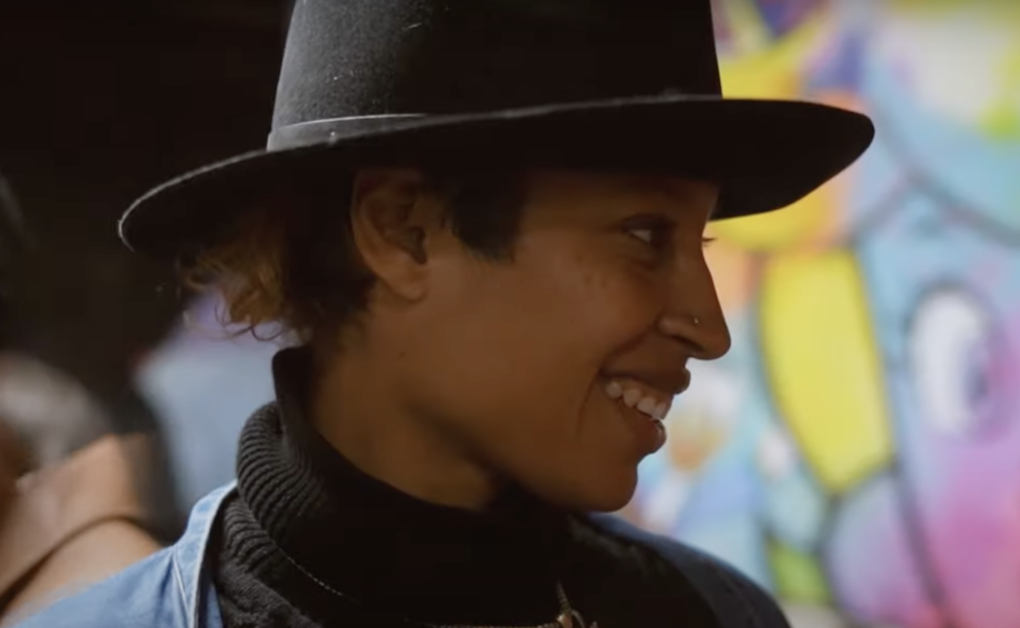
"caption": "Kisha Batista, living her best life in ‘Beyond The Aggressives: 25 Years Later.’",
"description": null,
"title": "Kisha Batista, living her best life in ‘Beyond The Aggressives: 25 Years Later.’",
"credit": "Showtime",
"status": "inherit",
"altTag": "A woman of color wearing a hat, viewed in close up side profile, smiling.",
"isLoading": false,
"fetchFailed": false
},
"arts_13939132": {
"type": "attachments",
"id": "arts_13939132",
"meta": {
"index": "attachments_1716263798",
"site": "arts",
"id": "13939132",
"found": true
},
"parent": 13939131,
"imgSizes": {
"twentyfourteen-full-width": {
"file": "https://cdn.kqed.org/wp-content/uploads/sites/2/2023/12/transitions-interior-sample-01_wide-ffe2a636450c674ff347cc2eb8548a89363faa88-1038x576.jpg",
"width": 1038,
"mimeType": "image/jpeg",
"height": 576
},
"thumbnail": {
"file": "https://cdn.kqed.org/wp-content/uploads/sites/2/2023/12/transitions-interior-sample-01_wide-ffe2a636450c674ff347cc2eb8548a89363faa88-160x90.jpg",
"width": 160,
"mimeType": "image/jpeg",
"height": 90
},
"post-thumbnail": {
"file": "https://cdn.kqed.org/wp-content/uploads/sites/2/2023/12/transitions-interior-sample-01_wide-ffe2a636450c674ff347cc2eb8548a89363faa88-672x372.jpg",
"width": 672,
"mimeType": "image/jpeg",
"height": 372
},
"kqedFullSize": {
"file": "https://cdn.kqed.org/wp-content/uploads/sites/2/2023/12/transitions-interior-sample-01_wide-ffe2a636450c674ff347cc2eb8548a89363faa88.jpg",
"width": 2036,
"height": 1145
},
"large": {
"file": "https://cdn.kqed.org/wp-content/uploads/sites/2/2023/12/transitions-interior-sample-01_wide-ffe2a636450c674ff347cc2eb8548a89363faa88-1020x574.jpg",
"width": 1020,
"mimeType": "image/jpeg",
"height": 574
},
"1536x1536": {
"file": "https://cdn.kqed.org/wp-content/uploads/sites/2/2023/12/transitions-interior-sample-01_wide-ffe2a636450c674ff347cc2eb8548a89363faa88-1536x864.jpg",
"width": 1536,
"mimeType": "image/jpeg",
"height": 864
},
"full-width": {
"file": "https://cdn.kqed.org/wp-content/uploads/sites/2/2023/12/transitions-interior-sample-01_wide-ffe2a636450c674ff347cc2eb8548a89363faa88-1920x1080.jpg",
"width": 1920,
"mimeType": "image/jpeg",
"height": 1080
},
"medium": {
"file": "https://cdn.kqed.org/wp-content/uploads/sites/2/2023/12/transitions-interior-sample-01_wide-ffe2a636450c674ff347cc2eb8548a89363faa88-800x450.jpg",
"width": 800,
"mimeType": "image/jpeg",
"height": 450
},
"medium_large": {
"file": "https://cdn.kqed.org/wp-content/uploads/sites/2/2023/12/transitions-interior-sample-01_wide-ffe2a636450c674ff347cc2eb8548a89363faa88-768x432.jpg",
"width": 768,
"mimeType": "image/jpeg",
"height": 432
}
},
"publishDate": 1702067281,
"modified": 1702067697,
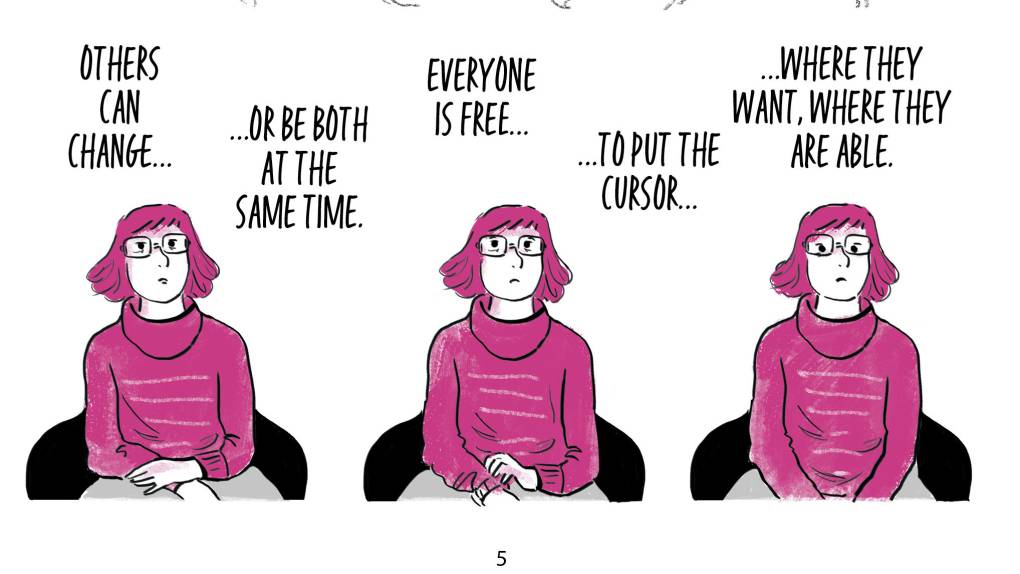
"caption": "A page from ‘Transitions: A Mother's Journey.’",
"description": null,
"title": "A page from ‘Transitions: A Mother's Journey.’",
"credit": "Top Shelf Productions",
"status": "inherit",
"altTag": "Three illustrations of a white woman with a pink bob and glasses. She is wearing a sweater the same color as her hair.",
"isLoading": false,
"fetchFailed": false
},
"arts_13936479": {
"type": "attachments",
"id": "arts_13936479",
"meta": {
"index": "attachments_1716263798",
"site": "arts",
"id": "13936479",
"found": true
},
"parent": 13936474,
"imgSizes": {
"twentyfourteen-full-width": {
"file": "https://ww2.kqed.org/app/uploads/sites/2/2023/10/MAP3-1038x576.jpg",
"width": 1038,
"mimeType": "image/jpeg",
"height": 576
},
"thumbnail": {
"file": "https://ww2.kqed.org/app/uploads/sites/2/2023/10/MAP3-160x107.jpg",
"width": 160,
"mimeType": "image/jpeg",
"height": 107
},
"post-thumbnail": {
"file": "https://ww2.kqed.org/app/uploads/sites/2/2023/10/MAP3-672x372.jpg",
"width": 672,
"mimeType": "image/jpeg",
"height": 372
},
"kqedFullSize": {
"file": "https://ww2.kqed.org/app/uploads/sites/2/2023/10/MAP3.jpg",
"width": 1920,
"height": 1280
},
"large": {
"file": "https://ww2.kqed.org/app/uploads/sites/2/2023/10/MAP3-1020x680.jpg",
"width": 1020,
"mimeType": "image/jpeg",
"height": 680
},
"1536x1536": {
"file": "https://ww2.kqed.org/app/uploads/sites/2/2023/10/MAP3-1536x1024.jpg",
"width": 1536,
"mimeType": "image/jpeg",
"height": 1024
},
"medium": {
"file": "https://ww2.kqed.org/app/uploads/sites/2/2023/10/MAP3-800x533.jpg",
"width": 800,
"mimeType": "image/jpeg",
"height": 533
},
"medium_large": {
"file": "https://ww2.kqed.org/app/uploads/sites/2/2023/10/MAP3-768x512.jpg",
"width": 768,
"mimeType": "image/jpeg",
"height": 512
}
},
"publishDate": 1697482295,
"modified": 1697487152,
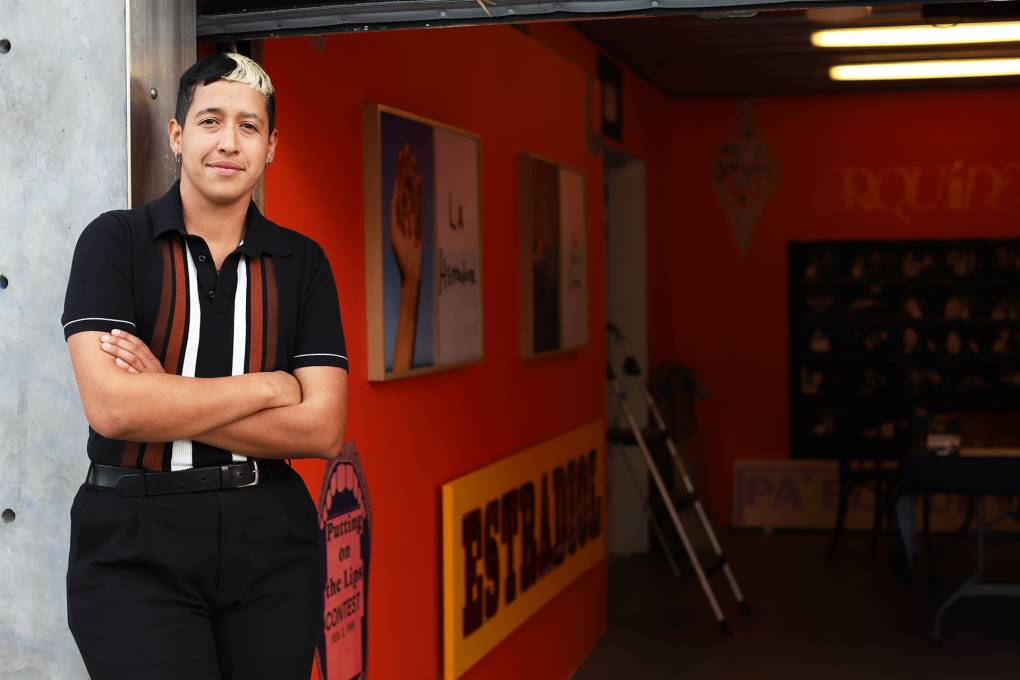
"caption": "Marcel Pardo Ariza's new show at 500 Capp Street includes an installation celebrating trans history and numerous community events. ",
"description": null,
"title": "MAP3",
"credit": "Nastia Voynovskaya/KQED",
"status": "inherit",
"altTag": "Artist Marcel Pardo Ariza, a Latine trans masculine person in their 30s, stands before an open garage door. Parts of their installation of photography and archives are visible in the background.",
"isLoading": false,
"fetchFailed": false
},
"arts_13931119": {
"type": "attachments",
"id": "arts_13931119",
"meta": {
"index": "attachments_1716263798",
"site": "arts",
"id": "13931119",
"found": true
},
"parent": 13931116,
"imgSizes": {
"twentyfourteen-full-width": {
"file": "https://ww2.kqed.org/app/uploads/sites/2/2023/06/GettyImages-1258635552-scaled-e1688150279368-1038x576.jpg",
"width": 1038,
"mimeType": "image/jpeg",
"height": 576
},
"thumbnail": {
"file": "https://ww2.kqed.org/app/uploads/sites/2/2023/06/GettyImages-1258635552-scaled-e1688150279368-160x107.jpg",
"width": 160,
"mimeType": "image/jpeg",
"height": 107
},
"post-thumbnail": {
"file": "https://ww2.kqed.org/app/uploads/sites/2/2023/06/GettyImages-1258635552-scaled-e1688150279368-672x372.jpg",
"width": 672,
"mimeType": "image/jpeg",
"height": 372
},
"kqedFullSize": {
"file": "https://ww2.kqed.org/app/uploads/sites/2/2023/06/GettyImages-1258635552-scaled-e1688150279368.jpg",
"width": 1920,
"height": 1280
},
"2048x2048": {
"file": "https://ww2.kqed.org/app/uploads/sites/2/2023/06/GettyImages-1258635552-2048x1365.jpg",
"width": 2048,
"mimeType": "image/jpeg",
"height": 1365
},
"large": {
"file": "https://ww2.kqed.org/app/uploads/sites/2/2023/06/GettyImages-1258635552-scaled-e1688150279368-1020x680.jpg",
"width": 1020,
"mimeType": "image/jpeg",
"height": 680
},
"1536x1536": {
"file": "https://ww2.kqed.org/app/uploads/sites/2/2023/06/GettyImages-1258635552-scaled-e1688150279368-1536x1024.jpg",
"width": 1536,
"mimeType": "image/jpeg",
"height": 1024
},
"full-width": {
"file": "https://ww2.kqed.org/app/uploads/sites/2/2023/06/GettyImages-1258635552-1920x1280.jpg",
"width": 1920,
"mimeType": "image/jpeg",
"height": 1280
},
"medium": {
"file": "https://ww2.kqed.org/app/uploads/sites/2/2023/06/GettyImages-1258635552-scaled-e1688150279368-800x533.jpg",
"width": 800,
"mimeType": "image/jpeg",
"height": 533
},
"medium_large": {
"file": "https://ww2.kqed.org/app/uploads/sites/2/2023/06/GettyImages-1258635552-scaled-e1688150279368-768x512.jpg",
"width": 768,
"mimeType": "image/jpeg",
"height": 512
}
},
"publishDate": 1688150261,
"modified": 1688150372,
"caption": "Dylan Mulvaney at the 2023 Tony Awards in New York City.",
"description": null,
"title": "Dylan Mulvaney at the 2023 Tony Awards in New York City.",
"credit": "Sean Zanni/ Patrick McMullan via Getty Images",
"status": "inherit",
"altTag": "A very petite blonde woman wearing an off the shoulder black gown stands on a red carpet against a green backdrop.",
"isLoading": false,
"fetchFailed": false
},
"arts_13930198": {
"type": "attachments",
"id": "arts_13930198",
"meta": {
"index": "attachments_1716263798",
"site": "arts",
"id": "13930198",
"found": true
},
"parent": 13930083,
"imgSizes": {
"twentyfourteen-full-width": {
"file": "https://ww2.kqed.org/app/uploads/sites/2/2023/06/EP-1038x576.jpg",
"width": 1038,
"mimeType": "image/jpeg",
"height": 576
},
"thumbnail": {
"file": "https://ww2.kqed.org/app/uploads/sites/2/2023/06/EP-160x99.jpg",
"width": 160,
"mimeType": "image/jpeg",
"height": 99
},
"post-thumbnail": {
"file": "https://ww2.kqed.org/app/uploads/sites/2/2023/06/EP-672x372.jpg",
"width": 672,
"mimeType": "image/jpeg",
"height": 372
},
"kqedFullSize": {
"file": "https://ww2.kqed.org/app/uploads/sites/2/2023/06/EP.jpg",
"width": 2062,
"height": 1279
},
"2048x2048": {
"file": "https://ww2.kqed.org/app/uploads/sites/2/2023/06/EP-2048x1270.jpg",
"width": 2048,
"mimeType": "image/jpeg",
"height": 1270
},
"large": {
"file": "https://ww2.kqed.org/app/uploads/sites/2/2023/06/EP-1020x633.jpg",
"width": 1020,
"mimeType": "image/jpeg",
"height": 633
},
"1536x1536": {
"file": "https://ww2.kqed.org/app/uploads/sites/2/2023/06/EP-1536x953.jpg",
"width": 1536,
"mimeType": "image/jpeg",
"height": 953
},
"full-width": {
"file": "https://ww2.kqed.org/app/uploads/sites/2/2023/06/EP-1920x1191.jpg",
"width": 1920,
"mimeType": "image/jpeg",
"height": 1191
},
"medium": {
"file": "https://ww2.kqed.org/app/uploads/sites/2/2023/06/EP-800x496.jpg",
"width": 800,
"mimeType": "image/jpeg",
"height": 496
},
"medium_large": {
"file": "https://ww2.kqed.org/app/uploads/sites/2/2023/06/EP-768x476.jpg",
"width": 768,
"mimeType": "image/jpeg",
"height": 476
}
},
"publishDate": 1686092871,
"modified": 1686092951,
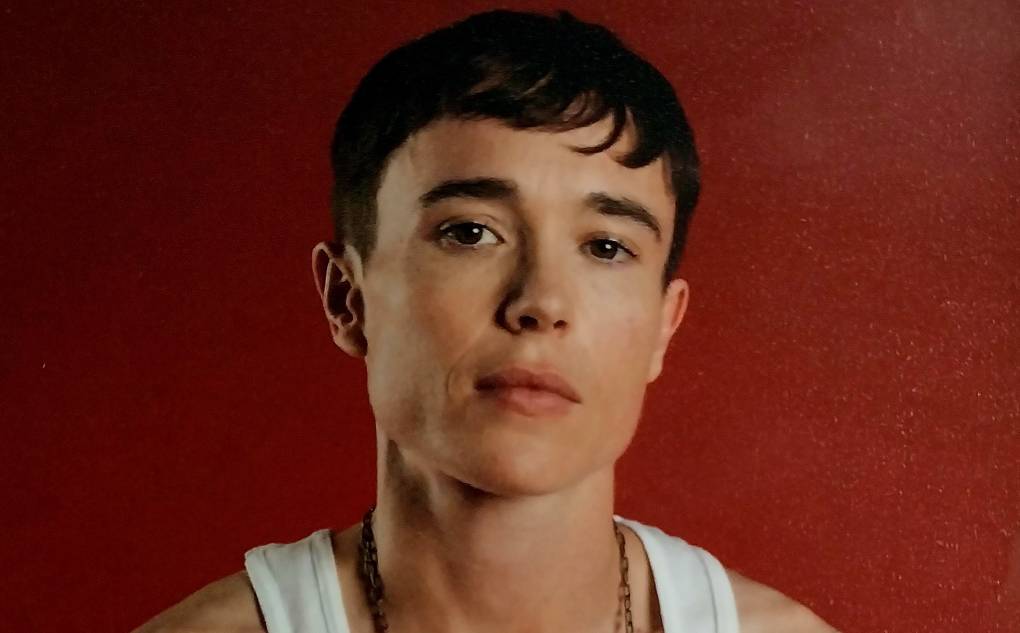
"caption": "Elliot Page, as seen on the cover of his new book, ‘Pageboy: A Memoir.’",
"description": null,
"title": "Elliot Page, as seen on the cover of his new book, ‘Pageboy: A Memoir.’",
"credit": "Flatiron Books",
"status": "inherit",
"altTag": "A transgender man sits, expression plain, in front of a red background. He is wearing a white tank.",
"isLoading": false,
"fetchFailed": false
},
"arts_13926098": {
"type": "attachments",
"id": "arts_13926098",
"meta": {
"index": "attachments_1716263798",
"site": "arts",
"id": "13926098",
"found": true
},
"parent": 13926077,
"imgSizes": {
"twentyfourteen-full-width": {
"file": "https://ww2.kqed.org/app/uploads/sites/2/2023/03/pexels-shvets-production-7176325-1038x576.jpg",
"width": 1038,
"mimeType": "image/jpeg",
"height": 576
},
"thumbnail": {
"file": "https://ww2.kqed.org/app/uploads/sites/2/2023/03/pexels-shvets-production-7176325-160x107.jpg",
"width": 160,
"mimeType": "image/jpeg",
"height": 107
},
"post-thumbnail": {
"file": "https://ww2.kqed.org/app/uploads/sites/2/2023/03/pexels-shvets-production-7176325-672x372.jpg",
"width": 672,
"mimeType": "image/jpeg",
"height": 372
},
"kqedFullSize": {
"file": "https://ww2.kqed.org/app/uploads/sites/2/2023/03/pexels-shvets-production-7176325-scaled.jpg",
"width": 2560,
"height": 1707
},
"2048x2048": {
"file": "https://ww2.kqed.org/app/uploads/sites/2/2023/03/pexels-shvets-production-7176325-2048x1365.jpg",
"width": 2048,
"mimeType": "image/jpeg",
"height": 1365
},
"large": {
"file": "https://ww2.kqed.org/app/uploads/sites/2/2023/03/pexels-shvets-production-7176325-1020x680.jpg",
"width": 1020,
"mimeType": "image/jpeg",
"height": 680
},
"1536x1536": {
"file": "https://ww2.kqed.org/app/uploads/sites/2/2023/03/pexels-shvets-production-7176325-1536x1024.jpg",
"width": 1536,
"mimeType": "image/jpeg",
"height": 1024
},
"full-width": {
"file": "https://ww2.kqed.org/app/uploads/sites/2/2023/03/pexels-shvets-production-7176325-1920x1280.jpg",
"width": 1920,
"mimeType": "image/jpeg",
"height": 1280
},
"medium": {
"file": "https://ww2.kqed.org/app/uploads/sites/2/2023/03/pexels-shvets-production-7176325-800x533.jpg",
"width": 800,
"mimeType": "image/jpeg",
"height": 533
},
"medium_large": {
"file": "https://ww2.kqed.org/app/uploads/sites/2/2023/03/pexels-shvets-production-7176325-768x512.jpg",
"width": 768,
"mimeType": "image/jpeg",
"height": 512
}
},
"publishDate": 1678469846,
"modified": 1678470417,
"caption": "Anti-trans laws and rhetoric are reaching a fever pitch. The effects are devastating for trans people and the therapists who support them, even in a sanctuary state for gender-affirming healthcare like California.",
"description": null,
"title": "pexels-shvets-production-7176325",
"credit": "Shvets Production/Pexels",
"status": "inherit",
"altTag": "A close-up photo of one person holding another's hand to comfort them.",
"isLoading": false,
"fetchFailed": false
},
"arts_13922818": {
"type": "attachments",
"id": "arts_13922818",
"meta": {
"index": "attachments_1716263798",
"site": "arts",
"id": "13922818",
"found": true
},
"parent": 13922811,
"imgSizes": {
"twentyfourteen-full-width": {
"file": "https://ww2.kqed.org/app/uploads/sites/2/2022/12/pexels-any-lane-5727926-1038x576.jpg",
"width": 1038,
"mimeType": "image/jpeg",
"height": 576
},
"thumbnail": {
"file": "https://ww2.kqed.org/app/uploads/sites/2/2022/12/pexels-any-lane-5727926-160x90.jpg",
"width": 160,
"mimeType": "image/jpeg",
"height": 90
},
"post-thumbnail": {
"file": "https://ww2.kqed.org/app/uploads/sites/2/2022/12/pexels-any-lane-5727926-672x372.jpg",
"width": 672,
"mimeType": "image/jpeg",
"height": 372
},
"kqedFullSize": {
"file": "https://ww2.kqed.org/app/uploads/sites/2/2022/12/pexels-any-lane-5727926.jpg",
"width": 1920,
"height": 1080
},
"large": {
"file": "https://ww2.kqed.org/app/uploads/sites/2/2022/12/pexels-any-lane-5727926-1020x574.jpg",
"width": 1020,
"mimeType": "image/jpeg",
"height": 574
},
"1536x1536": {
"file": "https://ww2.kqed.org/app/uploads/sites/2/2022/12/pexels-any-lane-5727926-1536x864.jpg",
"width": 1536,
"mimeType": "image/jpeg",
"height": 864
},
"medium": {
"file": "https://ww2.kqed.org/app/uploads/sites/2/2022/12/pexels-any-lane-5727926-800x450.jpg",
"width": 800,
"mimeType": "image/jpeg",
"height": 450
},
"medium_large": {
"file": "https://ww2.kqed.org/app/uploads/sites/2/2022/12/pexels-any-lane-5727926-768x432.jpg",
"width": 768,
"mimeType": "image/jpeg",
"height": 432
}
},
"publishDate": 1671220645,
"modified": 1671221195,
"caption": "At a time of unprecedented anti-trans legislation, it's important that adults make trans and gender-nonconforming young people feel loved during the holidays, writes therapist Veronica Esposito.",
"description": null,
"title": "pexels-any-lane-5727926",
"credit": "Any Lane/Pexels",
"status": "inherit",
"altTag": "An older person's hands place a Christmas gift into a child's hands.",
"isLoading": false,
"fetchFailed": false
},
"arts_13921376": {
"type": "attachments",
"id": "arts_13921376",
"meta": {
"index": "attachments_1716263798",
"site": "arts",
"id": "13921376",
"found": true
},
"parent": 13921336,
"imgSizes": {
"twentyfourteen-full-width": {
"file": "https://ww2.kqed.org/app/uploads/sites/2/2022/11/Screen-Shot-2022-11-07-at-11.06.14-AM-1038x576.png",
"width": 1038,
"mimeType": "image/png",
"height": 576
},
"thumbnail": {
"file": "https://ww2.kqed.org/app/uploads/sites/2/2022/11/Screen-Shot-2022-11-07-at-11.06.14-AM-160x102.png",
"width": 160,
"mimeType": "image/png",
"height": 102
},
"post-thumbnail": {
"file": "https://ww2.kqed.org/app/uploads/sites/2/2022/11/Screen-Shot-2022-11-07-at-11.06.14-AM-672x372.png",
"width": 672,
"mimeType": "image/png",
"height": 372
},
"kqedFullSize": {
"file": "https://ww2.kqed.org/app/uploads/sites/2/2022/11/Screen-Shot-2022-11-07-at-11.06.14-AM-e1667848216654.png",
"width": 1920,
"height": 1223
},
"large": {
"file": "https://ww2.kqed.org/app/uploads/sites/2/2022/11/Screen-Shot-2022-11-07-at-11.06.14-AM-1020x649.png",
"width": 1020,
"mimeType": "image/png",
"height": 649
},
"1536x1536": {
"file": "https://ww2.kqed.org/app/uploads/sites/2/2022/11/Screen-Shot-2022-11-07-at-11.06.14-AM-1536x978.png",
"width": 1536,
"mimeType": "image/png",
"height": 978
},
"full-width": {
"file": "https://ww2.kqed.org/app/uploads/sites/2/2022/11/Screen-Shot-2022-11-07-at-11.06.14-AM-1920x1223.png",
"width": 1920,
"mimeType": "image/png",
"height": 1223
},
"medium": {
"file": "https://ww2.kqed.org/app/uploads/sites/2/2022/11/Screen-Shot-2022-11-07-at-11.06.14-AM-800x509.png",
"width": 800,
"mimeType": "image/png",
"height": 509
},
"medium_large": {
"file": "https://ww2.kqed.org/app/uploads/sites/2/2022/11/Screen-Shot-2022-11-07-at-11.06.14-AM-768x489.png",
"width": 768,
"mimeType": "image/png",
"height": 489
}
},
"publishDate": 1667848011,
"modified": 1667854139,
"caption": "Detail of 'Ray & Sathya,' a portrait by Éamon McGiven that's part of 'Still Lives, a Trans Portrait Project,' currently on view at the Tenderloin Museum.",
"description": null,
"title": "Detail of 'Ray & Sathya,' a portrait by Éamon McGiven, part of 'Still Lives, a Trans Portrait Project,' currenly on show at the Tenderloin Museum.",
"credit": "Courtesy of The Tenderloin Museum",
"status": "inherit",
"altTag": "Two people of color joke around on the beach. One of them is holding up the other as they make a dramatic pose, as if overcome with emotion. The Golden Gate Bridge is in the distance.",
"isLoading": false,
"fetchFailed": false
},
"arts_13917617": {
"type": "attachments",
"id": "arts_13917617",
"meta": {
"index": "attachments_1716263798",
"site": "arts",
"id": "13917617",
"found": true
},
"parent": 13917616,
"imgSizes": {
"twentyfourteen-full-width": {
"file": "https://ww2.kqed.org/app/uploads/sites/2/2022/08/08_reallyinto_tboyswag_wide-598446b2fc34ca62459ea6588661ffb7de977126-1038x576.jpg",
"width": 1038,
"mimeType": "image/jpeg",
"height": 576
},
"thumbnail": {
"file": "https://ww2.kqed.org/app/uploads/sites/2/2022/08/08_reallyinto_tboyswag_wide-598446b2fc34ca62459ea6588661ffb7de977126-160x90.jpg",
"width": 160,
"mimeType": "image/jpeg",
"height": 90
},
"post-thumbnail": {
"file": "https://ww2.kqed.org/app/uploads/sites/2/2022/08/08_reallyinto_tboyswag_wide-598446b2fc34ca62459ea6588661ffb7de977126-672x372.jpg",
"width": 672,
"mimeType": "image/jpeg",
"height": 372
},
"kqedFullSize": {
"file": "https://ww2.kqed.org/app/uploads/sites/2/2022/08/08_reallyinto_tboyswag_wide-598446b2fc34ca62459ea6588661ffb7de977126-e1660586684241.jpg",
"width": 1920,
"height": 1080
},
"2048x2048": {
"file": "https://ww2.kqed.org/app/uploads/sites/2/2022/08/08_reallyinto_tboyswag_wide-598446b2fc34ca62459ea6588661ffb7de977126-2048x1152.jpg",
"width": 2048,
"mimeType": "image/jpeg",
"height": 1152
},
"large": {
"file": "https://ww2.kqed.org/app/uploads/sites/2/2022/08/08_reallyinto_tboyswag_wide-598446b2fc34ca62459ea6588661ffb7de977126-1020x574.jpg",
"width": 1020,
"mimeType": "image/jpeg",
"height": 574
},
"1536x1536": {
"file": "https://ww2.kqed.org/app/uploads/sites/2/2022/08/08_reallyinto_tboyswag_wide-598446b2fc34ca62459ea6588661ffb7de977126-1536x864.jpg",
"width": 1536,
"mimeType": "image/jpeg",
"height": 864
},
"full-width": {
"file": "https://ww2.kqed.org/app/uploads/sites/2/2022/08/08_reallyinto_tboyswag_wide-598446b2fc34ca62459ea6588661ffb7de977126-1920x1080.jpg",
"width": 1920,
"mimeType": "image/jpeg",
"height": 1080
},
"medium": {
"file": "https://ww2.kqed.org/app/uploads/sites/2/2022/08/08_reallyinto_tboyswag_wide-598446b2fc34ca62459ea6588661ffb7de977126-800x450.jpg",
"width": 800,
"mimeType": "image/jpeg",
"height": 450
},
"medium_large": {
"file": "https://ww2.kqed.org/app/uploads/sites/2/2022/08/08_reallyinto_tboyswag_wide-598446b2fc34ca62459ea6588661ffb7de977126-768x432.jpg",
"width": 768,
"mimeType": "image/jpeg",
"height": 432
}
},
"publishDate": 1660585561,
"modified": 1660586746,
"caption": null,
"description": null,
"title": "08_reallyinto_tboyswag_wide-598446b2fc34ca62459ea6588661ffb7de977126",
"credit": "Josie Norton for NPR",
"status": "inherit",
"altTag": "A cartoon rendition of people riding a shopping cart down a street as a cloud of clothes and smoke billows behind them.",
"isLoading": false,
"fetchFailed": false
},
"arts_13916206": {
"type": "attachments",
"id": "arts_13916206",
"meta": {
"index": "attachments_1716263798",
"site": "arts",
"id": "13916206",
"found": true
},
"parent": 13916204,
"imgSizes": {
"twentyfourteen-full-width": {
"file": "https://ww2.kqed.org/app/uploads/sites/2/2022/07/azuah_noise_pop_nldeveyra-1-1038x576.png",
"width": 1038,
"mimeType": "image/png",
"height": 576
},
"thumbnail": {
"file": "https://ww2.kqed.org/app/uploads/sites/2/2022/07/azuah_noise_pop_nldeveyra-1-160x120.png",
"width": 160,
"mimeType": "image/png",
"height": 120
},
"post-thumbnail": {
"file": "https://ww2.kqed.org/app/uploads/sites/2/2022/07/azuah_noise_pop_nldeveyra-1-672x372.png",
"width": 672,
"mimeType": "image/png",
"height": 372
},
"kqedFullSize": {
"file": "https://ww2.kqed.org/app/uploads/sites/2/2022/07/azuah_noise_pop_nldeveyra-1.png",
"width": 1440,
"height": 1080
},
"large": {
"file": "https://ww2.kqed.org/app/uploads/sites/2/2022/07/azuah_noise_pop_nldeveyra-1-1020x765.png",
"width": 1020,
"mimeType": "image/png",
"height": 765
},
"medium": {
"file": "https://ww2.kqed.org/app/uploads/sites/2/2022/07/azuah_noise_pop_nldeveyra-1-800x600.png",
"width": 800,
"mimeType": "image/png",
"height": 600
},
"medium_large": {
"file": "https://ww2.kqed.org/app/uploads/sites/2/2022/07/azuah_noise_pop_nldeveyra-1-768x576.png",
"width": 768,
"mimeType": "image/png",
"height": 576
}
},
"publishDate": 1658166694,
"modified": 1658176489,
"caption": "Azuah is one of the queer and trans musicians who've performed at the San Francisco LGBT Center's Queer Vibes program, which has its first in-person performance showcase on July 29.",
"description": null,
"title": "azuah_noise_pop_nldeveyra-1",
"credit": "Courtesy of Azuah",
"status": "inherit",
"altTag": "Person with curly black hair sings into microphone while playing electric guitar",
"isLoading": false,
"fetchFailed": false
},
"arts_13915529": {
"type": "attachments",
"id": "arts_13915529",
"meta": {
"index": "attachments_1716263798",
"site": "arts",
"id": "13915529",
"found": true
},
"parent": 13915486,
"imgSizes": {
"twentyfourteen-full-width": {
"file": "https://ww2.kqed.org/app/uploads/sites/2/2022/06/SDforWP-1038x576.jpg",
"width": 1038,
"mimeType": "image/jpeg",
"height": 576
},
"thumbnail": {
"file": "https://ww2.kqed.org/app/uploads/sites/2/2022/06/SDforWP-160x90.jpg",
"width": 160,
"mimeType": "image/jpeg",
"height": 90
},
"post-thumbnail": {
"file": "https://ww2.kqed.org/app/uploads/sites/2/2022/06/SDforWP-672x372.jpg",
"width": 672,
"mimeType": "image/jpeg",
"height": 372
},
"kqedFullSize": {
"file": "https://ww2.kqed.org/app/uploads/sites/2/2022/06/SDforWP.jpg",
"width": 1920,
"height": 1080
},
"large": {
"file": "https://ww2.kqed.org/app/uploads/sites/2/2022/06/SDforWP-1020x574.jpg",
"width": 1020,
"mimeType": "image/jpeg",
"height": 574
},
"1536x1536": {
"file": "https://ww2.kqed.org/app/uploads/sites/2/2022/06/SDforWP-1536x864.jpg",
"width": 1536,
"mimeType": "image/jpeg",
"height": 864
},
"medium": {
"file": "https://ww2.kqed.org/app/uploads/sites/2/2022/06/SDforWP-800x450.jpg",
"width": 800,
"mimeType": "image/jpeg",
"height": 450
},
"medium_large": {
"file": "https://ww2.kqed.org/app/uploads/sites/2/2022/06/SDforWP-768x432.jpg",
"width": 768,
"mimeType": "image/jpeg",
"height": 432
}
},
"publishDate": 1656530676,
"modified": 1656530785,
"caption": "Sean Dorsey Dance (from left to right): Héctor Jaime, Sean Dorsey, Nol Simonse, Will Woodward",
"description": "Sean Dorsey Dance (from left to right): Héctor Jaime, Sean Dorsey, Nol Simonse, Will Woodward",
"title": "SDforWP",
"credit": "Beth LaBerge",
"status": "inherit",
"altTag": "Four dancers in blue gowns are posing against a wide shot of San Franciso's skyline",
"isLoading": false,
"fetchFailed": false
},
"arts_13915112": {
"type": "attachments",
"id": "arts_13915112",
"meta": {
"index": "attachments_1716263798",
"site": "arts",
"id": "13915112",
"found": true
},
"parent": 13915078,
"imgSizes": {
"twentyfourteen-full-width": {
"file": "https://ww2.kqed.org/app/uploads/sites/2/2022/06/comfortcollective_lead-1038x576.jpeg",
"width": 1038,
"mimeType": "image/jpeg",
"height": 576
},
"thumbnail": {
"file": "https://ww2.kqed.org/app/uploads/sites/2/2022/06/comfortcollective_lead-160x107.jpeg",
"width": 160,
"mimeType": "image/jpeg",
"height": 107
},
"post-thumbnail": {
"file": "https://ww2.kqed.org/app/uploads/sites/2/2022/06/comfortcollective_lead-672x372.jpeg",
"width": 672,
"mimeType": "image/jpeg",
"height": 372
},
"kqedFullSize": {
"file": "https://ww2.kqed.org/app/uploads/sites/2/2022/06/comfortcollective_lead.jpeg",
"width": 2000,
"height": 1334
},
"large": {
"file": "https://ww2.kqed.org/app/uploads/sites/2/2022/06/comfortcollective_lead-1020x680.jpeg",
"width": 1020,
"mimeType": "image/jpeg",
"height": 680
},
"1536x1536": {
"file": "https://ww2.kqed.org/app/uploads/sites/2/2022/06/comfortcollective_lead-1536x1025.jpeg",
"width": 1536,
"mimeType": "image/jpeg",
"height": 1025
},
"full-width": {
"file": "https://ww2.kqed.org/app/uploads/sites/2/2022/06/comfortcollective_lead-1920x1281.jpeg",
"width": 1920,
"mimeType": "image/jpeg",
"height": 1281
},
"medium": {
"file": "https://ww2.kqed.org/app/uploads/sites/2/2022/06/comfortcollective_lead-800x534.jpeg",
"width": 800,
"mimeType": "image/jpeg",
"height": 534
},
"medium_large": {
"file": "https://ww2.kqed.org/app/uploads/sites/2/2022/06/comfortcollective_lead-768x512.jpeg",
"width": 768,
"mimeType": "image/jpeg",
"height": 512
}
},
"publishDate": 1655901757,
"modified": 1655919552,
"caption": "Chef Christian Washington and cocktail expert Sadé Stamps are bringing The Comfort Collective's particular brand of Black, queer and trans joy back to where they started: Berkeley's Chez Panisse.",
"description": null,
"title": "comfortcollective_lead",
"credit": "Comfort Collective",
"status": "inherit",
"altTag": "In a restaurant kitchen, a Black chef in a sleeveless shirt and black apron prepares to pass a dish out to be served.",
"isLoading": false,
"fetchFailed": false
}
},
"audioPlayerReducer": {
"postId": "stream_live",
"isPaused": true,
"isPlaying": false,
"pfsActive": false,
"pledgeModalIsOpen": true,
"playerDrawerIsOpen": false,
"liveAudioPlayStartedAt": 0,
"liveAudioPlayContext": ""
},
"authorsReducer": {
"byline_arts_13939131": {
"type": "authors",
"id": "byline_arts_13939131",
"meta": {
"override": true
},
"slug": "byline_arts_13939131",
"name": "Tahneer Oksman",
"isLoading": false
},
"byline_arts_13931116": {
"type": "authors",
"id": "byline_arts_13931116",
"meta": {
"override": true
},
"slug": "byline_arts_13931116",
"name": "The Associated Press",
"isLoading": false
},
"byline_arts_13917616": {
"type": "authors",
"id": "byline_arts_13917616",
"meta": {
"override": true
},
"slug": "byline_arts_13917616",
"name": "Reanna Cruz",
"isLoading": false
},
"byline_arts_13915486": {
"type": "authors",
"id": "byline_arts_13915486",
"meta": {
"override": true
},
"slug": "byline_arts_13915486",
"name": "Lindsay Gauthier",
"isLoading": false
},
"ralexandra": {
"type": "authors",
"id": "11242",
"meta": {
"index": "authors_1716337520",
"id": "11242",
"found": true
},
"name": "Rae Alexandra",
"firstName": "Rae",
"lastName": "Alexandra",
"slug": "ralexandra",
"email": "ralexandra@kqed.org",
"display_author_email": true,
"staff_mastheads": [],
"title": "Reporter/Producer",
"bio": "Rae Alexandra is a Reporter/Producer for KQED Arts & Culture, and the creator/author of the \u003ca href=\"https://www.kqed.org/arts/program/rebel-girls-from-bay-area-history\">Rebel Girls From Bay Area History\u003c/a> and \u003ca href=\"https://www.kqed.org/bizarrebayarea\">Bizarre Bay Area\u003c/a> series. Her debut book, \u003ca href=\"https://citylights.com/politics-current-events-history/unsung-heroines35-women-who-changed/\">Unsung Heroines: 35 Women Who Changed the Bay Area\u003c/a> was published by City Lights in March 2026. In 2023, Rae was awarded an SPJ Excellence in Journalism Award for Arts & Culture. Rae was born and raised in Wales and subsequently — even after two decades in Northern California — still uses phrases that regularly baffle her coworkers.",
"avatar": "https://secure.gravatar.com/avatar/edfee8176c80cc0a382b051190f5341997df378a934a5774dcb0977732dfd401?s=600&d=blank&r=g",
"twitter": null,
"bluesky": null,
"facebook": null,
"instagram": null,
"linkedin": null,
"sites": [
{
"site": "arts",
"roles": [
"subscriber"
]
},
{
"site": "news",
"roles": [
"subscriber"
]
},
{
"site": "pop",
"roles": [
"subscriber"
]
},
{
"site": "bayareabites",
"roles": [
"subscriber"
]
},
{
"site": "science",
"roles": [
"subscriber"
]
}
],
"headData": {
"title": "Rae Alexandra | KQED",
"description": "Reporter/Producer",
"ogImgSrc": "https://secure.gravatar.com/avatar/edfee8176c80cc0a382b051190f5341997df378a934a5774dcb0977732dfd401?s=600&d=blank&r=g",
"twImgSrc": "https://secure.gravatar.com/avatar/edfee8176c80cc0a382b051190f5341997df378a934a5774dcb0977732dfd401?s=600&d=blank&r=g"
},
"isLoading": false,
"link": "/author/ralexandra"
},
"nvoynovskaya": {
"type": "authors",
"id": "11387",
"meta": {
"index": "authors_1716337520",
"id": "11387",
"found": true
},
"name": "Nastia Voynovskaya",
"firstName": "Nastia",
"lastName": "Voynovskaya",
"slug": "nvoynovskaya",
"email": "nvoynovskaya@kqed.org",
"display_author_email": false,
"staff_mastheads": [
"arts"
],
"title": "Editor and reporter",
"bio": "Nastia Voynovskaya is a reporter, editor and host at KQED Arts & Culture. She's been covering the arts in the Bay Area for over a decade, with a focus on music, queer culture, labor issues and grassroots organizing. She has edited KQED story series such as Trans Bay: A History of San Francisco's Gender-Diverse Community, and co-created KQED's Bay Area hip-hop history project, That's My Word. Nastia's work has been recognized by the Society of Professional Journalists and San Francisco Press Club. She regularly appears on podcasts and radio programs, including NPR's All Songs Considered, and hosts live events where music, culture and conversation meet.",
"avatar": "https://secure.gravatar.com/avatar/5025ee460e5a85d69ca20ea6c6f2f80d7e17795c828f61ea3aecfcd924e9042e?s=600&d=blank&r=g",
"twitter": null,
"bluesky": null,
"facebook": null,
"instagram": "https://www.instagram.com/nananastia/",
"linkedin": null,
"sites": [
{
"site": "",
"roles": [
"editor"
]
},
{
"site": "arts",
"roles": [
"administrator"
]
},
{
"site": "news",
"roles": [
"editor"
]
},
{
"site": "pop",
"roles": [
"administrator"
]
},
{
"site": "bayareabites",
"roles": [
"editor"
]
},
{
"site": "podcasts",
"roles": [
"editor"
]
},
{
"site": "hiphop",
"roles": [
"editor"
]
}
],
"headData": {
"title": "Nastia Voynovskaya | KQED",
"description": "Editor and reporter",
"ogImgSrc": "https://secure.gravatar.com/avatar/5025ee460e5a85d69ca20ea6c6f2f80d7e17795c828f61ea3aecfcd924e9042e?s=600&d=blank&r=g",
"twImgSrc": "https://secure.gravatar.com/avatar/5025ee460e5a85d69ca20ea6c6f2f80d7e17795c828f61ea3aecfcd924e9042e?s=600&d=blank&r=g"
},
"isLoading": false,
"link": "/author/nvoynovskaya"
},
"achazaro": {
"type": "authors",
"id": "11748",
"meta": {
"index": "authors_1716337520",
"id": "11748",
"found": true
},
"name": "Alan Chazaro",
"firstName": "Alan",
"lastName": "Chazaro",
"slug": "achazaro",
"email": "agchazaro@gmail.com",
"display_author_email": true,
"staff_mastheads": [],
"title": "Food Writer and Reporter",
"bio": "Alan Chazaro is the author of \u003cem>This Is Not a Frank Ocean Cover Album\u003c/em> (Black Lawrence Press, 2019), \u003cem>Piñata Theory\u003c/em> (Black Lawrence Press, 2020), and \u003cem>Notes from the Eastern Span of the Bay Bridge\u003c/em> (Ghost City Press, 2021). He is a graduate of June Jordan’s Poetry for the People program at UC Berkeley and a former Lawrence Ferlinghetti Fellow at the University of San Francisco. He writes about sports, food, art, music, education, and culture while repping the Bay on \u003ca href=\"https://twitter.com/alan_chazaro\">Twitter\u003c/a> and \u003ca href=\"https://www.instagram.com/alan_chazaro/?hl=en\">Instagram\u003c/a> at @alan_chazaro.",
"avatar": "https://secure.gravatar.com/avatar/ea8b6dd970fc5c29e7a188e7d5861df7?s=600&d=blank&r=g",
"twitter": "alan_chazaro",
"facebook": null,
"instagram": null,
"linkedin": null,
"sites": [
{
"site": "arts",
"roles": [
"contributor"
]
},
{
"site": "news",
"roles": [
"editor"
]
}
],
"headData": {
"title": "Alan Chazaro | KQED",
"description": "Food Writer and Reporter",
"ogImgSrc": "https://secure.gravatar.com/avatar/ea8b6dd970fc5c29e7a188e7d5861df7?s=600&d=blank&r=g",
"twImgSrc": "https://secure.gravatar.com/avatar/ea8b6dd970fc5c29e7a188e7d5861df7?s=600&d=blank&r=g"
},
"isLoading": false,
"link": "/author/achazaro"
},
"jebrahemi": {
"type": "authors",
"id": "11771",
"meta": {
"index": "authors_1716337520",
"id": "11771",
"found": true
},
"name": "Justin Ebrahemi",
"firstName": "Justin",
"lastName": "Ebrahemi",
"slug": "jebrahemi",
"email": "jebrahemi@kqed.org",
"display_author_email": true,
"staff_mastheads": [],
"title": "Digital Engagement Manager",
"bio": "Justin Ebrahemi is a San Francisco-based writer and poet. As the Digital Engagement Manager he helps bring KQED Arts' work into local communities both in the Bay and nationally. Previously, Justin worked for the SF performing arts organization, CounterPulse, and his writing has been published in Dancers Group, SFMOMA's Open Space, and various arts zines. Catch Justin biking through the city or baking vegan treats on the weekend.",
"avatar": "https://secure.gravatar.com/avatar/86cbbf64bf8c82d2a74d305c1760c365?s=600&d=blank&r=g",
"twitter": "JustinEbrahemi",
"facebook": null,
"instagram": null,
"linkedin": null,
"sites": [
{
"site": "arts",
"roles": [
"subscriber"
]
}
],
"headData": {
"title": "Justin Ebrahemi | KQED",
"description": "Digital Engagement Manager",
"ogImgSrc": "https://secure.gravatar.com/avatar/86cbbf64bf8c82d2a74d305c1760c365?s=600&d=blank&r=g",
"twImgSrc": "https://secure.gravatar.com/avatar/86cbbf64bf8c82d2a74d305c1760c365?s=600&d=blank&r=g"
},
"isLoading": false,
"link": "/author/jebrahemi"
},
"vesposito": {
"type": "authors",
"id": "11934",
"meta": {
"index": "authors_1716337520",
"id": "11934",
"found": true
},
"name": "Veronica Esposito",
"firstName": "Veronica",
"lastName": "Esposito",
"slug": "vesposito",
"email": "ladoppiavitadinica@gmail.com",
"display_author_email": false,
"staff_mastheads": [],
"title": "KQED Contributor",
"bio": "Veronica Esposito is a Licensed Marriage and Family Therapist, as well as a freelance journalist covering the arts, lifestyle, and social justice for venues including The Guardian, KQED, World Literature Today, and many others. Her writing has appeared in dozens of venues, and she has published four books. As a therapist, she specializes in supporting and advocating for trans individuals, and more generally helps clients process and overcome traumatic histories, manage life transitions, and tell their own story.",
"avatar": "https://secure.gravatar.com/avatar/503a7126ebd8cb299fb632f755dac767?s=600&d=blank&r=g",
"twitter": null,
"facebook": null,
"instagram": null,
"linkedin": null,
"sites": [
{
"site": "arts",
"roles": [
"author"
]
}
],
"headData": {
"title": "Veronica Esposito | KQED",
"description": "KQED Contributor",
"ogImgSrc": "https://secure.gravatar.com/avatar/503a7126ebd8cb299fb632f755dac767?s=600&d=blank&r=g",
"twImgSrc": "https://secure.gravatar.com/avatar/503a7126ebd8cb299fb632f755dac767?s=600&d=blank&r=g"
},
"isLoading": false,
"link": "/author/vesposito"
}
},
"pagesReducer": {
"arts_tag_transgender": {
"type": "terms",
"id": "arts_702",
"meta": {
"index": "terms_1716263798",
"site": "arts",
"id": "702",
"score": 8.669539
},
"featImg": null,
"name": "transgender",
"description": null,
"taxonomy": "tag",
"headData": {
"twImgId": null,
"twTitle": null,
"ogTitle": null,
"ogImgId": null,
"twDescription": null,
"description": null,
"title": "transgender Archives | KQED Arts",
"ogDescription": null
},
"ttid": 713,
"slug": "transgender",
"isLoading": false,
"title": "transgender",
"pageMeta": {
"site": "arts",
"WpPageTemplate": "page-topic-editorial",
"currentPage": 3
},
"blocks": [
{
"blockName": "kqed/post-list",
"attrs": {
"layout": "cardArticle2",
"query": "posts/arts?tag=transgender",
"seeMore": false,
"paginated": true,
"page": 3
}
},
{
"blockName": "kqed/ad"
}
]
}
},
"pfsSessionReducer": {},
"postsReducer": {
"stream_live": {
"type": "live",
"id": "stream_live",
"audioUrl": "https://streams.kqed.org/kqedradio",
"title": "Live Stream",
"excerpt": "Live Stream information currently unavailable.",
"link": "/radio",
"featImg": "",
"label": {
"name": "KQED Live",
"link": "/"
}
},
"stream_kqedNewscast": {
"type": "posts",
"id": "stream_kqedNewscast",
"audioUrl": "https://www.kqed.org/.stream/anon/radio/RDnews/newscast.mp3?_=1",
"title": "KQED Newscast",
"featImg": "",
"label": {
"name": "88.5 FM",
"link": "/"
}
},
"arts_13954702": {
"type": "posts",
"id": "arts_13954702",
"meta": {
"index": "posts_1716263798",
"site": "arts",
"id": "13954702",
"score": null,
"sort": [
1711663471000
]
},
"guestAuthors": [],
"slug": "beyond-aggressives-25-years-later-streaming-review-kisha-chin-trevon-octavio-gender",
"title": "‘25 Years Later’ Revisits the ‘Trancestors’ of 2005’s ‘The Aggressives’ Documentary",
"publishDate": 1711663471,
"format": "standard",
"headTitle": "‘25 Years Later’ Revisits the ‘Trancestors’ of 2005’s ‘The Aggressives’ Documentary | KQED",
"labelTerm": {
"term": 140,
"site": "arts"
},
"content": "\u003cp>“I’m comfortable being a woman who likes women. I live my life as a man, yes, but the reality does not change. You’re born a woman and that’s how you’re going to die.”\u003c/p>\n\u003cp>So said \u003ca href=\"https://nmaahc.si.edu/lgbtq/marquise-vilson\">Marquise Vilsón\u003c/a>, one of the subjects of 2005 documentary \u003cem>The Aggressives.\u003c/em> The film captured the lives of a group of genderqueer people of color living in New York City between 1997 and 2003. A quarter century on, Vilson’s starkly resigned statement feels lightyears away from where he is today — a successful actor, mentor and activist who is, unquestionably, a man.\u003c/p>\n\u003cp>Given the strides forward that Vilsón has publicly made over the years, it’s no wonder \u003cem>Aggressives\u003c/em> director Daniel Peddle felt the need to check in with some of the other subjects of the film. In 2018, he reconnected with four of the original cast: Octavio Sanders, Trevon Haynes, Kisha Batista and Chin Tsui. He spent the next five years documenting their continuing evolutions, as well as capturing Gen Z perspectives on how these “trancestors” have positively impacted the lives of queer youth now. The result is Paramount+ and Showtime documentary, \u003cem>Beyond the Aggressives: 25 Years Later\u003c/em>.\u003c/p>\n\u003cp>https://www.youtube.com/watch?v=FI2zkgQ79n4\u003c/p>\n\u003cp>In many ways, reconnecting with these subjects as older, more established adults is a relief, and issues of crime, racism and poverty are not as present here as they were in \u003cem>The Aggressives\u003c/em>. Kisha in particular appears to be living her best life: one full of love, joy, art and motorcycles. She is the philosophical heart of the movie and lights up the screen every time she’s on it — a quality that’s allowed her to snag roles on TV shows like \u003cem>Orange is the New Black\u003c/em>, \u003cem>Law & Order\u003c/em> and \u003cem>Manifest.\u003c/em>\u003c/p>\n\u003cp>[ad fullwidth]\u003c/p>\n\u003cp>That’s not to say our protagonists are not still experiencing hardship as a direct result of their gender identities. At the outset of the film, because of a series of calamitous events, Chin is detained by ICE. Worse, agents put him in long-term solitary confinement because he’s transgender. His struggle for freedom and independence is at the center of his story arc.\u003c/p>\n\u003cp>[aside postid='arts_13952433']When we see Trevon, he’s getting ready to start a family with his girlfriend Jade. As the couple works together to overcome medical issues, it’s clear that doctors’ misunderstandings of gender-nonconforming people only exacerbate their fertility struggles. Trevon is frustrated but determined. One gets the sense that, together, he and Jade could conquer pretty much anything.\u003c/p>\n\u003cp>Octavio gives us a powerful reflection on how growing up around prejudice continues to impact his self-image. Looking back on the first movie, he says he didn’t come out as trans because he was still living with family then and didn’t want to lose his home. Later, we see that fear of familial rejection has lingered.\u003c/p>\n\u003cp>At one point, Octavio notes: “If I had a choice to change my gender, I would. The reason why I don’t is because I have a son … I don’t want society judging him because of who his parent is.”\u003c/p>\n\u003cp>His son’s support later in the film provides the movie with some of its most touching moments.\u003c/p>\n\u003cp>Despite social progress in the years between \u003cem>The Aggressives\u003c/em> and \u003cem>25 Years Later\u003c/em>, self-identification continues to be a point of contention. In the original film, everyone identified as “femme aggressive” at some point, but mostly found themselves outgrowing the term. In the new documentary, Trevon uses male pronouns, but swings between referring to himself as trans, nonbinary and no label at all. It goes to show that language around gender needs to be ever-evolving.\u003c/p>\n\u003cp>[aside postid='arts_13954796']Kisha is still eschewing labels too, but does so with a refreshing sense of joy. “I define myself,” she says, “and I choose to be free.”\u003c/p>\n\u003cp>In the end, that’s what\u003cem> Beyond The Aggressives: 25 Years Later\u003c/em> is really about: growth, evolution, self-expression and the bravery inherent in pushing back against limitations. Its theme of self-realization is a universal one, but it is Kisha who most beautifully sums up the still-developing stories of our four old friends on screen.\u003c/p>\n\u003cp>“Identity is something that you create yourself — something like art. It’s a process. It’s always changing,” she says. “It’s an alignment of self and soul.”\u003c/p>\n\u003cp>\u003cimg loading=\"lazy\" decoding=\"async\" class=\"aligncenter size-medium wp-image-12127869\" src=\"https://ww2.kqed.org/arts/wp-content/uploads/sites/2/2016/09/Q.Logo_.Break_-800x78.jpg\" alt=\"\" width=\"800\" height=\"78\" srcset=\"https://cdn.kqed.org/wp-content/uploads/sites/2/2016/09/Q.Logo_.Break_.jpg 800w, https://cdn.kqed.org/wp-content/uploads/sites/2/2016/09/Q.Logo_.Break_-400x39.jpg 400w, https://cdn.kqed.org/wp-content/uploads/sites/2/2016/09/Q.Logo_.Break_-768x75.jpg 768w\" sizes=\"(max-width: 800px) 100vw, 800px\">\u003c/p>\n\u003cp>\u003c/p>\n\u003cp>\u003cem>‘Beyond The Aggressives: 25 Years Later’ premieres on Showtime on March 30, 2024. The movie will also be available to stream via Paramount+ for subscribers with a Showtime add-on.\u003c/em>\u003c/p>\n\n",
"blocks": [],
"excerpt": "The new Showtime/Paramount+ film shows how far transgender visibility and culture has progressed this century.",
"status": "publish",
"parent": 0,
"modified": 1726701802,
"stats": {
"hasAudio": false,
"hasVideo": true,
"hasChartOrMap": false,
"iframeSrcs": [],
"hasGoogleForm": false,
"hasGallery": false,
"hasHearkenModule": false,
"hasPolis": false,
"paragraphCount": 17,
"wordCount": 813
},
"headData": {
"title": "How to Stream 'The Aggressives: 25 Years Later’ Documentary | KQED",
"description": "The new Showtime/Paramount+ film shows how far transgender visibility and culture has progressed this century.",
"ogTitle": "‘25 Years Later’ Revisits the ‘Trancestors’ of 2005’s ‘The Aggressives’ Documentary",
"ogDescription": "",
"ogImgId": "",
"twTitle": "‘25 Years Later’ Revisits the ‘Trancestors’ of 2005’s ‘The Aggressives’ Documentary",
"twDescription": "",
"twImgId": "",
"socialTitle": "How to Stream 'The Aggressives: 25 Years Later’ Documentary %%page%% %%sep%% KQED",
"schema": {
"@context": "https://schema.org",
"@type": "Article",
"headline": "‘25 Years Later’ Revisits the ‘Trancestors’ of 2005’s ‘The Aggressives’ Documentary",
"datePublished": "2024-03-28T15:04:31-07:00",
"dateModified": "2024-09-18T16:23:22-07:00",
"image": "https://cdn.kqed.org/wp-content/uploads/2020/02/KQED-OG-Image@1x.png"
}
},
"sticky": false,
"templateType": "standard",
"featuredImageType": "standard",
"excludeFromSiteSearch": "Include",
"articleAge": "0",
"path": "/arts/13954702/beyond-aggressives-25-years-later-streaming-review-kisha-chin-trevon-octavio-gender",
"audioTrackLength": null,
"parsedContent": [
{
"type": "contentString",
"content": "\u003cdiv class=\"post-body\">\u003cp>\u003cp>“I’m comfortable being a woman who likes women. I live my life as a man, yes, but the reality does not change. You’re born a woman and that’s how you’re going to die.”\u003c/p>\n\u003cp>So said \u003ca href=\"https://nmaahc.si.edu/lgbtq/marquise-vilson\">Marquise Vilsón\u003c/a>, one of the subjects of 2005 documentary \u003cem>The Aggressives.\u003c/em> The film captured the lives of a group of genderqueer people of color living in New York City between 1997 and 2003. A quarter century on, Vilson’s starkly resigned statement feels lightyears away from where he is today — a successful actor, mentor and activist who is, unquestionably, a man.\u003c/p>\n\u003cp>Given the strides forward that Vilsón has publicly made over the years, it’s no wonder \u003cem>Aggressives\u003c/em> director Daniel Peddle felt the need to check in with some of the other subjects of the film. In 2018, he reconnected with four of the original cast: Octavio Sanders, Trevon Haynes, Kisha Batista and Chin Tsui. He spent the next five years documenting their continuing evolutions, as well as capturing Gen Z perspectives on how these “trancestors” have positively impacted the lives of queer youth now. The result is Paramount+ and Showtime documentary, \u003cem>Beyond the Aggressives: 25 Years Later\u003c/em>.\u003c/p>\u003c/p>\u003cp>\u003cspan class='utils-parseShortcode-shortcodes-__youtubeShortcode__embedYoutube'>\n \u003cspan class='utils-parseShortcode-shortcodes-__youtubeShortcode__embedYoutubeInside'>\n \u003ciframe\n loading='lazy'\n class='utils-parseShortcode-shortcodes-__youtubeShortcode__youtubePlayer'\n type='text/html'\n src='//www.youtube.com/embed/FI2zkgQ79n4'\n title='//www.youtube.com/embed/FI2zkgQ79n4'\n allowfullscreen='true'\n style='border:0;'>\u003c/iframe>\n \u003c/span>\n \u003c/span>\u003c/p>\u003cp>\u003cp>In many ways, reconnecting with these subjects as older, more established adults is a relief, and issues of crime, racism and poverty are not as present here as they were in \u003cem>The Aggressives\u003c/em>. Kisha in particular appears to be living her best life: one full of love, joy, art and motorcycles. She is the philosophical heart of the movie and lights up the screen every time she’s on it — a quality that’s allowed her to snag roles on TV shows like \u003cem>Orange is the New Black\u003c/em>, \u003cem>Law & Order\u003c/em> and \u003cem>Manifest.\u003c/em>\u003c/p>\n\u003cp>\u003c/p>\u003c/div>",
"attributes": {
"named": {},
"numeric": []
}
},
{
"type": "component",
"content": "",
"name": "ad",
"attributes": {
"named": {
"label": "fullwidth"
},
"numeric": [
"fullwidth"
]
}
},
{
"type": "contentString",
"content": "\u003cdiv class=\"post-body\">\u003cp>\u003c/p>\n\u003cp>That’s not to say our protagonists are not still experiencing hardship as a direct result of their gender identities. At the outset of the film, because of a series of calamitous events, Chin is detained by ICE. Worse, agents put him in long-term solitary confinement because he’s transgender. His struggle for freedom and independence is at the center of his story arc.\u003c/p>\n\u003cp>\u003c/p>\u003c/div>",
"attributes": {
"named": {},
"numeric": []
}
},
{
"type": "component",
"content": "",
"name": "aside",
"attributes": {
"named": {
"postid": "arts_13952433",
"label": ""
},
"numeric": []
}
},
{
"type": "contentString",
"content": "\u003cdiv class=\"post-body\">\u003cp>When we see Trevon, he’s getting ready to start a family with his girlfriend Jade. As the couple works together to overcome medical issues, it’s clear that doctors’ misunderstandings of gender-nonconforming people only exacerbate their fertility struggles. Trevon is frustrated but determined. One gets the sense that, together, he and Jade could conquer pretty much anything.\u003c/p>\n\u003cp>Octavio gives us a powerful reflection on how growing up around prejudice continues to impact his self-image. Looking back on the first movie, he says he didn’t come out as trans because he was still living with family then and didn’t want to lose his home. Later, we see that fear of familial rejection has lingered.\u003c/p>\n\u003cp>At one point, Octavio notes: “If I had a choice to change my gender, I would. The reason why I don’t is because I have a son … I don’t want society judging him because of who his parent is.”\u003c/p>\n\u003cp>His son’s support later in the film provides the movie with some of its most touching moments.\u003c/p>\n\u003cp>Despite social progress in the years between \u003cem>The Aggressives\u003c/em> and \u003cem>25 Years Later\u003c/em>, self-identification continues to be a point of contention. In the original film, everyone identified as “femme aggressive” at some point, but mostly found themselves outgrowing the term. In the new documentary, Trevon uses male pronouns, but swings between referring to himself as trans, nonbinary and no label at all. It goes to show that language around gender needs to be ever-evolving.\u003c/p>\n\u003cp>\u003c/p>\u003c/div>",
"attributes": {
"named": {},
"numeric": []
}
},
{
"type": "component",
"content": "",
"name": "aside",
"attributes": {
"named": {
"postid": "arts_13954796",
"label": ""
},
"numeric": []
}
},
{
"type": "contentString",
"content": "\u003cdiv class=\"post-body\">\u003cp>Kisha is still eschewing labels too, but does so with a refreshing sense of joy. “I define myself,” she says, “and I choose to be free.”\u003c/p>\n\u003cp>In the end, that’s what\u003cem> Beyond The Aggressives: 25 Years Later\u003c/em> is really about: growth, evolution, self-expression and the bravery inherent in pushing back against limitations. Its theme of self-realization is a universal one, but it is Kisha who most beautifully sums up the still-developing stories of our four old friends on screen.\u003c/p>\n\u003cp>“Identity is something that you create yourself — something like art. It’s a process. It’s always changing,” she says. “It’s an alignment of self and soul.”\u003c/p>\n\u003cp>\u003cimg loading=\"lazy\" decoding=\"async\" class=\"aligncenter size-medium wp-image-12127869\" src=\"https://ww2.kqed.org/arts/wp-content/uploads/sites/2/2016/09/Q.Logo_.Break_-800x78.jpg\" alt=\"\" width=\"800\" height=\"78\" srcset=\"https://cdn.kqed.org/wp-content/uploads/sites/2/2016/09/Q.Logo_.Break_.jpg 800w, https://cdn.kqed.org/wp-content/uploads/sites/2/2016/09/Q.Logo_.Break_-400x39.jpg 400w, https://cdn.kqed.org/wp-content/uploads/sites/2/2016/09/Q.Logo_.Break_-768x75.jpg 768w\" sizes=\"(max-width: 800px) 100vw, 800px\">\u003c/p>\n\u003cp>\u003c/p>\n\u003cp>\u003cem>‘Beyond The Aggressives: 25 Years Later’ premieres on Showtime on March 30, 2024. The movie will also be available to stream via Paramount+ for subscribers with a Showtime add-on.\u003c/em>\u003c/p>\n\n\u003c/div>\u003c/p>",
"attributes": {
"named": {},
"numeric": []
}
}
],
"link": "/arts/13954702/beyond-aggressives-25-years-later-streaming-review-kisha-chin-trevon-octavio-gender",
"authors": [
"11242"
],
"programs": [
"arts_140"
],
"categories": [
"arts_1",
"arts_74"
],
"tags": [
"arts_13672",
"arts_3226",
"arts_21825",
"arts_769",
"arts_8404",
"arts_585",
"arts_702"
],
"featImg": "arts_13954925",
"label": "arts_140"
},
"arts_13939131": {
"type": "posts",
"id": "arts_13939131",
"meta": {
"index": "posts_1716263798",
"site": "arts",
"id": "13939131",
"score": null,
"sort": [
1702069185000
]
},
"guestAuthors": [],
"slug": "transitions-a-mothers-journey-transgender-child-graphic-novel-durand",
"title": "‘Transitions’ Explores the Process of a Mother’s Acceptance of Her Child’s Gender",
"publishDate": 1702069185,
"format": "aside",
"headTitle": "‘Transitions’ Explores the Process of a Mother’s Acceptance of Her Child’s Gender | KQED",
"labelTerm": {
"term": 140,
"site": "arts"
},
"content": "\u003cfigure id=\"attachment_13939133\" class=\"wp-caption aligncenter\" style=\"max-width: 1937px\">\u003cimg loading=\"lazy\" decoding=\"async\" class=\"size-full wp-image-13939133\" src=\"https://cdn.kqed.org/wp-content/uploads/sites/2/2023/12/transitions-cover_custom-41077e1a7628622bd05442a228c436e450c7d1a1-scaled.jpg\" alt=\"A book cover featuring an illustration of a woman painting her own arm. The bottom half of the book is painted in rainbow colors.\" width=\"1937\" height=\"2560\" srcset=\"https://cdn.kqed.org/wp-content/uploads/sites/2/2023/12/transitions-cover_custom-41077e1a7628622bd05442a228c436e450c7d1a1-scaled.jpg 1937w, https://cdn.kqed.org/wp-content/uploads/sites/2/2023/12/transitions-cover_custom-41077e1a7628622bd05442a228c436e450c7d1a1-800x1057.jpg 800w, https://cdn.kqed.org/wp-content/uploads/sites/2/2023/12/transitions-cover_custom-41077e1a7628622bd05442a228c436e450c7d1a1-1020x1348.jpg 1020w, https://cdn.kqed.org/wp-content/uploads/sites/2/2023/12/transitions-cover_custom-41077e1a7628622bd05442a228c436e450c7d1a1-160x211.jpg 160w, https://cdn.kqed.org/wp-content/uploads/sites/2/2023/12/transitions-cover_custom-41077e1a7628622bd05442a228c436e450c7d1a1-768x1015.jpg 768w, https://cdn.kqed.org/wp-content/uploads/sites/2/2023/12/transitions-cover_custom-41077e1a7628622bd05442a228c436e450c7d1a1-1162x1536.jpg 1162w, https://cdn.kqed.org/wp-content/uploads/sites/2/2023/12/transitions-cover_custom-41077e1a7628622bd05442a228c436e450c7d1a1-1549x2048.jpg 1549w, https://cdn.kqed.org/wp-content/uploads/sites/2/2023/12/transitions-cover_custom-41077e1a7628622bd05442a228c436e450c7d1a1-1920x2538.jpg 1920w\" sizes=\"(max-width: 1937px) 100vw, 1937px\">\u003cfigcaption class=\"wp-caption-text\">‘Transitions: A Mother’s Journey.’ \u003ccite>(Top Shelf Productions)\u003c/cite>\u003c/figcaption>\u003c/figure>\n\u003cp>In the opening to Élodie Durand’s visual narrative, \u003cem>Transitions: A Mother’s Journey\u003c/em>, a mother in her early 40s sits with her newly 19-year-old at a therapist’s office. The therapist is explaining the ways people in France are typically placed into oversimplified categories, boy or girl, from birth. “But in reality,” she continues, “there are multiple possibilities.”\u003c/p>\n\u003cp>[aside postid='arts_13939025']The guarded mother only reluctantly engaging in this conversation beside her mostly silent teenager is Anne Marbot, a French university biologist who, until this point, as she later admits, has generally considered herself to be open-minded. Anne’s teenager, who was assigned female at birth and has been living her life until recently as “Lucie,” came out to her as a boy just a few months earlier. This session, with her child’s therapist, is intended to help Anne become a better ally to her son because, until now, the mother has not taken the announcement well. Instead, through nonacceptance she has driven a deep rift between them.\u003c/p>\n\u003cp>“I had no role model,” she later admits. “I was not prepared.”\u003c/p>\n\u003cp>Originally published in French in 2021 as \u003cem>Journal d’Anne Marbot\u003c/em>, \u003cem>Transitions\u003c/em> is a welcome addition to the growing number of graphic novels and comics exploring transgender as well as genderqueer identities. These include perhaps most famously Maia Kobabe’s graphic memoir \u003cem>Gender Queer \u003c/em>— which has faced challenges around the country — alongside works like L. Nichols’ \u003cem>Flocks\u003c/em> and Sabrina Symington’s fictional \u003cem>First Year Out\u003c/em>. A distinguishing characteristic of \u003cem>Transitions \u003c/em>in relation to these other works is that the focus of the story is what Alex’s mother refers to as her own different kind of transition, from shades of denial and rejection to unqualified support and acceptance of her child. As the therapist tells Marbot, who is riddled with anxiety, grief, and a host of other emotions for months following Alex’s announcement: “You fear that Alex will be marginalized, but the first and foremost marginalization is family rejection. That is in your hands.”\u003c/p>\n\u003cfigure id=\"attachment_13939139\" class=\"wp-caption aligncenter\" style=\"max-width: 1004px\">\u003cimg loading=\"lazy\" decoding=\"async\" class=\"size-full wp-image-13939139\" src=\"https://cdn.kqed.org/wp-content/uploads/sites/2/2023/12/Screen-Shot-2023-12-08-at-12.37.59-PM.png\" alt=\"An illustration of a young person with short hair telling a woman with pink hair that they are a boy.\" width=\"1004\" height=\"1348\" srcset=\"https://cdn.kqed.org/wp-content/uploads/sites/2/2023/12/Screen-Shot-2023-12-08-at-12.37.59-PM.png 1004w, https://cdn.kqed.org/wp-content/uploads/sites/2/2023/12/Screen-Shot-2023-12-08-at-12.37.59-PM-800x1074.png 800w, https://cdn.kqed.org/wp-content/uploads/sites/2/2023/12/Screen-Shot-2023-12-08-at-12.37.59-PM-160x215.png 160w, https://cdn.kqed.org/wp-content/uploads/sites/2/2023/12/Screen-Shot-2023-12-08-at-12.37.59-PM-768x1031.png 768w\" sizes=\"(max-width: 1004px) 100vw, 1004px\">\u003cfigcaption class=\"wp-caption-text\">A page from ‘Transitions: A Mother’s Journey.’ \u003ccite>(Top Shelf Productions)\u003c/cite>\u003c/figcaption>\u003c/figure>\n\u003cp>\u003cem>Transitions \u003c/em>is shaped by the real-life story of Anne and Alex (all names have been fictionalized), as told to French artist and illustrator Durand. In addition to illustrating numerous children’s books, Durand also recently published a graphic memoir, \u003cem>Parenthesis\u003c/em>, in which she draws and writes of her own experiences having a brain tumor and its assorted effects on her everyday life and sense of self. Here in \u003cem>Transitions\u003c/em>, a biography of sorts, she animates exchanges between various family members, people she spent three years learning from and listening to, through her thoughtful, kaleidoscopic layouts and illustrations. Large chunks of narration, distinguishable through their typescript, come directly from Marbot’s own diary, which she started keeping nearly a year after her son told her he was male. Mixing text-heavy comics with pages of wordless, evocative drawings, most of \u003cem>Transitions \u003c/em>is drawn in black, white, and grayscale, while splashes of bright colors — including an eye-popping hot pink — thread through, tracing the protagonist mother’s many emotional ups and downs.\u003c/p>\n\u003cp>[ad fullwidth]\u003c/p>\n\u003cp>The end of the book includes six pages of illustrated text taken verbatim from an email eventually sent from Alex to his mother nearly three years after that appointment with the therapist. In this way, readers get to hear Alex’s direct perspective after experiencing most of the story primarily through his mother’s eyes. Alex is unsparing, if also deeply loving and compassionate, in his assessment of his mother’s journey. He tells of how he has had to deal with his family’s doubts and prejudices on top of his own and the rest of the world’s, added burdens in his time of greatest need. “Beyond the immense freedom that there is in being oneself,” he writes finally of his transition, “I learned to listen to myself. I learned what I wanted.”\u003c/p>\n\u003cfigure id=\"attachment_13939140\" class=\"wp-caption aligncenter\" style=\"max-width: 938px\">\u003cimg loading=\"lazy\" decoding=\"async\" class=\"size-full wp-image-13939140\" src=\"https://cdn.kqed.org/wp-content/uploads/sites/2/2023/12/Screen-Shot-2023-12-08-at-12.40.22-PM.png\" alt=\"An illustration of a therapist's office. A woman and a young person with short hair sit in separate armchairs.\" width=\"938\" height=\"1252\" srcset=\"https://cdn.kqed.org/wp-content/uploads/sites/2/2023/12/Screen-Shot-2023-12-08-at-12.40.22-PM.png 938w, https://cdn.kqed.org/wp-content/uploads/sites/2/2023/12/Screen-Shot-2023-12-08-at-12.40.22-PM-800x1068.png 800w, https://cdn.kqed.org/wp-content/uploads/sites/2/2023/12/Screen-Shot-2023-12-08-at-12.40.22-PM-160x214.png 160w, https://cdn.kqed.org/wp-content/uploads/sites/2/2023/12/Screen-Shot-2023-12-08-at-12.40.22-PM-768x1025.png 768w\" sizes=\"(max-width: 938px) 100vw, 938px\">\u003cfigcaption class=\"wp-caption-text\">‘A page from Transitions: A Mother’s Journey.’ \u003ccite>(Top Shelf Productions)\u003c/cite>\u003c/figcaption>\u003c/figure>\n\u003cp>\u003cem>Transitions \u003c/em>is a moving, demanding read, not least because it candidly traces a disjunction between an otherwise loving parent and her response to an unexpected situation in which her own intolerances get in the way of her relationship with her child. It is only when Alex reaches out to his parents in the middle of the night, reeling from a friend’s suicide attempt, that Marbot is finally shaken enough to recognize the damage she has been inflicting on her son. As a biologist, it turns out she is in fact primed to see the fallacies and limitations of a system in which gender is divided into oversimplified categories. When she finally begins to move past her own preconceptions, this scientific training becomes an advantage. “Our classical scientific conception of male and female isn’t relevant at all,” she recognizes, and in pages of creative diagramming and other forms of visual mapping, a different, more complex version of the world is presented both to her and to readers. She even brings her changed outlook back to the workplace, suggesting a Philosophy of Science course for her institution.\u003c/p>\n\u003cp>[aside postid='arts_13922811']“I feel I’ve taken on a new identity that I like,” Marbot declares by the end of the book, having elected for a deep, renewed commitment to her son, marked both by educating herself and affirming her child through concrete actions and behaviors.\u003c/p>\n\u003cp>It’s a satisfying end to a story that in real life often ends in heartbreak. Many parents and other family members are still hesitant to support transgender children and teens, despite how crucial that support is to their well-being. Durand’s book is a welcome reminder that taking children and young people seriously is any parent’s or caregiver’s greatest responsibility.\u003c/p>\n\u003cp>\u003c/p>\n\u003cp>\u003cem>Tahneer Oksman is a writer, teacher, and scholar specializing in memoir as well as graphic novels and comics. She lives in Brooklyn, NY.\u003c/em>\u003c/p>\n\u003cdiv class=\"fullattribution\">\u003cem>Copyright 2023 NPR. To see more, \u003ca href=\"https://www.npr.org\">visit NPR\u003c/a>.\u003cimg decoding=\"async\" src=\"https://www.google-analytics.com/__utm.gif?utmac=UA-5828686-4&utmdt=%27Transitions%27+explores+the+process+of+a+mother%27s+acceptance+of+her+child%27s+gender&utme=8(APIKey)9(MDAxOTAwOTE4MDEyMTkxMDAzNjczZDljZA004)\">\u003c/em>\u003c/div>\n\n",
"blocks": [],
"excerpt": "First published in French in 2021 as ‘Journal d'Anne Marbot,’ Élodie Durand's book is based on a real-life mom and son.",
"status": "publish",
"parent": 0,
"modified": 1726757437,
"stats": {
"hasAudio": false,
"hasVideo": false,
"hasChartOrMap": false,
"iframeSrcs": [],
"hasGoogleForm": false,
"hasGallery": false,
"hasHearkenModule": false,
"hasPolis": false,
"paragraphCount": 12,
"wordCount": 1067
},
"headData": {
"title": "‘Transitions’ Explores the Process of a Mother’s Acceptance of Her Child’s Gender | KQED",
"description": "First published in French in 2021 as ‘Journal d'Anne Marbot,’ Élodie Durand's book is based on a real-life mom and son.",
"ogTitle": "",
"ogDescription": "",
"ogImgId": "",
"twTitle": "",
"twDescription": "",
"twImgId": "",
"schema": {
"@context": "https://schema.org",
"@type": "Article",
"headline": "‘Transitions’ Explores the Process of a Mother’s Acceptance of Her Child’s Gender",
"datePublished": "2023-12-08T12:59:45-08:00",
"dateModified": "2024-09-19T07:50:37-07:00",
"image": "https://cdn.kqed.org/wp-content/uploads/2020/02/KQED-OG-Image@1x.png"
}
},
"sticky": false,
"nprByline": "Tahneer Oksman",
"nprImageAgency": "Top Shelf Productions",
"nprStoryId": "1214223991",
"nprApiLink": "http://api.npr.org/query?id=1214223991&apiKey=MDAxOTAwOTE4MDEyMTkxMDAzNjczZDljZA004",
"nprHtmlLink": "https://www.npr.org/2023/12/08/1214223991/book-review-elodie-durand-graphic-novel-transitions?ft=nprml&f=1214223991",
"nprRetrievedStory": "1",
"nprPubDate": "Fri, 08 Dec 2023 10:03:00 -0500",
"nprStoryDate": "Fri, 08 Dec 2023 10:00:00 -0500",
"nprLastModifiedDate": "Fri, 08 Dec 2023 10:03:48 -0500",
"templateType": "standard",
"featuredImageType": "standard",
"excludeFromSiteSearch": "Include",
"showOnAuthorArchivePages": "No",
"articleAge": "0",
"path": "/arts/13939131/transitions-a-mothers-journey-transgender-child-graphic-novel-durand",
"audioTrackLength": null,
"parsedContent": [
{
"type": "contentString",
"content": "\u003cdiv class=\"post-body\">\u003cp>\u003cfigure id=\"attachment_13939133\" class=\"wp-caption aligncenter\" style=\"max-width: 1937px\">\u003cimg loading=\"lazy\" decoding=\"async\" class=\"size-full wp-image-13939133\" src=\"https://cdn.kqed.org/wp-content/uploads/sites/2/2023/12/transitions-cover_custom-41077e1a7628622bd05442a228c436e450c7d1a1-scaled.jpg\" alt=\"A book cover featuring an illustration of a woman painting her own arm. The bottom half of the book is painted in rainbow colors.\" width=\"1937\" height=\"2560\" srcset=\"https://cdn.kqed.org/wp-content/uploads/sites/2/2023/12/transitions-cover_custom-41077e1a7628622bd05442a228c436e450c7d1a1-scaled.jpg 1937w, https://cdn.kqed.org/wp-content/uploads/sites/2/2023/12/transitions-cover_custom-41077e1a7628622bd05442a228c436e450c7d1a1-800x1057.jpg 800w, https://cdn.kqed.org/wp-content/uploads/sites/2/2023/12/transitions-cover_custom-41077e1a7628622bd05442a228c436e450c7d1a1-1020x1348.jpg 1020w, https://cdn.kqed.org/wp-content/uploads/sites/2/2023/12/transitions-cover_custom-41077e1a7628622bd05442a228c436e450c7d1a1-160x211.jpg 160w, https://cdn.kqed.org/wp-content/uploads/sites/2/2023/12/transitions-cover_custom-41077e1a7628622bd05442a228c436e450c7d1a1-768x1015.jpg 768w, https://cdn.kqed.org/wp-content/uploads/sites/2/2023/12/transitions-cover_custom-41077e1a7628622bd05442a228c436e450c7d1a1-1162x1536.jpg 1162w, https://cdn.kqed.org/wp-content/uploads/sites/2/2023/12/transitions-cover_custom-41077e1a7628622bd05442a228c436e450c7d1a1-1549x2048.jpg 1549w, https://cdn.kqed.org/wp-content/uploads/sites/2/2023/12/transitions-cover_custom-41077e1a7628622bd05442a228c436e450c7d1a1-1920x2538.jpg 1920w\" sizes=\"(max-width: 1937px) 100vw, 1937px\">\u003cfigcaption class=\"wp-caption-text\">‘Transitions: A Mother’s Journey.’ \u003ccite>(Top Shelf Productions)\u003c/cite>\u003c/figcaption>\u003c/figure>\n\u003cp>In the opening to Élodie Durand’s visual narrative, \u003cem>Transitions: A Mother’s Journey\u003c/em>, a mother in her early 40s sits with her newly 19-year-old at a therapist’s office. The therapist is explaining the ways people in France are typically placed into oversimplified categories, boy or girl, from birth. “But in reality,” she continues, “there are multiple possibilities.”\u003c/p>\n\u003cp>\u003c/p>\u003c/div>",
"attributes": {
"named": {},
"numeric": []
}
},
{
"type": "component",
"content": "",
"name": "aside",
"attributes": {
"named": {
"postid": "arts_13939025",
"label": ""
},
"numeric": []
}
},
{
"type": "contentString",
"content": "\u003cdiv class=\"post-body\">\u003cp>The guarded mother only reluctantly engaging in this conversation beside her mostly silent teenager is Anne Marbot, a French university biologist who, until this point, as she later admits, has generally considered herself to be open-minded. Anne’s teenager, who was assigned female at birth and has been living her life until recently as “Lucie,” came out to her as a boy just a few months earlier. This session, with her child’s therapist, is intended to help Anne become a better ally to her son because, until now, the mother has not taken the announcement well. Instead, through nonacceptance she has driven a deep rift between them.\u003c/p>\n\u003cp>“I had no role model,” she later admits. “I was not prepared.”\u003c/p>\n\u003cp>Originally published in French in 2021 as \u003cem>Journal d’Anne Marbot\u003c/em>, \u003cem>Transitions\u003c/em> is a welcome addition to the growing number of graphic novels and comics exploring transgender as well as genderqueer identities. These include perhaps most famously Maia Kobabe’s graphic memoir \u003cem>Gender Queer \u003c/em>— which has faced challenges around the country — alongside works like L. Nichols’ \u003cem>Flocks\u003c/em> and Sabrina Symington’s fictional \u003cem>First Year Out\u003c/em>. A distinguishing characteristic of \u003cem>Transitions \u003c/em>in relation to these other works is that the focus of the story is what Alex’s mother refers to as her own different kind of transition, from shades of denial and rejection to unqualified support and acceptance of her child. As the therapist tells Marbot, who is riddled with anxiety, grief, and a host of other emotions for months following Alex’s announcement: “You fear that Alex will be marginalized, but the first and foremost marginalization is family rejection. That is in your hands.”\u003c/p>\n\u003cfigure id=\"attachment_13939139\" class=\"wp-caption aligncenter\" style=\"max-width: 1004px\">\u003cimg loading=\"lazy\" decoding=\"async\" class=\"size-full wp-image-13939139\" src=\"https://cdn.kqed.org/wp-content/uploads/sites/2/2023/12/Screen-Shot-2023-12-08-at-12.37.59-PM.png\" alt=\"An illustration of a young person with short hair telling a woman with pink hair that they are a boy.\" width=\"1004\" height=\"1348\" srcset=\"https://cdn.kqed.org/wp-content/uploads/sites/2/2023/12/Screen-Shot-2023-12-08-at-12.37.59-PM.png 1004w, https://cdn.kqed.org/wp-content/uploads/sites/2/2023/12/Screen-Shot-2023-12-08-at-12.37.59-PM-800x1074.png 800w, https://cdn.kqed.org/wp-content/uploads/sites/2/2023/12/Screen-Shot-2023-12-08-at-12.37.59-PM-160x215.png 160w, https://cdn.kqed.org/wp-content/uploads/sites/2/2023/12/Screen-Shot-2023-12-08-at-12.37.59-PM-768x1031.png 768w\" sizes=\"(max-width: 1004px) 100vw, 1004px\">\u003cfigcaption class=\"wp-caption-text\">A page from ‘Transitions: A Mother’s Journey.’ \u003ccite>(Top Shelf Productions)\u003c/cite>\u003c/figcaption>\u003c/figure>\n\u003cp>\u003cem>Transitions \u003c/em>is shaped by the real-life story of Anne and Alex (all names have been fictionalized), as told to French artist and illustrator Durand. In addition to illustrating numerous children’s books, Durand also recently published a graphic memoir, \u003cem>Parenthesis\u003c/em>, in which she draws and writes of her own experiences having a brain tumor and its assorted effects on her everyday life and sense of self. Here in \u003cem>Transitions\u003c/em>, a biography of sorts, she animates exchanges between various family members, people she spent three years learning from and listening to, through her thoughtful, kaleidoscopic layouts and illustrations. Large chunks of narration, distinguishable through their typescript, come directly from Marbot’s own diary, which she started keeping nearly a year after her son told her he was male. Mixing text-heavy comics with pages of wordless, evocative drawings, most of \u003cem>Transitions \u003c/em>is drawn in black, white, and grayscale, while splashes of bright colors — including an eye-popping hot pink — thread through, tracing the protagonist mother’s many emotional ups and downs.\u003c/p>\n\u003cp>\u003c/p>\u003c/div>",
"attributes": {
"named": {},
"numeric": []
}
},
{
"type": "component",
"content": "",
"name": "ad",
"attributes": {
"named": {
"label": "fullwidth"
},
"numeric": [
"fullwidth"
]
}
},
{
"type": "contentString",
"content": "\u003cdiv class=\"post-body\">\u003cp>\u003c/p>\n\u003cp>The end of the book includes six pages of illustrated text taken verbatim from an email eventually sent from Alex to his mother nearly three years after that appointment with the therapist. In this way, readers get to hear Alex’s direct perspective after experiencing most of the story primarily through his mother’s eyes. Alex is unsparing, if also deeply loving and compassionate, in his assessment of his mother’s journey. He tells of how he has had to deal with his family’s doubts and prejudices on top of his own and the rest of the world’s, added burdens in his time of greatest need. “Beyond the immense freedom that there is in being oneself,” he writes finally of his transition, “I learned to listen to myself. I learned what I wanted.”\u003c/p>\n\u003cfigure id=\"attachment_13939140\" class=\"wp-caption aligncenter\" style=\"max-width: 938px\">\u003cimg loading=\"lazy\" decoding=\"async\" class=\"size-full wp-image-13939140\" src=\"https://cdn.kqed.org/wp-content/uploads/sites/2/2023/12/Screen-Shot-2023-12-08-at-12.40.22-PM.png\" alt=\"An illustration of a therapist's office. A woman and a young person with short hair sit in separate armchairs.\" width=\"938\" height=\"1252\" srcset=\"https://cdn.kqed.org/wp-content/uploads/sites/2/2023/12/Screen-Shot-2023-12-08-at-12.40.22-PM.png 938w, https://cdn.kqed.org/wp-content/uploads/sites/2/2023/12/Screen-Shot-2023-12-08-at-12.40.22-PM-800x1068.png 800w, https://cdn.kqed.org/wp-content/uploads/sites/2/2023/12/Screen-Shot-2023-12-08-at-12.40.22-PM-160x214.png 160w, https://cdn.kqed.org/wp-content/uploads/sites/2/2023/12/Screen-Shot-2023-12-08-at-12.40.22-PM-768x1025.png 768w\" sizes=\"(max-width: 938px) 100vw, 938px\">\u003cfigcaption class=\"wp-caption-text\">‘A page from Transitions: A Mother’s Journey.’ \u003ccite>(Top Shelf Productions)\u003c/cite>\u003c/figcaption>\u003c/figure>\n\u003cp>\u003cem>Transitions \u003c/em>is a moving, demanding read, not least because it candidly traces a disjunction between an otherwise loving parent and her response to an unexpected situation in which her own intolerances get in the way of her relationship with her child. It is only when Alex reaches out to his parents in the middle of the night, reeling from a friend’s suicide attempt, that Marbot is finally shaken enough to recognize the damage she has been inflicting on her son. As a biologist, it turns out she is in fact primed to see the fallacies and limitations of a system in which gender is divided into oversimplified categories. When she finally begins to move past her own preconceptions, this scientific training becomes an advantage. “Our classical scientific conception of male and female isn’t relevant at all,” she recognizes, and in pages of creative diagramming and other forms of visual mapping, a different, more complex version of the world is presented both to her and to readers. She even brings her changed outlook back to the workplace, suggesting a Philosophy of Science course for her institution.\u003c/p>\n\u003cp>\u003c/p>\u003c/div>",
"attributes": {
"named": {},
"numeric": []
}
},
{
"type": "component",
"content": "",
"name": "aside",
"attributes": {
"named": {
"postid": "arts_13922811",
"label": ""
},
"numeric": []
}
},
{
"type": "contentString",
"content": "\u003cdiv class=\"post-body\">\u003cp>“I feel I’ve taken on a new identity that I like,” Marbot declares by the end of the book, having elected for a deep, renewed commitment to her son, marked both by educating herself and affirming her child through concrete actions and behaviors.\u003c/p>\n\u003cp>It’s a satisfying end to a story that in real life often ends in heartbreak. Many parents and other family members are still hesitant to support transgender children and teens, despite how crucial that support is to their well-being. Durand’s book is a welcome reminder that taking children and young people seriously is any parent’s or caregiver’s greatest responsibility.\u003c/p>\n\u003cp>\u003c/p>\n\u003cp>\u003cem>Tahneer Oksman is a writer, teacher, and scholar specializing in memoir as well as graphic novels and comics. She lives in Brooklyn, NY.\u003c/em>\u003c/p>\n\u003cdiv class=\"fullattribution\">\u003cem>Copyright 2023 NPR. To see more, \u003ca href=\"https://www.npr.org\">visit NPR\u003c/a>.\u003cimg decoding=\"async\" src=\"https://www.google-analytics.com/__utm.gif?utmac=UA-5828686-4&utmdt=%27Transitions%27+explores+the+process+of+a+mother%27s+acceptance+of+her+child%27s+gender&utme=8(APIKey)9(MDAxOTAwOTE4MDEyMTkxMDAzNjczZDljZA004)\">\u003c/em>\u003c/div>\n\n\u003c/div>\u003c/p>",
"attributes": {
"named": {},
"numeric": []
}
}
],
"link": "/arts/13939131/transitions-a-mothers-journey-transgender-child-graphic-novel-durand",
"authors": [
"byline_arts_13939131"
],
"programs": [
"arts_140"
],
"categories": [
"arts_1",
"arts_73"
],
"tags": [
"arts_10629",
"arts_3226",
"arts_585",
"arts_702"
],
"affiliates": [
"arts_137"
],
"featImg": "arts_13939132",
"label": "arts_140"
},
"arts_13936474": {
"type": "posts",
"id": "arts_13936474",
"meta": {
"index": "posts_1716263798",
"site": "arts",
"id": "13936474",
"score": null,
"sort": [
1697489263000
]
},
"parent": 0,
"labelTerm": {
"site": "arts",
"term": 140
},
"blocks": [],
"publishDate": 1697489263,
"format": "standard",
"title": "500 Capp Street Becomes a Trans Sanctuary in Marcel Pardo Ariza’s ‘Orquídeas’",
"headTitle": "500 Capp Street Becomes a Trans Sanctuary in Marcel Pardo Ariza’s ‘Orquídeas’ | KQED",
"content": "\u003cp>For their residency at the historic David Ireland House, artist \u003ca href=\"https://www.marcelapardo.com/bio\">Marcel Pardo Ariza\u003c/a> decided to roll up the garage door of the ivory tower, and turn the conceptual art space into a sanctuary for the people of San Francisco’s Mission District.\u003c/p>\n\u003cp>The photographer, \u003ca href=\"https://www.kqed.org/arts/13919897/san-francisco-arts-commission-juanita-more-30-years\">curator\u003c/a> and \u003ca href=\"https://www.kqed.org/arts/13923804/2022-seca-art-award-exhibition-sfmoma-review\">installation artist\u003c/a> spent the summer inviting trans organizers to \u003ca href=\"https://500cappstreet.org/\">500 Capp Street\u003c/a>. Over meals, guests like performer-activist \u003ca href=\"https://www.kqed.org/arts/13835520/a-new-generation-gathers-strength-from-the-courageous-queens-of-the-comptons-cafeteria-riot\">Donna Personna\u003c/a> and community advocate \u003ca href=\"https://msbilliecooper.org/\">Billie Cooper\u003c/a> shared stories of how trans people survived discriminatory laws and police harassment in the 1960s and ’70s, and took care of each other during the AIDS epidemic in the ’80s.\u003c/p>\n\u003cp>Pardo Ariza took heart in how over the decades, trans people have always come together in chosen families and underground networks of support — no matter how hostile the climate.\u003c/p>\n\u003cp>“I think it’s important for us — as our humanity is being questioned and attacked constantly — to think about, first, how have people in the past organized to combat this same rhetoric?” Pardo Ariza says. “Also to understand that if we all collectively support each other, that there’s going to be less of a sense of self-hate or isolation or fear, too.”\u003c/p>\n\u003cp>Now, Pardo Ariza isn’t just making art with that message. Their new exhibition \u003ci>Orquídeas\u003c/i>, opening Oct. 19 at 500 Capp, sets out to create that sense of solidarity, community and celebration in real time. The goal is to make the gallery not just a hub for activism and organizing, but “a place to gather that’s for the soul,” the artist says.\u003c/p>\n\u003cfigure id=\"attachment_13936480\" class=\"wp-caption aligncenter\" style=\"max-width: 1920px\">\u003cimg loading=\"lazy\" decoding=\"async\" class=\"size-full wp-image-13936480\" src=\"https://ww2.kqed.org/app/uploads/sites/2/2023/10/MAP1.jpg\" alt=\"Ephemera and photographs densely arranged on orange wall \" width=\"1920\" height=\"1280\" srcset=\"https://cdn.kqed.org/wp-content/uploads/sites/2/2023/10/MAP1.jpg 1920w, https://cdn.kqed.org/wp-content/uploads/sites/2/2023/10/MAP1-800x533.jpg 800w, https://cdn.kqed.org/wp-content/uploads/sites/2/2023/10/MAP1-1020x680.jpg 1020w, https://cdn.kqed.org/wp-content/uploads/sites/2/2023/10/MAP1-160x107.jpg 160w, https://cdn.kqed.org/wp-content/uploads/sites/2/2023/10/MAP1-768x512.jpg 768w, https://cdn.kqed.org/wp-content/uploads/sites/2/2023/10/MAP1-1536x1024.jpg 1536w\" sizes=\"(max-width: 1920px) 100vw, 1920px\">\u003cfigcaption class=\"wp-caption-text\">Marcel Pardo Ariza and collaborator Julián Delgado Lopera collected photos, posters and pamphlets that document trans life throughout the 20th century for their installation, ‘Memoria Trans SF,’ at 500 Capp Street. \u003ccite>(Nastia Voynovskaya/KQED)\u003c/cite>\u003c/figcaption>\u003c/figure>\n\u003cp>That begins with the colorful, street-facing installation inside the David Ireland House’s garage, \u003ci>Memoria Trans SF\u003c/i>, developed with writer Julián Delgado Lopera in collaboration with the nonprofit \u003ca href=\"https://ellaparatranslatinas.org/\">El/La Para Translatinas\u003c/a>, whose clients shared stories and posed for photos on display in the space. For the installation, Pardo Ariza papered the garage’s walls with large-scale scans from trans history: the 1932 book \u003ci>Women in Men’s Guise\u003c/i>; 1990s photos of drag queens and trans women at the city’s first Latinx gay club, Esta Noche; posters from Finocchio’s, a drag club that opened in 1929.\u003c/p>\n\u003cp>[ad fullwidth]\u003c/p>\n\u003cp>The artifacts on display affirm that trans and gender-nonconforming people have always been here, even if mainstream society didn’t always acknowledge them. But because they’ve been pushed to the margins, source materials were hard to come by. “Trans history is so fragile because it has been written on napkins or in bathroom stalls,” says Pardo Ariza, who scoured the GLBT Historical Society and other collections for the installation. [aside postid='arts_13915486']\u003c/p>\n\u003cp>After the exhibition opens with drag performances on \u003ca href=\"https://www.kqed.org/arts/13840309/for-the-one-and-only-rexy-the-best-is-yet-to-come\">The One and Only Rexy\u003c/a> and Dulce de Leche on Oct. 19, 500 Capp will host a number of free events throughout October and November. Grace Towers and Mudd the Two Spirit will teach drag makeup workshops on Oct. 25 and Nov. 8. A number of private dinners, catered by trans chefs, are in the works.\u003c/p>\n\u003cp>Dec. 1 invites the public for a benefit to raise money for street-based sex workers — an occupation some trans people have turned to for survival because of job discrimination. And throughout the show’s run, Pardo Ariza and Delgado Lopera plan to set up scanners for trans elders to submit their photos, posters and ephemera to build on their archival work.\u003c/p>\n\u003cfigure id=\"attachment_13936481\" class=\"wp-caption aligncenter\" style=\"max-width: 2560px\">\u003cimg loading=\"lazy\" decoding=\"async\" class=\"size-full wp-image-13936481\" src=\"https://ww2.kqed.org/app/uploads/sites/2/2023/10/Contact-sheet-by-Rick-Gerarhter--scaled.jpg\" alt=\"Six rows of small black-and-white negatives of people in a nightclub\" width=\"2560\" height=\"2146\" srcset=\"https://cdn.kqed.org/wp-content/uploads/sites/2/2023/10/Contact-sheet-by-Rick-Gerarhter--scaled.jpg 2560w, https://cdn.kqed.org/wp-content/uploads/sites/2/2023/10/Contact-sheet-by-Rick-Gerarhter--800x671.jpg 800w, https://cdn.kqed.org/wp-content/uploads/sites/2/2023/10/Contact-sheet-by-Rick-Gerarhter--1020x855.jpg 1020w, https://cdn.kqed.org/wp-content/uploads/sites/2/2023/10/Contact-sheet-by-Rick-Gerarhter--160x134.jpg 160w, https://cdn.kqed.org/wp-content/uploads/sites/2/2023/10/Contact-sheet-by-Rick-Gerarhter--768x644.jpg 768w, https://cdn.kqed.org/wp-content/uploads/sites/2/2023/10/Contact-sheet-by-Rick-Gerarhter--1536x1288.jpg 1536w, https://cdn.kqed.org/wp-content/uploads/sites/2/2023/10/Contact-sheet-by-Rick-Gerarhter--2048x1717.jpg 2048w, https://cdn.kqed.org/wp-content/uploads/sites/2/2023/10/Contact-sheet-by-Rick-Gerarhter--1920x1610.jpg 1920w\" sizes=\"(max-width: 2560px) 100vw, 2560px\">\u003cfigcaption class=\"wp-caption-text\">A contact sheet of photos from a night out at Latinx gay club Esta Noche in 1995. \u003ccite>(Courtesy of Rick Gerharter and Memoria Trans SF)\u003c/cite>\u003c/figcaption>\u003c/figure>\n\u003cp>In the garage installation, Esta Noche, a long-running Latinx gay club that shuttered in 2014, is a recurring touchpoint. On the wall is a newspaper photo of Cuban-born San Francisco trans activist Adela Vasquez, whose drag night Las AtreDivas, which she started at Esta Noche in the ’80s, is the inspiration for an upcoming drag performance at 500 Capp on Nov. 17.\u003c/p>\n\u003cp>Vasquez’s story is just one of the many examples of how trans people have used art and culture in service of community healing. After being crowned Miss Gay Latina in 1992, she devoted herself to hospice care for AIDS patients and to safe sex education. Today, she runs an \u003ca href=\"https://sfcommunityhealth.org/onlinecommunitygroups/\">online trans support group\u003c/a> called Fifty and Fabulous through San Francisco Community Health Center.\u003c/p>\n\u003cp>Vasquez says telling trans history is important as trans people face discrimination from all sides — not just from straight people, but from some lesbian, gay and bisexual people as well. “I think it’s important to let them know that we are human, that we have our issues and we take care of our issues, you know what I mean, better than many other communities,” she says.\u003c/p>\n\u003cfigure id=\"attachment_13936482\" class=\"wp-caption aligncenter\" style=\"max-width: 1456px\">\u003cimg loading=\"lazy\" decoding=\"async\" class=\"size-full wp-image-13936482\" src=\"https://ww2.kqed.org/app/uploads/sites/2/2023/10/Photo-by-Freddie-Niem.png\" alt=\"Flyer with event info, black text on cream paper, photos of three storytellers at top of page\" width=\"1456\" height=\"1928\" srcset=\"https://cdn.kqed.org/wp-content/uploads/sites/2/2023/10/Photo-by-Freddie-Niem.png 1456w, https://cdn.kqed.org/wp-content/uploads/sites/2/2023/10/Photo-by-Freddie-Niem-800x1059.png 800w, https://cdn.kqed.org/wp-content/uploads/sites/2/2023/10/Photo-by-Freddie-Niem-1020x1351.png 1020w, https://cdn.kqed.org/wp-content/uploads/sites/2/2023/10/Photo-by-Freddie-Niem-160x212.png 160w, https://cdn.kqed.org/wp-content/uploads/sites/2/2023/10/Photo-by-Freddie-Niem-768x1017.png 768w, https://cdn.kqed.org/wp-content/uploads/sites/2/2023/10/Photo-by-Freddie-Niem-1160x1536.png 1160w\" sizes=\"(max-width: 1456px) 100vw, 1456px\">\u003cfigcaption class=\"wp-caption-text\">A 1997 flyer by Laylani Wong (photo by Freddie Niems) for Adela Vasquez, Tamara Ching and Connie Amarathithada’s live storytelling event promoting safe sex behavior. \u003ccite>(Courtesy Adela Vazquez)\u003c/cite>\u003c/figcaption>\u003c/figure>\n\u003cp>Pardo Ariza points out that trans rights have come a long way — decades ago, they say, openly trans artists weren’t necessarily exhibiting in major institutions or teaching at California College of the Arts, as Pardo Ariza is doing. But as anti-trans laws and rhetoric continue to put trans people at risk of discrimination and violence, there’s still a long way to go until we achieve true gender equality. In Pardo Ariza’s view, culture can help chart new paths towards collective liberation.\u003c/p>\n\u003cp>“Our joy or celebration is not always prioritized. And we’re put in a situation of precarity and scarcity mentality most of the time,” they say. “I like thinking about possibilities, a space in which we can dream up how it is that we want to live, how it is that we want to relate to one another. And that’s a sort of space that feels very generative and very abundant.”\u003c/p>\n\u003cp>\u003cimg loading=\"lazy\" decoding=\"async\" class=\"aligncenter size-full wp-image-13835025\" src=\"https://ww2.kqed.org/app/uploads/sites/2/2018/06/Compact_Logo_Break.jpg\" alt=\"\" width=\"800\" height=\"78\" srcset=\"https://cdn.kqed.org/wp-content/uploads/sites/2/2018/06/Compact_Logo_Break.jpg 800w, https://cdn.kqed.org/wp-content/uploads/sites/2/2018/06/Compact_Logo_Break-160x16.jpg 160w, https://cdn.kqed.org/wp-content/uploads/sites/2/2018/06/Compact_Logo_Break-768x75.jpg 768w, https://cdn.kqed.org/wp-content/uploads/sites/2/2018/06/Compact_Logo_Break-240x23.jpg 240w, https://cdn.kqed.org/wp-content/uploads/sites/2/2018/06/Compact_Logo_Break-375x37.jpg 375w, https://cdn.kqed.org/wp-content/uploads/sites/2/2018/06/Compact_Logo_Break-520x51.jpg 520w\" sizes=\"(max-width: 800px) 100vw, 800px\">\u003c/p>\n\u003cp>\u003c/p>\n\u003cp>\u003cem>‘Orquídeas’ opens at 500 Capp Street on Oct. 19, 2023 and will be on view through Feb. 17, 2024. \u003ca href=\"https://500cappstreet.org/upcoming-exhibitions/marcel-pardo-arizas-orquideas/\">Event schedule, information and tickets here\u003c/a>. \u003c/em>\u003c/p>\n\n",
"stats": {
"hasVideo": false,
"hasChartOrMap": false,
"hasAudio": false,
"hasPolis": false,
"wordCount": 1081,
"hasGoogleForm": false,
"hasGallery": false,
"hasHearkenModule": false,
"iframeSrcs": [],
"paragraphCount": 18
},
"modified": 1705003229,
"excerpt": "The artist’s street-facing installation celebrates decades of trans history and will play host to a number of events.",
"headData": {
"twImgId": "",
"twTitle": "500 Capp Street Becomes a Trans Sanctuary in Marcel Pardo Ariza’s ‘Orquídeas’",
"socialTitle": "Marcel Pardo Ariza Is Making 500 Capp Street a Trans Sanctuary %%page%% %%sep%% KQED",
"ogTitle": "500 Capp Street Becomes a Trans Sanctuary in Marcel Pardo Ariza’s ‘Orquídeas’",
"ogImgId": "",
"twDescription": "",
"description": "The artist’s street-facing installation celebrates decades of trans history and will play host to a number of events.",
"title": "Marcel Pardo Ariza Is Making 500 Capp Street a Trans Sanctuary | KQED",
"ogDescription": "",
"schema": {
"@context": "https://schema.org",
"@type": "Article",
"headline": "500 Capp Street Becomes a Trans Sanctuary in Marcel Pardo Ariza’s ‘Orquídeas’",
"datePublished": "2023-10-16T13:47:43-07:00",
"dateModified": "2024-01-11T12:00:29-08:00",
"image": "https://cdn.kqed.org/wp-content/uploads/2020/02/KQED-OG-Image@1x.png"
}
},
"guestAuthors": [],
"slug": "marcel-pardo-ariza-orquideas-500-capp-street",
"status": "publish",
"templateType": "standard",
"excludeFromSiteSearch": "Include",
"featuredImageType": "standard",
"sticky": false,
"articleAge": "0",
"path": "/arts/13936474/marcel-pardo-ariza-orquideas-500-capp-street",
"audioTrackLength": null,
"parsedContent": [
{
"type": "contentString",
"content": "\u003cdiv class=\"post-body\">\u003cp>\u003cp>For their residency at the historic David Ireland House, artist \u003ca href=\"https://www.marcelapardo.com/bio\">Marcel Pardo Ariza\u003c/a> decided to roll up the garage door of the ivory tower, and turn the conceptual art space into a sanctuary for the people of San Francisco’s Mission District.\u003c/p>\n\u003cp>The photographer, \u003ca href=\"https://www.kqed.org/arts/13919897/san-francisco-arts-commission-juanita-more-30-years\">curator\u003c/a> and \u003ca href=\"https://www.kqed.org/arts/13923804/2022-seca-art-award-exhibition-sfmoma-review\">installation artist\u003c/a> spent the summer inviting trans organizers to \u003ca href=\"https://500cappstreet.org/\">500 Capp Street\u003c/a>. Over meals, guests like performer-activist \u003ca href=\"https://www.kqed.org/arts/13835520/a-new-generation-gathers-strength-from-the-courageous-queens-of-the-comptons-cafeteria-riot\">Donna Personna\u003c/a> and community advocate \u003ca href=\"https://msbilliecooper.org/\">Billie Cooper\u003c/a> shared stories of how trans people survived discriminatory laws and police harassment in the 1960s and ’70s, and took care of each other during the AIDS epidemic in the ’80s.\u003c/p>\n\u003cp>Pardo Ariza took heart in how over the decades, trans people have always come together in chosen families and underground networks of support — no matter how hostile the climate.\u003c/p>\n\u003cp>“I think it’s important for us — as our humanity is being questioned and attacked constantly — to think about, first, how have people in the past organized to combat this same rhetoric?” Pardo Ariza says. “Also to understand that if we all collectively support each other, that there’s going to be less of a sense of self-hate or isolation or fear, too.”\u003c/p>\n\u003cp>Now, Pardo Ariza isn’t just making art with that message. Their new exhibition \u003ci>Orquídeas\u003c/i>, opening Oct. 19 at 500 Capp, sets out to create that sense of solidarity, community and celebration in real time. The goal is to make the gallery not just a hub for activism and organizing, but “a place to gather that’s for the soul,” the artist says.\u003c/p>\n\u003cfigure id=\"attachment_13936480\" class=\"wp-caption aligncenter\" style=\"max-width: 1920px\">\u003cimg loading=\"lazy\" decoding=\"async\" class=\"size-full wp-image-13936480\" src=\"https://ww2.kqed.org/app/uploads/sites/2/2023/10/MAP1.jpg\" alt=\"Ephemera and photographs densely arranged on orange wall \" width=\"1920\" height=\"1280\" srcset=\"https://cdn.kqed.org/wp-content/uploads/sites/2/2023/10/MAP1.jpg 1920w, https://cdn.kqed.org/wp-content/uploads/sites/2/2023/10/MAP1-800x533.jpg 800w, https://cdn.kqed.org/wp-content/uploads/sites/2/2023/10/MAP1-1020x680.jpg 1020w, https://cdn.kqed.org/wp-content/uploads/sites/2/2023/10/MAP1-160x107.jpg 160w, https://cdn.kqed.org/wp-content/uploads/sites/2/2023/10/MAP1-768x512.jpg 768w, https://cdn.kqed.org/wp-content/uploads/sites/2/2023/10/MAP1-1536x1024.jpg 1536w\" sizes=\"(max-width: 1920px) 100vw, 1920px\">\u003cfigcaption class=\"wp-caption-text\">Marcel Pardo Ariza and collaborator Julián Delgado Lopera collected photos, posters and pamphlets that document trans life throughout the 20th century for their installation, ‘Memoria Trans SF,’ at 500 Capp Street. \u003ccite>(Nastia Voynovskaya/KQED)\u003c/cite>\u003c/figcaption>\u003c/figure>\n\u003cp>That begins with the colorful, street-facing installation inside the David Ireland House’s garage, \u003ci>Memoria Trans SF\u003c/i>, developed with writer Julián Delgado Lopera in collaboration with the nonprofit \u003ca href=\"https://ellaparatranslatinas.org/\">El/La Para Translatinas\u003c/a>, whose clients shared stories and posed for photos on display in the space. For the installation, Pardo Ariza papered the garage’s walls with large-scale scans from trans history: the 1932 book \u003ci>Women in Men’s Guise\u003c/i>; 1990s photos of drag queens and trans women at the city’s first Latinx gay club, Esta Noche; posters from Finocchio’s, a drag club that opened in 1929.\u003c/p>\n\u003cp>\u003c/p>\u003c/div>",
"attributes": {
"named": {},
"numeric": []
}
},
{
"type": "component",
"content": "",
"name": "ad",
"attributes": {
"named": {
"label": "fullwidth"
},
"numeric": [
"fullwidth"
]
}
},
{
"type": "contentString",
"content": "\u003cdiv class=\"post-body\">\u003cp>\u003c/p>\n\u003cp>The artifacts on display affirm that trans and gender-nonconforming people have always been here, even if mainstream society didn’t always acknowledge them. But because they’ve been pushed to the margins, source materials were hard to come by. “Trans history is so fragile because it has been written on napkins or in bathroom stalls,” says Pardo Ariza, who scoured the GLBT Historical Society and other collections for the installation. \u003c/p>\u003c/div>",
"attributes": {
"named": {},
"numeric": []
}
},
{
"type": "component",
"content": "",
"name": "aside",
"attributes": {
"named": {
"postid": "arts_13915486",
"label": ""
},
"numeric": []
}
},
{
"type": "contentString",
"content": "\u003cdiv class=\"post-body\">\u003cp>\u003c/p>\n\u003cp>After the exhibition opens with drag performances on \u003ca href=\"https://www.kqed.org/arts/13840309/for-the-one-and-only-rexy-the-best-is-yet-to-come\">The One and Only Rexy\u003c/a> and Dulce de Leche on Oct. 19, 500 Capp will host a number of free events throughout October and November. Grace Towers and Mudd the Two Spirit will teach drag makeup workshops on Oct. 25 and Nov. 8. A number of private dinners, catered by trans chefs, are in the works.\u003c/p>\n\u003cp>Dec. 1 invites the public for a benefit to raise money for street-based sex workers — an occupation some trans people have turned to for survival because of job discrimination. And throughout the show’s run, Pardo Ariza and Delgado Lopera plan to set up scanners for trans elders to submit their photos, posters and ephemera to build on their archival work.\u003c/p>\n\u003cfigure id=\"attachment_13936481\" class=\"wp-caption aligncenter\" style=\"max-width: 2560px\">\u003cimg loading=\"lazy\" decoding=\"async\" class=\"size-full wp-image-13936481\" src=\"https://ww2.kqed.org/app/uploads/sites/2/2023/10/Contact-sheet-by-Rick-Gerarhter--scaled.jpg\" alt=\"Six rows of small black-and-white negatives of people in a nightclub\" width=\"2560\" height=\"2146\" srcset=\"https://cdn.kqed.org/wp-content/uploads/sites/2/2023/10/Contact-sheet-by-Rick-Gerarhter--scaled.jpg 2560w, https://cdn.kqed.org/wp-content/uploads/sites/2/2023/10/Contact-sheet-by-Rick-Gerarhter--800x671.jpg 800w, https://cdn.kqed.org/wp-content/uploads/sites/2/2023/10/Contact-sheet-by-Rick-Gerarhter--1020x855.jpg 1020w, https://cdn.kqed.org/wp-content/uploads/sites/2/2023/10/Contact-sheet-by-Rick-Gerarhter--160x134.jpg 160w, https://cdn.kqed.org/wp-content/uploads/sites/2/2023/10/Contact-sheet-by-Rick-Gerarhter--768x644.jpg 768w, https://cdn.kqed.org/wp-content/uploads/sites/2/2023/10/Contact-sheet-by-Rick-Gerarhter--1536x1288.jpg 1536w, https://cdn.kqed.org/wp-content/uploads/sites/2/2023/10/Contact-sheet-by-Rick-Gerarhter--2048x1717.jpg 2048w, https://cdn.kqed.org/wp-content/uploads/sites/2/2023/10/Contact-sheet-by-Rick-Gerarhter--1920x1610.jpg 1920w\" sizes=\"(max-width: 2560px) 100vw, 2560px\">\u003cfigcaption class=\"wp-caption-text\">A contact sheet of photos from a night out at Latinx gay club Esta Noche in 1995. \u003ccite>(Courtesy of Rick Gerharter and Memoria Trans SF)\u003c/cite>\u003c/figcaption>\u003c/figure>\n\u003cp>In the garage installation, Esta Noche, a long-running Latinx gay club that shuttered in 2014, is a recurring touchpoint. On the wall is a newspaper photo of Cuban-born San Francisco trans activist Adela Vasquez, whose drag night Las AtreDivas, which she started at Esta Noche in the ’80s, is the inspiration for an upcoming drag performance at 500 Capp on Nov. 17.\u003c/p>\n\u003cp>Vasquez’s story is just one of the many examples of how trans people have used art and culture in service of community healing. After being crowned Miss Gay Latina in 1992, she devoted herself to hospice care for AIDS patients and to safe sex education. Today, she runs an \u003ca href=\"https://sfcommunityhealth.org/onlinecommunitygroups/\">online trans support group\u003c/a> called Fifty and Fabulous through San Francisco Community Health Center.\u003c/p>\n\u003cp>Vasquez says telling trans history is important as trans people face discrimination from all sides — not just from straight people, but from some lesbian, gay and bisexual people as well. “I think it’s important to let them know that we are human, that we have our issues and we take care of our issues, you know what I mean, better than many other communities,” she says.\u003c/p>\n\u003cfigure id=\"attachment_13936482\" class=\"wp-caption aligncenter\" style=\"max-width: 1456px\">\u003cimg loading=\"lazy\" decoding=\"async\" class=\"size-full wp-image-13936482\" src=\"https://ww2.kqed.org/app/uploads/sites/2/2023/10/Photo-by-Freddie-Niem.png\" alt=\"Flyer with event info, black text on cream paper, photos of three storytellers at top of page\" width=\"1456\" height=\"1928\" srcset=\"https://cdn.kqed.org/wp-content/uploads/sites/2/2023/10/Photo-by-Freddie-Niem.png 1456w, https://cdn.kqed.org/wp-content/uploads/sites/2/2023/10/Photo-by-Freddie-Niem-800x1059.png 800w, https://cdn.kqed.org/wp-content/uploads/sites/2/2023/10/Photo-by-Freddie-Niem-1020x1351.png 1020w, https://cdn.kqed.org/wp-content/uploads/sites/2/2023/10/Photo-by-Freddie-Niem-160x212.png 160w, https://cdn.kqed.org/wp-content/uploads/sites/2/2023/10/Photo-by-Freddie-Niem-768x1017.png 768w, https://cdn.kqed.org/wp-content/uploads/sites/2/2023/10/Photo-by-Freddie-Niem-1160x1536.png 1160w\" sizes=\"(max-width: 1456px) 100vw, 1456px\">\u003cfigcaption class=\"wp-caption-text\">A 1997 flyer by Laylani Wong (photo by Freddie Niems) for Adela Vasquez, Tamara Ching and Connie Amarathithada’s live storytelling event promoting safe sex behavior. \u003ccite>(Courtesy Adela Vazquez)\u003c/cite>\u003c/figcaption>\u003c/figure>\n\u003cp>Pardo Ariza points out that trans rights have come a long way — decades ago, they say, openly trans artists weren’t necessarily exhibiting in major institutions or teaching at California College of the Arts, as Pardo Ariza is doing. But as anti-trans laws and rhetoric continue to put trans people at risk of discrimination and violence, there’s still a long way to go until we achieve true gender equality. In Pardo Ariza’s view, culture can help chart new paths towards collective liberation.\u003c/p>\n\u003cp>“Our joy or celebration is not always prioritized. And we’re put in a situation of precarity and scarcity mentality most of the time,” they say. “I like thinking about possibilities, a space in which we can dream up how it is that we want to live, how it is that we want to relate to one another. And that’s a sort of space that feels very generative and very abundant.”\u003c/p>\n\u003cp>\u003cimg loading=\"lazy\" decoding=\"async\" class=\"aligncenter size-full wp-image-13835025\" src=\"https://ww2.kqed.org/app/uploads/sites/2/2018/06/Compact_Logo_Break.jpg\" alt=\"\" width=\"800\" height=\"78\" srcset=\"https://cdn.kqed.org/wp-content/uploads/sites/2/2018/06/Compact_Logo_Break.jpg 800w, https://cdn.kqed.org/wp-content/uploads/sites/2/2018/06/Compact_Logo_Break-160x16.jpg 160w, https://cdn.kqed.org/wp-content/uploads/sites/2/2018/06/Compact_Logo_Break-768x75.jpg 768w, https://cdn.kqed.org/wp-content/uploads/sites/2/2018/06/Compact_Logo_Break-240x23.jpg 240w, https://cdn.kqed.org/wp-content/uploads/sites/2/2018/06/Compact_Logo_Break-375x37.jpg 375w, https://cdn.kqed.org/wp-content/uploads/sites/2/2018/06/Compact_Logo_Break-520x51.jpg 520w\" sizes=\"(max-width: 800px) 100vw, 800px\">\u003c/p>\n\u003cp>\u003c/p>\n\u003cp>\u003cem>‘Orquídeas’ opens at 500 Capp Street on Oct. 19, 2023 and will be on view through Feb. 17, 2024. \u003ca href=\"https://500cappstreet.org/upcoming-exhibitions/marcel-pardo-arizas-orquideas/\">Event schedule, information and tickets here\u003c/a>. \u003c/em>\u003c/p>\n\n\u003c/div>\u003c/p>",
"attributes": {
"named": {},
"numeric": []
}
}
],
"link": "/arts/13936474/marcel-pardo-ariza-orquideas-500-capp-street",
"authors": [
"11387"
],
"programs": [
"arts_140"
],
"categories": [
"arts_1",
"arts_70"
],
"tags": [
"arts_1556",
"arts_10278",
"arts_3226",
"arts_18754",
"arts_585",
"arts_702"
],
"featImg": "arts_13936479",
"label": "arts_140"
},
"arts_13931116": {
"type": "posts",
"id": "arts_13931116",
"meta": {
"index": "posts_1716263798",
"site": "arts",
"id": "13931116",
"score": null,
"sort": [
1688150685000
]
},
"parent": 0,
"labelTerm": {
"site": "arts"
},
"blocks": [],
"publishDate": 1688150685,
"format": "standard",
"title": "Dylan Mulvaney Says Bud Light Didn’t Support Her During Transphobic Backlash",
"headTitle": "Dylan Mulvaney Says Bud Light Didn’t Support Her During Transphobic Backlash | KQED",
"content": "\u003cp>Transgender influencer Dylan Mulvaney says she felt abandoned by Bud Light after facing “more bullying and transphobia than I could have ever imagined” over her partnership with the beer giant.\u003c/p>\n\u003cp>In a video posted Thursday to Instagram and \u003ca href=\"https://www.tiktok.com/@dylanmulvaney/video/7250155134087449898?lang=en\">TikTok\u003c/a>, she said she “was waiting for the brand to reach out to me. But they never did.” She said she should have spoken out sooner but was afraid and hoped things would get better — but they didn’t.\u003c/p>\n\u003cp>https://www.instagram.com/reel/CuFQBdjRFFV/?hl=en\u003c/p>\n\u003cp>“For months now, I’ve been scared to leave my house,” Mulvaney said. “I have been ridiculed in public. I’ve been followed, and I have felt a loneliness that I wouldn’t wish on anyone.”\u003c/p>\n\u003cp>Anheuser-Busch didn’t directly respond to Mulvaney in a statement the company released Friday. But it said it remains “committed to the programs and partnerships we have forged over decades with organizations across a number of communities, including those in the LGBTQ+ community.”\u003c/p>\n\u003cp>[ad fullwidth]\u003c/p>\n\u003cp>\u003ca href=\"https://apnews.com/article/bud-light-beer-dylan-mulvaney-transgender-d489fb60d04ebd02486f80169cfc4474\">A deluge of criticism and hate\u003c/a> erupted soon after Mulvaney cracked open a Bud Light in an Instagram video on April 1 as part of a promotional contest for the beer brand. She showed off a can emblazoned with her face that Bud Light sent to her — one of many corporate freebies she gets and shares with her millions of followers.\u003c/p>\n\u003cp>[aside postid='arts_13930824']Conservative figures and others called for a boycott of Bud Light, while Mulvaney’s supporters criticized the beer brand for not doing enough to support her.\u003c/p>\n\u003cp>Since then, two marketing executives at parent company Anheuser-Busch InBev took a leave of absence, Bud Light lost its decadeslong position as America’s best-selling beer.\u003c/p>\n\u003cp>In the four weeks ending June 17, Bud Light’s U.S. retail sales had slumped 26% compared with the same period a year ago, according to Bump Williams Consulting, which follows the industry. Sales of Modelo Especial, which recently supplanted Bud Light as the country’s best-selling beer in retail dollar sales, rose 9% in the same period. Modelo’s market share was 8.4%, while Bud Light’s was 7.1%.\u003c/p>\n\u003cp>The Human Rights Campaign, the country’s largest advocacy group for LGBTQ+ rights, also suspended its benchmark equality and inclusion rating for Anheuser-Busch, a subsidiary of Belgian brewer AB InBev.\u003c/p>\n\u003cp>“For a company to hire a trans person and then not publicly stand by them is worse, in my opinion, than not hiring a trans person at all — because it gives customers permission to be as transphobic and hateful as they want,” Mulvaney said, without naming Bud Light.\u003c/p>\n\u003cp>In its statement, Anheuser-Busch said it prioritizes the safety and privacy of its employees and partners and that moving forward, it will focus on brewing “beer for everyone and earning our place in moments that matter to our consumers.”\u003c/p>\n\u003cp>[aside postid='arts_13930083']Other companies, including Target and Starbucks, have recently come under fire for their efforts to appeal to the LGBTQ+ community, especially during June’s Pride celebrations, only to face more outcry when they tried to backpedal.\u003c/p>\n\u003cp>The clashes come amid a furious and fast-spreading debate over the rights of transgender people. At least 17 states have enacted laws restricting or banning gender-affirming care for minors, most since the start of this year.\u003c/p>\n\u003cp>\u003c/p>\n\u003cp>\u003cem>Copyright 2023 Associated Press. To see more, \u003ca href=\"https://apnews.com/\" rel=\"noopener\">visit AP\u003c/a>.\u003c/em>\u003c/p>\n\n",
"stats": {
"hasVideo": false,
"hasChartOrMap": false,
"hasAudio": false,
"hasPolis": false,
"wordCount": 595,
"hasGoogleForm": false,
"hasGallery": false,
"hasHearkenModule": false,
"iframeSrcs": [],
"paragraphCount": 16
},
"modified": 1705005321,
"excerpt": "“For a company to hire a trans person and then not publicly stand by them is worse than not hiring a trans person at all,\" she said.",
"headData": {
"twImgId": "",
"twTitle": "",
"ogTitle": "",
"ogImgId": "",
"twDescription": "",
"description": "“For a company to hire a trans person and then not publicly stand by them is worse than not hiring a trans person at all," she said.",
"title": "Dylan Mulvaney Says Bud Light Didn’t Support Her During Transphobic Backlash | KQED",
"ogDescription": "",
"schema": {
"@context": "https://schema.org",
"@type": "Article",
"headline": "Dylan Mulvaney Says Bud Light Didn’t Support Her During Transphobic Backlash",
"datePublished": "2023-06-30T11:44:45-07:00",
"dateModified": "2024-01-11T12:35:21-08:00",
"image": "https://cdn.kqed.org/wp-content/uploads/2020/02/KQED-OG-Image@1x.png"
}
},
"guestAuthors": [],
"slug": "dylan-mulvaney-bud-light-failed-transphobic-backlash-lgbtqia",
"status": "publish",
"templateType": "standard",
"nprByline": "The Associated Press",
"excludeFromSiteSearch": "Include",
"featuredImageType": "standard",
"sticky": false,
"showOnAuthorArchivePages": "No",
"articleAge": "0",
"path": "/arts/13931116/dylan-mulvaney-bud-light-failed-transphobic-backlash-lgbtqia",
"audioTrackLength": null,
"parsedContent": [
{
"type": "contentString",
"content": "\u003cdiv class=\"post-body\">\u003cp>\u003cp>Transgender influencer Dylan Mulvaney says she felt abandoned by Bud Light after facing “more bullying and transphobia than I could have ever imagined” over her partnership with the beer giant.\u003c/p>\n\u003cp>In a video posted Thursday to Instagram and \u003ca href=\"https://www.tiktok.com/@dylanmulvaney/video/7250155134087449898?lang=en\">TikTok\u003c/a>, she said she “was waiting for the brand to reach out to me. But they never did.” She said she should have spoken out sooner but was afraid and hoped things would get better — but they didn’t.\u003c/p>\u003c/p>\u003c/div>",
"attributes": {
"named": {},
"numeric": []
}
},
{
"type": "component",
"content": "",
"name": "instagramLink",
"attributes": {
"named": {
"instagramUrl": "https://www.instagram.com/reel/CuFQBdjRFFV/?hl=en"
},
"numeric": []
}
},
{
"type": "contentString",
"content": "\u003cdiv class=\"post-body\">\u003cp>\u003cp>“For months now, I’ve been scared to leave my house,” Mulvaney said. “I have been ridiculed in public. I’ve been followed, and I have felt a loneliness that I wouldn’t wish on anyone.”\u003c/p>\n\u003cp>Anheuser-Busch didn’t directly respond to Mulvaney in a statement the company released Friday. But it said it remains “committed to the programs and partnerships we have forged over decades with organizations across a number of communities, including those in the LGBTQ+ community.”\u003c/p>\n\u003cp>\u003c/p>\u003c/div>",
"attributes": {
"named": {},
"numeric": []
}
},
{
"type": "component",
"content": "",
"name": "ad",
"attributes": {
"named": {
"label": "fullwidth"
},
"numeric": [
"fullwidth"
]
}
},
{
"type": "contentString",
"content": "\u003cdiv class=\"post-body\">\u003cp>\u003c/p>\n\u003cp>\u003ca href=\"https://apnews.com/article/bud-light-beer-dylan-mulvaney-transgender-d489fb60d04ebd02486f80169cfc4474\">A deluge of criticism and hate\u003c/a> erupted soon after Mulvaney cracked open a Bud Light in an Instagram video on April 1 as part of a promotional contest for the beer brand. She showed off a can emblazoned with her face that Bud Light sent to her — one of many corporate freebies she gets and shares with her millions of followers.\u003c/p>\n\u003cp>\u003c/p>\u003c/div>",
"attributes": {
"named": {},
"numeric": []
}
},
{
"type": "component",
"content": "",
"name": "aside",
"attributes": {
"named": {
"postid": "arts_13930824",
"label": ""
},
"numeric": []
}
},
{
"type": "contentString",
"content": "\u003cdiv class=\"post-body\">\u003cp>Conservative figures and others called for a boycott of Bud Light, while Mulvaney’s supporters criticized the beer brand for not doing enough to support her.\u003c/p>\n\u003cp>Since then, two marketing executives at parent company Anheuser-Busch InBev took a leave of absence, Bud Light lost its decadeslong position as America’s best-selling beer.\u003c/p>\n\u003cp>In the four weeks ending June 17, Bud Light’s U.S. retail sales had slumped 26% compared with the same period a year ago, according to Bump Williams Consulting, which follows the industry. Sales of Modelo Especial, which recently supplanted Bud Light as the country’s best-selling beer in retail dollar sales, rose 9% in the same period. Modelo’s market share was 8.4%, while Bud Light’s was 7.1%.\u003c/p>\n\u003cp>The Human Rights Campaign, the country’s largest advocacy group for LGBTQ+ rights, also suspended its benchmark equality and inclusion rating for Anheuser-Busch, a subsidiary of Belgian brewer AB InBev.\u003c/p>\n\u003cp>“For a company to hire a trans person and then not publicly stand by them is worse, in my opinion, than not hiring a trans person at all — because it gives customers permission to be as transphobic and hateful as they want,” Mulvaney said, without naming Bud Light.\u003c/p>\n\u003cp>In its statement, Anheuser-Busch said it prioritizes the safety and privacy of its employees and partners and that moving forward, it will focus on brewing “beer for everyone and earning our place in moments that matter to our consumers.”\u003c/p>\n\u003cp>\u003c/p>\u003c/div>",
"attributes": {
"named": {},
"numeric": []
}
},
{
"type": "component",
"content": "",
"name": "aside",
"attributes": {
"named": {
"postid": "arts_13930083",
"label": ""
},
"numeric": []
}
},
{
"type": "contentString",
"content": "\u003cdiv class=\"post-body\">\u003cp>Other companies, including Target and Starbucks, have recently come under fire for their efforts to appeal to the LGBTQ+ community, especially during June’s Pride celebrations, only to face more outcry when they tried to backpedal.\u003c/p>\n\u003cp>The clashes come amid a furious and fast-spreading debate over the rights of transgender people. At least 17 states have enacted laws restricting or banning gender-affirming care for minors, most since the start of this year.\u003c/p>\n\u003cp>\u003c/p>\n\u003cp>\u003cem>Copyright 2023 Associated Press. To see more, \u003ca href=\"https://apnews.com/\" rel=\"noopener\">visit AP\u003c/a>.\u003c/em>\u003c/p>\n\n\u003c/div>\u003c/p>",
"attributes": {
"named": {},
"numeric": []
}
}
],
"link": "/arts/13931116/dylan-mulvaney-bud-light-failed-transphobic-backlash-lgbtqia",
"authors": [
"byline_arts_13931116"
],
"categories": [
"arts_1",
"arts_75"
],
"tags": [
"arts_2305",
"arts_3226",
"arts_5158",
"arts_702"
],
"featImg": "arts_13931119",
"label": "arts"
},
"arts_13930083": {
"type": "posts",
"id": "arts_13930083",
"meta": {
"index": "posts_1716263798",
"site": "arts",
"id": "13930083",
"score": null,
"sort": [
1686159786000
]
},
"parent": 0,
"labelTerm": {
"site": "arts",
"term": 140
},
"blocks": [],
"publishDate": 1686159786,
"format": "standard",
"title": "Elliot Page Shares Struggles and Former Selves in Engaging New Memoir",
"headTitle": "Elliot Page Shares Struggles and Former Selves in Engaging New Memoir | KQED",
"content": "\u003cp>Reading \u003cem>Pageboy,\u003c/em> Elliot Page’s memoir, I found myself hoping and praying that the world might treat queer kids with more kindness today than it did when the actor was growing up.\u003c/p>\n\u003cp>“Dennis, what are you gonna do if Ellen’s a dyke?” Page recalls his grandmother asking his father, knowing full well that Page was in the room.\u003c/p>\n\u003cp>At six years old, when Page asked his mom if he could be a boy, she matter-of-factly responded: “No, hon, you can’t, you’re a girl … But you can do anything a boy can do.”\u003c/p>\n\u003cp>[aside postid='arts_13929913']That same conversation between parent and child might play out a little differently in the current climate, now that trans and gender non-conforming communities and issues are more visible than ever before. Then again, with legal attacks being waged on transgender rights across the country, perhaps it wouldn’t. What\u003cem> Pageboy\u003c/em> does very well over the course of its 29 chapters is hammer home the damage done — and the pain endured — by kids like Page who aren’t given the full support they need to be who they are from a young age.\u003c/p>\n\u003cp>\u003cem>Pageboy\u003c/em> flits back and forth in time, bouncing between various movie sets, awkward childhood moments and multiple relationships. The nonlinear structure can be dizzying (and not always successful), but if there is a theme that runs throughout the memoir, it’s of pain endured and survival fought for. And there is not a small amount of either here.\u003c/p>\n\u003cp>[ad fullwidth]\u003c/p>\n\u003cp>Page describes navigating exploitation as a teen actor and being preyed on by multiple men and one woman on a variety of sets. He recounts his nerve-rattling experience with a stalker while just 16 years old. Turning 18, Page writes, didn’t improve his situation. Rather, it created “an unspoken permission slip I didn’t consent to” — a notion that won’t be lost on many girls and women reading.\u003c/p>\n\u003cfigure id=\"attachment_13930202\" class=\"wp-caption aligncenter\" style=\"max-width: 800px\">\u003cimg loading=\"lazy\" decoding=\"async\" class=\"size-medium wp-image-13930202\" src=\"https://ww2.kqed.org/app/uploads/sites/2/2023/06/Elliot-Page-800x1236.jpg\" alt=\"A book cover showing a youthful transgender man wearing blue jeans and a white tank top, and sitting in front of a red backdrop.\" width=\"800\" height=\"1236\" srcset=\"https://cdn.kqed.org/wp-content/uploads/sites/2/2023/06/Elliot-Page-800x1236.jpg 800w, https://cdn.kqed.org/wp-content/uploads/sites/2/2023/06/Elliot-Page-1020x1576.jpg 1020w, https://cdn.kqed.org/wp-content/uploads/sites/2/2023/06/Elliot-Page-160x247.jpg 160w, https://cdn.kqed.org/wp-content/uploads/sites/2/2023/06/Elliot-Page-768x1187.jpg 768w, https://cdn.kqed.org/wp-content/uploads/sites/2/2023/06/Elliot-Page-994x1536.jpg 994w, https://cdn.kqed.org/wp-content/uploads/sites/2/2023/06/Elliot-Page-1325x2048.jpg 1325w, https://cdn.kqed.org/wp-content/uploads/sites/2/2023/06/Elliot-Page-1920x2967.jpg 1920w, https://cdn.kqed.org/wp-content/uploads/sites/2/2023/06/Elliot-Page-scaled.jpg 1656w\" sizes=\"(max-width: 800px) 100vw, 800px\">\u003cfigcaption class=\"wp-caption-text\">‘Pageboy’ by Elliot Page. \u003ccite>(Flatiron Books)\u003c/cite>\u003c/figcaption>\u003c/figure>\n\u003cp>Dotted throughout are also Page’s painful memories of homophobic attacks, starting in adolescence and running well past the point of fame. After coming out in 2014, for example, Page was accosted at a party by “one of the most famous actors in the world.” This man, drunk at the time, unfurled a torrent of abuse on Page, telling him that he wasn’t really attracted to women, he was “just afraid of men.” In one particularly disturbing moment, the actor told Page “I’m going to fuck you to make you realize you aren’t gay.”\u003c/p>\n\u003cp>[aside postid='arts_13930106']It’s an enormous shame — and likely a legally prescribed one — that Page doesn’t name names here.\u003c/p>\n\u003cp>The party incident is not the only time Page doesn’t point fingers as directly as I wish he could. Page writes extensively of a closeted actress that he met while making a movie together. They had a prolonged secret affair that ended in heartbreak for Page — a pain made worse by running into her at a party while she was on a date with a man. I would be lying if I said I didn’t go straight to IMDB to try and figure out which costar Page was describing. (I failed.)\u003c/p>\n\u003cp>Thankfully, it’s much easier to discern which “world-renowned photographer” once gave Page a hard time at a magazine shoot. Based on the clues in the story, it’s almost certainly about a \u003cem>Vanity Fair\u003c/em> shoot with Annie Liebovitz in which Page was forced to don a tight blue dress and red heels. Looking back at the photos now, it’s impossible not to notice \u003ca href=\"https://www.searchlightpictures.com/news/ellen-on-ew-and-vanity-fair-covers-kimya-on-abc/\">his defeated slump\u003c/a>.\u003c/p>\n\u003cp>What makes reading all of the hardships in \u003cem>Pageboy\u003c/em> bearable are the passages celebrating the relief of slowly finding the strength and support to be his authentic self. Describing his coming out in 2014, Page’s newfound feeling of liberation screams out from the page. (“I had a burgeoning sense of ease in the world, a confidence … This time of firsts and newfound boldness was also, unsurprisingly perhaps, the most promiscuous period of my life.”)\u003c/p>\n\u003cp>Similarly, the relief after Page’s first gender-affirming surgery is blissful to read after so many sections about fear and the struggle to come out as transgender. “Mark picked me up after the three-or-so-hour procedure,” Page relays in the book’s penultimate chapter. “He took a photo of me … high as fuck, wearing a black compression vest, my nipples just removed and slapped back on. The smile on my face, in my eyes, the degree of contentment glowing off me, phew.”\u003c/p>\n\u003cp>[aside postid='arts_13926077']\u003cem>Pageboy\u003c/em> is not always an easy read. But there is a blunt honesty in Page’s writing that makes this memoir an important testimony, especially for queer and gender non-conforming kids, that things can and do get better. In many ways, the most painful periods of Page’s life stand as a testament to what happens to people unable to live as they wish and love who they want. Having endured years in the public eye while closeted, and experienced homophobia since coming out, Page has an unflinching clarity about which one was worse.\u003c/p>\n\u003cp>“I’d rather feel pain while living,” Page asserts in Chapter 8, “than hiding.”\u003c/p>\n\u003cp>Amen to that.\u003c/p>\n\u003cp>\u003cimg loading=\"lazy\" decoding=\"async\" class=\"aligncenter size-medium wp-image-12127869\" src=\"https://ww2.kqed.org/arts/wp-content/uploads/sites/2/2016/09/Q.Logo_.Break_-800x78.jpg\" alt=\"\" width=\"800\" height=\"78\" srcset=\"https://cdn.kqed.org/wp-content/uploads/sites/2/2016/09/Q.Logo_.Break_.jpg 800w, https://cdn.kqed.org/wp-content/uploads/sites/2/2016/09/Q.Logo_.Break_-400x39.jpg 400w, https://cdn.kqed.org/wp-content/uploads/sites/2/2016/09/Q.Logo_.Break_-768x75.jpg 768w\" sizes=\"(max-width: 800px) 100vw, 800px\">\u003c/p>\n\u003cp>\u003c/p>\n\u003cp>\u003cem>‘Pageboy’ by Elliot Page is out now, via \u003ca href=\"https://www.flatironbooks.com/\">Flatiron Books\u003c/a>. Page will be appearing at San Francisco’s Sydney Goldstein Theater (275 Hayes St.) as part of the City Arts & Lectures series, on Saturday, June 10, 2023 at 7:30pm. A recording of the event will be broadcast on KQED on Aug. 6, 2023. \u003ca href=\"https://www.cityarts.net/event/elliot-page/\">Details here\u003c/a>.\u003c/em>\u003c/p>\n\n",
"stats": {
"hasVideo": false,
"hasChartOrMap": false,
"hasAudio": false,
"hasPolis": false,
"wordCount": 1008,
"hasGoogleForm": false,
"hasGallery": false,
"hasHearkenModule": false,
"iframeSrcs": [],
"paragraphCount": 19
},
"modified": 1705005407,
"excerpt": "Page is appearing in San Francisco on June 10 to discuss his new book as part of KQED’s City Arts & Lectures series.",
"headData": {
"twImgId": "",
"twTitle": "Elliot Page Shares Struggles and Former Selves in Engaging New Memoir",
"socialTitle": "‘Pageboy: A Memoir’ Review: Elliot Page Shares His Life Story %%page%% %%sep%% KQED",
"ogTitle": "Elliot Page Shares Struggles and Former Selves in Engaging New Memoir",
"ogImgId": "",
"twDescription": "",
"description": "Page is appearing in San Francisco on June 10 to discuss his new book as part of KQED’s City Arts & Lectures series.",
"title": "‘Pageboy: A Memoir’ Review: Elliot Page Shares His Life Story | KQED",
"ogDescription": "",
"schema": {
"@context": "https://schema.org",
"@type": "Article",
"headline": "Elliot Page Shares Struggles and Former Selves in Engaging New Memoir",
"datePublished": "2023-06-07T10:43:06-07:00",
"dateModified": "2024-01-11T12:36:47-08:00",
"image": "https://cdn.kqed.org/wp-content/uploads/2020/02/KQED-OG-Image@1x.png"
}
},
"guestAuthors": [],
"slug": "elliot-page-shares-struggles-and-former-selves-in-engaging-new-memoir",
"status": "publish",
"templateType": "standard",
"excludeFromSiteSearch": "Include",
"featuredImageType": "standard",
"sticky": false,
"articleAge": "1",
"path": "/arts/13930083/elliot-page-shares-struggles-and-former-selves-in-engaging-new-memoir",
"audioTrackLength": null,
"parsedContent": [
{
"type": "contentString",
"content": "\u003cdiv class=\"post-body\">\u003cp>\u003cp>Reading \u003cem>Pageboy,\u003c/em> Elliot Page’s memoir, I found myself hoping and praying that the world might treat queer kids with more kindness today than it did when the actor was growing up.\u003c/p>\n\u003cp>“Dennis, what are you gonna do if Ellen’s a dyke?” Page recalls his grandmother asking his father, knowing full well that Page was in the room.\u003c/p>\n\u003cp>At six years old, when Page asked his mom if he could be a boy, she matter-of-factly responded: “No, hon, you can’t, you’re a girl … But you can do anything a boy can do.”\u003c/p>\n\u003cp>\u003c/p>\u003c/div>",
"attributes": {
"named": {},
"numeric": []
}
},
{
"type": "component",
"content": "",
"name": "aside",
"attributes": {
"named": {
"postid": "arts_13929913",
"label": ""
},
"numeric": []
}
},
{
"type": "contentString",
"content": "\u003cdiv class=\"post-body\">\u003cp>That same conversation between parent and child might play out a little differently in the current climate, now that trans and gender non-conforming communities and issues are more visible than ever before. Then again, with legal attacks being waged on transgender rights across the country, perhaps it wouldn’t. What\u003cem> Pageboy\u003c/em> does very well over the course of its 29 chapters is hammer home the damage done — and the pain endured — by kids like Page who aren’t given the full support they need to be who they are from a young age.\u003c/p>\n\u003cp>\u003cem>Pageboy\u003c/em> flits back and forth in time, bouncing between various movie sets, awkward childhood moments and multiple relationships. The nonlinear structure can be dizzying (and not always successful), but if there is a theme that runs throughout the memoir, it’s of pain endured and survival fought for. And there is not a small amount of either here.\u003c/p>\n\u003cp>\u003c/p>\u003c/div>",
"attributes": {
"named": {},
"numeric": []
}
},
{
"type": "component",
"content": "",
"name": "ad",
"attributes": {
"named": {
"label": "fullwidth"
},
"numeric": [
"fullwidth"
]
}
},
{
"type": "contentString",
"content": "\u003cdiv class=\"post-body\">\u003cp>\u003c/p>\n\u003cp>Page describes navigating exploitation as a teen actor and being preyed on by multiple men and one woman on a variety of sets. He recounts his nerve-rattling experience with a stalker while just 16 years old. Turning 18, Page writes, didn’t improve his situation. Rather, it created “an unspoken permission slip I didn’t consent to” — a notion that won’t be lost on many girls and women reading.\u003c/p>\n\u003cfigure id=\"attachment_13930202\" class=\"wp-caption aligncenter\" style=\"max-width: 800px\">\u003cimg loading=\"lazy\" decoding=\"async\" class=\"size-medium wp-image-13930202\" src=\"https://ww2.kqed.org/app/uploads/sites/2/2023/06/Elliot-Page-800x1236.jpg\" alt=\"A book cover showing a youthful transgender man wearing blue jeans and a white tank top, and sitting in front of a red backdrop.\" width=\"800\" height=\"1236\" srcset=\"https://cdn.kqed.org/wp-content/uploads/sites/2/2023/06/Elliot-Page-800x1236.jpg 800w, https://cdn.kqed.org/wp-content/uploads/sites/2/2023/06/Elliot-Page-1020x1576.jpg 1020w, https://cdn.kqed.org/wp-content/uploads/sites/2/2023/06/Elliot-Page-160x247.jpg 160w, https://cdn.kqed.org/wp-content/uploads/sites/2/2023/06/Elliot-Page-768x1187.jpg 768w, https://cdn.kqed.org/wp-content/uploads/sites/2/2023/06/Elliot-Page-994x1536.jpg 994w, https://cdn.kqed.org/wp-content/uploads/sites/2/2023/06/Elliot-Page-1325x2048.jpg 1325w, https://cdn.kqed.org/wp-content/uploads/sites/2/2023/06/Elliot-Page-1920x2967.jpg 1920w, https://cdn.kqed.org/wp-content/uploads/sites/2/2023/06/Elliot-Page-scaled.jpg 1656w\" sizes=\"(max-width: 800px) 100vw, 800px\">\u003cfigcaption class=\"wp-caption-text\">‘Pageboy’ by Elliot Page. \u003ccite>(Flatiron Books)\u003c/cite>\u003c/figcaption>\u003c/figure>\n\u003cp>Dotted throughout are also Page’s painful memories of homophobic attacks, starting in adolescence and running well past the point of fame. After coming out in 2014, for example, Page was accosted at a party by “one of the most famous actors in the world.” This man, drunk at the time, unfurled a torrent of abuse on Page, telling him that he wasn’t really attracted to women, he was “just afraid of men.” In one particularly disturbing moment, the actor told Page “I’m going to fuck you to make you realize you aren’t gay.”\u003c/p>\n\u003cp>\u003c/p>\u003c/div>",
"attributes": {
"named": {},
"numeric": []
}
},
{
"type": "component",
"content": "",
"name": "aside",
"attributes": {
"named": {
"postid": "arts_13930106",
"label": ""
},
"numeric": []
}
},
{
"type": "contentString",
"content": "\u003cdiv class=\"post-body\">\u003cp>It’s an enormous shame — and likely a legally prescribed one — that Page doesn’t name names here.\u003c/p>\n\u003cp>The party incident is not the only time Page doesn’t point fingers as directly as I wish he could. Page writes extensively of a closeted actress that he met while making a movie together. They had a prolonged secret affair that ended in heartbreak for Page — a pain made worse by running into her at a party while she was on a date with a man. I would be lying if I said I didn’t go straight to IMDB to try and figure out which costar Page was describing. (I failed.)\u003c/p>\n\u003cp>Thankfully, it’s much easier to discern which “world-renowned photographer” once gave Page a hard time at a magazine shoot. Based on the clues in the story, it’s almost certainly about a \u003cem>Vanity Fair\u003c/em> shoot with Annie Liebovitz in which Page was forced to don a tight blue dress and red heels. Looking back at the photos now, it’s impossible not to notice \u003ca href=\"https://www.searchlightpictures.com/news/ellen-on-ew-and-vanity-fair-covers-kimya-on-abc/\">his defeated slump\u003c/a>.\u003c/p>\n\u003cp>What makes reading all of the hardships in \u003cem>Pageboy\u003c/em> bearable are the passages celebrating the relief of slowly finding the strength and support to be his authentic self. Describing his coming out in 2014, Page’s newfound feeling of liberation screams out from the page. (“I had a burgeoning sense of ease in the world, a confidence … This time of firsts and newfound boldness was also, unsurprisingly perhaps, the most promiscuous period of my life.”)\u003c/p>\n\u003cp>Similarly, the relief after Page’s first gender-affirming surgery is blissful to read after so many sections about fear and the struggle to come out as transgender. “Mark picked me up after the three-or-so-hour procedure,” Page relays in the book’s penultimate chapter. “He took a photo of me … high as fuck, wearing a black compression vest, my nipples just removed and slapped back on. The smile on my face, in my eyes, the degree of contentment glowing off me, phew.”\u003c/p>\n\u003cp>\u003c/p>\u003c/div>",
"attributes": {
"named": {},
"numeric": []
}
},
{
"type": "component",
"content": "",
"name": "aside",
"attributes": {
"named": {
"postid": "arts_13926077",
"label": ""
},
"numeric": []
}
},
{
"type": "contentString",
"content": "\u003cdiv class=\"post-body\">\u003cp>\u003cem>Pageboy\u003c/em> is not always an easy read. But there is a blunt honesty in Page’s writing that makes this memoir an important testimony, especially for queer and gender non-conforming kids, that things can and do get better. In many ways, the most painful periods of Page’s life stand as a testament to what happens to people unable to live as they wish and love who they want. Having endured years in the public eye while closeted, and experienced homophobia since coming out, Page has an unflinching clarity about which one was worse.\u003c/p>\n\u003cp>“I’d rather feel pain while living,” Page asserts in Chapter 8, “than hiding.”\u003c/p>\n\u003cp>Amen to that.\u003c/p>\n\u003cp>\u003cimg loading=\"lazy\" decoding=\"async\" class=\"aligncenter size-medium wp-image-12127869\" src=\"https://ww2.kqed.org/arts/wp-content/uploads/sites/2/2016/09/Q.Logo_.Break_-800x78.jpg\" alt=\"\" width=\"800\" height=\"78\" srcset=\"https://cdn.kqed.org/wp-content/uploads/sites/2/2016/09/Q.Logo_.Break_.jpg 800w, https://cdn.kqed.org/wp-content/uploads/sites/2/2016/09/Q.Logo_.Break_-400x39.jpg 400w, https://cdn.kqed.org/wp-content/uploads/sites/2/2016/09/Q.Logo_.Break_-768x75.jpg 768w\" sizes=\"(max-width: 800px) 100vw, 800px\">\u003c/p>\n\u003cp>\u003c/p>\n\u003cp>\u003cem>‘Pageboy’ by Elliot Page is out now, via \u003ca href=\"https://www.flatironbooks.com/\">Flatiron Books\u003c/a>. Page will be appearing at San Francisco’s Sydney Goldstein Theater (275 Hayes St.) as part of the City Arts & Lectures series, on Saturday, June 10, 2023 at 7:30pm. A recording of the event will be broadcast on KQED on Aug. 6, 2023. \u003ca href=\"https://www.cityarts.net/event/elliot-page/\">Details here\u003c/a>.\u003c/em>\u003c/p>\n\n\u003c/div>\u003c/p>",
"attributes": {
"named": {},
"numeric": []
}
}
],
"link": "/arts/13930083/elliot-page-shares-struggles-and-former-selves-in-engaging-new-memoir",
"authors": [
"11242"
],
"programs": [
"arts_140"
],
"categories": [
"arts_1",
"arts_73",
"arts_74",
"arts_75"
],
"tags": [
"arts_928",
"arts_12863",
"arts_3226",
"arts_9054",
"arts_585",
"arts_702"
],
"featImg": "arts_13930198",
"label": "arts_140"
},
"arts_13926077": {
"type": "posts",
"id": "arts_13926077",
"meta": {
"index": "posts_1716263798",
"site": "arts",
"id": "13926077",
"score": null,
"sort": [
1678471512000
]
},
"guestAuthors": [],
"slug": "anti-trans-bills-lgbtq-therapists",
"title": "As a Therapist, I See the Damage of Anti-Trans Hate Firsthand",
"publishDate": 1678471512,
"format": "standard",
"headTitle": "As a Therapist, I See the Damage of Anti-Trans Hate Firsthand | KQED",
"labelTerm": {},
"content": "\u003cp>[dropcap]D[/dropcap]uring Pride last summer, I was having lunch with a friend of mine, a trans man who’s been living his truth for decades. The Proud Boys’ \u003ca href=\"https://www.kqed.org/news/11916918/sheriffs-investigating-hate-crime-after-alleged-proud-boys-disrupt-drag-queen-story-hour-with-homophobic-slurs\">attack on the San Lorenzo library’s Drag Queen Story Hour\u003c/a> had just happened earlier that day, and he was telling me how frightened it made him. I was honestly taken aback: My friend, a very sizable man most people don’t read as trans, had never said anything like this to me in all our years of friendship. It was telling that, even in the Bay Area, he no longer felt safe.\u003c/p>\n\u003cp>At that point I wouldn’t have imagined that, less than a year later, a high-profile speaker at last week’s Conservative Political Action Conference would call for what amounts to \u003ca href=\"https://www.latimes.com/opinion/story/2023-03-08/transgender-cpac-michael-knowles-rolling-stone-ron-desantis\">the eradication of trans people\u003c/a>. It’s clear that my friend was not afraid because of an isolated incident, but rather because of a pattern of bullying and abuse that has been directed at trans people for years, and is reaching a fever pitch.\u003c/p>\n\u003cp>In the pages of \u003ca href=\"https://www.hrc.org/press-releases/human-rights-campaign-glaad-100-organizations-advocates-call-out-biased-harmful-new-york-times-coverage-of-transgender-people-in-joint-letter\">\u003cem>The New York Times\u003c/em>\u003c/a> and comments on TikTok, anti-trans rhetoric has become a full-blown moral panic, spreading complete falsehoods about trans people and the lifesaving medicine we use to be our true selves. And on top of the cruel cultural backlash, to date, \u003ca href=\"https://www.aclu.org/legislative-attacks-on-lgbtq-rights\">nearly 400 bills have been introduced in state legislatures in 2023\u003c/a> seeking to criminalize or otherwise restrict the lives of transgender and gender-nonconforming (GNC) people. This represents a significant increase over 2021 and 2022, years that set records for legislation aimed at the trans community.\u003c/p>\n\u003cp>Taken together, these unprecedented attacks on transgender medical care, rights and culture have had enormous impacts on trans and GNC people, as well as the mental health providers who serve them. Reported rates of depression, anxiety and suicidality among trans people have sharply increased, and advocates say this is a \u003ca href=\"https://www.theguardian.com/us-news/2022/dec/16/us-trans-non-binary-youth-suicide-mental-health\">direct result of recent hateful legislation\u003c/a>. The mental health clinicians who serve these communities in red states are experiencing increased burnout, and personal attacks against these professionals have led them to fear for their own safety.\u003c/p>\n\u003cp>The same is happening here. As a transgender therapist dedicated to serving my community (in addition to my many cisgender clients), I have seen myself and many of my colleagues struggle to cope with the new onslaughts against trans people. Although the Bay Area — an ultra-liberal bubble within a \u003ca href=\"https://www.kqed.org/news/11929233/california-becomes-first-sanctuary-state-for-transgender-youth-seeking-medical-care\">sanctuary state for trans medical care\u003c/a> — is often thought of as insulated from these assaults, the fact is that these laws are already having real and detrimental impacts on trans people here, and the therapists who support them.\u003c/p>\n\u003cfigure id=\"attachment_13915276\" class=\"wp-caption aligncenter\" style=\"max-width: 800px\">\u003cimg loading=\"lazy\" decoding=\"async\" class=\"size-medium wp-image-13915276\" src=\"https://ww2.kqed.org/app/uploads/sites/2/2022/06/RS56915_014_KQED_SFTransMarch_06242022-qut-800x533.jpg\" alt=\"\" width=\"800\" height=\"533\" srcset=\"https://cdn.kqed.org/wp-content/uploads/sites/2/2022/06/RS56915_014_KQED_SFTransMarch_06242022-qut-800x533.jpg 800w, https://cdn.kqed.org/wp-content/uploads/sites/2/2022/06/RS56915_014_KQED_SFTransMarch_06242022-qut-1020x679.jpg 1020w, https://cdn.kqed.org/wp-content/uploads/sites/2/2022/06/RS56915_014_KQED_SFTransMarch_06242022-qut-160x107.jpg 160w, https://cdn.kqed.org/wp-content/uploads/sites/2/2022/06/RS56915_014_KQED_SFTransMarch_06242022-qut-768x511.jpg 768w, https://cdn.kqed.org/wp-content/uploads/sites/2/2022/06/RS56915_014_KQED_SFTransMarch_06242022-qut-1536x1022.jpg 1536w, https://cdn.kqed.org/wp-content/uploads/sites/2/2022/06/RS56915_014_KQED_SFTransMarch_06242022-qut.jpg 1920w\" sizes=\"(max-width: 800px) 100vw, 800px\">\u003cfigcaption class=\"wp-caption-text\">The Trans March makes its way along Market Street to a rally on Turk and Taylor in San Francisco on June 24, 2022. \u003ccite>(Beth LaBerge/KQED)\u003c/cite>\u003c/figcaption>\u003c/figure>\n\u003cp>[dropcap]S[/dropcap]usanna Moore, a Bay Area clinical psychologist who began serving trans people in 2009, has seen the enormous good that therapy can do for her young clients. “It’s a real privilege to empathize with someone who is trying to feel at home in a self that is not well held by the wider society,” Moore said. “Therapy is also a place where the parents can see their kids really cherished for who they are. That helps the parents stay with their best selves and keep protecting, supporting and nurturing their kids.”\u003c/p>\n\u003cp>[ad fullwidth]\u003c/p>\n\u003cp>As the climate around trans people has deteriorated, Moore has seen it restrict futures and take away hope from her clients. For instance, a couple of years ago, when the legislative assault against trans people was just beginning, Moore had a teenage client tell her that they chose not to “look into any colleges back East because they’re trying to kill me there.”\u003c/p>\n\u003cp>Another teenage client had decreased their social anxiety due to gender-affirming medical care, but is now struggling again. “I tried to reassure him about California laws, but he just looked at me like, ‘Yeah, what if they change?’” Moore revealed.\u003c/p>\n\u003cp>There’s good reason for trans people to be anxious about the legal landscape. Legislation targeting trans people has been varied and extreme: The Florida State Senate recently \u003ca href=\"https://www.businessinsider.com/florida-anti-trans-bill-court-custody-kids-gender-affirming-care-2023-3\">proposed a new law that would take transgender children away from parents\u003c/a> who validate their identity. Virginia introduced a policy to essentially force educators to \u003ca href=\"https://www.virginiamercury.com/2022/10/04/youngkin-attorney-general-expect-schools-to-follow-transgender-policies/\">misgender and deadname their trans students\u003c/a>. Multiple states are again \u003ca href=\"https://www.usatoday.com/story/news/nation/2023/03/08/arkansas-senate-transgender-bathroom-bill/11431418002/\">proposing bathroom bans\u003c/a>, for the first time since the disastrous failure of North Carolina’s bathroom ban in 2016. States are \u003ca href=\"https://www.citybeat.com/news/trans-ohioans-are-still-being-denied-gender-marker-corrections-to-their-birth-certificates-14722104\">eroding\u003c/a> and \u003ca href=\"https://www.wkrg.com/state-regional/florida/florida-lawmakers-want-to-ban-transgender-residents-from-changing-birth-certificates/\">attempting to eliminate\u003c/a> the ability of trans people to get proper identity documentation. The list goes on.\u003c/p>\n\u003cp>In this era of anti-trans panic, even constitutionally protected freedoms of expression are fair game: The nation’s \u003ca href=\"https://www.npr.org/2023/03/06/1161452175/anti-drag-show-bill-tennessee-trans-rights-minor-care-anti-lgbtq-laws\">first anti-drag law is now on the books\u003c/a> in Tennessee. Although most drag performers do not identify as transgender, many see drag as an integral part of trans culture, and many of the anti-drag statutes are written so broadly that they may be construed as criminalizing the existence of trans people. [pullquote size='large']Although the Bay Area is often thought of as insulated from these assaults, the fact is that these laws are already having real and detrimental impacts on trans people here.[/pullquote]\u003c/p>\n\u003cp>The attack on the San Lorenzo Drag Queen Story Hour that so shook up my friend is becoming normalized, as \u003ca href=\"https://www.splcenter.org/hatewatch/2022/07/13/proud-boys-aid-right-wing-assault-lgbtq-community-and-reproductive-justice\">paramilitary thugs\u003c/a> across America now \u003ca href=\"https://www.reuters.com/world/us/after-club-q-attack-lgbt-venues-grapple-with-safety-concerns-2022-11-23/\">routinely brandish weapons\u003c/a> and \u003ca href=\"https://www.washingtonpost.com/nation/2022/06/12/idaho-patriot-front-arrested/\">threaten the lives of individuals\u003c/a> who are simply wearing some flamboyant dresses and makeup.\u003c/p>\n\u003cp>[dropcap]T[/dropcap]herapeutic placement specialist Shayna Abraham, who specializes in connecting high-risk minors throughout Northern California with residential care for severe cases of suicidality, depression and eating disorders, said the legislative and cultural attacks have had a very concrete, detrimental impact on her work. Abraham told me that before Utah enacted its recent anti-trans legislation — including an \u003ca href=\"https://www.npr.org/2023/02/11/1156306026/utahs-new-law-bans-gender-affirming-care-for-transgender-youth\">outright ban on gender-affirming medical care for minors\u003c/a> earlier this year — she would frequently refer trans kids for residential treatment in the state’s many high-quality clinics. Now that option is unsafe for her trans clients.\u003c/p>\n\u003cp>“Utah is the best example because there are so many programs,” said Abraham. “My clients and their families will say, ‘I know I need help but I can’t go to Utah.’ It limits a lot of the parents’ options when they have to rule out certain states because they aren’t safe.”\u003c/p>\n\u003cp>Abraham also drew parallels between the legislative assault on women’s rights and that against trans people, fearing for cisgender women whom she might have once referred to clinics in certain states. “I’m also concerned for my families who have girls. I’m thinking, ‘Where is it safe to be a woman in this country?’” [aside postid='arts_13915237,news_11937191']\u003c/p>\n\u003cp>Trisha Wallis, a licensed clinical social worker and clinical psychologist who has served trans clients throughout the Bay Area since 2014, similarly drew parallels between the current legislative assault on trans people and what she witnessed as an abortion rights activist in the early 2000s. “I watched many doctors get targeted, watched clinic staff be harassed, myself included,” she said. “This has a similar type of feeling to it. It’s that same sort of ‘I’m going to protect the children,’ but it’s not coming from a very principled place.”\u003c/p>\n\u003cp>While Wallis has seen some California medical providers double down on their support of trans minors, others have stepped back amid the growing backlash — she’s gotten hate mail herself. She feels growing concern that trans kids in California will face restricted access to necessary medical care. Moore has also seen increased fear among medical doctors providing gender-affirming care to minors.\u003c/p>\n\u003cp>“It makes me worry for the ability of people to have a choice and have access to care,” Wallis said.\u003c/p>\n\u003cp>Transgender medicine is considered essential, evidence-based medical care by the \u003ca href=\"https://www.endocrine.org/advocacy/position-statements/transgender-health\">Endocrine Society\u003c/a>, \u003ca href=\"https://www.aap.org/en/news-room/news-releases/aap/2018/aap-policy-statement-urges-support-and-care-of-transgender-and-gender-diverse-children-and-adolescents/\">American Academy of Pediatrics\u003c/a>, \u003ca href=\"https://www.apa.org/topics/lgbtq/gender-affirmative-care\">American Psychological Association\u003c/a>, \u003ca href=\"https://www.ama-assn.org/press-center/press-releases/ama-states-stop-interfering-health-care-transgender-children\">American Medical Association\u003c/a>, and \u003ca href=\"http://chrome-extension://efaidnbmnnnibpcajpcglclefindmkaj/https://www.psychiatry.org/File%20Library/About-APA/Organization-Documents-Policies/Policies/Position-Transgender-Gender-Diverse-Youth.pdf\">American Psychiatric Association\u003c/a> among dozens of other organizations. Thousands of pages of high-quality research going back decades have documented significant, positive impacts on the lives of transgender people who access this medical care.\u003c/p>\n\u003cp>\u003ca href=\"https://abcnews.go.com/US/map-gender-affirming-care-targeted-us/story?id=97443087\">At least eight states\u003c/a> have banned lifesaving medical care for trans minors, with more bans likely coming. Several other states are currently debating bans on such medical care that could extend to the ages of 21 or even 26, or eliminate such medicine entirely.\u003c/p>\n\u003cp>“Part of my role as I see it is helping people to have hope again, and for me a lot of this landscape feels hopeless,” said Abraham.\u003c/p>\n\u003cp>[dropcap]T[/dropcap]rans activists are widely in agreement that the assault on the trans community is likely to get much worse in 2024, as transgender people will be enormously demonized during the congressional and presidential elections. In spite of the dire outlook for trans rights, Bay Area therapists and their clients strive to remain resilient.\u003c/p>\n\u003cp>“It comes back down to my values of love and equity and justice. That keeps me going because it’s just the right thing to do,” Wallis said.\u003c/p>\n\u003cp>Similarly, Moore remains inspired by her work, knowing what she does is invaluable for both trans people and their families. “Despite everything, there is still magic there, and there is joy, and I do believe that helps us get through the hard times.” [aside postid='arts_13881725']\u003c/p>\n\u003cp>I have seen firsthand the difference that good therapists can make in the lives of trans people. Our work has always been crucial in lifting up this extremely marginalized community, and right now it is sorely needed. Our calling to serve people with empathy, kindness and hope has been politicized and turned into a dangerous pursuit by opportunists with hate in their hearts.\u003c/p>\n\u003cp>I simply want the opportunity to live in safety and help improve the lives of other people — whether trans or cis — free from the bullying, stigmatization and abuse that has been a constant in my life since childhood.\u003c/p>\n\u003cp>In 2023, in America, that really shouldn’t be too much to ask.\u003c/p>\n\u003cp>\u003cimg loading=\"lazy\" decoding=\"async\" class=\"aligncenter size-medium wp-image-12127869\" src=\"https://ww2.kqed.org/app/uploads/sites/2/2016/09/Q.Logo_.Break_-800x78.jpg\" alt=\"\" width=\"800\" height=\"78\" srcset=\"https://cdn.kqed.org/wp-content/uploads/sites/2/2016/09/Q.Logo_.Break_.jpg 800w, https://cdn.kqed.org/wp-content/uploads/sites/2/2016/09/Q.Logo_.Break_-400x39.jpg 400w, https://cdn.kqed.org/wp-content/uploads/sites/2/2016/09/Q.Logo_.Break_-768x75.jpg 768w\" sizes=\"(max-width: 800px) 100vw, 800px\">\u003c/p>\n\u003cp>[ad floatright]\u003c/p>\n\u003cp>\u003cem>Veronica Esposito is a writer, transgender advocate and associate marriage and family therapist specializing in supporting transgender clients. \u003c/em>\u003c/p>\n\n",
"blocks": [],
"excerpt": "Anti-trans laws and rhetoric are reaching a fever pitch, and have devastating effects even in California.",
"status": "publish",
"parent": 0,
"modified": 1732650924,
"stats": {
"hasAudio": false,
"hasVideo": false,
"hasChartOrMap": false,
"iframeSrcs": [],
"hasGoogleForm": false,
"hasGallery": false,
"hasHearkenModule": false,
"hasPolis": false,
"paragraphCount": 30,
"wordCount": 1773
},
"headData": {
"title": "As a Therapist, I See the Damage of Anti-Trans Hate Firsthand | KQED",
"description": "Anti-trans laws and rhetoric are reaching a fever pitch, and have devastating effects even in California.",
"ogTitle": "",
"ogDescription": "",
"ogImgId": "",
"twTitle": "",
"twDescription": "",
"twImgId": "",
"schema": {
"@context": "https://schema.org",
"@type": "Article",
"headline": "As a Therapist, I See the Damage of Anti-Trans Hate Firsthand",
"datePublished": "2023-03-10T10:05:12-08:00",
"dateModified": "2024-11-26T11:55:24-08:00",
"image": "https://cdn.kqed.org/wp-content/uploads/2020/02/KQED-OG-Image@1x.png"
}
},
"source": "Commentary",
"sourceUrl": "https://www.kqed.org/arts/category/commentary",
"sticky": false,
"templateType": "standard",
"featuredImageType": "standard",
"excludeFromSiteSearch": "Include",
"showOnAuthorArchivePages": "No",
"articleAge": "0",
"path": "/arts/13926077/anti-trans-bills-lgbtq-therapists",
"audioTrackLength": null,
"parsedContent": [
{
"type": "contentString",
"content": "\u003cdiv class=\"post-body\">\u003cp>\u003cp>\u003c/p>\u003cp>\u003cspan class=\"utils-parseShortcode-shortcodes-__dropcapShortcode__dropcap\">D\u003c/span>\u003c/p>\u003cp>uring Pride last summer, I was having lunch with a friend of mine, a trans man who’s been living his truth for decades. The Proud Boys’ \u003ca href=\"https://www.kqed.org/news/11916918/sheriffs-investigating-hate-crime-after-alleged-proud-boys-disrupt-drag-queen-story-hour-with-homophobic-slurs\">attack on the San Lorenzo library’s Drag Queen Story Hour\u003c/a> had just happened earlier that day, and he was telling me how frightened it made him. I was honestly taken aback: My friend, a very sizable man most people don’t read as trans, had never said anything like this to me in all our years of friendship. It was telling that, even in the Bay Area, he no longer felt safe.\u003c/p>\n\u003cp>At that point I wouldn’t have imagined that, less than a year later, a high-profile speaker at last week’s Conservative Political Action Conference would call for what amounts to \u003ca href=\"https://www.latimes.com/opinion/story/2023-03-08/transgender-cpac-michael-knowles-rolling-stone-ron-desantis\">the eradication of trans people\u003c/a>. It’s clear that my friend was not afraid because of an isolated incident, but rather because of a pattern of bullying and abuse that has been directed at trans people for years, and is reaching a fever pitch.\u003c/p>\n\u003cp>In the pages of \u003ca href=\"https://www.hrc.org/press-releases/human-rights-campaign-glaad-100-organizations-advocates-call-out-biased-harmful-new-york-times-coverage-of-transgender-people-in-joint-letter\">\u003cem>The New York Times\u003c/em>\u003c/a> and comments on TikTok, anti-trans rhetoric has become a full-blown moral panic, spreading complete falsehoods about trans people and the lifesaving medicine we use to be our true selves. And on top of the cruel cultural backlash, to date, \u003ca href=\"https://www.aclu.org/legislative-attacks-on-lgbtq-rights\">nearly 400 bills have been introduced in state legislatures in 2023\u003c/a> seeking to criminalize or otherwise restrict the lives of transgender and gender-nonconforming (GNC) people. This represents a significant increase over 2021 and 2022, years that set records for legislation aimed at the trans community.\u003c/p>\n\u003cp>Taken together, these unprecedented attacks on transgender medical care, rights and culture have had enormous impacts on trans and GNC people, as well as the mental health providers who serve them. Reported rates of depression, anxiety and suicidality among trans people have sharply increased, and advocates say this is a \u003ca href=\"https://www.theguardian.com/us-news/2022/dec/16/us-trans-non-binary-youth-suicide-mental-health\">direct result of recent hateful legislation\u003c/a>. The mental health clinicians who serve these communities in red states are experiencing increased burnout, and personal attacks against these professionals have led them to fear for their own safety.\u003c/p>\n\u003cp>The same is happening here. As a transgender therapist dedicated to serving my community (in addition to my many cisgender clients), I have seen myself and many of my colleagues struggle to cope with the new onslaughts against trans people. Although the Bay Area — an ultra-liberal bubble within a \u003ca href=\"https://www.kqed.org/news/11929233/california-becomes-first-sanctuary-state-for-transgender-youth-seeking-medical-care\">sanctuary state for trans medical care\u003c/a> — is often thought of as insulated from these assaults, the fact is that these laws are already having real and detrimental impacts on trans people here, and the therapists who support them.\u003c/p>\n\u003cfigure id=\"attachment_13915276\" class=\"wp-caption aligncenter\" style=\"max-width: 800px\">\u003cimg loading=\"lazy\" decoding=\"async\" class=\"size-medium wp-image-13915276\" src=\"https://ww2.kqed.org/app/uploads/sites/2/2022/06/RS56915_014_KQED_SFTransMarch_06242022-qut-800x533.jpg\" alt=\"\" width=\"800\" height=\"533\" srcset=\"https://cdn.kqed.org/wp-content/uploads/sites/2/2022/06/RS56915_014_KQED_SFTransMarch_06242022-qut-800x533.jpg 800w, https://cdn.kqed.org/wp-content/uploads/sites/2/2022/06/RS56915_014_KQED_SFTransMarch_06242022-qut-1020x679.jpg 1020w, https://cdn.kqed.org/wp-content/uploads/sites/2/2022/06/RS56915_014_KQED_SFTransMarch_06242022-qut-160x107.jpg 160w, https://cdn.kqed.org/wp-content/uploads/sites/2/2022/06/RS56915_014_KQED_SFTransMarch_06242022-qut-768x511.jpg 768w, https://cdn.kqed.org/wp-content/uploads/sites/2/2022/06/RS56915_014_KQED_SFTransMarch_06242022-qut-1536x1022.jpg 1536w, https://cdn.kqed.org/wp-content/uploads/sites/2/2022/06/RS56915_014_KQED_SFTransMarch_06242022-qut.jpg 1920w\" sizes=\"(max-width: 800px) 100vw, 800px\">\u003cfigcaption class=\"wp-caption-text\">The Trans March makes its way along Market Street to a rally on Turk and Taylor in San Francisco on June 24, 2022. \u003ccite>(Beth LaBerge/KQED)\u003c/cite>\u003c/figcaption>\u003c/figure>\n\u003cp>\u003c/p>\u003cp>\u003cspan class=\"utils-parseShortcode-shortcodes-__dropcapShortcode__dropcap\">S\u003c/span>\u003c/p>\u003cp>usanna Moore, a Bay Area clinical psychologist who began serving trans people in 2009, has seen the enormous good that therapy can do for her young clients. “It’s a real privilege to empathize with someone who is trying to feel at home in a self that is not well held by the wider society,” Moore said. “Therapy is also a place where the parents can see their kids really cherished for who they are. That helps the parents stay with their best selves and keep protecting, supporting and nurturing their kids.”\u003c/p>\n\u003cp>\u003c/p>\u003c/div>",
"attributes": {
"named": {},
"numeric": []
}
},
{
"type": "component",
"content": "",
"name": "ad",
"attributes": {
"named": {
"label": "fullwidth"
},
"numeric": [
"fullwidth"
]
}
},
{
"type": "contentString",
"content": "\u003cdiv class=\"post-body\">\u003cp>\u003c/p>\n\u003cp>As the climate around trans people has deteriorated, Moore has seen it restrict futures and take away hope from her clients. For instance, a couple of years ago, when the legislative assault against trans people was just beginning, Moore had a teenage client tell her that they chose not to “look into any colleges back East because they’re trying to kill me there.”\u003c/p>\n\u003cp>Another teenage client had decreased their social anxiety due to gender-affirming medical care, but is now struggling again. “I tried to reassure him about California laws, but he just looked at me like, ‘Yeah, what if they change?’” Moore revealed.\u003c/p>\n\u003cp>There’s good reason for trans people to be anxious about the legal landscape. Legislation targeting trans people has been varied and extreme: The Florida State Senate recently \u003ca href=\"https://www.businessinsider.com/florida-anti-trans-bill-court-custody-kids-gender-affirming-care-2023-3\">proposed a new law that would take transgender children away from parents\u003c/a> who validate their identity. Virginia introduced a policy to essentially force educators to \u003ca href=\"https://www.virginiamercury.com/2022/10/04/youngkin-attorney-general-expect-schools-to-follow-transgender-policies/\">misgender and deadname their trans students\u003c/a>. Multiple states are again \u003ca href=\"https://www.usatoday.com/story/news/nation/2023/03/08/arkansas-senate-transgender-bathroom-bill/11431418002/\">proposing bathroom bans\u003c/a>, for the first time since the disastrous failure of North Carolina’s bathroom ban in 2016. States are \u003ca href=\"https://www.citybeat.com/news/trans-ohioans-are-still-being-denied-gender-marker-corrections-to-their-birth-certificates-14722104\">eroding\u003c/a> and \u003ca href=\"https://www.wkrg.com/state-regional/florida/florida-lawmakers-want-to-ban-transgender-residents-from-changing-birth-certificates/\">attempting to eliminate\u003c/a> the ability of trans people to get proper identity documentation. The list goes on.\u003c/p>\n\u003cp>In this era of anti-trans panic, even constitutionally protected freedoms of expression are fair game: The nation’s \u003ca href=\"https://www.npr.org/2023/03/06/1161452175/anti-drag-show-bill-tennessee-trans-rights-minor-care-anti-lgbtq-laws\">first anti-drag law is now on the books\u003c/a> in Tennessee. Although most drag performers do not identify as transgender, many see drag as an integral part of trans culture, and many of the anti-drag statutes are written so broadly that they may be construed as criminalizing the existence of trans people. \u003c/p>\u003c/div>",
"attributes": {
"named": {},
"numeric": []
}
},
{
"type": "component",
"content": "Although the Bay Area is often thought of as insulated from these assaults, the fact is that these laws are already having real and detrimental impacts on trans people here.",
"name": "pullquote",
"attributes": {
"named": {
"size": "large",
"label": ""
},
"numeric": []
}
},
{
"type": "contentString",
"content": "\u003cdiv class=\"post-body\">\u003cp>\u003c/p>\n\u003cp>The attack on the San Lorenzo Drag Queen Story Hour that so shook up my friend is becoming normalized, as \u003ca href=\"https://www.splcenter.org/hatewatch/2022/07/13/proud-boys-aid-right-wing-assault-lgbtq-community-and-reproductive-justice\">paramilitary thugs\u003c/a> across America now \u003ca href=\"https://www.reuters.com/world/us/after-club-q-attack-lgbt-venues-grapple-with-safety-concerns-2022-11-23/\">routinely brandish weapons\u003c/a> and \u003ca href=\"https://www.washingtonpost.com/nation/2022/06/12/idaho-patriot-front-arrested/\">threaten the lives of individuals\u003c/a> who are simply wearing some flamboyant dresses and makeup.\u003c/p>\n\u003cp>\u003c/p>\u003cp>\u003cspan class=\"utils-parseShortcode-shortcodes-__dropcapShortcode__dropcap\">T\u003c/span>\u003c/p>\u003cp>herapeutic placement specialist Shayna Abraham, who specializes in connecting high-risk minors throughout Northern California with residential care for severe cases of suicidality, depression and eating disorders, said the legislative and cultural attacks have had a very concrete, detrimental impact on her work. Abraham told me that before Utah enacted its recent anti-trans legislation — including an \u003ca href=\"https://www.npr.org/2023/02/11/1156306026/utahs-new-law-bans-gender-affirming-care-for-transgender-youth\">outright ban on gender-affirming medical care for minors\u003c/a> earlier this year — she would frequently refer trans kids for residential treatment in the state’s many high-quality clinics. Now that option is unsafe for her trans clients.\u003c/p>\n\u003cp>“Utah is the best example because there are so many programs,” said Abraham. “My clients and their families will say, ‘I know I need help but I can’t go to Utah.’ It limits a lot of the parents’ options when they have to rule out certain states because they aren’t safe.”\u003c/p>\n\u003cp>Abraham also drew parallels between the legislative assault on women’s rights and that against trans people, fearing for cisgender women whom she might have once referred to clinics in certain states. “I’m also concerned for my families who have girls. I’m thinking, ‘Where is it safe to be a woman in this country?’” \u003c/p>\u003c/div>",
"attributes": {
"named": {},
"numeric": []
}
},
{
"type": "component",
"content": "",
"name": "aside",
"attributes": {
"named": {
"postid": "arts_13915237,news_11937191",
"label": ""
},
"numeric": []
}
},
{
"type": "contentString",
"content": "\u003cdiv class=\"post-body\">\u003cp>\u003c/p>\n\u003cp>Trisha Wallis, a licensed clinical social worker and clinical psychologist who has served trans clients throughout the Bay Area since 2014, similarly drew parallels between the current legislative assault on trans people and what she witnessed as an abortion rights activist in the early 2000s. “I watched many doctors get targeted, watched clinic staff be harassed, myself included,” she said. “This has a similar type of feeling to it. It’s that same sort of ‘I’m going to protect the children,’ but it’s not coming from a very principled place.”\u003c/p>\n\u003cp>While Wallis has seen some California medical providers double down on their support of trans minors, others have stepped back amid the growing backlash — she’s gotten hate mail herself. She feels growing concern that trans kids in California will face restricted access to necessary medical care. Moore has also seen increased fear among medical doctors providing gender-affirming care to minors.\u003c/p>\n\u003cp>“It makes me worry for the ability of people to have a choice and have access to care,” Wallis said.\u003c/p>\n\u003cp>Transgender medicine is considered essential, evidence-based medical care by the \u003ca href=\"https://www.endocrine.org/advocacy/position-statements/transgender-health\">Endocrine Society\u003c/a>, \u003ca href=\"https://www.aap.org/en/news-room/news-releases/aap/2018/aap-policy-statement-urges-support-and-care-of-transgender-and-gender-diverse-children-and-adolescents/\">American Academy of Pediatrics\u003c/a>, \u003ca href=\"https://www.apa.org/topics/lgbtq/gender-affirmative-care\">American Psychological Association\u003c/a>, \u003ca href=\"https://www.ama-assn.org/press-center/press-releases/ama-states-stop-interfering-health-care-transgender-children\">American Medical Association\u003c/a>, and \u003ca href=\"http://chrome-extension://efaidnbmnnnibpcajpcglclefindmkaj/https://www.psychiatry.org/File%20Library/About-APA/Organization-Documents-Policies/Policies/Position-Transgender-Gender-Diverse-Youth.pdf\">American Psychiatric Association\u003c/a> among dozens of other organizations. Thousands of pages of high-quality research going back decades have documented significant, positive impacts on the lives of transgender people who access this medical care.\u003c/p>\n\u003cp>\u003ca href=\"https://abcnews.go.com/US/map-gender-affirming-care-targeted-us/story?id=97443087\">At least eight states\u003c/a> have banned lifesaving medical care for trans minors, with more bans likely coming. Several other states are currently debating bans on such medical care that could extend to the ages of 21 or even 26, or eliminate such medicine entirely.\u003c/p>\n\u003cp>“Part of my role as I see it is helping people to have hope again, and for me a lot of this landscape feels hopeless,” said Abraham.\u003c/p>\n\u003cp>\u003c/p>\u003cp>\u003cspan class=\"utils-parseShortcode-shortcodes-__dropcapShortcode__dropcap\">T\u003c/span>\u003c/p>\u003cp>rans activists are widely in agreement that the assault on the trans community is likely to get much worse in 2024, as transgender people will be enormously demonized during the congressional and presidential elections. In spite of the dire outlook for trans rights, Bay Area therapists and their clients strive to remain resilient.\u003c/p>\n\u003cp>“It comes back down to my values of love and equity and justice. That keeps me going because it’s just the right thing to do,” Wallis said.\u003c/p>\n\u003cp>Similarly, Moore remains inspired by her work, knowing what she does is invaluable for both trans people and their families. “Despite everything, there is still magic there, and there is joy, and I do believe that helps us get through the hard times.” \u003c/p>\u003c/div>",
"attributes": {
"named": {},
"numeric": []
}
},
{
"type": "component",
"content": "",
"name": "aside",
"attributes": {
"named": {
"postid": "arts_13881725",
"label": ""
},
"numeric": []
}
},
{
"type": "contentString",
"content": "\u003cdiv class=\"post-body\">\u003cp>\u003c/p>\n\u003cp>I have seen firsthand the difference that good therapists can make in the lives of trans people. Our work has always been crucial in lifting up this extremely marginalized community, and right now it is sorely needed. Our calling to serve people with empathy, kindness and hope has been politicized and turned into a dangerous pursuit by opportunists with hate in their hearts.\u003c/p>\n\u003cp>I simply want the opportunity to live in safety and help improve the lives of other people — whether trans or cis — free from the bullying, stigmatization and abuse that has been a constant in my life since childhood.\u003c/p>\n\u003cp>In 2023, in America, that really shouldn’t be too much to ask.\u003c/p>\n\u003cp>\u003cimg loading=\"lazy\" decoding=\"async\" class=\"aligncenter size-medium wp-image-12127869\" src=\"https://ww2.kqed.org/app/uploads/sites/2/2016/09/Q.Logo_.Break_-800x78.jpg\" alt=\"\" width=\"800\" height=\"78\" srcset=\"https://cdn.kqed.org/wp-content/uploads/sites/2/2016/09/Q.Logo_.Break_.jpg 800w, https://cdn.kqed.org/wp-content/uploads/sites/2/2016/09/Q.Logo_.Break_-400x39.jpg 400w, https://cdn.kqed.org/wp-content/uploads/sites/2/2016/09/Q.Logo_.Break_-768x75.jpg 768w\" sizes=\"(max-width: 800px) 100vw, 800px\">\u003c/p>\n\u003cp>\u003c/p>\u003c/div>",
"attributes": {
"named": {},
"numeric": []
}
},
{
"type": "component",
"content": "",
"name": "ad",
"attributes": {
"named": {
"label": "floatright"
},
"numeric": [
"floatright"
]
}
},
{
"type": "contentString",
"content": "\u003cdiv class=\"post-body\">\u003cp>\u003c/p>\n\u003cp>\u003cem>Veronica Esposito is a writer, transgender advocate and associate marriage and family therapist specializing in supporting transgender clients. \u003c/em>\u003c/p>\n\n\u003c/div>\u003c/p>",
"attributes": {
"named": {},
"numeric": []
}
}
],
"link": "/arts/13926077/anti-trans-bills-lgbtq-therapists",
"authors": [
"11934"
],
"categories": [
"arts_1",
"arts_2303"
],
"tags": [
"arts_16989",
"arts_14452",
"arts_1556",
"arts_10342",
"arts_10278",
"arts_3226",
"arts_4773",
"arts_702"
],
"featImg": "arts_13926098",
"label": "source_arts_13926077"
},
"arts_13922811": {
"type": "posts",
"id": "arts_13922811",
"meta": {
"index": "posts_1716263798",
"site": "arts",
"id": "13922811",
"score": null,
"sort": [
1671472816000
]
},
"guestAuthors": [],
"slug": "this-holiday-season-let-trans-kids-be-kids",
"title": "This Holiday Season, Let Trans Kids Be Kids",
"publishDate": 1671472816,
"format": "standard",
"headTitle": "This Holiday Season, Let Trans Kids Be Kids | KQED",
"labelTerm": {},
"content": "\u003cp>Every young person deserves a normal childhood filled with school, extracurriculars, birthday celebrations and, of course, wonderful winter holidays. These early experiences are crucial parts of a healthy developmental path: Kids who don’t get them are at elevated risk for a host of lifelong mental health challenges, including difficulties managing relationships and a diminished ability to take care of oneself, find love or even hold a job.\u003c/p>\n\u003cp>Unfortunately, this December, transgender children across the country are going to have very abnormal holiday experiences. These kids are attempting to celebrate the holidays in the face of an unprecedented campaign of state-sponsored hatred against them, including hundreds of \u003ca href=\"https://www.washingtonpost.com/lifestyle/2022/10/14/anti-trans-bills/\" target=\"_blank\" rel=\"noopener noreferrer\">bills specifically targeting trans kids\u003c/a>, and crackpot misinformation purveyed by influencers with extremely broad reaches. And inevitably, around dinner tables and during gift exchanges, some of these children will find themselves at the center of debates about their right to exist. [aside postid='arts_13914743']\u003c/p>\n\u003cp>I well know the damage this does to children. I was once a trans kid, feeling the weight of a shameful secret that I held for my whole family, hyper-aware of anything that might reference the thing that we all daren’t speak of. And in my work providing peer support and mental health therapy to trans people, I’ve spoken with innumerable minors who tell me what it’s like to feel that they’re responsible for the feelings of all the adults around them. As a result, these children have elevated rates of anxiety, depression, self-harm and suicidality — things that are incredibly difficult to change if the adults responsible for these kids don’t step up.\u003c/p>\n\u003cp>Laura Anderson, a licensed child and family psychologist who has worked for years in trans healthcare, shared how complicated the holidays can be for everyone. She’s helped untangle complicated questions about which family members a kid is out to, whether or not relatives will respect a child’s identity, what to do if a child starts to feel uncomfortable during a gathering, and how to best make kids feel respected and affirmed. Even something as simple as a gift can be challenging: “What do you do if grandma buys all the boys dump trucks?” Anderson asks. “Trans kids can feel either seen or not seen based on if they’re misgendered by gifts. I’ve also seen adults laugh at gifts that are gender-expansive — you can see that they are uncomfortable.” [aside postid='education_535891']\u003c/p>\n\u003cp>Melissa Brown, a licensed marriage and family therapist, tells me about the guilt that her young trans clients internalize, coming to believe that they’re to blame for everything. “It’s really up to parents to say to them, you don’t have to take care of us, and it’s not your fault, you’re not responsible for this,” Brown says. “It’s about acknowledging that and dealing with it when it inevitably comes up.”\u003c/p>\n\u003cp>[ad fullwidth]\u003c/p>\n\u003cp>It’s normal and OK for adults to feel uncomfortable and confused when a child in their life comes out as trans. Brown notes that grief is a common experience; supporting a trans child can place adults into challenging situations. “I’ve worked with parents who have had to give up long-term friends,” Brown explains. “It’s hard for them to be able to hold that grief and loss of a relationship.” [pullquote]Just as I’ve seen how harmful it can be when parents don’t show up for their trans kids, I’ve also seen how transformative it is when those children feel truly loved and supported by their caregivers.[/pullquote]\u003c/p>\n\u003cp>Adults are certainly allowed to feel daunted by the challenge of making space for their trans kid to have a normal, happy childhood. But while parents work through their own issues, it’s not appropriate for them to make their children feel responsible. This sends the message to kids that they’re the problem and their parents feel ashamed of who they are, or that they can’t count on their parents’ unconditional love and support. Holidays are a crucial time when parents need to show their trans kids that they are loved.\u003c/p>\n\u003cp>Anderson believes that adults can help by taking the burden off of children and placing it where it belongs. She recommends that parents and relatives have frank talks with each other about anti-trans misinformation, or about old-school gender norms that are no longer valid. It’s the responsibility of adults to deal with this on their own, and not place the burden on children just trying to enjoy their holidays. [aside postid='arts_13881725']\u003c/p>\n\u003cp>Just as I’ve seen how harmful it can be when parents don’t show up for their trans kids, I’ve also seen how transformative it is when those children feel truly loved and supported by their caregivers. Moments like that are truly life-changing, and they create unique bonds among family. In the words of Anderson, “There’s a really distinct kind of closeness that can come with family, where you’re leaning into what kids need and communicating with their adults.”\u003c/p>\n\u003cp>This December, adults need to leave the politics at the door and really show up for the young people in their lives — after a long and difficult 2022, they deserve nothing less.\u003c/p>\n\u003cp>\u003cimg loading=\"lazy\" decoding=\"async\" class=\"aligncenter size-medium wp-image-12127869\" src=\"https://ww2.kqed.org/app/uploads/sites/2/2016/09/Q.Logo_.Break_-800x78.jpg\" alt=\"\" width=\"800\" height=\"78\" srcset=\"https://cdn.kqed.org/wp-content/uploads/sites/2/2016/09/Q.Logo_.Break_.jpg 800w, https://cdn.kqed.org/wp-content/uploads/sites/2/2016/09/Q.Logo_.Break_-400x39.jpg 400w, https://cdn.kqed.org/wp-content/uploads/sites/2/2016/09/Q.Logo_.Break_-768x75.jpg 768w\" sizes=\"(max-width: 800px) 100vw, 800px\">\u003c/p>\n\u003cp>\u003c/p>\n\u003cp>\u003cem>Veronica Esposito is a writer, transgender advocate and associate marriage and family therapist specializing in supporting transgender clients. \u003c/em>\u003c/p>\n\n",
"blocks": [],
"excerpt": "At a time of anti-trans legislation, it's crucial for adults to make gender-nonconforming kids feel loved.",
"status": "publish",
"parent": 0,
"modified": 1732568328,
"stats": {
"hasAudio": false,
"hasVideo": false,
"hasChartOrMap": false,
"iframeSrcs": [],
"hasGoogleForm": false,
"hasGallery": false,
"hasHearkenModule": false,
"hasPolis": false,
"paragraphCount": 14,
"wordCount": 952
},
"headData": {
"title": "This Holiday Season, Let Trans Kids Be Kids | KQED",
"description": "At a time of anti-trans legislation, it's crucial for adults to make gender-nonconforming kids feel loved.",
"ogTitle": "",
"ogDescription": "",
"ogImgId": "",
"twTitle": "",
"twDescription": "",
"twImgId": "",
"schema": {
"@context": "https://schema.org",
"@type": "Article",
"headline": "This Holiday Season, Let Trans Kids Be Kids",
"datePublished": "2022-12-19T10:00:16-08:00",
"dateModified": "2024-11-25T12:58:48-08:00",
"image": "https://cdn.kqed.org/wp-content/uploads/2020/02/KQED-OG-Image@1x.png"
}
},
"source": "Commentary",
"sourceUrl": "https://www.kqed.org/arts/category/commentary",
"sticky": false,
"templateType": "standard",
"featuredImageType": "standard",
"excludeFromSiteSearch": "Include",
"showOnAuthorArchivePages": "No",
"articleAge": "0",
"path": "/arts/13922811/this-holiday-season-let-trans-kids-be-kids",
"audioTrackLength": null,
"parsedContent": [
{
"type": "contentString",
"content": "\u003cdiv class=\"post-body\">\u003cp>\u003cp>Every young person deserves a normal childhood filled with school, extracurriculars, birthday celebrations and, of course, wonderful winter holidays. These early experiences are crucial parts of a healthy developmental path: Kids who don’t get them are at elevated risk for a host of lifelong mental health challenges, including difficulties managing relationships and a diminished ability to take care of oneself, find love or even hold a job.\u003c/p>\n\u003cp>Unfortunately, this December, transgender children across the country are going to have very abnormal holiday experiences. These kids are attempting to celebrate the holidays in the face of an unprecedented campaign of state-sponsored hatred against them, including hundreds of \u003ca href=\"https://www.washingtonpost.com/lifestyle/2022/10/14/anti-trans-bills/\" target=\"_blank\" rel=\"noopener noreferrer\">bills specifically targeting trans kids\u003c/a>, and crackpot misinformation purveyed by influencers with extremely broad reaches. And inevitably, around dinner tables and during gift exchanges, some of these children will find themselves at the center of debates about their right to exist. \u003c/p>\u003c/div>",
"attributes": {
"named": {},
"numeric": []
}
},
{
"type": "component",
"content": "",
"name": "aside",
"attributes": {
"named": {
"postid": "arts_13914743",
"label": ""
},
"numeric": []
}
},
{
"type": "contentString",
"content": "\u003cdiv class=\"post-body\">\u003cp>\u003c/p>\n\u003cp>I well know the damage this does to children. I was once a trans kid, feeling the weight of a shameful secret that I held for my whole family, hyper-aware of anything that might reference the thing that we all daren’t speak of. And in my work providing peer support and mental health therapy to trans people, I’ve spoken with innumerable minors who tell me what it’s like to feel that they’re responsible for the feelings of all the adults around them. As a result, these children have elevated rates of anxiety, depression, self-harm and suicidality — things that are incredibly difficult to change if the adults responsible for these kids don’t step up.\u003c/p>\n\u003cp>Laura Anderson, a licensed child and family psychologist who has worked for years in trans healthcare, shared how complicated the holidays can be for everyone. She’s helped untangle complicated questions about which family members a kid is out to, whether or not relatives will respect a child’s identity, what to do if a child starts to feel uncomfortable during a gathering, and how to best make kids feel respected and affirmed. Even something as simple as a gift can be challenging: “What do you do if grandma buys all the boys dump trucks?” Anderson asks. “Trans kids can feel either seen or not seen based on if they’re misgendered by gifts. I’ve also seen adults laugh at gifts that are gender-expansive — you can see that they are uncomfortable.” \u003c/p>\u003c/div>",
"attributes": {
"named": {},
"numeric": []
}
},
{
"type": "component",
"content": "",
"name": "aside",
"attributes": {
"named": {
"postid": "education_535891",
"label": ""
},
"numeric": []
}
},
{
"type": "contentString",
"content": "\u003cdiv class=\"post-body\">\u003cp>\u003c/p>\n\u003cp>Melissa Brown, a licensed marriage and family therapist, tells me about the guilt that her young trans clients internalize, coming to believe that they’re to blame for everything. “It’s really up to parents to say to them, you don’t have to take care of us, and it’s not your fault, you’re not responsible for this,” Brown says. “It’s about acknowledging that and dealing with it when it inevitably comes up.”\u003c/p>\n\u003cp>\u003c/p>\u003c/div>",
"attributes": {
"named": {},
"numeric": []
}
},
{
"type": "component",
"content": "",
"name": "ad",
"attributes": {
"named": {
"label": "fullwidth"
},
"numeric": [
"fullwidth"
]
}
},
{
"type": "contentString",
"content": "\u003cdiv class=\"post-body\">\u003cp>\u003c/p>\n\u003cp>It’s normal and OK for adults to feel uncomfortable and confused when a child in their life comes out as trans. Brown notes that grief is a common experience; supporting a trans child can place adults into challenging situations. “I’ve worked with parents who have had to give up long-term friends,” Brown explains. “It’s hard for them to be able to hold that grief and loss of a relationship.” \u003c/p>\u003c/div>",
"attributes": {
"named": {},
"numeric": []
}
},
{
"type": "component",
"content": "Just as I’ve seen how harmful it can be when parents don’t show up for their trans kids, I’ve also seen how transformative it is when those children feel truly loved and supported by their caregivers.",
"name": "pullquote",
"attributes": {
"named": {
"label": ""
},
"numeric": []
}
},
{
"type": "contentString",
"content": "\u003cdiv class=\"post-body\">\u003cp>\u003c/p>\n\u003cp>Adults are certainly allowed to feel daunted by the challenge of making space for their trans kid to have a normal, happy childhood. But while parents work through their own issues, it’s not appropriate for them to make their children feel responsible. This sends the message to kids that they’re the problem and their parents feel ashamed of who they are, or that they can’t count on their parents’ unconditional love and support. Holidays are a crucial time when parents need to show their trans kids that they are loved.\u003c/p>\n\u003cp>Anderson believes that adults can help by taking the burden off of children and placing it where it belongs. She recommends that parents and relatives have frank talks with each other about anti-trans misinformation, or about old-school gender norms that are no longer valid. It’s the responsibility of adults to deal with this on their own, and not place the burden on children just trying to enjoy their holidays. \u003c/p>\u003c/div>",
"attributes": {
"named": {},
"numeric": []
}
},
{
"type": "component",
"content": "",
"name": "aside",
"attributes": {
"named": {
"postid": "arts_13881725",
"label": ""
},
"numeric": []
}
},
{
"type": "contentString",
"content": "\u003cdiv class=\"post-body\">\u003cp>\u003c/p>\n\u003cp>Just as I’ve seen how harmful it can be when parents don’t show up for their trans kids, I’ve also seen how transformative it is when those children feel truly loved and supported by their caregivers. Moments like that are truly life-changing, and they create unique bonds among family. In the words of Anderson, “There’s a really distinct kind of closeness that can come with family, where you’re leaning into what kids need and communicating with their adults.”\u003c/p>\n\u003cp>This December, adults need to leave the politics at the door and really show up for the young people in their lives — after a long and difficult 2022, they deserve nothing less.\u003c/p>\n\u003cp>\u003cimg loading=\"lazy\" decoding=\"async\" class=\"aligncenter size-medium wp-image-12127869\" src=\"https://ww2.kqed.org/app/uploads/sites/2/2016/09/Q.Logo_.Break_-800x78.jpg\" alt=\"\" width=\"800\" height=\"78\" srcset=\"https://cdn.kqed.org/wp-content/uploads/sites/2/2016/09/Q.Logo_.Break_.jpg 800w, https://cdn.kqed.org/wp-content/uploads/sites/2/2016/09/Q.Logo_.Break_-400x39.jpg 400w, https://cdn.kqed.org/wp-content/uploads/sites/2/2016/09/Q.Logo_.Break_-768x75.jpg 768w\" sizes=\"(max-width: 800px) 100vw, 800px\">\u003c/p>\n\u003cp>\u003c/p>\n\u003cp>\u003cem>Veronica Esposito is a writer, transgender advocate and associate marriage and family therapist specializing in supporting transgender clients. \u003c/em>\u003c/p>\n\n\u003c/div>\u003c/p>",
"attributes": {
"named": {},
"numeric": []
}
}
],
"link": "/arts/13922811/this-holiday-season-let-trans-kids-be-kids",
"authors": [
"11934"
],
"categories": [
"arts_1",
"arts_2303"
],
"tags": [
"arts_2767",
"arts_10278",
"arts_3247",
"arts_3226",
"arts_4773",
"arts_702"
],
"featImg": "arts_13922818",
"label": "source_arts_13922811"
},
"arts_13921336": {
"type": "posts",
"id": "arts_13921336",
"meta": {
"index": "posts_1716263798",
"site": "arts",
"id": "13921336",
"score": null,
"sort": [
1667856029000
]
},
"parent": 0,
"labelTerm": {
"site": "arts",
"term": 140
},
"blocks": [],
"publishDate": 1667856029,
"format": "standard",
"title": "Éamon McGivern’s ‘Trans Portrait Project’ Reflects a Luminous Community",
"headTitle": "Éamon McGivern’s ‘Trans Portrait Project’ Reflects a Luminous Community | KQED",
"content": "\u003cp>There is a luminosity in \u003ca href=\"https://www.instagram.com/e_mcgivern\">Éamon McGivern\u003c/a>’s paintings that is impossible to capture in photographs. \u003cem>Still Lives, a Trans Portrait Project\u003c/em> is a collection of seven of McGivern’s large-scale paintings that depict the everyday lives of transgender people in the Bay Area. Each of the portraits radiates a warmth and joy that is infectious; they are testaments to the love and adoration McGivern feels for his community.\u003c/p>\n\u003cp>McGivern’s subjects are happy couples at home, at the beach and in comedic embraces. We see a hair stylist and tattoo artist lost in their work. Oakland artist \u003ca href=\"http://www.leilaweefur.com/\">Leila Weefur\u003c/a> is captured in a moment of stillness on a night out. McGivern’s own self-portrait, shirtless and smoking at Ocean Beach, is the very picture of defiant self confidence, top surgery scars proudly on display.\u003c/p>\n\u003cfigure id=\"attachment_13921375\" class=\"wp-caption aligncenter\" style=\"max-width: 800px\">\u003cimg loading=\"lazy\" decoding=\"async\" class=\"size-medium wp-image-13921375\" src=\"https://ww2.kqed.org/app/uploads/sites/2/2022/11/Eamon-McGivern-Self-Portrait-800x1101.jpg\" alt=\"A painting of a shirtless, tattooed, smoking man wearing a baseball cap pushed back over shaggy hair. He is standing on the beach, under a blue sky and in front of a graffiti covered wall and buildings off in the distance.\" width=\"800\" height=\"1101\" srcset=\"https://cdn.kqed.org/wp-content/uploads/sites/2/2022/11/Eamon-McGivern-Self-Portrait-800x1101.jpg 800w, https://cdn.kqed.org/wp-content/uploads/sites/2/2022/11/Eamon-McGivern-Self-Portrait-1020x1404.jpg 1020w, https://cdn.kqed.org/wp-content/uploads/sites/2/2022/11/Eamon-McGivern-Self-Portrait-160x220.jpg 160w, https://cdn.kqed.org/wp-content/uploads/sites/2/2022/11/Eamon-McGivern-Self-Portrait-768x1057.jpg 768w, https://cdn.kqed.org/wp-content/uploads/sites/2/2022/11/Eamon-McGivern-Self-Portrait-1116x1536.jpg 1116w, https://cdn.kqed.org/wp-content/uploads/sites/2/2022/11/Eamon-McGivern-Self-Portrait.jpg 1331w\" sizes=\"(max-width: 800px) 100vw, 800px\">\u003cfigcaption class=\"wp-caption-text\">Éamon McGivern’s self-portrait, as seen in ‘Still Lives, a Trans Portrait Project.’ \u003ccite>(Courtesy of the Tenderloin Museum)\u003c/cite>\u003c/figcaption>\u003c/figure>\n\u003cp>Éamon McGivern’s name and work call to mind the British figurative artist \u003ca href=\"https://www.eamonnmcgovern.com/\" rel=\"noopener noreferrer\">Eamonn McGovern\u003c/a>, who also specializes in transforming everyday scenes into something incandescent. But McGivern’s work carries the extra punch of being a glorious rebuttal to the perpetual othering that trans people live with.\u003c/p>\n\u003cp>“This series of paintings was initially intended as a testament to trans joy and the joy of trans community,” McGivern says. “Looking at the finished work, it feels more like a collection of ordinary people living our lives under a regime that, when it allows us to live at all, works to exclude us from public life. Perhaps it is both, and more besides.”\u003c/p>\n\u003cfigure id=\"attachment_13921377\" class=\"wp-caption aligncenter\" style=\"max-width: 800px\">\u003cimg loading=\"lazy\" decoding=\"async\" class=\"size-medium wp-image-13921377\" src=\"https://ww2.kqed.org/app/uploads/sites/2/2022/11/Eamon-McGivern-TJ-Giving-Jamie-a-Tattoo-800x968.jpeg\" alt=\"A painting that closely resembles a photo, depicting a man receiving a leg tattoo from another. They are both wearing surgical masks.\" width=\"800\" height=\"968\" srcset=\"https://cdn.kqed.org/wp-content/uploads/sites/2/2022/11/Eamon-McGivern-TJ-Giving-Jamie-a-Tattoo-800x968.jpeg 800w, https://cdn.kqed.org/wp-content/uploads/sites/2/2022/11/Eamon-McGivern-TJ-Giving-Jamie-a-Tattoo-1020x1235.jpeg 1020w, https://cdn.kqed.org/wp-content/uploads/sites/2/2022/11/Eamon-McGivern-TJ-Giving-Jamie-a-Tattoo-160x194.jpeg 160w, https://cdn.kqed.org/wp-content/uploads/sites/2/2022/11/Eamon-McGivern-TJ-Giving-Jamie-a-Tattoo-768x930.jpeg 768w, https://cdn.kqed.org/wp-content/uploads/sites/2/2022/11/Eamon-McGivern-TJ-Giving-Jamie-a-Tattoo-1269x1536.jpeg 1269w, https://cdn.kqed.org/wp-content/uploads/sites/2/2022/11/Eamon-McGivern-TJ-Giving-Jamie-a-Tattoo-1692x2048.jpeg 1692w, https://cdn.kqed.org/wp-content/uploads/sites/2/2022/11/Eamon-McGivern-TJ-Giving-Jamie-a-Tattoo-1920x2324.jpeg 1920w\" sizes=\"(max-width: 800px) 100vw, 800px\">\u003cfigcaption class=\"wp-caption-text\">‘TJ Giving Jamie a Tattoo,’ one of Éamon McGivern’s paintings for his show ‘Still Lives, a Trans Portrait Project.’ \u003ccite>(Courtesy of the Tenderloin Museum)\u003c/cite>\u003c/figcaption>\u003c/figure>\n\u003cp>The number of paintings in \u003cem>Still Lives, a Trans Portrait Project\u003c/em> may be small, but the scale of the work, and the attention to detail in each, carries a sizable impact. (A painstaking rendition of \u003ca href=\"https://www.instagram.com/t_bird404/?hl=en\">Tony Jackson\u003c/a> tattooing a client at Rose and Thorn Tattoo in the Mission is the most hyperreal and mesmerizing of them all.) These portraits contain multitudes; they are short stories captured within fleeting moments. There’s nothing ‘still’ about them.\u003c/p>\n\u003cp>[ad fullwidth]\u003c/p>\n\u003cp>\u003cimg loading=\"lazy\" decoding=\"async\" class=\"aligncenter size-medium wp-image-12127869\" src=\"https://ww2.kqed.org/arts/wp-content/uploads/sites/2/2016/09/Q.Logo_.Break_-800x78.jpg\" alt=\"\" width=\"800\" height=\"78\" srcset=\"https://cdn.kqed.org/wp-content/uploads/sites/2/2016/09/Q.Logo_.Break_.jpg 800w, https://cdn.kqed.org/wp-content/uploads/sites/2/2016/09/Q.Logo_.Break_-400x39.jpg 400w, https://cdn.kqed.org/wp-content/uploads/sites/2/2016/09/Q.Logo_.Break_-768x75.jpg 768w\" sizes=\"(max-width: 800px) 100vw, 800px\">\u003c/p>\n\u003cp>\u003c/p>\n\u003cp>\u003cem>Éamon McGivern’s ‘Still Lives, a Trans Portrait Project’ is on view at The Tenderloin Museum (398 Eddy St., San Francisco) through Jan. 7, 2023. \u003ca href=\"http://www.tenderloinmuseum.org/public-programs-2022-2/2022/10/19/eamon-mcgivern-still-lives-a-trans-portrait-project?mc_cid=0887f5bbb1&mc_eid=4f9cd40644\">Exhibition details here\u003c/a>.\u003c/em>\u003c/p>\n\n",
"stats": {
"hasVideo": false,
"hasChartOrMap": false,
"hasAudio": false,
"hasPolis": false,
"wordCount": 429,
"hasGoogleForm": false,
"hasGallery": false,
"hasHearkenModule": false,
"iframeSrcs": [],
"paragraphCount": 9
},
"modified": 1705006179,
"excerpt": "McGivern’s large-scale paintings capture the everyday lives of transgender people in the Bay Area.",
"headData": {
"twImgId": "",
"twTitle": "Éamon McGivern’s ‘Trans Portrait Project’ Reflects a Luminous Community",
"socialTitle": "Éamon McGivern’s Trans Portraits Shine at Tenderloin Museum %%page%% %%sep%% KQED",
"ogTitle": "Éamon McGivern’s ‘Trans Portrait Project’ Reflects a Luminous Community",
"ogImgId": "",
"twDescription": "",
"description": "McGivern’s large-scale paintings capture the everyday lives of transgender people in the Bay Area.",
"title": "Éamon McGivern’s Trans Portraits Shine at Tenderloin Museum | KQED",
"ogDescription": "",
"schema": {
"@context": "https://schema.org",
"@type": "Article",
"headline": "Éamon McGivern’s ‘Trans Portrait Project’ Reflects a Luminous Community",
"datePublished": "2022-11-07T13:20:29-08:00",
"dateModified": "2024-01-11T12:49:39-08:00",
"image": "https://cdn.kqed.org/wp-content/uploads/2020/02/KQED-OG-Image@1x.png"
}
},
"guestAuthors": [],
"slug": "trans-portrait-project-eamon-mcgivern-tenderloin-museum-transgender-lgbtq",
"status": "publish",
"templateType": "standard",
"excludeFromSiteSearch": "Include",
"featuredImageType": "standard",
"sticky": false,
"path": "/arts/13921336/trans-portrait-project-eamon-mcgivern-tenderloin-museum-transgender-lgbtq",
"audioTrackLength": null,
"parsedContent": [
{
"type": "contentString",
"content": "\u003cdiv class=\"post-body\">\u003cp>\u003cp>There is a luminosity in \u003ca href=\"https://www.instagram.com/e_mcgivern\">Éamon McGivern\u003c/a>’s paintings that is impossible to capture in photographs. \u003cem>Still Lives, a Trans Portrait Project\u003c/em> is a collection of seven of McGivern’s large-scale paintings that depict the everyday lives of transgender people in the Bay Area. Each of the portraits radiates a warmth and joy that is infectious; they are testaments to the love and adoration McGivern feels for his community.\u003c/p>\n\u003cp>McGivern’s subjects are happy couples at home, at the beach and in comedic embraces. We see a hair stylist and tattoo artist lost in their work. Oakland artist \u003ca href=\"http://www.leilaweefur.com/\">Leila Weefur\u003c/a> is captured in a moment of stillness on a night out. McGivern’s own self-portrait, shirtless and smoking at Ocean Beach, is the very picture of defiant self confidence, top surgery scars proudly on display.\u003c/p>\n\u003cfigure id=\"attachment_13921375\" class=\"wp-caption aligncenter\" style=\"max-width: 800px\">\u003cimg loading=\"lazy\" decoding=\"async\" class=\"size-medium wp-image-13921375\" src=\"https://ww2.kqed.org/app/uploads/sites/2/2022/11/Eamon-McGivern-Self-Portrait-800x1101.jpg\" alt=\"A painting of a shirtless, tattooed, smoking man wearing a baseball cap pushed back over shaggy hair. He is standing on the beach, under a blue sky and in front of a graffiti covered wall and buildings off in the distance.\" width=\"800\" height=\"1101\" srcset=\"https://cdn.kqed.org/wp-content/uploads/sites/2/2022/11/Eamon-McGivern-Self-Portrait-800x1101.jpg 800w, https://cdn.kqed.org/wp-content/uploads/sites/2/2022/11/Eamon-McGivern-Self-Portrait-1020x1404.jpg 1020w, https://cdn.kqed.org/wp-content/uploads/sites/2/2022/11/Eamon-McGivern-Self-Portrait-160x220.jpg 160w, https://cdn.kqed.org/wp-content/uploads/sites/2/2022/11/Eamon-McGivern-Self-Portrait-768x1057.jpg 768w, https://cdn.kqed.org/wp-content/uploads/sites/2/2022/11/Eamon-McGivern-Self-Portrait-1116x1536.jpg 1116w, https://cdn.kqed.org/wp-content/uploads/sites/2/2022/11/Eamon-McGivern-Self-Portrait.jpg 1331w\" sizes=\"(max-width: 800px) 100vw, 800px\">\u003cfigcaption class=\"wp-caption-text\">Éamon McGivern’s self-portrait, as seen in ‘Still Lives, a Trans Portrait Project.’ \u003ccite>(Courtesy of the Tenderloin Museum)\u003c/cite>\u003c/figcaption>\u003c/figure>\n\u003cp>Éamon McGivern’s name and work call to mind the British figurative artist \u003ca href=\"https://www.eamonnmcgovern.com/\" rel=\"noopener noreferrer\">Eamonn McGovern\u003c/a>, who also specializes in transforming everyday scenes into something incandescent. But McGivern’s work carries the extra punch of being a glorious rebuttal to the perpetual othering that trans people live with.\u003c/p>\n\u003cp>“This series of paintings was initially intended as a testament to trans joy and the joy of trans community,” McGivern says. “Looking at the finished work, it feels more like a collection of ordinary people living our lives under a regime that, when it allows us to live at all, works to exclude us from public life. Perhaps it is both, and more besides.”\u003c/p>\n\u003cfigure id=\"attachment_13921377\" class=\"wp-caption aligncenter\" style=\"max-width: 800px\">\u003cimg loading=\"lazy\" decoding=\"async\" class=\"size-medium wp-image-13921377\" src=\"https://ww2.kqed.org/app/uploads/sites/2/2022/11/Eamon-McGivern-TJ-Giving-Jamie-a-Tattoo-800x968.jpeg\" alt=\"A painting that closely resembles a photo, depicting a man receiving a leg tattoo from another. They are both wearing surgical masks.\" width=\"800\" height=\"968\" srcset=\"https://cdn.kqed.org/wp-content/uploads/sites/2/2022/11/Eamon-McGivern-TJ-Giving-Jamie-a-Tattoo-800x968.jpeg 800w, https://cdn.kqed.org/wp-content/uploads/sites/2/2022/11/Eamon-McGivern-TJ-Giving-Jamie-a-Tattoo-1020x1235.jpeg 1020w, https://cdn.kqed.org/wp-content/uploads/sites/2/2022/11/Eamon-McGivern-TJ-Giving-Jamie-a-Tattoo-160x194.jpeg 160w, https://cdn.kqed.org/wp-content/uploads/sites/2/2022/11/Eamon-McGivern-TJ-Giving-Jamie-a-Tattoo-768x930.jpeg 768w, https://cdn.kqed.org/wp-content/uploads/sites/2/2022/11/Eamon-McGivern-TJ-Giving-Jamie-a-Tattoo-1269x1536.jpeg 1269w, https://cdn.kqed.org/wp-content/uploads/sites/2/2022/11/Eamon-McGivern-TJ-Giving-Jamie-a-Tattoo-1692x2048.jpeg 1692w, https://cdn.kqed.org/wp-content/uploads/sites/2/2022/11/Eamon-McGivern-TJ-Giving-Jamie-a-Tattoo-1920x2324.jpeg 1920w\" sizes=\"(max-width: 800px) 100vw, 800px\">\u003cfigcaption class=\"wp-caption-text\">‘TJ Giving Jamie a Tattoo,’ one of Éamon McGivern’s paintings for his show ‘Still Lives, a Trans Portrait Project.’ \u003ccite>(Courtesy of the Tenderloin Museum)\u003c/cite>\u003c/figcaption>\u003c/figure>\n\u003cp>The number of paintings in \u003cem>Still Lives, a Trans Portrait Project\u003c/em> may be small, but the scale of the work, and the attention to detail in each, carries a sizable impact. (A painstaking rendition of \u003ca href=\"https://www.instagram.com/t_bird404/?hl=en\">Tony Jackson\u003c/a> tattooing a client at Rose and Thorn Tattoo in the Mission is the most hyperreal and mesmerizing of them all.) These portraits contain multitudes; they are short stories captured within fleeting moments. There’s nothing ‘still’ about them.\u003c/p>\n\u003cp>\u003c/p>\u003c/div>",
"attributes": {
"named": {},
"numeric": []
}
},
{
"type": "component",
"content": "",
"name": "ad",
"attributes": {
"named": {
"label": "fullwidth"
},
"numeric": [
"fullwidth"
]
}
},
{
"type": "contentString",
"content": "\u003cdiv class=\"post-body\">\u003cp>\u003c/p>\n\u003cp>\u003cimg loading=\"lazy\" decoding=\"async\" class=\"aligncenter size-medium wp-image-12127869\" src=\"https://ww2.kqed.org/arts/wp-content/uploads/sites/2/2016/09/Q.Logo_.Break_-800x78.jpg\" alt=\"\" width=\"800\" height=\"78\" srcset=\"https://cdn.kqed.org/wp-content/uploads/sites/2/2016/09/Q.Logo_.Break_.jpg 800w, https://cdn.kqed.org/wp-content/uploads/sites/2/2016/09/Q.Logo_.Break_-400x39.jpg 400w, https://cdn.kqed.org/wp-content/uploads/sites/2/2016/09/Q.Logo_.Break_-768x75.jpg 768w\" sizes=\"(max-width: 800px) 100vw, 800px\">\u003c/p>\n\u003cp>\u003c/p>\n\u003cp>\u003cem>Éamon McGivern’s ‘Still Lives, a Trans Portrait Project’ is on view at The Tenderloin Museum (398 Eddy St., San Francisco) through Jan. 7, 2023. \u003ca href=\"http://www.tenderloinmuseum.org/public-programs-2022-2/2022/10/19/eamon-mcgivern-still-lives-a-trans-portrait-project?mc_cid=0887f5bbb1&mc_eid=4f9cd40644\">Exhibition details here\u003c/a>.\u003c/em>\u003c/p>\n\n\u003c/div>\u003c/p>",
"attributes": {
"named": {},
"numeric": []
}
}
],
"link": "/arts/13921336/trans-portrait-project-eamon-mcgivern-tenderloin-museum-transgender-lgbtq",
"authors": [
"11242"
],
"programs": [
"arts_140"
],
"categories": [
"arts_1",
"arts_70"
],
"tags": [
"arts_10278",
"arts_6746",
"arts_3226",
"arts_5066",
"arts_585",
"arts_702"
],
"featImg": "arts_13921376",
"label": "arts_140"
},
"arts_13917616": {
"type": "posts",
"id": "arts_13917616",
"meta": {
"index": "posts_1716263798",
"site": "arts",
"id": "13917616",
"score": null,
"sort": [
1660587218000
]
},
"guestAuthors": [],
"slug": "t-boy-swag-claiming-space-where-trans-people-feel-we-dont-inherently-belong",
"title": "T-Boy Swag: Claiming Space Where Trans People Feel We Don't Inherently Belong",
"publishDate": 1660587218,
"format": "standard",
"headTitle": "T-Boy Swag: Claiming Space Where Trans People Feel We Don’t Inherently Belong | KQED",
"labelTerm": {
"term": 137,
"site": "arts"
},
"content": "\u003cp>The first time I watched \u003cem>Entourage\u003c/em>, I was transfixed. The C-list celebrity cameos, the mid-2000s tolerance for slurs on national television … it stuck out to me as an instantly captivating piece of programming; a cultural relic that should be studied rather than merely watched.\u003c/p>\n\u003cp>[aside postid='arts_13900522']Since I was introduced to the world of the Los Angeles celebrity ecosystem, it’s all I’ve been thinking about for weeks, trading quotes about Aquaman and Johnny Drama online between friends like its own currency of shared fixation.\u003c/p>\n\u003cp>The show centers around five characters and their misadventures in Hollywood, but perhaps the most interesting of them all, to me at least, is Salvatore “Turtle” Assante. Turtle (played by Jerry Ferrara) is the definition of “just some guy.” He’s a personal assistant who plays video games and smokes a lot of weed; he wears basketball shorts, backwards fitted caps and jackets two sizes too big; and somehow, he gallivants around LA without a care as he courts women straight out of a Maxim spread.\u003c/p>\n\u003cp>https://www.youtube.com/watch?v=YnMO7r9IXyQ\u003c/p>\n\u003cp>For these reasons and more, he’s also my favorite character—it’s the way he’s a grade-A, bonafide schlub, but still with a boyish charm. From the moment he stepped on screen Turtle has captured my heart, immediately invoking a vibe that I have assigned to many things over the past few months: the elusive concept of \u003cem>t-boy swag.\u003c/em>\u003c/p>\n\u003cp>[ad fullwidth]\u003c/p>\n\u003cp>So what is t-boy swag? To those not familiar, it’s hard to quantify. It’s less bound by identifiable qualities and more of an overall vibe: the Tumblr aptly named “\u003ca href=\"https://tboyswag.tumblr.com/\" target=\"_blank\" rel=\"noopener noreferrer\">people with tboy swag\u003c/a>” defines it by saying it’s about “having the swagger of a trans man. it is not hard to understand.” And, to me, it isn’t! It’s not about saying Turtle is transgender, but rather, the idea of Turtle deeply connecting to me, as a transmasc person.\u003c/p>\n\u003cp>[aside postid='arts_13915486']I’ve spent a lot of time figuring out my gender by clinging to objects that embody the masculinity I yearn to emulate—I love the band Ween (\u003cem>massive\u003c/em> t-boy swag from that duo), Harmony Korine movies and on most days, I dress like Turtle—and it’s his presentation of gender that embodies a distinct and irreplaceable vibe that I wish to harness in my gender journey.\u003c/p>\n\u003cp>The Big Dogs clothing brand, the one with T-shirts emblazoned with an anthropomorphic dog boasting slogans like “if you grill it, they will come”? T-boy swag. Fozzie Bear, with his silly hat, scarf, and unrelenting bad comedy? T-boy swag. Even the recently deceased Meat Loaf, with his penchant for drama, frilled shirts, and always being sweaty? Reluctantly, he, too, has t-boy swag.\u003c/p>\n\u003cfigure id=\"attachment_13917623\" class=\"wp-caption aligncenter\" style=\"max-width: 800px\">\u003cimg loading=\"lazy\" decoding=\"async\" class=\"size-medium wp-image-13917623\" src=\"https://ww2.kqed.org/app/uploads/sites/2/2022/08/Screen-Shot-2022-08-15-at-10.55.01-AM-800x488.png\" alt=\"A muppet bear wearing a white and pink dotted silk neck scarf and small brown hat talks on the telephone.\" width=\"800\" height=\"488\">\u003cfigcaption class=\"wp-caption-text\">Fozzie Bear: T-boy swag incarnate.\u003c/figcaption>\u003c/figure>\n\u003cp>It’s in part, to me, about admiring the ideal image of accepted masculinity. Take \u003cem>Jackass\u003c/em>, for example, a franchise that has lasted more than two decades and has been \u003ca href=\"https://junkee.com/jackass-forever-queer/303129\" target=\"_blank\" rel=\"noopener noreferrer\">reanalyzed\u003c/a> in several \u003ca href=\"https://www.intomore.com/film/trans-people-love-jackass-no-wonder/\" target=\"_blank\" rel=\"noopener noreferrer\">years\u003c/a> as a \u003ca href=\"https://www.bitchmedia.org/article/jackass-made-me-the-trans-woman-i-am\" target=\"_blank\" rel=\"noopener noreferrer\">manifestation\u003c/a> of \u003ca href=\"https://www.them.us/story/jackass-forever-queer-subtext-gay\" target=\"_blank\" rel=\"noopener noreferrer\">homoeroticism\u003c/a>. Anchored by only cisgendered men (until \u003cem>Jackass Forever\u003c/em>), the franchise is the pinnacle of what the culture has dictated to mean to \u003cem>be\u003c/em> a man: destruction, stupid decisions, getting hit in the nuts, etc. But for me, when I watch \u003cem>Jackass\u003c/em>, I don’t feel excluded by this vision of male utopia—in fact, I feel euphoric, like I’m in with the boys, welcome to partake in the masculine rituals of watching other boys get the wind knocked out of them.\u003c/p>\n\u003cp>T-boy swag is meant as a loving expression of appropriation; a vibe check, if you will. Big Dogs has come to be known as a \u003ca href=\"https://theoutline.com/post/1921/how-a-big-dog-became-a-symbol-for-white-male-america\" target=\"_blank\" rel=\"noopener noreferrer\">symbol for a (white) man’s America\u003c/a>, and \u003cem>Entourage\u003c/em> has been studied as an example of the \u003ca href=\"https://www.researchgate.net/publication/275451686_Let's_Hug_It_Out_Bitch_HBO's_Entourage_Masculinity_in_Crisis_and_the_Value_of_Audience_Studies\" target=\"_blank\" rel=\"noopener noreferrer\">cultural crisis regarding toxic masculinity\u003c/a>. But for me, who currently self-identifies as a nonbinary t-boy (and a Latinx one, at that), it resonates on a different level: it’s an embodiment of a certain \u003cem>je ne sais quoi\u003c/em> that is not rooted in the physical, nor in practice, but rather, in the recontextualising of certain masculine entities through a self-recognizing frame of mind.\u003c/p>\n\u003cfigure id=\"attachment_13917619\" class=\"wp-caption aligncenter\" style=\"max-width: 682px\">\u003cimg loading=\"lazy\" decoding=\"async\" class=\"size-full wp-image-13917619\" src=\"https://ww2.kqed.org/app/uploads/sites/2/2022/08/ja04587r-67fa9fd870dcc4f449f806bddd312f454c24da6a.jpg\" alt=\"A man dressed as a mime goes face to face with a snake curled up on top of a barrel. Three figures watch on, two also dressed as mimes.\" width=\"682\" height=\"511\" srcset=\"https://cdn.kqed.org/wp-content/uploads/sites/2/2022/08/ja04587r-67fa9fd870dcc4f449f806bddd312f454c24da6a.jpg 682w, https://cdn.kqed.org/wp-content/uploads/sites/2/2022/08/ja04587r-67fa9fd870dcc4f449f806bddd312f454c24da6a-160x120.jpg 160w\" sizes=\"(max-width: 682px) 100vw, 682px\">\u003cfigcaption class=\"wp-caption-text\">The clowns of ‘Jackass’ (and Johnny Knoxville) doing something ill-advised with a snake.\u003c/figcaption>\u003c/figure>\n\u003cp>Reclaiming things and spaces where you feel as though you don’t inherently belong is an essential part of the trans experience. \u003cem>Entourage\u003c/em>, and all the other things I’ve latched onto over the past few months, capture a similar feeling for me. As stupid as it seems, I identify with Johnny Knoxville’s masculinity, as he playfully goads his friends into genital trauma, and Turtle’s, in all of his Ecko Unlimited-wearing glory.\u003c/p>\n\u003chr>\n\u003cp>\u003c/p>\n\u003cp>\u003cstrong>\u003cem>Reanna Cruz\u003c/em>\u003c/strong>\u003cem> previously worked for NPR Music. They enjoy writing about queer music, watching terrible movies, and being terminally online @bippburger.\u003c/em>\u003c/p>\n\u003cdiv class=\"fullattribution\">\u003cem>Copyright 2022 NPR. To see more, \u003ca href=\"https://www.npr.org\" target=\"_blank\" rel=\"noopener noreferrer\">visit NPR\u003c/a>.\u003cimg decoding=\"async\" src=\"https://www.google-analytics.com/__utm.gif?utmac=UA-5828686-4&utmdt=T-boy+swag%3A+Claiming+space+where+trans+people+feel+we+don%27t+inherently+belong&utme=8(APIKey)9(MDAxOTAwOTE4MDEyMTkxMDAzNjczZDljZA004)\">\u003c/em>\u003c/div>\n\n",
"blocks": [],
"excerpt": "Turtle from 'Entourage,' Fozzie Bear, and the cast of 'Jackass'—all representations of 't-boy swag.' Hear me out...",
"status": "publish",
"parent": 0,
"modified": 1726759345,
"stats": {
"hasAudio": false,
"hasVideo": true,
"hasChartOrMap": false,
"iframeSrcs": [],
"hasGoogleForm": false,
"hasGallery": false,
"hasHearkenModule": false,
"hasPolis": false,
"paragraphCount": 13,
"wordCount": 862
},
"headData": {
"title": "T-Boy Swag: Claiming Space Where Trans People Feel We Don't Inherently Belong | KQED",
"description": "Turtle from 'Entourage,' Fozzie Bear, and the cast of 'Jackass'—all representations of 't-boy swag.' Hear me out...",
"ogTitle": "",
"ogDescription": "",
"ogImgId": "",
"twTitle": "",
"twDescription": "",
"twImgId": "",
"schema": {
"@context": "https://schema.org",
"@type": "Article",
"headline": "T-Boy Swag: Claiming Space Where Trans People Feel We Don't Inherently Belong",
"datePublished": "2022-08-15T11:13:38-07:00",
"dateModified": "2024-09-19T08:22:25-07:00",
"image": "https://cdn.kqed.org/wp-content/uploads/2020/02/KQED-OG-Image@1x.png"
}
},
"sticky": false,
"nprByline": "Reanna Cruz",
"nprImageAgency": "Josie Norton for NPR",
"nprStoryId": "1084127168",
"nprApiLink": "http://api.npr.org/query?id=1084127168&apiKey=MDAxOTAwOTE4MDEyMTkxMDAzNjczZDljZA004",
"nprHtmlLink": "https://www.npr.org/2022/08/14/1084127168/jackass-entourage-trans-culture?ft=nprml&f=1084127168",
"nprRetrievedStory": "1",
"nprPubDate": "Sun, 14 Aug 2022 07:00:00 -0400",
"nprStoryDate": "Sun, 14 Aug 2022 07:00:29 -0400",
"nprLastModifiedDate": "Sun, 14 Aug 2022 07:00:29 -0400",
"templateType": "standard",
"featuredImageType": "standard",
"excludeFromSiteSearch": "Include",
"showOnAuthorArchivePages": "No",
"path": "/arts/13917616/t-boy-swag-claiming-space-where-trans-people-feel-we-dont-inherently-belong",
"audioTrackLength": null,
"parsedContent": [
{
"type": "contentString",
"content": "\u003cdiv class=\"post-body\">\u003cp>\u003cp>The first time I watched \u003cem>Entourage\u003c/em>, I was transfixed. The C-list celebrity cameos, the mid-2000s tolerance for slurs on national television … it stuck out to me as an instantly captivating piece of programming; a cultural relic that should be studied rather than merely watched.\u003c/p>\n\u003cp>\u003c/p>\u003c/div>",
"attributes": {
"named": {},
"numeric": []
}
},
{
"type": "component",
"content": "",
"name": "aside",
"attributes": {
"named": {
"postid": "arts_13900522",
"label": ""
},
"numeric": []
}
},
{
"type": "contentString",
"content": "\u003cdiv class=\"post-body\">\u003cp>Since I was introduced to the world of the Los Angeles celebrity ecosystem, it’s all I’ve been thinking about for weeks, trading quotes about Aquaman and Johnny Drama online between friends like its own currency of shared fixation.\u003c/p>\n\u003cp>The show centers around five characters and their misadventures in Hollywood, but perhaps the most interesting of them all, to me at least, is Salvatore “Turtle” Assante. Turtle (played by Jerry Ferrara) is the definition of “just some guy.” He’s a personal assistant who plays video games and smokes a lot of weed; he wears basketball shorts, backwards fitted caps and jackets two sizes too big; and somehow, he gallivants around LA without a care as he courts women straight out of a Maxim spread.\u003c/p>\u003c/p>\u003cp>\u003cspan class='utils-parseShortcode-shortcodes-__youtubeShortcode__embedYoutube'>\n \u003cspan class='utils-parseShortcode-shortcodes-__youtubeShortcode__embedYoutubeInside'>\n \u003ciframe\n loading='lazy'\n class='utils-parseShortcode-shortcodes-__youtubeShortcode__youtubePlayer'\n type='text/html'\n src='//www.youtube.com/embed/YnMO7r9IXyQ'\n title='//www.youtube.com/embed/YnMO7r9IXyQ'\n allowfullscreen='true'\n style='border:0;'>\u003c/iframe>\n \u003c/span>\n \u003c/span>\u003c/p>\u003cp>\u003cp>For these reasons and more, he’s also my favorite character—it’s the way he’s a grade-A, bonafide schlub, but still with a boyish charm. From the moment he stepped on screen Turtle has captured my heart, immediately invoking a vibe that I have assigned to many things over the past few months: the elusive concept of \u003cem>t-boy swag.\u003c/em>\u003c/p>\n\u003cp>\u003c/p>\u003c/div>",
"attributes": {
"named": {},
"numeric": []
}
},
{
"type": "component",
"content": "",
"name": "ad",
"attributes": {
"named": {
"label": "fullwidth"
},
"numeric": [
"fullwidth"
]
}
},
{
"type": "contentString",
"content": "\u003cdiv class=\"post-body\">\u003cp>\u003c/p>\n\u003cp>So what is t-boy swag? To those not familiar, it’s hard to quantify. It’s less bound by identifiable qualities and more of an overall vibe: the Tumblr aptly named “\u003ca href=\"https://tboyswag.tumblr.com/\" target=\"_blank\" rel=\"noopener noreferrer\">people with tboy swag\u003c/a>” defines it by saying it’s about “having the swagger of a trans man. it is not hard to understand.” And, to me, it isn’t! It’s not about saying Turtle is transgender, but rather, the idea of Turtle deeply connecting to me, as a transmasc person.\u003c/p>\n\u003cp>\u003c/p>\u003c/div>",
"attributes": {
"named": {},
"numeric": []
}
},
{
"type": "component",
"content": "",
"name": "aside",
"attributes": {
"named": {
"postid": "arts_13915486",
"label": ""
},
"numeric": []
}
},
{
"type": "contentString",
"content": "\u003cdiv class=\"post-body\">\u003cp>I’ve spent a lot of time figuring out my gender by clinging to objects that embody the masculinity I yearn to emulate—I love the band Ween (\u003cem>massive\u003c/em> t-boy swag from that duo), Harmony Korine movies and on most days, I dress like Turtle—and it’s his presentation of gender that embodies a distinct and irreplaceable vibe that I wish to harness in my gender journey.\u003c/p>\n\u003cp>The Big Dogs clothing brand, the one with T-shirts emblazoned with an anthropomorphic dog boasting slogans like “if you grill it, they will come”? T-boy swag. Fozzie Bear, with his silly hat, scarf, and unrelenting bad comedy? T-boy swag. Even the recently deceased Meat Loaf, with his penchant for drama, frilled shirts, and always being sweaty? Reluctantly, he, too, has t-boy swag.\u003c/p>\n\u003cfigure id=\"attachment_13917623\" class=\"wp-caption aligncenter\" style=\"max-width: 800px\">\u003cimg loading=\"lazy\" decoding=\"async\" class=\"size-medium wp-image-13917623\" src=\"https://ww2.kqed.org/app/uploads/sites/2/2022/08/Screen-Shot-2022-08-15-at-10.55.01-AM-800x488.png\" alt=\"A muppet bear wearing a white and pink dotted silk neck scarf and small brown hat talks on the telephone.\" width=\"800\" height=\"488\">\u003cfigcaption class=\"wp-caption-text\">Fozzie Bear: T-boy swag incarnate.\u003c/figcaption>\u003c/figure>\n\u003cp>It’s in part, to me, about admiring the ideal image of accepted masculinity. Take \u003cem>Jackass\u003c/em>, for example, a franchise that has lasted more than two decades and has been \u003ca href=\"https://junkee.com/jackass-forever-queer/303129\" target=\"_blank\" rel=\"noopener noreferrer\">reanalyzed\u003c/a> in several \u003ca href=\"https://www.intomore.com/film/trans-people-love-jackass-no-wonder/\" target=\"_blank\" rel=\"noopener noreferrer\">years\u003c/a> as a \u003ca href=\"https://www.bitchmedia.org/article/jackass-made-me-the-trans-woman-i-am\" target=\"_blank\" rel=\"noopener noreferrer\">manifestation\u003c/a> of \u003ca href=\"https://www.them.us/story/jackass-forever-queer-subtext-gay\" target=\"_blank\" rel=\"noopener noreferrer\">homoeroticism\u003c/a>. Anchored by only cisgendered men (until \u003cem>Jackass Forever\u003c/em>), the franchise is the pinnacle of what the culture has dictated to mean to \u003cem>be\u003c/em> a man: destruction, stupid decisions, getting hit in the nuts, etc. But for me, when I watch \u003cem>Jackass\u003c/em>, I don’t feel excluded by this vision of male utopia—in fact, I feel euphoric, like I’m in with the boys, welcome to partake in the masculine rituals of watching other boys get the wind knocked out of them.\u003c/p>\n\u003cp>T-boy swag is meant as a loving expression of appropriation; a vibe check, if you will. Big Dogs has come to be known as a \u003ca href=\"https://theoutline.com/post/1921/how-a-big-dog-became-a-symbol-for-white-male-america\" target=\"_blank\" rel=\"noopener noreferrer\">symbol for a (white) man’s America\u003c/a>, and \u003cem>Entourage\u003c/em> has been studied as an example of the \u003ca href=\"https://www.researchgate.net/publication/275451686_Let's_Hug_It_Out_Bitch_HBO's_Entourage_Masculinity_in_Crisis_and_the_Value_of_Audience_Studies\" target=\"_blank\" rel=\"noopener noreferrer\">cultural crisis regarding toxic masculinity\u003c/a>. But for me, who currently self-identifies as a nonbinary t-boy (and a Latinx one, at that), it resonates on a different level: it’s an embodiment of a certain \u003cem>je ne sais quoi\u003c/em> that is not rooted in the physical, nor in practice, but rather, in the recontextualising of certain masculine entities through a self-recognizing frame of mind.\u003c/p>\n\u003cfigure id=\"attachment_13917619\" class=\"wp-caption aligncenter\" style=\"max-width: 682px\">\u003cimg loading=\"lazy\" decoding=\"async\" class=\"size-full wp-image-13917619\" src=\"https://ww2.kqed.org/app/uploads/sites/2/2022/08/ja04587r-67fa9fd870dcc4f449f806bddd312f454c24da6a.jpg\" alt=\"A man dressed as a mime goes face to face with a snake curled up on top of a barrel. Three figures watch on, two also dressed as mimes.\" width=\"682\" height=\"511\" srcset=\"https://cdn.kqed.org/wp-content/uploads/sites/2/2022/08/ja04587r-67fa9fd870dcc4f449f806bddd312f454c24da6a.jpg 682w, https://cdn.kqed.org/wp-content/uploads/sites/2/2022/08/ja04587r-67fa9fd870dcc4f449f806bddd312f454c24da6a-160x120.jpg 160w\" sizes=\"(max-width: 682px) 100vw, 682px\">\u003cfigcaption class=\"wp-caption-text\">The clowns of ‘Jackass’ (and Johnny Knoxville) doing something ill-advised with a snake.\u003c/figcaption>\u003c/figure>\n\u003cp>Reclaiming things and spaces where you feel as though you don’t inherently belong is an essential part of the trans experience. \u003cem>Entourage\u003c/em>, and all the other things I’ve latched onto over the past few months, capture a similar feeling for me. As stupid as it seems, I identify with Johnny Knoxville’s masculinity, as he playfully goads his friends into genital trauma, and Turtle’s, in all of his Ecko Unlimited-wearing glory.\u003c/p>\n\u003chr>\n\u003cp>\u003c/p>\n\u003cp>\u003cstrong>\u003cem>Reanna Cruz\u003c/em>\u003c/strong>\u003cem> previously worked for NPR Music. They enjoy writing about queer music, watching terrible movies, and being terminally online @bippburger.\u003c/em>\u003c/p>\n\u003cdiv class=\"fullattribution\">\u003cem>Copyright 2022 NPR. To see more, \u003ca href=\"https://www.npr.org\" target=\"_blank\" rel=\"noopener noreferrer\">visit NPR\u003c/a>.\u003cimg decoding=\"async\" src=\"https://www.google-analytics.com/__utm.gif?utmac=UA-5828686-4&utmdt=T-boy+swag%3A+Claiming+space+where+trans+people+feel+we+don%27t+inherently+belong&utme=8(APIKey)9(MDAxOTAwOTE4MDEyMTkxMDAzNjczZDljZA004)\">\u003c/em>\u003c/div>\n\n\u003c/div>\u003c/p>",
"attributes": {
"named": {},
"numeric": []
}
}
],
"link": "/arts/13917616/t-boy-swag-claiming-space-where-trans-people-feel-we-dont-inherently-belong",
"authors": [
"byline_arts_13917616"
],
"categories": [
"arts_1",
"arts_74",
"arts_990"
],
"tags": [
"arts_702"
],
"affiliates": [
"arts_137"
],
"featImg": "arts_13917617",
"label": "arts_137"
},
"arts_13916204": {
"type": "posts",
"id": "arts_13916204",
"meta": {
"index": "posts_1716263798",
"site": "arts",
"id": "13916204",
"score": null,
"sort": [
1658178954000
]
},
"parent": 0,
"labelTerm": {
"site": "arts",
"term": 140
},
"blocks": [],
"publishDate": 1658178954,
"format": "standard",
"title": "SF LGBT Center’s Queer Vibes Gears Up for Its First In-Person Concert",
"headTitle": "SF LGBT Center’s Queer Vibes Gears Up for Its First In-Person Concert | KQED",
"content": "\u003cp>“Baby boo, why are you so blue?” So begins Azuah’s intimate performance filmed in 2021 at the \u003ca href=\"https://www.sfcenter.org/\" target=\"_blank\" rel=\"noopener noreferrer\">San Francisco LGBT Center\u003c/a>. The soulful singer and guitarist brought a three-piece band to accompany them with jazz-inspired instrumentation on a rainbow stage decorated with house plants.\u003c/p>\n\u003cp>Azuah’s set is part of the San Francisco LGBT Center’s \u003ca href=\"https://www.sfcenter.org/program/arts-culture/\" target=\"_blank\" rel=\"noopener noreferrer\">Queer Vibes program\u003c/a>, inspired by the successful pandemic-era pivot of NPR Music’s \u003ca href=\"https://www.npr.org/series/820178308/tiny-desk-home-concerts\" target=\"_blank\" rel=\"noopener noreferrer\">Tiny Desk (Home) Concerts\u003c/a>. In 2021, community programs manager Timothy Hampton noticed that many local queer (and mostly Black) artists needed support to put on virtual shows. He found queer lighting and sound designers and a videographer, and created a performance stage at the organization’s Castro location. [aside postID='arts_13913821']\u003c/p>\n\u003cp>Queer Vibes is an important platform for rising artists like \u003ca href=\"https://soundcloud.com/azuah\" target=\"_blank\" rel=\"noopener noreferrer\">Azuah\u003c/a>, \u003cspan style=\"font-weight: 400\">who grew a local following prior to the pandemic after performing at venues like El Rio and supporting Oakland-based artist collective\u003ca href=\"https://www.kqed.org/arts/13911657/smartbomb-oaklands-favorite-experimental-hip-hop-party-continues-its-perpetual-reinvention\" target=\"_blank\" rel=\"noopener noreferrer\"> Smartbomb\u003c/a>. They were set to launch their music platform and go on tour, then—well, you know what happened in March 2020. \u003c/span>\u003c/p>\n\u003cp>\u003cspan style=\"font-weight: 400\">Like many artists, Azuah looked to the internet to share their work. But they were deliberate about who they shared it with. “I’m more intentional in wanting to play for queer people,” they say.\u003c/span>\u003c/p>\n\u003cp>https://youtu.be/xMvx6UA_Sqo\u003c/p>\n\u003cp>[ad fullwidth]\u003c/p>\n\u003cp>\u003cspan style=\"font-weight: 400\">That’s where Hampton came in. “I love Tiny Desk,” Hampton says. “I love what they created. Just to see an artist in the moment showing their gift… I think that’s not only what the community needs but what the artist needs.” \u003c/span>\u003c/p>\n\u003cp>\u003cspan style=\"font-weight: 400\">“And it’s not that Tiny Desk doesn’t have queer artists, but it feels good to say that we have our own space,” he adds. \u003c/span>\u003c/p>\n\u003cp>\u003cspan style=\"font-weight: 400\">On July 29, the SF LGBT Center is hosting \u003c/span>\u003ca href=\"https://www.eventbrite.com/e/queer-vibes-the-a-list-lounge-tickets-376893377237\">\u003cspan style=\"font-weight: 400\">The A-List Lounge\u003c/span>\u003c/a>\u003cspan style=\"font-weight: 400\">, their first Queer Vibes event with a live audience. Azuah will perform alongside singer ASTU and musician/filmmaker AroMa. [aside postid='arts_13915237']\u003c/span>\u003c/p>\n\u003cp>\u003cspan style=\"font-weight: 400\">Since 2021, Queer Vibes has assisted artists with career development in addition to offering them space to perform. Hampton and his team work with one artist each month-long “season” to produce their set, which is then uploaded to YouTube and promoted on social media platforms.\u003c/span>\u003c/p>\n\u003cp>\u003cspan style=\"font-weight: 400\">“Timothy has been really supportive and I’ve been so grateful to have a Black queer elder take me under his wing,” says Azuah. “It’s been wonderful to celebrate Black queer art.”\u003c/span>\u003c/p>\n\u003cp>\u003cspan style=\"font-weight: 400\">Hampton refers to the filmed sets as a “resume,” providing artists with a work sample that can lead to other opportunities. Indeed, after Azuah’s Queer Vibes performance was posted in April of this year, they were invited to perform at \u003c/span>\u003ca href=\"https://www.youtube.com/watch?v=bk69Sw8XZts\">\u003cspan style=\"font-weight: 400\">San Francisco’s Trans March\u003c/span>\u003c/a>\u003cspan style=\"font-weight: 400\"> in June. Fellow Queer Vibes artist \u003ca href=\"https://www.youtube.com/watch?v=skdWOJyFiD0\" target=\"_blank\" rel=\"noopener noreferrer\">Tory Teasley\u003c/a> sang at a San Francisco Giants game in the same month. \u003c/span>\u003c/p>\n\u003cfigure id=\"attachment_13916208\" class=\"wp-caption alignnone\" style=\"max-width: 800px\">\u003cimg loading=\"lazy\" decoding=\"async\" class=\"size-medium wp-image-13916208\" src=\"https://ww2.kqed.org/app/uploads/sites/2/2022/07/BTS3-800x1067.jpg\" alt=\"Three artists pose standing up in music performance set with rainbow flag rug, with one person kneeling and crossing arms in front of them. Musical instruments and house plants are present in the background\" width=\"800\" height=\"1067\" srcset=\"https://cdn.kqed.org/wp-content/uploads/sites/2/2022/07/BTS3-800x1067.jpg 800w, https://cdn.kqed.org/wp-content/uploads/sites/2/2022/07/BTS3-1020x1360.jpg 1020w, https://cdn.kqed.org/wp-content/uploads/sites/2/2022/07/BTS3-160x213.jpg 160w, https://cdn.kqed.org/wp-content/uploads/sites/2/2022/07/BTS3-768x1024.jpg 768w, https://cdn.kqed.org/wp-content/uploads/sites/2/2022/07/BTS3-1152x1536.jpg 1152w, https://cdn.kqed.org/wp-content/uploads/sites/2/2022/07/BTS3-1536x2048.jpg 1536w, https://cdn.kqed.org/wp-content/uploads/sites/2/2022/07/BTS3-scaled.jpg 1920w\" sizes=\"(max-width: 800px) 100vw, 800px\">\u003cfigcaption class=\"wp-caption-text\">Queer Vibes artist Tory Teasley alongside bandmates Kristina Lee and Ryan Schaeffer and Queer Vibes creator Timothy Hampton \u003ccite>(courtesy of San Francisco LGBT Center)\u003c/cite>\u003c/figcaption>\u003c/figure>\n\u003cp>\u003cspan style=\"font-weight: 400\">Hampton is excited for Queer Vibes’ impact to expand. He wants it to evolve into an outdoor summer concert series that uplifts LGBTQ+ BIPOC artists. “I think people now are ready to experience the vibe live,” he says. \u003c/span>\u003c/p>\n\u003cp>\u003cspan style=\"font-weight: 400\">As for the first Queer Vibes event with a live audience? “I feel like everyone is going to be completely floored,” says Azuah.\u003c/span>\u003c/p>\n\u003cp>\u003c/p>\n\u003cp>\u003cspan style=\"font-weight: 400\">\u003cimg loading=\"lazy\" decoding=\"async\" class=\"aligncenter size-medium wp-image-12127869\" src=\"https://ww2.kqed.org/app/uploads/sites/2/2016/09/Q.Logo_.Break_-800x78.jpg\" alt=\"\" width=\"800\" height=\"78\" srcset=\"https://cdn.kqed.org/wp-content/uploads/sites/2/2016/09/Q.Logo_.Break_.jpg 800w, https://cdn.kqed.org/wp-content/uploads/sites/2/2016/09/Q.Logo_.Break_-400x39.jpg 400w, https://cdn.kqed.org/wp-content/uploads/sites/2/2016/09/Q.Logo_.Break_-768x75.jpg 768w\" sizes=\"(max-width: 800px) 100vw, 800px\">\u003cbr>\n\u003c/span>\u003cspan style=\"font-weight: 400\">\u003cbr>\n\u003c/span>\u003ci>\u003cspan style=\"font-weight: 400\">Queer Vibes: The A-List Lounge takes place on July 29 at the SF LGBT Center. \u003ca href=\"https://www.eventbrite.com/e/queer-vibes-the-a-list-lounge-tickets-376893377237\" target=\"_blank\" rel=\"noopener noreferrer\">Free with RSVP\u003c/a>. \u003c/span>\u003c/i>\u003c/p>\n\n",
"stats": {
"hasVideo": false,
"hasChartOrMap": false,
"hasAudio": false,
"hasPolis": false,
"wordCount": 619,
"hasGoogleForm": false,
"hasGallery": false,
"hasHearkenModule": false,
"iframeSrcs": [],
"paragraphCount": 15
},
"modified": 1705006603,
"excerpt": "The queer and trans performance showcase was inspired by NPR Music's Tiny Desk Concerts. ",
"headData": {
"twImgId": "",
"twTitle": "",
"ogTitle": "",
"ogImgId": "",
"twDescription": "",
"description": "The queer and trans performance showcase was inspired by NPR Music's Tiny Desk Concerts. ",
"title": "SF LGBT Center’s Queer Vibes Gears Up for Its First In-Person Concert | KQED",
"ogDescription": "",
"schema": {
"@context": "https://schema.org",
"@type": "Article",
"headline": "SF LGBT Center’s Queer Vibes Gears Up for Its First In-Person Concert",
"datePublished": "2022-07-18T14:15:54-07:00",
"dateModified": "2024-01-11T12:56:43-08:00",
"image": "https://cdn.kqed.org/wp-content/uploads/2020/02/KQED-OG-Image@1x.png"
}
},
"guestAuthors": [],
"slug": "sf-lgbt-center-queer-vibes-a-list-lounge-lgbtq-musicians",
"status": "publish",
"templateType": "standard",
"excludeFromSiteSearch": "Include",
"featuredImageType": "standard",
"sticky": false,
"path": "/arts/13916204/sf-lgbt-center-queer-vibes-a-list-lounge-lgbtq-musicians",
"audioTrackLength": null,
"parsedContent": [
{
"type": "contentString",
"content": "\u003cdiv class=\"post-body\">\u003cp>\u003cp>“Baby boo, why are you so blue?” So begins Azuah’s intimate performance filmed in 2021 at the \u003ca href=\"https://www.sfcenter.org/\" target=\"_blank\" rel=\"noopener noreferrer\">San Francisco LGBT Center\u003c/a>. The soulful singer and guitarist brought a three-piece band to accompany them with jazz-inspired instrumentation on a rainbow stage decorated with house plants.\u003c/p>\n\u003cp>Azuah’s set is part of the San Francisco LGBT Center’s \u003ca href=\"https://www.sfcenter.org/program/arts-culture/\" target=\"_blank\" rel=\"noopener noreferrer\">Queer Vibes program\u003c/a>, inspired by the successful pandemic-era pivot of NPR Music’s \u003ca href=\"https://www.npr.org/series/820178308/tiny-desk-home-concerts\" target=\"_blank\" rel=\"noopener noreferrer\">Tiny Desk (Home) Concerts\u003c/a>. In 2021, community programs manager Timothy Hampton noticed that many local queer (and mostly Black) artists needed support to put on virtual shows. He found queer lighting and sound designers and a videographer, and created a performance stage at the organization’s Castro location. \u003c/p>\u003c/div>",
"attributes": {
"named": {},
"numeric": []
}
},
{
"type": "component",
"content": "",
"name": "aside",
"attributes": {
"named": {
"postid": "arts_13913821",
"label": ""
},
"numeric": []
}
},
{
"type": "contentString",
"content": "\u003cdiv class=\"post-body\">\u003cp>\u003c/p>\n\u003cp>Queer Vibes is an important platform for rising artists like \u003ca href=\"https://soundcloud.com/azuah\" target=\"_blank\" rel=\"noopener noreferrer\">Azuah\u003c/a>, \u003cspan style=\"font-weight: 400\">who grew a local following prior to the pandemic after performing at venues like El Rio and supporting Oakland-based artist collective\u003ca href=\"https://www.kqed.org/arts/13911657/smartbomb-oaklands-favorite-experimental-hip-hop-party-continues-its-perpetual-reinvention\" target=\"_blank\" rel=\"noopener noreferrer\"> Smartbomb\u003c/a>. They were set to launch their music platform and go on tour, then—well, you know what happened in March 2020. \u003c/span>\u003c/p>\n\u003cp>\u003cspan style=\"font-weight: 400\">Like many artists, Azuah looked to the internet to share their work. But they were deliberate about who they shared it with. “I’m more intentional in wanting to play for queer people,” they say.\u003c/span>\u003c/p>\u003c/p>\u003cp>\u003cspan class='utils-parseShortcode-shortcodes-__youtubeShortcode__embedYoutube'>\n \u003cspan class='utils-parseShortcode-shortcodes-__youtubeShortcode__embedYoutubeInside'>\n \u003ciframe\n loading='lazy'\n class='utils-parseShortcode-shortcodes-__youtubeShortcode__youtubePlayer'\n type='text/html'\n src='//www.youtube.com/embed/xMvx6UA_Sqo'\n title='//www.youtube.com/embed/xMvx6UA_Sqo'\n allowfullscreen='true'\n style='border:0;'>\u003c/iframe>\n \u003c/span>\n \u003c/span>\u003c/p>\u003cp>\u003cp>\u003c/p>\u003c/div>",
"attributes": {
"named": {},
"numeric": []
}
},
{
"type": "component",
"content": "",
"name": "ad",
"attributes": {
"named": {
"label": "fullwidth"
},
"numeric": [
"fullwidth"
]
}
},
{
"type": "contentString",
"content": "\u003cdiv class=\"post-body\">\u003cp>\u003c/p>\n\u003cp>\u003cspan style=\"font-weight: 400\">That’s where Hampton came in. “I love Tiny Desk,” Hampton says. “I love what they created. Just to see an artist in the moment showing their gift… I think that’s not only what the community needs but what the artist needs.” \u003c/span>\u003c/p>\n\u003cp>\u003cspan style=\"font-weight: 400\">“And it’s not that Tiny Desk doesn’t have queer artists, but it feels good to say that we have our own space,” he adds. \u003c/span>\u003c/p>\n\u003cp>\u003cspan style=\"font-weight: 400\">On July 29, the SF LGBT Center is hosting \u003c/span>\u003ca href=\"https://www.eventbrite.com/e/queer-vibes-the-a-list-lounge-tickets-376893377237\">\u003cspan style=\"font-weight: 400\">The A-List Lounge\u003c/span>\u003c/a>\u003cspan style=\"font-weight: 400\">, their first Queer Vibes event with a live audience. Azuah will perform alongside singer ASTU and musician/filmmaker AroMa. \u003c/p>\u003c/div>",
"attributes": {
"named": {},
"numeric": []
}
},
{
"type": "component",
"content": "",
"name": "aside",
"attributes": {
"named": {
"postid": "arts_13915237",
"label": ""
},
"numeric": []
}
},
{
"type": "contentString",
"content": "\u003cdiv class=\"post-body\">\u003cp>\u003c/span>\u003c/p>\n\u003cp>\u003cspan style=\"font-weight: 400\">Since 2021, Queer Vibes has assisted artists with career development in addition to offering them space to perform. Hampton and his team work with one artist each month-long “season” to produce their set, which is then uploaded to YouTube and promoted on social media platforms.\u003c/span>\u003c/p>\n\u003cp>\u003cspan style=\"font-weight: 400\">“Timothy has been really supportive and I’ve been so grateful to have a Black queer elder take me under his wing,” says Azuah. “It’s been wonderful to celebrate Black queer art.”\u003c/span>\u003c/p>\n\u003cp>\u003cspan style=\"font-weight: 400\">Hampton refers to the filmed sets as a “resume,” providing artists with a work sample that can lead to other opportunities. Indeed, after Azuah’s Queer Vibes performance was posted in April of this year, they were invited to perform at \u003c/span>\u003ca href=\"https://www.youtube.com/watch?v=bk69Sw8XZts\">\u003cspan style=\"font-weight: 400\">San Francisco’s Trans March\u003c/span>\u003c/a>\u003cspan style=\"font-weight: 400\"> in June. Fellow Queer Vibes artist \u003ca href=\"https://www.youtube.com/watch?v=skdWOJyFiD0\" target=\"_blank\" rel=\"noopener noreferrer\">Tory Teasley\u003c/a> sang at a San Francisco Giants game in the same month. \u003c/span>\u003c/p>\n\u003cfigure id=\"attachment_13916208\" class=\"wp-caption alignnone\" style=\"max-width: 800px\">\u003cimg loading=\"lazy\" decoding=\"async\" class=\"size-medium wp-image-13916208\" src=\"https://ww2.kqed.org/app/uploads/sites/2/2022/07/BTS3-800x1067.jpg\" alt=\"Three artists pose standing up in music performance set with rainbow flag rug, with one person kneeling and crossing arms in front of them. Musical instruments and house plants are present in the background\" width=\"800\" height=\"1067\" srcset=\"https://cdn.kqed.org/wp-content/uploads/sites/2/2022/07/BTS3-800x1067.jpg 800w, https://cdn.kqed.org/wp-content/uploads/sites/2/2022/07/BTS3-1020x1360.jpg 1020w, https://cdn.kqed.org/wp-content/uploads/sites/2/2022/07/BTS3-160x213.jpg 160w, https://cdn.kqed.org/wp-content/uploads/sites/2/2022/07/BTS3-768x1024.jpg 768w, https://cdn.kqed.org/wp-content/uploads/sites/2/2022/07/BTS3-1152x1536.jpg 1152w, https://cdn.kqed.org/wp-content/uploads/sites/2/2022/07/BTS3-1536x2048.jpg 1536w, https://cdn.kqed.org/wp-content/uploads/sites/2/2022/07/BTS3-scaled.jpg 1920w\" sizes=\"(max-width: 800px) 100vw, 800px\">\u003cfigcaption class=\"wp-caption-text\">Queer Vibes artist Tory Teasley alongside bandmates Kristina Lee and Ryan Schaeffer and Queer Vibes creator Timothy Hampton \u003ccite>(courtesy of San Francisco LGBT Center)\u003c/cite>\u003c/figcaption>\u003c/figure>\n\u003cp>\u003cspan style=\"font-weight: 400\">Hampton is excited for Queer Vibes’ impact to expand. He wants it to evolve into an outdoor summer concert series that uplifts LGBTQ+ BIPOC artists. “I think people now are ready to experience the vibe live,” he says. \u003c/span>\u003c/p>\n\u003cp>\u003cspan style=\"font-weight: 400\">As for the first Queer Vibes event with a live audience? “I feel like everyone is going to be completely floored,” says Azuah.\u003c/span>\u003c/p>\n\u003cp>\u003c/p>\n\u003cp>\u003cspan style=\"font-weight: 400\">\u003cimg loading=\"lazy\" decoding=\"async\" class=\"aligncenter size-medium wp-image-12127869\" src=\"https://ww2.kqed.org/app/uploads/sites/2/2016/09/Q.Logo_.Break_-800x78.jpg\" alt=\"\" width=\"800\" height=\"78\" srcset=\"https://cdn.kqed.org/wp-content/uploads/sites/2/2016/09/Q.Logo_.Break_.jpg 800w, https://cdn.kqed.org/wp-content/uploads/sites/2/2016/09/Q.Logo_.Break_-400x39.jpg 400w, https://cdn.kqed.org/wp-content/uploads/sites/2/2016/09/Q.Logo_.Break_-768x75.jpg 768w\" sizes=\"(max-width: 800px) 100vw, 800px\">\u003cbr>\n\u003c/span>\u003cspan style=\"font-weight: 400\">\u003cbr>\n\u003c/span>\u003ci>\u003cspan style=\"font-weight: 400\">Queer Vibes: The A-List Lounge takes place on July 29 at the SF LGBT Center. \u003ca href=\"https://www.eventbrite.com/e/queer-vibes-the-a-list-lounge-tickets-376893377237\" target=\"_blank\" rel=\"noopener noreferrer\">Free with RSVP\u003c/a>. \u003c/span>\u003c/i>\u003c/p>\n\n\u003c/div>\u003c/p>",
"attributes": {
"named": {},
"numeric": []
}
}
],
"link": "/arts/13916204/sf-lgbt-center-queer-vibes-a-list-lounge-lgbtq-musicians",
"authors": [
"11771"
],
"programs": [
"arts_140"
],
"categories": [
"arts_1",
"arts_69"
],
"tags": [
"arts_4435",
"arts_10278",
"arts_3226",
"arts_1377",
"arts_4591",
"arts_924",
"arts_1334",
"arts_585",
"arts_6554",
"arts_702"
],
"featImg": "arts_13916206",
"label": "arts_140"
},
"arts_13915486": {
"type": "posts",
"id": "arts_13915486",
"meta": {
"index": "posts_1716263798",
"site": "arts",
"id": "13915486",
"score": null,
"sort": [
1656531968000
]
},
"guestAuthors": [],
"slug": "seandorseydance",
"title": "Transgender Dancer Sean Dorsey Dreams of a Limitless Future for Trans and Queer Communities",
"publishDate": 1656531968,
"format": "video",
"headTitle": "Transgender Dancer Sean Dorsey Dreams of a Limitless Future for Trans and Queer Communities | KQED",
"labelTerm": {
"term": 4422,
"site": "arts"
},
"content": "\u003cp>\u003cem>\u003ca href=\"https://youtube.com/playlist?list=PLeGdTT0--8KhbKEVbBBpeaZd9fAznBzz9\" target=\"_blank\" rel=\"noopener noreferrer\">If Cities Could Dance\u003c/a> is KQED Arts and Culture’s award-winning video series featuring dancers across the country who represent their city’s signature moves. \u003ca href=\"https://www.youtube.com/user/KQEDart\" target=\"_blank\" rel=\"noopener noreferrer\">Subscribe to our YouTube Channel\u003c/a> to never miss a new episode.\u003c/em>\u003c/p>\n\u003cp>As a choreographer and as a trans person, Sean Dorsey felt irresistibly drawn to San Francisco. “It was this deep gut calling,” he says. “For so many trans and queer folks, San Francisco is the only place that we can live.” And yet, the city he moved to in the early 2000s was not the city he had envisioned.\u003c/p>\n\u003cp>“I thought, ‘This is it, I’m finally going to live in this city and meet the hundreds of other \u003cspan style=\"font-weight: 400\">transgender modern dance choreographers \u003c/span>\u003cspan style=\"font-weight: 400\">who must be living here,’” he recalls. “And there were none. There were trans hip-hop artists, visual artists, musicians, playwrights and writers. But when it came to trans modern dance choreographers or dancers, it was like crickets. And nobody was putting trans artists onstage.”\u003c/span>\u003c/p>\n\u003cfigure id=\"attachment_13915530\" class=\"wp-caption aligncenter\" style=\"max-width: 800px\">\u003cimg loading=\"lazy\" decoding=\"async\" class=\"size-medium wp-image-13915530\" src=\"https://ww2.kqed.org/app/uploads/sites/2/2022/06/KQED_SDD_2022-766-800x533.jpg\" alt=\"Four dancers in magenta gowns perform modern dance choreography against pillars at a cliff overlooking the Pacific ocean in San Francisco, CA\" width=\"800\" height=\"533\" srcset=\"https://cdn.kqed.org/wp-content/uploads/sites/2/2022/06/KQED_SDD_2022-766-800x533.jpg 800w, https://cdn.kqed.org/wp-content/uploads/sites/2/2022/06/KQED_SDD_2022-766-1020x680.jpg 1020w, https://cdn.kqed.org/wp-content/uploads/sites/2/2022/06/KQED_SDD_2022-766-160x107.jpg 160w, https://cdn.kqed.org/wp-content/uploads/sites/2/2022/06/KQED_SDD_2022-766-768x512.jpg 768w, https://cdn.kqed.org/wp-content/uploads/sites/2/2022/06/KQED_SDD_2022-766-1536x1024.jpg 1536w, https://cdn.kqed.org/wp-content/uploads/sites/2/2022/06/KQED_SDD_2022-766-2048x1365.jpg 2048w, https://cdn.kqed.org/wp-content/uploads/sites/2/2022/06/KQED_SDD_2022-766-1920x1280.jpg 1920w\" sizes=\"auto, (max-width: 800px) 100vw, 800px\">\u003cfigcaption class=\"wp-caption-text\">Sean Dorsey Dance (from left to right): Sean Dorsey, Héctor Jaime, Will Woodward, Nol Simonse \u003ccite>(Lydia Daniller)\u003c/cite>\u003c/figcaption>\u003c/figure>\n\u003cp>Dorsey spent the next two decades championing trans and queer performing arts in the city, hand in hand with his life partner, the musician, filmmaker and transgender activist Shawna Virago. Their \u003ca href=\"https://www.freshmeatfest.com\" target=\"_blank\" rel=\"noopener noreferrer\">Fresh Meat Festival\u003c/a> is in its 21st season of showcasing trans and queer performance; Sean Dorsey Dance has toured innovative modern dance to more than 30 cities in the U.S. and abroad; and accolades have arrived in the form of prestigious national awards, commissions and grants.\u003c/p>\n\u003cp>And while San Francisco has offered Dorsey fertile ground for artmaking, and a community hungry to see itself represented onstage, he has returned the favor by enriching the city’s awareness of itself. “San Francisco is this incredible epicenter of trans and queer history of resistance,” he says. New York City’s Stonewall gets all the glory, but it was in the Tenderloin at \u003ca href=\"https://www.youtube.com/watch?v=G-WASW9dRBU\" target=\"_blank\" rel=\"noopener noreferrer\">Compton’s Cafeteria \u003c/a>where drag queens and trans women of color first resisted police harassment and rioted for their rights, in August 1966—nearly three years before Stonewall.\u003c/p>\n\u003cp>[ad fullwidth]\u003c/p>\n\u003cp>Dorsey unearthed the city’s deep, rich, influential legacy of trans and queer lives in an epic dance-theater trilogy of \u003ci>\u003cspan style=\"font-weight: 400\">Uncovered: The Diary Project\u003c/span>\u003c/i>\u003cspan style=\"font-weight: 400\">, \u003c/span>\u003ci>\u003cspan style=\"font-weight: 400\">The Secret History of Love\u003c/span>\u003c/i>\u003cspan style=\"font-weight: 400\"> and \u003c/span>\u003ci>\u003cspan style=\"font-weight: 400\">The Missing Generation\u003c/span>\u003c/i>\u003cspan style=\"font-weight: 400\">. Theatrical, humorous, deeply compassionate and beautifully danced, those works made space for people of all identities to gather and truly see each other. “My goal is to make dances that people can relate to deeply and are transformed by in some way,” he says. “I want all of us to be breathing together, dreaming together, sharing compassion and story and embodiment.”\u003c/span>\u003c/p>\n\u003cp>That sense of hope is at the heart of Dorsey’s new work, \u003ca href=\"https://seandorseydance.com/works/the-lost-art-of-dreaming/\" target=\"_blank\" rel=\"noopener noreferrer\">\u003ci>\u003cspan style=\"font-weight: 400\">The Lost Art of Dreaming\u003c/span>\u003c/i>\u003c/a>\u003cspan style=\"font-weight: 400\">. It’s also the impetus for a new, forward-looking phase of Dorsey’s artistic life, focused on encouraging trans and nonbinary people to claim their right to a life they love. “So many trans people are told that we won’t have a future,” Dorsey says. “So many of us are discouraged from dreaming, are discouraged from imagining, finding love, finding community. \u003c/span>\u003ci>\u003cspan style=\"font-weight: 400\">Dreaming\u003c/span>\u003c/i>\u003cspan style=\"font-weight: 400\"> invites us all to imagine expansive futures that are joyful and liberated, and in which we lift each other up with love.”\u003c/span>\u003c/p>\n\u003cfigure id=\"attachment_13915524\" class=\"wp-caption aligncenter\" style=\"max-width: 800px\">\u003cimg loading=\"lazy\" decoding=\"async\" class=\"size-medium wp-image-13915524\" src=\"https://ww2.kqed.org/app/uploads/sites/2/2022/06/KQED_SDD_2022-169-800x533.jpg\" alt=\"Four dancers in blue and white gowns pose on a concrete sculpture resembling a bed on a grassy lawn situated near the San Francisco Bay\" width=\"800\" height=\"533\" srcset=\"https://cdn.kqed.org/wp-content/uploads/sites/2/2022/06/KQED_SDD_2022-169-800x533.jpg 800w, https://cdn.kqed.org/wp-content/uploads/sites/2/2022/06/KQED_SDD_2022-169-1020x680.jpg 1020w, https://cdn.kqed.org/wp-content/uploads/sites/2/2022/06/KQED_SDD_2022-169-160x107.jpg 160w, https://cdn.kqed.org/wp-content/uploads/sites/2/2022/06/KQED_SDD_2022-169-768x512.jpg 768w, https://cdn.kqed.org/wp-content/uploads/sites/2/2022/06/KQED_SDD_2022-169-1536x1024.jpg 1536w, https://cdn.kqed.org/wp-content/uploads/sites/2/2022/06/KQED_SDD_2022-169-2048x1365.jpg 2048w, https://cdn.kqed.org/wp-content/uploads/sites/2/2022/06/KQED_SDD_2022-169-1920x1280.jpg 1920w\" sizes=\"auto, (max-width: 800px) 100vw, 800px\">\u003cfigcaption class=\"wp-caption-text\">Sean Dorsey Dance (from left to right): Sean Dorsey, Héctor Jaime, Will Woodward, Nol SImonse \u003ccite>(Lydia Daniller)\u003c/cite>\u003c/figcaption>\u003c/figure>\n\u003cp>\u003ci>\u003cem>The Lost Art of\u003c/em> Dreaming\u003c/i>\u003cspan style=\"font-weight: 400\"> proposes a new paradigm through the embodied, kinesthetic art of dance. Dorsey’s modern choreography melds with the expressive dancers, spectacular couture costumes and an uninhibited, enthusiastic embrace of joy. Watching, you can sense the connection among the artists and between them and the city itself. “San Francisco is like a magical sanctuary,” Dorsey says. “It whispers to us from all across the country and around the world. Sean Dorsey Dance is by, of and for San Francisco. In this city, I stand on the shoulders of my Transcestors.”\u003c/span>\u003c/p>\n\u003cfigure id=\"attachment_13915541\" class=\"wp-caption aligncenter\" style=\"max-width: 800px\">\u003cimg loading=\"lazy\" decoding=\"async\" class=\"size-medium wp-image-13915541\" src=\"https://ww2.kqed.org/app/uploads/sites/2/2022/06/083_KQEDArts_IfCitiesCouldDance_05122022-Beth-LaBerge-800x533.jpg\" alt=\"Four members of Sean Dorsey Dance are smiling and posing with filmmaker Lindsay Gauthier at the top of Twin Peaks with San Francisco's skyline behind them\" width=\"800\" height=\"533\" srcset=\"https://cdn.kqed.org/wp-content/uploads/sites/2/2022/06/083_KQEDArts_IfCitiesCouldDance_05122022-Beth-LaBerge-800x533.jpg 800w, https://cdn.kqed.org/wp-content/uploads/sites/2/2022/06/083_KQEDArts_IfCitiesCouldDance_05122022-Beth-LaBerge-1020x679.jpg 1020w, https://cdn.kqed.org/wp-content/uploads/sites/2/2022/06/083_KQEDArts_IfCitiesCouldDance_05122022-Beth-LaBerge-160x107.jpg 160w, https://cdn.kqed.org/wp-content/uploads/sites/2/2022/06/083_KQEDArts_IfCitiesCouldDance_05122022-Beth-LaBerge-768x511.jpg 768w, https://cdn.kqed.org/wp-content/uploads/sites/2/2022/06/083_KQEDArts_IfCitiesCouldDance_05122022-Beth-LaBerge-1536x1022.jpg 1536w, https://cdn.kqed.org/wp-content/uploads/sites/2/2022/06/083_KQEDArts_IfCitiesCouldDance_05122022-Beth-LaBerge-2048x1363.jpg 2048w, https://cdn.kqed.org/wp-content/uploads/sites/2/2022/06/083_KQEDArts_IfCitiesCouldDance_05122022-Beth-LaBerge-1920x1278.jpg 1920w\" sizes=\"auto, (max-width: 800px) 100vw, 800px\">\u003cfigcaption class=\"wp-caption-text\">Sean Dorsey and his dance company pose with filmmaker Lindsay Gauthier at Twin Peaks in San Francisco on May 12, 2022. \u003ccite>(Beth LaBerge)\u003c/cite>\u003c/figcaption>\u003c/figure>\n\u003cp>\u003c/p>\n\u003cp>Experience Dorsey and members of Sean Dorsey Dance perform excerpts from \u003ci>\u003cspan style=\"font-weight: 400\">The Lost Art of Dreaming\u003c/span>\u003c/i>\u003cspan style=\"font-weight: 400\"> in some of San Francisco’s most inspiring settings—\u003c/span>\u003cspan style=\"font-weight: 400\">Twin Peaks, Hillpoint Park, and the Cliff House above Ocean Beach– \u003c/span>\u003cspan style=\"font-weight: 400\">then go see them in person! \u003c/span>\u003ci>\u003cspan style=\"font-weight: 400\">The Lost Art of Dreaming\u003c/span>\u003c/i> \u003ca href=\"https://seandorseydance.com/calendar/upcoming-events/\">\u003cspan style=\"font-weight: 400\">premieres\u003c/span>\u003c/a>\u003cspan style=\"font-weight: 400\"> November 17–20 at Z Space. \u003cem>– Written by Claudia Bauer\u003c/em>\u003cbr>\n\u003c/span>\u003c/p>\n\n",
"blocks": [],
"excerpt": "As anti-trans attacks escalate, an audacious dance work encourages LGBTQ+ people to claim their right to a life they love.",
"status": "publish",
"parent": 0,
"modified": 1741366450,
"stats": {
"hasAudio": false,
"hasVideo": false,
"hasChartOrMap": false,
"iframeSrcs": [],
"hasGoogleForm": false,
"hasGallery": false,
"hasHearkenModule": false,
"hasPolis": false,
"paragraphCount": 11,
"wordCount": 792
},
"headData": {
"title": "Transgender Dancer Sean Dorsey Dreams of a Limitless Future for Trans and Queer Communities | KQED",
"description": "Sean Dorsey has spent the last two decades championing trans and queer performing arts in San Francisco, with the Fresh Meat Festival he founded, showcasing trans and queer performance. And he has toured his own innovative modern dance to more than 30 cities in the U.S. and abroad.",
"ogTitle": "",
"ogDescription": "",
"ogImgId": "",
"twTitle": "",
"twDescription": "",
"twImgId": "",
"socialDescription": "Sean Dorsey has spent the last two decades championing trans and queer performing arts in San Francisco, with the Fresh Meat Festival he founded, showcasing trans and queer performance. And he has toured his own innovative modern dance to more than 30 cities in the U.S. and abroad.",
"schema": {
"@context": "https://schema.org",
"@type": "Article",
"headline": "Transgender Dancer Sean Dorsey Dreams of a Limitless Future for Trans and Queer Communities",
"datePublished": "2022-06-29T12:46:08-07:00",
"dateModified": "2025-03-07T08:54:10-08:00",
"image": "https://cdn.kqed.org/wp-content/uploads/2020/02/KQED-OG-Image@1x.png"
}
},
"videoEmbed": "https://youtu.be/HnP2yjqrZDg",
"pbsMediaId": "3071277360",
"sticky": false,
"nprByline": "Lindsay Gauthier",
"templateType": "standard",
"featuredImageType": "standard",
"excludeFromSiteSearch": "Include",
"showOnAuthorArchivePages": "No",
"articleAge": "0",
"path": "/arts/13915486/seandorseydance",
"audioTrackLength": null,
"parsedContent": [
{
"type": "contentString",
"content": "\u003cdiv class=\"post-body\">\u003cp>\u003cp>\u003cem>\u003ca href=\"https://youtube.com/playlist?list=PLeGdTT0--8KhbKEVbBBpeaZd9fAznBzz9\" target=\"_blank\" rel=\"noopener noreferrer\">If Cities Could Dance\u003c/a> is KQED Arts and Culture’s award-winning video series featuring dancers across the country who represent their city’s signature moves. \u003ca href=\"https://www.youtube.com/user/KQEDart\" target=\"_blank\" rel=\"noopener noreferrer\">Subscribe to our YouTube Channel\u003c/a> to never miss a new episode.\u003c/em>\u003c/p>\n\u003cp>As a choreographer and as a trans person, Sean Dorsey felt irresistibly drawn to San Francisco. “It was this deep gut calling,” he says. “For so many trans and queer folks, San Francisco is the only place that we can live.” And yet, the city he moved to in the early 2000s was not the city he had envisioned.\u003c/p>\n\u003cp>“I thought, ‘This is it, I’m finally going to live in this city and meet the hundreds of other \u003cspan style=\"font-weight: 400\">transgender modern dance choreographers \u003c/span>\u003cspan style=\"font-weight: 400\">who must be living here,’” he recalls. “And there were none. There were trans hip-hop artists, visual artists, musicians, playwrights and writers. But when it came to trans modern dance choreographers or dancers, it was like crickets. And nobody was putting trans artists onstage.”\u003c/span>\u003c/p>\n\u003cfigure id=\"attachment_13915530\" class=\"wp-caption aligncenter\" style=\"max-width: 800px\">\u003cimg loading=\"lazy\" decoding=\"async\" class=\"size-medium wp-image-13915530\" src=\"https://ww2.kqed.org/app/uploads/sites/2/2022/06/KQED_SDD_2022-766-800x533.jpg\" alt=\"Four dancers in magenta gowns perform modern dance choreography against pillars at a cliff overlooking the Pacific ocean in San Francisco, CA\" width=\"800\" height=\"533\" srcset=\"https://cdn.kqed.org/wp-content/uploads/sites/2/2022/06/KQED_SDD_2022-766-800x533.jpg 800w, https://cdn.kqed.org/wp-content/uploads/sites/2/2022/06/KQED_SDD_2022-766-1020x680.jpg 1020w, https://cdn.kqed.org/wp-content/uploads/sites/2/2022/06/KQED_SDD_2022-766-160x107.jpg 160w, https://cdn.kqed.org/wp-content/uploads/sites/2/2022/06/KQED_SDD_2022-766-768x512.jpg 768w, https://cdn.kqed.org/wp-content/uploads/sites/2/2022/06/KQED_SDD_2022-766-1536x1024.jpg 1536w, https://cdn.kqed.org/wp-content/uploads/sites/2/2022/06/KQED_SDD_2022-766-2048x1365.jpg 2048w, https://cdn.kqed.org/wp-content/uploads/sites/2/2022/06/KQED_SDD_2022-766-1920x1280.jpg 1920w\" sizes=\"auto, (max-width: 800px) 100vw, 800px\">\u003cfigcaption class=\"wp-caption-text\">Sean Dorsey Dance (from left to right): Sean Dorsey, Héctor Jaime, Will Woodward, Nol Simonse \u003ccite>(Lydia Daniller)\u003c/cite>\u003c/figcaption>\u003c/figure>\n\u003cp>Dorsey spent the next two decades championing trans and queer performing arts in the city, hand in hand with his life partner, the musician, filmmaker and transgender activist Shawna Virago. Their \u003ca href=\"https://www.freshmeatfest.com\" target=\"_blank\" rel=\"noopener noreferrer\">Fresh Meat Festival\u003c/a> is in its 21st season of showcasing trans and queer performance; Sean Dorsey Dance has toured innovative modern dance to more than 30 cities in the U.S. and abroad; and accolades have arrived in the form of prestigious national awards, commissions and grants.\u003c/p>\n\u003cp>And while San Francisco has offered Dorsey fertile ground for artmaking, and a community hungry to see itself represented onstage, he has returned the favor by enriching the city’s awareness of itself. “San Francisco is this incredible epicenter of trans and queer history of resistance,” he says. New York City’s Stonewall gets all the glory, but it was in the Tenderloin at \u003ca href=\"https://www.youtube.com/watch?v=G-WASW9dRBU\" target=\"_blank\" rel=\"noopener noreferrer\">Compton’s Cafeteria \u003c/a>where drag queens and trans women of color first resisted police harassment and rioted for their rights, in August 1966—nearly three years before Stonewall.\u003c/p>\n\u003cp>\u003c/p>\u003c/div>",
"attributes": {
"named": {},
"numeric": []
}
},
{
"type": "component",
"content": "",
"name": "ad",
"attributes": {
"named": {
"label": "fullwidth"
},
"numeric": [
"fullwidth"
]
}
},
{
"type": "contentString",
"content": "\u003cdiv class=\"post-body\">\u003cp>\u003c/p>\n\u003cp>Dorsey unearthed the city’s deep, rich, influential legacy of trans and queer lives in an epic dance-theater trilogy of \u003ci>\u003cspan style=\"font-weight: 400\">Uncovered: The Diary Project\u003c/span>\u003c/i>\u003cspan style=\"font-weight: 400\">, \u003c/span>\u003ci>\u003cspan style=\"font-weight: 400\">The Secret History of Love\u003c/span>\u003c/i>\u003cspan style=\"font-weight: 400\"> and \u003c/span>\u003ci>\u003cspan style=\"font-weight: 400\">The Missing Generation\u003c/span>\u003c/i>\u003cspan style=\"font-weight: 400\">. Theatrical, humorous, deeply compassionate and beautifully danced, those works made space for people of all identities to gather and truly see each other. “My goal is to make dances that people can relate to deeply and are transformed by in some way,” he says. “I want all of us to be breathing together, dreaming together, sharing compassion and story and embodiment.”\u003c/span>\u003c/p>\n\u003cp>That sense of hope is at the heart of Dorsey’s new work, \u003ca href=\"https://seandorseydance.com/works/the-lost-art-of-dreaming/\" target=\"_blank\" rel=\"noopener noreferrer\">\u003ci>\u003cspan style=\"font-weight: 400\">The Lost Art of Dreaming\u003c/span>\u003c/i>\u003c/a>\u003cspan style=\"font-weight: 400\">. It’s also the impetus for a new, forward-looking phase of Dorsey’s artistic life, focused on encouraging trans and nonbinary people to claim their right to a life they love. “So many trans people are told that we won’t have a future,” Dorsey says. “So many of us are discouraged from dreaming, are discouraged from imagining, finding love, finding community. \u003c/span>\u003ci>\u003cspan style=\"font-weight: 400\">Dreaming\u003c/span>\u003c/i>\u003cspan style=\"font-weight: 400\"> invites us all to imagine expansive futures that are joyful and liberated, and in which we lift each other up with love.”\u003c/span>\u003c/p>\n\u003cfigure id=\"attachment_13915524\" class=\"wp-caption aligncenter\" style=\"max-width: 800px\">\u003cimg loading=\"lazy\" decoding=\"async\" class=\"size-medium wp-image-13915524\" src=\"https://ww2.kqed.org/app/uploads/sites/2/2022/06/KQED_SDD_2022-169-800x533.jpg\" alt=\"Four dancers in blue and white gowns pose on a concrete sculpture resembling a bed on a grassy lawn situated near the San Francisco Bay\" width=\"800\" height=\"533\" srcset=\"https://cdn.kqed.org/wp-content/uploads/sites/2/2022/06/KQED_SDD_2022-169-800x533.jpg 800w, https://cdn.kqed.org/wp-content/uploads/sites/2/2022/06/KQED_SDD_2022-169-1020x680.jpg 1020w, https://cdn.kqed.org/wp-content/uploads/sites/2/2022/06/KQED_SDD_2022-169-160x107.jpg 160w, https://cdn.kqed.org/wp-content/uploads/sites/2/2022/06/KQED_SDD_2022-169-768x512.jpg 768w, https://cdn.kqed.org/wp-content/uploads/sites/2/2022/06/KQED_SDD_2022-169-1536x1024.jpg 1536w, https://cdn.kqed.org/wp-content/uploads/sites/2/2022/06/KQED_SDD_2022-169-2048x1365.jpg 2048w, https://cdn.kqed.org/wp-content/uploads/sites/2/2022/06/KQED_SDD_2022-169-1920x1280.jpg 1920w\" sizes=\"auto, (max-width: 800px) 100vw, 800px\">\u003cfigcaption class=\"wp-caption-text\">Sean Dorsey Dance (from left to right): Sean Dorsey, Héctor Jaime, Will Woodward, Nol SImonse \u003ccite>(Lydia Daniller)\u003c/cite>\u003c/figcaption>\u003c/figure>\n\u003cp>\u003ci>\u003cem>The Lost Art of\u003c/em> Dreaming\u003c/i>\u003cspan style=\"font-weight: 400\"> proposes a new paradigm through the embodied, kinesthetic art of dance. Dorsey’s modern choreography melds with the expressive dancers, spectacular couture costumes and an uninhibited, enthusiastic embrace of joy. Watching, you can sense the connection among the artists and between them and the city itself. “San Francisco is like a magical sanctuary,” Dorsey says. “It whispers to us from all across the country and around the world. Sean Dorsey Dance is by, of and for San Francisco. In this city, I stand on the shoulders of my Transcestors.”\u003c/span>\u003c/p>\n\u003cfigure id=\"attachment_13915541\" class=\"wp-caption aligncenter\" style=\"max-width: 800px\">\u003cimg loading=\"lazy\" decoding=\"async\" class=\"size-medium wp-image-13915541\" src=\"https://ww2.kqed.org/app/uploads/sites/2/2022/06/083_KQEDArts_IfCitiesCouldDance_05122022-Beth-LaBerge-800x533.jpg\" alt=\"Four members of Sean Dorsey Dance are smiling and posing with filmmaker Lindsay Gauthier at the top of Twin Peaks with San Francisco's skyline behind them\" width=\"800\" height=\"533\" srcset=\"https://cdn.kqed.org/wp-content/uploads/sites/2/2022/06/083_KQEDArts_IfCitiesCouldDance_05122022-Beth-LaBerge-800x533.jpg 800w, https://cdn.kqed.org/wp-content/uploads/sites/2/2022/06/083_KQEDArts_IfCitiesCouldDance_05122022-Beth-LaBerge-1020x679.jpg 1020w, https://cdn.kqed.org/wp-content/uploads/sites/2/2022/06/083_KQEDArts_IfCitiesCouldDance_05122022-Beth-LaBerge-160x107.jpg 160w, https://cdn.kqed.org/wp-content/uploads/sites/2/2022/06/083_KQEDArts_IfCitiesCouldDance_05122022-Beth-LaBerge-768x511.jpg 768w, https://cdn.kqed.org/wp-content/uploads/sites/2/2022/06/083_KQEDArts_IfCitiesCouldDance_05122022-Beth-LaBerge-1536x1022.jpg 1536w, https://cdn.kqed.org/wp-content/uploads/sites/2/2022/06/083_KQEDArts_IfCitiesCouldDance_05122022-Beth-LaBerge-2048x1363.jpg 2048w, https://cdn.kqed.org/wp-content/uploads/sites/2/2022/06/083_KQEDArts_IfCitiesCouldDance_05122022-Beth-LaBerge-1920x1278.jpg 1920w\" sizes=\"auto, (max-width: 800px) 100vw, 800px\">\u003cfigcaption class=\"wp-caption-text\">Sean Dorsey and his dance company pose with filmmaker Lindsay Gauthier at Twin Peaks in San Francisco on May 12, 2022. \u003ccite>(Beth LaBerge)\u003c/cite>\u003c/figcaption>\u003c/figure>\n\u003cp>\u003c/p>\n\u003cp>Experience Dorsey and members of Sean Dorsey Dance perform excerpts from \u003ci>\u003cspan style=\"font-weight: 400\">The Lost Art of Dreaming\u003c/span>\u003c/i>\u003cspan style=\"font-weight: 400\"> in some of San Francisco’s most inspiring settings—\u003c/span>\u003cspan style=\"font-weight: 400\">Twin Peaks, Hillpoint Park, and the Cliff House above Ocean Beach– \u003c/span>\u003cspan style=\"font-weight: 400\">then go see them in person! \u003c/span>\u003ci>\u003cspan style=\"font-weight: 400\">The Lost Art of Dreaming\u003c/span>\u003c/i> \u003ca href=\"https://seandorseydance.com/calendar/upcoming-events/\">\u003cspan style=\"font-weight: 400\">premieres\u003c/span>\u003c/a>\u003cspan style=\"font-weight: 400\"> November 17–20 at Z Space. \u003cem>– Written by Claudia Bauer\u003c/em>\u003cbr>\n\u003c/span>\u003c/p>\n\n\u003c/div>\u003c/p>",
"attributes": {
"named": {},
"numeric": []
}
}
],
"link": "/arts/13915486/seandorseydance",
"authors": [
"byline_arts_13915486"
],
"series": [
"arts_4422"
],
"categories": [
"arts_1",
"arts_22189"
],
"tags": [
"arts_11374",
"arts_2944",
"arts_7409",
"arts_5142",
"arts_879",
"arts_11238",
"arts_10278",
"arts_13515",
"arts_2640",
"arts_4522",
"arts_4524",
"arts_3226",
"arts_7408",
"arts_5158",
"arts_12080",
"arts_1146",
"arts_1020",
"arts_4204",
"arts_702",
"arts_1007"
],
"featImg": "arts_13915529",
"label": "arts_4422"
},
"arts_13915078": {
"type": "posts",
"id": "arts_13915078",
"meta": {
"index": "posts_1716263798",
"site": "arts",
"id": "13915078",
"score": null,
"sort": [
1655920386000
]
},
"parent": 0,
"labelTerm": {},
"blocks": [],
"publishDate": 1655920386,
"format": "standard",
"title": "Being Black at Chez Panisse: Comfort Collective Returns to Its Roots",
"headTitle": "Being Black at Chez Panisse: Comfort Collective Returns to Its Roots | KQED",
"content": "\u003cp>\u003cspan style=\"font-weight: 400\">There’s something extra flavorful—and spiritually nourishing—about food that is made from a place of deep love and care. Or, as Sadé Stamps, a co-founder of the pop-up \u003c/span>\u003ca href=\"https://www.instagram.com/eat.drink.comfort/\">\u003cspan style=\"font-weight: 400\">Comfort Collective\u003c/span>\u003c/a>\u003cspan style=\"font-weight: 400\">, used to hear from her mother growing up: “Do not cook my food when you’re angry.”\u003c/span>\u003c/p>\n\u003cp>\u003cspan style=\"font-weight: 400\">Since launching in 2021, the pop-up has stayed true to that philosophy through its focus on Black, trans and queer joy. By creating spaces of safety and inclusion, Stamps and co-founder Christian Washington have gracefully asserted themselves as a rising entity in the Bay Area. Their collective offers glamorous, eclectic dining experiences with themes like “AbunDANCE” (a dance-centric dinner party) and “R&Brunch” (a soulful amalgamation of R&B DJs, booze and grits with greens).\u003c/span>\u003c/p>\n\u003cp>\u003cspan style=\"font-weight: 400\">The events sell out quickly, and Stamps and Washington have already garnered partnerships with esteemed food and entertainment venues around the Bay Area, such as the \u003c/span>\u003cspan style=\"font-weight: 400\">Oakland cocktail bar \u003ca href=\"https://www.instagram.com/friendsandfamilybar/\">Friends and Family\u003c/a>\u003c/span>\u003cspan style=\"font-weight: 400\">. And even though the collective’s pop-ups lean toward a youthful audience and forward-thinking menus, there’s no questioning its kitchen pedigree—Washington got her start working the grill station at Berkeley’s iconic \u003ca href=\"https://www.chezpanisse.com/1/\">Chez Panisse\u003c/a>, widely acknowledged as the birthplace of California cuisine.\u003c/span>\u003c/p>\n\u003cp>\u003cspan style=\"font-weight: 400\">So, with Pride Week on the horizon, Comfort Collective is returning to where it all started: On Monday, June 27, Stamps and Washington will host a Summer Solstice Supper pop-up at Chez Panisse, which is also where they held their debut event one year ago.\u003c/span>\u003c/p>\n\u003cp>https://www.instagram.com/p/CezWnLXPNFg/?hl=en\u003c/p>\n\u003cp>[ad fullwidth]\u003c/p>\n\u003cp>\u003cspan style=\"font-weight: 400\">Even with their elevated sense of cuisine and style, the two kindred spirits have stayed true to their humble, “dance floor” origins.\u003c/span>\u003c/p>\n\u003cp>\u003cspan style=\"font-weight: 400\">“I met [Christian] at the club,” laughs Stamps. “That’s how we started. By the grace of community and by the grace of connection.”\u003c/span>\u003c/p>\n\u003cp>\u003cspan style=\"font-weight: 400\">A former beverage director at \u003c/span>\u003ca href=\"https://www.instagram.com/sobremesaoak/?hl=en\">\u003cspan style=\"font-weight: 400\">Sobre Mesa\u003c/span>\u003c/a>\u003cspan style=\"font-weight: 400\">, Stamps now operates as Comfort Collective’s “Libation Liaison,” delivering original cocktails born from her love of Aretha Franklin, Nina Simone and Alice Coltrane. Paired with Washington’s soulful takes on Southern- and Caribbean-inspired foods, the friends are dishing out deliciously good vibes on a wider scale.\u003c/span>\u003c/p>\n\u003cp>\u003cspan style=\"font-weight: 400\">“The community has supported us, so now we’re passing it back to community,” says Washington. “[We are] feeding and creating a safe space for Black, queer and trans people to have a good time, but also for people in this industry who identify this way and are looking for a safe space to earn a living wage while experiencing joy.”\u003c/span>\u003c/p>\n\u003cfigure id=\"attachment_13915122\" class=\"wp-caption alignnone\" style=\"max-width: 2000px\">\u003cimg loading=\"lazy\" decoding=\"async\" class=\"size-full wp-image-13915122\" src=\"https://ww2.kqed.org/app/uploads/sites/2/2022/06/comfortcollective_greens.jpeg\" alt=\"A plate of sautéed greans and beans.\" width=\"2000\" height=\"1971\" srcset=\"https://cdn.kqed.org/wp-content/uploads/sites/2/2022/06/comfortcollective_greens.jpeg 2000w, https://cdn.kqed.org/wp-content/uploads/sites/2/2022/06/comfortcollective_greens-800x788.jpeg 800w, https://cdn.kqed.org/wp-content/uploads/sites/2/2022/06/comfortcollective_greens-1020x1005.jpeg 1020w, https://cdn.kqed.org/wp-content/uploads/sites/2/2022/06/comfortcollective_greens-160x158.jpeg 160w, https://cdn.kqed.org/wp-content/uploads/sites/2/2022/06/comfortcollective_greens-768x757.jpeg 768w, https://cdn.kqed.org/wp-content/uploads/sites/2/2022/06/comfortcollective_greens-1536x1514.jpeg 1536w, https://cdn.kqed.org/wp-content/uploads/sites/2/2022/06/comfortcollective_greens-1920x1892.jpeg 1920w\" sizes=\"(max-width: 2000px) 100vw, 2000px\">\u003cfigcaption class=\"wp-caption-text\">A plate of greens, cooked with Rihanna on the mind. \u003ccite>(Comfort Collective)\u003c/cite>\u003c/figcaption>\u003c/figure>\n\u003cp>\u003cspan style=\"font-weight: 400\">The June 27 function will offer a four-course prix-fixe menu, highlighted by Washington’s Rihanna-loving takes on fried green tomatoes, curried goat cheese soufflé, jerk shrimp and scallops, and peach cobbler. In Washington’s words, “\u003c/span>\u003cspan style=\"font-weight: 400\">I don’t know if my pots of greens can come out how I want if I’m not listening to music. I can taste when Rihanna is playing.”\u003c/span>\u003c/p>\n\u003cp>\u003cspan style=\"font-weight: 400\">Stamps’ a la carte cocktail menu will feature \u003c/span>\u003ca href=\"https://www.instagram.com/mommenpop/?hl=en\">\u003cspan style=\"font-weight: 400\">Mommenpop\u003c/span>\u003c/a>\u003cspan style=\"font-weight: 400\">—a Napa-based citrus aperitif that was “birthed at Chez Panisse,” according to Stamps—and specialities like a low-ABV pot-liquor martini.\u003c/span>\u003c/p>\n\u003cp>\u003cspan style=\"font-weight: 400\">“[Pot liquor is] that really beautiful, tasty, salty brine at the bottom of a pot of greens,” explains Stamps. “I’m mixing that with vermouth, a neutral spirit. Using [these ingredients] in this circuitous way is really special to me.”\u003c/span>\u003c/p>\n\u003cfigure id=\"attachment_13915123\" class=\"wp-caption alignnone\" style=\"max-width: 2560px\">\u003cimg loading=\"lazy\" decoding=\"async\" class=\"size-full wp-image-13915123\" src=\"https://ww2.kqed.org/app/uploads/sites/2/2022/06/comfortcollective_drinks-scaled.jpeg\" alt=\"Colorful cocktails lined up on a bar counter.\" width=\"2560\" height=\"2009\" srcset=\"https://cdn.kqed.org/wp-content/uploads/sites/2/2022/06/comfortcollective_drinks-scaled.jpeg 2560w, https://cdn.kqed.org/wp-content/uploads/sites/2/2022/06/comfortcollective_drinks-800x628.jpeg 800w, https://cdn.kqed.org/wp-content/uploads/sites/2/2022/06/comfortcollective_drinks-1020x800.jpeg 1020w, https://cdn.kqed.org/wp-content/uploads/sites/2/2022/06/comfortcollective_drinks-160x126.jpeg 160w, https://cdn.kqed.org/wp-content/uploads/sites/2/2022/06/comfortcollective_drinks-768x603.jpeg 768w, https://cdn.kqed.org/wp-content/uploads/sites/2/2022/06/comfortcollective_drinks-1536x1205.jpeg 1536w, https://cdn.kqed.org/wp-content/uploads/sites/2/2022/06/comfortcollective_drinks-2048x1607.jpeg 2048w, https://cdn.kqed.org/wp-content/uploads/sites/2/2022/06/comfortcollective_drinks-1920x1507.jpeg 1920w\" sizes=\"(max-width: 2560px) 100vw, 2560px\">\u003cfigcaption class=\"wp-caption-text\">Cocktails courtesy of “Libations Liaison” Sadé Stamps. \u003ccite>(Comfort Collective)\u003c/cite>\u003c/figcaption>\u003c/figure>\n\u003cp>\u003cspan style=\"font-weight: 400\">That level of detail defines Comfort Collective’s approach to not only their food, but to the many ways they engage with each space they collaborate with. They “adapt” their own identities and interests to each venue, drawing from a wide spectrum of histories, ingredients and vibrations to create moments of experiential communion.\u003c/span>\u003c/p>\n\u003cp>\u003cspan style=\"font-weight: 400\">Their appearance at Chez Panisse is particularly poetic, since it’s where Washington started her career—and also because it brings visibility to marginalized communities at one of California’s most esteemed culinary institutions.\u003c/span>\u003c/p>\n\u003cp>\u003cspan style=\"font-weight: 400\">“Chez being the institution that it is, it’s like a breathing organism,” Washington says. “What we’re doing is focusing on a different diaspora and bringing what we know. We’re adapting their methods and recipes to produce something different. We’re just gonna be Black at Chez Panisse.”\u003c/span>\u003c/p>\n\u003cp>\u003cspan style=\"font-weight: 400\">[aside postID='arts_13914092,arts_13914400']Rather than offering a ricotta cheese soufflé—a classic dish that’s based on the Italian and French flavor profiles you would typically find at Chez Panisse—Washington is introducing a curry goat cheese. That’s what’s popular in the Caribbean and how their mother would’ve made it, they say.\u003c/span>\u003c/p>\n\u003cp>\u003cspan style=\"font-weight: 400\">“It’s not going to be a complete 180,” Stamps adds. “We want to align with what [Chez Panisse has] going on already. That happens with a lot of our pop-ups. We don’t pop up somewhere we don’t already love. We work in tandem with what exists in those spaces.”\u003c/span>\u003c/p>\n\u003cp>\u003cspan style=\"font-weight: 400\">With summer approaching, the collective aims to carry on the \u003c/span>\u003ca href=\"https://sf.eater.com/2022/6/6/23156879/comfort-collective-pop-up-christian-washington-sade-stamps\">\u003cspan style=\"font-weight: 400\">lineage of mentorships, family lessons and homestyle loving\u003c/span>\u003c/a>\u003cspan style=\"font-weight: 400\"> that it’s already been serving up with innovative partners like \u003c/span>\u003ca href=\"https://www.transgenderdistrictsf.com/\">\u003cspan style=\"font-weight: 400\">The Transgender District\u003c/span>\u003c/a>\u003cspan style=\"font-weight: 400\"> and \u003c/span>\u003ca href=\"https://www.fobkitchen.com/\">\u003cspan style=\"font-weight: 400\">FOB Kitchen\u003c/span>\u003c/a>\u003cspan style=\"font-weight: 400\">. Wherever Comfort Collective goes, they know how to dance in step and spread love.\u003c/span>\u003c/p>\n\u003cp>\u003cspan style=\"font-weight: 400\">As Washington puts it, “We are at work, yes, but we’re having a good time. ”\u003c/span>\u003c/p>\n\u003cfigure id=\"attachment_13915119\" class=\"wp-caption alignnone\" style=\"max-width: 2009px\">\u003cimg loading=\"lazy\" decoding=\"async\" class=\"size-full wp-image-13915119\" src=\"https://ww2.kqed.org/app/uploads/sites/2/2022/06/comfortcollective_toast-scaled.jpg\" alt=\"Sadé Stamps and Christian Washington hold wine bottles and glasses for a toast outside of the restaurant FOB Kitchen.\" width=\"2009\" height=\"2560\" srcset=\"https://cdn.kqed.org/wp-content/uploads/sites/2/2022/06/comfortcollective_toast-scaled.jpg 2009w, https://cdn.kqed.org/wp-content/uploads/sites/2/2022/06/comfortcollective_toast-800x1020.jpg 800w, https://cdn.kqed.org/wp-content/uploads/sites/2/2022/06/comfortcollective_toast-1020x1300.jpg 1020w, https://cdn.kqed.org/wp-content/uploads/sites/2/2022/06/comfortcollective_toast-160x204.jpg 160w, https://cdn.kqed.org/wp-content/uploads/sites/2/2022/06/comfortcollective_toast-768x979.jpg 768w, https://cdn.kqed.org/wp-content/uploads/sites/2/2022/06/comfortcollective_toast-1205x1536.jpg 1205w, https://cdn.kqed.org/wp-content/uploads/sites/2/2022/06/comfortcollective_toast-1607x2048.jpg 1607w, https://cdn.kqed.org/wp-content/uploads/sites/2/2022/06/comfortcollective_toast-1920x2447.jpg 1920w\" sizes=\"(max-width: 2009px) 100vw, 2009px\">\u003cfigcaption class=\"wp-caption-text\">Stamps (left) and Washington share a joyful moment outside one of their past pop-up events. \u003ccite>(Comfort Collective)\u003c/cite>\u003c/figcaption>\u003c/figure>\n\u003cp>\u003cimg loading=\"lazy\" decoding=\"async\" class=\"aligncenter wp-image-12904247 size-full\" src=\"https://ww2.kqed.org/app/uploads/sites/2/2017/03/Q.Logo_.Break_-400x39.jpg\" alt=\"\" width=\"400\" height=\"39\" srcset=\"https://cdn.kqed.org/wp-content/uploads/sites/2/2017/03/Q.Logo_.Break_-400x39.jpg 400w, https://cdn.kqed.org/wp-content/uploads/sites/2/2017/03/Q.Logo_.Break_-400x39-160x16.jpg 160w, https://cdn.kqed.org/wp-content/uploads/sites/2/2017/03/Q.Logo_.Break_-400x39-240x23.jpg 240w, https://cdn.kqed.org/wp-content/uploads/sites/2/2017/03/Q.Logo_.Break_-400x39-375x37.jpg 375w\" sizes=\"(max-width: 400px) 100vw, 400px\">\u003c/p>\n\u003cp>\u003c/p>\n\u003cp>\u003ca href=\"https://www.eatdrinkcomfort.com/\">\u003ci>\u003cspan style=\"font-weight: 400\">Summer Solstice Supper\u003c/span>\u003c/i>\u003c/a>\u003ci>\u003cspan style=\"font-weight: 400\"> at Chez Panisse (1517 Shattuck Avenue, Berkeley) will take place on Monday, June 27, 6–8 pm. Tickets are $150 per person and require advanced reservations. E-mail reservations@chezpanisse.com to book. \u003c/span>\u003c/i>\u003c/p>\n\n",
"stats": {
"hasVideo": false,
"hasChartOrMap": false,
"hasAudio": false,
"hasPolis": false,
"wordCount": 1039,
"hasGoogleForm": false,
"hasGallery": false,
"hasHearkenModule": false,
"iframeSrcs": [],
"paragraphCount": 22
},
"modified": 1705006697,
"excerpt": "Sadé Stamps and Christian Washington use their pop-ups to celebrate Black, queer and trans joy.",
"headData": {
"twImgId": "",
"twTitle": "Being Black at Chez Panisse: Comfort Collective Returns to Its Roots",
"socialTitle": "The Comfort Collective Pop-Up Returns to Chez Panisse in Berkeley%%page%% %%sep%% KQED",
"ogTitle": "Being Black at Chez Panisse: Comfort Collective Returns to Its Roots",
"ogImgId": "",
"twDescription": "",
"description": "Sadé Stamps and Christian Washington use their pop-ups to celebrate Black, queer and trans joy.",
"title": "The Comfort Collective Pop-Up Returns to Chez Panisse in Berkeley | KQED",
"ogDescription": "",
"schema": {
"@context": "https://schema.org",
"@type": "Article",
"headline": "Being Black at Chez Panisse: Comfort Collective Returns to Its Roots",
"datePublished": "2022-06-22T10:53:06-07:00",
"dateModified": "2024-01-11T12:58:17-08:00",
"image": "https://cdn.kqed.org/wp-content/uploads/2020/02/KQED-OG-Image@1x.png"
}
},
"guestAuthors": [],
"slug": "comfort-collective-chez-panisse-pop-up",
"status": "publish",
"sourceUrl": "/food/",
"templateType": "standard",
"excludeFromSiteSearch": "Include",
"featuredImageType": "standard",
"sticky": false,
"source": "Food",
"path": "/arts/13915078/comfort-collective-chez-panisse-pop-up",
"audioTrackLength": null,
"parsedContent": [
{
"type": "contentString",
"content": "\u003cdiv class=\"post-body\">\u003cp>\u003cp>\u003cspan style=\"font-weight: 400\">There’s something extra flavorful—and spiritually nourishing—about food that is made from a place of deep love and care. Or, as Sadé Stamps, a co-founder of the pop-up \u003c/span>\u003ca href=\"https://www.instagram.com/eat.drink.comfort/\">\u003cspan style=\"font-weight: 400\">Comfort Collective\u003c/span>\u003c/a>\u003cspan style=\"font-weight: 400\">, used to hear from her mother growing up: “Do not cook my food when you’re angry.”\u003c/span>\u003c/p>\n\u003cp>\u003cspan style=\"font-weight: 400\">Since launching in 2021, the pop-up has stayed true to that philosophy through its focus on Black, trans and queer joy. By creating spaces of safety and inclusion, Stamps and co-founder Christian Washington have gracefully asserted themselves as a rising entity in the Bay Area. Their collective offers glamorous, eclectic dining experiences with themes like “AbunDANCE” (a dance-centric dinner party) and “R&Brunch” (a soulful amalgamation of R&B DJs, booze and grits with greens).\u003c/span>\u003c/p>\n\u003cp>\u003cspan style=\"font-weight: 400\">The events sell out quickly, and Stamps and Washington have already garnered partnerships with esteemed food and entertainment venues around the Bay Area, such as the \u003c/span>\u003cspan style=\"font-weight: 400\">Oakland cocktail bar \u003ca href=\"https://www.instagram.com/friendsandfamilybar/\">Friends and Family\u003c/a>\u003c/span>\u003cspan style=\"font-weight: 400\">. And even though the collective’s pop-ups lean toward a youthful audience and forward-thinking menus, there’s no questioning its kitchen pedigree—Washington got her start working the grill station at Berkeley’s iconic \u003ca href=\"https://www.chezpanisse.com/1/\">Chez Panisse\u003c/a>, widely acknowledged as the birthplace of California cuisine.\u003c/span>\u003c/p>\n\u003cp>\u003cspan style=\"font-weight: 400\">So, with Pride Week on the horizon, Comfort Collective is returning to where it all started: On Monday, June 27, Stamps and Washington will host a Summer Solstice Supper pop-up at Chez Panisse, which is also where they held their debut event one year ago.\u003c/span>\u003c/p>\u003c/p>\u003c/div>",
"attributes": {
"named": {},
"numeric": []
}
},
{
"type": "component",
"content": "",
"name": "instagramLink",
"attributes": {
"named": {
"instagramUrl": "https://www.instagram.com/p/CezWnLXPNFg/?hl=en"
},
"numeric": []
}
},
{
"type": "contentString",
"content": "\u003cdiv class=\"post-body\">\u003cp>\u003cp>\u003c/p>\u003c/div>",
"attributes": {
"named": {},
"numeric": []
}
},
{
"type": "component",
"content": "",
"name": "ad",
"attributes": {
"named": {
"label": "fullwidth"
},
"numeric": [
"fullwidth"
]
}
},
{
"type": "contentString",
"content": "\u003cdiv class=\"post-body\">\u003cp>\u003c/p>\n\u003cp>\u003cspan style=\"font-weight: 400\">Even with their elevated sense of cuisine and style, the two kindred spirits have stayed true to their humble, “dance floor” origins.\u003c/span>\u003c/p>\n\u003cp>\u003cspan style=\"font-weight: 400\">“I met [Christian] at the club,” laughs Stamps. “That’s how we started. By the grace of community and by the grace of connection.”\u003c/span>\u003c/p>\n\u003cp>\u003cspan style=\"font-weight: 400\">A former beverage director at \u003c/span>\u003ca href=\"https://www.instagram.com/sobremesaoak/?hl=en\">\u003cspan style=\"font-weight: 400\">Sobre Mesa\u003c/span>\u003c/a>\u003cspan style=\"font-weight: 400\">, Stamps now operates as Comfort Collective’s “Libation Liaison,” delivering original cocktails born from her love of Aretha Franklin, Nina Simone and Alice Coltrane. Paired with Washington’s soulful takes on Southern- and Caribbean-inspired foods, the friends are dishing out deliciously good vibes on a wider scale.\u003c/span>\u003c/p>\n\u003cp>\u003cspan style=\"font-weight: 400\">“The community has supported us, so now we’re passing it back to community,” says Washington. “[We are] feeding and creating a safe space for Black, queer and trans people to have a good time, but also for people in this industry who identify this way and are looking for a safe space to earn a living wage while experiencing joy.”\u003c/span>\u003c/p>\n\u003cfigure id=\"attachment_13915122\" class=\"wp-caption alignnone\" style=\"max-width: 2000px\">\u003cimg loading=\"lazy\" decoding=\"async\" class=\"size-full wp-image-13915122\" src=\"https://ww2.kqed.org/app/uploads/sites/2/2022/06/comfortcollective_greens.jpeg\" alt=\"A plate of sautéed greans and beans.\" width=\"2000\" height=\"1971\" srcset=\"https://cdn.kqed.org/wp-content/uploads/sites/2/2022/06/comfortcollective_greens.jpeg 2000w, https://cdn.kqed.org/wp-content/uploads/sites/2/2022/06/comfortcollective_greens-800x788.jpeg 800w, https://cdn.kqed.org/wp-content/uploads/sites/2/2022/06/comfortcollective_greens-1020x1005.jpeg 1020w, https://cdn.kqed.org/wp-content/uploads/sites/2/2022/06/comfortcollective_greens-160x158.jpeg 160w, https://cdn.kqed.org/wp-content/uploads/sites/2/2022/06/comfortcollective_greens-768x757.jpeg 768w, https://cdn.kqed.org/wp-content/uploads/sites/2/2022/06/comfortcollective_greens-1536x1514.jpeg 1536w, https://cdn.kqed.org/wp-content/uploads/sites/2/2022/06/comfortcollective_greens-1920x1892.jpeg 1920w\" sizes=\"(max-width: 2000px) 100vw, 2000px\">\u003cfigcaption class=\"wp-caption-text\">A plate of greens, cooked with Rihanna on the mind. \u003ccite>(Comfort Collective)\u003c/cite>\u003c/figcaption>\u003c/figure>\n\u003cp>\u003cspan style=\"font-weight: 400\">The June 27 function will offer a four-course prix-fixe menu, highlighted by Washington’s Rihanna-loving takes on fried green tomatoes, curried goat cheese soufflé, jerk shrimp and scallops, and peach cobbler. In Washington’s words, “\u003c/span>\u003cspan style=\"font-weight: 400\">I don’t know if my pots of greens can come out how I want if I’m not listening to music. I can taste when Rihanna is playing.”\u003c/span>\u003c/p>\n\u003cp>\u003cspan style=\"font-weight: 400\">Stamps’ a la carte cocktail menu will feature \u003c/span>\u003ca href=\"https://www.instagram.com/mommenpop/?hl=en\">\u003cspan style=\"font-weight: 400\">Mommenpop\u003c/span>\u003c/a>\u003cspan style=\"font-weight: 400\">—a Napa-based citrus aperitif that was “birthed at Chez Panisse,” according to Stamps—and specialities like a low-ABV pot-liquor martini.\u003c/span>\u003c/p>\n\u003cp>\u003cspan style=\"font-weight: 400\">“[Pot liquor is] that really beautiful, tasty, salty brine at the bottom of a pot of greens,” explains Stamps. “I’m mixing that with vermouth, a neutral spirit. Using [these ingredients] in this circuitous way is really special to me.”\u003c/span>\u003c/p>\n\u003cfigure id=\"attachment_13915123\" class=\"wp-caption alignnone\" style=\"max-width: 2560px\">\u003cimg loading=\"lazy\" decoding=\"async\" class=\"size-full wp-image-13915123\" src=\"https://ww2.kqed.org/app/uploads/sites/2/2022/06/comfortcollective_drinks-scaled.jpeg\" alt=\"Colorful cocktails lined up on a bar counter.\" width=\"2560\" height=\"2009\" srcset=\"https://cdn.kqed.org/wp-content/uploads/sites/2/2022/06/comfortcollective_drinks-scaled.jpeg 2560w, https://cdn.kqed.org/wp-content/uploads/sites/2/2022/06/comfortcollective_drinks-800x628.jpeg 800w, https://cdn.kqed.org/wp-content/uploads/sites/2/2022/06/comfortcollective_drinks-1020x800.jpeg 1020w, https://cdn.kqed.org/wp-content/uploads/sites/2/2022/06/comfortcollective_drinks-160x126.jpeg 160w, https://cdn.kqed.org/wp-content/uploads/sites/2/2022/06/comfortcollective_drinks-768x603.jpeg 768w, https://cdn.kqed.org/wp-content/uploads/sites/2/2022/06/comfortcollective_drinks-1536x1205.jpeg 1536w, https://cdn.kqed.org/wp-content/uploads/sites/2/2022/06/comfortcollective_drinks-2048x1607.jpeg 2048w, https://cdn.kqed.org/wp-content/uploads/sites/2/2022/06/comfortcollective_drinks-1920x1507.jpeg 1920w\" sizes=\"(max-width: 2560px) 100vw, 2560px\">\u003cfigcaption class=\"wp-caption-text\">Cocktails courtesy of “Libations Liaison” Sadé Stamps. \u003ccite>(Comfort Collective)\u003c/cite>\u003c/figcaption>\u003c/figure>\n\u003cp>\u003cspan style=\"font-weight: 400\">That level of detail defines Comfort Collective’s approach to not only their food, but to the many ways they engage with each space they collaborate with. They “adapt” their own identities and interests to each venue, drawing from a wide spectrum of histories, ingredients and vibrations to create moments of experiential communion.\u003c/span>\u003c/p>\n\u003cp>\u003cspan style=\"font-weight: 400\">Their appearance at Chez Panisse is particularly poetic, since it’s where Washington started her career—and also because it brings visibility to marginalized communities at one of California’s most esteemed culinary institutions.\u003c/span>\u003c/p>\n\u003cp>\u003cspan style=\"font-weight: 400\">“Chez being the institution that it is, it’s like a breathing organism,” Washington says. “What we’re doing is focusing on a different diaspora and bringing what we know. We’re adapting their methods and recipes to produce something different. We’re just gonna be Black at Chez Panisse.”\u003c/span>\u003c/p>\n\u003cp>\u003cspan style=\"font-weight: 400\">\u003c/p>\u003c/div>",
"attributes": {
"named": {},
"numeric": []
}
},
{
"type": "component",
"content": "",
"name": "aside",
"attributes": {
"named": {
"postid": "arts_13914092,arts_13914400",
"label": ""
},
"numeric": []
}
},
{
"type": "contentString",
"content": "\u003cdiv class=\"post-body\">\u003cp>Rather than offering a ricotta cheese soufflé—a classic dish that’s based on the Italian and French flavor profiles you would typically find at Chez Panisse—Washington is introducing a curry goat cheese. That’s what’s popular in the Caribbean and how their mother would’ve made it, they say.\u003c/span>\u003c/p>\n\u003cp>\u003cspan style=\"font-weight: 400\">“It’s not going to be a complete 180,” Stamps adds. “We want to align with what [Chez Panisse has] going on already. That happens with a lot of our pop-ups. We don’t pop up somewhere we don’t already love. We work in tandem with what exists in those spaces.”\u003c/span>\u003c/p>\n\u003cp>\u003cspan style=\"font-weight: 400\">With summer approaching, the collective aims to carry on the \u003c/span>\u003ca href=\"https://sf.eater.com/2022/6/6/23156879/comfort-collective-pop-up-christian-washington-sade-stamps\">\u003cspan style=\"font-weight: 400\">lineage of mentorships, family lessons and homestyle loving\u003c/span>\u003c/a>\u003cspan style=\"font-weight: 400\"> that it’s already been serving up with innovative partners like \u003c/span>\u003ca href=\"https://www.transgenderdistrictsf.com/\">\u003cspan style=\"font-weight: 400\">The Transgender District\u003c/span>\u003c/a>\u003cspan style=\"font-weight: 400\"> and \u003c/span>\u003ca href=\"https://www.fobkitchen.com/\">\u003cspan style=\"font-weight: 400\">FOB Kitchen\u003c/span>\u003c/a>\u003cspan style=\"font-weight: 400\">. Wherever Comfort Collective goes, they know how to dance in step and spread love.\u003c/span>\u003c/p>\n\u003cp>\u003cspan style=\"font-weight: 400\">As Washington puts it, “We are at work, yes, but we’re having a good time. ”\u003c/span>\u003c/p>\n\u003cfigure id=\"attachment_13915119\" class=\"wp-caption alignnone\" style=\"max-width: 2009px\">\u003cimg loading=\"lazy\" decoding=\"async\" class=\"size-full wp-image-13915119\" src=\"https://ww2.kqed.org/app/uploads/sites/2/2022/06/comfortcollective_toast-scaled.jpg\" alt=\"Sadé Stamps and Christian Washington hold wine bottles and glasses for a toast outside of the restaurant FOB Kitchen.\" width=\"2009\" height=\"2560\" srcset=\"https://cdn.kqed.org/wp-content/uploads/sites/2/2022/06/comfortcollective_toast-scaled.jpg 2009w, https://cdn.kqed.org/wp-content/uploads/sites/2/2022/06/comfortcollective_toast-800x1020.jpg 800w, https://cdn.kqed.org/wp-content/uploads/sites/2/2022/06/comfortcollective_toast-1020x1300.jpg 1020w, https://cdn.kqed.org/wp-content/uploads/sites/2/2022/06/comfortcollective_toast-160x204.jpg 160w, https://cdn.kqed.org/wp-content/uploads/sites/2/2022/06/comfortcollective_toast-768x979.jpg 768w, https://cdn.kqed.org/wp-content/uploads/sites/2/2022/06/comfortcollective_toast-1205x1536.jpg 1205w, https://cdn.kqed.org/wp-content/uploads/sites/2/2022/06/comfortcollective_toast-1607x2048.jpg 1607w, https://cdn.kqed.org/wp-content/uploads/sites/2/2022/06/comfortcollective_toast-1920x2447.jpg 1920w\" sizes=\"(max-width: 2009px) 100vw, 2009px\">\u003cfigcaption class=\"wp-caption-text\">Stamps (left) and Washington share a joyful moment outside one of their past pop-up events. \u003ccite>(Comfort Collective)\u003c/cite>\u003c/figcaption>\u003c/figure>\n\u003cp>\u003cimg loading=\"lazy\" decoding=\"async\" class=\"aligncenter wp-image-12904247 size-full\" src=\"https://ww2.kqed.org/app/uploads/sites/2/2017/03/Q.Logo_.Break_-400x39.jpg\" alt=\"\" width=\"400\" height=\"39\" srcset=\"https://cdn.kqed.org/wp-content/uploads/sites/2/2017/03/Q.Logo_.Break_-400x39.jpg 400w, https://cdn.kqed.org/wp-content/uploads/sites/2/2017/03/Q.Logo_.Break_-400x39-160x16.jpg 160w, https://cdn.kqed.org/wp-content/uploads/sites/2/2017/03/Q.Logo_.Break_-400x39-240x23.jpg 240w, https://cdn.kqed.org/wp-content/uploads/sites/2/2017/03/Q.Logo_.Break_-400x39-375x37.jpg 375w\" sizes=\"(max-width: 400px) 100vw, 400px\">\u003c/p>\n\u003cp>\u003c/p>\n\u003cp>\u003ca href=\"https://www.eatdrinkcomfort.com/\">\u003ci>\u003cspan style=\"font-weight: 400\">Summer Solstice Supper\u003c/span>\u003c/i>\u003c/a>\u003ci>\u003cspan style=\"font-weight: 400\"> at Chez Panisse (1517 Shattuck Avenue, Berkeley) will take place on Monday, June 27, 6–8 pm. Tickets are $150 per person and require advanced reservations. E-mail reservations@chezpanisse.com to book. \u003c/span>\u003c/i>\u003c/p>\n\n\u003c/div>\u003c/p>",
"attributes": {
"named": {},
"numeric": []
}
}
],
"link": "/arts/13915078/comfort-collective-chez-panisse-pop-up",
"authors": [
"11748"
],
"programs": [
"arts_140"
],
"categories": [
"arts_1",
"arts_12276"
],
"tags": [
"arts_10278",
"arts_1694",
"arts_4640",
"arts_585",
"arts_702"
],
"featImg": "arts_13915112",
"label": "source_arts_13915078"
}
},
"podcastsReducer": {
"isFetching": false,
"fetchFailed": false,
"hasFetched": false,
"podcasts": {}
},
"radioProgramsReducer": {
"isFetching": false,
"fetchFailed": false,
"hasFetched": false,
"radioPrograms": {}
},
"radioSearchSegmentsReducer": {},
"programsReducer": {
"all-things-considered": {
"id": "all-things-considered",
"title": "All Things Considered",
"info": "Every weekday, \u003cem>All Things Considered\u003c/em> hosts Robert Siegel, Audie Cornish, Ari Shapiro, and Kelly McEvers present the program's trademark mix of news, interviews, commentaries, reviews, and offbeat features. Michel Martin hosts on the weekends.",
"airtime": "MON-FRI 1pm-2pm, 4:30pm-6:30pm\u003cbr />SAT-SUN 5pm-6pm",
"imageSrc": "https://cdn.kqed.org/wp-content/uploads/2024/04/All-Things-Considered-Podcast-Tile-360x360-1.jpg",
"officialWebsiteLink": "https://www.npr.org/programs/all-things-considered/",
"meta": {
"site": "news",
"source": "npr"
},
"link": "/radio/program/all-things-considered"
},
"american-suburb-podcast": {
"id": "american-suburb-podcast",
"title": "American Suburb: The Podcast",
"tagline": "The flip side of gentrification, told through one town",
"info": "Gentrification is changing cities across America, forcing people from neighborhoods they have long called home. Call them the displaced. Now those priced out of the Bay Area are looking for a better life in an unlikely place. American Suburb follows this migration to one California town along the Delta, 45 miles from San Francisco. But is this once sleepy suburb ready for them?",
"imageSrc": "https://cdn.kqed.org/wp-content/uploads/2024/04/American-Suburb-Podcast-Tile-703x703-1.jpg",
"officialWebsiteLink": "/news/series/american-suburb-podcast",
"meta": {
"site": "news",
"source": "kqed",
"order": 19
},
"link": "/news/series/american-suburb-podcast/",
"subscribe": {
"npr": "https://rpb3r.app.goo.gl/RBrW",
"apple": "https://itunes.apple.com/WebObjects/MZStore.woa/wa/viewPodcast?mt=2&id=1287748328",
"tuneIn": "https://tunein.com/radio/American-Suburb-p1086805/",
"rss": "https://ww2.kqed.org/news/series/american-suburb-podcast/feed/podcast",
"google": "https://podcasts.google.com/feed/aHR0cHM6Ly9mZWVkcy5tZWdhcGhvbmUuZm0vS1FJTkMzMDExODgxNjA5"
}
},
"baycurious": {
"id": "baycurious",
"title": "Bay Curious",
"tagline": "Exploring the Bay Area, one question at a time",
"info": "KQED’s new podcast, Bay Curious, gets to the bottom of the mysteries — both profound and peculiar — that give the Bay Area its unique identity. And we’ll do it with your help! You ask the questions. You decide what Bay Curious investigates. And you join us on the journey to find the answers.",
"imageSrc": "https://cdn.kqed.org/wp-content/uploads/2024/04/Bay-Curious-Podcast-Tile-703x703-1.jpg",
"imageAlt": "KQED Bay Curious",
"officialWebsiteLink": "/news/series/baycurious",
"meta": {
"site": "news",
"source": "kqed",
"order": 3
},
"link": "/podcasts/baycurious",
"subscribe": {
"apple": "https://podcasts.apple.com/us/podcast/bay-curious/id1172473406",
"npr": "https://www.npr.org/podcasts/500557090/bay-curious",
"rss": "https://ww2.kqed.org/news/category/bay-curious-podcast/feed/podcast",
"amazon": "https://music.amazon.com/podcasts/9a90d476-aa04-455d-9a4c-0871ed6216d4/bay-curious",
"stitcher": "https://www.stitcher.com/podcast/kqed/bay-curious",
"spotify": "https://open.spotify.com/show/6O76IdmhixfijmhTZLIJ8k"
}
},
"bbc-world-service": {
"id": "bbc-world-service",
"title": "BBC World Service",
"info": "The day's top stories from BBC News compiled twice daily in the week, once at weekends.",
"airtime": "MON-FRI 9pm-10pm, TUE-FRI 1am-2am",
"imageSrc": "https://cdn.kqed.org/wp-content/uploads/2024/04/BBC-World-Service-Podcast-Tile-360x360-1.jpg",
"officialWebsiteLink": "https://www.bbc.co.uk/sounds/play/live:bbc_world_service",
"meta": {
"site": "news",
"source": "BBC World Service"
},
"link": "/radio/program/bbc-world-service",
"subscribe": {
"apple": "https://itunes.apple.com/us/podcast/global-news-podcast/id135067274?mt=2",
"tuneIn": "https://tunein.com/radio/BBC-World-Service-p455581/",
"rss": "https://podcasts.files.bbci.co.uk/p02nq0gn.rss"
}
},
"californiareport": {
"id": "californiareport",
"title": "The California Report",
"tagline": "California, day by day",
"info": "KQED’s statewide radio news program providing daily coverage of issues, trends and public policy decisions.",
"imageSrc": "https://cdn.kqed.org/wp-content/uploads/2024/04/The-California-Report-Podcast-Tile-703x703-1.jpg",
"imageAlt": "KQED The California Report",
"officialWebsiteLink": "/californiareport",
"meta": {
"site": "news",
"source": "kqed",
"order": 8
},
"link": "/californiareport",
"subscribe": {
"apple": "https://podcasts.apple.com/us/podcast/kqeds-the-california-report/id79681292",
"amazon": "https://music.amazon.com/podcasts/26099305-72af-4542-9dde-ac1807fe36d5/kqed-s-the-california-report",
"npr": "https://www.npr.org/podcasts/432285393/the-california-report",
"stitcher": "https://www.stitcher.com/podcast/kqedfm-kqeds-the-california-report-podcast-8838",
"rss": "https://ww2.kqed.org/news/tag/tcram/feed/podcast"
}
},
"californiareportmagazine": {
"id": "californiareportmagazine",
"title": "The California Report Magazine",
"tagline": "Your state, your stories",
"info": "Every week, The California Report Magazine takes you on a road trip for the ears: to visit the places and meet the people who make California unique. The in-depth storytelling podcast from the California Report.",
"airtime": "FRI 4:30pm-5pm, 6:30pm-7pm, 11pm-11:30pm",
"imageSrc": "https://cdn.kqed.org/wp-content/uploads/2024/04/The-California-Report-Magazine-Podcast-Tile-703x703-1.jpg",
"imageAlt": "KQED The California Report Magazine",
"officialWebsiteLink": "/californiareportmagazine",
"meta": {
"site": "news",
"source": "kqed",
"order": 10
},
"link": "/californiareportmagazine",
"subscribe": {
"apple": "https://podcasts.apple.com/us/podcast/the-california-report-magazine/id1314750545",
"google": "https://podcasts.google.com/feed/aHR0cHM6Ly9mZWVkcy5tZWdhcGhvbmUuZm0vS1FJTkM3NjkwNjk1OTAz",
"npr": "https://www.npr.org/podcasts/564733126/the-california-report-magazine",
"stitcher": "https://www.stitcher.com/podcast/kqed/the-california-report-magazine",
"rss": "https://ww2.kqed.org/news/tag/tcrmag/feed/podcast"
}
},
"city-arts": {
"id": "city-arts",
"title": "City Arts & Lectures",
"info": "A one-hour radio program to hear celebrated writers, artists and thinkers address contemporary ideas and values, often discussing the creative process. Please note: tapes or transcripts are not available",
"imageSrc": "https://ww2.kqed.org/radio/wp-content/uploads/sites/50/2018/05/cityartsandlecture-300x300.jpg",
"officialWebsiteLink": "https://www.cityarts.net/",
"airtime": "SUN 1pm-2pm, TUE 10pm, WED 1am",
"meta": {
"site": "news",
"source": "City Arts & Lectures"
},
"link": "https://www.cityarts.net",
"subscribe": {
"tuneIn": "https://tunein.com/radio/City-Arts-and-Lectures-p692/",
"rss": "https://www.cityarts.net/feed/"
}
},
"closealltabs": {
"id": "closealltabs",
"title": "Close All Tabs",
"tagline": "Your irreverent guide to the trends redefining our world",
"info": "Close All Tabs breaks down how digital culture shapes our world through thoughtful insights and irreverent humor.",
"imageSrc": "https://cdn.kqed.org/wp-content/uploads/2025/02/CAT_2_Tile-scaled.jpg",
"imageAlt": "KQED Close All Tabs",
"officialWebsiteLink": "/podcasts/closealltabs",
"meta": {
"site": "news",
"source": "kqed",
"order": 1
},
"link": "/podcasts/closealltabs",
"subscribe": {
"apple": "https://podcasts.apple.com/us/podcast/close-all-tabs/id214663465",
"rss": "https://feeds.megaphone.fm/KQINC6993880386",
"amazon": "https://music.amazon.com/podcasts/92d9d4ac-67a3-4eed-b10a-fb45d45b1ef2/close-all-tabs",
"spotify": "https://open.spotify.com/show/6LAJFHnGK1pYXYzv6SIol6?si=deb0cae19813417c"
}
},
"code-switch-life-kit": {
"id": "code-switch-life-kit",
"title": "Code Switch / Life Kit",
"info": "\u003cem>Code Switch\u003c/em>, which listeners will hear in the first part of the hour, has fearless and much-needed conversations about race. Hosted by journalists of color, the show tackles the subject of race head-on, exploring how it impacts every part of society — from politics and pop culture to history, sports and more.\u003cbr />\u003cbr />\u003cem>Life Kit\u003c/em>, which will be in the second part of the hour, guides you through spaces and feelings no one prepares you for — from finances to mental health, from workplace microaggressions to imposter syndrome, from relationships to parenting. The show features experts with real world experience and shares their knowledge. Because everyone needs a little help being human.\u003cbr />\u003cbr />\u003ca href=\"https://www.npr.org/podcasts/510312/codeswitch\">\u003cem>Code Switch\u003c/em> offical site and podcast\u003c/a>\u003cbr />\u003ca href=\"https://www.npr.org/lifekit\">\u003cem>Life Kit\u003c/em> offical site and podcast\u003c/a>\u003cbr />",
"airtime": "SUN 9pm-10pm",
"imageSrc": "https://cdn.kqed.org/wp-content/uploads/2024/04/Code-Switch-Life-Kit-Podcast-Tile-360x360-1.jpg",
"meta": {
"site": "radio",
"source": "npr"
},
"link": "/radio/program/code-switch-life-kit",
"subscribe": {
"apple": "https://podcasts.apple.com/podcast/1112190608?mt=2&at=11l79Y&ct=nprdirectory",
"google": "https://podcasts.google.com/feed/aHR0cHM6Ly93d3cubnByLm9yZy9yc3MvcG9kY2FzdC5waHA_aWQ9NTEwMzEy",
"spotify": "https://open.spotify.com/show/3bExJ9JQpkwNhoHvaIIuyV",
"rss": "https://feeds.npr.org/510312/podcast.xml"
}
},
"commonwealth-club": {
"id": "commonwealth-club",
"title": "Commonwealth Club of California Podcast",
"info": "The Commonwealth Club of California is the nation's oldest and largest public affairs forum. As a non-partisan forum, The Club brings to the public airwaves diverse viewpoints on important topics. The Club's weekly radio broadcast - the oldest in the U.S., dating back to 1924 - is carried across the nation on public radio stations and is now podcasting. Our website archive features audio of our recent programs, as well as selected speeches from our long and distinguished history. This podcast feed is usually updated twice a week and is always un-edited.",
"airtime": "THU 10pm, FRI 1am",
"imageSrc": "https://cdn.kqed.org/wp-content/uploads/2024/04/Commonwealth-Club-Podcast-Tile-360x360-1.jpg",
"officialWebsiteLink": "https://www.commonwealthclub.org/podcasts",
"meta": {
"site": "news",
"source": "Commonwealth Club of California"
},
"link": "/radio/program/commonwealth-club",
"subscribe": {
"apple": "https://itunes.apple.com/us/podcast/commonwealth-club-of-california-podcast/id976334034?mt=2",
"google": "https://podcasts.google.com/feed/aHR0cDovL3d3dy5jb21tb253ZWFsdGhjbHViLm9yZy9hdWRpby9wb2RjYXN0L3dlZWtseS54bWw",
"tuneIn": "https://tunein.com/radio/Commonwealth-Club-of-California-p1060/"
}
},
"forum": {
"id": "forum",
"title": "Forum",
"tagline": "The conversation starts here",
"info": "KQED’s live call-in program discussing local, state, national and international issues, as well as in-depth interviews.",
"airtime": "MON-FRI 9am-11am, 10pm-11pm",
"imageSrc": "https://cdn.kqed.org/wp-content/uploads/2024/04/Forum-Podcast-Tile-703x703-1.jpg",
"imageAlt": "KQED Forum with Mina Kim and Alexis Madrigal",
"officialWebsiteLink": "/forum",
"meta": {
"site": "news",
"source": "kqed",
"order": 9
},
"link": "/forum",
"subscribe": {
"apple": "https://podcasts.apple.com/us/podcast/kqeds-forum/id73329719",
"google": "https://podcasts.google.com/feed/aHR0cHM6Ly9mZWVkcy5tZWdhcGhvbmUuZm0vS1FJTkM5NTU3MzgxNjMz",
"npr": "https://www.npr.org/podcasts/432307980/forum",
"stitcher": "https://www.stitcher.com/podcast/kqedfm-kqeds-forum-podcast",
"rss": "https://feeds.megaphone.fm/KQINC9557381633"
}
},
"freakonomics-radio": {
"id": "freakonomics-radio",
"title": "Freakonomics Radio",
"info": "Freakonomics Radio is a one-hour award-winning podcast and public-radio project hosted by Stephen Dubner, with co-author Steve Levitt as a regular guest. It is produced in partnership with WNYC.",
"imageSrc": "https://ww2.kqed.org/news/wp-content/uploads/sites/10/2018/05/freakonomicsRadio.png",
"officialWebsiteLink": "http://freakonomics.com/",
"airtime": "SUN 1am-2am, SAT 3pm-4pm",
"meta": {
"site": "radio",
"source": "WNYC"
},
"link": "/radio/program/freakonomics-radio",
"subscribe": {
"npr": "https://rpb3r.app.goo.gl/4s8b",
"apple": "https://itunes.apple.com/us/podcast/freakonomics-radio/id354668519",
"tuneIn": "https://tunein.com/podcasts/WNYC-Podcasts/Freakonomics-Radio-p272293/",
"rss": "https://feeds.feedburner.com/freakonomicsradio"
}
},
"fresh-air": {
"id": "fresh-air",
"title": "Fresh Air",
"info": "Hosted by Terry Gross, \u003cem>Fresh Air from WHYY\u003c/em> is the Peabody Award-winning weekday magazine of contemporary arts and issues. One of public radio's most popular programs, Fresh Air features intimate conversations with today's biggest luminaries.",
"airtime": "MON-FRI 7pm-8pm",
"imageSrc": "https://cdn.kqed.org/wp-content/uploads/2024/04/Fresh-Air-Podcast-Tile-360x360-1.jpg",
"officialWebsiteLink": "https://www.npr.org/programs/fresh-air/",
"meta": {
"site": "radio",
"source": "npr"
},
"link": "/radio/program/fresh-air",
"subscribe": {
"npr": "https://rpb3r.app.goo.gl/4s8b",
"apple": "https://itunes.apple.com/WebObjects/MZStore.woa/wa/viewPodcast?s=143441&mt=2&id=214089682&at=11l79Y&ct=nprdirectory",
"tuneIn": "https://tunein.com/radio/Fresh-Air-p17/",
"rss": "https://feeds.npr.org/381444908/podcast.xml"
}
},
"here-and-now": {
"id": "here-and-now",
"title": "Here & Now",
"info": "A live production of NPR and WBUR Boston, in collaboration with stations across the country, Here & Now reflects the fluid world of news as it's happening in the middle of the day, with timely, in-depth news, interviews and conversation. Hosted by Robin Young, Jeremy Hobson and Tonya Mosley.",
"airtime": "MON-THU 11am-12pm",
"imageSrc": "https://cdn.kqed.org/wp-content/uploads/2024/04/Here-And-Now-Podcast-Tile-360x360-1.jpg",
"officialWebsiteLink": "http://www.wbur.org/hereandnow",
"meta": {
"site": "news",
"source": "npr"
},
"link": "/radio/program/here-and-now",
"subsdcribe": {
"apple": "https://itunes.apple.com/WebObjects/MZStore.woa/wa/viewPodcast?mt=2&id=426698661",
"tuneIn": "https://tunein.com/radio/Here--Now-p211/",
"rss": "https://feeds.npr.org/510051/podcast.xml"
}
},
"hidden-brain": {
"id": "hidden-brain",
"title": "Hidden Brain",
"info": "Shankar Vedantam uses science and storytelling to reveal the unconscious patterns that drive human behavior, shape our choices and direct our relationships.",
"imageSrc": "https://ww2.kqed.org/radio/wp-content/uploads/sites/50/2018/05/hiddenbrain.jpg",
"officialWebsiteLink": "https://www.npr.org/series/423302056/hidden-brain",
"airtime": "SUN 7pm-8pm",
"meta": {
"site": "news",
"source": "NPR"
},
"link": "/radio/program/hidden-brain",
"subscribe": {
"apple": "https://itunes.apple.com/us/podcast/hidden-brain/id1028908750?mt=2",
"tuneIn": "https://tunein.com/podcasts/Science-Podcasts/Hidden-Brain-p787503/",
"rss": "https://feeds.npr.org/510308/podcast.xml"
}
},
"how-i-built-this": {
"id": "how-i-built-this",
"title": "How I Built This with Guy Raz",
"info": "Guy Raz dives into the stories behind some of the world's best known companies. How I Built This weaves a narrative journey about innovators, entrepreneurs and idealists—and the movements they built.",
"imageSrc": "https://ww2.kqed.org/news/wp-content/uploads/sites/10/2018/05/howIBuiltThis.png",
"officialWebsiteLink": "https://www.npr.org/podcasts/510313/how-i-built-this",
"airtime": "SUN 7:30pm-8pm",
"meta": {
"site": "news",
"source": "npr"
},
"link": "/radio/program/how-i-built-this",
"subscribe": {
"npr": "https://rpb3r.app.goo.gl/3zxy",
"apple": "https://itunes.apple.com/us/podcast/how-i-built-this-with-guy-raz/id1150510297?mt=2",
"tuneIn": "https://tunein.com/podcasts/Arts--Culture-Podcasts/How-I-Built-This-p910896/",
"rss": "https://feeds.npr.org/510313/podcast.xml"
}
},
"hyphenacion": {
"id": "hyphenacion",
"title": "Hyphenación",
"tagline": "Where conversation and cultura meet",
"info": "What kind of no sabo word is Hyphenación? For us, it’s about living within a hyphenation. Like being a third-gen Mexican-American from the Texas border now living that Bay Area Chicano life. Like Xorje! Each week we bring together a couple of hyphenated Latinos to talk all about personal life choices: family, careers, relationships, belonging … everything is on the table. ",
"imageSrc": "https://cdn.kqed.org/wp-content/uploads/2025/03/Hyphenacion_FinalAssets_PodcastTile.png",
"imageAlt": "KQED Hyphenación",
"officialWebsiteLink": "/podcasts/hyphenacion",
"meta": {
"site": "news",
"source": "kqed",
"order": 15
},
"link": "/podcasts/hyphenacion",
"subscribe": {
"apple": "https://podcasts.apple.com/us/podcast/hyphenaci%C3%B3n/id1191591838",
"spotify": "https://open.spotify.com/show/2p3Fifq96nw9BPcmFdIq0o?si=39209f7b25774f38",
"youtube": "https://www.youtube.com/c/kqedarts",
"amazon": "https://music.amazon.com/podcasts/6c3dd23c-93fb-4aab-97ba-1725fa6315f1/hyphenaci%C3%B3n",
"rss": "https://feeds.megaphone.fm/KQINC2275451163"
}
},
"jerrybrown": {
"id": "jerrybrown",
"title": "The Political Mind of Jerry Brown",
"tagline": "Lessons from a lifetime in politics",
"info": "The Political Mind of Jerry Brown brings listeners the wisdom of the former Governor, Mayor, and presidential candidate. Scott Shafer interviewed Brown for more than 40 hours, covering the former governor's life and half-century in the political game – and Brown has some lessons he'd like to share. ",
"imageSrc": "https://cdn.kqed.org/wp-content/uploads/2024/04/The-Political-Mind-of-Jerry-Brown-Podcast-Tile-703x703-1.jpg",
"imageAlt": "KQED The Political Mind of Jerry Brown",
"officialWebsiteLink": "/podcasts/jerrybrown",
"meta": {
"site": "news",
"source": "kqed",
"order": 18
},
"link": "/podcasts/jerrybrown",
"subscribe": {
"npr": "https://www.npr.org/podcasts/790253322/the-political-mind-of-jerry-brown",
"apple": "https://itunes.apple.com/us/podcast/id1492194549",
"rss": "https://ww2.kqed.org/news/series/jerrybrown/feed/podcast/",
"tuneIn": "http://tun.in/pjGcK",
"stitcher": "https://www.stitcher.com/podcast/kqed/the-political-mind-of-jerry-brown",
"spotify": "https://open.spotify.com/show/54C1dmuyFyKMFttY6X2j6r?si=K8SgRCoISNK6ZbjpXrX5-w",
"amazon": "https://music.amazon.com/podcasts/44420f75-3b0e-4301-ab3b-16da6b09e543/the-political-mind-of-jerry-brown"
}
},
"latino-usa": {
"id": "latino-usa",
"title": "Latino USA",
"airtime": "MON 1am-2am, SUN 6pm-7pm",
"info": "Latino USA, the radio journal of news and culture, is the only national, English-language radio program produced from a Latino perspective.",
"imageSrc": "https://ww2.kqed.org/radio/wp-content/uploads/sites/50/2018/04/latinoUsa.jpg",
"officialWebsiteLink": "http://latinousa.org/",
"meta": {
"site": "news",
"source": "npr"
},
"link": "/radio/program/latino-usa",
"subscribe": {
"npr": "https://rpb3r.app.goo.gl/xtTd",
"apple": "https://itunes.apple.com/WebObjects/MZStore.woa/wa/viewPodcast?s=143441&mt=2&id=79681317&at=11l79Y&ct=nprdirectory",
"tuneIn": "https://tunein.com/radio/Latino-USA-p621/",
"rss": "https://feeds.npr.org/510016/podcast.xml"
}
},
"marketplace": {
"id": "marketplace",
"title": "Marketplace",
"info": "Our flagship program, helmed by Kai Ryssdal, examines what the day in money delivered, through stories, conversations, newsworthy numbers and more. Updated Monday through Friday at about 3:30 p.m. PT.",
"airtime": "MON-FRI 4pm-4:30pm, MON-WED 6:30pm-7pm",
"imageSrc": "https://cdn.kqed.org/wp-content/uploads/2024/04/Marketplace-Podcast-Tile-360x360-1.jpg",
"officialWebsiteLink": "https://www.marketplace.org/",
"meta": {
"site": "news",
"source": "American Public Media"
},
"link": "/radio/program/marketplace",
"subscribe": {
"apple": "https://itunes.apple.com/WebObjects/MZStore.woa/wa/viewPodcast?s=143441&mt=2&id=201853034&at=11l79Y&ct=nprdirectory",
"tuneIn": "https://tunein.com/radio/APM-Marketplace-p88/",
"rss": "https://feeds.publicradio.org/public_feeds/marketplace-pm/rss/rss"
}
},
"masters-of-scale": {
"id": "masters-of-scale",
"title": "Masters of Scale",
"info": "Masters of Scale is an original podcast in which LinkedIn co-founder and Greylock Partner Reid Hoffman sets out to describe and prove theories that explain how great entrepreneurs take their companies from zero to a gazillion in ingenious fashion.",
"airtime": "Every other Wednesday June 12 through October 16 at 8pm (repeats Thursdays at 2am)",
"imageSrc": "https://cdn.kqed.org/wp-content/uploads/2024/04/Masters-of-Scale-Podcast-Tile-360x360-1.jpg",
"officialWebsiteLink": "https://mastersofscale.com/",
"meta": {
"site": "radio",
"source": "WaitWhat"
},
"link": "/radio/program/masters-of-scale",
"subscribe": {
"apple": "http://mastersofscale.app.link/",
"rss": "https://rss.art19.com/masters-of-scale"
}
},
"mindshift": {
"id": "mindshift",
"title": "MindShift",
"tagline": "A podcast about the future of learning and how we raise our kids",
"info": "The MindShift podcast explores the innovations in education that are shaping how kids learn. Hosts Ki Sung and Katrina Schwartz introduce listeners to educators, researchers, parents and students who are developing effective ways to improve how kids learn. We cover topics like how fed-up administrators are developing surprising tactics to deal with classroom disruptions; how listening to podcasts are helping kids develop reading skills; the consequences of overparenting; and why interdisciplinary learning can engage students on all ends of the traditional achievement spectrum. This podcast is part of the MindShift education site, a division of KQED News. KQED is an NPR/PBS member station based in San Francisco. You can also visit the MindShift website for episodes and supplemental blog posts or tweet us \u003ca href=\"https://twitter.com/MindShiftKQED\">@MindShiftKQED\u003c/a> or visit us at \u003ca href=\"/mindshift\">MindShift.KQED.org\u003c/a>",
"imageSrc": "https://cdn.kqed.org/wp-content/uploads/2024/04/Mindshift-Podcast-Tile-703x703-1.jpg",
"imageAlt": "KQED MindShift: How We Will Learn",
"officialWebsiteLink": "/mindshift/",
"meta": {
"site": "news",
"source": "kqed",
"order": 12
},
"link": "/podcasts/mindshift",
"subscribe": {
"apple": "https://podcasts.apple.com/us/podcast/mindshift-podcast/id1078765985",
"google": "https://podcasts.google.com/feed/aHR0cHM6Ly9mZWVkcy5tZWdhcGhvbmUuZm0vS1FJTkM1NzY0NjAwNDI5",
"npr": "https://www.npr.org/podcasts/464615685/mind-shift-podcast",
"stitcher": "https://www.stitcher.com/podcast/kqed/stories-teachers-share",
"spotify": "https://open.spotify.com/show/0MxSpNYZKNprFLCl7eEtyx"
}
},
"morning-edition": {
"id": "morning-edition",
"title": "Morning Edition",
"info": "\u003cem>Morning Edition\u003c/em> takes listeners around the country and the world with multi-faceted stories and commentaries every weekday. Hosts Steve Inskeep, David Greene and Rachel Martin bring you the latest breaking news and features to prepare you for the day.",
"airtime": "MON-FRI 3am-9am",
"imageSrc": "https://cdn.kqed.org/wp-content/uploads/2024/04/Morning-Edition-Podcast-Tile-360x360-1.jpg",
"officialWebsiteLink": "https://www.npr.org/programs/morning-edition/",
"meta": {
"site": "news",
"source": "npr"
},
"link": "/radio/program/morning-edition"
},
"onourwatch": {
"id": "onourwatch",
"title": "On Our Watch",
"tagline": "Deeply-reported investigative journalism",
"info": "For decades, the process for how police police themselves has been inconsistent – if not opaque. In some states, like California, these proceedings were completely hidden. After a new police transparency law unsealed scores of internal affairs files, our reporters set out to examine these cases and the shadow world of police discipline. On Our Watch brings listeners into the rooms where officers are questioned and witnesses are interrogated to find out who this system is really protecting. Is it the officers, or the public they've sworn to serve?",
"imageSrc": "https://cdn.kqed.org/wp-content/uploads/2024/04/On-Our-Watch-Podcast-Tile-703x703-1.jpg",
"imageAlt": "On Our Watch from NPR and KQED",
"officialWebsiteLink": "/podcasts/onourwatch",
"meta": {
"site": "news",
"source": "kqed",
"order": 11
},
"link": "/podcasts/onourwatch",
"subscribe": {
"apple": "https://podcasts.apple.com/podcast/id1567098962",
"google": "https://podcasts.google.com/feed/aHR0cHM6Ly9mZWVkcy5ucHIub3JnLzUxMDM2MC9wb2RjYXN0LnhtbD9zYz1nb29nbGVwb2RjYXN0cw",
"npr": "https://rpb3r.app.goo.gl/onourwatch",
"spotify": "https://open.spotify.com/show/0OLWoyizopu6tY1XiuX70x",
"tuneIn": "https://tunein.com/radio/On-Our-Watch-p1436229/",
"stitcher": "https://www.stitcher.com/show/on-our-watch",
"rss": "https://feeds.npr.org/510360/podcast.xml"
}
},
"on-the-media": {
"id": "on-the-media",
"title": "On The Media",
"info": "Our weekly podcast explores how the media 'sausage' is made, casts an incisive eye on fluctuations in the marketplace of ideas, and examines threats to the freedom of information and expression in America and abroad. For one hour a week, the show tries to lift the veil from the process of \"making media,\" especially news media, because it's through that lens that we see the world and the world sees us",
"airtime": "SUN 2pm-3pm, MON 12am-1am",
"imageSrc": "https://ww2.kqed.org/radio/wp-content/uploads/sites/50/2018/04/onTheMedia.png",
"officialWebsiteLink": "https://www.wnycstudios.org/shows/otm",
"meta": {
"site": "news",
"source": "wnyc"
},
"link": "/radio/program/on-the-media",
"subscribe": {
"apple": "https://itunes.apple.com/us/podcast/on-the-media/id73330715?mt=2",
"tuneIn": "https://tunein.com/radio/On-the-Media-p69/",
"rss": "http://feeds.wnyc.org/onthemedia"
}
},
"pbs-newshour": {
"id": "pbs-newshour",
"title": "PBS NewsHour",
"info": "Analysis, background reports and updates from the PBS NewsHour putting today's news in context.",
"airtime": "MON-FRI 3pm-4pm",
"imageSrc": "https://cdn.kqed.org/wp-content/uploads/2024/04/PBS-News-Hour-Podcast-Tile-360x360-1.jpg",
"officialWebsiteLink": "https://www.pbs.org/newshour/",
"meta": {
"site": "news",
"source": "pbs"
},
"link": "/radio/program/pbs-newshour",
"subscribe": {
"apple": "https://itunes.apple.com/us/podcast/pbs-newshour-full-show/id394432287?mt=2",
"tuneIn": "https://tunein.com/radio/PBS-NewsHour---Full-Show-p425698/",
"rss": "https://www.pbs.org/newshour/feeds/rss/podcasts/show"
}
},
"perspectives": {
"id": "perspectives",
"title": "Perspectives",
"tagline": "KQED's series of daily listener commentaries since 1991",
"info": "KQED's series of daily listener commentaries since 1991.",
"imageSrc": "https://cdn.kqed.org/wp-content/uploads/2025/01/Perspectives_Tile_Final.jpg",
"imageAlt": "KQED Perspectives",
"officialWebsiteLink": "/perspectives/",
"meta": {
"site": "radio",
"source": "kqed",
"order": 14
},
"link": "/perspectives",
"subscribe": {
"apple": "https://podcasts.apple.com/us/podcast/id73801135",
"npr": "https://www.npr.org/podcasts/432309616/perspectives",
"rss": "https://ww2.kqed.org/perspectives/category/perspectives/feed/",
"google": "https://podcasts.google.com/feed/aHR0cHM6Ly93dzIua3FlZC5vcmcvcGVyc3BlY3RpdmVzL2NhdGVnb3J5L3BlcnNwZWN0aXZlcy9mZWVkLw"
}
},
"planet-money": {
"id": "planet-money",
"title": "Planet Money",
"info": "The economy explained. Imagine you could call up a friend and say, Meet me at the bar and tell me what's going on with the economy. Now imagine that's actually a fun evening.",
"airtime": "SUN 3pm-4pm",
"imageSrc": "https://ww2.kqed.org/radio/wp-content/uploads/sites/50/2018/04/planetmoney.jpg",
"officialWebsiteLink": "https://www.npr.org/sections/money/",
"meta": {
"site": "news",
"source": "npr"
},
"link": "/radio/program/planet-money",
"subscribe": {
"npr": "https://rpb3r.app.goo.gl/M4f5",
"apple": "https://itunes.apple.com/us/podcast/planet-money/id290783428?mt=2",
"tuneIn": "https://tunein.com/podcasts/Business--Economics-Podcasts/Planet-Money-p164680/",
"rss": "https://feeds.npr.org/510289/podcast.xml"
}
},
"politicalbreakdown": {
"id": "politicalbreakdown",
"title": "Political Breakdown",
"tagline": "Politics from a personal perspective",
"info": "Political Breakdown is a new series that explores the political intersection of California and the nation. Each week hosts Scott Shafer and Marisa Lagos are joined with a new special guest to unpack politics -- with personality — and offer an insider’s glimpse at how politics happens.",
"airtime": "THU 6:30pm-7pm",
"imageSrc": "https://cdn.kqed.org/wp-content/uploads/2024/04/Political-Breakdown-2024-Podcast-Tile-703x703-1.jpg",
"imageAlt": "KQED Political Breakdown",
"officialWebsiteLink": "/podcasts/politicalbreakdown",
"meta": {
"site": "radio",
"source": "kqed",
"order": 5
},
"link": "/podcasts/politicalbreakdown",
"subscribe": {
"apple": "https://podcasts.apple.com/us/podcast/political-breakdown/id1327641087",
"amazon": "https://music.amazon.com/podcasts/e0c2d153-ad36-4c8d-901d-f1da6a724824/political-breakdown",
"npr": "https://www.npr.org/podcasts/572155894/political-breakdown",
"stitcher": "https://www.stitcher.com/podcast/kqed/political-breakdown",
"spotify": "https://open.spotify.com/show/07RVyIjIdk2WDuVehvBMoN",
"rss": "https://ww2.kqed.org/news/tag/political-breakdown/feed/podcast"
}
},
"possible": {
"id": "possible",
"title": "Possible",
"info": "Possible is hosted by entrepreneur Reid Hoffman and writer Aria Finger. Together in Possible, Hoffman and Finger lead enlightening discussions about building a brighter collective future. The show features interviews with visionary guests like Trevor Noah, Sam Altman and Janette Sadik-Khan. Possible paints an optimistic portrait of the world we can create through science, policy, business, art and our shared humanity. It asks: What if everything goes right for once? How can we get there? Each episode also includes a short fiction story generated by advanced AI GPT-4, serving as a thought-provoking springboard to speculate how humanity could leverage technology for good.",
"airtime": "SUN 2pm",
"imageSrc": "https://cdn.kqed.org/wp-content/uploads/2024/04/Possible-Podcast-Tile-360x360-1.jpg",
"officialWebsiteLink": "https://www.possible.fm/",
"meta": {
"site": "news",
"source": "Possible"
},
"link": "/radio/program/possible",
"subscribe": {
"apple": "https://podcasts.apple.com/us/podcast/possible/id1677184070",
"spotify": "https://open.spotify.com/show/730YpdUSNlMyPQwNnyjp4k"
}
},
"pri-the-world": {
"id": "pri-the-world",
"title": "PRI's The World: Latest Edition",
"info": "Each weekday, host Marco Werman and his team of producers bring you the world's most interesting stories in an hour of radio that reminds us just how small our planet really is.",
"airtime": "MON-FRI 2pm-3pm",
"imageSrc": "https://cdn.kqed.org/wp-content/uploads/2024/04/The-World-Podcast-Tile-360x360-1.jpg",
"officialWebsiteLink": "https://www.pri.org/programs/the-world",
"meta": {
"site": "news",
"source": "PRI"
},
"link": "/radio/program/pri-the-world",
"subscribe": {
"apple": "https://itunes.apple.com/us/podcast/pris-the-world-latest-edition/id278196007?mt=2",
"tuneIn": "https://tunein.com/podcasts/News--Politics-Podcasts/PRIs-The-World-p24/",
"rss": "http://feeds.feedburner.com/pri/theworld"
}
},
"radiolab": {
"id": "radiolab",
"title": "Radiolab",
"info": "A two-time Peabody Award-winner, Radiolab is an investigation told through sounds and stories, and centered around one big idea. In the Radiolab world, information sounds like music and science and culture collide. Hosted by Jad Abumrad and Robert Krulwich, the show is designed for listeners who demand skepticism, but appreciate wonder. WNYC Studios is the producer of other leading podcasts including Freakonomics Radio, Death, Sex & Money, On the Media and many more.",
"airtime": "SUN 12am-1am, SAT 2pm-3pm",
"imageSrc": "https://ww2.kqed.org/radio/wp-content/uploads/sites/50/2018/04/radiolab1400.png",
"officialWebsiteLink": "https://www.wnycstudios.org/shows/radiolab/",
"meta": {
"site": "science",
"source": "WNYC"
},
"link": "/radio/program/radiolab",
"subscribe": {
"apple": "https://itunes.apple.com/us/podcast/radiolab/id152249110?mt=2",
"tuneIn": "https://tunein.com/radio/RadioLab-p68032/",
"rss": "https://feeds.wnyc.org/radiolab"
}
},
"reveal": {
"id": "reveal",
"title": "Reveal",
"info": "Created by The Center for Investigative Reporting and PRX, Reveal is public radios first one-hour weekly radio show and podcast dedicated to investigative reporting. Credible, fact based and without a partisan agenda, Reveal combines the power and artistry of driveway moment storytelling with data-rich reporting on critically important issues. The result is stories that inform and inspire, arming our listeners with information to right injustices, hold the powerful accountable and improve lives.Reveal is hosted by Al Letson and showcases the award-winning work of CIR and newsrooms large and small across the nation. In a radio and podcast market crowded with choices, Reveal focuses on important and often surprising stories that illuminate the world for our listeners.",
"airtime": "SAT 4pm-5pm",
"imageSrc": "https://ww2.kqed.org/radio/wp-content/uploads/sites/50/2018/04/reveal300px.png",
"officialWebsiteLink": "https://www.revealnews.org/episodes/",
"meta": {
"site": "news",
"source": "npr"
},
"link": "/radio/program/reveal",
"subscribe": {
"apple": "https://itunes.apple.com/us/podcast/reveal/id886009669",
"tuneIn": "https://tunein.com/radio/Reveal-p679597/",
"rss": "http://feeds.revealradio.org/revealpodcast"
}
},
"rightnowish": {
"id": "rightnowish",
"title": "Rightnowish",
"tagline": "Art is where you find it",
"info": "Rightnowish digs into life in the Bay Area right now… ish. Journalist Pendarvis Harshaw takes us to galleries painted on the sides of liquor stores in West Oakland. We'll dance in warehouses in the Bayview, make smoothies with kids in South Berkeley, and listen to classical music in a 1984 Cutlass Supreme in Richmond. Every week, Pen talks to movers and shakers about how the Bay Area shapes what they create, and how they shape the place we call home.",
"imageSrc": "https://cdn.kqed.org/wp-content/uploads/2024/04/Rightnowish-Podcast-Tile-500x500-1.jpg",
"imageAlt": "KQED Rightnowish with Pendarvis Harshaw",
"officialWebsiteLink": "/podcasts/rightnowish",
"meta": {
"site": "arts",
"source": "kqed",
"order": 16
},
"link": "/podcasts/rightnowish",
"subscribe": {
"npr": "https://www.npr.org/podcasts/721590300/rightnowish",
"rss": "https://ww2.kqed.org/arts/programs/rightnowish/feed/podcast",
"apple": "https://podcasts.apple.com/us/podcast/rightnowish/id1482187648",
"stitcher": "https://www.stitcher.com/podcast/kqed/rightnowish",
"google": "https://podcasts.google.com/feed/aHR0cHM6Ly9mZWVkcy5tZWdhcGhvbmUuZm0vS1FJTkMxMjU5MTY3NDc4",
"spotify": "https://open.spotify.com/show/7kEJuafTzTVan7B78ttz1I"
}
},
"science-friday": {
"id": "science-friday",
"title": "Science Friday",
"info": "Science Friday is a weekly science talk show, broadcast live over public radio stations nationwide. Each week, the show focuses on science topics that are in the news and tries to bring an educated, balanced discussion to bear on the scientific issues at hand. Panels of expert guests join host Ira Flatow, a veteran science journalist, to discuss science and to take questions from listeners during the call-in portion of the program.",
"airtime": "FRI 11am-1pm",
"imageSrc": "https://cdn.kqed.org/wp-content/uploads/2024/04/Science-Friday-Podcast-Tile-360x360-1.jpg",
"officialWebsiteLink": "https://www.wnycstudios.org/shows/science-friday",
"meta": {
"site": "news",
"source": "npr"
},
"link": "/radio/program/science-friday",
"subscribe": {
"apple": "https://itunes.apple.com/WebObjects/MZStore.woa/wa/viewPodcast?s=143441&mt=2&id=73329284&at=11l79Y&ct=nprdirectory",
"tuneIn": "https://tunein.com/radio/Science-Friday-p394/",
"rss": "http://feeds.wnyc.org/science-friday"
}
},
"snap-judgment": {
"id": "snap-judgment",
"title": "Snap Judgment",
"tagline": "Real stories with killer beats",
"info": "The Snap Judgment radio show and podcast mixes real stories with killer beats to produce cinematic, dramatic radio. Snap's musical brand of storytelling dares listeners to see the world through the eyes of another. This is storytelling... with a BEAT!! Snap first aired on public radio stations nationwide in July 2010. Today, Snap Judgment airs on over 450 public radio stations and is brought to the airwaves by KQED & PRX.",
"airtime": "SAT 1pm-2pm, 9pm-10pm",
"imageSrc": "https://cdn.kqed.org/wp-content/uploads/2024/05/Snap-Judgment-Podcast-Tile-703x703-1.jpg",
"imageAlt": "KQED Snap Judgment",
"officialWebsiteLink": "https://snapjudgment.org",
"meta": {
"site": "arts",
"source": "kqed",
"order": 4
},
"link": "https://snapjudgment.org",
"subscribe": {
"apple": "https://podcasts.apple.com/us/podcast/snap-judgment/id283657561",
"npr": "https://www.npr.org/podcasts/449018144/snap-judgment",
"stitcher": "https://www.pandora.com/podcast/snap-judgment/PC:241?source=stitcher-sunset",
"spotify": "https://open.spotify.com/show/3Cct7ZWmxHNAtLgBTqjC5v",
"rss": "https://snap.feed.snapjudgment.org/"
}
},
"soldout": {
"id": "soldout",
"title": "SOLD OUT: Rethinking Housing in America",
"tagline": "A new future for housing",
"info": "Sold Out: Rethinking Housing in America",
"imageSrc": "https://cdn.kqed.org/wp-content/uploads/2024/04/Sold-Out-Podcast-Tile-703x703-1.jpg",
"imageAlt": "KQED Sold Out: Rethinking Housing in America",
"officialWebsiteLink": "/podcasts/soldout",
"meta": {
"site": "news",
"source": "kqed",
"order": 13
},
"link": "/podcasts/soldout",
"subscribe": {
"npr": "https://www.npr.org/podcasts/911586047/s-o-l-d-o-u-t-a-new-future-for-housing",
"apple": "https://podcasts.apple.com/us/podcast/introducing-sold-out-rethinking-housing-in-america/id1531354937",
"rss": "https://feeds.megaphone.fm/soldout",
"spotify": "https://open.spotify.com/show/38dTBSk2ISFoPiyYNoKn1X",
"stitcher": "https://www.stitcher.com/podcast/kqed/sold-out-rethinking-housing-in-america",
"tunein": "https://tunein.com/radio/SOLD-OUT-Rethinking-Housing-in-America-p1365871/"
}
},
"spooked": {
"id": "spooked",
"title": "Spooked",
"tagline": "True-life supernatural stories",
"info": "",
"imageSrc": "https://cdn.kqed.org/wp-content/uploads/2024/10/Spooked-Podcast-Tile-703x703-1.jpg",
"imageAlt": "KQED Spooked",
"officialWebsiteLink": "https://spookedpodcast.org/",
"meta": {
"site": "news",
"source": "kqed",
"order": 7
},
"link": "https://spookedpodcast.org/",
"subscribe": {
"apple": "https://podcasts.apple.com/us/podcast/spooked/id1279361017",
"npr": "https://www.npr.org/podcasts/549547848/snap-judgment-presents-spooked",
"spotify": "https://open.spotify.com/show/76571Rfl3m7PLJQZKQIGCT",
"rss": "https://feeds.simplecast.com/TBotaapn"
}
},
"tech-nation": {
"id": "tech-nation",
"title": "Tech Nation Radio Podcast",
"info": "Tech Nation is a weekly public radio program, hosted by Dr. Moira Gunn. Founded in 1993, it has grown from a simple interview show to a multi-faceted production, featuring conversations with noted technology and science leaders, and a weekly science and technology-related commentary.",
"airtime": "FRI 10pm",
"imageSrc": "https://cdn.kqed.org/wp-content/uploads/2024/04/Tech-Nation-Radio-Podcast-Tile-360x360-1.jpg",
"officialWebsiteLink": "http://technation.podomatic.com/",
"meta": {
"site": "science",
"source": "Tech Nation Media"
},
"link": "/radio/program/tech-nation",
"subscribe": {
"rss": "https://technation.podomatic.com/rss2.xml"
}
},
"ted-radio-hour": {
"id": "ted-radio-hour",
"title": "TED Radio Hour",
"info": "The TED Radio Hour is a journey through fascinating ideas, astonishing inventions, fresh approaches to old problems, and new ways to think and create.",
"airtime": "SUN 3pm-4pm, SAT 10pm-11pm",
"imageSrc": "https://ww2.kqed.org/radio/wp-content/uploads/sites/50/2018/04/tedRadioHour.jpg",
"officialWebsiteLink": "https://www.npr.org/programs/ted-radio-hour/?showDate=2018-06-22",
"meta": {
"site": "news",
"source": "npr"
},
"link": "/radio/program/ted-radio-hour",
"subscribe": {
"npr": "https://rpb3r.app.goo.gl/8vsS",
"apple": "https://itunes.apple.com/WebObjects/MZStore.woa/wa/viewPodcast?s=143441&mt=2&id=523121474&at=11l79Y&ct=nprdirectory",
"tuneIn": "https://tunein.com/radio/TED-Radio-Hour-p418021/",
"rss": "https://feeds.npr.org/510298/podcast.xml"
}
},
"thebay": {
"id": "thebay",
"title": "The Bay",
"tagline": "Local news to keep you rooted",
"info": "Host Devin Katayama walks you through the biggest story of the day with reporters and newsmakers.",
"imageSrc": "https://cdn.kqed.org/wp-content/uploads/2024/04/The-Bay-Podcast-Tile-703x703-1.jpg",
"imageAlt": "KQED The Bay",
"officialWebsiteLink": "/podcasts/thebay",
"meta": {
"site": "radio",
"source": "kqed",
"order": 2
},
"link": "/podcasts/thebay",
"subscribe": {
"apple": "https://podcasts.apple.com/us/podcast/the-bay/id1350043452",
"amazon": "https://music.amazon.com/podcasts/d800ea4c-7a2c-42f2-b861-edaf78a5db0b/the-bay",
"npr": "https://www.npr.org/podcasts/586725995/the-bay",
"stitcher": "https://www.stitcher.com/podcast/kqed/the-bay",
"spotify": "https://open.spotify.com/show/4BIKBKIujizLHlIlBNaAqQ",
"rss": "https://feeds.megaphone.fm/KQINC8259786327"
}
},
"thelatest": {
"id": "thelatest",
"title": "The Latest",
"tagline": "Trusted local news in real time",
"info": "",
"imageSrc": "https://cdn.kqed.org/wp-content/uploads/2025/05/The-Latest-2025-Podcast-Tile-703x703-1.jpg",
"imageAlt": "KQED The Latest",
"officialWebsiteLink": "/thelatest",
"meta": {
"site": "news",
"source": "kqed",
"order": 6
},
"link": "/thelatest",
"subscribe": {
"apple": "https://podcasts.apple.com/us/podcast/the-latest-from-kqed/id1197721799",
"npr": "https://www.npr.org/podcasts/1257949365/the-latest-from-k-q-e-d",
"spotify": "https://open.spotify.com/show/5KIIXMgM9GTi5AepwOYvIZ?si=bd3053fec7244dba",
"rss": "https://feeds.megaphone.fm/KQINC9137121918"
}
},
"theleap": {
"id": "theleap",
"title": "The Leap",
"tagline": "What if you closed your eyes, and jumped?",
"info": "Stories about people making dramatic, risky changes, told by award-winning public radio reporter Judy Campbell.",
"imageSrc": "https://cdn.kqed.org/wp-content/uploads/2024/04/The-Leap-Podcast-Tile-703x703-1.jpg",
"imageAlt": "KQED The Leap",
"officialWebsiteLink": "/podcasts/theleap",
"meta": {
"site": "news",
"source": "kqed",
"order": 17
},
"link": "/podcasts/theleap",
"subscribe": {
"apple": "https://podcasts.apple.com/us/podcast/the-leap/id1046668171",
"npr": "https://www.npr.org/podcasts/447248267/the-leap",
"stitcher": "https://www.stitcher.com/podcast/kqed/the-leap",
"spotify": "https://open.spotify.com/show/3sSlVHHzU0ytLwuGs1SD1U",
"rss": "https://ww2.kqed.org/news/programs/the-leap/feed/podcast"
}
},
"the-moth-radio-hour": {
"id": "the-moth-radio-hour",
"title": "The Moth Radio Hour",
"info": "Since its launch in 1997, The Moth has presented thousands of true stories, told live and without notes, to standing-room-only crowds worldwide. Moth storytellers stand alone, under a spotlight, with only a microphone and a roomful of strangers. The storyteller and the audience embark on a high-wire act of shared experience which is both terrifying and exhilarating. Since 2008, The Moth podcast has featured many of our favorite stories told live on Moth stages around the country. For information on all of our programs and live events, visit themoth.org.",
"airtime": "SAT 8pm-9pm and SUN 11am-12pm",
"imageSrc": "https://ww2.kqed.org/radio/wp-content/uploads/sites/50/2018/04/theMoth.jpg",
"officialWebsiteLink": "https://themoth.org/",
"meta": {
"site": "arts",
"source": "prx"
},
"link": "/radio/program/the-moth-radio-hour",
"subscribe": {
"apple": "https://itunes.apple.com/us/podcast/the-moth-podcast/id275699983?mt=2",
"tuneIn": "https://tunein.com/radio/The-Moth-p273888/",
"rss": "http://feeds.themoth.org/themothpodcast"
}
},
"the-new-yorker-radio-hour": {
"id": "the-new-yorker-radio-hour",
"title": "The New Yorker Radio Hour",
"info": "The New Yorker Radio Hour is a weekly program presented by the magazine's editor, David Remnick, and produced by WNYC Studios and The New Yorker. Each episode features a diverse mix of interviews, profiles, storytelling, and an occasional burst of humor inspired by the magazine, and shaped by its writers, artists, and editors. This isn't a radio version of a magazine, but something all its own, reflecting the rich possibilities of audio storytelling and conversation. Theme music for the show was composed and performed by Merrill Garbus of tUnE-YArDs.",
"airtime": "SAT 10am-11am",
"imageSrc": "https://cdn.kqed.org/wp-content/uploads/2024/04/The-New-Yorker-Podcast-Tile-360x360-1.jpg",
"officialWebsiteLink": "https://www.wnycstudios.org/shows/tnyradiohour",
"meta": {
"site": "arts",
"source": "WNYC"
},
"link": "/radio/program/the-new-yorker-radio-hour",
"subscribe": {
"apple": "https://itunes.apple.com/us/podcast/id1050430296",
"tuneIn": "https://tunein.com/podcasts/WNYC-Podcasts/New-Yorker-Radio-Hour-p803804/",
"rss": "https://feeds.feedburner.com/newyorkerradiohour"
}
},
"the-sam-sanders-show": {
"id": "the-sam-sanders-show",
"title": "The Sam Sanders Show",
"info": "One of public radio's most dynamic voices, Sam Sanders helped launch The NPR Politics Podcast and hosted NPR's hit show It's Been A Minute. Now, the award-winning host returns with something brand new, The Sam Sanders Show. Every week, Sam Sanders and friends dig into the culture that shapes our lives: what's driving the biggest trends, how artists really think, and even the memes you can't stop scrolling past. Sam is beloved for his way of unpacking the world and bringing you up close to fresh currents and engaging conversations. The Sam Sanders Show is smart, funny and always a good time.",
"airtime": "FRI 12-1pm AND SAT 11am-12pm",
"imageSrc": "https://cdn.kqed.org/wp-content/uploads/2025/11/The-Sam-Sanders-Show-Podcast-Tile-400x400-1.jpg",
"officialWebsiteLink": "https://www.kcrw.com/shows/the-sam-sanders-show/latest",
"meta": {
"site": "arts",
"source": "KCRW"
},
"link": "https://www.kcrw.com/shows/the-sam-sanders-show/latest",
"subscribe": {
"rss": "https://feed.cdnstream1.com/zjb/feed/download/ac/28/59/ac28594c-e1d0-4231-8728-61865cdc80e8.xml"
}
},
"the-splendid-table": {
"id": "the-splendid-table",
"title": "The Splendid Table",
"info": "\u003cem>The Splendid Table\u003c/em> hosts our nation's conversations about cooking, sustainability and food culture.",
"imageSrc": "https://cdn.kqed.org/wp-content/uploads/2024/04/The-Splendid-Table-Podcast-Tile-360x360-1.jpg",
"officialWebsiteLink": "https://www.splendidtable.org/",
"airtime": "SUN 10-11 pm",
"meta": {
"site": "radio",
"source": "npr"
},
"link": "/radio/program/the-splendid-table"
},
"this-american-life": {
"id": "this-american-life",
"title": "This American Life",
"info": "This American Life is a weekly public radio show, heard by 2.2 million people on more than 500 stations. Another 2.5 million people download the weekly podcast. It is hosted by Ira Glass, produced in collaboration with Chicago Public Media, delivered to stations by PRX The Public Radio Exchange, and has won all of the major broadcasting awards.",
"airtime": "SAT 12pm-1pm, 7pm-8pm",
"imageSrc": "https://ww2.kqed.org/radio/wp-content/uploads/sites/50/2018/04/thisAmericanLife.png",
"officialWebsiteLink": "https://www.thisamericanlife.org/",
"meta": {
"site": "news",
"source": "wbez"
},
"link": "/radio/program/this-american-life",
"subscribe": {
"apple": "https://itunes.apple.com/WebObjects/MZStore.woa/wa/viewPodcast?s=143441&mt=2&id=201671138&at=11l79Y&ct=nprdirectory",
"rss": "https://www.thisamericanlife.org/podcast/rss.xml"
}
},
"tinydeskradio": {
"id": "tinydeskradio",
"title": "Tiny Desk Radio",
"info": "We're bringing the best of Tiny Desk to the airwaves, only on public radio.",
"airtime": "SUN 8pm and SAT 9pm",
"imageSrc": "https://cdn.kqed.org/wp-content/uploads/2025/04/300x300-For-Member-Station-Logo-Tiny-Desk-Radio-@2x.png",
"officialWebsiteLink": "https://www.npr.org/series/g-s1-52030/tiny-desk-radio",
"meta": {
"site": "news",
"source": "npr"
},
"link": "/radio/program/tinydeskradio",
"subscribe": {
"rss": "https://feeds.npr.org/g-s1-52030/rss.xml"
}
},
"wait-wait-dont-tell-me": {
"id": "wait-wait-dont-tell-me",
"title": "Wait Wait... Don't Tell Me!",
"info": "Peter Sagal and Bill Kurtis host the weekly NPR News quiz show alongside some of the best and brightest news and entertainment personalities.",
"airtime": "SUN 10am-11am, SAT 11am-12pm, SAT 6pm-7pm",
"imageSrc": "https://cdn.kqed.org/wp-content/uploads/2024/04/Wait-Wait-Podcast-Tile-300x300-1.jpg",
"officialWebsiteLink": "https://www.npr.org/programs/wait-wait-dont-tell-me/",
"meta": {
"site": "news",
"source": "npr"
},
"link": "/radio/program/wait-wait-dont-tell-me",
"subscribe": {
"npr": "https://rpb3r.app.goo.gl/Xogv",
"apple": "https://itunes.apple.com/WebObjects/MZStore.woa/wa/viewPodcast?s=143441&mt=2&id=121493804&at=11l79Y&ct=nprdirectory",
"tuneIn": "https://tunein.com/radio/Wait-Wait-Dont-Tell-Me-p46/",
"rss": "https://feeds.npr.org/344098539/podcast.xml"
}
},
"weekend-edition-saturday": {
"id": "weekend-edition-saturday",
"title": "Weekend Edition Saturday",
"info": "Weekend Edition Saturday wraps up the week's news and offers a mix of analysis and features on a wide range of topics, including arts, sports, entertainment, and human interest stories. The two-hour program is hosted by NPR's Peabody Award-winning Scott Simon.",
"airtime": "SAT 5am-10am",
"imageSrc": "https://cdn.kqed.org/wp-content/uploads/2024/04/Weekend-Edition-Podcast-Tile-360x360-1.jpg",
"officialWebsiteLink": "https://www.npr.org/programs/weekend-edition-saturday/",
"meta": {
"site": "news",
"source": "npr"
},
"link": "/radio/program/weekend-edition-saturday"
},
"weekend-edition-sunday": {
"id": "weekend-edition-sunday",
"title": "Weekend Edition Sunday",
"info": "Weekend Edition Sunday features interviews with newsmakers, artists, scientists, politicians, musicians, writers, theologians and historians. The program has covered news events from Nelson Mandela's 1990 release from a South African prison to the capture of Saddam Hussein.",
"airtime": "SUN 5am-10am",
"imageSrc": "https://cdn.kqed.org/wp-content/uploads/2024/04/Weekend-Edition-Podcast-Tile-360x360-1.jpg",
"officialWebsiteLink": "https://www.npr.org/programs/weekend-edition-sunday/",
"meta": {
"site": "news",
"source": "npr"
},
"link": "/radio/program/weekend-edition-sunday"
}
},
"racesReducer": {},
"racesGenElectionReducer": {},
"racesGenElection2026Reducer": {},
"radioSchedulesReducer": {},
"listsReducer": {
"posts/arts?tag=transgender": {
"isFetching": false,
"latestQuery": {
"from": 24,
"size": 12
},
"vitalsOnly": false,
"totalRequested": 12,
"isLoading": false,
"isLoadingMore": true,
"total": {
"value": 54,
"relation": "eq"
},
"items": [
"arts_13954702",
"arts_13939131",
"arts_13936474",
"arts_13931116",
"arts_13930083",
"arts_13926077",
"arts_13922811",
"arts_13921336",
"arts_13917616",
"arts_13916204",
"arts_13915486",
"arts_13915078"
],
"complete": true
}
},
"recallGuideReducer": {
"intros": {},
"policy": {},
"candidates": {}
},
"savedArticleReducer": {
"articles": [],
"status": {}
},
"newslettersReducer": {
"isFetching": false,
"fetchFailed": false,
"hasFetched": false,
"newsletters": {},
"isSubscribing": false,
"isUnsubscribing": false,
"subscribedNewsletters": {}
},
"termsReducer": {
"about": {
"name": "About",
"type": "terms",
"id": "about",
"slug": "about",
"link": "/about",
"taxonomy": "site"
},
"arts": {
"name": "Arts & Culture",
"grouping": [
"arts",
"pop",
"trulyca"
],
"description": "KQED Arts provides daily in-depth coverage of the Bay Area's music, art, film, performing arts, literature and arts news, as well as cultural commentary and criticism.",
"type": "terms",
"id": "arts",
"slug": "arts",
"link": "/arts",
"taxonomy": "site"
},
"artschool": {
"name": "Art School",
"parent": "arts",
"type": "terms",
"id": "artschool",
"slug": "artschool",
"link": "/artschool",
"taxonomy": "site"
},
"bayareabites": {
"name": "KQED food",
"grouping": [
"food",
"bayareabites",
"checkplease"
],
"parent": "food",
"type": "terms",
"id": "bayareabites",
"slug": "bayareabites",
"link": "/food",
"taxonomy": "site"
},
"bayareahiphop": {
"name": "Bay Area Hiphop",
"type": "terms",
"id": "bayareahiphop",
"slug": "bayareahiphop",
"link": "/bayareahiphop",
"taxonomy": "site"
},
"campaign21": {
"name": "Campaign 21",
"type": "terms",
"id": "campaign21",
"slug": "campaign21",
"link": "/campaign21",
"taxonomy": "site"
},
"careers": {
"name": "Careers",
"type": "terms",
"id": "careers",
"slug": "careers",
"link": "/careers",
"taxonomy": "site"
},
"checkplease": {
"name": "KQED food",
"grouping": [
"food",
"bayareabites",
"checkplease"
],
"parent": "food",
"type": "terms",
"id": "checkplease",
"slug": "checkplease",
"link": "/food",
"taxonomy": "site"
},
"education": {
"name": "Education",
"grouping": [
"education"
],
"type": "terms",
"id": "education",
"slug": "education",
"link": "/education",
"taxonomy": "site"
},
"elections": {
"name": "Elections",
"type": "terms",
"id": "elections",
"slug": "elections",
"link": "/elections",
"taxonomy": "site"
},
"events": {
"name": "Events",
"type": "terms",
"id": "events",
"slug": "events",
"link": "/events",
"taxonomy": "site"
},
"event": {
"name": "Event",
"alias": "events",
"type": "terms",
"id": "event",
"slug": "event",
"link": "/event",
"taxonomy": "site"
},
"filmschoolshorts": {
"name": "Film School Shorts",
"type": "terms",
"id": "filmschoolshorts",
"slug": "filmschoolshorts",
"link": "/filmschoolshorts",
"taxonomy": "site"
},
"food": {
"name": "KQED food",
"grouping": [
"food",
"bayareabites",
"checkplease"
],
"type": "terms",
"id": "food",
"slug": "food",
"link": "/food",
"taxonomy": "site"
},
"forum": {
"name": "Forum",
"relatedContentQuery": "posts/forum?",
"parent": "news",
"type": "terms",
"id": "forum",
"slug": "forum",
"link": "/forum",
"taxonomy": "site"
},
"futureofyou": {
"name": "Future of You",
"grouping": [
"science",
"futureofyou"
],
"parent": "science",
"type": "terms",
"id": "futureofyou",
"slug": "futureofyou",
"link": "/futureofyou",
"taxonomy": "site"
},
"jpepinheart": {
"name": "KQED food",
"relatedContentQuery": "posts/food,bayareabites,checkplease",
"parent": "food",
"type": "terms",
"id": "jpepinheart",
"slug": "jpepinheart",
"link": "/food",
"taxonomy": "site"
},
"liveblog": {
"name": "Live Blog",
"type": "terms",
"id": "liveblog",
"slug": "liveblog",
"link": "/liveblog",
"taxonomy": "site"
},
"livetv": {
"name": "Live TV",
"parent": "tv",
"type": "terms",
"id": "livetv",
"slug": "livetv",
"link": "/livetv",
"taxonomy": "site"
},
"lowdown": {
"name": "The Lowdown",
"relatedContentQuery": "posts/lowdown?",
"parent": "news",
"type": "terms",
"id": "lowdown",
"slug": "lowdown",
"link": "/lowdown",
"taxonomy": "site"
},
"mindshift": {
"name": "Mindshift",
"parent": "news",
"description": "MindShift explores the future of education by highlighting the innovative – and sometimes counterintuitive – ways educators and parents are helping all children succeed.",
"type": "terms",
"id": "mindshift",
"slug": "mindshift",
"link": "/mindshift",
"taxonomy": "site"
},
"news": {
"name": "News",
"grouping": [
"news",
"forum"
],
"type": "terms",
"id": "news",
"slug": "news",
"link": "/news",
"taxonomy": "site"
},
"newsletters": {
"name": "newsletters",
"type": "terms",
"id": "newsletters",
"slug": "newsletters",
"link": "/newsletters",
"taxonomy": "site"
},
"perspectives": {
"name": "Perspectives",
"parent": "radio",
"type": "terms",
"id": "perspectives",
"slug": "perspectives",
"link": "/perspectives",
"taxonomy": "site"
},
"podcasts": {
"name": "Podcasts",
"type": "terms",
"id": "podcasts",
"slug": "podcasts",
"link": "/podcasts",
"taxonomy": "site"
},
"pop": {
"name": "Pop",
"parent": "arts",
"type": "terms",
"id": "pop",
"slug": "pop",
"link": "/pop",
"taxonomy": "site"
},
"pressroom": {
"name": "Pressroom",
"type": "terms",
"id": "pressroom",
"slug": "pressroom",
"link": "/pressroom",
"taxonomy": "site"
},
"quest": {
"name": "Quest",
"parent": "science",
"type": "terms",
"id": "quest",
"slug": "quest",
"link": "/quest",
"taxonomy": "site"
},
"radio": {
"name": "Radio",
"grouping": [
"forum",
"perspectives"
],
"description": "Listen to KQED Public Radio – home of Forum and The California Report – on 88.5 FM in San Francisco, 89.3 FM in Sacramento, 88.3 FM in Santa Rosa and 88.1 FM in Martinez.",
"type": "terms",
"id": "radio",
"slug": "radio",
"link": "/radio",
"taxonomy": "site"
},
"root": {
"name": "KQED",
"image": "https://ww2.kqed.org/app/uploads/2020/02/KQED-OG-Image@1x.png",
"imageWidth": 1200,
"imageHeight": 630,
"headData": {
"title": "KQED | News, Radio, Podcasts, TV | Public Media for Northern California",
"description": "KQED provides public radio, television, and independent reporting on issues that matter to the Bay Area. We’re the NPR and PBS member station for Northern California."
},
"type": "terms",
"id": "root",
"slug": "root",
"link": "/root",
"taxonomy": "site"
},
"science": {
"name": "Science",
"grouping": [
"science",
"futureofyou"
],
"description": "KQED Science brings you award-winning science and environment coverage from the Bay Area and beyond.",
"type": "terms",
"id": "science",
"slug": "science",
"link": "/science",
"taxonomy": "site"
},
"stateofhealth": {
"name": "State of Health",
"parent": "science",
"type": "terms",
"id": "stateofhealth",
"slug": "stateofhealth",
"link": "/stateofhealth",
"taxonomy": "site"
},
"support": {
"name": "Support",
"type": "terms",
"id": "support",
"slug": "support",
"link": "/support",
"taxonomy": "site"
},
"thedolist": {
"name": "The Do List",
"parent": "arts",
"type": "terms",
"id": "thedolist",
"slug": "thedolist",
"link": "/thedolist",
"taxonomy": "site"
},
"trulyca": {
"name": "Truly CA",
"grouping": [
"arts",
"pop",
"trulyca"
],
"parent": "arts",
"type": "terms",
"id": "trulyca",
"slug": "trulyca",
"link": "/trulyca",
"taxonomy": "site"
},
"tv": {
"name": "TV",
"type": "terms",
"id": "tv",
"slug": "tv",
"link": "/tv",
"taxonomy": "site"
},
"voterguide": {
"name": "Voter Guide",
"parent": "elections",
"alias": "elections",
"type": "terms",
"id": "voterguide",
"slug": "voterguide",
"link": "/voterguide",
"taxonomy": "site"
},
"guiaelectoral": {
"name": "Guia Electoral",
"parent": "elections",
"alias": "elections",
"type": "terms",
"id": "guiaelectoral",
"slug": "guiaelectoral",
"link": "/guiaelectoral",
"taxonomy": "site"
},
"arts_tag_transgender": {
"isLoading": true
},
"arts_702": {
"type": "terms",
"id": "arts_702",
"meta": {
"index": "terms_1716263798",
"site": "arts",
"id": "702",
"found": true
},
"relationships": {},
"featImg": null,
"name": "transgender",
"description": null,
"taxonomy": "tag",
"headData": {
"twImgId": null,
"twTitle": null,
"ogTitle": null,
"ogImgId": null,
"twDescription": null,
"description": null,
"title": "transgender Archives | KQED Arts",
"ogDescription": null
},
"ttid": 713,
"slug": "transgender",
"isLoading": false,
"link": "/arts/tag/transgender"
},
"source_arts_13926077": {
"type": "terms",
"id": "source_arts_13926077",
"meta": {
"override": true
},
"name": "Commentary",
"link": "https://www.kqed.org/arts/category/commentary",
"isLoading": false
},
"source_arts_13922811": {
"type": "terms",
"id": "source_arts_13922811",
"meta": {
"override": true
},
"name": "Commentary",
"link": "https://www.kqed.org/arts/category/commentary",
"isLoading": false
},
"source_arts_13915078": {
"type": "terms",
"id": "source_arts_13915078",
"meta": {
"override": true
},
"name": "Food",
"link": "/food/",
"isLoading": false
},
"arts_140": {
"type": "terms",
"id": "arts_140",
"meta": {
"index": "terms_1716263798",
"site": "arts",
"id": "140",
"found": true
},
"relationships": {},
"name": "The Do List",
"slug": "the-do-list",
"taxonomy": "program",
"description": null,
"featImg": "https://cdn.kqed.org/wp-content/uploads/sites/2/2015/11/The-Do-LIst-logo-2014-horizontal-015.png",
"headData": {
"title": "The Do List Archives | KQED Arts",
"description": null,
"ogTitle": null,
"ogDescription": null,
"ogImgId": null,
"twTitle": null,
"twDescription": null,
"twImgId": null
},
"ttid": 141,
"isLoading": false,
"link": "/arts/program/the-do-list"
},
"arts_1": {
"type": "terms",
"id": "arts_1",
"meta": {
"index": "terms_1716263798",
"site": "arts",
"id": "1",
"found": true
},
"relationships": {},
"featImg": null,
"name": "Arts",
"description": null,
"taxonomy": "category",
"headData": {
"twImgId": null,
"twTitle": null,
"ogTitle": null,
"ogImgId": null,
"twDescription": null,
"description": null,
"title": "Arts Archives | KQED Arts",
"ogDescription": null
},
"ttid": 1,
"slug": "arts",
"isLoading": false,
"link": "/arts/category/arts"
},
"arts_74": {
"type": "terms",
"id": "arts_74",
"meta": {
"index": "terms_1716263798",
"site": "arts",
"id": "74",
"found": true
},
"relationships": {},
"featImg": null,
"name": "Movies",
"description": null,
"taxonomy": "category",
"headData": {
"twImgId": null,
"twTitle": null,
"ogTitle": null,
"ogImgId": null,
"twDescription": null,
"description": null,
"title": "Movies Archives | KQED Arts",
"ogDescription": null
},
"ttid": 75,
"slug": "movies",
"isLoading": false,
"link": "/arts/category/movies"
},
"arts_13672": {
"type": "terms",
"id": "arts_13672",
"meta": {
"index": "terms_1716263798",
"site": "arts",
"id": "13672",
"found": true
},
"relationships": {},
"name": "Documentaries",
"slug": "documentaries",
"taxonomy": "tag",
"description": null,
"featImg": null,
"headData": {
"title": "Documentaries | KQED Arts",
"description": null,
"ogTitle": null,
"ogDescription": null,
"ogImgId": null,
"twTitle": null,
"twDescription": null,
"twImgId": null
},
"ttid": 13684,
"isLoading": false,
"link": "/arts/tag/documentaries"
},
"arts_3226": {
"type": "terms",
"id": "arts_3226",
"meta": {
"index": "terms_1716263798",
"site": "arts",
"id": "3226",
"found": true
},
"relationships": {},
"name": "LGBTQ+",
"slug": "lgbtq",
"taxonomy": "tag",
"description": null,
"featImg": null,
"headData": {
"title": "LGBTQ+ | KQED Arts",
"description": null,
"ogTitle": null,
"ogDescription": null,
"ogImgId": null,
"twTitle": null,
"twDescription": null,
"twImgId": null
},
"ttid": 3238,
"isLoading": false,
"link": "/arts/tag/lgbtq"
},
"arts_21825": {
"type": "terms",
"id": "arts_21825",
"meta": {
"index": "terms_1716263798",
"site": "arts",
"id": "21825",
"found": true
},
"relationships": {},
"featImg": null,
"name": "Paramount+",
"description": null,
"taxonomy": "tag",
"headData": {
"twImgId": null,
"twTitle": null,
"ogTitle": null,
"ogImgId": null,
"twDescription": null,
"description": null,
"title": "Paramount+ Archives | KQED Arts",
"ogDescription": null
},
"ttid": 21837,
"slug": "paramount",
"isLoading": false,
"link": "/arts/tag/paramount"
},
"arts_769": {
"type": "terms",
"id": "arts_769",
"meta": {
"index": "terms_1716263798",
"site": "arts",
"id": "769",
"found": true
},
"relationships": {},
"featImg": null,
"name": "review",
"description": null,
"taxonomy": "tag",
"headData": {
"twImgId": null,
"twTitle": null,
"ogTitle": null,
"ogImgId": null,
"twDescription": null,
"description": null,
"title": "review Archives | KQED Arts",
"ogDescription": null
},
"ttid": 787,
"slug": "review",
"isLoading": false,
"link": "/arts/tag/review"
},
"arts_8404": {
"type": "terms",
"id": "arts_8404",
"meta": {
"index": "terms_1716263798",
"site": "arts",
"id": "8404",
"found": true
},
"relationships": {},
"featImg": null,
"name": "Showtime",
"description": null,
"taxonomy": "tag",
"headData": {
"twImgId": null,
"twTitle": null,
"ogTitle": null,
"ogImgId": null,
"twDescription": null,
"description": null,
"title": "Showtime Archives | KQED Arts",
"ogDescription": null
},
"ttid": 8416,
"slug": "showtime",
"isLoading": false,
"link": "/arts/tag/showtime"
},
"arts_585": {
"type": "terms",
"id": "arts_585",
"meta": {
"index": "terms_1716263798",
"site": "arts",
"id": "585",
"found": true
},
"relationships": {},
"featImg": null,
"name": "thedolist",
"description": null,
"taxonomy": "tag",
"headData": {
"twImgId": null,
"twTitle": null,
"ogTitle": null,
"ogImgId": null,
"twDescription": null,
"description": null,
"title": "thedolist Archives | KQED Arts",
"ogDescription": null
},
"ttid": 590,
"slug": "thedolist",
"isLoading": false,
"link": "/arts/tag/thedolist"
},
"arts_21866": {
"type": "terms",
"id": "arts_21866",
"meta": {
"index": "terms_1716263798",
"site": "arts",
"id": "21866",
"found": true
},
"relationships": {},
"featImg": null,
"name": "Arts and Culture",
"description": null,
"taxonomy": "interest",
"headData": {
"twImgId": null,
"twTitle": null,
"ogTitle": null,
"ogImgId": null,
"twDescription": null,
"description": null,
"title": "Arts and Culture Archives | KQED Arts",
"ogDescription": null
},
"ttid": 21878,
"slug": "arts-and-culture",
"isLoading": false,
"link": "/arts/interest/arts-and-culture"
},
"arts_73": {
"type": "terms",
"id": "arts_73",
"meta": {
"index": "terms_1716263798",
"site": "arts",
"id": "73",
"found": true
},
"relationships": {},
"featImg": null,
"name": "Books",
"description": null,
"taxonomy": "category",
"headData": {
"twImgId": null,
"twTitle": null,
"ogTitle": null,
"ogImgId": null,
"twDescription": null,
"description": null,
"title": "Books Archives | KQED Arts",
"ogDescription": null
},
"ttid": 74,
"slug": "literature",
"isLoading": false,
"link": "/arts/category/literature"
},
"arts_10629": {
"type": "terms",
"id": "arts_10629",
"meta": {
"index": "terms_1716263798",
"site": "arts",
"id": "10629",
"found": true
},
"relationships": {},
"name": "Graphic Novels",
"slug": "graphic-novels",
"taxonomy": "tag",
"description": null,
"featImg": null,
"headData": {
"title": "Graphic Novels | KQED Arts",
"description": null,
"ogTitle": null,
"ogDescription": null,
"ogImgId": null,
"twTitle": null,
"twDescription": null,
"twImgId": null
},
"ttid": 10641,
"isLoading": false,
"link": "/arts/tag/graphic-novels"
},
"arts_137": {
"type": "terms",
"id": "arts_137",
"meta": {
"index": "terms_1716263798",
"site": "arts",
"id": "137",
"found": true
},
"relationships": {},
"featImg": "https://ww2.kqed.org/app/uploads/sites/2/2014/04/logo-npr-lg1.png",
"name": "NPR",
"description": null,
"taxonomy": "affiliate",
"headData": {
"twImgId": null,
"twTitle": null,
"ogTitle": null,
"ogImgId": null,
"twDescription": null,
"description": null,
"title": "NPR Archives | KQED Arts",
"ogDescription": null
},
"ttid": 138,
"slug": "npr",
"isLoading": false,
"link": "/arts/affiliate/npr"
},
"arts_70": {
"type": "terms",
"id": "arts_70",
"meta": {
"index": "terms_1716263798",
"site": "arts",
"id": "70",
"found": true
},
"relationships": {},
"featImg": null,
"name": "Visual Arts",
"description": null,
"taxonomy": "category",
"headData": {
"twImgId": null,
"twTitle": null,
"ogTitle": null,
"ogImgId": null,
"twDescription": null,
"description": null,
"title": "Visual Arts Archives | KQED Arts",
"ogDescription": null
},
"ttid": 71,
"slug": "visualarts",
"isLoading": false,
"link": "/arts/category/visualarts"
},
"arts_1556": {
"type": "terms",
"id": "arts_1556",
"meta": {
"index": "terms_1716263798",
"site": "arts",
"id": "1556",
"found": true
},
"relationships": {},
"featImg": null,
"name": "drag",
"description": null,
"taxonomy": "tag",
"headData": {
"twImgId": null,
"twTitle": null,
"ogTitle": null,
"ogImgId": null,
"twDescription": null,
"description": null,
"title": "drag Archives | KQED Arts",
"ogDescription": null
},
"ttid": 1568,
"slug": "drag",
"isLoading": false,
"link": "/arts/tag/drag"
},
"arts_10278": {
"type": "terms",
"id": "arts_10278",
"meta": {
"index": "terms_1716263798",
"site": "arts",
"id": "10278",
"found": true
},
"relationships": {},
"featImg": null,
"name": "featured-arts",
"description": null,
"taxonomy": "tag",
"headData": {
"twImgId": null,
"twTitle": null,
"ogTitle": null,
"ogImgId": null,
"twDescription": null,
"description": null,
"title": "featured-arts Archives | KQED Arts",
"ogDescription": null
},
"ttid": 10290,
"slug": "featured-arts",
"isLoading": false,
"link": "/arts/tag/featured-arts"
},
"arts_18754": {
"type": "terms",
"id": "arts_18754",
"meta": {
"index": "terms_1716263798",
"site": "arts",
"id": "18754",
"found": true
},
"relationships": {},
"featImg": null,
"name": "Marcel Pardo Ariza",
"description": null,
"taxonomy": "tag",
"headData": {
"twImgId": null,
"twTitle": null,
"ogTitle": null,
"ogImgId": null,
"twDescription": null,
"description": null,
"title": "Marcel Pardo Ariza Archives | KQED Arts",
"ogDescription": null
},
"ttid": 18766,
"slug": "marcel-pardo-ariza",
"isLoading": false,
"link": "/arts/tag/marcel-pardo-ariza"
},
"arts_75": {
"type": "terms",
"id": "arts_75",
"meta": {
"index": "terms_1716263798",
"site": "arts",
"id": "75",
"found": true
},
"relationships": {},
"featImg": null,
"name": "Pop Culture",
"description": null,
"taxonomy": "category",
"headData": {
"twImgId": null,
"twTitle": null,
"ogTitle": null,
"ogImgId": null,
"twDescription": null,
"description": null,
"title": "Pop Culture Archives | KQED Arts",
"ogDescription": null
},
"ttid": 76,
"slug": "popculture",
"isLoading": false,
"link": "/arts/category/popculture"
},
"arts_2305": {
"type": "terms",
"id": "arts_2305",
"meta": {
"index": "terms_1716263798",
"site": "arts",
"id": "2305",
"found": true
},
"relationships": {},
"featImg": null,
"name": "internet",
"description": null,
"taxonomy": "tag",
"headData": {
"twImgId": null,
"twTitle": null,
"ogTitle": null,
"ogImgId": null,
"twDescription": null,
"description": null,
"title": "internet Archives | KQED Arts",
"ogDescription": null
},
"ttid": 2317,
"slug": "internet",
"isLoading": false,
"link": "/arts/tag/internet"
},
"arts_5158": {
"type": "terms",
"id": "arts_5158",
"meta": {
"index": "terms_1716263798",
"site": "arts",
"id": "5158",
"found": true
},
"relationships": {},
"name": "Pride",
"slug": "pride",
"taxonomy": "tag",
"description": null,
"featImg": null,
"headData": {
"title": "Pride | KQED Arts",
"description": null,
"ogTitle": null,
"ogDescription": null,
"ogImgId": null,
"twTitle": null,
"twDescription": null,
"twImgId": null
},
"ttid": 5170,
"isLoading": false,
"link": "/arts/tag/pride"
},
"arts_928": {
"type": "terms",
"id": "arts_928",
"meta": {
"index": "terms_1716263798",
"site": "arts",
"id": "928",
"found": true
},
"relationships": {},
"featImg": null,
"name": "books",
"description": null,
"taxonomy": "tag",
"headData": {
"twImgId": null,
"twTitle": null,
"ogTitle": null,
"ogImgId": null,
"twDescription": null,
"description": null,
"title": "books Archives | KQED Arts",
"ogDescription": null
},
"ttid": 946,
"slug": "books",
"isLoading": false,
"link": "/arts/tag/books"
},
"arts_12863": {
"type": "terms",
"id": "arts_12863",
"meta": {
"index": "terms_1716263798",
"site": "arts",
"id": "12863",
"found": true
},
"relationships": {},
"featImg": null,
"name": "Elliot Page",
"description": null,
"taxonomy": "tag",
"headData": {
"twImgId": null,
"twTitle": null,
"ogTitle": null,
"ogImgId": null,
"twDescription": null,
"description": null,
"title": "Elliot Page Archives | KQED Arts",
"ogDescription": null
},
"ttid": 12875,
"slug": "elliot-page",
"isLoading": false,
"link": "/arts/tag/elliot-page"
},
"arts_9054": {
"type": "terms",
"id": "arts_9054",
"meta": {
"index": "terms_1716263798",
"site": "arts",
"id": "9054",
"found": true
},
"relationships": {},
"featImg": null,
"name": "memoir",
"description": null,
"taxonomy": "tag",
"headData": {
"twImgId": null,
"twTitle": null,
"ogTitle": null,
"ogImgId": null,
"twDescription": null,
"description": null,
"title": "memoir Archives | KQED Arts",
"ogDescription": null
},
"ttid": 9066,
"slug": "memoir",
"isLoading": false,
"link": "/arts/tag/memoir"
},
"arts_2303": {
"type": "terms",
"id": "arts_2303",
"meta": {
"index": "terms_1716263798",
"site": "arts",
"id": "2303",
"found": true
},
"relationships": {},
"featImg": null,
"name": "Commentary",
"description": null,
"taxonomy": "category",
"headData": {
"twImgId": null,
"twTitle": null,
"ogTitle": null,
"ogImgId": null,
"twDescription": null,
"description": null,
"title": "Commentary Archives | KQED Arts",
"ogDescription": null
},
"ttid": 2315,
"slug": "commentary",
"isLoading": false,
"link": "/arts/category/commentary"
},
"arts_16989": {
"type": "terms",
"id": "arts_16989",
"meta": {
"index": "terms_1716263798",
"site": "arts",
"id": "16989",
"found": true
},
"relationships": {},
"featImg": null,
"name": "arts commentary",
"description": null,
"taxonomy": "tag",
"headData": {
"twImgId": null,
"twTitle": null,
"ogTitle": null,
"ogImgId": null,
"twDescription": null,
"description": null,
"title": "arts commentary Archives | KQED Arts",
"ogDescription": null
},
"ttid": 17001,
"slug": "arts-commentary",
"isLoading": false,
"link": "/arts/tag/arts-commentary"
},
"arts_14452": {
"type": "terms",
"id": "arts_14452",
"meta": {
"index": "terms_1716263798",
"site": "arts",
"id": "14452",
"found": true
},
"relationships": {},
"featImg": null,
"name": "artscommentary",
"description": null,
"taxonomy": "tag",
"headData": {
"twImgId": null,
"twTitle": null,
"ogTitle": null,
"ogImgId": null,
"twDescription": null,
"description": null,
"title": "artscommentary Archives | KQED Arts",
"ogDescription": null
},
"ttid": 14464,
"slug": "artscommentary",
"isLoading": false,
"link": "/arts/tag/artscommentary"
},
"arts_10342": {
"type": "terms",
"id": "arts_10342",
"meta": {
"index": "terms_1716263798",
"site": "arts",
"id": "10342",
"found": true
},
"relationships": {},
"featImg": null,
"name": "editorspick",
"description": null,
"taxonomy": "tag",
"headData": {
"twImgId": null,
"twTitle": null,
"ogTitle": null,
"ogImgId": null,
"twDescription": null,
"description": null,
"title": "editorspick Archives | KQED Arts",
"ogDescription": null
},
"ttid": 10354,
"slug": "editorspick",
"isLoading": false,
"link": "/arts/tag/editorspick"
},
"arts_4773": {
"type": "terms",
"id": "arts_4773",
"meta": {
"index": "terms_1716263798",
"site": "arts",
"id": "4773",
"found": true
},
"relationships": {},
"featImg": null,
"name": "mental health",
"description": null,
"taxonomy": "tag",
"headData": {
"twImgId": null,
"twTitle": null,
"ogTitle": null,
"ogImgId": null,
"twDescription": null,
"description": null,
"title": "mental health Archives | KQED Arts",
"ogDescription": null
},
"ttid": 4785,
"slug": "mental-health",
"isLoading": false,
"link": "/arts/tag/mental-health"
},
"arts_2767": {
"type": "terms",
"id": "arts_2767",
"meta": {
"index": "terms_1716263798",
"site": "arts",
"id": "2767",
"found": true
},
"relationships": {},
"featImg": null,
"name": "commentary",
"description": null,
"taxonomy": "tag",
"headData": {
"twImgId": null,
"twTitle": null,
"ogTitle": null,
"ogImgId": null,
"twDescription": null,
"description": null,
"title": "commentary Archives | KQED Arts",
"ogDescription": null
},
"ttid": 2779,
"slug": "commentary",
"isLoading": false,
"link": "/arts/tag/commentary"
},
"arts_3247": {
"type": "terms",
"id": "arts_3247",
"meta": {
"index": "terms_1716263798",
"site": "arts",
"id": "3247",
"found": true
},
"relationships": {},
"featImg": null,
"name": "holidays",
"description": null,
"taxonomy": "tag",
"headData": {
"twImgId": null,
"twTitle": null,
"ogTitle": null,
"ogImgId": null,
"twDescription": null,
"description": null,
"title": "holidays Archives | KQED Arts",
"ogDescription": null
},
"ttid": 3259,
"slug": "holidays",
"isLoading": false,
"link": "/arts/tag/holidays"
},
"arts_6746": {
"type": "terms",
"id": "arts_6746",
"meta": {
"index": "terms_1716263798",
"site": "arts",
"id": "6746",
"found": true
},
"relationships": {},
"featImg": null,
"name": "leila weefur",
"description": null,
"taxonomy": "tag",
"headData": {
"twImgId": null,
"twTitle": null,
"ogTitle": null,
"ogImgId": null,
"twDescription": null,
"description": null,
"title": "leila weefur Archives | KQED Arts",
"ogDescription": null
},
"ttid": 6758,
"slug": "leila-weefur",
"isLoading": false,
"link": "/arts/tag/leila-weefur"
},
"arts_5066": {
"type": "terms",
"id": "arts_5066",
"meta": {
"index": "terms_1716263798",
"site": "arts",
"id": "5066",
"found": true
},
"relationships": {},
"featImg": null,
"name": "Tenderloin Museum",
"description": null,
"taxonomy": "tag",
"headData": {
"twImgId": null,
"twTitle": null,
"ogTitle": null,
"ogImgId": null,
"twDescription": null,
"description": null,
"title": "Tenderloin Museum Archives | KQED Arts",
"ogDescription": null
},
"ttid": 5078,
"slug": "tenderloin-museum",
"isLoading": false,
"link": "/arts/tag/tenderloin-museum"
},
"arts_990": {
"type": "terms",
"id": "arts_990",
"meta": {
"index": "terms_1716263798",
"site": "arts",
"id": "990",
"found": true
},
"relationships": {},
"featImg": null,
"name": "TV",
"description": null,
"taxonomy": "category",
"headData": {
"twImgId": null,
"twTitle": null,
"ogTitle": null,
"ogImgId": null,
"twDescription": null,
"description": null,
"title": "TV Archives | KQED Arts",
"ogDescription": null
},
"ttid": 1008,
"slug": "tv",
"isLoading": false,
"link": "/arts/category/tv"
},
"arts_69": {
"type": "terms",
"id": "arts_69",
"meta": {
"index": "terms_1716263798",
"site": "arts",
"id": "69",
"found": true
},
"relationships": {},
"featImg": null,
"name": "Music",
"description": null,
"taxonomy": "category",
"headData": {
"twImgId": null,
"twTitle": null,
"ogTitle": null,
"ogImgId": null,
"twDescription": null,
"description": null,
"title": "Music Archives | KQED Arts",
"ogDescription": null
},
"ttid": 70,
"slug": "music",
"isLoading": false,
"link": "/arts/category/music"
},
"arts_4435": {
"type": "terms",
"id": "arts_4435",
"meta": {
"index": "terms_1716263798",
"site": "arts",
"id": "4435",
"found": true
},
"relationships": {},
"featImg": null,
"name": "Do List",
"description": null,
"taxonomy": "tag",
"headData": {
"twImgId": null,
"twTitle": null,
"ogTitle": null,
"ogImgId": null,
"twDescription": null,
"description": null,
"title": "Do List Archives | KQED Arts",
"ogDescription": null
},
"ttid": 4447,
"slug": "do-list",
"isLoading": false,
"link": "/arts/tag/do-list"
},
"arts_1377": {
"type": "terms",
"id": "arts_1377",
"meta": {
"index": "terms_1716263798",
"site": "arts",
"id": "1377",
"found": true
},
"relationships": {},
"featImg": null,
"name": "NPR",
"description": null,
"taxonomy": "tag",
"headData": {
"twImgId": null,
"twTitle": null,
"ogTitle": null,
"ogImgId": null,
"twDescription": null,
"description": null,
"title": "NPR Archives | KQED Arts",
"ogDescription": null
},
"ttid": 1389,
"slug": "npr",
"isLoading": false,
"link": "/arts/tag/npr"
},
"arts_4591": {
"type": "terms",
"id": "arts_4591",
"meta": {
"index": "terms_1716263798",
"site": "arts",
"id": "4591",
"found": true
},
"relationships": {},
"featImg": null,
"name": "npr music",
"description": null,
"taxonomy": "tag",
"headData": {
"twImgId": null,
"twTitle": null,
"ogTitle": null,
"ogImgId": null,
"twDescription": null,
"description": null,
"title": "npr music Archives | KQED Arts",
"ogDescription": null
},
"ttid": 4603,
"slug": "npr-music",
"isLoading": false,
"link": "/arts/tag/npr-music"
},
"arts_924": {
"type": "terms",
"id": "arts_924",
"meta": {
"index": "terms_1716263798",
"site": "arts",
"id": "924",
"found": true
},
"relationships": {},
"featImg": null,
"name": "R&B",
"description": null,
"taxonomy": "tag",
"headData": {
"twImgId": null,
"twTitle": null,
"ogTitle": null,
"ogImgId": null,
"twDescription": null,
"description": null,
"title": "R&B Archives | KQED Arts",
"ogDescription": null
},
"ttid": 942,
"slug": "rb",
"isLoading": false,
"link": "/arts/tag/rb"
},
"arts_1334": {
"type": "terms",
"id": "arts_1334",
"meta": {
"index": "terms_1716263798",
"site": "arts",
"id": "1334",
"found": true
},
"relationships": {},
"featImg": null,
"name": "the do list",
"description": null,
"taxonomy": "tag",
"headData": {
"twImgId": null,
"twTitle": null,
"ogTitle": null,
"ogImgId": null,
"twDescription": null,
"description": null,
"title": "the do list Archives | KQED Arts",
"ogDescription": null
},
"ttid": 1346,
"slug": "the-do-list",
"isLoading": false,
"link": "/arts/tag/the-do-list"
},
"arts_6554": {
"type": "terms",
"id": "arts_6554",
"meta": {
"index": "terms_1716263798",
"site": "arts",
"id": "6554",
"found": true
},
"relationships": {},
"featImg": null,
"name": "tiny desk",
"description": null,
"taxonomy": "tag",
"headData": {
"twImgId": null,
"twTitle": null,
"ogTitle": null,
"ogImgId": null,
"twDescription": null,
"description": null,
"title": "tiny desk Archives | KQED Arts",
"ogDescription": null
},
"ttid": 6566,
"slug": "tiny-desk",
"isLoading": false,
"link": "/arts/tag/tiny-desk"
},
"arts_4422": {
"type": "terms",
"id": "arts_4422",
"meta": {
"index": "terms_1716263798",
"site": "arts",
"id": "4422",
"found": true
},
"relationships": {},
"featImg": null,
"name": "If Cities Could Dance: A Video Series",
"description": null,
"taxonomy": "series",
"headData": {
"twImgId": null,
"twTitle": null,
"ogTitle": null,
"ogImgId": null,
"twDescription": null,
"description": null,
"title": "If Cities Could Dance: A Video Series Archives | KQED Arts",
"ogDescription": null
},
"ttid": 4434,
"slug": "ifcitiescoulddance",
"isLoading": false,
"link": "/arts/series/ifcitiescoulddance"
},
"arts_22189": {
"type": "terms",
"id": "arts_22189",
"meta": {
"index": "terms_1716263798",
"site": "arts",
"id": "22189",
"found": true
},
"relationships": {},
"name": "Video",
"slug": "video",
"taxonomy": "category",
"description": null,
"featImg": null,
"headData": {
"title": "Video Archives | KQED Arts",
"description": null,
"ogTitle": null,
"ogDescription": null,
"ogImgId": null,
"twTitle": null,
"twDescription": null,
"twImgId": null
},
"ttid": 22201,
"isLoading": false,
"link": "/arts/category/video"
},
"arts_11374": {
"type": "terms",
"id": "arts_11374",
"meta": {
"index": "terms_1716263798",
"site": "arts",
"id": "11374",
"found": true
},
"relationships": {},
"featImg": null,
"name": "arts-featured",
"description": null,
"taxonomy": "tag",
"headData": {
"twImgId": null,
"twTitle": null,
"ogTitle": null,
"ogImgId": null,
"twDescription": null,
"description": null,
"title": "arts-featured Archives | KQED Arts",
"ogDescription": null
},
"ttid": 11386,
"slug": "arts-featured",
"isLoading": false,
"link": "/arts/tag/arts-featured"
},
"arts_2944": {
"type": "terms",
"id": "arts_2944",
"meta": {
"index": "terms_1716263798",
"site": "arts",
"id": "2944",
"found": true
},
"relationships": {},
"featImg": null,
"name": "arts-video",
"description": null,
"taxonomy": "tag",
"headData": {
"twImgId": null,
"twTitle": null,
"ogTitle": null,
"ogImgId": null,
"twDescription": null,
"description": null,
"title": "arts-video Archives | KQED Arts",
"ogDescription": null
},
"ttid": 2956,
"slug": "arts-video",
"isLoading": false,
"link": "/arts/tag/arts-video"
},
"arts_7409": {
"type": "terms",
"id": "arts_7409",
"meta": {
"index": "terms_1716263798",
"site": "arts",
"id": "7409",
"found": true
},
"relationships": {},
"featImg": null,
"name": "choreography",
"description": null,
"taxonomy": "tag",
"headData": {
"twImgId": null,
"twTitle": null,
"ogTitle": null,
"ogImgId": null,
"twDescription": null,
"description": null,
"title": "choreography Archives | KQED Arts",
"ogDescription": null
},
"ttid": 7421,
"slug": "choreography",
"isLoading": false,
"link": "/arts/tag/choreography"
},
"arts_5142": {
"type": "terms",
"id": "arts_5142",
"meta": {
"index": "terms_1716263798",
"site": "arts",
"id": "5142",
"found": true
},
"relationships": {},
"featImg": null,
"name": "compton's cafeteria riot",
"description": null,
"taxonomy": "tag",
"headData": {
"twImgId": null,
"twTitle": null,
"ogTitle": null,
"ogImgId": null,
"twDescription": null,
"description": null,
"title": "compton's cafeteria riot Archives | KQED Arts",
"ogDescription": null
},
"ttid": 5154,
"slug": "comptons-cafeteria-riot",
"isLoading": false,
"link": "/arts/tag/comptons-cafeteria-riot"
},
"arts_879": {
"type": "terms",
"id": "arts_879",
"meta": {
"index": "terms_1716263798",
"site": "arts",
"id": "879",
"found": true
},
"relationships": {},
"featImg": null,
"name": "dance",
"description": "Covering dance events in the Bay Area and more.",
"taxonomy": "tag",
"headData": {
"twImgId": null,
"twTitle": null,
"ogTitle": null,
"ogImgId": null,
"twDescription": null,
"description": "Covering dance events in the Bay Area and more.",
"title": "dance Archives | KQED Arts",
"ogDescription": null
},
"ttid": 897,
"slug": "dance",
"isLoading": false,
"link": "/arts/tag/dance"
},
"arts_11238": {
"type": "terms",
"id": "arts_11238",
"meta": {
"index": "terms_1716263798",
"site": "arts",
"id": "11238",
"found": true
},
"relationships": {},
"featImg": null,
"name": "dance video",
"description": null,
"taxonomy": "tag",
"headData": {
"twImgId": null,
"twTitle": null,
"ogTitle": null,
"ogImgId": null,
"twDescription": null,
"description": null,
"title": "dance video Archives | KQED Arts",
"ogDescription": null
},
"ttid": 11250,
"slug": "dance-video",
"isLoading": false,
"link": "/arts/tag/dance-video"
},
"arts_13515": {
"type": "terms",
"id": "arts_13515",
"meta": {
"index": "terms_1716263798",
"site": "arts",
"id": "13515",
"found": true
},
"relationships": {},
"featImg": null,
"name": "Gender Nonconforming",
"description": null,
"taxonomy": "tag",
"headData": {
"twImgId": null,
"twTitle": null,
"ogTitle": null,
"ogImgId": null,
"twDescription": null,
"description": null,
"title": "Gender Nonconforming Archives | KQED Arts",
"ogDescription": null
},
"ttid": 13527,
"slug": "gender-nonconforming",
"isLoading": false,
"link": "/arts/tag/gender-nonconforming"
},
"arts_2640": {
"type": "terms",
"id": "arts_2640",
"meta": {
"index": "terms_1716263798",
"site": "arts",
"id": "2640",
"found": true
},
"relationships": {},
"featImg": null,
"name": "history",
"description": null,
"taxonomy": "tag",
"headData": {
"twImgId": null,
"twTitle": null,
"ogTitle": null,
"ogImgId": null,
"twDescription": null,
"description": null,
"title": "history Archives | KQED Arts",
"ogDescription": null
},
"ttid": 2652,
"slug": "history",
"isLoading": false,
"link": "/arts/tag/history"
},
"arts_4522": {
"type": "terms",
"id": "arts_4522",
"meta": {
"index": "terms_1716263798",
"site": "arts",
"id": "4522",
"found": true
},
"relationships": {},
"featImg": null,
"name": "if cities could dance",
"description": null,
"taxonomy": "tag",
"headData": {
"twImgId": null,
"twTitle": null,
"ogTitle": null,
"ogImgId": null,
"twDescription": null,
"description": null,
"title": "if cities could dance Archives | KQED Arts",
"ogDescription": null
},
"ttid": 4534,
"slug": "if-cities-could-dance",
"isLoading": false,
"link": "/arts/tag/if-cities-could-dance"
},
"arts_4524": {
"type": "terms",
"id": "arts_4524",
"meta": {
"index": "terms_1716263798",
"site": "arts",
"id": "4524",
"found": true
},
"relationships": {},
"featImg": null,
"name": "if-cities-could-dance-featured",
"description": null,
"taxonomy": "tag",
"headData": {
"twImgId": null,
"twTitle": null,
"ogTitle": null,
"ogImgId": null,
"twDescription": null,
"description": null,
"title": "if-cities-could-dance-featured Archives | KQED Arts",
"ogDescription": null
},
"ttid": 4536,
"slug": "if-cities-could-dance-featured",
"isLoading": false,
"link": "/arts/tag/if-cities-could-dance-featured"
},
"arts_7408": {
"type": "terms",
"id": "arts_7408",
"meta": {
"index": "terms_1716263798",
"site": "arts",
"id": "7408",
"found": true
},
"relationships": {},
"featImg": null,
"name": "modern dance",
"description": null,
"taxonomy": "tag",
"headData": {
"twImgId": null,
"twTitle": null,
"ogTitle": null,
"ogImgId": null,
"twDescription": null,
"description": null,
"title": "modern dance Archives | KQED Arts",
"ogDescription": null
},
"ttid": 7420,
"slug": "modern-dance",
"isLoading": false,
"link": "/arts/tag/modern-dance"
},
"arts_12080": {
"type": "terms",
"id": "arts_12080",
"meta": {
"index": "terms_1716263798",
"site": "arts",
"id": "12080",
"found": true
},
"relationships": {},
"featImg": null,
"name": "queer culture",
"description": null,
"taxonomy": "tag",
"headData": {
"twImgId": null,
"twTitle": null,
"ogTitle": null,
"ogImgId": null,
"twDescription": null,
"description": null,
"title": "queer culture Archives | KQED Arts",
"ogDescription": null
},
"ttid": 12092,
"slug": "queer-culture",
"isLoading": false,
"link": "/arts/tag/queer-culture"
},
"arts_1146": {
"type": "terms",
"id": "arts_1146",
"meta": {
"index": "terms_1716263798",
"site": "arts",
"id": "1146",
"found": true
},
"relationships": {},
"featImg": null,
"name": "San Francisco",
"description": null,
"taxonomy": "tag",
"headData": {
"twImgId": null,
"twTitle": null,
"ogTitle": null,
"ogImgId": null,
"twDescription": null,
"description": null,
"title": "San Francisco Archives | KQED Arts",
"ogDescription": null
},
"ttid": 701,
"slug": "san-francisco",
"isLoading": false,
"link": "/arts/tag/san-francisco"
},
"arts_1020": {
"type": "terms",
"id": "arts_1020",
"meta": {
"index": "terms_1716263798",
"site": "arts",
"id": "1020",
"found": true
},
"relationships": {},
"featImg": null,
"name": "Tenderloin",
"description": null,
"taxonomy": "tag",
"headData": {
"twImgId": null,
"twTitle": null,
"ogTitle": null,
"ogImgId": null,
"twDescription": null,
"description": null,
"title": "Tenderloin Archives | KQED Arts",
"ogDescription": null
},
"ttid": 1037,
"slug": "tenderloin",
"isLoading": false,
"link": "/arts/tag/tenderloin"
},
"arts_4204": {
"type": "terms",
"id": "arts_4204",
"meta": {
"index": "terms_1716263798",
"site": "arts",
"id": "4204",
"found": true
},
"relationships": {},
"featImg": null,
"name": "top video",
"description": null,
"taxonomy": "tag",
"headData": {
"twImgId": null,
"twTitle": null,
"ogTitle": null,
"ogImgId": null,
"twDescription": null,
"description": null,
"title": "top video Archives | KQED Arts",
"ogDescription": null
},
"ttid": 4216,
"slug": "top-video",
"isLoading": false,
"link": "/arts/tag/top-video"
},
"arts_1007": {
"type": "terms",
"id": "arts_1007",
"meta": {
"index": "terms_1716263798",
"site": "arts",
"id": "1007",
"found": true
},
"relationships": {},
"featImg": null,
"name": "video",
"description": null,
"taxonomy": "tag",
"headData": {
"twImgId": null,
"twTitle": null,
"ogTitle": null,
"ogImgId": null,
"twDescription": null,
"description": null,
"title": "video Archives | KQED Arts",
"ogDescription": null
},
"ttid": 1024,
"slug": "video",
"isLoading": false,
"link": "/arts/tag/video"
},
"arts_12276": {
"type": "terms",
"id": "arts_12276",
"meta": {
"index": "terms_1716263798",
"site": "arts",
"id": "12276",
"found": true
},
"relationships": {},
"featImg": null,
"name": "Food",
"description": null,
"taxonomy": "category",
"headData": {
"twImgId": null,
"twTitle": null,
"ogTitle": null,
"ogImgId": null,
"twDescription": null,
"description": "Explore the Bay Area culinary scene through KQED's food stories, recipes, dining experiences, and stories from the diverse tastemakers that define the Bay's cuisines.",
"title": "Bay Area Food Archives, Articles, News, and Reviews | KQED",
"ogDescription": null
},
"ttid": 12288,
"slug": "food",
"isLoading": false,
"link": "/arts/category/food"
},
"arts_1694": {
"type": "terms",
"id": "arts_1694",
"meta": {
"index": "terms_1716263798",
"site": "arts",
"id": "1694",
"found": true
},
"relationships": {},
"featImg": null,
"name": "music festivals",
"description": null,
"taxonomy": "tag",
"headData": {
"twImgId": null,
"twTitle": null,
"ogTitle": null,
"ogImgId": null,
"twDescription": null,
"description": null,
"title": "music festivals Archives | KQED Arts",
"ogDescription": null
},
"ttid": 1706,
"slug": "music-festivals",
"isLoading": false,
"link": "/arts/tag/music-festivals"
},
"arts_4640": {
"type": "terms",
"id": "arts_4640",
"meta": {
"index": "terms_1716263798",
"site": "arts",
"id": "4640",
"found": true
},
"relationships": {},
"featImg": null,
"name": "queer",
"description": null,
"taxonomy": "tag",
"headData": {
"twImgId": null,
"twTitle": null,
"ogTitle": null,
"ogImgId": null,
"twDescription": null,
"description": null,
"title": "queer Archives | KQED Arts",
"ogDescription": null
},
"ttid": 4652,
"slug": "queer",
"isLoading": false,
"link": "/arts/tag/queer"
}
},
"userPermissionsReducer": {
"wpLoggedIn": false
},
"eventsReducer": {},
"fssReducer": {},
"tvDailyScheduleReducer": {},
"tvWeeklyScheduleReducer": {},
"tvPrimetimeScheduleReducer": {},
"tvMonthlyScheduleReducer": {},
"userAccountReducer": {
"user": {
"email": null,
"emailStatus": "EMAIL_UNVALIDATED",
"loggedStatus": "LOGGED_OUT",
"loggingChecked": false,
"articles": [],
"firstName": null,
"lastName": null,
"phoneNumber": null,
"fetchingMembership": false,
"membershipError": false,
"memberships": [
{
"id": null,
"startDate": null,
"firstName": null,
"lastName": null,
"familyNumber": null,
"memberNumber": null,
"memberSince": null,
"expirationDate": null,
"pfsEligible": false,
"isSustaining": false,
"membershipLevel": "Prospect",
"membershipStatus": "Non Member",
"lastGiftDate": null,
"renewalDate": null,
"lastDonationAmount": null
}
]
},
"authModal": {
"isOpen": false,
"view": "LANDING_VIEW"
},
"error": null
},
"youthMediaReducer": {},
"checkPleaseReducer": {
"filterData": {
"region": {
"key": "Restaurant Region",
"filters": [
"Any Region"
]
},
"cuisine": {
"key": "Restaurant Cuisine",
"filters": [
"Any Cuisine"
]
}
},
"restaurantDataById": {},
"restaurantIdsSorted": [],
"error": null
},
"userAgentReducer": {
"userAgent": "Mozilla/5.0 AppleWebKit/537.36 (KHTML, like Gecko; compatible; ClaudeBot/1.0; +claudebot@anthropic.com)",
"isBot": true
},
"requestOutcomesReducer": {
"notFound": []
}
}