window.__IS_SSR__=true
window.__INITIAL_STATE__={
"attachmentsReducer": {
"audio_0": {
"type": "attachments",
"id": "audio_0",
"imgSizes": {
"kqedFullSize": {
"file": "https://ww2.kqed.org/news/wp-content/themes/KQED-unified/img/audio_bgs/background0.jpg"
}
}
},
"audio_1": {
"type": "attachments",
"id": "audio_1",
"imgSizes": {
"kqedFullSize": {
"file": "https://ww2.kqed.org/news/wp-content/themes/KQED-unified/img/audio_bgs/background1.jpg"
}
}
},
"audio_2": {
"type": "attachments",
"id": "audio_2",
"imgSizes": {
"kqedFullSize": {
"file": "https://ww2.kqed.org/news/wp-content/themes/KQED-unified/img/audio_bgs/background2.jpg"
}
}
},
"audio_3": {
"type": "attachments",
"id": "audio_3",
"imgSizes": {
"kqedFullSize": {
"file": "https://ww2.kqed.org/news/wp-content/themes/KQED-unified/img/audio_bgs/background3.jpg"
}
}
},
"audio_4": {
"type": "attachments",
"id": "audio_4",
"imgSizes": {
"kqedFullSize": {
"file": "https://ww2.kqed.org/news/wp-content/themes/KQED-unified/img/audio_bgs/background4.jpg"
}
}
},
"placeholder": {
"type": "attachments",
"id": "placeholder",
"imgSizes": {
"thumbnail": {
"file": "https://cdn.kqed.org/wp-content/uploads/2024/12/KQED-Default-Image-816638274-2000x1333-1-160x107.jpg",
"width": 160,
"height": 107,
"mimeType": "image/jpeg"
},
"medium": {
"file": "https://cdn.kqed.org/wp-content/uploads/2024/12/KQED-Default-Image-816638274-2000x1333-1-800x533.jpg",
"width": 800,
"height": 533,
"mimeType": "image/jpeg"
},
"medium_large": {
"file": "https://cdn.kqed.org/wp-content/uploads/2024/12/KQED-Default-Image-816638274-2000x1333-1-768x512.jpg",
"width": 768,
"height": 512,
"mimeType": "image/jpeg"
},
"large": {
"file": "https://cdn.kqed.org/wp-content/uploads/2024/12/KQED-Default-Image-816638274-2000x1333-1-1020x680.jpg",
"width": 1020,
"height": 680,
"mimeType": "image/jpeg"
},
"1536x1536": {
"file": "https://cdn.kqed.org/wp-content/uploads/2024/12/KQED-Default-Image-816638274-2000x1333-1-1536x1024.jpg",
"width": 1536,
"height": 1024,
"mimeType": "image/jpeg"
},
"fd-lrg": {
"file": "https://cdn.kqed.org/wp-content/uploads/2024/12/KQED-Default-Image-816638274-2000x1333-1-1536x1024.jpg",
"width": 1536,
"height": 1024,
"mimeType": "image/jpeg"
},
"fd-med": {
"file": "https://cdn.kqed.org/wp-content/uploads/2024/12/KQED-Default-Image-816638274-2000x1333-1-1020x680.jpg",
"width": 1020,
"height": 680,
"mimeType": "image/jpeg"
},
"fd-sm": {
"file": "https://cdn.kqed.org/wp-content/uploads/2024/12/KQED-Default-Image-816638274-2000x1333-1-800x533.jpg",
"width": 800,
"height": 533,
"mimeType": "image/jpeg"
},
"post-thumbnail": {
"file": "https://cdn.kqed.org/wp-content/uploads/2024/12/KQED-Default-Image-816638274-2000x1333-1-672x372.jpg",
"width": 672,
"height": 372,
"mimeType": "image/jpeg"
},
"twentyfourteen-full-width": {
"file": "https://cdn.kqed.org/wp-content/uploads/2024/12/KQED-Default-Image-816638274-2000x1333-1-1038x576.jpg",
"width": 1038,
"height": 576,
"mimeType": "image/jpeg"
},
"xxsmall": {
"file": "https://cdn.kqed.org/wp-content/uploads/2024/12/KQED-Default-Image-816638274-2000x1333-1-160x107.jpg",
"width": 160,
"height": 107,
"mimeType": "image/jpeg"
},
"xsmall": {
"file": "https://cdn.kqed.org/wp-content/uploads/2024/12/KQED-Default-Image-816638274-2000x1333-1-672x372.jpg",
"width": 672,
"height": 372,
"mimeType": "image/jpeg"
},
"small": {
"file": "https://cdn.kqed.org/wp-content/uploads/2024/12/KQED-Default-Image-816638274-2000x1333-1-672x372.jpg",
"width": 672,
"height": 372,
"mimeType": "image/jpeg"
},
"xlarge": {
"file": "https://cdn.kqed.org/wp-content/uploads/2024/12/KQED-Default-Image-816638274-2000x1333-1-1020x680.jpg",
"width": 1020,
"height": 680,
"mimeType": "image/jpeg"
},
"full-width": {
"file": "https://cdn.kqed.org/wp-content/uploads/2024/12/KQED-Default-Image-816638274-2000x1333-1-1920x1280.jpg",
"width": 1920,
"height": 1280,
"mimeType": "image/jpeg"
},
"guest-author-32": {
"file": "https://cdn.kqed.org/wp-content/uploads/2025/01/KQED-Default-Image-816638274-1333x1333-1-160x160.jpg",
"width": 32,
"height": 32,
"mimeType": "image/jpeg"
},
"guest-author-50": {
"file": "https://cdn.kqed.org/wp-content/uploads/2025/01/KQED-Default-Image-816638274-1333x1333-1-160x160.jpg",
"width": 50,
"height": 50,
"mimeType": "image/jpeg"
},
"guest-author-64": {
"file": "https://cdn.kqed.org/wp-content/uploads/2025/01/KQED-Default-Image-816638274-1333x1333-1-160x160.jpg",
"width": 64,
"height": 64,
"mimeType": "image/jpeg"
},
"guest-author-96": {
"file": "https://cdn.kqed.org/wp-content/uploads/2025/01/KQED-Default-Image-816638274-1333x1333-1-160x160.jpg",
"width": 96,
"height": 96,
"mimeType": "image/jpeg"
},
"guest-author-128": {
"file": "https://cdn.kqed.org/wp-content/uploads/2025/01/KQED-Default-Image-816638274-1333x1333-1-160x160.jpg",
"width": 128,
"height": 128,
"mimeType": "image/jpeg"
},
"detail": {
"file": "https://cdn.kqed.org/wp-content/uploads/2025/01/KQED-Default-Image-816638274-1333x1333-1-160x160.jpg",
"width": 160,
"height": 160,
"mimeType": "image/jpeg"
},
"kqedFullSize": {
"file": "https://cdn.kqed.org/wp-content/uploads/2024/12/KQED-Default-Image-816638274-2000x1333-1.jpg",
"width": 2000,
"height": 1333
}
}
},
"arts_13915917": {
"type": "attachments",
"id": "arts_13915917",
"meta": {
"index": "attachments_1716263798",
"site": "arts",
"id": "13915917",
"found": true
},
"parent": 13915916,
"imgSizes": {
"twentyfourteen-full-width": {
"file": "https://ww2.kqed.org/app/uploads/sites/2/2022/07/Subhumans-1038x576.jpg",
"width": 1038,
"mimeType": "image/jpeg",
"height": 576
},
"thumbnail": {
"file": "https://ww2.kqed.org/app/uploads/sites/2/2022/07/Subhumans-160x100.jpg",
"width": 160,
"mimeType": "image/jpeg",
"height": 100
},
"post-thumbnail": {
"file": "https://ww2.kqed.org/app/uploads/sites/2/2022/07/Subhumans-672x372.jpg",
"width": 672,
"mimeType": "image/jpeg",
"height": 372
},
"kqedFullSize": {
"file": "https://ww2.kqed.org/app/uploads/sites/2/2022/07/Subhumans.jpg",
"width": 1080,
"height": 675
},
"large": {
"file": "https://ww2.kqed.org/app/uploads/sites/2/2022/07/Subhumans-1020x638.jpg",
"width": 1020,
"mimeType": "image/jpeg",
"height": 638
},
"medium": {
"file": "https://ww2.kqed.org/app/uploads/sites/2/2022/07/Subhumans-800x500.jpg",
"width": 800,
"mimeType": "image/jpeg",
"height": 500
},
"medium_large": {
"file": "https://ww2.kqed.org/app/uploads/sites/2/2022/07/Subhumans-768x480.jpg",
"width": 768,
"mimeType": "image/jpeg",
"height": 480
}
},
"publishDate": 1657562197,
"modified": 1657564067,
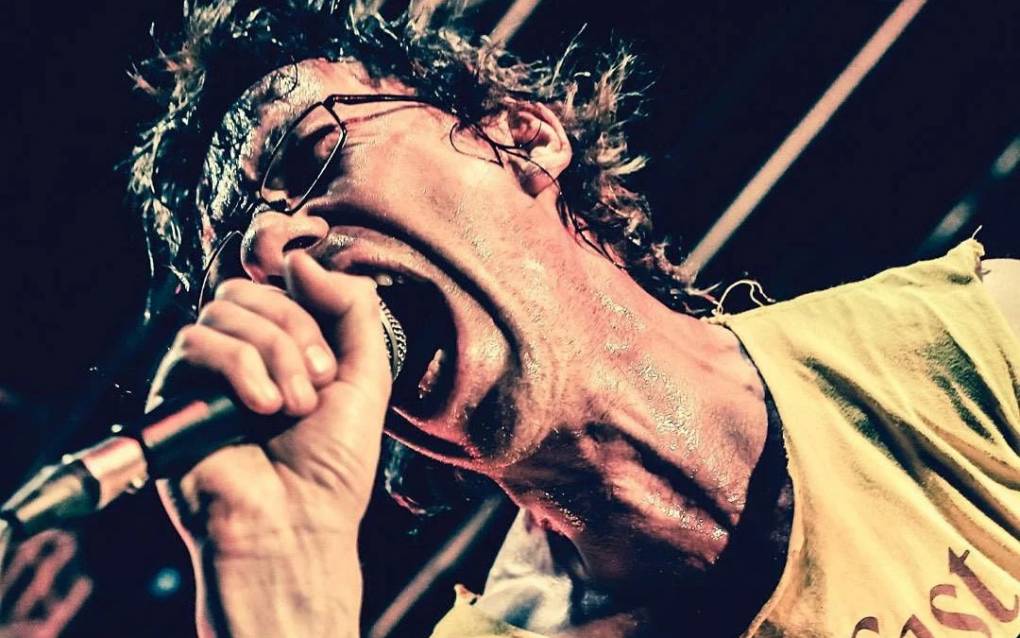
"caption": "The Subhumans' Dick Lucas has fronted the UK punk band for over four decades. ",
"description": null,
"title": "Subhumans",
"credit": "Artist Photo",
"status": "inherit",
"altTag": "A man in glasses screams into a microphone",
"isLoading": false,
"fetchFailed": false
},
"arts_13914296": {
"type": "attachments",
"id": "arts_13914296",
"meta": {
"index": "attachments_1716263798",
"site": "arts",
"id": "13914296",
"found": true
},
"parent": 13914295,
"imgSizes": {
"twentyfourteen-full-width": {
"file": "https://ww2.kqed.org/app/uploads/sites/2/2022/06/ap22151584206109-5ec87ab1c765d16e14d71011c2b9c58dec2a53eb-1038x576.jpg",
"width": 1038,
"mimeType": "image/jpeg",
"height": 576
},
"thumbnail": {
"file": "https://ww2.kqed.org/app/uploads/sites/2/2022/06/ap22151584206109-5ec87ab1c765d16e14d71011c2b9c58dec2a53eb-160x120.jpg",
"width": 160,
"mimeType": "image/jpeg",
"height": 120
},
"post-thumbnail": {
"file": "https://ww2.kqed.org/app/uploads/sites/2/2022/06/ap22151584206109-5ec87ab1c765d16e14d71011c2b9c58dec2a53eb-672x372.jpg",
"width": 672,
"mimeType": "image/jpeg",
"height": 372
},
"kqedFullSize": {
"file": "https://ww2.kqed.org/app/uploads/sites/2/2022/06/ap22151584206109-5ec87ab1c765d16e14d71011c2b9c58dec2a53eb-scaled-e1654104872873.jpg",
"width": 1920,
"height": 1440
},
"2048x2048": {
"file": "https://ww2.kqed.org/app/uploads/sites/2/2022/06/ap22151584206109-5ec87ab1c765d16e14d71011c2b9c58dec2a53eb-2048x1536.jpg",
"width": 2048,
"mimeType": "image/jpeg",
"height": 1536
},
"large": {
"file": "https://ww2.kqed.org/app/uploads/sites/2/2022/06/ap22151584206109-5ec87ab1c765d16e14d71011c2b9c58dec2a53eb-1020x765.jpg",
"width": 1020,
"mimeType": "image/jpeg",
"height": 765
},
"1536x1536": {
"file": "https://ww2.kqed.org/app/uploads/sites/2/2022/06/ap22151584206109-5ec87ab1c765d16e14d71011c2b9c58dec2a53eb-1536x1152.jpg",
"width": 1536,
"mimeType": "image/jpeg",
"height": 1152
},
"full-width": {
"file": "https://ww2.kqed.org/app/uploads/sites/2/2022/06/ap22151584206109-5ec87ab1c765d16e14d71011c2b9c58dec2a53eb-1920x1440.jpg",
"width": 1920,
"mimeType": "image/jpeg",
"height": 1440
},
"medium": {
"file": "https://ww2.kqed.org/app/uploads/sites/2/2022/06/ap22151584206109-5ec87ab1c765d16e14d71011c2b9c58dec2a53eb-800x600.jpg",
"width": 800,
"mimeType": "image/jpeg",
"height": 600
},
"medium_large": {
"file": "https://ww2.kqed.org/app/uploads/sites/2/2022/06/ap22151584206109-5ec87ab1c765d16e14d71011c2b9c58dec2a53eb-768x576.jpg",
"width": 768,
"mimeType": "image/jpeg",
"height": 576
}
},
"publishDate": 1654104471,
"modified": 1654105127,
"caption": "The Sex Pistols onstage before an enthusiastic audience in Memphis, Jan. 7, 1978.",
"description": null,
"title": "The Sex Pistols onstage before an enthusiastic audience in Memphis, Jan. 7, 1978.",
"credit": "AP Photo, File",
"status": "inherit",
"altTag": null,
"isLoading": false,
"fetchFailed": false
},
"arts_13913206": {
"type": "attachments",
"id": "arts_13913206",
"meta": {
"index": "attachments_1716263798",
"site": "arts",
"id": "13913206",
"found": true
},
"parent": 13913188,
"imgSizes": {
"twentyfourteen-full-width": {
"file": "https://ww2.kqed.org/app/uploads/sites/2/2022/05/20220510_154817-1038x576.jpg",
"width": 1038,
"mimeType": "image/jpeg",
"height": 576
},
"thumbnail": {
"file": "https://ww2.kqed.org/app/uploads/sites/2/2022/05/20220510_154817-160x120.jpg",
"width": 160,
"mimeType": "image/jpeg",
"height": 120
},
"post-thumbnail": {
"file": "https://ww2.kqed.org/app/uploads/sites/2/2022/05/20220510_154817-672x372.jpg",
"width": 672,
"mimeType": "image/jpeg",
"height": 372
},
"kqedFullSize": {
"file": "https://ww2.kqed.org/app/uploads/sites/2/2022/05/20220510_154817-scaled-e1652302507360.jpg",
"width": 1920,
"height": 1440
},
"2048x2048": {
"file": "https://ww2.kqed.org/app/uploads/sites/2/2022/05/20220510_154817-2048x1536.jpg",
"width": 2048,
"mimeType": "image/jpeg",
"height": 1536
},
"large": {
"file": "https://ww2.kqed.org/app/uploads/sites/2/2022/05/20220510_154817-1020x765.jpg",
"width": 1020,
"mimeType": "image/jpeg",
"height": 765
},
"1536x1536": {
"file": "https://ww2.kqed.org/app/uploads/sites/2/2022/05/20220510_154817-1536x1152.jpg",
"width": 1536,
"mimeType": "image/jpeg",
"height": 1152
},
"full-width": {
"file": "https://ww2.kqed.org/app/uploads/sites/2/2022/05/20220510_154817-1920x1440.jpg",
"width": 1920,
"mimeType": "image/jpeg",
"height": 1440
},
"medium": {
"file": "https://ww2.kqed.org/app/uploads/sites/2/2022/05/20220510_154817-800x600.jpg",
"width": 800,
"mimeType": "image/jpeg",
"height": 600
},
"medium_large": {
"file": "https://ww2.kqed.org/app/uploads/sites/2/2022/05/20220510_154817-768x576.jpg",
"width": 768,
"mimeType": "image/jpeg",
"height": 576
}
},
"publishDate": 1652302368,
"modified": 1652302690,
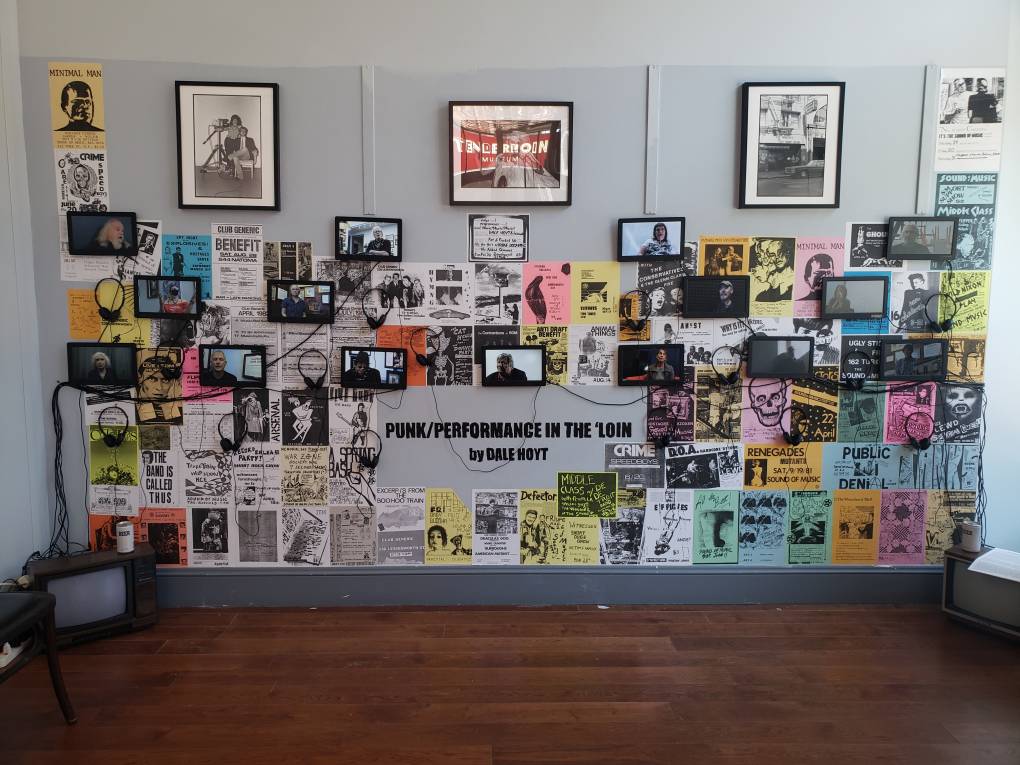
"caption": "'Punk/Performance in the 'Loin' by Dale Hoyt offers glimpses of San Francisco's punk rock history told by 15 subjects who lived it.",
"description": null,
"title": "'Punk/Performance in the 'Loin' by Dale Hoyt offers glimpses of San Francisco's punk rock history told by 15 subjects who lived it.",
"credit": "Rae Alexandra",
"status": "inherit",
"altTag": "A chaotic looking museum wall, covered in scattered flyers, three large portraits and 15 small TV screens with attached headphones.",
"isLoading": false,
"fetchFailed": false
},
"arts_13907766": {
"type": "attachments",
"id": "arts_13907766",
"meta": {
"index": "attachments_1716263798",
"site": "arts",
"id": "13907766",
"found": true
},
"parent": 13906331,
"imgSizes": {
"twentyfourteen-full-width": {
"file": "https://ww2.kqed.org/app/uploads/sites/2/2022/01/Polly-S-BW-1038x576.png",
"width": 1038,
"mimeType": "image/png",
"height": 576
},
"thumbnail": {
"file": "https://ww2.kqed.org/app/uploads/sites/2/2022/01/Polly-S-BW-160x105.png",
"width": 160,
"mimeType": "image/png",
"height": 105
},
"post-thumbnail": {
"file": "https://ww2.kqed.org/app/uploads/sites/2/2022/01/Polly-S-BW-672x372.png",
"width": 672,
"mimeType": "image/png",
"height": 372
},
"kqedFullSize": {
"file": "https://ww2.kqed.org/app/uploads/sites/2/2022/01/Polly-S-BW.png",
"width": 2142,
"height": 1400
},
"2048x2048": {
"file": "https://ww2.kqed.org/app/uploads/sites/2/2022/01/Polly-S-BW-2048x1339.png",
"width": 2048,
"mimeType": "image/png",
"height": 1339
},
"large": {
"file": "https://ww2.kqed.org/app/uploads/sites/2/2022/01/Polly-S-BW-1020x667.png",
"width": 1020,
"mimeType": "image/png",
"height": 667
},
"1536x1536": {
"file": "https://ww2.kqed.org/app/uploads/sites/2/2022/01/Polly-S-BW-1536x1004.png",
"width": 1536,
"mimeType": "image/png",
"height": 1004
},
"full-width": {
"file": "https://ww2.kqed.org/app/uploads/sites/2/2022/01/Polly-S-BW-1920x1255.png",
"width": 1920,
"mimeType": "image/png",
"height": 1255
},
"medium": {
"file": "https://ww2.kqed.org/app/uploads/sites/2/2022/01/Polly-S-BW-800x523.png",
"width": 800,
"mimeType": "image/png",
"height": 523
},
"medium_large": {
"file": "https://ww2.kqed.org/app/uploads/sites/2/2022/01/Polly-S-BW-768x502.png",
"width": 768,
"mimeType": "image/png",
"height": 502
}
},
"publishDate": 1641412544,
"modified": 1641412798,
"caption": "Poly Styrene, legendary frontwoman for X-Ray Spex, as she is best remembered.",
"description": null,
"title": "Poly Styrene, legendary frontwoman for X-Ray Spex, as she is best remembered.",
"credit": null,
"status": "inherit",
"altTag": "A black and white image of a Black woman wearing her hair in short tight curls that frame her face, grinning broadly with braces on her teeth. Graffiti covers the wall behind her.",
"isLoading": false,
"fetchFailed": false
},
"arts_13906162": {
"type": "attachments",
"id": "arts_13906162",
"meta": {
"index": "attachments_1716263798",
"site": "arts",
"id": "13906162",
"found": true
},
"parent": 13906092,
"imgSizes": {
"twentyfourteen-full-width": {
"file": "https://ww2.kqed.org/app/uploads/sites/2/2021/11/Screen-Shot-2021-11-15-at-10.24.55-AM-1038x576.png",
"width": 1038,
"mimeType": "image/png",
"height": 576
},
"thumbnail": {
"file": "https://ww2.kqed.org/app/uploads/sites/2/2021/11/Screen-Shot-2021-11-15-at-10.24.55-AM-160x106.png",
"width": 160,
"mimeType": "image/png",
"height": 106
},
"post-thumbnail": {
"file": "https://ww2.kqed.org/app/uploads/sites/2/2021/11/Screen-Shot-2021-11-15-at-10.24.55-AM-672x372.png",
"width": 672,
"mimeType": "image/png",
"height": 372
},
"kqedFullSize": {
"file": "https://ww2.kqed.org/app/uploads/sites/2/2021/11/Screen-Shot-2021-11-15-at-10.24.55-AM.png",
"width": 1832,
"height": 1218
},
"large": {
"file": "https://ww2.kqed.org/app/uploads/sites/2/2021/11/Screen-Shot-2021-11-15-at-10.24.55-AM-1020x678.png",
"width": 1020,
"mimeType": "image/png",
"height": 678
},
"1536x1536": {
"file": "https://ww2.kqed.org/app/uploads/sites/2/2021/11/Screen-Shot-2021-11-15-at-10.24.55-AM-1536x1021.png",
"width": 1536,
"mimeType": "image/png",
"height": 1021
},
"medium": {
"file": "https://ww2.kqed.org/app/uploads/sites/2/2021/11/Screen-Shot-2021-11-15-at-10.24.55-AM-800x532.png",
"width": 800,
"mimeType": "image/png",
"height": 532
},
"medium_large": {
"file": "https://ww2.kqed.org/app/uploads/sites/2/2021/11/Screen-Shot-2021-11-15-at-10.24.55-AM-768x511.png",
"width": 768,
"mimeType": "image/png",
"height": 511
}
},
"publishDate": 1637014561,
"modified": 1637129409,
"caption": "Reproductions of old Go-Go's concert posters, stuck to a cabinet downstairs at Saint Joseph's Art Society's 'Gina Schock: Made in Hollywood' exhibit.",
"description": null,
"title": "Reproductions of old Go-Go's concert posters, stuck to a cabinet downstairs at Saint Joseph's Art Society's 'Gina Schock: Made in Hollywood' exhibit.",
"credit": "Johnny Dismal",
"status": "inherit",
"altTag": null,
"isLoading": false,
"fetchFailed": false
},
"arts_13905414": {
"type": "attachments",
"id": "arts_13905414",
"meta": {
"index": "attachments_1716263798",
"site": "arts",
"id": "13905414",
"found": true
},
"parent": 13905411,
"imgSizes": {
"twentyfourteen-full-width": {
"file": "https://ww2.kqed.org/app/uploads/sites/2/2021/10/GettyImages-56791874-1038x576.jpg",
"width": 1038,
"mimeType": "image/jpeg",
"height": 576
},
"thumbnail": {
"file": "https://ww2.kqed.org/app/uploads/sites/2/2021/10/GettyImages-56791874-160x108.jpg",
"width": 160,
"mimeType": "image/jpeg",
"height": 108
},
"post-thumbnail": {
"file": "https://ww2.kqed.org/app/uploads/sites/2/2021/10/GettyImages-56791874-672x372.jpg",
"width": 672,
"mimeType": "image/jpeg",
"height": 372
},
"kqedFullSize": {
"file": "https://ww2.kqed.org/app/uploads/sites/2/2021/10/GettyImages-56791874-scaled.jpg",
"width": 2560,
"height": 1731
},
"2048x2048": {
"file": "https://ww2.kqed.org/app/uploads/sites/2/2021/10/GettyImages-56791874-2048x1385.jpg",
"width": 2048,
"mimeType": "image/jpeg",
"height": 1385
},
"large": {
"file": "https://ww2.kqed.org/app/uploads/sites/2/2021/10/GettyImages-56791874-1020x690.jpg",
"width": 1020,
"mimeType": "image/jpeg",
"height": 690
},
"1536x1536": {
"file": "https://ww2.kqed.org/app/uploads/sites/2/2021/10/GettyImages-56791874-1536x1038.jpg",
"width": 1536,
"mimeType": "image/jpeg",
"height": 1038
},
"full-width": {
"file": "https://ww2.kqed.org/app/uploads/sites/2/2021/10/GettyImages-56791874-1920x1298.jpg",
"width": 1920,
"mimeType": "image/jpeg",
"height": 1298
},
"medium": {
"file": "https://ww2.kqed.org/app/uploads/sites/2/2021/10/GettyImages-56791874-800x541.jpg",
"width": 800,
"mimeType": "image/jpeg",
"height": 541
},
"medium_large": {
"file": "https://ww2.kqed.org/app/uploads/sites/2/2021/10/GettyImages-56791874-768x519.jpg",
"width": 768,
"mimeType": "image/jpeg",
"height": 519
}
},
"publishDate": 1635458094,
"modified": 1635458177,
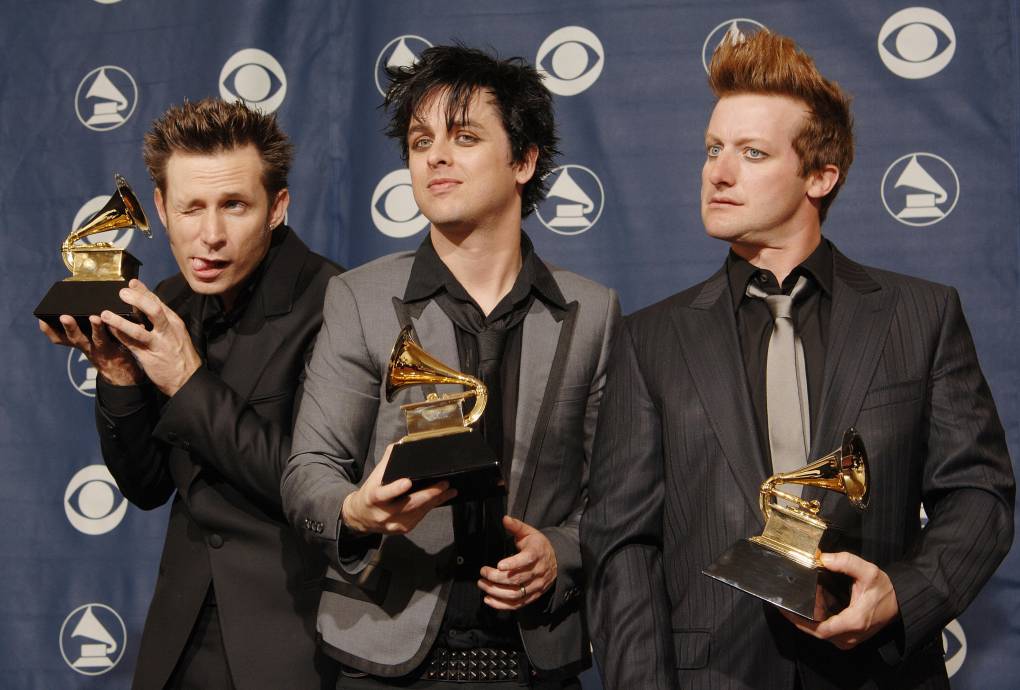
"caption": "Green Day (L-R: Mike Dirnt, Billie Joe Armstrong and Trey Cool) pose with their trophies during the 2006 Grammy Awards in L.A.",
"description": "Green Day (L-R: Mike Dirnt, Billie Joe Armstrong and Trey Cool) pose with their trophies during the 2006 Grammy Awards in L.A.",
"title": "Green Day (L-R: Mike Dirnt, Billie Joe Armstrong and Trey Cool) pose with their trophies during the 2006 Grammy Awards in L.A.",
"credit": "SUSAN GOLDMAN/AFP via Getty Images",
"status": "inherit",
"altTag": null,
"isLoading": false,
"fetchFailed": false
},
"arts_13904503": {
"type": "attachments",
"id": "arts_13904503",
"meta": {
"index": "attachments_1716263798",
"site": "arts",
"id": "13904503",
"found": true
},
"parent": 13902953,
"imgSizes": {
"twentyfourteen-full-width": {
"file": "https://ww2.kqed.org/app/uploads/sites/2/2021/10/Screen-Shot-2021-10-12-at-12.26.08-PM-1038x576.png",
"width": 1038,
"mimeType": "image/png",
"height": 576
},
"thumbnail": {
"file": "https://ww2.kqed.org/app/uploads/sites/2/2021/10/Screen-Shot-2021-10-12-at-12.26.08-PM-160x107.png",
"width": 160,
"mimeType": "image/png",
"height": 107
},
"post-thumbnail": {
"file": "https://ww2.kqed.org/app/uploads/sites/2/2021/10/Screen-Shot-2021-10-12-at-12.26.08-PM-672x372.png",
"width": 672,
"mimeType": "image/png",
"height": 372
},
"kqedFullSize": {
"file": "https://ww2.kqed.org/app/uploads/sites/2/2021/10/Screen-Shot-2021-10-12-at-12.26.08-PM.png",
"width": 1892,
"height": 1268
},
"large": {
"file": "https://ww2.kqed.org/app/uploads/sites/2/2021/10/Screen-Shot-2021-10-12-at-12.26.08-PM-1020x684.png",
"width": 1020,
"mimeType": "image/png",
"height": 684
},
"1536x1536": {
"file": "https://ww2.kqed.org/app/uploads/sites/2/2021/10/Screen-Shot-2021-10-12-at-12.26.08-PM-1536x1029.png",
"width": 1536,
"mimeType": "image/png",
"height": 1029
},
"medium": {
"file": "https://ww2.kqed.org/app/uploads/sites/2/2021/10/Screen-Shot-2021-10-12-at-12.26.08-PM-800x536.png",
"width": 800,
"mimeType": "image/png",
"height": 536
},
"medium_large": {
"file": "https://ww2.kqed.org/app/uploads/sites/2/2021/10/Screen-Shot-2021-10-12-at-12.26.08-PM-768x515.png",
"width": 768,
"mimeType": "image/png",
"height": 515
}
},
"publishDate": 1634066795,
"modified": 1634066879,
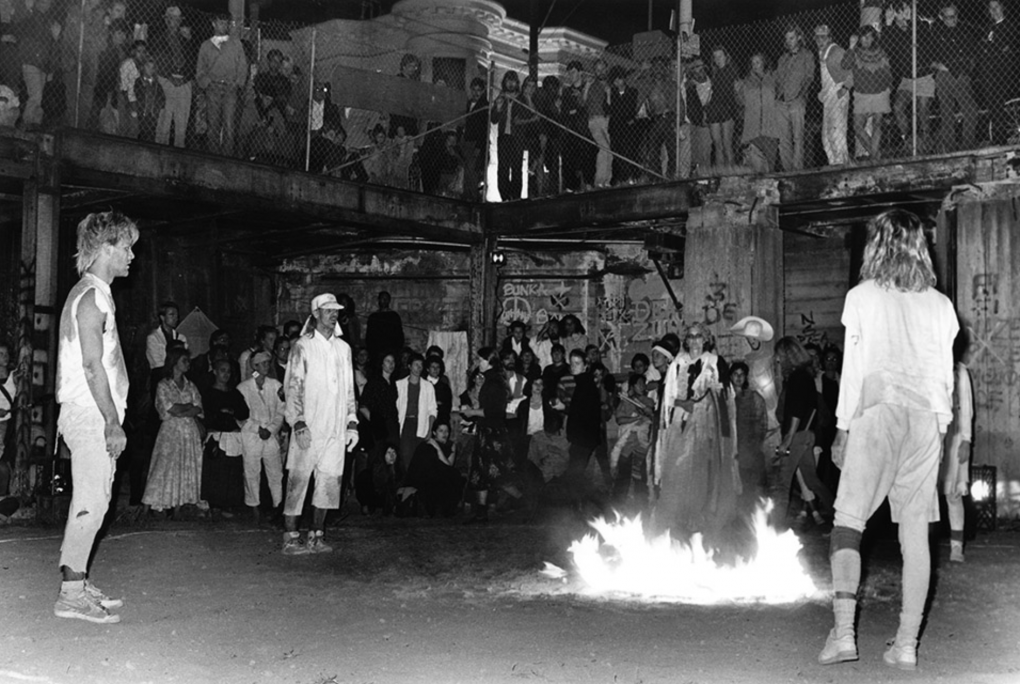
"caption": "Performance group Contraband, in the Mission's Gartland Pit, 1986. (L-R) Jess Curtis, Keith Hennessy, Brenda Munnell, Sara Shelton Mann.",
"description": "Performance group Contraband, in the Mission's Gartland Pit, 1986. (L-R) Jess Curtis, Keith Hennessy, Brenda Munnell, Sara Shelton Mann.",
"title": "Performance group Contraband, in the Mission's Gartland Pit, 1986. (L-R) Jess Curtis, Keith Hennessy, Brenda Munnell, Sara Shelton Mann.",
"credit": "Jeanne Hansen",
"status": "inherit",
"altTag": null,
"isLoading": false,
"fetchFailed": false
},
"arts_13899160": {
"type": "attachments",
"id": "arts_13899160",
"meta": {
"index": "attachments_1716263798",
"site": "arts",
"id": "13899160",
"found": true
},
"parent": 13899154,
"imgSizes": {
"thumbnail": {
"file": "https://ww2.kqed.org/app/uploads/sites/2/2021/06/Sunami.MAIN_-160x90.jpg",
"width": 160,
"mimeType": "image/jpeg",
"height": 90
},
"post-thumbnail": {
"file": "https://ww2.kqed.org/app/uploads/sites/2/2021/06/Sunami.MAIN_-672x372.jpg",
"width": 672,
"mimeType": "image/jpeg",
"height": 372
},
"kqedFullSize": {
"file": "https://ww2.kqed.org/app/uploads/sites/2/2021/06/Sunami.MAIN_.jpg",
"width": 800,
"height": 450
},
"medium_large": {
"file": "https://ww2.kqed.org/app/uploads/sites/2/2021/06/Sunami.MAIN_-768x432.jpg",
"width": 768,
"mimeType": "image/jpeg",
"height": 432
}
},
"publishDate": 1624401097,
"modified": 1624401148,
"caption": "Josef Alfonso, singer of Sunami, at the Real Bay Shit show in San Jose on June 19, 2021.",
"description": "Josef Alfonso, singer of Sunami, at the Real Bay Shit show in San Jose on June 19, 2021.",
"title": "Sunami.MAIN",
"credit": "Gabe Meline/KQED",
"status": "inherit",
"altTag": "Josef Alfonso, singer of Sunami, at the Real Bay Shit show in San Jose on June 19, 2021.",
"isLoading": false,
"fetchFailed": false
},
"arts_13899043": {
"type": "attachments",
"id": "arts_13899043",
"meta": {
"index": "attachments_1716263798",
"site": "arts",
"id": "13899043",
"found": true
},
"parent": 13899031,
"imgSizes": {
"twentyfourteen-full-width": {
"file": "https://ww2.kqed.org/app/uploads/sites/2/2021/06/Screen-Shot-2021-06-18-at-2.44.19-PM-1038x576.png",
"width": 1038,
"mimeType": "image/png",
"height": 576
},
"thumbnail": {
"file": "https://ww2.kqed.org/app/uploads/sites/2/2021/06/Screen-Shot-2021-06-18-at-2.44.19-PM-160x110.png",
"width": 160,
"mimeType": "image/png",
"height": 110
},
"post-thumbnail": {
"file": "https://ww2.kqed.org/app/uploads/sites/2/2021/06/Screen-Shot-2021-06-18-at-2.44.19-PM-672x372.png",
"width": 672,
"mimeType": "image/png",
"height": 372
},
"kqedFullSize": {
"file": "https://ww2.kqed.org/app/uploads/sites/2/2021/06/Screen-Shot-2021-06-18-at-2.44.19-PM.png",
"width": 2340,
"height": 1610
},
"2048x2048": {
"file": "https://ww2.kqed.org/app/uploads/sites/2/2021/06/Screen-Shot-2021-06-18-at-2.44.19-PM-2048x1409.png",
"width": 2048,
"mimeType": "image/png",
"height": 1409
},
"large": {
"file": "https://ww2.kqed.org/app/uploads/sites/2/2021/06/Screen-Shot-2021-06-18-at-2.44.19-PM-1020x702.png",
"width": 1020,
"mimeType": "image/png",
"height": 702
},
"1536x1536": {
"file": "https://ww2.kqed.org/app/uploads/sites/2/2021/06/Screen-Shot-2021-06-18-at-2.44.19-PM-1536x1057.png",
"width": 1536,
"mimeType": "image/png",
"height": 1057
},
"full-width": {
"file": "https://ww2.kqed.org/app/uploads/sites/2/2021/06/Screen-Shot-2021-06-18-at-2.44.19-PM-1920x1321.png",
"width": 1920,
"mimeType": "image/png",
"height": 1321
},
"medium": {
"file": "https://ww2.kqed.org/app/uploads/sites/2/2021/06/Screen-Shot-2021-06-18-at-2.44.19-PM-800x550.png",
"width": 800,
"mimeType": "image/png",
"height": 550
},
"medium_large": {
"file": "https://ww2.kqed.org/app/uploads/sites/2/2021/06/Screen-Shot-2021-06-18-at-2.44.19-PM-768x528.png",
"width": 768,
"mimeType": "image/png",
"height": 528
}
},
"publishDate": 1624052710,
"modified": 1624052804,
"caption": "Scott Alcoholocaust, as he'll be most remembered.",
"description": "Scott Alcoholocaust, as he'll be most remembered.",
"title": "Scott Alcoholocaust, as he'll be most remembered.",
"credit": "Courtesy of Monika Koczela-Stillman",
"status": "inherit",
"altTag": "A smiling Scott Alcoholocaust, as he'll be most remembered.",
"isLoading": false,
"fetchFailed": false
},
"arts_13894476": {
"type": "attachments",
"id": "arts_13894476",
"meta": {
"index": "attachments_1716263798",
"site": "arts",
"id": "13894476",
"found": true
},
"parent": 13894398,
"imgSizes": {
"thumbnail": {
"file": "https://ww2.kqed.org/app/uploads/sites/2/2021/03/Amina.MAIN_-160x90.jpg",
"width": 160,
"mimeType": "image/jpeg",
"height": 90
},
"post-thumbnail": {
"file": "https://ww2.kqed.org/app/uploads/sites/2/2021/03/Amina.MAIN_-672x372.jpg",
"width": 672,
"mimeType": "image/jpeg",
"height": 372
},
"kqedFullSize": {
"file": "https://ww2.kqed.org/app/uploads/sites/2/2021/03/Amina.MAIN_.jpg",
"width": 1000,
"height": 563
},
"medium": {
"file": "https://ww2.kqed.org/app/uploads/sites/2/2021/03/Amina.MAIN_-800x450.jpg",
"width": 800,
"mimeType": "image/jpeg",
"height": 450
},
"medium_large": {
"file": "https://ww2.kqed.org/app/uploads/sites/2/2021/03/Amina.MAIN_-768x432.jpg",
"width": 768,
"mimeType": "image/jpeg",
"height": 432
}
},
"publishDate": 1616604701,
"modified": 1616605204,
"caption": "Amina Shareef Ali releases 'In the Dark (Awake of Course),' her first record in seven years, on March 29.",
"description": "Amina Shareef Ali releases 'In the Dark (Awake of Course),' her first record in seven years, on March 29.",
"title": "Amina.MAIN",
"credit": "Eva Wo",
"status": "inherit",
"altTag": "Amina Shareef Ali releases 'In the Dark (Awake of Course),' her first record in seven years, on March 29.",
"isLoading": false,
"fetchFailed": false
},
"arts_13894315": {
"type": "attachments",
"id": "arts_13894315",
"meta": {
"index": "attachments_1716263798",
"site": "arts",
"id": "13894315",
"found": true
},
"parent": 13894169,
"imgSizes": {
"twentyfourteen-full-width": {
"file": "https://ww2.kqed.org/app/uploads/sites/2/2021/03/PunkHouseOakland-1038x576.jpg",
"width": 1038,
"mimeType": "image/jpeg",
"height": 576
},
"thumbnail": {
"file": "https://ww2.kqed.org/app/uploads/sites/2/2021/03/PunkHouseOakland-160x99.jpg",
"width": 160,
"mimeType": "image/jpeg",
"height": 99
},
"post-thumbnail": {
"file": "https://ww2.kqed.org/app/uploads/sites/2/2021/03/PunkHouseOakland-672x372.jpg",
"width": 672,
"mimeType": "image/jpeg",
"height": 372
},
"kqedFullSize": {
"file": "https://ww2.kqed.org/app/uploads/sites/2/2021/03/PunkHouseOakland-scaled-e1616186881703.jpg",
"width": 1920,
"height": 1188
},
"2048x2048": {
"file": "https://ww2.kqed.org/app/uploads/sites/2/2021/03/PunkHouseOakland-2048x1267.jpg",
"width": 2048,
"mimeType": "image/jpeg",
"height": 1267
},
"large": {
"file": "https://ww2.kqed.org/app/uploads/sites/2/2021/03/PunkHouseOakland-1020x631.jpg",
"width": 1020,
"mimeType": "image/jpeg",
"height": 631
},
"1536x1536": {
"file": "https://ww2.kqed.org/app/uploads/sites/2/2021/03/PunkHouseOakland-1536x951.jpg",
"width": 1536,
"mimeType": "image/jpeg",
"height": 951
},
"full-width": {
"file": "https://ww2.kqed.org/app/uploads/sites/2/2021/03/PunkHouseOakland-1920x1188.jpg",
"width": 1920,
"mimeType": "image/jpeg",
"height": 1188
},
"medium": {
"file": "https://ww2.kqed.org/app/uploads/sites/2/2021/03/PunkHouseOakland-800x495.jpg",
"width": 800,
"mimeType": "image/jpeg",
"height": 495
},
"medium_large": {
"file": "https://ww2.kqed.org/app/uploads/sites/2/2021/03/PunkHouseOakland-768x475.jpg",
"width": 768,
"mimeType": "image/jpeg",
"height": 475
}
},
"publishDate": 1616186204,
"modified": 1616523099,
"caption": "(L-R) Orlando and Tanya (photo by Patti Tuori); Mike Matusio, Elizabeth D.",
"description": "(L-R) Orlando and Tanya (photo by Patti Tuori); Mike Matusio, Elizabeth D.",
"title": "Oakland punks in the '90s. (L-R) Orlando and Tanya (photo by Patti Tuori); Mike Matusio, Elizabeth D.",
"credit": "Instagram/@punkhouseoakland",
"status": "inherit",
"altTag": "Oakland punks in the '90s. (L-R) Orlando and Tanya (photo by Patti Tuori); Mike Matusio, Elizabeth D.",
"isLoading": false,
"fetchFailed": false
},
"arts_13888027": {
"type": "attachments",
"id": "arts_13888027",
"meta": {
"index": "attachments_1716263798",
"site": "arts",
"id": "13888027",
"found": true
},
"parent": 13887999,
"imgSizes": {
"twentyfourteen-full-width": {
"file": "https://ww2.kqed.org/app/uploads/sites/2/2020/10/GettyImages-454257460-1038x576.jpg",
"width": 1038,
"mimeType": "image/jpeg",
"height": 576
},
"thumbnail": {
"file": "https://ww2.kqed.org/app/uploads/sites/2/2020/10/GettyImages-454257460-160x107.jpg",
"width": 160,
"mimeType": "image/jpeg",
"height": 107
},
"post-thumbnail": {
"file": "https://ww2.kqed.org/app/uploads/sites/2/2020/10/GettyImages-454257460-672x372.jpg",
"width": 672,
"mimeType": "image/jpeg",
"height": 372
},
"kqedFullSize": {
"file": "https://ww2.kqed.org/app/uploads/sites/2/2020/10/GettyImages-454257460-scaled.jpg",
"width": 2560,
"height": 1708
},
"2048x2048": {
"file": "https://ww2.kqed.org/app/uploads/sites/2/2020/10/GettyImages-454257460-2048x1366.jpg",
"width": 2048,
"mimeType": "image/jpeg",
"height": 1366
},
"large": {
"file": "https://ww2.kqed.org/app/uploads/sites/2/2020/10/GettyImages-454257460-1020x680.jpg",
"width": 1020,
"mimeType": "image/jpeg",
"height": 680
},
"1536x1536": {
"file": "https://ww2.kqed.org/app/uploads/sites/2/2020/10/GettyImages-454257460-1536x1025.jpg",
"width": 1536,
"mimeType": "image/jpeg",
"height": 1025
},
"full-width": {
"file": "https://ww2.kqed.org/app/uploads/sites/2/2020/10/GettyImages-454257460-1920x1281.jpg",
"width": 1920,
"mimeType": "image/jpeg",
"height": 1281
},
"medium": {
"file": "https://ww2.kqed.org/app/uploads/sites/2/2020/10/GettyImages-454257460-800x534.jpg",
"width": 800,
"mimeType": "image/jpeg",
"height": 534
},
"medium_large": {
"file": "https://ww2.kqed.org/app/uploads/sites/2/2020/10/GettyImages-454257460-768x512.jpg",
"width": 768,
"mimeType": "image/jpeg",
"height": 512
}
},
"publishDate": 1602800711,
"modified": 1602800823,
"caption": "A Shepard Fairey mural, as seen on a building at 161 Bowery, New York, on August 27, 2014. The mural reads, \"We Own The Future, Transform Our World With Creative Response.\" ",
"description": "A Shepard Fairey mural, as seen on a building at 161 Bowery, New York, on August 27, 2014. The mural reads, \"We Own The Future, Transform Our World With Creative Response.\" ",
"title": "A Shepard Fairey mural, as seen on a building at 161 Bowery, New York, on August 27, 2014. The mural reads, \"We Own The Future, Transform Our World With Creative Response.\"",
"credit": "Andrew Burton/Getty Images",
"status": "inherit",
"isLoading": false,
"fetchFailed": false
}
},
"audioPlayerReducer": {
"postId": "stream_live",
"isPaused": true,
"isPlaying": false,
"pfsActive": false,
"pledgeModalIsOpen": true,
"playerDrawerIsOpen": false,
"liveAudioPlayStartedAt": 0,
"liveAudioPlayContext": ""
},
"authorsReducer": {
"byline_arts_13914295": {
"type": "authors",
"id": "byline_arts_13914295",
"meta": {
"override": true
},
"slug": "byline_arts_13914295",
"name": "The Associated Press",
"isLoading": false
},
"byline_arts_13905411": {
"type": "authors",
"id": "byline_arts_13905411",
"meta": {
"override": true
},
"slug": "byline_arts_13905411",
"name": "Andrew Limbong",
"isLoading": false
},
"gmeline": {
"type": "authors",
"id": "185",
"meta": {
"index": "authors_1716337520",
"id": "185",
"found": true
},
"name": "Gabe Meline",
"firstName": "Gabe",
"lastName": "Meline",
"slug": "gmeline",
"email": "gmeline@kqed.org",
"display_author_email": true,
"staff_mastheads": [
"arts"
],
"title": "Senior Editor, KQED Arts & Culture",
"bio": "Gabe Meline entered journalism at age 15 making photocopied zines, and has since earned awards from the Edward R. Murrow Awards, the Society for Professional Journalists, the Online Journalism Awards, the Association of Alternative Newsweeklies and the California Newspaper Publishers Association. Prior to KQED, he was the editor of the \u003cem>North Bay Bohemian\u003c/em> and a touring musician. He lives with his wife and daughter in his hometown of Santa Rosa, CA.",
"avatar": "https://secure.gravatar.com/avatar/5bebe57be0d8bc2dd318934feb47299e2d2d10cba28d09d8d7afb389a2ce2bdd?s=600&d=blank&r=g",
"twitter": null,
"bluesky": null,
"facebook": null,
"instagram": null,
"linkedin": null,
"sites": [
{
"site": "",
"roles": [
"editor"
]
},
{
"site": "arts",
"roles": [
"administrator"
]
},
{
"site": "artschool",
"roles": [
"editor"
]
},
{
"site": "news",
"roles": [
"author"
]
},
{
"site": "pop",
"roles": [
"editor"
]
},
{
"site": "bayareabites",
"roles": [
"editor"
]
},
{
"site": "food",
"roles": [
"editor"
]
},
{
"site": "forum",
"roles": [
"administrator"
]
},
{
"site": "liveblog",
"roles": [
"editor"
]
},
{
"site": "hiphop",
"roles": [
"editor"
]
}
],
"headData": {
"title": "Gabe Meline | KQED",
"description": "Senior Editor, KQED Arts & Culture",
"ogImgSrc": "https://secure.gravatar.com/avatar/5bebe57be0d8bc2dd318934feb47299e2d2d10cba28d09d8d7afb389a2ce2bdd?s=600&d=blank&r=g",
"twImgSrc": "https://secure.gravatar.com/avatar/5bebe57be0d8bc2dd318934feb47299e2d2d10cba28d09d8d7afb389a2ce2bdd?s=600&d=blank&r=g"
},
"isLoading": false,
"link": "/author/gmeline"
},
"esilvers": {
"type": "authors",
"id": "7237",
"meta": {
"index": "authors_1716337520",
"id": "7237",
"found": true
},
"name": "Emma Silvers",
"firstName": "Emma",
"lastName": "Silvers",
"slug": "esilvers",
"email": "esilvers@kqed.org",
"display_author_email": false,
"staff_mastheads": [],
"title": "KQED Contributor",
"bio": "Emma Silvers is an editor at KQED Arts and a former digital producer at KQED News. Born and raised in the Bay Area, she has previously been an arts and entertainment editor at the \u003cem>San Francisco Chronicle\u003c/em>, \u003cem>SF Weekly\u003c/em> and the \u003cem>San Francisco Bay Guardian.\u003c/em> \u003ca href=\"https://www.emmasilvers.com\">Her work\u003c/a> has also appeared in \u003cem>Rolling Stone\u003c/em>, Pitchfork and \u003cem>Mother Jones\u003c/em>. In 2017 she was the recipient of the Society of Professional Journalists-Northern California's award for arts and culture reporting. In 1993 she \u003ca href=\"https://www.kqed.org/pop/16759/wait-what-my-coworker-was-a-voice-over-hyperventilator-for-jurassic-park\">hyperventilated in \u003cem>Jurassic Park\u003c/em>\u003c/a>.",
"avatar": "https://secure.gravatar.com/avatar/247beada39b88ea5759db1f51dba05cf?s=600&d=blank&r=g",
"twitter": "emmaruthless",
"facebook": null,
"instagram": null,
"linkedin": null,
"sites": [
{
"site": "arts",
"roles": [
"editor"
]
},
{
"site": "news",
"roles": [
"editor"
]
},
{
"site": "pop",
"roles": [
"contributor"
]
},
{
"site": "bayareabites",
"roles": [
"editor"
]
},
{
"site": "food",
"roles": [
"contributor"
]
},
{
"site": "liveblog",
"roles": [
"editor"
]
}
],
"headData": {
"title": "Emma Silvers | KQED",
"description": "KQED Contributor",
"ogImgSrc": "https://secure.gravatar.com/avatar/247beada39b88ea5759db1f51dba05cf?s=600&d=blank&r=g",
"twImgSrc": "https://secure.gravatar.com/avatar/247beada39b88ea5759db1f51dba05cf?s=600&d=blank&r=g"
},
"isLoading": false,
"link": "/author/esilvers"
},
"ralexandra": {
"type": "authors",
"id": "11242",
"meta": {
"index": "authors_1716337520",
"id": "11242",
"found": true
},
"name": "Rae Alexandra",
"firstName": "Rae",
"lastName": "Alexandra",
"slug": "ralexandra",
"email": "ralexandra@kqed.org",
"display_author_email": true,
"staff_mastheads": [],
"title": "Reporter/Producer",
"bio": "Rae Alexandra is a Reporter/Producer for KQED Arts & Culture, and the creator/author of the \u003ca href=\"https://www.kqed.org/arts/program/rebel-girls-from-bay-area-history\">Rebel Girls From Bay Area History\u003c/a> and \u003ca href=\"https://www.kqed.org/bizarrebayarea\">Bizarre Bay Area\u003c/a> series. Her debut book, \u003ca href=\"https://citylights.com/politics-current-events-history/unsung-heroines35-women-who-changed/\">Unsung Heroines: 35 Women Who Changed the Bay Area\u003c/a> was published by City Lights in March 2026. In 2023, Rae was awarded an SPJ Excellence in Journalism Award for Arts & Culture. Rae was born and raised in Wales and subsequently — even after two decades in Northern California — still uses phrases that regularly baffle her coworkers.",
"avatar": "https://secure.gravatar.com/avatar/edfee8176c80cc0a382b051190f5341997df378a934a5774dcb0977732dfd401?s=600&d=blank&r=g",
"twitter": null,
"bluesky": null,
"facebook": null,
"instagram": null,
"linkedin": null,
"sites": [
{
"site": "arts",
"roles": [
"subscriber"
]
},
{
"site": "news",
"roles": [
"subscriber"
]
},
{
"site": "pop",
"roles": [
"subscriber"
]
},
{
"site": "bayareabites",
"roles": [
"subscriber"
]
},
{
"site": "science",
"roles": [
"subscriber"
]
}
],
"headData": {
"title": "Rae Alexandra | KQED",
"description": "Reporter/Producer",
"ogImgSrc": "https://secure.gravatar.com/avatar/edfee8176c80cc0a382b051190f5341997df378a934a5774dcb0977732dfd401?s=600&d=blank&r=g",
"twImgSrc": "https://secure.gravatar.com/avatar/edfee8176c80cc0a382b051190f5341997df378a934a5774dcb0977732dfd401?s=600&d=blank&r=g"
},
"isLoading": false,
"link": "/author/ralexandra"
}
},
"pagesReducer": {
"arts_tag_punk": {
"type": "terms",
"id": "arts_913",
"meta": {
"index": "terms_1716263798",
"site": "arts",
"id": "913",
"score": 8.937057
},
"featImg": null,
"name": "punk",
"description": null,
"taxonomy": "tag",
"headData": {
"twImgId": null,
"twTitle": null,
"ogTitle": null,
"ogImgId": null,
"twDescription": null,
"description": null,
"title": "punk Archives | KQED Arts",
"ogDescription": null
},
"ttid": 931,
"slug": "punk",
"isLoading": false,
"title": "punk",
"pageMeta": {
"site": "arts",
"WpPageTemplate": "page-topic-editorial",
"currentPage": 5
},
"blocks": [
{
"blockName": "kqed/post-list",
"attrs": {
"layout": "cardArticle2",
"query": "posts/arts?tag=punk",
"seeMore": false,
"paginated": true,
"page": 5
}
},
{
"blockName": "kqed/ad"
}
]
}
},
"pfsSessionReducer": {},
"postsReducer": {
"stream_live": {
"type": "live",
"id": "stream_live",
"audioUrl": "https://streams.kqed.org/kqedradio",
"title": "Live Stream",
"excerpt": "Live Stream information currently unavailable.",
"link": "/radio",
"featImg": "",
"label": {
"name": "KQED Live",
"link": "/"
}
},
"stream_kqedNewscast": {
"type": "posts",
"id": "stream_kqedNewscast",
"audioUrl": "https://www.kqed.org/.stream/anon/radio/RDnews/newscast.mp3?_=1",
"title": "KQED Newscast",
"featImg": "",
"label": {
"name": "88.5 FM",
"link": "/"
}
},
"arts_13915916": {
"type": "posts",
"id": "arts_13915916",
"meta": {
"index": "posts_1716263798",
"site": "arts",
"id": "13915916",
"score": null,
"sort": [
1657641611000
]
},
"parent": 0,
"labelTerm": {
"site": "arts",
"term": 140
},
"blocks": [],
"publishDate": 1657641611,
"format": "link",
"title": "The Subhumans Barrel Into San Francisco at Just the Right Time",
"headTitle": "The Subhumans Barrel Into San Francisco at Just the Right Time | KQED",
"content": "\u003cp>Punk bands are known for their economy: short songs played fast with a loud impact. So when the British band the Subhumans released their second album and included a 17-minute song called “\u003ca href=\"https://www.youtube.com/watch?v=jy5FMfTqf5k\" target=\"_blank\" rel=\"noopener noreferrer\">From the Cradle to the Grave\u003c/a>,” it shook the punk scene. The year was 1983. Every other punk band was churning out one-minute blasts of noise. What was up with this long, epic song?\u003c/p>\n\u003cp>The Subhumans may not have necessarily fit in with the punk scene of the early 1980s, but when I think now about the younger generation’s a disdain of capitalism and power structures in general, I can’t help but think they were a band ahead of their time. The Subhumans recorded songs about government, police and abuse of power, but also had songs about how to not lose faith, to \u003ca href=\"https://www.youtube.com/watch?v=nMlx3kQFIas\" target=\"_blank\" rel=\"noopener noreferrer\">find your community\u003c/a>, to keep fighting—and ultimately how to get through dark times for the country together. Sound familiar?\u003c/p>\n\u003cp>The Subhumans have reunited a few times over the years, and whenever they come to the Bay Area—a hotbed for political punk—it’s always special. The Subhumans play at the Great American Music Hall in San Francisco on Friday, July 15. \u003ca href=\"https://wl.seetickets.us/event/Subhumans/476283?afflky=GreatAmericanMusicHall\" target=\"_blank\" rel=\"noopener noreferrer\">Details here\u003c/a>.\u003c/p>\n\u003cp>https://youtu.be/jy5FMfTqf5k\u003c/p>\n\u003cp>[ad fullwidth]\u003c/p>\u003cp>\u003c/p>\n",
"stats": {
"hasVideo": false,
"hasChartOrMap": false,
"hasAudio": false,
"hasPolis": false,
"wordCount": 218,
"hasGoogleForm": false,
"hasGallery": false,
"hasHearkenModule": false,
"iframeSrcs": [],
"paragraphCount": 5
},
"modified": 1705006629,
"excerpt": "The U.K. punk band's social critiques were ahead of their time. They're performing at Great American Music Hall on July 15. ",
"headData": {
"twImgId": "",
"twTitle": "",
"ogTitle": "",
"ogImgId": "",
"twDescription": "",
"description": "The U.K. punk band's social critiques were ahead of their time. They're performing at Great American Music Hall on July 15. ",
"title": "The Subhumans Barrel Into San Francisco at Just the Right Time | KQED",
"ogDescription": "",
"schema": {
"@context": "https://schema.org",
"@type": "Article",
"headline": "The Subhumans Barrel Into San Francisco at Just the Right Time",
"datePublished": "2022-07-12T09:00:11-07:00",
"dateModified": "2024-01-11T12:57:09-08:00",
"image": "https://cdn.kqed.org/wp-content/uploads/2020/02/KQED-OG-Image@1x.png"
}
},
"guestAuthors": [],
"slug": "subhumans-great-american-music-hall",
"status": "publish",
"templateType": "standard",
"venueName": "Great American Music Hall",
"excludeFromSiteSearch": "Include",
"featuredImageType": "standard",
"sticky": false,
"eventPrice": "$17",
"startTime": 1657942200,
"endTime": 1657954740,
"startTimeString": "July 15",
"venueAddress": "859 O'Farrell St, San Francisco, CA 94109",
"eventLink": "https://wl.seetickets.us/event/Subhumans/476283?afflky=GreatAmericanMusicHall",
"path": "/arts/13915916/subhumans-great-american-music-hall",
"audioTrackLength": null,
"parsedContent": [
{
"type": "contentString",
"content": "\u003cdiv class=\"post-body\">\u003cp>\u003cp>Punk bands are known for their economy: short songs played fast with a loud impact. So when the British band the Subhumans released their second album and included a 17-minute song called “\u003ca href=\"https://www.youtube.com/watch?v=jy5FMfTqf5k\" target=\"_blank\" rel=\"noopener noreferrer\">From the Cradle to the Grave\u003c/a>,” it shook the punk scene. The year was 1983. Every other punk band was churning out one-minute blasts of noise. What was up with this long, epic song?\u003c/p>\n\u003cp>The Subhumans may not have necessarily fit in with the punk scene of the early 1980s, but when I think now about the younger generation’s a disdain of capitalism and power structures in general, I can’t help but think they were a band ahead of their time. The Subhumans recorded songs about government, police and abuse of power, but also had songs about how to not lose faith, to \u003ca href=\"https://www.youtube.com/watch?v=nMlx3kQFIas\" target=\"_blank\" rel=\"noopener noreferrer\">find your community\u003c/a>, to keep fighting—and ultimately how to get through dark times for the country together. Sound familiar?\u003c/p>\n\u003cp>The Subhumans have reunited a few times over the years, and whenever they come to the Bay Area—a hotbed for political punk—it’s always special. The Subhumans play at the Great American Music Hall in San Francisco on Friday, July 15. \u003ca href=\"https://wl.seetickets.us/event/Subhumans/476283?afflky=GreatAmericanMusicHall\" target=\"_blank\" rel=\"noopener noreferrer\">Details here\u003c/a>.\u003c/p>\u003c/p>\u003cp>\u003cspan class='utils-parseShortcode-shortcodes-__youtubeShortcode__embedYoutube'>\n \u003cspan class='utils-parseShortcode-shortcodes-__youtubeShortcode__embedYoutubeInside'>\n \u003ciframe\n loading='lazy'\n class='utils-parseShortcode-shortcodes-__youtubeShortcode__youtubePlayer'\n type='text/html'\n src='//www.youtube.com/embed/jy5FMfTqf5k'\n title='//www.youtube.com/embed/jy5FMfTqf5k'\n allowfullscreen='true'\n style='border:0;'>\u003c/iframe>\n \u003c/span>\n \u003c/span>\u003c/p>\u003cp>\u003cp>\u003c/p>\u003c/div>",
"attributes": {
"named": {},
"numeric": []
}
},
{
"type": "component",
"content": "",
"name": "ad",
"attributes": {
"named": {
"label": "fullwidth"
},
"numeric": [
"fullwidth"
]
}
},
{
"type": "contentString",
"content": "\u003cdiv class=\"post-body\">\u003cp>\u003c/p>\u003cp>\u003c/p>\n\u003c/div>\u003c/p>",
"attributes": {
"named": {},
"numeric": []
}
}
],
"link": "/arts/13915916/subhumans-great-american-music-hall",
"authors": [
"185"
],
"programs": [
"arts_140"
],
"categories": [
"arts_1",
"arts_69"
],
"tags": [
"arts_2187",
"arts_913",
"arts_585"
],
"featImg": "arts_13915917",
"label": "arts_140"
},
"arts_13914295": {
"type": "posts",
"id": "arts_13914295",
"meta": {
"index": "posts_1716263798",
"site": "arts",
"id": "13914295",
"score": null,
"sort": [
1654106386000
]
},
"parent": 0,
"labelTerm": {
"site": "arts",
"term": 137
},
"blocks": [],
"publishDate": 1654106386,
"format": "standard",
"title": "Sex Pistols Re-Release 'God Save the Queen' for Elizabeth II's Platinum Jubilee",
"headTitle": "Sex Pistols Re-Release ‘God Save the Queen’ for Elizabeth II’s Platinum Jubilee | KQED",
"content": "\u003cp>In Britain, there are several traditional elements to a royal anniversary: pageants, street parties, the Sex Pistols.\u003c/p>\n\u003cp>Queen Elizabeth II and the Pistols have been linked since the punk pioneers released the song “God Save the Queen” during the 1977 Silver Jubilee that marked the monarch’s 25 years on the throne.\u003c/p>\n\u003cp>The anti-authoritarian anthem—not to be confused with the actual British national anthem of the same name—has been re-released for Elizabeth’s Platinum Jubilee, or 70 years as queen. It’s one of a raft of cultural tie-ins—critics might say cash-ins—spurred by the royal milestone.\u003c/p>\n\u003cp>https://www.youtube.com/watch?v=02D2T3wGCYg\u003c/p>\n\u003cp>Members of the band that rhymed “God save the queen” with “fascist regime” and “she ain’t no human being” have mellowed over the years.\u003c/p>\n\u003cp>[ad fullwidth]\u003c/p>\n\u003cp>“I’m not against it,” Sex Pistols guitarist Steve Jones said of Britain’s four-day jubilee extravaganza, which starts Thursday and includes military parades, concerts, picnics and innumerable Union Jacks.\u003c/p>\n\u003cp>“I see all the flags are up everywhere,” Jones said while visiting London from Los Angeles, where he has lived for more than 30 years. “I mean, it’s entertaining stuff. Tourists just absolutely love it.”\u003c/p>\n\u003cp>[aside postID='arts_13866072,arts_13893693,arts_13908090']Sex Pistols singer John Lydon, formerly known as Johnny Rotten, recently told broadcaster Talk TV he was “really, really proud of the queen for surviving and doing so well.”\u003c/p>\n\u003cp>It’s a far cry from 1977, when “God Save the Queen” was launched on the jubilee weekend with an anarchic Sex Pistols gig on a riverboat—the Queen Elizabeth—that was cut short by London police.\u003c/p>\n\u003cp>The song sparked outrage; members of the band were attacked in the street and it was banned from radio or television airplay. It nonetheless reached No. 2 in the charts, below Rod Stewart’s “I Don’t Want to Talk About It”—though rumors persist that the Sex Pistols’ song actually sold more copies.\u003c/p>\n\u003cp>The band’s record company hopes it hits No. 1 this time, though it failed to dent the charts when rereleased for the queen’s Golden Jubilee in 2002 and Diamond Jubilee in 2012.\u003c/p>\n\u003cp>Other cultural institutions are also getting in on the jubilee action. Auctioneer Christie’s is selling two Andy Warhol screen prints of the queen. Rival Sotheby’s is offering a lightbox portrait of the queen by Chris Levine and Jamie Reid’s now-iconic artwork for the Pistols’ “God Save the Queen,” showing the monarch’s face covered in ransom-note lettering.\u003c/p>\n\u003cfigure id=\"attachment_13914297\" class=\"wp-caption aligncenter\" style=\"max-width: 800px\">\u003cimg loading=\"lazy\" decoding=\"async\" class=\"size-medium wp-image-13914297\" src=\"https://ww2.kqed.org/app/uploads/sites/2/2022/06/ap22151508900049-8588f6047cb7ffc2068baa70e28c77067e9330fb-800x600.jpg\" alt=\"\" width=\"800\" height=\"600\" srcset=\"https://cdn.kqed.org/wp-content/uploads/sites/2/2022/06/ap22151508900049-8588f6047cb7ffc2068baa70e28c77067e9330fb-800x600.jpg 800w, https://cdn.kqed.org/wp-content/uploads/sites/2/2022/06/ap22151508900049-8588f6047cb7ffc2068baa70e28c77067e9330fb-1020x765.jpg 1020w, https://cdn.kqed.org/wp-content/uploads/sites/2/2022/06/ap22151508900049-8588f6047cb7ffc2068baa70e28c77067e9330fb-160x120.jpg 160w, https://cdn.kqed.org/wp-content/uploads/sites/2/2022/06/ap22151508900049-8588f6047cb7ffc2068baa70e28c77067e9330fb-768x576.jpg 768w, https://cdn.kqed.org/wp-content/uploads/sites/2/2022/06/ap22151508900049-8588f6047cb7ffc2068baa70e28c77067e9330fb-1536x1152.jpg 1536w, https://cdn.kqed.org/wp-content/uploads/sites/2/2022/06/ap22151508900049-8588f6047cb7ffc2068baa70e28c77067e9330fb-2048x1536.jpg 2048w, https://cdn.kqed.org/wp-content/uploads/sites/2/2022/06/ap22151508900049-8588f6047cb7ffc2068baa70e28c77067e9330fb-1920x1440.jpg 1920w\" sizes=\"(max-width: 800px) 100vw, 800px\">\u003cfigcaption class=\"wp-caption-text\">A promotional poster for the 1977 single ‘God Save The Queen’ by the Sex Pistols, on display at a rock and pop memorabilia auction in London, June 2009. \u003ccite>(AP Photo/Lefteris Pitarakis, File)\u003c/cite>\u003c/figcaption>\u003c/figure>\n\u003cp>Many museums and galleries have special exhibitions and events. Some are quirky, such as a jubilee-themed Drag Queen Bingo that London’s Horniman Museum is holding.\u003c/p>\n\u003cp>Britain’s monarchy has a sometimes awkward, but increasingly close, relationship with popular culture. Who can forget the queen’s scene with Daniel Craig’s James Bond during the 2012 London Olympics opening ceremony, which culminated in a stunt double for the monarch skydiving into the stadium?\u003c/p>\n\u003cp>Pop music—nothing too edgy—is playing a central part in this week’s jubilee festivities. A concert outside Buckingham Palace on Saturday will feature artists including Elton John, Alicia Keys, Duran Duran and Diana Ross, while Ed Sheeran is due to perform at the main jubilee pageant on Sunday.\u003c/p>\n\u003cp>Television series \u003cem>The Crown\u003c/em> has mined the queen’s long reign for drama, and blurred the lines between fact and fiction for millions of viewers. The Sex Pistols are having their own fact-meets-fiction moment with \u003cem>Pistol\u003c/em>, a Danny Boyle-directed miniseries based on Jones’ memoir \u003cem>Lonely Boy\u003c/em>.\u003c/p>\n\u003cp>[aside postid='arts_13867794']The Sex Pistols split in 1978 after releasing one album. Jones says he’d “just had enough. It was so dark and horrible at that point.”\u003c/p>\n\u003cp>But he is proud of the band’s legacy, even if he sometimes sounds weary talking about it.\u003c/p>\n\u003cp>“It was an important time in music and I’m glad it happened,” Jones said. “Because it made people think, and it made people think, ‘Well I can do that.’ Prior to that living in England, you didn’t have many options.”\u003c/p>\n\u003cp>But, Jones added: “I don’t particularly listen to punk rock anymore. My musical tastes have changed a lot over the years, you know, and I’m 66 years old. I’m not a kid anymore. I think it would be a bit silly if I was still flying that flag.”\u003c/p>\n\u003cp>“I like Steely Dan,” he said. “Is that bad?”\u003c/p>\n\u003cp>Pistols bassist Sid Vicious died in 1979 at age 21, but the surviving members have reunited sporadically for concerts. Lydon and his former bandmates faced off in court earlier this year when the singer tried to stop the group’s music being used in the \u003cem>Pistol\u003c/em> TV series.\u003c/p>\n\u003cp>A further musical reunion—perhaps for the queen’s 75-year anniversary in 2027—seems unlikely.\u003c/p>\n\u003cp>\u003c/p>\n\u003cp>“I can’t see it,” Jones said. “But you never know, man. This band—you never know.”\u003c/p>\n\u003cdiv class=\"fullattribution\">\u003cem>Copyright 2022 NPR. To see more, \u003ca href=\"https://www.npr.org\" target=\"_blank\" rel=\"noopener noreferrer\">visit NPR\u003c/a>.\u003cimg decoding=\"async\" src=\"https://www.google-analytics.com/__utm.gif?utmac=UA-5828686-4&utmdt=Sex+Pistols+aim+to+give+Queen+Elizabeth%27s+jubilee+a+touch+of+punk&utme=8(APIKey)9(MDAxOTAwOTE4MDEyMTkxMDAzNjczZDljZA004)\">\u003c/em>\u003c/div>\n\n",
"stats": {
"hasVideo": true,
"hasChartOrMap": false,
"hasAudio": false,
"hasPolis": false,
"wordCount": 959,
"hasGoogleForm": false,
"hasGallery": false,
"hasHearkenModule": false,
"iframeSrcs": [],
"paragraphCount": 25
},
"modified": 1705006778,
"excerpt": "Despite singing on the anti-authoritarian anthem, John Lydon now says he's \"really proud of the queen for doing so well.\"",
"headData": {
"twImgId": "",
"twTitle": "",
"ogTitle": "",
"ogImgId": "",
"twDescription": "",
"description": "Despite singing on the anti-authoritarian anthem, John Lydon now says he's "really proud of the queen for doing so well."",
"title": "Sex Pistols Re-Release 'God Save the Queen' for Elizabeth II's Platinum Jubilee | KQED",
"ogDescription": "",
"schema": {
"@context": "https://schema.org",
"@type": "Article",
"headline": "Sex Pistols Re-Release 'God Save the Queen' for Elizabeth II's Platinum Jubilee",
"datePublished": "2022-06-01T10:59:46-07:00",
"dateModified": "2024-01-11T12:59:38-08:00",
"image": "https://cdn.kqed.org/wp-content/uploads/2020/02/KQED-OG-Image@1x.png"
}
},
"guestAuthors": [],
"slug": "platinum-jubilee-london-queen-elizabeth-sex-pistols-god-save-the-queen",
"status": "publish",
"nprApiLink": "http://api.npr.org/query?id=1102337108&apiKey=MDAxOTAwOTE4MDEyMTkxMDAzNjczZDljZA004",
"templateType": "standard",
"nprStoryDate": "Wed, 01 Jun 2022 05:17:55 -0400",
"excludeFromSiteSearch": "Include",
"nprLastModifiedDate": "Wed, 01 Jun 2022 05:17:55 -0400",
"featuredImageType": "standard",
"nprHtmlLink": "https://www.npr.org/2022/06/01/1102337108/sex-pistols-aim-to-give-queen-elizabeths-jubilee-a-touch-of-punk?ft=nprml&f=1102337108",
"nprImageAgency": "AP",
"nprStoryId": "1102337108",
"nprByline": "The Associated Press",
"sticky": false,
"nprImageCredit": "Anonymous",
"showOnAuthorArchivePages": "No",
"nprRetrievedStory": "1",
"nprPubDate": "Wed, 01 Jun 2022 05:17:00 -0400",
"path": "/arts/13914295/platinum-jubilee-london-queen-elizabeth-sex-pistols-god-save-the-queen",
"audioTrackLength": null,
"parsedContent": [
{
"type": "contentString",
"content": "\u003cdiv class=\"post-body\">\u003cp>\u003cp>In Britain, there are several traditional elements to a royal anniversary: pageants, street parties, the Sex Pistols.\u003c/p>\n\u003cp>Queen Elizabeth II and the Pistols have been linked since the punk pioneers released the song “God Save the Queen” during the 1977 Silver Jubilee that marked the monarch’s 25 years on the throne.\u003c/p>\n\u003cp>The anti-authoritarian anthem—not to be confused with the actual British national anthem of the same name—has been re-released for Elizabeth’s Platinum Jubilee, or 70 years as queen. It’s one of a raft of cultural tie-ins—critics might say cash-ins—spurred by the royal milestone.\u003c/p>\u003c/p>\u003cp>\u003cspan class='utils-parseShortcode-shortcodes-__youtubeShortcode__embedYoutube'>\n \u003cspan class='utils-parseShortcode-shortcodes-__youtubeShortcode__embedYoutubeInside'>\n \u003ciframe\n loading='lazy'\n class='utils-parseShortcode-shortcodes-__youtubeShortcode__youtubePlayer'\n type='text/html'\n src='//www.youtube.com/embed/02D2T3wGCYg'\n title='//www.youtube.com/embed/02D2T3wGCYg'\n allowfullscreen='true'\n style='border:0;'>\u003c/iframe>\n \u003c/span>\n \u003c/span>\u003c/p>\u003cp>\u003cp>Members of the band that rhymed “God save the queen” with “fascist regime” and “she ain’t no human being” have mellowed over the years.\u003c/p>\n\u003cp>\u003c/p>\u003c/div>",
"attributes": {
"named": {},
"numeric": []
}
},
{
"type": "component",
"content": "",
"name": "ad",
"attributes": {
"named": {
"label": "fullwidth"
},
"numeric": [
"fullwidth"
]
}
},
{
"type": "contentString",
"content": "\u003cdiv class=\"post-body\">\u003cp>\u003c/p>\n\u003cp>“I’m not against it,” Sex Pistols guitarist Steve Jones said of Britain’s four-day jubilee extravaganza, which starts Thursday and includes military parades, concerts, picnics and innumerable Union Jacks.\u003c/p>\n\u003cp>“I see all the flags are up everywhere,” Jones said while visiting London from Los Angeles, where he has lived for more than 30 years. “I mean, it’s entertaining stuff. Tourists just absolutely love it.”\u003c/p>\n\u003cp>\u003c/p>\u003c/div>",
"attributes": {
"named": {},
"numeric": []
}
},
{
"type": "component",
"content": "",
"name": "aside",
"attributes": {
"named": {
"postid": "arts_13866072,arts_13893693,arts_13908090",
"label": ""
},
"numeric": []
}
},
{
"type": "contentString",
"content": "\u003cdiv class=\"post-body\">\u003cp>Sex Pistols singer John Lydon, formerly known as Johnny Rotten, recently told broadcaster Talk TV he was “really, really proud of the queen for surviving and doing so well.”\u003c/p>\n\u003cp>It’s a far cry from 1977, when “God Save the Queen” was launched on the jubilee weekend with an anarchic Sex Pistols gig on a riverboat—the Queen Elizabeth—that was cut short by London police.\u003c/p>\n\u003cp>The song sparked outrage; members of the band were attacked in the street and it was banned from radio or television airplay. It nonetheless reached No. 2 in the charts, below Rod Stewart’s “I Don’t Want to Talk About It”—though rumors persist that the Sex Pistols’ song actually sold more copies.\u003c/p>\n\u003cp>The band’s record company hopes it hits No. 1 this time, though it failed to dent the charts when rereleased for the queen’s Golden Jubilee in 2002 and Diamond Jubilee in 2012.\u003c/p>\n\u003cp>Other cultural institutions are also getting in on the jubilee action. Auctioneer Christie’s is selling two Andy Warhol screen prints of the queen. Rival Sotheby’s is offering a lightbox portrait of the queen by Chris Levine and Jamie Reid’s now-iconic artwork for the Pistols’ “God Save the Queen,” showing the monarch’s face covered in ransom-note lettering.\u003c/p>\n\u003cfigure id=\"attachment_13914297\" class=\"wp-caption aligncenter\" style=\"max-width: 800px\">\u003cimg loading=\"lazy\" decoding=\"async\" class=\"size-medium wp-image-13914297\" src=\"https://ww2.kqed.org/app/uploads/sites/2/2022/06/ap22151508900049-8588f6047cb7ffc2068baa70e28c77067e9330fb-800x600.jpg\" alt=\"\" width=\"800\" height=\"600\" srcset=\"https://cdn.kqed.org/wp-content/uploads/sites/2/2022/06/ap22151508900049-8588f6047cb7ffc2068baa70e28c77067e9330fb-800x600.jpg 800w, https://cdn.kqed.org/wp-content/uploads/sites/2/2022/06/ap22151508900049-8588f6047cb7ffc2068baa70e28c77067e9330fb-1020x765.jpg 1020w, https://cdn.kqed.org/wp-content/uploads/sites/2/2022/06/ap22151508900049-8588f6047cb7ffc2068baa70e28c77067e9330fb-160x120.jpg 160w, https://cdn.kqed.org/wp-content/uploads/sites/2/2022/06/ap22151508900049-8588f6047cb7ffc2068baa70e28c77067e9330fb-768x576.jpg 768w, https://cdn.kqed.org/wp-content/uploads/sites/2/2022/06/ap22151508900049-8588f6047cb7ffc2068baa70e28c77067e9330fb-1536x1152.jpg 1536w, https://cdn.kqed.org/wp-content/uploads/sites/2/2022/06/ap22151508900049-8588f6047cb7ffc2068baa70e28c77067e9330fb-2048x1536.jpg 2048w, https://cdn.kqed.org/wp-content/uploads/sites/2/2022/06/ap22151508900049-8588f6047cb7ffc2068baa70e28c77067e9330fb-1920x1440.jpg 1920w\" sizes=\"(max-width: 800px) 100vw, 800px\">\u003cfigcaption class=\"wp-caption-text\">A promotional poster for the 1977 single ‘God Save The Queen’ by the Sex Pistols, on display at a rock and pop memorabilia auction in London, June 2009. \u003ccite>(AP Photo/Lefteris Pitarakis, File)\u003c/cite>\u003c/figcaption>\u003c/figure>\n\u003cp>Many museums and galleries have special exhibitions and events. Some are quirky, such as a jubilee-themed Drag Queen Bingo that London’s Horniman Museum is holding.\u003c/p>\n\u003cp>Britain’s monarchy has a sometimes awkward, but increasingly close, relationship with popular culture. Who can forget the queen’s scene with Daniel Craig’s James Bond during the 2012 London Olympics opening ceremony, which culminated in a stunt double for the monarch skydiving into the stadium?\u003c/p>\n\u003cp>Pop music—nothing too edgy—is playing a central part in this week’s jubilee festivities. A concert outside Buckingham Palace on Saturday will feature artists including Elton John, Alicia Keys, Duran Duran and Diana Ross, while Ed Sheeran is due to perform at the main jubilee pageant on Sunday.\u003c/p>\n\u003cp>Television series \u003cem>The Crown\u003c/em> has mined the queen’s long reign for drama, and blurred the lines between fact and fiction for millions of viewers. The Sex Pistols are having their own fact-meets-fiction moment with \u003cem>Pistol\u003c/em>, a Danny Boyle-directed miniseries based on Jones’ memoir \u003cem>Lonely Boy\u003c/em>.\u003c/p>\n\u003cp>\u003c/p>\u003c/div>",
"attributes": {
"named": {},
"numeric": []
}
},
{
"type": "component",
"content": "",
"name": "aside",
"attributes": {
"named": {
"postid": "arts_13867794",
"label": ""
},
"numeric": []
}
},
{
"type": "contentString",
"content": "\u003cdiv class=\"post-body\">\u003cp>The Sex Pistols split in 1978 after releasing one album. Jones says he’d “just had enough. It was so dark and horrible at that point.”\u003c/p>\n\u003cp>But he is proud of the band’s legacy, even if he sometimes sounds weary talking about it.\u003c/p>\n\u003cp>“It was an important time in music and I’m glad it happened,” Jones said. “Because it made people think, and it made people think, ‘Well I can do that.’ Prior to that living in England, you didn’t have many options.”\u003c/p>\n\u003cp>But, Jones added: “I don’t particularly listen to punk rock anymore. My musical tastes have changed a lot over the years, you know, and I’m 66 years old. I’m not a kid anymore. I think it would be a bit silly if I was still flying that flag.”\u003c/p>\n\u003cp>“I like Steely Dan,” he said. “Is that bad?”\u003c/p>\n\u003cp>Pistols bassist Sid Vicious died in 1979 at age 21, but the surviving members have reunited sporadically for concerts. Lydon and his former bandmates faced off in court earlier this year when the singer tried to stop the group’s music being used in the \u003cem>Pistol\u003c/em> TV series.\u003c/p>\n\u003cp>A further musical reunion—perhaps for the queen’s 75-year anniversary in 2027—seems unlikely.\u003c/p>\n\u003cp>\u003c/p>\n\u003cp>“I can’t see it,” Jones said. “But you never know, man. This band—you never know.”\u003c/p>\n\u003cdiv class=\"fullattribution\">\u003cem>Copyright 2022 NPR. To see more, \u003ca href=\"https://www.npr.org\" target=\"_blank\" rel=\"noopener noreferrer\">visit NPR\u003c/a>.\u003cimg decoding=\"async\" src=\"https://www.google-analytics.com/__utm.gif?utmac=UA-5828686-4&utmdt=Sex+Pistols+aim+to+give+Queen+Elizabeth%27s+jubilee+a+touch+of+punk&utme=8(APIKey)9(MDAxOTAwOTE4MDEyMTkxMDAzNjczZDljZA004)\">\u003c/em>\u003c/div>\n\n\u003c/div>\u003c/p>",
"attributes": {
"named": {},
"numeric": []
}
}
],
"link": "/arts/13914295/platinum-jubilee-london-queen-elizabeth-sex-pistols-god-save-the-queen",
"authors": [
"byline_arts_13914295"
],
"categories": [
"arts_1",
"arts_69",
"arts_75"
],
"tags": [
"arts_8302",
"arts_913",
"arts_9748",
"arts_8126"
],
"affiliates": [
"arts_137"
],
"featImg": "arts_13914296",
"label": "arts_137"
},
"arts_13913188": {
"type": "posts",
"id": "arts_13913188",
"meta": {
"index": "posts_1716263798",
"site": "arts",
"id": "13913188",
"score": null,
"sort": [
1652316133000
]
},
"guestAuthors": [],
"slug": "tenderloin-museum-dale-hoyt-punk-performance-in-the-loin-80s-scene",
"title": "‘Punk/Performance in the ’Loin’ is as Chaotic as the Scene it Seeks to Document",
"publishDate": 1652316133,
"format": "standard",
"headTitle": "‘Punk/Performance in the ’Loin’ is as Chaotic as the Scene it Seeks to Document | KQED",
"labelTerm": {
"term": 140,
"site": "arts"
},
"content": "\u003cp>The \u003cem>Punk/Performance in the ’Loin\u003c/em> exhibit carries the unusual trait of being simultaneously far too much and not nearly enough.\u003c/p>\n\u003cp>Not nearly enough, because, aside from a small collection of flyers and three (wonderful as usual) \u003ca href=\"https://www.jeannemhansen.com/\" target=\"_blank\" rel=\"noopener noreferrer\">Jeanne Hansen\u003c/a> photos, there’s not much to look at. (Four screens playing experimental clips on a loop are alluring for only a matter of minutes.)\u003c/p>\n\u003cp>[aside postid='arts_13902953']Far too much because the core of the show is 13 hours of uncut video interviews, which would be a challenge to watch even from the comfort of one’s own living room. In the Tenderloin Museum, that task is even more herculean due to the format: small wall-mounted screens attached to very basic headphones with fairly short cords. The couple of chairs made available to viewers are as uninviting as the headwear.\u003c/p>\n\u003cp>That’s not to say that these interviews—all conducted by videographer Dale Hoyt—aren’t worth your time. Subjects include 15 musicians and rabble-rousers from San Francisco’s often overlooked ’80s underground punk scene. Each one is a character. All have anecdotes of the grime and danger and joy and rebellion they witnessed in the city during the period.\u003c/p>\n\u003cp>Interested parties might be tempted to expedite their visit by focusing on only one or two subjects—Ted Falcone from Flipper, say, or Connie Champagne from The Mutants. Winston Tong from Tuxedomoon perhaps. But honestly, some of the most compelling content comes from the lesser-known interviewees.\u003c/p>\n\u003cfigure id=\"attachment_13913219\" class=\"wp-caption aligncenter\" style=\"max-width: 800px\">\u003cimg loading=\"lazy\" decoding=\"async\" class=\"size-medium wp-image-13913219\" src=\"https://ww2.kqed.org/app/uploads/sites/2/2022/05/20220510_154521-scaled-e1652306163659-800x1067.jpg\" alt=\"Three small flat screens mounted on a wall covered haphazardly with old punk flyers. Wires dangle from the screens.\" width=\"800\" height=\"1067\" srcset=\"https://cdn.kqed.org/wp-content/uploads/sites/2/2022/05/20220510_154521-scaled-e1652306163659-800x1067.jpg 800w, https://cdn.kqed.org/wp-content/uploads/sites/2/2022/05/20220510_154521-scaled-e1652306163659-1020x1360.jpg 1020w, https://cdn.kqed.org/wp-content/uploads/sites/2/2022/05/20220510_154521-scaled-e1652306163659-160x213.jpg 160w, https://cdn.kqed.org/wp-content/uploads/sites/2/2022/05/20220510_154521-scaled-e1652306163659-768x1024.jpg 768w, https://cdn.kqed.org/wp-content/uploads/sites/2/2022/05/20220510_154521-scaled-e1652306163659-1152x1536.jpg 1152w, https://cdn.kqed.org/wp-content/uploads/sites/2/2022/05/20220510_154521-scaled-e1652306163659-1536x2048.jpg 1536w, https://cdn.kqed.org/wp-content/uploads/sites/2/2022/05/20220510_154521-scaled-e1652306163659.jpg 1920w\" sizes=\"(max-width: 800px) 100vw, 800px\">\u003cfigcaption class=\"wp-caption-text\">(Top) Ted Falcone of Flipper, (Middle) Connie Champagne of the Mutants, (Bottom) Dave ‘Dog’ Swan of Longshoremen all appear on separate small screens at ‘Punk/Performance in the ‘Loin’ at the Tenderloin Museum. \u003ccite>(Rae Alexandra)\u003c/cite>\u003c/figcaption>\u003c/figure>\n\u003cp>Record producer John Coon shares tales of filth from the DNA Lounge. Frightwig’s Mia d’Bruzzi talks poignantly about addiction in the punk scene, and how she grappled with her own. Dominique Leslie from Animal Things shares her great love of the Tenderloin—back in the day and now. (Leslie’s anecdotes about lovable oddballs in the neighborhood are a reminder of what still makes the TL special.)\u003c/p>\n\u003cp>[ad fullwidth]\u003c/p>\n\u003cp>In the end, the best approach to \u003cem>Punk/Performance in the ’Loin\u003c/em> is to treat the video interviews as you would eavesdropping at a party. You’re never going to understand every element of the conversation you’re dipping into, and not everyone is going to hold your interest. But now and again, you’ll strike gold and pick up a conversational thread at just the right time. Luck out, and you’ll find yourself enthralled.\u003c/p>\n\u003cp>[aside postid='arts_13894169']Does the formatting of these videos sound unfinished? It is. Dale Hoyt—who himself is the subject of one of the videos in the exhibit—fell terminally ill very soon after completing all the interviews for \u003cem>Punk/Performance in the ’Loin\u003c/em>. Not well enough to give them the editing treatment himself, he asked that the interviews be presented in their raw, unedited form. The Tenderloin Museum is honoring that last wish. Hoyt died just three weeks before the exhibit went up, and its opening reception more closely resembled a celebration of life than an art show.\u003c/p>\n\u003cp>If hearing each interview in its entirety feels like a necessity—or the best way to remember Hoyt—sit tight. Each of them will be available after the exhibit, on the Tenderloin Museum’s \u003ca href=\"https://www.youtube.com/channel/UCAXQnYBYED9UxY8A_VMZGmA\" target=\"_blank\" rel=\"noopener noreferrer\">YouTube page\u003c/a>. In the meantime, try and enjoy \u003cem>Punk/Performance in the ’Loin\u003c/em> as a reflection of San Francisco’s ’80s punk scene as it was—chaotic, messy, and a labor of love for everyone involved.\u003c/p>\n\u003cp>\u003cimg loading=\"lazy\" decoding=\"async\" class=\"aligncenter size-medium wp-image-12127869\" src=\"https://ww2.kqed.org/arts/wp-content/uploads/sites/2/2016/09/Q.Logo_.Break_-800x78.jpg\" alt=\"\" width=\"800\" height=\"78\" srcset=\"https://cdn.kqed.org/wp-content/uploads/sites/2/2016/09/Q.Logo_.Break_.jpg 800w, https://cdn.kqed.org/wp-content/uploads/sites/2/2016/09/Q.Logo_.Break_-400x39.jpg 400w, https://cdn.kqed.org/wp-content/uploads/sites/2/2016/09/Q.Logo_.Break_-768x75.jpg 768w\" sizes=\"(max-width: 800px) 100vw, 800px\">\u003cem>‘Punk/Performance in the ’Loin’ is on display at the Tenderloin Museum through July 2. \u003ca href=\"http://www.tenderloinmuseum.org/tlm-art-gallery-on-view\" target=\"_blank\" rel=\"noopener noreferrer\">Exhibition details here\u003c/a>. \u003c/em>\u003c/p>\n\u003cp>\u003cem>In collaboration with the exhibit, Flipper, The Mutants and Longshoremen are performing at Great American Music Hall on Thursday, May 26 at 8pm. \u003ca href=\"https://wl.seetickets.us/event/Flipper-withFletcherofTheGarden/471968?afflky=GreatAmericanMusicHall\" target=\"_blank\" rel=\"noopener noreferrer\">Concert details here\u003c/a>.\u003c/em>\u003c/p>\n\u003cp>\u003c/p>\n\u003cp>\u003cem>The Tenderloin Museum is also holding a screening of Dale Hoyt’s work, titled ‘Once Upon a Time in the TL: Punk/Performance on Screen’ on Thursday, June 23, starting at 6:30pm. \u003ca href=\"http://www.tenderloinmuseum.org/public-programs-2022-1/2022/6/23/once-upon-a-time-sfcinematheque\" target=\"_blank\" rel=\"noopener noreferrer\">Screening details here\u003c/a>.\u003c/em>\u003c/p>\n\n",
"blocks": [],
"excerpt": "Dale Hoyt’s final project—15 long-form interviews with ’80s punk rock characters—is on display at the Tenderloin Museum.",
"status": "publish",
"parent": 0,
"modified": 1726771205,
"stats": {
"hasAudio": false,
"hasVideo": false,
"hasChartOrMap": false,
"iframeSrcs": [],
"hasGoogleForm": false,
"hasGallery": false,
"hasHearkenModule": false,
"hasPolis": false,
"paragraphCount": 14,
"wordCount": 721
},
"headData": {
"title": "‘Punk/Performance in the ’Loin’ is as Chaotic as the Scene it Seeks to Document | KQED",
"description": "Dale Hoyt’s final project—15 long-form interviews with ’80s punk rock characters—is on display at the Tenderloin Museum.",
"ogTitle": "",
"ogDescription": "",
"ogImgId": "",
"twTitle": "",
"twDescription": "",
"twImgId": "",
"schema": {
"@context": "https://schema.org",
"@type": "Article",
"headline": "‘Punk/Performance in the ’Loin’ is as Chaotic as the Scene it Seeks to Document",
"datePublished": "2022-05-11T17:42:13-07:00",
"dateModified": "2024-09-19T11:40:05-07:00",
"image": "https://cdn.kqed.org/wp-content/uploads/2020/02/KQED-OG-Image@1x.png"
}
},
"sticky": false,
"templateType": "standard",
"featuredImageType": "standard",
"excludeFromSiteSearch": "Include",
"path": "/arts/13913188/tenderloin-museum-dale-hoyt-punk-performance-in-the-loin-80s-scene",
"audioTrackLength": null,
"parsedContent": [
{
"type": "contentString",
"content": "\u003cdiv class=\"post-body\">\u003cp>\u003cp>The \u003cem>Punk/Performance in the ’Loin\u003c/em> exhibit carries the unusual trait of being simultaneously far too much and not nearly enough.\u003c/p>\n\u003cp>Not nearly enough, because, aside from a small collection of flyers and three (wonderful as usual) \u003ca href=\"https://www.jeannemhansen.com/\" target=\"_blank\" rel=\"noopener noreferrer\">Jeanne Hansen\u003c/a> photos, there’s not much to look at. (Four screens playing experimental clips on a loop are alluring for only a matter of minutes.)\u003c/p>\n\u003cp>\u003c/p>\u003c/div>",
"attributes": {
"named": {},
"numeric": []
}
},
{
"type": "component",
"content": "",
"name": "aside",
"attributes": {
"named": {
"postid": "arts_13902953",
"label": ""
},
"numeric": []
}
},
{
"type": "contentString",
"content": "\u003cdiv class=\"post-body\">\u003cp>Far too much because the core of the show is 13 hours of uncut video interviews, which would be a challenge to watch even from the comfort of one’s own living room. In the Tenderloin Museum, that task is even more herculean due to the format: small wall-mounted screens attached to very basic headphones with fairly short cords. The couple of chairs made available to viewers are as uninviting as the headwear.\u003c/p>\n\u003cp>That’s not to say that these interviews—all conducted by videographer Dale Hoyt—aren’t worth your time. Subjects include 15 musicians and rabble-rousers from San Francisco’s often overlooked ’80s underground punk scene. Each one is a character. All have anecdotes of the grime and danger and joy and rebellion they witnessed in the city during the period.\u003c/p>\n\u003cp>Interested parties might be tempted to expedite their visit by focusing on only one or two subjects—Ted Falcone from Flipper, say, or Connie Champagne from The Mutants. Winston Tong from Tuxedomoon perhaps. But honestly, some of the most compelling content comes from the lesser-known interviewees.\u003c/p>\n\u003cfigure id=\"attachment_13913219\" class=\"wp-caption aligncenter\" style=\"max-width: 800px\">\u003cimg loading=\"lazy\" decoding=\"async\" class=\"size-medium wp-image-13913219\" src=\"https://ww2.kqed.org/app/uploads/sites/2/2022/05/20220510_154521-scaled-e1652306163659-800x1067.jpg\" alt=\"Three small flat screens mounted on a wall covered haphazardly with old punk flyers. Wires dangle from the screens.\" width=\"800\" height=\"1067\" srcset=\"https://cdn.kqed.org/wp-content/uploads/sites/2/2022/05/20220510_154521-scaled-e1652306163659-800x1067.jpg 800w, https://cdn.kqed.org/wp-content/uploads/sites/2/2022/05/20220510_154521-scaled-e1652306163659-1020x1360.jpg 1020w, https://cdn.kqed.org/wp-content/uploads/sites/2/2022/05/20220510_154521-scaled-e1652306163659-160x213.jpg 160w, https://cdn.kqed.org/wp-content/uploads/sites/2/2022/05/20220510_154521-scaled-e1652306163659-768x1024.jpg 768w, https://cdn.kqed.org/wp-content/uploads/sites/2/2022/05/20220510_154521-scaled-e1652306163659-1152x1536.jpg 1152w, https://cdn.kqed.org/wp-content/uploads/sites/2/2022/05/20220510_154521-scaled-e1652306163659-1536x2048.jpg 1536w, https://cdn.kqed.org/wp-content/uploads/sites/2/2022/05/20220510_154521-scaled-e1652306163659.jpg 1920w\" sizes=\"(max-width: 800px) 100vw, 800px\">\u003cfigcaption class=\"wp-caption-text\">(Top) Ted Falcone of Flipper, (Middle) Connie Champagne of the Mutants, (Bottom) Dave ‘Dog’ Swan of Longshoremen all appear on separate small screens at ‘Punk/Performance in the ‘Loin’ at the Tenderloin Museum. \u003ccite>(Rae Alexandra)\u003c/cite>\u003c/figcaption>\u003c/figure>\n\u003cp>Record producer John Coon shares tales of filth from the DNA Lounge. Frightwig’s Mia d’Bruzzi talks poignantly about addiction in the punk scene, and how she grappled with her own. Dominique Leslie from Animal Things shares her great love of the Tenderloin—back in the day and now. (Leslie’s anecdotes about lovable oddballs in the neighborhood are a reminder of what still makes the TL special.)\u003c/p>\n\u003cp>\u003c/p>\u003c/div>",
"attributes": {
"named": {},
"numeric": []
}
},
{
"type": "component",
"content": "",
"name": "ad",
"attributes": {
"named": {
"label": "fullwidth"
},
"numeric": [
"fullwidth"
]
}
},
{
"type": "contentString",
"content": "\u003cdiv class=\"post-body\">\u003cp>\u003c/p>\n\u003cp>In the end, the best approach to \u003cem>Punk/Performance in the ’Loin\u003c/em> is to treat the video interviews as you would eavesdropping at a party. You’re never going to understand every element of the conversation you’re dipping into, and not everyone is going to hold your interest. But now and again, you’ll strike gold and pick up a conversational thread at just the right time. Luck out, and you’ll find yourself enthralled.\u003c/p>\n\u003cp>\u003c/p>\u003c/div>",
"attributes": {
"named": {},
"numeric": []
}
},
{
"type": "component",
"content": "",
"name": "aside",
"attributes": {
"named": {
"postid": "arts_13894169",
"label": ""
},
"numeric": []
}
},
{
"type": "contentString",
"content": "\u003cdiv class=\"post-body\">\u003cp>Does the formatting of these videos sound unfinished? It is. Dale Hoyt—who himself is the subject of one of the videos in the exhibit—fell terminally ill very soon after completing all the interviews for \u003cem>Punk/Performance in the ’Loin\u003c/em>. Not well enough to give them the editing treatment himself, he asked that the interviews be presented in their raw, unedited form. The Tenderloin Museum is honoring that last wish. Hoyt died just three weeks before the exhibit went up, and its opening reception more closely resembled a celebration of life than an art show.\u003c/p>\n\u003cp>If hearing each interview in its entirety feels like a necessity—or the best way to remember Hoyt—sit tight. Each of them will be available after the exhibit, on the Tenderloin Museum’s \u003ca href=\"https://www.youtube.com/channel/UCAXQnYBYED9UxY8A_VMZGmA\" target=\"_blank\" rel=\"noopener noreferrer\">YouTube page\u003c/a>. In the meantime, try and enjoy \u003cem>Punk/Performance in the ’Loin\u003c/em> as a reflection of San Francisco’s ’80s punk scene as it was—chaotic, messy, and a labor of love for everyone involved.\u003c/p>\n\u003cp>\u003cimg loading=\"lazy\" decoding=\"async\" class=\"aligncenter size-medium wp-image-12127869\" src=\"https://ww2.kqed.org/arts/wp-content/uploads/sites/2/2016/09/Q.Logo_.Break_-800x78.jpg\" alt=\"\" width=\"800\" height=\"78\" srcset=\"https://cdn.kqed.org/wp-content/uploads/sites/2/2016/09/Q.Logo_.Break_.jpg 800w, https://cdn.kqed.org/wp-content/uploads/sites/2/2016/09/Q.Logo_.Break_-400x39.jpg 400w, https://cdn.kqed.org/wp-content/uploads/sites/2/2016/09/Q.Logo_.Break_-768x75.jpg 768w\" sizes=\"(max-width: 800px) 100vw, 800px\">\u003cem>‘Punk/Performance in the ’Loin’ is on display at the Tenderloin Museum through July 2. \u003ca href=\"http://www.tenderloinmuseum.org/tlm-art-gallery-on-view\" target=\"_blank\" rel=\"noopener noreferrer\">Exhibition details here\u003c/a>. \u003c/em>\u003c/p>\n\u003cp>\u003cem>In collaboration with the exhibit, Flipper, The Mutants and Longshoremen are performing at Great American Music Hall on Thursday, May 26 at 8pm. \u003ca href=\"https://wl.seetickets.us/event/Flipper-withFletcherofTheGarden/471968?afflky=GreatAmericanMusicHall\" target=\"_blank\" rel=\"noopener noreferrer\">Concert details here\u003c/a>.\u003c/em>\u003c/p>\n\u003cp>\u003c/p>\n\u003cp>\u003cem>The Tenderloin Museum is also holding a screening of Dale Hoyt’s work, titled ‘Once Upon a Time in the TL: Punk/Performance on Screen’ on Thursday, June 23, starting at 6:30pm. \u003ca href=\"http://www.tenderloinmuseum.org/public-programs-2022-1/2022/6/23/once-upon-a-time-sfcinematheque\" target=\"_blank\" rel=\"noopener noreferrer\">Screening details here\u003c/a>.\u003c/em>\u003c/p>\n\n\u003c/div>\u003c/p>",
"attributes": {
"named": {},
"numeric": []
}
}
],
"link": "/arts/13913188/tenderloin-museum-dale-hoyt-punk-performance-in-the-loin-80s-scene",
"authors": [
"11242"
],
"programs": [
"arts_140"
],
"categories": [
"arts_1",
"arts_69"
],
"tags": [
"arts_10493",
"arts_9964",
"arts_913",
"arts_1146",
"arts_1020",
"arts_5066",
"arts_585"
],
"featImg": "arts_13913206",
"label": "arts_140"
},
"arts_13906331": {
"type": "posts",
"id": "arts_13906331",
"meta": {
"index": "posts_1716263798",
"site": "arts",
"id": "13906331",
"score": null,
"sort": [
1643389259000
]
},
"parent": 0,
"labelTerm": {
"site": "arts",
"term": 140
},
"blocks": [],
"publishDate": 1643389259,
"format": "standard",
"title": "Poly Styrene Documentary ‘I Am a Cliché’ is Much More Than a Punk Profile",
"headTitle": "Poly Styrene Documentary ‘I Am a Cliché’ is Much More Than a Punk Profile | KQED",
"content": "\u003cp>Ostensibly, \u003cem>I Am a Cliché\u003c/em> is a profile of British punk icon Poly Styrene, who founded and fronted X-Ray Spex between 1976 and ’79. But this 95-minute documentary, directed by Poly’s daughter \u003ca href=\"https://www.instagram.com/celestabella/\" target=\"_blank\" rel=\"noopener noreferrer\">Celeste Bell-Dos Santos\u003c/a> and filmmaker \u003ca href=\"https://www.imdb.com/name/nm7098521/\" target=\"_blank\" rel=\"noopener noreferrer\">Paul Sng\u003c/a>, proves to be much, much more than that.\u003c/p>\n\u003cp>[aside postid='arts_13902953']\u003cem>Cliché\u003c/em> unpacks a lot. It’s about art on the margins. It’s about the race and gender barriers that have historically policed popular culture. It’s about mental illness, the stigma it carries, and society’s reluctance to deal with it. It’s about dysfunctional families and finding love. And, most surprisingly of all—because of Poly Styrene’s lifelong fear of a culture built on plastic and artifice—it’s about now.\u003c/p>\n\u003cp>That sounds like a lot. Maybe too much. But nothing about \u003cem>I Am a Cliché\u003c/em> feels in the least bit labored. It moves with ease and grace thanks in large part to the forthright narration and emotional grounding provided by Celeste. Styrene’s daughter—who spent portions of her childhood terrified of her own mother—is determined not just to tell her mother’s story, but also to grant the singer a new degree of understanding.\u003c/p>\n\u003cp>https://www.youtube.com/watch?v=stXSFuUOdeU\u003c/p>\n\u003cp>Poly Styrene’s story starts out simply enough: mixed-race girl grows up in working-class neighborhood of South London during a turbulent time in Britain. She discovers punk, takes the initiative to form a band, smashes expectations and breaks boundaries.\u003c/p>\n\u003cp>[ad fullwidth]\u003c/p>\n\u003cp>The impact of Poly—staunchly unconventional, even in a sea of snarling punks—is worth pausing on to appreciate. Rhoda Dakar of \u003ca href=\"https://en.wikipedia.org/wiki/The_Bodysnatchers_(band)\" target=\"_blank\" rel=\"noopener noreferrer\">The Bodysnatchers\u003c/a> explains that, in some ways, she and Poly were readily accepted into a punk scene dominated by white men, precisely for the ways that they didn’t fit into it.\u003c/p>\n\u003cp>“Back then,” Dakar explains, “it was fairly unusual to be biracial. In a way, we were embraced by punk because it was full of people that nobody else wanted. We were welcomed because we were already outsiders.”\u003c/p>\n\u003cp>It is Dakar and Poly’s other female peers in \u003cem>Cliché\u003c/em>, who best express the quagmire of being a woman in punk in 1970s Britain. Gina Birch from \u003ca href=\"http://www.theraincoats.net/\" target=\"_blank\" rel=\"noopener noreferrer\">The Raincoats\u003c/a> says: “A lot of men in the media didn’t want women to step into that place. To be given more power and more say and more visibility.”\u003c/p>\n\u003cp>Writer \u003ca href=\"https://www.viviengoldman.com/\" target=\"_blank\" rel=\"noopener noreferrer\">Vivien Goldman\u003c/a> notes: “Everyone always talks about ‘\u003ca href=\"https://www.youtube.com/watch?v=ogypBUCb7DA\" target=\"_blank\" rel=\"noopener noreferrer\">Oh Bondage Up Yours\u003c/a>’ because, in a way, that sound cut through a sort of glass ceiling of what women singers could do with their voice.”\u003c/p>\n\u003cp>https://www.youtube.com/watch?v=RUBXwxjoAus\u003c/p>\n\u003cp>Beyond her fearless on-stage persona, Poly was sensitive, empathic and deeply philosophical. She worried about humanity’s future; she worried about a life lived without substance. And unrelenting, sexist scrutiny of her body and image in the music press made her worry she wasn’t good enough.\u003c/p>\n\u003cp>[aside postid='arts_13852873']“She felt like journalists were celebrating her by insinuating that she was unattractive and overweight,” Celeste remembers. “[They were] totally not getting what she was trying to achieve by choosing not to overexpose her voluptuous form on stage.”\u003c/p>\n\u003cp>Poly’s situation was further destabilized by the fact that she was bipolar but initially misdiagnosed as schizophrenic. All of those elements together made the chaos and propulsion of touring particularly difficult for her. This became very apparent in 1977 when X-Ray Spex spent time in New York and played the legendary punk venue CBGB. (Sonic Youth’s Thurston Moore was in attendance and the memories he shares of the show in \u003cem>Cliché\u003c/em> are pure gold.)\u003c/p>\n\u003cfigure id=\"attachment_13907828\" class=\"wp-caption aligncenter\" style=\"max-width: 800px\">\u003cimg loading=\"lazy\" decoding=\"async\" class=\"size-medium wp-image-13907828\" src=\"https://ww2.kqed.org/app/uploads/sites/2/2022/01/Poly-mirror-800x538.png\" alt=\"The singer for X-Ray Spex, wearing a red and yellow band jacket, gazes into a mirror and applies make-up to her cheeks.\" width=\"800\" height=\"538\" srcset=\"https://cdn.kqed.org/wp-content/uploads/sites/2/2022/01/Poly-mirror-800x538.png 800w, https://cdn.kqed.org/wp-content/uploads/sites/2/2022/01/Poly-mirror-1020x687.png 1020w, https://cdn.kqed.org/wp-content/uploads/sites/2/2022/01/Poly-mirror-160x108.png 160w, https://cdn.kqed.org/wp-content/uploads/sites/2/2022/01/Poly-mirror-768x517.png 768w, https://cdn.kqed.org/wp-content/uploads/sites/2/2022/01/Poly-mirror-1536x1034.png 1536w, https://cdn.kqed.org/wp-content/uploads/sites/2/2022/01/Poly-mirror-2048x1379.png 2048w, https://cdn.kqed.org/wp-content/uploads/sites/2/2022/01/Poly-mirror-1920x1292.png 1920w\" sizes=\"(max-width: 800px) 100vw, 800px\">\u003cfigcaption class=\"wp-caption-text\">Poly Styrene getting ready to perform, sometime in the late 1970s. \u003ccite>('I Am a Cliché')\u003c/cite>\u003c/figcaption>\u003c/figure>\n\u003cp>While the rest of her band simply found New York fascinating and fun, Poly was so overwhelmed by the rampant consumerism, seedy underbelly and drug culture of the city that she never quite recovered from the trip. Celeste says New York annihilated the last shreds of “whatever innocence [Poly Styrene] had left.”\u003c/p>\n\u003cp>And Poly’s own writings prove it. After returning to London, she wrote:\u003c/p>\n\u003cblockquote>\u003cp>New York totally blew me apart. I saw everything I’d been writing about, but extreme and for real. For them it wasn’t a joke, it was the way they lived. For me, it was all a joke … It’s so bad that you think ‘God, if that’s what it’s gonna be like, I don’t want it.’ The weird thing about all the plastic is that people don’t actually like it. But in order to cope with it, they develop a perverse kind of fondness for it. Which is what I did … That was what was so frightening about New York.\u003c/p>\u003c/blockquote>\n\u003cp>Viewed from 2022, Poly’s fears about the future—and in particular a culture dominated by plastic (in all senses of the word)—seem positively prophetic. That they were shrugged off by most people in her own time can’t help but feel tragic.\u003c/p>\n\u003cp>By 1979, Poly’s inner struggles led her to break up the band at the peak of its powers. “Poly Styrene had to die,” Celeste explains, “so that Marianne Elliott [Styrene’s real name] could survive.”\u003c/p>\n\u003cp>For a time after X-Ray Spex, Celeste and her mother lived in a Hare Krishna community. Later, the two lived alone and Poly lapsed into a severe state of depression. Celeste describes being hungry and neglected to the degree that, at the age of eight, she climbed out of a window to get to the social service employees who had come to check on her. Celeste later declared in court that she would rather live with her grandmother—a choice that caused long-term rifts in the family.\u003c/p>\n\u003cp>[aside postid='arts_13894169']Almost a decade before Poly’s death from cancer in 2011, mother and daughter reunited and became close. But much remained a mystery about Poly when Celeste suddenly lost her. “By the time I started to really appreciate how lucky I was to have such a remarkable woman as a mother and a role model,” Celeste says, “it was too late. She was leaving her body.”\u003c/p>\n\u003cp>If it sounds like I’ve told you the whole story laid bare in \u003cem>I Am a Cliché\u003c/em>, fear not—I’ve barely scratched the surface. I haven’t yet mentioned that it’s also a brilliant snapshot of British punk in its late-’70s heyday. Or that it’s about the importance of community, empathy and tolerance. Or that, at its core, it’s a beautiful meditation on what parents and children owe to one other. More than that, it’s about the tiny earthquakes that rumble around the world and forever change it when marginalized people elbow their way into closed-off spaces, and force other people to listen to them.\u003c/p>\n\u003cp>Poly Styrene was one of those people. Her legacy is bigger than you might think.\u003c/p>\n\u003cp>\u003cimg loading=\"lazy\" decoding=\"async\" class=\"aligncenter size-medium wp-image-12127869\" src=\"https://ww2.kqed.org/arts/wp-content/uploads/sites/2/2016/09/Q.Logo_.Break_-800x78.jpg\" alt=\"\" width=\"800\" height=\"78\" srcset=\"https://cdn.kqed.org/wp-content/uploads/sites/2/2016/09/Q.Logo_.Break_.jpg 800w, https://cdn.kqed.org/wp-content/uploads/sites/2/2016/09/Q.Logo_.Break_-400x39.jpg 400w, https://cdn.kqed.org/wp-content/uploads/sites/2/2016/09/Q.Logo_.Break_-768x75.jpg 768w\" sizes=\"(max-width: 800px) 100vw, 800px\">\u003c/p>\n\u003cp>[ad floatright]\u003c/p>\n\u003cp>\u003cem>‘I Am a Cliché’ arrives in movie theaters across the U.S. on Wednesday, Feb. 2, 2022. It will be available on demand starting Feb. 4, and begins streaming on Showtime in June. \u003ca href=\"https://www.polystyrenefilm.net/release\" target=\"_blank\" rel=\"noopener noreferrer\">Details here\u003c/a>.\u003c/em>\u003c/p>\n\n",
"stats": {
"hasVideo": true,
"hasChartOrMap": false,
"hasAudio": false,
"hasPolis": false,
"wordCount": 1289,
"hasGoogleForm": false,
"hasGallery": false,
"hasHearkenModule": false,
"iframeSrcs": [],
"paragraphCount": 24
},
"modified": 1705007269,
"excerpt": "Celeste Bell-Dos Santos’ film about her mother is a beautiful meditation on what parents and children owe to one another.",
"headData": {
"twImgId": "",
"twTitle": "Poly Styrene Documentary ‘I Am a Cliché’ is Much More Than a Punk Profile",
"socialTitle": "Review: ‘I Am a Cliché’ Capures Poly Styrene and ’70s Punk %%page%% %%sep%% KQED",
"ogTitle": "Poly Styrene Documentary ‘I Am a Cliché’ is Much More Than a Punk Profile",
"ogImgId": "",
"twDescription": "",
"description": "Celeste Bell-Dos Santos’ film about her mother is a beautiful meditation on what parents and children owe to one another.",
"title": "Review: ‘I Am a Cliché’ Capures Poly Styrene and ’70s Punk | KQED",
"ogDescription": "",
"schema": {
"@context": "https://schema.org",
"@type": "Article",
"headline": "Poly Styrene Documentary ‘I Am a Cliché’ is Much More Than a Punk Profile",
"datePublished": "2022-01-28T09:00:59-08:00",
"dateModified": "2024-01-11T13:07:49-08:00",
"image": "https://cdn.kqed.org/wp-content/uploads/2020/02/KQED-OG-Image@1x.png"
}
},
"guestAuthors": [],
"slug": "poly-styrene-documentary-i-am-a-cliche-70s-punk-rock-uk",
"status": "publish",
"templateType": "standard",
"excludeFromSiteSearch": "Include",
"featuredImageType": "standard",
"sticky": false,
"path": "/arts/13906331/poly-styrene-documentary-i-am-a-cliche-70s-punk-rock-uk",
"audioTrackLength": null,
"parsedContent": [
{
"type": "contentString",
"content": "\u003cdiv class=\"post-body\">\u003cp>\u003cp>Ostensibly, \u003cem>I Am a Cliché\u003c/em> is a profile of British punk icon Poly Styrene, who founded and fronted X-Ray Spex between 1976 and ’79. But this 95-minute documentary, directed by Poly’s daughter \u003ca href=\"https://www.instagram.com/celestabella/\" target=\"_blank\" rel=\"noopener noreferrer\">Celeste Bell-Dos Santos\u003c/a> and filmmaker \u003ca href=\"https://www.imdb.com/name/nm7098521/\" target=\"_blank\" rel=\"noopener noreferrer\">Paul Sng\u003c/a>, proves to be much, much more than that.\u003c/p>\n\u003cp>\u003c/p>\u003c/div>",
"attributes": {
"named": {},
"numeric": []
}
},
{
"type": "component",
"content": "",
"name": "aside",
"attributes": {
"named": {
"postid": "arts_13902953",
"label": ""
},
"numeric": []
}
},
{
"type": "contentString",
"content": "\u003cdiv class=\"post-body\">\u003cp>\u003cem>Cliché\u003c/em> unpacks a lot. It’s about art on the margins. It’s about the race and gender barriers that have historically policed popular culture. It’s about mental illness, the stigma it carries, and society’s reluctance to deal with it. It’s about dysfunctional families and finding love. And, most surprisingly of all—because of Poly Styrene’s lifelong fear of a culture built on plastic and artifice—it’s about now.\u003c/p>\n\u003cp>That sounds like a lot. Maybe too much. But nothing about \u003cem>I Am a Cliché\u003c/em> feels in the least bit labored. It moves with ease and grace thanks in large part to the forthright narration and emotional grounding provided by Celeste. Styrene’s daughter—who spent portions of her childhood terrified of her own mother—is determined not just to tell her mother’s story, but also to grant the singer a new degree of understanding.\u003c/p>\u003c/p>\u003cp>\u003cspan class='utils-parseShortcode-shortcodes-__youtubeShortcode__embedYoutube'>\n \u003cspan class='utils-parseShortcode-shortcodes-__youtubeShortcode__embedYoutubeInside'>\n \u003ciframe\n loading='lazy'\n class='utils-parseShortcode-shortcodes-__youtubeShortcode__youtubePlayer'\n type='text/html'\n src='//www.youtube.com/embed/stXSFuUOdeU'\n title='//www.youtube.com/embed/stXSFuUOdeU'\n allowfullscreen='true'\n style='border:0;'>\u003c/iframe>\n \u003c/span>\n \u003c/span>\u003c/p>\u003cp>\u003cp>Poly Styrene’s story starts out simply enough: mixed-race girl grows up in working-class neighborhood of South London during a turbulent time in Britain. She discovers punk, takes the initiative to form a band, smashes expectations and breaks boundaries.\u003c/p>\n\u003cp>\u003c/p>\u003c/div>",
"attributes": {
"named": {},
"numeric": []
}
},
{
"type": "component",
"content": "",
"name": "ad",
"attributes": {
"named": {
"label": "fullwidth"
},
"numeric": [
"fullwidth"
]
}
},
{
"type": "contentString",
"content": "\u003cdiv class=\"post-body\">\u003cp>\u003c/p>\n\u003cp>The impact of Poly—staunchly unconventional, even in a sea of snarling punks—is worth pausing on to appreciate. Rhoda Dakar of \u003ca href=\"https://en.wikipedia.org/wiki/The_Bodysnatchers_(band)\" target=\"_blank\" rel=\"noopener noreferrer\">The Bodysnatchers\u003c/a> explains that, in some ways, she and Poly were readily accepted into a punk scene dominated by white men, precisely for the ways that they didn’t fit into it.\u003c/p>\n\u003cp>“Back then,” Dakar explains, “it was fairly unusual to be biracial. In a way, we were embraced by punk because it was full of people that nobody else wanted. We were welcomed because we were already outsiders.”\u003c/p>\n\u003cp>It is Dakar and Poly’s other female peers in \u003cem>Cliché\u003c/em>, who best express the quagmire of being a woman in punk in 1970s Britain. Gina Birch from \u003ca href=\"http://www.theraincoats.net/\" target=\"_blank\" rel=\"noopener noreferrer\">The Raincoats\u003c/a> says: “A lot of men in the media didn’t want women to step into that place. To be given more power and more say and more visibility.”\u003c/p>\n\u003cp>Writer \u003ca href=\"https://www.viviengoldman.com/\" target=\"_blank\" rel=\"noopener noreferrer\">Vivien Goldman\u003c/a> notes: “Everyone always talks about ‘\u003ca href=\"https://www.youtube.com/watch?v=ogypBUCb7DA\" target=\"_blank\" rel=\"noopener noreferrer\">Oh Bondage Up Yours\u003c/a>’ because, in a way, that sound cut through a sort of glass ceiling of what women singers could do with their voice.”\u003c/p>\u003c/p>\u003cp>\u003cspan class='utils-parseShortcode-shortcodes-__youtubeShortcode__embedYoutube'>\n \u003cspan class='utils-parseShortcode-shortcodes-__youtubeShortcode__embedYoutubeInside'>\n \u003ciframe\n loading='lazy'\n class='utils-parseShortcode-shortcodes-__youtubeShortcode__youtubePlayer'\n type='text/html'\n src='//www.youtube.com/embed/RUBXwxjoAus'\n title='//www.youtube.com/embed/RUBXwxjoAus'\n allowfullscreen='true'\n style='border:0;'>\u003c/iframe>\n \u003c/span>\n \u003c/span>\u003c/p>\u003cp>\u003cp>Beyond her fearless on-stage persona, Poly was sensitive, empathic and deeply philosophical. She worried about humanity’s future; she worried about a life lived without substance. And unrelenting, sexist scrutiny of her body and image in the music press made her worry she wasn’t good enough.\u003c/p>\n\u003cp>\u003c/p>\u003c/div>",
"attributes": {
"named": {},
"numeric": []
}
},
{
"type": "component",
"content": "",
"name": "aside",
"attributes": {
"named": {
"postid": "arts_13852873",
"label": ""
},
"numeric": []
}
},
{
"type": "contentString",
"content": "\u003cdiv class=\"post-body\">\u003cp>“She felt like journalists were celebrating her by insinuating that she was unattractive and overweight,” Celeste remembers. “[They were] totally not getting what she was trying to achieve by choosing not to overexpose her voluptuous form on stage.”\u003c/p>\n\u003cp>Poly’s situation was further destabilized by the fact that she was bipolar but initially misdiagnosed as schizophrenic. All of those elements together made the chaos and propulsion of touring particularly difficult for her. This became very apparent in 1977 when X-Ray Spex spent time in New York and played the legendary punk venue CBGB. (Sonic Youth’s Thurston Moore was in attendance and the memories he shares of the show in \u003cem>Cliché\u003c/em> are pure gold.)\u003c/p>\n\u003cfigure id=\"attachment_13907828\" class=\"wp-caption aligncenter\" style=\"max-width: 800px\">\u003cimg loading=\"lazy\" decoding=\"async\" class=\"size-medium wp-image-13907828\" src=\"https://ww2.kqed.org/app/uploads/sites/2/2022/01/Poly-mirror-800x538.png\" alt=\"The singer for X-Ray Spex, wearing a red and yellow band jacket, gazes into a mirror and applies make-up to her cheeks.\" width=\"800\" height=\"538\" srcset=\"https://cdn.kqed.org/wp-content/uploads/sites/2/2022/01/Poly-mirror-800x538.png 800w, https://cdn.kqed.org/wp-content/uploads/sites/2/2022/01/Poly-mirror-1020x687.png 1020w, https://cdn.kqed.org/wp-content/uploads/sites/2/2022/01/Poly-mirror-160x108.png 160w, https://cdn.kqed.org/wp-content/uploads/sites/2/2022/01/Poly-mirror-768x517.png 768w, https://cdn.kqed.org/wp-content/uploads/sites/2/2022/01/Poly-mirror-1536x1034.png 1536w, https://cdn.kqed.org/wp-content/uploads/sites/2/2022/01/Poly-mirror-2048x1379.png 2048w, https://cdn.kqed.org/wp-content/uploads/sites/2/2022/01/Poly-mirror-1920x1292.png 1920w\" sizes=\"(max-width: 800px) 100vw, 800px\">\u003cfigcaption class=\"wp-caption-text\">Poly Styrene getting ready to perform, sometime in the late 1970s. \u003ccite>('I Am a Cliché')\u003c/cite>\u003c/figcaption>\u003c/figure>\n\u003cp>While the rest of her band simply found New York fascinating and fun, Poly was so overwhelmed by the rampant consumerism, seedy underbelly and drug culture of the city that she never quite recovered from the trip. Celeste says New York annihilated the last shreds of “whatever innocence [Poly Styrene] had left.”\u003c/p>\n\u003cp>And Poly’s own writings prove it. After returning to London, she wrote:\u003c/p>\n\u003cblockquote>\u003cp>New York totally blew me apart. I saw everything I’d been writing about, but extreme and for real. For them it wasn’t a joke, it was the way they lived. For me, it was all a joke … It’s so bad that you think ‘God, if that’s what it’s gonna be like, I don’t want it.’ The weird thing about all the plastic is that people don’t actually like it. But in order to cope with it, they develop a perverse kind of fondness for it. Which is what I did … That was what was so frightening about New York.\u003c/p>\u003c/blockquote>\n\u003cp>Viewed from 2022, Poly’s fears about the future—and in particular a culture dominated by plastic (in all senses of the word)—seem positively prophetic. That they were shrugged off by most people in her own time can’t help but feel tragic.\u003c/p>\n\u003cp>By 1979, Poly’s inner struggles led her to break up the band at the peak of its powers. “Poly Styrene had to die,” Celeste explains, “so that Marianne Elliott [Styrene’s real name] could survive.”\u003c/p>\n\u003cp>For a time after X-Ray Spex, Celeste and her mother lived in a Hare Krishna community. Later, the two lived alone and Poly lapsed into a severe state of depression. Celeste describes being hungry and neglected to the degree that, at the age of eight, she climbed out of a window to get to the social service employees who had come to check on her. Celeste later declared in court that she would rather live with her grandmother—a choice that caused long-term rifts in the family.\u003c/p>\n\u003cp>\u003c/p>\u003c/div>",
"attributes": {
"named": {},
"numeric": []
}
},
{
"type": "component",
"content": "",
"name": "aside",
"attributes": {
"named": {
"postid": "arts_13894169",
"label": ""
},
"numeric": []
}
},
{
"type": "contentString",
"content": "\u003cdiv class=\"post-body\">\u003cp>Almost a decade before Poly’s death from cancer in 2011, mother and daughter reunited and became close. But much remained a mystery about Poly when Celeste suddenly lost her. “By the time I started to really appreciate how lucky I was to have such a remarkable woman as a mother and a role model,” Celeste says, “it was too late. She was leaving her body.”\u003c/p>\n\u003cp>If it sounds like I’ve told you the whole story laid bare in \u003cem>I Am a Cliché\u003c/em>, fear not—I’ve barely scratched the surface. I haven’t yet mentioned that it’s also a brilliant snapshot of British punk in its late-’70s heyday. Or that it’s about the importance of community, empathy and tolerance. Or that, at its core, it’s a beautiful meditation on what parents and children owe to one other. More than that, it’s about the tiny earthquakes that rumble around the world and forever change it when marginalized people elbow their way into closed-off spaces, and force other people to listen to them.\u003c/p>\n\u003cp>Poly Styrene was one of those people. Her legacy is bigger than you might think.\u003c/p>\n\u003cp>\u003cimg loading=\"lazy\" decoding=\"async\" class=\"aligncenter size-medium wp-image-12127869\" src=\"https://ww2.kqed.org/arts/wp-content/uploads/sites/2/2016/09/Q.Logo_.Break_-800x78.jpg\" alt=\"\" width=\"800\" height=\"78\" srcset=\"https://cdn.kqed.org/wp-content/uploads/sites/2/2016/09/Q.Logo_.Break_.jpg 800w, https://cdn.kqed.org/wp-content/uploads/sites/2/2016/09/Q.Logo_.Break_-400x39.jpg 400w, https://cdn.kqed.org/wp-content/uploads/sites/2/2016/09/Q.Logo_.Break_-768x75.jpg 768w\" sizes=\"(max-width: 800px) 100vw, 800px\">\u003c/p>\n\u003cp>\u003c/p>\u003c/div>",
"attributes": {
"named": {},
"numeric": []
}
},
{
"type": "component",
"content": "",
"name": "ad",
"attributes": {
"named": {
"label": "floatright"
},
"numeric": [
"floatright"
]
}
},
{
"type": "contentString",
"content": "\u003cdiv class=\"post-body\">\u003cp>\u003c/p>\n\u003cp>\u003cem>‘I Am a Cliché’ arrives in movie theaters across the U.S. on Wednesday, Feb. 2, 2022. It will be available on demand starting Feb. 4, and begins streaming on Showtime in June. \u003ca href=\"https://www.polystyrenefilm.net/release\" target=\"_blank\" rel=\"noopener noreferrer\">Details here\u003c/a>.\u003c/em>\u003c/p>\n\n\u003c/div>\u003c/p>",
"attributes": {
"named": {},
"numeric": []
}
}
],
"link": "/arts/13906331/poly-styrene-documentary-i-am-a-cliche-70s-punk-rock-uk",
"authors": [
"11242"
],
"programs": [
"arts_140"
],
"categories": [
"arts_1",
"arts_7862",
"arts_74",
"arts_69"
],
"tags": [
"arts_8530",
"arts_13672",
"arts_10278",
"arts_16380",
"arts_913",
"arts_1334"
],
"featImg": "arts_13907766",
"label": "arts_140"
},
"arts_13906092": {
"type": "posts",
"id": "arts_13906092",
"meta": {
"index": "posts_1716263798",
"site": "arts",
"id": "13906092",
"score": null,
"sort": [
1637093861000
]
},
"parent": 0,
"labelTerm": {
"site": "arts"
},
"blocks": [],
"publishDate": 1637093861,
"format": "standard",
"title": "The Go-Go’s Photo Exhibit at Saint Joseph’s is a Missed Opportunity",
"headTitle": "The Go-Go’s Photo Exhibit at Saint Joseph’s is a Missed Opportunity | KQED",
"content": "\u003cp>The Go-Go’s, in many ways, were the rock band equivalent of that kid in your high school who got straight As while also regularly ditching class and smoking under the bleachers. It’s easy to forget how exceptional they were because they always maintained a casual air of being scrappy and relatable.\u003c/p>\n\u003cp>In reality, The Go-Go’s are, to this day, the only all-female band to reach the top of the Billboard album chart while playing their own instruments and writing their own songs. Vocalist Belinda Carlisle, bassist Kathy Valentine, guitarists Charlotte Caffey and Jane Wiedlin, and drummer Gina Schock did that in 1982 with their first album, \u003cem>Beauty and the Beat\u003c/em>. It stayed at number one for six weeks, went double platinum in the U.S., and is still considered one of the most successful debuts of all time. In October, \u003ca href=\"https://www.rockhall.com/class-2021-inductees\" target=\"_blank\" rel=\"noopener noreferrer\">the band was finally inducted into the Rock and Roll Hall of Fame\u003c/a>, and Schock marked the event by releasing a book of her photos documenting the band’s history.\u003c/p>\n\u003cp>[aside postid='arts_13902953']If you’ve seen that book, \u003ca href=\"https://www.blackdogandleventhal.com/titles/gina-schock/made-in-hollywood/9780762474974/\" target=\"_blank\" rel=\"noopener noreferrer\">\u003cem>Made In Hollywood: All Access with the Go-Go’s\u003c/em>\u003c/a>, you already know that Schock’s photos are amazing. They’re funny and gritty and honest. They’re images of the band at their most beautiful and their most disheveled. These are shots of The Go-Go’s clowning around, doing blow, goofing off, and scowling from the back of the van. And together, they provide a perfect snapshot of five women boldly going where few women had gone before.\u003c/p>\n\u003cp>As Valentine notes in the foreword: “It’s one thing to casually take pictures; it’s another thing altogether when the photographer is one of you … It’s the photos, from behind the scenes, that tell the most evocative accounts.”\u003c/p>\n\u003cp>To celebrate the book and the band, \u003ca href=\"https://saintjosephsartssociety.com/\" target=\"_blank\" rel=\"noopener noreferrer\">Saint Joseph’s Art Society\u003c/a>—a converted Catholic church refurbished, luxuriantly, by designer Ken Fulk—is exhibiting \u003cem>Gina Schock: Made in Hollywood\u003c/em>. But the way Schock’s work is presented in the space only serves to minimize it, the way that so many have minimized the work of The Go-Go’s before.\u003c/p>\n\u003cp>[ad fullwidth]\u003c/p>\n\u003cp>The bulk of Schock’s photos are contained, in their original (very small) sizes, under ten 24-by-24-inch glass panels arranged on a large upstairs dining table. The horizontal presentation would be reminiscent of an end-of-year middle school art show if only the lighting wasn’t so bad. Picture the kind of dimness that your mother tells you not to read in lest you strain your eyes, combined with aggressive spotlights that reflect off the glass and obscure the images further. Trying to view Schock’s photography in this way is an exercise in pure frustration. (One can only imagine how much worse it is for wheelchair users who aren’t able to stand and bend double over the table.)\u003c/p>\n\u003cfigure id=\"attachment_13906152\" class=\"wp-caption aligncenter\" style=\"max-width: 1598px\">\u003cimg loading=\"lazy\" decoding=\"async\" class=\"size-full wp-image-13906152\" src=\"https://ww2.kqed.org/app/uploads/sites/2/2021/11/Screen-Shot-2021-11-15-at-10.24.10-AM.png\" alt=\"People look down on a table where the photographs are displayed under glass.\" width=\"1598\" height=\"984\" srcset=\"https://cdn.kqed.org/wp-content/uploads/sites/2/2021/11/Screen-Shot-2021-11-15-at-10.24.10-AM.png 1598w, https://cdn.kqed.org/wp-content/uploads/sites/2/2021/11/Screen-Shot-2021-11-15-at-10.24.10-AM-800x493.png 800w, https://cdn.kqed.org/wp-content/uploads/sites/2/2021/11/Screen-Shot-2021-11-15-at-10.24.10-AM-1020x628.png 1020w, https://cdn.kqed.org/wp-content/uploads/sites/2/2021/11/Screen-Shot-2021-11-15-at-10.24.10-AM-160x99.png 160w, https://cdn.kqed.org/wp-content/uploads/sites/2/2021/11/Screen-Shot-2021-11-15-at-10.24.10-AM-768x473.png 768w, https://cdn.kqed.org/wp-content/uploads/sites/2/2021/11/Screen-Shot-2021-11-15-at-10.24.10-AM-1536x946.png 1536w\" sizes=\"(max-width: 1598px) 100vw, 1598px\">\u003cfigcaption class=\"wp-caption-text\">The dimly lit dining table of doom. \u003ccite>(Johnny Dismal)\u003c/cite>\u003c/figcaption>\u003c/figure>\n\u003cp>Infuriatingly, there are tantalizing glimpses of what this exhibit could have been. Like the four Polaroids blown up, framed and hung on the wall at a scale and angle where you can actually see what’s happening in them. For a moment, I thought these images—of hot tub tomfoolery, and of The Go-Go’s hanging with Joan Jett, Charlie Watts and Bill Wyman from the Rolling Stones—were leading to a space where there would be more like them. Instead, they led me directly into the bathroom. It’s clear that putting this exhibit directly next to the john was not a winking, knowing nod to first-wave punk sensibilities. It feels more like no one could be bothered to make space for it anywhere else in this giant building.\u003c/p>\n\u003cfigure id=\"attachment_13906161\" class=\"wp-caption aligncenter\" style=\"max-width: 800px\">\u003cimg loading=\"lazy\" decoding=\"async\" class=\"size-medium wp-image-13906161\" src=\"https://ww2.kqed.org/app/uploads/sites/2/2021/11/Screen-Shot-2021-11-15-at-12.58.49-PM-800x497.png\" alt=\"Two framed photos hang on a pink wall. One shows Joan Jett and Gina Schock in the '80s, smiling with their arms around each other. The other shows The Go-Go's horsing around in a hot tub.\" width=\"800\" height=\"497\" srcset=\"https://cdn.kqed.org/wp-content/uploads/sites/2/2021/11/Screen-Shot-2021-11-15-at-12.58.49-PM-800x497.png 800w, https://cdn.kqed.org/wp-content/uploads/sites/2/2021/11/Screen-Shot-2021-11-15-at-12.58.49-PM-1020x634.png 1020w, https://cdn.kqed.org/wp-content/uploads/sites/2/2021/11/Screen-Shot-2021-11-15-at-12.58.49-PM-160x99.png 160w, https://cdn.kqed.org/wp-content/uploads/sites/2/2021/11/Screen-Shot-2021-11-15-at-12.58.49-PM-768x477.png 768w, https://cdn.kqed.org/wp-content/uploads/sites/2/2021/11/Screen-Shot-2021-11-15-at-12.58.49-PM-1536x955.png 1536w, https://cdn.kqed.org/wp-content/uploads/sites/2/2021/11/Screen-Shot-2021-11-15-at-12.58.49-PM.png 1828w\" sizes=\"(max-width: 800px) 100vw, 800px\">\u003cfigcaption class=\"wp-caption-text\">Gina Schock’s Polaroids blown up to a scale where people can actually see and enjoy them. Why didn’t someone just run to Kinko’s and make more of these? \u003ccite>(Rae Alexandra)\u003c/cite>\u003c/figcaption>\u003c/figure>\n\u003cp>On \u003cem>Made in Hollywood\u003c/em>’s opening night—Saturday, Nov. 13—Gina Schock was present to sign copies of her book and conduct an hour-long interview with \u003cem>San Francisco Chronicle\u003c/em> columnist Tony Bravo. Schock enthusiastically talked about the book, her background in Baltimore, her life in bands, young Jodie Foster’s honorary status as “the sixth Go-Go,” Jane Fonda’s secret smoking habits, and being only the \u003ci>second\u003c/i> female drummer inducted into the Rock and Roll Hall of Fame. (“Now that we can vote for everything,” Schock noted, “we wanna get the B-52’s in, we wanna get Cher, we wanna get Suzi Quatro. We’ve got a list of the girls that we want to get in there who should already be in there. Hopefully we can help change things.”)\u003c/p>\n\u003cp>[aside postid='arts_13906078']Schock radiates an infectious high energy and her on-stage charm made a visit to the opening worthwhile. But without her presence, the show falls flat in a way that shouldn’t be possible with a photo collection this fearless. (Only on my third go around the dining table did I notice Belinda Carlisle labeled as “Bighead” on one Polaroid.) If you want to see Schock’s photos in a context that actually does them justice, buying her new book or watching Showtime’s warts-and-all documentary \u003ca href=\"https://www.youtube.com/watch?v=GsiRfL11I08\" target=\"_blank\" rel=\"noopener noreferrer\">\u003cem>The Go-Go’s\u003c/em>\u003c/a>, are both much better options than a visit to Saint Joseph’s. Schock’s work and The Go-Go’s legacy deserve more fanfare—and much more wall space—than this.\u003c/p>\n\u003cp>\u003cimg loading=\"lazy\" decoding=\"async\" class=\"aligncenter size-medium wp-image-12127869\" src=\"https://ww2.kqed.org/arts/wp-content/uploads/sites/2/2016/09/Q.Logo_.Break_-800x78.jpg\" alt=\"\" width=\"800\" height=\"78\" srcset=\"https://cdn.kqed.org/wp-content/uploads/sites/2/2016/09/Q.Logo_.Break_.jpg 800w, https://cdn.kqed.org/wp-content/uploads/sites/2/2016/09/Q.Logo_.Break_-400x39.jpg 400w, https://cdn.kqed.org/wp-content/uploads/sites/2/2016/09/Q.Logo_.Break_-768x75.jpg 768w\" sizes=\"(max-width: 800px) 100vw, 800px\">\u003c/p>\n\u003cp>\u003c/p>\n\u003cp>\u003cem>‘Made In Hollywood: All Access with the Go-Go’s’ is out now through \u003ca href=\"https://www.blackdogandleventhal.com/titles/gina-schock/made-in-hollywood/9780762474974/\" target=\"_blank\" rel=\"noopener noreferrer\">Black Dog & Leventhal\u003c/a>. Photos and posters from the book are on view at Saint Joseph’s Art Society (1401 Howard St., San Francisco) through Dec. 23.\u003c/em>\u003c/p>\n\n",
"stats": {
"hasVideo": false,
"hasChartOrMap": false,
"hasAudio": false,
"hasPolis": false,
"wordCount": 1026,
"hasGoogleForm": false,
"hasGallery": false,
"hasHearkenModule": false,
"iframeSrcs": [],
"paragraphCount": 13
},
"modified": 1705007482,
"excerpt": "Drummer Gina Schock’s photos are brilliant, but a new half-hearted exhibition fails to honor the fearless band.",
"headData": {
"twImgId": "",
"twTitle": "The Go-Go’s Photo Exhibit at Saint Joseph’s is a Missed Opportunity",
"socialTitle": "Review: Gina Schock’s Photos of The Go-Go’s at Saint Joseph’s%%page%% %%sep%% KQED",
"ogTitle": "The Go-Go’s Photo Exhibit at Saint Joseph’s is a Missed Opportunity",
"ogImgId": "",
"twDescription": "",
"description": "Drummer Gina Schock’s photos are brilliant, but a new half-hearted exhibition fails to honor the fearless band.",
"title": "Review: Gina Schock’s Photos of The Go-Go’s at Saint Joseph’s | KQED",
"ogDescription": "",
"schema": {
"@context": "https://schema.org",
"@type": "Article",
"headline": "The Go-Go’s Photo Exhibit at Saint Joseph’s is a Missed Opportunity",
"datePublished": "2021-11-16T12:17:41-08:00",
"dateModified": "2024-01-11T13:11:22-08:00",
"image": "https://cdn.kqed.org/wp-content/uploads/2020/02/KQED-OG-Image@1x.png"
}
},
"guestAuthors": [],
"slug": "gina-schock-the-go-gos-made-in-hollywood-book-exhibit-san-francisco",
"status": "publish",
"templateType": "standard",
"excludeFromSiteSearch": "Include",
"featuredImageType": "standard",
"sticky": false,
"path": "/arts/13906092/gina-schock-the-go-gos-made-in-hollywood-book-exhibit-san-francisco",
"audioTrackLength": null,
"parsedContent": [
{
"type": "contentString",
"content": "\u003cdiv class=\"post-body\">\u003cp>\u003cp>The Go-Go’s, in many ways, were the rock band equivalent of that kid in your high school who got straight As while also regularly ditching class and smoking under the bleachers. It’s easy to forget how exceptional they were because they always maintained a casual air of being scrappy and relatable.\u003c/p>\n\u003cp>In reality, The Go-Go’s are, to this day, the only all-female band to reach the top of the Billboard album chart while playing their own instruments and writing their own songs. Vocalist Belinda Carlisle, bassist Kathy Valentine, guitarists Charlotte Caffey and Jane Wiedlin, and drummer Gina Schock did that in 1982 with their first album, \u003cem>Beauty and the Beat\u003c/em>. It stayed at number one for six weeks, went double platinum in the U.S., and is still considered one of the most successful debuts of all time. In October, \u003ca href=\"https://www.rockhall.com/class-2021-inductees\" target=\"_blank\" rel=\"noopener noreferrer\">the band was finally inducted into the Rock and Roll Hall of Fame\u003c/a>, and Schock marked the event by releasing a book of her photos documenting the band’s history.\u003c/p>\n\u003cp>\u003c/p>\u003c/div>",
"attributes": {
"named": {},
"numeric": []
}
},
{
"type": "component",
"content": "",
"name": "aside",
"attributes": {
"named": {
"postid": "arts_13902953",
"label": ""
},
"numeric": []
}
},
{
"type": "contentString",
"content": "\u003cdiv class=\"post-body\">\u003cp>If you’ve seen that book, \u003ca href=\"https://www.blackdogandleventhal.com/titles/gina-schock/made-in-hollywood/9780762474974/\" target=\"_blank\" rel=\"noopener noreferrer\">\u003cem>Made In Hollywood: All Access with the Go-Go’s\u003c/em>\u003c/a>, you already know that Schock’s photos are amazing. They’re funny and gritty and honest. They’re images of the band at their most beautiful and their most disheveled. These are shots of The Go-Go’s clowning around, doing blow, goofing off, and scowling from the back of the van. And together, they provide a perfect snapshot of five women boldly going where few women had gone before.\u003c/p>\n\u003cp>As Valentine notes in the foreword: “It’s one thing to casually take pictures; it’s another thing altogether when the photographer is one of you … It’s the photos, from behind the scenes, that tell the most evocative accounts.”\u003c/p>\n\u003cp>To celebrate the book and the band, \u003ca href=\"https://saintjosephsartssociety.com/\" target=\"_blank\" rel=\"noopener noreferrer\">Saint Joseph’s Art Society\u003c/a>—a converted Catholic church refurbished, luxuriantly, by designer Ken Fulk—is exhibiting \u003cem>Gina Schock: Made in Hollywood\u003c/em>. But the way Schock’s work is presented in the space only serves to minimize it, the way that so many have minimized the work of The Go-Go’s before.\u003c/p>\n\u003cp>\u003c/p>\u003c/div>",
"attributes": {
"named": {},
"numeric": []
}
},
{
"type": "component",
"content": "",
"name": "ad",
"attributes": {
"named": {
"label": "fullwidth"
},
"numeric": [
"fullwidth"
]
}
},
{
"type": "contentString",
"content": "\u003cdiv class=\"post-body\">\u003cp>\u003c/p>\n\u003cp>The bulk of Schock’s photos are contained, in their original (very small) sizes, under ten 24-by-24-inch glass panels arranged on a large upstairs dining table. The horizontal presentation would be reminiscent of an end-of-year middle school art show if only the lighting wasn’t so bad. Picture the kind of dimness that your mother tells you not to read in lest you strain your eyes, combined with aggressive spotlights that reflect off the glass and obscure the images further. Trying to view Schock’s photography in this way is an exercise in pure frustration. (One can only imagine how much worse it is for wheelchair users who aren’t able to stand and bend double over the table.)\u003c/p>\n\u003cfigure id=\"attachment_13906152\" class=\"wp-caption aligncenter\" style=\"max-width: 1598px\">\u003cimg loading=\"lazy\" decoding=\"async\" class=\"size-full wp-image-13906152\" src=\"https://ww2.kqed.org/app/uploads/sites/2/2021/11/Screen-Shot-2021-11-15-at-10.24.10-AM.png\" alt=\"People look down on a table where the photographs are displayed under glass.\" width=\"1598\" height=\"984\" srcset=\"https://cdn.kqed.org/wp-content/uploads/sites/2/2021/11/Screen-Shot-2021-11-15-at-10.24.10-AM.png 1598w, https://cdn.kqed.org/wp-content/uploads/sites/2/2021/11/Screen-Shot-2021-11-15-at-10.24.10-AM-800x493.png 800w, https://cdn.kqed.org/wp-content/uploads/sites/2/2021/11/Screen-Shot-2021-11-15-at-10.24.10-AM-1020x628.png 1020w, https://cdn.kqed.org/wp-content/uploads/sites/2/2021/11/Screen-Shot-2021-11-15-at-10.24.10-AM-160x99.png 160w, https://cdn.kqed.org/wp-content/uploads/sites/2/2021/11/Screen-Shot-2021-11-15-at-10.24.10-AM-768x473.png 768w, https://cdn.kqed.org/wp-content/uploads/sites/2/2021/11/Screen-Shot-2021-11-15-at-10.24.10-AM-1536x946.png 1536w\" sizes=\"(max-width: 1598px) 100vw, 1598px\">\u003cfigcaption class=\"wp-caption-text\">The dimly lit dining table of doom. \u003ccite>(Johnny Dismal)\u003c/cite>\u003c/figcaption>\u003c/figure>\n\u003cp>Infuriatingly, there are tantalizing glimpses of what this exhibit could have been. Like the four Polaroids blown up, framed and hung on the wall at a scale and angle where you can actually see what’s happening in them. For a moment, I thought these images—of hot tub tomfoolery, and of The Go-Go’s hanging with Joan Jett, Charlie Watts and Bill Wyman from the Rolling Stones—were leading to a space where there would be more like them. Instead, they led me directly into the bathroom. It’s clear that putting this exhibit directly next to the john was not a winking, knowing nod to first-wave punk sensibilities. It feels more like no one could be bothered to make space for it anywhere else in this giant building.\u003c/p>\n\u003cfigure id=\"attachment_13906161\" class=\"wp-caption aligncenter\" style=\"max-width: 800px\">\u003cimg loading=\"lazy\" decoding=\"async\" class=\"size-medium wp-image-13906161\" src=\"https://ww2.kqed.org/app/uploads/sites/2/2021/11/Screen-Shot-2021-11-15-at-12.58.49-PM-800x497.png\" alt=\"Two framed photos hang on a pink wall. One shows Joan Jett and Gina Schock in the '80s, smiling with their arms around each other. The other shows The Go-Go's horsing around in a hot tub.\" width=\"800\" height=\"497\" srcset=\"https://cdn.kqed.org/wp-content/uploads/sites/2/2021/11/Screen-Shot-2021-11-15-at-12.58.49-PM-800x497.png 800w, https://cdn.kqed.org/wp-content/uploads/sites/2/2021/11/Screen-Shot-2021-11-15-at-12.58.49-PM-1020x634.png 1020w, https://cdn.kqed.org/wp-content/uploads/sites/2/2021/11/Screen-Shot-2021-11-15-at-12.58.49-PM-160x99.png 160w, https://cdn.kqed.org/wp-content/uploads/sites/2/2021/11/Screen-Shot-2021-11-15-at-12.58.49-PM-768x477.png 768w, https://cdn.kqed.org/wp-content/uploads/sites/2/2021/11/Screen-Shot-2021-11-15-at-12.58.49-PM-1536x955.png 1536w, https://cdn.kqed.org/wp-content/uploads/sites/2/2021/11/Screen-Shot-2021-11-15-at-12.58.49-PM.png 1828w\" sizes=\"(max-width: 800px) 100vw, 800px\">\u003cfigcaption class=\"wp-caption-text\">Gina Schock’s Polaroids blown up to a scale where people can actually see and enjoy them. Why didn’t someone just run to Kinko’s and make more of these? \u003ccite>(Rae Alexandra)\u003c/cite>\u003c/figcaption>\u003c/figure>\n\u003cp>On \u003cem>Made in Hollywood\u003c/em>’s opening night—Saturday, Nov. 13—Gina Schock was present to sign copies of her book and conduct an hour-long interview with \u003cem>San Francisco Chronicle\u003c/em> columnist Tony Bravo. Schock enthusiastically talked about the book, her background in Baltimore, her life in bands, young Jodie Foster’s honorary status as “the sixth Go-Go,” Jane Fonda’s secret smoking habits, and being only the \u003ci>second\u003c/i> female drummer inducted into the Rock and Roll Hall of Fame. (“Now that we can vote for everything,” Schock noted, “we wanna get the B-52’s in, we wanna get Cher, we wanna get Suzi Quatro. We’ve got a list of the girls that we want to get in there who should already be in there. Hopefully we can help change things.”)\u003c/p>\n\u003cp>\u003c/p>\u003c/div>",
"attributes": {
"named": {},
"numeric": []
}
},
{
"type": "component",
"content": "",
"name": "aside",
"attributes": {
"named": {
"postid": "arts_13906078",
"label": ""
},
"numeric": []
}
},
{
"type": "contentString",
"content": "\u003cdiv class=\"post-body\">\u003cp>Schock radiates an infectious high energy and her on-stage charm made a visit to the opening worthwhile. But without her presence, the show falls flat in a way that shouldn’t be possible with a photo collection this fearless. (Only on my third go around the dining table did I notice Belinda Carlisle labeled as “Bighead” on one Polaroid.) If you want to see Schock’s photos in a context that actually does them justice, buying her new book or watching Showtime’s warts-and-all documentary \u003ca href=\"https://www.youtube.com/watch?v=GsiRfL11I08\" target=\"_blank\" rel=\"noopener noreferrer\">\u003cem>The Go-Go’s\u003c/em>\u003c/a>, are both much better options than a visit to Saint Joseph’s. Schock’s work and The Go-Go’s legacy deserve more fanfare—and much more wall space—than this.\u003c/p>\n\u003cp>\u003cimg loading=\"lazy\" decoding=\"async\" class=\"aligncenter size-medium wp-image-12127869\" src=\"https://ww2.kqed.org/arts/wp-content/uploads/sites/2/2016/09/Q.Logo_.Break_-800x78.jpg\" alt=\"\" width=\"800\" height=\"78\" srcset=\"https://cdn.kqed.org/wp-content/uploads/sites/2/2016/09/Q.Logo_.Break_.jpg 800w, https://cdn.kqed.org/wp-content/uploads/sites/2/2016/09/Q.Logo_.Break_-400x39.jpg 400w, https://cdn.kqed.org/wp-content/uploads/sites/2/2016/09/Q.Logo_.Break_-768x75.jpg 768w\" sizes=\"(max-width: 800px) 100vw, 800px\">\u003c/p>\n\u003cp>\u003c/p>\n\u003cp>\u003cem>‘Made In Hollywood: All Access with the Go-Go’s’ is out now through \u003ca href=\"https://www.blackdogandleventhal.com/titles/gina-schock/made-in-hollywood/9780762474974/\" target=\"_blank\" rel=\"noopener noreferrer\">Black Dog & Leventhal\u003c/a>. Photos and posters from the book are on view at Saint Joseph’s Art Society (1401 Howard St., San Francisco) through Dec. 23.\u003c/em>\u003c/p>\n\n\u003c/div>\u003c/p>",
"attributes": {
"named": {},
"numeric": []
}
}
],
"link": "/arts/13906092/gina-schock-the-go-gos-made-in-hollywood-book-exhibit-san-francisco",
"authors": [
"11242"
],
"categories": [
"arts_1",
"arts_69",
"arts_75"
],
"tags": [
"arts_10278",
"arts_822",
"arts_913"
],
"featImg": "arts_13906162",
"label": "arts"
},
"arts_13905411": {
"type": "posts",
"id": "arts_13905411",
"meta": {
"index": "posts_1716263798",
"site": "arts",
"id": "13905411",
"score": null,
"sort": [
1635458725000
]
},
"parent": 0,
"labelTerm": {
"site": "arts",
"term": 137
},
"blocks": [],
"publishDate": 1635458725,
"format": "standard",
"title": "OK, So You're a Punk Rock 'Sellout.' Now What?",
"headTitle": "OK, So You’re a Punk Rock ‘Sellout.’ Now What? | KQED",
"content": "\u003cp>“It’s actually scientifically proven you’ll make more money on an independent label if you’re a not-so-great punk band like us,” Jawbreaker singer and guitarist Blake Schwarzenbach once told an \u003ca href=\"https://archive.org/details/jawbreaker07031993/12+indictment.m4a\" target=\"_blank\" rel=\"noopener noreferrer\">audience in 1993\u003c/a>. This, he said on stage, isn’t an empty play to the crowd, but rather good business advice. “The smart money stays on an independent, and actually gets richer. And you can do it scrupulously. So think about that.”\u003c/p>\n\u003cp>Not long after, Jawbreaker would sign a nearly \u003ca href=\"https://www.sfgate.com/entertainment/article/Jawbreaker-Swallows-Deal-With-Geffen-S-F-punk-3023361.php\" target=\"_blank\" rel=\"noopener noreferrer\">million-dollar record\u003c/a> deal with the label Geffen.\u003c/p>\n\u003cp>https://www.youtube.com/watch?v=Cwyh9cCUzRI\u003c/p>\n\u003cp>And they weren’t the only ones. Immediately following the massive boom that was Nirvana, major labels began scouring local indie punk scenes looking for the next big thing. But if you were the kind of band that earned its cred giving the finger to corporate suits, how were you supposed to navigate shaking their hand for your shot at rock stardom?\u003c/p>\n\u003cp>That’s the question at the center of the new book \u003cem>Sellout: The Major Label Feeding Frenzy That Swept Punk, Emo, and Hardcore 1994 — 2007\u003c/em> from music writer Dan Ozzi. The book uses the major label debuts of 11 bands to examine a music industry in flux, fans feeling betrayed, and bands just trying to navigate the machine. “I wanted to know, what happens to the real people,” says Ozzi. “Is it worth it?”\u003c/p>\n\u003cfigure id=\"attachment_13905412\" class=\"wp-caption aligncenter\" style=\"max-width: 800px\">\u003cimg loading=\"lazy\" decoding=\"async\" class=\"size-medium wp-image-13905412\" src=\"https://ww2.kqed.org/app/uploads/sites/2/2021/10/sellout-9780358244301_custom-fe5de2ccd0318a39fbe53780d596014611f61e33-800x1192.jpg\" alt=\"\" width=\"800\" height=\"1192\" srcset=\"https://cdn.kqed.org/wp-content/uploads/sites/2/2021/10/sellout-9780358244301_custom-fe5de2ccd0318a39fbe53780d596014611f61e33-800x1192.jpg 800w, https://cdn.kqed.org/wp-content/uploads/sites/2/2021/10/sellout-9780358244301_custom-fe5de2ccd0318a39fbe53780d596014611f61e33-1020x1520.jpg 1020w, https://cdn.kqed.org/wp-content/uploads/sites/2/2021/10/sellout-9780358244301_custom-fe5de2ccd0318a39fbe53780d596014611f61e33-160x238.jpg 160w, https://cdn.kqed.org/wp-content/uploads/sites/2/2021/10/sellout-9780358244301_custom-fe5de2ccd0318a39fbe53780d596014611f61e33-768x1144.jpg 768w, https://cdn.kqed.org/wp-content/uploads/sites/2/2021/10/sellout-9780358244301_custom-fe5de2ccd0318a39fbe53780d596014611f61e33-1031x1536.jpg 1031w, https://cdn.kqed.org/wp-content/uploads/sites/2/2021/10/sellout-9780358244301_custom-fe5de2ccd0318a39fbe53780d596014611f61e33-1375x2048.jpg 1375w, https://cdn.kqed.org/wp-content/uploads/sites/2/2021/10/sellout-9780358244301_custom-fe5de2ccd0318a39fbe53780d596014611f61e33-scaled.jpg 1718w\" sizes=\"(max-width: 800px) 100vw, 800px\">\u003cfigcaption class=\"wp-caption-text\">‘Sellout’ by Dan Ozzi. \u003ccite>(Houghton Mifflin Harcourt)\u003c/cite>\u003c/figcaption>\u003c/figure>\n\u003cp>Some chapters are straight-ahead success stories (Green Day, Blink-182, My Chemical Romance). Others, less so. Which brings us back to Jawbreaker.\u003c/p>\n\u003cp>[ad fullwidth]\u003c/p>\n\u003cp>[aside postid='arts_13804539']“There are stories about kids sitting on the floor while they would play their major label songs, kids turning their back. They got spit on a lot,” says Ozzi.\u003c/p>\n\u003cp>It didn’t matter that their only major-label release, 1995’s \u003cem>Dear You,\u003c/em> was the hardest the band had pushed itself. Or that it was seminal in shaping what we know as emo today. Kids simply weren’t buying, and the band eventually broke up.\u003c/p>\n\u003cp>It’s easy to get cred for never selling out if nobody’s buying. But when you’re \u003cem>really\u003c/em> faced with that decision? “It made you do a lot of self-reflection about yourself as an artist,” says Tim McIlrath in an interview with NPR. McIlrath is the singer and guitarist for the band Rise Against.\u003c/p>\n\u003cp>https://www.youtube.com/watch?v=9-SQGOYOjxs\u003c/p>\n\u003cp>He found reading and participating in Ozzi’s book illuminating because bands going through this weren’t talking with each other about this stuff. “Maybe it was a combination of people were either embarrassed to talk about it, or still processing how they felt about it.”\u003c/p>\n\u003cp>And every band had a slightly different experience. Some, like the all-female band The Donnas, had label reps trying to micromanage and change their image.\u003c/p>\n\u003cp>“They had an A&R guy tell them, ‘Yeah, you guys are great. What we’re going to have you do is drop the instruments so you can sing and dance,'” says Ozzi. Which was a problem because they couldn’t dance. But also, why change now? Being who they were got them their success.\u003c/p>\n\u003cp>https://www.youtube.com/watch?v=nCvRT2sy5FE\u003c/p>\n\u003cp>But the picture Ozzi paints in the book isn’t as binary as the virtuous independent label vs. the evil and greedy major labels. He interviews various people from the corporate entities who came from punk scenes and really, truly wanted what was best for the bands. And there are, of course, shady actors coming from the indie labels, too. “There’s people not looking out for your best interests on either side of it,” he says.\u003c/p>\n\u003cp>Every art form deals with some variation of this question—what concessions are you willing to make for more eyeballs, more opportunity and more money. But money has always been a particularly sensitive topic for punk bands at any level.\u003c/p>\n\u003cp>[aside postid='arts_13894169']“Growing up in punk and hardcore, we have this thing called punk rock guilt,” says McIlrath. It’s a feeling of insecurity, of second-guessing if the choices you’re making are reflective of your values. Sometimes this pushes people to make somewhat ridiculous choices. (There’s a line in the book about McIlrath getting dropped off around the corner from a gig because he didn’t want people to see him getting out of his manager’s Mercedes).\u003c/p>\n\u003cp>But sometimes “selling out” afforded the band artistic opportunities it wouldn’t have had otherwise. For instance, during the height of the war in Iraq, Rise Against could call George Bush a liar in front of a small crowd of punks and, well, sure. Big surprise, there. But in front of a wider audience, where the cars in the parking lots are decked with American flags and “Support the Troops” stickers?\u003c/p>\n\u003cp>Ozzi writes:\u003c/p>\n\u003cblockquote>\u003cp>Sometimes, McIlrath saw his words lead to shoving matches and fistfights in the crowd. In more extreme cases, the band dodged cans that were thrown at them or were called f****ts or p*****s. McIlrath felt empowered by the combative atmosphere and enjoyed going into battle each night… It was as though the band had grown into their name.\u003c/p>\u003c/blockquote>\n\u003cp>\u003c/p>\n\u003cp>Of course, now in the streaming era, the economics of being in a band have changed. So that punk rock guilt barely exists anymore as most bands happily take beer ad money or agree to corporate brand sponsorships. Because just as you can’t pay your rent in punk cred, you also cannot escape marketing. “Maybe we’ve all just dealt with it,” says Ozzi. Or, maybe we’ve all just sold out.\u003c/p>\n\u003cdiv class=\"fullattribution\">\u003cem>Copyright 2021 NPR. To see more, visit \u003ca href=\"https://www.npr.org\" target=\"_blank\" rel=\"noopener noreferrer\">NPR\u003c/a>.\u003cimg decoding=\"async\" src=\"https://www.google-analytics.com/__utm.gif?utmac=UA-5828686-4&utmdt=OK%2C+so+you%27re+a+%27Sellout.%27+Now+what%3F+&utme=8(APIKey)9(MDAxOTAwOTE4MDEyMTkxMDAzNjczZDljZA004)\">\u003c/em>\u003c/div>\n\n",
"stats": {
"hasVideo": true,
"hasChartOrMap": false,
"hasAudio": false,
"hasPolis": false,
"wordCount": 1016,
"hasGoogleForm": false,
"hasGallery": false,
"hasHearkenModule": false,
"iframeSrcs": [],
"paragraphCount": 20
},
"modified": 1705007549,
"excerpt": "In his new book, 'Sellout,' Dan Ozzi traces the battles between major and indie labels that dominated '90s punk.",
"headData": {
"twImgId": "",
"twTitle": "",
"ogTitle": "",
"ogImgId": "",
"twDescription": "",
"description": "In his new book, 'Sellout,' Dan Ozzi traces the battles between major and indie labels that dominated '90s punk.",
"title": "OK, So You're a Punk Rock 'Sellout.' Now What? | KQED",
"ogDescription": "",
"schema": {
"@context": "https://schema.org",
"@type": "Article",
"headline": "OK, So You're a Punk Rock 'Sellout.' Now What?",
"datePublished": "2021-10-28T15:05:25-07:00",
"dateModified": "2024-01-11T13:12:29-08:00",
"image": "https://cdn.kqed.org/wp-content/uploads/2020/02/KQED-OG-Image@1x.png"
}
},
"guestAuthors": [],
"slug": "ok-so-youre-a-punk-rock-sellout-now-what",
"status": "publish",
"nprApiLink": "http://api.npr.org/query?id=1048005853&apiKey=MDAxOTAwOTE4MDEyMTkxMDAzNjczZDljZA004",
"templateType": "standard",
"nprStoryDate": "Wed, 27 Oct 2021 17:04:06 -0400",
"excludeFromSiteSearch": "Include",
"nprLastModifiedDate": "Thu, 28 Oct 2021 08:44:02 -0400",
"featuredImageType": "standard",
"nprHtmlLink": "https://www.npr.org/2021/10/27/1048005853/sellout-dan-ozzi-punk-music-industry?ft=nprml&f=1048005853",
"nprAudio": "https://ondemand.npr.org/anon.npr-mp3/npr/atc/2021/10/20211026_atc_ok_so_youre_a_sellout_now_what_.mp3?orgId=1&topicId=1008&d=304&p=2&story=1048005853&ft=nprml&f=1048005853",
"nprImageAgency": "Houghton Mifflin Harcourt",
"nprAudioM3u": "http://api.npr.org/m3u/11049381436-841338.m3u?orgId=1&topicId=1008&d=304&p=2&story=1048005853&ft=nprml&f=1048005853",
"nprStoryId": "1048005853",
"nprByline": "Andrew Limbong",
"sticky": false,
"nprRetrievedStory": "1",
"nprPubDate": "Thu, 28 Oct 2021 08:44:00 -0400",
"path": "/arts/13905411/ok-so-youre-a-punk-rock-sellout-now-what",
"audioUrl": "https://ondemand.npr.org/anon.npr-mp3/npr/atc/2021/10/20211026_atc_ok_so_youre_a_sellout_now_what_.mp3?orgId=1&topicId=1008&d=304&p=2&story=1048005853&ft=nprml&f=1048005853",
"audioTrackLength": null,
"parsedContent": [
{
"type": "contentString",
"content": "\u003cdiv class=\"post-body\">\u003cp>\u003cp>“It’s actually scientifically proven you’ll make more money on an independent label if you’re a not-so-great punk band like us,” Jawbreaker singer and guitarist Blake Schwarzenbach once told an \u003ca href=\"https://archive.org/details/jawbreaker07031993/12+indictment.m4a\" target=\"_blank\" rel=\"noopener noreferrer\">audience in 1993\u003c/a>. This, he said on stage, isn’t an empty play to the crowd, but rather good business advice. “The smart money stays on an independent, and actually gets richer. And you can do it scrupulously. So think about that.”\u003c/p>\n\u003cp>Not long after, Jawbreaker would sign a nearly \u003ca href=\"https://www.sfgate.com/entertainment/article/Jawbreaker-Swallows-Deal-With-Geffen-S-F-punk-3023361.php\" target=\"_blank\" rel=\"noopener noreferrer\">million-dollar record\u003c/a> deal with the label Geffen.\u003c/p>\u003c/p>\u003cp>\u003cspan class='utils-parseShortcode-shortcodes-__youtubeShortcode__embedYoutube'>\n \u003cspan class='utils-parseShortcode-shortcodes-__youtubeShortcode__embedYoutubeInside'>\n \u003ciframe\n loading='lazy'\n class='utils-parseShortcode-shortcodes-__youtubeShortcode__youtubePlayer'\n type='text/html'\n src='//www.youtube.com/embed/Cwyh9cCUzRI'\n title='//www.youtube.com/embed/Cwyh9cCUzRI'\n allowfullscreen='true'\n style='border:0;'>\u003c/iframe>\n \u003c/span>\n \u003c/span>\u003c/p>\u003cp>\u003cp>And they weren’t the only ones. Immediately following the massive boom that was Nirvana, major labels began scouring local indie punk scenes looking for the next big thing. But if you were the kind of band that earned its cred giving the finger to corporate suits, how were you supposed to navigate shaking their hand for your shot at rock stardom?\u003c/p>\n\u003cp>That’s the question at the center of the new book \u003cem>Sellout: The Major Label Feeding Frenzy That Swept Punk, Emo, and Hardcore 1994 — 2007\u003c/em> from music writer Dan Ozzi. The book uses the major label debuts of 11 bands to examine a music industry in flux, fans feeling betrayed, and bands just trying to navigate the machine. “I wanted to know, what happens to the real people,” says Ozzi. “Is it worth it?”\u003c/p>\n\u003cfigure id=\"attachment_13905412\" class=\"wp-caption aligncenter\" style=\"max-width: 800px\">\u003cimg loading=\"lazy\" decoding=\"async\" class=\"size-medium wp-image-13905412\" src=\"https://ww2.kqed.org/app/uploads/sites/2/2021/10/sellout-9780358244301_custom-fe5de2ccd0318a39fbe53780d596014611f61e33-800x1192.jpg\" alt=\"\" width=\"800\" height=\"1192\" srcset=\"https://cdn.kqed.org/wp-content/uploads/sites/2/2021/10/sellout-9780358244301_custom-fe5de2ccd0318a39fbe53780d596014611f61e33-800x1192.jpg 800w, https://cdn.kqed.org/wp-content/uploads/sites/2/2021/10/sellout-9780358244301_custom-fe5de2ccd0318a39fbe53780d596014611f61e33-1020x1520.jpg 1020w, https://cdn.kqed.org/wp-content/uploads/sites/2/2021/10/sellout-9780358244301_custom-fe5de2ccd0318a39fbe53780d596014611f61e33-160x238.jpg 160w, https://cdn.kqed.org/wp-content/uploads/sites/2/2021/10/sellout-9780358244301_custom-fe5de2ccd0318a39fbe53780d596014611f61e33-768x1144.jpg 768w, https://cdn.kqed.org/wp-content/uploads/sites/2/2021/10/sellout-9780358244301_custom-fe5de2ccd0318a39fbe53780d596014611f61e33-1031x1536.jpg 1031w, https://cdn.kqed.org/wp-content/uploads/sites/2/2021/10/sellout-9780358244301_custom-fe5de2ccd0318a39fbe53780d596014611f61e33-1375x2048.jpg 1375w, https://cdn.kqed.org/wp-content/uploads/sites/2/2021/10/sellout-9780358244301_custom-fe5de2ccd0318a39fbe53780d596014611f61e33-scaled.jpg 1718w\" sizes=\"(max-width: 800px) 100vw, 800px\">\u003cfigcaption class=\"wp-caption-text\">‘Sellout’ by Dan Ozzi. \u003ccite>(Houghton Mifflin Harcourt)\u003c/cite>\u003c/figcaption>\u003c/figure>\n\u003cp>Some chapters are straight-ahead success stories (Green Day, Blink-182, My Chemical Romance). Others, less so. Which brings us back to Jawbreaker.\u003c/p>\n\u003cp>\u003c/p>\u003c/div>",
"attributes": {
"named": {},
"numeric": []
}
},
{
"type": "component",
"content": "",
"name": "ad",
"attributes": {
"named": {
"label": "fullwidth"
},
"numeric": [
"fullwidth"
]
}
},
{
"type": "contentString",
"content": "\u003cdiv class=\"post-body\">\u003cp>\u003c/p>\n\u003cp>\u003c/p>\u003c/div>",
"attributes": {
"named": {},
"numeric": []
}
},
{
"type": "component",
"content": "",
"name": "aside",
"attributes": {
"named": {
"postid": "arts_13804539",
"label": ""
},
"numeric": []
}
},
{
"type": "contentString",
"content": "\u003cdiv class=\"post-body\">\u003cp>“There are stories about kids sitting on the floor while they would play their major label songs, kids turning their back. They got spit on a lot,” says Ozzi.\u003c/p>\n\u003cp>It didn’t matter that their only major-label release, 1995’s \u003cem>Dear You,\u003c/em> was the hardest the band had pushed itself. Or that it was seminal in shaping what we know as emo today. Kids simply weren’t buying, and the band eventually broke up.\u003c/p>\n\u003cp>It’s easy to get cred for never selling out if nobody’s buying. But when you’re \u003cem>really\u003c/em> faced with that decision? “It made you do a lot of self-reflection about yourself as an artist,” says Tim McIlrath in an interview with NPR. McIlrath is the singer and guitarist for the band Rise Against.\u003c/p>\u003c/p>\u003cp>\u003cspan class='utils-parseShortcode-shortcodes-__youtubeShortcode__embedYoutube'>\n \u003cspan class='utils-parseShortcode-shortcodes-__youtubeShortcode__embedYoutubeInside'>\n \u003ciframe\n loading='lazy'\n class='utils-parseShortcode-shortcodes-__youtubeShortcode__youtubePlayer'\n type='text/html'\n src='//www.youtube.com/embed/9-SQGOYOjxs'\n title='//www.youtube.com/embed/9-SQGOYOjxs'\n allowfullscreen='true'\n style='border:0;'>\u003c/iframe>\n \u003c/span>\n \u003c/span>\u003c/p>\u003cp>\u003cp>He found reading and participating in Ozzi’s book illuminating because bands going through this weren’t talking with each other about this stuff. “Maybe it was a combination of people were either embarrassed to talk about it, or still processing how they felt about it.”\u003c/p>\n\u003cp>And every band had a slightly different experience. Some, like the all-female band The Donnas, had label reps trying to micromanage and change their image.\u003c/p>\n\u003cp>“They had an A&R guy tell them, ‘Yeah, you guys are great. What we’re going to have you do is drop the instruments so you can sing and dance,'” says Ozzi. Which was a problem because they couldn’t dance. But also, why change now? Being who they were got them their success.\u003c/p>\u003c/p>\u003cp>\u003cspan class='utils-parseShortcode-shortcodes-__youtubeShortcode__embedYoutube'>\n \u003cspan class='utils-parseShortcode-shortcodes-__youtubeShortcode__embedYoutubeInside'>\n \u003ciframe\n loading='lazy'\n class='utils-parseShortcode-shortcodes-__youtubeShortcode__youtubePlayer'\n type='text/html'\n src='//www.youtube.com/embed/nCvRT2sy5FE'\n title='//www.youtube.com/embed/nCvRT2sy5FE'\n allowfullscreen='true'\n style='border:0;'>\u003c/iframe>\n \u003c/span>\n \u003c/span>\u003c/p>\u003cp>\u003cp>But the picture Ozzi paints in the book isn’t as binary as the virtuous independent label vs. the evil and greedy major labels. He interviews various people from the corporate entities who came from punk scenes and really, truly wanted what was best for the bands. And there are, of course, shady actors coming from the indie labels, too. “There’s people not looking out for your best interests on either side of it,” he says.\u003c/p>\n\u003cp>Every art form deals with some variation of this question—what concessions are you willing to make for more eyeballs, more opportunity and more money. But money has always been a particularly sensitive topic for punk bands at any level.\u003c/p>\n\u003cp>\u003c/p>\u003c/div>",
"attributes": {
"named": {},
"numeric": []
}
},
{
"type": "component",
"content": "",
"name": "aside",
"attributes": {
"named": {
"postid": "arts_13894169",
"label": ""
},
"numeric": []
}
},
{
"type": "contentString",
"content": "\u003cdiv class=\"post-body\">\u003cp>“Growing up in punk and hardcore, we have this thing called punk rock guilt,” says McIlrath. It’s a feeling of insecurity, of second-guessing if the choices you’re making are reflective of your values. Sometimes this pushes people to make somewhat ridiculous choices. (There’s a line in the book about McIlrath getting dropped off around the corner from a gig because he didn’t want people to see him getting out of his manager’s Mercedes).\u003c/p>\n\u003cp>But sometimes “selling out” afforded the band artistic opportunities it wouldn’t have had otherwise. For instance, during the height of the war in Iraq, Rise Against could call George Bush a liar in front of a small crowd of punks and, well, sure. Big surprise, there. But in front of a wider audience, where the cars in the parking lots are decked with American flags and “Support the Troops” stickers?\u003c/p>\n\u003cp>Ozzi writes:\u003c/p>\n\u003cblockquote>\u003cp>Sometimes, McIlrath saw his words lead to shoving matches and fistfights in the crowd. In more extreme cases, the band dodged cans that were thrown at them or were called f****ts or p*****s. McIlrath felt empowered by the combative atmosphere and enjoyed going into battle each night… It was as though the band had grown into their name.\u003c/p>\u003c/blockquote>\n\u003cp>\u003c/p>\n\u003cp>Of course, now in the streaming era, the economics of being in a band have changed. So that punk rock guilt barely exists anymore as most bands happily take beer ad money or agree to corporate brand sponsorships. Because just as you can’t pay your rent in punk cred, you also cannot escape marketing. “Maybe we’ve all just dealt with it,” says Ozzi. Or, maybe we’ve all just sold out.\u003c/p>\n\u003cdiv class=\"fullattribution\">\u003cem>Copyright 2021 NPR. To see more, visit \u003ca href=\"https://www.npr.org\" target=\"_blank\" rel=\"noopener noreferrer\">NPR\u003c/a>.\u003cimg decoding=\"async\" src=\"https://www.google-analytics.com/__utm.gif?utmac=UA-5828686-4&utmdt=OK%2C+so+you%27re+a+%27Sellout.%27+Now+what%3F+&utme=8(APIKey)9(MDAxOTAwOTE4MDEyMTkxMDAzNjczZDljZA004)\">\u003c/em>\u003c/div>\n\n\u003c/div>\u003c/p>",
"attributes": {
"named": {},
"numeric": []
}
}
],
"link": "/arts/13905411/ok-so-youre-a-punk-rock-sellout-now-what",
"authors": [
"byline_arts_13905411"
],
"categories": [
"arts_1",
"arts_73",
"arts_69"
],
"tags": [
"arts_15961",
"arts_1543",
"arts_913",
"arts_905"
],
"affiliates": [
"arts_137"
],
"featImg": "arts_13905414",
"label": "arts_137"
},
"arts_13902953": {
"type": "posts",
"id": "arts_13902953",
"meta": {
"index": "posts_1716263798",
"site": "arts",
"id": "13902953",
"score": null,
"sort": [
1634140852000
]
},
"guestAuthors": [],
"slug": "alternative-voices-1980s-san-francisco-punk-jeanne-hansen-photography-jonah-raskin",
"title": "A Portal to San Francisco’s Punk Rock Past",
"publishDate": 1634140852,
"format": "standard",
"headTitle": "A Portal to San Francisco’s Punk Rock Past | KQED",
"labelTerm": {
"site": "arts"
},
"content": "\u003cp>A topless bride entering a nightclub, bouquet in one hand, cigarette in the other. Performance art presented in a literal pit on Valencia Street. A band meeting held in the sliver of space between two houses. All are moments from \u003cem>Alternative Voices—\u003c/em>an exhibit featuring black-and-white photos by \u003ca href=\"https://www.jeannemhansen.com/\" target=\"_blank\" rel=\"noopener noreferrer\">Jeanne Hansen\u003c/a>, taken in and around San Francisco’s underground 1980s punk scene.\u003c/p>\n\u003cp>Displayed on the lower level of the San Francisco Public Library and accompanied by interviews by \u003ca href=\"http://jonahraskinwriter.com/\" target=\"_blank\" rel=\"noopener noreferrer\">Jonah Raskin\u003c/a> with 16 scene regulars from the era, \u003cem>Alternative Voices\u003c/em> offers snippets from \u003ca href=\"https://www.jeannemhansen.com/books/alternative-voices\" target=\"_blank\" rel=\"noopener noreferrer\">Hansen and Raskin’s new book\u003c/a> of the same name, alongside zines, flyers and other ephemera. The exhibit works as a time machine back to a San Francisco long since vanished, and a window into the shows, protests, punk houses and venues of the period.\u003c/p>\n\u003cfigure id=\"attachment_13904502\" class=\"wp-caption alignnone\" style=\"max-width: 800px\">\u003cimg loading=\"lazy\" decoding=\"async\" class=\"size-medium wp-image-13904502\" src=\"https://ww2.kqed.org/app/uploads/sites/2/2021/10/Screen-Shot-2021-10-12-at-11.59.30-AM-800x532.png\" alt=\"\" width=\"800\" height=\"532\" srcset=\"https://cdn.kqed.org/wp-content/uploads/sites/2/2021/10/Screen-Shot-2021-10-12-at-11.59.30-AM-800x532.png 800w, https://cdn.kqed.org/wp-content/uploads/sites/2/2021/10/Screen-Shot-2021-10-12-at-11.59.30-AM-1020x678.png 1020w, https://cdn.kqed.org/wp-content/uploads/sites/2/2021/10/Screen-Shot-2021-10-12-at-11.59.30-AM-160x106.png 160w, https://cdn.kqed.org/wp-content/uploads/sites/2/2021/10/Screen-Shot-2021-10-12-at-11.59.30-AM-768x510.png 768w, https://cdn.kqed.org/wp-content/uploads/sites/2/2021/10/Screen-Shot-2021-10-12-at-11.59.30-AM-1536x1021.png 1536w, https://cdn.kqed.org/wp-content/uploads/sites/2/2021/10/Screen-Shot-2021-10-12-at-11.59.30-AM.png 1890w\" sizes=\"(max-width: 800px) 100vw, 800px\">\u003cfigcaption class=\"wp-caption-text\">A protest incorporating street theater by The Urban Rats, Valencia and 16th, 1983. \u003ccite>(Jeanne Hansen)\u003c/cite>\u003c/figcaption>\u003c/figure>\n\u003cp>[aside postid='arts_13871151']The venues, in particular, offer vivid context for where all the action used to be. Before The Stud became a beloved landmark, it was Club Nine, punk rock venue. Where Amado’s now stands at 998 Valencia, there was The Offensive—a venue perfectly in line with its next-door neighbor, the (still standing) \u003ca href=\"http://www.atasite.org/about/\" target=\"_blank\" rel=\"noopener noreferrer\">Artists’ Television Access\u003c/a> performance space. There was Club Foot in the Bayview, which spawned a house band called the \u003ca href=\"https://en.wikipedia.org/wiki/Club_Foot_Orchestra\" target=\"_blank\" rel=\"noopener noreferrer\">Club Foot Orchestra\u003c/a> that still performs today. What was once The Sound of Music at 162 Turk Street is now just another \u003ca href=\"https://www.loopnet.com/property/162-Turk-St-San-Francisco-CA-94102/06075-0339%20009/\" target=\"_blank\" rel=\"noopener noreferrer\">nondescript building\u003c/a> in the Tenderloin. And one has to wonder which apartment block on 15th and Ramona once housed a club named Attitude.\u003c/p>\n\u003cp>Most fascinating of all was The Deaf Club, upstairs at 530 Valencia (now \u003ca href=\"https://www.yelp.com/biz/los-amigos-s-f-cuisine-san-francisco\" target=\"_blank\" rel=\"noopener noreferrer\">Los Amigos\u003c/a> restaurant). By day, the venue was a community center for the deaf. By night, Daphne Hanrahan, then-manager of The Offs, would rent the club to put on punk shows. Deaf patrons quickly discovered that they loved the genre, and became regular attendees. \u003ca href=\"https://dangerousminds.net/comments/the_roots_of_san_francisco_punk_the_deaf_club_1978-1980\" target=\"_blank\" rel=\"noopener noreferrer\">Penelope Houston of The Avengers\u003c/a> (not featured in \u003cem>Alternative Voices\u003c/em>) once said of the club: “It was kind of amazing. I think they were dancing to the vibrations. The deaf people were amused that all these punks wanted to come in and rent their room and have these shows.” \u003cem>Alternative Voices\u003c/em> features footage of a 1979 show at the club, borrowed from BAMPFA.\u003c/p>\n\u003cp>https://www.youtube.com/watch?v=cuteRr0eq5s&t=65s\u003c/p>\n\u003cp>[ad fullwidth]\u003c/p>\n\u003cp>Where this exhibit gets stymied, however, is in its presentation of the interviews from the book. The photos lose some of their immediacy and impact because of the sheer length—and number—of interview texts also on the walls. \u003cem>Alternative Voices\u003c/em> would have greatly benefited by using select quotes from these conversations under each of the photos to contextualize them. Instead, attendees are met with scores of paragraphs from people they’ve likely never heard of.\u003c/p>\n\u003cp>The issue is exacerbated by the narrow demographics of the interview pool. Eleven of the subjects are men, five are women (two of whom come from the same band, Frightwig), and all of them appear to be white, undercutting many of their mid-interview assertions about diversity within the scene.\u003c/p>\n\u003cfigure id=\"attachment_13902959\" class=\"wp-caption aligncenter\" style=\"max-width: 800px\">\u003cimg loading=\"lazy\" decoding=\"async\" class=\"size-medium wp-image-13902959\" src=\"https://ww2.kqed.org/app/uploads/sites/2/2021/09/Screen-Shot-2021-09-13-at-2.47.13-PM-800x526.png\" alt=\"A woman with very short, cropped hair sits behind a radio mic and audio equipment, including an old fashioned switchboard telephone. Two men stand in front of her, also with radio microphones.\" width=\"800\" height=\"526\" srcset=\"https://cdn.kqed.org/wp-content/uploads/sites/2/2021/09/Screen-Shot-2021-09-13-at-2.47.13-PM-800x526.png 800w, https://cdn.kqed.org/wp-content/uploads/sites/2/2021/09/Screen-Shot-2021-09-13-at-2.47.13-PM-1020x671.png 1020w, https://cdn.kqed.org/wp-content/uploads/sites/2/2021/09/Screen-Shot-2021-09-13-at-2.47.13-PM-160x105.png 160w, https://cdn.kqed.org/wp-content/uploads/sites/2/2021/09/Screen-Shot-2021-09-13-at-2.47.13-PM-768x505.png 768w, https://cdn.kqed.org/wp-content/uploads/sites/2/2021/09/Screen-Shot-2021-09-13-at-2.47.13-PM-1536x1010.png 1536w, https://cdn.kqed.org/wp-content/uploads/sites/2/2021/09/Screen-Shot-2021-09-13-at-2.47.13-PM.png 1894w\" sizes=\"(max-width: 800px) 100vw, 800px\">\u003cfigcaption class=\"wp-caption-text\">Maximumrocknroll on KPFA. (L–R) Ruth Schwartz, Jeff Bale and Tim Yohannan in Berkeley, 1983. Yohannan founded the now legendary punk fanzine in 1982. MRR Radio still puts out weekly episodes. \u003ccite>(Courtesy of San Francisco Public Library/ Jeanne M. Hansen )\u003c/cite>\u003c/figcaption>\u003c/figure>\n\u003cp>“When the punk scene first started, it meant everything from three-chord hardcore bands to the most experimental performance art and everything in between,” says Robin Balliger from The Appliances in her displayed interview. “There was a lot of crossover with Black music and hip-hop. That’s missing from the history.”\u003c/p>\n\u003cp>It’s also missing from this exhibition.\u003c/p>\n\u003cp>In his interview, Matt Callahan from \u003ca href=\"https://www.youtube.com/watch?v=Uv1MGqznwjA\" target=\"_blank\" rel=\"noopener noreferrer\">The Looters\u003c/a> says, “We did our best to break the music industry’s rules and undermine white supremacy, which Reagan helped to boost.” It would have been significantly more meaningful to hear more about this—and about operating in a white-dominated scene—from one of Callahan’s Black bandmates. Drummer Ahaguna Sun, for example, who currently resides in Sacramento.\u003c/p>\n\u003cfigure id=\"attachment_13904478\" class=\"wp-caption aligncenter\" style=\"max-width: 800px\">\u003cimg loading=\"lazy\" decoding=\"async\" class=\"size-medium wp-image-13904478\" src=\"https://ww2.kqed.org/app/uploads/sites/2/2021/10/Screen-Shot-2021-10-11-at-4.50.37-PM-800x546.png\" alt=\"\" width=\"800\" height=\"546\" srcset=\"https://cdn.kqed.org/wp-content/uploads/sites/2/2021/10/Screen-Shot-2021-10-11-at-4.50.37-PM-800x546.png 800w, https://cdn.kqed.org/wp-content/uploads/sites/2/2021/10/Screen-Shot-2021-10-11-at-4.50.37-PM-1020x696.png 1020w, https://cdn.kqed.org/wp-content/uploads/sites/2/2021/10/Screen-Shot-2021-10-11-at-4.50.37-PM-160x109.png 160w, https://cdn.kqed.org/wp-content/uploads/sites/2/2021/10/Screen-Shot-2021-10-11-at-4.50.37-PM-768x524.png 768w, https://cdn.kqed.org/wp-content/uploads/sites/2/2021/10/Screen-Shot-2021-10-11-at-4.50.37-PM-1536x1049.png 1536w, https://cdn.kqed.org/wp-content/uploads/sites/2/2021/10/Screen-Shot-2021-10-11-at-4.50.37-PM.png 1778w\" sizes=\"(max-width: 800px) 100vw, 800px\">\u003cfigcaption class=\"wp-caption-text\">Stannous Flouride attracts attention on a BART escalator, sometime in the early 1980s. \u003ccite>(Jeanne Hansen)\u003c/cite>\u003c/figcaption>\u003c/figure>\n\u003cp>If you’re patient enough to wade through information about people’s hometowns and schools—details best left in the book—some of the stories in \u003cem>Alternative Voices\u003c/em>‘ interviews are very entertaining.\u003c/p>\n\u003cp>Tony Labat, a local artist, shares a tale about one of the most terrifying nights of his life. “When Club Nine was about to open, I decided to do a kind of stunt, and bring attention to the event,” he says. “I climbed a flagpole about twelve feet high with the help of a ladder, and sat on a little platform for about six hours. I’m super afraid of heights and was shaking the whole time.”\u003c/p>\n\u003cp>One of Hansen’s photos captures Labat perched precariously on the top of the flagpole.\u003c/p>\n\u003cp>[aside postid='arts_13894169']\u003cem>Damage\u003c/em> writer and Deaf Club door guy Stannous Flouride offers some colorful notes about squatting. “I was part of the Suicide Club,” Flouride explains, “an early expression of urban spelunkers, who went on outings at the abandoned National Guard Armory at 15th and Mission and at the Hamm’s Brewery on 16th and Potrero. Someone got a hold of a jackhammer, which we used to take out the doors and open holes in the giant tanks, and make living spaces. Punks moved in and squatted. It became known as The Vats.” \u003cem>[Editor’s note: Punk rock memories are famously fallible. The Hamm’s brewery, and The Vats squat, was not at 16th and Potrero; it was at 1550 Bryant. The Armory was not 15th and Mission, but was and still stands at 14th and Mission.] \u003c/em>\u003c/p>\n\u003cp>Ultimately, \u003cem>Alternative Voices\u003c/em> does do a very good job at encapsulating a very specific underground moment in San Francisco history—and it benefits from staying focused on the periphery. Though Dead Kennedys and Flipper get passing mentions, the better-known San Francisco punk artists of the era are decidedly not the focus here. Hansen’s lens was, instead, trained on the scrappers and rabble-rousers at the back of the room. Because of that, the scene she presents here still feels fresh, even after 40 years.\u003c/p>\n\u003cp>\u003cimg loading=\"lazy\" decoding=\"async\" class=\"aligncenter size-medium wp-image-12127869\" src=\"https://ww2.kqed.org/arts/wp-content/uploads/sites/2/2016/09/Q.Logo_.Break_-800x78.jpg\" alt=\"\" width=\"800\" height=\"78\" srcset=\"https://cdn.kqed.org/wp-content/uploads/sites/2/2016/09/Q.Logo_.Break_.jpg 800w, https://cdn.kqed.org/wp-content/uploads/sites/2/2016/09/Q.Logo_.Break_-400x39.jpg 400w, https://cdn.kqed.org/wp-content/uploads/sites/2/2016/09/Q.Logo_.Break_-768x75.jpg 768w\" sizes=\"(max-width: 800px) 100vw, 800px\">\u003c/p>\n\u003cp>[ad floatright]\u003c/p>\n\u003cp>\u003cem>‘Alternative Voices’ is on display at the Central Library’s Jewett Gallery through Jan. 23, 2022. \u003ca href=\"https://sfpl.org/exhibits/alternative-voices\" target=\"_blank\" rel=\"noopener noreferrer\">Exhibition details here\u003c/a>. The \u003ca href=\"https://www.jeannemhansen.com/books/alternative-voices\" target=\"_blank\" rel=\"noopener noreferrer\">‘Alternative Voices’ book\u003c/a> is out now.\u003c/em>\u003c/p>\n\n",
"blocks": [],
"excerpt": "'Alternative Voices' offers an insider's look at 1980s San Francisco subculture through photos and interviews. ",
"status": "publish",
"parent": 0,
"modified": 1726771261,
"stats": {
"hasAudio": false,
"hasVideo": true,
"hasChartOrMap": false,
"iframeSrcs": [],
"hasGoogleForm": false,
"hasGallery": false,
"hasHearkenModule": false,
"hasPolis": false,
"paragraphCount": 18,
"wordCount": 1139
},
"headData": {
"title": "Punk Rock Photos from 1980s San Francisco on View | KQED",
"description": "'Alternative Voices' offers an insider's look at 1980s San Francisco subculture through photos and interviews. ",
"ogTitle": "A Portal to San Francisco’s Punk Rock Past",
"ogDescription": "",
"ogImgId": "",
"twTitle": "A Portal to San Francisco’s Punk Rock Past",
"twDescription": "",
"twImgId": "",
"socialTitle": "Punk Rock Photos from 1980s San Francisco on View %%page%% %%sep%% KQED",
"schema": {
"@context": "https://schema.org",
"@type": "Article",
"headline": "A Portal to San Francisco’s Punk Rock Past",
"datePublished": "2021-10-13T09:00:52-07:00",
"dateModified": "2024-09-19T11:41:01-07:00",
"image": "https://cdn.kqed.org/wp-content/uploads/2020/02/KQED-OG-Image@1x.png"
}
},
"sticky": false,
"templateType": "standard",
"featuredImageType": "standard",
"excludeFromSiteSearch": "Include",
"path": "/arts/13902953/alternative-voices-1980s-san-francisco-punk-jeanne-hansen-photography-jonah-raskin",
"audioTrackLength": null,
"parsedContent": [
{
"type": "contentString",
"content": "\u003cdiv class=\"post-body\">\u003cp>\u003cp>A topless bride entering a nightclub, bouquet in one hand, cigarette in the other. Performance art presented in a literal pit on Valencia Street. A band meeting held in the sliver of space between two houses. All are moments from \u003cem>Alternative Voices—\u003c/em>an exhibit featuring black-and-white photos by \u003ca href=\"https://www.jeannemhansen.com/\" target=\"_blank\" rel=\"noopener noreferrer\">Jeanne Hansen\u003c/a>, taken in and around San Francisco’s underground 1980s punk scene.\u003c/p>\n\u003cp>Displayed on the lower level of the San Francisco Public Library and accompanied by interviews by \u003ca href=\"http://jonahraskinwriter.com/\" target=\"_blank\" rel=\"noopener noreferrer\">Jonah Raskin\u003c/a> with 16 scene regulars from the era, \u003cem>Alternative Voices\u003c/em> offers snippets from \u003ca href=\"https://www.jeannemhansen.com/books/alternative-voices\" target=\"_blank\" rel=\"noopener noreferrer\">Hansen and Raskin’s new book\u003c/a> of the same name, alongside zines, flyers and other ephemera. The exhibit works as a time machine back to a San Francisco long since vanished, and a window into the shows, protests, punk houses and venues of the period.\u003c/p>\n\u003cfigure id=\"attachment_13904502\" class=\"wp-caption alignnone\" style=\"max-width: 800px\">\u003cimg loading=\"lazy\" decoding=\"async\" class=\"size-medium wp-image-13904502\" src=\"https://ww2.kqed.org/app/uploads/sites/2/2021/10/Screen-Shot-2021-10-12-at-11.59.30-AM-800x532.png\" alt=\"\" width=\"800\" height=\"532\" srcset=\"https://cdn.kqed.org/wp-content/uploads/sites/2/2021/10/Screen-Shot-2021-10-12-at-11.59.30-AM-800x532.png 800w, https://cdn.kqed.org/wp-content/uploads/sites/2/2021/10/Screen-Shot-2021-10-12-at-11.59.30-AM-1020x678.png 1020w, https://cdn.kqed.org/wp-content/uploads/sites/2/2021/10/Screen-Shot-2021-10-12-at-11.59.30-AM-160x106.png 160w, https://cdn.kqed.org/wp-content/uploads/sites/2/2021/10/Screen-Shot-2021-10-12-at-11.59.30-AM-768x510.png 768w, https://cdn.kqed.org/wp-content/uploads/sites/2/2021/10/Screen-Shot-2021-10-12-at-11.59.30-AM-1536x1021.png 1536w, https://cdn.kqed.org/wp-content/uploads/sites/2/2021/10/Screen-Shot-2021-10-12-at-11.59.30-AM.png 1890w\" sizes=\"(max-width: 800px) 100vw, 800px\">\u003cfigcaption class=\"wp-caption-text\">A protest incorporating street theater by The Urban Rats, Valencia and 16th, 1983. \u003ccite>(Jeanne Hansen)\u003c/cite>\u003c/figcaption>\u003c/figure>\n\u003cp>\u003c/p>\u003c/div>",
"attributes": {
"named": {},
"numeric": []
}
},
{
"type": "component",
"content": "",
"name": "aside",
"attributes": {
"named": {
"postid": "arts_13871151",
"label": ""
},
"numeric": []
}
},
{
"type": "contentString",
"content": "\u003cdiv class=\"post-body\">\u003cp>The venues, in particular, offer vivid context for where all the action used to be. Before The Stud became a beloved landmark, it was Club Nine, punk rock venue. Where Amado’s now stands at 998 Valencia, there was The Offensive—a venue perfectly in line with its next-door neighbor, the (still standing) \u003ca href=\"http://www.atasite.org/about/\" target=\"_blank\" rel=\"noopener noreferrer\">Artists’ Television Access\u003c/a> performance space. There was Club Foot in the Bayview, which spawned a house band called the \u003ca href=\"https://en.wikipedia.org/wiki/Club_Foot_Orchestra\" target=\"_blank\" rel=\"noopener noreferrer\">Club Foot Orchestra\u003c/a> that still performs today. What was once The Sound of Music at 162 Turk Street is now just another \u003ca href=\"https://www.loopnet.com/property/162-Turk-St-San-Francisco-CA-94102/06075-0339%20009/\" target=\"_blank\" rel=\"noopener noreferrer\">nondescript building\u003c/a> in the Tenderloin. And one has to wonder which apartment block on 15th and Ramona once housed a club named Attitude.\u003c/p>\n\u003cp>Most fascinating of all was The Deaf Club, upstairs at 530 Valencia (now \u003ca href=\"https://www.yelp.com/biz/los-amigos-s-f-cuisine-san-francisco\" target=\"_blank\" rel=\"noopener noreferrer\">Los Amigos\u003c/a> restaurant). By day, the venue was a community center for the deaf. By night, Daphne Hanrahan, then-manager of The Offs, would rent the club to put on punk shows. Deaf patrons quickly discovered that they loved the genre, and became regular attendees. \u003ca href=\"https://dangerousminds.net/comments/the_roots_of_san_francisco_punk_the_deaf_club_1978-1980\" target=\"_blank\" rel=\"noopener noreferrer\">Penelope Houston of The Avengers\u003c/a> (not featured in \u003cem>Alternative Voices\u003c/em>) once said of the club: “It was kind of amazing. I think they were dancing to the vibrations. The deaf people were amused that all these punks wanted to come in and rent their room and have these shows.” \u003cem>Alternative Voices\u003c/em> features footage of a 1979 show at the club, borrowed from BAMPFA.\u003c/p>\u003c/p>\u003cp>\u003cspan class='utils-parseShortcode-shortcodes-__youtubeShortcode__embedYoutube'>\n \u003cspan class='utils-parseShortcode-shortcodes-__youtubeShortcode__embedYoutubeInside'>\n \u003ciframe\n loading='lazy'\n class='utils-parseShortcode-shortcodes-__youtubeShortcode__youtubePlayer'\n type='text/html'\n src='//www.youtube.com/embed/cuteRr0eq5s'\n title='//www.youtube.com/embed/cuteRr0eq5s'\n allowfullscreen='true'\n style='border:0;'>\u003c/iframe>\n \u003c/span>\n \u003c/span>\u003c/p>\u003cp>\u003cp>\u003c/p>\u003c/div>",
"attributes": {
"named": {},
"numeric": []
}
},
{
"type": "component",
"content": "",
"name": "ad",
"attributes": {
"named": {
"label": "fullwidth"
},
"numeric": [
"fullwidth"
]
}
},
{
"type": "contentString",
"content": "\u003cdiv class=\"post-body\">\u003cp>\u003c/p>\n\u003cp>Where this exhibit gets stymied, however, is in its presentation of the interviews from the book. The photos lose some of their immediacy and impact because of the sheer length—and number—of interview texts also on the walls. \u003cem>Alternative Voices\u003c/em> would have greatly benefited by using select quotes from these conversations under each of the photos to contextualize them. Instead, attendees are met with scores of paragraphs from people they’ve likely never heard of.\u003c/p>\n\u003cp>The issue is exacerbated by the narrow demographics of the interview pool. Eleven of the subjects are men, five are women (two of whom come from the same band, Frightwig), and all of them appear to be white, undercutting many of their mid-interview assertions about diversity within the scene.\u003c/p>\n\u003cfigure id=\"attachment_13902959\" class=\"wp-caption aligncenter\" style=\"max-width: 800px\">\u003cimg loading=\"lazy\" decoding=\"async\" class=\"size-medium wp-image-13902959\" src=\"https://ww2.kqed.org/app/uploads/sites/2/2021/09/Screen-Shot-2021-09-13-at-2.47.13-PM-800x526.png\" alt=\"A woman with very short, cropped hair sits behind a radio mic and audio equipment, including an old fashioned switchboard telephone. Two men stand in front of her, also with radio microphones.\" width=\"800\" height=\"526\" srcset=\"https://cdn.kqed.org/wp-content/uploads/sites/2/2021/09/Screen-Shot-2021-09-13-at-2.47.13-PM-800x526.png 800w, https://cdn.kqed.org/wp-content/uploads/sites/2/2021/09/Screen-Shot-2021-09-13-at-2.47.13-PM-1020x671.png 1020w, https://cdn.kqed.org/wp-content/uploads/sites/2/2021/09/Screen-Shot-2021-09-13-at-2.47.13-PM-160x105.png 160w, https://cdn.kqed.org/wp-content/uploads/sites/2/2021/09/Screen-Shot-2021-09-13-at-2.47.13-PM-768x505.png 768w, https://cdn.kqed.org/wp-content/uploads/sites/2/2021/09/Screen-Shot-2021-09-13-at-2.47.13-PM-1536x1010.png 1536w, https://cdn.kqed.org/wp-content/uploads/sites/2/2021/09/Screen-Shot-2021-09-13-at-2.47.13-PM.png 1894w\" sizes=\"(max-width: 800px) 100vw, 800px\">\u003cfigcaption class=\"wp-caption-text\">Maximumrocknroll on KPFA. (L–R) Ruth Schwartz, Jeff Bale and Tim Yohannan in Berkeley, 1983. Yohannan founded the now legendary punk fanzine in 1982. MRR Radio still puts out weekly episodes. \u003ccite>(Courtesy of San Francisco Public Library/ Jeanne M. Hansen )\u003c/cite>\u003c/figcaption>\u003c/figure>\n\u003cp>“When the punk scene first started, it meant everything from three-chord hardcore bands to the most experimental performance art and everything in between,” says Robin Balliger from The Appliances in her displayed interview. “There was a lot of crossover with Black music and hip-hop. That’s missing from the history.”\u003c/p>\n\u003cp>It’s also missing from this exhibition.\u003c/p>\n\u003cp>In his interview, Matt Callahan from \u003ca href=\"https://www.youtube.com/watch?v=Uv1MGqznwjA\" target=\"_blank\" rel=\"noopener noreferrer\">The Looters\u003c/a> says, “We did our best to break the music industry’s rules and undermine white supremacy, which Reagan helped to boost.” It would have been significantly more meaningful to hear more about this—and about operating in a white-dominated scene—from one of Callahan’s Black bandmates. Drummer Ahaguna Sun, for example, who currently resides in Sacramento.\u003c/p>\n\u003cfigure id=\"attachment_13904478\" class=\"wp-caption aligncenter\" style=\"max-width: 800px\">\u003cimg loading=\"lazy\" decoding=\"async\" class=\"size-medium wp-image-13904478\" src=\"https://ww2.kqed.org/app/uploads/sites/2/2021/10/Screen-Shot-2021-10-11-at-4.50.37-PM-800x546.png\" alt=\"\" width=\"800\" height=\"546\" srcset=\"https://cdn.kqed.org/wp-content/uploads/sites/2/2021/10/Screen-Shot-2021-10-11-at-4.50.37-PM-800x546.png 800w, https://cdn.kqed.org/wp-content/uploads/sites/2/2021/10/Screen-Shot-2021-10-11-at-4.50.37-PM-1020x696.png 1020w, https://cdn.kqed.org/wp-content/uploads/sites/2/2021/10/Screen-Shot-2021-10-11-at-4.50.37-PM-160x109.png 160w, https://cdn.kqed.org/wp-content/uploads/sites/2/2021/10/Screen-Shot-2021-10-11-at-4.50.37-PM-768x524.png 768w, https://cdn.kqed.org/wp-content/uploads/sites/2/2021/10/Screen-Shot-2021-10-11-at-4.50.37-PM-1536x1049.png 1536w, https://cdn.kqed.org/wp-content/uploads/sites/2/2021/10/Screen-Shot-2021-10-11-at-4.50.37-PM.png 1778w\" sizes=\"(max-width: 800px) 100vw, 800px\">\u003cfigcaption class=\"wp-caption-text\">Stannous Flouride attracts attention on a BART escalator, sometime in the early 1980s. \u003ccite>(Jeanne Hansen)\u003c/cite>\u003c/figcaption>\u003c/figure>\n\u003cp>If you’re patient enough to wade through information about people’s hometowns and schools—details best left in the book—some of the stories in \u003cem>Alternative Voices\u003c/em>‘ interviews are very entertaining.\u003c/p>\n\u003cp>Tony Labat, a local artist, shares a tale about one of the most terrifying nights of his life. “When Club Nine was about to open, I decided to do a kind of stunt, and bring attention to the event,” he says. “I climbed a flagpole about twelve feet high with the help of a ladder, and sat on a little platform for about six hours. I’m super afraid of heights and was shaking the whole time.”\u003c/p>\n\u003cp>One of Hansen’s photos captures Labat perched precariously on the top of the flagpole.\u003c/p>\n\u003cp>\u003c/p>\u003c/div>",
"attributes": {
"named": {},
"numeric": []
}
},
{
"type": "component",
"content": "",
"name": "aside",
"attributes": {
"named": {
"postid": "arts_13894169",
"label": ""
},
"numeric": []
}
},
{
"type": "contentString",
"content": "\u003cdiv class=\"post-body\">\u003cp>\u003cem>Damage\u003c/em> writer and Deaf Club door guy Stannous Flouride offers some colorful notes about squatting. “I was part of the Suicide Club,” Flouride explains, “an early expression of urban spelunkers, who went on outings at the abandoned National Guard Armory at 15th and Mission and at the Hamm’s Brewery on 16th and Potrero. Someone got a hold of a jackhammer, which we used to take out the doors and open holes in the giant tanks, and make living spaces. Punks moved in and squatted. It became known as The Vats.” \u003cem>[Editor’s note: Punk rock memories are famously fallible. The Hamm’s brewery, and The Vats squat, was not at 16th and Potrero; it was at 1550 Bryant. The Armory was not 15th and Mission, but was and still stands at 14th and Mission.] \u003c/em>\u003c/p>\n\u003cp>Ultimately, \u003cem>Alternative Voices\u003c/em> does do a very good job at encapsulating a very specific underground moment in San Francisco history—and it benefits from staying focused on the periphery. Though Dead Kennedys and Flipper get passing mentions, the better-known San Francisco punk artists of the era are decidedly not the focus here. Hansen’s lens was, instead, trained on the scrappers and rabble-rousers at the back of the room. Because of that, the scene she presents here still feels fresh, even after 40 years.\u003c/p>\n\u003cp>\u003cimg loading=\"lazy\" decoding=\"async\" class=\"aligncenter size-medium wp-image-12127869\" src=\"https://ww2.kqed.org/arts/wp-content/uploads/sites/2/2016/09/Q.Logo_.Break_-800x78.jpg\" alt=\"\" width=\"800\" height=\"78\" srcset=\"https://cdn.kqed.org/wp-content/uploads/sites/2/2016/09/Q.Logo_.Break_.jpg 800w, https://cdn.kqed.org/wp-content/uploads/sites/2/2016/09/Q.Logo_.Break_-400x39.jpg 400w, https://cdn.kqed.org/wp-content/uploads/sites/2/2016/09/Q.Logo_.Break_-768x75.jpg 768w\" sizes=\"(max-width: 800px) 100vw, 800px\">\u003c/p>\n\u003cp>\u003c/p>\u003c/div>",
"attributes": {
"named": {},
"numeric": []
}
},
{
"type": "component",
"content": "",
"name": "ad",
"attributes": {
"named": {
"label": "floatright"
},
"numeric": [
"floatright"
]
}
},
{
"type": "contentString",
"content": "\u003cdiv class=\"post-body\">\u003cp>\u003c/p>\n\u003cp>\u003cem>‘Alternative Voices’ is on display at the Central Library’s Jewett Gallery through Jan. 23, 2022. \u003ca href=\"https://sfpl.org/exhibits/alternative-voices\" target=\"_blank\" rel=\"noopener noreferrer\">Exhibition details here\u003c/a>. The \u003ca href=\"https://www.jeannemhansen.com/books/alternative-voices\" target=\"_blank\" rel=\"noopener noreferrer\">‘Alternative Voices’ book\u003c/a> is out now.\u003c/em>\u003c/p>\n\n\u003c/div>\u003c/p>",
"attributes": {
"named": {},
"numeric": []
}
}
],
"link": "/arts/13902953/alternative-voices-1980s-san-francisco-punk-jeanne-hansen-photography-jonah-raskin",
"authors": [
"11242"
],
"categories": [
"arts_1",
"arts_7862",
"arts_75"
],
"tags": [
"arts_9964",
"arts_10278",
"arts_822",
"arts_913",
"arts_1146",
"arts_3573"
],
"featImg": "arts_13904503",
"label": "arts"
},
"arts_13899154": {
"type": "posts",
"id": "arts_13899154",
"meta": {
"index": "posts_1716263798",
"site": "arts",
"id": "13899154",
"score": null,
"sort": [
1624404072000
]
},
"guestAuthors": [],
"slug": "sunami-review-san-jose-drain-gulch-show",
"title": "A Wave of Relief: DIY Hardcore Returns as Sunami Pummels San Jose",
"publishDate": 1624404072,
"format": "standard",
"headTitle": "A Wave of Relief: DIY Hardcore Returns as Sunami Pummels San Jose | KQED",
"labelTerm": {
"site": "arts"
},
"content": "\u003cp>If you’re gonna go out on the first weekend after California’s COVID restrictions are lifted, you might as well go hard. That was my idea, anyway, when I drove two hours to San Jose on Saturday. My destination: \u003ca href=\"https://www.instagram.com/p/CQRL-WkAfwi/\" rel=\"noopener noreferrer\" target=\"_blank\">REAL BAY SHIT\u003c/a>, a DIY show with seven bands, in the city that’s quickly become the epicenter of the country’s hardcore scene.\u003c/p>\n\u003cp>Picture your typical industrial park: faceless concrete buildings, loading bays, on the outskirts of town. Then picture a long line of people waiting to pay their $5, and, around a corner in a roped-off, hidden parking lot, upwards up 1,500 people. The location was announced at 3pm, just two hours prior, and people have been so eager to get together again that, when I arrive, the place is already full. Some of them are already crowdsurfing before even one band has played a note. \u003c/p>\n\u003cfigure id=\"attachment_13899179\" class=\"wp-caption aligncenter\" style=\"max-width: 800px\">\u003cimg loading=\"lazy\" decoding=\"async\" src=\"https://ww2.kqed.org/app/uploads/sites/2/2021/06/Sunami.crowd_-800x526.jpg\" alt=\"The crowd in San Jose. \" width=\"800\" height=\"526\" class=\"size-medium wp-image-13899179\" srcset=\"https://cdn.kqed.org/wp-content/uploads/sites/2/2021/06/Sunami.crowd_-800x526.jpg 800w, https://cdn.kqed.org/wp-content/uploads/sites/2/2021/06/Sunami.crowd_-1020x670.jpg 1020w, https://cdn.kqed.org/wp-content/uploads/sites/2/2021/06/Sunami.crowd_-160x105.jpg 160w, https://cdn.kqed.org/wp-content/uploads/sites/2/2021/06/Sunami.crowd_-768x505.jpg 768w, https://cdn.kqed.org/wp-content/uploads/sites/2/2021/06/Sunami.crowd_-1536x1010.jpg 1536w, https://cdn.kqed.org/wp-content/uploads/sites/2/2021/06/Sunami.crowd_.jpg 1920w\" sizes=\"(max-width: 800px) 100vw, 800px\">\u003cfigcaption class=\"wp-caption-text\">The crowd before the start of Real Bay Shit in San Jose. \u003ccite>(Gabe Meline)\u003c/cite>\u003c/figcaption>\u003c/figure>\n\u003cp>There’s an electricity in the air, along with the occasional hurled items: a beer can, a drum head, a giant stuffed animal, a discarded bra, and a human body soaring across the sky. And that’s just during the opening bands. During Xiobalba’s set, I scan the crowd: maybe 60% white, with a mix of Latino, Asian and Black fans—a reflection of the South Bay. I see a couple of typical mohawked drunk punks almost get into an all-out brawl with some dudes in matching “10 Years of Smashing Nazis” T-shirts and then, two minutes later, I see them working it out and hugging in the pit.\u003c/p>\n\u003cp>[aside postID='arts_13894169']I’m here for Sunami, San Jose’s most talked-about hardcore band at the moment, who specialize in a heavy, in-your-face assault. This is their second-ever show; the only other one they’ve played was in October of 2019, pre-COVID. In the past year and a half, two things happened: that show attained legendary status due to \u003ca href=\"https://youtu.be/wP-1Fdktbrk\" rel=\"noopener noreferrer\" target=\"_blank\">widely-watched footage\u003c/a> of crowd mayhem while the band debuted in a living room, and also, everyone who watched it sat at home for a year, waiting for the chance to finally allow the bottled-up powder keg of shelter-in-place to explode in every direction. \u003c/p>\n\u003cp>So… yeah. That’s \u003ca href=\"https://youtu.be/A7k9tuPFsf8?t=30\" rel=\"noopener noreferrer\" target=\"_blank\">basically what happens\u003c/a> when Sunami starts playing. \u003c/p>\n\u003cp>[ad fullwidth]\u003c/p>\n\u003cp>From where I am, at the front of the stage, it’s just a churn of bodies—flailing, falling, swarming. Entire sections of the crowd crash down hard on the asphalt, resurfacing with bloodied knees and palms. One guy has a bloody eye. During one song, four different stagedivers land right on my head. There are screams and sweat and gnashing of teeth all around me. There are men and women alike just straight-up kicking and throwing swings at anybody within striking distance, over and over; I wind up getting punched a couple times in the head.\u003c/p>\n\u003cp>And you know what? It is \u003cem>beautiful\u003c/em>. \u003c/p>\n\u003cp>https://www.youtube.com/watch?v=QPv3DVola_Q\u003c/p>\n\u003cp>This is what I missed most in the pandemic: not just being in a pit specifically, but moving in close quarters with other humans, with their movements impacting yours, and doing so in such a random and hectic way as to feel illicit or dangerous. Think crowded BART cars, or sideshows, or even wave pools. After a year of quarantine, I wanted chaos and tension with other people. I wanted the \u003cem>extreme opposite\u003c/em> of social distancing.\u003c/p>\n\u003cp>And, as I realized at some point on Saturday, I don’t want any more manufactured “experiences,” or festivals put on by huge promoters. This show was $5, it was completely DIY, probably illegal on a number of different levels, bands played on a plywood stage, powered by a generator, BYOB with cheap tacos being sold, no Live Nation, no Goldenvoice, by the scene, for the scene. The stacked lineup—Drain, Gulch, Sunami, Xiobalba, Skeletal Remains, Maya Over Eyes, and Scowl—could have easily sold out the Warfield. It wouldn’t have been nearly the same. \u003c/p>\n\u003cp>Plus it was just \u003cem>fun\u003c/em>. Being cooped up inside has made everyone I know take themselves too seriously. Give me more of the inane, the over-the-top, the unexplainable, the alive. Give me more of the band that, as I went to my car for more ibuprofen (I am 45), pulled up in a van, opened the side doors, and \u003ca href=\"https://youtu.be/ndyegYYWGAE\" rel=\"noopener noreferrer\" target=\"_blank\">played one song before insulting the crowd and driving off\u003c/a>, all in under a minute. \u003c/p>\n\u003cp>https://www.youtube.com/watch?v=ndyegYYWGAE\u003c/p>\n\u003cp>Yes, I know it isn’t for everybody. But to me, there’s a church-like ritual to the best hardcore shows that I’ve missed: the processional of the pit, the unwritten rules of lifting each other up, the moments of rising and singing along to hymns, the sin of beating the hell out of everyone around you and the redemption of hugging it out. People of all races and backgrounds and pronouns in a communal testimony. \u003c/p>\n\u003cp>And, especially after a year in quarantine, it’s the concentrated version of society itself, that thing we’re all going to have to re-enter: messy, unexpected, joyful and scary, and completely unmediated.\u003c/p>\n\u003cp>\u003cimg loading=\"lazy\" decoding=\"async\" src=\"https://ww2.kqed.org/app/uploads/sites/2/2016/09/Q.Logo_.Break_-800x78.jpg\" alt=\"\" width=\"800\" height=\"78\" class=\"aligncenter size-medium wp-image-12127869\" srcset=\"https://cdn.kqed.org/wp-content/uploads/sites/2/2016/09/Q.Logo_.Break_.jpg 800w, https://cdn.kqed.org/wp-content/uploads/sites/2/2016/09/Q.Logo_.Break_-400x39.jpg 400w, https://cdn.kqed.org/wp-content/uploads/sites/2/2016/09/Q.Logo_.Break_-768x75.jpg 768w\" sizes=\"(max-width: 800px) 100vw, 800px\">\u003c/p>\n\u003cp>\u003c/p>\n\u003cp>\u003cem>Sunami plays again with Connoisseur, Lead Dream, Extinguish, and Fentanyl at the Punk Rock Flea Market on Sunday, June 27, at LVL UP in San Jose. Bring aspirin. \u003ca href=\"https://twitter.com/HARDTIMESSHOWS/status/1404162886360915968\" rel=\"noopener noreferrer\" target=\"_blank\">Details here\u003c/a>. \u003c/em>\u003c/p>\n\n",
"blocks": [],
"excerpt": "San Jose's most talked-about hardcore band christens the end of quarantine at an insane parking lot show.",
"status": "publish",
"parent": 0,
"modified": 1726759917,
"stats": {
"hasAudio": false,
"hasVideo": true,
"hasChartOrMap": false,
"iframeSrcs": [],
"hasGoogleForm": false,
"hasGallery": false,
"hasHearkenModule": false,
"hasPolis": false,
"paragraphCount": 16,
"wordCount": 938
},
"headData": {
"title": "A Wave of Relief: DIY Hardcore Returns as Sunami Pummels San Jose | KQED",
"description": "Sunami, San Jose's most talked-about hardcore band, christens the end of quarantine at an insane parking lot show.",
"ogTitle": "A Wave of Relief: DIY Hardcore Returns as Sunami Pummels San Jose",
"ogDescription": "San Jose's most talked-about hardcore band christens the end of quarantine at an insane parking lot show.",
"ogImgId": "",
"twTitle": "What Did I Even Just Witness?",
"twDescription": "Sunami christens the end of quarantine at an insane parking lot show.",
"twImgId": "",
"socialDescription": "Sunami, San Jose's most talked-about hardcore band, christens the end of quarantine at an insane parking lot show.",
"schema": {
"@context": "https://schema.org",
"@type": "Article",
"headline": "A Wave of Relief: DIY Hardcore Returns as Sunami Pummels San Jose",
"datePublished": "2021-06-22T16:21:12-07:00",
"dateModified": "2024-09-19T08:31:57-07:00",
"image": "https://cdn.kqed.org/wp-content/uploads/2020/02/KQED-OG-Image@1x.png"
}
},
"sticky": false,
"templateType": "standard",
"featuredImageType": "standard",
"excludeFromSiteSearch": "Include",
"path": "/arts/13899154/sunami-review-san-jose-drain-gulch-show",
"audioTrackLength": null,
"parsedContent": [
{
"type": "contentString",
"content": "\u003cdiv class=\"post-body\">\u003cp>\u003cp>If you’re gonna go out on the first weekend after California’s COVID restrictions are lifted, you might as well go hard. That was my idea, anyway, when I drove two hours to San Jose on Saturday. My destination: \u003ca href=\"https://www.instagram.com/p/CQRL-WkAfwi/\" rel=\"noopener noreferrer\" target=\"_blank\">REAL BAY SHIT\u003c/a>, a DIY show with seven bands, in the city that’s quickly become the epicenter of the country’s hardcore scene.\u003c/p>\n\u003cp>Picture your typical industrial park: faceless concrete buildings, loading bays, on the outskirts of town. Then picture a long line of people waiting to pay their $5, and, around a corner in a roped-off, hidden parking lot, upwards up 1,500 people. The location was announced at 3pm, just two hours prior, and people have been so eager to get together again that, when I arrive, the place is already full. Some of them are already crowdsurfing before even one band has played a note. \u003c/p>\n\u003cfigure id=\"attachment_13899179\" class=\"wp-caption aligncenter\" style=\"max-width: 800px\">\u003cimg loading=\"lazy\" decoding=\"async\" src=\"https://ww2.kqed.org/app/uploads/sites/2/2021/06/Sunami.crowd_-800x526.jpg\" alt=\"The crowd in San Jose. \" width=\"800\" height=\"526\" class=\"size-medium wp-image-13899179\" srcset=\"https://cdn.kqed.org/wp-content/uploads/sites/2/2021/06/Sunami.crowd_-800x526.jpg 800w, https://cdn.kqed.org/wp-content/uploads/sites/2/2021/06/Sunami.crowd_-1020x670.jpg 1020w, https://cdn.kqed.org/wp-content/uploads/sites/2/2021/06/Sunami.crowd_-160x105.jpg 160w, https://cdn.kqed.org/wp-content/uploads/sites/2/2021/06/Sunami.crowd_-768x505.jpg 768w, https://cdn.kqed.org/wp-content/uploads/sites/2/2021/06/Sunami.crowd_-1536x1010.jpg 1536w, https://cdn.kqed.org/wp-content/uploads/sites/2/2021/06/Sunami.crowd_.jpg 1920w\" sizes=\"(max-width: 800px) 100vw, 800px\">\u003cfigcaption class=\"wp-caption-text\">The crowd before the start of Real Bay Shit in San Jose. \u003ccite>(Gabe Meline)\u003c/cite>\u003c/figcaption>\u003c/figure>\n\u003cp>There’s an electricity in the air, along with the occasional hurled items: a beer can, a drum head, a giant stuffed animal, a discarded bra, and a human body soaring across the sky. And that’s just during the opening bands. During Xiobalba’s set, I scan the crowd: maybe 60% white, with a mix of Latino, Asian and Black fans—a reflection of the South Bay. I see a couple of typical mohawked drunk punks almost get into an all-out brawl with some dudes in matching “10 Years of Smashing Nazis” T-shirts and then, two minutes later, I see them working it out and hugging in the pit.\u003c/p>\n\u003cp>\u003c/p>\u003c/div>",
"attributes": {
"named": {},
"numeric": []
}
},
{
"type": "component",
"content": "",
"name": "aside",
"attributes": {
"named": {
"postid": "arts_13894169",
"label": ""
},
"numeric": []
}
},
{
"type": "contentString",
"content": "\u003cdiv class=\"post-body\">\u003cp>I’m here for Sunami, San Jose’s most talked-about hardcore band at the moment, who specialize in a heavy, in-your-face assault. This is their second-ever show; the only other one they’ve played was in October of 2019, pre-COVID. In the past year and a half, two things happened: that show attained legendary status due to \u003ca href=\"https://youtu.be/wP-1Fdktbrk\" rel=\"noopener noreferrer\" target=\"_blank\">widely-watched footage\u003c/a> of crowd mayhem while the band debuted in a living room, and also, everyone who watched it sat at home for a year, waiting for the chance to finally allow the bottled-up powder keg of shelter-in-place to explode in every direction. \u003c/p>\n\u003cp>So… yeah. That’s \u003ca href=\"https://youtu.be/A7k9tuPFsf8?t=30\" rel=\"noopener noreferrer\" target=\"_blank\">basically what happens\u003c/a> when Sunami starts playing. \u003c/p>\n\u003cp>\u003c/p>\u003c/div>",
"attributes": {
"named": {},
"numeric": []
}
},
{
"type": "component",
"content": "",
"name": "ad",
"attributes": {
"named": {
"label": "fullwidth"
},
"numeric": [
"fullwidth"
]
}
},
{
"type": "contentString",
"content": "\u003cdiv class=\"post-body\">\u003cp>\u003c/p>\n\u003cp>From where I am, at the front of the stage, it’s just a churn of bodies—flailing, falling, swarming. Entire sections of the crowd crash down hard on the asphalt, resurfacing with bloodied knees and palms. One guy has a bloody eye. During one song, four different stagedivers land right on my head. There are screams and sweat and gnashing of teeth all around me. There are men and women alike just straight-up kicking and throwing swings at anybody within striking distance, over and over; I wind up getting punched a couple times in the head.\u003c/p>\n\u003cp>And you know what? It is \u003cem>beautiful\u003c/em>. \u003c/p>\u003c/p>\u003cp>\u003cspan class='utils-parseShortcode-shortcodes-__youtubeShortcode__embedYoutube'>\n \u003cspan class='utils-parseShortcode-shortcodes-__youtubeShortcode__embedYoutubeInside'>\n \u003ciframe\n loading='lazy'\n class='utils-parseShortcode-shortcodes-__youtubeShortcode__youtubePlayer'\n type='text/html'\n src='//www.youtube.com/embed/QPv3DVola_Q'\n title='//www.youtube.com/embed/QPv3DVola_Q'\n allowfullscreen='true'\n style='border:0;'>\u003c/iframe>\n \u003c/span>\n \u003c/span>\u003c/p>\u003cp>\u003cp>This is what I missed most in the pandemic: not just being in a pit specifically, but moving in close quarters with other humans, with their movements impacting yours, and doing so in such a random and hectic way as to feel illicit or dangerous. Think crowded BART cars, or sideshows, or even wave pools. After a year of quarantine, I wanted chaos and tension with other people. I wanted the \u003cem>extreme opposite\u003c/em> of social distancing.\u003c/p>\n\u003cp>And, as I realized at some point on Saturday, I don’t want any more manufactured “experiences,” or festivals put on by huge promoters. This show was $5, it was completely DIY, probably illegal on a number of different levels, bands played on a plywood stage, powered by a generator, BYOB with cheap tacos being sold, no Live Nation, no Goldenvoice, by the scene, for the scene. The stacked lineup—Drain, Gulch, Sunami, Xiobalba, Skeletal Remains, Maya Over Eyes, and Scowl—could have easily sold out the Warfield. It wouldn’t have been nearly the same. \u003c/p>\n\u003cp>Plus it was just \u003cem>fun\u003c/em>. Being cooped up inside has made everyone I know take themselves too seriously. Give me more of the inane, the over-the-top, the unexplainable, the alive. Give me more of the band that, as I went to my car for more ibuprofen (I am 45), pulled up in a van, opened the side doors, and \u003ca href=\"https://youtu.be/ndyegYYWGAE\" rel=\"noopener noreferrer\" target=\"_blank\">played one song before insulting the crowd and driving off\u003c/a>, all in under a minute. \u003c/p>\u003c/p>\u003cp>\u003cspan class='utils-parseShortcode-shortcodes-__youtubeShortcode__embedYoutube'>\n \u003cspan class='utils-parseShortcode-shortcodes-__youtubeShortcode__embedYoutubeInside'>\n \u003ciframe\n loading='lazy'\n class='utils-parseShortcode-shortcodes-__youtubeShortcode__youtubePlayer'\n type='text/html'\n src='//www.youtube.com/embed/ndyegYYWGAE'\n title='//www.youtube.com/embed/ndyegYYWGAE'\n allowfullscreen='true'\n style='border:0;'>\u003c/iframe>\n \u003c/span>\n \u003c/span>\u003c/p>\u003cp>\u003cp>Yes, I know it isn’t for everybody. But to me, there’s a church-like ritual to the best hardcore shows that I’ve missed: the processional of the pit, the unwritten rules of lifting each other up, the moments of rising and singing along to hymns, the sin of beating the hell out of everyone around you and the redemption of hugging it out. People of all races and backgrounds and pronouns in a communal testimony. \u003c/p>\n\u003cp>And, especially after a year in quarantine, it’s the concentrated version of society itself, that thing we’re all going to have to re-enter: messy, unexpected, joyful and scary, and completely unmediated.\u003c/p>\n\u003cp>\u003cimg loading=\"lazy\" decoding=\"async\" src=\"https://ww2.kqed.org/app/uploads/sites/2/2016/09/Q.Logo_.Break_-800x78.jpg\" alt=\"\" width=\"800\" height=\"78\" class=\"aligncenter size-medium wp-image-12127869\" srcset=\"https://cdn.kqed.org/wp-content/uploads/sites/2/2016/09/Q.Logo_.Break_.jpg 800w, https://cdn.kqed.org/wp-content/uploads/sites/2/2016/09/Q.Logo_.Break_-400x39.jpg 400w, https://cdn.kqed.org/wp-content/uploads/sites/2/2016/09/Q.Logo_.Break_-768x75.jpg 768w\" sizes=\"(max-width: 800px) 100vw, 800px\">\u003c/p>\n\u003cp>\u003c/p>\n\u003cp>\u003cem>Sunami plays again with Connoisseur, Lead Dream, Extinguish, and Fentanyl at the Punk Rock Flea Market on Sunday, June 27, at LVL UP in San Jose. Bring aspirin. \u003ca href=\"https://twitter.com/HARDTIMESSHOWS/status/1404162886360915968\" rel=\"noopener noreferrer\" target=\"_blank\">Details here\u003c/a>. \u003c/em>\u003c/p>\n\n\u003c/div>\u003c/p>",
"attributes": {
"named": {},
"numeric": []
}
}
],
"link": "/arts/13899154/sunami-review-san-jose-drain-gulch-show",
"authors": [
"185"
],
"categories": [
"arts_1",
"arts_69"
],
"tags": [
"arts_11374",
"arts_1779",
"arts_10342",
"arts_10278",
"arts_913",
"arts_1084"
],
"featImg": "arts_13899160",
"label": "arts"
},
"arts_13899031": {
"type": "posts",
"id": "arts_13899031",
"meta": {
"index": "posts_1716263798",
"site": "arts",
"id": "13899031",
"score": null,
"sort": [
1624054828000
]
},
"guestAuthors": [],
"slug": "scott-alcoholocaust-legendary-bay-area-punk-promoter-dies-at-54",
"title": "Scott Alcoholocaust, Legendary Bay Area Punk Promoter, Dies at 54",
"publishDate": 1624054828,
"format": "standard",
"headTitle": "Scott Alcoholocaust, Legendary Bay Area Punk Promoter, Dies at 54 | KQED",
"labelTerm": {
"site": "arts"
},
"content": "\u003cp>Legendary San Francisco punk promoter Scott Alcoholocaust has died at the age of 54, after an 18-month battle with metastatic prostate cancer. Alcoholocaust—whose real name was Scott Rogers—had been deeply involved in the Bay Area underground scene for 25 years. In that time, he booked more than 4,000 shows, and garnered a reputation for being among the most passionate and dedicated promoters in punk.\u003c/p>\n\u003cp>Alcoholocaust’s diagnosis was first publicly announced in February 2020. At that time, a \u003ca href=\"https://www.gofundme.com/f/d9sgb-help-scott-fight-cancer\" target=\"_blank\" rel=\"noopener noreferrer\">GoFundMe\u003c/a> campaign to help with his medical and living expenses raised over $140,000—a testament to how beloved he was in the community, and how many lives he touched. As word of his passing spread online, an outpouring of love and appreciation ensued for his work ethic, his larger-than-life personality, and the support he tirelessly gave to local musicians.\u003c/p>\n\u003cp>https://www.instagram.com/p/CQRmYSNhLn0/?utm_medium=copy_link\u003c/p>\n\u003cp>https://twitter.com/KochinaRude/status/1405909861980807172\u003c/p>\n\u003cp>https://www.instagram.com/p/CQRAipDl6Zx/\u003c/p>\n\u003cp>[ad fullwidth]\u003c/p>\n\u003cp>https://twitter.com/J_LaCroix/status/1405950891807502338\u003c/p>\n\u003cp>https://www.instagram.com/p/CQPwOcrBoNC/\u003c/p>\n\u003cp>“Scott fought his illness with courage and humility, taking scheduled hikes around S.F. with friends he’d made along the way,” \u003ca href=\"https://fleshies.net/album/introducing-the-fleshies\" target=\"_blank\" rel=\"noopener noreferrer\">Fleshies\u003c/a> drummer Brian Hamilton told KQED. “I can say that my life has been better for knowing him, and his contributions to music and community. He was genuine in his occupation. I admire that he picked something he loved and did it. His presence will be sorely missed but not forgotten.”\u003c/p>\n\u003cp>“He preferred the smaller D.I.Y. shows, the dive bars and the punk spots,” \u003ca href=\"https://alternativetentacles.com/artists/dead-and-gone/\" target=\"_blank\" rel=\"noopener noreferrer\">Dead and Gone\u003c/a> vocalist Shane Baker told KQED. “That’s where the energy was and the fun for him. One thing that always struck me about him was his calm, methodical way of doing his thing. He might talk to you about a show when you were out and about, but he knew the importance of following up because memories are short, especially when everyone was out partying. He was incredibly organized and still had all his flyers and calendars going back decades.\u003c/p>\n\u003cp>“His tolerance, kindness, and love for the music and especially the people were essential,” Baker said. “When S.F.’s waves of gentrification hit, he still managed to nurture a fun, dirty, raw, and organic scene. His passing just as the pandemic is ending leaves a big hole. I wish he could have been here to make it happen again.”\u003c/p>\n\u003cp>Alcoholocaust first moved to San Francisco in 1988 from Nevada City. His booking career began seven years later under the moniker Alcoholocaust Presents, which became Depth Charge Presents in 2016. He is remembered for the generosity he showed others; frequently housing bands himself, and sharing mementos with loved ones and friends in the final year of his life.\u003c/p>\n\u003cp>“He hugged and thanked everybody,” San Francisco \u003ca href=\"https://www.listennotes.com/podcasts/terrible-tuesdays-with-dj-naked-rob-naked-rob-F5mSzaPIOUA/\" target=\"_blank\" rel=\"noopener noreferrer\">DJ Robert Góngora\u003c/a> recalls. “He didn’t have to do that. Not many promoters do that. He would give you his shirt if you needed it and he didn’t ask for anything in return.”\u003c/p>\n\u003cp>For those who encountered him in a professional capacity, Alcoholocaust also stood out as singularly memorable in a sea of other promoters. \u003ca href=\"https://www.iamtravishayes.com/\" target=\"_blank\" rel=\"noopener noreferrer\">Travis Hayes\u003c/a> first encountered him while Hayes was working as a booker at \u003ca href=\"https://www.theeparkside.com/\" target=\"_blank\" rel=\"noopener noreferrer\">Thee Parkside\u003c/a> in 2010.\u003c/p>\n\u003cp>“He was one of the few outside promoters that [Thee Parkside] worked with,” Hayes tells KQED. “And every single band he ever worked with just loved him—not one of them ever had a bad word to say about him. There’s a lot to be said for that. I remember at one point, he was doing multiple shows at multiple venues on the same night. So he’d be running to Parkside from a day show at Bender’s, then running to the Knockout for a later show. He booked good shows, but he was only making tens of dollars per show. I honestly don’t know how he did it.”\u003c/p>\n\u003cp>https://www.instagram.com/p/CQRYeSupqoU/\u003c/p>\n\u003cp>\u003c/p>\n\u003cp>Alcoholocaust’s partner Emily Wentz announced his passing via Facebook, late in the day on June 17. “He was at home with me, his mother Lorna and cousin Gina to soothe him on his journey to the other side,” she wrote. “He fought so hard this last year and a half and I’m so proud of him, but I’m glad he’s no longer in pain … There will be a memorial in the city where we will all be able to raise our glasses to him and share our memories. Some of his last words were how much he loves all his friends.”\u003c/p>\n\n",
"blocks": [],
"excerpt": "The beloved promoter died at home after a battle with prostate cancer. ",
"status": "publish",
"parent": 0,
"modified": 1726771277,
"stats": {
"hasAudio": false,
"hasVideo": false,
"hasChartOrMap": false,
"iframeSrcs": [],
"hasGoogleForm": false,
"hasGallery": false,
"hasHearkenModule": false,
"hasPolis": false,
"paragraphCount": 12,
"wordCount": 816
},
"headData": {
"title": "Scott Alcoholocaust, Legendary Bay Area Punk Promoter, Dies at 54 | KQED",
"description": "The beloved promoter died at home after a battle with prostate cancer. ",
"ogTitle": "",
"ogDescription": "",
"ogImgId": "",
"twTitle": "",
"twDescription": "",
"twImgId": "",
"schema": {
"@context": "https://schema.org",
"@type": "Article",
"headline": "Scott Alcoholocaust, Legendary Bay Area Punk Promoter, Dies at 54",
"datePublished": "2021-06-18T15:20:28-07:00",
"dateModified": "2024-09-19T11:41:17-07:00",
"image": "https://cdn.kqed.org/wp-content/uploads/2020/02/KQED-OG-Image@1x.png"
}
},
"sticky": false,
"templateType": "standard",
"featuredImageType": "standard",
"path": "/arts/13899031/scott-alcoholocaust-legendary-bay-area-punk-promoter-dies-at-54",
"audioTrackLength": null,
"parsedContent": [
{
"type": "contentString",
"content": "\u003cdiv class=\"post-body\">\u003cp>\u003cp>Legendary San Francisco punk promoter Scott Alcoholocaust has died at the age of 54, after an 18-month battle with metastatic prostate cancer. Alcoholocaust—whose real name was Scott Rogers—had been deeply involved in the Bay Area underground scene for 25 years. In that time, he booked more than 4,000 shows, and garnered a reputation for being among the most passionate and dedicated promoters in punk.\u003c/p>\n\u003cp>Alcoholocaust’s diagnosis was first publicly announced in February 2020. At that time, a \u003ca href=\"https://www.gofundme.com/f/d9sgb-help-scott-fight-cancer\" target=\"_blank\" rel=\"noopener noreferrer\">GoFundMe\u003c/a> campaign to help with his medical and living expenses raised over $140,000—a testament to how beloved he was in the community, and how many lives he touched. As word of his passing spread online, an outpouring of love and appreciation ensued for his work ethic, his larger-than-life personality, and the support he tirelessly gave to local musicians.\u003c/p>\u003c/p>\u003c/div>",
"attributes": {
"named": {},
"numeric": []
}
},
{
"type": "component",
"content": "",
"name": "instagramLink",
"attributes": {
"named": {
"instagramUrl": "https://www.instagram.com/p/CQRmYSNhLn0/?utm_medium=copy_link"
},
"numeric": []
}
},
{
"type": "contentString",
"content": "\u003cdiv class=\"post-body\">\u003cp>\u003c/p>\u003c/div>",
"attributes": {
"named": {},
"numeric": []
}
},
{
"type": "component",
"content": "",
"name": "singleTwitterStatus",
"attributes": {
"named": {
"id": "1405909861980807172"
},
"numeric": []
}
},
{
"type": "contentString",
"content": "\u003cdiv class=\"post-body\">\u003cp>\u003c/p>\u003c/div>",
"attributes": {
"named": {},
"numeric": []
}
},
{
"type": "component",
"content": "",
"name": "instagramLink",
"attributes": {
"named": {
"instagramUrl": "https://www.instagram.com/p/CQRAipDl6Zx/"
},
"numeric": []
}
},
{
"type": "contentString",
"content": "\u003cdiv class=\"post-body\">\u003cp>\u003cp>\u003c/p>\u003c/div>",
"attributes": {
"named": {},
"numeric": []
}
},
{
"type": "component",
"content": "",
"name": "ad",
"attributes": {
"named": {
"label": "fullwidth"
},
"numeric": [
"fullwidth"
]
}
},
{
"type": "contentString",
"content": "\u003cdiv class=\"post-body\">\u003cp>\u003c/p>\u003c/p>\u003c/div>",
"attributes": {
"named": {},
"numeric": []
}
},
{
"type": "component",
"content": "",
"name": "singleTwitterStatus",
"attributes": {
"named": {
"id": "1405950891807502338"
},
"numeric": []
}
},
{
"type": "contentString",
"content": "\u003cdiv class=\"post-body\">\u003cp>\u003c/p>\u003c/div>",
"attributes": {
"named": {},
"numeric": []
}
},
{
"type": "component",
"content": "",
"name": "instagramLink",
"attributes": {
"named": {
"instagramUrl": "https://www.instagram.com/p/CQPwOcrBoNC/"
},
"numeric": []
}
},
{
"type": "contentString",
"content": "\u003cdiv class=\"post-body\">\u003cp>\u003cp>“Scott fought his illness with courage and humility, taking scheduled hikes around S.F. with friends he’d made along the way,” \u003ca href=\"https://fleshies.net/album/introducing-the-fleshies\" target=\"_blank\" rel=\"noopener noreferrer\">Fleshies\u003c/a> drummer Brian Hamilton told KQED. “I can say that my life has been better for knowing him, and his contributions to music and community. He was genuine in his occupation. I admire that he picked something he loved and did it. His presence will be sorely missed but not forgotten.”\u003c/p>\n\u003cp>“He preferred the smaller D.I.Y. shows, the dive bars and the punk spots,” \u003ca href=\"https://alternativetentacles.com/artists/dead-and-gone/\" target=\"_blank\" rel=\"noopener noreferrer\">Dead and Gone\u003c/a> vocalist Shane Baker told KQED. “That’s where the energy was and the fun for him. One thing that always struck me about him was his calm, methodical way of doing his thing. He might talk to you about a show when you were out and about, but he knew the importance of following up because memories are short, especially when everyone was out partying. He was incredibly organized and still had all his flyers and calendars going back decades.\u003c/p>\n\u003cp>“His tolerance, kindness, and love for the music and especially the people were essential,” Baker said. “When S.F.’s waves of gentrification hit, he still managed to nurture a fun, dirty, raw, and organic scene. His passing just as the pandemic is ending leaves a big hole. I wish he could have been here to make it happen again.”\u003c/p>\n\u003cp>Alcoholocaust first moved to San Francisco in 1988 from Nevada City. His booking career began seven years later under the moniker Alcoholocaust Presents, which became Depth Charge Presents in 2016. He is remembered for the generosity he showed others; frequently housing bands himself, and sharing mementos with loved ones and friends in the final year of his life.\u003c/p>\n\u003cp>“He hugged and thanked everybody,” San Francisco \u003ca href=\"https://www.listennotes.com/podcasts/terrible-tuesdays-with-dj-naked-rob-naked-rob-F5mSzaPIOUA/\" target=\"_blank\" rel=\"noopener noreferrer\">DJ Robert Góngora\u003c/a> recalls. “He didn’t have to do that. Not many promoters do that. He would give you his shirt if you needed it and he didn’t ask for anything in return.”\u003c/p>\n\u003cp>For those who encountered him in a professional capacity, Alcoholocaust also stood out as singularly memorable in a sea of other promoters. \u003ca href=\"https://www.iamtravishayes.com/\" target=\"_blank\" rel=\"noopener noreferrer\">Travis Hayes\u003c/a> first encountered him while Hayes was working as a booker at \u003ca href=\"https://www.theeparkside.com/\" target=\"_blank\" rel=\"noopener noreferrer\">Thee Parkside\u003c/a> in 2010.\u003c/p>\n\u003cp>“He was one of the few outside promoters that [Thee Parkside] worked with,” Hayes tells KQED. “And every single band he ever worked with just loved him—not one of them ever had a bad word to say about him. There’s a lot to be said for that. I remember at one point, he was doing multiple shows at multiple venues on the same night. So he’d be running to Parkside from a day show at Bender’s, then running to the Knockout for a later show. He booked good shows, but he was only making tens of dollars per show. I honestly don’t know how he did it.”\u003c/p>\u003c/p>\u003c/div>",
"attributes": {
"named": {},
"numeric": []
}
},
{
"type": "component",
"content": "",
"name": "instagramLink",
"attributes": {
"named": {
"instagramUrl": "https://www.instagram.com/p/CQRYeSupqoU/"
},
"numeric": []
}
},
{
"type": "contentString",
"content": "\u003cdiv class=\"post-body\">\u003cp>\u003cp>\u003c/p>\n\u003cp>Alcoholocaust’s partner Emily Wentz announced his passing via Facebook, late in the day on June 17. “He was at home with me, his mother Lorna and cousin Gina to soothe him on his journey to the other side,” she wrote. “He fought so hard this last year and a half and I’m so proud of him, but I’m glad he’s no longer in pain … There will be a memorial in the city where we will all be able to raise our glasses to him and share our memories. Some of his last words were how much he loves all his friends.”\u003c/p>\n\n\u003c/div>\u003c/p>",
"attributes": {
"named": {},
"numeric": []
}
}
],
"link": "/arts/13899031/scott-alcoholocaust-legendary-bay-area-punk-promoter-dies-at-54",
"authors": [
"11242"
],
"categories": [
"arts_1",
"arts_69",
"arts_235",
"arts_1564"
],
"tags": [
"arts_1331",
"arts_1091",
"arts_913"
],
"featImg": "arts_13899043",
"label": "arts"
},
"arts_13894398": {
"type": "posts",
"id": "arts_13894398",
"meta": {
"index": "posts_1716263798",
"site": "arts",
"id": "13894398",
"score": null,
"sort": [
1616611314000
]
},
"guestAuthors": [],
"slug": "amina-shareef-ali-comes-back-to-life",
"title": "Amina Shareef Ali Comes Back to Life",
"publishDate": 1616611314,
"format": "standard",
"headTitle": "Amina Shareef Ali Comes Back to Life | KQED",
"labelTerm": {
"site": "arts"
},
"content": "\u003cp>\u003cspan style=\"font-size: 4.6875em;float: left;line-height: 0.733em;padding: 0.05em 0.1em 0 0;font-family: times, serif, georgia\">O\u003c/span>akland’s Morcom Rose Garden is beautiful, a floral oasis in the middle of the city, and it’s also a short walk from \u003ca href=\"https://aminashareefali.com/\" target=\"_blank\" rel=\"noopener noreferrer\">Amina Shareef Ali\u003c/a>’s place, so it makes sense that it’s been a backdrop for some of the singer-songwriter’s most memorable moments over the past few years.\u003c/p>\n\u003cp>Sometimes those experiences only became poignant in retrospect—like the time she did a tarot reading with a soon-to-be-ex over there on the concrete steps, she tells me on a recent drizzly Wednesday, as she points across the garden. “And as far as I knew, everything was peachy.”\u003c/p>\n\u003cp>\u003cimg loading=\"lazy\" decoding=\"async\" class=\"alignright size-thumbnail wp-image-13894477\" src=\"https://ww2.kqed.org/app/uploads/sites/2/2021/03/Amina.Cover_-160x160.jpg\" alt=\"\" width=\"160\" height=\"160\" srcset=\"https://cdn.kqed.org/wp-content/uploads/sites/2/2021/03/Amina.Cover_-160x160.jpg 160w, https://cdn.kqed.org/wp-content/uploads/sites/2/2021/03/Amina.Cover_.jpg 600w\" sizes=\"(max-width: 160px) 100vw, 160px\">\u003c/p>\n\u003cp>Within weeks, the relationship would fall apart, leaving Ali grappling with heartbreak of a magnitude she’d never known—and providing, as breakups are wont to do, the inspiration for a slew of new music. \u003ca href=\"https://aminashareefali.bandcamp.com/\" target=\"_blank\" rel=\"noopener noreferrer\">\u003cem>In the Dark (Awake of Course)\u003c/em>\u003c/a>, out Monday, March 29, is a collection of earnest folk-punk songs about grief, acceptance, and the decision that life is worth living, even when all available evidence points to the contrary.\u003c/p>\n\u003cp>It’s also Ali’s first new record in seven years—a “gap in the resume,” she says, that she comes by honestly. Originally from St. Louis, Ali landed in the Bay Area in 2007 after studying music composition at Oberlin College, and has been a fixture in the local singer-songwriter circuit ever since. Her 2014 record \u003cem>A Place to Remember the Dead\u003c/em>, in particular, with its Occupy-era protest songs and playful odes to crushes, handily cemented her place in the scene.\u003c/p>\n\u003cp>[ad fullwidth]\u003c/p>\n\u003cp>But \u003cem>In the Dark\u003c/em> is deeper, more nuanced, more vulnerable, with good reason. These songs span a period of time in which Ali experienced seismic shift after shift. She became a parent. She went back to school to become a therapist. And then she came out as a transgender woman.\u003c/p>\n\u003cp>“So when people are like, ‘What have you been up to?’” she says with a hint of a smile, “the answer is all of that.”\u003c/p>\n\u003cp>https://www.youtube.com/watch?v=DnF3Oe2LdxY\u003c/p>\n\u003cp>\u003cspan style=\"font-size: 4.6875em;float: left;line-height: 0.733em;padding: 0.05em 0.1em 0 0;font-family: times, serif, georgia\">T\u003c/span>he first time Brian Belknap saw Amina Shareef Ali play, it was at \u003ca href=\"https://www.sfchronicle.com/food/article/Hotel-Utah-is-not-your-average-open-mic-night-bar-12969717.php\" target=\"_blank\" rel=\"noopener noreferrer\">the Hotel Utah\u003c/a> in 2010, and she introduced a song called “Tucson” by talking about Arizona SB 1070, the controversial immigration legislation that critics saw as institutionalized racial profiling. Belknap, a longtime Bay Area musician and activist—who at the time was involved in the fight to make San Francisco a sanctuary city—was struck by her words.\u003c/p>\n\u003cp>“And then the next time I saw her was at a warehouse show where she was just running around making everyone spaghetti,” he recalls. “There’s a sense of community that I think is really foundational for everything she does.”\u003c/p>\n\u003cfigure id=\"attachment_13894475\" class=\"wp-caption aligncenter\" style=\"max-width: 600px\">\u003cimg loading=\"lazy\" decoding=\"async\" class=\"size-full wp-image-13894475\" src=\"https://ww2.kqed.org/app/uploads/sites/2/2021/03/Amina.Vert_.jpg\" alt=\"Amina Shareef Ali.\" width=\"600\" height=\"900\" srcset=\"https://cdn.kqed.org/wp-content/uploads/sites/2/2021/03/Amina.Vert_.jpg 600w, https://cdn.kqed.org/wp-content/uploads/sites/2/2021/03/Amina.Vert_-160x240.jpg 160w\" sizes=\"(max-width: 600px) 100vw, 600px\">\u003cfigcaption class=\"wp-caption-text\">Amina Shareef Ali. \u003ccite>(Rob Fatal)\u003c/cite>\u003c/figcaption>\u003c/figure>\n\u003cp>The two became fast friends after that; a decade later, Belknap is one of a handful of longtime collaborators who contributed vocals to what is mostly a solo album; Ali plays guitars, percussion, harmonica and more on \u003cem>In the Dark\u003c/em>. That wasn’t always the plan: In early 2020, Ali had designs on a full-band record; she even rehearsed the band once before shelter in place rules hit. But scrapping that idea turned out to be liberating in another way.\u003c/p>\n\u003cp>“I learned more about recording myself, and it allowed me to experiment and be an amateur and not be apologetic about that,” says the songwriter, who has previously earned comparisons to Conor Oberst; here, she seems to channel early bedroom recordings by John Darnielle and Kimya Dawson, with vocals occasionally veering into something Nico-esque. “Which is something I think I lost during my early years of doing music, when I always felt like I had to demonstrate that I’m a serious musician. I always had something to prove.”\u003c/p>\n\u003cp>Indeed, there’s an audible sense of freedom and abandon on songs like “Ready 2 Love U,” a lo-fi appreciation for the potential-filled moment before the start of a new affair: “The water’s warm, but I’m only ankle deep / I don’t know what you look like when you cry, I wanna know what you look like when you sleep,” asserts Ali, before reminding herself: “My body wasn’t made not to be touched / I’m thirty-eight years old, and I’m ready to love you.”\u003c/p>\n\u003cp>https://www.youtube.com/watch?v=dYHYiy7biv4\u003c/p>\n\u003cp>Elsewhere, she tells off a misogynist would-be paramour; paints pastoral scenes out of take-out smells and Sharpie tags at Oakland playgrounds; and borrows from her 6-year-old, Hazel — who has a co-writing credit on two different songs — with lyrics like “Some hearts are red like a dragonfruit / some hearts are purple like a grape.”\u003c/p>\n\u003cp>Unsurprisingly, given Ali’s day job, certain lyrics also dip into therapist-speak. There is sometimes a level of earnestness which is hard to imagine other people getting away with. Ali pulls it off because she’s also hilarious, and raunchy, and self-deprecating, and equally prone to tangents about radical politics and the latest parkour video she got obsessed with on YouTube.\u003c/p>\n\u003cp>“I’m really about honoring even the most minute details of experience,” says Ali. “Especially right now, when experience is so constrained: you can’t see friends; you can’t hug anyone outside your pod; oh, now the air’s full of smoke so you can’t go outside. You can’t do jack shit, so what can we do with what is here? What meaning can we derive from this? Because this meaning ain’t gonna make itself.”\u003c/p>\n\u003cfigure id=\"attachment_13894474\" class=\"wp-caption aligncenter\" style=\"max-width: 800px\">\u003cimg loading=\"lazy\" decoding=\"async\" class=\"size-medium wp-image-13894474\" src=\"https://ww2.kqed.org/app/uploads/sites/2/2021/03/Amina.forest-800x527.jpg\" alt=\"Amina Shareef Ali in 2017.\" width=\"800\" height=\"527\" srcset=\"https://cdn.kqed.org/wp-content/uploads/sites/2/2021/03/Amina.forest-800x527.jpg 800w, https://cdn.kqed.org/wp-content/uploads/sites/2/2021/03/Amina.forest-160x105.jpg 160w, https://cdn.kqed.org/wp-content/uploads/sites/2/2021/03/Amina.forest-768x506.jpg 768w, https://cdn.kqed.org/wp-content/uploads/sites/2/2021/03/Amina.forest.jpg 1000w\" sizes=\"(max-width: 800px) 100vw, 800px\">\u003cfigcaption class=\"wp-caption-text\">Amina Shareef Ali in 2017. \u003ccite>(Eva Wo)\u003c/cite>\u003c/figcaption>\u003c/figure>\n\u003cp>\u003cspan style=\"font-size: 4.6875em;float: left;line-height: 0.733em;padding: 0.05em 0.1em 0 0;font-family: times, serif, georgia\">W\u003c/span>hen Brett and Elizabeth Cline first founded the \u003ca href=\"https://www.thelostchurch.com/\" target=\"_blank\" rel=\"noopener noreferrer\">Lost Church\u003c/a> in 2011, they expected the homey room, tucked inside a Mission District building designed by renowned architect David Ireland, to be a place for theater—small-scale, experimental musicals put on by their friends. But word got out fast about the charming, funky space. It wasn’t long before the singer-songwriter community, ever hungry for quiet rooms, claimed it as their own.\u003c/p>\n\u003cp>“It was sort of a ‘If you build it, they will come,’ situation, and Amina was one of the very first people who came,” remembers Brett a decade later. He’s still not even sure how she heard about the place, but he knows her shows “opened the floodgates” for other singer-songwriters to want to play there.\u003c/p>\n\u003cp>“I remember her showing up as this skinny, righteous, idealistic kid in a cowboy hat, and I learned that she had done a tour where she just went on trains for a month with her guitar. And thinking, ‘OK, that’s awesome. That’s legit.’ And her music was raw, very honest, vulnerable, authentic. There was never a made-up persona or a shield. She laid it all out on the line. And on the stage.”\u003c/p>\n\u003cp>The stage has also been the very literal place where Ali has, over the past four years, come out—often writing and singing her way through formative moments in her transition, as with the cheeky country song “Farewell to My Man.”\u003c/p>\n\u003cp>https://www.youtube.com/watch?v=_piJIo5vGSA\u003c/p>\n\u003cp>For the most part, she has been pleasantly surprised by people in the music community whose reactions she was nervous about. And she’s enjoyed ongoing support from a tight-knit chosen family of queer artists in Oakland—chief among them, her longtime partner and co-parent, Sil.\u003c/p>\n\u003cp>Which is not to say it’s all been easy. On the contrary, one doesn’t need to read between the lines on \u003cem>In the Dark\u003c/em> to hear signs that its narrator may have very well been to hell and back.\u003c/p>\n\u003cp>And that’s likely one reason the record feels so perfectly timed, as we round the bend on a year of isolation, anxiety, and grief: it’s the “and back” part that counts. Indeed, Ali names “I Came Back to Life” as perhaps the most important track on the record:\u003c/p>\n\u003cblockquote>\u003cp>I never been the one that quits, no I’m the one that does CPR for 45 minutes\u003cbr>\nBut once you’ve broken all the ribs, girl, you gotta admit that this love is finished\u003cbr>\nthere’s some things that you can’t bring back\u003cbr>\nthere’s some things that you can’t revive\u003cbr>\nafter all, life didn’t come back to me, no\u003cbr>\nI came back to life\u003c/p>\u003c/blockquote>\n\u003cp>“There was a time when all I could think about was trying to regain something that I lost. But now I’m not sad about any of that anymore,” she says, pausing to toss an instinctive “Go Cards” at a passing dad in a St. Louis Cardinals cap. (A few minutes later, she clarifies that she has no idea if baseball is even happening right now.)\u003c/p>\n\u003cp>“I’m glad to know who I am, and I’m grateful for the experiences that helped me grow,” she says, gathering her things to walk back across the garden before it starts raining again, to get home in time for her virtual parent-teacher conference. “Like, okay, so I’ve had a broken heart. Cry about it all you want, but then what?”\u003c/p>\n\u003cp>“Either you’re gonna love as much as you can before you die, or you’re not. So what’s it gonna be?”\u003c/p>\n\u003cp>\u003cimg loading=\"lazy\" decoding=\"async\" class=\"aligncenter size-medium wp-image-12127869\" src=\"https://ww2.kqed.org/app/uploads/sites/2/2016/09/Q.Logo_.Break_-800x78.jpg\" alt=\"\" width=\"800\" height=\"78\" srcset=\"https://cdn.kqed.org/wp-content/uploads/sites/2/2016/09/Q.Logo_.Break_.jpg 800w, https://cdn.kqed.org/wp-content/uploads/sites/2/2016/09/Q.Logo_.Break_-400x39.jpg 400w, https://cdn.kqed.org/wp-content/uploads/sites/2/2016/09/Q.Logo_.Break_-768x75.jpg 768w\" sizes=\"(max-width: 800px) 100vw, 800px\">\u003c/p>\n\u003cp>[ad floatright]\u003c/p>\n\u003cp>\u003cem>Amina Shareef Ali releases ‘In the Dark (Awake of Course)’ on Monday, March 29, with a live interview and listening party at 6pm. \u003ca href=\"https://aminashareefali.com/\" target=\"_blank\" rel=\"noopener noreferrer\">Details here\u003c/a>. \u003c/em>\u003c/p>\n\n",
"blocks": [],
"excerpt": "With her first record in seven years, the gifted Bay Area songwriter opens up about heartbreak, transition, and living life to its fullest.",
"status": "publish",
"parent": 0,
"modified": 1726761099,
"stats": {
"hasAudio": false,
"hasVideo": true,
"hasChartOrMap": false,
"iframeSrcs": [],
"hasGoogleForm": false,
"hasGallery": false,
"hasHearkenModule": false,
"hasPolis": false,
"paragraphCount": 30,
"wordCount": 1702
},
"headData": {
"title": "Amina Shareef Ali Comes Back to Life | KQED",
"description": "With her first record in seven years, the gifted Bay Area songwriter opens up about heartbreak, transition, and living life to its fullest.",
"ogTitle": "",
"ogDescription": "",
"ogImgId": "",
"twTitle": "",
"twDescription": "",
"twImgId": "",
"schema": {
"@context": "https://schema.org",
"@type": "Article",
"headline": "Amina Shareef Ali Comes Back to Life",
"datePublished": "2021-03-24T11:41:54-07:00",
"dateModified": "2024-09-19T08:51:39-07:00",
"image": "https://cdn.kqed.org/wp-content/uploads/2020/02/KQED-OG-Image@1x.png"
}
},
"sticky": false,
"templateType": "standard",
"featuredImageType": "standard",
"subhead": "On 'In the Dark (Awake of Course),' the Oakland singer-songwriter accounts for seismic personal shifts — and lands on the other side with some stories to tell.",
"path": "/arts/13894398/amina-shareef-ali-comes-back-to-life",
"audioTrackLength": null,
"parsedContent": [
{
"type": "contentString",
"content": "\u003cdiv class=\"post-body\">\u003cp>\u003cp>\u003cspan style=\"font-size: 4.6875em;float: left;line-height: 0.733em;padding: 0.05em 0.1em 0 0;font-family: times, serif, georgia\">O\u003c/span>akland’s Morcom Rose Garden is beautiful, a floral oasis in the middle of the city, and it’s also a short walk from \u003ca href=\"https://aminashareefali.com/\" target=\"_blank\" rel=\"noopener noreferrer\">Amina Shareef Ali\u003c/a>’s place, so it makes sense that it’s been a backdrop for some of the singer-songwriter’s most memorable moments over the past few years.\u003c/p>\n\u003cp>Sometimes those experiences only became poignant in retrospect—like the time she did a tarot reading with a soon-to-be-ex over there on the concrete steps, she tells me on a recent drizzly Wednesday, as she points across the garden. “And as far as I knew, everything was peachy.”\u003c/p>\n\u003cp>\u003cimg loading=\"lazy\" decoding=\"async\" class=\"alignright size-thumbnail wp-image-13894477\" src=\"https://ww2.kqed.org/app/uploads/sites/2/2021/03/Amina.Cover_-160x160.jpg\" alt=\"\" width=\"160\" height=\"160\" srcset=\"https://cdn.kqed.org/wp-content/uploads/sites/2/2021/03/Amina.Cover_-160x160.jpg 160w, https://cdn.kqed.org/wp-content/uploads/sites/2/2021/03/Amina.Cover_.jpg 600w\" sizes=\"(max-width: 160px) 100vw, 160px\">\u003c/p>\n\u003cp>Within weeks, the relationship would fall apart, leaving Ali grappling with heartbreak of a magnitude she’d never known—and providing, as breakups are wont to do, the inspiration for a slew of new music. \u003ca href=\"https://aminashareefali.bandcamp.com/\" target=\"_blank\" rel=\"noopener noreferrer\">\u003cem>In the Dark (Awake of Course)\u003c/em>\u003c/a>, out Monday, March 29, is a collection of earnest folk-punk songs about grief, acceptance, and the decision that life is worth living, even when all available evidence points to the contrary.\u003c/p>\n\u003cp>It’s also Ali’s first new record in seven years—a “gap in the resume,” she says, that she comes by honestly. Originally from St. Louis, Ali landed in the Bay Area in 2007 after studying music composition at Oberlin College, and has been a fixture in the local singer-songwriter circuit ever since. Her 2014 record \u003cem>A Place to Remember the Dead\u003c/em>, in particular, with its Occupy-era protest songs and playful odes to crushes, handily cemented her place in the scene.\u003c/p>\n\u003cp>\u003c/p>\u003c/div>",
"attributes": {
"named": {},
"numeric": []
}
},
{
"type": "component",
"content": "",
"name": "ad",
"attributes": {
"named": {
"label": "fullwidth"
},
"numeric": [
"fullwidth"
]
}
},
{
"type": "contentString",
"content": "\u003cdiv class=\"post-body\">\u003cp>\u003c/p>\n\u003cp>But \u003cem>In the Dark\u003c/em> is deeper, more nuanced, more vulnerable, with good reason. These songs span a period of time in which Ali experienced seismic shift after shift. She became a parent. She went back to school to become a therapist. And then she came out as a transgender woman.\u003c/p>\n\u003cp>“So when people are like, ‘What have you been up to?’” she says with a hint of a smile, “the answer is all of that.”\u003c/p>\u003c/p>\u003cp>\u003cspan class='utils-parseShortcode-shortcodes-__youtubeShortcode__embedYoutube'>\n \u003cspan class='utils-parseShortcode-shortcodes-__youtubeShortcode__embedYoutubeInside'>\n \u003ciframe\n loading='lazy'\n class='utils-parseShortcode-shortcodes-__youtubeShortcode__youtubePlayer'\n type='text/html'\n src='//www.youtube.com/embed/DnF3Oe2LdxY'\n title='//www.youtube.com/embed/DnF3Oe2LdxY'\n allowfullscreen='true'\n style='border:0;'>\u003c/iframe>\n \u003c/span>\n \u003c/span>\u003c/p>\u003cp>\u003cp>\u003cspan style=\"font-size: 4.6875em;float: left;line-height: 0.733em;padding: 0.05em 0.1em 0 0;font-family: times, serif, georgia\">T\u003c/span>he first time Brian Belknap saw Amina Shareef Ali play, it was at \u003ca href=\"https://www.sfchronicle.com/food/article/Hotel-Utah-is-not-your-average-open-mic-night-bar-12969717.php\" target=\"_blank\" rel=\"noopener noreferrer\">the Hotel Utah\u003c/a> in 2010, and she introduced a song called “Tucson” by talking about Arizona SB 1070, the controversial immigration legislation that critics saw as institutionalized racial profiling. Belknap, a longtime Bay Area musician and activist—who at the time was involved in the fight to make San Francisco a sanctuary city—was struck by her words.\u003c/p>\n\u003cp>“And then the next time I saw her was at a warehouse show where she was just running around making everyone spaghetti,” he recalls. “There’s a sense of community that I think is really foundational for everything she does.”\u003c/p>\n\u003cfigure id=\"attachment_13894475\" class=\"wp-caption aligncenter\" style=\"max-width: 600px\">\u003cimg loading=\"lazy\" decoding=\"async\" class=\"size-full wp-image-13894475\" src=\"https://ww2.kqed.org/app/uploads/sites/2/2021/03/Amina.Vert_.jpg\" alt=\"Amina Shareef Ali.\" width=\"600\" height=\"900\" srcset=\"https://cdn.kqed.org/wp-content/uploads/sites/2/2021/03/Amina.Vert_.jpg 600w, https://cdn.kqed.org/wp-content/uploads/sites/2/2021/03/Amina.Vert_-160x240.jpg 160w\" sizes=\"(max-width: 600px) 100vw, 600px\">\u003cfigcaption class=\"wp-caption-text\">Amina Shareef Ali. \u003ccite>(Rob Fatal)\u003c/cite>\u003c/figcaption>\u003c/figure>\n\u003cp>The two became fast friends after that; a decade later, Belknap is one of a handful of longtime collaborators who contributed vocals to what is mostly a solo album; Ali plays guitars, percussion, harmonica and more on \u003cem>In the Dark\u003c/em>. That wasn’t always the plan: In early 2020, Ali had designs on a full-band record; she even rehearsed the band once before shelter in place rules hit. But scrapping that idea turned out to be liberating in another way.\u003c/p>\n\u003cp>“I learned more about recording myself, and it allowed me to experiment and be an amateur and not be apologetic about that,” says the songwriter, who has previously earned comparisons to Conor Oberst; here, she seems to channel early bedroom recordings by John Darnielle and Kimya Dawson, with vocals occasionally veering into something Nico-esque. “Which is something I think I lost during my early years of doing music, when I always felt like I had to demonstrate that I’m a serious musician. I always had something to prove.”\u003c/p>\n\u003cp>Indeed, there’s an audible sense of freedom and abandon on songs like “Ready 2 Love U,” a lo-fi appreciation for the potential-filled moment before the start of a new affair: “The water’s warm, but I’m only ankle deep / I don’t know what you look like when you cry, I wanna know what you look like when you sleep,” asserts Ali, before reminding herself: “My body wasn’t made not to be touched / I’m thirty-eight years old, and I’m ready to love you.”\u003c/p>\u003c/p>\u003cp>\u003cspan class='utils-parseShortcode-shortcodes-__youtubeShortcode__embedYoutube'>\n \u003cspan class='utils-parseShortcode-shortcodes-__youtubeShortcode__embedYoutubeInside'>\n \u003ciframe\n loading='lazy'\n class='utils-parseShortcode-shortcodes-__youtubeShortcode__youtubePlayer'\n type='text/html'\n src='//www.youtube.com/embed/dYHYiy7biv4'\n title='//www.youtube.com/embed/dYHYiy7biv4'\n allowfullscreen='true'\n style='border:0;'>\u003c/iframe>\n \u003c/span>\n \u003c/span>\u003c/p>\u003cp>\u003cp>Elsewhere, she tells off a misogynist would-be paramour; paints pastoral scenes out of take-out smells and Sharpie tags at Oakland playgrounds; and borrows from her 6-year-old, Hazel — who has a co-writing credit on two different songs — with lyrics like “Some hearts are red like a dragonfruit / some hearts are purple like a grape.”\u003c/p>\n\u003cp>Unsurprisingly, given Ali’s day job, certain lyrics also dip into therapist-speak. There is sometimes a level of earnestness which is hard to imagine other people getting away with. Ali pulls it off because she’s also hilarious, and raunchy, and self-deprecating, and equally prone to tangents about radical politics and the latest parkour video she got obsessed with on YouTube.\u003c/p>\n\u003cp>“I’m really about honoring even the most minute details of experience,” says Ali. “Especially right now, when experience is so constrained: you can’t see friends; you can’t hug anyone outside your pod; oh, now the air’s full of smoke so you can’t go outside. You can’t do jack shit, so what can we do with what is here? What meaning can we derive from this? Because this meaning ain’t gonna make itself.”\u003c/p>\n\u003cfigure id=\"attachment_13894474\" class=\"wp-caption aligncenter\" style=\"max-width: 800px\">\u003cimg loading=\"lazy\" decoding=\"async\" class=\"size-medium wp-image-13894474\" src=\"https://ww2.kqed.org/app/uploads/sites/2/2021/03/Amina.forest-800x527.jpg\" alt=\"Amina Shareef Ali in 2017.\" width=\"800\" height=\"527\" srcset=\"https://cdn.kqed.org/wp-content/uploads/sites/2/2021/03/Amina.forest-800x527.jpg 800w, https://cdn.kqed.org/wp-content/uploads/sites/2/2021/03/Amina.forest-160x105.jpg 160w, https://cdn.kqed.org/wp-content/uploads/sites/2/2021/03/Amina.forest-768x506.jpg 768w, https://cdn.kqed.org/wp-content/uploads/sites/2/2021/03/Amina.forest.jpg 1000w\" sizes=\"(max-width: 800px) 100vw, 800px\">\u003cfigcaption class=\"wp-caption-text\">Amina Shareef Ali in 2017. \u003ccite>(Eva Wo)\u003c/cite>\u003c/figcaption>\u003c/figure>\n\u003cp>\u003cspan style=\"font-size: 4.6875em;float: left;line-height: 0.733em;padding: 0.05em 0.1em 0 0;font-family: times, serif, georgia\">W\u003c/span>hen Brett and Elizabeth Cline first founded the \u003ca href=\"https://www.thelostchurch.com/\" target=\"_blank\" rel=\"noopener noreferrer\">Lost Church\u003c/a> in 2011, they expected the homey room, tucked inside a Mission District building designed by renowned architect David Ireland, to be a place for theater—small-scale, experimental musicals put on by their friends. But word got out fast about the charming, funky space. It wasn’t long before the singer-songwriter community, ever hungry for quiet rooms, claimed it as their own.\u003c/p>\n\u003cp>“It was sort of a ‘If you build it, they will come,’ situation, and Amina was one of the very first people who came,” remembers Brett a decade later. He’s still not even sure how she heard about the place, but he knows her shows “opened the floodgates” for other singer-songwriters to want to play there.\u003c/p>\n\u003cp>“I remember her showing up as this skinny, righteous, idealistic kid in a cowboy hat, and I learned that she had done a tour where she just went on trains for a month with her guitar. And thinking, ‘OK, that’s awesome. That’s legit.’ And her music was raw, very honest, vulnerable, authentic. There was never a made-up persona or a shield. She laid it all out on the line. And on the stage.”\u003c/p>\n\u003cp>The stage has also been the very literal place where Ali has, over the past four years, come out—often writing and singing her way through formative moments in her transition, as with the cheeky country song “Farewell to My Man.”\u003c/p>\u003c/p>\u003cp>\u003cspan class='utils-parseShortcode-shortcodes-__youtubeShortcode__embedYoutube'>\n \u003cspan class='utils-parseShortcode-shortcodes-__youtubeShortcode__embedYoutubeInside'>\n \u003ciframe\n loading='lazy'\n class='utils-parseShortcode-shortcodes-__youtubeShortcode__youtubePlayer'\n type='text/html'\n src='//www.youtube.com/embed/_piJIo5vGSA'\n title='//www.youtube.com/embed/_piJIo5vGSA'\n allowfullscreen='true'\n style='border:0;'>\u003c/iframe>\n \u003c/span>\n \u003c/span>\u003c/p>\u003cp>\u003cp>For the most part, she has been pleasantly surprised by people in the music community whose reactions she was nervous about. And she’s enjoyed ongoing support from a tight-knit chosen family of queer artists in Oakland—chief among them, her longtime partner and co-parent, Sil.\u003c/p>\n\u003cp>Which is not to say it’s all been easy. On the contrary, one doesn’t need to read between the lines on \u003cem>In the Dark\u003c/em> to hear signs that its narrator may have very well been to hell and back.\u003c/p>\n\u003cp>And that’s likely one reason the record feels so perfectly timed, as we round the bend on a year of isolation, anxiety, and grief: it’s the “and back” part that counts. Indeed, Ali names “I Came Back to Life” as perhaps the most important track on the record:\u003c/p>\n\u003cblockquote>\u003cp>I never been the one that quits, no I’m the one that does CPR for 45 minutes\u003cbr>\nBut once you’ve broken all the ribs, girl, you gotta admit that this love is finished\u003cbr>\nthere’s some things that you can’t bring back\u003cbr>\nthere’s some things that you can’t revive\u003cbr>\nafter all, life didn’t come back to me, no\u003cbr>\nI came back to life\u003c/p>\u003c/blockquote>\n\u003cp>“There was a time when all I could think about was trying to regain something that I lost. But now I’m not sad about any of that anymore,” she says, pausing to toss an instinctive “Go Cards” at a passing dad in a St. Louis Cardinals cap. (A few minutes later, she clarifies that she has no idea if baseball is even happening right now.)\u003c/p>\n\u003cp>“I’m glad to know who I am, and I’m grateful for the experiences that helped me grow,” she says, gathering her things to walk back across the garden before it starts raining again, to get home in time for her virtual parent-teacher conference. “Like, okay, so I’ve had a broken heart. Cry about it all you want, but then what?”\u003c/p>\n\u003cp>“Either you’re gonna love as much as you can before you die, or you’re not. So what’s it gonna be?”\u003c/p>\n\u003cp>\u003cimg loading=\"lazy\" decoding=\"async\" class=\"aligncenter size-medium wp-image-12127869\" src=\"https://ww2.kqed.org/app/uploads/sites/2/2016/09/Q.Logo_.Break_-800x78.jpg\" alt=\"\" width=\"800\" height=\"78\" srcset=\"https://cdn.kqed.org/wp-content/uploads/sites/2/2016/09/Q.Logo_.Break_.jpg 800w, https://cdn.kqed.org/wp-content/uploads/sites/2/2016/09/Q.Logo_.Break_-400x39.jpg 400w, https://cdn.kqed.org/wp-content/uploads/sites/2/2016/09/Q.Logo_.Break_-768x75.jpg 768w\" sizes=\"(max-width: 800px) 100vw, 800px\">\u003c/p>\n\u003cp>\u003c/p>\u003c/div>",
"attributes": {
"named": {},
"numeric": []
}
},
{
"type": "component",
"content": "",
"name": "ad",
"attributes": {
"named": {
"label": "floatright"
},
"numeric": [
"floatright"
]
}
},
{
"type": "contentString",
"content": "\u003cdiv class=\"post-body\">\u003cp>\u003c/p>\n\u003cp>\u003cem>Amina Shareef Ali releases ‘In the Dark (Awake of Course)’ on Monday, March 29, with a live interview and listening party at 6pm. \u003ca href=\"https://aminashareefali.com/\" target=\"_blank\" rel=\"noopener noreferrer\">Details here\u003c/a>. \u003c/em>\u003c/p>\n\n\u003c/div>\u003c/p>",
"attributes": {
"named": {},
"numeric": []
}
}
],
"link": "/arts/13894398/amina-shareef-ali-comes-back-to-life",
"authors": [
"7237"
],
"categories": [
"arts_1",
"arts_69"
],
"tags": [
"arts_10278",
"arts_2415",
"arts_1257",
"arts_1401",
"arts_913",
"arts_5498",
"arts_7565"
],
"featImg": "arts_13894476",
"label": "arts"
},
"arts_13894169": {
"type": "posts",
"id": "arts_13894169",
"meta": {
"index": "posts_1716263798",
"site": "arts",
"id": "13894169",
"score": null,
"sort": [
1616451568000
]
},
"guestAuthors": [],
"slug": "punk-house-oakland-captures-a-bay-area-subculture-like-never-before",
"title": "‘Punk House Oakland’ Captures a Bay Area Subculture Like Never Before",
"publishDate": 1616451568,
"format": "standard",
"headTitle": "‘Punk House Oakland’ Captures a Bay Area Subculture Like Never Before | KQED",
"labelTerm": {
"site": "arts"
},
"content": "\u003cp>The network of punk houses that thrived in Oakland and Berkeley in the late ’90s and early 2000s was the result of a perfect storm. Large rentable homes in ungentrified neighborhoods. Gangs of scrappy, creative kids who didn’t mind sleeping three to a room. Plus, of course, a punk scene that was still dominating Bay Area music. The conditions were ripe to create a much-treasured moment in time for everyone who went through those houses. [aside postid='arts_13871151']\u003c/p>\n\u003cp>For many folks who lived in and frequented them, punk house memories now are nebulous—misty snapshots of sights, smells, fights and oh-so-many \u003cem>feelings\u003c/em>. The scraps likely piece together into a fairly short mental highlights reel. Because not only did everything happen pre-camera phone and before social media, punks on a budget just didn’t take many photos back then. (You had to pay to get them developed, after all.)\u003c/p>\n\u003cp>But on March 6, that changed. After digging out old photos for a friend’s birthday, Elizabeth Whitney—herself an occupant of three different East Bay punk houses in the ’90s and 2000s—decided, on a whim, to throw some pics up online. “I just thought, ‘God,’” Whitney tells KQED Arts, “‘I get to look at all these awesome pictures all the time and the people that are in them don’t get to share them with me.’ So I went on a three-hour late-night bender of loading them all.”\u003c/p>\n\u003cp>\u003cimg loading=\"lazy\" decoding=\"async\" class=\"size-medium wp-image-13895166 aligncenter\" src=\"https://ww2.kqed.org/app/uploads/sites/2/2021/03/punk-house-indoors-800x800.jpg\" alt=\"\" width=\"800\" height=\"800\" srcset=\"https://cdn.kqed.org/wp-content/uploads/sites/2/2021/03/punk-house-indoors-800x800.jpg 800w, https://cdn.kqed.org/wp-content/uploads/sites/2/2021/03/punk-house-indoors-1020x1020.jpg 1020w, https://cdn.kqed.org/wp-content/uploads/sites/2/2021/03/punk-house-indoors-160x160.jpg 160w, https://cdn.kqed.org/wp-content/uploads/sites/2/2021/03/punk-house-indoors-768x768.jpg 768w, https://cdn.kqed.org/wp-content/uploads/sites/2/2021/03/punk-house-indoors-1536x1536.jpg 1536w, https://cdn.kqed.org/wp-content/uploads/sites/2/2021/03/punk-house-indoors-2048x2048.jpg 2048w, https://cdn.kqed.org/wp-content/uploads/sites/2/2021/03/punk-house-indoors-1920x1920.jpg 1920w\" sizes=\"(max-width: 800px) 100vw, 800px\">\u003c/p>\n\u003cp>Whitney started a brand new Instagram account she decided to call, simply, \u003ca href=\"https://www.instagram.com/punkhouseoakland/\" target=\"_blank\" rel=\"noopener noreferrer\">@PunkHouseOakland\u003c/a>. Within a few hours and a handful of tags, the new account wasn’t just being warmly received, it was blowing up. Whitney was quickly bombarded with photos from other former punk house kids. Some were old friends, some were strangers. It didn’t matter. Despite the years since the punk house peak, and the dispersal (and many deaths) of people in the scene, the DIY collective mentality of old quickly sprang back to life.\u003c/p>\n\u003cp>[ad fullwidth]\u003c/p>\n\u003cp>In the weeks since, Whitney—who now owns and runs a pilates and yoga studio in Brooklyn—has received so many hundreds of photos to share, she’s currently struggling to clear the backlog of submissions.\u003c/p>\n\u003cp>\u003cimg loading=\"lazy\" decoding=\"async\" class=\"alignnone size-medium wp-image-13895167\" src=\"https://ww2.kqed.org/app/uploads/sites/2/2021/03/punk-house-outdoors-800x800.jpg\" alt=\"\" width=\"800\" height=\"800\" srcset=\"https://cdn.kqed.org/wp-content/uploads/sites/2/2021/03/punk-house-outdoors-800x800.jpg 800w, https://cdn.kqed.org/wp-content/uploads/sites/2/2021/03/punk-house-outdoors-1020x1020.jpg 1020w, https://cdn.kqed.org/wp-content/uploads/sites/2/2021/03/punk-house-outdoors-160x160.jpg 160w, https://cdn.kqed.org/wp-content/uploads/sites/2/2021/03/punk-house-outdoors-768x768.jpg 768w, https://cdn.kqed.org/wp-content/uploads/sites/2/2021/03/punk-house-outdoors-1536x1536.jpg 1536w, https://cdn.kqed.org/wp-content/uploads/sites/2/2021/03/punk-house-outdoors-2048x2048.jpg 2048w, https://cdn.kqed.org/wp-content/uploads/sites/2/2021/03/punk-house-outdoors-1920x1920.jpg 1920w\" sizes=\"(max-width: 800px) 100vw, 800px\">\u003c/p>\n\u003cp>“It’s been truly joyous and incredible to witness,” she says. “To have other people fill in the gaps of my memory, to have us celebrate and tell stories about each other—it’s been really reparative and healing. And so many people have reached out saying the same thing—that they’ve found people they thought they lost, or they healed some old wounds, or reconnected in some way.”\u003c/p>\n\u003cp>“Also,” Whitney continues, “in this time where physicality or intimacy with a large group of people is a really scary thing, there is, like, a deep yearning ache inside me when I look at how close we were. I can’t imagine I’m the only one. [We were all] just kissing, and on top of each other, and laying around holding each other, and dancing.”\u003c/p>\n\u003cfigure id=\"attachment_13894328\" class=\"wp-caption aligncenter\" style=\"max-width: 800px\">\u003cimg loading=\"lazy\" decoding=\"async\" class=\"size-medium wp-image-13894328\" src=\"https://ww2.kqed.org/app/uploads/sites/2/2021/03/hugs-800x495.jpg\" alt=\"Three pairs of hugging friends. (L-R) Nipple and Hilary; Julie and Heiko; Marc and Forest.\" width=\"800\" height=\"495\" srcset=\"https://cdn.kqed.org/wp-content/uploads/sites/2/2021/03/hugs-800x495.jpg 800w, https://cdn.kqed.org/wp-content/uploads/sites/2/2021/03/hugs-1020x631.jpg 1020w, https://cdn.kqed.org/wp-content/uploads/sites/2/2021/03/hugs-160x99.jpg 160w, https://cdn.kqed.org/wp-content/uploads/sites/2/2021/03/hugs-768x475.jpg 768w, https://cdn.kqed.org/wp-content/uploads/sites/2/2021/03/hugs-1536x951.jpg 1536w, https://cdn.kqed.org/wp-content/uploads/sites/2/2021/03/hugs-2048x1267.jpg 2048w, https://cdn.kqed.org/wp-content/uploads/sites/2/2021/03/hugs-1920x1188.jpg 1920w\" sizes=\"(max-width: 800px) 100vw, 800px\">\u003cfigcaption class=\"wp-caption-text\">(L-R) Nipple and Hilary; Julie and Heiko; Marc and Forest.\u003c/figcaption>\u003c/figure>\n\u003cp>“We were so deeply alive,” Whitney says. “In our suffering, in our love for each other, in the things we were creating, in the things we despised. Just so, so much passion. And basically just trying to live life like it was our last day on Earth, every single day.”\u003c/p>\n\u003cp>In true punk rock fashion, Whitney doesn’t edit any of the content she receives. She just throws up the photos and asks followers to tag the people they recognize. Together for the first time, these photos act as a time machine for those who were there. And for those who weren’t, the collection offers a look inside punk houses—a lifestyle almost impossible to completely convey with just words.\u003c/p>\n\u003cp>“For me, seeing a true punk house for the first time, it was just mayhem,” Whitney recalls. “People lived under stairs, in the laundry room, in shacks out back, in vans in the driveway, it was just jam-packed. So many people and constant rotation of out-of-town travelers. I cannot overstate how in love I was with the scariness, craziness and feral wildness that existed in everyday life. Just complete wide-eyed wonder and awe that you could live this way, with no rules.”\u003c/p>\n\u003cfigure id=\"attachment_13894317\" class=\"wp-caption aligncenter\" style=\"max-width: 800px\">\u003cimg loading=\"lazy\" decoding=\"async\" class=\"size-medium wp-image-13894317\" src=\"https://ww2.kqed.org/app/uploads/sites/2/2021/03/Sleeping-quarters-800x800.jpg\" alt=\"Some examples of punk house sleeping quarters. Top row: (L) Nate and Hilary, couch nappers. Bottom row: "Nobunny's room" and Seth.\" width=\"800\" height=\"800\">\u003cfigcaption class=\"wp-caption-text\">Some examples of punk house sleeping quarters. Top row: (L) Nate and Hilary, (R) couch nappers. Bottom row: (L) “Nobunny’s room” and (R) Seth. \u003ccite>(Instagram/@punkhouseoakland)\u003c/cite>\u003c/figcaption>\u003c/figure>\n\u003cp>As expected with a scene rooted in punk, music looms large across the pictures pouring in. Photos include \u003ca href=\"https://www.instagram.com/p/CMkdaj5hKo7/\" target=\"_blank\" rel=\"noopener noreferrer\">backyard\u003c/a> and \u003ca href=\"https://www.instagram.com/p/CMe37exhhkw/\" target=\"_blank\" rel=\"noopener noreferrer\">basement shows\u003c/a>, and a multitude of underground bands, local and otherwise. You can spot members of Green Day, AFI, Pinhead Gunpowder, Screw 32, Avail, Los Crudos, One Man Army, The PeeChees, Black Fork, Talk is Poison, The Criminals, El Dopa, Defiance, The Enemies, Behead the Prophet, The Shattered, Logical Nonsense and many more.\u003c/p>\n\u003cp>Sometimes, it’s the more obscure bands that are the most fun to look back on.\u003c/p>\n\u003cp>\u003cimg loading=\"lazy\" decoding=\"async\" class=\"size-medium wp-image-13895162 aligncenter\" src=\"https://ww2.kqed.org/app/uploads/sites/2/2021/03/Screen-Shot-2021-04-02-at-5.01.11-PM-800x352.png\" alt=\"\" width=\"800\" height=\"352\" srcset=\"https://cdn.kqed.org/wp-content/uploads/sites/2/2021/03/Screen-Shot-2021-04-02-at-5.01.11-PM-800x352.png 800w, https://cdn.kqed.org/wp-content/uploads/sites/2/2021/03/Screen-Shot-2021-04-02-at-5.01.11-PM-1020x449.png 1020w, https://cdn.kqed.org/wp-content/uploads/sites/2/2021/03/Screen-Shot-2021-04-02-at-5.01.11-PM-160x70.png 160w, https://cdn.kqed.org/wp-content/uploads/sites/2/2021/03/Screen-Shot-2021-04-02-at-5.01.11-PM-768x338.png 768w, https://cdn.kqed.org/wp-content/uploads/sites/2/2021/03/Screen-Shot-2021-04-02-at-5.01.11-PM-1536x676.png 1536w, https://cdn.kqed.org/wp-content/uploads/sites/2/2021/03/Screen-Shot-2021-04-02-at-5.01.11-PM-2048x901.png 2048w, https://cdn.kqed.org/wp-content/uploads/sites/2/2021/03/Screen-Shot-2021-04-02-at-5.01.11-PM-1920x845.png 1920w\" sizes=\"(max-width: 800px) 100vw, 800px\">\u003c/p>\n\u003cp>But the account is just as likely to include photos of scene kids carving pumpkins, doing each other’s hair, chilling with \u003ca href=\"https://www.instagram.com/p/CMdZrqMhk_z/\" target=\"_blank\" rel=\"noopener noreferrer\">pets\u003c/a> (including \u003ca href=\"https://www.instagram.com/p/CMdZmxYB83E/\" target=\"_blank\" rel=\"noopener noreferrer\">baby raccoons\u003c/a>!), hanging \u003ca href=\"https://www.instagram.com/p/CMgEFvehc10/\" target=\"_blank\" rel=\"noopener noreferrer\">on the front porch\u003c/a>, in the \u003ca href=\"https://www.instagram.com/p/CMfW1hUhIiO/\" target=\"_blank\" rel=\"noopener noreferrer\">backyard\u003c/a>, and also playing \u003ca href=\"https://www.instagram.com/p/CMf5HrRBu6M/\" target=\"_blank\" rel=\"noopener noreferrer\">dress up\u003c/a>. (There is \u003cem>a lot\u003c/em> of \u003ca href=\"https://www.instagram.com/p/CMf9x_eB_a7/\" target=\"_blank\" rel=\"noopener noreferrer\">dress up\u003c/a>.) One photo recently emerged of a bunch of \u003ca href=\"https://www.instagram.com/p/CMn4XRxBc-a/\" target=\"_blank\" rel=\"noopener noreferrer\">punks working in a call center\u003c/a>, all lined up in cubicles. (Whitney says “75% of all punks in the Bay” worked in telemarketing at the time.)\u003c/p>\n\u003cp>It’s impossible to tell the story of Oakland punk houses, however, without including the fact that this was a scene in which a lot of people died way too young. Whitney handles this simply but effectively, by including an ‘RIP’ next to anyone in the photos who’s no longer alive.\u003c/p>\n\u003cp>“Maybe this was punk everywhere,” Whitney explains, “but Oakland punk houses were, for the most part, made up of people that maybe had experienced some not great things in our early lives. We were coming together in some sort of sleep-away camp orphanage to create our own families, with our own rules and morals and infrastructures. And within those structures, there was a sense of being allowed to be what you were.”\u003c/p>\n\u003cp>“But in that scene,” she continues, “there just wasn’t an infrastructure for aging, or getting older in a tenable way that looked cool, where we could all stay together. No one knew how to do it. A lot of people partied too hard, and it was really intense. I think a lot of people didn’t know how to stay in the scene and not self-destruct.”\u003c/p>\n\u003cfigure id=\"attachment_13894333\" class=\"wp-caption alignnone\" style=\"max-width: 800px\">\u003cimg loading=\"lazy\" decoding=\"async\" class=\"size-medium wp-image-13894333\" src=\"https://ww2.kqed.org/app/uploads/sites/2/2021/03/RIP-800x371.jpg\" alt=\"Elizabeth Whitney adds 'RIP' whenever captioning pictures of punk house regulars who are no longer alive. Like (L-R): Heiko Schrepel, Shelly Skelley, Freud Reia and 'Dead Boy'.\" width=\"800\" height=\"371\" srcset=\"https://cdn.kqed.org/wp-content/uploads/sites/2/2021/03/RIP-800x371.jpg 800w, https://cdn.kqed.org/wp-content/uploads/sites/2/2021/03/RIP-1020x473.jpg 1020w, https://cdn.kqed.org/wp-content/uploads/sites/2/2021/03/RIP-160x74.jpg 160w, https://cdn.kqed.org/wp-content/uploads/sites/2/2021/03/RIP-768x356.jpg 768w, https://cdn.kqed.org/wp-content/uploads/sites/2/2021/03/RIP-1536x713.jpg 1536w, https://cdn.kqed.org/wp-content/uploads/sites/2/2021/03/RIP-2048x951.jpg 2048w, https://cdn.kqed.org/wp-content/uploads/sites/2/2021/03/RIP-1920x891.jpg 1920w\" sizes=\"(max-width: 800px) 100vw, 800px\">\u003cfigcaption class=\"wp-caption-text\">Elizabeth Whitney adds ‘RIP’ whenever captioning pictures of punk house regulars who are no longer alive. Like (L-R): Heiko Schrepel, Shelly Skelley, Freud Reia and ‘Dead Boy’. \u003ccite>(Instagram/@punkhouseoakland)\u003c/cite>\u003c/figcaption>\u003c/figure>\n\u003cp>The heightened sense of mortality also influenced Whitney’s desire to start the account. “I wanted us not just to celebrate and tell stories at funerals,” she says. “I want the people I love and admire, and the people that touched my life in some way—I want them to know it. And I’m watching that spread now in just the raddest way.”\u003c/p>\n\u003cp>\u003cimg loading=\"lazy\" decoding=\"async\" class=\"aligncenter size-medium wp-image-12127869\" src=\"https://ww2.kqed.org/arts/wp-content/uploads/sites/2/2016/09/Q.Logo_.Break_-800x78.jpg\" alt=\"\" width=\"800\" height=\"78\" srcset=\"https://cdn.kqed.org/wp-content/uploads/sites/2/2016/09/Q.Logo_.Break_.jpg 800w, https://cdn.kqed.org/wp-content/uploads/sites/2/2016/09/Q.Logo_.Break_-400x39.jpg 400w, https://cdn.kqed.org/wp-content/uploads/sites/2/2016/09/Q.Logo_.Break_-768x75.jpg 768w\" sizes=\"(max-width: 800px) 100vw, 800px\">\u003c/p>\n\u003cp>[ad floatright]\u003c/p>\n\u003cp>\u003cem>\u003ca href=\"https://www.instagram.com/punkhouseoakland/\" target=\"_blank\" rel=\"noopener noreferrer\">Punk House Oakland\u003c/a> can be found on Instagram and is accepting photo submissions on an ongoing basis. It has already inspired a spin-off account—\u003ca href=\"https://www.instagram.com/punkhousechicago/\" target=\"_blank\" rel=\"noopener noreferrer\">@punkhousechicago\u003c/a>—and Elizabeth Whitney hopes it will inspire more.\u003c/em>\u003c/p>\n\n",
"blocks": [],
"excerpt": "The account captures the legendary (and almost undocumented) network of East Bay punk houses during the late ’90s and early 2000s.",
"status": "publish",
"parent": 0,
"modified": 1726771288,
"stats": {
"hasAudio": false,
"hasVideo": false,
"hasChartOrMap": false,
"iframeSrcs": [],
"hasGoogleForm": false,
"hasGallery": false,
"hasHearkenModule": false,
"hasPolis": false,
"paragraphCount": 24,
"wordCount": 1328
},
"headData": {
"title": "‘Punk House Oakland’ Captures a Bay Area Subculture Like Never Before | KQED",
"description": "The account captures the legendary (and almost undocumented) network of East Bay punk houses during the late ’90s and early 2000s.",
"ogTitle": "",
"ogDescription": "",
"ogImgId": "",
"twTitle": "",
"twDescription": "",
"twImgId": "",
"schema": {
"@context": "https://schema.org",
"@type": "Article",
"headline": "‘Punk House Oakland’ Captures a Bay Area Subculture Like Never Before",
"datePublished": "2021-03-22T15:19:28-07:00",
"dateModified": "2024-09-19T11:41:28-07:00",
"image": "https://cdn.kqed.org/wp-content/uploads/2020/02/KQED-OG-Image@1x.png"
}
},
"audioUrl": "https://www.kqed.org/.stream/anon/radio/RDnews/2021/04/AlexandraPunkHouses.mp3",
"sticky": false,
"templateType": "standard",
"featuredImageType": "standard",
"path": "/arts/13894169/punk-house-oakland-captures-a-bay-area-subculture-like-never-before",
"audioTrackLength": null,
"parsedContent": [
{
"type": "contentString",
"content": "\u003cdiv class=\"post-body\">\u003cp>\u003cp>The network of punk houses that thrived in Oakland and Berkeley in the late ’90s and early 2000s was the result of a perfect storm. Large rentable homes in ungentrified neighborhoods. Gangs of scrappy, creative kids who didn’t mind sleeping three to a room. Plus, of course, a punk scene that was still dominating Bay Area music. The conditions were ripe to create a much-treasured moment in time for everyone who went through those houses. \u003c/p>\u003c/div>",
"attributes": {
"named": {},
"numeric": []
}
},
{
"type": "component",
"content": "",
"name": "aside",
"attributes": {
"named": {
"postid": "arts_13871151",
"label": ""
},
"numeric": []
}
},
{
"type": "contentString",
"content": "\u003cdiv class=\"post-body\">\u003cp>\u003c/p>\n\u003cp>For many folks who lived in and frequented them, punk house memories now are nebulous—misty snapshots of sights, smells, fights and oh-so-many \u003cem>feelings\u003c/em>. The scraps likely piece together into a fairly short mental highlights reel. Because not only did everything happen pre-camera phone and before social media, punks on a budget just didn’t take many photos back then. (You had to pay to get them developed, after all.)\u003c/p>\n\u003cp>But on March 6, that changed. After digging out old photos for a friend’s birthday, Elizabeth Whitney—herself an occupant of three different East Bay punk houses in the ’90s and 2000s—decided, on a whim, to throw some pics up online. “I just thought, ‘God,’” Whitney tells KQED Arts, “‘I get to look at all these awesome pictures all the time and the people that are in them don’t get to share them with me.’ So I went on a three-hour late-night bender of loading them all.”\u003c/p>\n\u003cp>\u003cimg loading=\"lazy\" decoding=\"async\" class=\"size-medium wp-image-13895166 aligncenter\" src=\"https://ww2.kqed.org/app/uploads/sites/2/2021/03/punk-house-indoors-800x800.jpg\" alt=\"\" width=\"800\" height=\"800\" srcset=\"https://cdn.kqed.org/wp-content/uploads/sites/2/2021/03/punk-house-indoors-800x800.jpg 800w, https://cdn.kqed.org/wp-content/uploads/sites/2/2021/03/punk-house-indoors-1020x1020.jpg 1020w, https://cdn.kqed.org/wp-content/uploads/sites/2/2021/03/punk-house-indoors-160x160.jpg 160w, https://cdn.kqed.org/wp-content/uploads/sites/2/2021/03/punk-house-indoors-768x768.jpg 768w, https://cdn.kqed.org/wp-content/uploads/sites/2/2021/03/punk-house-indoors-1536x1536.jpg 1536w, https://cdn.kqed.org/wp-content/uploads/sites/2/2021/03/punk-house-indoors-2048x2048.jpg 2048w, https://cdn.kqed.org/wp-content/uploads/sites/2/2021/03/punk-house-indoors-1920x1920.jpg 1920w\" sizes=\"(max-width: 800px) 100vw, 800px\">\u003c/p>\n\u003cp>Whitney started a brand new Instagram account she decided to call, simply, \u003ca href=\"https://www.instagram.com/punkhouseoakland/\" target=\"_blank\" rel=\"noopener noreferrer\">@PunkHouseOakland\u003c/a>. Within a few hours and a handful of tags, the new account wasn’t just being warmly received, it was blowing up. Whitney was quickly bombarded with photos from other former punk house kids. Some were old friends, some were strangers. It didn’t matter. Despite the years since the punk house peak, and the dispersal (and many deaths) of people in the scene, the DIY collective mentality of old quickly sprang back to life.\u003c/p>\n\u003cp>\u003c/p>\u003c/div>",
"attributes": {
"named": {},
"numeric": []
}
},
{
"type": "component",
"content": "",
"name": "ad",
"attributes": {
"named": {
"label": "fullwidth"
},
"numeric": [
"fullwidth"
]
}
},
{
"type": "contentString",
"content": "\u003cdiv class=\"post-body\">\u003cp>\u003c/p>\n\u003cp>In the weeks since, Whitney—who now owns and runs a pilates and yoga studio in Brooklyn—has received so many hundreds of photos to share, she’s currently struggling to clear the backlog of submissions.\u003c/p>\n\u003cp>\u003cimg loading=\"lazy\" decoding=\"async\" class=\"alignnone size-medium wp-image-13895167\" src=\"https://ww2.kqed.org/app/uploads/sites/2/2021/03/punk-house-outdoors-800x800.jpg\" alt=\"\" width=\"800\" height=\"800\" srcset=\"https://cdn.kqed.org/wp-content/uploads/sites/2/2021/03/punk-house-outdoors-800x800.jpg 800w, https://cdn.kqed.org/wp-content/uploads/sites/2/2021/03/punk-house-outdoors-1020x1020.jpg 1020w, https://cdn.kqed.org/wp-content/uploads/sites/2/2021/03/punk-house-outdoors-160x160.jpg 160w, https://cdn.kqed.org/wp-content/uploads/sites/2/2021/03/punk-house-outdoors-768x768.jpg 768w, https://cdn.kqed.org/wp-content/uploads/sites/2/2021/03/punk-house-outdoors-1536x1536.jpg 1536w, https://cdn.kqed.org/wp-content/uploads/sites/2/2021/03/punk-house-outdoors-2048x2048.jpg 2048w, https://cdn.kqed.org/wp-content/uploads/sites/2/2021/03/punk-house-outdoors-1920x1920.jpg 1920w\" sizes=\"(max-width: 800px) 100vw, 800px\">\u003c/p>\n\u003cp>“It’s been truly joyous and incredible to witness,” she says. “To have other people fill in the gaps of my memory, to have us celebrate and tell stories about each other—it’s been really reparative and healing. And so many people have reached out saying the same thing—that they’ve found people they thought they lost, or they healed some old wounds, or reconnected in some way.”\u003c/p>\n\u003cp>“Also,” Whitney continues, “in this time where physicality or intimacy with a large group of people is a really scary thing, there is, like, a deep yearning ache inside me when I look at how close we were. I can’t imagine I’m the only one. [We were all] just kissing, and on top of each other, and laying around holding each other, and dancing.”\u003c/p>\n\u003cfigure id=\"attachment_13894328\" class=\"wp-caption aligncenter\" style=\"max-width: 800px\">\u003cimg loading=\"lazy\" decoding=\"async\" class=\"size-medium wp-image-13894328\" src=\"https://ww2.kqed.org/app/uploads/sites/2/2021/03/hugs-800x495.jpg\" alt=\"Three pairs of hugging friends. (L-R) Nipple and Hilary; Julie and Heiko; Marc and Forest.\" width=\"800\" height=\"495\" srcset=\"https://cdn.kqed.org/wp-content/uploads/sites/2/2021/03/hugs-800x495.jpg 800w, https://cdn.kqed.org/wp-content/uploads/sites/2/2021/03/hugs-1020x631.jpg 1020w, https://cdn.kqed.org/wp-content/uploads/sites/2/2021/03/hugs-160x99.jpg 160w, https://cdn.kqed.org/wp-content/uploads/sites/2/2021/03/hugs-768x475.jpg 768w, https://cdn.kqed.org/wp-content/uploads/sites/2/2021/03/hugs-1536x951.jpg 1536w, https://cdn.kqed.org/wp-content/uploads/sites/2/2021/03/hugs-2048x1267.jpg 2048w, https://cdn.kqed.org/wp-content/uploads/sites/2/2021/03/hugs-1920x1188.jpg 1920w\" sizes=\"(max-width: 800px) 100vw, 800px\">\u003cfigcaption class=\"wp-caption-text\">(L-R) Nipple and Hilary; Julie and Heiko; Marc and Forest.\u003c/figcaption>\u003c/figure>\n\u003cp>“We were so deeply alive,” Whitney says. “In our suffering, in our love for each other, in the things we were creating, in the things we despised. Just so, so much passion. And basically just trying to live life like it was our last day on Earth, every single day.”\u003c/p>\n\u003cp>In true punk rock fashion, Whitney doesn’t edit any of the content she receives. She just throws up the photos and asks followers to tag the people they recognize. Together for the first time, these photos act as a time machine for those who were there. And for those who weren’t, the collection offers a look inside punk houses—a lifestyle almost impossible to completely convey with just words.\u003c/p>\n\u003cp>“For me, seeing a true punk house for the first time, it was just mayhem,” Whitney recalls. “People lived under stairs, in the laundry room, in shacks out back, in vans in the driveway, it was just jam-packed. So many people and constant rotation of out-of-town travelers. I cannot overstate how in love I was with the scariness, craziness and feral wildness that existed in everyday life. Just complete wide-eyed wonder and awe that you could live this way, with no rules.”\u003c/p>\n\u003cfigure id=\"attachment_13894317\" class=\"wp-caption aligncenter\" style=\"max-width: 800px\">\u003cimg loading=\"lazy\" decoding=\"async\" class=\"size-medium wp-image-13894317\" src=\"https://ww2.kqed.org/app/uploads/sites/2/2021/03/Sleeping-quarters-800x800.jpg\" alt=\"Some examples of punk house sleeping quarters. Top row: (L) Nate and Hilary, couch nappers. Bottom row: "Nobunny's room" and Seth.\" width=\"800\" height=\"800\">\u003cfigcaption class=\"wp-caption-text\">Some examples of punk house sleeping quarters. Top row: (L) Nate and Hilary, (R) couch nappers. Bottom row: (L) “Nobunny’s room” and (R) Seth. \u003ccite>(Instagram/@punkhouseoakland)\u003c/cite>\u003c/figcaption>\u003c/figure>\n\u003cp>As expected with a scene rooted in punk, music looms large across the pictures pouring in. Photos include \u003ca href=\"https://www.instagram.com/p/CMkdaj5hKo7/\" target=\"_blank\" rel=\"noopener noreferrer\">backyard\u003c/a> and \u003ca href=\"https://www.instagram.com/p/CMe37exhhkw/\" target=\"_blank\" rel=\"noopener noreferrer\">basement shows\u003c/a>, and a multitude of underground bands, local and otherwise. You can spot members of Green Day, AFI, Pinhead Gunpowder, Screw 32, Avail, Los Crudos, One Man Army, The PeeChees, Black Fork, Talk is Poison, The Criminals, El Dopa, Defiance, The Enemies, Behead the Prophet, The Shattered, Logical Nonsense and many more.\u003c/p>\n\u003cp>Sometimes, it’s the more obscure bands that are the most fun to look back on.\u003c/p>\n\u003cp>\u003cimg loading=\"lazy\" decoding=\"async\" class=\"size-medium wp-image-13895162 aligncenter\" src=\"https://ww2.kqed.org/app/uploads/sites/2/2021/03/Screen-Shot-2021-04-02-at-5.01.11-PM-800x352.png\" alt=\"\" width=\"800\" height=\"352\" srcset=\"https://cdn.kqed.org/wp-content/uploads/sites/2/2021/03/Screen-Shot-2021-04-02-at-5.01.11-PM-800x352.png 800w, https://cdn.kqed.org/wp-content/uploads/sites/2/2021/03/Screen-Shot-2021-04-02-at-5.01.11-PM-1020x449.png 1020w, https://cdn.kqed.org/wp-content/uploads/sites/2/2021/03/Screen-Shot-2021-04-02-at-5.01.11-PM-160x70.png 160w, https://cdn.kqed.org/wp-content/uploads/sites/2/2021/03/Screen-Shot-2021-04-02-at-5.01.11-PM-768x338.png 768w, https://cdn.kqed.org/wp-content/uploads/sites/2/2021/03/Screen-Shot-2021-04-02-at-5.01.11-PM-1536x676.png 1536w, https://cdn.kqed.org/wp-content/uploads/sites/2/2021/03/Screen-Shot-2021-04-02-at-5.01.11-PM-2048x901.png 2048w, https://cdn.kqed.org/wp-content/uploads/sites/2/2021/03/Screen-Shot-2021-04-02-at-5.01.11-PM-1920x845.png 1920w\" sizes=\"(max-width: 800px) 100vw, 800px\">\u003c/p>\n\u003cp>But the account is just as likely to include photos of scene kids carving pumpkins, doing each other’s hair, chilling with \u003ca href=\"https://www.instagram.com/p/CMdZrqMhk_z/\" target=\"_blank\" rel=\"noopener noreferrer\">pets\u003c/a> (including \u003ca href=\"https://www.instagram.com/p/CMdZmxYB83E/\" target=\"_blank\" rel=\"noopener noreferrer\">baby raccoons\u003c/a>!), hanging \u003ca href=\"https://www.instagram.com/p/CMgEFvehc10/\" target=\"_blank\" rel=\"noopener noreferrer\">on the front porch\u003c/a>, in the \u003ca href=\"https://www.instagram.com/p/CMfW1hUhIiO/\" target=\"_blank\" rel=\"noopener noreferrer\">backyard\u003c/a>, and also playing \u003ca href=\"https://www.instagram.com/p/CMf5HrRBu6M/\" target=\"_blank\" rel=\"noopener noreferrer\">dress up\u003c/a>. (There is \u003cem>a lot\u003c/em> of \u003ca href=\"https://www.instagram.com/p/CMf9x_eB_a7/\" target=\"_blank\" rel=\"noopener noreferrer\">dress up\u003c/a>.) One photo recently emerged of a bunch of \u003ca href=\"https://www.instagram.com/p/CMn4XRxBc-a/\" target=\"_blank\" rel=\"noopener noreferrer\">punks working in a call center\u003c/a>, all lined up in cubicles. (Whitney says “75% of all punks in the Bay” worked in telemarketing at the time.)\u003c/p>\n\u003cp>It’s impossible to tell the story of Oakland punk houses, however, without including the fact that this was a scene in which a lot of people died way too young. Whitney handles this simply but effectively, by including an ‘RIP’ next to anyone in the photos who’s no longer alive.\u003c/p>\n\u003cp>“Maybe this was punk everywhere,” Whitney explains, “but Oakland punk houses were, for the most part, made up of people that maybe had experienced some not great things in our early lives. We were coming together in some sort of sleep-away camp orphanage to create our own families, with our own rules and morals and infrastructures. And within those structures, there was a sense of being allowed to be what you were.”\u003c/p>\n\u003cp>“But in that scene,” she continues, “there just wasn’t an infrastructure for aging, or getting older in a tenable way that looked cool, where we could all stay together. No one knew how to do it. A lot of people partied too hard, and it was really intense. I think a lot of people didn’t know how to stay in the scene and not self-destruct.”\u003c/p>\n\u003cfigure id=\"attachment_13894333\" class=\"wp-caption alignnone\" style=\"max-width: 800px\">\u003cimg loading=\"lazy\" decoding=\"async\" class=\"size-medium wp-image-13894333\" src=\"https://ww2.kqed.org/app/uploads/sites/2/2021/03/RIP-800x371.jpg\" alt=\"Elizabeth Whitney adds 'RIP' whenever captioning pictures of punk house regulars who are no longer alive. Like (L-R): Heiko Schrepel, Shelly Skelley, Freud Reia and 'Dead Boy'.\" width=\"800\" height=\"371\" srcset=\"https://cdn.kqed.org/wp-content/uploads/sites/2/2021/03/RIP-800x371.jpg 800w, https://cdn.kqed.org/wp-content/uploads/sites/2/2021/03/RIP-1020x473.jpg 1020w, https://cdn.kqed.org/wp-content/uploads/sites/2/2021/03/RIP-160x74.jpg 160w, https://cdn.kqed.org/wp-content/uploads/sites/2/2021/03/RIP-768x356.jpg 768w, https://cdn.kqed.org/wp-content/uploads/sites/2/2021/03/RIP-1536x713.jpg 1536w, https://cdn.kqed.org/wp-content/uploads/sites/2/2021/03/RIP-2048x951.jpg 2048w, https://cdn.kqed.org/wp-content/uploads/sites/2/2021/03/RIP-1920x891.jpg 1920w\" sizes=\"(max-width: 800px) 100vw, 800px\">\u003cfigcaption class=\"wp-caption-text\">Elizabeth Whitney adds ‘RIP’ whenever captioning pictures of punk house regulars who are no longer alive. Like (L-R): Heiko Schrepel, Shelly Skelley, Freud Reia and ‘Dead Boy’. \u003ccite>(Instagram/@punkhouseoakland)\u003c/cite>\u003c/figcaption>\u003c/figure>\n\u003cp>The heightened sense of mortality also influenced Whitney’s desire to start the account. “I wanted us not just to celebrate and tell stories at funerals,” she says. “I want the people I love and admire, and the people that touched my life in some way—I want them to know it. And I’m watching that spread now in just the raddest way.”\u003c/p>\n\u003cp>\u003cimg loading=\"lazy\" decoding=\"async\" class=\"aligncenter size-medium wp-image-12127869\" src=\"https://ww2.kqed.org/arts/wp-content/uploads/sites/2/2016/09/Q.Logo_.Break_-800x78.jpg\" alt=\"\" width=\"800\" height=\"78\" srcset=\"https://cdn.kqed.org/wp-content/uploads/sites/2/2016/09/Q.Logo_.Break_.jpg 800w, https://cdn.kqed.org/wp-content/uploads/sites/2/2016/09/Q.Logo_.Break_-400x39.jpg 400w, https://cdn.kqed.org/wp-content/uploads/sites/2/2016/09/Q.Logo_.Break_-768x75.jpg 768w\" sizes=\"(max-width: 800px) 100vw, 800px\">\u003c/p>\n\u003cp>\u003c/p>\u003c/div>",
"attributes": {
"named": {},
"numeric": []
}
},
{
"type": "component",
"content": "",
"name": "ad",
"attributes": {
"named": {
"label": "floatright"
},
"numeric": [
"floatright"
]
}
},
{
"type": "contentString",
"content": "\u003cdiv class=\"post-body\">\u003cp>\u003c/p>\n\u003cp>\u003cem>\u003ca href=\"https://www.instagram.com/punkhouseoakland/\" target=\"_blank\" rel=\"noopener noreferrer\">Punk House Oakland\u003c/a> can be found on Instagram and is accepting photo submissions on an ongoing basis. It has already inspired a spin-off account—\u003ca href=\"https://www.instagram.com/punkhousechicago/\" target=\"_blank\" rel=\"noopener noreferrer\">@punkhousechicago\u003c/a>—and Elizabeth Whitney hopes it will inspire more.\u003c/em>\u003c/p>\n\n\u003c/div>\u003c/p>",
"attributes": {
"named": {},
"numeric": []
}
}
],
"link": "/arts/13894169/punk-house-oakland-captures-a-bay-area-subculture-like-never-before",
"authors": [
"11242"
],
"categories": [
"arts_1",
"arts_75"
],
"tags": [
"arts_8054",
"arts_1779",
"arts_5569",
"arts_10342",
"arts_2098",
"arts_1143",
"arts_913"
],
"featImg": "arts_13894315",
"label": "arts"
},
"arts_13887999": {
"type": "posts",
"id": "arts_13887999",
"meta": {
"index": "posts_1716263798",
"site": "arts",
"id": "13887999",
"score": null,
"sort": [
1603138490000
]
},
"parent": 0,
"labelTerm": {
"site": "arts",
"term": 140
},
"blocks": [],
"publishDate": 1603138490,
"format": "standard",
"title": "‘The Art of Protest’ Doc Profiles Activist Artists on a Pressing Mission",
"headTitle": "‘The Art of Protest’ Doc Profiles Activist Artists on a Pressing Mission | KQED",
"content": "\u003cp>\u003cem>The Art of Protest\u003c/em> is not a measured, neutral or objective documentary. It’s an unabashed call to action for protesters, outspoken artists and radical musicians—and it’s not in the least bit interested in being anything else. If you don’t fall into any of those categories, there’s a good chance at least some of its content will offend you. If you are a person upset with the state of the world, it’s likely to provide inspiration. But, more than anything, \u003ci>The Art of Protest\u003c/i> is a succinct snapshot of an America dominated by political divisions.\u003c/p>\n\u003cp>[aside postID='arts_13837892']The film is divisive because of who produced it: \u003ca href=\"https://thisisindecline.com/\" target=\"_blank\" rel=\"noopener noreferrer\">INDECLINE\u003c/a>. The anonymous art collective has been active in the Bay Area—along with major cities across the country—for nearly 20 years. You might remember them for the naked \u003ca href=\"https://www.kqed.org/pop/33376/so-theres-a-naked-donald-trump-statue-in-the-castro-now-nsfw\" target=\"_blank\" rel=\"noopener noreferrer\">Donald Trump statue\u003c/a> they installed in the Castro back in 2016. Or the “1-800-GOT-JUNK?” billboard in Emeryville they transformed into \u003ca href=\"https://news.artnet.com/art-world/indecline-trump-immigration-billboad-1307870\" target=\"_blank\" rel=\"noopener noreferrer\">an anti-ICE statement\u003c/a> in 2018. As this film explains, the group has also, at various times, built a cemetery on a Trump golf course (“Here lies decency” read one of the tombstones), and built a rat-infested cell inside a Trump Hotel room.\u003c/p>\n\u003cp>But \u003cem>The Art of Protest\u003c/em> is not simply an advertisement for the activism of INDECLINE. The 45-minute film also features a fairly astonishing array of voices from the art, music and protest worlds, all of whom passionately share their views about the important role art can have in changing the world. And many of them are brazen about their willingness to cross legal lines to do it. Monica Guzman of LA’s \u003ca href=\"https://www.sunrisemovement.org/\" target=\"_blank\" rel=\"noopener noreferrer\">Sunrise Movement\u003c/a> notes: “Breaking a law is a reminder to young people that the laws have to change. Why are we supposed to be following laws when corporations are destroying our planet?”\u003c/p>\n\u003cp>https://www.youtube.com/watch?v=uYvUaChT508\u003c/p>\n\u003cp>Featured artists include \u003ca href=\"https://www.ralphsteadman.com/\" target=\"_blank\" rel=\"noopener noreferrer\">Ralph Steadman\u003c/a>, \u003ca href=\"https://obeygiant.com/\" target=\"_blank\" rel=\"noopener noreferrer\">Shepard Fairey\u003c/a>, \u003ca href=\"https://www.bbc.com/sport/american-football/53415638\" target=\"_blank\" rel=\"noopener noreferrer\">Fabian Williams and Ash Nash\u003c/a>, \u003ca href=\"http://monicacanilao.com/\" target=\"_blank\" rel=\"noopener noreferrer\">Monica Canilao\u003c/a>, \u003ca href=\"http://www.drooker.com/\" target=\"_blank\" rel=\"noopener noreferrer\">Eric Drooker\u003c/a>, \u003ca href=\"https://jodieherrera.com/\" target=\"_blank\" rel=\"noopener noreferrer\">Jodie Herrera\u003c/a> and many more. All speak passionately (and punchily—some are reduced to swift soundbites) about their motivations and methods. As do political practical jokers \u003ca href=\"https://theyesmen.org/\" target=\"_blank\" rel=\"noopener noreferrer\">The Yes Men\u003c/a>, photographer \u003ca href=\"https://en.wikipedia.org/wiki/Glen_E._Friedman\" target=\"_blank\" rel=\"noopener noreferrer\">Glen E. Friedman\u003c/a>, West Memphis Three survivor \u003ca href=\"https://twitter.com/damienechols\" target=\"_blank\" rel=\"noopener noreferrer\">Damien Echols\u003c/a>, trans activist \u003ca href=\"https://twitter.com/buckangel\" target=\"_blank\" rel=\"noopener noreferrer\">Buck Angel\u003c/a>, and former Minister of Culture for the Black Panther Party, \u003ca href=\"https://en.wikipedia.org/wiki/Emory_Douglas\" target=\"_blank\" rel=\"noopener noreferrer\">Emory Douglas\u003c/a>. Douglas describes how art was an essential method of spreading the group’s message. “The power of art,” he says, “is that it tells the truth that you won’t get from a bureaucrat, or politicians.”\u003c/p>\n\u003cp>Musicians interviewed include Moby, Tom Morello, Dave Navarro and members of Anti-Flag, Youth Brigade, Agnostic Front, Rise Against, Crass and Pussy Riot. (“We were prepared to die for what we believe in,” Nadya Tolokonnikova casually notes.) Bay Area punk mainstays like Jello Biafra, Fat Mike from NOFX, and \u003ca href=\"https://winstonsmith.com/\" target=\"_blank\" rel=\"noopener noreferrer\">Winston Smith\u003c/a> all pop up. As does San Francisco-based Burning Man co-founder \u003ca href=\"https://en.wikipedia.org/wiki/John_Law_(artist)\" target=\"_blank\" rel=\"noopener noreferrer\">John Law\u003c/a>, who firmly states, “Fucking shit up is really fixing things.”\u003c/p>\n\u003cp>[ad fullwidth]\u003c/p>\n\u003cp>Just as the interviewees hold nothing back, the documentary’s visuals are equally unfiltered. That means sitting through some deeply upsetting (though already infamous) footage of Black men and protesters being harmed by police officers, as well as clips from racist rallies. Footage of children playing soccer with replicas of prominent politicians’ heads also does not fail in its goal to shock.\u003c/p>\n\u003cp>\u003cem>The Art of Protest\u003c/em> then is a single-minded attempt to win viewers over to the ideas of revolutionary action. And it does so with a passion and urgency that, at times, feels infectious. But it’s in more sedate moments that the film has the greatest impact. Like when musician \u003ca href=\"https://www.grandsonmusic.com/dirty?ref=https://www.google.com/\" target=\"_blank\" rel=\"noopener noreferrer\">Grandson\u003c/a> makes activism in art seem like merely a matter of good mental health: “Art parallels with the pent up anger—the unresolved calls for justice.” Or when Shepard Fairey points out that all art is capable of sharing something valuable with society. “The more contributing their voice in a creative way,” the Obey mastermind says, “the better the world will be.”\u003c/p>\n\u003cp>\u003cem>The Art of Protest\u003c/em> can be streamed in full at \u003ca href=\"https://www.rollingstone.com/culture/culture-news/indecline-documentary-art-of-protest-resistance-1074196/\" target=\"_blank\" rel=\"noopener noreferrer\">RollingStone.com\u003c/a>.\u003c/p>\n\u003cp>\u003c/p>\n",
"stats": {
"hasVideo": true,
"hasChartOrMap": false,
"hasAudio": false,
"hasPolis": false,
"wordCount": 728,
"hasGoogleForm": false,
"hasGallery": false,
"hasHearkenModule": false,
"iframeSrcs": [],
"paragraphCount": 10
},
"modified": 1705019970,
"excerpt": "The short film is far from neutral, but it captures the inspiring passion of artists and musician dedicated to change.",
"headData": {
"twImgId": "",
"twTitle": "",
"ogTitle": "",
"ogImgId": "",
"twDescription": "",
"description": "The short film is far from neutral, but it captures the inspiring passion of artists and musician dedicated to change.",
"title": "‘The Art of Protest’ Doc Profiles Activist Artists on a Pressing Mission | KQED",
"ogDescription": "",
"schema": {
"@context": "https://schema.org",
"@type": "Article",
"headline": "‘The Art of Protest’ Doc Profiles Activist Artists on a Pressing Mission",
"datePublished": "2020-10-19T13:14:50-07:00",
"dateModified": "2024-01-11T16:39:30-08:00",
"image": "https://cdn.kqed.org/wp-content/uploads/2020/02/KQED-OG-Image@1x.png"
}
},
"guestAuthors": [],
"slug": "the-art-of-protest-doc-profiles-activist-artists-on-a-pressing-mission",
"status": "publish",
"templateType": "standard",
"featuredImageType": "standard",
"sticky": false,
"path": "/arts/13887999/the-art-of-protest-doc-profiles-activist-artists-on-a-pressing-mission",
"audioTrackLength": null,
"parsedContent": [
{
"type": "contentString",
"content": "\u003cdiv class=\"post-body\">\u003cp>\u003cp>\u003cem>The Art of Protest\u003c/em> is not a measured, neutral or objective documentary. It’s an unabashed call to action for protesters, outspoken artists and radical musicians—and it’s not in the least bit interested in being anything else. If you don’t fall into any of those categories, there’s a good chance at least some of its content will offend you. If you are a person upset with the state of the world, it’s likely to provide inspiration. But, more than anything, \u003ci>The Art of Protest\u003c/i> is a succinct snapshot of an America dominated by political divisions.\u003c/p>\n\u003cp>\u003c/p>\u003c/div>",
"attributes": {
"named": {},
"numeric": []
}
},
{
"type": "component",
"content": "",
"name": "aside",
"attributes": {
"named": {
"postid": "arts_13837892",
"label": ""
},
"numeric": []
}
},
{
"type": "contentString",
"content": "\u003cdiv class=\"post-body\">\u003cp>The film is divisive because of who produced it: \u003ca href=\"https://thisisindecline.com/\" target=\"_blank\" rel=\"noopener noreferrer\">INDECLINE\u003c/a>. The anonymous art collective has been active in the Bay Area—along with major cities across the country—for nearly 20 years. You might remember them for the naked \u003ca href=\"https://www.kqed.org/pop/33376/so-theres-a-naked-donald-trump-statue-in-the-castro-now-nsfw\" target=\"_blank\" rel=\"noopener noreferrer\">Donald Trump statue\u003c/a> they installed in the Castro back in 2016. Or the “1-800-GOT-JUNK?” billboard in Emeryville they transformed into \u003ca href=\"https://news.artnet.com/art-world/indecline-trump-immigration-billboad-1307870\" target=\"_blank\" rel=\"noopener noreferrer\">an anti-ICE statement\u003c/a> in 2018. As this film explains, the group has also, at various times, built a cemetery on a Trump golf course (“Here lies decency” read one of the tombstones), and built a rat-infested cell inside a Trump Hotel room.\u003c/p>\n\u003cp>But \u003cem>The Art of Protest\u003c/em> is not simply an advertisement for the activism of INDECLINE. The 45-minute film also features a fairly astonishing array of voices from the art, music and protest worlds, all of whom passionately share their views about the important role art can have in changing the world. And many of them are brazen about their willingness to cross legal lines to do it. Monica Guzman of LA’s \u003ca href=\"https://www.sunrisemovement.org/\" target=\"_blank\" rel=\"noopener noreferrer\">Sunrise Movement\u003c/a> notes: “Breaking a law is a reminder to young people that the laws have to change. Why are we supposed to be following laws when corporations are destroying our planet?”\u003c/p>\u003c/p>\u003cp>\u003cspan class='utils-parseShortcode-shortcodes-__youtubeShortcode__embedYoutube'>\n \u003cspan class='utils-parseShortcode-shortcodes-__youtubeShortcode__embedYoutubeInside'>\n \u003ciframe\n loading='lazy'\n class='utils-parseShortcode-shortcodes-__youtubeShortcode__youtubePlayer'\n type='text/html'\n src='//www.youtube.com/embed/uYvUaChT508'\n title='//www.youtube.com/embed/uYvUaChT508'\n allowfullscreen='true'\n style='border:0;'>\u003c/iframe>\n \u003c/span>\n \u003c/span>\u003c/p>\u003cp>\u003cp>Featured artists include \u003ca href=\"https://www.ralphsteadman.com/\" target=\"_blank\" rel=\"noopener noreferrer\">Ralph Steadman\u003c/a>, \u003ca href=\"https://obeygiant.com/\" target=\"_blank\" rel=\"noopener noreferrer\">Shepard Fairey\u003c/a>, \u003ca href=\"https://www.bbc.com/sport/american-football/53415638\" target=\"_blank\" rel=\"noopener noreferrer\">Fabian Williams and Ash Nash\u003c/a>, \u003ca href=\"http://monicacanilao.com/\" target=\"_blank\" rel=\"noopener noreferrer\">Monica Canilao\u003c/a>, \u003ca href=\"http://www.drooker.com/\" target=\"_blank\" rel=\"noopener noreferrer\">Eric Drooker\u003c/a>, \u003ca href=\"https://jodieherrera.com/\" target=\"_blank\" rel=\"noopener noreferrer\">Jodie Herrera\u003c/a> and many more. All speak passionately (and punchily—some are reduced to swift soundbites) about their motivations and methods. As do political practical jokers \u003ca href=\"https://theyesmen.org/\" target=\"_blank\" rel=\"noopener noreferrer\">The Yes Men\u003c/a>, photographer \u003ca href=\"https://en.wikipedia.org/wiki/Glen_E._Friedman\" target=\"_blank\" rel=\"noopener noreferrer\">Glen E. Friedman\u003c/a>, West Memphis Three survivor \u003ca href=\"https://twitter.com/damienechols\" target=\"_blank\" rel=\"noopener noreferrer\">Damien Echols\u003c/a>, trans activist \u003ca href=\"https://twitter.com/buckangel\" target=\"_blank\" rel=\"noopener noreferrer\">Buck Angel\u003c/a>, and former Minister of Culture for the Black Panther Party, \u003ca href=\"https://en.wikipedia.org/wiki/Emory_Douglas\" target=\"_blank\" rel=\"noopener noreferrer\">Emory Douglas\u003c/a>. Douglas describes how art was an essential method of spreading the group’s message. “The power of art,” he says, “is that it tells the truth that you won’t get from a bureaucrat, or politicians.”\u003c/p>\n\u003cp>Musicians interviewed include Moby, Tom Morello, Dave Navarro and members of Anti-Flag, Youth Brigade, Agnostic Front, Rise Against, Crass and Pussy Riot. (“We were prepared to die for what we believe in,” Nadya Tolokonnikova casually notes.) Bay Area punk mainstays like Jello Biafra, Fat Mike from NOFX, and \u003ca href=\"https://winstonsmith.com/\" target=\"_blank\" rel=\"noopener noreferrer\">Winston Smith\u003c/a> all pop up. As does San Francisco-based Burning Man co-founder \u003ca href=\"https://en.wikipedia.org/wiki/John_Law_(artist)\" target=\"_blank\" rel=\"noopener noreferrer\">John Law\u003c/a>, who firmly states, “Fucking shit up is really fixing things.”\u003c/p>\n\u003cp>\u003c/p>\u003c/div>",
"attributes": {
"named": {},
"numeric": []
}
},
{
"type": "component",
"content": "",
"name": "ad",
"attributes": {
"named": {
"label": "fullwidth"
},
"numeric": [
"fullwidth"
]
}
},
{
"type": "contentString",
"content": "\u003cdiv class=\"post-body\">\u003cp>\u003c/p>\n\u003cp>Just as the interviewees hold nothing back, the documentary’s visuals are equally unfiltered. That means sitting through some deeply upsetting (though already infamous) footage of Black men and protesters being harmed by police officers, as well as clips from racist rallies. Footage of children playing soccer with replicas of prominent politicians’ heads also does not fail in its goal to shock.\u003c/p>\n\u003cp>\u003cem>The Art of Protest\u003c/em> then is a single-minded attempt to win viewers over to the ideas of revolutionary action. And it does so with a passion and urgency that, at times, feels infectious. But it’s in more sedate moments that the film has the greatest impact. Like when musician \u003ca href=\"https://www.grandsonmusic.com/dirty?ref=https://www.google.com/\" target=\"_blank\" rel=\"noopener noreferrer\">Grandson\u003c/a> makes activism in art seem like merely a matter of good mental health: “Art parallels with the pent up anger—the unresolved calls for justice.” Or when Shepard Fairey points out that all art is capable of sharing something valuable with society. “The more contributing their voice in a creative way,” the Obey mastermind says, “the better the world will be.”\u003c/p>\n\u003cp>\u003cem>The Art of Protest\u003c/em> can be streamed in full at \u003ca href=\"https://www.rollingstone.com/culture/culture-news/indecline-documentary-art-of-protest-resistance-1074196/\" target=\"_blank\" rel=\"noopener noreferrer\">RollingStone.com\u003c/a>.\u003c/p>\n\u003cp>\u003c/p>\n\u003c/div>\u003c/p>",
"attributes": {
"named": {},
"numeric": []
}
}
],
"link": "/arts/13887999/the-art-of-protest-doc-profiles-activist-artists-on-a-pressing-mission",
"authors": [
"11242"
],
"programs": [
"arts_140"
],
"categories": [
"arts_1",
"arts_75",
"arts_990"
],
"tags": [
"arts_4459",
"arts_8811",
"arts_1335",
"arts_5471",
"arts_903",
"arts_1737",
"arts_913",
"arts_585"
],
"featImg": "arts_13888027",
"label": "arts_140"
}
},
"podcastsReducer": {
"isFetching": false,
"fetchFailed": false,
"hasFetched": false,
"podcasts": {}
},
"radioProgramsReducer": {
"isFetching": false,
"fetchFailed": false,
"hasFetched": false,
"radioPrograms": {}
},
"radioSearchSegmentsReducer": {},
"programsReducer": {
"all-things-considered": {
"id": "all-things-considered",
"title": "All Things Considered",
"info": "Every weekday, \u003cem>All Things Considered\u003c/em> hosts Robert Siegel, Audie Cornish, Ari Shapiro, and Kelly McEvers present the program's trademark mix of news, interviews, commentaries, reviews, and offbeat features. Michel Martin hosts on the weekends.",
"airtime": "MON-FRI 1pm-2pm, 4:30pm-6:30pm\u003cbr />SAT-SUN 5pm-6pm",
"imageSrc": "https://cdn.kqed.org/wp-content/uploads/2024/04/All-Things-Considered-Podcast-Tile-360x360-1.jpg",
"officialWebsiteLink": "https://www.npr.org/programs/all-things-considered/",
"meta": {
"site": "news",
"source": "npr"
},
"link": "/radio/program/all-things-considered"
},
"american-suburb-podcast": {
"id": "american-suburb-podcast",
"title": "American Suburb: The Podcast",
"tagline": "The flip side of gentrification, told through one town",
"info": "Gentrification is changing cities across America, forcing people from neighborhoods they have long called home. Call them the displaced. Now those priced out of the Bay Area are looking for a better life in an unlikely place. American Suburb follows this migration to one California town along the Delta, 45 miles from San Francisco. But is this once sleepy suburb ready for them?",
"imageSrc": "https://cdn.kqed.org/wp-content/uploads/2024/04/American-Suburb-Podcast-Tile-703x703-1.jpg",
"officialWebsiteLink": "/news/series/american-suburb-podcast",
"meta": {
"site": "news",
"source": "kqed",
"order": 19
},
"link": "/news/series/american-suburb-podcast/",
"subscribe": {
"npr": "https://rpb3r.app.goo.gl/RBrW",
"apple": "https://itunes.apple.com/WebObjects/MZStore.woa/wa/viewPodcast?mt=2&id=1287748328",
"tuneIn": "https://tunein.com/radio/American-Suburb-p1086805/",
"rss": "https://ww2.kqed.org/news/series/american-suburb-podcast/feed/podcast",
"google": "https://podcasts.google.com/feed/aHR0cHM6Ly9mZWVkcy5tZWdhcGhvbmUuZm0vS1FJTkMzMDExODgxNjA5"
}
},
"baycurious": {
"id": "baycurious",
"title": "Bay Curious",
"tagline": "Exploring the Bay Area, one question at a time",
"info": "KQED’s new podcast, Bay Curious, gets to the bottom of the mysteries — both profound and peculiar — that give the Bay Area its unique identity. And we’ll do it with your help! You ask the questions. You decide what Bay Curious investigates. And you join us on the journey to find the answers.",
"imageSrc": "https://cdn.kqed.org/wp-content/uploads/2024/04/Bay-Curious-Podcast-Tile-703x703-1.jpg",
"imageAlt": "KQED Bay Curious",
"officialWebsiteLink": "/news/series/baycurious",
"meta": {
"site": "news",
"source": "kqed",
"order": 3
},
"link": "/podcasts/baycurious",
"subscribe": {
"apple": "https://podcasts.apple.com/us/podcast/bay-curious/id1172473406",
"npr": "https://www.npr.org/podcasts/500557090/bay-curious",
"rss": "https://ww2.kqed.org/news/category/bay-curious-podcast/feed/podcast",
"amazon": "https://music.amazon.com/podcasts/9a90d476-aa04-455d-9a4c-0871ed6216d4/bay-curious",
"stitcher": "https://www.stitcher.com/podcast/kqed/bay-curious",
"spotify": "https://open.spotify.com/show/6O76IdmhixfijmhTZLIJ8k"
}
},
"bbc-world-service": {
"id": "bbc-world-service",
"title": "BBC World Service",
"info": "The day's top stories from BBC News compiled twice daily in the week, once at weekends.",
"airtime": "MON-FRI 9pm-10pm, TUE-FRI 1am-2am",
"imageSrc": "https://cdn.kqed.org/wp-content/uploads/2024/04/BBC-World-Service-Podcast-Tile-360x360-1.jpg",
"officialWebsiteLink": "https://www.bbc.co.uk/sounds/play/live:bbc_world_service",
"meta": {
"site": "news",
"source": "BBC World Service"
},
"link": "/radio/program/bbc-world-service",
"subscribe": {
"apple": "https://itunes.apple.com/us/podcast/global-news-podcast/id135067274?mt=2",
"tuneIn": "https://tunein.com/radio/BBC-World-Service-p455581/",
"rss": "https://podcasts.files.bbci.co.uk/p02nq0gn.rss"
}
},
"californiareport": {
"id": "californiareport",
"title": "The California Report",
"tagline": "California, day by day",
"info": "KQED’s statewide radio news program providing daily coverage of issues, trends and public policy decisions.",
"imageSrc": "https://cdn.kqed.org/wp-content/uploads/2024/04/The-California-Report-Podcast-Tile-703x703-1.jpg",
"imageAlt": "KQED The California Report",
"officialWebsiteLink": "/californiareport",
"meta": {
"site": "news",
"source": "kqed",
"order": 8
},
"link": "/californiareport",
"subscribe": {
"apple": "https://podcasts.apple.com/us/podcast/kqeds-the-california-report/id79681292",
"amazon": "https://music.amazon.com/podcasts/26099305-72af-4542-9dde-ac1807fe36d5/kqed-s-the-california-report",
"npr": "https://www.npr.org/podcasts/432285393/the-california-report",
"stitcher": "https://www.stitcher.com/podcast/kqedfm-kqeds-the-california-report-podcast-8838",
"rss": "https://ww2.kqed.org/news/tag/tcram/feed/podcast"
}
},
"californiareportmagazine": {
"id": "californiareportmagazine",
"title": "The California Report Magazine",
"tagline": "Your state, your stories",
"info": "Every week, The California Report Magazine takes you on a road trip for the ears: to visit the places and meet the people who make California unique. The in-depth storytelling podcast from the California Report.",
"airtime": "FRI 4:30pm-5pm, 6:30pm-7pm, 11pm-11:30pm",
"imageSrc": "https://cdn.kqed.org/wp-content/uploads/2024/04/The-California-Report-Magazine-Podcast-Tile-703x703-1.jpg",
"imageAlt": "KQED The California Report Magazine",
"officialWebsiteLink": "/californiareportmagazine",
"meta": {
"site": "news",
"source": "kqed",
"order": 10
},
"link": "/californiareportmagazine",
"subscribe": {
"apple": "https://podcasts.apple.com/us/podcast/the-california-report-magazine/id1314750545",
"google": "https://podcasts.google.com/feed/aHR0cHM6Ly9mZWVkcy5tZWdhcGhvbmUuZm0vS1FJTkM3NjkwNjk1OTAz",
"npr": "https://www.npr.org/podcasts/564733126/the-california-report-magazine",
"stitcher": "https://www.stitcher.com/podcast/kqed/the-california-report-magazine",
"rss": "https://ww2.kqed.org/news/tag/tcrmag/feed/podcast"
}
},
"city-arts": {
"id": "city-arts",
"title": "City Arts & Lectures",
"info": "A one-hour radio program to hear celebrated writers, artists and thinkers address contemporary ideas and values, often discussing the creative process. Please note: tapes or transcripts are not available",
"imageSrc": "https://ww2.kqed.org/radio/wp-content/uploads/sites/50/2018/05/cityartsandlecture-300x300.jpg",
"officialWebsiteLink": "https://www.cityarts.net/",
"airtime": "SUN 1pm-2pm, TUE 10pm, WED 1am",
"meta": {
"site": "news",
"source": "City Arts & Lectures"
},
"link": "https://www.cityarts.net",
"subscribe": {
"tuneIn": "https://tunein.com/radio/City-Arts-and-Lectures-p692/",
"rss": "https://www.cityarts.net/feed/"
}
},
"closealltabs": {
"id": "closealltabs",
"title": "Close All Tabs",
"tagline": "Your irreverent guide to the trends redefining our world",
"info": "Close All Tabs breaks down how digital culture shapes our world through thoughtful insights and irreverent humor.",
"imageSrc": "https://cdn.kqed.org/wp-content/uploads/2025/02/CAT_2_Tile-scaled.jpg",
"imageAlt": "KQED Close All Tabs",
"officialWebsiteLink": "/podcasts/closealltabs",
"meta": {
"site": "news",
"source": "kqed",
"order": 1
},
"link": "/podcasts/closealltabs",
"subscribe": {
"apple": "https://podcasts.apple.com/us/podcast/close-all-tabs/id214663465",
"rss": "https://feeds.megaphone.fm/KQINC6993880386",
"amazon": "https://music.amazon.com/podcasts/92d9d4ac-67a3-4eed-b10a-fb45d45b1ef2/close-all-tabs",
"spotify": "https://open.spotify.com/show/6LAJFHnGK1pYXYzv6SIol6?si=deb0cae19813417c"
}
},
"code-switch-life-kit": {
"id": "code-switch-life-kit",
"title": "Code Switch / Life Kit",
"info": "\u003cem>Code Switch\u003c/em>, which listeners will hear in the first part of the hour, has fearless and much-needed conversations about race. Hosted by journalists of color, the show tackles the subject of race head-on, exploring how it impacts every part of society — from politics and pop culture to history, sports and more.\u003cbr />\u003cbr />\u003cem>Life Kit\u003c/em>, which will be in the second part of the hour, guides you through spaces and feelings no one prepares you for — from finances to mental health, from workplace microaggressions to imposter syndrome, from relationships to parenting. The show features experts with real world experience and shares their knowledge. Because everyone needs a little help being human.\u003cbr />\u003cbr />\u003ca href=\"https://www.npr.org/podcasts/510312/codeswitch\">\u003cem>Code Switch\u003c/em> offical site and podcast\u003c/a>\u003cbr />\u003ca href=\"https://www.npr.org/lifekit\">\u003cem>Life Kit\u003c/em> offical site and podcast\u003c/a>\u003cbr />",
"airtime": "SUN 9pm-10pm",
"imageSrc": "https://cdn.kqed.org/wp-content/uploads/2024/04/Code-Switch-Life-Kit-Podcast-Tile-360x360-1.jpg",
"meta": {
"site": "radio",
"source": "npr"
},
"link": "/radio/program/code-switch-life-kit",
"subscribe": {
"apple": "https://podcasts.apple.com/podcast/1112190608?mt=2&at=11l79Y&ct=nprdirectory",
"google": "https://podcasts.google.com/feed/aHR0cHM6Ly93d3cubnByLm9yZy9yc3MvcG9kY2FzdC5waHA_aWQ9NTEwMzEy",
"spotify": "https://open.spotify.com/show/3bExJ9JQpkwNhoHvaIIuyV",
"rss": "https://feeds.npr.org/510312/podcast.xml"
}
},
"commonwealth-club": {
"id": "commonwealth-club",
"title": "Commonwealth Club of California Podcast",
"info": "The Commonwealth Club of California is the nation's oldest and largest public affairs forum. As a non-partisan forum, The Club brings to the public airwaves diverse viewpoints on important topics. The Club's weekly radio broadcast - the oldest in the U.S., dating back to 1924 - is carried across the nation on public radio stations and is now podcasting. Our website archive features audio of our recent programs, as well as selected speeches from our long and distinguished history. This podcast feed is usually updated twice a week and is always un-edited.",
"airtime": "THU 10pm, FRI 1am",
"imageSrc": "https://cdn.kqed.org/wp-content/uploads/2024/04/Commonwealth-Club-Podcast-Tile-360x360-1.jpg",
"officialWebsiteLink": "https://www.commonwealthclub.org/podcasts",
"meta": {
"site": "news",
"source": "Commonwealth Club of California"
},
"link": "/radio/program/commonwealth-club",
"subscribe": {
"apple": "https://itunes.apple.com/us/podcast/commonwealth-club-of-california-podcast/id976334034?mt=2",
"google": "https://podcasts.google.com/feed/aHR0cDovL3d3dy5jb21tb253ZWFsdGhjbHViLm9yZy9hdWRpby9wb2RjYXN0L3dlZWtseS54bWw",
"tuneIn": "https://tunein.com/radio/Commonwealth-Club-of-California-p1060/"
}
},
"forum": {
"id": "forum",
"title": "Forum",
"tagline": "The conversation starts here",
"info": "KQED’s live call-in program discussing local, state, national and international issues, as well as in-depth interviews.",
"airtime": "MON-FRI 9am-11am, 10pm-11pm",
"imageSrc": "https://cdn.kqed.org/wp-content/uploads/2024/04/Forum-Podcast-Tile-703x703-1.jpg",
"imageAlt": "KQED Forum with Mina Kim and Alexis Madrigal",
"officialWebsiteLink": "/forum",
"meta": {
"site": "news",
"source": "kqed",
"order": 9
},
"link": "/forum",
"subscribe": {
"apple": "https://podcasts.apple.com/us/podcast/kqeds-forum/id73329719",
"google": "https://podcasts.google.com/feed/aHR0cHM6Ly9mZWVkcy5tZWdhcGhvbmUuZm0vS1FJTkM5NTU3MzgxNjMz",
"npr": "https://www.npr.org/podcasts/432307980/forum",
"stitcher": "https://www.stitcher.com/podcast/kqedfm-kqeds-forum-podcast",
"rss": "https://feeds.megaphone.fm/KQINC9557381633"
}
},
"freakonomics-radio": {
"id": "freakonomics-radio",
"title": "Freakonomics Radio",
"info": "Freakonomics Radio is a one-hour award-winning podcast and public-radio project hosted by Stephen Dubner, with co-author Steve Levitt as a regular guest. It is produced in partnership with WNYC.",
"imageSrc": "https://ww2.kqed.org/news/wp-content/uploads/sites/10/2018/05/freakonomicsRadio.png",
"officialWebsiteLink": "http://freakonomics.com/",
"airtime": "SUN 1am-2am, SAT 3pm-4pm",
"meta": {
"site": "radio",
"source": "WNYC"
},
"link": "/radio/program/freakonomics-radio",
"subscribe": {
"npr": "https://rpb3r.app.goo.gl/4s8b",
"apple": "https://itunes.apple.com/us/podcast/freakonomics-radio/id354668519",
"tuneIn": "https://tunein.com/podcasts/WNYC-Podcasts/Freakonomics-Radio-p272293/",
"rss": "https://feeds.feedburner.com/freakonomicsradio"
}
},
"fresh-air": {
"id": "fresh-air",
"title": "Fresh Air",
"info": "Hosted by Terry Gross, \u003cem>Fresh Air from WHYY\u003c/em> is the Peabody Award-winning weekday magazine of contemporary arts and issues. One of public radio's most popular programs, Fresh Air features intimate conversations with today's biggest luminaries.",
"airtime": "MON-FRI 7pm-8pm",
"imageSrc": "https://cdn.kqed.org/wp-content/uploads/2024/04/Fresh-Air-Podcast-Tile-360x360-1.jpg",
"officialWebsiteLink": "https://www.npr.org/programs/fresh-air/",
"meta": {
"site": "radio",
"source": "npr"
},
"link": "/radio/program/fresh-air",
"subscribe": {
"npr": "https://rpb3r.app.goo.gl/4s8b",
"apple": "https://itunes.apple.com/WebObjects/MZStore.woa/wa/viewPodcast?s=143441&mt=2&id=214089682&at=11l79Y&ct=nprdirectory",
"tuneIn": "https://tunein.com/radio/Fresh-Air-p17/",
"rss": "https://feeds.npr.org/381444908/podcast.xml"
}
},
"here-and-now": {
"id": "here-and-now",
"title": "Here & Now",
"info": "A live production of NPR and WBUR Boston, in collaboration with stations across the country, Here & Now reflects the fluid world of news as it's happening in the middle of the day, with timely, in-depth news, interviews and conversation. Hosted by Robin Young, Jeremy Hobson and Tonya Mosley.",
"airtime": "MON-THU 11am-12pm",
"imageSrc": "https://cdn.kqed.org/wp-content/uploads/2024/04/Here-And-Now-Podcast-Tile-360x360-1.jpg",
"officialWebsiteLink": "http://www.wbur.org/hereandnow",
"meta": {
"site": "news",
"source": "npr"
},
"link": "/radio/program/here-and-now",
"subsdcribe": {
"apple": "https://itunes.apple.com/WebObjects/MZStore.woa/wa/viewPodcast?mt=2&id=426698661",
"tuneIn": "https://tunein.com/radio/Here--Now-p211/",
"rss": "https://feeds.npr.org/510051/podcast.xml"
}
},
"hidden-brain": {
"id": "hidden-brain",
"title": "Hidden Brain",
"info": "Shankar Vedantam uses science and storytelling to reveal the unconscious patterns that drive human behavior, shape our choices and direct our relationships.",
"imageSrc": "https://ww2.kqed.org/radio/wp-content/uploads/sites/50/2018/05/hiddenbrain.jpg",
"officialWebsiteLink": "https://www.npr.org/series/423302056/hidden-brain",
"airtime": "SUN 7pm-8pm",
"meta": {
"site": "news",
"source": "NPR"
},
"link": "/radio/program/hidden-brain",
"subscribe": {
"apple": "https://itunes.apple.com/us/podcast/hidden-brain/id1028908750?mt=2",
"tuneIn": "https://tunein.com/podcasts/Science-Podcasts/Hidden-Brain-p787503/",
"rss": "https://feeds.npr.org/510308/podcast.xml"
}
},
"how-i-built-this": {
"id": "how-i-built-this",
"title": "How I Built This with Guy Raz",
"info": "Guy Raz dives into the stories behind some of the world's best known companies. How I Built This weaves a narrative journey about innovators, entrepreneurs and idealists—and the movements they built.",
"imageSrc": "https://ww2.kqed.org/news/wp-content/uploads/sites/10/2018/05/howIBuiltThis.png",
"officialWebsiteLink": "https://www.npr.org/podcasts/510313/how-i-built-this",
"airtime": "SUN 7:30pm-8pm",
"meta": {
"site": "news",
"source": "npr"
},
"link": "/radio/program/how-i-built-this",
"subscribe": {
"npr": "https://rpb3r.app.goo.gl/3zxy",
"apple": "https://itunes.apple.com/us/podcast/how-i-built-this-with-guy-raz/id1150510297?mt=2",
"tuneIn": "https://tunein.com/podcasts/Arts--Culture-Podcasts/How-I-Built-This-p910896/",
"rss": "https://feeds.npr.org/510313/podcast.xml"
}
},
"hyphenacion": {
"id": "hyphenacion",
"title": "Hyphenación",
"tagline": "Where conversation and cultura meet",
"info": "What kind of no sabo word is Hyphenación? For us, it’s about living within a hyphenation. Like being a third-gen Mexican-American from the Texas border now living that Bay Area Chicano life. Like Xorje! Each week we bring together a couple of hyphenated Latinos to talk all about personal life choices: family, careers, relationships, belonging … everything is on the table. ",
"imageSrc": "https://cdn.kqed.org/wp-content/uploads/2025/03/Hyphenacion_FinalAssets_PodcastTile.png",
"imageAlt": "KQED Hyphenación",
"officialWebsiteLink": "/podcasts/hyphenacion",
"meta": {
"site": "news",
"source": "kqed",
"order": 15
},
"link": "/podcasts/hyphenacion",
"subscribe": {
"apple": "https://podcasts.apple.com/us/podcast/hyphenaci%C3%B3n/id1191591838",
"spotify": "https://open.spotify.com/show/2p3Fifq96nw9BPcmFdIq0o?si=39209f7b25774f38",
"youtube": "https://www.youtube.com/c/kqedarts",
"amazon": "https://music.amazon.com/podcasts/6c3dd23c-93fb-4aab-97ba-1725fa6315f1/hyphenaci%C3%B3n",
"rss": "https://feeds.megaphone.fm/KQINC2275451163"
}
},
"jerrybrown": {
"id": "jerrybrown",
"title": "The Political Mind of Jerry Brown",
"tagline": "Lessons from a lifetime in politics",
"info": "The Political Mind of Jerry Brown brings listeners the wisdom of the former Governor, Mayor, and presidential candidate. Scott Shafer interviewed Brown for more than 40 hours, covering the former governor's life and half-century in the political game – and Brown has some lessons he'd like to share. ",
"imageSrc": "https://cdn.kqed.org/wp-content/uploads/2024/04/The-Political-Mind-of-Jerry-Brown-Podcast-Tile-703x703-1.jpg",
"imageAlt": "KQED The Political Mind of Jerry Brown",
"officialWebsiteLink": "/podcasts/jerrybrown",
"meta": {
"site": "news",
"source": "kqed",
"order": 18
},
"link": "/podcasts/jerrybrown",
"subscribe": {
"npr": "https://www.npr.org/podcasts/790253322/the-political-mind-of-jerry-brown",
"apple": "https://itunes.apple.com/us/podcast/id1492194549",
"rss": "https://ww2.kqed.org/news/series/jerrybrown/feed/podcast/",
"tuneIn": "http://tun.in/pjGcK",
"stitcher": "https://www.stitcher.com/podcast/kqed/the-political-mind-of-jerry-brown",
"spotify": "https://open.spotify.com/show/54C1dmuyFyKMFttY6X2j6r?si=K8SgRCoISNK6ZbjpXrX5-w",
"amazon": "https://music.amazon.com/podcasts/44420f75-3b0e-4301-ab3b-16da6b09e543/the-political-mind-of-jerry-brown"
}
},
"latino-usa": {
"id": "latino-usa",
"title": "Latino USA",
"airtime": "MON 1am-2am, SUN 6pm-7pm",
"info": "Latino USA, the radio journal of news and culture, is the only national, English-language radio program produced from a Latino perspective.",
"imageSrc": "https://ww2.kqed.org/radio/wp-content/uploads/sites/50/2018/04/latinoUsa.jpg",
"officialWebsiteLink": "http://latinousa.org/",
"meta": {
"site": "news",
"source": "npr"
},
"link": "/radio/program/latino-usa",
"subscribe": {
"npr": "https://rpb3r.app.goo.gl/xtTd",
"apple": "https://itunes.apple.com/WebObjects/MZStore.woa/wa/viewPodcast?s=143441&mt=2&id=79681317&at=11l79Y&ct=nprdirectory",
"tuneIn": "https://tunein.com/radio/Latino-USA-p621/",
"rss": "https://feeds.npr.org/510016/podcast.xml"
}
},
"marketplace": {
"id": "marketplace",
"title": "Marketplace",
"info": "Our flagship program, helmed by Kai Ryssdal, examines what the day in money delivered, through stories, conversations, newsworthy numbers and more. Updated Monday through Friday at about 3:30 p.m. PT.",
"airtime": "MON-FRI 4pm-4:30pm, MON-WED 6:30pm-7pm",
"imageSrc": "https://cdn.kqed.org/wp-content/uploads/2024/04/Marketplace-Podcast-Tile-360x360-1.jpg",
"officialWebsiteLink": "https://www.marketplace.org/",
"meta": {
"site": "news",
"source": "American Public Media"
},
"link": "/radio/program/marketplace",
"subscribe": {
"apple": "https://itunes.apple.com/WebObjects/MZStore.woa/wa/viewPodcast?s=143441&mt=2&id=201853034&at=11l79Y&ct=nprdirectory",
"tuneIn": "https://tunein.com/radio/APM-Marketplace-p88/",
"rss": "https://feeds.publicradio.org/public_feeds/marketplace-pm/rss/rss"
}
},
"masters-of-scale": {
"id": "masters-of-scale",
"title": "Masters of Scale",
"info": "Masters of Scale is an original podcast in which LinkedIn co-founder and Greylock Partner Reid Hoffman sets out to describe and prove theories that explain how great entrepreneurs take their companies from zero to a gazillion in ingenious fashion.",
"airtime": "Every other Wednesday June 12 through October 16 at 8pm (repeats Thursdays at 2am)",
"imageSrc": "https://cdn.kqed.org/wp-content/uploads/2024/04/Masters-of-Scale-Podcast-Tile-360x360-1.jpg",
"officialWebsiteLink": "https://mastersofscale.com/",
"meta": {
"site": "radio",
"source": "WaitWhat"
},
"link": "/radio/program/masters-of-scale",
"subscribe": {
"apple": "http://mastersofscale.app.link/",
"rss": "https://rss.art19.com/masters-of-scale"
}
},
"mindshift": {
"id": "mindshift",
"title": "MindShift",
"tagline": "A podcast about the future of learning and how we raise our kids",
"info": "The MindShift podcast explores the innovations in education that are shaping how kids learn. Hosts Ki Sung and Katrina Schwartz introduce listeners to educators, researchers, parents and students who are developing effective ways to improve how kids learn. We cover topics like how fed-up administrators are developing surprising tactics to deal with classroom disruptions; how listening to podcasts are helping kids develop reading skills; the consequences of overparenting; and why interdisciplinary learning can engage students on all ends of the traditional achievement spectrum. This podcast is part of the MindShift education site, a division of KQED News. KQED is an NPR/PBS member station based in San Francisco. You can also visit the MindShift website for episodes and supplemental blog posts or tweet us \u003ca href=\"https://twitter.com/MindShiftKQED\">@MindShiftKQED\u003c/a> or visit us at \u003ca href=\"/mindshift\">MindShift.KQED.org\u003c/a>",
"imageSrc": "https://cdn.kqed.org/wp-content/uploads/2024/04/Mindshift-Podcast-Tile-703x703-1.jpg",
"imageAlt": "KQED MindShift: How We Will Learn",
"officialWebsiteLink": "/mindshift/",
"meta": {
"site": "news",
"source": "kqed",
"order": 12
},
"link": "/podcasts/mindshift",
"subscribe": {
"apple": "https://podcasts.apple.com/us/podcast/mindshift-podcast/id1078765985",
"google": "https://podcasts.google.com/feed/aHR0cHM6Ly9mZWVkcy5tZWdhcGhvbmUuZm0vS1FJTkM1NzY0NjAwNDI5",
"npr": "https://www.npr.org/podcasts/464615685/mind-shift-podcast",
"stitcher": "https://www.stitcher.com/podcast/kqed/stories-teachers-share",
"spotify": "https://open.spotify.com/show/0MxSpNYZKNprFLCl7eEtyx"
}
},
"morning-edition": {
"id": "morning-edition",
"title": "Morning Edition",
"info": "\u003cem>Morning Edition\u003c/em> takes listeners around the country and the world with multi-faceted stories and commentaries every weekday. Hosts Steve Inskeep, David Greene and Rachel Martin bring you the latest breaking news and features to prepare you for the day.",
"airtime": "MON-FRI 3am-9am",
"imageSrc": "https://cdn.kqed.org/wp-content/uploads/2024/04/Morning-Edition-Podcast-Tile-360x360-1.jpg",
"officialWebsiteLink": "https://www.npr.org/programs/morning-edition/",
"meta": {
"site": "news",
"source": "npr"
},
"link": "/radio/program/morning-edition"
},
"onourwatch": {
"id": "onourwatch",
"title": "On Our Watch",
"tagline": "Deeply-reported investigative journalism",
"info": "For decades, the process for how police police themselves has been inconsistent – if not opaque. In some states, like California, these proceedings were completely hidden. After a new police transparency law unsealed scores of internal affairs files, our reporters set out to examine these cases and the shadow world of police discipline. On Our Watch brings listeners into the rooms where officers are questioned and witnesses are interrogated to find out who this system is really protecting. Is it the officers, or the public they've sworn to serve?",
"imageSrc": "https://cdn.kqed.org/wp-content/uploads/2024/04/On-Our-Watch-Podcast-Tile-703x703-1.jpg",
"imageAlt": "On Our Watch from NPR and KQED",
"officialWebsiteLink": "/podcasts/onourwatch",
"meta": {
"site": "news",
"source": "kqed",
"order": 11
},
"link": "/podcasts/onourwatch",
"subscribe": {
"apple": "https://podcasts.apple.com/podcast/id1567098962",
"google": "https://podcasts.google.com/feed/aHR0cHM6Ly9mZWVkcy5ucHIub3JnLzUxMDM2MC9wb2RjYXN0LnhtbD9zYz1nb29nbGVwb2RjYXN0cw",
"npr": "https://rpb3r.app.goo.gl/onourwatch",
"spotify": "https://open.spotify.com/show/0OLWoyizopu6tY1XiuX70x",
"tuneIn": "https://tunein.com/radio/On-Our-Watch-p1436229/",
"stitcher": "https://www.stitcher.com/show/on-our-watch",
"rss": "https://feeds.npr.org/510360/podcast.xml"
}
},
"on-the-media": {
"id": "on-the-media",
"title": "On The Media",
"info": "Our weekly podcast explores how the media 'sausage' is made, casts an incisive eye on fluctuations in the marketplace of ideas, and examines threats to the freedom of information and expression in America and abroad. For one hour a week, the show tries to lift the veil from the process of \"making media,\" especially news media, because it's through that lens that we see the world and the world sees us",
"airtime": "SUN 2pm-3pm, MON 12am-1am",
"imageSrc": "https://ww2.kqed.org/radio/wp-content/uploads/sites/50/2018/04/onTheMedia.png",
"officialWebsiteLink": "https://www.wnycstudios.org/shows/otm",
"meta": {
"site": "news",
"source": "wnyc"
},
"link": "/radio/program/on-the-media",
"subscribe": {
"apple": "https://itunes.apple.com/us/podcast/on-the-media/id73330715?mt=2",
"tuneIn": "https://tunein.com/radio/On-the-Media-p69/",
"rss": "http://feeds.wnyc.org/onthemedia"
}
},
"pbs-newshour": {
"id": "pbs-newshour",
"title": "PBS NewsHour",
"info": "Analysis, background reports and updates from the PBS NewsHour putting today's news in context.",
"airtime": "MON-FRI 3pm-4pm",
"imageSrc": "https://cdn.kqed.org/wp-content/uploads/2024/04/PBS-News-Hour-Podcast-Tile-360x360-1.jpg",
"officialWebsiteLink": "https://www.pbs.org/newshour/",
"meta": {
"site": "news",
"source": "pbs"
},
"link": "/radio/program/pbs-newshour",
"subscribe": {
"apple": "https://itunes.apple.com/us/podcast/pbs-newshour-full-show/id394432287?mt=2",
"tuneIn": "https://tunein.com/radio/PBS-NewsHour---Full-Show-p425698/",
"rss": "https://www.pbs.org/newshour/feeds/rss/podcasts/show"
}
},
"perspectives": {
"id": "perspectives",
"title": "Perspectives",
"tagline": "KQED's series of daily listener commentaries since 1991",
"info": "KQED's series of daily listener commentaries since 1991.",
"imageSrc": "https://cdn.kqed.org/wp-content/uploads/2025/01/Perspectives_Tile_Final.jpg",
"imageAlt": "KQED Perspectives",
"officialWebsiteLink": "/perspectives/",
"meta": {
"site": "radio",
"source": "kqed",
"order": 14
},
"link": "/perspectives",
"subscribe": {
"apple": "https://podcasts.apple.com/us/podcast/id73801135",
"npr": "https://www.npr.org/podcasts/432309616/perspectives",
"rss": "https://ww2.kqed.org/perspectives/category/perspectives/feed/",
"google": "https://podcasts.google.com/feed/aHR0cHM6Ly93dzIua3FlZC5vcmcvcGVyc3BlY3RpdmVzL2NhdGVnb3J5L3BlcnNwZWN0aXZlcy9mZWVkLw"
}
},
"planet-money": {
"id": "planet-money",
"title": "Planet Money",
"info": "The economy explained. Imagine you could call up a friend and say, Meet me at the bar and tell me what's going on with the economy. Now imagine that's actually a fun evening.",
"airtime": "SUN 3pm-4pm",
"imageSrc": "https://ww2.kqed.org/radio/wp-content/uploads/sites/50/2018/04/planetmoney.jpg",
"officialWebsiteLink": "https://www.npr.org/sections/money/",
"meta": {
"site": "news",
"source": "npr"
},
"link": "/radio/program/planet-money",
"subscribe": {
"npr": "https://rpb3r.app.goo.gl/M4f5",
"apple": "https://itunes.apple.com/us/podcast/planet-money/id290783428?mt=2",
"tuneIn": "https://tunein.com/podcasts/Business--Economics-Podcasts/Planet-Money-p164680/",
"rss": "https://feeds.npr.org/510289/podcast.xml"
}
},
"politicalbreakdown": {
"id": "politicalbreakdown",
"title": "Political Breakdown",
"tagline": "Politics from a personal perspective",
"info": "Political Breakdown is a new series that explores the political intersection of California and the nation. Each week hosts Scott Shafer and Marisa Lagos are joined with a new special guest to unpack politics -- with personality — and offer an insider’s glimpse at how politics happens.",
"airtime": "THU 6:30pm-7pm",
"imageSrc": "https://cdn.kqed.org/wp-content/uploads/2024/04/Political-Breakdown-2024-Podcast-Tile-703x703-1.jpg",
"imageAlt": "KQED Political Breakdown",
"officialWebsiteLink": "/podcasts/politicalbreakdown",
"meta": {
"site": "radio",
"source": "kqed",
"order": 5
},
"link": "/podcasts/politicalbreakdown",
"subscribe": {
"apple": "https://podcasts.apple.com/us/podcast/political-breakdown/id1327641087",
"amazon": "https://music.amazon.com/podcasts/e0c2d153-ad36-4c8d-901d-f1da6a724824/political-breakdown",
"npr": "https://www.npr.org/podcasts/572155894/political-breakdown",
"stitcher": "https://www.stitcher.com/podcast/kqed/political-breakdown",
"spotify": "https://open.spotify.com/show/07RVyIjIdk2WDuVehvBMoN",
"rss": "https://ww2.kqed.org/news/tag/political-breakdown/feed/podcast"
}
},
"possible": {
"id": "possible",
"title": "Possible",
"info": "Possible is hosted by entrepreneur Reid Hoffman and writer Aria Finger. Together in Possible, Hoffman and Finger lead enlightening discussions about building a brighter collective future. The show features interviews with visionary guests like Trevor Noah, Sam Altman and Janette Sadik-Khan. Possible paints an optimistic portrait of the world we can create through science, policy, business, art and our shared humanity. It asks: What if everything goes right for once? How can we get there? Each episode also includes a short fiction story generated by advanced AI GPT-4, serving as a thought-provoking springboard to speculate how humanity could leverage technology for good.",
"airtime": "SUN 2pm",
"imageSrc": "https://cdn.kqed.org/wp-content/uploads/2024/04/Possible-Podcast-Tile-360x360-1.jpg",
"officialWebsiteLink": "https://www.possible.fm/",
"meta": {
"site": "news",
"source": "Possible"
},
"link": "/radio/program/possible",
"subscribe": {
"apple": "https://podcasts.apple.com/us/podcast/possible/id1677184070",
"spotify": "https://open.spotify.com/show/730YpdUSNlMyPQwNnyjp4k"
}
},
"pri-the-world": {
"id": "pri-the-world",
"title": "PRI's The World: Latest Edition",
"info": "Each weekday, host Marco Werman and his team of producers bring you the world's most interesting stories in an hour of radio that reminds us just how small our planet really is.",
"airtime": "MON-FRI 2pm-3pm",
"imageSrc": "https://cdn.kqed.org/wp-content/uploads/2024/04/The-World-Podcast-Tile-360x360-1.jpg",
"officialWebsiteLink": "https://www.pri.org/programs/the-world",
"meta": {
"site": "news",
"source": "PRI"
},
"link": "/radio/program/pri-the-world",
"subscribe": {
"apple": "https://itunes.apple.com/us/podcast/pris-the-world-latest-edition/id278196007?mt=2",
"tuneIn": "https://tunein.com/podcasts/News--Politics-Podcasts/PRIs-The-World-p24/",
"rss": "http://feeds.feedburner.com/pri/theworld"
}
},
"radiolab": {
"id": "radiolab",
"title": "Radiolab",
"info": "A two-time Peabody Award-winner, Radiolab is an investigation told through sounds and stories, and centered around one big idea. In the Radiolab world, information sounds like music and science and culture collide. Hosted by Jad Abumrad and Robert Krulwich, the show is designed for listeners who demand skepticism, but appreciate wonder. WNYC Studios is the producer of other leading podcasts including Freakonomics Radio, Death, Sex & Money, On the Media and many more.",
"airtime": "SUN 12am-1am, SAT 2pm-3pm",
"imageSrc": "https://ww2.kqed.org/radio/wp-content/uploads/sites/50/2018/04/radiolab1400.png",
"officialWebsiteLink": "https://www.wnycstudios.org/shows/radiolab/",
"meta": {
"site": "science",
"source": "WNYC"
},
"link": "/radio/program/radiolab",
"subscribe": {
"apple": "https://itunes.apple.com/us/podcast/radiolab/id152249110?mt=2",
"tuneIn": "https://tunein.com/radio/RadioLab-p68032/",
"rss": "https://feeds.wnyc.org/radiolab"
}
},
"reveal": {
"id": "reveal",
"title": "Reveal",
"info": "Created by The Center for Investigative Reporting and PRX, Reveal is public radios first one-hour weekly radio show and podcast dedicated to investigative reporting. Credible, fact based and without a partisan agenda, Reveal combines the power and artistry of driveway moment storytelling with data-rich reporting on critically important issues. The result is stories that inform and inspire, arming our listeners with information to right injustices, hold the powerful accountable and improve lives.Reveal is hosted by Al Letson and showcases the award-winning work of CIR and newsrooms large and small across the nation. In a radio and podcast market crowded with choices, Reveal focuses on important and often surprising stories that illuminate the world for our listeners.",
"airtime": "SAT 4pm-5pm",
"imageSrc": "https://ww2.kqed.org/radio/wp-content/uploads/sites/50/2018/04/reveal300px.png",
"officialWebsiteLink": "https://www.revealnews.org/episodes/",
"meta": {
"site": "news",
"source": "npr"
},
"link": "/radio/program/reveal",
"subscribe": {
"apple": "https://itunes.apple.com/us/podcast/reveal/id886009669",
"tuneIn": "https://tunein.com/radio/Reveal-p679597/",
"rss": "http://feeds.revealradio.org/revealpodcast"
}
},
"rightnowish": {
"id": "rightnowish",
"title": "Rightnowish",
"tagline": "Art is where you find it",
"info": "Rightnowish digs into life in the Bay Area right now… ish. Journalist Pendarvis Harshaw takes us to galleries painted on the sides of liquor stores in West Oakland. We'll dance in warehouses in the Bayview, make smoothies with kids in South Berkeley, and listen to classical music in a 1984 Cutlass Supreme in Richmond. Every week, Pen talks to movers and shakers about how the Bay Area shapes what they create, and how they shape the place we call home.",
"imageSrc": "https://cdn.kqed.org/wp-content/uploads/2024/04/Rightnowish-Podcast-Tile-500x500-1.jpg",
"imageAlt": "KQED Rightnowish with Pendarvis Harshaw",
"officialWebsiteLink": "/podcasts/rightnowish",
"meta": {
"site": "arts",
"source": "kqed",
"order": 16
},
"link": "/podcasts/rightnowish",
"subscribe": {
"npr": "https://www.npr.org/podcasts/721590300/rightnowish",
"rss": "https://ww2.kqed.org/arts/programs/rightnowish/feed/podcast",
"apple": "https://podcasts.apple.com/us/podcast/rightnowish/id1482187648",
"stitcher": "https://www.stitcher.com/podcast/kqed/rightnowish",
"google": "https://podcasts.google.com/feed/aHR0cHM6Ly9mZWVkcy5tZWdhcGhvbmUuZm0vS1FJTkMxMjU5MTY3NDc4",
"spotify": "https://open.spotify.com/show/7kEJuafTzTVan7B78ttz1I"
}
},
"science-friday": {
"id": "science-friday",
"title": "Science Friday",
"info": "Science Friday is a weekly science talk show, broadcast live over public radio stations nationwide. Each week, the show focuses on science topics that are in the news and tries to bring an educated, balanced discussion to bear on the scientific issues at hand. Panels of expert guests join host Ira Flatow, a veteran science journalist, to discuss science and to take questions from listeners during the call-in portion of the program.",
"airtime": "FRI 11am-1pm",
"imageSrc": "https://cdn.kqed.org/wp-content/uploads/2024/04/Science-Friday-Podcast-Tile-360x360-1.jpg",
"officialWebsiteLink": "https://www.wnycstudios.org/shows/science-friday",
"meta": {
"site": "news",
"source": "npr"
},
"link": "/radio/program/science-friday",
"subscribe": {
"apple": "https://itunes.apple.com/WebObjects/MZStore.woa/wa/viewPodcast?s=143441&mt=2&id=73329284&at=11l79Y&ct=nprdirectory",
"tuneIn": "https://tunein.com/radio/Science-Friday-p394/",
"rss": "http://feeds.wnyc.org/science-friday"
}
},
"snap-judgment": {
"id": "snap-judgment",
"title": "Snap Judgment",
"tagline": "Real stories with killer beats",
"info": "The Snap Judgment radio show and podcast mixes real stories with killer beats to produce cinematic, dramatic radio. Snap's musical brand of storytelling dares listeners to see the world through the eyes of another. This is storytelling... with a BEAT!! Snap first aired on public radio stations nationwide in July 2010. Today, Snap Judgment airs on over 450 public radio stations and is brought to the airwaves by KQED & PRX.",
"airtime": "SAT 1pm-2pm, 9pm-10pm",
"imageSrc": "https://cdn.kqed.org/wp-content/uploads/2024/05/Snap-Judgment-Podcast-Tile-703x703-1.jpg",
"imageAlt": "KQED Snap Judgment",
"officialWebsiteLink": "https://snapjudgment.org",
"meta": {
"site": "arts",
"source": "kqed",
"order": 4
},
"link": "https://snapjudgment.org",
"subscribe": {
"apple": "https://podcasts.apple.com/us/podcast/snap-judgment/id283657561",
"npr": "https://www.npr.org/podcasts/449018144/snap-judgment",
"stitcher": "https://www.pandora.com/podcast/snap-judgment/PC:241?source=stitcher-sunset",
"spotify": "https://open.spotify.com/show/3Cct7ZWmxHNAtLgBTqjC5v",
"rss": "https://snap.feed.snapjudgment.org/"
}
},
"soldout": {
"id": "soldout",
"title": "SOLD OUT: Rethinking Housing in America",
"tagline": "A new future for housing",
"info": "Sold Out: Rethinking Housing in America",
"imageSrc": "https://cdn.kqed.org/wp-content/uploads/2024/04/Sold-Out-Podcast-Tile-703x703-1.jpg",
"imageAlt": "KQED Sold Out: Rethinking Housing in America",
"officialWebsiteLink": "/podcasts/soldout",
"meta": {
"site": "news",
"source": "kqed",
"order": 13
},
"link": "/podcasts/soldout",
"subscribe": {
"npr": "https://www.npr.org/podcasts/911586047/s-o-l-d-o-u-t-a-new-future-for-housing",
"apple": "https://podcasts.apple.com/us/podcast/introducing-sold-out-rethinking-housing-in-america/id1531354937",
"rss": "https://feeds.megaphone.fm/soldout",
"spotify": "https://open.spotify.com/show/38dTBSk2ISFoPiyYNoKn1X",
"stitcher": "https://www.stitcher.com/podcast/kqed/sold-out-rethinking-housing-in-america",
"tunein": "https://tunein.com/radio/SOLD-OUT-Rethinking-Housing-in-America-p1365871/"
}
},
"spooked": {
"id": "spooked",
"title": "Spooked",
"tagline": "True-life supernatural stories",
"info": "",
"imageSrc": "https://cdn.kqed.org/wp-content/uploads/2024/10/Spooked-Podcast-Tile-703x703-1.jpg",
"imageAlt": "KQED Spooked",
"officialWebsiteLink": "https://spookedpodcast.org/",
"meta": {
"site": "news",
"source": "kqed",
"order": 7
},
"link": "https://spookedpodcast.org/",
"subscribe": {
"apple": "https://podcasts.apple.com/us/podcast/spooked/id1279361017",
"npr": "https://www.npr.org/podcasts/549547848/snap-judgment-presents-spooked",
"spotify": "https://open.spotify.com/show/76571Rfl3m7PLJQZKQIGCT",
"rss": "https://feeds.simplecast.com/TBotaapn"
}
},
"tech-nation": {
"id": "tech-nation",
"title": "Tech Nation Radio Podcast",
"info": "Tech Nation is a weekly public radio program, hosted by Dr. Moira Gunn. Founded in 1993, it has grown from a simple interview show to a multi-faceted production, featuring conversations with noted technology and science leaders, and a weekly science and technology-related commentary.",
"airtime": "FRI 10pm",
"imageSrc": "https://cdn.kqed.org/wp-content/uploads/2024/04/Tech-Nation-Radio-Podcast-Tile-360x360-1.jpg",
"officialWebsiteLink": "http://technation.podomatic.com/",
"meta": {
"site": "science",
"source": "Tech Nation Media"
},
"link": "/radio/program/tech-nation",
"subscribe": {
"rss": "https://technation.podomatic.com/rss2.xml"
}
},
"ted-radio-hour": {
"id": "ted-radio-hour",
"title": "TED Radio Hour",
"info": "The TED Radio Hour is a journey through fascinating ideas, astonishing inventions, fresh approaches to old problems, and new ways to think and create.",
"airtime": "SUN 3pm-4pm, SAT 10pm-11pm",
"imageSrc": "https://ww2.kqed.org/radio/wp-content/uploads/sites/50/2018/04/tedRadioHour.jpg",
"officialWebsiteLink": "https://www.npr.org/programs/ted-radio-hour/?showDate=2018-06-22",
"meta": {
"site": "news",
"source": "npr"
},
"link": "/radio/program/ted-radio-hour",
"subscribe": {
"npr": "https://rpb3r.app.goo.gl/8vsS",
"apple": "https://itunes.apple.com/WebObjects/MZStore.woa/wa/viewPodcast?s=143441&mt=2&id=523121474&at=11l79Y&ct=nprdirectory",
"tuneIn": "https://tunein.com/radio/TED-Radio-Hour-p418021/",
"rss": "https://feeds.npr.org/510298/podcast.xml"
}
},
"thebay": {
"id": "thebay",
"title": "The Bay",
"tagline": "Local news to keep you rooted",
"info": "Host Devin Katayama walks you through the biggest story of the day with reporters and newsmakers.",
"imageSrc": "https://cdn.kqed.org/wp-content/uploads/2024/04/The-Bay-Podcast-Tile-703x703-1.jpg",
"imageAlt": "KQED The Bay",
"officialWebsiteLink": "/podcasts/thebay",
"meta": {
"site": "radio",
"source": "kqed",
"order": 2
},
"link": "/podcasts/thebay",
"subscribe": {
"apple": "https://podcasts.apple.com/us/podcast/the-bay/id1350043452",
"amazon": "https://music.amazon.com/podcasts/d800ea4c-7a2c-42f2-b861-edaf78a5db0b/the-bay",
"npr": "https://www.npr.org/podcasts/586725995/the-bay",
"stitcher": "https://www.stitcher.com/podcast/kqed/the-bay",
"spotify": "https://open.spotify.com/show/4BIKBKIujizLHlIlBNaAqQ",
"rss": "https://feeds.megaphone.fm/KQINC8259786327"
}
},
"thelatest": {
"id": "thelatest",
"title": "The Latest",
"tagline": "Trusted local news in real time",
"info": "",
"imageSrc": "https://cdn.kqed.org/wp-content/uploads/2025/05/The-Latest-2025-Podcast-Tile-703x703-1.jpg",
"imageAlt": "KQED The Latest",
"officialWebsiteLink": "/thelatest",
"meta": {
"site": "news",
"source": "kqed",
"order": 6
},
"link": "/thelatest",
"subscribe": {
"apple": "https://podcasts.apple.com/us/podcast/the-latest-from-kqed/id1197721799",
"npr": "https://www.npr.org/podcasts/1257949365/the-latest-from-k-q-e-d",
"spotify": "https://open.spotify.com/show/5KIIXMgM9GTi5AepwOYvIZ?si=bd3053fec7244dba",
"rss": "https://feeds.megaphone.fm/KQINC9137121918"
}
},
"theleap": {
"id": "theleap",
"title": "The Leap",
"tagline": "What if you closed your eyes, and jumped?",
"info": "Stories about people making dramatic, risky changes, told by award-winning public radio reporter Judy Campbell.",
"imageSrc": "https://cdn.kqed.org/wp-content/uploads/2024/04/The-Leap-Podcast-Tile-703x703-1.jpg",
"imageAlt": "KQED The Leap",
"officialWebsiteLink": "/podcasts/theleap",
"meta": {
"site": "news",
"source": "kqed",
"order": 17
},
"link": "/podcasts/theleap",
"subscribe": {
"apple": "https://podcasts.apple.com/us/podcast/the-leap/id1046668171",
"npr": "https://www.npr.org/podcasts/447248267/the-leap",
"stitcher": "https://www.stitcher.com/podcast/kqed/the-leap",
"spotify": "https://open.spotify.com/show/3sSlVHHzU0ytLwuGs1SD1U",
"rss": "https://ww2.kqed.org/news/programs/the-leap/feed/podcast"
}
},
"the-moth-radio-hour": {
"id": "the-moth-radio-hour",
"title": "The Moth Radio Hour",
"info": "Since its launch in 1997, The Moth has presented thousands of true stories, told live and without notes, to standing-room-only crowds worldwide. Moth storytellers stand alone, under a spotlight, with only a microphone and a roomful of strangers. The storyteller and the audience embark on a high-wire act of shared experience which is both terrifying and exhilarating. Since 2008, The Moth podcast has featured many of our favorite stories told live on Moth stages around the country. For information on all of our programs and live events, visit themoth.org.",
"airtime": "SAT 8pm-9pm and SUN 11am-12pm",
"imageSrc": "https://ww2.kqed.org/radio/wp-content/uploads/sites/50/2018/04/theMoth.jpg",
"officialWebsiteLink": "https://themoth.org/",
"meta": {
"site": "arts",
"source": "prx"
},
"link": "/radio/program/the-moth-radio-hour",
"subscribe": {
"apple": "https://itunes.apple.com/us/podcast/the-moth-podcast/id275699983?mt=2",
"tuneIn": "https://tunein.com/radio/The-Moth-p273888/",
"rss": "http://feeds.themoth.org/themothpodcast"
}
},
"the-new-yorker-radio-hour": {
"id": "the-new-yorker-radio-hour",
"title": "The New Yorker Radio Hour",
"info": "The New Yorker Radio Hour is a weekly program presented by the magazine's editor, David Remnick, and produced by WNYC Studios and The New Yorker. Each episode features a diverse mix of interviews, profiles, storytelling, and an occasional burst of humor inspired by the magazine, and shaped by its writers, artists, and editors. This isn't a radio version of a magazine, but something all its own, reflecting the rich possibilities of audio storytelling and conversation. Theme music for the show was composed and performed by Merrill Garbus of tUnE-YArDs.",
"airtime": "SAT 10am-11am",
"imageSrc": "https://cdn.kqed.org/wp-content/uploads/2024/04/The-New-Yorker-Podcast-Tile-360x360-1.jpg",
"officialWebsiteLink": "https://www.wnycstudios.org/shows/tnyradiohour",
"meta": {
"site": "arts",
"source": "WNYC"
},
"link": "/radio/program/the-new-yorker-radio-hour",
"subscribe": {
"apple": "https://itunes.apple.com/us/podcast/id1050430296",
"tuneIn": "https://tunein.com/podcasts/WNYC-Podcasts/New-Yorker-Radio-Hour-p803804/",
"rss": "https://feeds.feedburner.com/newyorkerradiohour"
}
},
"the-sam-sanders-show": {
"id": "the-sam-sanders-show",
"title": "The Sam Sanders Show",
"info": "One of public radio's most dynamic voices, Sam Sanders helped launch The NPR Politics Podcast and hosted NPR's hit show It's Been A Minute. Now, the award-winning host returns with something brand new, The Sam Sanders Show. Every week, Sam Sanders and friends dig into the culture that shapes our lives: what's driving the biggest trends, how artists really think, and even the memes you can't stop scrolling past. Sam is beloved for his way of unpacking the world and bringing you up close to fresh currents and engaging conversations. The Sam Sanders Show is smart, funny and always a good time.",
"airtime": "FRI 12-1pm AND SAT 11am-12pm",
"imageSrc": "https://cdn.kqed.org/wp-content/uploads/2025/11/The-Sam-Sanders-Show-Podcast-Tile-400x400-1.jpg",
"officialWebsiteLink": "https://www.kcrw.com/shows/the-sam-sanders-show/latest",
"meta": {
"site": "arts",
"source": "KCRW"
},
"link": "https://www.kcrw.com/shows/the-sam-sanders-show/latest",
"subscribe": {
"rss": "https://feed.cdnstream1.com/zjb/feed/download/ac/28/59/ac28594c-e1d0-4231-8728-61865cdc80e8.xml"
}
},
"the-splendid-table": {
"id": "the-splendid-table",
"title": "The Splendid Table",
"info": "\u003cem>The Splendid Table\u003c/em> hosts our nation's conversations about cooking, sustainability and food culture.",
"imageSrc": "https://cdn.kqed.org/wp-content/uploads/2024/04/The-Splendid-Table-Podcast-Tile-360x360-1.jpg",
"officialWebsiteLink": "https://www.splendidtable.org/",
"airtime": "SUN 10-11 pm",
"meta": {
"site": "radio",
"source": "npr"
},
"link": "/radio/program/the-splendid-table"
},
"this-american-life": {
"id": "this-american-life",
"title": "This American Life",
"info": "This American Life is a weekly public radio show, heard by 2.2 million people on more than 500 stations. Another 2.5 million people download the weekly podcast. It is hosted by Ira Glass, produced in collaboration with Chicago Public Media, delivered to stations by PRX The Public Radio Exchange, and has won all of the major broadcasting awards.",
"airtime": "SAT 12pm-1pm, 7pm-8pm",
"imageSrc": "https://ww2.kqed.org/radio/wp-content/uploads/sites/50/2018/04/thisAmericanLife.png",
"officialWebsiteLink": "https://www.thisamericanlife.org/",
"meta": {
"site": "news",
"source": "wbez"
},
"link": "/radio/program/this-american-life",
"subscribe": {
"apple": "https://itunes.apple.com/WebObjects/MZStore.woa/wa/viewPodcast?s=143441&mt=2&id=201671138&at=11l79Y&ct=nprdirectory",
"rss": "https://www.thisamericanlife.org/podcast/rss.xml"
}
},
"tinydeskradio": {
"id": "tinydeskradio",
"title": "Tiny Desk Radio",
"info": "We're bringing the best of Tiny Desk to the airwaves, only on public radio.",
"airtime": "SUN 8pm and SAT 9pm",
"imageSrc": "https://cdn.kqed.org/wp-content/uploads/2025/04/300x300-For-Member-Station-Logo-Tiny-Desk-Radio-@2x.png",
"officialWebsiteLink": "https://www.npr.org/series/g-s1-52030/tiny-desk-radio",
"meta": {
"site": "news",
"source": "npr"
},
"link": "/radio/program/tinydeskradio",
"subscribe": {
"rss": "https://feeds.npr.org/g-s1-52030/rss.xml"
}
},
"wait-wait-dont-tell-me": {
"id": "wait-wait-dont-tell-me",
"title": "Wait Wait... Don't Tell Me!",
"info": "Peter Sagal and Bill Kurtis host the weekly NPR News quiz show alongside some of the best and brightest news and entertainment personalities.",
"airtime": "SUN 10am-11am, SAT 11am-12pm, SAT 6pm-7pm",
"imageSrc": "https://cdn.kqed.org/wp-content/uploads/2024/04/Wait-Wait-Podcast-Tile-300x300-1.jpg",
"officialWebsiteLink": "https://www.npr.org/programs/wait-wait-dont-tell-me/",
"meta": {
"site": "news",
"source": "npr"
},
"link": "/radio/program/wait-wait-dont-tell-me",
"subscribe": {
"npr": "https://rpb3r.app.goo.gl/Xogv",
"apple": "https://itunes.apple.com/WebObjects/MZStore.woa/wa/viewPodcast?s=143441&mt=2&id=121493804&at=11l79Y&ct=nprdirectory",
"tuneIn": "https://tunein.com/radio/Wait-Wait-Dont-Tell-Me-p46/",
"rss": "https://feeds.npr.org/344098539/podcast.xml"
}
},
"weekend-edition-saturday": {
"id": "weekend-edition-saturday",
"title": "Weekend Edition Saturday",
"info": "Weekend Edition Saturday wraps up the week's news and offers a mix of analysis and features on a wide range of topics, including arts, sports, entertainment, and human interest stories. The two-hour program is hosted by NPR's Peabody Award-winning Scott Simon.",
"airtime": "SAT 5am-10am",
"imageSrc": "https://cdn.kqed.org/wp-content/uploads/2024/04/Weekend-Edition-Podcast-Tile-360x360-1.jpg",
"officialWebsiteLink": "https://www.npr.org/programs/weekend-edition-saturday/",
"meta": {
"site": "news",
"source": "npr"
},
"link": "/radio/program/weekend-edition-saturday"
},
"weekend-edition-sunday": {
"id": "weekend-edition-sunday",
"title": "Weekend Edition Sunday",
"info": "Weekend Edition Sunday features interviews with newsmakers, artists, scientists, politicians, musicians, writers, theologians and historians. The program has covered news events from Nelson Mandela's 1990 release from a South African prison to the capture of Saddam Hussein.",
"airtime": "SUN 5am-10am",
"imageSrc": "https://cdn.kqed.org/wp-content/uploads/2024/04/Weekend-Edition-Podcast-Tile-360x360-1.jpg",
"officialWebsiteLink": "https://www.npr.org/programs/weekend-edition-sunday/",
"meta": {
"site": "news",
"source": "npr"
},
"link": "/radio/program/weekend-edition-sunday"
}
},
"racesReducer": {},
"racesGenElectionReducer": {},
"racesGenElection2026Reducer": {},
"radioSchedulesReducer": {},
"listsReducer": {
"posts/arts?tag=punk": {
"isFetching": false,
"latestQuery": {
"from": 48,
"size": 12
},
"vitalsOnly": false,
"totalRequested": 12,
"isLoading": false,
"isLoadingMore": true,
"total": {
"value": 103,
"relation": "eq"
},
"items": [
"arts_13915916",
"arts_13914295",
"arts_13913188",
"arts_13906331",
"arts_13906092",
"arts_13905411",
"arts_13902953",
"arts_13899154",
"arts_13899031",
"arts_13894398",
"arts_13894169",
"arts_13887999"
],
"complete": true
}
},
"recallGuideReducer": {
"intros": {},
"policy": {},
"candidates": {}
},
"savedArticleReducer": {
"articles": [],
"status": {}
},
"newslettersReducer": {
"isFetching": false,
"fetchFailed": false,
"hasFetched": false,
"newsletters": {},
"isSubscribing": false,
"isUnsubscribing": false,
"subscribedNewsletters": {}
},
"termsReducer": {
"about": {
"name": "About",
"type": "terms",
"id": "about",
"slug": "about",
"link": "/about",
"taxonomy": "site"
},
"arts": {
"name": "Arts & Culture",
"grouping": [
"arts",
"pop",
"trulyca"
],
"description": "KQED Arts provides daily in-depth coverage of the Bay Area's music, art, film, performing arts, literature and arts news, as well as cultural commentary and criticism.",
"type": "terms",
"id": "arts",
"slug": "arts",
"link": "/arts",
"taxonomy": "site"
},
"artschool": {
"name": "Art School",
"parent": "arts",
"type": "terms",
"id": "artschool",
"slug": "artschool",
"link": "/artschool",
"taxonomy": "site"
},
"bayareabites": {
"name": "KQED food",
"grouping": [
"food",
"bayareabites",
"checkplease"
],
"parent": "food",
"type": "terms",
"id": "bayareabites",
"slug": "bayareabites",
"link": "/food",
"taxonomy": "site"
},
"bayareahiphop": {
"name": "Bay Area Hiphop",
"type": "terms",
"id": "bayareahiphop",
"slug": "bayareahiphop",
"link": "/bayareahiphop",
"taxonomy": "site"
},
"campaign21": {
"name": "Campaign 21",
"type": "terms",
"id": "campaign21",
"slug": "campaign21",
"link": "/campaign21",
"taxonomy": "site"
},
"careers": {
"name": "Careers",
"type": "terms",
"id": "careers",
"slug": "careers",
"link": "/careers",
"taxonomy": "site"
},
"checkplease": {
"name": "KQED food",
"grouping": [
"food",
"bayareabites",
"checkplease"
],
"parent": "food",
"type": "terms",
"id": "checkplease",
"slug": "checkplease",
"link": "/food",
"taxonomy": "site"
},
"education": {
"name": "Education",
"grouping": [
"education"
],
"type": "terms",
"id": "education",
"slug": "education",
"link": "/education",
"taxonomy": "site"
},
"elections": {
"name": "Elections",
"type": "terms",
"id": "elections",
"slug": "elections",
"link": "/elections",
"taxonomy": "site"
},
"events": {
"name": "Events",
"type": "terms",
"id": "events",
"slug": "events",
"link": "/events",
"taxonomy": "site"
},
"event": {
"name": "Event",
"alias": "events",
"type": "terms",
"id": "event",
"slug": "event",
"link": "/event",
"taxonomy": "site"
},
"filmschoolshorts": {
"name": "Film School Shorts",
"type": "terms",
"id": "filmschoolshorts",
"slug": "filmschoolshorts",
"link": "/filmschoolshorts",
"taxonomy": "site"
},
"food": {
"name": "KQED food",
"grouping": [
"food",
"bayareabites",
"checkplease"
],
"type": "terms",
"id": "food",
"slug": "food",
"link": "/food",
"taxonomy": "site"
},
"forum": {
"name": "Forum",
"relatedContentQuery": "posts/forum?",
"parent": "news",
"type": "terms",
"id": "forum",
"slug": "forum",
"link": "/forum",
"taxonomy": "site"
},
"futureofyou": {
"name": "Future of You",
"grouping": [
"science",
"futureofyou"
],
"parent": "science",
"type": "terms",
"id": "futureofyou",
"slug": "futureofyou",
"link": "/futureofyou",
"taxonomy": "site"
},
"jpepinheart": {
"name": "KQED food",
"relatedContentQuery": "posts/food,bayareabites,checkplease",
"parent": "food",
"type": "terms",
"id": "jpepinheart",
"slug": "jpepinheart",
"link": "/food",
"taxonomy": "site"
},
"liveblog": {
"name": "Live Blog",
"type": "terms",
"id": "liveblog",
"slug": "liveblog",
"link": "/liveblog",
"taxonomy": "site"
},
"livetv": {
"name": "Live TV",
"parent": "tv",
"type": "terms",
"id": "livetv",
"slug": "livetv",
"link": "/livetv",
"taxonomy": "site"
},
"lowdown": {
"name": "The Lowdown",
"relatedContentQuery": "posts/lowdown?",
"parent": "news",
"type": "terms",
"id": "lowdown",
"slug": "lowdown",
"link": "/lowdown",
"taxonomy": "site"
},
"mindshift": {
"name": "Mindshift",
"parent": "news",
"description": "MindShift explores the future of education by highlighting the innovative – and sometimes counterintuitive – ways educators and parents are helping all children succeed.",
"type": "terms",
"id": "mindshift",
"slug": "mindshift",
"link": "/mindshift",
"taxonomy": "site"
},
"news": {
"name": "News",
"grouping": [
"news",
"forum"
],
"type": "terms",
"id": "news",
"slug": "news",
"link": "/news",
"taxonomy": "site"
},
"newsletters": {
"name": "newsletters",
"type": "terms",
"id": "newsletters",
"slug": "newsletters",
"link": "/newsletters",
"taxonomy": "site"
},
"perspectives": {
"name": "Perspectives",
"parent": "radio",
"type": "terms",
"id": "perspectives",
"slug": "perspectives",
"link": "/perspectives",
"taxonomy": "site"
},
"podcasts": {
"name": "Podcasts",
"type": "terms",
"id": "podcasts",
"slug": "podcasts",
"link": "/podcasts",
"taxonomy": "site"
},
"pop": {
"name": "Pop",
"parent": "arts",
"type": "terms",
"id": "pop",
"slug": "pop",
"link": "/pop",
"taxonomy": "site"
},
"pressroom": {
"name": "Pressroom",
"type": "terms",
"id": "pressroom",
"slug": "pressroom",
"link": "/pressroom",
"taxonomy": "site"
},
"quest": {
"name": "Quest",
"parent": "science",
"type": "terms",
"id": "quest",
"slug": "quest",
"link": "/quest",
"taxonomy": "site"
},
"radio": {
"name": "Radio",
"grouping": [
"forum",
"perspectives"
],
"description": "Listen to KQED Public Radio – home of Forum and The California Report – on 88.5 FM in San Francisco, 89.3 FM in Sacramento, 88.3 FM in Santa Rosa and 88.1 FM in Martinez.",
"type": "terms",
"id": "radio",
"slug": "radio",
"link": "/radio",
"taxonomy": "site"
},
"root": {
"name": "KQED",
"image": "https://ww2.kqed.org/app/uploads/2020/02/KQED-OG-Image@1x.png",
"imageWidth": 1200,
"imageHeight": 630,
"headData": {
"title": "KQED | News, Radio, Podcasts, TV | Public Media for Northern California",
"description": "KQED provides public radio, television, and independent reporting on issues that matter to the Bay Area. We’re the NPR and PBS member station for Northern California."
},
"type": "terms",
"id": "root",
"slug": "root",
"link": "/root",
"taxonomy": "site"
},
"science": {
"name": "Science",
"grouping": [
"science",
"futureofyou"
],
"description": "KQED Science brings you award-winning science and environment coverage from the Bay Area and beyond.",
"type": "terms",
"id": "science",
"slug": "science",
"link": "/science",
"taxonomy": "site"
},
"stateofhealth": {
"name": "State of Health",
"parent": "science",
"type": "terms",
"id": "stateofhealth",
"slug": "stateofhealth",
"link": "/stateofhealth",
"taxonomy": "site"
},
"support": {
"name": "Support",
"type": "terms",
"id": "support",
"slug": "support",
"link": "/support",
"taxonomy": "site"
},
"thedolist": {
"name": "The Do List",
"parent": "arts",
"type": "terms",
"id": "thedolist",
"slug": "thedolist",
"link": "/thedolist",
"taxonomy": "site"
},
"trulyca": {
"name": "Truly CA",
"grouping": [
"arts",
"pop",
"trulyca"
],
"parent": "arts",
"type": "terms",
"id": "trulyca",
"slug": "trulyca",
"link": "/trulyca",
"taxonomy": "site"
},
"tv": {
"name": "TV",
"type": "terms",
"id": "tv",
"slug": "tv",
"link": "/tv",
"taxonomy": "site"
},
"voterguide": {
"name": "Voter Guide",
"parent": "elections",
"alias": "elections",
"type": "terms",
"id": "voterguide",
"slug": "voterguide",
"link": "/voterguide",
"taxonomy": "site"
},
"guiaelectoral": {
"name": "Guia Electoral",
"parent": "elections",
"alias": "elections",
"type": "terms",
"id": "guiaelectoral",
"slug": "guiaelectoral",
"link": "/guiaelectoral",
"taxonomy": "site"
},
"arts_tag_punk": {
"isLoading": true
},
"arts_913": {
"type": "terms",
"id": "arts_913",
"meta": {
"index": "terms_1716263798",
"site": "arts",
"id": "913",
"found": true
},
"relationships": {},
"featImg": null,
"name": "punk",
"description": null,
"taxonomy": "tag",
"headData": {
"twImgId": null,
"twTitle": null,
"ogTitle": null,
"ogImgId": null,
"twDescription": null,
"description": null,
"title": "punk Archives | KQED Arts",
"ogDescription": null
},
"ttid": 931,
"slug": "punk",
"isLoading": false,
"link": "/arts/tag/punk"
},
"arts_140": {
"type": "terms",
"id": "arts_140",
"meta": {
"index": "terms_1716263798",
"site": "arts",
"id": "140",
"found": true
},
"relationships": {},
"name": "The Do List",
"slug": "the-do-list",
"taxonomy": "program",
"description": null,
"featImg": "https://cdn.kqed.org/wp-content/uploads/sites/2/2015/11/The-Do-LIst-logo-2014-horizontal-015.png",
"headData": {
"title": "The Do List Archives | KQED Arts",
"description": null,
"ogTitle": null,
"ogDescription": null,
"ogImgId": null,
"twTitle": null,
"twDescription": null,
"twImgId": null
},
"ttid": 141,
"isLoading": false,
"link": "/arts/program/the-do-list"
},
"arts_1": {
"type": "terms",
"id": "arts_1",
"meta": {
"index": "terms_1716263798",
"site": "arts",
"id": "1",
"found": true
},
"relationships": {},
"featImg": null,
"name": "Arts",
"description": null,
"taxonomy": "category",
"headData": {
"twImgId": null,
"twTitle": null,
"ogTitle": null,
"ogImgId": null,
"twDescription": null,
"description": null,
"title": "Arts Archives | KQED Arts",
"ogDescription": null
},
"ttid": 1,
"slug": "arts",
"isLoading": false,
"link": "/arts/category/arts"
},
"arts_69": {
"type": "terms",
"id": "arts_69",
"meta": {
"index": "terms_1716263798",
"site": "arts",
"id": "69",
"found": true
},
"relationships": {},
"featImg": null,
"name": "Music",
"description": null,
"taxonomy": "category",
"headData": {
"twImgId": null,
"twTitle": null,
"ogTitle": null,
"ogImgId": null,
"twDescription": null,
"description": null,
"title": "Music Archives | KQED Arts",
"ogDescription": null
},
"ttid": 70,
"slug": "music",
"isLoading": false,
"link": "/arts/category/music"
},
"arts_2187": {
"type": "terms",
"id": "arts_2187",
"meta": {
"index": "terms_1716263798",
"site": "arts",
"id": "2187",
"found": true
},
"relationships": {},
"featImg": null,
"name": "Great American Music Hall",
"description": null,
"taxonomy": "tag",
"headData": {
"twImgId": null,
"twTitle": null,
"ogTitle": null,
"ogImgId": null,
"twDescription": null,
"description": null,
"title": "Great American Music Hall Archives | KQED Arts",
"ogDescription": null
},
"ttid": 2199,
"slug": "great-american-music-hall",
"isLoading": false,
"link": "/arts/tag/great-american-music-hall"
},
"arts_585": {
"type": "terms",
"id": "arts_585",
"meta": {
"index": "terms_1716263798",
"site": "arts",
"id": "585",
"found": true
},
"relationships": {},
"featImg": null,
"name": "thedolist",
"description": null,
"taxonomy": "tag",
"headData": {
"twImgId": null,
"twTitle": null,
"ogTitle": null,
"ogImgId": null,
"twDescription": null,
"description": null,
"title": "thedolist Archives | KQED Arts",
"ogDescription": null
},
"ttid": 590,
"slug": "thedolist",
"isLoading": false,
"link": "/arts/tag/thedolist"
},
"arts_75": {
"type": "terms",
"id": "arts_75",
"meta": {
"index": "terms_1716263798",
"site": "arts",
"id": "75",
"found": true
},
"relationships": {},
"featImg": null,
"name": "Pop Culture",
"description": null,
"taxonomy": "category",
"headData": {
"twImgId": null,
"twTitle": null,
"ogTitle": null,
"ogImgId": null,
"twDescription": null,
"description": null,
"title": "Pop Culture Archives | KQED Arts",
"ogDescription": null
},
"ttid": 76,
"slug": "popculture",
"isLoading": false,
"link": "/arts/category/popculture"
},
"arts_8302": {
"type": "terms",
"id": "arts_8302",
"meta": {
"index": "terms_1716263798",
"site": "arts",
"id": "8302",
"found": true
},
"relationships": {},
"featImg": null,
"name": "Great Britain",
"description": null,
"taxonomy": "tag",
"headData": {
"twImgId": null,
"twTitle": null,
"ogTitle": null,
"ogImgId": null,
"twDescription": null,
"description": null,
"title": "Great Britain Archives | KQED Arts",
"ogDescription": null
},
"ttid": 8314,
"slug": "great-britain",
"isLoading": false,
"link": "/arts/tag/great-britain"
},
"arts_9748": {
"type": "terms",
"id": "arts_9748",
"meta": {
"index": "terms_1716263798",
"site": "arts",
"id": "9748",
"found": true
},
"relationships": {},
"featImg": null,
"name": "Queen Elizabeth II",
"description": null,
"taxonomy": "tag",
"headData": {
"twImgId": null,
"twTitle": null,
"ogTitle": null,
"ogImgId": null,
"twDescription": null,
"description": null,
"title": "Queen Elizabeth II Archives | KQED Arts",
"ogDescription": null
},
"ttid": 9760,
"slug": "queen-elizabeth-ii",
"isLoading": false,
"link": "/arts/tag/queen-elizabeth-ii"
},
"arts_8126": {
"type": "terms",
"id": "arts_8126",
"meta": {
"index": "terms_1716263798",
"site": "arts",
"id": "8126",
"found": true
},
"relationships": {},
"featImg": null,
"name": "royal family",
"description": null,
"taxonomy": "tag",
"headData": {
"twImgId": null,
"twTitle": null,
"ogTitle": null,
"ogImgId": null,
"twDescription": null,
"description": null,
"title": "royal family Archives | KQED Arts",
"ogDescription": null
},
"ttid": 8138,
"slug": "royal-family",
"isLoading": false,
"link": "/arts/tag/royal-family"
},
"arts_137": {
"type": "terms",
"id": "arts_137",
"meta": {
"index": "terms_1716263798",
"site": "arts",
"id": "137",
"found": true
},
"relationships": {},
"featImg": "https://ww2.kqed.org/app/uploads/sites/2/2014/04/logo-npr-lg1.png",
"name": "NPR",
"description": null,
"taxonomy": "affiliate",
"headData": {
"twImgId": null,
"twTitle": null,
"ogTitle": null,
"ogImgId": null,
"twDescription": null,
"description": null,
"title": "NPR Archives | KQED Arts",
"ogDescription": null
},
"ttid": 138,
"slug": "npr",
"isLoading": false,
"link": "/arts/affiliate/npr"
},
"arts_10493": {
"type": "terms",
"id": "arts_10493",
"meta": {
"index": "terms_1716263798",
"site": "arts",
"id": "10493",
"found": true
},
"relationships": {},
"featImg": null,
"name": "1980s",
"description": null,
"taxonomy": "tag",
"headData": {
"twImgId": null,
"twTitle": null,
"ogTitle": null,
"ogImgId": null,
"twDescription": null,
"description": null,
"title": "1980s Archives | KQED Arts",
"ogDescription": null
},
"ttid": 10505,
"slug": "1980s",
"isLoading": false,
"link": "/arts/tag/1980s"
},
"arts_9964": {
"type": "terms",
"id": "arts_9964",
"meta": {
"index": "terms_1716263798",
"site": "arts",
"id": "9964",
"found": true
},
"relationships": {},
"featImg": null,
"name": "bay area punk",
"description": null,
"taxonomy": "tag",
"headData": {
"twImgId": null,
"twTitle": null,
"ogTitle": null,
"ogImgId": null,
"twDescription": null,
"description": null,
"title": "bay area punk Archives | KQED Arts",
"ogDescription": null
},
"ttid": 9976,
"slug": "bay-area-punk",
"isLoading": false,
"link": "/arts/tag/bay-area-punk"
},
"arts_1146": {
"type": "terms",
"id": "arts_1146",
"meta": {
"index": "terms_1716263798",
"site": "arts",
"id": "1146",
"found": true
},
"relationships": {},
"featImg": null,
"name": "San Francisco",
"description": null,
"taxonomy": "tag",
"headData": {
"twImgId": null,
"twTitle": null,
"ogTitle": null,
"ogImgId": null,
"twDescription": null,
"description": null,
"title": "San Francisco Archives | KQED Arts",
"ogDescription": null
},
"ttid": 701,
"slug": "san-francisco",
"isLoading": false,
"link": "/arts/tag/san-francisco"
},
"arts_1020": {
"type": "terms",
"id": "arts_1020",
"meta": {
"index": "terms_1716263798",
"site": "arts",
"id": "1020",
"found": true
},
"relationships": {},
"featImg": null,
"name": "Tenderloin",
"description": null,
"taxonomy": "tag",
"headData": {
"twImgId": null,
"twTitle": null,
"ogTitle": null,
"ogImgId": null,
"twDescription": null,
"description": null,
"title": "Tenderloin Archives | KQED Arts",
"ogDescription": null
},
"ttid": 1037,
"slug": "tenderloin",
"isLoading": false,
"link": "/arts/tag/tenderloin"
},
"arts_5066": {
"type": "terms",
"id": "arts_5066",
"meta": {
"index": "terms_1716263798",
"site": "arts",
"id": "5066",
"found": true
},
"relationships": {},
"featImg": null,
"name": "Tenderloin Museum",
"description": null,
"taxonomy": "tag",
"headData": {
"twImgId": null,
"twTitle": null,
"ogTitle": null,
"ogImgId": null,
"twDescription": null,
"description": null,
"title": "Tenderloin Museum Archives | KQED Arts",
"ogDescription": null
},
"ttid": 5078,
"slug": "tenderloin-museum",
"isLoading": false,
"link": "/arts/tag/tenderloin-museum"
},
"arts_7862": {
"type": "terms",
"id": "arts_7862",
"meta": {
"index": "terms_1716263798",
"site": "arts",
"id": "7862",
"found": true
},
"relationships": {},
"featImg": null,
"name": "History",
"description": null,
"taxonomy": "category",
"headData": {
"twImgId": null,
"twTitle": null,
"ogTitle": null,
"ogImgId": null,
"twDescription": null,
"description": null,
"title": "History Archives | KQED Arts",
"ogDescription": null
},
"ttid": 7874,
"slug": "history",
"isLoading": false,
"link": "/arts/category/history"
},
"arts_74": {
"type": "terms",
"id": "arts_74",
"meta": {
"index": "terms_1716263798",
"site": "arts",
"id": "74",
"found": true
},
"relationships": {},
"featImg": null,
"name": "Movies",
"description": null,
"taxonomy": "category",
"headData": {
"twImgId": null,
"twTitle": null,
"ogTitle": null,
"ogImgId": null,
"twDescription": null,
"description": null,
"title": "Movies Archives | KQED Arts",
"ogDescription": null
},
"ttid": 75,
"slug": "movies",
"isLoading": false,
"link": "/arts/category/movies"
},
"arts_8530": {
"type": "terms",
"id": "arts_8530",
"meta": {
"index": "terms_1716263798",
"site": "arts",
"id": "8530",
"found": true
},
"relationships": {},
"featImg": null,
"name": "1970s",
"description": null,
"taxonomy": "tag",
"headData": {
"twImgId": null,
"twTitle": null,
"ogTitle": null,
"ogImgId": null,
"twDescription": null,
"description": null,
"title": "1970s Archives | KQED Arts",
"ogDescription": null
},
"ttid": 8542,
"slug": "1970s",
"isLoading": false,
"link": "/arts/tag/1970s"
},
"arts_13672": {
"type": "terms",
"id": "arts_13672",
"meta": {
"index": "terms_1716263798",
"site": "arts",
"id": "13672",
"found": true
},
"relationships": {},
"name": "Documentaries",
"slug": "documentaries",
"taxonomy": "tag",
"description": null,
"featImg": null,
"headData": {
"title": "Documentaries | KQED Arts",
"description": null,
"ogTitle": null,
"ogDescription": null,
"ogImgId": null,
"twTitle": null,
"twDescription": null,
"twImgId": null
},
"ttid": 13684,
"isLoading": false,
"link": "/arts/tag/documentaries"
},
"arts_10278": {
"type": "terms",
"id": "arts_10278",
"meta": {
"index": "terms_1716263798",
"site": "arts",
"id": "10278",
"found": true
},
"relationships": {},
"featImg": null,
"name": "featured-arts",
"description": null,
"taxonomy": "tag",
"headData": {
"twImgId": null,
"twTitle": null,
"ogTitle": null,
"ogImgId": null,
"twDescription": null,
"description": null,
"title": "featured-arts Archives | KQED Arts",
"ogDescription": null
},
"ttid": 10290,
"slug": "featured-arts",
"isLoading": false,
"link": "/arts/tag/featured-arts"
},
"arts_16380": {
"type": "terms",
"id": "arts_16380",
"meta": {
"index": "terms_1716263798",
"site": "arts",
"id": "16380",
"found": true
},
"relationships": {},
"featImg": null,
"name": "Neneh Cherry",
"description": null,
"taxonomy": "tag",
"headData": {
"twImgId": null,
"twTitle": null,
"ogTitle": null,
"ogImgId": null,
"twDescription": null,
"description": null,
"title": "Neneh Cherry Archives | KQED Arts",
"ogDescription": null
},
"ttid": 16392,
"slug": "neneh-cherry",
"isLoading": false,
"link": "/arts/tag/neneh-cherry"
},
"arts_1334": {
"type": "terms",
"id": "arts_1334",
"meta": {
"index": "terms_1716263798",
"site": "arts",
"id": "1334",
"found": true
},
"relationships": {},
"featImg": null,
"name": "the do list",
"description": null,
"taxonomy": "tag",
"headData": {
"twImgId": null,
"twTitle": null,
"ogTitle": null,
"ogImgId": null,
"twDescription": null,
"description": null,
"title": "the do list Archives | KQED Arts",
"ogDescription": null
},
"ttid": 1346,
"slug": "the-do-list",
"isLoading": false,
"link": "/arts/tag/the-do-list"
},
"arts_822": {
"type": "terms",
"id": "arts_822",
"meta": {
"index": "terms_1716263798",
"site": "arts",
"id": "822",
"found": true
},
"relationships": {},
"featImg": null,
"name": "photography",
"description": null,
"taxonomy": "tag",
"headData": {
"twImgId": null,
"twTitle": null,
"ogTitle": null,
"ogImgId": null,
"twDescription": null,
"description": null,
"title": "photography Archives | KQED Arts",
"ogDescription": null
},
"ttid": 840,
"slug": "photography",
"isLoading": false,
"link": "/arts/tag/photography"
},
"arts_73": {
"type": "terms",
"id": "arts_73",
"meta": {
"index": "terms_1716263798",
"site": "arts",
"id": "73",
"found": true
},
"relationships": {},
"featImg": null,
"name": "Books",
"description": null,
"taxonomy": "category",
"headData": {
"twImgId": null,
"twTitle": null,
"ogTitle": null,
"ogImgId": null,
"twDescription": null,
"description": null,
"title": "Books Archives | KQED Arts",
"ogDescription": null
},
"ttid": 74,
"slug": "literature",
"isLoading": false,
"link": "/arts/category/literature"
},
"arts_15961": {
"type": "terms",
"id": "arts_15961",
"meta": {
"index": "terms_1716263798",
"site": "arts",
"id": "15961",
"found": true
},
"relationships": {},
"featImg": null,
"name": "emo",
"description": null,
"taxonomy": "tag",
"headData": {
"twImgId": null,
"twTitle": null,
"ogTitle": null,
"ogImgId": null,
"twDescription": null,
"description": null,
"title": "emo Archives | KQED Arts",
"ogDescription": null
},
"ttid": 15973,
"slug": "emo",
"isLoading": false,
"link": "/arts/tag/emo"
},
"arts_1543": {
"type": "terms",
"id": "arts_1543",
"meta": {
"index": "terms_1716263798",
"site": "arts",
"id": "1543",
"found": true
},
"relationships": {},
"featImg": null,
"name": "green day",
"description": null,
"taxonomy": "tag",
"headData": {
"twImgId": null,
"twTitle": null,
"ogTitle": null,
"ogImgId": null,
"twDescription": null,
"description": null,
"title": "green day Archives | KQED Arts",
"ogDescription": null
},
"ttid": 1555,
"slug": "green-day",
"isLoading": false,
"link": "/arts/tag/green-day"
},
"arts_905": {
"type": "terms",
"id": "arts_905",
"meta": {
"index": "terms_1716263798",
"site": "arts",
"id": "905",
"found": true
},
"relationships": {},
"featImg": null,
"name": "rock",
"description": null,
"taxonomy": "tag",
"headData": {
"twImgId": null,
"twTitle": null,
"ogTitle": null,
"ogImgId": null,
"twDescription": null,
"description": null,
"title": "rock Archives | KQED Arts",
"ogDescription": null
},
"ttid": 923,
"slug": "rock",
"isLoading": false,
"link": "/arts/tag/rock"
},
"arts_3573": {
"type": "terms",
"id": "arts_3573",
"meta": {
"index": "terms_1716263798",
"site": "arts",
"id": "3573",
"found": true
},
"relationships": {},
"featImg": null,
"name": "San Francisco Public Library",
"description": null,
"taxonomy": "tag",
"headData": {
"twImgId": null,
"twTitle": null,
"ogTitle": null,
"ogImgId": null,
"twDescription": null,
"description": null,
"title": "San Francisco Public Library Archives | KQED Arts",
"ogDescription": null
},
"ttid": 3585,
"slug": "san-francisco-public-library",
"isLoading": false,
"link": "/arts/tag/san-francisco-public-library"
},
"arts_11374": {
"type": "terms",
"id": "arts_11374",
"meta": {
"index": "terms_1716263798",
"site": "arts",
"id": "11374",
"found": true
},
"relationships": {},
"featImg": null,
"name": "arts-featured",
"description": null,
"taxonomy": "tag",
"headData": {
"twImgId": null,
"twTitle": null,
"ogTitle": null,
"ogImgId": null,
"twDescription": null,
"description": null,
"title": "arts-featured Archives | KQED Arts",
"ogDescription": null
},
"ttid": 11386,
"slug": "arts-featured",
"isLoading": false,
"link": "/arts/tag/arts-featured"
},
"arts_1779": {
"type": "terms",
"id": "arts_1779",
"meta": {
"index": "terms_1716263798",
"site": "arts",
"id": "1779",
"found": true
},
"relationships": {},
"featImg": null,
"name": "diy",
"description": null,
"taxonomy": "tag",
"headData": {
"twImgId": null,
"twTitle": null,
"ogTitle": null,
"ogImgId": null,
"twDescription": null,
"description": null,
"title": "diy Archives | KQED Arts",
"ogDescription": null
},
"ttid": 1791,
"slug": "diy",
"isLoading": false,
"link": "/arts/tag/diy"
},
"arts_10342": {
"type": "terms",
"id": "arts_10342",
"meta": {
"index": "terms_1716263798",
"site": "arts",
"id": "10342",
"found": true
},
"relationships": {},
"featImg": null,
"name": "editorspick",
"description": null,
"taxonomy": "tag",
"headData": {
"twImgId": null,
"twTitle": null,
"ogTitle": null,
"ogImgId": null,
"twDescription": null,
"description": null,
"title": "editorspick Archives | KQED Arts",
"ogDescription": null
},
"ttid": 10354,
"slug": "editorspick",
"isLoading": false,
"link": "/arts/tag/editorspick"
},
"arts_1084": {
"type": "terms",
"id": "arts_1084",
"meta": {
"index": "terms_1716263798",
"site": "arts",
"id": "1084",
"found": true
},
"relationships": {},
"featImg": null,
"name": "San Jose",
"description": null,
"taxonomy": "tag",
"headData": {
"twImgId": null,
"twTitle": null,
"ogTitle": null,
"ogImgId": null,
"twDescription": null,
"description": null,
"title": "San Jose Archives | KQED Arts",
"ogDescription": null
},
"ttid": 1101,
"slug": "san-jose",
"isLoading": false,
"link": "/arts/tag/san-jose"
},
"arts_235": {
"type": "terms",
"id": "arts_235",
"meta": {
"index": "terms_1716263798",
"site": "arts",
"id": "235",
"found": true
},
"relationships": {},
"featImg": null,
"name": "News",
"description": null,
"taxonomy": "category",
"headData": {
"twImgId": null,
"twTitle": null,
"ogTitle": null,
"ogImgId": null,
"twDescription": null,
"description": null,
"title": "News Archives | KQED Arts",
"ogDescription": null
},
"ttid": 236,
"slug": "news",
"isLoading": false,
"link": "/arts/category/news"
},
"arts_1564": {
"type": "terms",
"id": "arts_1564",
"meta": {
"index": "terms_1716263798",
"site": "arts",
"id": "1564",
"found": true
},
"relationships": {},
"featImg": null,
"name": "Remembrance",
"description": null,
"taxonomy": "category",
"headData": {
"twImgId": null,
"twTitle": null,
"ogTitle": null,
"ogImgId": null,
"twDescription": null,
"description": null,
"title": "Remembrance Archives | KQED Arts",
"ogDescription": null
},
"ttid": 1576,
"slug": "remembrance",
"isLoading": false,
"link": "/arts/category/remembrance"
},
"arts_1331": {
"type": "terms",
"id": "arts_1331",
"meta": {
"index": "terms_1716263798",
"site": "arts",
"id": "1331",
"found": true
},
"relationships": {},
"featImg": null,
"name": "bay area",
"description": null,
"taxonomy": "tag",
"headData": {
"twImgId": null,
"twTitle": null,
"ogTitle": null,
"ogImgId": null,
"twDescription": null,
"description": null,
"title": "bay area Archives | KQED Arts",
"ogDescription": null
},
"ttid": 1343,
"slug": "bay-area",
"isLoading": false,
"link": "/arts/tag/bay-area"
},
"arts_1091": {
"type": "terms",
"id": "arts_1091",
"meta": {
"index": "terms_1716263798",
"site": "arts",
"id": "1091",
"found": true
},
"relationships": {},
"featImg": null,
"name": "obit",
"description": null,
"taxonomy": "tag",
"headData": {
"twImgId": null,
"twTitle": null,
"ogTitle": null,
"ogImgId": null,
"twDescription": null,
"description": null,
"title": "obit Archives | KQED Arts",
"ogDescription": null
},
"ttid": 1108,
"slug": "obit",
"isLoading": false,
"link": "/arts/tag/obit"
},
"arts_2415": {
"type": "terms",
"id": "arts_2415",
"meta": {
"index": "terms_1716263798",
"site": "arts",
"id": "2415",
"found": true
},
"relationships": {},
"featImg": null,
"name": "folk music",
"description": null,
"taxonomy": "tag",
"headData": {
"twImgId": null,
"twTitle": null,
"ogTitle": null,
"ogImgId": null,
"twDescription": null,
"description": null,
"title": "folk music Archives | KQED Arts",
"ogDescription": null
},
"ttid": 2427,
"slug": "folk-music",
"isLoading": false,
"link": "/arts/tag/folk-music"
},
"arts_1257": {
"type": "terms",
"id": "arts_1257",
"meta": {
"index": "terms_1716263798",
"site": "arts",
"id": "1257",
"found": true
},
"relationships": {},
"featImg": null,
"name": "Mission District",
"description": null,
"taxonomy": "tag",
"headData": {
"twImgId": null,
"twTitle": null,
"ogTitle": null,
"ogImgId": null,
"twDescription": null,
"description": null,
"title": "Mission District Archives | KQED Arts",
"ogDescription": null
},
"ttid": 1269,
"slug": "mission-district",
"isLoading": false,
"link": "/arts/tag/mission-district"
},
"arts_1401": {
"type": "terms",
"id": "arts_1401",
"meta": {
"index": "terms_1716263798",
"site": "arts",
"id": "1401",
"found": true
},
"relationships": {},
"featImg": null,
"name": "profile",
"description": null,
"taxonomy": "tag",
"headData": {
"twImgId": null,
"twTitle": null,
"ogTitle": null,
"ogImgId": null,
"twDescription": null,
"description": null,
"title": "profile Archives | KQED Arts",
"ogDescription": null
},
"ttid": 1413,
"slug": "profile",
"isLoading": false,
"link": "/arts/tag/profile"
},
"arts_5498": {
"type": "terms",
"id": "arts_5498",
"meta": {
"index": "terms_1716263798",
"site": "arts",
"id": "5498",
"found": true
},
"relationships": {},
"featImg": null,
"name": "Queer and Trans Artists of Color",
"description": null,
"taxonomy": "tag",
"headData": {
"twImgId": null,
"twTitle": null,
"ogTitle": null,
"ogImgId": null,
"twDescription": null,
"description": null,
"title": "Queer and Trans Artists of Color Archives | KQED Arts",
"ogDescription": null
},
"ttid": 5510,
"slug": "queer-and-trans-artists-of-color",
"isLoading": false,
"link": "/arts/tag/queer-and-trans-artists-of-color"
},
"arts_7565": {
"type": "terms",
"id": "arts_7565",
"meta": {
"index": "terms_1716263798",
"site": "arts",
"id": "7565",
"found": true
},
"relationships": {},
"featImg": null,
"name": "transgender identity",
"description": null,
"taxonomy": "tag",
"headData": {
"twImgId": null,
"twTitle": null,
"ogTitle": null,
"ogImgId": null,
"twDescription": null,
"description": null,
"title": "transgender identity Archives | KQED Arts",
"ogDescription": null
},
"ttid": 7577,
"slug": "transgender-identity",
"isLoading": false,
"link": "/arts/tag/transgender-identity"
},
"arts_8054": {
"type": "terms",
"id": "arts_8054",
"meta": {
"index": "terms_1716263798",
"site": "arts",
"id": "8054",
"found": true
},
"relationships": {},
"featImg": null,
"name": "1990s",
"description": null,
"taxonomy": "tag",
"headData": {
"twImgId": null,
"twTitle": null,
"ogTitle": null,
"ogImgId": null,
"twDescription": null,
"description": null,
"title": "1990s Archives | KQED Arts",
"ogDescription": null
},
"ttid": 8066,
"slug": "1990s",
"isLoading": false,
"link": "/arts/tag/1990s"
},
"arts_5569": {
"type": "terms",
"id": "arts_5569",
"meta": {
"index": "terms_1716263798",
"site": "arts",
"id": "5569",
"found": true
},
"relationships": {},
"featImg": null,
"name": "east bay",
"description": null,
"taxonomy": "tag",
"headData": {
"twImgId": null,
"twTitle": null,
"ogTitle": null,
"ogImgId": null,
"twDescription": null,
"description": null,
"title": "east bay Archives | KQED Arts",
"ogDescription": null
},
"ttid": 5581,
"slug": "east-bay",
"isLoading": false,
"link": "/arts/tag/east-bay"
},
"arts_2098": {
"type": "terms",
"id": "arts_2098",
"meta": {
"index": "terms_1716263798",
"site": "arts",
"id": "2098",
"found": true
},
"relationships": {},
"featImg": null,
"name": "instagram",
"description": null,
"taxonomy": "tag",
"headData": {
"twImgId": null,
"twTitle": null,
"ogTitle": null,
"ogImgId": null,
"twDescription": null,
"description": null,
"title": "instagram Archives | KQED Arts",
"ogDescription": null
},
"ttid": 2110,
"slug": "instagram",
"isLoading": false,
"link": "/arts/tag/instagram"
},
"arts_1143": {
"type": "terms",
"id": "arts_1143",
"meta": {
"index": "terms_1716263798",
"site": "arts",
"id": "1143",
"found": true
},
"relationships": {},
"featImg": null,
"name": "Oakland",
"description": null,
"taxonomy": "tag",
"headData": {
"twImgId": null,
"twTitle": null,
"ogTitle": null,
"ogImgId": null,
"twDescription": null,
"description": null,
"title": "Oakland Archives | KQED Arts",
"ogDescription": null
},
"ttid": 692,
"slug": "oakland",
"isLoading": false,
"link": "/arts/tag/oakland"
},
"arts_990": {
"type": "terms",
"id": "arts_990",
"meta": {
"index": "terms_1716263798",
"site": "arts",
"id": "990",
"found": true
},
"relationships": {},
"featImg": null,
"name": "TV",
"description": null,
"taxonomy": "category",
"headData": {
"twImgId": null,
"twTitle": null,
"ogTitle": null,
"ogImgId": null,
"twDescription": null,
"description": null,
"title": "TV Archives | KQED Arts",
"ogDescription": null
},
"ttid": 1008,
"slug": "tv",
"isLoading": false,
"link": "/arts/category/tv"
},
"arts_4459": {
"type": "terms",
"id": "arts_4459",
"meta": {
"index": "terms_1716263798",
"site": "arts",
"id": "4459",
"found": true
},
"relationships": {},
"featImg": null,
"name": "activism",
"description": null,
"taxonomy": "tag",
"headData": {
"twImgId": null,
"twTitle": null,
"ogTitle": null,
"ogImgId": null,
"twDescription": null,
"description": null,
"title": "activism Archives | KQED Arts",
"ogDescription": null
},
"ttid": 4471,
"slug": "activism",
"isLoading": false,
"link": "/arts/tag/activism"
},
"arts_8811": {
"type": "terms",
"id": "arts_8811",
"meta": {
"index": "terms_1716263798",
"site": "arts",
"id": "8811",
"found": true
},
"relationships": {},
"featImg": null,
"name": "banksy",
"description": null,
"taxonomy": "tag",
"headData": {
"twImgId": null,
"twTitle": null,
"ogTitle": null,
"ogImgId": null,
"twDescription": null,
"description": null,
"title": "banksy Archives | KQED Arts",
"ogDescription": null
},
"ttid": 8823,
"slug": "banksy",
"isLoading": false,
"link": "/arts/tag/banksy"
},
"arts_1335": {
"type": "terms",
"id": "arts_1335",
"meta": {
"index": "terms_1716263798",
"site": "arts",
"id": "1335",
"found": true
},
"relationships": {},
"featImg": null,
"name": "Burning Man",
"description": null,
"taxonomy": "tag",
"headData": {
"twImgId": null,
"twTitle": null,
"ogTitle": null,
"ogImgId": null,
"twDescription": null,
"description": null,
"title": "Burning Man Archives | KQED Arts",
"ogDescription": null
},
"ttid": 1347,
"slug": "burning-man",
"isLoading": false,
"link": "/arts/tag/burning-man"
},
"arts_5471": {
"type": "terms",
"id": "arts_5471",
"meta": {
"index": "terms_1716263798",
"site": "arts",
"id": "5471",
"found": true
},
"relationships": {},
"featImg": null,
"name": "emory douglas",
"description": null,
"taxonomy": "tag",
"headData": {
"twImgId": null,
"twTitle": null,
"ogTitle": null,
"ogImgId": null,
"twDescription": null,
"description": null,
"title": "emory douglas Archives | KQED Arts",
"ogDescription": null
},
"ttid": 5483,
"slug": "emory-douglas",
"isLoading": false,
"link": "/arts/tag/emory-douglas"
},
"arts_903": {
"type": "terms",
"id": "arts_903",
"meta": {
"index": "terms_1716263798",
"site": "arts",
"id": "903",
"found": true
},
"relationships": {},
"featImg": null,
"name": "graffiti",
"description": null,
"taxonomy": "tag",
"headData": {
"twImgId": null,
"twTitle": null,
"ogTitle": null,
"ogImgId": null,
"twDescription": null,
"description": null,
"title": "graffiti Archives | KQED Arts",
"ogDescription": null
},
"ttid": 921,
"slug": "graffiti",
"isLoading": false,
"link": "/arts/tag/graffiti"
},
"arts_1737": {
"type": "terms",
"id": "arts_1737",
"meta": {
"index": "terms_1716263798",
"site": "arts",
"id": "1737",
"found": true
},
"relationships": {},
"featImg": null,
"name": "murals",
"description": null,
"taxonomy": "tag",
"headData": {
"twImgId": null,
"twTitle": null,
"ogTitle": null,
"ogImgId": null,
"twDescription": null,
"description": null,
"title": "murals Archives | KQED Arts",
"ogDescription": null
},
"ttid": 1749,
"slug": "murals",
"isLoading": false,
"link": "/arts/tag/murals"
}
},
"userPermissionsReducer": {
"wpLoggedIn": false
},
"eventsReducer": {},
"fssReducer": {},
"tvDailyScheduleReducer": {},
"tvWeeklyScheduleReducer": {},
"tvPrimetimeScheduleReducer": {},
"tvMonthlyScheduleReducer": {},
"userAccountReducer": {
"user": {
"email": null,
"emailStatus": "EMAIL_UNVALIDATED",
"loggedStatus": "LOGGED_OUT",
"loggingChecked": false,
"articles": [],
"firstName": null,
"lastName": null,
"phoneNumber": null,
"fetchingMembership": false,
"membershipError": false,
"memberships": [
{
"id": null,
"startDate": null,
"firstName": null,
"lastName": null,
"familyNumber": null,
"memberNumber": null,
"memberSince": null,
"expirationDate": null,
"pfsEligible": false,
"isSustaining": false,
"membershipLevel": "Prospect",
"membershipStatus": "Non Member",
"lastGiftDate": null,
"renewalDate": null,
"lastDonationAmount": null
}
]
},
"authModal": {
"isOpen": false,
"view": "LANDING_VIEW"
},
"error": null
},
"youthMediaReducer": {},
"checkPleaseReducer": {
"filterData": {
"region": {
"key": "Restaurant Region",
"filters": [
"Any Region"
]
},
"cuisine": {
"key": "Restaurant Cuisine",
"filters": [
"Any Cuisine"
]
}
},
"restaurantDataById": {},
"restaurantIdsSorted": [],
"error": null
},
"userAgentReducer": {
"userAgent": "Mozilla/5.0 AppleWebKit/537.36 (KHTML, like Gecko; compatible; ClaudeBot/1.0; +claudebot@anthropic.com)",
"isBot": true
},
"requestOutcomesReducer": {
"notFound": []
}
}