window.__IS_SSR__=true
window.__INITIAL_STATE__={
"attachmentsReducer": {
"audio_0": {
"type": "attachments",
"id": "audio_0",
"imgSizes": {
"kqedFullSize": {
"file": "https://ww2.kqed.org/news/wp-content/themes/KQED-unified/img/audio_bgs/background0.jpg"
}
}
},
"audio_1": {
"type": "attachments",
"id": "audio_1",
"imgSizes": {
"kqedFullSize": {
"file": "https://ww2.kqed.org/news/wp-content/themes/KQED-unified/img/audio_bgs/background1.jpg"
}
}
},
"audio_2": {
"type": "attachments",
"id": "audio_2",
"imgSizes": {
"kqedFullSize": {
"file": "https://ww2.kqed.org/news/wp-content/themes/KQED-unified/img/audio_bgs/background2.jpg"
}
}
},
"audio_3": {
"type": "attachments",
"id": "audio_3",
"imgSizes": {
"kqedFullSize": {
"file": "https://ww2.kqed.org/news/wp-content/themes/KQED-unified/img/audio_bgs/background3.jpg"
}
}
},
"audio_4": {
"type": "attachments",
"id": "audio_4",
"imgSizes": {
"kqedFullSize": {
"file": "https://ww2.kqed.org/news/wp-content/themes/KQED-unified/img/audio_bgs/background4.jpg"
}
}
},
"placeholder": {
"type": "attachments",
"id": "placeholder",
"imgSizes": {
"thumbnail": {
"file": "https://cdn.kqed.org/wp-content/uploads/2024/12/KQED-Default-Image-816638274-2000x1333-1-160x107.jpg",
"width": 160,
"height": 107,
"mimeType": "image/jpeg"
},
"medium": {
"file": "https://cdn.kqed.org/wp-content/uploads/2024/12/KQED-Default-Image-816638274-2000x1333-1-800x533.jpg",
"width": 800,
"height": 533,
"mimeType": "image/jpeg"
},
"medium_large": {
"file": "https://cdn.kqed.org/wp-content/uploads/2024/12/KQED-Default-Image-816638274-2000x1333-1-768x512.jpg",
"width": 768,
"height": 512,
"mimeType": "image/jpeg"
},
"large": {
"file": "https://cdn.kqed.org/wp-content/uploads/2024/12/KQED-Default-Image-816638274-2000x1333-1-1020x680.jpg",
"width": 1020,
"height": 680,
"mimeType": "image/jpeg"
},
"1536x1536": {
"file": "https://cdn.kqed.org/wp-content/uploads/2024/12/KQED-Default-Image-816638274-2000x1333-1-1536x1024.jpg",
"width": 1536,
"height": 1024,
"mimeType": "image/jpeg"
},
"fd-lrg": {
"file": "https://cdn.kqed.org/wp-content/uploads/2024/12/KQED-Default-Image-816638274-2000x1333-1-1536x1024.jpg",
"width": 1536,
"height": 1024,
"mimeType": "image/jpeg"
},
"fd-med": {
"file": "https://cdn.kqed.org/wp-content/uploads/2024/12/KQED-Default-Image-816638274-2000x1333-1-1020x680.jpg",
"width": 1020,
"height": 680,
"mimeType": "image/jpeg"
},
"fd-sm": {
"file": "https://cdn.kqed.org/wp-content/uploads/2024/12/KQED-Default-Image-816638274-2000x1333-1-800x533.jpg",
"width": 800,
"height": 533,
"mimeType": "image/jpeg"
},
"post-thumbnail": {
"file": "https://cdn.kqed.org/wp-content/uploads/2024/12/KQED-Default-Image-816638274-2000x1333-1-672x372.jpg",
"width": 672,
"height": 372,
"mimeType": "image/jpeg"
},
"twentyfourteen-full-width": {
"file": "https://cdn.kqed.org/wp-content/uploads/2024/12/KQED-Default-Image-816638274-2000x1333-1-1038x576.jpg",
"width": 1038,
"height": 576,
"mimeType": "image/jpeg"
},
"xxsmall": {
"file": "https://cdn.kqed.org/wp-content/uploads/2024/12/KQED-Default-Image-816638274-2000x1333-1-160x107.jpg",
"width": 160,
"height": 107,
"mimeType": "image/jpeg"
},
"xsmall": {
"file": "https://cdn.kqed.org/wp-content/uploads/2024/12/KQED-Default-Image-816638274-2000x1333-1-672x372.jpg",
"width": 672,
"height": 372,
"mimeType": "image/jpeg"
},
"small": {
"file": "https://cdn.kqed.org/wp-content/uploads/2024/12/KQED-Default-Image-816638274-2000x1333-1-672x372.jpg",
"width": 672,
"height": 372,
"mimeType": "image/jpeg"
},
"xlarge": {
"file": "https://cdn.kqed.org/wp-content/uploads/2024/12/KQED-Default-Image-816638274-2000x1333-1-1020x680.jpg",
"width": 1020,
"height": 680,
"mimeType": "image/jpeg"
},
"full-width": {
"file": "https://cdn.kqed.org/wp-content/uploads/2024/12/KQED-Default-Image-816638274-2000x1333-1-1920x1280.jpg",
"width": 1920,
"height": 1280,
"mimeType": "image/jpeg"
},
"guest-author-32": {
"file": "https://cdn.kqed.org/wp-content/uploads/2025/01/KQED-Default-Image-816638274-1333x1333-1-160x160.jpg",
"width": 32,
"height": 32,
"mimeType": "image/jpeg"
},
"guest-author-50": {
"file": "https://cdn.kqed.org/wp-content/uploads/2025/01/KQED-Default-Image-816638274-1333x1333-1-160x160.jpg",
"width": 50,
"height": 50,
"mimeType": "image/jpeg"
},
"guest-author-64": {
"file": "https://cdn.kqed.org/wp-content/uploads/2025/01/KQED-Default-Image-816638274-1333x1333-1-160x160.jpg",
"width": 64,
"height": 64,
"mimeType": "image/jpeg"
},
"guest-author-96": {
"file": "https://cdn.kqed.org/wp-content/uploads/2025/01/KQED-Default-Image-816638274-1333x1333-1-160x160.jpg",
"width": 96,
"height": 96,
"mimeType": "image/jpeg"
},
"guest-author-128": {
"file": "https://cdn.kqed.org/wp-content/uploads/2025/01/KQED-Default-Image-816638274-1333x1333-1-160x160.jpg",
"width": 128,
"height": 128,
"mimeType": "image/jpeg"
},
"detail": {
"file": "https://cdn.kqed.org/wp-content/uploads/2025/01/KQED-Default-Image-816638274-1333x1333-1-160x160.jpg",
"width": 160,
"height": 160,
"mimeType": "image/jpeg"
},
"kqedFullSize": {
"file": "https://cdn.kqed.org/wp-content/uploads/2024/12/KQED-Default-Image-816638274-2000x1333-1.jpg",
"width": 2000,
"height": 1333
}
}
},
"arts_13875749": {
"type": "attachments",
"id": "arts_13875749",
"meta": {
"index": "attachments_1716263798",
"site": "arts",
"id": "13875749",
"found": true
},
"parent": 0,
"imgSizes": {
"thumbnail": {
"file": "https://ww2.kqed.org/app/uploads/sites/2/2020/03/D7A7042-160x107.jpg",
"width": 160,
"mimeType": "image/jpeg",
"height": 107
},
"post-thumbnail": {
"file": "https://ww2.kqed.org/app/uploads/sites/2/2020/03/D7A7042-672x372.jpg",
"width": 672,
"mimeType": "image/jpeg",
"height": 372
},
"kqedFullSize": {
"file": "https://ww2.kqed.org/app/uploads/sites/2/2020/03/D7A7042.jpg",
"width": 800,
"height": 533
},
"medium": {
"file": "https://ww2.kqed.org/app/uploads/sites/2/2020/03/D7A7042-800x533.jpg",
"width": 800,
"mimeType": "image/jpeg",
"height": 533
},
"medium_large": {
"file": "https://ww2.kqed.org/app/uploads/sites/2/2020/03/D7A7042-768x512.jpg",
"width": 768,
"mimeType": "image/jpeg",
"height": 512
}
},
"publishDate": 1583132743,
"modified": 1583135344,
"caption": "Sudan Archives headlines the Starline Social Club during night two of the Noise Pop Music and Art Festival on Tuesday, Feb. 25, 2020.",
"description": "Sudan Archives headlines the Starline Social Club during night two of the Noise Pop Music and Art Festival on Tuesday, Feb. 25, 2020.",
"title": "Sudan Archives headlines the Starline Social Club during night two of the Noise Pop Music and Art Festival on Tuesday, Feb. 25, 2020.",
"credit": "Estefany Gonzalez",
"status": "inherit",
"isLoading": false,
"fetchFailed": false
},
"arts_13922776": {
"type": "attachments",
"id": "arts_13922776",
"meta": {
"index": "attachments_1716263798",
"site": "arts",
"id": "13922776",
"found": true
},
"parent": 13922774,
"imgSizes": {
"thumbnail": {
"file": "https://ww2.kqed.org/app/uploads/sites/2/2022/12/Quesabirria-160x90.jpg",
"width": 160,
"mimeType": "image/jpeg",
"height": 90
},
"post-thumbnail": {
"file": "https://ww2.kqed.org/app/uploads/sites/2/2022/12/Quesabirria-672x372.jpg",
"width": 672,
"mimeType": "image/jpeg",
"height": 372
},
"kqedFullSize": {
"file": "https://ww2.kqed.org/app/uploads/sites/2/2022/12/Quesabirria.jpg",
"width": 800,
"height": 450
},
"medium_large": {
"file": "https://ww2.kqed.org/app/uploads/sites/2/2022/12/Quesabirria-768x432.jpg",
"width": 768,
"mimeType": "image/jpeg",
"height": 432
}
},
"publishDate": 1671145359,
"modified": 1671145409,
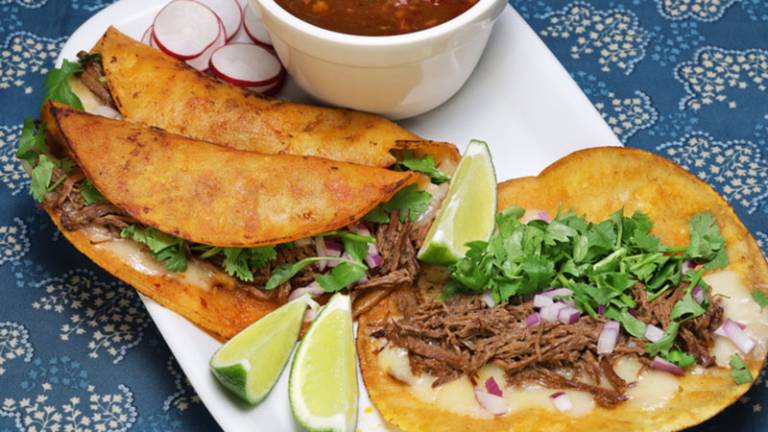
"caption": "We know those quesabirria tacos you ordered are good. But are you really gonna try to tell us they slap?",
"description": "We know those quesabirria tacos you ordered are good. But are you really gonna try to tell us they slap?",
"title": "We know those quesabirria tacos you ordered are good. But are you really gonna try to tell us they slap?",
"credit": "(iStock)",
"status": "inherit",
"altTag": "We know those quesabirria tacos you ordered are good. But are you really gonna try to tell us they slap?",
"isLoading": false,
"fetchFailed": false
},
"arts_13922622": {
"type": "attachments",
"id": "arts_13922622",
"meta": {
"index": "attachments_1716263798",
"site": "arts",
"id": "13922622",
"found": true
},
"parent": 13922616,
"imgSizes": {
"twentyfourteen-full-width": {
"file": "https://ww2.kqed.org/app/uploads/sites/2/2022/12/TooShort.LibbySchaaf-1032x576.jpg",
"width": 1032,
"mimeType": "image/jpeg",
"height": 576
},
"thumbnail": {
"file": "https://ww2.kqed.org/app/uploads/sites/2/2022/12/TooShort.LibbySchaaf-160x90.jpg",
"width": 160,
"mimeType": "image/jpeg",
"height": 90
},
"post-thumbnail": {
"file": "https://ww2.kqed.org/app/uploads/sites/2/2022/12/TooShort.LibbySchaaf-672x372.jpg",
"width": 672,
"mimeType": "image/jpeg",
"height": 372
},
"kqedFullSize": {
"file": "https://ww2.kqed.org/app/uploads/sites/2/2022/12/TooShort.LibbySchaaf.jpg",
"width": 1032,
"height": 581
},
"large": {
"file": "https://ww2.kqed.org/app/uploads/sites/2/2022/12/TooShort.LibbySchaaf-1020x574.jpg",
"width": 1020,
"mimeType": "image/jpeg",
"height": 574
},
"medium": {
"file": "https://ww2.kqed.org/app/uploads/sites/2/2022/12/TooShort.LibbySchaaf-800x450.jpg",
"width": 800,
"mimeType": "image/jpeg",
"height": 450
},
"medium_large": {
"file": "https://ww2.kqed.org/app/uploads/sites/2/2022/12/TooShort.LibbySchaaf-768x432.jpg",
"width": 768,
"mimeType": "image/jpeg",
"height": 432
}
},
"publishDate": 1670742549,
"modified": 1670742706,
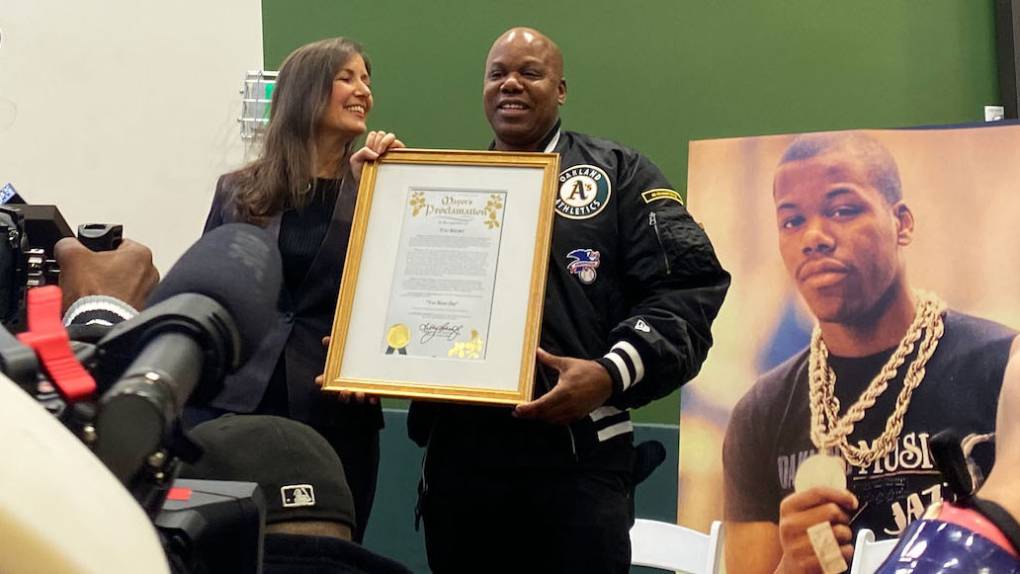
"caption": "Oakland Mayor Libby Schaaf (right) presents an official city proclamation to rapper Too $hort at Fremont High School in Oakland, Calif., on Dec. 10, 2022. The event formally renamed a portion of Foothill Boulevard to 'Too Short Way.'",
"description": null,
"title": "TooShort.LibbySchaaf",
"credit": "Kristie Song/KQED",
"status": "inherit",
"altTag": "A woman with long hair smiles at a man in an A's starter jacket, holding a framed proclamation from the city",
"isLoading": false,
"fetchFailed": false
},
"arts_13922557": {
"type": "attachments",
"id": "arts_13922557",
"meta": {
"index": "attachments_1716263798",
"site": "arts",
"id": "13922557",
"found": true
},
"parent": 13922548,
"imgSizes": {
"twentyfourteen-full-width": {
"file": "https://ww2.kqed.org/app/uploads/sites/2/2022/12/GettyImages-1143940667-1-1-1038x576.jpg",
"width": 1038,
"mimeType": "image/jpeg",
"height": 576
},
"thumbnail": {
"file": "https://ww2.kqed.org/app/uploads/sites/2/2022/12/GettyImages-1143940667-1-1-160x88.jpg",
"width": 160,
"mimeType": "image/jpeg",
"height": 88
},
"post-thumbnail": {
"file": "https://ww2.kqed.org/app/uploads/sites/2/2022/12/GettyImages-1143940667-1-1-672x372.jpg",
"width": 672,
"mimeType": "image/jpeg",
"height": 372
},
"kqedFullSize": {
"file": "https://ww2.kqed.org/app/uploads/sites/2/2022/12/GettyImages-1143940667-1-1-scaled.jpg",
"width": 2560,
"height": 1414
},
"2048x2048": {
"file": "https://ww2.kqed.org/app/uploads/sites/2/2022/12/GettyImages-1143940667-1-1-2048x1131.jpg",
"width": 2048,
"mimeType": "image/jpeg",
"height": 1131
},
"large": {
"file": "https://ww2.kqed.org/app/uploads/sites/2/2022/12/GettyImages-1143940667-1-1-1020x563.jpg",
"width": 1020,
"mimeType": "image/jpeg",
"height": 563
},
"1536x1536": {
"file": "https://ww2.kqed.org/app/uploads/sites/2/2022/12/GettyImages-1143940667-1-1-1536x848.jpg",
"width": 1536,
"mimeType": "image/jpeg",
"height": 848
},
"full-width": {
"file": "https://ww2.kqed.org/app/uploads/sites/2/2022/12/GettyImages-1143940667-1-1-1920x1061.jpg",
"width": 1920,
"mimeType": "image/jpeg",
"height": 1061
},
"medium": {
"file": "https://ww2.kqed.org/app/uploads/sites/2/2022/12/GettyImages-1143940667-1-1-800x442.jpg",
"width": 800,
"mimeType": "image/jpeg",
"height": 442
},
"medium_large": {
"file": "https://ww2.kqed.org/app/uploads/sites/2/2022/12/GettyImages-1143940667-1-1-768x424.jpg",
"width": 768,
"mimeType": "image/jpeg",
"height": 424
}
},
"publishDate": 1670554455,
"modified": 1670611425,
"caption": "Too Short performs during the '25th Anniversary of Doggystyle' tour at ORACLE Arena in Oakland.",
"description": null,
"title": "Snoop Dogg With E40 And Too Short In Concert - Oakland, CA",
"credit": "Tim Mosenfelder/Getty Images",
"status": "inherit",
"altTag": "a Black man raps into a microphone on a stage with the words 'Too $hort' behind him in blue lights",
"isLoading": false,
"fetchFailed": false
},
"arts_13922066": {
"type": "attachments",
"id": "arts_13922066",
"meta": {
"index": "attachments_1716263798",
"site": "arts",
"id": "13922066",
"found": true
},
"parent": 13922065,
"imgSizes": {
"twentyfourteen-full-width": {
"file": "https://ww2.kqed.org/app/uploads/sites/2/2022/11/AwesomeOrchestra.Alex_-1038x576.jpg",
"width": 1038,
"mimeType": "image/jpeg",
"height": 576
},
"thumbnail": {
"file": "https://ww2.kqed.org/app/uploads/sites/2/2022/11/AwesomeOrchestra.Alex_-160x90.jpg",
"width": 160,
"mimeType": "image/jpeg",
"height": 90
},
"post-thumbnail": {
"file": "https://ww2.kqed.org/app/uploads/sites/2/2022/11/AwesomeOrchestra.Alex_-672x372.jpg",
"width": 672,
"mimeType": "image/jpeg",
"height": 372
},
"kqedFullSize": {
"file": "https://ww2.kqed.org/app/uploads/sites/2/2022/11/AwesomeOrchestra.Alex_.jpg",
"width": 1600,
"height": 900
},
"large": {
"file": "https://ww2.kqed.org/app/uploads/sites/2/2022/11/AwesomeOrchestra.Alex_-1020x574.jpg",
"width": 1020,
"mimeType": "image/jpeg",
"height": 574
},
"1536x1536": {
"file": "https://ww2.kqed.org/app/uploads/sites/2/2022/11/AwesomeOrchestra.Alex_-1536x864.jpg",
"width": 1536,
"mimeType": "image/jpeg",
"height": 864
},
"medium": {
"file": "https://ww2.kqed.org/app/uploads/sites/2/2022/11/AwesomeOrchestra.Alex_-800x450.jpg",
"width": 800,
"mimeType": "image/jpeg",
"height": 450
},
"medium_large": {
"file": "https://ww2.kqed.org/app/uploads/sites/2/2022/11/AwesomeOrchestra.Alex_-768x432.jpg",
"width": 768,
"mimeType": "image/jpeg",
"height": 432
}
},
"publishDate": 1669758049,
"modified": 1669758545,
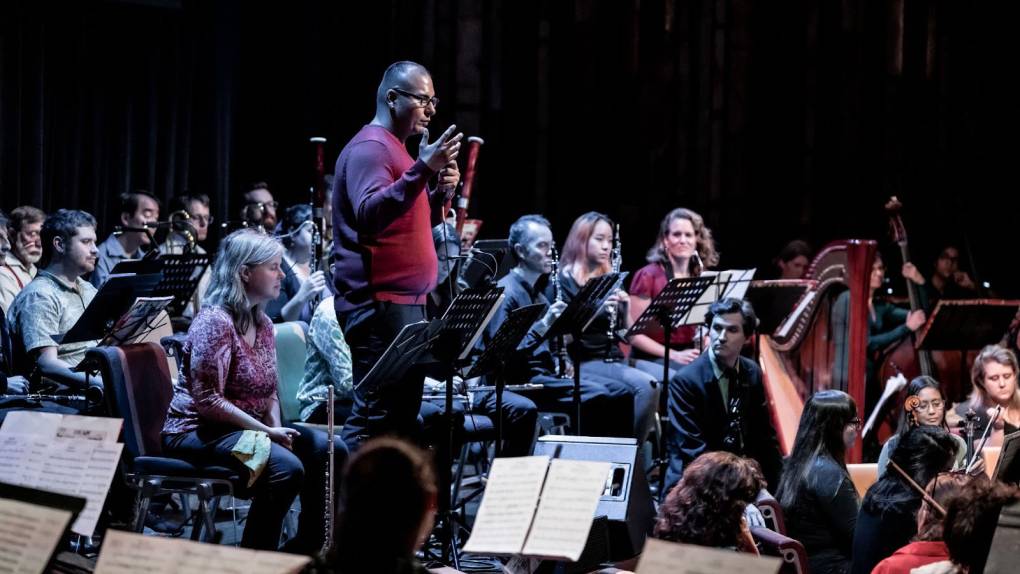
"caption": "Composer Arturo Rodriguez at Awesöme Orchestra's End-of-Year Concert in 2019.",
"description": null,
"title": "AwesomeOrchestra.Alex",
"credit": "Dave Weiland",
"status": "inherit",
"altTag": "A man in a red shirt stands among an orchestra, with members holding various instruments",
"isLoading": false,
"fetchFailed": false
},
"arts_13921293": {
"type": "attachments",
"id": "arts_13921293",
"meta": {
"index": "attachments_1716263798",
"site": "arts",
"id": "13921293",
"found": true
},
"parent": 13921123,
"imgSizes": {
"twentyfourteen-full-width": {
"file": "https://ww2.kqed.org/app/uploads/sites/2/2022/11/GettyImages-640506395-1038x576.jpg",
"width": 1038,
"mimeType": "image/jpeg",
"height": 576
},
"thumbnail": {
"file": "https://ww2.kqed.org/app/uploads/sites/2/2022/11/GettyImages-640506395-160x128.jpg",
"width": 160,
"mimeType": "image/jpeg",
"height": 128
},
"post-thumbnail": {
"file": "https://ww2.kqed.org/app/uploads/sites/2/2022/11/GettyImages-640506395-672x372.jpg",
"width": 672,
"mimeType": "image/jpeg",
"height": 372
},
"kqedFullSize": {
"file": "https://ww2.kqed.org/app/uploads/sites/2/2022/11/GettyImages-640506395-scaled-e1667509448868.jpg",
"width": 1920,
"height": 1540
},
"2048x2048": {
"file": "https://ww2.kqed.org/app/uploads/sites/2/2022/11/GettyImages-640506395-2048x1643.jpg",
"width": 2048,
"mimeType": "image/jpeg",
"height": 1643
},
"large": {
"file": "https://ww2.kqed.org/app/uploads/sites/2/2022/11/GettyImages-640506395-1020x818.jpg",
"width": 1020,
"mimeType": "image/jpeg",
"height": 818
},
"1536x1536": {
"file": "https://ww2.kqed.org/app/uploads/sites/2/2022/11/GettyImages-640506395-1536x1232.jpg",
"width": 1536,
"mimeType": "image/jpeg",
"height": 1232
},
"full-width": {
"file": "https://ww2.kqed.org/app/uploads/sites/2/2022/11/GettyImages-640506395-1920x1540.jpg",
"width": 1920,
"mimeType": "image/jpeg",
"height": 1540
},
"medium": {
"file": "https://ww2.kqed.org/app/uploads/sites/2/2022/11/GettyImages-640506395-800x642.jpg",
"width": 800,
"mimeType": "image/jpeg",
"height": 642
},
"medium_large": {
"file": "https://ww2.kqed.org/app/uploads/sites/2/2022/11/GettyImages-640506395-768x616.jpg",
"width": 768,
"mimeType": "image/jpeg",
"height": 616
}
},
"publishDate": 1667509303,
"modified": 1667509741,
"caption": "The newly completed Bay Bridge before it opened, lit up with '8 million lumens of sodium lighting — more than 35 full moons' according to an 'Oakland Tribune' article from the time.",
"description": null,
"title": "The newly completed Bay Bridge before it opened, lit up with '8 million lumens of sodium lighting — more than 35 full moons' according to an 'Oakland Tribune' article from the time.",
"credit": null,
"status": "inherit",
"altTag": "A black and white image of the Oakland-San Francisco Bay Bridge, taken at dusk.",
"isLoading": false,
"fetchFailed": false
},
"arts_13921256": {
"type": "attachments",
"id": "arts_13921256",
"meta": {
"index": "attachments_1716263798",
"site": "arts",
"id": "13921256",
"found": true
},
"parent": 13921254,
"imgSizes": {
"twentyfourteen-full-width": {
"file": "https://ww2.kqed.org/app/uploads/sites/2/2022/11/Tales-of-The-Town-Cover-1-1038x576.jpg",
"width": 1038,
"mimeType": "image/jpeg",
"height": 576
},
"thumbnail": {
"file": "https://ww2.kqed.org/app/uploads/sites/2/2022/11/Tales-of-The-Town-Cover-1-160x160.jpg",
"width": 160,
"mimeType": "image/jpeg",
"height": 160
},
"post-thumbnail": {
"file": "https://ww2.kqed.org/app/uploads/sites/2/2022/11/Tales-of-The-Town-Cover-1-672x372.jpg",
"width": 672,
"mimeType": "image/jpeg",
"height": 372
},
"kqedFullSize": {
"file": "https://ww2.kqed.org/app/uploads/sites/2/2022/11/Tales-of-The-Town-Cover-1.jpg",
"width": 1779,
"height": 1780
},
"large": {
"file": "https://ww2.kqed.org/app/uploads/sites/2/2022/11/Tales-of-The-Town-Cover-1-1020x1021.jpg",
"width": 1020,
"mimeType": "image/jpeg",
"height": 1021
},
"1536x1536": {
"file": "https://ww2.kqed.org/app/uploads/sites/2/2022/11/Tales-of-The-Town-Cover-1-1536x1536.jpg",
"width": 1536,
"mimeType": "image/jpeg",
"height": 1536
},
"medium": {
"file": "https://ww2.kqed.org/app/uploads/sites/2/2022/11/Tales-of-The-Town-Cover-1-800x800.jpg",
"width": 800,
"mimeType": "image/jpeg",
"height": 800
},
"medium_large": {
"file": "https://ww2.kqed.org/app/uploads/sites/2/2022/11/Tales-of-The-Town-Cover-1-768x768.jpg",
"width": 768,
"mimeType": "image/jpeg",
"height": 768
}
},
"publishDate": 1667483518,
"modified": 1667483566,
"caption": "Tales of the Town",
"description": "Tales of the Town",
"title": "Tales of the Town",
"credit": "Courtesy of Tales of The Town",
"status": "inherit",
"altTag": "Tales of the Town",
"isLoading": false,
"fetchFailed": false
},
"arts_13921113": {
"type": "attachments",
"id": "arts_13921113",
"meta": {
"index": "attachments_1716263798",
"site": "arts",
"id": "13921113",
"found": true
},
"parent": 13921079,
"imgSizes": {
"twentyfourteen-full-width": {
"file": "https://ww2.kqed.org/app/uploads/sites/2/2022/10/rockyrivera-mom-1038x576.jpg",
"width": 1038,
"mimeType": "image/jpeg",
"height": 576
},
"thumbnail": {
"file": "https://ww2.kqed.org/app/uploads/sites/2/2022/10/rockyrivera-mom-160x90.jpg",
"width": 160,
"mimeType": "image/jpeg",
"height": 90
},
"post-thumbnail": {
"file": "https://ww2.kqed.org/app/uploads/sites/2/2022/10/rockyrivera-mom-672x372.jpg",
"width": 672,
"mimeType": "image/jpeg",
"height": 372
},
"kqedFullSize": {
"file": "https://ww2.kqed.org/app/uploads/sites/2/2022/10/rockyrivera-mom-scaled.jpg",
"width": 2560,
"height": 1440
},
"2048x2048": {
"file": "https://ww2.kqed.org/app/uploads/sites/2/2022/10/rockyrivera-mom-2048x1152.jpg",
"width": 2048,
"mimeType": "image/jpeg",
"height": 1152
},
"large": {
"file": "https://ww2.kqed.org/app/uploads/sites/2/2022/10/rockyrivera-mom-1020x574.jpg",
"width": 1020,
"mimeType": "image/jpeg",
"height": 574
},
"1536x1536": {
"file": "https://ww2.kqed.org/app/uploads/sites/2/2022/10/rockyrivera-mom-1536x864.jpg",
"width": 1536,
"mimeType": "image/jpeg",
"height": 864
},
"full-width": {
"file": "https://ww2.kqed.org/app/uploads/sites/2/2022/10/rockyrivera-mom-1920x1080.jpg",
"width": 1920,
"mimeType": "image/jpeg",
"height": 1080
},
"medium": {
"file": "https://ww2.kqed.org/app/uploads/sites/2/2022/10/rockyrivera-mom-800x450.jpg",
"width": 800,
"mimeType": "image/jpeg",
"height": 450
},
"medium_large": {
"file": "https://ww2.kqed.org/app/uploads/sites/2/2022/10/rockyrivera-mom-768x432.jpg",
"width": 768,
"mimeType": "image/jpeg",
"height": 432
}
},
"publishDate": 1667248180,
"modified": 1667260048,
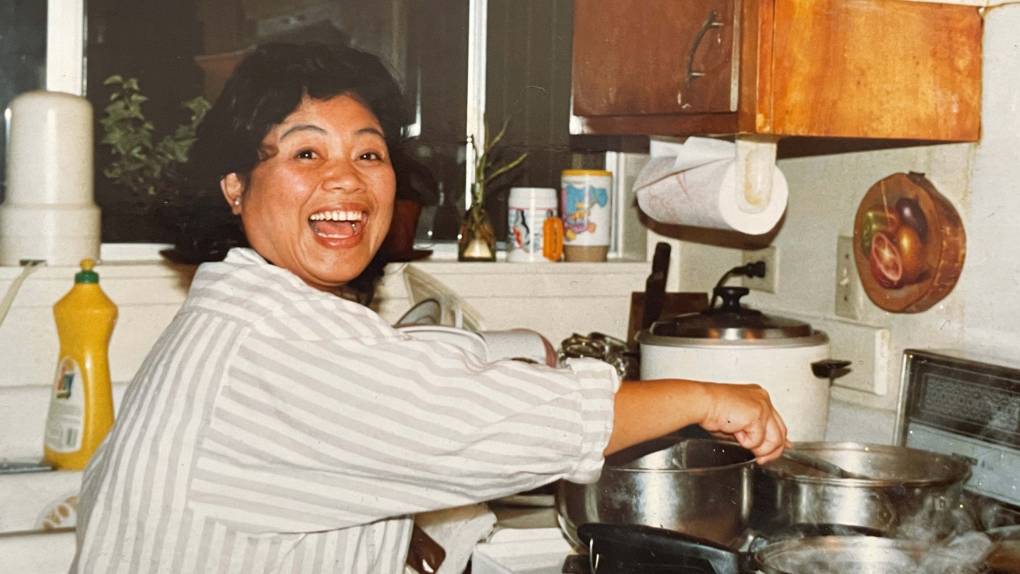
"caption": "The author's mother, Doris T. de Leon, tends to a pot on the stove in this photo taken during the early '90s. She was the one who taught her daughters what it meant to be a \"foodie.\"",
"description": null,
"title": "rockyrivera mom",
"credit": "Courtesy of Rocky Rivera",
"status": "inherit",
"altTag": "A woman looking up at the camera and smiling with delight as she tends to a pot on the stove.",
"isLoading": false,
"fetchFailed": false
},
"arts_13920850": {
"type": "attachments",
"id": "arts_13920850",
"meta": {
"index": "attachments_1716263798",
"site": "arts",
"id": "13920850",
"found": true
},
"parent": 13920831,
"imgSizes": {
"twentyfourteen-full-width": {
"file": "https://ww2.kqed.org/app/uploads/sites/2/2022/10/treats-by-b_pouring-gold-crop-1038x576.jpg",
"width": 1038,
"mimeType": "image/jpeg",
"height": 576
},
"thumbnail": {
"file": "https://ww2.kqed.org/app/uploads/sites/2/2022/10/treats-by-b_pouring-gold-crop-160x90.jpg",
"width": 160,
"mimeType": "image/jpeg",
"height": 90
},
"post-thumbnail": {
"file": "https://ww2.kqed.org/app/uploads/sites/2/2022/10/treats-by-b_pouring-gold-crop-672x372.jpg",
"width": 672,
"mimeType": "image/jpeg",
"height": 372
},
"kqedFullSize": {
"file": "https://ww2.kqed.org/app/uploads/sites/2/2022/10/treats-by-b_pouring-gold-crop.jpg",
"width": 1920,
"height": 1080
},
"large": {
"file": "https://ww2.kqed.org/app/uploads/sites/2/2022/10/treats-by-b_pouring-gold-crop-1020x574.jpg",
"width": 1020,
"mimeType": "image/jpeg",
"height": 574
},
"1536x1536": {
"file": "https://ww2.kqed.org/app/uploads/sites/2/2022/10/treats-by-b_pouring-gold-crop-1536x864.jpg",
"width": 1536,
"mimeType": "image/jpeg",
"height": 864
},
"medium": {
"file": "https://ww2.kqed.org/app/uploads/sites/2/2022/10/treats-by-b_pouring-gold-crop-800x450.jpg",
"width": 800,
"mimeType": "image/jpeg",
"height": 450
},
"medium_large": {
"file": "https://ww2.kqed.org/app/uploads/sites/2/2022/10/treats-by-b_pouring-gold-crop-768x432.jpg",
"width": 768,
"mimeType": "image/jpeg",
"height": 432
}
},
"publishDate": 1666725997,
"modified": 1666815757,
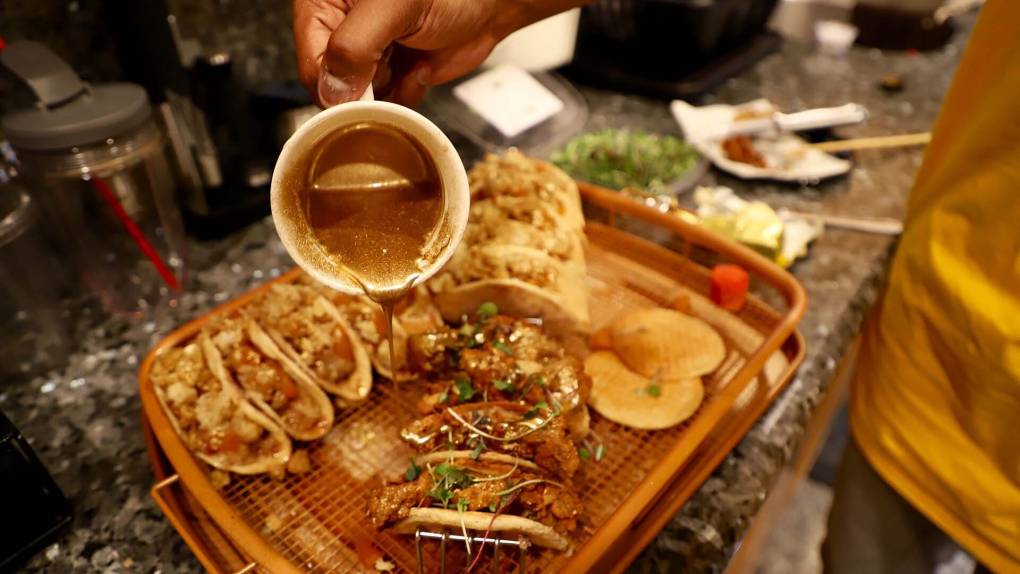
"caption": "Brea Gladney pours gold over a fresh batch of vegan fried chicken and waffle tacos. Her pop-up bakery, Treats by B, splits time between Portland and the Bay Area.",
"description": null,
"title": "treats by b_pouring gold-crop",
"credit": "Alan Chazaro",
"status": "inherit",
"altTag": "Brea Galdney, a local baker, pours edible gold over vegan fried chicken waffle tacos",
"isLoading": false,
"fetchFailed": false
},
"arts_13920621": {
"type": "attachments",
"id": "arts_13920621",
"meta": {
"index": "attachments_1716263798",
"site": "arts",
"id": "13920621",
"found": true
},
"parent": 13920620,
"imgSizes": {
"twentyfourteen-full-width": {
"file": "https://ww2.kqed.org/app/uploads/sites/2/2022/10/0-1018x576.jpg",
"width": 1018,
"mimeType": "image/jpeg",
"height": 576
},
"thumbnail": {
"file": "https://ww2.kqed.org/app/uploads/sites/2/2022/10/0-160x214.jpg",
"width": 160,
"mimeType": "image/jpeg",
"height": 214
},
"post-thumbnail": {
"file": "https://ww2.kqed.org/app/uploads/sites/2/2022/10/0-672x372.jpg",
"width": 672,
"mimeType": "image/jpeg",
"height": 372
},
"kqedFullSize": {
"file": "https://ww2.kqed.org/app/uploads/sites/2/2022/10/0.jpg",
"width": 1018,
"height": 1359
},
"medium": {
"file": "https://ww2.kqed.org/app/uploads/sites/2/2022/10/0-800x1068.jpg",
"width": 800,
"mimeType": "image/jpeg",
"height": 1068
},
"medium_large": {
"file": "https://ww2.kqed.org/app/uploads/sites/2/2022/10/0-768x1025.jpg",
"width": 768,
"mimeType": "image/jpeg",
"height": 1025
}
},
"publishDate": 1666293726,
"modified": 1666293764,
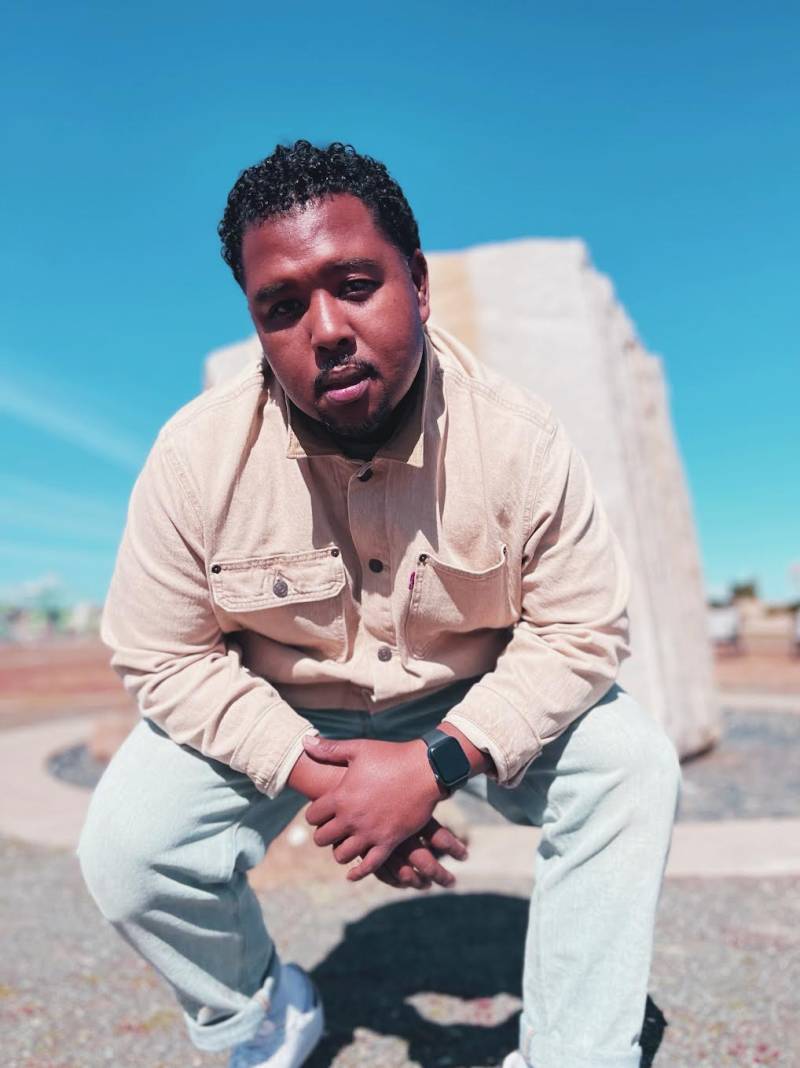
"caption": "Music producer Trackademicks poses for a photo. ",
"description": "Music producer Trackademicks poses for a photo. ",
"title": "Music producer Trackademicks poses for a photo.",
"credit": "Trackademicks",
"status": "inherit",
"altTag": "Music producer Trackademicks poses for a photo.",
"isLoading": false,
"fetchFailed": false
},
"arts_13920583": {
"type": "attachments",
"id": "arts_13920583",
"meta": {
"index": "attachments_1716263798",
"site": "arts",
"id": "13920583",
"found": true
},
"parent": 13920581,
"imgSizes": {
"twentyfourteen-full-width": {
"file": "https://ww2.kqed.org/app/uploads/sites/2/2022/10/casa-borinquena_rice-plate-crop-1038x576.jpg",
"width": 1038,
"mimeType": "image/jpeg",
"height": 576
},
"thumbnail": {
"file": "https://ww2.kqed.org/app/uploads/sites/2/2022/10/casa-borinquena_rice-plate-crop-160x100.jpg",
"width": 160,
"mimeType": "image/jpeg",
"height": 100
},
"post-thumbnail": {
"file": "https://ww2.kqed.org/app/uploads/sites/2/2022/10/casa-borinquena_rice-plate-crop-672x372.jpg",
"width": 672,
"mimeType": "image/jpeg",
"height": 372
},
"kqedFullSize": {
"file": "https://ww2.kqed.org/app/uploads/sites/2/2022/10/casa-borinquena_rice-plate-crop.jpg",
"width": 1920,
"height": 1200
},
"large": {
"file": "https://ww2.kqed.org/app/uploads/sites/2/2022/10/casa-borinquena_rice-plate-crop-1020x638.jpg",
"width": 1020,
"mimeType": "image/jpeg",
"height": 638
},
"1536x1536": {
"file": "https://ww2.kqed.org/app/uploads/sites/2/2022/10/casa-borinquena_rice-plate-crop-1536x960.jpg",
"width": 1536,
"mimeType": "image/jpeg",
"height": 960
},
"medium": {
"file": "https://ww2.kqed.org/app/uploads/sites/2/2022/10/casa-borinquena_rice-plate-crop-800x500.jpg",
"width": 800,
"mimeType": "image/jpeg",
"height": 500
},
"medium_large": {
"file": "https://ww2.kqed.org/app/uploads/sites/2/2022/10/casa-borinquena_rice-plate-crop-768x480.jpg",
"width": 768,
"mimeType": "image/jpeg",
"height": 480
}
},
"publishDate": 1666208119,
"modified": 1666208770,
"caption": "At Casa Borinqueña, everything on the menu is vegan, including this classic plate of pastelillos, \"chicken\" and arroz con gandules.",
"description": null,
"title": "casa borinquena_rice plate-crop",
"credit": "Nicola Parisi",
"status": "inherit",
"altTag": "Overhead shot of a plate of Puerto Rican food: fried empanadas, plantains, chicken, and yellow rice.",
"isLoading": false,
"fetchFailed": false
},
"arts_13920459": {
"type": "attachments",
"id": "arts_13920459",
"meta": {
"index": "attachments_1716263798",
"site": "arts",
"id": "13920459",
"found": true
},
"parent": 13920414,
"imgSizes": {
"twentyfourteen-full-width": {
"file": "https://ww2.kqed.org/app/uploads/sites/2/2022/10/PP_Exhibition4-1038x576.jpg",
"width": 1038,
"mimeType": "image/jpeg",
"height": 576
},
"thumbnail": {
"file": "https://ww2.kqed.org/app/uploads/sites/2/2022/10/PP_Exhibition4-160x120.jpg",
"width": 160,
"mimeType": "image/jpeg",
"height": 120
},
"post-thumbnail": {
"file": "https://ww2.kqed.org/app/uploads/sites/2/2022/10/PP_Exhibition4-672x372.jpg",
"width": 672,
"mimeType": "image/jpeg",
"height": 372
},
"kqedFullSize": {
"file": "https://ww2.kqed.org/app/uploads/sites/2/2022/10/PP_Exhibition4.jpg",
"width": 1500,
"height": 1125
},
"large": {
"file": "https://ww2.kqed.org/app/uploads/sites/2/2022/10/PP_Exhibition4-1020x765.jpg",
"width": 1020,
"mimeType": "image/jpeg",
"height": 765
},
"medium": {
"file": "https://ww2.kqed.org/app/uploads/sites/2/2022/10/PP_Exhibition4-800x600.jpg",
"width": 800,
"mimeType": "image/jpeg",
"height": 600
},
"medium_large": {
"file": "https://ww2.kqed.org/app/uploads/sites/2/2022/10/PP_Exhibition4-768x576.jpg",
"width": 768,
"mimeType": "image/jpeg",
"height": 576
}
},
"publishDate": 1666028816,
"modified": 1666028885,
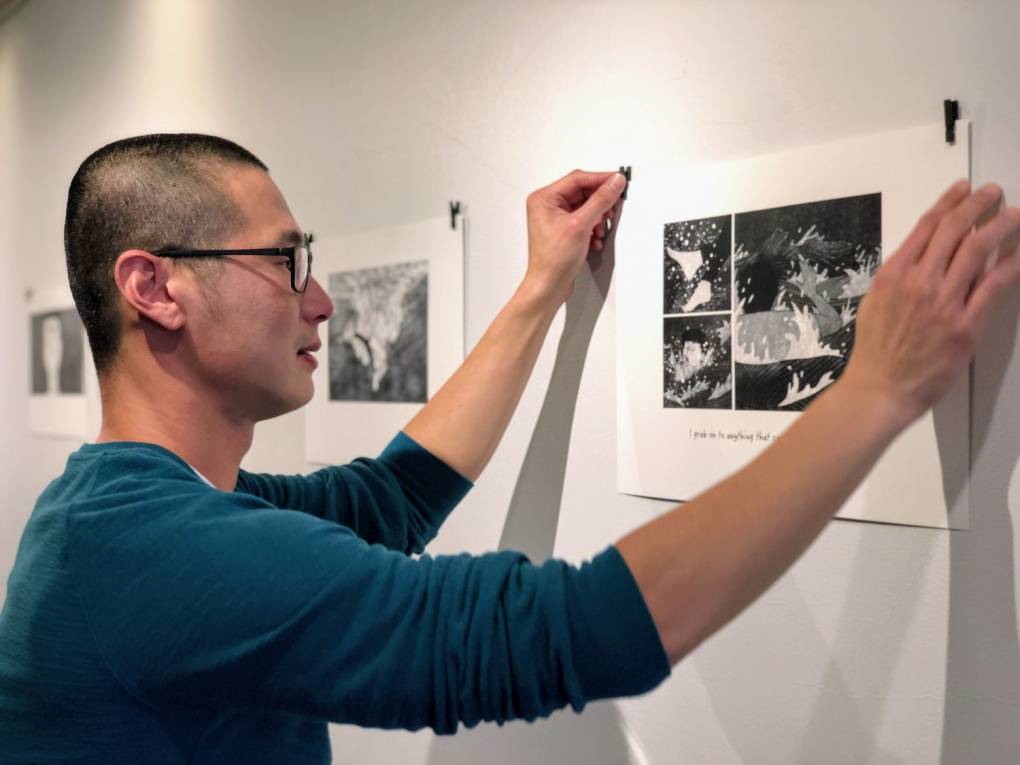
"caption": "Edward Gunawan installs his 'Press Pay' exhibition at the Oakland Asian Cultural Center.",
"description": null,
"title": "PP_Exhibition4",
"credit": "Rachall Lee",
"status": "inherit",
"altTag": null,
"isLoading": false,
"fetchFailed": false
}
},
"audioPlayerReducer": {
"postId": "stream_live",
"isPaused": true,
"isPlaying": false,
"pfsActive": false,
"pledgeModalIsOpen": true,
"playerDrawerIsOpen": false,
"liveAudioPlayStartedAt": 0,
"liveAudioPlayContext": ""
},
"authorsReducer": {
"byline_arts_13920581": {
"type": "authors",
"id": "byline_arts_13920581",
"meta": {
"override": true
},
"slug": "byline_arts_13920581",
"name": "Paloma Cortes",
"isLoading": false
},
"gmeline": {
"type": "authors",
"id": "185",
"meta": {
"index": "authors_1716337520",
"id": "185",
"found": true
},
"name": "Gabe Meline",
"firstName": "Gabe",
"lastName": "Meline",
"slug": "gmeline",
"email": "gmeline@kqed.org",
"display_author_email": true,
"staff_mastheads": [
"arts"
],
"title": "Senior Editor, KQED Arts & Culture",
"bio": "Gabe Meline entered journalism at age 15 making photocopied zines, and has since earned awards from the Edward R. Murrow Awards, the Society for Professional Journalists, the Online Journalism Awards, the Association of Alternative Newsweeklies and the California Newspaper Publishers Association. Prior to KQED, he was the editor of the \u003cem>North Bay Bohemian\u003c/em> and a touring musician. He lives with his wife and daughter in his hometown of Santa Rosa, CA.",
"avatar": "https://secure.gravatar.com/avatar/5bebe57be0d8bc2dd318934feb47299e2d2d10cba28d09d8d7afb389a2ce2bdd?s=600&d=blank&r=g",
"twitter": null,
"bluesky": null,
"facebook": null,
"instagram": null,
"linkedin": null,
"sites": [
{
"site": "",
"roles": [
"editor"
]
},
{
"site": "arts",
"roles": [
"administrator"
]
},
{
"site": "artschool",
"roles": [
"editor"
]
},
{
"site": "news",
"roles": [
"author"
]
},
{
"site": "pop",
"roles": [
"editor"
]
},
{
"site": "bayareabites",
"roles": [
"editor"
]
},
{
"site": "food",
"roles": [
"editor"
]
},
{
"site": "liveblog",
"roles": [
"editor"
]
},
{
"site": "hiphop",
"roles": [
"editor"
]
}
],
"headData": {
"title": "Gabe Meline | KQED",
"description": "Senior Editor, KQED Arts & Culture",
"ogImgSrc": "https://secure.gravatar.com/avatar/5bebe57be0d8bc2dd318934feb47299e2d2d10cba28d09d8d7afb389a2ce2bdd?s=600&d=blank&r=g",
"twImgSrc": "https://secure.gravatar.com/avatar/5bebe57be0d8bc2dd318934feb47299e2d2d10cba28d09d8d7afb389a2ce2bdd?s=600&d=blank&r=g"
},
"isLoading": false,
"link": "/author/gmeline"
},
"ralexandra": {
"type": "authors",
"id": "11242",
"meta": {
"index": "authors_1716337520",
"id": "11242",
"found": true
},
"name": "Rae Alexandra",
"firstName": "Rae",
"lastName": "Alexandra",
"slug": "ralexandra",
"email": "ralexandra@kqed.org",
"display_author_email": true,
"staff_mastheads": [
"arts"
],
"title": "Reporter/Producer",
"bio": "Rae Alexandra is a Reporter/Producer for KQED Arts & Culture, and the creator/author of the \u003ca href=\"https://www.kqed.org/arts/program/rebel-girls-from-bay-area-history\">Rebel Girls From Bay Area History\u003c/a> and \u003ca href=\"https://www.kqed.org/bizarrebayarea\">Bizarre Bay Area\u003c/a> series. Her debut book, \u003ca href=\"https://citylights.com/politics-current-events-history/unsung-heroines35-women-who-changed/\">Unsung Heroines: 35 Women Who Changed the Bay Area\u003c/a> was published by City Lights in March 2026. In 2023, Rae was awarded an SPJ Excellence in Journalism Award for Arts & Culture. Rae was born and raised in Wales and subsequently — even after two decades in Northern California — still uses phrases that regularly baffle her coworkers.",
"avatar": "https://secure.gravatar.com/avatar/edfee8176c80cc0a382b051190f5341997df378a934a5774dcb0977732dfd401?s=600&d=blank&r=g",
"twitter": null,
"bluesky": null,
"facebook": null,
"instagram": null,
"linkedin": null,
"sites": [
{
"site": "arts",
"roles": [
"editor"
]
},
{
"site": "news",
"roles": [
"editor"
]
},
{
"site": "pop",
"roles": [
"editor"
]
},
{
"site": "bayareabites",
"roles": [
"editor"
]
},
{
"site": "science",
"roles": [
"editor"
]
}
],
"headData": {
"title": "Rae Alexandra | KQED",
"description": "Reporter/Producer",
"ogImgSrc": "https://secure.gravatar.com/avatar/edfee8176c80cc0a382b051190f5341997df378a934a5774dcb0977732dfd401?s=600&d=blank&r=g",
"twImgSrc": "https://secure.gravatar.com/avatar/edfee8176c80cc0a382b051190f5341997df378a934a5774dcb0977732dfd401?s=600&d=blank&r=g"
},
"isLoading": false,
"link": "/author/ralexandra"
},
"ogpenn": {
"type": "authors",
"id": "11491",
"meta": {
"index": "authors_1716337520",
"id": "11491",
"found": true
},
"name": "Pendarvis Harshaw",
"firstName": "Pendarvis",
"lastName": "Harshaw",
"slug": "ogpenn",
"email": "ogpenn@gmail.com",
"display_author_email": false,
"staff_mastheads": [
"arts"
],
"title": "Community Engagement Reporter",
"bio": "Pendarvis Harshaw is an educator, host and writer with KQED Arts.",
"avatar": "https://secure.gravatar.com/avatar/972b77ee8e3f346ae2b00622661187fbfabd059b5693bbdc1475ea7a722fd4cd?s=600&d=blank&r=g",
"twitter": null,
"bluesky": null,
"facebook": null,
"instagram": "ogpenn",
"linkedin": null,
"sites": [
{
"site": "arts",
"roles": [
"administrator"
]
},
{
"site": "news",
"roles": [
"editor"
]
},
{
"site": "bayareabites",
"roles": [
"author"
]
},
{
"site": "hiphop",
"roles": [
"editor"
]
}
],
"headData": {
"title": "Pendarvis Harshaw | KQED",
"description": "Community Engagement Reporter",
"ogImgSrc": "https://secure.gravatar.com/avatar/972b77ee8e3f346ae2b00622661187fbfabd059b5693bbdc1475ea7a722fd4cd?s=600&d=blank&r=g",
"twImgSrc": "https://secure.gravatar.com/avatar/972b77ee8e3f346ae2b00622661187fbfabd059b5693bbdc1475ea7a722fd4cd?s=600&d=blank&r=g"
},
"isLoading": false,
"link": "/author/ogpenn"
},
"mmedina": {
"type": "authors",
"id": "11528",
"meta": {
"index": "authors_1716337520",
"id": "11528",
"found": true
},
"name": "Marisol Medina-Cadena",
"firstName": "Marisol",
"lastName": "Medina-Cadena",
"slug": "mmedina",
"email": "mmedina@KQED.org",
"display_author_email": true,
"staff_mastheads": [],
"title": "Producer, Rightnowish Podcast",
"bio": "Marisol Medina-Cadena is a radio reporter and podcast producer. Before working at KQED, she produced for PBS member station, KCET, in Los Angeles. In 2017, Marisol won an Emmy Award for her work on the televised documentary, \u003cem>City Rising\u003c/em>, examining California's affordable housing crisis and the historical roots of gentrification.",
"avatar": "https://secure.gravatar.com/avatar/6c3db46a1cabb5e1fe9a365b5f4e681e?s=600&d=blank&r=g",
"twitter": "marisolreports",
"facebook": null,
"instagram": null,
"linkedin": null,
"sites": [
{
"site": "arts",
"roles": []
},
{
"site": "news",
"roles": [
"edit_others_posts"
]
}
],
"headData": {
"title": "Marisol Medina-Cadena | KQED",
"description": "Producer, Rightnowish Podcast",
"ogImgSrc": "https://secure.gravatar.com/avatar/6c3db46a1cabb5e1fe9a365b5f4e681e?s=600&d=blank&r=g",
"twImgSrc": "https://secure.gravatar.com/avatar/6c3db46a1cabb5e1fe9a365b5f4e681e?s=600&d=blank&r=g"
},
"isLoading": false,
"link": "/author/mmedina"
},
"achazaro": {
"type": "authors",
"id": "11748",
"meta": {
"index": "authors_1716337520",
"id": "11748",
"found": true
},
"name": "Alan Chazaro",
"firstName": "Alan",
"lastName": "Chazaro",
"slug": "achazaro",
"email": "agchazaro@gmail.com",
"display_author_email": true,
"staff_mastheads": [],
"title": "Food Writer and Reporter",
"bio": "Alan Chazaro is the author of \u003cem>This Is Not a Frank Ocean Cover Album\u003c/em> (Black Lawrence Press, 2019), \u003cem>Piñata Theory\u003c/em> (Black Lawrence Press, 2020), and \u003cem>Notes from the Eastern Span of the Bay Bridge\u003c/em> (Ghost City Press, 2021). He is a graduate of June Jordan’s Poetry for the People program at UC Berkeley and a former Lawrence Ferlinghetti Fellow at the University of San Francisco. He writes about sports, food, art, music, education, and culture while repping the Bay on \u003ca href=\"https://twitter.com/alan_chazaro\">Twitter\u003c/a> and \u003ca href=\"https://www.instagram.com/alan_chazaro/?hl=en\">Instagram\u003c/a> at @alan_chazaro.",
"avatar": "https://secure.gravatar.com/avatar/ea8b6dd970fc5c29e7a188e7d5861df7?s=600&d=blank&r=g",
"twitter": "alan_chazaro",
"facebook": null,
"instagram": null,
"linkedin": null,
"sites": [
{
"site": "arts",
"roles": [
"contributor"
]
},
{
"site": "news",
"roles": [
"editor"
]
}
],
"headData": {
"title": "Alan Chazaro | KQED",
"description": "Food Writer and Reporter",
"ogImgSrc": "https://secure.gravatar.com/avatar/ea8b6dd970fc5c29e7a188e7d5861df7?s=600&d=blank&r=g",
"twImgSrc": "https://secure.gravatar.com/avatar/ea8b6dd970fc5c29e7a188e7d5861df7?s=600&d=blank&r=g"
},
"isLoading": false,
"link": "/author/achazaro"
},
"ksong": {
"type": "authors",
"id": "11813",
"meta": {
"index": "authors_1716337520",
"id": "11813",
"found": true
},
"name": "Kristie Song",
"firstName": "Kristie",
"lastName": "Song",
"slug": "ksong",
"email": "ksong@kqed.org",
"display_author_email": false,
"staff_mastheads": [],
"title": "Editorial Intern ",
"bio": "Kristie Song is an Arts & Culture Intern at KQED. She is currently a graduate student at UC Berkeley, where she studies audio and multimedia journalism. Previously, she covered the local community for Oakland North, produced episodes for The Science of Happiness, and served as news director for KUCI, UC Irvine’s radio station. Outside of reporting, she likes drawing comics, listening to angsty rock, and practicing the guitar.",
"avatar": "https://secure.gravatar.com/avatar/c1149e78c3c44f92d4945a8ab0711af6?s=600&d=blank&r=g",
"twitter": null,
"facebook": null,
"instagram": null,
"linkedin": null,
"sites": [
{
"site": "arts",
"roles": [
"editor"
]
}
],
"headData": {
"title": "Kristie Song | KQED",
"description": "Editorial Intern ",
"ogImgSrc": "https://secure.gravatar.com/avatar/c1149e78c3c44f92d4945a8ab0711af6?s=600&d=blank&r=g",
"twImgSrc": "https://secure.gravatar.com/avatar/c1149e78c3c44f92d4945a8ab0711af6?s=600&d=blank&r=g"
},
"isLoading": false,
"link": "/author/ksong"
},
"rockyrivera": {
"type": "authors",
"id": "11846",
"meta": {
"index": "authors_1716337520",
"id": "11846",
"found": true
},
"name": "Rocky Rivera",
"firstName": "Rocky",
"lastName": "Rivera",
"slug": "rockyrivera",
"email": "ms.rocky.rivera@gmail.com",
"display_author_email": false,
"staff_mastheads": [],
"title": "KQED Contributor",
"bio": "Rocky Rivera is a journalist, emcee, author and activist from San Francisco. She has released four albums through her label, Beatrock Music, and a ten-volume mixtape series with DJ Roza. She released her first book in 2021, entitled \u003cem>Snakeskin: Essays by Rocky Rivera\u003c/em>. Her latest album dropped in September 2024 and is called \"Long Kiss Goodnight\" with emcee/producer Otayo Dubb. She currently writes the Frisco Foodies column as a love letter to her hometown.",
"avatar": "https://secure.gravatar.com/avatar/946241ee2c59e6040607dfc75240d91b?s=600&d=blank&r=g",
"twitter": null,
"facebook": "https://m.facebook.com/rockyriveramusic",
"instagram": "https://instagram.com/rockyrivera",
"linkedin": "https://www.linkedin.com/in/krishtinedeleon/",
"sites": [
{
"site": "arts",
"roles": [
"author"
]
}
],
"headData": {
"title": "Rocky Rivera | KQED",
"description": "KQED Contributor",
"ogImgSrc": "https://secure.gravatar.com/avatar/946241ee2c59e6040607dfc75240d91b?s=600&d=blank&r=g",
"twImgSrc": "https://secure.gravatar.com/avatar/946241ee2c59e6040607dfc75240d91b?s=600&d=blank&r=g"
},
"isLoading": false,
"link": "/author/rockyrivera"
},
"vesposito": {
"type": "authors",
"id": "11934",
"meta": {
"index": "authors_1716337520",
"id": "11934",
"found": true
},
"name": "Veronica Esposito",
"firstName": "Veronica",
"lastName": "Esposito",
"slug": "vesposito",
"email": "ladoppiavitadinica@gmail.com",
"display_author_email": false,
"staff_mastheads": [],
"title": "KQED Contributor",
"bio": "Veronica Esposito is a Licensed Marriage and Family Therapist, as well as a freelance journalist covering the arts, lifestyle, and social justice for venues including The Guardian, KQED, World Literature Today, and many others. Her writing has appeared in dozens of venues, and she has published four books. As a therapist, she specializes in supporting and advocating for trans individuals, and more generally helps clients process and overcome traumatic histories, manage life transitions, and tell their own story.",
"avatar": "https://secure.gravatar.com/avatar/503a7126ebd8cb299fb632f755dac767?s=600&d=blank&r=g",
"twitter": null,
"facebook": null,
"instagram": null,
"linkedin": null,
"sites": [
{
"site": "arts",
"roles": [
"author"
]
}
],
"headData": {
"title": "Veronica Esposito | KQED",
"description": "KQED Contributor",
"ogImgSrc": "https://secure.gravatar.com/avatar/503a7126ebd8cb299fb632f755dac767?s=600&d=blank&r=g",
"twImgSrc": "https://secure.gravatar.com/avatar/503a7126ebd8cb299fb632f755dac767?s=600&d=blank&r=g"
},
"isLoading": false,
"link": "/author/vesposito"
}
},
"pagesReducer": {
"arts_tag_oakland": {
"type": "terms",
"id": "arts_1143",
"meta": {
"index": "terms_1716263798",
"site": "arts",
"id": "1143",
"score": 6.8845096
},
"featImg": null,
"name": "Oakland",
"description": null,
"taxonomy": "tag",
"headData": {
"twImgId": null,
"twTitle": null,
"ogTitle": null,
"ogImgId": null,
"twDescription": null,
"description": null,
"title": "Oakland Archives | KQED Arts",
"ogDescription": null
},
"ttid": 692,
"slug": "oakland",
"isLoading": false,
"title": "Oakland",
"pageMeta": {
"site": "arts",
"WpPageTemplate": "page-topic-editorial",
"currentPage": 31
},
"blocks": [
{
"blockName": "kqed/post-list",
"attrs": {
"layout": "cardArticle2",
"query": "posts/arts?tag=oakland",
"seeMore": false,
"paginated": true,
"page": 31
}
},
{
"blockName": "kqed/ad"
}
]
}
},
"pfsSessionReducer": {},
"postsReducer": {
"stream_live": {
"type": "live",
"id": "stream_live",
"audioUrl": "https://streams.kqed.org/kqedradio",
"title": "Live Stream",
"excerpt": "Live Stream information currently unavailable.",
"link": "/radio",
"featImg": "",
"label": {
"name": "KQED Live",
"link": "/"
}
},
"stream_kqedNewscast": {
"type": "posts",
"id": "stream_kqedNewscast",
"audioUrl": "https://www.kqed.org/.stream/anon/radio/RDnews/newscast.mp3?_=1",
"title": "KQED Newscast",
"featImg": "",
"label": {
"name": "88.5 FM",
"link": "/"
}
},
"arts_13922825": {
"type": "posts",
"id": "arts_13922825",
"meta": {
"index": "posts_1716263798",
"site": "arts",
"id": "13922825",
"score": null,
"sort": [
1671305136000
]
},
"parent": 0,
"labelTerm": {
"site": "arts"
},
"blocks": [],
"publishDate": 1671305136,
"format": "standard",
"title": "Starline Social Club to Close at the End of the Year",
"headTitle": "Starline Social Club to Close at the End of the Year | KQED",
"content": "\u003cp>The Starline Social Club in Oakland will close at the end of 2022, according to the club’s Sam White.\u003c/p>\n\u003cp>“We are sad to announce that Starline Social Club is going up for sale and will cease current operations Jan 1st,” White \u003ca href=\"https://www.instagram.com/p/CmPseQ_PW0j/\">announced in an Instagram post\u003c/a> on Friday afternoon. “We have had an amazing run but it is time for new operators to take over the space and create something new for Oakland.”\u003c/p>\n\u003cp>The nightclub’s final event, a New Year’s Eve party headlined by local Panamanian hip-hop duo Los Rakas, is scheduled for Dec. 31. Several other shows after Jan. 1 have been rescheduled at other Bay Area venues, including Cornerstone, the Ivy Room, Cafe du Nord and the Chapel.\u003c/p>\n\u003cfigure id=\"attachment_13897242\" class=\"wp-caption aligncenter\" style=\"max-width: 800px\">\u003cimg loading=\"lazy\" decoding=\"async\" src=\"https://ww2.kqed.org/app/uploads/sites/2/2021/05/Image-from-iOS-3-800x600.jpg\" alt=\"The outside of the shuttered Starline Social Club in Oakland\" width=\"800\" height=\"600\" class=\"size-medium wp-image-13897242\" srcset=\"https://cdn.kqed.org/wp-content/uploads/sites/2/2021/05/Image-from-iOS-3-800x600.jpg 800w, https://cdn.kqed.org/wp-content/uploads/sites/2/2021/05/Image-from-iOS-3-1020x765.jpg 1020w, https://cdn.kqed.org/wp-content/uploads/sites/2/2021/05/Image-from-iOS-3-160x120.jpg 160w, https://cdn.kqed.org/wp-content/uploads/sites/2/2021/05/Image-from-iOS-3-768x576.jpg 768w, https://cdn.kqed.org/wp-content/uploads/sites/2/2021/05/Image-from-iOS-3-1536x1152.jpg 1536w, https://cdn.kqed.org/wp-content/uploads/sites/2/2021/05/Image-from-iOS-3-2048x1536.jpg 2048w, https://cdn.kqed.org/wp-content/uploads/sites/2/2021/05/Image-from-iOS-3-1920x1440.jpg 1920w\" sizes=\"(max-width: 800px) 100vw, 800px\">\u003cfigcaption class=\"wp-caption-text\">The Starline Social Club sits closed in 2021, during the pandemic. \u003ccite>(Gabe Meline/KQED)\u003c/cite>\u003c/figcaption>\u003c/figure>\n\u003cp>The Starline Social Club opened in 2015 and quickly established itself as an eclectic, unpretentious home for both local and touring artists. A former Odd Fellows hall built in 1893, it has hosted local DJ nights, art shows, and the \u003ca href=\"https://www.youtube.com/watch?v=KbtKceoVkNA\">occasional music video shoot\u003c/a> alongside national acts like \u003ca href=\"https://www.kqed.org/arts/12495357/live-review-solange-at-the-starline-social-club-oakland\">Solange\u003c/a>, PinkPantheress, Hannibal Burress and \u003ca href=\"https://www.kqed.org/arts/11794501/live-review-mitski-kills-em-softly-at-the-starline-in-oakland\">Mitski\u003c/a>.\u003c/p>\n\u003cp>Friday’s statement is not the first time the Starline has announced its closure. In late 2020, during the pandemic, the Starline’s ownership reported its plans to sell the building and the business. The 8,520-square-foot building, which includes a bar, lounge, kitchen and upstairs ballroom, \u003ca href=\"https://www.kqed.org/arts/13887215/end-of-an-era-oakland-venue-starline-social-club-is-on-the-market\">went on the market for $3.2 million\u003c/a>. \u003c/p>\n\u003cp>[aside postID='arts_13897239']Months later, however, the club announced that it would instead reopen as a worker-owned co-op — a move that appeared to be a renaissance for the venue, but that \u003ca href=\"https://www.kqed.org/arts/13897239/former-employees-call-co-op-plans-into-question-at-starline-social-club\">“blindsided” some former employees\u003c/a>, who had been laid off since March 2020. Several told KQED that the owners had not reached out to them personally, and were using their likeness to rebuild their image within the community. Others questioned the $711,514 that the club had received in Payroll Protection Program loans in 2020 and 2021.\u003c/p>\n\u003cp>In his closing announcement on Friday, White appeared to acknowledge the tumult of the past couple years.\u003c/p>\n\u003cp>“A special thanks to our incredible management team and staff who stuck together through all the twists and turns of reopening,” White wrote. “It has been an honor working with all of you. Your generosity and strength has been humbling.”\u003c/p>\n\u003cp>[ad fullwidth]\u003c/p>\n\u003cp>\u003c/p>\n",
"stats": {
"hasVideo": false,
"hasChartOrMap": false,
"hasAudio": false,
"hasPolis": false,
"wordCount": 413,
"hasGoogleForm": false,
"hasGallery": false,
"hasHearkenModule": false,
"iframeSrcs": [],
"paragraphCount": 10
},
"modified": 1705006047,
"excerpt": "The Oakland venue, home to an eclectic schedule of music, art and comedy, will close Dec. 31, according to owners. ",
"headData": {
"twImgId": "",
"twTitle": "",
"ogTitle": "",
"ogImgId": "",
"twDescription": "",
"description": "The Oakland venue, home to an eclectic schedule of music, art and comedy, will close Dec. 31, according to owners. ",
"title": "Starline Social Club to Close at the End of the Year | KQED",
"ogDescription": "",
"schema": {
"@context": "https://schema.org",
"@type": "Article",
"headline": "Starline Social Club to Close at the End of the Year",
"datePublished": "2022-12-17T11:25:36-08:00",
"dateModified": "2024-01-11T12:47:27-08:00",
"image": "https://cdn.kqed.org/wp-content/uploads/2020/02/KQED-OG-Image@1x.png"
}
},
"guestAuthors": [],
"slug": "starline-social-club-to-close-oakland-venue-closing",
"status": "publish",
"templateType": "standard",
"excludeFromSiteSearch": "Include",
"featuredImageType": "standard",
"sticky": false,
"WpOldSlug": "starline-social-club-to-close-at-the-end-of-the-year",
"articleAge": "0",
"path": "/arts/13922825/starline-social-club-to-close-oakland-venue-closing",
"audioTrackLength": null,
"parsedContent": [
{
"type": "contentString",
"content": "\u003cdiv class=\"post-body\">\u003cp>\u003cp>The Starline Social Club in Oakland will close at the end of 2022, according to the club’s Sam White.\u003c/p>\n\u003cp>“We are sad to announce that Starline Social Club is going up for sale and will cease current operations Jan 1st,” White \u003ca href=\"https://www.instagram.com/p/CmPseQ_PW0j/\">announced in an Instagram post\u003c/a> on Friday afternoon. “We have had an amazing run but it is time for new operators to take over the space and create something new for Oakland.”\u003c/p>\n\u003cp>The nightclub’s final event, a New Year’s Eve party headlined by local Panamanian hip-hop duo Los Rakas, is scheduled for Dec. 31. Several other shows after Jan. 1 have been rescheduled at other Bay Area venues, including Cornerstone, the Ivy Room, Cafe du Nord and the Chapel.\u003c/p>\n\u003cfigure id=\"attachment_13897242\" class=\"wp-caption aligncenter\" style=\"max-width: 800px\">\u003cimg loading=\"lazy\" decoding=\"async\" src=\"https://ww2.kqed.org/app/uploads/sites/2/2021/05/Image-from-iOS-3-800x600.jpg\" alt=\"The outside of the shuttered Starline Social Club in Oakland\" width=\"800\" height=\"600\" class=\"size-medium wp-image-13897242\" srcset=\"https://cdn.kqed.org/wp-content/uploads/sites/2/2021/05/Image-from-iOS-3-800x600.jpg 800w, https://cdn.kqed.org/wp-content/uploads/sites/2/2021/05/Image-from-iOS-3-1020x765.jpg 1020w, https://cdn.kqed.org/wp-content/uploads/sites/2/2021/05/Image-from-iOS-3-160x120.jpg 160w, https://cdn.kqed.org/wp-content/uploads/sites/2/2021/05/Image-from-iOS-3-768x576.jpg 768w, https://cdn.kqed.org/wp-content/uploads/sites/2/2021/05/Image-from-iOS-3-1536x1152.jpg 1536w, https://cdn.kqed.org/wp-content/uploads/sites/2/2021/05/Image-from-iOS-3-2048x1536.jpg 2048w, https://cdn.kqed.org/wp-content/uploads/sites/2/2021/05/Image-from-iOS-3-1920x1440.jpg 1920w\" sizes=\"(max-width: 800px) 100vw, 800px\">\u003cfigcaption class=\"wp-caption-text\">The Starline Social Club sits closed in 2021, during the pandemic. \u003ccite>(Gabe Meline/KQED)\u003c/cite>\u003c/figcaption>\u003c/figure>\n\u003cp>The Starline Social Club opened in 2015 and quickly established itself as an eclectic, unpretentious home for both local and touring artists. A former Odd Fellows hall built in 1893, it has hosted local DJ nights, art shows, and the \u003ca href=\"https://www.youtube.com/watch?v=KbtKceoVkNA\">occasional music video shoot\u003c/a> alongside national acts like \u003ca href=\"https://www.kqed.org/arts/12495357/live-review-solange-at-the-starline-social-club-oakland\">Solange\u003c/a>, PinkPantheress, Hannibal Burress and \u003ca href=\"https://www.kqed.org/arts/11794501/live-review-mitski-kills-em-softly-at-the-starline-in-oakland\">Mitski\u003c/a>.\u003c/p>\n\u003cp>Friday’s statement is not the first time the Starline has announced its closure. In late 2020, during the pandemic, the Starline’s ownership reported its plans to sell the building and the business. The 8,520-square-foot building, which includes a bar, lounge, kitchen and upstairs ballroom, \u003ca href=\"https://www.kqed.org/arts/13887215/end-of-an-era-oakland-venue-starline-social-club-is-on-the-market\">went on the market for $3.2 million\u003c/a>. \u003c/p>\n\u003cp>\u003c/p>\u003c/div>",
"attributes": {
"named": {},
"numeric": []
}
},
{
"type": "component",
"content": "",
"name": "aside",
"attributes": {
"named": {
"postid": "arts_13897239",
"label": ""
},
"numeric": []
}
},
{
"type": "contentString",
"content": "\u003cdiv class=\"post-body\">\u003cp>Months later, however, the club announced that it would instead reopen as a worker-owned co-op — a move that appeared to be a renaissance for the venue, but that \u003ca href=\"https://www.kqed.org/arts/13897239/former-employees-call-co-op-plans-into-question-at-starline-social-club\">“blindsided” some former employees\u003c/a>, who had been laid off since March 2020. Several told KQED that the owners had not reached out to them personally, and were using their likeness to rebuild their image within the community. Others questioned the $711,514 that the club had received in Payroll Protection Program loans in 2020 and 2021.\u003c/p>\n\u003cp>In his closing announcement on Friday, White appeared to acknowledge the tumult of the past couple years.\u003c/p>\n\u003cp>“A special thanks to our incredible management team and staff who stuck together through all the twists and turns of reopening,” White wrote. “It has been an honor working with all of you. Your generosity and strength has been humbling.”\u003c/p>\n\u003cp>\u003c/p>\u003c/div>",
"attributes": {
"named": {},
"numeric": []
}
},
{
"type": "component",
"content": "",
"name": "ad",
"attributes": {
"named": {
"label": "fullwidth"
},
"numeric": [
"fullwidth"
]
}
},
{
"type": "contentString",
"content": "\u003cdiv class=\"post-body\">\u003cp>\u003c/p>\n\u003cp>\u003c/p>\n\u003c/div>\u003c/p>",
"attributes": {
"named": {},
"numeric": []
}
}
],
"link": "/arts/13922825/starline-social-club-to-close-oakland-venue-closing",
"authors": [
"11813",
"185"
],
"categories": [
"arts_1",
"arts_968",
"arts_69",
"arts_235"
],
"tags": [
"arts_10331",
"arts_10278",
"arts_6387",
"arts_1143",
"arts_2830"
],
"featImg": "arts_13875749",
"label": "arts"
},
"arts_13922774": {
"type": "posts",
"id": "arts_13922774",
"meta": {
"index": "posts_1716263798",
"site": "arts",
"id": "13922774",
"score": null,
"sort": [
1671188409000
]
},
"guestAuthors": [],
"slug": "food-still-dont-slap",
"title": "Food (Still) Don't Slap",
"publishDate": 1671188409,
"format": "audio",
"headTitle": "Food (Still) Don’t Slap | KQED",
"labelTerm": {},
"content": "\u003cp>If you’re going to use Bay Area slang, use it right.\u003c/p>\n\u003cp>“Slap” is a term used in this region since the early 2000s to describe the sound of music laden with hard-hitting 808 drum machine beats and heavy bass lines. It’s not a word to describe a quality sandwich.\u003c/p>\n\u003cp>While language, especially slang, is full of words with multiple meanings, many folks from the soil have been on a mission to set the record straight on how the lingo should be used.\u003c/p>\n\u003cp>This week on Rightnowish, we’re diving deep into the etymology of the term and clarifying how it’s best applied.\u003c/p>\n\u003cp>\u003c!-- iframe plugin v.4.3 wordpress.org/plugins/iframe/ -->\u003cbr>\n\u003ciframe loading=\"lazy\" frameborder=\"0\" height=\"200\" scrolling=\"no\" src=\"https://playlist.megaphone.fm/?e=KQINC7779286777\" width=\"100%\" class=\"iframe-class\">\u003c/iframe>\u003c/p>\n\u003cp>This piece was originally published as a written article in January 2022, you can find that \u003ca href=\"https://www.kqed.org/arts/13908052/food-doesnt-slap\" target=\"_blank\" rel=\"noopener noreferrer\">by clicking here\u003c/a>.\u003c/p>\n\u003cp>\u003cimg loading=\"lazy\" decoding=\"async\" class=\"aligncenter size-full wp-image-12127869\" src=\"https://ww2.kqed.org/app/uploads/sites/2/2016/09/Q.Logo_.Break_.jpg\" alt=\"\" width=\"800\" height=\"78\" srcset=\"https://cdn.kqed.org/wp-content/uploads/sites/2/2016/09/Q.Logo_.Break_.jpg 800w, https://cdn.kqed.org/wp-content/uploads/sites/2/2016/09/Q.Logo_.Break_-400x39.jpg 400w, https://cdn.kqed.org/wp-content/uploads/sites/2/2016/09/Q.Logo_.Break_-768x75.jpg 768w\" sizes=\"(max-width: 800px) 100vw, 800px\">\u003c/p>\n\u003cp>\u003cstrong>\u003cem>Rightnowish is an arts and culture podcast produced at KQED. Listen to it wherever you get your podcasts or click the play button at the top of this page and subscribe to the show on \u003ca href=\"https://www.npr.org/podcasts/721590300/rightnowish\">NPR One\u003c/a>, \u003ca href=\"https://open.spotify.com/show/7kEJuafTzTVan7B78ttz1I\">Spotify\u003c/a>, \u003ca href=\"https://podcasts.apple.com/us/podcast/rightnowish/id1482187648\">Apple Podcasts\u003c/a>, \u003ca href=\"https://tunein.com/podcasts/Arts--Culture-Podcasts/Rightnowish-p1258245/\">TuneIn\u003c/a>, \u003ca href=\"https://www.stitcher.com/podcast/kqed/rightnowish\">Stitcher\u003c/a> or wherever you get your podcasts. \u003c/em>\u003c/strong>\u003c/p>\n\u003cp>[ad fullwidth]=\u003c/p>\n\u003cp>\u003c/p>\n",
"blocks": [],
"excerpt": null,
"status": "publish",
"parent": 0,
"modified": 1726759169,
"stats": {
"hasAudio": true,
"hasVideo": false,
"hasChartOrMap": false,
"iframeSrcs": [],
"hasGoogleForm": false,
"hasGallery": false,
"hasHearkenModule": false,
"hasPolis": false,
"paragraphCount": 10,
"wordCount": 181
},
"headData": {
"title": "Food (Still) Don't Slap | KQED",
"description": "If you're going to use Bay Area slang, use it right. "Slap" is a term used in this region since the early 2000s to describe the sound of music laden with hard-hitting 808 drum machine beats and heavy bass lines. It's not a word to describe a quality sandwich. While language, especially slang, is full of words with multiple meanings, many folks from the soil have been on a mission to set the record straight on how the lingo should be used. This week on Rightnowish, we're diving deep into the etymology of the term and clarifying how it's best",
"ogTitle": "",
"ogDescription": "",
"ogImgId": "",
"twTitle": "",
"twDescription": "",
"twImgId": "",
"schema": {
"@context": "https://schema.org",
"@type": "Article",
"headline": "Food (Still) Don't Slap",
"datePublished": "2022-12-16T03:00:09-08:00",
"dateModified": "2024-09-19T08:19:29-07:00",
"image": "https://cdn.kqed.org/wp-content/uploads/2020/02/KQED-OG-Image@1x.png"
}
},
"source": "Rightnowish",
"sourceUrl": "https://www.kqed.org/rightnowish",
"audioUrl": "https://www.podtrac.com/pts/redirect.mp3/chrt.fm/track/A511B8/traffic.megaphone.fm/KQINC7779286777.mp3?updated=1671175753",
"sticky": false,
"templateType": "standard",
"featuredImageType": "standard",
"excludeFromSiteSearch": "Include",
"articleAge": "0",
"path": "/arts/13922774/food-still-dont-slap",
"audioTrackLength": null,
"parsedContent": [
{
"type": "contentString",
"content": "\u003cdiv class=\"post-body\">\u003cp>\u003cp>If you’re going to use Bay Area slang, use it right.\u003c/p>\n\u003cp>“Slap” is a term used in this region since the early 2000s to describe the sound of music laden with hard-hitting 808 drum machine beats and heavy bass lines. It’s not a word to describe a quality sandwich.\u003c/p>\n\u003cp>While language, especially slang, is full of words with multiple meanings, many folks from the soil have been on a mission to set the record straight on how the lingo should be used.\u003c/p>\n\u003cp>This week on Rightnowish, we’re diving deep into the etymology of the term and clarifying how it’s best applied.\u003c/p>\n\u003cp>\u003c!-- iframe plugin v.4.3 wordpress.org/plugins/iframe/ -->\u003cbr>\n\u003ciframe loading=\"lazy\" frameborder=\"0\" height=\"200\" scrolling=\"no\" src=\"https://playlist.megaphone.fm/?e=KQINC7779286777\" width=\"100%\" class=\"iframe-class\">\u003c/iframe>\u003c/p>\n\u003cp>This piece was originally published as a written article in January 2022, you can find that \u003ca href=\"https://www.kqed.org/arts/13908052/food-doesnt-slap\" target=\"_blank\" rel=\"noopener noreferrer\">by clicking here\u003c/a>.\u003c/p>\n\u003cp>\u003cimg loading=\"lazy\" decoding=\"async\" class=\"aligncenter size-full wp-image-12127869\" src=\"https://ww2.kqed.org/app/uploads/sites/2/2016/09/Q.Logo_.Break_.jpg\" alt=\"\" width=\"800\" height=\"78\" srcset=\"https://cdn.kqed.org/wp-content/uploads/sites/2/2016/09/Q.Logo_.Break_.jpg 800w, https://cdn.kqed.org/wp-content/uploads/sites/2/2016/09/Q.Logo_.Break_-400x39.jpg 400w, https://cdn.kqed.org/wp-content/uploads/sites/2/2016/09/Q.Logo_.Break_-768x75.jpg 768w\" sizes=\"(max-width: 800px) 100vw, 800px\">\u003c/p>\n\u003cp>\u003cstrong>\u003cem>Rightnowish is an arts and culture podcast produced at KQED. Listen to it wherever you get your podcasts or click the play button at the top of this page and subscribe to the show on \u003ca href=\"https://www.npr.org/podcasts/721590300/rightnowish\">NPR One\u003c/a>, \u003ca href=\"https://open.spotify.com/show/7kEJuafTzTVan7B78ttz1I\">Spotify\u003c/a>, \u003ca href=\"https://podcasts.apple.com/us/podcast/rightnowish/id1482187648\">Apple Podcasts\u003c/a>, \u003ca href=\"https://tunein.com/podcasts/Arts--Culture-Podcasts/Rightnowish-p1258245/\">TuneIn\u003c/a>, \u003ca href=\"https://www.stitcher.com/podcast/kqed/rightnowish\">Stitcher\u003c/a> or wherever you get your podcasts. \u003c/em>\u003c/strong>\u003c/p>\n\u003cp>\u003c/p>\u003c/div>",
"attributes": {
"named": {},
"numeric": []
}
},
{
"type": "component",
"content": "",
"name": "ad",
"attributes": {
"named": {
"label": "fullwidth"
},
"numeric": [
"fullwidth"
]
}
},
{
"type": "contentString",
"content": "\u003cdiv class=\"post-body\">\u003cp>=\u003c/p>\n\u003cp>\u003c/p>\n\u003c/div>\u003c/p>",
"attributes": {
"named": {},
"numeric": []
}
}
],
"link": "/arts/13922774/food-still-dont-slap",
"authors": [
"11491",
"11528"
],
"programs": [
"arts_8720"
],
"categories": [
"arts_1",
"arts_2303",
"arts_12276",
"arts_21759"
],
"tags": [
"arts_1331",
"arts_2767",
"arts_6975",
"arts_1143"
],
"featImg": "arts_13922776",
"label": "source_arts_13922774"
},
"arts_13922616": {
"type": "posts",
"id": "arts_13922616",
"meta": {
"index": "posts_1716263798",
"site": "arts",
"id": "13922616",
"score": null,
"sort": [
1670743337000
]
},
"parent": 0,
"labelTerm": {
"site": "arts"
},
"blocks": [],
"publishDate": 1670743337,
"format": "standard",
"title": "‘Too Short Way’ Unveiled in Star-Studded Event in Oakland",
"headTitle": "‘Too Short Way’ Unveiled in Star-Studded Event in Oakland | KQED",
"content": "\u003cp>Saturday’s unveiling of “Too $hort Way” brought together celebrities, community leaders, a marching band and Too $hort himself. But the real star of the event was the city of Oakland. \u003c/p>\n\u003cp>At 3 p.m. inside Fremont High School’s gymnasium, as the Pittsburg High School marching band \u003ca href=\"https://www.instagram.com/reel/CmAWJAljzyQ/\">performed a lively version of “Life Is Too Short,”\u003c/a> the crowd erupted in cheers as hip hop artists Sway Calloway, Ice Cube, Mistah F.A.B. and Too $hort stepped to the stage.\u003c/p>\n\u003cfigure id=\"attachment_13922619\" class=\"wp-caption aligncenter\" style=\"max-width: 800px\">\u003cimg loading=\"lazy\" decoding=\"async\" src=\"https://ww2.kqed.org/app/uploads/sites/2/2022/12/TooShort.MarchingBand-800x488.jpg\" alt=\"A marching band, dressed in black Too Short shirts, fills a gymnasium with a large Tiger mural in the background\" width=\"800\" height=\"488\" class=\"size-medium wp-image-13922619\" srcset=\"https://cdn.kqed.org/wp-content/uploads/sites/2/2022/12/TooShort.MarchingBand-800x488.jpg 800w, https://cdn.kqed.org/wp-content/uploads/sites/2/2022/12/TooShort.MarchingBand-1020x622.jpg 1020w, https://cdn.kqed.org/wp-content/uploads/sites/2/2022/12/TooShort.MarchingBand-160x98.jpg 160w, https://cdn.kqed.org/wp-content/uploads/sites/2/2022/12/TooShort.MarchingBand-768x469.jpg 768w, https://cdn.kqed.org/wp-content/uploads/sites/2/2022/12/TooShort.MarchingBand-1536x937.jpg 1536w, https://cdn.kqed.org/wp-content/uploads/sites/2/2022/12/TooShort.MarchingBand.jpg 1816w\" sizes=\"(max-width: 800px) 100vw, 800px\">\u003cfigcaption class=\"wp-caption-text\">The Pittsburg High School marching band performs a medley of Too $hort hits to commemorate the unveiling of ‘Too $hort Way’ at Fremont High School on Dec. 10, 2022. \u003ccite>(Kristie Song/KQED)\u003c/cite>\u003c/figcaption>\u003c/figure>\n\u003cp>One by one, each paid tribute to Too $hort. Sway remembered being “a kid” when he first saw Too $hort, in the back of a bus, playing his own music from a boombox. He said he was startled — he hadn’t yet witnessed someone producing and selling their own songs like $hort did.\u003c/p>\n\u003cp>When Ice Cube first met Too $hort in 1988, they were both opening acts for bigger artists, not headliners. (“Yes! I was there!” a crowd goer shouted, laughing.)\u003c/p>\n\u003cp>“He’s always giving. He’s always trying to show you how to do something, telling you about something, giving you some game,” Ice Cube continued. “So, we gonna love Too $hort. Give respect to Too $hort because he put Oakland on the map.” \u003c/p>\n\u003cfigure id=\"attachment_13922618\" class=\"wp-caption aligncenter\" style=\"max-width: 800px\">\u003cimg loading=\"lazy\" decoding=\"async\" src=\"https://ww2.kqed.org/app/uploads/sites/2/2022/12/IceCube.MistahFAB-800x450.jpg\" alt=\"Two men dressed in black stand on stage, smiling\" width=\"800\" height=\"450\" class=\"size-medium wp-image-13922618\" srcset=\"https://cdn.kqed.org/wp-content/uploads/sites/2/2022/12/IceCube.MistahFAB-800x450.jpg 800w, https://cdn.kqed.org/wp-content/uploads/sites/2/2022/12/IceCube.MistahFAB-1020x574.jpg 1020w, https://cdn.kqed.org/wp-content/uploads/sites/2/2022/12/IceCube.MistahFAB-160x90.jpg 160w, https://cdn.kqed.org/wp-content/uploads/sites/2/2022/12/IceCube.MistahFAB-768x432.jpg 768w, https://cdn.kqed.org/wp-content/uploads/sites/2/2022/12/IceCube.MistahFAB.jpg 1499w\" sizes=\"(max-width: 800px) 100vw, 800px\">\u003cfigcaption class=\"wp-caption-text\">Ice Cube and Mistah FAB on stage at Fremont High School to commemorate the unveiling of ‘Too $hort Way’ on Dec. 10, 2022. \u003ccite>(Kristie Song/KQED)\u003c/cite>\u003c/figcaption>\u003c/figure>\n\u003cp>The artists were joined by Oakland mayor Libby Schaaf and councilmember Noel Gallo, who both cited the rapper’s legacy and cultural importance while presenting their official proclamation.\u003c/p>\n\u003cp>[ad fullwidth]\u003c/p>\n\u003cp>Finally, Too $hort stepped to the microphone.\u003c/p>\n\u003cp>“First and foremost,” he began, smiling and nonchalant, “y’all are celebrating Too $hort, but I’m celebrating Oakland.” \u003c/p>\n\u003cfigure id=\"attachment_13922621\" class=\"wp-caption aligncenter\" style=\"max-width: 800px\">\u003cimg loading=\"lazy\" decoding=\"async\" src=\"https://ww2.kqed.org/app/uploads/sites/2/2022/12/TooShort.Speech-800x450.jpg\" alt=\"A man in an A's starter jacket addresses a crowd, with a green background wall\" width=\"800\" height=\"450\" class=\"size-medium wp-image-13922621\" srcset=\"https://cdn.kqed.org/wp-content/uploads/sites/2/2022/12/TooShort.Speech-800x450.jpg 800w, https://cdn.kqed.org/wp-content/uploads/sites/2/2022/12/TooShort.Speech-1020x574.jpg 1020w, https://cdn.kqed.org/wp-content/uploads/sites/2/2022/12/TooShort.Speech-160x90.jpg 160w, https://cdn.kqed.org/wp-content/uploads/sites/2/2022/12/TooShort.Speech-768x432.jpg 768w, https://cdn.kqed.org/wp-content/uploads/sites/2/2022/12/TooShort.Speech-1536x864.jpg 1536w, https://cdn.kqed.org/wp-content/uploads/sites/2/2022/12/TooShort.Speech.jpg 1806w\" sizes=\"(max-width: 800px) 100vw, 800px\">\u003cfigcaption class=\"wp-caption-text\">Too $hort addresses the crowd. \u003ccite>(Kristie Song/KQED)\u003c/cite>\u003c/figcaption>\u003c/figure>\n\u003cp>$hort talked about moving to East Oakland as a young teen, and how the city itself nourished his dreams of becoming a rapper. He’d often walk around the streets, he said, radio in hand, listening to East Coast MCs lyrically explore life in New York. He decided he wanted to do the same — but for the new home he’d grown to love.\u003c/p>\n\u003cp>“This [street renaming] is needed. Not for me to get a pat on my back, not for me to get good things said about me,” said $hort. “This is about walking down the street, dreaming. That long walk down High Street, I was dreaming.” \u003c/p>\n\u003cp>Afterward, the crowd — including \u003ca href=\"https://www.kqed.org/arts/13877570/a-tribute-to-soul-beat-tv-the-black-owned-network-of-east-oakland\" rel=\"noopener noreferrer\" target=\"_blank\">Soul Beat\u003c/a>‘s Chuck Johnson, \u003ca href=\"https://www.kqed.org/arts/13830592/sf-based-hip-hop-distributor-empire-inks-deal-with-universal-music\" rel=\"noopener noreferrer\" target=\"_blank\">EMPIRE\u003c/a>‘s Ghazi Shami, and neighborhood legends like \u003ca href=\"https://www.instagram.com/p/CmAfAMNPltT/\" rel=\"noopener noreferrer\" target=\"_blank\">Frank the Bank\u003c/a> — followed the rapper outside, flocking around the new street sign. Freshly installed, “Too $hort Way” stood against an overcast sky, wet from the constant rain.\u003c/p>\n\u003cfigure id=\"attachment_13922614\" class=\"wp-caption aligncenter\" style=\"max-width: 800px\">\u003cimg loading=\"lazy\" decoding=\"async\" src=\"https://ww2.kqed.org/app/uploads/sites/2/2022/12/too-short-way-edited-1-800x549.jpg\" alt=\"Umbrellas are hoisted below a street sign reading 'Too $hort Way'\" width=\"800\" height=\"549\" class=\"size-medium wp-image-13922614\" srcset=\"https://cdn.kqed.org/wp-content/uploads/sites/2/2022/12/too-short-way-edited-1-800x549.jpg 800w, https://cdn.kqed.org/wp-content/uploads/sites/2/2022/12/too-short-way-edited-1-1020x700.jpg 1020w, https://cdn.kqed.org/wp-content/uploads/sites/2/2022/12/too-short-way-edited-1-160x110.jpg 160w, https://cdn.kqed.org/wp-content/uploads/sites/2/2022/12/too-short-way-edited-1-768x527.jpg 768w, https://cdn.kqed.org/wp-content/uploads/sites/2/2022/12/too-short-way-edited-1-1536x1054.jpg 1536w, https://cdn.kqed.org/wp-content/uploads/sites/2/2022/12/too-short-way-edited-1.jpg 1734w\" sizes=\"(max-width: 800px) 100vw, 800px\">\u003cfigcaption class=\"wp-caption-text\">People gather at the unveiling of Too $hort Way on Dec. 10, 2022. \u003ccite>(Kristie Song/KQED)\u003c/cite>\u003c/figcaption>\u003c/figure>\n\u003cp>Another huddle formed around Too $hort as he looked up toward the sign, dressed in a starter jacket with the city’s name on its back. \u003c/p>\n\u003cp>\u003c/p>\n\u003cp>“This moment is not mine,” he reiterated. “This moment is Oakland, California.” \u003c/p>\n\n",
"stats": {
"hasVideo": false,
"hasChartOrMap": false,
"hasAudio": false,
"hasPolis": false,
"wordCount": 582,
"hasGoogleForm": false,
"hasGallery": false,
"hasHearkenModule": false,
"iframeSrcs": [],
"paragraphCount": 15
},
"modified": 1705006066,
"excerpt": "Short Dog was back in the house Saturday at Fremont High, with Ice Cube, Libby Schaaf and others.",
"headData": {
"twImgId": "",
"twTitle": "",
"ogTitle": "",
"ogImgId": "",
"twDescription": "",
"description": "Short Dog was back in the house Saturday at Fremont High, with Ice Cube, Libby Schaaf and others.",
"title": "‘Too Short Way’ Unveiled in Star-Studded Event in Oakland | KQED",
"ogDescription": "",
"schema": {
"@context": "https://schema.org",
"@type": "Article",
"headline": "‘Too Short Way’ Unveiled in Star-Studded Event in Oakland",
"datePublished": "2022-12-10T23:22:17-08:00",
"dateModified": "2024-01-11T12:47:46-08:00",
"image": "https://cdn.kqed.org/wp-content/uploads/2020/02/KQED-OG-Image@1x.png"
}
},
"guestAuthors": [],
"slug": "too-short-way-street-sign-unveiled-oakland",
"status": "publish",
"templateType": "standard",
"excludeFromSiteSearch": "Include",
"featuredImageType": "standard",
"sticky": false,
"path": "/arts/13922616/too-short-way-street-sign-unveiled-oakland",
"audioTrackLength": null,
"parsedContent": [
{
"type": "contentString",
"content": "\u003cdiv class=\"post-body\">\u003cp>\u003cp>Saturday’s unveiling of “Too $hort Way” brought together celebrities, community leaders, a marching band and Too $hort himself. But the real star of the event was the city of Oakland. \u003c/p>\n\u003cp>At 3 p.m. inside Fremont High School’s gymnasium, as the Pittsburg High School marching band \u003ca href=\"https://www.instagram.com/reel/CmAWJAljzyQ/\">performed a lively version of “Life Is Too Short,”\u003c/a> the crowd erupted in cheers as hip hop artists Sway Calloway, Ice Cube, Mistah F.A.B. and Too $hort stepped to the stage.\u003c/p>\n\u003cfigure id=\"attachment_13922619\" class=\"wp-caption aligncenter\" style=\"max-width: 800px\">\u003cimg loading=\"lazy\" decoding=\"async\" src=\"https://ww2.kqed.org/app/uploads/sites/2/2022/12/TooShort.MarchingBand-800x488.jpg\" alt=\"A marching band, dressed in black Too Short shirts, fills a gymnasium with a large Tiger mural in the background\" width=\"800\" height=\"488\" class=\"size-medium wp-image-13922619\" srcset=\"https://cdn.kqed.org/wp-content/uploads/sites/2/2022/12/TooShort.MarchingBand-800x488.jpg 800w, https://cdn.kqed.org/wp-content/uploads/sites/2/2022/12/TooShort.MarchingBand-1020x622.jpg 1020w, https://cdn.kqed.org/wp-content/uploads/sites/2/2022/12/TooShort.MarchingBand-160x98.jpg 160w, https://cdn.kqed.org/wp-content/uploads/sites/2/2022/12/TooShort.MarchingBand-768x469.jpg 768w, https://cdn.kqed.org/wp-content/uploads/sites/2/2022/12/TooShort.MarchingBand-1536x937.jpg 1536w, https://cdn.kqed.org/wp-content/uploads/sites/2/2022/12/TooShort.MarchingBand.jpg 1816w\" sizes=\"(max-width: 800px) 100vw, 800px\">\u003cfigcaption class=\"wp-caption-text\">The Pittsburg High School marching band performs a medley of Too $hort hits to commemorate the unveiling of ‘Too $hort Way’ at Fremont High School on Dec. 10, 2022. \u003ccite>(Kristie Song/KQED)\u003c/cite>\u003c/figcaption>\u003c/figure>\n\u003cp>One by one, each paid tribute to Too $hort. Sway remembered being “a kid” when he first saw Too $hort, in the back of a bus, playing his own music from a boombox. He said he was startled — he hadn’t yet witnessed someone producing and selling their own songs like $hort did.\u003c/p>\n\u003cp>When Ice Cube first met Too $hort in 1988, they were both opening acts for bigger artists, not headliners. (“Yes! I was there!” a crowd goer shouted, laughing.)\u003c/p>\n\u003cp>“He’s always giving. He’s always trying to show you how to do something, telling you about something, giving you some game,” Ice Cube continued. “So, we gonna love Too $hort. Give respect to Too $hort because he put Oakland on the map.” \u003c/p>\n\u003cfigure id=\"attachment_13922618\" class=\"wp-caption aligncenter\" style=\"max-width: 800px\">\u003cimg loading=\"lazy\" decoding=\"async\" src=\"https://ww2.kqed.org/app/uploads/sites/2/2022/12/IceCube.MistahFAB-800x450.jpg\" alt=\"Two men dressed in black stand on stage, smiling\" width=\"800\" height=\"450\" class=\"size-medium wp-image-13922618\" srcset=\"https://cdn.kqed.org/wp-content/uploads/sites/2/2022/12/IceCube.MistahFAB-800x450.jpg 800w, https://cdn.kqed.org/wp-content/uploads/sites/2/2022/12/IceCube.MistahFAB-1020x574.jpg 1020w, https://cdn.kqed.org/wp-content/uploads/sites/2/2022/12/IceCube.MistahFAB-160x90.jpg 160w, https://cdn.kqed.org/wp-content/uploads/sites/2/2022/12/IceCube.MistahFAB-768x432.jpg 768w, https://cdn.kqed.org/wp-content/uploads/sites/2/2022/12/IceCube.MistahFAB.jpg 1499w\" sizes=\"(max-width: 800px) 100vw, 800px\">\u003cfigcaption class=\"wp-caption-text\">Ice Cube and Mistah FAB on stage at Fremont High School to commemorate the unveiling of ‘Too $hort Way’ on Dec. 10, 2022. \u003ccite>(Kristie Song/KQED)\u003c/cite>\u003c/figcaption>\u003c/figure>\n\u003cp>The artists were joined by Oakland mayor Libby Schaaf and councilmember Noel Gallo, who both cited the rapper’s legacy and cultural importance while presenting their official proclamation.\u003c/p>\n\u003cp>\u003c/p>\u003c/div>",
"attributes": {
"named": {},
"numeric": []
}
},
{
"type": "component",
"content": "",
"name": "ad",
"attributes": {
"named": {
"label": "fullwidth"
},
"numeric": [
"fullwidth"
]
}
},
{
"type": "contentString",
"content": "\u003cdiv class=\"post-body\">\u003cp>\u003c/p>\n\u003cp>Finally, Too $hort stepped to the microphone.\u003c/p>\n\u003cp>“First and foremost,” he began, smiling and nonchalant, “y’all are celebrating Too $hort, but I’m celebrating Oakland.” \u003c/p>\n\u003cfigure id=\"attachment_13922621\" class=\"wp-caption aligncenter\" style=\"max-width: 800px\">\u003cimg loading=\"lazy\" decoding=\"async\" src=\"https://ww2.kqed.org/app/uploads/sites/2/2022/12/TooShort.Speech-800x450.jpg\" alt=\"A man in an A's starter jacket addresses a crowd, with a green background wall\" width=\"800\" height=\"450\" class=\"size-medium wp-image-13922621\" srcset=\"https://cdn.kqed.org/wp-content/uploads/sites/2/2022/12/TooShort.Speech-800x450.jpg 800w, https://cdn.kqed.org/wp-content/uploads/sites/2/2022/12/TooShort.Speech-1020x574.jpg 1020w, https://cdn.kqed.org/wp-content/uploads/sites/2/2022/12/TooShort.Speech-160x90.jpg 160w, https://cdn.kqed.org/wp-content/uploads/sites/2/2022/12/TooShort.Speech-768x432.jpg 768w, https://cdn.kqed.org/wp-content/uploads/sites/2/2022/12/TooShort.Speech-1536x864.jpg 1536w, https://cdn.kqed.org/wp-content/uploads/sites/2/2022/12/TooShort.Speech.jpg 1806w\" sizes=\"(max-width: 800px) 100vw, 800px\">\u003cfigcaption class=\"wp-caption-text\">Too $hort addresses the crowd. \u003ccite>(Kristie Song/KQED)\u003c/cite>\u003c/figcaption>\u003c/figure>\n\u003cp>$hort talked about moving to East Oakland as a young teen, and how the city itself nourished his dreams of becoming a rapper. He’d often walk around the streets, he said, radio in hand, listening to East Coast MCs lyrically explore life in New York. He decided he wanted to do the same — but for the new home he’d grown to love.\u003c/p>\n\u003cp>“This [street renaming] is needed. Not for me to get a pat on my back, not for me to get good things said about me,” said $hort. “This is about walking down the street, dreaming. That long walk down High Street, I was dreaming.” \u003c/p>\n\u003cp>Afterward, the crowd — including \u003ca href=\"https://www.kqed.org/arts/13877570/a-tribute-to-soul-beat-tv-the-black-owned-network-of-east-oakland\" rel=\"noopener noreferrer\" target=\"_blank\">Soul Beat\u003c/a>‘s Chuck Johnson, \u003ca href=\"https://www.kqed.org/arts/13830592/sf-based-hip-hop-distributor-empire-inks-deal-with-universal-music\" rel=\"noopener noreferrer\" target=\"_blank\">EMPIRE\u003c/a>‘s Ghazi Shami, and neighborhood legends like \u003ca href=\"https://www.instagram.com/p/CmAfAMNPltT/\" rel=\"noopener noreferrer\" target=\"_blank\">Frank the Bank\u003c/a> — followed the rapper outside, flocking around the new street sign. Freshly installed, “Too $hort Way” stood against an overcast sky, wet from the constant rain.\u003c/p>\n\u003cfigure id=\"attachment_13922614\" class=\"wp-caption aligncenter\" style=\"max-width: 800px\">\u003cimg loading=\"lazy\" decoding=\"async\" src=\"https://ww2.kqed.org/app/uploads/sites/2/2022/12/too-short-way-edited-1-800x549.jpg\" alt=\"Umbrellas are hoisted below a street sign reading 'Too $hort Way'\" width=\"800\" height=\"549\" class=\"size-medium wp-image-13922614\" srcset=\"https://cdn.kqed.org/wp-content/uploads/sites/2/2022/12/too-short-way-edited-1-800x549.jpg 800w, https://cdn.kqed.org/wp-content/uploads/sites/2/2022/12/too-short-way-edited-1-1020x700.jpg 1020w, https://cdn.kqed.org/wp-content/uploads/sites/2/2022/12/too-short-way-edited-1-160x110.jpg 160w, https://cdn.kqed.org/wp-content/uploads/sites/2/2022/12/too-short-way-edited-1-768x527.jpg 768w, https://cdn.kqed.org/wp-content/uploads/sites/2/2022/12/too-short-way-edited-1-1536x1054.jpg 1536w, https://cdn.kqed.org/wp-content/uploads/sites/2/2022/12/too-short-way-edited-1.jpg 1734w\" sizes=\"(max-width: 800px) 100vw, 800px\">\u003cfigcaption class=\"wp-caption-text\">People gather at the unveiling of Too $hort Way on Dec. 10, 2022. \u003ccite>(Kristie Song/KQED)\u003c/cite>\u003c/figcaption>\u003c/figure>\n\u003cp>Another huddle formed around Too $hort as he looked up toward the sign, dressed in a starter jacket with the city’s name on its back. \u003c/p>\n\u003cp>\u003c/p>\n\u003cp>“This moment is not mine,” he reiterated. “This moment is Oakland, California.” \u003c/p>\n\n\u003c/div>\u003c/p>",
"attributes": {
"named": {},
"numeric": []
}
}
],
"link": "/arts/13922616/too-short-way-street-sign-unveiled-oakland",
"authors": [
"11813"
],
"categories": [
"arts_1",
"arts_69"
],
"tags": [
"arts_10278",
"arts_831",
"arts_1630",
"arts_1768",
"arts_1143",
"arts_9159",
"arts_3478"
],
"featImg": "arts_13922622",
"label": "arts"
},
"arts_13922548": {
"type": "posts",
"id": "arts_13922548",
"meta": {
"index": "posts_1716263798",
"site": "arts",
"id": "13922548",
"score": null,
"sort": [
1670601638000
]
},
"guestAuthors": [],
"slug": "too-short-way-oakland-street-renamed",
"title": "Too $hort Paved the Way for Oakland Hip-Hop — and Now He's Getting His Own Street",
"publishDate": 1670601638,
"format": "standard",
"headTitle": "Too $hort Paved the Way for Oakland Hip-Hop — and Now He’s Getting His Own Street | KQED",
"labelTerm": {},
"content": "\u003cp>It’s been a big few weeks for Too $hort. The prolific rapper — real name Todd Anthony Shaw — helped put West Coast hip-hop on the map in the 1980s with his slow, funky and braggadocious raps about life on the Oakland streets. And now he’s getting a street of his own: On Dec. 6, Oakland City Council members voted in favor of \u003ca href=\"https://ww2.kqed.org/app/uploads/sites/2/2022/12/View-Legislation.pdf\">a resolution [PDF]\u003c/a> to rename Foothill Blvd. between High Street and 47th Avenue “Too $hort Way.” The stretch of road sits alongside Fremont High School, which the rapper attended as a teenager while beginning to produce music.\u003c/p>\n\u003cp>The resolution cites the far-reaching impact of Too $hort’s nearly 40-year career, which includes six platinum albums, numerous collaborations with fellow hip-hop legends and a continuing dedication to his craft. Importantly, Too $hort doesn’t shy away from his roots — he makes it loud and clear where he’s from, often name-checking and embodying the spirit of Oakland in his lyrics.\u003c/p>\n\u003cp>“His career blazed a path that opened the door for Bay Area artists to pursue their dreams,” reads the resolution, which was introduced by Oakland mayor Libby Schaaf and councilmember Noel Gallo. “It’s important that Oakland give him his flowers now, while he is here and can appreciate the ‘thank you’ from his hometown.” (This love affair between Too $hort and city officials, Bay Area hip-hop heads will note, would have been all but unimaginable when the MC was coming up 30 years ago, as local government responded to a rise in violence by cracking down on rap shows.)\u003c/p>\n\u003cp>The hip-hop veteran also appears to be headed for the big screen: Too $hort is set to executive-produce the upcoming film \u003cem>Freaky Tales\u003c/em>, named after his 1987 song. Set in that year, the film will feature stories inspired by director Ryan Fleck’s upbringing in the East Bay. The project, which has actors Pedro Pascal and Ben Mendelsohn attached, \u003ca href=\"https://twitter.com/jemmawei/status/1592971050899292162\">gained attention on Twitter\u003c/a> in mid-November, when residents began to notice crew filming in downtown Oakland.\u003c/p>\n\u003cp>Dec. 9 will see the release of the new record \u003cem>Snoop, Cube, 40, $hort\u003c/em> from Too $hort’s West Coast rap supergroup Mount Westmore. And on Dec. 10, fellow Oakland rapper and collaborator Mistah F.A.B. hosts a celebratory night for Too $hort at his club Dezi’s, playing Too $hort’s hits all night. “Let’s celebrate the icon and living legend,” said Mistah F.A.B. in a \u003ca href=\"https://www.instagram.com/p/ClzfILYPpZ4/?hl=en\">recent Instagram post\u003c/a>. Tickets start at $30; \u003ca href=\"https://clubdezis.square.site/\">more info here\u003c/a>.\u003c/p>\n\u003cp>[ad fullwidth]\u003c/p>\u003cp>\u003c/p>\n",
"blocks": [],
"excerpt": "Too $hort Way will run alongside Oakland's Fremont High School, which the veteran rapper attended.",
"status": "publish",
"parent": 0,
"modified": 1726759174,
"stats": {
"hasAudio": false,
"hasVideo": false,
"hasChartOrMap": false,
"iframeSrcs": [],
"hasGoogleForm": false,
"hasGallery": false,
"hasHearkenModule": false,
"hasPolis": false,
"paragraphCount": 7,
"wordCount": 454
},
"headData": {
"title": "Too $hort Paved the Way for Oakland Hip-Hop — and Now He's Getting His Own Street | KQED",
"description": "Too $hort Way will run alongside Oakland's Fremont High School, which the veteran rapper attended.",
"ogTitle": "",
"ogDescription": "",
"ogImgId": "",
"twTitle": "",
"twDescription": "",
"twImgId": "",
"schema": {
"@context": "https://schema.org",
"@type": "Article",
"headline": "Too $hort Paved the Way for Oakland Hip-Hop — and Now He's Getting His Own Street",
"datePublished": "2022-12-09T08:00:38-08:00",
"dateModified": "2024-09-19T08:19:34-07:00",
"image": "https://cdn.kqed.org/wp-content/uploads/2020/02/KQED-OG-Image@1x.png"
}
},
"source": "Food",
"sourceUrl": "https://www.kqed.org/food",
"sticky": false,
"WpOldSlug": "too-hort-paved-the-way-for-oakland-hip-hop-and-now-hes-getting-his-own-street",
"templateType": "standard",
"featuredImageType": "standard",
"excludeFromSiteSearch": "Include",
"path": "/arts/13922548/too-short-way-oakland-street-renamed",
"audioTrackLength": null,
"parsedContent": [
{
"type": "contentString",
"content": "\u003cdiv class=\"post-body\">\u003cp>\u003cp>It’s been a big few weeks for Too $hort. The prolific rapper — real name Todd Anthony Shaw — helped put West Coast hip-hop on the map in the 1980s with his slow, funky and braggadocious raps about life on the Oakland streets. And now he’s getting a street of his own: On Dec. 6, Oakland City Council members voted in favor of \u003ca href=\"https://ww2.kqed.org/app/uploads/sites/2/2022/12/View-Legislation.pdf\">a resolution [PDF]\u003c/a> to rename Foothill Blvd. between High Street and 47th Avenue “Too $hort Way.” The stretch of road sits alongside Fremont High School, which the rapper attended as a teenager while beginning to produce music.\u003c/p>\n\u003cp>The resolution cites the far-reaching impact of Too $hort’s nearly 40-year career, which includes six platinum albums, numerous collaborations with fellow hip-hop legends and a continuing dedication to his craft. Importantly, Too $hort doesn’t shy away from his roots — he makes it loud and clear where he’s from, often name-checking and embodying the spirit of Oakland in his lyrics.\u003c/p>\n\u003cp>“His career blazed a path that opened the door for Bay Area artists to pursue their dreams,” reads the resolution, which was introduced by Oakland mayor Libby Schaaf and councilmember Noel Gallo. “It’s important that Oakland give him his flowers now, while he is here and can appreciate the ‘thank you’ from his hometown.” (This love affair between Too $hort and city officials, Bay Area hip-hop heads will note, would have been all but unimaginable when the MC was coming up 30 years ago, as local government responded to a rise in violence by cracking down on rap shows.)\u003c/p>\n\u003cp>The hip-hop veteran also appears to be headed for the big screen: Too $hort is set to executive-produce the upcoming film \u003cem>Freaky Tales\u003c/em>, named after his 1987 song. Set in that year, the film will feature stories inspired by director Ryan Fleck’s upbringing in the East Bay. The project, which has actors Pedro Pascal and Ben Mendelsohn attached, \u003ca href=\"https://twitter.com/jemmawei/status/1592971050899292162\">gained attention on Twitter\u003c/a> in mid-November, when residents began to notice crew filming in downtown Oakland.\u003c/p>\n\u003cp>Dec. 9 will see the release of the new record \u003cem>Snoop, Cube, 40, $hort\u003c/em> from Too $hort’s West Coast rap supergroup Mount Westmore. And on Dec. 10, fellow Oakland rapper and collaborator Mistah F.A.B. hosts a celebratory night for Too $hort at his club Dezi’s, playing Too $hort’s hits all night. “Let’s celebrate the icon and living legend,” said Mistah F.A.B. in a \u003ca href=\"https://www.instagram.com/p/ClzfILYPpZ4/?hl=en\">recent Instagram post\u003c/a>. Tickets start at $30; \u003ca href=\"https://clubdezis.square.site/\">more info here\u003c/a>.\u003c/p>\n\u003cp>\u003c/p>\u003c/div>",
"attributes": {
"named": {},
"numeric": []
}
},
{
"type": "component",
"content": "",
"name": "ad",
"attributes": {
"named": {
"label": "fullwidth"
},
"numeric": [
"fullwidth"
]
}
},
{
"type": "contentString",
"content": "\u003cdiv class=\"post-body\">\u003cp>\u003c/p>\u003cp>\u003c/p>\n\u003c/div>\u003c/p>",
"attributes": {
"named": {},
"numeric": []
}
}
],
"link": "/arts/13922548/too-short-way-oakland-street-renamed",
"authors": [
"11813"
],
"categories": [
"arts_1",
"arts_74",
"arts_69"
],
"tags": [
"arts_8505",
"arts_10278",
"arts_3852",
"arts_6975",
"arts_1143",
"arts_7827",
"arts_9159",
"arts_3478"
],
"featImg": "arts_13922557",
"label": "source_arts_13922548"
},
"arts_13922065": {
"type": "posts",
"id": "arts_13922065",
"meta": {
"index": "posts_1716263798",
"site": "arts",
"id": "13922065",
"score": null,
"sort": [
1669759148000
]
},
"parent": 0,
"labelTerm": {
"site": "arts",
"term": 140
},
"blocks": [],
"publishDate": 1669759148,
"format": "standard",
"title": "‘Requiem Sinfónica’ Honors Ghost Ship Victims with Music and Hope",
"headTitle": "‘Requiem Sinfónica’ Honors Ghost Ship Victims with Music and Hope | KQED",
"content": "\u003cp>In the late hours of Dec. 2, 2016, a fire swept through the Ghost Ship warehouse in Oakland and \u003ca href=\"https://www.kqed.org/ghostshipmemorial\">claimed the lives of 36 people\u003c/a> — a loss that left friends, families and the Oakland artist community confused and hollow. Angry and disheartened at the lack of answers and accountability following the tragedy, flutist and composer \u003ca href=\"https://artietrodriguez.wixsite.com/artierodriguezflute\">Arturo Rodriguez\u003c/a> began developing \u003cem>Requiem Sinfónica: A Requiem Without Words\u003c/em>, a commemorative nine-movement orchestral suite that \u003ca href=\"https://www.eventbrite.com/e/awesome-orchestra-presents-requiem-sinfonica-requiem-without-words-tickets-420791989167\">debuts in full on Saturday, Dec. 3\u003c/a>, at the Malonga Casquelourd Center in Oakland.\u003c/p>\n\u003cp>For Rodriguez, the process of writing the requiem mirrored his restlessness about the tragedy. Melodies and themes floated in and out of his head. Unrefined echoes of cello and lower bass notes appeared like shadows, looming overhead as he tried to jot them all down. As Rodriguez contemplated the form of the musical requiem, where the journey of souls toward paradise is traditionally explored through lyricism, he opted to forego a choir and focus on the instrumentation.\u003c/p>\n\u003cp>[aside link1='https://www.kqed.org/ghostshipmemorial,Honoring Those Lost to the Ghost Ship Fire' hero='https://cdn.kqed.org/wp-content/uploads/sites/2/2017/02/OaklandFireMemorial-11x17.jpg']“My work is supposed to represent the silencing of voices. I don’t know what their last words were,” Rodriguez said. “I can only imagine what they were thinking to themselves. So in a way, this music is their thoughts in musical form: it’s their acceptance, their trauma, their anger, hate, every emotion.”\u003c/p>\n\u003cp>With the support of fellow members from \u003ca href=\"https://awesomeorchestra.org/\">Awesöme Orchestra Collective\u003c/a>, a nonprofit that hosts open music-reading sessions to make orchestral music and performance more accessible, Rodriguez hopes to highlight the sense of hope and family he’s gained from connecting with musicians and family members personally impacted by the tragedy.\u003c/p>\n\u003cp>“It’s so beautifully humanizing, the way that they love each other and look out for each other. I think, because the music is so involved, I became involved,” said Rodriguez. “It was an opportunity to really become invested in something that was not myself and my own musical exploration. It was also like, ‘What do I want to tell the families with this music? How do I want to express my gratitude to them?’”\u003c/p>\n\u003cfigure id=\"attachment_13922067\" class=\"wp-caption aligncenter\" style=\"max-width: 800px\">\u003cimg loading=\"lazy\" decoding=\"async\" src=\"https://ww2.kqed.org/app/uploads/sites/2/2022/11/AOC.rehearsal-800x411.jpg\" alt=\"A room of symphonic musicians plays with music stands and instruments\" width=\"800\" height=\"411\" class=\"size-medium wp-image-13922067\" srcset=\"https://cdn.kqed.org/wp-content/uploads/sites/2/2022/11/AOC.rehearsal-800x411.jpg 800w, https://cdn.kqed.org/wp-content/uploads/sites/2/2022/11/AOC.rehearsal-1020x523.jpg 1020w, https://cdn.kqed.org/wp-content/uploads/sites/2/2022/11/AOC.rehearsal-160x82.jpg 160w, https://cdn.kqed.org/wp-content/uploads/sites/2/2022/11/AOC.rehearsal-768x394.jpg 768w, https://cdn.kqed.org/wp-content/uploads/sites/2/2022/11/AOC.rehearsal-1536x788.jpg 1536w, https://cdn.kqed.org/wp-content/uploads/sites/2/2022/11/AOC.rehearsal.jpg 1600w\" sizes=\"(max-width: 800px) 100vw, 800px\">\u003cfigcaption class=\"wp-caption-text\">Awesöme Orchestra members rehearse ‘Requiem Sinfónica.’\u003cbr> \u003ccite>(Courtesy Arturo Rodriguez)\u003c/cite>\u003c/figcaption>\u003c/figure>\n\u003cp>Through nine movements, Rodriguez layers various percussion, brass, woodwind and strings into lush musical scenes that depict coming to terms with death, and a journey toward peace. David Möschler, Awesöme Orchestra artistic director and Requiem Sinfónica conductor, explains that many of the musicians in the 65-piece ensemble have a personal connection to the fire, and have been rehearsing arduously to perfect Rodriguez’s complex composition.\u003c/p>\n\u003cp>[ad fullwidth]\u003c/p>\n\u003cp>“The music requires a lot of endurance from the players because of its length. Because of the wide range of eclectic, stylistic influences, the music can switch really quickly from one mood to another,” said Möschler. “Any of the players will tell you, it’s not a piece to show up and just sort of sightread. It really requires focus and knowing how it goes, and the style and the sound.”\u003c/p>\n\u003cp>[aside postID='arts_13793868']Rodriguez spent over three years revising and workshopping the 90-minute requiem, with the entire process spanning six years. And as the various musical elements shifted, his intentions evolved.\u003c/p>\n\u003cp>“I’m starting to look at it [Requiem Sinfónica] as an ask to our political leaders and social leaders to allow us to have more of a voice,” said Rodriguez. “What does a safe artist’s space look like? How do we take care of the people that essentially create the culture that life is based on? These are questions that I want answered.” \u003c/p>\n\u003cp>On Saturday, the concert hall will fill with the low hum and vibrations of tuning instruments. Swirling with these sounds will be anticipation, grief, celebration and hope — and as family and friends hold one another, their loved ones will continue to live on in the music all around them.\u003c/p>\n\u003cp>\u003cimg loading=\"lazy\" decoding=\"async\" src=\"https://ww2.kqed.org/app/uploads/sites/2/2017/03/Q.Logo_.Break_-400x39.jpg\" alt=\"\" width=\"400\" height=\"39\" class=\"aligncenter size-full wp-image-12904247\" srcset=\"https://cdn.kqed.org/wp-content/uploads/sites/2/2017/03/Q.Logo_.Break_-400x39.jpg 400w, https://cdn.kqed.org/wp-content/uploads/sites/2/2017/03/Q.Logo_.Break_-400x39-160x16.jpg 160w, https://cdn.kqed.org/wp-content/uploads/sites/2/2017/03/Q.Logo_.Break_-400x39-240x23.jpg 240w, https://cdn.kqed.org/wp-content/uploads/sites/2/2017/03/Q.Logo_.Break_-400x39-375x37.jpg 375w\" sizes=\"(max-width: 400px) 100vw, 400px\">\u003c/p>\n\u003cp>\u003c/p>\n\u003cp>\u003cem>‘Requiem Sinfónica: A Requiem Without Words’ premieres Saturday, Dec. 3, at the Malonga Casquelord Center for the Arts in Oakland. Attendance is free. In-person seats are limited; a \u003ca href=\"https://docs.google.com/forms/d/e/1FAIpQLSe2h0-cz_kL9WySNOpDadnFsyRWHUdW_J5rOdWlt-aoLjWhAg/viewform\">livestream link is available\u003c/a> upon RSVP. \u003ca href=\"https://www.eventbrite.com/e/awesome-orchestra-presents-requiem-sinfonica-requiem-without-words-tickets-420791989167\">Details here\u003c/a>.\u003c/em>\u003c/p>\n\n",
"stats": {
"hasVideo": false,
"hasChartOrMap": false,
"hasAudio": false,
"hasPolis": false,
"wordCount": 755,
"hasGoogleForm": false,
"hasGallery": false,
"hasHearkenModule": false,
"iframeSrcs": [],
"paragraphCount": 14
},
"modified": 1705006119,
"excerpt": "Composer Arturo Rodriguez premieres his musical remembrance for the 36 people who died in the 2016 Ghost Ship fire in Oakland.",
"headData": {
"twImgId": "",
"twTitle": "",
"ogTitle": "",
"ogImgId": "",
"twDescription": "",
"description": "Composer Arturo Rodriguez premieres his musical remembrance for the 36 people who died in the 2016 Ghost Ship fire in Oakland.",
"title": "‘Requiem Sinfónica’ Honors Ghost Ship Victims with Music and Hope | KQED",
"ogDescription": "",
"schema": {
"@context": "https://schema.org",
"@type": "Article",
"headline": "‘Requiem Sinfónica’ Honors Ghost Ship Victims with Music and Hope",
"datePublished": "2022-11-29T13:59:08-08:00",
"dateModified": "2024-01-11T12:48:39-08:00",
"image": "https://cdn.kqed.org/wp-content/uploads/2020/02/KQED-OG-Image@1x.png"
}
},
"guestAuthors": [],
"slug": "requiem-sinfonica-ghost-ship",
"status": "publish",
"templateType": "standard",
"excludeFromSiteSearch": "Include",
"featuredImageType": "standard",
"sticky": false,
"WpOldSlug": "requiem-sinfonica-honors-ghost-ship-victims-with-music-and-hope",
"path": "/arts/13922065/requiem-sinfonica-ghost-ship",
"audioTrackLength": null,
"parsedContent": [
{
"type": "contentString",
"content": "\u003cdiv class=\"post-body\">\u003cp>\u003cp>In the late hours of Dec. 2, 2016, a fire swept through the Ghost Ship warehouse in Oakland and \u003ca href=\"https://www.kqed.org/ghostshipmemorial\">claimed the lives of 36 people\u003c/a> — a loss that left friends, families and the Oakland artist community confused and hollow. Angry and disheartened at the lack of answers and accountability following the tragedy, flutist and composer \u003ca href=\"https://artietrodriguez.wixsite.com/artierodriguezflute\">Arturo Rodriguez\u003c/a> began developing \u003cem>Requiem Sinfónica: A Requiem Without Words\u003c/em>, a commemorative nine-movement orchestral suite that \u003ca href=\"https://www.eventbrite.com/e/awesome-orchestra-presents-requiem-sinfonica-requiem-without-words-tickets-420791989167\">debuts in full on Saturday, Dec. 3\u003c/a>, at the Malonga Casquelourd Center in Oakland.\u003c/p>\n\u003cp>For Rodriguez, the process of writing the requiem mirrored his restlessness about the tragedy. Melodies and themes floated in and out of his head. Unrefined echoes of cello and lower bass notes appeared like shadows, looming overhead as he tried to jot them all down. As Rodriguez contemplated the form of the musical requiem, where the journey of souls toward paradise is traditionally explored through lyricism, he opted to forego a choir and focus on the instrumentation.\u003c/p>\n\u003cp>\u003c/p>\u003c/div>",
"attributes": {
"named": {},
"numeric": []
}
},
{
"type": "component",
"content": "",
"name": "aside",
"attributes": {
"named": {
"link1": "https://www.kqed.org/ghostshipmemorial,Honoring Those Lost to the Ghost Ship Fire",
"hero": "https://cdn.kqed.org/wp-content/uploads/sites/2/2017/02/OaklandFireMemorial-11x17.jpg",
"label": ""
},
"numeric": []
}
},
{
"type": "contentString",
"content": "\u003cdiv class=\"post-body\">\u003cp>“My work is supposed to represent the silencing of voices. I don’t know what their last words were,” Rodriguez said. “I can only imagine what they were thinking to themselves. So in a way, this music is their thoughts in musical form: it’s their acceptance, their trauma, their anger, hate, every emotion.”\u003c/p>\n\u003cp>With the support of fellow members from \u003ca href=\"https://awesomeorchestra.org/\">Awesöme Orchestra Collective\u003c/a>, a nonprofit that hosts open music-reading sessions to make orchestral music and performance more accessible, Rodriguez hopes to highlight the sense of hope and family he’s gained from connecting with musicians and family members personally impacted by the tragedy.\u003c/p>\n\u003cp>“It’s so beautifully humanizing, the way that they love each other and look out for each other. I think, because the music is so involved, I became involved,” said Rodriguez. “It was an opportunity to really become invested in something that was not myself and my own musical exploration. It was also like, ‘What do I want to tell the families with this music? How do I want to express my gratitude to them?’”\u003c/p>\n\u003cfigure id=\"attachment_13922067\" class=\"wp-caption aligncenter\" style=\"max-width: 800px\">\u003cimg loading=\"lazy\" decoding=\"async\" src=\"https://ww2.kqed.org/app/uploads/sites/2/2022/11/AOC.rehearsal-800x411.jpg\" alt=\"A room of symphonic musicians plays with music stands and instruments\" width=\"800\" height=\"411\" class=\"size-medium wp-image-13922067\" srcset=\"https://cdn.kqed.org/wp-content/uploads/sites/2/2022/11/AOC.rehearsal-800x411.jpg 800w, https://cdn.kqed.org/wp-content/uploads/sites/2/2022/11/AOC.rehearsal-1020x523.jpg 1020w, https://cdn.kqed.org/wp-content/uploads/sites/2/2022/11/AOC.rehearsal-160x82.jpg 160w, https://cdn.kqed.org/wp-content/uploads/sites/2/2022/11/AOC.rehearsal-768x394.jpg 768w, https://cdn.kqed.org/wp-content/uploads/sites/2/2022/11/AOC.rehearsal-1536x788.jpg 1536w, https://cdn.kqed.org/wp-content/uploads/sites/2/2022/11/AOC.rehearsal.jpg 1600w\" sizes=\"(max-width: 800px) 100vw, 800px\">\u003cfigcaption class=\"wp-caption-text\">Awesöme Orchestra members rehearse ‘Requiem Sinfónica.’\u003cbr> \u003ccite>(Courtesy Arturo Rodriguez)\u003c/cite>\u003c/figcaption>\u003c/figure>\n\u003cp>Through nine movements, Rodriguez layers various percussion, brass, woodwind and strings into lush musical scenes that depict coming to terms with death, and a journey toward peace. David Möschler, Awesöme Orchestra artistic director and Requiem Sinfónica conductor, explains that many of the musicians in the 65-piece ensemble have a personal connection to the fire, and have been rehearsing arduously to perfect Rodriguez’s complex composition.\u003c/p>\n\u003cp>\u003c/p>\u003c/div>",
"attributes": {
"named": {},
"numeric": []
}
},
{
"type": "component",
"content": "",
"name": "ad",
"attributes": {
"named": {
"label": "fullwidth"
},
"numeric": [
"fullwidth"
]
}
},
{
"type": "contentString",
"content": "\u003cdiv class=\"post-body\">\u003cp>\u003c/p>\n\u003cp>“The music requires a lot of endurance from the players because of its length. Because of the wide range of eclectic, stylistic influences, the music can switch really quickly from one mood to another,” said Möschler. “Any of the players will tell you, it’s not a piece to show up and just sort of sightread. It really requires focus and knowing how it goes, and the style and the sound.”\u003c/p>\n\u003cp>\u003c/p>\u003c/div>",
"attributes": {
"named": {},
"numeric": []
}
},
{
"type": "component",
"content": "",
"name": "aside",
"attributes": {
"named": {
"postid": "arts_13793868",
"label": ""
},
"numeric": []
}
},
{
"type": "contentString",
"content": "\u003cdiv class=\"post-body\">\u003cp>Rodriguez spent over three years revising and workshopping the 90-minute requiem, with the entire process spanning six years. And as the various musical elements shifted, his intentions evolved.\u003c/p>\n\u003cp>“I’m starting to look at it [Requiem Sinfónica] as an ask to our political leaders and social leaders to allow us to have more of a voice,” said Rodriguez. “What does a safe artist’s space look like? How do we take care of the people that essentially create the culture that life is based on? These are questions that I want answered.” \u003c/p>\n\u003cp>On Saturday, the concert hall will fill with the low hum and vibrations of tuning instruments. Swirling with these sounds will be anticipation, grief, celebration and hope — and as family and friends hold one another, their loved ones will continue to live on in the music all around them.\u003c/p>\n\u003cp>\u003cimg loading=\"lazy\" decoding=\"async\" src=\"https://ww2.kqed.org/app/uploads/sites/2/2017/03/Q.Logo_.Break_-400x39.jpg\" alt=\"\" width=\"400\" height=\"39\" class=\"aligncenter size-full wp-image-12904247\" srcset=\"https://cdn.kqed.org/wp-content/uploads/sites/2/2017/03/Q.Logo_.Break_-400x39.jpg 400w, https://cdn.kqed.org/wp-content/uploads/sites/2/2017/03/Q.Logo_.Break_-400x39-160x16.jpg 160w, https://cdn.kqed.org/wp-content/uploads/sites/2/2017/03/Q.Logo_.Break_-400x39-240x23.jpg 240w, https://cdn.kqed.org/wp-content/uploads/sites/2/2017/03/Q.Logo_.Break_-400x39-375x37.jpg 375w\" sizes=\"(max-width: 400px) 100vw, 400px\">\u003c/p>\n\u003cp>\u003c/p>\n\u003cp>\u003cem>‘Requiem Sinfónica: A Requiem Without Words’ premieres Saturday, Dec. 3, at the Malonga Casquelord Center for the Arts in Oakland. Attendance is free. In-person seats are limited; a \u003ca href=\"https://docs.google.com/forms/d/e/1FAIpQLSe2h0-cz_kL9WySNOpDadnFsyRWHUdW_J5rOdWlt-aoLjWhAg/viewform\">livestream link is available\u003c/a> upon RSVP. \u003ca href=\"https://www.eventbrite.com/e/awesome-orchestra-presents-requiem-sinfonica-requiem-without-words-tickets-420791989167\">Details here\u003c/a>.\u003c/em>\u003c/p>\n\n\u003c/div>\u003c/p>",
"attributes": {
"named": {},
"numeric": []
}
}
],
"link": "/arts/13922065/requiem-sinfonica-ghost-ship",
"authors": [
"11813"
],
"programs": [
"arts_140"
],
"categories": [
"arts_1",
"arts_69",
"arts_1564"
],
"tags": [
"arts_15393",
"arts_1559",
"arts_1627",
"arts_2819",
"arts_1143",
"arts_585"
],
"featImg": "arts_13922066",
"label": "arts_140"
},
"arts_13921123": {
"type": "posts",
"id": "arts_13921123",
"meta": {
"index": "posts_1716263798",
"site": "arts",
"id": "13921123",
"score": null,
"sort": [
1667577205000
]
},
"guestAuthors": [],
"slug": "bay-bridge-anniversary-1936-opening-fdr-celebrations-sf-oakland",
"title": "The Bay Bridge’s 1936 Opening Was Four Days of Non-Stop Drama",
"publishDate": 1667577205,
"format": "standard",
"headTitle": "The Bay Bridge’s 1936 Opening Was Four Days of Non-Stop Drama | KQED",
"labelTerm": {
"site": "arts"
},
"content": "\u003cp>Picture it. The Bay Area. November 1936. The first of the region’s two major bridges just got finished. The world is starting to feel smaller. Your brain is struggling to keep up with all of the feats of engineering going on in your midst, and the future feels closer than ever. What do you do?\u003c/p>\n\u003cp>You write a poem, that’s what.\u003c/p>\n\u003cp>I’m not kidding. The opening of the San Francisco-Oakland Bay Bridge inspired \u003cem>a lot\u003c/em> of poetry. A lot of \u003cem>really bad\u003c/em> poetry.\u003c/p>\n\u003cp>Here’s one the \u003cem>Sacramento Bee \u003c/em>saw fit to publish on Nov. 12 — the same day the Bay Bridge first opened to traffic:\u003c/p>\n\u003cblockquote>\u003cp>I like a bridge —\u003cbr>\nIt cries ‘Come on,\u003cbr>\nI’ll take you there from here and here and from there\u003cbr>\nAnd save you time and toll.’\u003c/p>\u003c/blockquote>\n\u003cblockquote>\u003cp>I like a bridge —\u003cbr>\nIt breathes romance;\u003cbr>\n‘There’s new adventure on the further side\u003cbr>\nAnd I will help you cross.’\u003c/p>\n\u003cp>I like a bridge —\u003cbr>\nIt makes me think\u003cbr>\nThat when a worry comes, my mind will find\u003cbr>\nSomewhere a friendly bridge.\u003c/p>\u003c/blockquote>\n\u003cp>No, I don’t know either.\u003c/p>\n\u003cp>[ad fullwidth]\u003c/p>\n\u003cp>A less bad poem by Jack Burroughs also made it into the\u003cem> Oakland Tribune \u003c/em>that week:\u003c/p>\n\u003cblockquote>\u003cp>We’ve watched you grow from a buttress low\u003cbr>\nTo a towering spread of steel\u003cbr>\nYour form arose with hammer blows\u003cbr>\nAnd the turn of the spinner’s wheel.\u003c/p>\n\u003cp>Now you stand complete and our eyes you greet\u003cbr>\nWith the fruit of a thousand thoughts\u003cbr>\nA span flung wide from the Oakland side\u003cbr>\nTo the Port of the Argonauts.\u003c/p>\n\u003cp>We have seen you write of a victor’s might\u003cbr>\nOf a battle fought and won.\u003cbr>\nYou’ve spanned the Bay and you seem to say:\u003cbr>\n‘I’m the link that makes you one!’\u003c/p>\u003c/blockquote>\n\u003cp>Certainly, poetry was the chosen medium in which to feel overwrought that month. Schoolchildren in Berkeley, Oakland, Alameda and Piedmont were all given assignments to write poems about the brand new bridge. Even \u003ca href=\"https://localwiki.org/oakland/Grant_Miller_Mortuary\" target=\"_blank\" rel=\"noopener noreferrer\">Grant D. Miller\u003c/a>, Alameda County’s coroner (\u003cem>the actual coroner!\u003c/em>) felt the need to share some rhyming words of wisdom about “this modern miracle … the Bay Bridge.”\u003c/p>\n\u003cp>In a large newspaper ad, Miller shared:\u003c/p>\n\u003cblockquote>\u003cp>The bridge that links the cities\u003cbr>\nis gleaming in the sun,\u003cbr>\nIts towers capped and saddled,\u003cbr>\nits massive cables spun.\u003c/p>\u003c/blockquote>\n\u003cp>Nice one, Grant.\u003c/p>\n\u003cp>Looking back, you kind of can’t blame everyone for temporarily lapsing into overly dramatic fugue states. Everything about the Bay Bridge was almost unfathomably huge. The construction had cost $77 million (which was actually under budget). It had taken three years, 152,000 tons of steel, 30,000 tons of reinforcing steel, 70,815 miles of cable wire, 1 million cubic yards of concrete, 1.3 million barrels of cement, 200,000 gallons of paint, 30 million feet of boards and 55 million man hours to complete. Hell, PG&E had to lay a 25,000-foot long underwater power cable before the work could even start.\u003c/p>\n\u003cp>The bridge’s completion also felt a little miraculous, given how unfinished it had looked just months before the opening.\u003c/p>\n\u003cfigure id=\"attachment_13921130\" class=\"wp-caption aligncenter\" style=\"max-width: 800px\">\u003cimg loading=\"lazy\" decoding=\"async\" class=\"size-medium wp-image-13921130\" src=\"https://ww2.kqed.org/app/uploads/sites/2/2022/10/opensfhistory_wnp14.4782-800x469.jpg\" alt=\"The Bay Bridge's towers and cables stand in the Bay, but have no roadways.\" width=\"800\" height=\"469\" srcset=\"https://cdn.kqed.org/wp-content/uploads/sites/2/2022/10/opensfhistory_wnp14.4782-800x469.jpg 800w, https://cdn.kqed.org/wp-content/uploads/sites/2/2022/10/opensfhistory_wnp14.4782-160x94.jpg 160w, https://cdn.kqed.org/wp-content/uploads/sites/2/2022/10/opensfhistory_wnp14.4782-768x450.jpg 768w, https://cdn.kqed.org/wp-content/uploads/sites/2/2022/10/opensfhistory_wnp14.4782.jpg 1000w\" sizes=\"(max-width: 800px) 100vw, 800px\">\u003cfigcaption class=\"wp-caption-text\">This is what the Bay Bridge looked like at the start of 1936. Literally nowhere to put cars. \u003ccite>(OpenSFHistory / wnp14.4782)\u003c/cite>\u003c/figcaption>\u003c/figure>\n\u003cp>This is what the San Francisco side (specifically Perry, near Fourth St.) looked like in September 1935:\u003c/p>\n\u003cfigure id=\"attachment_13921124\" class=\"wp-caption aligncenter\" style=\"max-width: 800px\">\u003cimg loading=\"lazy\" decoding=\"async\" class=\"size-medium wp-image-13921124\" src=\"https://ww2.kqed.org/app/uploads/sites/2/2022/10/opensfhistory_wnp14.3350-800x612.jpg\" alt=\"A very rickety-looking construction of wooden boards to make up a section of bridge.\" width=\"800\" height=\"612\" srcset=\"https://cdn.kqed.org/wp-content/uploads/sites/2/2022/10/opensfhistory_wnp14.3350-800x612.jpg 800w, https://cdn.kqed.org/wp-content/uploads/sites/2/2022/10/opensfhistory_wnp14.3350-160x122.jpg 160w, https://cdn.kqed.org/wp-content/uploads/sites/2/2022/10/opensfhistory_wnp14.3350-768x588.jpg 768w, https://cdn.kqed.org/wp-content/uploads/sites/2/2022/10/opensfhistory_wnp14.3350.jpg 1000w\" sizes=\"(max-width: 800px) 100vw, 800px\">\u003cfigcaption class=\"wp-caption-text\">The Bay Bridge 14 months before opening, looking like a backyard treehouse with lofty ambitions. \u003ccite>(OpenSFHistory / wnp14.3350)\u003c/cite>\u003c/figcaption>\u003c/figure>\n\u003cp>Here’s the Eastern cantilever section that same year:\u003c/p>\n\u003cfigure id=\"attachment_13921132\" class=\"wp-caption aligncenter\" style=\"max-width: 800px\">\u003cimg loading=\"lazy\" decoding=\"async\" class=\"size-medium wp-image-13921132\" src=\"https://ww2.kqed.org/app/uploads/sites/2/2022/10/opensfhistory_wnp27.3599-800x496.jpg\" alt=\"An unfinished bridge stretches out into open waters.\" width=\"800\" height=\"496\" srcset=\"https://cdn.kqed.org/wp-content/uploads/sites/2/2022/10/opensfhistory_wnp27.3599-800x496.jpg 800w, https://cdn.kqed.org/wp-content/uploads/sites/2/2022/10/opensfhistory_wnp27.3599-160x99.jpg 160w, https://cdn.kqed.org/wp-content/uploads/sites/2/2022/10/opensfhistory_wnp27.3599-768x476.jpg 768w, https://cdn.kqed.org/wp-content/uploads/sites/2/2022/10/opensfhistory_wnp27.3599.jpg 1000w\" sizes=\"(max-width: 800px) 100vw, 800px\">\u003cfigcaption class=\"wp-caption-text\">Evel Knievel could’ve done something really cool with this. \u003ccite>(OpenSFHistory / wnp27.3599)\u003c/cite>\u003c/figcaption>\u003c/figure>\n\u003cp>On top of that, folks were also in a tizzy about the small matter of San Francisco and Oakland suddenly being indelibly connected. At one point, the\u003cem> San Francisco Examiner\u003c/em> pondered whether “this new metropolitan area, knit into a single unit” would be called “San Fran-Oakland” or “Oak-Francisco.” (We owe a debt of gratitude to the 1930s humans who refused to allow these terms to catch on.)\u003c/p>\n\u003cp>Needless to say, when the work on the bridge was finally finished, the entire region celebrated in a variety of consistently over-the-top ways. After the poetry had been penned, then came the parades. The first one, on Nov. 11, took over 30 blocks of downtown Oakland.\u003c/p>\n\u003cfigure id=\"attachment_13921183\" class=\"wp-caption aligncenter\" style=\"max-width: 768px\">\u003cimg loading=\"lazy\" decoding=\"async\" class=\"size-full wp-image-13921183\" src=\"https://ww2.kqed.org/app/uploads/sites/2/2022/11/Screen-Shot-2022-11-01-at-2.42.19-PM.png\" alt=\"A hand drawn map of downtown Oakland and Lake Merritt with arrows depicting a parade route.\" width=\"768\" height=\"874\" srcset=\"https://cdn.kqed.org/wp-content/uploads/sites/2/2022/11/Screen-Shot-2022-11-01-at-2.42.19-PM.png 768w, https://cdn.kqed.org/wp-content/uploads/sites/2/2022/11/Screen-Shot-2022-11-01-at-2.42.19-PM-160x182.png 160w\" sizes=\"(max-width: 768px) 100vw, 768px\">\u003cfigcaption class=\"wp-caption-text\">The Armistice Day parade route, as seen in ‘The Oakland Tribune’ on Nov. 9, 1936. It was the largest parade in Oakland’s history. \u003ccite>(Newspapers.com/ Oakland Tribune)\u003c/cite>\u003c/figcaption>\u003c/figure>\n\u003cp>The Armistice Day party was meant to honor the lives of those lost in World War I, while also marveling at the possibilities for the future that were symbolized by the Bay Bridge.\u003c/p>\n\u003cfigure id=\"attachment_13921232\" class=\"wp-caption aligncenter\" style=\"max-width: 800px\">\u003cimg loading=\"lazy\" decoding=\"async\" class=\"size-medium wp-image-13921232\" src=\"https://ww2.kqed.org/app/uploads/sites/2/2022/11/GettyImages-1172276945-800x569.jpg\" alt=\"\" width=\"800\" height=\"569\" srcset=\"https://cdn.kqed.org/wp-content/uploads/sites/2/2022/11/GettyImages-1172276945-800x569.jpg 800w, https://cdn.kqed.org/wp-content/uploads/sites/2/2022/11/GettyImages-1172276945-1020x726.jpg 1020w, https://cdn.kqed.org/wp-content/uploads/sites/2/2022/11/GettyImages-1172276945-160x114.jpg 160w, https://cdn.kqed.org/wp-content/uploads/sites/2/2022/11/GettyImages-1172276945-768x547.jpg 768w, https://cdn.kqed.org/wp-content/uploads/sites/2/2022/11/GettyImages-1172276945-1536x1093.jpg 1536w, https://cdn.kqed.org/wp-content/uploads/sites/2/2022/11/GettyImages-1172276945-2048x1458.jpg 2048w, https://cdn.kqed.org/wp-content/uploads/sites/2/2022/11/GettyImages-1172276945-1920x1367.jpg 1920w\" sizes=\"(max-width: 800px) 100vw, 800px\">\u003cfigcaption class=\"wp-caption-text\">The Armistice Day parade moving along Broadway in Oakland, Nov. 11, 1936. \u003ccite>(MediaNews Group/Oakland Tribune via Getty Images)\u003c/cite>\u003c/figcaption>\u003c/figure>\n\u003cp>Holding the largest parade in Oakland history apparently didn’t feel quite big enough because, that day, there was also a luncheon, a military pageant, a football game, a ball \u003cem>and\u003c/em> fireworks. All of which, believe it or not, was merely the opening act for the actual bridge opening on Nov. 12. Which was, as you may have guessed by now, completely bonkers.\u003c/p>\n\u003cp>The day started with Franklin D. Roosevelt hitting a little button in the Oval Office, which turned on traffic signals on the bridge. This activation of the lights was a more measured gesture to Northern California than the one FDR had offered at the beginning of Bay Bridge construction. That time, the little button on his desk set off a dynamite explosion on Yerba Buena Island.\u003c/p>\n\u003cp>One can only assume that this is how people showed off before the internet existed.\u003c/p>\n\u003cfigure id=\"attachment_13921252\" class=\"wp-caption aligncenter\" style=\"max-width: 800px\">\u003cimg loading=\"lazy\" decoding=\"async\" class=\"size-medium wp-image-13921252\" src=\"https://ww2.kqed.org/app/uploads/sites/2/2022/11/GettyImages-515450230-1-800x623.jpg\" alt=\"A distinguished older man sits at his desk about to press down on a device that resembles a morse code machine.\" width=\"800\" height=\"623\" srcset=\"https://cdn.kqed.org/wp-content/uploads/sites/2/2022/11/GettyImages-515450230-1-800x623.jpg 800w, https://cdn.kqed.org/wp-content/uploads/sites/2/2022/11/GettyImages-515450230-1-1020x794.jpg 1020w, https://cdn.kqed.org/wp-content/uploads/sites/2/2022/11/GettyImages-515450230-1-160x125.jpg 160w, https://cdn.kqed.org/wp-content/uploads/sites/2/2022/11/GettyImages-515450230-1-768x598.jpg 768w, https://cdn.kqed.org/wp-content/uploads/sites/2/2022/11/GettyImages-515450230-1.jpg 1024w\" sizes=\"(max-width: 800px) 100vw, 800px\">\u003cfigcaption class=\"wp-caption-text\">FDR, very casually messing with our traffic lights. \u003ccite>(Getty Images/ Bettmann)\u003c/cite>\u003c/figcaption>\u003c/figure>\n\u003cp>Once those lights were on, cars could begin crossing. Truly, the Bay Bridge started as it continues to this day — with way, \u003cem>way\u003c/em> too much traffic.\u003c/p>\n\u003cfigure id=\"attachment_13921292\" class=\"wp-caption aligncenter\" style=\"max-width: 800px\">\u003cimg loading=\"lazy\" decoding=\"async\" class=\"size-medium wp-image-13921292\" src=\"https://ww2.kqed.org/app/uploads/sites/2/2022/11/GettyImages-1006179310-800x498.jpg\" alt=\"Cars lined up as far as the eye can see, in eight lanes.\" width=\"800\" height=\"498\">\u003cfigcaption class=\"wp-caption-text\">Cars line up at the toll plaza to be some of the first to cross the Bay Bridge. \u003ccite>(Digital First Media Group/Oakland Tribune via Getty Images)\u003c/cite>\u003c/figcaption>\u003c/figure>\n\u003cp>Meanwhile, there was a bridge dedication on both sides of the Bay, while an Army and Navy air show roared overhead. \u003cem>In\u003c/em> the bay, there was a regatta, as well as races involving fishing boats, a merchant life boat, the Sea Scouts and rowing clubs. There were demonstrations by the Coast Guard and the fire-boat service. San Francisco also held swimming and diving competitions at Aquatic Park, and the day culminated in firework displays at either end of the bridge. So, bedlam basically.\u003c/p>\n\u003cp>[aside postid='arts_13910308']There was so much going on at the same time, one radio journalist decided that the easiest way to see it all was by climbing 400 feet to the top of the Bay Bridge’s tower and reporting from there. He stayed up there all day despite objections from his editor that his script might get blown away. (Journalists, amiright?)\u003c/p>\n\u003cp>Those of you accustomed to forking over $7 each time you cross might be interested to hear what then-Governor Frank Finley Merriam declared at the opening. “This bridge belongs to the generation,” he said. “We built it and we shall pay for it. But in a broader sense it belongs to the generations that are to come. When the youths of today became the citizens of tomorrow, they will use it without cost.”\u003c/p>\n\u003cp>Sure, Frank. Sure.\u003c/p>\n\u003cfigure id=\"attachment_13921143\" class=\"wp-caption aligncenter\" style=\"max-width: 800px\">\u003cimg loading=\"lazy\" decoding=\"async\" class=\"size-medium wp-image-13921143\" src=\"https://ww2.kqed.org/app/uploads/sites/2/2022/10/opensfhistory_wnp14.12323-800x646.jpg\" alt=\"\" width=\"800\" height=\"646\" srcset=\"https://cdn.kqed.org/wp-content/uploads/sites/2/2022/10/opensfhistory_wnp14.12323-800x646.jpg 800w, https://cdn.kqed.org/wp-content/uploads/sites/2/2022/10/opensfhistory_wnp14.12323-160x129.jpg 160w, https://cdn.kqed.org/wp-content/uploads/sites/2/2022/10/opensfhistory_wnp14.12323-768x620.jpg 768w, https://cdn.kqed.org/wp-content/uploads/sites/2/2022/10/opensfhistory_wnp14.12323.jpg 1000w\" sizes=\"(max-width: 800px) 100vw, 800px\">\u003cfigcaption class=\"wp-caption-text\">The Bay Bridge Dedication Pageant parade marched down Market St. on Nov. 13, 1936, between decorations that resembled the new bridge. \u003ccite>(OpenSFHistory / wnp14.12323)\u003c/cite>\u003c/figcaption>\u003c/figure>\n\u003cp>Things didn’t get any less dramatic on Day Three. A parade dominated downtown San Francisco from the Ferry Building to Civic Center. Per a report that week from the \u003cem>San Francisco Examiner\u003c/em>, the floats —“a type finer than any which have been shown hereabouts in the past” — depicted “the past, present and future of the Metropolitan Bay Area.”\u003c/p>\n\u003cfigure id=\"attachment_13921126\" class=\"wp-caption aligncenter\" style=\"max-width: 800px\">\u003cimg loading=\"lazy\" decoding=\"async\" class=\"size-medium wp-image-13921126\" src=\"https://ww2.kqed.org/app/uploads/sites/2/2022/10/opensfhistory_wnp14.4476-800x541.jpg\" alt=\"A float carrying a replica of San Francisco's city hall, plus the new Bay Bridge rolls past spectators.\" width=\"800\" height=\"541\" srcset=\"https://cdn.kqed.org/wp-content/uploads/sites/2/2022/10/opensfhistory_wnp14.4476-800x541.jpg 800w, https://cdn.kqed.org/wp-content/uploads/sites/2/2022/10/opensfhistory_wnp14.4476-160x108.jpg 160w, https://cdn.kqed.org/wp-content/uploads/sites/2/2022/10/opensfhistory_wnp14.4476-768x519.jpg 768w, https://cdn.kqed.org/wp-content/uploads/sites/2/2022/10/opensfhistory_wnp14.4476.jpg 1000w\" sizes=\"(max-width: 800px) 100vw, 800px\">\u003cfigcaption class=\"wp-caption-text\">Nov 13, 1936:\u003cbr>The Bay Bridge Dedication Pageant parade, featuring here a ‘Flying A’ gasoline float. \u003ccite>(OpenSFHistory / wnp14.4476)\u003c/cite>\u003c/figcaption>\u003c/figure>\n\u003cp>The parade also, weirdly, facilitated the first horse crossing on the Bay Bridge. The horse in question was named Sundown, he was owned by California Highway patrolman Mark Freitas, and the two were traveling to San Francisco to take part in the pageantry.\u003c/p>\n\u003cfigure id=\"attachment_13921251\" class=\"wp-caption aligncenter\" style=\"max-width: 800px\">\u003cimg loading=\"lazy\" decoding=\"async\" class=\"size-medium wp-image-13921251\" src=\"https://ww2.kqed.org/app/uploads/sites/2/2022/11/GettyImages-1006179288-800x586.jpg\" alt=\"A black horse stands in an open top cart being towed by a classic 1930s car.\" width=\"800\" height=\"586\" srcset=\"https://cdn.kqed.org/wp-content/uploads/sites/2/2022/11/GettyImages-1006179288-800x586.jpg 800w, https://cdn.kqed.org/wp-content/uploads/sites/2/2022/11/GettyImages-1006179288-1020x747.jpg 1020w, https://cdn.kqed.org/wp-content/uploads/sites/2/2022/11/GettyImages-1006179288-160x117.jpg 160w, https://cdn.kqed.org/wp-content/uploads/sites/2/2022/11/GettyImages-1006179288-768x563.jpg 768w, https://cdn.kqed.org/wp-content/uploads/sites/2/2022/11/GettyImages-1006179288.jpg 1024w\" sizes=\"(max-width: 800px) 100vw, 800px\">\u003cfigcaption class=\"wp-caption-text\">Sundown on the Bay Bridge. \u003ccite>(Digital First Media Group/Oakland Tribune via Getty Images)\u003c/cite>\u003c/figcaption>\u003c/figure>\n\u003cp>Sundown, the futuristic floats, marching bands, a 150-foot-long dragon from Chinatown and hordes of dancing girls made their way down Market St., in what the \u003cem>Examiner\u003c/em> described as “a kaleidoscopic procession of gaiety.” They were surrounded on all sides by “miles of garlands and miles of painted canvas, hundreds of immense colored pylons and replicas of bridges, all designed to form a perfect picture of the spirit of the fiesta.”\u003c/p>\n\u003cp>[aside postid='arts_13913489']Fun fact: One of those bridge replicas wound up smashing through the window of a sporting goods shop a few days later. The \u003cem>Examiner\u003c/em> reported that “heavy trolley wires and lamp standards were torn down in the crash. Traffic was disrupted more than an hour,” and had to be diverted to Mission St.\u003c/p>\n\u003cfigure id=\"attachment_13960576\" class=\"wp-caption aligncenter\" style=\"max-width: 1536px\">\u003cimg loading=\"lazy\" decoding=\"async\" class=\"size-full wp-image-13960576\" src=\"https://cdn.kqed.org/wp-content/uploads/sites/2/2022/11/20240627_150310-scaled-e1719613641842.jpg\" alt=\"1930s-style artwork depicting crowds gathered in front of the Bay Bridge with a rainbow curved across the sky.\" width=\"1536\" height=\"1920\">\u003cfigcaption class=\"wp-caption-text\">A souvenir program for the Bay Bridge’s opening celebrations. \u003ccite>(Courtesy of the San Francisco History Center)\u003c/cite>\u003c/figcaption>\u003c/figure>\n\u003cp>The parade caused a traffic jam of sorts too — a human one. “They were clustered on the heads of statuary at the Donahue monuments at Bush and Battery,” the \u003cem>Examiner\u003c/em> reported. “They climbed on the precarious silver arch that linked the street decorations at the Palace Hotel, they clung to dizzy cornices of the buildings, and in window embrasures, showering snow storms of paper upon the marching throngs. Perspiring police threw up their hands as time and again the cheering spectators broke through into the line of march.”\u003c/p>\n\u003cp>[ad floatright]\u003c/p>\n\u003cp>After a final burst of revelry on the 14th, the party was over. The \u003cem>Oakland Tribune\u003c/em> called the bridge opening “the greatest event in the history of the Bay region.” The \u003cem>Examiner\u003c/em> declared: “San Francisco has seen nothing like it. The Portola Festival, the homecoming of the troops from the World War, the spontaneous Mardi Gras of New Year’s Eve — roll them all in to one and they’d give but feeble whispers compared to yesterday’s mighty cheer.”\u003c/p>\n\n",
"blocks": [],
"excerpt": "Parades, parties, pageantry and way too much bad poetry. The Bay Bridge's 1936 opening was bedlam.",
"status": "publish",
"parent": 0,
"modified": 1726771167,
"stats": {
"hasAudio": false,
"hasVideo": false,
"hasChartOrMap": false,
"iframeSrcs": [],
"hasGoogleForm": false,
"hasGallery": false,
"hasHearkenModule": false,
"hasPolis": false,
"paragraphCount": 39,
"wordCount": 1773
},
"headData": {
"title": "The Bay Bridge Turns 86: Revisit its 1936 Opening | KQED",
"description": "Parades, parties, pageantry and way too much bad poetry. The Bay Bridge's 1936 opening was bedlam.",
"ogTitle": "The Bay Bridge’s 1936 Opening Was Four Days of Non-Stop Drama",
"ogDescription": "",
"ogImgId": "",
"twTitle": "The Bay Bridge’s 1936 Opening Was Four Days of Non-Stop Drama",
"twDescription": "",
"twImgId": "",
"socialTitle": "The Bay Bridge Turns 86: Revisit its 1936 Opening%%page%% %%sep%% KQED",
"schema": {
"@context": "https://schema.org",
"@type": "Article",
"headline": "The Bay Bridge’s 1936 Opening Was Four Days of Non-Stop Drama",
"datePublished": "2022-11-04T08:53:25-07:00",
"dateModified": "2024-09-19T11:39:27-07:00",
"image": "https://cdn.kqed.org/wp-content/uploads/2020/02/KQED-OG-Image@1x.png"
}
},
"sticky": false,
"templateType": "standard",
"featuredImageType": "standard",
"excludeFromSiteSearch": "Include",
"articleAge": "0",
"path": "/arts/13921123/bay-bridge-anniversary-1936-opening-fdr-celebrations-sf-oakland",
"audioTrackLength": null,
"parsedContent": [
{
"type": "contentString",
"content": "\u003cdiv class=\"post-body\">\u003cp>\u003cp>Picture it. The Bay Area. November 1936. The first of the region’s two major bridges just got finished. The world is starting to feel smaller. Your brain is struggling to keep up with all of the feats of engineering going on in your midst, and the future feels closer than ever. What do you do?\u003c/p>\n\u003cp>You write a poem, that’s what.\u003c/p>\n\u003cp>I’m not kidding. The opening of the San Francisco-Oakland Bay Bridge inspired \u003cem>a lot\u003c/em> of poetry. A lot of \u003cem>really bad\u003c/em> poetry.\u003c/p>\n\u003cp>Here’s one the \u003cem>Sacramento Bee \u003c/em>saw fit to publish on Nov. 12 — the same day the Bay Bridge first opened to traffic:\u003c/p>\n\u003cblockquote>\u003cp>I like a bridge —\u003cbr>\nIt cries ‘Come on,\u003cbr>\nI’ll take you there from here and here and from there\u003cbr>\nAnd save you time and toll.’\u003c/p>\u003c/blockquote>\n\u003cblockquote>\u003cp>I like a bridge —\u003cbr>\nIt breathes romance;\u003cbr>\n‘There’s new adventure on the further side\u003cbr>\nAnd I will help you cross.’\u003c/p>\n\u003cp>I like a bridge —\u003cbr>\nIt makes me think\u003cbr>\nThat when a worry comes, my mind will find\u003cbr>\nSomewhere a friendly bridge.\u003c/p>\u003c/blockquote>\n\u003cp>No, I don’t know either.\u003c/p>\n\u003cp>\u003c/p>\u003c/div>",
"attributes": {
"named": {},
"numeric": []
}
},
{
"type": "component",
"content": "",
"name": "ad",
"attributes": {
"named": {
"label": "fullwidth"
},
"numeric": [
"fullwidth"
]
}
},
{
"type": "contentString",
"content": "\u003cdiv class=\"post-body\">\u003cp>\u003c/p>\n\u003cp>A less bad poem by Jack Burroughs also made it into the\u003cem> Oakland Tribune \u003c/em>that week:\u003c/p>\n\u003cblockquote>\u003cp>We’ve watched you grow from a buttress low\u003cbr>\nTo a towering spread of steel\u003cbr>\nYour form arose with hammer blows\u003cbr>\nAnd the turn of the spinner’s wheel.\u003c/p>\n\u003cp>Now you stand complete and our eyes you greet\u003cbr>\nWith the fruit of a thousand thoughts\u003cbr>\nA span flung wide from the Oakland side\u003cbr>\nTo the Port of the Argonauts.\u003c/p>\n\u003cp>We have seen you write of a victor’s might\u003cbr>\nOf a battle fought and won.\u003cbr>\nYou’ve spanned the Bay and you seem to say:\u003cbr>\n‘I’m the link that makes you one!’\u003c/p>\u003c/blockquote>\n\u003cp>Certainly, poetry was the chosen medium in which to feel overwrought that month. Schoolchildren in Berkeley, Oakland, Alameda and Piedmont were all given assignments to write poems about the brand new bridge. Even \u003ca href=\"https://localwiki.org/oakland/Grant_Miller_Mortuary\" target=\"_blank\" rel=\"noopener noreferrer\">Grant D. Miller\u003c/a>, Alameda County’s coroner (\u003cem>the actual coroner!\u003c/em>) felt the need to share some rhyming words of wisdom about “this modern miracle … the Bay Bridge.”\u003c/p>\n\u003cp>In a large newspaper ad, Miller shared:\u003c/p>\n\u003cblockquote>\u003cp>The bridge that links the cities\u003cbr>\nis gleaming in the sun,\u003cbr>\nIts towers capped and saddled,\u003cbr>\nits massive cables spun.\u003c/p>\u003c/blockquote>\n\u003cp>Nice one, Grant.\u003c/p>\n\u003cp>Looking back, you kind of can’t blame everyone for temporarily lapsing into overly dramatic fugue states. Everything about the Bay Bridge was almost unfathomably huge. The construction had cost $77 million (which was actually under budget). It had taken three years, 152,000 tons of steel, 30,000 tons of reinforcing steel, 70,815 miles of cable wire, 1 million cubic yards of concrete, 1.3 million barrels of cement, 200,000 gallons of paint, 30 million feet of boards and 55 million man hours to complete. Hell, PG&E had to lay a 25,000-foot long underwater power cable before the work could even start.\u003c/p>\n\u003cp>The bridge’s completion also felt a little miraculous, given how unfinished it had looked just months before the opening.\u003c/p>\n\u003cfigure id=\"attachment_13921130\" class=\"wp-caption aligncenter\" style=\"max-width: 800px\">\u003cimg loading=\"lazy\" decoding=\"async\" class=\"size-medium wp-image-13921130\" src=\"https://ww2.kqed.org/app/uploads/sites/2/2022/10/opensfhistory_wnp14.4782-800x469.jpg\" alt=\"The Bay Bridge's towers and cables stand in the Bay, but have no roadways.\" width=\"800\" height=\"469\" srcset=\"https://cdn.kqed.org/wp-content/uploads/sites/2/2022/10/opensfhistory_wnp14.4782-800x469.jpg 800w, https://cdn.kqed.org/wp-content/uploads/sites/2/2022/10/opensfhistory_wnp14.4782-160x94.jpg 160w, https://cdn.kqed.org/wp-content/uploads/sites/2/2022/10/opensfhistory_wnp14.4782-768x450.jpg 768w, https://cdn.kqed.org/wp-content/uploads/sites/2/2022/10/opensfhistory_wnp14.4782.jpg 1000w\" sizes=\"(max-width: 800px) 100vw, 800px\">\u003cfigcaption class=\"wp-caption-text\">This is what the Bay Bridge looked like at the start of 1936. Literally nowhere to put cars. \u003ccite>(OpenSFHistory / wnp14.4782)\u003c/cite>\u003c/figcaption>\u003c/figure>\n\u003cp>This is what the San Francisco side (specifically Perry, near Fourth St.) looked like in September 1935:\u003c/p>\n\u003cfigure id=\"attachment_13921124\" class=\"wp-caption aligncenter\" style=\"max-width: 800px\">\u003cimg loading=\"lazy\" decoding=\"async\" class=\"size-medium wp-image-13921124\" src=\"https://ww2.kqed.org/app/uploads/sites/2/2022/10/opensfhistory_wnp14.3350-800x612.jpg\" alt=\"A very rickety-looking construction of wooden boards to make up a section of bridge.\" width=\"800\" height=\"612\" srcset=\"https://cdn.kqed.org/wp-content/uploads/sites/2/2022/10/opensfhistory_wnp14.3350-800x612.jpg 800w, https://cdn.kqed.org/wp-content/uploads/sites/2/2022/10/opensfhistory_wnp14.3350-160x122.jpg 160w, https://cdn.kqed.org/wp-content/uploads/sites/2/2022/10/opensfhistory_wnp14.3350-768x588.jpg 768w, https://cdn.kqed.org/wp-content/uploads/sites/2/2022/10/opensfhistory_wnp14.3350.jpg 1000w\" sizes=\"(max-width: 800px) 100vw, 800px\">\u003cfigcaption class=\"wp-caption-text\">The Bay Bridge 14 months before opening, looking like a backyard treehouse with lofty ambitions. \u003ccite>(OpenSFHistory / wnp14.3350)\u003c/cite>\u003c/figcaption>\u003c/figure>\n\u003cp>Here’s the Eastern cantilever section that same year:\u003c/p>\n\u003cfigure id=\"attachment_13921132\" class=\"wp-caption aligncenter\" style=\"max-width: 800px\">\u003cimg loading=\"lazy\" decoding=\"async\" class=\"size-medium wp-image-13921132\" src=\"https://ww2.kqed.org/app/uploads/sites/2/2022/10/opensfhistory_wnp27.3599-800x496.jpg\" alt=\"An unfinished bridge stretches out into open waters.\" width=\"800\" height=\"496\" srcset=\"https://cdn.kqed.org/wp-content/uploads/sites/2/2022/10/opensfhistory_wnp27.3599-800x496.jpg 800w, https://cdn.kqed.org/wp-content/uploads/sites/2/2022/10/opensfhistory_wnp27.3599-160x99.jpg 160w, https://cdn.kqed.org/wp-content/uploads/sites/2/2022/10/opensfhistory_wnp27.3599-768x476.jpg 768w, https://cdn.kqed.org/wp-content/uploads/sites/2/2022/10/opensfhistory_wnp27.3599.jpg 1000w\" sizes=\"(max-width: 800px) 100vw, 800px\">\u003cfigcaption class=\"wp-caption-text\">Evel Knievel could’ve done something really cool with this. \u003ccite>(OpenSFHistory / wnp27.3599)\u003c/cite>\u003c/figcaption>\u003c/figure>\n\u003cp>On top of that, folks were also in a tizzy about the small matter of San Francisco and Oakland suddenly being indelibly connected. At one point, the\u003cem> San Francisco Examiner\u003c/em> pondered whether “this new metropolitan area, knit into a single unit” would be called “San Fran-Oakland” or “Oak-Francisco.” (We owe a debt of gratitude to the 1930s humans who refused to allow these terms to catch on.)\u003c/p>\n\u003cp>Needless to say, when the work on the bridge was finally finished, the entire region celebrated in a variety of consistently over-the-top ways. After the poetry had been penned, then came the parades. The first one, on Nov. 11, took over 30 blocks of downtown Oakland.\u003c/p>\n\u003cfigure id=\"attachment_13921183\" class=\"wp-caption aligncenter\" style=\"max-width: 768px\">\u003cimg loading=\"lazy\" decoding=\"async\" class=\"size-full wp-image-13921183\" src=\"https://ww2.kqed.org/app/uploads/sites/2/2022/11/Screen-Shot-2022-11-01-at-2.42.19-PM.png\" alt=\"A hand drawn map of downtown Oakland and Lake Merritt with arrows depicting a parade route.\" width=\"768\" height=\"874\" srcset=\"https://cdn.kqed.org/wp-content/uploads/sites/2/2022/11/Screen-Shot-2022-11-01-at-2.42.19-PM.png 768w, https://cdn.kqed.org/wp-content/uploads/sites/2/2022/11/Screen-Shot-2022-11-01-at-2.42.19-PM-160x182.png 160w\" sizes=\"(max-width: 768px) 100vw, 768px\">\u003cfigcaption class=\"wp-caption-text\">The Armistice Day parade route, as seen in ‘The Oakland Tribune’ on Nov. 9, 1936. It was the largest parade in Oakland’s history. \u003ccite>(Newspapers.com/ Oakland Tribune)\u003c/cite>\u003c/figcaption>\u003c/figure>\n\u003cp>The Armistice Day party was meant to honor the lives of those lost in World War I, while also marveling at the possibilities for the future that were symbolized by the Bay Bridge.\u003c/p>\n\u003cfigure id=\"attachment_13921232\" class=\"wp-caption aligncenter\" style=\"max-width: 800px\">\u003cimg loading=\"lazy\" decoding=\"async\" class=\"size-medium wp-image-13921232\" src=\"https://ww2.kqed.org/app/uploads/sites/2/2022/11/GettyImages-1172276945-800x569.jpg\" alt=\"\" width=\"800\" height=\"569\" srcset=\"https://cdn.kqed.org/wp-content/uploads/sites/2/2022/11/GettyImages-1172276945-800x569.jpg 800w, https://cdn.kqed.org/wp-content/uploads/sites/2/2022/11/GettyImages-1172276945-1020x726.jpg 1020w, https://cdn.kqed.org/wp-content/uploads/sites/2/2022/11/GettyImages-1172276945-160x114.jpg 160w, https://cdn.kqed.org/wp-content/uploads/sites/2/2022/11/GettyImages-1172276945-768x547.jpg 768w, https://cdn.kqed.org/wp-content/uploads/sites/2/2022/11/GettyImages-1172276945-1536x1093.jpg 1536w, https://cdn.kqed.org/wp-content/uploads/sites/2/2022/11/GettyImages-1172276945-2048x1458.jpg 2048w, https://cdn.kqed.org/wp-content/uploads/sites/2/2022/11/GettyImages-1172276945-1920x1367.jpg 1920w\" sizes=\"(max-width: 800px) 100vw, 800px\">\u003cfigcaption class=\"wp-caption-text\">The Armistice Day parade moving along Broadway in Oakland, Nov. 11, 1936. \u003ccite>(MediaNews Group/Oakland Tribune via Getty Images)\u003c/cite>\u003c/figcaption>\u003c/figure>\n\u003cp>Holding the largest parade in Oakland history apparently didn’t feel quite big enough because, that day, there was also a luncheon, a military pageant, a football game, a ball \u003cem>and\u003c/em> fireworks. All of which, believe it or not, was merely the opening act for the actual bridge opening on Nov. 12. Which was, as you may have guessed by now, completely bonkers.\u003c/p>\n\u003cp>The day started with Franklin D. Roosevelt hitting a little button in the Oval Office, which turned on traffic signals on the bridge. This activation of the lights was a more measured gesture to Northern California than the one FDR had offered at the beginning of Bay Bridge construction. That time, the little button on his desk set off a dynamite explosion on Yerba Buena Island.\u003c/p>\n\u003cp>One can only assume that this is how people showed off before the internet existed.\u003c/p>\n\u003cfigure id=\"attachment_13921252\" class=\"wp-caption aligncenter\" style=\"max-width: 800px\">\u003cimg loading=\"lazy\" decoding=\"async\" class=\"size-medium wp-image-13921252\" src=\"https://ww2.kqed.org/app/uploads/sites/2/2022/11/GettyImages-515450230-1-800x623.jpg\" alt=\"A distinguished older man sits at his desk about to press down on a device that resembles a morse code machine.\" width=\"800\" height=\"623\" srcset=\"https://cdn.kqed.org/wp-content/uploads/sites/2/2022/11/GettyImages-515450230-1-800x623.jpg 800w, https://cdn.kqed.org/wp-content/uploads/sites/2/2022/11/GettyImages-515450230-1-1020x794.jpg 1020w, https://cdn.kqed.org/wp-content/uploads/sites/2/2022/11/GettyImages-515450230-1-160x125.jpg 160w, https://cdn.kqed.org/wp-content/uploads/sites/2/2022/11/GettyImages-515450230-1-768x598.jpg 768w, https://cdn.kqed.org/wp-content/uploads/sites/2/2022/11/GettyImages-515450230-1.jpg 1024w\" sizes=\"(max-width: 800px) 100vw, 800px\">\u003cfigcaption class=\"wp-caption-text\">FDR, very casually messing with our traffic lights. \u003ccite>(Getty Images/ Bettmann)\u003c/cite>\u003c/figcaption>\u003c/figure>\n\u003cp>Once those lights were on, cars could begin crossing. Truly, the Bay Bridge started as it continues to this day — with way, \u003cem>way\u003c/em> too much traffic.\u003c/p>\n\u003cfigure id=\"attachment_13921292\" class=\"wp-caption aligncenter\" style=\"max-width: 800px\">\u003cimg loading=\"lazy\" decoding=\"async\" class=\"size-medium wp-image-13921292\" src=\"https://ww2.kqed.org/app/uploads/sites/2/2022/11/GettyImages-1006179310-800x498.jpg\" alt=\"Cars lined up as far as the eye can see, in eight lanes.\" width=\"800\" height=\"498\">\u003cfigcaption class=\"wp-caption-text\">Cars line up at the toll plaza to be some of the first to cross the Bay Bridge. \u003ccite>(Digital First Media Group/Oakland Tribune via Getty Images)\u003c/cite>\u003c/figcaption>\u003c/figure>\n\u003cp>Meanwhile, there was a bridge dedication on both sides of the Bay, while an Army and Navy air show roared overhead. \u003cem>In\u003c/em> the bay, there was a regatta, as well as races involving fishing boats, a merchant life boat, the Sea Scouts and rowing clubs. There were demonstrations by the Coast Guard and the fire-boat service. San Francisco also held swimming and diving competitions at Aquatic Park, and the day culminated in firework displays at either end of the bridge. So, bedlam basically.\u003c/p>\n\u003cp>\u003c/p>\u003c/div>",
"attributes": {
"named": {},
"numeric": []
}
},
{
"type": "component",
"content": "",
"name": "aside",
"attributes": {
"named": {
"postid": "arts_13910308",
"label": ""
},
"numeric": []
}
},
{
"type": "contentString",
"content": "\u003cdiv class=\"post-body\">\u003cp>There was so much going on at the same time, one radio journalist decided that the easiest way to see it all was by climbing 400 feet to the top of the Bay Bridge’s tower and reporting from there. He stayed up there all day despite objections from his editor that his script might get blown away. (Journalists, amiright?)\u003c/p>\n\u003cp>Those of you accustomed to forking over $7 each time you cross might be interested to hear what then-Governor Frank Finley Merriam declared at the opening. “This bridge belongs to the generation,” he said. “We built it and we shall pay for it. But in a broader sense it belongs to the generations that are to come. When the youths of today became the citizens of tomorrow, they will use it without cost.”\u003c/p>\n\u003cp>Sure, Frank. Sure.\u003c/p>\n\u003cfigure id=\"attachment_13921143\" class=\"wp-caption aligncenter\" style=\"max-width: 800px\">\u003cimg loading=\"lazy\" decoding=\"async\" class=\"size-medium wp-image-13921143\" src=\"https://ww2.kqed.org/app/uploads/sites/2/2022/10/opensfhistory_wnp14.12323-800x646.jpg\" alt=\"\" width=\"800\" height=\"646\" srcset=\"https://cdn.kqed.org/wp-content/uploads/sites/2/2022/10/opensfhistory_wnp14.12323-800x646.jpg 800w, https://cdn.kqed.org/wp-content/uploads/sites/2/2022/10/opensfhistory_wnp14.12323-160x129.jpg 160w, https://cdn.kqed.org/wp-content/uploads/sites/2/2022/10/opensfhistory_wnp14.12323-768x620.jpg 768w, https://cdn.kqed.org/wp-content/uploads/sites/2/2022/10/opensfhistory_wnp14.12323.jpg 1000w\" sizes=\"(max-width: 800px) 100vw, 800px\">\u003cfigcaption class=\"wp-caption-text\">The Bay Bridge Dedication Pageant parade marched down Market St. on Nov. 13, 1936, between decorations that resembled the new bridge. \u003ccite>(OpenSFHistory / wnp14.12323)\u003c/cite>\u003c/figcaption>\u003c/figure>\n\u003cp>Things didn’t get any less dramatic on Day Three. A parade dominated downtown San Francisco from the Ferry Building to Civic Center. Per a report that week from the \u003cem>San Francisco Examiner\u003c/em>, the floats —“a type finer than any which have been shown hereabouts in the past” — depicted “the past, present and future of the Metropolitan Bay Area.”\u003c/p>\n\u003cfigure id=\"attachment_13921126\" class=\"wp-caption aligncenter\" style=\"max-width: 800px\">\u003cimg loading=\"lazy\" decoding=\"async\" class=\"size-medium wp-image-13921126\" src=\"https://ww2.kqed.org/app/uploads/sites/2/2022/10/opensfhistory_wnp14.4476-800x541.jpg\" alt=\"A float carrying a replica of San Francisco's city hall, plus the new Bay Bridge rolls past spectators.\" width=\"800\" height=\"541\" srcset=\"https://cdn.kqed.org/wp-content/uploads/sites/2/2022/10/opensfhistory_wnp14.4476-800x541.jpg 800w, https://cdn.kqed.org/wp-content/uploads/sites/2/2022/10/opensfhistory_wnp14.4476-160x108.jpg 160w, https://cdn.kqed.org/wp-content/uploads/sites/2/2022/10/opensfhistory_wnp14.4476-768x519.jpg 768w, https://cdn.kqed.org/wp-content/uploads/sites/2/2022/10/opensfhistory_wnp14.4476.jpg 1000w\" sizes=\"(max-width: 800px) 100vw, 800px\">\u003cfigcaption class=\"wp-caption-text\">Nov 13, 1936:\u003cbr>The Bay Bridge Dedication Pageant parade, featuring here a ‘Flying A’ gasoline float. \u003ccite>(OpenSFHistory / wnp14.4476)\u003c/cite>\u003c/figcaption>\u003c/figure>\n\u003cp>The parade also, weirdly, facilitated the first horse crossing on the Bay Bridge. The horse in question was named Sundown, he was owned by California Highway patrolman Mark Freitas, and the two were traveling to San Francisco to take part in the pageantry.\u003c/p>\n\u003cfigure id=\"attachment_13921251\" class=\"wp-caption aligncenter\" style=\"max-width: 800px\">\u003cimg loading=\"lazy\" decoding=\"async\" class=\"size-medium wp-image-13921251\" src=\"https://ww2.kqed.org/app/uploads/sites/2/2022/11/GettyImages-1006179288-800x586.jpg\" alt=\"A black horse stands in an open top cart being towed by a classic 1930s car.\" width=\"800\" height=\"586\" srcset=\"https://cdn.kqed.org/wp-content/uploads/sites/2/2022/11/GettyImages-1006179288-800x586.jpg 800w, https://cdn.kqed.org/wp-content/uploads/sites/2/2022/11/GettyImages-1006179288-1020x747.jpg 1020w, https://cdn.kqed.org/wp-content/uploads/sites/2/2022/11/GettyImages-1006179288-160x117.jpg 160w, https://cdn.kqed.org/wp-content/uploads/sites/2/2022/11/GettyImages-1006179288-768x563.jpg 768w, https://cdn.kqed.org/wp-content/uploads/sites/2/2022/11/GettyImages-1006179288.jpg 1024w\" sizes=\"(max-width: 800px) 100vw, 800px\">\u003cfigcaption class=\"wp-caption-text\">Sundown on the Bay Bridge. \u003ccite>(Digital First Media Group/Oakland Tribune via Getty Images)\u003c/cite>\u003c/figcaption>\u003c/figure>\n\u003cp>Sundown, the futuristic floats, marching bands, a 150-foot-long dragon from Chinatown and hordes of dancing girls made their way down Market St., in what the \u003cem>Examiner\u003c/em> described as “a kaleidoscopic procession of gaiety.” They were surrounded on all sides by “miles of garlands and miles of painted canvas, hundreds of immense colored pylons and replicas of bridges, all designed to form a perfect picture of the spirit of the fiesta.”\u003c/p>\n\u003cp>\u003c/p>\u003c/div>",
"attributes": {
"named": {},
"numeric": []
}
},
{
"type": "component",
"content": "",
"name": "aside",
"attributes": {
"named": {
"postid": "arts_13913489",
"label": ""
},
"numeric": []
}
},
{
"type": "contentString",
"content": "\u003cdiv class=\"post-body\">\u003cp>Fun fact: One of those bridge replicas wound up smashing through the window of a sporting goods shop a few days later. The \u003cem>Examiner\u003c/em> reported that “heavy trolley wires and lamp standards were torn down in the crash. Traffic was disrupted more than an hour,” and had to be diverted to Mission St.\u003c/p>\n\u003cfigure id=\"attachment_13960576\" class=\"wp-caption aligncenter\" style=\"max-width: 1536px\">\u003cimg loading=\"lazy\" decoding=\"async\" class=\"size-full wp-image-13960576\" src=\"https://cdn.kqed.org/wp-content/uploads/sites/2/2022/11/20240627_150310-scaled-e1719613641842.jpg\" alt=\"1930s-style artwork depicting crowds gathered in front of the Bay Bridge with a rainbow curved across the sky.\" width=\"1536\" height=\"1920\">\u003cfigcaption class=\"wp-caption-text\">A souvenir program for the Bay Bridge’s opening celebrations. \u003ccite>(Courtesy of the San Francisco History Center)\u003c/cite>\u003c/figcaption>\u003c/figure>\n\u003cp>The parade caused a traffic jam of sorts too — a human one. “They were clustered on the heads of statuary at the Donahue monuments at Bush and Battery,” the \u003cem>Examiner\u003c/em> reported. “They climbed on the precarious silver arch that linked the street decorations at the Palace Hotel, they clung to dizzy cornices of the buildings, and in window embrasures, showering snow storms of paper upon the marching throngs. Perspiring police threw up their hands as time and again the cheering spectators broke through into the line of march.”\u003c/p>\n\u003cp>\u003c/p>\u003c/div>",
"attributes": {
"named": {},
"numeric": []
}
},
{
"type": "component",
"content": "",
"name": "ad",
"attributes": {
"named": {
"label": "floatright"
},
"numeric": [
"floatright"
]
}
},
{
"type": "contentString",
"content": "\u003cdiv class=\"post-body\">\u003cp>\u003c/p>\n\u003cp>After a final burst of revelry on the 14th, the party was over. The \u003cem>Oakland Tribune\u003c/em> called the bridge opening “the greatest event in the history of the Bay region.” The \u003cem>Examiner\u003c/em> declared: “San Francisco has seen nothing like it. The Portola Festival, the homecoming of the troops from the World War, the spontaneous Mardi Gras of New Year’s Eve — roll them all in to one and they’d give but feeble whispers compared to yesterday’s mighty cheer.”\u003c/p>\n\n\u003c/div>\u003c/p>",
"attributes": {
"named": {},
"numeric": []
}
}
],
"link": "/arts/13921123/bay-bridge-anniversary-1936-opening-fdr-celebrations-sf-oakland",
"authors": [
"11242"
],
"categories": [
"arts_1",
"arts_7862"
],
"tags": [
"arts_6660",
"arts_10342",
"arts_10278",
"arts_1143",
"arts_1146"
],
"featImg": "arts_13921293",
"label": "arts"
},
"arts_13921254": {
"type": "posts",
"id": "arts_13921254",
"meta": {
"index": "posts_1716263798",
"site": "arts",
"id": "13921254",
"score": null,
"sort": [
1667559615000
]
},
"guestAuthors": [],
"slug": "introducing-tales-of-the-town-by-hella-black-podcast",
"title": "Introducing 'Tales of The Town' by Hella Black Podcast",
"publishDate": 1667559615,
"format": "standard",
"headTitle": "Introducing ‘Tales of The Town’ by Hella Black Podcast | KQED",
"labelTerm": {
"term": 8720,
"site": "arts"
},
"content": "\u003cp dir=\"ltr\">Today we’re passing the mic to a group that’s doing some substantive work, both in the community and in the media.\u003c/p>\n\u003cp dir=\"ltr\">The \u003ca href=\"https://www.hellablackpod.com/\" target=\"_blank\" rel=\"noopener noreferrer\">Hella Black Podcast\u003c/a>, hosted by \u003ca href=\"https://www.instagram.com/delency_/\" target=\"_blank\" rel=\"noopener noreferrer\">Delency Parham\u003c/a> and \u003ca href=\"https://www.instagram.com/abbas_muntaqim/\" target=\"_blank\" rel=\"noopener noreferrer\">Abbas Muntaqim\u003c/a>, is a show focused on movements toward Black liberation.\u003c/p>\n\u003cp dir=\"ltr\">Right now the Hella Black Podcast is running a unique series called \u003ca href=\"https://podcasts.apple.com/us/podcast/introducing-tales-of-the-town-a-podcast-about-black-oakland/id1235932328?i=1000579592977\" target=\"_blank\" rel=\"noopener noreferrer\">Tales Of The Town.\u003c/a> It’s produced by \u003ca href=\"https://www.kqed.org/arts/13915669/filmmaker-maya-cueva-focuses-on-reproductive-rights-and-immigration\" target=\"_blank\" rel=\"noopener noreferrer\">former Rightnowish guest\u003c/a> and award winning filmmaker,\u003ca href=\"https://www.instagram.com/maya.cueva_/\" target=\"_blank\" rel=\"noopener noreferrer\"> Maya Cueva\u003c/a>.\u003c/p>\n\u003cp dir=\"ltr\">Over the course of 12 weeks, Tales of The Town is looking back at historical movements for Black liberation in Oakland, and diving into current efforts as well. On top of that, they’re making sure to note the arts and culture that has, and continues to fuel movements.\u003c/p>\n\u003cp dir=\"ltr\">The show features conversations with the hosts’ family members and former members of the Black Panther Party. There’s input from historians and culture keepers and there’s interviews with jazz scholars and R&B singers.\u003c/p>\n\u003cp dir=\"ltr\">In addition to the Tales of The Town series, the group is publishing a photo book, a short film and \u003ca href=\"https://open.spotify.com/artist/1ZgPUEWXZparNifIcZgsKT\" target=\"_blank\" rel=\"noopener noreferrer\">an album\u003c/a> full of original music from some big names in the Bay Area’s hip-hop and R&B circles. The album, podcast, and all of the companion pieces are an extension of the work of the \u003ca href=\"https://www.peoplesprograms.com/\">Peoples Program\u003ci>s\u003c/i>\u003c/a>, an organization co-founded by Hella Black Podcast hosts, Delency and Abbas.\u003c/p>\n\u003cp>Peoples Programs works with unhoused folks, providing food through grocery giveaways. They also have a community garden at UC Berkeley, which is maintained by \u003ca href=\"https://www.kqed.org/arts/13908905/rightnowish-big-love-ab-banks\" target=\"_blank\" rel=\"noopener noreferrer\">Former Rightnowish guest AB Banks. \u003c/a>The group has a mobile medical clinic, as well as a program that assists with bail and legal-support for incarcerated Black protesters.\u003c/p>\n\u003cp>So this week, we’re featuring episode number four from the Tales of The Town series. This episode dives into the history of West Oakland’s 7th Street, once a main thoroughfare for Black artists– home to jazz clubs and show venues where folks like Aretha Franklin would perform.\u003c/p>\n\u003cp>That is, until eminent domain brought about BART train tracks and a freeway that ran right through the community, ultimately causing many businesses to close. A blow to the neighborhood that still lingers to this day.\u003c/p>\n\u003cp>Abbas and Delency talk about that and more on this episode.\u003c/p>\n\u003ch5 id=\"embed-code\" class=\"inconsolata\">\n\u003c!-- iframe plugin v.4.3 wordpress.org/plugins/iframe/ -->\u003cbr>\n\u003ciframe loading=\"lazy\" frameborder=\"0\" height=\"200\" scrolling=\"no\" src=\"https://playlist.megaphone.fm?e=KQINC6488238937&light=true\" width=\"100%\" class=\"iframe-class\">\u003c/iframe>\u003cbr>\n\u003c/h5>\n\u003cp>\u003cimg loading=\"lazy\" decoding=\"async\" class=\"aligncenter size-full wp-image-12127869\" src=\"https://ww2.kqed.org/app/uploads/sites/2/2016/09/Q.Logo_.Break_.jpg\" alt=\"\" width=\"800\" height=\"78\" srcset=\"https://cdn.kqed.org/wp-content/uploads/sites/2/2016/09/Q.Logo_.Break_.jpg 800w, https://cdn.kqed.org/wp-content/uploads/sites/2/2016/09/Q.Logo_.Break_-400x39.jpg 400w, https://cdn.kqed.org/wp-content/uploads/sites/2/2016/09/Q.Logo_.Break_-768x75.jpg 768w\" sizes=\"(max-width: 800px) 100vw, 800px\">\u003c/p>\n\u003cp>\u003cstrong>\u003cem>Rightnowish is an arts and culture podcast produced at KQED. Listen to it wherever you get your podcasts or click the play button at the top of this page and subscribe to the show on \u003ca href=\"https://www.npr.org/podcasts/721590300/rightnowish\">NPR One\u003c/a>, \u003ca href=\"https://open.spotify.com/show/7kEJuafTzTVan7B78ttz1I\">Spotify\u003c/a>, \u003ca href=\"https://podcasts.apple.com/us/podcast/rightnowish/id1482187648\">Apple Podcasts\u003c/a>, \u003ca href=\"https://tunein.com/podcasts/Arts--Culture-Podcasts/Rightnowish-p1258245/\">TuneIn\u003c/a>, \u003ca href=\"https://www.stitcher.com/podcast/kqed/rightnowish\">Stitcher\u003c/a> or wherever you get your podcasts. \u003c/em>\u003c/strong>\u003c/p>\n\u003cp>[ad fullwidth]\u003c/p>\n\u003cp>\u003c/p>\n",
"blocks": [],
"excerpt": null,
"status": "publish",
"parent": 0,
"modified": 1726759227,
"stats": {
"hasAudio": true,
"hasVideo": false,
"hasChartOrMap": false,
"iframeSrcs": [],
"hasGoogleForm": false,
"hasGallery": false,
"hasHearkenModule": false,
"hasPolis": false,
"paragraphCount": 8,
"wordCount": 441
},
"headData": {
"title": "Introducing 'Tales of The Town' by Hella Black Podcast | KQED",
"description": "Today we’re passing the mic to a group that’s doing some substantive work, both in the community and in the media. The Hella Black Podcast, hosted by Delency Parham and Abbas Muntaqim, is a show focused on movements toward Black liberation. Right now the Hella Black Podcast is running a unique series called Tales Of The Town. It’s produced by former Rightnowish guest and award winning filmmaker, Maya Cueva. Over the course of 12 weeks, Tales of The Town is looking back at historical movements for Black liberation in Oakland, and diving into current efforts as well. On top of",
"ogTitle": "",
"ogDescription": "",
"ogImgId": "",
"twTitle": "",
"twDescription": "",
"twImgId": "",
"schema": {
"@context": "https://schema.org",
"@type": "Article",
"headline": "Introducing 'Tales of The Town' by Hella Black Podcast",
"datePublished": "2022-11-04T04:00:15-07:00",
"dateModified": "2024-09-19T08:20:27-07:00",
"image": "https://cdn.kqed.org/wp-content/uploads/2020/02/KQED-OG-Image@1x.png"
}
},
"audioUrl": "https://www.podtrac.com/pts/redirect.mp3/traffic.megaphone.fm/KQINC6488238937.mp3?updated=1667527200",
"sticky": false,
"excludeFromSiteSearch": "Include",
"path": "/arts/13921254/introducing-tales-of-the-town-by-hella-black-podcast",
"audioTrackLength": null,
"parsedContent": [
{
"type": "contentString",
"content": "\u003cdiv class=\"post-body\">\u003cp>\u003cp dir=\"ltr\">Today we’re passing the mic to a group that’s doing some substantive work, both in the community and in the media.\u003c/p>\n\u003cp dir=\"ltr\">The \u003ca href=\"https://www.hellablackpod.com/\" target=\"_blank\" rel=\"noopener noreferrer\">Hella Black Podcast\u003c/a>, hosted by \u003ca href=\"https://www.instagram.com/delency_/\" target=\"_blank\" rel=\"noopener noreferrer\">Delency Parham\u003c/a> and \u003ca href=\"https://www.instagram.com/abbas_muntaqim/\" target=\"_blank\" rel=\"noopener noreferrer\">Abbas Muntaqim\u003c/a>, is a show focused on movements toward Black liberation.\u003c/p>\n\u003cp dir=\"ltr\">Right now the Hella Black Podcast is running a unique series called \u003ca href=\"https://podcasts.apple.com/us/podcast/introducing-tales-of-the-town-a-podcast-about-black-oakland/id1235932328?i=1000579592977\" target=\"_blank\" rel=\"noopener noreferrer\">Tales Of The Town.\u003c/a> It’s produced by \u003ca href=\"https://www.kqed.org/arts/13915669/filmmaker-maya-cueva-focuses-on-reproductive-rights-and-immigration\" target=\"_blank\" rel=\"noopener noreferrer\">former Rightnowish guest\u003c/a> and award winning filmmaker,\u003ca href=\"https://www.instagram.com/maya.cueva_/\" target=\"_blank\" rel=\"noopener noreferrer\"> Maya Cueva\u003c/a>.\u003c/p>\n\u003cp dir=\"ltr\">Over the course of 12 weeks, Tales of The Town is looking back at historical movements for Black liberation in Oakland, and diving into current efforts as well. On top of that, they’re making sure to note the arts and culture that has, and continues to fuel movements.\u003c/p>\n\u003cp dir=\"ltr\">The show features conversations with the hosts’ family members and former members of the Black Panther Party. There’s input from historians and culture keepers and there’s interviews with jazz scholars and R&B singers.\u003c/p>\n\u003cp dir=\"ltr\">In addition to the Tales of The Town series, the group is publishing a photo book, a short film and \u003ca href=\"https://open.spotify.com/artist/1ZgPUEWXZparNifIcZgsKT\" target=\"_blank\" rel=\"noopener noreferrer\">an album\u003c/a> full of original music from some big names in the Bay Area’s hip-hop and R&B circles. The album, podcast, and all of the companion pieces are an extension of the work of the \u003ca href=\"https://www.peoplesprograms.com/\">Peoples Program\u003ci>s\u003c/i>\u003c/a>, an organization co-founded by Hella Black Podcast hosts, Delency and Abbas.\u003c/p>\n\u003cp>Peoples Programs works with unhoused folks, providing food through grocery giveaways. They also have a community garden at UC Berkeley, which is maintained by \u003ca href=\"https://www.kqed.org/arts/13908905/rightnowish-big-love-ab-banks\" target=\"_blank\" rel=\"noopener noreferrer\">Former Rightnowish guest AB Banks. \u003c/a>The group has a mobile medical clinic, as well as a program that assists with bail and legal-support for incarcerated Black protesters.\u003c/p>\n\u003cp>So this week, we’re featuring episode number four from the Tales of The Town series. This episode dives into the history of West Oakland’s 7th Street, once a main thoroughfare for Black artists– home to jazz clubs and show venues where folks like Aretha Franklin would perform.\u003c/p>\n\u003cp>That is, until eminent domain brought about BART train tracks and a freeway that ran right through the community, ultimately causing many businesses to close. A blow to the neighborhood that still lingers to this day.\u003c/p>\n\u003cp>Abbas and Delency talk about that and more on this episode.\u003c/p>\n\u003ch5 id=\"embed-code\" class=\"inconsolata\">\n\u003c!-- iframe plugin v.4.3 wordpress.org/plugins/iframe/ -->\u003cbr>\n\u003ciframe loading=\"lazy\" frameborder=\"0\" height=\"200\" scrolling=\"no\" src=\"https://playlist.megaphone.fm?e=KQINC6488238937&light=true\" width=\"100%\" class=\"iframe-class\">\u003c/iframe>\u003cbr>\n\u003c/h5>\n\u003cp>\u003cimg loading=\"lazy\" decoding=\"async\" class=\"aligncenter size-full wp-image-12127869\" src=\"https://ww2.kqed.org/app/uploads/sites/2/2016/09/Q.Logo_.Break_.jpg\" alt=\"\" width=\"800\" height=\"78\" srcset=\"https://cdn.kqed.org/wp-content/uploads/sites/2/2016/09/Q.Logo_.Break_.jpg 800w, https://cdn.kqed.org/wp-content/uploads/sites/2/2016/09/Q.Logo_.Break_-400x39.jpg 400w, https://cdn.kqed.org/wp-content/uploads/sites/2/2016/09/Q.Logo_.Break_-768x75.jpg 768w\" sizes=\"(max-width: 800px) 100vw, 800px\">\u003c/p>\n\u003cp>\u003cstrong>\u003cem>Rightnowish is an arts and culture podcast produced at KQED. Listen to it wherever you get your podcasts or click the play button at the top of this page and subscribe to the show on \u003ca href=\"https://www.npr.org/podcasts/721590300/rightnowish\">NPR One\u003c/a>, \u003ca href=\"https://open.spotify.com/show/7kEJuafTzTVan7B78ttz1I\">Spotify\u003c/a>, \u003ca href=\"https://podcasts.apple.com/us/podcast/rightnowish/id1482187648\">Apple Podcasts\u003c/a>, \u003ca href=\"https://tunein.com/podcasts/Arts--Culture-Podcasts/Rightnowish-p1258245/\">TuneIn\u003c/a>, \u003ca href=\"https://www.stitcher.com/podcast/kqed/rightnowish\">Stitcher\u003c/a> or wherever you get your podcasts. \u003c/em>\u003c/strong>\u003c/p>\n\u003cp>\u003c/p>\u003c/div>",
"attributes": {
"named": {},
"numeric": []
}
},
{
"type": "component",
"content": "",
"name": "ad",
"attributes": {
"named": {
"label": "fullwidth"
},
"numeric": [
"fullwidth"
]
}
},
{
"type": "contentString",
"content": "\u003cdiv class=\"post-body\">\u003cp>\u003c/p>\n\u003cp>\u003c/p>\n\u003c/div>\u003c/p>",
"attributes": {
"named": {},
"numeric": []
}
}
],
"link": "/arts/13921254/introducing-tales-of-the-town-by-hella-black-podcast",
"authors": [
"11491"
],
"programs": [
"arts_8720"
],
"categories": [
"arts_1",
"arts_69",
"arts_21759"
],
"tags": [
"arts_4097",
"arts_1143"
],
"featImg": "arts_13921256",
"label": "arts_8720"
},
"arts_13921079": {
"type": "posts",
"id": "arts_13921079",
"meta": {
"index": "posts_1716263798",
"site": "arts",
"id": "13921079",
"score": null,
"sort": [
1667252805000
]
},
"parent": 0,
"labelTerm": {},
"blocks": [],
"publishDate": 1667252805,
"format": "standard",
"title": "A Food Altar for My Mom, Who Taught Me to Love to Eat",
"headTitle": "A Food Altar for My Mom, Who Taught Me to Love to Eat | KQED",
"content": "\u003cp>\u003cstrong>\u003cem>Frisco Foodies is a recurring column in which a San Francisco local shares food memories of growing up in a now rapidly changing city.\u003c/em>\u003c/strong>\u003c/p>\n\u003cp>[dropcap]W[/dropcap]hen I lost my mom in May of 2020, two months after lockdown, I couldn’t mourn in a normal way. Instead of hugs and in-person condolences, I received pings on my Venmo account from all my cousins telling me to order takeout instead of cooking. Not that I could have. I could barely stand up in the shower. The grief was so heavy amidst the isolation of shelter in place that all I can remember was the silence — and the occasional knock on the door for a flower shop delivery or a Caviar order.\u003c/p>\n\u003cp>I found a Filipino restaurant in Oakland called \u003ca href=\"https://tipunan.com/\">Tipunan\u003c/a> that delivered beef rib sinigang soup with the perfect amount of tamarind sourness and crispy pork belly karé karé, with its golden, peanut butter-based sauce and side of fermented shrimp paste to cut through the fat. Of all the condolences sent, this one felt the most appropriate. After all, I had learned to taste food through my mother’s hands when she \u003ci>subu\u003c/i>’d me as a baby and, later, through the cultural sensibilities I inherited from being born in the Philippines — acquiring a palate for things like ampalaya (bitter melon) and burong mustasa (fermented mustard greens).\u003c/p>\n\u003cp>I grew up quite literally in the middle of the Bay on Treasure Island Naval Base, but my mother was the true bridge between two cities, two hemispheres and two cultures.\u003c/p>\n\u003cp>She was also the one who taught me to be a foodie. I remember how my mom would fix plates of Filipino-style spaghetti for the construction workers working on our building, and how she’d take me to Pier 39 to eat Dungeness crab and clam chowder with oyster crackers, a cacophony of sea lions nearby. I remember perusing Japantown with her after her massage appointments, sipping toasted rice tea and eating green tea ice cream at Kintetsu Mall. I remember how she brought home sugarcane from the Alemany farmers market. My sisters and I would crunch down and suck up the sweet juice before spitting out the stalk like some kid version of chewing tobacco.\u003c/p>\n\u003cfigure id=\"attachment_13921119\" class=\"wp-caption alignnone\" style=\"max-width: 1920px\">\u003cimg loading=\"lazy\" decoding=\"async\" class=\"size-full wp-image-13921119\" src=\"https://ww2.kqed.org/app/uploads/sites/2/2022/10/rocky-treasure-island.jpg\" alt=\"A young girl with windswept hair dressed in all red; the pier and waterfront at Treasure Island is in the background.\" width=\"1920\" height=\"1440\" srcset=\"https://cdn.kqed.org/wp-content/uploads/sites/2/2022/10/rocky-treasure-island.jpg 1920w, https://cdn.kqed.org/wp-content/uploads/sites/2/2022/10/rocky-treasure-island-800x600.jpg 800w, https://cdn.kqed.org/wp-content/uploads/sites/2/2022/10/rocky-treasure-island-1020x765.jpg 1020w, https://cdn.kqed.org/wp-content/uploads/sites/2/2022/10/rocky-treasure-island-160x120.jpg 160w, https://cdn.kqed.org/wp-content/uploads/sites/2/2022/10/rocky-treasure-island-768x576.jpg 768w, https://cdn.kqed.org/wp-content/uploads/sites/2/2022/10/rocky-treasure-island-1536x1152.jpg 1536w\" sizes=\"(max-width: 1920px) 100vw, 1920px\">\u003cfigcaption class=\"wp-caption-text\">The author as a child at the waterfront on Treasure Island, where she grew up. \u003ccite>(Courtesy of Rocky Rivera)\u003c/cite>\u003c/figcaption>\u003c/figure>\n\u003cp>The eldest of ten siblings, my mom always woke up at dawn to cook breakfast, most likely silog-style: vinegar-marinated milkfish or salted dried fish with rice and a side of fresh tomato, mango and onion. She’d go back to sleep while everyone else ate. She taught me my native language, Kapampangan, and told me that our people were the best chefs in the Philippines. She even used to brag about raising me a vegetarian — after all, we had access to canned veg-meat in our hometown years before it hit the American mainstream. (These days it would be more accurate to call us flexitarians. We Filipinos \u003ca href=\"https://www.kqed.org/arts/13914750/inay-dalisay-world-famous-lechon-vegan-filipino-play-bindlestiff\">have a hard time\u003c/a> parting with \u003ca href=\"https://www.kqed.org/arts/13915581/lechon-filipino-american-party-oriental-food-market-concord\">meat\u003c/a> entirely.)\u003c/p>\n\u003cp>[ad fullwidth]\u003c/p>\n\u003cp>Throughout my adolescence, my mom expressed the truest love language of an Asian mother, bringing me cut cantaloupes, persimmons and mangoes to my room while I was doing my homework. “Tin … anak … mangan na ka (you eat now),” she’d say to me. It’s no wonder that Filipinos greet each other not with pleasantries, but with inquiries of whether you’ve eaten yet.\u003c/p>\n\u003cp>For me, being a foodie always meant that I enjoyed everyone else’s cooking — my mom’s, my sister’s, my grandma’s, my Tita Lita’s — but never dared to learn or replicate. Why would I when I could just enjoy the fruits of their labor? But now that my daughter is the same age I was when my family immigrated to San Francisco, I’ve learned to cook a few signature dishes: garlic noodles, made with copious amounts of butter, and my Lolo Pepé’s catfish adobo recipe, which my mother passed down to me — with no measurements, of course. It would depend on what was in Mom’s fridge that day. It always required a tomato soft enough to thicken the sauce undetected. But sometimes it would have pepperoncini or jalapeños in it. Sometimes lemongrass. My mother cooked it whenever my partner was in town because he was pescatarian and it was his favorite dish she made.\u003c/p>\n\u003cfigure id=\"attachment_13921125\" class=\"wp-caption alignnone\" style=\"max-width: 1707px\">\u003cimg loading=\"lazy\" decoding=\"async\" class=\"size-full wp-image-13921125\" src=\"https://ww2.kqed.org/app/uploads/sites/2/2022/10/food-altar_full-scaled.jpg\" alt=\"A home altar for honoring the ancestors, covered with framed photos, decorative skulls and food offerings.\" width=\"1707\" height=\"2560\" srcset=\"https://cdn.kqed.org/wp-content/uploads/sites/2/2022/10/food-altar_full-scaled.jpg 1707w, https://cdn.kqed.org/wp-content/uploads/sites/2/2022/10/food-altar_full-800x1200.jpg 800w, https://cdn.kqed.org/wp-content/uploads/sites/2/2022/10/food-altar_full-1020x1529.jpg 1020w, https://cdn.kqed.org/wp-content/uploads/sites/2/2022/10/food-altar_full-160x240.jpg 160w, https://cdn.kqed.org/wp-content/uploads/sites/2/2022/10/food-altar_full-768x1152.jpg 768w, https://cdn.kqed.org/wp-content/uploads/sites/2/2022/10/food-altar_full-1024x1536.jpg 1024w, https://cdn.kqed.org/wp-content/uploads/sites/2/2022/10/food-altar_full-1366x2048.jpg 1366w\" sizes=\"(max-width: 1707px) 100vw, 1707px\">\u003cfigcaption class=\"wp-caption-text\">The author’s home altar for honoring her ancestors. At the very top are framed photos of her mother and her father-in-law Danny. \u003ccite>(Fernando Godinez)\u003c/cite>\u003c/figcaption>\u003c/figure>\n\u003cp>Mom, my Lola Luz and my Tita Lita — who passed away in January — are all gone now. It’s up to my sisters, cousins and I to keep those food memories going, if only to thread our past with our future. These days, I try to continue the Kapampangan traditions with my kids while also incorporating our Americanized palates. I inherited a white-cheddar-and-thyme corn pudding recipe from Tita Lita, who cooked like a Filipina Ina Garten on steroids. Every year, she would roast a separate display turkey to serve alongside the cut pieces of the one she’d already carved — mainly for aesthetics but also to feed our huge family.\u003c/p>\n\u003cp>At her memorial this past January, I made the corn pudding for the family and silently noted the differences in taste due to my use of extra large eggs and the fact that I hadn’t let the batter come to room temperature before baking. Even in death, mine couldn’t compare. I plan on perfecting it this year, and every year after, for Turkey Day.\u003c/p>\n\u003cfigure id=\"attachment_13921122\" class=\"wp-caption alignnone\" style=\"max-width: 1125px\">\u003cimg loading=\"lazy\" decoding=\"async\" class=\"size-full wp-image-13921122\" src=\"https://ww2.kqed.org/app/uploads/sites/2/2022/10/Tita-Lita.jpg\" alt=\"An older woman in a red apron sets up a huge spread of food for an outdoor family gathering.\" width=\"1125\" height=\"844\" srcset=\"https://cdn.kqed.org/wp-content/uploads/sites/2/2022/10/Tita-Lita.jpg 1125w, https://cdn.kqed.org/wp-content/uploads/sites/2/2022/10/Tita-Lita-800x600.jpg 800w, https://cdn.kqed.org/wp-content/uploads/sites/2/2022/10/Tita-Lita-1020x765.jpg 1020w, https://cdn.kqed.org/wp-content/uploads/sites/2/2022/10/Tita-Lita-160x120.jpg 160w, https://cdn.kqed.org/wp-content/uploads/sites/2/2022/10/Tita-Lita-768x576.jpg 768w\" sizes=\"(max-width: 1125px) 100vw, 1125px\">\u003cfigcaption class=\"wp-caption-text\">Tita Lita was like a Filipino Ina Garten, known for cooking up an enormous spread of food for family gatherings. \u003ccite>(Courtesy of Rocky Rivera)\u003c/cite>\u003c/figcaption>\u003c/figure>\n\u003cp>A few months after my mom passed, during that brief moment in the pandemic when things opened up and closed just as fast, I was able to secure a tattoo appointment. In honor of my departed mom, I chose a young picture of her, along with a young San Francisco skyline — no Salesforce Tower in sight — with the Bay Bridge as a backdrop. At the bottom, in curlicued script, are the words “Frisco Queen.” The image represents a time when my mom came here to build a new life as a nurse, a choice to immigrate to this very place and make it our new home. Through every hardship, she was always there for her kids: She was the one who pulled me out of school on my birthday and took me shopping at the downtown FAO Schwartz (RIP), or at the dress shops on Mission after visits to the dentist. She was the one who handled things the first time I got stung by a bee, on the 14 Mission, slamming her thick nursing book once with a heavy thud.\u003c/p>\n\u003cp>\u003cspan style=\"font-weight: 400\">[pullquote size=\"large\" align=\"right\"]“It was because of my mom that I am proud to be a first-generation immigrant daughter — that my identity, though split, could pledge no true allegiance to either side.”[/pullquote]\u003c/span>As the artist — another Frisco native, as we call ourselves — buzzed away at my right thigh, I meditated on the physical pain that felt like a conduit to what I was going through emotionally. It was cathartic. It was heartbreaking. But it was an emblem of survival for me, an homage to my mother and to the place she brought me that I now call home.\u003c/p>\n\u003cp>For much of my life, I wished I was “Born and Raised” like my friends who were delivered at St. Luke’s (RIP) or General Hospital in the city. But it was because of my mom that I am proud to be a first-generation immigrant daughter — that my identity, though split, could pledge no true allegiance to either side, but took only the best of both worlds: the Philippines \u003ci>and\u003c/i> Frisco.\u003c/p>\n\u003cfigure id=\"attachment_13921127\" class=\"wp-caption alignnone\" style=\"max-width: 1920px\">\u003cimg loading=\"lazy\" decoding=\"async\" class=\"size-full wp-image-13921127\" src=\"https://ww2.kqed.org/app/uploads/sites/2/2022/10/Mama-Tattoo.jpg\" alt='A thigh tattoo shows a young woman standing in front of the San Francisco skyline, with the words \"Frisco Queen\" written underneath in cursive.' width=\"1920\" height=\"2560\" srcset=\"https://cdn.kqed.org/wp-content/uploads/sites/2/2022/10/Mama-Tattoo.jpg 1920w, https://cdn.kqed.org/wp-content/uploads/sites/2/2022/10/Mama-Tattoo-800x1067.jpg 800w, https://cdn.kqed.org/wp-content/uploads/sites/2/2022/10/Mama-Tattoo-1020x1360.jpg 1020w, https://cdn.kqed.org/wp-content/uploads/sites/2/2022/10/Mama-Tattoo-160x213.jpg 160w, https://cdn.kqed.org/wp-content/uploads/sites/2/2022/10/Mama-Tattoo-768x1024.jpg 768w, https://cdn.kqed.org/wp-content/uploads/sites/2/2022/10/Mama-Tattoo-1152x1536.jpg 1152w, https://cdn.kqed.org/wp-content/uploads/sites/2/2022/10/Mama-Tattoo-1536x2048.jpg 1536w\" sizes=\"(max-width: 1920px) 100vw, 1920px\">\u003cfigcaption class=\"wp-caption-text\">A tattoo to honor a true “Frisco Queen.” \u003ccite>(Rocky Rivera)\u003c/cite>\u003c/figcaption>\u003c/figure>\n\u003cp>When I moved out on my own after college in the early aughts, I created an altar in my home to honor my ancestors. It was a way for me to stay spiritually connected while rejecting colonizer-imposed Catholicism. At first, it only contained my pictures of my grandfather and my Aunt Agnes, who had passed away at 33. When we moved the altar to the outside balcony, the sugar skulls were soon invaded by pests, the ceremonial chocolate from Colombia eaten and the altar toppled by roof rats. After that, I moved it back inside. Now, it’s crowded with loved ones who passed within the last five years, the most impactful being my father-in-law, my Tita Lita and, of course, my mother.\u003c/p>\n\u003cp>\u003cspan style=\"font-weight: 400\">[aside postID='arts_13915581,arts_13913828']\u003c/span>I was too broken to make a food altar for my mother on Araw ng mga Patay (All Saints Day), the Filipino version of Día de los Muertos, the year she passed. I was too sad to even feed myself and instead ordered Tipunan again to comfort myself, the takeout cartons taking the place of the traditional catfish adobo she had taught me to make.\u003c/p>\n\u003cp>The last time she visited us in Oakland, my mother soared over the zoo in the gondola, laughing as she pointed out all the animals below she could prepare adobo-style. Toward the end of her life, as her health deteriorated, she began to only speak to me in Kapampangan. It was a gift that I was still able to understand her. Meanwhile, my Tita Lita, who famously never cooked Filipino food during the holidays, began to request it from us as she recovered from her first stroke, and again a decade later while succumbing to her next. And my father-in-law, Danny, used to order sisig for every family party after I requested it just one time, even though half of his biological children are now vegan.\u003c/p>\n\u003cfigure id=\"attachment_13921129\" class=\"wp-caption alignnone\" style=\"max-width: 1707px\">\u003cimg loading=\"lazy\" decoding=\"async\" class=\"size-full wp-image-13921129\" src=\"https://ww2.kqed.org/app/uploads/sites/2/2022/10/altar-sisig-scaled.jpg\" alt=\"Close-up of a section of a home altar, with a plate of Filipino sisig on display as an offering to the dead.\" width=\"1707\" height=\"2560\" srcset=\"https://cdn.kqed.org/wp-content/uploads/sites/2/2022/10/altar-sisig-scaled.jpg 1707w, https://cdn.kqed.org/wp-content/uploads/sites/2/2022/10/altar-sisig-800x1200.jpg 800w, https://cdn.kqed.org/wp-content/uploads/sites/2/2022/10/altar-sisig-1020x1529.jpg 1020w, https://cdn.kqed.org/wp-content/uploads/sites/2/2022/10/altar-sisig-160x240.jpg 160w, https://cdn.kqed.org/wp-content/uploads/sites/2/2022/10/altar-sisig-768x1152.jpg 768w, https://cdn.kqed.org/wp-content/uploads/sites/2/2022/10/altar-sisig-1024x1536.jpg 1024w, https://cdn.kqed.org/wp-content/uploads/sites/2/2022/10/altar-sisig-1366x2048.jpg 1366w\" sizes=\"(max-width: 1707px) 100vw, 1707px\">\u003cfigcaption class=\"wp-caption-text\">The plate of sisig is an offering to the author’s father-in-law, who insisted on ordering it for family parties even after many of his children became vegan. \u003ccite>(Fernando Godinez)\u003c/cite>\u003c/figcaption>\u003c/figure>\n\u003cp>The comfort of familiarity is too strong in the end, especially as we are close to death. And as immigrants and children of immigrants, our relationship to food is the strongest relationship we have to culture and lineage, because food is made and prepared with love when it is made at home.\u003c/p>\n\u003cp>This Día de los Muertos, I am returning to that food altar with my recently passed loved ones in mind. Persimmons for Mom and Tita Lita, their favorite winter fruit. A mango for my motherland (and the name of the enchi ball python we bought to celebrate \u003ca href=\"https://www.kqed.org/arts/13894648/rapper-and-activist-rocky-rivera-embraces-growth-in-her-first-book-snakeskin\">the release of my book\u003c/a> — and to keep future roof rats away). A plate of sisig for my father-in-law. A joint for my boy Dex, who just passed from cancer. And a plate of garlic noodles for the Frisco that only exists in my memories now, made with love by Yours Truly.\u003c/p>\n\u003cp>As we eat and savor each bite with our ancestors, remembering places and names that no longer exist on this earthly plane, we say thank you for the sustenance. And the memories. This will be our first holiday without many of them, and I can only hope to be half the foodie they were.\u003c/p>\n\u003cp>\u003cimg loading=\"lazy\" decoding=\"async\" class=\"size-full wp-image-13921131\" src=\"https://ww2.kqed.org/app/uploads/sites/2/2022/10/mom-altar-scaled.jpg\" alt=\"A framed photo of an older Filipino woman in a polka dotted blouse.\" width=\"1707\" height=\"2560\" srcset=\"https://cdn.kqed.org/wp-content/uploads/sites/2/2022/10/mom-altar-scaled.jpg 1707w, https://cdn.kqed.org/wp-content/uploads/sites/2/2022/10/mom-altar-800x1200.jpg 800w, https://cdn.kqed.org/wp-content/uploads/sites/2/2022/10/mom-altar-1020x1529.jpg 1020w, https://cdn.kqed.org/wp-content/uploads/sites/2/2022/10/mom-altar-160x240.jpg 160w, https://cdn.kqed.org/wp-content/uploads/sites/2/2022/10/mom-altar-768x1152.jpg 768w, https://cdn.kqed.org/wp-content/uploads/sites/2/2022/10/mom-altar-1024x1536.jpg 1024w, https://cdn.kqed.org/wp-content/uploads/sites/2/2022/10/mom-altar-1366x2048.jpg 1366w\" sizes=\"(max-width: 1707px) 100vw, 1707px\">\u003c/p>\n\u003cp>\u003cimg loading=\"lazy\" decoding=\"async\" class=\"aligncenter size-full wp-image-12904247\" src=\"https://ww2.kqed.org/app/uploads/sites/2/2017/03/Q.Logo_.Break_-400x39.jpg\" alt=\"\" width=\"400\" height=\"39\" srcset=\"https://cdn.kqed.org/wp-content/uploads/sites/2/2017/03/Q.Logo_.Break_-400x39.jpg 400w, https://cdn.kqed.org/wp-content/uploads/sites/2/2017/03/Q.Logo_.Break_-400x39-160x16.jpg 160w, https://cdn.kqed.org/wp-content/uploads/sites/2/2017/03/Q.Logo_.Break_-400x39-240x23.jpg 240w, https://cdn.kqed.org/wp-content/uploads/sites/2/2017/03/Q.Logo_.Break_-400x39-375x37.jpg 375w\" sizes=\"(max-width: 400px) 100vw, 400px\">\u003c/p>\n\u003cp>[ad floatright]\u003c/p>\n\u003cp>\u003cem>\u003ca href=\"https://www.kqed.org/arts/13921079/mom-tribute-dia-de-los-muertos-filipino-food-altar-frisco-foodies\">Rocky Rivera\u003c/a> is a journalist, emcee, author and activist from San Francisco. She has four musical projects out, three of those with her label Beatrock Music. She released her first book last year, entitled \u003c/em>Snakeskin: Essays by Rocky Rivera\u003cem>.\u003c/em>\u003c/p>\n\n",
"stats": {
"hasVideo": false,
"hasChartOrMap": false,
"hasAudio": false,
"hasPolis": false,
"wordCount": 2001,
"hasGoogleForm": false,
"hasGallery": false,
"hasHearkenModule": false,
"iframeSrcs": [],
"paragraphCount": 24
},
"modified": 1705006202,
"excerpt": "She was our family's original 'foodie' — the one who built our bridge between San Francisco and the Philippines. ",
"headData": {
"twImgId": "",
"twTitle": "A Food Altar for My Mom, Who Taught Me to Love to Eat",
"socialTitle": "A Día de los Muertos Tribute to My Mom, Who Taught Me to Love to Eat %%page%% %%sep%% KQED",
"ogTitle": "A Food Altar for My Mom, Who Taught Me to Love to Eat",
"ogImgId": "",
"twDescription": "",
"description": "She was our family's original 'foodie' — the one who built our bridge between San Francisco and the Philippines. ",
"title": "A Día de los Muertos Tribute to My Mom, Who Taught Me to Love to Eat | KQED",
"ogDescription": "",
"schema": {
"@context": "https://schema.org",
"@type": "Article",
"headline": "A Food Altar for My Mom, Who Taught Me to Love to Eat",
"datePublished": "2022-10-31T14:46:45-07:00",
"dateModified": "2024-01-11T12:50:02-08:00",
"image": "https://cdn.kqed.org/wp-content/uploads/2020/02/KQED-OG-Image@1x.png"
}
},
"guestAuthors": [],
"slug": "mom-tribute-dia-de-los-muertos-filipino-food-altar-frisco-foodies",
"status": "publish",
"sourceUrl": "https://www.kqed.org/food",
"templateType": "standard",
"excludeFromSiteSearch": "Include",
"featuredImageType": "standard",
"sticky": false,
"source": "Frisco Foodies",
"showOnAuthorArchivePages": "No",
"articleAge": "0",
"path": "/arts/13921079/mom-tribute-dia-de-los-muertos-filipino-food-altar-frisco-foodies",
"audioTrackLength": null,
"parsedContent": [
{
"type": "contentString",
"content": "\u003cdiv class=\"post-body\">\u003cp>\u003cp>\u003cstrong>\u003cem>Frisco Foodies is a recurring column in which a San Francisco local shares food memories of growing up in a now rapidly changing city.\u003c/em>\u003c/strong>\u003c/p>\n\u003cp>\u003c/p>\u003cp>\u003cspan class=\"utils-parseShortcode-shortcodes-__dropcapShortcode__dropcap\">W\u003c/span>\u003c/p>\u003cp>hen I lost my mom in May of 2020, two months after lockdown, I couldn’t mourn in a normal way. Instead of hugs and in-person condolences, I received pings on my Venmo account from all my cousins telling me to order takeout instead of cooking. Not that I could have. I could barely stand up in the shower. The grief was so heavy amidst the isolation of shelter in place that all I can remember was the silence — and the occasional knock on the door for a flower shop delivery or a Caviar order.\u003c/p>\n\u003cp>I found a Filipino restaurant in Oakland called \u003ca href=\"https://tipunan.com/\">Tipunan\u003c/a> that delivered beef rib sinigang soup with the perfect amount of tamarind sourness and crispy pork belly karé karé, with its golden, peanut butter-based sauce and side of fermented shrimp paste to cut through the fat. Of all the condolences sent, this one felt the most appropriate. After all, I had learned to taste food through my mother’s hands when she \u003ci>subu\u003c/i>’d me as a baby and, later, through the cultural sensibilities I inherited from being born in the Philippines — acquiring a palate for things like ampalaya (bitter melon) and burong mustasa (fermented mustard greens).\u003c/p>\n\u003cp>I grew up quite literally in the middle of the Bay on Treasure Island Naval Base, but my mother was the true bridge between two cities, two hemispheres and two cultures.\u003c/p>\n\u003cp>She was also the one who taught me to be a foodie. I remember how my mom would fix plates of Filipino-style spaghetti for the construction workers working on our building, and how she’d take me to Pier 39 to eat Dungeness crab and clam chowder with oyster crackers, a cacophony of sea lions nearby. I remember perusing Japantown with her after her massage appointments, sipping toasted rice tea and eating green tea ice cream at Kintetsu Mall. I remember how she brought home sugarcane from the Alemany farmers market. My sisters and I would crunch down and suck up the sweet juice before spitting out the stalk like some kid version of chewing tobacco.\u003c/p>\n\u003cfigure id=\"attachment_13921119\" class=\"wp-caption alignnone\" style=\"max-width: 1920px\">\u003cimg loading=\"lazy\" decoding=\"async\" class=\"size-full wp-image-13921119\" src=\"https://ww2.kqed.org/app/uploads/sites/2/2022/10/rocky-treasure-island.jpg\" alt=\"A young girl with windswept hair dressed in all red; the pier and waterfront at Treasure Island is in the background.\" width=\"1920\" height=\"1440\" srcset=\"https://cdn.kqed.org/wp-content/uploads/sites/2/2022/10/rocky-treasure-island.jpg 1920w, https://cdn.kqed.org/wp-content/uploads/sites/2/2022/10/rocky-treasure-island-800x600.jpg 800w, https://cdn.kqed.org/wp-content/uploads/sites/2/2022/10/rocky-treasure-island-1020x765.jpg 1020w, https://cdn.kqed.org/wp-content/uploads/sites/2/2022/10/rocky-treasure-island-160x120.jpg 160w, https://cdn.kqed.org/wp-content/uploads/sites/2/2022/10/rocky-treasure-island-768x576.jpg 768w, https://cdn.kqed.org/wp-content/uploads/sites/2/2022/10/rocky-treasure-island-1536x1152.jpg 1536w\" sizes=\"(max-width: 1920px) 100vw, 1920px\">\u003cfigcaption class=\"wp-caption-text\">The author as a child at the waterfront on Treasure Island, where she grew up. \u003ccite>(Courtesy of Rocky Rivera)\u003c/cite>\u003c/figcaption>\u003c/figure>\n\u003cp>The eldest of ten siblings, my mom always woke up at dawn to cook breakfast, most likely silog-style: vinegar-marinated milkfish or salted dried fish with rice and a side of fresh tomato, mango and onion. She’d go back to sleep while everyone else ate. She taught me my native language, Kapampangan, and told me that our people were the best chefs in the Philippines. She even used to brag about raising me a vegetarian — after all, we had access to canned veg-meat in our hometown years before it hit the American mainstream. (These days it would be more accurate to call us flexitarians. We Filipinos \u003ca href=\"https://www.kqed.org/arts/13914750/inay-dalisay-world-famous-lechon-vegan-filipino-play-bindlestiff\">have a hard time\u003c/a> parting with \u003ca href=\"https://www.kqed.org/arts/13915581/lechon-filipino-american-party-oriental-food-market-concord\">meat\u003c/a> entirely.)\u003c/p>\n\u003cp>\u003c/p>\u003c/div>",
"attributes": {
"named": {},
"numeric": []
}
},
{
"type": "component",
"content": "",
"name": "ad",
"attributes": {
"named": {
"label": "fullwidth"
},
"numeric": [
"fullwidth"
]
}
},
{
"type": "contentString",
"content": "\u003cdiv class=\"post-body\">\u003cp>\u003c/p>\n\u003cp>Throughout my adolescence, my mom expressed the truest love language of an Asian mother, bringing me cut cantaloupes, persimmons and mangoes to my room while I was doing my homework. “Tin … anak … mangan na ka (you eat now),” she’d say to me. It’s no wonder that Filipinos greet each other not with pleasantries, but with inquiries of whether you’ve eaten yet.\u003c/p>\n\u003cp>For me, being a foodie always meant that I enjoyed everyone else’s cooking — my mom’s, my sister’s, my grandma’s, my Tita Lita’s — but never dared to learn or replicate. Why would I when I could just enjoy the fruits of their labor? But now that my daughter is the same age I was when my family immigrated to San Francisco, I’ve learned to cook a few signature dishes: garlic noodles, made with copious amounts of butter, and my Lolo Pepé’s catfish adobo recipe, which my mother passed down to me — with no measurements, of course. It would depend on what was in Mom’s fridge that day. It always required a tomato soft enough to thicken the sauce undetected. But sometimes it would have pepperoncini or jalapeños in it. Sometimes lemongrass. My mother cooked it whenever my partner was in town because he was pescatarian and it was his favorite dish she made.\u003c/p>\n\u003cfigure id=\"attachment_13921125\" class=\"wp-caption alignnone\" style=\"max-width: 1707px\">\u003cimg loading=\"lazy\" decoding=\"async\" class=\"size-full wp-image-13921125\" src=\"https://ww2.kqed.org/app/uploads/sites/2/2022/10/food-altar_full-scaled.jpg\" alt=\"A home altar for honoring the ancestors, covered with framed photos, decorative skulls and food offerings.\" width=\"1707\" height=\"2560\" srcset=\"https://cdn.kqed.org/wp-content/uploads/sites/2/2022/10/food-altar_full-scaled.jpg 1707w, https://cdn.kqed.org/wp-content/uploads/sites/2/2022/10/food-altar_full-800x1200.jpg 800w, https://cdn.kqed.org/wp-content/uploads/sites/2/2022/10/food-altar_full-1020x1529.jpg 1020w, https://cdn.kqed.org/wp-content/uploads/sites/2/2022/10/food-altar_full-160x240.jpg 160w, https://cdn.kqed.org/wp-content/uploads/sites/2/2022/10/food-altar_full-768x1152.jpg 768w, https://cdn.kqed.org/wp-content/uploads/sites/2/2022/10/food-altar_full-1024x1536.jpg 1024w, https://cdn.kqed.org/wp-content/uploads/sites/2/2022/10/food-altar_full-1366x2048.jpg 1366w\" sizes=\"(max-width: 1707px) 100vw, 1707px\">\u003cfigcaption class=\"wp-caption-text\">The author’s home altar for honoring her ancestors. At the very top are framed photos of her mother and her father-in-law Danny. \u003ccite>(Fernando Godinez)\u003c/cite>\u003c/figcaption>\u003c/figure>\n\u003cp>Mom, my Lola Luz and my Tita Lita — who passed away in January — are all gone now. It’s up to my sisters, cousins and I to keep those food memories going, if only to thread our past with our future. These days, I try to continue the Kapampangan traditions with my kids while also incorporating our Americanized palates. I inherited a white-cheddar-and-thyme corn pudding recipe from Tita Lita, who cooked like a Filipina Ina Garten on steroids. Every year, she would roast a separate display turkey to serve alongside the cut pieces of the one she’d already carved — mainly for aesthetics but also to feed our huge family.\u003c/p>\n\u003cp>At her memorial this past January, I made the corn pudding for the family and silently noted the differences in taste due to my use of extra large eggs and the fact that I hadn’t let the batter come to room temperature before baking. Even in death, mine couldn’t compare. I plan on perfecting it this year, and every year after, for Turkey Day.\u003c/p>\n\u003cfigure id=\"attachment_13921122\" class=\"wp-caption alignnone\" style=\"max-width: 1125px\">\u003cimg loading=\"lazy\" decoding=\"async\" class=\"size-full wp-image-13921122\" src=\"https://ww2.kqed.org/app/uploads/sites/2/2022/10/Tita-Lita.jpg\" alt=\"An older woman in a red apron sets up a huge spread of food for an outdoor family gathering.\" width=\"1125\" height=\"844\" srcset=\"https://cdn.kqed.org/wp-content/uploads/sites/2/2022/10/Tita-Lita.jpg 1125w, https://cdn.kqed.org/wp-content/uploads/sites/2/2022/10/Tita-Lita-800x600.jpg 800w, https://cdn.kqed.org/wp-content/uploads/sites/2/2022/10/Tita-Lita-1020x765.jpg 1020w, https://cdn.kqed.org/wp-content/uploads/sites/2/2022/10/Tita-Lita-160x120.jpg 160w, https://cdn.kqed.org/wp-content/uploads/sites/2/2022/10/Tita-Lita-768x576.jpg 768w\" sizes=\"(max-width: 1125px) 100vw, 1125px\">\u003cfigcaption class=\"wp-caption-text\">Tita Lita was like a Filipino Ina Garten, known for cooking up an enormous spread of food for family gatherings. \u003ccite>(Courtesy of Rocky Rivera)\u003c/cite>\u003c/figcaption>\u003c/figure>\n\u003cp>A few months after my mom passed, during that brief moment in the pandemic when things opened up and closed just as fast, I was able to secure a tattoo appointment. In honor of my departed mom, I chose a young picture of her, along with a young San Francisco skyline — no Salesforce Tower in sight — with the Bay Bridge as a backdrop. At the bottom, in curlicued script, are the words “Frisco Queen.” The image represents a time when my mom came here to build a new life as a nurse, a choice to immigrate to this very place and make it our new home. Through every hardship, she was always there for her kids: She was the one who pulled me out of school on my birthday and took me shopping at the downtown FAO Schwartz (RIP), or at the dress shops on Mission after visits to the dentist. She was the one who handled things the first time I got stung by a bee, on the 14 Mission, slamming her thick nursing book once with a heavy thud.\u003c/p>\n\u003cp>\u003cspan style=\"font-weight: 400\">\u003c/p>\u003c/div>",
"attributes": {
"named": {},
"numeric": []
}
},
{
"type": "component",
"content": "“It was because of my mom that I am proud to be a first-generation immigrant daughter — that my identity, though split, could pledge no true allegiance to either side.”",
"name": "pullquote",
"attributes": {
"named": {
"size": "large",
"align": "right",
"label": ""
},
"numeric": []
}
},
{
"type": "contentString",
"content": "\u003cdiv class=\"post-body\">\u003cp>\u003c/span>As the artist — another Frisco native, as we call ourselves — buzzed away at my right thigh, I meditated on the physical pain that felt like a conduit to what I was going through emotionally. It was cathartic. It was heartbreaking. But it was an emblem of survival for me, an homage to my mother and to the place she brought me that I now call home.\u003c/p>\n\u003cp>For much of my life, I wished I was “Born and Raised” like my friends who were delivered at St. Luke’s (RIP) or General Hospital in the city. But it was because of my mom that I am proud to be a first-generation immigrant daughter — that my identity, though split, could pledge no true allegiance to either side, but took only the best of both worlds: the Philippines \u003ci>and\u003c/i> Frisco.\u003c/p>\n\u003cfigure id=\"attachment_13921127\" class=\"wp-caption alignnone\" style=\"max-width: 1920px\">\u003cimg loading=\"lazy\" decoding=\"async\" class=\"size-full wp-image-13921127\" src=\"https://ww2.kqed.org/app/uploads/sites/2/2022/10/Mama-Tattoo.jpg\" alt='A thigh tattoo shows a young woman standing in front of the San Francisco skyline, with the words \"Frisco Queen\" written underneath in cursive.' width=\"1920\" height=\"2560\" srcset=\"https://cdn.kqed.org/wp-content/uploads/sites/2/2022/10/Mama-Tattoo.jpg 1920w, https://cdn.kqed.org/wp-content/uploads/sites/2/2022/10/Mama-Tattoo-800x1067.jpg 800w, https://cdn.kqed.org/wp-content/uploads/sites/2/2022/10/Mama-Tattoo-1020x1360.jpg 1020w, https://cdn.kqed.org/wp-content/uploads/sites/2/2022/10/Mama-Tattoo-160x213.jpg 160w, https://cdn.kqed.org/wp-content/uploads/sites/2/2022/10/Mama-Tattoo-768x1024.jpg 768w, https://cdn.kqed.org/wp-content/uploads/sites/2/2022/10/Mama-Tattoo-1152x1536.jpg 1152w, https://cdn.kqed.org/wp-content/uploads/sites/2/2022/10/Mama-Tattoo-1536x2048.jpg 1536w\" sizes=\"(max-width: 1920px) 100vw, 1920px\">\u003cfigcaption class=\"wp-caption-text\">A tattoo to honor a true “Frisco Queen.” \u003ccite>(Rocky Rivera)\u003c/cite>\u003c/figcaption>\u003c/figure>\n\u003cp>When I moved out on my own after college in the early aughts, I created an altar in my home to honor my ancestors. It was a way for me to stay spiritually connected while rejecting colonizer-imposed Catholicism. At first, it only contained my pictures of my grandfather and my Aunt Agnes, who had passed away at 33. When we moved the altar to the outside balcony, the sugar skulls were soon invaded by pests, the ceremonial chocolate from Colombia eaten and the altar toppled by roof rats. After that, I moved it back inside. Now, it’s crowded with loved ones who passed within the last five years, the most impactful being my father-in-law, my Tita Lita and, of course, my mother.\u003c/p>\n\u003cp>\u003cspan style=\"font-weight: 400\">\u003c/p>\u003c/div>",
"attributes": {
"named": {},
"numeric": []
}
},
{
"type": "component",
"content": "",
"name": "aside",
"attributes": {
"named": {
"postid": "arts_13915581,arts_13913828",
"label": ""
},
"numeric": []
}
},
{
"type": "contentString",
"content": "\u003cdiv class=\"post-body\">\u003cp>\u003c/span>I was too broken to make a food altar for my mother on Araw ng mga Patay (All Saints Day), the Filipino version of Día de los Muertos, the year she passed. I was too sad to even feed myself and instead ordered Tipunan again to comfort myself, the takeout cartons taking the place of the traditional catfish adobo she had taught me to make.\u003c/p>\n\u003cp>The last time she visited us in Oakland, my mother soared over the zoo in the gondola, laughing as she pointed out all the animals below she could prepare adobo-style. Toward the end of her life, as her health deteriorated, she began to only speak to me in Kapampangan. It was a gift that I was still able to understand her. Meanwhile, my Tita Lita, who famously never cooked Filipino food during the holidays, began to request it from us as she recovered from her first stroke, and again a decade later while succumbing to her next. And my father-in-law, Danny, used to order sisig for every family party after I requested it just one time, even though half of his biological children are now vegan.\u003c/p>\n\u003cfigure id=\"attachment_13921129\" class=\"wp-caption alignnone\" style=\"max-width: 1707px\">\u003cimg loading=\"lazy\" decoding=\"async\" class=\"size-full wp-image-13921129\" src=\"https://ww2.kqed.org/app/uploads/sites/2/2022/10/altar-sisig-scaled.jpg\" alt=\"Close-up of a section of a home altar, with a plate of Filipino sisig on display as an offering to the dead.\" width=\"1707\" height=\"2560\" srcset=\"https://cdn.kqed.org/wp-content/uploads/sites/2/2022/10/altar-sisig-scaled.jpg 1707w, https://cdn.kqed.org/wp-content/uploads/sites/2/2022/10/altar-sisig-800x1200.jpg 800w, https://cdn.kqed.org/wp-content/uploads/sites/2/2022/10/altar-sisig-1020x1529.jpg 1020w, https://cdn.kqed.org/wp-content/uploads/sites/2/2022/10/altar-sisig-160x240.jpg 160w, https://cdn.kqed.org/wp-content/uploads/sites/2/2022/10/altar-sisig-768x1152.jpg 768w, https://cdn.kqed.org/wp-content/uploads/sites/2/2022/10/altar-sisig-1024x1536.jpg 1024w, https://cdn.kqed.org/wp-content/uploads/sites/2/2022/10/altar-sisig-1366x2048.jpg 1366w\" sizes=\"(max-width: 1707px) 100vw, 1707px\">\u003cfigcaption class=\"wp-caption-text\">The plate of sisig is an offering to the author’s father-in-law, who insisted on ordering it for family parties even after many of his children became vegan. \u003ccite>(Fernando Godinez)\u003c/cite>\u003c/figcaption>\u003c/figure>\n\u003cp>The comfort of familiarity is too strong in the end, especially as we are close to death. And as immigrants and children of immigrants, our relationship to food is the strongest relationship we have to culture and lineage, because food is made and prepared with love when it is made at home.\u003c/p>\n\u003cp>This Día de los Muertos, I am returning to that food altar with my recently passed loved ones in mind. Persimmons for Mom and Tita Lita, their favorite winter fruit. A mango for my motherland (and the name of the enchi ball python we bought to celebrate \u003ca href=\"https://www.kqed.org/arts/13894648/rapper-and-activist-rocky-rivera-embraces-growth-in-her-first-book-snakeskin\">the release of my book\u003c/a> — and to keep future roof rats away). A plate of sisig for my father-in-law. A joint for my boy Dex, who just passed from cancer. And a plate of garlic noodles for the Frisco that only exists in my memories now, made with love by Yours Truly.\u003c/p>\n\u003cp>As we eat and savor each bite with our ancestors, remembering places and names that no longer exist on this earthly plane, we say thank you for the sustenance. And the memories. This will be our first holiday without many of them, and I can only hope to be half the foodie they were.\u003c/p>\n\u003cp>\u003cimg loading=\"lazy\" decoding=\"async\" class=\"size-full wp-image-13921131\" src=\"https://ww2.kqed.org/app/uploads/sites/2/2022/10/mom-altar-scaled.jpg\" alt=\"A framed photo of an older Filipino woman in a polka dotted blouse.\" width=\"1707\" height=\"2560\" srcset=\"https://cdn.kqed.org/wp-content/uploads/sites/2/2022/10/mom-altar-scaled.jpg 1707w, https://cdn.kqed.org/wp-content/uploads/sites/2/2022/10/mom-altar-800x1200.jpg 800w, https://cdn.kqed.org/wp-content/uploads/sites/2/2022/10/mom-altar-1020x1529.jpg 1020w, https://cdn.kqed.org/wp-content/uploads/sites/2/2022/10/mom-altar-160x240.jpg 160w, https://cdn.kqed.org/wp-content/uploads/sites/2/2022/10/mom-altar-768x1152.jpg 768w, https://cdn.kqed.org/wp-content/uploads/sites/2/2022/10/mom-altar-1024x1536.jpg 1024w, https://cdn.kqed.org/wp-content/uploads/sites/2/2022/10/mom-altar-1366x2048.jpg 1366w\" sizes=\"(max-width: 1707px) 100vw, 1707px\">\u003c/p>\n\u003cp>\u003cimg loading=\"lazy\" decoding=\"async\" class=\"aligncenter size-full wp-image-12904247\" src=\"https://ww2.kqed.org/app/uploads/sites/2/2017/03/Q.Logo_.Break_-400x39.jpg\" alt=\"\" width=\"400\" height=\"39\" srcset=\"https://cdn.kqed.org/wp-content/uploads/sites/2/2017/03/Q.Logo_.Break_-400x39.jpg 400w, https://cdn.kqed.org/wp-content/uploads/sites/2/2017/03/Q.Logo_.Break_-400x39-160x16.jpg 160w, https://cdn.kqed.org/wp-content/uploads/sites/2/2017/03/Q.Logo_.Break_-400x39-240x23.jpg 240w, https://cdn.kqed.org/wp-content/uploads/sites/2/2017/03/Q.Logo_.Break_-400x39-375x37.jpg 375w\" sizes=\"(max-width: 400px) 100vw, 400px\">\u003c/p>\n\u003cp>\u003c/p>\u003c/div>",
"attributes": {
"named": {},
"numeric": []
}
},
{
"type": "component",
"content": "",
"name": "ad",
"attributes": {
"named": {
"label": "floatright"
},
"numeric": [
"floatright"
]
}
},
{
"type": "contentString",
"content": "\u003cdiv class=\"post-body\">\u003cp>\u003c/p>\n\u003cp>\u003cem>\u003ca href=\"https://www.kqed.org/arts/13921079/mom-tribute-dia-de-los-muertos-filipino-food-altar-frisco-foodies\">Rocky Rivera\u003c/a> is a journalist, emcee, author and activist from San Francisco. She has four musical projects out, three of those with her label Beatrock Music. She released her first book last year, entitled \u003c/em>Snakeskin: Essays by Rocky Rivera\u003cem>.\u003c/em>\u003c/p>\n\n\u003c/div>\u003c/p>",
"attributes": {
"named": {},
"numeric": []
}
}
],
"link": "/arts/13921079/mom-tribute-dia-de-los-muertos-filipino-food-altar-frisco-foodies",
"authors": [
"11846"
],
"categories": [
"arts_1",
"arts_12276"
],
"tags": [
"arts_2839",
"arts_10342",
"arts_10278",
"arts_14183",
"arts_1297",
"arts_18971",
"arts_2838",
"arts_1143",
"arts_10426",
"arts_1146"
],
"featImg": "arts_13921113",
"label": "source_arts_13921079"
},
"arts_13920831": {
"type": "posts",
"id": "arts_13920831",
"meta": {
"index": "posts_1716263798",
"site": "arts",
"id": "13920831",
"score": null,
"sort": [
1666815823000
]
},
"guestAuthors": [],
"slug": "treats-by-b-cannabis-infused-cakes-cookies-pop-up-bakery-oakland-san-leandro-portland",
"title": "Gold-Covered Vegan Treats Sparkle for this East Bay Baker",
"publishDate": 1666815823,
"format": "standard",
"headTitle": "Gold-Covered Vegan Treats Sparkle for this East Bay Baker | KQED",
"labelTerm": {},
"content": "\u003cp>\u003cb>\u003ci>¡Hella Hungry! is a column about Bay Area foodmakers, exploring the region’s culinary cultures through the mouth of a first-generation local.\u003c/i>\u003c/b>\u003c/p>\n\u003cp>It doesn’t get more saucy than Brea “Slim” Gladney. Walking into her family’s home in San Leandro — where they relocated to from East Oakland over a decade ago — you’ll find the Warriors game playing in the background and all the playerish vibes of someone who cooks up game for a living. Though Gladney currently resides in Portland, Oregon, she regularly returns home to tap in with her folks and distribute baked treats at various pop-ups, smoke shops and private functions through her business, \u003ca href=\"https://www.instagram.com/treatsbyb/\">Treats by B\u003c/a>.\u003c/p>\n\u003cp>What makes Gladney distinctive is her passion and creativity in the kitchen: peach cobbler dessert tacos, sherbet ube geode cakes, raspberry cupcakes with rose flower frosting, vegan fried chicken and waffle tacos, cannabis-infused cinnamon buns and more — often with gold flakes sprinkled generously as a garnish. For her, baking and cooking are artforms, which she often freestyles in the moment to make original, one-off goodies. Everything she makes is from scratch — the dough, frosting, butter, oils — and she customizes every detail to the customer’s needs and preferences (see: cannabis optional).\u003c/p>\n\u003cp>Like one of early her influences, Too $hort, Gladney is “out the trunk” with it, selling from inside her family’s home, posting up with tents in driveways and pulling up to smoker’s events to feed anyone who might have the munchies. “I’m on my Girl Scout shit,” Gladney says about the informal ways she distributes her baked creations to Bay Area treat-seekers.\u003c/p>\n\u003cp>During my visit to her family’s home, Gladney’s mother — a supportive advocate whom Gladney credits as her “number one fan, for sure” — was nearby, providing space and encouragement. It’s clear that happiness and homestyle comfort are major ingredients in anything made by “Slim,” whose pop-up business has been going for nearly a decade. Here’s what this foodmaker had to say about her journey so far.\u003c/p>\n\u003cp>[ad fullwidth]\u003c/p>\n\u003cp>\u003ci>This interview has been edited for length and clarity.\u003c/i>\u003c/p>\n\u003cp style=\"text-align: center\">********\u003c/p>\n\u003cp>\u003cb>KQED: How did Treats by B start out and what sort of goods do you serve?\u003c/b>\u003c/p>\n\u003cp>It’s a business I started almost 10 years ago, a platform for myself to express my art through food. I have a bit of an art background — I’ve always needed some crayons or watercolors and paper, and I also went to the Art Institute of San Francisco for photography. I’ve always needed to do things with my hands, including baking and cooking.\u003c/p>\n\u003cp>[Treats by B] is basically founded on me creating outlandish things. I’m a kitchen creative. There isn’t really one thing that I’m limited to doing. I bake, cook, make medicinal products, butter, oils, infusions. It all goes hand in hand and is made from scratch. There’s no limit to what I might make and I’m finding ways to merge things: the chicken and waffle taco, for example. It’s savory and sweet, and dabbles into all my interests.\u003c/p>\n\u003cp>Edibles also go organically with my treats. I’m intrigued by that industry. I’ve been doing it for about eight years, and it gives me more opportunities to explore. My best friend encouraged me to turn what I do in the kitchen into a business and people started asking me about it, so I hit my cousin up who does graphic design. I’m from the Bay but this kind of got started in LA, when I was visiting down there. My cousin came up with the name, logo and pattern. Here we are a decade later with the same thing.\u003c/p>\n\u003cfigure id=\"attachment_13920854\" class=\"wp-caption alignnone\" style=\"max-width: 800px\">\u003cimg loading=\"lazy\" decoding=\"async\" class=\"size-medium wp-image-13920854\" src=\"https://ww2.kqed.org/app/uploads/sites/2/2022/10/treats-by-b_dessert-tacos-closeup-800x533.jpg\" alt=\"a row of peach cobbler dessert tacos are lined up in Gladney's home kitchen\" width=\"800\" height=\"533\" srcset=\"https://cdn.kqed.org/wp-content/uploads/sites/2/2022/10/treats-by-b_dessert-tacos-closeup-800x533.jpg 800w, https://cdn.kqed.org/wp-content/uploads/sites/2/2022/10/treats-by-b_dessert-tacos-closeup-1020x680.jpg 1020w, https://cdn.kqed.org/wp-content/uploads/sites/2/2022/10/treats-by-b_dessert-tacos-closeup-160x107.jpg 160w, https://cdn.kqed.org/wp-content/uploads/sites/2/2022/10/treats-by-b_dessert-tacos-closeup-768x512.jpg 768w, https://cdn.kqed.org/wp-content/uploads/sites/2/2022/10/treats-by-b_dessert-tacos-closeup-1536x1024.jpg 1536w, https://cdn.kqed.org/wp-content/uploads/sites/2/2022/10/treats-by-b_dessert-tacos-closeup.jpg 1920w\" sizes=\"(max-width: 800px) 100vw, 800px\">\u003cfigcaption class=\"wp-caption-text\">A row of peach cobbler dessert tacos are lined up in Gladney’s home kitchen. \u003ccite>(Alan Chazaro)\u003c/cite>\u003c/figcaption>\u003c/figure>\n\u003cp>\u003cb>What’s your approach to baking? It seems fluid and laid-back.\u003c/b>\u003c/p>\n\u003cp>It’s a freestyle for me. I don’t always know what I’m going to make. People ask me to make custom cakes. That’s my style. I like to give people something they might not always see. I’m not saying I’m the greatest cake decorator in the world, but I’m me. Depending on the day and what I have available, I’ll make something off that. Maybe I have matcha, crystals and glitter, so I’ll turn that into something. It’s more fun that way. It doesn’t limit me or give me strict boundaries. When you’re dealing with people’s orders, I like the idea of being custom, making it personal, because I can’t really make a mistake. If something has exact specifications, then there might be disappointment when they get it. I don’t want people to expect something that isn’t me.\u003c/p>\n\u003cp>\u003cb>You’ve lived in Portland for three years now, but you return to the Bay often. What’s it like to run your business from two cities, and how do you balance that?\u003c/b>\u003c/p>\n\u003cp>It works together, especially when it comes to business. Both places can be booming, but if one is doing better than the other, it gives me a chance to move around. I move where the money is. I initially got up to Portland after visiting a friend. I was making banana loafs at the time and thought it would be a good fit in Oregon after seeing someone already had theirs in store. Within six hours of me being there I was already smelling opportunities. We went around to different food carts and I noticed what was going on in the food scene. I felt like I had a chance to do something different and add to it all. I moved in after that.\u003c/p>\n\u003cp>My business is heavily based off \u003ca href=\"https://www.instagram.com/treatsbyb/\">my social media\u003c/a>. Being on a budget and trying to start a business, I was limited with resources, which made me more creative in the kitchen. A lot of my meals might’ve looked extravagant, but they were basic ingredients with a creative touch. Being in two places just helps me spread what I do, which I prefer.\u003c/p>\n\u003cp>\u003cb>You’re focused on plant-based options and vegan ingredients. What are the benefits of veganism and how did you first get into it?\u003c/b>\u003c/p>\n\u003cp>My good friend Lola has been vegan since high school. She pushed me in this direction. In 2014, I was on Facebook, and she posted a flyer about Vegan Street Fair in LA. I wanted to do it, so I reached out to the coordinators and got set up with that. From there I got accepted and paid my fee. I had never made anything vegan or plant-based in my life, but we’ve figured it out (laughs). I started small, but eventually was making stuff for events for thousands of people in my home kitchen. I’ve made over 2,000 vegan cupcakes in a week using my home oven. I’d go with a hundred cases of 12-count cupcakes to events. That’s a lot for one person in that type of kitchen. But I was passionate. Raspberry, banana, strawberry, green tea, coconut almond. I did it all through trial and error. That put knowledge in my belt for plant-based products. During that time, I started altering my own diet and went vegan myself.\u003c/p>\n\u003cp>Everything really kicked off and I decided to do strictly plant-based when I moved to Portland. I got connected with Jewan, from \u003ca href=\"https://www.instagram.com/itsplantbasedpapi/?hl=en\">Plant Based Papi\u003c/a>, and started doing vegan desserts there. The product was softer, sweeter, more moist. It even looked and tasted better. Plant-based products are slightly more expensive, but they last longer. Oat milk can last for about two months. Dairy milk has a short shelf time. It expires faster. Even my butter and frostings, the consistency came out better. I didn’t even tell my customers initially and they were raving about it, so I eventually told them (laughs).\u003c/p>\n\u003cp>https://www.instagram.com/p/CeekmYMvDv3/?utm_source=ig_web_copy_link\u003c/p>\n\u003cp>\u003cb>You do lots of custom, one-off treats — like your Pink Champagne Geode Cake (pictured above). Describe some of your favorite items and clients. What makes your creations distinct?\u003c/b>\u003c/p>\n\u003cp>There are two types of cakes I make: buttercream cakes (frosting) and fondant (fun 3D molds). A favorite client I make cakes for is \u003ca href=\"https://www.instagram.com/galore/?hl=en\">Galore\u003c/a>. They’re based in LA. I got connected with them a few years ago, I just reached out and they were totally with it. They gave me free range. They’d throw parties and some celebrities would attend, and they’d ask me to make cakes with people’s names on it and stuff like that. I’d make them in the Bay and take them all the way to LA for a weekend. I’ve worked with outlets like BET. I also did something for \u003ca href=\"https://www.instagram.com/victoriamonet/?hl=en\">Victoria Monét\u003c/a>’s birthday after she worked with Ariana Grande, who attended. I made a \u003ca href=\"https://www.pinterest.com/pin/505036545705530261/\">“Burn Book” cake\u003c/a> from Mean Girls and cupcakes that resembled Victoria’s work. I went to the party and met them both, and they were very happy with the product.\u003c/p>\n\u003cp>Oh, I’ve also shipped cakes from Portland to the Bay. Shipping cakes is a thing (laughs). I wasn’t sure how to make it work at first. \u003ca href=\"https://www.instagram.com/reel/CTvbzYMJuAs/?utm_source=ig_web_copy_link\">This one cake took two full days\u003c/a>, hand painted, and I used an airbrush to incorporate pieces that reflected the person’s lifestyle. They wanted guns, money, an eightball, an ashtray and other symbols about where they’re from. They had recently lost a family member, so I added that as well. That’s about $1,000 total. With shipping, labor, ingredients. It’s not cheap.\u003c/p>\n\u003cp>\u003cb>You’re heavily rooted in the Bay Area, having worked with local figures like Juan Toscano-Anderson before. What’s your connection to the culture here, beyond even just food?\u003c/b>\u003c/p>\n\u003cp>Juan was a client. His mom’s 50th birthday was on June 1, and I was on my way to Portland that day. \u003ca href=\"https://www.instagram.com/p/ByTeobeAxNf/?igshid=MDJmNzVkMjY%3D\">I finished the cake for his mom\u003c/a> right before leaving. She really loved that cake. Overall, I’ve just been around a lot of people here over the years. I used to do photography, so that helped me meet people in the scene. That got me out to shows for people like SchoolBoy Q, when I was working at Converse. I was shooting events and meeting people around the Bay. Shooting shows was a way for me to attend events on a different side of things. I’ve done 2 Chainz at Fox Theater, SZA in the City, Ab Soul, music festivals. It paid off because now I take all my own photos of the food. Staging, lighting, all that.\u003c/p>\n\u003cfigure id=\"attachment_13920855\" class=\"wp-caption alignnone\" style=\"max-width: 800px\">\u003cimg loading=\"lazy\" decoding=\"async\" class=\"size-medium wp-image-13920855\" src=\"https://ww2.kqed.org/app/uploads/sites/2/2022/10/treats-by-b_mom-800x533.jpg\" alt=\"Brea Gladney and her mother both stand in front of their home in San Leandro, while Brea holds one of her vegan fried chicken waffle tacos\" width=\"800\" height=\"533\" srcset=\"https://cdn.kqed.org/wp-content/uploads/sites/2/2022/10/treats-by-b_mom-800x533.jpg 800w, https://cdn.kqed.org/wp-content/uploads/sites/2/2022/10/treats-by-b_mom-1020x680.jpg 1020w, https://cdn.kqed.org/wp-content/uploads/sites/2/2022/10/treats-by-b_mom-160x107.jpg 160w, https://cdn.kqed.org/wp-content/uploads/sites/2/2022/10/treats-by-b_mom-768x512.jpg 768w, https://cdn.kqed.org/wp-content/uploads/sites/2/2022/10/treats-by-b_mom-1536x1024.jpg 1536w, https://cdn.kqed.org/wp-content/uploads/sites/2/2022/10/treats-by-b_mom.jpg 1920w\" sizes=\"(max-width: 800px) 100vw, 800px\">\u003cfigcaption class=\"wp-caption-text\">The baker and her mother stand in front of their home, where it all started for the Gladney 10 years ago. \u003ccite>(Alan Chazaro)\u003c/cite>\u003c/figcaption>\u003c/figure>\n\u003cp>\u003cb>What struggles do independent foodmakers like yourself face? Do you have advice for anyone interested in this profession?\u003c/b>\u003c/p>\n\u003cp>My 10-year-anniversary is next year. I started this business at my mom’s house in San Leandro. I was talking to my best friend one day, thinking about doing an event in LA. I had no idea about anything. It was about $700 for the permits. That’s when I started to learn about the different types of permits you need.\u003c/p>\n\u003cp>As far as running a business, you need to get some things to get started, but it wasn’t that complicated. I needed a kitchen, and I found out that I don’t necessarily need all the extra stuff to start off. I share that with other bakers who wanna start. If you go to the health department, you can get started from your house. You can get a permit based on the products you make and income you get. Since then I’ve been doing this for a long time, just trial and error. Self taught. And with my mom as my biggest sponsor.\u003c/p>\n\u003cp>\u003cb>What events do you have coming up? Where can people find you?\u003c/b>\u003c/p>\n\u003cp>\u003cspan style=\"font-weight: 400\">[aside postID='arts_13920483,arts_13919032,arts_13916044']\u003c/span>A lot of this happens here in the Bay, but also in Portland. When I’m in the Bay, just follow my posts and reach out. I’ve been doing \u003ca href=\"https://www.instagram.com/the_firemarket2/?hl=en\">The Fire Market\u003c/a> a few Saturdays a month recently. You can get things there that are [cannabis] infused, or not. I really appreciate that market. It’s very organized, a safe space and a lot of fun. It’s a community. We look out for each other, and it gives me a sort of home base outside of my home. Sometimes you have to be careful about letting everyone know where you’re at, especially as a woman.\u003c/p>\n\u003cp>Honestly, my goal is to never open anything full-time; I do not like the public like that (laughs). I like creating products and putting it out on my own timeline. I do have cookies that are plant-based, and those are really shipping friendly. You can get things like that at any time. Or you can make requests, and that’s cool, and that’s where the custom orders come in.\u003c/p>\n\u003cp>I love pop-ups, too. It’s kind of like a shoe release, and I post on my website where and when to get it. If you catch me, you catch me (laughs). I’ll have something really nice for you though. I’m currently working on a Cookies ’n Ube cake for my next event.\u003c/p>\n\u003cp>\u003cimg loading=\"lazy\" decoding=\"async\" class=\"size-full wp-image-12904247 aligncenter\" src=\"https://ww2.kqed.org/app/uploads/sites/2/2017/03/Q.Logo_.Break_-400x39.jpg\" alt=\"\" width=\"400\" height=\"39\" srcset=\"https://cdn.kqed.org/wp-content/uploads/sites/2/2017/03/Q.Logo_.Break_-400x39.jpg 400w, https://cdn.kqed.org/wp-content/uploads/sites/2/2017/03/Q.Logo_.Break_-400x39-160x16.jpg 160w, https://cdn.kqed.org/wp-content/uploads/sites/2/2017/03/Q.Logo_.Break_-400x39-240x23.jpg 240w, https://cdn.kqed.org/wp-content/uploads/sites/2/2017/03/Q.Logo_.Break_-400x39-375x37.jpg 375w\" sizes=\"(max-width: 400px) 100vw, 400px\">\u003c/p>\n\u003cp>[ad floatright]\u003c/p>\n\u003cp>\u003cem>Treats by B is \u003ca href=\"https://www.treatsbybrea.com/\">available online\u003c/a>. Gladney’s next Bay Area appearances will be on Friday, Oct. 28 in San Leandro and Saturday, Oct. 29 at \u003ca href=\"https://www.instagram.com/the_firemarket/?hl=en\">The Fire Market\u003c/a> in East Oakland. \u003ca href=\"https://www.instagram.com/treatsbyb/\">Message her\u003c/a> for address information, future events and shipping queries.\u003c/em>\u003c/p>\n\n",
"blocks": [],
"excerpt": "Treats by B's outlandish vegan cakes, cookies and dessert tacos are a Bay Area original. ",
"status": "publish",
"parent": 0,
"modified": 1727131919,
"stats": {
"hasAudio": false,
"hasVideo": false,
"hasChartOrMap": false,
"iframeSrcs": [],
"hasGoogleForm": false,
"hasGallery": false,
"hasHearkenModule": false,
"hasPolis": false,
"paragraphCount": 34,
"wordCount": 2409
},
"headData": {
"title": "Gold-Covered Vegan Treats Sparkle for this East Bay Baker | KQED",
"description": "Treats by B's outlandish vegan cakes, cookies and dessert tacos are a Bay Area original. ",
"ogTitle": "",
"ogDescription": "",
"ogImgId": "",
"twTitle": "",
"twDescription": "",
"twImgId": "",
"schema": {
"@context": "https://schema.org",
"@type": "Article",
"headline": "Gold-Covered Vegan Treats Sparkle for this East Bay Baker",
"datePublished": "2022-10-26T13:23:43-07:00",
"dateModified": "2024-09-23T15:51:59-07:00",
"image": "https://cdn.kqed.org/wp-content/uploads/2020/02/KQED-OG-Image@1x.png"
}
},
"source": "Food",
"sourceUrl": "https://www.kqed.org/food",
"sticky": false,
"excludeFromSiteSearch": "Include",
"showOnAuthorArchivePages": "No",
"articleAge": "0",
"path": "/arts/13920831/treats-by-b-cannabis-infused-cakes-cookies-pop-up-bakery-oakland-san-leandro-portland",
"audioTrackLength": null,
"parsedContent": [
{
"type": "contentString",
"content": "\u003cdiv class=\"post-body\">\u003cp>\u003cp>\u003cb>\u003ci>¡Hella Hungry! is a column about Bay Area foodmakers, exploring the region’s culinary cultures through the mouth of a first-generation local.\u003c/i>\u003c/b>\u003c/p>\n\u003cp>It doesn’t get more saucy than Brea “Slim” Gladney. Walking into her family’s home in San Leandro — where they relocated to from East Oakland over a decade ago — you’ll find the Warriors game playing in the background and all the playerish vibes of someone who cooks up game for a living. Though Gladney currently resides in Portland, Oregon, she regularly returns home to tap in with her folks and distribute baked treats at various pop-ups, smoke shops and private functions through her business, \u003ca href=\"https://www.instagram.com/treatsbyb/\">Treats by B\u003c/a>.\u003c/p>\n\u003cp>What makes Gladney distinctive is her passion and creativity in the kitchen: peach cobbler dessert tacos, sherbet ube geode cakes, raspberry cupcakes with rose flower frosting, vegan fried chicken and waffle tacos, cannabis-infused cinnamon buns and more — often with gold flakes sprinkled generously as a garnish. For her, baking and cooking are artforms, which she often freestyles in the moment to make original, one-off goodies. Everything she makes is from scratch — the dough, frosting, butter, oils — and she customizes every detail to the customer’s needs and preferences (see: cannabis optional).\u003c/p>\n\u003cp>Like one of early her influences, Too $hort, Gladney is “out the trunk” with it, selling from inside her family’s home, posting up with tents in driveways and pulling up to smoker’s events to feed anyone who might have the munchies. “I’m on my Girl Scout shit,” Gladney says about the informal ways she distributes her baked creations to Bay Area treat-seekers.\u003c/p>\n\u003cp>During my visit to her family’s home, Gladney’s mother — a supportive advocate whom Gladney credits as her “number one fan, for sure” — was nearby, providing space and encouragement. It’s clear that happiness and homestyle comfort are major ingredients in anything made by “Slim,” whose pop-up business has been going for nearly a decade. Here’s what this foodmaker had to say about her journey so far.\u003c/p>\n\u003cp>\u003c/p>\u003c/div>",
"attributes": {
"named": {},
"numeric": []
}
},
{
"type": "component",
"content": "",
"name": "ad",
"attributes": {
"named": {
"label": "fullwidth"
},
"numeric": [
"fullwidth"
]
}
},
{
"type": "contentString",
"content": "\u003cdiv class=\"post-body\">\u003cp>\u003c/p>\n\u003cp>\u003ci>This interview has been edited for length and clarity.\u003c/i>\u003c/p>\n\u003cp style=\"text-align: center\">********\u003c/p>\n\u003cp>\u003cb>KQED: How did Treats by B start out and what sort of goods do you serve?\u003c/b>\u003c/p>\n\u003cp>It’s a business I started almost 10 years ago, a platform for myself to express my art through food. I have a bit of an art background — I’ve always needed some crayons or watercolors and paper, and I also went to the Art Institute of San Francisco for photography. I’ve always needed to do things with my hands, including baking and cooking.\u003c/p>\n\u003cp>[Treats by B] is basically founded on me creating outlandish things. I’m a kitchen creative. There isn’t really one thing that I’m limited to doing. I bake, cook, make medicinal products, butter, oils, infusions. It all goes hand in hand and is made from scratch. There’s no limit to what I might make and I’m finding ways to merge things: the chicken and waffle taco, for example. It’s savory and sweet, and dabbles into all my interests.\u003c/p>\n\u003cp>Edibles also go organically with my treats. I’m intrigued by that industry. I’ve been doing it for about eight years, and it gives me more opportunities to explore. My best friend encouraged me to turn what I do in the kitchen into a business and people started asking me about it, so I hit my cousin up who does graphic design. I’m from the Bay but this kind of got started in LA, when I was visiting down there. My cousin came up with the name, logo and pattern. Here we are a decade later with the same thing.\u003c/p>\n\u003cfigure id=\"attachment_13920854\" class=\"wp-caption alignnone\" style=\"max-width: 800px\">\u003cimg loading=\"lazy\" decoding=\"async\" class=\"size-medium wp-image-13920854\" src=\"https://ww2.kqed.org/app/uploads/sites/2/2022/10/treats-by-b_dessert-tacos-closeup-800x533.jpg\" alt=\"a row of peach cobbler dessert tacos are lined up in Gladney's home kitchen\" width=\"800\" height=\"533\" srcset=\"https://cdn.kqed.org/wp-content/uploads/sites/2/2022/10/treats-by-b_dessert-tacos-closeup-800x533.jpg 800w, https://cdn.kqed.org/wp-content/uploads/sites/2/2022/10/treats-by-b_dessert-tacos-closeup-1020x680.jpg 1020w, https://cdn.kqed.org/wp-content/uploads/sites/2/2022/10/treats-by-b_dessert-tacos-closeup-160x107.jpg 160w, https://cdn.kqed.org/wp-content/uploads/sites/2/2022/10/treats-by-b_dessert-tacos-closeup-768x512.jpg 768w, https://cdn.kqed.org/wp-content/uploads/sites/2/2022/10/treats-by-b_dessert-tacos-closeup-1536x1024.jpg 1536w, https://cdn.kqed.org/wp-content/uploads/sites/2/2022/10/treats-by-b_dessert-tacos-closeup.jpg 1920w\" sizes=\"(max-width: 800px) 100vw, 800px\">\u003cfigcaption class=\"wp-caption-text\">A row of peach cobbler dessert tacos are lined up in Gladney’s home kitchen. \u003ccite>(Alan Chazaro)\u003c/cite>\u003c/figcaption>\u003c/figure>\n\u003cp>\u003cb>What’s your approach to baking? It seems fluid and laid-back.\u003c/b>\u003c/p>\n\u003cp>It’s a freestyle for me. I don’t always know what I’m going to make. People ask me to make custom cakes. That’s my style. I like to give people something they might not always see. I’m not saying I’m the greatest cake decorator in the world, but I’m me. Depending on the day and what I have available, I’ll make something off that. Maybe I have matcha, crystals and glitter, so I’ll turn that into something. It’s more fun that way. It doesn’t limit me or give me strict boundaries. When you’re dealing with people’s orders, I like the idea of being custom, making it personal, because I can’t really make a mistake. If something has exact specifications, then there might be disappointment when they get it. I don’t want people to expect something that isn’t me.\u003c/p>\n\u003cp>\u003cb>You’ve lived in Portland for three years now, but you return to the Bay often. What’s it like to run your business from two cities, and how do you balance that?\u003c/b>\u003c/p>\n\u003cp>It works together, especially when it comes to business. Both places can be booming, but if one is doing better than the other, it gives me a chance to move around. I move where the money is. I initially got up to Portland after visiting a friend. I was making banana loafs at the time and thought it would be a good fit in Oregon after seeing someone already had theirs in store. Within six hours of me being there I was already smelling opportunities. We went around to different food carts and I noticed what was going on in the food scene. I felt like I had a chance to do something different and add to it all. I moved in after that.\u003c/p>\n\u003cp>My business is heavily based off \u003ca href=\"https://www.instagram.com/treatsbyb/\">my social media\u003c/a>. Being on a budget and trying to start a business, I was limited with resources, which made me more creative in the kitchen. A lot of my meals might’ve looked extravagant, but they were basic ingredients with a creative touch. Being in two places just helps me spread what I do, which I prefer.\u003c/p>\n\u003cp>\u003cb>You’re focused on plant-based options and vegan ingredients. What are the benefits of veganism and how did you first get into it?\u003c/b>\u003c/p>\n\u003cp>My good friend Lola has been vegan since high school. She pushed me in this direction. In 2014, I was on Facebook, and she posted a flyer about Vegan Street Fair in LA. I wanted to do it, so I reached out to the coordinators and got set up with that. From there I got accepted and paid my fee. I had never made anything vegan or plant-based in my life, but we’ve figured it out (laughs). I started small, but eventually was making stuff for events for thousands of people in my home kitchen. I’ve made over 2,000 vegan cupcakes in a week using my home oven. I’d go with a hundred cases of 12-count cupcakes to events. That’s a lot for one person in that type of kitchen. But I was passionate. Raspberry, banana, strawberry, green tea, coconut almond. I did it all through trial and error. That put knowledge in my belt for plant-based products. During that time, I started altering my own diet and went vegan myself.\u003c/p>\n\u003cp>Everything really kicked off and I decided to do strictly plant-based when I moved to Portland. I got connected with Jewan, from \u003ca href=\"https://www.instagram.com/itsplantbasedpapi/?hl=en\">Plant Based Papi\u003c/a>, and started doing vegan desserts there. The product was softer, sweeter, more moist. It even looked and tasted better. Plant-based products are slightly more expensive, but they last longer. Oat milk can last for about two months. Dairy milk has a short shelf time. It expires faster. Even my butter and frostings, the consistency came out better. I didn’t even tell my customers initially and they were raving about it, so I eventually told them (laughs).\u003c/p>\u003c/p>\u003c/div>",
"attributes": {
"named": {},
"numeric": []
}
},
{
"type": "component",
"content": "",
"name": "instagramLink",
"attributes": {
"named": {
"instagramUrl": "https://www.instagram.com/p/CeekmYMvDv3/?utm_source=ig_web_copy_link"
},
"numeric": []
}
},
{
"type": "contentString",
"content": "\u003cdiv class=\"post-body\">\u003cp>\u003cp>\u003cb>You do lots of custom, one-off treats — like your Pink Champagne Geode Cake (pictured above). Describe some of your favorite items and clients. What makes your creations distinct?\u003c/b>\u003c/p>\n\u003cp>There are two types of cakes I make: buttercream cakes (frosting) and fondant (fun 3D molds). A favorite client I make cakes for is \u003ca href=\"https://www.instagram.com/galore/?hl=en\">Galore\u003c/a>. They’re based in LA. I got connected with them a few years ago, I just reached out and they were totally with it. They gave me free range. They’d throw parties and some celebrities would attend, and they’d ask me to make cakes with people’s names on it and stuff like that. I’d make them in the Bay and take them all the way to LA for a weekend. I’ve worked with outlets like BET. I also did something for \u003ca href=\"https://www.instagram.com/victoriamonet/?hl=en\">Victoria Monét\u003c/a>’s birthday after she worked with Ariana Grande, who attended. I made a \u003ca href=\"https://www.pinterest.com/pin/505036545705530261/\">“Burn Book” cake\u003c/a> from Mean Girls and cupcakes that resembled Victoria’s work. I went to the party and met them both, and they were very happy with the product.\u003c/p>\n\u003cp>Oh, I’ve also shipped cakes from Portland to the Bay. Shipping cakes is a thing (laughs). I wasn’t sure how to make it work at first. \u003ca href=\"https://www.instagram.com/reel/CTvbzYMJuAs/?utm_source=ig_web_copy_link\">This one cake took two full days\u003c/a>, hand painted, and I used an airbrush to incorporate pieces that reflected the person’s lifestyle. They wanted guns, money, an eightball, an ashtray and other symbols about where they’re from. They had recently lost a family member, so I added that as well. That’s about $1,000 total. With shipping, labor, ingredients. It’s not cheap.\u003c/p>\n\u003cp>\u003cb>You’re heavily rooted in the Bay Area, having worked with local figures like Juan Toscano-Anderson before. What’s your connection to the culture here, beyond even just food?\u003c/b>\u003c/p>\n\u003cp>Juan was a client. His mom’s 50th birthday was on June 1, and I was on my way to Portland that day. \u003ca href=\"https://www.instagram.com/p/ByTeobeAxNf/?igshid=MDJmNzVkMjY%3D\">I finished the cake for his mom\u003c/a> right before leaving. She really loved that cake. Overall, I’ve just been around a lot of people here over the years. I used to do photography, so that helped me meet people in the scene. That got me out to shows for people like SchoolBoy Q, when I was working at Converse. I was shooting events and meeting people around the Bay. Shooting shows was a way for me to attend events on a different side of things. I’ve done 2 Chainz at Fox Theater, SZA in the City, Ab Soul, music festivals. It paid off because now I take all my own photos of the food. Staging, lighting, all that.\u003c/p>\n\u003cfigure id=\"attachment_13920855\" class=\"wp-caption alignnone\" style=\"max-width: 800px\">\u003cimg loading=\"lazy\" decoding=\"async\" class=\"size-medium wp-image-13920855\" src=\"https://ww2.kqed.org/app/uploads/sites/2/2022/10/treats-by-b_mom-800x533.jpg\" alt=\"Brea Gladney and her mother both stand in front of their home in San Leandro, while Brea holds one of her vegan fried chicken waffle tacos\" width=\"800\" height=\"533\" srcset=\"https://cdn.kqed.org/wp-content/uploads/sites/2/2022/10/treats-by-b_mom-800x533.jpg 800w, https://cdn.kqed.org/wp-content/uploads/sites/2/2022/10/treats-by-b_mom-1020x680.jpg 1020w, https://cdn.kqed.org/wp-content/uploads/sites/2/2022/10/treats-by-b_mom-160x107.jpg 160w, https://cdn.kqed.org/wp-content/uploads/sites/2/2022/10/treats-by-b_mom-768x512.jpg 768w, https://cdn.kqed.org/wp-content/uploads/sites/2/2022/10/treats-by-b_mom-1536x1024.jpg 1536w, https://cdn.kqed.org/wp-content/uploads/sites/2/2022/10/treats-by-b_mom.jpg 1920w\" sizes=\"(max-width: 800px) 100vw, 800px\">\u003cfigcaption class=\"wp-caption-text\">The baker and her mother stand in front of their home, where it all started for the Gladney 10 years ago. \u003ccite>(Alan Chazaro)\u003c/cite>\u003c/figcaption>\u003c/figure>\n\u003cp>\u003cb>What struggles do independent foodmakers like yourself face? Do you have advice for anyone interested in this profession?\u003c/b>\u003c/p>\n\u003cp>My 10-year-anniversary is next year. I started this business at my mom’s house in San Leandro. I was talking to my best friend one day, thinking about doing an event in LA. I had no idea about anything. It was about $700 for the permits. That’s when I started to learn about the different types of permits you need.\u003c/p>\n\u003cp>As far as running a business, you need to get some things to get started, but it wasn’t that complicated. I needed a kitchen, and I found out that I don’t necessarily need all the extra stuff to start off. I share that with other bakers who wanna start. If you go to the health department, you can get started from your house. You can get a permit based on the products you make and income you get. Since then I’ve been doing this for a long time, just trial and error. Self taught. And with my mom as my biggest sponsor.\u003c/p>\n\u003cp>\u003cb>What events do you have coming up? Where can people find you?\u003c/b>\u003c/p>\n\u003cp>\u003cspan style=\"font-weight: 400\">\u003c/p>\u003c/div>",
"attributes": {
"named": {},
"numeric": []
}
},
{
"type": "component",
"content": "",
"name": "aside",
"attributes": {
"named": {
"postid": "arts_13920483,arts_13919032,arts_13916044",
"label": ""
},
"numeric": []
}
},
{
"type": "contentString",
"content": "\u003cdiv class=\"post-body\">\u003cp>\u003c/span>A lot of this happens here in the Bay, but also in Portland. When I’m in the Bay, just follow my posts and reach out. I’ve been doing \u003ca href=\"https://www.instagram.com/the_firemarket2/?hl=en\">The Fire Market\u003c/a> a few Saturdays a month recently. You can get things there that are [cannabis] infused, or not. I really appreciate that market. It’s very organized, a safe space and a lot of fun. It’s a community. We look out for each other, and it gives me a sort of home base outside of my home. Sometimes you have to be careful about letting everyone know where you’re at, especially as a woman.\u003c/p>\n\u003cp>Honestly, my goal is to never open anything full-time; I do not like the public like that (laughs). I like creating products and putting it out on my own timeline. I do have cookies that are plant-based, and those are really shipping friendly. You can get things like that at any time. Or you can make requests, and that’s cool, and that’s where the custom orders come in.\u003c/p>\n\u003cp>I love pop-ups, too. It’s kind of like a shoe release, and I post on my website where and when to get it. If you catch me, you catch me (laughs). I’ll have something really nice for you though. I’m currently working on a Cookies ’n Ube cake for my next event.\u003c/p>\n\u003cp>\u003cimg loading=\"lazy\" decoding=\"async\" class=\"size-full wp-image-12904247 aligncenter\" src=\"https://ww2.kqed.org/app/uploads/sites/2/2017/03/Q.Logo_.Break_-400x39.jpg\" alt=\"\" width=\"400\" height=\"39\" srcset=\"https://cdn.kqed.org/wp-content/uploads/sites/2/2017/03/Q.Logo_.Break_-400x39.jpg 400w, https://cdn.kqed.org/wp-content/uploads/sites/2/2017/03/Q.Logo_.Break_-400x39-160x16.jpg 160w, https://cdn.kqed.org/wp-content/uploads/sites/2/2017/03/Q.Logo_.Break_-400x39-240x23.jpg 240w, https://cdn.kqed.org/wp-content/uploads/sites/2/2017/03/Q.Logo_.Break_-400x39-375x37.jpg 375w\" sizes=\"(max-width: 400px) 100vw, 400px\">\u003c/p>\n\u003cp>\u003c/p>\u003c/div>",
"attributes": {
"named": {},
"numeric": []
}
},
{
"type": "component",
"content": "",
"name": "ad",
"attributes": {
"named": {
"label": "floatright"
},
"numeric": [
"floatright"
]
}
},
{
"type": "contentString",
"content": "\u003cdiv class=\"post-body\">\u003cp>\u003c/p>\n\u003cp>\u003cem>Treats by B is \u003ca href=\"https://www.treatsbybrea.com/\">available online\u003c/a>. Gladney’s next Bay Area appearances will be on Friday, Oct. 28 in San Leandro and Saturday, Oct. 29 at \u003ca href=\"https://www.instagram.com/the_firemarket/?hl=en\">The Fire Market\u003c/a> in East Oakland. \u003ca href=\"https://www.instagram.com/treatsbyb/\">Message her\u003c/a> for address information, future events and shipping queries.\u003c/em>\u003c/p>\n\n\u003c/div>\u003c/p>",
"attributes": {
"named": {},
"numeric": []
}
}
],
"link": "/arts/13920831/treats-by-b-cannabis-infused-cakes-cookies-pop-up-bakery-oakland-san-leandro-portland",
"authors": [
"11748"
],
"series": [
"arts_22307"
],
"categories": [
"arts_1",
"arts_12276"
],
"tags": [
"arts_3077",
"arts_22144",
"arts_10278",
"arts_1297",
"arts_17573",
"arts_1143",
"arts_14089",
"arts_1635",
"arts_14087"
],
"featImg": "arts_13920850",
"label": "source_arts_13920831"
},
"arts_13920620": {
"type": "posts",
"id": "arts_13920620",
"meta": {
"index": "posts_1716263798",
"site": "arts",
"id": "13920620",
"score": null,
"sort": [
1666346409000
]
},
"guestAuthors": [],
"slug": "a-hyphy-history-with-producer-trackademicks-revisited",
"title": "A Hyphy History with Producer Trackademicks, Revisited",
"publishDate": 1666346409,
"format": "audio",
"headTitle": "A Hyphy History with Producer Trackademicks, Revisited | KQED",
"labelTerm": {
"term": 8720,
"site": "arts"
},
"content": "\u003cp>October 25, 2022 marks the third anniversary of the launch of the Rightnowish podcast!\u003c/p>\n\u003cp>First formed as a radio show in early 2019, Rightnowish, the podcast launched in late October of the same year. Since then we’ve been churning out stories just about every week: Rain, shine, pandemic or protests, we’ve been talking to artists, activists, actors and academics about this thing called life in the Bay Area.\u003c/p>\n\u003cp>This week, we’re revisiting an episode that’s emblematic of this show’s ethos.\u003c/p>\n\u003cp>In July of 2021 we published \u003ca href=\"https://www.kqed.org/arts/13900205/rightnowish-trackademicks\" target=\"_blank\" rel=\"noopener noreferrer\">an episode\u003c/a> featuring Alameda’s own producer and DJ, \u003ca href=\"https://www.instagram.com/trackademicks/?hl=en\">Trackademicks\u003c/a>. Known as the “cool collar scholar” from the \u003ca href=\"https://twitter.com/HNRLcrew\" target=\"_blank\" rel=\"noopener noreferrer\">HNRL collective\u003c/a>, Trackademicks is a music producer who makes original songs and has a knack for remixing popular tracks, and adding that Bay Area flavor. In the early 2000s, his “\u003ca href=\"https://www.youtube.com/watch?v=ii7QSbxg88w\" target=\"_blank\" rel=\"noopener noreferrer\">Tell Me When To Go\u003c/a>” remix cemented his name in the Bay Area musical history books.\u003c/p>\n\u003cp>https://www.youtube.com/watch?v=ii7QSbxg88w\u003c/p>\n\u003cp>When we talked last year, we discussed the history of Hyphy music and how he, as a Black and Filipino person, sees remixing as a part of his DNA. Since then, he’s DJ’d at functions in LA, and he’s produced more music including some forthcoming remix projects, like this mashup of\u003ca href=\"https://www.instagram.com/p/Cjt00PsvKX0/\"> Janet Jackson and Andre 3000\u003c/a>. Check it out.\u003c/p>\n\u003cp>Annnnndddddd…Trackademicks has recently gotten married! Congrats to him and his partner!\u003c/p>\n\u003ch5 id=\"embed-code\" class=\"inconsolata\">\u003c/h5>\n\u003cp>\u003c!-- iframe plugin v.4.3 wordpress.org/plugins/iframe/ -->\u003cbr>\n\u003ciframe loading=\"lazy\" frameborder=\"0\" height=\"200\" scrolling=\"no\" src=\"https://playlist.megaphone.fm?e=KQINC2929807156\" width=\"100%\" class=\"iframe-class\">\u003c/iframe>\u003c/p>\n\u003cp>\u003ca href=\"https://bit.ly/3MR9RVL\">Read the transcript\u003c/a>.\u003c/p>\n\u003cp> \u003c/p>\n\u003cp>\u003cb>Below are lightly edited excerpts of our episode on Hyphy history with Trackademicks. Listen to get the full experience and to hear more about how Trackademicks remixed a classic and worked with artists like Mistah F.A.B. \u003c/b>\u003c/p>\n\u003cp>\u003cstrong>Pendarvis:\u003c/strong> I think it’s time for a Bay Area history lesson on hyphy music, and who better to talk to than the cool collar scholar himself, the HNRL producer who has worked with J. Stalin, Kamaiyah, Mistah F.A.B. and more. His name is Trackademicks, and he knows a thing or two about hip-hop history in this region.\u003c/p>\n\u003cp>\u003cstrong>Pendarvis:\u003c/strong> What’s the first hyphy song you ever heard?\u003c/p>\n\u003cp>\u003cstrong>Trackademicks:\u003c/strong> I’d have to say that E-40 album … it had the song “Gasoline” with Turf Talk. That’s when I first started hearing like, ‘oh, this is an actual crazy sound.’ The hyphy sound. Turf Talk’s voice next to E-40’s voice, it just kind of created this crazy tone where it’s just unruly. It was in your face.\u003c/p>\n\u003cp>https://www.youtube.com/watch?v=ySel0OB-TDw\u003c/p>\n\u003cp>\u003cstrong>Trackademicks:\u003c/strong> The beat’s by Rick Rock.\u003c/p>\n\u003cp>\u003cstrong>Pendarvis:\u003c/strong> Rick Rock was the Northern California producer behind classic old-school songs, contemporary hits, and a ton of songs from major hip-hop artists, like Tupac, Jay-Z … even \u003ca href=\"https://www.youtube.com/watch?v=WDaNJW_jEBo\">Busta Rhymes and Mariah Carey\u003c/a>. Rick Rock was one of the producers who laid the cornerstone to the hyphy sound — producing songs like \u003ca href=\"https://www.youtube.com/watch?v=oe7ohnlZhBc\">“Hyphy”\u003c/a> and \u003ca href=\"https://www.youtube.com/watch?v=0vtZ0bYEW28\">“Go Dumb”\u003c/a> by The Federation, as well as E-40’s “Yay Area.”\u003c/p>\n\u003cp>https://www.youtube.com/watch?v=K71IXLQpGss\u003c/p>\n\u003cp>\u003cstrong>Trackademicks:\u003c/strong> Rick Rock was making crazy beats. He was making more uptempo songs with wacky, wacky sounds and crazy percussion. This is something different, it’s hyphy. I mean, we didn’t have the terminology yet. But it slapped.\u003c/p>\n\u003ch3>Where Did the Word “Hyphy” Come From?\u003c/h3>\n\u003cp>\u003cstrong>Pendarvis:\u003c/strong> “Hyphy” the word was first said on record by East Oakland’s Keak Da Sneak in the mid-’90s. It gained popularity in the early 2000s. But in the early days when Keak started using it, “hyphy” didn’t mean what it means now.\u003c/p>\n\u003cp>\u003cstrong>Trackademicks:\u003c/strong> He’s the one who created the hyphy terminology. In Oakland, hyphy … didn’t mean fun. Hyphy meant … “They hyphy over there.” Like I’m not trying to go over there. They might rob you. You never know what’s going on.\u003c/p>\n\u003cp>\u003cstrong>Pendarvis:\u003c/strong> But, as language does, the term evolved to mean hyperactive — in a good way. Full of exuberant energy, the life of the party.\u003c/p>\n\u003cp>\u003cstrong>Trackademicks:\u003c/strong> Hyphy is pure energy. It’s not a clap sound or ghostriding whips and all that … it’s pure energy.\u003c/p>\n\u003ch3>The Musical Lineage that Created Hyphy\u003c/h3>\n\u003cp>\u003cstrong>Pendarvis:\u003c/strong> The hyphy sound in the mid-2000s didn’t come out of nowhere; it was a combination of the energy of the people and the evolution of music styles happening locally. To start us off, back in the day, there was funk music…\u003c/p>\n\u003cp>https://www.youtube.com/watch?v=AoQ4AtsFWVM\u003c/p>\n\u003cp>\u003cstrong>Pendarvis:\u003c/strong> The heavy bass and synthesizers from funk shifted into a darker tone… becoming \u003ca href=\"https://www.criticalminded.com/2016/11/27/bay-area-mobb-music/\" target=\"_blank\" rel=\"noopener noreferrer\">mobb music\u003c/a>.\u003c/p>\n\u003cp>\u003cstrong>Trackademicks:\u003c/strong> In the ’80s, you had prehistoric mobb music. I call it prehistoric, Cro-Magnon mobb music, where it was influenced by East Coast rap like Whodini.\u003c/p>\n\u003cp>https://www.youtube.com/watch?v=qMnTawcUZLQ\u003c/p>\n\u003cp>\u003cstrong>Trackademicks:\u003c/strong> Specifically here, it’s just the bass lines, and the ominous sounds … the Moog synths, and the different synthesizers that they were using back then. So that’s the first iteration, like that mobb, that ’80s, you know, Too Short.\u003c/p>\n\u003cp>https://www.youtube.com/watch?v=1b8kTV4VtKA\u003c/p>\n\u003cp>\u003cstrong>Pendarvis:\u003c/strong> Everyone knows Short sampled Parliament Funkadelic and James Brown, but it’s the deep cuts that show how foundational the funk was. Tracks like the Conscious Daughters’ “\u003ca href=\"https://www.youtube.com/watch?v=p8KZ2CIpjto\">Somethin’ to Ride To (Fonky Expedition)\u003c/a>”. That song is built off a sample of the S.O.S. Band’s “\u003ca href=\"https://www.youtube.com/watch?v=JSEbDN49bYM\">No One’s Going to Love You\u003c/a>.”\u003c/p>\n\u003cp>\u003cstrong>Trackademicks:\u003c/strong> As it went through the late ’90s, mobb music started re-interpolating a lot of things. Musicians like Ant Banks and Khayree were producing very lavish productions.\u003c/p>\n\u003cp>https://www.youtube.com/watch?v=v2QjOclOzkU\u003c/p>\n\u003cp>\u003cstrong>Pendarvis: \u003c/strong>That sound got juiced up and grew into what we know as hyphy — same bass, more tempo, not as dark, and a lot more fun. The mobb era came with different flavors from all across Northern California. Similarly, the hyphy movement had different flavors from different towns too. There was \u003ca href=\"https://www.youtube.com/watch?v=mLRCIja0Eb4\">Dem Hoodstarz\u003c/a> out of East Palo Alto. \u003ca href=\"https://www.youtube.com/watch?v=o6FDYlpKek0\">J. Stalin and Livewire Records\u003c/a> out of West Oakland, and \u003ca href=\"https://www.youtube.com/watch?v=oe7ohnlZhBc\">The Federation\u003c/a> out of Fairfield, to name a few. And many artists had careers that spanned both mobb music and the hyphy movement — like Too Short, E-40, and this one guy whose birth name is Andre Hicks. But you might know him as the Furly Ghost, Ronald Dregan, Thizzelle Washington, Andre Macassi, the Cold Crest Creeper, or simply: Mac Dre.\u003c/p>\n\u003cp>\u003cstrong>Trackademicks:\u003c/strong> The thing that Mac Dre brought was the energy of hyphy, the caricature, the character of hyphy. He kind of set the groundwork of the fun aspect of it. And as the music started to catch up, with Rick Rock and E-40 bringing that actual sonic sound of hyphy, that connected with the characters that Mac Dre gave F.A.B in the 2000s. The baton from Mac Dre was kind of passed to Mistah F.A.B, and in that regard, everybody else.\u003c/p>\n\u003cp>https://www.youtube.com/watch?v=v37_C3WaTNk\u003c/p>\n\u003ch3>Music Today\u003c/h3>\n\u003cp>\u003cstrong>Pendarvis:\u003c/strong> What’s going on right now in terms of the Bay Area sound?\u003c/p>\n\u003cp>\u003cstrong>Trackademicks:\u003c/strong> It’s all like a post-mobb and hyphy sound kind of mixed together. So you have a lot of the slap and kind of the general rhythmic disposition. We’re back to the ominous chords and the pianos. It’s undeniable that the sonic backdrop of it all is a direct descendant of the older Bay Area music. Even someone like Rexx Life Raj, where it’s almost like soulful mobb or soulful hyphy. It amazes me how much it stays ingrained in our music. And I believe that it’s going to stay, because it actually has influenced the whole landscape of music.\u003c/p>\n\u003cp>\u003cimg loading=\"lazy\" decoding=\"async\" class=\"aligncenter size-full wp-image-12127869\" src=\"https://ww2.kqed.org/app/uploads/sites/2/2016/09/Q.Logo_.Break_.jpg\" alt=\"\" width=\"800\" height=\"78\" srcset=\"https://cdn.kqed.org/wp-content/uploads/sites/2/2016/09/Q.Logo_.Break_.jpg 800w, https://cdn.kqed.org/wp-content/uploads/sites/2/2016/09/Q.Logo_.Break_-400x39.jpg 400w, https://cdn.kqed.org/wp-content/uploads/sites/2/2016/09/Q.Logo_.Break_-768x75.jpg 768w\" sizes=\"(max-width: 800px) 100vw, 800px\">\u003c/p>\n\u003cp>\u003cstrong>\u003cem>Rightnowish is an arts and culture podcast produced at KQED. Listen to it wherever you get your podcasts or click the play button at the top of this page and subscribe to the show on \u003ca href=\"https://www.npr.org/podcasts/721590300/rightnowish\">NPR One\u003c/a>, \u003ca href=\"https://open.spotify.com/show/7kEJuafTzTVan7B78ttz1I\">Spotify\u003c/a>, \u003ca href=\"https://podcasts.apple.com/us/podcast/rightnowish/id1482187648\">Apple Podcasts\u003c/a>, \u003ca href=\"https://tunein.com/podcasts/Arts--Culture-Podcasts/Rightnowish-p1258245/\">TuneIn\u003c/a>, \u003ca href=\"https://www.stitcher.com/podcast/kqed/rightnowish\">Stitcher\u003c/a> or wherever you get your podcasts. \u003c/em>\u003c/strong>\u003c/p>\n\u003cp>[ad fullwidth]\u003c/p>\n\u003cp>[ad floatright]\u003c/p>\n",
"blocks": [],
"excerpt": "In the early 2000s, Trackademicks \"Tell Me When To Go\" remix cemented his name in the Bay Area musical history books.",
"status": "publish",
"parent": 0,
"modified": 1726759239,
"stats": {
"hasAudio": true,
"hasVideo": true,
"hasChartOrMap": false,
"iframeSrcs": [],
"hasGoogleForm": false,
"hasGallery": false,
"hasHearkenModule": false,
"hasPolis": false,
"paragraphCount": 33,
"wordCount": 1409
},
"headData": {
"title": "A Hyphy History with Producer Trackademicks, Revisited | KQED",
"description": "In the early 2000s, Trackademicks "Tell Me When To Go" remix cemented his name in the Bay Area musical history books.",
"ogTitle": "",
"ogDescription": "",
"ogImgId": "",
"twTitle": "",
"twDescription": "",
"twImgId": "",
"schema": {
"@context": "https://schema.org",
"@type": "Article",
"headline": "A Hyphy History with Producer Trackademicks, Revisited",
"datePublished": "2022-10-21T03:00:09-07:00",
"dateModified": "2024-09-19T08:20:39-07:00",
"image": "https://cdn.kqed.org/wp-content/uploads/2020/02/KQED-OG-Image@1x.png"
}
},
"audioUrl": "https://www.podtrac.com/pts/redirect.mp3/traffic.megaphone.fm/KQINC2929807156.mp3?updated=1666314028",
"sticky": false,
"excludeFromSiteSearch": "Include",
"path": "/arts/13920620/a-hyphy-history-with-producer-trackademicks-revisited",
"audioTrackLength": null,
"parsedContent": [
{
"type": "contentString",
"content": "\u003cdiv class=\"post-body\">\u003cp>\u003cp>October 25, 2022 marks the third anniversary of the launch of the Rightnowish podcast!\u003c/p>\n\u003cp>First formed as a radio show in early 2019, Rightnowish, the podcast launched in late October of the same year. Since then we’ve been churning out stories just about every week: Rain, shine, pandemic or protests, we’ve been talking to artists, activists, actors and academics about this thing called life in the Bay Area.\u003c/p>\n\u003cp>This week, we’re revisiting an episode that’s emblematic of this show’s ethos.\u003c/p>\n\u003cp>In July of 2021 we published \u003ca href=\"https://www.kqed.org/arts/13900205/rightnowish-trackademicks\" target=\"_blank\" rel=\"noopener noreferrer\">an episode\u003c/a> featuring Alameda’s own producer and DJ, \u003ca href=\"https://www.instagram.com/trackademicks/?hl=en\">Trackademicks\u003c/a>. Known as the “cool collar scholar” from the \u003ca href=\"https://twitter.com/HNRLcrew\" target=\"_blank\" rel=\"noopener noreferrer\">HNRL collective\u003c/a>, Trackademicks is a music producer who makes original songs and has a knack for remixing popular tracks, and adding that Bay Area flavor. In the early 2000s, his “\u003ca href=\"https://www.youtube.com/watch?v=ii7QSbxg88w\" target=\"_blank\" rel=\"noopener noreferrer\">Tell Me When To Go\u003c/a>” remix cemented his name in the Bay Area musical history books.\u003c/p>\u003c/p>\u003cp>\u003cspan class='utils-parseShortcode-shortcodes-__youtubeShortcode__embedYoutube'>\n \u003cspan class='utils-parseShortcode-shortcodes-__youtubeShortcode__embedYoutubeInside'>\n \u003ciframe\n loading='lazy'\n class='utils-parseShortcode-shortcodes-__youtubeShortcode__youtubePlayer'\n type='text/html'\n src='//www.youtube.com/embed/ii7QSbxg88w'\n title='//www.youtube.com/embed/ii7QSbxg88w'\n allowfullscreen='true'\n style='border:0;'>\u003c/iframe>\n \u003c/span>\n \u003c/span>\u003c/p>\u003cp>\u003cp>When we talked last year, we discussed the history of Hyphy music and how he, as a Black and Filipino person, sees remixing as a part of his DNA. Since then, he’s DJ’d at functions in LA, and he’s produced more music including some forthcoming remix projects, like this mashup of\u003ca href=\"https://www.instagram.com/p/Cjt00PsvKX0/\"> Janet Jackson and Andre 3000\u003c/a>. Check it out.\u003c/p>\n\u003cp>Annnnndddddd…Trackademicks has recently gotten married! Congrats to him and his partner!\u003c/p>\n\u003ch5 id=\"embed-code\" class=\"inconsolata\">\u003c/h5>\n\u003cp>\u003c!-- iframe plugin v.4.3 wordpress.org/plugins/iframe/ -->\u003cbr>\n\u003ciframe loading=\"lazy\" frameborder=\"0\" height=\"200\" scrolling=\"no\" src=\"https://playlist.megaphone.fm?e=KQINC2929807156\" width=\"100%\" class=\"iframe-class\">\u003c/iframe>\u003c/p>\n\u003cp>\u003ca href=\"https://bit.ly/3MR9RVL\">Read the transcript\u003c/a>.\u003c/p>\n\u003cp> \u003c/p>\n\u003cp>\u003cb>Below are lightly edited excerpts of our episode on Hyphy history with Trackademicks. Listen to get the full experience and to hear more about how Trackademicks remixed a classic and worked with artists like Mistah F.A.B. \u003c/b>\u003c/p>\n\u003cp>\u003cstrong>Pendarvis:\u003c/strong> I think it’s time for a Bay Area history lesson on hyphy music, and who better to talk to than the cool collar scholar himself, the HNRL producer who has worked with J. Stalin, Kamaiyah, Mistah F.A.B. and more. His name is Trackademicks, and he knows a thing or two about hip-hop history in this region.\u003c/p>\n\u003cp>\u003cstrong>Pendarvis:\u003c/strong> What’s the first hyphy song you ever heard?\u003c/p>\n\u003cp>\u003cstrong>Trackademicks:\u003c/strong> I’d have to say that E-40 album … it had the song “Gasoline” with Turf Talk. That’s when I first started hearing like, ‘oh, this is an actual crazy sound.’ The hyphy sound. Turf Talk’s voice next to E-40’s voice, it just kind of created this crazy tone where it’s just unruly. It was in your face.\u003c/p>\u003c/p>\u003cp>\u003cspan class='utils-parseShortcode-shortcodes-__youtubeShortcode__embedYoutube'>\n \u003cspan class='utils-parseShortcode-shortcodes-__youtubeShortcode__embedYoutubeInside'>\n \u003ciframe\n loading='lazy'\n class='utils-parseShortcode-shortcodes-__youtubeShortcode__youtubePlayer'\n type='text/html'\n src='//www.youtube.com/embed/ySel0OB-TDw'\n title='//www.youtube.com/embed/ySel0OB-TDw'\n allowfullscreen='true'\n style='border:0;'>\u003c/iframe>\n \u003c/span>\n \u003c/span>\u003c/p>\u003cp>\u003cp>\u003cstrong>Trackademicks:\u003c/strong> The beat’s by Rick Rock.\u003c/p>\n\u003cp>\u003cstrong>Pendarvis:\u003c/strong> Rick Rock was the Northern California producer behind classic old-school songs, contemporary hits, and a ton of songs from major hip-hop artists, like Tupac, Jay-Z … even \u003ca href=\"https://www.youtube.com/watch?v=WDaNJW_jEBo\">Busta Rhymes and Mariah Carey\u003c/a>. Rick Rock was one of the producers who laid the cornerstone to the hyphy sound — producing songs like \u003ca href=\"https://www.youtube.com/watch?v=oe7ohnlZhBc\">“Hyphy”\u003c/a> and \u003ca href=\"https://www.youtube.com/watch?v=0vtZ0bYEW28\">“Go Dumb”\u003c/a> by The Federation, as well as E-40’s “Yay Area.”\u003c/p>\u003c/p>\u003cp>\u003cspan class='utils-parseShortcode-shortcodes-__youtubeShortcode__embedYoutube'>\n \u003cspan class='utils-parseShortcode-shortcodes-__youtubeShortcode__embedYoutubeInside'>\n \u003ciframe\n loading='lazy'\n class='utils-parseShortcode-shortcodes-__youtubeShortcode__youtubePlayer'\n type='text/html'\n src='//www.youtube.com/embed/K71IXLQpGss'\n title='//www.youtube.com/embed/K71IXLQpGss'\n allowfullscreen='true'\n style='border:0;'>\u003c/iframe>\n \u003c/span>\n \u003c/span>\u003c/p>\u003cp>\u003cp>\u003cstrong>Trackademicks:\u003c/strong> Rick Rock was making crazy beats. He was making more uptempo songs with wacky, wacky sounds and crazy percussion. This is something different, it’s hyphy. I mean, we didn’t have the terminology yet. But it slapped.\u003c/p>\n\u003ch3>Where Did the Word “Hyphy” Come From?\u003c/h3>\n\u003cp>\u003cstrong>Pendarvis:\u003c/strong> “Hyphy” the word was first said on record by East Oakland’s Keak Da Sneak in the mid-’90s. It gained popularity in the early 2000s. But in the early days when Keak started using it, “hyphy” didn’t mean what it means now.\u003c/p>\n\u003cp>\u003cstrong>Trackademicks:\u003c/strong> He’s the one who created the hyphy terminology. In Oakland, hyphy … didn’t mean fun. Hyphy meant … “They hyphy over there.” Like I’m not trying to go over there. They might rob you. You never know what’s going on.\u003c/p>\n\u003cp>\u003cstrong>Pendarvis:\u003c/strong> But, as language does, the term evolved to mean hyperactive — in a good way. Full of exuberant energy, the life of the party.\u003c/p>\n\u003cp>\u003cstrong>Trackademicks:\u003c/strong> Hyphy is pure energy. It’s not a clap sound or ghostriding whips and all that … it’s pure energy.\u003c/p>\n\u003ch3>The Musical Lineage that Created Hyphy\u003c/h3>\n\u003cp>\u003cstrong>Pendarvis:\u003c/strong> The hyphy sound in the mid-2000s didn’t come out of nowhere; it was a combination of the energy of the people and the evolution of music styles happening locally. To start us off, back in the day, there was funk music…\u003c/p>\u003c/p>\u003cp>\u003cspan class='utils-parseShortcode-shortcodes-__youtubeShortcode__embedYoutube'>\n \u003cspan class='utils-parseShortcode-shortcodes-__youtubeShortcode__embedYoutubeInside'>\n \u003ciframe\n loading='lazy'\n class='utils-parseShortcode-shortcodes-__youtubeShortcode__youtubePlayer'\n type='text/html'\n src='//www.youtube.com/embed/AoQ4AtsFWVM'\n title='//www.youtube.com/embed/AoQ4AtsFWVM'\n allowfullscreen='true'\n style='border:0;'>\u003c/iframe>\n \u003c/span>\n \u003c/span>\u003c/p>\u003cp>\u003cp>\u003cstrong>Pendarvis:\u003c/strong> The heavy bass and synthesizers from funk shifted into a darker tone… becoming \u003ca href=\"https://www.criticalminded.com/2016/11/27/bay-area-mobb-music/\" target=\"_blank\" rel=\"noopener noreferrer\">mobb music\u003c/a>.\u003c/p>\n\u003cp>\u003cstrong>Trackademicks:\u003c/strong> In the ’80s, you had prehistoric mobb music. I call it prehistoric, Cro-Magnon mobb music, where it was influenced by East Coast rap like Whodini.\u003c/p>\u003c/p>\u003cp>\u003cspan class='utils-parseShortcode-shortcodes-__youtubeShortcode__embedYoutube'>\n \u003cspan class='utils-parseShortcode-shortcodes-__youtubeShortcode__embedYoutubeInside'>\n \u003ciframe\n loading='lazy'\n class='utils-parseShortcode-shortcodes-__youtubeShortcode__youtubePlayer'\n type='text/html'\n src='//www.youtube.com/embed/qMnTawcUZLQ'\n title='//www.youtube.com/embed/qMnTawcUZLQ'\n allowfullscreen='true'\n style='border:0;'>\u003c/iframe>\n \u003c/span>\n \u003c/span>\u003c/p>\u003cp>\u003cp>\u003cstrong>Trackademicks:\u003c/strong> Specifically here, it’s just the bass lines, and the ominous sounds … the Moog synths, and the different synthesizers that they were using back then. So that’s the first iteration, like that mobb, that ’80s, you know, Too Short.\u003c/p>\u003c/p>\u003cp>\u003cspan class='utils-parseShortcode-shortcodes-__youtubeShortcode__embedYoutube'>\n \u003cspan class='utils-parseShortcode-shortcodes-__youtubeShortcode__embedYoutubeInside'>\n \u003ciframe\n loading='lazy'\n class='utils-parseShortcode-shortcodes-__youtubeShortcode__youtubePlayer'\n type='text/html'\n src='//www.youtube.com/embed/1b8kTV4VtKA'\n title='//www.youtube.com/embed/1b8kTV4VtKA'\n allowfullscreen='true'\n style='border:0;'>\u003c/iframe>\n \u003c/span>\n \u003c/span>\u003c/p>\u003cp>\u003cp>\u003cstrong>Pendarvis:\u003c/strong> Everyone knows Short sampled Parliament Funkadelic and James Brown, but it’s the deep cuts that show how foundational the funk was. Tracks like the Conscious Daughters’ “\u003ca href=\"https://www.youtube.com/watch?v=p8KZ2CIpjto\">Somethin’ to Ride To (Fonky Expedition)\u003c/a>”. That song is built off a sample of the S.O.S. Band’s “\u003ca href=\"https://www.youtube.com/watch?v=JSEbDN49bYM\">No One’s Going to Love You\u003c/a>.”\u003c/p>\n\u003cp>\u003cstrong>Trackademicks:\u003c/strong> As it went through the late ’90s, mobb music started re-interpolating a lot of things. Musicians like Ant Banks and Khayree were producing very lavish productions.\u003c/p>\u003c/p>\u003cp>\u003cspan class='utils-parseShortcode-shortcodes-__youtubeShortcode__embedYoutube'>\n \u003cspan class='utils-parseShortcode-shortcodes-__youtubeShortcode__embedYoutubeInside'>\n \u003ciframe\n loading='lazy'\n class='utils-parseShortcode-shortcodes-__youtubeShortcode__youtubePlayer'\n type='text/html'\n src='//www.youtube.com/embed/v2QjOclOzkU'\n title='//www.youtube.com/embed/v2QjOclOzkU'\n allowfullscreen='true'\n style='border:0;'>\u003c/iframe>\n \u003c/span>\n \u003c/span>\u003c/p>\u003cp>\u003cp>\u003cstrong>Pendarvis: \u003c/strong>That sound got juiced up and grew into what we know as hyphy — same bass, more tempo, not as dark, and a lot more fun. The mobb era came with different flavors from all across Northern California. Similarly, the hyphy movement had different flavors from different towns too. There was \u003ca href=\"https://www.youtube.com/watch?v=mLRCIja0Eb4\">Dem Hoodstarz\u003c/a> out of East Palo Alto. \u003ca href=\"https://www.youtube.com/watch?v=o6FDYlpKek0\">J. Stalin and Livewire Records\u003c/a> out of West Oakland, and \u003ca href=\"https://www.youtube.com/watch?v=oe7ohnlZhBc\">The Federation\u003c/a> out of Fairfield, to name a few. And many artists had careers that spanned both mobb music and the hyphy movement — like Too Short, E-40, and this one guy whose birth name is Andre Hicks. But you might know him as the Furly Ghost, Ronald Dregan, Thizzelle Washington, Andre Macassi, the Cold Crest Creeper, or simply: Mac Dre.\u003c/p>\n\u003cp>\u003cstrong>Trackademicks:\u003c/strong> The thing that Mac Dre brought was the energy of hyphy, the caricature, the character of hyphy. He kind of set the groundwork of the fun aspect of it. And as the music started to catch up, with Rick Rock and E-40 bringing that actual sonic sound of hyphy, that connected with the characters that Mac Dre gave F.A.B in the 2000s. The baton from Mac Dre was kind of passed to Mistah F.A.B, and in that regard, everybody else.\u003c/p>\u003c/p>\u003cp>\u003cspan class='utils-parseShortcode-shortcodes-__youtubeShortcode__embedYoutube'>\n \u003cspan class='utils-parseShortcode-shortcodes-__youtubeShortcode__embedYoutubeInside'>\n \u003ciframe\n loading='lazy'\n class='utils-parseShortcode-shortcodes-__youtubeShortcode__youtubePlayer'\n type='text/html'\n src='//www.youtube.com/embed/v37_C3WaTNk'\n title='//www.youtube.com/embed/v37_C3WaTNk'\n allowfullscreen='true'\n style='border:0;'>\u003c/iframe>\n \u003c/span>\n \u003c/span>\u003c/p>\u003cp>\u003ch3>Music Today\u003c/h3>\n\u003cp>\u003cstrong>Pendarvis:\u003c/strong> What’s going on right now in terms of the Bay Area sound?\u003c/p>\n\u003cp>\u003cstrong>Trackademicks:\u003c/strong> It’s all like a post-mobb and hyphy sound kind of mixed together. So you have a lot of the slap and kind of the general rhythmic disposition. We’re back to the ominous chords and the pianos. It’s undeniable that the sonic backdrop of it all is a direct descendant of the older Bay Area music. Even someone like Rexx Life Raj, where it’s almost like soulful mobb or soulful hyphy. It amazes me how much it stays ingrained in our music. And I believe that it’s going to stay, because it actually has influenced the whole landscape of music.\u003c/p>\n\u003cp>\u003cimg loading=\"lazy\" decoding=\"async\" class=\"aligncenter size-full wp-image-12127869\" src=\"https://ww2.kqed.org/app/uploads/sites/2/2016/09/Q.Logo_.Break_.jpg\" alt=\"\" width=\"800\" height=\"78\" srcset=\"https://cdn.kqed.org/wp-content/uploads/sites/2/2016/09/Q.Logo_.Break_.jpg 800w, https://cdn.kqed.org/wp-content/uploads/sites/2/2016/09/Q.Logo_.Break_-400x39.jpg 400w, https://cdn.kqed.org/wp-content/uploads/sites/2/2016/09/Q.Logo_.Break_-768x75.jpg 768w\" sizes=\"(max-width: 800px) 100vw, 800px\">\u003c/p>\n\u003cp>\u003cstrong>\u003cem>Rightnowish is an arts and culture podcast produced at KQED. Listen to it wherever you get your podcasts or click the play button at the top of this page and subscribe to the show on \u003ca href=\"https://www.npr.org/podcasts/721590300/rightnowish\">NPR One\u003c/a>, \u003ca href=\"https://open.spotify.com/show/7kEJuafTzTVan7B78ttz1I\">Spotify\u003c/a>, \u003ca href=\"https://podcasts.apple.com/us/podcast/rightnowish/id1482187648\">Apple Podcasts\u003c/a>, \u003ca href=\"https://tunein.com/podcasts/Arts--Culture-Podcasts/Rightnowish-p1258245/\">TuneIn\u003c/a>, \u003ca href=\"https://www.stitcher.com/podcast/kqed/rightnowish\">Stitcher\u003c/a> or wherever you get your podcasts. \u003c/em>\u003c/strong>\u003c/p>\n\u003cp>\u003c/p>\u003c/div>",
"attributes": {
"named": {},
"numeric": []
}
},
{
"type": "component",
"content": "",
"name": "ad",
"attributes": {
"named": {
"label": "fullwidth"
},
"numeric": [
"fullwidth"
]
}
},
{
"type": "contentString",
"content": "\u003cdiv class=\"post-body\">\u003cp>\u003c/p>\n\u003cp>\u003c/p>\u003c/div>",
"attributes": {
"named": {},
"numeric": []
}
},
{
"type": "component",
"content": "",
"name": "ad",
"attributes": {
"named": {
"label": "floatright"
},
"numeric": [
"floatright"
]
}
},
{
"type": "contentString",
"content": "\u003cdiv class=\"post-body\">\u003cp>\u003c/p>\n\u003c/div>\u003c/p>",
"attributes": {
"named": {},
"numeric": []
}
}
],
"link": "/arts/13920620/a-hyphy-history-with-producer-trackademicks-revisited",
"authors": [
"11491",
"11528"
],
"programs": [
"arts_8720"
],
"categories": [
"arts_1",
"arts_69",
"arts_21759"
],
"tags": [
"arts_14987",
"arts_1331",
"arts_831",
"arts_6975",
"arts_1143"
],
"featImg": "arts_13920621",
"label": "arts_8720"
},
"arts_13920581": {
"type": "posts",
"id": "arts_13920581",
"meta": {
"index": "posts_1716263798",
"site": "arts",
"id": "13920581",
"score": null,
"sort": [
1666210141000
]
},
"parent": 0,
"labelTerm": {},
"blocks": [],
"publishDate": 1666210141,
"format": "standard",
"title": "The Bay Area's First Vegan Puerto Rican Restaurant Doesn't Skimp on Flavor",
"headTitle": "The Bay Area’s First Vegan Puerto Rican Restaurant Doesn’t Skimp on Flavor | KQED",
"content": "\u003cp>When you step inside Lourdes Marquez-Nau’s new restaurant, \u003ca href=\"https://www.instagram.com/casaborinquena/\">Casa Borinqueña\u003c/a>, you’ll see Puerto Rican art hanging on its bright yellow walls, pilónes (indigenous wooden mortars) on the countertop and other cultural artifacts spread around the restaurant. You’ll see photographs that the chef captured — street scenes and beach landscapes in El Viejo San Juan and her hometown of Camuy. Even the restaurant’s logo is a statement of Puerto Rican pride: It’s a mock-up of Marquez-Nau’s grandmother’s home on the island.\u003c/p>\n\u003cp>What you won’t find at Casa Borinqueña, however, is any meat on the menu.\u003c/p>\n\u003cp>Since 2018, Marquez-Nau, who also goes by Chef Lulu, has offered vegan options at her pop-ups, especially after she adopted a vegan diet herself during the pandemic. But, the chef’s new North Oakland location will be a 100% plant-based Puerto Rican restaurant — the first of its kind in the Bay Area. \u003c/p>\n\u003cp>In the classic image of a Puerto Rican meal, a hefty amount of juicy, marinated meat gets paired with rice and beans. Casa Borinqueña was no different when it first started out. \u003c/p>\n\u003cp>At her pop-ups and catering gigs around the Bay Area, Marquez-Nau’s popular dishes included her arroz mamposteao (a Puerto Rican fried rice made with smoked ham or bacon) and her pernil, the cuisine’s famous slow-roasted marinated pork. These classics were some of the chef’s own childhood favorites, after all.\u003c/p>\n\u003cp>[ad fullwidth]\u003c/p>\n\u003cp>During the pandemic, however, Marquez-Nau started reflecting on her health and the way her body was feeling. “I just said, ‘It’s time to start cutting things out of my diet,’” Marquez-Nau shares. “It was about my health and me not being able to [simply] go to the gym.” Fast forward to 2020, and the chef cut all animal products out of her diet. For a while she still served meat dishes at her pop-up, but in time the chef felt it was important to have her business honestly reflect who she was. She decided to make Casa Borinqueña completely vegan. \u003c/p>\n\u003cfigure id=\"attachment_13920584\" class=\"wp-caption alignnone\" style=\"max-width: 1920px\">\u003cimg loading=\"lazy\" decoding=\"async\" class=\"size-full wp-image-13920584\" src=\"https://ww2.kqed.org/app/uploads/sites/2/2022/10/casa-borinquena_shrimp-mofongo.jpg\" alt=\"A plate of shrimp mofongo against a dark blue backdrop.\" width=\"1920\" height=\"1536\" srcset=\"https://cdn.kqed.org/wp-content/uploads/sites/2/2022/10/casa-borinquena_shrimp-mofongo.jpg 1920w, https://cdn.kqed.org/wp-content/uploads/sites/2/2022/10/casa-borinquena_shrimp-mofongo-800x640.jpg 800w, https://cdn.kqed.org/wp-content/uploads/sites/2/2022/10/casa-borinquena_shrimp-mofongo-1020x816.jpg 1020w, https://cdn.kqed.org/wp-content/uploads/sites/2/2022/10/casa-borinquena_shrimp-mofongo-160x128.jpg 160w, https://cdn.kqed.org/wp-content/uploads/sites/2/2022/10/casa-borinquena_shrimp-mofongo-768x614.jpg 768w, https://cdn.kqed.org/wp-content/uploads/sites/2/2022/10/casa-borinquena_shrimp-mofongo-1536x1229.jpg 1536w\" sizes=\"(max-width: 1920px) 100vw, 1920px\">\u003cfigcaption class=\"wp-caption-text\">Chef Lourdes Marquez-Nau says it’s the sofrito — not the meat — that provides the flavor to dishes like her shrimp mofongo, which she makes with plant-based shrimp. \u003ccite>(Nicola Parisi)\u003c/cite>\u003c/figcaption>\u003c/figure>\n\u003cp>For Marquez-Nau, the process of veganizing traditionally Puerto Rican recipes hasn’t been as difficult as you might predict. She explains that the base of all Puerto Rican cuisine isn’t the meat itself but the sofrito — a mixture of herbs and vegetables combined with cooking oil to enhance the flavor of almost every dish. \u003c/p>\n\u003cp>“Meat doesn’t have a flavor. We introduce the flavor,” says Marquez-Nau. “The texture of the meat may be different, but the flavor is there. It’s a matter of having the same approach [when cooking vegan food].” \u003c/p>\n\u003cp>The chef still infuses each dish with sofrito and sources 75% of her ingredients from Puerto Rico. The only difference is that Marquez-Nau now uses meat alternatives like the soy-based ones made by Impossible Foods. \u003c/p>\n\u003cp>“I wanted to stay traditional, so I treat vegan meat similar to how I would treat regular meat,” she shares. “Whatever [seasonings] I would use on my pork, I now use on my vegan pork.”\u003c/p>\n\u003cfigure id=\"attachment_13920585\" class=\"wp-caption alignnone\" style=\"max-width: 1920px\">\u003cimg loading=\"lazy\" decoding=\"async\" class=\"size-full wp-image-13920585\" src=\"https://ww2.kqed.org/app/uploads/sites/2/2022/10/casa-borinquena_mofongo-burger.jpg\" alt=\"A vegan burger with mofongo (fried mashed plantains) serving as the bun.\" width=\"1920\" height=\"2400\" srcset=\"https://cdn.kqed.org/wp-content/uploads/sites/2/2022/10/casa-borinquena_mofongo-burger.jpg 1920w, https://cdn.kqed.org/wp-content/uploads/sites/2/2022/10/casa-borinquena_mofongo-burger-800x1000.jpg 800w, https://cdn.kqed.org/wp-content/uploads/sites/2/2022/10/casa-borinquena_mofongo-burger-1020x1275.jpg 1020w, https://cdn.kqed.org/wp-content/uploads/sites/2/2022/10/casa-borinquena_mofongo-burger-160x200.jpg 160w, https://cdn.kqed.org/wp-content/uploads/sites/2/2022/10/casa-borinquena_mofongo-burger-768x960.jpg 768w, https://cdn.kqed.org/wp-content/uploads/sites/2/2022/10/casa-borinquena_mofongo-burger-1229x1536.jpg 1229w, https://cdn.kqed.org/wp-content/uploads/sites/2/2022/10/casa-borinquena_mofongo-burger-1638x2048.jpg 1638w\" sizes=\"(max-width: 1920px) 100vw, 1920px\">\u003cfigcaption class=\"wp-caption-text\">The vegan burger features a mofongo “bun” and Impossible Foods plant-based beef patties. \u003ccite>(Nicola Parisi)\u003c/cite>\u003c/figcaption>\u003c/figure>\n\u003cp>Now that she has a brick-and-mortar restaurant, Marquez-Nau will expand Casa Borinqueña’s menu with new items such as plant-based pastelón (a multi-layered dish akin to a Puerto Rican plantain lasagna), coffee sourced from the island and a kind of sweet, coiled pastry called pan de Mallorca. She’ll also serve the creamy coconut drink known as a coquito — an alcohol-free version until the restaurant receives its beer-and-wine license.\u003c/p>\n\u003cp>Part of Marquez-Nau’s motivation in opening the restaurant is how common health issues like diabetes and high cholesterol are within the Latin American community, much of which doesn’t have access to healthcare. Genetics contribute to this, but Marquez-Nau believes excessive meat consumption is also a big factor. That’s why she’s dedicated to making her plant-based food accessible to everyone, especially communities of color. After all, vegan food can cost a pretty penny. In hopes of helping to bridge that gap, the restaurant will implement a “Pay What You Can Tuesday” when it will serve dishes on a voluntary donation basis. \u003c/p>\n\u003cp>“There’s a huge disparity between healthy eating and communities of color because they can’t have access to healthy food,” says Marquez-Nau. “Why shouldn’t we give back as a vegan community?” \u003c/p>\n\u003cp>Although her transition to becoming a vegan chef has had a positive effect on Marquez-Nau’s well-being, she has often felt unsupported by her community. The responses she received from Puerto Ricans ranged from “how dare you do this to Puerto Rican cuisine” to “your business isn’t going to be successful.” At times, she felt as though she had been rejected from her own culture. \u003c/p>\n\u003cp>“It was just so negative. This was a difficult time in my life when I was going through a transition, and that feedback was really bad for me,” Marquez-Nau shares. “It had me questioning everything I was doing.” \u003c/p>\n\u003cp>Still, the chef stayed devoted to her plant-based brainchild, and, as a silver lining, she found that she had been embraced by a new group of people: vegans. “I got away from that and moved forward,” the chef says. “Whoever respects me and welcomes me are my kind of people.”\u003c/p>\n\u003cfigure id=\"attachment_13920586\" class=\"wp-caption alignnone\" style=\"max-width: 1920px\">\u003cimg loading=\"lazy\" decoding=\"async\" class=\"size-full wp-image-13920586\" src=\"https://ww2.kqed.org/app/uploads/sites/2/2022/10/casa-borinquena_facade.jpg\" alt='Yellow facade of a restaurant, with a sign that reads \"Casa Borinqueña.\"' width=\"1920\" height=\"1440\" srcset=\"https://cdn.kqed.org/wp-content/uploads/sites/2/2022/10/casa-borinquena_facade.jpg 1920w, https://cdn.kqed.org/wp-content/uploads/sites/2/2022/10/casa-borinquena_facade-800x600.jpg 800w, https://cdn.kqed.org/wp-content/uploads/sites/2/2022/10/casa-borinquena_facade-1020x765.jpg 1020w, https://cdn.kqed.org/wp-content/uploads/sites/2/2022/10/casa-borinquena_facade-160x120.jpg 160w, https://cdn.kqed.org/wp-content/uploads/sites/2/2022/10/casa-borinquena_facade-768x576.jpg 768w, https://cdn.kqed.org/wp-content/uploads/sites/2/2022/10/casa-borinquena_facade-1536x1152.jpg 1536w\" sizes=\"(max-width: 1920px) 100vw, 1920px\">\u003cfigcaption class=\"wp-caption-text\">The logo for the restaurant is an image of Marquez-Nau’s grandmother’s house in Puerto Rico. \u003ccite>(Paloma Cortes)\u003c/cite>\u003c/figcaption>\u003c/figure>\n\u003cp>[aside postID='arts_13919177,arts_13910234,arts_13906738']For now, Marquez-Nau says, Casa Borinqueña is only being held back by the Alameda County Department of Environmental Health, which has kept the restaurant in limbo for the past six months. She’s hopeful, however, that she’ll be able to welcome the community into the space by the end of this year. \u003c/p>\n\u003cp>In the meantime, starting on Nov. 3, Casa Borinqueña will serve dinner three nights a week out of \u003ca href=\"https://plantedtable.com/\">Planted Table\u003c/a>, a plant-based meal delivery company based in Oakland’s Jack London neighborhood.\u003c/p>\n\u003cp>When the restaurant is finally able to hold its grand opening, Marquez-Nau plans to invite locals to celebrate not just Puerto Rican flavors but also the culture’s overall essence. There will be live bomba, drum circles and, of course, plenty of delicious vegan food.\u003c/p>\n\u003cp>“I want people to come and think this place feels like a home.”\u003c/p>\n\u003cp>\u003cimg loading=\"lazy\" decoding=\"async\" class=\"aligncenter size-full wp-image-12904247\" src=\"https://ww2.kqed.org/app/uploads/sites/2/2017/03/Q.Logo_.Break_-400x39.jpg\" alt=\"\" width=\"400\" height=\"39\" srcset=\"https://cdn.kqed.org/wp-content/uploads/sites/2/2017/03/Q.Logo_.Break_-400x39.jpg 400w, https://cdn.kqed.org/wp-content/uploads/sites/2/2017/03/Q.Logo_.Break_-400x39-160x16.jpg 160w, https://cdn.kqed.org/wp-content/uploads/sites/2/2017/03/Q.Logo_.Break_-400x39-240x23.jpg 240w, https://cdn.kqed.org/wp-content/uploads/sites/2/2017/03/Q.Logo_.Break_-400x39-375x37.jpg 375w\" sizes=\"(max-width: 400px) 100vw, 400px\">\u003c/p>\n\u003cp>[ad floatright]\u003c/p>\n\u003cp>\u003ca href=\"https://www.instagram.com/casaborinquena/\">\u003ci>Casa Borinqueña\u003c/i>\u003c/a>\u003ci> will open at 6211 Shattuck Ave. in Oakland in late 2022. Starting on Nov. 3, Marquez-Nau will offer both dine-in and pick-up service Thursday through Saturday, 5 p.m.–10 p.m., at \u003c/i>\u003ca href=\"https://www.instagram.com/plantedtable/?hl=en\">\u003ci>Planted Table\u003c/i>\u003c/a>\u003ci> (550 2nd St., Oakland).\u003c/i>\u003c/p>\n\n",
"stats": {
"hasVideo": false,
"hasChartOrMap": false,
"hasAudio": false,
"hasPolis": false,
"wordCount": 1268,
"hasGoogleForm": false,
"hasGallery": false,
"hasHearkenModule": false,
"iframeSrcs": [],
"paragraphCount": 24
},
"modified": 1705006252,
"excerpt": "Oakland's Casa Borinqueña bridges the gap between veganism and Puerto Rico's traditionally meat-heavy cuisine.",
"headData": {
"twImgId": "",
"twTitle": "",
"ogTitle": "",
"ogImgId": "",
"twDescription": "",
"description": "Oakland's Casa Borinqueña bridges the gap between veganism and Puerto Rico's traditionally meat-heavy cuisine.",
"title": "The Bay Area's First Vegan Puerto Rican Restaurant Doesn't Skimp on Flavor | KQED",
"ogDescription": "",
"schema": {
"@context": "https://schema.org",
"@type": "Article",
"headline": "The Bay Area's First Vegan Puerto Rican Restaurant Doesn't Skimp on Flavor",
"datePublished": "2022-10-19T13:09:01-07:00",
"dateModified": "2024-01-11T12:50:52-08:00",
"image": "https://cdn.kqed.org/wp-content/uploads/2020/02/KQED-OG-Image@1x.png"
}
},
"guestAuthors": [],
"slug": "vegan-puerto-rican-restaurant-casa-borinquena-oakland-opening",
"status": "publish",
"sourceUrl": "/food/",
"templateType": "standard",
"nprByline": "Paloma Cortes",
"excludeFromSiteSearch": "Include",
"featuredImageType": "standard",
"sticky": false,
"source": "Food",
"showOnAuthorArchivePages": "No",
"path": "/arts/13920581/vegan-puerto-rican-restaurant-casa-borinquena-oakland-opening",
"audioTrackLength": null,
"parsedContent": [
{
"type": "contentString",
"content": "\u003cdiv class=\"post-body\">\u003cp>\u003cp>When you step inside Lourdes Marquez-Nau’s new restaurant, \u003ca href=\"https://www.instagram.com/casaborinquena/\">Casa Borinqueña\u003c/a>, you’ll see Puerto Rican art hanging on its bright yellow walls, pilónes (indigenous wooden mortars) on the countertop and other cultural artifacts spread around the restaurant. You’ll see photographs that the chef captured — street scenes and beach landscapes in El Viejo San Juan and her hometown of Camuy. Even the restaurant’s logo is a statement of Puerto Rican pride: It’s a mock-up of Marquez-Nau’s grandmother’s home on the island.\u003c/p>\n\u003cp>What you won’t find at Casa Borinqueña, however, is any meat on the menu.\u003c/p>\n\u003cp>Since 2018, Marquez-Nau, who also goes by Chef Lulu, has offered vegan options at her pop-ups, especially after she adopted a vegan diet herself during the pandemic. But, the chef’s new North Oakland location will be a 100% plant-based Puerto Rican restaurant — the first of its kind in the Bay Area. \u003c/p>\n\u003cp>In the classic image of a Puerto Rican meal, a hefty amount of juicy, marinated meat gets paired with rice and beans. Casa Borinqueña was no different when it first started out. \u003c/p>\n\u003cp>At her pop-ups and catering gigs around the Bay Area, Marquez-Nau’s popular dishes included her arroz mamposteao (a Puerto Rican fried rice made with smoked ham or bacon) and her pernil, the cuisine’s famous slow-roasted marinated pork. These classics were some of the chef’s own childhood favorites, after all.\u003c/p>\n\u003cp>\u003c/p>\u003c/div>",
"attributes": {
"named": {},
"numeric": []
}
},
{
"type": "component",
"content": "",
"name": "ad",
"attributes": {
"named": {
"label": "fullwidth"
},
"numeric": [
"fullwidth"
]
}
},
{
"type": "contentString",
"content": "\u003cdiv class=\"post-body\">\u003cp>\u003c/p>\n\u003cp>During the pandemic, however, Marquez-Nau started reflecting on her health and the way her body was feeling. “I just said, ‘It’s time to start cutting things out of my diet,’” Marquez-Nau shares. “It was about my health and me not being able to [simply] go to the gym.” Fast forward to 2020, and the chef cut all animal products out of her diet. For a while she still served meat dishes at her pop-up, but in time the chef felt it was important to have her business honestly reflect who she was. She decided to make Casa Borinqueña completely vegan. \u003c/p>\n\u003cfigure id=\"attachment_13920584\" class=\"wp-caption alignnone\" style=\"max-width: 1920px\">\u003cimg loading=\"lazy\" decoding=\"async\" class=\"size-full wp-image-13920584\" src=\"https://ww2.kqed.org/app/uploads/sites/2/2022/10/casa-borinquena_shrimp-mofongo.jpg\" alt=\"A plate of shrimp mofongo against a dark blue backdrop.\" width=\"1920\" height=\"1536\" srcset=\"https://cdn.kqed.org/wp-content/uploads/sites/2/2022/10/casa-borinquena_shrimp-mofongo.jpg 1920w, https://cdn.kqed.org/wp-content/uploads/sites/2/2022/10/casa-borinquena_shrimp-mofongo-800x640.jpg 800w, https://cdn.kqed.org/wp-content/uploads/sites/2/2022/10/casa-borinquena_shrimp-mofongo-1020x816.jpg 1020w, https://cdn.kqed.org/wp-content/uploads/sites/2/2022/10/casa-borinquena_shrimp-mofongo-160x128.jpg 160w, https://cdn.kqed.org/wp-content/uploads/sites/2/2022/10/casa-borinquena_shrimp-mofongo-768x614.jpg 768w, https://cdn.kqed.org/wp-content/uploads/sites/2/2022/10/casa-borinquena_shrimp-mofongo-1536x1229.jpg 1536w\" sizes=\"(max-width: 1920px) 100vw, 1920px\">\u003cfigcaption class=\"wp-caption-text\">Chef Lourdes Marquez-Nau says it’s the sofrito — not the meat — that provides the flavor to dishes like her shrimp mofongo, which she makes with plant-based shrimp. \u003ccite>(Nicola Parisi)\u003c/cite>\u003c/figcaption>\u003c/figure>\n\u003cp>For Marquez-Nau, the process of veganizing traditionally Puerto Rican recipes hasn’t been as difficult as you might predict. She explains that the base of all Puerto Rican cuisine isn’t the meat itself but the sofrito — a mixture of herbs and vegetables combined with cooking oil to enhance the flavor of almost every dish. \u003c/p>\n\u003cp>“Meat doesn’t have a flavor. We introduce the flavor,” says Marquez-Nau. “The texture of the meat may be different, but the flavor is there. It’s a matter of having the same approach [when cooking vegan food].” \u003c/p>\n\u003cp>The chef still infuses each dish with sofrito and sources 75% of her ingredients from Puerto Rico. The only difference is that Marquez-Nau now uses meat alternatives like the soy-based ones made by Impossible Foods. \u003c/p>\n\u003cp>“I wanted to stay traditional, so I treat vegan meat similar to how I would treat regular meat,” she shares. “Whatever [seasonings] I would use on my pork, I now use on my vegan pork.”\u003c/p>\n\u003cfigure id=\"attachment_13920585\" class=\"wp-caption alignnone\" style=\"max-width: 1920px\">\u003cimg loading=\"lazy\" decoding=\"async\" class=\"size-full wp-image-13920585\" src=\"https://ww2.kqed.org/app/uploads/sites/2/2022/10/casa-borinquena_mofongo-burger.jpg\" alt=\"A vegan burger with mofongo (fried mashed plantains) serving as the bun.\" width=\"1920\" height=\"2400\" srcset=\"https://cdn.kqed.org/wp-content/uploads/sites/2/2022/10/casa-borinquena_mofongo-burger.jpg 1920w, https://cdn.kqed.org/wp-content/uploads/sites/2/2022/10/casa-borinquena_mofongo-burger-800x1000.jpg 800w, https://cdn.kqed.org/wp-content/uploads/sites/2/2022/10/casa-borinquena_mofongo-burger-1020x1275.jpg 1020w, https://cdn.kqed.org/wp-content/uploads/sites/2/2022/10/casa-borinquena_mofongo-burger-160x200.jpg 160w, https://cdn.kqed.org/wp-content/uploads/sites/2/2022/10/casa-borinquena_mofongo-burger-768x960.jpg 768w, https://cdn.kqed.org/wp-content/uploads/sites/2/2022/10/casa-borinquena_mofongo-burger-1229x1536.jpg 1229w, https://cdn.kqed.org/wp-content/uploads/sites/2/2022/10/casa-borinquena_mofongo-burger-1638x2048.jpg 1638w\" sizes=\"(max-width: 1920px) 100vw, 1920px\">\u003cfigcaption class=\"wp-caption-text\">The vegan burger features a mofongo “bun” and Impossible Foods plant-based beef patties. \u003ccite>(Nicola Parisi)\u003c/cite>\u003c/figcaption>\u003c/figure>\n\u003cp>Now that she has a brick-and-mortar restaurant, Marquez-Nau will expand Casa Borinqueña’s menu with new items such as plant-based pastelón (a multi-layered dish akin to a Puerto Rican plantain lasagna), coffee sourced from the island and a kind of sweet, coiled pastry called pan de Mallorca. She’ll also serve the creamy coconut drink known as a coquito — an alcohol-free version until the restaurant receives its beer-and-wine license.\u003c/p>\n\u003cp>Part of Marquez-Nau’s motivation in opening the restaurant is how common health issues like diabetes and high cholesterol are within the Latin American community, much of which doesn’t have access to healthcare. Genetics contribute to this, but Marquez-Nau believes excessive meat consumption is also a big factor. That’s why she’s dedicated to making her plant-based food accessible to everyone, especially communities of color. After all, vegan food can cost a pretty penny. In hopes of helping to bridge that gap, the restaurant will implement a “Pay What You Can Tuesday” when it will serve dishes on a voluntary donation basis. \u003c/p>\n\u003cp>“There’s a huge disparity between healthy eating and communities of color because they can’t have access to healthy food,” says Marquez-Nau. “Why shouldn’t we give back as a vegan community?” \u003c/p>\n\u003cp>Although her transition to becoming a vegan chef has had a positive effect on Marquez-Nau’s well-being, she has often felt unsupported by her community. The responses she received from Puerto Ricans ranged from “how dare you do this to Puerto Rican cuisine” to “your business isn’t going to be successful.” At times, she felt as though she had been rejected from her own culture. \u003c/p>\n\u003cp>“It was just so negative. This was a difficult time in my life when I was going through a transition, and that feedback was really bad for me,” Marquez-Nau shares. “It had me questioning everything I was doing.” \u003c/p>\n\u003cp>Still, the chef stayed devoted to her plant-based brainchild, and, as a silver lining, she found that she had been embraced by a new group of people: vegans. “I got away from that and moved forward,” the chef says. “Whoever respects me and welcomes me are my kind of people.”\u003c/p>\n\u003cfigure id=\"attachment_13920586\" class=\"wp-caption alignnone\" style=\"max-width: 1920px\">\u003cimg loading=\"lazy\" decoding=\"async\" class=\"size-full wp-image-13920586\" src=\"https://ww2.kqed.org/app/uploads/sites/2/2022/10/casa-borinquena_facade.jpg\" alt='Yellow facade of a restaurant, with a sign that reads \"Casa Borinqueña.\"' width=\"1920\" height=\"1440\" srcset=\"https://cdn.kqed.org/wp-content/uploads/sites/2/2022/10/casa-borinquena_facade.jpg 1920w, https://cdn.kqed.org/wp-content/uploads/sites/2/2022/10/casa-borinquena_facade-800x600.jpg 800w, https://cdn.kqed.org/wp-content/uploads/sites/2/2022/10/casa-borinquena_facade-1020x765.jpg 1020w, https://cdn.kqed.org/wp-content/uploads/sites/2/2022/10/casa-borinquena_facade-160x120.jpg 160w, https://cdn.kqed.org/wp-content/uploads/sites/2/2022/10/casa-borinquena_facade-768x576.jpg 768w, https://cdn.kqed.org/wp-content/uploads/sites/2/2022/10/casa-borinquena_facade-1536x1152.jpg 1536w\" sizes=\"(max-width: 1920px) 100vw, 1920px\">\u003cfigcaption class=\"wp-caption-text\">The logo for the restaurant is an image of Marquez-Nau’s grandmother’s house in Puerto Rico. \u003ccite>(Paloma Cortes)\u003c/cite>\u003c/figcaption>\u003c/figure>\n\u003cp>\u003c/p>\u003c/div>",
"attributes": {
"named": {},
"numeric": []
}
},
{
"type": "component",
"content": "",
"name": "aside",
"attributes": {
"named": {
"postid": "arts_13919177,arts_13910234,arts_13906738",
"label": ""
},
"numeric": []
}
},
{
"type": "contentString",
"content": "\u003cdiv class=\"post-body\">\u003cp>For now, Marquez-Nau says, Casa Borinqueña is only being held back by the Alameda County Department of Environmental Health, which has kept the restaurant in limbo for the past six months. She’s hopeful, however, that she’ll be able to welcome the community into the space by the end of this year. \u003c/p>\n\u003cp>In the meantime, starting on Nov. 3, Casa Borinqueña will serve dinner three nights a week out of \u003ca href=\"https://plantedtable.com/\">Planted Table\u003c/a>, a plant-based meal delivery company based in Oakland’s Jack London neighborhood.\u003c/p>\n\u003cp>When the restaurant is finally able to hold its grand opening, Marquez-Nau plans to invite locals to celebrate not just Puerto Rican flavors but also the culture’s overall essence. There will be live bomba, drum circles and, of course, plenty of delicious vegan food.\u003c/p>\n\u003cp>“I want people to come and think this place feels like a home.”\u003c/p>\n\u003cp>\u003cimg loading=\"lazy\" decoding=\"async\" class=\"aligncenter size-full wp-image-12904247\" src=\"https://ww2.kqed.org/app/uploads/sites/2/2017/03/Q.Logo_.Break_-400x39.jpg\" alt=\"\" width=\"400\" height=\"39\" srcset=\"https://cdn.kqed.org/wp-content/uploads/sites/2/2017/03/Q.Logo_.Break_-400x39.jpg 400w, https://cdn.kqed.org/wp-content/uploads/sites/2/2017/03/Q.Logo_.Break_-400x39-160x16.jpg 160w, https://cdn.kqed.org/wp-content/uploads/sites/2/2017/03/Q.Logo_.Break_-400x39-240x23.jpg 240w, https://cdn.kqed.org/wp-content/uploads/sites/2/2017/03/Q.Logo_.Break_-400x39-375x37.jpg 375w\" sizes=\"(max-width: 400px) 100vw, 400px\">\u003c/p>\n\u003cp>\u003c/p>\u003c/div>",
"attributes": {
"named": {},
"numeric": []
}
},
{
"type": "component",
"content": "",
"name": "ad",
"attributes": {
"named": {
"label": "floatright"
},
"numeric": [
"floatright"
]
}
},
{
"type": "contentString",
"content": "\u003cdiv class=\"post-body\">\u003cp>\u003c/p>\n\u003cp>\u003ca href=\"https://www.instagram.com/casaborinquena/\">\u003ci>Casa Borinqueña\u003c/i>\u003c/a>\u003ci> will open at 6211 Shattuck Ave. in Oakland in late 2022. Starting on Nov. 3, Marquez-Nau will offer both dine-in and pick-up service Thursday through Saturday, 5 p.m.–10 p.m., at \u003c/i>\u003ca href=\"https://www.instagram.com/plantedtable/?hl=en\">\u003ci>Planted Table\u003c/i>\u003c/a>\u003ci> (550 2nd St., Oakland).\u003c/i>\u003c/p>\n\n\u003c/div>\u003c/p>",
"attributes": {
"named": {},
"numeric": []
}
}
],
"link": "/arts/13920581/vegan-puerto-rican-restaurant-casa-borinquena-oakland-opening",
"authors": [
"byline_arts_13920581"
],
"categories": [
"arts_1",
"arts_12276"
],
"tags": [
"arts_10278",
"arts_1297",
"arts_1143",
"arts_4244",
"arts_14087"
],
"featImg": "arts_13920583",
"label": "source_arts_13920581"
},
"arts_13920414": {
"type": "posts",
"id": "arts_13920414",
"meta": {
"index": "posts_1716263798",
"site": "arts",
"id": "13920414",
"score": null,
"sort": [
1666029528000
]
},
"guestAuthors": [],
"slug": "press-play-edward-gunawan-oakland-asian-cultural-center-mental-health-comic",
"title": "Writer Edward Gunawan Wants to Destigmatize Asian Mental Health",
"publishDate": 1666029528,
"format": "standard",
"headTitle": "Writer Edward Gunawan Wants to Destigmatize Asian Mental Health | KQED",
"labelTerm": {
"term": 140,
"site": "arts"
},
"content": "\u003cp>Writer and filmmaker \u003ca href=\"https://addword.com/\" target=\"_blank\" rel=\"noopener noreferrer\">Edward Gunawan\u003c/a> has personally experienced the stigma that often prevents people from getting mental health support. Years ago, while living in Indonesia, Gunawan felt smothered beneath the weight of coming to terms with a quarter-life crisis, while also processing his queerness amid a homophobic culture and unaccepting Chinese parents. Alone and overwhelmed, he fell deep into depression but was unable to ask for the support he needed.\u003c/p>\n\u003cp>“During my episode I felt like I’d done everything I could to be successful, but it still felt very empty, and the emptiness created a lot of instability,” he said.\u003c/p>\n\u003cp>At a writing retreat in 2017, Gunawan began to take down short notes describing his mental health challenges, and later that year he started sharing his experiences through live storytelling while still living in Asia. He wanted to use his own example to help people with similar backgrounds overcome the cultural stigma against sharing mental health struggles and getting support.\u003c/p>\n\u003cp>It worked: The more Gunawan told his story, the more audiences were inspired to be vulnerable and share their experiences with him. It was during one such presentation that a chance encounter with an audience member connected Gunawan to mental health professionals, starting a process that culminated in him sharing his journey through depression in a web comic called \u003cem>\u003ca href=\"https://www.projectpressplay.com/english\" target=\"_blank\" rel=\"noopener noreferrer\">Press Play.\u003c/a>\u003c/em>\u003c/p>\n\u003cfigure id=\"attachment_13920460\" class=\"wp-caption aligncenter\" style=\"max-width: 800px\">\u003cimg loading=\"lazy\" decoding=\"async\" class=\"size-medium wp-image-13920460\" src=\"https://ww2.kqed.org/app/uploads/sites/2/2022/10/PP_Panel2-800x450.jpeg\" alt=\"\" width=\"800\" height=\"450\" srcset=\"https://cdn.kqed.org/wp-content/uploads/sites/2/2022/10/PP_Panel2-800x450.jpeg 800w, https://cdn.kqed.org/wp-content/uploads/sites/2/2022/10/PP_Panel2-1020x574.jpeg 1020w, https://cdn.kqed.org/wp-content/uploads/sites/2/2022/10/PP_Panel2-160x90.jpeg 160w, https://cdn.kqed.org/wp-content/uploads/sites/2/2022/10/PP_Panel2-768x432.jpeg 768w, https://cdn.kqed.org/wp-content/uploads/sites/2/2022/10/PP_Panel2.jpeg 1500w\" sizes=\"(max-width: 800px) 100vw, 800px\">\u003cfigcaption class=\"wp-caption-text\">A panel from award-winning mental health comic ‘Press Play.’ \u003ccite>(Text by Edward Gunawan and illustration by Elbert Lim)\u003c/cite>\u003c/figcaption>\u003c/figure>\n\u003cp>“As I began sharing my lived experience in classrooms and other venues, I learned that it was hard for me to share this story live all of the time,” he says. “It took a toll, and I realized that as a media maker there’s potential to have more impact if I can make this more portable. That’s when I started thinking of adapting this story into a comic. It’s a very playful kind of medium, and I wondered if I could make such a serious topic more approachable.”\u003c/p>\n\u003cp>[ad fullwidth]\u003c/p>\n\u003cp>Gunawan recruited his brother, a visual storyteller named Elbert Lim, to help him create \u003cem>Press Play\u003c/em>. Since its release in 2019, their web comic has been viewed thousands of times by people all over the world and translated into six languages. The project received an award for de-stigmatizing mental health support.\u003c/p>\n\u003cp>Throughout the month of October, \u003cem>Press Play\u003c/em> is being exhibited in its entirety at the \u003ca href=\"https://oacc.cc/oacc-exhibitions/\" target=\"_blank\" rel=\"noopener noreferrer\">Oakland Asian Cultural Center\u003c/a> (OACC) on the second floor of the Pacific Renaissance Plaza in Oakland’s Chinatown. Taking up two long hallways in the OACC, the exhibition invites viewers to physically wander through Gunawan’s mental health journey, lingering over individual panels in the comic — not just on a website, but as a full-body, sensory experience.\u003c/p>\n\u003cfigure id=\"attachment_13920461\" class=\"wp-caption aligncenter\" style=\"max-width: 800px\">\u003cimg loading=\"lazy\" decoding=\"async\" class=\"size-medium wp-image-13920461\" src=\"https://ww2.kqed.org/app/uploads/sites/2/2022/10/PP_Panel7-800x492.jpeg\" alt=\"\" width=\"800\" height=\"492\" srcset=\"https://cdn.kqed.org/wp-content/uploads/sites/2/2022/10/PP_Panel7-800x492.jpeg 800w, https://cdn.kqed.org/wp-content/uploads/sites/2/2022/10/PP_Panel7-1020x627.jpeg 1020w, https://cdn.kqed.org/wp-content/uploads/sites/2/2022/10/PP_Panel7-160x98.jpeg 160w, https://cdn.kqed.org/wp-content/uploads/sites/2/2022/10/PP_Panel7-768x472.jpeg 768w, https://cdn.kqed.org/wp-content/uploads/sites/2/2022/10/PP_Panel7.jpeg 1218w\" sizes=\"(max-width: 800px) 100vw, 800px\">\u003cfigcaption class=\"wp-caption-text\">A panel from ‘Press Play’ by Edward Gunawan and Elbert Lim. \u003ccite>(Illustration by Elbert Lim)\u003c/cite>\u003c/figcaption>\u003c/figure>\n\u003cp>The OACC’s exhibition also comes with events to help individuals make progress on their own journeys through mental health and social justice. The next one is a \u003ca href=\"https://dothebay.com/events/2022/10/13/press-play-exhibition-tickets\" target=\"_blank\" rel=\"noopener noreferrer\">writers’ discussion panel featuring Bay Area poets Michelle Lin and Christine No\u003c/a> on Oct. 29.\u003c/p>\n\u003cp>“The way Edward and Elbert talk about their mental health is really open and clear,” said Saly Lee, executive director of Oakland Asian Cultural Center. “Anyone can connect to those personal stories, which is what makes this exhibition really powerful. Some of their story really spoke to me — I realized that I felt the same, I felt all these pressures to be strong and outstanding and perfect.”\u003c/p>\n\u003cp>Gunawan and Lee were particularly keen on sharing \u003cem>Press Play\u003c/em> in light of the substantial mental health challenges visited on the Asian American and Pacific Islander community following the isolation of the COVID-19 pandemic, as well as the increased stigmatization of and violence toward AAPI individuals. Even with all of these reasons to seek out mental health support, those in the AAPI community often feel unable to because of cultural bias and lack of resources. [aside postid='arts_13881725']\u003c/p>\n\u003cp>“Asian Americans have always been considered the model minority,” said Gunawan. “There are stereotypes that we’re quiet but very high-performing, and that doesn’t serve individuals in the community, because then we’re boxed into a category that doesn’t serve us. In the immigrant and refugee community there are even more challenges in terms of culture and resources, and a lot of newcomers to the country may not be a financially resourced to access things like therapy.”\u003c/p>\n\u003cp>Gunawan hopes that \u003cem>Press Play\u003c/em> and the exhibition at the OACC will help change all that. For him, curating and installing an exhibition of his web comic at the OACC has proven to be a full-circle moment in his lifelong mental health journey. It’s given him a chance to take stock of all the progress he’s made, while also to realize how the tale he began telling five years ago has taken on a life of its own.\u003c/p>\n\u003cp>“It was a kind of weird experience to see this story in this format,” Gunawan said. “I recognized it as my story, but it wasn’t just my story any longer. There’s a distance now. Seeing it all together, I was like, ‘Wow, I can’t believe we did all that.’”\u003c/p>\n\u003ch2>Resources\u003c/h2>\n\u003cp>\u003ca href=\"https://asianhealthservices.org/\" target=\"_blank\" rel=\"noopener noreferrer\">Asian Health Services\u003c/a> offers mental health services with staff who are bilingual and bicultural in Cantonese, Japanese, Khmer, Korean, Mandarin, Mien, Vietnamese and English. To schedule an appointment call 510-735-3900. They also offer an ACCESS Line at 510-735-3939.\u003c/p>\n\u003cp>\u003ca href=\"https://www.namisf.org/\" target=\"_blank\" rel=\"noopener noreferrer\">The National Alliance on Mental Illness San Francisco\u003c/a> provides online support groups for individuals who identify as Black, Indigenous or people of color, as well as a Cantonese-language support group for families and caregivers. It also offers various presentations on overcoming mental health stigma.\u003c/p>\n\u003cp>\u003ca href=\"https://ramsinc.org/\" target=\"_blank\" rel=\"noopener noreferrer\">Richmond Area Multi-Services\u003c/a> offers culturally competent mental health support for the API community via both peer-based services and clinical counseling.\u003c/p>\n\u003cp>\u003c/p>\n\u003cp>\u003ca href=\"https://www.asianmhc.org/\" target=\"_blank\" rel=\"noopener noreferrer\">The Asian Mental Health Collective\u003c/a> offers a database of Asian therapists to provide those in need with culturally competent clinicians.\u003c/p>\n\n",
"blocks": [],
"excerpt": "His comic 'Press Play,' illustrated by Elbert Lim, is on display at Oakland Asian Cultural Center.",
"status": "publish",
"parent": 0,
"modified": 1732650996,
"stats": {
"hasAudio": false,
"hasVideo": false,
"hasChartOrMap": false,
"iframeSrcs": [],
"hasGoogleForm": false,
"hasGallery": false,
"hasHearkenModule": false,
"hasPolis": false,
"paragraphCount": 19,
"wordCount": 1050
},
"headData": {
"title": "Writer Edward Gunawan Wants to Destigmatize Asian Mental Health | KQED",
"description": "His comic 'Press Play,' illustrated by Elbert Lim, is on display at Oakland Asian Cultural Center.",
"ogTitle": "",
"ogDescription": "",
"ogImgId": "",
"twTitle": "",
"twDescription": "",
"twImgId": "",
"schema": {
"@context": "https://schema.org",
"@type": "Article",
"headline": "Writer Edward Gunawan Wants to Destigmatize Asian Mental Health",
"datePublished": "2022-10-17T10:58:48-07:00",
"dateModified": "2024-11-26T11:56:36-08:00",
"image": "https://cdn.kqed.org/wp-content/uploads/2020/02/KQED-OG-Image@1x.png"
}
},
"sticky": false,
"templateType": "standard",
"featuredImageType": "standard",
"excludeFromSiteSearch": "Include",
"showOnAuthorArchivePages": "No",
"articleAge": "0",
"path": "/arts/13920414/press-play-edward-gunawan-oakland-asian-cultural-center-mental-health-comic",
"audioTrackLength": null,
"parsedContent": [
{
"type": "contentString",
"content": "\u003cdiv class=\"post-body\">\u003cp>\u003cp>Writer and filmmaker \u003ca href=\"https://addword.com/\" target=\"_blank\" rel=\"noopener noreferrer\">Edward Gunawan\u003c/a> has personally experienced the stigma that often prevents people from getting mental health support. Years ago, while living in Indonesia, Gunawan felt smothered beneath the weight of coming to terms with a quarter-life crisis, while also processing his queerness amid a homophobic culture and unaccepting Chinese parents. Alone and overwhelmed, he fell deep into depression but was unable to ask for the support he needed.\u003c/p>\n\u003cp>“During my episode I felt like I’d done everything I could to be successful, but it still felt very empty, and the emptiness created a lot of instability,” he said.\u003c/p>\n\u003cp>At a writing retreat in 2017, Gunawan began to take down short notes describing his mental health challenges, and later that year he started sharing his experiences through live storytelling while still living in Asia. He wanted to use his own example to help people with similar backgrounds overcome the cultural stigma against sharing mental health struggles and getting support.\u003c/p>\n\u003cp>It worked: The more Gunawan told his story, the more audiences were inspired to be vulnerable and share their experiences with him. It was during one such presentation that a chance encounter with an audience member connected Gunawan to mental health professionals, starting a process that culminated in him sharing his journey through depression in a web comic called \u003cem>\u003ca href=\"https://www.projectpressplay.com/english\" target=\"_blank\" rel=\"noopener noreferrer\">Press Play.\u003c/a>\u003c/em>\u003c/p>\n\u003cfigure id=\"attachment_13920460\" class=\"wp-caption aligncenter\" style=\"max-width: 800px\">\u003cimg loading=\"lazy\" decoding=\"async\" class=\"size-medium wp-image-13920460\" src=\"https://ww2.kqed.org/app/uploads/sites/2/2022/10/PP_Panel2-800x450.jpeg\" alt=\"\" width=\"800\" height=\"450\" srcset=\"https://cdn.kqed.org/wp-content/uploads/sites/2/2022/10/PP_Panel2-800x450.jpeg 800w, https://cdn.kqed.org/wp-content/uploads/sites/2/2022/10/PP_Panel2-1020x574.jpeg 1020w, https://cdn.kqed.org/wp-content/uploads/sites/2/2022/10/PP_Panel2-160x90.jpeg 160w, https://cdn.kqed.org/wp-content/uploads/sites/2/2022/10/PP_Panel2-768x432.jpeg 768w, https://cdn.kqed.org/wp-content/uploads/sites/2/2022/10/PP_Panel2.jpeg 1500w\" sizes=\"(max-width: 800px) 100vw, 800px\">\u003cfigcaption class=\"wp-caption-text\">A panel from award-winning mental health comic ‘Press Play.’ \u003ccite>(Text by Edward Gunawan and illustration by Elbert Lim)\u003c/cite>\u003c/figcaption>\u003c/figure>\n\u003cp>“As I began sharing my lived experience in classrooms and other venues, I learned that it was hard for me to share this story live all of the time,” he says. “It took a toll, and I realized that as a media maker there’s potential to have more impact if I can make this more portable. That’s when I started thinking of adapting this story into a comic. It’s a very playful kind of medium, and I wondered if I could make such a serious topic more approachable.”\u003c/p>\n\u003cp>\u003c/p>\u003c/div>",
"attributes": {
"named": {},
"numeric": []
}
},
{
"type": "component",
"content": "",
"name": "ad",
"attributes": {
"named": {
"label": "fullwidth"
},
"numeric": [
"fullwidth"
]
}
},
{
"type": "contentString",
"content": "\u003cdiv class=\"post-body\">\u003cp>\u003c/p>\n\u003cp>Gunawan recruited his brother, a visual storyteller named Elbert Lim, to help him create \u003cem>Press Play\u003c/em>. Since its release in 2019, their web comic has been viewed thousands of times by people all over the world and translated into six languages. The project received an award for de-stigmatizing mental health support.\u003c/p>\n\u003cp>Throughout the month of October, \u003cem>Press Play\u003c/em> is being exhibited in its entirety at the \u003ca href=\"https://oacc.cc/oacc-exhibitions/\" target=\"_blank\" rel=\"noopener noreferrer\">Oakland Asian Cultural Center\u003c/a> (OACC) on the second floor of the Pacific Renaissance Plaza in Oakland’s Chinatown. Taking up two long hallways in the OACC, the exhibition invites viewers to physically wander through Gunawan’s mental health journey, lingering over individual panels in the comic — not just on a website, but as a full-body, sensory experience.\u003c/p>\n\u003cfigure id=\"attachment_13920461\" class=\"wp-caption aligncenter\" style=\"max-width: 800px\">\u003cimg loading=\"lazy\" decoding=\"async\" class=\"size-medium wp-image-13920461\" src=\"https://ww2.kqed.org/app/uploads/sites/2/2022/10/PP_Panel7-800x492.jpeg\" alt=\"\" width=\"800\" height=\"492\" srcset=\"https://cdn.kqed.org/wp-content/uploads/sites/2/2022/10/PP_Panel7-800x492.jpeg 800w, https://cdn.kqed.org/wp-content/uploads/sites/2/2022/10/PP_Panel7-1020x627.jpeg 1020w, https://cdn.kqed.org/wp-content/uploads/sites/2/2022/10/PP_Panel7-160x98.jpeg 160w, https://cdn.kqed.org/wp-content/uploads/sites/2/2022/10/PP_Panel7-768x472.jpeg 768w, https://cdn.kqed.org/wp-content/uploads/sites/2/2022/10/PP_Panel7.jpeg 1218w\" sizes=\"(max-width: 800px) 100vw, 800px\">\u003cfigcaption class=\"wp-caption-text\">A panel from ‘Press Play’ by Edward Gunawan and Elbert Lim. \u003ccite>(Illustration by Elbert Lim)\u003c/cite>\u003c/figcaption>\u003c/figure>\n\u003cp>The OACC’s exhibition also comes with events to help individuals make progress on their own journeys through mental health and social justice. The next one is a \u003ca href=\"https://dothebay.com/events/2022/10/13/press-play-exhibition-tickets\" target=\"_blank\" rel=\"noopener noreferrer\">writers’ discussion panel featuring Bay Area poets Michelle Lin and Christine No\u003c/a> on Oct. 29.\u003c/p>\n\u003cp>“The way Edward and Elbert talk about their mental health is really open and clear,” said Saly Lee, executive director of Oakland Asian Cultural Center. “Anyone can connect to those personal stories, which is what makes this exhibition really powerful. Some of their story really spoke to me — I realized that I felt the same, I felt all these pressures to be strong and outstanding and perfect.”\u003c/p>\n\u003cp>Gunawan and Lee were particularly keen on sharing \u003cem>Press Play\u003c/em> in light of the substantial mental health challenges visited on the Asian American and Pacific Islander community following the isolation of the COVID-19 pandemic, as well as the increased stigmatization of and violence toward AAPI individuals. Even with all of these reasons to seek out mental health support, those in the AAPI community often feel unable to because of cultural bias and lack of resources. \u003c/p>\u003c/div>",
"attributes": {
"named": {},
"numeric": []
}
},
{
"type": "component",
"content": "",
"name": "aside",
"attributes": {
"named": {
"postid": "arts_13881725",
"label": ""
},
"numeric": []
}
},
{
"type": "contentString",
"content": "\u003cdiv class=\"post-body\">\u003cp>\u003c/p>\n\u003cp>“Asian Americans have always been considered the model minority,” said Gunawan. “There are stereotypes that we’re quiet but very high-performing, and that doesn’t serve individuals in the community, because then we’re boxed into a category that doesn’t serve us. In the immigrant and refugee community there are even more challenges in terms of culture and resources, and a lot of newcomers to the country may not be a financially resourced to access things like therapy.”\u003c/p>\n\u003cp>Gunawan hopes that \u003cem>Press Play\u003c/em> and the exhibition at the OACC will help change all that. For him, curating and installing an exhibition of his web comic at the OACC has proven to be a full-circle moment in his lifelong mental health journey. It’s given him a chance to take stock of all the progress he’s made, while also to realize how the tale he began telling five years ago has taken on a life of its own.\u003c/p>\n\u003cp>“It was a kind of weird experience to see this story in this format,” Gunawan said. “I recognized it as my story, but it wasn’t just my story any longer. There’s a distance now. Seeing it all together, I was like, ‘Wow, I can’t believe we did all that.’”\u003c/p>\n\u003ch2>Resources\u003c/h2>\n\u003cp>\u003ca href=\"https://asianhealthservices.org/\" target=\"_blank\" rel=\"noopener noreferrer\">Asian Health Services\u003c/a> offers mental health services with staff who are bilingual and bicultural in Cantonese, Japanese, Khmer, Korean, Mandarin, Mien, Vietnamese and English. To schedule an appointment call 510-735-3900. They also offer an ACCESS Line at 510-735-3939.\u003c/p>\n\u003cp>\u003ca href=\"https://www.namisf.org/\" target=\"_blank\" rel=\"noopener noreferrer\">The National Alliance on Mental Illness San Francisco\u003c/a> provides online support groups for individuals who identify as Black, Indigenous or people of color, as well as a Cantonese-language support group for families and caregivers. It also offers various presentations on overcoming mental health stigma.\u003c/p>\n\u003cp>\u003ca href=\"https://ramsinc.org/\" target=\"_blank\" rel=\"noopener noreferrer\">Richmond Area Multi-Services\u003c/a> offers culturally competent mental health support for the API community via both peer-based services and clinical counseling.\u003c/p>\n\u003cp>\u003c/p>\n\u003cp>\u003ca href=\"https://www.asianmhc.org/\" target=\"_blank\" rel=\"noopener noreferrer\">The Asian Mental Health Collective\u003c/a> offers a database of Asian therapists to provide those in need with culturally competent clinicians.\u003c/p>\n\n\u003c/div>\u003c/p>",
"attributes": {
"named": {},
"numeric": []
}
}
],
"link": "/arts/13920414/press-play-edward-gunawan-oakland-asian-cultural-center-mental-health-comic",
"authors": [
"11934"
],
"programs": [
"arts_140"
],
"categories": [
"arts_1",
"arts_70"
],
"tags": [
"arts_11007",
"arts_4672",
"arts_10278",
"arts_4773",
"arts_1143",
"arts_585"
],
"featImg": "arts_13920459",
"label": "arts_140"
}
},
"podcastsReducer": {
"isFetching": false,
"fetchFailed": false,
"hasFetched": false,
"podcasts": {}
},
"radioProgramsReducer": {
"isFetching": false,
"fetchFailed": false,
"hasFetched": false,
"radioPrograms": {}
},
"programsReducer": {
"all-things-considered": {
"id": "all-things-considered",
"title": "All Things Considered",
"info": "Every weekday, \u003cem>All Things Considered\u003c/em> hosts Robert Siegel, Audie Cornish, Ari Shapiro, and Kelly McEvers present the program's trademark mix of news, interviews, commentaries, reviews, and offbeat features. Michel Martin hosts on the weekends.",
"airtime": "MON-FRI 1pm-2pm, 4:30pm-6:30pm\u003cbr />SAT-SUN 5pm-6pm",
"imageSrc": "https://cdn.kqed.org/wp-content/uploads/2024/04/All-Things-Considered-Podcast-Tile-360x360-1.jpg",
"officialWebsiteLink": "https://www.npr.org/programs/all-things-considered/",
"meta": {
"site": "news",
"source": "npr"
},
"link": "/radio/program/all-things-considered"
},
"american-suburb-podcast": {
"id": "american-suburb-podcast",
"title": "American Suburb: The Podcast",
"tagline": "The flip side of gentrification, told through one town",
"info": "Gentrification is changing cities across America, forcing people from neighborhoods they have long called home. Call them the displaced. Now those priced out of the Bay Area are looking for a better life in an unlikely place. American Suburb follows this migration to one California town along the Delta, 45 miles from San Francisco. But is this once sleepy suburb ready for them?",
"imageSrc": "https://cdn.kqed.org/wp-content/uploads/2024/04/American-Suburb-Podcast-Tile-703x703-1.jpg",
"officialWebsiteLink": "/news/series/american-suburb-podcast",
"meta": {
"site": "news",
"source": "kqed",
"order": 19
},
"link": "/news/series/american-suburb-podcast/",
"subscribe": {
"npr": "https://rpb3r.app.goo.gl/RBrW",
"apple": "https://itunes.apple.com/WebObjects/MZStore.woa/wa/viewPodcast?mt=2&id=1287748328",
"tuneIn": "https://tunein.com/radio/American-Suburb-p1086805/",
"rss": "https://ww2.kqed.org/news/series/american-suburb-podcast/feed/podcast",
"google": "https://podcasts.google.com/feed/aHR0cHM6Ly9mZWVkcy5tZWdhcGhvbmUuZm0vS1FJTkMzMDExODgxNjA5"
}
},
"baycurious": {
"id": "baycurious",
"title": "Bay Curious",
"tagline": "Exploring the Bay Area, one question at a time",
"info": "KQED’s new podcast, Bay Curious, gets to the bottom of the mysteries — both profound and peculiar — that give the Bay Area its unique identity. And we’ll do it with your help! You ask the questions. You decide what Bay Curious investigates. And you join us on the journey to find the answers.",
"imageSrc": "https://cdn.kqed.org/wp-content/uploads/2024/04/Bay-Curious-Podcast-Tile-703x703-1.jpg",
"imageAlt": "KQED Bay Curious",
"officialWebsiteLink": "/news/series/baycurious",
"meta": {
"site": "news",
"source": "kqed",
"order": 3
},
"link": "/podcasts/baycurious",
"subscribe": {
"apple": "https://podcasts.apple.com/us/podcast/bay-curious/id1172473406",
"npr": "https://www.npr.org/podcasts/500557090/bay-curious",
"rss": "https://ww2.kqed.org/news/category/bay-curious-podcast/feed/podcast",
"amazon": "https://music.amazon.com/podcasts/9a90d476-aa04-455d-9a4c-0871ed6216d4/bay-curious",
"stitcher": "https://www.stitcher.com/podcast/kqed/bay-curious",
"spotify": "https://open.spotify.com/show/6O76IdmhixfijmhTZLIJ8k"
}
},
"bbc-world-service": {
"id": "bbc-world-service",
"title": "BBC World Service",
"info": "The day's top stories from BBC News compiled twice daily in the week, once at weekends.",
"airtime": "MON-FRI 9pm-10pm, TUE-FRI 1am-2am",
"imageSrc": "https://cdn.kqed.org/wp-content/uploads/2024/04/BBC-World-Service-Podcast-Tile-360x360-1.jpg",
"officialWebsiteLink": "https://www.bbc.co.uk/sounds/play/live:bbc_world_service",
"meta": {
"site": "news",
"source": "BBC World Service"
},
"link": "/radio/program/bbc-world-service",
"subscribe": {
"apple": "https://itunes.apple.com/us/podcast/global-news-podcast/id135067274?mt=2",
"tuneIn": "https://tunein.com/radio/BBC-World-Service-p455581/",
"rss": "https://podcasts.files.bbci.co.uk/p02nq0gn.rss"
}
},
"californiareport": {
"id": "californiareport",
"title": "The California Report",
"tagline": "California, day by day",
"info": "KQED’s statewide radio news program providing daily coverage of issues, trends and public policy decisions.",
"imageSrc": "https://cdn.kqed.org/wp-content/uploads/2024/04/The-California-Report-Podcast-Tile-703x703-1.jpg",
"imageAlt": "KQED The California Report",
"officialWebsiteLink": "/californiareport",
"meta": {
"site": "news",
"source": "kqed",
"order": 8
},
"link": "/californiareport",
"subscribe": {
"apple": "https://podcasts.apple.com/us/podcast/kqeds-the-california-report/id79681292",
"amazon": "https://music.amazon.com/podcasts/26099305-72af-4542-9dde-ac1807fe36d5/kqed-s-the-california-report",
"npr": "https://www.npr.org/podcasts/432285393/the-california-report",
"stitcher": "https://www.stitcher.com/podcast/kqedfm-kqeds-the-california-report-podcast-8838",
"rss": "https://ww2.kqed.org/news/tag/tcram/feed/podcast"
}
},
"californiareportmagazine": {
"id": "californiareportmagazine",
"title": "The California Report Magazine",
"tagline": "Your state, your stories",
"info": "Every week, The California Report Magazine takes you on a road trip for the ears: to visit the places and meet the people who make California unique. The in-depth storytelling podcast from the California Report.",
"airtime": "FRI 4:30pm-5pm, 6:30pm-7pm, 11pm-11:30pm",
"imageSrc": "https://cdn.kqed.org/wp-content/uploads/2024/04/The-California-Report-Magazine-Podcast-Tile-703x703-1.jpg",
"imageAlt": "KQED The California Report Magazine",
"officialWebsiteLink": "/californiareportmagazine",
"meta": {
"site": "news",
"source": "kqed",
"order": 10
},
"link": "/californiareportmagazine",
"subscribe": {
"apple": "https://podcasts.apple.com/us/podcast/the-california-report-magazine/id1314750545",
"google": "https://podcasts.google.com/feed/aHR0cHM6Ly9mZWVkcy5tZWdhcGhvbmUuZm0vS1FJTkM3NjkwNjk1OTAz",
"npr": "https://www.npr.org/podcasts/564733126/the-california-report-magazine",
"stitcher": "https://www.stitcher.com/podcast/kqed/the-california-report-magazine",
"rss": "https://ww2.kqed.org/news/tag/tcrmag/feed/podcast"
}
},
"city-arts": {
"id": "city-arts",
"title": "City Arts & Lectures",
"info": "A one-hour radio program to hear celebrated writers, artists and thinkers address contemporary ideas and values, often discussing the creative process. Please note: tapes or transcripts are not available",
"imageSrc": "https://ww2.kqed.org/radio/wp-content/uploads/sites/50/2018/05/cityartsandlecture-300x300.jpg",
"officialWebsiteLink": "https://www.cityarts.net/",
"airtime": "SUN 1pm-2pm, TUE 10pm, WED 1am",
"meta": {
"site": "news",
"source": "City Arts & Lectures"
},
"link": "https://www.cityarts.net",
"subscribe": {
"tuneIn": "https://tunein.com/radio/City-Arts-and-Lectures-p692/",
"rss": "https://www.cityarts.net/feed/"
}
},
"closealltabs": {
"id": "closealltabs",
"title": "Close All Tabs",
"tagline": "Your irreverent guide to the trends redefining our world",
"info": "Close All Tabs breaks down how digital culture shapes our world through thoughtful insights and irreverent humor.",
"imageSrc": "https://cdn.kqed.org/wp-content/uploads/2025/02/CAT_2_Tile-scaled.jpg",
"imageAlt": "KQED Close All Tabs",
"officialWebsiteLink": "/podcasts/closealltabs",
"meta": {
"site": "news",
"source": "kqed",
"order": 1
},
"link": "/podcasts/closealltabs",
"subscribe": {
"apple": "https://podcasts.apple.com/us/podcast/close-all-tabs/id214663465",
"rss": "https://feeds.megaphone.fm/KQINC6993880386",
"amazon": "https://music.amazon.com/podcasts/92d9d4ac-67a3-4eed-b10a-fb45d45b1ef2/close-all-tabs",
"spotify": "https://open.spotify.com/show/6LAJFHnGK1pYXYzv6SIol6?si=deb0cae19813417c"
}
},
"code-switch-life-kit": {
"id": "code-switch-life-kit",
"title": "Code Switch / Life Kit",
"info": "\u003cem>Code Switch\u003c/em>, which listeners will hear in the first part of the hour, has fearless and much-needed conversations about race. Hosted by journalists of color, the show tackles the subject of race head-on, exploring how it impacts every part of society — from politics and pop culture to history, sports and more.\u003cbr />\u003cbr />\u003cem>Life Kit\u003c/em>, which will be in the second part of the hour, guides you through spaces and feelings no one prepares you for — from finances to mental health, from workplace microaggressions to imposter syndrome, from relationships to parenting. The show features experts with real world experience and shares their knowledge. Because everyone needs a little help being human.\u003cbr />\u003cbr />\u003ca href=\"https://www.npr.org/podcasts/510312/codeswitch\">\u003cem>Code Switch\u003c/em> offical site and podcast\u003c/a>\u003cbr />\u003ca href=\"https://www.npr.org/lifekit\">\u003cem>Life Kit\u003c/em> offical site and podcast\u003c/a>\u003cbr />",
"airtime": "SUN 9pm-10pm",
"imageSrc": "https://cdn.kqed.org/wp-content/uploads/2024/04/Code-Switch-Life-Kit-Podcast-Tile-360x360-1.jpg",
"meta": {
"site": "radio",
"source": "npr"
},
"link": "/radio/program/code-switch-life-kit",
"subscribe": {
"apple": "https://podcasts.apple.com/podcast/1112190608?mt=2&at=11l79Y&ct=nprdirectory",
"google": "https://podcasts.google.com/feed/aHR0cHM6Ly93d3cubnByLm9yZy9yc3MvcG9kY2FzdC5waHA_aWQ9NTEwMzEy",
"spotify": "https://open.spotify.com/show/3bExJ9JQpkwNhoHvaIIuyV",
"rss": "https://feeds.npr.org/510312/podcast.xml"
}
},
"commonwealth-club": {
"id": "commonwealth-club",
"title": "Commonwealth Club of California Podcast",
"info": "The Commonwealth Club of California is the nation's oldest and largest public affairs forum. As a non-partisan forum, The Club brings to the public airwaves diverse viewpoints on important topics. The Club's weekly radio broadcast - the oldest in the U.S., dating back to 1924 - is carried across the nation on public radio stations and is now podcasting. Our website archive features audio of our recent programs, as well as selected speeches from our long and distinguished history. This podcast feed is usually updated twice a week and is always un-edited.",
"airtime": "THU 10pm, FRI 1am",
"imageSrc": "https://cdn.kqed.org/wp-content/uploads/2024/04/Commonwealth-Club-Podcast-Tile-360x360-1.jpg",
"officialWebsiteLink": "https://www.commonwealthclub.org/podcasts",
"meta": {
"site": "news",
"source": "Commonwealth Club of California"
},
"link": "/radio/program/commonwealth-club",
"subscribe": {
"apple": "https://itunes.apple.com/us/podcast/commonwealth-club-of-california-podcast/id976334034?mt=2",
"google": "https://podcasts.google.com/feed/aHR0cDovL3d3dy5jb21tb253ZWFsdGhjbHViLm9yZy9hdWRpby9wb2RjYXN0L3dlZWtseS54bWw",
"tuneIn": "https://tunein.com/radio/Commonwealth-Club-of-California-p1060/"
}
},
"forum": {
"id": "forum",
"title": "Forum",
"tagline": "The conversation starts here",
"info": "KQED’s live call-in program discussing local, state, national and international issues, as well as in-depth interviews.",
"airtime": "MON-FRI 9am-11am, 10pm-11pm",
"imageSrc": "https://cdn.kqed.org/wp-content/uploads/2024/04/Forum-Podcast-Tile-703x703-1.jpg",
"imageAlt": "KQED Forum with Mina Kim and Alexis Madrigal",
"officialWebsiteLink": "/forum",
"meta": {
"site": "news",
"source": "kqed",
"order": 9
},
"link": "/forum",
"subscribe": {
"apple": "https://podcasts.apple.com/us/podcast/kqeds-forum/id73329719",
"google": "https://podcasts.google.com/feed/aHR0cHM6Ly9mZWVkcy5tZWdhcGhvbmUuZm0vS1FJTkM5NTU3MzgxNjMz",
"npr": "https://www.npr.org/podcasts/432307980/forum",
"stitcher": "https://www.stitcher.com/podcast/kqedfm-kqeds-forum-podcast",
"rss": "https://feeds.megaphone.fm/KQINC9557381633"
}
},
"freakonomics-radio": {
"id": "freakonomics-radio",
"title": "Freakonomics Radio",
"info": "Freakonomics Radio is a one-hour award-winning podcast and public-radio project hosted by Stephen Dubner, with co-author Steve Levitt as a regular guest. It is produced in partnership with WNYC.",
"imageSrc": "https://ww2.kqed.org/news/wp-content/uploads/sites/10/2018/05/freakonomicsRadio.png",
"officialWebsiteLink": "http://freakonomics.com/",
"airtime": "SUN 1am-2am, SAT 3pm-4pm",
"meta": {
"site": "radio",
"source": "WNYC"
},
"link": "/radio/program/freakonomics-radio",
"subscribe": {
"npr": "https://rpb3r.app.goo.gl/4s8b",
"apple": "https://itunes.apple.com/us/podcast/freakonomics-radio/id354668519",
"tuneIn": "https://tunein.com/podcasts/WNYC-Podcasts/Freakonomics-Radio-p272293/",
"rss": "https://feeds.feedburner.com/freakonomicsradio"
}
},
"fresh-air": {
"id": "fresh-air",
"title": "Fresh Air",
"info": "Hosted by Terry Gross, \u003cem>Fresh Air from WHYY\u003c/em> is the Peabody Award-winning weekday magazine of contemporary arts and issues. One of public radio's most popular programs, Fresh Air features intimate conversations with today's biggest luminaries.",
"airtime": "MON-FRI 7pm-8pm",
"imageSrc": "https://cdn.kqed.org/wp-content/uploads/2024/04/Fresh-Air-Podcast-Tile-360x360-1.jpg",
"officialWebsiteLink": "https://www.npr.org/programs/fresh-air/",
"meta": {
"site": "radio",
"source": "npr"
},
"link": "/radio/program/fresh-air",
"subscribe": {
"npr": "https://rpb3r.app.goo.gl/4s8b",
"apple": "https://itunes.apple.com/WebObjects/MZStore.woa/wa/viewPodcast?s=143441&mt=2&id=214089682&at=11l79Y&ct=nprdirectory",
"tuneIn": "https://tunein.com/radio/Fresh-Air-p17/",
"rss": "https://feeds.npr.org/381444908/podcast.xml"
}
},
"here-and-now": {
"id": "here-and-now",
"title": "Here & Now",
"info": "A live production of NPR and WBUR Boston, in collaboration with stations across the country, Here & Now reflects the fluid world of news as it's happening in the middle of the day, with timely, in-depth news, interviews and conversation. Hosted by Robin Young, Jeremy Hobson and Tonya Mosley.",
"airtime": "MON-THU 11am-12pm",
"imageSrc": "https://cdn.kqed.org/wp-content/uploads/2024/04/Here-And-Now-Podcast-Tile-360x360-1.jpg",
"officialWebsiteLink": "http://www.wbur.org/hereandnow",
"meta": {
"site": "news",
"source": "npr"
},
"link": "/radio/program/here-and-now",
"subsdcribe": {
"apple": "https://itunes.apple.com/WebObjects/MZStore.woa/wa/viewPodcast?mt=2&id=426698661",
"tuneIn": "https://tunein.com/radio/Here--Now-p211/",
"rss": "https://feeds.npr.org/510051/podcast.xml"
}
},
"hidden-brain": {
"id": "hidden-brain",
"title": "Hidden Brain",
"info": "Shankar Vedantam uses science and storytelling to reveal the unconscious patterns that drive human behavior, shape our choices and direct our relationships.",
"imageSrc": "https://ww2.kqed.org/radio/wp-content/uploads/sites/50/2018/05/hiddenbrain.jpg",
"officialWebsiteLink": "https://www.npr.org/series/423302056/hidden-brain",
"airtime": "SUN 7pm-8pm",
"meta": {
"site": "news",
"source": "NPR"
},
"link": "/radio/program/hidden-brain",
"subscribe": {
"apple": "https://itunes.apple.com/us/podcast/hidden-brain/id1028908750?mt=2",
"tuneIn": "https://tunein.com/podcasts/Science-Podcasts/Hidden-Brain-p787503/",
"rss": "https://feeds.npr.org/510308/podcast.xml"
}
},
"how-i-built-this": {
"id": "how-i-built-this",
"title": "How I Built This with Guy Raz",
"info": "Guy Raz dives into the stories behind some of the world's best known companies. How I Built This weaves a narrative journey about innovators, entrepreneurs and idealists—and the movements they built.",
"imageSrc": "https://ww2.kqed.org/news/wp-content/uploads/sites/10/2018/05/howIBuiltThis.png",
"officialWebsiteLink": "https://www.npr.org/podcasts/510313/how-i-built-this",
"airtime": "SUN 7:30pm-8pm",
"meta": {
"site": "news",
"source": "npr"
},
"link": "/radio/program/how-i-built-this",
"subscribe": {
"npr": "https://rpb3r.app.goo.gl/3zxy",
"apple": "https://itunes.apple.com/us/podcast/how-i-built-this-with-guy-raz/id1150510297?mt=2",
"tuneIn": "https://tunein.com/podcasts/Arts--Culture-Podcasts/How-I-Built-This-p910896/",
"rss": "https://feeds.npr.org/510313/podcast.xml"
}
},
"hyphenacion": {
"id": "hyphenacion",
"title": "Hyphenación",
"tagline": "Where conversation and cultura meet",
"info": "What kind of no sabo word is Hyphenación? For us, it’s about living within a hyphenation. Like being a third-gen Mexican-American from the Texas border now living that Bay Area Chicano life. Like Xorje! Each week we bring together a couple of hyphenated Latinos to talk all about personal life choices: family, careers, relationships, belonging … everything is on the table. ",
"imageSrc": "https://cdn.kqed.org/wp-content/uploads/2025/03/Hyphenacion_FinalAssets_PodcastTile.png",
"imageAlt": "KQED Hyphenación",
"officialWebsiteLink": "/podcasts/hyphenacion",
"meta": {
"site": "news",
"source": "kqed",
"order": 15
},
"link": "/podcasts/hyphenacion",
"subscribe": {
"apple": "https://podcasts.apple.com/us/podcast/hyphenaci%C3%B3n/id1191591838",
"spotify": "https://open.spotify.com/show/2p3Fifq96nw9BPcmFdIq0o?si=39209f7b25774f38",
"youtube": "https://www.youtube.com/c/kqedarts",
"amazon": "https://music.amazon.com/podcasts/6c3dd23c-93fb-4aab-97ba-1725fa6315f1/hyphenaci%C3%B3n",
"rss": "https://feeds.megaphone.fm/KQINC2275451163"
}
},
"jerrybrown": {
"id": "jerrybrown",
"title": "The Political Mind of Jerry Brown",
"tagline": "Lessons from a lifetime in politics",
"info": "The Political Mind of Jerry Brown brings listeners the wisdom of the former Governor, Mayor, and presidential candidate. Scott Shafer interviewed Brown for more than 40 hours, covering the former governor's life and half-century in the political game – and Brown has some lessons he'd like to share. ",
"imageSrc": "https://cdn.kqed.org/wp-content/uploads/2024/04/The-Political-Mind-of-Jerry-Brown-Podcast-Tile-703x703-1.jpg",
"imageAlt": "KQED The Political Mind of Jerry Brown",
"officialWebsiteLink": "/podcasts/jerrybrown",
"meta": {
"site": "news",
"source": "kqed",
"order": 18
},
"link": "/podcasts/jerrybrown",
"subscribe": {
"npr": "https://www.npr.org/podcasts/790253322/the-political-mind-of-jerry-brown",
"apple": "https://itunes.apple.com/us/podcast/id1492194549",
"rss": "https://ww2.kqed.org/news/series/jerrybrown/feed/podcast/",
"tuneIn": "http://tun.in/pjGcK",
"stitcher": "https://www.stitcher.com/podcast/kqed/the-political-mind-of-jerry-brown",
"spotify": "https://open.spotify.com/show/54C1dmuyFyKMFttY6X2j6r?si=K8SgRCoISNK6ZbjpXrX5-w",
"amazon": "https://music.amazon.com/podcasts/44420f75-3b0e-4301-ab3b-16da6b09e543/the-political-mind-of-jerry-brown"
}
},
"latino-usa": {
"id": "latino-usa",
"title": "Latino USA",
"airtime": "MON 1am-2am, SUN 6pm-7pm",
"info": "Latino USA, the radio journal of news and culture, is the only national, English-language radio program produced from a Latino perspective.",
"imageSrc": "https://ww2.kqed.org/radio/wp-content/uploads/sites/50/2018/04/latinoUsa.jpg",
"officialWebsiteLink": "http://latinousa.org/",
"meta": {
"site": "news",
"source": "npr"
},
"link": "/radio/program/latino-usa",
"subscribe": {
"npr": "https://rpb3r.app.goo.gl/xtTd",
"apple": "https://itunes.apple.com/WebObjects/MZStore.woa/wa/viewPodcast?s=143441&mt=2&id=79681317&at=11l79Y&ct=nprdirectory",
"tuneIn": "https://tunein.com/radio/Latino-USA-p621/",
"rss": "https://feeds.npr.org/510016/podcast.xml"
}
},
"marketplace": {
"id": "marketplace",
"title": "Marketplace",
"info": "Our flagship program, helmed by Kai Ryssdal, examines what the day in money delivered, through stories, conversations, newsworthy numbers and more. Updated Monday through Friday at about 3:30 p.m. PT.",
"airtime": "MON-FRI 4pm-4:30pm, MON-WED 6:30pm-7pm",
"imageSrc": "https://cdn.kqed.org/wp-content/uploads/2024/04/Marketplace-Podcast-Tile-360x360-1.jpg",
"officialWebsiteLink": "https://www.marketplace.org/",
"meta": {
"site": "news",
"source": "American Public Media"
},
"link": "/radio/program/marketplace",
"subscribe": {
"apple": "https://itunes.apple.com/WebObjects/MZStore.woa/wa/viewPodcast?s=143441&mt=2&id=201853034&at=11l79Y&ct=nprdirectory",
"tuneIn": "https://tunein.com/radio/APM-Marketplace-p88/",
"rss": "https://feeds.publicradio.org/public_feeds/marketplace-pm/rss/rss"
}
},
"masters-of-scale": {
"id": "masters-of-scale",
"title": "Masters of Scale",
"info": "Masters of Scale is an original podcast in which LinkedIn co-founder and Greylock Partner Reid Hoffman sets out to describe and prove theories that explain how great entrepreneurs take their companies from zero to a gazillion in ingenious fashion.",
"airtime": "Every other Wednesday June 12 through October 16 at 8pm (repeats Thursdays at 2am)",
"imageSrc": "https://cdn.kqed.org/wp-content/uploads/2024/04/Masters-of-Scale-Podcast-Tile-360x360-1.jpg",
"officialWebsiteLink": "https://mastersofscale.com/",
"meta": {
"site": "radio",
"source": "WaitWhat"
},
"link": "/radio/program/masters-of-scale",
"subscribe": {
"apple": "http://mastersofscale.app.link/",
"rss": "https://rss.art19.com/masters-of-scale"
}
},
"mindshift": {
"id": "mindshift",
"title": "MindShift",
"tagline": "A podcast about the future of learning and how we raise our kids",
"info": "The MindShift podcast explores the innovations in education that are shaping how kids learn. Hosts Ki Sung and Katrina Schwartz introduce listeners to educators, researchers, parents and students who are developing effective ways to improve how kids learn. We cover topics like how fed-up administrators are developing surprising tactics to deal with classroom disruptions; how listening to podcasts are helping kids develop reading skills; the consequences of overparenting; and why interdisciplinary learning can engage students on all ends of the traditional achievement spectrum. This podcast is part of the MindShift education site, a division of KQED News. KQED is an NPR/PBS member station based in San Francisco. You can also visit the MindShift website for episodes and supplemental blog posts or tweet us \u003ca href=\"https://twitter.com/MindShiftKQED\">@MindShiftKQED\u003c/a> or visit us at \u003ca href=\"/mindshift\">MindShift.KQED.org\u003c/a>",
"imageSrc": "https://cdn.kqed.org/wp-content/uploads/2024/04/Mindshift-Podcast-Tile-703x703-1.jpg",
"imageAlt": "KQED MindShift: How We Will Learn",
"officialWebsiteLink": "/mindshift/",
"meta": {
"site": "news",
"source": "kqed",
"order": 12
},
"link": "/podcasts/mindshift",
"subscribe": {
"apple": "https://podcasts.apple.com/us/podcast/mindshift-podcast/id1078765985",
"google": "https://podcasts.google.com/feed/aHR0cHM6Ly9mZWVkcy5tZWdhcGhvbmUuZm0vS1FJTkM1NzY0NjAwNDI5",
"npr": "https://www.npr.org/podcasts/464615685/mind-shift-podcast",
"stitcher": "https://www.stitcher.com/podcast/kqed/stories-teachers-share",
"spotify": "https://open.spotify.com/show/0MxSpNYZKNprFLCl7eEtyx"
}
},
"morning-edition": {
"id": "morning-edition",
"title": "Morning Edition",
"info": "\u003cem>Morning Edition\u003c/em> takes listeners around the country and the world with multi-faceted stories and commentaries every weekday. Hosts Steve Inskeep, David Greene and Rachel Martin bring you the latest breaking news and features to prepare you for the day.",
"airtime": "MON-FRI 3am-9am",
"imageSrc": "https://cdn.kqed.org/wp-content/uploads/2024/04/Morning-Edition-Podcast-Tile-360x360-1.jpg",
"officialWebsiteLink": "https://www.npr.org/programs/morning-edition/",
"meta": {
"site": "news",
"source": "npr"
},
"link": "/radio/program/morning-edition"
},
"onourwatch": {
"id": "onourwatch",
"title": "On Our Watch",
"tagline": "Deeply-reported investigative journalism",
"info": "For decades, the process for how police police themselves has been inconsistent – if not opaque. In some states, like California, these proceedings were completely hidden. After a new police transparency law unsealed scores of internal affairs files, our reporters set out to examine these cases and the shadow world of police discipline. On Our Watch brings listeners into the rooms where officers are questioned and witnesses are interrogated to find out who this system is really protecting. Is it the officers, or the public they've sworn to serve?",
"imageSrc": "https://cdn.kqed.org/wp-content/uploads/2024/04/On-Our-Watch-Podcast-Tile-703x703-1.jpg",
"imageAlt": "On Our Watch from NPR and KQED",
"officialWebsiteLink": "/podcasts/onourwatch",
"meta": {
"site": "news",
"source": "kqed",
"order": 11
},
"link": "/podcasts/onourwatch",
"subscribe": {
"apple": "https://podcasts.apple.com/podcast/id1567098962",
"google": "https://podcasts.google.com/feed/aHR0cHM6Ly9mZWVkcy5ucHIub3JnLzUxMDM2MC9wb2RjYXN0LnhtbD9zYz1nb29nbGVwb2RjYXN0cw",
"npr": "https://rpb3r.app.goo.gl/onourwatch",
"spotify": "https://open.spotify.com/show/0OLWoyizopu6tY1XiuX70x",
"tuneIn": "https://tunein.com/radio/On-Our-Watch-p1436229/",
"stitcher": "https://www.stitcher.com/show/on-our-watch",
"rss": "https://feeds.npr.org/510360/podcast.xml"
}
},
"on-the-media": {
"id": "on-the-media",
"title": "On The Media",
"info": "Our weekly podcast explores how the media 'sausage' is made, casts an incisive eye on fluctuations in the marketplace of ideas, and examines threats to the freedom of information and expression in America and abroad. For one hour a week, the show tries to lift the veil from the process of \"making media,\" especially news media, because it's through that lens that we see the world and the world sees us",
"airtime": "SUN 2pm-3pm, MON 12am-1am",
"imageSrc": "https://ww2.kqed.org/radio/wp-content/uploads/sites/50/2018/04/onTheMedia.png",
"officialWebsiteLink": "https://www.wnycstudios.org/shows/otm",
"meta": {
"site": "news",
"source": "wnyc"
},
"link": "/radio/program/on-the-media",
"subscribe": {
"apple": "https://itunes.apple.com/us/podcast/on-the-media/id73330715?mt=2",
"tuneIn": "https://tunein.com/radio/On-the-Media-p69/",
"rss": "http://feeds.wnyc.org/onthemedia"
}
},
"pbs-newshour": {
"id": "pbs-newshour",
"title": "PBS NewsHour",
"info": "Analysis, background reports and updates from the PBS NewsHour putting today's news in context.",
"airtime": "MON-FRI 3pm-4pm",
"imageSrc": "https://cdn.kqed.org/wp-content/uploads/2024/04/PBS-News-Hour-Podcast-Tile-360x360-1.jpg",
"officialWebsiteLink": "https://www.pbs.org/newshour/",
"meta": {
"site": "news",
"source": "pbs"
},
"link": "/radio/program/pbs-newshour",
"subscribe": {
"apple": "https://itunes.apple.com/us/podcast/pbs-newshour-full-show/id394432287?mt=2",
"tuneIn": "https://tunein.com/radio/PBS-NewsHour---Full-Show-p425698/",
"rss": "https://www.pbs.org/newshour/feeds/rss/podcasts/show"
}
},
"perspectives": {
"id": "perspectives",
"title": "Perspectives",
"tagline": "KQED's series of daily listener commentaries since 1991",
"info": "KQED's series of daily listener commentaries since 1991.",
"imageSrc": "https://cdn.kqed.org/wp-content/uploads/2025/01/Perspectives_Tile_Final.jpg",
"imageAlt": "KQED Perspectives",
"officialWebsiteLink": "/perspectives/",
"meta": {
"site": "radio",
"source": "kqed",
"order": 14
},
"link": "/perspectives",
"subscribe": {
"apple": "https://podcasts.apple.com/us/podcast/id73801135",
"npr": "https://www.npr.org/podcasts/432309616/perspectives",
"rss": "https://ww2.kqed.org/perspectives/category/perspectives/feed/",
"google": "https://podcasts.google.com/feed/aHR0cHM6Ly93dzIua3FlZC5vcmcvcGVyc3BlY3RpdmVzL2NhdGVnb3J5L3BlcnNwZWN0aXZlcy9mZWVkLw"
}
},
"planet-money": {
"id": "planet-money",
"title": "Planet Money",
"info": "The economy explained. Imagine you could call up a friend and say, Meet me at the bar and tell me what's going on with the economy. Now imagine that's actually a fun evening.",
"airtime": "SUN 3pm-4pm",
"imageSrc": "https://ww2.kqed.org/radio/wp-content/uploads/sites/50/2018/04/planetmoney.jpg",
"officialWebsiteLink": "https://www.npr.org/sections/money/",
"meta": {
"site": "news",
"source": "npr"
},
"link": "/radio/program/planet-money",
"subscribe": {
"npr": "https://rpb3r.app.goo.gl/M4f5",
"apple": "https://itunes.apple.com/us/podcast/planet-money/id290783428?mt=2",
"tuneIn": "https://tunein.com/podcasts/Business--Economics-Podcasts/Planet-Money-p164680/",
"rss": "https://feeds.npr.org/510289/podcast.xml"
}
},
"politicalbreakdown": {
"id": "politicalbreakdown",
"title": "Political Breakdown",
"tagline": "Politics from a personal perspective",
"info": "Political Breakdown is a new series that explores the political intersection of California and the nation. Each week hosts Scott Shafer and Marisa Lagos are joined with a new special guest to unpack politics -- with personality — and offer an insider’s glimpse at how politics happens.",
"airtime": "THU 6:30pm-7pm",
"imageSrc": "https://cdn.kqed.org/wp-content/uploads/2024/04/Political-Breakdown-2024-Podcast-Tile-703x703-1.jpg",
"imageAlt": "KQED Political Breakdown",
"officialWebsiteLink": "/podcasts/politicalbreakdown",
"meta": {
"site": "radio",
"source": "kqed",
"order": 5
},
"link": "/podcasts/politicalbreakdown",
"subscribe": {
"apple": "https://podcasts.apple.com/us/podcast/political-breakdown/id1327641087",
"amazon": "https://music.amazon.com/podcasts/e0c2d153-ad36-4c8d-901d-f1da6a724824/political-breakdown",
"npr": "https://www.npr.org/podcasts/572155894/political-breakdown",
"stitcher": "https://www.stitcher.com/podcast/kqed/political-breakdown",
"spotify": "https://open.spotify.com/show/07RVyIjIdk2WDuVehvBMoN",
"rss": "https://ww2.kqed.org/news/tag/political-breakdown/feed/podcast"
}
},
"possible": {
"id": "possible",
"title": "Possible",
"info": "Possible is hosted by entrepreneur Reid Hoffman and writer Aria Finger. Together in Possible, Hoffman and Finger lead enlightening discussions about building a brighter collective future. The show features interviews with visionary guests like Trevor Noah, Sam Altman and Janette Sadik-Khan. Possible paints an optimistic portrait of the world we can create through science, policy, business, art and our shared humanity. It asks: What if everything goes right for once? How can we get there? Each episode also includes a short fiction story generated by advanced AI GPT-4, serving as a thought-provoking springboard to speculate how humanity could leverage technology for good.",
"airtime": "SUN 2pm",
"imageSrc": "https://cdn.kqed.org/wp-content/uploads/2024/04/Possible-Podcast-Tile-360x360-1.jpg",
"officialWebsiteLink": "https://www.possible.fm/",
"meta": {
"site": "news",
"source": "Possible"
},
"link": "/radio/program/possible",
"subscribe": {
"apple": "https://podcasts.apple.com/us/podcast/possible/id1677184070",
"spotify": "https://open.spotify.com/show/730YpdUSNlMyPQwNnyjp4k"
}
},
"pri-the-world": {
"id": "pri-the-world",
"title": "PRI's The World: Latest Edition",
"info": "Each weekday, host Marco Werman and his team of producers bring you the world's most interesting stories in an hour of radio that reminds us just how small our planet really is.",
"airtime": "MON-FRI 2pm-3pm",
"imageSrc": "https://cdn.kqed.org/wp-content/uploads/2024/04/The-World-Podcast-Tile-360x360-1.jpg",
"officialWebsiteLink": "https://www.pri.org/programs/the-world",
"meta": {
"site": "news",
"source": "PRI"
},
"link": "/radio/program/pri-the-world",
"subscribe": {
"apple": "https://itunes.apple.com/us/podcast/pris-the-world-latest-edition/id278196007?mt=2",
"tuneIn": "https://tunein.com/podcasts/News--Politics-Podcasts/PRIs-The-World-p24/",
"rss": "http://feeds.feedburner.com/pri/theworld"
}
},
"radiolab": {
"id": "radiolab",
"title": "Radiolab",
"info": "A two-time Peabody Award-winner, Radiolab is an investigation told through sounds and stories, and centered around one big idea. In the Radiolab world, information sounds like music and science and culture collide. Hosted by Jad Abumrad and Robert Krulwich, the show is designed for listeners who demand skepticism, but appreciate wonder. WNYC Studios is the producer of other leading podcasts including Freakonomics Radio, Death, Sex & Money, On the Media and many more.",
"airtime": "SUN 12am-1am, SAT 2pm-3pm",
"imageSrc": "https://ww2.kqed.org/radio/wp-content/uploads/sites/50/2018/04/radiolab1400.png",
"officialWebsiteLink": "https://www.wnycstudios.org/shows/radiolab/",
"meta": {
"site": "science",
"source": "WNYC"
},
"link": "/radio/program/radiolab",
"subscribe": {
"apple": "https://itunes.apple.com/us/podcast/radiolab/id152249110?mt=2",
"tuneIn": "https://tunein.com/radio/RadioLab-p68032/",
"rss": "https://feeds.wnyc.org/radiolab"
}
},
"reveal": {
"id": "reveal",
"title": "Reveal",
"info": "Created by The Center for Investigative Reporting and PRX, Reveal is public radios first one-hour weekly radio show and podcast dedicated to investigative reporting. Credible, fact based and without a partisan agenda, Reveal combines the power and artistry of driveway moment storytelling with data-rich reporting on critically important issues. The result is stories that inform and inspire, arming our listeners with information to right injustices, hold the powerful accountable and improve lives.Reveal is hosted by Al Letson and showcases the award-winning work of CIR and newsrooms large and small across the nation. In a radio and podcast market crowded with choices, Reveal focuses on important and often surprising stories that illuminate the world for our listeners.",
"airtime": "SAT 4pm-5pm",
"imageSrc": "https://ww2.kqed.org/radio/wp-content/uploads/sites/50/2018/04/reveal300px.png",
"officialWebsiteLink": "https://www.revealnews.org/episodes/",
"meta": {
"site": "news",
"source": "npr"
},
"link": "/radio/program/reveal",
"subscribe": {
"apple": "https://itunes.apple.com/us/podcast/reveal/id886009669",
"tuneIn": "https://tunein.com/radio/Reveal-p679597/",
"rss": "http://feeds.revealradio.org/revealpodcast"
}
},
"rightnowish": {
"id": "rightnowish",
"title": "Rightnowish",
"tagline": "Art is where you find it",
"info": "Rightnowish digs into life in the Bay Area right now… ish. Journalist Pendarvis Harshaw takes us to galleries painted on the sides of liquor stores in West Oakland. We'll dance in warehouses in the Bayview, make smoothies with kids in South Berkeley, and listen to classical music in a 1984 Cutlass Supreme in Richmond. Every week, Pen talks to movers and shakers about how the Bay Area shapes what they create, and how they shape the place we call home.",
"imageSrc": "https://cdn.kqed.org/wp-content/uploads/2024/04/Rightnowish-Podcast-Tile-500x500-1.jpg",
"imageAlt": "KQED Rightnowish with Pendarvis Harshaw",
"officialWebsiteLink": "/podcasts/rightnowish",
"meta": {
"site": "arts",
"source": "kqed",
"order": 16
},
"link": "/podcasts/rightnowish",
"subscribe": {
"npr": "https://www.npr.org/podcasts/721590300/rightnowish",
"rss": "https://ww2.kqed.org/arts/programs/rightnowish/feed/podcast",
"apple": "https://podcasts.apple.com/us/podcast/rightnowish/id1482187648",
"stitcher": "https://www.stitcher.com/podcast/kqed/rightnowish",
"google": "https://podcasts.google.com/feed/aHR0cHM6Ly9mZWVkcy5tZWdhcGhvbmUuZm0vS1FJTkMxMjU5MTY3NDc4",
"spotify": "https://open.spotify.com/show/7kEJuafTzTVan7B78ttz1I"
}
},
"science-friday": {
"id": "science-friday",
"title": "Science Friday",
"info": "Science Friday is a weekly science talk show, broadcast live over public radio stations nationwide. Each week, the show focuses on science topics that are in the news and tries to bring an educated, balanced discussion to bear on the scientific issues at hand. Panels of expert guests join host Ira Flatow, a veteran science journalist, to discuss science and to take questions from listeners during the call-in portion of the program.",
"airtime": "FRI 11am-1pm",
"imageSrc": "https://cdn.kqed.org/wp-content/uploads/2024/04/Science-Friday-Podcast-Tile-360x360-1.jpg",
"officialWebsiteLink": "https://www.wnycstudios.org/shows/science-friday",
"meta": {
"site": "news",
"source": "npr"
},
"link": "/radio/program/science-friday",
"subscribe": {
"apple": "https://itunes.apple.com/WebObjects/MZStore.woa/wa/viewPodcast?s=143441&mt=2&id=73329284&at=11l79Y&ct=nprdirectory",
"tuneIn": "https://tunein.com/radio/Science-Friday-p394/",
"rss": "http://feeds.wnyc.org/science-friday"
}
},
"snap-judgment": {
"id": "snap-judgment",
"title": "Snap Judgment",
"tagline": "Real stories with killer beats",
"info": "The Snap Judgment radio show and podcast mixes real stories with killer beats to produce cinematic, dramatic radio. Snap's musical brand of storytelling dares listeners to see the world through the eyes of another. This is storytelling... with a BEAT!! Snap first aired on public radio stations nationwide in July 2010. Today, Snap Judgment airs on over 450 public radio stations and is brought to the airwaves by KQED & PRX.",
"airtime": "SAT 1pm-2pm, 9pm-10pm",
"imageSrc": "https://cdn.kqed.org/wp-content/uploads/2024/05/Snap-Judgment-Podcast-Tile-703x703-1.jpg",
"imageAlt": "KQED Snap Judgment",
"officialWebsiteLink": "https://snapjudgment.org",
"meta": {
"site": "arts",
"source": "kqed",
"order": 4
},
"link": "https://snapjudgment.org",
"subscribe": {
"apple": "https://podcasts.apple.com/us/podcast/snap-judgment/id283657561",
"npr": "https://www.npr.org/podcasts/449018144/snap-judgment",
"stitcher": "https://www.pandora.com/podcast/snap-judgment/PC:241?source=stitcher-sunset",
"spotify": "https://open.spotify.com/show/3Cct7ZWmxHNAtLgBTqjC5v",
"rss": "https://snap.feed.snapjudgment.org/"
}
},
"soldout": {
"id": "soldout",
"title": "SOLD OUT: Rethinking Housing in America",
"tagline": "A new future for housing",
"info": "Sold Out: Rethinking Housing in America",
"imageSrc": "https://cdn.kqed.org/wp-content/uploads/2024/04/Sold-Out-Podcast-Tile-703x703-1.jpg",
"imageAlt": "KQED Sold Out: Rethinking Housing in America",
"officialWebsiteLink": "/podcasts/soldout",
"meta": {
"site": "news",
"source": "kqed",
"order": 13
},
"link": "/podcasts/soldout",
"subscribe": {
"npr": "https://www.npr.org/podcasts/911586047/s-o-l-d-o-u-t-a-new-future-for-housing",
"apple": "https://podcasts.apple.com/us/podcast/introducing-sold-out-rethinking-housing-in-america/id1531354937",
"rss": "https://feeds.megaphone.fm/soldout",
"spotify": "https://open.spotify.com/show/38dTBSk2ISFoPiyYNoKn1X",
"stitcher": "https://www.stitcher.com/podcast/kqed/sold-out-rethinking-housing-in-america",
"tunein": "https://tunein.com/radio/SOLD-OUT-Rethinking-Housing-in-America-p1365871/"
}
},
"spooked": {
"id": "spooked",
"title": "Spooked",
"tagline": "True-life supernatural stories",
"info": "",
"imageSrc": "https://cdn.kqed.org/wp-content/uploads/2024/10/Spooked-Podcast-Tile-703x703-1.jpg",
"imageAlt": "KQED Spooked",
"officialWebsiteLink": "https://spookedpodcast.org/",
"meta": {
"site": "news",
"source": "kqed",
"order": 7
},
"link": "https://spookedpodcast.org/",
"subscribe": {
"apple": "https://podcasts.apple.com/us/podcast/spooked/id1279361017",
"npr": "https://www.npr.org/podcasts/549547848/snap-judgment-presents-spooked",
"spotify": "https://open.spotify.com/show/76571Rfl3m7PLJQZKQIGCT",
"rss": "https://feeds.simplecast.com/TBotaapn"
}
},
"tech-nation": {
"id": "tech-nation",
"title": "Tech Nation Radio Podcast",
"info": "Tech Nation is a weekly public radio program, hosted by Dr. Moira Gunn. Founded in 1993, it has grown from a simple interview show to a multi-faceted production, featuring conversations with noted technology and science leaders, and a weekly science and technology-related commentary.",
"airtime": "FRI 10pm",
"imageSrc": "https://cdn.kqed.org/wp-content/uploads/2024/04/Tech-Nation-Radio-Podcast-Tile-360x360-1.jpg",
"officialWebsiteLink": "http://technation.podomatic.com/",
"meta": {
"site": "science",
"source": "Tech Nation Media"
},
"link": "/radio/program/tech-nation",
"subscribe": {
"rss": "https://technation.podomatic.com/rss2.xml"
}
},
"ted-radio-hour": {
"id": "ted-radio-hour",
"title": "TED Radio Hour",
"info": "The TED Radio Hour is a journey through fascinating ideas, astonishing inventions, fresh approaches to old problems, and new ways to think and create.",
"airtime": "SUN 3pm-4pm, SAT 10pm-11pm",
"imageSrc": "https://ww2.kqed.org/radio/wp-content/uploads/sites/50/2018/04/tedRadioHour.jpg",
"officialWebsiteLink": "https://www.npr.org/programs/ted-radio-hour/?showDate=2018-06-22",
"meta": {
"site": "news",
"source": "npr"
},
"link": "/radio/program/ted-radio-hour",
"subscribe": {
"npr": "https://rpb3r.app.goo.gl/8vsS",
"apple": "https://itunes.apple.com/WebObjects/MZStore.woa/wa/viewPodcast?s=143441&mt=2&id=523121474&at=11l79Y&ct=nprdirectory",
"tuneIn": "https://tunein.com/radio/TED-Radio-Hour-p418021/",
"rss": "https://feeds.npr.org/510298/podcast.xml"
}
},
"thebay": {
"id": "thebay",
"title": "The Bay",
"tagline": "Local news to keep you rooted",
"info": "Host Devin Katayama walks you through the biggest story of the day with reporters and newsmakers.",
"imageSrc": "https://cdn.kqed.org/wp-content/uploads/2024/04/The-Bay-Podcast-Tile-703x703-1.jpg",
"imageAlt": "KQED The Bay",
"officialWebsiteLink": "/podcasts/thebay",
"meta": {
"site": "radio",
"source": "kqed",
"order": 2
},
"link": "/podcasts/thebay",
"subscribe": {
"apple": "https://podcasts.apple.com/us/podcast/the-bay/id1350043452",
"amazon": "https://music.amazon.com/podcasts/d800ea4c-7a2c-42f2-b861-edaf78a5db0b/the-bay",
"npr": "https://www.npr.org/podcasts/586725995/the-bay",
"stitcher": "https://www.stitcher.com/podcast/kqed/the-bay",
"spotify": "https://open.spotify.com/show/4BIKBKIujizLHlIlBNaAqQ",
"rss": "https://feeds.megaphone.fm/KQINC8259786327"
}
},
"thelatest": {
"id": "thelatest",
"title": "The Latest",
"tagline": "Trusted local news in real time",
"info": "",
"imageSrc": "https://cdn.kqed.org/wp-content/uploads/2025/05/The-Latest-2025-Podcast-Tile-703x703-1.jpg",
"imageAlt": "KQED The Latest",
"officialWebsiteLink": "/thelatest",
"meta": {
"site": "news",
"source": "kqed",
"order": 6
},
"link": "/thelatest",
"subscribe": {
"apple": "https://podcasts.apple.com/us/podcast/the-latest-from-kqed/id1197721799",
"npr": "https://www.npr.org/podcasts/1257949365/the-latest-from-k-q-e-d",
"spotify": "https://open.spotify.com/show/5KIIXMgM9GTi5AepwOYvIZ?si=bd3053fec7244dba",
"rss": "https://feeds.megaphone.fm/KQINC9137121918"
}
},
"theleap": {
"id": "theleap",
"title": "The Leap",
"tagline": "What if you closed your eyes, and jumped?",
"info": "Stories about people making dramatic, risky changes, told by award-winning public radio reporter Judy Campbell.",
"imageSrc": "https://cdn.kqed.org/wp-content/uploads/2024/04/The-Leap-Podcast-Tile-703x703-1.jpg",
"imageAlt": "KQED The Leap",
"officialWebsiteLink": "/podcasts/theleap",
"meta": {
"site": "news",
"source": "kqed",
"order": 17
},
"link": "/podcasts/theleap",
"subscribe": {
"apple": "https://podcasts.apple.com/us/podcast/the-leap/id1046668171",
"npr": "https://www.npr.org/podcasts/447248267/the-leap",
"stitcher": "https://www.stitcher.com/podcast/kqed/the-leap",
"spotify": "https://open.spotify.com/show/3sSlVHHzU0ytLwuGs1SD1U",
"rss": "https://ww2.kqed.org/news/programs/the-leap/feed/podcast"
}
},
"the-moth-radio-hour": {
"id": "the-moth-radio-hour",
"title": "The Moth Radio Hour",
"info": "Since its launch in 1997, The Moth has presented thousands of true stories, told live and without notes, to standing-room-only crowds worldwide. Moth storytellers stand alone, under a spotlight, with only a microphone and a roomful of strangers. The storyteller and the audience embark on a high-wire act of shared experience which is both terrifying and exhilarating. Since 2008, The Moth podcast has featured many of our favorite stories told live on Moth stages around the country. For information on all of our programs and live events, visit themoth.org.",
"airtime": "SAT 8pm-9pm and SUN 11am-12pm",
"imageSrc": "https://ww2.kqed.org/radio/wp-content/uploads/sites/50/2018/04/theMoth.jpg",
"officialWebsiteLink": "https://themoth.org/",
"meta": {
"site": "arts",
"source": "prx"
},
"link": "/radio/program/the-moth-radio-hour",
"subscribe": {
"apple": "https://itunes.apple.com/us/podcast/the-moth-podcast/id275699983?mt=2",
"tuneIn": "https://tunein.com/radio/The-Moth-p273888/",
"rss": "http://feeds.themoth.org/themothpodcast"
}
},
"the-new-yorker-radio-hour": {
"id": "the-new-yorker-radio-hour",
"title": "The New Yorker Radio Hour",
"info": "The New Yorker Radio Hour is a weekly program presented by the magazine's editor, David Remnick, and produced by WNYC Studios and The New Yorker. Each episode features a diverse mix of interviews, profiles, storytelling, and an occasional burst of humor inspired by the magazine, and shaped by its writers, artists, and editors. This isn't a radio version of a magazine, but something all its own, reflecting the rich possibilities of audio storytelling and conversation. Theme music for the show was composed and performed by Merrill Garbus of tUnE-YArDs.",
"airtime": "SAT 10am-11am",
"imageSrc": "https://cdn.kqed.org/wp-content/uploads/2024/04/The-New-Yorker-Podcast-Tile-360x360-1.jpg",
"officialWebsiteLink": "https://www.wnycstudios.org/shows/tnyradiohour",
"meta": {
"site": "arts",
"source": "WNYC"
},
"link": "/radio/program/the-new-yorker-radio-hour",
"subscribe": {
"apple": "https://itunes.apple.com/us/podcast/id1050430296",
"tuneIn": "https://tunein.com/podcasts/WNYC-Podcasts/New-Yorker-Radio-Hour-p803804/",
"rss": "https://feeds.feedburner.com/newyorkerradiohour"
}
},
"the-sam-sanders-show": {
"id": "the-sam-sanders-show",
"title": "The Sam Sanders Show",
"info": "One of public radio's most dynamic voices, Sam Sanders helped launch The NPR Politics Podcast and hosted NPR's hit show It's Been A Minute. Now, the award-winning host returns with something brand new, The Sam Sanders Show. Every week, Sam Sanders and friends dig into the culture that shapes our lives: what's driving the biggest trends, how artists really think, and even the memes you can't stop scrolling past. Sam is beloved for his way of unpacking the world and bringing you up close to fresh currents and engaging conversations. The Sam Sanders Show is smart, funny and always a good time.",
"airtime": "FRI 12-1pm AND SAT 11am-12pm",
"imageSrc": "https://cdn.kqed.org/wp-content/uploads/2025/11/The-Sam-Sanders-Show-Podcast-Tile-400x400-1.jpg",
"officialWebsiteLink": "https://www.kcrw.com/shows/the-sam-sanders-show/latest",
"meta": {
"site": "arts",
"source": "KCRW"
},
"link": "https://www.kcrw.com/shows/the-sam-sanders-show/latest",
"subscribe": {
"rss": "https://feed.cdnstream1.com/zjb/feed/download/ac/28/59/ac28594c-e1d0-4231-8728-61865cdc80e8.xml"
}
},
"the-splendid-table": {
"id": "the-splendid-table",
"title": "The Splendid Table",
"info": "\u003cem>The Splendid Table\u003c/em> hosts our nation's conversations about cooking, sustainability and food culture.",
"imageSrc": "https://cdn.kqed.org/wp-content/uploads/2024/04/The-Splendid-Table-Podcast-Tile-360x360-1.jpg",
"officialWebsiteLink": "https://www.splendidtable.org/",
"airtime": "SUN 10-11 pm",
"meta": {
"site": "radio",
"source": "npr"
},
"link": "/radio/program/the-splendid-table"
},
"this-american-life": {
"id": "this-american-life",
"title": "This American Life",
"info": "This American Life is a weekly public radio show, heard by 2.2 million people on more than 500 stations. Another 2.5 million people download the weekly podcast. It is hosted by Ira Glass, produced in collaboration with Chicago Public Media, delivered to stations by PRX The Public Radio Exchange, and has won all of the major broadcasting awards.",
"airtime": "SAT 12pm-1pm, 7pm-8pm",
"imageSrc": "https://ww2.kqed.org/radio/wp-content/uploads/sites/50/2018/04/thisAmericanLife.png",
"officialWebsiteLink": "https://www.thisamericanlife.org/",
"meta": {
"site": "news",
"source": "wbez"
},
"link": "/radio/program/this-american-life",
"subscribe": {
"apple": "https://itunes.apple.com/WebObjects/MZStore.woa/wa/viewPodcast?s=143441&mt=2&id=201671138&at=11l79Y&ct=nprdirectory",
"rss": "https://www.thisamericanlife.org/podcast/rss.xml"
}
},
"tinydeskradio": {
"id": "tinydeskradio",
"title": "Tiny Desk Radio",
"info": "We're bringing the best of Tiny Desk to the airwaves, only on public radio.",
"airtime": "SUN 8pm and SAT 9pm",
"imageSrc": "https://cdn.kqed.org/wp-content/uploads/2025/04/300x300-For-Member-Station-Logo-Tiny-Desk-Radio-@2x.png",
"officialWebsiteLink": "https://www.npr.org/series/g-s1-52030/tiny-desk-radio",
"meta": {
"site": "news",
"source": "npr"
},
"link": "/radio/program/tinydeskradio",
"subscribe": {
"rss": "https://feeds.npr.org/g-s1-52030/rss.xml"
}
},
"wait-wait-dont-tell-me": {
"id": "wait-wait-dont-tell-me",
"title": "Wait Wait... Don't Tell Me!",
"info": "Peter Sagal and Bill Kurtis host the weekly NPR News quiz show alongside some of the best and brightest news and entertainment personalities.",
"airtime": "SUN 10am-11am, SAT 11am-12pm, SAT 6pm-7pm",
"imageSrc": "https://cdn.kqed.org/wp-content/uploads/2024/04/Wait-Wait-Podcast-Tile-300x300-1.jpg",
"officialWebsiteLink": "https://www.npr.org/programs/wait-wait-dont-tell-me/",
"meta": {
"site": "news",
"source": "npr"
},
"link": "/radio/program/wait-wait-dont-tell-me",
"subscribe": {
"npr": "https://rpb3r.app.goo.gl/Xogv",
"apple": "https://itunes.apple.com/WebObjects/MZStore.woa/wa/viewPodcast?s=143441&mt=2&id=121493804&at=11l79Y&ct=nprdirectory",
"tuneIn": "https://tunein.com/radio/Wait-Wait-Dont-Tell-Me-p46/",
"rss": "https://feeds.npr.org/344098539/podcast.xml"
}
},
"weekend-edition-saturday": {
"id": "weekend-edition-saturday",
"title": "Weekend Edition Saturday",
"info": "Weekend Edition Saturday wraps up the week's news and offers a mix of analysis and features on a wide range of topics, including arts, sports, entertainment, and human interest stories. The two-hour program is hosted by NPR's Peabody Award-winning Scott Simon.",
"airtime": "SAT 5am-10am",
"imageSrc": "https://cdn.kqed.org/wp-content/uploads/2024/04/Weekend-Edition-Podcast-Tile-360x360-1.jpg",
"officialWebsiteLink": "https://www.npr.org/programs/weekend-edition-saturday/",
"meta": {
"site": "news",
"source": "npr"
},
"link": "/radio/program/weekend-edition-saturday"
},
"weekend-edition-sunday": {
"id": "weekend-edition-sunday",
"title": "Weekend Edition Sunday",
"info": "Weekend Edition Sunday features interviews with newsmakers, artists, scientists, politicians, musicians, writers, theologians and historians. The program has covered news events from Nelson Mandela's 1990 release from a South African prison to the capture of Saddam Hussein.",
"airtime": "SUN 5am-10am",
"imageSrc": "https://cdn.kqed.org/wp-content/uploads/2024/04/Weekend-Edition-Podcast-Tile-360x360-1.jpg",
"officialWebsiteLink": "https://www.npr.org/programs/weekend-edition-sunday/",
"meta": {
"site": "news",
"source": "npr"
},
"link": "/radio/program/weekend-edition-sunday"
}
},
"racesReducer": {},
"racesGenElectionReducer": {},
"racesGenElection2026Reducer": {},
"radioSchedulesReducer": {},
"listsReducer": {
"posts/arts?tag=oakland": {
"isFetching": false,
"latestQuery": {
"from": 360,
"size": 12
},
"vitalsOnly": false,
"totalRequested": 12,
"isLoading": false,
"isLoadingMore": true,
"total": {
"value": 791,
"relation": "eq"
},
"items": [
"arts_13922825",
"arts_13922774",
"arts_13922616",
"arts_13922548",
"arts_13922065",
"arts_13921123",
"arts_13921254",
"arts_13921079",
"arts_13920831",
"arts_13920620",
"arts_13920581",
"arts_13920414"
],
"complete": true
}
},
"recallGuideReducer": {
"intros": {},
"policy": {},
"candidates": {}
},
"savedArticleReducer": {
"articles": [],
"status": {}
},
"newslettersReducer": {
"isFetching": false,
"fetchFailed": false,
"hasFetched": false,
"newsletters": {},
"isSubscribing": false,
"isUnsubscribing": false,
"subscribedNewsletters": {}
},
"termsReducer": {
"about": {
"name": "About",
"type": "terms",
"id": "about",
"slug": "about",
"link": "/about",
"taxonomy": "site"
},
"arts": {
"name": "Arts & Culture",
"grouping": [
"arts",
"pop",
"trulyca"
],
"description": "KQED Arts provides daily in-depth coverage of the Bay Area's music, art, film, performing arts, literature and arts news, as well as cultural commentary and criticism.",
"type": "terms",
"id": "arts",
"slug": "arts",
"link": "/arts",
"taxonomy": "site"
},
"artschool": {
"name": "Art School",
"parent": "arts",
"type": "terms",
"id": "artschool",
"slug": "artschool",
"link": "/artschool",
"taxonomy": "site"
},
"bayareabites": {
"name": "KQED food",
"grouping": [
"food",
"bayareabites",
"checkplease"
],
"parent": "food",
"type": "terms",
"id": "bayareabites",
"slug": "bayareabites",
"link": "/food",
"taxonomy": "site"
},
"bayareahiphop": {
"name": "Bay Area Hiphop",
"type": "terms",
"id": "bayareahiphop",
"slug": "bayareahiphop",
"link": "/bayareahiphop",
"taxonomy": "site"
},
"campaign21": {
"name": "Campaign 21",
"type": "terms",
"id": "campaign21",
"slug": "campaign21",
"link": "/campaign21",
"taxonomy": "site"
},
"careers": {
"name": "Careers",
"type": "terms",
"id": "careers",
"slug": "careers",
"link": "/careers",
"taxonomy": "site"
},
"checkplease": {
"name": "KQED food",
"grouping": [
"food",
"bayareabites",
"checkplease"
],
"parent": "food",
"type": "terms",
"id": "checkplease",
"slug": "checkplease",
"link": "/food",
"taxonomy": "site"
},
"education": {
"name": "Education",
"grouping": [
"education"
],
"type": "terms",
"id": "education",
"slug": "education",
"link": "/education",
"taxonomy": "site"
},
"elections": {
"name": "Elections",
"type": "terms",
"id": "elections",
"slug": "elections",
"link": "/elections",
"taxonomy": "site"
},
"events": {
"name": "Events",
"type": "terms",
"id": "events",
"slug": "events",
"link": "/events",
"taxonomy": "site"
},
"event": {
"name": "Event",
"alias": "events",
"type": "terms",
"id": "event",
"slug": "event",
"link": "/event",
"taxonomy": "site"
},
"filmschoolshorts": {
"name": "Film School Shorts",
"type": "terms",
"id": "filmschoolshorts",
"slug": "filmschoolshorts",
"link": "/filmschoolshorts",
"taxonomy": "site"
},
"food": {
"name": "KQED food",
"grouping": [
"food",
"bayareabites",
"checkplease"
],
"type": "terms",
"id": "food",
"slug": "food",
"link": "/food",
"taxonomy": "site"
},
"forum": {
"name": "Forum",
"relatedContentQuery": "posts/forum?",
"parent": "news",
"type": "terms",
"id": "forum",
"slug": "forum",
"link": "/forum",
"taxonomy": "site"
},
"futureofyou": {
"name": "Future of You",
"grouping": [
"science",
"futureofyou"
],
"parent": "science",
"type": "terms",
"id": "futureofyou",
"slug": "futureofyou",
"link": "/futureofyou",
"taxonomy": "site"
},
"jpepinheart": {
"name": "KQED food",
"relatedContentQuery": "posts/food,bayareabites,checkplease",
"parent": "food",
"type": "terms",
"id": "jpepinheart",
"slug": "jpepinheart",
"link": "/food",
"taxonomy": "site"
},
"liveblog": {
"name": "Live Blog",
"type": "terms",
"id": "liveblog",
"slug": "liveblog",
"link": "/liveblog",
"taxonomy": "site"
},
"livetv": {
"name": "Live TV",
"parent": "tv",
"type": "terms",
"id": "livetv",
"slug": "livetv",
"link": "/livetv",
"taxonomy": "site"
},
"lowdown": {
"name": "The Lowdown",
"relatedContentQuery": "posts/lowdown?",
"parent": "news",
"type": "terms",
"id": "lowdown",
"slug": "lowdown",
"link": "/lowdown",
"taxonomy": "site"
},
"mindshift": {
"name": "Mindshift",
"parent": "news",
"description": "MindShift explores the future of education by highlighting the innovative – and sometimes counterintuitive – ways educators and parents are helping all children succeed.",
"type": "terms",
"id": "mindshift",
"slug": "mindshift",
"link": "/mindshift",
"taxonomy": "site"
},
"news": {
"name": "News",
"grouping": [
"news",
"forum"
],
"type": "terms",
"id": "news",
"slug": "news",
"link": "/news",
"taxonomy": "site"
},
"newsletters": {
"name": "newsletters",
"type": "terms",
"id": "newsletters",
"slug": "newsletters",
"link": "/newsletters",
"taxonomy": "site"
},
"perspectives": {
"name": "Perspectives",
"parent": "radio",
"type": "terms",
"id": "perspectives",
"slug": "perspectives",
"link": "/perspectives",
"taxonomy": "site"
},
"podcasts": {
"name": "Podcasts",
"type": "terms",
"id": "podcasts",
"slug": "podcasts",
"link": "/podcasts",
"taxonomy": "site"
},
"pop": {
"name": "Pop",
"parent": "arts",
"type": "terms",
"id": "pop",
"slug": "pop",
"link": "/pop",
"taxonomy": "site"
},
"pressroom": {
"name": "Pressroom",
"type": "terms",
"id": "pressroom",
"slug": "pressroom",
"link": "/pressroom",
"taxonomy": "site"
},
"quest": {
"name": "Quest",
"parent": "science",
"type": "terms",
"id": "quest",
"slug": "quest",
"link": "/quest",
"taxonomy": "site"
},
"radio": {
"name": "Radio",
"grouping": [
"forum",
"perspectives"
],
"description": "Listen to KQED Public Radio – home of Forum and The California Report – on 88.5 FM in San Francisco, 89.3 FM in Sacramento, 88.3 FM in Santa Rosa and 88.1 FM in Martinez.",
"type": "terms",
"id": "radio",
"slug": "radio",
"link": "/radio",
"taxonomy": "site"
},
"root": {
"name": "KQED",
"image": "https://ww2.kqed.org/app/uploads/2020/02/KQED-OG-Image@1x.png",
"imageWidth": 1200,
"imageHeight": 630,
"headData": {
"title": "KQED | News, Radio, Podcasts, TV | Public Media for Northern California",
"description": "KQED provides public radio, television, and independent reporting on issues that matter to the Bay Area. We’re the NPR and PBS member station for Northern California."
},
"type": "terms",
"id": "root",
"slug": "root",
"link": "/root",
"taxonomy": "site"
},
"science": {
"name": "Science",
"grouping": [
"science",
"futureofyou"
],
"description": "KQED Science brings you award-winning science and environment coverage from the Bay Area and beyond.",
"type": "terms",
"id": "science",
"slug": "science",
"link": "/science",
"taxonomy": "site"
},
"stateofhealth": {
"name": "State of Health",
"parent": "science",
"type": "terms",
"id": "stateofhealth",
"slug": "stateofhealth",
"link": "/stateofhealth",
"taxonomy": "site"
},
"support": {
"name": "Support",
"type": "terms",
"id": "support",
"slug": "support",
"link": "/support",
"taxonomy": "site"
},
"thedolist": {
"name": "The Do List",
"parent": "arts",
"type": "terms",
"id": "thedolist",
"slug": "thedolist",
"link": "/thedolist",
"taxonomy": "site"
},
"trulyca": {
"name": "Truly CA",
"grouping": [
"arts",
"pop",
"trulyca"
],
"parent": "arts",
"type": "terms",
"id": "trulyca",
"slug": "trulyca",
"link": "/trulyca",
"taxonomy": "site"
},
"tv": {
"name": "TV",
"type": "terms",
"id": "tv",
"slug": "tv",
"link": "/tv",
"taxonomy": "site"
},
"voterguide": {
"name": "Voter Guide",
"parent": "elections",
"alias": "elections",
"type": "terms",
"id": "voterguide",
"slug": "voterguide",
"link": "/voterguide",
"taxonomy": "site"
},
"guiaelectoral": {
"name": "Guia Electoral",
"parent": "elections",
"alias": "elections",
"type": "terms",
"id": "guiaelectoral",
"slug": "guiaelectoral",
"link": "/guiaelectoral",
"taxonomy": "site"
},
"arts_tag_oakland": {
"isLoading": true
},
"arts_1143": {
"type": "terms",
"id": "arts_1143",
"meta": {
"index": "terms_1716263798",
"site": "arts",
"id": "1143",
"found": true
},
"relationships": {},
"featImg": null,
"name": "Oakland",
"description": null,
"taxonomy": "tag",
"headData": {
"twImgId": null,
"twTitle": null,
"ogTitle": null,
"ogImgId": null,
"twDescription": null,
"description": null,
"title": "Oakland Archives | KQED Arts",
"ogDescription": null
},
"ttid": 692,
"slug": "oakland",
"isLoading": false,
"link": "/arts/tag/oakland"
},
"source_arts_13922774": {
"type": "terms",
"id": "source_arts_13922774",
"meta": {
"override": true
},
"name": "Rightnowish",
"link": "https://www.kqed.org/rightnowish",
"isLoading": false
},
"source_arts_13922548": {
"type": "terms",
"id": "source_arts_13922548",
"meta": {
"override": true
},
"name": "Food",
"link": "https://www.kqed.org/food",
"isLoading": false
},
"source_arts_13921079": {
"type": "terms",
"id": "source_arts_13921079",
"meta": {
"override": true
},
"name": "Frisco Foodies",
"link": "https://www.kqed.org/food",
"isLoading": false
},
"source_arts_13920831": {
"type": "terms",
"id": "source_arts_13920831",
"meta": {
"override": true
},
"name": "Food",
"link": "https://www.kqed.org/food",
"isLoading": false
},
"source_arts_13920581": {
"type": "terms",
"id": "source_arts_13920581",
"meta": {
"override": true
},
"name": "Food",
"link": "/food/",
"isLoading": false
},
"arts_1": {
"type": "terms",
"id": "arts_1",
"meta": {
"index": "terms_1716263798",
"site": "arts",
"id": "1",
"found": true
},
"relationships": {},
"featImg": null,
"name": "Arts",
"description": null,
"taxonomy": "category",
"headData": {
"twImgId": null,
"twTitle": null,
"ogTitle": null,
"ogImgId": null,
"twDescription": null,
"description": null,
"title": "Arts Archives | KQED Arts",
"ogDescription": null
},
"ttid": 1,
"slug": "arts",
"isLoading": false,
"link": "/arts/category/arts"
},
"arts_968": {
"type": "terms",
"id": "arts_968",
"meta": {
"index": "terms_1716263798",
"site": "arts",
"id": "968",
"found": true
},
"relationships": {},
"featImg": null,
"name": "Comedy",
"description": null,
"taxonomy": "category",
"headData": {
"twImgId": null,
"twTitle": null,
"ogTitle": null,
"ogImgId": null,
"twDescription": null,
"description": null,
"title": "Comedy Archives | KQED Arts",
"ogDescription": null
},
"ttid": 986,
"slug": "comedy",
"isLoading": false,
"link": "/arts/category/comedy"
},
"arts_69": {
"type": "terms",
"id": "arts_69",
"meta": {
"index": "terms_1716263798",
"site": "arts",
"id": "69",
"found": true
},
"relationships": {},
"featImg": null,
"name": "Music",
"description": null,
"taxonomy": "category",
"headData": {
"twImgId": null,
"twTitle": null,
"ogTitle": null,
"ogImgId": null,
"twDescription": null,
"description": null,
"title": "Music Archives | KQED Arts",
"ogDescription": null
},
"ttid": 70,
"slug": "music",
"isLoading": false,
"link": "/arts/category/music"
},
"arts_235": {
"type": "terms",
"id": "arts_235",
"meta": {
"index": "terms_1716263798",
"site": "arts",
"id": "235",
"found": true
},
"relationships": {},
"featImg": null,
"name": "News",
"description": null,
"taxonomy": "category",
"headData": {
"twImgId": null,
"twTitle": null,
"ogTitle": null,
"ogImgId": null,
"twDescription": null,
"description": null,
"title": "News Archives | KQED Arts",
"ogDescription": null
},
"ttid": 236,
"slug": "news",
"isLoading": false,
"link": "/arts/category/news"
},
"arts_10331": {
"type": "terms",
"id": "arts_10331",
"meta": {
"index": "terms_1716263798",
"site": "arts",
"id": "10331",
"found": true
},
"relationships": {},
"featImg": null,
"name": "closures",
"description": null,
"taxonomy": "tag",
"headData": {
"twImgId": null,
"twTitle": null,
"ogTitle": null,
"ogImgId": null,
"twDescription": null,
"description": null,
"title": "closures Archives | KQED Arts",
"ogDescription": null
},
"ttid": 10343,
"slug": "closures",
"isLoading": false,
"link": "/arts/tag/closures"
},
"arts_10278": {
"type": "terms",
"id": "arts_10278",
"meta": {
"index": "terms_1716263798",
"site": "arts",
"id": "10278",
"found": true
},
"relationships": {},
"featImg": null,
"name": "featured-arts",
"description": null,
"taxonomy": "tag",
"headData": {
"twImgId": null,
"twTitle": null,
"ogTitle": null,
"ogImgId": null,
"twDescription": null,
"description": null,
"title": "featured-arts Archives | KQED Arts",
"ogDescription": null
},
"ttid": 10290,
"slug": "featured-arts",
"isLoading": false,
"link": "/arts/tag/featured-arts"
},
"arts_6387": {
"type": "terms",
"id": "arts_6387",
"meta": {
"index": "terms_1716263798",
"site": "arts",
"id": "6387",
"found": true
},
"relationships": {},
"featImg": null,
"name": "music venues",
"description": null,
"taxonomy": "tag",
"headData": {
"twImgId": null,
"twTitle": null,
"ogTitle": null,
"ogImgId": null,
"twDescription": null,
"description": null,
"title": "music venues Archives | KQED Arts",
"ogDescription": null
},
"ttid": 6399,
"slug": "music-venues",
"isLoading": false,
"link": "/arts/tag/music-venues"
},
"arts_2830": {
"type": "terms",
"id": "arts_2830",
"meta": {
"index": "terms_1716263798",
"site": "arts",
"id": "2830",
"found": true
},
"relationships": {},
"featImg": null,
"name": "Starline Social Club",
"description": null,
"taxonomy": "tag",
"headData": {
"twImgId": null,
"twTitle": null,
"ogTitle": null,
"ogImgId": null,
"twDescription": null,
"description": null,
"title": "Starline Social Club Archives | KQED Arts",
"ogDescription": null
},
"ttid": 2842,
"slug": "starline-social-club",
"isLoading": false,
"link": "/arts/tag/starline-social-club"
},
"arts_8720": {
"type": "terms",
"id": "arts_8720",
"meta": {
"index": "terms_1716263798",
"site": "arts",
"id": "8720",
"found": true
},
"relationships": {},
"featImg": null,
"name": "Rightnowish",
"description": null,
"taxonomy": "program",
"headData": {
"twImgId": null,
"twTitle": null,
"ogTitle": null,
"ogImgId": null,
"twDescription": null,
"description": null,
"title": "Rightnowish Archives | KQED Arts",
"ogDescription": null
},
"ttid": 8732,
"slug": "rightnowish",
"isLoading": false,
"link": "/arts/program/rightnowish"
},
"arts_2303": {
"type": "terms",
"id": "arts_2303",
"meta": {
"index": "terms_1716263798",
"site": "arts",
"id": "2303",
"found": true
},
"relationships": {},
"featImg": null,
"name": "Commentary",
"description": null,
"taxonomy": "category",
"headData": {
"twImgId": null,
"twTitle": null,
"ogTitle": null,
"ogImgId": null,
"twDescription": null,
"description": null,
"title": "Commentary Archives | KQED Arts",
"ogDescription": null
},
"ttid": 2315,
"slug": "commentary",
"isLoading": false,
"link": "/arts/category/commentary"
},
"arts_12276": {
"type": "terms",
"id": "arts_12276",
"meta": {
"index": "terms_1716263798",
"site": "arts",
"id": "12276",
"found": true
},
"relationships": {},
"featImg": null,
"name": "Food",
"description": null,
"taxonomy": "category",
"headData": {
"twImgId": null,
"twTitle": null,
"ogTitle": null,
"ogImgId": null,
"twDescription": null,
"description": "Explore the Bay Area culinary scene through KQED's food stories, recipes, dining experiences, and stories from the diverse tastemakers that define the Bay's cuisines.",
"title": "Bay Area Food Archives, Articles, News, and Reviews | KQED",
"ogDescription": null
},
"ttid": 12288,
"slug": "food",
"isLoading": false,
"link": "/arts/category/food"
},
"arts_21759": {
"type": "terms",
"id": "arts_21759",
"meta": {
"index": "terms_1716263798",
"site": "arts",
"id": "21759",
"found": true
},
"relationships": {},
"featImg": null,
"name": "Podcast",
"description": null,
"taxonomy": "category",
"headData": {
"twImgId": null,
"twTitle": null,
"ogTitle": null,
"ogImgId": null,
"twDescription": null,
"description": null,
"title": "Podcast Archives | KQED Arts",
"ogDescription": null
},
"ttid": 21771,
"slug": "podcast",
"isLoading": false,
"link": "/arts/category/podcast"
},
"arts_1331": {
"type": "terms",
"id": "arts_1331",
"meta": {
"index": "terms_1716263798",
"site": "arts",
"id": "1331",
"found": true
},
"relationships": {},
"featImg": null,
"name": "bay area",
"description": null,
"taxonomy": "tag",
"headData": {
"twImgId": null,
"twTitle": null,
"ogTitle": null,
"ogImgId": null,
"twDescription": null,
"description": null,
"title": "bay area Archives | KQED Arts",
"ogDescription": null
},
"ttid": 1343,
"slug": "bay-area",
"isLoading": false,
"link": "/arts/tag/bay-area"
},
"arts_2767": {
"type": "terms",
"id": "arts_2767",
"meta": {
"index": "terms_1716263798",
"site": "arts",
"id": "2767",
"found": true
},
"relationships": {},
"featImg": null,
"name": "commentary",
"description": null,
"taxonomy": "tag",
"headData": {
"twImgId": null,
"twTitle": null,
"ogTitle": null,
"ogImgId": null,
"twDescription": null,
"description": null,
"title": "commentary Archives | KQED Arts",
"ogDescription": null
},
"ttid": 2779,
"slug": "commentary",
"isLoading": false,
"link": "/arts/tag/commentary"
},
"arts_6975": {
"type": "terms",
"id": "arts_6975",
"meta": {
"index": "terms_1716263798",
"site": "arts",
"id": "6975",
"found": true
},
"relationships": {},
"featImg": null,
"name": "Hyphy",
"description": null,
"taxonomy": "tag",
"headData": {
"twImgId": null,
"twTitle": null,
"ogTitle": null,
"ogImgId": null,
"twDescription": null,
"description": null,
"title": "Hyphy Archives | KQED Arts",
"ogDescription": null
},
"ttid": 6987,
"slug": "hyphy",
"isLoading": false,
"link": "/arts/tag/hyphy"
},
"arts_831": {
"type": "terms",
"id": "arts_831",
"meta": {
"index": "terms_1716263798",
"site": "arts",
"id": "831",
"found": true
},
"relationships": {},
"featImg": null,
"name": "Hip Hop",
"description": null,
"taxonomy": "tag",
"headData": {
"twImgId": null,
"twTitle": null,
"socialTitle": "Fresh Off the Streets: Get Amped by the Bay's Hottest Hip-Hop Stories",
"ogTitle": null,
"ogImgId": null,
"twDescription": null,
"description": "Discover rising stars, hidden gems, and live events that'll keep your head nodding. Find your next favorite local hip hop artist right here.",
"metaRobotsNoIndex": "index",
"title": "Fresh Off the Streets: Get Amped by the Bay's Hottest Hip-Hop Stories",
"ogDescription": null
},
"ttid": 849,
"slug": "hip-hop",
"isLoading": false,
"link": "/arts/tag/hip-hop"
},
"arts_1630": {
"type": "terms",
"id": "arts_1630",
"meta": {
"index": "terms_1716263798",
"site": "arts",
"id": "1630",
"found": true
},
"relationships": {},
"featImg": null,
"name": "Libby Schaaf",
"description": null,
"taxonomy": "tag",
"headData": {
"twImgId": null,
"twTitle": null,
"ogTitle": null,
"ogImgId": null,
"twDescription": null,
"description": null,
"title": "Libby Schaaf Archives | KQED Arts",
"ogDescription": null
},
"ttid": 1642,
"slug": "libby-schaaf",
"isLoading": false,
"link": "/arts/tag/libby-schaaf"
},
"arts_1768": {
"type": "terms",
"id": "arts_1768",
"meta": {
"index": "terms_1716263798",
"site": "arts",
"id": "1768",
"found": true
},
"relationships": {},
"featImg": null,
"name": "mistah fab",
"description": null,
"taxonomy": "tag",
"headData": {
"twImgId": null,
"twTitle": null,
"ogTitle": null,
"ogImgId": null,
"twDescription": null,
"description": null,
"title": "mistah fab Archives | KQED Arts",
"ogDescription": null
},
"ttid": 1780,
"slug": "mistah-fab",
"isLoading": false,
"link": "/arts/tag/mistah-fab"
},
"arts_9159": {
"type": "terms",
"id": "arts_9159",
"meta": {
"index": "terms_1716263798",
"site": "arts",
"id": "9159",
"found": true
},
"relationships": {},
"featImg": null,
"name": "schools",
"description": null,
"taxonomy": "tag",
"headData": {
"twImgId": null,
"twTitle": null,
"ogTitle": null,
"ogImgId": null,
"twDescription": null,
"description": null,
"title": "schools Archives | KQED Arts",
"ogDescription": null
},
"ttid": 9171,
"slug": "schools",
"isLoading": false,
"link": "/arts/tag/schools"
},
"arts_3478": {
"type": "terms",
"id": "arts_3478",
"meta": {
"index": "terms_1716263798",
"site": "arts",
"id": "3478",
"found": true
},
"relationships": {},
"featImg": null,
"name": "Too Short",
"description": null,
"taxonomy": "tag",
"headData": {
"twImgId": null,
"twTitle": null,
"ogTitle": null,
"ogImgId": null,
"twDescription": null,
"description": null,
"title": "Too Short Archives | KQED Arts",
"ogDescription": null
},
"ttid": 3490,
"slug": "too-short",
"isLoading": false,
"link": "/arts/tag/too-short"
},
"arts_74": {
"type": "terms",
"id": "arts_74",
"meta": {
"index": "terms_1716263798",
"site": "arts",
"id": "74",
"found": true
},
"relationships": {},
"featImg": null,
"name": "Movies",
"description": null,
"taxonomy": "category",
"headData": {
"twImgId": null,
"twTitle": null,
"ogTitle": null,
"ogImgId": null,
"twDescription": null,
"description": null,
"title": "Movies Archives | KQED Arts",
"ogDescription": null
},
"ttid": 75,
"slug": "movies",
"isLoading": false,
"link": "/arts/category/movies"
},
"arts_8505": {
"type": "terms",
"id": "arts_8505",
"meta": {
"index": "terms_1716263798",
"site": "arts",
"id": "8505",
"found": true
},
"relationships": {},
"featImg": null,
"name": "bay area hip-hop",
"description": null,
"taxonomy": "tag",
"headData": {
"twImgId": null,
"twTitle": null,
"ogTitle": null,
"ogImgId": null,
"twDescription": null,
"description": null,
"title": "bay area hip-hop Archives | KQED Arts",
"ogDescription": null
},
"ttid": 8517,
"slug": "bay-area-hip-hop",
"isLoading": false,
"link": "/arts/tag/bay-area-hip-hop"
},
"arts_3852": {
"type": "terms",
"id": "arts_3852",
"meta": {
"index": "terms_1716263798",
"site": "arts",
"id": "3852",
"found": true
},
"relationships": {},
"featImg": null,
"name": "filmmaking",
"description": null,
"taxonomy": "tag",
"headData": {
"twImgId": null,
"twTitle": null,
"ogTitle": null,
"ogImgId": null,
"twDescription": null,
"description": null,
"title": "filmmaking Archives | KQED Arts",
"ogDescription": null
},
"ttid": 3864,
"slug": "filmmaking",
"isLoading": false,
"link": "/arts/tag/filmmaking"
},
"arts_7827": {
"type": "terms",
"id": "arts_7827",
"meta": {
"index": "terms_1716263798",
"site": "arts",
"id": "7827",
"found": true
},
"relationships": {},
"featImg": null,
"name": "oakland hip-hop",
"description": null,
"taxonomy": "tag",
"headData": {
"twImgId": null,
"twTitle": null,
"ogTitle": null,
"ogImgId": null,
"twDescription": null,
"description": null,
"title": "oakland hip-hop Archives | KQED Arts",
"ogDescription": null
},
"ttid": 7839,
"slug": "oakland-hip-hop",
"isLoading": false,
"link": "/arts/tag/oakland-hip-hop"
},
"arts_140": {
"type": "terms",
"id": "arts_140",
"meta": {
"index": "terms_1716263798",
"site": "arts",
"id": "140",
"found": true
},
"relationships": {},
"name": "The Do List",
"slug": "the-do-list",
"taxonomy": "program",
"description": null,
"featImg": "https://cdn.kqed.org/wp-content/uploads/sites/2/2015/11/The-Do-LIst-logo-2014-horizontal-015.png",
"headData": {
"title": "The Do List Archives | KQED Arts",
"description": null,
"ogTitle": null,
"ogDescription": null,
"ogImgId": null,
"twTitle": null,
"twDescription": null,
"twImgId": null
},
"ttid": 141,
"isLoading": false,
"link": "/arts/program/the-do-list"
},
"arts_1564": {
"type": "terms",
"id": "arts_1564",
"meta": {
"index": "terms_1716263798",
"site": "arts",
"id": "1564",
"found": true
},
"relationships": {},
"featImg": null,
"name": "Remembrance",
"description": null,
"taxonomy": "category",
"headData": {
"twImgId": null,
"twTitle": null,
"ogTitle": null,
"ogImgId": null,
"twDescription": null,
"description": null,
"title": "Remembrance Archives | KQED Arts",
"ogDescription": null
},
"ttid": 1576,
"slug": "remembrance",
"isLoading": false,
"link": "/arts/category/remembrance"
},
"arts_15393": {
"type": "terms",
"id": "arts_15393",
"meta": {
"index": "terms_1716263798",
"site": "arts",
"id": "15393",
"found": true
},
"relationships": {},
"featImg": null,
"name": "classical",
"description": null,
"taxonomy": "tag",
"headData": {
"twImgId": null,
"twTitle": null,
"ogTitle": null,
"ogImgId": null,
"twDescription": null,
"description": null,
"title": "classical Archives | KQED Arts",
"ogDescription": null
},
"ttid": 15405,
"slug": "classical",
"isLoading": false,
"link": "/arts/tag/classical"
},
"arts_1559": {
"type": "terms",
"id": "arts_1559",
"meta": {
"index": "terms_1716263798",
"site": "arts",
"id": "1559",
"found": true
},
"relationships": {},
"featImg": null,
"name": "ghost ship",
"description": null,
"taxonomy": "tag",
"headData": {
"twImgId": null,
"twTitle": null,
"ogTitle": null,
"ogImgId": null,
"twDescription": null,
"description": null,
"title": "ghost ship Archives | KQED Arts",
"ogDescription": null
},
"ttid": 1571,
"slug": "ghost-ship",
"isLoading": false,
"link": "/arts/tag/ghost-ship"
},
"arts_1627": {
"type": "terms",
"id": "arts_1627",
"meta": {
"index": "terms_1716263798",
"site": "arts",
"id": "1627",
"found": true
},
"relationships": {},
"featImg": null,
"name": "Ghost Ship fire",
"description": null,
"taxonomy": "tag",
"headData": {
"twImgId": null,
"twTitle": null,
"ogTitle": null,
"ogImgId": null,
"twDescription": null,
"description": null,
"title": "Ghost Ship fire Archives | KQED Arts",
"ogDescription": null
},
"ttid": 1639,
"slug": "ghost-ship-fire",
"isLoading": false,
"link": "/arts/tag/ghost-ship-fire"
},
"arts_2819": {
"type": "terms",
"id": "arts_2819",
"meta": {
"index": "terms_1716263798",
"site": "arts",
"id": "2819",
"found": true
},
"relationships": {},
"featImg": null,
"name": "Malonga Casquelourd Center for the Arts",
"description": null,
"taxonomy": "tag",
"headData": {
"twImgId": null,
"twTitle": null,
"ogTitle": null,
"ogImgId": null,
"twDescription": null,
"description": null,
"title": "Malonga Casquelourd Center for the Arts Archives | KQED Arts",
"ogDescription": null
},
"ttid": 2831,
"slug": "malonga-casquelourd-center-for-the-arts",
"isLoading": false,
"link": "/arts/tag/malonga-casquelourd-center-for-the-arts"
},
"arts_585": {
"type": "terms",
"id": "arts_585",
"meta": {
"index": "terms_1716263798",
"site": "arts",
"id": "585",
"found": true
},
"relationships": {},
"featImg": null,
"name": "thedolist",
"description": null,
"taxonomy": "tag",
"headData": {
"twImgId": null,
"twTitle": null,
"ogTitle": null,
"ogImgId": null,
"twDescription": null,
"description": null,
"title": "thedolist Archives | KQED Arts",
"ogDescription": null
},
"ttid": 590,
"slug": "thedolist",
"isLoading": false,
"link": "/arts/tag/thedolist"
},
"arts_7862": {
"type": "terms",
"id": "arts_7862",
"meta": {
"index": "terms_1716263798",
"site": "arts",
"id": "7862",
"found": true
},
"relationships": {},
"featImg": null,
"name": "History",
"description": null,
"taxonomy": "category",
"headData": {
"twImgId": null,
"twTitle": null,
"ogTitle": null,
"ogImgId": null,
"twDescription": null,
"description": null,
"title": "History Archives | KQED Arts",
"ogDescription": null
},
"ttid": 7874,
"slug": "history",
"isLoading": false,
"link": "/arts/category/history"
},
"arts_6660": {
"type": "terms",
"id": "arts_6660",
"meta": {
"index": "terms_1716263798",
"site": "arts",
"id": "6660",
"found": true
},
"relationships": {},
"featImg": null,
"name": "bay area history",
"description": null,
"taxonomy": "tag",
"headData": {
"twImgId": null,
"twTitle": null,
"ogTitle": null,
"ogImgId": null,
"twDescription": null,
"description": null,
"title": "bay area history Archives | KQED Arts",
"ogDescription": null
},
"ttid": 6672,
"slug": "bay-area-history",
"isLoading": false,
"link": "/arts/tag/bay-area-history"
},
"arts_10342": {
"type": "terms",
"id": "arts_10342",
"meta": {
"index": "terms_1716263798",
"site": "arts",
"id": "10342",
"found": true
},
"relationships": {},
"featImg": null,
"name": "editorspick",
"description": null,
"taxonomy": "tag",
"headData": {
"twImgId": null,
"twTitle": null,
"ogTitle": null,
"ogImgId": null,
"twDescription": null,
"description": null,
"title": "editorspick Archives | KQED Arts",
"ogDescription": null
},
"ttid": 10354,
"slug": "editorspick",
"isLoading": false,
"link": "/arts/tag/editorspick"
},
"arts_1146": {
"type": "terms",
"id": "arts_1146",
"meta": {
"index": "terms_1716263798",
"site": "arts",
"id": "1146",
"found": true
},
"relationships": {},
"featImg": null,
"name": "San Francisco",
"description": null,
"taxonomy": "tag",
"headData": {
"twImgId": null,
"twTitle": null,
"ogTitle": null,
"ogImgId": null,
"twDescription": null,
"description": null,
"title": "San Francisco Archives | KQED Arts",
"ogDescription": null
},
"ttid": 701,
"slug": "san-francisco",
"isLoading": false,
"link": "/arts/tag/san-francisco"
},
"arts_4097": {
"type": "terms",
"id": "arts_4097",
"meta": {
"index": "terms_1716263798",
"site": "arts",
"id": "4097",
"found": true
},
"relationships": {},
"featImg": null,
"name": "black history",
"description": null,
"taxonomy": "tag",
"headData": {
"twImgId": null,
"twTitle": null,
"ogTitle": null,
"ogImgId": null,
"twDescription": null,
"description": null,
"title": "black history Archives | KQED Arts",
"ogDescription": null
},
"ttid": 4109,
"slug": "black-history",
"isLoading": false,
"link": "/arts/tag/black-history"
},
"arts_2839": {
"type": "terms",
"id": "arts_2839",
"meta": {
"index": "terms_1716263798",
"site": "arts",
"id": "2839",
"found": true
},
"relationships": {},
"featImg": null,
"name": "dia de los muertos",
"description": null,
"taxonomy": "tag",
"headData": {
"twImgId": null,
"twTitle": null,
"ogTitle": null,
"ogImgId": null,
"twDescription": null,
"description": null,
"title": "dia de los muertos Archives | KQED Arts",
"ogDescription": null
},
"ttid": 2851,
"slug": "dia-de-los-muertos",
"isLoading": false,
"link": "/arts/tag/dia-de-los-muertos"
},
"arts_14183": {
"type": "terms",
"id": "arts_14183",
"meta": {
"index": "terms_1716263798",
"site": "arts",
"id": "14183",
"found": true
},
"relationships": {},
"featImg": null,
"name": "Filipino food",
"description": null,
"taxonomy": "tag",
"headData": {
"twImgId": null,
"twTitle": null,
"ogTitle": null,
"ogImgId": null,
"twDescription": null,
"description": null,
"title": "Filipino food Archives | KQED Arts",
"ogDescription": null
},
"ttid": 14195,
"slug": "filipino-food",
"isLoading": false,
"link": "/arts/tag/filipino-food"
},
"arts_1297": {
"type": "terms",
"id": "arts_1297",
"meta": {
"index": "terms_1716263798",
"site": "arts",
"id": "1297",
"found": true
},
"relationships": {},
"featImg": null,
"name": "food",
"description": null,
"taxonomy": "tag",
"headData": {
"twImgId": null,
"twTitle": null,
"ogTitle": null,
"ogImgId": null,
"twDescription": null,
"description": null,
"title": "food Archives | KQED Arts",
"ogDescription": null
},
"ttid": 1309,
"slug": "food",
"isLoading": false,
"link": "/arts/tag/food"
},
"arts_18971": {
"type": "terms",
"id": "arts_18971",
"meta": {
"index": "terms_1716263798",
"site": "arts",
"id": "18971",
"found": true
},
"relationships": {},
"featImg": null,
"name": "frisco foodies",
"description": null,
"taxonomy": "tag",
"headData": {
"twImgId": null,
"twTitle": null,
"ogTitle": null,
"ogImgId": null,
"twDescription": null,
"description": null,
"title": "frisco foodies Archives | KQED Arts",
"ogDescription": null
},
"ttid": 18983,
"slug": "frisco-foodies",
"isLoading": false,
"link": "/arts/tag/frisco-foodies"
},
"arts_2838": {
"type": "terms",
"id": "arts_2838",
"meta": {
"index": "terms_1716263798",
"site": "arts",
"id": "2838",
"found": true
},
"relationships": {},
"featImg": null,
"name": "grief",
"description": null,
"taxonomy": "tag",
"headData": {
"twImgId": null,
"twTitle": null,
"ogTitle": null,
"ogImgId": null,
"twDescription": null,
"description": null,
"title": "grief Archives | KQED Arts",
"ogDescription": null
},
"ttid": 2850,
"slug": "grief",
"isLoading": false,
"link": "/arts/tag/grief"
},
"arts_10426": {
"type": "terms",
"id": "arts_10426",
"meta": {
"index": "terms_1716263798",
"site": "arts",
"id": "10426",
"found": true
},
"relationships": {},
"featImg": null,
"name": "personal essay",
"description": null,
"taxonomy": "tag",
"headData": {
"twImgId": null,
"twTitle": null,
"ogTitle": null,
"ogImgId": null,
"twDescription": null,
"description": null,
"title": "personal essay Archives | KQED Arts",
"ogDescription": null
},
"ttid": 10438,
"slug": "personal-essay",
"isLoading": false,
"link": "/arts/tag/personal-essay"
},
"arts_22307": {
"type": "terms",
"id": "arts_22307",
"meta": {
"index": "terms_1716263798",
"site": "arts",
"id": "22307",
"found": true
},
"relationships": {},
"name": "¡Hella Hungry!",
"slug": "hella-hungry",
"taxonomy": "series",
"description": null,
"featImg": null,
"headData": {
"title": "¡Hella Hungry! | KQED Arts",
"description": null,
"ogTitle": null,
"ogDescription": null,
"ogImgId": null,
"twTitle": null,
"twDescription": null,
"twImgId": null
},
"ttid": 22319,
"isLoading": false,
"link": "/arts/series/hella-hungry"
},
"arts_3077": {
"type": "terms",
"id": "arts_3077",
"meta": {
"index": "terms_1716263798",
"site": "arts",
"id": "3077",
"found": true
},
"relationships": {},
"featImg": null,
"name": "cannabis",
"description": null,
"taxonomy": "tag",
"headData": {
"twImgId": null,
"twTitle": null,
"ogTitle": null,
"ogImgId": null,
"twDescription": null,
"description": null,
"title": "cannabis Archives | KQED Arts",
"ogDescription": null
},
"ttid": 3089,
"slug": "cannabis",
"isLoading": false,
"link": "/arts/tag/cannabis"
},
"arts_22144": {
"type": "terms",
"id": "arts_22144",
"meta": {
"index": "terms_1716263798",
"site": "arts",
"id": "22144",
"found": true
},
"relationships": {},
"featImg": null,
"name": "dessert",
"description": null,
"taxonomy": "tag",
"headData": {
"twImgId": null,
"twTitle": null,
"ogTitle": null,
"ogImgId": null,
"twDescription": null,
"description": null,
"title": "dessert Archives | KQED Arts",
"ogDescription": null
},
"ttid": 22156,
"slug": "dessert",
"isLoading": false,
"link": "/arts/tag/dessert"
},
"arts_17573": {
"type": "terms",
"id": "arts_17573",
"meta": {
"index": "terms_1716263798",
"site": "arts",
"id": "17573",
"found": true
},
"relationships": {},
"featImg": null,
"name": "hella hungry",
"description": null,
"taxonomy": "tag",
"headData": {
"twImgId": null,
"twTitle": null,
"socialTitle": "From Tamales to Trendy Toasts: Hella Hungry Tours Bay Area Flavors",
"ogTitle": null,
"ogImgId": null,
"twDescription": null,
"description": "KQED's food blog, Hella Hungry, dives into the Bay Area's diverse culinary scene. Discover hidden gems, meet passionate chefs, and explore the stories behind the flavors.",
"metaRobotsNoIndex": "index",
"title": "From Tamales to Trendy Toasts: Hella Hungry Tours Bay Area Flavors",
"ogDescription": null
},
"ttid": 17585,
"slug": "hella-hungry",
"isLoading": false,
"link": "/arts/tag/hella-hungry"
},
"arts_14089": {
"type": "terms",
"id": "arts_14089",
"meta": {
"index": "terms_1716263798",
"site": "arts",
"id": "14089",
"found": true
},
"relationships": {},
"featImg": null,
"name": "pop-up",
"description": null,
"taxonomy": "tag",
"headData": {
"twImgId": null,
"twTitle": null,
"ogTitle": null,
"ogImgId": null,
"twDescription": null,
"description": null,
"title": "pop-up Archives | KQED Arts",
"ogDescription": null
},
"ttid": 14101,
"slug": "pop-up",
"isLoading": false,
"link": "/arts/tag/pop-up"
},
"arts_1635": {
"type": "terms",
"id": "arts_1635",
"meta": {
"index": "terms_1716263798",
"site": "arts",
"id": "1635",
"found": true
},
"relationships": {},
"featImg": null,
"name": "San Leandro",
"description": null,
"taxonomy": "tag",
"headData": {
"twImgId": null,
"twTitle": null,
"ogTitle": null,
"ogImgId": null,
"twDescription": null,
"description": null,
"title": "San Leandro Archives | KQED Arts",
"ogDescription": null
},
"ttid": 1647,
"slug": "san-leandro",
"isLoading": false,
"link": "/arts/tag/san-leandro"
},
"arts_14087": {
"type": "terms",
"id": "arts_14087",
"meta": {
"index": "terms_1716263798",
"site": "arts",
"id": "14087",
"found": true
},
"relationships": {},
"featImg": null,
"name": "vegan",
"description": null,
"taxonomy": "tag",
"headData": {
"twImgId": null,
"twTitle": null,
"ogTitle": null,
"ogImgId": null,
"twDescription": null,
"description": null,
"title": "vegan Archives | KQED Arts",
"ogDescription": null
},
"ttid": 14099,
"slug": "vegan",
"isLoading": false,
"link": "/arts/tag/vegan"
},
"arts_14987": {
"type": "terms",
"id": "arts_14987",
"meta": {
"index": "terms_1716263798",
"site": "arts",
"id": "14987",
"found": true
},
"relationships": {},
"featImg": null,
"name": "Alameda",
"description": null,
"taxonomy": "tag",
"headData": {
"twImgId": null,
"twTitle": null,
"ogTitle": null,
"ogImgId": null,
"twDescription": null,
"description": null,
"title": "Alameda Archives | KQED Arts",
"ogDescription": null
},
"ttid": 14999,
"slug": "alameda",
"isLoading": false,
"link": "/arts/tag/alameda"
},
"arts_4244": {
"type": "terms",
"id": "arts_4244",
"meta": {
"index": "terms_1716263798",
"site": "arts",
"id": "4244",
"found": true
},
"relationships": {},
"featImg": null,
"name": "Puerto Rico",
"description": null,
"taxonomy": "tag",
"headData": {
"twImgId": null,
"twTitle": null,
"ogTitle": null,
"ogImgId": null,
"twDescription": null,
"description": null,
"title": "Puerto Rico Archives | KQED Arts",
"ogDescription": null
},
"ttid": 4256,
"slug": "puerto-rico",
"isLoading": false,
"link": "/arts/tag/puerto-rico"
},
"arts_70": {
"type": "terms",
"id": "arts_70",
"meta": {
"index": "terms_1716263798",
"site": "arts",
"id": "70",
"found": true
},
"relationships": {},
"featImg": null,
"name": "Visual Arts",
"description": null,
"taxonomy": "category",
"headData": {
"twImgId": null,
"twTitle": null,
"ogTitle": null,
"ogImgId": null,
"twDescription": null,
"description": null,
"title": "Visual Arts Archives | KQED Arts",
"ogDescription": null
},
"ttid": 71,
"slug": "visualarts",
"isLoading": false,
"link": "/arts/category/visualarts"
},
"arts_11007": {
"type": "terms",
"id": "arts_11007",
"meta": {
"index": "terms_1716263798",
"site": "arts",
"id": "11007",
"found": true
},
"relationships": {},
"featImg": null,
"name": "AAPI",
"description": null,
"taxonomy": "tag",
"headData": {
"twImgId": null,
"twTitle": null,
"ogTitle": null,
"ogImgId": null,
"twDescription": null,
"description": null,
"title": "AAPI Archives | KQED Arts",
"ogDescription": null
},
"ttid": 11019,
"slug": "aapi",
"isLoading": false,
"link": "/arts/tag/aapi"
},
"arts_4672": {
"type": "terms",
"id": "arts_4672",
"meta": {
"index": "terms_1716263798",
"site": "arts",
"id": "4672",
"found": true
},
"relationships": {},
"featImg": null,
"name": "Asian American",
"description": null,
"taxonomy": "tag",
"headData": {
"twImgId": null,
"twTitle": null,
"ogTitle": null,
"ogImgId": null,
"twDescription": null,
"description": null,
"title": "Asian American Archives | KQED Arts",
"ogDescription": null
},
"ttid": 4684,
"slug": "asian-american",
"isLoading": false,
"link": "/arts/tag/asian-american"
},
"arts_4773": {
"type": "terms",
"id": "arts_4773",
"meta": {
"index": "terms_1716263798",
"site": "arts",
"id": "4773",
"found": true
},
"relationships": {},
"featImg": null,
"name": "mental health",
"description": null,
"taxonomy": "tag",
"headData": {
"twImgId": null,
"twTitle": null,
"ogTitle": null,
"ogImgId": null,
"twDescription": null,
"description": null,
"title": "mental health Archives | KQED Arts",
"ogDescription": null
},
"ttid": 4785,
"slug": "mental-health",
"isLoading": false,
"link": "/arts/tag/mental-health"
}
},
"userPermissionsReducer": {
"wpLoggedIn": false
},
"eventsReducer": {},
"fssReducer": {},
"tvDailyScheduleReducer": {},
"tvWeeklyScheduleReducer": {},
"tvPrimetimeScheduleReducer": {},
"tvMonthlyScheduleReducer": {},
"userAccountReducer": {
"user": {
"email": null,
"emailStatus": "EMAIL_UNVALIDATED",
"loggedStatus": "LOGGED_OUT",
"loggingChecked": false,
"articles": [],
"firstName": null,
"lastName": null,
"phoneNumber": null,
"fetchingMembership": false,
"membershipError": false,
"memberships": [
{
"id": null,
"startDate": null,
"firstName": null,
"lastName": null,
"familyNumber": null,
"memberNumber": null,
"memberSince": null,
"expirationDate": null,
"pfsEligible": false,
"isSustaining": false,
"membershipLevel": "Prospect",
"membershipStatus": "Non Member",
"lastGiftDate": null,
"renewalDate": null,
"lastDonationAmount": null
}
]
},
"authModal": {
"isOpen": false,
"view": "LANDING_VIEW"
},
"error": null
},
"youthMediaReducer": {},
"checkPleaseReducer": {
"filterData": {
"region": {
"key": "Restaurant Region",
"filters": [
"Any Region"
]
},
"cuisine": {
"key": "Restaurant Cuisine",
"filters": [
"Any Cuisine"
]
}
},
"restaurantDataById": {},
"restaurantIdsSorted": [],
"error": null
},
"userAgentReducer": {
"userAgent": "Mozilla/5.0 AppleWebKit/537.36 (KHTML, like Gecko; compatible; ClaudeBot/1.0; +claudebot@anthropic.com)",
"isBot": true
}
}