window.__IS_SSR__=true
window.__INITIAL_STATE__={
"attachmentsReducer": {
"audio_0": {
"type": "attachments",
"id": "audio_0",
"imgSizes": {
"kqedFullSize": {
"file": "https://ww2.kqed.org/news/wp-content/themes/KQED-unified/img/audio_bgs/background0.jpg"
}
}
},
"audio_1": {
"type": "attachments",
"id": "audio_1",
"imgSizes": {
"kqedFullSize": {
"file": "https://ww2.kqed.org/news/wp-content/themes/KQED-unified/img/audio_bgs/background1.jpg"
}
}
},
"audio_2": {
"type": "attachments",
"id": "audio_2",
"imgSizes": {
"kqedFullSize": {
"file": "https://ww2.kqed.org/news/wp-content/themes/KQED-unified/img/audio_bgs/background2.jpg"
}
}
},
"audio_3": {
"type": "attachments",
"id": "audio_3",
"imgSizes": {
"kqedFullSize": {
"file": "https://ww2.kqed.org/news/wp-content/themes/KQED-unified/img/audio_bgs/background3.jpg"
}
}
},
"audio_4": {
"type": "attachments",
"id": "audio_4",
"imgSizes": {
"kqedFullSize": {
"file": "https://ww2.kqed.org/news/wp-content/themes/KQED-unified/img/audio_bgs/background4.jpg"
}
}
},
"placeholder": {
"type": "attachments",
"id": "placeholder",
"imgSizes": {
"thumbnail": {
"file": "https://cdn.kqed.org/wp-content/uploads/2024/12/KQED-Default-Image-816638274-2000x1333-1-160x107.jpg",
"width": 160,
"height": 107,
"mimeType": "image/jpeg"
},
"medium": {
"file": "https://cdn.kqed.org/wp-content/uploads/2024/12/KQED-Default-Image-816638274-2000x1333-1-800x533.jpg",
"width": 800,
"height": 533,
"mimeType": "image/jpeg"
},
"medium_large": {
"file": "https://cdn.kqed.org/wp-content/uploads/2024/12/KQED-Default-Image-816638274-2000x1333-1-768x512.jpg",
"width": 768,
"height": 512,
"mimeType": "image/jpeg"
},
"large": {
"file": "https://cdn.kqed.org/wp-content/uploads/2024/12/KQED-Default-Image-816638274-2000x1333-1-1020x680.jpg",
"width": 1020,
"height": 680,
"mimeType": "image/jpeg"
},
"1536x1536": {
"file": "https://cdn.kqed.org/wp-content/uploads/2024/12/KQED-Default-Image-816638274-2000x1333-1-1536x1024.jpg",
"width": 1536,
"height": 1024,
"mimeType": "image/jpeg"
},
"fd-lrg": {
"file": "https://cdn.kqed.org/wp-content/uploads/2024/12/KQED-Default-Image-816638274-2000x1333-1-1536x1024.jpg",
"width": 1536,
"height": 1024,
"mimeType": "image/jpeg"
},
"fd-med": {
"file": "https://cdn.kqed.org/wp-content/uploads/2024/12/KQED-Default-Image-816638274-2000x1333-1-1020x680.jpg",
"width": 1020,
"height": 680,
"mimeType": "image/jpeg"
},
"fd-sm": {
"file": "https://cdn.kqed.org/wp-content/uploads/2024/12/KQED-Default-Image-816638274-2000x1333-1-800x533.jpg",
"width": 800,
"height": 533,
"mimeType": "image/jpeg"
},
"post-thumbnail": {
"file": "https://cdn.kqed.org/wp-content/uploads/2024/12/KQED-Default-Image-816638274-2000x1333-1-672x372.jpg",
"width": 672,
"height": 372,
"mimeType": "image/jpeg"
},
"twentyfourteen-full-width": {
"file": "https://cdn.kqed.org/wp-content/uploads/2024/12/KQED-Default-Image-816638274-2000x1333-1-1038x576.jpg",
"width": 1038,
"height": 576,
"mimeType": "image/jpeg"
},
"xxsmall": {
"file": "https://cdn.kqed.org/wp-content/uploads/2024/12/KQED-Default-Image-816638274-2000x1333-1-160x107.jpg",
"width": 160,
"height": 107,
"mimeType": "image/jpeg"
},
"xsmall": {
"file": "https://cdn.kqed.org/wp-content/uploads/2024/12/KQED-Default-Image-816638274-2000x1333-1-672x372.jpg",
"width": 672,
"height": 372,
"mimeType": "image/jpeg"
},
"small": {
"file": "https://cdn.kqed.org/wp-content/uploads/2024/12/KQED-Default-Image-816638274-2000x1333-1-672x372.jpg",
"width": 672,
"height": 372,
"mimeType": "image/jpeg"
},
"xlarge": {
"file": "https://cdn.kqed.org/wp-content/uploads/2024/12/KQED-Default-Image-816638274-2000x1333-1-1020x680.jpg",
"width": 1020,
"height": 680,
"mimeType": "image/jpeg"
},
"full-width": {
"file": "https://cdn.kqed.org/wp-content/uploads/2024/12/KQED-Default-Image-816638274-2000x1333-1-1920x1280.jpg",
"width": 1920,
"height": 1280,
"mimeType": "image/jpeg"
},
"guest-author-32": {
"file": "https://cdn.kqed.org/wp-content/uploads/2025/01/KQED-Default-Image-816638274-1333x1333-1-160x160.jpg",
"width": 32,
"height": 32,
"mimeType": "image/jpeg"
},
"guest-author-50": {
"file": "https://cdn.kqed.org/wp-content/uploads/2025/01/KQED-Default-Image-816638274-1333x1333-1-160x160.jpg",
"width": 50,
"height": 50,
"mimeType": "image/jpeg"
},
"guest-author-64": {
"file": "https://cdn.kqed.org/wp-content/uploads/2025/01/KQED-Default-Image-816638274-1333x1333-1-160x160.jpg",
"width": 64,
"height": 64,
"mimeType": "image/jpeg"
},
"guest-author-96": {
"file": "https://cdn.kqed.org/wp-content/uploads/2025/01/KQED-Default-Image-816638274-1333x1333-1-160x160.jpg",
"width": 96,
"height": 96,
"mimeType": "image/jpeg"
},
"guest-author-128": {
"file": "https://cdn.kqed.org/wp-content/uploads/2025/01/KQED-Default-Image-816638274-1333x1333-1-160x160.jpg",
"width": 128,
"height": 128,
"mimeType": "image/jpeg"
},
"detail": {
"file": "https://cdn.kqed.org/wp-content/uploads/2025/01/KQED-Default-Image-816638274-1333x1333-1-160x160.jpg",
"width": 160,
"height": 160,
"mimeType": "image/jpeg"
},
"kqedFullSize": {
"file": "https://cdn.kqed.org/wp-content/uploads/2024/12/KQED-Default-Image-816638274-2000x1333-1.jpg",
"width": 2000,
"height": 1333
}
}
},
"arts_13907411": {
"type": "attachments",
"id": "arts_13907411",
"meta": {
"index": "attachments_1716263798",
"site": "arts",
"id": "13907411",
"found": true
},
"parent": 13907351,
"imgSizes": {
"twentyfourteen-full-width": {
"file": "https://ww2.kqed.org/app/uploads/sites/2/2021/12/sofia-and-alejandra-1038x576.jpeg",
"width": 1038,
"mimeType": "image/jpeg",
"height": 576
},
"thumbnail": {
"file": "https://ww2.kqed.org/app/uploads/sites/2/2021/12/sofia-and-alejandra-160x120.jpeg",
"width": 160,
"mimeType": "image/jpeg",
"height": 120
},
"post-thumbnail": {
"file": "https://ww2.kqed.org/app/uploads/sites/2/2021/12/sofia-and-alejandra-672x372.jpeg",
"width": 672,
"mimeType": "image/jpeg",
"height": 372
},
"kqedFullSize": {
"file": "https://ww2.kqed.org/app/uploads/sites/2/2021/12/sofia-and-alejandra-scaled.jpeg",
"width": 2560,
"height": 1920
},
"2048x2048": {
"file": "https://ww2.kqed.org/app/uploads/sites/2/2021/12/sofia-and-alejandra-2048x1536.jpeg",
"width": 2048,
"mimeType": "image/jpeg",
"height": 1536
},
"large": {
"file": "https://ww2.kqed.org/app/uploads/sites/2/2021/12/sofia-and-alejandra-1020x765.jpeg",
"width": 1020,
"mimeType": "image/jpeg",
"height": 765
},
"1536x1536": {
"file": "https://ww2.kqed.org/app/uploads/sites/2/2021/12/sofia-and-alejandra-1536x1152.jpeg",
"width": 1536,
"mimeType": "image/jpeg",
"height": 1152
},
"full-width": {
"file": "https://ww2.kqed.org/app/uploads/sites/2/2021/12/sofia-and-alejandra-1920x1440.jpeg",
"width": 1920,
"mimeType": "image/jpeg",
"height": 1440
},
"medium": {
"file": "https://ww2.kqed.org/app/uploads/sites/2/2021/12/sofia-and-alejandra-800x600.jpeg",
"width": 800,
"mimeType": "image/jpeg",
"height": 600
},
"medium_large": {
"file": "https://ww2.kqed.org/app/uploads/sites/2/2021/12/sofia-and-alejandra-768x576.jpeg",
"width": 768,
"mimeType": "image/jpeg",
"height": 576
}
},
"publishDate": 1639679444,
"modified": 1639692582,
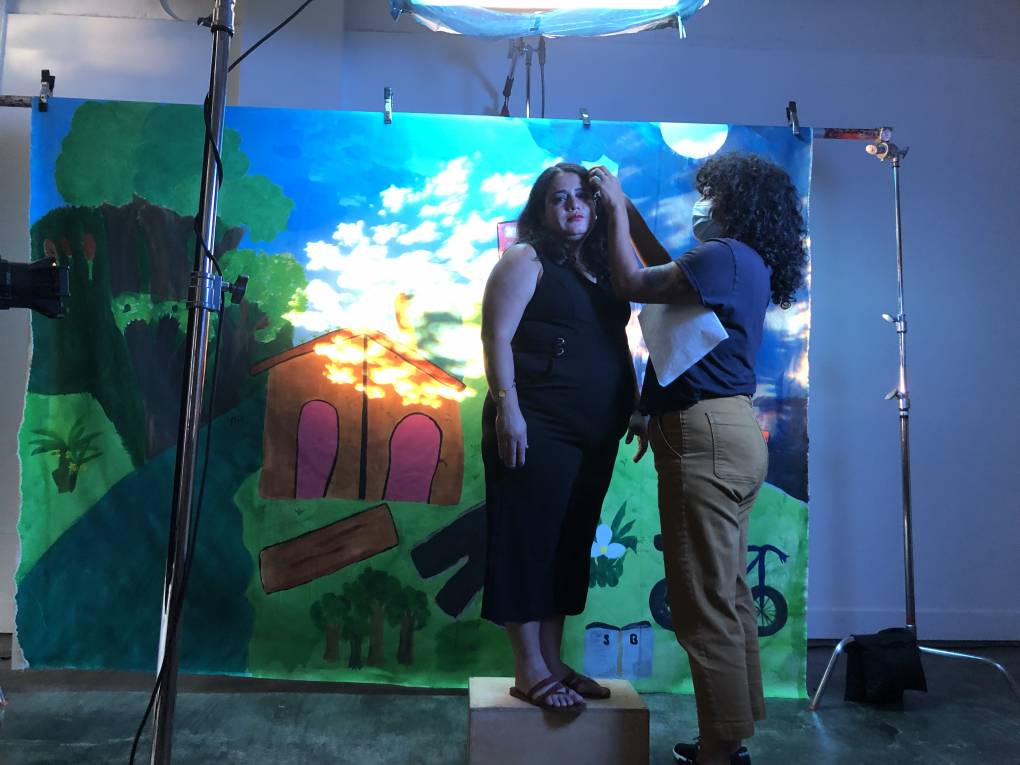
"caption": "Artist Sofía Córdova prepares Alejandra for filming 'dawn_chorusiii: the fruit they don't have here,' where she and other women tell their stories of coming to the U.S. as refugees.",
"description": null,
"title": "sofia and alejandra",
"credit": "Chani Bockwinkel",
"status": "inherit",
"altTag": null,
"isLoading": false,
"fetchFailed": false
},
"arts_13905116": {
"type": "attachments",
"id": "arts_13905116",
"meta": {
"index": "attachments_1716263798",
"site": "arts",
"id": "13905116",
"found": true
},
"parent": 13905115,
"imgSizes": {
"twentyfourteen-full-width": {
"file": "https://ww2.kqed.org/app/uploads/sites/2/2021/10/del-sol-quartet-credit-lenny-gonzalez-03a4635699a700b71ca229d623b3fb87e97fdc8f-1-1038x576.jpg",
"width": 1038,
"mimeType": "image/jpeg",
"height": 576
},
"thumbnail": {
"file": "https://ww2.kqed.org/app/uploads/sites/2/2021/10/del-sol-quartet-credit-lenny-gonzalez-03a4635699a700b71ca229d623b3fb87e97fdc8f-1-160x120.jpg",
"width": 160,
"mimeType": "image/jpeg",
"height": 120
},
"post-thumbnail": {
"file": "https://ww2.kqed.org/app/uploads/sites/2/2021/10/del-sol-quartet-credit-lenny-gonzalez-03a4635699a700b71ca229d623b3fb87e97fdc8f-1-672x372.jpg",
"width": 672,
"mimeType": "image/jpeg",
"height": 372
},
"kqedFullSize": {
"file": "https://ww2.kqed.org/app/uploads/sites/2/2021/10/del-sol-quartet-credit-lenny-gonzalez-03a4635699a700b71ca229d623b3fb87e97fdc8f-1-scaled.jpg",
"width": 2560,
"height": 1919
},
"2048x2048": {
"file": "https://ww2.kqed.org/app/uploads/sites/2/2021/10/del-sol-quartet-credit-lenny-gonzalez-03a4635699a700b71ca229d623b3fb87e97fdc8f-1-2048x1535.jpg",
"width": 2048,
"mimeType": "image/jpeg",
"height": 1535
},
"large": {
"file": "https://ww2.kqed.org/app/uploads/sites/2/2021/10/del-sol-quartet-credit-lenny-gonzalez-03a4635699a700b71ca229d623b3fb87e97fdc8f-1-1020x765.jpg",
"width": 1020,
"mimeType": "image/jpeg",
"height": 765
},
"1536x1536": {
"file": "https://ww2.kqed.org/app/uploads/sites/2/2021/10/del-sol-quartet-credit-lenny-gonzalez-03a4635699a700b71ca229d623b3fb87e97fdc8f-1-1536x1151.jpg",
"width": 1536,
"mimeType": "image/jpeg",
"height": 1151
},
"full-width": {
"file": "https://ww2.kqed.org/app/uploads/sites/2/2021/10/del-sol-quartet-credit-lenny-gonzalez-03a4635699a700b71ca229d623b3fb87e97fdc8f-1-1920x1439.jpg",
"width": 1920,
"mimeType": "image/jpeg",
"height": 1439
},
"medium": {
"file": "https://ww2.kqed.org/app/uploads/sites/2/2021/10/del-sol-quartet-credit-lenny-gonzalez-03a4635699a700b71ca229d623b3fb87e97fdc8f-1-800x600.jpg",
"width": 800,
"mimeType": "image/jpeg",
"height": 600
},
"medium_large": {
"file": "https://ww2.kqed.org/app/uploads/sites/2/2021/10/del-sol-quartet-credit-lenny-gonzalez-03a4635699a700b71ca229d623b3fb87e97fdc8f-1-768x576.jpg",
"width": 768,
"mimeType": "image/jpeg",
"height": 576
}
},
"publishDate": 1634943843,
"modified": 1634943843,
"caption": null,
"description": null,
"title": "Del Sol Quartet",
"credit": null,
"status": "inherit",
"altTag": null,
"isLoading": false,
"fetchFailed": false
},
"arts_13904918": {
"type": "attachments",
"id": "arts_13904918",
"meta": {
"index": "attachments_1716263798",
"site": "arts",
"id": "13904918",
"found": true
},
"parent": 13904861,
"imgSizes": {
"twentyfourteen-full-width": {
"file": "https://ww2.kqed.org/app/uploads/sites/2/2021/10/3-1038x576.jpg",
"width": 1038,
"mimeType": "image/jpeg",
"height": 576
},
"thumbnail": {
"file": "https://ww2.kqed.org/app/uploads/sites/2/2021/10/3-160x90.jpg",
"width": 160,
"mimeType": "image/jpeg",
"height": 90
},
"post-thumbnail": {
"file": "https://ww2.kqed.org/app/uploads/sites/2/2021/10/3-672x372.jpg",
"width": 672,
"mimeType": "image/jpeg",
"height": 372
},
"kqedFullSize": {
"file": "https://ww2.kqed.org/app/uploads/sites/2/2021/10/3.jpg",
"width": 1920,
"height": 1080
},
"large": {
"file": "https://ww2.kqed.org/app/uploads/sites/2/2021/10/3-1020x574.jpg",
"width": 1020,
"mimeType": "image/jpeg",
"height": 574
},
"1536x1536": {
"file": "https://ww2.kqed.org/app/uploads/sites/2/2021/10/3-1536x864.jpg",
"width": 1536,
"mimeType": "image/jpeg",
"height": 864
},
"medium": {
"file": "https://ww2.kqed.org/app/uploads/sites/2/2021/10/3-800x450.jpg",
"width": 800,
"mimeType": "image/jpeg",
"height": 450
},
"medium_large": {
"file": "https://ww2.kqed.org/app/uploads/sites/2/2021/10/3-768x432.jpg",
"width": 768,
"mimeType": "image/jpeg",
"height": 432
}
},
"publishDate": 1634772213,
"modified": 1634772381,
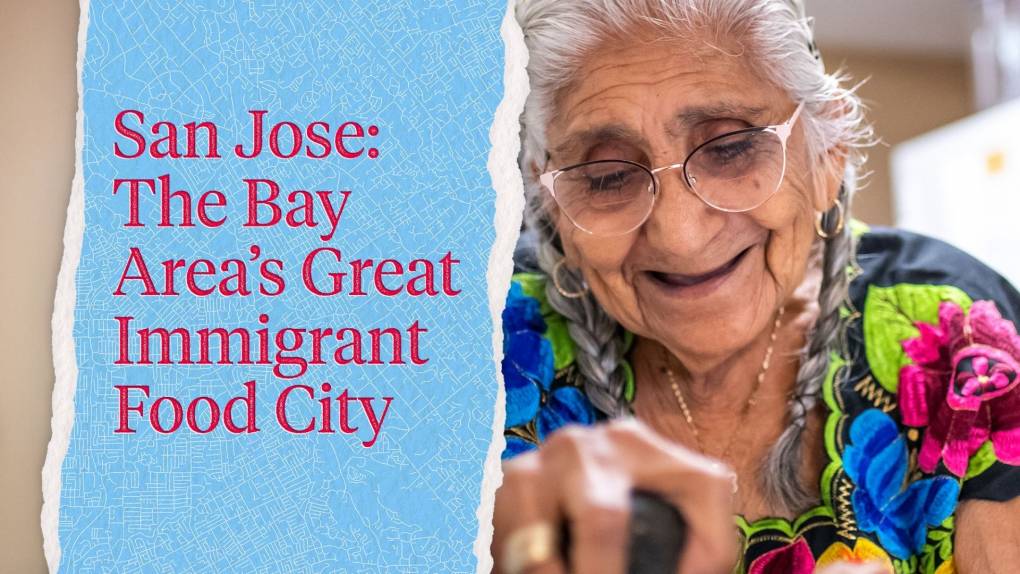
"caption": "(Photo by Beth LaBerge; design by Rebecca Kao)",
"description": null,
"title": "San Jose_AbuelasKitchen_featured",
"credit": null,
"status": "inherit",
"altTag": "Close up of an older Latina womans face as she grinds chiles in a molcajete; the text on the left reads, \"San Jose: The Bay Area's Great Immigrant Food City.\"",
"isLoading": false,
"fetchFailed": false
},
"arts_13904919": {
"type": "attachments",
"id": "arts_13904919",
"meta": {
"index": "attachments_1716263798",
"site": "arts",
"id": "13904919",
"found": true
},
"parent": 13904861,
"imgSizes": {
"twentyfourteen-full-width": {
"file": "https://ww2.kqed.org/app/uploads/sites/2/2021/10/006_SanJose_MardoniaGaleana_10072021-1038x576.jpg",
"width": 1038,
"mimeType": "image/jpeg",
"height": 576
},
"thumbnail": {
"file": "https://ww2.kqed.org/app/uploads/sites/2/2021/10/006_SanJose_MardoniaGaleana_10072021-160x107.jpg",
"width": 160,
"mimeType": "image/jpeg",
"height": 107
},
"post-thumbnail": {
"file": "https://ww2.kqed.org/app/uploads/sites/2/2021/10/006_SanJose_MardoniaGaleana_10072021-672x372.jpg",
"width": 672,
"mimeType": "image/jpeg",
"height": 372
},
"kqedFullSize": {
"file": "https://ww2.kqed.org/app/uploads/sites/2/2021/10/006_SanJose_MardoniaGaleana_10072021-scaled.jpg",
"width": 2560,
"height": 1707
},
"2048x2048": {
"file": "https://ww2.kqed.org/app/uploads/sites/2/2021/10/006_SanJose_MardoniaGaleana_10072021-2048x1365.jpg",
"width": 2048,
"mimeType": "image/jpeg",
"height": 1365
},
"large": {
"file": "https://ww2.kqed.org/app/uploads/sites/2/2021/10/006_SanJose_MardoniaGaleana_10072021-1020x680.jpg",
"width": 1020,
"mimeType": "image/jpeg",
"height": 680
},
"1536x1536": {
"file": "https://ww2.kqed.org/app/uploads/sites/2/2021/10/006_SanJose_MardoniaGaleana_10072021-1536x1024.jpg",
"width": 1536,
"mimeType": "image/jpeg",
"height": 1024
},
"full-width": {
"file": "https://ww2.kqed.org/app/uploads/sites/2/2021/10/006_SanJose_MardoniaGaleana_10072021-1920x1280.jpg",
"width": 1920,
"mimeType": "image/jpeg",
"height": 1280
},
"medium": {
"file": "https://ww2.kqed.org/app/uploads/sites/2/2021/10/006_SanJose_MardoniaGaleana_10072021-800x533.jpg",
"width": 800,
"mimeType": "image/jpeg",
"height": 533
},
"medium_large": {
"file": "https://ww2.kqed.org/app/uploads/sites/2/2021/10/006_SanJose_MardoniaGaleana_10072021-768x512.jpg",
"width": 768,
"mimeType": "image/jpeg",
"height": 512
}
},
"publishDate": 1634772420,
"modified": 1634772670,
"caption": "During the '90s, the author's grandmother, Mardonia Galeana, ran an informal restaurant out of her apartment.",
"description": null,
"title": "006_SanJose_MardoniaGaleana_10072021",
"credit": "Beth LaBerge/KQED",
"status": "inherit",
"altTag": "An elderly Latina woman grinds ingredients inside a stone molcajete.",
"isLoading": false,
"fetchFailed": false
},
"arts_13901140": {
"type": "attachments",
"id": "arts_13901140",
"meta": {
"index": "attachments_1716263798",
"site": "arts",
"id": "13901140",
"found": true
},
"parent": 13900944,
"imgSizes": {
"twentyfourteen-full-width": {
"file": "https://ww2.kqed.org/app/uploads/sites/2/2021/08/2.-Markosian_The-Arrival-1038x576.jpg",
"width": 1038,
"mimeType": "image/jpeg",
"height": 576
},
"thumbnail": {
"file": "https://ww2.kqed.org/app/uploads/sites/2/2021/08/2.-Markosian_The-Arrival-160x107.jpg",
"width": 160,
"mimeType": "image/jpeg",
"height": 107
},
"post-thumbnail": {
"file": "https://ww2.kqed.org/app/uploads/sites/2/2021/08/2.-Markosian_The-Arrival-672x372.jpg",
"width": 672,
"mimeType": "image/jpeg",
"height": 372
},
"kqedFullSize": {
"file": "https://ww2.kqed.org/app/uploads/sites/2/2021/08/2.-Markosian_The-Arrival.jpg",
"width": 1500,
"height": 1000
},
"large": {
"file": "https://ww2.kqed.org/app/uploads/sites/2/2021/08/2.-Markosian_The-Arrival-1020x680.jpg",
"width": 1020,
"mimeType": "image/jpeg",
"height": 680
},
"medium": {
"file": "https://ww2.kqed.org/app/uploads/sites/2/2021/08/2.-Markosian_The-Arrival-800x533.jpg",
"width": 800,
"mimeType": "image/jpeg",
"height": 533
},
"medium_large": {
"file": "https://ww2.kqed.org/app/uploads/sites/2/2021/08/2.-Markosian_The-Arrival-768x512.jpg",
"width": 768,
"mimeType": "image/jpeg",
"height": 512
}
},
"publishDate": 1628790983,
"modified": 1628794883,
"caption": "Diana Markosian, 'The Arrival,' from 'Santa Barbara,' 2019.",
"description": "Diana Markosian, 'The Arrival,' from 'Santa Barbara,' 2019.",
"title": "2. Markosian_The Arrival",
"credit": "Courtesy the artist and San Francisco Museum of Modern Art",
"status": "inherit",
"altTag": null,
"isLoading": false,
"fetchFailed": false
},
"arts_13896470": {
"type": "attachments",
"id": "arts_13896470",
"meta": {
"index": "attachments_1716263798",
"site": "arts",
"id": "13896470",
"found": true
},
"parent": 13896469,
"imgSizes": {
"twentyfourteen-full-width": {
"file": "https://ww2.kqed.org/app/uploads/sites/2/2021/04/paola_studio_shoot_standing-1-1038x576.jpeg",
"width": 1038,
"mimeType": "image/jpeg",
"height": 576
},
"thumbnail": {
"file": "https://ww2.kqed.org/app/uploads/sites/2/2021/04/paola_studio_shoot_standing-1-160x128.jpeg",
"width": 160,
"mimeType": "image/jpeg",
"height": 128
},
"post-thumbnail": {
"file": "https://ww2.kqed.org/app/uploads/sites/2/2021/04/paola_studio_shoot_standing-1-672x372.jpeg",
"width": 672,
"mimeType": "image/jpeg",
"height": 372
},
"kqedFullSize": {
"file": "https://ww2.kqed.org/app/uploads/sites/2/2021/04/paola_studio_shoot_standing-1.jpeg",
"width": 2413,
"height": 1925
},
"2048x2048": {
"file": "https://ww2.kqed.org/app/uploads/sites/2/2021/04/paola_studio_shoot_standing-1-2048x1634.jpeg",
"width": 2048,
"mimeType": "image/jpeg",
"height": 1634
},
"large": {
"file": "https://ww2.kqed.org/app/uploads/sites/2/2021/04/paola_studio_shoot_standing-1-1020x814.jpeg",
"width": 1020,
"mimeType": "image/jpeg",
"height": 814
},
"1536x1536": {
"file": "https://ww2.kqed.org/app/uploads/sites/2/2021/04/paola_studio_shoot_standing-1-1536x1225.jpeg",
"width": 1536,
"mimeType": "image/jpeg",
"height": 1225
},
"full-width": {
"file": "https://ww2.kqed.org/app/uploads/sites/2/2021/04/paola_studio_shoot_standing-1-1920x1532.jpeg",
"width": 1920,
"mimeType": "image/jpeg",
"height": 1532
},
"medium": {
"file": "https://ww2.kqed.org/app/uploads/sites/2/2021/04/paola_studio_shoot_standing-1-800x638.jpeg",
"width": 800,
"mimeType": "image/jpeg",
"height": 638
},
"medium_large": {
"file": "https://ww2.kqed.org/app/uploads/sites/2/2021/04/paola_studio_shoot_standing-1-768x613.jpeg",
"width": 768,
"mimeType": "image/jpeg",
"height": 613
}
},
"publishDate": 1619642115,
"modified": 1619642384,
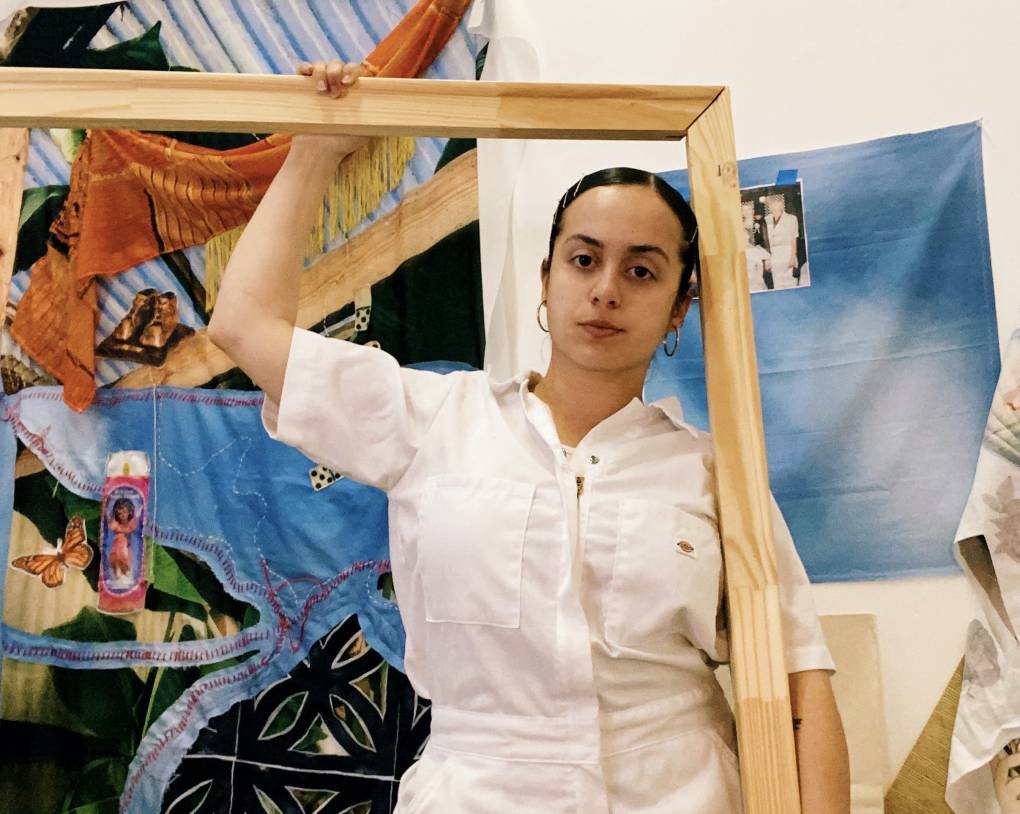
"caption": "Paola de la Calle, an interdisciplinary artist explores themes of family migration, memories, and food justice. ",
"description": "Paola de la Calle dressed in white coveralls holds a large wooden frame in her studio. ",
"title": "paola_studio_shoot_standing-1",
"credit": "Paola de la Calle",
"status": "inherit",
"altTag": null,
"isLoading": false,
"fetchFailed": false
},
"arts_13893622": {
"type": "attachments",
"id": "arts_13893622",
"meta": {
"index": "attachments_1716263798",
"site": "arts",
"id": "13893622",
"found": true
},
"parent": 13893614,
"imgSizes": {
"twentyfourteen-full-width": {
"file": "https://ww2.kqed.org/app/uploads/sites/2/2021/03/mayacuevaheadshot-1038x576.jpg",
"width": 1038,
"mimeType": "image/jpeg",
"height": 576
},
"thumbnail": {
"file": "https://ww2.kqed.org/app/uploads/sites/2/2021/03/mayacuevaheadshot-160x106.jpg",
"width": 160,
"mimeType": "image/jpeg",
"height": 106
},
"post-thumbnail": {
"file": "https://ww2.kqed.org/app/uploads/sites/2/2021/03/mayacuevaheadshot-672x372.jpg",
"width": 672,
"mimeType": "image/jpeg",
"height": 372
},
"kqedFullSize": {
"file": "https://ww2.kqed.org/app/uploads/sites/2/2021/03/mayacuevaheadshot-scaled.jpg",
"width": 2560,
"height": 1696
},
"2048x2048": {
"file": "https://ww2.kqed.org/app/uploads/sites/2/2021/03/mayacuevaheadshot-2048x1357.jpg",
"width": 2048,
"mimeType": "image/jpeg",
"height": 1357
},
"large": {
"file": "https://ww2.kqed.org/app/uploads/sites/2/2021/03/mayacuevaheadshot-1020x676.jpg",
"width": 1020,
"mimeType": "image/jpeg",
"height": 676
},
"1536x1536": {
"file": "https://ww2.kqed.org/app/uploads/sites/2/2021/03/mayacuevaheadshot-1536x1018.jpg",
"width": 1536,
"mimeType": "image/jpeg",
"height": 1018
},
"full-width": {
"file": "https://ww2.kqed.org/app/uploads/sites/2/2021/03/mayacuevaheadshot-1920x1272.jpg",
"width": 1920,
"mimeType": "image/jpeg",
"height": 1272
},
"medium": {
"file": "https://ww2.kqed.org/app/uploads/sites/2/2021/03/mayacuevaheadshot-800x530.jpg",
"width": 800,
"mimeType": "image/jpeg",
"height": 530
},
"medium_large": {
"file": "https://ww2.kqed.org/app/uploads/sites/2/2021/03/mayacuevaheadshot-768x509.jpg",
"width": 768,
"mimeType": "image/jpeg",
"height": 509
}
},
"publishDate": 1614900295,
"modified": 1614904409,
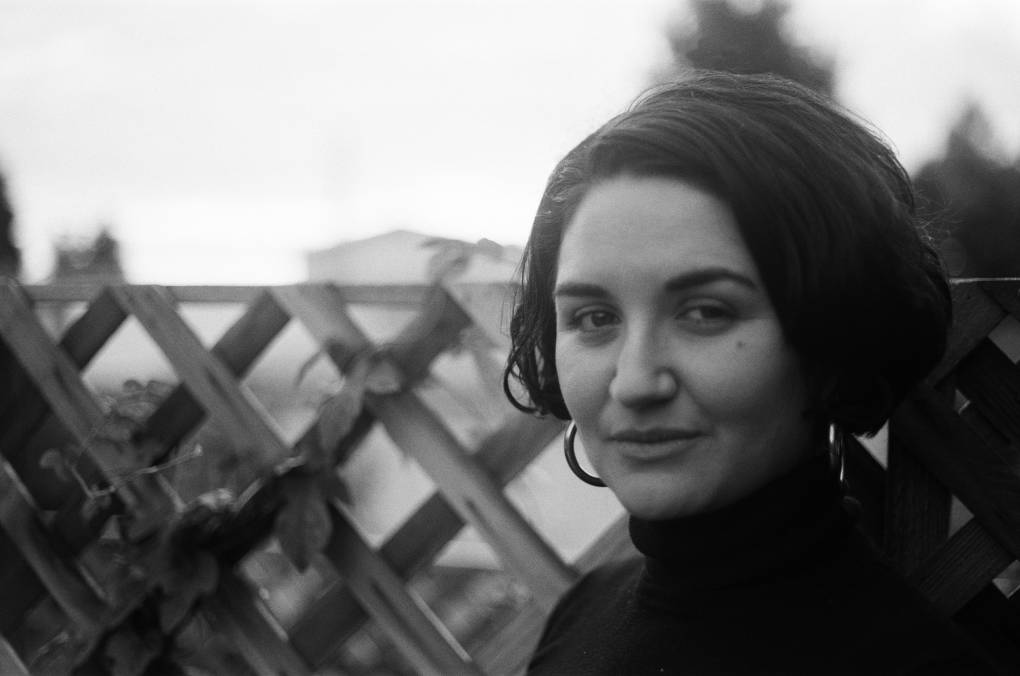
"caption": "Filmmaker Maya Cueva",
"description": "A black and white headshot of Maya Cueva. She gives us a half smile, is wearing hoop earings and her curly hair is in a bob. She wears a black turtleneck in front of a fence.",
"title": "Filmmaker Maya Cueva",
"credit": "Jasmine Curtis",
"status": "inherit",
"altTag": "A black and white headshot of Maya Cueva. She gives us a half smile, is wearing hoop earings and her curly hair is in a bob. She wears a black turtleneck in front of a fence.",
"isLoading": false,
"fetchFailed": false
},
"arts_13892623": {
"type": "attachments",
"id": "arts_13892623",
"meta": {
"index": "attachments_1716263798",
"site": "arts",
"id": "13892623",
"found": true
},
"parent": 13892619,
"imgSizes": {
"twentyfourteen-full-width": {
"file": "https://ww2.kqed.org/app/uploads/sites/2/2021/02/Chinatown.NewYear-1024x576.jpg",
"width": 1024,
"mimeType": "image/jpeg",
"height": 576
},
"thumbnail": {
"file": "https://ww2.kqed.org/app/uploads/sites/2/2021/02/Chinatown.NewYear-160x107.jpg",
"width": 160,
"mimeType": "image/jpeg",
"height": 107
},
"post-thumbnail": {
"file": "https://ww2.kqed.org/app/uploads/sites/2/2021/02/Chinatown.NewYear-672x372.jpg",
"width": 672,
"mimeType": "image/jpeg",
"height": 372
},
"kqedFullSize": {
"file": "https://ww2.kqed.org/app/uploads/sites/2/2021/02/Chinatown.NewYear.jpg",
"width": 1024,
"height": 683
},
"large": {
"file": "https://ww2.kqed.org/app/uploads/sites/2/2021/02/Chinatown.NewYear-1020x680.jpg",
"width": 1020,
"mimeType": "image/jpeg",
"height": 680
},
"medium": {
"file": "https://ww2.kqed.org/app/uploads/sites/2/2021/02/Chinatown.NewYear-800x534.jpg",
"width": 800,
"mimeType": "image/jpeg",
"height": 534
},
"medium_large": {
"file": "https://ww2.kqed.org/app/uploads/sites/2/2021/02/Chinatown.NewYear-768x512.jpg",
"width": 768,
"mimeType": "image/jpeg",
"height": 512
}
},
"publishDate": 1613066338,
"modified": 1613066418,
"caption": "People celebrate the Chinese New Year in Chinatown Feb. 9, 2005 in San Francisco, with the Buddha Lounge's neon sign at left. ",
"description": "People celebrate the Chinese New Year in Chinatown Feb. 9, 2005 in San Francisco, with the Buddha Lounge's neon sign at left. ",
"title": "Chinatown.NewYear",
"credit": "David Paul Morris/Getty Images",
"status": "inherit",
"altTag": "People celebrate the Chinese New Year in Chinatown Feb. 9, 2005 in San Francisco, with the Buddha Lounge's neon sign at left.",
"isLoading": false,
"fetchFailed": false
},
"arts_13890512": {
"type": "attachments",
"id": "arts_13890512",
"meta": {
"index": "attachments_1716263798",
"site": "arts",
"id": "13890512",
"found": true
},
"parent": 13890477,
"imgSizes": {
"twentyfourteen-full-width": {
"file": "https://ww2.kqed.org/app/uploads/sites/2/2020/12/cesar-agosto-cropped-2-1038x576.jpg",
"width": 1038,
"mimeType": "image/jpeg",
"height": 576
},
"thumbnail": {
"file": "https://ww2.kqed.org/app/uploads/sites/2/2020/12/cesar-agosto-cropped-2-160x90.jpg",
"width": 160,
"mimeType": "image/jpeg",
"height": 90
},
"post-thumbnail": {
"file": "https://ww2.kqed.org/app/uploads/sites/2/2020/12/cesar-agosto-cropped-2-672x372.jpg",
"width": 672,
"mimeType": "image/jpeg",
"height": 372
},
"kqedFullSize": {
"file": "https://ww2.kqed.org/app/uploads/sites/2/2020/12/cesar-agosto-cropped-2.jpg",
"width": 1920,
"height": 1080
},
"large": {
"file": "https://ww2.kqed.org/app/uploads/sites/2/2020/12/cesar-agosto-cropped-2-1020x574.jpg",
"width": 1020,
"mimeType": "image/jpeg",
"height": 574
},
"1536x1536": {
"file": "https://ww2.kqed.org/app/uploads/sites/2/2020/12/cesar-agosto-cropped-2-1536x864.jpg",
"width": 1536,
"mimeType": "image/jpeg",
"height": 864
},
"medium": {
"file": "https://ww2.kqed.org/app/uploads/sites/2/2020/12/cesar-agosto-cropped-2-800x450.jpg",
"width": 800,
"mimeType": "image/jpeg",
"height": 450
},
"medium_large": {
"file": "https://ww2.kqed.org/app/uploads/sites/2/2020/12/cesar-agosto-cropped-2-768x432.jpg",
"width": 768,
"mimeType": "image/jpeg",
"height": 432
}
},
"publishDate": 1608147501,
"modified": 1608147643,
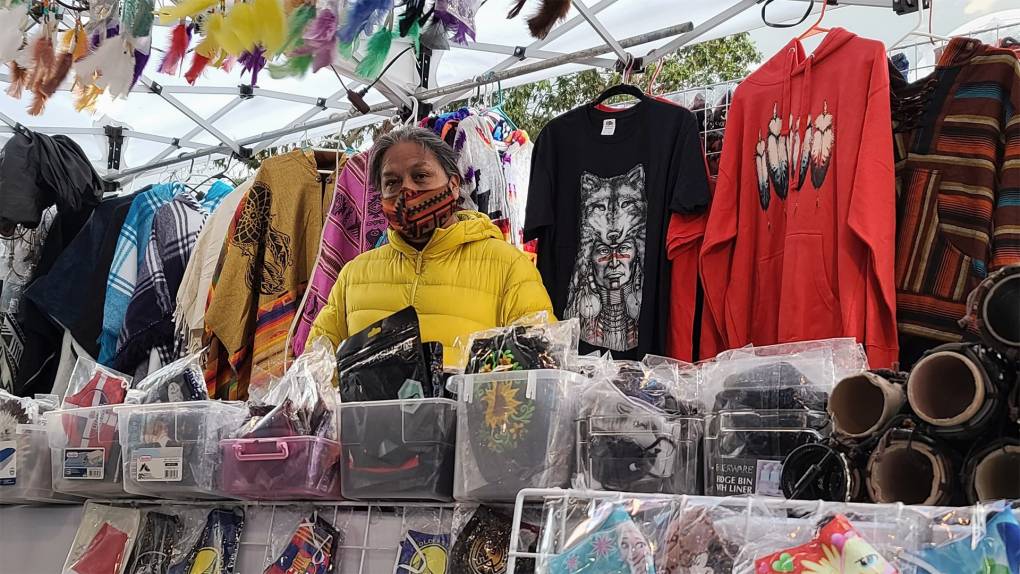
"caption": "San Francisco entrepreneur César Agusto comes from a family of artisans in Ecuador. During the pandemic, he pivoted to selling face masks to make ends meet after shutting down his brick-and-mortar shop.",
"description": "San Francisco resident César Agusto comes from a family of artisans in Ecuador. During the pandemic, he pivoted to selling face masks to make ends meet. ",
"title": "cesar agosto cropped 2",
"credit": "Carlos Cabrera-Lomelí",
"status": "inherit",
"altTag": null,
"isLoading": false,
"fetchFailed": false
},
"arts_13888715": {
"type": "attachments",
"id": "arts_13888715",
"meta": {
"index": "attachments_1716263798",
"site": "arts",
"id": "13888715",
"found": true
},
"parent": 13888707,
"imgSizes": {
"twentyfourteen-full-width": {
"file": "https://ww2.kqed.org/app/uploads/sites/2/2020/11/Julio_Cesar-1920-1038x576.jpg",
"width": 1038,
"mimeType": "image/jpeg",
"height": 576
},
"thumbnail": {
"file": "https://ww2.kqed.org/app/uploads/sites/2/2020/11/Julio_Cesar-1920-160x90.jpg",
"width": 160,
"mimeType": "image/jpeg",
"height": 90
},
"post-thumbnail": {
"file": "https://ww2.kqed.org/app/uploads/sites/2/2020/11/Julio_Cesar-1920-672x372.jpg",
"width": 672,
"mimeType": "image/jpeg",
"height": 372
},
"kqedFullSize": {
"file": "https://ww2.kqed.org/app/uploads/sites/2/2020/11/Julio_Cesar-1920.jpg",
"width": 1920,
"height": 1080
},
"large": {
"file": "https://ww2.kqed.org/app/uploads/sites/2/2020/11/Julio_Cesar-1920-1020x574.jpg",
"width": 1020,
"mimeType": "image/jpeg",
"height": 574
},
"1536x1536": {
"file": "https://ww2.kqed.org/app/uploads/sites/2/2020/11/Julio_Cesar-1920-1536x864.jpg",
"width": 1536,
"mimeType": "image/jpeg",
"height": 864
},
"medium": {
"file": "https://ww2.kqed.org/app/uploads/sites/2/2020/11/Julio_Cesar-1920-800x450.jpg",
"width": 800,
"mimeType": "image/jpeg",
"height": 450
},
"medium_large": {
"file": "https://ww2.kqed.org/app/uploads/sites/2/2020/11/Julio_Cesar-1920-768x432.jpg",
"width": 768,
"mimeType": "image/jpeg",
"height": 432
}
},
"publishDate": 1604264996,
"modified": 1604265065,
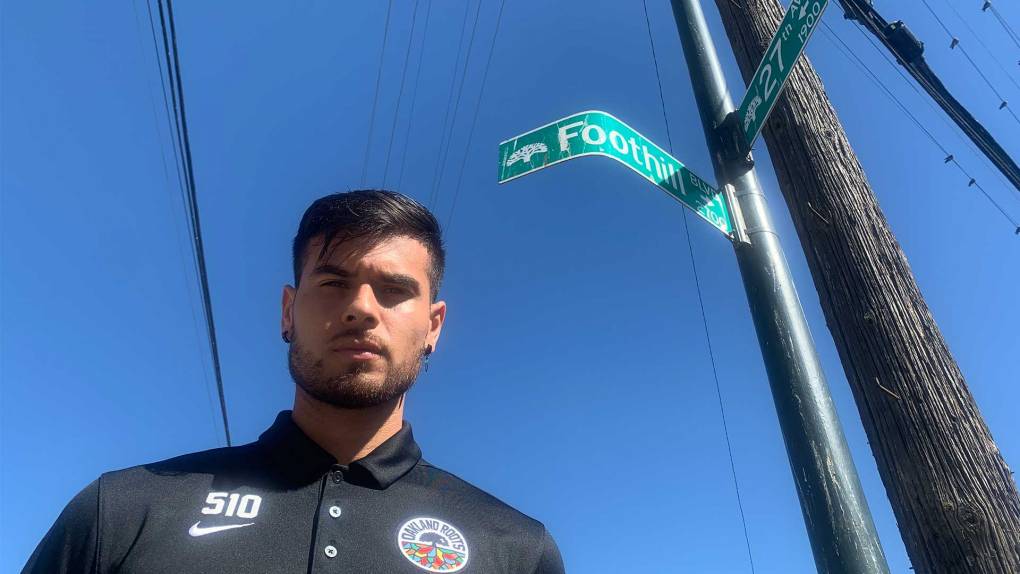
"caption": "Su pasión por el fútbol lo alejó de las pandillas. Su dedicación en el deporte le otorgó una oportunidad de ir a la universidad. Cuando más cerca estuvo de realizar su sueño de convertirse en un futbolista profesional, no fue su talento el cual determinó su suerte, sino su condición migratoria. ",
"description": "Su pasión por el fútbol lo alejó de las pandillas. Su dedicación en el deporte le otorgó una oportunidad de ir a la universidad. Cuando más cerca estuvo de realizar su sueño de convertirse en un futbolista profesional, no fue su talento el cual determinó su suerte, sino su condición migratoria. \n",
"title": "Julio_Cesar-1920",
"credit": "Kervy Robles / KQED",
"status": "inherit",
"isLoading": false,
"fetchFailed": false
},
"arts_13885744": {
"type": "attachments",
"id": "arts_13885744",
"meta": {
"index": "attachments_1716263798",
"site": "arts",
"id": "13885744",
"found": true
},
"parent": 13885733,
"imgSizes": {
"twentyfourteen-full-width": {
"file": "https://ww2.kqed.org/app/uploads/sites/2/2020/09/Alejo-by-Evelyn-Anderson-1038x576.jpg",
"width": 1038,
"mimeType": "image/jpeg",
"height": 576
},
"thumbnail": {
"file": "https://ww2.kqed.org/app/uploads/sites/2/2020/09/Alejo-by-Evelyn-Anderson-160x107.jpg",
"width": 160,
"mimeType": "image/jpeg",
"height": 107
},
"post-thumbnail": {
"file": "https://ww2.kqed.org/app/uploads/sites/2/2020/09/Alejo-by-Evelyn-Anderson-672x372.jpg",
"width": 672,
"mimeType": "image/jpeg",
"height": 372
},
"kqedFullSize": {
"file": "https://ww2.kqed.org/app/uploads/sites/2/2020/09/Alejo-by-Evelyn-Anderson-scaled.jpg",
"width": 2560,
"height": 1707
},
"2048x2048": {
"file": "https://ww2.kqed.org/app/uploads/sites/2/2020/09/Alejo-by-Evelyn-Anderson-2048x1365.jpg",
"width": 2048,
"mimeType": "image/jpeg",
"height": 1365
},
"large": {
"file": "https://ww2.kqed.org/app/uploads/sites/2/2020/09/Alejo-by-Evelyn-Anderson-1020x680.jpg",
"width": 1020,
"mimeType": "image/jpeg",
"height": 680
},
"1536x1536": {
"file": "https://ww2.kqed.org/app/uploads/sites/2/2020/09/Alejo-by-Evelyn-Anderson-1536x1024.jpg",
"width": 1536,
"mimeType": "image/jpeg",
"height": 1024
},
"full-width": {
"file": "https://ww2.kqed.org/app/uploads/sites/2/2020/09/Alejo-by-Evelyn-Anderson-1920x1280.jpg",
"width": 1920,
"mimeType": "image/jpeg",
"height": 1280
},
"medium": {
"file": "https://ww2.kqed.org/app/uploads/sites/2/2020/09/Alejo-by-Evelyn-Anderson-800x533.jpg",
"width": 800,
"mimeType": "image/jpeg",
"height": 533
},
"medium_large": {
"file": "https://ww2.kqed.org/app/uploads/sites/2/2020/09/Alejo-by-Evelyn-Anderson-768x512.jpg",
"width": 768,
"mimeType": "image/jpeg",
"height": 512
}
},
"publishDate": 1599153018,
"modified": 1599166839,
"caption": "Erina Alejo uses their art to take a critical look at San Francisco, the city they grew up in. \n",
"description": "Erina Alejo",
"title": "Erina Alejo",
"credit": "Evelyn Anderson",
"status": "inherit",
"isLoading": false,
"fetchFailed": false
},
"arts_13885242": {
"type": "attachments",
"id": "arts_13885242",
"meta": {
"index": "attachments_1716263798",
"site": "arts",
"id": "13885242",
"found": true
},
"parent": 13885239,
"imgSizes": {
"twentyfourteen-full-width": {
"file": "https://ww2.kqed.org/app/uploads/sites/2/2020/08/TheNewAmerican_COVER-1038x576.jpg",
"width": 1038,
"mimeType": "image/jpeg",
"height": 576
},
"thumbnail": {
"file": "https://ww2.kqed.org/app/uploads/sites/2/2020/08/TheNewAmerican_COVER-160x90.jpg",
"width": 160,
"mimeType": "image/jpeg",
"height": 90
},
"post-thumbnail": {
"file": "https://ww2.kqed.org/app/uploads/sites/2/2020/08/TheNewAmerican_COVER-672x372.jpg",
"width": 672,
"mimeType": "image/jpeg",
"height": 372
},
"kqedFullSize": {
"file": "https://ww2.kqed.org/app/uploads/sites/2/2020/08/TheNewAmerican_COVER.jpg",
"width": 1920,
"height": 1080
},
"large": {
"file": "https://ww2.kqed.org/app/uploads/sites/2/2020/08/TheNewAmerican_COVER-1020x574.jpg",
"width": 1020,
"mimeType": "image/jpeg",
"height": 574
},
"1536x1536": {
"file": "https://ww2.kqed.org/app/uploads/sites/2/2020/08/TheNewAmerican_COVER-1536x864.jpg",
"width": 1536,
"mimeType": "image/jpeg",
"height": 864
},
"medium": {
"file": "https://ww2.kqed.org/app/uploads/sites/2/2020/08/TheNewAmerican_COVER-800x450.jpg",
"width": 800,
"mimeType": "image/jpeg",
"height": 450
},
"medium_large": {
"file": "https://ww2.kqed.org/app/uploads/sites/2/2020/08/TheNewAmerican_COVER-768x432.jpg",
"width": 768,
"mimeType": "image/jpeg",
"height": 432
}
},
"publishDate": 1598302732,
"modified": 1598302880,
"caption": "Micheline Aharonian Marcom’s novel 'The New American' tells the story of a 21-year-old Guatemalan desperately trying to get back home to his family in Berkeley.",
"description": "Micheline Aharonian Marcom’s novel 'The New American' tells the story of a 21-year-old Guatemalan desperately trying to get back home to his family in Berkeley.",
"title": "TheNewAmerican_COVER",
"credit": "Background image by John Moore/Getty Images",
"status": "inherit",
"isLoading": false,
"fetchFailed": false
},
"arts_13875353": {
"type": "attachments",
"id": "arts_13875353",
"meta": {
"index": "attachments_1716263798",
"site": "arts",
"id": "13875353",
"found": true
},
"parent": 13875346,
"imgSizes": {
"twentyfourteen-full-width": {
"file": "https://ww2.kqed.org/app/uploads/sites/2/2020/02/TheSupers_ensemble_credit_FernandoGamberoni-1038x576.jpeg",
"width": 1038,
"mimeType": "image/jpeg",
"height": 576
},
"thumbnail": {
"file": "https://ww2.kqed.org/app/uploads/sites/2/2020/02/TheSupers_ensemble_credit_FernandoGamberoni-160x107.jpeg",
"width": 160,
"mimeType": "image/jpeg",
"height": 107
},
"post-thumbnail": {
"file": "https://ww2.kqed.org/app/uploads/sites/2/2020/02/TheSupers_ensemble_credit_FernandoGamberoni-672x372.jpeg",
"width": 672,
"mimeType": "image/jpeg",
"height": 372
},
"kqedFullSize": {
"file": "https://ww2.kqed.org/app/uploads/sites/2/2020/02/TheSupers_ensemble_credit_FernandoGamberoni.jpeg",
"width": 2000,
"height": 1333
},
"large": {
"file": "https://ww2.kqed.org/app/uploads/sites/2/2020/02/TheSupers_ensemble_credit_FernandoGamberoni-1020x680.jpeg",
"width": 1020,
"mimeType": "image/jpeg",
"height": 680
},
"full-width": {
"file": "https://ww2.kqed.org/app/uploads/sites/2/2020/02/TheSupers_ensemble_credit_FernandoGamberoni-1920x1280.jpeg",
"width": 1920,
"mimeType": "image/jpeg",
"height": 1280
},
"medium": {
"file": "https://ww2.kqed.org/app/uploads/sites/2/2020/02/TheSupers_ensemble_credit_FernandoGamberoni-800x533.jpeg",
"width": 800,
"mimeType": "image/jpeg",
"height": 533
},
"medium_large": {
"file": "https://ww2.kqed.org/app/uploads/sites/2/2020/02/TheSupers_ensemble_credit_FernandoGamberoni-768x512.jpeg",
"width": 768,
"mimeType": "image/jpeg",
"height": 512
}
},
"publishDate": 1582561884,
"modified": 1582562025,
"caption": "The Supers lands at Z Space with an ensemble of superlative clowns.",
"description": "The Supers lands at Z Space with an ensemble of superlative clowns.",
"title": "TheSupers_ensemble_credit_FernandoGamberoni",
"credit": "Fernando Gamberoni",
"status": "inherit",
"isLoading": false,
"fetchFailed": false
}
},
"audioPlayerReducer": {
"postId": "stream_live",
"isPaused": true,
"isPlaying": false,
"pfsActive": false,
"pledgeModalIsOpen": true,
"playerDrawerIsOpen": false,
"liveAudioPlayStartedAt": 0,
"liveAudioPlayContext": ""
},
"authorsReducer": {
"byline_arts_13905115": {
"type": "authors",
"id": "byline_arts_13905115",
"meta": {
"override": true
},
"slug": "byline_arts_13905115",
"name": "Chloe Veltman",
"isLoading": false
},
"byline_arts_13904861": {
"type": "authors",
"id": "byline_arts_13904861",
"meta": {
"override": true
},
"slug": "byline_arts_13904861",
"name": "Yosimar Reyes",
"isLoading": false
},
"byline_arts_13888707": {
"type": "authors",
"id": "byline_arts_13888707",
"meta": {
"override": true
},
"slug": "byline_arts_13888707",
"name": "Kervy Robles",
"isLoading": false
},
"byline_arts_13885239": {
"type": "authors",
"id": "byline_arts_13885239",
"meta": {
"override": true
},
"slug": "byline_arts_13885239",
"name": "Brandon Yu",
"isLoading": false
},
"nvoynovskaya": {
"type": "authors",
"id": "11387",
"meta": {
"index": "authors_1716337520",
"id": "11387",
"found": true
},
"name": "Nastia Voynovskaya",
"firstName": "Nastia",
"lastName": "Voynovskaya",
"slug": "nvoynovskaya",
"email": "nvoynovskaya@kqed.org",
"display_author_email": false,
"staff_mastheads": [
"arts"
],
"title": "Editor and reporter",
"bio": "Nastia Voynovskaya is a reporter, editor and host at KQED Arts & Culture. She's been covering the arts in the Bay Area for over a decade, with a focus on music, queer culture, labor issues and grassroots organizing. She has edited KQED story series such as Trans Bay: A History of San Francisco's Gender-Diverse Community, and co-created KQED's Bay Area hip-hop history project, That's My Word. Nastia's work has been recognized by the Society of Professional Journalists and San Francisco Press Club. She regularly appears on podcasts and radio programs, including NPR's All Songs Considered, and hosts live events where music, culture and conversation meet.",
"avatar": "https://secure.gravatar.com/avatar/5025ee460e5a85d69ca20ea6c6f2f80d7e17795c828f61ea3aecfcd924e9042e?s=600&d=blank&r=g",
"twitter": null,
"bluesky": null,
"facebook": null,
"instagram": "https://www.instagram.com/nananastia/",
"linkedin": null,
"sites": [
{
"site": "",
"roles": [
"editor"
]
},
{
"site": "arts",
"roles": [
"administrator"
]
},
{
"site": "news",
"roles": [
"editor"
]
},
{
"site": "pop",
"roles": [
"administrator"
]
},
{
"site": "bayareabites",
"roles": [
"editor"
]
},
{
"site": "podcasts",
"roles": [
"editor"
]
},
{
"site": "hiphop",
"roles": [
"editor"
]
}
],
"headData": {
"title": "Nastia Voynovskaya | KQED",
"description": "Editor and reporter",
"ogImgSrc": "https://secure.gravatar.com/avatar/5025ee460e5a85d69ca20ea6c6f2f80d7e17795c828f61ea3aecfcd924e9042e?s=600&d=blank&r=g",
"twImgSrc": "https://secure.gravatar.com/avatar/5025ee460e5a85d69ca20ea6c6f2f80d7e17795c828f61ea3aecfcd924e9042e?s=600&d=blank&r=g"
},
"isLoading": false,
"link": "/author/nvoynovskaya"
},
"ogpenn": {
"type": "authors",
"id": "11491",
"meta": {
"index": "authors_1716337520",
"id": "11491",
"found": true
},
"name": "Pendarvis Harshaw",
"firstName": "Pendarvis",
"lastName": "Harshaw",
"slug": "ogpenn",
"email": "ogpenn@gmail.com",
"display_author_email": false,
"staff_mastheads": [
"arts"
],
"title": "Community Engagement Reporter",
"bio": "Pendarvis Harshaw is an educator, host and writer with KQED Arts.",
"avatar": "https://secure.gravatar.com/avatar/972b77ee8e3f346ae2b00622661187fbfabd059b5693bbdc1475ea7a722fd4cd?s=600&d=blank&r=g",
"twitter": null,
"bluesky": null,
"facebook": null,
"instagram": "ogpenn",
"linkedin": null,
"sites": [
{
"site": "arts",
"roles": [
"administrator"
]
},
{
"site": "news",
"roles": [
"editor"
]
},
{
"site": "bayareabites",
"roles": [
"author"
]
},
{
"site": "hiphop",
"roles": [
"editor"
]
}
],
"headData": {
"title": "Pendarvis Harshaw | KQED",
"description": "Community Engagement Reporter",
"ogImgSrc": "https://secure.gravatar.com/avatar/972b77ee8e3f346ae2b00622661187fbfabd059b5693bbdc1475ea7a722fd4cd?s=600&d=blank&r=g",
"twImgSrc": "https://secure.gravatar.com/avatar/972b77ee8e3f346ae2b00622661187fbfabd059b5693bbdc1475ea7a722fd4cd?s=600&d=blank&r=g"
},
"isLoading": false,
"link": "/author/ogpenn"
},
"ngluckstern": {
"type": "authors",
"id": "11497",
"meta": {
"index": "authors_1716337520",
"id": "11497",
"found": true
},
"name": "Nicole Gluckstern",
"firstName": "Nicole",
"lastName": "Gluckstern",
"slug": "ngluckstern",
"email": "gluckstern.nicole@gmail.com",
"display_author_email": false,
"staff_mastheads": [],
"title": "KQED Contributor",
"bio": null,
"avatar": "https://secure.gravatar.com/avatar/2c3d593194017bfe811a998ad03140909de330b22abebf4889e1a564ce5b3495?s=600&d=blank&r=g",
"twitter": null,
"bluesky": null,
"facebook": null,
"instagram": null,
"linkedin": null,
"sites": [
{
"site": "arts",
"roles": [
"contributor"
]
}
],
"headData": {
"title": "Nicole Gluckstern | KQED",
"description": "KQED Contributor",
"ogImgSrc": "https://secure.gravatar.com/avatar/2c3d593194017bfe811a998ad03140909de330b22abebf4889e1a564ce5b3495?s=600&d=blank&r=g",
"twImgSrc": "https://secure.gravatar.com/avatar/2c3d593194017bfe811a998ad03140909de330b22abebf4889e1a564ce5b3495?s=600&d=blank&r=g"
},
"isLoading": false,
"link": "/author/ngluckstern"
},
"mmedina": {
"type": "authors",
"id": "11528",
"meta": {
"index": "authors_1716337520",
"id": "11528",
"found": true
},
"name": "Marisol Medina-Cadena",
"firstName": "Marisol",
"lastName": "Medina-Cadena",
"slug": "mmedina",
"email": "mmedina@KQED.org",
"display_author_email": true,
"staff_mastheads": [],
"title": "Producer, Rightnowish Podcast",
"bio": "Marisol Medina-Cadena is a radio reporter and podcast producer. Before working at KQED, she produced for PBS member station, KCET, in Los Angeles. In 2017, Marisol won an Emmy Award for her work on the televised documentary, \u003cem>City Rising\u003c/em>, examining California's affordable housing crisis and the historical roots of gentrification.",
"avatar": "https://secure.gravatar.com/avatar/6c3db46a1cabb5e1fe9a365b5f4e681e?s=600&d=blank&r=g",
"twitter": "marisolreports",
"facebook": null,
"instagram": null,
"linkedin": null,
"sites": [
{
"site": "arts",
"roles": []
},
{
"site": "news",
"roles": [
"edit_others_posts"
]
}
],
"headData": {
"title": "Marisol Medina-Cadena | KQED",
"description": "Producer, Rightnowish Podcast",
"ogImgSrc": "https://secure.gravatar.com/avatar/6c3db46a1cabb5e1fe9a365b5f4e681e?s=600&d=blank&r=g",
"twImgSrc": "https://secure.gravatar.com/avatar/6c3db46a1cabb5e1fe9a365b5f4e681e?s=600&d=blank&r=g"
},
"isLoading": false,
"link": "/author/mmedina"
},
"ccabreralomeli": {
"type": "authors",
"id": "11708",
"meta": {
"index": "authors_1716337520",
"id": "11708",
"found": true
},
"name": "Carlos Cabrera-Lomelí",
"firstName": "Carlos",
"lastName": "Cabrera-Lomelí",
"slug": "ccabreralomeli",
"email": "ccabreralomeli@KQED.org",
"display_author_email": true,
"staff_mastheads": [
"news"
],
"title": "Community Reporter",
"bio": "Carlos Cabrera-Lomelí is a community reporter with KQED's digital engagement team. He also reports and co-produces for KQED's bilingual news hub KQED en Español. He grew up in San Francisco's Mission District and has previously worked with Univision, 48 Hills and REFORMA in Mexico City.",
"avatar": "https://secure.gravatar.com/avatar/c309be9665e484f887b818c89e273ecc673004f426f36b24d00a4d813a2e0518?s=600&d=blank&r=g",
"twitter": "@LomeliCabrera",
"bluesky": null,
"facebook": null,
"instagram": null,
"linkedin": null,
"sites": [
{
"site": "arts",
"roles": [
"editor"
]
},
{
"site": "news",
"roles": [
"editor"
]
},
{
"site": "about",
"roles": [
"editor"
]
},
{
"site": "science",
"roles": [
"editor"
]
},
{
"site": "perspectives",
"roles": [
"editor"
]
},
{
"site": "elections",
"roles": [
"editor"
]
},
{
"site": "liveblog",
"roles": [
"contributor"
]
}
],
"headData": {
"title": "Carlos Cabrera-Lomelí | KQED",
"description": "Community Reporter",
"ogImgSrc": "https://secure.gravatar.com/avatar/c309be9665e484f887b818c89e273ecc673004f426f36b24d00a4d813a2e0518?s=600&d=blank&r=g",
"twImgSrc": "https://secure.gravatar.com/avatar/c309be9665e484f887b818c89e273ecc673004f426f36b24d00a4d813a2e0518?s=600&d=blank&r=g"
},
"isLoading": false,
"link": "/author/ccabreralomeli"
},
"sgetachew": {
"type": "authors",
"id": "11734",
"meta": {
"index": "authors_1716337520",
"id": "11734",
"found": true
},
"name": "Samuel Getachew",
"firstName": "Samuel",
"lastName": "Getachew",
"slug": "sgetachew",
"email": "sgetachew@kqed.org",
"display_author_email": false,
"staff_mastheads": [],
"title": "KQED Contributor",
"bio": "\u003cspan style=\"font-weight: 400;\">Samuel Getachew is an 18-year-old poet and writer from Oakland, California. He is the 2019 Oakland Youth Poet Laureate, a 2020 Finalist for National Youth Poet Laureate, and a 4-time YoungArts Winner. His writing has been published in Teen Vogue, the New York Times, the Washington Post, and more. He will attend Yale University in the fall of 2021.\u003c/span>",
"avatar": "https://secure.gravatar.com/avatar/ebad3dcf2295975cfe77698fa670a089?s=600&d=blank&r=g",
"twitter": null,
"facebook": null,
"instagram": null,
"linkedin": null,
"sites": [
{
"site": "arts",
"roles": [
"subscriber"
]
}
],
"headData": {
"title": "Samuel Getachew | KQED",
"description": "KQED Contributor",
"ogImgSrc": "https://secure.gravatar.com/avatar/ebad3dcf2295975cfe77698fa670a089?s=600&d=blank&r=g",
"twImgSrc": "https://secure.gravatar.com/avatar/ebad3dcf2295975cfe77698fa670a089?s=600&d=blank&r=g"
},
"isLoading": false,
"link": "/author/sgetachew"
}
},
"pagesReducer": {
"arts_tag_immigration": {
"type": "terms",
"id": "arts_1773",
"meta": {
"index": "terms_1716263798",
"site": "arts",
"id": "1773",
"score": 6.906845
},
"featImg": null,
"name": "immigration",
"description": null,
"taxonomy": "tag",
"headData": {
"twImgId": null,
"twTitle": null,
"ogTitle": null,
"ogImgId": null,
"twDescription": null,
"description": null,
"title": "immigration Archives | KQED Arts",
"ogDescription": null
},
"ttid": 1785,
"slug": "immigration",
"isLoading": false,
"title": "immigration",
"pageMeta": {
"site": "arts",
"WpPageTemplate": "page-topic-editorial",
"currentPage": 3
},
"blocks": [
{
"blockName": "kqed/post-list",
"attrs": {
"layout": "cardArticle2",
"query": "posts/arts?tag=immigration",
"seeMore": false,
"paginated": true,
"page": 3
}
},
{
"blockName": "kqed/ad"
}
]
}
},
"pfsSessionReducer": {},
"postsReducer": {
"stream_live": {
"type": "live",
"id": "stream_live",
"audioUrl": "https://streams.kqed.org/kqedradio",
"title": "Live Stream",
"excerpt": "Live Stream information currently unavailable.",
"link": "/radio",
"featImg": "",
"label": {
"name": "KQED Live",
"link": "/"
}
},
"stream_kqedNewscast": {
"type": "posts",
"id": "stream_kqedNewscast",
"audioUrl": "https://www.kqed.org/.stream/anon/radio/RDnews/newscast.mp3?_=1",
"title": "KQED Newscast",
"featImg": "",
"label": {
"name": "88.5 FM",
"link": "/"
}
},
"arts_13907351": {
"type": "posts",
"id": "arts_13907351",
"meta": {
"index": "posts_1716263798",
"site": "arts",
"id": "13907351",
"score": null,
"sort": [
1639696070000
]
},
"guestAuthors": [],
"slug": "refugee-women-tell-their-stories-of-pain-and-beauty-in-sofia-cordovas-new-film",
"title": "Refugee Women Tell Their Stories of Pain and Beauty in Sofía Córdova’s New Film",
"publishDate": 1639696070,
"format": "standard",
"headTitle": "Refugee Women Tell Their Stories of Pain and Beauty in Sofía Córdova’s New Film | KQED",
"labelTerm": {
"site": "arts"
},
"content": "\u003cp>Alejandra hadn’t planned on leaving Guatemala, but she didn’t really have a choice.\u003c/p>\n\u003cp>She had moved to the capital from her rural hometown to get proper schooling for her son, who is deaf. But living in Guatemala City was too expensive as a single mom, so she left and put her own dream of studying law on hold. More hardships followed when a fishing company began dumping waste into the river that sustained her community. Alejandra campaigned to put pressure on the local government to regulate the pollution, but the powerful company had the politicians in its pocket. She knew she was in danger, so she embarked on an arduous journey that took her through Mexico, into I.C.E. custody and, eventually, to the Bay Area, where she’s currently studying and trying to establish a better life for herself and her family.\u003c/p>\n\u003cp>Alejandra’s typically private about the details of how she got here, but she did something unexpected and responded to a call-out from Oakland artist \u003ca href=\"https://www.sofiacordova.com/\" target=\"_blank\" rel=\"noopener noreferrer\">Sofía Córdova\u003c/a>, who reached out to local nonprofits to find refugee women willing to tell their stories in her new film.\u003c/p>\n\u003cp>“I looked at it as an opportunity to do something for myself, because I’m a mom of three kids and that takes up most of my time,” Alejandra tells me in Spanish. “This was something just for me. I was able to express my pain, my story, and talk about the things I remember fondly from my hometown. And also what made me immigrate here.”\u003c/p>\n\u003cp>Alejandra is one of the six women featured in Córdova’s new video installation, \u003cem>dawn_chorusiii: the fruit they don’t have here\u003c/em>, screening at \u003ca href=\"https://www.41ross.org/\" target=\"_blank\" rel=\"noopener noreferrer\">41 Ross\u003c/a>, the \u003ca href=\"https://www.cccsf.us/\" target=\"_blank\" rel=\"noopener noreferrer\">Chinese Culture Center\u003c/a>’s art gallery in San Francisco Chinatown.\u003c/p>\n\u003cp>[ad fullwidth]\u003c/p>\n\u003cp>The hour-long film plays like a dreamlike version of a documentary, where the women’s stories weave in and out of one another, interspersed with scripted lines, Córdova’s original musical score and animations by \u003ca href=\"https://krhoades.com/\" target=\"_blank\" rel=\"noopener noreferrer\">Kate Rhoades\u003c/a>. Instead of a linear sequence of events, we get impressionistic, emotionally potent portraits that mix tender recollections of the people and places the women left behind with harrowing accounts of fleeing abuse, gang violence, extreme poverty and political persecution.\u003c/p>\n\u003cp>https://vimeo.com/646640726\u003c/p>\n\u003cp>Córdova planted seeds for the film in 2018, when the San Francisco Arts Commission invited her to create a public art project about sanctuary cities, \u003ca href=\"https://sofiacordova.com/A-Body-Reorganized\" target=\"_blank\" rel=\"noopener noreferrer\">\u003cem>A Body Reorganized\u003c/em>\u003c/a>. Through that work, she met Tian Shi, who came to the U.S. as an asylum seeker after China’s \u003ca href=\"https://www.nonviolent-conflict.org/chinese-pro-democracy-movement-1987-1989/\" target=\"_blank\" rel=\"noopener noreferrer\">’89 Democracy Movement\u003c/a>. And through him, she connected with one of the women who would later appear in \u003cem>dawn_chorusiii\u003c/em>: Xiang Li, another Chinese dissident who wanted to tell her story of being imprisoned during China’s \u003ca href=\"https://thediplomat.com/2021/07/chinas-709-crackdown-is-still-going-on/\" target=\"_blank\" rel=\"noopener noreferrer\">709 crackdown\u003c/a> in 2015, when police mass arrested lawyers and activists who fought for minority rights and religious freedoms.\u003c/p>\n\u003cp>Struck by Li’s story of escape and survival, Córdova wanted to give more women a platform to be heard, and to create an international conversation that connects Bay Area residents from China, Guatemala, El Salvador and Colombia. Her idea resonated with the Chinese Culture Center’s vision of building solidarity among different communities through art.\u003c/p>\n\u003cp>“Chinatown has always been a safe haven for new immigrants,” says curator Hoi Leung. “And actually some of even the more marginalized groups of immigrants do find home in Chinatown. … It’s about being a kind of resilient neighborhood.\u003ci>”\u003c/i>\u003c/p>\n\u003cp>Through organizations like \u003ca href=\"https://www.gummoon.org/\" target=\"_blank\" rel=\"noopener noreferrer\">Gum Moon Women’s Residence\u003c/a> and \u003ca href=\"https://ellaparatranslatinas.org/\" target=\"_blank\" rel=\"noopener noreferrer\">El/La Para Translatinas\u003c/a>, Córdova met more women who were eager to tell their stories, including Alejandra. They began the project with a trauma-focused grounding session led by therapist group \u003ca href=\"https://yellowchaircollective.com/\" target=\"_blank\" rel=\"noopener noreferrer\">Yellow Chair Collective\u003c/a>, and psychotherapists were on hand throughout the process if any of the women needed additional support.\u003c/p>\n\u003cp>“They helped us a lot,” says Alejandra. [aside postid='arts_13907281']\u003c/p>\n\u003cp>\u003cem>dawn_chorusiii: the fruit they don’t have here\u003c/em> opens with the women recalling the landscapes of their homelands, conjuring sensory memories of climbing mango trees, swimming in rivers and admiring expansive greenery. (The film takes its name from the story a woman from Colombia tells about family outings for ice cream with flavors of passionfruit, curuba, soursop and guava—tastes that conjure the feeling of home.)\u003c/p>\n\u003cp>“It was really important for me that even though there’s obviously a lot of hardship experienced in the homelands of a lot of these people, there’s also a lot of great beauty, and a lot of really important people, places and things left behind,” Córdova says.\u003c/p>\n\u003cp>The artist wanted to avoid falling back on tropes like the hellscape home country versus the American land of opportunity. Arriving in the United States certainly wasn’t like that for Alejandra, who, in one of the film’s most intense moments, takes out a shoebox where she still keeps the aluminum blanket from her time in I.C.E. detention as a reminder of what she’s endured.\u003c/p>\n\u003cp>“The image of the United States in my country is very different from the reality,” Alejandra says of why she decided to share her journey with the public. “Everyone says over there people will help you, everything will be OK. But the process isn’t like that.” [aside postid='arts_13907118']\u003c/p>\n\u003cp>That was an important angle for Córdova now that media attention on inhumane treatment of asylum seekers has dwindled. Though Donald Trump is no longer in the White House, many of his controversial policies, including “\u003ca href=\"https://www.texastribune.org/2021/12/14/texas-remain-in-mexico-biden-migrants/\" target=\"_blank\" rel=\"noopener noreferrer\">remain in Mexico\u003c/a>,” are still intact.\u003c/p>\n\u003cp>“It is actually materially the same,” says Córdova. “It’s really important to to highlight that these are also not the problems of specific leaders, but they’re the problems of grand national ideologies. And so as long as this country keeps moving in the direction that it’s moving, these problems and their inhumanity will remain the same.”\u003c/p>\n\u003cp>Sharing her story with Córdova was therapeutic for Alejandra, but when it came time to see the finished work at the opening reception of \u003cem>dawn_chorusiii\u003c/em> on Dec. 3, doubt and regret crept in. “I cried and said, ‘Why did I say that? Oh no! How terrible!’ There are things that one wants to keep to oneself,” she says.\u003c/p>\n\u003cp>But those feeling began to dissipate when she saw how much people appreciated the film. “People were asking me questions and I started to feel better and more calm,” she says. “But at first I was overwhelmed.”\u003c/p>\n\u003cfigure id=\"attachment_13907412\" class=\"wp-caption aligncenter\" style=\"max-width: 800px\">\u003cimg loading=\"lazy\" decoding=\"async\" class=\"size-medium wp-image-13907412\" src=\"https://ww2.kqed.org/app/uploads/sites/2/2021/12/sofia-and-alejandra-2-800x533.jpeg\" alt=\"\" width=\"800\" height=\"533\" srcset=\"https://cdn.kqed.org/wp-content/uploads/sites/2/2021/12/sofia-and-alejandra-2-800x533.jpeg 800w, https://cdn.kqed.org/wp-content/uploads/sites/2/2021/12/sofia-and-alejandra-2-1020x680.jpeg 1020w, https://cdn.kqed.org/wp-content/uploads/sites/2/2021/12/sofia-and-alejandra-2-160x107.jpeg 160w, https://cdn.kqed.org/wp-content/uploads/sites/2/2021/12/sofia-and-alejandra-2-768x512.jpeg 768w, https://cdn.kqed.org/wp-content/uploads/sites/2/2021/12/sofia-and-alejandra-2-1536x1024.jpeg 1536w, https://cdn.kqed.org/wp-content/uploads/sites/2/2021/12/sofia-and-alejandra-2.jpeg 1920w\" sizes=\"(max-width: 800px) 100vw, 800px\">\u003cfigcaption class=\"wp-caption-text\">Sofía Córdova and Alejandra watch ‘dawn_chorusiii: the fruit they don’t have here’ at the opening reception at 41 Ross. \u003ccite>(Courtesy of 41 Ross)\u003c/cite>\u003c/figcaption>\u003c/figure>\n\u003cp>The film plays on a loop during gallery hours, and viewers can sit on a bench or lounge on one of the gallery’s pillows, dropping in and out of the story as they please. But even after the exhibition ends, the work will have a lasting impact on Córdova and the women who collaborated with her.\u003c/p>\n\u003cp>“We all have these really, I think, very sweet, very real friendships as a result,” says Córdova. “To use a word that I hate, it felt so genuine, these connections. I feel very bonded to all of them, and I feel very grateful to them how much they shared. It’s kind of like we’re bound for life in a very real way. I text them pretty regularly.”\u003c/p>\n\u003cp>\u003cimg loading=\"lazy\" decoding=\"async\" class=\"aligncenter size-full wp-image-12127869\" src=\"https://ww2.kqed.org/app/uploads/sites/2/2016/09/Q.Logo_.Break_.jpg\" alt=\"\" width=\"800\" height=\"78\" srcset=\"https://cdn.kqed.org/wp-content/uploads/sites/2/2016/09/Q.Logo_.Break_.jpg 800w, https://cdn.kqed.org/wp-content/uploads/sites/2/2016/09/Q.Logo_.Break_-400x39.jpg 400w, https://cdn.kqed.org/wp-content/uploads/sites/2/2016/09/Q.Logo_.Break_-768x75.jpg 768w\" sizes=\"(max-width: 800px) 100vw, 800px\">\u003c/p>\n\u003cp>[ad floatright]\u003c/p>\n\u003cp>\u003cem>‘\u003ca href=\"https://www.41ross.org/current\" target=\"_blank\" rel=\"noopener noreferrer\">dawn_chorusiii: the fruit they don’t have here\u003c/a>’ is on view at 41 Ross through Jan. 29, 2022. \u003c/em>\u003c/p>\n\n",
"blocks": [],
"excerpt": "The installation at 41 Ross weaves fond memories of fruits and rivers with hard truths about migration.",
"status": "publish",
"parent": 0,
"modified": 1729111935,
"stats": {
"hasAudio": false,
"hasVideo": false,
"hasChartOrMap": false,
"iframeSrcs": [],
"hasGoogleForm": false,
"hasGallery": false,
"hasHearkenModule": false,
"hasPolis": false,
"paragraphCount": 25,
"wordCount": 1348
},
"headData": {
"title": "Refugee Women Tell Their Stories of Pain and Beauty in Sofía Córdova’s New Film | KQED",
"description": "The installation at 41 Ross weaves fond memories of fruits and rivers with hard truths about migration.",
"ogTitle": "",
"ogDescription": "",
"ogImgId": "",
"twTitle": "",
"twDescription": "",
"twImgId": "",
"schema": {
"@context": "https://schema.org",
"@type": "Article",
"headline": "Refugee Women Tell Their Stories of Pain and Beauty in Sofía Córdova’s New Film",
"datePublished": "2021-12-16T15:07:50-08:00",
"dateModified": "2024-10-16T13:52:15-07:00",
"image": "https://cdn.kqed.org/wp-content/uploads/2020/02/KQED-OG-Image@1x.png"
}
},
"sticky": false,
"templateType": "standard",
"featuredImageType": "standard",
"excludeFromSiteSearch": "Include",
"path": "/arts/13907351/refugee-women-tell-their-stories-of-pain-and-beauty-in-sofia-cordovas-new-film",
"audioTrackLength": null,
"parsedContent": [
{
"type": "contentString",
"content": "\u003cdiv class=\"post-body\">\u003cp>\u003cp>Alejandra hadn’t planned on leaving Guatemala, but she didn’t really have a choice.\u003c/p>\n\u003cp>She had moved to the capital from her rural hometown to get proper schooling for her son, who is deaf. But living in Guatemala City was too expensive as a single mom, so she left and put her own dream of studying law on hold. More hardships followed when a fishing company began dumping waste into the river that sustained her community. Alejandra campaigned to put pressure on the local government to regulate the pollution, but the powerful company had the politicians in its pocket. She knew she was in danger, so she embarked on an arduous journey that took her through Mexico, into I.C.E. custody and, eventually, to the Bay Area, where she’s currently studying and trying to establish a better life for herself and her family.\u003c/p>\n\u003cp>Alejandra’s typically private about the details of how she got here, but she did something unexpected and responded to a call-out from Oakland artist \u003ca href=\"https://www.sofiacordova.com/\" target=\"_blank\" rel=\"noopener noreferrer\">Sofía Córdova\u003c/a>, who reached out to local nonprofits to find refugee women willing to tell their stories in her new film.\u003c/p>\n\u003cp>“I looked at it as an opportunity to do something for myself, because I’m a mom of three kids and that takes up most of my time,” Alejandra tells me in Spanish. “This was something just for me. I was able to express my pain, my story, and talk about the things I remember fondly from my hometown. And also what made me immigrate here.”\u003c/p>\n\u003cp>Alejandra is one of the six women featured in Córdova’s new video installation, \u003cem>dawn_chorusiii: the fruit they don’t have here\u003c/em>, screening at \u003ca href=\"https://www.41ross.org/\" target=\"_blank\" rel=\"noopener noreferrer\">41 Ross\u003c/a>, the \u003ca href=\"https://www.cccsf.us/\" target=\"_blank\" rel=\"noopener noreferrer\">Chinese Culture Center\u003c/a>’s art gallery in San Francisco Chinatown.\u003c/p>\n\u003cp>\u003c/p>\u003c/div>",
"attributes": {
"named": {},
"numeric": []
}
},
{
"type": "component",
"content": "",
"name": "ad",
"attributes": {
"named": {
"label": "fullwidth"
},
"numeric": [
"fullwidth"
]
}
},
{
"type": "contentString",
"content": "\u003cdiv class=\"post-body\">\u003cp>\u003c/p>\n\u003cp>The hour-long film plays like a dreamlike version of a documentary, where the women’s stories weave in and out of one another, interspersed with scripted lines, Córdova’s original musical score and animations by \u003ca href=\"https://krhoades.com/\" target=\"_blank\" rel=\"noopener noreferrer\">Kate Rhoades\u003c/a>. Instead of a linear sequence of events, we get impressionistic, emotionally potent portraits that mix tender recollections of the people and places the women left behind with harrowing accounts of fleeing abuse, gang violence, extreme poverty and political persecution.\u003c/p>\u003c/p>\u003c/div>",
"attributes": {
"named": {},
"numeric": []
}
},
{
"type": "component",
"content": "",
"name": "vimeoLink",
"attributes": {
"named": {
"vimeoId": "646640726"
},
"numeric": []
}
},
{
"type": "contentString",
"content": "\u003cdiv class=\"post-body\">\u003cp>\u003cp>Córdova planted seeds for the film in 2018, when the San Francisco Arts Commission invited her to create a public art project about sanctuary cities, \u003ca href=\"https://sofiacordova.com/A-Body-Reorganized\" target=\"_blank\" rel=\"noopener noreferrer\">\u003cem>A Body Reorganized\u003c/em>\u003c/a>. Through that work, she met Tian Shi, who came to the U.S. as an asylum seeker after China’s \u003ca href=\"https://www.nonviolent-conflict.org/chinese-pro-democracy-movement-1987-1989/\" target=\"_blank\" rel=\"noopener noreferrer\">’89 Democracy Movement\u003c/a>. And through him, she connected with one of the women who would later appear in \u003cem>dawn_chorusiii\u003c/em>: Xiang Li, another Chinese dissident who wanted to tell her story of being imprisoned during China’s \u003ca href=\"https://thediplomat.com/2021/07/chinas-709-crackdown-is-still-going-on/\" target=\"_blank\" rel=\"noopener noreferrer\">709 crackdown\u003c/a> in 2015, when police mass arrested lawyers and activists who fought for minority rights and religious freedoms.\u003c/p>\n\u003cp>Struck by Li’s story of escape and survival, Córdova wanted to give more women a platform to be heard, and to create an international conversation that connects Bay Area residents from China, Guatemala, El Salvador and Colombia. Her idea resonated with the Chinese Culture Center’s vision of building solidarity among different communities through art.\u003c/p>\n\u003cp>“Chinatown has always been a safe haven for new immigrants,” says curator Hoi Leung. “And actually some of even the more marginalized groups of immigrants do find home in Chinatown. … It’s about being a kind of resilient neighborhood.\u003ci>”\u003c/i>\u003c/p>\n\u003cp>Through organizations like \u003ca href=\"https://www.gummoon.org/\" target=\"_blank\" rel=\"noopener noreferrer\">Gum Moon Women’s Residence\u003c/a> and \u003ca href=\"https://ellaparatranslatinas.org/\" target=\"_blank\" rel=\"noopener noreferrer\">El/La Para Translatinas\u003c/a>, Córdova met more women who were eager to tell their stories, including Alejandra. They began the project with a trauma-focused grounding session led by therapist group \u003ca href=\"https://yellowchaircollective.com/\" target=\"_blank\" rel=\"noopener noreferrer\">Yellow Chair Collective\u003c/a>, and psychotherapists were on hand throughout the process if any of the women needed additional support.\u003c/p>\n\u003cp>“They helped us a lot,” says Alejandra. \u003c/p>\u003c/div>",
"attributes": {
"named": {},
"numeric": []
}
},
{
"type": "component",
"content": "",
"name": "aside",
"attributes": {
"named": {
"postid": "arts_13907281",
"label": ""
},
"numeric": []
}
},
{
"type": "contentString",
"content": "\u003cdiv class=\"post-body\">\u003cp>\u003c/p>\n\u003cp>\u003cem>dawn_chorusiii: the fruit they don’t have here\u003c/em> opens with the women recalling the landscapes of their homelands, conjuring sensory memories of climbing mango trees, swimming in rivers and admiring expansive greenery. (The film takes its name from the story a woman from Colombia tells about family outings for ice cream with flavors of passionfruit, curuba, soursop and guava—tastes that conjure the feeling of home.)\u003c/p>\n\u003cp>“It was really important for me that even though there’s obviously a lot of hardship experienced in the homelands of a lot of these people, there’s also a lot of great beauty, and a lot of really important people, places and things left behind,” Córdova says.\u003c/p>\n\u003cp>The artist wanted to avoid falling back on tropes like the hellscape home country versus the American land of opportunity. Arriving in the United States certainly wasn’t like that for Alejandra, who, in one of the film’s most intense moments, takes out a shoebox where she still keeps the aluminum blanket from her time in I.C.E. detention as a reminder of what she’s endured.\u003c/p>\n\u003cp>“The image of the United States in my country is very different from the reality,” Alejandra says of why she decided to share her journey with the public. “Everyone says over there people will help you, everything will be OK. But the process isn’t like that.” \u003c/p>\u003c/div>",
"attributes": {
"named": {},
"numeric": []
}
},
{
"type": "component",
"content": "",
"name": "aside",
"attributes": {
"named": {
"postid": "arts_13907118",
"label": ""
},
"numeric": []
}
},
{
"type": "contentString",
"content": "\u003cdiv class=\"post-body\">\u003cp>\u003c/p>\n\u003cp>That was an important angle for Córdova now that media attention on inhumane treatment of asylum seekers has dwindled. Though Donald Trump is no longer in the White House, many of his controversial policies, including “\u003ca href=\"https://www.texastribune.org/2021/12/14/texas-remain-in-mexico-biden-migrants/\" target=\"_blank\" rel=\"noopener noreferrer\">remain in Mexico\u003c/a>,” are still intact.\u003c/p>\n\u003cp>“It is actually materially the same,” says Córdova. “It’s really important to to highlight that these are also not the problems of specific leaders, but they’re the problems of grand national ideologies. And so as long as this country keeps moving in the direction that it’s moving, these problems and their inhumanity will remain the same.”\u003c/p>\n\u003cp>Sharing her story with Córdova was therapeutic for Alejandra, but when it came time to see the finished work at the opening reception of \u003cem>dawn_chorusiii\u003c/em> on Dec. 3, doubt and regret crept in. “I cried and said, ‘Why did I say that? Oh no! How terrible!’ There are things that one wants to keep to oneself,” she says.\u003c/p>\n\u003cp>But those feeling began to dissipate when she saw how much people appreciated the film. “People were asking me questions and I started to feel better and more calm,” she says. “But at first I was overwhelmed.”\u003c/p>\n\u003cfigure id=\"attachment_13907412\" class=\"wp-caption aligncenter\" style=\"max-width: 800px\">\u003cimg loading=\"lazy\" decoding=\"async\" class=\"size-medium wp-image-13907412\" src=\"https://ww2.kqed.org/app/uploads/sites/2/2021/12/sofia-and-alejandra-2-800x533.jpeg\" alt=\"\" width=\"800\" height=\"533\" srcset=\"https://cdn.kqed.org/wp-content/uploads/sites/2/2021/12/sofia-and-alejandra-2-800x533.jpeg 800w, https://cdn.kqed.org/wp-content/uploads/sites/2/2021/12/sofia-and-alejandra-2-1020x680.jpeg 1020w, https://cdn.kqed.org/wp-content/uploads/sites/2/2021/12/sofia-and-alejandra-2-160x107.jpeg 160w, https://cdn.kqed.org/wp-content/uploads/sites/2/2021/12/sofia-and-alejandra-2-768x512.jpeg 768w, https://cdn.kqed.org/wp-content/uploads/sites/2/2021/12/sofia-and-alejandra-2-1536x1024.jpeg 1536w, https://cdn.kqed.org/wp-content/uploads/sites/2/2021/12/sofia-and-alejandra-2.jpeg 1920w\" sizes=\"(max-width: 800px) 100vw, 800px\">\u003cfigcaption class=\"wp-caption-text\">Sofía Córdova and Alejandra watch ‘dawn_chorusiii: the fruit they don’t have here’ at the opening reception at 41 Ross. \u003ccite>(Courtesy of 41 Ross)\u003c/cite>\u003c/figcaption>\u003c/figure>\n\u003cp>The film plays on a loop during gallery hours, and viewers can sit on a bench or lounge on one of the gallery’s pillows, dropping in and out of the story as they please. But even after the exhibition ends, the work will have a lasting impact on Córdova and the women who collaborated with her.\u003c/p>\n\u003cp>“We all have these really, I think, very sweet, very real friendships as a result,” says Córdova. “To use a word that I hate, it felt so genuine, these connections. I feel very bonded to all of them, and I feel very grateful to them how much they shared. It’s kind of like we’re bound for life in a very real way. I text them pretty regularly.”\u003c/p>\n\u003cp>\u003cimg loading=\"lazy\" decoding=\"async\" class=\"aligncenter size-full wp-image-12127869\" src=\"https://ww2.kqed.org/app/uploads/sites/2/2016/09/Q.Logo_.Break_.jpg\" alt=\"\" width=\"800\" height=\"78\" srcset=\"https://cdn.kqed.org/wp-content/uploads/sites/2/2016/09/Q.Logo_.Break_.jpg 800w, https://cdn.kqed.org/wp-content/uploads/sites/2/2016/09/Q.Logo_.Break_-400x39.jpg 400w, https://cdn.kqed.org/wp-content/uploads/sites/2/2016/09/Q.Logo_.Break_-768x75.jpg 768w\" sizes=\"(max-width: 800px) 100vw, 800px\">\u003c/p>\n\u003cp>\u003c/p>\u003c/div>",
"attributes": {
"named": {},
"numeric": []
}
},
{
"type": "component",
"content": "",
"name": "ad",
"attributes": {
"named": {
"label": "floatright"
},
"numeric": [
"floatright"
]
}
},
{
"type": "contentString",
"content": "\u003cdiv class=\"post-body\">\u003cp>\u003c/p>\n\u003cp>\u003cem>‘\u003ca href=\"https://www.41ross.org/current\" target=\"_blank\" rel=\"noopener noreferrer\">dawn_chorusiii: the fruit they don’t have here\u003c/a>’ is on view at 41 Ross through Jan. 29, 2022. \u003c/em>\u003c/p>\n\n\u003c/div>\u003c/p>",
"attributes": {
"named": {},
"numeric": []
}
}
],
"link": "/arts/13907351/refugee-women-tell-their-stories-of-pain-and-beauty-in-sofia-cordovas-new-film",
"authors": [
"11387"
],
"categories": [
"arts_1",
"arts_22352"
],
"tags": [
"arts_3835",
"arts_10278",
"arts_1773",
"arts_901"
],
"featImg": "arts_13907411",
"label": "arts"
},
"arts_13905115": {
"type": "posts",
"id": "arts_13905115",
"meta": {
"index": "posts_1716263798",
"site": "arts",
"id": "13905115",
"score": null,
"sort": [
1634944967000
]
},
"guestAuthors": [],
"slug": "composer-huang-ruo-gives-voice-to-angel-islands-dark-history",
"title": "Composer Huang Ruo Gives Voice to Angel Island's Dark History",
"publishDate": 1634944967,
"format": "standard",
"headTitle": "Composer Huang Ruo Gives Voice to Angel Island’s Dark History | KQED",
"labelTerm": {
"term": 10778,
"site": "arts"
},
"content": "\u003cp>It’s easy to miss the poems carved into the walls of the immigration station on \u003ca href=\"https://www.parks.ca.gov/?page_id=468\">Angel Island\u003c/a> in the middle of the San Francisco Bay. But if you look carefully, thousands of Chinese characters start to emerge from the dingy layers of green and yellow paint. The roughly hundred-year-old verses tell a little-known story of what happened to many Chinese immigrants when they tried to get into the country at a time when they were not welcome here. \u003c/p>\n\u003cp>Now a California state park, Angel Island has a history as an immigration hub far less familiar than that of New York’s Ellis Island. It’s also much darker: U.S. authorities detained hundreds of thousands of Chinese immigrants there between 1910 and 1940, under harsh conditions.\u003c/p>\n\u003cp>Now, a Chinese-American composer based in New York has teamed up with a string quartet and vocal ensemble from San Francisco to bring to life, through music, the struggles of those immigrants. \u003c/p>\n\u003cp>\u003cstrong>Poems that shock\u003c/strong>\u003c/p>\n\u003cp>“Seeing these poems here in this context is pretty shocking,” says Charlton Lee, a violist with the \u003ca href=\"https://www.delsolquartet.com/\">Del Sol Quartet\u003c/a>, the San Francisco-based group that commissioned \u003ca href=\"https://www.delsolquartet.com/angelisland\">\u003cem>Angel Island\u003c/em>\u003c/a>\u003cem>.\u003c/em>\u003c/p>\n\u003cp>[ad fullwidth]\u003c/p>\n\u003cp>The quartet will perform the work with the vocal ensemble \u003ca href=\"http://voltisf.org/\">Volti \u003c/a>on the island on Oct. 23—weather permitting. The world-premiere performance takes place tonight, at San Francisco’s Presidio Theatre.\u003c/p>\n\u003cp>Lee, a second-generation Chinese immigrant, is from the San Francisco Bay Area. But, he says, he only found out about Angel Island’s immigration history as a college student at the University of California, Berkeley.\u003c/p>\n\u003cp>“In other parts of the country — and probably even here, to some degree — it’s like you don’t learn anything about this history at all,” Lee says. \u003c/p>\n\u003cp>Even today, the subject isn’t widely taught in schools. “There are pockets of places and teachers who seek out this sort of content and are teaching it,” says Tuyen Tran, assistant director of the \u003ca href=\"https://chssp.ucdavis.edu/\">California History-Social Science Project\u003c/a>, a University of California Davis group that monitors history teaching and curricula in California K-12 schools. “But is it mandated? No.”\u003c/p>\n\u003cp>Indeed, many people interviewed for this story, including Chinese-Americans with family members who experienced Angel Island firsthand, talk about the suppression of this history. “When we were interviewing people about their days on Angel Island, my father was adamant that my mother not speak to us,” says \u003ca href=\"https://www.poetryfoundation.org/poets/genny-lim\">Genny Lim\u003c/a>, a San Francisco-based Chinese-American poet, educator, playwright and activist, whose mother immigrated via the island. Lim was part of a group of people who first translated the wall poems of Angel Island in the late 1970s and conducted research with people who’d been detained there. They published these poems in the 1980 book, \u003ca href=\"https://www.amazon.com/Island-History-Immigrants-1910-1940-Endowment/dp/029599407X\">\u003cem>Island: Poetry and History of Chinese Immigrants on Angel Island\u003c/em>\u003c/a>.\u003c/p>\n\u003cp>“I’ve been an educator for 20 years — it’s really, really difficult to find people who know much about Angel Island,” says Andi Wong, whose own grandparents came through it.\u003c/p>\n\u003cp>\u003cstrong>A bleak history\u003c/strong>\u003c/p>\n\u003cp>The bleakness of Angel Island’s history partly explains why many people don’t like to talk about it.\u003c/p>\n\u003cp>“For the 30 years of operation, this facility, while nicknamed the ‘Ellis Island of the West,’ was called by the people that worked here the ‘Guardian of the Western Gate,’ ” says California State Parks interpreter Casey Dexter-Lee. “And their job was to keep people out.”\u003c/p>\n\u003cp>Dexter-Lee says the majority of the immigrants who traveled through Angel Island were from places like China, Japan and India. As a result of racist immigration laws, including the 1882 \u003ca href=\"https://en.wikipedia.org/wiki/Chinese_Exclusion_Act\">Chinese Exclusion Act\u003c/a>, Chinese newcomers faced particularly grueling interrogations and average stays of weeks or even months. Other applicants typically stayed just a couple of days. Dexter-Lee says deportation and appeal rates for Chinese people were also higher. “About 50 percent of Chinese immigrants failed their initial entry hearing,” she says.\u003c/p>\n\u003cp>After the Second World War, the station was decommissioned and eventually fell into neglect; it was nearly torn down in the 1960s. But in 1970, a visiting park ranger noticed poems carved into the walls which, Dexter-Lee says, sparked interest in preserving the grimy building. Today, it’s a national historic landmark.\u003c/p>\n\u003cp>“The poems on the walls are what saved this building from destruction,” Dexter-Lee says.\u003c/p>\n\u003cp>The composer \u003ca href=\"https://huangruo.com/\">Huang Ruo\u003c/a>, who came to the U.S. from China in the 1990s to study music, fell under the spell of Angel Island’s poems after learning about them. That interest eventually led, in 2018, to Ruo and the Del Sol Quartet staging a performance on Angel Island, comprised of music improvised around one of the wall poems.\u003c/p>\n\u003cp>https://www.youtube.com/watch?v=FySqi5Xq7-Y\u003c/p>\n\u003cp>\u003cstrong>A musical journey\u003c/strong>\u003c/p>\n\u003cp>In a recent interview, Ruo said that the research trip was a visceral journey — he went from regaling in the beautiful outdoor scenery to understanding something of the horror of being confined indoors. \u003c/p>\n\u003cp>“I feel I could relate being there, looking out from inside,” he says. The music Ruo went on to compose takes the listener on a similar journey. \u003c/p>\n\u003cp>In addition to calling for musicians to read aloud several historic texts relating to attitudes towards Chinese immigrants — including a list of people killed in the Chinese Massacre of 1871 in Los Angeles and the anti-Chinese \u003ca href=\"https://en.wikipedia.org/wiki/Page_Act_of_1875\">Page Act\u003c/a> of 1875 — the work sets three of the Angel Island wall poems. \u003c/p>\n\u003cp>The arc of the piece follows a hopeful immigrant’s experience of traveling to America, through the shattering of hope as a detainee stuck for months on Angel Island, to a prisoner’s final, hopeless death on the island. \u003c/p>\n\u003cp>“The third poem is a funeral poem,” Ruo says. “Someone died, and this person’s friend carved a poem on the wall to mourn his friend: how his will was not fulfilled by coming this far, how he lays under the cold clay and mud.”\u003c/p>\n\u003cp>\u003cstrong>Connecting the past with the present\u003c/strong>\u003c/p>\n\u003cp>Though \u003cem>Angel Island\u003c/em> is steeped in historical material, the work carries resonance today. \u003c/p>\n\u003cp>“There’s nothing new about this treatment of immigrants,” says Wong, who in addition to being an “Angel Island descendant” herself, is managing the \u003ca href=\"https://www.delsolquartet.com/angelislandinsight\">community outreach effort\u003c/a> around the new musical work, such as public discussions and a community photography exhibition aimed at connecting Angel Island’s past with our own times. “It comes in waves.” \u003c/p>\n\u003cp>Wong’s grandmother came through Angel Island in 1929. Wong says her grandfather, who had already immigrated, was forced to pay a fee of $1,000 (around $16,000 in today’s money) for his wife’s release. \u003c/p>\n\u003cp>“She would have been sent back,” says Wong in response to the question of what would have happened to her grandmother, then pregnant with her father, if that fee hadn’t been paid. “So I wouldn’t be standing here, talking to you.” \u003c/p>\n\u003cp>Wong says this country’s attitude towards many immigrants hasn’t improved much since then — what with the ongoing issues at the U.S.-Mexico border, and the lack of leniency towards Haitian asylum seekers today. Plus, the waves of attacks against Asian immigrants and their descendants haven’t gone away since the earliest days of Chinese immigration here.\u003c/p>\n\u003cp>And that’s where art comes in: Wong says works like \u003cem>Angel Island\u003c/em> can help us reconnect with the past in a new way.\u003c/p>\n\u003cp>[ad floatright]\u003c/p>\n\u003cp>“The key thing is engendering empathy through hearing these stories,” Wong says. “If you know that all of us are here because somebody in our past made that journey, you’re more likely to care and be empathetic.” \u003c/p>\n\u003cdiv class=\"fullattribution\">\u003cem>Copyright 2021 NPR. To see more, visit \u003ca href=\"https://www.npr.org\" rel=\"noopener noreferrer\" target=\"_blank\">NPR\u003c/a>\u003c/em>.\u003cimg decoding=\"async\" src=\"https://www.google-analytics.com/__utm.gif?utmac=UA-5828686-4&utmdt=Composer+Huang+Ruo+gives+voice+to+the+dark+history+of+Angel+Island&utme=8(APIKey)9(MDAxOTAwOTE4MDEyMTkxMDAzNjczZDljZA004)\">\u003c/div>\n\n",
"blocks": [],
"excerpt": "Composer Huang Ruo explores the struggles of Chinese immigrants detained at Angel Island in the early 1900s.",
"status": "publish",
"parent": 0,
"modified": 1729111937,
"stats": {
"hasAudio": false,
"hasVideo": true,
"hasChartOrMap": false,
"iframeSrcs": [],
"hasGoogleForm": false,
"hasGallery": false,
"hasHearkenModule": false,
"hasPolis": false,
"paragraphCount": 34,
"wordCount": 1356
},
"headData": {
"title": "Composer Huang Ruo Gives Voice to Angel Island's Dark History | KQED",
"description": "Composer Huang Ruo explores the struggles of Chinese immigrants detained at Angel Island in the early 1900s.",
"ogTitle": "",
"ogDescription": "",
"ogImgId": "",
"twTitle": "",
"twDescription": "",
"twImgId": "",
"schema": {
"@context": "https://schema.org",
"@type": "Article",
"headline": "Composer Huang Ruo Gives Voice to Angel Island's Dark History",
"datePublished": "2021-10-22T16:22:47-07:00",
"dateModified": "2024-10-16T13:52:17-07:00",
"image": "https://cdn.kqed.org/wp-content/uploads/2020/02/KQED-OG-Image@1x.png"
}
},
"sticky": false,
"nprByline": "Chloe Veltman",
"nprImageAgency": "Lenny Gonzalez",
"nprStoryId": "1047816103",
"nprApiLink": "http://api.npr.org/query?id=1047816103&apiKey=MDAxOTAwOTE4MDEyMTkxMDAzNjczZDljZA004",
"nprHtmlLink": "https://www.npr.org/sections/deceptivecadence/2021/10/22/1047816103/huang-ruo-del-sol-quartet-volti-angel-island?ft=nprml&f=1047816103",
"nprRetrievedStory": "1",
"nprPubDate": "Fri, 22 Oct 2021 18:18:00 -0400",
"nprStoryDate": "Fri, 22 Oct 2021 16:15:00 -0400",
"nprLastModifiedDate": "Fri, 22 Oct 2021 18:08:12 -0400",
"nprAudio": "https://ondemand.npr.org/anon.npr-mp3/npr/atc/2021/10/20211022_atc_composer_huang_ruo_gives_voice_to_the_dark_history_of_angel_island.mp3?orgId=1&topicId=613820055&d=274&p=2&story=1047816103&ft=nprml&f=1047816103",
"nprAudioM3u": "http://api.npr.org/m3u/11048492747-ce3abf.m3u?orgId=1&topicId=613820055&d=274&p=2&story=1047816103&ft=nprml&f=1047816103",
"templateType": "standard",
"featuredImageType": "standard",
"excludeFromSiteSearch": "Include",
"path": "/arts/13905115/composer-huang-ruo-gives-voice-to-angel-islands-dark-history",
"audioUrl": "https://ondemand.npr.org/anon.npr-mp3/npr/atc/2021/10/20211022_atc_composer_huang_ruo_gives_voice_to_the_dark_history_of_angel_island.mp3?orgId=1&topicId=613820055&d=274&p=2&story=1047816103&ft=nprml&f=1047816103",
"audioTrackLength": null,
"parsedContent": [
{
"type": "contentString",
"content": "\u003cdiv class=\"post-body\">\u003cp>\u003cp>It’s easy to miss the poems carved into the walls of the immigration station on \u003ca href=\"https://www.parks.ca.gov/?page_id=468\">Angel Island\u003c/a> in the middle of the San Francisco Bay. But if you look carefully, thousands of Chinese characters start to emerge from the dingy layers of green and yellow paint. The roughly hundred-year-old verses tell a little-known story of what happened to many Chinese immigrants when they tried to get into the country at a time when they were not welcome here. \u003c/p>\n\u003cp>Now a California state park, Angel Island has a history as an immigration hub far less familiar than that of New York’s Ellis Island. It’s also much darker: U.S. authorities detained hundreds of thousands of Chinese immigrants there between 1910 and 1940, under harsh conditions.\u003c/p>\n\u003cp>Now, a Chinese-American composer based in New York has teamed up with a string quartet and vocal ensemble from San Francisco to bring to life, through music, the struggles of those immigrants. \u003c/p>\n\u003cp>\u003cstrong>Poems that shock\u003c/strong>\u003c/p>\n\u003cp>“Seeing these poems here in this context is pretty shocking,” says Charlton Lee, a violist with the \u003ca href=\"https://www.delsolquartet.com/\">Del Sol Quartet\u003c/a>, the San Francisco-based group that commissioned \u003ca href=\"https://www.delsolquartet.com/angelisland\">\u003cem>Angel Island\u003c/em>\u003c/a>\u003cem>.\u003c/em>\u003c/p>\n\u003cp>\u003c/p>\u003c/div>",
"attributes": {
"named": {},
"numeric": []
}
},
{
"type": "component",
"content": "",
"name": "ad",
"attributes": {
"named": {
"label": "fullwidth"
},
"numeric": [
"fullwidth"
]
}
},
{
"type": "contentString",
"content": "\u003cdiv class=\"post-body\">\u003cp>\u003c/p>\n\u003cp>The quartet will perform the work with the vocal ensemble \u003ca href=\"http://voltisf.org/\">Volti \u003c/a>on the island on Oct. 23—weather permitting. The world-premiere performance takes place tonight, at San Francisco’s Presidio Theatre.\u003c/p>\n\u003cp>Lee, a second-generation Chinese immigrant, is from the San Francisco Bay Area. But, he says, he only found out about Angel Island’s immigration history as a college student at the University of California, Berkeley.\u003c/p>\n\u003cp>“In other parts of the country — and probably even here, to some degree — it’s like you don’t learn anything about this history at all,” Lee says. \u003c/p>\n\u003cp>Even today, the subject isn’t widely taught in schools. “There are pockets of places and teachers who seek out this sort of content and are teaching it,” says Tuyen Tran, assistant director of the \u003ca href=\"https://chssp.ucdavis.edu/\">California History-Social Science Project\u003c/a>, a University of California Davis group that monitors history teaching and curricula in California K-12 schools. “But is it mandated? No.”\u003c/p>\n\u003cp>Indeed, many people interviewed for this story, including Chinese-Americans with family members who experienced Angel Island firsthand, talk about the suppression of this history. “When we were interviewing people about their days on Angel Island, my father was adamant that my mother not speak to us,” says \u003ca href=\"https://www.poetryfoundation.org/poets/genny-lim\">Genny Lim\u003c/a>, a San Francisco-based Chinese-American poet, educator, playwright and activist, whose mother immigrated via the island. Lim was part of a group of people who first translated the wall poems of Angel Island in the late 1970s and conducted research with people who’d been detained there. They published these poems in the 1980 book, \u003ca href=\"https://www.amazon.com/Island-History-Immigrants-1910-1940-Endowment/dp/029599407X\">\u003cem>Island: Poetry and History of Chinese Immigrants on Angel Island\u003c/em>\u003c/a>.\u003c/p>\n\u003cp>“I’ve been an educator for 20 years — it’s really, really difficult to find people who know much about Angel Island,” says Andi Wong, whose own grandparents came through it.\u003c/p>\n\u003cp>\u003cstrong>A bleak history\u003c/strong>\u003c/p>\n\u003cp>The bleakness of Angel Island’s history partly explains why many people don’t like to talk about it.\u003c/p>\n\u003cp>“For the 30 years of operation, this facility, while nicknamed the ‘Ellis Island of the West,’ was called by the people that worked here the ‘Guardian of the Western Gate,’ ” says California State Parks interpreter Casey Dexter-Lee. “And their job was to keep people out.”\u003c/p>\n\u003cp>Dexter-Lee says the majority of the immigrants who traveled through Angel Island were from places like China, Japan and India. As a result of racist immigration laws, including the 1882 \u003ca href=\"https://en.wikipedia.org/wiki/Chinese_Exclusion_Act\">Chinese Exclusion Act\u003c/a>, Chinese newcomers faced particularly grueling interrogations and average stays of weeks or even months. Other applicants typically stayed just a couple of days. Dexter-Lee says deportation and appeal rates for Chinese people were also higher. “About 50 percent of Chinese immigrants failed their initial entry hearing,” she says.\u003c/p>\n\u003cp>After the Second World War, the station was decommissioned and eventually fell into neglect; it was nearly torn down in the 1960s. But in 1970, a visiting park ranger noticed poems carved into the walls which, Dexter-Lee says, sparked interest in preserving the grimy building. Today, it’s a national historic landmark.\u003c/p>\n\u003cp>“The poems on the walls are what saved this building from destruction,” Dexter-Lee says.\u003c/p>\n\u003cp>The composer \u003ca href=\"https://huangruo.com/\">Huang Ruo\u003c/a>, who came to the U.S. from China in the 1990s to study music, fell under the spell of Angel Island’s poems after learning about them. That interest eventually led, in 2018, to Ruo and the Del Sol Quartet staging a performance on Angel Island, comprised of music improvised around one of the wall poems.\u003c/p>\u003c/p>\u003cp>\u003cspan class='utils-parseShortcode-shortcodes-__youtubeShortcode__embedYoutube'>\n \u003cspan class='utils-parseShortcode-shortcodes-__youtubeShortcode__embedYoutubeInside'>\n \u003ciframe\n loading='lazy'\n class='utils-parseShortcode-shortcodes-__youtubeShortcode__youtubePlayer'\n type='text/html'\n src='//www.youtube.com/embed/FySqi5Xq7-Y'\n title='//www.youtube.com/embed/FySqi5Xq7-Y'\n allowfullscreen='true'\n style='border:0;'>\u003c/iframe>\n \u003c/span>\n \u003c/span>\u003c/p>\u003cp>\u003cp>\u003cstrong>A musical journey\u003c/strong>\u003c/p>\n\u003cp>In a recent interview, Ruo said that the research trip was a visceral journey — he went from regaling in the beautiful outdoor scenery to understanding something of the horror of being confined indoors. \u003c/p>\n\u003cp>“I feel I could relate being there, looking out from inside,” he says. The music Ruo went on to compose takes the listener on a similar journey. \u003c/p>\n\u003cp>In addition to calling for musicians to read aloud several historic texts relating to attitudes towards Chinese immigrants — including a list of people killed in the Chinese Massacre of 1871 in Los Angeles and the anti-Chinese \u003ca href=\"https://en.wikipedia.org/wiki/Page_Act_of_1875\">Page Act\u003c/a> of 1875 — the work sets three of the Angel Island wall poems. \u003c/p>\n\u003cp>The arc of the piece follows a hopeful immigrant’s experience of traveling to America, through the shattering of hope as a detainee stuck for months on Angel Island, to a prisoner’s final, hopeless death on the island. \u003c/p>\n\u003cp>“The third poem is a funeral poem,” Ruo says. “Someone died, and this person’s friend carved a poem on the wall to mourn his friend: how his will was not fulfilled by coming this far, how he lays under the cold clay and mud.”\u003c/p>\n\u003cp>\u003cstrong>Connecting the past with the present\u003c/strong>\u003c/p>\n\u003cp>Though \u003cem>Angel Island\u003c/em> is steeped in historical material, the work carries resonance today. \u003c/p>\n\u003cp>“There’s nothing new about this treatment of immigrants,” says Wong, who in addition to being an “Angel Island descendant” herself, is managing the \u003ca href=\"https://www.delsolquartet.com/angelislandinsight\">community outreach effort\u003c/a> around the new musical work, such as public discussions and a community photography exhibition aimed at connecting Angel Island’s past with our own times. “It comes in waves.” \u003c/p>\n\u003cp>Wong’s grandmother came through Angel Island in 1929. Wong says her grandfather, who had already immigrated, was forced to pay a fee of $1,000 (around $16,000 in today’s money) for his wife’s release. \u003c/p>\n\u003cp>“She would have been sent back,” says Wong in response to the question of what would have happened to her grandmother, then pregnant with her father, if that fee hadn’t been paid. “So I wouldn’t be standing here, talking to you.” \u003c/p>\n\u003cp>Wong says this country’s attitude towards many immigrants hasn’t improved much since then — what with the ongoing issues at the U.S.-Mexico border, and the lack of leniency towards Haitian asylum seekers today. Plus, the waves of attacks against Asian immigrants and their descendants haven’t gone away since the earliest days of Chinese immigration here.\u003c/p>\n\u003cp>And that’s where art comes in: Wong says works like \u003cem>Angel Island\u003c/em> can help us reconnect with the past in a new way.\u003c/p>\n\u003cp>\u003c/p>\u003c/div>",
"attributes": {
"named": {},
"numeric": []
}
},
{
"type": "component",
"content": "",
"name": "ad",
"attributes": {
"named": {
"label": "floatright"
},
"numeric": [
"floatright"
]
}
},
{
"type": "contentString",
"content": "\u003cdiv class=\"post-body\">\u003cp>\u003c/p>\n\u003cp>“The key thing is engendering empathy through hearing these stories,” Wong says. “If you know that all of us are here because somebody in our past made that journey, you’re more likely to care and be empathetic.” \u003c/p>\n\u003cdiv class=\"fullattribution\">\u003cem>Copyright 2021 NPR. To see more, visit \u003ca href=\"https://www.npr.org\" rel=\"noopener noreferrer\" target=\"_blank\">NPR\u003c/a>\u003c/em>.\u003cimg decoding=\"async\" src=\"https://www.google-analytics.com/__utm.gif?utmac=UA-5828686-4&utmdt=Composer+Huang+Ruo+gives+voice+to+the+dark+history+of+Angel+Island&utme=8(APIKey)9(MDAxOTAwOTE4MDEyMTkxMDAzNjczZDljZA004)\">\u003c/div>\n\n\u003c/div>\u003c/p>",
"attributes": {
"named": {},
"numeric": []
}
}
],
"link": "/arts/13905115/composer-huang-ruo-gives-voice-to-angel-islands-dark-history",
"authors": [
"byline_arts_13905115"
],
"categories": [
"arts_1",
"arts_22352",
"arts_69"
],
"tags": [
"arts_15393",
"arts_10342",
"arts_1773",
"arts_1496"
],
"affiliates": [
"arts_10778"
],
"featImg": "arts_13905116",
"label": "arts_10778"
},
"arts_13904861": {
"type": "posts",
"id": "arts_13904861",
"meta": {
"index": "posts_1716263798",
"site": "arts",
"id": "13904861",
"score": null,
"sort": [
1634832935000
]
},
"guestAuthors": [],
"slug": "abuela-mexican-kitchen-undocumented-workers-san-jose",
"title": "My Abuela’s East San Jose Kitchen Fed Dozens of Undocumented Workers Every Week",
"publishDate": 1634832935,
"format": "aside",
"headTitle": "My Abuela’s East San Jose Kitchen Fed Dozens of Undocumented Workers Every Week | KQED",
"labelTerm": {},
"content": "\u003cfigure id=\"attachment_13904919\" class=\"wp-caption alignnone\" style=\"max-width: 2560px\">\u003cimg loading=\"lazy\" decoding=\"async\" class=\"size-full wp-image-13904919\" src=\"https://ww2.kqed.org/app/uploads/sites/2/2021/10/006_SanJose_MardoniaGaleana_10072021-scaled.jpg\" alt=\"An elderly Latina woman grinds ingredients inside a stone molcajete.\" width=\"2560\" height=\"1707\" srcset=\"https://cdn.kqed.org/wp-content/uploads/sites/2/2021/10/006_SanJose_MardoniaGaleana_10072021-scaled.jpg 2560w, https://cdn.kqed.org/wp-content/uploads/sites/2/2021/10/006_SanJose_MardoniaGaleana_10072021-800x533.jpg 800w, https://cdn.kqed.org/wp-content/uploads/sites/2/2021/10/006_SanJose_MardoniaGaleana_10072021-1020x680.jpg 1020w, https://cdn.kqed.org/wp-content/uploads/sites/2/2021/10/006_SanJose_MardoniaGaleana_10072021-160x107.jpg 160w, https://cdn.kqed.org/wp-content/uploads/sites/2/2021/10/006_SanJose_MardoniaGaleana_10072021-768x512.jpg 768w, https://cdn.kqed.org/wp-content/uploads/sites/2/2021/10/006_SanJose_MardoniaGaleana_10072021-1536x1024.jpg 1536w, https://cdn.kqed.org/wp-content/uploads/sites/2/2021/10/006_SanJose_MardoniaGaleana_10072021-2048x1365.jpg 2048w, https://cdn.kqed.org/wp-content/uploads/sites/2/2021/10/006_SanJose_MardoniaGaleana_10072021-1920x1280.jpg 1920w\" sizes=\"(max-width: 2560px) 100vw, 2560px\">\u003cfigcaption class=\"wp-caption-text\">During the ’90s, the author’s abuela, Mardonia Galeana, ran an informal restaurant out of her apartment. \u003ccite>(Beth LaBerge/KQED)\u003c/cite>\u003c/figcaption>\u003c/figure>\n\u003cp>\u003cem>\u003ci data-stringify-type=\"italic\">KQED’s \u003c/i>\u003c/em>San Jose: The Bay Area’s Great Immigrant Food City\u003cem>\u003ci data-stringify-type=\"italic\"> is a \u003ca href=\"https://www.kqed.org/sanjosefood\">series of stories\u003c/a> exploring San Jose’s wonderfully diverse immigrant food scene. A new installment will post each weekday from Oct. 20–29. \u003c/i>\u003c/em>\u003c/p>\n\u003cp>\u003cspan style=\"font-weight: 400\">[dropcap]I[/dropcap] grew up on the corner of Story and Capitol, the heart of Eastside San Jose. Even back then, nearly three decades ago, San Jose had already developed a reputation as a booming hub of technology and innovation. It was already in the early stages of becoming one of the most expensive cities in the country. My family, undocumented, rented out our apartment’s two bedrooms while the three of us crowded into the living room—a common practice among the low-income families in the community. Everyone just did what they could to make rent. \u003c/span>\u003c/p>\n\u003cp>\u003cspan style=\"font-weight: 400\">Most of the other residents in our apartment complex had the same immigration status. We’d migrated from places like Oaxaca, Puebla and Guerrero, in the southern part of Mexico. In our neighborhood, there was a common understanding that if you lived here, it was because of your legal status or your limited resources—probably both. It wasn’t a part of the city for people who had other options.\u003c/span>\u003c/p>\n\u003cp>\u003cspan style=\"font-weight: 400\">The early ’90s were particularly difficult for undocumented people in California. In 1994, then-governor Pete Wilson \u003c/span>\u003ca href=\"https://www.latimes.com/california/story/2019-10-29/proposition-187-california-pete-wilson-essay\">\u003cspan style=\"font-weight: 400\">inundated our airwaves with ads for Proposition 187\u003c/span>\u003c/a>\u003cspan style=\"font-weight: 400\">, legislation that prohibited undocumented people from accessing public services such as hospitals or schools. The law was eventually struck down by the courts, but we all heard the talk of how “illegals” should be forced to go back where they came from.\u003c/span>\u003c/p>\n\u003cp>\u003cspan style=\"font-weight: 400\">Regardless, with the little we had—and facing a hostile environment—the immigrants in my neighborhood created a community for ourselves. We shared tips on the different ways we were able to get by. We continued to build our lives in this country. \u003c/span>\u003c/p>\n\u003cfigure id=\"attachment_13904938\" class=\"wp-caption alignnone\" style=\"max-width: 2560px\">\u003cimg loading=\"lazy\" decoding=\"async\" class=\"size-full wp-image-13904938\" src=\"https://ww2.kqed.org/app/uploads/sites/2/2021/10/011_SanJose_MardoniaGaleana_10072021-scaled.jpg\" alt=\"Outstretched hands holding three small red chile peppers.\" width=\"2560\" height=\"1707\" srcset=\"https://cdn.kqed.org/wp-content/uploads/sites/2/2021/10/011_SanJose_MardoniaGaleana_10072021-scaled.jpg 2560w, https://cdn.kqed.org/wp-content/uploads/sites/2/2021/10/011_SanJose_MardoniaGaleana_10072021-800x533.jpg 800w, https://cdn.kqed.org/wp-content/uploads/sites/2/2021/10/011_SanJose_MardoniaGaleana_10072021-1020x680.jpg 1020w, https://cdn.kqed.org/wp-content/uploads/sites/2/2021/10/011_SanJose_MardoniaGaleana_10072021-160x107.jpg 160w, https://cdn.kqed.org/wp-content/uploads/sites/2/2021/10/011_SanJose_MardoniaGaleana_10072021-768x512.jpg 768w, https://cdn.kqed.org/wp-content/uploads/sites/2/2021/10/011_SanJose_MardoniaGaleana_10072021-1536x1024.jpg 1536w, https://cdn.kqed.org/wp-content/uploads/sites/2/2021/10/011_SanJose_MardoniaGaleana_10072021-2048x1365.jpg 2048w, https://cdn.kqed.org/wp-content/uploads/sites/2/2021/10/011_SanJose_MardoniaGaleana_10072021-1920x1280.jpg 1920w\" sizes=\"(max-width: 2560px) 100vw, 2560px\">\u003cfigcaption class=\"wp-caption-text\">Abuela excelled at cooking dishes from her hometown in Guerrero, Mexico. \u003ccite>(Beth LaBerge/KQED)\u003c/cite>\u003c/figcaption>\u003c/figure>\n\u003cp>\u003cspan style=\"font-weight: 400\">It was around this time that my abuela took it upon herself to start her own informal business. In our neighborhood, this wasn’t an uncommon thing for people to do. For example, the lady in apartment 28 used to babysit kids. The lady in number 14 sold candies, and the one in number 11 sold bottles of soda. This underground economy was what kept our community afloat. Each dollar made a difference.\u003c/span>\u003c/p>\n\u003cp>[ad fullwidth]\u003c/p>\n\u003cp>\u003cspan style=\"font-weight: 400\">Abuela noticed that most of the migrants moving into our apartment building were men. Often, they’d left their families behind to work in the U.S., sending most of the money they made back home to Mexico. What these men needed, Abuela realized, was a cook. \u003c/span>\u003c/p>\n\u003cp>\u003cspan style=\"font-weight: 400\">[pullquote size=\"medium\" align=\"left\"]“For those men, the camaraderie of sitting around Abuela’s table helped make being in this country feel less lonely.”[/pullquote]Gathering her pots and pans, Abuela began selling home-cooked meals, offering them at a reduced price. Before we knew it, her clientele grew. A few nights a week, the men filled up our small living room, drawn in by the telenovela blasting on the TV as they waited their turn. Others crowded around our kitchen table, gobbling up tortilla after tortilla. \u003c/span>\u003c/p>\n\u003cp>\u003cspan style=\"font-weight: 400\">The men laughed and bullied each other. Often, they’d also share their hardships—wage theft, humiliation, getting hurt. As a high-maintenance preteen at the time, I didn’t understand what was happening around me. All I thought about being undocumented was how unlucky we were. Now, looking back, I think that for those men, the camaraderie of sitting around Abuela’s table helped make being in this country feel less lonely.\u003c/span>\u003c/p>\n\u003cfigure id=\"attachment_13904939\" class=\"wp-caption alignnone\" style=\"max-width: 2560px\">\u003cimg loading=\"lazy\" decoding=\"async\" class=\"size-full wp-image-13904939\" src=\"https://ww2.kqed.org/app/uploads/sites/2/2021/10/002_SanJose_MardoniaGaleana_10072021-scaled.jpg\" alt=\"A woman toasts chile peppers in a cast iron pan.\" width=\"2560\" height=\"1706\" srcset=\"https://cdn.kqed.org/wp-content/uploads/sites/2/2021/10/002_SanJose_MardoniaGaleana_10072021-scaled.jpg 2560w, https://cdn.kqed.org/wp-content/uploads/sites/2/2021/10/002_SanJose_MardoniaGaleana_10072021-800x533.jpg 800w, https://cdn.kqed.org/wp-content/uploads/sites/2/2021/10/002_SanJose_MardoniaGaleana_10072021-1020x680.jpg 1020w, https://cdn.kqed.org/wp-content/uploads/sites/2/2021/10/002_SanJose_MardoniaGaleana_10072021-160x107.jpg 160w, https://cdn.kqed.org/wp-content/uploads/sites/2/2021/10/002_SanJose_MardoniaGaleana_10072021-768x512.jpg 768w, https://cdn.kqed.org/wp-content/uploads/sites/2/2021/10/002_SanJose_MardoniaGaleana_10072021-1536x1024.jpg 1536w, https://cdn.kqed.org/wp-content/uploads/sites/2/2021/10/002_SanJose_MardoniaGaleana_10072021-2048x1365.jpg 2048w, https://cdn.kqed.org/wp-content/uploads/sites/2/2021/10/002_SanJose_MardoniaGaleana_10072021-1920x1280.jpg 1920w\" sizes=\"(max-width: 2560px) 100vw, 2560px\">\u003cfigcaption class=\"wp-caption-text\">Abuela would roast dozens of chiles to prepare for the meals she sold. \u003ccite>(Beth LaBerge/KQED)\u003c/cite>\u003c/figcaption>\u003c/figure>\n\u003cp>\u003cspan style=\"font-weight: 400\">To prepare for these dinners, Abuela would roast dozens of chiles, the fumes often forcing us to step outside of the apartment. She mixed and poured, never using actual measuring cups or tablespoons, just intuition. The huge pots created steam that would consume the entire apartment and cause the walls to sweat. \u003c/span>\u003cspan style=\"font-weight: 400\">At the time, the whole ordeal just intensified my annoyance with our living situation. \u003c/span>\u003c/p>\n\u003cp>\u003cspan style=\"font-weight: 400\">But the food was delicious. \u003c/span>\u003c/p>\n\u003cp>\u003cspan style=\"font-weight: 400\">Abuela mostly cooked traditional dishes from our home state of Guerrero—picaditas and carne de puerco en chile verde. And because many of her customers were from other parts of Mexico such as Puebla and Oaxaca, Abuela decided to learn how to make traditional meals from those regions as well. She learned how to make mole poblano. She would steam Oaxacan tamales de frijol filled with puréed black beans. Her clients walked in and out of our apartment. Each brought in a story and left with a full stomach. \u003c/span>\u003c/p>\n\u003cp>\u003cspan style=\"font-weight: 400\">Now, at 86, Abuela can no longer cook with the same fury. Severe glaucoma has taken the vision from her left eye, but her spirit is still unstoppable. We no longer live in the same apartment complex. But we are still undocumented; we’re still proud residents of the Eastside. And underground kitchens like my Abuela’s remain very common in San Jose’s low-income neighborhoods today. \u003c/span>\u003c/p>\n\u003cfigure id=\"attachment_13904937\" class=\"wp-caption alignnone\" style=\"max-width: 2560px\">\u003cimg loading=\"lazy\" decoding=\"async\" class=\"size-full wp-image-13904937\" src=\"https://ww2.kqed.org/app/uploads/sites/2/2021/10/022_SanJose_MardoniaGaleana_10072021-scaled.jpg\" alt=\"An elderly woman with glasses looks off into the distance.\" width=\"2560\" height=\"1707\" srcset=\"https://cdn.kqed.org/wp-content/uploads/sites/2/2021/10/022_SanJose_MardoniaGaleana_10072021-scaled.jpg 2560w, https://cdn.kqed.org/wp-content/uploads/sites/2/2021/10/022_SanJose_MardoniaGaleana_10072021-800x533.jpg 800w, https://cdn.kqed.org/wp-content/uploads/sites/2/2021/10/022_SanJose_MardoniaGaleana_10072021-1020x680.jpg 1020w, https://cdn.kqed.org/wp-content/uploads/sites/2/2021/10/022_SanJose_MardoniaGaleana_10072021-160x107.jpg 160w, https://cdn.kqed.org/wp-content/uploads/sites/2/2021/10/022_SanJose_MardoniaGaleana_10072021-768x512.jpg 768w, https://cdn.kqed.org/wp-content/uploads/sites/2/2021/10/022_SanJose_MardoniaGaleana_10072021-1536x1024.jpg 1536w, https://cdn.kqed.org/wp-content/uploads/sites/2/2021/10/022_SanJose_MardoniaGaleana_10072021-2048x1365.jpg 2048w, https://cdn.kqed.org/wp-content/uploads/sites/2/2021/10/022_SanJose_MardoniaGaleana_10072021-1920x1280.jpg 1920w\" sizes=\"(max-width: 2560px) 100vw, 2560px\">\u003cfigcaption class=\"wp-caption-text\">Mardonia Galeana poses for a portrait at her home in San Jose. \u003ccite>(Beth LaBerge/KQED)\u003c/cite>\u003c/figcaption>\u003c/figure>\n\u003cp>\u003cspan style=\"font-weight: 400\">These days, when nostalgia hits Abuela with a longing to return home, I know precisely the place where she wants to go. On weekends, Doña Estela transforms her Eastside living room into a makeshift restaurant just like Abuela used to do. She folds out tables, assembles a colorful table layout and welcomes her patrons. Her house is adorned with a Virgen de Guadalupe altar, and she attributes her underground success to her devotion. When you pay her, she takes the money y se persina—she makes the sign of the cross.\u003c/span>\u003c/p>\n\u003cp>\u003cspan style=\"font-weight: 400\">[aside postID='arts_13904835,arts_13904788' label='More San Jose Food']Doña Estela is known for her tacos sudados, which she steams until the tortillas and the meat tucked inside are perfectly tender. They’re magnificent. While Abuela eats, she sits and sparks conversations with the other customers. They hold a reverence for her: In her old age, Abuela resembles the mothers that these migrants left behind, or their own abuelas they could not bury.\u003c/span>\u003c/p>\n\u003cp>\u003cspan style=\"font-weight: 400\">“Cuidala,” they implore me. “Look after her.”\u003c/span>\u003c/p>\n\u003cp>\u003cspan style=\"font-weight: 400\">Abuela talks to these strangers about the places and the people they left behind. Then, bite after bite, they envision their return.\u003c/span>\u003c/p>\n\u003cfigure id=\"attachment_13904928\" class=\"wp-caption alignnone\" style=\"max-width: 2560px\">\u003cimg loading=\"lazy\" decoding=\"async\" class=\"wp-image-13904928 size-full\" src=\"https://ww2.kqed.org/app/uploads/sites/2/2021/10/023_SanJose_MardoniaGaleana_10072021-scaled.jpg\" alt=\"An elderly Latina woman and her grandson post for a portrait outdoors in their tree-lined backyard.\" width=\"2560\" height=\"1707\" srcset=\"https://cdn.kqed.org/wp-content/uploads/sites/2/2021/10/023_SanJose_MardoniaGaleana_10072021-scaled.jpg 2560w, https://cdn.kqed.org/wp-content/uploads/sites/2/2021/10/023_SanJose_MardoniaGaleana_10072021-800x533.jpg 800w, https://cdn.kqed.org/wp-content/uploads/sites/2/2021/10/023_SanJose_MardoniaGaleana_10072021-1020x680.jpg 1020w, https://cdn.kqed.org/wp-content/uploads/sites/2/2021/10/023_SanJose_MardoniaGaleana_10072021-160x107.jpg 160w, https://cdn.kqed.org/wp-content/uploads/sites/2/2021/10/023_SanJose_MardoniaGaleana_10072021-768x512.jpg 768w, https://cdn.kqed.org/wp-content/uploads/sites/2/2021/10/023_SanJose_MardoniaGaleana_10072021-1536x1024.jpg 1536w, https://cdn.kqed.org/wp-content/uploads/sites/2/2021/10/023_SanJose_MardoniaGaleana_10072021-2048x1365.jpg 2048w, https://cdn.kqed.org/wp-content/uploads/sites/2/2021/10/023_SanJose_MardoniaGaleana_10072021-1920x1280.jpg 1920w\" sizes=\"(max-width: 2560px) 100vw, 2560px\">\u003cfigcaption class=\"wp-caption-text\">The author (right) and his grandmother, now 86, still live in Eastside San Jose. \u003ccite>(Beth LaBerge/KQED)\u003c/cite>\u003c/figcaption>\u003c/figure>\n\u003cp>\u003cimg loading=\"lazy\" decoding=\"async\" class=\"aligncenter size-full wp-image-12904247\" src=\"https://ww2.kqed.org/app/uploads/sites/2/2017/03/Q.Logo_.Break_-400x39.jpg\" alt=\"\" width=\"400\" height=\"39\" srcset=\"https://cdn.kqed.org/wp-content/uploads/sites/2/2017/03/Q.Logo_.Break_-400x39.jpg 400w, https://cdn.kqed.org/wp-content/uploads/sites/2/2017/03/Q.Logo_.Break_-400x39-160x16.jpg 160w, https://cdn.kqed.org/wp-content/uploads/sites/2/2017/03/Q.Logo_.Break_-400x39-240x23.jpg 240w, https://cdn.kqed.org/wp-content/uploads/sites/2/2017/03/Q.Logo_.Break_-400x39-375x37.jpg 375w\" sizes=\"(max-width: 400px) 100vw, 400px\">\u003c/p>\n\u003cp>[ad floatright]\u003c/p>\n\u003cp>\u003cem>\u003ca href=\"http://yosimarreyes.com/bio\">Yosimar Reyes\u003c/a> is a nationally acclaimed poet and public speaker. Born in Guerrero, Mexico, and raised in Eastside San Jose, Reyes explores the themes of migration and sexuality in his work.\u003c/em>\u003c/p>\n\n",
"blocks": [],
"excerpt": "Informal restaurants like hers offer immigrants a support system—and a taste of home.",
"status": "publish",
"parent": 0,
"modified": 1729111939,
"stats": {
"hasAudio": false,
"hasVideo": false,
"hasChartOrMap": false,
"iframeSrcs": [],
"hasGoogleForm": false,
"hasGallery": false,
"hasHearkenModule": false,
"hasPolis": false,
"paragraphCount": 21,
"wordCount": 1188
},
"headData": {
"title": "My Abuela’s East San Jose Kitchen Fed Dozens of Undocumented Workers Every Week | KQED",
"description": "Informal restaurants like hers offer immigrants a support system—and a taste of home.",
"ogTitle": "",
"ogDescription": "",
"ogImgId": "arts_13904919",
"twTitle": "",
"twDescription": "",
"twImgId": "arts_13904919",
"schema": {
"@context": "https://schema.org",
"@type": "Article",
"headline": "My Abuela’s East San Jose Kitchen Fed Dozens of Undocumented Workers Every Week",
"datePublished": "2021-10-21T09:15:35-07:00",
"dateModified": "2024-10-16T13:52:19-07:00",
"image": "https://cdn.kqed.org/wp-content/uploads/2020/02/KQED-OG-Image@1x.png"
}
},
"source": "Food",
"sourceUrl": "/food/",
"sticky": false,
"nprByline": "Yosimar Reyes",
"templateType": "standard",
"featuredImageType": "standard",
"path": "/arts/13904861/abuela-mexican-kitchen-undocumented-workers-san-jose",
"audioTrackLength": null,
"parsedContent": [
{
"type": "contentString",
"content": "\u003cdiv class=\"post-body\">\u003cp>\u003cfigure id=\"attachment_13904919\" class=\"wp-caption alignnone\" style=\"max-width: 2560px\">\u003cimg loading=\"lazy\" decoding=\"async\" class=\"size-full wp-image-13904919\" src=\"https://ww2.kqed.org/app/uploads/sites/2/2021/10/006_SanJose_MardoniaGaleana_10072021-scaled.jpg\" alt=\"An elderly Latina woman grinds ingredients inside a stone molcajete.\" width=\"2560\" height=\"1707\" srcset=\"https://cdn.kqed.org/wp-content/uploads/sites/2/2021/10/006_SanJose_MardoniaGaleana_10072021-scaled.jpg 2560w, https://cdn.kqed.org/wp-content/uploads/sites/2/2021/10/006_SanJose_MardoniaGaleana_10072021-800x533.jpg 800w, https://cdn.kqed.org/wp-content/uploads/sites/2/2021/10/006_SanJose_MardoniaGaleana_10072021-1020x680.jpg 1020w, https://cdn.kqed.org/wp-content/uploads/sites/2/2021/10/006_SanJose_MardoniaGaleana_10072021-160x107.jpg 160w, https://cdn.kqed.org/wp-content/uploads/sites/2/2021/10/006_SanJose_MardoniaGaleana_10072021-768x512.jpg 768w, https://cdn.kqed.org/wp-content/uploads/sites/2/2021/10/006_SanJose_MardoniaGaleana_10072021-1536x1024.jpg 1536w, https://cdn.kqed.org/wp-content/uploads/sites/2/2021/10/006_SanJose_MardoniaGaleana_10072021-2048x1365.jpg 2048w, https://cdn.kqed.org/wp-content/uploads/sites/2/2021/10/006_SanJose_MardoniaGaleana_10072021-1920x1280.jpg 1920w\" sizes=\"(max-width: 2560px) 100vw, 2560px\">\u003cfigcaption class=\"wp-caption-text\">During the ’90s, the author’s abuela, Mardonia Galeana, ran an informal restaurant out of her apartment. \u003ccite>(Beth LaBerge/KQED)\u003c/cite>\u003c/figcaption>\u003c/figure>\n\u003cp>\u003cem>\u003ci data-stringify-type=\"italic\">KQED’s \u003c/i>\u003c/em>San Jose: The Bay Area’s Great Immigrant Food City\u003cem>\u003ci data-stringify-type=\"italic\"> is a \u003ca href=\"https://www.kqed.org/sanjosefood\">series of stories\u003c/a> exploring San Jose’s wonderfully diverse immigrant food scene. A new installment will post each weekday from Oct. 20–29. \u003c/i>\u003c/em>\u003c/p>\n\u003cp>\u003cspan style=\"font-weight: 400\">\u003c/p>\u003cp>\u003cspan class=\"utils-parseShortcode-shortcodes-__dropcapShortcode__dropcap\">I\u003c/span>\u003c/p>\u003cp> grew up on the corner of Story and Capitol, the heart of Eastside San Jose. Even back then, nearly three decades ago, San Jose had already developed a reputation as a booming hub of technology and innovation. It was already in the early stages of becoming one of the most expensive cities in the country. My family, undocumented, rented out our apartment’s two bedrooms while the three of us crowded into the living room—a common practice among the low-income families in the community. Everyone just did what they could to make rent. \u003c/span>\u003c/p>\n\u003cp>\u003cspan style=\"font-weight: 400\">Most of the other residents in our apartment complex had the same immigration status. We’d migrated from places like Oaxaca, Puebla and Guerrero, in the southern part of Mexico. In our neighborhood, there was a common understanding that if you lived here, it was because of your legal status or your limited resources—probably both. It wasn’t a part of the city for people who had other options.\u003c/span>\u003c/p>\n\u003cp>\u003cspan style=\"font-weight: 400\">The early ’90s were particularly difficult for undocumented people in California. In 1994, then-governor Pete Wilson \u003c/span>\u003ca href=\"https://www.latimes.com/california/story/2019-10-29/proposition-187-california-pete-wilson-essay\">\u003cspan style=\"font-weight: 400\">inundated our airwaves with ads for Proposition 187\u003c/span>\u003c/a>\u003cspan style=\"font-weight: 400\">, legislation that prohibited undocumented people from accessing public services such as hospitals or schools. The law was eventually struck down by the courts, but we all heard the talk of how “illegals” should be forced to go back where they came from.\u003c/span>\u003c/p>\n\u003cp>\u003cspan style=\"font-weight: 400\">Regardless, with the little we had—and facing a hostile environment—the immigrants in my neighborhood created a community for ourselves. We shared tips on the different ways we were able to get by. We continued to build our lives in this country. \u003c/span>\u003c/p>\n\u003cfigure id=\"attachment_13904938\" class=\"wp-caption alignnone\" style=\"max-width: 2560px\">\u003cimg loading=\"lazy\" decoding=\"async\" class=\"size-full wp-image-13904938\" src=\"https://ww2.kqed.org/app/uploads/sites/2/2021/10/011_SanJose_MardoniaGaleana_10072021-scaled.jpg\" alt=\"Outstretched hands holding three small red chile peppers.\" width=\"2560\" height=\"1707\" srcset=\"https://cdn.kqed.org/wp-content/uploads/sites/2/2021/10/011_SanJose_MardoniaGaleana_10072021-scaled.jpg 2560w, https://cdn.kqed.org/wp-content/uploads/sites/2/2021/10/011_SanJose_MardoniaGaleana_10072021-800x533.jpg 800w, https://cdn.kqed.org/wp-content/uploads/sites/2/2021/10/011_SanJose_MardoniaGaleana_10072021-1020x680.jpg 1020w, https://cdn.kqed.org/wp-content/uploads/sites/2/2021/10/011_SanJose_MardoniaGaleana_10072021-160x107.jpg 160w, https://cdn.kqed.org/wp-content/uploads/sites/2/2021/10/011_SanJose_MardoniaGaleana_10072021-768x512.jpg 768w, https://cdn.kqed.org/wp-content/uploads/sites/2/2021/10/011_SanJose_MardoniaGaleana_10072021-1536x1024.jpg 1536w, https://cdn.kqed.org/wp-content/uploads/sites/2/2021/10/011_SanJose_MardoniaGaleana_10072021-2048x1365.jpg 2048w, https://cdn.kqed.org/wp-content/uploads/sites/2/2021/10/011_SanJose_MardoniaGaleana_10072021-1920x1280.jpg 1920w\" sizes=\"(max-width: 2560px) 100vw, 2560px\">\u003cfigcaption class=\"wp-caption-text\">Abuela excelled at cooking dishes from her hometown in Guerrero, Mexico. \u003ccite>(Beth LaBerge/KQED)\u003c/cite>\u003c/figcaption>\u003c/figure>\n\u003cp>\u003cspan style=\"font-weight: 400\">It was around this time that my abuela took it upon herself to start her own informal business. In our neighborhood, this wasn’t an uncommon thing for people to do. For example, the lady in apartment 28 used to babysit kids. The lady in number 14 sold candies, and the one in number 11 sold bottles of soda. This underground economy was what kept our community afloat. Each dollar made a difference.\u003c/span>\u003c/p>\n\u003cp>\u003c/p>\u003c/div>",
"attributes": {
"named": {},
"numeric": []
}
},
{
"type": "component",
"content": "",
"name": "ad",
"attributes": {
"named": {
"label": "fullwidth"
},
"numeric": [
"fullwidth"
]
}
},
{
"type": "contentString",
"content": "\u003cdiv class=\"post-body\">\u003cp>\u003c/p>\n\u003cp>\u003cspan style=\"font-weight: 400\">Abuela noticed that most of the migrants moving into our apartment building were men. Often, they’d left their families behind to work in the U.S., sending most of the money they made back home to Mexico. What these men needed, Abuela realized, was a cook. \u003c/span>\u003c/p>\n\u003cp>\u003cspan style=\"font-weight: 400\">\u003c/p>\u003c/div>",
"attributes": {
"named": {},
"numeric": []
}
},
{
"type": "component",
"content": "“For those men, the camaraderie of sitting around Abuela’s table helped make being in this country feel less lonely.”",
"name": "pullquote",
"attributes": {
"named": {
"size": "medium",
"align": "left",
"label": ""
},
"numeric": []
}
},
{
"type": "contentString",
"content": "\u003cdiv class=\"post-body\">\u003cp>Gathering her pots and pans, Abuela began selling home-cooked meals, offering them at a reduced price. Before we knew it, her clientele grew. A few nights a week, the men filled up our small living room, drawn in by the telenovela blasting on the TV as they waited their turn. Others crowded around our kitchen table, gobbling up tortilla after tortilla. \u003c/span>\u003c/p>\n\u003cp>\u003cspan style=\"font-weight: 400\">The men laughed and bullied each other. Often, they’d also share their hardships—wage theft, humiliation, getting hurt. As a high-maintenance preteen at the time, I didn’t understand what was happening around me. All I thought about being undocumented was how unlucky we were. Now, looking back, I think that for those men, the camaraderie of sitting around Abuela’s table helped make being in this country feel less lonely.\u003c/span>\u003c/p>\n\u003cfigure id=\"attachment_13904939\" class=\"wp-caption alignnone\" style=\"max-width: 2560px\">\u003cimg loading=\"lazy\" decoding=\"async\" class=\"size-full wp-image-13904939\" src=\"https://ww2.kqed.org/app/uploads/sites/2/2021/10/002_SanJose_MardoniaGaleana_10072021-scaled.jpg\" alt=\"A woman toasts chile peppers in a cast iron pan.\" width=\"2560\" height=\"1706\" srcset=\"https://cdn.kqed.org/wp-content/uploads/sites/2/2021/10/002_SanJose_MardoniaGaleana_10072021-scaled.jpg 2560w, https://cdn.kqed.org/wp-content/uploads/sites/2/2021/10/002_SanJose_MardoniaGaleana_10072021-800x533.jpg 800w, https://cdn.kqed.org/wp-content/uploads/sites/2/2021/10/002_SanJose_MardoniaGaleana_10072021-1020x680.jpg 1020w, https://cdn.kqed.org/wp-content/uploads/sites/2/2021/10/002_SanJose_MardoniaGaleana_10072021-160x107.jpg 160w, https://cdn.kqed.org/wp-content/uploads/sites/2/2021/10/002_SanJose_MardoniaGaleana_10072021-768x512.jpg 768w, https://cdn.kqed.org/wp-content/uploads/sites/2/2021/10/002_SanJose_MardoniaGaleana_10072021-1536x1024.jpg 1536w, https://cdn.kqed.org/wp-content/uploads/sites/2/2021/10/002_SanJose_MardoniaGaleana_10072021-2048x1365.jpg 2048w, https://cdn.kqed.org/wp-content/uploads/sites/2/2021/10/002_SanJose_MardoniaGaleana_10072021-1920x1280.jpg 1920w\" sizes=\"(max-width: 2560px) 100vw, 2560px\">\u003cfigcaption class=\"wp-caption-text\">Abuela would roast dozens of chiles to prepare for the meals she sold. \u003ccite>(Beth LaBerge/KQED)\u003c/cite>\u003c/figcaption>\u003c/figure>\n\u003cp>\u003cspan style=\"font-weight: 400\">To prepare for these dinners, Abuela would roast dozens of chiles, the fumes often forcing us to step outside of the apartment. She mixed and poured, never using actual measuring cups or tablespoons, just intuition. The huge pots created steam that would consume the entire apartment and cause the walls to sweat. \u003c/span>\u003cspan style=\"font-weight: 400\">At the time, the whole ordeal just intensified my annoyance with our living situation. \u003c/span>\u003c/p>\n\u003cp>\u003cspan style=\"font-weight: 400\">But the food was delicious. \u003c/span>\u003c/p>\n\u003cp>\u003cspan style=\"font-weight: 400\">Abuela mostly cooked traditional dishes from our home state of Guerrero—picaditas and carne de puerco en chile verde. And because many of her customers were from other parts of Mexico such as Puebla and Oaxaca, Abuela decided to learn how to make traditional meals from those regions as well. She learned how to make mole poblano. She would steam Oaxacan tamales de frijol filled with puréed black beans. Her clients walked in and out of our apartment. Each brought in a story and left with a full stomach. \u003c/span>\u003c/p>\n\u003cp>\u003cspan style=\"font-weight: 400\">Now, at 86, Abuela can no longer cook with the same fury. Severe glaucoma has taken the vision from her left eye, but her spirit is still unstoppable. We no longer live in the same apartment complex. But we are still undocumented; we’re still proud residents of the Eastside. And underground kitchens like my Abuela’s remain very common in San Jose’s low-income neighborhoods today. \u003c/span>\u003c/p>\n\u003cfigure id=\"attachment_13904937\" class=\"wp-caption alignnone\" style=\"max-width: 2560px\">\u003cimg loading=\"lazy\" decoding=\"async\" class=\"size-full wp-image-13904937\" src=\"https://ww2.kqed.org/app/uploads/sites/2/2021/10/022_SanJose_MardoniaGaleana_10072021-scaled.jpg\" alt=\"An elderly woman with glasses looks off into the distance.\" width=\"2560\" height=\"1707\" srcset=\"https://cdn.kqed.org/wp-content/uploads/sites/2/2021/10/022_SanJose_MardoniaGaleana_10072021-scaled.jpg 2560w, https://cdn.kqed.org/wp-content/uploads/sites/2/2021/10/022_SanJose_MardoniaGaleana_10072021-800x533.jpg 800w, https://cdn.kqed.org/wp-content/uploads/sites/2/2021/10/022_SanJose_MardoniaGaleana_10072021-1020x680.jpg 1020w, https://cdn.kqed.org/wp-content/uploads/sites/2/2021/10/022_SanJose_MardoniaGaleana_10072021-160x107.jpg 160w, https://cdn.kqed.org/wp-content/uploads/sites/2/2021/10/022_SanJose_MardoniaGaleana_10072021-768x512.jpg 768w, https://cdn.kqed.org/wp-content/uploads/sites/2/2021/10/022_SanJose_MardoniaGaleana_10072021-1536x1024.jpg 1536w, https://cdn.kqed.org/wp-content/uploads/sites/2/2021/10/022_SanJose_MardoniaGaleana_10072021-2048x1365.jpg 2048w, https://cdn.kqed.org/wp-content/uploads/sites/2/2021/10/022_SanJose_MardoniaGaleana_10072021-1920x1280.jpg 1920w\" sizes=\"(max-width: 2560px) 100vw, 2560px\">\u003cfigcaption class=\"wp-caption-text\">Mardonia Galeana poses for a portrait at her home in San Jose. \u003ccite>(Beth LaBerge/KQED)\u003c/cite>\u003c/figcaption>\u003c/figure>\n\u003cp>\u003cspan style=\"font-weight: 400\">These days, when nostalgia hits Abuela with a longing to return home, I know precisely the place where she wants to go. On weekends, Doña Estela transforms her Eastside living room into a makeshift restaurant just like Abuela used to do. She folds out tables, assembles a colorful table layout and welcomes her patrons. Her house is adorned with a Virgen de Guadalupe altar, and she attributes her underground success to her devotion. When you pay her, she takes the money y se persina—she makes the sign of the cross.\u003c/span>\u003c/p>\n\u003cp>\u003cspan style=\"font-weight: 400\">\u003c/p>\u003c/div>",
"attributes": {
"named": {},
"numeric": []
}
},
{
"type": "component",
"content": "",
"name": "aside",
"attributes": {
"named": {
"postid": "arts_13904835,arts_13904788",
"label": "More San Jose Food "
},
"numeric": []
}
},
{
"type": "contentString",
"content": "\u003cdiv class=\"post-body\">\u003cp>Doña Estela is known for her tacos sudados, which she steams until the tortillas and the meat tucked inside are perfectly tender. They’re magnificent. While Abuela eats, she sits and sparks conversations with the other customers. They hold a reverence for her: In her old age, Abuela resembles the mothers that these migrants left behind, or their own abuelas they could not bury.\u003c/span>\u003c/p>\n\u003cp>\u003cspan style=\"font-weight: 400\">“Cuidala,” they implore me. “Look after her.”\u003c/span>\u003c/p>\n\u003cp>\u003cspan style=\"font-weight: 400\">Abuela talks to these strangers about the places and the people they left behind. Then, bite after bite, they envision their return.\u003c/span>\u003c/p>\n\u003cfigure id=\"attachment_13904928\" class=\"wp-caption alignnone\" style=\"max-width: 2560px\">\u003cimg loading=\"lazy\" decoding=\"async\" class=\"wp-image-13904928 size-full\" src=\"https://ww2.kqed.org/app/uploads/sites/2/2021/10/023_SanJose_MardoniaGaleana_10072021-scaled.jpg\" alt=\"An elderly Latina woman and her grandson post for a portrait outdoors in their tree-lined backyard.\" width=\"2560\" height=\"1707\" srcset=\"https://cdn.kqed.org/wp-content/uploads/sites/2/2021/10/023_SanJose_MardoniaGaleana_10072021-scaled.jpg 2560w, https://cdn.kqed.org/wp-content/uploads/sites/2/2021/10/023_SanJose_MardoniaGaleana_10072021-800x533.jpg 800w, https://cdn.kqed.org/wp-content/uploads/sites/2/2021/10/023_SanJose_MardoniaGaleana_10072021-1020x680.jpg 1020w, https://cdn.kqed.org/wp-content/uploads/sites/2/2021/10/023_SanJose_MardoniaGaleana_10072021-160x107.jpg 160w, https://cdn.kqed.org/wp-content/uploads/sites/2/2021/10/023_SanJose_MardoniaGaleana_10072021-768x512.jpg 768w, https://cdn.kqed.org/wp-content/uploads/sites/2/2021/10/023_SanJose_MardoniaGaleana_10072021-1536x1024.jpg 1536w, https://cdn.kqed.org/wp-content/uploads/sites/2/2021/10/023_SanJose_MardoniaGaleana_10072021-2048x1365.jpg 2048w, https://cdn.kqed.org/wp-content/uploads/sites/2/2021/10/023_SanJose_MardoniaGaleana_10072021-1920x1280.jpg 1920w\" sizes=\"(max-width: 2560px) 100vw, 2560px\">\u003cfigcaption class=\"wp-caption-text\">The author (right) and his grandmother, now 86, still live in Eastside San Jose. \u003ccite>(Beth LaBerge/KQED)\u003c/cite>\u003c/figcaption>\u003c/figure>\n\u003cp>\u003cimg loading=\"lazy\" decoding=\"async\" class=\"aligncenter size-full wp-image-12904247\" src=\"https://ww2.kqed.org/app/uploads/sites/2/2017/03/Q.Logo_.Break_-400x39.jpg\" alt=\"\" width=\"400\" height=\"39\" srcset=\"https://cdn.kqed.org/wp-content/uploads/sites/2/2017/03/Q.Logo_.Break_-400x39.jpg 400w, https://cdn.kqed.org/wp-content/uploads/sites/2/2017/03/Q.Logo_.Break_-400x39-160x16.jpg 160w, https://cdn.kqed.org/wp-content/uploads/sites/2/2017/03/Q.Logo_.Break_-400x39-240x23.jpg 240w, https://cdn.kqed.org/wp-content/uploads/sites/2/2017/03/Q.Logo_.Break_-400x39-375x37.jpg 375w\" sizes=\"(max-width: 400px) 100vw, 400px\">\u003c/p>\n\u003cp>\u003c/p>\u003c/div>",
"attributes": {
"named": {},
"numeric": []
}
},
{
"type": "component",
"content": "",
"name": "ad",
"attributes": {
"named": {
"label": "floatright"
},
"numeric": [
"floatright"
]
}
},
{
"type": "contentString",
"content": "\u003cdiv class=\"post-body\">\u003cp>\u003c/p>\n\u003cp>\u003cem>\u003ca href=\"http://yosimarreyes.com/bio\">Yosimar Reyes\u003c/a> is a nationally acclaimed poet and public speaker. Born in Guerrero, Mexico, and raised in Eastside San Jose, Reyes explores the themes of migration and sexuality in his work.\u003c/em>\u003c/p>\n\n\u003c/div>\u003c/p>",
"attributes": {
"named": {},
"numeric": []
}
}
],
"link": "/arts/13904861/abuela-mexican-kitchen-undocumented-workers-san-jose",
"authors": [
"byline_arts_13904861"
],
"categories": [
"arts_1",
"arts_12276",
"arts_22352"
],
"tags": [
"arts_10278",
"arts_1773",
"arts_14985",
"arts_1084",
"arts_15822"
],
"featImg": "arts_13904918",
"label": "source_arts_13904861"
},
"arts_13900944": {
"type": "posts",
"id": "arts_13900944",
"meta": {
"index": "posts_1716263798",
"site": "arts",
"id": "13900944",
"score": null,
"sort": [
1628804843000
]
},
"guestAuthors": [],
"slug": "diana-markosian-turns-her-post-soviet-immigration-story-into-a-soap-opera",
"title": "Diana Markosian Tells Her Post-Soviet Immigration Story Through a Soap Opera Lens",
"publishDate": 1628804843,
"format": "standard",
"headTitle": "Diana Markosian Tells Her Post-Soviet Immigration Story Through a Soap Opera Lens | KQED",
"labelTerm": {},
"content": "\u003cp>The micro-generation born during and after the collapse of the Soviet Union is now in our late 20s and early 30s. We arrived at the brink of an uncertain future, just as the USSR splintered into 15 independent nations and left a dust cloud of political upheaval, bread lines and other scarcity in its wake.\u003c/p>\n\u003cp>In the early 1990s, our formerly insular, authoritarian homeland entered a new era of globalized capitalism. Closed borders opened, along with new opportunities, and hundreds of thousands of us came to the United States as children. Like all young immigrants, we assimilated while keeping one foot rooted in our language and culture. Houses of worship, cultural centers, after-school programs, bakeries and bookstores in Russian-speaking hubs like San Francisco’s Richmond District and New York’s Brighton Beach were the original social networks that helped us stay connected.\u003c/p>\n\u003cp>Though there are millions of Russian speakers living in the U.S., former Soviet Union immigrants have rarely been represented in American media. That is, little beyond the lazy portrayals of us as spies, mobsters and other bad guys—usually American actors reciting lines in unrecognizably broken Russian.\u003c/p>\n\u003cp>But a rising tide of post-Soviet artists in the U.S. are now reflecting our experiences through \u003ca href=\"https://www.instagram.com/p/BUajhPXhUHC/\" target=\"_blank\" rel=\"noopener noreferrer\">painting\u003c/a>, \u003ca href=\"https://www.instagram.com/gariksuharik/?hl=en\" target=\"_blank\" rel=\"noopener noreferrer\">comedy\u003c/a>, \u003ca href=\"https://dariagarina.com/\" target=\"_blank\" rel=\"noopener noreferrer\">dance\u003c/a>, \u003ca href=\"https://www.nts.live/shows/mishka\" target=\"_blank\" rel=\"noopener noreferrer\">music\u003c/a> and \u003ca href=\"https://puncturedlines.wordpress.com/\" target=\"_blank\" rel=\"noopener noreferrer\">literature\u003c/a>. These expressions have thrived on a small scale in local scenes and online, and \u003ca href=\"https://www.dianamarkosian.com/\" target=\"_blank\" rel=\"noopener noreferrer\">Diana Markosian\u003c/a>’s photography and video exhibition \u003cem>Santa Barbara\u003c/em> at the San Francisco Museum of Modern Art marks our micro-generation’s arrival onto a larger stage.\u003c/p>\n\u003cfigure id=\"attachment_13901144\" class=\"wp-caption aligncenter\" style=\"max-width: 800px\">\u003cimg loading=\"lazy\" decoding=\"async\" class=\"size-medium wp-image-13901144\" src=\"https://ww2.kqed.org/app/uploads/sites/2/2021/08/5.-Markosian_A-New-Life-800x533.jpg\" alt=\"\" width=\"800\" height=\"533\" srcset=\"https://cdn.kqed.org/wp-content/uploads/sites/2/2021/08/5.-Markosian_A-New-Life-800x533.jpg 800w, https://cdn.kqed.org/wp-content/uploads/sites/2/2021/08/5.-Markosian_A-New-Life-1020x680.jpg 1020w, https://cdn.kqed.org/wp-content/uploads/sites/2/2021/08/5.-Markosian_A-New-Life-160x107.jpg 160w, https://cdn.kqed.org/wp-content/uploads/sites/2/2021/08/5.-Markosian_A-New-Life-768x512.jpg 768w, https://cdn.kqed.org/wp-content/uploads/sites/2/2021/08/5.-Markosian_A-New-Life.jpg 1500w\" sizes=\"(max-width: 800px) 100vw, 800px\">\u003cfigcaption class=\"wp-caption-text\">Diana Markosian, ‘A New Life,’ from ‘Santa Barbara,’ 2019; San Francisco Museum of\u003cbr>Modern Art, Accessions Committee Fund purchase. \u003ccite>(Courtesy the artist and San Francisco Museum of Modern Art)\u003c/cite>\u003c/figcaption>\u003c/figure>\n\u003cp>Markosian’s family, like my own, left everything they knew in search of better opportunities in California in the mid-to-late ’90s. In a deeply personal reflection of that time in her life, Markosian uses her camera, actors and sets to recreate scenes from her childhood in Moscow and her arrival in the U.S.\u003c/p>\n\u003cp>[ad fullwidth]\u003c/p>\n\u003cp>“I’ve never really been at home,” says Markosian, whose experience is only the latest chapter of her family’s migration story. Her parents both arrived in Russia from Armenia as graduate students. “It’s really hard to navigate as an immigrant where home is, what home is supposed to be. I think that expectation of naturally finding a home or naturally fitting into a city or country is so foreign to me. I’ve had to really search for that. And I don’t think I’ve always found it, and I don’t think any of my family have.”\u003c/p>\n\u003cp>In \u003cem>Santa Barbara\u003c/em>, which she shot in 2019 and originally released as a \u003ca href=\"https://aperture.org/books/coming-soon/diana-markosian-santa-barbara/\" target=\"_blank\" rel=\"noopener noreferrer\">book\u003c/a>, Markosian stages scenes that depict her last days in Russia before her mother, Svetlana, woke her and her brother up to go to the airport without saying goodbye to their father, whom she would not see for 15 years. When they arrived in California, an older man named Eli, who would become Markosian’s stepfather, picked them up and took them to their new home in Santa Barbara.\u003c/p>\n\u003cp>Though \u003cem>Santa Barbara\u003c/em> is autobiographical, Markosian uses a clever storytelling device that gives the body of work a broader relatability to its post-Soviet audience. The show gets its name from an ’80s soap opera that was the first American series to be shown, dubbed, on Russian television in the early ’90s. Though I was too young to understand the romantic intrigues of its blond, wealthy protagonists, \u003cem>Santa Barbara\u003c/em>’s monumental importance in my family life is forever imprinted in my early childhood memories, an experience I share with my Russian-speaking friends who immigrated at around the same age.\u003c/p>\n\u003cfigure id=\"attachment_13901141\" class=\"wp-caption aligncenter\" style=\"max-width: 1500px\">\u003cimg loading=\"lazy\" decoding=\"async\" class=\"size-full wp-image-13901141\" src=\"https://ww2.kqed.org/app/uploads/sites/2/2021/08/9.-Markosian_The-Disappointment.jpg\" alt=\"\" width=\"1500\" height=\"1000\" srcset=\"https://cdn.kqed.org/wp-content/uploads/sites/2/2021/08/9.-Markosian_The-Disappointment.jpg 1500w, https://cdn.kqed.org/wp-content/uploads/sites/2/2021/08/9.-Markosian_The-Disappointment-800x533.jpg 800w, https://cdn.kqed.org/wp-content/uploads/sites/2/2021/08/9.-Markosian_The-Disappointment-1020x680.jpg 1020w, https://cdn.kqed.org/wp-content/uploads/sites/2/2021/08/9.-Markosian_The-Disappointment-160x107.jpg 160w, https://cdn.kqed.org/wp-content/uploads/sites/2/2021/08/9.-Markosian_The-Disappointment-768x512.jpg 768w\" sizes=\"(max-width: 1500px) 100vw, 1500px\">\u003cfigcaption class=\"wp-caption-text\">Diana Markosian, ‘The Disapointment,’ from ‘Santa Barbara,’ 2019. \u003ccite>(Courtesy the artist and San Francisco Museum of Modern Art)\u003c/cite>\u003c/figcaption>\u003c/figure>\n\u003cp>\u003cem>Santa Barbara\u003c/em> might capture something essential to the post-Soviet immigrant zeitgeist, but that wasn’t necessarily Markosian’s intention. “I think what I tried to do with this project was challenge myself to reach a form of truth that would help me heal,” she says.\u003c/p>\n\u003cp>In an ultimate full-circle moment, Lynda Myles, one of the screenwriters of the \u003cem>Santa Barbara\u003c/em> soap opera, helped Markosian dramatize her family story for the short film that accompanies her photography at SFMOMA. Details like these, as well as the casting photos displayed alongside the documentary-style ones, feel like a wink at the audience, reminding us that we’re seeing a fictionalized version of the family drama just as we get engrossed in Svetlana’s emotional world.\u003c/p>\n\u003cp>A glowing image of the American dream, \u003cem>Santa Barbara\u003c/em> inspired Markosian’s mother to start a new life in California; she connected with Eli when he replied to her personal ad in a newspaper. “Mail-order bride” stereotypes continue to dog Russian-speaking women to this day, which is perhaps why Svetlana kept that story hidden from her daughter until the artist was in her late 20s.\u003c/p>\n\u003cp>For Markosian, who documented her reunion with her father in Armenia in another series called \u003cem>Mornings (With You)\u003c/em>, \u003cem>Santa Barbara\u003c/em> was a chance to understand her mother’s decisions from an adult perspective.\u003c/p>\n\u003cp>“My mom will never understand what it felt like for me to enter a class full of students who didn’t dress like me and didn’t speak the same language as me,” Markosian says. “She won’t ever understand how uncomfortable it felt for me to have been just placed and planted in this other world. And the other side of this is I’ll never understand her reality. And I think what’s been really beautiful with this project is I’ve had a chance to get a glimpse of it.”\u003c/p>\n\u003cfigure id=\"attachment_13901143\" class=\"wp-caption aligncenter\" style=\"max-width: 800px\">\u003cimg loading=\"lazy\" decoding=\"async\" class=\"size-medium wp-image-13901143\" src=\"https://ww2.kqed.org/app/uploads/sites/2/2021/08/1.-Markosian_Lifeline-800x536.jpg\" alt=\"\" width=\"800\" height=\"536\" srcset=\"https://cdn.kqed.org/wp-content/uploads/sites/2/2021/08/1.-Markosian_Lifeline-800x536.jpg 800w, https://cdn.kqed.org/wp-content/uploads/sites/2/2021/08/1.-Markosian_Lifeline-1020x684.jpg 1020w, https://cdn.kqed.org/wp-content/uploads/sites/2/2021/08/1.-Markosian_Lifeline-160x107.jpg 160w, https://cdn.kqed.org/wp-content/uploads/sites/2/2021/08/1.-Markosian_Lifeline-768x515.jpg 768w, https://cdn.kqed.org/wp-content/uploads/sites/2/2021/08/1.-Markosian_Lifeline.jpg 1492w\" sizes=\"(max-width: 800px) 100vw, 800px\">\u003cfigcaption class=\"wp-caption-text\">Diana Markosian, ‘Lifeline,’ from ‘Santa Barbara’, 2019; San Francisco Museum of Modern\u003cbr>Art, Gift of the artist. \u003ccite>(Courtesy the artist and San Francisco Museum of Modern Art)\u003c/cite>\u003c/figcaption>\u003c/figure>\n\u003cp>Markosian recreates her parents’ Russian apartment—the rotary phone with yellowed plastic, the full ashtray and the floral wallpaper—with a nostalgic realism that makes the work feel like documentary, or maybe like archival snapshots typical of Russian family albums from the ’90s. But there’s a cinematic quality to the exhibition too, in the way that she captures the fictional Svetlana’s despondent gaze with chiaroscuro lighting. Svetlana stares into the distance, and we feel her unease and loss of control as she starts a new life with a man with whom she has very little in common, sacrificing parts of herself to give her children a better life.\u003c/p>\n\u003cp>“I was too traumatized when I came, from everything what happened,” we hear the real Svetlana say in the short film. “I didn’t see a difference between thankfulness and love.”\u003c/p>\n\u003cp>The idea of immigrants coming here for a better life is a romanticized notion in the U.S., as if the act of arrival fixes everything. But Markosian’s \u003cem>Santa Barbara\u003c/em> so eloquently captures the underlying alienation of leaving your culture, language and community—not because you wanted to, but because everything has fallen apart. “I feel betrayed by my country and then I feel betrayed by my husband. I was by myself. I didn’t feel I had any future,” the real Svetlana says in the video.\u003c/p>\n\u003cp>A piece from the show called \u003cem>The Arrival\u003c/em> illustrates the family on the precipice of uncertainty. Figures portraying Svetlana, Diana and her brother David stand on the edge of a red carpet unfurled in a vast, arid desert, with no clear direction of where to go next.\u003c/p>\n\u003cp>\u003cimg loading=\"lazy\" decoding=\"async\" class=\"aligncenter size-full wp-image-12127869\" src=\"https://ww2.kqed.org/app/uploads/sites/2/2016/09/Q.Logo_.Break_.jpg\" alt=\"\" width=\"800\" height=\"78\" srcset=\"https://cdn.kqed.org/wp-content/uploads/sites/2/2016/09/Q.Logo_.Break_.jpg 800w, https://cdn.kqed.org/wp-content/uploads/sites/2/2016/09/Q.Logo_.Break_-400x39.jpg 400w, https://cdn.kqed.org/wp-content/uploads/sites/2/2016/09/Q.Logo_.Break_-768x75.jpg 768w\" sizes=\"(max-width: 800px) 100vw, 800px\">\u003c/p>\n\u003cp>[ad floatright]\u003c/p>\n\u003cp>\u003ci>‘Diana Markosian: Santa Barbara’ is on view at the San Francisco Museum of Modern Art through Dec. 12, 2021. \u003ca href=\"https://www.sfmoma.org/exhibition/diana-markosian-santa-barbara/\" target=\"_blank\" rel=\"noopener noreferrer\">Details here\u003c/a>.\u003c/i>\u003c/p>\n\n",
"blocks": [],
"excerpt": "The photographer recreated scenes from her childhood to help herself heal, but her exhibit at the SFMOMA captures something essential about the post-Soviet immigrant experience. ",
"status": "publish",
"parent": 0,
"modified": 1729111940,
"stats": {
"hasAudio": false,
"hasVideo": false,
"hasChartOrMap": false,
"iframeSrcs": [],
"hasGoogleForm": false,
"hasGallery": false,
"hasHearkenModule": false,
"hasPolis": false,
"paragraphCount": 21,
"wordCount": 1361
},
"headData": {
"title": "Diana Markosian Tells Her Post-Soviet Immigration Story Through a Soap Opera Lens | KQED",
"description": "The photographer recreated scenes from her childhood to help herself heal, but her exhibit at the SFMOMA captures something essential about the post-Soviet immigrant experience. ",
"ogTitle": "",
"ogDescription": "",
"ogImgId": "",
"twTitle": "",
"twDescription": "",
"twImgId": "",
"schema": {
"@context": "https://schema.org",
"@type": "Article",
"headline": "Diana Markosian Tells Her Post-Soviet Immigration Story Through a Soap Opera Lens",
"datePublished": "2021-08-12T14:47:23-07:00",
"dateModified": "2024-10-16T13:52:20-07:00",
"image": "https://cdn.kqed.org/wp-content/uploads/2020/02/KQED-OG-Image@1x.png"
}
},
"source": "Food",
"sourceUrl": "https://www.kqed.org/food",
"sticky": false,
"templateType": "standard",
"featuredImageType": "standard",
"path": "/arts/13900944/diana-markosian-turns-her-post-soviet-immigration-story-into-a-soap-opera",
"audioTrackLength": null,
"parsedContent": [
{
"type": "contentString",
"content": "\u003cdiv class=\"post-body\">\u003cp>\u003cp>The micro-generation born during and after the collapse of the Soviet Union is now in our late 20s and early 30s. We arrived at the brink of an uncertain future, just as the USSR splintered into 15 independent nations and left a dust cloud of political upheaval, bread lines and other scarcity in its wake.\u003c/p>\n\u003cp>In the early 1990s, our formerly insular, authoritarian homeland entered a new era of globalized capitalism. Closed borders opened, along with new opportunities, and hundreds of thousands of us came to the United States as children. Like all young immigrants, we assimilated while keeping one foot rooted in our language and culture. Houses of worship, cultural centers, after-school programs, bakeries and bookstores in Russian-speaking hubs like San Francisco’s Richmond District and New York’s Brighton Beach were the original social networks that helped us stay connected.\u003c/p>\n\u003cp>Though there are millions of Russian speakers living in the U.S., former Soviet Union immigrants have rarely been represented in American media. That is, little beyond the lazy portrayals of us as spies, mobsters and other bad guys—usually American actors reciting lines in unrecognizably broken Russian.\u003c/p>\n\u003cp>But a rising tide of post-Soviet artists in the U.S. are now reflecting our experiences through \u003ca href=\"https://www.instagram.com/p/BUajhPXhUHC/\" target=\"_blank\" rel=\"noopener noreferrer\">painting\u003c/a>, \u003ca href=\"https://www.instagram.com/gariksuharik/?hl=en\" target=\"_blank\" rel=\"noopener noreferrer\">comedy\u003c/a>, \u003ca href=\"https://dariagarina.com/\" target=\"_blank\" rel=\"noopener noreferrer\">dance\u003c/a>, \u003ca href=\"https://www.nts.live/shows/mishka\" target=\"_blank\" rel=\"noopener noreferrer\">music\u003c/a> and \u003ca href=\"https://puncturedlines.wordpress.com/\" target=\"_blank\" rel=\"noopener noreferrer\">literature\u003c/a>. These expressions have thrived on a small scale in local scenes and online, and \u003ca href=\"https://www.dianamarkosian.com/\" target=\"_blank\" rel=\"noopener noreferrer\">Diana Markosian\u003c/a>’s photography and video exhibition \u003cem>Santa Barbara\u003c/em> at the San Francisco Museum of Modern Art marks our micro-generation’s arrival onto a larger stage.\u003c/p>\n\u003cfigure id=\"attachment_13901144\" class=\"wp-caption aligncenter\" style=\"max-width: 800px\">\u003cimg loading=\"lazy\" decoding=\"async\" class=\"size-medium wp-image-13901144\" src=\"https://ww2.kqed.org/app/uploads/sites/2/2021/08/5.-Markosian_A-New-Life-800x533.jpg\" alt=\"\" width=\"800\" height=\"533\" srcset=\"https://cdn.kqed.org/wp-content/uploads/sites/2/2021/08/5.-Markosian_A-New-Life-800x533.jpg 800w, https://cdn.kqed.org/wp-content/uploads/sites/2/2021/08/5.-Markosian_A-New-Life-1020x680.jpg 1020w, https://cdn.kqed.org/wp-content/uploads/sites/2/2021/08/5.-Markosian_A-New-Life-160x107.jpg 160w, https://cdn.kqed.org/wp-content/uploads/sites/2/2021/08/5.-Markosian_A-New-Life-768x512.jpg 768w, https://cdn.kqed.org/wp-content/uploads/sites/2/2021/08/5.-Markosian_A-New-Life.jpg 1500w\" sizes=\"(max-width: 800px) 100vw, 800px\">\u003cfigcaption class=\"wp-caption-text\">Diana Markosian, ‘A New Life,’ from ‘Santa Barbara,’ 2019; San Francisco Museum of\u003cbr>Modern Art, Accessions Committee Fund purchase. \u003ccite>(Courtesy the artist and San Francisco Museum of Modern Art)\u003c/cite>\u003c/figcaption>\u003c/figure>\n\u003cp>Markosian’s family, like my own, left everything they knew in search of better opportunities in California in the mid-to-late ’90s. In a deeply personal reflection of that time in her life, Markosian uses her camera, actors and sets to recreate scenes from her childhood in Moscow and her arrival in the U.S.\u003c/p>\n\u003cp>\u003c/p>\u003c/div>",
"attributes": {
"named": {},
"numeric": []
}
},
{
"type": "component",
"content": "",
"name": "ad",
"attributes": {
"named": {
"label": "fullwidth"
},
"numeric": [
"fullwidth"
]
}
},
{
"type": "contentString",
"content": "\u003cdiv class=\"post-body\">\u003cp>\u003c/p>\n\u003cp>“I’ve never really been at home,” says Markosian, whose experience is only the latest chapter of her family’s migration story. Her parents both arrived in Russia from Armenia as graduate students. “It’s really hard to navigate as an immigrant where home is, what home is supposed to be. I think that expectation of naturally finding a home or naturally fitting into a city or country is so foreign to me. I’ve had to really search for that. And I don’t think I’ve always found it, and I don’t think any of my family have.”\u003c/p>\n\u003cp>In \u003cem>Santa Barbara\u003c/em>, which she shot in 2019 and originally released as a \u003ca href=\"https://aperture.org/books/coming-soon/diana-markosian-santa-barbara/\" target=\"_blank\" rel=\"noopener noreferrer\">book\u003c/a>, Markosian stages scenes that depict her last days in Russia before her mother, Svetlana, woke her and her brother up to go to the airport without saying goodbye to their father, whom she would not see for 15 years. When they arrived in California, an older man named Eli, who would become Markosian’s stepfather, picked them up and took them to their new home in Santa Barbara.\u003c/p>\n\u003cp>Though \u003cem>Santa Barbara\u003c/em> is autobiographical, Markosian uses a clever storytelling device that gives the body of work a broader relatability to its post-Soviet audience. The show gets its name from an ’80s soap opera that was the first American series to be shown, dubbed, on Russian television in the early ’90s. Though I was too young to understand the romantic intrigues of its blond, wealthy protagonists, \u003cem>Santa Barbara\u003c/em>’s monumental importance in my family life is forever imprinted in my early childhood memories, an experience I share with my Russian-speaking friends who immigrated at around the same age.\u003c/p>\n\u003cfigure id=\"attachment_13901141\" class=\"wp-caption aligncenter\" style=\"max-width: 1500px\">\u003cimg loading=\"lazy\" decoding=\"async\" class=\"size-full wp-image-13901141\" src=\"https://ww2.kqed.org/app/uploads/sites/2/2021/08/9.-Markosian_The-Disappointment.jpg\" alt=\"\" width=\"1500\" height=\"1000\" srcset=\"https://cdn.kqed.org/wp-content/uploads/sites/2/2021/08/9.-Markosian_The-Disappointment.jpg 1500w, https://cdn.kqed.org/wp-content/uploads/sites/2/2021/08/9.-Markosian_The-Disappointment-800x533.jpg 800w, https://cdn.kqed.org/wp-content/uploads/sites/2/2021/08/9.-Markosian_The-Disappointment-1020x680.jpg 1020w, https://cdn.kqed.org/wp-content/uploads/sites/2/2021/08/9.-Markosian_The-Disappointment-160x107.jpg 160w, https://cdn.kqed.org/wp-content/uploads/sites/2/2021/08/9.-Markosian_The-Disappointment-768x512.jpg 768w\" sizes=\"(max-width: 1500px) 100vw, 1500px\">\u003cfigcaption class=\"wp-caption-text\">Diana Markosian, ‘The Disapointment,’ from ‘Santa Barbara,’ 2019. \u003ccite>(Courtesy the artist and San Francisco Museum of Modern Art)\u003c/cite>\u003c/figcaption>\u003c/figure>\n\u003cp>\u003cem>Santa Barbara\u003c/em> might capture something essential to the post-Soviet immigrant zeitgeist, but that wasn’t necessarily Markosian’s intention. “I think what I tried to do with this project was challenge myself to reach a form of truth that would help me heal,” she says.\u003c/p>\n\u003cp>In an ultimate full-circle moment, Lynda Myles, one of the screenwriters of the \u003cem>Santa Barbara\u003c/em> soap opera, helped Markosian dramatize her family story for the short film that accompanies her photography at SFMOMA. Details like these, as well as the casting photos displayed alongside the documentary-style ones, feel like a wink at the audience, reminding us that we’re seeing a fictionalized version of the family drama just as we get engrossed in Svetlana’s emotional world.\u003c/p>\n\u003cp>A glowing image of the American dream, \u003cem>Santa Barbara\u003c/em> inspired Markosian’s mother to start a new life in California; she connected with Eli when he replied to her personal ad in a newspaper. “Mail-order bride” stereotypes continue to dog Russian-speaking women to this day, which is perhaps why Svetlana kept that story hidden from her daughter until the artist was in her late 20s.\u003c/p>\n\u003cp>For Markosian, who documented her reunion with her father in Armenia in another series called \u003cem>Mornings (With You)\u003c/em>, \u003cem>Santa Barbara\u003c/em> was a chance to understand her mother’s decisions from an adult perspective.\u003c/p>\n\u003cp>“My mom will never understand what it felt like for me to enter a class full of students who didn’t dress like me and didn’t speak the same language as me,” Markosian says. “She won’t ever understand how uncomfortable it felt for me to have been just placed and planted in this other world. And the other side of this is I’ll never understand her reality. And I think what’s been really beautiful with this project is I’ve had a chance to get a glimpse of it.”\u003c/p>\n\u003cfigure id=\"attachment_13901143\" class=\"wp-caption aligncenter\" style=\"max-width: 800px\">\u003cimg loading=\"lazy\" decoding=\"async\" class=\"size-medium wp-image-13901143\" src=\"https://ww2.kqed.org/app/uploads/sites/2/2021/08/1.-Markosian_Lifeline-800x536.jpg\" alt=\"\" width=\"800\" height=\"536\" srcset=\"https://cdn.kqed.org/wp-content/uploads/sites/2/2021/08/1.-Markosian_Lifeline-800x536.jpg 800w, https://cdn.kqed.org/wp-content/uploads/sites/2/2021/08/1.-Markosian_Lifeline-1020x684.jpg 1020w, https://cdn.kqed.org/wp-content/uploads/sites/2/2021/08/1.-Markosian_Lifeline-160x107.jpg 160w, https://cdn.kqed.org/wp-content/uploads/sites/2/2021/08/1.-Markosian_Lifeline-768x515.jpg 768w, https://cdn.kqed.org/wp-content/uploads/sites/2/2021/08/1.-Markosian_Lifeline.jpg 1492w\" sizes=\"(max-width: 800px) 100vw, 800px\">\u003cfigcaption class=\"wp-caption-text\">Diana Markosian, ‘Lifeline,’ from ‘Santa Barbara’, 2019; San Francisco Museum of Modern\u003cbr>Art, Gift of the artist. \u003ccite>(Courtesy the artist and San Francisco Museum of Modern Art)\u003c/cite>\u003c/figcaption>\u003c/figure>\n\u003cp>Markosian recreates her parents’ Russian apartment—the rotary phone with yellowed plastic, the full ashtray and the floral wallpaper—with a nostalgic realism that makes the work feel like documentary, or maybe like archival snapshots typical of Russian family albums from the ’90s. But there’s a cinematic quality to the exhibition too, in the way that she captures the fictional Svetlana’s despondent gaze with chiaroscuro lighting. Svetlana stares into the distance, and we feel her unease and loss of control as she starts a new life with a man with whom she has very little in common, sacrificing parts of herself to give her children a better life.\u003c/p>\n\u003cp>“I was too traumatized when I came, from everything what happened,” we hear the real Svetlana say in the short film. “I didn’t see a difference between thankfulness and love.”\u003c/p>\n\u003cp>The idea of immigrants coming here for a better life is a romanticized notion in the U.S., as if the act of arrival fixes everything. But Markosian’s \u003cem>Santa Barbara\u003c/em> so eloquently captures the underlying alienation of leaving your culture, language and community—not because you wanted to, but because everything has fallen apart. “I feel betrayed by my country and then I feel betrayed by my husband. I was by myself. I didn’t feel I had any future,” the real Svetlana says in the video.\u003c/p>\n\u003cp>A piece from the show called \u003cem>The Arrival\u003c/em> illustrates the family on the precipice of uncertainty. Figures portraying Svetlana, Diana and her brother David stand on the edge of a red carpet unfurled in a vast, arid desert, with no clear direction of where to go next.\u003c/p>\n\u003cp>\u003cimg loading=\"lazy\" decoding=\"async\" class=\"aligncenter size-full wp-image-12127869\" src=\"https://ww2.kqed.org/app/uploads/sites/2/2016/09/Q.Logo_.Break_.jpg\" alt=\"\" width=\"800\" height=\"78\" srcset=\"https://cdn.kqed.org/wp-content/uploads/sites/2/2016/09/Q.Logo_.Break_.jpg 800w, https://cdn.kqed.org/wp-content/uploads/sites/2/2016/09/Q.Logo_.Break_-400x39.jpg 400w, https://cdn.kqed.org/wp-content/uploads/sites/2/2016/09/Q.Logo_.Break_-768x75.jpg 768w\" sizes=\"(max-width: 800px) 100vw, 800px\">\u003c/p>\n\u003cp>\u003c/p>\u003c/div>",
"attributes": {
"named": {},
"numeric": []
}
},
{
"type": "component",
"content": "",
"name": "ad",
"attributes": {
"named": {
"label": "floatright"
},
"numeric": [
"floatright"
]
}
},
{
"type": "contentString",
"content": "\u003cdiv class=\"post-body\">\u003cp>\u003c/p>\n\u003cp>\u003ci>‘Diana Markosian: Santa Barbara’ is on view at the San Francisco Museum of Modern Art through Dec. 12, 2021. \u003ca href=\"https://www.sfmoma.org/exhibition/diana-markosian-santa-barbara/\" target=\"_blank\" rel=\"noopener noreferrer\">Details here\u003c/a>.\u003c/i>\u003c/p>\n\n\u003c/div>\u003c/p>",
"attributes": {
"named": {},
"numeric": []
}
}
],
"link": "/arts/13900944/diana-markosian-turns-her-post-soviet-immigration-story-into-a-soap-opera",
"authors": [
"11387"
],
"programs": [
"arts_140"
],
"categories": [
"arts_1",
"arts_22352"
],
"tags": [
"arts_10278",
"arts_1773",
"arts_822",
"arts_1381",
"arts_585"
],
"featImg": "arts_13901140",
"label": "source_arts_13900944"
},
"arts_13896469": {
"type": "posts",
"id": "arts_13896469",
"meta": {
"index": "posts_1716263798",
"site": "arts",
"id": "13896469",
"score": null,
"sort": [
1619776842000
]
},
"guestAuthors": [],
"slug": "rightnowish-paoladelacalle",
"title": "Layers of Meaning with Visual Artist Paola de la Calle",
"publishDate": 1619776842,
"format": "standard",
"headTitle": "Layers of Meaning with Visual Artist Paola de la Calle | KQED",
"labelTerm": {},
"content": "\u003cp>\u003cem>An earlier version of this story incorrectly stated how many children were detained at the U.S.- Mexico border. There were over 600 children still separated from their families when Paola started the project at the end of 2020. After being separated from their families in detention centers, many were subsequently put in shelters for “unaccompanied minors” or foster care.\u003cbr>\n\u003c/em>\u003cbr>\n\u003c!-- iframe plugin v.4.3 wordpress.org/plugins/iframe/ -->\u003cbr>\n\u003ciframe loading=\"lazy\" frameborder=\"0\" height=\"200\" scrolling=\"no\" src=\"https://playlist.megaphone.fm?e=KQINC4342513865&light=true\" width=\"100%\" class=\"iframe-class\">\u003c/iframe>\u003c/p>\n\u003cp>Artist Paola de la Calle plays with images that recall her childhood and her family’s homeland in Colombia. Through them she creates symbols that explore themes of citizenship and the politics of food. Bananas, tv satellites, door knocker hoops, sugar cane, and social security cards, to name a few, repeat in her work. She experiments with these images and themes across mediums. \u003ca href=\"https://www.instagram.com/paoladelacalle/?hl=en\">Paola’s\u003c/a> linocut prints, embellished flags, collaged posters and ceramics ask viewers to dig deeper into the colorful imagery.\u003c/p>\n\u003cp>https://www.instagram.com/p/CLrqEdfHTX8/?utm_source=ig_web_copy_link\u003c/p>\n\u003cp>Most recently, \u003ca href=\"http://www.paoladelacalle.com/\">Paola\u003c/a> was invited by a coalition of San Francisco based organizations to lead the art contingent of a campaign called “\u003ca href=\"https://carecensf.org/actions/caravan-for-the-children/\">Caravan for the Children\u003c/a>.” It’s focused on the first 100 days of the Biden-Harris administration and seeks to raise awareness for the release, reunification, and healing of the 600+ young people who, after being detained by the U.S. government, were still separated from their families at the end of 2020.\u003c/p>\n\u003cp>It all kicked off in January, with \u003ca href=\"https://youtu.be/yc8xbJxAA3s\">a car caravan\u003c/a> through San Francisco. Next, Paola helped \u003ca href=\"https://youtu.be/v5Sbow4Y4lo\">organize\u003c/a> a series of \u003ca href=\"https://youtu.be/5xsYToT72Xk\">virtual events\u003c/a> that highlighted immigrant poets, storytellers, and advocates. On the 90th day of the campaign, Paola traveled with the coalition to \u003ca href=\"https://youtu.be/sYjdT6Ec47o\">San Diego where they hosted music and poetry\u003c/a> at the border. They also rallied community support at the iconic Chicano Park.\u003c/p>\n\u003cp>May 1st will mark the 100th day of the Biden-Harris administration and the culmination of the campaign. To pressure the administration to free the detained migrant children, the coalition will take “Caravan for the Children” to the U.S. capitol and participate in the \u003ca href=\"https://www.mobilize.us/seiuorganizing/event/383913/\">May Day Immigrant Justice March\u003c/a>. There, Paola will unveil a series of quilts. She contributed five quilts covered with collages of butterflies, a Guatemalan worry doll, a quinceañera ring and fences.\u003c/p>\n\u003cfigure id=\"attachment_13896529\" class=\"wp-caption alignright\" style=\"max-width: 734px\">\u003cimg loading=\"lazy\" decoding=\"async\" class=\"size-full wp-image-13896529\" src=\"https://ww2.kqed.org/app/uploads/sites/2/2021/04/quilt_closeup.png\" alt=\"\" width=\"734\" height=\"988\" srcset=\"https://cdn.kqed.org/wp-content/uploads/sites/2/2021/04/quilt_closeup.png 734w, https://cdn.kqed.org/wp-content/uploads/sites/2/2021/04/quilt_closeup-160x215.png 160w\" sizes=\"(max-width: 734px) 100vw, 734px\">\u003cfigcaption class=\"wp-caption-text\">A close up of the quilt Paola created for the “Caravan for the Children Campaign” as part of her residency with Galería de la Raza. \u003ccite>(Paola de la Calle)\u003c/cite>\u003c/figcaption>\u003c/figure>\n\u003cp>This week, we’re talking her latest project along with symbols, memory, the magic of realness, and sourcing community input for collaborative art.\u003c/p>\n\u003cp>\u003cstrong>Below are lightly edited excerpts of my conversation with Paola de la Calle.\u003c/strong>\u003c/p>\n\u003cp>\u003cem>Marisol: Your work consists of printmaking, ceramics, textiles, and now this beast of a quilting project. What’s the pull to work in these different mediums?\u003c/em>\u003c/p>\n\u003cp>Paola: For me, I used to call myself a printmaker because it was what I was mostly doing. But I came to a point where I was like, ugh, I’m getting really bored or I’m getting really tired of paper. So I started experimenting with other materials. Textiles for me have a lot of significance because my tía Tata used to work as a seamstress for Coach. I used to sit with her by the sewing machine. She taught me how to sew clothes. She taught me to sew buttons, and to make quinceñera dresses. So it was really something that was embedded in my childhood and in my memories. And it felt really natural for me to start working with fabric.\u003c/p>\n\u003cp>Paola: Before the pandemic, I was working on this really large textile piece that I had kind of put away for a while, but when the pandemic hit, I hung that fabric between the wall of my bedroom and bathroom. Taking it apart and putting it back together. It has gone through an entire transformation and it became a sort of meditative experience. And I think that has really prepared me for these quilts because it was the largest I had ever worked before. And it. It really changed the scale of what I thought was possible with the work that I was doing.\u003c/p>\n\u003cp>Paola: It’s been interesting to be able to switch between mediums and see how they all kind of influence each other and how now they’re kind of starting to get pieced together.\u003c/p>\n\u003cfigure id=\"attachment_13896526\" class=\"wp-caption alignright\" style=\"max-width: 640px\">\u003cimg loading=\"lazy\" decoding=\"async\" class=\"wp-image-13896526 size-large\" src=\"https://ww2.kqed.org/app/uploads/sites/2/2021/04/ceramics4-e1619724160247-1020x846.jpg\" alt=\"\" width=\"640\" height=\"531\" srcset=\"https://cdn.kqed.org/wp-content/uploads/sites/2/2021/04/ceramics4-e1619724160247-1020x846.jpg 1020w, https://cdn.kqed.org/wp-content/uploads/sites/2/2021/04/ceramics4-e1619724160247-800x663.jpg 800w, https://cdn.kqed.org/wp-content/uploads/sites/2/2021/04/ceramics4-e1619724160247-160x133.jpg 160w, https://cdn.kqed.org/wp-content/uploads/sites/2/2021/04/ceramics4-e1619724160247-768x637.jpg 768w, https://cdn.kqed.org/wp-content/uploads/sites/2/2021/04/ceramics4-e1619724160247.jpg 1512w\" sizes=\"(max-width: 640px) 100vw, 640px\">\u003cfigcaption class=\"wp-caption-text\">Hand painted ceramic piece, “Country Crock Butter (What makes a country?)” \u003ccite>(Paola de la Calle)\u003c/cite>\u003c/figcaption>\u003c/figure>\n\u003cp>\u003cem>Marisol: That makes me think of the history of quilting… If you go into a museum in the United States, they usually label textiles “craft or folk art…” and because these arts are usually made by women, especially Black and brown women, craft art or folk art is often deemed like less artistically rigorous and valuable… What do you think of this?\u003c/em>\u003c/p>\n\u003cp>Paola: It’s interesting because I think that there’s a lot of notions of labor also attached to that kind of art. Quilting, sewing, textile work is highly intensive on the body and they are done usually by women.\u003c/p>\n\u003cp>Paola: In so many ways the art institutions kind of mirror where we are as a society… in devaluing the labor that black and brown women do or working class people do. And I think it’s important to try to disrupt those spaces and figure out the ways that we can push the narrative of what craft art is or what folk art is and why we call it that and why we create those distinctions.\u003c/p>\n\u003cp>\u003cem>Another notable project of Paolas was around the 2020 Census. She created a series of images that responded to the ways locals in San Francisco Mission district did not feel seen by the census.\u003c/em>\u003c/p>\n\u003cp>Paola: That project, which is “El Futuro Es De Todos” or “The Future Is For Everyone,” was really about interrogating what we want the future to look like, sound like, smell like, feel like for folks who are often miscounted, not counted or not represented in the census. The census is pretty limiting. It’s only nine questions. So, I really wanted to hear from other people and from the community: What do you wish it asked instead?\u003c/p>\n\u003cp>\u003cem>Marisol: Can you list some of the questions that community members wanted to be asked on the census but weren’t?\u003c/em>\u003c/p>\n\u003cp>Paola: I wish it asked what resources we believed are lacking in our communities… More information about rent, stabilization, stabilization… What are what are the goals of the community… College, Trade school, et cetera, and what resources do we need to get to these places?… Consent-education in our school system, sexual violence needs to be desperately addressed…\u003c/p>\n\u003cp>Paola: From those statements and questions that folks asked. I pulled a bunch of different images kind of related to what they were saying. And it started off with collaging. And then I created some digital files and I created a series of 8 posters that we ended up wheat pasting on the corner of 18th and Mission\u003c/p>\n\u003cp>https://www.instagram.com/p/CF2bLhsHo5f/?utm_source=ig_web_copy_link\u003c/p>\n\u003cp>Paola: There were BART cards, because people wanted access to transportation. There were homes because people wanted support with housing. There were paletas on there because people are thinking about a future where folks have access to like nutritious foods, but also things that bring them joy.\u003c/p>\n\u003cp>Paola: It was beautiful because it was created for and by community. All of the statements came from people who were living in the Bay Area or had some relationship to the Bay Area and the Mission specifically. It brought a lot of joy for me during the pandemic to be able to work outside and bring art to folks, especially because museums were closed, galleries were closed. And what we saw was people coming and looking and staying for a while.\u003c/p>\n\u003cp>\u003cem>Marisol: There’s a lot of other symbols that repeat in your work, especially your collage work. I would love to just have you talk about some of your favorite symbols you work with and what it means for you.\u003c/em>\u003c/p>\n\u003cp>Paola: The calling cards… are kind of symbolic of exchange. The idea of papers, not just like people being documented or undocumented, but the calling card itself as a paper that kind of defines a piece of someone’s identity and for me is a way of exchange or transfer across borders. Wherever there were calling cards. We would stop, we would buy the five dollar ones, the ten other ones, the twenty dollar ones, so that we could communicate with our family in Colombia.\u003c/p>\n\u003cfigure id=\"attachment_13896527\" class=\"wp-caption aligncenter\" style=\"max-width: 567px\">\u003cimg loading=\"lazy\" decoding=\"async\" class=\"wp-image-13896527\" src=\"https://ww2.kqed.org/app/uploads/sites/2/2021/04/imports_delacalle-800x1010.jpg\" alt=\"\" width=\"567\" height=\"716\" srcset=\"https://cdn.kqed.org/wp-content/uploads/sites/2/2021/04/imports_delacalle-800x1010.jpg 800w, https://cdn.kqed.org/wp-content/uploads/sites/2/2021/04/imports_delacalle-160x202.jpg 160w, https://cdn.kqed.org/wp-content/uploads/sites/2/2021/04/imports_delacalle-768x969.jpg 768w, https://cdn.kqed.org/wp-content/uploads/sites/2/2021/04/imports_delacalle.jpg 828w\" sizes=\"(max-width: 567px) 100vw, 567px\">\u003cfigcaption class=\"wp-caption-text\">Collage on archival National Geographic map of the Americas, “Imports, Exports, and Legacies.” \u003ccite>(Paola de la Calle)\u003c/cite>\u003c/figcaption>\u003c/figure>\n\u003cp>Paola: The coffee bean appears in my work but I’ve also used coffee itself as like a dye for some of the textiles that I’ve used. And that really is about home. And these feelings of being in community with people. When you go to Colombia, the first thing that someone is going to ask you if you go into their home is: si quieres un cafecito? Do you want a little bit of coffee? And it’s also a Colombian export and I think sometimes it shows up in my work in that way as well.\u003c/p>\n\u003cp>\u003cem>Marisol: Also, I noticed the Pine-Sol… I would love to know what it means for you.\u003c/em>\u003c/p>\n\u003cp>Paola: Yeah, so my parents cleaned houses for a living and for me, Pine Sol was just like a scent that I associated with going to work with my parents, which we did often. Like vacations for us were not vacation from school. It was like always we’re going home, we’re going to work with my parents. So pine-sol in the scent that I think is brings up a lot of feelings of nostalgia. But also honoring the labor they did when they were cleaning houses\u003c/p>\n\u003cfigure id=\"attachment_13896524\" class=\"wp-caption aligncenter\" style=\"max-width: 567px\">\u003cimg loading=\"lazy\" decoding=\"async\" class=\" wp-image-13896524\" src=\"https://ww2.kqed.org/app/uploads/sites/2/2021/04/aqui_alla_portfolio3-1020x1402.jpg\" alt=\"\" width=\"567\" height=\"780\" srcset=\"https://cdn.kqed.org/wp-content/uploads/sites/2/2021/04/aqui_alla_portfolio3-1020x1402.jpg 1020w, https://cdn.kqed.org/wp-content/uploads/sites/2/2021/04/aqui_alla_portfolio3-800x1099.jpg 800w, https://cdn.kqed.org/wp-content/uploads/sites/2/2021/04/aqui_alla_portfolio3-160x220.jpg 160w, https://cdn.kqed.org/wp-content/uploads/sites/2/2021/04/aqui_alla_portfolio3-768x1055.jpg 768w, https://cdn.kqed.org/wp-content/uploads/sites/2/2021/04/aqui_alla_portfolio3-1118x1536.jpg 1118w, https://cdn.kqed.org/wp-content/uploads/sites/2/2021/04/aqui_alla_portfolio3-1490x2048.jpg 1490w, https://cdn.kqed.org/wp-content/uploads/sites/2/2021/04/aqui_alla_portfolio3-1920x2638.jpg 1920w, https://cdn.kqed.org/wp-content/uploads/sites/2/2021/04/aqui_alla_portfolio3-scaled.jpg 1863w\" sizes=\"(max-width: 567px) 100vw, 567px\">\u003cfigcaption class=\"wp-caption-text\">“Aqui/Alla.” Collage printed on a flag made of black satin, embroidered beads, and fringe. \u003ccite>(Paola de la Calle)\u003c/cite>\u003c/figcaption>\u003c/figure>\n\u003cp>\u003cem>Marisol: What did they think about you making meaning of very mundane things for them?\u003c/em>\u003c/p>\n\u003cp>Paola: I think in the beginning, they were like, why are you? But now are like sending me pictures of things. And my mom recently sent me a picture of my father holding a broom. And she was like, your dad wanted to pose next to it just in case you want to use it. So I think I think now they’re like super into it. And we’ve had a lot of conversations about why this is important for me, why I’m making this work, and now they’re a part of it. So sometimes I’ll be like, mami, send me a picture of this or like I’ll take screenshots of our WhatsApp conversations and include them in artwork.\u003c/p>\n\u003cp>\u003cem>Marisol: I love that.\u003c/em>\u003c/p>\n\u003cp>\u003cimg loading=\"lazy\" decoding=\"async\" class=\"aligncenter size-full wp-image-12127869\" src=\"https://ww2.kqed.org/app/uploads/sites/2/2016/09/Q.Logo_.Break_.jpg\" alt=\"\" width=\"800\" height=\"78\" srcset=\"https://cdn.kqed.org/wp-content/uploads/sites/2/2016/09/Q.Logo_.Break_.jpg 800w, https://cdn.kqed.org/wp-content/uploads/sites/2/2016/09/Q.Logo_.Break_-400x39.jpg 400w, https://cdn.kqed.org/wp-content/uploads/sites/2/2016/09/Q.Logo_.Break_-768x75.jpg 768w\" sizes=\"(max-width: 800px) 100vw, 800px\">\u003c/p>\n\u003cp>\u003cstrong>\u003cem>Rightnowish is an arts and culture podcast produced at KQED. Listen to it wherever you get your podcasts or click the play button at the top of this page and subscribe to the show on \u003ca href=\"https://www.npr.org/podcasts/721590300/rightnowish\">NPR One\u003c/a>, \u003ca href=\"https://open.spotify.com/show/7kEJuafTzTVan7B78ttz1I\">Spotify\u003c/a>, \u003ca href=\"https://podcasts.apple.com/us/podcast/rightnowish/id1482187648\">Apple Podcasts\u003c/a>, \u003ca href=\"https://tunein.com/podcasts/Arts--Culture-Podcasts/Rightnowish-p1258245/\">TuneIn\u003c/a>, \u003ca href=\"https://www.stitcher.com/podcast/kqed/rightnowish\">Stitcher\u003c/a> or wherever you get your podcasts. \u003c/em>\u003c/strong>\u003c/p>\n\u003cp>[ad fullwidth]\u003c/p>\n\u003cp>[ad floatright]\u003c/p>\n",
"blocks": [],
"excerpt": "Paola de la Calle talks weaving mementos of childhood, Colombia and immigration in her collages, protest quilts and census posters. ",
"status": "publish",
"parent": 0,
"modified": 1729111942,
"stats": {
"hasAudio": true,
"hasVideo": false,
"hasChartOrMap": false,
"iframeSrcs": [],
"hasGoogleForm": false,
"hasGallery": false,
"hasHearkenModule": false,
"hasPolis": false,
"paragraphCount": 33,
"wordCount": 1929
},
"headData": {
"title": "Layers of Meaning with Visual Artist Paola de la Calle | KQED",
"description": "Paola de la Calle talks weaving mementos of childhood, Colombia and immigration in her collages, protest quilts and census posters. ",
"ogTitle": "",
"ogDescription": "",
"ogImgId": "",
"twTitle": "",
"twDescription": "",
"twImgId": "",
"schema": {
"@context": "https://schema.org",
"@type": "Article",
"headline": "Layers of Meaning with Visual Artist Paola de la Calle",
"datePublished": "2021-04-30T03:00:42-07:00",
"dateModified": "2024-10-16T13:52:22-07:00",
"image": "https://cdn.kqed.org/wp-content/uploads/2020/02/KQED-OG-Image@1x.png"
}
},
"source": "Rightnowish",
"sourceUrl": "https://www.kqed.org/podcasts/rightnowish",
"audioUrl": "https://www.podtrac.com/pts/redirect.mp3/traffic.megaphone.fm/KQINC4342513865.mp3?updated=1619725445",
"sticky": false,
"path": "/arts/13896469/rightnowish-paoladelacalle",
"audioTrackLength": null,
"parsedContent": [
{
"type": "contentString",
"content": "\u003cdiv class=\"post-body\">\u003cp>\u003cp>\u003cem>An earlier version of this story incorrectly stated how many children were detained at the U.S.- Mexico border. There were over 600 children still separated from their families when Paola started the project at the end of 2020. After being separated from their families in detention centers, many were subsequently put in shelters for “unaccompanied minors” or foster care.\u003cbr>\n\u003c/em>\u003cbr>\n\u003c!-- iframe plugin v.4.3 wordpress.org/plugins/iframe/ -->\u003cbr>\n\u003ciframe loading=\"lazy\" frameborder=\"0\" height=\"200\" scrolling=\"no\" src=\"https://playlist.megaphone.fm?e=KQINC4342513865&light=true\" width=\"100%\" class=\"iframe-class\">\u003c/iframe>\u003c/p>\n\u003cp>Artist Paola de la Calle plays with images that recall her childhood and her family’s homeland in Colombia. Through them she creates symbols that explore themes of citizenship and the politics of food. Bananas, tv satellites, door knocker hoops, sugar cane, and social security cards, to name a few, repeat in her work. She experiments with these images and themes across mediums. \u003ca href=\"https://www.instagram.com/paoladelacalle/?hl=en\">Paola’s\u003c/a> linocut prints, embellished flags, collaged posters and ceramics ask viewers to dig deeper into the colorful imagery.\u003c/p>\u003c/p>\u003c/div>",
"attributes": {
"named": {},
"numeric": []
}
},
{
"type": "component",
"content": "",
"name": "instagramLink",
"attributes": {
"named": {
"instagramUrl": "https://www.instagram.com/p/CLrqEdfHTX8/?utm_source=ig_web_copy_link"
},
"numeric": []
}
},
{
"type": "contentString",
"content": "\u003cdiv class=\"post-body\">\u003cp>\u003cp>Most recently, \u003ca href=\"http://www.paoladelacalle.com/\">Paola\u003c/a> was invited by a coalition of San Francisco based organizations to lead the art contingent of a campaign called “\u003ca href=\"https://carecensf.org/actions/caravan-for-the-children/\">Caravan for the Children\u003c/a>.” It’s focused on the first 100 days of the Biden-Harris administration and seeks to raise awareness for the release, reunification, and healing of the 600+ young people who, after being detained by the U.S. government, were still separated from their families at the end of 2020.\u003c/p>\n\u003cp>It all kicked off in January, with \u003ca href=\"https://youtu.be/yc8xbJxAA3s\">a car caravan\u003c/a> through San Francisco. Next, Paola helped \u003ca href=\"https://youtu.be/v5Sbow4Y4lo\">organize\u003c/a> a series of \u003ca href=\"https://youtu.be/5xsYToT72Xk\">virtual events\u003c/a> that highlighted immigrant poets, storytellers, and advocates. On the 90th day of the campaign, Paola traveled with the coalition to \u003ca href=\"https://youtu.be/sYjdT6Ec47o\">San Diego where they hosted music and poetry\u003c/a> at the border. They also rallied community support at the iconic Chicano Park.\u003c/p>\n\u003cp>May 1st will mark the 100th day of the Biden-Harris administration and the culmination of the campaign. To pressure the administration to free the detained migrant children, the coalition will take “Caravan for the Children” to the U.S. capitol and participate in the \u003ca href=\"https://www.mobilize.us/seiuorganizing/event/383913/\">May Day Immigrant Justice March\u003c/a>. There, Paola will unveil a series of quilts. She contributed five quilts covered with collages of butterflies, a Guatemalan worry doll, a quinceañera ring and fences.\u003c/p>\n\u003cfigure id=\"attachment_13896529\" class=\"wp-caption alignright\" style=\"max-width: 734px\">\u003cimg loading=\"lazy\" decoding=\"async\" class=\"size-full wp-image-13896529\" src=\"https://ww2.kqed.org/app/uploads/sites/2/2021/04/quilt_closeup.png\" alt=\"\" width=\"734\" height=\"988\" srcset=\"https://cdn.kqed.org/wp-content/uploads/sites/2/2021/04/quilt_closeup.png 734w, https://cdn.kqed.org/wp-content/uploads/sites/2/2021/04/quilt_closeup-160x215.png 160w\" sizes=\"(max-width: 734px) 100vw, 734px\">\u003cfigcaption class=\"wp-caption-text\">A close up of the quilt Paola created for the “Caravan for the Children Campaign” as part of her residency with Galería de la Raza. \u003ccite>(Paola de la Calle)\u003c/cite>\u003c/figcaption>\u003c/figure>\n\u003cp>This week, we’re talking her latest project along with symbols, memory, the magic of realness, and sourcing community input for collaborative art.\u003c/p>\n\u003cp>\u003cstrong>Below are lightly edited excerpts of my conversation with Paola de la Calle.\u003c/strong>\u003c/p>\n\u003cp>\u003cem>Marisol: Your work consists of printmaking, ceramics, textiles, and now this beast of a quilting project. What’s the pull to work in these different mediums?\u003c/em>\u003c/p>\n\u003cp>Paola: For me, I used to call myself a printmaker because it was what I was mostly doing. But I came to a point where I was like, ugh, I’m getting really bored or I’m getting really tired of paper. So I started experimenting with other materials. Textiles for me have a lot of significance because my tía Tata used to work as a seamstress for Coach. I used to sit with her by the sewing machine. She taught me how to sew clothes. She taught me to sew buttons, and to make quinceñera dresses. So it was really something that was embedded in my childhood and in my memories. And it felt really natural for me to start working with fabric.\u003c/p>\n\u003cp>Paola: Before the pandemic, I was working on this really large textile piece that I had kind of put away for a while, but when the pandemic hit, I hung that fabric between the wall of my bedroom and bathroom. Taking it apart and putting it back together. It has gone through an entire transformation and it became a sort of meditative experience. And I think that has really prepared me for these quilts because it was the largest I had ever worked before. And it. It really changed the scale of what I thought was possible with the work that I was doing.\u003c/p>\n\u003cp>Paola: It’s been interesting to be able to switch between mediums and see how they all kind of influence each other and how now they’re kind of starting to get pieced together.\u003c/p>\n\u003cfigure id=\"attachment_13896526\" class=\"wp-caption alignright\" style=\"max-width: 640px\">\u003cimg loading=\"lazy\" decoding=\"async\" class=\"wp-image-13896526 size-large\" src=\"https://ww2.kqed.org/app/uploads/sites/2/2021/04/ceramics4-e1619724160247-1020x846.jpg\" alt=\"\" width=\"640\" height=\"531\" srcset=\"https://cdn.kqed.org/wp-content/uploads/sites/2/2021/04/ceramics4-e1619724160247-1020x846.jpg 1020w, https://cdn.kqed.org/wp-content/uploads/sites/2/2021/04/ceramics4-e1619724160247-800x663.jpg 800w, https://cdn.kqed.org/wp-content/uploads/sites/2/2021/04/ceramics4-e1619724160247-160x133.jpg 160w, https://cdn.kqed.org/wp-content/uploads/sites/2/2021/04/ceramics4-e1619724160247-768x637.jpg 768w, https://cdn.kqed.org/wp-content/uploads/sites/2/2021/04/ceramics4-e1619724160247.jpg 1512w\" sizes=\"(max-width: 640px) 100vw, 640px\">\u003cfigcaption class=\"wp-caption-text\">Hand painted ceramic piece, “Country Crock Butter (What makes a country?)” \u003ccite>(Paola de la Calle)\u003c/cite>\u003c/figcaption>\u003c/figure>\n\u003cp>\u003cem>Marisol: That makes me think of the history of quilting… If you go into a museum in the United States, they usually label textiles “craft or folk art…” and because these arts are usually made by women, especially Black and brown women, craft art or folk art is often deemed like less artistically rigorous and valuable… What do you think of this?\u003c/em>\u003c/p>\n\u003cp>Paola: It’s interesting because I think that there’s a lot of notions of labor also attached to that kind of art. Quilting, sewing, textile work is highly intensive on the body and they are done usually by women.\u003c/p>\n\u003cp>Paola: In so many ways the art institutions kind of mirror where we are as a society… in devaluing the labor that black and brown women do or working class people do. And I think it’s important to try to disrupt those spaces and figure out the ways that we can push the narrative of what craft art is or what folk art is and why we call it that and why we create those distinctions.\u003c/p>\n\u003cp>\u003cem>Another notable project of Paolas was around the 2020 Census. She created a series of images that responded to the ways locals in San Francisco Mission district did not feel seen by the census.\u003c/em>\u003c/p>\n\u003cp>Paola: That project, which is “El Futuro Es De Todos” or “The Future Is For Everyone,” was really about interrogating what we want the future to look like, sound like, smell like, feel like for folks who are often miscounted, not counted or not represented in the census. The census is pretty limiting. It’s only nine questions. So, I really wanted to hear from other people and from the community: What do you wish it asked instead?\u003c/p>\n\u003cp>\u003cem>Marisol: Can you list some of the questions that community members wanted to be asked on the census but weren’t?\u003c/em>\u003c/p>\n\u003cp>Paola: I wish it asked what resources we believed are lacking in our communities… More information about rent, stabilization, stabilization… What are what are the goals of the community… College, Trade school, et cetera, and what resources do we need to get to these places?… Consent-education in our school system, sexual violence needs to be desperately addressed…\u003c/p>\n\u003cp>Paola: From those statements and questions that folks asked. I pulled a bunch of different images kind of related to what they were saying. And it started off with collaging. And then I created some digital files and I created a series of 8 posters that we ended up wheat pasting on the corner of 18th and Mission\u003c/p>\u003c/p>\u003c/div>",
"attributes": {
"named": {},
"numeric": []
}
},
{
"type": "component",
"content": "",
"name": "instagramLink",
"attributes": {
"named": {
"instagramUrl": "https://www.instagram.com/p/CF2bLhsHo5f/?utm_source=ig_web_copy_link"
},
"numeric": []
}
},
{
"type": "contentString",
"content": "\u003cdiv class=\"post-body\">\u003cp>\u003cp>Paola: There were BART cards, because people wanted access to transportation. There were homes because people wanted support with housing. There were paletas on there because people are thinking about a future where folks have access to like nutritious foods, but also things that bring them joy.\u003c/p>\n\u003cp>Paola: It was beautiful because it was created for and by community. All of the statements came from people who were living in the Bay Area or had some relationship to the Bay Area and the Mission specifically. It brought a lot of joy for me during the pandemic to be able to work outside and bring art to folks, especially because museums were closed, galleries were closed. And what we saw was people coming and looking and staying for a while.\u003c/p>\n\u003cp>\u003cem>Marisol: There’s a lot of other symbols that repeat in your work, especially your collage work. I would love to just have you talk about some of your favorite symbols you work with and what it means for you.\u003c/em>\u003c/p>\n\u003cp>Paola: The calling cards… are kind of symbolic of exchange. The idea of papers, not just like people being documented or undocumented, but the calling card itself as a paper that kind of defines a piece of someone’s identity and for me is a way of exchange or transfer across borders. Wherever there were calling cards. We would stop, we would buy the five dollar ones, the ten other ones, the twenty dollar ones, so that we could communicate with our family in Colombia.\u003c/p>\n\u003cfigure id=\"attachment_13896527\" class=\"wp-caption aligncenter\" style=\"max-width: 567px\">\u003cimg loading=\"lazy\" decoding=\"async\" class=\"wp-image-13896527\" src=\"https://ww2.kqed.org/app/uploads/sites/2/2021/04/imports_delacalle-800x1010.jpg\" alt=\"\" width=\"567\" height=\"716\" srcset=\"https://cdn.kqed.org/wp-content/uploads/sites/2/2021/04/imports_delacalle-800x1010.jpg 800w, https://cdn.kqed.org/wp-content/uploads/sites/2/2021/04/imports_delacalle-160x202.jpg 160w, https://cdn.kqed.org/wp-content/uploads/sites/2/2021/04/imports_delacalle-768x969.jpg 768w, https://cdn.kqed.org/wp-content/uploads/sites/2/2021/04/imports_delacalle.jpg 828w\" sizes=\"(max-width: 567px) 100vw, 567px\">\u003cfigcaption class=\"wp-caption-text\">Collage on archival National Geographic map of the Americas, “Imports, Exports, and Legacies.” \u003ccite>(Paola de la Calle)\u003c/cite>\u003c/figcaption>\u003c/figure>\n\u003cp>Paola: The coffee bean appears in my work but I’ve also used coffee itself as like a dye for some of the textiles that I’ve used. And that really is about home. And these feelings of being in community with people. When you go to Colombia, the first thing that someone is going to ask you if you go into their home is: si quieres un cafecito? Do you want a little bit of coffee? And it’s also a Colombian export and I think sometimes it shows up in my work in that way as well.\u003c/p>\n\u003cp>\u003cem>Marisol: Also, I noticed the Pine-Sol… I would love to know what it means for you.\u003c/em>\u003c/p>\n\u003cp>Paola: Yeah, so my parents cleaned houses for a living and for me, Pine Sol was just like a scent that I associated with going to work with my parents, which we did often. Like vacations for us were not vacation from school. It was like always we’re going home, we’re going to work with my parents. So pine-sol in the scent that I think is brings up a lot of feelings of nostalgia. But also honoring the labor they did when they were cleaning houses\u003c/p>\n\u003cfigure id=\"attachment_13896524\" class=\"wp-caption aligncenter\" style=\"max-width: 567px\">\u003cimg loading=\"lazy\" decoding=\"async\" class=\" wp-image-13896524\" src=\"https://ww2.kqed.org/app/uploads/sites/2/2021/04/aqui_alla_portfolio3-1020x1402.jpg\" alt=\"\" width=\"567\" height=\"780\" srcset=\"https://cdn.kqed.org/wp-content/uploads/sites/2/2021/04/aqui_alla_portfolio3-1020x1402.jpg 1020w, https://cdn.kqed.org/wp-content/uploads/sites/2/2021/04/aqui_alla_portfolio3-800x1099.jpg 800w, https://cdn.kqed.org/wp-content/uploads/sites/2/2021/04/aqui_alla_portfolio3-160x220.jpg 160w, https://cdn.kqed.org/wp-content/uploads/sites/2/2021/04/aqui_alla_portfolio3-768x1055.jpg 768w, https://cdn.kqed.org/wp-content/uploads/sites/2/2021/04/aqui_alla_portfolio3-1118x1536.jpg 1118w, https://cdn.kqed.org/wp-content/uploads/sites/2/2021/04/aqui_alla_portfolio3-1490x2048.jpg 1490w, https://cdn.kqed.org/wp-content/uploads/sites/2/2021/04/aqui_alla_portfolio3-1920x2638.jpg 1920w, https://cdn.kqed.org/wp-content/uploads/sites/2/2021/04/aqui_alla_portfolio3-scaled.jpg 1863w\" sizes=\"(max-width: 567px) 100vw, 567px\">\u003cfigcaption class=\"wp-caption-text\">“Aqui/Alla.” Collage printed on a flag made of black satin, embroidered beads, and fringe. \u003ccite>(Paola de la Calle)\u003c/cite>\u003c/figcaption>\u003c/figure>\n\u003cp>\u003cem>Marisol: What did they think about you making meaning of very mundane things for them?\u003c/em>\u003c/p>\n\u003cp>Paola: I think in the beginning, they were like, why are you? But now are like sending me pictures of things. And my mom recently sent me a picture of my father holding a broom. And she was like, your dad wanted to pose next to it just in case you want to use it. So I think I think now they’re like super into it. And we’ve had a lot of conversations about why this is important for me, why I’m making this work, and now they’re a part of it. So sometimes I’ll be like, mami, send me a picture of this or like I’ll take screenshots of our WhatsApp conversations and include them in artwork.\u003c/p>\n\u003cp>\u003cem>Marisol: I love that.\u003c/em>\u003c/p>\n\u003cp>\u003cimg loading=\"lazy\" decoding=\"async\" class=\"aligncenter size-full wp-image-12127869\" src=\"https://ww2.kqed.org/app/uploads/sites/2/2016/09/Q.Logo_.Break_.jpg\" alt=\"\" width=\"800\" height=\"78\" srcset=\"https://cdn.kqed.org/wp-content/uploads/sites/2/2016/09/Q.Logo_.Break_.jpg 800w, https://cdn.kqed.org/wp-content/uploads/sites/2/2016/09/Q.Logo_.Break_-400x39.jpg 400w, https://cdn.kqed.org/wp-content/uploads/sites/2/2016/09/Q.Logo_.Break_-768x75.jpg 768w\" sizes=\"(max-width: 800px) 100vw, 800px\">\u003c/p>\n\u003cp>\u003cstrong>\u003cem>Rightnowish is an arts and culture podcast produced at KQED. Listen to it wherever you get your podcasts or click the play button at the top of this page and subscribe to the show on \u003ca href=\"https://www.npr.org/podcasts/721590300/rightnowish\">NPR One\u003c/a>, \u003ca href=\"https://open.spotify.com/show/7kEJuafTzTVan7B78ttz1I\">Spotify\u003c/a>, \u003ca href=\"https://podcasts.apple.com/us/podcast/rightnowish/id1482187648\">Apple Podcasts\u003c/a>, \u003ca href=\"https://tunein.com/podcasts/Arts--Culture-Podcasts/Rightnowish-p1258245/\">TuneIn\u003c/a>, \u003ca href=\"https://www.stitcher.com/podcast/kqed/rightnowish\">Stitcher\u003c/a> or wherever you get your podcasts. \u003c/em>\u003c/strong>\u003c/p>\n\u003cp>\u003c/p>\u003c/div>",
"attributes": {
"named": {},
"numeric": []
}
},
{
"type": "component",
"content": "",
"name": "ad",
"attributes": {
"named": {
"label": "fullwidth"
},
"numeric": [
"fullwidth"
]
}
},
{
"type": "contentString",
"content": "\u003cdiv class=\"post-body\">\u003cp>\u003c/p>\n\u003cp>\u003c/p>\u003c/div>",
"attributes": {
"named": {},
"numeric": []
}
},
{
"type": "component",
"content": "",
"name": "ad",
"attributes": {
"named": {
"label": "floatright"
},
"numeric": [
"floatright"
]
}
},
{
"type": "contentString",
"content": "\u003cdiv class=\"post-body\">\u003cp>\u003c/p>\n\u003c/div>\u003c/p>",
"attributes": {
"named": {},
"numeric": []
}
}
],
"link": "/arts/13896469/rightnowish-paoladelacalle",
"authors": [
"11528"
],
"programs": [
"arts_8720"
],
"categories": [
"arts_1",
"arts_22352",
"arts_21759",
"arts_70"
],
"tags": [
"arts_1118",
"arts_3447",
"arts_1773",
"arts_1756",
"arts_6764"
],
"featImg": "arts_13896470",
"label": "source_arts_13896469"
},
"arts_13893614": {
"type": "posts",
"id": "arts_13893614",
"meta": {
"index": "posts_1716263798",
"site": "arts",
"id": "13893614",
"score": null,
"sort": [
1614942049000
]
},
"guestAuthors": [],
"slug": "reel-talk-maya-cuevas-films-on-reproductive-rights-and-immigration",
"title": "Reel Talk: Maya Cueva's Films on Reproductive Rights and Immigration",
"publishDate": 1614942049,
"format": "standard",
"headTitle": "Reel Talk: Maya Cueva’s Films on Reproductive Rights and Immigration | KQED",
"labelTerm": {},
"content": "\u003cp>\u003cstrong>\u003cem>Over the next 4 weeks, \u003ca href=\"https://www.kqed.org/arts/13893541/reel-talk-filmmaking-in-the-bay-area-rightnowish\">Rightnowish is looking at filmmaking in the Bay Area right now\u003c/a>.\u003c/em>\u003c/strong>\u003c/p>\n\u003cp>\u003c!-- iframe plugin v.4.3 wordpress.org/plugins/iframe/ -->\u003cbr>\n\u003ciframe loading=\"lazy\" frameborder=\"0\" height=\"200\" scrolling=\"no\" src=\"https://playlist.megaphone.fm?e=KQINC5796405705&light=true\" width=\"100%\" class=\"iframe-class\">\u003c/iframe>\u003c/p>\n\u003cp>\u003ca href=\"https://www.mayamcueva.com/\" target=\"_blank\" rel=\"noopener noreferrer\">Maya Cueva\u003c/a> makes documentary films that cover the heavy topics: immigration, reproductive justice and xenophobia.\u003c/p>\n\u003cp>Cueva says her journey into professional storytelling began after covering current events at Youth Radio (now \u003ca href=\"https://yr.media/\" target=\"_blank\" rel=\"noopener noreferrer\">YR Media\u003c/a>) as a teen. While attending Ithaca College in New York, she began work on her first film, \u003ca href=\"http://www.theproviderfilm.com/\" target=\"_blank\" rel=\"noopener noreferrer\">\u003cem>The Provider\u003c/em>\u003c/a>, which follows Dr. Shannon Carr as she performs abortions in Texas in the midst of a heated battle for reproductive rights.\u003c/p>\n\u003cp>That film led to another, \u003cem>\u003ca href=\"https://www.mayamcueva.com/#/gipfel/\" target=\"_blank\" rel=\"noopener noreferrer\">On The Divide\u003c/a>\u003c/em>, which looks at the last abortion clinic on the U.S./Mexico border; the film is currently in production. Between creating those films, she’s produced an animated film about her father’s immigration experience to the U.S. from Peru, \u003ca href=\"https://www.mayamcueva.com/#/schwane/\" target=\"_blank\" rel=\"noopener noreferrer\">\u003cem>Only the Moon/ Solamente La Luna\u003c/em>\u003c/a>.\u003c/p>\n\u003cp>And earlier this month Cueva debuted \u003ca href=\"https://www.futureoffilmisfemale.com/ale-libre\" target=\"_blank\" rel=\"noopener noreferrer\">\u003cem>Ale Libre\u003c/em>\u003c/a>. This story follows reproductive rights organizer and undocumented activist \u003ca href=\"https://keepalefree.org/about\" target=\"_blank\" rel=\"noopener noreferrer\">Alejandra Pablos\u003c/a> in her fight against deportation. The film recently debuted at the Big Sky Doc Fest, and later this month will be showing at the San Diego Latino Film Festival, Salem Film Festival and the Thin Line Fest.\u003c/p>\n\u003cp>https://www.youtube.com/watch?v=ZpNZm1jMjkg\u003c/p>\n\u003cp>\u003cstrong>\u003cbr>\nBelow are lightly edited excerpts of my conversation with Maya Cueva.\u003c/strong>\u003c/p>\n\u003cp>\u003cem>Pen: What are you working on right now?\u003c/em>\u003c/p>\n\u003cp>Maya: I’m working on a feature documentary that I’ve been working on for six years, actually. It’s a film called, On The Divide. It’s following three people who are all Latinx, who are connected to the last abortion clinic on the U.S./Mexico border in McAllen,Texas.\u003c/p>\n\u003cp>\u003cem>Pen: Six years in the making, that’s a marathon. How do you stay focused on one topic for so long?\u003c/em>\u003c/p>\n\u003cp>Maya: What really keeps me focused is the idea that access is really, really dire. In a community like McAllen… for undocumented women trying to get access, it’s really hard because they have to travel through border checkpoints in order to get to the nearest clinic That’s 250 miles away from them. So if this clinic were to close, there would be virtually no access for for women or patients who are undocumented and are seeking abortion care.\u003c/p>\n\u003cp>\u003cem>Pen: You mentioned immigration and how that plays a role in covering abortion. But also you’ve done work specifically about immigration. Can you talk to me a little bit about the film, Ale Libre?\u003c/em>\u003c/p>\n\u003cp>Maya: I actually came across Ale’s story when I came across a petition asking for her release from the ICE Detention Center. I kind of just started doing research on her and I came across all of her work as an organizer. She’s a reproductive rights organizer as well as an immigrants rights organizer. And I also found that she had a web series about brujeria and witchcraft and how that intersects with organizing. And I was just like, this person is really cool. And I just wanted to know more about her.\u003c/p>\n\u003cp>Maya: So I ended up doing a radio feature about her for a Latino USA. And it was following her whole life story, but also this petition to get her released. And fortunately, she was released in March 2018 from Eloy Detention Center. And then after her release, she actually hit me up and was like, ‘hey, look, I’m actually really thinking about getting my story out there in a documentary, do you know anyone who could potentially make one?’ And I was like, ‘I am a filmmaker and I would really love to share your story in that way.’ The film is really following her after her release and her fight for political asylum.\u003c/p>\n\u003cp>\u003cem>Pen: On that note, your approach to your work. Do you see it as an art? Do you see it as activism or do you see it as a documentation of life?\u003c/em>\u003c/p>\n\u003cp>Maya: I definitely see an intersection of all 3 of those things in the work that I do. I also do feel that there is an art behind pushing those stories forward. I have been around like-minded people my whole life, and I don’t necessarily think that that pushes causes forward.\u003c/p>\n\u003cp>Maya: So for me, in general, I like to approach filmmaking and storytelling in a way that turns issues on its head or makes you think twice about someone that I might be filming.\u003c/p>\n\u003cp>Maya: For Ale, specifically, what’s really interesting is that she is a reproductive rights organizer and an immigrant rights organizer but when she was 25, she got a DUI… We’ve all made mistakes, but has it landed us two years in jail or two years in prison or two years in a detention center, like for many of us no?\u003c/p>\n\u003cp>\u003cem>Pen: … With your father and even the other stories that you’ve grown to know, how do you walk that fine line of you’re the storyteller, so you’re the power holder, if you will. And at the same time, you try to empower this person, let them tell their story. How do you balance those two things of ‘I know what story needs to be told’ versus ‘I need to let them tell their story’?\u003c/em>\u003c/p>\n\u003cp>Maya: I think it’s really hard as filmmakers to think that we can be objective, completely. The balance is when I do approach the subjects, I’m initially asking them what are stories you feel like aren’t being shared? Or how do you feel like you’re being misrepresented? Because I cannot speak for you. I can get a camera and I can interview you and ask you certain questions but ultimately, your voice is the one that needs to come through and shine through.\u003c/p>\n\u003cp>Maya: I think an example is when I was first approaching the abortion clinic that I’m following in my feature, I asked the communications director ‘I feel like a lot of news media comes in here and they want to tell a certain story but what is the story you feel is missing?’ And she was like, ‘oh, no one’s ever asked me that before.’\u003c/p>\n\u003cp>Maya: I don’t ever want to come into a space — a community that maybe I identify with, but I’m not a part of — and think that I’m an expert.\u003cimg loading=\"lazy\" decoding=\"async\" class=\"aligncenter size-full wp-image-12127869\" src=\"https://ww2.kqed.org/app/uploads/sites/2/2016/09/Q.Logo_.Break_.jpg\" alt=\"\" width=\"800\" height=\"78\" srcset=\"https://cdn.kqed.org/wp-content/uploads/sites/2/2016/09/Q.Logo_.Break_.jpg 800w, https://cdn.kqed.org/wp-content/uploads/sites/2/2016/09/Q.Logo_.Break_-400x39.jpg 400w, https://cdn.kqed.org/wp-content/uploads/sites/2/2016/09/Q.Logo_.Break_-768x75.jpg 768w\" sizes=\"(max-width: 800px) 100vw, 800px\">\u003c/p>\n\u003cp>\u003cstrong>\u003cem>Rightnowish is an arts and culture podcast produced at KQED. Listen to it wherever you get your podcasts or click the play button at the top of this page and subscribe to the show on \u003ca href=\"https://www.npr.org/podcasts/721590300/rightnowish\">NPR One\u003c/a>, \u003ca href=\"https://open.spotify.com/show/7kEJuafTzTVan7B78ttz1I\">Spotify\u003c/a>, \u003ca href=\"https://podcasts.apple.com/us/podcast/rightnowish/id1482187648\">Apple Podcasts\u003c/a>, \u003ca href=\"https://tunein.com/podcasts/Arts--Culture-Podcasts/Rightnowish-p1258245/\">TuneIn\u003c/a>, \u003ca href=\"https://www.stitcher.com/podcast/kqed/rightnowish\">Stitcher\u003c/a> or wherever you get your podcasts. \u003c/em>\u003c/strong>\u003c/p>\n\u003cp>[ad fullwidth]\u003c/p>\n\u003cp>[ad floatright]\u003c/p>\n",
"blocks": [],
"excerpt": "Maya Cueva makes documentary films that often sit at the intersection of immigration, reproductive justice and xenophobia.",
"status": "publish",
"parent": 0,
"modified": 1729111944,
"stats": {
"hasAudio": true,
"hasVideo": true,
"hasChartOrMap": false,
"iframeSrcs": [],
"hasGoogleForm": false,
"hasGallery": false,
"hasHearkenModule": false,
"hasPolis": false,
"paragraphCount": 25,
"wordCount": 1167
},
"headData": {
"title": "Reel Talk: Maya Cueva's Films on Reproductive Rights and Immigration | KQED",
"description": "Maya Cueva makes documentary films that often sit at the intersection of immigration, reproductive justice and xenophobia.",
"ogTitle": "",
"ogDescription": "",
"ogImgId": "",
"twTitle": "",
"twDescription": "",
"twImgId": "",
"schema": {
"@context": "https://schema.org",
"@type": "Article",
"headline": "Reel Talk: Maya Cueva's Films on Reproductive Rights and Immigration",
"datePublished": "2021-03-05T03:00:49-08:00",
"dateModified": "2024-10-16T13:52:24-07:00",
"image": "https://cdn.kqed.org/wp-content/uploads/2020/02/KQED-OG-Image@1x.png"
}
},
"source": "Rightnowish",
"sourceUrl": "https://www.kqed.org/podcasts/rightnowish",
"audioUrl": "https://www.podtrac.com/pts/redirect.mp3/traffic.megaphone.fm/KQINC5796405705.mp3?updated=1614910219",
"sticky": false,
"excludeFromSiteSearch": "Include",
"path": "/arts/13893614/reel-talk-maya-cuevas-films-on-reproductive-rights-and-immigration",
"audioTrackLength": null,
"parsedContent": [
{
"type": "contentString",
"content": "\u003cdiv class=\"post-body\">\u003cp>\u003cp>\u003cstrong>\u003cem>Over the next 4 weeks, \u003ca href=\"https://www.kqed.org/arts/13893541/reel-talk-filmmaking-in-the-bay-area-rightnowish\">Rightnowish is looking at filmmaking in the Bay Area right now\u003c/a>.\u003c/em>\u003c/strong>\u003c/p>\n\u003cp>\u003c!-- iframe plugin v.4.3 wordpress.org/plugins/iframe/ -->\u003cbr>\n\u003ciframe loading=\"lazy\" frameborder=\"0\" height=\"200\" scrolling=\"no\" src=\"https://playlist.megaphone.fm?e=KQINC5796405705&light=true\" width=\"100%\" class=\"iframe-class\">\u003c/iframe>\u003c/p>\n\u003cp>\u003ca href=\"https://www.mayamcueva.com/\" target=\"_blank\" rel=\"noopener noreferrer\">Maya Cueva\u003c/a> makes documentary films that cover the heavy topics: immigration, reproductive justice and xenophobia.\u003c/p>\n\u003cp>Cueva says her journey into professional storytelling began after covering current events at Youth Radio (now \u003ca href=\"https://yr.media/\" target=\"_blank\" rel=\"noopener noreferrer\">YR Media\u003c/a>) as a teen. While attending Ithaca College in New York, she began work on her first film, \u003ca href=\"http://www.theproviderfilm.com/\" target=\"_blank\" rel=\"noopener noreferrer\">\u003cem>The Provider\u003c/em>\u003c/a>, which follows Dr. Shannon Carr as she performs abortions in Texas in the midst of a heated battle for reproductive rights.\u003c/p>\n\u003cp>That film led to another, \u003cem>\u003ca href=\"https://www.mayamcueva.com/#/gipfel/\" target=\"_blank\" rel=\"noopener noreferrer\">On The Divide\u003c/a>\u003c/em>, which looks at the last abortion clinic on the U.S./Mexico border; the film is currently in production. Between creating those films, she’s produced an animated film about her father’s immigration experience to the U.S. from Peru, \u003ca href=\"https://www.mayamcueva.com/#/schwane/\" target=\"_blank\" rel=\"noopener noreferrer\">\u003cem>Only the Moon/ Solamente La Luna\u003c/em>\u003c/a>.\u003c/p>\n\u003cp>And earlier this month Cueva debuted \u003ca href=\"https://www.futureoffilmisfemale.com/ale-libre\" target=\"_blank\" rel=\"noopener noreferrer\">\u003cem>Ale Libre\u003c/em>\u003c/a>. This story follows reproductive rights organizer and undocumented activist \u003ca href=\"https://keepalefree.org/about\" target=\"_blank\" rel=\"noopener noreferrer\">Alejandra Pablos\u003c/a> in her fight against deportation. The film recently debuted at the Big Sky Doc Fest, and later this month will be showing at the San Diego Latino Film Festival, Salem Film Festival and the Thin Line Fest.\u003c/p>\u003c/p>\u003cp>\u003cspan class='utils-parseShortcode-shortcodes-__youtubeShortcode__embedYoutube'>\n \u003cspan class='utils-parseShortcode-shortcodes-__youtubeShortcode__embedYoutubeInside'>\n \u003ciframe\n loading='lazy'\n class='utils-parseShortcode-shortcodes-__youtubeShortcode__youtubePlayer'\n type='text/html'\n src='//www.youtube.com/embed/ZpNZm1jMjkg'\n title='//www.youtube.com/embed/ZpNZm1jMjkg'\n allowfullscreen='true'\n style='border:0;'>\u003c/iframe>\n \u003c/span>\n \u003c/span>\u003c/p>\u003cp>\u003cp>\u003cstrong>\u003cbr>\nBelow are lightly edited excerpts of my conversation with Maya Cueva.\u003c/strong>\u003c/p>\n\u003cp>\u003cem>Pen: What are you working on right now?\u003c/em>\u003c/p>\n\u003cp>Maya: I’m working on a feature documentary that I’ve been working on for six years, actually. It’s a film called, On The Divide. It’s following three people who are all Latinx, who are connected to the last abortion clinic on the U.S./Mexico border in McAllen,Texas.\u003c/p>\n\u003cp>\u003cem>Pen: Six years in the making, that’s a marathon. How do you stay focused on one topic for so long?\u003c/em>\u003c/p>\n\u003cp>Maya: What really keeps me focused is the idea that access is really, really dire. In a community like McAllen… for undocumented women trying to get access, it’s really hard because they have to travel through border checkpoints in order to get to the nearest clinic That’s 250 miles away from them. So if this clinic were to close, there would be virtually no access for for women or patients who are undocumented and are seeking abortion care.\u003c/p>\n\u003cp>\u003cem>Pen: You mentioned immigration and how that plays a role in covering abortion. But also you’ve done work specifically about immigration. Can you talk to me a little bit about the film, Ale Libre?\u003c/em>\u003c/p>\n\u003cp>Maya: I actually came across Ale’s story when I came across a petition asking for her release from the ICE Detention Center. I kind of just started doing research on her and I came across all of her work as an organizer. She’s a reproductive rights organizer as well as an immigrants rights organizer. And I also found that she had a web series about brujeria and witchcraft and how that intersects with organizing. And I was just like, this person is really cool. And I just wanted to know more about her.\u003c/p>\n\u003cp>Maya: So I ended up doing a radio feature about her for a Latino USA. And it was following her whole life story, but also this petition to get her released. And fortunately, she was released in March 2018 from Eloy Detention Center. And then after her release, she actually hit me up and was like, ‘hey, look, I’m actually really thinking about getting my story out there in a documentary, do you know anyone who could potentially make one?’ And I was like, ‘I am a filmmaker and I would really love to share your story in that way.’ The film is really following her after her release and her fight for political asylum.\u003c/p>\n\u003cp>\u003cem>Pen: On that note, your approach to your work. Do you see it as an art? Do you see it as activism or do you see it as a documentation of life?\u003c/em>\u003c/p>\n\u003cp>Maya: I definitely see an intersection of all 3 of those things in the work that I do. I also do feel that there is an art behind pushing those stories forward. I have been around like-minded people my whole life, and I don’t necessarily think that that pushes causes forward.\u003c/p>\n\u003cp>Maya: So for me, in general, I like to approach filmmaking and storytelling in a way that turns issues on its head or makes you think twice about someone that I might be filming.\u003c/p>\n\u003cp>Maya: For Ale, specifically, what’s really interesting is that she is a reproductive rights organizer and an immigrant rights organizer but when she was 25, she got a DUI… We’ve all made mistakes, but has it landed us two years in jail or two years in prison or two years in a detention center, like for many of us no?\u003c/p>\n\u003cp>\u003cem>Pen: … With your father and even the other stories that you’ve grown to know, how do you walk that fine line of you’re the storyteller, so you’re the power holder, if you will. And at the same time, you try to empower this person, let them tell their story. How do you balance those two things of ‘I know what story needs to be told’ versus ‘I need to let them tell their story’?\u003c/em>\u003c/p>\n\u003cp>Maya: I think it’s really hard as filmmakers to think that we can be objective, completely. The balance is when I do approach the subjects, I’m initially asking them what are stories you feel like aren’t being shared? Or how do you feel like you’re being misrepresented? Because I cannot speak for you. I can get a camera and I can interview you and ask you certain questions but ultimately, your voice is the one that needs to come through and shine through.\u003c/p>\n\u003cp>Maya: I think an example is when I was first approaching the abortion clinic that I’m following in my feature, I asked the communications director ‘I feel like a lot of news media comes in here and they want to tell a certain story but what is the story you feel is missing?’ And she was like, ‘oh, no one’s ever asked me that before.’\u003c/p>\n\u003cp>Maya: I don’t ever want to come into a space — a community that maybe I identify with, but I’m not a part of — and think that I’m an expert.\u003cimg loading=\"lazy\" decoding=\"async\" class=\"aligncenter size-full wp-image-12127869\" src=\"https://ww2.kqed.org/app/uploads/sites/2/2016/09/Q.Logo_.Break_.jpg\" alt=\"\" width=\"800\" height=\"78\" srcset=\"https://cdn.kqed.org/wp-content/uploads/sites/2/2016/09/Q.Logo_.Break_.jpg 800w, https://cdn.kqed.org/wp-content/uploads/sites/2/2016/09/Q.Logo_.Break_-400x39.jpg 400w, https://cdn.kqed.org/wp-content/uploads/sites/2/2016/09/Q.Logo_.Break_-768x75.jpg 768w\" sizes=\"(max-width: 800px) 100vw, 800px\">\u003c/p>\n\u003cp>\u003cstrong>\u003cem>Rightnowish is an arts and culture podcast produced at KQED. Listen to it wherever you get your podcasts or click the play button at the top of this page and subscribe to the show on \u003ca href=\"https://www.npr.org/podcasts/721590300/rightnowish\">NPR One\u003c/a>, \u003ca href=\"https://open.spotify.com/show/7kEJuafTzTVan7B78ttz1I\">Spotify\u003c/a>, \u003ca href=\"https://podcasts.apple.com/us/podcast/rightnowish/id1482187648\">Apple Podcasts\u003c/a>, \u003ca href=\"https://tunein.com/podcasts/Arts--Culture-Podcasts/Rightnowish-p1258245/\">TuneIn\u003c/a>, \u003ca href=\"https://www.stitcher.com/podcast/kqed/rightnowish\">Stitcher\u003c/a> or wherever you get your podcasts. \u003c/em>\u003c/strong>\u003c/p>\n\u003cp>\u003c/p>\u003c/div>",
"attributes": {
"named": {},
"numeric": []
}
},
{
"type": "component",
"content": "",
"name": "ad",
"attributes": {
"named": {
"label": "fullwidth"
},
"numeric": [
"fullwidth"
]
}
},
{
"type": "contentString",
"content": "\u003cdiv class=\"post-body\">\u003cp>\u003c/p>\n\u003cp>\u003c/p>\u003c/div>",
"attributes": {
"named": {},
"numeric": []
}
},
{
"type": "component",
"content": "",
"name": "ad",
"attributes": {
"named": {
"label": "floatright"
},
"numeric": [
"floatright"
]
}
},
{
"type": "contentString",
"content": "\u003cdiv class=\"post-body\">\u003cp>\u003c/p>\n\u003c/div>\u003c/p>",
"attributes": {
"named": {},
"numeric": []
}
}
],
"link": "/arts/13893614/reel-talk-maya-cuevas-films-on-reproductive-rights-and-immigration",
"authors": [
"11491",
"11528"
],
"programs": [
"arts_8720"
],
"categories": [
"arts_1",
"arts_22352",
"arts_74",
"arts_21759",
"arts_990"
],
"tags": [
"arts_13672",
"arts_1118",
"arts_977",
"arts_1773",
"arts_13671",
"arts_6764"
],
"featImg": "arts_13893622",
"label": "source_arts_13893614"
},
"arts_13892619": {
"type": "posts",
"id": "arts_13892619",
"meta": {
"index": "posts_1716263798",
"site": "arts",
"id": "13892619",
"score": null,
"sort": [
1613067488000
]
},
"guestAuthors": [],
"slug": "a-neon-sign-tour-of-san-franciscos-chinatown",
"title": "A Neon Sign Tour of San Francisco's Chinatown",
"publishDate": 1613067488,
"format": "standard",
"headTitle": "A Neon Sign Tour of San Francisco’s Chinatown | KQED",
"labelTerm": {
"term": 140,
"site": "arts"
},
"content": "\u003cp>On Wednesday, Feb. 17, \u003ca href=\"https://sfneon.org/\" rel=\"noopener noreferrer\" target=\"_blank\">San Francisco Neon\u003c/a> presents the second part of their virtual Chinatown neon sign tour in partnership with the Chinese Historical Society of America. Through the examination of the architecture and design of the neighborhood’s many still-existing neon signs, the tour tells stories of a culture, its traditions and its history. \u003c/p>\n\u003cp>This tour falls not just around the Lunar New Year, but in a moment that has called increased attention to anti-Asian and anti-Chinese racism across the country, and particularly in the Bay Area. The past several weeks have seen a sharp spike in hate crimes against elderly Asian individuals in the East Bay.[aside postID='arts_13892437']\u003c/p>\n\u003cp>One such attack, the Jan. 28 assault of Vicha Ratanapakdee in San Francisco, was captured on video. The 84-year-old Ratanapakdee was seen being shoved to the ground in the disturbing viral clip during his morning walk, and died days later. In response to the attacks, Alameda County District Attorney Nancy O’Malley announced the creation of a special response unit on Tuesday that will investigate crimes against Asian Americans, particularly those against the elderly.\u003c/p>\n\u003cp>Community organizers and leaders have called for non-Asian members of the Bay Area community to come support Oakland and San Francisco Chinatown business and organizations around this Lunar New Year in a show of solidarity against anti-Asian hate and racism. For those hesitant to go in-person due to COVID concerns, the San Francisco Neon Chinatown tour provides a way to show that support from home. \u003c/p>\n\u003cfigure id=\"attachment_13892622\" class=\"wp-caption aligncenter\" style=\"max-width: 472px\">\u003cimg loading=\"lazy\" decoding=\"async\" src=\"https://ww2.kqed.org/app/uploads/sites/2/2021/02/li-po-artco-from-found-sf.jpg\" alt=\"Nighttime in Chinatown, circa 1955.\" width=\"472\" height=\"695\" class=\"size-full wp-image-13892622\" srcset=\"https://cdn.kqed.org/wp-content/uploads/sites/2/2021/02/li-po-artco-from-found-sf.jpg 472w, https://cdn.kqed.org/wp-content/uploads/sites/2/2021/02/li-po-artco-from-found-sf-160x236.jpg 160w\" sizes=\"(max-width: 472px) 100vw, 472px\">\u003cfigcaption class=\"wp-caption-text\">Nighttime in Chinatown, circa 1955. \u003ccite>(via Found SF / San Francisco Neon)\u003c/cite>\u003c/figcaption>\u003c/figure>\n\u003cp>\u003cem>Part II of San Francisco Neon’s Chinatown neon sign tour occurs virtually on Wednesday, Feb. 17. Tickets are free with a suggested $10 donation; \u003ca href=\"https://sfneon.org/\" rel=\"noopener noreferrer\" target=\"_blank\">details here\u003c/a>. \u003c/em>\u003c/p>\n\u003cp>[ad fullwidth]\u003c/p>\u003cp>\u003c/p>\n",
"blocks": [],
"excerpt": "Through the framing of neon signage, the tour tells stories of a culture, its traditions and its history.",
"status": "publish",
"parent": 0,
"modified": 1729111946,
"stats": {
"hasAudio": false,
"hasVideo": false,
"hasChartOrMap": false,
"iframeSrcs": [],
"hasGoogleForm": false,
"hasGallery": false,
"hasHearkenModule": false,
"hasPolis": false,
"paragraphCount": 7,
"wordCount": 301
},
"headData": {
"title": "A Neon Sign Tour of San Francisco's Chinatown | KQED",
"description": "Through the framing of neon signage, the tour tells stories of a culture, its traditions and its history.",
"ogTitle": "",
"ogDescription": "",
"ogImgId": "",
"twTitle": "",
"twDescription": "",
"twImgId": "",
"schema": {
"@context": "https://schema.org",
"@type": "Article",
"headline": "A Neon Sign Tour of San Francisco's Chinatown",
"datePublished": "2021-02-11T10:18:08-08:00",
"dateModified": "2024-10-16T13:52:26-07:00",
"image": "https://cdn.kqed.org/wp-content/uploads/2020/02/KQED-OG-Image@1x.png"
}
},
"sticky": false,
"templateType": "standard",
"featuredImageType": "standard",
"path": "/arts/13892619/a-neon-sign-tour-of-san-franciscos-chinatown",
"audioTrackLength": null,
"parsedContent": [
{
"type": "contentString",
"content": "\u003cdiv class=\"post-body\">\u003cp>\u003cp>On Wednesday, Feb. 17, \u003ca href=\"https://sfneon.org/\" rel=\"noopener noreferrer\" target=\"_blank\">San Francisco Neon\u003c/a> presents the second part of their virtual Chinatown neon sign tour in partnership with the Chinese Historical Society of America. Through the examination of the architecture and design of the neighborhood’s many still-existing neon signs, the tour tells stories of a culture, its traditions and its history. \u003c/p>\n\u003cp>This tour falls not just around the Lunar New Year, but in a moment that has called increased attention to anti-Asian and anti-Chinese racism across the country, and particularly in the Bay Area. The past several weeks have seen a sharp spike in hate crimes against elderly Asian individuals in the East Bay.\u003c/p>\u003c/div>",
"attributes": {
"named": {},
"numeric": []
}
},
{
"type": "component",
"content": "",
"name": "aside",
"attributes": {
"named": {
"postid": "arts_13892437",
"label": ""
},
"numeric": []
}
},
{
"type": "contentString",
"content": "\u003cdiv class=\"post-body\">\u003cp>\u003c/p>\n\u003cp>One such attack, the Jan. 28 assault of Vicha Ratanapakdee in San Francisco, was captured on video. The 84-year-old Ratanapakdee was seen being shoved to the ground in the disturbing viral clip during his morning walk, and died days later. In response to the attacks, Alameda County District Attorney Nancy O’Malley announced the creation of a special response unit on Tuesday that will investigate crimes against Asian Americans, particularly those against the elderly.\u003c/p>\n\u003cp>Community organizers and leaders have called for non-Asian members of the Bay Area community to come support Oakland and San Francisco Chinatown business and organizations around this Lunar New Year in a show of solidarity against anti-Asian hate and racism. For those hesitant to go in-person due to COVID concerns, the San Francisco Neon Chinatown tour provides a way to show that support from home. \u003c/p>\n\u003cfigure id=\"attachment_13892622\" class=\"wp-caption aligncenter\" style=\"max-width: 472px\">\u003cimg loading=\"lazy\" decoding=\"async\" src=\"https://ww2.kqed.org/app/uploads/sites/2/2021/02/li-po-artco-from-found-sf.jpg\" alt=\"Nighttime in Chinatown, circa 1955.\" width=\"472\" height=\"695\" class=\"size-full wp-image-13892622\" srcset=\"https://cdn.kqed.org/wp-content/uploads/sites/2/2021/02/li-po-artco-from-found-sf.jpg 472w, https://cdn.kqed.org/wp-content/uploads/sites/2/2021/02/li-po-artco-from-found-sf-160x236.jpg 160w\" sizes=\"(max-width: 472px) 100vw, 472px\">\u003cfigcaption class=\"wp-caption-text\">Nighttime in Chinatown, circa 1955. \u003ccite>(via Found SF / San Francisco Neon)\u003c/cite>\u003c/figcaption>\u003c/figure>\n\u003cp>\u003cem>Part II of San Francisco Neon’s Chinatown neon sign tour occurs virtually on Wednesday, Feb. 17. Tickets are free with a suggested $10 donation; \u003ca href=\"https://sfneon.org/\" rel=\"noopener noreferrer\" target=\"_blank\">details here\u003c/a>. \u003c/em>\u003c/p>\n\u003cp>\u003c/p>\u003c/div>",
"attributes": {
"named": {},
"numeric": []
}
},
{
"type": "component",
"content": "",
"name": "ad",
"attributes": {
"named": {
"label": "fullwidth"
},
"numeric": [
"fullwidth"
]
}
},
{
"type": "contentString",
"content": "\u003cdiv class=\"post-body\">\u003cp>\u003c/p>\u003cp>\u003c/p>\n\u003c/div>\u003c/p>",
"attributes": {
"named": {},
"numeric": []
}
}
],
"link": "/arts/13892619/a-neon-sign-tour-of-san-franciscos-chinatown",
"authors": [
"11734"
],
"programs": [
"arts_140"
],
"categories": [
"arts_1",
"arts_22352"
],
"tags": [
"arts_2654",
"arts_1773",
"arts_585"
],
"featImg": "arts_13892623",
"label": "arts_140"
},
"arts_13890477": {
"type": "posts",
"id": "arts_13890477",
"meta": {
"index": "posts_1716263798",
"site": "arts",
"id": "13890477",
"score": null,
"sort": [
1608149327000
]
},
"guestAuthors": [],
"slug": "behind-these-street-vendors-masks-stories-of-survival-creativity-and-community",
"title": "Behind These Street Vendors’ Masks, Stories of Survival, Creativity and Community",
"publishDate": 1608149327,
"format": "standard",
"headTitle": "Behind These Street Vendors’ Masks, Stories of Survival, Creativity and Community | KQED",
"labelTerm": {
"site": "arts"
},
"content": "\u003cp>\u003cem>\u003cstrong>Editor’s note:\u003c/strong> To protect the identities of some individuals interviewed for this story due to immigration status, only first and middle names were used.\u003c/em>\u003c/p>\n\u003cp>One evening back in June, José Antonio’s cell phone rang. He saw it was his boss calling and realized it could only mean one thing. It had been weeks since they had a new client. For almost his entire adult life, José Antonio has worked as a carpenter. He managed to keep his job through past crises, but he knew that this time he wouldn’t be as lucky.\u003c/p>\n\u003cp>“I felt it in my fingertips. But I didn’t even want to think about it because it brought me down,” he says in Spanish. “When I lost my job, all I could think about was how I could buy food for my family. We had no savings, nothing. I had to think fast.”\u003c/p>\n\u003cp>Looking for ideas, the 41-year-old Oakland resident and father of two went on a walk. Once outside, he realized that he forgot his face mask. That was it: \u003cem>face masks\u003c/em>. That was what was going to get him through this.\u003c/p>\n\u003cp>“Necessity, brother. Necessity is the biggest reason that exists in the world. The need to bring home something to eat everyday,” he says. “When you’re in that spot, your brain thinks a lot quicker.” He had no resources to open up a store and doesn’t qualify for federal benefits. But he knows Oakland well, especially his own neighborhood, Fruitvale.\u003c/p>\n\u003cp>[ad fullwidth]\u003c/p>\n\u003cp>A friend who was traveling to Los Angeles for the weekend told him that he was buying boxes with hundreds of face masks on his trip. Turns out these weren’t simple KN95 or blue surgical masks, but instead a wild collection of designs and prints with the logos of European soccer teams, the faces of Mexican banda music superstars and even Spiderman.\u003c/p>\n\u003cp>He bought a small foldable plastic table and pieces of cardboard where he organizes dozens of face masks, each wrapped in plastic. He placed his stand on several blocks throughout Fruitvale until he decided on a parking lot outside a supermarket, near International Boulevard.\u003c/p>\n\u003cp>“People treat me well here, the manager of the supermarket here has been good to us and lets us street vendors sell here,” José Antonio says. He keeps to himself while he works, except to speak to customers. However, he’s started to notice that almost every week, there’s a new face mask seller in Oakland.\u003c/p>\n\u003cp>“There’s a lot of competition, but still space for everyone. Many travel all around the Bay looking for a place to sell,” he explains. A few blocks down International, there’s another mask seller. Get on BART for one stop, and you might meet several more near the Coliseum.\u003c/p>\n\u003cfigure id=\"attachment_13890514\" class=\"wp-caption aligncenter\" style=\"max-width: 800px\">\u003cimg loading=\"lazy\" decoding=\"async\" class=\"wp-image-13890514 size-medium\" src=\"https://ww2.kqed.org/app/uploads/sites/2/2020/12/Jose%CC%81-Antonio-and-his-booth-800x602.jpg\" alt=\"\" width=\"800\" height=\"602\">\u003cfigcaption class=\"wp-caption-text\">After losing his job as a carpenter, José Antonio began selling face masks in Oakland. \u003ccite>(Carlos Cabrera-Lomelí)\u003c/cite>\u003c/figcaption>\u003c/figure>\n\u003cp>“People ask me if this is how I do my part to stop the pandemic. And I tell them, of course! Of course I am!” says María. She sells her face masks in San Francisco’s Mission District, near 23rd Street.\u003c/p>\n\u003cp>María is retired and has lived in San Francisco since she arrived from El Salvador 35 years ago. Selling masks helps her cover some expenses, but she started selling so she could have a reason to leave the house, at least on the weekends. “I started to do this because I could no longer stay inside my house everyday. Being alone in the house for five months is so boring. So I wanted to move around, figure out something that would keep me sane,” she says.\u003c/p>\n\u003cp>An experienced street seller, María has sold all kinds of things. Clothing, imitation jewelry, accessories. “But never face masks. I had never even held one until this year,” she laughs. And now she’s honed her skills to find the most unique designs that catch a pedestrian’s eye.\u003c/p>\n\u003cp>[pullquote size='large' citation='González']“Ever since I came to this country, I’ve reinvented myself many times. To survive. Not to save money, but to survive. And now, face masks help me survive in so many ways.”[/pullquote]\u003c/p>\n\u003cp>What’s one of her most popular masks? A face mask printed with the Salvadoran president Nayib Bukele, smiling at the camera. “So many people ask for him. People ask for masks with their teams’ logo, their favorite brands—they ask for every type of design! Every type of taste you can imagine!”\u003c/p>\n\u003cp>While she values the aesthetic value of each mask, María cares that each mask actually protects her customers. Sitting on a chair next to her stall, she sees countless used surgical face masks flying through the street. She controls her frustration when she sees someone without one.\u003c/p>\n\u003cp>“One day a man buys me a face mask. The next day, I see him crossing the street with no mask. We can’t force anyone to do anything,” she says. “We can only control what we ourselves do, and for me, that’s making sure people have access to masks they can reuse, that they feel safe with.”\u003c/p>\n\u003cfigure id=\"attachment_13890515\" class=\"wp-caption aligncenter\" style=\"max-width: 800px\">\u003cimg loading=\"lazy\" decoding=\"async\" class=\"wp-image-13890515 size-medium\" src=\"https://ww2.kqed.org/app/uploads/sites/2/2020/12/Mari%CC%81a-at-her-stall-800x602.jpg\" alt=\"\" width=\"800\" height=\"602\">\u003cfigcaption class=\"wp-caption-text\">María sees her face mask business as a way of keeping her community safe. The Mission district, where she’s based, has one of San Francisco’s highest COVID-19 rates. \u003ccite>(Carlos Cabrera-Lomelí)\u003c/cite>\u003c/figcaption>\u003c/figure>\n\u003cp>The risk of working all day outside is very present in María’s mind. Everyday, she hears in the news how the Mission is one of the neighborhoods in San Francisco most affected by coronavirus. \u003ca href=\"https://data.sfgov.org/stories/s/Maps-of-COVID-19-Cases/adm5-wq8i/\" target=\"_blank\" rel=\"noopener noreferrer\">According to the city\u003c/a>, the current monthly case rate in the Mission is 89 cases per 10,000 people, one of the highest in San Francisco.\u003c/p>\n\u003cp>But she still decides to come out and sell face masks. “I protect myself,” she says. “And I help others protect themselves.”\u003c/p>\n\u003ch2>“You Don’t Let Doors Close on You”\u003c/h2>\n\u003cp>Throughout the Bay Area, dozens of individuals have set up informal stalls on the sidewalk, parking lots and swap meets to sell face masks, an indicator of indispensable and undeniable necessity during the pandemic. Many have little to no experience selling in the streets, but selling face masks has been the only opportunity available during one of the worst economic crises in recent history.\u003c/p>\n\u003cp>“You don’t let doors close on you. If you want to survive, you have to hustle,” says González, who sells masks on Alum Rock Avenue in East San José, and asked to go by only his last name. He worked as a gardener for 15 years before losing his job during the summer. [aside postid='forum_2010101881190']\u003c/p>\n\u003cp>“Ever since I came to this country, I’ve reinvented myself many times. To survive. Not to save money, but to survive. And now, face masks help me survive in so many ways,” he says.\u003c/p>\n\u003cp>And while he does not count with a Nayib Bukele mask in his inventory, he still sells masks decorated with the face of another Latin American president, that of Andrés Manuel López Obrador, of México. Not the most popular design, he notes.\u003c/p>\n\u003cp>He takes great care in showing each mask, never removing them from the plastic wrapper. The masks up for display are not for sale. González explains that they’ve been out all day, exposed to all those that pass by. Whenever he sells, he never lets his guard down. The 95116 and 95112 zip codes that make up East San José registers the highest \u003ca href=\"https://www.sccgov.org/sites/covid19/Pages/dashboard-cases-by-zip-code-and-city.aspx\" target=\"_blank\" rel=\"noopener noreferrer\">case rates\u003c/a> in all of Santa Clara County.\u003c/p>\n\u003cfigure id=\"attachment_13890516\" class=\"wp-caption aligncenter\" style=\"max-width: 800px\">\u003cimg loading=\"lazy\" decoding=\"async\" class=\"size-medium wp-image-13890516\" src=\"https://ww2.kqed.org/app/uploads/sites/2/2020/12/Gonza%CC%81lez-at-his-booth-with-Lo%CC%81pez-Obrador-mask-800x600.jpg\" alt=\"\" width=\"800\" height=\"600\" srcset=\"https://cdn.kqed.org/wp-content/uploads/sites/2/2020/12/González-at-his-booth-with-López-Obrador-mask-800x600.jpg 800w, https://cdn.kqed.org/wp-content/uploads/sites/2/2020/12/González-at-his-booth-with-López-Obrador-mask-1020x765.jpg 1020w, https://cdn.kqed.org/wp-content/uploads/sites/2/2020/12/González-at-his-booth-with-López-Obrador-mask-160x120.jpg 160w, https://cdn.kqed.org/wp-content/uploads/sites/2/2020/12/González-at-his-booth-with-López-Obrador-mask-768x576.jpg 768w, https://cdn.kqed.org/wp-content/uploads/sites/2/2020/12/González-at-his-booth-with-López-Obrador-mask-1536x1153.jpg 1536w, https://cdn.kqed.org/wp-content/uploads/sites/2/2020/12/González-at-his-booth-with-López-Obrador-mask-2048x1537.jpg 2048w, https://cdn.kqed.org/wp-content/uploads/sites/2/2020/12/González-at-his-booth-with-López-Obrador-mask-1920x1441.jpg 1920w\" sizes=\"(max-width: 800px) 100vw, 800px\">\u003cfigcaption class=\"wp-caption-text\">“You don’t let doors close on you. If you want to survive, you have to hustle,” says San José face mask vendor González, who lost his job as a gardener during the pandemic. \u003ccite>(Carlos Cabrera-Lomelí)\u003c/cite>\u003c/figcaption>\u003c/figure>\n\u003cp>Over in Fruitvale, José Antonio shows the same resolve against similar odds. “I have a responsibility to my family,” he says. Fruitvale has also borne the brunt of the pandemic in Oakland.\u003c/p>\n\u003cp>One of the challenges health officials have faced in Fruitvale is making sure that COVID-19 prevention information reaches the Indigenous community, mostly composed of Mam-speaking immigrants from Guatemala. While public health information is available in both English and Spanish, there’s much less in Mam.\u003c/p>\n\u003cp>Some of the most popular designs at José Antonio’s stall are those embroidered with patterns popular in northern Guatemala, made by Indigenous artisans. “Having this design on is like wearing a small part of your tradition, but presented in a way where it now seems very normal,” he explains.\u003c/p>\n\u003cp>“Many of the people I know don’t want to be targeted when they show that they’re Indigenous,” he continues. “But when they wear a mask with these designs, no one points them out.”\u003c/p>\n\u003ch2>What Your Mask Says\u003c/h2>\n\u003cp>While some mask designs, like those emblazoned with sports teams logos, can be found in every street stand, it’s the handmade masks bearing embroidery crafted by Indigenous artisans that differ from stall to stall, from city to city. [aside label='More Arts & Culture' postid='arts_13890437,arts_13890207,arts_13890197']\u003c/p>\n\u003cp>“Folks come and feel the texture that is handmade. It’s so different from what exists in stores, all that factory-made stuff,” says César Augusto, whose stand is located on Mission and 23rd in San Francisco. Earlier this year, he was forced to close his store on 24th Street, where he sold craftwork by Indigenous artisans from all over the Americas for 17 years. He and his wife transformed their business into two booths, each full with artwork, earrings, and clothing.\u003c/p>\n\u003cp>“In a way, it was a good thing that we closed. It came at the right time. And now, I can breathe a little easier because I can start again, opening a new path for my wife and I,” he explains. Augusto migrated to the U.S. from Ecuador, where he was raised by a family of artisans. Holding a face mask his family sent him, he ponders on the value this piece of fabric has in his life now.\u003c/p>\n\u003cp>“They’ve become their own type of craftwork. I never imagined this would happen,” he says. The mask he’s wearing also comes from Ecuador, embroidered with Quechua patterns. A customer passes by and asks if he’s got any masks printed with the flag of Honduras. Turns out that they just ran out.\u003c/p>\n\u003cp>[ad floatright]\u003c/p>\n\u003cp>“People always find ways to show the world where they come from and who they are, even during a pandemic,” Augusto says.\u003c/p>\n\n",
"blocks": [],
"excerpt": "Street vendors in neighborhoods hit hardest by COVID-19 share how the pandemic forced them to adapt after losing their jobs.",
"status": "publish",
"parent": 0,
"modified": 1729111948,
"stats": {
"hasAudio": false,
"hasVideo": false,
"hasChartOrMap": false,
"iframeSrcs": [],
"hasGoogleForm": false,
"hasGallery": false,
"hasHearkenModule": false,
"hasPolis": false,
"paragraphCount": 34,
"wordCount": 1880
},
"headData": {
"title": "Behind These Street Vendors’ Masks, Stories of Survival, Creativity and Community | KQED",
"description": "Street vendors in neighborhoods hit hardest by COVID-19 share how the pandemic forced them to adapt after losing their jobs.",
"ogTitle": "",
"ogDescription": "",
"ogImgId": "",
"twTitle": "",
"twDescription": "",
"twImgId": "",
"schema": {
"@context": "https://schema.org",
"@type": "Article",
"headline": "Behind These Street Vendors’ Masks, Stories of Survival, Creativity and Community",
"datePublished": "2020-12-16T12:08:47-08:00",
"dateModified": "2024-10-16T13:52:28-07:00",
"image": "https://cdn.kqed.org/wp-content/uploads/2020/02/KQED-OG-Image@1x.png"
}
},
"sticky": false,
"templateType": "standard",
"featuredImageType": "standard",
"path": "/arts/13890477/behind-these-street-vendors-masks-stories-of-survival-creativity-and-community",
"audioTrackLength": null,
"parsedContent": [
{
"type": "contentString",
"content": "\u003cdiv class=\"post-body\">\u003cp>\u003cp>\u003cem>\u003cstrong>Editor’s note:\u003c/strong> To protect the identities of some individuals interviewed for this story due to immigration status, only first and middle names were used.\u003c/em>\u003c/p>\n\u003cp>One evening back in June, José Antonio’s cell phone rang. He saw it was his boss calling and realized it could only mean one thing. It had been weeks since they had a new client. For almost his entire adult life, José Antonio has worked as a carpenter. He managed to keep his job through past crises, but he knew that this time he wouldn’t be as lucky.\u003c/p>\n\u003cp>“I felt it in my fingertips. But I didn’t even want to think about it because it brought me down,” he says in Spanish. “When I lost my job, all I could think about was how I could buy food for my family. We had no savings, nothing. I had to think fast.”\u003c/p>\n\u003cp>Looking for ideas, the 41-year-old Oakland resident and father of two went on a walk. Once outside, he realized that he forgot his face mask. That was it: \u003cem>face masks\u003c/em>. That was what was going to get him through this.\u003c/p>\n\u003cp>“Necessity, brother. Necessity is the biggest reason that exists in the world. The need to bring home something to eat everyday,” he says. “When you’re in that spot, your brain thinks a lot quicker.” He had no resources to open up a store and doesn’t qualify for federal benefits. But he knows Oakland well, especially his own neighborhood, Fruitvale.\u003c/p>\n\u003cp>\u003c/p>\u003c/div>",
"attributes": {
"named": {},
"numeric": []
}
},
{
"type": "component",
"content": "",
"name": "ad",
"attributes": {
"named": {
"label": "fullwidth"
},
"numeric": [
"fullwidth"
]
}
},
{
"type": "contentString",
"content": "\u003cdiv class=\"post-body\">\u003cp>\u003c/p>\n\u003cp>A friend who was traveling to Los Angeles for the weekend told him that he was buying boxes with hundreds of face masks on his trip. Turns out these weren’t simple KN95 or blue surgical masks, but instead a wild collection of designs and prints with the logos of European soccer teams, the faces of Mexican banda music superstars and even Spiderman.\u003c/p>\n\u003cp>He bought a small foldable plastic table and pieces of cardboard where he organizes dozens of face masks, each wrapped in plastic. He placed his stand on several blocks throughout Fruitvale until he decided on a parking lot outside a supermarket, near International Boulevard.\u003c/p>\n\u003cp>“People treat me well here, the manager of the supermarket here has been good to us and lets us street vendors sell here,” José Antonio says. He keeps to himself while he works, except to speak to customers. However, he’s started to notice that almost every week, there’s a new face mask seller in Oakland.\u003c/p>\n\u003cp>“There’s a lot of competition, but still space for everyone. Many travel all around the Bay looking for a place to sell,” he explains. A few blocks down International, there’s another mask seller. Get on BART for one stop, and you might meet several more near the Coliseum.\u003c/p>\n\u003cfigure id=\"attachment_13890514\" class=\"wp-caption aligncenter\" style=\"max-width: 800px\">\u003cimg loading=\"lazy\" decoding=\"async\" class=\"wp-image-13890514 size-medium\" src=\"https://ww2.kqed.org/app/uploads/sites/2/2020/12/Jose%CC%81-Antonio-and-his-booth-800x602.jpg\" alt=\"\" width=\"800\" height=\"602\">\u003cfigcaption class=\"wp-caption-text\">After losing his job as a carpenter, José Antonio began selling face masks in Oakland. \u003ccite>(Carlos Cabrera-Lomelí)\u003c/cite>\u003c/figcaption>\u003c/figure>\n\u003cp>“People ask me if this is how I do my part to stop the pandemic. And I tell them, of course! Of course I am!” says María. She sells her face masks in San Francisco’s Mission District, near 23rd Street.\u003c/p>\n\u003cp>María is retired and has lived in San Francisco since she arrived from El Salvador 35 years ago. Selling masks helps her cover some expenses, but she started selling so she could have a reason to leave the house, at least on the weekends. “I started to do this because I could no longer stay inside my house everyday. Being alone in the house for five months is so boring. So I wanted to move around, figure out something that would keep me sane,” she says.\u003c/p>\n\u003cp>An experienced street seller, María has sold all kinds of things. Clothing, imitation jewelry, accessories. “But never face masks. I had never even held one until this year,” she laughs. And now she’s honed her skills to find the most unique designs that catch a pedestrian’s eye.\u003c/p>\n\u003cp>\u003c/p>\u003c/div>",
"attributes": {
"named": {},
"numeric": []
}
},
{
"type": "component",
"content": "“Ever since I came to this country, I’ve reinvented myself many times. To survive. Not to save money, but to survive. And now, face masks help me survive in so many ways.”",
"name": "pullquote",
"attributes": {
"named": {
"size": "large",
"citation": "González",
"label": ""
},
"numeric": []
}
},
{
"type": "contentString",
"content": "\u003cdiv class=\"post-body\">\u003cp>\u003c/p>\n\u003cp>What’s one of her most popular masks? A face mask printed with the Salvadoran president Nayib Bukele, smiling at the camera. “So many people ask for him. People ask for masks with their teams’ logo, their favorite brands—they ask for every type of design! Every type of taste you can imagine!”\u003c/p>\n\u003cp>While she values the aesthetic value of each mask, María cares that each mask actually protects her customers. Sitting on a chair next to her stall, she sees countless used surgical face masks flying through the street. She controls her frustration when she sees someone without one.\u003c/p>\n\u003cp>“One day a man buys me a face mask. The next day, I see him crossing the street with no mask. We can’t force anyone to do anything,” she says. “We can only control what we ourselves do, and for me, that’s making sure people have access to masks they can reuse, that they feel safe with.”\u003c/p>\n\u003cfigure id=\"attachment_13890515\" class=\"wp-caption aligncenter\" style=\"max-width: 800px\">\u003cimg loading=\"lazy\" decoding=\"async\" class=\"wp-image-13890515 size-medium\" src=\"https://ww2.kqed.org/app/uploads/sites/2/2020/12/Mari%CC%81a-at-her-stall-800x602.jpg\" alt=\"\" width=\"800\" height=\"602\">\u003cfigcaption class=\"wp-caption-text\">María sees her face mask business as a way of keeping her community safe. The Mission district, where she’s based, has one of San Francisco’s highest COVID-19 rates. \u003ccite>(Carlos Cabrera-Lomelí)\u003c/cite>\u003c/figcaption>\u003c/figure>\n\u003cp>The risk of working all day outside is very present in María’s mind. Everyday, she hears in the news how the Mission is one of the neighborhoods in San Francisco most affected by coronavirus. \u003ca href=\"https://data.sfgov.org/stories/s/Maps-of-COVID-19-Cases/adm5-wq8i/\" target=\"_blank\" rel=\"noopener noreferrer\">According to the city\u003c/a>, the current monthly case rate in the Mission is 89 cases per 10,000 people, one of the highest in San Francisco.\u003c/p>\n\u003cp>But she still decides to come out and sell face masks. “I protect myself,” she says. “And I help others protect themselves.”\u003c/p>\n\u003ch2>“You Don’t Let Doors Close on You”\u003c/h2>\n\u003cp>Throughout the Bay Area, dozens of individuals have set up informal stalls on the sidewalk, parking lots and swap meets to sell face masks, an indicator of indispensable and undeniable necessity during the pandemic. Many have little to no experience selling in the streets, but selling face masks has been the only opportunity available during one of the worst economic crises in recent history.\u003c/p>\n\u003cp>“You don’t let doors close on you. If you want to survive, you have to hustle,” says González, who sells masks on Alum Rock Avenue in East San José, and asked to go by only his last name. He worked as a gardener for 15 years before losing his job during the summer. \u003c/p>\u003c/div>",
"attributes": {
"named": {},
"numeric": []
}
},
{
"type": "component",
"content": "",
"name": "aside",
"attributes": {
"named": {
"postid": "forum_2010101881190",
"label": ""
},
"numeric": []
}
},
{
"type": "contentString",
"content": "\u003cdiv class=\"post-body\">\u003cp>\u003c/p>\n\u003cp>“Ever since I came to this country, I’ve reinvented myself many times. To survive. Not to save money, but to survive. And now, face masks help me survive in so many ways,” he says.\u003c/p>\n\u003cp>And while he does not count with a Nayib Bukele mask in his inventory, he still sells masks decorated with the face of another Latin American president, that of Andrés Manuel López Obrador, of México. Not the most popular design, he notes.\u003c/p>\n\u003cp>He takes great care in showing each mask, never removing them from the plastic wrapper. The masks up for display are not for sale. González explains that they’ve been out all day, exposed to all those that pass by. Whenever he sells, he never lets his guard down. The 95116 and 95112 zip codes that make up East San José registers the highest \u003ca href=\"https://www.sccgov.org/sites/covid19/Pages/dashboard-cases-by-zip-code-and-city.aspx\" target=\"_blank\" rel=\"noopener noreferrer\">case rates\u003c/a> in all of Santa Clara County.\u003c/p>\n\u003cfigure id=\"attachment_13890516\" class=\"wp-caption aligncenter\" style=\"max-width: 800px\">\u003cimg loading=\"lazy\" decoding=\"async\" class=\"size-medium wp-image-13890516\" src=\"https://ww2.kqed.org/app/uploads/sites/2/2020/12/Gonza%CC%81lez-at-his-booth-with-Lo%CC%81pez-Obrador-mask-800x600.jpg\" alt=\"\" width=\"800\" height=\"600\" srcset=\"https://cdn.kqed.org/wp-content/uploads/sites/2/2020/12/González-at-his-booth-with-López-Obrador-mask-800x600.jpg 800w, https://cdn.kqed.org/wp-content/uploads/sites/2/2020/12/González-at-his-booth-with-López-Obrador-mask-1020x765.jpg 1020w, https://cdn.kqed.org/wp-content/uploads/sites/2/2020/12/González-at-his-booth-with-López-Obrador-mask-160x120.jpg 160w, https://cdn.kqed.org/wp-content/uploads/sites/2/2020/12/González-at-his-booth-with-López-Obrador-mask-768x576.jpg 768w, https://cdn.kqed.org/wp-content/uploads/sites/2/2020/12/González-at-his-booth-with-López-Obrador-mask-1536x1153.jpg 1536w, https://cdn.kqed.org/wp-content/uploads/sites/2/2020/12/González-at-his-booth-with-López-Obrador-mask-2048x1537.jpg 2048w, https://cdn.kqed.org/wp-content/uploads/sites/2/2020/12/González-at-his-booth-with-López-Obrador-mask-1920x1441.jpg 1920w\" sizes=\"(max-width: 800px) 100vw, 800px\">\u003cfigcaption class=\"wp-caption-text\">“You don’t let doors close on you. If you want to survive, you have to hustle,” says San José face mask vendor González, who lost his job as a gardener during the pandemic. \u003ccite>(Carlos Cabrera-Lomelí)\u003c/cite>\u003c/figcaption>\u003c/figure>\n\u003cp>Over in Fruitvale, José Antonio shows the same resolve against similar odds. “I have a responsibility to my family,” he says. Fruitvale has also borne the brunt of the pandemic in Oakland.\u003c/p>\n\u003cp>One of the challenges health officials have faced in Fruitvale is making sure that COVID-19 prevention information reaches the Indigenous community, mostly composed of Mam-speaking immigrants from Guatemala. While public health information is available in both English and Spanish, there’s much less in Mam.\u003c/p>\n\u003cp>Some of the most popular designs at José Antonio’s stall are those embroidered with patterns popular in northern Guatemala, made by Indigenous artisans. “Having this design on is like wearing a small part of your tradition, but presented in a way where it now seems very normal,” he explains.\u003c/p>\n\u003cp>“Many of the people I know don’t want to be targeted when they show that they’re Indigenous,” he continues. “But when they wear a mask with these designs, no one points them out.”\u003c/p>\n\u003ch2>What Your Mask Says\u003c/h2>\n\u003cp>While some mask designs, like those emblazoned with sports teams logos, can be found in every street stand, it’s the handmade masks bearing embroidery crafted by Indigenous artisans that differ from stall to stall, from city to city. \u003c/p>\u003c/div>",
"attributes": {
"named": {},
"numeric": []
}
},
{
"type": "component",
"content": "",
"name": "aside",
"attributes": {
"named": {
"label": "More Arts & Culture ",
"postid": "arts_13890437,arts_13890207,arts_13890197"
},
"numeric": []
}
},
{
"type": "contentString",
"content": "\u003cdiv class=\"post-body\">\u003cp>\u003c/p>\n\u003cp>“Folks come and feel the texture that is handmade. It’s so different from what exists in stores, all that factory-made stuff,” says César Augusto, whose stand is located on Mission and 23rd in San Francisco. Earlier this year, he was forced to close his store on 24th Street, where he sold craftwork by Indigenous artisans from all over the Americas for 17 years. He and his wife transformed their business into two booths, each full with artwork, earrings, and clothing.\u003c/p>\n\u003cp>“In a way, it was a good thing that we closed. It came at the right time. And now, I can breathe a little easier because I can start again, opening a new path for my wife and I,” he explains. Augusto migrated to the U.S. from Ecuador, where he was raised by a family of artisans. Holding a face mask his family sent him, he ponders on the value this piece of fabric has in his life now.\u003c/p>\n\u003cp>“They’ve become their own type of craftwork. I never imagined this would happen,” he says. The mask he’s wearing also comes from Ecuador, embroidered with Quechua patterns. A customer passes by and asks if he’s got any masks printed with the flag of Honduras. Turns out that they just ran out.\u003c/p>\n\u003cp>\u003c/p>\u003c/div>",
"attributes": {
"named": {},
"numeric": []
}
},
{
"type": "component",
"content": "",
"name": "ad",
"attributes": {
"named": {
"label": "floatright"
},
"numeric": [
"floatright"
]
}
},
{
"type": "contentString",
"content": "\u003cdiv class=\"post-body\">\u003cp>\u003c/p>\n\u003cp>“People always find ways to show the world where they come from and who they are, even during a pandemic,” Augusto says.\u003c/p>\n\n\u003c/div>\u003c/p>",
"attributes": {
"named": {},
"numeric": []
}
}
],
"link": "/arts/13890477/behind-these-street-vendors-masks-stories-of-survival-creativity-and-community",
"authors": [
"11708"
],
"categories": [
"arts_1",
"arts_22352",
"arts_235"
],
"tags": [
"arts_10126",
"arts_10127",
"arts_10278",
"arts_1773"
],
"featImg": "arts_13890512",
"label": "arts"
},
"arts_13888707": {
"type": "posts",
"id": "arts_13888707",
"meta": {
"index": "posts_1716263798",
"site": "arts",
"id": "13888707",
"score": null,
"sort": [
1604271054000
]
},
"guestAuthors": [],
"slug": "inmigracion-y-futbol-el-camino-de-cervantes-en-un-pais-tan-suyo-como-extranjero",
"title": "Inmigración y fútbol: el camino de Cervantes en un país tan suyo como extranjero",
"publishDate": 1604271054,
"format": "standard",
"headTitle": "Inmigración y fútbol: el camino de Cervantes en un país tan suyo como extranjero | KQED",
"labelTerm": {
"site": "arts"
},
"content": "\u003cp>Para entender mejor la vida, a veces hace falta una lección. No una bofetada o un jalón de orejas, sino un episodio en el cual basta con observar. Fue en el verano de 2005, en la ciudad californiana de Oakland. El señor Cervantes despertó a su hijo Julio, de 12 años, con un par de instrucciones a las dos de la mañana. Julio debía cambiarse y acompañar a su padre. En el auto, somnoliento, se abrochó el cinturón de seguridad sin idea de lo que le esperaba: conducir horas y descargar cajas con frutas, conducir horas y descargar cajas con verduras, así sucesivamente. Hacia el final del día laboral, Julio descubrió a qué se dedicaba su padre y lo admiró. Eran tantos los sacrificios que su familia emprendía para que él cumpliera sus metas en un país tan suyo como extranjero.\u003c/p>\n\u003ch3>Cerca del balón, lejos de las pandillas\u003c/h3>\n\u003cp>Julio Cervantes no recuerda cómo llegó a Estados Unidos. Jamás olvidará, sin embargo, la reacción de sus compañeros al enterarse de su estatus migratorio. “Las miradas en sus rostros me daban la sensación de que se preguntaban a sí mismos ‘¿por qué es indocumentado?’”, cuenta Julio sentado en uno de los dos muebles de la sala decorada con fotografías suyas vistiendo distintas camisetas deportivas.\u003c/p>\n\u003cp>Al igual que Julio, aproximadamente \u003ca href=\"https://www.oaklandca.gov/topics/oakland-demographics-for-businesses\" target=\"_blank\" rel=\"noopener noreferrer\">112,000\u003c/a> residentes de Oakland nacieron en el extranjero. Cuando al fin conoció a otros jóvenes provenientes de hogares inmigrantes, Julio sintió realmente que su lugar de nacimiento no era un problema. Pero más allá de compartir historias migratorias semejantes entre ellos, fue a través del fútbol que surgió una sensación de pertenencia. Una comunidad.\u003c/p>\n\u003cp>No había necesidad de hablar el idioma materno o la lengua adoptada, solamente había que pegarle al balón. A temprana edad, ese deporte ya empezaría a definir el futuro de Julio. A poco tiempo de terminar su ciclo escolar en Urban Promise Academy, Julio le pidió a su madre, Juanita Flores, que lo inscribiera en Fremont High School.\u003c/p>\n\u003cp>“Todos mis amigos iban a Fremont para jugar fútbol. Había más latinos en Fremont, era muy diverso pero también muy problemático. Todos los días fui testigo de al menos una pelea, un tiroteo, una persecución policial”, cuenta Julio mientras revisa fotografías de su segundo cumpleaños en Guadalajara, México.\u003c/p>\n\u003cfigure id=\"attachment_13888718\" class=\"wp-caption aligncenter\" style=\"max-width: 800px\">\u003cimg loading=\"lazy\" decoding=\"async\" class=\"wp-image-13888718\" src=\"https://ww2.kqed.org/app/uploads/sites/2/2020/11/julio2.jpg\" alt=\"Poco después de cumplir los dos años de edad en su ciudad natal Guadalajara, Julio Cervantes y su madre Juanita Flores emigraron a Estados Unidos en busca de reunirse con su padre con quien comparte el mismo nombre. Julio lleva más de 25 años viviendo en Oakland, lugar que hoy reconoce como su hogar.\" width=\"800\" height=\"1067\" srcset=\"https://cdn.kqed.org/wp-content/uploads/sites/2/2020/11/julio2.jpg 384w, https://cdn.kqed.org/wp-content/uploads/sites/2/2020/11/julio2-160x213.jpg 160w\" sizes=\"(max-width: 800px) 100vw, 800px\">\u003cfigcaption class=\"wp-caption-text\">Poco después de cumplir los dos años de edad en su ciudad natal Guadalajara, Julio Cervantes y su madre Juanita Flores emigraron a Estados Unidos en busca de reunirse con su padre con quien comparte el mismo nombre. Julio lleva más de 25 años viviendo en Oakland, lugar que hoy reconoce como su hogar. \u003ccite>(Familia Cervantes)\u003c/cite>\u003c/figcaption>\u003c/figure>\n\u003cp>En 2007, cuando Julio ingresó a la preparatoria, más del 50 por ciento de los estudiantes en Fremont High School eran de origen latino. De los 265 estudiantes que acompañaron a Julio desde el primer año en la preparatoria, solo 141 de ellos se graduaron en 2011, según datos recopilados por la institución.\u003c/p>\n\u003cp>“Yo paré muchas peleas. Detuvimos a estudiantes con armas y drogas. La mayoría de nuestros estudiantes eran Norteños y Julio lo vivió de cerca. A veces, teníamos que cerrar toda la escuela por estas situaciones”, cuenta Emiliano Sánchez, vía telefónica, sobre los años como subdirector de Fremont High School, mismos en los que conoció a Julio, a quien describió como un adolescente tímido de una sonrisa amable.\u003c/p>\n\u003cp>Fremont High School está situada sobre la calle 47 y Foothill Boulevard, domicilio y zona de operación de una pandilla conocida como Los Norteños. La disputa de territorios y negocios turbios entre Los Norteños y otras pandillas latinas, tales como Los Sureños y los Border Brothers, generaron, por varios años, altas cifras de violencia en Oakland.\u003c/p>\n\u003cp>“Un día estaba con unos amigos en el carro y tenía puesta una gorra con la parte de adelante de color rojo. Nos paró la policía y de repente teníamos helicópteros y varias patrullas. Cualquier persona o joven que se vestía como un pandillero sería detenido”, cuenta Julio hoy de cabello rapado en ambos lados, un flequillo que roza su ceja derecha, barba corta bien cuidada y dos aretes negros, uno en cada oreja.\u003c/p>\n\u003cp>[pullquote size='large' align='right']Vivir en Oakland era entonces vivir a la defensiva: de ser fichado erróneamente por la policía, alejarse de las pandillas y ser detenido por la falta de documentos.[/pullquote]\u003c/p>\n\u003cp>En vista de que, en ciertas ocasiones, la policía identificaba a pandilleros según la apariencia, Julio tiró la gorra de la visera roja, color usualmente asociado con los Norteños, días después de aquel incidente. A las semanas, se vio forzado también a cortarse el cabello largo y cambiar su forma de vestir. Vivir en Oakland era entonces vivir a la defensiva: de ser fichado erróneamente por la policía, alejarse de las pandillas y ser detenido por la falta de documentos. Por nada del mundo Julio quería que estereotipos en torno a su comunidad arruinaran sus metas dentro de la cancha y en el salón de clases.\u003c/p>\n\u003cp>“El fútbol me llevaba por otros lugares, lejos de las pandillas. Muchas de las personas que conocí en la preparatoria están en la cárcel”, cuenta Julio quien guarda silencio segundos después, pensando en dónde estarán esos amigos olvidados.\u003c/p>\n\u003ch3>El “Sueño de tu Vida”\u003c/h3>\n\u003cp>Julio se graduó de Fremont High School en 2011, mismo año que participó en el popular torneo de talentos, “Sueño de tu Vida”, organizado por \u003ca href=\"https://alianzadefutbol.com/aboutus\" target=\"_blank\" rel=\"noopener noreferrer\">Alianza de Fútbol Hispano\u003c/a>, líder dedicado al apoyo y desarrollo del fútbol amateur en Estados Unidos.\u003c/p>\n\u003cp>Al evento llegaron, además de Julio, otros 399 jóvenes con la esperanza de formar parte de un exclusivo grupo de 18 jugadores que serían invitados a un partido de exhibición contra los San Jose Earthquakes, escuadra de la Major League Soccer (MLS). No obstante, una primera oferta para Julio llegó desde México.\u003c/p>\n\u003cp>“Este hombre vino a ver otros muchachos, pero se interesó en mi hijo. Quería que lo dejáramos ir. Le dije al agente que para nosotros es muy difícil porque Julio no tenía papeles. El agente movía la cabeza y decía ‘¡híjole!’”, cuenta Julio César Cervantes, padre, sentado en una silla de madera en la cocina de la casa, compitiendo con su propia memoria para recordar el nombre del agente.\u003c/p>\n\u003cp>El nombre del cazatalentos es José Luis Ortega, un ex futbolista mexicano con una trayectoria de 17 años. Ortega, presente en el “Sueño de tu Vida”, propuso a Julio una pasantía en el club Santos Lagunas de Torreón, Coahuila. En una entrevista telefónica, Ortega confiesa que son pocos los jóvenes quienes logran ser invitados a prestigiosos equipos mexicanos.\u003c/p>\n\u003cp>Si Julio aceptaba la pasantía, implicaba volver a México, tierra que dejó a los dos años de edad. De no prosperar, porque el éxito no es garantizado, corría el riesgo de no poder regresar a Estados Unidos al ser indocumentado. El impedimento no era su falta de talento, sino su condición migratoria.\u003c/p>\n\u003cfigure id=\"attachment_13888716\" class=\"wp-caption alignnone\" style=\"max-width: 800px\">\u003cimg loading=\"lazy\" decoding=\"async\" class=\"wp-image-13888716\" src=\"https://ww2.kqed.org/app/uploads/sites/2/2020/11/julio3.jpg\" alt=\"En el 2011, luego de descartar la posibilidad de volver a México a jugar fútbol por su condición migratoria, Julio participó en el torneo el “Sueño de tu Vida” donde, a la posterior, sería invitado a entrenar con los San José Earthquakes de la MLS. \" width=\"800\" height=\"777\" srcset=\"https://cdn.kqed.org/wp-content/uploads/sites/2/2020/11/julio3.jpg 512w, https://cdn.kqed.org/wp-content/uploads/sites/2/2020/11/julio3-160x155.jpg 160w\" sizes=\"(max-width: 800px) 100vw, 800px\">\u003cfigcaption class=\"wp-caption-text\">En el 2011, luego de descartar la posibilidad de volver a México a jugar fútbol por su condición migratoria, Julio participó en el torneo el “Sueño de tu Vida” donde, a la posterior, sería invitado a entrenar con los San José Earthquakes de la MLS. \u003ccite>(Juanita Flores)\u003c/cite>\u003c/figcaption>\u003c/figure>\n\u003cp>Descartada la oferta del Santos, Julio fue seleccionado para entrenar con los San Jose Earthquakes a la expectativa de que firmase un contrato profesional, lo cual no sucedió. Julio se preguntaba entonces si ser indocumentado afectaba sus posibilidades de ser futbolista profesional. La respuesta la sabría pronto.\u003c/p>\n\u003cp>La Universidad del Pacífico, en la ciudad de Stockton, buscaba instaurar un programa de fútbol masculino y para dicha tarea reclutó a Julio, aún con años elegibles de competitividad universitaria. En la división I de fútbol universitario, es decir, el más alto nivel colegial en Estados Unidos, Julio demostró su capacidad en encuentros memorables, impresionando a más de uno en su último año.\u003c/p>\n\u003cp>“Debido a sus dotes físicos, al hecho de que marcó goles y que en video se mostraba en gran estado atlético, varios equipos profesionales estaban interesados y buscaban iniciar conversaciones sobre él,” cuenta Ryan Jorden, entonces entrenador de la Universidad del Pacífico, hoy jefe del comando técnico del equipo masculino de fútbol de la Universidad de California, Los Ángeles, vía telefónica.\u003c/p>\n\u003cp>Uno de los requisitos para formar parte del Superdraft, evento en el cual se eligen a futbolistas universitarios para integrarse a clubes profesionales, es que cada participante reciba el interés oficial de al menos un equipo. Julio cumplía con el requerimiento, por lo que envió un formulario a la MLS como posible prospecto en el Superdraft 2016 durante su último año en la Universidad del Pacífico.\u003c/p>\n\u003cp>Cuatro años antes, el entonces presidente Barack Obama creó el programa de Acción Diferida para los Llegados en la Infancia (DACA, por sus siglas en inglés), que hoy protege a más de 640,000 jóvenes indocumentados de la deportación y los autoriza a trabajar legalmente en Estados Unidos. Julio es beneficiario, es un soñador, un ‘dreamer’, como se les conoce.\u003c/p>\n\u003cp>Según Paul Michael Ochoa, portavoz de la MLS, todo beneficiario de DACA con la posibilidad de jugar en la liga profesional tomaría un cupo internacional en la nómina de un club, usualmente reservado para futbolistas de gran jerarquía y salarios exorbitantes procedentes de importantes clubes europeos.\u003c/p>\n\u003cp>¿Prefiría un equipo profesional apostar por un muchacho universitario o por un futbolista experimentado? Las chances se reducen aún más frente a una estadística peculiar: la probabilidad de que un estudiante de preparatoria juegue en la división I de fútbol universitario en Estados Unidos es de \u003ca href=\"https://ncaaorg.s3.amazonaws.com/research/pro_beyond/2020RES_ProbabilityBeyondHSFiguresMethod.pdf\" target=\"_blank\" rel=\"noopener noreferrer\">1.3 por ciento\u003c/a>. ¿Y qué pasa si ese estudiante quiere ser futbolista profesional? ¿Y qué pasa si ese estudiante es indocumentado? La carta de interés para participar en el Superdraft de la MLS nunca llegó a casa de Julio.\u003c/p>\n\u003cp>“Mentalmente me destruyó. Fue un día que nunca me voy a olvidar”, responde Julio con una voz desalentada a la idea de ser considerado un foráneo en el país que él llama hogar.\u003c/p>\n\u003cfigure id=\"attachment_13888717\" class=\"wp-caption aligncenter\" style=\"max-width: 800px\">\u003cimg loading=\"lazy\" decoding=\"async\" class=\"wp-image-13888717\" src=\"https://ww2.kqed.org/app/uploads/sites/2/2020/11/julio4.jpg\" alt=\"De izquierda a derecha, Julio lleva puesto el sombrero charro. Más de 112,000 personas en Oakland nacieron en el extranjero al igual que Julio y sus amigos más cercanos. Desde muy joven, Julio participó en marchas a favor de políticas migratorias que lo protegerían de una deportación. A la fecha, Julio colabora en foros y paneles de inmigración con distintas organizaciones como SIREN en Oakland, contando su historia. \" width=\"800\" height=\"533\" srcset=\"https://cdn.kqed.org/wp-content/uploads/sites/2/2020/11/julio4.jpg 512w, https://cdn.kqed.org/wp-content/uploads/sites/2/2020/11/julio4-160x107.jpg 160w\" sizes=\"(max-width: 800px) 100vw, 800px\">\u003cfigcaption class=\"wp-caption-text\">De izquierda a derecha, Julio lleva puesto el sombrero charro. Desde muy joven, Julio participó en marchas a favor de políticas migratorias que lo protegerían de una deportación. A la fecha, Julio colabora en foros y paneles de inmigración con distintas organizaciones como SIREN en Oakland. \u003ccite>(Familia Cervantes)\u003c/cite>\u003c/figcaption>\u003c/figure>\n\u003ch3>Un ‘dreamer’ en Oakland\u003c/h3>\n\u003cp>Son casi las dos de la tarde y el sol arde en Oakland. Es octubre de 2020. Julio busca la sombra detrás de un camión de comida mexicana ubicado sobre la avenida Fruitvale y la calle San Leandro. Su burrito vegetariano está listo minutos después. Julio se sienta en un muro de mediana altura que da vista a los vagones del BART.\u003c/p>\n\u003cp>Termina de comer, se limpia las manos y se huele los dedos. Los vagones arrancan en dirección sur y cuando el ruido de los rieles culmina, Julio dice, “mis papás siempre me dijeron que vaya a la escuela y saque buenas notas. Me recordaban ‘¿no quieres ir a la escuela? Entonces te vas a levantar a las dos de la mañana’”.\u003c/p>\n\u003cp>Estudiar y jugar fútbol sí es posible. Por eso cuando su anhelo de ser atleta profesional no resultó, Julio colgó los botines para asumir el cargo de profesor de educación física, carrera que estudió en la universidad, en Urban Promise Academy, su antigua secundaria. Si bien su suerte en el fútbol fue impactada por el sistema migratorio, fue su talento el que mucho después lo compensaría.\u003c/p>\n\u003cp>“Una vez estaba con mis alumnos y ellos estaban muy emocionados porque su profesor se iba a convertir en un futbolista profesional. De repente, uno de los niños pregunta ‘¿entonces ganarás más dinero?’ Le tuve que decir la verdad. Le dije que no, que haría la mitad de lo que ganaba como profesor…nunca olvidaré su rostro, no podía creer lo que le estaba diciendo. A veces en la vida hay que hacer sacrificios y hacer lo que te hace feliz”, cuenta Julio sobre el día en el que Oakland Roots Football Club le ofreció integrarse a sus filas.\u003c/p>\n\u003cp>Julio vistió la camiseta \u003ca href=\"https://www.oaklandrootssc.com/squad\" target=\"_blank\" rel=\"noopener noreferrer\">número 27\u003c/a>, en reconocimiento al número de la calle donde creció en Oakland. La calle 27 con Foothill Boulevard es la intersección y la suma de su niñez, su identidad, los idiomas, las amistades y el deporte al que se aferró para hoy hacer realidad su sueño.\u003c/p>\n\u003cp>https://www.instagram.com/p/CGnQv73Bh9q/\u003c/p>\n\u003cp>Cuando los Roots juegan, el estadio de Laney College se tiñe de una fiesta multicultural conformada en su gran mayoría por la familia Cervantes y miembros de la comunidad inmigrante que cuentan la historia de Julio con orgullo. Una historia que, pese a obtener su tan ansiada recompensa, es desafiada, una y otra vez, por las políticas migratorias en Estados Unidos.\u003c/p>\n\u003cp>Gracias a repetidas decisiones por cortes federales, que incluyen una por parte del tribunal supremo este verano, la administración del Presidente Donald Trump no ha progresado en su intento de eliminar DACA, aunque el procedimiento para recibir esta protección de deportación es mucho más complejo ahora.\u003c/p>\n\u003cp>[pullquote size='large' align='right' citation='Julio Cervantes']‘Yo sé que DACA se puede terminar cualquier día, pero antes de DACA, yo no tenía nada … Si DACA se termina algún día, hay que buscar la manera de seguir luchando.’[/pullquote]\u003c/p>\n\u003cp>Aquellos que jamás hayan sido beneficiarios de DACA, no podrán ser parte de este programa. Aquellos que renueven sus permisos, como Julio, lo obtendrían tan solo por un año, y no 24 meses como se estableció en 2012.\u003c/p>\n\u003cp>“Yo sé que DACA se puede terminar cualquier día, pero antes de DACA, yo no tenía nada. Pasé mucho tiempo sin tener nada. Muchos años sin tener un guardaespaldas. Si DACA se termina algún día, hay que buscar la manera de seguir luchando”, cuenta Julio con una mirada convincente en su rostro, la misma que demuestra cuando habla de fútbol.\u003c/p>\n\u003cp>La reelección de Trump como presidente de Estados Unidos significaría la continuación de mayores complicaciones en torno a DACA y un posible nuevo esfuerzo en erradicarlo. Por su parte, el candidato presidencial demócrata Joe Biden prometió en el último debate con Trump, tal como lo hizo como vicepresidente bajo el mandato de Obama, que millones de indocumentados tendrían un camino a la ciudadanía, entre ellos los “dreamers.” Entre ellos, Julio Cervantes.\u003c/p>\n\u003cp>[ad fullwidth]\u003c/p>\n\u003cp>[ad floatright]\u003c/p>\n",
"blocks": [],
"excerpt": "Cuando más cerca estuvo Julio Cervantes de realizar su sueño de convertirse en un futbolista profesional, no fue su talento el cual determinó su suerte, sino su condición migratoria. ",
"status": "publish",
"parent": 0,
"modified": 1729111950,
"stats": {
"hasAudio": false,
"hasVideo": false,
"hasChartOrMap": false,
"iframeSrcs": [],
"hasGoogleForm": false,
"hasGallery": false,
"hasHearkenModule": false,
"hasPolis": false,
"paragraphCount": 38,
"wordCount": 2916
},
"headData": {
"title": "Inmigración y fútbol: el camino de Cervantes en un país tan suyo como extranjero | KQED",
"description": "Cuando más cerca estuvo Julio Cervantes de realizar su sueño de convertirse en un futbolista profesional, no fue su talento el cual determinó su suerte, sino su condición migratoria. ",
"ogTitle": "",
"ogDescription": "",
"ogImgId": "",
"twTitle": "",
"twDescription": "",
"twImgId": "",
"schema": {
"@context": "https://schema.org",
"@type": "Article",
"headline": "Inmigración y fútbol: el camino de Cervantes en un país tan suyo como extranjero",
"datePublished": "2020-11-01T14:50:54-08:00",
"dateModified": "2024-10-16T13:52:30-07:00",
"image": "https://cdn.kqed.org/wp-content/uploads/2020/02/KQED-OG-Image@1x.png"
}
},
"sticky": false,
"nprByline": "Kervy Robles",
"templateType": "standard",
"featuredImageType": "standard",
"path": "/arts/13888707/inmigracion-y-futbol-el-camino-de-cervantes-en-un-pais-tan-suyo-como-extranjero",
"audioTrackLength": null,
"parsedContent": [
{
"type": "contentString",
"content": "\u003cdiv class=\"post-body\">\u003cp>\u003cp>Para entender mejor la vida, a veces hace falta una lección. No una bofetada o un jalón de orejas, sino un episodio en el cual basta con observar. Fue en el verano de 2005, en la ciudad californiana de Oakland. El señor Cervantes despertó a su hijo Julio, de 12 años, con un par de instrucciones a las dos de la mañana. Julio debía cambiarse y acompañar a su padre. En el auto, somnoliento, se abrochó el cinturón de seguridad sin idea de lo que le esperaba: conducir horas y descargar cajas con frutas, conducir horas y descargar cajas con verduras, así sucesivamente. Hacia el final del día laboral, Julio descubrió a qué se dedicaba su padre y lo admiró. Eran tantos los sacrificios que su familia emprendía para que él cumpliera sus metas en un país tan suyo como extranjero.\u003c/p>\n\u003ch3>Cerca del balón, lejos de las pandillas\u003c/h3>\n\u003cp>Julio Cervantes no recuerda cómo llegó a Estados Unidos. Jamás olvidará, sin embargo, la reacción de sus compañeros al enterarse de su estatus migratorio. “Las miradas en sus rostros me daban la sensación de que se preguntaban a sí mismos ‘¿por qué es indocumentado?’”, cuenta Julio sentado en uno de los dos muebles de la sala decorada con fotografías suyas vistiendo distintas camisetas deportivas.\u003c/p>\n\u003cp>Al igual que Julio, aproximadamente \u003ca href=\"https://www.oaklandca.gov/topics/oakland-demographics-for-businesses\" target=\"_blank\" rel=\"noopener noreferrer\">112,000\u003c/a> residentes de Oakland nacieron en el extranjero. Cuando al fin conoció a otros jóvenes provenientes de hogares inmigrantes, Julio sintió realmente que su lugar de nacimiento no era un problema. Pero más allá de compartir historias migratorias semejantes entre ellos, fue a través del fútbol que surgió una sensación de pertenencia. Una comunidad.\u003c/p>\n\u003cp>No había necesidad de hablar el idioma materno o la lengua adoptada, solamente había que pegarle al balón. A temprana edad, ese deporte ya empezaría a definir el futuro de Julio. A poco tiempo de terminar su ciclo escolar en Urban Promise Academy, Julio le pidió a su madre, Juanita Flores, que lo inscribiera en Fremont High School.\u003c/p>\n\u003cp>“Todos mis amigos iban a Fremont para jugar fútbol. Había más latinos en Fremont, era muy diverso pero también muy problemático. Todos los días fui testigo de al menos una pelea, un tiroteo, una persecución policial”, cuenta Julio mientras revisa fotografías de su segundo cumpleaños en Guadalajara, México.\u003c/p>\n\u003cfigure id=\"attachment_13888718\" class=\"wp-caption aligncenter\" style=\"max-width: 800px\">\u003cimg loading=\"lazy\" decoding=\"async\" class=\"wp-image-13888718\" src=\"https://ww2.kqed.org/app/uploads/sites/2/2020/11/julio2.jpg\" alt=\"Poco después de cumplir los dos años de edad en su ciudad natal Guadalajara, Julio Cervantes y su madre Juanita Flores emigraron a Estados Unidos en busca de reunirse con su padre con quien comparte el mismo nombre. Julio lleva más de 25 años viviendo en Oakland, lugar que hoy reconoce como su hogar.\" width=\"800\" height=\"1067\" srcset=\"https://cdn.kqed.org/wp-content/uploads/sites/2/2020/11/julio2.jpg 384w, https://cdn.kqed.org/wp-content/uploads/sites/2/2020/11/julio2-160x213.jpg 160w\" sizes=\"(max-width: 800px) 100vw, 800px\">\u003cfigcaption class=\"wp-caption-text\">Poco después de cumplir los dos años de edad en su ciudad natal Guadalajara, Julio Cervantes y su madre Juanita Flores emigraron a Estados Unidos en busca de reunirse con su padre con quien comparte el mismo nombre. Julio lleva más de 25 años viviendo en Oakland, lugar que hoy reconoce como su hogar. \u003ccite>(Familia Cervantes)\u003c/cite>\u003c/figcaption>\u003c/figure>\n\u003cp>En 2007, cuando Julio ingresó a la preparatoria, más del 50 por ciento de los estudiantes en Fremont High School eran de origen latino. De los 265 estudiantes que acompañaron a Julio desde el primer año en la preparatoria, solo 141 de ellos se graduaron en 2011, según datos recopilados por la institución.\u003c/p>\n\u003cp>“Yo paré muchas peleas. Detuvimos a estudiantes con armas y drogas. La mayoría de nuestros estudiantes eran Norteños y Julio lo vivió de cerca. A veces, teníamos que cerrar toda la escuela por estas situaciones”, cuenta Emiliano Sánchez, vía telefónica, sobre los años como subdirector de Fremont High School, mismos en los que conoció a Julio, a quien describió como un adolescente tímido de una sonrisa amable.\u003c/p>\n\u003cp>Fremont High School está situada sobre la calle 47 y Foothill Boulevard, domicilio y zona de operación de una pandilla conocida como Los Norteños. La disputa de territorios y negocios turbios entre Los Norteños y otras pandillas latinas, tales como Los Sureños y los Border Brothers, generaron, por varios años, altas cifras de violencia en Oakland.\u003c/p>\n\u003cp>“Un día estaba con unos amigos en el carro y tenía puesta una gorra con la parte de adelante de color rojo. Nos paró la policía y de repente teníamos helicópteros y varias patrullas. Cualquier persona o joven que se vestía como un pandillero sería detenido”, cuenta Julio hoy de cabello rapado en ambos lados, un flequillo que roza su ceja derecha, barba corta bien cuidada y dos aretes negros, uno en cada oreja.\u003c/p>\n\u003cp>\u003c/p>\u003c/div>",
"attributes": {
"named": {},
"numeric": []
}
},
{
"type": "component",
"content": "Vivir en Oakland era entonces vivir a la defensiva: de ser fichado erróneamente por la policía, alejarse de las pandillas y ser detenido por la falta de documentos.",
"name": "pullquote",
"attributes": {
"named": {
"size": "large",
"align": "right",
"label": ""
},
"numeric": []
}
},
{
"type": "contentString",
"content": "\u003cdiv class=\"post-body\">\u003cp>\u003c/p>\n\u003cp>En vista de que, en ciertas ocasiones, la policía identificaba a pandilleros según la apariencia, Julio tiró la gorra de la visera roja, color usualmente asociado con los Norteños, días después de aquel incidente. A las semanas, se vio forzado también a cortarse el cabello largo y cambiar su forma de vestir. Vivir en Oakland era entonces vivir a la defensiva: de ser fichado erróneamente por la policía, alejarse de las pandillas y ser detenido por la falta de documentos. Por nada del mundo Julio quería que estereotipos en torno a su comunidad arruinaran sus metas dentro de la cancha y en el salón de clases.\u003c/p>\n\u003cp>“El fútbol me llevaba por otros lugares, lejos de las pandillas. Muchas de las personas que conocí en la preparatoria están en la cárcel”, cuenta Julio quien guarda silencio segundos después, pensando en dónde estarán esos amigos olvidados.\u003c/p>\n\u003ch3>El “Sueño de tu Vida”\u003c/h3>\n\u003cp>Julio se graduó de Fremont High School en 2011, mismo año que participó en el popular torneo de talentos, “Sueño de tu Vida”, organizado por \u003ca href=\"https://alianzadefutbol.com/aboutus\" target=\"_blank\" rel=\"noopener noreferrer\">Alianza de Fútbol Hispano\u003c/a>, líder dedicado al apoyo y desarrollo del fútbol amateur en Estados Unidos.\u003c/p>\n\u003cp>Al evento llegaron, además de Julio, otros 399 jóvenes con la esperanza de formar parte de un exclusivo grupo de 18 jugadores que serían invitados a un partido de exhibición contra los San Jose Earthquakes, escuadra de la Major League Soccer (MLS). No obstante, una primera oferta para Julio llegó desde México.\u003c/p>\n\u003cp>“Este hombre vino a ver otros muchachos, pero se interesó en mi hijo. Quería que lo dejáramos ir. Le dije al agente que para nosotros es muy difícil porque Julio no tenía papeles. El agente movía la cabeza y decía ‘¡híjole!’”, cuenta Julio César Cervantes, padre, sentado en una silla de madera en la cocina de la casa, compitiendo con su propia memoria para recordar el nombre del agente.\u003c/p>\n\u003cp>El nombre del cazatalentos es José Luis Ortega, un ex futbolista mexicano con una trayectoria de 17 años. Ortega, presente en el “Sueño de tu Vida”, propuso a Julio una pasantía en el club Santos Lagunas de Torreón, Coahuila. En una entrevista telefónica, Ortega confiesa que son pocos los jóvenes quienes logran ser invitados a prestigiosos equipos mexicanos.\u003c/p>\n\u003cp>Si Julio aceptaba la pasantía, implicaba volver a México, tierra que dejó a los dos años de edad. De no prosperar, porque el éxito no es garantizado, corría el riesgo de no poder regresar a Estados Unidos al ser indocumentado. El impedimento no era su falta de talento, sino su condición migratoria.\u003c/p>\n\u003cfigure id=\"attachment_13888716\" class=\"wp-caption alignnone\" style=\"max-width: 800px\">\u003cimg loading=\"lazy\" decoding=\"async\" class=\"wp-image-13888716\" src=\"https://ww2.kqed.org/app/uploads/sites/2/2020/11/julio3.jpg\" alt=\"En el 2011, luego de descartar la posibilidad de volver a México a jugar fútbol por su condición migratoria, Julio participó en el torneo el “Sueño de tu Vida” donde, a la posterior, sería invitado a entrenar con los San José Earthquakes de la MLS. \" width=\"800\" height=\"777\" srcset=\"https://cdn.kqed.org/wp-content/uploads/sites/2/2020/11/julio3.jpg 512w, https://cdn.kqed.org/wp-content/uploads/sites/2/2020/11/julio3-160x155.jpg 160w\" sizes=\"(max-width: 800px) 100vw, 800px\">\u003cfigcaption class=\"wp-caption-text\">En el 2011, luego de descartar la posibilidad de volver a México a jugar fútbol por su condición migratoria, Julio participó en el torneo el “Sueño de tu Vida” donde, a la posterior, sería invitado a entrenar con los San José Earthquakes de la MLS. \u003ccite>(Juanita Flores)\u003c/cite>\u003c/figcaption>\u003c/figure>\n\u003cp>Descartada la oferta del Santos, Julio fue seleccionado para entrenar con los San Jose Earthquakes a la expectativa de que firmase un contrato profesional, lo cual no sucedió. Julio se preguntaba entonces si ser indocumentado afectaba sus posibilidades de ser futbolista profesional. La respuesta la sabría pronto.\u003c/p>\n\u003cp>La Universidad del Pacífico, en la ciudad de Stockton, buscaba instaurar un programa de fútbol masculino y para dicha tarea reclutó a Julio, aún con años elegibles de competitividad universitaria. En la división I de fútbol universitario, es decir, el más alto nivel colegial en Estados Unidos, Julio demostró su capacidad en encuentros memorables, impresionando a más de uno en su último año.\u003c/p>\n\u003cp>“Debido a sus dotes físicos, al hecho de que marcó goles y que en video se mostraba en gran estado atlético, varios equipos profesionales estaban interesados y buscaban iniciar conversaciones sobre él,” cuenta Ryan Jorden, entonces entrenador de la Universidad del Pacífico, hoy jefe del comando técnico del equipo masculino de fútbol de la Universidad de California, Los Ángeles, vía telefónica.\u003c/p>\n\u003cp>Uno de los requisitos para formar parte del Superdraft, evento en el cual se eligen a futbolistas universitarios para integrarse a clubes profesionales, es que cada participante reciba el interés oficial de al menos un equipo. Julio cumplía con el requerimiento, por lo que envió un formulario a la MLS como posible prospecto en el Superdraft 2016 durante su último año en la Universidad del Pacífico.\u003c/p>\n\u003cp>Cuatro años antes, el entonces presidente Barack Obama creó el programa de Acción Diferida para los Llegados en la Infancia (DACA, por sus siglas en inglés), que hoy protege a más de 640,000 jóvenes indocumentados de la deportación y los autoriza a trabajar legalmente en Estados Unidos. Julio es beneficiario, es un soñador, un ‘dreamer’, como se les conoce.\u003c/p>\n\u003cp>Según Paul Michael Ochoa, portavoz de la MLS, todo beneficiario de DACA con la posibilidad de jugar en la liga profesional tomaría un cupo internacional en la nómina de un club, usualmente reservado para futbolistas de gran jerarquía y salarios exorbitantes procedentes de importantes clubes europeos.\u003c/p>\n\u003cp>¿Prefiría un equipo profesional apostar por un muchacho universitario o por un futbolista experimentado? Las chances se reducen aún más frente a una estadística peculiar: la probabilidad de que un estudiante de preparatoria juegue en la división I de fútbol universitario en Estados Unidos es de \u003ca href=\"https://ncaaorg.s3.amazonaws.com/research/pro_beyond/2020RES_ProbabilityBeyondHSFiguresMethod.pdf\" target=\"_blank\" rel=\"noopener noreferrer\">1.3 por ciento\u003c/a>. ¿Y qué pasa si ese estudiante quiere ser futbolista profesional? ¿Y qué pasa si ese estudiante es indocumentado? La carta de interés para participar en el Superdraft de la MLS nunca llegó a casa de Julio.\u003c/p>\n\u003cp>“Mentalmente me destruyó. Fue un día que nunca me voy a olvidar”, responde Julio con una voz desalentada a la idea de ser considerado un foráneo en el país que él llama hogar.\u003c/p>\n\u003cfigure id=\"attachment_13888717\" class=\"wp-caption aligncenter\" style=\"max-width: 800px\">\u003cimg loading=\"lazy\" decoding=\"async\" class=\"wp-image-13888717\" src=\"https://ww2.kqed.org/app/uploads/sites/2/2020/11/julio4.jpg\" alt=\"De izquierda a derecha, Julio lleva puesto el sombrero charro. Más de 112,000 personas en Oakland nacieron en el extranjero al igual que Julio y sus amigos más cercanos. Desde muy joven, Julio participó en marchas a favor de políticas migratorias que lo protegerían de una deportación. A la fecha, Julio colabora en foros y paneles de inmigración con distintas organizaciones como SIREN en Oakland, contando su historia. \" width=\"800\" height=\"533\" srcset=\"https://cdn.kqed.org/wp-content/uploads/sites/2/2020/11/julio4.jpg 512w, https://cdn.kqed.org/wp-content/uploads/sites/2/2020/11/julio4-160x107.jpg 160w\" sizes=\"(max-width: 800px) 100vw, 800px\">\u003cfigcaption class=\"wp-caption-text\">De izquierda a derecha, Julio lleva puesto el sombrero charro. Desde muy joven, Julio participó en marchas a favor de políticas migratorias que lo protegerían de una deportación. A la fecha, Julio colabora en foros y paneles de inmigración con distintas organizaciones como SIREN en Oakland. \u003ccite>(Familia Cervantes)\u003c/cite>\u003c/figcaption>\u003c/figure>\n\u003ch3>Un ‘dreamer’ en Oakland\u003c/h3>\n\u003cp>Son casi las dos de la tarde y el sol arde en Oakland. Es octubre de 2020. Julio busca la sombra detrás de un camión de comida mexicana ubicado sobre la avenida Fruitvale y la calle San Leandro. Su burrito vegetariano está listo minutos después. Julio se sienta en un muro de mediana altura que da vista a los vagones del BART.\u003c/p>\n\u003cp>Termina de comer, se limpia las manos y se huele los dedos. Los vagones arrancan en dirección sur y cuando el ruido de los rieles culmina, Julio dice, “mis papás siempre me dijeron que vaya a la escuela y saque buenas notas. Me recordaban ‘¿no quieres ir a la escuela? Entonces te vas a levantar a las dos de la mañana’”.\u003c/p>\n\u003cp>Estudiar y jugar fútbol sí es posible. Por eso cuando su anhelo de ser atleta profesional no resultó, Julio colgó los botines para asumir el cargo de profesor de educación física, carrera que estudió en la universidad, en Urban Promise Academy, su antigua secundaria. Si bien su suerte en el fútbol fue impactada por el sistema migratorio, fue su talento el que mucho después lo compensaría.\u003c/p>\n\u003cp>“Una vez estaba con mis alumnos y ellos estaban muy emocionados porque su profesor se iba a convertir en un futbolista profesional. De repente, uno de los niños pregunta ‘¿entonces ganarás más dinero?’ Le tuve que decir la verdad. Le dije que no, que haría la mitad de lo que ganaba como profesor…nunca olvidaré su rostro, no podía creer lo que le estaba diciendo. A veces en la vida hay que hacer sacrificios y hacer lo que te hace feliz”, cuenta Julio sobre el día en el que Oakland Roots Football Club le ofreció integrarse a sus filas.\u003c/p>\n\u003cp>Julio vistió la camiseta \u003ca href=\"https://www.oaklandrootssc.com/squad\" target=\"_blank\" rel=\"noopener noreferrer\">número 27\u003c/a>, en reconocimiento al número de la calle donde creció en Oakland. La calle 27 con Foothill Boulevard es la intersección y la suma de su niñez, su identidad, los idiomas, las amistades y el deporte al que se aferró para hoy hacer realidad su sueño.\u003c/p>\u003c/p>\u003c/div>",
"attributes": {
"named": {},
"numeric": []
}
},
{
"type": "component",
"content": "",
"name": "instagramLink",
"attributes": {
"named": {
"instagramUrl": "https://www.instagram.com/p/CGnQv73Bh9q/"
},
"numeric": []
}
},
{
"type": "contentString",
"content": "\u003cdiv class=\"post-body\">\u003cp>\u003cp>Cuando los Roots juegan, el estadio de Laney College se tiñe de una fiesta multicultural conformada en su gran mayoría por la familia Cervantes y miembros de la comunidad inmigrante que cuentan la historia de Julio con orgullo. Una historia que, pese a obtener su tan ansiada recompensa, es desafiada, una y otra vez, por las políticas migratorias en Estados Unidos.\u003c/p>\n\u003cp>Gracias a repetidas decisiones por cortes federales, que incluyen una por parte del tribunal supremo este verano, la administración del Presidente Donald Trump no ha progresado en su intento de eliminar DACA, aunque el procedimiento para recibir esta protección de deportación es mucho más complejo ahora.\u003c/p>\n\u003cp>\u003c/p>\u003c/div>",
"attributes": {
"named": {},
"numeric": []
}
},
{
"type": "component",
"content": "‘Yo sé que DACA se puede terminar cualquier día, pero antes de DACA, yo no tenía nada … Si DACA se termina algún día, hay que buscar la manera de seguir luchando.’",
"name": "pullquote",
"attributes": {
"named": {
"size": "large",
"align": "right",
"citation": "Julio Cervantes",
"label": ""
},
"numeric": []
}
},
{
"type": "contentString",
"content": "\u003cdiv class=\"post-body\">\u003cp>\u003c/p>\n\u003cp>Aquellos que jamás hayan sido beneficiarios de DACA, no podrán ser parte de este programa. Aquellos que renueven sus permisos, como Julio, lo obtendrían tan solo por un año, y no 24 meses como se estableció en 2012.\u003c/p>\n\u003cp>“Yo sé que DACA se puede terminar cualquier día, pero antes de DACA, yo no tenía nada. Pasé mucho tiempo sin tener nada. Muchos años sin tener un guardaespaldas. Si DACA se termina algún día, hay que buscar la manera de seguir luchando”, cuenta Julio con una mirada convincente en su rostro, la misma que demuestra cuando habla de fútbol.\u003c/p>\n\u003cp>La reelección de Trump como presidente de Estados Unidos significaría la continuación de mayores complicaciones en torno a DACA y un posible nuevo esfuerzo en erradicarlo. Por su parte, el candidato presidencial demócrata Joe Biden prometió en el último debate con Trump, tal como lo hizo como vicepresidente bajo el mandato de Obama, que millones de indocumentados tendrían un camino a la ciudadanía, entre ellos los “dreamers.” Entre ellos, Julio Cervantes.\u003c/p>\n\u003cp>\u003c/p>\u003c/div>",
"attributes": {
"named": {},
"numeric": []
}
},
{
"type": "component",
"content": "",
"name": "ad",
"attributes": {
"named": {
"label": "fullwidth"
},
"numeric": [
"fullwidth"
]
}
},
{
"type": "contentString",
"content": "\u003cdiv class=\"post-body\">\u003cp>\u003c/p>\n\u003cp>\u003c/p>\u003c/div>",
"attributes": {
"named": {},
"numeric": []
}
},
{
"type": "component",
"content": "",
"name": "ad",
"attributes": {
"named": {
"label": "floatright"
},
"numeric": [
"floatright"
]
}
},
{
"type": "contentString",
"content": "\u003cdiv class=\"post-body\">\u003cp>\u003c/p>\n\u003c/div>\u003c/p>",
"attributes": {
"named": {},
"numeric": []
}
}
],
"link": "/arts/13888707/inmigracion-y-futbol-el-camino-de-cervantes-en-un-pais-tan-suyo-como-extranjero",
"authors": [
"byline_arts_13888707"
],
"categories": [
"arts_22352",
"arts_235"
],
"tags": [
"arts_820",
"arts_11374",
"arts_2370",
"arts_1118",
"arts_1773",
"arts_11215",
"arts_12587",
"arts_746",
"arts_1143",
"arts_4506"
],
"featImg": "arts_13888715",
"label": "arts"
},
"arts_13885733": {
"type": "posts",
"id": "arts_13885733",
"meta": {
"index": "posts_1716263798",
"site": "arts",
"id": "13885733",
"score": null,
"sort": [
1599213658000
]
},
"guestAuthors": [],
"slug": "sometimes-it-takes-time-erina-alejo-the-third-generation-renter",
"title": "'Sometimes, It Takes Time': Erina Alejo, the Third-Generation Renter",
"publishDate": 1599213658,
"format": "standard",
"headTitle": "‘Sometimes, It Takes Time’: Erina Alejo, the Third-Generation Renter | KQED",
"labelTerm": {
"term": 8720,
"site": "arts"
},
"content": "\u003cp>\u003ca href=\"https://www.instagram.com/erinacalejo/\" target=\"_blank\" rel=\"noopener noreferrer\">Erina Alejo\u003c/a> is an educator, artist and cultural artifact keeper. But when asked how they self-identify, Alejo says they’re, a “third-generation renter.”\u003c/p>\n\u003cp>Alejo’s grandaunt immigrated from the Philippines to the Bay Area in \u003cspan style=\"font-weight: 400\">1959. S\u003c/span>oon after, other family members joined. They lived in the East Bay city of Pittsburg, before moving to San Francisco. They’ve been renters the whole time.\u003c/p>\n\u003cp>Now Alejo, who spent their early years in the Mission District before being priced out and moving to the Excelsior, says they’ve been watching the story of gentrification unfold through a unique lens.\u003c/p>\n\u003cfigure id=\"attachment_13885746\" class=\"wp-caption alignnone\" style=\"max-width: 800px\">\u003cimg loading=\"lazy\" decoding=\"async\" class=\"size-medium wp-image-13885746\" src=\"https://ww2.kqed.org/app/uploads/sites/2/2020/09/ScatterPiece_AlejoE_blkbckgrnd-800x600.jpg\" alt=\"A trashcan in the Excelsior Erina has documented for years\" width=\"800\" height=\"600\" srcset=\"https://cdn.kqed.org/wp-content/uploads/sites/2/2020/09/ScatterPiece_AlejoE_blkbckgrnd-800x600.jpg 800w, https://cdn.kqed.org/wp-content/uploads/sites/2/2020/09/ScatterPiece_AlejoE_blkbckgrnd-1020x765.jpg 1020w, https://cdn.kqed.org/wp-content/uploads/sites/2/2020/09/ScatterPiece_AlejoE_blkbckgrnd-160x120.jpg 160w, https://cdn.kqed.org/wp-content/uploads/sites/2/2020/09/ScatterPiece_AlejoE_blkbckgrnd-768x576.jpg 768w, https://cdn.kqed.org/wp-content/uploads/sites/2/2020/09/ScatterPiece_AlejoE_blkbckgrnd-1536x1152.jpg 1536w, https://cdn.kqed.org/wp-content/uploads/sites/2/2020/09/ScatterPiece_AlejoE_blkbckgrnd-2048x1536.jpg 2048w, https://cdn.kqed.org/wp-content/uploads/sites/2/2020/09/ScatterPiece_AlejoE_blkbckgrnd-1920x1440.jpg 1920w\" sizes=\"(max-width: 800px) 100vw, 800px\">\u003cfigcaption class=\"wp-caption-text\">Erina Alejo has documented this trashcan in the Excelsior for five years. \u003ccite>(Erina Alejo)\u003c/cite>\u003c/figcaption>\u003c/figure>\n\u003cp>Alejo is a photographer whose work focuses on the story of housing. One of their passions is taking photos of people awaiting to speak at City Hall in San Francisco. Another is revisiting the same public trashcan every so often, documenting the changing world around it. Alejo is in the process of publishing a book titled, “\u003ca href=\"https://erinacalejo.com/ahxstoryofrenting\" target=\"_blank\" rel=\"noopener noreferrer\">A Hxstory of Renting\u003c/a>,” which highlights this work.\u003c/p>\n\u003cp>In this week’s episode of Rightnowish, you can hear Alejo talk about their work, and the specific story behind \u003ca href=\"https://erinacalejo.com/ahor-blog/scatter-piece\" target=\"_blank\" rel=\"noopener noreferrer\">the trashcan series\u003c/a>.\u003c/p>\n\u003cp>[ad fullwidth]\u003c/p>\n\u003cp>\u003c!-- iframe plugin v.4.3 wordpress.org/plugins/iframe/ -->\u003cbr>\n\u003ciframe loading=\"lazy\" frameborder=\"0\" height=\"200\" scrolling=\"no\" src=\"https://playlist.megaphone.fm?e=KQINC5549687522&light=true\" width=\"100%\" class=\"iframe-class\">\u003c/iframe>\u003c/p>\n\u003cp>\u003cstrong>Below are lightly edited excerpts of my conversation with Erina Alejo. \u003c/strong>\u003c/p>\n\u003cp>\u003cem>Pen: What’s the value of taking photos of the same object over and over? I know it’s a matter of noticing small differences, but what does that mean? These subtle changes – what do they actually tell you?\u003c/em>\u003c/p>\n\u003cp>Erina: It’s not noticeable across two days that I take a picture of the same trashcan. I can relate it to, say, listening to the same song in different parts of my life, or across seasons. My relationship with that song and those lyrics change. And it’s same for the trashcan. There’s a lot of resilience and power in sitting and listening and watching – which my work is about. I’m not a photographer that puts out my work all the time. I’m really slow. There’s a certain timing to when I realize the relevance of a particular photo or a series.\u003c/p>\n\u003cp>\u003cem>Pen: I got to ask, how is it even possible in this day and age that you can have patience and not post a photo right after taking it? How do you hold on to the photos? How did you develop that practice?\u003c/em>\u003c/p>\n\u003cp>Erina: Sometimes it’s just the issue of being a packrat and realizing that, “Oh, my goodness, I have so many archives”. I think in the long term of how the impact of something that I’ll post will be understood, and how it will be perceived over time. While I do have folks who are like “Erina, where’s the picture you took of us at a community action like five years ago?” I have it. I’m learning how – as an archivist (and I do want to go to school for library sciences) – how do we take time and put grace and care and to how we tell stories. And, sometimes, it takes time.\u003c/p>\n\u003cp>\u003cimg loading=\"lazy\" decoding=\"async\" class=\"aligncenter size-full wp-image-12127869\" src=\"https://ww2.kqed.org/app/uploads/sites/2/2016/09/Q.Logo_.Break_.jpg\" alt=\"\" width=\"800\" height=\"78\" srcset=\"https://cdn.kqed.org/wp-content/uploads/sites/2/2016/09/Q.Logo_.Break_.jpg 800w, https://cdn.kqed.org/wp-content/uploads/sites/2/2016/09/Q.Logo_.Break_-400x39.jpg 400w, https://cdn.kqed.org/wp-content/uploads/sites/2/2016/09/Q.Logo_.Break_-768x75.jpg 768w\" sizes=\"(max-width: 800px) 100vw, 800px\">\u003c/p>\n\u003cp>\u003c/p>\n\u003cp>\u003cstrong>\u003cem>Rightnowish is an arts and culture podcast produced at KQED. Listen to it wherever you get your podcasts or click the play button at the top of this page and subscribe to the show on \u003ca href=\"https://www.npr.org/podcasts/721590300/rightnowish\">NPR One\u003c/a>, \u003ca href=\"https://open.spotify.com/show/7kEJuafTzTVan7B78ttz1I\">Spotify\u003c/a>, \u003ca href=\"https://podcasts.apple.com/us/podcast/rightnowish/id1482187648\">Apple Podcasts\u003c/a>, \u003ca href=\"https://tunein.com/podcasts/Arts--Culture-Podcasts/Rightnowish-p1258245/\">TuneIn\u003c/a>, \u003ca href=\"https://www.stitcher.com/podcast/kqed/rightnowish\">Stitcher\u003c/a> or wherever you get your podcasts. \u003c/em>\u003c/strong>\u003c/p>\n\n",
"blocks": [],
"excerpt": "San Francisco's Erina Alejo is a third-generation renter, who tells the story of gentrification through a unique lens. ",
"status": "publish",
"parent": 0,
"modified": 1729111952,
"stats": {
"hasAudio": true,
"hasVideo": false,
"hasChartOrMap": false,
"iframeSrcs": [],
"hasGoogleForm": false,
"hasGallery": false,
"hasHearkenModule": false,
"hasPolis": false,
"paragraphCount": 15,
"wordCount": 596
},
"headData": {
"title": "'Sometimes, It Takes Time': Erina Alejo, the Third-Generation Renter | KQED",
"description": "Erina Alejo is an educator, artist, photographer, and cultural artifact keeper. Alejo identifies as a third-generation renter, and documents gentrification in their home city of San Francisco through photography.",
"ogTitle": "",
"ogDescription": "",
"ogImgId": "",
"twTitle": "",
"twDescription": "",
"twImgId": "",
"socialDescription": "Erina Alejo is an educator, artist, photographer, and cultural artifact keeper. Alejo identifies as a third-generation renter, and documents gentrification in their home city of San Francisco through photography.",
"schema": {
"@context": "https://schema.org",
"@type": "Article",
"headline": "'Sometimes, It Takes Time': Erina Alejo, the Third-Generation Renter",
"datePublished": "2020-09-04T03:00:58-07:00",
"dateModified": "2024-10-16T13:52:32-07:00",
"image": "https://cdn.kqed.org/wp-content/uploads/2020/02/KQED-OG-Image@1x.png"
}
},
"audioUrl": "https://www.podtrac.com/pts/redirect.mp3/traffic.megaphone.fm/KQINC5549687522.mp3",
"sticky": false,
"path": "/arts/13885733/sometimes-it-takes-time-erina-alejo-the-third-generation-renter",
"audioTrackLength": null,
"parsedContent": [
{
"type": "contentString",
"content": "\u003cdiv class=\"post-body\">\u003cp>\u003cp>\u003ca href=\"https://www.instagram.com/erinacalejo/\" target=\"_blank\" rel=\"noopener noreferrer\">Erina Alejo\u003c/a> is an educator, artist and cultural artifact keeper. But when asked how they self-identify, Alejo says they’re, a “third-generation renter.”\u003c/p>\n\u003cp>Alejo’s grandaunt immigrated from the Philippines to the Bay Area in \u003cspan style=\"font-weight: 400\">1959. S\u003c/span>oon after, other family members joined. They lived in the East Bay city of Pittsburg, before moving to San Francisco. They’ve been renters the whole time.\u003c/p>\n\u003cp>Now Alejo, who spent their early years in the Mission District before being priced out and moving to the Excelsior, says they’ve been watching the story of gentrification unfold through a unique lens.\u003c/p>\n\u003cfigure id=\"attachment_13885746\" class=\"wp-caption alignnone\" style=\"max-width: 800px\">\u003cimg loading=\"lazy\" decoding=\"async\" class=\"size-medium wp-image-13885746\" src=\"https://ww2.kqed.org/app/uploads/sites/2/2020/09/ScatterPiece_AlejoE_blkbckgrnd-800x600.jpg\" alt=\"A trashcan in the Excelsior Erina has documented for years\" width=\"800\" height=\"600\" srcset=\"https://cdn.kqed.org/wp-content/uploads/sites/2/2020/09/ScatterPiece_AlejoE_blkbckgrnd-800x600.jpg 800w, https://cdn.kqed.org/wp-content/uploads/sites/2/2020/09/ScatterPiece_AlejoE_blkbckgrnd-1020x765.jpg 1020w, https://cdn.kqed.org/wp-content/uploads/sites/2/2020/09/ScatterPiece_AlejoE_blkbckgrnd-160x120.jpg 160w, https://cdn.kqed.org/wp-content/uploads/sites/2/2020/09/ScatterPiece_AlejoE_blkbckgrnd-768x576.jpg 768w, https://cdn.kqed.org/wp-content/uploads/sites/2/2020/09/ScatterPiece_AlejoE_blkbckgrnd-1536x1152.jpg 1536w, https://cdn.kqed.org/wp-content/uploads/sites/2/2020/09/ScatterPiece_AlejoE_blkbckgrnd-2048x1536.jpg 2048w, https://cdn.kqed.org/wp-content/uploads/sites/2/2020/09/ScatterPiece_AlejoE_blkbckgrnd-1920x1440.jpg 1920w\" sizes=\"(max-width: 800px) 100vw, 800px\">\u003cfigcaption class=\"wp-caption-text\">Erina Alejo has documented this trashcan in the Excelsior for five years. \u003ccite>(Erina Alejo)\u003c/cite>\u003c/figcaption>\u003c/figure>\n\u003cp>Alejo is a photographer whose work focuses on the story of housing. One of their passions is taking photos of people awaiting to speak at City Hall in San Francisco. Another is revisiting the same public trashcan every so often, documenting the changing world around it. Alejo is in the process of publishing a book titled, “\u003ca href=\"https://erinacalejo.com/ahxstoryofrenting\" target=\"_blank\" rel=\"noopener noreferrer\">A Hxstory of Renting\u003c/a>,” which highlights this work.\u003c/p>\n\u003cp>In this week’s episode of Rightnowish, you can hear Alejo talk about their work, and the specific story behind \u003ca href=\"https://erinacalejo.com/ahor-blog/scatter-piece\" target=\"_blank\" rel=\"noopener noreferrer\">the trashcan series\u003c/a>.\u003c/p>\n\u003cp>\u003c/p>\u003c/div>",
"attributes": {
"named": {},
"numeric": []
}
},
{
"type": "component",
"content": "",
"name": "ad",
"attributes": {
"named": {
"label": "fullwidth"
},
"numeric": [
"fullwidth"
]
}
},
{
"type": "contentString",
"content": "\u003cdiv class=\"post-body\">\u003cp>\u003c/p>\n\u003cp>\u003c!-- iframe plugin v.4.3 wordpress.org/plugins/iframe/ -->\u003cbr>\n\u003ciframe loading=\"lazy\" frameborder=\"0\" height=\"200\" scrolling=\"no\" src=\"https://playlist.megaphone.fm?e=KQINC5549687522&light=true\" width=\"100%\" class=\"iframe-class\">\u003c/iframe>\u003c/p>\n\u003cp>\u003cstrong>Below are lightly edited excerpts of my conversation with Erina Alejo. \u003c/strong>\u003c/p>\n\u003cp>\u003cem>Pen: What’s the value of taking photos of the same object over and over? I know it’s a matter of noticing small differences, but what does that mean? These subtle changes – what do they actually tell you?\u003c/em>\u003c/p>\n\u003cp>Erina: It’s not noticeable across two days that I take a picture of the same trashcan. I can relate it to, say, listening to the same song in different parts of my life, or across seasons. My relationship with that song and those lyrics change. And it’s same for the trashcan. There’s a lot of resilience and power in sitting and listening and watching – which my work is about. I’m not a photographer that puts out my work all the time. I’m really slow. There’s a certain timing to when I realize the relevance of a particular photo or a series.\u003c/p>\n\u003cp>\u003cem>Pen: I got to ask, how is it even possible in this day and age that you can have patience and not post a photo right after taking it? How do you hold on to the photos? How did you develop that practice?\u003c/em>\u003c/p>\n\u003cp>Erina: Sometimes it’s just the issue of being a packrat and realizing that, “Oh, my goodness, I have so many archives”. I think in the long term of how the impact of something that I’ll post will be understood, and how it will be perceived over time. While I do have folks who are like “Erina, where’s the picture you took of us at a community action like five years ago?” I have it. I’m learning how – as an archivist (and I do want to go to school for library sciences) – how do we take time and put grace and care and to how we tell stories. And, sometimes, it takes time.\u003c/p>\n\u003cp>\u003cimg loading=\"lazy\" decoding=\"async\" class=\"aligncenter size-full wp-image-12127869\" src=\"https://ww2.kqed.org/app/uploads/sites/2/2016/09/Q.Logo_.Break_.jpg\" alt=\"\" width=\"800\" height=\"78\" srcset=\"https://cdn.kqed.org/wp-content/uploads/sites/2/2016/09/Q.Logo_.Break_.jpg 800w, https://cdn.kqed.org/wp-content/uploads/sites/2/2016/09/Q.Logo_.Break_-400x39.jpg 400w, https://cdn.kqed.org/wp-content/uploads/sites/2/2016/09/Q.Logo_.Break_-768x75.jpg 768w\" sizes=\"(max-width: 800px) 100vw, 800px\">\u003c/p>\n\u003cp>\u003c/p>\n\u003cp>\u003cstrong>\u003cem>Rightnowish is an arts and culture podcast produced at KQED. Listen to it wherever you get your podcasts or click the play button at the top of this page and subscribe to the show on \u003ca href=\"https://www.npr.org/podcasts/721590300/rightnowish\">NPR One\u003c/a>, \u003ca href=\"https://open.spotify.com/show/7kEJuafTzTVan7B78ttz1I\">Spotify\u003c/a>, \u003ca href=\"https://podcasts.apple.com/us/podcast/rightnowish/id1482187648\">Apple Podcasts\u003c/a>, \u003ca href=\"https://tunein.com/podcasts/Arts--Culture-Podcasts/Rightnowish-p1258245/\">TuneIn\u003c/a>, \u003ca href=\"https://www.stitcher.com/podcast/kqed/rightnowish\">Stitcher\u003c/a> or wherever you get your podcasts. \u003c/em>\u003c/strong>\u003c/p>\n\n\u003c/div>\u003c/p>",
"attributes": {
"named": {},
"numeric": []
}
}
],
"link": "/arts/13885733/sometimes-it-takes-time-erina-alejo-the-third-generation-renter",
"authors": [
"11491"
],
"programs": [
"arts_8720"
],
"categories": [
"arts_1",
"arts_22352",
"arts_21759"
],
"tags": [
"arts_820",
"arts_1331",
"arts_1332",
"arts_1773",
"arts_822",
"arts_1146",
"arts_12058"
],
"featImg": "arts_13885744",
"label": "arts_8720"
},
"arts_13885239": {
"type": "posts",
"id": "arts_13885239",
"meta": {
"index": "posts_1716263798",
"site": "arts",
"id": "13885239",
"score": null,
"sort": [
1598314043000
]
},
"guestAuthors": [],
"slug": "the-new-american-tells-a-story-of-migration-rooted-in-firsthand-accounts",
"title": "‘The New American’ Tells a Story of Migration Rooted in Firsthand Accounts",
"publishDate": 1598314043,
"format": "standard",
"headTitle": "‘The New American’ Tells a Story of Migration Rooted in Firsthand Accounts | KQED",
"labelTerm": {
"site": "arts"
},
"content": "\u003cp>Long before it became a polarizing litmus test of our new political spectrum, the story and history of undocumented migrants crossing America’s southern border was on Micheline Aharonian Marcom’s mind.\u003c/p>\n\u003cp>The novelist, who grew up in Los Angeles, spent her 20s in the East Bay teaching ESL and Spanish. She later worked in Oakland public schools as the assistant director of a college prep program for low-income, first generation students. When she began writing her latest novel, \u003cem>\u003ca href=\"https://www.simonandschuster.com/books/The-New-American/Micheline-Aharonian-Marcom/9781982120726\" rel=\"noopener noreferrer\" target=\"_blank\">The New American\u003c/a>\u003c/em>, several years ago, she was drawn toward the complex narratives of those coming from beyond Mexico.\u003c/p>\n\u003cp>“For me the big story in Mexico in 2012—and this is before anyone in the mainstream news was really talking about it here—was the story of what was happening to Central Americans as they migrated north,” says Marcom, who is currently sheltering in place in Sausalito and splits her time between the Bay Area and Virginia. “They, too, are undocumented in Mexico as much as the United States.”\u003c/p>\n\u003cp>Most of \u003cem>The New American\u003c/em> indeed takes place during the journey from Central America to and through Mexico—in migrant shelters and on La Bestia (“The Beast”), the infamously perilous freight train that countless immigrants use to traverse thousands of miles—rather than at the U.S. border.\u003c/p>\n\u003cp>[ad fullwidth]\u003c/p>\n\u003cp>At its center of the novel is Emilio, a 21-year-old Guatemalan desperately trying to get back home to his family in Berkeley. He has lived in America his whole conscious life, goes to UC Berkeley and only learns as a teenager that he is undocumented—a “Dreamer” who was brought into the U.S. as a child by his parents. After a stroke of unfortunate luck, he is deported, and his entire world suddenly vanishes. \u003c/p>\n\u003cp>But we only gather Emilio’s history slowly. Marcom grounds the book in the linear trajectory of migration. We learn of Emilio’s former life in bits and pieces, the same way he meets other travelers along the way, learning their stories in rough shades. Each backstory is invariably tinged with tragedy, suffering and desperation, circumstances that drove the characters out of their homes in countries like El Salvador and Honduras, where the homicide rates are among the highest in the world. As they make their way to the American border, there are only new perils. \u003c/p>\n\u003cfigure id=\"attachment_13885244\" class=\"wp-caption aligncenter\" style=\"max-width: 1200px\">\u003cimg loading=\"lazy\" decoding=\"async\" src=\"https://ww2.kqed.org/app/uploads/sites/2/2020/08/micheline-aharonian-marcom_1200.jpg\" alt=\"\" width=\"1200\" height=\"1140\" class=\"size-full wp-image-13885244\" srcset=\"https://cdn.kqed.org/wp-content/uploads/sites/2/2020/08/micheline-aharonian-marcom_1200.jpg 1200w, https://cdn.kqed.org/wp-content/uploads/sites/2/2020/08/micheline-aharonian-marcom_1200-800x760.jpg 800w, https://cdn.kqed.org/wp-content/uploads/sites/2/2020/08/micheline-aharonian-marcom_1200-1020x969.jpg 1020w, https://cdn.kqed.org/wp-content/uploads/sites/2/2020/08/micheline-aharonian-marcom_1200-160x152.jpg 160w, https://cdn.kqed.org/wp-content/uploads/sites/2/2020/08/micheline-aharonian-marcom_1200-768x730.jpg 768w\" sizes=\"(max-width: 1200px) 100vw, 1200px\">\u003cfigcaption class=\"wp-caption-text\">Micheline Aharonian Marcom \u003ccite>(Luco Parsons)\u003c/cite>\u003c/figcaption>\u003c/figure>\n\u003cp>Marcom, whose work has often been experimental, says the great difficulty of the book was writing with simplicity, tracking plainly the harrowing trials of the journey—kidnappings, rapes, the persistent threat of violence. \u003c/p>\n\u003cp>“All the characters are fictional and [Emilio’s] journey is also a fiction,” Marcom says, “but all of the details, the things that happened to him—it’s because I knew they happened to somebody or somebodies, either through research I was doing, interviews I was finding [or] some things I learned from interviewing people myself.” \u003c/p>\n\u003cp>These realities are eye-opening to read now, particularly amid the ongoing crisis at the border, but when Marcom wrote the book in 2012, the national conversation around immigration was much quieter, the context far less understood. For years, Marcom could not sell the book to publishers, until Simon & Schuster picked it up in 2018, against the backdrop of President Trump’s family separation policy at the border. \u003c/p>\n\u003cp>In the years between, Marcom, looking for an alternative means to tell this story, started \u003ca href=\"https://newamericanstoryproject.org/\" rel=\"noopener noreferrer\" target=\"_blank\">New American Story Project\u003c/a>, an oral history series that interviews undocumented teenagers who have traveled as unaccompanied minors from Central America to the U.S.\u003c/p>\n\u003cp>https://vimeo.com/262476273\u003c/p>\n\u003cp>“We have a very long, complicated relationship with those countries,” Marcom says. “And yet most Americans, we don’t necessarily know that much about it. We’re like, ‘Who are these people? Why would they come here?’ Why would you think? Because they’re desperate. Nobody sends their child out alone on a journey unless they’re terrified for them.” \u003c/p>\n\u003cp>That context is not only ignored, but also further complicated by America’s decades-long political involvement with the countries of Central America, Marcom notes. It goes far deeper than election meddling. In 2009, the U.S. tacitly supported a coup in Honduras that has directly led to escalating violence and in turn driven waves of immigrants to the north in search of safety. \u003c/p>\n\u003cp>That thorny political reality informs each attempted crossing, and in documenting those complex experiences through fictional characters, Marcom’s premise might quickly remind readers of the literary-world debacle surrounding the novel \u003cem>American Dirt\u003c/em>. That book, written by author Jeanine Cummins, was among this year’s most hotly anticipated works, but leading up to its release in January it met a swirl of controversy. Among other critiques, Cummins (who is white) was accused of sloppily dressing up a tale of migrants in caricatured tragedy and stereotypes while reaping the rewards of political timeliness. \u003c/p>\n\u003cp>[aside postID=\"news_11798033\"]Did Marcom worry her book might be doing the same? Marcom’s story and writing offers a decidedly different kind of book, not least of all due to her years-long dedication to understanding and honoring the real-life stories behind her novel. But Marcom—who has written before about heavy historical subjects like the Armenian Genocide and genocide in Guatemala—is largely uninterested in weighing in on the \u003cem>American Dirt\u003c/em> fiasco.\u003c/p>\n\u003cp>“I haven’t read it,” Marcom says. “Of course, I know more than I’d like to know about whatever happened around it. I’m old fashioned in the sense that for me things like beauty and justice and truth are still the things that are guiding my work. The only person I’m going to hold myself accountable to is my sense of duty to the dead or maybe to God.”\u003c/p>\n\u003cp>What animates \u003cem>The New American\u003c/em> is the bare truth of the journey countless migrants have undertaken, from La Bestia to the deadly stretch of the Sonoran Desert that Emilio must eventually drag himself through. Firsthand experiences related to Marcom guide the work, along with the persistence and belief evinced by each interviewee—qualities she says continue to surprise her. \u003c/p>\n\u003cp>“I see that over and over again when I listen to people who tell me their stories and I listen to interviews,” Marcom says. “It’s this extraordinary human capacity to seek something better, and to endure and to have faith in God that things can be better.”\u003c/p>\n\u003cp>[ad floatright]\u003c/p>\n",
"blocks": [],
"excerpt": "Micheline Aharonian Marcom’s new novel follows a deported Dreamer desperately trying to get home to the US.",
"status": "publish",
"parent": 0,
"modified": 1729111954,
"stats": {
"hasAudio": false,
"hasVideo": false,
"hasChartOrMap": false,
"iframeSrcs": [],
"hasGoogleForm": false,
"hasGallery": false,
"hasHearkenModule": false,
"hasPolis": false,
"paragraphCount": 19,
"wordCount": 1128
},
"headData": {
"title": "‘The New American’ Tells a Story of Migration Rooted in Firsthand Accounts | KQED",
"description": "Micheline Aharonian Marcom’s new novel follows a deported Dreamer desperately trying to get home to the US.",
"ogTitle": "",
"ogDescription": "",
"ogImgId": "",
"twTitle": "",
"twDescription": "",
"twImgId": "",
"schema": {
"@context": "https://schema.org",
"@type": "Article",
"headline": "‘The New American’ Tells a Story of Migration Rooted in Firsthand Accounts",
"datePublished": "2020-08-24T17:07:23-07:00",
"dateModified": "2024-10-16T13:52:34-07:00",
"image": "https://cdn.kqed.org/wp-content/uploads/2020/02/KQED-OG-Image@1x.png"
}
},
"sticky": false,
"nprByline": "Brandon Yu",
"templateType": "standard",
"featuredImageType": "standard",
"path": "/arts/13885239/the-new-american-tells-a-story-of-migration-rooted-in-firsthand-accounts",
"audioTrackLength": null,
"parsedContent": [
{
"type": "contentString",
"content": "\u003cdiv class=\"post-body\">\u003cp>\u003cp>Long before it became a polarizing litmus test of our new political spectrum, the story and history of undocumented migrants crossing America’s southern border was on Micheline Aharonian Marcom’s mind.\u003c/p>\n\u003cp>The novelist, who grew up in Los Angeles, spent her 20s in the East Bay teaching ESL and Spanish. She later worked in Oakland public schools as the assistant director of a college prep program for low-income, first generation students. When she began writing her latest novel, \u003cem>\u003ca href=\"https://www.simonandschuster.com/books/The-New-American/Micheline-Aharonian-Marcom/9781982120726\" rel=\"noopener noreferrer\" target=\"_blank\">The New American\u003c/a>\u003c/em>, several years ago, she was drawn toward the complex narratives of those coming from beyond Mexico.\u003c/p>\n\u003cp>“For me the big story in Mexico in 2012—and this is before anyone in the mainstream news was really talking about it here—was the story of what was happening to Central Americans as they migrated north,” says Marcom, who is currently sheltering in place in Sausalito and splits her time between the Bay Area and Virginia. “They, too, are undocumented in Mexico as much as the United States.”\u003c/p>\n\u003cp>Most of \u003cem>The New American\u003c/em> indeed takes place during the journey from Central America to and through Mexico—in migrant shelters and on La Bestia (“The Beast”), the infamously perilous freight train that countless immigrants use to traverse thousands of miles—rather than at the U.S. border.\u003c/p>\n\u003cp>\u003c/p>\u003c/div>",
"attributes": {
"named": {},
"numeric": []
}
},
{
"type": "component",
"content": "",
"name": "ad",
"attributes": {
"named": {
"label": "fullwidth"
},
"numeric": [
"fullwidth"
]
}
},
{
"type": "contentString",
"content": "\u003cdiv class=\"post-body\">\u003cp>\u003c/p>\n\u003cp>At its center of the novel is Emilio, a 21-year-old Guatemalan desperately trying to get back home to his family in Berkeley. He has lived in America his whole conscious life, goes to UC Berkeley and only learns as a teenager that he is undocumented—a “Dreamer” who was brought into the U.S. as a child by his parents. After a stroke of unfortunate luck, he is deported, and his entire world suddenly vanishes. \u003c/p>\n\u003cp>But we only gather Emilio’s history slowly. Marcom grounds the book in the linear trajectory of migration. We learn of Emilio’s former life in bits and pieces, the same way he meets other travelers along the way, learning their stories in rough shades. Each backstory is invariably tinged with tragedy, suffering and desperation, circumstances that drove the characters out of their homes in countries like El Salvador and Honduras, where the homicide rates are among the highest in the world. As they make their way to the American border, there are only new perils. \u003c/p>\n\u003cfigure id=\"attachment_13885244\" class=\"wp-caption aligncenter\" style=\"max-width: 1200px\">\u003cimg loading=\"lazy\" decoding=\"async\" src=\"https://ww2.kqed.org/app/uploads/sites/2/2020/08/micheline-aharonian-marcom_1200.jpg\" alt=\"\" width=\"1200\" height=\"1140\" class=\"size-full wp-image-13885244\" srcset=\"https://cdn.kqed.org/wp-content/uploads/sites/2/2020/08/micheline-aharonian-marcom_1200.jpg 1200w, https://cdn.kqed.org/wp-content/uploads/sites/2/2020/08/micheline-aharonian-marcom_1200-800x760.jpg 800w, https://cdn.kqed.org/wp-content/uploads/sites/2/2020/08/micheline-aharonian-marcom_1200-1020x969.jpg 1020w, https://cdn.kqed.org/wp-content/uploads/sites/2/2020/08/micheline-aharonian-marcom_1200-160x152.jpg 160w, https://cdn.kqed.org/wp-content/uploads/sites/2/2020/08/micheline-aharonian-marcom_1200-768x730.jpg 768w\" sizes=\"(max-width: 1200px) 100vw, 1200px\">\u003cfigcaption class=\"wp-caption-text\">Micheline Aharonian Marcom \u003ccite>(Luco Parsons)\u003c/cite>\u003c/figcaption>\u003c/figure>\n\u003cp>Marcom, whose work has often been experimental, says the great difficulty of the book was writing with simplicity, tracking plainly the harrowing trials of the journey—kidnappings, rapes, the persistent threat of violence. \u003c/p>\n\u003cp>“All the characters are fictional and [Emilio’s] journey is also a fiction,” Marcom says, “but all of the details, the things that happened to him—it’s because I knew they happened to somebody or somebodies, either through research I was doing, interviews I was finding [or] some things I learned from interviewing people myself.” \u003c/p>\n\u003cp>These realities are eye-opening to read now, particularly amid the ongoing crisis at the border, but when Marcom wrote the book in 2012, the national conversation around immigration was much quieter, the context far less understood. For years, Marcom could not sell the book to publishers, until Simon & Schuster picked it up in 2018, against the backdrop of President Trump’s family separation policy at the border. \u003c/p>\n\u003cp>In the years between, Marcom, looking for an alternative means to tell this story, started \u003ca href=\"https://newamericanstoryproject.org/\" rel=\"noopener noreferrer\" target=\"_blank\">New American Story Project\u003c/a>, an oral history series that interviews undocumented teenagers who have traveled as unaccompanied minors from Central America to the U.S.\u003c/p>\u003c/p>\u003c/div>",
"attributes": {
"named": {},
"numeric": []
}
},
{
"type": "component",
"content": "",
"name": "vimeoLink",
"attributes": {
"named": {
"vimeoId": "262476273"
},
"numeric": []
}
},
{
"type": "contentString",
"content": "\u003cdiv class=\"post-body\">\u003cp>\u003cp>“We have a very long, complicated relationship with those countries,” Marcom says. “And yet most Americans, we don’t necessarily know that much about it. We’re like, ‘Who are these people? Why would they come here?’ Why would you think? Because they’re desperate. Nobody sends their child out alone on a journey unless they’re terrified for them.” \u003c/p>\n\u003cp>That context is not only ignored, but also further complicated by America’s decades-long political involvement with the countries of Central America, Marcom notes. It goes far deeper than election meddling. In 2009, the U.S. tacitly supported a coup in Honduras that has directly led to escalating violence and in turn driven waves of immigrants to the north in search of safety. \u003c/p>\n\u003cp>That thorny political reality informs each attempted crossing, and in documenting those complex experiences through fictional characters, Marcom’s premise might quickly remind readers of the literary-world debacle surrounding the novel \u003cem>American Dirt\u003c/em>. That book, written by author Jeanine Cummins, was among this year’s most hotly anticipated works, but leading up to its release in January it met a swirl of controversy. Among other critiques, Cummins (who is white) was accused of sloppily dressing up a tale of migrants in caricatured tragedy and stereotypes while reaping the rewards of political timeliness. \u003c/p>\n\u003cp>\u003c/p>\u003c/div>",
"attributes": {
"named": {},
"numeric": []
}
},
{
"type": "component",
"content": "",
"name": "aside",
"attributes": {
"named": {
"postid": "news_11798033",
"label": ""
},
"numeric": []
}
},
{
"type": "contentString",
"content": "\u003cdiv class=\"post-body\">\u003cp>Did Marcom worry her book might be doing the same? Marcom’s story and writing offers a decidedly different kind of book, not least of all due to her years-long dedication to understanding and honoring the real-life stories behind her novel. But Marcom—who has written before about heavy historical subjects like the Armenian Genocide and genocide in Guatemala—is largely uninterested in weighing in on the \u003cem>American Dirt\u003c/em> fiasco.\u003c/p>\n\u003cp>“I haven’t read it,” Marcom says. “Of course, I know more than I’d like to know about whatever happened around it. I’m old fashioned in the sense that for me things like beauty and justice and truth are still the things that are guiding my work. The only person I’m going to hold myself accountable to is my sense of duty to the dead or maybe to God.”\u003c/p>\n\u003cp>What animates \u003cem>The New American\u003c/em> is the bare truth of the journey countless migrants have undertaken, from La Bestia to the deadly stretch of the Sonoran Desert that Emilio must eventually drag himself through. Firsthand experiences related to Marcom guide the work, along with the persistence and belief evinced by each interviewee—qualities she says continue to surprise her. \u003c/p>\n\u003cp>“I see that over and over again when I listen to people who tell me their stories and I listen to interviews,” Marcom says. “It’s this extraordinary human capacity to seek something better, and to endure and to have faith in God that things can be better.”\u003c/p>\n\u003cp>\u003c/p>\u003c/div>",
"attributes": {
"named": {},
"numeric": []
}
},
{
"type": "component",
"content": "",
"name": "ad",
"attributes": {
"named": {
"label": "floatright"
},
"numeric": [
"floatright"
]
}
},
{
"type": "contentString",
"content": "\u003cdiv class=\"post-body\">\u003cp>\u003c/p>\n\u003c/div>\u003c/p>",
"attributes": {
"named": {},
"numeric": []
}
}
],
"link": "/arts/13885239/the-new-american-tells-a-story-of-migration-rooted-in-firsthand-accounts",
"authors": [
"byline_arts_13885239"
],
"categories": [
"arts_1",
"arts_73",
"arts_22352"
],
"tags": [
"arts_10278",
"arts_5221",
"arts_1773",
"arts_6028"
],
"featImg": "arts_13885242",
"label": "arts"
},
"arts_13875346": {
"type": "posts",
"id": "arts_13875346",
"meta": {
"index": "posts_1716263798",
"site": "arts",
"id": "13875346",
"score": null,
"sort": [
1582660854000
]
},
"guestAuthors": [],
"slug": "two-otherworldly-immigrant-tales-unfold-in-the-supers-and-retablos-at-z-space",
"title": "Two Otherworldly Immigrant Tales Unfold in 'The Supers' and 'Retablos' at Z Space",
"publishDate": 1582660854,
"format": "standard",
"headTitle": "Two Otherworldly Immigrant Tales Unfold in ‘The Supers’ and ‘Retablos’ at Z Space | KQED",
"labelTerm": {
"term": 140,
"site": "arts"
},
"content": "\u003cp>Since taking over the Theatre Artaud space in 2009, Z Space has presented and produced a wide spectrum of disciplines and narrative techniques. From rock operas to lyric operas, cabaret to Kathak, innovative touring companies to local playwrights, Z Space is a place one goes to experience outside-of-the-box theatricals.\u003c/p>\n\u003cp>This past weekend, I camped out at Z Space and its companion venue, Z Below, to experience its wide variety with two world premieres that are worlds apart: \u003cem>The Supers\u003c/em>, by Sara Moore, and \u003cem>Retablos\u003c/em>, by Word for Word.\u003c/p>\n\u003cp>\u003cspan style=\"font-size: 4.6875em;float: left;line-height: 0.733em;padding: 0.05em 0.1em 0 0;font-family: times, serif, georgia\">A\u003c/span> multi-dimensional, multi-media expedition, \u003cem>The Supers\u003c/em> unfolds across a playfully conceptualized universe. Propelled by a cinematic score composed by Rob Reich, and accompanied by videos of colorful constellations designed by director Colin Johnson, a quintet of mostly non-verbal clowns hurtle through space in search of sanctuary. After losing one of their party—the presumptive hero, Jess, played by writer of the show and Director of the Clown Conservatory at Circus Center, Sara Moore—the remaining four land on Earth to start over.\u003c/p>\n\u003cfigure id=\"attachment_13875351\" class=\"wp-caption aligncenter\" style=\"max-width: 800px\">\u003cimg loading=\"lazy\" decoding=\"async\" class=\"size-medium wp-image-13875351\" src=\"https://ww2.kqed.org/app/uploads/sites/2/2020/02/TheSuper_electricity_credit_FernandoGamberoni-800x800.jpeg\" alt=\"\" width=\"800\" height=\"800\" srcset=\"https://cdn.kqed.org/wp-content/uploads/sites/2/2020/02/TheSuper_electricity_credit_FernandoGamberoni-800x800.jpeg 800w, https://cdn.kqed.org/wp-content/uploads/sites/2/2020/02/TheSuper_electricity_credit_FernandoGamberoni-160x160.jpeg 160w, https://cdn.kqed.org/wp-content/uploads/sites/2/2020/02/TheSuper_electricity_credit_FernandoGamberoni-768x768.jpeg 768w, https://cdn.kqed.org/wp-content/uploads/sites/2/2020/02/TheSuper_electricity_credit_FernandoGamberoni.jpeg 1000w\" sizes=\"(max-width: 800px) 100vw, 800px\">\u003cfigcaption class=\"wp-caption-text\">Sara Moore, Maureen McVerry, Guilhem Milhau, DeMarcello Funes and Kaylamay Paz Suarez discover electricity. \u003ccite>(Fernando Gamberoni)\u003c/cite>\u003c/figcaption>\u003c/figure>\n\u003cp>A now-leaderless collective of outcasts, each has a signature source of power. Helena (Maureen McVerry), an older spinster in power reds, displays a penchant for torch songs. The deceptively sweet Oopsy (Kaylamay Paz Suarez) packs a powerful punch and totes a marshmallow-shooting rifle. The plaid-clad Charlie (Guilhem Milhau) generates electricity from his fingertips. And the fatigue-wearing Edgar (DeMarcello Funes) has traveled the universe, gathering experiences and hoarding oranges. Though they frequently react with skittish, fearful energy at the many obstacles they encounter on their journey, they manage to stick together, and stand up for themselves when it counts.\u003c/p>\n\u003cp>Their Earthly immigrant experience begins like so many: by crowding into a rundown tenement of cramped single-occupancy rooms (courtesy of Katie Whitcraft and Jacque Bugler) run by a suspicious curmudgeon in coveralls (Adam Roy). As they figure out their daily routines, they’re spied upon, threatened, and have their possessions stolen by the increasingly paranoid “Super” whose rage contorts his body in every direction. At times he appears to be made of convulsive silly-putty, his limbs appearing to elongate and contract with his acrimony. His unfortunate companion, Waldo (Joel Baker), does his best to keep his equilibrium under the Super’s erratic onslaughts, showing off his superlative ability to keep a straight face.\u003c/p>\n\u003cp>[ad fullwidth]\u003c/p>\n\u003cp>That each character is able to convey so much of their backstory non-verbally—assisted by some key animated sequences—is \u003cem>The Supers\u003c/em> ecstatic superpower. And while it’s not always clear how each vignette connects to the next, the plucky performances occasionally becoming overwhelmed by the force of the immersive soundscape, this vibrant and colorful “human cartoon” admirably showcases its whimsical ensemble with genuine heart.\u003c/p>\n\u003cfigure id=\"attachment_13875352\" class=\"wp-caption aligncenter\" style=\"max-width: 800px\">\u003cimg loading=\"lazy\" decoding=\"async\" class=\"size-medium wp-image-13875352\" src=\"https://ww2.kqed.org/app/uploads/sites/2/2020/02/thesupers_fear_credit_FernandoGamberoni-800x800.jpeg\" alt=\"\" width=\"800\" height=\"800\" srcset=\"https://cdn.kqed.org/wp-content/uploads/sites/2/2020/02/thesupers_fear_credit_FernandoGamberoni-800x800.jpeg 800w, https://cdn.kqed.org/wp-content/uploads/sites/2/2020/02/thesupers_fear_credit_FernandoGamberoni-160x160.jpeg 160w, https://cdn.kqed.org/wp-content/uploads/sites/2/2020/02/thesupers_fear_credit_FernandoGamberoni-768x768.jpeg 768w, https://cdn.kqed.org/wp-content/uploads/sites/2/2020/02/thesupers_fear_credit_FernandoGamberoni.jpeg 1000w\" sizes=\"(max-width: 800px) 100vw, 800px\">\u003cfigcaption class=\"wp-caption-text\">Sara Moore, Maureen McVerry, Guilhem Milhau, DeMarcello Funes and Kaylamay Paz Suarez confronting a fear. \u003ccite>(Fernando Gamberoni)\u003c/cite>\u003c/figcaption>\u003c/figure>\n\u003cp>\u003cspan style=\"font-size: 4.6875em;float: left;line-height: 0.733em;padding: 0.05em 0.1em 0 0;font-family: times, serif, georgia\">A\u003c/span>n immigrant experience more rooted on Earth, though refracted through the gently blurred lens of reminiscence, is Octavio Solis’ \u003cem>Retablos\u003c/em>, a collection of short stories set in the El Paso of Solis’ childhood. Staged by Z Space’s resident theater company, Word for Word, each tale unfolds against a stunning backdrop of mountains and ominously looming clouds (set design Nina Ball, Scenic Artisan Vola Rubens) in a shimmering mélange of memories and emotion. A stooped old woman crosses the border to sweep floors and feed children who do not yet understand what she must have sacrificed to be their caretaker, a Mexican-American immigration officer terrorizes the local teenagers, a macho father struggles to apologize to his son for his missteps, a hungry child drinks a bottle of turpentine—yet lives.\u003c/p>\n\u003cfigure id=\"attachment_13875357\" class=\"wp-caption aligncenter\" style=\"max-width: 800px\">\u003cimg loading=\"lazy\" decoding=\"async\" class=\"size-medium wp-image-13875357\" src=\"https://ww2.kqed.org/app/uploads/sites/2/2020/02/Retablos_ReginaMorales_GabrielMontoya_BradyMorales-Woolery_CarlaGallardo_credit_LorenzoFernandez-Kopec-800x532.jpg\" alt=\"\" width=\"800\" height=\"532\" srcset=\"https://cdn.kqed.org/wp-content/uploads/sites/2/2020/02/Retablos_ReginaMorales_GabrielMontoya_BradyMorales-Woolery_CarlaGallardo_credit_LorenzoFernandez-Kopec-800x532.jpg 800w, https://cdn.kqed.org/wp-content/uploads/sites/2/2020/02/Retablos_ReginaMorales_GabrielMontoya_BradyMorales-Woolery_CarlaGallardo_credit_LorenzoFernandez-Kopec-160x106.jpg 160w, https://cdn.kqed.org/wp-content/uploads/sites/2/2020/02/Retablos_ReginaMorales_GabrielMontoya_BradyMorales-Woolery_CarlaGallardo_credit_LorenzoFernandez-Kopec-768x511.jpg 768w, https://cdn.kqed.org/wp-content/uploads/sites/2/2020/02/Retablos_ReginaMorales_GabrielMontoya_BradyMorales-Woolery_CarlaGallardo_credit_LorenzoFernandez-Kopec-1020x679.jpg 1020w, https://cdn.kqed.org/wp-content/uploads/sites/2/2020/02/Retablos_ReginaMorales_GabrielMontoya_BradyMorales-Woolery_CarlaGallardo_credit_LorenzoFernandez-Kopec.jpg 1500w\" sizes=\"(max-width: 800px) 100vw, 800px\">\u003cfigcaption class=\"wp-caption-text\">A family moment with Regina Morales, Gabriel Montoya, Brady Morales-Woolery and Carla Gallardo. \u003ccite>(Lorenzo Fernandez-Kopec)\u003c/cite>\u003c/figcaption>\u003c/figure>\n\u003cp>As fans of Word for Word already know, and new converts to the method via Elevator Repair Service’s \u003cem>Gatz\u003c/em> (playing at Berkeley Rep until March 1) may wish to, the stories in Solis’ poetic, episodic memoir are spoken exactly as written on the page, with every “\u003cem>dice ella\u003c/em>/she said” integrated into the actor’s lines. In rotation, the actors in Word for Word’s production enact the spoken text with measured grace, trading roles as they go. One story might be narrated by the youthful Edie Flores, whose rakish pompadour sweeps high above his perpetually startled-looking eyes. Another might issue from Gabriel Montoya, whose maturity tinges his storytelling with the inescapable weight of melancholy. Altogether, an ensemble of eight paints a portrait of as El Paso as delicate and intricate as an altar piece, or \u003cem>retablo.\u003c/em>\u003c/p>\n\u003cp>Because most of the stories take place in the past, co-directors Sheila Balter and Jim Cave use the stylistic framing of a “memory play” to bolster their directing choices. Assisted greatly by the saturated secondary colors of Jeff Rowlings’ lighting and the flowing musical interludes and key effects of David R. Molina’s sound design, Solis’ El Paso floats to the surface, as if emerging from a subterranean consciousness.\u003c/p>\n\u003cfigure id=\"attachment_13875355\" class=\"wp-caption aligncenter\" style=\"max-width: 800px\">\u003cimg loading=\"lazy\" decoding=\"async\" class=\"size-medium wp-image-13875355\" src=\"https://ww2.kqed.org/app/uploads/sites/2/2020/02/Retablos_Quincean%CC%83eraDance_credit_LorenzoFernandez-Kopec-800x640.jpg\" alt=\"\" width=\"800\" height=\"640\" srcset=\"https://cdn.kqed.org/wp-content/uploads/sites/2/2020/02/Retablos_QuinceañeraDance_credit_LorenzoFernandez-Kopec-800x640.jpg 800w, https://cdn.kqed.org/wp-content/uploads/sites/2/2020/02/Retablos_QuinceañeraDance_credit_LorenzoFernandez-Kopec-160x128.jpg 160w, https://cdn.kqed.org/wp-content/uploads/sites/2/2020/02/Retablos_QuinceañeraDance_credit_LorenzoFernandez-Kopec-768x614.jpg 768w, https://cdn.kqed.org/wp-content/uploads/sites/2/2020/02/Retablos_QuinceañeraDance_credit_LorenzoFernandez-Kopec.jpg 1000w\" sizes=\"(max-width: 800px) 100vw, 800px\">\u003cfigcaption class=\"wp-caption-text\">At the Quinceañera, with the cast of ‘Retablos’ at Z Below. \u003ccite>(Lorenzo Fernandez-Kopec)\u003c/cite>\u003c/figcaption>\u003c/figure>\n\u003cp>In an illustrative vignette, a teenager (Edie Flores) at a Quinceañera finds himself dancing, not with the girl he’d been flirting with the night before, but her sullen sister (Carla Gallardo), who’s encumbered by a leg brace. Recalling the classic Tennessee Williams “memory play,” \u003cem>The Glass Menagerie,\u003c/em> the scene spins by in a whirl of dimmed light, the lurching burden of the brace, the tender moment where Flores becomes aware of Gallardo’s breath at his shoulder. Throughout, the music takes on a muffled, distorted quality, while the LED-laden DJ Ball fills the room with prismatic flashes of light, giving the entire scene an otherworldly incandescence—until the kicker of an earthy last line.\u003c/p>\n\u003cp>Memory, like dream, is as fleeting as it is mutable. We can never be certain that our memories are completely accurate, and yet we insist on revisiting them, retelling them, and revising them in a continual compilation of our own mythology. By honoring the page as it is written, Word for Word is able to allow Solis’ singular mythology to take center stage, his lush recollections materializing briefly, one by one, only to slip away leaving the audience with an embodied experience of a singular El Paso, melding with our own unreliable remembrances in the realm of reverie.\u003c/p>\n\u003cfigure id=\"attachment_13875354\" class=\"wp-caption aligncenter\" style=\"max-width: 800px\">\u003cimg loading=\"lazy\" decoding=\"async\" class=\"size-medium wp-image-13875354\" src=\"https://ww2.kqed.org/app/uploads/sites/2/2020/02/Retablos_ReginaMorales_credit_LorenzoFernandez-Kopec-800x1000.jpg\" alt=\"\" width=\"800\" height=\"1000\" srcset=\"https://cdn.kqed.org/wp-content/uploads/sites/2/2020/02/Retablos_ReginaMorales_credit_LorenzoFernandez-Kopec.jpg 800w, https://cdn.kqed.org/wp-content/uploads/sites/2/2020/02/Retablos_ReginaMorales_credit_LorenzoFernandez-Kopec-160x200.jpg 160w, https://cdn.kqed.org/wp-content/uploads/sites/2/2020/02/Retablos_ReginaMorales_credit_LorenzoFernandez-Kopec-768x960.jpg 768w\" sizes=\"(max-width: 800px) 100vw, 800px\">\u003cfigcaption class=\"wp-caption-text\">Regina Morales as the Virgen de Guadalupe, in ‘Retablos,’ at Z Below. \u003ccite>(Lorenzo Fernandez-Kopec)\u003c/cite>\u003c/figcaption>\u003c/figure>\n\u003cp>[ad floatright]\u003c/p>\n\u003cp>\u003cem>‘The Supers’ runs at Z Space through Feb. 29; \u003ca href=\"http://www.zspace.org/supers\">details here\u003c/a>. ‘Retablos’ runs at Z Below through March 15; \u003ca href=\"http://www.zspace.org/retablos-word-for-word\">details here\u003c/a>.\u003c/em>\u003c/p>\n\n",
"blocks": [],
"excerpt": "One begins in outer space, the other in El Paso, but both plays capture something special about mythology and memory.",
"status": "publish",
"parent": 0,
"modified": 1729111955,
"stats": {
"hasAudio": false,
"hasVideo": false,
"hasChartOrMap": false,
"iframeSrcs": [],
"hasGoogleForm": false,
"hasGallery": false,
"hasHearkenModule": false,
"hasPolis": false,
"paragraphCount": 14,
"wordCount": 1166
},
"headData": {
"title": "Two Otherworldly Immigrant Tales Unfold in 'The Supers' and 'Retablos' at Z Space | KQED",
"description": "One begins in outer space, the other in El Paso, but both plays capture something special about mythology and memory.",
"ogTitle": "",
"ogDescription": "",
"ogImgId": "",
"twTitle": "",
"twDescription": "",
"twImgId": "",
"schema": {
"@context": "https://schema.org",
"@type": "Article",
"headline": "Two Otherworldly Immigrant Tales Unfold in 'The Supers' and 'Retablos' at Z Space",
"datePublished": "2020-02-25T12:00:54-08:00",
"dateModified": "2024-10-16T13:52:35-07:00",
"image": "https://cdn.kqed.org/wp-content/uploads/2020/02/KQED-OG-Image@1x.png"
}
},
"sticky": false,
"templateType": "standard",
"featuredImageType": "standard",
"startTime": 1582531200,
"endTime": 1584342000,
"startTimeString": "Through March 15, 2020",
"venueName": "Z Space / Z Below",
"venueAddress": "450 Florida St., San Francisco",
"eventLink": "http://www.zspace.org/",
"path": "/arts/13875346/two-otherworldly-immigrant-tales-unfold-in-the-supers-and-retablos-at-z-space",
"audioTrackLength": null,
"parsedContent": [
{
"type": "contentString",
"content": "\u003cdiv class=\"post-body\">\u003cp>\u003cp>Since taking over the Theatre Artaud space in 2009, Z Space has presented and produced a wide spectrum of disciplines and narrative techniques. From rock operas to lyric operas, cabaret to Kathak, innovative touring companies to local playwrights, Z Space is a place one goes to experience outside-of-the-box theatricals.\u003c/p>\n\u003cp>This past weekend, I camped out at Z Space and its companion venue, Z Below, to experience its wide variety with two world premieres that are worlds apart: \u003cem>The Supers\u003c/em>, by Sara Moore, and \u003cem>Retablos\u003c/em>, by Word for Word.\u003c/p>\n\u003cp>\u003cspan style=\"font-size: 4.6875em;float: left;line-height: 0.733em;padding: 0.05em 0.1em 0 0;font-family: times, serif, georgia\">A\u003c/span> multi-dimensional, multi-media expedition, \u003cem>The Supers\u003c/em> unfolds across a playfully conceptualized universe. Propelled by a cinematic score composed by Rob Reich, and accompanied by videos of colorful constellations designed by director Colin Johnson, a quintet of mostly non-verbal clowns hurtle through space in search of sanctuary. After losing one of their party—the presumptive hero, Jess, played by writer of the show and Director of the Clown Conservatory at Circus Center, Sara Moore—the remaining four land on Earth to start over.\u003c/p>\n\u003cfigure id=\"attachment_13875351\" class=\"wp-caption aligncenter\" style=\"max-width: 800px\">\u003cimg loading=\"lazy\" decoding=\"async\" class=\"size-medium wp-image-13875351\" src=\"https://ww2.kqed.org/app/uploads/sites/2/2020/02/TheSuper_electricity_credit_FernandoGamberoni-800x800.jpeg\" alt=\"\" width=\"800\" height=\"800\" srcset=\"https://cdn.kqed.org/wp-content/uploads/sites/2/2020/02/TheSuper_electricity_credit_FernandoGamberoni-800x800.jpeg 800w, https://cdn.kqed.org/wp-content/uploads/sites/2/2020/02/TheSuper_electricity_credit_FernandoGamberoni-160x160.jpeg 160w, https://cdn.kqed.org/wp-content/uploads/sites/2/2020/02/TheSuper_electricity_credit_FernandoGamberoni-768x768.jpeg 768w, https://cdn.kqed.org/wp-content/uploads/sites/2/2020/02/TheSuper_electricity_credit_FernandoGamberoni.jpeg 1000w\" sizes=\"(max-width: 800px) 100vw, 800px\">\u003cfigcaption class=\"wp-caption-text\">Sara Moore, Maureen McVerry, Guilhem Milhau, DeMarcello Funes and Kaylamay Paz Suarez discover electricity. \u003ccite>(Fernando Gamberoni)\u003c/cite>\u003c/figcaption>\u003c/figure>\n\u003cp>A now-leaderless collective of outcasts, each has a signature source of power. Helena (Maureen McVerry), an older spinster in power reds, displays a penchant for torch songs. The deceptively sweet Oopsy (Kaylamay Paz Suarez) packs a powerful punch and totes a marshmallow-shooting rifle. The plaid-clad Charlie (Guilhem Milhau) generates electricity from his fingertips. And the fatigue-wearing Edgar (DeMarcello Funes) has traveled the universe, gathering experiences and hoarding oranges. Though they frequently react with skittish, fearful energy at the many obstacles they encounter on their journey, they manage to stick together, and stand up for themselves when it counts.\u003c/p>\n\u003cp>Their Earthly immigrant experience begins like so many: by crowding into a rundown tenement of cramped single-occupancy rooms (courtesy of Katie Whitcraft and Jacque Bugler) run by a suspicious curmudgeon in coveralls (Adam Roy). As they figure out their daily routines, they’re spied upon, threatened, and have their possessions stolen by the increasingly paranoid “Super” whose rage contorts his body in every direction. At times he appears to be made of convulsive silly-putty, his limbs appearing to elongate and contract with his acrimony. His unfortunate companion, Waldo (Joel Baker), does his best to keep his equilibrium under the Super’s erratic onslaughts, showing off his superlative ability to keep a straight face.\u003c/p>\n\u003cp>\u003c/p>\u003c/div>",
"attributes": {
"named": {},
"numeric": []
}
},
{
"type": "component",
"content": "",
"name": "ad",
"attributes": {
"named": {
"label": "fullwidth"
},
"numeric": [
"fullwidth"
]
}
},
{
"type": "contentString",
"content": "\u003cdiv class=\"post-body\">\u003cp>\u003c/p>\n\u003cp>That each character is able to convey so much of their backstory non-verbally—assisted by some key animated sequences—is \u003cem>The Supers\u003c/em> ecstatic superpower. And while it’s not always clear how each vignette connects to the next, the plucky performances occasionally becoming overwhelmed by the force of the immersive soundscape, this vibrant and colorful “human cartoon” admirably showcases its whimsical ensemble with genuine heart.\u003c/p>\n\u003cfigure id=\"attachment_13875352\" class=\"wp-caption aligncenter\" style=\"max-width: 800px\">\u003cimg loading=\"lazy\" decoding=\"async\" class=\"size-medium wp-image-13875352\" src=\"https://ww2.kqed.org/app/uploads/sites/2/2020/02/thesupers_fear_credit_FernandoGamberoni-800x800.jpeg\" alt=\"\" width=\"800\" height=\"800\" srcset=\"https://cdn.kqed.org/wp-content/uploads/sites/2/2020/02/thesupers_fear_credit_FernandoGamberoni-800x800.jpeg 800w, https://cdn.kqed.org/wp-content/uploads/sites/2/2020/02/thesupers_fear_credit_FernandoGamberoni-160x160.jpeg 160w, https://cdn.kqed.org/wp-content/uploads/sites/2/2020/02/thesupers_fear_credit_FernandoGamberoni-768x768.jpeg 768w, https://cdn.kqed.org/wp-content/uploads/sites/2/2020/02/thesupers_fear_credit_FernandoGamberoni.jpeg 1000w\" sizes=\"(max-width: 800px) 100vw, 800px\">\u003cfigcaption class=\"wp-caption-text\">Sara Moore, Maureen McVerry, Guilhem Milhau, DeMarcello Funes and Kaylamay Paz Suarez confronting a fear. \u003ccite>(Fernando Gamberoni)\u003c/cite>\u003c/figcaption>\u003c/figure>\n\u003cp>\u003cspan style=\"font-size: 4.6875em;float: left;line-height: 0.733em;padding: 0.05em 0.1em 0 0;font-family: times, serif, georgia\">A\u003c/span>n immigrant experience more rooted on Earth, though refracted through the gently blurred lens of reminiscence, is Octavio Solis’ \u003cem>Retablos\u003c/em>, a collection of short stories set in the El Paso of Solis’ childhood. Staged by Z Space’s resident theater company, Word for Word, each tale unfolds against a stunning backdrop of mountains and ominously looming clouds (set design Nina Ball, Scenic Artisan Vola Rubens) in a shimmering mélange of memories and emotion. A stooped old woman crosses the border to sweep floors and feed children who do not yet understand what she must have sacrificed to be their caretaker, a Mexican-American immigration officer terrorizes the local teenagers, a macho father struggles to apologize to his son for his missteps, a hungry child drinks a bottle of turpentine—yet lives.\u003c/p>\n\u003cfigure id=\"attachment_13875357\" class=\"wp-caption aligncenter\" style=\"max-width: 800px\">\u003cimg loading=\"lazy\" decoding=\"async\" class=\"size-medium wp-image-13875357\" src=\"https://ww2.kqed.org/app/uploads/sites/2/2020/02/Retablos_ReginaMorales_GabrielMontoya_BradyMorales-Woolery_CarlaGallardo_credit_LorenzoFernandez-Kopec-800x532.jpg\" alt=\"\" width=\"800\" height=\"532\" srcset=\"https://cdn.kqed.org/wp-content/uploads/sites/2/2020/02/Retablos_ReginaMorales_GabrielMontoya_BradyMorales-Woolery_CarlaGallardo_credit_LorenzoFernandez-Kopec-800x532.jpg 800w, https://cdn.kqed.org/wp-content/uploads/sites/2/2020/02/Retablos_ReginaMorales_GabrielMontoya_BradyMorales-Woolery_CarlaGallardo_credit_LorenzoFernandez-Kopec-160x106.jpg 160w, https://cdn.kqed.org/wp-content/uploads/sites/2/2020/02/Retablos_ReginaMorales_GabrielMontoya_BradyMorales-Woolery_CarlaGallardo_credit_LorenzoFernandez-Kopec-768x511.jpg 768w, https://cdn.kqed.org/wp-content/uploads/sites/2/2020/02/Retablos_ReginaMorales_GabrielMontoya_BradyMorales-Woolery_CarlaGallardo_credit_LorenzoFernandez-Kopec-1020x679.jpg 1020w, https://cdn.kqed.org/wp-content/uploads/sites/2/2020/02/Retablos_ReginaMorales_GabrielMontoya_BradyMorales-Woolery_CarlaGallardo_credit_LorenzoFernandez-Kopec.jpg 1500w\" sizes=\"(max-width: 800px) 100vw, 800px\">\u003cfigcaption class=\"wp-caption-text\">A family moment with Regina Morales, Gabriel Montoya, Brady Morales-Woolery and Carla Gallardo. \u003ccite>(Lorenzo Fernandez-Kopec)\u003c/cite>\u003c/figcaption>\u003c/figure>\n\u003cp>As fans of Word for Word already know, and new converts to the method via Elevator Repair Service’s \u003cem>Gatz\u003c/em> (playing at Berkeley Rep until March 1) may wish to, the stories in Solis’ poetic, episodic memoir are spoken exactly as written on the page, with every “\u003cem>dice ella\u003c/em>/she said” integrated into the actor’s lines. In rotation, the actors in Word for Word’s production enact the spoken text with measured grace, trading roles as they go. One story might be narrated by the youthful Edie Flores, whose rakish pompadour sweeps high above his perpetually startled-looking eyes. Another might issue from Gabriel Montoya, whose maturity tinges his storytelling with the inescapable weight of melancholy. Altogether, an ensemble of eight paints a portrait of as El Paso as delicate and intricate as an altar piece, or \u003cem>retablo.\u003c/em>\u003c/p>\n\u003cp>Because most of the stories take place in the past, co-directors Sheila Balter and Jim Cave use the stylistic framing of a “memory play” to bolster their directing choices. Assisted greatly by the saturated secondary colors of Jeff Rowlings’ lighting and the flowing musical interludes and key effects of David R. Molina’s sound design, Solis’ El Paso floats to the surface, as if emerging from a subterranean consciousness.\u003c/p>\n\u003cfigure id=\"attachment_13875355\" class=\"wp-caption aligncenter\" style=\"max-width: 800px\">\u003cimg loading=\"lazy\" decoding=\"async\" class=\"size-medium wp-image-13875355\" src=\"https://ww2.kqed.org/app/uploads/sites/2/2020/02/Retablos_Quincean%CC%83eraDance_credit_LorenzoFernandez-Kopec-800x640.jpg\" alt=\"\" width=\"800\" height=\"640\" srcset=\"https://cdn.kqed.org/wp-content/uploads/sites/2/2020/02/Retablos_QuinceañeraDance_credit_LorenzoFernandez-Kopec-800x640.jpg 800w, https://cdn.kqed.org/wp-content/uploads/sites/2/2020/02/Retablos_QuinceañeraDance_credit_LorenzoFernandez-Kopec-160x128.jpg 160w, https://cdn.kqed.org/wp-content/uploads/sites/2/2020/02/Retablos_QuinceañeraDance_credit_LorenzoFernandez-Kopec-768x614.jpg 768w, https://cdn.kqed.org/wp-content/uploads/sites/2/2020/02/Retablos_QuinceañeraDance_credit_LorenzoFernandez-Kopec.jpg 1000w\" sizes=\"(max-width: 800px) 100vw, 800px\">\u003cfigcaption class=\"wp-caption-text\">At the Quinceañera, with the cast of ‘Retablos’ at Z Below. \u003ccite>(Lorenzo Fernandez-Kopec)\u003c/cite>\u003c/figcaption>\u003c/figure>\n\u003cp>In an illustrative vignette, a teenager (Edie Flores) at a Quinceañera finds himself dancing, not with the girl he’d been flirting with the night before, but her sullen sister (Carla Gallardo), who’s encumbered by a leg brace. Recalling the classic Tennessee Williams “memory play,” \u003cem>The Glass Menagerie,\u003c/em> the scene spins by in a whirl of dimmed light, the lurching burden of the brace, the tender moment where Flores becomes aware of Gallardo’s breath at his shoulder. Throughout, the music takes on a muffled, distorted quality, while the LED-laden DJ Ball fills the room with prismatic flashes of light, giving the entire scene an otherworldly incandescence—until the kicker of an earthy last line.\u003c/p>\n\u003cp>Memory, like dream, is as fleeting as it is mutable. We can never be certain that our memories are completely accurate, and yet we insist on revisiting them, retelling them, and revising them in a continual compilation of our own mythology. By honoring the page as it is written, Word for Word is able to allow Solis’ singular mythology to take center stage, his lush recollections materializing briefly, one by one, only to slip away leaving the audience with an embodied experience of a singular El Paso, melding with our own unreliable remembrances in the realm of reverie.\u003c/p>\n\u003cfigure id=\"attachment_13875354\" class=\"wp-caption aligncenter\" style=\"max-width: 800px\">\u003cimg loading=\"lazy\" decoding=\"async\" class=\"size-medium wp-image-13875354\" src=\"https://ww2.kqed.org/app/uploads/sites/2/2020/02/Retablos_ReginaMorales_credit_LorenzoFernandez-Kopec-800x1000.jpg\" alt=\"\" width=\"800\" height=\"1000\" srcset=\"https://cdn.kqed.org/wp-content/uploads/sites/2/2020/02/Retablos_ReginaMorales_credit_LorenzoFernandez-Kopec.jpg 800w, https://cdn.kqed.org/wp-content/uploads/sites/2/2020/02/Retablos_ReginaMorales_credit_LorenzoFernandez-Kopec-160x200.jpg 160w, https://cdn.kqed.org/wp-content/uploads/sites/2/2020/02/Retablos_ReginaMorales_credit_LorenzoFernandez-Kopec-768x960.jpg 768w\" sizes=\"(max-width: 800px) 100vw, 800px\">\u003cfigcaption class=\"wp-caption-text\">Regina Morales as the Virgen de Guadalupe, in ‘Retablos,’ at Z Below. \u003ccite>(Lorenzo Fernandez-Kopec)\u003c/cite>\u003c/figcaption>\u003c/figure>\n\u003cp>\u003c/p>\u003c/div>",
"attributes": {
"named": {},
"numeric": []
}
},
{
"type": "component",
"content": "",
"name": "ad",
"attributes": {
"named": {
"label": "floatright"
},
"numeric": [
"floatright"
]
}
},
{
"type": "contentString",
"content": "\u003cdiv class=\"post-body\">\u003cp>\u003c/p>\n\u003cp>\u003cem>‘The Supers’ runs at Z Space through Feb. 29; \u003ca href=\"http://www.zspace.org/supers\">details here\u003c/a>. ‘Retablos’ runs at Z Below through March 15; \u003ca href=\"http://www.zspace.org/retablos-word-for-word\">details here\u003c/a>.\u003c/em>\u003c/p>\n\n\u003c/div>\u003c/p>",
"attributes": {
"named": {},
"numeric": []
}
}
],
"link": "/arts/13875346/two-otherworldly-immigrant-tales-unfold-in-the-supers-and-retablos-at-z-space",
"authors": [
"11497"
],
"programs": [
"arts_140"
],
"categories": [
"arts_22352",
"arts_967"
],
"tags": [
"arts_1773",
"arts_769",
"arts_1146",
"arts_1240"
],
"featImg": "arts_13875353",
"label": "arts_140"
}
},
"podcastsReducer": {
"isFetching": false,
"fetchFailed": false,
"hasFetched": false,
"podcasts": {}
},
"radioProgramsReducer": {
"isFetching": false,
"fetchFailed": false,
"hasFetched": false,
"radioPrograms": {}
},
"radioSearchSegmentsReducer": {},
"programsReducer": {
"all-things-considered": {
"id": "all-things-considered",
"title": "All Things Considered",
"info": "Every weekday, \u003cem>All Things Considered\u003c/em> hosts Robert Siegel, Audie Cornish, Ari Shapiro, and Kelly McEvers present the program's trademark mix of news, interviews, commentaries, reviews, and offbeat features. Michel Martin hosts on the weekends.",
"airtime": "MON-FRI 1pm-2pm, 4:30pm-6:30pm\u003cbr />SAT-SUN 5pm-6pm",
"imageSrc": "https://cdn.kqed.org/wp-content/uploads/2024/04/All-Things-Considered-Podcast-Tile-360x360-1.jpg",
"officialWebsiteLink": "https://www.npr.org/programs/all-things-considered/",
"meta": {
"site": "news",
"source": "npr"
},
"link": "/radio/program/all-things-considered"
},
"american-suburb-podcast": {
"id": "american-suburb-podcast",
"title": "American Suburb: The Podcast",
"tagline": "The flip side of gentrification, told through one town",
"info": "Gentrification is changing cities across America, forcing people from neighborhoods they have long called home. Call them the displaced. Now those priced out of the Bay Area are looking for a better life in an unlikely place. American Suburb follows this migration to one California town along the Delta, 45 miles from San Francisco. But is this once sleepy suburb ready for them?",
"imageSrc": "https://cdn.kqed.org/wp-content/uploads/2024/04/American-Suburb-Podcast-Tile-703x703-1.jpg",
"officialWebsiteLink": "/news/series/american-suburb-podcast",
"meta": {
"site": "news",
"source": "kqed",
"order": 19
},
"link": "/news/series/american-suburb-podcast/",
"subscribe": {
"npr": "https://rpb3r.app.goo.gl/RBrW",
"apple": "https://itunes.apple.com/WebObjects/MZStore.woa/wa/viewPodcast?mt=2&id=1287748328",
"tuneIn": "https://tunein.com/radio/American-Suburb-p1086805/",
"rss": "https://ww2.kqed.org/news/series/american-suburb-podcast/feed/podcast",
"google": "https://podcasts.google.com/feed/aHR0cHM6Ly9mZWVkcy5tZWdhcGhvbmUuZm0vS1FJTkMzMDExODgxNjA5"
}
},
"baycurious": {
"id": "baycurious",
"title": "Bay Curious",
"tagline": "Exploring the Bay Area, one question at a time",
"info": "KQED’s new podcast, Bay Curious, gets to the bottom of the mysteries — both profound and peculiar — that give the Bay Area its unique identity. And we’ll do it with your help! You ask the questions. You decide what Bay Curious investigates. And you join us on the journey to find the answers.",
"imageSrc": "https://cdn.kqed.org/wp-content/uploads/2024/04/Bay-Curious-Podcast-Tile-703x703-1.jpg",
"imageAlt": "KQED Bay Curious",
"officialWebsiteLink": "/news/series/baycurious",
"meta": {
"site": "news",
"source": "kqed",
"order": 3
},
"link": "/podcasts/baycurious",
"subscribe": {
"apple": "https://podcasts.apple.com/us/podcast/bay-curious/id1172473406",
"npr": "https://www.npr.org/podcasts/500557090/bay-curious",
"rss": "https://ww2.kqed.org/news/category/bay-curious-podcast/feed/podcast",
"amazon": "https://music.amazon.com/podcasts/9a90d476-aa04-455d-9a4c-0871ed6216d4/bay-curious",
"stitcher": "https://www.stitcher.com/podcast/kqed/bay-curious",
"spotify": "https://open.spotify.com/show/6O76IdmhixfijmhTZLIJ8k"
}
},
"bbc-world-service": {
"id": "bbc-world-service",
"title": "BBC World Service",
"info": "The day's top stories from BBC News compiled twice daily in the week, once at weekends.",
"airtime": "MON-FRI 9pm-10pm, TUE-FRI 1am-2am",
"imageSrc": "https://cdn.kqed.org/wp-content/uploads/2024/04/BBC-World-Service-Podcast-Tile-360x360-1.jpg",
"officialWebsiteLink": "https://www.bbc.co.uk/sounds/play/live:bbc_world_service",
"meta": {
"site": "news",
"source": "BBC World Service"
},
"link": "/radio/program/bbc-world-service",
"subscribe": {
"apple": "https://itunes.apple.com/us/podcast/global-news-podcast/id135067274?mt=2",
"tuneIn": "https://tunein.com/radio/BBC-World-Service-p455581/",
"rss": "https://podcasts.files.bbci.co.uk/p02nq0gn.rss"
}
},
"californiareport": {
"id": "californiareport",
"title": "The California Report",
"tagline": "California, day by day",
"info": "KQED’s statewide radio news program providing daily coverage of issues, trends and public policy decisions.",
"imageSrc": "https://cdn.kqed.org/wp-content/uploads/2024/04/The-California-Report-Podcast-Tile-703x703-1.jpg",
"imageAlt": "KQED The California Report",
"officialWebsiteLink": "/californiareport",
"meta": {
"site": "news",
"source": "kqed",
"order": 8
},
"link": "/californiareport",
"subscribe": {
"apple": "https://podcasts.apple.com/us/podcast/kqeds-the-california-report/id79681292",
"amazon": "https://music.amazon.com/podcasts/26099305-72af-4542-9dde-ac1807fe36d5/kqed-s-the-california-report",
"npr": "https://www.npr.org/podcasts/432285393/the-california-report",
"stitcher": "https://www.stitcher.com/podcast/kqedfm-kqeds-the-california-report-podcast-8838",
"rss": "https://ww2.kqed.org/news/tag/tcram/feed/podcast"
}
},
"californiareportmagazine": {
"id": "californiareportmagazine",
"title": "The California Report Magazine",
"tagline": "Your state, your stories",
"info": "Every week, The California Report Magazine takes you on a road trip for the ears: to visit the places and meet the people who make California unique. The in-depth storytelling podcast from the California Report.",
"airtime": "FRI 4:30pm-5pm, 6:30pm-7pm, 11pm-11:30pm",
"imageSrc": "https://cdn.kqed.org/wp-content/uploads/2024/04/The-California-Report-Magazine-Podcast-Tile-703x703-1.jpg",
"imageAlt": "KQED The California Report Magazine",
"officialWebsiteLink": "/californiareportmagazine",
"meta": {
"site": "news",
"source": "kqed",
"order": 10
},
"link": "/californiareportmagazine",
"subscribe": {
"apple": "https://podcasts.apple.com/us/podcast/the-california-report-magazine/id1314750545",
"google": "https://podcasts.google.com/feed/aHR0cHM6Ly9mZWVkcy5tZWdhcGhvbmUuZm0vS1FJTkM3NjkwNjk1OTAz",
"npr": "https://www.npr.org/podcasts/564733126/the-california-report-magazine",
"stitcher": "https://www.stitcher.com/podcast/kqed/the-california-report-magazine",
"rss": "https://ww2.kqed.org/news/tag/tcrmag/feed/podcast"
}
},
"city-arts": {
"id": "city-arts",
"title": "City Arts & Lectures",
"info": "A one-hour radio program to hear celebrated writers, artists and thinkers address contemporary ideas and values, often discussing the creative process. Please note: tapes or transcripts are not available",
"imageSrc": "https://ww2.kqed.org/radio/wp-content/uploads/sites/50/2018/05/cityartsandlecture-300x300.jpg",
"officialWebsiteLink": "https://www.cityarts.net/",
"airtime": "SUN 1pm-2pm, TUE 10pm, WED 1am",
"meta": {
"site": "news",
"source": "City Arts & Lectures"
},
"link": "https://www.cityarts.net",
"subscribe": {
"tuneIn": "https://tunein.com/radio/City-Arts-and-Lectures-p692/",
"rss": "https://www.cityarts.net/feed/"
}
},
"closealltabs": {
"id": "closealltabs",
"title": "Close All Tabs",
"tagline": "Your irreverent guide to the trends redefining our world",
"info": "Close All Tabs breaks down how digital culture shapes our world through thoughtful insights and irreverent humor.",
"imageSrc": "https://cdn.kqed.org/wp-content/uploads/2025/02/CAT_2_Tile-scaled.jpg",
"imageAlt": "KQED Close All Tabs",
"officialWebsiteLink": "/podcasts/closealltabs",
"meta": {
"site": "news",
"source": "kqed",
"order": 1
},
"link": "/podcasts/closealltabs",
"subscribe": {
"apple": "https://podcasts.apple.com/us/podcast/close-all-tabs/id214663465",
"rss": "https://feeds.megaphone.fm/KQINC6993880386",
"amazon": "https://music.amazon.com/podcasts/92d9d4ac-67a3-4eed-b10a-fb45d45b1ef2/close-all-tabs",
"spotify": "https://open.spotify.com/show/6LAJFHnGK1pYXYzv6SIol6?si=deb0cae19813417c"
}
},
"code-switch-life-kit": {
"id": "code-switch-life-kit",
"title": "Code Switch / Life Kit",
"info": "\u003cem>Code Switch\u003c/em>, which listeners will hear in the first part of the hour, has fearless and much-needed conversations about race. Hosted by journalists of color, the show tackles the subject of race head-on, exploring how it impacts every part of society — from politics and pop culture to history, sports and more.\u003cbr />\u003cbr />\u003cem>Life Kit\u003c/em>, which will be in the second part of the hour, guides you through spaces and feelings no one prepares you for — from finances to mental health, from workplace microaggressions to imposter syndrome, from relationships to parenting. The show features experts with real world experience and shares their knowledge. Because everyone needs a little help being human.\u003cbr />\u003cbr />\u003ca href=\"https://www.npr.org/podcasts/510312/codeswitch\">\u003cem>Code Switch\u003c/em> offical site and podcast\u003c/a>\u003cbr />\u003ca href=\"https://www.npr.org/lifekit\">\u003cem>Life Kit\u003c/em> offical site and podcast\u003c/a>\u003cbr />",
"airtime": "SUN 9pm-10pm",
"imageSrc": "https://cdn.kqed.org/wp-content/uploads/2024/04/Code-Switch-Life-Kit-Podcast-Tile-360x360-1.jpg",
"meta": {
"site": "radio",
"source": "npr"
},
"link": "/radio/program/code-switch-life-kit",
"subscribe": {
"apple": "https://podcasts.apple.com/podcast/1112190608?mt=2&at=11l79Y&ct=nprdirectory",
"google": "https://podcasts.google.com/feed/aHR0cHM6Ly93d3cubnByLm9yZy9yc3MvcG9kY2FzdC5waHA_aWQ9NTEwMzEy",
"spotify": "https://open.spotify.com/show/3bExJ9JQpkwNhoHvaIIuyV",
"rss": "https://feeds.npr.org/510312/podcast.xml"
}
},
"commonwealth-club": {
"id": "commonwealth-club",
"title": "Commonwealth Club of California Podcast",
"info": "The Commonwealth Club of California is the nation's oldest and largest public affairs forum. As a non-partisan forum, The Club brings to the public airwaves diverse viewpoints on important topics. The Club's weekly radio broadcast - the oldest in the U.S., dating back to 1924 - is carried across the nation on public radio stations and is now podcasting. Our website archive features audio of our recent programs, as well as selected speeches from our long and distinguished history. This podcast feed is usually updated twice a week and is always un-edited.",
"airtime": "THU 10pm, FRI 1am",
"imageSrc": "https://cdn.kqed.org/wp-content/uploads/2024/04/Commonwealth-Club-Podcast-Tile-360x360-1.jpg",
"officialWebsiteLink": "https://www.commonwealthclub.org/podcasts",
"meta": {
"site": "news",
"source": "Commonwealth Club of California"
},
"link": "/radio/program/commonwealth-club",
"subscribe": {
"apple": "https://itunes.apple.com/us/podcast/commonwealth-club-of-california-podcast/id976334034?mt=2",
"google": "https://podcasts.google.com/feed/aHR0cDovL3d3dy5jb21tb253ZWFsdGhjbHViLm9yZy9hdWRpby9wb2RjYXN0L3dlZWtseS54bWw",
"tuneIn": "https://tunein.com/radio/Commonwealth-Club-of-California-p1060/"
}
},
"forum": {
"id": "forum",
"title": "Forum",
"tagline": "The conversation starts here",
"info": "KQED’s live call-in program discussing local, state, national and international issues, as well as in-depth interviews.",
"airtime": "MON-FRI 9am-11am, 10pm-11pm",
"imageSrc": "https://cdn.kqed.org/wp-content/uploads/2024/04/Forum-Podcast-Tile-703x703-1.jpg",
"imageAlt": "KQED Forum with Mina Kim and Alexis Madrigal",
"officialWebsiteLink": "/forum",
"meta": {
"site": "news",
"source": "kqed",
"order": 9
},
"link": "/forum",
"subscribe": {
"apple": "https://podcasts.apple.com/us/podcast/kqeds-forum/id73329719",
"google": "https://podcasts.google.com/feed/aHR0cHM6Ly9mZWVkcy5tZWdhcGhvbmUuZm0vS1FJTkM5NTU3MzgxNjMz",
"npr": "https://www.npr.org/podcasts/432307980/forum",
"stitcher": "https://www.stitcher.com/podcast/kqedfm-kqeds-forum-podcast",
"rss": "https://feeds.megaphone.fm/KQINC9557381633"
}
},
"freakonomics-radio": {
"id": "freakonomics-radio",
"title": "Freakonomics Radio",
"info": "Freakonomics Radio is a one-hour award-winning podcast and public-radio project hosted by Stephen Dubner, with co-author Steve Levitt as a regular guest. It is produced in partnership with WNYC.",
"imageSrc": "https://ww2.kqed.org/news/wp-content/uploads/sites/10/2018/05/freakonomicsRadio.png",
"officialWebsiteLink": "http://freakonomics.com/",
"airtime": "SUN 1am-2am, SAT 3pm-4pm",
"meta": {
"site": "radio",
"source": "WNYC"
},
"link": "/radio/program/freakonomics-radio",
"subscribe": {
"npr": "https://rpb3r.app.goo.gl/4s8b",
"apple": "https://itunes.apple.com/us/podcast/freakonomics-radio/id354668519",
"tuneIn": "https://tunein.com/podcasts/WNYC-Podcasts/Freakonomics-Radio-p272293/",
"rss": "https://feeds.feedburner.com/freakonomicsradio"
}
},
"fresh-air": {
"id": "fresh-air",
"title": "Fresh Air",
"info": "Hosted by Terry Gross, \u003cem>Fresh Air from WHYY\u003c/em> is the Peabody Award-winning weekday magazine of contemporary arts and issues. One of public radio's most popular programs, Fresh Air features intimate conversations with today's biggest luminaries.",
"airtime": "MON-FRI 7pm-8pm",
"imageSrc": "https://cdn.kqed.org/wp-content/uploads/2024/04/Fresh-Air-Podcast-Tile-360x360-1.jpg",
"officialWebsiteLink": "https://www.npr.org/programs/fresh-air/",
"meta": {
"site": "radio",
"source": "npr"
},
"link": "/radio/program/fresh-air",
"subscribe": {
"npr": "https://rpb3r.app.goo.gl/4s8b",
"apple": "https://itunes.apple.com/WebObjects/MZStore.woa/wa/viewPodcast?s=143441&mt=2&id=214089682&at=11l79Y&ct=nprdirectory",
"tuneIn": "https://tunein.com/radio/Fresh-Air-p17/",
"rss": "https://feeds.npr.org/381444908/podcast.xml"
}
},
"here-and-now": {
"id": "here-and-now",
"title": "Here & Now",
"info": "A live production of NPR and WBUR Boston, in collaboration with stations across the country, Here & Now reflects the fluid world of news as it's happening in the middle of the day, with timely, in-depth news, interviews and conversation. Hosted by Robin Young, Jeremy Hobson and Tonya Mosley.",
"airtime": "MON-THU 11am-12pm",
"imageSrc": "https://cdn.kqed.org/wp-content/uploads/2024/04/Here-And-Now-Podcast-Tile-360x360-1.jpg",
"officialWebsiteLink": "http://www.wbur.org/hereandnow",
"meta": {
"site": "news",
"source": "npr"
},
"link": "/radio/program/here-and-now",
"subsdcribe": {
"apple": "https://itunes.apple.com/WebObjects/MZStore.woa/wa/viewPodcast?mt=2&id=426698661",
"tuneIn": "https://tunein.com/radio/Here--Now-p211/",
"rss": "https://feeds.npr.org/510051/podcast.xml"
}
},
"hidden-brain": {
"id": "hidden-brain",
"title": "Hidden Brain",
"info": "Shankar Vedantam uses science and storytelling to reveal the unconscious patterns that drive human behavior, shape our choices and direct our relationships.",
"imageSrc": "https://ww2.kqed.org/radio/wp-content/uploads/sites/50/2018/05/hiddenbrain.jpg",
"officialWebsiteLink": "https://www.npr.org/series/423302056/hidden-brain",
"airtime": "SUN 7pm-8pm",
"meta": {
"site": "news",
"source": "NPR"
},
"link": "/radio/program/hidden-brain",
"subscribe": {
"apple": "https://itunes.apple.com/us/podcast/hidden-brain/id1028908750?mt=2",
"tuneIn": "https://tunein.com/podcasts/Science-Podcasts/Hidden-Brain-p787503/",
"rss": "https://feeds.npr.org/510308/podcast.xml"
}
},
"how-i-built-this": {
"id": "how-i-built-this",
"title": "How I Built This with Guy Raz",
"info": "Guy Raz dives into the stories behind some of the world's best known companies. How I Built This weaves a narrative journey about innovators, entrepreneurs and idealists—and the movements they built.",
"imageSrc": "https://ww2.kqed.org/news/wp-content/uploads/sites/10/2018/05/howIBuiltThis.png",
"officialWebsiteLink": "https://www.npr.org/podcasts/510313/how-i-built-this",
"airtime": "SUN 7:30pm-8pm",
"meta": {
"site": "news",
"source": "npr"
},
"link": "/radio/program/how-i-built-this",
"subscribe": {
"npr": "https://rpb3r.app.goo.gl/3zxy",
"apple": "https://itunes.apple.com/us/podcast/how-i-built-this-with-guy-raz/id1150510297?mt=2",
"tuneIn": "https://tunein.com/podcasts/Arts--Culture-Podcasts/How-I-Built-This-p910896/",
"rss": "https://feeds.npr.org/510313/podcast.xml"
}
},
"hyphenacion": {
"id": "hyphenacion",
"title": "Hyphenación",
"tagline": "Where conversation and cultura meet",
"info": "What kind of no sabo word is Hyphenación? For us, it’s about living within a hyphenation. Like being a third-gen Mexican-American from the Texas border now living that Bay Area Chicano life. Like Xorje! Each week we bring together a couple of hyphenated Latinos to talk all about personal life choices: family, careers, relationships, belonging … everything is on the table. ",
"imageSrc": "https://cdn.kqed.org/wp-content/uploads/2025/03/Hyphenacion_FinalAssets_PodcastTile.png",
"imageAlt": "KQED Hyphenación",
"officialWebsiteLink": "/podcasts/hyphenacion",
"meta": {
"site": "news",
"source": "kqed",
"order": 15
},
"link": "/podcasts/hyphenacion",
"subscribe": {
"apple": "https://podcasts.apple.com/us/podcast/hyphenaci%C3%B3n/id1191591838",
"spotify": "https://open.spotify.com/show/2p3Fifq96nw9BPcmFdIq0o?si=39209f7b25774f38",
"youtube": "https://www.youtube.com/c/kqedarts",
"amazon": "https://music.amazon.com/podcasts/6c3dd23c-93fb-4aab-97ba-1725fa6315f1/hyphenaci%C3%B3n",
"rss": "https://feeds.megaphone.fm/KQINC2275451163"
}
},
"jerrybrown": {
"id": "jerrybrown",
"title": "The Political Mind of Jerry Brown",
"tagline": "Lessons from a lifetime in politics",
"info": "The Political Mind of Jerry Brown brings listeners the wisdom of the former Governor, Mayor, and presidential candidate. Scott Shafer interviewed Brown for more than 40 hours, covering the former governor's life and half-century in the political game – and Brown has some lessons he'd like to share. ",
"imageSrc": "https://cdn.kqed.org/wp-content/uploads/2024/04/The-Political-Mind-of-Jerry-Brown-Podcast-Tile-703x703-1.jpg",
"imageAlt": "KQED The Political Mind of Jerry Brown",
"officialWebsiteLink": "/podcasts/jerrybrown",
"meta": {
"site": "news",
"source": "kqed",
"order": 18
},
"link": "/podcasts/jerrybrown",
"subscribe": {
"npr": "https://www.npr.org/podcasts/790253322/the-political-mind-of-jerry-brown",
"apple": "https://itunes.apple.com/us/podcast/id1492194549",
"rss": "https://ww2.kqed.org/news/series/jerrybrown/feed/podcast/",
"tuneIn": "http://tun.in/pjGcK",
"stitcher": "https://www.stitcher.com/podcast/kqed/the-political-mind-of-jerry-brown",
"spotify": "https://open.spotify.com/show/54C1dmuyFyKMFttY6X2j6r?si=K8SgRCoISNK6ZbjpXrX5-w",
"amazon": "https://music.amazon.com/podcasts/44420f75-3b0e-4301-ab3b-16da6b09e543/the-political-mind-of-jerry-brown"
}
},
"latino-usa": {
"id": "latino-usa",
"title": "Latino USA",
"airtime": "MON 1am-2am, SUN 6pm-7pm",
"info": "Latino USA, the radio journal of news and culture, is the only national, English-language radio program produced from a Latino perspective.",
"imageSrc": "https://ww2.kqed.org/radio/wp-content/uploads/sites/50/2018/04/latinoUsa.jpg",
"officialWebsiteLink": "http://latinousa.org/",
"meta": {
"site": "news",
"source": "npr"
},
"link": "/radio/program/latino-usa",
"subscribe": {
"npr": "https://rpb3r.app.goo.gl/xtTd",
"apple": "https://itunes.apple.com/WebObjects/MZStore.woa/wa/viewPodcast?s=143441&mt=2&id=79681317&at=11l79Y&ct=nprdirectory",
"tuneIn": "https://tunein.com/radio/Latino-USA-p621/",
"rss": "https://feeds.npr.org/510016/podcast.xml"
}
},
"marketplace": {
"id": "marketplace",
"title": "Marketplace",
"info": "Our flagship program, helmed by Kai Ryssdal, examines what the day in money delivered, through stories, conversations, newsworthy numbers and more. Updated Monday through Friday at about 3:30 p.m. PT.",
"airtime": "MON-FRI 4pm-4:30pm, MON-WED 6:30pm-7pm",
"imageSrc": "https://cdn.kqed.org/wp-content/uploads/2024/04/Marketplace-Podcast-Tile-360x360-1.jpg",
"officialWebsiteLink": "https://www.marketplace.org/",
"meta": {
"site": "news",
"source": "American Public Media"
},
"link": "/radio/program/marketplace",
"subscribe": {
"apple": "https://itunes.apple.com/WebObjects/MZStore.woa/wa/viewPodcast?s=143441&mt=2&id=201853034&at=11l79Y&ct=nprdirectory",
"tuneIn": "https://tunein.com/radio/APM-Marketplace-p88/",
"rss": "https://feeds.publicradio.org/public_feeds/marketplace-pm/rss/rss"
}
},
"masters-of-scale": {
"id": "masters-of-scale",
"title": "Masters of Scale",
"info": "Masters of Scale is an original podcast in which LinkedIn co-founder and Greylock Partner Reid Hoffman sets out to describe and prove theories that explain how great entrepreneurs take their companies from zero to a gazillion in ingenious fashion.",
"airtime": "Every other Wednesday June 12 through October 16 at 8pm (repeats Thursdays at 2am)",
"imageSrc": "https://cdn.kqed.org/wp-content/uploads/2024/04/Masters-of-Scale-Podcast-Tile-360x360-1.jpg",
"officialWebsiteLink": "https://mastersofscale.com/",
"meta": {
"site": "radio",
"source": "WaitWhat"
},
"link": "/radio/program/masters-of-scale",
"subscribe": {
"apple": "http://mastersofscale.app.link/",
"rss": "https://rss.art19.com/masters-of-scale"
}
},
"mindshift": {
"id": "mindshift",
"title": "MindShift",
"tagline": "A podcast about the future of learning and how we raise our kids",
"info": "The MindShift podcast explores the innovations in education that are shaping how kids learn. Hosts Ki Sung and Katrina Schwartz introduce listeners to educators, researchers, parents and students who are developing effective ways to improve how kids learn. We cover topics like how fed-up administrators are developing surprising tactics to deal with classroom disruptions; how listening to podcasts are helping kids develop reading skills; the consequences of overparenting; and why interdisciplinary learning can engage students on all ends of the traditional achievement spectrum. This podcast is part of the MindShift education site, a division of KQED News. KQED is an NPR/PBS member station based in San Francisco. You can also visit the MindShift website for episodes and supplemental blog posts or tweet us \u003ca href=\"https://twitter.com/MindShiftKQED\">@MindShiftKQED\u003c/a> or visit us at \u003ca href=\"/mindshift\">MindShift.KQED.org\u003c/a>",
"imageSrc": "https://cdn.kqed.org/wp-content/uploads/2024/04/Mindshift-Podcast-Tile-703x703-1.jpg",
"imageAlt": "KQED MindShift: How We Will Learn",
"officialWebsiteLink": "/mindshift/",
"meta": {
"site": "news",
"source": "kqed",
"order": 12
},
"link": "/podcasts/mindshift",
"subscribe": {
"apple": "https://podcasts.apple.com/us/podcast/mindshift-podcast/id1078765985",
"google": "https://podcasts.google.com/feed/aHR0cHM6Ly9mZWVkcy5tZWdhcGhvbmUuZm0vS1FJTkM1NzY0NjAwNDI5",
"npr": "https://www.npr.org/podcasts/464615685/mind-shift-podcast",
"stitcher": "https://www.stitcher.com/podcast/kqed/stories-teachers-share",
"spotify": "https://open.spotify.com/show/0MxSpNYZKNprFLCl7eEtyx"
}
},
"morning-edition": {
"id": "morning-edition",
"title": "Morning Edition",
"info": "\u003cem>Morning Edition\u003c/em> takes listeners around the country and the world with multi-faceted stories and commentaries every weekday. Hosts Steve Inskeep, David Greene and Rachel Martin bring you the latest breaking news and features to prepare you for the day.",
"airtime": "MON-FRI 3am-9am",
"imageSrc": "https://cdn.kqed.org/wp-content/uploads/2024/04/Morning-Edition-Podcast-Tile-360x360-1.jpg",
"officialWebsiteLink": "https://www.npr.org/programs/morning-edition/",
"meta": {
"site": "news",
"source": "npr"
},
"link": "/radio/program/morning-edition"
},
"onourwatch": {
"id": "onourwatch",
"title": "On Our Watch",
"tagline": "Deeply-reported investigative journalism",
"info": "For decades, the process for how police police themselves has been inconsistent – if not opaque. In some states, like California, these proceedings were completely hidden. After a new police transparency law unsealed scores of internal affairs files, our reporters set out to examine these cases and the shadow world of police discipline. On Our Watch brings listeners into the rooms where officers are questioned and witnesses are interrogated to find out who this system is really protecting. Is it the officers, or the public they've sworn to serve?",
"imageSrc": "https://cdn.kqed.org/wp-content/uploads/2024/04/On-Our-Watch-Podcast-Tile-703x703-1.jpg",
"imageAlt": "On Our Watch from NPR and KQED",
"officialWebsiteLink": "/podcasts/onourwatch",
"meta": {
"site": "news",
"source": "kqed",
"order": 11
},
"link": "/podcasts/onourwatch",
"subscribe": {
"apple": "https://podcasts.apple.com/podcast/id1567098962",
"google": "https://podcasts.google.com/feed/aHR0cHM6Ly9mZWVkcy5ucHIub3JnLzUxMDM2MC9wb2RjYXN0LnhtbD9zYz1nb29nbGVwb2RjYXN0cw",
"npr": "https://rpb3r.app.goo.gl/onourwatch",
"spotify": "https://open.spotify.com/show/0OLWoyizopu6tY1XiuX70x",
"tuneIn": "https://tunein.com/radio/On-Our-Watch-p1436229/",
"stitcher": "https://www.stitcher.com/show/on-our-watch",
"rss": "https://feeds.npr.org/510360/podcast.xml"
}
},
"on-the-media": {
"id": "on-the-media",
"title": "On The Media",
"info": "Our weekly podcast explores how the media 'sausage' is made, casts an incisive eye on fluctuations in the marketplace of ideas, and examines threats to the freedom of information and expression in America and abroad. For one hour a week, the show tries to lift the veil from the process of \"making media,\" especially news media, because it's through that lens that we see the world and the world sees us",
"airtime": "SUN 2pm-3pm, MON 12am-1am",
"imageSrc": "https://ww2.kqed.org/radio/wp-content/uploads/sites/50/2018/04/onTheMedia.png",
"officialWebsiteLink": "https://www.wnycstudios.org/shows/otm",
"meta": {
"site": "news",
"source": "wnyc"
},
"link": "/radio/program/on-the-media",
"subscribe": {
"apple": "https://itunes.apple.com/us/podcast/on-the-media/id73330715?mt=2",
"tuneIn": "https://tunein.com/radio/On-the-Media-p69/",
"rss": "http://feeds.wnyc.org/onthemedia"
}
},
"pbs-newshour": {
"id": "pbs-newshour",
"title": "PBS NewsHour",
"info": "Analysis, background reports and updates from the PBS NewsHour putting today's news in context.",
"airtime": "MON-FRI 3pm-4pm",
"imageSrc": "https://cdn.kqed.org/wp-content/uploads/2024/04/PBS-News-Hour-Podcast-Tile-360x360-1.jpg",
"officialWebsiteLink": "https://www.pbs.org/newshour/",
"meta": {
"site": "news",
"source": "pbs"
},
"link": "/radio/program/pbs-newshour",
"subscribe": {
"apple": "https://itunes.apple.com/us/podcast/pbs-newshour-full-show/id394432287?mt=2",
"tuneIn": "https://tunein.com/radio/PBS-NewsHour---Full-Show-p425698/",
"rss": "https://www.pbs.org/newshour/feeds/rss/podcasts/show"
}
},
"perspectives": {
"id": "perspectives",
"title": "Perspectives",
"tagline": "KQED's series of daily listener commentaries since 1991",
"info": "KQED's series of daily listener commentaries since 1991.",
"imageSrc": "https://cdn.kqed.org/wp-content/uploads/2025/01/Perspectives_Tile_Final.jpg",
"imageAlt": "KQED Perspectives",
"officialWebsiteLink": "/perspectives/",
"meta": {
"site": "radio",
"source": "kqed",
"order": 14
},
"link": "/perspectives",
"subscribe": {
"apple": "https://podcasts.apple.com/us/podcast/id73801135",
"npr": "https://www.npr.org/podcasts/432309616/perspectives",
"rss": "https://ww2.kqed.org/perspectives/category/perspectives/feed/",
"google": "https://podcasts.google.com/feed/aHR0cHM6Ly93dzIua3FlZC5vcmcvcGVyc3BlY3RpdmVzL2NhdGVnb3J5L3BlcnNwZWN0aXZlcy9mZWVkLw"
}
},
"planet-money": {
"id": "planet-money",
"title": "Planet Money",
"info": "The economy explained. Imagine you could call up a friend and say, Meet me at the bar and tell me what's going on with the economy. Now imagine that's actually a fun evening.",
"airtime": "SUN 3pm-4pm",
"imageSrc": "https://ww2.kqed.org/radio/wp-content/uploads/sites/50/2018/04/planetmoney.jpg",
"officialWebsiteLink": "https://www.npr.org/sections/money/",
"meta": {
"site": "news",
"source": "npr"
},
"link": "/radio/program/planet-money",
"subscribe": {
"npr": "https://rpb3r.app.goo.gl/M4f5",
"apple": "https://itunes.apple.com/us/podcast/planet-money/id290783428?mt=2",
"tuneIn": "https://tunein.com/podcasts/Business--Economics-Podcasts/Planet-Money-p164680/",
"rss": "https://feeds.npr.org/510289/podcast.xml"
}
},
"politicalbreakdown": {
"id": "politicalbreakdown",
"title": "Political Breakdown",
"tagline": "Politics from a personal perspective",
"info": "Political Breakdown is a new series that explores the political intersection of California and the nation. Each week hosts Scott Shafer and Marisa Lagos are joined with a new special guest to unpack politics -- with personality — and offer an insider’s glimpse at how politics happens.",
"airtime": "THU 6:30pm-7pm",
"imageSrc": "https://cdn.kqed.org/wp-content/uploads/2024/04/Political-Breakdown-2024-Podcast-Tile-703x703-1.jpg",
"imageAlt": "KQED Political Breakdown",
"officialWebsiteLink": "/podcasts/politicalbreakdown",
"meta": {
"site": "radio",
"source": "kqed",
"order": 5
},
"link": "/podcasts/politicalbreakdown",
"subscribe": {
"apple": "https://podcasts.apple.com/us/podcast/political-breakdown/id1327641087",
"amazon": "https://music.amazon.com/podcasts/e0c2d153-ad36-4c8d-901d-f1da6a724824/political-breakdown",
"npr": "https://www.npr.org/podcasts/572155894/political-breakdown",
"stitcher": "https://www.stitcher.com/podcast/kqed/political-breakdown",
"spotify": "https://open.spotify.com/show/07RVyIjIdk2WDuVehvBMoN",
"rss": "https://ww2.kqed.org/news/tag/political-breakdown/feed/podcast"
}
},
"possible": {
"id": "possible",
"title": "Possible",
"info": "Possible is hosted by entrepreneur Reid Hoffman and writer Aria Finger. Together in Possible, Hoffman and Finger lead enlightening discussions about building a brighter collective future. The show features interviews with visionary guests like Trevor Noah, Sam Altman and Janette Sadik-Khan. Possible paints an optimistic portrait of the world we can create through science, policy, business, art and our shared humanity. It asks: What if everything goes right for once? How can we get there? Each episode also includes a short fiction story generated by advanced AI GPT-4, serving as a thought-provoking springboard to speculate how humanity could leverage technology for good.",
"airtime": "SUN 2pm",
"imageSrc": "https://cdn.kqed.org/wp-content/uploads/2024/04/Possible-Podcast-Tile-360x360-1.jpg",
"officialWebsiteLink": "https://www.possible.fm/",
"meta": {
"site": "news",
"source": "Possible"
},
"link": "/radio/program/possible",
"subscribe": {
"apple": "https://podcasts.apple.com/us/podcast/possible/id1677184070",
"spotify": "https://open.spotify.com/show/730YpdUSNlMyPQwNnyjp4k"
}
},
"pri-the-world": {
"id": "pri-the-world",
"title": "PRI's The World: Latest Edition",
"info": "Each weekday, host Marco Werman and his team of producers bring you the world's most interesting stories in an hour of radio that reminds us just how small our planet really is.",
"airtime": "MON-FRI 2pm-3pm",
"imageSrc": "https://cdn.kqed.org/wp-content/uploads/2024/04/The-World-Podcast-Tile-360x360-1.jpg",
"officialWebsiteLink": "https://www.pri.org/programs/the-world",
"meta": {
"site": "news",
"source": "PRI"
},
"link": "/radio/program/pri-the-world",
"subscribe": {
"apple": "https://itunes.apple.com/us/podcast/pris-the-world-latest-edition/id278196007?mt=2",
"tuneIn": "https://tunein.com/podcasts/News--Politics-Podcasts/PRIs-The-World-p24/",
"rss": "http://feeds.feedburner.com/pri/theworld"
}
},
"radiolab": {
"id": "radiolab",
"title": "Radiolab",
"info": "A two-time Peabody Award-winner, Radiolab is an investigation told through sounds and stories, and centered around one big idea. In the Radiolab world, information sounds like music and science and culture collide. Hosted by Jad Abumrad and Robert Krulwich, the show is designed for listeners who demand skepticism, but appreciate wonder. WNYC Studios is the producer of other leading podcasts including Freakonomics Radio, Death, Sex & Money, On the Media and many more.",
"airtime": "SUN 12am-1am, SAT 2pm-3pm",
"imageSrc": "https://ww2.kqed.org/radio/wp-content/uploads/sites/50/2018/04/radiolab1400.png",
"officialWebsiteLink": "https://www.wnycstudios.org/shows/radiolab/",
"meta": {
"site": "science",
"source": "WNYC"
},
"link": "/radio/program/radiolab",
"subscribe": {
"apple": "https://itunes.apple.com/us/podcast/radiolab/id152249110?mt=2",
"tuneIn": "https://tunein.com/radio/RadioLab-p68032/",
"rss": "https://feeds.wnyc.org/radiolab"
}
},
"reveal": {
"id": "reveal",
"title": "Reveal",
"info": "Created by The Center for Investigative Reporting and PRX, Reveal is public radios first one-hour weekly radio show and podcast dedicated to investigative reporting. Credible, fact based and without a partisan agenda, Reveal combines the power and artistry of driveway moment storytelling with data-rich reporting on critically important issues. The result is stories that inform and inspire, arming our listeners with information to right injustices, hold the powerful accountable and improve lives.Reveal is hosted by Al Letson and showcases the award-winning work of CIR and newsrooms large and small across the nation. In a radio and podcast market crowded with choices, Reveal focuses on important and often surprising stories that illuminate the world for our listeners.",
"airtime": "SAT 4pm-5pm",
"imageSrc": "https://ww2.kqed.org/radio/wp-content/uploads/sites/50/2018/04/reveal300px.png",
"officialWebsiteLink": "https://www.revealnews.org/episodes/",
"meta": {
"site": "news",
"source": "npr"
},
"link": "/radio/program/reveal",
"subscribe": {
"apple": "https://itunes.apple.com/us/podcast/reveal/id886009669",
"tuneIn": "https://tunein.com/radio/Reveal-p679597/",
"rss": "http://feeds.revealradio.org/revealpodcast"
}
},
"rightnowish": {
"id": "rightnowish",
"title": "Rightnowish",
"tagline": "Art is where you find it",
"info": "Rightnowish digs into life in the Bay Area right now… ish. Journalist Pendarvis Harshaw takes us to galleries painted on the sides of liquor stores in West Oakland. We'll dance in warehouses in the Bayview, make smoothies with kids in South Berkeley, and listen to classical music in a 1984 Cutlass Supreme in Richmond. Every week, Pen talks to movers and shakers about how the Bay Area shapes what they create, and how they shape the place we call home.",
"imageSrc": "https://cdn.kqed.org/wp-content/uploads/2024/04/Rightnowish-Podcast-Tile-500x500-1.jpg",
"imageAlt": "KQED Rightnowish with Pendarvis Harshaw",
"officialWebsiteLink": "/podcasts/rightnowish",
"meta": {
"site": "arts",
"source": "kqed",
"order": 16
},
"link": "/podcasts/rightnowish",
"subscribe": {
"npr": "https://www.npr.org/podcasts/721590300/rightnowish",
"rss": "https://ww2.kqed.org/arts/programs/rightnowish/feed/podcast",
"apple": "https://podcasts.apple.com/us/podcast/rightnowish/id1482187648",
"stitcher": "https://www.stitcher.com/podcast/kqed/rightnowish",
"google": "https://podcasts.google.com/feed/aHR0cHM6Ly9mZWVkcy5tZWdhcGhvbmUuZm0vS1FJTkMxMjU5MTY3NDc4",
"spotify": "https://open.spotify.com/show/7kEJuafTzTVan7B78ttz1I"
}
},
"science-friday": {
"id": "science-friday",
"title": "Science Friday",
"info": "Science Friday is a weekly science talk show, broadcast live over public radio stations nationwide. Each week, the show focuses on science topics that are in the news and tries to bring an educated, balanced discussion to bear on the scientific issues at hand. Panels of expert guests join host Ira Flatow, a veteran science journalist, to discuss science and to take questions from listeners during the call-in portion of the program.",
"airtime": "FRI 11am-1pm",
"imageSrc": "https://cdn.kqed.org/wp-content/uploads/2024/04/Science-Friday-Podcast-Tile-360x360-1.jpg",
"officialWebsiteLink": "https://www.wnycstudios.org/shows/science-friday",
"meta": {
"site": "news",
"source": "npr"
},
"link": "/radio/program/science-friday",
"subscribe": {
"apple": "https://itunes.apple.com/WebObjects/MZStore.woa/wa/viewPodcast?s=143441&mt=2&id=73329284&at=11l79Y&ct=nprdirectory",
"tuneIn": "https://tunein.com/radio/Science-Friday-p394/",
"rss": "http://feeds.wnyc.org/science-friday"
}
},
"snap-judgment": {
"id": "snap-judgment",
"title": "Snap Judgment",
"tagline": "Real stories with killer beats",
"info": "The Snap Judgment radio show and podcast mixes real stories with killer beats to produce cinematic, dramatic radio. Snap's musical brand of storytelling dares listeners to see the world through the eyes of another. This is storytelling... with a BEAT!! Snap first aired on public radio stations nationwide in July 2010. Today, Snap Judgment airs on over 450 public radio stations and is brought to the airwaves by KQED & PRX.",
"airtime": "SAT 1pm-2pm, 9pm-10pm",
"imageSrc": "https://cdn.kqed.org/wp-content/uploads/2024/05/Snap-Judgment-Podcast-Tile-703x703-1.jpg",
"imageAlt": "KQED Snap Judgment",
"officialWebsiteLink": "https://snapjudgment.org",
"meta": {
"site": "arts",
"source": "kqed",
"order": 4
},
"link": "https://snapjudgment.org",
"subscribe": {
"apple": "https://podcasts.apple.com/us/podcast/snap-judgment/id283657561",
"npr": "https://www.npr.org/podcasts/449018144/snap-judgment",
"stitcher": "https://www.pandora.com/podcast/snap-judgment/PC:241?source=stitcher-sunset",
"spotify": "https://open.spotify.com/show/3Cct7ZWmxHNAtLgBTqjC5v",
"rss": "https://snap.feed.snapjudgment.org/"
}
},
"soldout": {
"id": "soldout",
"title": "SOLD OUT: Rethinking Housing in America",
"tagline": "A new future for housing",
"info": "Sold Out: Rethinking Housing in America",
"imageSrc": "https://cdn.kqed.org/wp-content/uploads/2024/04/Sold-Out-Podcast-Tile-703x703-1.jpg",
"imageAlt": "KQED Sold Out: Rethinking Housing in America",
"officialWebsiteLink": "/podcasts/soldout",
"meta": {
"site": "news",
"source": "kqed",
"order": 13
},
"link": "/podcasts/soldout",
"subscribe": {
"npr": "https://www.npr.org/podcasts/911586047/s-o-l-d-o-u-t-a-new-future-for-housing",
"apple": "https://podcasts.apple.com/us/podcast/introducing-sold-out-rethinking-housing-in-america/id1531354937",
"rss": "https://feeds.megaphone.fm/soldout",
"spotify": "https://open.spotify.com/show/38dTBSk2ISFoPiyYNoKn1X",
"stitcher": "https://www.stitcher.com/podcast/kqed/sold-out-rethinking-housing-in-america",
"tunein": "https://tunein.com/radio/SOLD-OUT-Rethinking-Housing-in-America-p1365871/"
}
},
"spooked": {
"id": "spooked",
"title": "Spooked",
"tagline": "True-life supernatural stories",
"info": "",
"imageSrc": "https://cdn.kqed.org/wp-content/uploads/2024/10/Spooked-Podcast-Tile-703x703-1.jpg",
"imageAlt": "KQED Spooked",
"officialWebsiteLink": "https://spookedpodcast.org/",
"meta": {
"site": "news",
"source": "kqed",
"order": 7
},
"link": "https://spookedpodcast.org/",
"subscribe": {
"apple": "https://podcasts.apple.com/us/podcast/spooked/id1279361017",
"npr": "https://www.npr.org/podcasts/549547848/snap-judgment-presents-spooked",
"spotify": "https://open.spotify.com/show/76571Rfl3m7PLJQZKQIGCT",
"rss": "https://feeds.simplecast.com/TBotaapn"
}
},
"tech-nation": {
"id": "tech-nation",
"title": "Tech Nation Radio Podcast",
"info": "Tech Nation is a weekly public radio program, hosted by Dr. Moira Gunn. Founded in 1993, it has grown from a simple interview show to a multi-faceted production, featuring conversations with noted technology and science leaders, and a weekly science and technology-related commentary.",
"airtime": "FRI 10pm",
"imageSrc": "https://cdn.kqed.org/wp-content/uploads/2024/04/Tech-Nation-Radio-Podcast-Tile-360x360-1.jpg",
"officialWebsiteLink": "http://technation.podomatic.com/",
"meta": {
"site": "science",
"source": "Tech Nation Media"
},
"link": "/radio/program/tech-nation",
"subscribe": {
"rss": "https://technation.podomatic.com/rss2.xml"
}
},
"ted-radio-hour": {
"id": "ted-radio-hour",
"title": "TED Radio Hour",
"info": "The TED Radio Hour is a journey through fascinating ideas, astonishing inventions, fresh approaches to old problems, and new ways to think and create.",
"airtime": "SUN 3pm-4pm, SAT 10pm-11pm",
"imageSrc": "https://ww2.kqed.org/radio/wp-content/uploads/sites/50/2018/04/tedRadioHour.jpg",
"officialWebsiteLink": "https://www.npr.org/programs/ted-radio-hour/?showDate=2018-06-22",
"meta": {
"site": "news",
"source": "npr"
},
"link": "/radio/program/ted-radio-hour",
"subscribe": {
"npr": "https://rpb3r.app.goo.gl/8vsS",
"apple": "https://itunes.apple.com/WebObjects/MZStore.woa/wa/viewPodcast?s=143441&mt=2&id=523121474&at=11l79Y&ct=nprdirectory",
"tuneIn": "https://tunein.com/radio/TED-Radio-Hour-p418021/",
"rss": "https://feeds.npr.org/510298/podcast.xml"
}
},
"thebay": {
"id": "thebay",
"title": "The Bay",
"tagline": "Local news to keep you rooted",
"info": "Host Devin Katayama walks you through the biggest story of the day with reporters and newsmakers.",
"imageSrc": "https://cdn.kqed.org/wp-content/uploads/2024/04/The-Bay-Podcast-Tile-703x703-1.jpg",
"imageAlt": "KQED The Bay",
"officialWebsiteLink": "/podcasts/thebay",
"meta": {
"site": "radio",
"source": "kqed",
"order": 2
},
"link": "/podcasts/thebay",
"subscribe": {
"apple": "https://podcasts.apple.com/us/podcast/the-bay/id1350043452",
"amazon": "https://music.amazon.com/podcasts/d800ea4c-7a2c-42f2-b861-edaf78a5db0b/the-bay",
"npr": "https://www.npr.org/podcasts/586725995/the-bay",
"stitcher": "https://www.stitcher.com/podcast/kqed/the-bay",
"spotify": "https://open.spotify.com/show/4BIKBKIujizLHlIlBNaAqQ",
"rss": "https://feeds.megaphone.fm/KQINC8259786327"
}
},
"thelatest": {
"id": "thelatest",
"title": "The Latest",
"tagline": "Trusted local news in real time",
"info": "",
"imageSrc": "https://cdn.kqed.org/wp-content/uploads/2025/05/The-Latest-2025-Podcast-Tile-703x703-1.jpg",
"imageAlt": "KQED The Latest",
"officialWebsiteLink": "/thelatest",
"meta": {
"site": "news",
"source": "kqed",
"order": 6
},
"link": "/thelatest",
"subscribe": {
"apple": "https://podcasts.apple.com/us/podcast/the-latest-from-kqed/id1197721799",
"npr": "https://www.npr.org/podcasts/1257949365/the-latest-from-k-q-e-d",
"spotify": "https://open.spotify.com/show/5KIIXMgM9GTi5AepwOYvIZ?si=bd3053fec7244dba",
"rss": "https://feeds.megaphone.fm/KQINC9137121918"
}
},
"theleap": {
"id": "theleap",
"title": "The Leap",
"tagline": "What if you closed your eyes, and jumped?",
"info": "Stories about people making dramatic, risky changes, told by award-winning public radio reporter Judy Campbell.",
"imageSrc": "https://cdn.kqed.org/wp-content/uploads/2024/04/The-Leap-Podcast-Tile-703x703-1.jpg",
"imageAlt": "KQED The Leap",
"officialWebsiteLink": "/podcasts/theleap",
"meta": {
"site": "news",
"source": "kqed",
"order": 17
},
"link": "/podcasts/theleap",
"subscribe": {
"apple": "https://podcasts.apple.com/us/podcast/the-leap/id1046668171",
"npr": "https://www.npr.org/podcasts/447248267/the-leap",
"stitcher": "https://www.stitcher.com/podcast/kqed/the-leap",
"spotify": "https://open.spotify.com/show/3sSlVHHzU0ytLwuGs1SD1U",
"rss": "https://ww2.kqed.org/news/programs/the-leap/feed/podcast"
}
},
"the-moth-radio-hour": {
"id": "the-moth-radio-hour",
"title": "The Moth Radio Hour",
"info": "Since its launch in 1997, The Moth has presented thousands of true stories, told live and without notes, to standing-room-only crowds worldwide. Moth storytellers stand alone, under a spotlight, with only a microphone and a roomful of strangers. The storyteller and the audience embark on a high-wire act of shared experience which is both terrifying and exhilarating. Since 2008, The Moth podcast has featured many of our favorite stories told live on Moth stages around the country. For information on all of our programs and live events, visit themoth.org.",
"airtime": "SAT 8pm-9pm and SUN 11am-12pm",
"imageSrc": "https://ww2.kqed.org/radio/wp-content/uploads/sites/50/2018/04/theMoth.jpg",
"officialWebsiteLink": "https://themoth.org/",
"meta": {
"site": "arts",
"source": "prx"
},
"link": "/radio/program/the-moth-radio-hour",
"subscribe": {
"apple": "https://itunes.apple.com/us/podcast/the-moth-podcast/id275699983?mt=2",
"tuneIn": "https://tunein.com/radio/The-Moth-p273888/",
"rss": "http://feeds.themoth.org/themothpodcast"
}
},
"the-new-yorker-radio-hour": {
"id": "the-new-yorker-radio-hour",
"title": "The New Yorker Radio Hour",
"info": "The New Yorker Radio Hour is a weekly program presented by the magazine's editor, David Remnick, and produced by WNYC Studios and The New Yorker. Each episode features a diverse mix of interviews, profiles, storytelling, and an occasional burst of humor inspired by the magazine, and shaped by its writers, artists, and editors. This isn't a radio version of a magazine, but something all its own, reflecting the rich possibilities of audio storytelling and conversation. Theme music for the show was composed and performed by Merrill Garbus of tUnE-YArDs.",
"airtime": "SAT 10am-11am",
"imageSrc": "https://cdn.kqed.org/wp-content/uploads/2024/04/The-New-Yorker-Podcast-Tile-360x360-1.jpg",
"officialWebsiteLink": "https://www.wnycstudios.org/shows/tnyradiohour",
"meta": {
"site": "arts",
"source": "WNYC"
},
"link": "/radio/program/the-new-yorker-radio-hour",
"subscribe": {
"apple": "https://itunes.apple.com/us/podcast/id1050430296",
"tuneIn": "https://tunein.com/podcasts/WNYC-Podcasts/New-Yorker-Radio-Hour-p803804/",
"rss": "https://feeds.feedburner.com/newyorkerradiohour"
}
},
"the-sam-sanders-show": {
"id": "the-sam-sanders-show",
"title": "The Sam Sanders Show",
"info": "One of public radio's most dynamic voices, Sam Sanders helped launch The NPR Politics Podcast and hosted NPR's hit show It's Been A Minute. Now, the award-winning host returns with something brand new, The Sam Sanders Show. Every week, Sam Sanders and friends dig into the culture that shapes our lives: what's driving the biggest trends, how artists really think, and even the memes you can't stop scrolling past. Sam is beloved for his way of unpacking the world and bringing you up close to fresh currents and engaging conversations. The Sam Sanders Show is smart, funny and always a good time.",
"airtime": "FRI 12-1pm AND SAT 11am-12pm",
"imageSrc": "https://cdn.kqed.org/wp-content/uploads/2025/11/The-Sam-Sanders-Show-Podcast-Tile-400x400-1.jpg",
"officialWebsiteLink": "https://www.kcrw.com/shows/the-sam-sanders-show/latest",
"meta": {
"site": "arts",
"source": "KCRW"
},
"link": "https://www.kcrw.com/shows/the-sam-sanders-show/latest",
"subscribe": {
"rss": "https://feed.cdnstream1.com/zjb/feed/download/ac/28/59/ac28594c-e1d0-4231-8728-61865cdc80e8.xml"
}
},
"the-splendid-table": {
"id": "the-splendid-table",
"title": "The Splendid Table",
"info": "\u003cem>The Splendid Table\u003c/em> hosts our nation's conversations about cooking, sustainability and food culture.",
"imageSrc": "https://cdn.kqed.org/wp-content/uploads/2024/04/The-Splendid-Table-Podcast-Tile-360x360-1.jpg",
"officialWebsiteLink": "https://www.splendidtable.org/",
"airtime": "SUN 10-11 pm",
"meta": {
"site": "radio",
"source": "npr"
},
"link": "/radio/program/the-splendid-table"
},
"this-american-life": {
"id": "this-american-life",
"title": "This American Life",
"info": "This American Life is a weekly public radio show, heard by 2.2 million people on more than 500 stations. Another 2.5 million people download the weekly podcast. It is hosted by Ira Glass, produced in collaboration with Chicago Public Media, delivered to stations by PRX The Public Radio Exchange, and has won all of the major broadcasting awards.",
"airtime": "SAT 12pm-1pm, 7pm-8pm",
"imageSrc": "https://ww2.kqed.org/radio/wp-content/uploads/sites/50/2018/04/thisAmericanLife.png",
"officialWebsiteLink": "https://www.thisamericanlife.org/",
"meta": {
"site": "news",
"source": "wbez"
},
"link": "/radio/program/this-american-life",
"subscribe": {
"apple": "https://itunes.apple.com/WebObjects/MZStore.woa/wa/viewPodcast?s=143441&mt=2&id=201671138&at=11l79Y&ct=nprdirectory",
"rss": "https://www.thisamericanlife.org/podcast/rss.xml"
}
},
"tinydeskradio": {
"id": "tinydeskradio",
"title": "Tiny Desk Radio",
"info": "We're bringing the best of Tiny Desk to the airwaves, only on public radio.",
"airtime": "SUN 8pm and SAT 9pm",
"imageSrc": "https://cdn.kqed.org/wp-content/uploads/2025/04/300x300-For-Member-Station-Logo-Tiny-Desk-Radio-@2x.png",
"officialWebsiteLink": "https://www.npr.org/series/g-s1-52030/tiny-desk-radio",
"meta": {
"site": "news",
"source": "npr"
},
"link": "/radio/program/tinydeskradio",
"subscribe": {
"rss": "https://feeds.npr.org/g-s1-52030/rss.xml"
}
},
"wait-wait-dont-tell-me": {
"id": "wait-wait-dont-tell-me",
"title": "Wait Wait... Don't Tell Me!",
"info": "Peter Sagal and Bill Kurtis host the weekly NPR News quiz show alongside some of the best and brightest news and entertainment personalities.",
"airtime": "SUN 10am-11am, SAT 11am-12pm, SAT 6pm-7pm",
"imageSrc": "https://cdn.kqed.org/wp-content/uploads/2024/04/Wait-Wait-Podcast-Tile-300x300-1.jpg",
"officialWebsiteLink": "https://www.npr.org/programs/wait-wait-dont-tell-me/",
"meta": {
"site": "news",
"source": "npr"
},
"link": "/radio/program/wait-wait-dont-tell-me",
"subscribe": {
"npr": "https://rpb3r.app.goo.gl/Xogv",
"apple": "https://itunes.apple.com/WebObjects/MZStore.woa/wa/viewPodcast?s=143441&mt=2&id=121493804&at=11l79Y&ct=nprdirectory",
"tuneIn": "https://tunein.com/radio/Wait-Wait-Dont-Tell-Me-p46/",
"rss": "https://feeds.npr.org/344098539/podcast.xml"
}
},
"weekend-edition-saturday": {
"id": "weekend-edition-saturday",
"title": "Weekend Edition Saturday",
"info": "Weekend Edition Saturday wraps up the week's news and offers a mix of analysis and features on a wide range of topics, including arts, sports, entertainment, and human interest stories. The two-hour program is hosted by NPR's Peabody Award-winning Scott Simon.",
"airtime": "SAT 5am-10am",
"imageSrc": "https://cdn.kqed.org/wp-content/uploads/2024/04/Weekend-Edition-Podcast-Tile-360x360-1.jpg",
"officialWebsiteLink": "https://www.npr.org/programs/weekend-edition-saturday/",
"meta": {
"site": "news",
"source": "npr"
},
"link": "/radio/program/weekend-edition-saturday"
},
"weekend-edition-sunday": {
"id": "weekend-edition-sunday",
"title": "Weekend Edition Sunday",
"info": "Weekend Edition Sunday features interviews with newsmakers, artists, scientists, politicians, musicians, writers, theologians and historians. The program has covered news events from Nelson Mandela's 1990 release from a South African prison to the capture of Saddam Hussein.",
"airtime": "SUN 5am-10am",
"imageSrc": "https://cdn.kqed.org/wp-content/uploads/2024/04/Weekend-Edition-Podcast-Tile-360x360-1.jpg",
"officialWebsiteLink": "https://www.npr.org/programs/weekend-edition-sunday/",
"meta": {
"site": "news",
"source": "npr"
},
"link": "/radio/program/weekend-edition-sunday"
}
},
"racesReducer": {},
"racesGenElectionReducer": {},
"racesGenElection2026Reducer": {},
"radioSchedulesReducer": {},
"listsReducer": {
"posts/arts?tag=immigration": {
"isFetching": false,
"latestQuery": {
"from": 24,
"size": 12
},
"vitalsOnly": false,
"totalRequested": 12,
"isLoading": false,
"isLoadingMore": true,
"total": {
"value": 85,
"relation": "eq"
},
"items": [
"arts_13907351",
"arts_13905115",
"arts_13904861",
"arts_13900944",
"arts_13896469",
"arts_13893614",
"arts_13892619",
"arts_13890477",
"arts_13888707",
"arts_13885733",
"arts_13885239",
"arts_13875346"
],
"complete": true
}
},
"recallGuideReducer": {
"intros": {},
"policy": {},
"candidates": {}
},
"savedArticleReducer": {
"articles": [],
"status": {}
},
"newslettersReducer": {
"isFetching": false,
"fetchFailed": false,
"hasFetched": false,
"newsletters": {},
"isSubscribing": false,
"isUnsubscribing": false,
"subscribedNewsletters": {}
},
"termsReducer": {
"about": {
"name": "About",
"type": "terms",
"id": "about",
"slug": "about",
"link": "/about",
"taxonomy": "site"
},
"arts": {
"name": "Arts & Culture",
"grouping": [
"arts",
"pop",
"trulyca"
],
"description": "KQED Arts provides daily in-depth coverage of the Bay Area's music, art, film, performing arts, literature and arts news, as well as cultural commentary and criticism.",
"type": "terms",
"id": "arts",
"slug": "arts",
"link": "/arts",
"taxonomy": "site"
},
"artschool": {
"name": "Art School",
"parent": "arts",
"type": "terms",
"id": "artschool",
"slug": "artschool",
"link": "/artschool",
"taxonomy": "site"
},
"bayareabites": {
"name": "KQED food",
"grouping": [
"food",
"bayareabites",
"checkplease"
],
"parent": "food",
"type": "terms",
"id": "bayareabites",
"slug": "bayareabites",
"link": "/food",
"taxonomy": "site"
},
"bayareahiphop": {
"name": "Bay Area Hiphop",
"type": "terms",
"id": "bayareahiphop",
"slug": "bayareahiphop",
"link": "/bayareahiphop",
"taxonomy": "site"
},
"campaign21": {
"name": "Campaign 21",
"type": "terms",
"id": "campaign21",
"slug": "campaign21",
"link": "/campaign21",
"taxonomy": "site"
},
"careers": {
"name": "Careers",
"type": "terms",
"id": "careers",
"slug": "careers",
"link": "/careers",
"taxonomy": "site"
},
"checkplease": {
"name": "KQED food",
"grouping": [
"food",
"bayareabites",
"checkplease"
],
"parent": "food",
"type": "terms",
"id": "checkplease",
"slug": "checkplease",
"link": "/food",
"taxonomy": "site"
},
"education": {
"name": "Education",
"grouping": [
"education"
],
"type": "terms",
"id": "education",
"slug": "education",
"link": "/education",
"taxonomy": "site"
},
"elections": {
"name": "Elections",
"type": "terms",
"id": "elections",
"slug": "elections",
"link": "/elections",
"taxonomy": "site"
},
"events": {
"name": "Events",
"type": "terms",
"id": "events",
"slug": "events",
"link": "/events",
"taxonomy": "site"
},
"event": {
"name": "Event",
"alias": "events",
"type": "terms",
"id": "event",
"slug": "event",
"link": "/event",
"taxonomy": "site"
},
"filmschoolshorts": {
"name": "Film School Shorts",
"type": "terms",
"id": "filmschoolshorts",
"slug": "filmschoolshorts",
"link": "/filmschoolshorts",
"taxonomy": "site"
},
"food": {
"name": "KQED food",
"grouping": [
"food",
"bayareabites",
"checkplease"
],
"type": "terms",
"id": "food",
"slug": "food",
"link": "/food",
"taxonomy": "site"
},
"forum": {
"name": "Forum",
"relatedContentQuery": "posts/forum?",
"parent": "news",
"type": "terms",
"id": "forum",
"slug": "forum",
"link": "/forum",
"taxonomy": "site"
},
"futureofyou": {
"name": "Future of You",
"grouping": [
"science",
"futureofyou"
],
"parent": "science",
"type": "terms",
"id": "futureofyou",
"slug": "futureofyou",
"link": "/futureofyou",
"taxonomy": "site"
},
"jpepinheart": {
"name": "KQED food",
"relatedContentQuery": "posts/food,bayareabites,checkplease",
"parent": "food",
"type": "terms",
"id": "jpepinheart",
"slug": "jpepinheart",
"link": "/food",
"taxonomy": "site"
},
"liveblog": {
"name": "Live Blog",
"type": "terms",
"id": "liveblog",
"slug": "liveblog",
"link": "/liveblog",
"taxonomy": "site"
},
"livetv": {
"name": "Live TV",
"parent": "tv",
"type": "terms",
"id": "livetv",
"slug": "livetv",
"link": "/livetv",
"taxonomy": "site"
},
"lowdown": {
"name": "The Lowdown",
"relatedContentQuery": "posts/lowdown?",
"parent": "news",
"type": "terms",
"id": "lowdown",
"slug": "lowdown",
"link": "/lowdown",
"taxonomy": "site"
},
"mindshift": {
"name": "Mindshift",
"parent": "news",
"description": "MindShift explores the future of education by highlighting the innovative – and sometimes counterintuitive – ways educators and parents are helping all children succeed.",
"type": "terms",
"id": "mindshift",
"slug": "mindshift",
"link": "/mindshift",
"taxonomy": "site"
},
"news": {
"name": "News",
"grouping": [
"news",
"forum"
],
"type": "terms",
"id": "news",
"slug": "news",
"link": "/news",
"taxonomy": "site"
},
"newsletters": {
"name": "newsletters",
"type": "terms",
"id": "newsletters",
"slug": "newsletters",
"link": "/newsletters",
"taxonomy": "site"
},
"perspectives": {
"name": "Perspectives",
"parent": "radio",
"type": "terms",
"id": "perspectives",
"slug": "perspectives",
"link": "/perspectives",
"taxonomy": "site"
},
"podcasts": {
"name": "Podcasts",
"type": "terms",
"id": "podcasts",
"slug": "podcasts",
"link": "/podcasts",
"taxonomy": "site"
},
"pop": {
"name": "Pop",
"parent": "arts",
"type": "terms",
"id": "pop",
"slug": "pop",
"link": "/pop",
"taxonomy": "site"
},
"pressroom": {
"name": "Pressroom",
"type": "terms",
"id": "pressroom",
"slug": "pressroom",
"link": "/pressroom",
"taxonomy": "site"
},
"quest": {
"name": "Quest",
"parent": "science",
"type": "terms",
"id": "quest",
"slug": "quest",
"link": "/quest",
"taxonomy": "site"
},
"radio": {
"name": "Radio",
"grouping": [
"forum",
"perspectives"
],
"description": "Listen to KQED Public Radio – home of Forum and The California Report – on 88.5 FM in San Francisco, 89.3 FM in Sacramento, 88.3 FM in Santa Rosa and 88.1 FM in Martinez.",
"type": "terms",
"id": "radio",
"slug": "radio",
"link": "/radio",
"taxonomy": "site"
},
"root": {
"name": "KQED",
"image": "https://ww2.kqed.org/app/uploads/2020/02/KQED-OG-Image@1x.png",
"imageWidth": 1200,
"imageHeight": 630,
"headData": {
"title": "KQED | News, Radio, Podcasts, TV | Public Media for Northern California",
"description": "KQED provides public radio, television, and independent reporting on issues that matter to the Bay Area. We’re the NPR and PBS member station for Northern California."
},
"type": "terms",
"id": "root",
"slug": "root",
"link": "/root",
"taxonomy": "site"
},
"science": {
"name": "Science",
"grouping": [
"science",
"futureofyou"
],
"description": "KQED Science brings you award-winning science and environment coverage from the Bay Area and beyond.",
"type": "terms",
"id": "science",
"slug": "science",
"link": "/science",
"taxonomy": "site"
},
"stateofhealth": {
"name": "State of Health",
"parent": "science",
"type": "terms",
"id": "stateofhealth",
"slug": "stateofhealth",
"link": "/stateofhealth",
"taxonomy": "site"
},
"support": {
"name": "Support",
"type": "terms",
"id": "support",
"slug": "support",
"link": "/support",
"taxonomy": "site"
},
"thedolist": {
"name": "The Do List",
"parent": "arts",
"type": "terms",
"id": "thedolist",
"slug": "thedolist",
"link": "/thedolist",
"taxonomy": "site"
},
"trulyca": {
"name": "Truly CA",
"grouping": [
"arts",
"pop",
"trulyca"
],
"parent": "arts",
"type": "terms",
"id": "trulyca",
"slug": "trulyca",
"link": "/trulyca",
"taxonomy": "site"
},
"tv": {
"name": "TV",
"type": "terms",
"id": "tv",
"slug": "tv",
"link": "/tv",
"taxonomy": "site"
},
"voterguide": {
"name": "Voter Guide",
"parent": "elections",
"alias": "elections",
"type": "terms",
"id": "voterguide",
"slug": "voterguide",
"link": "/voterguide",
"taxonomy": "site"
},
"guiaelectoral": {
"name": "Guia Electoral",
"parent": "elections",
"alias": "elections",
"type": "terms",
"id": "guiaelectoral",
"slug": "guiaelectoral",
"link": "/guiaelectoral",
"taxonomy": "site"
},
"arts_tag_immigration": {
"isLoading": true
},
"arts_1773": {
"type": "terms",
"id": "arts_1773",
"meta": {
"index": "terms_1716263798",
"site": "arts",
"id": "1773",
"found": true
},
"relationships": {},
"featImg": null,
"name": "immigration",
"description": null,
"taxonomy": "tag",
"headData": {
"twImgId": null,
"twTitle": null,
"ogTitle": null,
"ogImgId": null,
"twDescription": null,
"description": null,
"title": "immigration Archives | KQED Arts",
"ogDescription": null
},
"ttid": 1785,
"slug": "immigration",
"isLoading": false,
"link": "/arts/tag/immigration"
},
"source_arts_13904861": {
"type": "terms",
"id": "source_arts_13904861",
"meta": {
"override": true
},
"name": "Food",
"link": "/food/",
"isLoading": false
},
"source_arts_13900944": {
"type": "terms",
"id": "source_arts_13900944",
"meta": {
"override": true
},
"name": "Food",
"link": "https://www.kqed.org/food",
"isLoading": false
},
"source_arts_13896469": {
"type": "terms",
"id": "source_arts_13896469",
"meta": {
"override": true
},
"name": "Rightnowish",
"link": "https://www.kqed.org/podcasts/rightnowish",
"isLoading": false
},
"source_arts_13893614": {
"type": "terms",
"id": "source_arts_13893614",
"meta": {
"override": true
},
"name": "Rightnowish",
"link": "https://www.kqed.org/podcasts/rightnowish",
"isLoading": false
},
"arts_1": {
"type": "terms",
"id": "arts_1",
"meta": {
"index": "terms_1716263798",
"site": "arts",
"id": "1",
"found": true
},
"relationships": {},
"featImg": null,
"name": "Arts",
"description": null,
"taxonomy": "category",
"headData": {
"twImgId": null,
"twTitle": null,
"ogTitle": null,
"ogImgId": null,
"twDescription": null,
"description": null,
"title": "Arts Archives | KQED Arts",
"ogDescription": null
},
"ttid": 1,
"slug": "arts",
"isLoading": false,
"link": "/arts/category/arts"
},
"arts_22352": {
"type": "terms",
"id": "arts_22352",
"meta": {
"index": "terms_1716263798",
"site": "arts",
"id": "22352",
"found": true
},
"relationships": {},
"name": "Immigration",
"slug": "immigration",
"taxonomy": "category",
"description": null,
"featImg": null,
"headData": {
"title": "Immigration | KQED Arts",
"description": null,
"ogTitle": null,
"ogDescription": null,
"ogImgId": null,
"twTitle": null,
"twDescription": null,
"twImgId": null
},
"ttid": 22364,
"isLoading": false,
"link": "/arts/category/immigration"
},
"arts_3835": {
"type": "terms",
"id": "arts_3835",
"meta": {
"index": "terms_1716263798",
"site": "arts",
"id": "3835",
"found": true
},
"relationships": {},
"featImg": null,
"name": "chinese culture center",
"description": null,
"taxonomy": "tag",
"headData": {
"twImgId": null,
"twTitle": null,
"ogTitle": null,
"ogImgId": null,
"twDescription": null,
"description": null,
"title": "chinese culture center Archives | KQED Arts",
"ogDescription": null
},
"ttid": 3847,
"slug": "chinese-culture-center",
"isLoading": false,
"link": "/arts/tag/chinese-culture-center"
},
"arts_10278": {
"type": "terms",
"id": "arts_10278",
"meta": {
"index": "terms_1716263798",
"site": "arts",
"id": "10278",
"found": true
},
"relationships": {},
"featImg": null,
"name": "featured-arts",
"description": null,
"taxonomy": "tag",
"headData": {
"twImgId": null,
"twTitle": null,
"ogTitle": null,
"ogImgId": null,
"twDescription": null,
"description": null,
"title": "featured-arts Archives | KQED Arts",
"ogDescription": null
},
"ttid": 10290,
"slug": "featured-arts",
"isLoading": false,
"link": "/arts/tag/featured-arts"
},
"arts_901": {
"type": "terms",
"id": "arts_901",
"meta": {
"index": "terms_1716263798",
"site": "arts",
"id": "901",
"found": true
},
"relationships": {},
"featImg": null,
"name": "visual art",
"description": null,
"taxonomy": "tag",
"headData": {
"twImgId": null,
"twTitle": null,
"ogTitle": null,
"ogImgId": null,
"twDescription": null,
"description": null,
"title": "visual art Archives | KQED Arts",
"ogDescription": null
},
"ttid": 919,
"slug": "visual-art",
"isLoading": false,
"link": "/arts/tag/visual-art"
},
"arts_69": {
"type": "terms",
"id": "arts_69",
"meta": {
"index": "terms_1716263798",
"site": "arts",
"id": "69",
"found": true
},
"relationships": {},
"featImg": null,
"name": "Music",
"description": null,
"taxonomy": "category",
"headData": {
"twImgId": null,
"twTitle": null,
"ogTitle": null,
"ogImgId": null,
"twDescription": null,
"description": null,
"title": "Music Archives | KQED Arts",
"ogDescription": null
},
"ttid": 70,
"slug": "music",
"isLoading": false,
"link": "/arts/category/music"
},
"arts_15393": {
"type": "terms",
"id": "arts_15393",
"meta": {
"index": "terms_1716263798",
"site": "arts",
"id": "15393",
"found": true
},
"relationships": {},
"featImg": null,
"name": "classical",
"description": null,
"taxonomy": "tag",
"headData": {
"twImgId": null,
"twTitle": null,
"ogTitle": null,
"ogImgId": null,
"twDescription": null,
"description": null,
"title": "classical Archives | KQED Arts",
"ogDescription": null
},
"ttid": 15405,
"slug": "classical",
"isLoading": false,
"link": "/arts/tag/classical"
},
"arts_10342": {
"type": "terms",
"id": "arts_10342",
"meta": {
"index": "terms_1716263798",
"site": "arts",
"id": "10342",
"found": true
},
"relationships": {},
"featImg": null,
"name": "editorspick",
"description": null,
"taxonomy": "tag",
"headData": {
"twImgId": null,
"twTitle": null,
"ogTitle": null,
"ogImgId": null,
"twDescription": null,
"description": null,
"title": "editorspick Archives | KQED Arts",
"ogDescription": null
},
"ttid": 10354,
"slug": "editorspick",
"isLoading": false,
"link": "/arts/tag/editorspick"
},
"arts_1496": {
"type": "terms",
"id": "arts_1496",
"meta": {
"index": "terms_1716263798",
"site": "arts",
"id": "1496",
"found": true
},
"relationships": {},
"featImg": null,
"name": "Poetry",
"description": null,
"taxonomy": "tag",
"headData": {
"twImgId": null,
"twTitle": null,
"ogTitle": null,
"ogImgId": null,
"twDescription": null,
"description": null,
"title": "Poetry Archives | KQED Arts",
"ogDescription": null
},
"ttid": 1508,
"slug": "poetry",
"isLoading": false,
"link": "/arts/tag/poetry"
},
"arts_10778": {
"type": "terms",
"id": "arts_10778",
"meta": {
"index": "terms_1716263798",
"site": "arts",
"id": "10778",
"found": true
},
"relationships": {},
"featImg": null,
"name": "NPR",
"description": null,
"taxonomy": "affiliate",
"headData": {
"twImgId": null,
"twTitle": null,
"ogTitle": null,
"ogImgId": null,
"twDescription": null,
"description": null,
"title": "NPR Archives | KQED Arts",
"ogDescription": null
},
"ttid": 10790,
"slug": "his-is-a-good-time-to-start-a-garden-heres-how",
"isLoading": false,
"link": "/arts/affiliate/his-is-a-good-time-to-start-a-garden-heres-how"
},
"arts_12276": {
"type": "terms",
"id": "arts_12276",
"meta": {
"index": "terms_1716263798",
"site": "arts",
"id": "12276",
"found": true
},
"relationships": {},
"featImg": null,
"name": "Food",
"description": null,
"taxonomy": "category",
"headData": {
"twImgId": null,
"twTitle": null,
"ogTitle": null,
"ogImgId": null,
"twDescription": null,
"description": "Explore the Bay Area culinary scene through KQED's food stories, recipes, dining experiences, and stories from the diverse tastemakers that define the Bay's cuisines.",
"title": "Bay Area Food Archives, Articles, News, and Reviews | KQED",
"ogDescription": null
},
"ttid": 12288,
"slug": "food",
"isLoading": false,
"link": "/arts/category/food"
},
"arts_14985": {
"type": "terms",
"id": "arts_14985",
"meta": {
"index": "terms_1716263798",
"site": "arts",
"id": "14985",
"found": true
},
"relationships": {},
"featImg": null,
"name": "mexican food",
"description": null,
"taxonomy": "tag",
"headData": {
"twImgId": null,
"twTitle": null,
"ogTitle": null,
"ogImgId": null,
"twDescription": null,
"description": null,
"title": "mexican food Archives | KQED Arts",
"ogDescription": null
},
"ttid": 14997,
"slug": "mexican-food",
"isLoading": false,
"link": "/arts/tag/mexican-food"
},
"arts_1084": {
"type": "terms",
"id": "arts_1084",
"meta": {
"index": "terms_1716263798",
"site": "arts",
"id": "1084",
"found": true
},
"relationships": {},
"featImg": null,
"name": "San Jose",
"description": null,
"taxonomy": "tag",
"headData": {
"twImgId": null,
"twTitle": null,
"ogTitle": null,
"ogImgId": null,
"twDescription": null,
"description": null,
"title": "San Jose Archives | KQED Arts",
"ogDescription": null
},
"ttid": 1101,
"slug": "san-jose",
"isLoading": false,
"link": "/arts/tag/san-jose"
},
"arts_15822": {
"type": "terms",
"id": "arts_15822",
"meta": {
"index": "terms_1716263798",
"site": "arts",
"id": "15822",
"found": true
},
"relationships": {},
"featImg": null,
"name": "sanjosefood",
"description": null,
"taxonomy": "tag",
"headData": {
"twImgId": null,
"twTitle": null,
"ogTitle": null,
"ogImgId": null,
"twDescription": null,
"description": null,
"title": "sanjosefood Archives | KQED Arts",
"ogDescription": null
},
"ttid": 15834,
"slug": "sanjosefood",
"isLoading": false,
"link": "/arts/tag/sanjosefood"
},
"arts_140": {
"type": "terms",
"id": "arts_140",
"meta": {
"index": "terms_1716263798",
"site": "arts",
"id": "140",
"found": true
},
"relationships": {},
"name": "The Do List",
"slug": "the-do-list",
"taxonomy": "program",
"description": null,
"featImg": "https://cdn.kqed.org/wp-content/uploads/sites/2/2015/11/The-Do-LIst-logo-2014-horizontal-015.png",
"headData": {
"title": "The Do List Archives | KQED Arts",
"description": null,
"ogTitle": null,
"ogDescription": null,
"ogImgId": null,
"twTitle": null,
"twDescription": null,
"twImgId": null
},
"ttid": 141,
"isLoading": false,
"link": "/arts/program/the-do-list"
},
"arts_822": {
"type": "terms",
"id": "arts_822",
"meta": {
"index": "terms_1716263798",
"site": "arts",
"id": "822",
"found": true
},
"relationships": {},
"featImg": null,
"name": "photography",
"description": null,
"taxonomy": "tag",
"headData": {
"twImgId": null,
"twTitle": null,
"ogTitle": null,
"ogImgId": null,
"twDescription": null,
"description": null,
"title": "photography Archives | KQED Arts",
"ogDescription": null
},
"ttid": 840,
"slug": "photography",
"isLoading": false,
"link": "/arts/tag/photography"
},
"arts_1381": {
"type": "terms",
"id": "arts_1381",
"meta": {
"index": "terms_1716263798",
"site": "arts",
"id": "1381",
"found": true
},
"relationships": {},
"featImg": null,
"name": "SFMOMA",
"description": null,
"taxonomy": "tag",
"headData": {
"twImgId": null,
"twTitle": null,
"ogTitle": null,
"ogImgId": null,
"twDescription": null,
"description": null,
"title": "SFMOMA Archives | KQED Arts",
"ogDescription": null
},
"ttid": 1393,
"slug": "sfmoma",
"isLoading": false,
"link": "/arts/tag/sfmoma"
},
"arts_585": {
"type": "terms",
"id": "arts_585",
"meta": {
"index": "terms_1716263798",
"site": "arts",
"id": "585",
"found": true
},
"relationships": {},
"featImg": null,
"name": "thedolist",
"description": null,
"taxonomy": "tag",
"headData": {
"twImgId": null,
"twTitle": null,
"ogTitle": null,
"ogImgId": null,
"twDescription": null,
"description": null,
"title": "thedolist Archives | KQED Arts",
"ogDescription": null
},
"ttid": 590,
"slug": "thedolist",
"isLoading": false,
"link": "/arts/tag/thedolist"
},
"arts_8720": {
"type": "terms",
"id": "arts_8720",
"meta": {
"index": "terms_1716263798",
"site": "arts",
"id": "8720",
"found": true
},
"relationships": {},
"featImg": null,
"name": "Rightnowish",
"description": null,
"taxonomy": "program",
"headData": {
"twImgId": null,
"twTitle": null,
"ogTitle": null,
"ogImgId": null,
"twDescription": null,
"description": null,
"title": "Rightnowish Archives | KQED Arts",
"ogDescription": null
},
"ttid": 8732,
"slug": "rightnowish",
"isLoading": false,
"link": "/arts/program/rightnowish"
},
"arts_21759": {
"type": "terms",
"id": "arts_21759",
"meta": {
"index": "terms_1716263798",
"site": "arts",
"id": "21759",
"found": true
},
"relationships": {},
"featImg": null,
"name": "Podcast",
"description": null,
"taxonomy": "category",
"headData": {
"twImgId": null,
"twTitle": null,
"ogTitle": null,
"ogImgId": null,
"twDescription": null,
"description": null,
"title": "Podcast Archives | KQED Arts",
"ogDescription": null
},
"ttid": 21771,
"slug": "podcast",
"isLoading": false,
"link": "/arts/category/podcast"
},
"arts_70": {
"type": "terms",
"id": "arts_70",
"meta": {
"index": "terms_1716263798",
"site": "arts",
"id": "70",
"found": true
},
"relationships": {},
"featImg": null,
"name": "Visual Arts",
"description": null,
"taxonomy": "category",
"headData": {
"twImgId": null,
"twTitle": null,
"ogTitle": null,
"ogImgId": null,
"twDescription": null,
"description": null,
"title": "Visual Arts Archives | KQED Arts",
"ogDescription": null
},
"ttid": 71,
"slug": "visualarts",
"isLoading": false,
"link": "/arts/category/visualarts"
},
"arts_1118": {
"type": "terms",
"id": "arts_1118",
"meta": {
"index": "terms_1716263798",
"site": "arts",
"id": "1118",
"found": true
},
"relationships": {},
"featImg": null,
"name": "featured",
"description": null,
"taxonomy": "tag",
"headData": {
"twImgId": null,
"twTitle": null,
"ogTitle": null,
"ogImgId": null,
"twDescription": null,
"description": null,
"title": "featured Archives | KQED Arts",
"ogDescription": null
},
"ttid": 1135,
"slug": "featured",
"isLoading": false,
"link": "/arts/tag/featured"
},
"arts_3447": {
"type": "terms",
"id": "arts_3447",
"meta": {
"index": "terms_1716263798",
"site": "arts",
"id": "3447",
"found": true
},
"relationships": {},
"featImg": null,
"name": "galeria de la raza",
"description": null,
"taxonomy": "tag",
"headData": {
"twImgId": null,
"twTitle": null,
"ogTitle": null,
"ogImgId": null,
"twDescription": null,
"description": null,
"title": "galeria de la raza Archives | KQED Arts",
"ogDescription": null
},
"ttid": 3459,
"slug": "galeria-de-la-raza",
"isLoading": false,
"link": "/arts/tag/galeria-de-la-raza"
},
"arts_1756": {
"type": "terms",
"id": "arts_1756",
"meta": {
"index": "terms_1716263798",
"site": "arts",
"id": "1756",
"found": true
},
"relationships": {},
"featImg": null,
"name": "protest",
"description": null,
"taxonomy": "tag",
"headData": {
"twImgId": null,
"twTitle": null,
"ogTitle": null,
"ogImgId": null,
"twDescription": null,
"description": null,
"title": "protest Archives | KQED Arts",
"ogDescription": null
},
"ttid": 1768,
"slug": "protest",
"isLoading": false,
"link": "/arts/tag/protest"
},
"arts_6764": {
"type": "terms",
"id": "arts_6764",
"meta": {
"index": "terms_1716263798",
"site": "arts",
"id": "6764",
"found": true
},
"relationships": {},
"featImg": "https://ww2.kqed.org/app/uploads/sites/2/2019/02/Rightnowish-Link-for-Social.jpg",
"name": "Rightnowish",
"description": "Art is where you find it. Each week, follow lifelong Oaklander, Pendarvis Harshaw, on a brief but memorable trip through the Bay Area’s creative hubs. ",
"taxonomy": "tag",
"headData": {
"twImgId": null,
"twTitle": null,
"ogTitle": null,
"ogImgId": null,
"twDescription": null,
"description": "Art is where you find it. Each week, follow lifelong Oaklander, Pendarvis Harshaw, on a brief but memorable trip through the Bay Area’s creative hubs.",
"title": "Rightnowish Archives | KQED Arts",
"ogDescription": null
},
"ttid": 6776,
"slug": "rightnowish",
"isLoading": false,
"link": "/arts/tag/rightnowish"
},
"arts_74": {
"type": "terms",
"id": "arts_74",
"meta": {
"index": "terms_1716263798",
"site": "arts",
"id": "74",
"found": true
},
"relationships": {},
"featImg": null,
"name": "Movies",
"description": null,
"taxonomy": "category",
"headData": {
"twImgId": null,
"twTitle": null,
"ogTitle": null,
"ogImgId": null,
"twDescription": null,
"description": null,
"title": "Movies Archives | KQED Arts",
"ogDescription": null
},
"ttid": 75,
"slug": "movies",
"isLoading": false,
"link": "/arts/category/movies"
},
"arts_990": {
"type": "terms",
"id": "arts_990",
"meta": {
"index": "terms_1716263798",
"site": "arts",
"id": "990",
"found": true
},
"relationships": {},
"featImg": null,
"name": "TV",
"description": null,
"taxonomy": "category",
"headData": {
"twImgId": null,
"twTitle": null,
"ogTitle": null,
"ogImgId": null,
"twDescription": null,
"description": null,
"title": "TV Archives | KQED Arts",
"ogDescription": null
},
"ttid": 1008,
"slug": "tv",
"isLoading": false,
"link": "/arts/category/tv"
},
"arts_13672": {
"type": "terms",
"id": "arts_13672",
"meta": {
"index": "terms_1716263798",
"site": "arts",
"id": "13672",
"found": true
},
"relationships": {},
"name": "Documentaries",
"slug": "documentaries",
"taxonomy": "tag",
"description": null,
"featImg": null,
"headData": {
"title": "Documentaries | KQED Arts",
"description": null,
"ogTitle": null,
"ogDescription": null,
"ogImgId": null,
"twTitle": null,
"twDescription": null,
"twImgId": null
},
"ttid": 13684,
"isLoading": false,
"link": "/arts/tag/documentaries"
},
"arts_977": {
"type": "terms",
"id": "arts_977",
"meta": {
"index": "terms_1716263798",
"site": "arts",
"id": "977",
"found": true
},
"relationships": {},
"name": "Film",
"slug": "film",
"taxonomy": "tag",
"description": null,
"featImg": null,
"headData": {
"title": "Film Archives | KQED Arts",
"description": null,
"ogTitle": null,
"ogDescription": null,
"ogImgId": null,
"twTitle": null,
"twDescription": null,
"twImgId": null
},
"ttid": 995,
"isLoading": false,
"link": "/arts/tag/film"
},
"arts_13671": {
"type": "terms",
"id": "arts_13671",
"meta": {
"index": "terms_1716263798",
"site": "arts",
"id": "13671",
"found": true
},
"relationships": {},
"featImg": null,
"name": "Reproductive Rights",
"description": null,
"taxonomy": "tag",
"headData": {
"twImgId": null,
"twTitle": null,
"ogTitle": null,
"ogImgId": null,
"twDescription": null,
"description": null,
"title": "Reproductive Rights Archives | KQED Arts",
"ogDescription": null
},
"ttid": 13683,
"slug": "reproductive-rights",
"isLoading": false,
"link": "/arts/tag/reproductive-rights"
},
"arts_2654": {
"type": "terms",
"id": "arts_2654",
"meta": {
"index": "terms_1716263798",
"site": "arts",
"id": "2654",
"found": true
},
"relationships": {},
"featImg": null,
"name": "chinatown",
"description": null,
"taxonomy": "tag",
"headData": {
"twImgId": null,
"twTitle": null,
"ogTitle": null,
"ogImgId": null,
"twDescription": null,
"description": null,
"title": "chinatown Archives | KQED Arts",
"ogDescription": null
},
"ttid": 2666,
"slug": "chinatown",
"isLoading": false,
"link": "/arts/tag/chinatown"
},
"arts_235": {
"type": "terms",
"id": "arts_235",
"meta": {
"index": "terms_1716263798",
"site": "arts",
"id": "235",
"found": true
},
"relationships": {},
"featImg": null,
"name": "News",
"description": null,
"taxonomy": "category",
"headData": {
"twImgId": null,
"twTitle": null,
"ogTitle": null,
"ogImgId": null,
"twDescription": null,
"description": null,
"title": "News Archives | KQED Arts",
"ogDescription": null
},
"ttid": 236,
"slug": "news",
"isLoading": false,
"link": "/arts/category/news"
},
"arts_10126": {
"type": "terms",
"id": "arts_10126",
"meta": {
"index": "terms_1716263798",
"site": "arts",
"id": "10126",
"found": true
},
"relationships": {},
"featImg": null,
"name": "coronavirus",
"description": null,
"taxonomy": "tag",
"headData": {
"twImgId": null,
"twTitle": null,
"ogTitle": null,
"ogImgId": null,
"twDescription": null,
"description": null,
"title": "coronavirus Archives | KQED Arts",
"ogDescription": null
},
"ttid": 10138,
"slug": "coronavirus",
"isLoading": false,
"link": "/arts/tag/coronavirus"
},
"arts_10127": {
"type": "terms",
"id": "arts_10127",
"meta": {
"index": "terms_1716263798",
"site": "arts",
"id": "10127",
"found": true
},
"relationships": {},
"featImg": null,
"name": "covid-19",
"description": null,
"taxonomy": "tag",
"headData": {
"twImgId": null,
"twTitle": null,
"ogTitle": null,
"ogImgId": null,
"twDescription": null,
"description": null,
"title": "covid-19 Archives | KQED Arts",
"ogDescription": null
},
"ttid": 10139,
"slug": "covid-19",
"isLoading": false,
"link": "/arts/tag/covid-19"
},
"arts_820": {
"type": "terms",
"id": "arts_820",
"meta": {
"index": "terms_1716263798",
"site": "arts",
"id": "820",
"found": true
},
"relationships": {},
"featImg": null,
"name": "art",
"description": null,
"taxonomy": "tag",
"headData": {
"twImgId": null,
"twTitle": null,
"ogTitle": null,
"ogImgId": null,
"twDescription": null,
"description": null,
"title": "art Archives | KQED Arts",
"ogDescription": null
},
"ttid": 838,
"slug": "art",
"isLoading": false,
"link": "/arts/tag/art"
},
"arts_11374": {
"type": "terms",
"id": "arts_11374",
"meta": {
"index": "terms_1716263798",
"site": "arts",
"id": "11374",
"found": true
},
"relationships": {},
"featImg": null,
"name": "arts-featured",
"description": null,
"taxonomy": "tag",
"headData": {
"twImgId": null,
"twTitle": null,
"ogTitle": null,
"ogImgId": null,
"twDescription": null,
"description": null,
"title": "arts-featured Archives | KQED Arts",
"ogDescription": null
},
"ttid": 11386,
"slug": "arts-featured",
"isLoading": false,
"link": "/arts/tag/arts-featured"
},
"arts_2370": {
"type": "terms",
"id": "arts_2370",
"meta": {
"index": "terms_1716263798",
"site": "arts",
"id": "2370",
"found": true
},
"relationships": {},
"featImg": null,
"name": "daca",
"description": null,
"taxonomy": "tag",
"headData": {
"twImgId": null,
"twTitle": null,
"ogTitle": null,
"ogImgId": null,
"twDescription": null,
"description": null,
"title": "daca Archives | KQED Arts",
"ogDescription": null
},
"ttid": 2382,
"slug": "daca",
"isLoading": false,
"link": "/arts/tag/daca"
},
"arts_11215": {
"type": "terms",
"id": "arts_11215",
"meta": {
"index": "terms_1716263798",
"site": "arts",
"id": "11215",
"found": true
},
"relationships": {},
"featImg": null,
"name": "kqed en español",
"description": null,
"taxonomy": "tag",
"headData": {
"twImgId": null,
"twTitle": null,
"ogTitle": null,
"ogImgId": null,
"twDescription": null,
"description": null,
"title": "kqed en español Archives | KQED Arts",
"ogDescription": null
},
"ttid": 11227,
"slug": "kqed-en-espanol",
"isLoading": false,
"link": "/arts/tag/kqed-en-espanol"
},
"arts_12587": {
"type": "terms",
"id": "arts_12587",
"meta": {
"index": "terms_1716263798",
"site": "arts",
"id": "12587",
"found": true
},
"relationships": {},
"featImg": null,
"name": "kqedenespanol",
"description": null,
"taxonomy": "tag",
"headData": {
"twImgId": null,
"twTitle": null,
"ogTitle": null,
"ogImgId": null,
"twDescription": null,
"description": null,
"title": "kqedenespanol Archives | KQED Arts",
"ogDescription": null
},
"ttid": 12599,
"slug": "kqedenespanol",
"isLoading": false,
"link": "/arts/tag/kqedenespanol"
},
"arts_746": {
"type": "terms",
"id": "arts_746",
"meta": {
"index": "terms_1716263798",
"site": "arts",
"id": "746",
"found": true
},
"relationships": {},
"featImg": null,
"name": "news",
"description": null,
"taxonomy": "tag",
"headData": {
"twImgId": null,
"twTitle": null,
"ogTitle": null,
"ogImgId": null,
"twDescription": null,
"description": null,
"title": "news Archives | KQED Arts",
"ogDescription": null
},
"ttid": 764,
"slug": "news-2",
"isLoading": false,
"link": "/arts/tag/news-2"
},
"arts_1143": {
"type": "terms",
"id": "arts_1143",
"meta": {
"index": "terms_1716263798",
"site": "arts",
"id": "1143",
"found": true
},
"relationships": {},
"featImg": null,
"name": "Oakland",
"description": null,
"taxonomy": "tag",
"headData": {
"twImgId": null,
"twTitle": null,
"ogTitle": null,
"ogImgId": null,
"twDescription": null,
"description": null,
"title": "Oakland Archives | KQED Arts",
"ogDescription": null
},
"ttid": 692,
"slug": "oakland",
"isLoading": false,
"link": "/arts/tag/oakland"
},
"arts_4506": {
"type": "terms",
"id": "arts_4506",
"meta": {
"index": "terms_1716263798",
"site": "arts",
"id": "4506",
"found": true
},
"relationships": {},
"featImg": null,
"name": "Sports",
"description": null,
"taxonomy": "tag",
"headData": {
"twImgId": null,
"twTitle": null,
"ogTitle": null,
"ogImgId": null,
"twDescription": null,
"description": null,
"title": "Sports Archives | KQED Arts",
"ogDescription": null
},
"ttid": 4518,
"slug": "sports",
"isLoading": false,
"link": "/arts/tag/sports"
},
"arts_1331": {
"type": "terms",
"id": "arts_1331",
"meta": {
"index": "terms_1716263798",
"site": "arts",
"id": "1331",
"found": true
},
"relationships": {},
"featImg": null,
"name": "bay area",
"description": null,
"taxonomy": "tag",
"headData": {
"twImgId": null,
"twTitle": null,
"ogTitle": null,
"ogImgId": null,
"twDescription": null,
"description": null,
"title": "bay area Archives | KQED Arts",
"ogDescription": null
},
"ttid": 1343,
"slug": "bay-area",
"isLoading": false,
"link": "/arts/tag/bay-area"
},
"arts_1332": {
"type": "terms",
"id": "arts_1332",
"meta": {
"index": "terms_1716263798",
"site": "arts",
"id": "1332",
"found": true
},
"relationships": {},
"featImg": null,
"name": "gentrification",
"description": null,
"taxonomy": "tag",
"headData": {
"twImgId": null,
"twTitle": null,
"ogTitle": null,
"ogImgId": null,
"twDescription": null,
"description": null,
"title": "gentrification Archives | KQED Arts",
"ogDescription": null
},
"ttid": 1344,
"slug": "gentrification",
"isLoading": false,
"link": "/arts/tag/gentrification"
},
"arts_1146": {
"type": "terms",
"id": "arts_1146",
"meta": {
"index": "terms_1716263798",
"site": "arts",
"id": "1146",
"found": true
},
"relationships": {},
"featImg": null,
"name": "San Francisco",
"description": null,
"taxonomy": "tag",
"headData": {
"twImgId": null,
"twTitle": null,
"ogTitle": null,
"ogImgId": null,
"twDescription": null,
"description": null,
"title": "San Francisco Archives | KQED Arts",
"ogDescription": null
},
"ttid": 701,
"slug": "san-francisco",
"isLoading": false,
"link": "/arts/tag/san-francisco"
},
"arts_12058": {
"type": "terms",
"id": "arts_12058",
"meta": {
"index": "terms_1716263798",
"site": "arts",
"id": "12058",
"found": true
},
"relationships": {},
"featImg": null,
"name": "teacher",
"description": null,
"taxonomy": "tag",
"headData": {
"twImgId": null,
"twTitle": null,
"ogTitle": null,
"ogImgId": null,
"twDescription": null,
"description": null,
"title": "teacher Archives | KQED Arts",
"ogDescription": null
},
"ttid": 12070,
"slug": "teacher",
"isLoading": false,
"link": "/arts/tag/teacher"
},
"arts_73": {
"type": "terms",
"id": "arts_73",
"meta": {
"index": "terms_1716263798",
"site": "arts",
"id": "73",
"found": true
},
"relationships": {},
"featImg": null,
"name": "Books",
"description": null,
"taxonomy": "category",
"headData": {
"twImgId": null,
"twTitle": null,
"ogTitle": null,
"ogImgId": null,
"twDescription": null,
"description": null,
"title": "Books Archives | KQED Arts",
"ogDescription": null
},
"ttid": 74,
"slug": "literature",
"isLoading": false,
"link": "/arts/category/literature"
},
"arts_5221": {
"type": "terms",
"id": "arts_5221",
"meta": {
"index": "terms_1716263798",
"site": "arts",
"id": "5221",
"found": true
},
"relationships": {},
"featImg": null,
"name": "fiction",
"description": null,
"taxonomy": "tag",
"headData": {
"twImgId": null,
"twTitle": null,
"ogTitle": null,
"ogImgId": null,
"twDescription": null,
"description": null,
"title": "fiction Archives | KQED Arts",
"ogDescription": null
},
"ttid": 5233,
"slug": "fiction",
"isLoading": false,
"link": "/arts/tag/fiction"
},
"arts_6028": {
"type": "terms",
"id": "arts_6028",
"meta": {
"index": "terms_1716263798",
"site": "arts",
"id": "6028",
"found": true
},
"relationships": {},
"featImg": null,
"name": "novel",
"description": null,
"taxonomy": "tag",
"headData": {
"twImgId": null,
"twTitle": null,
"ogTitle": null,
"ogImgId": null,
"twDescription": null,
"description": null,
"title": "novel Archives | KQED Arts",
"ogDescription": null
},
"ttid": 6040,
"slug": "novel",
"isLoading": false,
"link": "/arts/tag/novel"
},
"arts_967": {
"type": "terms",
"id": "arts_967",
"meta": {
"index": "terms_1716263798",
"site": "arts",
"id": "967",
"found": true
},
"relationships": {},
"featImg": null,
"name": "Theater",
"description": null,
"taxonomy": "category",
"headData": {
"twImgId": null,
"twTitle": null,
"ogTitle": null,
"ogImgId": null,
"twDescription": null,
"description": null,
"title": "Theater Archives | KQED Arts",
"ogDescription": null
},
"ttid": 985,
"slug": "theater",
"isLoading": false,
"link": "/arts/category/theater"
},
"arts_769": {
"type": "terms",
"id": "arts_769",
"meta": {
"index": "terms_1716263798",
"site": "arts",
"id": "769",
"found": true
},
"relationships": {},
"featImg": null,
"name": "review",
"description": null,
"taxonomy": "tag",
"headData": {
"twImgId": null,
"twTitle": null,
"ogTitle": null,
"ogImgId": null,
"twDescription": null,
"description": null,
"title": "review Archives | KQED Arts",
"ogDescription": null
},
"ttid": 787,
"slug": "review",
"isLoading": false,
"link": "/arts/tag/review"
},
"arts_1240": {
"type": "terms",
"id": "arts_1240",
"meta": {
"index": "terms_1716263798",
"site": "arts",
"id": "1240",
"found": true
},
"relationships": {},
"featImg": null,
"name": "Z Space",
"description": null,
"taxonomy": "tag",
"headData": {
"twImgId": null,
"twTitle": null,
"ogTitle": null,
"ogImgId": null,
"twDescription": null,
"description": null,
"title": "Z Space Archives | KQED Arts",
"ogDescription": null
},
"ttid": 1252,
"slug": "z-space",
"isLoading": false,
"link": "/arts/tag/z-space"
}
},
"userPermissionsReducer": {
"wpLoggedIn": false
},
"eventsReducer": {},
"fssReducer": {},
"tvDailyScheduleReducer": {},
"tvWeeklyScheduleReducer": {},
"tvPrimetimeScheduleReducer": {},
"tvMonthlyScheduleReducer": {},
"userAccountReducer": {
"user": {
"email": null,
"emailStatus": "EMAIL_UNVALIDATED",
"loggedStatus": "LOGGED_OUT",
"loggingChecked": false,
"articles": [],
"firstName": null,
"lastName": null,
"phoneNumber": null,
"fetchingMembership": false,
"membershipError": false,
"memberships": [
{
"id": null,
"startDate": null,
"firstName": null,
"lastName": null,
"familyNumber": null,
"memberNumber": null,
"memberSince": null,
"expirationDate": null,
"pfsEligible": false,
"isSustaining": false,
"membershipLevel": "Prospect",
"membershipStatus": "Non Member",
"lastGiftDate": null,
"renewalDate": null,
"lastDonationAmount": null
}
]
},
"authModal": {
"isOpen": false,
"view": "LANDING_VIEW"
},
"error": null
},
"youthMediaReducer": {},
"checkPleaseReducer": {
"filterData": {
"region": {
"key": "Restaurant Region",
"filters": [
"Any Region"
]
},
"cuisine": {
"key": "Restaurant Cuisine",
"filters": [
"Any Cuisine"
]
}
},
"restaurantDataById": {},
"restaurantIdsSorted": [],
"error": null
},
"userAgentReducer": {
"userAgent": "Mozilla/5.0 AppleWebKit/537.36 (KHTML, like Gecko; compatible; ClaudeBot/1.0; +claudebot@anthropic.com)",
"isBot": true
},
"requestOutcomesReducer": {
"notFound": []
}
}