window.__IS_SSR__=true
window.__INITIAL_STATE__={
"attachmentsReducer": {
"audio_0": {
"type": "attachments",
"id": "audio_0",
"imgSizes": {
"kqedFullSize": {
"file": "https://ww2.kqed.org/news/wp-content/themes/KQED-unified/img/audio_bgs/background0.jpg"
}
}
},
"audio_1": {
"type": "attachments",
"id": "audio_1",
"imgSizes": {
"kqedFullSize": {
"file": "https://ww2.kqed.org/news/wp-content/themes/KQED-unified/img/audio_bgs/background1.jpg"
}
}
},
"audio_2": {
"type": "attachments",
"id": "audio_2",
"imgSizes": {
"kqedFullSize": {
"file": "https://ww2.kqed.org/news/wp-content/themes/KQED-unified/img/audio_bgs/background2.jpg"
}
}
},
"audio_3": {
"type": "attachments",
"id": "audio_3",
"imgSizes": {
"kqedFullSize": {
"file": "https://ww2.kqed.org/news/wp-content/themes/KQED-unified/img/audio_bgs/background3.jpg"
}
}
},
"audio_4": {
"type": "attachments",
"id": "audio_4",
"imgSizes": {
"kqedFullSize": {
"file": "https://ww2.kqed.org/news/wp-content/themes/KQED-unified/img/audio_bgs/background4.jpg"
}
}
},
"placeholder": {
"type": "attachments",
"id": "placeholder",
"imgSizes": {
"thumbnail": {
"file": "https://cdn.kqed.org/wp-content/uploads/2024/12/KQED-Default-Image-816638274-2000x1333-1-160x107.jpg",
"width": 160,
"height": 107,
"mimeType": "image/jpeg"
},
"medium": {
"file": "https://cdn.kqed.org/wp-content/uploads/2024/12/KQED-Default-Image-816638274-2000x1333-1-800x533.jpg",
"width": 800,
"height": 533,
"mimeType": "image/jpeg"
},
"medium_large": {
"file": "https://cdn.kqed.org/wp-content/uploads/2024/12/KQED-Default-Image-816638274-2000x1333-1-768x512.jpg",
"width": 768,
"height": 512,
"mimeType": "image/jpeg"
},
"large": {
"file": "https://cdn.kqed.org/wp-content/uploads/2024/12/KQED-Default-Image-816638274-2000x1333-1-1020x680.jpg",
"width": 1020,
"height": 680,
"mimeType": "image/jpeg"
},
"1536x1536": {
"file": "https://cdn.kqed.org/wp-content/uploads/2024/12/KQED-Default-Image-816638274-2000x1333-1-1536x1024.jpg",
"width": 1536,
"height": 1024,
"mimeType": "image/jpeg"
},
"fd-lrg": {
"file": "https://cdn.kqed.org/wp-content/uploads/2024/12/KQED-Default-Image-816638274-2000x1333-1-1536x1024.jpg",
"width": 1536,
"height": 1024,
"mimeType": "image/jpeg"
},
"fd-med": {
"file": "https://cdn.kqed.org/wp-content/uploads/2024/12/KQED-Default-Image-816638274-2000x1333-1-1020x680.jpg",
"width": 1020,
"height": 680,
"mimeType": "image/jpeg"
},
"fd-sm": {
"file": "https://cdn.kqed.org/wp-content/uploads/2024/12/KQED-Default-Image-816638274-2000x1333-1-800x533.jpg",
"width": 800,
"height": 533,
"mimeType": "image/jpeg"
},
"post-thumbnail": {
"file": "https://cdn.kqed.org/wp-content/uploads/2024/12/KQED-Default-Image-816638274-2000x1333-1-672x372.jpg",
"width": 672,
"height": 372,
"mimeType": "image/jpeg"
},
"twentyfourteen-full-width": {
"file": "https://cdn.kqed.org/wp-content/uploads/2024/12/KQED-Default-Image-816638274-2000x1333-1-1038x576.jpg",
"width": 1038,
"height": 576,
"mimeType": "image/jpeg"
},
"xxsmall": {
"file": "https://cdn.kqed.org/wp-content/uploads/2024/12/KQED-Default-Image-816638274-2000x1333-1-160x107.jpg",
"width": 160,
"height": 107,
"mimeType": "image/jpeg"
},
"xsmall": {
"file": "https://cdn.kqed.org/wp-content/uploads/2024/12/KQED-Default-Image-816638274-2000x1333-1-672x372.jpg",
"width": 672,
"height": 372,
"mimeType": "image/jpeg"
},
"small": {
"file": "https://cdn.kqed.org/wp-content/uploads/2024/12/KQED-Default-Image-816638274-2000x1333-1-672x372.jpg",
"width": 672,
"height": 372,
"mimeType": "image/jpeg"
},
"xlarge": {
"file": "https://cdn.kqed.org/wp-content/uploads/2024/12/KQED-Default-Image-816638274-2000x1333-1-1020x680.jpg",
"width": 1020,
"height": 680,
"mimeType": "image/jpeg"
},
"full-width": {
"file": "https://cdn.kqed.org/wp-content/uploads/2024/12/KQED-Default-Image-816638274-2000x1333-1-1920x1280.jpg",
"width": 1920,
"height": 1280,
"mimeType": "image/jpeg"
},
"guest-author-32": {
"file": "https://cdn.kqed.org/wp-content/uploads/2025/01/KQED-Default-Image-816638274-1333x1333-1-160x160.jpg",
"width": 32,
"height": 32,
"mimeType": "image/jpeg"
},
"guest-author-50": {
"file": "https://cdn.kqed.org/wp-content/uploads/2025/01/KQED-Default-Image-816638274-1333x1333-1-160x160.jpg",
"width": 50,
"height": 50,
"mimeType": "image/jpeg"
},
"guest-author-64": {
"file": "https://cdn.kqed.org/wp-content/uploads/2025/01/KQED-Default-Image-816638274-1333x1333-1-160x160.jpg",
"width": 64,
"height": 64,
"mimeType": "image/jpeg"
},
"guest-author-96": {
"file": "https://cdn.kqed.org/wp-content/uploads/2025/01/KQED-Default-Image-816638274-1333x1333-1-160x160.jpg",
"width": 96,
"height": 96,
"mimeType": "image/jpeg"
},
"guest-author-128": {
"file": "https://cdn.kqed.org/wp-content/uploads/2025/01/KQED-Default-Image-816638274-1333x1333-1-160x160.jpg",
"width": 128,
"height": 128,
"mimeType": "image/jpeg"
},
"detail": {
"file": "https://cdn.kqed.org/wp-content/uploads/2025/01/KQED-Default-Image-816638274-1333x1333-1-160x160.jpg",
"width": 160,
"height": 160,
"mimeType": "image/jpeg"
},
"kqedFullSize": {
"file": "https://cdn.kqed.org/wp-content/uploads/2024/12/KQED-Default-Image-816638274-2000x1333-1.jpg",
"width": 2000,
"height": 1333
}
}
},
"arts_13918516": {
"type": "attachments",
"id": "arts_13918516",
"meta": {
"index": "attachments_1716263798",
"site": "arts",
"id": "13918516",
"found": true
},
"parent": 0,
"imgSizes": {
"twentyfourteen-full-width": {
"file": "https://ww2.kqed.org/app/uploads/sites/2/2022/09/RS57634_001_KQEDArts_FoodJonathanDavis_08082022-qut-CROP-1038x576.jpg",
"width": 1038,
"mimeType": "image/jpeg",
"height": 576
},
"thumbnail": {
"file": "https://ww2.kqed.org/app/uploads/sites/2/2022/09/RS57634_001_KQEDArts_FoodJonathanDavis_08082022-qut-CROP-160x100.jpg",
"width": 160,
"mimeType": "image/jpeg",
"height": 100
},
"post-thumbnail": {
"file": "https://ww2.kqed.org/app/uploads/sites/2/2022/09/RS57634_001_KQEDArts_FoodJonathanDavis_08082022-qut-CROP-672x372.jpg",
"width": 672,
"mimeType": "image/jpeg",
"height": 372
},
"kqedFullSize": {
"file": "https://ww2.kqed.org/app/uploads/sites/2/2022/09/RS57634_001_KQEDArts_FoodJonathanDavis_08082022-qut-CROP.jpg",
"width": 1920,
"height": 1200
},
"large": {
"file": "https://ww2.kqed.org/app/uploads/sites/2/2022/09/RS57634_001_KQEDArts_FoodJonathanDavis_08082022-qut-CROP-1020x638.jpg",
"width": 1020,
"mimeType": "image/jpeg",
"height": 638
},
"1536x1536": {
"file": "https://ww2.kqed.org/app/uploads/sites/2/2022/09/RS57634_001_KQEDArts_FoodJonathanDavis_08082022-qut-CROP-1536x960.jpg",
"width": 1536,
"mimeType": "image/jpeg",
"height": 960
},
"medium": {
"file": "https://ww2.kqed.org/app/uploads/sites/2/2022/09/RS57634_001_KQEDArts_FoodJonathanDavis_08082022-qut-CROP-800x500.jpg",
"width": 800,
"mimeType": "image/jpeg",
"height": 500
},
"medium_large": {
"file": "https://ww2.kqed.org/app/uploads/sites/2/2022/09/RS57634_001_KQEDArts_FoodJonathanDavis_08082022-qut-CROP-768x480.jpg",
"width": 768,
"mimeType": "image/jpeg",
"height": 480
}
},
"publishDate": 1662049837,
"modified": 1662053315,
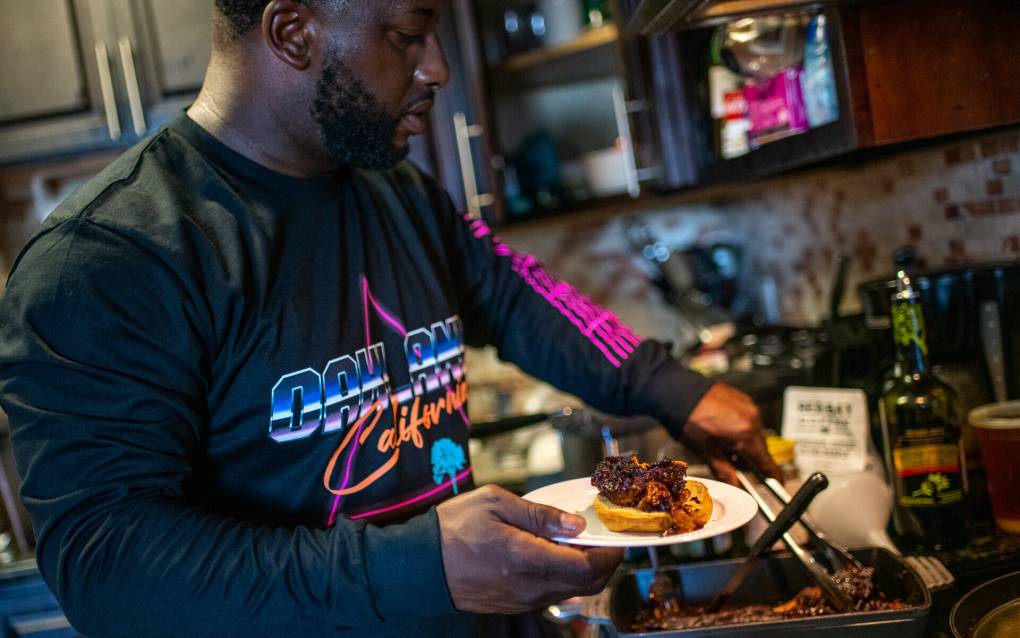
"caption": "Jonathan Davis prepares a MacArthur Rib sandwich at his home in Oakland.",
"description": null,
"title": "RS57634_001_KQEDArts_FoodJonathanDavis_08082022-qut CROP",
"credit": "Beth LaBerge/KQED",
"status": "inherit",
"altTag": "a man in plain street clothes prepares a rib sandwich in his apartment kitchen.",
"isLoading": false,
"fetchFailed": false
},
"arts_13918352": {
"type": "attachments",
"id": "arts_13918352",
"meta": {
"index": "attachments_1716263798",
"site": "arts",
"id": "13918352",
"found": true
},
"parent": 13918267,
"imgSizes": {
"twentyfourteen-full-width": {
"file": "https://ww2.kqed.org/app/uploads/sites/2/2022/08/039_1st-Annual-Chuseok-Festival-SELECTS-06190.-crop-1038x576.jpg",
"width": 1038,
"mimeType": "image/jpeg",
"height": 576
},
"thumbnail": {
"file": "https://ww2.kqed.org/app/uploads/sites/2/2022/08/039_1st-Annual-Chuseok-Festival-SELECTS-06190.-crop-160x100.jpg",
"width": 160,
"mimeType": "image/jpeg",
"height": 100
},
"post-thumbnail": {
"file": "https://ww2.kqed.org/app/uploads/sites/2/2022/08/039_1st-Annual-Chuseok-Festival-SELECTS-06190.-crop-672x372.jpg",
"width": 672,
"mimeType": "image/jpeg",
"height": 372
},
"kqedFullSize": {
"file": "https://ww2.kqed.org/app/uploads/sites/2/2022/08/039_1st-Annual-Chuseok-Festival-SELECTS-06190.-crop.jpg",
"width": 1920,
"height": 1200
},
"large": {
"file": "https://ww2.kqed.org/app/uploads/sites/2/2022/08/039_1st-Annual-Chuseok-Festival-SELECTS-06190.-crop-1020x638.jpg",
"width": 1020,
"mimeType": "image/jpeg",
"height": 638
},
"1536x1536": {
"file": "https://ww2.kqed.org/app/uploads/sites/2/2022/08/039_1st-Annual-Chuseok-Festival-SELECTS-06190.-crop-1536x960.jpg",
"width": 1536,
"mimeType": "image/jpeg",
"height": 960
},
"medium": {
"file": "https://ww2.kqed.org/app/uploads/sites/2/2022/08/039_1st-Annual-Chuseok-Festival-SELECTS-06190.-crop-800x500.jpg",
"width": 800,
"mimeType": "image/jpeg",
"height": 500
},
"medium_large": {
"file": "https://ww2.kqed.org/app/uploads/sites/2/2022/08/039_1st-Annual-Chuseok-Festival-SELECTS-06190.-crop-768x480.jpg",
"width": 768,
"mimeType": "image/jpeg",
"height": 480
}
},
"publishDate": 1661895207,
"modified": 1661895370,
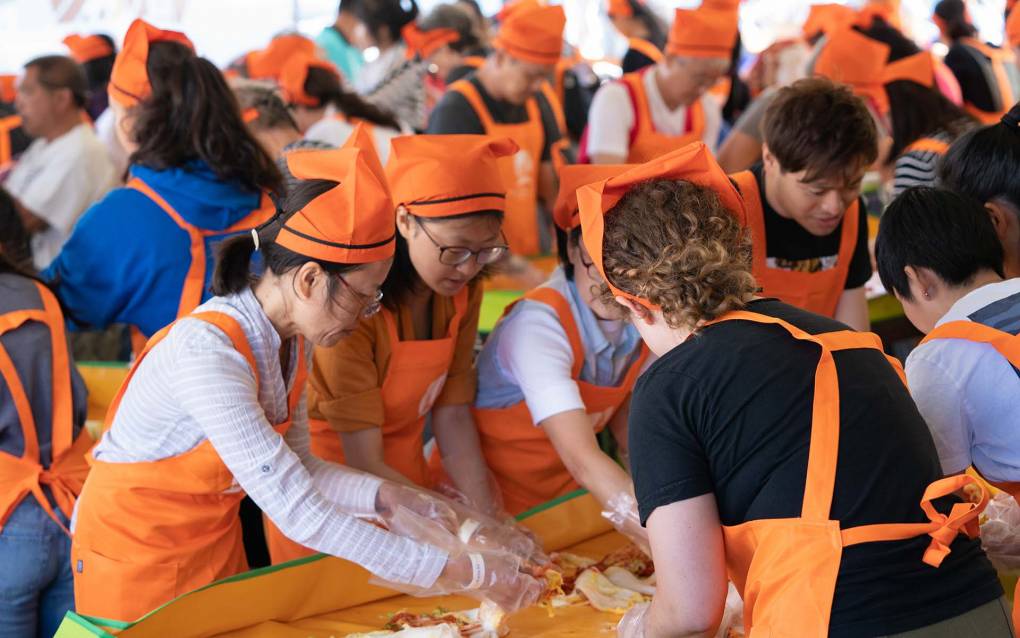
"caption": "A kimchi-making workshop at the 2019 edition of the Chuseok Festival in San Francisco. This year, the event will once again be held in person at the Presidio.",
"description": null,
"title": "039_1st Annual Chuseok Festival - SELECTS-06190.-crop",
"credit": "Mark Shigenaga",
"status": "inherit",
"altTag": "A crowded room of people in orange aprons and chef's hats, all preparing kimchi on the table in front of them.",
"isLoading": false,
"fetchFailed": false
},
"arts_13918024": {
"type": "attachments",
"id": "arts_13918024",
"meta": {
"index": "attachments_1716263798",
"site": "arts",
"id": "13918024",
"found": true
},
"parent": 13918017,
"imgSizes": {
"twentyfourteen-full-width": {
"file": "https://ww2.kqed.org/app/uploads/sites/2/2022/08/JeweledRice_Bademjoonam_featured-1038x576.jpg",
"width": 1038,
"mimeType": "image/jpeg",
"height": 576
},
"thumbnail": {
"file": "https://ww2.kqed.org/app/uploads/sites/2/2022/08/JeweledRice_Bademjoonam_featured-160x100.jpg",
"width": 160,
"mimeType": "image/jpeg",
"height": 100
},
"post-thumbnail": {
"file": "https://ww2.kqed.org/app/uploads/sites/2/2022/08/JeweledRice_Bademjoonam_featured-672x372.jpg",
"width": 672,
"mimeType": "image/jpeg",
"height": 372
},
"kqedFullSize": {
"file": "https://ww2.kqed.org/app/uploads/sites/2/2022/08/JeweledRice_Bademjoonam_featured.jpg",
"width": 1920,
"height": 1200
},
"large": {
"file": "https://ww2.kqed.org/app/uploads/sites/2/2022/08/JeweledRice_Bademjoonam_featured-1020x638.jpg",
"width": 1020,
"mimeType": "image/jpeg",
"height": 638
},
"1536x1536": {
"file": "https://ww2.kqed.org/app/uploads/sites/2/2022/08/JeweledRice_Bademjoonam_featured-1536x960.jpg",
"width": 1536,
"mimeType": "image/jpeg",
"height": 960
},
"medium": {
"file": "https://ww2.kqed.org/app/uploads/sites/2/2022/08/JeweledRice_Bademjoonam_featured-800x500.jpg",
"width": 800,
"mimeType": "image/jpeg",
"height": 500
},
"medium_large": {
"file": "https://ww2.kqed.org/app/uploads/sites/2/2022/08/JeweledRice_Bademjoonam_featured-768x480.jpg",
"width": 768,
"mimeType": "image/jpeg",
"height": 480
}
},
"publishDate": 1661449058,
"modified": 1661449498,
"caption": "Sholeh zard, an artfully composed Iranian rice pudding, will be one of the specialties of the pop-up Bademjoonam. The Iranian food business is one of several pop-ups celebrating South, Southwest Asia and North Africa (SSWANA) culture at the Jeweled Rice art show in North Oakland.",
"description": null,
"title": "JeweledRice_Bademjoonam_featured",
"credit": "Courtesy of Bademjoonam",
"status": "inherit",
"altTag": "Overhead view of several containers of rice pudding that's artfully adorned with pistachios and cinnamon.",
"isLoading": false,
"fetchFailed": false
},
"arts_13917816": {
"type": "attachments",
"id": "arts_13917816",
"meta": {
"index": "attachments_1716263798",
"site": "arts",
"id": "13917816",
"found": true
},
"parent": 13917810,
"imgSizes": {
"twentyfourteen-full-width": {
"file": "https://ww2.kqed.org/app/uploads/sites/2/2022/08/Lumpia-Lands_featured-1038x576.jpg",
"width": 1038,
"mimeType": "image/jpeg",
"height": 576
},
"thumbnail": {
"file": "https://ww2.kqed.org/app/uploads/sites/2/2022/08/Lumpia-Lands_featured-160x100.jpg",
"width": 160,
"mimeType": "image/jpeg",
"height": 100
},
"post-thumbnail": {
"file": "https://ww2.kqed.org/app/uploads/sites/2/2022/08/Lumpia-Lands_featured-672x372.jpg",
"width": 672,
"mimeType": "image/jpeg",
"height": 372
},
"kqedFullSize": {
"file": "https://ww2.kqed.org/app/uploads/sites/2/2022/08/Lumpia-Lands_featured.jpg",
"width": 1440,
"height": 900
},
"large": {
"file": "https://ww2.kqed.org/app/uploads/sites/2/2022/08/Lumpia-Lands_featured-1020x638.jpg",
"width": 1020,
"mimeType": "image/jpeg",
"height": 638
},
"medium": {
"file": "https://ww2.kqed.org/app/uploads/sites/2/2022/08/Lumpia-Lands_featured-800x500.jpg",
"width": 800,
"mimeType": "image/jpeg",
"height": 500
},
"medium_large": {
"file": "https://ww2.kqed.org/app/uploads/sites/2/2022/08/Lumpia-Lands_featured-768x480.jpg",
"width": 768,
"mimeType": "image/jpeg",
"height": 480
}
},
"publishDate": 1660853422,
"modified": 1660860558,
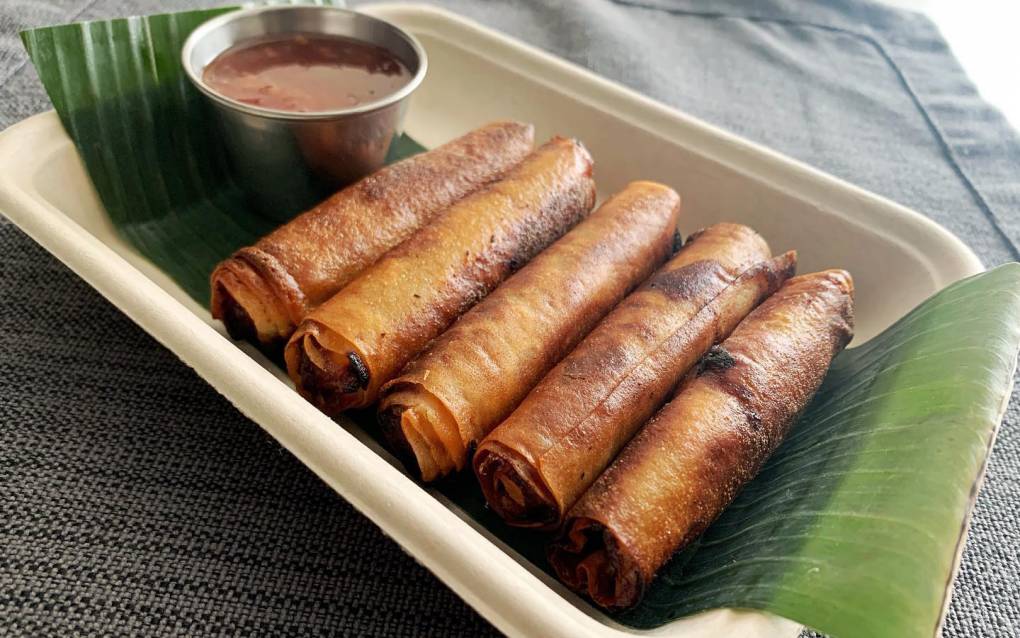
"caption": "A sample of the crispy, golden-brown goodness that will be on display at District Six's Lumpia Lands Filipino food festival.",
"description": null,
"title": "Lumpia Lands_featured",
"credit": "Courtesy of Barya Kitchen",
"status": "inherit",
"altTag": "A cardboard try with five golden-brown lumpia, with dipping sauce on the side.",
"isLoading": false,
"fetchFailed": false
},
"arts_13917558": {
"type": "attachments",
"id": "arts_13917558",
"meta": {
"index": "attachments_1716263798",
"site": "arts",
"id": "13917558",
"found": true
},
"parent": 13917556,
"imgSizes": {
"twentyfourteen-full-width": {
"file": "https://ww2.kqed.org/app/uploads/sites/2/2022/08/Spaghetti-Dimare-cropped_-1038x576.jpg",
"width": 1038,
"mimeType": "image/jpeg",
"height": 576
},
"thumbnail": {
"file": "https://ww2.kqed.org/app/uploads/sites/2/2022/08/Spaghetti-Dimare-cropped_-160x100.jpg",
"width": 160,
"mimeType": "image/jpeg",
"height": 100
},
"post-thumbnail": {
"file": "https://ww2.kqed.org/app/uploads/sites/2/2022/08/Spaghetti-Dimare-cropped_-672x372.jpg",
"width": 672,
"mimeType": "image/jpeg",
"height": 372
},
"kqedFullSize": {
"file": "https://ww2.kqed.org/app/uploads/sites/2/2022/08/Spaghetti-Dimare-cropped_-scaled.jpg",
"width": 2560,
"height": 1600
},
"2048x2048": {
"file": "https://ww2.kqed.org/app/uploads/sites/2/2022/08/Spaghetti-Dimare-cropped_-2048x1280.jpg",
"width": 2048,
"mimeType": "image/jpeg",
"height": 1280
},
"large": {
"file": "https://ww2.kqed.org/app/uploads/sites/2/2022/08/Spaghetti-Dimare-cropped_-1020x638.jpg",
"width": 1020,
"mimeType": "image/jpeg",
"height": 638
},
"1536x1536": {
"file": "https://ww2.kqed.org/app/uploads/sites/2/2022/08/Spaghetti-Dimare-cropped_-1536x960.jpg",
"width": 1536,
"mimeType": "image/jpeg",
"height": 960
},
"full-width": {
"file": "https://ww2.kqed.org/app/uploads/sites/2/2022/08/Spaghetti-Dimare-cropped_-1920x1200.jpg",
"width": 1920,
"mimeType": "image/jpeg",
"height": 1200
},
"medium": {
"file": "https://ww2.kqed.org/app/uploads/sites/2/2022/08/Spaghetti-Dimare-cropped_-800x500.jpg",
"width": 800,
"mimeType": "image/jpeg",
"height": 500
},
"medium_large": {
"file": "https://ww2.kqed.org/app/uploads/sites/2/2022/08/Spaghetti-Dimare-cropped_-768x480.jpg",
"width": 768,
"mimeType": "image/jpeg",
"height": 480
}
},
"publishDate": 1660322080,
"modified": 1660322188,
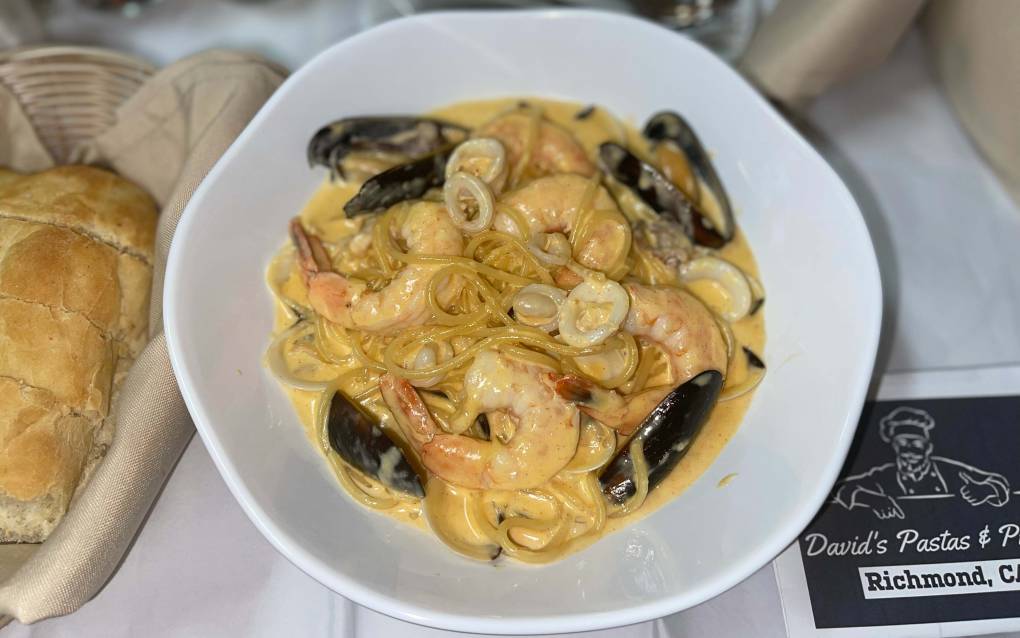
"caption": "The spaghetti di mare is one of the most popular dishes at David's Pastas & Pizzas, an Italian American restaurant in Richmond.",
"description": null,
"title": "Spaghetti Dimare-cropped_",
"credit": "Courtesy of David's Pastas & Pizzas",
"status": "inherit",
"altTag": "A plate of spaghetti topped with shrimp and mussels in a creamy sauce.",
"isLoading": false,
"fetchFailed": false
},
"arts_13917186": {
"type": "attachments",
"id": "arts_13917186",
"meta": {
"index": "attachments_1716263798",
"site": "arts",
"id": "13917186",
"found": true
},
"parent": 13917184,
"imgSizes": {
"twentyfourteen-full-width": {
"file": "https://ww2.kqed.org/app/uploads/sites/2/2022/08/anula-adesh_thapliyal-1038x576.jpg",
"width": 1038,
"mimeType": "image/jpeg",
"height": 576
},
"thumbnail": {
"file": "https://ww2.kqed.org/app/uploads/sites/2/2022/08/anula-adesh_thapliyal-160x90.jpg",
"width": 160,
"mimeType": "image/jpeg",
"height": 90
},
"post-thumbnail": {
"file": "https://ww2.kqed.org/app/uploads/sites/2/2022/08/anula-adesh_thapliyal-672x372.jpg",
"width": 672,
"mimeType": "image/jpeg",
"height": 372
},
"kqedFullSize": {
"file": "https://ww2.kqed.org/app/uploads/sites/2/2022/08/anula-adesh_thapliyal-scaled.jpg",
"width": 2560,
"height": 1440
},
"2048x2048": {
"file": "https://ww2.kqed.org/app/uploads/sites/2/2022/08/anula-adesh_thapliyal-2048x1152.jpg",
"width": 2048,
"mimeType": "image/jpeg",
"height": 1152
},
"large": {
"file": "https://ww2.kqed.org/app/uploads/sites/2/2022/08/anula-adesh_thapliyal-1020x574.jpg",
"width": 1020,
"mimeType": "image/jpeg",
"height": 574
},
"1536x1536": {
"file": "https://ww2.kqed.org/app/uploads/sites/2/2022/08/anula-adesh_thapliyal-1536x864.jpg",
"width": 1536,
"mimeType": "image/jpeg",
"height": 864
},
"full-width": {
"file": "https://ww2.kqed.org/app/uploads/sites/2/2022/08/anula-adesh_thapliyal-1920x1080.jpg",
"width": 1920,
"mimeType": "image/jpeg",
"height": 1080
},
"medium": {
"file": "https://ww2.kqed.org/app/uploads/sites/2/2022/08/anula-adesh_thapliyal-800x450.jpg",
"width": 800,
"mimeType": "image/jpeg",
"height": 450
},
"medium_large": {
"file": "https://ww2.kqed.org/app/uploads/sites/2/2022/08/anula-adesh_thapliyal-768x432.jpg",
"width": 768,
"mimeType": "image/jpeg",
"height": 432
}
},
"publishDate": 1659725424,
"modified": 1659725561,
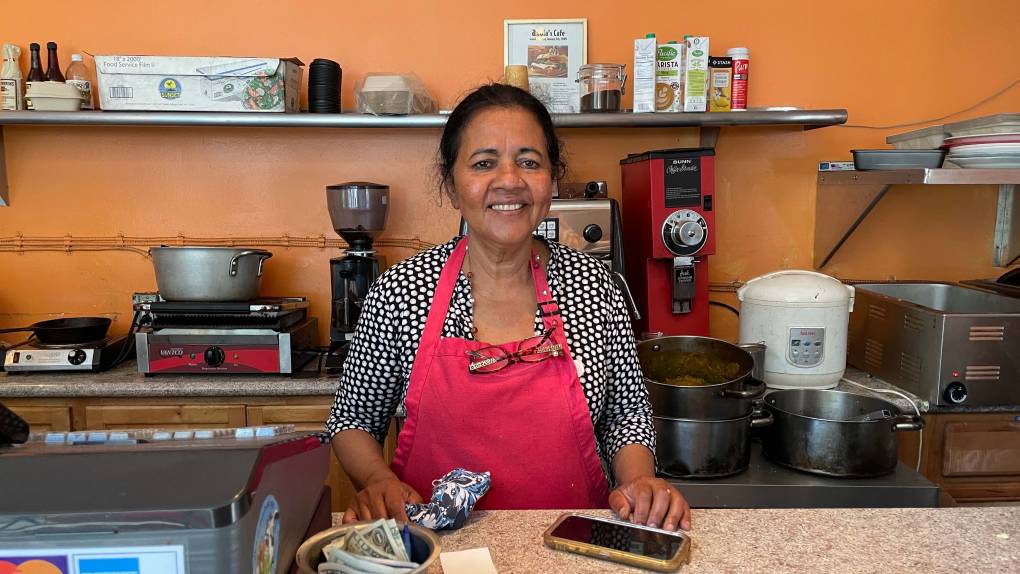
"caption": "Anula Edirisinghe is the one-woman force behind Anula's Cafe, a downtown Oakland lunch staple closing this week.",
"description": null,
"title": "anula-adesh_thapliyal",
"credit": "Adesh Thapliyal",
"status": "inherit",
"altTag": "Anula Edirisinghe, in a red apron, poses behind the counter of her restaurant Anula's Cafe.",
"isLoading": false,
"fetchFailed": false
},
"arts_13917177": {
"type": "attachments",
"id": "arts_13917177",
"meta": {
"index": "attachments_1716263798",
"site": "arts",
"id": "13917177",
"found": true
},
"parent": 13917165,
"imgSizes": {
"twentyfourteen-full-width": {
"file": "https://ww2.kqed.org/app/uploads/sites/2/2022/08/Preeti_Kitchen-1038x576.jpg",
"width": 1038,
"mimeType": "image/jpeg",
"height": 576
},
"thumbnail": {
"file": "https://ww2.kqed.org/app/uploads/sites/2/2022/08/Preeti_Kitchen-160x100.jpg",
"width": 160,
"mimeType": "image/jpeg",
"height": 100
},
"post-thumbnail": {
"file": "https://ww2.kqed.org/app/uploads/sites/2/2022/08/Preeti_Kitchen-672x372.jpg",
"width": 672,
"mimeType": "image/jpeg",
"height": 372
},
"kqedFullSize": {
"file": "https://ww2.kqed.org/app/uploads/sites/2/2022/08/Preeti_Kitchen.jpg",
"width": 2208,
"height": 1380
},
"2048x2048": {
"file": "https://ww2.kqed.org/app/uploads/sites/2/2022/08/Preeti_Kitchen-2048x1280.jpg",
"width": 2048,
"mimeType": "image/jpeg",
"height": 1280
},
"large": {
"file": "https://ww2.kqed.org/app/uploads/sites/2/2022/08/Preeti_Kitchen-1020x638.jpg",
"width": 1020,
"mimeType": "image/jpeg",
"height": 638
},
"1536x1536": {
"file": "https://ww2.kqed.org/app/uploads/sites/2/2022/08/Preeti_Kitchen-1536x960.jpg",
"width": 1536,
"mimeType": "image/jpeg",
"height": 960
},
"full-width": {
"file": "https://ww2.kqed.org/app/uploads/sites/2/2022/08/Preeti_Kitchen-1920x1200.jpg",
"width": 1920,
"mimeType": "image/jpeg",
"height": 1200
},
"medium": {
"file": "https://ww2.kqed.org/app/uploads/sites/2/2022/08/Preeti_Kitchen-800x500.jpg",
"width": 800,
"mimeType": "image/jpeg",
"height": 500
},
"medium_large": {
"file": "https://ww2.kqed.org/app/uploads/sites/2/2022/08/Preeti_Kitchen-768x480.jpg",
"width": 768,
"mimeType": "image/jpeg",
"height": 480
}
},
"publishDate": 1659721348,
"modified": 1659727602,
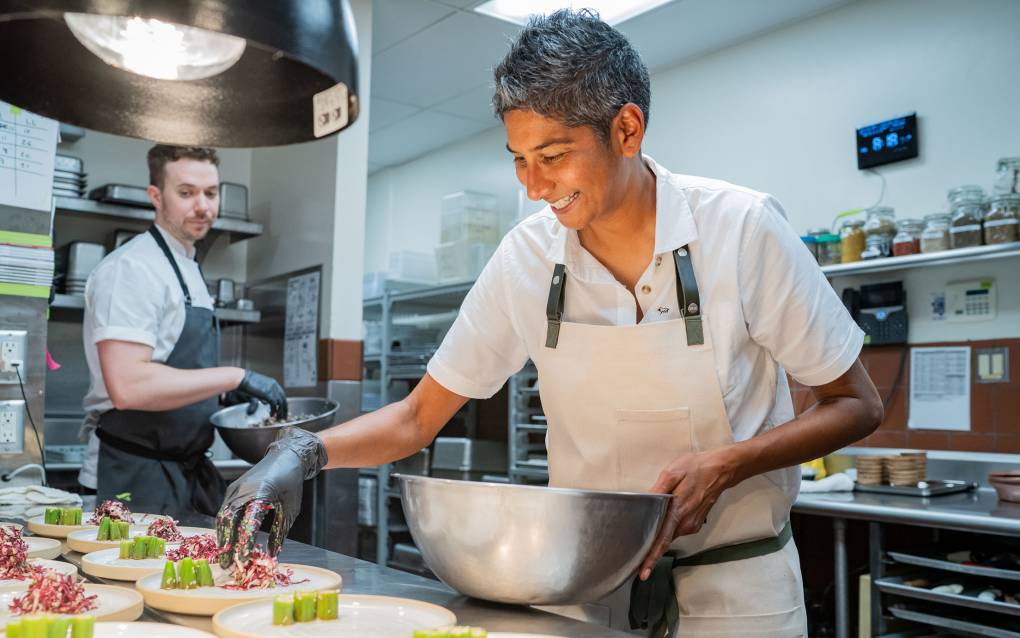
"caption": "Preeti Mistry says their new tasting menu at the J Winery's Bubble Room will feature dishes that are a bit more nuanced and elegant than the ones they served at Juhu Beach Club. J Winery chef Forest Kellogg is pictured in the background.",
"description": null,
"title": "Preeti_Kitchen",
"credit": "Courtesy of J Vineyards & Winery",
"status": "inherit",
"altTag": "Preeti Mistry in a chef's apron plates vegetables inside a restaurant kitchen.",
"isLoading": false,
"fetchFailed": false
},
"arts_13917123": {
"type": "attachments",
"id": "arts_13917123",
"meta": {
"index": "attachments_1716263798",
"site": "arts",
"id": "13917123",
"found": true
},
"parent": 13917120,
"imgSizes": {
"twentyfourteen-full-width": {
"file": "https://ww2.kqed.org/app/uploads/sites/2/2022/08/IMG_1161-1038x576.jpg",
"width": 1038,
"mimeType": "image/jpeg",
"height": 576
},
"thumbnail": {
"file": "https://ww2.kqed.org/app/uploads/sites/2/2022/08/IMG_1161-160x107.jpg",
"width": 160,
"mimeType": "image/jpeg",
"height": 107
},
"post-thumbnail": {
"file": "https://ww2.kqed.org/app/uploads/sites/2/2022/08/IMG_1161-672x372.jpg",
"width": 672,
"mimeType": "image/jpeg",
"height": 372
},
"kqedFullSize": {
"file": "https://ww2.kqed.org/app/uploads/sites/2/2022/08/IMG_1161-scaled.jpg",
"width": 2560,
"height": 1707
},
"2048x2048": {
"file": "https://ww2.kqed.org/app/uploads/sites/2/2022/08/IMG_1161-2048x1365.jpg",
"width": 2048,
"mimeType": "image/jpeg",
"height": 1365
},
"large": {
"file": "https://ww2.kqed.org/app/uploads/sites/2/2022/08/IMG_1161-1020x680.jpg",
"width": 1020,
"mimeType": "image/jpeg",
"height": 680
},
"1536x1536": {
"file": "https://ww2.kqed.org/app/uploads/sites/2/2022/08/IMG_1161-1536x1024.jpg",
"width": 1536,
"mimeType": "image/jpeg",
"height": 1024
},
"full-width": {
"file": "https://ww2.kqed.org/app/uploads/sites/2/2022/08/IMG_1161-1920x1280.jpg",
"width": 1920,
"mimeType": "image/jpeg",
"height": 1280
},
"medium": {
"file": "https://ww2.kqed.org/app/uploads/sites/2/2022/08/IMG_1161-800x533.jpg",
"width": 800,
"mimeType": "image/jpeg",
"height": 533
},
"medium_large": {
"file": "https://ww2.kqed.org/app/uploads/sites/2/2022/08/IMG_1161-768x512.jpg",
"width": 768,
"mimeType": "image/jpeg",
"height": 512
}
},
"publishDate": 1659640750,
"modified": 1659664260,
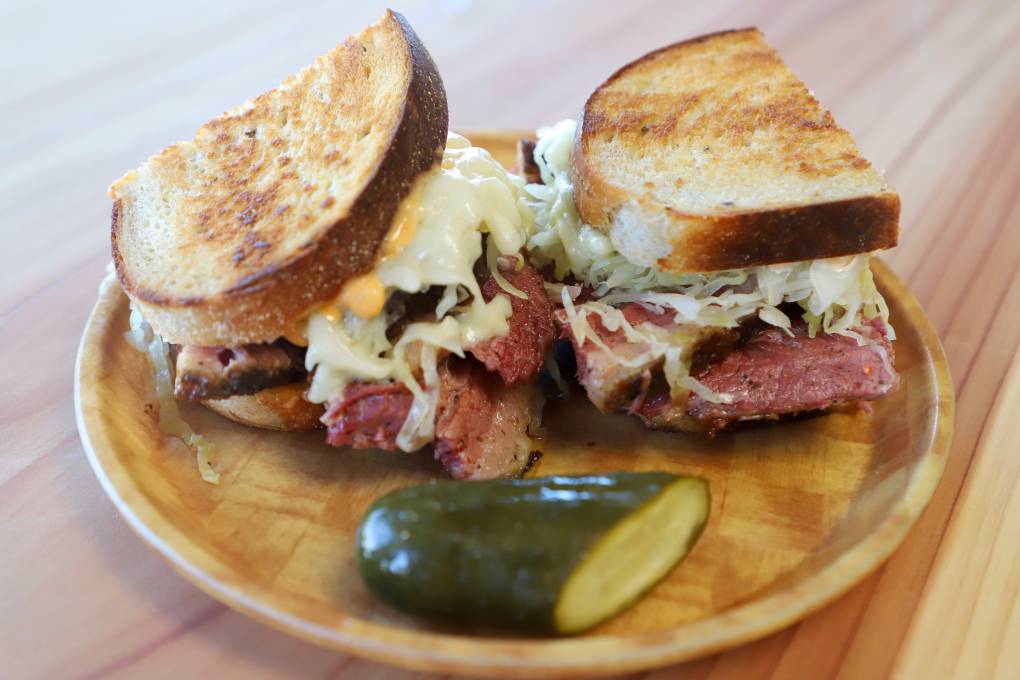
"caption": "The Reuben Sandwich is a pastrami-loaded favorite served at Delirama.",
"description": null,
"title": "IMG_1161",
"credit": "Alan Chazaro",
"status": "inherit",
"altTag": "a pastrami sandwich with coleslaw, cheese, and dressing served on a wooden plate with a pickle",
"isLoading": false,
"fetchFailed": false
},
"arts_13916970": {
"type": "attachments",
"id": "arts_13916970",
"meta": {
"index": "attachments_1716263798",
"site": "arts",
"id": "13916970",
"found": true
},
"parent": 13916965,
"imgSizes": {
"twentyfourteen-full-width": {
"file": "https://ww2.kqed.org/app/uploads/sites/2/2022/08/RS57460_008_KQEDArts_FarmingHope_07272022-qut-1038x576.jpg",
"width": 1038,
"mimeType": "image/jpeg",
"height": 576
},
"thumbnail": {
"file": "https://ww2.kqed.org/app/uploads/sites/2/2022/08/RS57460_008_KQEDArts_FarmingHope_07272022-qut-160x107.jpg",
"width": 160,
"mimeType": "image/jpeg",
"height": 107
},
"post-thumbnail": {
"file": "https://ww2.kqed.org/app/uploads/sites/2/2022/08/RS57460_008_KQEDArts_FarmingHope_07272022-qut-672x372.jpg",
"width": 672,
"mimeType": "image/jpeg",
"height": 372
},
"kqedFullSize": {
"file": "https://ww2.kqed.org/app/uploads/sites/2/2022/08/RS57460_008_KQEDArts_FarmingHope_07272022-qut.jpg",
"width": 1920,
"height": 1280
},
"large": {
"file": "https://ww2.kqed.org/app/uploads/sites/2/2022/08/RS57460_008_KQEDArts_FarmingHope_07272022-qut-1020x680.jpg",
"width": 1020,
"mimeType": "image/jpeg",
"height": 680
},
"1536x1536": {
"file": "https://ww2.kqed.org/app/uploads/sites/2/2022/08/RS57460_008_KQEDArts_FarmingHope_07272022-qut-1536x1024.jpg",
"width": 1536,
"mimeType": "image/jpeg",
"height": 1024
},
"medium": {
"file": "https://ww2.kqed.org/app/uploads/sites/2/2022/08/RS57460_008_KQEDArts_FarmingHope_07272022-qut-800x533.jpg",
"width": 800,
"mimeType": "image/jpeg",
"height": 533
},
"medium_large": {
"file": "https://ww2.kqed.org/app/uploads/sites/2/2022/08/RS57460_008_KQEDArts_FarmingHope_07272022-qut-768x512.jpg",
"width": 768,
"mimeType": "image/jpeg",
"height": 512
}
},
"publishDate": 1659382172,
"modified": 1659543425,
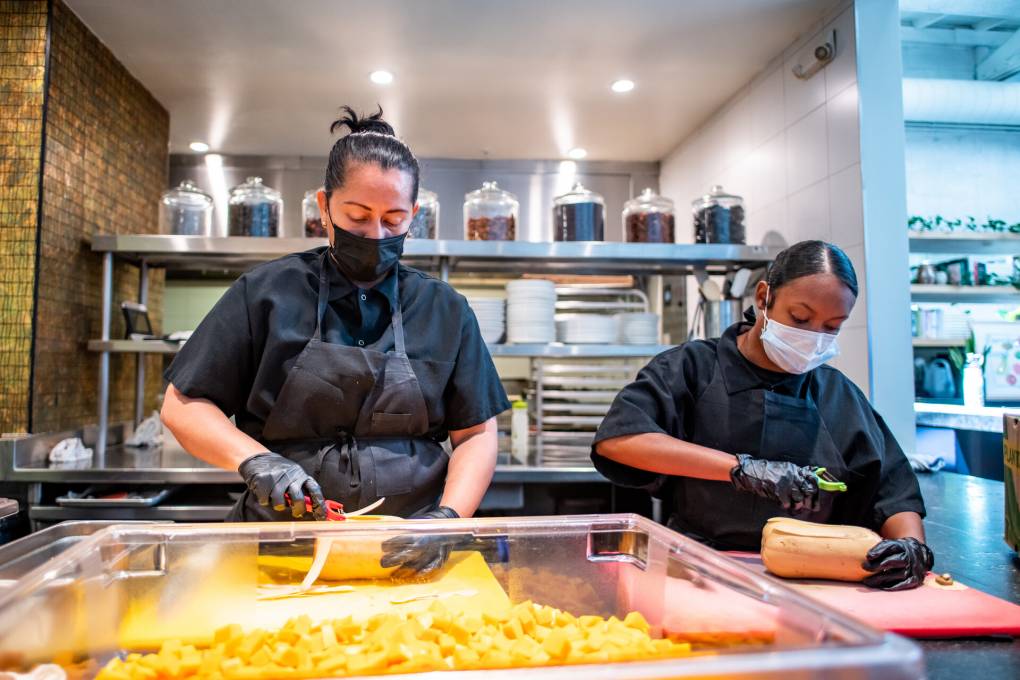
"caption": "Farming Hope apprentices chop fruit and vegetables at the Reffetorio food hub in San Francisco.",
"description": null,
"title": "RS57460_008_KQEDArts_FarmingHope_07272022-qut",
"credit": "Beth LaBerge/KQED",
"status": "inherit",
"altTag": "two Farming Hope apprentices work by chopping vegetables in the Reffetorio San Francisco kitchen",
"isLoading": false,
"fetchFailed": false
},
"arts_13916802": {
"type": "attachments",
"id": "arts_13916802",
"meta": {
"index": "attachments_1716263798",
"site": "arts",
"id": "13916802",
"found": true
},
"parent": 13916794,
"imgSizes": {
"twentyfourteen-full-width": {
"file": "https://ww2.kqed.org/app/uploads/sites/2/2022/07/Roti-Tempek-credit-Jane-Sim_-1038x576.jpg",
"width": 1038,
"mimeType": "image/jpeg",
"height": 576
},
"thumbnail": {
"file": "https://ww2.kqed.org/app/uploads/sites/2/2022/07/Roti-Tempek-credit-Jane-Sim_-160x100.jpg",
"width": 160,
"mimeType": "image/jpeg",
"height": 100
},
"post-thumbnail": {
"file": "https://ww2.kqed.org/app/uploads/sites/2/2022/07/Roti-Tempek-credit-Jane-Sim_-672x372.jpg",
"width": 672,
"mimeType": "image/jpeg",
"height": 372
},
"kqedFullSize": {
"file": "https://ww2.kqed.org/app/uploads/sites/2/2022/07/Roti-Tempek-credit-Jane-Sim_.jpg",
"width": 1920,
"height": 1200
},
"large": {
"file": "https://ww2.kqed.org/app/uploads/sites/2/2022/07/Roti-Tempek-credit-Jane-Sim_-1020x638.jpg",
"width": 1020,
"mimeType": "image/jpeg",
"height": 638
},
"1536x1536": {
"file": "https://ww2.kqed.org/app/uploads/sites/2/2022/07/Roti-Tempek-credit-Jane-Sim_-1536x960.jpg",
"width": 1536,
"mimeType": "image/jpeg",
"height": 960
},
"medium": {
"file": "https://ww2.kqed.org/app/uploads/sites/2/2022/07/Roti-Tempek-credit-Jane-Sim_-800x500.jpg",
"width": 800,
"mimeType": "image/jpeg",
"height": 500
},
"medium_large": {
"file": "https://ww2.kqed.org/app/uploads/sites/2/2022/07/Roti-Tempek-credit-Jane-Sim_-768x480.jpg",
"width": 768,
"mimeType": "image/jpeg",
"height": 480
}
},
"publishDate": 1659118068,
"modified": 1659118171,
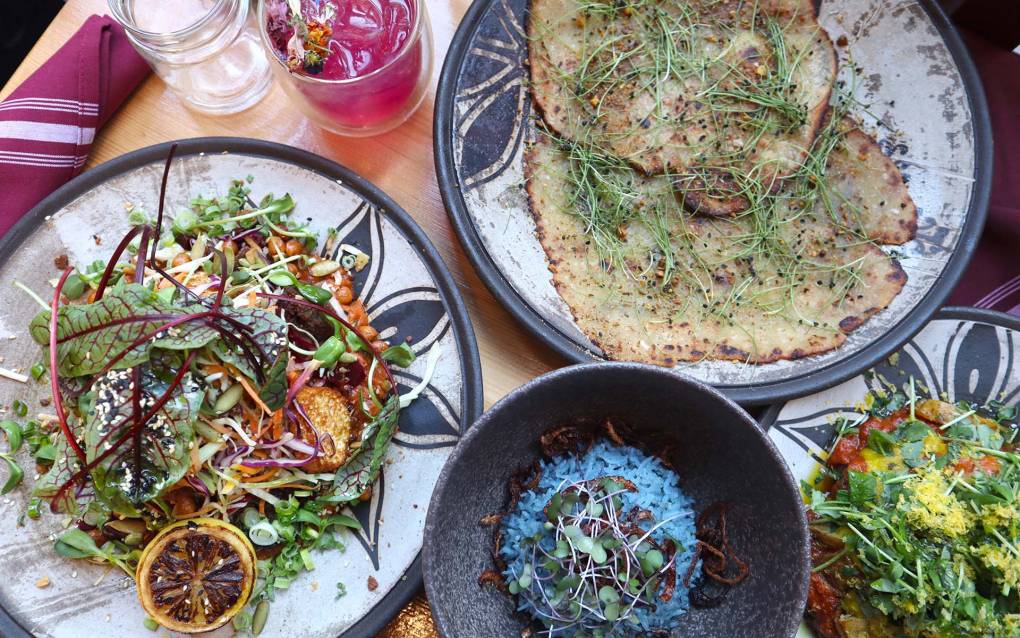
"caption": "A spread of dishes from Azalina's, including roti tempek and blue pea rice.",
"description": null,
"title": "Roti Tempek credit Jane Sim_",
"credit": "Jane Sim",
"status": "inherit",
"altTag": "Overhead view of a spread of dishes from Azalina's, including roti tempek and blue pea rice.",
"isLoading": false,
"fetchFailed": false
},
"arts_13916566": {
"type": "attachments",
"id": "arts_13916566",
"meta": {
"index": "attachments_1716263798",
"site": "arts",
"id": "13916566",
"found": true
},
"parent": 13916301,
"imgSizes": {
"twentyfourteen-full-width": {
"file": "https://ww2.kqed.org/app/uploads/sites/2/2022/07/stix_crop_achazaro-1038x576.jpg",
"width": 1038,
"mimeType": "image/jpeg",
"height": 576
},
"thumbnail": {
"file": "https://ww2.kqed.org/app/uploads/sites/2/2022/07/stix_crop_achazaro-160x90.jpg",
"width": 160,
"mimeType": "image/jpeg",
"height": 90
},
"post-thumbnail": {
"file": "https://ww2.kqed.org/app/uploads/sites/2/2022/07/stix_crop_achazaro-672x372.jpg",
"width": 672,
"mimeType": "image/jpeg",
"height": 372
},
"kqedFullSize": {
"file": "https://ww2.kqed.org/app/uploads/sites/2/2022/07/stix_crop_achazaro.jpg",
"width": 1920,
"height": 1080
},
"large": {
"file": "https://ww2.kqed.org/app/uploads/sites/2/2022/07/stix_crop_achazaro-1020x574.jpg",
"width": 1020,
"mimeType": "image/jpeg",
"height": 574
},
"1536x1536": {
"file": "https://ww2.kqed.org/app/uploads/sites/2/2022/07/stix_crop_achazaro-1536x864.jpg",
"width": 1536,
"mimeType": "image/jpeg",
"height": 864
},
"medium": {
"file": "https://ww2.kqed.org/app/uploads/sites/2/2022/07/stix_crop_achazaro-800x450.jpg",
"width": 800,
"mimeType": "image/jpeg",
"height": 450
},
"medium_large": {
"file": "https://ww2.kqed.org/app/uploads/sites/2/2022/07/stix_crop_achazaro-768x432.jpg",
"width": 768,
"mimeType": "image/jpeg",
"height": 432
}
},
"publishDate": 1658510454,
"modified": 1658510491,
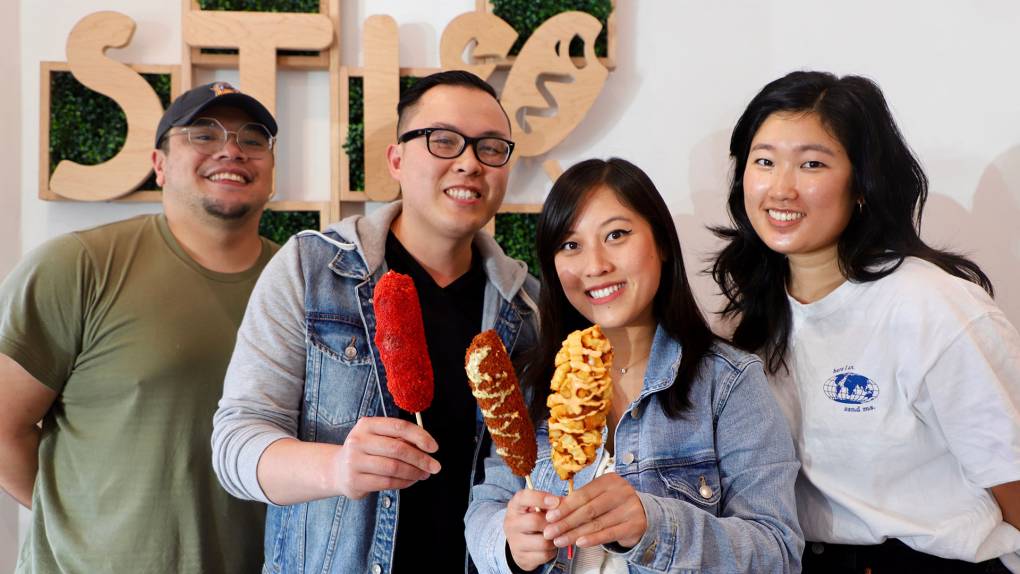
"caption": "STIX owners, Michael and Emily Hui (center) at their Burlingame location, with two employees by their sides.",
"description": null,
"title": "stix_crop_achazaro",
"credit": "Alan Chazaro",
"status": "inherit",
"altTag": "the owners of STIX hold two Korean corn dogs in their store, with two of their employees standing by their sides; behind them, STIX is printed on the wall",
"isLoading": false,
"fetchFailed": false
},
"arts_13916314": {
"type": "attachments",
"id": "arts_13916314",
"meta": {
"index": "attachments_1716263798",
"site": "arts",
"id": "13916314",
"found": true
},
"parent": 13916312,
"imgSizes": {
"twentyfourteen-full-width": {
"file": "https://ww2.kqed.org/app/uploads/sites/2/2022/07/054_KQEDArts_TaiwanBento_05082021-1038x576.jpg",
"width": 1038,
"mimeType": "image/jpeg",
"height": 576
},
"thumbnail": {
"file": "https://ww2.kqed.org/app/uploads/sites/2/2022/07/054_KQEDArts_TaiwanBento_05082021-160x90.jpg",
"width": 160,
"mimeType": "image/jpeg",
"height": 90
},
"post-thumbnail": {
"file": "https://ww2.kqed.org/app/uploads/sites/2/2022/07/054_KQEDArts_TaiwanBento_05082021-672x372.jpg",
"width": 672,
"mimeType": "image/jpeg",
"height": 372
},
"kqedFullSize": {
"file": "https://ww2.kqed.org/app/uploads/sites/2/2022/07/054_KQEDArts_TaiwanBento_05082021.jpg",
"width": 1981,
"height": 1115
},
"large": {
"file": "https://ww2.kqed.org/app/uploads/sites/2/2022/07/054_KQEDArts_TaiwanBento_05082021-1020x574.jpg",
"width": 1020,
"mimeType": "image/jpeg",
"height": 574
},
"1536x1536": {
"file": "https://ww2.kqed.org/app/uploads/sites/2/2022/07/054_KQEDArts_TaiwanBento_05082021-1536x865.jpg",
"width": 1536,
"mimeType": "image/jpeg",
"height": 865
},
"full-width": {
"file": "https://ww2.kqed.org/app/uploads/sites/2/2022/07/054_KQEDArts_TaiwanBento_05082021-1920x1081.jpg",
"width": 1920,
"mimeType": "image/jpeg",
"height": 1081
},
"medium": {
"file": "https://ww2.kqed.org/app/uploads/sites/2/2022/07/054_KQEDArts_TaiwanBento_05082021-800x450.jpg",
"width": 800,
"mimeType": "image/jpeg",
"height": 450
},
"medium_large": {
"file": "https://ww2.kqed.org/app/uploads/sites/2/2022/07/054_KQEDArts_TaiwanBento_05082021-768x432.jpg",
"width": 768,
"mimeType": "image/jpeg",
"height": 432
}
},
"publishDate": 1658263339,
"modified": 1658263448,
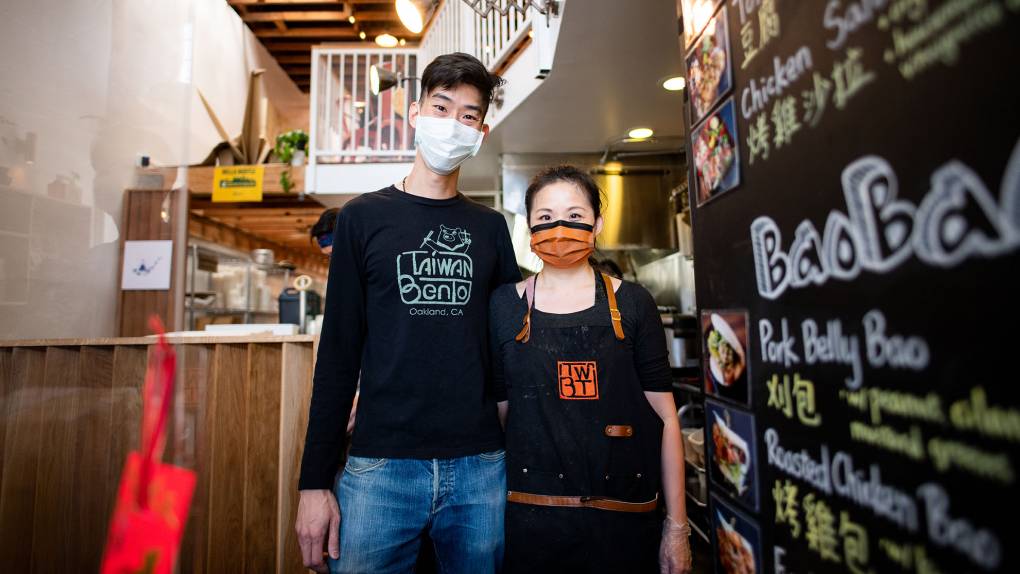
"caption": "Owners Stacy Tang (right) and Willy Wang have run Taiwan Bento in downtown Oakland since 2014. The restaurant will close on July 29, 2022.",
"description": null,
"title": "054_KQEDArts_TaiwanBento_05082021",
"credit": "Beth LaBerge/KQED",
"status": "inherit",
"altTag": "Willy Wang and Stacy Tang, both in face masks, pose inside their Oakland restaurant Taiwan Bento.",
"isLoading": false,
"fetchFailed": false
}
},
"audioPlayerReducer": {
"postId": "stream_live",
"isPaused": true,
"isPlaying": false,
"pfsActive": false,
"pledgeModalIsOpen": true,
"playerDrawerIsOpen": false,
"liveAudioPlayStartedAt": 0,
"liveAudioPlayContext": ""
},
"authorsReducer": {
"byline_arts_13918017": {
"type": "authors",
"id": "byline_arts_13918017",
"meta": {
"override": true
},
"slug": "byline_arts_13918017",
"name": "Jacquelyn Tran",
"isLoading": false
},
"ltsai": {
"type": "authors",
"id": "11743",
"meta": {
"index": "authors_1716337520",
"id": "11743",
"found": true
},
"name": "Luke Tsai",
"firstName": "Luke",
"lastName": "Tsai",
"slug": "ltsai",
"email": "ltsai@kqed.org",
"display_author_email": true,
"staff_mastheads": [
"arts"
],
"title": "Food Editor",
"bio": "Luke Tsai is KQED's food editor and resident stinky tofu connoisseur. Prior to KQED, he was an editor at Eater SF, \u003cem>San Francisco \u003c/em>magazine, and the \u003cem>East Bay Express\u003c/em>, and his work has also appeared in TASTE, the \u003cem>San Francisco Chronicle\u003c/em>, and the \u003cem>Best Food Writing\u003c/em> anthology. When he isn't writing or editing, you'll find him eating most everything he can get his hands on.",
"avatar": "https://secure.gravatar.com/avatar/1e59b45bf191526e7339d6ba46e33a57b2030d25c27660ecc64ea3cb863e34f7?s=600&d=blank&r=g",
"twitter": "theluketsai",
"bluesky": null,
"facebook": null,
"instagram": null,
"linkedin": null,
"sites": [
{
"site": "",
"roles": [
"editor"
]
},
{
"site": "arts",
"roles": [
"administrator"
]
},
{
"site": "news",
"roles": [
"editor",
"contributor"
]
},
{
"site": "bayareabites",
"roles": [
"editor"
]
},
{
"site": "food",
"roles": [
"editor"
]
}
],
"headData": {
"title": "Luke Tsai | KQED",
"description": "Food Editor",
"ogImgSrc": "https://secure.gravatar.com/avatar/1e59b45bf191526e7339d6ba46e33a57b2030d25c27660ecc64ea3cb863e34f7?s=600&d=blank&r=g",
"twImgSrc": "https://secure.gravatar.com/avatar/1e59b45bf191526e7339d6ba46e33a57b2030d25c27660ecc64ea3cb863e34f7?s=600&d=blank&r=g"
},
"isLoading": false,
"link": "/author/ltsai"
},
"achazaro": {
"type": "authors",
"id": "11748",
"meta": {
"index": "authors_1716337520",
"id": "11748",
"found": true
},
"name": "Alan Chazaro",
"firstName": "Alan",
"lastName": "Chazaro",
"slug": "achazaro",
"email": "agchazaro@gmail.com",
"display_author_email": true,
"staff_mastheads": [],
"title": "Food Writer and Reporter",
"bio": "Alan Chazaro is the author of \u003cem>This Is Not a Frank Ocean Cover Album\u003c/em> (Black Lawrence Press, 2019), \u003cem>Piñata Theory\u003c/em> (Black Lawrence Press, 2020), and \u003cem>Notes from the Eastern Span of the Bay Bridge\u003c/em> (Ghost City Press, 2021). He is a graduate of June Jordan’s Poetry for the People program at UC Berkeley and a former Lawrence Ferlinghetti Fellow at the University of San Francisco. He writes about sports, food, art, music, education, and culture while repping the Bay on \u003ca href=\"https://twitter.com/alan_chazaro\">Twitter\u003c/a> and \u003ca href=\"https://www.instagram.com/alan_chazaro/?hl=en\">Instagram\u003c/a> at @alan_chazaro.",
"avatar": "https://secure.gravatar.com/avatar/ea8b6dd970fc5c29e7a188e7d5861df7?s=600&d=blank&r=g",
"twitter": "alan_chazaro",
"facebook": null,
"instagram": null,
"linkedin": null,
"sites": [
{
"site": "arts",
"roles": [
"contributor"
]
},
{
"site": "news",
"roles": [
"editor"
]
}
],
"headData": {
"title": "Alan Chazaro | KQED",
"description": "Food Writer and Reporter",
"ogImgSrc": "https://secure.gravatar.com/avatar/ea8b6dd970fc5c29e7a188e7d5861df7?s=600&d=blank&r=g",
"twImgSrc": "https://secure.gravatar.com/avatar/ea8b6dd970fc5c29e7a188e7d5861df7?s=600&d=blank&r=g"
},
"isLoading": false,
"link": "/author/achazaro"
},
"athapliyal": {
"type": "authors",
"id": "11766",
"meta": {
"index": "authors_1716337520",
"id": "11766",
"found": true
},
"name": "Adesh Thapliyal",
"firstName": "Adesh",
"lastName": "Thapliyal",
"slug": "athapliyal",
"email": "athapliyal@kqed.org",
"display_author_email": false,
"staff_mastheads": [],
"title": "KQED Contributor",
"bio": "Adesh Thapliyal is KQED Arts' Editorial Intern. Previously, he wrote for the experimental newsletter \u003cem>Tone Glow\u003c/em> and the pop music blog \u003cem>The Singles Jukebox\u003c/em>.",
"avatar": "https://secure.gravatar.com/avatar/25c945182616a5283c4f746e7017bca3?s=600&d=blank&r=g",
"twitter": null,
"facebook": null,
"instagram": null,
"linkedin": null,
"sites": [
{
"site": "arts",
"roles": [
"author"
]
}
],
"headData": {
"title": "Adesh Thapliyal | KQED",
"description": "KQED Contributor",
"ogImgSrc": "https://secure.gravatar.com/avatar/25c945182616a5283c4f746e7017bca3?s=600&d=blank&r=g",
"twImgSrc": "https://secure.gravatar.com/avatar/25c945182616a5283c4f746e7017bca3?s=600&d=blank&r=g"
},
"isLoading": false,
"link": "/author/athapliyal"
}
},
"pagesReducer": {
"arts_tag_food": {
"type": "terms",
"id": "arts_1297",
"meta": {
"index": "terms_1716263798",
"site": "arts",
"id": "1297",
"score": 7.4242826
},
"featImg": null,
"name": "food",
"description": null,
"taxonomy": "tag",
"headData": {
"twImgId": null,
"twTitle": null,
"ogTitle": null,
"ogImgId": null,
"twDescription": null,
"description": null,
"title": "food Archives | KQED Arts",
"ogDescription": null
},
"ttid": 1309,
"slug": "food",
"isLoading": false,
"title": "food",
"pageMeta": {
"site": "arts",
"WpPageTemplate": "page-topic-editorial",
"currentPage": 30
},
"blocks": [
{
"blockName": "kqed/post-list",
"attrs": {
"layout": "cardArticle2",
"query": "posts/arts?tag=food",
"seeMore": false,
"paginated": true,
"page": 30
}
},
{
"blockName": "kqed/ad"
}
]
}
},
"pfsSessionReducer": {},
"postsReducer": {
"stream_live": {
"type": "live",
"id": "stream_live",
"audioUrl": "https://streams.kqed.org/kqedradio",
"title": "Live Stream",
"excerpt": "Live Stream information currently unavailable.",
"link": "/radio",
"featImg": "",
"label": {
"name": "KQED Live",
"link": "/"
}
},
"stream_kqedNewscast": {
"type": "posts",
"id": "stream_kqedNewscast",
"audioUrl": "https://www.kqed.org/.stream/anon/radio/RDnews/newscast.mp3?_=1",
"title": "KQED Newscast",
"featImg": "",
"label": {
"name": "88.5 FM",
"link": "/"
}
},
"arts_13918512": {
"type": "posts",
"id": "arts_13918512",
"meta": {
"index": "posts_1716263798",
"site": "arts",
"id": "13918512",
"score": null,
"sort": [
1662064741000
]
},
"parent": 0,
"labelTerm": {},
"blocks": [],
"publishDate": 1662064741,
"format": "standard",
"title": "A Formerly Incarcerated Construction Worker Finds Freedom in the Kitchen",
"headTitle": "A Formerly Incarcerated Construction Worker Finds Freedom in the Kitchen | KQED",
"content": "\u003cp>\u003cspan style=\"font-weight: 400\">[dropcap]E[/dropcap]very weekday, Jonathan Davis wakes up at 6am and heads into the yawn of morning light in his construction boots. As a full-time employee of WBE Traffic Control, he operates all over the East Bay, establishing safe zones for workers to repair power lines. It’s a systematized job, filled with rigid procedures, rules, and protocols that he and his coworkers abide by to maintain public safety.\u003c/span>\u003c/p>\n\u003cp>\u003cspan style=\"font-weight: 400\">Around 5pm he returns home to a three-year-old daughter who recently started preschool. He prepares dinner, watches \u003c/span>\u003ci>\u003cspan style=\"font-weight: 400\">The Boys\u003c/span>\u003c/i>\u003cspan style=\"font-weight: 400\">, then repeats his regiment the following day. It’s a churning livelihood that he embraces—even on Saturdays—in order to make ends meet, a prototypically American dedication to a grind that usually denies any form of extracurricular joy. The job isn’t glamorous, he tells me, but he’s grateful for it.\u003c/span>\u003c/p>\n\u003cp>\u003cspan style=\"font-weight: 400\">That’s because working in construction provides the backbone of income that allows Davis to do what he actually loves the most: cooking for others. On Sundays, he busts out his favorite recipes and vends food from his home, using social media and word-of-mouth to feed his community, friends and neighbors around Oakland and beyond.\u003c/span>\u003c/p>\n\u003cp>\u003cspan style=\"font-weight: 400\">“Cooking is like an artistic outlet for me,” says Davis, age 41. “I get to create things and I get to share that with my friends and family. When something doesn’t taste right, I get to improve it and make it better.”\u003c/span>\u003c/p>\n\u003cp>\u003cspan style=\"font-weight: 400\">For years, Davis has been perfecting his favorite dishes. A proud Oaklander, he says he grew up with a deep appreciation of the Bay Area’s tapestry of Asian and Latinx flavors—a cultural richness that gave him the confidence to experiment with the soul food ingredients he and his family grew up eating, including shrimp and grits, salmon and fried chicken.\u003c/span>\u003c/p>\n\u003cp>[ad fullwidth]\u003c/p>\n\u003cp>\u003cspan style=\"font-weight: 400\">But he’s most known for his sandwiches—chopped cheese like you’d find in a Harlem bodega and whimsical creations like the “MacArthur Rib,” a play on the McDonald’s classic. The sandos have earned him a reputation around The Town and helped fuel a burgeoning catering business. They also inspired the chef’s nickname: \u003ca href=\"https://www.instagram.com/jdthesandman/\">JD the Sandman\u003c/a>.\u003c/span>\u003c/p>\n\u003cp>\u003cspan style=\"font-weight: 400\">Yet, it wasn’t a culinary institute where Davis got his game from. And it wasn’t a Michelin-star restaurant that taught him the importance of fresh, diverse ingredients and food’s ability to connect people. It was elsewhere: behind the walls of the Federal Correctional Institution in Sheridan, Oregon.\u003c/span>\u003c/p>\n\u003ch2>Cooking from Scratch Inside a Federal Correctional Institution\u003c/h2>\n\u003cp>\u003cspan style=\"font-weight: 400\">Prison is a reality that many Californians know very little about. For those who haven’t had first-hand experience, it’s often a figment of imagination largely based on movies and television shows, where violence is typically the primary focus. Most people know even less about what happens when a person re-enters society after serving their time. Occasionally, an investigative project like “\u003c/span>\u003ca href=\"https://www.facing.life/\">\u003cspan style=\"font-weight: 400\">Facing Life\u003c/span>\u003c/a>\u003cspan style=\"font-weight: 400\">” (which KQED staff writer Pendarvis Harshaw co-authored) can illuminate the complexities of life after incarceration. Otherwise, it’s a taboo, and usually avoided, subject.\u003c/span>\u003c/p>\n\u003cp>\u003cspan style=\"font-weight: 400\">Davis was no different in the way he saw prison as something intangible in his own day-to-day life. A middle-class son of college graduates, he says his own incarceration is something he felt ashamed of, particularly as a Black man.\u003c/span>\u003c/p>\n\u003cp>\u003cspan style=\"font-weight: 400\">“I invalidated my parent’s efforts, especially knowing the narratives of Black families,” Davis admits. “They were involved in our lives. My parents did all this work for us, and I still ended up in prison.”\u003c/span>\u003c/p>\n\u003cfigure id=\"attachment_13918519\" class=\"wp-caption alignnone\" style=\"max-width: 1920px\">\u003cimg loading=\"lazy\" decoding=\"async\" class=\"size-full wp-image-13918519\" src=\"https://ww2.kqed.org/app/uploads/sites/2/2022/09/RS57647_016_KQEDArts_FoodJonathanDavis_08082022-qut.jpg\" alt=\"Jonathan Davis looks out from the balcony of his apartment next to the freeway\" width=\"1920\" height=\"1280\" srcset=\"https://cdn.kqed.org/wp-content/uploads/sites/2/2022/09/RS57647_016_KQEDArts_FoodJonathanDavis_08082022-qut.jpg 1920w, https://cdn.kqed.org/wp-content/uploads/sites/2/2022/09/RS57647_016_KQEDArts_FoodJonathanDavis_08082022-qut-800x533.jpg 800w, https://cdn.kqed.org/wp-content/uploads/sites/2/2022/09/RS57647_016_KQEDArts_FoodJonathanDavis_08082022-qut-1020x680.jpg 1020w, https://cdn.kqed.org/wp-content/uploads/sites/2/2022/09/RS57647_016_KQEDArts_FoodJonathanDavis_08082022-qut-160x107.jpg 160w, https://cdn.kqed.org/wp-content/uploads/sites/2/2022/09/RS57647_016_KQEDArts_FoodJonathanDavis_08082022-qut-768x512.jpg 768w, https://cdn.kqed.org/wp-content/uploads/sites/2/2022/09/RS57647_016_KQEDArts_FoodJonathanDavis_08082022-qut-1536x1024.jpg 1536w\" sizes=\"(max-width: 1920px) 100vw, 1920px\">\u003cfigcaption class=\"wp-caption-text\">Jonathan Davis stands on the deck at his apartment. \u003ccite>(Beth LaBerge/KQED)\u003c/cite>\u003c/figcaption>\u003c/figure>\n\u003cp>\u003cspan style=\"font-weight: 400\">A former educational nonprofit employee in Oakland, Davis never thought he’d end up behind bars. In late 2010, he lost his job due to a disagreement with the principal after a student was expelled. In Davis’s telling of it, the incident had to do with race—he was pushing back in defense of Black students. After losing his job, Davis started to hang out with a crowd of people who introduced him to “scamming.” In that moment of financial need, he saw it as a quick way to turn a profit. In his eyes, he was hustling a governmental system rather than taking from individuals. But the scheme came crashing down in 2013 when the IRS raided his home, guns drawn.\u003c/span>\u003c/p>\n\u003cp>\u003cspan style=\"font-weight: 400\">“I was a halfway criminal and didn’t cross my t’s or dot my i’s,” he says. “At that point in life, my faith in myself was weaker.”\u003c/span>\u003c/p>\n\u003cp>\u003cspan style=\"font-weight: 400\">Davis faced up to 20 years in prison, but was ultimately sentenced to 30 months. He wound up serving 18 of those months at federal institutions in Nevada and Oregon. As soon as he was convicted, he accepted his role in his wrongdoing and decided to move forward with his life by facing the consequences of his actions.\u003c/span>\u003c/p>\n\u003cp>\u003cspan style=\"font-weight: 400\">[pullquote size=\"large\" align=\"right\"]“It wasn’t a Michelin-star restaurant that taught [Davis] the importance of fresh, diverse ingredients and food’s ability to connect people. It was elsewhere: behind the walls of the Federal Correctional Institution.”[/pullquote]While imprisoned from 2014 to 2016, Davis’s good behavior landed him in a low-security environment, where he was given certain privileges. He joined a gardening program, frequently read about cooking and met people like \u003c/span>\u003ca href=\"https://twitter.com/leasdef?ref_src=twsrc%5Egoogle%7Ctwcamp%5Eserp%7Ctwgr%5Eauthor\">\u003cspan style=\"font-weight: 400\">Kasey Anderson, a Portland-based songwriter\u003c/span>\u003c/a>\u003cspan style=\"font-weight: 400\">.\u003c/span>\u003c/p>\n\u003cp>\u003cspan style=\"font-weight: 400\">Despite a largely solitary prison experience, Davis discovered that food was a way for him to relate with others and represent his heritage. He began to cook for himself and his blockmates, including Anderson, who recognized his skills.\u003c/span>\u003c/p>\n\u003cp>\u003cspan style=\"font-weight: 400\">“It’s tough to know who’s a good cook when you’re inside,” Anderson says. “Everyone’s all working with the same ingredients from commissary. You can see who is innovative and using flavors in ways others aren’t. JD would get creative with his food, and when he had a chance to work with [more ingredients], he could really express himself creatively through food. It’s cool to me that it became something for him that can exist outside. A lot of people do things inside to get by, but then go out and do what they need to go paycheck to paycheck. He isn’t limiting himself in that sense.”\u003c/span>\u003c/p>\n\u003cp>\u003cspan style=\"font-weight: 400\">Davis explains how, at times, he had to get extra creative with the limited ingredients and lack of traditional cooking equipment available to him in prison.\u003c/span>\u003c/p>\n\u003cp>\u003cspan style=\"font-weight: 400\">“There was a sweat lodge, and we cooked a piece of pork in there [one time],” he recalls. “[Another time] we made pizzas with tortillas and barbecue sauce. That was my idea. During my time, I just made friends with the kitchen guys, and that helped to keep my sanity.”\u003c/span>\u003c/p>\n\u003cp>\u003cspan style=\"font-weight: 400\">Peanut butter was one of the most popular, versatile ingredients in prison—Davis recalls drawing inspiration from a peanut butter stew he’d once seen a Cameroonian immigrant whip up in his neighborhood, years prior. \u003c/span>\u003c/p>\n\u003cp>\u003cspan style=\"font-weight: 400\">Despite having almost no experience working inside a formal restaurant—though he’d once bartended at Kincaid’s in Jack London Square—Davis was naturally drawn to the freedom the kitchen provided. In an environment where authority and separation is enforced by armed guards and selfhood is under vigilant regulation, cooking for himself and his peers became a source of restorative connection. \u003c/span>\u003c/p>\n\u003cfigure id=\"attachment_13918521\" class=\"wp-caption alignnone\" style=\"max-width: 1920px\">\u003cimg loading=\"lazy\" decoding=\"async\" class=\"size-full wp-image-13918521\" src=\"https://ww2.kqed.org/app/uploads/sites/2/2022/09/RS57636_005_KQEDArts_FoodJonathanDavis_08082022-qut.jpg\" alt=\"two guests holding plates of shrimps and grits in an apartment kitchen\" width=\"1920\" height=\"1280\" srcset=\"https://cdn.kqed.org/wp-content/uploads/sites/2/2022/09/RS57636_005_KQEDArts_FoodJonathanDavis_08082022-qut.jpg 1920w, https://cdn.kqed.org/wp-content/uploads/sites/2/2022/09/RS57636_005_KQEDArts_FoodJonathanDavis_08082022-qut-800x533.jpg 800w, https://cdn.kqed.org/wp-content/uploads/sites/2/2022/09/RS57636_005_KQEDArts_FoodJonathanDavis_08082022-qut-1020x680.jpg 1020w, https://cdn.kqed.org/wp-content/uploads/sites/2/2022/09/RS57636_005_KQEDArts_FoodJonathanDavis_08082022-qut-160x107.jpg 160w, https://cdn.kqed.org/wp-content/uploads/sites/2/2022/09/RS57636_005_KQEDArts_FoodJonathanDavis_08082022-qut-768x512.jpg 768w, https://cdn.kqed.org/wp-content/uploads/sites/2/2022/09/RS57636_005_KQEDArts_FoodJonathanDavis_08082022-qut-1536x1024.jpg 1536w\" sizes=\"(max-width: 1920px) 100vw, 1920px\">\u003cfigcaption class=\"wp-caption-text\">Two guests enjoying grits and shrimp prepared by Davis in his home. \u003ccite>(Beth LaBerge/KQED)\u003c/cite>\u003c/figcaption>\u003c/figure>\n\u003cp>\u003cspan style=\"font-weight: 400\">After being released, Davis was unable to get hired back into the nonprofit world. That’s when he started working in construction—since, as Davis puts it, nonprofits “prefer to hire non convicts.” He maintained his obsession with cooking, though, and applied a sense of redemption towards his Sunday cooking routine.\u003c/span>\u003c/p>\n\u003cp>\u003cspan style=\"font-weight: 400\">“Food for me became about honoring my family,” he says. “About giving back whatever I could.”\u003c/span>\u003c/p>\n\u003cp>\u003cspan style=\"font-weight: 400\">In 2020, when the pandemic hit, Davis joined Instagram and noticed an opportunity to share his food with a wider audience. He started by cooking dinner for family, friends and neighbors, who encouraged him to expand his menu and sell his dishes. Inspired by their suggestions and \u003c/span>\u003ca href=\"https://www.kqed.org/arts/13907726/e-40-goon-with-the-spoon-bay-area-rappers-food-entrepreneurs-hustle\">\u003cspan style=\"font-weight: 400\">the success of other homegrown, independent food entrepreneurs\u003c/span>\u003c/a>\u003cspan style=\"font-weight: 400\"> in the Bay Area, Davis rolled up his sleeves and began to mess around more seriously with his side hustle. With each praised meal, he gained confidence, eventually introducing his first certified hit: the MacArthur Rib Sandwich.\u003c/span>\u003c/p>\n\u003cp>\u003cspan style=\"font-weight: 400\">A play on McDonald’s famously elusive McRib, Davis added his own touches by roasting “real meat” and incorporating better ingredients to deliver what would become a banger for his growing base of returning customers. He followed that up with an array of other in-demand sandwiches, including a cast-iron seared and baked salmon (Cajun spices, arugula, dill relish, mayo) and New York bodega-style chopped cheese (\u003c/span>\u003cspan style=\"font-weight: 400\">ground beef, American deli cheese, chopped tomatoes, mayo and ketchup mix, sweet jalapeño)\u003c/span>\u003cspan style=\"font-weight: 400\">. \u003c/span>\u003c/p>\n\u003cp>\u003cspan style=\"font-weight: 400\">Davis says the pandemic’s slowdown gave him an opportunity to reconnect with how much food means to him. Since then, he’s been sharing edible comfort with his folks.\u003c/span>\u003c/p>\n\u003cp>\u003cspan style=\"font-weight: 400\">“The way I’m doing this now, I can be independent,” he says. “This cooking allows me to do something I want and I’m grateful for that. It’s a release.”\u003c/span>\u003c/p>\n\u003ch2>Catering for the Public\u003c/h2>\n\u003cp>\u003cspan style=\"font-weight: 400\">Markesha Brooks is a lifelong Oakland resident who works as the head chef at Grand Lake Gardens. In her spare time, she runs her catering business, MB Soul, serving up fire plates of soul food at softball games, Southland Mall and Lake Merritt.\u003c/span>\u003c/p>\n\u003cp>\u003cspan style=\"font-weight: 400\">After meeting Davis over a decade ago, the two friends remained in touch. When he returned to Oakland on probation and eventually started his series of informal food events, he and Brooks decided to work together to leverage their mutual interest in cooking. \u003c/span>\u003c/p>\n\u003cp>\u003cspan style=\"font-weight: 400\">“He’s a foodie, I’m a foodie. We’ve actually grown really close around food,” says Brooks. “He likes to pick restaurants in different cities. We go have specific dishes that those restaurants are known for. He’s eager to learn.”\u003c/span>\u003c/p>\n\u003cp>\u003cspan style=\"font-weight: 400\">With 18 years of experience, Brooks has been an ideal “coach” for Davis, critiquing his methods and offering advice on how to make adjustments. Currently, she assists Davis as a de facto sous chef whenever Davis is hired for large functions. Though he started out selling sandwiches exclusively out of his Lower Dimond apartment off MacArthur Boulevard, Davis’s business has since expanded—occasionally taking him out to Fairfield, Vallejo and even Sacramento. Bringing Brooks into the mix has allowed him to offer a more robust range of services. \u003c/span>\u003c/p>\n\u003cp>\u003cspan style=\"font-weight: 400\">In the past six months, he has been hired to privately cater multiple events, including weddings and large birthday parties of more than 60 people. Brooks helps him steer the high pace of food service by handling meal prep, frying and plating, while Davis does the cooking and managing.\u003c/span>\u003c/p>\n\u003cp>\u003cspan style=\"font-weight: 400\">“He takes direction extremely well, and he knows how to take constructive criticism from me,” Brooks says about working with “Chef Jonathan,” as she calls him. “He’s creative and he has his vision. Lots of times in the kitchen, people think they can cook at home for a few people, but it’s different when you cook for the public. He’s really good at it though. He wants to get to that next level. I’m proud of his growth. I see it.” \u003c/span>\u003c/p>\n\u003cfigure id=\"attachment_13918520\" class=\"wp-caption alignnone\" style=\"max-width: 1920px\">\u003cimg loading=\"lazy\" decoding=\"async\" class=\"size-full wp-image-13918520\" src=\"https://ww2.kqed.org/app/uploads/sites/2/2022/09/RS57640_007_KQEDArts_FoodJonathanDavis_08082022-qut.jpg\" alt=\"a rib sandwich cut into fourths on a cutting board\" width=\"1920\" height=\"1280\" srcset=\"https://cdn.kqed.org/wp-content/uploads/sites/2/2022/09/RS57640_007_KQEDArts_FoodJonathanDavis_08082022-qut.jpg 1920w, https://cdn.kqed.org/wp-content/uploads/sites/2/2022/09/RS57640_007_KQEDArts_FoodJonathanDavis_08082022-qut-800x533.jpg 800w, https://cdn.kqed.org/wp-content/uploads/sites/2/2022/09/RS57640_007_KQEDArts_FoodJonathanDavis_08082022-qut-1020x680.jpg 1020w, https://cdn.kqed.org/wp-content/uploads/sites/2/2022/09/RS57640_007_KQEDArts_FoodJonathanDavis_08082022-qut-160x107.jpg 160w, https://cdn.kqed.org/wp-content/uploads/sites/2/2022/09/RS57640_007_KQEDArts_FoodJonathanDavis_08082022-qut-768x512.jpg 768w, https://cdn.kqed.org/wp-content/uploads/sites/2/2022/09/RS57640_007_KQEDArts_FoodJonathanDavis_08082022-qut-1536x1024.jpg 1536w\" sizes=\"(max-width: 1920px) 100vw, 1920px\">\u003cfigcaption class=\"wp-caption-text\">The MacArthur Rib sandwich is an ode to MacArthur Boulevard, where Davis lives. \u003ccite>(Beth LaBerge/KQED)\u003c/cite>\u003c/figcaption>\u003c/figure>\n\u003cp>\u003cspan style=\"font-weight: 400\">Together, the Oakland duo is serving their community while having fun and playing to their strengths. Crowd favorites like Davis’s panko-and-eggs battered grits—which are deep fried for a crispy golden outer layer, doused in a spicy tomato-based sauce then topped off with shrimp—have resulted in them getting hired for Mardi Gras-themed parties and Southern-style cookouts all over the Bay.\u003c/span>\u003c/p>\n\u003ch2>Navigating Forward, New Recipes\u003c/h2>\n\u003cp>\u003cspan style=\"font-weight: 400\">According to recent \u003c/span>\u003ca href=\"https://bjs.ojp.gov/content/pub/pdf/eprfp10.pdf\">\u003cspan style=\"font-weight: 400\">research conducted by the Bureau of Justice Statistics\u003c/span>\u003c/a>\u003cspan style=\"font-weight: 400\">, around 60% of formerly incarcerated Americans are unemployed. And even for those who have secured jobs, the data shows higher rates of turnover and rehiring. These trends reveal \u003c/span>\u003ca href=\"https://www.prisonpolicy.org/blog/2022/02/08/employment/\">\u003cspan style=\"font-weight: 400\">a “labor market injustice”\u003c/span>\u003c/a>\u003cspan style=\"font-weight: 400\"> and point to a harsh truth: Once you’ve been marked by the carceral system, it’s hard to get back on your feet. \u003c/span>\u003ca href=\"https://prospect.org/special-report/new-jim-crow/\">\u003cspan style=\"font-weight: 400\">Discarding former inmates as “second-class citizens” when they re-enter society\u003c/span>\u003c/a>\u003cspan style=\"font-weight: 400\">, the ravages of the prison industrial complex are undeniable. This is especially true for Black Americans, who—due to a variety of systemic, historical factors—make up a disproportionate amount of the incarcerated population in this country.\u003c/span>\u003c/p>\n\u003cp>\u003cspan style=\"font-weight: 400\">“The probation shit is rough, and filling out forms for jobs as a felon is rough,” says Davis. “It’s not only related to Blackness, but also class and not having enough money for legal help.”\u003c/span>\u003c/p>\n\u003cp>\u003cspan style=\"font-weight: 400\">[aside postID='arts_13915489,arts_13916965,arts_13916044']The barriers preventing Davis—and many other formerly incarcerated folks—from being hired to work desirable positions are numerously stacked. The stigma around incarceration can be debilitating, offering no room for mistakes or missteps. In the Bay Area food scene, specifically, there are a handful of organizations that support aspiring foodmakers who were once incarcerated—such as \u003ca href=\"https://www.kqed.org/arts/13916965/farming-hope-food-justice-non-profit-coffee-pop-up-guest-chef-mannys-sf\">Farming Hope\u003c/a> in San Francisco—but these are few and far between. \u003c/span>\u003c/p>\n\u003cp>\u003cspan style=\"font-weight: 400\">Rather than trying to navigate these difficult institutional pathways, Davis recognized the most direct road to success in the kitchen was to take initiative and do it for himself.\u003c/span>\u003c/p>\n\u003cp>\u003cspan style=\"font-weight: 400\">“I want to express what I want in the kitchen,” says Davis. “I’ve bartended at Kincaid’s. The guys back there are cooking, but their dream isn’t to make 57 crab dips per day. It’s conformity. You don’t have much control and there’s a lot of monetary pressure. The guy who makes turkey legs might not want to make turkey legs. This way, I can at least have my independence.”\u003c/span>\u003c/p>\n\u003cp>\u003cspan style=\"font-weight: 400\">For now, food is a side gig for Davis, but eventually, if an opportunity presents itself, he would love to do it full-time. Until then, customers can reach him via text or DM. He’s always ready to slang a batch of sandwiches or pull up for an event.\u003c/span>\u003c/p>\n\u003cfigure id=\"attachment_13918528\" class=\"wp-caption alignnone\" style=\"max-width: 1920px\">\u003cimg loading=\"lazy\" decoding=\"async\" class=\"size-full wp-image-13918528\" src=\"https://ww2.kqed.org/app/uploads/sites/2/2022/09/RS57645_013_KQEDArts_FoodJonathanDavis_08082022-qut.jpg\" alt=\"Jonathan Davis holds a freshly prepared fried chicken sandwich in his hands\" width=\"1920\" height=\"1280\" srcset=\"https://cdn.kqed.org/wp-content/uploads/sites/2/2022/09/RS57645_013_KQEDArts_FoodJonathanDavis_08082022-qut.jpg 1920w, https://cdn.kqed.org/wp-content/uploads/sites/2/2022/09/RS57645_013_KQEDArts_FoodJonathanDavis_08082022-qut-800x533.jpg 800w, https://cdn.kqed.org/wp-content/uploads/sites/2/2022/09/RS57645_013_KQEDArts_FoodJonathanDavis_08082022-qut-1020x680.jpg 1020w, https://cdn.kqed.org/wp-content/uploads/sites/2/2022/09/RS57645_013_KQEDArts_FoodJonathanDavis_08082022-qut-160x107.jpg 160w, https://cdn.kqed.org/wp-content/uploads/sites/2/2022/09/RS57645_013_KQEDArts_FoodJonathanDavis_08082022-qut-768x512.jpg 768w, https://cdn.kqed.org/wp-content/uploads/sites/2/2022/09/RS57645_013_KQEDArts_FoodJonathanDavis_08082022-qut-1536x1024.jpg 1536w\" sizes=\"(max-width: 1920px) 100vw, 1920px\">\u003cfigcaption class=\"wp-caption-text\">Davis offers his fried chicken sandwich. \u003ccite>(Beth LaBerge/KQED)\u003c/cite>\u003c/figcaption>\u003c/figure>\n\u003cp>\u003cspan style=\"font-weight: 400\">When I visited him with a small group of friends at his Oakland apartment, he hosted us with a sense of visible pride and passion for his cooking. We were in his living room, seated at his table, eating his homemade food. It’s unlike any experience I’ve had with a chef—an intimate level of trust and connection, built on the freedom of being able to move around someone’s space once invited. It became evident that his gratitude for ordinary decision making and simplicity are essential ingredients in his life.\u003c/span>\u003c/p>\n\u003cp>\u003cspan style=\"font-weight: 400\">From a rotating panoply of freshly-made sandwiches, homestyle french fries, and of course, his famous grits and shrimp, we were fed like Bay Area royalty. The fried chicken sandwich, which was accompanied by \u003c/span>\u003cspan style=\"font-weight: 400\">arugula, tomatoes and jalapeños on a sweet brioche bun, had a beautiful, understated crispness that exemplifies Davis’s well-executed takes on simple favorites. His love for local references—like the notorious MacArthur Rib, which uses country pork rib, Everett and Jones BBQ sauce, onions and pickles—also speak to Davis’s playfulness, adding a layer of appreciation to each flavorful bite.\u003c/span>\u003c/p>\n\u003cp>\u003cspan style=\"font-weight: 400\">It reminds me how my favorite chefs don’t measure their worth with abstract fine dining concepts or stylized presentations. Instead, they are focused on plating nourishment in the form of self care and community preservation. And sometimes, that’s shaped like a sandwich.\u003c/span>\u003c/p>\n\u003cp>\u003cimg loading=\"lazy\" decoding=\"async\" class=\"size-full wp-image-12904247 aligncenter\" src=\"https://ww2.kqed.org/app/uploads/sites/2/2017/03/Q.Logo_.Break_-400x39.jpg\" alt=\"\" width=\"400\" height=\"39\" srcset=\"https://cdn.kqed.org/wp-content/uploads/sites/2/2017/03/Q.Logo_.Break_-400x39.jpg 400w, https://cdn.kqed.org/wp-content/uploads/sites/2/2017/03/Q.Logo_.Break_-400x39-160x16.jpg 160w, https://cdn.kqed.org/wp-content/uploads/sites/2/2017/03/Q.Logo_.Break_-400x39-240x23.jpg 240w, https://cdn.kqed.org/wp-content/uploads/sites/2/2017/03/Q.Logo_.Break_-400x39-375x37.jpg 375w\" sizes=\"(max-width: 400px) 100vw, 400px\">\u003c/p>\n\u003cp>[ad floatright]\u003c/p>\n\u003cp>\u003cem>\u003ca href=\"https://www.instagram.com/jdthesandman/\">JD the Sandman\u003c/a> is available for private orders and limited catering services via \u003ca href=\"https://www.instagram.com/jdthesandman/\">Instagram\u003c/a>.\u003c/em>\u003c/p>\n\n",
"stats": {
"hasVideo": false,
"hasChartOrMap": false,
"hasAudio": false,
"hasPolis": false,
"wordCount": 2789,
"hasGoogleForm": false,
"hasGallery": false,
"hasHearkenModule": false,
"iframeSrcs": [],
"paragraphCount": 46
},
"modified": 1705006422,
"excerpt": "Before Oakland's JD the Sandman started slinging sandwiches on Instagram, he honed his passion for cooking in federal prison.",
"headData": {
"twImgId": "",
"twTitle": "A Formerly Incarcerated Construction Worker Finds Freedom in the Kitchen",
"socialTitle": "JD the Sandman, a Formerly Incarcerated Sandwich Maker, Finds Freedom in the Kitchen %%page%% %%sep%% KQED",
"ogTitle": "A Formerly Incarcerated Construction Worker Finds Freedom in the Kitchen",
"ogImgId": "",
"twDescription": "",
"description": "Before Oakland's JD the Sandman started slinging sandwiches on Instagram, he honed his passion for cooking in federal prison.",
"title": "JD the Sandman, a Formerly Incarcerated Sandwich Maker, Finds Freedom in the Kitchen | KQED",
"ogDescription": "",
"schema": {
"@context": "https://schema.org",
"@type": "Article",
"headline": "A Formerly Incarcerated Construction Worker Finds Freedom in the Kitchen",
"datePublished": "2022-09-01T13:39:01-07:00",
"dateModified": "2024-01-11T12:53:42-08:00",
"image": "https://cdn.kqed.org/wp-content/uploads/2020/02/KQED-OG-Image@1x.png"
}
},
"guestAuthors": [],
"slug": "jd-the-sandman-formerly-incarcerated-sandwich-maker-oakland",
"status": "publish",
"sourceUrl": "/food/",
"templateType": "standard",
"excludeFromSiteSearch": "Include",
"featuredImageType": "standard",
"sticky": false,
"source": "Food",
"articleAge": "0",
"path": "/arts/13918512/jd-the-sandman-formerly-incarcerated-sandwich-maker-oakland",
"audioTrackLength": null,
"parsedContent": [
{
"type": "contentString",
"content": "\u003cdiv class=\"post-body\">\u003cp>\u003cp>\u003cspan style=\"font-weight: 400\">\u003c/p>\u003cp>\u003cspan class=\"utils-parseShortcode-shortcodes-__dropcapShortcode__dropcap\">E\u003c/span>\u003c/p>\u003cp>very weekday, Jonathan Davis wakes up at 6am and heads into the yawn of morning light in his construction boots. As a full-time employee of WBE Traffic Control, he operates all over the East Bay, establishing safe zones for workers to repair power lines. It’s a systematized job, filled with rigid procedures, rules, and protocols that he and his coworkers abide by to maintain public safety.\u003c/span>\u003c/p>\n\u003cp>\u003cspan style=\"font-weight: 400\">Around 5pm he returns home to a three-year-old daughter who recently started preschool. He prepares dinner, watches \u003c/span>\u003ci>\u003cspan style=\"font-weight: 400\">The Boys\u003c/span>\u003c/i>\u003cspan style=\"font-weight: 400\">, then repeats his regiment the following day. It’s a churning livelihood that he embraces—even on Saturdays—in order to make ends meet, a prototypically American dedication to a grind that usually denies any form of extracurricular joy. The job isn’t glamorous, he tells me, but he’s grateful for it.\u003c/span>\u003c/p>\n\u003cp>\u003cspan style=\"font-weight: 400\">That’s because working in construction provides the backbone of income that allows Davis to do what he actually loves the most: cooking for others. On Sundays, he busts out his favorite recipes and vends food from his home, using social media and word-of-mouth to feed his community, friends and neighbors around Oakland and beyond.\u003c/span>\u003c/p>\n\u003cp>\u003cspan style=\"font-weight: 400\">“Cooking is like an artistic outlet for me,” says Davis, age 41. “I get to create things and I get to share that with my friends and family. When something doesn’t taste right, I get to improve it and make it better.”\u003c/span>\u003c/p>\n\u003cp>\u003cspan style=\"font-weight: 400\">For years, Davis has been perfecting his favorite dishes. A proud Oaklander, he says he grew up with a deep appreciation of the Bay Area’s tapestry of Asian and Latinx flavors—a cultural richness that gave him the confidence to experiment with the soul food ingredients he and his family grew up eating, including shrimp and grits, salmon and fried chicken.\u003c/span>\u003c/p>\n\u003cp>\u003c/p>\u003c/div>",
"attributes": {
"named": {},
"numeric": []
}
},
{
"type": "component",
"content": "",
"name": "ad",
"attributes": {
"named": {
"label": "fullwidth"
},
"numeric": [
"fullwidth"
]
}
},
{
"type": "contentString",
"content": "\u003cdiv class=\"post-body\">\u003cp>\u003c/p>\n\u003cp>\u003cspan style=\"font-weight: 400\">But he’s most known for his sandwiches—chopped cheese like you’d find in a Harlem bodega and whimsical creations like the “MacArthur Rib,” a play on the McDonald’s classic. The sandos have earned him a reputation around The Town and helped fuel a burgeoning catering business. They also inspired the chef’s nickname: \u003ca href=\"https://www.instagram.com/jdthesandman/\">JD the Sandman\u003c/a>.\u003c/span>\u003c/p>\n\u003cp>\u003cspan style=\"font-weight: 400\">Yet, it wasn’t a culinary institute where Davis got his game from. And it wasn’t a Michelin-star restaurant that taught him the importance of fresh, diverse ingredients and food’s ability to connect people. It was elsewhere: behind the walls of the Federal Correctional Institution in Sheridan, Oregon.\u003c/span>\u003c/p>\n\u003ch2>Cooking from Scratch Inside a Federal Correctional Institution\u003c/h2>\n\u003cp>\u003cspan style=\"font-weight: 400\">Prison is a reality that many Californians know very little about. For those who haven’t had first-hand experience, it’s often a figment of imagination largely based on movies and television shows, where violence is typically the primary focus. Most people know even less about what happens when a person re-enters society after serving their time. Occasionally, an investigative project like “\u003c/span>\u003ca href=\"https://www.facing.life/\">\u003cspan style=\"font-weight: 400\">Facing Life\u003c/span>\u003c/a>\u003cspan style=\"font-weight: 400\">” (which KQED staff writer Pendarvis Harshaw co-authored) can illuminate the complexities of life after incarceration. Otherwise, it’s a taboo, and usually avoided, subject.\u003c/span>\u003c/p>\n\u003cp>\u003cspan style=\"font-weight: 400\">Davis was no different in the way he saw prison as something intangible in his own day-to-day life. A middle-class son of college graduates, he says his own incarceration is something he felt ashamed of, particularly as a Black man.\u003c/span>\u003c/p>\n\u003cp>\u003cspan style=\"font-weight: 400\">“I invalidated my parent’s efforts, especially knowing the narratives of Black families,” Davis admits. “They were involved in our lives. My parents did all this work for us, and I still ended up in prison.”\u003c/span>\u003c/p>\n\u003cfigure id=\"attachment_13918519\" class=\"wp-caption alignnone\" style=\"max-width: 1920px\">\u003cimg loading=\"lazy\" decoding=\"async\" class=\"size-full wp-image-13918519\" src=\"https://ww2.kqed.org/app/uploads/sites/2/2022/09/RS57647_016_KQEDArts_FoodJonathanDavis_08082022-qut.jpg\" alt=\"Jonathan Davis looks out from the balcony of his apartment next to the freeway\" width=\"1920\" height=\"1280\" srcset=\"https://cdn.kqed.org/wp-content/uploads/sites/2/2022/09/RS57647_016_KQEDArts_FoodJonathanDavis_08082022-qut.jpg 1920w, https://cdn.kqed.org/wp-content/uploads/sites/2/2022/09/RS57647_016_KQEDArts_FoodJonathanDavis_08082022-qut-800x533.jpg 800w, https://cdn.kqed.org/wp-content/uploads/sites/2/2022/09/RS57647_016_KQEDArts_FoodJonathanDavis_08082022-qut-1020x680.jpg 1020w, https://cdn.kqed.org/wp-content/uploads/sites/2/2022/09/RS57647_016_KQEDArts_FoodJonathanDavis_08082022-qut-160x107.jpg 160w, https://cdn.kqed.org/wp-content/uploads/sites/2/2022/09/RS57647_016_KQEDArts_FoodJonathanDavis_08082022-qut-768x512.jpg 768w, https://cdn.kqed.org/wp-content/uploads/sites/2/2022/09/RS57647_016_KQEDArts_FoodJonathanDavis_08082022-qut-1536x1024.jpg 1536w\" sizes=\"(max-width: 1920px) 100vw, 1920px\">\u003cfigcaption class=\"wp-caption-text\">Jonathan Davis stands on the deck at his apartment. \u003ccite>(Beth LaBerge/KQED)\u003c/cite>\u003c/figcaption>\u003c/figure>\n\u003cp>\u003cspan style=\"font-weight: 400\">A former educational nonprofit employee in Oakland, Davis never thought he’d end up behind bars. In late 2010, he lost his job due to a disagreement with the principal after a student was expelled. In Davis’s telling of it, the incident had to do with race—he was pushing back in defense of Black students. After losing his job, Davis started to hang out with a crowd of people who introduced him to “scamming.” In that moment of financial need, he saw it as a quick way to turn a profit. In his eyes, he was hustling a governmental system rather than taking from individuals. But the scheme came crashing down in 2013 when the IRS raided his home, guns drawn.\u003c/span>\u003c/p>\n\u003cp>\u003cspan style=\"font-weight: 400\">“I was a halfway criminal and didn’t cross my t’s or dot my i’s,” he says. “At that point in life, my faith in myself was weaker.”\u003c/span>\u003c/p>\n\u003cp>\u003cspan style=\"font-weight: 400\">Davis faced up to 20 years in prison, but was ultimately sentenced to 30 months. He wound up serving 18 of those months at federal institutions in Nevada and Oregon. As soon as he was convicted, he accepted his role in his wrongdoing and decided to move forward with his life by facing the consequences of his actions.\u003c/span>\u003c/p>\n\u003cp>\u003cspan style=\"font-weight: 400\">\u003c/p>\u003c/div>",
"attributes": {
"named": {},
"numeric": []
}
},
{
"type": "component",
"content": "“It wasn’t a Michelin-star restaurant that taught [Davis] the importance of fresh, diverse ingredients and food’s ability to connect people. It was elsewhere: behind the walls of the Federal Correctional Institution.”",
"name": "pullquote",
"attributes": {
"named": {
"size": "large",
"align": "right",
"label": ""
},
"numeric": []
}
},
{
"type": "contentString",
"content": "\u003cdiv class=\"post-body\">\u003cp>While imprisoned from 2014 to 2016, Davis’s good behavior landed him in a low-security environment, where he was given certain privileges. He joined a gardening program, frequently read about cooking and met people like \u003c/span>\u003ca href=\"https://twitter.com/leasdef?ref_src=twsrc%5Egoogle%7Ctwcamp%5Eserp%7Ctwgr%5Eauthor\">\u003cspan style=\"font-weight: 400\">Kasey Anderson, a Portland-based songwriter\u003c/span>\u003c/a>\u003cspan style=\"font-weight: 400\">.\u003c/span>\u003c/p>\n\u003cp>\u003cspan style=\"font-weight: 400\">Despite a largely solitary prison experience, Davis discovered that food was a way for him to relate with others and represent his heritage. He began to cook for himself and his blockmates, including Anderson, who recognized his skills.\u003c/span>\u003c/p>\n\u003cp>\u003cspan style=\"font-weight: 400\">“It’s tough to know who’s a good cook when you’re inside,” Anderson says. “Everyone’s all working with the same ingredients from commissary. You can see who is innovative and using flavors in ways others aren’t. JD would get creative with his food, and when he had a chance to work with [more ingredients], he could really express himself creatively through food. It’s cool to me that it became something for him that can exist outside. A lot of people do things inside to get by, but then go out and do what they need to go paycheck to paycheck. He isn’t limiting himself in that sense.”\u003c/span>\u003c/p>\n\u003cp>\u003cspan style=\"font-weight: 400\">Davis explains how, at times, he had to get extra creative with the limited ingredients and lack of traditional cooking equipment available to him in prison.\u003c/span>\u003c/p>\n\u003cp>\u003cspan style=\"font-weight: 400\">“There was a sweat lodge, and we cooked a piece of pork in there [one time],” he recalls. “[Another time] we made pizzas with tortillas and barbecue sauce. That was my idea. During my time, I just made friends with the kitchen guys, and that helped to keep my sanity.”\u003c/span>\u003c/p>\n\u003cp>\u003cspan style=\"font-weight: 400\">Peanut butter was one of the most popular, versatile ingredients in prison—Davis recalls drawing inspiration from a peanut butter stew he’d once seen a Cameroonian immigrant whip up in his neighborhood, years prior. \u003c/span>\u003c/p>\n\u003cp>\u003cspan style=\"font-weight: 400\">Despite having almost no experience working inside a formal restaurant—though he’d once bartended at Kincaid’s in Jack London Square—Davis was naturally drawn to the freedom the kitchen provided. In an environment where authority and separation is enforced by armed guards and selfhood is under vigilant regulation, cooking for himself and his peers became a source of restorative connection. \u003c/span>\u003c/p>\n\u003cfigure id=\"attachment_13918521\" class=\"wp-caption alignnone\" style=\"max-width: 1920px\">\u003cimg loading=\"lazy\" decoding=\"async\" class=\"size-full wp-image-13918521\" src=\"https://ww2.kqed.org/app/uploads/sites/2/2022/09/RS57636_005_KQEDArts_FoodJonathanDavis_08082022-qut.jpg\" alt=\"two guests holding plates of shrimps and grits in an apartment kitchen\" width=\"1920\" height=\"1280\" srcset=\"https://cdn.kqed.org/wp-content/uploads/sites/2/2022/09/RS57636_005_KQEDArts_FoodJonathanDavis_08082022-qut.jpg 1920w, https://cdn.kqed.org/wp-content/uploads/sites/2/2022/09/RS57636_005_KQEDArts_FoodJonathanDavis_08082022-qut-800x533.jpg 800w, https://cdn.kqed.org/wp-content/uploads/sites/2/2022/09/RS57636_005_KQEDArts_FoodJonathanDavis_08082022-qut-1020x680.jpg 1020w, https://cdn.kqed.org/wp-content/uploads/sites/2/2022/09/RS57636_005_KQEDArts_FoodJonathanDavis_08082022-qut-160x107.jpg 160w, https://cdn.kqed.org/wp-content/uploads/sites/2/2022/09/RS57636_005_KQEDArts_FoodJonathanDavis_08082022-qut-768x512.jpg 768w, https://cdn.kqed.org/wp-content/uploads/sites/2/2022/09/RS57636_005_KQEDArts_FoodJonathanDavis_08082022-qut-1536x1024.jpg 1536w\" sizes=\"(max-width: 1920px) 100vw, 1920px\">\u003cfigcaption class=\"wp-caption-text\">Two guests enjoying grits and shrimp prepared by Davis in his home. \u003ccite>(Beth LaBerge/KQED)\u003c/cite>\u003c/figcaption>\u003c/figure>\n\u003cp>\u003cspan style=\"font-weight: 400\">After being released, Davis was unable to get hired back into the nonprofit world. That’s when he started working in construction—since, as Davis puts it, nonprofits “prefer to hire non convicts.” He maintained his obsession with cooking, though, and applied a sense of redemption towards his Sunday cooking routine.\u003c/span>\u003c/p>\n\u003cp>\u003cspan style=\"font-weight: 400\">“Food for me became about honoring my family,” he says. “About giving back whatever I could.”\u003c/span>\u003c/p>\n\u003cp>\u003cspan style=\"font-weight: 400\">In 2020, when the pandemic hit, Davis joined Instagram and noticed an opportunity to share his food with a wider audience. He started by cooking dinner for family, friends and neighbors, who encouraged him to expand his menu and sell his dishes. Inspired by their suggestions and \u003c/span>\u003ca href=\"https://www.kqed.org/arts/13907726/e-40-goon-with-the-spoon-bay-area-rappers-food-entrepreneurs-hustle\">\u003cspan style=\"font-weight: 400\">the success of other homegrown, independent food entrepreneurs\u003c/span>\u003c/a>\u003cspan style=\"font-weight: 400\"> in the Bay Area, Davis rolled up his sleeves and began to mess around more seriously with his side hustle. With each praised meal, he gained confidence, eventually introducing his first certified hit: the MacArthur Rib Sandwich.\u003c/span>\u003c/p>\n\u003cp>\u003cspan style=\"font-weight: 400\">A play on McDonald’s famously elusive McRib, Davis added his own touches by roasting “real meat” and incorporating better ingredients to deliver what would become a banger for his growing base of returning customers. He followed that up with an array of other in-demand sandwiches, including a cast-iron seared and baked salmon (Cajun spices, arugula, dill relish, mayo) and New York bodega-style chopped cheese (\u003c/span>\u003cspan style=\"font-weight: 400\">ground beef, American deli cheese, chopped tomatoes, mayo and ketchup mix, sweet jalapeño)\u003c/span>\u003cspan style=\"font-weight: 400\">. \u003c/span>\u003c/p>\n\u003cp>\u003cspan style=\"font-weight: 400\">Davis says the pandemic’s slowdown gave him an opportunity to reconnect with how much food means to him. Since then, he’s been sharing edible comfort with his folks.\u003c/span>\u003c/p>\n\u003cp>\u003cspan style=\"font-weight: 400\">“The way I’m doing this now, I can be independent,” he says. “This cooking allows me to do something I want and I’m grateful for that. It’s a release.”\u003c/span>\u003c/p>\n\u003ch2>Catering for the Public\u003c/h2>\n\u003cp>\u003cspan style=\"font-weight: 400\">Markesha Brooks is a lifelong Oakland resident who works as the head chef at Grand Lake Gardens. In her spare time, she runs her catering business, MB Soul, serving up fire plates of soul food at softball games, Southland Mall and Lake Merritt.\u003c/span>\u003c/p>\n\u003cp>\u003cspan style=\"font-weight: 400\">After meeting Davis over a decade ago, the two friends remained in touch. When he returned to Oakland on probation and eventually started his series of informal food events, he and Brooks decided to work together to leverage their mutual interest in cooking. \u003c/span>\u003c/p>\n\u003cp>\u003cspan style=\"font-weight: 400\">“He’s a foodie, I’m a foodie. We’ve actually grown really close around food,” says Brooks. “He likes to pick restaurants in different cities. We go have specific dishes that those restaurants are known for. He’s eager to learn.”\u003c/span>\u003c/p>\n\u003cp>\u003cspan style=\"font-weight: 400\">With 18 years of experience, Brooks has been an ideal “coach” for Davis, critiquing his methods and offering advice on how to make adjustments. Currently, she assists Davis as a de facto sous chef whenever Davis is hired for large functions. Though he started out selling sandwiches exclusively out of his Lower Dimond apartment off MacArthur Boulevard, Davis’s business has since expanded—occasionally taking him out to Fairfield, Vallejo and even Sacramento. Bringing Brooks into the mix has allowed him to offer a more robust range of services. \u003c/span>\u003c/p>\n\u003cp>\u003cspan style=\"font-weight: 400\">In the past six months, he has been hired to privately cater multiple events, including weddings and large birthday parties of more than 60 people. Brooks helps him steer the high pace of food service by handling meal prep, frying and plating, while Davis does the cooking and managing.\u003c/span>\u003c/p>\n\u003cp>\u003cspan style=\"font-weight: 400\">“He takes direction extremely well, and he knows how to take constructive criticism from me,” Brooks says about working with “Chef Jonathan,” as she calls him. “He’s creative and he has his vision. Lots of times in the kitchen, people think they can cook at home for a few people, but it’s different when you cook for the public. He’s really good at it though. He wants to get to that next level. I’m proud of his growth. I see it.” \u003c/span>\u003c/p>\n\u003cfigure id=\"attachment_13918520\" class=\"wp-caption alignnone\" style=\"max-width: 1920px\">\u003cimg loading=\"lazy\" decoding=\"async\" class=\"size-full wp-image-13918520\" src=\"https://ww2.kqed.org/app/uploads/sites/2/2022/09/RS57640_007_KQEDArts_FoodJonathanDavis_08082022-qut.jpg\" alt=\"a rib sandwich cut into fourths on a cutting board\" width=\"1920\" height=\"1280\" srcset=\"https://cdn.kqed.org/wp-content/uploads/sites/2/2022/09/RS57640_007_KQEDArts_FoodJonathanDavis_08082022-qut.jpg 1920w, https://cdn.kqed.org/wp-content/uploads/sites/2/2022/09/RS57640_007_KQEDArts_FoodJonathanDavis_08082022-qut-800x533.jpg 800w, https://cdn.kqed.org/wp-content/uploads/sites/2/2022/09/RS57640_007_KQEDArts_FoodJonathanDavis_08082022-qut-1020x680.jpg 1020w, https://cdn.kqed.org/wp-content/uploads/sites/2/2022/09/RS57640_007_KQEDArts_FoodJonathanDavis_08082022-qut-160x107.jpg 160w, https://cdn.kqed.org/wp-content/uploads/sites/2/2022/09/RS57640_007_KQEDArts_FoodJonathanDavis_08082022-qut-768x512.jpg 768w, https://cdn.kqed.org/wp-content/uploads/sites/2/2022/09/RS57640_007_KQEDArts_FoodJonathanDavis_08082022-qut-1536x1024.jpg 1536w\" sizes=\"(max-width: 1920px) 100vw, 1920px\">\u003cfigcaption class=\"wp-caption-text\">The MacArthur Rib sandwich is an ode to MacArthur Boulevard, where Davis lives. \u003ccite>(Beth LaBerge/KQED)\u003c/cite>\u003c/figcaption>\u003c/figure>\n\u003cp>\u003cspan style=\"font-weight: 400\">Together, the Oakland duo is serving their community while having fun and playing to their strengths. Crowd favorites like Davis’s panko-and-eggs battered grits—which are deep fried for a crispy golden outer layer, doused in a spicy tomato-based sauce then topped off with shrimp—have resulted in them getting hired for Mardi Gras-themed parties and Southern-style cookouts all over the Bay.\u003c/span>\u003c/p>\n\u003ch2>Navigating Forward, New Recipes\u003c/h2>\n\u003cp>\u003cspan style=\"font-weight: 400\">According to recent \u003c/span>\u003ca href=\"https://bjs.ojp.gov/content/pub/pdf/eprfp10.pdf\">\u003cspan style=\"font-weight: 400\">research conducted by the Bureau of Justice Statistics\u003c/span>\u003c/a>\u003cspan style=\"font-weight: 400\">, around 60% of formerly incarcerated Americans are unemployed. And even for those who have secured jobs, the data shows higher rates of turnover and rehiring. These trends reveal \u003c/span>\u003ca href=\"https://www.prisonpolicy.org/blog/2022/02/08/employment/\">\u003cspan style=\"font-weight: 400\">a “labor market injustice”\u003c/span>\u003c/a>\u003cspan style=\"font-weight: 400\"> and point to a harsh truth: Once you’ve been marked by the carceral system, it’s hard to get back on your feet. \u003c/span>\u003ca href=\"https://prospect.org/special-report/new-jim-crow/\">\u003cspan style=\"font-weight: 400\">Discarding former inmates as “second-class citizens” when they re-enter society\u003c/span>\u003c/a>\u003cspan style=\"font-weight: 400\">, the ravages of the prison industrial complex are undeniable. This is especially true for Black Americans, who—due to a variety of systemic, historical factors—make up a disproportionate amount of the incarcerated population in this country.\u003c/span>\u003c/p>\n\u003cp>\u003cspan style=\"font-weight: 400\">“The probation shit is rough, and filling out forms for jobs as a felon is rough,” says Davis. “It’s not only related to Blackness, but also class and not having enough money for legal help.”\u003c/span>\u003c/p>\n\u003cp>\u003cspan style=\"font-weight: 400\">\u003c/p>\u003c/div>",
"attributes": {
"named": {},
"numeric": []
}
},
{
"type": "component",
"content": "",
"name": "aside",
"attributes": {
"named": {
"postid": "arts_13915489,arts_13916965,arts_13916044",
"label": ""
},
"numeric": []
}
},
{
"type": "contentString",
"content": "\u003cdiv class=\"post-body\">\u003cp>The barriers preventing Davis—and many other formerly incarcerated folks—from being hired to work desirable positions are numerously stacked. The stigma around incarceration can be debilitating, offering no room for mistakes or missteps. In the Bay Area food scene, specifically, there are a handful of organizations that support aspiring foodmakers who were once incarcerated—such as \u003ca href=\"https://www.kqed.org/arts/13916965/farming-hope-food-justice-non-profit-coffee-pop-up-guest-chef-mannys-sf\">Farming Hope\u003c/a> in San Francisco—but these are few and far between. \u003c/span>\u003c/p>\n\u003cp>\u003cspan style=\"font-weight: 400\">Rather than trying to navigate these difficult institutional pathways, Davis recognized the most direct road to success in the kitchen was to take initiative and do it for himself.\u003c/span>\u003c/p>\n\u003cp>\u003cspan style=\"font-weight: 400\">“I want to express what I want in the kitchen,” says Davis. “I’ve bartended at Kincaid’s. The guys back there are cooking, but their dream isn’t to make 57 crab dips per day. It’s conformity. You don’t have much control and there’s a lot of monetary pressure. The guy who makes turkey legs might not want to make turkey legs. This way, I can at least have my independence.”\u003c/span>\u003c/p>\n\u003cp>\u003cspan style=\"font-weight: 400\">For now, food is a side gig for Davis, but eventually, if an opportunity presents itself, he would love to do it full-time. Until then, customers can reach him via text or DM. He’s always ready to slang a batch of sandwiches or pull up for an event.\u003c/span>\u003c/p>\n\u003cfigure id=\"attachment_13918528\" class=\"wp-caption alignnone\" style=\"max-width: 1920px\">\u003cimg loading=\"lazy\" decoding=\"async\" class=\"size-full wp-image-13918528\" src=\"https://ww2.kqed.org/app/uploads/sites/2/2022/09/RS57645_013_KQEDArts_FoodJonathanDavis_08082022-qut.jpg\" alt=\"Jonathan Davis holds a freshly prepared fried chicken sandwich in his hands\" width=\"1920\" height=\"1280\" srcset=\"https://cdn.kqed.org/wp-content/uploads/sites/2/2022/09/RS57645_013_KQEDArts_FoodJonathanDavis_08082022-qut.jpg 1920w, https://cdn.kqed.org/wp-content/uploads/sites/2/2022/09/RS57645_013_KQEDArts_FoodJonathanDavis_08082022-qut-800x533.jpg 800w, https://cdn.kqed.org/wp-content/uploads/sites/2/2022/09/RS57645_013_KQEDArts_FoodJonathanDavis_08082022-qut-1020x680.jpg 1020w, https://cdn.kqed.org/wp-content/uploads/sites/2/2022/09/RS57645_013_KQEDArts_FoodJonathanDavis_08082022-qut-160x107.jpg 160w, https://cdn.kqed.org/wp-content/uploads/sites/2/2022/09/RS57645_013_KQEDArts_FoodJonathanDavis_08082022-qut-768x512.jpg 768w, https://cdn.kqed.org/wp-content/uploads/sites/2/2022/09/RS57645_013_KQEDArts_FoodJonathanDavis_08082022-qut-1536x1024.jpg 1536w\" sizes=\"(max-width: 1920px) 100vw, 1920px\">\u003cfigcaption class=\"wp-caption-text\">Davis offers his fried chicken sandwich. \u003ccite>(Beth LaBerge/KQED)\u003c/cite>\u003c/figcaption>\u003c/figure>\n\u003cp>\u003cspan style=\"font-weight: 400\">When I visited him with a small group of friends at his Oakland apartment, he hosted us with a sense of visible pride and passion for his cooking. We were in his living room, seated at his table, eating his homemade food. It’s unlike any experience I’ve had with a chef—an intimate level of trust and connection, built on the freedom of being able to move around someone’s space once invited. It became evident that his gratitude for ordinary decision making and simplicity are essential ingredients in his life.\u003c/span>\u003c/p>\n\u003cp>\u003cspan style=\"font-weight: 400\">From a rotating panoply of freshly-made sandwiches, homestyle french fries, and of course, his famous grits and shrimp, we were fed like Bay Area royalty. The fried chicken sandwich, which was accompanied by \u003c/span>\u003cspan style=\"font-weight: 400\">arugula, tomatoes and jalapeños on a sweet brioche bun, had a beautiful, understated crispness that exemplifies Davis’s well-executed takes on simple favorites. His love for local references—like the notorious MacArthur Rib, which uses country pork rib, Everett and Jones BBQ sauce, onions and pickles—also speak to Davis’s playfulness, adding a layer of appreciation to each flavorful bite.\u003c/span>\u003c/p>\n\u003cp>\u003cspan style=\"font-weight: 400\">It reminds me how my favorite chefs don’t measure their worth with abstract fine dining concepts or stylized presentations. Instead, they are focused on plating nourishment in the form of self care and community preservation. And sometimes, that’s shaped like a sandwich.\u003c/span>\u003c/p>\n\u003cp>\u003cimg loading=\"lazy\" decoding=\"async\" class=\"size-full wp-image-12904247 aligncenter\" src=\"https://ww2.kqed.org/app/uploads/sites/2/2017/03/Q.Logo_.Break_-400x39.jpg\" alt=\"\" width=\"400\" height=\"39\" srcset=\"https://cdn.kqed.org/wp-content/uploads/sites/2/2017/03/Q.Logo_.Break_-400x39.jpg 400w, https://cdn.kqed.org/wp-content/uploads/sites/2/2017/03/Q.Logo_.Break_-400x39-160x16.jpg 160w, https://cdn.kqed.org/wp-content/uploads/sites/2/2017/03/Q.Logo_.Break_-400x39-240x23.jpg 240w, https://cdn.kqed.org/wp-content/uploads/sites/2/2017/03/Q.Logo_.Break_-400x39-375x37.jpg 375w\" sizes=\"(max-width: 400px) 100vw, 400px\">\u003c/p>\n\u003cp>\u003c/p>\u003c/div>",
"attributes": {
"named": {},
"numeric": []
}
},
{
"type": "component",
"content": "",
"name": "ad",
"attributes": {
"named": {
"label": "floatright"
},
"numeric": [
"floatright"
]
}
},
{
"type": "contentString",
"content": "\u003cdiv class=\"post-body\">\u003cp>\u003c/p>\n\u003cp>\u003cem>\u003ca href=\"https://www.instagram.com/jdthesandman/\">JD the Sandman\u003c/a> is available for private orders and limited catering services via \u003ca href=\"https://www.instagram.com/jdthesandman/\">Instagram\u003c/a>.\u003c/em>\u003c/p>\n\n\u003c/div>\u003c/p>",
"attributes": {
"named": {},
"numeric": []
}
}
],
"link": "/arts/13918512/jd-the-sandman-formerly-incarcerated-sandwich-maker-oakland",
"authors": [
"11748"
],
"categories": [
"arts_1",
"arts_12276"
],
"tags": [
"arts_10342",
"arts_10278",
"arts_1297",
"arts_2098",
"arts_1143",
"arts_14089",
"arts_1526",
"arts_14729"
],
"featImg": "arts_13918516",
"label": "source_arts_13918512"
},
"arts_13918267": {
"type": "posts",
"id": "arts_13918267",
"meta": {
"index": "posts_1716263798",
"site": "arts",
"id": "13918267",
"score": null,
"sort": [
1661961600000
]
},
"parent": 0,
"labelTerm": {},
"blocks": [],
"publishDate": 1661961600,
"format": "standard",
"title": "This Fall Marks the Return of the In-Person Food Festival",
"headTitle": "This Fall Marks the Return of the In-Person Food Festival | KQED",
"content": "\u003cp>\u003ca href=\"https://www.kqed.org/fallarts2022\" target=\"_blank\" rel=\"noopener noreferrer\">\u003cem>\u003cstrong>Find more of KQED’s picks for the best Fall 2022 events here\u003c/strong>\u003c/em>\u003c/a>.\u003c/p>\n\u003cp>For the food enthusiast, fall in the Bay Area means bacon-wrapped hot dogs, pumpkin pie eating contests and ungodly quantities of garlic noodles scarfed out of a little paper tray. In other words, it’s peak food festival season—or at least it was until the past two years, when COVID safety concerns cancelled most of these gatherings outright and forced others to shrink themselves down into Zoom- and takeout-friendly form.\u003c/p>\n\u003cp>It’s a sign of how far we’ve come, then, that most of the biggest and most beloved fall food festivals and other food-related events are back in full force—and fully in person—this year. Make no mistake: We’re still in a pandemic, and it’s important to be mindful of other festival-goers’ safety and comfort level. (Don’t let anyone shame you for wearing a mask!) But if you’ve been looking forward to standing in a line with a couple dozen other lumpia lovers or vegan ice cream aficionados, we’ve got some great options for you.\u003c/p>\n\u003cfigure id=\"attachment_13918351\" class=\"wp-caption alignnone\" style=\"max-width: 1951px\">\u003cimg loading=\"lazy\" decoding=\"async\" class=\"size-full wp-image-13918351\" src=\"https://ww2.kqed.org/app/uploads/sites/2/2022/08/Pastitsio-2022-cooked-pan-CROPPED-BD864E13-48D0-415F-BB7B-C1436AEC7DA9.jpg\" alt=\"A big aluminum tray of Greek pastitsio, the top cooked to golden brown.\" width=\"1951\" height=\"1063\" srcset=\"https://cdn.kqed.org/wp-content/uploads/sites/2/2022/08/Pastitsio-2022-cooked-pan-CROPPED-BD864E13-48D0-415F-BB7B-C1436AEC7DA9.jpg 1951w, https://cdn.kqed.org/wp-content/uploads/sites/2/2022/08/Pastitsio-2022-cooked-pan-CROPPED-BD864E13-48D0-415F-BB7B-C1436AEC7DA9-800x436.jpg 800w, https://cdn.kqed.org/wp-content/uploads/sites/2/2022/08/Pastitsio-2022-cooked-pan-CROPPED-BD864E13-48D0-415F-BB7B-C1436AEC7DA9-1020x556.jpg 1020w, https://cdn.kqed.org/wp-content/uploads/sites/2/2022/08/Pastitsio-2022-cooked-pan-CROPPED-BD864E13-48D0-415F-BB7B-C1436AEC7DA9-160x87.jpg 160w, https://cdn.kqed.org/wp-content/uploads/sites/2/2022/08/Pastitsio-2022-cooked-pan-CROPPED-BD864E13-48D0-415F-BB7B-C1436AEC7DA9-768x418.jpg 768w, https://cdn.kqed.org/wp-content/uploads/sites/2/2022/08/Pastitsio-2022-cooked-pan-CROPPED-BD864E13-48D0-415F-BB7B-C1436AEC7DA9-1536x837.jpg 1536w, https://cdn.kqed.org/wp-content/uploads/sites/2/2022/08/Pastitsio-2022-cooked-pan-CROPPED-BD864E13-48D0-415F-BB7B-C1436AEC7DA9-1920x1046.jpg 1920w\" sizes=\"(max-width: 1951px) 100vw, 1951px\">\u003cfigcaption class=\"wp-caption-text\">Big trays of bubbling-hot, golden-brown pastitsio are one of the savory attractions at the annual Belmont Greek Festival. \u003ccite>(Emmy Denton)\u003c/cite>\u003c/figcaption>\u003c/figure>\n\u003ch2>\u003ca href=\"https://www.belmontgreekfestival.com/\" target=\"_blank\" rel=\"noopener noreferrer\">Belmont Greek Festival\u003c/a>\u003c/h2>\n\u003cp>\u003ci>Church of the Holy Cross, Belmont\u003cbr>\nSept. 3–4, noon–10pm\u003c/i>\u003c/p>\n\u003cp>Michelin-starred restaurants are fine and all, but real connoisseurs of cuisine know that some of the most memorable eating happens not on white tablecloth but at the church (or mosque or temple) festival—the kind of paper-plate, bring-your-own-Tupperware affair where Uncle and Grandma trot out their most sacred family recipes. Hence the enduring popularity of the Belmont Greek Festival, which this year celebrates both its 50th anniversary and its first year back in person since the start of the pandemic.\u003c/p>\n\u003cp>[ad fullwidth]\u003c/p>\n\u003cp>Hosted by the Church of the Holy Cross, the fully volunteer-staffed festival is returning with a full slate of live music and traditional dancing (“\u003ca href=\"https://fb.watch/eXDNM67P4s/\">Opa!\u003c/a>”), but like any church festival worth its salt, food will be front and center—big, gut-busting plates of spanakopita, gyros and lasagna-like beef pastitsio, which visitors can enjoy on the church’s outdoor “platia,” made to resemble a bustling village square in Greece. Be sure to save room for dessert: It’d be a shame to leave without a taste of baklava or, the crowning glory of any big Greek celebration, the honey-drenched fried dough balls known as loukoumades. —\u003cem>L.T.\u003c/em>\u003c/p>\n\u003cfigure id=\"attachment_13918354\" class=\"wp-caption alignnone\" style=\"max-width: 2560px\">\u003cimg loading=\"lazy\" decoding=\"async\" class=\"size-full wp-image-13918354\" src=\"https://ww2.kqed.org/app/uploads/sites/2/2022/08/KCB01625-2-scaled.jpg\" alt='A man and woman in face masks squirt sauce on a paper tray of fried cauliflower. Their shirts read \"Plant N Soul.\"' width=\"2560\" height=\"1707\" srcset=\"https://cdn.kqed.org/wp-content/uploads/sites/2/2022/08/KCB01625-2-scaled.jpg 2560w, https://cdn.kqed.org/wp-content/uploads/sites/2/2022/08/KCB01625-2-800x533.jpg 800w, https://cdn.kqed.org/wp-content/uploads/sites/2/2022/08/KCB01625-2-1020x680.jpg 1020w, https://cdn.kqed.org/wp-content/uploads/sites/2/2022/08/KCB01625-2-160x107.jpg 160w, https://cdn.kqed.org/wp-content/uploads/sites/2/2022/08/KCB01625-2-768x512.jpg 768w, https://cdn.kqed.org/wp-content/uploads/sites/2/2022/08/KCB01625-2-1536x1024.jpg 1536w, https://cdn.kqed.org/wp-content/uploads/sites/2/2022/08/KCB01625-2-2048x1365.jpg 2048w, https://cdn.kqed.org/wp-content/uploads/sites/2/2022/08/KCB01625-2-1920x1280.jpg 1920w\" sizes=\"(max-width: 2560px) 100vw, 2560px\">\u003cfigcaption class=\"wp-caption-text\">Plant N Soul staff squirt sauce onto fried cauliflower. The vegan pizza pop-up will be one of more than 50 vendors at this year’s Bizerkeley vegan food festival. \u003ccite>(Courtesy of Bizerkeley Food Festival)\u003c/cite>\u003c/figcaption>\u003c/figure>\n\u003ch2>\u003ca href=\"https://www.thebizerkeleyvegan.com/foodfest\" target=\"_blank\" rel=\"noopener noreferrer\">Bizerkeley Food Festival\u003c/a>\u003c/h2>\n\u003cp>\u003ci>2727 Milvia Street, Berkeley\u003cbr>\nSept. 4, 11am–5pm\u003c/i>\u003c/p>\n\u003cp>When Erika Hazel \u003ca href=\"https://www.kqed.org/arts/13915889/berkeley-vegan-food-festival-bizerkeley-vegan\">launched the Bizerkeley Food Festival\u003c/a>, she wanted to make people more aware of just how diverse the Bay Area’s vegan food scene is—it’s not just “rabbit food,” after all. This Labor Day weekend, she’s continuing that mission with an event that will feature over 50 vegan vendors—more than double its 2021 debut.\u003c/p>\n\u003cp>“The purpose of the Bizerkeley Food Festival is to promote and uplift small businesses, POC businesses and women-owned businesses that are 100% plant-based/vegan while raising necessary funds for the Berkeley municipal animal shelter,” Hazel says.\u003c/p>\n\u003cp>The community-centered event has quickly become the premier vegan festival in the Bay. Held in the Sports Basement parking lot, this year’s edition will feature local favorites like \u003ca href=\"https://www.kqed.org/arts/13916044/sucka-free-soul-the-vegan-hood-chefs-honor-southern-heritage-with-a-frisco-twist\">Vegan Hood Chefs\u003c/a>, \u003ca href=\"https://www.instagram.com/kubenicecream/?hl=en\">Kubé Nice Cream\u003c/a>, and \u003ca href=\"https://thebolditalic.com/this-woman-owned-business-is-introducing-organic-beverages-to-a-food-desert-in-richmond-7b8ce3d8243\">Liquified Juicery\u003c/a> serving a wide array of vegan treats—everything from jambalaya and barbecue sliders to full-fat coconut ice cream. All food and beverages will be sold a la carte. As Hazel notes, a portion of the \u003ca href=\"https://www.eventbrite.com/e/2022-bizerkeley-food-festival-tickets-323004123027\">ticket proceeds\u003c/a> will benefit the \u003ca href=\"https://friendsofbacs.org/\">Friends of Berkeley Animal Care Services\u003c/a>. —\u003cem>A.C.\u003c/em>\u003c/p>\n\u003cfigure id=\"attachment_13900324\" class=\"wp-caption alignnone\" style=\"max-width: 2560px\">\u003cimg loading=\"lazy\" decoding=\"async\" class=\"size-full wp-image-13900324\" src=\"https://ww2.kqed.org/app/uploads/sites/2/2021/07/Bryant-Terry_bw-portrait-AOW-scaled.jpg\" alt=\"Black and white author headshot for Bryant Terry, posing in sunglasses.\" width=\"2560\" height=\"2560\" srcset=\"https://cdn.kqed.org/wp-content/uploads/sites/2/2021/07/Bryant-Terry_bw-portrait-AOW-scaled.jpg 2560w, https://cdn.kqed.org/wp-content/uploads/sites/2/2021/07/Bryant-Terry_bw-portrait-AOW-800x800.jpg 800w, https://cdn.kqed.org/wp-content/uploads/sites/2/2021/07/Bryant-Terry_bw-portrait-AOW-1020x1020.jpg 1020w, https://cdn.kqed.org/wp-content/uploads/sites/2/2021/07/Bryant-Terry_bw-portrait-AOW-160x160.jpg 160w, https://cdn.kqed.org/wp-content/uploads/sites/2/2021/07/Bryant-Terry_bw-portrait-AOW-768x768.jpg 768w, https://cdn.kqed.org/wp-content/uploads/sites/2/2021/07/Bryant-Terry_bw-portrait-AOW-1536x1536.jpg 1536w, https://cdn.kqed.org/wp-content/uploads/sites/2/2021/07/Bryant-Terry_bw-portrait-AOW-2048x2048.jpg 2048w, https://cdn.kqed.org/wp-content/uploads/sites/2/2021/07/Bryant-Terry_bw-portrait-AOW-1920x1920.jpg 1920w\" sizes=\"(max-width: 2560px) 100vw, 2560px\">\u003cfigcaption class=\"wp-caption-text\">Bryant Terry wants to provide mentorship opportunities for aspiring BIPOC food creatives. That’s the inspiration behind the Black Food Summit, which he’s organizing in collaboration with the Museum of the African Diaspora. \u003ccite>(Adrian Octavius Walker)\u003c/cite>\u003c/figcaption>\u003c/figure>\n\u003ch2>\u003ca href=\"https://www.moadsf.org/event/chef-in-residence-bryant-terry-presents-black-food-summit\" target=\"_blank\" rel=\"noopener noreferrer\">Black Food Summit\u003c/a>\u003c/h2>\n\u003cp>\u003ci>Museum of the African Diaspora, San Francisco; TomKat Ranch, Pescadero\u003cbr>\nSept. 9–10\u003c/i>\u003c/p>\n\u003cp>When Bryant Terry started 4 Color Books, his \u003ca href=\"https://www.kqed.org/arts/13900311/bryant-terry-four-color-books-imprint-food-media-diversity\">new imprint\u003c/a> that’s focused on BIPOC artists, writers and chefs, the Oakland-based chef and food activist wanted to help create an ecosystem in which Black and other BIPOC creatives would be able to thrive. Where were all of the talented Black cookbook authors, food stylists and food photographers, and why weren’t they landing the most coveted gigs from the prestige magazines and publishing houses? Were they getting the mentorship opportunities they needed?\u003c/p>\n\u003cp>Now Terry is using his platform as \u003ca href=\"https://www.moadsf.org/\">MoAD’s\u003c/a> chef-in-residence to help grow that pipeline: In September, he’ll host a two-day \u003ca href=\"https://www.moadsf.org/event/chef-in-residence-bryant-terry-presents-black-food-summit\">Black Food Summit\u003c/a> that will inspire—and teach practical skills to—anyone looking to publish a cookbook or carve out a career in food media. The summit will function, among other things, as one of the food world’s most exciting gatherings of Black talent, with nationally prominent writers like \u003ca href=\"http://www.nicoleataylor.com/\">Nicole Taylor\u003c/a> (of the Juneteenth cookbook \u003cem>Watermelon & Red Birds\u003c/em>) and \u003ca href=\"https://osayiendolyn.com/\">Osayi Endolyn\u003c/a> (the \u003cem>New York Times\u003c/em>, \u003cem>Food & Wine\u003c/em> and more) on hand for a full day of panel discussions on topics such as storytelling, design and how to navigate the publishing world. On the second day, the summit will move to Pescadero’s \u003ca href=\"https://tomkatranch.org/\">TomKat Ranch\u003c/a> for a day of restful rejuvenation and hands-on activities (some of which may involve horses).\u003c/p>\n\u003cp>It all culminates with a big, celebratory dinner out on the ranch, cooked by some of the Bay Area’s most accomplished chefs, including Matt Horn (Horn BBQ) and Fernay McPherson (Minnie Bells). Participants can buy a ticket for just one day or for the whole two-day summit. There’s also a livestream option for the Friday events at MoAD. —\u003cem>L.T.\u003c/em>\u003c/p>\n\u003cfigure id=\"attachment_13918355\" class=\"wp-caption alignnone\" style=\"max-width: 2111px\">\u003cimg loading=\"lazy\" decoding=\"async\" class=\"size-full wp-image-13918355\" src=\"https://ww2.kqed.org/app/uploads/sites/2/2022/08/038_1st-Annual-Chuseok-Festival-SELECTS-06189.jpg\" alt=\"A plate of napa cabbage kimchi.\" width=\"2111\" height=\"1408\" srcset=\"https://cdn.kqed.org/wp-content/uploads/sites/2/2022/08/038_1st-Annual-Chuseok-Festival-SELECTS-06189.jpg 2111w, https://cdn.kqed.org/wp-content/uploads/sites/2/2022/08/038_1st-Annual-Chuseok-Festival-SELECTS-06189-800x534.jpg 800w, https://cdn.kqed.org/wp-content/uploads/sites/2/2022/08/038_1st-Annual-Chuseok-Festival-SELECTS-06189-1020x680.jpg 1020w, https://cdn.kqed.org/wp-content/uploads/sites/2/2022/08/038_1st-Annual-Chuseok-Festival-SELECTS-06189-160x107.jpg 160w, https://cdn.kqed.org/wp-content/uploads/sites/2/2022/08/038_1st-Annual-Chuseok-Festival-SELECTS-06189-768x512.jpg 768w, https://cdn.kqed.org/wp-content/uploads/sites/2/2022/08/038_1st-Annual-Chuseok-Festival-SELECTS-06189-1536x1024.jpg 1536w, https://cdn.kqed.org/wp-content/uploads/sites/2/2022/08/038_1st-Annual-Chuseok-Festival-SELECTS-06189-2048x1366.jpg 2048w, https://cdn.kqed.org/wp-content/uploads/sites/2/2022/08/038_1st-Annual-Chuseok-Festival-SELECTS-06189-1920x1281.jpg 1920w\" sizes=\"(max-width: 2111px) 100vw, 2111px\">\u003cfigcaption class=\"wp-caption-text\">This year’s Chuseok Festival will celebrate traditional Korean foods such as kimchi, but it’ll also offer a wide range of fusion and Korean American diasporic dishes. \u003ccite>(Mark Shigenaga)\u003c/cite>\u003c/figcaption>\u003c/figure>\n\u003ch2>\u003ca href=\"https://www.eventbrite.com/e/4th-annual-bay-area-chuseok-festival-tickets-355585554967\" target=\"_blank\" rel=\"noopener noreferrer\">Chuseok Festival\u003c/a>\u003c/h2>\n\u003cp>\u003ci>Presidio Main Parade Lawn, San Francisco\u003cbr>\nSept. 10, 11am–5pm\u003c/i>\u003c/p>\n\u003cp>Ever since the event’s splashy 2019 debut, the organizers of the Bay Area Chuseok Festival have been chomping at the bit to bring the Korean harvest festival back to its in-person, deliciously food-focused glory after a couple of Zoom-centric editions during the peak of the pandemic. Eun-Joo Chang of San Francisco’s \u003ca href=\"https://koreancentersf.org/\">Korean Center, Inc.\u003c/a>, which organizes the event, describes Chuseok as the Korean equivalent of Thanksgiving. Hosted at the Presidio, this year’s festival is expected to be bigger and better than ever—a larger outdoor space; more family-friendly entertainment, from K-pop to traditional crafts; and, of course, a whole host of food and beverage vendors.\u003c/p>\n\u003cp>Not all of the food will be strictly Korean, though most of the featured businesses have at least one Korean chef or co-owner. So, while there will be traditional items such as Korean barbecue and \u003ca href=\"https://www.eater.com/drinks/2017/2/20/14645442/makgeolli-korean-rice-wine\">makgeolli\u003c/a>, there also might be bulgogi-topped pizza and Korean-Mexican fusion. Oakland’s Noodle Belly will be on hand serving its signature garlic noodles; SF-based Dokkabier will be on hand to pour its lineup of Asian-inspired microbrews.\u003c/p>\n\u003cp>For those who like to get their hands dirty, San Francisco’s Korean consulate and the Korean food conglomerate and kimchi brand Jong Ga Foods will co-host K-Food, an event-within-event happening at the same time. The centerpiece: a hands-on cooking demonstration in which participants make their own ssamjang, the spicy-sweet condiment traditionally eaten with Korean barbecue. —\u003cem>L.T.\u003c/em>\u003c/p>\n\u003cfigure id=\"attachment_13918362\" class=\"wp-caption alignnone\" style=\"max-width: 1440px\">\u003cimg loading=\"lazy\" decoding=\"async\" class=\"size-full wp-image-13918362\" src=\"https://ww2.kqed.org/app/uploads/sites/2/2022/08/calisoulfood_saucey-oysters-bbq.jpg\" alt=\"Four oysters, elaborately topped with shrimp, cheese and spices, on a grill.\" width=\"1440\" height=\"1800\" srcset=\"https://cdn.kqed.org/wp-content/uploads/sites/2/2022/08/calisoulfood_saucey-oysters-bbq.jpg 1440w, https://cdn.kqed.org/wp-content/uploads/sites/2/2022/08/calisoulfood_saucey-oysters-bbq-800x1000.jpg 800w, https://cdn.kqed.org/wp-content/uploads/sites/2/2022/08/calisoulfood_saucey-oysters-bbq-1020x1275.jpg 1020w, https://cdn.kqed.org/wp-content/uploads/sites/2/2022/08/calisoulfood_saucey-oysters-bbq-160x200.jpg 160w, https://cdn.kqed.org/wp-content/uploads/sites/2/2022/08/calisoulfood_saucey-oysters-bbq-768x960.jpg 768w, https://cdn.kqed.org/wp-content/uploads/sites/2/2022/08/calisoulfood_saucey-oysters-bbq-1229x1536.jpg 1229w\" sizes=\"(max-width: 1440px) 100vw, 1440px\">\u003cfigcaption class=\"wp-caption-text\">Saucey Oysters & BBQ specializes in elaborately topped grilled oysters. The Sacramento-based pop-up will be one of the 30-plus food vendors on hand at the California Soul Food Cookout. \u003ccite>(Courtesy of Saucey Oysters & BBQ)\u003c/cite>\u003c/figcaption>\u003c/figure>\n\u003ch2>\u003ca href=\"https://www.californiasoulfoodcookoutandfestival.com/\" target=\"_blank\" rel=\"noopener noreferrer\">California Soul Food Cookout\u003c/a>\u003c/h2>\n\u003cp>\u003ci>Alameda County Fairgrounds, Pleasanton\u003cbr>\nSept. 17–18, 1–11pm\u003c/i>\u003c/p>\n\u003cp>For concert goers who love soul food, the \u003ca href=\"https://www.instagram.com/calisoulfoodfest/?hl=en\">California Soul Food Cookout & Festival\u003c/a> promises the best of both worlds. Going on its 12th year, the two-day event features a mix of family activities, gospel music, R&B, food trucks and comedy—with a portion of the proceeds going towards Bay Area charities to aid houseless individuals and domestic violence victims.\u003c/p>\n\u003cp>On the food side, the festival’s 2022 edition will be hosted by Chef Milly, known for his stints as a contestant on \u003cem>Hell’s Kitchen\u003c/em>—and for dishes like his signature Crabby Cheese Fries (topped with lump crab meat and Old Bay seasoning). Other vendors will include Hayward-based Filipino fusion pop-up \u003ca href=\"https://www.instagram.com/mekeni_kapampangankami/\">Mekeni’s Kitchen\u003c/a>, Sacramento-based grilled oyster specialist \u003ca href=\"https://www.instagram.com/sauceyoysters_bbq/?hl=en\">Saucey Oysters & BBQ\u003c/a> and the Filipino barbecue stand \u003ca href=\"https://www.instagram.com/gim.belly/?hl=en\">Gim Belly\u003c/a>. The 30-plus diverse, mostly POC food makers were chosen by the organizers to represent the Bay Area’s cultural vibrancy.\u003c/p>\n\u003cp>If you come to California Soul for the food, you’ll stay for the grooves: Musical headliners include gospel and R&B stars like Musiq Soulchild, Angie Stone, Mario Hodge and Fred Hammond. There will also be a job fair and career expo sponsored by the Oakland African American Chamber of Commerce and Silicon Valley Black Chamber of Commerce. —\u003cem>A.C.\u003c/em>\u003c/p>\n\u003cfigure id=\"attachment_13918364\" class=\"wp-caption alignnone\" style=\"max-width: 1920px\">\u003cimg loading=\"lazy\" decoding=\"async\" class=\"size-full wp-image-13918364\" src=\"https://ww2.kqed.org/app/uploads/sites/2/2022/08/STL_Shenarri_Freeman_HighRes.jpg\" alt=\"A smiling woman shows off a dish of sautéed mushrooms.\" width=\"1920\" height=\"2322\" srcset=\"https://cdn.kqed.org/wp-content/uploads/sites/2/2022/08/STL_Shenarri_Freeman_HighRes.jpg 1920w, https://cdn.kqed.org/wp-content/uploads/sites/2/2022/08/STL_Shenarri_Freeman_HighRes-800x968.jpg 800w, https://cdn.kqed.org/wp-content/uploads/sites/2/2022/08/STL_Shenarri_Freeman_HighRes-1020x1234.jpg 1020w, https://cdn.kqed.org/wp-content/uploads/sites/2/2022/08/STL_Shenarri_Freeman_HighRes-160x194.jpg 160w, https://cdn.kqed.org/wp-content/uploads/sites/2/2022/08/STL_Shenarri_Freeman_HighRes-768x929.jpg 768w, https://cdn.kqed.org/wp-content/uploads/sites/2/2022/08/STL_Shenarri_Freeman_HighRes-1270x1536.jpg 1270w, https://cdn.kqed.org/wp-content/uploads/sites/2/2022/08/STL_Shenarri_Freeman_HighRes-1693x2048.jpg 1693w\" sizes=\"(max-width: 1920px) 100vw, 1920px\">\u003cfigcaption class=\"wp-caption-text\">During her Shifting the Lens residency, Chef Shenarri Freeman will serve an elaborate tasting menu of vegan soul food dishes. \u003ccite>(Courtesy of J Vineyards & Winery)\u003c/cite>\u003c/figcaption>\u003c/figure>\n\u003ch2>\u003ca href=\"https://www.exploretock.com/jvineyardswinery/experience/340529/shifting-the-lens-chef-shenarri-freeman\" target=\"_blank\" rel=\"noopener noreferrer\">Shifting the Lens with Chef Shenarri Freeman\u003c/a>\u003c/h2>\n\u003cp>\u003ci>J Vineyards & Winery, Healdsburg\u003cbr>\nSept. 29–Oct. 9\u003c/i>\u003c/p>\n\u003cp>Preeti Mistry was tired of hearing people say there wasn’t any point in pairing wine with Indian food—and that the richly spiced foods found throughout, say, South Asia, West Africa or the Caribbean were best just washed down with beer. So, the chef decided to change the conversation. \u003ca href=\"https://www.jwine.com/shifting-the-lens.html\">Shifting the Lens\u003c/a>, Mistry’s summer-long residency series J Winery in Healdsburg, \u003ca href=\"https://www.kqed.org/arts/13917165/preeti-mistry-wants-to-show-that-wine-pairing-isnt-just-for-white-food\">reexamines wine pairing in the context of cuisines that are often excluded from the fine dining discourse\u003c/a> here in the United States: Chinese food, Indian food, soul food. Each residency features a talented BIPOC woman guest chef.\u003c/p>\n\u003cp>Starting Sept. 29, Shifting the Lens will close out its first year with a residency by Shenarri “Greens” Freeman, a New York City-based wellness advocate and the chef of the vegan soul food restaurant \u003ca href=\"https://www.instagram.com/cadence.newyork/?hl=en\">Cadence\u003c/a>. Over the course of two weeks, Thursday to Sunday, guests can book a two-hour, five-plus-course, fully plant-based tasting menu ($200) that comes with a thoughtful wine pairing for each dish. For those who want a little extra face time with the chef, a special VIP dinner on Oct. 1 will include a Q&A session. —\u003cem>L.T.\u003c/em>\u003c/p>\n\u003cfigure id=\"attachment_13918360\" class=\"wp-caption alignnone\" style=\"max-width: 1600px\">\u003cimg loading=\"lazy\" decoding=\"async\" class=\"size-full wp-image-13918360\" src=\"https://ww2.kqed.org/app/uploads/sites/2/2022/08/Turontastic-3_photo-from-Kultivate-Labs.jpg\" alt=\"A cup of halo halo, with layers of bright purple ube ice cream, flan and sweet beans.\" width=\"1600\" height=\"1068\" srcset=\"https://cdn.kqed.org/wp-content/uploads/sites/2/2022/08/Turontastic-3_photo-from-Kultivate-Labs.jpg 1600w, https://cdn.kqed.org/wp-content/uploads/sites/2/2022/08/Turontastic-3_photo-from-Kultivate-Labs-800x534.jpg 800w, https://cdn.kqed.org/wp-content/uploads/sites/2/2022/08/Turontastic-3_photo-from-Kultivate-Labs-1020x681.jpg 1020w, https://cdn.kqed.org/wp-content/uploads/sites/2/2022/08/Turontastic-3_photo-from-Kultivate-Labs-160x107.jpg 160w, https://cdn.kqed.org/wp-content/uploads/sites/2/2022/08/Turontastic-3_photo-from-Kultivate-Labs-768x513.jpg 768w, https://cdn.kqed.org/wp-content/uploads/sites/2/2022/08/Turontastic-3_photo-from-Kultivate-Labs-1536x1025.jpg 1536w\" sizes=\"(max-width: 1600px) 100vw, 1600px\">\u003cfigcaption class=\"wp-caption-text\">Turontastic’s halo-halo, from last year’s edition of Undiscovered SF. \u003ccite>(Photography by Albert Law: www.porkbellystudio.com)\u003c/cite>\u003c/figcaption>\u003c/figure>\n\u003ch2>\u003ca href=\"https://www.undiscoveredsf.com/#tickets\" target=\"_blank\" rel=\"noopener noreferrer\">Undiscovered SF Festival\u003c/a>\u003c/h2>\n\u003cp>\u003ci>SOMA Pilipinas, San Francisco\u003cbr>\nOct. 22, noon–6pm\u003c/i>\u003c/p>\n\u003cp>This year, the Undiscovered SF Festival asks the age-old question: If San Francisco had its very own Filipino theme park, what would that look like? Would mobile DJ crews usher each visitor in through ube-purple turnstiles? Would there be a lumpia-themed rollercoaster or a karaoke-themed merry-go-round? Most importantly: What would there be to eat?\u003c/p>\n\u003cp>Undiscovered SF 2022 will offer visitors the opportunity to see one possible vision for such a theme park come to life—though rollercoaster enthusiasts might have to wait for a future edition. Though the event’s earliest incarnations were set up as a \u003ca href=\"https://digital.modernluxury.com/publication/?m=3609&i=453302&p=84&ver=html5\">Filipino night market\u003c/a>, during the pandemic Undiscovered SF evolved into a daytime event spread across multiple indoor and outdoor venues in the SOMA Pilipinas cultural district. This year’s version promises to be the largest one yet, with a rollicking main stage set up at \u003ca href=\"https://www.sfchronicle.com/sf/article/S-F-s-newest-green-space-just-opened-in-SoMa-16969411.php\">Parks at 5M\u003c/a>, the neighborhood’s brand new outdoor park; a kaleidoscope of crafts and streetwear vendors; art exhibitions; and more than 20 food vendors (including local legends like \u003ca href=\"https://www.instagram.com/thelumpiacompany/\">Lumpia Company\u003c/a> and \u003ca href=\"https://www.instagram.com/thesarapshop/\">Sarap Shop\u003c/a>). —\u003cem>L.T.\u003c/em>\u003c/p>\n\u003cfigure id=\"attachment_13918350\" class=\"wp-caption alignnone\" style=\"max-width: 1920px\">\u003cimg loading=\"lazy\" decoding=\"async\" class=\"size-full wp-image-13918350\" src=\"https://ww2.kqed.org/app/uploads/sites/2/2022/08/dia-altar_fruitvale.jpg\" alt=\"A marigold-covered altar for Día de los Muertos on a street corner in Fruitvale.\" width=\"1920\" height=\"1440\" srcset=\"https://cdn.kqed.org/wp-content/uploads/sites/2/2022/08/dia-altar_fruitvale.jpg 1920w, https://cdn.kqed.org/wp-content/uploads/sites/2/2022/08/dia-altar_fruitvale-800x600.jpg 800w, https://cdn.kqed.org/wp-content/uploads/sites/2/2022/08/dia-altar_fruitvale-1020x765.jpg 1020w, https://cdn.kqed.org/wp-content/uploads/sites/2/2022/08/dia-altar_fruitvale-160x120.jpg 160w, https://cdn.kqed.org/wp-content/uploads/sites/2/2022/08/dia-altar_fruitvale-768x576.jpg 768w, https://cdn.kqed.org/wp-content/uploads/sites/2/2022/08/dia-altar_fruitvale-1536x1152.jpg 1536w\" sizes=\"(max-width: 1920px) 100vw, 1920px\">\u003cfigcaption class=\"wp-caption-text\">A marigold-covered altar for the ancestors at Oakland’s Día de los Muertos festival in Fruitvale. \u003ccite>(Courtesy of the Unity Council)\u003c/cite>\u003c/figcaption>\u003c/figure>\n\u003ch2>\u003ca href=\"https://diaoakland.com/\" target=\"_blank\" rel=\"noopener noreferrer\">Día de los Muertos Festival\u003c/a>\u003c/h2>\n\u003cp>\u003ci>Fruitvale District, Oakland\u003cbr>\nOct. 30, 10am–5pm\u003c/i>\u003c/p>\n\u003cp>You can’t celebrate fall in the Bay Area without attending a \u003ca href=\"https://www.instagram.com/diaoakland/?hl=en\">Día de los Muertos event\u003c/a>—and, if you’re around Oakland, there’s no better place to do it than in Fruitvale. The cultural gathering has become one of the highlights of October, signaling the peak of “spooky szn,” autumnal changes and, of course, festival goodies. Now in its 27th year, Fruitvale’s Día de los Muertos event will return fully in person this Oct. 30 with a day of Aztec dancing, altar exhibits, live music and a more-than-you-can-eat offering of food.\u003c/p>\n\u003cp>According to the \u003ca href=\"https://unitycouncil.org/program/diaoakland/\">Oakland Unity Council\u003c/a>, which organizes the event, “The festival will resume in-person activities, highlighting the ofrendas, Danza Azteca, and low-riders which are all vital elements of the celebration. Our goal for the 2022 festival is to create a physical space where people can safely gather and hone in art and culture as tools for community healing.”\u003c/p>\n\u003cp>[ad floatright]\u003c/p>\n\u003cp>With a themed-focus on honoring essential workers, this year’s celebration is meant to express a strong sense of gratitude to the food workers, cooks and purveyors of Latinx-focused meals. For the first time since the start of the pandemic, the street vendors that the Día event is known for will be back in full force. From street-style elote dripping with sour cream, cheese and powdered chile, to classic Fruitvale staples like tacos, burritos and tortas, you can’t go wrong with a celebratory afternoon of comida in one of the Bay Area’s most vibrant communities. —\u003cem>A.C.\u003c/em>\u003c/p>\n\n",
"stats": {
"hasVideo": false,
"hasChartOrMap": false,
"hasAudio": false,
"hasPolis": false,
"wordCount": 2434,
"hasGoogleForm": false,
"hasGallery": false,
"hasHearkenModule": false,
"iframeSrcs": [],
"paragraphCount": 34
},
"modified": 1705006435,
"excerpt": "’Tis the season for outdoor lumpia, loukoumades and garlic noodles, served in a paper tray.",
"headData": {
"twImgId": "",
"twTitle": "",
"ogTitle": "",
"ogImgId": "",
"twDescription": "",
"description": "’Tis the season for outdoor lumpia, loukoumades and garlic noodles, served in a paper tray.",
"title": "This Fall Marks the Return of the In-Person Food Festival | KQED",
"ogDescription": "",
"schema": {
"@context": "https://schema.org",
"@type": "Article",
"headline": "This Fall Marks the Return of the In-Person Food Festival",
"datePublished": "2022-08-31T09:00:00-07:00",
"dateModified": "2024-01-11T12:53:55-08:00",
"image": "https://cdn.kqed.org/wp-content/uploads/2020/02/KQED-OG-Image@1x.png"
}
},
"guestAuthors": [],
"slug": "food-events-fall-2022",
"status": "publish",
"sourceUrl": "/food/",
"templateType": "standard",
"excludeFromSiteSearch": "Include",
"featuredImageType": "standard",
"sticky": false,
"source": "Food",
"path": "/arts/13918267/food-events-fall-2022",
"audioTrackLength": null,
"parsedContent": [
{
"type": "contentString",
"content": "\u003cdiv class=\"post-body\">\u003cp>\u003cp>\u003ca href=\"https://www.kqed.org/fallarts2022\" target=\"_blank\" rel=\"noopener noreferrer\">\u003cem>\u003cstrong>Find more of KQED’s picks for the best Fall 2022 events here\u003c/strong>\u003c/em>\u003c/a>.\u003c/p>\n\u003cp>For the food enthusiast, fall in the Bay Area means bacon-wrapped hot dogs, pumpkin pie eating contests and ungodly quantities of garlic noodles scarfed out of a little paper tray. In other words, it’s peak food festival season—or at least it was until the past two years, when COVID safety concerns cancelled most of these gatherings outright and forced others to shrink themselves down into Zoom- and takeout-friendly form.\u003c/p>\n\u003cp>It’s a sign of how far we’ve come, then, that most of the biggest and most beloved fall food festivals and other food-related events are back in full force—and fully in person—this year. Make no mistake: We’re still in a pandemic, and it’s important to be mindful of other festival-goers’ safety and comfort level. (Don’t let anyone shame you for wearing a mask!) But if you’ve been looking forward to standing in a line with a couple dozen other lumpia lovers or vegan ice cream aficionados, we’ve got some great options for you.\u003c/p>\n\u003cfigure id=\"attachment_13918351\" class=\"wp-caption alignnone\" style=\"max-width: 1951px\">\u003cimg loading=\"lazy\" decoding=\"async\" class=\"size-full wp-image-13918351\" src=\"https://ww2.kqed.org/app/uploads/sites/2/2022/08/Pastitsio-2022-cooked-pan-CROPPED-BD864E13-48D0-415F-BB7B-C1436AEC7DA9.jpg\" alt=\"A big aluminum tray of Greek pastitsio, the top cooked to golden brown.\" width=\"1951\" height=\"1063\" srcset=\"https://cdn.kqed.org/wp-content/uploads/sites/2/2022/08/Pastitsio-2022-cooked-pan-CROPPED-BD864E13-48D0-415F-BB7B-C1436AEC7DA9.jpg 1951w, https://cdn.kqed.org/wp-content/uploads/sites/2/2022/08/Pastitsio-2022-cooked-pan-CROPPED-BD864E13-48D0-415F-BB7B-C1436AEC7DA9-800x436.jpg 800w, https://cdn.kqed.org/wp-content/uploads/sites/2/2022/08/Pastitsio-2022-cooked-pan-CROPPED-BD864E13-48D0-415F-BB7B-C1436AEC7DA9-1020x556.jpg 1020w, https://cdn.kqed.org/wp-content/uploads/sites/2/2022/08/Pastitsio-2022-cooked-pan-CROPPED-BD864E13-48D0-415F-BB7B-C1436AEC7DA9-160x87.jpg 160w, https://cdn.kqed.org/wp-content/uploads/sites/2/2022/08/Pastitsio-2022-cooked-pan-CROPPED-BD864E13-48D0-415F-BB7B-C1436AEC7DA9-768x418.jpg 768w, https://cdn.kqed.org/wp-content/uploads/sites/2/2022/08/Pastitsio-2022-cooked-pan-CROPPED-BD864E13-48D0-415F-BB7B-C1436AEC7DA9-1536x837.jpg 1536w, https://cdn.kqed.org/wp-content/uploads/sites/2/2022/08/Pastitsio-2022-cooked-pan-CROPPED-BD864E13-48D0-415F-BB7B-C1436AEC7DA9-1920x1046.jpg 1920w\" sizes=\"(max-width: 1951px) 100vw, 1951px\">\u003cfigcaption class=\"wp-caption-text\">Big trays of bubbling-hot, golden-brown pastitsio are one of the savory attractions at the annual Belmont Greek Festival. \u003ccite>(Emmy Denton)\u003c/cite>\u003c/figcaption>\u003c/figure>\n\u003ch2>\u003ca href=\"https://www.belmontgreekfestival.com/\" target=\"_blank\" rel=\"noopener noreferrer\">Belmont Greek Festival\u003c/a>\u003c/h2>\n\u003cp>\u003ci>Church of the Holy Cross, Belmont\u003cbr>\nSept. 3–4, noon–10pm\u003c/i>\u003c/p>\n\u003cp>Michelin-starred restaurants are fine and all, but real connoisseurs of cuisine know that some of the most memorable eating happens not on white tablecloth but at the church (or mosque or temple) festival—the kind of paper-plate, bring-your-own-Tupperware affair where Uncle and Grandma trot out their most sacred family recipes. Hence the enduring popularity of the Belmont Greek Festival, which this year celebrates both its 50th anniversary and its first year back in person since the start of the pandemic.\u003c/p>\n\u003cp>\u003c/p>\u003c/div>",
"attributes": {
"named": {},
"numeric": []
}
},
{
"type": "component",
"content": "",
"name": "ad",
"attributes": {
"named": {
"label": "fullwidth"
},
"numeric": [
"fullwidth"
]
}
},
{
"type": "contentString",
"content": "\u003cdiv class=\"post-body\">\u003cp>\u003c/p>\n\u003cp>Hosted by the Church of the Holy Cross, the fully volunteer-staffed festival is returning with a full slate of live music and traditional dancing (“\u003ca href=\"https://fb.watch/eXDNM67P4s/\">Opa!\u003c/a>”), but like any church festival worth its salt, food will be front and center—big, gut-busting plates of spanakopita, gyros and lasagna-like beef pastitsio, which visitors can enjoy on the church’s outdoor “platia,” made to resemble a bustling village square in Greece. Be sure to save room for dessert: It’d be a shame to leave without a taste of baklava or, the crowning glory of any big Greek celebration, the honey-drenched fried dough balls known as loukoumades. —\u003cem>L.T.\u003c/em>\u003c/p>\n\u003cfigure id=\"attachment_13918354\" class=\"wp-caption alignnone\" style=\"max-width: 2560px\">\u003cimg loading=\"lazy\" decoding=\"async\" class=\"size-full wp-image-13918354\" src=\"https://ww2.kqed.org/app/uploads/sites/2/2022/08/KCB01625-2-scaled.jpg\" alt='A man and woman in face masks squirt sauce on a paper tray of fried cauliflower. Their shirts read \"Plant N Soul.\"' width=\"2560\" height=\"1707\" srcset=\"https://cdn.kqed.org/wp-content/uploads/sites/2/2022/08/KCB01625-2-scaled.jpg 2560w, https://cdn.kqed.org/wp-content/uploads/sites/2/2022/08/KCB01625-2-800x533.jpg 800w, https://cdn.kqed.org/wp-content/uploads/sites/2/2022/08/KCB01625-2-1020x680.jpg 1020w, https://cdn.kqed.org/wp-content/uploads/sites/2/2022/08/KCB01625-2-160x107.jpg 160w, https://cdn.kqed.org/wp-content/uploads/sites/2/2022/08/KCB01625-2-768x512.jpg 768w, https://cdn.kqed.org/wp-content/uploads/sites/2/2022/08/KCB01625-2-1536x1024.jpg 1536w, https://cdn.kqed.org/wp-content/uploads/sites/2/2022/08/KCB01625-2-2048x1365.jpg 2048w, https://cdn.kqed.org/wp-content/uploads/sites/2/2022/08/KCB01625-2-1920x1280.jpg 1920w\" sizes=\"(max-width: 2560px) 100vw, 2560px\">\u003cfigcaption class=\"wp-caption-text\">Plant N Soul staff squirt sauce onto fried cauliflower. The vegan pizza pop-up will be one of more than 50 vendors at this year’s Bizerkeley vegan food festival. \u003ccite>(Courtesy of Bizerkeley Food Festival)\u003c/cite>\u003c/figcaption>\u003c/figure>\n\u003ch2>\u003ca href=\"https://www.thebizerkeleyvegan.com/foodfest\" target=\"_blank\" rel=\"noopener noreferrer\">Bizerkeley Food Festival\u003c/a>\u003c/h2>\n\u003cp>\u003ci>2727 Milvia Street, Berkeley\u003cbr>\nSept. 4, 11am–5pm\u003c/i>\u003c/p>\n\u003cp>When Erika Hazel \u003ca href=\"https://www.kqed.org/arts/13915889/berkeley-vegan-food-festival-bizerkeley-vegan\">launched the Bizerkeley Food Festival\u003c/a>, she wanted to make people more aware of just how diverse the Bay Area’s vegan food scene is—it’s not just “rabbit food,” after all. This Labor Day weekend, she’s continuing that mission with an event that will feature over 50 vegan vendors—more than double its 2021 debut.\u003c/p>\n\u003cp>“The purpose of the Bizerkeley Food Festival is to promote and uplift small businesses, POC businesses and women-owned businesses that are 100% plant-based/vegan while raising necessary funds for the Berkeley municipal animal shelter,” Hazel says.\u003c/p>\n\u003cp>The community-centered event has quickly become the premier vegan festival in the Bay. Held in the Sports Basement parking lot, this year’s edition will feature local favorites like \u003ca href=\"https://www.kqed.org/arts/13916044/sucka-free-soul-the-vegan-hood-chefs-honor-southern-heritage-with-a-frisco-twist\">Vegan Hood Chefs\u003c/a>, \u003ca href=\"https://www.instagram.com/kubenicecream/?hl=en\">Kubé Nice Cream\u003c/a>, and \u003ca href=\"https://thebolditalic.com/this-woman-owned-business-is-introducing-organic-beverages-to-a-food-desert-in-richmond-7b8ce3d8243\">Liquified Juicery\u003c/a> serving a wide array of vegan treats—everything from jambalaya and barbecue sliders to full-fat coconut ice cream. All food and beverages will be sold a la carte. As Hazel notes, a portion of the \u003ca href=\"https://www.eventbrite.com/e/2022-bizerkeley-food-festival-tickets-323004123027\">ticket proceeds\u003c/a> will benefit the \u003ca href=\"https://friendsofbacs.org/\">Friends of Berkeley Animal Care Services\u003c/a>. —\u003cem>A.C.\u003c/em>\u003c/p>\n\u003cfigure id=\"attachment_13900324\" class=\"wp-caption alignnone\" style=\"max-width: 2560px\">\u003cimg loading=\"lazy\" decoding=\"async\" class=\"size-full wp-image-13900324\" src=\"https://ww2.kqed.org/app/uploads/sites/2/2021/07/Bryant-Terry_bw-portrait-AOW-scaled.jpg\" alt=\"Black and white author headshot for Bryant Terry, posing in sunglasses.\" width=\"2560\" height=\"2560\" srcset=\"https://cdn.kqed.org/wp-content/uploads/sites/2/2021/07/Bryant-Terry_bw-portrait-AOW-scaled.jpg 2560w, https://cdn.kqed.org/wp-content/uploads/sites/2/2021/07/Bryant-Terry_bw-portrait-AOW-800x800.jpg 800w, https://cdn.kqed.org/wp-content/uploads/sites/2/2021/07/Bryant-Terry_bw-portrait-AOW-1020x1020.jpg 1020w, https://cdn.kqed.org/wp-content/uploads/sites/2/2021/07/Bryant-Terry_bw-portrait-AOW-160x160.jpg 160w, https://cdn.kqed.org/wp-content/uploads/sites/2/2021/07/Bryant-Terry_bw-portrait-AOW-768x768.jpg 768w, https://cdn.kqed.org/wp-content/uploads/sites/2/2021/07/Bryant-Terry_bw-portrait-AOW-1536x1536.jpg 1536w, https://cdn.kqed.org/wp-content/uploads/sites/2/2021/07/Bryant-Terry_bw-portrait-AOW-2048x2048.jpg 2048w, https://cdn.kqed.org/wp-content/uploads/sites/2/2021/07/Bryant-Terry_bw-portrait-AOW-1920x1920.jpg 1920w\" sizes=\"(max-width: 2560px) 100vw, 2560px\">\u003cfigcaption class=\"wp-caption-text\">Bryant Terry wants to provide mentorship opportunities for aspiring BIPOC food creatives. That’s the inspiration behind the Black Food Summit, which he’s organizing in collaboration with the Museum of the African Diaspora. \u003ccite>(Adrian Octavius Walker)\u003c/cite>\u003c/figcaption>\u003c/figure>\n\u003ch2>\u003ca href=\"https://www.moadsf.org/event/chef-in-residence-bryant-terry-presents-black-food-summit\" target=\"_blank\" rel=\"noopener noreferrer\">Black Food Summit\u003c/a>\u003c/h2>\n\u003cp>\u003ci>Museum of the African Diaspora, San Francisco; TomKat Ranch, Pescadero\u003cbr>\nSept. 9–10\u003c/i>\u003c/p>\n\u003cp>When Bryant Terry started 4 Color Books, his \u003ca href=\"https://www.kqed.org/arts/13900311/bryant-terry-four-color-books-imprint-food-media-diversity\">new imprint\u003c/a> that’s focused on BIPOC artists, writers and chefs, the Oakland-based chef and food activist wanted to help create an ecosystem in which Black and other BIPOC creatives would be able to thrive. Where were all of the talented Black cookbook authors, food stylists and food photographers, and why weren’t they landing the most coveted gigs from the prestige magazines and publishing houses? Were they getting the mentorship opportunities they needed?\u003c/p>\n\u003cp>Now Terry is using his platform as \u003ca href=\"https://www.moadsf.org/\">MoAD’s\u003c/a> chef-in-residence to help grow that pipeline: In September, he’ll host a two-day \u003ca href=\"https://www.moadsf.org/event/chef-in-residence-bryant-terry-presents-black-food-summit\">Black Food Summit\u003c/a> that will inspire—and teach practical skills to—anyone looking to publish a cookbook or carve out a career in food media. The summit will function, among other things, as one of the food world’s most exciting gatherings of Black talent, with nationally prominent writers like \u003ca href=\"http://www.nicoleataylor.com/\">Nicole Taylor\u003c/a> (of the Juneteenth cookbook \u003cem>Watermelon & Red Birds\u003c/em>) and \u003ca href=\"https://osayiendolyn.com/\">Osayi Endolyn\u003c/a> (the \u003cem>New York Times\u003c/em>, \u003cem>Food & Wine\u003c/em> and more) on hand for a full day of panel discussions on topics such as storytelling, design and how to navigate the publishing world. On the second day, the summit will move to Pescadero’s \u003ca href=\"https://tomkatranch.org/\">TomKat Ranch\u003c/a> for a day of restful rejuvenation and hands-on activities (some of which may involve horses).\u003c/p>\n\u003cp>It all culminates with a big, celebratory dinner out on the ranch, cooked by some of the Bay Area’s most accomplished chefs, including Matt Horn (Horn BBQ) and Fernay McPherson (Minnie Bells). Participants can buy a ticket for just one day or for the whole two-day summit. There’s also a livestream option for the Friday events at MoAD. —\u003cem>L.T.\u003c/em>\u003c/p>\n\u003cfigure id=\"attachment_13918355\" class=\"wp-caption alignnone\" style=\"max-width: 2111px\">\u003cimg loading=\"lazy\" decoding=\"async\" class=\"size-full wp-image-13918355\" src=\"https://ww2.kqed.org/app/uploads/sites/2/2022/08/038_1st-Annual-Chuseok-Festival-SELECTS-06189.jpg\" alt=\"A plate of napa cabbage kimchi.\" width=\"2111\" height=\"1408\" srcset=\"https://cdn.kqed.org/wp-content/uploads/sites/2/2022/08/038_1st-Annual-Chuseok-Festival-SELECTS-06189.jpg 2111w, https://cdn.kqed.org/wp-content/uploads/sites/2/2022/08/038_1st-Annual-Chuseok-Festival-SELECTS-06189-800x534.jpg 800w, https://cdn.kqed.org/wp-content/uploads/sites/2/2022/08/038_1st-Annual-Chuseok-Festival-SELECTS-06189-1020x680.jpg 1020w, https://cdn.kqed.org/wp-content/uploads/sites/2/2022/08/038_1st-Annual-Chuseok-Festival-SELECTS-06189-160x107.jpg 160w, https://cdn.kqed.org/wp-content/uploads/sites/2/2022/08/038_1st-Annual-Chuseok-Festival-SELECTS-06189-768x512.jpg 768w, https://cdn.kqed.org/wp-content/uploads/sites/2/2022/08/038_1st-Annual-Chuseok-Festival-SELECTS-06189-1536x1024.jpg 1536w, https://cdn.kqed.org/wp-content/uploads/sites/2/2022/08/038_1st-Annual-Chuseok-Festival-SELECTS-06189-2048x1366.jpg 2048w, https://cdn.kqed.org/wp-content/uploads/sites/2/2022/08/038_1st-Annual-Chuseok-Festival-SELECTS-06189-1920x1281.jpg 1920w\" sizes=\"(max-width: 2111px) 100vw, 2111px\">\u003cfigcaption class=\"wp-caption-text\">This year’s Chuseok Festival will celebrate traditional Korean foods such as kimchi, but it’ll also offer a wide range of fusion and Korean American diasporic dishes. \u003ccite>(Mark Shigenaga)\u003c/cite>\u003c/figcaption>\u003c/figure>\n\u003ch2>\u003ca href=\"https://www.eventbrite.com/e/4th-annual-bay-area-chuseok-festival-tickets-355585554967\" target=\"_blank\" rel=\"noopener noreferrer\">Chuseok Festival\u003c/a>\u003c/h2>\n\u003cp>\u003ci>Presidio Main Parade Lawn, San Francisco\u003cbr>\nSept. 10, 11am–5pm\u003c/i>\u003c/p>\n\u003cp>Ever since the event’s splashy 2019 debut, the organizers of the Bay Area Chuseok Festival have been chomping at the bit to bring the Korean harvest festival back to its in-person, deliciously food-focused glory after a couple of Zoom-centric editions during the peak of the pandemic. Eun-Joo Chang of San Francisco’s \u003ca href=\"https://koreancentersf.org/\">Korean Center, Inc.\u003c/a>, which organizes the event, describes Chuseok as the Korean equivalent of Thanksgiving. Hosted at the Presidio, this year’s festival is expected to be bigger and better than ever—a larger outdoor space; more family-friendly entertainment, from K-pop to traditional crafts; and, of course, a whole host of food and beverage vendors.\u003c/p>\n\u003cp>Not all of the food will be strictly Korean, though most of the featured businesses have at least one Korean chef or co-owner. So, while there will be traditional items such as Korean barbecue and \u003ca href=\"https://www.eater.com/drinks/2017/2/20/14645442/makgeolli-korean-rice-wine\">makgeolli\u003c/a>, there also might be bulgogi-topped pizza and Korean-Mexican fusion. Oakland’s Noodle Belly will be on hand serving its signature garlic noodles; SF-based Dokkabier will be on hand to pour its lineup of Asian-inspired microbrews.\u003c/p>\n\u003cp>For those who like to get their hands dirty, San Francisco’s Korean consulate and the Korean food conglomerate and kimchi brand Jong Ga Foods will co-host K-Food, an event-within-event happening at the same time. The centerpiece: a hands-on cooking demonstration in which participants make their own ssamjang, the spicy-sweet condiment traditionally eaten with Korean barbecue. —\u003cem>L.T.\u003c/em>\u003c/p>\n\u003cfigure id=\"attachment_13918362\" class=\"wp-caption alignnone\" style=\"max-width: 1440px\">\u003cimg loading=\"lazy\" decoding=\"async\" class=\"size-full wp-image-13918362\" src=\"https://ww2.kqed.org/app/uploads/sites/2/2022/08/calisoulfood_saucey-oysters-bbq.jpg\" alt=\"Four oysters, elaborately topped with shrimp, cheese and spices, on a grill.\" width=\"1440\" height=\"1800\" srcset=\"https://cdn.kqed.org/wp-content/uploads/sites/2/2022/08/calisoulfood_saucey-oysters-bbq.jpg 1440w, https://cdn.kqed.org/wp-content/uploads/sites/2/2022/08/calisoulfood_saucey-oysters-bbq-800x1000.jpg 800w, https://cdn.kqed.org/wp-content/uploads/sites/2/2022/08/calisoulfood_saucey-oysters-bbq-1020x1275.jpg 1020w, https://cdn.kqed.org/wp-content/uploads/sites/2/2022/08/calisoulfood_saucey-oysters-bbq-160x200.jpg 160w, https://cdn.kqed.org/wp-content/uploads/sites/2/2022/08/calisoulfood_saucey-oysters-bbq-768x960.jpg 768w, https://cdn.kqed.org/wp-content/uploads/sites/2/2022/08/calisoulfood_saucey-oysters-bbq-1229x1536.jpg 1229w\" sizes=\"(max-width: 1440px) 100vw, 1440px\">\u003cfigcaption class=\"wp-caption-text\">Saucey Oysters & BBQ specializes in elaborately topped grilled oysters. The Sacramento-based pop-up will be one of the 30-plus food vendors on hand at the California Soul Food Cookout. \u003ccite>(Courtesy of Saucey Oysters & BBQ)\u003c/cite>\u003c/figcaption>\u003c/figure>\n\u003ch2>\u003ca href=\"https://www.californiasoulfoodcookoutandfestival.com/\" target=\"_blank\" rel=\"noopener noreferrer\">California Soul Food Cookout\u003c/a>\u003c/h2>\n\u003cp>\u003ci>Alameda County Fairgrounds, Pleasanton\u003cbr>\nSept. 17–18, 1–11pm\u003c/i>\u003c/p>\n\u003cp>For concert goers who love soul food, the \u003ca href=\"https://www.instagram.com/calisoulfoodfest/?hl=en\">California Soul Food Cookout & Festival\u003c/a> promises the best of both worlds. Going on its 12th year, the two-day event features a mix of family activities, gospel music, R&B, food trucks and comedy—with a portion of the proceeds going towards Bay Area charities to aid houseless individuals and domestic violence victims.\u003c/p>\n\u003cp>On the food side, the festival’s 2022 edition will be hosted by Chef Milly, known for his stints as a contestant on \u003cem>Hell’s Kitchen\u003c/em>—and for dishes like his signature Crabby Cheese Fries (topped with lump crab meat and Old Bay seasoning). Other vendors will include Hayward-based Filipino fusion pop-up \u003ca href=\"https://www.instagram.com/mekeni_kapampangankami/\">Mekeni’s Kitchen\u003c/a>, Sacramento-based grilled oyster specialist \u003ca href=\"https://www.instagram.com/sauceyoysters_bbq/?hl=en\">Saucey Oysters & BBQ\u003c/a> and the Filipino barbecue stand \u003ca href=\"https://www.instagram.com/gim.belly/?hl=en\">Gim Belly\u003c/a>. The 30-plus diverse, mostly POC food makers were chosen by the organizers to represent the Bay Area’s cultural vibrancy.\u003c/p>\n\u003cp>If you come to California Soul for the food, you’ll stay for the grooves: Musical headliners include gospel and R&B stars like Musiq Soulchild, Angie Stone, Mario Hodge and Fred Hammond. There will also be a job fair and career expo sponsored by the Oakland African American Chamber of Commerce and Silicon Valley Black Chamber of Commerce. —\u003cem>A.C.\u003c/em>\u003c/p>\n\u003cfigure id=\"attachment_13918364\" class=\"wp-caption alignnone\" style=\"max-width: 1920px\">\u003cimg loading=\"lazy\" decoding=\"async\" class=\"size-full wp-image-13918364\" src=\"https://ww2.kqed.org/app/uploads/sites/2/2022/08/STL_Shenarri_Freeman_HighRes.jpg\" alt=\"A smiling woman shows off a dish of sautéed mushrooms.\" width=\"1920\" height=\"2322\" srcset=\"https://cdn.kqed.org/wp-content/uploads/sites/2/2022/08/STL_Shenarri_Freeman_HighRes.jpg 1920w, https://cdn.kqed.org/wp-content/uploads/sites/2/2022/08/STL_Shenarri_Freeman_HighRes-800x968.jpg 800w, https://cdn.kqed.org/wp-content/uploads/sites/2/2022/08/STL_Shenarri_Freeman_HighRes-1020x1234.jpg 1020w, https://cdn.kqed.org/wp-content/uploads/sites/2/2022/08/STL_Shenarri_Freeman_HighRes-160x194.jpg 160w, https://cdn.kqed.org/wp-content/uploads/sites/2/2022/08/STL_Shenarri_Freeman_HighRes-768x929.jpg 768w, https://cdn.kqed.org/wp-content/uploads/sites/2/2022/08/STL_Shenarri_Freeman_HighRes-1270x1536.jpg 1270w, https://cdn.kqed.org/wp-content/uploads/sites/2/2022/08/STL_Shenarri_Freeman_HighRes-1693x2048.jpg 1693w\" sizes=\"(max-width: 1920px) 100vw, 1920px\">\u003cfigcaption class=\"wp-caption-text\">During her Shifting the Lens residency, Chef Shenarri Freeman will serve an elaborate tasting menu of vegan soul food dishes. \u003ccite>(Courtesy of J Vineyards & Winery)\u003c/cite>\u003c/figcaption>\u003c/figure>\n\u003ch2>\u003ca href=\"https://www.exploretock.com/jvineyardswinery/experience/340529/shifting-the-lens-chef-shenarri-freeman\" target=\"_blank\" rel=\"noopener noreferrer\">Shifting the Lens with Chef Shenarri Freeman\u003c/a>\u003c/h2>\n\u003cp>\u003ci>J Vineyards & Winery, Healdsburg\u003cbr>\nSept. 29–Oct. 9\u003c/i>\u003c/p>\n\u003cp>Preeti Mistry was tired of hearing people say there wasn’t any point in pairing wine with Indian food—and that the richly spiced foods found throughout, say, South Asia, West Africa or the Caribbean were best just washed down with beer. So, the chef decided to change the conversation. \u003ca href=\"https://www.jwine.com/shifting-the-lens.html\">Shifting the Lens\u003c/a>, Mistry’s summer-long residency series J Winery in Healdsburg, \u003ca href=\"https://www.kqed.org/arts/13917165/preeti-mistry-wants-to-show-that-wine-pairing-isnt-just-for-white-food\">reexamines wine pairing in the context of cuisines that are often excluded from the fine dining discourse\u003c/a> here in the United States: Chinese food, Indian food, soul food. Each residency features a talented BIPOC woman guest chef.\u003c/p>\n\u003cp>Starting Sept. 29, Shifting the Lens will close out its first year with a residency by Shenarri “Greens” Freeman, a New York City-based wellness advocate and the chef of the vegan soul food restaurant \u003ca href=\"https://www.instagram.com/cadence.newyork/?hl=en\">Cadence\u003c/a>. Over the course of two weeks, Thursday to Sunday, guests can book a two-hour, five-plus-course, fully plant-based tasting menu ($200) that comes with a thoughtful wine pairing for each dish. For those who want a little extra face time with the chef, a special VIP dinner on Oct. 1 will include a Q&A session. —\u003cem>L.T.\u003c/em>\u003c/p>\n\u003cfigure id=\"attachment_13918360\" class=\"wp-caption alignnone\" style=\"max-width: 1600px\">\u003cimg loading=\"lazy\" decoding=\"async\" class=\"size-full wp-image-13918360\" src=\"https://ww2.kqed.org/app/uploads/sites/2/2022/08/Turontastic-3_photo-from-Kultivate-Labs.jpg\" alt=\"A cup of halo halo, with layers of bright purple ube ice cream, flan and sweet beans.\" width=\"1600\" height=\"1068\" srcset=\"https://cdn.kqed.org/wp-content/uploads/sites/2/2022/08/Turontastic-3_photo-from-Kultivate-Labs.jpg 1600w, https://cdn.kqed.org/wp-content/uploads/sites/2/2022/08/Turontastic-3_photo-from-Kultivate-Labs-800x534.jpg 800w, https://cdn.kqed.org/wp-content/uploads/sites/2/2022/08/Turontastic-3_photo-from-Kultivate-Labs-1020x681.jpg 1020w, https://cdn.kqed.org/wp-content/uploads/sites/2/2022/08/Turontastic-3_photo-from-Kultivate-Labs-160x107.jpg 160w, https://cdn.kqed.org/wp-content/uploads/sites/2/2022/08/Turontastic-3_photo-from-Kultivate-Labs-768x513.jpg 768w, https://cdn.kqed.org/wp-content/uploads/sites/2/2022/08/Turontastic-3_photo-from-Kultivate-Labs-1536x1025.jpg 1536w\" sizes=\"(max-width: 1600px) 100vw, 1600px\">\u003cfigcaption class=\"wp-caption-text\">Turontastic’s halo-halo, from last year’s edition of Undiscovered SF. \u003ccite>(Photography by Albert Law: www.porkbellystudio.com)\u003c/cite>\u003c/figcaption>\u003c/figure>\n\u003ch2>\u003ca href=\"https://www.undiscoveredsf.com/#tickets\" target=\"_blank\" rel=\"noopener noreferrer\">Undiscovered SF Festival\u003c/a>\u003c/h2>\n\u003cp>\u003ci>SOMA Pilipinas, San Francisco\u003cbr>\nOct. 22, noon–6pm\u003c/i>\u003c/p>\n\u003cp>This year, the Undiscovered SF Festival asks the age-old question: If San Francisco had its very own Filipino theme park, what would that look like? Would mobile DJ crews usher each visitor in through ube-purple turnstiles? Would there be a lumpia-themed rollercoaster or a karaoke-themed merry-go-round? Most importantly: What would there be to eat?\u003c/p>\n\u003cp>Undiscovered SF 2022 will offer visitors the opportunity to see one possible vision for such a theme park come to life—though rollercoaster enthusiasts might have to wait for a future edition. Though the event’s earliest incarnations were set up as a \u003ca href=\"https://digital.modernluxury.com/publication/?m=3609&i=453302&p=84&ver=html5\">Filipino night market\u003c/a>, during the pandemic Undiscovered SF evolved into a daytime event spread across multiple indoor and outdoor venues in the SOMA Pilipinas cultural district. This year’s version promises to be the largest one yet, with a rollicking main stage set up at \u003ca href=\"https://www.sfchronicle.com/sf/article/S-F-s-newest-green-space-just-opened-in-SoMa-16969411.php\">Parks at 5M\u003c/a>, the neighborhood’s brand new outdoor park; a kaleidoscope of crafts and streetwear vendors; art exhibitions; and more than 20 food vendors (including local legends like \u003ca href=\"https://www.instagram.com/thelumpiacompany/\">Lumpia Company\u003c/a> and \u003ca href=\"https://www.instagram.com/thesarapshop/\">Sarap Shop\u003c/a>). —\u003cem>L.T.\u003c/em>\u003c/p>\n\u003cfigure id=\"attachment_13918350\" class=\"wp-caption alignnone\" style=\"max-width: 1920px\">\u003cimg loading=\"lazy\" decoding=\"async\" class=\"size-full wp-image-13918350\" src=\"https://ww2.kqed.org/app/uploads/sites/2/2022/08/dia-altar_fruitvale.jpg\" alt=\"A marigold-covered altar for Día de los Muertos on a street corner in Fruitvale.\" width=\"1920\" height=\"1440\" srcset=\"https://cdn.kqed.org/wp-content/uploads/sites/2/2022/08/dia-altar_fruitvale.jpg 1920w, https://cdn.kqed.org/wp-content/uploads/sites/2/2022/08/dia-altar_fruitvale-800x600.jpg 800w, https://cdn.kqed.org/wp-content/uploads/sites/2/2022/08/dia-altar_fruitvale-1020x765.jpg 1020w, https://cdn.kqed.org/wp-content/uploads/sites/2/2022/08/dia-altar_fruitvale-160x120.jpg 160w, https://cdn.kqed.org/wp-content/uploads/sites/2/2022/08/dia-altar_fruitvale-768x576.jpg 768w, https://cdn.kqed.org/wp-content/uploads/sites/2/2022/08/dia-altar_fruitvale-1536x1152.jpg 1536w\" sizes=\"(max-width: 1920px) 100vw, 1920px\">\u003cfigcaption class=\"wp-caption-text\">A marigold-covered altar for the ancestors at Oakland’s Día de los Muertos festival in Fruitvale. \u003ccite>(Courtesy of the Unity Council)\u003c/cite>\u003c/figcaption>\u003c/figure>\n\u003ch2>\u003ca href=\"https://diaoakland.com/\" target=\"_blank\" rel=\"noopener noreferrer\">Día de los Muertos Festival\u003c/a>\u003c/h2>\n\u003cp>\u003ci>Fruitvale District, Oakland\u003cbr>\nOct. 30, 10am–5pm\u003c/i>\u003c/p>\n\u003cp>You can’t celebrate fall in the Bay Area without attending a \u003ca href=\"https://www.instagram.com/diaoakland/?hl=en\">Día de los Muertos event\u003c/a>—and, if you’re around Oakland, there’s no better place to do it than in Fruitvale. The cultural gathering has become one of the highlights of October, signaling the peak of “spooky szn,” autumnal changes and, of course, festival goodies. Now in its 27th year, Fruitvale’s Día de los Muertos event will return fully in person this Oct. 30 with a day of Aztec dancing, altar exhibits, live music and a more-than-you-can-eat offering of food.\u003c/p>\n\u003cp>According to the \u003ca href=\"https://unitycouncil.org/program/diaoakland/\">Oakland Unity Council\u003c/a>, which organizes the event, “The festival will resume in-person activities, highlighting the ofrendas, Danza Azteca, and low-riders which are all vital elements of the celebration. Our goal for the 2022 festival is to create a physical space where people can safely gather and hone in art and culture as tools for community healing.”\u003c/p>\n\u003cp>\u003c/p>\u003c/div>",
"attributes": {
"named": {},
"numeric": []
}
},
{
"type": "component",
"content": "",
"name": "ad",
"attributes": {
"named": {
"label": "floatright"
},
"numeric": [
"floatright"
]
}
},
{
"type": "contentString",
"content": "\u003cdiv class=\"post-body\">\u003cp>\u003c/p>\n\u003cp>With a themed-focus on honoring essential workers, this year’s celebration is meant to express a strong sense of gratitude to the food workers, cooks and purveyors of Latinx-focused meals. For the first time since the start of the pandemic, the street vendors that the Día event is known for will be back in full force. From street-style elote dripping with sour cream, cheese and powdered chile, to classic Fruitvale staples like tacos, burritos and tortas, you can’t go wrong with a celebratory afternoon of comida in one of the Bay Area’s most vibrant communities. —\u003cem>A.C.\u003c/em>\u003c/p>\n\n\u003c/div>\u003c/p>",
"attributes": {
"named": {},
"numeric": []
}
}
],
"link": "/arts/13918267/food-events-fall-2022",
"authors": [
"11743",
"11748"
],
"categories": [
"arts_1",
"arts_12276"
],
"tags": [
"arts_2839",
"arts_18457",
"arts_10278",
"arts_2855",
"arts_1297",
"arts_585"
],
"featImg": "arts_13918352",
"label": "source_arts_13918267"
},
"arts_13918017": {
"type": "posts",
"id": "arts_13918017",
"meta": {
"index": "posts_1716263798",
"site": "arts",
"id": "13918017",
"score": null,
"sort": [
1661452758000
]
},
"parent": 0,
"labelTerm": {},
"blocks": [],
"publishDate": 1661452758,
"format": "standard",
"title": "Rice-Inspired Art Show Ditches the Term 'Middle Eastern'",
"headTitle": "Rice-Inspired Art Show Ditches the Term ‘Middle Eastern’ | KQED",
"content": "\u003cp>\u003cspan style=\"font-weight: 400\">Biryani, pilaf and polo are a few of the many iterations of intricately seasoned and adorned rice dishes found across the South, Southwest Asia and North Africa (SSWANA) region. They’re also the inspiration for \u003c/span>\u003ca href=\"https://www.instagram.com/p/Cgc1yUnv1Z0/\">\u003cspan style=\"font-weight: 400\">Jeweled Rice\u003c/span>\u003c/a>\u003cspan style=\"font-weight: 400\">, a temporary gallery and food pop-up series in Oakland. \u003c/span>\u003c/p>\n\u003cp>\u003cspan style=\"font-weight: 400\">“Everyone in the region has their own version of it,” curator \u003c/span>\u003ca href=\"https://www.jasminedjavahery.com/\">\u003cspan style=\"font-weight: 400\">Jasmine Djavahery\u003c/span>\u003c/a>\u003cspan style=\"font-weight: 400\"> explains. “We all have some beautiful, colorful rice dish that’s a melange of sweet, savory, sour flavors that seem, perhaps from afar, that they wouldn’t work. But they blend perfectly together.” \u003c/span>\u003c/p>\n\u003cp>\u003cspan style=\"font-weight: 400\">Djavahery began identifying as SSWANA—rather than “Middle Eastern”—while studying art and ethnic studies at UC Santa Cruz. “It’s so specific to the West,” they say about the term “Middle East.” “It does not encompass the actual region.” Whereas “Middle East” serves the political and economic interests of colonial powers, “SSWANA” reprioritizes the peoples of the region.\u003c/span>\u003c/p>\n\u003cp>\u003cspan style=\"font-weight: 400\">Djavahery moved to the East Bay after graduation to take part in the region’s thriving arts and cultural scenes. Through the Center for Iranian Diaspora Studies at San Francisco State University, they hosted \u003c/span>\u003ca href=\"https://anchor.fm/del-beh-del?utm_source=Center+for+Iranian+Diaspora+Studies\">\u003cspan style=\"font-weight: 400\">Del beh Del\u003c/span>\u003c/a>\u003cspan style=\"font-weight: 400\">, a podcast spotlighting progressive conversations in the global Iranian community. “It solidified my desire and need to create spaces that I wasn’t finding in the Persian community,” Djavahery reflects. “I also felt like I needed to build my own community and knowledge of the SSWANA community.”\u003c/span>\u003c/p>\n\u003cfigure id=\"attachment_13918027\" class=\"wp-caption alignnone\" style=\"max-width: 2016px\">\u003cimg loading=\"lazy\" decoding=\"async\" class=\"size-full wp-image-13918027\" src=\"https://ww2.kqed.org/app/uploads/sites/2/2022/08/Jeweled-Rice_Jasmine-Djahavery.jpg\" alt=\"Framed art displayed on a white wall in a gallery.\" width=\"2016\" height=\"1512\" srcset=\"https://cdn.kqed.org/wp-content/uploads/sites/2/2022/08/Jeweled-Rice_Jasmine-Djahavery.jpg 2016w, https://cdn.kqed.org/wp-content/uploads/sites/2/2022/08/Jeweled-Rice_Jasmine-Djahavery-800x600.jpg 800w, https://cdn.kqed.org/wp-content/uploads/sites/2/2022/08/Jeweled-Rice_Jasmine-Djahavery-1020x765.jpg 1020w, https://cdn.kqed.org/wp-content/uploads/sites/2/2022/08/Jeweled-Rice_Jasmine-Djahavery-160x120.jpg 160w, https://cdn.kqed.org/wp-content/uploads/sites/2/2022/08/Jeweled-Rice_Jasmine-Djahavery-768x576.jpg 768w, https://cdn.kqed.org/wp-content/uploads/sites/2/2022/08/Jeweled-Rice_Jasmine-Djahavery-1536x1152.jpg 1536w, https://cdn.kqed.org/wp-content/uploads/sites/2/2022/08/Jeweled-Rice_Jasmine-Djahavery-1920x1440.jpg 1920w\" sizes=\"(max-width: 2016px) 100vw, 2016px\">\u003cfigcaption class=\"wp-caption-text\">Each piece of art offers a glimpse into the kaleidoscope that makes up the SSWANA diaspora. \u003ccite>(Jasmine Djavahery)\u003c/cite>\u003c/figcaption>\u003c/figure>\n\u003cp>\u003cspan style=\"font-weight: 400\">The relationships Djavahery built with other SSWANA creatives and community organizers culminated in Jeweled Rice\u003c/span>\u003ca href=\"https://www.instagram.com/p/Cgc1yUnv1Z0/\">\u003cspan style=\"font-weight: 400\">,\u003c/span>\u003c/a>\u003cspan style=\"font-weight: 400\"> a show housed at North Oakland’s \u003c/span>\u003ca href=\"https://www.instagram.com/crisisclubgallery/\">\u003cspan style=\"font-weight: 400\">Crisis Club Gallery\u003c/span>\u003c/a>\u003cspan style=\"font-weight: 400\"> through September. The show features a multi-medium art gallery and food pop-ups, offering a glimpse into the kaleidoscope that makes up the SSWANA diaspora.\u003c/span>\u003c/p>\n\u003cp>[ad fullwidth]\u003c/p>\n\u003cp>\u003cspan style=\"font-weight: 400\">Traditional museums and academia often rely on the myth of objective third parties when documenting the experiences of people and their cultures. Jeweled Rice subverts the Western gaze by offering a space for individuals to speak for themselves through paintings, prints, zines and sculptures, as well as food.\u003c/span>\u003c/p>\n\u003cp>\u003cspan style=\"font-weight: 400\">In one piece, delicate \u003c/span>\u003cspan style=\"font-weight: 400\">glasswork triangulates onlookers between the Midwest, Oakland and Syria. \u003c/span>\u003cspan style=\"font-weight: 400\">A nearby lithograph etches its subject into a cathartic embrace with an onion, surrounded by a halo of suspended knives. Another print integrates dirt and nigella seeds—typically a garnish for breads like pide and borek—to depict delicate buttercup figurations.\u003c/span>\u003c/p>\n\u003cfigure id=\"attachment_13918033\" class=\"wp-caption alignnone\" style=\"max-width: 2560px\">\u003cimg loading=\"lazy\" decoding=\"async\" class=\"size-full wp-image-13918033\" src=\"https://ww2.kqed.org/app/uploads/sites/2/2022/08/Jeweled-Rice_Jacquelyn-Tran2-scaled.jpg\" alt=\"Sculpture of a seated woman with her eyes closed.\" width=\"2560\" height=\"1920\" srcset=\"https://cdn.kqed.org/wp-content/uploads/sites/2/2022/08/Jeweled-Rice_Jacquelyn-Tran2-scaled.jpg 2560w, https://cdn.kqed.org/wp-content/uploads/sites/2/2022/08/Jeweled-Rice_Jacquelyn-Tran2-800x600.jpg 800w, https://cdn.kqed.org/wp-content/uploads/sites/2/2022/08/Jeweled-Rice_Jacquelyn-Tran2-1020x765.jpg 1020w, https://cdn.kqed.org/wp-content/uploads/sites/2/2022/08/Jeweled-Rice_Jacquelyn-Tran2-160x120.jpg 160w, https://cdn.kqed.org/wp-content/uploads/sites/2/2022/08/Jeweled-Rice_Jacquelyn-Tran2-768x576.jpg 768w, https://cdn.kqed.org/wp-content/uploads/sites/2/2022/08/Jeweled-Rice_Jacquelyn-Tran2-1536x1152.jpg 1536w, https://cdn.kqed.org/wp-content/uploads/sites/2/2022/08/Jeweled-Rice_Jacquelyn-Tran2-2048x1536.jpg 2048w, https://cdn.kqed.org/wp-content/uploads/sites/2/2022/08/Jeweled-Rice_Jacquelyn-Tran2-1920x1440.jpg 1920w\" sizes=\"(max-width: 2560px) 100vw, 2560px\">\u003cfigcaption class=\"wp-caption-text\">The show subverts the Western gaze by offering a space for individuals to speak for themselves. \u003ccite>(Jacquelyn Tran)\u003c/cite>\u003c/figcaption>\u003c/figure>\n\u003cp>\u003cspan style=\"font-weight: 400\">“You don’t need Persian motifs to be Persian art,” Djavahery asserts. “I wanted to make sure that you felt like you didn’t have to have a typical pomegranate. Everyone’s interpretation of culture is specific to them.” \u003c/span>\u003c/p>\n\u003cp>\u003cspan style=\"font-weight: 400\">Bay Area SSWANA artists featured in the show include Amal Amer, Deena Hasheem, Degne Beyce, Donna Arkee, Jasmine Djavahery, Lina Celik, Mila Moldenhawer, Najah Alboushi, Rami KD, Sanaa Scherezade Khan, Yasmeen Abedifard and Zahra Hooshyar.\u003c/span>\u003c/p>\n\u003cp>\u003cspan style=\"font-weight: 400\">[pullquote size=\"large\" align=\"right\" citation=\"Jasmine Djavahery\"]“You don’t need Persian motifs to be Persian art… Everyone’s interpretation of culture is specific to them.”[/pullquote]Apart from the art, the gallery is complemented by a rotating orbit of food offerings. “Art galleries can be very exclusive and uninviting because of how they’re painted, or because of the people we think go to these spaces,” Djavahery says. “Food is an easy way to invite people in.”\u003c/span>\u003c/p>\n\u003cp>\u003cspan style=\"font-weight: 400\">The chefs that Djavahery gathered for these pop-ups come from a new generation of food bloggers focused on embodying their identities. Many of these cooks noted that food is art. Through their writing and cooking, they materialize homeland heartaches, meditate on culture and cultivate community. \u003c/span>\u003c/p>\n\u003cfigure id=\"attachment_13918030\" class=\"wp-caption alignnone\" style=\"max-width: 1920px\">\u003cimg loading=\"lazy\" decoding=\"async\" class=\"size-full wp-image-13918030\" src=\"https://ww2.kqed.org/app/uploads/sites/2/2022/08/Mishmsh_Spread_DanaPlucinski.jpg\" alt=\"A spread of bread, olives, raw vegetable, and dips.\" width=\"1920\" height=\"1536\" srcset=\"https://cdn.kqed.org/wp-content/uploads/sites/2/2022/08/Mishmsh_Spread_DanaPlucinski.jpg 1920w, https://cdn.kqed.org/wp-content/uploads/sites/2/2022/08/Mishmsh_Spread_DanaPlucinski-800x640.jpg 800w, https://cdn.kqed.org/wp-content/uploads/sites/2/2022/08/Mishmsh_Spread_DanaPlucinski-1020x816.jpg 1020w, https://cdn.kqed.org/wp-content/uploads/sites/2/2022/08/Mishmsh_Spread_DanaPlucinski-160x128.jpg 160w, https://cdn.kqed.org/wp-content/uploads/sites/2/2022/08/Mishmsh_Spread_DanaPlucinski-768x614.jpg 768w, https://cdn.kqed.org/wp-content/uploads/sites/2/2022/08/Mishmsh_Spread_DanaPlucinski-1536x1229.jpg 1536w\" sizes=\"(max-width: 1920px) 100vw, 1920px\">\u003cfigcaption class=\"wp-caption-text\">A spread of vegan snacks from the Palestinian pop-up Mishmish includes zaatar-topped manoushe and cashew-based labneh. \u003ccite>(Dana Plucinski)\u003c/cite>\u003c/figcaption>\u003c/figure>\n\u003cp>\u003cspan style=\"font-weight: 400\">“I had never seen Persian cuisine in this way,” Djavahery gushes, “I’ve been fascinated by this new generation of younger chefs taking control and agency of the foods they grew up with and presenting it to the social media sphere.”\u003c/span>\u003c/p>\n\u003cp>\u003cspan style=\"font-weight: 400\">Helia Sadeghi of \u003c/span>\u003ca href=\"https://www.instagram.com/bigdillkitchen/\">\u003cspan style=\"font-weight: 400\">Big Dill Kitchen\u003c/span>\u003c/a>\u003cspan style=\"font-weight: 400\"> came to the U.S. as a refugee at 17. Cooking became a way for them to process trauma, loneliness and homesickness for their hometown of Isfahan, Iran. They began Big Dill Kitchen as a cooking blog, which blossomed into a platform—and a pop-up concept—where they could use food as an expression of their identity as a queer Iranian refugee living in diaspora.\u003c/span>\u003c/p>\n\u003cp>\u003cspan style=\"font-weight: 400\">The indie, DIY setting of these pop-ups gave Sadeghi the freedom to depart from the limited American understandings of “Middle Eastern” foods—there is so much more than kabobs, falafel, shawarma and saffron rice.\u003c/span>\u003c/p>\n\u003cp>\u003cspan style=\"font-weight: 400\">At their Jeweled Rice pop-up last weekend, Sadeghi offered \u003c/span>\u003ca href=\"https://www.instagram.com/p/ChdhFgHp78Z/\">\u003cspan style=\"font-weight: 400\">panir sabzi focaccia\u003c/span>\u003c/a>\u003cspan style=\"font-weight: 400\">, \u003c/span>\u003ca href=\"https://www.instagram.com/p/Cgmhq2dLpn-/\">\u003cspan style=\"font-weight: 400\">carrot jam\u003c/span>\u003c/a>\u003cspan style=\"font-weight: 400\">, \u003c/span>\u003ca href=\"https://www.instagram.com/p/CdMKADDPpVq/\">\u003cspan style=\"font-weight: 400\">rose chocolate chip cookies\u003c/span>\u003c/a>\u003cspan style=\"font-weight: 400\"> and a rose chia refresher. Sadeghi’s iteration of the focaccia art trend adorned the leavened bread with ingredients usually found in a Persian panir sabzi platter. The carrot jam—Sadeghi’s favorite—starred beautifully candied carrots finished with romantic flavors of orange peels and rose. \u003c/span>\u003c/p>\n\u003cp>\u003cspan style=\"font-weight: 400\">“I am a queer person from the SSWANA community. Just being a SSWANA person living in diaspora is an ongoing existential crisis,” Sadeghi adds with a laugh. “I feel so disconnected—and I know this is a mutual feeling from other folks living in the diaspora—from parts of yourself, parts of your identity. It’s hard to express that or talk about it. It’s amazing to see it come together, and see a community being built around art and food.”\u003c/span>\u003c/p>\n\u003cfigure id=\"attachment_13918031\" class=\"wp-caption alignnone\" style=\"max-width: 1920px\">\u003cimg loading=\"lazy\" decoding=\"async\" class=\"size-full wp-image-13918031\" src=\"https://ww2.kqed.org/app/uploads/sites/2/2022/08/Big-Dill-Kitchen-Focaccia.jpg\" alt=\"Squares of tomato and herb-topped focaccia on a cooling rack.\" width=\"1920\" height=\"1935\" srcset=\"https://cdn.kqed.org/wp-content/uploads/sites/2/2022/08/Big-Dill-Kitchen-Focaccia.jpg 1920w, https://cdn.kqed.org/wp-content/uploads/sites/2/2022/08/Big-Dill-Kitchen-Focaccia-800x806.jpg 800w, https://cdn.kqed.org/wp-content/uploads/sites/2/2022/08/Big-Dill-Kitchen-Focaccia-1020x1028.jpg 1020w, https://cdn.kqed.org/wp-content/uploads/sites/2/2022/08/Big-Dill-Kitchen-Focaccia-160x161.jpg 160w, https://cdn.kqed.org/wp-content/uploads/sites/2/2022/08/Big-Dill-Kitchen-Focaccia-768x774.jpg 768w, https://cdn.kqed.org/wp-content/uploads/sites/2/2022/08/Big-Dill-Kitchen-Focaccia-1524x1536.jpg 1524w\" sizes=\"(max-width: 1920px) 100vw, 1920px\">\u003cfigcaption class=\"wp-caption-text\">Big Dill Kitchen’s beautifully adorned focaccia is inspired by a traditional Iranian dish. \u003ccite>(Courtesy of Big Dill Kitchen)\u003c/cite>\u003c/figcaption>\u003c/figure>\n\u003cp>\u003cspan style=\"font-weight: 400\">Michelle Nazzal began her pop-up \u003c/span>\u003ca href=\"https://www.mishmishsouq.com/\">\u003cspan style=\"font-weight: 400\">Mishmish\u003c/span>\u003c/a>\u003cspan style=\"font-weight: 400\"> (“apricot” in Arabic) to preserve her grandmother’s Palestininan recipes and practice of community care through food. “The way I view the food I make is that I want people to feel comfort and community. I want them to feel nourished and cared for,” she explains. \u003c/span>\u003c/p>\n\u003cp>\u003cspan style=\"font-weight: 400\">At her upcoming Jeweled Rice appearance, Nazzal will serve a menu of vegan Palestinian snacks as a way to replicate these comforting sentiments. Nazzal sources hard-to-acquire Palestinian zaatar for her manoushe, yielding a tangy flatbread. She’ll sell vegan labneh, made with cashew in place of yogurt. “I went vegan seven years ago, and labneh was the hardest thing for me to give up. It was important to me to figure out how to make it vegan,” explains Nazzal of her most popular dish. A traditional cardamom mint tea will also be available. (\u003cem>Update: Originally slated for Fri., Aug. 26, Mishmish’s pop-up will be rescheduled for a September date.\u003c/em>)\u003c/span>\u003c/p>\n\u003cp>\u003cspan style=\"font-weight: 400\">[aside postID='arts_13911528,arts_13904913,arts_13903133']On Sunday, Aug. 28, \u003c/span>\u003ca href=\"https://www.instagram.com/bademjoonam/\">\u003cspan style=\"font-weight: 400\">Bademjoonam\u003c/span>\u003c/a>\u003cspan style=\"font-weight: 400\"> (a pun on bademjan, Farsi for “eggplant,” and joonam, a term of endearment) will serve Iranian-inspired sweets and refreshing sharbat, a drink that combines rooibos tea with basil seeds and floral accents. Sweets will include sholeh zard, a rice pudding infused with saffron, rose water and cardamom, as well as matcha cardamom cookies. For the cook, Sheila, the sholeh zard is a labor of love, requiring time spent carefully cooking rice while preparing the spices by hand. The pudding is adorned with a unique “one-of-one” design composed of cinnamon and pistachios that Sheila has prepared with her mother since childhood.\u003c/span>\u003c/p>\n\u003cp>\u003cspan style=\"font-weight: 400\">Earlier food businesses featured at the Jeweled Rice show include \u003c/span>\u003ca href=\"https://www.instagram.com/tanoorpopup/\">\u003cspan style=\"font-weight: 400\">Tanoor\u003c/span>\u003c/a>\u003cspan style=\"font-weight: 400\">, a chai-focused Yemeni pop-up, and \u003c/span>\u003ca href=\"https://www.instagram.com/shikamu_/\">\u003cspan style=\"font-weight: 400\">Shikamu\u003c/span>\u003c/a>\u003cspan style=\"font-weight: 400\">, an Iranian pop-up.\u003c/span>\u003c/p>\n\u003cp>\u003cspan style=\"font-weight: 400\">Museums and art galleries continue to diversify their programming after the 2020 protests, frantically attempting to correct archaic practices. But who gets to curate these spaces? Who determines which voices are worthy of satisfying haphazard institutional diversity quotas? And should we only look at these spaces?\u003c/span>\u003c/p>\n\u003cp>\u003cspan style=\"font-weight: 400\">“I saw the limitations of the art world and of representation,” reflects Djavahery of their experience practicing and studying art. “I rarely see SSWANA art in museums. And if there is art, it’s usually not contemporary, or it’s limited to Islamic art. It’s usually just a couple people. In bigger gallery spaces, I don’t see representation of SSWANA art. And in the East Bay, I think some of these galleries are inaccessible to those who don’t know the right people or those who are less familiar with the ‘higher arts scene.’” \u003c/span>\u003c/p>\n\u003cp>\u003cspan style=\"font-weight: 400\">Jeweled Rice offers an alternative with its community-centered approach to arts curation. For the cooks and artists in the show, Jeweled Rice is one more step toward expressing the full constellation of the Bay Area’s SSWANA diaspora.\u003c/span>\u003c/p>\n\u003cp>[ad floatright]\u003c/p>\n\u003cp>\u003cspan style=\"font-weight: 400\">\u003cimg loading=\"lazy\" decoding=\"async\" class=\"aligncenter size-full wp-image-12904247\" src=\"https://ww2.kqed.org/app/uploads/sites/2/2017/03/Q.Logo_.Break_-400x39.jpg\" alt=\"\" width=\"400\" height=\"39\" srcset=\"https://cdn.kqed.org/wp-content/uploads/sites/2/2017/03/Q.Logo_.Break_-400x39.jpg 400w, https://cdn.kqed.org/wp-content/uploads/sites/2/2017/03/Q.Logo_.Break_-400x39-160x16.jpg 160w, https://cdn.kqed.org/wp-content/uploads/sites/2/2017/03/Q.Logo_.Break_-400x39-240x23.jpg 240w, https://cdn.kqed.org/wp-content/uploads/sites/2/2017/03/Q.Logo_.Break_-400x39-375x37.jpg 375w\" sizes=\"(max-width: 400px) 100vw, 400px\">\u003c/span>\u003ci>\u003cspan style=\"font-weight: 400\">Jeweled Rice is displayed at Crisis Club Gallery (5887 San Pablo Ave., Oakland) through Sept. 25. The gallery is open Friday to Sunday from 2–7pm. \u003c/span>\u003c/i>\u003ca href=\"https://www.instagram.com/bademjoonam/\">\u003ci>\u003cspan style=\"font-weight: 400\">Bademjoonam\u003c/span>\u003c/i>\u003c/a>\u003ci>\u003cspan style=\"font-weight: 400\"> will pop up on Sunday, Aug. 28, 3–7pm. \u003ca href=\"https://www.mishmishsouq.com/\">Mishmish’s\u003c/a> rescheduled pop-up will occur in September. Additional pop-ups will be announced on \u003c/span>\u003c/i>\u003ca href=\"https://www.instagram.com/kabobkidcrafts/\">\u003ci>\u003cspan style=\"font-weight: 400\">@KabobKidCrafts\u003c/span>\u003c/i>\u003c/a>\u003ci>\u003cspan style=\"font-weight: 400\">. Entry is free.\u003c/span>\u003c/i>\u003c/p>\n\n",
"stats": {
"hasVideo": false,
"hasChartOrMap": false,
"hasAudio": false,
"hasPolis": false,
"wordCount": 1611,
"hasGoogleForm": false,
"hasGallery": false,
"hasHearkenModule": false,
"iframeSrcs": [],
"paragraphCount": 26
},
"modified": 1705006459,
"excerpt": "‘Jeweled Rice’ brings food pop-ups and art inspired by the SSWANA diaspora to a North Oakland gallery.",
"headData": {
"twImgId": "",
"twTitle": "Rice-Inspired Art Show Ditches the Term 'Middle Eastern'",
"socialTitle": "'Jeweled Rice' SSWANA Art Show in Oakland Ditches the Term 'Middle Eastern' %%page%% %%sep%% KQED",
"ogTitle": "Rice-Inspired Art Show Ditches the Term 'Middle Eastern'",
"ogImgId": "",
"twDescription": "",
"description": "‘Jeweled Rice’ brings food pop-ups and art inspired by the SSWANA diaspora to a North Oakland gallery.",
"title": "'Jeweled Rice' SSWANA Art Show in Oakland Ditches the Term 'Middle Eastern' | KQED",
"ogDescription": "",
"schema": {
"@context": "https://schema.org",
"@type": "Article",
"headline": "Rice-Inspired Art Show Ditches the Term 'Middle Eastern'",
"datePublished": "2022-08-25T11:39:18-07:00",
"dateModified": "2024-01-11T12:54:19-08:00",
"image": "https://cdn.kqed.org/wp-content/uploads/2020/02/KQED-OG-Image@1x.png"
}
},
"guestAuthors": [],
"slug": "jeweled-rice-art-persian-food-sswana-middle-eastern-pop-up",
"status": "publish",
"sourceUrl": "https://www.kqed.org/food",
"nprByline": "Jacquelyn Tran",
"excludeFromSiteSearch": "Include",
"sticky": false,
"source": "Food",
"showOnAuthorArchivePages": "No",
"path": "/arts/13918017/jeweled-rice-art-persian-food-sswana-middle-eastern-pop-up",
"audioTrackLength": null,
"parsedContent": [
{
"type": "contentString",
"content": "\u003cdiv class=\"post-body\">\u003cp>\u003cp>\u003cspan style=\"font-weight: 400\">Biryani, pilaf and polo are a few of the many iterations of intricately seasoned and adorned rice dishes found across the South, Southwest Asia and North Africa (SSWANA) region. They’re also the inspiration for \u003c/span>\u003ca href=\"https://www.instagram.com/p/Cgc1yUnv1Z0/\">\u003cspan style=\"font-weight: 400\">Jeweled Rice\u003c/span>\u003c/a>\u003cspan style=\"font-weight: 400\">, a temporary gallery and food pop-up series in Oakland. \u003c/span>\u003c/p>\n\u003cp>\u003cspan style=\"font-weight: 400\">“Everyone in the region has their own version of it,” curator \u003c/span>\u003ca href=\"https://www.jasminedjavahery.com/\">\u003cspan style=\"font-weight: 400\">Jasmine Djavahery\u003c/span>\u003c/a>\u003cspan style=\"font-weight: 400\"> explains. “We all have some beautiful, colorful rice dish that’s a melange of sweet, savory, sour flavors that seem, perhaps from afar, that they wouldn’t work. But they blend perfectly together.” \u003c/span>\u003c/p>\n\u003cp>\u003cspan style=\"font-weight: 400\">Djavahery began identifying as SSWANA—rather than “Middle Eastern”—while studying art and ethnic studies at UC Santa Cruz. “It’s so specific to the West,” they say about the term “Middle East.” “It does not encompass the actual region.” Whereas “Middle East” serves the political and economic interests of colonial powers, “SSWANA” reprioritizes the peoples of the region.\u003c/span>\u003c/p>\n\u003cp>\u003cspan style=\"font-weight: 400\">Djavahery moved to the East Bay after graduation to take part in the region’s thriving arts and cultural scenes. Through the Center for Iranian Diaspora Studies at San Francisco State University, they hosted \u003c/span>\u003ca href=\"https://anchor.fm/del-beh-del?utm_source=Center+for+Iranian+Diaspora+Studies\">\u003cspan style=\"font-weight: 400\">Del beh Del\u003c/span>\u003c/a>\u003cspan style=\"font-weight: 400\">, a podcast spotlighting progressive conversations in the global Iranian community. “It solidified my desire and need to create spaces that I wasn’t finding in the Persian community,” Djavahery reflects. “I also felt like I needed to build my own community and knowledge of the SSWANA community.”\u003c/span>\u003c/p>\n\u003cfigure id=\"attachment_13918027\" class=\"wp-caption alignnone\" style=\"max-width: 2016px\">\u003cimg loading=\"lazy\" decoding=\"async\" class=\"size-full wp-image-13918027\" src=\"https://ww2.kqed.org/app/uploads/sites/2/2022/08/Jeweled-Rice_Jasmine-Djahavery.jpg\" alt=\"Framed art displayed on a white wall in a gallery.\" width=\"2016\" height=\"1512\" srcset=\"https://cdn.kqed.org/wp-content/uploads/sites/2/2022/08/Jeweled-Rice_Jasmine-Djahavery.jpg 2016w, https://cdn.kqed.org/wp-content/uploads/sites/2/2022/08/Jeweled-Rice_Jasmine-Djahavery-800x600.jpg 800w, https://cdn.kqed.org/wp-content/uploads/sites/2/2022/08/Jeweled-Rice_Jasmine-Djahavery-1020x765.jpg 1020w, https://cdn.kqed.org/wp-content/uploads/sites/2/2022/08/Jeweled-Rice_Jasmine-Djahavery-160x120.jpg 160w, https://cdn.kqed.org/wp-content/uploads/sites/2/2022/08/Jeweled-Rice_Jasmine-Djahavery-768x576.jpg 768w, https://cdn.kqed.org/wp-content/uploads/sites/2/2022/08/Jeweled-Rice_Jasmine-Djahavery-1536x1152.jpg 1536w, https://cdn.kqed.org/wp-content/uploads/sites/2/2022/08/Jeweled-Rice_Jasmine-Djahavery-1920x1440.jpg 1920w\" sizes=\"(max-width: 2016px) 100vw, 2016px\">\u003cfigcaption class=\"wp-caption-text\">Each piece of art offers a glimpse into the kaleidoscope that makes up the SSWANA diaspora. \u003ccite>(Jasmine Djavahery)\u003c/cite>\u003c/figcaption>\u003c/figure>\n\u003cp>\u003cspan style=\"font-weight: 400\">The relationships Djavahery built with other SSWANA creatives and community organizers culminated in Jeweled Rice\u003c/span>\u003ca href=\"https://www.instagram.com/p/Cgc1yUnv1Z0/\">\u003cspan style=\"font-weight: 400\">,\u003c/span>\u003c/a>\u003cspan style=\"font-weight: 400\"> a show housed at North Oakland’s \u003c/span>\u003ca href=\"https://www.instagram.com/crisisclubgallery/\">\u003cspan style=\"font-weight: 400\">Crisis Club Gallery\u003c/span>\u003c/a>\u003cspan style=\"font-weight: 400\"> through September. The show features a multi-medium art gallery and food pop-ups, offering a glimpse into the kaleidoscope that makes up the SSWANA diaspora.\u003c/span>\u003c/p>\n\u003cp>\u003c/p>\u003c/div>",
"attributes": {
"named": {},
"numeric": []
}
},
{
"type": "component",
"content": "",
"name": "ad",
"attributes": {
"named": {
"label": "fullwidth"
},
"numeric": [
"fullwidth"
]
}
},
{
"type": "contentString",
"content": "\u003cdiv class=\"post-body\">\u003cp>\u003c/p>\n\u003cp>\u003cspan style=\"font-weight: 400\">Traditional museums and academia often rely on the myth of objective third parties when documenting the experiences of people and their cultures. Jeweled Rice subverts the Western gaze by offering a space for individuals to speak for themselves through paintings, prints, zines and sculptures, as well as food.\u003c/span>\u003c/p>\n\u003cp>\u003cspan style=\"font-weight: 400\">In one piece, delicate \u003c/span>\u003cspan style=\"font-weight: 400\">glasswork triangulates onlookers between the Midwest, Oakland and Syria. \u003c/span>\u003cspan style=\"font-weight: 400\">A nearby lithograph etches its subject into a cathartic embrace with an onion, surrounded by a halo of suspended knives. Another print integrates dirt and nigella seeds—typically a garnish for breads like pide and borek—to depict delicate buttercup figurations.\u003c/span>\u003c/p>\n\u003cfigure id=\"attachment_13918033\" class=\"wp-caption alignnone\" style=\"max-width: 2560px\">\u003cimg loading=\"lazy\" decoding=\"async\" class=\"size-full wp-image-13918033\" src=\"https://ww2.kqed.org/app/uploads/sites/2/2022/08/Jeweled-Rice_Jacquelyn-Tran2-scaled.jpg\" alt=\"Sculpture of a seated woman with her eyes closed.\" width=\"2560\" height=\"1920\" srcset=\"https://cdn.kqed.org/wp-content/uploads/sites/2/2022/08/Jeweled-Rice_Jacquelyn-Tran2-scaled.jpg 2560w, https://cdn.kqed.org/wp-content/uploads/sites/2/2022/08/Jeweled-Rice_Jacquelyn-Tran2-800x600.jpg 800w, https://cdn.kqed.org/wp-content/uploads/sites/2/2022/08/Jeweled-Rice_Jacquelyn-Tran2-1020x765.jpg 1020w, https://cdn.kqed.org/wp-content/uploads/sites/2/2022/08/Jeweled-Rice_Jacquelyn-Tran2-160x120.jpg 160w, https://cdn.kqed.org/wp-content/uploads/sites/2/2022/08/Jeweled-Rice_Jacquelyn-Tran2-768x576.jpg 768w, https://cdn.kqed.org/wp-content/uploads/sites/2/2022/08/Jeweled-Rice_Jacquelyn-Tran2-1536x1152.jpg 1536w, https://cdn.kqed.org/wp-content/uploads/sites/2/2022/08/Jeweled-Rice_Jacquelyn-Tran2-2048x1536.jpg 2048w, https://cdn.kqed.org/wp-content/uploads/sites/2/2022/08/Jeweled-Rice_Jacquelyn-Tran2-1920x1440.jpg 1920w\" sizes=\"(max-width: 2560px) 100vw, 2560px\">\u003cfigcaption class=\"wp-caption-text\">The show subverts the Western gaze by offering a space for individuals to speak for themselves. \u003ccite>(Jacquelyn Tran)\u003c/cite>\u003c/figcaption>\u003c/figure>\n\u003cp>\u003cspan style=\"font-weight: 400\">“You don’t need Persian motifs to be Persian art,” Djavahery asserts. “I wanted to make sure that you felt like you didn’t have to have a typical pomegranate. Everyone’s interpretation of culture is specific to them.” \u003c/span>\u003c/p>\n\u003cp>\u003cspan style=\"font-weight: 400\">Bay Area SSWANA artists featured in the show include Amal Amer, Deena Hasheem, Degne Beyce, Donna Arkee, Jasmine Djavahery, Lina Celik, Mila Moldenhawer, Najah Alboushi, Rami KD, Sanaa Scherezade Khan, Yasmeen Abedifard and Zahra Hooshyar.\u003c/span>\u003c/p>\n\u003cp>\u003cspan style=\"font-weight: 400\">\u003c/p>\u003c/div>",
"attributes": {
"named": {},
"numeric": []
}
},
{
"type": "component",
"content": "“You don’t need Persian motifs to be Persian art… Everyone’s interpretation of culture is specific to them.”",
"name": "pullquote",
"attributes": {
"named": {
"size": "large",
"align": "right",
"citation": "Jasmine Djavahery",
"label": ""
},
"numeric": []
}
},
{
"type": "contentString",
"content": "\u003cdiv class=\"post-body\">\u003cp>Apart from the art, the gallery is complemented by a rotating orbit of food offerings. “Art galleries can be very exclusive and uninviting because of how they’re painted, or because of the people we think go to these spaces,” Djavahery says. “Food is an easy way to invite people in.”\u003c/span>\u003c/p>\n\u003cp>\u003cspan style=\"font-weight: 400\">The chefs that Djavahery gathered for these pop-ups come from a new generation of food bloggers focused on embodying their identities. Many of these cooks noted that food is art. Through their writing and cooking, they materialize homeland heartaches, meditate on culture and cultivate community. \u003c/span>\u003c/p>\n\u003cfigure id=\"attachment_13918030\" class=\"wp-caption alignnone\" style=\"max-width: 1920px\">\u003cimg loading=\"lazy\" decoding=\"async\" class=\"size-full wp-image-13918030\" src=\"https://ww2.kqed.org/app/uploads/sites/2/2022/08/Mishmsh_Spread_DanaPlucinski.jpg\" alt=\"A spread of bread, olives, raw vegetable, and dips.\" width=\"1920\" height=\"1536\" srcset=\"https://cdn.kqed.org/wp-content/uploads/sites/2/2022/08/Mishmsh_Spread_DanaPlucinski.jpg 1920w, https://cdn.kqed.org/wp-content/uploads/sites/2/2022/08/Mishmsh_Spread_DanaPlucinski-800x640.jpg 800w, https://cdn.kqed.org/wp-content/uploads/sites/2/2022/08/Mishmsh_Spread_DanaPlucinski-1020x816.jpg 1020w, https://cdn.kqed.org/wp-content/uploads/sites/2/2022/08/Mishmsh_Spread_DanaPlucinski-160x128.jpg 160w, https://cdn.kqed.org/wp-content/uploads/sites/2/2022/08/Mishmsh_Spread_DanaPlucinski-768x614.jpg 768w, https://cdn.kqed.org/wp-content/uploads/sites/2/2022/08/Mishmsh_Spread_DanaPlucinski-1536x1229.jpg 1536w\" sizes=\"(max-width: 1920px) 100vw, 1920px\">\u003cfigcaption class=\"wp-caption-text\">A spread of vegan snacks from the Palestinian pop-up Mishmish includes zaatar-topped manoushe and cashew-based labneh. \u003ccite>(Dana Plucinski)\u003c/cite>\u003c/figcaption>\u003c/figure>\n\u003cp>\u003cspan style=\"font-weight: 400\">“I had never seen Persian cuisine in this way,” Djavahery gushes, “I’ve been fascinated by this new generation of younger chefs taking control and agency of the foods they grew up with and presenting it to the social media sphere.”\u003c/span>\u003c/p>\n\u003cp>\u003cspan style=\"font-weight: 400\">Helia Sadeghi of \u003c/span>\u003ca href=\"https://www.instagram.com/bigdillkitchen/\">\u003cspan style=\"font-weight: 400\">Big Dill Kitchen\u003c/span>\u003c/a>\u003cspan style=\"font-weight: 400\"> came to the U.S. as a refugee at 17. Cooking became a way for them to process trauma, loneliness and homesickness for their hometown of Isfahan, Iran. They began Big Dill Kitchen as a cooking blog, which blossomed into a platform—and a pop-up concept—where they could use food as an expression of their identity as a queer Iranian refugee living in diaspora.\u003c/span>\u003c/p>\n\u003cp>\u003cspan style=\"font-weight: 400\">The indie, DIY setting of these pop-ups gave Sadeghi the freedom to depart from the limited American understandings of “Middle Eastern” foods—there is so much more than kabobs, falafel, shawarma and saffron rice.\u003c/span>\u003c/p>\n\u003cp>\u003cspan style=\"font-weight: 400\">At their Jeweled Rice pop-up last weekend, Sadeghi offered \u003c/span>\u003ca href=\"https://www.instagram.com/p/ChdhFgHp78Z/\">\u003cspan style=\"font-weight: 400\">panir sabzi focaccia\u003c/span>\u003c/a>\u003cspan style=\"font-weight: 400\">, \u003c/span>\u003ca href=\"https://www.instagram.com/p/Cgmhq2dLpn-/\">\u003cspan style=\"font-weight: 400\">carrot jam\u003c/span>\u003c/a>\u003cspan style=\"font-weight: 400\">, \u003c/span>\u003ca href=\"https://www.instagram.com/p/CdMKADDPpVq/\">\u003cspan style=\"font-weight: 400\">rose chocolate chip cookies\u003c/span>\u003c/a>\u003cspan style=\"font-weight: 400\"> and a rose chia refresher. Sadeghi’s iteration of the focaccia art trend adorned the leavened bread with ingredients usually found in a Persian panir sabzi platter. The carrot jam—Sadeghi’s favorite—starred beautifully candied carrots finished with romantic flavors of orange peels and rose. \u003c/span>\u003c/p>\n\u003cp>\u003cspan style=\"font-weight: 400\">“I am a queer person from the SSWANA community. Just being a SSWANA person living in diaspora is an ongoing existential crisis,” Sadeghi adds with a laugh. “I feel so disconnected—and I know this is a mutual feeling from other folks living in the diaspora—from parts of yourself, parts of your identity. It’s hard to express that or talk about it. It’s amazing to see it come together, and see a community being built around art and food.”\u003c/span>\u003c/p>\n\u003cfigure id=\"attachment_13918031\" class=\"wp-caption alignnone\" style=\"max-width: 1920px\">\u003cimg loading=\"lazy\" decoding=\"async\" class=\"size-full wp-image-13918031\" src=\"https://ww2.kqed.org/app/uploads/sites/2/2022/08/Big-Dill-Kitchen-Focaccia.jpg\" alt=\"Squares of tomato and herb-topped focaccia on a cooling rack.\" width=\"1920\" height=\"1935\" srcset=\"https://cdn.kqed.org/wp-content/uploads/sites/2/2022/08/Big-Dill-Kitchen-Focaccia.jpg 1920w, https://cdn.kqed.org/wp-content/uploads/sites/2/2022/08/Big-Dill-Kitchen-Focaccia-800x806.jpg 800w, https://cdn.kqed.org/wp-content/uploads/sites/2/2022/08/Big-Dill-Kitchen-Focaccia-1020x1028.jpg 1020w, https://cdn.kqed.org/wp-content/uploads/sites/2/2022/08/Big-Dill-Kitchen-Focaccia-160x161.jpg 160w, https://cdn.kqed.org/wp-content/uploads/sites/2/2022/08/Big-Dill-Kitchen-Focaccia-768x774.jpg 768w, https://cdn.kqed.org/wp-content/uploads/sites/2/2022/08/Big-Dill-Kitchen-Focaccia-1524x1536.jpg 1524w\" sizes=\"(max-width: 1920px) 100vw, 1920px\">\u003cfigcaption class=\"wp-caption-text\">Big Dill Kitchen’s beautifully adorned focaccia is inspired by a traditional Iranian dish. \u003ccite>(Courtesy of Big Dill Kitchen)\u003c/cite>\u003c/figcaption>\u003c/figure>\n\u003cp>\u003cspan style=\"font-weight: 400\">Michelle Nazzal began her pop-up \u003c/span>\u003ca href=\"https://www.mishmishsouq.com/\">\u003cspan style=\"font-weight: 400\">Mishmish\u003c/span>\u003c/a>\u003cspan style=\"font-weight: 400\"> (“apricot” in Arabic) to preserve her grandmother’s Palestininan recipes and practice of community care through food. “The way I view the food I make is that I want people to feel comfort and community. I want them to feel nourished and cared for,” she explains. \u003c/span>\u003c/p>\n\u003cp>\u003cspan style=\"font-weight: 400\">At her upcoming Jeweled Rice appearance, Nazzal will serve a menu of vegan Palestinian snacks as a way to replicate these comforting sentiments. Nazzal sources hard-to-acquire Palestinian zaatar for her manoushe, yielding a tangy flatbread. She’ll sell vegan labneh, made with cashew in place of yogurt. “I went vegan seven years ago, and labneh was the hardest thing for me to give up. It was important to me to figure out how to make it vegan,” explains Nazzal of her most popular dish. A traditional cardamom mint tea will also be available. (\u003cem>Update: Originally slated for Fri., Aug. 26, Mishmish’s pop-up will be rescheduled for a September date.\u003c/em>)\u003c/span>\u003c/p>\n\u003cp>\u003cspan style=\"font-weight: 400\">\u003c/p>\u003c/div>",
"attributes": {
"named": {},
"numeric": []
}
},
{
"type": "component",
"content": "",
"name": "aside",
"attributes": {
"named": {
"postid": "arts_13911528,arts_13904913,arts_13903133",
"label": ""
},
"numeric": []
}
},
{
"type": "contentString",
"content": "\u003cdiv class=\"post-body\">\u003cp>On Sunday, Aug. 28, \u003c/span>\u003ca href=\"https://www.instagram.com/bademjoonam/\">\u003cspan style=\"font-weight: 400\">Bademjoonam\u003c/span>\u003c/a>\u003cspan style=\"font-weight: 400\"> (a pun on bademjan, Farsi for “eggplant,” and joonam, a term of endearment) will serve Iranian-inspired sweets and refreshing sharbat, a drink that combines rooibos tea with basil seeds and floral accents. Sweets will include sholeh zard, a rice pudding infused with saffron, rose water and cardamom, as well as matcha cardamom cookies. For the cook, Sheila, the sholeh zard is a labor of love, requiring time spent carefully cooking rice while preparing the spices by hand. The pudding is adorned with a unique “one-of-one” design composed of cinnamon and pistachios that Sheila has prepared with her mother since childhood.\u003c/span>\u003c/p>\n\u003cp>\u003cspan style=\"font-weight: 400\">Earlier food businesses featured at the Jeweled Rice show include \u003c/span>\u003ca href=\"https://www.instagram.com/tanoorpopup/\">\u003cspan style=\"font-weight: 400\">Tanoor\u003c/span>\u003c/a>\u003cspan style=\"font-weight: 400\">, a chai-focused Yemeni pop-up, and \u003c/span>\u003ca href=\"https://www.instagram.com/shikamu_/\">\u003cspan style=\"font-weight: 400\">Shikamu\u003c/span>\u003c/a>\u003cspan style=\"font-weight: 400\">, an Iranian pop-up.\u003c/span>\u003c/p>\n\u003cp>\u003cspan style=\"font-weight: 400\">Museums and art galleries continue to diversify their programming after the 2020 protests, frantically attempting to correct archaic practices. But who gets to curate these spaces? Who determines which voices are worthy of satisfying haphazard institutional diversity quotas? And should we only look at these spaces?\u003c/span>\u003c/p>\n\u003cp>\u003cspan style=\"font-weight: 400\">“I saw the limitations of the art world and of representation,” reflects Djavahery of their experience practicing and studying art. “I rarely see SSWANA art in museums. And if there is art, it’s usually not contemporary, or it’s limited to Islamic art. It’s usually just a couple people. In bigger gallery spaces, I don’t see representation of SSWANA art. And in the East Bay, I think some of these galleries are inaccessible to those who don’t know the right people or those who are less familiar with the ‘higher arts scene.’” \u003c/span>\u003c/p>\n\u003cp>\u003cspan style=\"font-weight: 400\">Jeweled Rice offers an alternative with its community-centered approach to arts curation. For the cooks and artists in the show, Jeweled Rice is one more step toward expressing the full constellation of the Bay Area’s SSWANA diaspora.\u003c/span>\u003c/p>\n\u003cp>\u003c/p>\u003c/div>",
"attributes": {
"named": {},
"numeric": []
}
},
{
"type": "component",
"content": "",
"name": "ad",
"attributes": {
"named": {
"label": "floatright"
},
"numeric": [
"floatright"
]
}
},
{
"type": "contentString",
"content": "\u003cdiv class=\"post-body\">\u003cp>\u003c/p>\n\u003cp>\u003cspan style=\"font-weight: 400\">\u003cimg loading=\"lazy\" decoding=\"async\" class=\"aligncenter size-full wp-image-12904247\" src=\"https://ww2.kqed.org/app/uploads/sites/2/2017/03/Q.Logo_.Break_-400x39.jpg\" alt=\"\" width=\"400\" height=\"39\" srcset=\"https://cdn.kqed.org/wp-content/uploads/sites/2/2017/03/Q.Logo_.Break_-400x39.jpg 400w, https://cdn.kqed.org/wp-content/uploads/sites/2/2017/03/Q.Logo_.Break_-400x39-160x16.jpg 160w, https://cdn.kqed.org/wp-content/uploads/sites/2/2017/03/Q.Logo_.Break_-400x39-240x23.jpg 240w, https://cdn.kqed.org/wp-content/uploads/sites/2/2017/03/Q.Logo_.Break_-400x39-375x37.jpg 375w\" sizes=\"(max-width: 400px) 100vw, 400px\">\u003c/span>\u003ci>\u003cspan style=\"font-weight: 400\">Jeweled Rice is displayed at Crisis Club Gallery (5887 San Pablo Ave., Oakland) through Sept. 25. The gallery is open Friday to Sunday from 2–7pm. \u003c/span>\u003c/i>\u003ca href=\"https://www.instagram.com/bademjoonam/\">\u003ci>\u003cspan style=\"font-weight: 400\">Bademjoonam\u003c/span>\u003c/i>\u003c/a>\u003ci>\u003cspan style=\"font-weight: 400\"> will pop up on Sunday, Aug. 28, 3–7pm. \u003ca href=\"https://www.mishmishsouq.com/\">Mishmish’s\u003c/a> rescheduled pop-up will occur in September. Additional pop-ups will be announced on \u003c/span>\u003c/i>\u003ca href=\"https://www.instagram.com/kabobkidcrafts/\">\u003ci>\u003cspan style=\"font-weight: 400\">@KabobKidCrafts\u003c/span>\u003c/i>\u003c/a>\u003ci>\u003cspan style=\"font-weight: 400\">. Entry is free.\u003c/span>\u003c/i>\u003c/p>\n\n\u003c/div>\u003c/p>",
"attributes": {
"named": {},
"numeric": []
}
}
],
"link": "/arts/13918017/jeweled-rice-art-persian-food-sswana-middle-eastern-pop-up",
"authors": [
"byline_arts_13918017"
],
"programs": [
"arts_140"
],
"categories": [
"arts_1",
"arts_12276"
],
"tags": [
"arts_18427",
"arts_1297",
"arts_18436",
"arts_14089",
"arts_585"
],
"featImg": "arts_13918024",
"label": "source_arts_13918017"
},
"arts_13917810": {
"type": "posts",
"id": "arts_13917810",
"meta": {
"index": "posts_1716263798",
"site": "arts",
"id": "13917810",
"score": null,
"sort": [
1660854699000
]
},
"parent": 0,
"labelTerm": {},
"blocks": [],
"publishDate": 1660854699,
"format": "standard",
"title": "At Lumpia Lands, Filipino Flavor Is the Star of the Show",
"headTitle": "At Lumpia Lands, Filipino Flavor Is the Star of the Show | KQED",
"content": "\u003cp>\u003cspan style=\"font-weight: 400\">In the Philippines, a “palengke” is a one-stop outdoor market where everything can be found—from food and alcohol to furniture, jewelry and even cockfights. These are crucial outposts where locals gather to share news, exchange ideas and connect.\u003c/span>\u003c/p>\n\u003cp>\u003cspan style=\"font-weight: 400\">That’s the concept that inspired Anthony Schlander (aka \u003c/span>\u003ca href=\"https://www.instagram.com/anthonypresents/?hl=en\">\u003cspan style=\"font-weight: 400\">Anthony Presents\u003c/span>\u003c/a>\u003cspan style=\"font-weight: 400\">), the local Filipino American entrepreneur and creative director at San Francisco’s \u003c/span>\u003ca href=\"https://www.instagram.com/districtsixsf/?hl=en\">\u003cspan style=\"font-weight: 400\">District Six\u003c/span>\u003c/a>\u003cspan style=\"font-weight: 400\">, to launch Lumpia Lands.\u003c/span>\u003c/p>\n\u003cp>\u003cspan style=\"font-weight: 400\">District Six’s Aug. 21 event will feature no fewer than 10 vendors—all Filipino-owned—who will be on hand at the open-air entertainment venue to celebrate Filipino flavors, culture and unity.\u003c/span>\u003c/p>\n\u003cp>\u003cspan style=\"font-weight: 400\">“It’s a festival with Filipino talent from all over the country,” Schlander says. “A lot of us don’t have the knowledge or bridges to grow. We don’t all know how to market. But if we can all be in the same area together, we can buy food from our vendors, we can support our small businesses. If they win, we all win.”\u003c/span>\u003c/p>\n\u003cp>\u003cspan style=\"font-weight: 400\">The festival is part of a bigger series of events at District Six—including \u003c/span>\u003ca href=\"https://youtu.be/YLnBcR44_VM?t=1265\">\u003cspan style=\"font-weight: 400\">Ube Fest\u003c/span>\u003c/a>\u003cspan style=\"font-weight: 400\"> earlier this year—that promote “family friendly” experiences centered on various diasporic cultures with Bay Area roots.\u003c/span>\u003c/p>\n\u003cfigure id=\"attachment_13917818\" class=\"wp-caption alignnone\" style=\"max-width: 2560px\">\u003cimg loading=\"lazy\" decoding=\"async\" class=\"size-full wp-image-13917818\" src=\"https://ww2.kqed.org/app/uploads/sites/2/2022/08/Lumpia-Lands_district-six-crowd-scaled.jpg\" alt=\"A crowd of festival attendees, many of them holding beer cans, on a beautiful sunny day.\" width=\"2560\" height=\"1707\" srcset=\"https://cdn.kqed.org/wp-content/uploads/sites/2/2022/08/Lumpia-Lands_district-six-crowd-scaled.jpg 2560w, https://cdn.kqed.org/wp-content/uploads/sites/2/2022/08/Lumpia-Lands_district-six-crowd-800x533.jpg 800w, https://cdn.kqed.org/wp-content/uploads/sites/2/2022/08/Lumpia-Lands_district-six-crowd-1020x680.jpg 1020w, https://cdn.kqed.org/wp-content/uploads/sites/2/2022/08/Lumpia-Lands_district-six-crowd-160x107.jpg 160w, https://cdn.kqed.org/wp-content/uploads/sites/2/2022/08/Lumpia-Lands_district-six-crowd-768x512.jpg 768w, https://cdn.kqed.org/wp-content/uploads/sites/2/2022/08/Lumpia-Lands_district-six-crowd-1536x1024.jpg 1536w, https://cdn.kqed.org/wp-content/uploads/sites/2/2022/08/Lumpia-Lands_district-six-crowd-2048x1365.jpg 2048w, https://cdn.kqed.org/wp-content/uploads/sites/2/2022/08/Lumpia-Lands_district-six-crowd-1920x1280.jpg 1920w\" sizes=\"(max-width: 2560px) 100vw, 2560px\">\u003cfigcaption class=\"wp-caption-text\">A crowd of happy festival-goers at a previous District Six event. \u003ccite>(Courtesy of Carla Jay)\u003c/cite>\u003c/figcaption>\u003c/figure>\n\u003cp>\u003cspan style=\"font-weight: 400\">Lumpia Lands is the perfect example of this. It’s a spoof on \u003c/span>\u003ca href=\"https://www.kqed.org/arts/13917310/outside-lands-2022-photos-review\">\u003cspan style=\"font-weight: 400\">Outside Lands (the massive annual music festival whose famous acts and concert-goers take over Golden Gate Park each summer\u003c/span>\u003c/a>\u003cspan style=\"font-weight: 400\">), but with a significantly smaller, hyper-local and food-centric vibe that features live performances from Filipino artists like VRO and DJ Marcus Lee.\u003c/span>\u003c/p>\n\u003cp>[ad fullwidth]\u003c/p>\n\u003cp>\u003cspan style=\"font-weight: 400\">Of course, there will be hella lumpia, too. From traditional pork lumpia to vegetarian versions, there will be more than enough options for any connoisseur of the Filipino egg rolls.\u003c/span>\u003c/p>\n\u003cp>\u003cspan style=\"font-weight: 400\">“My favorite is shrimp lumpia from Lumpia Company, but don’t tell my mom,” Schlander says. \u003c/span>\u003c/p>\n\u003cp>\u003cspan style=\"font-weight: 400\">[aside postID='arts_13915581,arts_13913828']The lineup for the day will include food pop-ups from \u003c/span>\u003ca href=\"https://www.instagram.com/draeslemonade/\">\u003cspan style=\"font-weight: 400\">Drae’s Lemonade\u003c/span>\u003c/a>\u003cspan style=\"font-weight: 400\"> (fresh lemonade and cocktails), \u003c/span>\u003ca href=\"https://www.instagram.com/iriesbites/\">\u003cspan style=\"font-weight: 400\">Iries Bites\u003c/span>\u003c/a>\u003cspan style=\"font-weight: 400\"> (sweet items like madeleines dipped in ube as well as chocolate-covered mangoes), Made By Grace (BBQ skewers) and \u003c/span>\u003ca href=\"https://www.instagram.com/lilalijocatering/?hl=en\">\u003cspan style=\"font-weight: 400\">Lil Alijo\u003c/span>\u003c/a>\u003cspan style=\"font-weight: 400\"> (crab lumpia), among others. (The aforementioned District Six regular \u003c/span>\u003ca href=\"https://www.kqed.org/arts/13907726/e-40-goon-with-the-spoon-bay-area-rappers-food-entrepreneurs-hustle\">\u003cspan style=\"font-weight: 400\">Lumpia Company—which is co-owned by hip-hip entrepreneur E-40\u003c/span>\u003c/a>\u003cspan style=\"font-weight: 400\"> and his business partner, Alex Retodo—won’t be able to make it this time due to scheduling conflicts.) Each vendor is planning an exclusive Lumpia Lands item. \u003c/span>\u003c/p>\n\u003cp>\u003cspan style=\"font-weight: 400\">Schlander is emphatic that the event is not solely for Filipino patrons, nor is it lumpia exclusive. There will be candle makers. There will be clothing brands. There will be essential oils. There will be entertainers. And at the center of it all: Filipino flavor. Because that’s what a “palengke” is all about.\u003c/span>\u003c/p>\n\u003cp>\u003cspan style=\"font-weight: 400\">“We can impact the economy [with these events],” he says. “A lot of these folks are small business owners. With Lumpia Lands, as a Filipino, I’m fortunate enough to help lead a part of this larger Filipino renaissance.”\u003c/span>\u003c/p>\n\u003cp>\u003cimg loading=\"lazy\" decoding=\"async\" class=\"aligncenter size-full wp-image-12904247\" src=\"https://ww2.kqed.org/app/uploads/sites/2/2017/03/Q.Logo_.Break_-400x39.jpg\" alt=\"\" width=\"400\" height=\"39\" srcset=\"https://cdn.kqed.org/wp-content/uploads/sites/2/2017/03/Q.Logo_.Break_-400x39.jpg 400w, https://cdn.kqed.org/wp-content/uploads/sites/2/2017/03/Q.Logo_.Break_-400x39-160x16.jpg 160w, https://cdn.kqed.org/wp-content/uploads/sites/2/2017/03/Q.Logo_.Break_-400x39-240x23.jpg 240w, https://cdn.kqed.org/wp-content/uploads/sites/2/2017/03/Q.Logo_.Break_-400x39-375x37.jpg 375w\" sizes=\"(max-width: 400px) 100vw, 400px\">\u003c/p>\n\u003cp>\u003c/p>\n\u003cp>\u003ca href=\"https://dothebay.com/events/2022/8/20/lumpia-lands-2022-tickets\">\u003ci>\u003cspan style=\"font-weight: 400\">Lumpia Lands\u003c/span>\u003c/i>\u003c/a>\u003ci>\u003cspan style=\"font-weight: 400\"> takes place at District Six (428 11th St., San Francisco) on Sunday, Aug. 21, from noon–5pm (it had previously been scheduled for Sat., Aug 20). Individual tickets are $5; group table reservations are $50. Buying tickets in advance is highly recommended.\u003c/span>\u003c/i>\u003c/p>\n\n",
"stats": {
"hasVideo": false,
"hasChartOrMap": false,
"hasAudio": false,
"hasPolis": false,
"wordCount": 591,
"hasGoogleForm": false,
"hasGallery": false,
"hasHearkenModule": false,
"iframeSrcs": [],
"paragraphCount": 15
},
"modified": 1705006476,
"excerpt": "The District Six festival's headliners include ube-dipped cake, lemonade cocktails and, of course, hella lumpia.",
"headData": {
"twImgId": "",
"twTitle": "At Lumpia Lands, Filipino Flavor Is the Star of the Show",
"socialTitle": "At This SF Lumpia Festival, Filipino Flavor Is the Star of the Show %%page%% %%sep%% KQED",
"ogTitle": "At Lumpia Lands, Filipino Flavor Is the Star of the Show",
"ogImgId": "",
"twDescription": "",
"description": "The District Six festival's headliners include ube-dipped cake, lemonade cocktails and, of course, hella lumpia.",
"title": "At This SF Lumpia Festival, Filipino Flavor Is the Star of the Show | KQED",
"ogDescription": "",
"schema": {
"@context": "https://schema.org",
"@type": "Article",
"headline": "At Lumpia Lands, Filipino Flavor Is the Star of the Show",
"datePublished": "2022-08-18T13:31:39-07:00",
"dateModified": "2024-01-11T12:54:36-08:00",
"image": "https://cdn.kqed.org/wp-content/uploads/2020/02/KQED-OG-Image@1x.png"
}
},
"guestAuthors": [],
"slug": "lumpia-festival-filipino-food-district-six-sf",
"status": "publish",
"sourceUrl": "https://www.kqed.org/food",
"excludeFromSiteSearch": "Include",
"sticky": false,
"source": "Food",
"path": "/arts/13917810/lumpia-festival-filipino-food-district-six-sf",
"audioTrackLength": null,
"parsedContent": [
{
"type": "contentString",
"content": "\u003cdiv class=\"post-body\">\u003cp>\u003cp>\u003cspan style=\"font-weight: 400\">In the Philippines, a “palengke” is a one-stop outdoor market where everything can be found—from food and alcohol to furniture, jewelry and even cockfights. These are crucial outposts where locals gather to share news, exchange ideas and connect.\u003c/span>\u003c/p>\n\u003cp>\u003cspan style=\"font-weight: 400\">That’s the concept that inspired Anthony Schlander (aka \u003c/span>\u003ca href=\"https://www.instagram.com/anthonypresents/?hl=en\">\u003cspan style=\"font-weight: 400\">Anthony Presents\u003c/span>\u003c/a>\u003cspan style=\"font-weight: 400\">), the local Filipino American entrepreneur and creative director at San Francisco’s \u003c/span>\u003ca href=\"https://www.instagram.com/districtsixsf/?hl=en\">\u003cspan style=\"font-weight: 400\">District Six\u003c/span>\u003c/a>\u003cspan style=\"font-weight: 400\">, to launch Lumpia Lands.\u003c/span>\u003c/p>\n\u003cp>\u003cspan style=\"font-weight: 400\">District Six’s Aug. 21 event will feature no fewer than 10 vendors—all Filipino-owned—who will be on hand at the open-air entertainment venue to celebrate Filipino flavors, culture and unity.\u003c/span>\u003c/p>\n\u003cp>\u003cspan style=\"font-weight: 400\">“It’s a festival with Filipino talent from all over the country,” Schlander says. “A lot of us don’t have the knowledge or bridges to grow. We don’t all know how to market. But if we can all be in the same area together, we can buy food from our vendors, we can support our small businesses. If they win, we all win.”\u003c/span>\u003c/p>\n\u003cp>\u003cspan style=\"font-weight: 400\">The festival is part of a bigger series of events at District Six—including \u003c/span>\u003ca href=\"https://youtu.be/YLnBcR44_VM?t=1265\">\u003cspan style=\"font-weight: 400\">Ube Fest\u003c/span>\u003c/a>\u003cspan style=\"font-weight: 400\"> earlier this year—that promote “family friendly” experiences centered on various diasporic cultures with Bay Area roots.\u003c/span>\u003c/p>\n\u003cfigure id=\"attachment_13917818\" class=\"wp-caption alignnone\" style=\"max-width: 2560px\">\u003cimg loading=\"lazy\" decoding=\"async\" class=\"size-full wp-image-13917818\" src=\"https://ww2.kqed.org/app/uploads/sites/2/2022/08/Lumpia-Lands_district-six-crowd-scaled.jpg\" alt=\"A crowd of festival attendees, many of them holding beer cans, on a beautiful sunny day.\" width=\"2560\" height=\"1707\" srcset=\"https://cdn.kqed.org/wp-content/uploads/sites/2/2022/08/Lumpia-Lands_district-six-crowd-scaled.jpg 2560w, https://cdn.kqed.org/wp-content/uploads/sites/2/2022/08/Lumpia-Lands_district-six-crowd-800x533.jpg 800w, https://cdn.kqed.org/wp-content/uploads/sites/2/2022/08/Lumpia-Lands_district-six-crowd-1020x680.jpg 1020w, https://cdn.kqed.org/wp-content/uploads/sites/2/2022/08/Lumpia-Lands_district-six-crowd-160x107.jpg 160w, https://cdn.kqed.org/wp-content/uploads/sites/2/2022/08/Lumpia-Lands_district-six-crowd-768x512.jpg 768w, https://cdn.kqed.org/wp-content/uploads/sites/2/2022/08/Lumpia-Lands_district-six-crowd-1536x1024.jpg 1536w, https://cdn.kqed.org/wp-content/uploads/sites/2/2022/08/Lumpia-Lands_district-six-crowd-2048x1365.jpg 2048w, https://cdn.kqed.org/wp-content/uploads/sites/2/2022/08/Lumpia-Lands_district-six-crowd-1920x1280.jpg 1920w\" sizes=\"(max-width: 2560px) 100vw, 2560px\">\u003cfigcaption class=\"wp-caption-text\">A crowd of happy festival-goers at a previous District Six event. \u003ccite>(Courtesy of Carla Jay)\u003c/cite>\u003c/figcaption>\u003c/figure>\n\u003cp>\u003cspan style=\"font-weight: 400\">Lumpia Lands is the perfect example of this. It’s a spoof on \u003c/span>\u003ca href=\"https://www.kqed.org/arts/13917310/outside-lands-2022-photos-review\">\u003cspan style=\"font-weight: 400\">Outside Lands (the massive annual music festival whose famous acts and concert-goers take over Golden Gate Park each summer\u003c/span>\u003c/a>\u003cspan style=\"font-weight: 400\">), but with a significantly smaller, hyper-local and food-centric vibe that features live performances from Filipino artists like VRO and DJ Marcus Lee.\u003c/span>\u003c/p>\n\u003cp>\u003c/p>\u003c/div>",
"attributes": {
"named": {},
"numeric": []
}
},
{
"type": "component",
"content": "",
"name": "ad",
"attributes": {
"named": {
"label": "fullwidth"
},
"numeric": [
"fullwidth"
]
}
},
{
"type": "contentString",
"content": "\u003cdiv class=\"post-body\">\u003cp>\u003c/p>\n\u003cp>\u003cspan style=\"font-weight: 400\">Of course, there will be hella lumpia, too. From traditional pork lumpia to vegetarian versions, there will be more than enough options for any connoisseur of the Filipino egg rolls.\u003c/span>\u003c/p>\n\u003cp>\u003cspan style=\"font-weight: 400\">“My favorite is shrimp lumpia from Lumpia Company, but don’t tell my mom,” Schlander says. \u003c/span>\u003c/p>\n\u003cp>\u003cspan style=\"font-weight: 400\">\u003c/p>\u003c/div>",
"attributes": {
"named": {},
"numeric": []
}
},
{
"type": "component",
"content": "",
"name": "aside",
"attributes": {
"named": {
"postid": "arts_13915581,arts_13913828",
"label": ""
},
"numeric": []
}
},
{
"type": "contentString",
"content": "\u003cdiv class=\"post-body\">\u003cp>The lineup for the day will include food pop-ups from \u003c/span>\u003ca href=\"https://www.instagram.com/draeslemonade/\">\u003cspan style=\"font-weight: 400\">Drae’s Lemonade\u003c/span>\u003c/a>\u003cspan style=\"font-weight: 400\"> (fresh lemonade and cocktails), \u003c/span>\u003ca href=\"https://www.instagram.com/iriesbites/\">\u003cspan style=\"font-weight: 400\">Iries Bites\u003c/span>\u003c/a>\u003cspan style=\"font-weight: 400\"> (sweet items like madeleines dipped in ube as well as chocolate-covered mangoes), Made By Grace (BBQ skewers) and \u003c/span>\u003ca href=\"https://www.instagram.com/lilalijocatering/?hl=en\">\u003cspan style=\"font-weight: 400\">Lil Alijo\u003c/span>\u003c/a>\u003cspan style=\"font-weight: 400\"> (crab lumpia), among others. (The aforementioned District Six regular \u003c/span>\u003ca href=\"https://www.kqed.org/arts/13907726/e-40-goon-with-the-spoon-bay-area-rappers-food-entrepreneurs-hustle\">\u003cspan style=\"font-weight: 400\">Lumpia Company—which is co-owned by hip-hip entrepreneur E-40\u003c/span>\u003c/a>\u003cspan style=\"font-weight: 400\"> and his business partner, Alex Retodo—won’t be able to make it this time due to scheduling conflicts.) Each vendor is planning an exclusive Lumpia Lands item. \u003c/span>\u003c/p>\n\u003cp>\u003cspan style=\"font-weight: 400\">Schlander is emphatic that the event is not solely for Filipino patrons, nor is it lumpia exclusive. There will be candle makers. There will be clothing brands. There will be essential oils. There will be entertainers. And at the center of it all: Filipino flavor. Because that’s what a “palengke” is all about.\u003c/span>\u003c/p>\n\u003cp>\u003cspan style=\"font-weight: 400\">“We can impact the economy [with these events],” he says. “A lot of these folks are small business owners. With Lumpia Lands, as a Filipino, I’m fortunate enough to help lead a part of this larger Filipino renaissance.”\u003c/span>\u003c/p>\n\u003cp>\u003cimg loading=\"lazy\" decoding=\"async\" class=\"aligncenter size-full wp-image-12904247\" src=\"https://ww2.kqed.org/app/uploads/sites/2/2017/03/Q.Logo_.Break_-400x39.jpg\" alt=\"\" width=\"400\" height=\"39\" srcset=\"https://cdn.kqed.org/wp-content/uploads/sites/2/2017/03/Q.Logo_.Break_-400x39.jpg 400w, https://cdn.kqed.org/wp-content/uploads/sites/2/2017/03/Q.Logo_.Break_-400x39-160x16.jpg 160w, https://cdn.kqed.org/wp-content/uploads/sites/2/2017/03/Q.Logo_.Break_-400x39-240x23.jpg 240w, https://cdn.kqed.org/wp-content/uploads/sites/2/2017/03/Q.Logo_.Break_-400x39-375x37.jpg 375w\" sizes=\"(max-width: 400px) 100vw, 400px\">\u003c/p>\n\u003cp>\u003c/p>\n\u003cp>\u003ca href=\"https://dothebay.com/events/2022/8/20/lumpia-lands-2022-tickets\">\u003ci>\u003cspan style=\"font-weight: 400\">Lumpia Lands\u003c/span>\u003c/i>\u003c/a>\u003ci>\u003cspan style=\"font-weight: 400\"> takes place at District Six (428 11th St., San Francisco) on Sunday, Aug. 21, from noon–5pm (it had previously been scheduled for Sat., Aug 20). Individual tickets are $5; group table reservations are $50. Buying tickets in advance is highly recommended.\u003c/span>\u003c/i>\u003c/p>\n\n\u003c/div>\u003c/p>",
"attributes": {
"named": {},
"numeric": []
}
}
],
"link": "/arts/13917810/lumpia-festival-filipino-food-district-six-sf",
"authors": [
"11748"
],
"programs": [
"arts_140"
],
"categories": [
"arts_1",
"arts_12276"
],
"tags": [
"arts_10278",
"arts_14183",
"arts_1297",
"arts_1146",
"arts_585"
],
"featImg": "arts_13917816",
"label": "source_arts_13917810"
},
"arts_13917556": {
"type": "posts",
"id": "arts_13917556",
"meta": {
"index": "posts_1716263798",
"site": "arts",
"id": "13917556",
"score": null,
"sort": [
1660326120000
]
},
"parent": 0,
"labelTerm": {},
"blocks": [],
"publishDate": 1660326120,
"format": "standard",
"title": "Richmond’s Coziest Red Sauce Italian Comes Courtesy of a Mexican American Family",
"headTitle": "Richmond’s Coziest Red Sauce Italian Comes Courtesy of a Mexican American Family | KQED",
"content": "\u003cp>\u003cspan style=\"font-weight: 400\">In many ways, \u003c/span>\u003ca href=\"https://www.davidspastaspizzas.com/\">\u003cspan style=\"font-weight: 400\">David’s Pastas & Pizzas\u003c/span>\u003c/a>\u003cspan style=\"font-weight: 400\"> is your prototypical red sauce Italian joint. Tucked away in a stretch of working-class Richmond populated by auto shops and unmarked warehouses, the restaurant has built up a strong local following for its thin-crust pizzas and heaping platters of chicken parmesan and fettuccine Alfredo. It’s the kind of place where the whole family can fill up on nostalgic, comforting carbs for $40 or $50.\u003c/span>\u003c/p>\n\u003cp>\u003cspan style=\"font-weight: 400\">Of course, this is the Bay Area, so it shouldn’t come as any surprise that the kitchen team working behind the scenes is entirely Latino—or, in this case, that the whole restaurant is owned and operated by a Mexican American family with deep roots in the Richmond-San Pablo area.\u003c/span>\u003c/p>\n\u003cp>\u003cspan style=\"font-weight: 400\">Co-owner David Guillen, Jr. says the way his father, David Guillen, Sr., got into Italian cooking is a classic immigrant tale: Shortly after arriving in the United States in the late ’90s, the Jalisco native landed a job as a dishwasher at an Italian restaurant in Orinda—a gig he secured thanks to the recommendation of some Salvadoran neighbors that he’d befriended. David Sr. had never had any particular interest in Italian food prior to that, but he started studying the recipes in earnest, slowly working his way up the line until he became the lead cook. Eventually, In 2017, he and his brother opened their own restaurant, \u003c/span>\u003ca href=\"https://www.famigliaitalianrestaurant.com/\">\u003cspan style=\"font-weight: 400\">Famiglia Italian Restaurant\u003c/span>\u003c/a>\u003cspan style=\"font-weight: 400\">, in Pinole.\u003c/span>\u003c/p>\n\u003cp>\u003cspan style=\"font-weight: 400\">Now, David Sr. has split off to open a small Italian family restaurant of his own. David Jr. works the front of the house and manages the business side of things, but the recipes are David Sr.’s alone—a culmination of his 20-plus years of slinging ravioli and spaghetti carbonara. Open since December of last year, the restaurant also occupies a somewhat rarefied niche here in the East Bay: The menu focuses almost exclusively on the kind of red sauce classics that dominate the Italian American enclaves of the East Coast but have become something of an endangered species in these parts. \u003c/span>\u003c/p>\n\u003cfigure id=\"attachment_13917561\" class=\"wp-caption alignnone\" style=\"max-width: 2547px\">\u003cimg loading=\"lazy\" decoding=\"async\" class=\"size-full wp-image-13917561\" src=\"https://ww2.kqed.org/app/uploads/sites/2/2022/08/Cheese-Ravioli-creamy-marinara_-scaled.jpg\" alt=\"Raviol and sliced chicken in a pool of creamy, orange marinara sauce.\" width=\"2547\" height=\"2560\" srcset=\"https://cdn.kqed.org/wp-content/uploads/sites/2/2022/08/Cheese-Ravioli-creamy-marinara_-scaled.jpg 2547w, https://cdn.kqed.org/wp-content/uploads/sites/2/2022/08/Cheese-Ravioli-creamy-marinara_-800x804.jpg 800w, https://cdn.kqed.org/wp-content/uploads/sites/2/2022/08/Cheese-Ravioli-creamy-marinara_-1020x1025.jpg 1020w, https://cdn.kqed.org/wp-content/uploads/sites/2/2022/08/Cheese-Ravioli-creamy-marinara_-160x161.jpg 160w, https://cdn.kqed.org/wp-content/uploads/sites/2/2022/08/Cheese-Ravioli-creamy-marinara_-768x772.jpg 768w, https://cdn.kqed.org/wp-content/uploads/sites/2/2022/08/Cheese-Ravioli-creamy-marinara_-1528x1536.jpg 1528w, https://cdn.kqed.org/wp-content/uploads/sites/2/2022/08/Cheese-Ravioli-creamy-marinara_-2038x2048.jpg 2038w, https://cdn.kqed.org/wp-content/uploads/sites/2/2022/08/Cheese-Ravioli-creamy-marinara_-1920x1930.jpg 1920w\" sizes=\"(max-width: 2547px) 100vw, 2547px\">\u003cfigcaption class=\"wp-caption-text\">Cheese ravioli comes in a glistening pool of creamy marinara. \u003ccite>(Courtesy of David's Pastas & Pizzas)\u003c/cite>\u003c/figcaption>\u003c/figure>\n\u003cp>\u003cspan style=\"font-weight: 400\">So, one of the most popular dishes at David’s Pastas & Pizzas is its extra-creamy, extra-garlicky version of fettuccine Alfredo—the kind of retro pasta dish you’d be hard-pressed to find at any of the Bay Area’s stylish temples of Cal-Italian or hyper-regional Italian cooking. Another is David Sr.’s own invention, the “Richmond Special,” which coats a massive portion of penne, sausage, chicken and shrimp with his signature creamy marinara (i.e., marinara sauce spiked with lobster bisque). The restaurant also serves a hearty and satisfyingly workmanlike version of chicken parmesan—a couple of enormous, oozily cheese-laden cutlets piled atop a boatload of red sauce penne.\u003c/span>\u003c/p>\n\u003cp>[ad fullwidth]\u003c/p>\n\u003cp>\u003cspan style=\"font-weight: 400\">Indeed, if red sauce Italian is a dying art in many parts of the Bay Area, David’s Pastas & Pizzas is just one example of how Mexican Americans and other Latino cooks are the ones helping to keep it alive. David Jr. says he knows of at least two or three other Latino-run Italian restaurants in the Richmond-San Pablo area alone. They all offer the same kinds of Italian American classics you can find at David’s.\u003c/span>\u003c/p>\n\u003cp>\u003cspan style=\"font-weight: 400\">This is partly just a matter of catering to local tastes. David Jr. estimates that a little more than half of his customers are Latino, many of them second-generation folks in their 20s or 30s. “Hispanics in Richmond, we all love pizza,” he says, recounting how when he was a kid his family would supplement his mother’s Mexican home cooking with frequent excursions to Domino’s, Pizza Hut and Little Caesars. Even though his dad worked at an Italian restaurant, “fancy” Italian food was never part of his life.\u003c/span>\u003c/p>\n\u003cfigure id=\"attachment_13917563\" class=\"wp-caption alignnone\" style=\"max-width: 616px\">\u003cimg loading=\"lazy\" decoding=\"async\" class=\"size-full wp-image-13917563\" src=\"https://ww2.kqed.org/app/uploads/sites/2/2022/08/davids-pastas_guillen-family.jpeg\" alt=\"A family portrait: a young man with his arms around the shoulders of his parents on each side of him.\" width=\"616\" height=\"628\" srcset=\"https://cdn.kqed.org/wp-content/uploads/sites/2/2022/08/davids-pastas_guillen-family.jpeg 616w, https://cdn.kqed.org/wp-content/uploads/sites/2/2022/08/davids-pastas_guillen-family-160x163.jpeg 160w\" sizes=\"(max-width: 616px) 100vw, 616px\">\u003cfigcaption class=\"wp-caption-text\">A family photo: David Guillen, Sr; David Guillen, Jr.; and Maria Guillen Cruz. \u003ccite>(Courtesy of David Guillen, Jr.)\u003c/cite>\u003c/figcaption>\u003c/figure>\n\u003cp>\u003cspan style=\"font-weight: 400\">In fact, David Jr. says, the Guillens had to whittle their menu down from the dozens of pasta dishes in his father’s repertoire, prioritizing the ones that locals would be familiar with. But even with a menu made up almost entirely of crowd pleasers, David Jr. finds he always has to encourage customers to step a bit outside of their pizza-and-lasagna comfort zone—to try the carbonara, for instance, or the seafood-loaded spaghetti di mare.\u003c/span>\u003c/p>\n\u003cp>\u003cspan style=\"font-weight: 400\">To further cater to their customer base of Mexican families, the Guillens have started tapping more directly into their Jaliscan roots. A few weeks ago, they started offering a brief “cenaduría” menu on Friday and Saturday nights, serving the kinds of dishes that you might find in the Guillens’ hometown of San Juan de los Lagos in Jalisco. David Jr. explains that his mother, Maria Guillen Cruz, cooks all of the Mexican specials.\u003c/span>\u003c/p>\n\u003cp>\u003cspan style=\"font-weight: 400\">So far, the rotating menu has included things like red pork pozole, crispy tacos and tortas ahogadas, or “drowned sandwiches,” the sauce-drenched specialty of the state of Jalisco. Guillen Cruz’s version—a nod to a specific torta stand in San Juan de los Lagos—features roast pork loin, onions, queso panela and an unconscionable amount of spicy chipotle-tomato sauce.\u003c/span>\u003c/p>\n\u003cfigure id=\"attachment_13917579\" class=\"wp-caption alignnone\" style=\"max-width: 2560px\">\u003cimg loading=\"lazy\" decoding=\"async\" class=\"size-full wp-image-13917579\" src=\"https://ww2.kqed.org/app/uploads/sites/2/2022/08/Torta-Ahogada_-scaled.jpg\" alt=\"A sandwich drenched in bright orange sauce.\" width=\"2560\" height=\"1707\" srcset=\"https://cdn.kqed.org/wp-content/uploads/sites/2/2022/08/Torta-Ahogada_-scaled.jpg 2560w, https://cdn.kqed.org/wp-content/uploads/sites/2/2022/08/Torta-Ahogada_-800x533.jpg 800w, https://cdn.kqed.org/wp-content/uploads/sites/2/2022/08/Torta-Ahogada_-1020x680.jpg 1020w, https://cdn.kqed.org/wp-content/uploads/sites/2/2022/08/Torta-Ahogada_-160x107.jpg 160w, https://cdn.kqed.org/wp-content/uploads/sites/2/2022/08/Torta-Ahogada_-768x512.jpg 768w, https://cdn.kqed.org/wp-content/uploads/sites/2/2022/08/Torta-Ahogada_-1536x1024.jpg 1536w, https://cdn.kqed.org/wp-content/uploads/sites/2/2022/08/Torta-Ahogada_-2048x1365.jpg 2048w, https://cdn.kqed.org/wp-content/uploads/sites/2/2022/08/Torta-Ahogada_-1920x1280.jpg 1920w\" sizes=\"(max-width: 2560px) 100vw, 2560px\">\u003cfigcaption class=\"wp-caption-text\">The restaurant’s torta ahogada is a specialty of the owners’ hometown of San Juan de los Lagos in Jalisco, Mexico. \u003ccite>(Courtesy of David's Pastas & Pizzas)\u003c/cite>\u003c/figcaption>\u003c/figure>\n\u003cp>\u003cspan style=\"font-weight: 400\">In the Richmond-San Pablo area, it actually isn’t unusual for a restaurant to serve a full-fledged Mexican menu right alongside a comprehensive lineup of pizzas. But the Guillens say they aren’t trying to compete with the dozens of high-quality taquerias and taco trucks in the area. Instead, Guillen Cruz is staying focused on a small number of Jaliscan specialties like the wet tortas, which are relatively rare in the Bay. The idea is to allow the Mexican families who come in on the weekend to enjoy a nice, home-style meal while their kids can still get a pizza. \u003c/span>\u003c/p>\n\u003cp>\u003cspan style=\"font-weight: 400\">[aside postID='arts_13915646,arts_13909648,arts_13913355']Even just the name “cenaduría,” referring to a kind of informal supper club in Mexico, is nostalgic for a lot of the restaurant’s customers, David Jr. says. So many of them tell him it reminds them of the late-night food stands they used to visit in their hometowns.\u003c/span>\u003c/p>\n\u003cp>\u003cspan style=\"font-weight: 400\">Starting in September, the Guillens will be bringing that hometown feeling to the \u003ca href=\"https://www.instagram.com/fleamarket_n_richmondca/?hl=en\">Richmond flea market\u003c/a> on Sundays with a new side venture, Tacos Doña Mari, named after Guillen Cruz. Their specialty will be tacos encebollados, a kind of thinly-sliced-steak-and-onion taco that David Jr. hasn’t seen much of in Northern California. He’s hoping it’ll wind up being the Bay Area’s “next quesabirria”—the \u003ca href=\"https://sf.eater.com/2019/11/21/20937687/el-garage-quesabirria-birria-taco-richmond-instagram\">next big thing\u003c/a>.\u003c/span>\u003c/p>\n\u003cp>\u003cimg loading=\"lazy\" decoding=\"async\" class=\"aligncenter size-full wp-image-12904247\" src=\"https://ww2.kqed.org/app/uploads/sites/2/2017/03/Q.Logo_.Break_-400x39.jpg\" alt=\"\" width=\"400\" height=\"39\" srcset=\"https://cdn.kqed.org/wp-content/uploads/sites/2/2017/03/Q.Logo_.Break_-400x39.jpg 400w, https://cdn.kqed.org/wp-content/uploads/sites/2/2017/03/Q.Logo_.Break_-400x39-160x16.jpg 160w, https://cdn.kqed.org/wp-content/uploads/sites/2/2017/03/Q.Logo_.Break_-400x39-240x23.jpg 240w, https://cdn.kqed.org/wp-content/uploads/sites/2/2017/03/Q.Logo_.Break_-400x39-375x37.jpg 375w\" sizes=\"(max-width: 400px) 100vw, 400px\">\u003c/p>\n\u003cp>[ad floatright]\u003c/p>\n\u003cp>\u003ca href=\"https://www.davidspastaspizzas.com/\">\u003ci>\u003cspan style=\"font-weight: 400\">David’s Pastas & Pizzas\u003c/span>\u003c/i>\u003c/a>\u003ci>\u003cspan style=\"font-weight: 400\"> is open Mon.–Thur. 11am to 9pm and Fri.–Sat. 11am to 10pm at 1025 13th St. in Richmond.\u003c/span>\u003c/i>\u003c/p>\n\n",
"stats": {
"hasVideo": false,
"hasChartOrMap": false,
"hasAudio": false,
"hasPolis": false,
"wordCount": 1231,
"hasGoogleForm": false,
"hasGallery": false,
"hasHearkenModule": false,
"iframeSrcs": [],
"paragraphCount": 17
},
"modified": 1705006497,
"excerpt": "David’s Pastas & Pizzas serves a mean chicken parm—and Jalisco-style tortas ahogadas, too.",
"headData": {
"twImgId": "",
"twTitle": "Richmond’s Coziest Red Sauce Italian Comes Courtesy of a Mexican American Family",
"socialTitle": "David's Pastas & Pizzas Is Richmond's Best Red Sauce Italian Restaurant%%page%% %%sep%% KQED",
"ogTitle": "Richmond’s Coziest Red Sauce Italian Comes Courtesy of a Mexican American Family",
"ogImgId": "",
"twDescription": "",
"description": "David’s Pastas & Pizzas serves a mean chicken parm—and Jalisco-style tortas ahogadas, too.",
"title": "David's Pastas & Pizzas Is Richmond's Best Red Sauce Italian Restaurant | KQED",
"ogDescription": "",
"schema": {
"@context": "https://schema.org",
"@type": "Article",
"headline": "Richmond’s Coziest Red Sauce Italian Comes Courtesy of a Mexican American Family",
"datePublished": "2022-08-12T10:42:00-07:00",
"dateModified": "2024-01-11T12:54:57-08:00",
"image": "https://cdn.kqed.org/wp-content/uploads/2020/02/KQED-OG-Image@1x.png"
}
},
"guestAuthors": [],
"slug": "davids-pastas-pizzas-richmond-red-sauce-italian-tortas",
"status": "publish",
"sourceUrl": "/food/",
"templateType": "standard",
"excludeFromSiteSearch": "Include",
"featuredImageType": "standard",
"sticky": false,
"source": "Food",
"path": "/arts/13917556/davids-pastas-pizzas-richmond-red-sauce-italian-tortas",
"audioTrackLength": null,
"parsedContent": [
{
"type": "contentString",
"content": "\u003cdiv class=\"post-body\">\u003cp>\u003cp>\u003cspan style=\"font-weight: 400\">In many ways, \u003c/span>\u003ca href=\"https://www.davidspastaspizzas.com/\">\u003cspan style=\"font-weight: 400\">David’s Pastas & Pizzas\u003c/span>\u003c/a>\u003cspan style=\"font-weight: 400\"> is your prototypical red sauce Italian joint. Tucked away in a stretch of working-class Richmond populated by auto shops and unmarked warehouses, the restaurant has built up a strong local following for its thin-crust pizzas and heaping platters of chicken parmesan and fettuccine Alfredo. It’s the kind of place where the whole family can fill up on nostalgic, comforting carbs for $40 or $50.\u003c/span>\u003c/p>\n\u003cp>\u003cspan style=\"font-weight: 400\">Of course, this is the Bay Area, so it shouldn’t come as any surprise that the kitchen team working behind the scenes is entirely Latino—or, in this case, that the whole restaurant is owned and operated by a Mexican American family with deep roots in the Richmond-San Pablo area.\u003c/span>\u003c/p>\n\u003cp>\u003cspan style=\"font-weight: 400\">Co-owner David Guillen, Jr. says the way his father, David Guillen, Sr., got into Italian cooking is a classic immigrant tale: Shortly after arriving in the United States in the late ’90s, the Jalisco native landed a job as a dishwasher at an Italian restaurant in Orinda—a gig he secured thanks to the recommendation of some Salvadoran neighbors that he’d befriended. David Sr. had never had any particular interest in Italian food prior to that, but he started studying the recipes in earnest, slowly working his way up the line until he became the lead cook. Eventually, In 2017, he and his brother opened their own restaurant, \u003c/span>\u003ca href=\"https://www.famigliaitalianrestaurant.com/\">\u003cspan style=\"font-weight: 400\">Famiglia Italian Restaurant\u003c/span>\u003c/a>\u003cspan style=\"font-weight: 400\">, in Pinole.\u003c/span>\u003c/p>\n\u003cp>\u003cspan style=\"font-weight: 400\">Now, David Sr. has split off to open a small Italian family restaurant of his own. David Jr. works the front of the house and manages the business side of things, but the recipes are David Sr.’s alone—a culmination of his 20-plus years of slinging ravioli and spaghetti carbonara. Open since December of last year, the restaurant also occupies a somewhat rarefied niche here in the East Bay: The menu focuses almost exclusively on the kind of red sauce classics that dominate the Italian American enclaves of the East Coast but have become something of an endangered species in these parts. \u003c/span>\u003c/p>\n\u003cfigure id=\"attachment_13917561\" class=\"wp-caption alignnone\" style=\"max-width: 2547px\">\u003cimg loading=\"lazy\" decoding=\"async\" class=\"size-full wp-image-13917561\" src=\"https://ww2.kqed.org/app/uploads/sites/2/2022/08/Cheese-Ravioli-creamy-marinara_-scaled.jpg\" alt=\"Raviol and sliced chicken in a pool of creamy, orange marinara sauce.\" width=\"2547\" height=\"2560\" srcset=\"https://cdn.kqed.org/wp-content/uploads/sites/2/2022/08/Cheese-Ravioli-creamy-marinara_-scaled.jpg 2547w, https://cdn.kqed.org/wp-content/uploads/sites/2/2022/08/Cheese-Ravioli-creamy-marinara_-800x804.jpg 800w, https://cdn.kqed.org/wp-content/uploads/sites/2/2022/08/Cheese-Ravioli-creamy-marinara_-1020x1025.jpg 1020w, https://cdn.kqed.org/wp-content/uploads/sites/2/2022/08/Cheese-Ravioli-creamy-marinara_-160x161.jpg 160w, https://cdn.kqed.org/wp-content/uploads/sites/2/2022/08/Cheese-Ravioli-creamy-marinara_-768x772.jpg 768w, https://cdn.kqed.org/wp-content/uploads/sites/2/2022/08/Cheese-Ravioli-creamy-marinara_-1528x1536.jpg 1528w, https://cdn.kqed.org/wp-content/uploads/sites/2/2022/08/Cheese-Ravioli-creamy-marinara_-2038x2048.jpg 2038w, https://cdn.kqed.org/wp-content/uploads/sites/2/2022/08/Cheese-Ravioli-creamy-marinara_-1920x1930.jpg 1920w\" sizes=\"(max-width: 2547px) 100vw, 2547px\">\u003cfigcaption class=\"wp-caption-text\">Cheese ravioli comes in a glistening pool of creamy marinara. \u003ccite>(Courtesy of David's Pastas & Pizzas)\u003c/cite>\u003c/figcaption>\u003c/figure>\n\u003cp>\u003cspan style=\"font-weight: 400\">So, one of the most popular dishes at David’s Pastas & Pizzas is its extra-creamy, extra-garlicky version of fettuccine Alfredo—the kind of retro pasta dish you’d be hard-pressed to find at any of the Bay Area’s stylish temples of Cal-Italian or hyper-regional Italian cooking. Another is David Sr.’s own invention, the “Richmond Special,” which coats a massive portion of penne, sausage, chicken and shrimp with his signature creamy marinara (i.e., marinara sauce spiked with lobster bisque). The restaurant also serves a hearty and satisfyingly workmanlike version of chicken parmesan—a couple of enormous, oozily cheese-laden cutlets piled atop a boatload of red sauce penne.\u003c/span>\u003c/p>\n\u003cp>\u003c/p>\u003c/div>",
"attributes": {
"named": {},
"numeric": []
}
},
{
"type": "component",
"content": "",
"name": "ad",
"attributes": {
"named": {
"label": "fullwidth"
},
"numeric": [
"fullwidth"
]
}
},
{
"type": "contentString",
"content": "\u003cdiv class=\"post-body\">\u003cp>\u003c/p>\n\u003cp>\u003cspan style=\"font-weight: 400\">Indeed, if red sauce Italian is a dying art in many parts of the Bay Area, David’s Pastas & Pizzas is just one example of how Mexican Americans and other Latino cooks are the ones helping to keep it alive. David Jr. says he knows of at least two or three other Latino-run Italian restaurants in the Richmond-San Pablo area alone. They all offer the same kinds of Italian American classics you can find at David’s.\u003c/span>\u003c/p>\n\u003cp>\u003cspan style=\"font-weight: 400\">This is partly just a matter of catering to local tastes. David Jr. estimates that a little more than half of his customers are Latino, many of them second-generation folks in their 20s or 30s. “Hispanics in Richmond, we all love pizza,” he says, recounting how when he was a kid his family would supplement his mother’s Mexican home cooking with frequent excursions to Domino’s, Pizza Hut and Little Caesars. Even though his dad worked at an Italian restaurant, “fancy” Italian food was never part of his life.\u003c/span>\u003c/p>\n\u003cfigure id=\"attachment_13917563\" class=\"wp-caption alignnone\" style=\"max-width: 616px\">\u003cimg loading=\"lazy\" decoding=\"async\" class=\"size-full wp-image-13917563\" src=\"https://ww2.kqed.org/app/uploads/sites/2/2022/08/davids-pastas_guillen-family.jpeg\" alt=\"A family portrait: a young man with his arms around the shoulders of his parents on each side of him.\" width=\"616\" height=\"628\" srcset=\"https://cdn.kqed.org/wp-content/uploads/sites/2/2022/08/davids-pastas_guillen-family.jpeg 616w, https://cdn.kqed.org/wp-content/uploads/sites/2/2022/08/davids-pastas_guillen-family-160x163.jpeg 160w\" sizes=\"(max-width: 616px) 100vw, 616px\">\u003cfigcaption class=\"wp-caption-text\">A family photo: David Guillen, Sr; David Guillen, Jr.; and Maria Guillen Cruz. \u003ccite>(Courtesy of David Guillen, Jr.)\u003c/cite>\u003c/figcaption>\u003c/figure>\n\u003cp>\u003cspan style=\"font-weight: 400\">In fact, David Jr. says, the Guillens had to whittle their menu down from the dozens of pasta dishes in his father’s repertoire, prioritizing the ones that locals would be familiar with. But even with a menu made up almost entirely of crowd pleasers, David Jr. finds he always has to encourage customers to step a bit outside of their pizza-and-lasagna comfort zone—to try the carbonara, for instance, or the seafood-loaded spaghetti di mare.\u003c/span>\u003c/p>\n\u003cp>\u003cspan style=\"font-weight: 400\">To further cater to their customer base of Mexican families, the Guillens have started tapping more directly into their Jaliscan roots. A few weeks ago, they started offering a brief “cenaduría” menu on Friday and Saturday nights, serving the kinds of dishes that you might find in the Guillens’ hometown of San Juan de los Lagos in Jalisco. David Jr. explains that his mother, Maria Guillen Cruz, cooks all of the Mexican specials.\u003c/span>\u003c/p>\n\u003cp>\u003cspan style=\"font-weight: 400\">So far, the rotating menu has included things like red pork pozole, crispy tacos and tortas ahogadas, or “drowned sandwiches,” the sauce-drenched specialty of the state of Jalisco. Guillen Cruz’s version—a nod to a specific torta stand in San Juan de los Lagos—features roast pork loin, onions, queso panela and an unconscionable amount of spicy chipotle-tomato sauce.\u003c/span>\u003c/p>\n\u003cfigure id=\"attachment_13917579\" class=\"wp-caption alignnone\" style=\"max-width: 2560px\">\u003cimg loading=\"lazy\" decoding=\"async\" class=\"size-full wp-image-13917579\" src=\"https://ww2.kqed.org/app/uploads/sites/2/2022/08/Torta-Ahogada_-scaled.jpg\" alt=\"A sandwich drenched in bright orange sauce.\" width=\"2560\" height=\"1707\" srcset=\"https://cdn.kqed.org/wp-content/uploads/sites/2/2022/08/Torta-Ahogada_-scaled.jpg 2560w, https://cdn.kqed.org/wp-content/uploads/sites/2/2022/08/Torta-Ahogada_-800x533.jpg 800w, https://cdn.kqed.org/wp-content/uploads/sites/2/2022/08/Torta-Ahogada_-1020x680.jpg 1020w, https://cdn.kqed.org/wp-content/uploads/sites/2/2022/08/Torta-Ahogada_-160x107.jpg 160w, https://cdn.kqed.org/wp-content/uploads/sites/2/2022/08/Torta-Ahogada_-768x512.jpg 768w, https://cdn.kqed.org/wp-content/uploads/sites/2/2022/08/Torta-Ahogada_-1536x1024.jpg 1536w, https://cdn.kqed.org/wp-content/uploads/sites/2/2022/08/Torta-Ahogada_-2048x1365.jpg 2048w, https://cdn.kqed.org/wp-content/uploads/sites/2/2022/08/Torta-Ahogada_-1920x1280.jpg 1920w\" sizes=\"(max-width: 2560px) 100vw, 2560px\">\u003cfigcaption class=\"wp-caption-text\">The restaurant’s torta ahogada is a specialty of the owners’ hometown of San Juan de los Lagos in Jalisco, Mexico. \u003ccite>(Courtesy of David's Pastas & Pizzas)\u003c/cite>\u003c/figcaption>\u003c/figure>\n\u003cp>\u003cspan style=\"font-weight: 400\">In the Richmond-San Pablo area, it actually isn’t unusual for a restaurant to serve a full-fledged Mexican menu right alongside a comprehensive lineup of pizzas. But the Guillens say they aren’t trying to compete with the dozens of high-quality taquerias and taco trucks in the area. Instead, Guillen Cruz is staying focused on a small number of Jaliscan specialties like the wet tortas, which are relatively rare in the Bay. The idea is to allow the Mexican families who come in on the weekend to enjoy a nice, home-style meal while their kids can still get a pizza. \u003c/span>\u003c/p>\n\u003cp>\u003cspan style=\"font-weight: 400\">\u003c/p>\u003c/div>",
"attributes": {
"named": {},
"numeric": []
}
},
{
"type": "component",
"content": "",
"name": "aside",
"attributes": {
"named": {
"postid": "arts_13915646,arts_13909648,arts_13913355",
"label": ""
},
"numeric": []
}
},
{
"type": "contentString",
"content": "\u003cdiv class=\"post-body\">\u003cp>Even just the name “cenaduría,” referring to a kind of informal supper club in Mexico, is nostalgic for a lot of the restaurant’s customers, David Jr. says. So many of them tell him it reminds them of the late-night food stands they used to visit in their hometowns.\u003c/span>\u003c/p>\n\u003cp>\u003cspan style=\"font-weight: 400\">Starting in September, the Guillens will be bringing that hometown feeling to the \u003ca href=\"https://www.instagram.com/fleamarket_n_richmondca/?hl=en\">Richmond flea market\u003c/a> on Sundays with a new side venture, Tacos Doña Mari, named after Guillen Cruz. Their specialty will be tacos encebollados, a kind of thinly-sliced-steak-and-onion taco that David Jr. hasn’t seen much of in Northern California. He’s hoping it’ll wind up being the Bay Area’s “next quesabirria”—the \u003ca href=\"https://sf.eater.com/2019/11/21/20937687/el-garage-quesabirria-birria-taco-richmond-instagram\">next big thing\u003c/a>.\u003c/span>\u003c/p>\n\u003cp>\u003cimg loading=\"lazy\" decoding=\"async\" class=\"aligncenter size-full wp-image-12904247\" src=\"https://ww2.kqed.org/app/uploads/sites/2/2017/03/Q.Logo_.Break_-400x39.jpg\" alt=\"\" width=\"400\" height=\"39\" srcset=\"https://cdn.kqed.org/wp-content/uploads/sites/2/2017/03/Q.Logo_.Break_-400x39.jpg 400w, https://cdn.kqed.org/wp-content/uploads/sites/2/2017/03/Q.Logo_.Break_-400x39-160x16.jpg 160w, https://cdn.kqed.org/wp-content/uploads/sites/2/2017/03/Q.Logo_.Break_-400x39-240x23.jpg 240w, https://cdn.kqed.org/wp-content/uploads/sites/2/2017/03/Q.Logo_.Break_-400x39-375x37.jpg 375w\" sizes=\"(max-width: 400px) 100vw, 400px\">\u003c/p>\n\u003cp>\u003c/p>\u003c/div>",
"attributes": {
"named": {},
"numeric": []
}
},
{
"type": "component",
"content": "",
"name": "ad",
"attributes": {
"named": {
"label": "floatright"
},
"numeric": [
"floatright"
]
}
},
{
"type": "contentString",
"content": "\u003cdiv class=\"post-body\">\u003cp>\u003c/p>\n\u003cp>\u003ca href=\"https://www.davidspastaspizzas.com/\">\u003ci>\u003cspan style=\"font-weight: 400\">David’s Pastas & Pizzas\u003c/span>\u003c/i>\u003c/a>\u003ci>\u003cspan style=\"font-weight: 400\"> is open Mon.–Thur. 11am to 9pm and Fri.–Sat. 11am to 10pm at 1025 13th St. in Richmond.\u003c/span>\u003c/i>\u003c/p>\n\n\u003c/div>\u003c/p>",
"attributes": {
"named": {},
"numeric": []
}
}
],
"link": "/arts/13917556/davids-pastas-pizzas-richmond-red-sauce-italian-tortas",
"authors": [
"11743"
],
"categories": [
"arts_1",
"arts_12276"
],
"tags": [
"arts_10278",
"arts_1297",
"arts_5747",
"arts_2479"
],
"featImg": "arts_13917558",
"label": "source_arts_13917556"
},
"arts_13917184": {
"type": "posts",
"id": "arts_13917184",
"meta": {
"index": "posts_1716263798",
"site": "arts",
"id": "13917184",
"score": null,
"sort": [
1659726457000
]
},
"parent": 0,
"labelTerm": {},
"blocks": [],
"publishDate": 1659726457,
"format": "standard",
"title": "Anula’s Cafe, Downtown Oakland’s Home Away From Home, Closes After 13 Years",
"headTitle": "Anula’s Cafe, Downtown Oakland’s Home Away From Home, Closes After 13 Years | KQED",
"content": "\u003cp>\u003cspan style=\"font-weight: 400\">It was like a jazz funeral on the last day of regular lunch service at Anula’s, the little Sri Lankan-Jamaican lunch spot that provided a home away from home for Downtown Oakland’s beleaguered office workers for the past 13 years. A line of megafans spilled outside, the kind of line that makes passersby stop and ask, “What’s going on?” \u003c/span>\u003c/p>\n\u003cp>\u003cspan style=\"font-weight: 400\">The atmosphere was chatty and warm—the first time the cafe felt like this since COVID drained away most of the regulars. Ken, a longtime customer who lined up early this Thursday, known among the faithful as lamb curry/Brussels sprouts day, put his affection like this: “Anula is like the Sri Lankan auntie that you never had.”\u003c/span>\u003c/p>\n\u003cp>\u003cspan style=\"font-weight: 400\">He’s referring, of course, to Anula Edirisinghe, the one-woman force behind the cafe who is retiring at the end of the week. Even as the line spilled out into Franklin St., Edirisinghe took time to speak with her customers, reminiscing about the past and asking everybody about their children, school life or work, age depending. \u003c/span>\u003c/p>\n\u003cp>\u003cspan style=\"font-weight: 400\">Edirisinghe’s daughter, Maya Rapier, and ex-husband, Phil Rapier, showed up to join the throng. “I’ve never seen a crowd like this,” says Maya, who would know: In typical family restaurant fashion, she helped her mother run the cafe all throughout high school. \u003c/span>\u003c/p>\n\u003cp>\u003cspan style=\"font-weight: 400\">This crowd may have been Rapier’s accidental doing—her Twitter thread celebrating her mom’s legacy went \u003c/span>\u003ca href=\"https://twitter.com/raindropx510/status/1554325213038292992?s=20&t=McpYnxbWNZLdQklE8gmNIQ\">\u003cspan style=\"font-weight: 400\">locally viral\u003c/span>\u003c/a>\u003cspan style=\"font-weight: 400\"> earlier in the week. ”Even if all you buy is a smoothie or a hot chai, it would mean so much. She’s given her life to her cafe,” Rapier wrote. “She loves feeding people and she loves making people happy. Plz help me make her happy this week.”\u003c/span>\u003c/p>\n\u003cfigure id=\"attachment_13917188\" class=\"wp-caption alignnone\" style=\"max-width: 1228px\">\u003cimg loading=\"lazy\" decoding=\"async\" class=\"size-full wp-image-13917188\" src=\"https://ww2.kqed.org/app/uploads/sites/2/2022/08/FZIiG9wUYAA8knb.jpg\" alt=\"Anula Edirisinghe and her daughter Maya Rapier pose in front of Anula's Cafe; the sign in the window advertises the restaurant's offerings: "espresso, gourmet sandwiches, daily hot meal specials," and so on.\" width=\"1228\" height=\"1818\" srcset=\"https://cdn.kqed.org/wp-content/uploads/sites/2/2022/08/FZIiG9wUYAA8knb.jpg 1228w, https://cdn.kqed.org/wp-content/uploads/sites/2/2022/08/FZIiG9wUYAA8knb-800x1184.jpg 800w, https://cdn.kqed.org/wp-content/uploads/sites/2/2022/08/FZIiG9wUYAA8knb-1020x1510.jpg 1020w, https://cdn.kqed.org/wp-content/uploads/sites/2/2022/08/FZIiG9wUYAA8knb-160x237.jpg 160w, https://cdn.kqed.org/wp-content/uploads/sites/2/2022/08/FZIiG9wUYAA8knb-768x1137.jpg 768w, https://cdn.kqed.org/wp-content/uploads/sites/2/2022/08/FZIiG9wUYAA8knb-1038x1536.jpg 1038w\" sizes=\"(max-width: 1228px) 100vw, 1228px\">\u003cfigcaption class=\"wp-caption-text\">Anula Edirisinghe (right) and her daughter Maya Rapier pose for a picture in front of Anula’s Cafe. \u003ccite>(Thalía Gochez)\u003c/cite>\u003c/figcaption>\u003c/figure>\n\u003cp>\u003cspan style=\"font-weight: 400\">Anula’s is the kind of place where people come for the company, but that’s not to say the food is lacking. Much feted is \u003c/span>\u003ca href=\"https://eastbayexpress.com/a-destination-deli-1/\">\u003cspan style=\"font-weight: 400\">Anula’s jerk chicken\u003c/span>\u003c/a>\u003cspan style=\"font-weight: 400\">, which bathes moist drumsticks in a herby sauce with a strong hit of bitter smokiness, served over a bed of rice and beans. The chicken is a Tuesday item: At Anula’s, every workday has its own menu of one vegetarian and one non-veg dish, which repeat in a cycle basically unchanged since the cafe’s beginnings. Today’s specials, brussel sprouts or lamb curry served over fragrant turmeric rice, were so popular that they sold out mid-lunch, and Edirisinghe had to turn dozens of customers away.\u003c/span>\u003c/p>\n\u003cp>[ad fullwidth]\u003c/p>\n\u003cp>\u003cspan style=\"font-weight: 400\">“I only use good ingredients in my food, you know,” Edirisinghe says when asked what her secret sauce was, “lots of organic.” \u003c/span>\u003c/p>\n\u003cp>\u003cspan style=\"font-weight: 400\">“She was spending good money to buy quality ingredients,” says Rapier, recounting her weekly shopping trips to the Berkeley Bowl with her mom to source fresh vegetables. “I always encouraged her to raise the price,” which is currently $13.50 for a generous combo plate, “but she just didn’t have the heart to do it.”\u003c/span>\u003c/p>\n\u003cp>https://www.instagram.com/p/B7tucLNB_fJ/\u003c/p>\n\u003cp>\u003cspan style=\"font-weight: 400\">Anula’s Cafe opened up in 2009, after Edirisinghe found a cheap storefront through Craigslist on the bottom floor of the Financial Center Building, across from the Tribune Tower. She had no experience with the food service industry before her impulse buy: She ran a flower shop two blocks down the street for fifteen years until her friends, impressed by her home cooking, encouraged her to make it a business. \u003c/span>\u003c/p>\n\u003cp>\u003cspan style=\"font-weight: 400\">Though Edirisinghe herself is Sri Lankan, born a little outside of the island’s capital of Colombo, she put many Jamaican staples on the menu of her new cafe: jerk chicken, patties, rice and peas.\u003c/span>\u003c/p>\n\u003cp>\u003cspan style=\"font-weight: 400\">“My mother-in-law taught me,” Edirisinghe says, referring to the mother of her ex-husband, Phil, who is Caribbean-Canadian. “I like Jamaican food—Sri Lankan food is too hard to cook!” Still, she has some Sri Lankan favorites up on the chalkboard: veggie roti, chana masala and, once a month, the elaborate preparation of jackfruit, coconut sambol and rice wrapped in a banana leaf known as lamprais. \u003c/span>\u003c/p>\n\u003cp>https://www.instagram.com/p/B71fZiBhjWb/\u003c/p>\n\u003cp>\u003cspan style=\"font-weight: 400\">That menu has basically stayed the same since the cafe first opened. “She was just so stubborn about changing the menu, because she just didn’t want to disappoint her long term customers,” Rapier says. \u003c/span>\u003c/p>\n\u003cp>\u003cspan style=\"font-weight: 400\">She always thought of the community first when she made business decisions, and not just when it came to the menus and prices. For example, Edirisinghe, for many years, would hire refugee women from the nearby International Rescue Committee offices to provide them stable employment in their new city.\u003c/span>\u003cb> \u003c/b>\u003c/p>\n\u003cp>\u003cspan style=\"font-weight: 400\">Repaying the favor, the community gave back. Business was brisk, by all accounts, until the pandemic hit. The cafe shuttered for two years, until February 2022, when Edirisinghe felt that it was safe to reopen. But without office workers she struggled to turn a profit. \u003c/span>\u003c/p>\n\u003cp>\u003cspan style=\"font-weight: 400\">[aside postID='arts_13916312,arts_13910410,bayareabites_136429']The cafe has no kitchen, so Edirisinghe leases space at a commissary kitchen a few blocks away, below the Ramada hotel, to cook in the mornings. When that kitchen’s rent spiked, she felt she had no option but to throw in the towel and take an early retirement. \u003c/span>\u003c/p>\n\u003cp>\u003cspan style=\"font-weight: 400\">“I’m sad, but I’m looking forward to a break,” Edirisinghe says. “I want to go on a trip back to Sri Lanka with my daughter.”\u003c/span>\u003c/p>\n\u003cp>\u003cspan style=\"font-weight: 400\">Edirisinghe is keeping her catering business, and some of her faithful regulars have already commissioned her for birthday parties, office functions and formal events. They’re worried for her—ever since Edirisinghe went behind on her mortgage payments in 2018 and lost her house, her toehold on the city has weakened. \u003c/span>\u003c/p>\n\u003cp>\u003cspan style=\"font-weight: 400\">But Edirisinghe herself isn’t planning on leaving the community she has formed around her restaurant anytime soon. “I’m Oakland,” she said to a customer who asked about her future plans. “I’m staying here only.”\u003c/span>\u003c/p>\n\u003cp>\u003cimg loading=\"lazy\" decoding=\"async\" class=\"aligncenter size-full wp-image-12904247\" src=\"https://ww2.kqed.org/app/uploads/sites/2/2017/03/Q.Logo_.Break_-400x39.jpg\" alt=\"\" width=\"400\" height=\"39\" srcset=\"https://cdn.kqed.org/wp-content/uploads/sites/2/2017/03/Q.Logo_.Break_-400x39.jpg 400w, https://cdn.kqed.org/wp-content/uploads/sites/2/2017/03/Q.Logo_.Break_-400x39-160x16.jpg 160w, https://cdn.kqed.org/wp-content/uploads/sites/2/2017/03/Q.Logo_.Break_-400x39-240x23.jpg 240w, https://cdn.kqed.org/wp-content/uploads/sites/2/2017/03/Q.Logo_.Break_-400x39-375x37.jpg 375w\" sizes=\"(max-width: 400px) 100vw, 400px\">\u003c/p>\n\u003cp>\u003c/p>\n\u003cp>\u003ci>\u003cspan style=\"font-weight: 400\">Anula’s Cafe (1319 Franklin St) is throwing a farewell party on Saturday, Aug. 6, from noon–3pm. \u003c/span>\u003c/i>\u003c/p>\n\n",
"stats": {
"hasVideo": false,
"hasChartOrMap": false,
"hasAudio": false,
"hasPolis": false,
"wordCount": 1093,
"hasGoogleForm": false,
"hasGallery": false,
"hasHearkenModule": false,
"iframeSrcs": [],
"paragraphCount": 22
},
"modified": 1705006525,
"excerpt": "The popular lunch spot was known for its Sri Lankan rotis, Jamaican jerk chicken and warm community atmosphere.",
"headData": {
"twImgId": "",
"twTitle": "",
"ogTitle": "",
"ogImgId": "",
"twDescription": "",
"description": "The popular lunch spot was known for its Sri Lankan rotis, Jamaican jerk chicken and warm community atmosphere.",
"title": "Anula’s Cafe, Downtown Oakland’s Home Away From Home, Closes After 13 Years | KQED",
"ogDescription": "",
"schema": {
"@context": "https://schema.org",
"@type": "Article",
"headline": "Anula’s Cafe, Downtown Oakland’s Home Away From Home, Closes After 13 Years",
"datePublished": "2022-08-05T12:07:37-07:00",
"dateModified": "2024-01-11T12:55:25-08:00",
"image": "https://cdn.kqed.org/wp-content/uploads/2020/02/KQED-OG-Image@1x.png"
}
},
"guestAuthors": [],
"slug": "anulas-cafe-oakland-sri-lankan-jamaican-restaurant-closing",
"status": "publish",
"sourceUrl": "/food/",
"excludeFromSiteSearch": "Include",
"sticky": false,
"source": "Food",
"path": "/arts/13917184/anulas-cafe-oakland-sri-lankan-jamaican-restaurant-closing",
"audioTrackLength": null,
"parsedContent": [
{
"type": "contentString",
"content": "\u003cdiv class=\"post-body\">\u003cp>\u003cp>\u003cspan style=\"font-weight: 400\">It was like a jazz funeral on the last day of regular lunch service at Anula’s, the little Sri Lankan-Jamaican lunch spot that provided a home away from home for Downtown Oakland’s beleaguered office workers for the past 13 years. A line of megafans spilled outside, the kind of line that makes passersby stop and ask, “What’s going on?” \u003c/span>\u003c/p>\n\u003cp>\u003cspan style=\"font-weight: 400\">The atmosphere was chatty and warm—the first time the cafe felt like this since COVID drained away most of the regulars. Ken, a longtime customer who lined up early this Thursday, known among the faithful as lamb curry/Brussels sprouts day, put his affection like this: “Anula is like the Sri Lankan auntie that you never had.”\u003c/span>\u003c/p>\n\u003cp>\u003cspan style=\"font-weight: 400\">He’s referring, of course, to Anula Edirisinghe, the one-woman force behind the cafe who is retiring at the end of the week. Even as the line spilled out into Franklin St., Edirisinghe took time to speak with her customers, reminiscing about the past and asking everybody about their children, school life or work, age depending. \u003c/span>\u003c/p>\n\u003cp>\u003cspan style=\"font-weight: 400\">Edirisinghe’s daughter, Maya Rapier, and ex-husband, Phil Rapier, showed up to join the throng. “I’ve never seen a crowd like this,” says Maya, who would know: In typical family restaurant fashion, she helped her mother run the cafe all throughout high school. \u003c/span>\u003c/p>\n\u003cp>\u003cspan style=\"font-weight: 400\">This crowd may have been Rapier’s accidental doing—her Twitter thread celebrating her mom’s legacy went \u003c/span>\u003ca href=\"https://twitter.com/raindropx510/status/1554325213038292992?s=20&t=McpYnxbWNZLdQklE8gmNIQ\">\u003cspan style=\"font-weight: 400\">locally viral\u003c/span>\u003c/a>\u003cspan style=\"font-weight: 400\"> earlier in the week. ”Even if all you buy is a smoothie or a hot chai, it would mean so much. She’s given her life to her cafe,” Rapier wrote. “She loves feeding people and she loves making people happy. Plz help me make her happy this week.”\u003c/span>\u003c/p>\n\u003cfigure id=\"attachment_13917188\" class=\"wp-caption alignnone\" style=\"max-width: 1228px\">\u003cimg loading=\"lazy\" decoding=\"async\" class=\"size-full wp-image-13917188\" src=\"https://ww2.kqed.org/app/uploads/sites/2/2022/08/FZIiG9wUYAA8knb.jpg\" alt=\"Anula Edirisinghe and her daughter Maya Rapier pose in front of Anula's Cafe; the sign in the window advertises the restaurant's offerings: "espresso, gourmet sandwiches, daily hot meal specials," and so on.\" width=\"1228\" height=\"1818\" srcset=\"https://cdn.kqed.org/wp-content/uploads/sites/2/2022/08/FZIiG9wUYAA8knb.jpg 1228w, https://cdn.kqed.org/wp-content/uploads/sites/2/2022/08/FZIiG9wUYAA8knb-800x1184.jpg 800w, https://cdn.kqed.org/wp-content/uploads/sites/2/2022/08/FZIiG9wUYAA8knb-1020x1510.jpg 1020w, https://cdn.kqed.org/wp-content/uploads/sites/2/2022/08/FZIiG9wUYAA8knb-160x237.jpg 160w, https://cdn.kqed.org/wp-content/uploads/sites/2/2022/08/FZIiG9wUYAA8knb-768x1137.jpg 768w, https://cdn.kqed.org/wp-content/uploads/sites/2/2022/08/FZIiG9wUYAA8knb-1038x1536.jpg 1038w\" sizes=\"(max-width: 1228px) 100vw, 1228px\">\u003cfigcaption class=\"wp-caption-text\">Anula Edirisinghe (right) and her daughter Maya Rapier pose for a picture in front of Anula’s Cafe. \u003ccite>(Thalía Gochez)\u003c/cite>\u003c/figcaption>\u003c/figure>\n\u003cp>\u003cspan style=\"font-weight: 400\">Anula’s is the kind of place where people come for the company, but that’s not to say the food is lacking. Much feted is \u003c/span>\u003ca href=\"https://eastbayexpress.com/a-destination-deli-1/\">\u003cspan style=\"font-weight: 400\">Anula’s jerk chicken\u003c/span>\u003c/a>\u003cspan style=\"font-weight: 400\">, which bathes moist drumsticks in a herby sauce with a strong hit of bitter smokiness, served over a bed of rice and beans. The chicken is a Tuesday item: At Anula’s, every workday has its own menu of one vegetarian and one non-veg dish, which repeat in a cycle basically unchanged since the cafe’s beginnings. Today’s specials, brussel sprouts or lamb curry served over fragrant turmeric rice, were so popular that they sold out mid-lunch, and Edirisinghe had to turn dozens of customers away.\u003c/span>\u003c/p>\n\u003cp>\u003c/p>\u003c/div>",
"attributes": {
"named": {},
"numeric": []
}
},
{
"type": "component",
"content": "",
"name": "ad",
"attributes": {
"named": {
"label": "fullwidth"
},
"numeric": [
"fullwidth"
]
}
},
{
"type": "contentString",
"content": "\u003cdiv class=\"post-body\">\u003cp>\u003c/p>\n\u003cp>\u003cspan style=\"font-weight: 400\">“I only use good ingredients in my food, you know,” Edirisinghe says when asked what her secret sauce was, “lots of organic.” \u003c/span>\u003c/p>\n\u003cp>\u003cspan style=\"font-weight: 400\">“She was spending good money to buy quality ingredients,” says Rapier, recounting her weekly shopping trips to the Berkeley Bowl with her mom to source fresh vegetables. “I always encouraged her to raise the price,” which is currently $13.50 for a generous combo plate, “but she just didn’t have the heart to do it.”\u003c/span>\u003c/p>\u003c/p>\u003c/div>",
"attributes": {
"named": {},
"numeric": []
}
},
{
"type": "component",
"content": "",
"name": "instagramLink",
"attributes": {
"named": {
"instagramUrl": "https://www.instagram.com/p/B7tucLNB_fJ/"
},
"numeric": []
}
},
{
"type": "contentString",
"content": "\u003cdiv class=\"post-body\">\u003cp>\u003cp>\u003cspan style=\"font-weight: 400\">Anula’s Cafe opened up in 2009, after Edirisinghe found a cheap storefront through Craigslist on the bottom floor of the Financial Center Building, across from the Tribune Tower. She had no experience with the food service industry before her impulse buy: She ran a flower shop two blocks down the street for fifteen years until her friends, impressed by her home cooking, encouraged her to make it a business. \u003c/span>\u003c/p>\n\u003cp>\u003cspan style=\"font-weight: 400\">Though Edirisinghe herself is Sri Lankan, born a little outside of the island’s capital of Colombo, she put many Jamaican staples on the menu of her new cafe: jerk chicken, patties, rice and peas.\u003c/span>\u003c/p>\n\u003cp>\u003cspan style=\"font-weight: 400\">“My mother-in-law taught me,” Edirisinghe says, referring to the mother of her ex-husband, Phil, who is Caribbean-Canadian. “I like Jamaican food—Sri Lankan food is too hard to cook!” Still, she has some Sri Lankan favorites up on the chalkboard: veggie roti, chana masala and, once a month, the elaborate preparation of jackfruit, coconut sambol and rice wrapped in a banana leaf known as lamprais. \u003c/span>\u003c/p>\u003c/p>\u003c/div>",
"attributes": {
"named": {},
"numeric": []
}
},
{
"type": "component",
"content": "",
"name": "instagramLink",
"attributes": {
"named": {
"instagramUrl": "https://www.instagram.com/p/B71fZiBhjWb/"
},
"numeric": []
}
},
{
"type": "contentString",
"content": "\u003cdiv class=\"post-body\">\u003cp>\u003cp>\u003cspan style=\"font-weight: 400\">That menu has basically stayed the same since the cafe first opened. “She was just so stubborn about changing the menu, because she just didn’t want to disappoint her long term customers,” Rapier says. \u003c/span>\u003c/p>\n\u003cp>\u003cspan style=\"font-weight: 400\">She always thought of the community first when she made business decisions, and not just when it came to the menus and prices. For example, Edirisinghe, for many years, would hire refugee women from the nearby International Rescue Committee offices to provide them stable employment in their new city.\u003c/span>\u003cb> \u003c/b>\u003c/p>\n\u003cp>\u003cspan style=\"font-weight: 400\">Repaying the favor, the community gave back. Business was brisk, by all accounts, until the pandemic hit. The cafe shuttered for two years, until February 2022, when Edirisinghe felt that it was safe to reopen. But without office workers she struggled to turn a profit. \u003c/span>\u003c/p>\n\u003cp>\u003cspan style=\"font-weight: 400\">\u003c/p>\u003c/div>",
"attributes": {
"named": {},
"numeric": []
}
},
{
"type": "component",
"content": "",
"name": "aside",
"attributes": {
"named": {
"postid": "arts_13916312,arts_13910410,bayareabites_136429",
"label": ""
},
"numeric": []
}
},
{
"type": "contentString",
"content": "\u003cdiv class=\"post-body\">\u003cp>The cafe has no kitchen, so Edirisinghe leases space at a commissary kitchen a few blocks away, below the Ramada hotel, to cook in the mornings. When that kitchen’s rent spiked, she felt she had no option but to throw in the towel and take an early retirement. \u003c/span>\u003c/p>\n\u003cp>\u003cspan style=\"font-weight: 400\">“I’m sad, but I’m looking forward to a break,” Edirisinghe says. “I want to go on a trip back to Sri Lanka with my daughter.”\u003c/span>\u003c/p>\n\u003cp>\u003cspan style=\"font-weight: 400\">Edirisinghe is keeping her catering business, and some of her faithful regulars have already commissioned her for birthday parties, office functions and formal events. They’re worried for her—ever since Edirisinghe went behind on her mortgage payments in 2018 and lost her house, her toehold on the city has weakened. \u003c/span>\u003c/p>\n\u003cp>\u003cspan style=\"font-weight: 400\">But Edirisinghe herself isn’t planning on leaving the community she has formed around her restaurant anytime soon. “I’m Oakland,” she said to a customer who asked about her future plans. “I’m staying here only.”\u003c/span>\u003c/p>\n\u003cp>\u003cimg loading=\"lazy\" decoding=\"async\" class=\"aligncenter size-full wp-image-12904247\" src=\"https://ww2.kqed.org/app/uploads/sites/2/2017/03/Q.Logo_.Break_-400x39.jpg\" alt=\"\" width=\"400\" height=\"39\" srcset=\"https://cdn.kqed.org/wp-content/uploads/sites/2/2017/03/Q.Logo_.Break_-400x39.jpg 400w, https://cdn.kqed.org/wp-content/uploads/sites/2/2017/03/Q.Logo_.Break_-400x39-160x16.jpg 160w, https://cdn.kqed.org/wp-content/uploads/sites/2/2017/03/Q.Logo_.Break_-400x39-240x23.jpg 240w, https://cdn.kqed.org/wp-content/uploads/sites/2/2017/03/Q.Logo_.Break_-400x39-375x37.jpg 375w\" sizes=\"(max-width: 400px) 100vw, 400px\">\u003c/p>\n\u003cp>\u003c/p>\n\u003cp>\u003ci>\u003cspan style=\"font-weight: 400\">Anula’s Cafe (1319 Franklin St) is throwing a farewell party on Saturday, Aug. 6, from noon–3pm. \u003c/span>\u003c/i>\u003c/p>\n\n\u003c/div>\u003c/p>",
"attributes": {
"named": {},
"numeric": []
}
}
],
"link": "/arts/13917184/anulas-cafe-oakland-sri-lankan-jamaican-restaurant-closing",
"authors": [
"11766"
],
"categories": [
"arts_1",
"arts_12276"
],
"tags": [
"arts_10278",
"arts_1297",
"arts_1143",
"arts_10166"
],
"featImg": "arts_13917186",
"label": "source_arts_13917184"
},
"arts_13917165": {
"type": "posts",
"id": "arts_13917165",
"meta": {
"index": "posts_1716263798",
"site": "arts",
"id": "13917165",
"score": null,
"sort": [
1659723067000
]
},
"parent": 0,
"labelTerm": {},
"blocks": [],
"publishDate": 1659723067,
"format": "standard",
"title": "Preeti Mistry Wants to Show That Wine Pairing Isn’t Just for White Food",
"headTitle": "Preeti Mistry Wants to Show That Wine Pairing Isn’t Just for White Food | KQED",
"content": "\u003cp>\u003cspan style=\"font-weight: 400\">For as long as Preeti Mistry has been a professional cook, restaurant people have talked about the same handful of cuisines in the context of wine pairing: French. Italian. Maybe some take on California cuisine that’s also rooted in European fine dining traditions. \u003c/span>\u003c/p>\n\u003cp>\u003cspan style=\"font-weight: 400\">Wouldn’t it be something, Mistry thought, if you could go out to a fancy wine dinner and the restaurant served you something more interesting—and less stereotypically Eurocentric—than a plate of braised short ribs over polenta?\u003c/span>\u003c/p>\n\u003cp>\u003cspan style=\"font-weight: 400\">That’s the idea behind the former \u003c/span>\u003ca href=\"https://www.juhubeachclub.com/\">\u003cspan style=\"font-weight: 400\">Juhu Beach Club\u003c/span>\u003c/a>\u003cspan style=\"font-weight: 400\"> chef’s new collaboration with Healdsburg-based \u003c/span>\u003ca href=\"https://www.jwine.com/\">\u003cspan style=\"font-weight: 400\">J Vineyards & Winery\u003c/span>\u003c/a>\u003cspan style=\"font-weight: 400\">: “\u003c/span>\u003ca href=\"https://www.jwine.com/shifting-the-lens.html\">\u003cspan style=\"font-weight: 400\">Shifting the Lens\u003c/span>\u003c/a>\u003cspan style=\"font-weight: 400\">,” a chef’s residency program that aims to recenter the conversation around food and wine pairing, and fine dining in general, while giving the spotlight to chefs of color. The summer-long series features a different BIPOC woman as a guest chef each month, who will create a five- to seven-course tasting menu with wine pairings to serve at J Winery’s elegant “Bubble Room” dining room. \u003c/span>\u003c/p>\n\u003cp>\u003cspan style=\"font-weight: 400\">Jenny Dorsey, a Chinese American fine dining chef who runs a \u003c/span>\u003ca href=\"https://www.studioatao.org/about-us\">\u003cspan style=\"font-weight: 400\">nonprofit\u003c/span>\u003c/a>\u003cspan style=\"font-weight: 400\"> dedicated to inspiring social change in the food industry, \u003c/span>\u003ca href=\"https://www.jwine.com/shifting-the-lens-chef-jenny-dorsey.html\">\u003cspan style=\"font-weight: 400\">kicked the series off in July\u003c/span>\u003c/a>\u003cspan style=\"font-weight: 400\">. \u003c/span>\u003c/p>\n\u003cp>\u003cspan style=\"font-weight: 400\">Now, Mistry themself is taking over for the month of August. Their residency will run Thursday through Sunday from Aug. 18–28, with seatings between 11am and 4pm each day, plus a special \u003c/span>\u003ca href=\"https://www.exploretock.com/jvineyardswinery/event/338918/dinner-and-conversation-with-chef-preeti-mistry?_ga=2.206849232.214939539.1659568774-764472049.1658153707\">\u003cspan style=\"font-weight: 400\">VIP dinner and Q&A session\u003c/span>\u003c/a>\u003cspan style=\"font-weight: 400\"> on Saturday, Aug. 20.\u003c/span>\u003c/p>\n\u003cfigure id=\"attachment_13917180\" class=\"wp-caption alignnone\" style=\"max-width: 2208px\">\u003cimg loading=\"lazy\" decoding=\"async\" class=\"size-full wp-image-13917180\" src=\"https://ww2.kqed.org/app/uploads/sites/2/2022/08/Chefs-in-Kitchen.jpg\" alt=\"Three chefs huddle around a plate a food, adding sauces and garnishes.\" width=\"2208\" height=\"1472\" srcset=\"https://cdn.kqed.org/wp-content/uploads/sites/2/2022/08/Chefs-in-Kitchen.jpg 2208w, https://cdn.kqed.org/wp-content/uploads/sites/2/2022/08/Chefs-in-Kitchen-800x533.jpg 800w, https://cdn.kqed.org/wp-content/uploads/sites/2/2022/08/Chefs-in-Kitchen-1020x680.jpg 1020w, https://cdn.kqed.org/wp-content/uploads/sites/2/2022/08/Chefs-in-Kitchen-160x107.jpg 160w, https://cdn.kqed.org/wp-content/uploads/sites/2/2022/08/Chefs-in-Kitchen-768x512.jpg 768w, https://cdn.kqed.org/wp-content/uploads/sites/2/2022/08/Chefs-in-Kitchen-1536x1024.jpg 1536w, https://cdn.kqed.org/wp-content/uploads/sites/2/2022/08/Chefs-in-Kitchen-2048x1365.jpg 2048w, https://cdn.kqed.org/wp-content/uploads/sites/2/2022/08/Chefs-in-Kitchen-1920x1280.jpg 1920w\" sizes=\"(max-width: 2208px) 100vw, 2208px\">\u003cfigcaption class=\"wp-caption-text\">Mistry (right) and Jenny Dorsey (center) are two of the chefs featured in the Shifting the Lens residency series. Here, they finish plating a dish along with J Winery chef Forest Kellogg. \u003ccite>(Courtesy of J Vineyards & Winery)\u003c/cite>\u003c/figcaption>\u003c/figure>\n\u003cp>\u003cspan style=\"font-weight: 400\">The idea, Mistry says, is to counter the narrative that food and wine pairing is an art that only applies to white, European cuisines—and not to, say, Chinese food or Mexican food or soul food. For instance, for the longest time the conventional wisdom around Indian food has been that you shouldn’t even bother with wine. “Just drink beer or cocktails” is the advice you’ll typically get, Mistry explains. The other typical approach would be to pair Indian food with a very sweet, fruit-forward wine like a Syrah or a Gewurztraminer—“to throw sweetness at the spice,” as Mistry puts it. “‘Meh,’ I say. So basic.”\u003c/span>\u003c/p>\n\u003cp>[ad fullwidth]\u003c/p>\n\u003cp>\u003cspan style=\"font-weight: 400\">Instead, Mistry prefers to serve acidic, structured red wines and floral white wines with Indian food—Pinot Noirs and Chardonnays, for instance. “I don’t want the wine to envelop the food and mask the flavors,” Mistry says. “I want the wine to stand up to the food.”\u003c/span>\u003c/p>\n\u003cp>\u003cspan style=\"font-weight: 400\">The tasting menu format also gives Mistry the opportunity to present dishes that are more prettily plated and nuanced than what they used to serve at their more casual restaurants—food that’s a little bit “fancier.” Dishes might include khichdi, deep-fried Jimmy Nardello peppers with chickpea batter and a tomato rasam soup poured tableside. It’ll be a mostly vegetarian menu with one meat course, Mistry says.\u003c/span>\u003c/p>\n\u003cfigure id=\"attachment_13917181\" class=\"wp-caption alignnone\" style=\"max-width: 1200px\">\u003cimg loading=\"lazy\" decoding=\"async\" class=\"size-full wp-image-13917181\" src=\"https://ww2.kqed.org/app/uploads/sites/2/2022/08/STL_Preeti_Dish.jpg\" alt=\"Liquid is poured into a pani puri.\" width=\"1200\" height=\"600\" srcset=\"https://cdn.kqed.org/wp-content/uploads/sites/2/2022/08/STL_Preeti_Dish.jpg 1200w, https://cdn.kqed.org/wp-content/uploads/sites/2/2022/08/STL_Preeti_Dish-800x400.jpg 800w, https://cdn.kqed.org/wp-content/uploads/sites/2/2022/08/STL_Preeti_Dish-1020x510.jpg 1020w, https://cdn.kqed.org/wp-content/uploads/sites/2/2022/08/STL_Preeti_Dish-160x80.jpg 160w, https://cdn.kqed.org/wp-content/uploads/sites/2/2022/08/STL_Preeti_Dish-768x384.jpg 768w\" sizes=\"(max-width: 1200px) 100vw, 1200px\">\u003cfigcaption class=\"wp-caption-text\">An elegant take on pani puri. \u003ccite>(Courtesy of J Vineyard & Winery)\u003c/cite>\u003c/figcaption>\u003c/figure>\n\u003cp>\u003cspan style=\"font-weight: 400\">J Winery’s head winemaker, Nicole Hitchcock, has also created a special “Shifted Lens” brut rosé that’s available for purchase as part of the personalized gift boxes that each resident chef put together.\u003cbr>\n\u003c/span>\u003c/p>\n\u003cp>\u003cspan style=\"font-weight: 400\">Mistry is known for being an outspoken critic of the ways the American restaurant industry has long been dominated—to its detriment—by white, male fine dining chefs. In fact, one of Mistry’s long-term goals is to create a \u003c/span>\u003ca href=\"https://sf.eater.com/2020/7/24/21337715/preeti-mistry-farmer-radical-family-farms-juhu-beach-club-blue-hill-stone-barns\">\u003cspan style=\"font-weight: 400\">farm-based restaurant with an extensive BIPOC-focused chef’s residency program\u003c/span>\u003c/a>\u003cspan style=\"font-weight: 400\"> similar to the one they’ve created in Healdsburg.\u003c/span>\u003c/p>\n\u003cp>\u003cspan style=\"font-weight: 400\">“The part that stuck with me was who gets these opportunities,” Mistry says. “The Bubble Room is a very beautiful room, very elegant. It might make some people nervous if they’re not used to these types of spaces.”\u003c/span>\u003c/p>\n\u003cfigure id=\"attachment_13917182\" class=\"wp-caption alignnone\" style=\"max-width: 2208px\">\u003cimg loading=\"lazy\" decoding=\"async\" class=\"size-full wp-image-13917182\" src=\"https://ww2.kqed.org/app/uploads/sites/2/2022/08/J-Bubble-Room-2.jpg\" alt=\"An elegant dining room with chandeliers and white tablecloths.\" width=\"2208\" height=\"1472\" srcset=\"https://cdn.kqed.org/wp-content/uploads/sites/2/2022/08/J-Bubble-Room-2.jpg 2208w, https://cdn.kqed.org/wp-content/uploads/sites/2/2022/08/J-Bubble-Room-2-800x533.jpg 800w, https://cdn.kqed.org/wp-content/uploads/sites/2/2022/08/J-Bubble-Room-2-1020x680.jpg 1020w, https://cdn.kqed.org/wp-content/uploads/sites/2/2022/08/J-Bubble-Room-2-160x107.jpg 160w, https://cdn.kqed.org/wp-content/uploads/sites/2/2022/08/J-Bubble-Room-2-768x512.jpg 768w, https://cdn.kqed.org/wp-content/uploads/sites/2/2022/08/J-Bubble-Room-2-1536x1024.jpg 1536w, https://cdn.kqed.org/wp-content/uploads/sites/2/2022/08/J-Bubble-Room-2-2048x1365.jpg 2048w, https://cdn.kqed.org/wp-content/uploads/sites/2/2022/08/J-Bubble-Room-2-1920x1280.jpg 1920w\" sizes=\"(max-width: 2208px) 100vw, 2208px\">\u003cfigcaption class=\"wp-caption-text\">The wine pairing meals will take place in J Winery’s elegant Bubble Room. \u003ccite>(Courtesy of J Vineyards & Winery)\u003c/cite>\u003c/figcaption>\u003c/figure>\n\u003cp>\u003cspan style=\"font-weight: 400\">But why shouldn’t chefs of color who aren’t cooking Eurocentric cuisines also have access to those kinds of spaces? For the residency program, Mistry actively sought out BIPOC women chefs who are doing meaningful social justice work beyond what they put on the plate. In addition to Dorsey, New York City-based chef \u003c/span>\u003ca href=\"https://www.instagram.com/shenarrigreens/?hl=en\">\u003cspan style=\"font-weight: 400\">Shenarri Freeman\u003c/span>\u003c/a>\u003cspan style=\"font-weight: 400\">, who cooks vegan soul food, will close out this year’s inaugural series in September.\u003c/span>\u003c/p>\n\u003cp>\u003cspan style=\"font-weight: 400\">[aside postID='arts_13916965,arts_13895601,arts_13906189']“In my early twenties, coming to Sonoma, I was enamored with both wine and fine dining. But there was a significant part of that world that didn’t love me back,” Mistry says. “This is an opportunity to actually do something about it and bring people in.”\u003c/span>\u003c/p>\n\u003cp>\u003cspan style=\"font-weight: 400\">Mistry believes the residency program is a chance to do things differently—and better—than much of the industry at large. The chefs who participate in the program are fairly compensated, Mistry says. And while the Bubble Room’s own kitchen is helmed by a white man, the whole kitchen team spends two weeks working shoulder to shoulder with each guest chef, learning not just how to execute the menu but also the cultural history of the dishes, and how to correctly pronounce “zongzi,” for instance. \u003c/span>\u003c/p>\n\u003cp>\u003cspan style=\"font-weight: 400\">“We spend so much time complaining about cultural appropriation,” Mistry says. “But there is a way to appreciate other cultures and do it right.”\u003c/span>\u003c/p>\n\u003cp>\u003cimg loading=\"lazy\" decoding=\"async\" class=\"aligncenter size-full wp-image-12904247\" src=\"https://ww2.kqed.org/app/uploads/sites/2/2017/03/Q.Logo_.Break_-400x39.jpg\" alt=\"\" width=\"400\" height=\"39\" srcset=\"https://cdn.kqed.org/wp-content/uploads/sites/2/2017/03/Q.Logo_.Break_-400x39.jpg 400w, https://cdn.kqed.org/wp-content/uploads/sites/2/2017/03/Q.Logo_.Break_-400x39-160x16.jpg 160w, https://cdn.kqed.org/wp-content/uploads/sites/2/2017/03/Q.Logo_.Break_-400x39-240x23.jpg 240w, https://cdn.kqed.org/wp-content/uploads/sites/2/2017/03/Q.Logo_.Break_-400x39-375x37.jpg 375w\" sizes=\"(max-width: 400px) 100vw, 400px\">\u003c/p>\n\u003cp>\u003c/p>\n\u003cp>\u003ci>\u003cspan style=\"font-weight: 400\">Preeti Mistry’s “Shifting the Lens” residency at J Winery (\u003c/span>\u003c/i>\u003ci>\u003cspan style=\"font-weight: 400\">11447 Old Redwood Hwy, \u003c/span>\u003c/i>\u003ci>\u003cspan style=\"font-weight: 400\">Healdsburg) will run from Aug. 18–28, with seatings for the $200 tasting menu Thursday through Sunday between 11am and 4pm. The \u003c/span>\u003c/i>\u003ca href=\"https://www.exploretock.com/jvineyardswinery/event/338918/dinner-and-conversation-with-chef-preeti-mistry?_ga=2.48522790.1624968386.1659479532-764472049.1658153707\">\u003ci>\u003cspan style=\"font-weight: 400\">VIP dinner\u003c/span>\u003c/i>\u003c/a>\u003ci>\u003cspan style=\"font-weight: 400\"> ($250) is on Saturday, Aug. 20, 6–9pm. Make reservations in advance via \u003c/span>\u003c/i>\u003ca href=\"https://www.exploretock.com/jvineyardswinery/\">\u003ci>\u003cspan style=\"font-weight: 400\">Tock\u003c/span>\u003c/i>\u003c/a>\u003ci>\u003cspan style=\"font-weight: 400\"> or the \u003c/span>\u003c/i>\u003ca href=\"https://www.jwine.com/shifting-the-lens.html\">\u003ci>\u003cspan style=\"font-weight: 400\">J Winery website\u003c/span>\u003c/i>\u003c/a>\u003ci>\u003cspan style=\"font-weight: 400\">. \u003c/span>\u003c/i>\u003c/p>\n\n",
"stats": {
"hasVideo": false,
"hasChartOrMap": false,
"hasAudio": false,
"hasPolis": false,
"wordCount": 1048,
"hasGoogleForm": false,
"hasGallery": false,
"hasHearkenModule": false,
"iframeSrcs": [],
"paragraphCount": 19
},
"modified": 1705006526,
"excerpt": "BIPOC chefs take the lead in J Winery’s ‘Shifting the Lens’ residency program.",
"headData": {
"twImgId": "",
"twTitle": "",
"ogTitle": "",
"ogImgId": "",
"twDescription": "",
"description": "BIPOC chefs take the lead in J Winery’s ‘Shifting the Lens’ residency program.",
"title": "Preeti Mistry Wants to Show That Wine Pairing Isn’t Just for White Food | KQED",
"ogDescription": "",
"schema": {
"@context": "https://schema.org",
"@type": "Article",
"headline": "Preeti Mistry Wants to Show That Wine Pairing Isn’t Just for White Food",
"datePublished": "2022-08-05T11:11:07-07:00",
"dateModified": "2024-01-11T12:55:26-08:00",
"image": "https://cdn.kqed.org/wp-content/uploads/2020/02/KQED-OG-Image@1x.png"
}
},
"guestAuthors": [],
"slug": "preeti-mistry-wants-to-show-that-wine-pairing-isnt-just-for-white-food",
"status": "publish",
"sourceUrl": "/food/",
"excludeFromSiteSearch": "Include",
"sticky": false,
"source": "Food",
"path": "/arts/13917165/preeti-mistry-wants-to-show-that-wine-pairing-isnt-just-for-white-food",
"audioTrackLength": null,
"parsedContent": [
{
"type": "contentString",
"content": "\u003cdiv class=\"post-body\">\u003cp>\u003cp>\u003cspan style=\"font-weight: 400\">For as long as Preeti Mistry has been a professional cook, restaurant people have talked about the same handful of cuisines in the context of wine pairing: French. Italian. Maybe some take on California cuisine that’s also rooted in European fine dining traditions. \u003c/span>\u003c/p>\n\u003cp>\u003cspan style=\"font-weight: 400\">Wouldn’t it be something, Mistry thought, if you could go out to a fancy wine dinner and the restaurant served you something more interesting—and less stereotypically Eurocentric—than a plate of braised short ribs over polenta?\u003c/span>\u003c/p>\n\u003cp>\u003cspan style=\"font-weight: 400\">That’s the idea behind the former \u003c/span>\u003ca href=\"https://www.juhubeachclub.com/\">\u003cspan style=\"font-weight: 400\">Juhu Beach Club\u003c/span>\u003c/a>\u003cspan style=\"font-weight: 400\"> chef’s new collaboration with Healdsburg-based \u003c/span>\u003ca href=\"https://www.jwine.com/\">\u003cspan style=\"font-weight: 400\">J Vineyards & Winery\u003c/span>\u003c/a>\u003cspan style=\"font-weight: 400\">: “\u003c/span>\u003ca href=\"https://www.jwine.com/shifting-the-lens.html\">\u003cspan style=\"font-weight: 400\">Shifting the Lens\u003c/span>\u003c/a>\u003cspan style=\"font-weight: 400\">,” a chef’s residency program that aims to recenter the conversation around food and wine pairing, and fine dining in general, while giving the spotlight to chefs of color. The summer-long series features a different BIPOC woman as a guest chef each month, who will create a five- to seven-course tasting menu with wine pairings to serve at J Winery’s elegant “Bubble Room” dining room. \u003c/span>\u003c/p>\n\u003cp>\u003cspan style=\"font-weight: 400\">Jenny Dorsey, a Chinese American fine dining chef who runs a \u003c/span>\u003ca href=\"https://www.studioatao.org/about-us\">\u003cspan style=\"font-weight: 400\">nonprofit\u003c/span>\u003c/a>\u003cspan style=\"font-weight: 400\"> dedicated to inspiring social change in the food industry, \u003c/span>\u003ca href=\"https://www.jwine.com/shifting-the-lens-chef-jenny-dorsey.html\">\u003cspan style=\"font-weight: 400\">kicked the series off in July\u003c/span>\u003c/a>\u003cspan style=\"font-weight: 400\">. \u003c/span>\u003c/p>\n\u003cp>\u003cspan style=\"font-weight: 400\">Now, Mistry themself is taking over for the month of August. Their residency will run Thursday through Sunday from Aug. 18–28, with seatings between 11am and 4pm each day, plus a special \u003c/span>\u003ca href=\"https://www.exploretock.com/jvineyardswinery/event/338918/dinner-and-conversation-with-chef-preeti-mistry?_ga=2.206849232.214939539.1659568774-764472049.1658153707\">\u003cspan style=\"font-weight: 400\">VIP dinner and Q&A session\u003c/span>\u003c/a>\u003cspan style=\"font-weight: 400\"> on Saturday, Aug. 20.\u003c/span>\u003c/p>\n\u003cfigure id=\"attachment_13917180\" class=\"wp-caption alignnone\" style=\"max-width: 2208px\">\u003cimg loading=\"lazy\" decoding=\"async\" class=\"size-full wp-image-13917180\" src=\"https://ww2.kqed.org/app/uploads/sites/2/2022/08/Chefs-in-Kitchen.jpg\" alt=\"Three chefs huddle around a plate a food, adding sauces and garnishes.\" width=\"2208\" height=\"1472\" srcset=\"https://cdn.kqed.org/wp-content/uploads/sites/2/2022/08/Chefs-in-Kitchen.jpg 2208w, https://cdn.kqed.org/wp-content/uploads/sites/2/2022/08/Chefs-in-Kitchen-800x533.jpg 800w, https://cdn.kqed.org/wp-content/uploads/sites/2/2022/08/Chefs-in-Kitchen-1020x680.jpg 1020w, https://cdn.kqed.org/wp-content/uploads/sites/2/2022/08/Chefs-in-Kitchen-160x107.jpg 160w, https://cdn.kqed.org/wp-content/uploads/sites/2/2022/08/Chefs-in-Kitchen-768x512.jpg 768w, https://cdn.kqed.org/wp-content/uploads/sites/2/2022/08/Chefs-in-Kitchen-1536x1024.jpg 1536w, https://cdn.kqed.org/wp-content/uploads/sites/2/2022/08/Chefs-in-Kitchen-2048x1365.jpg 2048w, https://cdn.kqed.org/wp-content/uploads/sites/2/2022/08/Chefs-in-Kitchen-1920x1280.jpg 1920w\" sizes=\"(max-width: 2208px) 100vw, 2208px\">\u003cfigcaption class=\"wp-caption-text\">Mistry (right) and Jenny Dorsey (center) are two of the chefs featured in the Shifting the Lens residency series. Here, they finish plating a dish along with J Winery chef Forest Kellogg. \u003ccite>(Courtesy of J Vineyards & Winery)\u003c/cite>\u003c/figcaption>\u003c/figure>\n\u003cp>\u003cspan style=\"font-weight: 400\">The idea, Mistry says, is to counter the narrative that food and wine pairing is an art that only applies to white, European cuisines—and not to, say, Chinese food or Mexican food or soul food. For instance, for the longest time the conventional wisdom around Indian food has been that you shouldn’t even bother with wine. “Just drink beer or cocktails” is the advice you’ll typically get, Mistry explains. The other typical approach would be to pair Indian food with a very sweet, fruit-forward wine like a Syrah or a Gewurztraminer—“to throw sweetness at the spice,” as Mistry puts it. “‘Meh,’ I say. So basic.”\u003c/span>\u003c/p>\n\u003cp>\u003c/p>\u003c/div>",
"attributes": {
"named": {},
"numeric": []
}
},
{
"type": "component",
"content": "",
"name": "ad",
"attributes": {
"named": {
"label": "fullwidth"
},
"numeric": [
"fullwidth"
]
}
},
{
"type": "contentString",
"content": "\u003cdiv class=\"post-body\">\u003cp>\u003c/p>\n\u003cp>\u003cspan style=\"font-weight: 400\">Instead, Mistry prefers to serve acidic, structured red wines and floral white wines with Indian food—Pinot Noirs and Chardonnays, for instance. “I don’t want the wine to envelop the food and mask the flavors,” Mistry says. “I want the wine to stand up to the food.”\u003c/span>\u003c/p>\n\u003cp>\u003cspan style=\"font-weight: 400\">The tasting menu format also gives Mistry the opportunity to present dishes that are more prettily plated and nuanced than what they used to serve at their more casual restaurants—food that’s a little bit “fancier.” Dishes might include khichdi, deep-fried Jimmy Nardello peppers with chickpea batter and a tomato rasam soup poured tableside. It’ll be a mostly vegetarian menu with one meat course, Mistry says.\u003c/span>\u003c/p>\n\u003cfigure id=\"attachment_13917181\" class=\"wp-caption alignnone\" style=\"max-width: 1200px\">\u003cimg loading=\"lazy\" decoding=\"async\" class=\"size-full wp-image-13917181\" src=\"https://ww2.kqed.org/app/uploads/sites/2/2022/08/STL_Preeti_Dish.jpg\" alt=\"Liquid is poured into a pani puri.\" width=\"1200\" height=\"600\" srcset=\"https://cdn.kqed.org/wp-content/uploads/sites/2/2022/08/STL_Preeti_Dish.jpg 1200w, https://cdn.kqed.org/wp-content/uploads/sites/2/2022/08/STL_Preeti_Dish-800x400.jpg 800w, https://cdn.kqed.org/wp-content/uploads/sites/2/2022/08/STL_Preeti_Dish-1020x510.jpg 1020w, https://cdn.kqed.org/wp-content/uploads/sites/2/2022/08/STL_Preeti_Dish-160x80.jpg 160w, https://cdn.kqed.org/wp-content/uploads/sites/2/2022/08/STL_Preeti_Dish-768x384.jpg 768w\" sizes=\"(max-width: 1200px) 100vw, 1200px\">\u003cfigcaption class=\"wp-caption-text\">An elegant take on pani puri. \u003ccite>(Courtesy of J Vineyard & Winery)\u003c/cite>\u003c/figcaption>\u003c/figure>\n\u003cp>\u003cspan style=\"font-weight: 400\">J Winery’s head winemaker, Nicole Hitchcock, has also created a special “Shifted Lens” brut rosé that’s available for purchase as part of the personalized gift boxes that each resident chef put together.\u003cbr>\n\u003c/span>\u003c/p>\n\u003cp>\u003cspan style=\"font-weight: 400\">Mistry is known for being an outspoken critic of the ways the American restaurant industry has long been dominated—to its detriment—by white, male fine dining chefs. In fact, one of Mistry’s long-term goals is to create a \u003c/span>\u003ca href=\"https://sf.eater.com/2020/7/24/21337715/preeti-mistry-farmer-radical-family-farms-juhu-beach-club-blue-hill-stone-barns\">\u003cspan style=\"font-weight: 400\">farm-based restaurant with an extensive BIPOC-focused chef’s residency program\u003c/span>\u003c/a>\u003cspan style=\"font-weight: 400\"> similar to the one they’ve created in Healdsburg.\u003c/span>\u003c/p>\n\u003cp>\u003cspan style=\"font-weight: 400\">“The part that stuck with me was who gets these opportunities,” Mistry says. “The Bubble Room is a very beautiful room, very elegant. It might make some people nervous if they’re not used to these types of spaces.”\u003c/span>\u003c/p>\n\u003cfigure id=\"attachment_13917182\" class=\"wp-caption alignnone\" style=\"max-width: 2208px\">\u003cimg loading=\"lazy\" decoding=\"async\" class=\"size-full wp-image-13917182\" src=\"https://ww2.kqed.org/app/uploads/sites/2/2022/08/J-Bubble-Room-2.jpg\" alt=\"An elegant dining room with chandeliers and white tablecloths.\" width=\"2208\" height=\"1472\" srcset=\"https://cdn.kqed.org/wp-content/uploads/sites/2/2022/08/J-Bubble-Room-2.jpg 2208w, https://cdn.kqed.org/wp-content/uploads/sites/2/2022/08/J-Bubble-Room-2-800x533.jpg 800w, https://cdn.kqed.org/wp-content/uploads/sites/2/2022/08/J-Bubble-Room-2-1020x680.jpg 1020w, https://cdn.kqed.org/wp-content/uploads/sites/2/2022/08/J-Bubble-Room-2-160x107.jpg 160w, https://cdn.kqed.org/wp-content/uploads/sites/2/2022/08/J-Bubble-Room-2-768x512.jpg 768w, https://cdn.kqed.org/wp-content/uploads/sites/2/2022/08/J-Bubble-Room-2-1536x1024.jpg 1536w, https://cdn.kqed.org/wp-content/uploads/sites/2/2022/08/J-Bubble-Room-2-2048x1365.jpg 2048w, https://cdn.kqed.org/wp-content/uploads/sites/2/2022/08/J-Bubble-Room-2-1920x1280.jpg 1920w\" sizes=\"(max-width: 2208px) 100vw, 2208px\">\u003cfigcaption class=\"wp-caption-text\">The wine pairing meals will take place in J Winery’s elegant Bubble Room. \u003ccite>(Courtesy of J Vineyards & Winery)\u003c/cite>\u003c/figcaption>\u003c/figure>\n\u003cp>\u003cspan style=\"font-weight: 400\">But why shouldn’t chefs of color who aren’t cooking Eurocentric cuisines also have access to those kinds of spaces? For the residency program, Mistry actively sought out BIPOC women chefs who are doing meaningful social justice work beyond what they put on the plate. In addition to Dorsey, New York City-based chef \u003c/span>\u003ca href=\"https://www.instagram.com/shenarrigreens/?hl=en\">\u003cspan style=\"font-weight: 400\">Shenarri Freeman\u003c/span>\u003c/a>\u003cspan style=\"font-weight: 400\">, who cooks vegan soul food, will close out this year’s inaugural series in September.\u003c/span>\u003c/p>\n\u003cp>\u003cspan style=\"font-weight: 400\">\u003c/p>\u003c/div>",
"attributes": {
"named": {},
"numeric": []
}
},
{
"type": "component",
"content": "",
"name": "aside",
"attributes": {
"named": {
"postid": "arts_13916965,arts_13895601,arts_13906189",
"label": ""
},
"numeric": []
}
},
{
"type": "contentString",
"content": "\u003cdiv class=\"post-body\">\u003cp>“In my early twenties, coming to Sonoma, I was enamored with both wine and fine dining. But there was a significant part of that world that didn’t love me back,” Mistry says. “This is an opportunity to actually do something about it and bring people in.”\u003c/span>\u003c/p>\n\u003cp>\u003cspan style=\"font-weight: 400\">Mistry believes the residency program is a chance to do things differently—and better—than much of the industry at large. The chefs who participate in the program are fairly compensated, Mistry says. And while the Bubble Room’s own kitchen is helmed by a white man, the whole kitchen team spends two weeks working shoulder to shoulder with each guest chef, learning not just how to execute the menu but also the cultural history of the dishes, and how to correctly pronounce “zongzi,” for instance. \u003c/span>\u003c/p>\n\u003cp>\u003cspan style=\"font-weight: 400\">“We spend so much time complaining about cultural appropriation,” Mistry says. “But there is a way to appreciate other cultures and do it right.”\u003c/span>\u003c/p>\n\u003cp>\u003cimg loading=\"lazy\" decoding=\"async\" class=\"aligncenter size-full wp-image-12904247\" src=\"https://ww2.kqed.org/app/uploads/sites/2/2017/03/Q.Logo_.Break_-400x39.jpg\" alt=\"\" width=\"400\" height=\"39\" srcset=\"https://cdn.kqed.org/wp-content/uploads/sites/2/2017/03/Q.Logo_.Break_-400x39.jpg 400w, https://cdn.kqed.org/wp-content/uploads/sites/2/2017/03/Q.Logo_.Break_-400x39-160x16.jpg 160w, https://cdn.kqed.org/wp-content/uploads/sites/2/2017/03/Q.Logo_.Break_-400x39-240x23.jpg 240w, https://cdn.kqed.org/wp-content/uploads/sites/2/2017/03/Q.Logo_.Break_-400x39-375x37.jpg 375w\" sizes=\"(max-width: 400px) 100vw, 400px\">\u003c/p>\n\u003cp>\u003c/p>\n\u003cp>\u003ci>\u003cspan style=\"font-weight: 400\">Preeti Mistry’s “Shifting the Lens” residency at J Winery (\u003c/span>\u003c/i>\u003ci>\u003cspan style=\"font-weight: 400\">11447 Old Redwood Hwy, \u003c/span>\u003c/i>\u003ci>\u003cspan style=\"font-weight: 400\">Healdsburg) will run from Aug. 18–28, with seatings for the $200 tasting menu Thursday through Sunday between 11am and 4pm. The \u003c/span>\u003c/i>\u003ca href=\"https://www.exploretock.com/jvineyardswinery/event/338918/dinner-and-conversation-with-chef-preeti-mistry?_ga=2.48522790.1624968386.1659479532-764472049.1658153707\">\u003ci>\u003cspan style=\"font-weight: 400\">VIP dinner\u003c/span>\u003c/i>\u003c/a>\u003ci>\u003cspan style=\"font-weight: 400\"> ($250) is on Saturday, Aug. 20, 6–9pm. Make reservations in advance via \u003c/span>\u003c/i>\u003ca href=\"https://www.exploretock.com/jvineyardswinery/\">\u003ci>\u003cspan style=\"font-weight: 400\">Tock\u003c/span>\u003c/i>\u003c/a>\u003ci>\u003cspan style=\"font-weight: 400\"> or the \u003c/span>\u003c/i>\u003ca href=\"https://www.jwine.com/shifting-the-lens.html\">\u003ci>\u003cspan style=\"font-weight: 400\">J Winery website\u003c/span>\u003c/i>\u003c/a>\u003ci>\u003cspan style=\"font-weight: 400\">. \u003c/span>\u003c/i>\u003c/p>\n\n\u003c/div>\u003c/p>",
"attributes": {
"named": {},
"numeric": []
}
}
],
"link": "/arts/13917165/preeti-mistry-wants-to-show-that-wine-pairing-isnt-just-for-white-food",
"authors": [
"11743"
],
"programs": [
"arts_140"
],
"categories": [
"arts_1",
"arts_12276"
],
"tags": [
"arts_10278",
"arts_1297",
"arts_6786",
"arts_3217",
"arts_18250",
"arts_585",
"arts_2845"
],
"featImg": "arts_13917177",
"label": "source_arts_13917165"
},
"arts_13917120": {
"type": "posts",
"id": "arts_13917120",
"meta": {
"index": "posts_1716263798",
"site": "arts",
"id": "13917120",
"score": null,
"sort": [
1659643774000
]
},
"guestAuthors": [],
"slug": "delirama-pastrami-berkeley-opening-hella-hungry",
"title": "Berkeley’s Delirama Is Putting Pastrami on Everything",
"publishDate": 1659643774,
"format": "standard",
"headTitle": "Berkeley’s Delirama Is Putting Pastrami on Everything | KQED",
"labelTerm": {},
"content": "\u003cp>\u003cb>\u003ci>¡Hella Hungry! is a column about Bay Area foodmakers, exploring the region’s culinary cultures through the mouth of a first-generation local.\u003c/i>\u003c/b>\u003c/p>\n\u003cp>\u003cspan style=\"font-weight: 400\">Although \u003c/span>\u003ca href=\"https://www.instagram.com/deliramaofficial/\">\u003cspan style=\"font-weight: 400\">Delirama\u003c/span>\u003c/a>\u003cspan style=\"font-weight: 400\">—a new, independently-owned deli in North Berkeley—won’t officially open its doors until Monday, August 8, the place is already poppin’ with pastrami.\u003c/span>\u003c/p>\n\u003cp>\u003cspan style=\"font-weight: 400\">That’s because it’s owned by Cash Caris and Anahita Cann, the innovative couple who delivered popular Oakland pop-ups \u003c/span>\u003ca href=\"https://www.instagram.com/pyrospastrami/\">\u003cspan style=\"font-weight: 400\">Pyro’s Pastrami\u003c/span>\u003c/a>\u003cspan style=\"font-weight: 400\"> and \u003c/span>\u003ca href=\"https://www.instagram.com/psychedelic_pizza_/\">\u003cspan style=\"font-weight: 400\">Psychedelic Pizza\u003c/span>\u003c/a>\u003cspan style=\"font-weight: 400\">. Both ventures earned an underground reputation for their \u003c/span>\u003ca href=\"https://www.youtube.com/watch?v=yonU4-77Pgg\">\u003cspan style=\"font-weight: 400\">unique, pastrami-loaded offerings\u003c/span>\u003c/a>\u003cspan style=\"font-weight: 400\">—pastrami pizza, pastrami bagels, pastrami cream cheese and even pastrami tacos. The pop-ups birthed a religious following of pastrami worshippers who have since been anticipating Delirama’s debut.\u003c/span>\u003c/p>\n\u003cp>\u003cspan style=\"font-weight: 400\">When I stopped by to chat with Caris at the funky, retro-inspired Solano Avenue restaurant, we kept getting interrupted by hopeful patrons who thought the deli was open. One listened intently as Caris described the initial menu before promising to return for lunch on opening day, saving notes on her phone’s calendar. Another gentleman just kept peering in longingly from the street. Between the two of them, I’d never seen so much eagerness to consume pastrami.\u003c/span>\u003c/p>\n\u003cp>https://www.instagram.com/p/CgU6I1ZPy5I/\u003c/p>\n\u003cp>[ad fullwidth]\u003c/p>\n\u003cp>\u003cspan style=\"font-weight: 400\">That’s the kind of gravity Delirama has. In just a few days, they’ll start serving their constellation of quirky, homestyle pastrami goodies like “the OG Sandwich”—beef pastrami (or a vegan version made with celery root) on rye, with Thousand Island dressing, gruyere cheese and coleslaw. The opening menu also includes a Hawaiian- and childhood-inspired “POG Juice” and fresh-baked bagels and bialys (a “cousin” of the bagel with an indentation in the middle that Delirama fills with caramelized onions and pastrami bits).\u003c/span>\u003c/p>\n\u003cp>\u003cspan style=\"font-weight: 400\">During my visit, Caris told me about the magic that goes into making pastrami—a laborious process that takes an average of 30 days—and his journey into the food industry over 15 years ago. He also hopped into the kitchen to make me one of his favorite dishes, the Reuben.\u003c/span>\u003c/p>\n\u003cp>\u003cspan style=\"font-weight: 400\">“[Pastrami] really is like a spiritual experience,” he told me while grilling fresh slices of meat to heavenly perfection. After one bite, I agreed.\u003c/span>\u003c/p>\n\u003cfigure id=\"attachment_13917125\" class=\"wp-caption alignnone\" style=\"max-width: 800px\">\u003cimg loading=\"lazy\" decoding=\"async\" class=\"size-medium wp-image-13917125\" src=\"https://ww2.kqed.org/app/uploads/sites/2/2022/08/IMG_1150-800x533.jpg\" alt=\"pastrami being cooked on the grill in Delirama's kitchen, with slices of bread being toasted nearby\" width=\"800\" height=\"533\" srcset=\"https://cdn.kqed.org/wp-content/uploads/sites/2/2022/08/IMG_1150-800x533.jpg 800w, https://cdn.kqed.org/wp-content/uploads/sites/2/2022/08/IMG_1150-1020x680.jpg 1020w, https://cdn.kqed.org/wp-content/uploads/sites/2/2022/08/IMG_1150-160x107.jpg 160w, https://cdn.kqed.org/wp-content/uploads/sites/2/2022/08/IMG_1150-768x512.jpg 768w, https://cdn.kqed.org/wp-content/uploads/sites/2/2022/08/IMG_1150-1536x1024.jpg 1536w, https://cdn.kqed.org/wp-content/uploads/sites/2/2022/08/IMG_1150-2048x1365.jpg 2048w, https://cdn.kqed.org/wp-content/uploads/sites/2/2022/08/IMG_1150-1920x1280.jpg 1920w\" sizes=\"(max-width: 800px) 100vw, 800px\">\u003cfigcaption class=\"wp-caption-text\">A “spiritual experience” being prepared by chef Cash Caris. \u003ccite>(Alan Chazaro)\u003c/cite>\u003c/figcaption>\u003c/figure>\n\u003cp>\u003ci>\u003cspan style=\"font-weight: 400\">This interview has been edited for length and clarity.\u003c/span>\u003c/i>\u003c/p>\n\u003cp style=\"text-align: center\">\u003cspan style=\"font-weight: 400\">********\u003c/span>\u003c/p>\n\u003cp>\u003cb>KQED: It seems like you’ve had a long love affair with pastrami. When did that begin?\u003c/b>\u003c/p>\n\u003cp>\u003cspan style=\"font-weight: 400\">(Laughs) We’ve definitely had a long affair. The first pastrami I remember eating as a kid was from those 10-cent packs at Lucky’s. You could get thin cured meats for real cheap. My grandma would always get one pack of pastrami and I would fry it in a pan. Then, when I worked at Togo’s later on, when I was probably like 16, I saw pastrami again. I ate pastrami there every day for free. It was completely different from what I knew. I just got interested and started tinkering at home with it. I never made it in a restaurant, though, because it’s very time-consuming. When I got older, I did a cross country trip with Anahita. I started to think about different types of cuisines I could do for a food pop-up. I thought about doing tacos, American food, fresh Italian pasta, burgers. I can make it all. But the one thing I realized that I had the strongest connection to was pastrami. I could live without any of the others, but I would never want to live without pastrami, rye bread and mustard. \u003c/span>\u003c/p>\n\u003cp>\u003cb>What’s your connection to the Bay Area, and how does your food reflect that?\u003c/b>\u003c/p>\n\u003cp>\u003cspan style=\"font-weight: 400\">I was born and raised in the South Bay; I’ve spent the largest portion of my life in San Jose. I love it, but it’s not a place for pastrami right now, unfortunately. That time is nearing though. It’s something I want to do—open more Deliramas.\u003c/span>\u003c/p>\n\u003cp>\u003cspan style=\"font-weight: 400\">As far as pastrami fitting into the food scene, the Bay is so food-centric, but pastrami itself doesn’t exist much here. The fact that it’s not here as much as I want it to be, that’s what gave us our purpose. The Bay needs pastrami. We are putting in the time and love to provide it. Certain communities already know about pastrami, but we want to spread it. Doing this with craft and originality, that’s what it deserves. I’ll never use injection or anything in the meat to speed up the process. It is owed the time and energy that it takes. It’s not easily done. To make 2,000 pounds of it and flip it and constantly check it and watch the temperatures. It’s the hardest thing I’ve ever done, to be honest, but also the most rewarding. We want to integrate our California roots with the deli style of the East Coast.\u003c/span>\u003c/p>\n\u003cp>\u003cb>What’s the most popular item that you’re bringing to your menu?\u003c/b>\u003c/p>\n\u003cp>\u003cspan style=\"font-weight: 400\">The OG [sandwich]. That’s the original, in California, in terms of pastrami. We use rye bread, Thousand Island dressing, coleslaw and gruyere cheese on pastrami. We also add “Dad’s mustard”—our house mustard. So many people have really gravitated towards it [at Pyro’s]. We’re giving them a peek into the [pastrami making] process and what goes into it. We’re not just ripping open a pack and steaming it and slicing it.\u003c/span>\u003c/p>\n\u003cp>\u003cb>I heard that you’re also planning to do pastrami tacos. I’m very intrigued.\u003c/b>\u003c/p>\n\u003cp>\u003cspan style=\"font-weight: 400\">Have you had a Crunchy Taco Supreme at Taco Bell? It’s sort of like that, but not exactly. We take parts of the pastrami, those little bits and pieces that don’t go into the sandwich, and we cook it— adding aromatics and spices, lettuce, sour cream and shredded sharp cheddar. Nostalgia catches people’s eyes, so that’s why I mention Taco Bell. It also taps into my roots [as a Mexican American]. My family is from SoCal and the Bay, but my great great grandparents were from Mexico on my mom’s side. The tacos taste incredible, but we won’t add that to the menu until September. People have always been asking me to do tacos, so I think they’ll be popular.\u003c/span>\u003c/p>\n\u003cfigure id=\"attachment_13917127\" class=\"wp-caption alignnone\" style=\"max-width: 800px\">\u003cimg loading=\"lazy\" decoding=\"async\" class=\"size-medium wp-image-13917127\" src=\"https://ww2.kqed.org/app/uploads/sites/2/2022/08/IMG_1090-800x1200.jpg\" alt=\"a row of pastrami-topped bialys (a type of bagel) on a rack displayed for customers inside Delirama\" width=\"800\" height=\"1200\" srcset=\"https://cdn.kqed.org/wp-content/uploads/sites/2/2022/08/IMG_1090-800x1200.jpg 800w, https://cdn.kqed.org/wp-content/uploads/sites/2/2022/08/IMG_1090-1020x1530.jpg 1020w, https://cdn.kqed.org/wp-content/uploads/sites/2/2022/08/IMG_1090-160x240.jpg 160w, https://cdn.kqed.org/wp-content/uploads/sites/2/2022/08/IMG_1090-768x1152.jpg 768w, https://cdn.kqed.org/wp-content/uploads/sites/2/2022/08/IMG_1090-1024x1536.jpg 1024w, https://cdn.kqed.org/wp-content/uploads/sites/2/2022/08/IMG_1090-1365x2048.jpg 1365w, https://cdn.kqed.org/wp-content/uploads/sites/2/2022/08/IMG_1090-1920x2880.jpg 1920w, https://cdn.kqed.org/wp-content/uploads/sites/2/2022/08/IMG_1090-scaled.jpg 1707w\" sizes=\"(max-width: 800px) 100vw, 800px\">\u003cfigcaption class=\"wp-caption-text\">Freshly baked bialys with pastrami await at Delirama. \u003ccite>(Alan Chazaro)\u003c/cite>\u003c/figcaption>\u003c/figure>\n\u003cp>\u003cb>I recently kicked it with the \u003c/b>\u003ca href=\"https://www.kqed.org/arts/13916044/sucka-free-soul-the-vegan-hood-chefs-honor-southern-heritage-with-a-frisco-twist\">\u003cb>Vegan Hood Chefs\u003c/b>\u003c/a>\u003cb>; I’m sure they’d be hyped to see your vegan options. Can you tell us how your vegan pastrami is made?\u003c/b>\u003c/p>\n\u003cp>\u003cspan style=\"font-weight: 400\">I used to live in Portland and was vegan. When we thought of Delirama, we knew we needed to have vegan options—at least 50% vegan and vegetarian on the menu—for the sake of the planet, the people. I didn’t want to use any soy or texturized protein. I wanted it all to be 100% plant-based and non-refined. Our vegan pastrami is made from celery root. It’s definitely a versatile root that is overlooked. We take the root, we brine it, smoke it, steam it. It’s chilled, then sliced super, super thin. It’s cooked al dente. We brine it again. It has this really great umami, smoky, salty savoriness. It makes for an amazing reuben sandwich. We throw it on our vegan rye, and our vegan Thousand Island sauce, get that all nice and melty with vegan cheese; it’s delicious. You feel good after it. A seitan is pure gluten and sodium. It’s like bread on bread. But this is fresh. You can never replace the meat fully, but it’s a delicious option and opens up the pastrami experience to people who wouldn’t expect to get something substantial at a deli. \u003c/span>\u003c/p>\n\u003cp>\u003cb>Where are your favorite delis in the Bay?\u003c/b>\u003c/p>\n\u003cp>\u003cspan style=\"font-weight: 400\">A really well-done deli that comes to mind is \u003c/span>\u003ca href=\"https://oksdeli.com/\">\u003cspan style=\"font-weight: 400\">Ok’s Deli\u003c/span>\u003c/a>\u003cspan style=\"font-weight: 400\">. They do everything from scratch and have extremely talented people working there. That’s up and coming for sure. It’s off Telegraph. They started as a pop-up as well. \u003c/span>\u003c/p>\n\u003cp>\u003cspan style=\"font-weight: 400\">There’s also \u003c/span>\u003ca href=\"https://www.picnicrotisserie.com/\">\u003cspan style=\"font-weight: 400\">Picnic\u003c/span>\u003c/a>\u003cspan style=\"font-weight: 400\">. It isn’t a deli though. It’s a woman-owned rotisserie. They make pastrami, too. They serve it on a baguette with coleslaw. Their pastrami is underrated. They have some of the best pastrami in the Bay. I don’t think people know about it, to be honest. They don’t blast it out.\u003c/span>\u003c/p>\n\u003cp>\u003cspan style=\"font-weight: 400\">In San Francisco, we like the pastrami sandwich at \u003c/span>\u003ca href=\"https://www.thelittleredwindow.com/\">\u003cspan style=\"font-weight: 400\">Little Red Window\u003c/span>\u003c/a>\u003cspan style=\"font-weight: 400\">. For nostalgia, we go to \u003c/span>\u003ca href=\"https://molinaridelisf.com/41085\">\u003cspan style=\"font-weight: 400\">Molinari\u003c/span>\u003c/a>\u003cspan style=\"font-weight: 400\"> for sandwiches. We’re also going to check out the \u003c/span>\u003ca href=\"https://www.instagram.com/sandwich_saint/?hl=en\">\u003cspan style=\"font-weight: 400\">Saint Sandwich\u003c/span>\u003c/a>\u003cspan style=\"font-weight: 400\"> shop next. We haven’t been yet, but we keep hearing great things about it. \u003c/span>\u003c/p>\n\u003cp>\u003cb>You’ve operated successful pop-ups and now you’re about to open your first brick-and-mortar deli in a few days. How does it feel?\u003c/b>\u003c/p>\n\u003cp>\u003cspan style=\"font-weight: 400\">[aside postID='arts_13913592,arts_13916044,arts_13914585']It’s emotional. We’re days away from opening and it almost doesn’t feel real. It’s here though, it’s gonna happen, but it’s still hard to believe. There have been a lot of roadblocks. We tried for a while to get a brick-and-mortar. We [previously] had another spot locked down, and it was ripped from underneath us. It was a local spot. We were paying back our [loans] and everything looked set, but it got sabotaged. If we didn’t find a new spot within 5 months, we wouldn’t have been able to survive. We had used up most of our capital. It was a scary feeling. To be here now is amazing. I’m confident in what we can do, and I have pure intentions with this brand and vision. It all happened for a reason. It was a blessing in disguise because we’re sitting here now.\u003c/span>\u003c/p>\n\u003cp>\u003cb>What early experiences have shaped your connection to the local food industry?\u003c/b>\u003c/p>\n\u003cp>\u003cspan style=\"font-weight: 400\">When I was a teenager, I raised some money to go to the SF Academy of Arts for Motion Picture and Television Production. But I needed a job. I didn’t have much experience, but I found a weird posting about an Israeli caterer in Santa Clara. It was a strange place with a dark, dingy kitchen. The couple running it didn’t speak English. But it smelled good. I was introduced to foods I’ve never seen before. Different spices and aromas. It took me by surprise. They hired me on the spot. I just washed dishes at first. I was young and without experience; I had to earn everything. Two months into it, the owner’s wife came over. She pointed at two bags of onions that needed to be chopped. That’s how I got into the kitchen, and I just stayed there. I eventually moved to an assistant on the hot line and kept moving up. We only communicated with body language the entire time. It was bonding, but not much guidance was given. Then I had to make a choice one day: Do I stay in the kitchen or keep making films? I was barely scraping by, but I just couldn’t stop thinking about the kitchen. So I went all in.\u003c/span>\u003c/p>\n\u003cp>\u003cimg loading=\"lazy\" decoding=\"async\" class=\"alignnone size-medium wp-image-13917129\" src=\"https://ww2.kqed.org/app/uploads/sites/2/2022/08/IMG_1136-800x533.jpg\" alt=\"a tray of sliced pastrami in the kitchen of Delirama, waiting to be used for sandwiches, pizzas, and more\" width=\"800\" height=\"533\" srcset=\"https://cdn.kqed.org/wp-content/uploads/sites/2/2022/08/IMG_1136-800x533.jpg 800w, https://cdn.kqed.org/wp-content/uploads/sites/2/2022/08/IMG_1136-1020x680.jpg 1020w, https://cdn.kqed.org/wp-content/uploads/sites/2/2022/08/IMG_1136-160x107.jpg 160w, https://cdn.kqed.org/wp-content/uploads/sites/2/2022/08/IMG_1136-768x512.jpg 768w, https://cdn.kqed.org/wp-content/uploads/sites/2/2022/08/IMG_1136-1536x1024.jpg 1536w, https://cdn.kqed.org/wp-content/uploads/sites/2/2022/08/IMG_1136-2048x1365.jpg 2048w, https://cdn.kqed.org/wp-content/uploads/sites/2/2022/08/IMG_1136-1920x1280.jpg 1920w\" sizes=\"(max-width: 800px) 100vw, 800px\">\u003c/p>\n\u003cp>\u003cspan style=\"font-weight: 400\">\u003cimg loading=\"lazy\" decoding=\"async\" class=\"alignnone size-full wp-image-12904247\" src=\"https://ww2.kqed.org/app/uploads/sites/2/2017/03/Q.Logo_.Break_-400x39.jpg\" alt=\"\" width=\"400\" height=\"39\" srcset=\"https://cdn.kqed.org/wp-content/uploads/sites/2/2017/03/Q.Logo_.Break_-400x39.jpg 400w, https://cdn.kqed.org/wp-content/uploads/sites/2/2017/03/Q.Logo_.Break_-400x39-160x16.jpg 160w, https://cdn.kqed.org/wp-content/uploads/sites/2/2017/03/Q.Logo_.Break_-400x39-240x23.jpg 240w, https://cdn.kqed.org/wp-content/uploads/sites/2/2017/03/Q.Logo_.Break_-400x39-375x37.jpg 375w\" sizes=\"(max-width: 400px) 100vw, 400px\">\u003c/span>\u003c/p>\n\u003cp>[ad floatright]\u003c/p>\n\u003cp>\u003ca href=\"https://www.instagram.com/deliramaofficial/\">\u003ci>\u003cspan style=\"font-weight: 400\">Delirama\u003c/span>\u003c/i>\u003c/a>\u003ci>\u003cspan style=\"font-weight: 400\"> (1746 Solano Ave, Berkeley) opens on Monday, August 8. Service will begin at 7 am until 3 pm (or until sold out). They will open every Mon., Thu. & Fri. 7 am–3 pm and Sat. & Sun. 9 am–5 pm (or until sold out).\u003c/span>\u003c/i>\u003c/p>\n\n",
"blocks": [],
"excerpt": "Pastrami pizza. Pastrami bagels. Even pastrami tacos.",
"status": "publish",
"parent": 0,
"modified": 1727131943,
"stats": {
"hasAudio": false,
"hasVideo": false,
"hasChartOrMap": false,
"iframeSrcs": [],
"hasGoogleForm": false,
"hasGallery": false,
"hasHearkenModule": false,
"hasPolis": false,
"paragraphCount": 32,
"wordCount": 2033
},
"headData": {
"title": "Berkeley’s Delirama Is Putting Pastrami on Everything | KQED",
"description": "Pastrami pizza. Pastrami bagels. Even pastrami tacos.",
"ogTitle": "",
"ogDescription": "",
"ogImgId": "",
"twTitle": "",
"twDescription": "",
"twImgId": "",
"schema": {
"@context": "https://schema.org",
"@type": "Article",
"headline": "Berkeley’s Delirama Is Putting Pastrami on Everything",
"datePublished": "2022-08-04T13:09:34-07:00",
"dateModified": "2024-09-23T15:52:23-07:00",
"image": "https://cdn.kqed.org/wp-content/uploads/2020/02/KQED-OG-Image@1x.png"
}
},
"source": "Food",
"sourceUrl": "https://www.kqed.org/food",
"sticky": false,
"excludeFromSiteSearch": "Include",
"articleAge": "0",
"path": "/arts/13917120/delirama-pastrami-berkeley-opening-hella-hungry",
"audioTrackLength": null,
"parsedContent": [
{
"type": "contentString",
"content": "\u003cdiv class=\"post-body\">\u003cp>\u003cp>\u003cb>\u003ci>¡Hella Hungry! is a column about Bay Area foodmakers, exploring the region’s culinary cultures through the mouth of a first-generation local.\u003c/i>\u003c/b>\u003c/p>\n\u003cp>\u003cspan style=\"font-weight: 400\">Although \u003c/span>\u003ca href=\"https://www.instagram.com/deliramaofficial/\">\u003cspan style=\"font-weight: 400\">Delirama\u003c/span>\u003c/a>\u003cspan style=\"font-weight: 400\">—a new, independently-owned deli in North Berkeley—won’t officially open its doors until Monday, August 8, the place is already poppin’ with pastrami.\u003c/span>\u003c/p>\n\u003cp>\u003cspan style=\"font-weight: 400\">That’s because it’s owned by Cash Caris and Anahita Cann, the innovative couple who delivered popular Oakland pop-ups \u003c/span>\u003ca href=\"https://www.instagram.com/pyrospastrami/\">\u003cspan style=\"font-weight: 400\">Pyro’s Pastrami\u003c/span>\u003c/a>\u003cspan style=\"font-weight: 400\"> and \u003c/span>\u003ca href=\"https://www.instagram.com/psychedelic_pizza_/\">\u003cspan style=\"font-weight: 400\">Psychedelic Pizza\u003c/span>\u003c/a>\u003cspan style=\"font-weight: 400\">. Both ventures earned an underground reputation for their \u003c/span>\u003ca href=\"https://www.youtube.com/watch?v=yonU4-77Pgg\">\u003cspan style=\"font-weight: 400\">unique, pastrami-loaded offerings\u003c/span>\u003c/a>\u003cspan style=\"font-weight: 400\">—pastrami pizza, pastrami bagels, pastrami cream cheese and even pastrami tacos. The pop-ups birthed a religious following of pastrami worshippers who have since been anticipating Delirama’s debut.\u003c/span>\u003c/p>\n\u003cp>\u003cspan style=\"font-weight: 400\">When I stopped by to chat with Caris at the funky, retro-inspired Solano Avenue restaurant, we kept getting interrupted by hopeful patrons who thought the deli was open. One listened intently as Caris described the initial menu before promising to return for lunch on opening day, saving notes on her phone’s calendar. Another gentleman just kept peering in longingly from the street. Between the two of them, I’d never seen so much eagerness to consume pastrami.\u003c/span>\u003c/p>\u003c/p>\u003c/div>",
"attributes": {
"named": {},
"numeric": []
}
},
{
"type": "component",
"content": "",
"name": "instagramLink",
"attributes": {
"named": {
"instagramUrl": "https://www.instagram.com/p/CgU6I1ZPy5I/"
},
"numeric": []
}
},
{
"type": "contentString",
"content": "\u003cdiv class=\"post-body\">\u003cp>\u003cp>\u003c/p>\u003c/div>",
"attributes": {
"named": {},
"numeric": []
}
},
{
"type": "component",
"content": "",
"name": "ad",
"attributes": {
"named": {
"label": "fullwidth"
},
"numeric": [
"fullwidth"
]
}
},
{
"type": "contentString",
"content": "\u003cdiv class=\"post-body\">\u003cp>\u003c/p>\n\u003cp>\u003cspan style=\"font-weight: 400\">That’s the kind of gravity Delirama has. In just a few days, they’ll start serving their constellation of quirky, homestyle pastrami goodies like “the OG Sandwich”—beef pastrami (or a vegan version made with celery root) on rye, with Thousand Island dressing, gruyere cheese and coleslaw. The opening menu also includes a Hawaiian- and childhood-inspired “POG Juice” and fresh-baked bagels and bialys (a “cousin” of the bagel with an indentation in the middle that Delirama fills with caramelized onions and pastrami bits).\u003c/span>\u003c/p>\n\u003cp>\u003cspan style=\"font-weight: 400\">During my visit, Caris told me about the magic that goes into making pastrami—a laborious process that takes an average of 30 days—and his journey into the food industry over 15 years ago. He also hopped into the kitchen to make me one of his favorite dishes, the Reuben.\u003c/span>\u003c/p>\n\u003cp>\u003cspan style=\"font-weight: 400\">“[Pastrami] really is like a spiritual experience,” he told me while grilling fresh slices of meat to heavenly perfection. After one bite, I agreed.\u003c/span>\u003c/p>\n\u003cfigure id=\"attachment_13917125\" class=\"wp-caption alignnone\" style=\"max-width: 800px\">\u003cimg loading=\"lazy\" decoding=\"async\" class=\"size-medium wp-image-13917125\" src=\"https://ww2.kqed.org/app/uploads/sites/2/2022/08/IMG_1150-800x533.jpg\" alt=\"pastrami being cooked on the grill in Delirama's kitchen, with slices of bread being toasted nearby\" width=\"800\" height=\"533\" srcset=\"https://cdn.kqed.org/wp-content/uploads/sites/2/2022/08/IMG_1150-800x533.jpg 800w, https://cdn.kqed.org/wp-content/uploads/sites/2/2022/08/IMG_1150-1020x680.jpg 1020w, https://cdn.kqed.org/wp-content/uploads/sites/2/2022/08/IMG_1150-160x107.jpg 160w, https://cdn.kqed.org/wp-content/uploads/sites/2/2022/08/IMG_1150-768x512.jpg 768w, https://cdn.kqed.org/wp-content/uploads/sites/2/2022/08/IMG_1150-1536x1024.jpg 1536w, https://cdn.kqed.org/wp-content/uploads/sites/2/2022/08/IMG_1150-2048x1365.jpg 2048w, https://cdn.kqed.org/wp-content/uploads/sites/2/2022/08/IMG_1150-1920x1280.jpg 1920w\" sizes=\"(max-width: 800px) 100vw, 800px\">\u003cfigcaption class=\"wp-caption-text\">A “spiritual experience” being prepared by chef Cash Caris. \u003ccite>(Alan Chazaro)\u003c/cite>\u003c/figcaption>\u003c/figure>\n\u003cp>\u003ci>\u003cspan style=\"font-weight: 400\">This interview has been edited for length and clarity.\u003c/span>\u003c/i>\u003c/p>\n\u003cp style=\"text-align: center\">\u003cspan style=\"font-weight: 400\">********\u003c/span>\u003c/p>\n\u003cp>\u003cb>KQED: It seems like you’ve had a long love affair with pastrami. When did that begin?\u003c/b>\u003c/p>\n\u003cp>\u003cspan style=\"font-weight: 400\">(Laughs) We’ve definitely had a long affair. The first pastrami I remember eating as a kid was from those 10-cent packs at Lucky’s. You could get thin cured meats for real cheap. My grandma would always get one pack of pastrami and I would fry it in a pan. Then, when I worked at Togo’s later on, when I was probably like 16, I saw pastrami again. I ate pastrami there every day for free. It was completely different from what I knew. I just got interested and started tinkering at home with it. I never made it in a restaurant, though, because it’s very time-consuming. When I got older, I did a cross country trip with Anahita. I started to think about different types of cuisines I could do for a food pop-up. I thought about doing tacos, American food, fresh Italian pasta, burgers. I can make it all. But the one thing I realized that I had the strongest connection to was pastrami. I could live without any of the others, but I would never want to live without pastrami, rye bread and mustard. \u003c/span>\u003c/p>\n\u003cp>\u003cb>What’s your connection to the Bay Area, and how does your food reflect that?\u003c/b>\u003c/p>\n\u003cp>\u003cspan style=\"font-weight: 400\">I was born and raised in the South Bay; I’ve spent the largest portion of my life in San Jose. I love it, but it’s not a place for pastrami right now, unfortunately. That time is nearing though. It’s something I want to do—open more Deliramas.\u003c/span>\u003c/p>\n\u003cp>\u003cspan style=\"font-weight: 400\">As far as pastrami fitting into the food scene, the Bay is so food-centric, but pastrami itself doesn’t exist much here. The fact that it’s not here as much as I want it to be, that’s what gave us our purpose. The Bay needs pastrami. We are putting in the time and love to provide it. Certain communities already know about pastrami, but we want to spread it. Doing this with craft and originality, that’s what it deserves. I’ll never use injection or anything in the meat to speed up the process. It is owed the time and energy that it takes. It’s not easily done. To make 2,000 pounds of it and flip it and constantly check it and watch the temperatures. It’s the hardest thing I’ve ever done, to be honest, but also the most rewarding. We want to integrate our California roots with the deli style of the East Coast.\u003c/span>\u003c/p>\n\u003cp>\u003cb>What’s the most popular item that you’re bringing to your menu?\u003c/b>\u003c/p>\n\u003cp>\u003cspan style=\"font-weight: 400\">The OG [sandwich]. That’s the original, in California, in terms of pastrami. We use rye bread, Thousand Island dressing, coleslaw and gruyere cheese on pastrami. We also add “Dad’s mustard”—our house mustard. So many people have really gravitated towards it [at Pyro’s]. We’re giving them a peek into the [pastrami making] process and what goes into it. We’re not just ripping open a pack and steaming it and slicing it.\u003c/span>\u003c/p>\n\u003cp>\u003cb>I heard that you’re also planning to do pastrami tacos. I’m very intrigued.\u003c/b>\u003c/p>\n\u003cp>\u003cspan style=\"font-weight: 400\">Have you had a Crunchy Taco Supreme at Taco Bell? It’s sort of like that, but not exactly. We take parts of the pastrami, those little bits and pieces that don’t go into the sandwich, and we cook it— adding aromatics and spices, lettuce, sour cream and shredded sharp cheddar. Nostalgia catches people’s eyes, so that’s why I mention Taco Bell. It also taps into my roots [as a Mexican American]. My family is from SoCal and the Bay, but my great great grandparents were from Mexico on my mom’s side. The tacos taste incredible, but we won’t add that to the menu until September. People have always been asking me to do tacos, so I think they’ll be popular.\u003c/span>\u003c/p>\n\u003cfigure id=\"attachment_13917127\" class=\"wp-caption alignnone\" style=\"max-width: 800px\">\u003cimg loading=\"lazy\" decoding=\"async\" class=\"size-medium wp-image-13917127\" src=\"https://ww2.kqed.org/app/uploads/sites/2/2022/08/IMG_1090-800x1200.jpg\" alt=\"a row of pastrami-topped bialys (a type of bagel) on a rack displayed for customers inside Delirama\" width=\"800\" height=\"1200\" srcset=\"https://cdn.kqed.org/wp-content/uploads/sites/2/2022/08/IMG_1090-800x1200.jpg 800w, https://cdn.kqed.org/wp-content/uploads/sites/2/2022/08/IMG_1090-1020x1530.jpg 1020w, https://cdn.kqed.org/wp-content/uploads/sites/2/2022/08/IMG_1090-160x240.jpg 160w, https://cdn.kqed.org/wp-content/uploads/sites/2/2022/08/IMG_1090-768x1152.jpg 768w, https://cdn.kqed.org/wp-content/uploads/sites/2/2022/08/IMG_1090-1024x1536.jpg 1024w, https://cdn.kqed.org/wp-content/uploads/sites/2/2022/08/IMG_1090-1365x2048.jpg 1365w, https://cdn.kqed.org/wp-content/uploads/sites/2/2022/08/IMG_1090-1920x2880.jpg 1920w, https://cdn.kqed.org/wp-content/uploads/sites/2/2022/08/IMG_1090-scaled.jpg 1707w\" sizes=\"(max-width: 800px) 100vw, 800px\">\u003cfigcaption class=\"wp-caption-text\">Freshly baked bialys with pastrami await at Delirama. \u003ccite>(Alan Chazaro)\u003c/cite>\u003c/figcaption>\u003c/figure>\n\u003cp>\u003cb>I recently kicked it with the \u003c/b>\u003ca href=\"https://www.kqed.org/arts/13916044/sucka-free-soul-the-vegan-hood-chefs-honor-southern-heritage-with-a-frisco-twist\">\u003cb>Vegan Hood Chefs\u003c/b>\u003c/a>\u003cb>; I’m sure they’d be hyped to see your vegan options. Can you tell us how your vegan pastrami is made?\u003c/b>\u003c/p>\n\u003cp>\u003cspan style=\"font-weight: 400\">I used to live in Portland and was vegan. When we thought of Delirama, we knew we needed to have vegan options—at least 50% vegan and vegetarian on the menu—for the sake of the planet, the people. I didn’t want to use any soy or texturized protein. I wanted it all to be 100% plant-based and non-refined. Our vegan pastrami is made from celery root. It’s definitely a versatile root that is overlooked. We take the root, we brine it, smoke it, steam it. It’s chilled, then sliced super, super thin. It’s cooked al dente. We brine it again. It has this really great umami, smoky, salty savoriness. It makes for an amazing reuben sandwich. We throw it on our vegan rye, and our vegan Thousand Island sauce, get that all nice and melty with vegan cheese; it’s delicious. You feel good after it. A seitan is pure gluten and sodium. It’s like bread on bread. But this is fresh. You can never replace the meat fully, but it’s a delicious option and opens up the pastrami experience to people who wouldn’t expect to get something substantial at a deli. \u003c/span>\u003c/p>\n\u003cp>\u003cb>Where are your favorite delis in the Bay?\u003c/b>\u003c/p>\n\u003cp>\u003cspan style=\"font-weight: 400\">A really well-done deli that comes to mind is \u003c/span>\u003ca href=\"https://oksdeli.com/\">\u003cspan style=\"font-weight: 400\">Ok’s Deli\u003c/span>\u003c/a>\u003cspan style=\"font-weight: 400\">. They do everything from scratch and have extremely talented people working there. That’s up and coming for sure. It’s off Telegraph. They started as a pop-up as well. \u003c/span>\u003c/p>\n\u003cp>\u003cspan style=\"font-weight: 400\">There’s also \u003c/span>\u003ca href=\"https://www.picnicrotisserie.com/\">\u003cspan style=\"font-weight: 400\">Picnic\u003c/span>\u003c/a>\u003cspan style=\"font-weight: 400\">. It isn’t a deli though. It’s a woman-owned rotisserie. They make pastrami, too. They serve it on a baguette with coleslaw. Their pastrami is underrated. They have some of the best pastrami in the Bay. I don’t think people know about it, to be honest. They don’t blast it out.\u003c/span>\u003c/p>\n\u003cp>\u003cspan style=\"font-weight: 400\">In San Francisco, we like the pastrami sandwich at \u003c/span>\u003ca href=\"https://www.thelittleredwindow.com/\">\u003cspan style=\"font-weight: 400\">Little Red Window\u003c/span>\u003c/a>\u003cspan style=\"font-weight: 400\">. For nostalgia, we go to \u003c/span>\u003ca href=\"https://molinaridelisf.com/41085\">\u003cspan style=\"font-weight: 400\">Molinari\u003c/span>\u003c/a>\u003cspan style=\"font-weight: 400\"> for sandwiches. We’re also going to check out the \u003c/span>\u003ca href=\"https://www.instagram.com/sandwich_saint/?hl=en\">\u003cspan style=\"font-weight: 400\">Saint Sandwich\u003c/span>\u003c/a>\u003cspan style=\"font-weight: 400\"> shop next. We haven’t been yet, but we keep hearing great things about it. \u003c/span>\u003c/p>\n\u003cp>\u003cb>You’ve operated successful pop-ups and now you’re about to open your first brick-and-mortar deli in a few days. How does it feel?\u003c/b>\u003c/p>\n\u003cp>\u003cspan style=\"font-weight: 400\">\u003c/p>\u003c/div>",
"attributes": {
"named": {},
"numeric": []
}
},
{
"type": "component",
"content": "",
"name": "aside",
"attributes": {
"named": {
"postid": "arts_13913592,arts_13916044,arts_13914585",
"label": ""
},
"numeric": []
}
},
{
"type": "contentString",
"content": "\u003cdiv class=\"post-body\">\u003cp>It’s emotional. We’re days away from opening and it almost doesn’t feel real. It’s here though, it’s gonna happen, but it’s still hard to believe. There have been a lot of roadblocks. We tried for a while to get a brick-and-mortar. We [previously] had another spot locked down, and it was ripped from underneath us. It was a local spot. We were paying back our [loans] and everything looked set, but it got sabotaged. If we didn’t find a new spot within 5 months, we wouldn’t have been able to survive. We had used up most of our capital. It was a scary feeling. To be here now is amazing. I’m confident in what we can do, and I have pure intentions with this brand and vision. It all happened for a reason. It was a blessing in disguise because we’re sitting here now.\u003c/span>\u003c/p>\n\u003cp>\u003cb>What early experiences have shaped your connection to the local food industry?\u003c/b>\u003c/p>\n\u003cp>\u003cspan style=\"font-weight: 400\">When I was a teenager, I raised some money to go to the SF Academy of Arts for Motion Picture and Television Production. But I needed a job. I didn’t have much experience, but I found a weird posting about an Israeli caterer in Santa Clara. It was a strange place with a dark, dingy kitchen. The couple running it didn’t speak English. But it smelled good. I was introduced to foods I’ve never seen before. Different spices and aromas. It took me by surprise. They hired me on the spot. I just washed dishes at first. I was young and without experience; I had to earn everything. Two months into it, the owner’s wife came over. She pointed at two bags of onions that needed to be chopped. That’s how I got into the kitchen, and I just stayed there. I eventually moved to an assistant on the hot line and kept moving up. We only communicated with body language the entire time. It was bonding, but not much guidance was given. Then I had to make a choice one day: Do I stay in the kitchen or keep making films? I was barely scraping by, but I just couldn’t stop thinking about the kitchen. So I went all in.\u003c/span>\u003c/p>\n\u003cp>\u003cimg loading=\"lazy\" decoding=\"async\" class=\"alignnone size-medium wp-image-13917129\" src=\"https://ww2.kqed.org/app/uploads/sites/2/2022/08/IMG_1136-800x533.jpg\" alt=\"a tray of sliced pastrami in the kitchen of Delirama, waiting to be used for sandwiches, pizzas, and more\" width=\"800\" height=\"533\" srcset=\"https://cdn.kqed.org/wp-content/uploads/sites/2/2022/08/IMG_1136-800x533.jpg 800w, https://cdn.kqed.org/wp-content/uploads/sites/2/2022/08/IMG_1136-1020x680.jpg 1020w, https://cdn.kqed.org/wp-content/uploads/sites/2/2022/08/IMG_1136-160x107.jpg 160w, https://cdn.kqed.org/wp-content/uploads/sites/2/2022/08/IMG_1136-768x512.jpg 768w, https://cdn.kqed.org/wp-content/uploads/sites/2/2022/08/IMG_1136-1536x1024.jpg 1536w, https://cdn.kqed.org/wp-content/uploads/sites/2/2022/08/IMG_1136-2048x1365.jpg 2048w, https://cdn.kqed.org/wp-content/uploads/sites/2/2022/08/IMG_1136-1920x1280.jpg 1920w\" sizes=\"(max-width: 800px) 100vw, 800px\">\u003c/p>\n\u003cp>\u003cspan style=\"font-weight: 400\">\u003cimg loading=\"lazy\" decoding=\"async\" class=\"alignnone size-full wp-image-12904247\" src=\"https://ww2.kqed.org/app/uploads/sites/2/2017/03/Q.Logo_.Break_-400x39.jpg\" alt=\"\" width=\"400\" height=\"39\" srcset=\"https://cdn.kqed.org/wp-content/uploads/sites/2/2017/03/Q.Logo_.Break_-400x39.jpg 400w, https://cdn.kqed.org/wp-content/uploads/sites/2/2017/03/Q.Logo_.Break_-400x39-160x16.jpg 160w, https://cdn.kqed.org/wp-content/uploads/sites/2/2017/03/Q.Logo_.Break_-400x39-240x23.jpg 240w, https://cdn.kqed.org/wp-content/uploads/sites/2/2017/03/Q.Logo_.Break_-400x39-375x37.jpg 375w\" sizes=\"(max-width: 400px) 100vw, 400px\">\u003c/span>\u003c/p>\n\u003cp>\u003c/p>\u003c/div>",
"attributes": {
"named": {},
"numeric": []
}
},
{
"type": "component",
"content": "",
"name": "ad",
"attributes": {
"named": {
"label": "floatright"
},
"numeric": [
"floatright"
]
}
},
{
"type": "contentString",
"content": "\u003cdiv class=\"post-body\">\u003cp>\u003c/p>\n\u003cp>\u003ca href=\"https://www.instagram.com/deliramaofficial/\">\u003ci>\u003cspan style=\"font-weight: 400\">Delirama\u003c/span>\u003c/i>\u003c/a>\u003ci>\u003cspan style=\"font-weight: 400\"> (1746 Solano Ave, Berkeley) opens on Monday, August 8. Service will begin at 7 am until 3 pm (or until sold out). They will open every Mon., Thu. & Fri. 7 am–3 pm and Sat. & Sun. 9 am–5 pm (or until sold out).\u003c/span>\u003c/i>\u003c/p>\n\n\u003c/div>\u003c/p>",
"attributes": {
"named": {},
"numeric": []
}
}
],
"link": "/arts/13917120/delirama-pastrami-berkeley-opening-hella-hungry",
"authors": [
"11748"
],
"series": [
"arts_22307"
],
"categories": [
"arts_1",
"arts_12276"
],
"tags": [
"arts_1270",
"arts_10278",
"arts_1297",
"arts_17573",
"arts_18242",
"arts_14730",
"arts_14089",
"arts_22211",
"arts_14984",
"arts_14087"
],
"featImg": "arts_13917123",
"label": "source_arts_13917120"
},
"arts_13916965": {
"type": "posts",
"id": "arts_13916965",
"meta": {
"index": "posts_1716263798",
"site": "arts",
"id": "13916965",
"score": null,
"sort": [
1659544475000
]
},
"parent": 0,
"labelTerm": {},
"blocks": [],
"publishDate": 1659544475,
"format": "standard",
"title": "Farming Hope Believes Every San Franciscan Should Have Access to an Elevated Dining Experience",
"headTitle": "Farming Hope Believes Every San Franciscan Should Have Access to an Elevated Dining Experience | KQED",
"content": "\u003cp>\u003cb>\u003c/b>\u003cspan style=\"font-weight: 400\">In the age of social media, the food industry can sometimes feel like a popularity contest. Who delivers the most Instagrammable dishes? What exotic ingredients can be touted? Where can the most outrageous decor and cocktail menus be found? And I agree, food should be fun. There isn’t any shame in mindfully enjoying the Bay Area’s abundance of flavors.\u003c/span>\u003c/p>\n\u003cp>\u003cspan style=\"font-weight: 400\">But food is also a baseline necessity, and accessibility to healthy, joyful food shouldn’t be an exclusive thing—but often it is. \u003c/span>\u003ca href=\"https://sfgov.org/scorecards/safety-net/homeless-population\">\u003cspan style=\"font-weight: 400\">As one of the nation’s leading per-capita regions for homelessness\u003c/span>\u003c/a>\u003cspan style=\"font-weight: 400\"> and \u003c/span>\u003ca href=\"https://tippingpoint.org/wp-content/uploads/2021/12/Taking-Count-2021-A-Study-on-Poverty-in-the-Bay-Area.pdf\">\u003cspan style=\"font-weight: 400\">income inequality\u003c/span>\u003c/a>\u003cspan style=\"font-weight: 400\">, there is a warped sense of food in San Francisco. I’ve seen people eat out of trash cans in front of high-end restaurants and walked past people begging for meals while others take home leftovers provided by their generous employers. Though the experience of straddling those two extremes isn’t unique to the Bay Area, it’s more sharply edged around here.\u003c/span>\u003c/p>\n\u003cp>\u003cspan style=\"font-weight: 400\">This complex issue goes beyond any individual’s actions, of course, and the simple truth is this: All folks—regardless of age, background or life choices—deserve the benefits of our region’s wonderful culinary experiences. \u003c/span>\u003c/p>\n\u003cp>\u003cspan style=\"font-weight: 400\">When \u003c/span>\u003ca href=\"https://farminghope.org/\">\u003cspan style=\"font-weight: 400\">Farming Hope\u003c/span>\u003c/a>\u003cspan style=\"font-weight: 400\"> was established by \u003c/span>\u003ca href=\"https://dschool.stanford.edu/classes/feed-the-change-redesigning-food-systems\">\u003cspan style=\"font-weight: 400\">Stanford FEED Design School Incubator\u003c/span>\u003c/a>\u003cspan style=\"font-weight: 400\"> graduates Kevin Madrigal and Jamie Stark in 2016, this kind of equity in the food ecosystem is the tenet they chose to build upon. \u003c/span>\u003c/p>\n\u003cfigure id=\"attachment_13916972\" class=\"wp-caption alignnone\" style=\"max-width: 1920px\">\u003cimg loading=\"lazy\" decoding=\"async\" class=\"size-full wp-image-13916972\" src=\"https://ww2.kqed.org/app/uploads/sites/2/2022/08/RS57457_003_KQEDArts_FarmingHope_07272022-qut.jpg\" alt=\"two men stand beside each other as founders of Farming Hope\" width=\"1920\" height=\"1280\" srcset=\"https://cdn.kqed.org/wp-content/uploads/sites/2/2022/08/RS57457_003_KQEDArts_FarmingHope_07272022-qut.jpg 1920w, https://cdn.kqed.org/wp-content/uploads/sites/2/2022/08/RS57457_003_KQEDArts_FarmingHope_07272022-qut-800x533.jpg 800w, https://cdn.kqed.org/wp-content/uploads/sites/2/2022/08/RS57457_003_KQEDArts_FarmingHope_07272022-qut-1020x680.jpg 1020w, https://cdn.kqed.org/wp-content/uploads/sites/2/2022/08/RS57457_003_KQEDArts_FarmingHope_07272022-qut-160x107.jpg 160w, https://cdn.kqed.org/wp-content/uploads/sites/2/2022/08/RS57457_003_KQEDArts_FarmingHope_07272022-qut-768x512.jpg 768w, https://cdn.kqed.org/wp-content/uploads/sites/2/2022/08/RS57457_003_KQEDArts_FarmingHope_07272022-qut-1536x1024.jpg 1536w\" sizes=\"(max-width: 1920px) 100vw, 1920px\">\u003cfigcaption class=\"wp-caption-text\">Co-founders of Farming Hope Jamie Stark (left) and Kevin Madrigal pose for a portrait at Reffetorio. \u003ccite>(Beth LaBerge/KQED)\u003c/cite>\u003c/figcaption>\u003c/figure>\n\u003cp>\u003cspan style=\"font-weight: 400\">As a “garden-to-table” job training nonprofit, Farming Hope provides paid work opportunities to apprentices who might otherwise struggle to find stable, supportive employment in the food industry. Since it was founded in 2016, the organization has established various locations in San Francisco where it works with marginalized community members.\u003c/span>\u003c/p>\n\u003cp>[ad fullwidth]\u003c/p>\n\u003cp>\u003cspan style=\"font-weight: 400\">Based on three six-week training cycles at rotating venues—\u003c/span>\u003ca href=\"https://welcometomannys.com/\">\u003cspan style=\"font-weight: 400\">Manny’s\u003c/span>\u003c/a>\u003cspan style=\"font-weight: 400\"> in the Mission, \u003c/span>\u003ca href=\"https://www.refettoriosanfrancisco.org/\">\u003cspan style=\"font-weight: 400\">Refettorio\u003c/span>\u003c/a>\u003cspan style=\"font-weight: 400\"> in Civic Center and \u003c/span>\u003ca href=\"https://farminghope.org/garden\">\u003cspan style=\"font-weight: 400\">a community garden\u003c/span>\u003c/a>\u003cspan style=\"font-weight: 400\"> in Western Addition—the program passes down diverse skills, experiences and, most importantly, the love and knowledge of good, sustainable food to houseless, transitioning and formerly incarcerated individuals.\u003c/span>\u003c/p>\n\u003cp>\u003cspan style=\"font-weight: 400\">“Our model was thinking about a modern soup kitchen,” says co-founder Madrigal, who currently serves as an advisor for Farming Hope. “It’s about actually being in community with each other, not just waiting to shove food down people’s throats then asking them to leave.” \u003c/span>\u003c/p>\n\u003cp>\u003cspan style=\"font-weight: 400\">Over the span of six years, Farming Hope has been working to increase its services and adapt to the changing needs of those they serve. It’s something they’ve been able to sustain thanks to their tireless commitment to building community partnerships while providing regular event programming. An example of that is their weekly “in-house dinner.”\u003c/span>\u003c/p>\n\u003cp>\u003cspan style=\"font-weight: 400\">“It provides families a space to connect and share resources,” says Andie Sobrepeña, the program’s operations director. “We have food-insecure families who are invited. There is an area for kids, for parents, and we have volunteers and staff helping out. We do a three-course plated dinner and have volunteers serving the families restaurant style. It’s a really beautiful space. It’s less of a transactional experience of giving food and leaving. It’s a safe space intentionally built for families with a common ground to connect on. It’s meant to be a holistic experience, to break down barriers of who has access to nice dining experiences. We should all be comfortable in those spaces.”\u003c/span>\u003c/p>\n\u003cp>\u003cspan style=\"font-weight: 400\">A San Francisco native who grew up working for her family’s independently owned business, \u003c/span>\u003ca href=\"http://www.foundationcafesf.com/#main\">\u003cspan style=\"font-weight: 400\">Foundation Cafe\u003c/span>\u003c/a>\u003cspan style=\"font-weight: 400\">, Sobrepeña is deeply committed to the nonprofit’s mission. Along with Kerry Rodgers, Sobrepeña is set to begin her tenure as Farming Hope’s co-executive director this August by launching a number of new programs to help apprentices navigate a COVID-impacted food industry.\u003c/span>\u003c/p>\n\u003cp>\u003cspan style=\"font-weight: 400\">[pullquote size=\"large\" align=\"right\" citation=\"Andie Sobrepeña, on Farming Hope’s ‘in-house dinners’\"]“It’s meant to be a holistic experience, to break down barriers of who has access to nice dining experiences. We should all be comfortable in those spaces.”[/pullquote]One of those new initiatives is \u003ca href=\"https://www.instagram.com/p/CgdGCCgp6Hd/\">Feel Good Coffee\u003c/a>, a coffee pop-up at Manny’s on Thursdays and Fridays—a program Sobrepeña says will allow apprentices to accumulate more hours by adding a morning shift that previously didn’t exist. It’ll also give them a chance to learn about pastry making and coffee culture, including specialty latte preparation. \u003c/span>\u003c/p>\n\u003cp>\u003cspan style=\"font-weight: 400\">Farming Hope is also rolling out a new guest chef dinner program, which will feature influential chefs working directly with apprentices to serve food insecure families and the general public. The first dinner was in June, featuring \u003ca href=\"https://www.instagram.com/goodgoodcultureclub/?hl=en\">Good Good Culture Club\u003c/a> chefs Brett Shaw and Kevin Keovanpheng and general manager Aimee Arcilla. The three restaurant industry veterans volunteered their time, collaborating with Farming Hope apprentices to create a menu that included halibut sashimi, green curry beef and calamansi chiffon cake. Former \u003cem>Top Chef\u003c/em> contestant \u003ca href=\"https://funraise.org/give/Farming-Hope/72c4f0be-8354-4138-bfb5-7a675bf10571/\">Tu David Phu is slated to be the next guest on August 8\u003c/a>.\u003cbr>\n\u003c/span>\u003c/p>\n\u003cp>\u003cspan style=\"font-weight: 400\">[aside postID='arts_13903133,arts_13907528,arts_13904861']Working with a panoply of eclectic chefs exposes apprentices to a wide set of beliefs and viewpoints in the kitchen, apart from Farming Hope’s own lessons.\u003cbr>\n\u003c/span>\u003c/p>\n\u003cp>\u003cspan style=\"font-weight: 400\">“The cool thing is that not everyone comes into our program wanting to be a chef, but no one regrets learning how to cook better,” Sobrepeña says. “It gives tools to learn how to eat healthier and support their personal values. There’s value in the garden-to-table process and understanding food systems, sustainability and cooking philosophies from different chefs. That all gets carried forward.”\u003c/span>\u003c/p>\n\u003cp>\u003cspan style=\"font-weight: 400\">In addition, Farming Hope is in the process of formalizing an externship with Good Good Culture Club, where trainees can continue learning about service and cooking techniques in a real-world restaurant setting.\u003c/span>\u003c/p>\n\u003cfigure id=\"attachment_13916971\" class=\"wp-caption alignnone\" style=\"max-width: 1920px\">\u003cimg loading=\"lazy\" decoding=\"async\" class=\"size-full wp-image-13916971\" src=\"https://ww2.kqed.org/app/uploads/sites/2/2022/08/RS57462_006_KQEDArts_FarmingHope_07272022-qut.jpg\" alt=\"corn is being roasted on a stovetop by an apprentice in the kitchen of Reffetorio\" width=\"1920\" height=\"1280\" srcset=\"https://cdn.kqed.org/wp-content/uploads/sites/2/2022/08/RS57462_006_KQEDArts_FarmingHope_07272022-qut.jpg 1920w, https://cdn.kqed.org/wp-content/uploads/sites/2/2022/08/RS57462_006_KQEDArts_FarmingHope_07272022-qut-800x533.jpg 800w, https://cdn.kqed.org/wp-content/uploads/sites/2/2022/08/RS57462_006_KQEDArts_FarmingHope_07272022-qut-1020x680.jpg 1020w, https://cdn.kqed.org/wp-content/uploads/sites/2/2022/08/RS57462_006_KQEDArts_FarmingHope_07272022-qut-160x107.jpg 160w, https://cdn.kqed.org/wp-content/uploads/sites/2/2022/08/RS57462_006_KQEDArts_FarmingHope_07272022-qut-768x512.jpg 768w, https://cdn.kqed.org/wp-content/uploads/sites/2/2022/08/RS57462_006_KQEDArts_FarmingHope_07272022-qut-1536x1024.jpg 1536w\" sizes=\"(max-width: 1920px) 100vw, 1920px\">\u003cfigcaption class=\"wp-caption-text\">Maria Burgos roasts corn at Reffetorio. \u003ccite>(Beth LaBerge/KQED)\u003c/cite>\u003c/figcaption>\u003c/figure>\n\u003cp>\u003cspan style=\"font-weight: 400\">It’s a reminder that the local food industry can provide much more than just a night out or good eats—it’s an active network of support and sustenance. Farming Hope embodies that by providing a livelihood and pathway forward for those who never thought they’d be creating a plate of crying tiger shrimp with coconut-makrut cream and crispy butter beans.\u003c/span>\u003c/p>\n\u003cp>\u003cspan style=\"font-weight: 400\">“Food is such a connector and a baseline need for everyone that it breaks down barriers in ways that not every job training program can,” says Sobrepeña, “It helps that our team enters this with open eyes and hearts; we’re all ready for the challenges of this work.”\u003c/span>\u003c/p>\n\u003cp>\u003cimg loading=\"lazy\" decoding=\"async\" class=\"alignnone size-full wp-image-12904247\" src=\"https://ww2.kqed.org/app/uploads/sites/2/2017/03/Q.Logo_.Break_-400x39.jpg\" alt=\"\" width=\"400\" height=\"39\" srcset=\"https://cdn.kqed.org/wp-content/uploads/sites/2/2017/03/Q.Logo_.Break_-400x39.jpg 400w, https://cdn.kqed.org/wp-content/uploads/sites/2/2017/03/Q.Logo_.Break_-400x39-160x16.jpg 160w, https://cdn.kqed.org/wp-content/uploads/sites/2/2017/03/Q.Logo_.Break_-400x39-240x23.jpg 240w, https://cdn.kqed.org/wp-content/uploads/sites/2/2017/03/Q.Logo_.Break_-400x39-375x37.jpg 375w\" sizes=\"(max-width: 400px) 100vw, 400px\">\u003c/p>\n\u003cp>[ad floatright]\u003c/p>\n\u003cp>\u003ci>\u003cspan style=\"font-weight: 400\">You can visit Farming Hope at one of their two San Francisco locations: Manny’s (3092 16th St.) or Refettorio (149 Fell St.). \u003c/span>\u003c/i>\u003ca href=\"https://www.instagram.com/farminghope/?hl=en\">\u003ci>\u003cspan style=\"font-weight: 400\">Check their Instagram\u003c/span>\u003c/i>\u003c/a>\u003ci>\u003cspan style=\"font-weight: 400\"> for additional information on upcoming guest chefs and more.\u003cbr>\n\u003c/span>\u003c/i>\u003c/p>\n\n",
"stats": {
"hasVideo": false,
"hasChartOrMap": false,
"hasAudio": false,
"hasPolis": false,
"wordCount": 1219,
"hasGoogleForm": false,
"hasGallery": false,
"hasHearkenModule": false,
"iframeSrcs": [],
"paragraphCount": 21
},
"modified": 1705006540,
"excerpt": "The 'garden-to-table' nonprofit fights for food justice with its new coffee pop-up and guest chef program.",
"headData": {
"twImgId": "",
"twTitle": "",
"ogTitle": "",
"ogImgId": "",
"twDescription": "",
"description": "The 'garden-to-table' nonprofit fights for food justice with its new coffee pop-up and guest chef program.",
"title": "Farming Hope Believes Every San Franciscan Should Have Access to an Elevated Dining Experience | KQED",
"ogDescription": "",
"schema": {
"@context": "https://schema.org",
"@type": "Article",
"headline": "Farming Hope Believes Every San Franciscan Should Have Access to an Elevated Dining Experience",
"datePublished": "2022-08-03T09:34:35-07:00",
"dateModified": "2024-01-11T12:55:40-08:00",
"image": "https://cdn.kqed.org/wp-content/uploads/2020/02/KQED-OG-Image@1x.png"
}
},
"guestAuthors": [],
"slug": "farming-hope-food-justice-non-profit-coffee-pop-up-guest-chef-mannys-sf",
"status": "publish",
"sourceUrl": "/food/",
"excludeFromSiteSearch": "Include",
"sticky": false,
"source": "Food",
"articleAge": "0",
"path": "/arts/13916965/farming-hope-food-justice-non-profit-coffee-pop-up-guest-chef-mannys-sf",
"audioTrackLength": null,
"parsedContent": [
{
"type": "contentString",
"content": "\u003cdiv class=\"post-body\">\u003cp>\u003cp>\u003cb>\u003c/b>\u003cspan style=\"font-weight: 400\">In the age of social media, the food industry can sometimes feel like a popularity contest. Who delivers the most Instagrammable dishes? What exotic ingredients can be touted? Where can the most outrageous decor and cocktail menus be found? And I agree, food should be fun. There isn’t any shame in mindfully enjoying the Bay Area’s abundance of flavors.\u003c/span>\u003c/p>\n\u003cp>\u003cspan style=\"font-weight: 400\">But food is also a baseline necessity, and accessibility to healthy, joyful food shouldn’t be an exclusive thing—but often it is. \u003c/span>\u003ca href=\"https://sfgov.org/scorecards/safety-net/homeless-population\">\u003cspan style=\"font-weight: 400\">As one of the nation’s leading per-capita regions for homelessness\u003c/span>\u003c/a>\u003cspan style=\"font-weight: 400\"> and \u003c/span>\u003ca href=\"https://tippingpoint.org/wp-content/uploads/2021/12/Taking-Count-2021-A-Study-on-Poverty-in-the-Bay-Area.pdf\">\u003cspan style=\"font-weight: 400\">income inequality\u003c/span>\u003c/a>\u003cspan style=\"font-weight: 400\">, there is a warped sense of food in San Francisco. I’ve seen people eat out of trash cans in front of high-end restaurants and walked past people begging for meals while others take home leftovers provided by their generous employers. Though the experience of straddling those two extremes isn’t unique to the Bay Area, it’s more sharply edged around here.\u003c/span>\u003c/p>\n\u003cp>\u003cspan style=\"font-weight: 400\">This complex issue goes beyond any individual’s actions, of course, and the simple truth is this: All folks—regardless of age, background or life choices—deserve the benefits of our region’s wonderful culinary experiences. \u003c/span>\u003c/p>\n\u003cp>\u003cspan style=\"font-weight: 400\">When \u003c/span>\u003ca href=\"https://farminghope.org/\">\u003cspan style=\"font-weight: 400\">Farming Hope\u003c/span>\u003c/a>\u003cspan style=\"font-weight: 400\"> was established by \u003c/span>\u003ca href=\"https://dschool.stanford.edu/classes/feed-the-change-redesigning-food-systems\">\u003cspan style=\"font-weight: 400\">Stanford FEED Design School Incubator\u003c/span>\u003c/a>\u003cspan style=\"font-weight: 400\"> graduates Kevin Madrigal and Jamie Stark in 2016, this kind of equity in the food ecosystem is the tenet they chose to build upon. \u003c/span>\u003c/p>\n\u003cfigure id=\"attachment_13916972\" class=\"wp-caption alignnone\" style=\"max-width: 1920px\">\u003cimg loading=\"lazy\" decoding=\"async\" class=\"size-full wp-image-13916972\" src=\"https://ww2.kqed.org/app/uploads/sites/2/2022/08/RS57457_003_KQEDArts_FarmingHope_07272022-qut.jpg\" alt=\"two men stand beside each other as founders of Farming Hope\" width=\"1920\" height=\"1280\" srcset=\"https://cdn.kqed.org/wp-content/uploads/sites/2/2022/08/RS57457_003_KQEDArts_FarmingHope_07272022-qut.jpg 1920w, https://cdn.kqed.org/wp-content/uploads/sites/2/2022/08/RS57457_003_KQEDArts_FarmingHope_07272022-qut-800x533.jpg 800w, https://cdn.kqed.org/wp-content/uploads/sites/2/2022/08/RS57457_003_KQEDArts_FarmingHope_07272022-qut-1020x680.jpg 1020w, https://cdn.kqed.org/wp-content/uploads/sites/2/2022/08/RS57457_003_KQEDArts_FarmingHope_07272022-qut-160x107.jpg 160w, https://cdn.kqed.org/wp-content/uploads/sites/2/2022/08/RS57457_003_KQEDArts_FarmingHope_07272022-qut-768x512.jpg 768w, https://cdn.kqed.org/wp-content/uploads/sites/2/2022/08/RS57457_003_KQEDArts_FarmingHope_07272022-qut-1536x1024.jpg 1536w\" sizes=\"(max-width: 1920px) 100vw, 1920px\">\u003cfigcaption class=\"wp-caption-text\">Co-founders of Farming Hope Jamie Stark (left) and Kevin Madrigal pose for a portrait at Reffetorio. \u003ccite>(Beth LaBerge/KQED)\u003c/cite>\u003c/figcaption>\u003c/figure>\n\u003cp>\u003cspan style=\"font-weight: 400\">As a “garden-to-table” job training nonprofit, Farming Hope provides paid work opportunities to apprentices who might otherwise struggle to find stable, supportive employment in the food industry. Since it was founded in 2016, the organization has established various locations in San Francisco where it works with marginalized community members.\u003c/span>\u003c/p>\n\u003cp>\u003c/p>\u003c/div>",
"attributes": {
"named": {},
"numeric": []
}
},
{
"type": "component",
"content": "",
"name": "ad",
"attributes": {
"named": {
"label": "fullwidth"
},
"numeric": [
"fullwidth"
]
}
},
{
"type": "contentString",
"content": "\u003cdiv class=\"post-body\">\u003cp>\u003c/p>\n\u003cp>\u003cspan style=\"font-weight: 400\">Based on three six-week training cycles at rotating venues—\u003c/span>\u003ca href=\"https://welcometomannys.com/\">\u003cspan style=\"font-weight: 400\">Manny’s\u003c/span>\u003c/a>\u003cspan style=\"font-weight: 400\"> in the Mission, \u003c/span>\u003ca href=\"https://www.refettoriosanfrancisco.org/\">\u003cspan style=\"font-weight: 400\">Refettorio\u003c/span>\u003c/a>\u003cspan style=\"font-weight: 400\"> in Civic Center and \u003c/span>\u003ca href=\"https://farminghope.org/garden\">\u003cspan style=\"font-weight: 400\">a community garden\u003c/span>\u003c/a>\u003cspan style=\"font-weight: 400\"> in Western Addition—the program passes down diverse skills, experiences and, most importantly, the love and knowledge of good, sustainable food to houseless, transitioning and formerly incarcerated individuals.\u003c/span>\u003c/p>\n\u003cp>\u003cspan style=\"font-weight: 400\">“Our model was thinking about a modern soup kitchen,” says co-founder Madrigal, who currently serves as an advisor for Farming Hope. “It’s about actually being in community with each other, not just waiting to shove food down people’s throats then asking them to leave.” \u003c/span>\u003c/p>\n\u003cp>\u003cspan style=\"font-weight: 400\">Over the span of six years, Farming Hope has been working to increase its services and adapt to the changing needs of those they serve. It’s something they’ve been able to sustain thanks to their tireless commitment to building community partnerships while providing regular event programming. An example of that is their weekly “in-house dinner.”\u003c/span>\u003c/p>\n\u003cp>\u003cspan style=\"font-weight: 400\">“It provides families a space to connect and share resources,” says Andie Sobrepeña, the program’s operations director. “We have food-insecure families who are invited. There is an area for kids, for parents, and we have volunteers and staff helping out. We do a three-course plated dinner and have volunteers serving the families restaurant style. It’s a really beautiful space. It’s less of a transactional experience of giving food and leaving. It’s a safe space intentionally built for families with a common ground to connect on. It’s meant to be a holistic experience, to break down barriers of who has access to nice dining experiences. We should all be comfortable in those spaces.”\u003c/span>\u003c/p>\n\u003cp>\u003cspan style=\"font-weight: 400\">A San Francisco native who grew up working for her family’s independently owned business, \u003c/span>\u003ca href=\"http://www.foundationcafesf.com/#main\">\u003cspan style=\"font-weight: 400\">Foundation Cafe\u003c/span>\u003c/a>\u003cspan style=\"font-weight: 400\">, Sobrepeña is deeply committed to the nonprofit’s mission. Along with Kerry Rodgers, Sobrepeña is set to begin her tenure as Farming Hope’s co-executive director this August by launching a number of new programs to help apprentices navigate a COVID-impacted food industry.\u003c/span>\u003c/p>\n\u003cp>\u003cspan style=\"font-weight: 400\">\u003c/p>\u003c/div>",
"attributes": {
"named": {},
"numeric": []
}
},
{
"type": "component",
"content": "“It’s meant to be a holistic experience, to break down barriers of who has access to nice dining experiences. We should all be comfortable in those spaces.”",
"name": "pullquote",
"attributes": {
"named": {
"size": "large",
"align": "right",
"citation": "Andie Sobrepeña, on Farming Hope’s ‘in-house dinners’",
"label": ""
},
"numeric": []
}
},
{
"type": "contentString",
"content": "\u003cdiv class=\"post-body\">\u003cp>One of those new initiatives is \u003ca href=\"https://www.instagram.com/p/CgdGCCgp6Hd/\">Feel Good Coffee\u003c/a>, a coffee pop-up at Manny’s on Thursdays and Fridays—a program Sobrepeña says will allow apprentices to accumulate more hours by adding a morning shift that previously didn’t exist. It’ll also give them a chance to learn about pastry making and coffee culture, including specialty latte preparation. \u003c/span>\u003c/p>\n\u003cp>\u003cspan style=\"font-weight: 400\">Farming Hope is also rolling out a new guest chef dinner program, which will feature influential chefs working directly with apprentices to serve food insecure families and the general public. The first dinner was in June, featuring \u003ca href=\"https://www.instagram.com/goodgoodcultureclub/?hl=en\">Good Good Culture Club\u003c/a> chefs Brett Shaw and Kevin Keovanpheng and general manager Aimee Arcilla. The three restaurant industry veterans volunteered their time, collaborating with Farming Hope apprentices to create a menu that included halibut sashimi, green curry beef and calamansi chiffon cake. Former \u003cem>Top Chef\u003c/em> contestant \u003ca href=\"https://funraise.org/give/Farming-Hope/72c4f0be-8354-4138-bfb5-7a675bf10571/\">Tu David Phu is slated to be the next guest on August 8\u003c/a>.\u003cbr>\n\u003c/span>\u003c/p>\n\u003cp>\u003cspan style=\"font-weight: 400\">\u003c/p>\u003c/div>",
"attributes": {
"named": {},
"numeric": []
}
},
{
"type": "component",
"content": "",
"name": "aside",
"attributes": {
"named": {
"postid": "arts_13903133,arts_13907528,arts_13904861",
"label": ""
},
"numeric": []
}
},
{
"type": "contentString",
"content": "\u003cdiv class=\"post-body\">\u003cp>Working with a panoply of eclectic chefs exposes apprentices to a wide set of beliefs and viewpoints in the kitchen, apart from Farming Hope’s own lessons.\u003cbr>\n\u003c/span>\u003c/p>\n\u003cp>\u003cspan style=\"font-weight: 400\">“The cool thing is that not everyone comes into our program wanting to be a chef, but no one regrets learning how to cook better,” Sobrepeña says. “It gives tools to learn how to eat healthier and support their personal values. There’s value in the garden-to-table process and understanding food systems, sustainability and cooking philosophies from different chefs. That all gets carried forward.”\u003c/span>\u003c/p>\n\u003cp>\u003cspan style=\"font-weight: 400\">In addition, Farming Hope is in the process of formalizing an externship with Good Good Culture Club, where trainees can continue learning about service and cooking techniques in a real-world restaurant setting.\u003c/span>\u003c/p>\n\u003cfigure id=\"attachment_13916971\" class=\"wp-caption alignnone\" style=\"max-width: 1920px\">\u003cimg loading=\"lazy\" decoding=\"async\" class=\"size-full wp-image-13916971\" src=\"https://ww2.kqed.org/app/uploads/sites/2/2022/08/RS57462_006_KQEDArts_FarmingHope_07272022-qut.jpg\" alt=\"corn is being roasted on a stovetop by an apprentice in the kitchen of Reffetorio\" width=\"1920\" height=\"1280\" srcset=\"https://cdn.kqed.org/wp-content/uploads/sites/2/2022/08/RS57462_006_KQEDArts_FarmingHope_07272022-qut.jpg 1920w, https://cdn.kqed.org/wp-content/uploads/sites/2/2022/08/RS57462_006_KQEDArts_FarmingHope_07272022-qut-800x533.jpg 800w, https://cdn.kqed.org/wp-content/uploads/sites/2/2022/08/RS57462_006_KQEDArts_FarmingHope_07272022-qut-1020x680.jpg 1020w, https://cdn.kqed.org/wp-content/uploads/sites/2/2022/08/RS57462_006_KQEDArts_FarmingHope_07272022-qut-160x107.jpg 160w, https://cdn.kqed.org/wp-content/uploads/sites/2/2022/08/RS57462_006_KQEDArts_FarmingHope_07272022-qut-768x512.jpg 768w, https://cdn.kqed.org/wp-content/uploads/sites/2/2022/08/RS57462_006_KQEDArts_FarmingHope_07272022-qut-1536x1024.jpg 1536w\" sizes=\"(max-width: 1920px) 100vw, 1920px\">\u003cfigcaption class=\"wp-caption-text\">Maria Burgos roasts corn at Reffetorio. \u003ccite>(Beth LaBerge/KQED)\u003c/cite>\u003c/figcaption>\u003c/figure>\n\u003cp>\u003cspan style=\"font-weight: 400\">It’s a reminder that the local food industry can provide much more than just a night out or good eats—it’s an active network of support and sustenance. Farming Hope embodies that by providing a livelihood and pathway forward for those who never thought they’d be creating a plate of crying tiger shrimp with coconut-makrut cream and crispy butter beans.\u003c/span>\u003c/p>\n\u003cp>\u003cspan style=\"font-weight: 400\">“Food is such a connector and a baseline need for everyone that it breaks down barriers in ways that not every job training program can,” says Sobrepeña, “It helps that our team enters this with open eyes and hearts; we’re all ready for the challenges of this work.”\u003c/span>\u003c/p>\n\u003cp>\u003cimg loading=\"lazy\" decoding=\"async\" class=\"alignnone size-full wp-image-12904247\" src=\"https://ww2.kqed.org/app/uploads/sites/2/2017/03/Q.Logo_.Break_-400x39.jpg\" alt=\"\" width=\"400\" height=\"39\" srcset=\"https://cdn.kqed.org/wp-content/uploads/sites/2/2017/03/Q.Logo_.Break_-400x39.jpg 400w, https://cdn.kqed.org/wp-content/uploads/sites/2/2017/03/Q.Logo_.Break_-400x39-160x16.jpg 160w, https://cdn.kqed.org/wp-content/uploads/sites/2/2017/03/Q.Logo_.Break_-400x39-240x23.jpg 240w, https://cdn.kqed.org/wp-content/uploads/sites/2/2017/03/Q.Logo_.Break_-400x39-375x37.jpg 375w\" sizes=\"(max-width: 400px) 100vw, 400px\">\u003c/p>\n\u003cp>\u003c/p>\u003c/div>",
"attributes": {
"named": {},
"numeric": []
}
},
{
"type": "component",
"content": "",
"name": "ad",
"attributes": {
"named": {
"label": "floatright"
},
"numeric": [
"floatright"
]
}
},
{
"type": "contentString",
"content": "\u003cdiv class=\"post-body\">\u003cp>\u003c/p>\n\u003cp>\u003ci>\u003cspan style=\"font-weight: 400\">You can visit Farming Hope at one of their two San Francisco locations: Manny’s (3092 16th St.) or Refettorio (149 Fell St.). \u003c/span>\u003c/i>\u003ca href=\"https://www.instagram.com/farminghope/?hl=en\">\u003ci>\u003cspan style=\"font-weight: 400\">Check their Instagram\u003c/span>\u003c/i>\u003c/a>\u003ci>\u003cspan style=\"font-weight: 400\"> for additional information on upcoming guest chefs and more.\u003cbr>\n\u003c/span>\u003c/i>\u003c/p>\n\n\u003c/div>\u003c/p>",
"attributes": {
"named": {},
"numeric": []
}
}
],
"link": "/arts/13916965/farming-hope-food-justice-non-profit-coffee-pop-up-guest-chef-mannys-sf",
"authors": [
"11748"
],
"categories": [
"arts_1",
"arts_12276"
],
"tags": [
"arts_10278",
"arts_1297",
"arts_1355",
"arts_1526"
],
"featImg": "arts_13916970",
"label": "source_arts_13916965"
},
"arts_13916794": {
"type": "posts",
"id": "arts_13916794",
"meta": {
"index": "posts_1716263798",
"site": "arts",
"id": "13916794",
"score": null,
"sort": [
1659119602000
]
},
"guestAuthors": [],
"slug": "azalina-malaysian-restaurant-reopening-tenderloin",
"title": "The Return of Azalina’s: The Groundbreaking Malaysian Restaurant Is Reborn in the Tenderloin",
"publishDate": 1659119602,
"format": "standard",
"headTitle": "The Return of Azalina’s: The Groundbreaking Malaysian Restaurant Is Reborn in the Tenderloin | KQED",
"labelTerm": {},
"content": "\u003cp>\u003cspan style=\"font-weight: 400\">Azalina Eusope fought the good fight. As probably the Bay Area’s most famous Malaysian chef, she kept her two San Francisco restaurants open for as long as she could, \u003c/span>\u003ca href=\"https://sf.eater.com/21559441/sf-indoor-dining-shutdown-coronavirus-chef-reactions-mahila-benu-nari-eight-tables\">\u003cspan style=\"font-weight: 400\">burning through her personal savings to avoid layoffs\u003c/span>\u003c/a>\u003cspan style=\"font-weight: 400\"> during the roughest stretches of the pandemic. \u003c/span>\u003c/p>\n\u003cp>\u003cspan style=\"font-weight: 400\">It wasn’t enough: Last March, Eusope \u003c/span>\u003ca href=\"https://www.sfchronicle.com/food/article/Inventive-Malaysian-restaurant-Mahila-permanently-16012250.php\">\u003cspan style=\"font-weight: 400\">closed Mahila\u003c/span>\u003c/a>\u003cspan style=\"font-weight: 400\">, her love letter to Mamak street food—the food of her people, Muslim Malysians who speak Tamil and have roots in India. She also shut down Azalina’s Malaysian, her more casual food stall in the Twitter building. It was a heartbreaking end of a chapter for a business that Eusope had built up over the course of a decade, one bowl of noodles and jar of fiery sambal at a time.\u003c/span>\u003c/p>\n\u003cp>\u003cspan style=\"font-weight: 400\">But now, Eusope, who describes herself as a fifth-generation street vendor, is ready to give it another go. In a little over a month, she’ll open a new incarnation of \u003c/span>\u003ca href=\"https://www.azalinas.com/\">\u003cspan style=\"font-weight: 400\">Azalina’s\u003c/span>\u003c/a>\u003cspan style=\"font-weight: 400\"> at 499 Ellis St. in the Tenderloin. The first day of service is tentatively slated for September 1.\u003c/span>\u003c/p>\n\u003cp>\u003cspan style=\"font-weight: 400\">For fans of Eusope’s bold-flavored food, Azalina’s 2.0 will be a reintroduction to many of the chef’s most popular dishes: smoky, wok-charred hokkien mee; coconut-filled sweet potato dumplings; and nests of steamed rice noodles known as rice hoppers. These are dishes you’d be hard-pressed to find at any other Malaysian restaurant in the Bay.\u003c/span>\u003c/p>\n\u003cfigure id=\"attachment_13916803\" class=\"wp-caption alignnone\" style=\"max-width: 2038px\">\u003cimg loading=\"lazy\" decoding=\"async\" class=\"size-full wp-image-13916803\" src=\"https://ww2.kqed.org/app/uploads/sites/2/2022/07/Mee-Mamak-credit-Jane-Sim-scaled.jpg\" alt=\"In the foreground, a bowl of turmeric noodles topped with greens, scallions, a charred lemon, and a fried egg.\" width=\"2038\" height=\"2560\" srcset=\"https://cdn.kqed.org/wp-content/uploads/sites/2/2022/07/Mee-Mamak-credit-Jane-Sim-scaled.jpg 2038w, https://cdn.kqed.org/wp-content/uploads/sites/2/2022/07/Mee-Mamak-credit-Jane-Sim-800x1005.jpg 800w, https://cdn.kqed.org/wp-content/uploads/sites/2/2022/07/Mee-Mamak-credit-Jane-Sim-1020x1281.jpg 1020w, https://cdn.kqed.org/wp-content/uploads/sites/2/2022/07/Mee-Mamak-credit-Jane-Sim-160x201.jpg 160w, https://cdn.kqed.org/wp-content/uploads/sites/2/2022/07/Mee-Mamak-credit-Jane-Sim-768x965.jpg 768w, https://cdn.kqed.org/wp-content/uploads/sites/2/2022/07/Mee-Mamak-credit-Jane-Sim-1223x1536.jpg 1223w, https://cdn.kqed.org/wp-content/uploads/sites/2/2022/07/Mee-Mamak-credit-Jane-Sim-1630x2048.jpg 1630w, https://cdn.kqed.org/wp-content/uploads/sites/2/2022/07/Mee-Mamak-credit-Jane-Sim-1920x2412.jpg 1920w\" sizes=\"(max-width: 2038px) 100vw, 2038px\">\u003cfigcaption class=\"wp-caption-text\">Azalina Eusope’s mee mamak, one of her signature dishes at Mahila, will occasionally show up on the menu at the new Tenderloin location of Azalina’s. \u003ccite>(Jane Sim)\u003c/cite>\u003c/figcaption>\u003c/figure>\n\u003cp>\u003cspan style=\"font-weight: 400\">“There are 16 states in Malaysia. There are 30 million people,” Eusope says. But despite the amazing diversity of food in her home country, she says most Malaysian restaurants in the U.S. all serve the same 10 dishes. The new Azalina’s won’t be as tightly focused on Mamak dishes, specifically, but Eusope says her overarching goal will be the same: to expand the way that most Americans think about Malaysian food. \u003c/span>\u003c/p>\n\u003cp>[ad fullwidth]\u003c/p>\n\u003cp>\u003cspan style=\"font-weight: 400\">“We’re not going to make another laksa. We’re not going to make another satay,” she says. “There are thousands of Malaysian dishes that people don’t know about.”\u003c/span>\u003c/p>\n\u003cp>\u003cspan style=\"font-weight: 400\">At least to start, Eusope’s plan is to keep things simple. The new Azalina’s will be open for dinner Thursday through Sunday, with a prix-fixe tasting menu only—about five courses, with drink pairings included, for $100 a person. \u003c/span>\u003c/p>\n\u003cp>\u003cspan style=\"font-weight: 400\">The Tenderloin restaurant only seats about 35 people, so the idea is to create an intimate dining experience. “Imagine you’re walking in the evening in the streets of Penang,” where, as Eusope explains, life doesn’t really start until nighttime. The dining room will be lit up with string lights, so diners feel like they’re sitting outside at one of the island’s open-air markets. And dinner will consist of the kinds of dishes you’d eat while wandering from food stall to food stall.\u003c/span>\u003c/p>\n\u003cfigure id=\"attachment_13916804\" class=\"wp-caption alignnone\" style=\"max-width: 1186px\">\u003cimg loading=\"lazy\" decoding=\"async\" class=\"size-full wp-image-13916804\" src=\"https://cdn.kqed.org/wp-content/uploads/sites/2/2022/07/Rendered-Floor-Plan-5-copy.jpg\" alt=\"A color sketch of one section of the new Azalina's dining room. Text reads "Perspective of East Wall."\" width=\"1186\" height=\"821\" srcset=\"https://cdn.kqed.org/wp-content/uploads/sites/2/2022/07/Rendered-Floor-Plan-5-copy.jpg 1186w, https://cdn.kqed.org/wp-content/uploads/sites/2/2022/07/Rendered-Floor-Plan-5-copy-800x554.jpg 800w, https://cdn.kqed.org/wp-content/uploads/sites/2/2022/07/Rendered-Floor-Plan-5-copy-1020x706.jpg 1020w, https://cdn.kqed.org/wp-content/uploads/sites/2/2022/07/Rendered-Floor-Plan-5-copy-160x111.jpg 160w, https://cdn.kqed.org/wp-content/uploads/sites/2/2022/07/Rendered-Floor-Plan-5-copy-768x532.jpg 768w\" sizes=\"(max-width: 1186px) 100vw, 1186px\">\u003cfigcaption class=\"wp-caption-text\">A sketch of one section of the new Azalina’s dining room. \u003ccite>(Sketch by Lisa Klien; design created by Academy of Art students Patricia Hernandez, Lisa Klien, Jayden Lu and Krinal Patel with guidance from Tom Collom)\u003c/cite>\u003c/figcaption>\u003c/figure>\n\u003cp>\u003cspan style=\"font-weight: 400\">Dinner might include a plate of char kway teow, a sizzling stir-fried noodle dish. It might include Eusope’s wildly popular \u003c/span>\u003ca href=\"https://www.kqed.org/bayareabites/137174/check-please-bay-area-presents-mahilas-mamak-fried-chicken\">\u003cspan style=\"font-weight: 400\">Mamak-style fried chicken\u003c/span>\u003c/a>\u003cspan style=\"font-weight: 400\"> or rice hoppers served with curry. There might be yong tau foo—fish paste stuffed inside of tofu and all kinds of different vegetables. There will probably be some kind of soup. \u003c/span>\u003c/p>\n\u003cp>\u003cspan style=\"font-weight: 400\">Every dish will be paired with a drink, and Eusope plans to switch up the menu every two weeks or so. “We want to make it really fun,” she says. \u003c/span>\u003c/p>\n\u003cp>\u003cspan style=\"font-weight: 400\">Originally, Eusope had planned to open a kopitiam, or Malaysian-Chinese coffee shop, called \u003c/span>\u003ca href=\"https://sf.eater.com/2020/8/10/21361781/azalina-eusope-uncle-sok-hee-malaysian-chinese-coffee-kopitiam-tenderloin-laksa-kaya-toast\">\u003cspan style=\"font-weight: 400\">Uncle Sok Hee\u003c/span>\u003c/a>\u003cspan style=\"font-weight: 400\"> at the Tenderloin location. The restaurant was meant to be a tribute to her father, a Penang street vendor who spent much of his life selling noodles in front of these coffee shops. Eusope remembers accompanying him as a kid, helping her father sell lottery tickets to the kopitiam customers. \u003c/span>\u003c/p>\n\u003cp>\u003cspan style=\"font-weight: 400\">Eusope won’t rule out the possibility of a stand-alone kopitiam at some point in the future, but she says the pandemic taught her to really treasure time with her family. She’s not sure if she’ll ever have the bandwidth again to run multiple restaurants at one time. (Eusope’s two children, now ages 20 and 22, both help out with the family business whenever they can.) \u003c/span>\u003c/p>\n\u003cfigure id=\"attachment_13916805\" class=\"wp-caption alignnone\" style=\"max-width: 1706px\">\u003cimg loading=\"lazy\" decoding=\"async\" class=\"size-full wp-image-13916805\" src=\"https://ww2.kqed.org/app/uploads/sites/2/2022/07/bethaniehines-32-scaled.jpg\" alt=\"Chef Azalina Eusope poses for a portrait wearing a blue shirt and pink pants.\" width=\"1706\" height=\"2560\" srcset=\"https://cdn.kqed.org/wp-content/uploads/sites/2/2022/07/bethaniehines-32-scaled.jpg 1706w, https://cdn.kqed.org/wp-content/uploads/sites/2/2022/07/bethaniehines-32-800x1200.jpg 800w, https://cdn.kqed.org/wp-content/uploads/sites/2/2022/07/bethaniehines-32-1020x1530.jpg 1020w, https://cdn.kqed.org/wp-content/uploads/sites/2/2022/07/bethaniehines-32-160x240.jpg 160w, https://cdn.kqed.org/wp-content/uploads/sites/2/2022/07/bethaniehines-32-768x1152.jpg 768w, https://cdn.kqed.org/wp-content/uploads/sites/2/2022/07/bethaniehines-32-1024x1536.jpg 1024w, https://cdn.kqed.org/wp-content/uploads/sites/2/2022/07/bethaniehines-32-1365x2048.jpg 1365w\" sizes=\"(max-width: 1706px) 100vw, 1706px\">\u003cfigcaption class=\"wp-caption-text\">Azalina Eusope describes herself as a fifth-generation Mamak street food vendor. \u003ccite>(Bethanie Hines)\u003c/cite>\u003c/figcaption>\u003c/figure>\n\u003cp>\u003cspan style=\"font-weight: 400\">[aside postID='arts_13908798,checkplease_20669']Still, she says the idea behind Uncle Sok Hee will live on at the new Azalina’s, where many of the dishes will be the kinds of things that you would find served at a kopitiam in Malaysia. That will be especially true when the restaurant starts weekend brunch service, when the $50 prix-fixe will include things like kaya toast cooked on a charcoal grill, hokkien mee and Malaysian-style coffee and tea brewed tableside. \u003c/span>\u003c/p>\n\u003cp>\u003cspan style=\"font-weight: 400\">“My goal has always been the same—to honor every single aspect of my experience growing up,” Eusope says. “Food is very emotional, right? I feel it whenever someone’s eating something, even the smell of it. It somehow triggers some kind of thing in our soul.”\u003c/span>\u003c/p>\n\u003cp>\u003cimg loading=\"lazy\" decoding=\"async\" class=\"aligncenter size-full wp-image-12904247\" src=\"https://ww2.kqed.org/app/uploads/sites/2/2017/03/Q.Logo_.Break_-400x39.jpg\" alt=\"\" width=\"400\" height=\"39\" srcset=\"https://cdn.kqed.org/wp-content/uploads/sites/2/2017/03/Q.Logo_.Break_-400x39.jpg 400w, https://cdn.kqed.org/wp-content/uploads/sites/2/2017/03/Q.Logo_.Break_-400x39-160x16.jpg 160w, https://cdn.kqed.org/wp-content/uploads/sites/2/2017/03/Q.Logo_.Break_-400x39-240x23.jpg 240w, https://cdn.kqed.org/wp-content/uploads/sites/2/2017/03/Q.Logo_.Break_-400x39-375x37.jpg 375w\" sizes=\"(max-width: 400px) 100vw, 400px\">\u003c/p>\n\u003cp>\u003c/p>\n\u003cp>\u003ci>\u003cspan style=\"font-weight: 400\">Azalina’s is located at 499 Ellis St. in San Francisco. The restaurant is tentatively slated to open on September 1. Reservations, available via Resy, will be required.\u003c/span>\u003c/i>\u003c/p>\n\n",
"blocks": [],
"excerpt": "Azalina Eusope will serve rice hoppers and kaya toast in the space where she’d planned to open a Malaysian coffee shop.\r\n",
"status": "publish",
"parent": 0,
"modified": 1728410276,
"stats": {
"hasAudio": false,
"hasVideo": false,
"hasChartOrMap": false,
"iframeSrcs": [],
"hasGoogleForm": false,
"hasGallery": false,
"hasHearkenModule": false,
"hasPolis": false,
"paragraphCount": 18,
"wordCount": 994
},
"headData": {
"title": "The Return of Azalina’s: The Groundbreaking Malaysian Restaurant Is Reborn in the Tenderloin | KQED",
"description": "Azalina Eusope will serve rice hoppers and kaya toast in the space where she’d planned to open a Malaysian coffee shop.\r\n",
"ogTitle": "",
"ogDescription": "",
"ogImgId": "",
"twTitle": "",
"twDescription": "",
"twImgId": "",
"schema": {
"@context": "https://schema.org",
"@type": "Article",
"headline": "The Return of Azalina’s: The Groundbreaking Malaysian Restaurant Is Reborn in the Tenderloin",
"datePublished": "2022-07-29T11:33:22-07:00",
"dateModified": "2024-10-08T10:57:56-07:00",
"image": "https://cdn.kqed.org/wp-content/uploads/2020/02/KQED-OG-Image@1x.png"
}
},
"source": "Food",
"sourceUrl": "https://www.kqed.org/food",
"sticky": false,
"excludeFromSiteSearch": "Include",
"articleAge": "0",
"path": "/arts/13916794/azalina-malaysian-restaurant-reopening-tenderloin",
"audioTrackLength": null,
"parsedContent": [
{
"type": "contentString",
"content": "\u003cdiv class=\"post-body\">\u003cp>\u003cp>\u003cspan style=\"font-weight: 400\">Azalina Eusope fought the good fight. As probably the Bay Area’s most famous Malaysian chef, she kept her two San Francisco restaurants open for as long as she could, \u003c/span>\u003ca href=\"https://sf.eater.com/21559441/sf-indoor-dining-shutdown-coronavirus-chef-reactions-mahila-benu-nari-eight-tables\">\u003cspan style=\"font-weight: 400\">burning through her personal savings to avoid layoffs\u003c/span>\u003c/a>\u003cspan style=\"font-weight: 400\"> during the roughest stretches of the pandemic. \u003c/span>\u003c/p>\n\u003cp>\u003cspan style=\"font-weight: 400\">It wasn’t enough: Last March, Eusope \u003c/span>\u003ca href=\"https://www.sfchronicle.com/food/article/Inventive-Malaysian-restaurant-Mahila-permanently-16012250.php\">\u003cspan style=\"font-weight: 400\">closed Mahila\u003c/span>\u003c/a>\u003cspan style=\"font-weight: 400\">, her love letter to Mamak street food—the food of her people, Muslim Malysians who speak Tamil and have roots in India. She also shut down Azalina’s Malaysian, her more casual food stall in the Twitter building. It was a heartbreaking end of a chapter for a business that Eusope had built up over the course of a decade, one bowl of noodles and jar of fiery sambal at a time.\u003c/span>\u003c/p>\n\u003cp>\u003cspan style=\"font-weight: 400\">But now, Eusope, who describes herself as a fifth-generation street vendor, is ready to give it another go. In a little over a month, she’ll open a new incarnation of \u003c/span>\u003ca href=\"https://www.azalinas.com/\">\u003cspan style=\"font-weight: 400\">Azalina’s\u003c/span>\u003c/a>\u003cspan style=\"font-weight: 400\"> at 499 Ellis St. in the Tenderloin. The first day of service is tentatively slated for September 1.\u003c/span>\u003c/p>\n\u003cp>\u003cspan style=\"font-weight: 400\">For fans of Eusope’s bold-flavored food, Azalina’s 2.0 will be a reintroduction to many of the chef’s most popular dishes: smoky, wok-charred hokkien mee; coconut-filled sweet potato dumplings; and nests of steamed rice noodles known as rice hoppers. These are dishes you’d be hard-pressed to find at any other Malaysian restaurant in the Bay.\u003c/span>\u003c/p>\n\u003cfigure id=\"attachment_13916803\" class=\"wp-caption alignnone\" style=\"max-width: 2038px\">\u003cimg loading=\"lazy\" decoding=\"async\" class=\"size-full wp-image-13916803\" src=\"https://ww2.kqed.org/app/uploads/sites/2/2022/07/Mee-Mamak-credit-Jane-Sim-scaled.jpg\" alt=\"In the foreground, a bowl of turmeric noodles topped with greens, scallions, a charred lemon, and a fried egg.\" width=\"2038\" height=\"2560\" srcset=\"https://cdn.kqed.org/wp-content/uploads/sites/2/2022/07/Mee-Mamak-credit-Jane-Sim-scaled.jpg 2038w, https://cdn.kqed.org/wp-content/uploads/sites/2/2022/07/Mee-Mamak-credit-Jane-Sim-800x1005.jpg 800w, https://cdn.kqed.org/wp-content/uploads/sites/2/2022/07/Mee-Mamak-credit-Jane-Sim-1020x1281.jpg 1020w, https://cdn.kqed.org/wp-content/uploads/sites/2/2022/07/Mee-Mamak-credit-Jane-Sim-160x201.jpg 160w, https://cdn.kqed.org/wp-content/uploads/sites/2/2022/07/Mee-Mamak-credit-Jane-Sim-768x965.jpg 768w, https://cdn.kqed.org/wp-content/uploads/sites/2/2022/07/Mee-Mamak-credit-Jane-Sim-1223x1536.jpg 1223w, https://cdn.kqed.org/wp-content/uploads/sites/2/2022/07/Mee-Mamak-credit-Jane-Sim-1630x2048.jpg 1630w, https://cdn.kqed.org/wp-content/uploads/sites/2/2022/07/Mee-Mamak-credit-Jane-Sim-1920x2412.jpg 1920w\" sizes=\"(max-width: 2038px) 100vw, 2038px\">\u003cfigcaption class=\"wp-caption-text\">Azalina Eusope’s mee mamak, one of her signature dishes at Mahila, will occasionally show up on the menu at the new Tenderloin location of Azalina’s. \u003ccite>(Jane Sim)\u003c/cite>\u003c/figcaption>\u003c/figure>\n\u003cp>\u003cspan style=\"font-weight: 400\">“There are 16 states in Malaysia. There are 30 million people,” Eusope says. But despite the amazing diversity of food in her home country, she says most Malaysian restaurants in the U.S. all serve the same 10 dishes. The new Azalina’s won’t be as tightly focused on Mamak dishes, specifically, but Eusope says her overarching goal will be the same: to expand the way that most Americans think about Malaysian food. \u003c/span>\u003c/p>\n\u003cp>\u003c/p>\u003c/div>",
"attributes": {
"named": {},
"numeric": []
}
},
{
"type": "component",
"content": "",
"name": "ad",
"attributes": {
"named": {
"label": "fullwidth"
},
"numeric": [
"fullwidth"
]
}
},
{
"type": "contentString",
"content": "\u003cdiv class=\"post-body\">\u003cp>\u003c/p>\n\u003cp>\u003cspan style=\"font-weight: 400\">“We’re not going to make another laksa. We’re not going to make another satay,” she says. “There are thousands of Malaysian dishes that people don’t know about.”\u003c/span>\u003c/p>\n\u003cp>\u003cspan style=\"font-weight: 400\">At least to start, Eusope’s plan is to keep things simple. The new Azalina’s will be open for dinner Thursday through Sunday, with a prix-fixe tasting menu only—about five courses, with drink pairings included, for $100 a person. \u003c/span>\u003c/p>\n\u003cp>\u003cspan style=\"font-weight: 400\">The Tenderloin restaurant only seats about 35 people, so the idea is to create an intimate dining experience. “Imagine you’re walking in the evening in the streets of Penang,” where, as Eusope explains, life doesn’t really start until nighttime. The dining room will be lit up with string lights, so diners feel like they’re sitting outside at one of the island’s open-air markets. And dinner will consist of the kinds of dishes you’d eat while wandering from food stall to food stall.\u003c/span>\u003c/p>\n\u003cfigure id=\"attachment_13916804\" class=\"wp-caption alignnone\" style=\"max-width: 1186px\">\u003cimg loading=\"lazy\" decoding=\"async\" class=\"size-full wp-image-13916804\" src=\"https://cdn.kqed.org/wp-content/uploads/sites/2/2022/07/Rendered-Floor-Plan-5-copy.jpg\" alt=\"A color sketch of one section of the new Azalina's dining room. Text reads "Perspective of East Wall."\" width=\"1186\" height=\"821\" srcset=\"https://cdn.kqed.org/wp-content/uploads/sites/2/2022/07/Rendered-Floor-Plan-5-copy.jpg 1186w, https://cdn.kqed.org/wp-content/uploads/sites/2/2022/07/Rendered-Floor-Plan-5-copy-800x554.jpg 800w, https://cdn.kqed.org/wp-content/uploads/sites/2/2022/07/Rendered-Floor-Plan-5-copy-1020x706.jpg 1020w, https://cdn.kqed.org/wp-content/uploads/sites/2/2022/07/Rendered-Floor-Plan-5-copy-160x111.jpg 160w, https://cdn.kqed.org/wp-content/uploads/sites/2/2022/07/Rendered-Floor-Plan-5-copy-768x532.jpg 768w\" sizes=\"(max-width: 1186px) 100vw, 1186px\">\u003cfigcaption class=\"wp-caption-text\">A sketch of one section of the new Azalina’s dining room. \u003ccite>(Sketch by Lisa Klien; design created by Academy of Art students Patricia Hernandez, Lisa Klien, Jayden Lu and Krinal Patel with guidance from Tom Collom)\u003c/cite>\u003c/figcaption>\u003c/figure>\n\u003cp>\u003cspan style=\"font-weight: 400\">Dinner might include a plate of char kway teow, a sizzling stir-fried noodle dish. It might include Eusope’s wildly popular \u003c/span>\u003ca href=\"https://www.kqed.org/bayareabites/137174/check-please-bay-area-presents-mahilas-mamak-fried-chicken\">\u003cspan style=\"font-weight: 400\">Mamak-style fried chicken\u003c/span>\u003c/a>\u003cspan style=\"font-weight: 400\"> or rice hoppers served with curry. There might be yong tau foo—fish paste stuffed inside of tofu and all kinds of different vegetables. There will probably be some kind of soup. \u003c/span>\u003c/p>\n\u003cp>\u003cspan style=\"font-weight: 400\">Every dish will be paired with a drink, and Eusope plans to switch up the menu every two weeks or so. “We want to make it really fun,” she says. \u003c/span>\u003c/p>\n\u003cp>\u003cspan style=\"font-weight: 400\">Originally, Eusope had planned to open a kopitiam, or Malaysian-Chinese coffee shop, called \u003c/span>\u003ca href=\"https://sf.eater.com/2020/8/10/21361781/azalina-eusope-uncle-sok-hee-malaysian-chinese-coffee-kopitiam-tenderloin-laksa-kaya-toast\">\u003cspan style=\"font-weight: 400\">Uncle Sok Hee\u003c/span>\u003c/a>\u003cspan style=\"font-weight: 400\"> at the Tenderloin location. The restaurant was meant to be a tribute to her father, a Penang street vendor who spent much of his life selling noodles in front of these coffee shops. Eusope remembers accompanying him as a kid, helping her father sell lottery tickets to the kopitiam customers. \u003c/span>\u003c/p>\n\u003cp>\u003cspan style=\"font-weight: 400\">Eusope won’t rule out the possibility of a stand-alone kopitiam at some point in the future, but she says the pandemic taught her to really treasure time with her family. She’s not sure if she’ll ever have the bandwidth again to run multiple restaurants at one time. (Eusope’s two children, now ages 20 and 22, both help out with the family business whenever they can.) \u003c/span>\u003c/p>\n\u003cfigure id=\"attachment_13916805\" class=\"wp-caption alignnone\" style=\"max-width: 1706px\">\u003cimg loading=\"lazy\" decoding=\"async\" class=\"size-full wp-image-13916805\" src=\"https://ww2.kqed.org/app/uploads/sites/2/2022/07/bethaniehines-32-scaled.jpg\" alt=\"Chef Azalina Eusope poses for a portrait wearing a blue shirt and pink pants.\" width=\"1706\" height=\"2560\" srcset=\"https://cdn.kqed.org/wp-content/uploads/sites/2/2022/07/bethaniehines-32-scaled.jpg 1706w, https://cdn.kqed.org/wp-content/uploads/sites/2/2022/07/bethaniehines-32-800x1200.jpg 800w, https://cdn.kqed.org/wp-content/uploads/sites/2/2022/07/bethaniehines-32-1020x1530.jpg 1020w, https://cdn.kqed.org/wp-content/uploads/sites/2/2022/07/bethaniehines-32-160x240.jpg 160w, https://cdn.kqed.org/wp-content/uploads/sites/2/2022/07/bethaniehines-32-768x1152.jpg 768w, https://cdn.kqed.org/wp-content/uploads/sites/2/2022/07/bethaniehines-32-1024x1536.jpg 1024w, https://cdn.kqed.org/wp-content/uploads/sites/2/2022/07/bethaniehines-32-1365x2048.jpg 1365w\" sizes=\"(max-width: 1706px) 100vw, 1706px\">\u003cfigcaption class=\"wp-caption-text\">Azalina Eusope describes herself as a fifth-generation Mamak street food vendor. \u003ccite>(Bethanie Hines)\u003c/cite>\u003c/figcaption>\u003c/figure>\n\u003cp>\u003cspan style=\"font-weight: 400\">\u003c/p>\u003c/div>",
"attributes": {
"named": {},
"numeric": []
}
},
{
"type": "component",
"content": "",
"name": "aside",
"attributes": {
"named": {
"postid": "arts_13908798,checkplease_20669",
"label": ""
},
"numeric": []
}
},
{
"type": "contentString",
"content": "\u003cdiv class=\"post-body\">\u003cp>Still, she says the idea behind Uncle Sok Hee will live on at the new Azalina’s, where many of the dishes will be the kinds of things that you would find served at a kopitiam in Malaysia. That will be especially true when the restaurant starts weekend brunch service, when the $50 prix-fixe will include things like kaya toast cooked on a charcoal grill, hokkien mee and Malaysian-style coffee and tea brewed tableside. \u003c/span>\u003c/p>\n\u003cp>\u003cspan style=\"font-weight: 400\">“My goal has always been the same—to honor every single aspect of my experience growing up,” Eusope says. “Food is very emotional, right? I feel it whenever someone’s eating something, even the smell of it. It somehow triggers some kind of thing in our soul.”\u003c/span>\u003c/p>\n\u003cp>\u003cimg loading=\"lazy\" decoding=\"async\" class=\"aligncenter size-full wp-image-12904247\" src=\"https://ww2.kqed.org/app/uploads/sites/2/2017/03/Q.Logo_.Break_-400x39.jpg\" alt=\"\" width=\"400\" height=\"39\" srcset=\"https://cdn.kqed.org/wp-content/uploads/sites/2/2017/03/Q.Logo_.Break_-400x39.jpg 400w, https://cdn.kqed.org/wp-content/uploads/sites/2/2017/03/Q.Logo_.Break_-400x39-160x16.jpg 160w, https://cdn.kqed.org/wp-content/uploads/sites/2/2017/03/Q.Logo_.Break_-400x39-240x23.jpg 240w, https://cdn.kqed.org/wp-content/uploads/sites/2/2017/03/Q.Logo_.Break_-400x39-375x37.jpg 375w\" sizes=\"(max-width: 400px) 100vw, 400px\">\u003c/p>\n\u003cp>\u003c/p>\n\u003cp>\u003ci>\u003cspan style=\"font-weight: 400\">Azalina’s is located at 499 Ellis St. in San Francisco. The restaurant is tentatively slated to open on September 1. Reservations, available via Resy, will be required.\u003c/span>\u003c/i>\u003c/p>\n\n\u003c/div>\u003c/p>",
"attributes": {
"named": {},
"numeric": []
}
}
],
"link": "/arts/13916794/azalina-malaysian-restaurant-reopening-tenderloin",
"authors": [
"11743"
],
"categories": [
"arts_1",
"arts_12276"
],
"tags": [
"arts_10278",
"arts_1297",
"arts_1020"
],
"featImg": "arts_13916802",
"label": "source_arts_13916794"
},
"arts_13916301": {
"type": "posts",
"id": "arts_13916301",
"meta": {
"index": "posts_1716263798",
"site": "arts",
"id": "13916301",
"score": null,
"sort": [
1658513350000
]
},
"guestAuthors": [],
"slug": "enter-the-wildly-cheesy-world-of-korean-corn-dogs-at-stix",
"title": "Enter the Wildly Cheesy World of Korean Corn Dogs at STIX",
"publishDate": 1658513350,
"format": "standard",
"headTitle": "Enter the Wildly Cheesy World of Korean Corn Dogs at STIX | KQED",
"labelTerm": {},
"content": "\u003cp>\u003cb>\u003ci>¡Hella Hungry! is a column about Bay Area foodmakers, exploring the region’s culinary cultures through the mouth of a first-generation local.\u003c/i>\u003c/b>\u003c/p>\n\u003cp>\u003cspan style=\"font-weight: 400\">Korean corn dogs are not for the faint of stomach. With eye-popping size and a multitude of customizable ingredients, the show-stopping dogs on a stick have earned their keep among Instagrammers and TikTokers from Seoul to San Francisco with their fun geometric shapes and extra-stretchy cheese fillings. \u003c/span>\u003ci>\u003cspan style=\"font-weight: 400\">Bon Appétit \u003c/span>\u003c/i>\u003cspan style=\"font-weight: 400\">even officially named 2021 “\u003c/span>\u003ca href=\"https://www.bonappetit.com/story/korean-corn-dogs\">\u003cspan style=\"font-weight: 400\">the Year of the Korean Corn Dog.\u003c/span>\u003c/a>\u003cspan style=\"font-weight: 400\">” \u003c/span>\u003c/p>\n\u003cp>\u003cspan style=\"font-weight: 400\">Popularized on social media through videos of the \u003ca href=\"https://www.instagram.com/p/B0BXjLZBq2j/\">slow-motion pull of cheese\u003c/a> with each bite, these corn dogs are a hyperized version of the American corn dog, with bigger, bolder and chewier options. You might get a ramen dog coated in panko with mozzarella cheese and wasabi mayo. Or, you can try a sugar-dusted fried-potato version with a beef wiener that’s drizzled with mustard. You can also mix up your options, like adding a half-beef, half-cheese filling, with Hot Cheetos crumbs and spicy mayo as dressing. There are no limits to the culinary imagination you can fit into your stomach. \u003c/span>\u003c/p>\n\u003cp>https://www.instagram.com/p/CUVm_upPL9Q/\u003c/p>\n\u003cp>\u003cspan style=\"font-weight: 400\">These stylized takes on the corn dog have been a staple in South Korea since 2016, but until recently they’ve been relatively elusive in the Bay. \u003ca href=\"https://www.instagram.com/myungranghotdogcupertino/?hl=en\">The Korean originator of these corn dogs, the Myungrang Hot Dog\u003c/a> chain, opened its first Bay Area location in Cupertino last summer, but \u003ca href=\"https://www.stixcorndogs.com/\">STIX\u003c/a>—a locally-owned take on the doggies—was the first to bring the craze to San Francisco proper in 2019. Between massive bites of a cornflake-and-sugar crusted corn dog, I caught up with STIX co-founder Emily Hui at her new shop in Burlingame to chat about how she brought one of social media’s biggest food trends to our region.\u003c/span>\u003c/p>\n\u003cp>[ad fullwidth]\u003c/p>\n\u003cp>\u003ci>\u003cspan style=\"font-weight: 400\">This interview has been edited for length and clarity.\u003c/span>\u003c/i>\u003c/p>\n\u003cp>\u003cspan style=\"font-weight: 400\">********\u003c/span>\u003c/p>\n\u003cp>\u003cb>KQED: How would you describe a Korean corn dog to someone who doesn’t know what it is?\u003c/b>\u003c/p>\n\u003cp>\u003cspan style=\"font-weight: 400\">We get a lot of customers who don’t know what it is, actually—but afterwards they love it. American corn dogs use cornmeal for batter, but Korean uses regular flour and primarily rice flour. With rice flour, it gives the dough a really light, crispy and slightly chewy texture that is similar to mochi. For the interior we use all-beef hot dogs or mozzarella cheese. We serve a combo dog as well, which is half and half. But what makes Korean corn dogs special is that after skewering the hot dogs and cheese, the corn dogs are rolled in different toppings. Depending on what the customer wants, we have panko, french fries, Hot Cheetos, cornflakes, sugar and various other toppings to add to the texture and flavor. \u003c/span>\u003c/p>\n\u003cp>\u003c/p>\u003ccenter>\u003ciframe loading=\"lazy\" width=\"981\" height=\"557\" src=\"https://www.youtube.com/embed/7hzzap33Bhs\" title=\"Best Sandwich in San Francisco\" frameborder=\"0\" allow=\"accelerometer; clipboard-write; encrypted-media; gyroscope; picture-in-picture\" allowfullscreen>\u003c/iframe>\u003c/center>\n\u003cp>\u003cb>When did the original STIX in the Sunset District open, and when did you add the Burlingame location? \u003c/b>\u003c/p>\n\u003cp>\u003cspan style=\"font-weight: 400\">My husband [Michael] and I opened the Sunset location in 2019. My husband grew up in San Francisco and went to high school right up the street, at Lincoln. There are a lot of mom-and-pop shops around here. When we first visualized starting a business, we wanted to do something together, just for us. We wanted to create something that was all our own. The Sunset was the perfect location. It’s very family oriented and neighborhood friendly—it feels personal. We only do to-go orders from there, since it’s a smaller storefront. \u003c/span>\u003c/p>\n\u003cp>\u003cspan style=\"font-weight: 400\">We opened the Burlingame location in February [2022]. Downtown Burlingame is more high-end, and there’s big chains there. You can dine in at that location and the interior is remodeled. It seems like less people know what Korean corn dogs are, but they come in surprised and leave loving our food. It makes me feel really happy when we can introduce people to them.\u003c/span>\u003c/p>\n\u003cfigure id=\"attachment_13916486\" class=\"wp-caption alignnone\" style=\"max-width: 800px\">\u003cimg loading=\"lazy\" decoding=\"async\" class=\"wp-image-13916486 size-medium\" src=\"https://ww2.kqed.org/app/uploads/sites/2/2022/07/IMG_0946-800x1299.jpg\" alt=\"menu displaying the many food and drink options available at STIX in Burlingame\" width=\"800\" height=\"1299\" srcset=\"https://cdn.kqed.org/wp-content/uploads/sites/2/2022/07/IMG_0946-800x1299.jpg 800w, https://cdn.kqed.org/wp-content/uploads/sites/2/2022/07/IMG_0946-1020x1656.jpg 1020w, https://cdn.kqed.org/wp-content/uploads/sites/2/2022/07/IMG_0946-160x260.jpg 160w, https://cdn.kqed.org/wp-content/uploads/sites/2/2022/07/IMG_0946-768x1247.jpg 768w, https://cdn.kqed.org/wp-content/uploads/sites/2/2022/07/IMG_0946-946x1536.jpg 946w, https://cdn.kqed.org/wp-content/uploads/sites/2/2022/07/IMG_0946-1262x2048.jpg 1262w, https://cdn.kqed.org/wp-content/uploads/sites/2/2022/07/IMG_0946-1920x3117.jpg 1920w, https://cdn.kqed.org/wp-content/uploads/sites/2/2022/07/IMG_0946-scaled.jpg 1577w\" sizes=\"(max-width: 800px) 100vw, 800px\">\u003cfigcaption class=\"wp-caption-text\">STIX menu is a choose-your-own-adventure experience for adventurous foodies. \u003ccite>(Alan Chazaro)\u003c/cite>\u003c/figcaption>\u003c/figure>\n\u003cp>\u003cb>What inspired you to bring Korean corn dogs to the Bay Area?\u003c/b>\u003c/p>\n\u003cp>\u003cspan style=\"font-weight: 400\">I always wanted to open a restaurant but wasn’t sure what food to serve. I’m a foodie, so I’m on Instagram checking out the food trends and what new restaurants are out there. In 2018, the Korean corn dog was already starting to trend in the U.S. There were a few spots in LA but there wasn’t much in the Bay Area—and it was only in the South Bay. It’s funny because you think of San Francisco having a diverse foodie scene, but I was surprised that no one had opened a Korean corn dog restaurant. That’s when we decided to just do it ourselves. We had to bring it to San Francisco, and we did. It took trial and error to get the recipe right—the batter and the amount of it. But we eventually figured it out. \u003c/span>\u003c/p>\n\u003cp>\u003cb>Do you know the origin of the Korean corn dog?\u003c/b>\u003c/p>\n\u003cp>\u003cspan style=\"font-weight: 400\">It’s originally from South Korea’s night market scene. Street food [in Asia] is just big—lots of fun, creative foods. The first time we tried the corn dog was actually on a trip to Asia in 2019. It was all over in Taiwan, Japan, Hong Kong. We ate one in Japan. It was wow, just really delicious and I wanted more.\u003c/span>\u003c/p>\n\u003cp>\u003cb>You also serve boba and french fries, in addition to corn dogs. What are some of your most popular side items?\u003c/b>\u003c/p>\n\u003cp>\u003cspan style=\"font-weight: 400\">[aside postID='arts_13916044,arts_13914585,arts_13913985']We serve curly fries. The deluxe version has nacho cheese and Hot Cheetos crumbs. That’s on the menu because I just like curly fries a lot (laughs). I also love nacho cheese and Hot Cheetos. People really love it as well. For our drinks, we have varieties of lemonades like mango, strawberry, and the pink guava cooler, which is popular. It’s just a sweet and refreshing juice. We also have typical milk teas that are flavored. The house special is the banana milk. It’s blended with a fresh banana and milk; it’s very creamy and fresh. We added it to the menu because corn dogs are heavy, fried foods. So it’s nice to have a refreshing drink with it.\u003c/span>\u003c/p>\n\u003cp>\u003cb>What’s your personal favorite combo to order?\u003c/b>\u003c/p>\n\u003cp>\u003cspan style=\"font-weight: 400\">Potato is our best seller. It’s just a fun crust option and goes with anything. But I surprisingly like the regular. It’s panko covered. It’s crispy and not too heavy when you eat it. My husband likes the Flamin’ Hot Dog. It’s a Flamin’ Hot Cheetos corn dog. You can’t go wrong with that. \u003c/span>\u003c/p>\n\u003cp>\u003cb>Whenever you’re not eating Korean corn dogs, what are some of your favorite places for other Asian-inspired foods in the Bay Area?\u003c/b>\u003c/p>\n\u003cp>We really love ramen\u003cspan style=\"font-weight: 400\">—we go to HiroNori in San Mateo for that. There’s also a really good \u003ca href=\"https://www.kqed.org/checkplease/21299/check-please-you-gotta-try-this-reviews-swedish-pancakes-kalbijjim-lamb-beef-shawarma\">Korean braised beef dish at Daeho Kalbijjim & Beef Soup\u003c/a>. And for Japanese curry, we go to Volcano Kitchen. We try to support small, independent businesses in the area as much as we can.\u003c/span>\u003c/p>\n\u003cfigure id=\"attachment_13916487\" class=\"wp-caption alignnone\" style=\"max-width: 800px\">\u003cimg loading=\"lazy\" decoding=\"async\" class=\"wp-image-13916487 size-medium\" src=\"https://ww2.kqed.org/app/uploads/sites/2/2022/07/IMG_0983-800x533.jpg\" alt=\"neon signage displayed on the restaurant's wall that reads: "That's what cheese said!"\" width=\"800\" height=\"533\" srcset=\"https://cdn.kqed.org/wp-content/uploads/sites/2/2022/07/IMG_0983-800x533.jpg 800w, https://cdn.kqed.org/wp-content/uploads/sites/2/2022/07/IMG_0983-1020x680.jpg 1020w, https://cdn.kqed.org/wp-content/uploads/sites/2/2022/07/IMG_0983-160x107.jpg 160w, https://cdn.kqed.org/wp-content/uploads/sites/2/2022/07/IMG_0983-768x512.jpg 768w, https://cdn.kqed.org/wp-content/uploads/sites/2/2022/07/IMG_0983-1536x1024.jpg 1536w, https://cdn.kqed.org/wp-content/uploads/sites/2/2022/07/IMG_0983-2048x1365.jpg 2048w, https://cdn.kqed.org/wp-content/uploads/sites/2/2022/07/IMG_0983-1920x1280.jpg 1920w\" sizes=\"(max-width: 800px) 100vw, 800px\">\u003cfigcaption class=\"wp-caption-text\">Decorations inside the shop. \u003ccite>(Alan Chazaro)\u003c/cite>\u003c/figcaption>\u003c/figure>\n\u003cp>[ad floatright]\u003c/p>\n\u003cp>\u003cimg loading=\"lazy\" decoding=\"async\" class=\"size-full wp-image-12904247 aligncenter\" src=\"https://ww2.kqed.org/app/uploads/sites/2/2017/03/Q.Logo_.Break_-400x39.jpg\" alt=\"\" width=\"400\" height=\"39\" srcset=\"https://cdn.kqed.org/wp-content/uploads/sites/2/2017/03/Q.Logo_.Break_-400x39.jpg 400w, https://cdn.kqed.org/wp-content/uploads/sites/2/2017/03/Q.Logo_.Break_-400x39-160x16.jpg 160w, https://cdn.kqed.org/wp-content/uploads/sites/2/2017/03/Q.Logo_.Break_-400x39-240x23.jpg 240w, https://cdn.kqed.org/wp-content/uploads/sites/2/2017/03/Q.Logo_.Break_-400x39-375x37.jpg 375w\" sizes=\"(max-width: 400px) 100vw, 400px\">\u003c/p>\n\u003carticle class=\"routes-Site-routes-Post-components-Post-components-PostMinisite-___PostMinisite__mpost\">\n\u003cdiv class=\"post-body\">\n\u003cp style=\"text-align: left\">\u003cem>\u003ca href=\"https://www.instagram.com/stixsf/?hl=en\">STIX\u003c/a> San Francisco (\u003cspan class=\"LrzXr\">1353 Taraval St.) \u003c/span>is open every day except Wednesday; STIX Burlingame (\u003cspan class=\"LrzXr\">355 Broadway)\u003c/span> is open every day except Tuesday. Check their page for specific hours, which vary from noon to 6:30 or 7 pm closing.\u003c/em>\u003c/p>\n\u003c/div>\n\u003c/article>\n\n",
"blocks": [],
"excerpt": "The Instagram and TikTok sensation has found a home in the Bay Area.",
"status": "publish",
"parent": 0,
"modified": 1727131950,
"stats": {
"hasAudio": false,
"hasVideo": true,
"hasChartOrMap": false,
"iframeSrcs": [],
"hasGoogleForm": false,
"hasGallery": false,
"hasHearkenModule": false,
"hasPolis": false,
"paragraphCount": 25,
"wordCount": 1292
},
"headData": {
"title": "Enter the Wildly Cheesy World of Korean Corn Dogs at STIX | KQED",
"description": "The Instagram and TikTok sensation has found a home in the Bay Area.",
"ogTitle": "",
"ogDescription": "",
"ogImgId": "",
"twTitle": "",
"twDescription": "",
"twImgId": "",
"schema": {
"@context": "https://schema.org",
"@type": "Article",
"headline": "Enter the Wildly Cheesy World of Korean Corn Dogs at STIX",
"datePublished": "2022-07-22T11:09:10-07:00",
"dateModified": "2024-09-23T15:52:30-07:00",
"image": "https://cdn.kqed.org/wp-content/uploads/2020/02/KQED-OG-Image@1x.png"
}
},
"source": "Food",
"sourceUrl": "https://www.kqed.org/food",
"sticky": false,
"templateType": "standard",
"featuredImageType": "standard",
"excludeFromSiteSearch": "Include",
"path": "/arts/13916301/enter-the-wildly-cheesy-world-of-korean-corn-dogs-at-stix",
"audioTrackLength": null,
"parsedContent": [
{
"type": "contentString",
"content": "\u003cdiv class=\"post-body\">\u003cp>\u003cp>\u003cb>\u003ci>¡Hella Hungry! is a column about Bay Area foodmakers, exploring the region’s culinary cultures through the mouth of a first-generation local.\u003c/i>\u003c/b>\u003c/p>\n\u003cp>\u003cspan style=\"font-weight: 400\">Korean corn dogs are not for the faint of stomach. With eye-popping size and a multitude of customizable ingredients, the show-stopping dogs on a stick have earned their keep among Instagrammers and TikTokers from Seoul to San Francisco with their fun geometric shapes and extra-stretchy cheese fillings. \u003c/span>\u003ci>\u003cspan style=\"font-weight: 400\">Bon Appétit \u003c/span>\u003c/i>\u003cspan style=\"font-weight: 400\">even officially named 2021 “\u003c/span>\u003ca href=\"https://www.bonappetit.com/story/korean-corn-dogs\">\u003cspan style=\"font-weight: 400\">the Year of the Korean Corn Dog.\u003c/span>\u003c/a>\u003cspan style=\"font-weight: 400\">” \u003c/span>\u003c/p>\n\u003cp>\u003cspan style=\"font-weight: 400\">Popularized on social media through videos of the \u003ca href=\"https://www.instagram.com/p/B0BXjLZBq2j/\">slow-motion pull of cheese\u003c/a> with each bite, these corn dogs are a hyperized version of the American corn dog, with bigger, bolder and chewier options. You might get a ramen dog coated in panko with mozzarella cheese and wasabi mayo. Or, you can try a sugar-dusted fried-potato version with a beef wiener that’s drizzled with mustard. You can also mix up your options, like adding a half-beef, half-cheese filling, with Hot Cheetos crumbs and spicy mayo as dressing. There are no limits to the culinary imagination you can fit into your stomach. \u003c/span>\u003c/p>\u003c/p>\u003c/div>",
"attributes": {
"named": {},
"numeric": []
}
},
{
"type": "component",
"content": "",
"name": "instagramLink",
"attributes": {
"named": {
"instagramUrl": "https://www.instagram.com/p/CUVm_upPL9Q/"
},
"numeric": []
}
},
{
"type": "contentString",
"content": "\u003cdiv class=\"post-body\">\u003cp>\u003cp>\u003cspan style=\"font-weight: 400\">These stylized takes on the corn dog have been a staple in South Korea since 2016, but until recently they’ve been relatively elusive in the Bay. \u003ca href=\"https://www.instagram.com/myungranghotdogcupertino/?hl=en\">The Korean originator of these corn dogs, the Myungrang Hot Dog\u003c/a> chain, opened its first Bay Area location in Cupertino last summer, but \u003ca href=\"https://www.stixcorndogs.com/\">STIX\u003c/a>—a locally-owned take on the doggies—was the first to bring the craze to San Francisco proper in 2019. Between massive bites of a cornflake-and-sugar crusted corn dog, I caught up with STIX co-founder Emily Hui at her new shop in Burlingame to chat about how she brought one of social media’s biggest food trends to our region.\u003c/span>\u003c/p>\n\u003cp>\u003c/p>\u003c/div>",
"attributes": {
"named": {},
"numeric": []
}
},
{
"type": "component",
"content": "",
"name": "ad",
"attributes": {
"named": {
"label": "fullwidth"
},
"numeric": [
"fullwidth"
]
}
},
{
"type": "contentString",
"content": "\u003cdiv class=\"post-body\">\u003cp>\u003c/p>\n\u003cp>\u003ci>\u003cspan style=\"font-weight: 400\">This interview has been edited for length and clarity.\u003c/span>\u003c/i>\u003c/p>\n\u003cp>\u003cspan style=\"font-weight: 400\">********\u003c/span>\u003c/p>\n\u003cp>\u003cb>KQED: How would you describe a Korean corn dog to someone who doesn’t know what it is?\u003c/b>\u003c/p>\n\u003cp>\u003cspan style=\"font-weight: 400\">We get a lot of customers who don’t know what it is, actually—but afterwards they love it. American corn dogs use cornmeal for batter, but Korean uses regular flour and primarily rice flour. With rice flour, it gives the dough a really light, crispy and slightly chewy texture that is similar to mochi. For the interior we use all-beef hot dogs or mozzarella cheese. We serve a combo dog as well, which is half and half. But what makes Korean corn dogs special is that after skewering the hot dogs and cheese, the corn dogs are rolled in different toppings. Depending on what the customer wants, we have panko, french fries, Hot Cheetos, cornflakes, sugar and various other toppings to add to the texture and flavor. \u003c/span>\u003c/p>\n\u003cp>\u003c/p>\u003ccenter>\u003ciframe loading=\"lazy\" width=\"981\" height=\"557\" src=\"https://www.youtube.com/embed/7hzzap33Bhs\" title=\"Best Sandwich in San Francisco\" frameborder=\"0\" allow=\"accelerometer; clipboard-write; encrypted-media; gyroscope; picture-in-picture\" allowfullscreen>\u003c/iframe>\u003c/center>\n\u003cp>\u003cb>When did the original STIX in the Sunset District open, and when did you add the Burlingame location? \u003c/b>\u003c/p>\n\u003cp>\u003cspan style=\"font-weight: 400\">My husband [Michael] and I opened the Sunset location in 2019. My husband grew up in San Francisco and went to high school right up the street, at Lincoln. There are a lot of mom-and-pop shops around here. When we first visualized starting a business, we wanted to do something together, just for us. We wanted to create something that was all our own. The Sunset was the perfect location. It’s very family oriented and neighborhood friendly—it feels personal. We only do to-go orders from there, since it’s a smaller storefront. \u003c/span>\u003c/p>\n\u003cp>\u003cspan style=\"font-weight: 400\">We opened the Burlingame location in February [2022]. Downtown Burlingame is more high-end, and there’s big chains there. You can dine in at that location and the interior is remodeled. It seems like less people know what Korean corn dogs are, but they come in surprised and leave loving our food. It makes me feel really happy when we can introduce people to them.\u003c/span>\u003c/p>\n\u003cfigure id=\"attachment_13916486\" class=\"wp-caption alignnone\" style=\"max-width: 800px\">\u003cimg loading=\"lazy\" decoding=\"async\" class=\"wp-image-13916486 size-medium\" src=\"https://ww2.kqed.org/app/uploads/sites/2/2022/07/IMG_0946-800x1299.jpg\" alt=\"menu displaying the many food and drink options available at STIX in Burlingame\" width=\"800\" height=\"1299\" srcset=\"https://cdn.kqed.org/wp-content/uploads/sites/2/2022/07/IMG_0946-800x1299.jpg 800w, https://cdn.kqed.org/wp-content/uploads/sites/2/2022/07/IMG_0946-1020x1656.jpg 1020w, https://cdn.kqed.org/wp-content/uploads/sites/2/2022/07/IMG_0946-160x260.jpg 160w, https://cdn.kqed.org/wp-content/uploads/sites/2/2022/07/IMG_0946-768x1247.jpg 768w, https://cdn.kqed.org/wp-content/uploads/sites/2/2022/07/IMG_0946-946x1536.jpg 946w, https://cdn.kqed.org/wp-content/uploads/sites/2/2022/07/IMG_0946-1262x2048.jpg 1262w, https://cdn.kqed.org/wp-content/uploads/sites/2/2022/07/IMG_0946-1920x3117.jpg 1920w, https://cdn.kqed.org/wp-content/uploads/sites/2/2022/07/IMG_0946-scaled.jpg 1577w\" sizes=\"(max-width: 800px) 100vw, 800px\">\u003cfigcaption class=\"wp-caption-text\">STIX menu is a choose-your-own-adventure experience for adventurous foodies. \u003ccite>(Alan Chazaro)\u003c/cite>\u003c/figcaption>\u003c/figure>\n\u003cp>\u003cb>What inspired you to bring Korean corn dogs to the Bay Area?\u003c/b>\u003c/p>\n\u003cp>\u003cspan style=\"font-weight: 400\">I always wanted to open a restaurant but wasn’t sure what food to serve. I’m a foodie, so I’m on Instagram checking out the food trends and what new restaurants are out there. In 2018, the Korean corn dog was already starting to trend in the U.S. There were a few spots in LA but there wasn’t much in the Bay Area—and it was only in the South Bay. It’s funny because you think of San Francisco having a diverse foodie scene, but I was surprised that no one had opened a Korean corn dog restaurant. That’s when we decided to just do it ourselves. We had to bring it to San Francisco, and we did. It took trial and error to get the recipe right—the batter and the amount of it. But we eventually figured it out. \u003c/span>\u003c/p>\n\u003cp>\u003cb>Do you know the origin of the Korean corn dog?\u003c/b>\u003c/p>\n\u003cp>\u003cspan style=\"font-weight: 400\">It’s originally from South Korea’s night market scene. Street food [in Asia] is just big—lots of fun, creative foods. The first time we tried the corn dog was actually on a trip to Asia in 2019. It was all over in Taiwan, Japan, Hong Kong. We ate one in Japan. It was wow, just really delicious and I wanted more.\u003c/span>\u003c/p>\n\u003cp>\u003cb>You also serve boba and french fries, in addition to corn dogs. What are some of your most popular side items?\u003c/b>\u003c/p>\n\u003cp>\u003cspan style=\"font-weight: 400\">\u003c/p>\u003c/div>",
"attributes": {
"named": {},
"numeric": []
}
},
{
"type": "component",
"content": "",
"name": "aside",
"attributes": {
"named": {
"postid": "arts_13916044,arts_13914585,arts_13913985",
"label": ""
},
"numeric": []
}
},
{
"type": "contentString",
"content": "\u003cdiv class=\"post-body\">\u003cp>We serve curly fries. The deluxe version has nacho cheese and Hot Cheetos crumbs. That’s on the menu because I just like curly fries a lot (laughs). I also love nacho cheese and Hot Cheetos. People really love it as well. For our drinks, we have varieties of lemonades like mango, strawberry, and the pink guava cooler, which is popular. It’s just a sweet and refreshing juice. We also have typical milk teas that are flavored. The house special is the banana milk. It’s blended with a fresh banana and milk; it’s very creamy and fresh. We added it to the menu because corn dogs are heavy, fried foods. So it’s nice to have a refreshing drink with it.\u003c/span>\u003c/p>\n\u003cp>\u003cb>What’s your personal favorite combo to order?\u003c/b>\u003c/p>\n\u003cp>\u003cspan style=\"font-weight: 400\">Potato is our best seller. It’s just a fun crust option and goes with anything. But I surprisingly like the regular. It’s panko covered. It’s crispy and not too heavy when you eat it. My husband likes the Flamin’ Hot Dog. It’s a Flamin’ Hot Cheetos corn dog. You can’t go wrong with that. \u003c/span>\u003c/p>\n\u003cp>\u003cb>Whenever you’re not eating Korean corn dogs, what are some of your favorite places for other Asian-inspired foods in the Bay Area?\u003c/b>\u003c/p>\n\u003cp>We really love ramen\u003cspan style=\"font-weight: 400\">—we go to HiroNori in San Mateo for that. There’s also a really good \u003ca href=\"https://www.kqed.org/checkplease/21299/check-please-you-gotta-try-this-reviews-swedish-pancakes-kalbijjim-lamb-beef-shawarma\">Korean braised beef dish at Daeho Kalbijjim & Beef Soup\u003c/a>. And for Japanese curry, we go to Volcano Kitchen. We try to support small, independent businesses in the area as much as we can.\u003c/span>\u003c/p>\n\u003cfigure id=\"attachment_13916487\" class=\"wp-caption alignnone\" style=\"max-width: 800px\">\u003cimg loading=\"lazy\" decoding=\"async\" class=\"wp-image-13916487 size-medium\" src=\"https://ww2.kqed.org/app/uploads/sites/2/2022/07/IMG_0983-800x533.jpg\" alt=\"neon signage displayed on the restaurant's wall that reads: "That's what cheese said!"\" width=\"800\" height=\"533\" srcset=\"https://cdn.kqed.org/wp-content/uploads/sites/2/2022/07/IMG_0983-800x533.jpg 800w, https://cdn.kqed.org/wp-content/uploads/sites/2/2022/07/IMG_0983-1020x680.jpg 1020w, https://cdn.kqed.org/wp-content/uploads/sites/2/2022/07/IMG_0983-160x107.jpg 160w, https://cdn.kqed.org/wp-content/uploads/sites/2/2022/07/IMG_0983-768x512.jpg 768w, https://cdn.kqed.org/wp-content/uploads/sites/2/2022/07/IMG_0983-1536x1024.jpg 1536w, https://cdn.kqed.org/wp-content/uploads/sites/2/2022/07/IMG_0983-2048x1365.jpg 2048w, https://cdn.kqed.org/wp-content/uploads/sites/2/2022/07/IMG_0983-1920x1280.jpg 1920w\" sizes=\"(max-width: 800px) 100vw, 800px\">\u003cfigcaption class=\"wp-caption-text\">Decorations inside the shop. \u003ccite>(Alan Chazaro)\u003c/cite>\u003c/figcaption>\u003c/figure>\n\u003cp>\u003c/p>\u003c/div>",
"attributes": {
"named": {},
"numeric": []
}
},
{
"type": "component",
"content": "",
"name": "ad",
"attributes": {
"named": {
"label": "floatright"
},
"numeric": [
"floatright"
]
}
},
{
"type": "contentString",
"content": "\u003cdiv class=\"post-body\">\u003cp>\u003c/p>\n\u003cp>\u003cimg loading=\"lazy\" decoding=\"async\" class=\"size-full wp-image-12904247 aligncenter\" src=\"https://ww2.kqed.org/app/uploads/sites/2/2017/03/Q.Logo_.Break_-400x39.jpg\" alt=\"\" width=\"400\" height=\"39\" srcset=\"https://cdn.kqed.org/wp-content/uploads/sites/2/2017/03/Q.Logo_.Break_-400x39.jpg 400w, https://cdn.kqed.org/wp-content/uploads/sites/2/2017/03/Q.Logo_.Break_-400x39-160x16.jpg 160w, https://cdn.kqed.org/wp-content/uploads/sites/2/2017/03/Q.Logo_.Break_-400x39-240x23.jpg 240w, https://cdn.kqed.org/wp-content/uploads/sites/2/2017/03/Q.Logo_.Break_-400x39-375x37.jpg 375w\" sizes=\"(max-width: 400px) 100vw, 400px\">\u003c/p>\n\u003carticle class=\"routes-Site-routes-Post-components-Post-components-PostMinisite-___PostMinisite__mpost\">\n\u003cdiv class=\"post-body\">\n\u003cp style=\"text-align: left\">\u003cem>\u003ca href=\"https://www.instagram.com/stixsf/?hl=en\">STIX\u003c/a> San Francisco (\u003cspan class=\"LrzXr\">1353 Taraval St.) \u003c/span>is open every day except Wednesday; STIX Burlingame (\u003cspan class=\"LrzXr\">355 Broadway)\u003c/span> is open every day except Tuesday. Check their page for specific hours, which vary from noon to 6:30 or 7 pm closing.\u003c/em>\u003c/p>\n\u003c/div>\n\u003c/article>\n\n\u003c/div>\u003c/p>",
"attributes": {
"named": {},
"numeric": []
}
}
],
"link": "/arts/13916301/enter-the-wildly-cheesy-world-of-korean-corn-dogs-at-stix",
"authors": [
"11748"
],
"series": [
"arts_22307"
],
"categories": [
"arts_1",
"arts_12276"
],
"tags": [
"arts_14423",
"arts_5400",
"arts_10278",
"arts_1297",
"arts_17573",
"arts_2098",
"arts_1146"
],
"featImg": "arts_13916566",
"label": "source_arts_13916301"
},
"arts_13916312": {
"type": "posts",
"id": "arts_13916312",
"meta": {
"index": "posts_1716263798",
"site": "arts",
"id": "13916312",
"score": null,
"sort": [
1658268107000
]
},
"parent": 0,
"labelTerm": {},
"blocks": [],
"publishDate": 1658268107,
"format": "standard",
"title": "Taiwan Bento, a Pioneer of the East Bay’s Taiwanese Food Scene, Is Closing",
"headTitle": "Taiwan Bento, a Pioneer of the East Bay’s Taiwanese Food Scene, Is Closing | KQED",
"content": "\u003cp>\u003cspan style=\"font-weight: 400\">When Stacy Tang first opened \u003c/span>\u003ca href=\"http://www.taiwanbento.us/\">\u003cspan style=\"font-weight: 400\">Taiwan Bento\u003c/span>\u003c/a>\u003cspan style=\"font-weight: 400\"> in downtown Oakland in 2014, customers routinely asked whether the restaurant served Thai food or Japanese takeout. No one seemed to have even heard of Taiwanese beef noodle soup, so Tang and her husband, Willy Wang, spent an inordinate amount of time each day explaining how Taiwan’s national dish differed from ramen or pho.\u003c/span>\u003c/p>\n\u003cp>\u003cspan style=\"font-weight: 400\">Eight years later, the \u003c/span>\u003ca href=\"https://www.kqed.org/arts/13897272/bay-area-taiwanese-food-scene-nostalgia\">\u003cspan style=\"font-weight: 400\">landscape of Taiwanese cuisine in the Bay Area is completely different\u003c/span>\u003c/a>\u003cspan style=\"font-weight: 400\">, thanks in part to Tang’s scrappy little restaurant, which served many local, non-Taiwanese customers their first gua bao, their first classic Taiwanese pork chop over rice. “Right now, it’s easier to be yourself,” Tang says. “Because people know more about [Taiwanese food], you don’t need a lot of explanation.”\u003c/span>\u003c/p>\n\u003cp>\u003cspan style=\"font-weight: 400\">It’s more than a little bittersweet, then, that Tang and Wang have decided to close Taiwan Bento at the end of this month, marking the end of an era for one of the real pioneers of Taiwanese food culture in the Bay Area. The restaurant’s last day of business will be Friday, July 29.\u003c/span>\u003c/p>\n\u003cfigure id=\"attachment_13897347\" class=\"wp-caption alignnone\" style=\"max-width: 1981px\">\u003cimg loading=\"lazy\" decoding=\"async\" class=\"size-full wp-image-13897347\" src=\"https://ww2.kqed.org/app/uploads/sites/2/2021/05/048_KQEDArts_TaiwanBento_05082021.jpg\" alt=\"Stacy Tang holds a steamed bun in the kitchen at her restaurant, Taiwan Bento.\" width=\"1981\" height=\"1321\" srcset=\"https://cdn.kqed.org/wp-content/uploads/sites/2/2021/05/048_KQEDArts_TaiwanBento_05082021.jpg 1981w, https://cdn.kqed.org/wp-content/uploads/sites/2/2021/05/048_KQEDArts_TaiwanBento_05082021-800x533.jpg 800w, https://cdn.kqed.org/wp-content/uploads/sites/2/2021/05/048_KQEDArts_TaiwanBento_05082021-1020x680.jpg 1020w, https://cdn.kqed.org/wp-content/uploads/sites/2/2021/05/048_KQEDArts_TaiwanBento_05082021-160x107.jpg 160w, https://cdn.kqed.org/wp-content/uploads/sites/2/2021/05/048_KQEDArts_TaiwanBento_05082021-768x512.jpg 768w, https://cdn.kqed.org/wp-content/uploads/sites/2/2021/05/048_KQEDArts_TaiwanBento_05082021-1536x1024.jpg 1536w, https://cdn.kqed.org/wp-content/uploads/sites/2/2021/05/048_KQEDArts_TaiwanBento_05082021-1920x1280.jpg 1920w\" sizes=\"(max-width: 1981px) 100vw, 1981px\">\u003cfigcaption class=\"wp-caption-text\">Stacy Tang (left) prepares some steamed bao at her Oakland restaurant, Taiwan Bento. \u003ccite>(Beth LaBerge/KQED)\u003c/cite>\u003c/figcaption>\u003c/figure>\n\u003cp>\u003cspan style=\"font-weight: 400\">According to Tang, it’s closing due to a combination of factors. Of course, the pandemic has been brutal, and Tang says Taiwan Bento is still dealing with the same COVID-related staffing shortages and financial pressures that have put so many other local restaurants through the wringer. Still, she says of the pandemic, “We actually made it through it.” \u003c/span>\u003c/p>\n\u003cp>\u003cspan style=\"font-weight: 400\">More immediately, Tang says she needs to take some time away from the industry in order to be with her family. Last year was especially tough: In Taiwan, her godfather passed away, and her mother underwent a major surgical procedure. But because of the daily pressures of running a restaurant, she never had a chance to plan a trip there. \u003c/span>\u003c/p>\n\u003cp>[ad fullwidth]\u003c/p>\n\u003cp>\u003cspan style=\"font-weight: 400\">“I wasn’t able to see my family and take care of my mom,” she says. “That time with family—if you miss it, you miss it.”\u003c/span>\u003c/p>\n\u003cp>\u003cspan style=\"font-weight: 400\">With the restaurant’s lease set to expire at the end of the month, Tang says she just couldn’t see herself committing to another five years. But looking back on it now, she says she’s proud of the business she built from the ground up. As a brand new immigrant who only moved to the United States in 2012, just two years before she opened the restaurant, she says the first few years were incredibly challenging because of how naive and inexperienced she was about running a business in the U.S. “Every day was overwhelming for me,” she says. At one point, when she was still tweaking the restaurant’s initial set of recipes, she says she became so stressed that she lost her sense of taste for nearly a month.\u003c/span>\u003c/p>\n\u003cp>\u003cspan style=\"font-weight: 400\">While the South Bay has a fairly long, \u003c/span>\u003ca href=\"https://www.kqed.org/arts/13897830/taiwanese-restaurants-silicon-valley-cupertino-tech\">\u003cspan style=\"font-weight: 400\">established history of Taiwanese restaurants\u003c/span>\u003c/a>\u003cspan style=\"font-weight: 400\">, there were almost none in the Oakland and Berkeley area back in the early and mid-2010s. Still, slowly but surely, the restaurant built up a following. It was one of the first non-boba shop businesses in the area to serve Taiwanese popcorn chicken—properly garnished, of course, with plenty of fried basil. It was one of the only East Bay restaurants where you could get Taiwanese-style beef noodle soup on a consistent basis. More recently, it became the first restaurant in Oakland that would occasionally serve \u003c/span>\u003ca href=\"https://www.kqed.org/arts/13897868/taiwanese-breakfast-bay-area\">\u003cspan style=\"font-weight: 400\">Taiwanese breakfast\u003c/span>\u003c/a>\u003cspan style=\"font-weight: 400\">.\u003c/span>\u003c/p>\n\u003cfigure id=\"attachment_13897876\" class=\"wp-caption alignnone\" style=\"max-width: 1761px\">\u003cimg loading=\"lazy\" decoding=\"async\" class=\"size-full wp-image-13897876\" src=\"https://ww2.kqed.org/app/uploads/sites/2/2021/05/005_KQEDArts_TaiwanBento_05082021.jpg\" alt=\"Overhead view of a takeout box with sticky rice rolls, scallion egg pancake, and other Taiwanese breakfast items from Taiwan Bento.\" width=\"1761\" height=\"1174\" srcset=\"https://cdn.kqed.org/wp-content/uploads/sites/2/2021/05/005_KQEDArts_TaiwanBento_05082021.jpg 1761w, https://cdn.kqed.org/wp-content/uploads/sites/2/2021/05/005_KQEDArts_TaiwanBento_05082021-800x533.jpg 800w, https://cdn.kqed.org/wp-content/uploads/sites/2/2021/05/005_KQEDArts_TaiwanBento_05082021-1020x680.jpg 1020w, https://cdn.kqed.org/wp-content/uploads/sites/2/2021/05/005_KQEDArts_TaiwanBento_05082021-160x107.jpg 160w, https://cdn.kqed.org/wp-content/uploads/sites/2/2021/05/005_KQEDArts_TaiwanBento_05082021-768x512.jpg 768w, https://cdn.kqed.org/wp-content/uploads/sites/2/2021/05/005_KQEDArts_TaiwanBento_05082021-1536x1024.jpg 1536w\" sizes=\"(max-width: 1761px) 100vw, 1761px\">\u003cfigcaption class=\"wp-caption-text\">Starting in 2021, Taiwan Bento hosted occasional Taiwanese breakfast pop-ups, where it would serve hard-to-find dishes such as fan tuan and dan bing. \u003ccite>(Beth LaBerge/KQED)\u003c/cite>\u003c/figcaption>\u003c/figure>\n\u003cp>\u003cspan style=\"font-weight: 400\">These days, Tang says, she doesn’t have to justify or explain her Taiwanese menu.\u003c/span>\u003c/p>\n\u003cp>\u003cspan style=\"font-weight: 400\">[aside postID='arts_13897272,arts_13897868,arts_13901982']“Now more and more people are coming, and they say, ‘gua bao’ or even ‘lu rou fan,’” she says, using the Mandarin names for dishes she used to have to translate using Westernized terms like “pork belly sandwich.” And after the restaurant was featured in an episode of KQED’s \u003c/span>\u003ca href=\"https://www.kqed.org/checkplease/21212/check-please-you-gotta-try-this-reviews-beef-hot-dog-best-indian-pizza-fried-pork-chop-bento\">\u003ci>\u003cspan style=\"font-weight: 400\">Check, Please! Bay Area\u003c/span>\u003c/i>\u003c/a> \u003cspan style=\"font-weight: 400\">last year, it got an influx of older customers of all races—in their 60s, 70s and even 90s—who came to the restaurant wanting to try Taiwanese food for the first time.\u003c/span>\u003c/p>\n\u003cp>\u003cspan style=\"font-weight: 400\">“Some became regulars,” Tang says. “That’s truly amazing.”\u003c/span>\u003c/p>\n\u003cp>\u003cspan style=\"font-weight: 400\">Tang and Wang say they won’t rule out the possibility of opening some new incarnation of Taiwan Bento somewhere down the line, especially if they’re able to figure out a way to do it while striking a better work-life balance. For now, however, Tang is focused on helping her staff secure new jobs, saying final farewells and closing out the restaurant’s last two weeks of service right. \u003c/span>\u003c/p>\n\u003cp>\u003cspan style=\"font-weight: 400\">After that? She’ll be buying a one-way ticket to Taiwan.\u003c/span>\u003c/p>\n\u003cp>\u003cimg loading=\"lazy\" decoding=\"async\" class=\"aligncenter size-full wp-image-12904247\" src=\"https://ww2.kqed.org/app/uploads/sites/2/2017/03/Q.Logo_.Break_-400x39.jpg\" alt=\"\" width=\"400\" height=\"39\" srcset=\"https://cdn.kqed.org/wp-content/uploads/sites/2/2017/03/Q.Logo_.Break_-400x39.jpg 400w, https://cdn.kqed.org/wp-content/uploads/sites/2/2017/03/Q.Logo_.Break_-400x39-160x16.jpg 160w, https://cdn.kqed.org/wp-content/uploads/sites/2/2017/03/Q.Logo_.Break_-400x39-240x23.jpg 240w, https://cdn.kqed.org/wp-content/uploads/sites/2/2017/03/Q.Logo_.Break_-400x39-375x37.jpg 375w\" sizes=\"(max-width: 400px) 100vw, 400px\">\u003c/p>\n\u003cp>\u003c/p>\n\u003cp>\u003ci>\u003cspan style=\"font-weight: 400\">\u003ca href=\"http://www.taiwanbento.us/\">Taiwan Bento\u003c/a> is open 11:30 am–8 pm at 412 22nd St. in Oakland. The restaurant’s last day of business will be Friday, July 29.\u003c/span>\u003c/i>\u003c/p>\n\n",
"stats": {
"hasVideo": false,
"hasChartOrMap": false,
"hasAudio": false,
"hasPolis": false,
"wordCount": 896,
"hasGoogleForm": false,
"hasGallery": false,
"hasHearkenModule": false,
"iframeSrcs": [],
"paragraphCount": 17
},
"modified": 1705006595,
"excerpt": "The Oakland restaurant will serve its last bowl of beef noodle soup on Friday, July 29.",
"headData": {
"twImgId": "",
"twTitle": "",
"ogTitle": "",
"ogImgId": "",
"twDescription": "",
"description": "The Oakland restaurant will serve its last bowl of beef noodle soup on Friday, July 29.",
"title": "Taiwan Bento, a Pioneer of the East Bay’s Taiwanese Food Scene, Is Closing | KQED",
"ogDescription": "",
"schema": {
"@context": "https://schema.org",
"@type": "Article",
"headline": "Taiwan Bento, a Pioneer of the East Bay’s Taiwanese Food Scene, Is Closing",
"datePublished": "2022-07-19T15:01:47-07:00",
"dateModified": "2024-01-11T12:56:35-08:00",
"image": "https://cdn.kqed.org/wp-content/uploads/2020/02/KQED-OG-Image@1x.png"
}
},
"guestAuthors": [],
"slug": "taiwan-bento-closing-taiwanese-restaurant-oakland",
"status": "publish",
"sourceUrl": "/food/",
"excludeFromSiteSearch": "Include",
"sticky": false,
"source": "Food",
"path": "/arts/13916312/taiwan-bento-closing-taiwanese-restaurant-oakland",
"audioTrackLength": null,
"parsedContent": [
{
"type": "contentString",
"content": "\u003cdiv class=\"post-body\">\u003cp>\u003cp>\u003cspan style=\"font-weight: 400\">When Stacy Tang first opened \u003c/span>\u003ca href=\"http://www.taiwanbento.us/\">\u003cspan style=\"font-weight: 400\">Taiwan Bento\u003c/span>\u003c/a>\u003cspan style=\"font-weight: 400\"> in downtown Oakland in 2014, customers routinely asked whether the restaurant served Thai food or Japanese takeout. No one seemed to have even heard of Taiwanese beef noodle soup, so Tang and her husband, Willy Wang, spent an inordinate amount of time each day explaining how Taiwan’s national dish differed from ramen or pho.\u003c/span>\u003c/p>\n\u003cp>\u003cspan style=\"font-weight: 400\">Eight years later, the \u003c/span>\u003ca href=\"https://www.kqed.org/arts/13897272/bay-area-taiwanese-food-scene-nostalgia\">\u003cspan style=\"font-weight: 400\">landscape of Taiwanese cuisine in the Bay Area is completely different\u003c/span>\u003c/a>\u003cspan style=\"font-weight: 400\">, thanks in part to Tang’s scrappy little restaurant, which served many local, non-Taiwanese customers their first gua bao, their first classic Taiwanese pork chop over rice. “Right now, it’s easier to be yourself,” Tang says. “Because people know more about [Taiwanese food], you don’t need a lot of explanation.”\u003c/span>\u003c/p>\n\u003cp>\u003cspan style=\"font-weight: 400\">It’s more than a little bittersweet, then, that Tang and Wang have decided to close Taiwan Bento at the end of this month, marking the end of an era for one of the real pioneers of Taiwanese food culture in the Bay Area. The restaurant’s last day of business will be Friday, July 29.\u003c/span>\u003c/p>\n\u003cfigure id=\"attachment_13897347\" class=\"wp-caption alignnone\" style=\"max-width: 1981px\">\u003cimg loading=\"lazy\" decoding=\"async\" class=\"size-full wp-image-13897347\" src=\"https://ww2.kqed.org/app/uploads/sites/2/2021/05/048_KQEDArts_TaiwanBento_05082021.jpg\" alt=\"Stacy Tang holds a steamed bun in the kitchen at her restaurant, Taiwan Bento.\" width=\"1981\" height=\"1321\" srcset=\"https://cdn.kqed.org/wp-content/uploads/sites/2/2021/05/048_KQEDArts_TaiwanBento_05082021.jpg 1981w, https://cdn.kqed.org/wp-content/uploads/sites/2/2021/05/048_KQEDArts_TaiwanBento_05082021-800x533.jpg 800w, https://cdn.kqed.org/wp-content/uploads/sites/2/2021/05/048_KQEDArts_TaiwanBento_05082021-1020x680.jpg 1020w, https://cdn.kqed.org/wp-content/uploads/sites/2/2021/05/048_KQEDArts_TaiwanBento_05082021-160x107.jpg 160w, https://cdn.kqed.org/wp-content/uploads/sites/2/2021/05/048_KQEDArts_TaiwanBento_05082021-768x512.jpg 768w, https://cdn.kqed.org/wp-content/uploads/sites/2/2021/05/048_KQEDArts_TaiwanBento_05082021-1536x1024.jpg 1536w, https://cdn.kqed.org/wp-content/uploads/sites/2/2021/05/048_KQEDArts_TaiwanBento_05082021-1920x1280.jpg 1920w\" sizes=\"(max-width: 1981px) 100vw, 1981px\">\u003cfigcaption class=\"wp-caption-text\">Stacy Tang (left) prepares some steamed bao at her Oakland restaurant, Taiwan Bento. \u003ccite>(Beth LaBerge/KQED)\u003c/cite>\u003c/figcaption>\u003c/figure>\n\u003cp>\u003cspan style=\"font-weight: 400\">According to Tang, it’s closing due to a combination of factors. Of course, the pandemic has been brutal, and Tang says Taiwan Bento is still dealing with the same COVID-related staffing shortages and financial pressures that have put so many other local restaurants through the wringer. Still, she says of the pandemic, “We actually made it through it.” \u003c/span>\u003c/p>\n\u003cp>\u003cspan style=\"font-weight: 400\">More immediately, Tang says she needs to take some time away from the industry in order to be with her family. Last year was especially tough: In Taiwan, her godfather passed away, and her mother underwent a major surgical procedure. But because of the daily pressures of running a restaurant, she never had a chance to plan a trip there. \u003c/span>\u003c/p>\n\u003cp>\u003c/p>\u003c/div>",
"attributes": {
"named": {},
"numeric": []
}
},
{
"type": "component",
"content": "",
"name": "ad",
"attributes": {
"named": {
"label": "fullwidth"
},
"numeric": [
"fullwidth"
]
}
},
{
"type": "contentString",
"content": "\u003cdiv class=\"post-body\">\u003cp>\u003c/p>\n\u003cp>\u003cspan style=\"font-weight: 400\">“I wasn’t able to see my family and take care of my mom,” she says. “That time with family—if you miss it, you miss it.”\u003c/span>\u003c/p>\n\u003cp>\u003cspan style=\"font-weight: 400\">With the restaurant’s lease set to expire at the end of the month, Tang says she just couldn’t see herself committing to another five years. But looking back on it now, she says she’s proud of the business she built from the ground up. As a brand new immigrant who only moved to the United States in 2012, just two years before she opened the restaurant, she says the first few years were incredibly challenging because of how naive and inexperienced she was about running a business in the U.S. “Every day was overwhelming for me,” she says. At one point, when she was still tweaking the restaurant’s initial set of recipes, she says she became so stressed that she lost her sense of taste for nearly a month.\u003c/span>\u003c/p>\n\u003cp>\u003cspan style=\"font-weight: 400\">While the South Bay has a fairly long, \u003c/span>\u003ca href=\"https://www.kqed.org/arts/13897830/taiwanese-restaurants-silicon-valley-cupertino-tech\">\u003cspan style=\"font-weight: 400\">established history of Taiwanese restaurants\u003c/span>\u003c/a>\u003cspan style=\"font-weight: 400\">, there were almost none in the Oakland and Berkeley area back in the early and mid-2010s. Still, slowly but surely, the restaurant built up a following. It was one of the first non-boba shop businesses in the area to serve Taiwanese popcorn chicken—properly garnished, of course, with plenty of fried basil. It was one of the only East Bay restaurants where you could get Taiwanese-style beef noodle soup on a consistent basis. More recently, it became the first restaurant in Oakland that would occasionally serve \u003c/span>\u003ca href=\"https://www.kqed.org/arts/13897868/taiwanese-breakfast-bay-area\">\u003cspan style=\"font-weight: 400\">Taiwanese breakfast\u003c/span>\u003c/a>\u003cspan style=\"font-weight: 400\">.\u003c/span>\u003c/p>\n\u003cfigure id=\"attachment_13897876\" class=\"wp-caption alignnone\" style=\"max-width: 1761px\">\u003cimg loading=\"lazy\" decoding=\"async\" class=\"size-full wp-image-13897876\" src=\"https://ww2.kqed.org/app/uploads/sites/2/2021/05/005_KQEDArts_TaiwanBento_05082021.jpg\" alt=\"Overhead view of a takeout box with sticky rice rolls, scallion egg pancake, and other Taiwanese breakfast items from Taiwan Bento.\" width=\"1761\" height=\"1174\" srcset=\"https://cdn.kqed.org/wp-content/uploads/sites/2/2021/05/005_KQEDArts_TaiwanBento_05082021.jpg 1761w, https://cdn.kqed.org/wp-content/uploads/sites/2/2021/05/005_KQEDArts_TaiwanBento_05082021-800x533.jpg 800w, https://cdn.kqed.org/wp-content/uploads/sites/2/2021/05/005_KQEDArts_TaiwanBento_05082021-1020x680.jpg 1020w, https://cdn.kqed.org/wp-content/uploads/sites/2/2021/05/005_KQEDArts_TaiwanBento_05082021-160x107.jpg 160w, https://cdn.kqed.org/wp-content/uploads/sites/2/2021/05/005_KQEDArts_TaiwanBento_05082021-768x512.jpg 768w, https://cdn.kqed.org/wp-content/uploads/sites/2/2021/05/005_KQEDArts_TaiwanBento_05082021-1536x1024.jpg 1536w\" sizes=\"(max-width: 1761px) 100vw, 1761px\">\u003cfigcaption class=\"wp-caption-text\">Starting in 2021, Taiwan Bento hosted occasional Taiwanese breakfast pop-ups, where it would serve hard-to-find dishes such as fan tuan and dan bing. \u003ccite>(Beth LaBerge/KQED)\u003c/cite>\u003c/figcaption>\u003c/figure>\n\u003cp>\u003cspan style=\"font-weight: 400\">These days, Tang says, she doesn’t have to justify or explain her Taiwanese menu.\u003c/span>\u003c/p>\n\u003cp>\u003cspan style=\"font-weight: 400\">\u003c/p>\u003c/div>",
"attributes": {
"named": {},
"numeric": []
}
},
{
"type": "component",
"content": "",
"name": "aside",
"attributes": {
"named": {
"postid": "arts_13897272,arts_13897868,arts_13901982",
"label": ""
},
"numeric": []
}
},
{
"type": "contentString",
"content": "\u003cdiv class=\"post-body\">\u003cp>“Now more and more people are coming, and they say, ‘gua bao’ or even ‘lu rou fan,’” she says, using the Mandarin names for dishes she used to have to translate using Westernized terms like “pork belly sandwich.” And after the restaurant was featured in an episode of KQED’s \u003c/span>\u003ca href=\"https://www.kqed.org/checkplease/21212/check-please-you-gotta-try-this-reviews-beef-hot-dog-best-indian-pizza-fried-pork-chop-bento\">\u003ci>\u003cspan style=\"font-weight: 400\">Check, Please! Bay Area\u003c/span>\u003c/i>\u003c/a> \u003cspan style=\"font-weight: 400\">last year, it got an influx of older customers of all races—in their 60s, 70s and even 90s—who came to the restaurant wanting to try Taiwanese food for the first time.\u003c/span>\u003c/p>\n\u003cp>\u003cspan style=\"font-weight: 400\">“Some became regulars,” Tang says. “That’s truly amazing.”\u003c/span>\u003c/p>\n\u003cp>\u003cspan style=\"font-weight: 400\">Tang and Wang say they won’t rule out the possibility of opening some new incarnation of Taiwan Bento somewhere down the line, especially if they’re able to figure out a way to do it while striking a better work-life balance. For now, however, Tang is focused on helping her staff secure new jobs, saying final farewells and closing out the restaurant’s last two weeks of service right. \u003c/span>\u003c/p>\n\u003cp>\u003cspan style=\"font-weight: 400\">After that? She’ll be buying a one-way ticket to Taiwan.\u003c/span>\u003c/p>\n\u003cp>\u003cimg loading=\"lazy\" decoding=\"async\" class=\"aligncenter size-full wp-image-12904247\" src=\"https://ww2.kqed.org/app/uploads/sites/2/2017/03/Q.Logo_.Break_-400x39.jpg\" alt=\"\" width=\"400\" height=\"39\" srcset=\"https://cdn.kqed.org/wp-content/uploads/sites/2/2017/03/Q.Logo_.Break_-400x39.jpg 400w, https://cdn.kqed.org/wp-content/uploads/sites/2/2017/03/Q.Logo_.Break_-400x39-160x16.jpg 160w, https://cdn.kqed.org/wp-content/uploads/sites/2/2017/03/Q.Logo_.Break_-400x39-240x23.jpg 240w, https://cdn.kqed.org/wp-content/uploads/sites/2/2017/03/Q.Logo_.Break_-400x39-375x37.jpg 375w\" sizes=\"(max-width: 400px) 100vw, 400px\">\u003c/p>\n\u003cp>\u003c/p>\n\u003cp>\u003ci>\u003cspan style=\"font-weight: 400\">\u003ca href=\"http://www.taiwanbento.us/\">Taiwan Bento\u003c/a> is open 11:30 am–8 pm at 412 22nd St. in Oakland. The restaurant’s last day of business will be Friday, July 29.\u003c/span>\u003c/i>\u003c/p>\n\n\u003c/div>\u003c/p>",
"attributes": {
"named": {},
"numeric": []
}
}
],
"link": "/arts/13916312/taiwan-bento-closing-taiwanese-restaurant-oakland",
"authors": [
"11743"
],
"categories": [
"arts_1",
"arts_12276"
],
"tags": [
"arts_5569",
"arts_10278",
"arts_1297",
"arts_1143",
"arts_14396",
"arts_15151"
],
"featImg": "arts_13916314",
"label": "source_arts_13916312"
}
},
"podcastsReducer": {
"isFetching": false,
"fetchFailed": false,
"hasFetched": false,
"podcasts": {}
},
"radioProgramsReducer": {
"isFetching": false,
"fetchFailed": false,
"hasFetched": false,
"radioPrograms": {}
},
"radioSearchSegmentsReducer": {},
"programsReducer": {
"all-things-considered": {
"id": "all-things-considered",
"title": "All Things Considered",
"info": "Every weekday, \u003cem>All Things Considered\u003c/em> hosts Robert Siegel, Audie Cornish, Ari Shapiro, and Kelly McEvers present the program's trademark mix of news, interviews, commentaries, reviews, and offbeat features. Michel Martin hosts on the weekends.",
"airtime": "MON-FRI 1pm-2pm, 4:30pm-6:30pm\u003cbr />SAT-SUN 5pm-6pm",
"imageSrc": "https://cdn.kqed.org/wp-content/uploads/2024/04/All-Things-Considered-Podcast-Tile-360x360-1.jpg",
"officialWebsiteLink": "https://www.npr.org/programs/all-things-considered/",
"meta": {
"site": "news",
"source": "npr"
},
"link": "/radio/program/all-things-considered"
},
"american-suburb-podcast": {
"id": "american-suburb-podcast",
"title": "American Suburb: The Podcast",
"tagline": "The flip side of gentrification, told through one town",
"info": "Gentrification is changing cities across America, forcing people from neighborhoods they have long called home. Call them the displaced. Now those priced out of the Bay Area are looking for a better life in an unlikely place. American Suburb follows this migration to one California town along the Delta, 45 miles from San Francisco. But is this once sleepy suburb ready for them?",
"imageSrc": "https://cdn.kqed.org/wp-content/uploads/2024/04/American-Suburb-Podcast-Tile-703x703-1.jpg",
"officialWebsiteLink": "/news/series/american-suburb-podcast",
"meta": {
"site": "news",
"source": "kqed",
"order": 19
},
"link": "/news/series/american-suburb-podcast/",
"subscribe": {
"npr": "https://rpb3r.app.goo.gl/RBrW",
"apple": "https://itunes.apple.com/WebObjects/MZStore.woa/wa/viewPodcast?mt=2&id=1287748328",
"tuneIn": "https://tunein.com/radio/American-Suburb-p1086805/",
"rss": "https://ww2.kqed.org/news/series/american-suburb-podcast/feed/podcast",
"google": "https://podcasts.google.com/feed/aHR0cHM6Ly9mZWVkcy5tZWdhcGhvbmUuZm0vS1FJTkMzMDExODgxNjA5"
}
},
"baycurious": {
"id": "baycurious",
"title": "Bay Curious",
"tagline": "Exploring the Bay Area, one question at a time",
"info": "KQED’s new podcast, Bay Curious, gets to the bottom of the mysteries — both profound and peculiar — that give the Bay Area its unique identity. And we’ll do it with your help! You ask the questions. You decide what Bay Curious investigates. And you join us on the journey to find the answers.",
"imageSrc": "https://cdn.kqed.org/wp-content/uploads/2024/04/Bay-Curious-Podcast-Tile-703x703-1.jpg",
"imageAlt": "KQED Bay Curious",
"officialWebsiteLink": "/news/series/baycurious",
"meta": {
"site": "news",
"source": "kqed",
"order": 3
},
"link": "/podcasts/baycurious",
"subscribe": {
"apple": "https://podcasts.apple.com/us/podcast/bay-curious/id1172473406",
"npr": "https://www.npr.org/podcasts/500557090/bay-curious",
"rss": "https://ww2.kqed.org/news/category/bay-curious-podcast/feed/podcast",
"amazon": "https://music.amazon.com/podcasts/9a90d476-aa04-455d-9a4c-0871ed6216d4/bay-curious",
"stitcher": "https://www.stitcher.com/podcast/kqed/bay-curious",
"spotify": "https://open.spotify.com/show/6O76IdmhixfijmhTZLIJ8k"
}
},
"bbc-world-service": {
"id": "bbc-world-service",
"title": "BBC World Service",
"info": "The day's top stories from BBC News compiled twice daily in the week, once at weekends.",
"airtime": "MON-FRI 9pm-10pm, TUE-FRI 1am-2am",
"imageSrc": "https://cdn.kqed.org/wp-content/uploads/2024/04/BBC-World-Service-Podcast-Tile-360x360-1.jpg",
"officialWebsiteLink": "https://www.bbc.co.uk/sounds/play/live:bbc_world_service",
"meta": {
"site": "news",
"source": "BBC World Service"
},
"link": "/radio/program/bbc-world-service",
"subscribe": {
"apple": "https://itunes.apple.com/us/podcast/global-news-podcast/id135067274?mt=2",
"tuneIn": "https://tunein.com/radio/BBC-World-Service-p455581/",
"rss": "https://podcasts.files.bbci.co.uk/p02nq0gn.rss"
}
},
"californiareport": {
"id": "californiareport",
"title": "The California Report",
"tagline": "California, day by day",
"info": "KQED’s statewide radio news program providing daily coverage of issues, trends and public policy decisions.",
"imageSrc": "https://cdn.kqed.org/wp-content/uploads/2024/04/The-California-Report-Podcast-Tile-703x703-1.jpg",
"imageAlt": "KQED The California Report",
"officialWebsiteLink": "/californiareport",
"meta": {
"site": "news",
"source": "kqed",
"order": 8
},
"link": "/californiareport",
"subscribe": {
"apple": "https://podcasts.apple.com/us/podcast/kqeds-the-california-report/id79681292",
"amazon": "https://music.amazon.com/podcasts/26099305-72af-4542-9dde-ac1807fe36d5/kqed-s-the-california-report",
"npr": "https://www.npr.org/podcasts/432285393/the-california-report",
"stitcher": "https://www.stitcher.com/podcast/kqedfm-kqeds-the-california-report-podcast-8838",
"rss": "https://ww2.kqed.org/news/tag/tcram/feed/podcast"
}
},
"californiareportmagazine": {
"id": "californiareportmagazine",
"title": "The California Report Magazine",
"tagline": "Your state, your stories",
"info": "Every week, The California Report Magazine takes you on a road trip for the ears: to visit the places and meet the people who make California unique. The in-depth storytelling podcast from the California Report.",
"airtime": "FRI 4:30pm-5pm, 6:30pm-7pm, 11pm-11:30pm",
"imageSrc": "https://cdn.kqed.org/wp-content/uploads/2024/04/The-California-Report-Magazine-Podcast-Tile-703x703-1.jpg",
"imageAlt": "KQED The California Report Magazine",
"officialWebsiteLink": "/californiareportmagazine",
"meta": {
"site": "news",
"source": "kqed",
"order": 10
},
"link": "/californiareportmagazine",
"subscribe": {
"apple": "https://podcasts.apple.com/us/podcast/the-california-report-magazine/id1314750545",
"google": "https://podcasts.google.com/feed/aHR0cHM6Ly9mZWVkcy5tZWdhcGhvbmUuZm0vS1FJTkM3NjkwNjk1OTAz",
"npr": "https://www.npr.org/podcasts/564733126/the-california-report-magazine",
"stitcher": "https://www.stitcher.com/podcast/kqed/the-california-report-magazine",
"rss": "https://ww2.kqed.org/news/tag/tcrmag/feed/podcast"
}
},
"city-arts": {
"id": "city-arts",
"title": "City Arts & Lectures",
"info": "A one-hour radio program to hear celebrated writers, artists and thinkers address contemporary ideas and values, often discussing the creative process. Please note: tapes or transcripts are not available",
"imageSrc": "https://ww2.kqed.org/radio/wp-content/uploads/sites/50/2018/05/cityartsandlecture-300x300.jpg",
"officialWebsiteLink": "https://www.cityarts.net/",
"airtime": "SUN 1pm-2pm, TUE 10pm, WED 1am",
"meta": {
"site": "news",
"source": "City Arts & Lectures"
},
"link": "https://www.cityarts.net",
"subscribe": {
"tuneIn": "https://tunein.com/radio/City-Arts-and-Lectures-p692/",
"rss": "https://www.cityarts.net/feed/"
}
},
"closealltabs": {
"id": "closealltabs",
"title": "Close All Tabs",
"tagline": "Your irreverent guide to the trends redefining our world",
"info": "Close All Tabs breaks down how digital culture shapes our world through thoughtful insights and irreverent humor.",
"imageSrc": "https://cdn.kqed.org/wp-content/uploads/2025/02/CAT_2_Tile-scaled.jpg",
"imageAlt": "KQED Close All Tabs",
"officialWebsiteLink": "/podcasts/closealltabs",
"meta": {
"site": "news",
"source": "kqed",
"order": 1
},
"link": "/podcasts/closealltabs",
"subscribe": {
"apple": "https://podcasts.apple.com/us/podcast/close-all-tabs/id214663465",
"rss": "https://feeds.megaphone.fm/KQINC6993880386",
"amazon": "https://music.amazon.com/podcasts/92d9d4ac-67a3-4eed-b10a-fb45d45b1ef2/close-all-tabs",
"spotify": "https://open.spotify.com/show/6LAJFHnGK1pYXYzv6SIol6?si=deb0cae19813417c"
}
},
"code-switch-life-kit": {
"id": "code-switch-life-kit",
"title": "Code Switch / Life Kit",
"info": "\u003cem>Code Switch\u003c/em>, which listeners will hear in the first part of the hour, has fearless and much-needed conversations about race. Hosted by journalists of color, the show tackles the subject of race head-on, exploring how it impacts every part of society — from politics and pop culture to history, sports and more.\u003cbr />\u003cbr />\u003cem>Life Kit\u003c/em>, which will be in the second part of the hour, guides you through spaces and feelings no one prepares you for — from finances to mental health, from workplace microaggressions to imposter syndrome, from relationships to parenting. The show features experts with real world experience and shares their knowledge. Because everyone needs a little help being human.\u003cbr />\u003cbr />\u003ca href=\"https://www.npr.org/podcasts/510312/codeswitch\">\u003cem>Code Switch\u003c/em> offical site and podcast\u003c/a>\u003cbr />\u003ca href=\"https://www.npr.org/lifekit\">\u003cem>Life Kit\u003c/em> offical site and podcast\u003c/a>\u003cbr />",
"airtime": "SUN 9pm-10pm",
"imageSrc": "https://cdn.kqed.org/wp-content/uploads/2024/04/Code-Switch-Life-Kit-Podcast-Tile-360x360-1.jpg",
"meta": {
"site": "radio",
"source": "npr"
},
"link": "/radio/program/code-switch-life-kit",
"subscribe": {
"apple": "https://podcasts.apple.com/podcast/1112190608?mt=2&at=11l79Y&ct=nprdirectory",
"google": "https://podcasts.google.com/feed/aHR0cHM6Ly93d3cubnByLm9yZy9yc3MvcG9kY2FzdC5waHA_aWQ9NTEwMzEy",
"spotify": "https://open.spotify.com/show/3bExJ9JQpkwNhoHvaIIuyV",
"rss": "https://feeds.npr.org/510312/podcast.xml"
}
},
"commonwealth-club": {
"id": "commonwealth-club",
"title": "Commonwealth Club of California Podcast",
"info": "The Commonwealth Club of California is the nation's oldest and largest public affairs forum. As a non-partisan forum, The Club brings to the public airwaves diverse viewpoints on important topics. The Club's weekly radio broadcast - the oldest in the U.S., dating back to 1924 - is carried across the nation on public radio stations and is now podcasting. Our website archive features audio of our recent programs, as well as selected speeches from our long and distinguished history. This podcast feed is usually updated twice a week and is always un-edited.",
"airtime": "THU 10pm, FRI 1am",
"imageSrc": "https://cdn.kqed.org/wp-content/uploads/2024/04/Commonwealth-Club-Podcast-Tile-360x360-1.jpg",
"officialWebsiteLink": "https://www.commonwealthclub.org/podcasts",
"meta": {
"site": "news",
"source": "Commonwealth Club of California"
},
"link": "/radio/program/commonwealth-club",
"subscribe": {
"apple": "https://itunes.apple.com/us/podcast/commonwealth-club-of-california-podcast/id976334034?mt=2",
"google": "https://podcasts.google.com/feed/aHR0cDovL3d3dy5jb21tb253ZWFsdGhjbHViLm9yZy9hdWRpby9wb2RjYXN0L3dlZWtseS54bWw",
"tuneIn": "https://tunein.com/radio/Commonwealth-Club-of-California-p1060/"
}
},
"forum": {
"id": "forum",
"title": "Forum",
"tagline": "The conversation starts here",
"info": "KQED’s live call-in program discussing local, state, national and international issues, as well as in-depth interviews.",
"airtime": "MON-FRI 9am-11am, 10pm-11pm",
"imageSrc": "https://cdn.kqed.org/wp-content/uploads/2024/04/Forum-Podcast-Tile-703x703-1.jpg",
"imageAlt": "KQED Forum with Mina Kim and Alexis Madrigal",
"officialWebsiteLink": "/forum",
"meta": {
"site": "news",
"source": "kqed",
"order": 9
},
"link": "/forum",
"subscribe": {
"apple": "https://podcasts.apple.com/us/podcast/kqeds-forum/id73329719",
"google": "https://podcasts.google.com/feed/aHR0cHM6Ly9mZWVkcy5tZWdhcGhvbmUuZm0vS1FJTkM5NTU3MzgxNjMz",
"npr": "https://www.npr.org/podcasts/432307980/forum",
"stitcher": "https://www.stitcher.com/podcast/kqedfm-kqeds-forum-podcast",
"rss": "https://feeds.megaphone.fm/KQINC9557381633"
}
},
"freakonomics-radio": {
"id": "freakonomics-radio",
"title": "Freakonomics Radio",
"info": "Freakonomics Radio is a one-hour award-winning podcast and public-radio project hosted by Stephen Dubner, with co-author Steve Levitt as a regular guest. It is produced in partnership with WNYC.",
"imageSrc": "https://ww2.kqed.org/news/wp-content/uploads/sites/10/2018/05/freakonomicsRadio.png",
"officialWebsiteLink": "http://freakonomics.com/",
"airtime": "SUN 1am-2am, SAT 3pm-4pm",
"meta": {
"site": "radio",
"source": "WNYC"
},
"link": "/radio/program/freakonomics-radio",
"subscribe": {
"npr": "https://rpb3r.app.goo.gl/4s8b",
"apple": "https://itunes.apple.com/us/podcast/freakonomics-radio/id354668519",
"tuneIn": "https://tunein.com/podcasts/WNYC-Podcasts/Freakonomics-Radio-p272293/",
"rss": "https://feeds.feedburner.com/freakonomicsradio"
}
},
"fresh-air": {
"id": "fresh-air",
"title": "Fresh Air",
"info": "Hosted by Terry Gross, \u003cem>Fresh Air from WHYY\u003c/em> is the Peabody Award-winning weekday magazine of contemporary arts and issues. One of public radio's most popular programs, Fresh Air features intimate conversations with today's biggest luminaries.",
"airtime": "MON-FRI 7pm-8pm",
"imageSrc": "https://cdn.kqed.org/wp-content/uploads/2024/04/Fresh-Air-Podcast-Tile-360x360-1.jpg",
"officialWebsiteLink": "https://www.npr.org/programs/fresh-air/",
"meta": {
"site": "radio",
"source": "npr"
},
"link": "/radio/program/fresh-air",
"subscribe": {
"npr": "https://rpb3r.app.goo.gl/4s8b",
"apple": "https://itunes.apple.com/WebObjects/MZStore.woa/wa/viewPodcast?s=143441&mt=2&id=214089682&at=11l79Y&ct=nprdirectory",
"tuneIn": "https://tunein.com/radio/Fresh-Air-p17/",
"rss": "https://feeds.npr.org/381444908/podcast.xml"
}
},
"here-and-now": {
"id": "here-and-now",
"title": "Here & Now",
"info": "A live production of NPR and WBUR Boston, in collaboration with stations across the country, Here & Now reflects the fluid world of news as it's happening in the middle of the day, with timely, in-depth news, interviews and conversation. Hosted by Robin Young, Jeremy Hobson and Tonya Mosley.",
"airtime": "MON-THU 11am-12pm",
"imageSrc": "https://cdn.kqed.org/wp-content/uploads/2024/04/Here-And-Now-Podcast-Tile-360x360-1.jpg",
"officialWebsiteLink": "http://www.wbur.org/hereandnow",
"meta": {
"site": "news",
"source": "npr"
},
"link": "/radio/program/here-and-now",
"subsdcribe": {
"apple": "https://itunes.apple.com/WebObjects/MZStore.woa/wa/viewPodcast?mt=2&id=426698661",
"tuneIn": "https://tunein.com/radio/Here--Now-p211/",
"rss": "https://feeds.npr.org/510051/podcast.xml"
}
},
"hidden-brain": {
"id": "hidden-brain",
"title": "Hidden Brain",
"info": "Shankar Vedantam uses science and storytelling to reveal the unconscious patterns that drive human behavior, shape our choices and direct our relationships.",
"imageSrc": "https://ww2.kqed.org/radio/wp-content/uploads/sites/50/2018/05/hiddenbrain.jpg",
"officialWebsiteLink": "https://www.npr.org/series/423302056/hidden-brain",
"airtime": "SUN 7pm-8pm",
"meta": {
"site": "news",
"source": "NPR"
},
"link": "/radio/program/hidden-brain",
"subscribe": {
"apple": "https://itunes.apple.com/us/podcast/hidden-brain/id1028908750?mt=2",
"tuneIn": "https://tunein.com/podcasts/Science-Podcasts/Hidden-Brain-p787503/",
"rss": "https://feeds.npr.org/510308/podcast.xml"
}
},
"how-i-built-this": {
"id": "how-i-built-this",
"title": "How I Built This with Guy Raz",
"info": "Guy Raz dives into the stories behind some of the world's best known companies. How I Built This weaves a narrative journey about innovators, entrepreneurs and idealists—and the movements they built.",
"imageSrc": "https://ww2.kqed.org/news/wp-content/uploads/sites/10/2018/05/howIBuiltThis.png",
"officialWebsiteLink": "https://www.npr.org/podcasts/510313/how-i-built-this",
"airtime": "SUN 7:30pm-8pm",
"meta": {
"site": "news",
"source": "npr"
},
"link": "/radio/program/how-i-built-this",
"subscribe": {
"npr": "https://rpb3r.app.goo.gl/3zxy",
"apple": "https://itunes.apple.com/us/podcast/how-i-built-this-with-guy-raz/id1150510297?mt=2",
"tuneIn": "https://tunein.com/podcasts/Arts--Culture-Podcasts/How-I-Built-This-p910896/",
"rss": "https://feeds.npr.org/510313/podcast.xml"
}
},
"hyphenacion": {
"id": "hyphenacion",
"title": "Hyphenación",
"tagline": "Where conversation and cultura meet",
"info": "What kind of no sabo word is Hyphenación? For us, it’s about living within a hyphenation. Like being a third-gen Mexican-American from the Texas border now living that Bay Area Chicano life. Like Xorje! Each week we bring together a couple of hyphenated Latinos to talk all about personal life choices: family, careers, relationships, belonging … everything is on the table. ",
"imageSrc": "https://cdn.kqed.org/wp-content/uploads/2025/03/Hyphenacion_FinalAssets_PodcastTile.png",
"imageAlt": "KQED Hyphenación",
"officialWebsiteLink": "/podcasts/hyphenacion",
"meta": {
"site": "news",
"source": "kqed",
"order": 15
},
"link": "/podcasts/hyphenacion",
"subscribe": {
"apple": "https://podcasts.apple.com/us/podcast/hyphenaci%C3%B3n/id1191591838",
"spotify": "https://open.spotify.com/show/2p3Fifq96nw9BPcmFdIq0o?si=39209f7b25774f38",
"youtube": "https://www.youtube.com/c/kqedarts",
"amazon": "https://music.amazon.com/podcasts/6c3dd23c-93fb-4aab-97ba-1725fa6315f1/hyphenaci%C3%B3n",
"rss": "https://feeds.megaphone.fm/KQINC2275451163"
}
},
"jerrybrown": {
"id": "jerrybrown",
"title": "The Political Mind of Jerry Brown",
"tagline": "Lessons from a lifetime in politics",
"info": "The Political Mind of Jerry Brown brings listeners the wisdom of the former Governor, Mayor, and presidential candidate. Scott Shafer interviewed Brown for more than 40 hours, covering the former governor's life and half-century in the political game – and Brown has some lessons he'd like to share. ",
"imageSrc": "https://cdn.kqed.org/wp-content/uploads/2024/04/The-Political-Mind-of-Jerry-Brown-Podcast-Tile-703x703-1.jpg",
"imageAlt": "KQED The Political Mind of Jerry Brown",
"officialWebsiteLink": "/podcasts/jerrybrown",
"meta": {
"site": "news",
"source": "kqed",
"order": 18
},
"link": "/podcasts/jerrybrown",
"subscribe": {
"npr": "https://www.npr.org/podcasts/790253322/the-political-mind-of-jerry-brown",
"apple": "https://itunes.apple.com/us/podcast/id1492194549",
"rss": "https://ww2.kqed.org/news/series/jerrybrown/feed/podcast/",
"tuneIn": "http://tun.in/pjGcK",
"stitcher": "https://www.stitcher.com/podcast/kqed/the-political-mind-of-jerry-brown",
"spotify": "https://open.spotify.com/show/54C1dmuyFyKMFttY6X2j6r?si=K8SgRCoISNK6ZbjpXrX5-w",
"amazon": "https://music.amazon.com/podcasts/44420f75-3b0e-4301-ab3b-16da6b09e543/the-political-mind-of-jerry-brown"
}
},
"latino-usa": {
"id": "latino-usa",
"title": "Latino USA",
"airtime": "MON 1am-2am, SUN 6pm-7pm",
"info": "Latino USA, the radio journal of news and culture, is the only national, English-language radio program produced from a Latino perspective.",
"imageSrc": "https://ww2.kqed.org/radio/wp-content/uploads/sites/50/2018/04/latinoUsa.jpg",
"officialWebsiteLink": "http://latinousa.org/",
"meta": {
"site": "news",
"source": "npr"
},
"link": "/radio/program/latino-usa",
"subscribe": {
"npr": "https://rpb3r.app.goo.gl/xtTd",
"apple": "https://itunes.apple.com/WebObjects/MZStore.woa/wa/viewPodcast?s=143441&mt=2&id=79681317&at=11l79Y&ct=nprdirectory",
"tuneIn": "https://tunein.com/radio/Latino-USA-p621/",
"rss": "https://feeds.npr.org/510016/podcast.xml"
}
},
"marketplace": {
"id": "marketplace",
"title": "Marketplace",
"info": "Our flagship program, helmed by Kai Ryssdal, examines what the day in money delivered, through stories, conversations, newsworthy numbers and more. Updated Monday through Friday at about 3:30 p.m. PT.",
"airtime": "MON-FRI 4pm-4:30pm, MON-WED 6:30pm-7pm",
"imageSrc": "https://cdn.kqed.org/wp-content/uploads/2024/04/Marketplace-Podcast-Tile-360x360-1.jpg",
"officialWebsiteLink": "https://www.marketplace.org/",
"meta": {
"site": "news",
"source": "American Public Media"
},
"link": "/radio/program/marketplace",
"subscribe": {
"apple": "https://itunes.apple.com/WebObjects/MZStore.woa/wa/viewPodcast?s=143441&mt=2&id=201853034&at=11l79Y&ct=nprdirectory",
"tuneIn": "https://tunein.com/radio/APM-Marketplace-p88/",
"rss": "https://feeds.publicradio.org/public_feeds/marketplace-pm/rss/rss"
}
},
"masters-of-scale": {
"id": "masters-of-scale",
"title": "Masters of Scale",
"info": "Masters of Scale is an original podcast in which LinkedIn co-founder and Greylock Partner Reid Hoffman sets out to describe and prove theories that explain how great entrepreneurs take their companies from zero to a gazillion in ingenious fashion.",
"airtime": "Every other Wednesday June 12 through October 16 at 8pm (repeats Thursdays at 2am)",
"imageSrc": "https://cdn.kqed.org/wp-content/uploads/2024/04/Masters-of-Scale-Podcast-Tile-360x360-1.jpg",
"officialWebsiteLink": "https://mastersofscale.com/",
"meta": {
"site": "radio",
"source": "WaitWhat"
},
"link": "/radio/program/masters-of-scale",
"subscribe": {
"apple": "http://mastersofscale.app.link/",
"rss": "https://rss.art19.com/masters-of-scale"
}
},
"mindshift": {
"id": "mindshift",
"title": "MindShift",
"tagline": "A podcast about the future of learning and how we raise our kids",
"info": "The MindShift podcast explores the innovations in education that are shaping how kids learn. Hosts Ki Sung and Katrina Schwartz introduce listeners to educators, researchers, parents and students who are developing effective ways to improve how kids learn. We cover topics like how fed-up administrators are developing surprising tactics to deal with classroom disruptions; how listening to podcasts are helping kids develop reading skills; the consequences of overparenting; and why interdisciplinary learning can engage students on all ends of the traditional achievement spectrum. This podcast is part of the MindShift education site, a division of KQED News. KQED is an NPR/PBS member station based in San Francisco. You can also visit the MindShift website for episodes and supplemental blog posts or tweet us \u003ca href=\"https://twitter.com/MindShiftKQED\">@MindShiftKQED\u003c/a> or visit us at \u003ca href=\"/mindshift\">MindShift.KQED.org\u003c/a>",
"imageSrc": "https://cdn.kqed.org/wp-content/uploads/2024/04/Mindshift-Podcast-Tile-703x703-1.jpg",
"imageAlt": "KQED MindShift: How We Will Learn",
"officialWebsiteLink": "/mindshift/",
"meta": {
"site": "news",
"source": "kqed",
"order": 12
},
"link": "/podcasts/mindshift",
"subscribe": {
"apple": "https://podcasts.apple.com/us/podcast/mindshift-podcast/id1078765985",
"google": "https://podcasts.google.com/feed/aHR0cHM6Ly9mZWVkcy5tZWdhcGhvbmUuZm0vS1FJTkM1NzY0NjAwNDI5",
"npr": "https://www.npr.org/podcasts/464615685/mind-shift-podcast",
"stitcher": "https://www.stitcher.com/podcast/kqed/stories-teachers-share",
"spotify": "https://open.spotify.com/show/0MxSpNYZKNprFLCl7eEtyx"
}
},
"morning-edition": {
"id": "morning-edition",
"title": "Morning Edition",
"info": "\u003cem>Morning Edition\u003c/em> takes listeners around the country and the world with multi-faceted stories and commentaries every weekday. Hosts Steve Inskeep, David Greene and Rachel Martin bring you the latest breaking news and features to prepare you for the day.",
"airtime": "MON-FRI 3am-9am",
"imageSrc": "https://cdn.kqed.org/wp-content/uploads/2024/04/Morning-Edition-Podcast-Tile-360x360-1.jpg",
"officialWebsiteLink": "https://www.npr.org/programs/morning-edition/",
"meta": {
"site": "news",
"source": "npr"
},
"link": "/radio/program/morning-edition"
},
"onourwatch": {
"id": "onourwatch",
"title": "On Our Watch",
"tagline": "Deeply-reported investigative journalism",
"info": "For decades, the process for how police police themselves has been inconsistent – if not opaque. In some states, like California, these proceedings were completely hidden. After a new police transparency law unsealed scores of internal affairs files, our reporters set out to examine these cases and the shadow world of police discipline. On Our Watch brings listeners into the rooms where officers are questioned and witnesses are interrogated to find out who this system is really protecting. Is it the officers, or the public they've sworn to serve?",
"imageSrc": "https://cdn.kqed.org/wp-content/uploads/2024/04/On-Our-Watch-Podcast-Tile-703x703-1.jpg",
"imageAlt": "On Our Watch from NPR and KQED",
"officialWebsiteLink": "/podcasts/onourwatch",
"meta": {
"site": "news",
"source": "kqed",
"order": 11
},
"link": "/podcasts/onourwatch",
"subscribe": {
"apple": "https://podcasts.apple.com/podcast/id1567098962",
"google": "https://podcasts.google.com/feed/aHR0cHM6Ly9mZWVkcy5ucHIub3JnLzUxMDM2MC9wb2RjYXN0LnhtbD9zYz1nb29nbGVwb2RjYXN0cw",
"npr": "https://rpb3r.app.goo.gl/onourwatch",
"spotify": "https://open.spotify.com/show/0OLWoyizopu6tY1XiuX70x",
"tuneIn": "https://tunein.com/radio/On-Our-Watch-p1436229/",
"stitcher": "https://www.stitcher.com/show/on-our-watch",
"rss": "https://feeds.npr.org/510360/podcast.xml"
}
},
"on-the-media": {
"id": "on-the-media",
"title": "On The Media",
"info": "Our weekly podcast explores how the media 'sausage' is made, casts an incisive eye on fluctuations in the marketplace of ideas, and examines threats to the freedom of information and expression in America and abroad. For one hour a week, the show tries to lift the veil from the process of \"making media,\" especially news media, because it's through that lens that we see the world and the world sees us",
"airtime": "SUN 2pm-3pm, MON 12am-1am",
"imageSrc": "https://ww2.kqed.org/radio/wp-content/uploads/sites/50/2018/04/onTheMedia.png",
"officialWebsiteLink": "https://www.wnycstudios.org/shows/otm",
"meta": {
"site": "news",
"source": "wnyc"
},
"link": "/radio/program/on-the-media",
"subscribe": {
"apple": "https://itunes.apple.com/us/podcast/on-the-media/id73330715?mt=2",
"tuneIn": "https://tunein.com/radio/On-the-Media-p69/",
"rss": "http://feeds.wnyc.org/onthemedia"
}
},
"pbs-newshour": {
"id": "pbs-newshour",
"title": "PBS NewsHour",
"info": "Analysis, background reports and updates from the PBS NewsHour putting today's news in context.",
"airtime": "MON-FRI 3pm-4pm",
"imageSrc": "https://cdn.kqed.org/wp-content/uploads/2024/04/PBS-News-Hour-Podcast-Tile-360x360-1.jpg",
"officialWebsiteLink": "https://www.pbs.org/newshour/",
"meta": {
"site": "news",
"source": "pbs"
},
"link": "/radio/program/pbs-newshour",
"subscribe": {
"apple": "https://itunes.apple.com/us/podcast/pbs-newshour-full-show/id394432287?mt=2",
"tuneIn": "https://tunein.com/radio/PBS-NewsHour---Full-Show-p425698/",
"rss": "https://www.pbs.org/newshour/feeds/rss/podcasts/show"
}
},
"perspectives": {
"id": "perspectives",
"title": "Perspectives",
"tagline": "KQED's series of daily listener commentaries since 1991",
"info": "KQED's series of daily listener commentaries since 1991.",
"imageSrc": "https://cdn.kqed.org/wp-content/uploads/2025/01/Perspectives_Tile_Final.jpg",
"imageAlt": "KQED Perspectives",
"officialWebsiteLink": "/perspectives/",
"meta": {
"site": "radio",
"source": "kqed",
"order": 14
},
"link": "/perspectives",
"subscribe": {
"apple": "https://podcasts.apple.com/us/podcast/id73801135",
"npr": "https://www.npr.org/podcasts/432309616/perspectives",
"rss": "https://ww2.kqed.org/perspectives/category/perspectives/feed/",
"google": "https://podcasts.google.com/feed/aHR0cHM6Ly93dzIua3FlZC5vcmcvcGVyc3BlY3RpdmVzL2NhdGVnb3J5L3BlcnNwZWN0aXZlcy9mZWVkLw"
}
},
"planet-money": {
"id": "planet-money",
"title": "Planet Money",
"info": "The economy explained. Imagine you could call up a friend and say, Meet me at the bar and tell me what's going on with the economy. Now imagine that's actually a fun evening.",
"airtime": "SUN 3pm-4pm",
"imageSrc": "https://ww2.kqed.org/radio/wp-content/uploads/sites/50/2018/04/planetmoney.jpg",
"officialWebsiteLink": "https://www.npr.org/sections/money/",
"meta": {
"site": "news",
"source": "npr"
},
"link": "/radio/program/planet-money",
"subscribe": {
"npr": "https://rpb3r.app.goo.gl/M4f5",
"apple": "https://itunes.apple.com/us/podcast/planet-money/id290783428?mt=2",
"tuneIn": "https://tunein.com/podcasts/Business--Economics-Podcasts/Planet-Money-p164680/",
"rss": "https://feeds.npr.org/510289/podcast.xml"
}
},
"politicalbreakdown": {
"id": "politicalbreakdown",
"title": "Political Breakdown",
"tagline": "Politics from a personal perspective",
"info": "Political Breakdown is a new series that explores the political intersection of California and the nation. Each week hosts Scott Shafer and Marisa Lagos are joined with a new special guest to unpack politics -- with personality — and offer an insider’s glimpse at how politics happens.",
"airtime": "THU 6:30pm-7pm",
"imageSrc": "https://cdn.kqed.org/wp-content/uploads/2024/04/Political-Breakdown-2024-Podcast-Tile-703x703-1.jpg",
"imageAlt": "KQED Political Breakdown",
"officialWebsiteLink": "/podcasts/politicalbreakdown",
"meta": {
"site": "radio",
"source": "kqed",
"order": 5
},
"link": "/podcasts/politicalbreakdown",
"subscribe": {
"apple": "https://podcasts.apple.com/us/podcast/political-breakdown/id1327641087",
"amazon": "https://music.amazon.com/podcasts/e0c2d153-ad36-4c8d-901d-f1da6a724824/political-breakdown",
"npr": "https://www.npr.org/podcasts/572155894/political-breakdown",
"stitcher": "https://www.stitcher.com/podcast/kqed/political-breakdown",
"spotify": "https://open.spotify.com/show/07RVyIjIdk2WDuVehvBMoN",
"rss": "https://ww2.kqed.org/news/tag/political-breakdown/feed/podcast"
}
},
"possible": {
"id": "possible",
"title": "Possible",
"info": "Possible is hosted by entrepreneur Reid Hoffman and writer Aria Finger. Together in Possible, Hoffman and Finger lead enlightening discussions about building a brighter collective future. The show features interviews with visionary guests like Trevor Noah, Sam Altman and Janette Sadik-Khan. Possible paints an optimistic portrait of the world we can create through science, policy, business, art and our shared humanity. It asks: What if everything goes right for once? How can we get there? Each episode also includes a short fiction story generated by advanced AI GPT-4, serving as a thought-provoking springboard to speculate how humanity could leverage technology for good.",
"airtime": "SUN 2pm",
"imageSrc": "https://cdn.kqed.org/wp-content/uploads/2024/04/Possible-Podcast-Tile-360x360-1.jpg",
"officialWebsiteLink": "https://www.possible.fm/",
"meta": {
"site": "news",
"source": "Possible"
},
"link": "/radio/program/possible",
"subscribe": {
"apple": "https://podcasts.apple.com/us/podcast/possible/id1677184070",
"spotify": "https://open.spotify.com/show/730YpdUSNlMyPQwNnyjp4k"
}
},
"pri-the-world": {
"id": "pri-the-world",
"title": "PRI's The World: Latest Edition",
"info": "Each weekday, host Marco Werman and his team of producers bring you the world's most interesting stories in an hour of radio that reminds us just how small our planet really is.",
"airtime": "MON-FRI 2pm-3pm",
"imageSrc": "https://cdn.kqed.org/wp-content/uploads/2024/04/The-World-Podcast-Tile-360x360-1.jpg",
"officialWebsiteLink": "https://www.pri.org/programs/the-world",
"meta": {
"site": "news",
"source": "PRI"
},
"link": "/radio/program/pri-the-world",
"subscribe": {
"apple": "https://itunes.apple.com/us/podcast/pris-the-world-latest-edition/id278196007?mt=2",
"tuneIn": "https://tunein.com/podcasts/News--Politics-Podcasts/PRIs-The-World-p24/",
"rss": "http://feeds.feedburner.com/pri/theworld"
}
},
"radiolab": {
"id": "radiolab",
"title": "Radiolab",
"info": "A two-time Peabody Award-winner, Radiolab is an investigation told through sounds and stories, and centered around one big idea. In the Radiolab world, information sounds like music and science and culture collide. Hosted by Jad Abumrad and Robert Krulwich, the show is designed for listeners who demand skepticism, but appreciate wonder. WNYC Studios is the producer of other leading podcasts including Freakonomics Radio, Death, Sex & Money, On the Media and many more.",
"airtime": "SUN 12am-1am, SAT 2pm-3pm",
"imageSrc": "https://ww2.kqed.org/radio/wp-content/uploads/sites/50/2018/04/radiolab1400.png",
"officialWebsiteLink": "https://www.wnycstudios.org/shows/radiolab/",
"meta": {
"site": "science",
"source": "WNYC"
},
"link": "/radio/program/radiolab",
"subscribe": {
"apple": "https://itunes.apple.com/us/podcast/radiolab/id152249110?mt=2",
"tuneIn": "https://tunein.com/radio/RadioLab-p68032/",
"rss": "https://feeds.wnyc.org/radiolab"
}
},
"reveal": {
"id": "reveal",
"title": "Reveal",
"info": "Created by The Center for Investigative Reporting and PRX, Reveal is public radios first one-hour weekly radio show and podcast dedicated to investigative reporting. Credible, fact based and without a partisan agenda, Reveal combines the power and artistry of driveway moment storytelling with data-rich reporting on critically important issues. The result is stories that inform and inspire, arming our listeners with information to right injustices, hold the powerful accountable and improve lives.Reveal is hosted by Al Letson and showcases the award-winning work of CIR and newsrooms large and small across the nation. In a radio and podcast market crowded with choices, Reveal focuses on important and often surprising stories that illuminate the world for our listeners.",
"airtime": "SAT 4pm-5pm",
"imageSrc": "https://ww2.kqed.org/radio/wp-content/uploads/sites/50/2018/04/reveal300px.png",
"officialWebsiteLink": "https://www.revealnews.org/episodes/",
"meta": {
"site": "news",
"source": "npr"
},
"link": "/radio/program/reveal",
"subscribe": {
"apple": "https://itunes.apple.com/us/podcast/reveal/id886009669",
"tuneIn": "https://tunein.com/radio/Reveal-p679597/",
"rss": "http://feeds.revealradio.org/revealpodcast"
}
},
"rightnowish": {
"id": "rightnowish",
"title": "Rightnowish",
"tagline": "Art is where you find it",
"info": "Rightnowish digs into life in the Bay Area right now… ish. Journalist Pendarvis Harshaw takes us to galleries painted on the sides of liquor stores in West Oakland. We'll dance in warehouses in the Bayview, make smoothies with kids in South Berkeley, and listen to classical music in a 1984 Cutlass Supreme in Richmond. Every week, Pen talks to movers and shakers about how the Bay Area shapes what they create, and how they shape the place we call home.",
"imageSrc": "https://cdn.kqed.org/wp-content/uploads/2024/04/Rightnowish-Podcast-Tile-500x500-1.jpg",
"imageAlt": "KQED Rightnowish with Pendarvis Harshaw",
"officialWebsiteLink": "/podcasts/rightnowish",
"meta": {
"site": "arts",
"source": "kqed",
"order": 16
},
"link": "/podcasts/rightnowish",
"subscribe": {
"npr": "https://www.npr.org/podcasts/721590300/rightnowish",
"rss": "https://ww2.kqed.org/arts/programs/rightnowish/feed/podcast",
"apple": "https://podcasts.apple.com/us/podcast/rightnowish/id1482187648",
"stitcher": "https://www.stitcher.com/podcast/kqed/rightnowish",
"google": "https://podcasts.google.com/feed/aHR0cHM6Ly9mZWVkcy5tZWdhcGhvbmUuZm0vS1FJTkMxMjU5MTY3NDc4",
"spotify": "https://open.spotify.com/show/7kEJuafTzTVan7B78ttz1I"
}
},
"science-friday": {
"id": "science-friday",
"title": "Science Friday",
"info": "Science Friday is a weekly science talk show, broadcast live over public radio stations nationwide. Each week, the show focuses on science topics that are in the news and tries to bring an educated, balanced discussion to bear on the scientific issues at hand. Panels of expert guests join host Ira Flatow, a veteran science journalist, to discuss science and to take questions from listeners during the call-in portion of the program.",
"airtime": "FRI 11am-1pm",
"imageSrc": "https://cdn.kqed.org/wp-content/uploads/2024/04/Science-Friday-Podcast-Tile-360x360-1.jpg",
"officialWebsiteLink": "https://www.wnycstudios.org/shows/science-friday",
"meta": {
"site": "news",
"source": "npr"
},
"link": "/radio/program/science-friday",
"subscribe": {
"apple": "https://itunes.apple.com/WebObjects/MZStore.woa/wa/viewPodcast?s=143441&mt=2&id=73329284&at=11l79Y&ct=nprdirectory",
"tuneIn": "https://tunein.com/radio/Science-Friday-p394/",
"rss": "http://feeds.wnyc.org/science-friday"
}
},
"snap-judgment": {
"id": "snap-judgment",
"title": "Snap Judgment",
"tagline": "Real stories with killer beats",
"info": "The Snap Judgment radio show and podcast mixes real stories with killer beats to produce cinematic, dramatic radio. Snap's musical brand of storytelling dares listeners to see the world through the eyes of another. This is storytelling... with a BEAT!! Snap first aired on public radio stations nationwide in July 2010. Today, Snap Judgment airs on over 450 public radio stations and is brought to the airwaves by KQED & PRX.",
"airtime": "SAT 1pm-2pm, 9pm-10pm",
"imageSrc": "https://cdn.kqed.org/wp-content/uploads/2024/05/Snap-Judgment-Podcast-Tile-703x703-1.jpg",
"imageAlt": "KQED Snap Judgment",
"officialWebsiteLink": "https://snapjudgment.org",
"meta": {
"site": "arts",
"source": "kqed",
"order": 4
},
"link": "https://snapjudgment.org",
"subscribe": {
"apple": "https://podcasts.apple.com/us/podcast/snap-judgment/id283657561",
"npr": "https://www.npr.org/podcasts/449018144/snap-judgment",
"stitcher": "https://www.pandora.com/podcast/snap-judgment/PC:241?source=stitcher-sunset",
"spotify": "https://open.spotify.com/show/3Cct7ZWmxHNAtLgBTqjC5v",
"rss": "https://snap.feed.snapjudgment.org/"
}
},
"soldout": {
"id": "soldout",
"title": "SOLD OUT: Rethinking Housing in America",
"tagline": "A new future for housing",
"info": "Sold Out: Rethinking Housing in America",
"imageSrc": "https://cdn.kqed.org/wp-content/uploads/2024/04/Sold-Out-Podcast-Tile-703x703-1.jpg",
"imageAlt": "KQED Sold Out: Rethinking Housing in America",
"officialWebsiteLink": "/podcasts/soldout",
"meta": {
"site": "news",
"source": "kqed",
"order": 13
},
"link": "/podcasts/soldout",
"subscribe": {
"npr": "https://www.npr.org/podcasts/911586047/s-o-l-d-o-u-t-a-new-future-for-housing",
"apple": "https://podcasts.apple.com/us/podcast/introducing-sold-out-rethinking-housing-in-america/id1531354937",
"rss": "https://feeds.megaphone.fm/soldout",
"spotify": "https://open.spotify.com/show/38dTBSk2ISFoPiyYNoKn1X",
"stitcher": "https://www.stitcher.com/podcast/kqed/sold-out-rethinking-housing-in-america",
"tunein": "https://tunein.com/radio/SOLD-OUT-Rethinking-Housing-in-America-p1365871/"
}
},
"spooked": {
"id": "spooked",
"title": "Spooked",
"tagline": "True-life supernatural stories",
"info": "",
"imageSrc": "https://cdn.kqed.org/wp-content/uploads/2024/10/Spooked-Podcast-Tile-703x703-1.jpg",
"imageAlt": "KQED Spooked",
"officialWebsiteLink": "https://spookedpodcast.org/",
"meta": {
"site": "news",
"source": "kqed",
"order": 7
},
"link": "https://spookedpodcast.org/",
"subscribe": {
"apple": "https://podcasts.apple.com/us/podcast/spooked/id1279361017",
"npr": "https://www.npr.org/podcasts/549547848/snap-judgment-presents-spooked",
"spotify": "https://open.spotify.com/show/76571Rfl3m7PLJQZKQIGCT",
"rss": "https://feeds.simplecast.com/TBotaapn"
}
},
"tech-nation": {
"id": "tech-nation",
"title": "Tech Nation Radio Podcast",
"info": "Tech Nation is a weekly public radio program, hosted by Dr. Moira Gunn. Founded in 1993, it has grown from a simple interview show to a multi-faceted production, featuring conversations with noted technology and science leaders, and a weekly science and technology-related commentary.",
"airtime": "FRI 10pm",
"imageSrc": "https://cdn.kqed.org/wp-content/uploads/2024/04/Tech-Nation-Radio-Podcast-Tile-360x360-1.jpg",
"officialWebsiteLink": "http://technation.podomatic.com/",
"meta": {
"site": "science",
"source": "Tech Nation Media"
},
"link": "/radio/program/tech-nation",
"subscribe": {
"rss": "https://technation.podomatic.com/rss2.xml"
}
},
"ted-radio-hour": {
"id": "ted-radio-hour",
"title": "TED Radio Hour",
"info": "The TED Radio Hour is a journey through fascinating ideas, astonishing inventions, fresh approaches to old problems, and new ways to think and create.",
"airtime": "SUN 3pm-4pm, SAT 10pm-11pm",
"imageSrc": "https://ww2.kqed.org/radio/wp-content/uploads/sites/50/2018/04/tedRadioHour.jpg",
"officialWebsiteLink": "https://www.npr.org/programs/ted-radio-hour/?showDate=2018-06-22",
"meta": {
"site": "news",
"source": "npr"
},
"link": "/radio/program/ted-radio-hour",
"subscribe": {
"npr": "https://rpb3r.app.goo.gl/8vsS",
"apple": "https://itunes.apple.com/WebObjects/MZStore.woa/wa/viewPodcast?s=143441&mt=2&id=523121474&at=11l79Y&ct=nprdirectory",
"tuneIn": "https://tunein.com/radio/TED-Radio-Hour-p418021/",
"rss": "https://feeds.npr.org/510298/podcast.xml"
}
},
"thebay": {
"id": "thebay",
"title": "The Bay",
"tagline": "Local news to keep you rooted",
"info": "Host Devin Katayama walks you through the biggest story of the day with reporters and newsmakers.",
"imageSrc": "https://cdn.kqed.org/wp-content/uploads/2024/04/The-Bay-Podcast-Tile-703x703-1.jpg",
"imageAlt": "KQED The Bay",
"officialWebsiteLink": "/podcasts/thebay",
"meta": {
"site": "radio",
"source": "kqed",
"order": 2
},
"link": "/podcasts/thebay",
"subscribe": {
"apple": "https://podcasts.apple.com/us/podcast/the-bay/id1350043452",
"amazon": "https://music.amazon.com/podcasts/d800ea4c-7a2c-42f2-b861-edaf78a5db0b/the-bay",
"npr": "https://www.npr.org/podcasts/586725995/the-bay",
"stitcher": "https://www.stitcher.com/podcast/kqed/the-bay",
"spotify": "https://open.spotify.com/show/4BIKBKIujizLHlIlBNaAqQ",
"rss": "https://feeds.megaphone.fm/KQINC8259786327"
}
},
"thelatest": {
"id": "thelatest",
"title": "The Latest",
"tagline": "Trusted local news in real time",
"info": "",
"imageSrc": "https://cdn.kqed.org/wp-content/uploads/2025/05/The-Latest-2025-Podcast-Tile-703x703-1.jpg",
"imageAlt": "KQED The Latest",
"officialWebsiteLink": "/thelatest",
"meta": {
"site": "news",
"source": "kqed",
"order": 6
},
"link": "/thelatest",
"subscribe": {
"apple": "https://podcasts.apple.com/us/podcast/the-latest-from-kqed/id1197721799",
"npr": "https://www.npr.org/podcasts/1257949365/the-latest-from-k-q-e-d",
"spotify": "https://open.spotify.com/show/5KIIXMgM9GTi5AepwOYvIZ?si=bd3053fec7244dba",
"rss": "https://feeds.megaphone.fm/KQINC9137121918"
}
},
"theleap": {
"id": "theleap",
"title": "The Leap",
"tagline": "What if you closed your eyes, and jumped?",
"info": "Stories about people making dramatic, risky changes, told by award-winning public radio reporter Judy Campbell.",
"imageSrc": "https://cdn.kqed.org/wp-content/uploads/2024/04/The-Leap-Podcast-Tile-703x703-1.jpg",
"imageAlt": "KQED The Leap",
"officialWebsiteLink": "/podcasts/theleap",
"meta": {
"site": "news",
"source": "kqed",
"order": 17
},
"link": "/podcasts/theleap",
"subscribe": {
"apple": "https://podcasts.apple.com/us/podcast/the-leap/id1046668171",
"npr": "https://www.npr.org/podcasts/447248267/the-leap",
"stitcher": "https://www.stitcher.com/podcast/kqed/the-leap",
"spotify": "https://open.spotify.com/show/3sSlVHHzU0ytLwuGs1SD1U",
"rss": "https://ww2.kqed.org/news/programs/the-leap/feed/podcast"
}
},
"the-moth-radio-hour": {
"id": "the-moth-radio-hour",
"title": "The Moth Radio Hour",
"info": "Since its launch in 1997, The Moth has presented thousands of true stories, told live and without notes, to standing-room-only crowds worldwide. Moth storytellers stand alone, under a spotlight, with only a microphone and a roomful of strangers. The storyteller and the audience embark on a high-wire act of shared experience which is both terrifying and exhilarating. Since 2008, The Moth podcast has featured many of our favorite stories told live on Moth stages around the country. For information on all of our programs and live events, visit themoth.org.",
"airtime": "SAT 8pm-9pm and SUN 11am-12pm",
"imageSrc": "https://ww2.kqed.org/radio/wp-content/uploads/sites/50/2018/04/theMoth.jpg",
"officialWebsiteLink": "https://themoth.org/",
"meta": {
"site": "arts",
"source": "prx"
},
"link": "/radio/program/the-moth-radio-hour",
"subscribe": {
"apple": "https://itunes.apple.com/us/podcast/the-moth-podcast/id275699983?mt=2",
"tuneIn": "https://tunein.com/radio/The-Moth-p273888/",
"rss": "http://feeds.themoth.org/themothpodcast"
}
},
"the-new-yorker-radio-hour": {
"id": "the-new-yorker-radio-hour",
"title": "The New Yorker Radio Hour",
"info": "The New Yorker Radio Hour is a weekly program presented by the magazine's editor, David Remnick, and produced by WNYC Studios and The New Yorker. Each episode features a diverse mix of interviews, profiles, storytelling, and an occasional burst of humor inspired by the magazine, and shaped by its writers, artists, and editors. This isn't a radio version of a magazine, but something all its own, reflecting the rich possibilities of audio storytelling and conversation. Theme music for the show was composed and performed by Merrill Garbus of tUnE-YArDs.",
"airtime": "SAT 10am-11am",
"imageSrc": "https://cdn.kqed.org/wp-content/uploads/2024/04/The-New-Yorker-Podcast-Tile-360x360-1.jpg",
"officialWebsiteLink": "https://www.wnycstudios.org/shows/tnyradiohour",
"meta": {
"site": "arts",
"source": "WNYC"
},
"link": "/radio/program/the-new-yorker-radio-hour",
"subscribe": {
"apple": "https://itunes.apple.com/us/podcast/id1050430296",
"tuneIn": "https://tunein.com/podcasts/WNYC-Podcasts/New-Yorker-Radio-Hour-p803804/",
"rss": "https://feeds.feedburner.com/newyorkerradiohour"
}
},
"the-sam-sanders-show": {
"id": "the-sam-sanders-show",
"title": "The Sam Sanders Show",
"info": "One of public radio's most dynamic voices, Sam Sanders helped launch The NPR Politics Podcast and hosted NPR's hit show It's Been A Minute. Now, the award-winning host returns with something brand new, The Sam Sanders Show. Every week, Sam Sanders and friends dig into the culture that shapes our lives: what's driving the biggest trends, how artists really think, and even the memes you can't stop scrolling past. Sam is beloved for his way of unpacking the world and bringing you up close to fresh currents and engaging conversations. The Sam Sanders Show is smart, funny and always a good time.",
"airtime": "FRI 12-1pm AND SAT 11am-12pm",
"imageSrc": "https://cdn.kqed.org/wp-content/uploads/2025/11/The-Sam-Sanders-Show-Podcast-Tile-400x400-1.jpg",
"officialWebsiteLink": "https://www.kcrw.com/shows/the-sam-sanders-show/latest",
"meta": {
"site": "arts",
"source": "KCRW"
},
"link": "https://www.kcrw.com/shows/the-sam-sanders-show/latest",
"subscribe": {
"rss": "https://feed.cdnstream1.com/zjb/feed/download/ac/28/59/ac28594c-e1d0-4231-8728-61865cdc80e8.xml"
}
},
"the-splendid-table": {
"id": "the-splendid-table",
"title": "The Splendid Table",
"info": "\u003cem>The Splendid Table\u003c/em> hosts our nation's conversations about cooking, sustainability and food culture.",
"imageSrc": "https://cdn.kqed.org/wp-content/uploads/2024/04/The-Splendid-Table-Podcast-Tile-360x360-1.jpg",
"officialWebsiteLink": "https://www.splendidtable.org/",
"airtime": "SUN 10-11 pm",
"meta": {
"site": "radio",
"source": "npr"
},
"link": "/radio/program/the-splendid-table"
},
"this-american-life": {
"id": "this-american-life",
"title": "This American Life",
"info": "This American Life is a weekly public radio show, heard by 2.2 million people on more than 500 stations. Another 2.5 million people download the weekly podcast. It is hosted by Ira Glass, produced in collaboration with Chicago Public Media, delivered to stations by PRX The Public Radio Exchange, and has won all of the major broadcasting awards.",
"airtime": "SAT 12pm-1pm, 7pm-8pm",
"imageSrc": "https://ww2.kqed.org/radio/wp-content/uploads/sites/50/2018/04/thisAmericanLife.png",
"officialWebsiteLink": "https://www.thisamericanlife.org/",
"meta": {
"site": "news",
"source": "wbez"
},
"link": "/radio/program/this-american-life",
"subscribe": {
"apple": "https://itunes.apple.com/WebObjects/MZStore.woa/wa/viewPodcast?s=143441&mt=2&id=201671138&at=11l79Y&ct=nprdirectory",
"rss": "https://www.thisamericanlife.org/podcast/rss.xml"
}
},
"tinydeskradio": {
"id": "tinydeskradio",
"title": "Tiny Desk Radio",
"info": "We're bringing the best of Tiny Desk to the airwaves, only on public radio.",
"airtime": "SUN 8pm and SAT 9pm",
"imageSrc": "https://cdn.kqed.org/wp-content/uploads/2025/04/300x300-For-Member-Station-Logo-Tiny-Desk-Radio-@2x.png",
"officialWebsiteLink": "https://www.npr.org/series/g-s1-52030/tiny-desk-radio",
"meta": {
"site": "news",
"source": "npr"
},
"link": "/radio/program/tinydeskradio",
"subscribe": {
"rss": "https://feeds.npr.org/g-s1-52030/rss.xml"
}
},
"wait-wait-dont-tell-me": {
"id": "wait-wait-dont-tell-me",
"title": "Wait Wait... Don't Tell Me!",
"info": "Peter Sagal and Bill Kurtis host the weekly NPR News quiz show alongside some of the best and brightest news and entertainment personalities.",
"airtime": "SUN 10am-11am, SAT 11am-12pm, SAT 6pm-7pm",
"imageSrc": "https://cdn.kqed.org/wp-content/uploads/2024/04/Wait-Wait-Podcast-Tile-300x300-1.jpg",
"officialWebsiteLink": "https://www.npr.org/programs/wait-wait-dont-tell-me/",
"meta": {
"site": "news",
"source": "npr"
},
"link": "/radio/program/wait-wait-dont-tell-me",
"subscribe": {
"npr": "https://rpb3r.app.goo.gl/Xogv",
"apple": "https://itunes.apple.com/WebObjects/MZStore.woa/wa/viewPodcast?s=143441&mt=2&id=121493804&at=11l79Y&ct=nprdirectory",
"tuneIn": "https://tunein.com/radio/Wait-Wait-Dont-Tell-Me-p46/",
"rss": "https://feeds.npr.org/344098539/podcast.xml"
}
},
"weekend-edition-saturday": {
"id": "weekend-edition-saturday",
"title": "Weekend Edition Saturday",
"info": "Weekend Edition Saturday wraps up the week's news and offers a mix of analysis and features on a wide range of topics, including arts, sports, entertainment, and human interest stories. The two-hour program is hosted by NPR's Peabody Award-winning Scott Simon.",
"airtime": "SAT 5am-10am",
"imageSrc": "https://cdn.kqed.org/wp-content/uploads/2024/04/Weekend-Edition-Podcast-Tile-360x360-1.jpg",
"officialWebsiteLink": "https://www.npr.org/programs/weekend-edition-saturday/",
"meta": {
"site": "news",
"source": "npr"
},
"link": "/radio/program/weekend-edition-saturday"
},
"weekend-edition-sunday": {
"id": "weekend-edition-sunday",
"title": "Weekend Edition Sunday",
"info": "Weekend Edition Sunday features interviews with newsmakers, artists, scientists, politicians, musicians, writers, theologians and historians. The program has covered news events from Nelson Mandela's 1990 release from a South African prison to the capture of Saddam Hussein.",
"airtime": "SUN 5am-10am",
"imageSrc": "https://cdn.kqed.org/wp-content/uploads/2024/04/Weekend-Edition-Podcast-Tile-360x360-1.jpg",
"officialWebsiteLink": "https://www.npr.org/programs/weekend-edition-sunday/",
"meta": {
"site": "news",
"source": "npr"
},
"link": "/radio/program/weekend-edition-sunday"
}
},
"racesReducer": {},
"racesGenElectionReducer": {},
"racesGenElection2026Reducer": {},
"radioSchedulesReducer": {},
"listsReducer": {
"posts/arts?tag=food": {
"isFetching": false,
"latestQuery": {
"from": 348,
"size": 12
},
"vitalsOnly": false,
"totalRequested": 12,
"isLoading": false,
"isLoadingMore": true,
"total": {
"value": 481,
"relation": "eq"
},
"items": [
"arts_13918512",
"arts_13918267",
"arts_13918017",
"arts_13917810",
"arts_13917556",
"arts_13917184",
"arts_13917165",
"arts_13917120",
"arts_13916965",
"arts_13916794",
"arts_13916301",
"arts_13916312"
],
"complete": true
}
},
"recallGuideReducer": {
"intros": {},
"policy": {},
"candidates": {}
},
"savedArticleReducer": {
"articles": [],
"status": {}
},
"newslettersReducer": {
"isFetching": false,
"fetchFailed": false,
"hasFetched": false,
"newsletters": {},
"isSubscribing": false,
"isUnsubscribing": false,
"subscribedNewsletters": {}
},
"termsReducer": {
"about": {
"name": "About",
"type": "terms",
"id": "about",
"slug": "about",
"link": "/about",
"taxonomy": "site"
},
"arts": {
"name": "Arts & Culture",
"grouping": [
"arts",
"pop",
"trulyca"
],
"description": "KQED Arts provides daily in-depth coverage of the Bay Area's music, art, film, performing arts, literature and arts news, as well as cultural commentary and criticism.",
"type": "terms",
"id": "arts",
"slug": "arts",
"link": "/arts",
"taxonomy": "site"
},
"artschool": {
"name": "Art School",
"parent": "arts",
"type": "terms",
"id": "artschool",
"slug": "artschool",
"link": "/artschool",
"taxonomy": "site"
},
"bayareabites": {
"name": "KQED food",
"grouping": [
"food",
"bayareabites",
"checkplease"
],
"parent": "food",
"type": "terms",
"id": "bayareabites",
"slug": "bayareabites",
"link": "/food",
"taxonomy": "site"
},
"bayareahiphop": {
"name": "Bay Area Hiphop",
"type": "terms",
"id": "bayareahiphop",
"slug": "bayareahiphop",
"link": "/bayareahiphop",
"taxonomy": "site"
},
"campaign21": {
"name": "Campaign 21",
"type": "terms",
"id": "campaign21",
"slug": "campaign21",
"link": "/campaign21",
"taxonomy": "site"
},
"careers": {
"name": "Careers",
"type": "terms",
"id": "careers",
"slug": "careers",
"link": "/careers",
"taxonomy": "site"
},
"checkplease": {
"name": "KQED food",
"grouping": [
"food",
"bayareabites",
"checkplease"
],
"parent": "food",
"type": "terms",
"id": "checkplease",
"slug": "checkplease",
"link": "/food",
"taxonomy": "site"
},
"education": {
"name": "Education",
"grouping": [
"education"
],
"type": "terms",
"id": "education",
"slug": "education",
"link": "/education",
"taxonomy": "site"
},
"elections": {
"name": "Elections",
"type": "terms",
"id": "elections",
"slug": "elections",
"link": "/elections",
"taxonomy": "site"
},
"events": {
"name": "Events",
"type": "terms",
"id": "events",
"slug": "events",
"link": "/events",
"taxonomy": "site"
},
"event": {
"name": "Event",
"alias": "events",
"type": "terms",
"id": "event",
"slug": "event",
"link": "/event",
"taxonomy": "site"
},
"filmschoolshorts": {
"name": "Film School Shorts",
"type": "terms",
"id": "filmschoolshorts",
"slug": "filmschoolshorts",
"link": "/filmschoolshorts",
"taxonomy": "site"
},
"food": {
"name": "KQED food",
"grouping": [
"food",
"bayareabites",
"checkplease"
],
"type": "terms",
"id": "food",
"slug": "food",
"link": "/food",
"taxonomy": "site"
},
"forum": {
"name": "Forum",
"relatedContentQuery": "posts/forum?",
"parent": "news",
"type": "terms",
"id": "forum",
"slug": "forum",
"link": "/forum",
"taxonomy": "site"
},
"futureofyou": {
"name": "Future of You",
"grouping": [
"science",
"futureofyou"
],
"parent": "science",
"type": "terms",
"id": "futureofyou",
"slug": "futureofyou",
"link": "/futureofyou",
"taxonomy": "site"
},
"jpepinheart": {
"name": "KQED food",
"relatedContentQuery": "posts/food,bayareabites,checkplease",
"parent": "food",
"type": "terms",
"id": "jpepinheart",
"slug": "jpepinheart",
"link": "/food",
"taxonomy": "site"
},
"liveblog": {
"name": "Live Blog",
"type": "terms",
"id": "liveblog",
"slug": "liveblog",
"link": "/liveblog",
"taxonomy": "site"
},
"livetv": {
"name": "Live TV",
"parent": "tv",
"type": "terms",
"id": "livetv",
"slug": "livetv",
"link": "/livetv",
"taxonomy": "site"
},
"lowdown": {
"name": "The Lowdown",
"relatedContentQuery": "posts/lowdown?",
"parent": "news",
"type": "terms",
"id": "lowdown",
"slug": "lowdown",
"link": "/lowdown",
"taxonomy": "site"
},
"mindshift": {
"name": "Mindshift",
"parent": "news",
"description": "MindShift explores the future of education by highlighting the innovative – and sometimes counterintuitive – ways educators and parents are helping all children succeed.",
"type": "terms",
"id": "mindshift",
"slug": "mindshift",
"link": "/mindshift",
"taxonomy": "site"
},
"news": {
"name": "News",
"grouping": [
"news",
"forum"
],
"type": "terms",
"id": "news",
"slug": "news",
"link": "/news",
"taxonomy": "site"
},
"newsletters": {
"name": "newsletters",
"type": "terms",
"id": "newsletters",
"slug": "newsletters",
"link": "/newsletters",
"taxonomy": "site"
},
"perspectives": {
"name": "Perspectives",
"parent": "radio",
"type": "terms",
"id": "perspectives",
"slug": "perspectives",
"link": "/perspectives",
"taxonomy": "site"
},
"podcasts": {
"name": "Podcasts",
"type": "terms",
"id": "podcasts",
"slug": "podcasts",
"link": "/podcasts",
"taxonomy": "site"
},
"pop": {
"name": "Pop",
"parent": "arts",
"type": "terms",
"id": "pop",
"slug": "pop",
"link": "/pop",
"taxonomy": "site"
},
"pressroom": {
"name": "Pressroom",
"type": "terms",
"id": "pressroom",
"slug": "pressroom",
"link": "/pressroom",
"taxonomy": "site"
},
"quest": {
"name": "Quest",
"parent": "science",
"type": "terms",
"id": "quest",
"slug": "quest",
"link": "/quest",
"taxonomy": "site"
},
"radio": {
"name": "Radio",
"grouping": [
"forum",
"perspectives"
],
"description": "Listen to KQED Public Radio – home of Forum and The California Report – on 88.5 FM in San Francisco, 89.3 FM in Sacramento, 88.3 FM in Santa Rosa and 88.1 FM in Martinez.",
"type": "terms",
"id": "radio",
"slug": "radio",
"link": "/radio",
"taxonomy": "site"
},
"root": {
"name": "KQED",
"image": "https://ww2.kqed.org/app/uploads/2020/02/KQED-OG-Image@1x.png",
"imageWidth": 1200,
"imageHeight": 630,
"headData": {
"title": "KQED | News, Radio, Podcasts, TV | Public Media for Northern California",
"description": "KQED provides public radio, television, and independent reporting on issues that matter to the Bay Area. We’re the NPR and PBS member station for Northern California."
},
"type": "terms",
"id": "root",
"slug": "root",
"link": "/root",
"taxonomy": "site"
},
"science": {
"name": "Science",
"grouping": [
"science",
"futureofyou"
],
"description": "KQED Science brings you award-winning science and environment coverage from the Bay Area and beyond.",
"type": "terms",
"id": "science",
"slug": "science",
"link": "/science",
"taxonomy": "site"
},
"stateofhealth": {
"name": "State of Health",
"parent": "science",
"type": "terms",
"id": "stateofhealth",
"slug": "stateofhealth",
"link": "/stateofhealth",
"taxonomy": "site"
},
"support": {
"name": "Support",
"type": "terms",
"id": "support",
"slug": "support",
"link": "/support",
"taxonomy": "site"
},
"thedolist": {
"name": "The Do List",
"parent": "arts",
"type": "terms",
"id": "thedolist",
"slug": "thedolist",
"link": "/thedolist",
"taxonomy": "site"
},
"trulyca": {
"name": "Truly CA",
"grouping": [
"arts",
"pop",
"trulyca"
],
"parent": "arts",
"type": "terms",
"id": "trulyca",
"slug": "trulyca",
"link": "/trulyca",
"taxonomy": "site"
},
"tv": {
"name": "TV",
"type": "terms",
"id": "tv",
"slug": "tv",
"link": "/tv",
"taxonomy": "site"
},
"voterguide": {
"name": "Voter Guide",
"parent": "elections",
"alias": "elections",
"type": "terms",
"id": "voterguide",
"slug": "voterguide",
"link": "/voterguide",
"taxonomy": "site"
},
"guiaelectoral": {
"name": "Guia Electoral",
"parent": "elections",
"alias": "elections",
"type": "terms",
"id": "guiaelectoral",
"slug": "guiaelectoral",
"link": "/guiaelectoral",
"taxonomy": "site"
},
"arts_tag_food": {
"isLoading": true
},
"arts_1297": {
"type": "terms",
"id": "arts_1297",
"meta": {
"index": "terms_1716263798",
"site": "arts",
"id": "1297",
"found": true
},
"relationships": {},
"featImg": null,
"name": "food",
"description": null,
"taxonomy": "tag",
"headData": {
"twImgId": null,
"twTitle": null,
"ogTitle": null,
"ogImgId": null,
"twDescription": null,
"description": null,
"title": "food Archives | KQED Arts",
"ogDescription": null
},
"ttid": 1309,
"slug": "food",
"isLoading": false,
"link": "/arts/tag/food"
},
"source_arts_13918512": {
"type": "terms",
"id": "source_arts_13918512",
"meta": {
"override": true
},
"name": "Food",
"link": "/food/",
"isLoading": false
},
"source_arts_13918267": {
"type": "terms",
"id": "source_arts_13918267",
"meta": {
"override": true
},
"name": "Food",
"link": "/food/",
"isLoading": false
},
"source_arts_13918017": {
"type": "terms",
"id": "source_arts_13918017",
"meta": {
"override": true
},
"name": "Food",
"link": "https://www.kqed.org/food",
"isLoading": false
},
"source_arts_13917810": {
"type": "terms",
"id": "source_arts_13917810",
"meta": {
"override": true
},
"name": "Food",
"link": "https://www.kqed.org/food",
"isLoading": false
},
"source_arts_13917556": {
"type": "terms",
"id": "source_arts_13917556",
"meta": {
"override": true
},
"name": "Food",
"link": "/food/",
"isLoading": false
},
"source_arts_13917184": {
"type": "terms",
"id": "source_arts_13917184",
"meta": {
"override": true
},
"name": "Food",
"link": "/food/",
"isLoading": false
},
"source_arts_13917165": {
"type": "terms",
"id": "source_arts_13917165",
"meta": {
"override": true
},
"name": "Food",
"link": "/food/",
"isLoading": false
},
"source_arts_13917120": {
"type": "terms",
"id": "source_arts_13917120",
"meta": {
"override": true
},
"name": "Food",
"link": "https://www.kqed.org/food",
"isLoading": false
},
"source_arts_13916965": {
"type": "terms",
"id": "source_arts_13916965",
"meta": {
"override": true
},
"name": "Food",
"link": "/food/",
"isLoading": false
},
"source_arts_13916794": {
"type": "terms",
"id": "source_arts_13916794",
"meta": {
"override": true
},
"name": "Food",
"link": "https://www.kqed.org/food",
"isLoading": false
},
"source_arts_13916301": {
"type": "terms",
"id": "source_arts_13916301",
"meta": {
"override": true
},
"name": "Food",
"link": "https://www.kqed.org/food",
"isLoading": false
},
"source_arts_13916312": {
"type": "terms",
"id": "source_arts_13916312",
"meta": {
"override": true
},
"name": "Food",
"link": "/food/",
"isLoading": false
},
"arts_1": {
"type": "terms",
"id": "arts_1",
"meta": {
"index": "terms_1716263798",
"site": "arts",
"id": "1",
"found": true
},
"relationships": {},
"featImg": null,
"name": "Arts",
"description": null,
"taxonomy": "category",
"headData": {
"twImgId": null,
"twTitle": null,
"ogTitle": null,
"ogImgId": null,
"twDescription": null,
"description": null,
"title": "Arts Archives | KQED Arts",
"ogDescription": null
},
"ttid": 1,
"slug": "arts",
"isLoading": false,
"link": "/arts/category/arts"
},
"arts_12276": {
"type": "terms",
"id": "arts_12276",
"meta": {
"index": "terms_1716263798",
"site": "arts",
"id": "12276",
"found": true
},
"relationships": {},
"featImg": null,
"name": "Food",
"description": null,
"taxonomy": "category",
"headData": {
"twImgId": null,
"twTitle": null,
"ogTitle": null,
"ogImgId": null,
"twDescription": null,
"description": "Explore the Bay Area culinary scene through KQED's food stories, recipes, dining experiences, and stories from the diverse tastemakers that define the Bay's cuisines.",
"title": "Bay Area Food Archives, Articles, News, and Reviews | KQED",
"ogDescription": null
},
"ttid": 12288,
"slug": "food",
"isLoading": false,
"link": "/arts/category/food"
},
"arts_10342": {
"type": "terms",
"id": "arts_10342",
"meta": {
"index": "terms_1716263798",
"site": "arts",
"id": "10342",
"found": true
},
"relationships": {},
"featImg": null,
"name": "editorspick",
"description": null,
"taxonomy": "tag",
"headData": {
"twImgId": null,
"twTitle": null,
"ogTitle": null,
"ogImgId": null,
"twDescription": null,
"description": null,
"title": "editorspick Archives | KQED Arts",
"ogDescription": null
},
"ttid": 10354,
"slug": "editorspick",
"isLoading": false,
"link": "/arts/tag/editorspick"
},
"arts_10278": {
"type": "terms",
"id": "arts_10278",
"meta": {
"index": "terms_1716263798",
"site": "arts",
"id": "10278",
"found": true
},
"relationships": {},
"featImg": null,
"name": "featured-arts",
"description": null,
"taxonomy": "tag",
"headData": {
"twImgId": null,
"twTitle": null,
"ogTitle": null,
"ogImgId": null,
"twDescription": null,
"description": null,
"title": "featured-arts Archives | KQED Arts",
"ogDescription": null
},
"ttid": 10290,
"slug": "featured-arts",
"isLoading": false,
"link": "/arts/tag/featured-arts"
},
"arts_2098": {
"type": "terms",
"id": "arts_2098",
"meta": {
"index": "terms_1716263798",
"site": "arts",
"id": "2098",
"found": true
},
"relationships": {},
"featImg": null,
"name": "instagram",
"description": null,
"taxonomy": "tag",
"headData": {
"twImgId": null,
"twTitle": null,
"ogTitle": null,
"ogImgId": null,
"twDescription": null,
"description": null,
"title": "instagram Archives | KQED Arts",
"ogDescription": null
},
"ttid": 2110,
"slug": "instagram",
"isLoading": false,
"link": "/arts/tag/instagram"
},
"arts_1143": {
"type": "terms",
"id": "arts_1143",
"meta": {
"index": "terms_1716263798",
"site": "arts",
"id": "1143",
"found": true
},
"relationships": {},
"featImg": null,
"name": "Oakland",
"description": null,
"taxonomy": "tag",
"headData": {
"twImgId": null,
"twTitle": null,
"ogTitle": null,
"ogImgId": null,
"twDescription": null,
"description": null,
"title": "Oakland Archives | KQED Arts",
"ogDescription": null
},
"ttid": 692,
"slug": "oakland",
"isLoading": false,
"link": "/arts/tag/oakland"
},
"arts_14089": {
"type": "terms",
"id": "arts_14089",
"meta": {
"index": "terms_1716263798",
"site": "arts",
"id": "14089",
"found": true
},
"relationships": {},
"featImg": null,
"name": "pop-up",
"description": null,
"taxonomy": "tag",
"headData": {
"twImgId": null,
"twTitle": null,
"ogTitle": null,
"ogImgId": null,
"twDescription": null,
"description": null,
"title": "pop-up Archives | KQED Arts",
"ogDescription": null
},
"ttid": 14101,
"slug": "pop-up",
"isLoading": false,
"link": "/arts/tag/pop-up"
},
"arts_1526": {
"type": "terms",
"id": "arts_1526",
"meta": {
"index": "terms_1716263798",
"site": "arts",
"id": "1526",
"found": true
},
"relationships": {},
"featImg": null,
"name": "prison",
"description": null,
"taxonomy": "tag",
"headData": {
"twImgId": null,
"twTitle": null,
"ogTitle": null,
"ogImgId": null,
"twDescription": null,
"description": null,
"title": "prison Archives | KQED Arts",
"ogDescription": null
},
"ttid": 1538,
"slug": "prison",
"isLoading": false,
"link": "/arts/tag/prison"
},
"arts_14729": {
"type": "terms",
"id": "arts_14729",
"meta": {
"index": "terms_1716263798",
"site": "arts",
"id": "14729",
"found": true
},
"relationships": {},
"featImg": null,
"name": "soul food",
"description": null,
"taxonomy": "tag",
"headData": {
"twImgId": null,
"twTitle": null,
"ogTitle": null,
"ogImgId": null,
"twDescription": null,
"description": null,
"title": "soul food Archives | KQED Arts",
"ogDescription": null
},
"ttid": 14741,
"slug": "soul-food",
"isLoading": false,
"link": "/arts/tag/soul-food"
},
"arts_2839": {
"type": "terms",
"id": "arts_2839",
"meta": {
"index": "terms_1716263798",
"site": "arts",
"id": "2839",
"found": true
},
"relationships": {},
"featImg": null,
"name": "dia de los muertos",
"description": null,
"taxonomy": "tag",
"headData": {
"twImgId": null,
"twTitle": null,
"ogTitle": null,
"ogImgId": null,
"twDescription": null,
"description": null,
"title": "dia de los muertos Archives | KQED Arts",
"ogDescription": null
},
"ttid": 2851,
"slug": "dia-de-los-muertos",
"isLoading": false,
"link": "/arts/tag/dia-de-los-muertos"
},
"arts_18457": {
"type": "terms",
"id": "arts_18457",
"meta": {
"index": "terms_1716263798",
"site": "arts",
"id": "18457",
"found": true
},
"relationships": {},
"featImg": null,
"name": "fallarts2022",
"description": null,
"taxonomy": "tag",
"headData": {
"twImgId": null,
"twTitle": null,
"ogTitle": null,
"ogImgId": null,
"twDescription": null,
"description": null,
"title": "fallarts2022 Archives | KQED Arts",
"ogDescription": null
},
"ttid": 18469,
"slug": "fallarts2022",
"isLoading": false,
"link": "/arts/tag/fallarts2022"
},
"arts_2855": {
"type": "terms",
"id": "arts_2855",
"meta": {
"index": "terms_1716263798",
"site": "arts",
"id": "2855",
"found": true
},
"relationships": {},
"featImg": null,
"name": "Filipino",
"description": null,
"taxonomy": "tag",
"headData": {
"twImgId": null,
"twTitle": null,
"ogTitle": null,
"ogImgId": null,
"twDescription": null,
"description": null,
"title": "Filipino Archives | KQED Arts",
"ogDescription": null
},
"ttid": 2867,
"slug": "filipino",
"isLoading": false,
"link": "/arts/tag/filipino"
},
"arts_585": {
"type": "terms",
"id": "arts_585",
"meta": {
"index": "terms_1716263798",
"site": "arts",
"id": "585",
"found": true
},
"relationships": {},
"featImg": null,
"name": "thedolist",
"description": null,
"taxonomy": "tag",
"headData": {
"twImgId": null,
"twTitle": null,
"ogTitle": null,
"ogImgId": null,
"twDescription": null,
"description": null,
"title": "thedolist Archives | KQED Arts",
"ogDescription": null
},
"ttid": 590,
"slug": "thedolist",
"isLoading": false,
"link": "/arts/tag/thedolist"
},
"arts_140": {
"type": "terms",
"id": "arts_140",
"meta": {
"index": "terms_1716263798",
"site": "arts",
"id": "140",
"found": true
},
"relationships": {},
"name": "The Do List",
"slug": "the-do-list",
"taxonomy": "program",
"description": null,
"featImg": "https://cdn.kqed.org/wp-content/uploads/sites/2/2015/11/The-Do-LIst-logo-2014-horizontal-015.png",
"headData": {
"title": "The Do List Archives | KQED Arts",
"description": null,
"ogTitle": null,
"ogDescription": null,
"ogImgId": null,
"twTitle": null,
"twDescription": null,
"twImgId": null
},
"ttid": 141,
"isLoading": false,
"link": "/arts/program/the-do-list"
},
"arts_18427": {
"type": "terms",
"id": "arts_18427",
"meta": {
"index": "terms_1716263798",
"site": "arts",
"id": "18427",
"found": true
},
"relationships": {},
"featImg": null,
"name": "Crisis Club Gallery",
"description": null,
"taxonomy": "tag",
"headData": {
"twImgId": null,
"twTitle": null,
"ogTitle": null,
"ogImgId": null,
"twDescription": null,
"description": null,
"title": "Crisis Club Gallery Archives | KQED Arts",
"ogDescription": null
},
"ttid": 18439,
"slug": "crisis-club-gallery",
"isLoading": false,
"link": "/arts/tag/crisis-club-gallery"
},
"arts_18436": {
"type": "terms",
"id": "arts_18436",
"meta": {
"index": "terms_1716263798",
"site": "arts",
"id": "18436",
"found": true
},
"relationships": {},
"featImg": null,
"name": "Michelle Nazzal",
"description": null,
"taxonomy": "tag",
"headData": {
"twImgId": null,
"twTitle": null,
"ogTitle": null,
"ogImgId": null,
"twDescription": null,
"description": null,
"title": "Michelle Nazzal Archives | KQED Arts",
"ogDescription": null
},
"ttid": 18448,
"slug": "michelle-nazzal",
"isLoading": false,
"link": "/arts/tag/michelle-nazzal"
},
"arts_14183": {
"type": "terms",
"id": "arts_14183",
"meta": {
"index": "terms_1716263798",
"site": "arts",
"id": "14183",
"found": true
},
"relationships": {},
"featImg": null,
"name": "Filipino food",
"description": null,
"taxonomy": "tag",
"headData": {
"twImgId": null,
"twTitle": null,
"ogTitle": null,
"ogImgId": null,
"twDescription": null,
"description": null,
"title": "Filipino food Archives | KQED Arts",
"ogDescription": null
},
"ttid": 14195,
"slug": "filipino-food",
"isLoading": false,
"link": "/arts/tag/filipino-food"
},
"arts_1146": {
"type": "terms",
"id": "arts_1146",
"meta": {
"index": "terms_1716263798",
"site": "arts",
"id": "1146",
"found": true
},
"relationships": {},
"featImg": null,
"name": "San Francisco",
"description": null,
"taxonomy": "tag",
"headData": {
"twImgId": null,
"twTitle": null,
"ogTitle": null,
"ogImgId": null,
"twDescription": null,
"description": null,
"title": "San Francisco Archives | KQED Arts",
"ogDescription": null
},
"ttid": 701,
"slug": "san-francisco",
"isLoading": false,
"link": "/arts/tag/san-francisco"
},
"arts_5747": {
"type": "terms",
"id": "arts_5747",
"meta": {
"index": "terms_1716263798",
"site": "arts",
"id": "5747",
"found": true
},
"relationships": {},
"featImg": null,
"name": "latinx",
"description": null,
"taxonomy": "tag",
"headData": {
"twImgId": null,
"twTitle": null,
"ogTitle": null,
"ogImgId": null,
"twDescription": null,
"description": null,
"title": "latinx Archives | KQED Arts",
"ogDescription": null
},
"ttid": 5759,
"slug": "latinx",
"isLoading": false,
"link": "/arts/tag/latinx"
},
"arts_2479": {
"type": "terms",
"id": "arts_2479",
"meta": {
"index": "terms_1716263798",
"site": "arts",
"id": "2479",
"found": true
},
"relationships": {},
"featImg": null,
"name": "Richmond",
"description": null,
"taxonomy": "tag",
"headData": {
"twImgId": null,
"twTitle": null,
"ogTitle": null,
"ogImgId": null,
"twDescription": null,
"description": null,
"title": "Richmond Archives | KQED Arts",
"ogDescription": null
},
"ttid": 2491,
"slug": "richmond",
"isLoading": false,
"link": "/arts/tag/richmond"
},
"arts_10166": {
"type": "terms",
"id": "arts_10166",
"meta": {
"index": "terms_1716263798",
"site": "arts",
"id": "10166",
"found": true
},
"relationships": {},
"featImg": null,
"name": "pandemic",
"description": null,
"taxonomy": "tag",
"headData": {
"twImgId": null,
"twTitle": null,
"ogTitle": null,
"ogImgId": null,
"twDescription": null,
"description": null,
"title": "pandemic Archives | KQED Arts",
"ogDescription": null
},
"ttid": 10178,
"slug": "pandemic",
"isLoading": false,
"link": "/arts/tag/pandemic"
},
"arts_6786": {
"type": "terms",
"id": "arts_6786",
"meta": {
"index": "terms_1716263798",
"site": "arts",
"id": "6786",
"found": true
},
"relationships": {},
"featImg": null,
"name": "healdsburg",
"description": null,
"taxonomy": "tag",
"headData": {
"twImgId": null,
"twTitle": null,
"ogTitle": null,
"ogImgId": null,
"twDescription": null,
"description": null,
"title": "healdsburg Archives | KQED Arts",
"ogDescription": null
},
"ttid": 6798,
"slug": "healdsburg",
"isLoading": false,
"link": "/arts/tag/healdsburg"
},
"arts_3217": {
"type": "terms",
"id": "arts_3217",
"meta": {
"index": "terms_1716263798",
"site": "arts",
"id": "3217",
"found": true
},
"relationships": {},
"featImg": null,
"name": "sonoma county",
"description": null,
"taxonomy": "tag",
"headData": {
"twImgId": null,
"twTitle": null,
"ogTitle": null,
"ogImgId": null,
"twDescription": null,
"description": null,
"title": "sonoma county Archives | KQED Arts",
"ogDescription": null
},
"ttid": 3229,
"slug": "sonoma-county",
"isLoading": false,
"link": "/arts/tag/sonoma-county"
},
"arts_18250": {
"type": "terms",
"id": "arts_18250",
"meta": {
"index": "terms_1716263798",
"site": "arts",
"id": "18250",
"found": true
},
"relationships": {},
"featImg": null,
"name": "tasting menu",
"description": null,
"taxonomy": "tag",
"headData": {
"twImgId": null,
"twTitle": null,
"ogTitle": null,
"ogImgId": null,
"twDescription": null,
"description": null,
"title": "tasting menu Archives | KQED Arts",
"ogDescription": null
},
"ttid": 18262,
"slug": "tasting-menu",
"isLoading": false,
"link": "/arts/tag/tasting-menu"
},
"arts_2845": {
"type": "terms",
"id": "arts_2845",
"meta": {
"index": "terms_1716263798",
"site": "arts",
"id": "2845",
"found": true
},
"relationships": {},
"featImg": null,
"name": "wine country",
"description": null,
"taxonomy": "tag",
"headData": {
"twImgId": null,
"twTitle": null,
"ogTitle": null,
"ogImgId": null,
"twDescription": null,
"description": null,
"title": "wine country Archives | KQED Arts",
"ogDescription": null
},
"ttid": 2857,
"slug": "wine-country",
"isLoading": false,
"link": "/arts/tag/wine-country"
},
"arts_22307": {
"type": "terms",
"id": "arts_22307",
"meta": {
"index": "terms_1716263798",
"site": "arts",
"id": "22307",
"found": true
},
"relationships": {},
"name": "¡Hella Hungry!",
"slug": "hella-hungry",
"taxonomy": "series",
"description": null,
"featImg": null,
"headData": {
"title": "¡Hella Hungry! | KQED Arts",
"description": null,
"ogTitle": null,
"ogDescription": null,
"ogImgId": null,
"twTitle": null,
"twDescription": null,
"twImgId": null
},
"ttid": 22319,
"isLoading": false,
"link": "/arts/series/hella-hungry"
},
"arts_1270": {
"type": "terms",
"id": "arts_1270",
"meta": {
"index": "terms_1716263798",
"site": "arts",
"id": "1270",
"found": true
},
"relationships": {},
"featImg": null,
"name": "Berkeley",
"description": null,
"taxonomy": "tag",
"headData": {
"twImgId": null,
"twTitle": null,
"ogTitle": null,
"ogImgId": null,
"twDescription": null,
"description": null,
"title": "Berkeley Archives | KQED Arts",
"ogDescription": null
},
"ttid": 1282,
"slug": "berkeley",
"isLoading": false,
"link": "/arts/tag/berkeley"
},
"arts_17573": {
"type": "terms",
"id": "arts_17573",
"meta": {
"index": "terms_1716263798",
"site": "arts",
"id": "17573",
"found": true
},
"relationships": {},
"featImg": null,
"name": "hella hungry",
"description": null,
"taxonomy": "tag",
"headData": {
"twImgId": null,
"twTitle": null,
"socialTitle": "From Tamales to Trendy Toasts: Hella Hungry Tours Bay Area Flavors",
"ogTitle": null,
"ogImgId": null,
"twDescription": null,
"description": "KQED's food blog, Hella Hungry, dives into the Bay Area's diverse culinary scene. Discover hidden gems, meet passionate chefs, and explore the stories behind the flavors.",
"metaRobotsNoIndex": "index",
"title": "From Tamales to Trendy Toasts: Hella Hungry Tours Bay Area Flavors",
"ogDescription": null
},
"ttid": 17585,
"slug": "hella-hungry",
"isLoading": false,
"link": "/arts/tag/hella-hungry"
},
"arts_18242": {
"type": "terms",
"id": "arts_18242",
"meta": {
"index": "terms_1716263798",
"site": "arts",
"id": "18242",
"found": true
},
"relationships": {},
"featImg": null,
"name": "Pastrami",
"description": null,
"taxonomy": "tag",
"headData": {
"twImgId": null,
"twTitle": null,
"ogTitle": null,
"ogImgId": null,
"twDescription": null,
"description": null,
"title": "Pastrami Archives | KQED Arts",
"ogDescription": null
},
"ttid": 18254,
"slug": "pastrami",
"isLoading": false,
"link": "/arts/tag/pastrami"
},
"arts_14730": {
"type": "terms",
"id": "arts_14730",
"meta": {
"index": "terms_1716263798",
"site": "arts",
"id": "14730",
"found": true
},
"relationships": {},
"featImg": null,
"name": "pizza",
"description": null,
"taxonomy": "tag",
"headData": {
"twImgId": null,
"twTitle": null,
"ogTitle": null,
"ogImgId": null,
"twDescription": null,
"description": null,
"title": "pizza Archives | KQED Arts",
"ogDescription": null
},
"ttid": 14742,
"slug": "pizza",
"isLoading": false,
"link": "/arts/tag/pizza"
},
"arts_22211": {
"type": "terms",
"id": "arts_22211",
"meta": {
"index": "terms_1716263798",
"site": "arts",
"id": "22211",
"found": true
},
"relationships": {},
"name": "sandwiches",
"slug": "sandwiches",
"taxonomy": "tag",
"description": null,
"featImg": null,
"headData": {
"title": "sandwiches Archives | KQED Arts",
"description": null,
"ogTitle": null,
"ogDescription": null,
"ogImgId": null,
"twTitle": null,
"twDescription": null,
"twImgId": null
},
"ttid": 22223,
"isLoading": false,
"link": "/arts/tag/sandwiches"
},
"arts_14984": {
"type": "terms",
"id": "arts_14984",
"meta": {
"index": "terms_1716263798",
"site": "arts",
"id": "14984",
"found": true
},
"relationships": {},
"featImg": null,
"name": "tacos",
"description": null,
"taxonomy": "tag",
"headData": {
"twImgId": null,
"twTitle": null,
"ogTitle": null,
"ogImgId": null,
"twDescription": null,
"description": null,
"title": "tacos Archives | KQED Arts",
"ogDescription": null
},
"ttid": 14996,
"slug": "tacos",
"isLoading": false,
"link": "/arts/tag/tacos"
},
"arts_14087": {
"type": "terms",
"id": "arts_14087",
"meta": {
"index": "terms_1716263798",
"site": "arts",
"id": "14087",
"found": true
},
"relationships": {},
"featImg": null,
"name": "vegan",
"description": null,
"taxonomy": "tag",
"headData": {
"twImgId": null,
"twTitle": null,
"ogTitle": null,
"ogImgId": null,
"twDescription": null,
"description": null,
"title": "vegan Archives | KQED Arts",
"ogDescription": null
},
"ttid": 14099,
"slug": "vegan",
"isLoading": false,
"link": "/arts/tag/vegan"
},
"arts_1355": {
"type": "terms",
"id": "arts_1355",
"meta": {
"index": "terms_1716263798",
"site": "arts",
"id": "1355",
"found": true
},
"relationships": {},
"featImg": null,
"name": "homelessness",
"description": null,
"taxonomy": "tag",
"headData": {
"twImgId": null,
"twTitle": null,
"ogTitle": null,
"ogImgId": null,
"twDescription": null,
"description": null,
"title": "homelessness Archives | KQED Arts",
"ogDescription": null
},
"ttid": 1367,
"slug": "homelessness",
"isLoading": false,
"link": "/arts/tag/homelessness"
},
"arts_1020": {
"type": "terms",
"id": "arts_1020",
"meta": {
"index": "terms_1716263798",
"site": "arts",
"id": "1020",
"found": true
},
"relationships": {},
"featImg": null,
"name": "Tenderloin",
"description": null,
"taxonomy": "tag",
"headData": {
"twImgId": null,
"twTitle": null,
"ogTitle": null,
"ogImgId": null,
"twDescription": null,
"description": null,
"title": "Tenderloin Archives | KQED Arts",
"ogDescription": null
},
"ttid": 1037,
"slug": "tenderloin",
"isLoading": false,
"link": "/arts/tag/tenderloin"
},
"arts_14423": {
"type": "terms",
"id": "arts_14423",
"meta": {
"index": "terms_1716263798",
"site": "arts",
"id": "14423",
"found": true
},
"relationships": {},
"featImg": null,
"name": "boba",
"description": null,
"taxonomy": "tag",
"headData": {
"twImgId": null,
"twTitle": null,
"ogTitle": null,
"ogImgId": null,
"twDescription": null,
"description": null,
"title": "boba Archives | KQED Arts",
"ogDescription": null
},
"ttid": 14435,
"slug": "boba",
"isLoading": false,
"link": "/arts/tag/boba"
},
"arts_5400": {
"type": "terms",
"id": "arts_5400",
"meta": {
"index": "terms_1716263798",
"site": "arts",
"id": "5400",
"found": true
},
"relationships": {},
"featImg": null,
"name": "Burlingame",
"description": null,
"taxonomy": "tag",
"headData": {
"twImgId": null,
"twTitle": null,
"ogTitle": null,
"ogImgId": null,
"twDescription": null,
"description": null,
"title": "Burlingame Archives | KQED Arts",
"ogDescription": null
},
"ttid": 5412,
"slug": "burlingame",
"isLoading": false,
"link": "/arts/tag/burlingame"
},
"arts_5569": {
"type": "terms",
"id": "arts_5569",
"meta": {
"index": "terms_1716263798",
"site": "arts",
"id": "5569",
"found": true
},
"relationships": {},
"featImg": null,
"name": "east bay",
"description": null,
"taxonomy": "tag",
"headData": {
"twImgId": null,
"twTitle": null,
"ogTitle": null,
"ogImgId": null,
"twDescription": null,
"description": null,
"title": "east bay Archives | KQED Arts",
"ogDescription": null
},
"ttid": 5581,
"slug": "east-bay",
"isLoading": false,
"link": "/arts/tag/east-bay"
},
"arts_14396": {
"type": "terms",
"id": "arts_14396",
"meta": {
"index": "terms_1716263798",
"site": "arts",
"id": "14396",
"found": true
},
"relationships": {},
"featImg": null,
"name": "taiwanese",
"description": null,
"taxonomy": "tag",
"headData": {
"twImgId": null,
"twTitle": null,
"ogTitle": null,
"ogImgId": null,
"twDescription": null,
"description": null,
"title": "taiwanese Archives | KQED Arts",
"ogDescription": null
},
"ttid": 14408,
"slug": "taiwanese",
"isLoading": false,
"link": "/arts/tag/taiwanese"
},
"arts_15151": {
"type": "terms",
"id": "arts_15151",
"meta": {
"index": "terms_1716263798",
"site": "arts",
"id": "15151",
"found": true
},
"relationships": {},
"featImg": null,
"name": "taiwanese food",
"description": null,
"taxonomy": "tag",
"headData": {
"twImgId": null,
"twTitle": null,
"ogTitle": null,
"ogImgId": null,
"twDescription": null,
"description": null,
"title": "taiwanese food Archives | KQED Arts",
"ogDescription": null
},
"ttid": 15163,
"slug": "taiwanese-food",
"isLoading": false,
"link": "/arts/tag/taiwanese-food"
}
},
"userPermissionsReducer": {
"wpLoggedIn": false
},
"eventsReducer": {},
"fssReducer": {},
"tvDailyScheduleReducer": {},
"tvWeeklyScheduleReducer": {},
"tvPrimetimeScheduleReducer": {},
"tvMonthlyScheduleReducer": {},
"userAccountReducer": {
"user": {
"email": null,
"emailStatus": "EMAIL_UNVALIDATED",
"loggedStatus": "LOGGED_OUT",
"loggingChecked": false,
"articles": [],
"firstName": null,
"lastName": null,
"phoneNumber": null,
"fetchingMembership": false,
"membershipError": false,
"memberships": [
{
"id": null,
"startDate": null,
"firstName": null,
"lastName": null,
"familyNumber": null,
"memberNumber": null,
"memberSince": null,
"expirationDate": null,
"pfsEligible": false,
"isSustaining": false,
"membershipLevel": "Prospect",
"membershipStatus": "Non Member",
"lastGiftDate": null,
"renewalDate": null,
"lastDonationAmount": null
}
]
},
"authModal": {
"isOpen": false,
"view": "LANDING_VIEW"
},
"error": null
},
"youthMediaReducer": {},
"checkPleaseReducer": {
"filterData": {
"region": {
"key": "Restaurant Region",
"filters": [
"Any Region"
]
},
"cuisine": {
"key": "Restaurant Cuisine",
"filters": [
"Any Cuisine"
]
}
},
"restaurantDataById": {},
"restaurantIdsSorted": [],
"error": null
},
"userAgentReducer": {
"userAgent": "Mozilla/5.0 AppleWebKit/537.36 (KHTML, like Gecko; compatible; ClaudeBot/1.0; +claudebot@anthropic.com)",
"isBot": true
},
"requestOutcomesReducer": {
"notFound": []
}
}