window.__IS_SSR__=true
window.__INITIAL_STATE__={
"attachmentsReducer": {
"audio_0": {
"type": "attachments",
"id": "audio_0",
"imgSizes": {
"kqedFullSize": {
"file": "https://ww2.kqed.org/news/wp-content/themes/KQED-unified/img/audio_bgs/background0.jpg"
}
}
},
"audio_1": {
"type": "attachments",
"id": "audio_1",
"imgSizes": {
"kqedFullSize": {
"file": "https://ww2.kqed.org/news/wp-content/themes/KQED-unified/img/audio_bgs/background1.jpg"
}
}
},
"audio_2": {
"type": "attachments",
"id": "audio_2",
"imgSizes": {
"kqedFullSize": {
"file": "https://ww2.kqed.org/news/wp-content/themes/KQED-unified/img/audio_bgs/background2.jpg"
}
}
},
"audio_3": {
"type": "attachments",
"id": "audio_3",
"imgSizes": {
"kqedFullSize": {
"file": "https://ww2.kqed.org/news/wp-content/themes/KQED-unified/img/audio_bgs/background3.jpg"
}
}
},
"audio_4": {
"type": "attachments",
"id": "audio_4",
"imgSizes": {
"kqedFullSize": {
"file": "https://ww2.kqed.org/news/wp-content/themes/KQED-unified/img/audio_bgs/background4.jpg"
}
}
},
"placeholder": {
"type": "attachments",
"id": "placeholder",
"imgSizes": {
"thumbnail": {
"file": "https://cdn.kqed.org/wp-content/uploads/2024/12/KQED-Default-Image-816638274-2000x1333-1-160x107.jpg",
"width": 160,
"height": 107,
"mimeType": "image/jpeg"
},
"medium": {
"file": "https://cdn.kqed.org/wp-content/uploads/2024/12/KQED-Default-Image-816638274-2000x1333-1-800x533.jpg",
"width": 800,
"height": 533,
"mimeType": "image/jpeg"
},
"medium_large": {
"file": "https://cdn.kqed.org/wp-content/uploads/2024/12/KQED-Default-Image-816638274-2000x1333-1-768x512.jpg",
"width": 768,
"height": 512,
"mimeType": "image/jpeg"
},
"large": {
"file": "https://cdn.kqed.org/wp-content/uploads/2024/12/KQED-Default-Image-816638274-2000x1333-1-1020x680.jpg",
"width": 1020,
"height": 680,
"mimeType": "image/jpeg"
},
"1536x1536": {
"file": "https://cdn.kqed.org/wp-content/uploads/2024/12/KQED-Default-Image-816638274-2000x1333-1-1536x1024.jpg",
"width": 1536,
"height": 1024,
"mimeType": "image/jpeg"
},
"fd-lrg": {
"file": "https://cdn.kqed.org/wp-content/uploads/2024/12/KQED-Default-Image-816638274-2000x1333-1-1536x1024.jpg",
"width": 1536,
"height": 1024,
"mimeType": "image/jpeg"
},
"fd-med": {
"file": "https://cdn.kqed.org/wp-content/uploads/2024/12/KQED-Default-Image-816638274-2000x1333-1-1020x680.jpg",
"width": 1020,
"height": 680,
"mimeType": "image/jpeg"
},
"fd-sm": {
"file": "https://cdn.kqed.org/wp-content/uploads/2024/12/KQED-Default-Image-816638274-2000x1333-1-800x533.jpg",
"width": 800,
"height": 533,
"mimeType": "image/jpeg"
},
"post-thumbnail": {
"file": "https://cdn.kqed.org/wp-content/uploads/2024/12/KQED-Default-Image-816638274-2000x1333-1-672x372.jpg",
"width": 672,
"height": 372,
"mimeType": "image/jpeg"
},
"twentyfourteen-full-width": {
"file": "https://cdn.kqed.org/wp-content/uploads/2024/12/KQED-Default-Image-816638274-2000x1333-1-1038x576.jpg",
"width": 1038,
"height": 576,
"mimeType": "image/jpeg"
},
"xxsmall": {
"file": "https://cdn.kqed.org/wp-content/uploads/2024/12/KQED-Default-Image-816638274-2000x1333-1-160x107.jpg",
"width": 160,
"height": 107,
"mimeType": "image/jpeg"
},
"xsmall": {
"file": "https://cdn.kqed.org/wp-content/uploads/2024/12/KQED-Default-Image-816638274-2000x1333-1-672x372.jpg",
"width": 672,
"height": 372,
"mimeType": "image/jpeg"
},
"small": {
"file": "https://cdn.kqed.org/wp-content/uploads/2024/12/KQED-Default-Image-816638274-2000x1333-1-672x372.jpg",
"width": 672,
"height": 372,
"mimeType": "image/jpeg"
},
"xlarge": {
"file": "https://cdn.kqed.org/wp-content/uploads/2024/12/KQED-Default-Image-816638274-2000x1333-1-1020x680.jpg",
"width": 1020,
"height": 680,
"mimeType": "image/jpeg"
},
"full-width": {
"file": "https://cdn.kqed.org/wp-content/uploads/2024/12/KQED-Default-Image-816638274-2000x1333-1-1920x1280.jpg",
"width": 1920,
"height": 1280,
"mimeType": "image/jpeg"
},
"guest-author-32": {
"file": "https://cdn.kqed.org/wp-content/uploads/2025/01/KQED-Default-Image-816638274-1333x1333-1-160x160.jpg",
"width": 32,
"height": 32,
"mimeType": "image/jpeg"
},
"guest-author-50": {
"file": "https://cdn.kqed.org/wp-content/uploads/2025/01/KQED-Default-Image-816638274-1333x1333-1-160x160.jpg",
"width": 50,
"height": 50,
"mimeType": "image/jpeg"
},
"guest-author-64": {
"file": "https://cdn.kqed.org/wp-content/uploads/2025/01/KQED-Default-Image-816638274-1333x1333-1-160x160.jpg",
"width": 64,
"height": 64,
"mimeType": "image/jpeg"
},
"guest-author-96": {
"file": "https://cdn.kqed.org/wp-content/uploads/2025/01/KQED-Default-Image-816638274-1333x1333-1-160x160.jpg",
"width": 96,
"height": 96,
"mimeType": "image/jpeg"
},
"guest-author-128": {
"file": "https://cdn.kqed.org/wp-content/uploads/2025/01/KQED-Default-Image-816638274-1333x1333-1-160x160.jpg",
"width": 128,
"height": 128,
"mimeType": "image/jpeg"
},
"detail": {
"file": "https://cdn.kqed.org/wp-content/uploads/2025/01/KQED-Default-Image-816638274-1333x1333-1-160x160.jpg",
"width": 160,
"height": 160,
"mimeType": "image/jpeg"
},
"kqedFullSize": {
"file": "https://cdn.kqed.org/wp-content/uploads/2024/12/KQED-Default-Image-816638274-2000x1333-1.jpg",
"width": 2000,
"height": 1333
}
}
},
"arts_13887224": {
"type": "attachments",
"id": "arts_13887224",
"meta": {
"index": "attachments_1716263798",
"site": "arts",
"id": "13887224",
"found": true
},
"parent": 13887221,
"imgSizes": {
"twentyfourteen-full-width": {
"file": "https://ww2.kqed.org/app/uploads/sites/2/2020/10/unnamed-file-1038x576.jpg",
"width": 1038,
"mimeType": "image/jpeg",
"height": 576
},
"thumbnail": {
"file": "https://ww2.kqed.org/app/uploads/sites/2/2020/10/unnamed-file-160x94.jpg",
"width": 160,
"mimeType": "image/jpeg",
"height": 94
},
"post-thumbnail": {
"file": "https://ww2.kqed.org/app/uploads/sites/2/2020/10/unnamed-file-672x372.jpg",
"width": 672,
"mimeType": "image/jpeg",
"height": 372
},
"kqedFullSize": {
"file": "https://ww2.kqed.org/app/uploads/sites/2/2020/10/unnamed-file-scaled.jpg",
"width": 2560,
"height": 1503
},
"2048x2048": {
"file": "https://ww2.kqed.org/app/uploads/sites/2/2020/10/unnamed-file-2048x1202.jpg",
"width": 2048,
"mimeType": "image/jpeg",
"height": 1202
},
"large": {
"file": "https://ww2.kqed.org/app/uploads/sites/2/2020/10/unnamed-file-1020x599.jpg",
"width": 1020,
"mimeType": "image/jpeg",
"height": 599
},
"1536x1536": {
"file": "https://ww2.kqed.org/app/uploads/sites/2/2020/10/unnamed-file-1536x902.jpg",
"width": 1536,
"mimeType": "image/jpeg",
"height": 902
},
"full-width": {
"file": "https://ww2.kqed.org/app/uploads/sites/2/2020/10/unnamed-file-1920x1127.jpg",
"width": 1920,
"mimeType": "image/jpeg",
"height": 1127
},
"medium": {
"file": "https://ww2.kqed.org/app/uploads/sites/2/2020/10/unnamed-file-800x470.jpg",
"width": 800,
"mimeType": "image/jpeg",
"height": 470
},
"medium_large": {
"file": "https://ww2.kqed.org/app/uploads/sites/2/2020/10/unnamed-file-768x451.jpg",
"width": 768,
"mimeType": "image/jpeg",
"height": 451
}
},
"publishDate": 1601544253,
"modified": 1601570473,
"caption": "The devastating photo Chrissy Teigen posted to social media after losing her third pregnancy with John Legend.",
"description": "The devastating photo Chrissy Teigen posted to social media after losing her third pregnancy with John Legend.",
"title": "The devastating photo Chrissy Teigen posted to social media after losing her third pregnancy with John Legend.",
"credit": "Instagram / @chrissyteigen",
"status": "inherit",
"isLoading": false,
"fetchFailed": false
},
"arts_13887103": {
"type": "attachments",
"id": "arts_13887103",
"meta": {
"index": "attachments_1716263798",
"site": "arts",
"id": "13887103",
"found": true
},
"parent": 13887034,
"imgSizes": {
"twentyfourteen-full-width": {
"file": "https://ww2.kqed.org/app/uploads/sites/2/2020/09/GettyImages-51656320-1038x576.jpg",
"width": 1038,
"mimeType": "image/jpeg",
"height": 576
},
"thumbnail": {
"file": "https://ww2.kqed.org/app/uploads/sites/2/2020/09/GettyImages-51656320-160x106.jpg",
"width": 160,
"mimeType": "image/jpeg",
"height": 106
},
"post-thumbnail": {
"file": "https://ww2.kqed.org/app/uploads/sites/2/2020/09/GettyImages-51656320-672x372.jpg",
"width": 672,
"mimeType": "image/jpeg",
"height": 372
},
"kqedFullSize": {
"file": "https://ww2.kqed.org/app/uploads/sites/2/2020/09/GettyImages-51656320.jpg",
"width": 1919,
"height": 1266
},
"large": {
"file": "https://ww2.kqed.org/app/uploads/sites/2/2020/09/GettyImages-51656320-1020x673.jpg",
"width": 1020,
"mimeType": "image/jpeg",
"height": 673
},
"1536x1536": {
"file": "https://ww2.kqed.org/app/uploads/sites/2/2020/09/GettyImages-51656320-1536x1013.jpg",
"width": 1536,
"mimeType": "image/jpeg",
"height": 1013
},
"medium": {
"file": "https://ww2.kqed.org/app/uploads/sites/2/2020/09/GettyImages-51656320-800x528.jpg",
"width": 800,
"mimeType": "image/jpeg",
"height": 528
},
"medium_large": {
"file": "https://ww2.kqed.org/app/uploads/sites/2/2020/09/GettyImages-51656320-768x507.jpg",
"width": 768,
"mimeType": "image/jpeg",
"height": 507
}
},
"publishDate": 1601426795,
"modified": 1601427612,
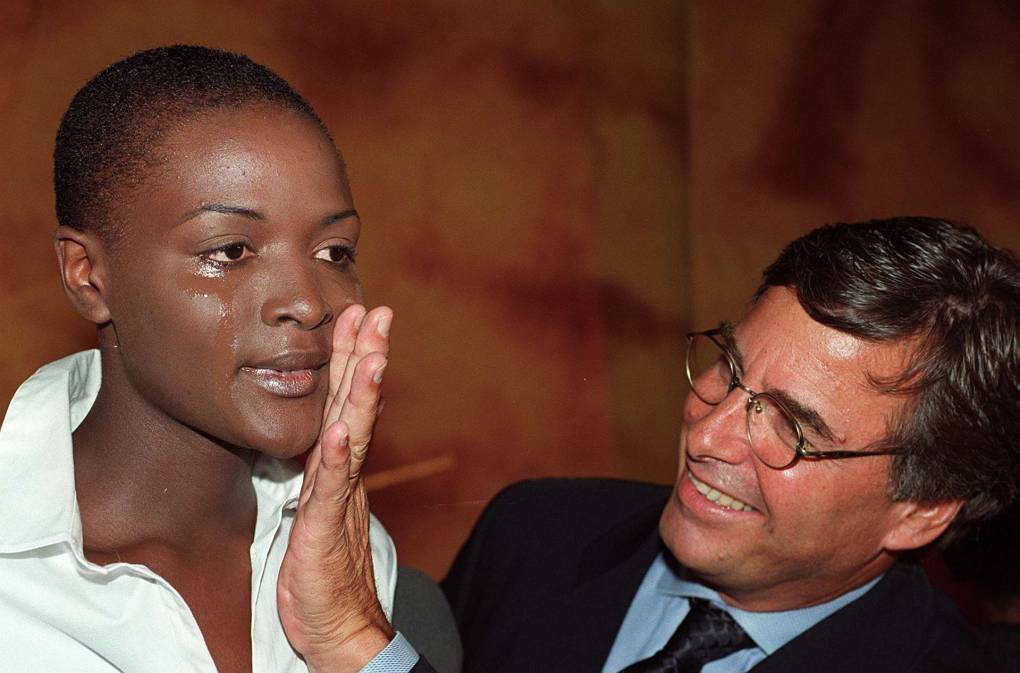
"caption": "President of Elite Model Management, John Casablancas, wipes tears from the face of Benvinda Mundenge—the winner of the 'Face of Africa' model competition. Namibia, 1999.",
"description": "President of Elite Model Management, John Casablancas, wipes tears from the face of Benvinda Mundenge—the winner of the 'Face of Africa' model competition. Namibia, 1999.",
"title": "President of Elite Model Management, John Casablancas, wipes tears from the face of Benvinda Mundenge—the winner of the 'Face of Africa' model competition. Namibia, 1999.",
"credit": "ANNA ZIEMINSKI/AFP via Getty Images",
"status": "inherit",
"isLoading": false,
"fetchFailed": false
},
"arts_13886658": {
"type": "attachments",
"id": "arts_13886658",
"meta": {
"index": "attachments_1716263798",
"site": "arts",
"id": "13886658",
"found": true
},
"parent": 13886388,
"imgSizes": {
"twentyfourteen-full-width": {
"file": "https://ww2.kqed.org/app/uploads/sites/2/2020/09/BP_KQED_8-1038x576.jpeg",
"width": 1038,
"mimeType": "image/jpeg",
"height": 576
},
"thumbnail": {
"file": "https://ww2.kqed.org/app/uploads/sites/2/2020/09/BP_KQED_8-160x90.jpeg",
"width": 160,
"mimeType": "image/jpeg",
"height": 90
},
"post-thumbnail": {
"file": "https://ww2.kqed.org/app/uploads/sites/2/2020/09/BP_KQED_8-672x372.jpeg",
"width": 672,
"mimeType": "image/jpeg",
"height": 372
},
"kqedFullSize": {
"file": "https://ww2.kqed.org/app/uploads/sites/2/2020/09/BP_KQED_8-scaled.jpeg",
"width": 2560,
"height": 1440
},
"2048x2048": {
"file": "https://ww2.kqed.org/app/uploads/sites/2/2020/09/BP_KQED_8-2048x1152.jpeg",
"width": 2048,
"mimeType": "image/jpeg",
"height": 1152
},
"large": {
"file": "https://ww2.kqed.org/app/uploads/sites/2/2020/09/BP_KQED_8-1020x574.jpeg",
"width": 1020,
"mimeType": "image/jpeg",
"height": 574
},
"1536x1536": {
"file": "https://ww2.kqed.org/app/uploads/sites/2/2020/09/BP_KQED_8-1536x864.jpeg",
"width": 1536,
"mimeType": "image/jpeg",
"height": 864
},
"full-width": {
"file": "https://ww2.kqed.org/app/uploads/sites/2/2020/09/BP_KQED_8-1920x1080.jpeg",
"width": 1920,
"mimeType": "image/jpeg",
"height": 1080
},
"medium": {
"file": "https://ww2.kqed.org/app/uploads/sites/2/2020/09/BP_KQED_8-800x450.jpeg",
"width": 800,
"mimeType": "image/jpeg",
"height": 450
},
"medium_large": {
"file": "https://ww2.kqed.org/app/uploads/sites/2/2020/09/BP_KQED_8-768x432.jpeg",
"width": 768,
"mimeType": "image/jpeg",
"height": 432
}
},
"publishDate": 1600799445,
"modified": 1600799545,
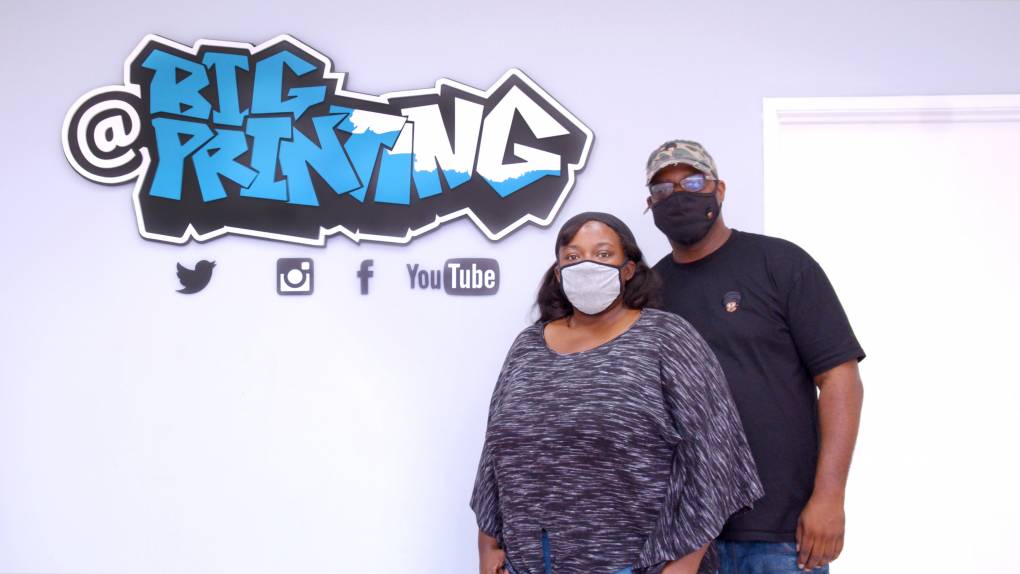
"caption": "Kesney and Dawaud Muhammad of Big Printing T-shirt Clothing",
"description": "Kesney and Dawaud Muhammad of Big Printing T-shirt Clothing",
"title": "Kesney and Dawaud Muhammad of Big Printing T-shirt Clothing",
"credit": " Lauren J. Richardson of LacedMedia",
"status": "inherit",
"isLoading": false,
"fetchFailed": false
},
"arts_13886693": {
"type": "attachments",
"id": "arts_13886693",
"meta": {
"index": "attachments_1716263798",
"site": "arts",
"id": "13886693",
"found": true
},
"parent": 13886632,
"imgSizes": {
"twentyfourteen-full-width": {
"file": "https://ww2.kqed.org/app/uploads/sites/2/2020/09/WIneries.Performative-1038x576.jpg",
"width": 1038,
"mimeType": "image/jpeg",
"height": 576
},
"thumbnail": {
"file": "https://ww2.kqed.org/app/uploads/sites/2/2020/09/WIneries.Performative-160x120.jpg",
"width": 160,
"mimeType": "image/jpeg",
"height": 120
},
"post-thumbnail": {
"file": "https://ww2.kqed.org/app/uploads/sites/2/2020/09/WIneries.Performative-672x372.jpg",
"width": 672,
"mimeType": "image/jpeg",
"height": 372
},
"kqedFullSize": {
"file": "https://ww2.kqed.org/app/uploads/sites/2/2020/09/WIneries.Performative.jpg",
"width": 1280,
"height": 960
},
"large": {
"file": "https://ww2.kqed.org/app/uploads/sites/2/2020/09/WIneries.Performative-1020x765.jpg",
"width": 1020,
"mimeType": "image/jpeg",
"height": 765
},
"medium": {
"file": "https://ww2.kqed.org/app/uploads/sites/2/2020/09/WIneries.Performative-800x600.jpg",
"width": 800,
"mimeType": "image/jpeg",
"height": 600
},
"medium_large": {
"file": "https://ww2.kqed.org/app/uploads/sites/2/2020/09/WIneries.Performative-768x576.jpg",
"width": 768,
"mimeType": "image/jpeg",
"height": 576
}
},
"publishDate": 1600813777,
"modified": 1600814130,
"caption": "After years of working as a wine country influencer, Amber Lucas wrestled with the conspicuous silence from wineries about the Black Lives Matter movement.",
"description": "After years of working as a wine country influencer, Amber Lucas wrestled with the conspicuous silence from wineries about the Black Lives Matter movement.",
"title": "WIneries.Performative",
"credit": "Courtesy Amber Lucas",
"status": "inherit",
"isLoading": false,
"fetchFailed": false
},
"arts_13886193": {
"type": "attachments",
"id": "arts_13886193",
"meta": {
"index": "attachments_1716263798",
"site": "arts",
"id": "13886193",
"found": true
},
"parent": 13885918,
"imgSizes": {
"twentyfourteen-full-width": {
"file": "https://ww2.kqed.org/app/uploads/sites/2/2020/09/FullSizeRender-1-1038x576.jpeg",
"width": 1038,
"mimeType": "image/jpeg",
"height": 576
},
"thumbnail": {
"file": "https://ww2.kqed.org/app/uploads/sites/2/2020/09/FullSizeRender-1-160x92.jpeg",
"width": 160,
"mimeType": "image/jpeg",
"height": 92
},
"post-thumbnail": {
"file": "https://ww2.kqed.org/app/uploads/sites/2/2020/09/FullSizeRender-1-672x372.jpeg",
"width": 672,
"mimeType": "image/jpeg",
"height": 372
},
"kqedFullSize": {
"file": "https://ww2.kqed.org/app/uploads/sites/2/2020/09/FullSizeRender-1.jpeg",
"width": 1957,
"height": 1125
},
"large": {
"file": "https://ww2.kqed.org/app/uploads/sites/2/2020/09/FullSizeRender-1-1020x586.jpeg",
"width": 1020,
"mimeType": "image/jpeg",
"height": 586
},
"1536x1536": {
"file": "https://ww2.kqed.org/app/uploads/sites/2/2020/09/FullSizeRender-1-1536x883.jpeg",
"width": 1536,
"mimeType": "image/jpeg",
"height": 883
},
"full-width": {
"file": "https://ww2.kqed.org/app/uploads/sites/2/2020/09/FullSizeRender-1-1920x1104.jpeg",
"width": 1920,
"mimeType": "image/jpeg",
"height": 1104
},
"medium": {
"file": "https://ww2.kqed.org/app/uploads/sites/2/2020/09/FullSizeRender-1-800x460.jpeg",
"width": 800,
"mimeType": "image/jpeg",
"height": 460
},
"medium_large": {
"file": "https://ww2.kqed.org/app/uploads/sites/2/2020/09/FullSizeRender-1-768x441.jpeg",
"width": 768,
"mimeType": "image/jpeg",
"height": 441
}
},
"publishDate": 1599804508,
"modified": 1599805592,
"caption": "Just a few of the of the folks who make up Grand Nationx, on set of a video shoot in Oakland.",
"description": "Just a few of the of the folks who make up Grand Nationx, on set of a video shoot in Oakland.",
"title": "Just a few of the of the folks who make up Grand Nationx, on set of a video shoot in Oakland.",
"credit": "Grand Nationxl",
"status": "inherit",
"isLoading": false,
"fetchFailed": false
},
"arts_13885844": {
"type": "attachments",
"id": "arts_13885844",
"meta": {
"index": "attachments_1716263798",
"site": "arts",
"id": "13885844",
"found": true
},
"parent": 13885533,
"imgSizes": {
"twentyfourteen-full-width": {
"file": "https://ww2.kqed.org/app/uploads/sites/2/2020/09/Reface-2-1038x576.jpg",
"width": 1038,
"mimeType": "image/jpeg",
"height": 576
},
"thumbnail": {
"file": "https://ww2.kqed.org/app/uploads/sites/2/2020/09/Reface-2-160x99.jpg",
"width": 160,
"mimeType": "image/jpeg",
"height": 99
},
"post-thumbnail": {
"file": "https://ww2.kqed.org/app/uploads/sites/2/2020/09/Reface-2-672x372.jpg",
"width": 672,
"mimeType": "image/jpeg",
"height": 372
},
"kqedFullSize": {
"file": "https://ww2.kqed.org/app/uploads/sites/2/2020/09/Reface-2-scaled.jpg",
"width": 2560,
"height": 1584
},
"2048x2048": {
"file": "https://ww2.kqed.org/app/uploads/sites/2/2020/09/Reface-2-2048x1267.jpg",
"width": 2048,
"mimeType": "image/jpeg",
"height": 1267
},
"large": {
"file": "https://ww2.kqed.org/app/uploads/sites/2/2020/09/Reface-2-1020x631.jpg",
"width": 1020,
"mimeType": "image/jpeg",
"height": 631
},
"1536x1536": {
"file": "https://ww2.kqed.org/app/uploads/sites/2/2020/09/Reface-2-1536x951.jpg",
"width": 1536,
"mimeType": "image/jpeg",
"height": 951
},
"full-width": {
"file": "https://ww2.kqed.org/app/uploads/sites/2/2020/09/Reface-2-1920x1188.jpg",
"width": 1920,
"mimeType": "image/jpeg",
"height": 1188
},
"medium": {
"file": "https://ww2.kqed.org/app/uploads/sites/2/2020/09/Reface-2-800x495.jpg",
"width": 800,
"mimeType": "image/jpeg",
"height": 495
},
"medium_large": {
"file": "https://ww2.kqed.org/app/uploads/sites/2/2020/09/Reface-2-768x475.jpg",
"width": 768,
"mimeType": "image/jpeg",
"height": 475
}
},
"publishDate": 1599247466,
"modified": 1599247552,
"caption": "My face on the bodies of Miley Cyrus, Kylie Jenner and Beyoncé, as created by Reface.",
"description": "My face on the bodies of Miley Cyrus, Kylie Jenner and Beyoncé, as created by Reface.",
"title": "My face on the bodies of Miley Cyrus, Kylie Jenner and Beyoncé, as created by Reface.",
"credit": "Reface/Rae Alexandra",
"status": "inherit",
"isLoading": false,
"fetchFailed": false
},
"arts_13885685": {
"type": "attachments",
"id": "arts_13885685",
"meta": {
"index": "attachments_1716263798",
"site": "arts",
"id": "13885685",
"found": true
},
"parent": 13885666,
"imgSizes": {
"twentyfourteen-full-width": {
"file": "https://ww2.kqed.org/app/uploads/sites/2/2020/09/GettyImages-1270307239-1038x576.jpg",
"width": 1038,
"mimeType": "image/jpeg",
"height": 576
},
"thumbnail": {
"file": "https://ww2.kqed.org/app/uploads/sites/2/2020/09/GettyImages-1270307239-160x106.jpg",
"width": 160,
"mimeType": "image/jpeg",
"height": 106
},
"post-thumbnail": {
"file": "https://ww2.kqed.org/app/uploads/sites/2/2020/09/GettyImages-1270307239-672x372.jpg",
"width": 672,
"mimeType": "image/jpeg",
"height": 372
},
"kqedFullSize": {
"file": "https://ww2.kqed.org/app/uploads/sites/2/2020/09/GettyImages-1270307239-scaled.jpg",
"width": 2560,
"height": 1703
},
"2048x2048": {
"file": "https://ww2.kqed.org/app/uploads/sites/2/2020/09/GettyImages-1270307239-2048x1363.jpg",
"width": 2048,
"mimeType": "image/jpeg",
"height": 1363
},
"large": {
"file": "https://ww2.kqed.org/app/uploads/sites/2/2020/09/GettyImages-1270307239-1020x679.jpg",
"width": 1020,
"mimeType": "image/jpeg",
"height": 679
},
"1536x1536": {
"file": "https://ww2.kqed.org/app/uploads/sites/2/2020/09/GettyImages-1270307239-1536x1022.jpg",
"width": 1536,
"mimeType": "image/jpeg",
"height": 1022
},
"full-width": {
"file": "https://ww2.kqed.org/app/uploads/sites/2/2020/09/GettyImages-1270307239-1920x1277.jpg",
"width": 1920,
"mimeType": "image/jpeg",
"height": 1277
},
"medium": {
"file": "https://ww2.kqed.org/app/uploads/sites/2/2020/09/GettyImages-1270307239-800x532.jpg",
"width": 800,
"mimeType": "image/jpeg",
"height": 532
},
"medium_large": {
"file": "https://ww2.kqed.org/app/uploads/sites/2/2020/09/GettyImages-1270307239-768x511.jpg",
"width": 768,
"mimeType": "image/jpeg",
"height": 511
}
},
"publishDate": 1599080025,
"modified": 1600931918,
"caption": "David Blaine performs the stunt 'Ascension' on September 2, 2020 in Page, Arizona. ",
"description": "David Blaine performs the stunt 'Ascension' on September 2, 2020 in Page, Arizona. ",
"title": "David Blaine performs the stunt 'Ascension' on September 2, 2020 in Page, Arizona.",
"credit": "David Becker/Getty Images for YouTube Originals",
"status": "inherit",
"isLoading": false,
"fetchFailed": false
},
"arts_13885683": {
"type": "attachments",
"id": "arts_13885683",
"meta": {
"index": "attachments_1716263798",
"site": "arts",
"id": "13885683",
"found": true
},
"parent": 13885592,
"imgSizes": {
"twentyfourteen-full-width": {
"file": "https://ww2.kqed.org/app/uploads/sites/2/2020/09/Funeral.Hearse-1038x576.jpg",
"width": 1038,
"mimeType": "image/jpeg",
"height": 576
},
"thumbnail": {
"file": "https://ww2.kqed.org/app/uploads/sites/2/2020/09/Funeral.Hearse-160x107.jpg",
"width": 160,
"mimeType": "image/jpeg",
"height": 107
},
"post-thumbnail": {
"file": "https://ww2.kqed.org/app/uploads/sites/2/2020/09/Funeral.Hearse-672x372.jpg",
"width": 672,
"mimeType": "image/jpeg",
"height": 372
},
"kqedFullSize": {
"file": "https://ww2.kqed.org/app/uploads/sites/2/2020/09/Funeral.Hearse.jpg",
"width": 1100,
"height": 734
},
"large": {
"file": "https://ww2.kqed.org/app/uploads/sites/2/2020/09/Funeral.Hearse-1020x681.jpg",
"width": 1020,
"mimeType": "image/jpeg",
"height": 681
},
"medium": {
"file": "https://ww2.kqed.org/app/uploads/sites/2/2020/09/Funeral.Hearse-800x534.jpg",
"width": 800,
"mimeType": "image/jpeg",
"height": 534
},
"medium_large": {
"file": "https://ww2.kqed.org/app/uploads/sites/2/2020/09/Funeral.Hearse-768x512.jpg",
"width": 768,
"mimeType": "image/jpeg",
"height": 512
}
},
"publishDate": 1599079966,
"modified": 1599080077,
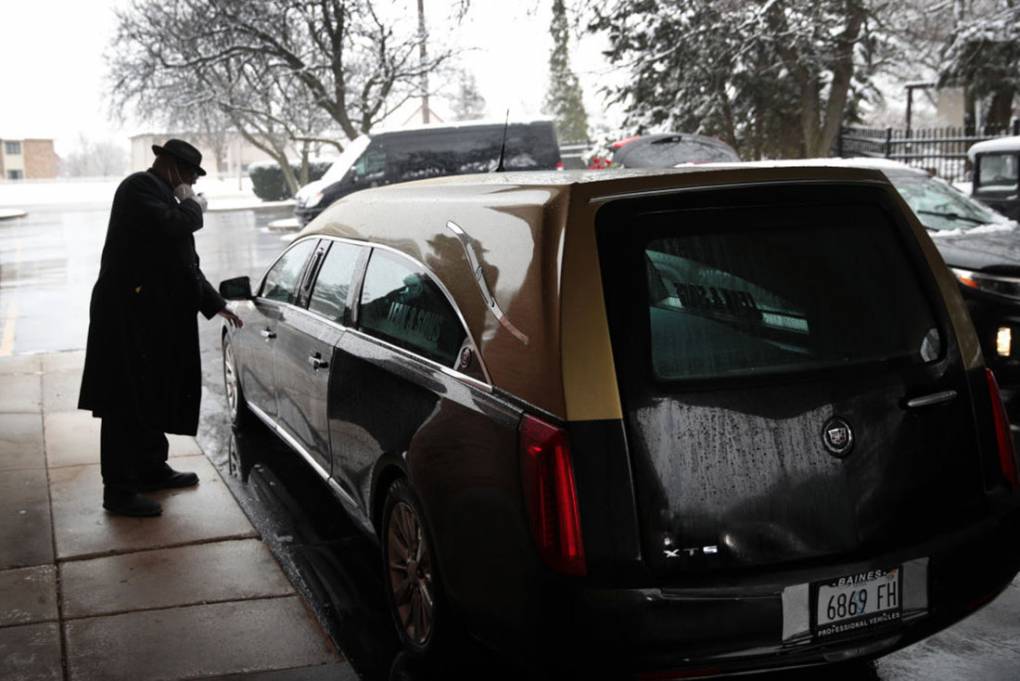
"caption": "Kendall Harris of Leak and Sons' Funeral Chapels prepares to transport remains to a church for a funeral service April 17, 2020 in Country Club Hills, Illinois. Because of the COVID-19 pandemic, funerals are limited to only 10 guests in the chapel or church.",
"description": "Kendall Harris of Leak and Sons' Funeral Chapels prepares to transport remains to a church for a funeral service April 17, 2020 in Country Club Hills, Illinois. Because of the COVID-19 pandemic, funerals are limited to only 10 guests in the chapel or church.",
"title": "Funeral.Hearse",
"credit": "Scott Olson/Getty Images",
"status": "inherit",
"isLoading": false,
"fetchFailed": false
},
"arts_13885641": {
"type": "attachments",
"id": "arts_13885641",
"meta": {
"index": "attachments_1716263798",
"site": "arts",
"id": "13885641",
"found": true
},
"parent": 13885625,
"imgSizes": {
"twentyfourteen-full-width": {
"file": "https://ww2.kqed.org/app/uploads/sites/2/2020/09/VelvetBandit.Main_-1038x576.jpg",
"width": 1038,
"mimeType": "image/jpeg",
"height": 576
},
"thumbnail": {
"file": "https://ww2.kqed.org/app/uploads/sites/2/2020/09/VelvetBandit.Main_-160x90.jpg",
"width": 160,
"mimeType": "image/jpeg",
"height": 90
},
"post-thumbnail": {
"file": "https://ww2.kqed.org/app/uploads/sites/2/2020/09/VelvetBandit.Main_-672x372.jpg",
"width": 672,
"mimeType": "image/jpeg",
"height": 372
},
"kqedFullSize": {
"file": "https://ww2.kqed.org/app/uploads/sites/2/2020/09/VelvetBandit.Main_.jpg",
"width": 1189,
"height": 669
},
"large": {
"file": "https://ww2.kqed.org/app/uploads/sites/2/2020/09/VelvetBandit.Main_-1020x574.jpg",
"width": 1020,
"mimeType": "image/jpeg",
"height": 574
},
"medium": {
"file": "https://ww2.kqed.org/app/uploads/sites/2/2020/09/VelvetBandit.Main_-800x450.jpg",
"width": 800,
"mimeType": "image/jpeg",
"height": 450
},
"medium_large": {
"file": "https://ww2.kqed.org/app/uploads/sites/2/2020/09/VelvetBandit.Main_-768x432.jpg",
"width": 768,
"mimeType": "image/jpeg",
"height": 432
}
},
"publishDate": 1599025543,
"modified": 1599025642,
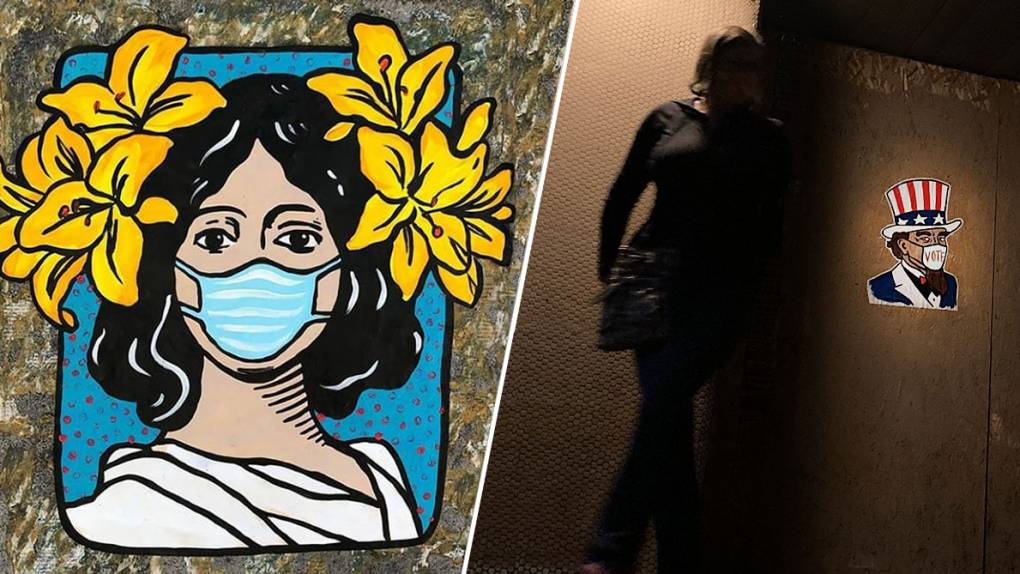
"caption": "The Velvet Bandit's street art has been prolific all across the North Bay, addressing COVID-19, voting, and other issues. ",
"description": "The Velvet Bandit's street art has been prolific all across the North Bay, addressing COVID-19, voting, and other issues. ",
"title": "VelvetBandit.Main",
"credit": "Courtesy the Velvet Bandit (L) / Gabe Meline (R)",
"status": "inherit",
"isLoading": false,
"fetchFailed": false
},
"arts_13885518": {
"type": "attachments",
"id": "arts_13885518",
"meta": {
"index": "attachments_1716263798",
"site": "arts",
"id": "13885518",
"found": true
},
"parent": 13885480,
"imgSizes": {
"twentyfourteen-full-width": {
"file": "https://ww2.kqed.org/app/uploads/sites/2/2020/08/Screen-Shot-2020-08-28-at-1.56.26-PM-1038x576.png",
"width": 1038,
"mimeType": "image/png",
"height": 576
},
"thumbnail": {
"file": "https://ww2.kqed.org/app/uploads/sites/2/2020/08/Screen-Shot-2020-08-28-at-1.56.26-PM-160x86.png",
"width": 160,
"mimeType": "image/png",
"height": 86
},
"post-thumbnail": {
"file": "https://ww2.kqed.org/app/uploads/sites/2/2020/08/Screen-Shot-2020-08-28-at-1.56.26-PM-672x372.png",
"width": 672,
"mimeType": "image/png",
"height": 372
},
"kqedFullSize": {
"file": "https://ww2.kqed.org/app/uploads/sites/2/2020/08/Screen-Shot-2020-08-28-at-1.56.26-PM.png",
"width": 1920,
"height": 1036
},
"large": {
"file": "https://ww2.kqed.org/app/uploads/sites/2/2020/08/Screen-Shot-2020-08-28-at-1.56.26-PM-1020x550.png",
"width": 1020,
"mimeType": "image/png",
"height": 550
},
"1536x1536": {
"file": "https://ww2.kqed.org/app/uploads/sites/2/2020/08/Screen-Shot-2020-08-28-at-1.56.26-PM-1536x829.png",
"width": 1536,
"mimeType": "image/png",
"height": 829
},
"medium": {
"file": "https://ww2.kqed.org/app/uploads/sites/2/2020/08/Screen-Shot-2020-08-28-at-1.56.26-PM-800x432.png",
"width": 800,
"mimeType": "image/png",
"height": 432
},
"medium_large": {
"file": "https://ww2.kqed.org/app/uploads/sites/2/2020/08/Screen-Shot-2020-08-28-at-1.56.26-PM-768x414.png",
"width": 768,
"mimeType": "image/png",
"height": 414
}
},
"publishDate": 1598648266,
"modified": 1598648356,
"caption": "Tucker Carlson, Ann Coulter and other right-wing commentators have elevated alleged Kenosha shooter Kyle Rittenhouse as a hero. It's rhetoric that normalizes extremist violence.",
"description": "Tucker Carlson, Ann Coulter and other right-wing commentators have elevated alleged Kenosha shooter Kyle Rittenhouse as a hero. It's rhetoric that normalizes extremist violence.",
"title": "Screen Shot 2020-08-28 at 1.56.26 PM",
"credit": "Fox News/YouTube",
"status": "inherit",
"isLoading": false,
"fetchFailed": false
},
"arts_13885284": {
"type": "attachments",
"id": "arts_13885284",
"meta": {
"index": "attachments_1716263798",
"site": "arts",
"id": "13885284",
"found": true
},
"parent": 13882749,
"imgSizes": {
"twentyfourteen-full-width": {
"file": "https://ww2.kqed.org/app/uploads/sites/2/2020/08/GettyImages-1183851343-1024x576.jpg",
"width": 1024,
"mimeType": "image/jpeg",
"height": 576
},
"thumbnail": {
"file": "https://ww2.kqed.org/app/uploads/sites/2/2020/08/GettyImages-1183851343-160x94.jpg",
"width": 160,
"mimeType": "image/jpeg",
"height": 94
},
"post-thumbnail": {
"file": "https://ww2.kqed.org/app/uploads/sites/2/2020/08/GettyImages-1183851343-672x372.jpg",
"width": 672,
"mimeType": "image/jpeg",
"height": 372
},
"kqedFullSize": {
"file": "https://ww2.kqed.org/app/uploads/sites/2/2020/08/GettyImages-1183851343.jpg",
"width": 1024,
"height": 603
},
"large": {
"file": "https://ww2.kqed.org/app/uploads/sites/2/2020/08/GettyImages-1183851343-1020x601.jpg",
"width": 1020,
"mimeType": "image/jpeg",
"height": 601
},
"medium": {
"file": "https://ww2.kqed.org/app/uploads/sites/2/2020/08/GettyImages-1183851343-800x471.jpg",
"width": 800,
"mimeType": "image/jpeg",
"height": 471
},
"medium_large": {
"file": "https://ww2.kqed.org/app/uploads/sites/2/2020/08/GettyImages-1183851343-768x452.jpg",
"width": 768,
"mimeType": "image/jpeg",
"height": 452
}
},
"publishDate": 1598385746,
"modified": 1598385869,
"caption": "Elon Musk unveiling a Tesla Cybertruck, pre-pandemic, November 2019. ",
"description": "Elon Musk unveiling a Tesla Cybertruck, pre-pandemic, November 2019. ",
"title": "Elon Musk unveiling a Tesla Cybertruck, pre-pandemic, November 2019.",
"credit": "FREDERIC J. BROWN/AFP via Getty Images",
"status": "inherit",
"isLoading": false,
"fetchFailed": false
},
"arts_13885203": {
"type": "attachments",
"id": "arts_13885203",
"meta": {
"index": "attachments_1716263798",
"site": "arts",
"id": "13885203",
"found": true
},
"parent": 13885195,
"imgSizes": {
"twentyfourteen-full-width": {
"file": "https://ww2.kqed.org/app/uploads/sites/2/2020/08/Ef52QJUVoAY0kx0-1038x576.jpg",
"width": 1038,
"mimeType": "image/jpeg",
"height": 576
},
"thumbnail": {
"file": "https://ww2.kqed.org/app/uploads/sites/2/2020/08/Ef52QJUVoAY0kx0-160x120.jpg",
"width": 160,
"mimeType": "image/jpeg",
"height": 120
},
"post-thumbnail": {
"file": "https://ww2.kqed.org/app/uploads/sites/2/2020/08/Ef52QJUVoAY0kx0-672x372.jpg",
"width": 672,
"mimeType": "image/jpeg",
"height": 372
},
"kqedFullSize": {
"file": "https://ww2.kqed.org/app/uploads/sites/2/2020/08/Ef52QJUVoAY0kx0.jpg",
"width": 2048,
"height": 1536
},
"large": {
"file": "https://ww2.kqed.org/app/uploads/sites/2/2020/08/Ef52QJUVoAY0kx0-1020x765.jpg",
"width": 1020,
"mimeType": "image/jpeg",
"height": 765
},
"1536x1536": {
"file": "https://ww2.kqed.org/app/uploads/sites/2/2020/08/Ef52QJUVoAY0kx0-1536x1152.jpg",
"width": 1536,
"mimeType": "image/jpeg",
"height": 1152
},
"full-width": {
"file": "https://ww2.kqed.org/app/uploads/sites/2/2020/08/Ef52QJUVoAY0kx0-1920x1440.jpg",
"width": 1920,
"mimeType": "image/jpeg",
"height": 1440
},
"medium": {
"file": "https://ww2.kqed.org/app/uploads/sites/2/2020/08/Ef52QJUVoAY0kx0-800x600.jpg",
"width": 800,
"mimeType": "image/jpeg",
"height": 600
},
"medium_large": {
"file": "https://ww2.kqed.org/app/uploads/sites/2/2020/08/Ef52QJUVoAY0kx0-768x576.jpg",
"width": 768,
"mimeType": "image/jpeg",
"height": 576
}
},
"publishDate": 1598247951,
"modified": 1615507373,
"caption": "The sign outside of California Medical Facility state prison in Vacaville, on a smoky hot August afternoon.",
"description": "The sign outside of California Medical Facility state prison in Vacaville, on a smoky hot August afternoon",
"title": "The sign outside of California Medical Facility state prison in Vacaville, on a smoky hot August afternoon",
"credit": "Pendarvis Harshaw",
"status": "inherit",
"altTag": "The sign outside of California Medical Facility state prison in Vacaville, on a smoky hot August afternoon",
"isLoading": false,
"fetchFailed": false
}
},
"audioPlayerReducer": {
"postId": "stream_live",
"isPaused": true,
"isPlaying": false,
"pfsActive": false,
"pledgeModalIsOpen": true,
"playerDrawerIsOpen": false,
"liveAudioPlayStartedAt": 0,
"liveAudioPlayContext": ""
},
"authorsReducer": {
"byline_arts_13886632": {
"type": "authors",
"id": "byline_arts_13886632",
"meta": {
"override": true
},
"slug": "byline_arts_13886632",
"name": "Amber Lucas",
"isLoading": false
},
"gmeline": {
"type": "authors",
"id": "185",
"meta": {
"index": "authors_1716337520",
"id": "185",
"found": true
},
"name": "Gabe Meline",
"firstName": "Gabe",
"lastName": "Meline",
"slug": "gmeline",
"email": "gmeline@kqed.org",
"display_author_email": true,
"staff_mastheads": [
"arts"
],
"title": "Senior Editor, KQED Arts & Culture",
"bio": "Gabe Meline entered journalism at age 15 making photocopied zines, and has since earned awards from the Edward R. Murrow Awards, the Society for Professional Journalists, the Online Journalism Awards, the Association of Alternative Newsweeklies and the California Newspaper Publishers Association. Prior to KQED, he was the editor of the \u003cem>North Bay Bohemian\u003c/em> and a touring musician. He lives with his wife and daughter in his hometown of Santa Rosa, CA.",
"avatar": "https://secure.gravatar.com/avatar/5bebe57be0d8bc2dd318934feb47299e2d2d10cba28d09d8d7afb389a2ce2bdd?s=600&d=blank&r=g",
"twitter": null,
"bluesky": null,
"facebook": null,
"instagram": null,
"linkedin": null,
"sites": [
{
"site": "",
"roles": [
"editor"
]
},
{
"site": "arts",
"roles": [
"administrator"
]
},
{
"site": "artschool",
"roles": [
"editor"
]
},
{
"site": "news",
"roles": [
"author"
]
},
{
"site": "pop",
"roles": [
"editor"
]
},
{
"site": "bayareabites",
"roles": [
"editor"
]
},
{
"site": "food",
"roles": [
"editor"
]
},
{
"site": "forum",
"roles": [
"administrator"
]
},
{
"site": "liveblog",
"roles": [
"editor"
]
},
{
"site": "hiphop",
"roles": [
"editor"
]
}
],
"headData": {
"title": "Gabe Meline | KQED",
"description": "Senior Editor, KQED Arts & Culture",
"ogImgSrc": "https://secure.gravatar.com/avatar/5bebe57be0d8bc2dd318934feb47299e2d2d10cba28d09d8d7afb389a2ce2bdd?s=600&d=blank&r=g",
"twImgSrc": "https://secure.gravatar.com/avatar/5bebe57be0d8bc2dd318934feb47299e2d2d10cba28d09d8d7afb389a2ce2bdd?s=600&d=blank&r=g"
},
"isLoading": false,
"link": "/author/gmeline"
},
"ralexandra": {
"type": "authors",
"id": "11242",
"meta": {
"index": "authors_1716337520",
"id": "11242",
"found": true
},
"name": "Rae Alexandra",
"firstName": "Rae",
"lastName": "Alexandra",
"slug": "ralexandra",
"email": "ralexandra@kqed.org",
"display_author_email": true,
"staff_mastheads": [],
"title": "Reporter/Producer",
"bio": "Rae Alexandra is a Reporter/Producer for KQED Arts & Culture, and the creator/author of the \u003ca href=\"https://www.kqed.org/arts/program/rebel-girls-from-bay-area-history\">Rebel Girls From Bay Area History\u003c/a> and \u003ca href=\"https://www.kqed.org/bizarrebayarea\">Bizarre Bay Area\u003c/a> series. Her debut book, \u003ca href=\"https://citylights.com/politics-current-events-history/unsung-heroines35-women-who-changed/\">Unsung Heroines: 35 Women Who Changed the Bay Area\u003c/a> was published by City Lights in March 2026. In 2023, Rae was awarded an SPJ Excellence in Journalism Award for Arts & Culture. Rae was born and raised in Wales and subsequently — even after two decades in Northern California — still uses phrases that regularly baffle her coworkers.",
"avatar": "https://secure.gravatar.com/avatar/edfee8176c80cc0a382b051190f5341997df378a934a5774dcb0977732dfd401?s=600&d=blank&r=g",
"twitter": null,
"bluesky": null,
"facebook": null,
"instagram": null,
"linkedin": null,
"sites": [
{
"site": "arts",
"roles": [
"subscriber"
]
},
{
"site": "news",
"roles": [
"subscriber"
]
},
{
"site": "pop",
"roles": [
"subscriber"
]
},
{
"site": "bayareabites",
"roles": [
"subscriber"
]
},
{
"site": "science",
"roles": [
"subscriber"
]
}
],
"headData": {
"title": "Rae Alexandra | KQED",
"description": "Reporter/Producer",
"ogImgSrc": "https://secure.gravatar.com/avatar/edfee8176c80cc0a382b051190f5341997df378a934a5774dcb0977732dfd401?s=600&d=blank&r=g",
"twImgSrc": "https://secure.gravatar.com/avatar/edfee8176c80cc0a382b051190f5341997df378a934a5774dcb0977732dfd401?s=600&d=blank&r=g"
},
"isLoading": false,
"link": "/author/ralexandra"
},
"nvoynovskaya": {
"type": "authors",
"id": "11387",
"meta": {
"index": "authors_1716337520",
"id": "11387",
"found": true
},
"name": "Nastia Voynovskaya",
"firstName": "Nastia",
"lastName": "Voynovskaya",
"slug": "nvoynovskaya",
"email": "nvoynovskaya@kqed.org",
"display_author_email": false,
"staff_mastheads": [
"arts"
],
"title": "Editor and reporter",
"bio": "Nastia Voynovskaya is a reporter, editor and host at KQED Arts & Culture. She's been covering the arts in the Bay Area for over a decade, with a focus on music, queer culture, labor issues and grassroots organizing. She has edited KQED story series such as Trans Bay: A History of San Francisco's Gender-Diverse Community, and co-created KQED's Bay Area hip-hop history project, That's My Word. Nastia's work has been recognized by the Society of Professional Journalists and San Francisco Press Club. She regularly appears on podcasts and radio programs, including NPR's All Songs Considered, and hosts live events where music, culture and conversation meet.",
"avatar": "https://secure.gravatar.com/avatar/5025ee460e5a85d69ca20ea6c6f2f80d7e17795c828f61ea3aecfcd924e9042e?s=600&d=blank&r=g",
"twitter": null,
"bluesky": null,
"facebook": null,
"instagram": "https://www.instagram.com/nananastia/",
"linkedin": null,
"sites": [
{
"site": "",
"roles": [
"editor"
]
},
{
"site": "arts",
"roles": [
"administrator"
]
},
{
"site": "news",
"roles": [
"editor"
]
},
{
"site": "pop",
"roles": [
"administrator"
]
},
{
"site": "bayareabites",
"roles": [
"editor"
]
},
{
"site": "podcasts",
"roles": [
"editor"
]
},
{
"site": "hiphop",
"roles": [
"editor"
]
}
],
"headData": {
"title": "Nastia Voynovskaya | KQED",
"description": "Editor and reporter",
"ogImgSrc": "https://secure.gravatar.com/avatar/5025ee460e5a85d69ca20ea6c6f2f80d7e17795c828f61ea3aecfcd924e9042e?s=600&d=blank&r=g",
"twImgSrc": "https://secure.gravatar.com/avatar/5025ee460e5a85d69ca20ea6c6f2f80d7e17795c828f61ea3aecfcd924e9042e?s=600&d=blank&r=g"
},
"isLoading": false,
"link": "/author/nvoynovskaya"
},
"ogpenn": {
"type": "authors",
"id": "11491",
"meta": {
"index": "authors_1716337520",
"id": "11491",
"found": true
},
"name": "Pendarvis Harshaw",
"firstName": "Pendarvis",
"lastName": "Harshaw",
"slug": "ogpenn",
"email": "ogpenn@gmail.com",
"display_author_email": false,
"staff_mastheads": [
"arts"
],
"title": "Community Engagement Reporter",
"bio": "Pendarvis Harshaw is an educator, host and writer with KQED Arts.",
"avatar": "https://secure.gravatar.com/avatar/972b77ee8e3f346ae2b00622661187fbfabd059b5693bbdc1475ea7a722fd4cd?s=600&d=blank&r=g",
"twitter": null,
"bluesky": null,
"facebook": null,
"instagram": "ogpenn",
"linkedin": null,
"sites": [
{
"site": "arts",
"roles": [
"administrator"
]
},
{
"site": "news",
"roles": [
"editor"
]
},
{
"site": "bayareabites",
"roles": [
"author"
]
},
{
"site": "hiphop",
"roles": [
"editor"
]
}
],
"headData": {
"title": "Pendarvis Harshaw | KQED",
"description": "Community Engagement Reporter",
"ogImgSrc": "https://secure.gravatar.com/avatar/972b77ee8e3f346ae2b00622661187fbfabd059b5693bbdc1475ea7a722fd4cd?s=600&d=blank&r=g",
"twImgSrc": "https://secure.gravatar.com/avatar/972b77ee8e3f346ae2b00622661187fbfabd059b5693bbdc1475ea7a722fd4cd?s=600&d=blank&r=g"
},
"isLoading": false,
"link": "/author/ogpenn"
}
},
"pagesReducer": {
"arts_tag_commentary": {
"type": "terms",
"id": "arts_2767",
"meta": {
"index": "terms_1716263798",
"site": "arts",
"id": "2767",
"score": 8.794622
},
"featImg": null,
"name": "commentary",
"description": null,
"taxonomy": "tag",
"headData": {
"twImgId": null,
"twTitle": null,
"ogTitle": null,
"ogImgId": null,
"twDescription": null,
"description": null,
"title": "commentary Archives | KQED Arts",
"ogDescription": null
},
"ttid": 2779,
"slug": "commentary",
"isLoading": false,
"title": "commentary",
"pageMeta": {
"site": "arts",
"WpPageTemplate": "page-topic-editorial",
"currentPage": 12
},
"blocks": [
{
"blockName": "kqed/post-list",
"attrs": {
"layout": "cardArticle2",
"query": "posts/arts?tag=commentary",
"seeMore": false,
"paginated": true,
"page": 12
}
},
{
"blockName": "kqed/ad"
}
]
}
},
"pfsSessionReducer": {},
"postsReducer": {
"stream_live": {
"type": "live",
"id": "stream_live",
"audioUrl": "https://streams.kqed.org/kqedradio",
"title": "Live Stream",
"excerpt": "Live Stream information currently unavailable.",
"link": "/radio",
"featImg": "",
"label": {
"name": "KQED Live",
"link": "/"
}
},
"stream_kqedNewscast": {
"type": "posts",
"id": "stream_kqedNewscast",
"audioUrl": "https://www.kqed.org/.stream/anon/radio/RDnews/newscast.mp3?_=1",
"title": "KQED Newscast",
"featImg": "",
"label": {
"name": "88.5 FM",
"link": "/"
}
},
"arts_13887221": {
"type": "posts",
"id": "arts_13887221",
"meta": {
"index": "posts_1716263798",
"site": "arts",
"id": "13887221",
"score": null,
"sort": [
1601570539000
]
},
"parent": 0,
"labelTerm": {
"site": "arts"
},
"blocks": [],
"publishDate": 1601570539,
"format": "standard",
"title": "Chrissy Teigen Sharing Her Miscarriage Agony Will Help Thousands of Women",
"headTitle": "Chrissy Teigen Sharing Her Miscarriage Agony Will Help Thousands of Women | KQED",
"content": "\u003cp>Last night, Chrissy Teigen and John Legend lost their third child, less than two weeks after Teigen was put on \u003ca href=\"https://www.instagram.com/p/CFX17mQpqci/\" target=\"_blank\" rel=\"noopener noreferrer\">bed rest\u003c/a>. The couple announced the news on social media immediately, accompanied by a photo of Teigen, bereft and weeping in a hospital bed.\u003c/p>\n\u003cp>https://twitter.com/chrissyteigen/status/1311517048858574848\u003c/p>\n\u003cp>“We are shocked and in the kind of deep pain you only hear about,” Teigen wrote. “The kind of pain we’ve never felt before. We were never able to stop the bleeding and give our baby the fluids he needed, despite bags and bags of blood transfusions. It just wasn’t enough.”\u003c/p>\n\u003cp>The speed and rawness of the post was surprising, even from a woman whose unfiltered sharing has made her one of the most popular figures on social media. In the middle of the most painful moment of her life, it turns out, Chrissy Teigen still tells it like it is.\u003c/p>\n\u003cp>https://twitter.com/chrissyteigen/status/1311523032289091584\u003c/p>\n\u003cp>Teigen’s decision to speak publicly during the couple’s shock and grief isn’t just a continuation of their desire to live openly and authentically in the public eye. It’s also not just the quickest way to get painful news out. Their honesty in this moment is undoubtedly going to help couples, but especially women, who have similar experiences in the future.\u003c/p>\n\u003cp>Figures vary depending on where you look, but \u003ca href=\"https://www.self.com/story/why-you-shouldnt-feel-guilty-after-a-miscarriage\" target=\"_blank\" rel=\"noopener noreferrer\">10–25%\u003c/a> of American pregnancies end in miscarriage. That’s about a million per year. And yet most women who do lose a pregnancy \u003ca href=\"https://www.self.com/story/why-you-shouldnt-feel-guilty-after-a-miscarriage\" target=\"_blank\" rel=\"noopener noreferrer\">experience guilt\u003c/a> after the fact. That’s in no small part due to common misconceptions and old myths around what causes it to happen.\u003c/p>\n\u003cp>[ad fullwidth]\u003c/p>\n\u003cp>One \u003ca href=\"http://www.einstein.yu.edu/news/releases/1089/survey-finds-miscarriage-widely-misunderstood/\" target=\"_blank\" rel=\"noopener noreferrer\">2015 research study\u003c/a> found a majority of respondents believed that most pregnancy losses were caused by either stress or the lifting of heavy objects. Between 20% and 41% believed miscarriage could be caused by an STD, previous use of contraceptives, or even simply just having an argument. Not only are \u003ca href=\"https://www.mayoclinic.org/diseases-conditions/pregnancy-loss-miscarriage/symptoms-causes/syc-20354298\" target=\"_blank\" rel=\"noopener noreferrer\">none of these things listed\u003c/a> as potential risks by the Mayo Clinic, the reality is that 60% of pregnancies fail due to genetic problems within the fetus that are not caused by anything the mother did. [aside postid='arts_13874517']\u003c/p>\n\u003cp>The misplaced guilt can also be accompanied by shame. Which is not that surprising when one considers how socially conditioned women are to feel shame about our bodies, even under normal circumstances. Shame over their natural functions, shame (for the more religious among us) over their sinfulness and, most of all, shame over their imperfections. When our bodies are anything but perfect, women are taught, you’d better cover up and hide until you fix it.\u003c/p>\n\u003cp>The photo Teigen posted of herself, broken and in all her grief, was decidedly and refreshingly unashamed. This, she told us with that image, is the aftermath of an accident; a cruel twist of fate; an imperfection that could not be fixed. By posting the picture, Teigen didn’t just face the loss head-on, she asked us to look at it with her. She asked us to understand. And in doing that, she forced America to take a major step forward in destigmatizing pregnancy loss and its aftermath.\u003c/p>\n\u003cp>Other celebrities have bravely shared their miscarriages with the public before. \u003ca href=\"https://www.youtube.com/watch?v=bUG_nM-_LOk\" target=\"_blank\" rel=\"noopener noreferrer\">Beyoncé\u003c/a>, \u003ca href=\"https://www.youtube.com/watch?v=jVMwDd8V_kY\" target=\"_blank\" rel=\"noopener noreferrer\">Tori Amos\u003c/a> and \u003ca href=\"https://www.youtube.com/watch?v=uiSp79h3wX8\" target=\"_blank\" rel=\"noopener noreferrer\">Lily Allen\u003c/a> all wrote songs about theirs. Courtney Cox, Sophia Loren and Giuliana Rancic all openly discussed the devastation of their miscarriages. But these stories came later, in a calmer place, after a moment to process, and after the tears had dried. [aside postid='arts_13884653']\u003c/p>\n\u003cp>Teigen didn’t wait to get herself together. And in responding the way she did, she didn’t just tell women everywhere it’s okay to not be okay, she showed them what the world falling apart looked like. That she did it in a format usually beholden to filters and projections of perfection was especially revelatory.\u003c/p>\n\u003cp>Then, most remarkably of all, Teigen went on to show us all how to move forward in any time of crisis. “On this darkest of days, we will grieve, we will cry our eyes out. But we will hug and love each other harder,” she wrote, “and get through it.”\u003c/p>\n\u003cp>\u003c/p>\n",
"stats": {
"hasVideo": false,
"hasChartOrMap": false,
"hasAudio": false,
"hasPolis": false,
"wordCount": 727,
"hasGoogleForm": false,
"hasGallery": false,
"hasHearkenModule": false,
"iframeSrcs": [],
"paragraphCount": 13
},
"modified": 1705020055,
"excerpt": "Teigen’s raw photo upends a format that usually asks women to hide their imperfections.",
"headData": {
"twImgId": "",
"twTitle": "",
"ogTitle": "",
"ogImgId": "",
"twDescription": "",
"description": "Teigen’s raw photo upends a format that usually asks women to hide their imperfections.",
"title": "Chrissy Teigen Sharing Her Miscarriage Agony Will Help Thousands of Women | KQED",
"ogDescription": "",
"schema": {
"@context": "https://schema.org",
"@type": "Article",
"headline": "Chrissy Teigen Sharing Her Miscarriage Agony Will Help Thousands of Women",
"datePublished": "2020-10-01T09:42:19-07:00",
"dateModified": "2024-01-11T16:40:55-08:00",
"image": "https://cdn.kqed.org/wp-content/uploads/2020/02/KQED-OG-Image@1x.png"
}
},
"guestAuthors": [],
"slug": "chrissy-teigen-sharing-her-miscarriage-agony-will-help-thousands-of-women",
"status": "publish",
"templateType": "standard",
"excludeFromSiteSearch": "Include",
"featuredImageType": "standard",
"sticky": false,
"articleAge": "0",
"path": "/arts/13887221/chrissy-teigen-sharing-her-miscarriage-agony-will-help-thousands-of-women",
"audioTrackLength": null,
"parsedContent": [
{
"type": "contentString",
"content": "\u003cdiv class=\"post-body\">\u003cp>\u003cp>Last night, Chrissy Teigen and John Legend lost their third child, less than two weeks after Teigen was put on \u003ca href=\"https://www.instagram.com/p/CFX17mQpqci/\" target=\"_blank\" rel=\"noopener noreferrer\">bed rest\u003c/a>. The couple announced the news on social media immediately, accompanied by a photo of Teigen, bereft and weeping in a hospital bed.\u003c/p>\u003c/p>\u003c/div>",
"attributes": {
"named": {},
"numeric": []
}
},
{
"type": "component",
"content": "",
"name": "singleTwitterStatus",
"attributes": {
"named": {
"id": "1311517048858574848"
},
"numeric": []
}
},
{
"type": "contentString",
"content": "\u003cdiv class=\"post-body\">\u003cp>\n\u003cp>“We are shocked and in the kind of deep pain you only hear about,” Teigen wrote. “The kind of pain we’ve never felt before. We were never able to stop the bleeding and give our baby the fluids he needed, despite bags and bags of blood transfusions. It just wasn’t enough.”\u003c/p>\n\u003cp>The speed and rawness of the post was surprising, even from a woman whose unfiltered sharing has made her one of the most popular figures on social media. In the middle of the most painful moment of her life, it turns out, Chrissy Teigen still tells it like it is.\u003c/p>\u003c/p>\u003c/div>",
"attributes": {
"named": {},
"numeric": []
}
},
{
"type": "component",
"content": "",
"name": "singleTwitterStatus",
"attributes": {
"named": {
"id": "1311523032289091584"
},
"numeric": []
}
},
{
"type": "contentString",
"content": "\u003cdiv class=\"post-body\">\u003cp>\n\u003cp>Teigen’s decision to speak publicly during the couple’s shock and grief isn’t just a continuation of their desire to live openly and authentically in the public eye. It’s also not just the quickest way to get painful news out. Their honesty in this moment is undoubtedly going to help couples, but especially women, who have similar experiences in the future.\u003c/p>\n\u003cp>Figures vary depending on where you look, but \u003ca href=\"https://www.self.com/story/why-you-shouldnt-feel-guilty-after-a-miscarriage\" target=\"_blank\" rel=\"noopener noreferrer\">10–25%\u003c/a> of American pregnancies end in miscarriage. That’s about a million per year. And yet most women who do lose a pregnancy \u003ca href=\"https://www.self.com/story/why-you-shouldnt-feel-guilty-after-a-miscarriage\" target=\"_blank\" rel=\"noopener noreferrer\">experience guilt\u003c/a> after the fact. That’s in no small part due to common misconceptions and old myths around what causes it to happen.\u003c/p>\n\u003cp>\u003c/p>\u003c/div>",
"attributes": {
"named": {},
"numeric": []
}
},
{
"type": "component",
"content": "",
"name": "ad",
"attributes": {
"named": {
"label": "fullwidth"
},
"numeric": [
"fullwidth"
]
}
},
{
"type": "contentString",
"content": "\u003cdiv class=\"post-body\">\u003cp>\u003c/p>\n\u003cp>One \u003ca href=\"http://www.einstein.yu.edu/news/releases/1089/survey-finds-miscarriage-widely-misunderstood/\" target=\"_blank\" rel=\"noopener noreferrer\">2015 research study\u003c/a> found a majority of respondents believed that most pregnancy losses were caused by either stress or the lifting of heavy objects. Between 20% and 41% believed miscarriage could be caused by an STD, previous use of contraceptives, or even simply just having an argument. Not only are \u003ca href=\"https://www.mayoclinic.org/diseases-conditions/pregnancy-loss-miscarriage/symptoms-causes/syc-20354298\" target=\"_blank\" rel=\"noopener noreferrer\">none of these things listed\u003c/a> as potential risks by the Mayo Clinic, the reality is that 60% of pregnancies fail due to genetic problems within the fetus that are not caused by anything the mother did. \u003c/p>\u003c/div>",
"attributes": {
"named": {},
"numeric": []
}
},
{
"type": "component",
"content": "",
"name": "aside",
"attributes": {
"named": {
"postid": "arts_13874517",
"label": ""
},
"numeric": []
}
},
{
"type": "contentString",
"content": "\u003cdiv class=\"post-body\">\u003cp>\u003c/p>\n\u003cp>The misplaced guilt can also be accompanied by shame. Which is not that surprising when one considers how socially conditioned women are to feel shame about our bodies, even under normal circumstances. Shame over their natural functions, shame (for the more religious among us) over their sinfulness and, most of all, shame over their imperfections. When our bodies are anything but perfect, women are taught, you’d better cover up and hide until you fix it.\u003c/p>\n\u003cp>The photo Teigen posted of herself, broken and in all her grief, was decidedly and refreshingly unashamed. This, she told us with that image, is the aftermath of an accident; a cruel twist of fate; an imperfection that could not be fixed. By posting the picture, Teigen didn’t just face the loss head-on, she asked us to look at it with her. She asked us to understand. And in doing that, she forced America to take a major step forward in destigmatizing pregnancy loss and its aftermath.\u003c/p>\n\u003cp>Other celebrities have bravely shared their miscarriages with the public before. \u003ca href=\"https://www.youtube.com/watch?v=bUG_nM-_LOk\" target=\"_blank\" rel=\"noopener noreferrer\">Beyoncé\u003c/a>, \u003ca href=\"https://www.youtube.com/watch?v=jVMwDd8V_kY\" target=\"_blank\" rel=\"noopener noreferrer\">Tori Amos\u003c/a> and \u003ca href=\"https://www.youtube.com/watch?v=uiSp79h3wX8\" target=\"_blank\" rel=\"noopener noreferrer\">Lily Allen\u003c/a> all wrote songs about theirs. Courtney Cox, Sophia Loren and Giuliana Rancic all openly discussed the devastation of their miscarriages. But these stories came later, in a calmer place, after a moment to process, and after the tears had dried. \u003c/p>\u003c/div>",
"attributes": {
"named": {},
"numeric": []
}
},
{
"type": "component",
"content": "",
"name": "aside",
"attributes": {
"named": {
"postid": "arts_13884653",
"label": ""
},
"numeric": []
}
},
{
"type": "contentString",
"content": "\u003cdiv class=\"post-body\">\u003cp>\u003c/p>\n\u003cp>Teigen didn’t wait to get herself together. And in responding the way she did, she didn’t just tell women everywhere it’s okay to not be okay, she showed them what the world falling apart looked like. That she did it in a format usually beholden to filters and projections of perfection was especially revelatory.\u003c/p>\n\u003cp>Then, most remarkably of all, Teigen went on to show us all how to move forward in any time of crisis. “On this darkest of days, we will grieve, we will cry our eyes out. But we will hug and love each other harder,” she wrote, “and get through it.”\u003c/p>\n\u003cp>\u003c/p>\n\u003c/div>\u003c/p>",
"attributes": {
"named": {},
"numeric": []
}
}
],
"link": "/arts/13887221/chrissy-teigen-sharing-her-miscarriage-agony-will-help-thousands-of-women",
"authors": [
"11242"
],
"categories": [
"arts_1",
"arts_2303",
"arts_75"
],
"tags": [
"arts_2767",
"arts_10342"
],
"featImg": "arts_13887224",
"label": "arts"
},
"arts_13887034": {
"type": "posts",
"id": "arts_13887034",
"meta": {
"index": "posts_1716263798",
"site": "arts",
"id": "13887034",
"score": null,
"sort": [
1601501829000
]
},
"parent": 0,
"labelTerm": {
"site": "arts"
},
"blocks": [],
"publishDate": 1601501829,
"format": "standard",
"title": "Fashion is About to Have Its #MeToo Moment—And It’s Long Overdue",
"headTitle": "Fashion is About to Have Its #MeToo Moment—And It’s Long Overdue | KQED",
"content": "\u003cp>On Sept. 21, a former president of Elite Model Management was formally accused by four women of sexual assault. Gérald Marie ran the European arm of Elite for 25 years. Now three models—Carré Otis, Jill Dodd and Ebba Karlsson—along with journalist Lisa Brinkworth, have filed \u003ca href=\"https://nypost.com/2020/09/27/former-elite-models-boss-accused-of-raping-models/\" target=\"_blank\" rel=\"noopener noreferrer\">legal papers\u003c/a> against Marie in Paris. Marie has “categorically” denied the accusations but, like Harvey Weinstein and Bill Cosby before him, rumors across his industry have painted him as a predator for decades.\u003c/p>\n\u003cp>Dodd wrote about being raped by Marie in her 2017 memoir, \u003ca href=\"https://www.simonandschuster.com/books/The-Currency-of-Love/Jill-Dodd/9781501150388\" target=\"_blank\" rel=\"noopener noreferrer\">\u003cem>The Currency of Love\u003c/em>\u003c/a>. Otis made similar allegations in her 2011 autobiography, \u003cem>\u003ca href=\"https://www.harpercollins.com/products/beauty-disrupted-carre-otishugo-schwyzer?variant=32205798277154\" target=\"_blank\" rel=\"noopener noreferrer\">Beauty Disrupted\u003c/a>\u003c/em>, about events she said took place when she was 17. The detail she offered was harrowing. More recently, Otis told Lisa Brinkworth in \u003ca href=\"https://www.thetimes.co.uk/article/models-reveal-serial-sexual-abuse-behind-gloss-of-fashion-world-m50hdhxlz?wgu=270525_54264_16014038901379_56b51023a3\" target=\"_blank\" rel=\"noopener noreferrer\">\u003cem>The Times\u003c/em>\u003c/a> that, “The abuse was part of what was expected on the set from agents, photographers, stylists. If you don’t comply, you don’t work.”\u003c/p>\n\u003cp>In fact, looking at incidents reported by models and in the press as far back as the ’80s, an unhappy truth emerges: Marie is not an outlier in the industry. He is just one of several modeling executives to routinely appear connected to stories that involve inappropriate objectification at best, and sexual harassment and assault at worst.\u003c/p>\n\u003cp>An echo of Otis’ sentiment was expressed in 1988 during an \u003ca href=\"https://www.youtube.com/watch?v=CH8NAaPUvlo\" target=\"_blank\" rel=\"noopener noreferrer\">episode of \u003cem>60 Minutes\u003c/em>\u003c/a>, titled “American Girls in Paris.” In it, multiple models described exploitative and dangerous working conditions. One casually stated: “You’re there for the purpose of someone wanting to take you home to bed. [If you say no], you don’t work.” In the show, French agents including Claude Haddad from the Ford Agency and Jean-Luc Brunel of Karin Models were accused of sexual harassment and assault. [aside postid='arts_13882981']\u003c/p>\n\u003cp>Decades later, Brunel was pursued by American authorities as part of the Jeffrey Epstein sex trafficking investigation. Epstein had financed the opening of Brunel’s Miami modeling agency, MC2, in 2005. Of the professional partnership, former model Courtney Powell Soerensen told the \u003ca href=\"https://www.miamiherald.com/news/local/article238351108.html\" target=\"_blank\" rel=\"noopener noreferrer\">\u003cem>Miami Herald\u003c/em>\u003c/a> in 2019: “Brunel had access to a network of young women and it was already his proclivity to behave that way. When he connected with Epstein, they realized they could do it together. He is just as guilty if not more so than Epstein.”\u003c/p>\n\u003cp>[ad fullwidth]\u003c/p>\n\u003cp>In 2019, one model who said she was drugged and assaulted by Brunel in 1987 gave a sworn statement to French authorities about the incident. No charges were filed because the statute of limitations had run out.\u003c/p>\n\u003cp>One Epstein survivor, \u003ca href=\"https://en.wikipedia.org/wiki/Virginia_Roberts_Giuffre\" target=\"_blank\" rel=\"noopener noreferrer\">Virginia Roberts Giuffre\u003c/a>, claimed the financier once bragged to her that he had “slept with over a thousand of Brunel’s girls.” Brunel went into hiding after Epstein’s death last year and is now so infamous in his home country he’s earned the nickname “\u003ca href=\"https://www.miamiherald.com/news/local/article238351108.html\" target=\"_blank\" rel=\"noopener noreferrer\">le fantôme\u003c/a>.”\u003c/p>\n\u003cp>Gérald Marie has been similarly slippery when it comes to being held accountable for the accusations leveled against him.\u003c/p>\n\u003cp>In 1999, a BBC investigative journalist named Donal MacIntyre went undercover and attempted to expose Marie in a television documentary. Despite revelations regarding Marie’s targeting of underage models, and an initial “unconditional apology” from Elite founder John Casablancas, Elite sued the BBC for defamation. The case was later settled out of court, with the BBC publicly stating that MacIntyre’s exposé had misrepresented Elite.\u003c/p>\n\u003cp>That lawsuit effectively shut down potential legal actions against Elite, and put Casablancas back on the offensive. “People aren’t allowed to be silly at 3am in the nightclub,” he said dismissively, “or in the privacy of their own home.” Regardless, the fallout from the BBC investigation prompted both Marie and another Elite executive, Xavier Moreau, to step down from their positions. [aside postid='pop_112955']\u003c/p>\n\u003cp>Though it is Marie who has caused the most controversy at Elite over the years, a \u003ca href=\"https://nymag.com/nymetro/news/politics/columns/citypolitic/1866/\" target=\"_blank\" rel=\"noopener noreferrer\">2000 article for \u003cem>New York\u003c/em>\u003c/a> magazine quoted a rival fashion agent as saying: “John [Casablancas] was as bad as Gérald [Marie], but he had a more elegant manner.”\u003c/p>\n\u003cp>While Casablancas—who died in 2013—considered Marie a professional rival and was open about their fractious personal relationship, he also actively turned a blind eye to Marie’s behavior for the sake of his business.\u003c/p>\n\u003cp>Last year, Marie Anderson, who was vice president of Elite Chicago for seven years during the ’80s, told the French outlet \u003cem>\u003ca href=\"https://www.20minutes.fr/justice/2624635-20191011-jean-luc-brunel-insaisissable-ami-jeffrey-epstein-accuse-deux-cotes-atlantique\" target=\"_blank\" rel=\"noopener noreferrer\">20 Minutes\u003c/a>\u003c/em>: “It was the culture of the time, everyone knew. We thought that the only thing to do was to warn the girls.” Anderson went on to relay an incident in which one 18-year-old model called her in tears from Paris because of the coercive harassment she said she received from Marie. The model later admitted to Anderson that she had eventually given in to his sexual demands in order to get work.\u003c/p>\n\u003cp>A final straw for Anderson came after she witnessed Marie and Casablancas yelling at two of Elite’s top female executives. When Lisa Herzog and Trudi Tapscott asked Marie and Casablancas to “stop sleeping with underage models,” Casablancas is said to have told the women to “relax,” while Marie reportedly yelled: “Go screw yourselves!” Casablancas later \u003ca href=\"https://nymag.com/nymetro/news/politics/columns/citypolitic/1866/\" target=\"_blank\" rel=\"noopener noreferrer\">dismissed the women’s complaints\u003c/a> as an example of American puritanism. Anderson resigned. [aside postid='arts_13884214']\u003c/p>\n\u003cp>Which is all to say, women in the fashion industry have been trying to sound the alarm for decades. And yet flattering myths around these agency bosses—in particular, John Casablancas—have persisted. A 2016 Netflix documentary titled \u003ca href=\"https://www.netflix.com/title/80137087\" target=\"_blank\" rel=\"noopener noreferrer\">\u003cem>Casablancas: The Man Who Loved Women\u003c/em>\u003c/a> works hard to hail the Elite founder as a maverick, hero and “starmaker.” This despite some jaw-dropping revelations in the film that are repeatedly glossed over.\u003c/p>\n\u003cp>In the documentary, the models in Casablancas and Marie’s midst are presented as beautiful objects to desire, use and discard. Models are seen wearing “Property of John Casablancas” T-shirts. Casablancas laughs at the memory of his father viewing his modeling agency as “a glorified brothel,” and he proudly explains that the original Elite logo “was a phallus and testicles … I loved it.”\u003c/p>\n\u003cp>More disturbing are his sexual relationships with teenagers. When Casablancas ends his marriage by beginning an affair with supermodel Stephanie Seymour, the fact that she’s 16 and he’s 42 garners only a brief mention. That “she broke [his] heart” is far more of a focus. That their break-up was prompted at least partially by an intervention from Seymour’s parents speaks volumes about the model’s immaturity at the time.\u003c/p>\n\u003cp>Later, when Casablancas talks about meeting Aline Wermelinger, a model he would marry when he was 49 and she was 17, his description of the moment is outstandingly creepy. He talks of her “baby face, green eyes and spectacular body … standing in front of us, innocent and pure.”\u003c/p>\n\u003cp>Footage of Casablancas being asked about his relationship with Wermelinger during a talk show appearance in the ’90s reveals him to be characteristically dismissive. “She comes from a country and I do too where there isn’t this fixation with age. People [in America] are obsessed with age … It’s my personal business, not yours.” [aside postid='arts_13883723']\u003c/p>\n\u003cp>Today, there are signs that small but significant shifts are afoot in fashion’s tolerance for such behavior. Emily Ratajkowski’s recent \u003ca href=\"https://www.thecut.com/article/emily-ratajkowski-owning-my-image-essay.html\" target=\"_blank\" rel=\"noopener noreferrer\">essay for \u003cem>The Cut\u003c/em>\u003c/a>, which detailed her abuse and exploitation within the industry, garnered a refreshingly loud outcry. (If nothing else, it sent out a clear warning to any model who might consider working with photographer Jonathan Leder.)\u003c/p>\n\u003cp>In addition, \u003ca href=\"https://www.mariepanderson.com/\" target=\"_blank\" rel=\"noopener noreferrer\">Marie Anderson\u003c/a> used her experience at Elite (as well as a number of other prominent agencies) to set up a coaching firm called \u003ca href=\"https://www.mariepanderson.com/boss-babe-models\" target=\"_blank\" rel=\"noopener noreferrer\">Boss Babes\u003c/a>. The company’s goal is to help young models navigate the industry, “while maintaining [their] purpose and dignity.”\u003c/p>\n\u003cp>Today, Gérald Marie is 70, the chairman of the Oui Management model agency and is on the defensive once again. But the Paris prosecutor’s office has confirmed it is investigating him. And the lawyer representing his accusers is also representing some of the women going after Brunel. These legal proceedings are beginning to look like a full-blown strategy, which—as the cases of Bill Cosby and Harvey Weinstein taught us—is essential if justice is ever to be served.\u003c/p>\n\u003cp>[ad floatright]\u003c/p>\n\u003cp>If the buried voices of models can emerge from across the decades and shout loud enough about Marie and Brunel together, fashion might just finally get its #MeToo reckoning. Lord knows it’s long overdue.\u003c/p>\n\n",
"stats": {
"hasVideo": false,
"hasChartOrMap": false,
"hasAudio": false,
"hasPolis": false,
"wordCount": 1511,
"hasGoogleForm": false,
"hasGallery": false,
"hasHearkenModule": false,
"iframeSrcs": [],
"paragraphCount": 25
},
"modified": 1705020057,
"excerpt": "For decades, models have spoken out against abusive modeling agents. Now, there might finally be a strategy to take them down. ",
"headData": {
"twImgId": "",
"twTitle": "",
"ogTitle": "",
"ogImgId": "",
"twDescription": "",
"description": "For decades, models have spoken out against abusive modeling agents. Now, there might finally be a strategy to take them down. ",
"title": "Fashion is About to Have Its #MeToo Moment—And It’s Long Overdue | KQED",
"ogDescription": "",
"schema": {
"@context": "https://schema.org",
"@type": "Article",
"headline": "Fashion is About to Have Its #MeToo Moment—And It’s Long Overdue",
"datePublished": "2020-09-30T14:37:09-07:00",
"dateModified": "2024-01-11T16:40:57-08:00",
"image": "https://cdn.kqed.org/wp-content/uploads/2020/02/KQED-OG-Image@1x.png"
}
},
"guestAuthors": [],
"slug": "fashion-is-about-to-have-its-metoo-moment-and-its-long-overdue",
"status": "publish",
"templateType": "standard",
"excludeFromSiteSearch": "Include",
"featuredImageType": "standard",
"sticky": false,
"articleAge": "0",
"path": "/arts/13887034/fashion-is-about-to-have-its-metoo-moment-and-its-long-overdue",
"audioTrackLength": null,
"parsedContent": [
{
"type": "contentString",
"content": "\u003cdiv class=\"post-body\">\u003cp>\u003cp>On Sept. 21, a former president of Elite Model Management was formally accused by four women of sexual assault. Gérald Marie ran the European arm of Elite for 25 years. Now three models—Carré Otis, Jill Dodd and Ebba Karlsson—along with journalist Lisa Brinkworth, have filed \u003ca href=\"https://nypost.com/2020/09/27/former-elite-models-boss-accused-of-raping-models/\" target=\"_blank\" rel=\"noopener noreferrer\">legal papers\u003c/a> against Marie in Paris. Marie has “categorically” denied the accusations but, like Harvey Weinstein and Bill Cosby before him, rumors across his industry have painted him as a predator for decades.\u003c/p>\n\u003cp>Dodd wrote about being raped by Marie in her 2017 memoir, \u003ca href=\"https://www.simonandschuster.com/books/The-Currency-of-Love/Jill-Dodd/9781501150388\" target=\"_blank\" rel=\"noopener noreferrer\">\u003cem>The Currency of Love\u003c/em>\u003c/a>. Otis made similar allegations in her 2011 autobiography, \u003cem>\u003ca href=\"https://www.harpercollins.com/products/beauty-disrupted-carre-otishugo-schwyzer?variant=32205798277154\" target=\"_blank\" rel=\"noopener noreferrer\">Beauty Disrupted\u003c/a>\u003c/em>, about events she said took place when she was 17. The detail she offered was harrowing. More recently, Otis told Lisa Brinkworth in \u003ca href=\"https://www.thetimes.co.uk/article/models-reveal-serial-sexual-abuse-behind-gloss-of-fashion-world-m50hdhxlz?wgu=270525_54264_16014038901379_56b51023a3\" target=\"_blank\" rel=\"noopener noreferrer\">\u003cem>The Times\u003c/em>\u003c/a> that, “The abuse was part of what was expected on the set from agents, photographers, stylists. If you don’t comply, you don’t work.”\u003c/p>\n\u003cp>In fact, looking at incidents reported by models and in the press as far back as the ’80s, an unhappy truth emerges: Marie is not an outlier in the industry. He is just one of several modeling executives to routinely appear connected to stories that involve inappropriate objectification at best, and sexual harassment and assault at worst.\u003c/p>\n\u003cp>An echo of Otis’ sentiment was expressed in 1988 during an \u003ca href=\"https://www.youtube.com/watch?v=CH8NAaPUvlo\" target=\"_blank\" rel=\"noopener noreferrer\">episode of \u003cem>60 Minutes\u003c/em>\u003c/a>, titled “American Girls in Paris.” In it, multiple models described exploitative and dangerous working conditions. One casually stated: “You’re there for the purpose of someone wanting to take you home to bed. [If you say no], you don’t work.” In the show, French agents including Claude Haddad from the Ford Agency and Jean-Luc Brunel of Karin Models were accused of sexual harassment and assault. \u003c/p>\u003c/div>",
"attributes": {
"named": {},
"numeric": []
}
},
{
"type": "component",
"content": "",
"name": "aside",
"attributes": {
"named": {
"postid": "arts_13882981",
"label": ""
},
"numeric": []
}
},
{
"type": "contentString",
"content": "\u003cdiv class=\"post-body\">\u003cp>\u003c/p>\n\u003cp>Decades later, Brunel was pursued by American authorities as part of the Jeffrey Epstein sex trafficking investigation. Epstein had financed the opening of Brunel’s Miami modeling agency, MC2, in 2005. Of the professional partnership, former model Courtney Powell Soerensen told the \u003ca href=\"https://www.miamiherald.com/news/local/article238351108.html\" target=\"_blank\" rel=\"noopener noreferrer\">\u003cem>Miami Herald\u003c/em>\u003c/a> in 2019: “Brunel had access to a network of young women and it was already his proclivity to behave that way. When he connected with Epstein, they realized they could do it together. He is just as guilty if not more so than Epstein.”\u003c/p>\n\u003cp>\u003c/p>\u003c/div>",
"attributes": {
"named": {},
"numeric": []
}
},
{
"type": "component",
"content": "",
"name": "ad",
"attributes": {
"named": {
"label": "fullwidth"
},
"numeric": [
"fullwidth"
]
}
},
{
"type": "contentString",
"content": "\u003cdiv class=\"post-body\">\u003cp>\u003c/p>\n\u003cp>In 2019, one model who said she was drugged and assaulted by Brunel in 1987 gave a sworn statement to French authorities about the incident. No charges were filed because the statute of limitations had run out.\u003c/p>\n\u003cp>One Epstein survivor, \u003ca href=\"https://en.wikipedia.org/wiki/Virginia_Roberts_Giuffre\" target=\"_blank\" rel=\"noopener noreferrer\">Virginia Roberts Giuffre\u003c/a>, claimed the financier once bragged to her that he had “slept with over a thousand of Brunel’s girls.” Brunel went into hiding after Epstein’s death last year and is now so infamous in his home country he’s earned the nickname “\u003ca href=\"https://www.miamiherald.com/news/local/article238351108.html\" target=\"_blank\" rel=\"noopener noreferrer\">le fantôme\u003c/a>.”\u003c/p>\n\u003cp>Gérald Marie has been similarly slippery when it comes to being held accountable for the accusations leveled against him.\u003c/p>\n\u003cp>In 1999, a BBC investigative journalist named Donal MacIntyre went undercover and attempted to expose Marie in a television documentary. Despite revelations regarding Marie’s targeting of underage models, and an initial “unconditional apology” from Elite founder John Casablancas, Elite sued the BBC for defamation. The case was later settled out of court, with the BBC publicly stating that MacIntyre’s exposé had misrepresented Elite.\u003c/p>\n\u003cp>That lawsuit effectively shut down potential legal actions against Elite, and put Casablancas back on the offensive. “People aren’t allowed to be silly at 3am in the nightclub,” he said dismissively, “or in the privacy of their own home.” Regardless, the fallout from the BBC investigation prompted both Marie and another Elite executive, Xavier Moreau, to step down from their positions. \u003c/p>\u003c/div>",
"attributes": {
"named": {},
"numeric": []
}
},
{
"type": "component",
"content": "",
"name": "aside",
"attributes": {
"named": {
"postid": "pop_112955",
"label": ""
},
"numeric": []
}
},
{
"type": "contentString",
"content": "\u003cdiv class=\"post-body\">\u003cp>\u003c/p>\n\u003cp>Though it is Marie who has caused the most controversy at Elite over the years, a \u003ca href=\"https://nymag.com/nymetro/news/politics/columns/citypolitic/1866/\" target=\"_blank\" rel=\"noopener noreferrer\">2000 article for \u003cem>New York\u003c/em>\u003c/a> magazine quoted a rival fashion agent as saying: “John [Casablancas] was as bad as Gérald [Marie], but he had a more elegant manner.”\u003c/p>\n\u003cp>While Casablancas—who died in 2013—considered Marie a professional rival and was open about their fractious personal relationship, he also actively turned a blind eye to Marie’s behavior for the sake of his business.\u003c/p>\n\u003cp>Last year, Marie Anderson, who was vice president of Elite Chicago for seven years during the ’80s, told the French outlet \u003cem>\u003ca href=\"https://www.20minutes.fr/justice/2624635-20191011-jean-luc-brunel-insaisissable-ami-jeffrey-epstein-accuse-deux-cotes-atlantique\" target=\"_blank\" rel=\"noopener noreferrer\">20 Minutes\u003c/a>\u003c/em>: “It was the culture of the time, everyone knew. We thought that the only thing to do was to warn the girls.” Anderson went on to relay an incident in which one 18-year-old model called her in tears from Paris because of the coercive harassment she said she received from Marie. The model later admitted to Anderson that she had eventually given in to his sexual demands in order to get work.\u003c/p>\n\u003cp>A final straw for Anderson came after she witnessed Marie and Casablancas yelling at two of Elite’s top female executives. When Lisa Herzog and Trudi Tapscott asked Marie and Casablancas to “stop sleeping with underage models,” Casablancas is said to have told the women to “relax,” while Marie reportedly yelled: “Go screw yourselves!” Casablancas later \u003ca href=\"https://nymag.com/nymetro/news/politics/columns/citypolitic/1866/\" target=\"_blank\" rel=\"noopener noreferrer\">dismissed the women’s complaints\u003c/a> as an example of American puritanism. Anderson resigned. \u003c/p>\u003c/div>",
"attributes": {
"named": {},
"numeric": []
}
},
{
"type": "component",
"content": "",
"name": "aside",
"attributes": {
"named": {
"postid": "arts_13884214",
"label": ""
},
"numeric": []
}
},
{
"type": "contentString",
"content": "\u003cdiv class=\"post-body\">\u003cp>\u003c/p>\n\u003cp>Which is all to say, women in the fashion industry have been trying to sound the alarm for decades. And yet flattering myths around these agency bosses—in particular, John Casablancas—have persisted. A 2016 Netflix documentary titled \u003ca href=\"https://www.netflix.com/title/80137087\" target=\"_blank\" rel=\"noopener noreferrer\">\u003cem>Casablancas: The Man Who Loved Women\u003c/em>\u003c/a> works hard to hail the Elite founder as a maverick, hero and “starmaker.” This despite some jaw-dropping revelations in the film that are repeatedly glossed over.\u003c/p>\n\u003cp>In the documentary, the models in Casablancas and Marie’s midst are presented as beautiful objects to desire, use and discard. Models are seen wearing “Property of John Casablancas” T-shirts. Casablancas laughs at the memory of his father viewing his modeling agency as “a glorified brothel,” and he proudly explains that the original Elite logo “was a phallus and testicles … I loved it.”\u003c/p>\n\u003cp>More disturbing are his sexual relationships with teenagers. When Casablancas ends his marriage by beginning an affair with supermodel Stephanie Seymour, the fact that she’s 16 and he’s 42 garners only a brief mention. That “she broke [his] heart” is far more of a focus. That their break-up was prompted at least partially by an intervention from Seymour’s parents speaks volumes about the model’s immaturity at the time.\u003c/p>\n\u003cp>Later, when Casablancas talks about meeting Aline Wermelinger, a model he would marry when he was 49 and she was 17, his description of the moment is outstandingly creepy. He talks of her “baby face, green eyes and spectacular body … standing in front of us, innocent and pure.”\u003c/p>\n\u003cp>Footage of Casablancas being asked about his relationship with Wermelinger during a talk show appearance in the ’90s reveals him to be characteristically dismissive. “She comes from a country and I do too where there isn’t this fixation with age. People [in America] are obsessed with age … It’s my personal business, not yours.” \u003c/p>\u003c/div>",
"attributes": {
"named": {},
"numeric": []
}
},
{
"type": "component",
"content": "",
"name": "aside",
"attributes": {
"named": {
"postid": "arts_13883723",
"label": ""
},
"numeric": []
}
},
{
"type": "contentString",
"content": "\u003cdiv class=\"post-body\">\u003cp>\u003c/p>\n\u003cp>Today, there are signs that small but significant shifts are afoot in fashion’s tolerance for such behavior. Emily Ratajkowski’s recent \u003ca href=\"https://www.thecut.com/article/emily-ratajkowski-owning-my-image-essay.html\" target=\"_blank\" rel=\"noopener noreferrer\">essay for \u003cem>The Cut\u003c/em>\u003c/a>, which detailed her abuse and exploitation within the industry, garnered a refreshingly loud outcry. (If nothing else, it sent out a clear warning to any model who might consider working with photographer Jonathan Leder.)\u003c/p>\n\u003cp>In addition, \u003ca href=\"https://www.mariepanderson.com/\" target=\"_blank\" rel=\"noopener noreferrer\">Marie Anderson\u003c/a> used her experience at Elite (as well as a number of other prominent agencies) to set up a coaching firm called \u003ca href=\"https://www.mariepanderson.com/boss-babe-models\" target=\"_blank\" rel=\"noopener noreferrer\">Boss Babes\u003c/a>. The company’s goal is to help young models navigate the industry, “while maintaining [their] purpose and dignity.”\u003c/p>\n\u003cp>Today, Gérald Marie is 70, the chairman of the Oui Management model agency and is on the defensive once again. But the Paris prosecutor’s office has confirmed it is investigating him. And the lawyer representing his accusers is also representing some of the women going after Brunel. These legal proceedings are beginning to look like a full-blown strategy, which—as the cases of Bill Cosby and Harvey Weinstein taught us—is essential if justice is ever to be served.\u003c/p>\n\u003cp>\u003c/p>\u003c/div>",
"attributes": {
"named": {},
"numeric": []
}
},
{
"type": "component",
"content": "",
"name": "ad",
"attributes": {
"named": {
"label": "floatright"
},
"numeric": [
"floatright"
]
}
},
{
"type": "contentString",
"content": "\u003cdiv class=\"post-body\">\u003cp>\u003c/p>\n\u003cp>If the buried voices of models can emerge from across the decades and shout loud enough about Marie and Brunel together, fashion might just finally get its #MeToo reckoning. Lord knows it’s long overdue.\u003c/p>\n\n\u003c/div>\u003c/p>",
"attributes": {
"named": {},
"numeric": []
}
}
],
"link": "/arts/13887034/fashion-is-about-to-have-its-metoo-moment-and-its-long-overdue",
"authors": [
"11242"
],
"categories": [
"arts_1",
"arts_2303",
"arts_76",
"arts_75"
],
"tags": [
"arts_2767",
"arts_11178"
],
"featImg": "arts_13887103",
"label": "arts"
},
"arts_13886388": {
"type": "posts",
"id": "arts_13886388",
"meta": {
"index": "posts_1716263798",
"site": "arts",
"id": "13886388",
"score": null,
"sort": [
1600906215000
]
},
"guestAuthors": [],
"slug": "how-one-black-owned-printing-company-doubled-its-footprint-overnight",
"title": "How One Black-Owned Printing Company Doubled its Footprint Overnight",
"publishDate": 1600906215,
"format": "standard",
"headTitle": "How One Black-Owned Printing Company Doubled its Footprint Overnight | KQED",
"labelTerm": {},
"content": "\u003cp>\u003cspan style=\"font-size: 4.6875em;float: left;line-height: 0.733em;padding: 0.05em 0.1em 0 0;font-family: times, serif, georgia\">A\u003c/span>ll it took was a worldwide pandemic, nationwide protests of racial injustice and one huge purchase order to change a Black-owned East Bay clothing business—possibly forever.\u003c/p>\n\u003cp>Y’all remember the summer of 2020, right? That’s when it started. Before the natural disaster that is this election season and prior to the manmade disaster that is California’s annual wildfire season.\u003c/p>\n\u003cp>\u003cimg loading=\"lazy\" decoding=\"async\" class=\"alignright size-thumbnail wp-image-13833985\" src=\"https://ww2.kqed.org/arts/wp-content/uploads/sites/2/2018/05/OGPenn.Cap_-160x184.jpg\" alt=\"\" width=\"160\" height=\"184\" srcset=\"https://cdn.kqed.org/wp-content/uploads/sites/2/2018/05/OGPenn.Cap_-160x184.jpg 160w, https://cdn.kqed.org/wp-content/uploads/sites/2/2018/05/OGPenn.Cap_.jpg 180w\" sizes=\"(max-width: 160px) 100vw, 160px\">\u003c/p>\n\u003cp>Back when people got fed up with police brutality, groups of artists \u003ca href=\"https://www.kqed.org/news/11824301/black-lives-matter-painted-tall-on-san-francisco-streets\" target=\"_blank\" rel=\"noopener noreferrer\">painted “Black Lives Matter”\u003c/a> on the streets of major American cities and high-ranking officials from the Democratic party \u003ca href=\"https://www.kqed.org/arts/13881731/a-front-row-seat-at-the-woke-theatre\" target=\"_blank\" rel=\"noopener noreferrer\">posed for photos in Kente Cloth\u003c/a>. You recall: that bygone period in time when companies and celebrities issued \u003ca href=\"https://twitter.com/calebsaysthings/status/1269443711621947394\" target=\"_blank\" rel=\"noopener noreferrer\">vague “statements of solidarity”\u003c/a> with the Black Lives Matter movement once they realized posturing themselves on the right side of history would do well for their bottom line.\u003c/p>\n\u003cp>In the midst of all of that, a certain multinational Fortune 500 company made a politically incorrect blunder. It was so public, and the backlash so strong, that the company figured the best way to save face was to not only order a huge shipment of Black Lives Matter-inspired shirts for their employees, but also hire a Black-owned printing company to make them.\u003c/p>\n\u003cp>Enter \u003ca href=\"http://www.bigprintingonline.com/bptc/shop/home\" target=\"_blank\" rel=\"noopener noreferrer\">Big Printing T-shirt Company\u003c/a>.\u003c/p>\n\u003cfigure id=\"attachment_13886659\" class=\"wp-caption alignnone\" style=\"max-width: 800px\">\u003cimg loading=\"lazy\" decoding=\"async\" class=\"size-medium wp-image-13886659\" src=\"https://ww2.kqed.org/app/uploads/sites/2/2020/09/BP_KQED_5-800x422.jpeg\" alt=\"Dawaud Muhammad in the Big Printing factory in San Leandro.\" width=\"800\" height=\"422\" srcset=\"https://cdn.kqed.org/wp-content/uploads/sites/2/2020/09/BP_KQED_5-800x422.jpeg 800w, https://cdn.kqed.org/wp-content/uploads/sites/2/2020/09/BP_KQED_5-1020x538.jpeg 1020w, https://cdn.kqed.org/wp-content/uploads/sites/2/2020/09/BP_KQED_5-160x84.jpeg 160w, https://cdn.kqed.org/wp-content/uploads/sites/2/2020/09/BP_KQED_5-768x405.jpeg 768w, https://cdn.kqed.org/wp-content/uploads/sites/2/2020/09/BP_KQED_5-1536x810.jpeg 1536w, https://cdn.kqed.org/wp-content/uploads/sites/2/2020/09/BP_KQED_5-2048x1080.jpeg 2048w, https://cdn.kqed.org/wp-content/uploads/sites/2/2020/09/BP_KQED_5-1920x1013.jpeg 1920w\" sizes=\"(max-width: 800px) 100vw, 800px\">\u003cfigcaption class=\"wp-caption-text\">Dawaud Muhammad in the Big Printing factory in San Leandro. \u003ccite>(Lauren J. Richardson of LacedMedia)\u003c/cite>\u003c/figcaption>\u003c/figure>\n\u003cp>\u003cspan style=\"font-size: 4.6875em;float: left;line-height: 0.733em;padding: 0.05em 0.1em 0 0;font-family: times, serif, georgia\">W\u003c/span>ith headquarters in San Leandro, Big Printing is the backbone to some of the most \u003ca href=\"https://www.instagram.com/bigprinting/\" target=\"_blank\" rel=\"noopener noreferrer\">prominent street brands\u003c/a> in the clothing game, all around the nation. Locally, they print \u003ca href=\"https://www.instagram.com/philthyrichfod/\" target=\"_blank\" rel=\"noopener noreferrer\">Philthy Rich’s FOD line\u003c/a>, \u003ca href=\"https://www.instagram.com/realbeedaweeda/\" target=\"_blank\" rel=\"noopener noreferrer\">Beeda Weeda’s Mackin’ & Mobbin’\u003c/a> and \u003ca href=\"https://www.instagram.com/fabbydavisjr1/\" target=\"_blank\" rel=\"noopener noreferrer\">Mistah Fab’s DOPE ERA\u003c/a>, as well as the rapper \u003ca href=\"https://www.instagram.com/cookie_money/\" target=\"_blank\" rel=\"noopener noreferrer\">Cookie Money\u003c/a>. Threads have been assembled in their factory and landed on the backs of Snoop Dogg, Andre Ward and Marshawn Lynch.\u003c/p>\n\u003cp>But success isn’t an overnight shipment. The company has been at it for over two decades. And their origin story is about as authentically 1990s East Oakland as one can get.\u003c/p>\n\u003cp>In 1994, a 19-year-old ambitious teenager named Dawaud Muhammad was “looking for a hustle that wasn’t involved in the street life” when \u003ca href=\"https://www.kqed.org/arts/13877570/a-tribute-to-soul-beat-tv-the-black-owned-network-of-east-oakland\" target=\"_blank\" rel=\"noopener noreferrer\">Soul Beat\u003c/a>‘s footage of the \u003ca href=\"https://www.kqed.org/news/11690787/when-oakland-was-a-chocolate-city-a-brief-history-of-festival-at-the-lake\" target=\"_blank\" rel=\"noopener noreferrer\">Festival at The Lake\u003c/a> caught his eye—specifically a guy selling T-shirts.\u003c/p>\n\u003cp>Long story short: he met the guy, got some shirts wholesale and started a small business. Dawaud chose an animated brown-skinned man with a stern face and small afro as his logo. I’d go on to see the image all throughout my childhood.\u003c/p>\n\u003cfigure id=\"attachment_13886730\" class=\"wp-caption alignnone\" style=\"max-width: 800px\">\u003cimg loading=\"lazy\" decoding=\"async\" class=\"size-medium wp-image-13886730\" src=\"https://ww2.kqed.org/app/uploads/sites/2/2020/09/Screen-Shot-2020-09-23-at-10.02.09-AM-800x791.png\" alt=\"V White and Mac Dre in Big Pimpin' turf clothes.\" width=\"800\" height=\"791\" srcset=\"https://cdn.kqed.org/wp-content/uploads/sites/2/2020/09/Screen-Shot-2020-09-23-at-10.02.09-AM-800x791.png 800w, https://cdn.kqed.org/wp-content/uploads/sites/2/2020/09/Screen-Shot-2020-09-23-at-10.02.09-AM-1020x1008.png 1020w, https://cdn.kqed.org/wp-content/uploads/sites/2/2020/09/Screen-Shot-2020-09-23-at-10.02.09-AM-160x158.png 160w, https://cdn.kqed.org/wp-content/uploads/sites/2/2020/09/Screen-Shot-2020-09-23-at-10.02.09-AM-768x759.png 768w, https://cdn.kqed.org/wp-content/uploads/sites/2/2020/09/Screen-Shot-2020-09-23-at-10.02.09-AM.png 1198w\" sizes=\"(max-width: 800px) 100vw, 800px\">\u003cfigcaption class=\"wp-caption-text\">V White and Mac Dre in Big Pimpin’ Turf Clothes. \u003ccite>(Big Printing Archives)\u003c/cite>\u003c/figcaption>\u003c/figure>\n\u003cp>Initially, the company was called Big Pimpin’ Turf Clothes. There’s photos of \u003ca href=\"https://www.instagram.com/p/Bk4SSxVjKr0/?utm_source=ig_web_copy_link\" target=\"_blank\" rel=\"noopener noreferrer\">V White (formerly known as V-Dal) of the Delinquents and the late Mac Dre\u003c/a>, as well as images of \u003ca href=\"https://www.instagram.com/p/CDRd4FXnMZA/\" target=\"_blank\" rel=\"noopener noreferrer\">Master P\u003c/a>, all sporting early renditions of the gear.\u003c/p>\n\u003cp>I recall versions of the shirts that were made for specifically for Oakland neighborhoods, like the Shady 80s or the Murda Dubbs (Murder Doves). (And it was deeper than just clothing: A childhood friend of mine, Marcell (RIP), once put hands on someone for wearing the shirt of a ‘hood he wasn’t really from. Made the kid take the shirt off in the middle of Dimond Park.)\u003c/p>\n\u003cp>Along the way, Big Pimpin’ blossomed. Dawaud started out selling the shirts out of his trunk. He moved on to cultural hubs like T’s Wauzi, a record store in the Eastmont Mall. And then he landed in places like the Solano Mall, Sacramento’s Arden Fair Mall and San Leandro’s Bayfair Mall.\u003c/p>\n\u003cp>[ad fullwidth]\u003c/p>\n\u003cp>That last location proved to be immensely important. Not just because of how popular that mall used to be back in the day, but because it was the place where Dawaud would meet Kesney, who’s now the chief financial officer of Big Printing—as well as Dawaud’s partner in marriage.\u003c/p>\n\u003cp>Kesney came from a different background than Dawaud, who grew up on 86th Avenue and Birch Street in East Oakland. She’s from the East Bay suburb of Benicia. A Howard University grad who was working in Silicon Valley, her financial management expertis. e would prove to be key.\u003c/p>\n\u003cp>With her savviness, Big Pimpin’ Turf Clothes rebranded itself as Big Printing. It also grew from a single press in Dawaud’s grandmother’s house to multiple presses.\u003c/p>\n\u003cp>Dawaud and Kesney were married at the turn of the millennium, got a loft across the street from McClymonds High School in West Oakland in 2002, and in 2004 acquired an automatic press. So in 2005, they relocated to 900 Doolittle Drive in San Leandro.\u003c/p>\n\u003cfigure id=\"attachment_13886729\" class=\"wp-caption alignnone\" style=\"max-width: 800px\">\u003cimg loading=\"lazy\" decoding=\"async\" class=\"size-medium wp-image-13886729\" src=\"https://ww2.kqed.org/app/uploads/sites/2/2020/09/IMG_1468-800x600.jpg\" alt=\"New threads fresh off the Big Printing press for the Detroit-based clothing company BossTooDeath\" width=\"800\" height=\"600\" srcset=\"https://cdn.kqed.org/wp-content/uploads/sites/2/2020/09/IMG_1468-800x600.jpg 800w, https://cdn.kqed.org/wp-content/uploads/sites/2/2020/09/IMG_1468-1020x765.jpg 1020w, https://cdn.kqed.org/wp-content/uploads/sites/2/2020/09/IMG_1468-160x120.jpg 160w, https://cdn.kqed.org/wp-content/uploads/sites/2/2020/09/IMG_1468-768x576.jpg 768w, https://cdn.kqed.org/wp-content/uploads/sites/2/2020/09/IMG_1468-1536x1152.jpg 1536w, https://cdn.kqed.org/wp-content/uploads/sites/2/2020/09/IMG_1468-2048x1536.jpg 2048w, https://cdn.kqed.org/wp-content/uploads/sites/2/2020/09/IMG_1468-1920x1440.jpg 1920w\" sizes=\"(max-width: 800px) 100vw, 800px\">\u003cfigcaption class=\"wp-caption-text\">New threads fresh off the Big Printing press for the Detroit-based clothing company BossTooDeath. \u003ccite>(Pendarvis Harshaw)\u003c/cite>\u003c/figcaption>\u003c/figure>\n\u003cp>Along with the acquisition of two embroidery machines, that move allowed the business to go from a 1,500-square-foot spot to a 2,500-square-foot location in the same area. Two years later they doubled in size to 5,000 square feet, still in San Leandro.\u003c/p>\n\u003cp>As the company grew, they honed the focus of their clientele: motorcycle clubs, churches and startup streetwear brands.\u003c/p>\n\u003cp>Social media, specifically Instagram and its paid ads, allowed the company to find customers from all around the country. “We found a lot more of ‘\u003cem>us\u003c/em>,'” says Dawaud, in reference to his community of African American entrepreneurs.\u003c/p>\n\u003cp>“We were happy and grateful to be a three-press shop with some embroidery,” says Kesney. “But as we began to work toward our niche market of developing brands, we began to see this need for our community.” Kesney says the business was a magnet for young African American folks who “had great vision, cool ideas and just needed a little bit of help to bring it to life.”\u003c/p>\n\u003cfigure id=\"attachment_13886731\" class=\"wp-caption alignnone\" style=\"max-width: 800px\">\u003cimg loading=\"lazy\" decoding=\"async\" class=\"size-medium wp-image-13886731\" src=\"https://ww2.kqed.org/app/uploads/sites/2/2020/09/BP_KQED_7-800x450.jpeg\" alt=\"Kesney Muhammad checking her phone in the Big Printing reception area \" width=\"800\" height=\"450\" srcset=\"https://cdn.kqed.org/wp-content/uploads/sites/2/2020/09/BP_KQED_7-800x450.jpeg 800w, https://cdn.kqed.org/wp-content/uploads/sites/2/2020/09/BP_KQED_7-1020x574.jpeg 1020w, https://cdn.kqed.org/wp-content/uploads/sites/2/2020/09/BP_KQED_7-160x90.jpeg 160w, https://cdn.kqed.org/wp-content/uploads/sites/2/2020/09/BP_KQED_7-768x432.jpeg 768w, https://cdn.kqed.org/wp-content/uploads/sites/2/2020/09/BP_KQED_7-1536x864.jpeg 1536w, https://cdn.kqed.org/wp-content/uploads/sites/2/2020/09/BP_KQED_7.jpeg 1920w\" sizes=\"(max-width: 800px) 100vw, 800px\">\u003cfigcaption class=\"wp-caption-text\">Kesney Muhammad checks her phone in the Big Printing reception area. \u003ccite>( Lauren J. Richardson of LacedMedia)\u003c/cite>\u003c/figcaption>\u003c/figure>\n\u003cp>\u003cspan style=\"font-size: 4.6875em;float: left;line-height: 0.733em;padding: 0.05em 0.1em 0 0;font-family: times, serif, georgia\">C\u003c/span>ontractually, Big Printing can’t reveal the name of the giant Fortune 500 company that placed the huge Black Lives Matter order. But years of doing business has led Kesney to understanding the importance of this purchase order, and how it is a step toward finding a remedy to the economic divide that exists in America.\u003c/p>\n\u003cp>Talking with her about it brought up issues I was familiar with, like the disparity in wealth between Black and white households, as well as the U.S. unemployment rate, which is always worse for African Americans than just about any other demographic. But until I talked to Kesney, I didn’t know that so few Black-owned businesses actually have employees.\u003c/p>\n\u003cp>Citing the U.S. Census 2012 Survey of Business Owners, \u003ca href=\"https://blackdemographics.com/economics/black-owned-businesses/\" target=\"_blank\" rel=\"noopener noreferrer\">BlackDemographics.com\u003c/a> reports that approximately 95% of African American businesses don’t have a staff, aside from the owner or partnership.\u003c/p>\n\u003cp>Couple that with the \u003ca href=\"https://www.nber.org/papers/w27309.pdf\" target=\"_blank\" rel=\"noopener noreferrer\">National Bureau of Economic Research’s\u003c/a> analysis that during the early stages of COVID-19, “African-American businesses were hit especially hard, experiencing a 41 percent drop,” and you start to see how important it is for small, Black-owned businesses to be integrated into larger businesses’ supply chain.\u003c/p>\n\u003cp>Big Printing took some early licks this year when business slowed down in China, but otherwise they weren’t phased by COVID-19. If anything, the pandemic brought business to their door. “The business started to skyrocket,” says Dawaud, noting that they got a few people thanking them for simply being open.\u003c/p>\n\u003cp>But nothing was like the big order they received at the start of the summer.\u003c/p>\n\u003cp>“I don’t know anybody who’s done 100,000 shirts,” says Dawaud, proudly reflecting on the order his company fulfilled.\u003c/p>\n\u003cp>“We have a business,” says Kesney, in a grounding tone. “We work for the money that we earn. We do a damn good job for every client we go out and print. Just the chance to bid on this type of order is great for us, and well-deserved.”\u003c/p>\n\u003cfigure id=\"attachment_13886732\" class=\"wp-caption alignnone\" style=\"max-width: 800px\">\u003cimg loading=\"lazy\" decoding=\"async\" class=\"size-medium wp-image-13886732\" src=\"https://ww2.kqed.org/app/uploads/sites/2/2020/09/IMG_1465-800x600.jpg\" alt=\"Hats being embroidered at the Big Printing HQ\" width=\"800\" height=\"600\" srcset=\"https://cdn.kqed.org/wp-content/uploads/sites/2/2020/09/IMG_1465-800x600.jpg 800w, https://cdn.kqed.org/wp-content/uploads/sites/2/2020/09/IMG_1465-1020x765.jpg 1020w, https://cdn.kqed.org/wp-content/uploads/sites/2/2020/09/IMG_1465-160x120.jpg 160w, https://cdn.kqed.org/wp-content/uploads/sites/2/2020/09/IMG_1465-768x576.jpg 768w, https://cdn.kqed.org/wp-content/uploads/sites/2/2020/09/IMG_1465-1536x1152.jpg 1536w, https://cdn.kqed.org/wp-content/uploads/sites/2/2020/09/IMG_1465-2048x1536.jpg 2048w, https://cdn.kqed.org/wp-content/uploads/sites/2/2020/09/IMG_1465-1920x1440.jpg 1920w\" sizes=\"(max-width: 800px) 100vw, 800px\">\u003cfigcaption class=\"wp-caption-text\">Hats being embroidered at the Big Printing HQ. \u003ccite>(Pendarvis Harshaw)\u003c/cite>\u003c/figcaption>\u003c/figure>\n\u003cp>After 25 years of steady growth, the giant order allowed Big Printing to increase their staff by nearly 20%, acquire new machinery and double their physical footprint, in just three weeks.\u003c/p>\n\u003cp>The beneficiaries of this investment will be the owners and employees, as well as the numerous members of the community the business serves, which is heavily African American.\u003c/p>\n\u003cp>Kesney and Dawaud understand that ripple effect. They also understand the waves of woes that Africans Americans face when it comes to inequalities, particularly economic inequality, in the United States.\u003c/p>\n\u003cp>To that, Dawaud says, “You can make a statement, or you can make a donation. But you really don’t have to go that far to make a difference. All you really have to do is go to your procurement department and ask them, ‘Are we doing any business with Black vendors?’ If not, then make a conscious effort to see about changing that.”\u003c/p>\n\u003cp>[ad floatright]\u003c/p>\n",
"blocks": [],
"excerpt": "Big Printing, in the East Bay for over 25 years, is using a large corporate purchase order to invest in the Black community.",
"status": "publish",
"parent": 0,
"modified": 1726761444,
"stats": {
"hasAudio": false,
"hasVideo": false,
"hasChartOrMap": false,
"iframeSrcs": [],
"hasGoogleForm": false,
"hasGallery": false,
"hasHearkenModule": false,
"hasPolis": false,
"paragraphCount": 35,
"wordCount": 1551
},
"headData": {
"title": "How One Black-Owned Printing Company Doubled its Footprint Overnight | KQED",
"description": "Big Printing, in the East Bay for over 25 years, is using a large corporate purchase order to invest in the Black community.",
"ogTitle": "",
"ogDescription": "",
"ogImgId": "",
"twTitle": "",
"twDescription": "",
"twImgId": "",
"schema": {
"@context": "https://schema.org",
"@type": "Article",
"headline": "How One Black-Owned Printing Company Doubled its Footprint Overnight",
"datePublished": "2020-09-23T17:10:15-07:00",
"dateModified": "2024-09-19T08:57:24-07:00",
"image": "https://cdn.kqed.org/wp-content/uploads/2020/02/KQED-OG-Image@1x.png"
}
},
"source": "Commentary",
"sourceUrl": "https://www.kqed.org/artscommentary",
"sticky": false,
"templateType": "standard",
"featuredImageType": "standard",
"excludeFromSiteSearch": "Include",
"articleAge": "0",
"path": "/arts/13886388/how-one-black-owned-printing-company-doubled-its-footprint-overnight",
"audioTrackLength": null,
"parsedContent": [
{
"type": "contentString",
"content": "\u003cdiv class=\"post-body\">\u003cp>\u003cp>\u003cspan style=\"font-size: 4.6875em;float: left;line-height: 0.733em;padding: 0.05em 0.1em 0 0;font-family: times, serif, georgia\">A\u003c/span>ll it took was a worldwide pandemic, nationwide protests of racial injustice and one huge purchase order to change a Black-owned East Bay clothing business—possibly forever.\u003c/p>\n\u003cp>Y’all remember the summer of 2020, right? That’s when it started. Before the natural disaster that is this election season and prior to the manmade disaster that is California’s annual wildfire season.\u003c/p>\n\u003cp>\u003cimg loading=\"lazy\" decoding=\"async\" class=\"alignright size-thumbnail wp-image-13833985\" src=\"https://ww2.kqed.org/arts/wp-content/uploads/sites/2/2018/05/OGPenn.Cap_-160x184.jpg\" alt=\"\" width=\"160\" height=\"184\" srcset=\"https://cdn.kqed.org/wp-content/uploads/sites/2/2018/05/OGPenn.Cap_-160x184.jpg 160w, https://cdn.kqed.org/wp-content/uploads/sites/2/2018/05/OGPenn.Cap_.jpg 180w\" sizes=\"(max-width: 160px) 100vw, 160px\">\u003c/p>\n\u003cp>Back when people got fed up with police brutality, groups of artists \u003ca href=\"https://www.kqed.org/news/11824301/black-lives-matter-painted-tall-on-san-francisco-streets\" target=\"_blank\" rel=\"noopener noreferrer\">painted “Black Lives Matter”\u003c/a> on the streets of major American cities and high-ranking officials from the Democratic party \u003ca href=\"https://www.kqed.org/arts/13881731/a-front-row-seat-at-the-woke-theatre\" target=\"_blank\" rel=\"noopener noreferrer\">posed for photos in Kente Cloth\u003c/a>. You recall: that bygone period in time when companies and celebrities issued \u003ca href=\"https://twitter.com/calebsaysthings/status/1269443711621947394\" target=\"_blank\" rel=\"noopener noreferrer\">vague “statements of solidarity”\u003c/a> with the Black Lives Matter movement once they realized posturing themselves on the right side of history would do well for their bottom line.\u003c/p>\n\u003cp>In the midst of all of that, a certain multinational Fortune 500 company made a politically incorrect blunder. It was so public, and the backlash so strong, that the company figured the best way to save face was to not only order a huge shipment of Black Lives Matter-inspired shirts for their employees, but also hire a Black-owned printing company to make them.\u003c/p>\n\u003cp>Enter \u003ca href=\"http://www.bigprintingonline.com/bptc/shop/home\" target=\"_blank\" rel=\"noopener noreferrer\">Big Printing T-shirt Company\u003c/a>.\u003c/p>\n\u003cfigure id=\"attachment_13886659\" class=\"wp-caption alignnone\" style=\"max-width: 800px\">\u003cimg loading=\"lazy\" decoding=\"async\" class=\"size-medium wp-image-13886659\" src=\"https://ww2.kqed.org/app/uploads/sites/2/2020/09/BP_KQED_5-800x422.jpeg\" alt=\"Dawaud Muhammad in the Big Printing factory in San Leandro.\" width=\"800\" height=\"422\" srcset=\"https://cdn.kqed.org/wp-content/uploads/sites/2/2020/09/BP_KQED_5-800x422.jpeg 800w, https://cdn.kqed.org/wp-content/uploads/sites/2/2020/09/BP_KQED_5-1020x538.jpeg 1020w, https://cdn.kqed.org/wp-content/uploads/sites/2/2020/09/BP_KQED_5-160x84.jpeg 160w, https://cdn.kqed.org/wp-content/uploads/sites/2/2020/09/BP_KQED_5-768x405.jpeg 768w, https://cdn.kqed.org/wp-content/uploads/sites/2/2020/09/BP_KQED_5-1536x810.jpeg 1536w, https://cdn.kqed.org/wp-content/uploads/sites/2/2020/09/BP_KQED_5-2048x1080.jpeg 2048w, https://cdn.kqed.org/wp-content/uploads/sites/2/2020/09/BP_KQED_5-1920x1013.jpeg 1920w\" sizes=\"(max-width: 800px) 100vw, 800px\">\u003cfigcaption class=\"wp-caption-text\">Dawaud Muhammad in the Big Printing factory in San Leandro. \u003ccite>(Lauren J. Richardson of LacedMedia)\u003c/cite>\u003c/figcaption>\u003c/figure>\n\u003cp>\u003cspan style=\"font-size: 4.6875em;float: left;line-height: 0.733em;padding: 0.05em 0.1em 0 0;font-family: times, serif, georgia\">W\u003c/span>ith headquarters in San Leandro, Big Printing is the backbone to some of the most \u003ca href=\"https://www.instagram.com/bigprinting/\" target=\"_blank\" rel=\"noopener noreferrer\">prominent street brands\u003c/a> in the clothing game, all around the nation. Locally, they print \u003ca href=\"https://www.instagram.com/philthyrichfod/\" target=\"_blank\" rel=\"noopener noreferrer\">Philthy Rich’s FOD line\u003c/a>, \u003ca href=\"https://www.instagram.com/realbeedaweeda/\" target=\"_blank\" rel=\"noopener noreferrer\">Beeda Weeda’s Mackin’ & Mobbin’\u003c/a> and \u003ca href=\"https://www.instagram.com/fabbydavisjr1/\" target=\"_blank\" rel=\"noopener noreferrer\">Mistah Fab’s DOPE ERA\u003c/a>, as well as the rapper \u003ca href=\"https://www.instagram.com/cookie_money/\" target=\"_blank\" rel=\"noopener noreferrer\">Cookie Money\u003c/a>. Threads have been assembled in their factory and landed on the backs of Snoop Dogg, Andre Ward and Marshawn Lynch.\u003c/p>\n\u003cp>But success isn’t an overnight shipment. The company has been at it for over two decades. And their origin story is about as authentically 1990s East Oakland as one can get.\u003c/p>\n\u003cp>In 1994, a 19-year-old ambitious teenager named Dawaud Muhammad was “looking for a hustle that wasn’t involved in the street life” when \u003ca href=\"https://www.kqed.org/arts/13877570/a-tribute-to-soul-beat-tv-the-black-owned-network-of-east-oakland\" target=\"_blank\" rel=\"noopener noreferrer\">Soul Beat\u003c/a>‘s footage of the \u003ca href=\"https://www.kqed.org/news/11690787/when-oakland-was-a-chocolate-city-a-brief-history-of-festival-at-the-lake\" target=\"_blank\" rel=\"noopener noreferrer\">Festival at The Lake\u003c/a> caught his eye—specifically a guy selling T-shirts.\u003c/p>\n\u003cp>Long story short: he met the guy, got some shirts wholesale and started a small business. Dawaud chose an animated brown-skinned man with a stern face and small afro as his logo. I’d go on to see the image all throughout my childhood.\u003c/p>\n\u003cfigure id=\"attachment_13886730\" class=\"wp-caption alignnone\" style=\"max-width: 800px\">\u003cimg loading=\"lazy\" decoding=\"async\" class=\"size-medium wp-image-13886730\" src=\"https://ww2.kqed.org/app/uploads/sites/2/2020/09/Screen-Shot-2020-09-23-at-10.02.09-AM-800x791.png\" alt=\"V White and Mac Dre in Big Pimpin' turf clothes.\" width=\"800\" height=\"791\" srcset=\"https://cdn.kqed.org/wp-content/uploads/sites/2/2020/09/Screen-Shot-2020-09-23-at-10.02.09-AM-800x791.png 800w, https://cdn.kqed.org/wp-content/uploads/sites/2/2020/09/Screen-Shot-2020-09-23-at-10.02.09-AM-1020x1008.png 1020w, https://cdn.kqed.org/wp-content/uploads/sites/2/2020/09/Screen-Shot-2020-09-23-at-10.02.09-AM-160x158.png 160w, https://cdn.kqed.org/wp-content/uploads/sites/2/2020/09/Screen-Shot-2020-09-23-at-10.02.09-AM-768x759.png 768w, https://cdn.kqed.org/wp-content/uploads/sites/2/2020/09/Screen-Shot-2020-09-23-at-10.02.09-AM.png 1198w\" sizes=\"(max-width: 800px) 100vw, 800px\">\u003cfigcaption class=\"wp-caption-text\">V White and Mac Dre in Big Pimpin’ Turf Clothes. \u003ccite>(Big Printing Archives)\u003c/cite>\u003c/figcaption>\u003c/figure>\n\u003cp>Initially, the company was called Big Pimpin’ Turf Clothes. There’s photos of \u003ca href=\"https://www.instagram.com/p/Bk4SSxVjKr0/?utm_source=ig_web_copy_link\" target=\"_blank\" rel=\"noopener noreferrer\">V White (formerly known as V-Dal) of the Delinquents and the late Mac Dre\u003c/a>, as well as images of \u003ca href=\"https://www.instagram.com/p/CDRd4FXnMZA/\" target=\"_blank\" rel=\"noopener noreferrer\">Master P\u003c/a>, all sporting early renditions of the gear.\u003c/p>\n\u003cp>I recall versions of the shirts that were made for specifically for Oakland neighborhoods, like the Shady 80s or the Murda Dubbs (Murder Doves). (And it was deeper than just clothing: A childhood friend of mine, Marcell (RIP), once put hands on someone for wearing the shirt of a ‘hood he wasn’t really from. Made the kid take the shirt off in the middle of Dimond Park.)\u003c/p>\n\u003cp>Along the way, Big Pimpin’ blossomed. Dawaud started out selling the shirts out of his trunk. He moved on to cultural hubs like T’s Wauzi, a record store in the Eastmont Mall. And then he landed in places like the Solano Mall, Sacramento’s Arden Fair Mall and San Leandro’s Bayfair Mall.\u003c/p>\n\u003cp>\u003c/p>\u003c/div>",
"attributes": {
"named": {},
"numeric": []
}
},
{
"type": "component",
"content": "",
"name": "ad",
"attributes": {
"named": {
"label": "fullwidth"
},
"numeric": [
"fullwidth"
]
}
},
{
"type": "contentString",
"content": "\u003cdiv class=\"post-body\">\u003cp>\u003c/p>\n\u003cp>That last location proved to be immensely important. Not just because of how popular that mall used to be back in the day, but because it was the place where Dawaud would meet Kesney, who’s now the chief financial officer of Big Printing—as well as Dawaud’s partner in marriage.\u003c/p>\n\u003cp>Kesney came from a different background than Dawaud, who grew up on 86th Avenue and Birch Street in East Oakland. She’s from the East Bay suburb of Benicia. A Howard University grad who was working in Silicon Valley, her financial management expertis. e would prove to be key.\u003c/p>\n\u003cp>With her savviness, Big Pimpin’ Turf Clothes rebranded itself as Big Printing. It also grew from a single press in Dawaud’s grandmother’s house to multiple presses.\u003c/p>\n\u003cp>Dawaud and Kesney were married at the turn of the millennium, got a loft across the street from McClymonds High School in West Oakland in 2002, and in 2004 acquired an automatic press. So in 2005, they relocated to 900 Doolittle Drive in San Leandro.\u003c/p>\n\u003cfigure id=\"attachment_13886729\" class=\"wp-caption alignnone\" style=\"max-width: 800px\">\u003cimg loading=\"lazy\" decoding=\"async\" class=\"size-medium wp-image-13886729\" src=\"https://ww2.kqed.org/app/uploads/sites/2/2020/09/IMG_1468-800x600.jpg\" alt=\"New threads fresh off the Big Printing press for the Detroit-based clothing company BossTooDeath\" width=\"800\" height=\"600\" srcset=\"https://cdn.kqed.org/wp-content/uploads/sites/2/2020/09/IMG_1468-800x600.jpg 800w, https://cdn.kqed.org/wp-content/uploads/sites/2/2020/09/IMG_1468-1020x765.jpg 1020w, https://cdn.kqed.org/wp-content/uploads/sites/2/2020/09/IMG_1468-160x120.jpg 160w, https://cdn.kqed.org/wp-content/uploads/sites/2/2020/09/IMG_1468-768x576.jpg 768w, https://cdn.kqed.org/wp-content/uploads/sites/2/2020/09/IMG_1468-1536x1152.jpg 1536w, https://cdn.kqed.org/wp-content/uploads/sites/2/2020/09/IMG_1468-2048x1536.jpg 2048w, https://cdn.kqed.org/wp-content/uploads/sites/2/2020/09/IMG_1468-1920x1440.jpg 1920w\" sizes=\"(max-width: 800px) 100vw, 800px\">\u003cfigcaption class=\"wp-caption-text\">New threads fresh off the Big Printing press for the Detroit-based clothing company BossTooDeath. \u003ccite>(Pendarvis Harshaw)\u003c/cite>\u003c/figcaption>\u003c/figure>\n\u003cp>Along with the acquisition of two embroidery machines, that move allowed the business to go from a 1,500-square-foot spot to a 2,500-square-foot location in the same area. Two years later they doubled in size to 5,000 square feet, still in San Leandro.\u003c/p>\n\u003cp>As the company grew, they honed the focus of their clientele: motorcycle clubs, churches and startup streetwear brands.\u003c/p>\n\u003cp>Social media, specifically Instagram and its paid ads, allowed the company to find customers from all around the country. “We found a lot more of ‘\u003cem>us\u003c/em>,'” says Dawaud, in reference to his community of African American entrepreneurs.\u003c/p>\n\u003cp>“We were happy and grateful to be a three-press shop with some embroidery,” says Kesney. “But as we began to work toward our niche market of developing brands, we began to see this need for our community.” Kesney says the business was a magnet for young African American folks who “had great vision, cool ideas and just needed a little bit of help to bring it to life.”\u003c/p>\n\u003cfigure id=\"attachment_13886731\" class=\"wp-caption alignnone\" style=\"max-width: 800px\">\u003cimg loading=\"lazy\" decoding=\"async\" class=\"size-medium wp-image-13886731\" src=\"https://ww2.kqed.org/app/uploads/sites/2/2020/09/BP_KQED_7-800x450.jpeg\" alt=\"Kesney Muhammad checking her phone in the Big Printing reception area \" width=\"800\" height=\"450\" srcset=\"https://cdn.kqed.org/wp-content/uploads/sites/2/2020/09/BP_KQED_7-800x450.jpeg 800w, https://cdn.kqed.org/wp-content/uploads/sites/2/2020/09/BP_KQED_7-1020x574.jpeg 1020w, https://cdn.kqed.org/wp-content/uploads/sites/2/2020/09/BP_KQED_7-160x90.jpeg 160w, https://cdn.kqed.org/wp-content/uploads/sites/2/2020/09/BP_KQED_7-768x432.jpeg 768w, https://cdn.kqed.org/wp-content/uploads/sites/2/2020/09/BP_KQED_7-1536x864.jpeg 1536w, https://cdn.kqed.org/wp-content/uploads/sites/2/2020/09/BP_KQED_7.jpeg 1920w\" sizes=\"(max-width: 800px) 100vw, 800px\">\u003cfigcaption class=\"wp-caption-text\">Kesney Muhammad checks her phone in the Big Printing reception area. \u003ccite>( Lauren J. Richardson of LacedMedia)\u003c/cite>\u003c/figcaption>\u003c/figure>\n\u003cp>\u003cspan style=\"font-size: 4.6875em;float: left;line-height: 0.733em;padding: 0.05em 0.1em 0 0;font-family: times, serif, georgia\">C\u003c/span>ontractually, Big Printing can’t reveal the name of the giant Fortune 500 company that placed the huge Black Lives Matter order. But years of doing business has led Kesney to understanding the importance of this purchase order, and how it is a step toward finding a remedy to the economic divide that exists in America.\u003c/p>\n\u003cp>Talking with her about it brought up issues I was familiar with, like the disparity in wealth between Black and white households, as well as the U.S. unemployment rate, which is always worse for African Americans than just about any other demographic. But until I talked to Kesney, I didn’t know that so few Black-owned businesses actually have employees.\u003c/p>\n\u003cp>Citing the U.S. Census 2012 Survey of Business Owners, \u003ca href=\"https://blackdemographics.com/economics/black-owned-businesses/\" target=\"_blank\" rel=\"noopener noreferrer\">BlackDemographics.com\u003c/a> reports that approximately 95% of African American businesses don’t have a staff, aside from the owner or partnership.\u003c/p>\n\u003cp>Couple that with the \u003ca href=\"https://www.nber.org/papers/w27309.pdf\" target=\"_blank\" rel=\"noopener noreferrer\">National Bureau of Economic Research’s\u003c/a> analysis that during the early stages of COVID-19, “African-American businesses were hit especially hard, experiencing a 41 percent drop,” and you start to see how important it is for small, Black-owned businesses to be integrated into larger businesses’ supply chain.\u003c/p>\n\u003cp>Big Printing took some early licks this year when business slowed down in China, but otherwise they weren’t phased by COVID-19. If anything, the pandemic brought business to their door. “The business started to skyrocket,” says Dawaud, noting that they got a few people thanking them for simply being open.\u003c/p>\n\u003cp>But nothing was like the big order they received at the start of the summer.\u003c/p>\n\u003cp>“I don’t know anybody who’s done 100,000 shirts,” says Dawaud, proudly reflecting on the order his company fulfilled.\u003c/p>\n\u003cp>“We have a business,” says Kesney, in a grounding tone. “We work for the money that we earn. We do a damn good job for every client we go out and print. Just the chance to bid on this type of order is great for us, and well-deserved.”\u003c/p>\n\u003cfigure id=\"attachment_13886732\" class=\"wp-caption alignnone\" style=\"max-width: 800px\">\u003cimg loading=\"lazy\" decoding=\"async\" class=\"size-medium wp-image-13886732\" src=\"https://ww2.kqed.org/app/uploads/sites/2/2020/09/IMG_1465-800x600.jpg\" alt=\"Hats being embroidered at the Big Printing HQ\" width=\"800\" height=\"600\" srcset=\"https://cdn.kqed.org/wp-content/uploads/sites/2/2020/09/IMG_1465-800x600.jpg 800w, https://cdn.kqed.org/wp-content/uploads/sites/2/2020/09/IMG_1465-1020x765.jpg 1020w, https://cdn.kqed.org/wp-content/uploads/sites/2/2020/09/IMG_1465-160x120.jpg 160w, https://cdn.kqed.org/wp-content/uploads/sites/2/2020/09/IMG_1465-768x576.jpg 768w, https://cdn.kqed.org/wp-content/uploads/sites/2/2020/09/IMG_1465-1536x1152.jpg 1536w, https://cdn.kqed.org/wp-content/uploads/sites/2/2020/09/IMG_1465-2048x1536.jpg 2048w, https://cdn.kqed.org/wp-content/uploads/sites/2/2020/09/IMG_1465-1920x1440.jpg 1920w\" sizes=\"(max-width: 800px) 100vw, 800px\">\u003cfigcaption class=\"wp-caption-text\">Hats being embroidered at the Big Printing HQ. \u003ccite>(Pendarvis Harshaw)\u003c/cite>\u003c/figcaption>\u003c/figure>\n\u003cp>After 25 years of steady growth, the giant order allowed Big Printing to increase their staff by nearly 20%, acquire new machinery and double their physical footprint, in just three weeks.\u003c/p>\n\u003cp>The beneficiaries of this investment will be the owners and employees, as well as the numerous members of the community the business serves, which is heavily African American.\u003c/p>\n\u003cp>Kesney and Dawaud understand that ripple effect. They also understand the waves of woes that Africans Americans face when it comes to inequalities, particularly economic inequality, in the United States.\u003c/p>\n\u003cp>To that, Dawaud says, “You can make a statement, or you can make a donation. But you really don’t have to go that far to make a difference. All you really have to do is go to your procurement department and ask them, ‘Are we doing any business with Black vendors?’ If not, then make a conscious effort to see about changing that.”\u003c/p>\n\u003cp>\u003c/p>\u003c/div>",
"attributes": {
"named": {},
"numeric": []
}
},
{
"type": "component",
"content": "",
"name": "ad",
"attributes": {
"named": {
"label": "floatright"
},
"numeric": [
"floatright"
]
}
},
{
"type": "contentString",
"content": "\u003cdiv class=\"post-body\">\u003cp>\u003c/p>\n\u003c/div>\u003c/p>",
"attributes": {
"named": {},
"numeric": []
}
}
],
"link": "/arts/13886388/how-one-black-owned-printing-company-doubled-its-footprint-overnight",
"authors": [
"11491"
],
"categories": [
"arts_1",
"arts_2303",
"arts_76"
],
"tags": [
"arts_888",
"arts_12241",
"arts_2767",
"arts_5569",
"arts_5016",
"arts_10278",
"arts_831",
"arts_1143",
"arts_1635"
],
"featImg": "arts_13886658",
"label": "source_arts_13886388"
},
"arts_13886632": {
"type": "posts",
"id": "arts_13886632",
"meta": {
"index": "posts_1716263798",
"site": "arts",
"id": "13886632",
"score": null,
"sort": [
1600819218000
]
},
"guestAuthors": [],
"slug": "ive-supported-the-wine-industry-for-years-why-wont-it-support-me",
"title": "I've Supported the Wine Industry for Years. Why Won't it Support Me?",
"publishDate": 1600819218,
"format": "standard",
"headTitle": "I’ve Supported the Wine Industry for Years. Why Won’t it Support Me? | KQED",
"labelTerm": {},
"content": "\u003cp>\u003cspan style=\"font-size: 4.6875em; float: left; line-height: 0.733em; padding: 0.05em 0.1em 0 0; font-family: times, serif, georgia;\">I\u003c/span> am what’s known as an “influencer.” I know, I know—it’s hard to say “influencer” without a tone of derision, and I’d argue there’s good cause for that. Influencers are known for shamelessly taking photos in public, often posing for forced lifestyle images that feel cheap and cheesy. Influencers will tag just about anything, right on down to a fruit drink, in a post that links \u003ca href=\"https://www.liketoknowit.com/\" target=\"_blank\" rel=\"noopener noreferrer\">items for sale, from which they earn a commission\u003c/a>. Just a couple weeks ago, an influencer used the eerie wildfire-orange skies of San Francisco as a backdrop to sell a $200 orange tulle dress.\u003c/p>\n\u003cp>So when it comes to mocking influencers and how they are generally seen? I get it.\u003c/p>\n\u003cp>But the influencer space is also female-dominated. It’s an arena that gives women a platform on which to become very successful, and to be their own boss, with very little investment. That’s part of why it’s mocked, I believe: because it is a predominantly female industry.\u003c/p>\n\u003cp>I am Black. I am biracial. I am a Black, biracial, person-of-color influencer. And while there’s certainly no shortage of influencers here in wine country, the pool is significantly smaller for Black biracial POC influencers. This sometimes plays to my advantage, but it also means I’m left feeling like the “diversity token” at many local winery and hospitality events. [aside postID='arts_13881650']\u003c/p>\n\u003cp>When I decided earlier this year to join marches for Breonna Taylor and George Floyd, and to use \u003ca href=\"https://www.instagram.com/amusedblog/\" target=\"_blank\" rel=\"noopener noreferrer\">my Instagram platform\u003c/a> to speak up about the racial injustices occurring both locally and nationwide, many wineries conspicuously unfollowed me—even after posting the “black square of support” on #BlackoutTuesday. When the driver of a Porsche \u003ca href=\"https://www.reddit.com/r/santarosa/comments/hd1myp/this_is_the_porsche_that_attacked_the_protest/\" target=\"_blank\" rel=\"noopener noreferrer\">accelerated into our march one night\u003c/a>, ramming its way through our group, I shared it to my Instagram stories. It generated 12,762 impressions, but not a single brand or winery had any response to it.\u003c/p>\n\u003cp>[ad fullwidth]\u003c/p>\n\u003cp>Neither did they reach out to speak to me privately about it at the time, or in the weeks that followed. Neither did any local influencers except one, another Black woman. Six weeks later, when a trendy social-justice posting opportunity of \u003ca href=\"https://www.kqed.org/arts/13883979/empowerment-selfies-are-burying-a-turkish-womens-rights-campaign\" target=\"_blank\" rel=\"noopener noreferrer\">sharing a black-and-white selfie\u003c/a> presented itself, I was tagged and sent DMs by these same brands and influencers who’d ignored that fact that I was nearly \u003ca href=\"https://www.bohemian.com/northbay/protesters-allege-motorist-tried-to-hit-them/Content?oid=10246249\" target=\"_blank\" rel=\"noopener noreferrer\">run over by a car\u003c/a>, and who now encouraged me to share and post a viral, appropriated trend.\u003c/p>\n\u003cp>These were companies and people I’d supported for years. And now, when I needed it most, why weren’t they supporting me and my people?\u003c/p>\n\u003cp>\u003cimg loading=\"lazy\" decoding=\"async\" class=\"aligncenter size-full wp-image-13886692\" src=\"https://ww2.kqed.org/app/uploads/sites/2/2020/09/Wineries.Pensive.jpg\" alt=\"\" width=\"800\" height=\"800\" srcset=\"https://cdn.kqed.org/wp-content/uploads/sites/2/2020/09/Wineries.Pensive.jpg 800w, https://cdn.kqed.org/wp-content/uploads/sites/2/2020/09/Wineries.Pensive-160x160.jpg 160w, https://cdn.kqed.org/wp-content/uploads/sites/2/2020/09/Wineries.Pensive-768x768.jpg 768w\" sizes=\"(max-width: 800px) 100vw, 800px\">\u003c/p>\n\u003cp>\u003cspan style=\"font-size: 4.6875em; float: left; line-height: 0.733em; padding: 0.05em 0.1em 0 0; font-family: times, serif, georgia;\">W\u003c/span>e have reached a precipice: because of social media and the ubiquity of smartphones, the unjust killings and brutality shown towards people of color can no longer be ignored. We all know. You know. The brands, the wine and hospitality industries, they know. And they choose to either remain silent, or do the bare minimum. Many have continued on with business as usual.\u003c/p>\n\u003cp>Part of this is because only 2% of the industry’s winemakers identify as Black. I’ve seen nearly every excuse in the book for this: POC’s lack of access to wine, or that the Black community isn’t educated enough to understand that wine can be a career, a claim that’s absolutely absurd.\u003c/p>\n\u003cp>Meanwhile, as brands like Crest, Target, Josh Wines and Revlon have been willing to generously compensate me, the local Sonoma and Napa wine and hospitality industries are slow to do so. Many wineries push back with excuses of a small marketing budget. But is that really true? [aside postID='pop_112536']\u003c/p>\n\u003cp>Take the practice of fellow influencers and social marketers reaching out to me and several other “friends” to join them for winery events. These event coordinators will invite 4-10 influencers from San Francisco and the wider Bay Area, and throw in 1-2 local influencers to participate in what’s called a “lifestyle event,” the idea being that the influencers will share the experience with their audience via social media and websites. Contracts are signed; I am often asked to sign away my image, likeness, and image rights to participate in events such as these. This means that my face and images can be used in marketing materials, in perpetuity, without mention of my name, however the winery desires.\u003c/p>\n\u003cp>It is rare that I am compensated for these events—again, usually I am fed the “narrow marketing budget” excuse. So when I later discovered that my “friends” earn thousands of dollars to invite me and others, while contracting out the use of my platform, I felt betrayed. The wineries are indeed willing to pay; even the same wineries which in the past had told me they had no budget.\u003c/p>\n\u003cp>A handful of wineries have shown support for Black Lives Matter in these past several months, but even fewer have actually held themselves accountable to it, which means it’s performative. When one winery was recently asked on social media what they’d done to keep themselves accountable to their promise, they responded with their commitment to “equal opportunity employment.” That is a legal demand in fair and equal employment, regulated by national law—not an opportunity to pat oneself on the back. [aside postID='arts_13883979']\u003c/p>\n\u003cp>Another telling moment came when I asked my Instagram community: “What local wineries have shown support for Black Lives Matter?” I received multiple mentions of wineries that my followers had felt claimed to support Black Lives Matter, but didn’t in practice. When I tagged these wineries with my followers’ responses, offering them a chance to respond, what I got instead were passive-aggressive responses from one winery owner, and then private messages from a “Black man from East Oakland” the winery had sent to me, who they’d worked with in the past, and who told me to remove my content.\u003c/p>\n\u003cp>Then, the winery asked me if I could lead a videoconference discussion on race with their wine club members, without any compensation offered. After they agreed to set up a call with just me, one-on-one, they continued to read my messages. But wouldn’t you know it?\u003c/p>\n\u003cp>They stopped responding.\u003c/p>\n\u003cp>\u003cimg loading=\"lazy\" decoding=\"async\" class=\"aligncenter size-full wp-image-13886691\" src=\"https://ww2.kqed.org/app/uploads/sites/2/2020/09/WIneries.Vineyards.jpg\" alt=\"\" width=\"800\" height=\"800\" srcset=\"https://cdn.kqed.org/wp-content/uploads/sites/2/2020/09/WIneries.Vineyards.jpg 800w, https://cdn.kqed.org/wp-content/uploads/sites/2/2020/09/WIneries.Vineyards-160x160.jpg 160w, https://cdn.kqed.org/wp-content/uploads/sites/2/2020/09/WIneries.Vineyards-768x768.jpg 768w\" sizes=\"(max-width: 800px) 100vw, 800px\">\u003c/p>\n\u003cp>\u003cspan style=\"font-size: 4.6875em; float: left; line-height: 0.733em; padding: 0.05em 0.1em 0 0; font-family: times, serif, georgia;\">T\u003c/span>o see most of the wineries that I’ve worked with fail to even acknowledge the Black Lives Matter movement tells me that they care more about alienating their consumer base than they care about my life. Perhaps they feel that it would be “too political” a stance to take.\u003c/p>\n\u003cp>But wine has always been political. It was political during prohibition. It was political when Dry Creek Valley grew \u003ca href=\"https://sonomacounty.ca.gov/PRMD/Planning/Historic-Resources/Dry-Creek-Valley/Settlement/\" target=\"_blank\" rel=\"noopener noreferrer\">mainly fruit trees\u003c/a>. It was political when Napa County \u003ca href=\"https://winesvinesanalytics.com/features/article/93725/Napa-Valley-Viticulture-A-Farmers-Outlook\" target=\"_blank\" rel=\"noopener noreferrer\">established its urban growth boundary\u003c/a> in 1983. It was political when environmentalists raised \u003ca href=\"https://www.theava.com/archives/9057\" target=\"_blank\" rel=\"noopener noreferrer\">issues of water usage and runoff\u003c/a> into watersheds. Do not allow misleading rhetoric to trick you into thinking that the wine industry, with all of its \u003ca href=\"https://winewaterwatch.org/2019/05/under-the-influence-how-the-wine-industry-dominates-sonoma-county-election-campaigns-2-2/\" target=\"_blank\" rel=\"noopener noreferrer\">lobbying power\u003c/a>, is not political. It is. Only what we are seeing here is that the wine industry would like to pick and choose its politics to keep visitors with a certain skin tone comfortable, in a space where the \u003ca href=\"https://www.bohemian.com/northbay/fruits-of-their-labor/Content?oid=2284786&showFullText=true\" target=\"_blank\" rel=\"noopener noreferrer\">labor of people of color\u003c/a> is crucial.\u003c/p>\n\u003cp>At the majority of lifestyle events I’ve worked, I have been the only person of color, and the only Black female. So it’s hard to witness this conspicuous silence from wineries, just as it’s hard to see so much lip service and performance-based allyship.\u003c/p>\n\u003cp>Performance-based allyship is posting Black Lives Matter content only to Instagram stories, because you don’t want it to ruin your main feed; using a 24-hour window to speak up about injustice knowing it will quickly disappear isn’t speaking up. Performance-based allyship is posting to your Instagram feed but making no real changes in your company’s policy, approach to business, or personal daily life. Performative-based allyship is just that: an act.[aside postID='arts_13881199']\u003c/p>\n\u003cp>Being an ally isn’t easy. It’s scary, and upsetting, and the guilt that sometimes comes with learning about systemic racism can be uncomfortable. Well-intentioned people are afraid to offend, or to make mistakes in the learning process of becoming an ally, and that’s understandable. But here’s the thing: do it anyway. Make the mistakes. Fall on your face. And then get back up and dust yourself off. It will be ok. Allyship is a learning process. It will take a lot of reading. There will be conversations that you dread. But it will lead to understanding.\u003c/p>\n\u003cp>I was thinking about all of this last night when I received a DM from a local winery owner. She’d been silent in the past several months, but actively listening. “Can you call me?” she asked. “Do you have time to chat?”\u003c/p>\n\u003cp>By the end of the conversation, I had tears in my eyes. She and I made plans to meet in person to discover how we can work to actively support Black communities here in Sonoma County. She wants to make a difference. “I’ve been watching. I’ve been listening. And now I’m ready to act,” she said.\u003c/p>\n\u003cp>And together, I believe we will. We’ll work to bridge the gap between underrepresented faces of color in the wine and hospitality industries in Sonoma County, and put action to the words that Black lives matter for others to follow.\u003c/p>\n\u003cp>That is the power of influence. And it’s the right way to show up for racial justice: to meditate on a need and the desire to help, and then to set out to do so, \u003cem>while involving a person of color\u003c/em>. It’s more beautiful than any $200 tulle dress, and I’ve never been more humbled or proud.\u003c/p>\n\u003cp>\u003cimg loading=\"lazy\" decoding=\"async\" class=\"aligncenter size-medium wp-image-12127869\" src=\"https://ww2.kqed.org/app/uploads/sites/2/2016/09/Q.Logo_.Break_-800x78.jpg\" alt=\"\" width=\"800\" height=\"78\" srcset=\"https://cdn.kqed.org/wp-content/uploads/sites/2/2016/09/Q.Logo_.Break_.jpg 800w, https://cdn.kqed.org/wp-content/uploads/sites/2/2016/09/Q.Logo_.Break_-400x39.jpg 400w, https://cdn.kqed.org/wp-content/uploads/sites/2/2016/09/Q.Logo_.Break_-768x75.jpg 768w\" sizes=\"(max-width: 800px) 100vw, 800px\">\u003c/p>\n\u003cp>[ad floatright]\u003c/p>\n\u003cp>\u003cem>Amber Lucas is a Sonoma County-based writer and influencer. Find her \u003ca href=\"https://www.instagram.com/amusedblog/?hl=en\" target=\"_blank\" rel=\"noopener noreferrer\">on Instagram\u003c/a>, and read more of her writing at \u003ca href=\"https://www.amusedblog.com/\" target=\"_blank\" rel=\"noopener noreferrer\">A•Mused\u003c/a>. \u003c/em>\u003c/p>\n\n",
"blocks": [],
"excerpt": "As a wine country influencer, the silence from wineries about Black Lives Matter feels like a betrayal.",
"status": "publish",
"parent": 0,
"modified": 1726761461,
"stats": {
"hasAudio": false,
"hasVideo": false,
"hasChartOrMap": false,
"iframeSrcs": [],
"hasGoogleForm": false,
"hasGallery": false,
"hasHearkenModule": false,
"hasPolis": false,
"paragraphCount": 31,
"wordCount": 1743
},
"headData": {
"title": "I've Supported the Wine Industry for Years. Why Won't it Support Me? | KQED",
"description": "As a wine country influencer, the silence from wineries about Black Lives Matter feels like a betrayal.",
"ogTitle": "",
"ogDescription": "",
"ogImgId": "",
"twTitle": "",
"twDescription": "",
"twImgId": "",
"schema": {
"@context": "https://schema.org",
"@type": "Article",
"headline": "I've Supported the Wine Industry for Years. Why Won't it Support Me?",
"datePublished": "2020-09-22T17:00:18-07:00",
"dateModified": "2024-09-19T08:57:41-07:00",
"image": "https://cdn.kqed.org/wp-content/uploads/2020/02/KQED-OG-Image@1x.png"
}
},
"source": "Commentary",
"sourceUrl": "https://www.kqed.org/artscommentary",
"sticky": false,
"nprByline": "Amber Lucas",
"templateType": "standard",
"featuredImageType": "standard",
"path": "/arts/13886632/ive-supported-the-wine-industry-for-years-why-wont-it-support-me",
"audioTrackLength": null,
"parsedContent": [
{
"type": "contentString",
"content": "\u003cdiv class=\"post-body\">\u003cp>\u003cp>\u003cspan style=\"font-size: 4.6875em; float: left; line-height: 0.733em; padding: 0.05em 0.1em 0 0; font-family: times, serif, georgia;\">I\u003c/span> am what’s known as an “influencer.” I know, I know—it’s hard to say “influencer” without a tone of derision, and I’d argue there’s good cause for that. Influencers are known for shamelessly taking photos in public, often posing for forced lifestyle images that feel cheap and cheesy. Influencers will tag just about anything, right on down to a fruit drink, in a post that links \u003ca href=\"https://www.liketoknowit.com/\" target=\"_blank\" rel=\"noopener noreferrer\">items for sale, from which they earn a commission\u003c/a>. Just a couple weeks ago, an influencer used the eerie wildfire-orange skies of San Francisco as a backdrop to sell a $200 orange tulle dress.\u003c/p>\n\u003cp>So when it comes to mocking influencers and how they are generally seen? I get it.\u003c/p>\n\u003cp>But the influencer space is also female-dominated. It’s an arena that gives women a platform on which to become very successful, and to be their own boss, with very little investment. That’s part of why it’s mocked, I believe: because it is a predominantly female industry.\u003c/p>\n\u003cp>I am Black. I am biracial. I am a Black, biracial, person-of-color influencer. And while there’s certainly no shortage of influencers here in wine country, the pool is significantly smaller for Black biracial POC influencers. This sometimes plays to my advantage, but it also means I’m left feeling like the “diversity token” at many local winery and hospitality events. \u003c/p>\u003c/div>",
"attributes": {
"named": {},
"numeric": []
}
},
{
"type": "component",
"content": "",
"name": "aside",
"attributes": {
"named": {
"postid": "arts_13881650",
"label": ""
},
"numeric": []
}
},
{
"type": "contentString",
"content": "\u003cdiv class=\"post-body\">\u003cp>\u003c/p>\n\u003cp>When I decided earlier this year to join marches for Breonna Taylor and George Floyd, and to use \u003ca href=\"https://www.instagram.com/amusedblog/\" target=\"_blank\" rel=\"noopener noreferrer\">my Instagram platform\u003c/a> to speak up about the racial injustices occurring both locally and nationwide, many wineries conspicuously unfollowed me—even after posting the “black square of support” on #BlackoutTuesday. When the driver of a Porsche \u003ca href=\"https://www.reddit.com/r/santarosa/comments/hd1myp/this_is_the_porsche_that_attacked_the_protest/\" target=\"_blank\" rel=\"noopener noreferrer\">accelerated into our march one night\u003c/a>, ramming its way through our group, I shared it to my Instagram stories. It generated 12,762 impressions, but not a single brand or winery had any response to it.\u003c/p>\n\u003cp>\u003c/p>\u003c/div>",
"attributes": {
"named": {},
"numeric": []
}
},
{
"type": "component",
"content": "",
"name": "ad",
"attributes": {
"named": {
"label": "fullwidth"
},
"numeric": [
"fullwidth"
]
}
},
{
"type": "contentString",
"content": "\u003cdiv class=\"post-body\">\u003cp>\u003c/p>\n\u003cp>Neither did they reach out to speak to me privately about it at the time, or in the weeks that followed. Neither did any local influencers except one, another Black woman. Six weeks later, when a trendy social-justice posting opportunity of \u003ca href=\"https://www.kqed.org/arts/13883979/empowerment-selfies-are-burying-a-turkish-womens-rights-campaign\" target=\"_blank\" rel=\"noopener noreferrer\">sharing a black-and-white selfie\u003c/a> presented itself, I was tagged and sent DMs by these same brands and influencers who’d ignored that fact that I was nearly \u003ca href=\"https://www.bohemian.com/northbay/protesters-allege-motorist-tried-to-hit-them/Content?oid=10246249\" target=\"_blank\" rel=\"noopener noreferrer\">run over by a car\u003c/a>, and who now encouraged me to share and post a viral, appropriated trend.\u003c/p>\n\u003cp>These were companies and people I’d supported for years. And now, when I needed it most, why weren’t they supporting me and my people?\u003c/p>\n\u003cp>\u003cimg loading=\"lazy\" decoding=\"async\" class=\"aligncenter size-full wp-image-13886692\" src=\"https://ww2.kqed.org/app/uploads/sites/2/2020/09/Wineries.Pensive.jpg\" alt=\"\" width=\"800\" height=\"800\" srcset=\"https://cdn.kqed.org/wp-content/uploads/sites/2/2020/09/Wineries.Pensive.jpg 800w, https://cdn.kqed.org/wp-content/uploads/sites/2/2020/09/Wineries.Pensive-160x160.jpg 160w, https://cdn.kqed.org/wp-content/uploads/sites/2/2020/09/Wineries.Pensive-768x768.jpg 768w\" sizes=\"(max-width: 800px) 100vw, 800px\">\u003c/p>\n\u003cp>\u003cspan style=\"font-size: 4.6875em; float: left; line-height: 0.733em; padding: 0.05em 0.1em 0 0; font-family: times, serif, georgia;\">W\u003c/span>e have reached a precipice: because of social media and the ubiquity of smartphones, the unjust killings and brutality shown towards people of color can no longer be ignored. We all know. You know. The brands, the wine and hospitality industries, they know. And they choose to either remain silent, or do the bare minimum. Many have continued on with business as usual.\u003c/p>\n\u003cp>Part of this is because only 2% of the industry’s winemakers identify as Black. I’ve seen nearly every excuse in the book for this: POC’s lack of access to wine, or that the Black community isn’t educated enough to understand that wine can be a career, a claim that’s absolutely absurd.\u003c/p>\n\u003cp>Meanwhile, as brands like Crest, Target, Josh Wines and Revlon have been willing to generously compensate me, the local Sonoma and Napa wine and hospitality industries are slow to do so. Many wineries push back with excuses of a small marketing budget. But is that really true? \u003c/p>\u003c/div>",
"attributes": {
"named": {},
"numeric": []
}
},
{
"type": "component",
"content": "",
"name": "aside",
"attributes": {
"named": {
"postid": "pop_112536",
"label": ""
},
"numeric": []
}
},
{
"type": "contentString",
"content": "\u003cdiv class=\"post-body\">\u003cp>\u003c/p>\n\u003cp>Take the practice of fellow influencers and social marketers reaching out to me and several other “friends” to join them for winery events. These event coordinators will invite 4-10 influencers from San Francisco and the wider Bay Area, and throw in 1-2 local influencers to participate in what’s called a “lifestyle event,” the idea being that the influencers will share the experience with their audience via social media and websites. Contracts are signed; I am often asked to sign away my image, likeness, and image rights to participate in events such as these. This means that my face and images can be used in marketing materials, in perpetuity, without mention of my name, however the winery desires.\u003c/p>\n\u003cp>It is rare that I am compensated for these events—again, usually I am fed the “narrow marketing budget” excuse. So when I later discovered that my “friends” earn thousands of dollars to invite me and others, while contracting out the use of my platform, I felt betrayed. The wineries are indeed willing to pay; even the same wineries which in the past had told me they had no budget.\u003c/p>\n\u003cp>A handful of wineries have shown support for Black Lives Matter in these past several months, but even fewer have actually held themselves accountable to it, which means it’s performative. When one winery was recently asked on social media what they’d done to keep themselves accountable to their promise, they responded with their commitment to “equal opportunity employment.” That is a legal demand in fair and equal employment, regulated by national law—not an opportunity to pat oneself on the back. \u003c/p>\u003c/div>",
"attributes": {
"named": {},
"numeric": []
}
},
{
"type": "component",
"content": "",
"name": "aside",
"attributes": {
"named": {
"postid": "arts_13883979",
"label": ""
},
"numeric": []
}
},
{
"type": "contentString",
"content": "\u003cdiv class=\"post-body\">\u003cp>\u003c/p>\n\u003cp>Another telling moment came when I asked my Instagram community: “What local wineries have shown support for Black Lives Matter?” I received multiple mentions of wineries that my followers had felt claimed to support Black Lives Matter, but didn’t in practice. When I tagged these wineries with my followers’ responses, offering them a chance to respond, what I got instead were passive-aggressive responses from one winery owner, and then private messages from a “Black man from East Oakland” the winery had sent to me, who they’d worked with in the past, and who told me to remove my content.\u003c/p>\n\u003cp>Then, the winery asked me if I could lead a videoconference discussion on race with their wine club members, without any compensation offered. After they agreed to set up a call with just me, one-on-one, they continued to read my messages. But wouldn’t you know it?\u003c/p>\n\u003cp>They stopped responding.\u003c/p>\n\u003cp>\u003cimg loading=\"lazy\" decoding=\"async\" class=\"aligncenter size-full wp-image-13886691\" src=\"https://ww2.kqed.org/app/uploads/sites/2/2020/09/WIneries.Vineyards.jpg\" alt=\"\" width=\"800\" height=\"800\" srcset=\"https://cdn.kqed.org/wp-content/uploads/sites/2/2020/09/WIneries.Vineyards.jpg 800w, https://cdn.kqed.org/wp-content/uploads/sites/2/2020/09/WIneries.Vineyards-160x160.jpg 160w, https://cdn.kqed.org/wp-content/uploads/sites/2/2020/09/WIneries.Vineyards-768x768.jpg 768w\" sizes=\"(max-width: 800px) 100vw, 800px\">\u003c/p>\n\u003cp>\u003cspan style=\"font-size: 4.6875em; float: left; line-height: 0.733em; padding: 0.05em 0.1em 0 0; font-family: times, serif, georgia;\">T\u003c/span>o see most of the wineries that I’ve worked with fail to even acknowledge the Black Lives Matter movement tells me that they care more about alienating their consumer base than they care about my life. Perhaps they feel that it would be “too political” a stance to take.\u003c/p>\n\u003cp>But wine has always been political. It was political during prohibition. It was political when Dry Creek Valley grew \u003ca href=\"https://sonomacounty.ca.gov/PRMD/Planning/Historic-Resources/Dry-Creek-Valley/Settlement/\" target=\"_blank\" rel=\"noopener noreferrer\">mainly fruit trees\u003c/a>. It was political when Napa County \u003ca href=\"https://winesvinesanalytics.com/features/article/93725/Napa-Valley-Viticulture-A-Farmers-Outlook\" target=\"_blank\" rel=\"noopener noreferrer\">established its urban growth boundary\u003c/a> in 1983. It was political when environmentalists raised \u003ca href=\"https://www.theava.com/archives/9057\" target=\"_blank\" rel=\"noopener noreferrer\">issues of water usage and runoff\u003c/a> into watersheds. Do not allow misleading rhetoric to trick you into thinking that the wine industry, with all of its \u003ca href=\"https://winewaterwatch.org/2019/05/under-the-influence-how-the-wine-industry-dominates-sonoma-county-election-campaigns-2-2/\" target=\"_blank\" rel=\"noopener noreferrer\">lobbying power\u003c/a>, is not political. It is. Only what we are seeing here is that the wine industry would like to pick and choose its politics to keep visitors with a certain skin tone comfortable, in a space where the \u003ca href=\"https://www.bohemian.com/northbay/fruits-of-their-labor/Content?oid=2284786&showFullText=true\" target=\"_blank\" rel=\"noopener noreferrer\">labor of people of color\u003c/a> is crucial.\u003c/p>\n\u003cp>At the majority of lifestyle events I’ve worked, I have been the only person of color, and the only Black female. So it’s hard to witness this conspicuous silence from wineries, just as it’s hard to see so much lip service and performance-based allyship.\u003c/p>\n\u003cp>Performance-based allyship is posting Black Lives Matter content only to Instagram stories, because you don’t want it to ruin your main feed; using a 24-hour window to speak up about injustice knowing it will quickly disappear isn’t speaking up. Performance-based allyship is posting to your Instagram feed but making no real changes in your company’s policy, approach to business, or personal daily life. Performative-based allyship is just that: an act.\u003c/p>\u003c/div>",
"attributes": {
"named": {},
"numeric": []
}
},
{
"type": "component",
"content": "",
"name": "aside",
"attributes": {
"named": {
"postid": "arts_13881199",
"label": ""
},
"numeric": []
}
},
{
"type": "contentString",
"content": "\u003cdiv class=\"post-body\">\u003cp>\u003c/p>\n\u003cp>Being an ally isn’t easy. It’s scary, and upsetting, and the guilt that sometimes comes with learning about systemic racism can be uncomfortable. Well-intentioned people are afraid to offend, or to make mistakes in the learning process of becoming an ally, and that’s understandable. But here’s the thing: do it anyway. Make the mistakes. Fall on your face. And then get back up and dust yourself off. It will be ok. Allyship is a learning process. It will take a lot of reading. There will be conversations that you dread. But it will lead to understanding.\u003c/p>\n\u003cp>I was thinking about all of this last night when I received a DM from a local winery owner. She’d been silent in the past several months, but actively listening. “Can you call me?” she asked. “Do you have time to chat?”\u003c/p>\n\u003cp>By the end of the conversation, I had tears in my eyes. She and I made plans to meet in person to discover how we can work to actively support Black communities here in Sonoma County. She wants to make a difference. “I’ve been watching. I’ve been listening. And now I’m ready to act,” she said.\u003c/p>\n\u003cp>And together, I believe we will. We’ll work to bridge the gap between underrepresented faces of color in the wine and hospitality industries in Sonoma County, and put action to the words that Black lives matter for others to follow.\u003c/p>\n\u003cp>That is the power of influence. And it’s the right way to show up for racial justice: to meditate on a need and the desire to help, and then to set out to do so, \u003cem>while involving a person of color\u003c/em>. It’s more beautiful than any $200 tulle dress, and I’ve never been more humbled or proud.\u003c/p>\n\u003cp>\u003cimg loading=\"lazy\" decoding=\"async\" class=\"aligncenter size-medium wp-image-12127869\" src=\"https://ww2.kqed.org/app/uploads/sites/2/2016/09/Q.Logo_.Break_-800x78.jpg\" alt=\"\" width=\"800\" height=\"78\" srcset=\"https://cdn.kqed.org/wp-content/uploads/sites/2/2016/09/Q.Logo_.Break_.jpg 800w, https://cdn.kqed.org/wp-content/uploads/sites/2/2016/09/Q.Logo_.Break_-400x39.jpg 400w, https://cdn.kqed.org/wp-content/uploads/sites/2/2016/09/Q.Logo_.Break_-768x75.jpg 768w\" sizes=\"(max-width: 800px) 100vw, 800px\">\u003c/p>\n\u003cp>\u003c/p>\u003c/div>",
"attributes": {
"named": {},
"numeric": []
}
},
{
"type": "component",
"content": "",
"name": "ad",
"attributes": {
"named": {
"label": "floatright"
},
"numeric": [
"floatright"
]
}
},
{
"type": "contentString",
"content": "\u003cdiv class=\"post-body\">\u003cp>\u003c/p>\n\u003cp>\u003cem>Amber Lucas is a Sonoma County-based writer and influencer. Find her \u003ca href=\"https://www.instagram.com/amusedblog/?hl=en\" target=\"_blank\" rel=\"noopener noreferrer\">on Instagram\u003c/a>, and read more of her writing at \u003ca href=\"https://www.amusedblog.com/\" target=\"_blank\" rel=\"noopener noreferrer\">A•Mused\u003c/a>. \u003c/em>\u003c/p>\n\n\u003c/div>\u003c/p>",
"attributes": {
"named": {},
"numeric": []
}
}
],
"link": "/arts/13886632/ive-supported-the-wine-industry-for-years-why-wont-it-support-me",
"authors": [
"byline_arts_13886632"
],
"categories": [
"arts_1",
"arts_2303",
"arts_76",
"arts_12276"
],
"tags": [
"arts_3156",
"arts_2767",
"arts_10342",
"arts_10278",
"arts_12251",
"arts_1297",
"arts_11163",
"arts_11204",
"arts_12237",
"arts_2845"
],
"featImg": "arts_13886693",
"label": "source_arts_13886632"
},
"arts_13885918": {
"type": "posts",
"id": "arts_13885918",
"meta": {
"index": "posts_1716263798",
"site": "arts",
"id": "13885918",
"score": null,
"sort": [
1599847394000
]
},
"guestAuthors": [],
"slug": "grand-nationxl-a-wolf-pack-of-artists",
"title": "Grand Nationxl: A Wolf Pack of Artists",
"publishDate": 1599847394,
"format": "standard",
"headTitle": "Grand Nationxl: A Wolf Pack of Artists | KQED",
"labelTerm": {},
"content": "\u003cp>\u003cspan style=\"font-size: 4.6875em;float: left;line-height: 0.733em;padding: 0.05em 0.1em 0 0;font-family: times, serif, georgia\">O\u003c/span>n my first listen to the nine-track project \u003cem>Twice on Sunday (Season 1)\u003c/em> by Grand Nationxl, I knew it was a significant piece of art. I had no idea it was the first shot in a series of blows that the collective, formed by over a dozen Bay Area artists, were looking to make on the preverbal \u003cem>rap game\u003c/em>.\u003c/p>\n\u003cp>\u003cimg loading=\"lazy\" decoding=\"async\" class=\"alignright size-thumbnail wp-image-13833985\" src=\"https://ww2.kqed.org/arts/wp-content/uploads/sites/2/2018/05/OGPenn.Cap_-160x184.jpg\" alt=\"\" width=\"160\" height=\"184\" srcset=\"https://cdn.kqed.org/wp-content/uploads/sites/2/2018/05/OGPenn.Cap_-160x184.jpg 160w, https://cdn.kqed.org/wp-content/uploads/sites/2/2018/05/OGPenn.Cap_.jpg 180w\" sizes=\"(max-width: 160px) 100vw, 160px\">\u003c/p>\n\u003cp>In the weeks following their first release in June, Grand Nationxl (named after a popular American-made muscle car) dropped multiple videos, appeared at the Portland-based Mic Check PDX virtual music festival, recorded podcast episodes and more.\u003c/p>\n\u003cp>Now that summer is coming to a close, Grand Nationxl—a wolf pack, as they sometimes refer to themselves—isn’t relenting. Today they dropped an updated edition of the first album—essentially a new release with nine new tracks. They also released the audio version of their live studio session, \u003cem>Live From Airship Laboratories.\u003c/em>\u003c/p>\n\u003cp>And recently they announced plans to open the floodgates for individual projects.\u003c/p>\n\u003cp>[ad fullwidth]\u003c/p>\n\u003cp>The individuals? There’s a lot of ’em. Full disclosure: A few of ’em are folks I’d consider good friends. That said, I’m writing about them because given that I’ve been in a silo-styled apartment writing my ass off alone for the past six months, I kind of forgot how important it is to work with friends when making art. Until they reminded me.\u003c/p>\n\u003cfigure id=\"attachment_13886194\" class=\"wp-caption alignnone\" style=\"max-width: 800px\">\u003cimg loading=\"lazy\" decoding=\"async\" class=\"size-medium wp-image-13886194\" src=\"https://ww2.kqed.org/app/uploads/sites/2/2020/09/IMG_1212-800x600.jpg\" alt=\"Grand Nationxl screens the visuals that accompany their album Twice on Sunday. \" width=\"800\" height=\"600\" srcset=\"https://cdn.kqed.org/wp-content/uploads/sites/2/2020/09/IMG_1212-800x600.jpg 800w, https://cdn.kqed.org/wp-content/uploads/sites/2/2020/09/IMG_1212-1020x765.jpg 1020w, https://cdn.kqed.org/wp-content/uploads/sites/2/2020/09/IMG_1212-160x120.jpg 160w, https://cdn.kqed.org/wp-content/uploads/sites/2/2020/09/IMG_1212-768x576.jpg 768w, https://cdn.kqed.org/wp-content/uploads/sites/2/2020/09/IMG_1212-1536x1152.jpg 1536w, https://cdn.kqed.org/wp-content/uploads/sites/2/2020/09/IMG_1212-2048x1536.jpg 2048w, https://cdn.kqed.org/wp-content/uploads/sites/2/2020/09/IMG_1212-1920x1440.jpg 1920w\" sizes=\"(max-width: 800px) 100vw, 800px\">\u003cfigcaption class=\"wp-caption-text\">Grand Nationxl screens the visuals that accompany their album ‘Twice on Sunday.’ \u003ccite>(Pendarvis Harshaw)\u003c/cite>\u003c/figcaption>\u003c/figure>\n\u003cp>\u003cspan style=\"font-size: 4.6875em;float: left;line-height: 0.733em;padding: 0.05em 0.1em 0 0;font-family: times, serif, georgia\">O\u003c/span>n a Thursday evening last month, I stopped at a red light at 17th and Telegraph in Oakland. Across the street, I noticed two artists painting a three-story mural on the backside of YR Media’s building. I’d later find out it was \u003ca href=\"https://www.instagram.com/wolfe_.pack/\" target=\"_blank\" rel=\"noopener noreferrer\">Rachel Wolfe Goldsmith\u003c/a> and a friend, creating this big, bold beautiful work of art, and dancing while doing so.\u003c/p>\n\u003cp>I pulled through that intersection en route to a vacant parking lot on 13th Street between Broadway and Webster. That’s where Grand Nationxl was screening a filmed \u003ca href=\"https://youtu.be/YkSzMFX9HRc\" target=\"_blank\" rel=\"noopener noreferrer\">40-minute studio session\u003c/a> of their latest project.\u003c/p>\n\u003cp>(I almost hit one of those \u003ca href=\"https://www.kqed.org/arts/13862998/to-reduce-loitering-a-plaza-downtown-oakland-landlords-plan-to-annex-a-street\" target=\"_blank\" rel=\"noopener noreferrer\">new little plant thingies\u003c/a> as I parked. Bounced out the car and noticed the sign for the now-shuttered Wolfman Books. Next to it, Good Mother Gallery had a mural of George Floyd on the wall. Signs of the time.)\u003c/p>\n\u003cp>I walked into a parking lot on the backside of the Tribune Tavern. On one wall was another Rachel Wolfe Goldsmith mural. On the other wall, the projected video images of \u003ca href=\"https://www.instagram.com/kvnalln/\" target=\"_blank\" rel=\"noopener noreferrer\">Kevin Allen\u003c/a>, \u003ca href=\"https://www.instagram.com/dameonbledsoe/\" target=\"_blank\" rel=\"noopener noreferrer\">D. Bledsoe\u003c/a>, \u003ca href=\"https://www.instagram.com/firstnameian/\" target=\"_blank\" rel=\"noopener noreferrer\">Ian Kelly\u003c/a>, \u003ca href=\"https://www.instagram.com/blvckachilles/\" target=\"_blank\" rel=\"noopener noreferrer\">Blvck Achilles\u003c/a>, \u003ca href=\"https://www.instagram.com/brookfieldduece/\" target=\"_blank\" rel=\"noopener noreferrer\">Brookfield Duece\u003c/a>, \u003ca href=\"https://www.instagram.com/champgreen/\" target=\"_blank\" rel=\"noopener noreferrer\">Champ Green\u003c/a>, \u003ca href=\"https://www.instagram.com/moegreen110/\" target=\"_blank\" rel=\"noopener noreferrer\">Moe Green\u003c/a> (no relation), \u003ca href=\"https://www.instagram.com/pass510/\" target=\"_blank\" rel=\"noopener noreferrer\">Passwurdz \u003c/a>, \u003ca href=\"https://www.instagram.com/manidraper/\" target=\"_blank\" rel=\"noopener noreferrer\">Mani Draper\u003c/a> and more.\u003c/p>\n\u003cp>In addition to the real-life presence of most of the roster of artists mentioned above, about 25–30 other people filled the lot. Everyone was masked, spread at proper intervals of distance, although handshakes and hugs were definitely exchanged as people took in the multimedia presentation.\u003c/p>\n\u003cp>Community, coming together to celebrate music that was born out of community.\u003c/p>\n\u003cp>https://youtu.be/Qpf4CJ6GpNU\u003c/p>\n\u003cp>The substance in Grand Nationxl’s songs range from Champ Green’s poetic philosophies on navigating Bay Area public transportation to Moe Green’s tribute to legendary R&B artists like Sam Cooke, Marvin Gaye and Vallejo’s Levitti.\u003c/p>\n\u003cp>They’re also rife with artistic articulation of the current human experience for some folks living in the Bay Area. During one of the recording sessions, Ian Kelly tells me, he was late to the studio because he was running errands for his job with Instacart. So in the verse he recorded that night, he cut himself off mid-flow, saying “I would give you sixteen, but Instacart calling”—and then he answers his phone.\u003c/p>\n\u003cp>In the filmed studio session of the song, the other participants in Grand Nationxl vibe with Kelly through the entire verse. And then during the Instacart phone call, they get completely still. The beat drops as Kelly answers the call, allowing him to clarify that the customer’s request is for whole milk and not two percent.\u003c/p>\n\u003cp>It’s just one of many standout moments in this project. It shows how much fun they were having as a collective, and at the same time, how applicable the lyrics are to real life. “Ever seen zombies that was yo classmates?” asks Brookfield Duece on one track. “Chevron settled to kill me early,” states D. Bledsoe on another. “What happens if I stop making excuses and really grow up?” rhetorically raps Kevin Allen on the album.\u003c/p>\n\u003cp>The lyrical sparring in the studio sessions led to raps so layered, it inspired Special, host of the \u003ca href=\"https://podcasts.apple.com/us/podcast/specialsays/id1466724968\" target=\"_blank\" rel=\"noopener noreferrer\">Special Delivery Podcast\u003c/a>, to do a series of episodes breaking down the stories behind the music.\u003c/p>\n\u003cp>In one interview, producer \u003ca href=\"https://www.instagram.com/rootsanbranches/\" target=\"_blank\" rel=\"noopener noreferrer\">DJ Basta\u003c/a> explains that multiple artists added different instruments to influence the composition and production of each song prior to any lyrics hitting the track. In another interview, Brookfield Duece explains how a song got named: old-school style, riding around in a car with each other, listening to the song and talking about it.\u003c/p>\n\u003cp>In-person, collaborative creation. It’s far from a revolutionary concept, but in 2020, it’s rare.\u003c/p>\n\u003cfigure id=\"attachment_13886196\" class=\"wp-caption alignnone\" style=\"max-width: 800px\">\u003cimg loading=\"lazy\" decoding=\"async\" class=\"size-medium wp-image-13886196\" src=\"https://ww2.kqed.org/app/uploads/sites/2/2020/09/IMG_2795-800x533.jpg\" alt=\"D. Bledsoe, Kevin Allen, Brookfield Duece, Passwurdz, Moe Green on the set of a video shoot in North Oakland. \" width=\"800\" height=\"533\" srcset=\"https://cdn.kqed.org/wp-content/uploads/sites/2/2020/09/IMG_2795-800x533.jpg 800w, https://cdn.kqed.org/wp-content/uploads/sites/2/2020/09/IMG_2795-1020x680.jpg 1020w, https://cdn.kqed.org/wp-content/uploads/sites/2/2020/09/IMG_2795-160x107.jpg 160w, https://cdn.kqed.org/wp-content/uploads/sites/2/2020/09/IMG_2795-768x512.jpg 768w, https://cdn.kqed.org/wp-content/uploads/sites/2/2020/09/IMG_2795-1536x1024.jpg 1536w, https://cdn.kqed.org/wp-content/uploads/sites/2/2020/09/IMG_2795.jpg 1688w\" sizes=\"(max-width: 800px) 100vw, 800px\">\u003cfigcaption class=\"wp-caption-text\">D. Bledsoe, Kevin Allen, Brookfield Duece, Passwurdz, Moe Green on the set of a video shoot in North Oakland. \u003ccite>(Grand Nationxl)\u003c/cite>\u003c/figcaption>\u003c/figure>\n\u003cp>\u003cspan style=\"font-size: 4.6875em;float: left;line-height: 0.733em;padding: 0.05em 0.1em 0 0;font-family: times, serif, georgia\">I\u003c/span>n one episode, D. Bledsoe mentions a question that’s come up a few times: why there are so many dudes.\u003c/p>\n\u003cp>It’s the same discussion he, Kevin Allen and I had a few weeks ago. My point was about reading the room in the rap world. Women have been tired of being overlooked for a while now. And that there have been a few notable compilation-type projects as of late with few or no women present, referring to J.Cole & Co.’s \u003cem>Revenge of the Dreamers III\u003c/em> and E-40’s \u003cem>Practice Makes Paper\u003c/em>.\u003c/p>\n\u003cp>The first edition of Grand Nationxl’s \u003cem>Twice on Sunday (Season One)\u003c/em> features one woman: vocalist\u003ca href=\"https://www.instagram.com/katelamontsings/\" target=\"_blank\" rel=\"noopener noreferrer\"> Kate Lamont\u003c/a>, who appears on multiple tracks.\u003c/p>\n\u003cp>D. Bledsoe explained to Special during the podcast interview, as he and Kevin Allen did to me when we talked in person: the project happened organically, with a number of invites sent out widely to individuals of all backgrounds, letting them know what was in the works—tap in.\u003c/p>\n\u003cp>After that, a series of studio sessions were held, and whoever showed up got put on. It was that simple.\u003c/p>\n\u003cp>If we’re being honest, there’s value to any occasion that allows for a group of Black American men to come together, have fun, be vulnerable, share their truths, and create quality art for the masses.\u003c/p>\n\u003cp>“It’s not a group,” Brookfield Duece tells me in a later conversation, explaining that it’s “like a TV show” with recurring characters. He says there’s a certain intentionality to the parenthetical presence of “Season One.”\u003c/p>\n\u003cp>The second version of \u003cem>Twice on Sunday (Season 1)\u003c/em> features nine completely new songs, and \u003ca href=\"https://www.instagram.com/msjanehandcock/\" target=\"_blank\" rel=\"noopener noreferrer\">Jane Handcock\u003c/a> has her signature all over that project. On top of that, Jane, a vocalist and emcee from Richmond, is set to release an individual project titled \u003cem>Fa Real\u003c/em> in October; that’ll be the second solo release from the Grand Nationxl collective after Kevin Allen drops his \u003cem>Heroes Eventually Die\u003c/em> EP next week.\u003c/p>\n\u003cp>Looking down the line, each member of the collective has new releases planned.\u003c/p>\n\u003cp>[ad floatright]\u003c/p>\n\u003cp>It’s an impressive assembly of artistic individuals. They’ve all got lives and careers that can stand on their own. They could’ve easily been sequestered in their apartments, writing their asses off alone, but no. They decided to come together and be part of a collective; or rather, a wolf pack.\u003c/p>\n\n",
"blocks": [],
"excerpt": "In the isolation of 2020, a group of hip-hop artists working collectively is a liberating act. ",
"status": "publish",
"parent": 0,
"modified": 1726761506,
"stats": {
"hasAudio": false,
"hasVideo": false,
"hasChartOrMap": false,
"iframeSrcs": [],
"hasGoogleForm": false,
"hasGallery": false,
"hasHearkenModule": false,
"hasPolis": false,
"paragraphCount": 31,
"wordCount": 1351
},
"headData": {
"title": "Grand Nationxl: A Wolf Pack of Artists | KQED",
"description": "In the isolation of 2020, a group of hip-hop artists working collectively is a liberating act. ",
"ogTitle": "",
"ogDescription": "",
"ogImgId": "",
"twTitle": "",
"twDescription": "",
"twImgId": "",
"schema": {
"@context": "https://schema.org",
"@type": "Article",
"headline": "Grand Nationxl: A Wolf Pack of Artists",
"datePublished": "2020-09-11T11:03:14-07:00",
"dateModified": "2024-09-19T08:58:26-07:00",
"image": "https://cdn.kqed.org/wp-content/uploads/2020/02/KQED-OG-Image@1x.png"
}
},
"source": "Commentary",
"sourceUrl": "https://www.kqed.org/arts/category/commentary",
"sticky": false,
"templateType": "standard",
"featuredImageType": "standard",
"excludeFromSiteSearch": "Include",
"articleAge": "0",
"path": "/arts/13885918/grand-nationxl-a-wolf-pack-of-artists",
"audioTrackLength": null,
"parsedContent": [
{
"type": "contentString",
"content": "\u003cdiv class=\"post-body\">\u003cp>\u003cp>\u003cspan style=\"font-size: 4.6875em;float: left;line-height: 0.733em;padding: 0.05em 0.1em 0 0;font-family: times, serif, georgia\">O\u003c/span>n my first listen to the nine-track project \u003cem>Twice on Sunday (Season 1)\u003c/em> by Grand Nationxl, I knew it was a significant piece of art. I had no idea it was the first shot in a series of blows that the collective, formed by over a dozen Bay Area artists, were looking to make on the preverbal \u003cem>rap game\u003c/em>.\u003c/p>\n\u003cp>\u003cimg loading=\"lazy\" decoding=\"async\" class=\"alignright size-thumbnail wp-image-13833985\" src=\"https://ww2.kqed.org/arts/wp-content/uploads/sites/2/2018/05/OGPenn.Cap_-160x184.jpg\" alt=\"\" width=\"160\" height=\"184\" srcset=\"https://cdn.kqed.org/wp-content/uploads/sites/2/2018/05/OGPenn.Cap_-160x184.jpg 160w, https://cdn.kqed.org/wp-content/uploads/sites/2/2018/05/OGPenn.Cap_.jpg 180w\" sizes=\"(max-width: 160px) 100vw, 160px\">\u003c/p>\n\u003cp>In the weeks following their first release in June, Grand Nationxl (named after a popular American-made muscle car) dropped multiple videos, appeared at the Portland-based Mic Check PDX virtual music festival, recorded podcast episodes and more.\u003c/p>\n\u003cp>Now that summer is coming to a close, Grand Nationxl—a wolf pack, as they sometimes refer to themselves—isn’t relenting. Today they dropped an updated edition of the first album—essentially a new release with nine new tracks. They also released the audio version of their live studio session, \u003cem>Live From Airship Laboratories.\u003c/em>\u003c/p>\n\u003cp>And recently they announced plans to open the floodgates for individual projects.\u003c/p>\n\u003cp>\u003c/p>\u003c/div>",
"attributes": {
"named": {},
"numeric": []
}
},
{
"type": "component",
"content": "",
"name": "ad",
"attributes": {
"named": {
"label": "fullwidth"
},
"numeric": [
"fullwidth"
]
}
},
{
"type": "contentString",
"content": "\u003cdiv class=\"post-body\">\u003cp>\u003c/p>\n\u003cp>The individuals? There’s a lot of ’em. Full disclosure: A few of ’em are folks I’d consider good friends. That said, I’m writing about them because given that I’ve been in a silo-styled apartment writing my ass off alone for the past six months, I kind of forgot how important it is to work with friends when making art. Until they reminded me.\u003c/p>\n\u003cfigure id=\"attachment_13886194\" class=\"wp-caption alignnone\" style=\"max-width: 800px\">\u003cimg loading=\"lazy\" decoding=\"async\" class=\"size-medium wp-image-13886194\" src=\"https://ww2.kqed.org/app/uploads/sites/2/2020/09/IMG_1212-800x600.jpg\" alt=\"Grand Nationxl screens the visuals that accompany their album Twice on Sunday. \" width=\"800\" height=\"600\" srcset=\"https://cdn.kqed.org/wp-content/uploads/sites/2/2020/09/IMG_1212-800x600.jpg 800w, https://cdn.kqed.org/wp-content/uploads/sites/2/2020/09/IMG_1212-1020x765.jpg 1020w, https://cdn.kqed.org/wp-content/uploads/sites/2/2020/09/IMG_1212-160x120.jpg 160w, https://cdn.kqed.org/wp-content/uploads/sites/2/2020/09/IMG_1212-768x576.jpg 768w, https://cdn.kqed.org/wp-content/uploads/sites/2/2020/09/IMG_1212-1536x1152.jpg 1536w, https://cdn.kqed.org/wp-content/uploads/sites/2/2020/09/IMG_1212-2048x1536.jpg 2048w, https://cdn.kqed.org/wp-content/uploads/sites/2/2020/09/IMG_1212-1920x1440.jpg 1920w\" sizes=\"(max-width: 800px) 100vw, 800px\">\u003cfigcaption class=\"wp-caption-text\">Grand Nationxl screens the visuals that accompany their album ‘Twice on Sunday.’ \u003ccite>(Pendarvis Harshaw)\u003c/cite>\u003c/figcaption>\u003c/figure>\n\u003cp>\u003cspan style=\"font-size: 4.6875em;float: left;line-height: 0.733em;padding: 0.05em 0.1em 0 0;font-family: times, serif, georgia\">O\u003c/span>n a Thursday evening last month, I stopped at a red light at 17th and Telegraph in Oakland. Across the street, I noticed two artists painting a three-story mural on the backside of YR Media’s building. I’d later find out it was \u003ca href=\"https://www.instagram.com/wolfe_.pack/\" target=\"_blank\" rel=\"noopener noreferrer\">Rachel Wolfe Goldsmith\u003c/a> and a friend, creating this big, bold beautiful work of art, and dancing while doing so.\u003c/p>\n\u003cp>I pulled through that intersection en route to a vacant parking lot on 13th Street between Broadway and Webster. That’s where Grand Nationxl was screening a filmed \u003ca href=\"https://youtu.be/YkSzMFX9HRc\" target=\"_blank\" rel=\"noopener noreferrer\">40-minute studio session\u003c/a> of their latest project.\u003c/p>\n\u003cp>(I almost hit one of those \u003ca href=\"https://www.kqed.org/arts/13862998/to-reduce-loitering-a-plaza-downtown-oakland-landlords-plan-to-annex-a-street\" target=\"_blank\" rel=\"noopener noreferrer\">new little plant thingies\u003c/a> as I parked. Bounced out the car and noticed the sign for the now-shuttered Wolfman Books. Next to it, Good Mother Gallery had a mural of George Floyd on the wall. Signs of the time.)\u003c/p>\n\u003cp>I walked into a parking lot on the backside of the Tribune Tavern. On one wall was another Rachel Wolfe Goldsmith mural. On the other wall, the projected video images of \u003ca href=\"https://www.instagram.com/kvnalln/\" target=\"_blank\" rel=\"noopener noreferrer\">Kevin Allen\u003c/a>, \u003ca href=\"https://www.instagram.com/dameonbledsoe/\" target=\"_blank\" rel=\"noopener noreferrer\">D. Bledsoe\u003c/a>, \u003ca href=\"https://www.instagram.com/firstnameian/\" target=\"_blank\" rel=\"noopener noreferrer\">Ian Kelly\u003c/a>, \u003ca href=\"https://www.instagram.com/blvckachilles/\" target=\"_blank\" rel=\"noopener noreferrer\">Blvck Achilles\u003c/a>, \u003ca href=\"https://www.instagram.com/brookfieldduece/\" target=\"_blank\" rel=\"noopener noreferrer\">Brookfield Duece\u003c/a>, \u003ca href=\"https://www.instagram.com/champgreen/\" target=\"_blank\" rel=\"noopener noreferrer\">Champ Green\u003c/a>, \u003ca href=\"https://www.instagram.com/moegreen110/\" target=\"_blank\" rel=\"noopener noreferrer\">Moe Green\u003c/a> (no relation), \u003ca href=\"https://www.instagram.com/pass510/\" target=\"_blank\" rel=\"noopener noreferrer\">Passwurdz \u003c/a>, \u003ca href=\"https://www.instagram.com/manidraper/\" target=\"_blank\" rel=\"noopener noreferrer\">Mani Draper\u003c/a> and more.\u003c/p>\n\u003cp>In addition to the real-life presence of most of the roster of artists mentioned above, about 25–30 other people filled the lot. Everyone was masked, spread at proper intervals of distance, although handshakes and hugs were definitely exchanged as people took in the multimedia presentation.\u003c/p>\n\u003cp>Community, coming together to celebrate music that was born out of community.\u003c/p>\u003c/p>\u003cp>\u003cspan class='utils-parseShortcode-shortcodes-__youtubeShortcode__embedYoutube'>\n \u003cspan class='utils-parseShortcode-shortcodes-__youtubeShortcode__embedYoutubeInside'>\n \u003ciframe\n loading='lazy'\n class='utils-parseShortcode-shortcodes-__youtubeShortcode__youtubePlayer'\n type='text/html'\n src='//www.youtube.com/embed/Qpf4CJ6GpNU'\n title='//www.youtube.com/embed/Qpf4CJ6GpNU'\n allowfullscreen='true'\n style='border:0;'>\u003c/iframe>\n \u003c/span>\n \u003c/span>\u003c/p>\u003cp>\u003cp>The substance in Grand Nationxl’s songs range from Champ Green’s poetic philosophies on navigating Bay Area public transportation to Moe Green’s tribute to legendary R&B artists like Sam Cooke, Marvin Gaye and Vallejo’s Levitti.\u003c/p>\n\u003cp>They’re also rife with artistic articulation of the current human experience for some folks living in the Bay Area. During one of the recording sessions, Ian Kelly tells me, he was late to the studio because he was running errands for his job with Instacart. So in the verse he recorded that night, he cut himself off mid-flow, saying “I would give you sixteen, but Instacart calling”—and then he answers his phone.\u003c/p>\n\u003cp>In the filmed studio session of the song, the other participants in Grand Nationxl vibe with Kelly through the entire verse. And then during the Instacart phone call, they get completely still. The beat drops as Kelly answers the call, allowing him to clarify that the customer’s request is for whole milk and not two percent.\u003c/p>\n\u003cp>It’s just one of many standout moments in this project. It shows how much fun they were having as a collective, and at the same time, how applicable the lyrics are to real life. “Ever seen zombies that was yo classmates?” asks Brookfield Duece on one track. “Chevron settled to kill me early,” states D. Bledsoe on another. “What happens if I stop making excuses and really grow up?” rhetorically raps Kevin Allen on the album.\u003c/p>\n\u003cp>The lyrical sparring in the studio sessions led to raps so layered, it inspired Special, host of the \u003ca href=\"https://podcasts.apple.com/us/podcast/specialsays/id1466724968\" target=\"_blank\" rel=\"noopener noreferrer\">Special Delivery Podcast\u003c/a>, to do a series of episodes breaking down the stories behind the music.\u003c/p>\n\u003cp>In one interview, producer \u003ca href=\"https://www.instagram.com/rootsanbranches/\" target=\"_blank\" rel=\"noopener noreferrer\">DJ Basta\u003c/a> explains that multiple artists added different instruments to influence the composition and production of each song prior to any lyrics hitting the track. In another interview, Brookfield Duece explains how a song got named: old-school style, riding around in a car with each other, listening to the song and talking about it.\u003c/p>\n\u003cp>In-person, collaborative creation. It’s far from a revolutionary concept, but in 2020, it’s rare.\u003c/p>\n\u003cfigure id=\"attachment_13886196\" class=\"wp-caption alignnone\" style=\"max-width: 800px\">\u003cimg loading=\"lazy\" decoding=\"async\" class=\"size-medium wp-image-13886196\" src=\"https://ww2.kqed.org/app/uploads/sites/2/2020/09/IMG_2795-800x533.jpg\" alt=\"D. Bledsoe, Kevin Allen, Brookfield Duece, Passwurdz, Moe Green on the set of a video shoot in North Oakland. \" width=\"800\" height=\"533\" srcset=\"https://cdn.kqed.org/wp-content/uploads/sites/2/2020/09/IMG_2795-800x533.jpg 800w, https://cdn.kqed.org/wp-content/uploads/sites/2/2020/09/IMG_2795-1020x680.jpg 1020w, https://cdn.kqed.org/wp-content/uploads/sites/2/2020/09/IMG_2795-160x107.jpg 160w, https://cdn.kqed.org/wp-content/uploads/sites/2/2020/09/IMG_2795-768x512.jpg 768w, https://cdn.kqed.org/wp-content/uploads/sites/2/2020/09/IMG_2795-1536x1024.jpg 1536w, https://cdn.kqed.org/wp-content/uploads/sites/2/2020/09/IMG_2795.jpg 1688w\" sizes=\"(max-width: 800px) 100vw, 800px\">\u003cfigcaption class=\"wp-caption-text\">D. Bledsoe, Kevin Allen, Brookfield Duece, Passwurdz, Moe Green on the set of a video shoot in North Oakland. \u003ccite>(Grand Nationxl)\u003c/cite>\u003c/figcaption>\u003c/figure>\n\u003cp>\u003cspan style=\"font-size: 4.6875em;float: left;line-height: 0.733em;padding: 0.05em 0.1em 0 0;font-family: times, serif, georgia\">I\u003c/span>n one episode, D. Bledsoe mentions a question that’s come up a few times: why there are so many dudes.\u003c/p>\n\u003cp>It’s the same discussion he, Kevin Allen and I had a few weeks ago. My point was about reading the room in the rap world. Women have been tired of being overlooked for a while now. And that there have been a few notable compilation-type projects as of late with few or no women present, referring to J.Cole & Co.’s \u003cem>Revenge of the Dreamers III\u003c/em> and E-40’s \u003cem>Practice Makes Paper\u003c/em>.\u003c/p>\n\u003cp>The first edition of Grand Nationxl’s \u003cem>Twice on Sunday (Season One)\u003c/em> features one woman: vocalist\u003ca href=\"https://www.instagram.com/katelamontsings/\" target=\"_blank\" rel=\"noopener noreferrer\"> Kate Lamont\u003c/a>, who appears on multiple tracks.\u003c/p>\n\u003cp>D. Bledsoe explained to Special during the podcast interview, as he and Kevin Allen did to me when we talked in person: the project happened organically, with a number of invites sent out widely to individuals of all backgrounds, letting them know what was in the works—tap in.\u003c/p>\n\u003cp>After that, a series of studio sessions were held, and whoever showed up got put on. It was that simple.\u003c/p>\n\u003cp>If we’re being honest, there’s value to any occasion that allows for a group of Black American men to come together, have fun, be vulnerable, share their truths, and create quality art for the masses.\u003c/p>\n\u003cp>“It’s not a group,” Brookfield Duece tells me in a later conversation, explaining that it’s “like a TV show” with recurring characters. He says there’s a certain intentionality to the parenthetical presence of “Season One.”\u003c/p>\n\u003cp>The second version of \u003cem>Twice on Sunday (Season 1)\u003c/em> features nine completely new songs, and \u003ca href=\"https://www.instagram.com/msjanehandcock/\" target=\"_blank\" rel=\"noopener noreferrer\">Jane Handcock\u003c/a> has her signature all over that project. On top of that, Jane, a vocalist and emcee from Richmond, is set to release an individual project titled \u003cem>Fa Real\u003c/em> in October; that’ll be the second solo release from the Grand Nationxl collective after Kevin Allen drops his \u003cem>Heroes Eventually Die\u003c/em> EP next week.\u003c/p>\n\u003cp>Looking down the line, each member of the collective has new releases planned.\u003c/p>\n\u003cp>\u003c/p>\u003c/div>",
"attributes": {
"named": {},
"numeric": []
}
},
{
"type": "component",
"content": "",
"name": "ad",
"attributes": {
"named": {
"label": "floatright"
},
"numeric": [
"floatright"
]
}
},
{
"type": "contentString",
"content": "\u003cdiv class=\"post-body\">\u003cp>\u003c/p>\n\u003cp>It’s an impressive assembly of artistic individuals. They’ve all got lives and careers that can stand on their own. They could’ve easily been sequestered in their apartments, writing their asses off alone, but no. They decided to come together and be part of a collective; or rather, a wolf pack.\u003c/p>\n\n\u003c/div>\u003c/p>",
"attributes": {
"named": {},
"numeric": []
}
}
],
"link": "/arts/13885918/grand-nationxl-a-wolf-pack-of-artists",
"authors": [
"11491"
],
"categories": [
"arts_1",
"arts_2303",
"arts_69",
"arts_70"
],
"tags": [
"arts_2767",
"arts_10278",
"arts_831",
"arts_6129",
"arts_12100",
"arts_1143",
"arts_974"
],
"featImg": "arts_13886193",
"label": "source_arts_13885918"
},
"arts_13885533": {
"type": "posts",
"id": "arts_13885533",
"meta": {
"index": "posts_1716263798",
"site": "arts",
"id": "13885533",
"score": null,
"sort": [
1599261237000
]
},
"parent": 0,
"labelTerm": {},
"blocks": [],
"publishDate": 1599261237,
"format": "standard",
"title": "How Reface is Getting Away With Digital Blackface and Body Bullying",
"headTitle": "How Reface is Getting Away With Digital Blackface and Body Bullying | KQED",
"content": "\u003cp>[dropcap]“W[/dropcap]e see the app as a personalization platform where people will be able to live different lives during their one lifetime. So everyone can be anyone.”\u003c/p>\n\u003cp>So \u003ca href=\"https://techcrunch.com/2020/08/17/deepfake-video-app-reface-is-just-getting-started-on-shapeshifting-selfie-culture/\" target=\"_blank\" rel=\"noopener noreferrer\">says Roman Mogylnyi\u003c/a>, CEO and co-founder of \u003ca href=\"https://reface.app/\" target=\"_blank\" rel=\"noopener noreferrer\">Reface\u003c/a>—an enormously popular new app that takes the faces of users and blends them into celebrity videos, movie clips and more. Current sections on the app include \u003cem>Game of Thrones\u003c/em>, WWE, Billboard Musicians, Marvel, Tarantino Movies, and many, many others.\u003c/p>\n\u003cp>\u003cimg loading=\"lazy\" decoding=\"async\" class=\"alignright size-full wp-image-13882786\" src=\"https://ww2.kqed.org/app/uploads/sites/2/2020/07/Rae-Alexandra-KQED_180_final.jpg\" alt=\"\" width=\"180\" height=\"198\" srcset=\"https://cdn.kqed.org/wp-content/uploads/sites/2/2020/07/Rae-Alexandra-KQED_180_final.jpg 180w, https://cdn.kqed.org/wp-content/uploads/sites/2/2020/07/Rae-Alexandra-KQED_180_final-160x176.jpg 160w\" sizes=\"(max-width: 180px) 100vw, 180px\">Ostensibly, Reface—which is free, and does not have a recommended age or official user guide—is a way for people to live out their Hollywood and MTV fantasies via the medium of \u003ca href=\"https://en.wikipedia.org/wiki/Deepfake\" target=\"_blank\" rel=\"noopener noreferrer\">deepfakes\u003c/a> (basically a high-end version of face-swapping). In practice, however, the app poses a number of social and psychological conundrums—not least of which is the fact that it offers a digital form of Blackface.\u003c/p>\n\u003cp>Reface was started in the Ukraine and was, until August, called Doublicat. As of the end of that month, the app had been downloaded over \u003ca href=\"https://www.prunderground.com/sergey-tokarev-reface-app-from-ukraine-reaches-the-first-place-in-the-u-s-appstore/00201754/\" target=\"_blank\" rel=\"noopener noreferrer\">20 million\u003c/a> times. There can be no doubt that Reface has a diverse international community of users to appeal to, and needs to provide content reflecting that. The problem is that when the user’s face is blended with a celebrity, Reface tends to err on the side of the celebrity skin tone, not the user’s.\u003c/p>\n\u003cp>In my own experiments with the app, my very pale skin was repeatedly toned darker to match the likes of Rihanna, Beyoncé, Cardi B, Megan Thee Stallion and Kanye West. When I Refaced with Kylie Jenner, her bronzer got cut off at my eyebrows and my natural skin tone remained on the rest of my face. With the artists of color, my whiteness disappeared completely. Most of the results were offensive enough that I cannot, in good conscience, include them here. (Don’t even get me started on this week’s awful “In Memory of Chadwick Boseman” section.)\u003c/p>\n\u003cp>[ad fullwidth]\u003c/p>\n\u003cp>Here’s \u003cem>Saturday Night Live\u003c/em> alum \u003ca href=\"https://www.amazon.com/Chris-Kattan-Close-Portrait-Photo/dp/B07BSPL857\" target=\"_blank\" rel=\"noopener noreferrer\">Chris Kattan\u003c/a> as Cardi B and Megan Thee Stallion to give you some idea of how skin tone is altered:\u003c/p>\n\u003cp>https://www.instagram.com/p/CENdh4ZpY2_/\u003c/p>\n\u003cp>While there are surely many white users who will actively avoid exercising their newfound access to digital Blackface, a great many more feel just fine about indulging. Last week, I saw a friend from high school gleefully Reface her white husband into Michael Jackson’s “Beat It” video and publicly laugh about it. These are not people who would ever dream of donning Blackface to go to a costume party, but they had no qualms about posting the digital version to Facebook. It’s inevitable that thousands of other white people are going to do the same.[aside postid='arts_13882681']\u003c/p>\n\u003cp>[dropcap]Q[/dropcap]uestions have been raised online about Reface—but they’ve centered on \u003ca href=\"https://www.independent.co.uk/life-style/gadgets-and-tech/news/doublicat-gif-safe-app-deep-fake-celebrities-a9628906.html\" target=\"_blank\" rel=\"noopener noreferrer\">the issue of privacy\u003c/a> and the collection of biometric data. Based on Reface’s \u003ca href=\"https://reface.app/privacy-policy/\" target=\"_blank\" rel=\"noopener noreferrer\">privacy policy\u003c/a>, there is currently little to worry about in that regard. The policy is clear that facial features are never used “for any reason other than to provide you with the face-swapping functionality of Reface.” And: “Reface does not introduce the face recognition technologies or other technical means for processing of biometric data for the unique identification or authentication of a user.”\u003c/p>\n\u003cp>Which can only be a good thing, given that there are zero restrictions around uploading photos of other people who have not consented to having their likeness used. (One five-star review in the Google Play store says: “I’ve been taking images from my friends’ Facebook pages and sending them videos. They look pretty darn similar…”)\u003c/p>\n\u003cp>That Reface can merge user photos with celebrity faces, based on a single photograph, is a disturbing indication of just how far deepfake technology has progressed in the last couple of years. In Feb. 2018, Samantha Cole, an expert on the developing technology, \u003ca href=\"https://www.kqed.org/pop/101764/deepfakes-the-dark-and-terrifying-side-of-face-swapping\" target=\"_blank\" rel=\"noopener noreferrer\">told NPR\u003c/a> that “hundreds of photos of an individual’s face” were needed to create a deepfake video. Reface now does it with one.\u003c/p>\n\u003cp>[dropcap]R[/dropcap]eface also poses additional issues for anyone who lacks an impenetrable sense of self-confidence. Studies have suggested that as many as \u003ca href=\"https://now.org/now-foundation/love-your-body/love-your-body-whats-it-all-about/get-the-facts/\" target=\"_blank\" rel=\"noopener noreferrer\">78% of 17-year-old girls\u003c/a> and \u003ca href=\"https://www.macmh.org/wp-content/uploads/2014/05/18_Gallivan_Teens-social-media-body-image-presentation-H-Gallivan-Spring-2014.pdf\" target=\"_blank\" rel=\"noopener noreferrer\">80% of women\u003c/a> are “unhappy with their bodies.” An app that allows them to see their faces atop “perfect” celebrity forms is poised to compound those insecurities.[aside postid='pop_101764']\u003c/p>\n\u003cp>In my own experiments, I went about putting my head onto the bodies of Victoria’s Secret models, Cara Delevingne and a variety of other celebrities on the app, all of whom are four to six sizes smaller than me, with considerably longer limbs. The experience immediately reminded me of the teen years I wasted trying and failing to mold my body into a smaller, more “acceptable” shape. I am acutely aware, even decades later, that access to Reface during my adolescence would have wreaked absolute havoc with my levels of confidence and depression.\u003c/p>\n\u003cp>In addition, like so many other of 2020’s most popular apps, Reface automatically puts filters onto the face of the user. For the purposes of research, I uploaded a selfie that was makeup-free and intentionally unflattering. Before Reface applied my bad photo to any celebrities, my face was automatically cleared of blemishes and given more prominent cheekbones. I had asked for neither.\u003c/p>\n\u003cp>Concern about this kind of filtering, first popularized by Snapchat, has been widespread for some time. Last year, a cosmetic surgeon named Dr. Max Malik told \u003ca href=\"https://www.newstatesman.com/science-tech/social-media/2019/10/how-instagram-plastic-surgery-filter-ban-are-destroying-how-we-see-our-faces\" target=\"_blank\" rel=\"noopener noreferrer\">the \u003cem>New Statesman\u003c/em>\u003c/a>: “These filters and edits have become the norm, altering people’s perception of beauty worldwide… They can have a significant impact on a patient’s self-esteem.”\u003c/p>\n\u003cp>None of these glaring issues have done anything to slow the booming popularity of Reface. It has a 4.6 star rating in the Google Play store, and is currently number 22 on the United States iOS free app charts. One of the other most popular apps of the day, TikTok, has already been acknowledged as a platform where \u003ca href=\"https://qz.com/quartzy/1738478/how-teens-on-tiktok-are-perpetuating-racist-stereotypes/\" target=\"_blank\" rel=\"noopener noreferrer\">cultural appropriation and racist stereotyping\u003c/a> can run rampant. But little has yet been said of Reface—an app that’s so much worse, it’s right on the edge of minstrelsy. TikTok’s issues with cultural appropriation rest largely on the user’s ability to lip-sync Black voices; Reface actually makes the user’s face Black.\u003c/p>\n\u003cp>[ad floatright]\u003c/p>\n\u003cp>In a year when America is so publicly grappling with its long history of racism, Reface deserves to be brought into the conversation. I, for one, will be dragging it into the trash can.\u003c/p>\n\n",
"stats": {
"hasVideo": false,
"hasChartOrMap": false,
"hasAudio": false,
"hasPolis": false,
"wordCount": 1160,
"hasGoogleForm": false,
"hasGallery": false,
"hasHearkenModule": false,
"iframeSrcs": [],
"paragraphCount": 18
},
"modified": 1705020176,
"excerpt": "Reface blends your face onto the bodies of stars like Cardi B and Beyoncé—and the results from white users are disturbing.",
"headData": {
"twImgId": "",
"twTitle": "",
"ogTitle": "",
"ogImgId": "",
"twDescription": "",
"description": "Reface blends your face onto the bodies of stars like Cardi B and Beyoncé—and the results from white users are disturbing.",
"title": "How Reface is Getting Away With Digital Blackface and Body Bullying | KQED",
"ogDescription": "",
"schema": {
"@context": "https://schema.org",
"@type": "Article",
"headline": "How Reface is Getting Away With Digital Blackface and Body Bullying",
"datePublished": "2020-09-04T16:13:57-07:00",
"dateModified": "2024-01-11T16:42:56-08:00",
"image": "https://cdn.kqed.org/wp-content/uploads/2020/02/KQED-OG-Image@1x.png"
}
},
"guestAuthors": [],
"slug": "how-reface-is-getting-away-with-digital-blackface-and-body-bullying",
"status": "publish",
"sourceUrl": "https://www.kqed.org/arts/category/commentary",
"templateType": "standard",
"featuredImageType": "standard",
"sticky": false,
"source": "Commentary",
"path": "/arts/13885533/how-reface-is-getting-away-with-digital-blackface-and-body-bullying",
"audioTrackLength": null,
"parsedContent": [
{
"type": "contentString",
"content": "\u003cdiv class=\"post-body\">\u003cp>\u003cp>\u003c/p>\u003cp>\u003cspan class=\"utils-parseShortcode-shortcodes-__dropcapShortcode__dropcap\">“W\u003c/span>\u003c/p>\u003cp>e see the app as a personalization platform where people will be able to live different lives during their one lifetime. So everyone can be anyone.”\u003c/p>\n\u003cp>So \u003ca href=\"https://techcrunch.com/2020/08/17/deepfake-video-app-reface-is-just-getting-started-on-shapeshifting-selfie-culture/\" target=\"_blank\" rel=\"noopener noreferrer\">says Roman Mogylnyi\u003c/a>, CEO and co-founder of \u003ca href=\"https://reface.app/\" target=\"_blank\" rel=\"noopener noreferrer\">Reface\u003c/a>—an enormously popular new app that takes the faces of users and blends them into celebrity videos, movie clips and more. Current sections on the app include \u003cem>Game of Thrones\u003c/em>, WWE, Billboard Musicians, Marvel, Tarantino Movies, and many, many others.\u003c/p>\n\u003cp>\u003cimg loading=\"lazy\" decoding=\"async\" class=\"alignright size-full wp-image-13882786\" src=\"https://ww2.kqed.org/app/uploads/sites/2/2020/07/Rae-Alexandra-KQED_180_final.jpg\" alt=\"\" width=\"180\" height=\"198\" srcset=\"https://cdn.kqed.org/wp-content/uploads/sites/2/2020/07/Rae-Alexandra-KQED_180_final.jpg 180w, https://cdn.kqed.org/wp-content/uploads/sites/2/2020/07/Rae-Alexandra-KQED_180_final-160x176.jpg 160w\" sizes=\"(max-width: 180px) 100vw, 180px\">Ostensibly, Reface—which is free, and does not have a recommended age or official user guide—is a way for people to live out their Hollywood and MTV fantasies via the medium of \u003ca href=\"https://en.wikipedia.org/wiki/Deepfake\" target=\"_blank\" rel=\"noopener noreferrer\">deepfakes\u003c/a> (basically a high-end version of face-swapping). In practice, however, the app poses a number of social and psychological conundrums—not least of which is the fact that it offers a digital form of Blackface.\u003c/p>\n\u003cp>Reface was started in the Ukraine and was, until August, called Doublicat. As of the end of that month, the app had been downloaded over \u003ca href=\"https://www.prunderground.com/sergey-tokarev-reface-app-from-ukraine-reaches-the-first-place-in-the-u-s-appstore/00201754/\" target=\"_blank\" rel=\"noopener noreferrer\">20 million\u003c/a> times. There can be no doubt that Reface has a diverse international community of users to appeal to, and needs to provide content reflecting that. The problem is that when the user’s face is blended with a celebrity, Reface tends to err on the side of the celebrity skin tone, not the user’s.\u003c/p>\n\u003cp>In my own experiments with the app, my very pale skin was repeatedly toned darker to match the likes of Rihanna, Beyoncé, Cardi B, Megan Thee Stallion and Kanye West. When I Refaced with Kylie Jenner, her bronzer got cut off at my eyebrows and my natural skin tone remained on the rest of my face. With the artists of color, my whiteness disappeared completely. Most of the results were offensive enough that I cannot, in good conscience, include them here. (Don’t even get me started on this week’s awful “In Memory of Chadwick Boseman” section.)\u003c/p>\n\u003cp>\u003c/p>\u003c/div>",
"attributes": {
"named": {},
"numeric": []
}
},
{
"type": "component",
"content": "",
"name": "ad",
"attributes": {
"named": {
"label": "fullwidth"
},
"numeric": [
"fullwidth"
]
}
},
{
"type": "contentString",
"content": "\u003cdiv class=\"post-body\">\u003cp>\u003c/p>\n\u003cp>Here’s \u003cem>Saturday Night Live\u003c/em> alum \u003ca href=\"https://www.amazon.com/Chris-Kattan-Close-Portrait-Photo/dp/B07BSPL857\" target=\"_blank\" rel=\"noopener noreferrer\">Chris Kattan\u003c/a> as Cardi B and Megan Thee Stallion to give you some idea of how skin tone is altered:\u003c/p>\u003c/p>\u003c/div>",
"attributes": {
"named": {},
"numeric": []
}
},
{
"type": "component",
"content": "",
"name": "instagramLink",
"attributes": {
"named": {
"instagramUrl": "https://www.instagram.com/p/CENdh4ZpY2_/"
},
"numeric": []
}
},
{
"type": "contentString",
"content": "\u003cdiv class=\"post-body\">\u003cp>\u003cp>While there are surely many white users who will actively avoid exercising their newfound access to digital Blackface, a great many more feel just fine about indulging. Last week, I saw a friend from high school gleefully Reface her white husband into Michael Jackson’s “Beat It” video and publicly laugh about it. These are not people who would ever dream of donning Blackface to go to a costume party, but they had no qualms about posting the digital version to Facebook. It’s inevitable that thousands of other white people are going to do the same.\u003c/p>\u003c/div>",
"attributes": {
"named": {},
"numeric": []
}
},
{
"type": "component",
"content": "",
"name": "aside",
"attributes": {
"named": {
"postid": "arts_13882681",
"label": ""
},
"numeric": []
}
},
{
"type": "contentString",
"content": "\u003cdiv class=\"post-body\">\u003cp>\u003c/p>\n\u003cp>\u003c/p>\u003cp>\u003cspan class=\"utils-parseShortcode-shortcodes-__dropcapShortcode__dropcap\">Q\u003c/span>\u003c/p>\u003cp>uestions have been raised online about Reface—but they’ve centered on \u003ca href=\"https://www.independent.co.uk/life-style/gadgets-and-tech/news/doublicat-gif-safe-app-deep-fake-celebrities-a9628906.html\" target=\"_blank\" rel=\"noopener noreferrer\">the issue of privacy\u003c/a> and the collection of biometric data. Based on Reface’s \u003ca href=\"https://reface.app/privacy-policy/\" target=\"_blank\" rel=\"noopener noreferrer\">privacy policy\u003c/a>, there is currently little to worry about in that regard. The policy is clear that facial features are never used “for any reason other than to provide you with the face-swapping functionality of Reface.” And: “Reface does not introduce the face recognition technologies or other technical means for processing of biometric data for the unique identification or authentication of a user.”\u003c/p>\n\u003cp>Which can only be a good thing, given that there are zero restrictions around uploading photos of other people who have not consented to having their likeness used. (One five-star review in the Google Play store says: “I’ve been taking images from my friends’ Facebook pages and sending them videos. They look pretty darn similar…”)\u003c/p>\n\u003cp>That Reface can merge user photos with celebrity faces, based on a single photograph, is a disturbing indication of just how far deepfake technology has progressed in the last couple of years. In Feb. 2018, Samantha Cole, an expert on the developing technology, \u003ca href=\"https://www.kqed.org/pop/101764/deepfakes-the-dark-and-terrifying-side-of-face-swapping\" target=\"_blank\" rel=\"noopener noreferrer\">told NPR\u003c/a> that “hundreds of photos of an individual’s face” were needed to create a deepfake video. Reface now does it with one.\u003c/p>\n\u003cp>\u003c/p>\u003cp>\u003cspan class=\"utils-parseShortcode-shortcodes-__dropcapShortcode__dropcap\">R\u003c/span>\u003c/p>\u003cp>eface also poses additional issues for anyone who lacks an impenetrable sense of self-confidence. Studies have suggested that as many as \u003ca href=\"https://now.org/now-foundation/love-your-body/love-your-body-whats-it-all-about/get-the-facts/\" target=\"_blank\" rel=\"noopener noreferrer\">78% of 17-year-old girls\u003c/a> and \u003ca href=\"https://www.macmh.org/wp-content/uploads/2014/05/18_Gallivan_Teens-social-media-body-image-presentation-H-Gallivan-Spring-2014.pdf\" target=\"_blank\" rel=\"noopener noreferrer\">80% of women\u003c/a> are “unhappy with their bodies.” An app that allows them to see their faces atop “perfect” celebrity forms is poised to compound those insecurities.\u003c/p>\u003c/div>",
"attributes": {
"named": {},
"numeric": []
}
},
{
"type": "component",
"content": "",
"name": "aside",
"attributes": {
"named": {
"postid": "pop_101764",
"label": ""
},
"numeric": []
}
},
{
"type": "contentString",
"content": "\u003cdiv class=\"post-body\">\u003cp>\u003c/p>\n\u003cp>In my own experiments, I went about putting my head onto the bodies of Victoria’s Secret models, Cara Delevingne and a variety of other celebrities on the app, all of whom are four to six sizes smaller than me, with considerably longer limbs. The experience immediately reminded me of the teen years I wasted trying and failing to mold my body into a smaller, more “acceptable” shape. I am acutely aware, even decades later, that access to Reface during my adolescence would have wreaked absolute havoc with my levels of confidence and depression.\u003c/p>\n\u003cp>In addition, like so many other of 2020’s most popular apps, Reface automatically puts filters onto the face of the user. For the purposes of research, I uploaded a selfie that was makeup-free and intentionally unflattering. Before Reface applied my bad photo to any celebrities, my face was automatically cleared of blemishes and given more prominent cheekbones. I had asked for neither.\u003c/p>\n\u003cp>Concern about this kind of filtering, first popularized by Snapchat, has been widespread for some time. Last year, a cosmetic surgeon named Dr. Max Malik told \u003ca href=\"https://www.newstatesman.com/science-tech/social-media/2019/10/how-instagram-plastic-surgery-filter-ban-are-destroying-how-we-see-our-faces\" target=\"_blank\" rel=\"noopener noreferrer\">the \u003cem>New Statesman\u003c/em>\u003c/a>: “These filters and edits have become the norm, altering people’s perception of beauty worldwide… They can have a significant impact on a patient’s self-esteem.”\u003c/p>\n\u003cp>None of these glaring issues have done anything to slow the booming popularity of Reface. It has a 4.6 star rating in the Google Play store, and is currently number 22 on the United States iOS free app charts. One of the other most popular apps of the day, TikTok, has already been acknowledged as a platform where \u003ca href=\"https://qz.com/quartzy/1738478/how-teens-on-tiktok-are-perpetuating-racist-stereotypes/\" target=\"_blank\" rel=\"noopener noreferrer\">cultural appropriation and racist stereotyping\u003c/a> can run rampant. But little has yet been said of Reface—an app that’s so much worse, it’s right on the edge of minstrelsy. TikTok’s issues with cultural appropriation rest largely on the user’s ability to lip-sync Black voices; Reface actually makes the user’s face Black.\u003c/p>\n\u003cp>\u003c/p>\u003c/div>",
"attributes": {
"named": {},
"numeric": []
}
},
{
"type": "component",
"content": "",
"name": "ad",
"attributes": {
"named": {
"label": "floatright"
},
"numeric": [
"floatright"
]
}
},
{
"type": "contentString",
"content": "\u003cdiv class=\"post-body\">\u003cp>\u003c/p>\n\u003cp>In a year when America is so publicly grappling with its long history of racism, Reface deserves to be brought into the conversation. I, for one, will be dragging it into the trash can.\u003c/p>\n\n\u003c/div>\u003c/p>",
"attributes": {
"named": {},
"numeric": []
}
}
],
"link": "/arts/13885533/how-reface-is-getting-away-with-digital-blackface-and-body-bullying",
"authors": [
"11242"
],
"categories": [
"arts_1",
"arts_2303",
"arts_75"
],
"tags": [
"arts_2767",
"arts_10342",
"arts_10278",
"arts_2098",
"arts_8017"
],
"featImg": "arts_13885844",
"label": "source_arts_13885533"
},
"arts_13885666": {
"type": "posts",
"id": "arts_13885666",
"meta": {
"index": "posts_1716263798",
"site": "arts",
"id": "13885666",
"score": null,
"sort": [
1599092914000
]
},
"parent": 0,
"labelTerm": {
"site": "arts"
},
"blocks": [],
"publishDate": 1599092914,
"format": "standard",
"title": "David Blaine's Ridiculous Balloon Stunt and Other Reasons to Hate-Love Him",
"headTitle": "David Blaine’s Ridiculous Balloon Stunt and Other Reasons to Hate-Love Him | KQED",
"content": "\u003cp>An awful lot of people don’t like David Blaine. I get it. He’s smug and pretentious and overacts feeling tired after “levitating.” He is, as Chris Rock once hilariously noted, “\u003ca href=\"https://www.youtube.com/watch?v=TBq77c3oMXU\" target=\"_blank\" rel=\"noopener noreferrer\">a trickless magician\u003c/a>.” He’s the kind of person who \u003ca href=\"https://www.youtube.com/watch?v=0AAgLyRB5AQ\" target=\"_blank\" rel=\"noopener noreferrer\">\u003cem>South Park\u003c/em> can make fun of\u003c/a> without anyone ever complaining about it.\u003c/p>\n\u003cp>And this morning, Blaine flew over the Arizona desert strapped to a bunch of helium balloons. (If you believe one tweet, he also \u003ca href=\"https://twitter.com/mooncult/status/1301185802219577344\" target=\"_blank\" rel=\"noopener noreferrer\">farted\u003c/a> on the live stream, but that’s a side note.) Once he’d reached 24,900 feet, he \u003ca href=\"https://twitter.com/368/status/1301186572033892358\" target=\"_blank\" rel=\"noopener noreferrer\">released himself\u003c/a> and landed safely with a parachute.\u003c/p>\n\u003cp>https://twitter.com/PatMcAfeeShow/status/1301173131533529088\u003c/p>\n\u003cp>That’s right. While the world below grapples with a pandemic, a tornado of racial injustice and an upcoming general election, David Blaine and that slow-motion face of his goes on a frickin’ \u003cem>balloon ride\u003c/em>. People hate this, right? Some people definitely hate this.\u003c/p>\n\u003cp>https://twitter.com/ciaraned/status/1301166578172596227\u003c/p>\n\u003cp>[ad fullwidth]\u003c/p>\n\u003cp>Don’t get me wrong. I want to hate it too. I do. But I can’t. Because if it was someone (anyone?) else doing this trick, it would be so much easier to feel enthusiastic about it. Dolly Parton, the old man from \u003cem>Up,\u003c/em> Banksy dressed as the little girl from his stencils—it really doesn’t matter who you replace him with. We all know that this balloon ride would be ten times more whimsical if David Blaine wasn’t the one doing it.\u003c/p>\n\u003cp>I can only imagine that Blaine’s Really Stupid Balloon Stunt (the official title is \u003cem>\u003ca href=\"https://www.youtube.com/watch?v=QwzvNAAqH3g\" target=\"_blank\" rel=\"noopener noreferrer\">Ascension\u003c/a>\u003c/em>) was born out of our fight-or-flight mechanisms that have all worked overtime since shelter in place began. But while the central nervous systems of normal people have spent months bleakly reminding ourselves that there \u003cem>is\u003c/em> no escape from coronavirus and to just stay inside, David Blaine’s brain decided that literal flight was a perfectly viable option.\u003c/p>\n\u003cp>The stunt itself might seem frivolous and stupid, but honestly, you have to admire this kind of gumption. After all, today’s balloon ride was a perfect encapsulation of what a lot of us would love to be doing right about now: peacefully floating away from \u003cem>everything\u003c/em>.\u003c/p>\n\u003cp>This is not the first time David Blaine has done a stunt that’s both terribly and perfectly timed. In 2003, he suspended himself over the banks of London’s River Thames, inside a Perspex box, for 44 days. The fact that his suspension was directly opposite \u003ca href=\"https://en.wikipedia.org/wiki/Traitors%27_Gate\" target=\"_blank\" rel=\"noopener noreferrer\">Traitors’ Gate\u003c/a>—the entrance to the Tower of London once used by arriving prisoners awaiting their doom—turned out to be fitting.\u003c/p>\n\u003cp>I lived and worked in London during David Blaine’s Really Stupid Box Stunt (the official title was \u003ca href=\"https://davidblaine.com/above-the-below/\" target=\"_blank\" rel=\"noopener noreferrer\">\u003cem>Above the Below\u003c/em>\u003c/a>) and, let me tell you, his tenure turned into a breathtaking moment of American martyrdom. Many Brits weren’t just bored by the box concept, they were actively irritated by it. This was exacerbated by the fact that Blaine had arrived in London at a time when resentments towards America were at an all-time high.\u003c/p>\n\u003cfigure id=\"attachment_13885714\" class=\"wp-caption aligncenter\" style=\"max-width: 800px\">\u003cimg loading=\"lazy\" decoding=\"async\" class=\"size-medium wp-image-13885714\" src=\"https://ww2.kqed.org/app/uploads/sites/2/2020/09/GettyImages-2590317-800x497.jpg\" alt=\"David Blaine ponders his decision to live in a box above London for 44 days, 2003.\" width=\"800\" height=\"497\" srcset=\"https://cdn.kqed.org/wp-content/uploads/sites/2/2020/09/GettyImages-2590317-800x497.jpg 800w, https://cdn.kqed.org/wp-content/uploads/sites/2/2020/09/GettyImages-2590317-1020x634.jpg 1020w, https://cdn.kqed.org/wp-content/uploads/sites/2/2020/09/GettyImages-2590317-160x99.jpg 160w, https://cdn.kqed.org/wp-content/uploads/sites/2/2020/09/GettyImages-2590317-768x477.jpg 768w, https://cdn.kqed.org/wp-content/uploads/sites/2/2020/09/GettyImages-2590317.jpg 1024w\" sizes=\"(max-width: 800px) 100vw, 800px\">\u003cfigcaption class=\"wp-caption-text\">David Blaine ponders his decision to live in a box above London for 44 days, 2003. \u003ccite>(Dan Regan/Getty Images)\u003c/cite>\u003c/figcaption>\u003c/figure>\n\u003cp>Just months before, the biggest protests in British history—in opposition to the imminent Iraq war—had taken place, to no avail. For a public that had successfully unseated Margaret Thatcher by taking to the streets in 1990, the country’s decision to hurtle into Iraq was both shocking and frustrating for a great portion of its population. It was also widely seen as a consequence of Prime Minister Tony Blair’s desire to impress George W. Bush and America itself.\u003c/p>\n\u003cp>Blaine arrived right in the middle of the rancor. Here he was: an American stuck in central London that the British people could take all of their frustrations out on. Though Blaine was visited by thousands of fans and supporters, he also contended with \u003ca href=\"https://www.independent.co.uk/arts-entertainment/art/features/david-blaine-london-glass-box-stunt-reaction-starvation-above-below-a8523606.html\" target=\"_blank\" rel=\"noopener noreferrer\">enough attacks\u003c/a> to keep the tabloids amused for his entire stay. Drummers assembled to keep Blaine awake at night. People held barbecues underneath him. One man tried to cut off his water supply while shouting “Go back to America! We don’t want you here!” Another flew a burger around the outside of the box on a remote control helicopter. People threw sausages, eggs and paintballs at him. At one point, golfers even took to the neighboring Tower Bridge to pelt the Perspex box with balls.\u003c/p>\n\u003cp>Was it the British public’s proudest moment? Probably not. But, having witnessed Blaine in the box firsthand, I’d say it definitely went some way to easing international tensions. As fits of vengeance go, it was fairly harmless.\u003c/p>\n\u003cp>In the years since, Blaine has done stupid stunts that have assisted medical science. (Yale monitored his physiological response to spending seven days submerged in water during his 2006 \u003ca href=\"https://davidblaine.com/drowned-alive/\" target=\"_blank\" rel=\"noopener noreferrer\">\u003cem>Drowned Alive\u003c/em>\u003c/a> stunt.) And he has repeatedly turned public failure into something approaching triumph. (During \u003ca href=\"https://www.youtube.com/watch?v=YvdJGYdoP3A\" target=\"_blank\" rel=\"noopener noreferrer\">\u003cem>Revolution\u003c/em>\u003c/a>, he took 52 hours to escape from a rotating gyroscope, having predicted it would take 16. Two years later he failed to break the record for \u003ca href=\"https://en.wikipedia.org/wiki/David_Blaine\" target=\"_blank\" rel=\"noopener noreferrer\">holding his breath\u003c/a> underwater—but managed it later that year, assisted by some pre-dunk oxygen.)\u003c/p>\n\u003cp>Best of all, in 2012, for \u003cem>Electrified\u003c/em>, he spent 72 hours wearing a conducting suit and having “one million volts” directed at him via the medium of—I’m not making this up—Andrew WK and \u003ca href=\"https://www.youtube.com/watch?v=iH6O1iama18\" target=\"_blank\" rel=\"noopener noreferrer\">Reggie Watts\u003c/a> playing keyboards. It was incredibly goofy, not at all dangerous, and it made me laugh \u003cem>a lot\u003c/em>.\u003c/p>\n\u003cp>Behold, one of the dumbest things you’ll ever see:\u003c/p>\n\u003cp>https://www.youtube.com/watch?v=nAE7Iwz1BF0\u003c/p>\n\u003cp>It’s been eight years since Blaine gave us this nonsense—or any large-scale event for that matter. When he returned today, he was refreshingly upbeat; excited and smiling. He flipped the dark persona we most associate with him on its head, and gave us something joyful to the point of childlike.\u003c/p>\n\u003cp>[ad floatright]\u003c/p>\n\u003cp>Just as \u003cem>Above the Below\u003c/em> seemed too frivolous in 2003, \u003cem>Ascension\u003c/em> seems incredibly silly in 2020. But maybe that’s the point. Much of being a magician is the ability to pull people’s focus away from the more serious task at hand. This morning, David Blaine tricked us into looking at a much-needed bright spot on an otherwise gloomy horizon. And for once, it was even more fun than making fun of him.\u003c/p>\n\n",
"stats": {
"hasVideo": true,
"hasChartOrMap": false,
"hasAudio": false,
"hasPolis": false,
"wordCount": 1123,
"hasGoogleForm": false,
"hasGallery": false,
"hasHearkenModule": false,
"iframeSrcs": [],
"paragraphCount": 18
},
"modified": 1705020189,
"excerpt": "Blaine flew 25,000 feet above the Arizona desert—on helium balloons. It was silly, but a great distraction from 2020.",
"headData": {
"twImgId": "",
"twTitle": "",
"ogTitle": "",
"ogImgId": "",
"twDescription": "",
"description": "Blaine flew 25,000 feet above the Arizona desert—on helium balloons. It was silly, but a great distraction from 2020.",
"title": "David Blaine's Ridiculous Balloon Stunt and Other Reasons to Hate-Love Him | KQED",
"ogDescription": "",
"schema": {
"@context": "https://schema.org",
"@type": "Article",
"headline": "David Blaine's Ridiculous Balloon Stunt and Other Reasons to Hate-Love Him",
"datePublished": "2020-09-02T17:28:34-07:00",
"dateModified": "2024-01-11T16:43:09-08:00",
"image": "https://cdn.kqed.org/wp-content/uploads/2020/02/KQED-OG-Image@1x.png"
}
},
"guestAuthors": [],
"slug": "david-blaines-ridiculous-balloon-stunt-and-other-reasons-to-hate-love-him",
"status": "publish",
"templateType": "standard",
"featuredImageType": "standard",
"sticky": false,
"path": "/arts/13885666/david-blaines-ridiculous-balloon-stunt-and-other-reasons-to-hate-love-him",
"audioTrackLength": null,
"parsedContent": [
{
"type": "contentString",
"content": "\u003cdiv class=\"post-body\">\u003cp>\u003cp>An awful lot of people don’t like David Blaine. I get it. He’s smug and pretentious and overacts feeling tired after “levitating.” He is, as Chris Rock once hilariously noted, “\u003ca href=\"https://www.youtube.com/watch?v=TBq77c3oMXU\" target=\"_blank\" rel=\"noopener noreferrer\">a trickless magician\u003c/a>.” He’s the kind of person who \u003ca href=\"https://www.youtube.com/watch?v=0AAgLyRB5AQ\" target=\"_blank\" rel=\"noopener noreferrer\">\u003cem>South Park\u003c/em> can make fun of\u003c/a> without anyone ever complaining about it.\u003c/p>\n\u003cp>And this morning, Blaine flew over the Arizona desert strapped to a bunch of helium balloons. (If you believe one tweet, he also \u003ca href=\"https://twitter.com/mooncult/status/1301185802219577344\" target=\"_blank\" rel=\"noopener noreferrer\">farted\u003c/a> on the live stream, but that’s a side note.) Once he’d reached 24,900 feet, he \u003ca href=\"https://twitter.com/368/status/1301186572033892358\" target=\"_blank\" rel=\"noopener noreferrer\">released himself\u003c/a> and landed safely with a parachute.\u003c/p>\u003c/p>\u003c/div>",
"attributes": {
"named": {},
"numeric": []
}
},
{
"type": "component",
"content": "",
"name": "singleTwitterStatus",
"attributes": {
"named": {
"id": "1301173131533529088"
},
"numeric": []
}
},
{
"type": "contentString",
"content": "\u003cdiv class=\"post-body\">\u003cp>\n\u003cp>That’s right. While the world below grapples with a pandemic, a tornado of racial injustice and an upcoming general election, David Blaine and that slow-motion face of his goes on a frickin’ \u003cem>balloon ride\u003c/em>. People hate this, right? Some people definitely hate this.\u003c/p>\u003c/p>\u003c/div>",
"attributes": {
"named": {},
"numeric": []
}
},
{
"type": "component",
"content": "",
"name": "singleTwitterStatus",
"attributes": {
"named": {
"id": "1301166578172596227"
},
"numeric": []
}
},
{
"type": "contentString",
"content": "\u003cdiv class=\"post-body\">\u003cp>\n\u003cp>\u003c/p>\u003c/div>",
"attributes": {
"named": {},
"numeric": []
}
},
{
"type": "component",
"content": "",
"name": "ad",
"attributes": {
"named": {
"label": "fullwidth"
},
"numeric": [
"fullwidth"
]
}
},
{
"type": "contentString",
"content": "\u003cdiv class=\"post-body\">\u003cp>\u003c/p>\n\u003cp>Don’t get me wrong. I want to hate it too. I do. But I can’t. Because if it was someone (anyone?) else doing this trick, it would be so much easier to feel enthusiastic about it. Dolly Parton, the old man from \u003cem>Up,\u003c/em> Banksy dressed as the little girl from his stencils—it really doesn’t matter who you replace him with. We all know that this balloon ride would be ten times more whimsical if David Blaine wasn’t the one doing it.\u003c/p>\n\u003cp>I can only imagine that Blaine’s Really Stupid Balloon Stunt (the official title is \u003cem>\u003ca href=\"https://www.youtube.com/watch?v=QwzvNAAqH3g\" target=\"_blank\" rel=\"noopener noreferrer\">Ascension\u003c/a>\u003c/em>) was born out of our fight-or-flight mechanisms that have all worked overtime since shelter in place began. But while the central nervous systems of normal people have spent months bleakly reminding ourselves that there \u003cem>is\u003c/em> no escape from coronavirus and to just stay inside, David Blaine’s brain decided that literal flight was a perfectly viable option.\u003c/p>\n\u003cp>The stunt itself might seem frivolous and stupid, but honestly, you have to admire this kind of gumption. After all, today’s balloon ride was a perfect encapsulation of what a lot of us would love to be doing right about now: peacefully floating away from \u003cem>everything\u003c/em>.\u003c/p>\n\u003cp>This is not the first time David Blaine has done a stunt that’s both terribly and perfectly timed. In 2003, he suspended himself over the banks of London’s River Thames, inside a Perspex box, for 44 days. The fact that his suspension was directly opposite \u003ca href=\"https://en.wikipedia.org/wiki/Traitors%27_Gate\" target=\"_blank\" rel=\"noopener noreferrer\">Traitors’ Gate\u003c/a>—the entrance to the Tower of London once used by arriving prisoners awaiting their doom—turned out to be fitting.\u003c/p>\n\u003cp>I lived and worked in London during David Blaine’s Really Stupid Box Stunt (the official title was \u003ca href=\"https://davidblaine.com/above-the-below/\" target=\"_blank\" rel=\"noopener noreferrer\">\u003cem>Above the Below\u003c/em>\u003c/a>) and, let me tell you, his tenure turned into a breathtaking moment of American martyrdom. Many Brits weren’t just bored by the box concept, they were actively irritated by it. This was exacerbated by the fact that Blaine had arrived in London at a time when resentments towards America were at an all-time high.\u003c/p>\n\u003cfigure id=\"attachment_13885714\" class=\"wp-caption aligncenter\" style=\"max-width: 800px\">\u003cimg loading=\"lazy\" decoding=\"async\" class=\"size-medium wp-image-13885714\" src=\"https://ww2.kqed.org/app/uploads/sites/2/2020/09/GettyImages-2590317-800x497.jpg\" alt=\"David Blaine ponders his decision to live in a box above London for 44 days, 2003.\" width=\"800\" height=\"497\" srcset=\"https://cdn.kqed.org/wp-content/uploads/sites/2/2020/09/GettyImages-2590317-800x497.jpg 800w, https://cdn.kqed.org/wp-content/uploads/sites/2/2020/09/GettyImages-2590317-1020x634.jpg 1020w, https://cdn.kqed.org/wp-content/uploads/sites/2/2020/09/GettyImages-2590317-160x99.jpg 160w, https://cdn.kqed.org/wp-content/uploads/sites/2/2020/09/GettyImages-2590317-768x477.jpg 768w, https://cdn.kqed.org/wp-content/uploads/sites/2/2020/09/GettyImages-2590317.jpg 1024w\" sizes=\"(max-width: 800px) 100vw, 800px\">\u003cfigcaption class=\"wp-caption-text\">David Blaine ponders his decision to live in a box above London for 44 days, 2003. \u003ccite>(Dan Regan/Getty Images)\u003c/cite>\u003c/figcaption>\u003c/figure>\n\u003cp>Just months before, the biggest protests in British history—in opposition to the imminent Iraq war—had taken place, to no avail. For a public that had successfully unseated Margaret Thatcher by taking to the streets in 1990, the country’s decision to hurtle into Iraq was both shocking and frustrating for a great portion of its population. It was also widely seen as a consequence of Prime Minister Tony Blair’s desire to impress George W. Bush and America itself.\u003c/p>\n\u003cp>Blaine arrived right in the middle of the rancor. Here he was: an American stuck in central London that the British people could take all of their frustrations out on. Though Blaine was visited by thousands of fans and supporters, he also contended with \u003ca href=\"https://www.independent.co.uk/arts-entertainment/art/features/david-blaine-london-glass-box-stunt-reaction-starvation-above-below-a8523606.html\" target=\"_blank\" rel=\"noopener noreferrer\">enough attacks\u003c/a> to keep the tabloids amused for his entire stay. Drummers assembled to keep Blaine awake at night. People held barbecues underneath him. One man tried to cut off his water supply while shouting “Go back to America! We don’t want you here!” Another flew a burger around the outside of the box on a remote control helicopter. People threw sausages, eggs and paintballs at him. At one point, golfers even took to the neighboring Tower Bridge to pelt the Perspex box with balls.\u003c/p>\n\u003cp>Was it the British public’s proudest moment? Probably not. But, having witnessed Blaine in the box firsthand, I’d say it definitely went some way to easing international tensions. As fits of vengeance go, it was fairly harmless.\u003c/p>\n\u003cp>In the years since, Blaine has done stupid stunts that have assisted medical science. (Yale monitored his physiological response to spending seven days submerged in water during his 2006 \u003ca href=\"https://davidblaine.com/drowned-alive/\" target=\"_blank\" rel=\"noopener noreferrer\">\u003cem>Drowned Alive\u003c/em>\u003c/a> stunt.) And he has repeatedly turned public failure into something approaching triumph. (During \u003ca href=\"https://www.youtube.com/watch?v=YvdJGYdoP3A\" target=\"_blank\" rel=\"noopener noreferrer\">\u003cem>Revolution\u003c/em>\u003c/a>, he took 52 hours to escape from a rotating gyroscope, having predicted it would take 16. Two years later he failed to break the record for \u003ca href=\"https://en.wikipedia.org/wiki/David_Blaine\" target=\"_blank\" rel=\"noopener noreferrer\">holding his breath\u003c/a> underwater—but managed it later that year, assisted by some pre-dunk oxygen.)\u003c/p>\n\u003cp>Best of all, in 2012, for \u003cem>Electrified\u003c/em>, he spent 72 hours wearing a conducting suit and having “one million volts” directed at him via the medium of—I’m not making this up—Andrew WK and \u003ca href=\"https://www.youtube.com/watch?v=iH6O1iama18\" target=\"_blank\" rel=\"noopener noreferrer\">Reggie Watts\u003c/a> playing keyboards. It was incredibly goofy, not at all dangerous, and it made me laugh \u003cem>a lot\u003c/em>.\u003c/p>\n\u003cp>Behold, one of the dumbest things you’ll ever see:\u003c/p>\u003c/p>\u003cp>\u003cspan class='utils-parseShortcode-shortcodes-__youtubeShortcode__embedYoutube'>\n \u003cspan class='utils-parseShortcode-shortcodes-__youtubeShortcode__embedYoutubeInside'>\n \u003ciframe\n loading='lazy'\n class='utils-parseShortcode-shortcodes-__youtubeShortcode__youtubePlayer'\n type='text/html'\n src='//www.youtube.com/embed/nAE7Iwz1BF0'\n title='//www.youtube.com/embed/nAE7Iwz1BF0'\n allowfullscreen='true'\n style='border:0;'>\u003c/iframe>\n \u003c/span>\n \u003c/span>\u003c/p>\u003cp>\u003cp>It’s been eight years since Blaine gave us this nonsense—or any large-scale event for that matter. When he returned today, he was refreshingly upbeat; excited and smiling. He flipped the dark persona we most associate with him on its head, and gave us something joyful to the point of childlike.\u003c/p>\n\u003cp>\u003c/p>\u003c/div>",
"attributes": {
"named": {},
"numeric": []
}
},
{
"type": "component",
"content": "",
"name": "ad",
"attributes": {
"named": {
"label": "floatright"
},
"numeric": [
"floatright"
]
}
},
{
"type": "contentString",
"content": "\u003cdiv class=\"post-body\">\u003cp>\u003c/p>\n\u003cp>Just as \u003cem>Above the Below\u003c/em> seemed too frivolous in 2003, \u003cem>Ascension\u003c/em> seems incredibly silly in 2020. But maybe that’s the point. Much of being a magician is the ability to pull people’s focus away from the more serious task at hand. This morning, David Blaine tricked us into looking at a much-needed bright spot on an otherwise gloomy horizon. And for once, it was even more fun than making fun of him.\u003c/p>\n\n\u003c/div>\u003c/p>",
"attributes": {
"named": {},
"numeric": []
}
}
],
"link": "/arts/13885666/david-blaines-ridiculous-balloon-stunt-and-other-reasons-to-hate-love-him",
"authors": [
"11242"
],
"categories": [
"arts_1",
"arts_2303",
"arts_75"
],
"tags": [
"arts_2767",
"arts_11381",
"arts_4554"
],
"featImg": "arts_13885685",
"label": "arts"
},
"arts_13885592": {
"type": "posts",
"id": "arts_13885592",
"meta": {
"index": "posts_1716263798",
"site": "arts",
"id": "13885592",
"score": null,
"sort": [
1599089620000
]
},
"guestAuthors": [],
"slug": "death-is-all-around-in-2020-what-can-we-do",
"title": "Death is All Around in 2020. What Can We Do?",
"publishDate": 1599089620,
"format": "standard",
"headTitle": "Death is All Around in 2020. What Can We Do? | KQED",
"labelTerm": {},
"content": "\u003cp>\u003cspan style=\"font-size: 4.6875em;float: left;line-height: 0.733em;padding: 0.05em 0.1em 0 0;font-family: times, serif, georgia\">I\u003c/span> left the house for a midday Saturday photo shoot. Late. Damn. Forgot my wallet. Double damn. Then, I noticed my passenger side tire was low on air. Slow leak? I didn’t know, and I wasn’t risking it. It was a sign: stay home.\u003c/p>\n\u003cp>\u003cimg loading=\"lazy\" decoding=\"async\" class=\"alignright size-thumbnail wp-image-13833985\" src=\"https://ww2.kqed.org/arts/wp-content/uploads/sites/2/2018/05/OGPenn.Cap_-160x184.jpg\" alt=\"\" width=\"160\" height=\"184\" srcset=\"https://cdn.kqed.org/wp-content/uploads/sites/2/2018/05/OGPenn.Cap_-160x184.jpg 160w, https://cdn.kqed.org/wp-content/uploads/sites/2/2018/05/OGPenn.Cap_.jpg 180w\" sizes=\"(max-width: 160px) 100vw, 160px\">\u003c/p>\n\u003cp>On average, 38,000 people in America die in car crashes each year. And the way 2020 has played out, with souls getting yanked from this big spinning rock at an alarming rate, I’m not risking anything.\u003c/p>\n\u003cp>This year, I’ve lost loved ones, and loved ones of loved ones. I’ve publicly mourned the passing of people I’ve never met—celebrities—but I celebrate their craft, and therefore celebrate their lives. And I’ve consumed far too much news about people, many of whom look like me, being killed by law enforcement.\u003c/p>\n\u003cp>Every time I pick up my phone, someone new has died. It’s not an exaggerated feeling. A \u003cem>lot\u003c/em> of people are dying.\u003c/p>\n\u003cp>[ad fullwidth]\u003c/p>\n\u003cp>Even if you exclude the \u003ca href=\"https://www.cnbc.com/2020/09/01/fauci-debunks-theories-of-low-cdc-coronavirus-death-toll-there-are-180000-plus-deaths-in-us.html\" target=\"_blank\" rel=\"noopener noreferrer\">over 180,000 people\u003c/a> in the US who’ve died of COVID thus far, this year has still had more excess deaths than normal. Excess deaths, or “excess mortality,” describes the number of people dying beyond what’s been predicted.\u003c/p>\n\u003cp>In an \u003ca href=\"https://www.marketwatch.com/story/the-excess-deaths-tally-in-the-us-is-204691-in-7-months-so-covid-19-deaths-might-be-undercounted-2020-08-13\" target=\"_blank\" rel=\"noopener noreferrer\">article\u003c/a> from last month, Ronald D. Fricker Jr. noted the amount of actual deaths was at least 164,937 deaths above the expected count during the period of January 2020 through the start of August. Fricker, an Associate Dean of Virginia Tech College of Science, explained that if you were to subtract the deaths tagged as COVID-19-related, it still leaves over 16,000 deaths above the norm. In explaining the cause of those 16,000 deaths, Fricker writes, “COVID-19 deaths could be being undercounted, or the pandemic could also be causing increases in other types of death. It’s probably some of both.”\u003c/p>\n\u003cp>No matter the cause, clear across the board, the \u003ca href=\"https://www.cdc.gov/nchs/nvss/vsrr/covid19/index.htm\" target=\"_blank\" rel=\"noopener noreferrer\">CDC is reporting\u003c/a> a higher number of deaths this year than usual.\u003c/p>\n\u003cp>https://twitter.com/mrbrownsir/status/1299189751036215297\u003c/p>\n\u003cp>\u003cspan style=\"font-size: 4.6875em;float: left;line-height: 0.733em;padding: 0.05em 0.1em 0 0;font-family: times, serif, georgia\">T\u003c/span>he numbers are more than numbers. They’re a point of entry into understanding the mind-state that comes with not being able to mourn a death properly and fully before hearing word of another death. A drowning of a college friend followed that same week by the homicide of another. The unexpected passing of a friend’s father—the same friend who taught me about aspects of fatherhood. All of a sudden, for me, death seems ever-present.\u003c/p>\n\u003cp>The work of being a journalist doesn’t help the cause. Tragic deaths are a normal part of the news cycle; you’re not \u003cem>supposed\u003c/em> to be personally impacted.\u003c/p>\n\u003cp>But then came the death of Chadwick Boseman, and it wasn’t just about \u003cem>Black Panther\u003c/em>. Here’s a guy who graduated from the \u003ca href=\"https://bcnn1wp.wordpress.com/2018/05/02/black-panthers-chadwick-boseman-to-deliver-2018-commencement-address-at-his-alma-mater-howard-university/\" target=\"_blank\" rel=\"noopener noreferrer\">same institution of higher learning\u003c/a> I did, and went on to tell stories of Black folks, like I do. As a Black male artist, I felt him. Not that I was looking for role models or anything, but I’ll admit now that \u003ca href=\"https://www.huffpost.com/entry/42-review-jackie-robinson_b_3024551\" target=\"_blank\" rel=\"noopener noreferrer\">after being assigned to review \u003cem>42\u003c/em>\u003c/a>, the biopic of Jackie Robinson, I was compelled to take a movie poster home from the Jack London Square movie theatre lobby.\u003c/p>\n\u003cfigure id=\"attachment_13885682\" class=\"wp-caption aligncenter\" style=\"max-width: 1024px\">\u003cimg loading=\"lazy\" decoding=\"async\" class=\"size-full wp-image-13885682\" src=\"https://ww2.kqed.org/app/uploads/sites/2/2020/09/Funeral.Flowers.jpg\" alt=\"Terrence Bardney of Leak and Sons' Funeral Chapels carries flowers from the chapel following a service on April 16, 2020 in Country Club Hills, Illinois.\" width=\"1024\" height=\"682\" srcset=\"https://cdn.kqed.org/wp-content/uploads/sites/2/2020/09/Funeral.Flowers.jpg 1024w, https://cdn.kqed.org/wp-content/uploads/sites/2/2020/09/Funeral.Flowers-800x533.jpg 800w, https://cdn.kqed.org/wp-content/uploads/sites/2/2020/09/Funeral.Flowers-1020x679.jpg 1020w, https://cdn.kqed.org/wp-content/uploads/sites/2/2020/09/Funeral.Flowers-160x107.jpg 160w, https://cdn.kqed.org/wp-content/uploads/sites/2/2020/09/Funeral.Flowers-768x512.jpg 768w\" sizes=\"(max-width: 1024px) 100vw, 1024px\">\u003cfigcaption class=\"wp-caption-text\">Terrence Bardney of Leak and Sons’ Funeral Chapels carries flowers from the chapel following a service on April 16, 2020 in Country Club Hills, Illinois. \u003ccite>(Scott Olson/Getty Images)\u003c/cite>\u003c/figcaption>\u003c/figure>\n\u003cp>That idea of identifying with people who die is terrifying. That’s why the filmed shootings of Black people—men, women, trans or other—make me feel like a portion of myself has died, or will die soon.\u003c/p>\n\u003cp>It’s the sensation of impending doom, like the sword of Damocles is constantly suspended over my dome; I think about death every time I leave home. So this weekend I stayed at the crib.\u003c/p>\n\u003cp>Still, despite taking a bath to relax, I found myself gravitating toward the subject of death. I listened to the “Eulogy” clip from Richard Pryor’s “ … Is It Something I Said?” 1975 standup. I slapped Tupac’s “Death Around the Corner.” Re-read the circumstances around Lisa “Left Eye” Lopes’ death. Looked back at stories from 2006, the year Oakland had over 145 homicides—that was the first time I rationally felt the sensation of impending doom.\u003c/p>\n\u003cp>https://twitter.com/OGpenn/status/1299543808992968705\u003c/p>\n\u003cp>And I asked parent-Twitter if they had made it through this year without crying in front of their kids. The underlying notion being: crying is often the manifestation of the sadness that comes with the mourning process; and maybe even connected to further acknowledgement of your own mortality—which is a hard discussion when you’re looking in the face of your offspring.\u003c/p>\n\u003cp>I got hella responses to my somewhat rhetorical question. Just about every answer was “no.” People without kids said they teared up in front of their pets. Some folks said they cried for the first time last week.\u003c/p>\n\u003cp>But overall, a lot of people openly acknowledged being sad. And with deaths in this country through the roof, I’d be a fool to think I’m the only one grieving.\u003c/p>\n\u003cfigure id=\"attachment_13885684\" class=\"wp-caption aligncenter\" style=\"max-width: 1024px\">\u003cimg loading=\"lazy\" decoding=\"async\" class=\"size-full wp-image-13885684\" src=\"https://ww2.kqed.org/app/uploads/sites/2/2020/09/Funerla.JohnLewis.jpg\" alt=\"Wearing a John Lewis mask, Marion Glaser travelled from Mississippi to view the funeral procession of civil rights icon, former US Rep. John Lewis (D-GA) on July 26, 2020 in Montgomery, Alabama.\" width=\"1024\" height=\"672\" srcset=\"https://cdn.kqed.org/wp-content/uploads/sites/2/2020/09/Funerla.JohnLewis.jpg 1024w, https://cdn.kqed.org/wp-content/uploads/sites/2/2020/09/Funerla.JohnLewis-800x525.jpg 800w, https://cdn.kqed.org/wp-content/uploads/sites/2/2020/09/Funerla.JohnLewis-1020x669.jpg 1020w, https://cdn.kqed.org/wp-content/uploads/sites/2/2020/09/Funerla.JohnLewis-160x105.jpg 160w, https://cdn.kqed.org/wp-content/uploads/sites/2/2020/09/Funerla.JohnLewis-768x504.jpg 768w\" sizes=\"(max-width: 1024px) 100vw, 1024px\">\u003cfigcaption class=\"wp-caption-text\">Wearing a John Lewis mask, Marion Glaser travelled from Mississippi to view the funeral procession of civil rights icon, former US Rep. John Lewis (D-GA) on July 26, 2020 in Montgomery, Alabama. \u003ccite>(Jessica McGowan/Getty Images)\u003c/cite>\u003c/figcaption>\u003c/figure>\n\u003cp>\u003cspan style=\"font-size: 4.6875em;float: left;line-height: 0.733em;padding: 0.05em 0.1em 0 0;font-family: times, serif, georgia\">I\u003c/span> needed some advice from a pro on this topic. Enter Angela Hennessy, \u003ca href=\"https://www.instagram.com/thehouseofhennessy/\" target=\"_blank\" rel=\"noopener noreferrer\">a visual artist\u003c/a> and \u003ca href=\"https://portal.cca.edu/people/ahennessy/\" target=\"_blank\" rel=\"noopener noreferrer\">associate professor\u003c/a> at California College of the Arts, where she teaches classes on “cultural narratives of death and contemporary art.” When asked how she identifies herself, Hennessy says, “I’m a survivor.”\u003c/p>\n\u003cp>In 2015 Hennessy was shot in the midst of trying to stop an assault. She tells me she’s been thinking about her own mortality ever since.\u003c/p>\n\u003cp>“Being aware of one’s mortality, and to let that impact the decisions we make on the day-to-day basis, that’s normal,” says Hennessy. “That knowledge has an impact on how you look into a loved one’s eyes.”\u003c/p>\n\u003cfigure id=\"attachment_13885702\" class=\"wp-caption alignright\" style=\"max-width: 320px\">\u003cimg loading=\"lazy\" decoding=\"async\" class=\"size-full wp-image-13885702\" src=\"https://ww2.kqed.org/app/uploads/sites/2/2020/09/ANgelaHennessy.jpg\" alt=\"Angela Hennessy's work is informed by a deep understanding of mortality.\" width=\"320\" height=\"400\" srcset=\"https://cdn.kqed.org/wp-content/uploads/sites/2/2020/09/ANgelaHennessy.jpg 320w, https://cdn.kqed.org/wp-content/uploads/sites/2/2020/09/ANgelaHennessy-160x200.jpg 160w\" sizes=\"(max-width: 320px) 100vw, 320px\">\u003cfigcaption class=\"wp-caption-text\">Angela Hennessy’s work is informed by a deep understanding of mortality. \u003ccite>(Instagram/Angela Hennessy)\u003c/cite>\u003c/figcaption>\u003c/figure>\n\u003cp>Hennessy says that people on their deathbed don’t question if they did “all the work” they were supposed to; they question if they loved, and if they were loved. “Death has a way of resetting priorities,” says Hennessy, lightening the tone of the conversation.\u003c/p>\n\u003cp>So are we, collectively, having a massive resetting of priorities right now?\u003c/p>\n\u003cp>Given this year’s public response to the systematic and individualized disregard for the lives of humans who are different than those who’ve traditionally held power in this land called America, it’s clear something is changing.\u003c/p>\n\u003cp>A metaphorical death, of sorts. And a new beginning? I hope so, and Hennessy somewhat agrees. But she notes that it leaves the question: if we’re living at a time when there is great transition, be it social change or people individually changing en masse, what’s our responsibility?\u003c/p>\n\u003cp>“That’s what I’m asking myself all the time,” says Hennessy, noting that in effort to find the answer, she often turns to rituals, altars and verbally acknowledging those who’ve passed.\u003c/p>\n\u003cp>“Death is everywhere, all the time. But we’ve got to \u003cem>see\u003c/em> it,” says Hennessy. She uses the lifecycle of plants to exemplify the presence of death. At the same time, plants show us the presence of life as well. And that aids her understanding of how to proceed in this world. Hennessy says, “That’s why I choose the color palettes I do—to engage with my ancestors. To let them know I’m here.” She tells me, “Some people run towards death, some people run away from it.”\u003c/p>\n\u003cfigure id=\"attachment_13885687\" class=\"wp-caption aligncenter\" style=\"max-width: 1024px\">\u003cimg loading=\"lazy\" decoding=\"async\" class=\"size-full wp-image-13885687\" src=\"https://ww2.kqed.org/app/uploads/sites/2/2020/09/ANgelaHenessy.MourningWreath.jpg\" alt=\"Anglea Henessy, 'Mourning Wreath,' (detail), 2017. Synthetic and human hair, found hair, artist’s hair, gold leaf on copper, enamel paint, chain, wire frame, and cement base.\" width=\"1024\" height=\"704\" srcset=\"https://cdn.kqed.org/wp-content/uploads/sites/2/2020/09/ANgelaHenessy.MourningWreath.jpg 1024w, https://cdn.kqed.org/wp-content/uploads/sites/2/2020/09/ANgelaHenessy.MourningWreath-800x550.jpg 800w, https://cdn.kqed.org/wp-content/uploads/sites/2/2020/09/ANgelaHenessy.MourningWreath-1020x701.jpg 1020w, https://cdn.kqed.org/wp-content/uploads/sites/2/2020/09/ANgelaHenessy.MourningWreath-160x110.jpg 160w, https://cdn.kqed.org/wp-content/uploads/sites/2/2020/09/ANgelaHenessy.MourningWreath-768x528.jpg 768w\" sizes=\"(max-width: 1024px) 100vw, 1024px\">\u003cfigcaption class=\"wp-caption-text\">Anglea Henessy, ‘Mourning Wreath,’ (detail), 2017. Synthetic and human hair, found hair, artist’s hair, gold leaf on copper, enamel paint, chain, wire frame, and cement base. \u003ccite>(Courtesy Angela Henessy)\u003c/cite>\u003c/figcaption>\u003c/figure>\n\u003cp>Death is a part of life. That’s not a new concept to me, but it’s maybe something I’d forgotten because of the overwhelming amount of deaths in my circle this year. But I know balance exists in this universe.\u003c/p>\n\u003cp>Evidence isn’t just in Angela’s comments. It’s in the \u003ca href=\"https://population.un.org/wpp/Publications/Files/WPP2019_Highlights.pdf\" target=\"_blank\" rel=\"noopener noreferrer\">report from the CDC\u003c/a> that even with the high number of deaths in the United States this year, the amount of babies born will be greater than the number of people who pass. And that trend is expected to continue for some years to come.\u003c/p>\n\u003cp>It’s comforting to know the cycle of life is doing as it should. It’s reminiscent of that scene in \u003cem>Black Panther\u003c/em>, when King T’Chaka spoke to his son King T’Challa from the afterlife:\u003c/p>\n\u003cp>[ad floatright]\u003c/p>\n\u003cp>“A man who has not prepared his child for his own death has failed as a father. Have I ever failed you?”\u003c/p>\n\n",
"blocks": [],
"excerpt": "Bearing the weight of 2020's 'excess deaths,' beyond the 180,000 dead from COVID-19, can be overwhelming.",
"status": "publish",
"parent": 0,
"modified": 1726761544,
"stats": {
"hasAudio": false,
"hasVideo": false,
"hasChartOrMap": false,
"iframeSrcs": [],
"hasGoogleForm": false,
"hasGallery": false,
"hasHearkenModule": false,
"hasPolis": false,
"paragraphCount": 32,
"wordCount": 1609
},
"headData": {
"title": "Death is All Around in 2020. What Can We Do? | KQED",
"description": "Bearing the weight of 2020's 'excess deaths,' beyond the 180,000 dead from COVID-19, can be overwhelming.",
"ogTitle": "",
"ogDescription": "",
"ogImgId": "",
"twTitle": "",
"twDescription": "",
"twImgId": "",
"schema": {
"@context": "https://schema.org",
"@type": "Article",
"headline": "Death is All Around in 2020. What Can We Do?",
"datePublished": "2020-09-02T16:33:40-07:00",
"dateModified": "2024-09-19T08:59:04-07:00",
"image": "https://cdn.kqed.org/wp-content/uploads/2020/02/KQED-OG-Image@1x.png"
}
},
"source": "Commentary",
"sourceUrl": "https://www.kqed.org/arts/category/commentary",
"sticky": false,
"templateType": "standard",
"featuredImageType": "standard",
"path": "/arts/13885592/death-is-all-around-in-2020-what-can-we-do",
"audioTrackLength": null,
"parsedContent": [
{
"type": "contentString",
"content": "\u003cdiv class=\"post-body\">\u003cp>\u003cp>\u003cspan style=\"font-size: 4.6875em;float: left;line-height: 0.733em;padding: 0.05em 0.1em 0 0;font-family: times, serif, georgia\">I\u003c/span> left the house for a midday Saturday photo shoot. Late. Damn. Forgot my wallet. Double damn. Then, I noticed my passenger side tire was low on air. Slow leak? I didn’t know, and I wasn’t risking it. It was a sign: stay home.\u003c/p>\n\u003cp>\u003cimg loading=\"lazy\" decoding=\"async\" class=\"alignright size-thumbnail wp-image-13833985\" src=\"https://ww2.kqed.org/arts/wp-content/uploads/sites/2/2018/05/OGPenn.Cap_-160x184.jpg\" alt=\"\" width=\"160\" height=\"184\" srcset=\"https://cdn.kqed.org/wp-content/uploads/sites/2/2018/05/OGPenn.Cap_-160x184.jpg 160w, https://cdn.kqed.org/wp-content/uploads/sites/2/2018/05/OGPenn.Cap_.jpg 180w\" sizes=\"(max-width: 160px) 100vw, 160px\">\u003c/p>\n\u003cp>On average, 38,000 people in America die in car crashes each year. And the way 2020 has played out, with souls getting yanked from this big spinning rock at an alarming rate, I’m not risking anything.\u003c/p>\n\u003cp>This year, I’ve lost loved ones, and loved ones of loved ones. I’ve publicly mourned the passing of people I’ve never met—celebrities—but I celebrate their craft, and therefore celebrate their lives. And I’ve consumed far too much news about people, many of whom look like me, being killed by law enforcement.\u003c/p>\n\u003cp>Every time I pick up my phone, someone new has died. It’s not an exaggerated feeling. A \u003cem>lot\u003c/em> of people are dying.\u003c/p>\n\u003cp>\u003c/p>\u003c/div>",
"attributes": {
"named": {},
"numeric": []
}
},
{
"type": "component",
"content": "",
"name": "ad",
"attributes": {
"named": {
"label": "fullwidth"
},
"numeric": [
"fullwidth"
]
}
},
{
"type": "contentString",
"content": "\u003cdiv class=\"post-body\">\u003cp>\u003c/p>\n\u003cp>Even if you exclude the \u003ca href=\"https://www.cnbc.com/2020/09/01/fauci-debunks-theories-of-low-cdc-coronavirus-death-toll-there-are-180000-plus-deaths-in-us.html\" target=\"_blank\" rel=\"noopener noreferrer\">over 180,000 people\u003c/a> in the US who’ve died of COVID thus far, this year has still had more excess deaths than normal. Excess deaths, or “excess mortality,” describes the number of people dying beyond what’s been predicted.\u003c/p>\n\u003cp>In an \u003ca href=\"https://www.marketwatch.com/story/the-excess-deaths-tally-in-the-us-is-204691-in-7-months-so-covid-19-deaths-might-be-undercounted-2020-08-13\" target=\"_blank\" rel=\"noopener noreferrer\">article\u003c/a> from last month, Ronald D. Fricker Jr. noted the amount of actual deaths was at least 164,937 deaths above the expected count during the period of January 2020 through the start of August. Fricker, an Associate Dean of Virginia Tech College of Science, explained that if you were to subtract the deaths tagged as COVID-19-related, it still leaves over 16,000 deaths above the norm. In explaining the cause of those 16,000 deaths, Fricker writes, “COVID-19 deaths could be being undercounted, or the pandemic could also be causing increases in other types of death. It’s probably some of both.”\u003c/p>\n\u003cp>No matter the cause, clear across the board, the \u003ca href=\"https://www.cdc.gov/nchs/nvss/vsrr/covid19/index.htm\" target=\"_blank\" rel=\"noopener noreferrer\">CDC is reporting\u003c/a> a higher number of deaths this year than usual.\u003c/p>\u003c/p>\u003c/div>",
"attributes": {
"named": {},
"numeric": []
}
},
{
"type": "component",
"content": "",
"name": "singleTwitterStatus",
"attributes": {
"named": {
"id": "1299189751036215297"
},
"numeric": []
}
},
{
"type": "contentString",
"content": "\u003cdiv class=\"post-body\">\u003cp>\n\u003cp>\u003cspan style=\"font-size: 4.6875em;float: left;line-height: 0.733em;padding: 0.05em 0.1em 0 0;font-family: times, serif, georgia\">T\u003c/span>he numbers are more than numbers. They’re a point of entry into understanding the mind-state that comes with not being able to mourn a death properly and fully before hearing word of another death. A drowning of a college friend followed that same week by the homicide of another. The unexpected passing of a friend’s father—the same friend who taught me about aspects of fatherhood. All of a sudden, for me, death seems ever-present.\u003c/p>\n\u003cp>The work of being a journalist doesn’t help the cause. Tragic deaths are a normal part of the news cycle; you’re not \u003cem>supposed\u003c/em> to be personally impacted.\u003c/p>\n\u003cp>But then came the death of Chadwick Boseman, and it wasn’t just about \u003cem>Black Panther\u003c/em>. Here’s a guy who graduated from the \u003ca href=\"https://bcnn1wp.wordpress.com/2018/05/02/black-panthers-chadwick-boseman-to-deliver-2018-commencement-address-at-his-alma-mater-howard-university/\" target=\"_blank\" rel=\"noopener noreferrer\">same institution of higher learning\u003c/a> I did, and went on to tell stories of Black folks, like I do. As a Black male artist, I felt him. Not that I was looking for role models or anything, but I’ll admit now that \u003ca href=\"https://www.huffpost.com/entry/42-review-jackie-robinson_b_3024551\" target=\"_blank\" rel=\"noopener noreferrer\">after being assigned to review \u003cem>42\u003c/em>\u003c/a>, the biopic of Jackie Robinson, I was compelled to take a movie poster home from the Jack London Square movie theatre lobby.\u003c/p>\n\u003cfigure id=\"attachment_13885682\" class=\"wp-caption aligncenter\" style=\"max-width: 1024px\">\u003cimg loading=\"lazy\" decoding=\"async\" class=\"size-full wp-image-13885682\" src=\"https://ww2.kqed.org/app/uploads/sites/2/2020/09/Funeral.Flowers.jpg\" alt=\"Terrence Bardney of Leak and Sons' Funeral Chapels carries flowers from the chapel following a service on April 16, 2020 in Country Club Hills, Illinois.\" width=\"1024\" height=\"682\" srcset=\"https://cdn.kqed.org/wp-content/uploads/sites/2/2020/09/Funeral.Flowers.jpg 1024w, https://cdn.kqed.org/wp-content/uploads/sites/2/2020/09/Funeral.Flowers-800x533.jpg 800w, https://cdn.kqed.org/wp-content/uploads/sites/2/2020/09/Funeral.Flowers-1020x679.jpg 1020w, https://cdn.kqed.org/wp-content/uploads/sites/2/2020/09/Funeral.Flowers-160x107.jpg 160w, https://cdn.kqed.org/wp-content/uploads/sites/2/2020/09/Funeral.Flowers-768x512.jpg 768w\" sizes=\"(max-width: 1024px) 100vw, 1024px\">\u003cfigcaption class=\"wp-caption-text\">Terrence Bardney of Leak and Sons’ Funeral Chapels carries flowers from the chapel following a service on April 16, 2020 in Country Club Hills, Illinois. \u003ccite>(Scott Olson/Getty Images)\u003c/cite>\u003c/figcaption>\u003c/figure>\n\u003cp>That idea of identifying with people who die is terrifying. That’s why the filmed shootings of Black people—men, women, trans or other—make me feel like a portion of myself has died, or will die soon.\u003c/p>\n\u003cp>It’s the sensation of impending doom, like the sword of Damocles is constantly suspended over my dome; I think about death every time I leave home. So this weekend I stayed at the crib.\u003c/p>\n\u003cp>Still, despite taking a bath to relax, I found myself gravitating toward the subject of death. I listened to the “Eulogy” clip from Richard Pryor’s “ … Is It Something I Said?” 1975 standup. I slapped Tupac’s “Death Around the Corner.” Re-read the circumstances around Lisa “Left Eye” Lopes’ death. Looked back at stories from 2006, the year Oakland had over 145 homicides—that was the first time I rationally felt the sensation of impending doom.\u003c/p>\u003c/p>\u003c/div>",
"attributes": {
"named": {},
"numeric": []
}
},
{
"type": "component",
"content": "",
"name": "singleTwitterStatus",
"attributes": {
"named": {
"id": "1299543808992968705"
},
"numeric": []
}
},
{
"type": "contentString",
"content": "\u003cdiv class=\"post-body\">\u003cp>\n\u003cp>And I asked parent-Twitter if they had made it through this year without crying in front of their kids. The underlying notion being: crying is often the manifestation of the sadness that comes with the mourning process; and maybe even connected to further acknowledgement of your own mortality—which is a hard discussion when you’re looking in the face of your offspring.\u003c/p>\n\u003cp>I got hella responses to my somewhat rhetorical question. Just about every answer was “no.” People without kids said they teared up in front of their pets. Some folks said they cried for the first time last week.\u003c/p>\n\u003cp>But overall, a lot of people openly acknowledged being sad. And with deaths in this country through the roof, I’d be a fool to think I’m the only one grieving.\u003c/p>\n\u003cfigure id=\"attachment_13885684\" class=\"wp-caption aligncenter\" style=\"max-width: 1024px\">\u003cimg loading=\"lazy\" decoding=\"async\" class=\"size-full wp-image-13885684\" src=\"https://ww2.kqed.org/app/uploads/sites/2/2020/09/Funerla.JohnLewis.jpg\" alt=\"Wearing a John Lewis mask, Marion Glaser travelled from Mississippi to view the funeral procession of civil rights icon, former US Rep. John Lewis (D-GA) on July 26, 2020 in Montgomery, Alabama.\" width=\"1024\" height=\"672\" srcset=\"https://cdn.kqed.org/wp-content/uploads/sites/2/2020/09/Funerla.JohnLewis.jpg 1024w, https://cdn.kqed.org/wp-content/uploads/sites/2/2020/09/Funerla.JohnLewis-800x525.jpg 800w, https://cdn.kqed.org/wp-content/uploads/sites/2/2020/09/Funerla.JohnLewis-1020x669.jpg 1020w, https://cdn.kqed.org/wp-content/uploads/sites/2/2020/09/Funerla.JohnLewis-160x105.jpg 160w, https://cdn.kqed.org/wp-content/uploads/sites/2/2020/09/Funerla.JohnLewis-768x504.jpg 768w\" sizes=\"(max-width: 1024px) 100vw, 1024px\">\u003cfigcaption class=\"wp-caption-text\">Wearing a John Lewis mask, Marion Glaser travelled from Mississippi to view the funeral procession of civil rights icon, former US Rep. John Lewis (D-GA) on July 26, 2020 in Montgomery, Alabama. \u003ccite>(Jessica McGowan/Getty Images)\u003c/cite>\u003c/figcaption>\u003c/figure>\n\u003cp>\u003cspan style=\"font-size: 4.6875em;float: left;line-height: 0.733em;padding: 0.05em 0.1em 0 0;font-family: times, serif, georgia\">I\u003c/span> needed some advice from a pro on this topic. Enter Angela Hennessy, \u003ca href=\"https://www.instagram.com/thehouseofhennessy/\" target=\"_blank\" rel=\"noopener noreferrer\">a visual artist\u003c/a> and \u003ca href=\"https://portal.cca.edu/people/ahennessy/\" target=\"_blank\" rel=\"noopener noreferrer\">associate professor\u003c/a> at California College of the Arts, where she teaches classes on “cultural narratives of death and contemporary art.” When asked how she identifies herself, Hennessy says, “I’m a survivor.”\u003c/p>\n\u003cp>In 2015 Hennessy was shot in the midst of trying to stop an assault. She tells me she’s been thinking about her own mortality ever since.\u003c/p>\n\u003cp>“Being aware of one’s mortality, and to let that impact the decisions we make on the day-to-day basis, that’s normal,” says Hennessy. “That knowledge has an impact on how you look into a loved one’s eyes.”\u003c/p>\n\u003cfigure id=\"attachment_13885702\" class=\"wp-caption alignright\" style=\"max-width: 320px\">\u003cimg loading=\"lazy\" decoding=\"async\" class=\"size-full wp-image-13885702\" src=\"https://ww2.kqed.org/app/uploads/sites/2/2020/09/ANgelaHennessy.jpg\" alt=\"Angela Hennessy's work is informed by a deep understanding of mortality.\" width=\"320\" height=\"400\" srcset=\"https://cdn.kqed.org/wp-content/uploads/sites/2/2020/09/ANgelaHennessy.jpg 320w, https://cdn.kqed.org/wp-content/uploads/sites/2/2020/09/ANgelaHennessy-160x200.jpg 160w\" sizes=\"(max-width: 320px) 100vw, 320px\">\u003cfigcaption class=\"wp-caption-text\">Angela Hennessy’s work is informed by a deep understanding of mortality. \u003ccite>(Instagram/Angela Hennessy)\u003c/cite>\u003c/figcaption>\u003c/figure>\n\u003cp>Hennessy says that people on their deathbed don’t question if they did “all the work” they were supposed to; they question if they loved, and if they were loved. “Death has a way of resetting priorities,” says Hennessy, lightening the tone of the conversation.\u003c/p>\n\u003cp>So are we, collectively, having a massive resetting of priorities right now?\u003c/p>\n\u003cp>Given this year’s public response to the systematic and individualized disregard for the lives of humans who are different than those who’ve traditionally held power in this land called America, it’s clear something is changing.\u003c/p>\n\u003cp>A metaphorical death, of sorts. And a new beginning? I hope so, and Hennessy somewhat agrees. But she notes that it leaves the question: if we’re living at a time when there is great transition, be it social change or people individually changing en masse, what’s our responsibility?\u003c/p>\n\u003cp>“That’s what I’m asking myself all the time,” says Hennessy, noting that in effort to find the answer, she often turns to rituals, altars and verbally acknowledging those who’ve passed.\u003c/p>\n\u003cp>“Death is everywhere, all the time. But we’ve got to \u003cem>see\u003c/em> it,” says Hennessy. She uses the lifecycle of plants to exemplify the presence of death. At the same time, plants show us the presence of life as well. And that aids her understanding of how to proceed in this world. Hennessy says, “That’s why I choose the color palettes I do—to engage with my ancestors. To let them know I’m here.” She tells me, “Some people run towards death, some people run away from it.”\u003c/p>\n\u003cfigure id=\"attachment_13885687\" class=\"wp-caption aligncenter\" style=\"max-width: 1024px\">\u003cimg loading=\"lazy\" decoding=\"async\" class=\"size-full wp-image-13885687\" src=\"https://ww2.kqed.org/app/uploads/sites/2/2020/09/ANgelaHenessy.MourningWreath.jpg\" alt=\"Anglea Henessy, 'Mourning Wreath,' (detail), 2017. Synthetic and human hair, found hair, artist’s hair, gold leaf on copper, enamel paint, chain, wire frame, and cement base.\" width=\"1024\" height=\"704\" srcset=\"https://cdn.kqed.org/wp-content/uploads/sites/2/2020/09/ANgelaHenessy.MourningWreath.jpg 1024w, https://cdn.kqed.org/wp-content/uploads/sites/2/2020/09/ANgelaHenessy.MourningWreath-800x550.jpg 800w, https://cdn.kqed.org/wp-content/uploads/sites/2/2020/09/ANgelaHenessy.MourningWreath-1020x701.jpg 1020w, https://cdn.kqed.org/wp-content/uploads/sites/2/2020/09/ANgelaHenessy.MourningWreath-160x110.jpg 160w, https://cdn.kqed.org/wp-content/uploads/sites/2/2020/09/ANgelaHenessy.MourningWreath-768x528.jpg 768w\" sizes=\"(max-width: 1024px) 100vw, 1024px\">\u003cfigcaption class=\"wp-caption-text\">Anglea Henessy, ‘Mourning Wreath,’ (detail), 2017. Synthetic and human hair, found hair, artist’s hair, gold leaf on copper, enamel paint, chain, wire frame, and cement base. \u003ccite>(Courtesy Angela Henessy)\u003c/cite>\u003c/figcaption>\u003c/figure>\n\u003cp>Death is a part of life. That’s not a new concept to me, but it’s maybe something I’d forgotten because of the overwhelming amount of deaths in my circle this year. But I know balance exists in this universe.\u003c/p>\n\u003cp>Evidence isn’t just in Angela’s comments. It’s in the \u003ca href=\"https://population.un.org/wpp/Publications/Files/WPP2019_Highlights.pdf\" target=\"_blank\" rel=\"noopener noreferrer\">report from the CDC\u003c/a> that even with the high number of deaths in the United States this year, the amount of babies born will be greater than the number of people who pass. And that trend is expected to continue for some years to come.\u003c/p>\n\u003cp>It’s comforting to know the cycle of life is doing as it should. It’s reminiscent of that scene in \u003cem>Black Panther\u003c/em>, when King T’Chaka spoke to his son King T’Challa from the afterlife:\u003c/p>\n\u003cp>\u003c/p>\u003c/div>",
"attributes": {
"named": {},
"numeric": []
}
},
{
"type": "component",
"content": "",
"name": "ad",
"attributes": {
"named": {
"label": "floatright"
},
"numeric": [
"floatright"
]
}
},
{
"type": "contentString",
"content": "\u003cdiv class=\"post-body\">\u003cp>\u003c/p>\n\u003cp>“A man who has not prepared his child for his own death has failed as a father. Have I ever failed you?”\u003c/p>\n\n\u003c/div>\u003c/p>",
"attributes": {
"named": {},
"numeric": []
}
}
],
"link": "/arts/13885592/death-is-all-around-in-2020-what-can-we-do",
"authors": [
"11491"
],
"categories": [
"arts_1",
"arts_2303",
"arts_74",
"arts_1564"
],
"tags": [
"arts_11327",
"arts_2767",
"arts_10126",
"arts_2836",
"arts_10278",
"arts_2837",
"arts_901"
],
"featImg": "arts_13885683",
"label": "source_arts_13885592"
},
"arts_13885625": {
"type": "posts",
"id": "arts_13885625",
"meta": {
"index": "posts_1716263798",
"site": "arts",
"id": "13885625",
"score": null,
"sort": [
1599048037000
]
},
"guestAuthors": [],
"slug": "a-night-on-the-town-with-the-velvet-bandit",
"title": "A Night on the Town With the Velvet Bandit",
"publishDate": 1599048037,
"format": "audio",
"headTitle": "A Night on the Town With the Velvet Bandit | KQED",
"labelTerm": {
"site": "arts"
},
"content": "\u003cp>\u003cspan style=\"font-size: 4.6875em;float: left;line-height: 0.733em;padding: 0.05em 0.1em 0 0;font-family: times, serif, georgia\">T\u003c/span>he Velvet Bandit looks to the left, sizing up the street, and eyes a line of cars stopped at a red light in downtown Santa Rosa.\u003c/p>\n\u003cp>\u003cimg loading=\"lazy\" decoding=\"async\" class=\"alignright size-full wp-image-13881659\" src=\"https://ww2.kqed.org/app/uploads/sites/2/2020/06/Gabe.Bio_.Cap_.small_.jpg\" alt=\"\" width=\"180\" height=\"204\" srcset=\"https://cdn.kqed.org/wp-content/uploads/sites/2/2020/06/Gabe.Bio_.Cap_.small_.jpg 180w, https://cdn.kqed.org/wp-content/uploads/sites/2/2020/06/Gabe.Bio_.Cap_.small_-160x181.jpg 160w\" sizes=\"(max-width: 180px) 100vw, 180px\">\u003c/p>\n\u003cp>“Let’s wait for the light to change,” she says. “There looks like a lot of…”\u003c/p>\n\u003cp>“Naysayers?” her assistant asks.\u003c/p>\n\u003cp>“Yeah.”\u003c/p>\n\u003cp>Soon the light turns green, and the two speed-walk to their destination: an alcove of an abandoned building, highly visible, where thousands of people pass each day and a bright light shines at night.\u003c/p>\n\u003cp>Visibility is a risk for the Velvet Bandit, a street artist who doesn’t fit the stereotypical profile of a “street artist.” I can’t really tell you who the Velvet Bandit \u003cem>is\u003c/em>, exactly; she operates under cover of night, and placing her art on public and private walls is, technically, not legal. This much is known: she is a single mom living in Sonoma County, and before COVID hit, she worked as a cafeteria aide at a local school, preparing lunch for schoolchildren.\u003c/p>\n\u003cp>As we reach the alcove, I take note of a “No Trespassing” sign, and quietly alert the Velvet Bandit.\u003c/p>\n\u003cp>She keeps walking briskly, unconcerned, and in a small burst of freedom—from shelter-in-place, from our toxic political climate, from her day job—she quips: “Lunch ladies don’t give a \u003cem>fuuuuuucccckkk\u003c/em>!”\u003c/p>\n\u003cp>A minute later, the deal is done, and the wall bears a hand-painted image of Uncle Sam, wearing a face mask, with a simple message: “VOTE.”\u003c/p>\n\u003cp>The two women step back to assess the job. “Oh, yeah,” one says to the other. “Yeah. That looks \u003cem>awesome\u003c/em>.”\u003c/p>\n\u003cfigure id=\"attachment_13885642\" class=\"wp-caption aligncenter\" style=\"max-width: 1830px\">\u003cimg loading=\"lazy\" decoding=\"async\" class=\"size-full wp-image-13885642\" src=\"https://ww2.kqed.org/app/uploads/sites/2/2020/09/VelvetBanditRail1.jpg\" alt=\"Artwork by the Velvet Bandit, made during shelter-in-place, addresses the chaos of 2020.\" width=\"1830\" height=\"600\" srcset=\"https://cdn.kqed.org/wp-content/uploads/sites/2/2020/09/VelvetBanditRail1.jpg 1830w, https://cdn.kqed.org/wp-content/uploads/sites/2/2020/09/VelvetBanditRail1-800x262.jpg 800w, https://cdn.kqed.org/wp-content/uploads/sites/2/2020/09/VelvetBanditRail1-1020x334.jpg 1020w, https://cdn.kqed.org/wp-content/uploads/sites/2/2020/09/VelvetBanditRail1-160x52.jpg 160w, https://cdn.kqed.org/wp-content/uploads/sites/2/2020/09/VelvetBanditRail1-768x252.jpg 768w, https://cdn.kqed.org/wp-content/uploads/sites/2/2020/09/VelvetBanditRail1-1536x504.jpg 1536w\" sizes=\"(max-width: 1830px) 100vw, 1830px\">\u003cfigcaption class=\"wp-caption-text\">Artwork by the Velvet Bandit, made during shelter-in-place, addresses the chaos of 2020. \u003ccite>(Courtesy the Velvet Bandit)\u003c/cite>\u003c/figcaption>\u003c/figure>\n\u003cp>\u003cspan style=\"font-size: 4.6875em;float: left;line-height: 0.733em;padding: 0.05em 0.1em 0 0;font-family: times, serif, georgia\">I\u003c/span> started to notice the Velvet Bandit’s colorful paintings a few months ago, wheat pasted to walls and poles, with their positive messages for the pandemic. At the start, they bore simple reminders, like “Stay Home” and “Wash Your Hands.” Then, while everyone waited for stimulus checks, I noticed one in my neighborhood of a woman holding a check, with the phrase “Mitch Better Have My Money.”\u003c/p>\n\u003cp>Later, people told me they’d seen her work in other cities too: as far north as Ukiah and Willits, and in Sonoma, Sebastopol and Petaluma. It evolved, also: her paintings have lately amplified messages of the Black Lives Matter movement and the need to save the Post Office. Most of them simply \u003ca href=\"https://www.instagram.com/p/CEmk93HFJJh/\" target=\"_blank\" rel=\"noopener noreferrer\">acknowledge the struggle\u003c/a>, for everyone, that is the year 2020.\u003c/p>\n\u003cp>So far, out in the streets at night, she and her assistant haven’t gotten caught—which is impressive, considering her work is prominent, colorful, and prolific.\u003c/p>\n\u003cp>“I always dreamed, like, ‘It’d be really cool to have this mom graffiti gang that goes around and puts these positive messages out,’” the lunch-lady-turned-street-artist tells me when we meet up on a recent weekend night.\u003c/p>\n\u003cp>In March, she says, like many, she was furloughed from her job. Shepard Fairey’s wheat-pasted art had been a longtime inspiration, and she’d kept a pile of newsprint in her studio, ready to paint. So, she says, “when I had nothing but my art supplies to keep me sane, it was the perfect opportunity.”\u003c/p>\n\u003cfigure id=\"attachment_13885645\" class=\"wp-caption aligncenter\" style=\"max-width: 1200px\">\u003cimg loading=\"lazy\" decoding=\"async\" class=\"size-full wp-image-13885645\" src=\"https://ww2.kqed.org/app/uploads/sites/2/2020/09/VelvBandit.OK2020.jpg\" alt=\"The Velvet Bandit takes a photo of her work on a recent night in Santa Rosa. \" width=\"1200\" height=\"801\" srcset=\"https://cdn.kqed.org/wp-content/uploads/sites/2/2020/09/VelvBandit.OK2020.jpg 1200w, https://cdn.kqed.org/wp-content/uploads/sites/2/2020/09/VelvBandit.OK2020-800x534.jpg 800w, https://cdn.kqed.org/wp-content/uploads/sites/2/2020/09/VelvBandit.OK2020-1020x681.jpg 1020w, https://cdn.kqed.org/wp-content/uploads/sites/2/2020/09/VelvBandit.OK2020-160x107.jpg 160w, https://cdn.kqed.org/wp-content/uploads/sites/2/2020/09/VelvBandit.OK2020-768x513.jpg 768w\" sizes=\"(max-width: 1200px) 100vw, 1200px\">\u003cfigcaption class=\"wp-caption-text\">The Velvet Bandit takes a photo of her work on a recent night in Santa Rosa. \u003ccite>(Gabe Meline/KQED)\u003c/cite>\u003c/figcaption>\u003c/figure>\n\u003cp>The Velvet Bandit has made about 600 pieces since, she estimates, putting up most of them in cities across the North Bay. Astonishingly, all of them have been painted individually, by hand. She tried making copies of her work like other street artists do, but “the vibrancy isn’t there,” she says.\u003c/p>\n\u003cp>So far, reaction to her work has been relatively positive. Rather than scraping her work from their walls, several area businesses owners have contacted her, either donating money or even requesting that she come put it up on their storefronts.\u003c/p>\n\u003cp>At the former Dollar Tree building in the Roseland district of Santa Rosa recently, a man came out and gruffly asked, “What are you doing? What agency are you from?”\u003c/p>\n\u003cp>She explained she was putting up art, and when he saw her work, he asked if she had any more. “And he said, ‘Put it around the whole building!’” she explains. “’And in fact, put it on those two taco trucks over there!’”\u003c/p>\n\u003cp>[ad fullwidth]\u003c/p>\n\u003cp>I witness the same reaction in person later, when I accompany her and her assistant around downtown. While they dip into the supplies stored in their inconspicuous purses, and paste a “REGISTER + VOTE” painting in an alley, a man and a woman walk by. The woman points. For a flash of a second, I think we’re busted.\u003c/p>\n\u003cp>“Oh, look!” she says, pleasantly. “We’re getting a mural!”\u003c/p>\n\u003cfigure id=\"attachment_13885643\" class=\"wp-caption aligncenter\" style=\"max-width: 1819px\">\u003cimg loading=\"lazy\" decoding=\"async\" class=\"size-full wp-image-13885643\" src=\"https://ww2.kqed.org/app/uploads/sites/2/2020/09/VelvetBanditRail2.jpg\" alt=\"The Velvet Bandit's work touches on a variety of social issues during a tumultuous year. \" width=\"1819\" height=\"599\" srcset=\"https://cdn.kqed.org/wp-content/uploads/sites/2/2020/09/VelvetBanditRail2.jpg 1819w, https://cdn.kqed.org/wp-content/uploads/sites/2/2020/09/VelvetBanditRail2-800x263.jpg 800w, https://cdn.kqed.org/wp-content/uploads/sites/2/2020/09/VelvetBanditRail2-1020x336.jpg 1020w, https://cdn.kqed.org/wp-content/uploads/sites/2/2020/09/VelvetBanditRail2-160x53.jpg 160w, https://cdn.kqed.org/wp-content/uploads/sites/2/2020/09/VelvetBanditRail2-768x253.jpg 768w, https://cdn.kqed.org/wp-content/uploads/sites/2/2020/09/VelvetBanditRail2-1536x506.jpg 1536w\" sizes=\"(max-width: 1819px) 100vw, 1819px\">\u003cfigcaption class=\"wp-caption-text\">The Velvet Bandit’s work touches on a variety of social issues during a tumultuous year. \u003ccite>(Courtesy the Velvet Bandit)\u003c/cite>\u003c/figcaption>\u003c/figure>\n\u003cp>\u003cspan style=\"font-size: 4.6875em;float: left;line-height: 0.733em;padding: 0.05em 0.1em 0 0;font-family: times, serif, georgia\">P\u003c/span>ublic art is always a source of debate, but it reached high temperature in Santa Rosa last month when a \u003ca href=\"https://www.pressdemocrat.com/article/news/white-hand-sculpture-painted-black-outside-santa-rosa-mall/\" target=\"_blank\" rel=\"noopener noreferrer\">giant marble hand in front of the mall\u003c/a> was painted black by Black Lives Matter activists. On one side of the issue, people argued that one should never vandalize art, and that the artist had intended the giant white hand to honor the region’s farmworkers. On the other side, people, mostly young, argued that the entire concept of public art should progress beyond staid marble sculptures that stay in place for 30 years and lose their relevance.\u003c/p>\n\u003cp>The Velvet Bandit wants public art to be “more fun.” She knows the city often looks for artists to participate in sanctioned art projects, “but it just seems like a lot of work to fill out an application,” she says. The idea of having to outline a project and its goals beforehand is cumbersome, too: “I just like to do it as I go, and not put too much thought into it.”\u003c/p>\n\u003cp>What about grants, or the money she could get from the city for art? “Maybe I’ll warm up to that idea,” she says. “But I get a thrill out of the fact that I’m not \u003cem>supposed\u003c/em> to be doing it.”\u003c/p>\n\u003cp>At any rate, the Velvet Bandit has goals beyond mere recognition. She truly does want people to wear masks, and to take COVID seriously. She wants Trump out of office. She wants people to register to vote. She wants people to take care of themselves, and each other; the very first artwork posted to \u003ca href=\"https://www.instagram.com/thevelvetbandit/\" target=\"_blank\" rel=\"noopener noreferrer\">her Instagram\u003c/a> reads, simply, “Free Hugs.”\u003c/p>\n\u003cp>\u003cimg loading=\"lazy\" decoding=\"async\" class=\"aligncenter size-full wp-image-13885652\" src=\"https://ww2.kqed.org/app/uploads/sites/2/2020/09/VelvetBandit.FISTGIF.gif\" alt=\"\" width=\"600\" height=\"600\">\u003c/p>\n\u003cp>Later, when she puts up a trio of raised fists in the center of town in Courthouse Square, I notice just how quickly and discreetly the Velvet Bandit works. In just half an hour, she and her assistant have pasted nearly 20 pieces downtown. Two dozen or so people mingle around the square, which is itself surrounded by plenty of chatty, unmasked outdoor diners. A man walks by with a stroller. A woman listens to Sheryl Crow nearby in her parked blue Hyundai. No one seems to notice us.\u003c/p>\n\u003cp>It’s then that I realize: why would they? The year 2020 has been such a turbulent mess. The news is a rollercoaster, everything changes quickly, hope is illusory and our attention spans are mush. And in that way, the \u003ca href=\"https://en.wikipedia.org/wiki/The_medium_is_the_message\" target=\"_blank\" rel=\"noopener noreferrer\">medium is the message\u003c/a>—the Velvet Bandit’s quickly changing, here-today-gone-tomorrow wheat pastes match this chaotic year, and simultaneously, they’re a liberating change from overthinking everything.\u003c/p>\n\u003cp>“Because all of this work is fleeting, and I don’t know the lifespan of it, I don’t get hung up,” she says. “If it works, it works. And if it doesn’t, whatever. Who cares? It’s all gonna get taken down anyway.”\u003c/p>\n\u003cp>\u003cimg loading=\"lazy\" decoding=\"async\" class=\"aligncenter size-full wp-image-12127869\" src=\"https://ww2.kqed.org/app/uploads/sites/2/2016/09/Q.Logo_.Break_.jpg\" alt=\"\" width=\"800\" height=\"78\" srcset=\"https://cdn.kqed.org/wp-content/uploads/sites/2/2016/09/Q.Logo_.Break_.jpg 800w, https://cdn.kqed.org/wp-content/uploads/sites/2/2016/09/Q.Logo_.Break_-400x39.jpg 400w, https://cdn.kqed.org/wp-content/uploads/sites/2/2016/09/Q.Logo_.Break_-768x75.jpg 768w\" sizes=\"(max-width: 800px) 100vw, 800px\">\u003c/p>\n\u003cp>\u003cem>Find more at the Velvet Bandit’s \u003ca href=\"https://www.thevelvetbandit.com/\" target=\"_blank\" rel=\"noopener noreferrer\">website\u003c/a>. \u003c/em>\u003c/p>\n\u003cp>[ad floatright]\u003c/p>\n",
"blocks": [],
"excerpt": "The street artist's colorful wheat-pasted paintings perfectly capture the mood of 2020.",
"status": "publish",
"parent": 0,
"modified": 1726761553,
"stats": {
"hasAudio": false,
"hasVideo": false,
"hasChartOrMap": false,
"iframeSrcs": [],
"hasGoogleForm": false,
"hasGallery": false,
"hasHearkenModule": false,
"hasPolis": false,
"paragraphCount": 34,
"wordCount": 1397
},
"headData": {
"title": "A Night on the Town With the Velvet Bandit | KQED",
"description": "The street artist's colorful wheat-pasted paintings perfectly capture the mood of 2020.",
"ogTitle": "",
"ogDescription": "",
"ogImgId": "",
"twTitle": "",
"twDescription": "",
"twImgId": "",
"schema": {
"@context": "https://schema.org",
"@type": "Article",
"headline": "A Night on the Town With the Velvet Bandit",
"datePublished": "2020-09-02T05:00:37-07:00",
"dateModified": "2024-09-19T08:59:13-07:00",
"image": "https://cdn.kqed.org/wp-content/uploads/2020/02/KQED-OG-Image@1x.png"
}
},
"audioUrl": "https://traffic.omny.fm/d/clips/0af137ef-751e-4b19-a055-aaef00d2d578/ffca7e9f-6831-41c5-bcaf-aaef00f5a073/fd002a75-91b8-4b7d-a6cc-ac2a01019294/audio.mp3",
"sticky": false,
"templateType": "standard",
"featuredImageType": "standard",
"excludeFromSiteSearch": "Include",
"articleAge": "0",
"path": "/arts/13885625/a-night-on-the-town-with-the-velvet-bandit",
"audioTrackLength": null,
"parsedContent": [
{
"type": "contentString",
"content": "\u003cdiv class=\"post-body\">\u003cp>\u003cp>\u003cspan style=\"font-size: 4.6875em;float: left;line-height: 0.733em;padding: 0.05em 0.1em 0 0;font-family: times, serif, georgia\">T\u003c/span>he Velvet Bandit looks to the left, sizing up the street, and eyes a line of cars stopped at a red light in downtown Santa Rosa.\u003c/p>\n\u003cp>\u003cimg loading=\"lazy\" decoding=\"async\" class=\"alignright size-full wp-image-13881659\" src=\"https://ww2.kqed.org/app/uploads/sites/2/2020/06/Gabe.Bio_.Cap_.small_.jpg\" alt=\"\" width=\"180\" height=\"204\" srcset=\"https://cdn.kqed.org/wp-content/uploads/sites/2/2020/06/Gabe.Bio_.Cap_.small_.jpg 180w, https://cdn.kqed.org/wp-content/uploads/sites/2/2020/06/Gabe.Bio_.Cap_.small_-160x181.jpg 160w\" sizes=\"(max-width: 180px) 100vw, 180px\">\u003c/p>\n\u003cp>“Let’s wait for the light to change,” she says. “There looks like a lot of…”\u003c/p>\n\u003cp>“Naysayers?” her assistant asks.\u003c/p>\n\u003cp>“Yeah.”\u003c/p>\n\u003cp>Soon the light turns green, and the two speed-walk to their destination: an alcove of an abandoned building, highly visible, where thousands of people pass each day and a bright light shines at night.\u003c/p>\n\u003cp>Visibility is a risk for the Velvet Bandit, a street artist who doesn’t fit the stereotypical profile of a “street artist.” I can’t really tell you who the Velvet Bandit \u003cem>is\u003c/em>, exactly; she operates under cover of night, and placing her art on public and private walls is, technically, not legal. This much is known: she is a single mom living in Sonoma County, and before COVID hit, she worked as a cafeteria aide at a local school, preparing lunch for schoolchildren.\u003c/p>\n\u003cp>As we reach the alcove, I take note of a “No Trespassing” sign, and quietly alert the Velvet Bandit.\u003c/p>\n\u003cp>She keeps walking briskly, unconcerned, and in a small burst of freedom—from shelter-in-place, from our toxic political climate, from her day job—she quips: “Lunch ladies don’t give a \u003cem>fuuuuuucccckkk\u003c/em>!”\u003c/p>\n\u003cp>A minute later, the deal is done, and the wall bears a hand-painted image of Uncle Sam, wearing a face mask, with a simple message: “VOTE.”\u003c/p>\n\u003cp>The two women step back to assess the job. “Oh, yeah,” one says to the other. “Yeah. That looks \u003cem>awesome\u003c/em>.”\u003c/p>\n\u003cfigure id=\"attachment_13885642\" class=\"wp-caption aligncenter\" style=\"max-width: 1830px\">\u003cimg loading=\"lazy\" decoding=\"async\" class=\"size-full wp-image-13885642\" src=\"https://ww2.kqed.org/app/uploads/sites/2/2020/09/VelvetBanditRail1.jpg\" alt=\"Artwork by the Velvet Bandit, made during shelter-in-place, addresses the chaos of 2020.\" width=\"1830\" height=\"600\" srcset=\"https://cdn.kqed.org/wp-content/uploads/sites/2/2020/09/VelvetBanditRail1.jpg 1830w, https://cdn.kqed.org/wp-content/uploads/sites/2/2020/09/VelvetBanditRail1-800x262.jpg 800w, https://cdn.kqed.org/wp-content/uploads/sites/2/2020/09/VelvetBanditRail1-1020x334.jpg 1020w, https://cdn.kqed.org/wp-content/uploads/sites/2/2020/09/VelvetBanditRail1-160x52.jpg 160w, https://cdn.kqed.org/wp-content/uploads/sites/2/2020/09/VelvetBanditRail1-768x252.jpg 768w, https://cdn.kqed.org/wp-content/uploads/sites/2/2020/09/VelvetBanditRail1-1536x504.jpg 1536w\" sizes=\"(max-width: 1830px) 100vw, 1830px\">\u003cfigcaption class=\"wp-caption-text\">Artwork by the Velvet Bandit, made during shelter-in-place, addresses the chaos of 2020. \u003ccite>(Courtesy the Velvet Bandit)\u003c/cite>\u003c/figcaption>\u003c/figure>\n\u003cp>\u003cspan style=\"font-size: 4.6875em;float: left;line-height: 0.733em;padding: 0.05em 0.1em 0 0;font-family: times, serif, georgia\">I\u003c/span> started to notice the Velvet Bandit’s colorful paintings a few months ago, wheat pasted to walls and poles, with their positive messages for the pandemic. At the start, they bore simple reminders, like “Stay Home” and “Wash Your Hands.” Then, while everyone waited for stimulus checks, I noticed one in my neighborhood of a woman holding a check, with the phrase “Mitch Better Have My Money.”\u003c/p>\n\u003cp>Later, people told me they’d seen her work in other cities too: as far north as Ukiah and Willits, and in Sonoma, Sebastopol and Petaluma. It evolved, also: her paintings have lately amplified messages of the Black Lives Matter movement and the need to save the Post Office. Most of them simply \u003ca href=\"https://www.instagram.com/p/CEmk93HFJJh/\" target=\"_blank\" rel=\"noopener noreferrer\">acknowledge the struggle\u003c/a>, for everyone, that is the year 2020.\u003c/p>\n\u003cp>So far, out in the streets at night, she and her assistant haven’t gotten caught—which is impressive, considering her work is prominent, colorful, and prolific.\u003c/p>\n\u003cp>“I always dreamed, like, ‘It’d be really cool to have this mom graffiti gang that goes around and puts these positive messages out,’” the lunch-lady-turned-street-artist tells me when we meet up on a recent weekend night.\u003c/p>\n\u003cp>In March, she says, like many, she was furloughed from her job. Shepard Fairey’s wheat-pasted art had been a longtime inspiration, and she’d kept a pile of newsprint in her studio, ready to paint. So, she says, “when I had nothing but my art supplies to keep me sane, it was the perfect opportunity.”\u003c/p>\n\u003cfigure id=\"attachment_13885645\" class=\"wp-caption aligncenter\" style=\"max-width: 1200px\">\u003cimg loading=\"lazy\" decoding=\"async\" class=\"size-full wp-image-13885645\" src=\"https://ww2.kqed.org/app/uploads/sites/2/2020/09/VelvBandit.OK2020.jpg\" alt=\"The Velvet Bandit takes a photo of her work on a recent night in Santa Rosa. \" width=\"1200\" height=\"801\" srcset=\"https://cdn.kqed.org/wp-content/uploads/sites/2/2020/09/VelvBandit.OK2020.jpg 1200w, https://cdn.kqed.org/wp-content/uploads/sites/2/2020/09/VelvBandit.OK2020-800x534.jpg 800w, https://cdn.kqed.org/wp-content/uploads/sites/2/2020/09/VelvBandit.OK2020-1020x681.jpg 1020w, https://cdn.kqed.org/wp-content/uploads/sites/2/2020/09/VelvBandit.OK2020-160x107.jpg 160w, https://cdn.kqed.org/wp-content/uploads/sites/2/2020/09/VelvBandit.OK2020-768x513.jpg 768w\" sizes=\"(max-width: 1200px) 100vw, 1200px\">\u003cfigcaption class=\"wp-caption-text\">The Velvet Bandit takes a photo of her work on a recent night in Santa Rosa. \u003ccite>(Gabe Meline/KQED)\u003c/cite>\u003c/figcaption>\u003c/figure>\n\u003cp>The Velvet Bandit has made about 600 pieces since, she estimates, putting up most of them in cities across the North Bay. Astonishingly, all of them have been painted individually, by hand. She tried making copies of her work like other street artists do, but “the vibrancy isn’t there,” she says.\u003c/p>\n\u003cp>So far, reaction to her work has been relatively positive. Rather than scraping her work from their walls, several area businesses owners have contacted her, either donating money or even requesting that she come put it up on their storefronts.\u003c/p>\n\u003cp>At the former Dollar Tree building in the Roseland district of Santa Rosa recently, a man came out and gruffly asked, “What are you doing? What agency are you from?”\u003c/p>\n\u003cp>She explained she was putting up art, and when he saw her work, he asked if she had any more. “And he said, ‘Put it around the whole building!’” she explains. “’And in fact, put it on those two taco trucks over there!’”\u003c/p>\n\u003cp>\u003c/p>\u003c/div>",
"attributes": {
"named": {},
"numeric": []
}
},
{
"type": "component",
"content": "",
"name": "ad",
"attributes": {
"named": {
"label": "fullwidth"
},
"numeric": [
"fullwidth"
]
}
},
{
"type": "contentString",
"content": "\u003cdiv class=\"post-body\">\u003cp>\u003c/p>\n\u003cp>I witness the same reaction in person later, when I accompany her and her assistant around downtown. While they dip into the supplies stored in their inconspicuous purses, and paste a “REGISTER + VOTE” painting in an alley, a man and a woman walk by. The woman points. For a flash of a second, I think we’re busted.\u003c/p>\n\u003cp>“Oh, look!” she says, pleasantly. “We’re getting a mural!”\u003c/p>\n\u003cfigure id=\"attachment_13885643\" class=\"wp-caption aligncenter\" style=\"max-width: 1819px\">\u003cimg loading=\"lazy\" decoding=\"async\" class=\"size-full wp-image-13885643\" src=\"https://ww2.kqed.org/app/uploads/sites/2/2020/09/VelvetBanditRail2.jpg\" alt=\"The Velvet Bandit's work touches on a variety of social issues during a tumultuous year. \" width=\"1819\" height=\"599\" srcset=\"https://cdn.kqed.org/wp-content/uploads/sites/2/2020/09/VelvetBanditRail2.jpg 1819w, https://cdn.kqed.org/wp-content/uploads/sites/2/2020/09/VelvetBanditRail2-800x263.jpg 800w, https://cdn.kqed.org/wp-content/uploads/sites/2/2020/09/VelvetBanditRail2-1020x336.jpg 1020w, https://cdn.kqed.org/wp-content/uploads/sites/2/2020/09/VelvetBanditRail2-160x53.jpg 160w, https://cdn.kqed.org/wp-content/uploads/sites/2/2020/09/VelvetBanditRail2-768x253.jpg 768w, https://cdn.kqed.org/wp-content/uploads/sites/2/2020/09/VelvetBanditRail2-1536x506.jpg 1536w\" sizes=\"(max-width: 1819px) 100vw, 1819px\">\u003cfigcaption class=\"wp-caption-text\">The Velvet Bandit’s work touches on a variety of social issues during a tumultuous year. \u003ccite>(Courtesy the Velvet Bandit)\u003c/cite>\u003c/figcaption>\u003c/figure>\n\u003cp>\u003cspan style=\"font-size: 4.6875em;float: left;line-height: 0.733em;padding: 0.05em 0.1em 0 0;font-family: times, serif, georgia\">P\u003c/span>ublic art is always a source of debate, but it reached high temperature in Santa Rosa last month when a \u003ca href=\"https://www.pressdemocrat.com/article/news/white-hand-sculpture-painted-black-outside-santa-rosa-mall/\" target=\"_blank\" rel=\"noopener noreferrer\">giant marble hand in front of the mall\u003c/a> was painted black by Black Lives Matter activists. On one side of the issue, people argued that one should never vandalize art, and that the artist had intended the giant white hand to honor the region’s farmworkers. On the other side, people, mostly young, argued that the entire concept of public art should progress beyond staid marble sculptures that stay in place for 30 years and lose their relevance.\u003c/p>\n\u003cp>The Velvet Bandit wants public art to be “more fun.” She knows the city often looks for artists to participate in sanctioned art projects, “but it just seems like a lot of work to fill out an application,” she says. The idea of having to outline a project and its goals beforehand is cumbersome, too: “I just like to do it as I go, and not put too much thought into it.”\u003c/p>\n\u003cp>What about grants, or the money she could get from the city for art? “Maybe I’ll warm up to that idea,” she says. “But I get a thrill out of the fact that I’m not \u003cem>supposed\u003c/em> to be doing it.”\u003c/p>\n\u003cp>At any rate, the Velvet Bandit has goals beyond mere recognition. She truly does want people to wear masks, and to take COVID seriously. She wants Trump out of office. She wants people to register to vote. She wants people to take care of themselves, and each other; the very first artwork posted to \u003ca href=\"https://www.instagram.com/thevelvetbandit/\" target=\"_blank\" rel=\"noopener noreferrer\">her Instagram\u003c/a> reads, simply, “Free Hugs.”\u003c/p>\n\u003cp>\u003cimg loading=\"lazy\" decoding=\"async\" class=\"aligncenter size-full wp-image-13885652\" src=\"https://ww2.kqed.org/app/uploads/sites/2/2020/09/VelvetBandit.FISTGIF.gif\" alt=\"\" width=\"600\" height=\"600\">\u003c/p>\n\u003cp>Later, when she puts up a trio of raised fists in the center of town in Courthouse Square, I notice just how quickly and discreetly the Velvet Bandit works. In just half an hour, she and her assistant have pasted nearly 20 pieces downtown. Two dozen or so people mingle around the square, which is itself surrounded by plenty of chatty, unmasked outdoor diners. A man walks by with a stroller. A woman listens to Sheryl Crow nearby in her parked blue Hyundai. No one seems to notice us.\u003c/p>\n\u003cp>It’s then that I realize: why would they? The year 2020 has been such a turbulent mess. The news is a rollercoaster, everything changes quickly, hope is illusory and our attention spans are mush. And in that way, the \u003ca href=\"https://en.wikipedia.org/wiki/The_medium_is_the_message\" target=\"_blank\" rel=\"noopener noreferrer\">medium is the message\u003c/a>—the Velvet Bandit’s quickly changing, here-today-gone-tomorrow wheat pastes match this chaotic year, and simultaneously, they’re a liberating change from overthinking everything.\u003c/p>\n\u003cp>“Because all of this work is fleeting, and I don’t know the lifespan of it, I don’t get hung up,” she says. “If it works, it works. And if it doesn’t, whatever. Who cares? It’s all gonna get taken down anyway.”\u003c/p>\n\u003cp>\u003cimg loading=\"lazy\" decoding=\"async\" class=\"aligncenter size-full wp-image-12127869\" src=\"https://ww2.kqed.org/app/uploads/sites/2/2016/09/Q.Logo_.Break_.jpg\" alt=\"\" width=\"800\" height=\"78\" srcset=\"https://cdn.kqed.org/wp-content/uploads/sites/2/2016/09/Q.Logo_.Break_.jpg 800w, https://cdn.kqed.org/wp-content/uploads/sites/2/2016/09/Q.Logo_.Break_-400x39.jpg 400w, https://cdn.kqed.org/wp-content/uploads/sites/2/2016/09/Q.Logo_.Break_-768x75.jpg 768w\" sizes=\"(max-width: 800px) 100vw, 800px\">\u003c/p>\n\u003cp>\u003cem>Find more at the Velvet Bandit’s \u003ca href=\"https://www.thevelvetbandit.com/\" target=\"_blank\" rel=\"noopener noreferrer\">website\u003c/a>. \u003c/em>\u003c/p>\n\u003cp>\u003c/p>\u003c/div>",
"attributes": {
"named": {},
"numeric": []
}
},
{
"type": "component",
"content": "",
"name": "ad",
"attributes": {
"named": {
"label": "floatright"
},
"numeric": [
"floatright"
]
}
},
{
"type": "contentString",
"content": "\u003cdiv class=\"post-body\">\u003cp>\u003c/p>\n\u003c/div>\u003c/p>",
"attributes": {
"named": {},
"numeric": []
}
}
],
"link": "/arts/13885625/a-night-on-the-town-with-the-velvet-bandit",
"authors": [
"185"
],
"categories": [
"arts_1",
"arts_2303",
"arts_235",
"arts_70"
],
"tags": [
"arts_2767",
"arts_10126",
"arts_10342",
"arts_10278",
"arts_903",
"arts_2721",
"arts_3217"
],
"featImg": "arts_13885641",
"label": "arts"
},
"arts_13885480": {
"type": "posts",
"id": "arts_13885480",
"meta": {
"index": "posts_1716263798",
"site": "arts",
"id": "13885480",
"score": null,
"sort": [
1598648703000
]
},
"parent": 0,
"labelTerm": {},
"blocks": [],
"publishDate": 1598648703,
"format": "standard",
"title": "Why Are Right-Wing Pundits Celebrating the Kenosha Shooter?",
"headTitle": "Why Are Right-Wing Pundits Celebrating the Kenosha Shooter? | KQED",
"content": "\u003cp>Since the most recent wave of Black Lives Matter protests began in late May, a prevalent media narrative has been that they are violent. In reality, protesters have mostly held peaceful marches, drawing hundreds of thousands of people of all ethnicities and ages in support of civil rights for Black Americans. It’s true that some factions of protesters have smashed windows and graffitied buildings, but we need to be careful about word choice here: this is damage against \u003cem>property\u003c/em>—not human beings.\u003c/p>\n\u003cp>Yet the same loud voices that seem to be appalled by this so-called violence against inanimate objects are now praising the murders of two people, and the severe maiming of another.\u003c/p>\n\u003cp>On Tuesday night, protesters gathered in Kenosha, Wisconsin to demand justice for Jacob Blake, who was shot by a police officer seven times in the back at point-blank range and is now paralyzed from the waist down. Kyle Rittenhouse, a 17-year-old with an AR-15, traveled from Illinois to Wisconsin to join an armed brigade of vigilantes attempting to protect the city from riots; a now-removed Facebook page organizing the group used racially coded language, referring to the protesters as “evil thugs.”\u003c/p>\n\u003cp>Rittenhouse has now been arrested for the murder of 36-year-old \u003ca href=\"https://www.theguardian.com/us-news/2020/aug/27/kenosha-protesters-killed-who-were-they-anthony-huber-joseph-rosenbaum\" target=\"_blank\" rel=\"noopener noreferrer\">Joseph Rosenbaum\u003c/a>, who, according to eye witnesses, was shot after he threw a plastic bag at Rittenhouse. \u003ca href=\"https://www.cnn.com/2020/08/28/us/kenosha-wisconsin-protest-shooting-victims/index.html\" target=\"_blank\" rel=\"noopener noreferrer\">Anthony Huber\u003c/a>, 26, was killed when he attempted to disarm the shooter, and a third person, volunteer medic \u003ca href=\"https://www.gofundme.com/f/help-kenosha-protestor-with-medical-bills\" target=\"_blank\" rel=\"noopener noreferrer\">Gaige Grosskreutz\u003c/a>, was shot in the arm and is currently recovering from nearly losing his limb.\u003c/p>\n\u003cp>It’s abundantly clear that \u003cem>this—\u003c/em>not a smashed window at a chain store—is actual violence, and must be condemned by all sides of the political spectrum.\u003c/p>\n\u003cp>[ad fullwidth]\u003c/p>\n\u003cp>But, presumably because this shooter is white, and a \u003ca href=\"https://www.npr.org/sections/live-updates-protests-for-racial-justice/2020/08/27/906566596/alleged-kenosha-shooter-fervently-supported-blue-lives-joined-local-militia\" target=\"_blank\" rel=\"noopener noreferrer\">staunch supporter\u003c/a> of law enforcement and President Trump, right-wing pundits have praised his actions and elevated him as a hero. On Wednesday, \u003ca href=\"https://www.washingtonpost.com/nation/2020/08/27/tucker-rittenhouse-carlson-kenosha-shooting/\" target=\"_blank\" rel=\"noopener noreferrer\">Tucker Carlson\u003c/a> told his prime-time Fox News viewers that Rittenhouse “decided [he] had to maintain order when no one else would.” Ann Coulter \u003ca href=\"https://www.mediaite.com/news/ann-coulter-gets-destroyed-for-tweeting-she-wants-accused-kenosha-double-murderer-kyle-rittenhouse-as-my-president/\" target=\"_blank\" rel=\"noopener noreferrer\">tweeted\u003c/a> to her 2.2 million followers that she wants Rittenhouse “as my president.” (The post has now been deleted.) Former San Francisco Giants player \u003ca href=\"https://www.mercurynews.com/2020/08/27/aubrey-huff-calls-kenosha-shooter-a-national-treasure/\" target=\"_blank\" rel=\"noopener noreferrer\">Aubrey Huff\u003c/a> called Rittenhouse a “national treasure.”\u003c/p>\n\u003cp>These comments are part of a disturbing pattern of normalizing white supremacist domestic terrorism and vigilante violence—a message amplified by the country’s biggest platforms and loudest megaphones. It’s the natural extension of President Trump’s “\u003ca href=\"https://www.politifact.com/article/2019/apr/26/context-trumps-very-fine-people-both-sides-remarks/\" target=\"_blank\" rel=\"noopener noreferrer\">fine people on both sides\u003c/a>” comment after the neo-Nazi Charlottesville rally in 2017, where a white supremacist drove a car into a counter-protester and killed her—or his tweets about \u003ca href=\"https://www.npr.org/2020/05/29/864818368/the-history-behind-when-the-looting-starts-the-shooting-starts\" target=\"_blank\" rel=\"noopener noreferrer\">shooting “looters,”\u003c/a> another racially coded term, after the George Floyd protests. At the Republican National Convention on Monday, Trump handed that megaphone to \u003ca href=\"https://www.youtube.com/watch?v=UJ62o7TGQlw\" target=\"_blank\" rel=\"noopener noreferrer\">Mark and Patricia McCloskey\u003c/a>, the couple who pointed a pistol and semi-automatic rifle at Black Lives Matter protesters who passed by their house during a march. [aside postid='news_11835383']\u003c/p>\n\u003cp>The McClokseys and other speakers at the Republican National Convention painted a picture of a nation gripped with violence and chaos at the hands of anti-fascists and left-wing extremists. But the looting that’s taken place at some Black Lives Matter protests pales in comparison to the spate of white supremacist \u003cem>violence\u003c/em>, against human beings, that has seen a sharp rise over the last four years.\u003c/p>\n\u003cp>According to the country’s top \u003ca href=\"https://www.nytimes.com/2020/02/25/us/domestic-terrorism-laws.html\" target=\"_blank\" rel=\"noopener noreferrer\">terrorism experts\u003c/a>, far-right, white supremacist extremism is the biggest threat in the United States. A former F.B.I. agent recently cited two decades’ worth of collected evidence that white supremacists \u003ca href=\"https://www.theguardian.com/us-news/2020/aug/27/white-supremacists-militias-infiltrate-us-police-report\" target=\"_blank\" rel=\"noopener noreferrer\">have infiltrated police departments\u003c/a> across the country, giving credence to the popular protest chant “Cops and Klan go hand in hand.” Of course, this is mostly news to white people; Black and brown communities that have dealt with decades of police brutality and a racist criminal justice system have known for much longer. The rest of us are just now waking up. [aside postid='arts_13862605']\u003c/p>\n\u003cp>It’s no surprise, then, that Kenosha police didn’t apprehend Rittenhouse when they \u003ca href=\"https://www.nytimes.com/2020/08/27/us/kyle-rittenhouse-kenosha-shooting-video.html\" target=\"_blank\" rel=\"noopener noreferrer\">drove past him\u003c/a> after the shooting, even when witnesses identified him as the assailant. And it’s no surprise that, before the shooting, police \u003ca href=\"https://www.businessinsider.com/kenosha-police-thanked-armed-militia-and-gave-water-2020-8\" target=\"_blank\" rel=\"noopener noreferrer\">thanked the vigilantes\u003c/a> and made sure they were hydrated.\u003c/p>\n\u003cp>There is no doubt that a culture that normalizes white supremacist violence, and a president that stokes hate, emboldened Rittenhouse. Media commentary that lionizes him is having a similar effect; \u003ca href=\"https://www.theguardian.com/technology/2020/aug/27/facebook-kenosha-shooter-support-ban\" target=\"_blank\" rel=\"noopener noreferrer\">on Facebook\u003c/a>, memes, tributes and even fundraisers for him are being shared by millions of people. [aside postid='arts_13881399']\u003c/p>\n\u003cp>\u003c/p>\n\u003cp>As we saw in Charlottesville and Kenosha, this type of rhetoric has already incited senseless bloodshed. It needs to be condemned by all sides and shut down immediately, before it happens again.\u003c/p>\n\n",
"stats": {
"hasVideo": false,
"hasChartOrMap": false,
"hasAudio": false,
"hasPolis": false,
"wordCount": 834,
"hasGoogleForm": false,
"hasGallery": false,
"hasHearkenModule": false,
"iframeSrcs": [],
"paragraphCount": 14
},
"modified": 1705020206,
"excerpt": "A wave of rhetoric normalizes white supremacist violence, the largest terror threat in the United States.",
"headData": {
"twImgId": "",
"twTitle": "",
"ogTitle": "",
"ogImgId": "",
"twDescription": "",
"description": "A wave of rhetoric normalizes white supremacist violence, the largest terror threat in the United States.",
"title": "Why Are Right-Wing Pundits Celebrating the Kenosha Shooter? | KQED",
"ogDescription": "",
"schema": {
"@context": "https://schema.org",
"@type": "Article",
"headline": "Why Are Right-Wing Pundits Celebrating the Kenosha Shooter?",
"datePublished": "2020-08-28T14:05:03-07:00",
"dateModified": "2024-01-11T16:43:26-08:00",
"image": "https://cdn.kqed.org/wp-content/uploads/2020/02/KQED-OG-Image@1x.png"
}
},
"guestAuthors": [],
"slug": "why-are-right-wing-pundits-celebrating-the-kenosha-shooter",
"status": "publish",
"templateType": "standard",
"featuredImageType": "standard",
"sticky": false,
"source": "Commentary",
"path": "/arts/13885480/why-are-right-wing-pundits-celebrating-the-kenosha-shooter",
"audioTrackLength": null,
"parsedContent": [
{
"type": "contentString",
"content": "\u003cdiv class=\"post-body\">\u003cp>\u003cp>Since the most recent wave of Black Lives Matter protests began in late May, a prevalent media narrative has been that they are violent. In reality, protesters have mostly held peaceful marches, drawing hundreds of thousands of people of all ethnicities and ages in support of civil rights for Black Americans. It’s true that some factions of protesters have smashed windows and graffitied buildings, but we need to be careful about word choice here: this is damage against \u003cem>property\u003c/em>—not human beings.\u003c/p>\n\u003cp>Yet the same loud voices that seem to be appalled by this so-called violence against inanimate objects are now praising the murders of two people, and the severe maiming of another.\u003c/p>\n\u003cp>On Tuesday night, protesters gathered in Kenosha, Wisconsin to demand justice for Jacob Blake, who was shot by a police officer seven times in the back at point-blank range and is now paralyzed from the waist down. Kyle Rittenhouse, a 17-year-old with an AR-15, traveled from Illinois to Wisconsin to join an armed brigade of vigilantes attempting to protect the city from riots; a now-removed Facebook page organizing the group used racially coded language, referring to the protesters as “evil thugs.”\u003c/p>\n\u003cp>Rittenhouse has now been arrested for the murder of 36-year-old \u003ca href=\"https://www.theguardian.com/us-news/2020/aug/27/kenosha-protesters-killed-who-were-they-anthony-huber-joseph-rosenbaum\" target=\"_blank\" rel=\"noopener noreferrer\">Joseph Rosenbaum\u003c/a>, who, according to eye witnesses, was shot after he threw a plastic bag at Rittenhouse. \u003ca href=\"https://www.cnn.com/2020/08/28/us/kenosha-wisconsin-protest-shooting-victims/index.html\" target=\"_blank\" rel=\"noopener noreferrer\">Anthony Huber\u003c/a>, 26, was killed when he attempted to disarm the shooter, and a third person, volunteer medic \u003ca href=\"https://www.gofundme.com/f/help-kenosha-protestor-with-medical-bills\" target=\"_blank\" rel=\"noopener noreferrer\">Gaige Grosskreutz\u003c/a>, was shot in the arm and is currently recovering from nearly losing his limb.\u003c/p>\n\u003cp>It’s abundantly clear that \u003cem>this—\u003c/em>not a smashed window at a chain store—is actual violence, and must be condemned by all sides of the political spectrum.\u003c/p>\n\u003cp>\u003c/p>\u003c/div>",
"attributes": {
"named": {},
"numeric": []
}
},
{
"type": "component",
"content": "",
"name": "ad",
"attributes": {
"named": {
"label": "fullwidth"
},
"numeric": [
"fullwidth"
]
}
},
{
"type": "contentString",
"content": "\u003cdiv class=\"post-body\">\u003cp>\u003c/p>\n\u003cp>But, presumably because this shooter is white, and a \u003ca href=\"https://www.npr.org/sections/live-updates-protests-for-racial-justice/2020/08/27/906566596/alleged-kenosha-shooter-fervently-supported-blue-lives-joined-local-militia\" target=\"_blank\" rel=\"noopener noreferrer\">staunch supporter\u003c/a> of law enforcement and President Trump, right-wing pundits have praised his actions and elevated him as a hero. On Wednesday, \u003ca href=\"https://www.washingtonpost.com/nation/2020/08/27/tucker-rittenhouse-carlson-kenosha-shooting/\" target=\"_blank\" rel=\"noopener noreferrer\">Tucker Carlson\u003c/a> told his prime-time Fox News viewers that Rittenhouse “decided [he] had to maintain order when no one else would.” Ann Coulter \u003ca href=\"https://www.mediaite.com/news/ann-coulter-gets-destroyed-for-tweeting-she-wants-accused-kenosha-double-murderer-kyle-rittenhouse-as-my-president/\" target=\"_blank\" rel=\"noopener noreferrer\">tweeted\u003c/a> to her 2.2 million followers that she wants Rittenhouse “as my president.” (The post has now been deleted.) Former San Francisco Giants player \u003ca href=\"https://www.mercurynews.com/2020/08/27/aubrey-huff-calls-kenosha-shooter-a-national-treasure/\" target=\"_blank\" rel=\"noopener noreferrer\">Aubrey Huff\u003c/a> called Rittenhouse a “national treasure.”\u003c/p>\n\u003cp>These comments are part of a disturbing pattern of normalizing white supremacist domestic terrorism and vigilante violence—a message amplified by the country’s biggest platforms and loudest megaphones. It’s the natural extension of President Trump’s “\u003ca href=\"https://www.politifact.com/article/2019/apr/26/context-trumps-very-fine-people-both-sides-remarks/\" target=\"_blank\" rel=\"noopener noreferrer\">fine people on both sides\u003c/a>” comment after the neo-Nazi Charlottesville rally in 2017, where a white supremacist drove a car into a counter-protester and killed her—or his tweets about \u003ca href=\"https://www.npr.org/2020/05/29/864818368/the-history-behind-when-the-looting-starts-the-shooting-starts\" target=\"_blank\" rel=\"noopener noreferrer\">shooting “looters,”\u003c/a> another racially coded term, after the George Floyd protests. At the Republican National Convention on Monday, Trump handed that megaphone to \u003ca href=\"https://www.youtube.com/watch?v=UJ62o7TGQlw\" target=\"_blank\" rel=\"noopener noreferrer\">Mark and Patricia McCloskey\u003c/a>, the couple who pointed a pistol and semi-automatic rifle at Black Lives Matter protesters who passed by their house during a march. \u003c/p>\u003c/div>",
"attributes": {
"named": {},
"numeric": []
}
},
{
"type": "component",
"content": "",
"name": "aside",
"attributes": {
"named": {
"postid": "news_11835383",
"label": ""
},
"numeric": []
}
},
{
"type": "contentString",
"content": "\u003cdiv class=\"post-body\">\u003cp>\u003c/p>\n\u003cp>The McClokseys and other speakers at the Republican National Convention painted a picture of a nation gripped with violence and chaos at the hands of anti-fascists and left-wing extremists. But the looting that’s taken place at some Black Lives Matter protests pales in comparison to the spate of white supremacist \u003cem>violence\u003c/em>, against human beings, that has seen a sharp rise over the last four years.\u003c/p>\n\u003cp>According to the country’s top \u003ca href=\"https://www.nytimes.com/2020/02/25/us/domestic-terrorism-laws.html\" target=\"_blank\" rel=\"noopener noreferrer\">terrorism experts\u003c/a>, far-right, white supremacist extremism is the biggest threat in the United States. A former F.B.I. agent recently cited two decades’ worth of collected evidence that white supremacists \u003ca href=\"https://www.theguardian.com/us-news/2020/aug/27/white-supremacists-militias-infiltrate-us-police-report\" target=\"_blank\" rel=\"noopener noreferrer\">have infiltrated police departments\u003c/a> across the country, giving credence to the popular protest chant “Cops and Klan go hand in hand.” Of course, this is mostly news to white people; Black and brown communities that have dealt with decades of police brutality and a racist criminal justice system have known for much longer. The rest of us are just now waking up. \u003c/p>\u003c/div>",
"attributes": {
"named": {},
"numeric": []
}
},
{
"type": "component",
"content": "",
"name": "aside",
"attributes": {
"named": {
"postid": "arts_13862605",
"label": ""
},
"numeric": []
}
},
{
"type": "contentString",
"content": "\u003cdiv class=\"post-body\">\u003cp>\u003c/p>\n\u003cp>It’s no surprise, then, that Kenosha police didn’t apprehend Rittenhouse when they \u003ca href=\"https://www.nytimes.com/2020/08/27/us/kyle-rittenhouse-kenosha-shooting-video.html\" target=\"_blank\" rel=\"noopener noreferrer\">drove past him\u003c/a> after the shooting, even when witnesses identified him as the assailant. And it’s no surprise that, before the shooting, police \u003ca href=\"https://www.businessinsider.com/kenosha-police-thanked-armed-militia-and-gave-water-2020-8\" target=\"_blank\" rel=\"noopener noreferrer\">thanked the vigilantes\u003c/a> and made sure they were hydrated.\u003c/p>\n\u003cp>There is no doubt that a culture that normalizes white supremacist violence, and a president that stokes hate, emboldened Rittenhouse. Media commentary that lionizes him is having a similar effect; \u003ca href=\"https://www.theguardian.com/technology/2020/aug/27/facebook-kenosha-shooter-support-ban\" target=\"_blank\" rel=\"noopener noreferrer\">on Facebook\u003c/a>, memes, tributes and even fundraisers for him are being shared by millions of people. \u003c/p>\u003c/div>",
"attributes": {
"named": {},
"numeric": []
}
},
{
"type": "component",
"content": "",
"name": "aside",
"attributes": {
"named": {
"postid": "arts_13881399",
"label": ""
},
"numeric": []
}
},
{
"type": "contentString",
"content": "\u003cdiv class=\"post-body\">\u003cp>\u003c/p>\n\u003cp>\u003c/p>\n\u003cp>As we saw in Charlottesville and Kenosha, this type of rhetoric has already incited senseless bloodshed. It needs to be condemned by all sides and shut down immediately, before it happens again.\u003c/p>\n\n\u003c/div>\u003c/p>",
"attributes": {
"named": {},
"numeric": []
}
}
],
"link": "/arts/13885480/why-are-right-wing-pundits-celebrating-the-kenosha-shooter",
"authors": [
"11387"
],
"categories": [
"arts_1",
"arts_2303"
],
"tags": [
"arts_3156",
"arts_2767",
"arts_8050",
"arts_10342",
"arts_10278"
],
"featImg": "arts_13885518",
"label": "source_arts_13885480"
},
"arts_13882749": {
"type": "posts",
"id": "arts_13882749",
"meta": {
"index": "posts_1716263798",
"site": "arts",
"id": "13882749",
"score": null,
"sort": [
1598398901000
]
},
"parent": 0,
"labelTerm": {},
"blocks": [],
"publishDate": 1598398901,
"format": "standard",
"title": "How Billionaires Became Easier to Hate in the Age of Coronavirus",
"headTitle": "How Billionaires Became Easier to Hate in the Age of Coronavirus | KQED",
"content": "\u003cp>[dropcap]O[/dropcap]n March 25 of this year, just as windows were boarded up and workers headed home for the start of shelter in place, the U.S. Chamber of Commerce published \u003ca href=\"https://www.uschamber.com/co/run/business-financing/coronavirus-crowdfunding-campaigns\" target=\"_blank\" rel=\"noopener noreferrer\">an article\u003c/a> telling American small businesses how to survive. The advice amounted to this: ask for donations.\u003cbr>\n\u003cimg loading=\"lazy\" decoding=\"async\" class=\"alignright size-full wp-image-13882786\" src=\"https://ww2.kqed.org/app/uploads/sites/2/2020/07/Rae-Alexandra-KQED_180_final.jpg\" alt=\"\" width=\"180\" height=\"198\" srcset=\"https://cdn.kqed.org/wp-content/uploads/sites/2/2020/07/Rae-Alexandra-KQED_180_final.jpg 180w, https://cdn.kqed.org/wp-content/uploads/sites/2/2020/07/Rae-Alexandra-KQED_180_final-160x176.jpg 160w\" sizes=\"(max-width: 180px) 100vw, 180px\">\u003c/p>\n\u003cp>“While government stimulus plans are being discussed, many local businesses simply can’t wait,” the webpage advised. “That’s why some have turned to their loyal patrons and wider communities to help them meet their immediate needs in these uncertain times… If your business is considering a crowdfunding campaign to mitigate COVID-related financial losses, here’s what you need to know and a few popular platforms to consider…”\u003c/p>\n\u003cp>Nearly six months later, we’ve all seen our fair share of crowdfunding campaigns. And we’ve also seen how little they, and the federal government’s conservative relief efforts, have done to stem the tide of small business closures.\u003c/p>\n\u003cp>In May, however, a handful of Bay Area restaurants were granted a reprieve, when Mark Zuckerberg stepped in and gave his eight “personal favorite” eateries $100,000 each, to ride out shelter in place securely. While that’s undoubtedly a relief for the chosen few, the truth is that Zuckerberg could have given that much money to 10,000 restaurants and he still would have been left with $95 billion for himself.\u003c/p>\n\u003cp>Meanwhile, since shelter in place began, \u003ca href=\"https://www.businessinsider.com/billionaires-net-worth-increases-coronavirus-pandemic-2020-7\" target=\"_blank\" rel=\"noopener noreferrer\">40 million people\u003c/a> have filed for unemployment, and the \u003ca href=\"https://www.urban.org/research/publication/more-one-six-adults-were-food-insecure-two-months-covid-19-recession\" target=\"_blank\" rel=\"noopener noreferrer\">food insecurity rate for parents\u003c/a> has been hovering between 20 and 25%. To say that COVID-19 has gravely transformed the lives and the priorities of human beings around the globe would be a gross understatement—except, that is, if you apply it to the super-rich.\u003c/p>\n\u003cp>[ad fullwidth]\u003c/p>\n\u003cp>[dropcap]A[/dropcap]t the start of August, \u003ca href=\"https://www.businessinsider.com/billionaires-net-worth-increases-coronavirus-pandemic-2020-7\" target=\"_blank\" rel=\"noopener noreferrer\">\u003cem>Business Insider\u003c/em>\u003c/a> reported that, during shelter in place, American billionaires have increased their total net worth by at least $637 billion. Figures so far put Elon Musk up by $57 billion (there was an $8 billion bump on Aug. 17 alone); Jeff Bezos by $48 billion (his net worth jumped by $13 billion in a single day); Mark Zuckerberg by \u003ca href=\"https://www.businessinsider.com/mark-zuckerberg-billionaire-third-richest-since-coronavirus-net-worth-2020-5\" target=\"_blank\" rel=\"noopener noreferrer\">$30 billion\u003c/a>; the Walmart founders, the Walton family, by $21 billion; Microsoft CEO Steve Ballmer by $15.7 billion; and casino magnate Sheldon Adelson by $5 billion.\u003c/p>\n\u003cp>[aside postid='arts_13898906']It is true that the men making the most money from our collective crisis aren’t averse to making some donations here and there. At the start of the pandemic, Salesforce founder Marc Benioff committed to donating 5 million masks. Sheldon Adelson’s Las Vegas Sands Corp. pledged to give $250,000 to hunger-relief programs, as well as donating two million masks and 20,000 protective suits. The richest of them all, Jeff Bezos, committed in April to donating \u003ca href=\"https://www.forbes.com/sites/angelauyeung/2020/04/02/jeff-bezos-announces-100-million-gift-to-nonprofit-feeding-america/#12f1aed01818\" target=\"_blank\" rel=\"noopener noreferrer\">$100 million to Feeding America\u003c/a>, $20 million to improving COVID-19 tests, $2 million to emergency COVID-19 funds in Washington, D.C. and Seattle, and $5 million relief for small businesses.\u003c/p>\n\u003cp>While that sounds like a lot of giving, bear in mind that someone like Jeff Bezos is sitting on such enormous reserves of cash, \u003ca href=\"https://www.businessinsider.com/how-rich-is-jeff-bezos-mind-blowing-facts-net-worth-2019-4\" target=\"_blank\" rel=\"noopener noreferrer\">his spending $1.2 million\u003c/a> dollars is the equivalent of the average American spending $1. In fact, these billionaires have the power and wealth to transform millions of lives, but simply choose not to.\u003c/p>\n\u003cp>With that in mind, Elon Musk donating \u003ca href=\"https://fortune.com/2020/03/24/coronavirus-ventilators-elon-musk/\" target=\"_blank\" rel=\"noopener noreferrer\">1,255 ventilators\u003c/a> to hospitals in California—which \u003ca href=\"https://www.businessinsider.com/elon-musk-tesla-ventilator-controversy-explained-2020-4\" target=\"_blank\" rel=\"noopener noreferrer\">may or may not have even arrived\u003c/a>—is a flimsy effort at best. Musk has not helped himself during this period by also referring to shelter in place orders as “\u003ca href=\"https://www.businessinsider.com/elon-musk-rant-coronavirus-shelter-place-orders-fascist-unamerican-imprisoning-2020-4\" target=\"_blank\" rel=\"noopener noreferrer\">fascist\u003c/a>,” declaring that children are “\u003ca href=\"https://www.businessinsider.com/twitter-misinformation-elon-musk-children-coronavirus-2020-3\" target=\"_blank\" rel=\"noopener noreferrer\">essentially immune\u003c/a>” to coronavirus, and recommending \u003ca href=\"https://www.businessinsider.com/elon-musk-malaria-drugs-could-treat-coronavirus-2020-3\" target=\"_blank\" rel=\"noopener noreferrer\">unverified medications\u003c/a> to treat COVID-19.\u003c/p>\n\u003cp>[dropcap]O[/dropcap]ur collective tolerance for over-privileged famous people bottomed out early on in the pandemic. It started as a collective eye roll over \u003cem>that \u003c/em>rendition of “\u003ca href=\"https://www.kqed.org/arts/13877066/imagine-and-all-the-other-ways-celebrities-are-making-lockdown-worse\" target=\"_blank\" rel=\"noopener noreferrer\">Imagine\u003c/a>.” It has since passed through the kind of irritation caused by Madonna calling coronavirus “\u003ca href=\"https://www.youtube.com/watch?v=5UYU4Slh34I\" target=\"_blank\" rel=\"noopener noreferrer\">the great equalizer\u003c/a>” from her pristine, rose-petal-filled bathtub. And more recently, it’s turned into Twitter doing math on an unprecedented scale.\u003c/p>\n\u003cp>https://twitter.com/allisonmcgr/status/1277868289801236480\u003c/p>\n\u003cp>Americans are now examining the billionaires in our midst more closely than we have done since Occupy Wall Street dominated the news cycle in 2011. And never have they seemed more out of touch, or, frankly, more useless.\u003c/p>\n\u003cp>https://twitter.com/BreeNewsome/status/1291361750160375809\u003c/p>\n\u003cp>https://twitter.com/SandersAK/status/1296107930555580416\u003c/p>\n\u003cp>Since 1980, America’s financial system has weighed heavily in favor of the ultra-wealthy. Taxes on billionaires have decreased by 79% in that time, and Bezos’ Amazon is a shining example of the runaway wealth that can result. In 2019, after two years of paying no taxes whatsoever, Amazon was taxed just 1.2% of its income. Then, in the past quarter, it broke records with profits of $5.2 billion as consumers were forced online by business closures, and pushed to the cheapest possible source by mass unemployment.\u003c/p>\n\u003cp>[aside postid='arts_13880859']These issues are exacerbated by the fact that large corporations are often amoral behemoths, eager to gobble up money wherever they can find it. Even government programs set up to assist smaller businesses have been exploited as a result. Before it stopped accepting applications on Aug. 8, the \u003ca href=\"https://www.sba.gov/funding-programs/loans/coronavirus-relief-options/paycheck-protection-program\" target=\"_blank\" rel=\"noopener noreferrer\">Paycheck Protection Program\u003c/a> —“a loan designed to provide a direct incentive for small businesses to keep their workers on the payroll”—made $349 billion of assistance available. \u003ca href=\"https://www.cnbc.com/2020/04/21/large-public-companies-are-taking-small-businesses-payroll-loans.html\" target=\"_blank\" rel=\"noopener noreferrer\">$243 million\u003c/a> of that ended up in the pockets of multi-million dollar corporations.\u003c/p>\n\u003cp>Even \u003cem>Vanity Fair\u003c/em>, a magazine traditionally prone to revering the privileged classes, reported with some disdain on the “\u003ca href=\"https://www.vanityfair.com/news/2020/08/luxe-quarantine-lives-of-silicon-valley-elite\" target=\"_blank\" rel=\"noopener noreferrer\">luxe quarantine lives of the Silicon Valley elite\u003c/a>” earlier this month. One insider, close to a number of wealthy CEOs and venture capitalists, was quoted as saying: “They just can’t stop themselves from throwing parties and going on their jets and socializing as if everything was normal.”\u003c/p>\n\u003cp>(That was in evidence this week when Hailey and Justin Bieber ignored Los Angeles Mayor Eric Garcetti’s “no party” mandate, and threw a lavish one. Billionaire Kylie Jenner and her sister Kendall were photographed arriving maskless, with the latter throwing a thumbs up to awaiting photographers.)\u003c/p>\n\u003cp>[dropcap]C[/dropcap]apitalism enthusiasts will happily pop up at this juncture and declare that it’s the billionaires’ money and they can do what they want with it. And that’s true. They can. Lord knows, the U.S. government has shown little willingness to tax them appropriately and make this easier on everyone. But it’s also true that social contracts exist. If we want to live in the kind of place where neighbors help neighbors in need, and everyone does their part for the community, that also needs to apply to the people at the top of the money pile—especially if it in no way fundamentally diminishes said pile of money.\u003c/p>\n\u003cp>The ultra-rich making the switch to doing the right thing is not unprecedented. Back in the 1990s, the vitriol and revulsion directed at Bill Gates was similar to what Musk, Bezos and Zuckerberg inspire now. And he put a stop to that by engaging in what the \u003cem>Seattle Times\u003c/em> recently called the “largest act of charity in world history.”\u003c/p>\n\u003cp>[aside postid='arts_13868809']Since 2000, the Gates Foundation has spent billions on getting vaccines and contraception to humans who would not otherwise have access to them. In June alone, it gave $1.6 billion to the Vaccine Alliance. Since February, it has donated \u003ca href=\"https://www.washingtonpost.com/technology/2020/05/02/bill-gates-coronavirus-science/\" target=\"_blank\" rel=\"noopener noreferrer\">$250 million\u003c/a> to expand testing for COVID-19 and find a cure.\u003c/p>\n\u003cp>[ad floatright]\u003c/p>\n\u003cp>Warren Buffett, having already donated $34 billion to worthy causes, has pledged to leave a further $37 billion to the Gates Foundation when he dies. Both Gates and Buffett remain billionaires many times over, despite this generosity. But they avoid the kind of ire directed at Bezos, Zuckerberg and Musk because of it. Just imagine the impact that could be made if all American billionaires focused their efforts in a similar manner. At the very least, we would surely hate them less.\u003c/p>\n\n",
"stats": {
"hasVideo": false,
"hasChartOrMap": false,
"hasAudio": false,
"hasPolis": false,
"wordCount": 1408,
"hasGoogleForm": false,
"hasGallery": false,
"hasHearkenModule": false,
"iframeSrcs": [],
"paragraphCount": 21
},
"modified": 1705020228,
"excerpt": "American billionaires have increased their total net worth by $637 billion during shelter in place. But they've given little in return.",
"headData": {
"twImgId": "",
"twTitle": "",
"ogTitle": "How Billionaires Became Easier to Hate in the Age of Coronavirus",
"ogImgId": "",
"twDescription": "",
"description": "American billionaires have increased their total net worth by $637 billion during shelter in place. But they've given little in return.",
"title": "How Billionaires Became Easier to Hate in the Age of Coronavirus | KQED",
"ogDescription": "",
"schema": {
"@context": "https://schema.org",
"@type": "Article",
"headline": "How Billionaires Became Easier to Hate in the Age of Coronavirus",
"datePublished": "2020-08-25T16:41:41-07:00",
"dateModified": "2024-01-11T16:43:48-08:00",
"image": "https://cdn.kqed.org/wp-content/uploads/2020/02/KQED-OG-Image@1x.png"
}
},
"guestAuthors": [],
"slug": "why-billionaires-got-more-hateable-in-the-age-of-coronavirus",
"status": "publish",
"sourceUrl": "https://www.kqed.org/arts/category/commentary",
"templateType": "standard",
"excludeFromSiteSearch": "Include",
"featuredImageType": "standard",
"sticky": false,
"source": "Commentary",
"path": "/arts/13882749/why-billionaires-got-more-hateable-in-the-age-of-coronavirus",
"audioTrackLength": null,
"parsedContent": [
{
"type": "contentString",
"content": "\u003cdiv class=\"post-body\">\u003cp>\u003cp>\u003c/p>\u003cp>\u003cspan class=\"utils-parseShortcode-shortcodes-__dropcapShortcode__dropcap\">O\u003c/span>\u003c/p>\u003cp>n March 25 of this year, just as windows were boarded up and workers headed home for the start of shelter in place, the U.S. Chamber of Commerce published \u003ca href=\"https://www.uschamber.com/co/run/business-financing/coronavirus-crowdfunding-campaigns\" target=\"_blank\" rel=\"noopener noreferrer\">an article\u003c/a> telling American small businesses how to survive. The advice amounted to this: ask for donations.\u003cbr>\n\u003cimg loading=\"lazy\" decoding=\"async\" class=\"alignright size-full wp-image-13882786\" src=\"https://ww2.kqed.org/app/uploads/sites/2/2020/07/Rae-Alexandra-KQED_180_final.jpg\" alt=\"\" width=\"180\" height=\"198\" srcset=\"https://cdn.kqed.org/wp-content/uploads/sites/2/2020/07/Rae-Alexandra-KQED_180_final.jpg 180w, https://cdn.kqed.org/wp-content/uploads/sites/2/2020/07/Rae-Alexandra-KQED_180_final-160x176.jpg 160w\" sizes=\"(max-width: 180px) 100vw, 180px\">\u003c/p>\n\u003cp>“While government stimulus plans are being discussed, many local businesses simply can’t wait,” the webpage advised. “That’s why some have turned to their loyal patrons and wider communities to help them meet their immediate needs in these uncertain times… If your business is considering a crowdfunding campaign to mitigate COVID-related financial losses, here’s what you need to know and a few popular platforms to consider…”\u003c/p>\n\u003cp>Nearly six months later, we’ve all seen our fair share of crowdfunding campaigns. And we’ve also seen how little they, and the federal government’s conservative relief efforts, have done to stem the tide of small business closures.\u003c/p>\n\u003cp>In May, however, a handful of Bay Area restaurants were granted a reprieve, when Mark Zuckerberg stepped in and gave his eight “personal favorite” eateries $100,000 each, to ride out shelter in place securely. While that’s undoubtedly a relief for the chosen few, the truth is that Zuckerberg could have given that much money to 10,000 restaurants and he still would have been left with $95 billion for himself.\u003c/p>\n\u003cp>Meanwhile, since shelter in place began, \u003ca href=\"https://www.businessinsider.com/billionaires-net-worth-increases-coronavirus-pandemic-2020-7\" target=\"_blank\" rel=\"noopener noreferrer\">40 million people\u003c/a> have filed for unemployment, and the \u003ca href=\"https://www.urban.org/research/publication/more-one-six-adults-were-food-insecure-two-months-covid-19-recession\" target=\"_blank\" rel=\"noopener noreferrer\">food insecurity rate for parents\u003c/a> has been hovering between 20 and 25%. To say that COVID-19 has gravely transformed the lives and the priorities of human beings around the globe would be a gross understatement—except, that is, if you apply it to the super-rich.\u003c/p>\n\u003cp>\u003c/p>\u003c/div>",
"attributes": {
"named": {},
"numeric": []
}
},
{
"type": "component",
"content": "",
"name": "ad",
"attributes": {
"named": {
"label": "fullwidth"
},
"numeric": [
"fullwidth"
]
}
},
{
"type": "contentString",
"content": "\u003cdiv class=\"post-body\">\u003cp>\u003c/p>\n\u003cp>\u003c/p>\u003cp>\u003cspan class=\"utils-parseShortcode-shortcodes-__dropcapShortcode__dropcap\">A\u003c/span>\u003c/p>\u003cp>t the start of August, \u003ca href=\"https://www.businessinsider.com/billionaires-net-worth-increases-coronavirus-pandemic-2020-7\" target=\"_blank\" rel=\"noopener noreferrer\">\u003cem>Business Insider\u003c/em>\u003c/a> reported that, during shelter in place, American billionaires have increased their total net worth by at least $637 billion. Figures so far put Elon Musk up by $57 billion (there was an $8 billion bump on Aug. 17 alone); Jeff Bezos by $48 billion (his net worth jumped by $13 billion in a single day); Mark Zuckerberg by \u003ca href=\"https://www.businessinsider.com/mark-zuckerberg-billionaire-third-richest-since-coronavirus-net-worth-2020-5\" target=\"_blank\" rel=\"noopener noreferrer\">$30 billion\u003c/a>; the Walmart founders, the Walton family, by $21 billion; Microsoft CEO Steve Ballmer by $15.7 billion; and casino magnate Sheldon Adelson by $5 billion.\u003c/p>\n\u003cp>\u003c/p>\u003c/div>",
"attributes": {
"named": {},
"numeric": []
}
},
{
"type": "component",
"content": "",
"name": "aside",
"attributes": {
"named": {
"postid": "arts_13898906",
"label": ""
},
"numeric": []
}
},
{
"type": "contentString",
"content": "\u003cdiv class=\"post-body\">\u003cp>It is true that the men making the most money from our collective crisis aren’t averse to making some donations here and there. At the start of the pandemic, Salesforce founder Marc Benioff committed to donating 5 million masks. Sheldon Adelson’s Las Vegas Sands Corp. pledged to give $250,000 to hunger-relief programs, as well as donating two million masks and 20,000 protective suits. The richest of them all, Jeff Bezos, committed in April to donating \u003ca href=\"https://www.forbes.com/sites/angelauyeung/2020/04/02/jeff-bezos-announces-100-million-gift-to-nonprofit-feeding-america/#12f1aed01818\" target=\"_blank\" rel=\"noopener noreferrer\">$100 million to Feeding America\u003c/a>, $20 million to improving COVID-19 tests, $2 million to emergency COVID-19 funds in Washington, D.C. and Seattle, and $5 million relief for small businesses.\u003c/p>\n\u003cp>While that sounds like a lot of giving, bear in mind that someone like Jeff Bezos is sitting on such enormous reserves of cash, \u003ca href=\"https://www.businessinsider.com/how-rich-is-jeff-bezos-mind-blowing-facts-net-worth-2019-4\" target=\"_blank\" rel=\"noopener noreferrer\">his spending $1.2 million\u003c/a> dollars is the equivalent of the average American spending $1. In fact, these billionaires have the power and wealth to transform millions of lives, but simply choose not to.\u003c/p>\n\u003cp>With that in mind, Elon Musk donating \u003ca href=\"https://fortune.com/2020/03/24/coronavirus-ventilators-elon-musk/\" target=\"_blank\" rel=\"noopener noreferrer\">1,255 ventilators\u003c/a> to hospitals in California—which \u003ca href=\"https://www.businessinsider.com/elon-musk-tesla-ventilator-controversy-explained-2020-4\" target=\"_blank\" rel=\"noopener noreferrer\">may or may not have even arrived\u003c/a>—is a flimsy effort at best. Musk has not helped himself during this period by also referring to shelter in place orders as “\u003ca href=\"https://www.businessinsider.com/elon-musk-rant-coronavirus-shelter-place-orders-fascist-unamerican-imprisoning-2020-4\" target=\"_blank\" rel=\"noopener noreferrer\">fascist\u003c/a>,” declaring that children are “\u003ca href=\"https://www.businessinsider.com/twitter-misinformation-elon-musk-children-coronavirus-2020-3\" target=\"_blank\" rel=\"noopener noreferrer\">essentially immune\u003c/a>” to coronavirus, and recommending \u003ca href=\"https://www.businessinsider.com/elon-musk-malaria-drugs-could-treat-coronavirus-2020-3\" target=\"_blank\" rel=\"noopener noreferrer\">unverified medications\u003c/a> to treat COVID-19.\u003c/p>\n\u003cp>\u003c/p>\u003cp>\u003cspan class=\"utils-parseShortcode-shortcodes-__dropcapShortcode__dropcap\">O\u003c/span>\u003c/p>\u003cp>ur collective tolerance for over-privileged famous people bottomed out early on in the pandemic. It started as a collective eye roll over \u003cem>that \u003c/em>rendition of “\u003ca href=\"https://www.kqed.org/arts/13877066/imagine-and-all-the-other-ways-celebrities-are-making-lockdown-worse\" target=\"_blank\" rel=\"noopener noreferrer\">Imagine\u003c/a>.” It has since passed through the kind of irritation caused by Madonna calling coronavirus “\u003ca href=\"https://www.youtube.com/watch?v=5UYU4Slh34I\" target=\"_blank\" rel=\"noopener noreferrer\">the great equalizer\u003c/a>” from her pristine, rose-petal-filled bathtub. And more recently, it’s turned into Twitter doing math on an unprecedented scale.\u003c/p>\u003c/p>\u003c/div>",
"attributes": {
"named": {},
"numeric": []
}
},
{
"type": "component",
"content": "",
"name": "singleTwitterStatus",
"attributes": {
"named": {
"id": "1277868289801236480"
},
"numeric": []
}
},
{
"type": "contentString",
"content": "\u003cdiv class=\"post-body\">\u003cp>\n\u003cp>Americans are now examining the billionaires in our midst more closely than we have done since Occupy Wall Street dominated the news cycle in 2011. And never have they seemed more out of touch, or, frankly, more useless.\u003c/p>\u003c/p>\u003c/div>",
"attributes": {
"named": {},
"numeric": []
}
},
{
"type": "component",
"content": "",
"name": "singleTwitterStatus",
"attributes": {
"named": {
"id": "1291361750160375809"
},
"numeric": []
}
},
{
"type": "contentString",
"content": "\u003cdiv class=\"post-body\">\u003cp>\u003c/p>\u003c/div>",
"attributes": {
"named": {},
"numeric": []
}
},
{
"type": "component",
"content": "",
"name": "singleTwitterStatus",
"attributes": {
"named": {
"id": "1296107930555580416"
},
"numeric": []
}
},
{
"type": "contentString",
"content": "\u003cdiv class=\"post-body\">\u003cp>\n\u003cp>Since 1980, America’s financial system has weighed heavily in favor of the ultra-wealthy. Taxes on billionaires have decreased by 79% in that time, and Bezos’ Amazon is a shining example of the runaway wealth that can result. In 2019, after two years of paying no taxes whatsoever, Amazon was taxed just 1.2% of its income. Then, in the past quarter, it broke records with profits of $5.2 billion as consumers were forced online by business closures, and pushed to the cheapest possible source by mass unemployment.\u003c/p>\n\u003cp>\u003c/p>\u003c/div>",
"attributes": {
"named": {},
"numeric": []
}
},
{
"type": "component",
"content": "",
"name": "aside",
"attributes": {
"named": {
"postid": "arts_13880859",
"label": ""
},
"numeric": []
}
},
{
"type": "contentString",
"content": "\u003cdiv class=\"post-body\">\u003cp>These issues are exacerbated by the fact that large corporations are often amoral behemoths, eager to gobble up money wherever they can find it. Even government programs set up to assist smaller businesses have been exploited as a result. Before it stopped accepting applications on Aug. 8, the \u003ca href=\"https://www.sba.gov/funding-programs/loans/coronavirus-relief-options/paycheck-protection-program\" target=\"_blank\" rel=\"noopener noreferrer\">Paycheck Protection Program\u003c/a> —“a loan designed to provide a direct incentive for small businesses to keep their workers on the payroll”—made $349 billion of assistance available. \u003ca href=\"https://www.cnbc.com/2020/04/21/large-public-companies-are-taking-small-businesses-payroll-loans.html\" target=\"_blank\" rel=\"noopener noreferrer\">$243 million\u003c/a> of that ended up in the pockets of multi-million dollar corporations.\u003c/p>\n\u003cp>Even \u003cem>Vanity Fair\u003c/em>, a magazine traditionally prone to revering the privileged classes, reported with some disdain on the “\u003ca href=\"https://www.vanityfair.com/news/2020/08/luxe-quarantine-lives-of-silicon-valley-elite\" target=\"_blank\" rel=\"noopener noreferrer\">luxe quarantine lives of the Silicon Valley elite\u003c/a>” earlier this month. One insider, close to a number of wealthy CEOs and venture capitalists, was quoted as saying: “They just can’t stop themselves from throwing parties and going on their jets and socializing as if everything was normal.”\u003c/p>\n\u003cp>(That was in evidence this week when Hailey and Justin Bieber ignored Los Angeles Mayor Eric Garcetti’s “no party” mandate, and threw a lavish one. Billionaire Kylie Jenner and her sister Kendall were photographed arriving maskless, with the latter throwing a thumbs up to awaiting photographers.)\u003c/p>\n\u003cp>\u003c/p>\u003cp>\u003cspan class=\"utils-parseShortcode-shortcodes-__dropcapShortcode__dropcap\">C\u003c/span>\u003c/p>\u003cp>apitalism enthusiasts will happily pop up at this juncture and declare that it’s the billionaires’ money and they can do what they want with it. And that’s true. They can. Lord knows, the U.S. government has shown little willingness to tax them appropriately and make this easier on everyone. But it’s also true that social contracts exist. If we want to live in the kind of place where neighbors help neighbors in need, and everyone does their part for the community, that also needs to apply to the people at the top of the money pile—especially if it in no way fundamentally diminishes said pile of money.\u003c/p>\n\u003cp>The ultra-rich making the switch to doing the right thing is not unprecedented. Back in the 1990s, the vitriol and revulsion directed at Bill Gates was similar to what Musk, Bezos and Zuckerberg inspire now. And he put a stop to that by engaging in what the \u003cem>Seattle Times\u003c/em> recently called the “largest act of charity in world history.”\u003c/p>\n\u003cp>\u003c/p>\u003c/div>",
"attributes": {
"named": {},
"numeric": []
}
},
{
"type": "component",
"content": "",
"name": "aside",
"attributes": {
"named": {
"postid": "arts_13868809",
"label": ""
},
"numeric": []
}
},
{
"type": "contentString",
"content": "\u003cdiv class=\"post-body\">\u003cp>Since 2000, the Gates Foundation has spent billions on getting vaccines and contraception to humans who would not otherwise have access to them. In June alone, it gave $1.6 billion to the Vaccine Alliance. Since February, it has donated \u003ca href=\"https://www.washingtonpost.com/technology/2020/05/02/bill-gates-coronavirus-science/\" target=\"_blank\" rel=\"noopener noreferrer\">$250 million\u003c/a> to expand testing for COVID-19 and find a cure.\u003c/p>\n\u003cp>\u003c/p>\u003c/div>",
"attributes": {
"named": {},
"numeric": []
}
},
{
"type": "component",
"content": "",
"name": "ad",
"attributes": {
"named": {
"label": "floatright"
},
"numeric": [
"floatright"
]
}
},
{
"type": "contentString",
"content": "\u003cdiv class=\"post-body\">\u003cp>\u003c/p>\n\u003cp>Warren Buffett, having already donated $34 billion to worthy causes, has pledged to leave a further $37 billion to the Gates Foundation when he dies. Both Gates and Buffett remain billionaires many times over, despite this generosity. But they avoid the kind of ire directed at Bezos, Zuckerberg and Musk because of it. Just imagine the impact that could be made if all American billionaires focused their efforts in a similar manner. At the very least, we would surely hate them less.\u003c/p>\n\n\u003c/div>\u003c/p>",
"attributes": {
"named": {},
"numeric": []
}
}
],
"link": "/arts/13882749/why-billionaires-got-more-hateable-in-the-age-of-coronavirus",
"authors": [
"11242"
],
"categories": [
"arts_1",
"arts_2303",
"arts_75"
],
"tags": [
"arts_16989",
"arts_2767",
"arts_10342",
"arts_10278",
"arts_9034",
"arts_11966",
"arts_8572",
"arts_3001",
"arts_1935"
],
"featImg": "arts_13885284",
"label": "source_arts_13882749"
},
"arts_13885195": {
"type": "posts",
"id": "arts_13885195",
"meta": {
"index": "posts_1716263798",
"site": "arts",
"id": "13885195",
"score": null,
"sort": [
1598303769000
]
},
"guestAuthors": [],
"slug": "lets-talk-about-wildfires-and-prisons",
"title": "Let's Talk About Wildfires and Prisons",
"publishDate": 1598303769,
"format": "standard",
"headTitle": "Let’s Talk About Wildfires and Prisons | KQED",
"labelTerm": {},
"content": "\u003cp>\u003cspan style=\"font-size: 4.6875em;float: left;line-height: 0.733em;padding: 0.05em 0.1em 0 0;font-family: times, serif, georgia\">M\u003c/span>y drive down Interstate 80, from Sacramento to Oakland, takes me through the intersection of three major issues plaguing California: COVID-19, global warming and mass incarceration.\u003c/p>\n\u003cp>\u003cimg loading=\"lazy\" decoding=\"async\" class=\"alignright size-thumbnail wp-image-13833985\" src=\"https://ww2.kqed.org/arts/wp-content/uploads/sites/2/2018/05/OGPenn.Cap_-160x184.jpg\" alt=\"\" width=\"160\" height=\"184\" srcset=\"https://cdn.kqed.org/wp-content/uploads/sites/2/2018/05/OGPenn.Cap_-160x184.jpg 160w, https://cdn.kqed.org/wp-content/uploads/sites/2/2018/05/OGPenn.Cap_.jpg 180w\" sizes=\"(max-width: 160px) 100vw, 160px\">\u003c/p>\n\u003cp>Cows near Davis eat grass sprinkled with ash. Hillsides along the highway in Vacaville are in burnt-toast status. From the Hunter Hill rest area, a hilltop that overlooks a portion of Vallejo and the Bay beyond it, smoke from other fires hangs around the region.\u003c/p>\n\u003cp>In the sky above, the sun fights to shine through the layer of haze; the color of rage reflects off the water. It’s now the \u003cem>burgundy Bay Area\u003c/em>.\u003c/p>\n\u003cp>It’s August again in California: wildfire season, albeit a bit earlier than past years.\u003c/p>\n\u003cp>[ad fullwidth]\u003c/p>\n\u003cp>Last week \u003ca href=\"https://www.kqed.org/news/11833586/photos-rare-august-thunderstorm-sees-lightning-streak-across-bay-area\" target=\"_blank\" rel=\"noopener noreferrer\">a lightning storm\u003c/a> with a record amount of ground strikes passed through Northern California, kicking off \u003ca href=\"https://www.kqed.org/news/11834647/fires-break-state-history-records-as-blazes-and-smoke-continue\" target=\"_blank\" rel=\"noopener noreferrer\">numerous wildfires\u003c/a>. Over the weekend, Governor Gavin Newsom reported nearly 600 fires burning in the state.\u003c/p>\n\u003cp>Two of those fires are \u003ca href=\"https://twitter.com/CAL_FIRE/status/1297258054136651776?s=20\">the largest the state has ever seen\u003c/a>—a statistic we’ve heard almost every year for the past four years.\u003c/p>\n\u003cfigure id=\"attachment_13885226\" class=\"wp-caption aligncenter\" style=\"max-width: 800px\">\u003cimg loading=\"lazy\" decoding=\"async\" class=\"size-medium wp-image-13885226\" src=\"https://ww2.kqed.org/app/uploads/sites/2/2020/08/Sun.Wildfire-800x600.jpg\" alt=\"The sun turns crimson red in Sonoma County due to smoke from the LNU Lightning Complex fires.\" width=\"800\" height=\"600\" srcset=\"https://cdn.kqed.org/wp-content/uploads/sites/2/2020/08/Sun.Wildfire-800x600.jpg 800w, https://cdn.kqed.org/wp-content/uploads/sites/2/2020/08/Sun.Wildfire-1020x765.jpg 1020w, https://cdn.kqed.org/wp-content/uploads/sites/2/2020/08/Sun.Wildfire-160x120.jpg 160w, https://cdn.kqed.org/wp-content/uploads/sites/2/2020/08/Sun.Wildfire-768x576.jpg 768w, https://cdn.kqed.org/wp-content/uploads/sites/2/2020/08/Sun.Wildfire-1536x1152.jpg 1536w, https://cdn.kqed.org/wp-content/uploads/sites/2/2020/08/Sun.Wildfire.jpg 1920w\" sizes=\"(max-width: 800px) 100vw, 800px\">\u003cfigcaption class=\"wp-caption-text\">The sun turns crimson red in Sonoma County due to smoke from the LNU Lightning Complex fires. \u003ccite>(Robert Meline)\u003c/cite>\u003c/figcaption>\u003c/figure>\n\u003cp>\u003cspan style=\"font-size: 4.6875em;float: left;line-height: 0.733em;padding: 0.05em 0.1em 0 0;font-family: times, serif, georgia\">N\u003c/span>ear Santa Cruz, \u003ca href=\"https://www.mercurynews.com/2020/08/20/historic-buildings-destroyed-at-big-basin-redwoods-state-park/\">fires tore through Big Basin\u003c/a> state park, ravaging the campgrounds, buildings and some enormous redwoods that have stood since before Christ walked the earth. The \u003ca href=\"https://www.fire.ca.gov/incidents/2020/8/17/czu-lightning-complex-including-warnella-fire/\" target=\"_blank\" rel=\"noopener noreferrer\">CZU Lightning Complex fire\u003c/a> has consumed over 70,000 acres near the northern portion of Santa Cruz County, and is only 8% contained.\u003c/p>\n\u003cp>In the far eastern reaches of Alameda County, the \u003ca href=\"https://www.fire.ca.gov/incidents/2020/8/18/scu-lightning-complex/\" target=\"_blank\" rel=\"noopener noreferrer\">SCU Lightning Complex fire\u003c/a>, the culmination of 20 individual fires, has wiped out over 340,000 acres, and is only 10% contained.\u003c/p>\n\u003cp>Along the northern coast, in the town of Guerneville, a place that knows both wildfires \u003ca href=\"https://www.kqed.org/news/11729368/photos-rains-bring-floods-to-north-bay-communites\" target=\"_blank\" rel=\"noopener noreferrer\">and floods\u003c/a> on a first-name basis, the \u003ca href=\"https://www.pressdemocrat.com/article/news/fire-crews-bracing-for-extreme-fire-behavior/\" target=\"_blank\" rel=\"noopener noreferrer\">Walbridge fire\u003c/a> is wreaking havoc, having consumed over 50,000 acres, and only 5% contained.\u003c/p>\n\u003cp>The \u003ca href=\"https://www.fire.ca.gov/incidents/2020/8/17/lnu-lightning-complex-includes-hennessey-gamble-15-10-spanish-markley-13-4-11-16-walbridge/\" target=\"_blank\" rel=\"noopener noreferrer\">LNU Lightning Complex fire\u003c/a> has torn through portions of Napa’s wine country, as well as residential areas in the city of Vacaville. Numerous structures have been compromised, livestock has been lost, and there have been four human fatalities reported thus far, as the fire has burned over 350,000 acres and is 22% contained after burning for six days.\u003c/p>\n\u003cfigure id=\"attachment_13885237\" class=\"wp-caption aligncenter\" style=\"max-width: 800px\">\u003cimg loading=\"lazy\" decoding=\"async\" class=\"size-medium wp-image-13885237\" src=\"https://ww2.kqed.org/app/uploads/sites/2/2020/08/Vacaville.Fire_.Cars_-800x533.jpg\" alt=\"Vehicles burned by the LNU Lightning Complex sit off Pleasants Valley Road near Vacaville on Aug. 19, 2020.\" width=\"800\" height=\"533\" srcset=\"https://cdn.kqed.org/wp-content/uploads/sites/2/2020/08/Vacaville.Fire_.Cars_-800x533.jpg 800w, https://cdn.kqed.org/wp-content/uploads/sites/2/2020/08/Vacaville.Fire_.Cars_-1020x680.jpg 1020w, https://cdn.kqed.org/wp-content/uploads/sites/2/2020/08/Vacaville.Fire_.Cars_-160x107.jpg 160w, https://cdn.kqed.org/wp-content/uploads/sites/2/2020/08/Vacaville.Fire_.Cars_-768x512.jpg 768w, https://cdn.kqed.org/wp-content/uploads/sites/2/2020/08/Vacaville.Fire_.Cars_-1536x1024.jpg 1536w, https://cdn.kqed.org/wp-content/uploads/sites/2/2020/08/Vacaville.Fire_.Cars_.jpg 1920w\" sizes=\"(max-width: 800px) 100vw, 800px\">\u003cfigcaption class=\"wp-caption-text\">Vehicles burned by the LNU Lightning Complex sit off Pleasants Valley Road near Vacaville on Aug. 19, 2020. \u003ccite>(Beth LaBerge/KQED)\u003c/cite>\u003c/figcaption>\u003c/figure>\n\u003cp>Evacuation orders have been lifted in Vacaville, so I pulled off at Alamo Drive.\u003c/p>\n\u003cp>A brief tour around the area where the fire burned shows that it came within a few miles of two state prisons, California Medical Facility (CMF) and Solano State Prison. According to \u003ca href=\"https://www.cdcr.ca.gov/research/wp-content/uploads/sites/174/2020/08/Tpop1d200819.pdf\" target=\"_blank\" rel=\"noopener noreferrer\">CDCR’s latest weekly report\u003c/a>, CMF currently houses 2,168 people (91.8% of the capacity for which the facility was built) while Solano currently holds 3,461 people (132.6% of the capacity for which the facility was built).\u003c/p>\n\u003cp>When officials ordered local residents to be evacuated because of the fire, the \u003ca href=\"https://twitter.com/vacavillepolice/status/1296233590347296768?s=11\" target=\"_blank\" rel=\"noopener noreferrer\">evacuation area originally outlined\u003c/a> by the Vacaville Police Department contained the two prisons. But the people in both prisons were never evacuated, and instead given masks. Soon after, the facilities were removed from the mandatory evacuation listing, with a CDCR spokesperson giving the reason that “\u003ca href=\"https://amp.theguardian.com/us-news/2020/aug/21/california-fires-prisons-covid-outbreaks?__twitter_impression=true\" target=\"_blank\" rel=\"noopener noreferrer\">they were not in immediate danger\u003c/a>.”\u003c/p>\n\u003cp>At the same time, the \u003ca href=\"https://www.mercurynews.com/2020/08/22/do-not-worry-about-any-firefighting-bay-area-fire-crews-fight-to-rescue-people-as-fires-spread-unchecked/\" target=\"_blank\" rel=\"noopener noreferrer\">\u003cem>Mercury News\u003c/em> reported\u003c/a> that as firefighters approached Cherry Hill Road, just over the ridge from the prisons, they radioed to each other, “do not worry about any firefighting.” Instead, they scrambled to assist in the evacuation of local residents.\u003c/p>\n\u003cp>Before getting back on 80, I sat in the 90-degree heat at 5pm and watched the ash accumulate in the gutter outside of CMF, thinking of the CDCR’s mishandling of the COVID-19 pandemic. It’s most exemplified by \u003ca href=\"https://www.capradio.org/articles/2020/07/01/san-quentin-outbreak-tied-to-inmate-transfer-relying-on-outdated-covid-19-test-results/\" target=\"_blank\" rel=\"noopener noreferrer\">the outbreak at San Quentin\u003c/a>, where one transfer has led to hundreds of cases of COVID-19, and over 25 COVID-19 related deaths.\u003c/p>\n\u003cp>Despite hundreds of people being released in recent months, the Californian prison system remains overcrowded. And in addition, healthcare in prisons is lackluster.\u003c/p>\n\u003cp>CMF, which has reported \u003ca href=\"https://www.cdcr.ca.gov/covid19/population-status-tracking/\" target=\"_blank\" rel=\"noopener noreferrer\">one new case of COVID-19\u003c/a> in the past 14 days (while only testing 23% of their population during that span), is designed to house people who are terminally ill, as well as those dealing with mental health issues and other diseases.\u003c/p>\n\u003cp>For six months in 2018, I worked at that facility, teaching a writing class through the William James Association Prison Arts Project. I met people who appreciate storytelling through rap music, as well as public radio. They took religious gatherings as seriously as their basketball games. And their gardening program provided a mental release for at least one person—I know, because that’s what he’d often write about.\u003c/p>\n\u003cp>Humans, all of them. Now impacted by COVID-19 and smoke inhalation from wildfires, just like all of us. But mass incarceration is the part of that intersection that hits them the hardest.\u003c/p>\n\u003cfigure id=\"attachment_13885236\" class=\"wp-caption aligncenter\" style=\"max-width: 800px\">\u003cimg loading=\"lazy\" decoding=\"async\" class=\"size-medium wp-image-13885236\" src=\"https://ww2.kqed.org/app/uploads/sites/2/2020/08/Vacaville_LNULightningComplexFire_08192020-qut-800x533.jpg\" alt=\"A firefighter assesses a blaze during the LNU Lightning Complex blaze on the outskirts of Vacaville on Aug. 19, 2020.\" width=\"800\" height=\"533\" srcset=\"https://cdn.kqed.org/wp-content/uploads/sites/2/2020/08/Vacaville_LNULightningComplexFire_08192020-qut-800x533.jpg 800w, https://cdn.kqed.org/wp-content/uploads/sites/2/2020/08/Vacaville_LNULightningComplexFire_08192020-qut-1020x680.jpg 1020w, https://cdn.kqed.org/wp-content/uploads/sites/2/2020/08/Vacaville_LNULightningComplexFire_08192020-qut-160x107.jpg 160w, https://cdn.kqed.org/wp-content/uploads/sites/2/2020/08/Vacaville_LNULightningComplexFire_08192020-qut-768x512.jpg 768w, https://cdn.kqed.org/wp-content/uploads/sites/2/2020/08/Vacaville_LNULightningComplexFire_08192020-qut-1536x1024.jpg 1536w, https://cdn.kqed.org/wp-content/uploads/sites/2/2020/08/Vacaville_LNULightningComplexFire_08192020-qut.jpg 1920w\" sizes=\"(max-width: 800px) 100vw, 800px\">\u003cfigcaption class=\"wp-caption-text\">A firefighter assesses a blaze during the LNU Lightning Complex blaze on the outskirts of Vacaville on Aug. 19, 2020. \u003ccite>(Beth LaBerge/KQED)\u003c/cite>\u003c/figcaption>\u003c/figure>\n\u003cp>\u003cspan style=\"font-size: 4.6875em;float: left;line-height: 0.733em;padding: 0.05em 0.1em 0 0;font-family: times, serif, georgia\">R\u003c/span>ight now, the state of California is a yule log. Fires are burning everywhere. On Sunday, the California Office of Emergency Services \u003ca href=\"https://twitter.com/Cal_OES/status/1297618988705300480?s=20\" target=\"_blank\" rel=\"noopener noreferrer\">published an updated map\u003c/a> of current fires in the state. I held it up against \u003ca href=\"https://lightinprison.org/us/ca/institutions/\" target=\"_blank\" rel=\"noopener noreferrer\">a map of California’s penal institutions\u003c/a>.\u003c/p>\n\u003cp>There are fires close to a number of facilities, undoubtedly sending unhealthy air inside the buildings. But there’s nothing like seeing the proximity of the fire in Vacaville, and knowing that over 5,000 people are inside the prisons in the not-too-far distance.\u003c/p>\n\u003cp>It’s one thing to consider how the people around them were evacuated, but those in the prisons weren’t. It adds a layer of anger to know that every year, people serving time behind bars earn pennies to fight fires. And this year, despite \u003ca href=\"https://www.nytimes.com/2020/08/22/us/california-wildfires-prisoners.html?auth=link-dismiss-google1tap\" target=\"_blank\" rel=\"noopener noreferrer\">a lower number of incarcerated firefighters\u003c/a> due to the state releasing hundreds of inmates to slow the spread of COVID-19 amongst the remaining prison population, there are still incarcerated people out there, working the frontlines, fighting fires. And Vacaville residents are thankful for their work—\u003ca href=\"https://twitter.com/mgafni/status/1297640466532274177?s=20\" target=\"_blank\" rel=\"noopener noreferrer\">there’s video to show it\u003c/a>.\u003c/p>\n\u003cp>Which raises the lingering question: if we’re standing at the intersection of mass incarceration, global warming and COVID-19, what’s the plan? How will officials replace the cheap labor force they’ve been using to fight fires? And does the CDCR have an evacuation plan for the people remaining inside of California’s facilities?\u003c/p>\n\u003cp>Last week, a CDCR spokesperson mentioned precautions the organization has taken, such as clearing some of the surrounding acreage behind the Vacaville facilities. But when asked about a specific evacuation plan, the spokesperson danced around the question, \u003ca href=\"https://www.mercurynews.com/2020/08/21/no-one-deserves-conditions-like-this-fires-present-health-risks-prompt-calls-to-evacuate-nearby-state-prisons/\" target=\"_blank\" rel=\"noopener noreferrer\">according to reports\u003c/a>.\u003c/p>\n\u003cp>Given recent trends, we will undoubtedly see more wildfires in California. Looking at the location of many of California’s penal institutions, they will continue to be impacted by climate change. And understanding the correlation between overcrowding and the prevalence of health issues within the system, it doesn’t seem likes there’s any room to budge.\u003c/p>\n\u003cp>[ad floatright]\u003c/p>\n\u003cp>So, again, what’s the plan?\u003c/p>\n\n",
"blocks": [],
"excerpt": "My drive on I-80 takes me past three major issues: COVID-19, global warming and mass incarceration.",
"status": "publish",
"parent": 0,
"modified": 1729111695,
"stats": {
"hasAudio": false,
"hasVideo": false,
"hasChartOrMap": false,
"iframeSrcs": [],
"hasGoogleForm": false,
"hasGallery": false,
"hasHearkenModule": false,
"hasPolis": false,
"paragraphCount": 29,
"wordCount": 1232
},
"headData": {
"title": "Let's Talk About Wildfires and Prisons | KQED",
"description": "My drive on I-80 takes me past three major issues: COVID-19, global warming and mass incarceration.",
"ogTitle": "",
"ogDescription": "",
"ogImgId": "",
"twTitle": "",
"twDescription": "",
"twImgId": "",
"schema": {
"@context": "https://schema.org",
"@type": "Article",
"headline": "Let's Talk About Wildfires and Prisons",
"datePublished": "2020-08-24T14:16:09-07:00",
"dateModified": "2024-10-16T13:48:15-07:00",
"image": "https://cdn.kqed.org/wp-content/uploads/2020/02/KQED-OG-Image@1x.png"
}
},
"source": "Commentary",
"sourceUrl": "https://www.kqed.org/arts/category/commentary",
"sticky": false,
"templateType": "standard",
"featuredImageType": "standard",
"path": "/arts/13885195/lets-talk-about-wildfires-and-prisons",
"audioTrackLength": null,
"parsedContent": [
{
"type": "contentString",
"content": "\u003cdiv class=\"post-body\">\u003cp>\u003cp>\u003cspan style=\"font-size: 4.6875em;float: left;line-height: 0.733em;padding: 0.05em 0.1em 0 0;font-family: times, serif, georgia\">M\u003c/span>y drive down Interstate 80, from Sacramento to Oakland, takes me through the intersection of three major issues plaguing California: COVID-19, global warming and mass incarceration.\u003c/p>\n\u003cp>\u003cimg loading=\"lazy\" decoding=\"async\" class=\"alignright size-thumbnail wp-image-13833985\" src=\"https://ww2.kqed.org/arts/wp-content/uploads/sites/2/2018/05/OGPenn.Cap_-160x184.jpg\" alt=\"\" width=\"160\" height=\"184\" srcset=\"https://cdn.kqed.org/wp-content/uploads/sites/2/2018/05/OGPenn.Cap_-160x184.jpg 160w, https://cdn.kqed.org/wp-content/uploads/sites/2/2018/05/OGPenn.Cap_.jpg 180w\" sizes=\"(max-width: 160px) 100vw, 160px\">\u003c/p>\n\u003cp>Cows near Davis eat grass sprinkled with ash. Hillsides along the highway in Vacaville are in burnt-toast status. From the Hunter Hill rest area, a hilltop that overlooks a portion of Vallejo and the Bay beyond it, smoke from other fires hangs around the region.\u003c/p>\n\u003cp>In the sky above, the sun fights to shine through the layer of haze; the color of rage reflects off the water. It’s now the \u003cem>burgundy Bay Area\u003c/em>.\u003c/p>\n\u003cp>It’s August again in California: wildfire season, albeit a bit earlier than past years.\u003c/p>\n\u003cp>\u003c/p>\u003c/div>",
"attributes": {
"named": {},
"numeric": []
}
},
{
"type": "component",
"content": "",
"name": "ad",
"attributes": {
"named": {
"label": "fullwidth"
},
"numeric": [
"fullwidth"
]
}
},
{
"type": "contentString",
"content": "\u003cdiv class=\"post-body\">\u003cp>\u003c/p>\n\u003cp>Last week \u003ca href=\"https://www.kqed.org/news/11833586/photos-rare-august-thunderstorm-sees-lightning-streak-across-bay-area\" target=\"_blank\" rel=\"noopener noreferrer\">a lightning storm\u003c/a> with a record amount of ground strikes passed through Northern California, kicking off \u003ca href=\"https://www.kqed.org/news/11834647/fires-break-state-history-records-as-blazes-and-smoke-continue\" target=\"_blank\" rel=\"noopener noreferrer\">numerous wildfires\u003c/a>. Over the weekend, Governor Gavin Newsom reported nearly 600 fires burning in the state.\u003c/p>\n\u003cp>Two of those fires are \u003ca href=\"https://twitter.com/CAL_FIRE/status/1297258054136651776?s=20\">the largest the state has ever seen\u003c/a>—a statistic we’ve heard almost every year for the past four years.\u003c/p>\n\u003cfigure id=\"attachment_13885226\" class=\"wp-caption aligncenter\" style=\"max-width: 800px\">\u003cimg loading=\"lazy\" decoding=\"async\" class=\"size-medium wp-image-13885226\" src=\"https://ww2.kqed.org/app/uploads/sites/2/2020/08/Sun.Wildfire-800x600.jpg\" alt=\"The sun turns crimson red in Sonoma County due to smoke from the LNU Lightning Complex fires.\" width=\"800\" height=\"600\" srcset=\"https://cdn.kqed.org/wp-content/uploads/sites/2/2020/08/Sun.Wildfire-800x600.jpg 800w, https://cdn.kqed.org/wp-content/uploads/sites/2/2020/08/Sun.Wildfire-1020x765.jpg 1020w, https://cdn.kqed.org/wp-content/uploads/sites/2/2020/08/Sun.Wildfire-160x120.jpg 160w, https://cdn.kqed.org/wp-content/uploads/sites/2/2020/08/Sun.Wildfire-768x576.jpg 768w, https://cdn.kqed.org/wp-content/uploads/sites/2/2020/08/Sun.Wildfire-1536x1152.jpg 1536w, https://cdn.kqed.org/wp-content/uploads/sites/2/2020/08/Sun.Wildfire.jpg 1920w\" sizes=\"(max-width: 800px) 100vw, 800px\">\u003cfigcaption class=\"wp-caption-text\">The sun turns crimson red in Sonoma County due to smoke from the LNU Lightning Complex fires. \u003ccite>(Robert Meline)\u003c/cite>\u003c/figcaption>\u003c/figure>\n\u003cp>\u003cspan style=\"font-size: 4.6875em;float: left;line-height: 0.733em;padding: 0.05em 0.1em 0 0;font-family: times, serif, georgia\">N\u003c/span>ear Santa Cruz, \u003ca href=\"https://www.mercurynews.com/2020/08/20/historic-buildings-destroyed-at-big-basin-redwoods-state-park/\">fires tore through Big Basin\u003c/a> state park, ravaging the campgrounds, buildings and some enormous redwoods that have stood since before Christ walked the earth. The \u003ca href=\"https://www.fire.ca.gov/incidents/2020/8/17/czu-lightning-complex-including-warnella-fire/\" target=\"_blank\" rel=\"noopener noreferrer\">CZU Lightning Complex fire\u003c/a> has consumed over 70,000 acres near the northern portion of Santa Cruz County, and is only 8% contained.\u003c/p>\n\u003cp>In the far eastern reaches of Alameda County, the \u003ca href=\"https://www.fire.ca.gov/incidents/2020/8/18/scu-lightning-complex/\" target=\"_blank\" rel=\"noopener noreferrer\">SCU Lightning Complex fire\u003c/a>, the culmination of 20 individual fires, has wiped out over 340,000 acres, and is only 10% contained.\u003c/p>\n\u003cp>Along the northern coast, in the town of Guerneville, a place that knows both wildfires \u003ca href=\"https://www.kqed.org/news/11729368/photos-rains-bring-floods-to-north-bay-communites\" target=\"_blank\" rel=\"noopener noreferrer\">and floods\u003c/a> on a first-name basis, the \u003ca href=\"https://www.pressdemocrat.com/article/news/fire-crews-bracing-for-extreme-fire-behavior/\" target=\"_blank\" rel=\"noopener noreferrer\">Walbridge fire\u003c/a> is wreaking havoc, having consumed over 50,000 acres, and only 5% contained.\u003c/p>\n\u003cp>The \u003ca href=\"https://www.fire.ca.gov/incidents/2020/8/17/lnu-lightning-complex-includes-hennessey-gamble-15-10-spanish-markley-13-4-11-16-walbridge/\" target=\"_blank\" rel=\"noopener noreferrer\">LNU Lightning Complex fire\u003c/a> has torn through portions of Napa’s wine country, as well as residential areas in the city of Vacaville. Numerous structures have been compromised, livestock has been lost, and there have been four human fatalities reported thus far, as the fire has burned over 350,000 acres and is 22% contained after burning for six days.\u003c/p>\n\u003cfigure id=\"attachment_13885237\" class=\"wp-caption aligncenter\" style=\"max-width: 800px\">\u003cimg loading=\"lazy\" decoding=\"async\" class=\"size-medium wp-image-13885237\" src=\"https://ww2.kqed.org/app/uploads/sites/2/2020/08/Vacaville.Fire_.Cars_-800x533.jpg\" alt=\"Vehicles burned by the LNU Lightning Complex sit off Pleasants Valley Road near Vacaville on Aug. 19, 2020.\" width=\"800\" height=\"533\" srcset=\"https://cdn.kqed.org/wp-content/uploads/sites/2/2020/08/Vacaville.Fire_.Cars_-800x533.jpg 800w, https://cdn.kqed.org/wp-content/uploads/sites/2/2020/08/Vacaville.Fire_.Cars_-1020x680.jpg 1020w, https://cdn.kqed.org/wp-content/uploads/sites/2/2020/08/Vacaville.Fire_.Cars_-160x107.jpg 160w, https://cdn.kqed.org/wp-content/uploads/sites/2/2020/08/Vacaville.Fire_.Cars_-768x512.jpg 768w, https://cdn.kqed.org/wp-content/uploads/sites/2/2020/08/Vacaville.Fire_.Cars_-1536x1024.jpg 1536w, https://cdn.kqed.org/wp-content/uploads/sites/2/2020/08/Vacaville.Fire_.Cars_.jpg 1920w\" sizes=\"(max-width: 800px) 100vw, 800px\">\u003cfigcaption class=\"wp-caption-text\">Vehicles burned by the LNU Lightning Complex sit off Pleasants Valley Road near Vacaville on Aug. 19, 2020. \u003ccite>(Beth LaBerge/KQED)\u003c/cite>\u003c/figcaption>\u003c/figure>\n\u003cp>Evacuation orders have been lifted in Vacaville, so I pulled off at Alamo Drive.\u003c/p>\n\u003cp>A brief tour around the area where the fire burned shows that it came within a few miles of two state prisons, California Medical Facility (CMF) and Solano State Prison. According to \u003ca href=\"https://www.cdcr.ca.gov/research/wp-content/uploads/sites/174/2020/08/Tpop1d200819.pdf\" target=\"_blank\" rel=\"noopener noreferrer\">CDCR’s latest weekly report\u003c/a>, CMF currently houses 2,168 people (91.8% of the capacity for which the facility was built) while Solano currently holds 3,461 people (132.6% of the capacity for which the facility was built).\u003c/p>\n\u003cp>When officials ordered local residents to be evacuated because of the fire, the \u003ca href=\"https://twitter.com/vacavillepolice/status/1296233590347296768?s=11\" target=\"_blank\" rel=\"noopener noreferrer\">evacuation area originally outlined\u003c/a> by the Vacaville Police Department contained the two prisons. But the people in both prisons were never evacuated, and instead given masks. Soon after, the facilities were removed from the mandatory evacuation listing, with a CDCR spokesperson giving the reason that “\u003ca href=\"https://amp.theguardian.com/us-news/2020/aug/21/california-fires-prisons-covid-outbreaks?__twitter_impression=true\" target=\"_blank\" rel=\"noopener noreferrer\">they were not in immediate danger\u003c/a>.”\u003c/p>\n\u003cp>At the same time, the \u003ca href=\"https://www.mercurynews.com/2020/08/22/do-not-worry-about-any-firefighting-bay-area-fire-crews-fight-to-rescue-people-as-fires-spread-unchecked/\" target=\"_blank\" rel=\"noopener noreferrer\">\u003cem>Mercury News\u003c/em> reported\u003c/a> that as firefighters approached Cherry Hill Road, just over the ridge from the prisons, they radioed to each other, “do not worry about any firefighting.” Instead, they scrambled to assist in the evacuation of local residents.\u003c/p>\n\u003cp>Before getting back on 80, I sat in the 90-degree heat at 5pm and watched the ash accumulate in the gutter outside of CMF, thinking of the CDCR’s mishandling of the COVID-19 pandemic. It’s most exemplified by \u003ca href=\"https://www.capradio.org/articles/2020/07/01/san-quentin-outbreak-tied-to-inmate-transfer-relying-on-outdated-covid-19-test-results/\" target=\"_blank\" rel=\"noopener noreferrer\">the outbreak at San Quentin\u003c/a>, where one transfer has led to hundreds of cases of COVID-19, and over 25 COVID-19 related deaths.\u003c/p>\n\u003cp>Despite hundreds of people being released in recent months, the Californian prison system remains overcrowded. And in addition, healthcare in prisons is lackluster.\u003c/p>\n\u003cp>CMF, which has reported \u003ca href=\"https://www.cdcr.ca.gov/covid19/population-status-tracking/\" target=\"_blank\" rel=\"noopener noreferrer\">one new case of COVID-19\u003c/a> in the past 14 days (while only testing 23% of their population during that span), is designed to house people who are terminally ill, as well as those dealing with mental health issues and other diseases.\u003c/p>\n\u003cp>For six months in 2018, I worked at that facility, teaching a writing class through the William James Association Prison Arts Project. I met people who appreciate storytelling through rap music, as well as public radio. They took religious gatherings as seriously as their basketball games. And their gardening program provided a mental release for at least one person—I know, because that’s what he’d often write about.\u003c/p>\n\u003cp>Humans, all of them. Now impacted by COVID-19 and smoke inhalation from wildfires, just like all of us. But mass incarceration is the part of that intersection that hits them the hardest.\u003c/p>\n\u003cfigure id=\"attachment_13885236\" class=\"wp-caption aligncenter\" style=\"max-width: 800px\">\u003cimg loading=\"lazy\" decoding=\"async\" class=\"size-medium wp-image-13885236\" src=\"https://ww2.kqed.org/app/uploads/sites/2/2020/08/Vacaville_LNULightningComplexFire_08192020-qut-800x533.jpg\" alt=\"A firefighter assesses a blaze during the LNU Lightning Complex blaze on the outskirts of Vacaville on Aug. 19, 2020.\" width=\"800\" height=\"533\" srcset=\"https://cdn.kqed.org/wp-content/uploads/sites/2/2020/08/Vacaville_LNULightningComplexFire_08192020-qut-800x533.jpg 800w, https://cdn.kqed.org/wp-content/uploads/sites/2/2020/08/Vacaville_LNULightningComplexFire_08192020-qut-1020x680.jpg 1020w, https://cdn.kqed.org/wp-content/uploads/sites/2/2020/08/Vacaville_LNULightningComplexFire_08192020-qut-160x107.jpg 160w, https://cdn.kqed.org/wp-content/uploads/sites/2/2020/08/Vacaville_LNULightningComplexFire_08192020-qut-768x512.jpg 768w, https://cdn.kqed.org/wp-content/uploads/sites/2/2020/08/Vacaville_LNULightningComplexFire_08192020-qut-1536x1024.jpg 1536w, https://cdn.kqed.org/wp-content/uploads/sites/2/2020/08/Vacaville_LNULightningComplexFire_08192020-qut.jpg 1920w\" sizes=\"(max-width: 800px) 100vw, 800px\">\u003cfigcaption class=\"wp-caption-text\">A firefighter assesses a blaze during the LNU Lightning Complex blaze on the outskirts of Vacaville on Aug. 19, 2020. \u003ccite>(Beth LaBerge/KQED)\u003c/cite>\u003c/figcaption>\u003c/figure>\n\u003cp>\u003cspan style=\"font-size: 4.6875em;float: left;line-height: 0.733em;padding: 0.05em 0.1em 0 0;font-family: times, serif, georgia\">R\u003c/span>ight now, the state of California is a yule log. Fires are burning everywhere. On Sunday, the California Office of Emergency Services \u003ca href=\"https://twitter.com/Cal_OES/status/1297618988705300480?s=20\" target=\"_blank\" rel=\"noopener noreferrer\">published an updated map\u003c/a> of current fires in the state. I held it up against \u003ca href=\"https://lightinprison.org/us/ca/institutions/\" target=\"_blank\" rel=\"noopener noreferrer\">a map of California’s penal institutions\u003c/a>.\u003c/p>\n\u003cp>There are fires close to a number of facilities, undoubtedly sending unhealthy air inside the buildings. But there’s nothing like seeing the proximity of the fire in Vacaville, and knowing that over 5,000 people are inside the prisons in the not-too-far distance.\u003c/p>\n\u003cp>It’s one thing to consider how the people around them were evacuated, but those in the prisons weren’t. It adds a layer of anger to know that every year, people serving time behind bars earn pennies to fight fires. And this year, despite \u003ca href=\"https://www.nytimes.com/2020/08/22/us/california-wildfires-prisoners.html?auth=link-dismiss-google1tap\" target=\"_blank\" rel=\"noopener noreferrer\">a lower number of incarcerated firefighters\u003c/a> due to the state releasing hundreds of inmates to slow the spread of COVID-19 amongst the remaining prison population, there are still incarcerated people out there, working the frontlines, fighting fires. And Vacaville residents are thankful for their work—\u003ca href=\"https://twitter.com/mgafni/status/1297640466532274177?s=20\" target=\"_blank\" rel=\"noopener noreferrer\">there’s video to show it\u003c/a>.\u003c/p>\n\u003cp>Which raises the lingering question: if we’re standing at the intersection of mass incarceration, global warming and COVID-19, what’s the plan? How will officials replace the cheap labor force they’ve been using to fight fires? And does the CDCR have an evacuation plan for the people remaining inside of California’s facilities?\u003c/p>\n\u003cp>Last week, a CDCR spokesperson mentioned precautions the organization has taken, such as clearing some of the surrounding acreage behind the Vacaville facilities. But when asked about a specific evacuation plan, the spokesperson danced around the question, \u003ca href=\"https://www.mercurynews.com/2020/08/21/no-one-deserves-conditions-like-this-fires-present-health-risks-prompt-calls-to-evacuate-nearby-state-prisons/\" target=\"_blank\" rel=\"noopener noreferrer\">according to reports\u003c/a>.\u003c/p>\n\u003cp>Given recent trends, we will undoubtedly see more wildfires in California. Looking at the location of many of California’s penal institutions, they will continue to be impacted by climate change. And understanding the correlation between overcrowding and the prevalence of health issues within the system, it doesn’t seem likes there’s any room to budge.\u003c/p>\n\u003cp>\u003c/p>\u003c/div>",
"attributes": {
"named": {},
"numeric": []
}
},
{
"type": "component",
"content": "",
"name": "ad",
"attributes": {
"named": {
"label": "floatright"
},
"numeric": [
"floatright"
]
}
},
{
"type": "contentString",
"content": "\u003cdiv class=\"post-body\">\u003cp>\u003c/p>\n\u003cp>So, again, what’s the plan?\u003c/p>\n\n\u003c/div>\u003c/p>",
"attributes": {
"named": {},
"numeric": []
}
}
],
"link": "/arts/13885195/lets-talk-about-wildfires-and-prisons",
"authors": [
"11491"
],
"categories": [
"arts_1",
"arts_22351",
"arts_2303"
],
"tags": [
"arts_1398",
"arts_1407",
"arts_2767",
"arts_10127",
"arts_10342",
"arts_10278",
"arts_1526",
"arts_6024"
],
"featImg": "arts_13885203",
"label": "source_arts_13885195"
}
},
"podcastsReducer": {
"isFetching": false,
"fetchFailed": false,
"hasFetched": false,
"podcasts": {}
},
"radioProgramsReducer": {
"isFetching": false,
"fetchFailed": false,
"hasFetched": false,
"radioPrograms": {}
},
"radioSearchSegmentsReducer": {},
"programsReducer": {
"all-things-considered": {
"id": "all-things-considered",
"title": "All Things Considered",
"info": "Every weekday, \u003cem>All Things Considered\u003c/em> hosts Robert Siegel, Audie Cornish, Ari Shapiro, and Kelly McEvers present the program's trademark mix of news, interviews, commentaries, reviews, and offbeat features. Michel Martin hosts on the weekends.",
"airtime": "MON-FRI 1pm-2pm, 4:30pm-6:30pm\u003cbr />SAT-SUN 5pm-6pm",
"imageSrc": "https://cdn.kqed.org/wp-content/uploads/2024/04/All-Things-Considered-Podcast-Tile-360x360-1.jpg",
"officialWebsiteLink": "https://www.npr.org/programs/all-things-considered/",
"meta": {
"site": "news",
"source": "npr"
},
"link": "/radio/program/all-things-considered"
},
"american-suburb-podcast": {
"id": "american-suburb-podcast",
"title": "American Suburb: The Podcast",
"tagline": "The flip side of gentrification, told through one town",
"info": "Gentrification is changing cities across America, forcing people from neighborhoods they have long called home. Call them the displaced. Now those priced out of the Bay Area are looking for a better life in an unlikely place. American Suburb follows this migration to one California town along the Delta, 45 miles from San Francisco. But is this once sleepy suburb ready for them?",
"imageSrc": "https://cdn.kqed.org/wp-content/uploads/2024/04/American-Suburb-Podcast-Tile-703x703-1.jpg",
"officialWebsiteLink": "/news/series/american-suburb-podcast",
"meta": {
"site": "news",
"source": "kqed",
"order": 19
},
"link": "/news/series/american-suburb-podcast/",
"subscribe": {
"npr": "https://rpb3r.app.goo.gl/RBrW",
"apple": "https://itunes.apple.com/WebObjects/MZStore.woa/wa/viewPodcast?mt=2&id=1287748328",
"tuneIn": "https://tunein.com/radio/American-Suburb-p1086805/",
"rss": "https://ww2.kqed.org/news/series/american-suburb-podcast/feed/podcast",
"google": "https://podcasts.google.com/feed/aHR0cHM6Ly9mZWVkcy5tZWdhcGhvbmUuZm0vS1FJTkMzMDExODgxNjA5"
}
},
"baycurious": {
"id": "baycurious",
"title": "Bay Curious",
"tagline": "Exploring the Bay Area, one question at a time",
"info": "KQED’s new podcast, Bay Curious, gets to the bottom of the mysteries — both profound and peculiar — that give the Bay Area its unique identity. And we’ll do it with your help! You ask the questions. You decide what Bay Curious investigates. And you join us on the journey to find the answers.",
"imageSrc": "https://cdn.kqed.org/wp-content/uploads/2024/04/Bay-Curious-Podcast-Tile-703x703-1.jpg",
"imageAlt": "KQED Bay Curious",
"officialWebsiteLink": "/news/series/baycurious",
"meta": {
"site": "news",
"source": "kqed",
"order": 3
},
"link": "/podcasts/baycurious",
"subscribe": {
"apple": "https://podcasts.apple.com/us/podcast/bay-curious/id1172473406",
"npr": "https://www.npr.org/podcasts/500557090/bay-curious",
"rss": "https://ww2.kqed.org/news/category/bay-curious-podcast/feed/podcast",
"amazon": "https://music.amazon.com/podcasts/9a90d476-aa04-455d-9a4c-0871ed6216d4/bay-curious",
"stitcher": "https://www.stitcher.com/podcast/kqed/bay-curious",
"spotify": "https://open.spotify.com/show/6O76IdmhixfijmhTZLIJ8k"
}
},
"bbc-world-service": {
"id": "bbc-world-service",
"title": "BBC World Service",
"info": "The day's top stories from BBC News compiled twice daily in the week, once at weekends.",
"airtime": "MON-FRI 9pm-10pm, TUE-FRI 1am-2am",
"imageSrc": "https://cdn.kqed.org/wp-content/uploads/2024/04/BBC-World-Service-Podcast-Tile-360x360-1.jpg",
"officialWebsiteLink": "https://www.bbc.co.uk/sounds/play/live:bbc_world_service",
"meta": {
"site": "news",
"source": "BBC World Service"
},
"link": "/radio/program/bbc-world-service",
"subscribe": {
"apple": "https://itunes.apple.com/us/podcast/global-news-podcast/id135067274?mt=2",
"tuneIn": "https://tunein.com/radio/BBC-World-Service-p455581/",
"rss": "https://podcasts.files.bbci.co.uk/p02nq0gn.rss"
}
},
"californiareport": {
"id": "californiareport",
"title": "The California Report",
"tagline": "California, day by day",
"info": "KQED’s statewide radio news program providing daily coverage of issues, trends and public policy decisions.",
"imageSrc": "https://cdn.kqed.org/wp-content/uploads/2024/04/The-California-Report-Podcast-Tile-703x703-1.jpg",
"imageAlt": "KQED The California Report",
"officialWebsiteLink": "/californiareport",
"meta": {
"site": "news",
"source": "kqed",
"order": 8
},
"link": "/californiareport",
"subscribe": {
"apple": "https://podcasts.apple.com/us/podcast/kqeds-the-california-report/id79681292",
"amazon": "https://music.amazon.com/podcasts/26099305-72af-4542-9dde-ac1807fe36d5/kqed-s-the-california-report",
"npr": "https://www.npr.org/podcasts/432285393/the-california-report",
"stitcher": "https://www.stitcher.com/podcast/kqedfm-kqeds-the-california-report-podcast-8838",
"rss": "https://ww2.kqed.org/news/tag/tcram/feed/podcast"
}
},
"californiareportmagazine": {
"id": "californiareportmagazine",
"title": "The California Report Magazine",
"tagline": "Your state, your stories",
"info": "Every week, The California Report Magazine takes you on a road trip for the ears: to visit the places and meet the people who make California unique. The in-depth storytelling podcast from the California Report.",
"airtime": "FRI 4:30pm-5pm, 6:30pm-7pm, 11pm-11:30pm",
"imageSrc": "https://cdn.kqed.org/wp-content/uploads/2024/04/The-California-Report-Magazine-Podcast-Tile-703x703-1.jpg",
"imageAlt": "KQED The California Report Magazine",
"officialWebsiteLink": "/californiareportmagazine",
"meta": {
"site": "news",
"source": "kqed",
"order": 10
},
"link": "/californiareportmagazine",
"subscribe": {
"apple": "https://podcasts.apple.com/us/podcast/the-california-report-magazine/id1314750545",
"google": "https://podcasts.google.com/feed/aHR0cHM6Ly9mZWVkcy5tZWdhcGhvbmUuZm0vS1FJTkM3NjkwNjk1OTAz",
"npr": "https://www.npr.org/podcasts/564733126/the-california-report-magazine",
"stitcher": "https://www.stitcher.com/podcast/kqed/the-california-report-magazine",
"rss": "https://ww2.kqed.org/news/tag/tcrmag/feed/podcast"
}
},
"city-arts": {
"id": "city-arts",
"title": "City Arts & Lectures",
"info": "A one-hour radio program to hear celebrated writers, artists and thinkers address contemporary ideas and values, often discussing the creative process. Please note: tapes or transcripts are not available",
"imageSrc": "https://ww2.kqed.org/radio/wp-content/uploads/sites/50/2018/05/cityartsandlecture-300x300.jpg",
"officialWebsiteLink": "https://www.cityarts.net/",
"airtime": "SUN 1pm-2pm, TUE 10pm, WED 1am",
"meta": {
"site": "news",
"source": "City Arts & Lectures"
},
"link": "https://www.cityarts.net",
"subscribe": {
"tuneIn": "https://tunein.com/radio/City-Arts-and-Lectures-p692/",
"rss": "https://www.cityarts.net/feed/"
}
},
"closealltabs": {
"id": "closealltabs",
"title": "Close All Tabs",
"tagline": "Your irreverent guide to the trends redefining our world",
"info": "Close All Tabs breaks down how digital culture shapes our world through thoughtful insights and irreverent humor.",
"imageSrc": "https://cdn.kqed.org/wp-content/uploads/2025/02/CAT_2_Tile-scaled.jpg",
"imageAlt": "KQED Close All Tabs",
"officialWebsiteLink": "/podcasts/closealltabs",
"meta": {
"site": "news",
"source": "kqed",
"order": 1
},
"link": "/podcasts/closealltabs",
"subscribe": {
"apple": "https://podcasts.apple.com/us/podcast/close-all-tabs/id214663465",
"rss": "https://feeds.megaphone.fm/KQINC6993880386",
"amazon": "https://music.amazon.com/podcasts/92d9d4ac-67a3-4eed-b10a-fb45d45b1ef2/close-all-tabs",
"spotify": "https://open.spotify.com/show/6LAJFHnGK1pYXYzv6SIol6?si=deb0cae19813417c"
}
},
"code-switch-life-kit": {
"id": "code-switch-life-kit",
"title": "Code Switch / Life Kit",
"info": "\u003cem>Code Switch\u003c/em>, which listeners will hear in the first part of the hour, has fearless and much-needed conversations about race. Hosted by journalists of color, the show tackles the subject of race head-on, exploring how it impacts every part of society — from politics and pop culture to history, sports and more.\u003cbr />\u003cbr />\u003cem>Life Kit\u003c/em>, which will be in the second part of the hour, guides you through spaces and feelings no one prepares you for — from finances to mental health, from workplace microaggressions to imposter syndrome, from relationships to parenting. The show features experts with real world experience and shares their knowledge. Because everyone needs a little help being human.\u003cbr />\u003cbr />\u003ca href=\"https://www.npr.org/podcasts/510312/codeswitch\">\u003cem>Code Switch\u003c/em> offical site and podcast\u003c/a>\u003cbr />\u003ca href=\"https://www.npr.org/lifekit\">\u003cem>Life Kit\u003c/em> offical site and podcast\u003c/a>\u003cbr />",
"airtime": "SUN 9pm-10pm",
"imageSrc": "https://cdn.kqed.org/wp-content/uploads/2024/04/Code-Switch-Life-Kit-Podcast-Tile-360x360-1.jpg",
"meta": {
"site": "radio",
"source": "npr"
},
"link": "/radio/program/code-switch-life-kit",
"subscribe": {
"apple": "https://podcasts.apple.com/podcast/1112190608?mt=2&at=11l79Y&ct=nprdirectory",
"google": "https://podcasts.google.com/feed/aHR0cHM6Ly93d3cubnByLm9yZy9yc3MvcG9kY2FzdC5waHA_aWQ9NTEwMzEy",
"spotify": "https://open.spotify.com/show/3bExJ9JQpkwNhoHvaIIuyV",
"rss": "https://feeds.npr.org/510312/podcast.xml"
}
},
"commonwealth-club": {
"id": "commonwealth-club",
"title": "Commonwealth Club of California Podcast",
"info": "The Commonwealth Club of California is the nation's oldest and largest public affairs forum. As a non-partisan forum, The Club brings to the public airwaves diverse viewpoints on important topics. The Club's weekly radio broadcast - the oldest in the U.S., dating back to 1924 - is carried across the nation on public radio stations and is now podcasting. Our website archive features audio of our recent programs, as well as selected speeches from our long and distinguished history. This podcast feed is usually updated twice a week and is always un-edited.",
"airtime": "THU 10pm, FRI 1am",
"imageSrc": "https://cdn.kqed.org/wp-content/uploads/2024/04/Commonwealth-Club-Podcast-Tile-360x360-1.jpg",
"officialWebsiteLink": "https://www.commonwealthclub.org/podcasts",
"meta": {
"site": "news",
"source": "Commonwealth Club of California"
},
"link": "/radio/program/commonwealth-club",
"subscribe": {
"apple": "https://itunes.apple.com/us/podcast/commonwealth-club-of-california-podcast/id976334034?mt=2",
"google": "https://podcasts.google.com/feed/aHR0cDovL3d3dy5jb21tb253ZWFsdGhjbHViLm9yZy9hdWRpby9wb2RjYXN0L3dlZWtseS54bWw",
"tuneIn": "https://tunein.com/radio/Commonwealth-Club-of-California-p1060/"
}
},
"forum": {
"id": "forum",
"title": "Forum",
"tagline": "The conversation starts here",
"info": "KQED’s live call-in program discussing local, state, national and international issues, as well as in-depth interviews.",
"airtime": "MON-FRI 9am-11am, 10pm-11pm",
"imageSrc": "https://cdn.kqed.org/wp-content/uploads/2024/04/Forum-Podcast-Tile-703x703-1.jpg",
"imageAlt": "KQED Forum with Mina Kim and Alexis Madrigal",
"officialWebsiteLink": "/forum",
"meta": {
"site": "news",
"source": "kqed",
"order": 9
},
"link": "/forum",
"subscribe": {
"apple": "https://podcasts.apple.com/us/podcast/kqeds-forum/id73329719",
"google": "https://podcasts.google.com/feed/aHR0cHM6Ly9mZWVkcy5tZWdhcGhvbmUuZm0vS1FJTkM5NTU3MzgxNjMz",
"npr": "https://www.npr.org/podcasts/432307980/forum",
"stitcher": "https://www.stitcher.com/podcast/kqedfm-kqeds-forum-podcast",
"rss": "https://feeds.megaphone.fm/KQINC9557381633"
}
},
"freakonomics-radio": {
"id": "freakonomics-radio",
"title": "Freakonomics Radio",
"info": "Freakonomics Radio is a one-hour award-winning podcast and public-radio project hosted by Stephen Dubner, with co-author Steve Levitt as a regular guest. It is produced in partnership with WNYC.",
"imageSrc": "https://ww2.kqed.org/news/wp-content/uploads/sites/10/2018/05/freakonomicsRadio.png",
"officialWebsiteLink": "http://freakonomics.com/",
"airtime": "SUN 1am-2am, SAT 3pm-4pm",
"meta": {
"site": "radio",
"source": "WNYC"
},
"link": "/radio/program/freakonomics-radio",
"subscribe": {
"npr": "https://rpb3r.app.goo.gl/4s8b",
"apple": "https://itunes.apple.com/us/podcast/freakonomics-radio/id354668519",
"tuneIn": "https://tunein.com/podcasts/WNYC-Podcasts/Freakonomics-Radio-p272293/",
"rss": "https://feeds.feedburner.com/freakonomicsradio"
}
},
"fresh-air": {
"id": "fresh-air",
"title": "Fresh Air",
"info": "Hosted by Terry Gross, \u003cem>Fresh Air from WHYY\u003c/em> is the Peabody Award-winning weekday magazine of contemporary arts and issues. One of public radio's most popular programs, Fresh Air features intimate conversations with today's biggest luminaries.",
"airtime": "MON-FRI 7pm-8pm",
"imageSrc": "https://cdn.kqed.org/wp-content/uploads/2024/04/Fresh-Air-Podcast-Tile-360x360-1.jpg",
"officialWebsiteLink": "https://www.npr.org/programs/fresh-air/",
"meta": {
"site": "radio",
"source": "npr"
},
"link": "/radio/program/fresh-air",
"subscribe": {
"npr": "https://rpb3r.app.goo.gl/4s8b",
"apple": "https://itunes.apple.com/WebObjects/MZStore.woa/wa/viewPodcast?s=143441&mt=2&id=214089682&at=11l79Y&ct=nprdirectory",
"tuneIn": "https://tunein.com/radio/Fresh-Air-p17/",
"rss": "https://feeds.npr.org/381444908/podcast.xml"
}
},
"here-and-now": {
"id": "here-and-now",
"title": "Here & Now",
"info": "A live production of NPR and WBUR Boston, in collaboration with stations across the country, Here & Now reflects the fluid world of news as it's happening in the middle of the day, with timely, in-depth news, interviews and conversation. Hosted by Robin Young, Jeremy Hobson and Tonya Mosley.",
"airtime": "MON-THU 11am-12pm",
"imageSrc": "https://cdn.kqed.org/wp-content/uploads/2024/04/Here-And-Now-Podcast-Tile-360x360-1.jpg",
"officialWebsiteLink": "http://www.wbur.org/hereandnow",
"meta": {
"site": "news",
"source": "npr"
},
"link": "/radio/program/here-and-now",
"subsdcribe": {
"apple": "https://itunes.apple.com/WebObjects/MZStore.woa/wa/viewPodcast?mt=2&id=426698661",
"tuneIn": "https://tunein.com/radio/Here--Now-p211/",
"rss": "https://feeds.npr.org/510051/podcast.xml"
}
},
"hidden-brain": {
"id": "hidden-brain",
"title": "Hidden Brain",
"info": "Shankar Vedantam uses science and storytelling to reveal the unconscious patterns that drive human behavior, shape our choices and direct our relationships.",
"imageSrc": "https://ww2.kqed.org/radio/wp-content/uploads/sites/50/2018/05/hiddenbrain.jpg",
"officialWebsiteLink": "https://www.npr.org/series/423302056/hidden-brain",
"airtime": "SUN 7pm-8pm",
"meta": {
"site": "news",
"source": "NPR"
},
"link": "/radio/program/hidden-brain",
"subscribe": {
"apple": "https://itunes.apple.com/us/podcast/hidden-brain/id1028908750?mt=2",
"tuneIn": "https://tunein.com/podcasts/Science-Podcasts/Hidden-Brain-p787503/",
"rss": "https://feeds.npr.org/510308/podcast.xml"
}
},
"how-i-built-this": {
"id": "how-i-built-this",
"title": "How I Built This with Guy Raz",
"info": "Guy Raz dives into the stories behind some of the world's best known companies. How I Built This weaves a narrative journey about innovators, entrepreneurs and idealists—and the movements they built.",
"imageSrc": "https://ww2.kqed.org/news/wp-content/uploads/sites/10/2018/05/howIBuiltThis.png",
"officialWebsiteLink": "https://www.npr.org/podcasts/510313/how-i-built-this",
"airtime": "SUN 7:30pm-8pm",
"meta": {
"site": "news",
"source": "npr"
},
"link": "/radio/program/how-i-built-this",
"subscribe": {
"npr": "https://rpb3r.app.goo.gl/3zxy",
"apple": "https://itunes.apple.com/us/podcast/how-i-built-this-with-guy-raz/id1150510297?mt=2",
"tuneIn": "https://tunein.com/podcasts/Arts--Culture-Podcasts/How-I-Built-This-p910896/",
"rss": "https://feeds.npr.org/510313/podcast.xml"
}
},
"hyphenacion": {
"id": "hyphenacion",
"title": "Hyphenación",
"tagline": "Where conversation and cultura meet",
"info": "What kind of no sabo word is Hyphenación? For us, it’s about living within a hyphenation. Like being a third-gen Mexican-American from the Texas border now living that Bay Area Chicano life. Like Xorje! Each week we bring together a couple of hyphenated Latinos to talk all about personal life choices: family, careers, relationships, belonging … everything is on the table. ",
"imageSrc": "https://cdn.kqed.org/wp-content/uploads/2025/03/Hyphenacion_FinalAssets_PodcastTile.png",
"imageAlt": "KQED Hyphenación",
"officialWebsiteLink": "/podcasts/hyphenacion",
"meta": {
"site": "news",
"source": "kqed",
"order": 15
},
"link": "/podcasts/hyphenacion",
"subscribe": {
"apple": "https://podcasts.apple.com/us/podcast/hyphenaci%C3%B3n/id1191591838",
"spotify": "https://open.spotify.com/show/2p3Fifq96nw9BPcmFdIq0o?si=39209f7b25774f38",
"youtube": "https://www.youtube.com/c/kqedarts",
"amazon": "https://music.amazon.com/podcasts/6c3dd23c-93fb-4aab-97ba-1725fa6315f1/hyphenaci%C3%B3n",
"rss": "https://feeds.megaphone.fm/KQINC2275451163"
}
},
"jerrybrown": {
"id": "jerrybrown",
"title": "The Political Mind of Jerry Brown",
"tagline": "Lessons from a lifetime in politics",
"info": "The Political Mind of Jerry Brown brings listeners the wisdom of the former Governor, Mayor, and presidential candidate. Scott Shafer interviewed Brown for more than 40 hours, covering the former governor's life and half-century in the political game – and Brown has some lessons he'd like to share. ",
"imageSrc": "https://cdn.kqed.org/wp-content/uploads/2024/04/The-Political-Mind-of-Jerry-Brown-Podcast-Tile-703x703-1.jpg",
"imageAlt": "KQED The Political Mind of Jerry Brown",
"officialWebsiteLink": "/podcasts/jerrybrown",
"meta": {
"site": "news",
"source": "kqed",
"order": 18
},
"link": "/podcasts/jerrybrown",
"subscribe": {
"npr": "https://www.npr.org/podcasts/790253322/the-political-mind-of-jerry-brown",
"apple": "https://itunes.apple.com/us/podcast/id1492194549",
"rss": "https://ww2.kqed.org/news/series/jerrybrown/feed/podcast/",
"tuneIn": "http://tun.in/pjGcK",
"stitcher": "https://www.stitcher.com/podcast/kqed/the-political-mind-of-jerry-brown",
"spotify": "https://open.spotify.com/show/54C1dmuyFyKMFttY6X2j6r?si=K8SgRCoISNK6ZbjpXrX5-w",
"amazon": "https://music.amazon.com/podcasts/44420f75-3b0e-4301-ab3b-16da6b09e543/the-political-mind-of-jerry-brown"
}
},
"latino-usa": {
"id": "latino-usa",
"title": "Latino USA",
"airtime": "MON 1am-2am, SUN 6pm-7pm",
"info": "Latino USA, the radio journal of news and culture, is the only national, English-language radio program produced from a Latino perspective.",
"imageSrc": "https://ww2.kqed.org/radio/wp-content/uploads/sites/50/2018/04/latinoUsa.jpg",
"officialWebsiteLink": "http://latinousa.org/",
"meta": {
"site": "news",
"source": "npr"
},
"link": "/radio/program/latino-usa",
"subscribe": {
"npr": "https://rpb3r.app.goo.gl/xtTd",
"apple": "https://itunes.apple.com/WebObjects/MZStore.woa/wa/viewPodcast?s=143441&mt=2&id=79681317&at=11l79Y&ct=nprdirectory",
"tuneIn": "https://tunein.com/radio/Latino-USA-p621/",
"rss": "https://feeds.npr.org/510016/podcast.xml"
}
},
"marketplace": {
"id": "marketplace",
"title": "Marketplace",
"info": "Our flagship program, helmed by Kai Ryssdal, examines what the day in money delivered, through stories, conversations, newsworthy numbers and more. Updated Monday through Friday at about 3:30 p.m. PT.",
"airtime": "MON-FRI 4pm-4:30pm, MON-WED 6:30pm-7pm",
"imageSrc": "https://cdn.kqed.org/wp-content/uploads/2024/04/Marketplace-Podcast-Tile-360x360-1.jpg",
"officialWebsiteLink": "https://www.marketplace.org/",
"meta": {
"site": "news",
"source": "American Public Media"
},
"link": "/radio/program/marketplace",
"subscribe": {
"apple": "https://itunes.apple.com/WebObjects/MZStore.woa/wa/viewPodcast?s=143441&mt=2&id=201853034&at=11l79Y&ct=nprdirectory",
"tuneIn": "https://tunein.com/radio/APM-Marketplace-p88/",
"rss": "https://feeds.publicradio.org/public_feeds/marketplace-pm/rss/rss"
}
},
"masters-of-scale": {
"id": "masters-of-scale",
"title": "Masters of Scale",
"info": "Masters of Scale is an original podcast in which LinkedIn co-founder and Greylock Partner Reid Hoffman sets out to describe and prove theories that explain how great entrepreneurs take their companies from zero to a gazillion in ingenious fashion.",
"airtime": "Every other Wednesday June 12 through October 16 at 8pm (repeats Thursdays at 2am)",
"imageSrc": "https://cdn.kqed.org/wp-content/uploads/2024/04/Masters-of-Scale-Podcast-Tile-360x360-1.jpg",
"officialWebsiteLink": "https://mastersofscale.com/",
"meta": {
"site": "radio",
"source": "WaitWhat"
},
"link": "/radio/program/masters-of-scale",
"subscribe": {
"apple": "http://mastersofscale.app.link/",
"rss": "https://rss.art19.com/masters-of-scale"
}
},
"mindshift": {
"id": "mindshift",
"title": "MindShift",
"tagline": "A podcast about the future of learning and how we raise our kids",
"info": "The MindShift podcast explores the innovations in education that are shaping how kids learn. Hosts Ki Sung and Katrina Schwartz introduce listeners to educators, researchers, parents and students who are developing effective ways to improve how kids learn. We cover topics like how fed-up administrators are developing surprising tactics to deal with classroom disruptions; how listening to podcasts are helping kids develop reading skills; the consequences of overparenting; and why interdisciplinary learning can engage students on all ends of the traditional achievement spectrum. This podcast is part of the MindShift education site, a division of KQED News. KQED is an NPR/PBS member station based in San Francisco. You can also visit the MindShift website for episodes and supplemental blog posts or tweet us \u003ca href=\"https://twitter.com/MindShiftKQED\">@MindShiftKQED\u003c/a> or visit us at \u003ca href=\"/mindshift\">MindShift.KQED.org\u003c/a>",
"imageSrc": "https://cdn.kqed.org/wp-content/uploads/2024/04/Mindshift-Podcast-Tile-703x703-1.jpg",
"imageAlt": "KQED MindShift: How We Will Learn",
"officialWebsiteLink": "/mindshift/",
"meta": {
"site": "news",
"source": "kqed",
"order": 12
},
"link": "/podcasts/mindshift",
"subscribe": {
"apple": "https://podcasts.apple.com/us/podcast/mindshift-podcast/id1078765985",
"google": "https://podcasts.google.com/feed/aHR0cHM6Ly9mZWVkcy5tZWdhcGhvbmUuZm0vS1FJTkM1NzY0NjAwNDI5",
"npr": "https://www.npr.org/podcasts/464615685/mind-shift-podcast",
"stitcher": "https://www.stitcher.com/podcast/kqed/stories-teachers-share",
"spotify": "https://open.spotify.com/show/0MxSpNYZKNprFLCl7eEtyx"
}
},
"morning-edition": {
"id": "morning-edition",
"title": "Morning Edition",
"info": "\u003cem>Morning Edition\u003c/em> takes listeners around the country and the world with multi-faceted stories and commentaries every weekday. Hosts Steve Inskeep, David Greene and Rachel Martin bring you the latest breaking news and features to prepare you for the day.",
"airtime": "MON-FRI 3am-9am",
"imageSrc": "https://cdn.kqed.org/wp-content/uploads/2024/04/Morning-Edition-Podcast-Tile-360x360-1.jpg",
"officialWebsiteLink": "https://www.npr.org/programs/morning-edition/",
"meta": {
"site": "news",
"source": "npr"
},
"link": "/radio/program/morning-edition"
},
"onourwatch": {
"id": "onourwatch",
"title": "On Our Watch",
"tagline": "Deeply-reported investigative journalism",
"info": "For decades, the process for how police police themselves has been inconsistent – if not opaque. In some states, like California, these proceedings were completely hidden. After a new police transparency law unsealed scores of internal affairs files, our reporters set out to examine these cases and the shadow world of police discipline. On Our Watch brings listeners into the rooms where officers are questioned and witnesses are interrogated to find out who this system is really protecting. Is it the officers, or the public they've sworn to serve?",
"imageSrc": "https://cdn.kqed.org/wp-content/uploads/2024/04/On-Our-Watch-Podcast-Tile-703x703-1.jpg",
"imageAlt": "On Our Watch from NPR and KQED",
"officialWebsiteLink": "/podcasts/onourwatch",
"meta": {
"site": "news",
"source": "kqed",
"order": 11
},
"link": "/podcasts/onourwatch",
"subscribe": {
"apple": "https://podcasts.apple.com/podcast/id1567098962",
"google": "https://podcasts.google.com/feed/aHR0cHM6Ly9mZWVkcy5ucHIub3JnLzUxMDM2MC9wb2RjYXN0LnhtbD9zYz1nb29nbGVwb2RjYXN0cw",
"npr": "https://rpb3r.app.goo.gl/onourwatch",
"spotify": "https://open.spotify.com/show/0OLWoyizopu6tY1XiuX70x",
"tuneIn": "https://tunein.com/radio/On-Our-Watch-p1436229/",
"stitcher": "https://www.stitcher.com/show/on-our-watch",
"rss": "https://feeds.npr.org/510360/podcast.xml"
}
},
"on-the-media": {
"id": "on-the-media",
"title": "On The Media",
"info": "Our weekly podcast explores how the media 'sausage' is made, casts an incisive eye on fluctuations in the marketplace of ideas, and examines threats to the freedom of information and expression in America and abroad. For one hour a week, the show tries to lift the veil from the process of \"making media,\" especially news media, because it's through that lens that we see the world and the world sees us",
"airtime": "SUN 2pm-3pm, MON 12am-1am",
"imageSrc": "https://ww2.kqed.org/radio/wp-content/uploads/sites/50/2018/04/onTheMedia.png",
"officialWebsiteLink": "https://www.wnycstudios.org/shows/otm",
"meta": {
"site": "news",
"source": "wnyc"
},
"link": "/radio/program/on-the-media",
"subscribe": {
"apple": "https://itunes.apple.com/us/podcast/on-the-media/id73330715?mt=2",
"tuneIn": "https://tunein.com/radio/On-the-Media-p69/",
"rss": "http://feeds.wnyc.org/onthemedia"
}
},
"pbs-newshour": {
"id": "pbs-newshour",
"title": "PBS NewsHour",
"info": "Analysis, background reports and updates from the PBS NewsHour putting today's news in context.",
"airtime": "MON-FRI 3pm-4pm",
"imageSrc": "https://cdn.kqed.org/wp-content/uploads/2024/04/PBS-News-Hour-Podcast-Tile-360x360-1.jpg",
"officialWebsiteLink": "https://www.pbs.org/newshour/",
"meta": {
"site": "news",
"source": "pbs"
},
"link": "/radio/program/pbs-newshour",
"subscribe": {
"apple": "https://itunes.apple.com/us/podcast/pbs-newshour-full-show/id394432287?mt=2",
"tuneIn": "https://tunein.com/radio/PBS-NewsHour---Full-Show-p425698/",
"rss": "https://www.pbs.org/newshour/feeds/rss/podcasts/show"
}
},
"perspectives": {
"id": "perspectives",
"title": "Perspectives",
"tagline": "KQED's series of daily listener commentaries since 1991",
"info": "KQED's series of daily listener commentaries since 1991.",
"imageSrc": "https://cdn.kqed.org/wp-content/uploads/2025/01/Perspectives_Tile_Final.jpg",
"imageAlt": "KQED Perspectives",
"officialWebsiteLink": "/perspectives/",
"meta": {
"site": "radio",
"source": "kqed",
"order": 14
},
"link": "/perspectives",
"subscribe": {
"apple": "https://podcasts.apple.com/us/podcast/id73801135",
"npr": "https://www.npr.org/podcasts/432309616/perspectives",
"rss": "https://ww2.kqed.org/perspectives/category/perspectives/feed/",
"google": "https://podcasts.google.com/feed/aHR0cHM6Ly93dzIua3FlZC5vcmcvcGVyc3BlY3RpdmVzL2NhdGVnb3J5L3BlcnNwZWN0aXZlcy9mZWVkLw"
}
},
"planet-money": {
"id": "planet-money",
"title": "Planet Money",
"info": "The economy explained. Imagine you could call up a friend and say, Meet me at the bar and tell me what's going on with the economy. Now imagine that's actually a fun evening.",
"airtime": "SUN 3pm-4pm",
"imageSrc": "https://ww2.kqed.org/radio/wp-content/uploads/sites/50/2018/04/planetmoney.jpg",
"officialWebsiteLink": "https://www.npr.org/sections/money/",
"meta": {
"site": "news",
"source": "npr"
},
"link": "/radio/program/planet-money",
"subscribe": {
"npr": "https://rpb3r.app.goo.gl/M4f5",
"apple": "https://itunes.apple.com/us/podcast/planet-money/id290783428?mt=2",
"tuneIn": "https://tunein.com/podcasts/Business--Economics-Podcasts/Planet-Money-p164680/",
"rss": "https://feeds.npr.org/510289/podcast.xml"
}
},
"politicalbreakdown": {
"id": "politicalbreakdown",
"title": "Political Breakdown",
"tagline": "Politics from a personal perspective",
"info": "Political Breakdown is a new series that explores the political intersection of California and the nation. Each week hosts Scott Shafer and Marisa Lagos are joined with a new special guest to unpack politics -- with personality — and offer an insider’s glimpse at how politics happens.",
"airtime": "THU 6:30pm-7pm",
"imageSrc": "https://cdn.kqed.org/wp-content/uploads/2024/04/Political-Breakdown-2024-Podcast-Tile-703x703-1.jpg",
"imageAlt": "KQED Political Breakdown",
"officialWebsiteLink": "/podcasts/politicalbreakdown",
"meta": {
"site": "radio",
"source": "kqed",
"order": 5
},
"link": "/podcasts/politicalbreakdown",
"subscribe": {
"apple": "https://podcasts.apple.com/us/podcast/political-breakdown/id1327641087",
"amazon": "https://music.amazon.com/podcasts/e0c2d153-ad36-4c8d-901d-f1da6a724824/political-breakdown",
"npr": "https://www.npr.org/podcasts/572155894/political-breakdown",
"stitcher": "https://www.stitcher.com/podcast/kqed/political-breakdown",
"spotify": "https://open.spotify.com/show/07RVyIjIdk2WDuVehvBMoN",
"rss": "https://ww2.kqed.org/news/tag/political-breakdown/feed/podcast"
}
},
"possible": {
"id": "possible",
"title": "Possible",
"info": "Possible is hosted by entrepreneur Reid Hoffman and writer Aria Finger. Together in Possible, Hoffman and Finger lead enlightening discussions about building a brighter collective future. The show features interviews with visionary guests like Trevor Noah, Sam Altman and Janette Sadik-Khan. Possible paints an optimistic portrait of the world we can create through science, policy, business, art and our shared humanity. It asks: What if everything goes right for once? How can we get there? Each episode also includes a short fiction story generated by advanced AI GPT-4, serving as a thought-provoking springboard to speculate how humanity could leverage technology for good.",
"airtime": "SUN 2pm",
"imageSrc": "https://cdn.kqed.org/wp-content/uploads/2024/04/Possible-Podcast-Tile-360x360-1.jpg",
"officialWebsiteLink": "https://www.possible.fm/",
"meta": {
"site": "news",
"source": "Possible"
},
"link": "/radio/program/possible",
"subscribe": {
"apple": "https://podcasts.apple.com/us/podcast/possible/id1677184070",
"spotify": "https://open.spotify.com/show/730YpdUSNlMyPQwNnyjp4k"
}
},
"pri-the-world": {
"id": "pri-the-world",
"title": "PRI's The World: Latest Edition",
"info": "Each weekday, host Marco Werman and his team of producers bring you the world's most interesting stories in an hour of radio that reminds us just how small our planet really is.",
"airtime": "MON-FRI 2pm-3pm",
"imageSrc": "https://cdn.kqed.org/wp-content/uploads/2024/04/The-World-Podcast-Tile-360x360-1.jpg",
"officialWebsiteLink": "https://www.pri.org/programs/the-world",
"meta": {
"site": "news",
"source": "PRI"
},
"link": "/radio/program/pri-the-world",
"subscribe": {
"apple": "https://itunes.apple.com/us/podcast/pris-the-world-latest-edition/id278196007?mt=2",
"tuneIn": "https://tunein.com/podcasts/News--Politics-Podcasts/PRIs-The-World-p24/",
"rss": "http://feeds.feedburner.com/pri/theworld"
}
},
"radiolab": {
"id": "radiolab",
"title": "Radiolab",
"info": "A two-time Peabody Award-winner, Radiolab is an investigation told through sounds and stories, and centered around one big idea. In the Radiolab world, information sounds like music and science and culture collide. Hosted by Jad Abumrad and Robert Krulwich, the show is designed for listeners who demand skepticism, but appreciate wonder. WNYC Studios is the producer of other leading podcasts including Freakonomics Radio, Death, Sex & Money, On the Media and many more.",
"airtime": "SUN 12am-1am, SAT 2pm-3pm",
"imageSrc": "https://ww2.kqed.org/radio/wp-content/uploads/sites/50/2018/04/radiolab1400.png",
"officialWebsiteLink": "https://www.wnycstudios.org/shows/radiolab/",
"meta": {
"site": "science",
"source": "WNYC"
},
"link": "/radio/program/radiolab",
"subscribe": {
"apple": "https://itunes.apple.com/us/podcast/radiolab/id152249110?mt=2",
"tuneIn": "https://tunein.com/radio/RadioLab-p68032/",
"rss": "https://feeds.wnyc.org/radiolab"
}
},
"reveal": {
"id": "reveal",
"title": "Reveal",
"info": "Created by The Center for Investigative Reporting and PRX, Reveal is public radios first one-hour weekly radio show and podcast dedicated to investigative reporting. Credible, fact based and without a partisan agenda, Reveal combines the power and artistry of driveway moment storytelling with data-rich reporting on critically important issues. The result is stories that inform and inspire, arming our listeners with information to right injustices, hold the powerful accountable and improve lives.Reveal is hosted by Al Letson and showcases the award-winning work of CIR and newsrooms large and small across the nation. In a radio and podcast market crowded with choices, Reveal focuses on important and often surprising stories that illuminate the world for our listeners.",
"airtime": "SAT 4pm-5pm",
"imageSrc": "https://ww2.kqed.org/radio/wp-content/uploads/sites/50/2018/04/reveal300px.png",
"officialWebsiteLink": "https://www.revealnews.org/episodes/",
"meta": {
"site": "news",
"source": "npr"
},
"link": "/radio/program/reveal",
"subscribe": {
"apple": "https://itunes.apple.com/us/podcast/reveal/id886009669",
"tuneIn": "https://tunein.com/radio/Reveal-p679597/",
"rss": "http://feeds.revealradio.org/revealpodcast"
}
},
"rightnowish": {
"id": "rightnowish",
"title": "Rightnowish",
"tagline": "Art is where you find it",
"info": "Rightnowish digs into life in the Bay Area right now… ish. Journalist Pendarvis Harshaw takes us to galleries painted on the sides of liquor stores in West Oakland. We'll dance in warehouses in the Bayview, make smoothies with kids in South Berkeley, and listen to classical music in a 1984 Cutlass Supreme in Richmond. Every week, Pen talks to movers and shakers about how the Bay Area shapes what they create, and how they shape the place we call home.",
"imageSrc": "https://cdn.kqed.org/wp-content/uploads/2024/04/Rightnowish-Podcast-Tile-500x500-1.jpg",
"imageAlt": "KQED Rightnowish with Pendarvis Harshaw",
"officialWebsiteLink": "/podcasts/rightnowish",
"meta": {
"site": "arts",
"source": "kqed",
"order": 16
},
"link": "/podcasts/rightnowish",
"subscribe": {
"npr": "https://www.npr.org/podcasts/721590300/rightnowish",
"rss": "https://ww2.kqed.org/arts/programs/rightnowish/feed/podcast",
"apple": "https://podcasts.apple.com/us/podcast/rightnowish/id1482187648",
"stitcher": "https://www.stitcher.com/podcast/kqed/rightnowish",
"google": "https://podcasts.google.com/feed/aHR0cHM6Ly9mZWVkcy5tZWdhcGhvbmUuZm0vS1FJTkMxMjU5MTY3NDc4",
"spotify": "https://open.spotify.com/show/7kEJuafTzTVan7B78ttz1I"
}
},
"science-friday": {
"id": "science-friday",
"title": "Science Friday",
"info": "Science Friday is a weekly science talk show, broadcast live over public radio stations nationwide. Each week, the show focuses on science topics that are in the news and tries to bring an educated, balanced discussion to bear on the scientific issues at hand. Panels of expert guests join host Ira Flatow, a veteran science journalist, to discuss science and to take questions from listeners during the call-in portion of the program.",
"airtime": "FRI 11am-1pm",
"imageSrc": "https://cdn.kqed.org/wp-content/uploads/2024/04/Science-Friday-Podcast-Tile-360x360-1.jpg",
"officialWebsiteLink": "https://www.wnycstudios.org/shows/science-friday",
"meta": {
"site": "news",
"source": "npr"
},
"link": "/radio/program/science-friday",
"subscribe": {
"apple": "https://itunes.apple.com/WebObjects/MZStore.woa/wa/viewPodcast?s=143441&mt=2&id=73329284&at=11l79Y&ct=nprdirectory",
"tuneIn": "https://tunein.com/radio/Science-Friday-p394/",
"rss": "http://feeds.wnyc.org/science-friday"
}
},
"snap-judgment": {
"id": "snap-judgment",
"title": "Snap Judgment",
"tagline": "Real stories with killer beats",
"info": "The Snap Judgment radio show and podcast mixes real stories with killer beats to produce cinematic, dramatic radio. Snap's musical brand of storytelling dares listeners to see the world through the eyes of another. This is storytelling... with a BEAT!! Snap first aired on public radio stations nationwide in July 2010. Today, Snap Judgment airs on over 450 public radio stations and is brought to the airwaves by KQED & PRX.",
"airtime": "SAT 1pm-2pm, 9pm-10pm",
"imageSrc": "https://cdn.kqed.org/wp-content/uploads/2024/05/Snap-Judgment-Podcast-Tile-703x703-1.jpg",
"imageAlt": "KQED Snap Judgment",
"officialWebsiteLink": "https://snapjudgment.org",
"meta": {
"site": "arts",
"source": "kqed",
"order": 4
},
"link": "https://snapjudgment.org",
"subscribe": {
"apple": "https://podcasts.apple.com/us/podcast/snap-judgment/id283657561",
"npr": "https://www.npr.org/podcasts/449018144/snap-judgment",
"stitcher": "https://www.pandora.com/podcast/snap-judgment/PC:241?source=stitcher-sunset",
"spotify": "https://open.spotify.com/show/3Cct7ZWmxHNAtLgBTqjC5v",
"rss": "https://snap.feed.snapjudgment.org/"
}
},
"soldout": {
"id": "soldout",
"title": "SOLD OUT: Rethinking Housing in America",
"tagline": "A new future for housing",
"info": "Sold Out: Rethinking Housing in America",
"imageSrc": "https://cdn.kqed.org/wp-content/uploads/2024/04/Sold-Out-Podcast-Tile-703x703-1.jpg",
"imageAlt": "KQED Sold Out: Rethinking Housing in America",
"officialWebsiteLink": "/podcasts/soldout",
"meta": {
"site": "news",
"source": "kqed",
"order": 13
},
"link": "/podcasts/soldout",
"subscribe": {
"npr": "https://www.npr.org/podcasts/911586047/s-o-l-d-o-u-t-a-new-future-for-housing",
"apple": "https://podcasts.apple.com/us/podcast/introducing-sold-out-rethinking-housing-in-america/id1531354937",
"rss": "https://feeds.megaphone.fm/soldout",
"spotify": "https://open.spotify.com/show/38dTBSk2ISFoPiyYNoKn1X",
"stitcher": "https://www.stitcher.com/podcast/kqed/sold-out-rethinking-housing-in-america",
"tunein": "https://tunein.com/radio/SOLD-OUT-Rethinking-Housing-in-America-p1365871/"
}
},
"spooked": {
"id": "spooked",
"title": "Spooked",
"tagline": "True-life supernatural stories",
"info": "",
"imageSrc": "https://cdn.kqed.org/wp-content/uploads/2024/10/Spooked-Podcast-Tile-703x703-1.jpg",
"imageAlt": "KQED Spooked",
"officialWebsiteLink": "https://spookedpodcast.org/",
"meta": {
"site": "news",
"source": "kqed",
"order": 7
},
"link": "https://spookedpodcast.org/",
"subscribe": {
"apple": "https://podcasts.apple.com/us/podcast/spooked/id1279361017",
"npr": "https://www.npr.org/podcasts/549547848/snap-judgment-presents-spooked",
"spotify": "https://open.spotify.com/show/76571Rfl3m7PLJQZKQIGCT",
"rss": "https://feeds.simplecast.com/TBotaapn"
}
},
"tech-nation": {
"id": "tech-nation",
"title": "Tech Nation Radio Podcast",
"info": "Tech Nation is a weekly public radio program, hosted by Dr. Moira Gunn. Founded in 1993, it has grown from a simple interview show to a multi-faceted production, featuring conversations with noted technology and science leaders, and a weekly science and technology-related commentary.",
"airtime": "FRI 10pm",
"imageSrc": "https://cdn.kqed.org/wp-content/uploads/2024/04/Tech-Nation-Radio-Podcast-Tile-360x360-1.jpg",
"officialWebsiteLink": "http://technation.podomatic.com/",
"meta": {
"site": "science",
"source": "Tech Nation Media"
},
"link": "/radio/program/tech-nation",
"subscribe": {
"rss": "https://technation.podomatic.com/rss2.xml"
}
},
"ted-radio-hour": {
"id": "ted-radio-hour",
"title": "TED Radio Hour",
"info": "The TED Radio Hour is a journey through fascinating ideas, astonishing inventions, fresh approaches to old problems, and new ways to think and create.",
"airtime": "SUN 3pm-4pm, SAT 10pm-11pm",
"imageSrc": "https://ww2.kqed.org/radio/wp-content/uploads/sites/50/2018/04/tedRadioHour.jpg",
"officialWebsiteLink": "https://www.npr.org/programs/ted-radio-hour/?showDate=2018-06-22",
"meta": {
"site": "news",
"source": "npr"
},
"link": "/radio/program/ted-radio-hour",
"subscribe": {
"npr": "https://rpb3r.app.goo.gl/8vsS",
"apple": "https://itunes.apple.com/WebObjects/MZStore.woa/wa/viewPodcast?s=143441&mt=2&id=523121474&at=11l79Y&ct=nprdirectory",
"tuneIn": "https://tunein.com/radio/TED-Radio-Hour-p418021/",
"rss": "https://feeds.npr.org/510298/podcast.xml"
}
},
"thebay": {
"id": "thebay",
"title": "The Bay",
"tagline": "Local news to keep you rooted",
"info": "Host Devin Katayama walks you through the biggest story of the day with reporters and newsmakers.",
"imageSrc": "https://cdn.kqed.org/wp-content/uploads/2024/04/The-Bay-Podcast-Tile-703x703-1.jpg",
"imageAlt": "KQED The Bay",
"officialWebsiteLink": "/podcasts/thebay",
"meta": {
"site": "radio",
"source": "kqed",
"order": 2
},
"link": "/podcasts/thebay",
"subscribe": {
"apple": "https://podcasts.apple.com/us/podcast/the-bay/id1350043452",
"amazon": "https://music.amazon.com/podcasts/d800ea4c-7a2c-42f2-b861-edaf78a5db0b/the-bay",
"npr": "https://www.npr.org/podcasts/586725995/the-bay",
"stitcher": "https://www.stitcher.com/podcast/kqed/the-bay",
"spotify": "https://open.spotify.com/show/4BIKBKIujizLHlIlBNaAqQ",
"rss": "https://feeds.megaphone.fm/KQINC8259786327"
}
},
"thelatest": {
"id": "thelatest",
"title": "The Latest",
"tagline": "Trusted local news in real time",
"info": "",
"imageSrc": "https://cdn.kqed.org/wp-content/uploads/2025/05/The-Latest-2025-Podcast-Tile-703x703-1.jpg",
"imageAlt": "KQED The Latest",
"officialWebsiteLink": "/thelatest",
"meta": {
"site": "news",
"source": "kqed",
"order": 6
},
"link": "/thelatest",
"subscribe": {
"apple": "https://podcasts.apple.com/us/podcast/the-latest-from-kqed/id1197721799",
"npr": "https://www.npr.org/podcasts/1257949365/the-latest-from-k-q-e-d",
"spotify": "https://open.spotify.com/show/5KIIXMgM9GTi5AepwOYvIZ?si=bd3053fec7244dba",
"rss": "https://feeds.megaphone.fm/KQINC9137121918"
}
},
"theleap": {
"id": "theleap",
"title": "The Leap",
"tagline": "What if you closed your eyes, and jumped?",
"info": "Stories about people making dramatic, risky changes, told by award-winning public radio reporter Judy Campbell.",
"imageSrc": "https://cdn.kqed.org/wp-content/uploads/2024/04/The-Leap-Podcast-Tile-703x703-1.jpg",
"imageAlt": "KQED The Leap",
"officialWebsiteLink": "/podcasts/theleap",
"meta": {
"site": "news",
"source": "kqed",
"order": 17
},
"link": "/podcasts/theleap",
"subscribe": {
"apple": "https://podcasts.apple.com/us/podcast/the-leap/id1046668171",
"npr": "https://www.npr.org/podcasts/447248267/the-leap",
"stitcher": "https://www.stitcher.com/podcast/kqed/the-leap",
"spotify": "https://open.spotify.com/show/3sSlVHHzU0ytLwuGs1SD1U",
"rss": "https://ww2.kqed.org/news/programs/the-leap/feed/podcast"
}
},
"the-moth-radio-hour": {
"id": "the-moth-radio-hour",
"title": "The Moth Radio Hour",
"info": "Since its launch in 1997, The Moth has presented thousands of true stories, told live and without notes, to standing-room-only crowds worldwide. Moth storytellers stand alone, under a spotlight, with only a microphone and a roomful of strangers. The storyteller and the audience embark on a high-wire act of shared experience which is both terrifying and exhilarating. Since 2008, The Moth podcast has featured many of our favorite stories told live on Moth stages around the country. For information on all of our programs and live events, visit themoth.org.",
"airtime": "SAT 8pm-9pm and SUN 11am-12pm",
"imageSrc": "https://ww2.kqed.org/radio/wp-content/uploads/sites/50/2018/04/theMoth.jpg",
"officialWebsiteLink": "https://themoth.org/",
"meta": {
"site": "arts",
"source": "prx"
},
"link": "/radio/program/the-moth-radio-hour",
"subscribe": {
"apple": "https://itunes.apple.com/us/podcast/the-moth-podcast/id275699983?mt=2",
"tuneIn": "https://tunein.com/radio/The-Moth-p273888/",
"rss": "http://feeds.themoth.org/themothpodcast"
}
},
"the-new-yorker-radio-hour": {
"id": "the-new-yorker-radio-hour",
"title": "The New Yorker Radio Hour",
"info": "The New Yorker Radio Hour is a weekly program presented by the magazine's editor, David Remnick, and produced by WNYC Studios and The New Yorker. Each episode features a diverse mix of interviews, profiles, storytelling, and an occasional burst of humor inspired by the magazine, and shaped by its writers, artists, and editors. This isn't a radio version of a magazine, but something all its own, reflecting the rich possibilities of audio storytelling and conversation. Theme music for the show was composed and performed by Merrill Garbus of tUnE-YArDs.",
"airtime": "SAT 10am-11am",
"imageSrc": "https://cdn.kqed.org/wp-content/uploads/2024/04/The-New-Yorker-Podcast-Tile-360x360-1.jpg",
"officialWebsiteLink": "https://www.wnycstudios.org/shows/tnyradiohour",
"meta": {
"site": "arts",
"source": "WNYC"
},
"link": "/radio/program/the-new-yorker-radio-hour",
"subscribe": {
"apple": "https://itunes.apple.com/us/podcast/id1050430296",
"tuneIn": "https://tunein.com/podcasts/WNYC-Podcasts/New-Yorker-Radio-Hour-p803804/",
"rss": "https://feeds.feedburner.com/newyorkerradiohour"
}
},
"the-sam-sanders-show": {
"id": "the-sam-sanders-show",
"title": "The Sam Sanders Show",
"info": "One of public radio's most dynamic voices, Sam Sanders helped launch The NPR Politics Podcast and hosted NPR's hit show It's Been A Minute. Now, the award-winning host returns with something brand new, The Sam Sanders Show. Every week, Sam Sanders and friends dig into the culture that shapes our lives: what's driving the biggest trends, how artists really think, and even the memes you can't stop scrolling past. Sam is beloved for his way of unpacking the world and bringing you up close to fresh currents and engaging conversations. The Sam Sanders Show is smart, funny and always a good time.",
"airtime": "FRI 12-1pm AND SAT 11am-12pm",
"imageSrc": "https://cdn.kqed.org/wp-content/uploads/2025/11/The-Sam-Sanders-Show-Podcast-Tile-400x400-1.jpg",
"officialWebsiteLink": "https://www.kcrw.com/shows/the-sam-sanders-show/latest",
"meta": {
"site": "arts",
"source": "KCRW"
},
"link": "https://www.kcrw.com/shows/the-sam-sanders-show/latest",
"subscribe": {
"rss": "https://feed.cdnstream1.com/zjb/feed/download/ac/28/59/ac28594c-e1d0-4231-8728-61865cdc80e8.xml"
}
},
"the-splendid-table": {
"id": "the-splendid-table",
"title": "The Splendid Table",
"info": "\u003cem>The Splendid Table\u003c/em> hosts our nation's conversations about cooking, sustainability and food culture.",
"imageSrc": "https://cdn.kqed.org/wp-content/uploads/2024/04/The-Splendid-Table-Podcast-Tile-360x360-1.jpg",
"officialWebsiteLink": "https://www.splendidtable.org/",
"airtime": "SUN 10-11 pm",
"meta": {
"site": "radio",
"source": "npr"
},
"link": "/radio/program/the-splendid-table"
},
"this-american-life": {
"id": "this-american-life",
"title": "This American Life",
"info": "This American Life is a weekly public radio show, heard by 2.2 million people on more than 500 stations. Another 2.5 million people download the weekly podcast. It is hosted by Ira Glass, produced in collaboration with Chicago Public Media, delivered to stations by PRX The Public Radio Exchange, and has won all of the major broadcasting awards.",
"airtime": "SAT 12pm-1pm, 7pm-8pm",
"imageSrc": "https://ww2.kqed.org/radio/wp-content/uploads/sites/50/2018/04/thisAmericanLife.png",
"officialWebsiteLink": "https://www.thisamericanlife.org/",
"meta": {
"site": "news",
"source": "wbez"
},
"link": "/radio/program/this-american-life",
"subscribe": {
"apple": "https://itunes.apple.com/WebObjects/MZStore.woa/wa/viewPodcast?s=143441&mt=2&id=201671138&at=11l79Y&ct=nprdirectory",
"rss": "https://www.thisamericanlife.org/podcast/rss.xml"
}
},
"tinydeskradio": {
"id": "tinydeskradio",
"title": "Tiny Desk Radio",
"info": "We're bringing the best of Tiny Desk to the airwaves, only on public radio.",
"airtime": "SUN 8pm and SAT 9pm",
"imageSrc": "https://cdn.kqed.org/wp-content/uploads/2025/04/300x300-For-Member-Station-Logo-Tiny-Desk-Radio-@2x.png",
"officialWebsiteLink": "https://www.npr.org/series/g-s1-52030/tiny-desk-radio",
"meta": {
"site": "news",
"source": "npr"
},
"link": "/radio/program/tinydeskradio",
"subscribe": {
"rss": "https://feeds.npr.org/g-s1-52030/rss.xml"
}
},
"wait-wait-dont-tell-me": {
"id": "wait-wait-dont-tell-me",
"title": "Wait Wait... Don't Tell Me!",
"info": "Peter Sagal and Bill Kurtis host the weekly NPR News quiz show alongside some of the best and brightest news and entertainment personalities.",
"airtime": "SUN 10am-11am, SAT 11am-12pm, SAT 6pm-7pm",
"imageSrc": "https://cdn.kqed.org/wp-content/uploads/2024/04/Wait-Wait-Podcast-Tile-300x300-1.jpg",
"officialWebsiteLink": "https://www.npr.org/programs/wait-wait-dont-tell-me/",
"meta": {
"site": "news",
"source": "npr"
},
"link": "/radio/program/wait-wait-dont-tell-me",
"subscribe": {
"npr": "https://rpb3r.app.goo.gl/Xogv",
"apple": "https://itunes.apple.com/WebObjects/MZStore.woa/wa/viewPodcast?s=143441&mt=2&id=121493804&at=11l79Y&ct=nprdirectory",
"tuneIn": "https://tunein.com/radio/Wait-Wait-Dont-Tell-Me-p46/",
"rss": "https://feeds.npr.org/344098539/podcast.xml"
}
},
"weekend-edition-saturday": {
"id": "weekend-edition-saturday",
"title": "Weekend Edition Saturday",
"info": "Weekend Edition Saturday wraps up the week's news and offers a mix of analysis and features on a wide range of topics, including arts, sports, entertainment, and human interest stories. The two-hour program is hosted by NPR's Peabody Award-winning Scott Simon.",
"airtime": "SAT 5am-10am",
"imageSrc": "https://cdn.kqed.org/wp-content/uploads/2024/04/Weekend-Edition-Podcast-Tile-360x360-1.jpg",
"officialWebsiteLink": "https://www.npr.org/programs/weekend-edition-saturday/",
"meta": {
"site": "news",
"source": "npr"
},
"link": "/radio/program/weekend-edition-saturday"
},
"weekend-edition-sunday": {
"id": "weekend-edition-sunday",
"title": "Weekend Edition Sunday",
"info": "Weekend Edition Sunday features interviews with newsmakers, artists, scientists, politicians, musicians, writers, theologians and historians. The program has covered news events from Nelson Mandela's 1990 release from a South African prison to the capture of Saddam Hussein.",
"airtime": "SUN 5am-10am",
"imageSrc": "https://cdn.kqed.org/wp-content/uploads/2024/04/Weekend-Edition-Podcast-Tile-360x360-1.jpg",
"officialWebsiteLink": "https://www.npr.org/programs/weekend-edition-sunday/",
"meta": {
"site": "news",
"source": "npr"
},
"link": "/radio/program/weekend-edition-sunday"
}
},
"racesReducer": {},
"racesGenElectionReducer": {},
"racesGenElection2026Reducer": {},
"radioSchedulesReducer": {},
"listsReducer": {
"posts/arts?tag=commentary": {
"isFetching": false,
"latestQuery": {
"from": 132,
"size": 12
},
"vitalsOnly": false,
"totalRequested": 12,
"isLoading": false,
"isLoadingMore": true,
"total": {
"value": 376,
"relation": "eq"
},
"items": [
"arts_13887221",
"arts_13887034",
"arts_13886388",
"arts_13886632",
"arts_13885918",
"arts_13885533",
"arts_13885666",
"arts_13885592",
"arts_13885625",
"arts_13885480",
"arts_13882749",
"arts_13885195"
],
"complete": true
}
},
"recallGuideReducer": {
"intros": {},
"policy": {},
"candidates": {}
},
"savedArticleReducer": {
"articles": [],
"status": {}
},
"newslettersReducer": {
"isFetching": false,
"fetchFailed": false,
"hasFetched": false,
"newsletters": {},
"isSubscribing": false,
"isUnsubscribing": false,
"subscribedNewsletters": {}
},
"termsReducer": {
"about": {
"name": "About",
"type": "terms",
"id": "about",
"slug": "about",
"link": "/about",
"taxonomy": "site"
},
"arts": {
"name": "Arts & Culture",
"grouping": [
"arts",
"pop",
"trulyca"
],
"description": "KQED Arts provides daily in-depth coverage of the Bay Area's music, art, film, performing arts, literature and arts news, as well as cultural commentary and criticism.",
"type": "terms",
"id": "arts",
"slug": "arts",
"link": "/arts",
"taxonomy": "site"
},
"artschool": {
"name": "Art School",
"parent": "arts",
"type": "terms",
"id": "artschool",
"slug": "artschool",
"link": "/artschool",
"taxonomy": "site"
},
"bayareabites": {
"name": "KQED food",
"grouping": [
"food",
"bayareabites",
"checkplease"
],
"parent": "food",
"type": "terms",
"id": "bayareabites",
"slug": "bayareabites",
"link": "/food",
"taxonomy": "site"
},
"bayareahiphop": {
"name": "Bay Area Hiphop",
"type": "terms",
"id": "bayareahiphop",
"slug": "bayareahiphop",
"link": "/bayareahiphop",
"taxonomy": "site"
},
"campaign21": {
"name": "Campaign 21",
"type": "terms",
"id": "campaign21",
"slug": "campaign21",
"link": "/campaign21",
"taxonomy": "site"
},
"careers": {
"name": "Careers",
"type": "terms",
"id": "careers",
"slug": "careers",
"link": "/careers",
"taxonomy": "site"
},
"checkplease": {
"name": "KQED food",
"grouping": [
"food",
"bayareabites",
"checkplease"
],
"parent": "food",
"type": "terms",
"id": "checkplease",
"slug": "checkplease",
"link": "/food",
"taxonomy": "site"
},
"education": {
"name": "Education",
"grouping": [
"education"
],
"type": "terms",
"id": "education",
"slug": "education",
"link": "/education",
"taxonomy": "site"
},
"elections": {
"name": "Elections",
"type": "terms",
"id": "elections",
"slug": "elections",
"link": "/elections",
"taxonomy": "site"
},
"events": {
"name": "Events",
"type": "terms",
"id": "events",
"slug": "events",
"link": "/events",
"taxonomy": "site"
},
"event": {
"name": "Event",
"alias": "events",
"type": "terms",
"id": "event",
"slug": "event",
"link": "/event",
"taxonomy": "site"
},
"filmschoolshorts": {
"name": "Film School Shorts",
"type": "terms",
"id": "filmschoolshorts",
"slug": "filmschoolshorts",
"link": "/filmschoolshorts",
"taxonomy": "site"
},
"food": {
"name": "KQED food",
"grouping": [
"food",
"bayareabites",
"checkplease"
],
"type": "terms",
"id": "food",
"slug": "food",
"link": "/food",
"taxonomy": "site"
},
"forum": {
"name": "Forum",
"relatedContentQuery": "posts/forum?",
"parent": "news",
"type": "terms",
"id": "forum",
"slug": "forum",
"link": "/forum",
"taxonomy": "site"
},
"futureofyou": {
"name": "Future of You",
"grouping": [
"science",
"futureofyou"
],
"parent": "science",
"type": "terms",
"id": "futureofyou",
"slug": "futureofyou",
"link": "/futureofyou",
"taxonomy": "site"
},
"jpepinheart": {
"name": "KQED food",
"relatedContentQuery": "posts/food,bayareabites,checkplease",
"parent": "food",
"type": "terms",
"id": "jpepinheart",
"slug": "jpepinheart",
"link": "/food",
"taxonomy": "site"
},
"liveblog": {
"name": "Live Blog",
"type": "terms",
"id": "liveblog",
"slug": "liveblog",
"link": "/liveblog",
"taxonomy": "site"
},
"livetv": {
"name": "Live TV",
"parent": "tv",
"type": "terms",
"id": "livetv",
"slug": "livetv",
"link": "/livetv",
"taxonomy": "site"
},
"lowdown": {
"name": "The Lowdown",
"relatedContentQuery": "posts/lowdown?",
"parent": "news",
"type": "terms",
"id": "lowdown",
"slug": "lowdown",
"link": "/lowdown",
"taxonomy": "site"
},
"mindshift": {
"name": "Mindshift",
"parent": "news",
"description": "MindShift explores the future of education by highlighting the innovative – and sometimes counterintuitive – ways educators and parents are helping all children succeed.",
"type": "terms",
"id": "mindshift",
"slug": "mindshift",
"link": "/mindshift",
"taxonomy": "site"
},
"news": {
"name": "News",
"grouping": [
"news",
"forum"
],
"type": "terms",
"id": "news",
"slug": "news",
"link": "/news",
"taxonomy": "site"
},
"newsletters": {
"name": "newsletters",
"type": "terms",
"id": "newsletters",
"slug": "newsletters",
"link": "/newsletters",
"taxonomy": "site"
},
"perspectives": {
"name": "Perspectives",
"parent": "radio",
"type": "terms",
"id": "perspectives",
"slug": "perspectives",
"link": "/perspectives",
"taxonomy": "site"
},
"podcasts": {
"name": "Podcasts",
"type": "terms",
"id": "podcasts",
"slug": "podcasts",
"link": "/podcasts",
"taxonomy": "site"
},
"pop": {
"name": "Pop",
"parent": "arts",
"type": "terms",
"id": "pop",
"slug": "pop",
"link": "/pop",
"taxonomy": "site"
},
"pressroom": {
"name": "Pressroom",
"type": "terms",
"id": "pressroom",
"slug": "pressroom",
"link": "/pressroom",
"taxonomy": "site"
},
"quest": {
"name": "Quest",
"parent": "science",
"type": "terms",
"id": "quest",
"slug": "quest",
"link": "/quest",
"taxonomy": "site"
},
"radio": {
"name": "Radio",
"grouping": [
"forum",
"perspectives"
],
"description": "Listen to KQED Public Radio – home of Forum and The California Report – on 88.5 FM in San Francisco, 89.3 FM in Sacramento, 88.3 FM in Santa Rosa and 88.1 FM in Martinez.",
"type": "terms",
"id": "radio",
"slug": "radio",
"link": "/radio",
"taxonomy": "site"
},
"root": {
"name": "KQED",
"image": "https://ww2.kqed.org/app/uploads/2020/02/KQED-OG-Image@1x.png",
"imageWidth": 1200,
"imageHeight": 630,
"headData": {
"title": "KQED | News, Radio, Podcasts, TV | Public Media for Northern California",
"description": "KQED provides public radio, television, and independent reporting on issues that matter to the Bay Area. We’re the NPR and PBS member station for Northern California."
},
"type": "terms",
"id": "root",
"slug": "root",
"link": "/root",
"taxonomy": "site"
},
"science": {
"name": "Science",
"grouping": [
"science",
"futureofyou"
],
"description": "KQED Science brings you award-winning science and environment coverage from the Bay Area and beyond.",
"type": "terms",
"id": "science",
"slug": "science",
"link": "/science",
"taxonomy": "site"
},
"stateofhealth": {
"name": "State of Health",
"parent": "science",
"type": "terms",
"id": "stateofhealth",
"slug": "stateofhealth",
"link": "/stateofhealth",
"taxonomy": "site"
},
"support": {
"name": "Support",
"type": "terms",
"id": "support",
"slug": "support",
"link": "/support",
"taxonomy": "site"
},
"thedolist": {
"name": "The Do List",
"parent": "arts",
"type": "terms",
"id": "thedolist",
"slug": "thedolist",
"link": "/thedolist",
"taxonomy": "site"
},
"trulyca": {
"name": "Truly CA",
"grouping": [
"arts",
"pop",
"trulyca"
],
"parent": "arts",
"type": "terms",
"id": "trulyca",
"slug": "trulyca",
"link": "/trulyca",
"taxonomy": "site"
},
"tv": {
"name": "TV",
"type": "terms",
"id": "tv",
"slug": "tv",
"link": "/tv",
"taxonomy": "site"
},
"voterguide": {
"name": "Voter Guide",
"parent": "elections",
"alias": "elections",
"type": "terms",
"id": "voterguide",
"slug": "voterguide",
"link": "/voterguide",
"taxonomy": "site"
},
"guiaelectoral": {
"name": "Guia Electoral",
"parent": "elections",
"alias": "elections",
"type": "terms",
"id": "guiaelectoral",
"slug": "guiaelectoral",
"link": "/guiaelectoral",
"taxonomy": "site"
},
"arts_tag_commentary": {
"isLoading": true
},
"arts_2767": {
"type": "terms",
"id": "arts_2767",
"meta": {
"index": "terms_1716263798",
"site": "arts",
"id": "2767",
"found": true
},
"relationships": {},
"featImg": null,
"name": "commentary",
"description": null,
"taxonomy": "tag",
"headData": {
"twImgId": null,
"twTitle": null,
"ogTitle": null,
"ogImgId": null,
"twDescription": null,
"description": null,
"title": "commentary Archives | KQED Arts",
"ogDescription": null
},
"ttid": 2779,
"slug": "commentary",
"isLoading": false,
"link": "/arts/tag/commentary"
},
"source_arts_13886388": {
"type": "terms",
"id": "source_arts_13886388",
"meta": {
"override": true
},
"name": "Commentary",
"link": "https://www.kqed.org/artscommentary",
"isLoading": false
},
"source_arts_13886632": {
"type": "terms",
"id": "source_arts_13886632",
"meta": {
"override": true
},
"name": "Commentary",
"link": "https://www.kqed.org/artscommentary",
"isLoading": false
},
"source_arts_13885918": {
"type": "terms",
"id": "source_arts_13885918",
"meta": {
"override": true
},
"name": "Commentary",
"link": "https://www.kqed.org/arts/category/commentary",
"isLoading": false
},
"source_arts_13885533": {
"type": "terms",
"id": "source_arts_13885533",
"meta": {
"override": true
},
"name": "Commentary",
"link": "https://www.kqed.org/arts/category/commentary",
"isLoading": false
},
"source_arts_13885592": {
"type": "terms",
"id": "source_arts_13885592",
"meta": {
"override": true
},
"name": "Commentary",
"link": "https://www.kqed.org/arts/category/commentary",
"isLoading": false
},
"source_arts_13885480": {
"type": "terms",
"id": "source_arts_13885480",
"meta": {
"override": true
},
"name": "Commentary",
"isLoading": false
},
"source_arts_13882749": {
"type": "terms",
"id": "source_arts_13882749",
"meta": {
"override": true
},
"name": "Commentary",
"link": "https://www.kqed.org/arts/category/commentary",
"isLoading": false
},
"source_arts_13885195": {
"type": "terms",
"id": "source_arts_13885195",
"meta": {
"override": true
},
"name": "Commentary",
"link": "https://www.kqed.org/arts/category/commentary",
"isLoading": false
},
"arts_1": {
"type": "terms",
"id": "arts_1",
"meta": {
"index": "terms_1716263798",
"site": "arts",
"id": "1",
"found": true
},
"relationships": {},
"featImg": null,
"name": "Arts",
"description": null,
"taxonomy": "category",
"headData": {
"twImgId": null,
"twTitle": null,
"ogTitle": null,
"ogImgId": null,
"twDescription": null,
"description": null,
"title": "Arts Archives | KQED Arts",
"ogDescription": null
},
"ttid": 1,
"slug": "arts",
"isLoading": false,
"link": "/arts/category/arts"
},
"arts_2303": {
"type": "terms",
"id": "arts_2303",
"meta": {
"index": "terms_1716263798",
"site": "arts",
"id": "2303",
"found": true
},
"relationships": {},
"featImg": null,
"name": "Commentary",
"description": null,
"taxonomy": "category",
"headData": {
"twImgId": null,
"twTitle": null,
"ogTitle": null,
"ogImgId": null,
"twDescription": null,
"description": null,
"title": "Commentary Archives | KQED Arts",
"ogDescription": null
},
"ttid": 2315,
"slug": "commentary",
"isLoading": false,
"link": "/arts/category/commentary"
},
"arts_75": {
"type": "terms",
"id": "arts_75",
"meta": {
"index": "terms_1716263798",
"site": "arts",
"id": "75",
"found": true
},
"relationships": {},
"featImg": null,
"name": "Pop Culture",
"description": null,
"taxonomy": "category",
"headData": {
"twImgId": null,
"twTitle": null,
"ogTitle": null,
"ogImgId": null,
"twDescription": null,
"description": null,
"title": "Pop Culture Archives | KQED Arts",
"ogDescription": null
},
"ttid": 76,
"slug": "popculture",
"isLoading": false,
"link": "/arts/category/popculture"
},
"arts_10342": {
"type": "terms",
"id": "arts_10342",
"meta": {
"index": "terms_1716263798",
"site": "arts",
"id": "10342",
"found": true
},
"relationships": {},
"featImg": null,
"name": "editorspick",
"description": null,
"taxonomy": "tag",
"headData": {
"twImgId": null,
"twTitle": null,
"ogTitle": null,
"ogImgId": null,
"twDescription": null,
"description": null,
"title": "editorspick Archives | KQED Arts",
"ogDescription": null
},
"ttid": 10354,
"slug": "editorspick",
"isLoading": false,
"link": "/arts/tag/editorspick"
},
"arts_76": {
"type": "terms",
"id": "arts_76",
"meta": {
"index": "terms_1716263798",
"site": "arts",
"id": "76",
"found": true
},
"relationships": {},
"featImg": null,
"name": "Fashion/Design",
"description": null,
"taxonomy": "category",
"headData": {
"twImgId": null,
"twTitle": null,
"ogTitle": null,
"ogImgId": null,
"twDescription": null,
"description": null,
"title": "Fashion/Design Archives | KQED Arts",
"ogDescription": null
},
"ttid": 77,
"slug": "design",
"isLoading": false,
"link": "/arts/category/design"
},
"arts_11178": {
"type": "terms",
"id": "arts_11178",
"meta": {
"index": "terms_1716263798",
"site": "arts",
"id": "11178",
"found": true
},
"relationships": {},
"featImg": null,
"name": "jeffrey epstein",
"description": null,
"taxonomy": "tag",
"headData": {
"twImgId": null,
"twTitle": null,
"ogTitle": null,
"ogImgId": null,
"twDescription": null,
"description": null,
"title": "jeffrey epstein Archives | KQED Arts",
"ogDescription": null
},
"ttid": 11190,
"slug": "jeffrey-epstein",
"isLoading": false,
"link": "/arts/tag/jeffrey-epstein"
},
"arts_888": {
"type": "terms",
"id": "arts_888",
"meta": {
"index": "terms_1716263798",
"site": "arts",
"id": "888",
"found": true
},
"relationships": {},
"featImg": null,
"name": "African American",
"description": null,
"taxonomy": "tag",
"headData": {
"twImgId": null,
"twTitle": null,
"ogTitle": null,
"ogImgId": null,
"twDescription": null,
"description": null,
"title": "African American Archives | KQED Arts",
"ogDescription": null
},
"ttid": 906,
"slug": "african-american",
"isLoading": false,
"link": "/arts/tag/african-american"
},
"arts_12241": {
"type": "terms",
"id": "arts_12241",
"meta": {
"index": "terms_1716263798",
"site": "arts",
"id": "12241",
"found": true
},
"relationships": {},
"featImg": null,
"name": "Clothing",
"description": null,
"taxonomy": "tag",
"headData": {
"twImgId": null,
"twTitle": null,
"ogTitle": null,
"ogImgId": null,
"twDescription": null,
"description": null,
"title": "Clothing Archives | KQED Arts",
"ogDescription": null
},
"ttid": 12253,
"slug": "clothing",
"isLoading": false,
"link": "/arts/tag/clothing"
},
"arts_5569": {
"type": "terms",
"id": "arts_5569",
"meta": {
"index": "terms_1716263798",
"site": "arts",
"id": "5569",
"found": true
},
"relationships": {},
"featImg": null,
"name": "east bay",
"description": null,
"taxonomy": "tag",
"headData": {
"twImgId": null,
"twTitle": null,
"ogTitle": null,
"ogImgId": null,
"twDescription": null,
"description": null,
"title": "east bay Archives | KQED Arts",
"ogDescription": null
},
"ttid": 5581,
"slug": "east-bay",
"isLoading": false,
"link": "/arts/tag/east-bay"
},
"arts_5016": {
"type": "terms",
"id": "arts_5016",
"meta": {
"index": "terms_1716263798",
"site": "arts",
"id": "5016",
"found": true
},
"relationships": {},
"featImg": null,
"name": "east oakland",
"description": null,
"taxonomy": "tag",
"headData": {
"twImgId": null,
"twTitle": null,
"ogTitle": null,
"ogImgId": null,
"twDescription": null,
"description": null,
"title": "east oakland Archives | KQED Arts",
"ogDescription": null
},
"ttid": 5028,
"slug": "east-oakland",
"isLoading": false,
"link": "/arts/tag/east-oakland"
},
"arts_10278": {
"type": "terms",
"id": "arts_10278",
"meta": {
"index": "terms_1716263798",
"site": "arts",
"id": "10278",
"found": true
},
"relationships": {},
"featImg": null,
"name": "featured-arts",
"description": null,
"taxonomy": "tag",
"headData": {
"twImgId": null,
"twTitle": null,
"ogTitle": null,
"ogImgId": null,
"twDescription": null,
"description": null,
"title": "featured-arts Archives | KQED Arts",
"ogDescription": null
},
"ttid": 10290,
"slug": "featured-arts",
"isLoading": false,
"link": "/arts/tag/featured-arts"
},
"arts_831": {
"type": "terms",
"id": "arts_831",
"meta": {
"index": "terms_1716263798",
"site": "arts",
"id": "831",
"found": true
},
"relationships": {},
"featImg": null,
"name": "Hip Hop",
"description": null,
"taxonomy": "tag",
"headData": {
"twImgId": null,
"twTitle": null,
"socialTitle": "Fresh Off the Streets: Get Amped by the Bay's Hottest Hip-Hop Stories",
"ogTitle": null,
"ogImgId": null,
"twDescription": null,
"description": "Discover rising stars, hidden gems, and live events that'll keep your head nodding. Find your next favorite local hip hop artist right here.",
"metaRobotsNoIndex": "index",
"title": "Fresh Off the Streets: Get Amped by the Bay's Hottest Hip-Hop Stories",
"ogDescription": null
},
"ttid": 849,
"slug": "hip-hop",
"isLoading": false,
"link": "/arts/tag/hip-hop"
},
"arts_1143": {
"type": "terms",
"id": "arts_1143",
"meta": {
"index": "terms_1716263798",
"site": "arts",
"id": "1143",
"found": true
},
"relationships": {},
"featImg": null,
"name": "Oakland",
"description": null,
"taxonomy": "tag",
"headData": {
"twImgId": null,
"twTitle": null,
"ogTitle": null,
"ogImgId": null,
"twDescription": null,
"description": null,
"title": "Oakland Archives | KQED Arts",
"ogDescription": null
},
"ttid": 692,
"slug": "oakland",
"isLoading": false,
"link": "/arts/tag/oakland"
},
"arts_1635": {
"type": "terms",
"id": "arts_1635",
"meta": {
"index": "terms_1716263798",
"site": "arts",
"id": "1635",
"found": true
},
"relationships": {},
"featImg": null,
"name": "San Leandro",
"description": null,
"taxonomy": "tag",
"headData": {
"twImgId": null,
"twTitle": null,
"ogTitle": null,
"ogImgId": null,
"twDescription": null,
"description": null,
"title": "San Leandro Archives | KQED Arts",
"ogDescription": null
},
"ttid": 1647,
"slug": "san-leandro",
"isLoading": false,
"link": "/arts/tag/san-leandro"
},
"arts_12276": {
"type": "terms",
"id": "arts_12276",
"meta": {
"index": "terms_1716263798",
"site": "arts",
"id": "12276",
"found": true
},
"relationships": {},
"featImg": null,
"name": "Food",
"description": null,
"taxonomy": "category",
"headData": {
"twImgId": null,
"twTitle": null,
"ogTitle": null,
"ogImgId": null,
"twDescription": null,
"description": "Explore the Bay Area culinary scene through KQED's food stories, recipes, dining experiences, and stories from the diverse tastemakers that define the Bay's cuisines.",
"title": "Bay Area Food Archives, Articles, News, and Reviews | KQED",
"ogDescription": null
},
"ttid": 12288,
"slug": "food",
"isLoading": false,
"link": "/arts/category/food"
},
"arts_3156": {
"type": "terms",
"id": "arts_3156",
"meta": {
"index": "terms_1716263798",
"site": "arts",
"id": "3156",
"found": true
},
"relationships": {},
"featImg": null,
"name": "Black Lives Matter",
"description": null,
"taxonomy": "tag",
"headData": {
"twImgId": null,
"twTitle": null,
"ogTitle": null,
"ogImgId": null,
"twDescription": null,
"description": null,
"title": "Black Lives Matter Archives | KQED Arts",
"ogDescription": null
},
"ttid": 3168,
"slug": "black-lives-matter",
"isLoading": false,
"link": "/arts/tag/black-lives-matter"
},
"arts_12251": {
"type": "terms",
"id": "arts_12251",
"meta": {
"index": "terms_1716263798",
"site": "arts",
"id": "12251",
"found": true
},
"relationships": {},
"featImg": null,
"name": "featured-food",
"description": null,
"taxonomy": "tag",
"headData": {
"twImgId": null,
"twTitle": null,
"ogTitle": null,
"ogImgId": null,
"twDescription": null,
"description": null,
"title": "featured-food Archives | KQED Arts",
"ogDescription": null
},
"ttid": 12263,
"slug": "featured-food",
"isLoading": false,
"link": "/arts/tag/featured-food"
},
"arts_1297": {
"type": "terms",
"id": "arts_1297",
"meta": {
"index": "terms_1716263798",
"site": "arts",
"id": "1297",
"found": true
},
"relationships": {},
"featImg": null,
"name": "food",
"description": null,
"taxonomy": "tag",
"headData": {
"twImgId": null,
"twTitle": null,
"ogTitle": null,
"ogImgId": null,
"twDescription": null,
"description": null,
"title": "food Archives | KQED Arts",
"ogDescription": null
},
"ttid": 1309,
"slug": "food",
"isLoading": false,
"link": "/arts/tag/food"
},
"arts_11163": {
"type": "terms",
"id": "arts_11163",
"meta": {
"index": "terms_1716263798",
"site": "arts",
"id": "11163",
"found": true
},
"relationships": {},
"featImg": null,
"name": "george floyd",
"description": null,
"taxonomy": "tag",
"headData": {
"twImgId": null,
"twTitle": null,
"ogTitle": null,
"ogImgId": null,
"twDescription": null,
"description": null,
"title": "george floyd Archives | KQED Arts",
"ogDescription": null
},
"ttid": 11175,
"slug": "george-floyd",
"isLoading": false,
"link": "/arts/tag/george-floyd"
},
"arts_11204": {
"type": "terms",
"id": "arts_11204",
"meta": {
"index": "terms_1716263798",
"site": "arts",
"id": "11204",
"found": true
},
"relationships": {},
"featImg": null,
"name": "racial justice",
"description": null,
"taxonomy": "tag",
"headData": {
"twImgId": null,
"twTitle": null,
"ogTitle": null,
"ogImgId": null,
"twDescription": null,
"description": null,
"title": "racial justice Archives | KQED Arts",
"ogDescription": null
},
"ttid": 11216,
"slug": "racial-justice",
"isLoading": false,
"link": "/arts/tag/racial-justice"
},
"arts_12237": {
"type": "terms",
"id": "arts_12237",
"meta": {
"index": "terms_1716263798",
"site": "arts",
"id": "12237",
"found": true
},
"relationships": {},
"featImg": null,
"name": "tourism",
"description": null,
"taxonomy": "tag",
"headData": {
"twImgId": null,
"twTitle": null,
"ogTitle": null,
"ogImgId": null,
"twDescription": null,
"description": null,
"title": "tourism Archives | KQED Arts",
"ogDescription": null
},
"ttid": 12249,
"slug": "tourism",
"isLoading": false,
"link": "/arts/tag/tourism"
},
"arts_2845": {
"type": "terms",
"id": "arts_2845",
"meta": {
"index": "terms_1716263798",
"site": "arts",
"id": "2845",
"found": true
},
"relationships": {},
"featImg": null,
"name": "wine country",
"description": null,
"taxonomy": "tag",
"headData": {
"twImgId": null,
"twTitle": null,
"ogTitle": null,
"ogImgId": null,
"twDescription": null,
"description": null,
"title": "wine country Archives | KQED Arts",
"ogDescription": null
},
"ttid": 2857,
"slug": "wine-country",
"isLoading": false,
"link": "/arts/tag/wine-country"
},
"arts_69": {
"type": "terms",
"id": "arts_69",
"meta": {
"index": "terms_1716263798",
"site": "arts",
"id": "69",
"found": true
},
"relationships": {},
"featImg": null,
"name": "Music",
"description": null,
"taxonomy": "category",
"headData": {
"twImgId": null,
"twTitle": null,
"ogTitle": null,
"ogImgId": null,
"twDescription": null,
"description": null,
"title": "Music Archives | KQED Arts",
"ogDescription": null
},
"ttid": 70,
"slug": "music",
"isLoading": false,
"link": "/arts/category/music"
},
"arts_70": {
"type": "terms",
"id": "arts_70",
"meta": {
"index": "terms_1716263798",
"site": "arts",
"id": "70",
"found": true
},
"relationships": {},
"featImg": null,
"name": "Visual Arts",
"description": null,
"taxonomy": "category",
"headData": {
"twImgId": null,
"twTitle": null,
"ogTitle": null,
"ogImgId": null,
"twDescription": null,
"description": null,
"title": "Visual Arts Archives | KQED Arts",
"ogDescription": null
},
"ttid": 71,
"slug": "visualarts",
"isLoading": false,
"link": "/arts/category/visualarts"
},
"arts_6129": {
"type": "terms",
"id": "arts_6129",
"meta": {
"index": "terms_1716263798",
"site": "arts",
"id": "6129",
"found": true
},
"relationships": {},
"featImg": null,
"name": "Ian Kelly",
"description": null,
"taxonomy": "tag",
"headData": {
"twImgId": null,
"twTitle": null,
"ogTitle": null,
"ogImgId": null,
"twDescription": null,
"description": null,
"title": "Ian Kelly Archives | KQED Arts",
"ogDescription": null
},
"ttid": 6141,
"slug": "ian-kelly",
"isLoading": false,
"link": "/arts/tag/ian-kelly"
},
"arts_12100": {
"type": "terms",
"id": "arts_12100",
"meta": {
"index": "terms_1716263798",
"site": "arts",
"id": "12100",
"found": true
},
"relationships": {},
"featImg": null,
"name": "Mani Draper",
"description": null,
"taxonomy": "tag",
"headData": {
"twImgId": null,
"twTitle": null,
"ogTitle": null,
"ogImgId": null,
"twDescription": null,
"description": null,
"title": "Mani Draper Archives | KQED Arts",
"ogDescription": null
},
"ttid": 12112,
"slug": "mani-draper",
"isLoading": false,
"link": "/arts/tag/mani-draper"
},
"arts_974": {
"type": "terms",
"id": "arts_974",
"meta": {
"index": "terms_1716263798",
"site": "arts",
"id": "974",
"found": true
},
"relationships": {},
"featImg": null,
"name": "rap",
"description": null,
"taxonomy": "tag",
"headData": {
"twImgId": null,
"twTitle": null,
"ogTitle": null,
"ogImgId": null,
"twDescription": null,
"description": null,
"title": "rap Archives | KQED Arts",
"ogDescription": null
},
"ttid": 992,
"slug": "rap",
"isLoading": false,
"link": "/arts/tag/rap"
},
"arts_2098": {
"type": "terms",
"id": "arts_2098",
"meta": {
"index": "terms_1716263798",
"site": "arts",
"id": "2098",
"found": true
},
"relationships": {},
"featImg": null,
"name": "instagram",
"description": null,
"taxonomy": "tag",
"headData": {
"twImgId": null,
"twTitle": null,
"ogTitle": null,
"ogImgId": null,
"twDescription": null,
"description": null,
"title": "instagram Archives | KQED Arts",
"ogDescription": null
},
"ttid": 2110,
"slug": "instagram",
"isLoading": false,
"link": "/arts/tag/instagram"
},
"arts_8017": {
"type": "terms",
"id": "arts_8017",
"meta": {
"index": "terms_1716263798",
"site": "arts",
"id": "8017",
"found": true
},
"relationships": {},
"featImg": null,
"name": "tiktok",
"description": null,
"taxonomy": "tag",
"headData": {
"twImgId": null,
"twTitle": null,
"ogTitle": null,
"ogImgId": null,
"twDescription": null,
"description": null,
"title": "tiktok Archives | KQED Arts",
"ogDescription": null
},
"ttid": 8029,
"slug": "tiktok",
"isLoading": false,
"link": "/arts/tag/tiktok"
},
"arts_11381": {
"type": "terms",
"id": "arts_11381",
"meta": {
"index": "terms_1716263798",
"site": "arts",
"id": "11381",
"found": true
},
"relationships": {},
"featImg": null,
"name": "magic",
"description": null,
"taxonomy": "tag",
"headData": {
"twImgId": null,
"twTitle": null,
"ogTitle": null,
"ogImgId": null,
"twDescription": null,
"description": null,
"title": "magic Archives | KQED Arts",
"ogDescription": null
},
"ttid": 11393,
"slug": "magic",
"isLoading": false,
"link": "/arts/tag/magic"
},
"arts_4554": {
"type": "terms",
"id": "arts_4554",
"meta": {
"index": "terms_1716263798",
"site": "arts",
"id": "4554",
"found": true
},
"relationships": {},
"featImg": null,
"name": "youtube",
"description": null,
"taxonomy": "tag",
"headData": {
"twImgId": null,
"twTitle": null,
"ogTitle": null,
"ogImgId": null,
"twDescription": null,
"description": null,
"title": "youtube Archives | KQED Arts",
"ogDescription": null
},
"ttid": 4566,
"slug": "youtube",
"isLoading": false,
"link": "/arts/tag/youtube"
},
"arts_74": {
"type": "terms",
"id": "arts_74",
"meta": {
"index": "terms_1716263798",
"site": "arts",
"id": "74",
"found": true
},
"relationships": {},
"featImg": null,
"name": "Movies",
"description": null,
"taxonomy": "category",
"headData": {
"twImgId": null,
"twTitle": null,
"ogTitle": null,
"ogImgId": null,
"twDescription": null,
"description": null,
"title": "Movies Archives | KQED Arts",
"ogDescription": null
},
"ttid": 75,
"slug": "movies",
"isLoading": false,
"link": "/arts/category/movies"
},
"arts_1564": {
"type": "terms",
"id": "arts_1564",
"meta": {
"index": "terms_1716263798",
"site": "arts",
"id": "1564",
"found": true
},
"relationships": {},
"featImg": null,
"name": "Remembrance",
"description": null,
"taxonomy": "category",
"headData": {
"twImgId": null,
"twTitle": null,
"ogTitle": null,
"ogImgId": null,
"twDescription": null,
"description": null,
"title": "Remembrance Archives | KQED Arts",
"ogDescription": null
},
"ttid": 1576,
"slug": "remembrance",
"isLoading": false,
"link": "/arts/category/remembrance"
},
"arts_11327": {
"type": "terms",
"id": "arts_11327",
"meta": {
"index": "terms_1716263798",
"site": "arts",
"id": "11327",
"found": true
},
"relationships": {},
"featImg": null,
"name": "Chadwick Boseman",
"description": null,
"taxonomy": "tag",
"headData": {
"twImgId": null,
"twTitle": null,
"ogTitle": null,
"ogImgId": null,
"twDescription": null,
"description": null,
"title": "Chadwick Boseman Archives | KQED Arts",
"ogDescription": null
},
"ttid": 11339,
"slug": "chadwick-boseman",
"isLoading": false,
"link": "/arts/tag/chadwick-boseman"
},
"arts_10126": {
"type": "terms",
"id": "arts_10126",
"meta": {
"index": "terms_1716263798",
"site": "arts",
"id": "10126",
"found": true
},
"relationships": {},
"featImg": null,
"name": "coronavirus",
"description": null,
"taxonomy": "tag",
"headData": {
"twImgId": null,
"twTitle": null,
"ogTitle": null,
"ogImgId": null,
"twDescription": null,
"description": null,
"title": "coronavirus Archives | KQED Arts",
"ogDescription": null
},
"ttid": 10138,
"slug": "coronavirus",
"isLoading": false,
"link": "/arts/tag/coronavirus"
},
"arts_2836": {
"type": "terms",
"id": "arts_2836",
"meta": {
"index": "terms_1716263798",
"site": "arts",
"id": "2836",
"found": true
},
"relationships": {},
"featImg": null,
"name": "death",
"description": null,
"taxonomy": "tag",
"headData": {
"twImgId": null,
"twTitle": null,
"ogTitle": null,
"ogImgId": null,
"twDescription": null,
"description": null,
"title": "death Archives | KQED Arts",
"ogDescription": null
},
"ttid": 2848,
"slug": "death",
"isLoading": false,
"link": "/arts/tag/death"
},
"arts_2837": {
"type": "terms",
"id": "arts_2837",
"meta": {
"index": "terms_1716263798",
"site": "arts",
"id": "2837",
"found": true
},
"relationships": {},
"featImg": null,
"name": "funerals",
"description": null,
"taxonomy": "tag",
"headData": {
"twImgId": null,
"twTitle": null,
"ogTitle": null,
"ogImgId": null,
"twDescription": null,
"description": null,
"title": "funerals Archives | KQED Arts",
"ogDescription": null
},
"ttid": 2849,
"slug": "funerals",
"isLoading": false,
"link": "/arts/tag/funerals"
},
"arts_901": {
"type": "terms",
"id": "arts_901",
"meta": {
"index": "terms_1716263798",
"site": "arts",
"id": "901",
"found": true
},
"relationships": {},
"featImg": null,
"name": "visual art",
"description": null,
"taxonomy": "tag",
"headData": {
"twImgId": null,
"twTitle": null,
"ogTitle": null,
"ogImgId": null,
"twDescription": null,
"description": null,
"title": "visual art Archives | KQED Arts",
"ogDescription": null
},
"ttid": 919,
"slug": "visual-art",
"isLoading": false,
"link": "/arts/tag/visual-art"
},
"arts_235": {
"type": "terms",
"id": "arts_235",
"meta": {
"index": "terms_1716263798",
"site": "arts",
"id": "235",
"found": true
},
"relationships": {},
"featImg": null,
"name": "News",
"description": null,
"taxonomy": "category",
"headData": {
"twImgId": null,
"twTitle": null,
"ogTitle": null,
"ogImgId": null,
"twDescription": null,
"description": null,
"title": "News Archives | KQED Arts",
"ogDescription": null
},
"ttid": 236,
"slug": "news",
"isLoading": false,
"link": "/arts/category/news"
},
"arts_903": {
"type": "terms",
"id": "arts_903",
"meta": {
"index": "terms_1716263798",
"site": "arts",
"id": "903",
"found": true
},
"relationships": {},
"featImg": null,
"name": "graffiti",
"description": null,
"taxonomy": "tag",
"headData": {
"twImgId": null,
"twTitle": null,
"ogTitle": null,
"ogImgId": null,
"twDescription": null,
"description": null,
"title": "graffiti Archives | KQED Arts",
"ogDescription": null
},
"ttid": 921,
"slug": "graffiti",
"isLoading": false,
"link": "/arts/tag/graffiti"
},
"arts_2721": {
"type": "terms",
"id": "arts_2721",
"meta": {
"index": "terms_1716263798",
"site": "arts",
"id": "2721",
"found": true
},
"relationships": {},
"featImg": null,
"name": "Santa Rosa",
"description": null,
"taxonomy": "tag",
"headData": {
"twImgId": null,
"twTitle": null,
"ogTitle": null,
"ogImgId": null,
"twDescription": null,
"description": null,
"title": "Santa Rosa Archives | KQED Arts",
"ogDescription": null
},
"ttid": 2733,
"slug": "santa-rosa",
"isLoading": false,
"link": "/arts/tag/santa-rosa"
},
"arts_3217": {
"type": "terms",
"id": "arts_3217",
"meta": {
"index": "terms_1716263798",
"site": "arts",
"id": "3217",
"found": true
},
"relationships": {},
"featImg": null,
"name": "sonoma county",
"description": null,
"taxonomy": "tag",
"headData": {
"twImgId": null,
"twTitle": null,
"ogTitle": null,
"ogImgId": null,
"twDescription": null,
"description": null,
"title": "sonoma county Archives | KQED Arts",
"ogDescription": null
},
"ttid": 3229,
"slug": "sonoma-county",
"isLoading": false,
"link": "/arts/tag/sonoma-county"
},
"arts_8050": {
"type": "terms",
"id": "arts_8050",
"meta": {
"index": "terms_1716263798",
"site": "arts",
"id": "8050",
"found": true
},
"relationships": {},
"featImg": null,
"name": "domestic terrorism",
"description": null,
"taxonomy": "tag",
"headData": {
"twImgId": null,
"twTitle": null,
"ogTitle": null,
"ogImgId": null,
"twDescription": null,
"description": null,
"title": "domestic terrorism Archives | KQED Arts",
"ogDescription": null
},
"ttid": 8062,
"slug": "domestic-terrorism",
"isLoading": false,
"link": "/arts/tag/domestic-terrorism"
},
"arts_16989": {
"type": "terms",
"id": "arts_16989",
"meta": {
"index": "terms_1716263798",
"site": "arts",
"id": "16989",
"found": true
},
"relationships": {},
"featImg": null,
"name": "arts commentary",
"description": null,
"taxonomy": "tag",
"headData": {
"twImgId": null,
"twTitle": null,
"ogTitle": null,
"ogImgId": null,
"twDescription": null,
"description": null,
"title": "arts commentary Archives | KQED Arts",
"ogDescription": null
},
"ttid": 17001,
"slug": "arts-commentary",
"isLoading": false,
"link": "/arts/tag/arts-commentary"
},
"arts_9034": {
"type": "terms",
"id": "arts_9034",
"meta": {
"index": "terms_1716263798",
"site": "arts",
"id": "9034",
"found": true
},
"relationships": {},
"featImg": null,
"name": "jeff bezos",
"description": null,
"taxonomy": "tag",
"headData": {
"twImgId": null,
"twTitle": null,
"ogTitle": null,
"ogImgId": null,
"twDescription": null,
"description": null,
"title": "jeff bezos Archives | KQED Arts",
"ogDescription": null
},
"ttid": 9046,
"slug": "jeff-bezos",
"isLoading": false,
"link": "/arts/tag/jeff-bezos"
},
"arts_11966": {
"type": "terms",
"id": "arts_11966",
"meta": {
"index": "terms_1716263798",
"site": "arts",
"id": "11966",
"found": true
},
"relationships": {},
"featImg": null,
"name": "Kim Kardashian",
"description": null,
"taxonomy": "tag",
"headData": {
"twImgId": null,
"twTitle": null,
"ogTitle": null,
"ogImgId": null,
"twDescription": null,
"description": null,
"title": "Kim Kardashian Archives | KQED Arts",
"ogDescription": null
},
"ttid": 11978,
"slug": "kim-kardashian",
"isLoading": false,
"link": "/arts/tag/kim-kardashian"
},
"arts_8572": {
"type": "terms",
"id": "arts_8572",
"meta": {
"index": "terms_1716263798",
"site": "arts",
"id": "8572",
"found": true
},
"relationships": {},
"featImg": null,
"name": "madonna",
"description": null,
"taxonomy": "tag",
"headData": {
"twImgId": null,
"twTitle": null,
"ogTitle": null,
"ogImgId": null,
"twDescription": null,
"description": null,
"title": "madonna Archives | KQED Arts",
"ogDescription": null
},
"ttid": 8584,
"slug": "madonna",
"isLoading": false,
"link": "/arts/tag/madonna"
},
"arts_3001": {
"type": "terms",
"id": "arts_3001",
"meta": {
"index": "terms_1716263798",
"site": "arts",
"id": "3001",
"found": true
},
"relationships": {},
"featImg": null,
"name": "silicon valley",
"description": null,
"taxonomy": "tag",
"headData": {
"twImgId": null,
"twTitle": null,
"ogTitle": null,
"ogImgId": null,
"twDescription": null,
"description": null,
"title": "silicon valley Archives | KQED Arts",
"ogDescription": null
},
"ttid": 3013,
"slug": "silicon-valley",
"isLoading": false,
"link": "/arts/tag/silicon-valley"
},
"arts_1935": {
"type": "terms",
"id": "arts_1935",
"meta": {
"index": "terms_1716263798",
"site": "arts",
"id": "1935",
"found": true
},
"relationships": {},
"featImg": null,
"name": "tech",
"description": null,
"taxonomy": "tag",
"headData": {
"twImgId": null,
"twTitle": null,
"ogTitle": null,
"ogImgId": null,
"twDescription": null,
"description": null,
"title": "tech Archives | KQED Arts",
"ogDescription": null
},
"ttid": 1947,
"slug": "tech",
"isLoading": false,
"link": "/arts/tag/tech"
},
"arts_22351": {
"type": "terms",
"id": "arts_22351",
"meta": {
"index": "terms_1716263798",
"site": "arts",
"id": "22351",
"found": true
},
"relationships": {},
"name": "Climate",
"slug": "climate",
"taxonomy": "category",
"description": null,
"featImg": null,
"headData": {
"title": "Climate | KQED Arts",
"description": null,
"ogTitle": null,
"ogDescription": null,
"ogImgId": null,
"twTitle": null,
"twDescription": null,
"twImgId": null
},
"ttid": 22363,
"isLoading": false,
"link": "/arts/category/climate"
},
"arts_1398": {
"type": "terms",
"id": "arts_1398",
"meta": {
"index": "terms_1716263798",
"site": "arts",
"id": "1398",
"found": true
},
"relationships": {},
"featImg": null,
"name": "California",
"description": null,
"taxonomy": "tag",
"headData": {
"twImgId": null,
"twTitle": null,
"ogTitle": null,
"ogImgId": null,
"twDescription": null,
"description": null,
"title": "California Archives | KQED Arts",
"ogDescription": null
},
"ttid": 1410,
"slug": "california",
"isLoading": false,
"link": "/arts/tag/california"
},
"arts_1407": {
"type": "terms",
"id": "arts_1407",
"meta": {
"index": "terms_1716263798",
"site": "arts",
"id": "1407",
"found": true
},
"relationships": {},
"featImg": null,
"name": "climate change",
"description": null,
"taxonomy": "tag",
"headData": {
"twImgId": null,
"twTitle": null,
"ogTitle": null,
"ogImgId": null,
"twDescription": null,
"description": null,
"title": "climate change Archives | KQED Arts",
"ogDescription": null
},
"ttid": 1419,
"slug": "climate-change",
"isLoading": false,
"link": "/arts/tag/climate-change"
},
"arts_10127": {
"type": "terms",
"id": "arts_10127",
"meta": {
"index": "terms_1716263798",
"site": "arts",
"id": "10127",
"found": true
},
"relationships": {},
"featImg": null,
"name": "covid-19",
"description": null,
"taxonomy": "tag",
"headData": {
"twImgId": null,
"twTitle": null,
"ogTitle": null,
"ogImgId": null,
"twDescription": null,
"description": null,
"title": "covid-19 Archives | KQED Arts",
"ogDescription": null
},
"ttid": 10139,
"slug": "covid-19",
"isLoading": false,
"link": "/arts/tag/covid-19"
},
"arts_1526": {
"type": "terms",
"id": "arts_1526",
"meta": {
"index": "terms_1716263798",
"site": "arts",
"id": "1526",
"found": true
},
"relationships": {},
"featImg": null,
"name": "prison",
"description": null,
"taxonomy": "tag",
"headData": {
"twImgId": null,
"twTitle": null,
"ogTitle": null,
"ogImgId": null,
"twDescription": null,
"description": null,
"title": "prison Archives | KQED Arts",
"ogDescription": null
},
"ttid": 1538,
"slug": "prison",
"isLoading": false,
"link": "/arts/tag/prison"
},
"arts_6024": {
"type": "terms",
"id": "arts_6024",
"meta": {
"index": "terms_1716263798",
"site": "arts",
"id": "6024",
"found": true
},
"relationships": {},
"featImg": null,
"name": "wildfires",
"description": null,
"taxonomy": "tag",
"headData": {
"twImgId": null,
"twTitle": null,
"ogTitle": null,
"ogImgId": null,
"twDescription": null,
"description": null,
"title": "wildfires Archives | KQED Arts",
"ogDescription": null
},
"ttid": 6036,
"slug": "wildfires",
"isLoading": false,
"link": "/arts/tag/wildfires"
}
},
"userPermissionsReducer": {
"wpLoggedIn": false
},
"eventsReducer": {},
"fssReducer": {},
"tvDailyScheduleReducer": {},
"tvWeeklyScheduleReducer": {},
"tvPrimetimeScheduleReducer": {},
"tvMonthlyScheduleReducer": {},
"userAccountReducer": {
"user": {
"email": null,
"emailStatus": "EMAIL_UNVALIDATED",
"loggedStatus": "LOGGED_OUT",
"loggingChecked": false,
"articles": [],
"firstName": null,
"lastName": null,
"phoneNumber": null,
"fetchingMembership": false,
"membershipError": false,
"memberships": [
{
"id": null,
"startDate": null,
"firstName": null,
"lastName": null,
"familyNumber": null,
"memberNumber": null,
"memberSince": null,
"expirationDate": null,
"pfsEligible": false,
"isSustaining": false,
"membershipLevel": "Prospect",
"membershipStatus": "Non Member",
"lastGiftDate": null,
"renewalDate": null,
"lastDonationAmount": null
}
]
},
"authModal": {
"isOpen": false,
"view": "LANDING_VIEW"
},
"error": null
},
"youthMediaReducer": {},
"checkPleaseReducer": {
"filterData": {
"region": {
"key": "Restaurant Region",
"filters": [
"Any Region"
]
},
"cuisine": {
"key": "Restaurant Cuisine",
"filters": [
"Any Cuisine"
]
}
},
"restaurantDataById": {},
"restaurantIdsSorted": [],
"error": null
},
"userAgentReducer": {
"userAgent": "Mozilla/5.0 AppleWebKit/537.36 (KHTML, like Gecko; compatible; ClaudeBot/1.0; +claudebot@anthropic.com)",
"isBot": true
},
"requestOutcomesReducer": {
"notFound": []
}
}