window.__IS_SSR__=true
window.__INITIAL_STATE__={
"attachmentsReducer": {
"audio_0": {
"type": "attachments",
"id": "audio_0",
"imgSizes": {
"kqedFullSize": {
"file": "https://ww2.kqed.org/news/wp-content/themes/KQED-unified/img/audio_bgs/background0.jpg"
}
}
},
"audio_1": {
"type": "attachments",
"id": "audio_1",
"imgSizes": {
"kqedFullSize": {
"file": "https://ww2.kqed.org/news/wp-content/themes/KQED-unified/img/audio_bgs/background1.jpg"
}
}
},
"audio_2": {
"type": "attachments",
"id": "audio_2",
"imgSizes": {
"kqedFullSize": {
"file": "https://ww2.kqed.org/news/wp-content/themes/KQED-unified/img/audio_bgs/background2.jpg"
}
}
},
"audio_3": {
"type": "attachments",
"id": "audio_3",
"imgSizes": {
"kqedFullSize": {
"file": "https://ww2.kqed.org/news/wp-content/themes/KQED-unified/img/audio_bgs/background3.jpg"
}
}
},
"audio_4": {
"type": "attachments",
"id": "audio_4",
"imgSizes": {
"kqedFullSize": {
"file": "https://ww2.kqed.org/news/wp-content/themes/KQED-unified/img/audio_bgs/background4.jpg"
}
}
},
"placeholder": {
"type": "attachments",
"id": "placeholder",
"imgSizes": {
"thumbnail": {
"file": "https://cdn.kqed.org/wp-content/uploads/2024/12/KQED-Default-Image-816638274-2000x1333-1-160x107.jpg",
"width": 160,
"height": 107,
"mimeType": "image/jpeg"
},
"medium": {
"file": "https://cdn.kqed.org/wp-content/uploads/2024/12/KQED-Default-Image-816638274-2000x1333-1-800x533.jpg",
"width": 800,
"height": 533,
"mimeType": "image/jpeg"
},
"medium_large": {
"file": "https://cdn.kqed.org/wp-content/uploads/2024/12/KQED-Default-Image-816638274-2000x1333-1-768x512.jpg",
"width": 768,
"height": 512,
"mimeType": "image/jpeg"
},
"large": {
"file": "https://cdn.kqed.org/wp-content/uploads/2024/12/KQED-Default-Image-816638274-2000x1333-1-1020x680.jpg",
"width": 1020,
"height": 680,
"mimeType": "image/jpeg"
},
"1536x1536": {
"file": "https://cdn.kqed.org/wp-content/uploads/2024/12/KQED-Default-Image-816638274-2000x1333-1-1536x1024.jpg",
"width": 1536,
"height": 1024,
"mimeType": "image/jpeg"
},
"fd-lrg": {
"file": "https://cdn.kqed.org/wp-content/uploads/2024/12/KQED-Default-Image-816638274-2000x1333-1-1536x1024.jpg",
"width": 1536,
"height": 1024,
"mimeType": "image/jpeg"
},
"fd-med": {
"file": "https://cdn.kqed.org/wp-content/uploads/2024/12/KQED-Default-Image-816638274-2000x1333-1-1020x680.jpg",
"width": 1020,
"height": 680,
"mimeType": "image/jpeg"
},
"fd-sm": {
"file": "https://cdn.kqed.org/wp-content/uploads/2024/12/KQED-Default-Image-816638274-2000x1333-1-800x533.jpg",
"width": 800,
"height": 533,
"mimeType": "image/jpeg"
},
"post-thumbnail": {
"file": "https://cdn.kqed.org/wp-content/uploads/2024/12/KQED-Default-Image-816638274-2000x1333-1-672x372.jpg",
"width": 672,
"height": 372,
"mimeType": "image/jpeg"
},
"twentyfourteen-full-width": {
"file": "https://cdn.kqed.org/wp-content/uploads/2024/12/KQED-Default-Image-816638274-2000x1333-1-1038x576.jpg",
"width": 1038,
"height": 576,
"mimeType": "image/jpeg"
},
"xxsmall": {
"file": "https://cdn.kqed.org/wp-content/uploads/2024/12/KQED-Default-Image-816638274-2000x1333-1-160x107.jpg",
"width": 160,
"height": 107,
"mimeType": "image/jpeg"
},
"xsmall": {
"file": "https://cdn.kqed.org/wp-content/uploads/2024/12/KQED-Default-Image-816638274-2000x1333-1-672x372.jpg",
"width": 672,
"height": 372,
"mimeType": "image/jpeg"
},
"small": {
"file": "https://cdn.kqed.org/wp-content/uploads/2024/12/KQED-Default-Image-816638274-2000x1333-1-672x372.jpg",
"width": 672,
"height": 372,
"mimeType": "image/jpeg"
},
"xlarge": {
"file": "https://cdn.kqed.org/wp-content/uploads/2024/12/KQED-Default-Image-816638274-2000x1333-1-1020x680.jpg",
"width": 1020,
"height": 680,
"mimeType": "image/jpeg"
},
"full-width": {
"file": "https://cdn.kqed.org/wp-content/uploads/2024/12/KQED-Default-Image-816638274-2000x1333-1-1920x1280.jpg",
"width": 1920,
"height": 1280,
"mimeType": "image/jpeg"
},
"guest-author-32": {
"file": "https://cdn.kqed.org/wp-content/uploads/2025/01/KQED-Default-Image-816638274-1333x1333-1-160x160.jpg",
"width": 32,
"height": 32,
"mimeType": "image/jpeg"
},
"guest-author-50": {
"file": "https://cdn.kqed.org/wp-content/uploads/2025/01/KQED-Default-Image-816638274-1333x1333-1-160x160.jpg",
"width": 50,
"height": 50,
"mimeType": "image/jpeg"
},
"guest-author-64": {
"file": "https://cdn.kqed.org/wp-content/uploads/2025/01/KQED-Default-Image-816638274-1333x1333-1-160x160.jpg",
"width": 64,
"height": 64,
"mimeType": "image/jpeg"
},
"guest-author-96": {
"file": "https://cdn.kqed.org/wp-content/uploads/2025/01/KQED-Default-Image-816638274-1333x1333-1-160x160.jpg",
"width": 96,
"height": 96,
"mimeType": "image/jpeg"
},
"guest-author-128": {
"file": "https://cdn.kqed.org/wp-content/uploads/2025/01/KQED-Default-Image-816638274-1333x1333-1-160x160.jpg",
"width": 128,
"height": 128,
"mimeType": "image/jpeg"
},
"detail": {
"file": "https://cdn.kqed.org/wp-content/uploads/2025/01/KQED-Default-Image-816638274-1333x1333-1-160x160.jpg",
"width": 160,
"height": 160,
"mimeType": "image/jpeg"
},
"kqedFullSize": {
"file": "https://cdn.kqed.org/wp-content/uploads/2024/12/KQED-Default-Image-816638274-2000x1333-1.jpg",
"width": 2000,
"height": 1333
}
}
},
"arts_13889140": {
"type": "attachments",
"id": "arts_13889140",
"meta": {
"index": "attachments_1716263798",
"site": "arts",
"id": "13889140",
"found": true
},
"parent": 13889129,
"imgSizes": {
"twentyfourteen-full-width": {
"file": "https://ww2.kqed.org/app/uploads/sites/2/2020/11/Student-protestors-1038x576.jpeg",
"width": 1038,
"mimeType": "image/jpeg",
"height": 576
},
"thumbnail": {
"file": "https://ww2.kqed.org/app/uploads/sites/2/2020/11/Student-protestors-160x97.jpeg",
"width": 160,
"mimeType": "image/jpeg",
"height": 97
},
"post-thumbnail": {
"file": "https://ww2.kqed.org/app/uploads/sites/2/2020/11/Student-protestors-672x372.jpeg",
"width": 672,
"mimeType": "image/jpeg",
"height": 372
},
"kqedFullSize": {
"file": "https://ww2.kqed.org/app/uploads/sites/2/2020/11/Student-protestors.jpeg",
"width": 1280,
"height": 776
},
"large": {
"file": "https://ww2.kqed.org/app/uploads/sites/2/2020/11/Student-protestors-1020x618.jpeg",
"width": 1020,
"mimeType": "image/jpeg",
"height": 618
},
"medium": {
"file": "https://ww2.kqed.org/app/uploads/sites/2/2020/11/Student-protestors-800x485.jpeg",
"width": 800,
"mimeType": "image/jpeg",
"height": 485
},
"medium_large": {
"file": "https://ww2.kqed.org/app/uploads/sites/2/2020/11/Student-protestors-768x466.jpeg",
"width": 768,
"mimeType": "image/jpeg",
"height": 466
}
},
"publishDate": 1605198245,
"modified": 1605218609,
"caption": "Students leading a march at 11th and Broadway during the 2019 teacher strike.",
"description": "Students leading a march at 11th and Broadway during the 2019 teacher strike.",
"title": "Students leading a march at 11th and Broadway during the 2019 teacher strike.",
"credit": "Lukas Brekke-Miesner",
"status": "inherit",
"isLoading": false,
"fetchFailed": false
},
"arts_13889107": {
"type": "attachments",
"id": "arts_13889107",
"meta": {
"index": "attachments_1716263798",
"site": "arts",
"id": "13889107",
"found": true
},
"parent": 13889064,
"imgSizes": {
"twentyfourteen-full-width": {
"file": "https://ww2.kqed.org/app/uploads/sites/2/2020/11/GettyImages-1227810157-1038x576.jpg",
"width": 1038,
"mimeType": "image/jpeg",
"height": 576
},
"thumbnail": {
"file": "https://ww2.kqed.org/app/uploads/sites/2/2020/11/GettyImages-1227810157-160x107.jpg",
"width": 160,
"mimeType": "image/jpeg",
"height": 107
},
"post-thumbnail": {
"file": "https://ww2.kqed.org/app/uploads/sites/2/2020/11/GettyImages-1227810157-672x372.jpg",
"width": 672,
"mimeType": "image/jpeg",
"height": 372
},
"kqedFullSize": {
"file": "https://ww2.kqed.org/app/uploads/sites/2/2020/11/GettyImages-1227810157.jpg",
"width": 2268,
"height": 1512
},
"2048x2048": {
"file": "https://ww2.kqed.org/app/uploads/sites/2/2020/11/GettyImages-1227810157-2048x1365.jpg",
"width": 2048,
"mimeType": "image/jpeg",
"height": 1365
},
"large": {
"file": "https://ww2.kqed.org/app/uploads/sites/2/2020/11/GettyImages-1227810157-1020x680.jpg",
"width": 1020,
"mimeType": "image/jpeg",
"height": 680
},
"1536x1536": {
"file": "https://ww2.kqed.org/app/uploads/sites/2/2020/11/GettyImages-1227810157-1536x1024.jpg",
"width": 1536,
"mimeType": "image/jpeg",
"height": 1024
},
"full-width": {
"file": "https://ww2.kqed.org/app/uploads/sites/2/2020/11/GettyImages-1227810157-1920x1280.jpg",
"width": 1920,
"mimeType": "image/jpeg",
"height": 1280
},
"medium": {
"file": "https://ww2.kqed.org/app/uploads/sites/2/2020/11/GettyImages-1227810157-800x533.jpg",
"width": 800,
"mimeType": "image/jpeg",
"height": 533
},
"medium_large": {
"file": "https://ww2.kqed.org/app/uploads/sites/2/2020/11/GettyImages-1227810157-768x512.jpg",
"width": 768,
"mimeType": "image/jpeg",
"height": 512
}
},
"publishDate": 1605054440,
"modified": 1605054562,
"caption": "Johnny Depp arriving on the final day of his libel trial against News Group Newspapers (NGN), at the High Court in London, July 28, 2020.",
"description": "Johnny Depp arriving on the final day of his libel trial against News Group Newspapers (NGN), at the High Court in London, July 28, 2020.",
"title": "Johnny Depp arriving on the final day of his libel trial against News Group Newspapers (NGN), at the High Court in London, July 28, 2020.",
"credit": "DANIEL LEAL-OLIVAS/AFP via Getty Images",
"status": "inherit",
"isLoading": false,
"fetchFailed": false
},
"arts_13888996": {
"type": "attachments",
"id": "arts_13888996",
"meta": {
"index": "attachments_1716263798",
"site": "arts",
"id": "13888996",
"found": true
},
"parent": 13888879,
"imgSizes": {
"twentyfourteen-full-width": {
"file": "https://ww2.kqed.org/app/uploads/sites/2/2020/11/iStock-901559332-1038x576.jpg",
"width": 1038,
"mimeType": "image/jpeg",
"height": 576
},
"thumbnail": {
"file": "https://ww2.kqed.org/app/uploads/sites/2/2020/11/iStock-901559332-160x112.jpg",
"width": 160,
"mimeType": "image/jpeg",
"height": 112
},
"post-thumbnail": {
"file": "https://ww2.kqed.org/app/uploads/sites/2/2020/11/iStock-901559332-672x372.jpg",
"width": 672,
"mimeType": "image/jpeg",
"height": 372
},
"kqedFullSize": {
"file": "https://ww2.kqed.org/app/uploads/sites/2/2020/11/iStock-901559332.jpg",
"width": 1224,
"height": 857
},
"large": {
"file": "https://ww2.kqed.org/app/uploads/sites/2/2020/11/iStock-901559332-1020x714.jpg",
"width": 1020,
"mimeType": "image/jpeg",
"height": 714
},
"medium": {
"file": "https://ww2.kqed.org/app/uploads/sites/2/2020/11/iStock-901559332-800x560.jpg",
"width": 800,
"mimeType": "image/jpeg",
"height": 560
},
"medium_large": {
"file": "https://ww2.kqed.org/app/uploads/sites/2/2020/11/iStock-901559332-768x538.jpg",
"width": 768,
"mimeType": "image/jpeg",
"height": 538
}
},
"publishDate": 1604688439,
"modified": 1604688847,
"caption": "Spotify's revenue is up, but it introduced a new deal where artists can opt for lower pay in exchange for promotion in its algorithm. ",
"description": "Spotify's Q3 profits are up, but it introduced a new deal where artists can opt for lower pay in exchange for promotion in the algorithm. ",
"title": "Hands shaking piggy bank",
"credit": "iStock",
"status": "inherit",
"isLoading": false,
"fetchFailed": false
},
"arts_13889003": {
"type": "attachments",
"id": "arts_13889003",
"meta": {
"index": "attachments_1716263798",
"site": "arts",
"id": "13889003",
"found": true
},
"parent": 13889000,
"imgSizes": {
"twentyfourteen-full-width": {
"file": "https://ww2.kqed.org/app/uploads/sites/2/2020/11/Ralph-Remington-1038x576.jpg",
"width": 1038,
"mimeType": "image/jpeg",
"height": 576
},
"thumbnail": {
"file": "https://ww2.kqed.org/app/uploads/sites/2/2020/11/Ralph-Remington-160x107.jpg",
"width": 160,
"mimeType": "image/jpeg",
"height": 107
},
"post-thumbnail": {
"file": "https://ww2.kqed.org/app/uploads/sites/2/2020/11/Ralph-Remington-672x372.jpg",
"width": 672,
"mimeType": "image/jpeg",
"height": 372
},
"kqedFullSize": {
"file": "https://ww2.kqed.org/app/uploads/sites/2/2020/11/Ralph-Remington.jpg",
"width": 1920,
"height": 1280
},
"large": {
"file": "https://ww2.kqed.org/app/uploads/sites/2/2020/11/Ralph-Remington-1020x680.jpg",
"width": 1020,
"mimeType": "image/jpeg",
"height": 680
},
"1536x1536": {
"file": "https://ww2.kqed.org/app/uploads/sites/2/2020/11/Ralph-Remington-1536x1024.jpg",
"width": 1536,
"mimeType": "image/jpeg",
"height": 1024
},
"medium": {
"file": "https://ww2.kqed.org/app/uploads/sites/2/2020/11/Ralph-Remington-800x533.jpg",
"width": 800,
"mimeType": "image/jpeg",
"height": 533
},
"medium_large": {
"file": "https://ww2.kqed.org/app/uploads/sites/2/2020/11/Ralph-Remington-768x512.jpg",
"width": 768,
"mimeType": "image/jpeg",
"height": 512
}
},
"publishDate": 1604696725,
"modified": 1604696776,
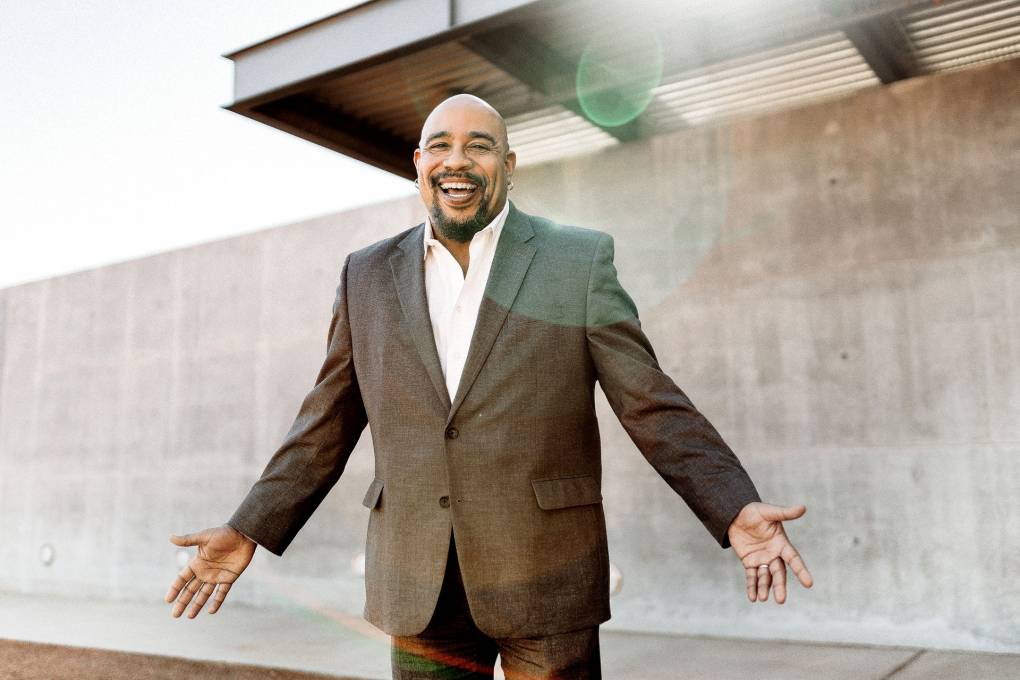
"caption": "Ralph Remington will head the San Francisco Arts Commission starting in January 2021.",
"description": "Ralph Remington will head the San Francisco Arts Commission starting in January 2021.",
"title": "Ralph-Remington",
"credit": "Aminda Villa",
"status": "inherit",
"isLoading": false,
"fetchFailed": false
},
"arts_13888695": {
"type": "attachments",
"id": "arts_13888695",
"meta": {
"index": "attachments_1716263798",
"site": "arts",
"id": "13888695",
"found": true
},
"parent": 13888677,
"imgSizes": {
"thumbnail": {
"file": "https://ww2.kqed.org/app/uploads/sites/2/2020/10/BlackLondon-160x90.jpg",
"width": 160,
"mimeType": "image/jpeg",
"height": 90
},
"post-thumbnail": {
"file": "https://ww2.kqed.org/app/uploads/sites/2/2020/10/BlackLondon-672x372.jpg",
"width": 672,
"mimeType": "image/jpeg",
"height": 372
},
"kqedFullSize": {
"file": "https://ww2.kqed.org/app/uploads/sites/2/2020/10/BlackLondon.jpg",
"width": 880,
"height": 495
},
"medium": {
"file": "https://ww2.kqed.org/app/uploads/sites/2/2020/10/BlackLondon-800x450.jpg",
"width": 800,
"mimeType": "image/jpeg",
"height": 450
},
"medium_large": {
"file": "https://ww2.kqed.org/app/uploads/sites/2/2020/10/BlackLondon-768x432.jpg",
"width": 768,
"mimeType": "image/jpeg",
"height": 432
}
},
"publishDate": 1604164964,
"modified": 1604165143,
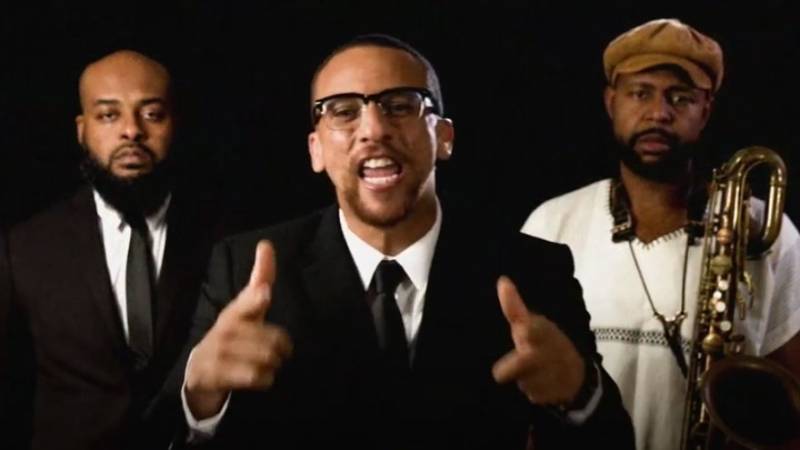
"caption": "Mike Blankenship, Kev Choice and Howard Wiley (L–R) in the video for Black London's 'Power,' an admonition to vote and claim power for the people.",
"description": "Mike Blankenship, Kev Choice and Howard Wiley (L–R) in the video for Black London's 'Power,' an admonition to vote and claim power for the people.",
"title": "BlackLondon",
"credit": "YouTube",
"status": "inherit",
"isLoading": false,
"fetchFailed": false
},
"arts_13888310": {
"type": "attachments",
"id": "arts_13888310",
"meta": {
"index": "attachments_1716263798",
"site": "arts",
"id": "13888310",
"found": true
},
"parent": 13888303,
"imgSizes": {
"twentyfourteen-full-width": {
"file": "https://ww2.kqed.org/app/uploads/sites/2/2020/10/IMG_0116-1038x576.jpg",
"width": 1038,
"mimeType": "image/jpeg",
"height": 576
},
"thumbnail": {
"file": "https://ww2.kqed.org/app/uploads/sites/2/2020/10/IMG_0116-160x90.jpg",
"width": 160,
"mimeType": "image/jpeg",
"height": 90
},
"post-thumbnail": {
"file": "https://ww2.kqed.org/app/uploads/sites/2/2020/10/IMG_0116-672x372.jpg",
"width": 672,
"mimeType": "image/jpeg",
"height": 372
},
"kqedFullSize": {
"file": "https://ww2.kqed.org/app/uploads/sites/2/2020/10/IMG_0116.jpg",
"width": 1920,
"height": 1080
},
"large": {
"file": "https://ww2.kqed.org/app/uploads/sites/2/2020/10/IMG_0116-1020x574.jpg",
"width": 1020,
"mimeType": "image/jpeg",
"height": 574
},
"1536x1536": {
"file": "https://ww2.kqed.org/app/uploads/sites/2/2020/10/IMG_0116-1536x864.jpg",
"width": 1536,
"mimeType": "image/jpeg",
"height": 864
},
"medium": {
"file": "https://ww2.kqed.org/app/uploads/sites/2/2020/10/IMG_0116-800x450.jpg",
"width": 800,
"mimeType": "image/jpeg",
"height": 450
},
"medium_large": {
"file": "https://ww2.kqed.org/app/uploads/sites/2/2020/10/IMG_0116-768x432.jpg",
"width": 768,
"mimeType": "image/jpeg",
"height": 432
}
},
"publishDate": 1603483338,
"modified": 1628201572,
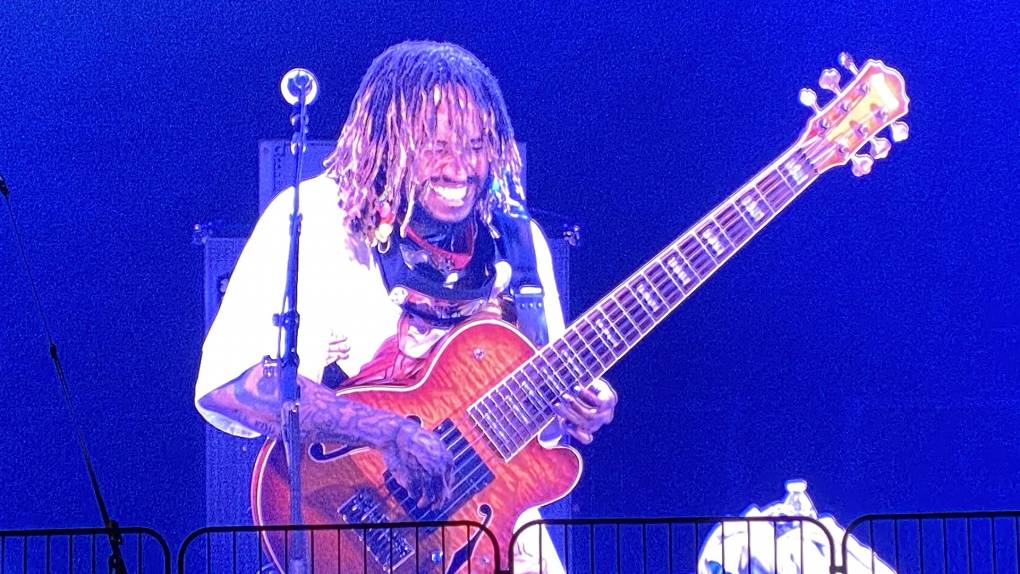
"caption": "Thundercat performs at the Bayshore Drive-in in Burlingame on Oct. 22, 2020. ",
"description": "Thundercat performs at the Bayshore Drive-in in Burlingame on Oct. 22. ",
"title": "IMG_0116",
"credit": "Nastia Voynovskaya",
"status": "inherit",
"altTag": null,
"isLoading": false,
"fetchFailed": false
},
"arts_13887867": {
"type": "attachments",
"id": "arts_13887867",
"meta": {
"index": "attachments_1716263798",
"site": "arts",
"id": "13887867",
"found": true
},
"parent": 13887488,
"imgSizes": {
"twentyfourteen-full-width": {
"file": "https://ww2.kqed.org/app/uploads/sites/2/2020/10/claudia-conway-1038x576.jpg",
"width": 1038,
"mimeType": "image/jpeg",
"height": 576
},
"thumbnail": {
"file": "https://ww2.kqed.org/app/uploads/sites/2/2020/10/claudia-conway-160x99.jpg",
"width": 160,
"mimeType": "image/jpeg",
"height": 99
},
"post-thumbnail": {
"file": "https://ww2.kqed.org/app/uploads/sites/2/2020/10/claudia-conway-672x372.jpg",
"width": 672,
"mimeType": "image/jpeg",
"height": 372
},
"kqedFullSize": {
"file": "https://ww2.kqed.org/app/uploads/sites/2/2020/10/claudia-conway-scaled.jpg",
"width": 2560,
"height": 1584
},
"2048x2048": {
"file": "https://ww2.kqed.org/app/uploads/sites/2/2020/10/claudia-conway-2048x1267.jpg",
"width": 2048,
"mimeType": "image/jpeg",
"height": 1267
},
"large": {
"file": "https://ww2.kqed.org/app/uploads/sites/2/2020/10/claudia-conway-1020x631.jpg",
"width": 1020,
"mimeType": "image/jpeg",
"height": 631
},
"1536x1536": {
"file": "https://ww2.kqed.org/app/uploads/sites/2/2020/10/claudia-conway-1536x951.jpg",
"width": 1536,
"mimeType": "image/jpeg",
"height": 951
},
"full-width": {
"file": "https://ww2.kqed.org/app/uploads/sites/2/2020/10/claudia-conway-1920x1188.jpg",
"width": 1920,
"mimeType": "image/jpeg",
"height": 1188
},
"medium": {
"file": "https://ww2.kqed.org/app/uploads/sites/2/2020/10/claudia-conway-800x495.jpg",
"width": 800,
"mimeType": "image/jpeg",
"height": 495
},
"medium_large": {
"file": "https://ww2.kqed.org/app/uploads/sites/2/2020/10/claudia-conway-768x475.jpg",
"width": 768,
"mimeType": "image/jpeg",
"height": 475
}
},
"publishDate": 1602626258,
"modified": 1602626339,
"caption": "Claudia Conway has 1.4 million followers on TikTok.",
"description": "Claudia Conway has 1.4 million followers on TikTok.",
"title": "Claudia Conway has 1.4 million followers on TikTok.",
"credit": "TikTok/ @claudiamconway",
"status": "inherit",
"isLoading": false,
"fetchFailed": false
},
"arts_13887766": {
"type": "attachments",
"id": "arts_13887766",
"meta": {
"index": "attachments_1716263798",
"site": "arts",
"id": "13887766",
"found": true
},
"parent": 13887212,
"imgSizes": {
"twentyfourteen-full-width": {
"file": "https://ww2.kqed.org/app/uploads/sites/2/2020/10/PastisMAIN-1038x576.jpg",
"width": 1038,
"mimeType": "image/jpeg",
"height": 576
},
"thumbnail": {
"file": "https://ww2.kqed.org/app/uploads/sites/2/2020/10/PastisMAIN-160x90.jpg",
"width": 160,
"mimeType": "image/jpeg",
"height": 90
},
"post-thumbnail": {
"file": "https://ww2.kqed.org/app/uploads/sites/2/2020/10/PastisMAIN-672x372.jpg",
"width": 672,
"mimeType": "image/jpeg",
"height": 372
},
"kqedFullSize": {
"file": "https://ww2.kqed.org/app/uploads/sites/2/2020/10/PastisMAIN.jpg",
"width": 1511,
"height": 850
},
"large": {
"file": "https://ww2.kqed.org/app/uploads/sites/2/2020/10/PastisMAIN-1020x574.jpg",
"width": 1020,
"mimeType": "image/jpeg",
"height": 574
},
"medium": {
"file": "https://ww2.kqed.org/app/uploads/sites/2/2020/10/PastisMAIN-800x450.jpg",
"width": 800,
"mimeType": "image/jpeg",
"height": 450
},
"medium_large": {
"file": "https://ww2.kqed.org/app/uploads/sites/2/2020/10/PastisMAIN-768x432.jpg",
"width": 768,
"mimeType": "image/jpeg",
"height": 432
}
},
"publishDate": 1602284044,
"modified": 1602284069,
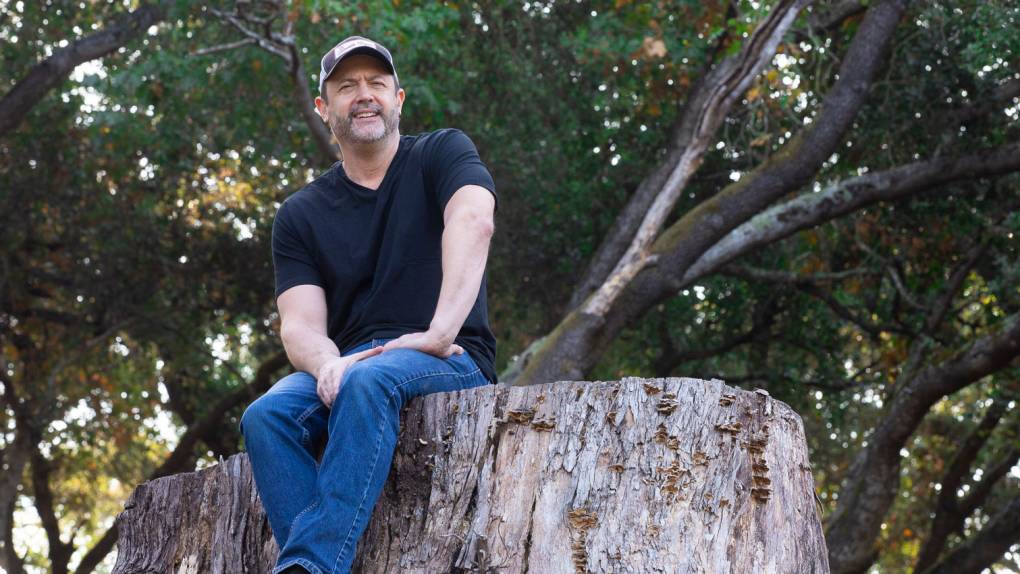
"caption": "Stephan Pastis outside of his Santa Rosa home on Saturday, Sept. 19, 2020. ",
"description": "Stephan Pastis outside of his Santa Rosa home on Saturday, Sept. 19, 2020. ",
"title": "PastisMAIN",
"credit": "Estefany Gonzalez/KQED",
"status": "inherit",
"isLoading": false,
"fetchFailed": false
},
"arts_13887772": {
"type": "attachments",
"id": "arts_13887772",
"meta": {
"index": "attachments_1716263798",
"site": "arts",
"id": "13887772",
"found": true
},
"parent": 13887745,
"imgSizes": {
"twentyfourteen-full-width": {
"file": "https://ww2.kqed.org/app/uploads/sites/2/2020/10/IMG_5432-1038x576.jpg",
"width": 1038,
"mimeType": "image/jpeg",
"height": 576
},
"thumbnail": {
"file": "https://ww2.kqed.org/app/uploads/sites/2/2020/10/IMG_5432-160x120.jpg",
"width": 160,
"mimeType": "image/jpeg",
"height": 120
},
"post-thumbnail": {
"file": "https://ww2.kqed.org/app/uploads/sites/2/2020/10/IMG_5432-672x372.jpg",
"width": 672,
"mimeType": "image/jpeg",
"height": 372
},
"kqedFullSize": {
"file": "https://ww2.kqed.org/app/uploads/sites/2/2020/10/IMG_5432.jpg",
"width": 2048,
"height": 1536
},
"large": {
"file": "https://ww2.kqed.org/app/uploads/sites/2/2020/10/IMG_5432-1020x765.jpg",
"width": 1020,
"mimeType": "image/jpeg",
"height": 765
},
"1536x1536": {
"file": "https://ww2.kqed.org/app/uploads/sites/2/2020/10/IMG_5432-1536x1152.jpg",
"width": 1536,
"mimeType": "image/jpeg",
"height": 1152
},
"full-width": {
"file": "https://ww2.kqed.org/app/uploads/sites/2/2020/10/IMG_5432-1920x1440.jpg",
"width": 1920,
"mimeType": "image/jpeg",
"height": 1440
},
"medium": {
"file": "https://ww2.kqed.org/app/uploads/sites/2/2020/10/IMG_5432-800x600.jpg",
"width": 800,
"mimeType": "image/jpeg",
"height": 600
},
"medium_large": {
"file": "https://ww2.kqed.org/app/uploads/sites/2/2020/10/IMG_5432-768x576.jpg",
"width": 768,
"mimeType": "image/jpeg",
"height": 576
}
},
"publishDate": 1602303103,
"modified": 1602303207,
"caption": "That time we ordered a bunch of drinks at Bar Shiru in Oakland... Back when we could order drinks at the bar. ",
"description": "That time we ordered a bunch of drinks at Bar Shiru in Oakland... Back when we could order drinks at the bar. ",
"title": "That time we ordered a bunch of drinks at Bar Shiru in Oakland... Back when we could order drinks at the bar.",
"credit": "Pendarvis Harshaw",
"status": "inherit",
"isLoading": false,
"fetchFailed": false
},
"arts_13887315": {
"type": "attachments",
"id": "arts_13887315",
"meta": {
"index": "attachments_1716263798",
"site": "arts",
"id": "13887315",
"found": true
},
"parent": 13887219,
"imgSizes": {
"twentyfourteen-full-width": {
"file": "https://ww2.kqed.org/app/uploads/sites/2/2020/10/GettyImages-1277476468-1038x576.jpg",
"width": 1038,
"mimeType": "image/jpeg",
"height": 576
},
"thumbnail": {
"file": "https://ww2.kqed.org/app/uploads/sites/2/2020/10/GettyImages-1277476468-160x104.jpg",
"width": 160,
"mimeType": "image/jpeg",
"height": 104
},
"post-thumbnail": {
"file": "https://ww2.kqed.org/app/uploads/sites/2/2020/10/GettyImages-1277476468-672x372.jpg",
"width": 672,
"mimeType": "image/jpeg",
"height": 372
},
"kqedFullSize": {
"file": "https://ww2.kqed.org/app/uploads/sites/2/2020/10/GettyImages-1277476468-scaled-e1601597363761.jpg",
"width": 1920,
"height": 1253
},
"2048x2048": {
"file": "https://ww2.kqed.org/app/uploads/sites/2/2020/10/GettyImages-1277476468-2048x1337.jpg",
"width": 2048,
"mimeType": "image/jpeg",
"height": 1337
},
"large": {
"file": "https://ww2.kqed.org/app/uploads/sites/2/2020/10/GettyImages-1277476468-1020x666.jpg",
"width": 1020,
"mimeType": "image/jpeg",
"height": 666
},
"1536x1536": {
"file": "https://ww2.kqed.org/app/uploads/sites/2/2020/10/GettyImages-1277476468-1536x1003.jpg",
"width": 1536,
"mimeType": "image/jpeg",
"height": 1003
},
"full-width": {
"file": "https://ww2.kqed.org/app/uploads/sites/2/2020/10/GettyImages-1277476468-1920x1253.jpg",
"width": 1920,
"mimeType": "image/jpeg",
"height": 1253
},
"medium": {
"file": "https://ww2.kqed.org/app/uploads/sites/2/2020/10/GettyImages-1277476468-800x522.jpg",
"width": 800,
"mimeType": "image/jpeg",
"height": 522
},
"medium_large": {
"file": "https://ww2.kqed.org/app/uploads/sites/2/2020/10/GettyImages-1277476468-768x501.jpg",
"width": 768,
"mimeType": "image/jpeg",
"height": 501
}
},
"publishDate": 1601597337,
"modified": 1601597565,
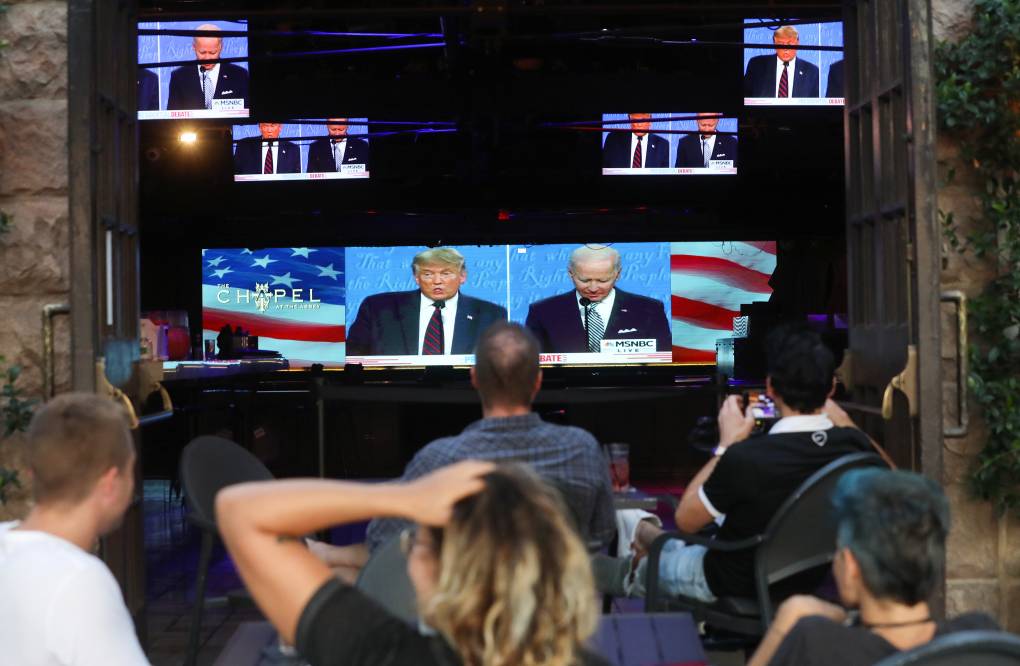
"caption": "People in LA watch a broadcast of the first debate between Donald Trump and Joe Biden, Sept. 29, 2020.",
"description": "People in LA watch a broadcast of the first debate between Donald Trump and Joe Biden, Sept. 29, 2020.",
"title": "Americans Across The Nation Watch First Presidential Debate",
"credit": "Mario Tama/Getty Images",
"status": "inherit",
"isLoading": false,
"fetchFailed": false
},
"arts_13887463": {
"type": "attachments",
"id": "arts_13887463",
"meta": {
"index": "attachments_1716263798",
"site": "arts",
"id": "13887463",
"found": true
},
"parent": 13887169,
"imgSizes": {
"thumbnail": {
"file": "https://ww2.kqed.org/app/uploads/sites/2/2020/10/RubyIbarra.MAIN_-160x90.jpg",
"width": 160,
"mimeType": "image/jpeg",
"height": 90
},
"post-thumbnail": {
"file": "https://ww2.kqed.org/app/uploads/sites/2/2020/10/RubyIbarra.MAIN_-672x372.jpg",
"width": 672,
"mimeType": "image/jpeg",
"height": 372
},
"kqedFullSize": {
"file": "https://ww2.kqed.org/app/uploads/sites/2/2020/10/RubyIbarra.MAIN_.jpg",
"width": 800,
"height": 450
},
"medium_large": {
"file": "https://ww2.kqed.org/app/uploads/sites/2/2020/10/RubyIbarra.MAIN_-768x432.jpg",
"width": 768,
"mimeType": "image/jpeg",
"height": 432
}
},
"publishDate": 1601941125,
"modified": 1601941148,
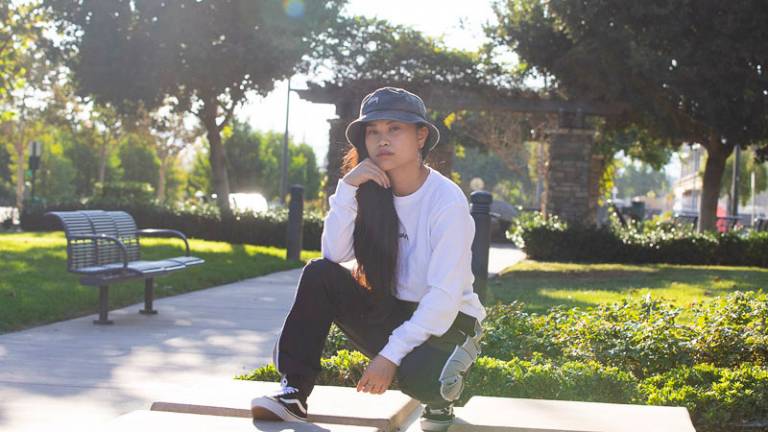
"caption": "\"What's at stake is everybody's lives. Everybody's safety,\" Ruby Ibarra says of the politicization of the COVID-19 pandemic.",
"description": "\"What's at stake is everybody's lives. Everybody's safety,\" Ruby Ibarra says of the politicization of the COVID-19 pandemic.",
"title": "RubyIbarra.MAIN",
"credit": "Estefany Gonzalez",
"status": "inherit",
"isLoading": false,
"fetchFailed": false
},
"arts_13887378": {
"type": "attachments",
"id": "arts_13887378",
"meta": {
"index": "attachments_1716263798",
"site": "arts",
"id": "13887378",
"found": true
},
"title": "WKamauBell.MAIN.JohnNowackCNN",
"publishDate": 1601667185,
"status": "inherit",
"parent": 0,
"modified": 1732134417,
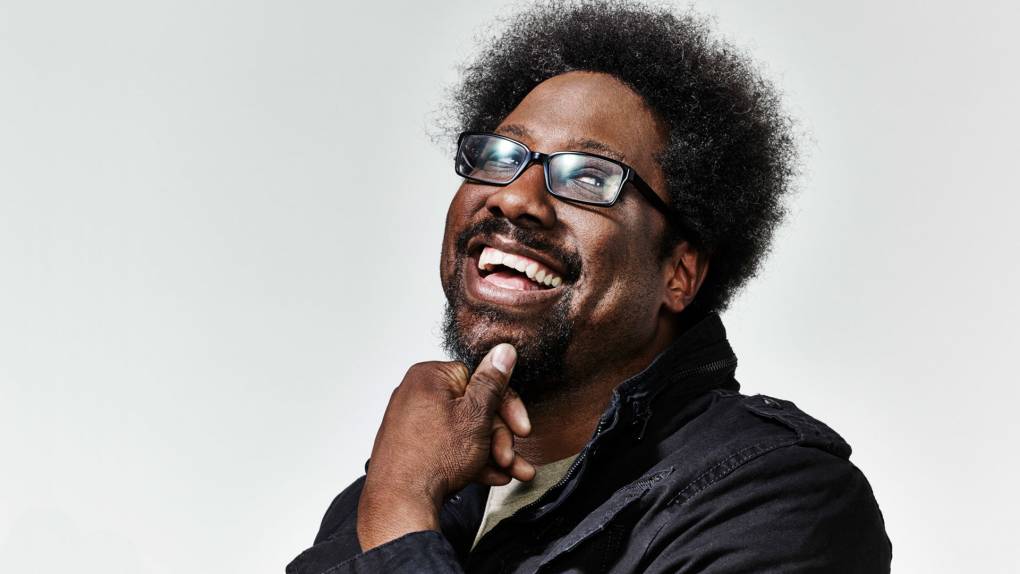
"caption": "\"Local elections can drastically change your community,\" says comedian W. Kamau Bell. \"And you can be a part of that change.\"",
"credit": "John Nowack/CNN",
"altTag": "W. Kamau Bell",
"description": null,
"imgSizes": {
"medium": {
"file": "https://cdn.kqed.org/wp-content/uploads/sites/2/2020/10/WKamauBell.MAIN_.JohnNowackCNN-800x450.jpg",
"width": 800,
"height": 450,
"mimeType": "image/jpeg"
},
"large": {
"file": "https://cdn.kqed.org/wp-content/uploads/sites/2/2020/10/WKamauBell.MAIN_.JohnNowackCNN-1020x574.jpg",
"width": 1020,
"height": 574,
"mimeType": "image/jpeg"
},
"thumbnail": {
"file": "https://cdn.kqed.org/wp-content/uploads/sites/2/2020/10/WKamauBell.MAIN_.JohnNowackCNN-160x90.jpg",
"width": 160,
"height": 90,
"mimeType": "image/jpeg"
},
"medium_large": {
"file": "https://cdn.kqed.org/wp-content/uploads/sites/2/2020/10/WKamauBell.MAIN_.JohnNowackCNN-768x432.jpg",
"width": 768,
"height": 432,
"mimeType": "image/jpeg"
},
"1536x1536": {
"file": "https://cdn.kqed.org/wp-content/uploads/sites/2/2020/10/WKamauBell.MAIN_.JohnNowackCNN-1536x864.jpg",
"width": 1536,
"height": 864,
"mimeType": "image/jpeg"
},
"post-thumbnail": {
"file": "https://cdn.kqed.org/wp-content/uploads/sites/2/2020/10/WKamauBell.MAIN_.JohnNowackCNN-672x372.jpg",
"width": 672,
"height": 372,
"mimeType": "image/jpeg"
},
"twentyfourteen-full-width": {
"file": "https://cdn.kqed.org/wp-content/uploads/sites/2/2020/10/WKamauBell.MAIN_.JohnNowackCNN-1038x576.jpg",
"width": 1038,
"height": 576,
"mimeType": "image/jpeg"
},
"kqedFullSize": {
"file": "https://cdn.kqed.org/wp-content/uploads/sites/2/2020/10/WKamauBell.MAIN_.JohnNowackCNN.jpg",
"width": 1920,
"height": 1080
}
},
"isLoading": false,
"fetchFailed": false
}
},
"audioPlayerReducer": {
"postId": "stream_live",
"isPaused": true,
"isPlaying": false,
"pfsActive": false,
"pledgeModalIsOpen": true,
"playerDrawerIsOpen": false,
"liveAudioPlayStartedAt": 0,
"liveAudioPlayContext": ""
},
"authorsReducer": {
"gmeline": {
"type": "authors",
"id": "185",
"meta": {
"index": "authors_1716337520",
"id": "185",
"found": true
},
"name": "Gabe Meline",
"firstName": "Gabe",
"lastName": "Meline",
"slug": "gmeline",
"email": "gmeline@kqed.org",
"display_author_email": true,
"staff_mastheads": [
"arts"
],
"title": "Senior Editor, KQED Arts & Culture",
"bio": "Gabe Meline entered journalism at age 15 making photocopied zines, and has since earned awards from the Edward R. Murrow Awards, the Society for Professional Journalists, the Online Journalism Awards, the Association of Alternative Newsweeklies and the California Newspaper Publishers Association. Prior to KQED, he was the editor of the \u003cem>North Bay Bohemian\u003c/em> and a touring musician. He lives with his wife and daughter in his hometown of Santa Rosa, CA.",
"avatar": "https://secure.gravatar.com/avatar/5bebe57be0d8bc2dd318934feb47299e2d2d10cba28d09d8d7afb389a2ce2bdd?s=600&d=blank&r=g",
"twitter": null,
"bluesky": null,
"facebook": null,
"instagram": null,
"linkedin": null,
"sites": [
{
"site": "",
"roles": [
"editor"
]
},
{
"site": "arts",
"roles": [
"administrator"
]
},
{
"site": "artschool",
"roles": [
"editor"
]
},
{
"site": "news",
"roles": [
"author"
]
},
{
"site": "pop",
"roles": [
"editor"
]
},
{
"site": "bayareabites",
"roles": [
"editor"
]
},
{
"site": "food",
"roles": [
"editor"
]
},
{
"site": "forum",
"roles": [
"administrator"
]
},
{
"site": "liveblog",
"roles": [
"editor"
]
},
{
"site": "hiphop",
"roles": [
"editor"
]
}
],
"headData": {
"title": "Gabe Meline | KQED",
"description": "Senior Editor, KQED Arts & Culture",
"ogImgSrc": "https://secure.gravatar.com/avatar/5bebe57be0d8bc2dd318934feb47299e2d2d10cba28d09d8d7afb389a2ce2bdd?s=600&d=blank&r=g",
"twImgSrc": "https://secure.gravatar.com/avatar/5bebe57be0d8bc2dd318934feb47299e2d2d10cba28d09d8d7afb389a2ce2bdd?s=600&d=blank&r=g"
},
"isLoading": false,
"link": "/author/gmeline"
},
"esilvers": {
"type": "authors",
"id": "7237",
"meta": {
"index": "authors_1716337520",
"id": "7237",
"found": true
},
"name": "Emma Silvers",
"firstName": "Emma",
"lastName": "Silvers",
"slug": "esilvers",
"email": "esilvers@kqed.org",
"display_author_email": false,
"staff_mastheads": [],
"title": "KQED Contributor",
"bio": "Emma Silvers is an editor at KQED Arts and a former digital producer at KQED News. Born and raised in the Bay Area, she has previously been an arts and entertainment editor at the \u003cem>San Francisco Chronicle\u003c/em>, \u003cem>SF Weekly\u003c/em> and the \u003cem>San Francisco Bay Guardian.\u003c/em> \u003ca href=\"https://www.emmasilvers.com\">Her work\u003c/a> has also appeared in \u003cem>Rolling Stone\u003c/em>, Pitchfork and \u003cem>Mother Jones\u003c/em>. In 2017 she was the recipient of the Society of Professional Journalists-Northern California's award for arts and culture reporting. In 1993 she \u003ca href=\"https://www.kqed.org/pop/16759/wait-what-my-coworker-was-a-voice-over-hyperventilator-for-jurassic-park\">hyperventilated in \u003cem>Jurassic Park\u003c/em>\u003c/a>.",
"avatar": "https://secure.gravatar.com/avatar/247beada39b88ea5759db1f51dba05cf?s=600&d=blank&r=g",
"twitter": "emmaruthless",
"facebook": null,
"instagram": null,
"linkedin": null,
"sites": [
{
"site": "arts",
"roles": [
"editor"
]
},
{
"site": "news",
"roles": [
"editor"
]
},
{
"site": "pop",
"roles": [
"contributor"
]
},
{
"site": "bayareabites",
"roles": [
"editor"
]
},
{
"site": "food",
"roles": [
"contributor"
]
},
{
"site": "liveblog",
"roles": [
"editor"
]
}
],
"headData": {
"title": "Emma Silvers | KQED",
"description": "KQED Contributor",
"ogImgSrc": "https://secure.gravatar.com/avatar/247beada39b88ea5759db1f51dba05cf?s=600&d=blank&r=g",
"twImgSrc": "https://secure.gravatar.com/avatar/247beada39b88ea5759db1f51dba05cf?s=600&d=blank&r=g"
},
"isLoading": false,
"link": "/author/esilvers"
},
"ralexandra": {
"type": "authors",
"id": "11242",
"meta": {
"index": "authors_1716337520",
"id": "11242",
"found": true
},
"name": "Rae Alexandra",
"firstName": "Rae",
"lastName": "Alexandra",
"slug": "ralexandra",
"email": "ralexandra@kqed.org",
"display_author_email": true,
"staff_mastheads": [],
"title": "Reporter/Producer",
"bio": "Rae Alexandra is a Reporter/Producer for KQED Arts & Culture, and the creator/author of the \u003ca href=\"https://www.kqed.org/arts/program/rebel-girls-from-bay-area-history\">Rebel Girls From Bay Area History\u003c/a> and \u003ca href=\"https://www.kqed.org/bizarrebayarea\">Bizarre Bay Area\u003c/a> series. Her debut book, \u003ca href=\"https://citylights.com/politics-current-events-history/unsung-heroines35-women-who-changed/\">Unsung Heroines: 35 Women Who Changed the Bay Area\u003c/a> was published by City Lights in March 2026. In 2023, Rae was awarded an SPJ Excellence in Journalism Award for Arts & Culture. Rae was born and raised in Wales and subsequently — even after two decades in Northern California — still uses phrases that regularly baffle her coworkers.",
"avatar": "https://secure.gravatar.com/avatar/edfee8176c80cc0a382b051190f5341997df378a934a5774dcb0977732dfd401?s=600&d=blank&r=g",
"twitter": null,
"bluesky": null,
"facebook": null,
"instagram": null,
"linkedin": null,
"sites": [
{
"site": "arts",
"roles": [
"subscriber"
]
},
{
"site": "news",
"roles": [
"subscriber"
]
},
{
"site": "pop",
"roles": [
"subscriber"
]
},
{
"site": "bayareabites",
"roles": [
"subscriber"
]
},
{
"site": "science",
"roles": [
"subscriber"
]
}
],
"headData": {
"title": "Rae Alexandra | KQED",
"description": "Reporter/Producer",
"ogImgSrc": "https://secure.gravatar.com/avatar/edfee8176c80cc0a382b051190f5341997df378a934a5774dcb0977732dfd401?s=600&d=blank&r=g",
"twImgSrc": "https://secure.gravatar.com/avatar/edfee8176c80cc0a382b051190f5341997df378a934a5774dcb0977732dfd401?s=600&d=blank&r=g"
},
"isLoading": false,
"link": "/author/ralexandra"
},
"nvoynovskaya": {
"type": "authors",
"id": "11387",
"meta": {
"index": "authors_1716337520",
"id": "11387",
"found": true
},
"name": "Nastia Voynovskaya",
"firstName": "Nastia",
"lastName": "Voynovskaya",
"slug": "nvoynovskaya",
"email": "nvoynovskaya@kqed.org",
"display_author_email": false,
"staff_mastheads": [
"arts"
],
"title": "Editor and reporter",
"bio": "Nastia Voynovskaya is a reporter, editor and host at KQED Arts & Culture. She's been covering the arts in the Bay Area for over a decade, with a focus on music, queer culture, labor issues and grassroots organizing. She has edited KQED story series such as Trans Bay: A History of San Francisco's Gender-Diverse Community, and co-created KQED's Bay Area hip-hop history project, That's My Word. Nastia's work has been recognized by the Society of Professional Journalists and San Francisco Press Club. She regularly appears on podcasts and radio programs, including NPR's All Songs Considered, and hosts live events where music, culture and conversation meet.",
"avatar": "https://secure.gravatar.com/avatar/5025ee460e5a85d69ca20ea6c6f2f80d7e17795c828f61ea3aecfcd924e9042e?s=600&d=blank&r=g",
"twitter": null,
"bluesky": null,
"facebook": null,
"instagram": "https://www.instagram.com/nananastia/",
"linkedin": null,
"sites": [
{
"site": "",
"roles": [
"editor"
]
},
{
"site": "arts",
"roles": [
"administrator"
]
},
{
"site": "news",
"roles": [
"editor"
]
},
{
"site": "pop",
"roles": [
"administrator"
]
},
{
"site": "bayareabites",
"roles": [
"editor"
]
},
{
"site": "podcasts",
"roles": [
"editor"
]
},
{
"site": "hiphop",
"roles": [
"editor"
]
}
],
"headData": {
"title": "Nastia Voynovskaya | KQED",
"description": "Editor and reporter",
"ogImgSrc": "https://secure.gravatar.com/avatar/5025ee460e5a85d69ca20ea6c6f2f80d7e17795c828f61ea3aecfcd924e9042e?s=600&d=blank&r=g",
"twImgSrc": "https://secure.gravatar.com/avatar/5025ee460e5a85d69ca20ea6c6f2f80d7e17795c828f61ea3aecfcd924e9042e?s=600&d=blank&r=g"
},
"isLoading": false,
"link": "/author/nvoynovskaya"
},
"edayu": {
"type": "authors",
"id": "11391",
"meta": {
"index": "authors_1716337520",
"id": "11391",
"found": true
},
"name": "Eda Yu",
"firstName": "Eda",
"lastName": "Yu",
"slug": "edayu",
"email": "eda.cyu@gmail.com",
"display_author_email": false,
"staff_mastheads": [],
"title": "KQED Contributor",
"bio": "Eda Yu is a freelance writer and arts and culture journalist born and raised in Los Angeles, California. Her work centers the intersection of culture and identity, and her writing has appeared on platforms like VICE, Paper Magazine, and Complex. Follow her latest on Instagram and Twitter @edacyu.",
"avatar": "https://secure.gravatar.com/avatar/6dac2abe6c01e7b538d29f9c902136eb?s=600&d=blank&r=g",
"twitter": null,
"facebook": null,
"instagram": "https://www.instagram.com/edacyu/",
"linkedin": null,
"sites": [
{
"site": "arts",
"roles": [
"contributor"
]
}
],
"headData": {
"title": "Eda Yu | KQED",
"description": "KQED Contributor",
"ogImgSrc": "https://secure.gravatar.com/avatar/6dac2abe6c01e7b538d29f9c902136eb?s=600&d=blank&r=g",
"twImgSrc": "https://secure.gravatar.com/avatar/6dac2abe6c01e7b538d29f9c902136eb?s=600&d=blank&r=g"
},
"isLoading": false,
"link": "/author/edayu"
},
"ogpenn": {
"type": "authors",
"id": "11491",
"meta": {
"index": "authors_1716337520",
"id": "11491",
"found": true
},
"name": "Pendarvis Harshaw",
"firstName": "Pendarvis",
"lastName": "Harshaw",
"slug": "ogpenn",
"email": "ogpenn@gmail.com",
"display_author_email": false,
"staff_mastheads": [
"arts"
],
"title": "Community Engagement Reporter",
"bio": "Pendarvis Harshaw is an educator, host and writer with KQED Arts.",
"avatar": "https://secure.gravatar.com/avatar/972b77ee8e3f346ae2b00622661187fbfabd059b5693bbdc1475ea7a722fd4cd?s=600&d=blank&r=g",
"twitter": null,
"bluesky": null,
"facebook": null,
"instagram": "ogpenn",
"linkedin": null,
"sites": [
{
"site": "arts",
"roles": [
"administrator"
]
},
{
"site": "news",
"roles": [
"editor"
]
},
{
"site": "bayareabites",
"roles": [
"author"
]
},
{
"site": "hiphop",
"roles": [
"editor"
]
}
],
"headData": {
"title": "Pendarvis Harshaw | KQED",
"description": "Community Engagement Reporter",
"ogImgSrc": "https://secure.gravatar.com/avatar/972b77ee8e3f346ae2b00622661187fbfabd059b5693bbdc1475ea7a722fd4cd?s=600&d=blank&r=g",
"twImgSrc": "https://secure.gravatar.com/avatar/972b77ee8e3f346ae2b00622661187fbfabd059b5693bbdc1475ea7a722fd4cd?s=600&d=blank&r=g"
},
"isLoading": false,
"link": "/author/ogpenn"
},
"sgetachew": {
"type": "authors",
"id": "11734",
"meta": {
"index": "authors_1716337520",
"id": "11734",
"found": true
},
"name": "Samuel Getachew",
"firstName": "Samuel",
"lastName": "Getachew",
"slug": "sgetachew",
"email": "sgetachew@kqed.org",
"display_author_email": false,
"staff_mastheads": [],
"title": "KQED Contributor",
"bio": "\u003cspan style=\"font-weight: 400;\">Samuel Getachew is an 18-year-old poet and writer from Oakland, California. He is the 2019 Oakland Youth Poet Laureate, a 2020 Finalist for National Youth Poet Laureate, and a 4-time YoungArts Winner. His writing has been published in Teen Vogue, the New York Times, the Washington Post, and more. He will attend Yale University in the fall of 2021.\u003c/span>",
"avatar": "https://secure.gravatar.com/avatar/ebad3dcf2295975cfe77698fa670a089?s=600&d=blank&r=g",
"twitter": null,
"facebook": null,
"instagram": null,
"linkedin": null,
"sites": [
{
"site": "arts",
"roles": [
"subscriber"
]
}
],
"headData": {
"title": "Samuel Getachew | KQED",
"description": "KQED Contributor",
"ogImgSrc": "https://secure.gravatar.com/avatar/ebad3dcf2295975cfe77698fa670a089?s=600&d=blank&r=g",
"twImgSrc": "https://secure.gravatar.com/avatar/ebad3dcf2295975cfe77698fa670a089?s=600&d=blank&r=g"
},
"isLoading": false,
"link": "/author/sgetachew"
}
},
"pagesReducer": {
"arts_tag_commentary": {
"type": "terms",
"id": "arts_2767",
"meta": {
"index": "terms_1716263798",
"site": "arts",
"id": "2767",
"score": 8.794622
},
"featImg": null,
"name": "commentary",
"description": null,
"taxonomy": "tag",
"headData": {
"twImgId": null,
"twTitle": null,
"ogTitle": null,
"ogImgId": null,
"twDescription": null,
"description": null,
"title": "commentary Archives | KQED Arts",
"ogDescription": null
},
"ttid": 2779,
"slug": "commentary",
"isLoading": false,
"title": "commentary",
"pageMeta": {
"site": "arts",
"WpPageTemplate": "page-topic-editorial",
"currentPage": 11
},
"blocks": [
{
"blockName": "kqed/post-list",
"attrs": {
"layout": "cardArticle2",
"query": "posts/arts?tag=commentary",
"seeMore": false,
"paginated": true,
"page": 11
}
},
{
"blockName": "kqed/ad"
}
]
}
},
"pfsSessionReducer": {},
"postsReducer": {
"stream_live": {
"type": "live",
"id": "stream_live",
"audioUrl": "https://streams.kqed.org/kqedradio",
"title": "Live Stream",
"excerpt": "Live Stream information currently unavailable.",
"link": "/radio",
"featImg": "",
"label": {
"name": "KQED Live",
"link": "/"
}
},
"stream_kqedNewscast": {
"type": "posts",
"id": "stream_kqedNewscast",
"audioUrl": "https://www.kqed.org/.stream/anon/radio/RDnews/newscast.mp3?_=1",
"title": "KQED Newscast",
"featImg": "",
"label": {
"name": "88.5 FM",
"link": "/"
}
},
"arts_13889129": {
"type": "posts",
"id": "arts_13889129",
"meta": {
"index": "posts_1716263798",
"site": "arts",
"id": "13889129",
"score": null,
"sort": [
1605217965000
]
},
"guestAuthors": [],
"slug": "the-passing-of-oaklands-measure-qq-and-the-future-of-our-democracy",
"title": "The Passing of Oakland's Measure QQ and the Future of Our Democracy",
"publishDate": 1605217965,
"format": "standard",
"headTitle": "The Passing of Oakland’s Measure QQ and the Future of Our Democracy | KQED",
"labelTerm": {},
"content": "\u003cp>\u003cspan style=\"font-size: 4.6875em;float: left;line-height: 0.733em;padding: 0.05em 0.1em 0 0;font-family: times, serif, georgia\">I\u003c/span>n 1971, the national voting age in the United States changed from 21 to 18.\u003c/p>\n\u003cp>\u003cimg loading=\"lazy\" decoding=\"async\" class=\"alignright size-thumbnail wp-image-13833985\" src=\"https://ww2.kqed.org/app/uploads/sites/2/2018/05/OGPenn.Cap_-160x184.jpg\" alt=\"\" width=\"160\" height=\"184\" srcset=\"https://cdn.kqed.org/wp-content/uploads/sites/2/2018/05/OGPenn.Cap_-160x184.jpg 160w, https://cdn.kqed.org/wp-content/uploads/sites/2/2018/05/OGPenn.Cap_.jpg 180w\" sizes=\"(max-width: 160px) 100vw, 160px\">\u003c/p>\n\u003cp>\u003cspan style=\"font-weight: 400\">“I believe the time has come to lower the voting age in the United States, and thereby to bring American youth into the mainstream of our political process,” said \u003c/span>\u003ca href=\"http://www.tedkennedy.org/ownwords/event/voting_age/\" target=\"_blank\" rel=\"noopener noreferrer\">\u003cspan style=\"font-weight: 400\">Senator Ted Kennedy\u003c/span>\u003c/a>\u003cspan style=\"font-weight: 400\"> on March 9, 1970, while testifying before the Senate Subcommittee on Constitutional Amendments. \u003c/span>\u003c/p>\n\u003cp>\u003cspan style=\"font-weight: 400\">“To me,” Kennedy continued, “this is the most important single principle we can pursue as a nation.” \u003c/span>\u003c/p>\n\u003cp>\u003cspan style=\"font-weight: 400\">A year later, the\u003c/span> \u003ca href=\"https://www.nhpr.org/post/ask-civics-101-why-our-voting-age-18#stream/0\" target=\"_blank\" rel=\"noopener noreferrer\">\u003cspan style=\"font-weight: 400\">26th Amendment\u003c/span>\u003c/a>\u003cspan style=\"font-weight: 400\"> was ratified and 18-year-olds got their right to vote. \u003c/span>\u003c/p>\n\u003cp>[ad fullwidth]\u003c/p>\n\u003cp>\u003cspan style=\"font-weight: 400\">The saying “old enough to fight, old enough to vote”—referencing an amendment to the \u003ca href=\"https://www.defense.gov/Explore/Features/story/Article/2140942/first-peacetime-draft-enacted-just-before-world-war-ii/\" target=\"_blank\" rel=\"noopener noreferrer\">Selective Training and Service Act\u003c/a> that would allow for “abled bodied men” ages 18-45 to be drafted to the US military—served as a convincing argument for why young folks should be able to vote. But in Senator Kennedy’s speech from five decades ago, there’s also mention of the impact of technology on young folks’ learning process. \u003c/span>\u003c/p>\n\u003cp>“The contrast is clear in the case of education,” said Senator Kennedy. “Because of the enormous impact of modern communications, especially television, our youth are extremely well informed on all the crucial issues of our time, foreign and domestic, national and local, urban and rural.”\u003c/p>\n\u003cp>\u003cspan style=\"font-weight: 400\">And that was way before Google.\u003c/span>\u003c/p>\n\u003cfigure id=\"attachment_13889141\" class=\"wp-caption alignnone\" style=\"max-width: 800px\">\u003cimg loading=\"lazy\" decoding=\"async\" class=\"size-medium wp-image-13889141\" src=\"https://ww2.kqed.org/app/uploads/sites/2/2020/11/IMG_0315-800x634.jpg\" alt=\"Oakland Tech Students standing on Broadway in North Oakland holding protest signs in effort to get cuts to the administration and more student support.\" width=\"800\" height=\"634\" srcset=\"https://cdn.kqed.org/wp-content/uploads/sites/2/2020/11/IMG_0315-800x634.jpg 800w, https://cdn.kqed.org/wp-content/uploads/sites/2/2020/11/IMG_0315-160x127.jpg 160w, https://cdn.kqed.org/wp-content/uploads/sites/2/2020/11/IMG_0315-768x609.jpg 768w, https://cdn.kqed.org/wp-content/uploads/sites/2/2020/11/IMG_0315.jpg 920w\" sizes=\"(max-width: 800px) 100vw, 800px\">\u003cfigcaption class=\"wp-caption-text\">Oakland Tech Students standing on Broadway in North Oakland holding protest signs in effort to get cuts to the administration and more student support. \u003ccite>(Lukas Brekke-Miesner)\u003c/cite>\u003c/figcaption>\u003c/figure>\n\u003cp>\u003cspan style=\"font-size: 4.6875em;float: left;line-height: 0.733em;padding: 0.05em 0.1em 0 0;font-family: times, serif, georgia\">S\u003c/span>o last week, when Oakland voters \u003ca href=\"https://www.kqed.org/elections/results\" target=\"_blank\" rel=\"noopener noreferrer\">passed Measure QQ\u003c/a>, giving the city’s 16- and 17-year-old Oaklanders the right to vote in elections of future school board members and directors, they introduced a new wave of young people to the political process, acknowledged the concept of technology-based evolution and nudged this country (ever so slightly) toward a more equitable society.\u003c/p>\n\u003cp>\u003cspan style=\"font-weight: 400\">I’m being extra. But honestly: the passing of this legislation has the potential to be a big deal. \u003c/span>\u003c/p>\n\u003cp>\u003cspan style=\"font-weight: 400\">Lukas Brekke-Miesner, Executive Director of Oakland Kids First, has a more sobering perspective on the process of developing this legislation, as well as its passing and future implementation. \u003c/span>\u003c/p>\n\u003cp>\u003cspan style=\"font-weight: 400\">Brekke-Miesner, who I’ve known since our Oakland little league baseball days, tells me that the push for Measure QQ began in the wake of the 2019 teacher strike, after students and organizers marched the picket lines alongside teachers. But after contract negotiations, the board agreed to pay \u003ca href=\"https://abcnews.go.com/US/oakland-teachers-strike-ends-11-percent-raise-halt/story?id=61428593\" target=\"_blank\" rel=\"noopener noreferrer\">the teachers\u003c/a>, but left the students’ requests unfulfilled. \u003c/span>\u003c/p>\n\u003cp>\u003cspan style=\"font-weight: 400\">“There was a huge movement of young people,” says\u003c/span>\u003cspan style=\"font-weight: 400\"> Brekke-Miesner, recalling that the\u003c/span>\u003cspan style=\"font-weight: 400\"> strike was settled on a Sunday, and the school board met the following Monday; hundreds of young people marched to the board meeting. He says the students were still fighting for a number of things—funding for restorative justice programs, foster care case managers, and Asian-Pacific Islander student support, to name a few. But the testimony from the young people didn’t change anything. \u003c/span>\u003c/p>\n\u003cfigure id=\"attachment_13889142\" class=\"wp-caption alignnone\" style=\"max-width: 800px\">\u003cimg loading=\"lazy\" decoding=\"async\" class=\"size-medium wp-image-13889142\" src=\"https://ww2.kqed.org/app/uploads/sites/2/2020/11/student-advocates-800x508.jpeg\" alt=\"Elected student advocates meeting with Council Member Rebecca Kaplan\" width=\"800\" height=\"508\" srcset=\"https://cdn.kqed.org/wp-content/uploads/sites/2/2020/11/student-advocates-800x508.jpeg 800w, https://cdn.kqed.org/wp-content/uploads/sites/2/2020/11/student-advocates-1020x648.jpeg 1020w, https://cdn.kqed.org/wp-content/uploads/sites/2/2020/11/student-advocates-160x102.jpeg 160w, https://cdn.kqed.org/wp-content/uploads/sites/2/2020/11/student-advocates-768x488.jpeg 768w, https://cdn.kqed.org/wp-content/uploads/sites/2/2020/11/student-advocates-1536x976.jpeg 1536w, https://cdn.kqed.org/wp-content/uploads/sites/2/2020/11/student-advocates-2048x1301.jpeg 2048w, https://cdn.kqed.org/wp-content/uploads/sites/2/2020/11/student-advocates-1920x1220.jpeg 1920w\" sizes=\"(max-width: 800px) 100vw, 800px\">\u003cfigcaption class=\"wp-caption-text\">Elected student advocates meeting with Oakland councilmember Rebecca Kaplan. \u003ccite>(Lukas Brekke-Miesner)\u003c/cite>\u003c/figcaption>\u003c/figure>\n\u003cp>\u003cspan style=\"font-weight: 400\">A few months later, Brekke-Miesner explains, during a retreat with youth advocates from\u003c/span>\u003cspan style=\"font-weight: 400\">\u003ca href=\"https://www.ousd.org/Page/15546\" target=\"_blank\" rel=\"noopener noreferrer\"> All City Council,\u003c/a> \u003ca href=\"https://www.oaklandkidsfirst.org/\" target=\"_blank\" rel=\"noopener noreferrer\">Oakland Kids First\u003c/a>, \u003ca href=\"http://www.youthtogether.net/\" target=\"_blank\" rel=\"noopener noreferrer\">Youth Together\u003c/a>, \u003c/span>\u003ca href=\"https://caljustice.org/\" target=\"_blank\" rel=\"noopener noreferrer\">Californians For Justice\u003c/a>, \u003cspan style=\"font-weight: 400\">\u003ca href=\"https://www.aypal.org/\" target=\"_blank\" rel=\"noopener noreferrer\">AYPAL\u003c/a>, \u003ca href=\"http://www.baypeace.org/\" target=\"_blank\" rel=\"noopener noreferrer\">Bay-Peace\u003c/a> and other organizations, the seeds of Measure QQ were planted. \u003c/span>\u003cspan style=\"font-weight: 400\"> \u003c/span>\u003c/p>\n\u003cp>\u003cspan style=\"font-weight: 400\">The campaign gained steam, even got the support of Oakland \u003ca href=\"https://www.instagram.com/p/CGI1dnYhnxp/?utm_source=ig_web_button_share_sheet\" target=\"_blank\" rel=\"noopener noreferrer\">vocalist Goapele\u003c/a>. In May of 2020, after the legislation was written by \u003ca href=\"https://www.kqed.org/mindshift/56909/learning-by-voting-students-want-the-right-to-make-a-difference-in-real-life\" target=\"_blank\" rel=\"noopener noreferrer\">councilmember Rebecca Kaplan\u003c/a>, the rest of Oakland’s City Council \u003c/span>\u003ca href=\"https://oakland.legistar.com/LegislationDetail.aspx?ID=4346090&GUID=ED19EE12-1CB8-4490-9405-57E730B5AD8B&Options=&Search=\" target=\"_blank\" rel=\"noopener noreferrer\">\u003cspan style=\"font-weight: 400\">voted unanimously\u003c/span>\u003c/a>\u003cspan style=\"font-weight: 400\"> to put the measure on the ballot.\u003c/span>\u003c/p>\n\u003cp>\u003cspan style=\"font-weight: 400\">“I was at the first meeting where it was just an idea,” says Jessica Ramos, a senior at Skyline High School and member of the All City Council. “After those meetings, I was like, ‘This is going to happen. This is an actual idea that came from students.’”\u003c/span>\u003c/p>\n\u003cfigure id=\"attachment_13889143\" class=\"wp-caption alignright\" style=\"max-width: 298px\">\u003cimg loading=\"lazy\" decoding=\"async\" class=\"wp-image-13889143\" src=\"https://ww2.kqed.org/app/uploads/sites/2/2020/11/IMG_0511-800x1002.jpeg\" alt=\"Jessica Ramos stands on stage and speaks to an audience in June of 2020\" width=\"298\" height=\"373\" srcset=\"https://cdn.kqed.org/wp-content/uploads/sites/2/2020/11/IMG_0511-800x1002.jpeg 800w, https://cdn.kqed.org/wp-content/uploads/sites/2/2020/11/IMG_0511-1020x1277.jpeg 1020w, https://cdn.kqed.org/wp-content/uploads/sites/2/2020/11/IMG_0511-160x200.jpeg 160w, https://cdn.kqed.org/wp-content/uploads/sites/2/2020/11/IMG_0511-768x962.jpeg 768w, https://cdn.kqed.org/wp-content/uploads/sites/2/2020/11/IMG_0511.jpeg 1102w\" sizes=\"(max-width: 298px) 100vw, 298px\">\u003cfigcaption class=\"wp-caption-text\">Jessica Ramos stands on stage and speaks to an audience in June of 2020 \u003ccite>(The Feeby)\u003c/cite>\u003c/figcaption>\u003c/figure>\n\u003cp>\u003cspan style=\"font-weight: 400\">Ramos, whose father is a Republican and mother is a Democrat, says the benefit of learning and actualizing the political process in the school environment can lead to an unbiased understanding of candidates. Her fellow students are dedicated, she says, even after gentrification has pushed them out of Oakland. (Many of her friends travel “30 to 50 miles” to get to school, she estimates.) And after being involved in All City Council since her freshman year, Ramos adds, “If we start at a younger age, we’re going to continue it.” \u003c/span>\u003c/p>\n\u003cp>\u003cspan style=\"font-weight: 400\">“The main thing I did was phone banking and outreach,” says Oakland Tech senior and Oakland Kids First representative Jessica Chen, who joined the campaign after it was on the ballot. She says she \u003c/span>\u003cspan style=\"font-weight: 400\">encountered a few hostile conversations, but most people were supportive of her efforts. \u003c/span>\u003c/p>\n\u003cp>Chen says young people having the right to vote is important, even if it’s just for school board members. “Before we had the vote, (parents) were voting for us. And now that we have the vote, we can use our power and make the best decisions to benefit our own education,” says Chen. “We are the students learning, not the parents.”\u003c/p>\n\u003cp>\u003cspan style=\"font-weight: 400\">Brekke-Miesner says he also ran into a few folks who opposed the idea of Measure QQ; one in particular claimed voting is \u003c/span>\u003cspan style=\"font-weight: 400\">“sacrosanct.” To which Brekke-Miesner points out the country’s history of \u003c/span>\u003cspan style=\"font-weight: 400\">mass voter suppression, and the current volume of uninformed adults. “Pen, [did] you know, in our generation there are people on Facebook like, ‘Hey, do you have a voter’s guide?’” he asks me.\u003c/span>\u003c/p>\n\u003cp>I confirm that I do. But still, there’s the question about young folks being “impressionable” or having their votes manipulated by adults, especially their parents.\u003c/p>\n\u003cp>\u003cspan style=\"font-weight: 400\">“This notion that young people are just going to be told what to do by adults is funny,” says Brekke-Miesner. “Most parents of teenagers would laugh at the thought that that their kids will just do what they say.” \u003c/span>\u003c/p>\n\u003cfigure id=\"attachment_13889194\" class=\"wp-caption alignnone\" style=\"max-width: 800px\">\u003cimg loading=\"lazy\" decoding=\"async\" class=\"size-medium wp-image-13889194\" src=\"https://ww2.kqed.org/app/uploads/sites/2/2020/11/Screen-Shot-2020-11-12-at-12.44.17-PM-800x720.png\" alt=\"Student advocates and Lukas Brekke-Miesner (pictured in the ESO hat) meet with Council Member Sheng Thao in Oakland \" width=\"800\" height=\"720\" srcset=\"https://cdn.kqed.org/wp-content/uploads/sites/2/2020/11/Screen-Shot-2020-11-12-at-12.44.17-PM-800x720.png 800w, https://cdn.kqed.org/wp-content/uploads/sites/2/2020/11/Screen-Shot-2020-11-12-at-12.44.17-PM-1020x918.png 1020w, https://cdn.kqed.org/wp-content/uploads/sites/2/2020/11/Screen-Shot-2020-11-12-at-12.44.17-PM-160x144.png 160w, https://cdn.kqed.org/wp-content/uploads/sites/2/2020/11/Screen-Shot-2020-11-12-at-12.44.17-PM-768x691.png 768w, https://cdn.kqed.org/wp-content/uploads/sites/2/2020/11/Screen-Shot-2020-11-12-at-12.44.17-PM.png 1098w\" sizes=\"(max-width: 800px) 100vw, 800px\">\u003cfigcaption class=\"wp-caption-text\">Student advocates and Lukas Brekke-Miesner (pictured in the ESO hat) meet with councilmember Sheng Thao in Oakland. \u003ccite>(Lukas Brekke-Miesner)\u003c/cite>\u003c/figcaption>\u003c/figure>\n\u003cp>\u003cspan style=\"font-size: 4.6875em;float: left;line-height: 0.733em;padding: 0.05em 0.1em 0 0;font-family: times, serif, georgia\">B\u003c/span>ack in the 70s, when 18-year-olds in the United States got the right to vote in the presidential election, the resulting voter turnout was relatively high. Each election thereafter, the numbers waned a bit further. That changed during President Obama’s first successful run for the presidency in 2008, \u003ca href=\"https://www.census.gov/library/visualizations/time-series/demo/voting-historical-time-series.html\" target=\"_blank\" rel=\"noopener noreferrer\">according to census data\u003c/a>.\u003c/p>\n\u003cp>Twenty years later, the narrow margin of victory in this year’s presidential election was considerably swayed by young voters, especially young voters of color. According to \u003ca href=\"https://www.theguardian.com/us-news/2020/nov/09/youth-turnout-us-election-biden-victory-young-voters\" target=\"_blank\" rel=\"noopener noreferrer\">The Guardian\u003c/a>, “86% of Black youth, 82% of Asian youth and 73% of Latino youth” supported President-elect Joe Biden.\u003c/p>\n\u003cp>The importance of the youth isn’t just shown through their vote, but the intention behind their vote. A poll from the \u003ca href=\"https://circle.tufts.edu/latest-research/election-week-2020\" target=\"_blank\" rel=\"noopener noreferrer\">Tufts University Center For Information & Research On Civic Learning And Engagement (CIRCLE)\u003c/a> shows that an overwhelming amount of young folks who are voting cast their ballots with intentions of putting an end to racist behaviors and police violence—largely influenced by the events of this past summer.\u003c/p>\n\u003cp>They’re informed.\u003c/p>\n\u003cp>On the national level, there are people on both sides of the aisle who support the idea of lowering the voting age to 16–and that’s for all elections, not just the school board.\u003c/p>\n\u003cp>Last year, the first proposal submitted by \u003ca href=\"https://www.boston.com/news/politics/2019/03/06/ayanna-pressley-voting-age-16\" target=\"_blank\" rel=\"noopener noreferrer\">Rep. Ayanna Pressley\u003c/a> was an amendment to lower the national voting age from 18 to 16. It failed, but it garnered the support of House Speaker Nancy Pelosi. “I think it’s really important to capture kids when they’re in high school, when they’re interested in all of this, when they’re learning about government, to be able to vote,” Pelosi said in March 2019.\u003c/p>\n\u003cp>Representative Michael Burgess, a Republican from Texas, asked, “Would policymakers pay more attention to the problems that are being dealt to this segment of the demographic if policymakers were actually answerable to them? I think it is worth having the discussion.”\u003c/p>\n\u003cp>Some people aren’t ready for that discussion.\u003c/p>\n\u003cp>This year, \u003ca href=\"https://www.kqed.org/news/11845042/17-year-olds-will-not-be-able-to-vote-in-primaries-as-prop-18-goes-down\" target=\"_blank\" rel=\"noopener noreferrer\">California’s Proposition 18\u003c/a>, which would’ve allowed 17-year-olds the right to vote in a primary election as long as they’d be 18 by the time of the general election, failed.\u003c/p>\n\u003cp>San Francisco’s Proposition G, a proposal to lower the voting age for citywide races, also failed—\u003ca href=\"https://www.kqed.org/elections/results/sanfrancisco\" target=\"_blank\" rel=\"noopener noreferrer\">reportedly by a margin of 6,659 votes\u003c/a>. (Keep in mind, San Francisco just witnessed one of its highest voter percentages ever of 85.96%, just below \u003ca href=\"https://socketsite.com/archives/2020/11/turnout-in-san-francisco-sets-a-record-will-miss-another.html\" target=\"_blank\" rel=\"noopener noreferrer\">the 1944 record\u003c/a> of 86.82%. And in the next election, the people who are 16- and 17-year-olds now will be able to vote.)\u003c/p>\n\u003cp>In 2016, Berkeley voters passed \u003ca href=\"https://ballotpedia.org/Berkeley,_California,_School_Director_Election_Youth_Voting,_Measure_Y1_(November_2016)\" target=\"_blank\" rel=\"noopener noreferrer\">Measure Y1\u003c/a>, which gave people ages 16 and 17 the right to vote for School Director. But it’s important to note that the measure contained a clause that reads, “… no City funds could be used for any expenses related to the ordinance.” So it has yet to be implemented.\u003c/p>\n\u003cp>\u003cspan style=\"font-weight: 400\">“Basically, it was an interesting guidepost,” Brekke-Miesner says of Berkeley’s legislation. He says it made him realize that “we’ve got to make sure that not only can we pass this, but that we can implement this.”\u003c/span>\u003c/p>\n\u003cp>\u003cspan style=\"font-weight: 400\">Jessica Chen says she’s in the process of filling out college applications, and aims to stay in-state. She plans on studying sociology and keeping up with the implementation of Measure QQ. \u003c/span>\u003c/p>\n\u003cp>\u003cspan style=\"font-weight: 400\">Jessica Ramos let out an exhausted “Whew chile” as she told me she just submitted her Stanford application. She says she’s still weighing her options, including the possibility of going to the East Coast and eventually moving back, but overall she plans on remaining invested in local issues. \u003c/span>\u003c/p>\n\u003cp>[ad floatright]\u003c/p>\n\u003cp>The 2020 elections brought some noteworthy changes, from the Oval Office on down to local council members. But quietly, Generation Z made a push, both locally and nationally. The next election cycle isn’t that far away, and they’re in prime position to push things a little further.\u003c/p>\n\n",
"blocks": [],
"excerpt": "Oakland's embrace of Generation Z at the ballot box may have ripples nationwide.",
"status": "publish",
"parent": 0,
"modified": 1726761250,
"stats": {
"hasAudio": false,
"hasVideo": false,
"hasChartOrMap": false,
"iframeSrcs": [],
"hasGoogleForm": false,
"hasGallery": false,
"hasHearkenModule": false,
"hasPolis": false,
"paragraphCount": 39,
"wordCount": 1788
},
"headData": {
"title": "The Passing of Oakland's Measure QQ and the Future of Our Democracy | KQED",
"description": "Oakland's embrace of Generation Z at the ballot box may have ripples nationwide.",
"ogTitle": "",
"ogDescription": "",
"ogImgId": "",
"twTitle": "",
"twDescription": "",
"twImgId": "",
"schema": {
"@context": "https://schema.org",
"@type": "Article",
"headline": "The Passing of Oakland's Measure QQ and the Future of Our Democracy",
"datePublished": "2020-11-12T13:52:45-08:00",
"dateModified": "2024-09-19T08:54:10-07:00",
"image": "https://cdn.kqed.org/wp-content/uploads/2020/02/KQED-OG-Image@1x.png"
}
},
"source": "Commentary",
"sticky": false,
"templateType": "standard",
"featuredImageType": "standard",
"path": "/arts/13889129/the-passing-of-oaklands-measure-qq-and-the-future-of-our-democracy",
"audioTrackLength": null,
"parsedContent": [
{
"type": "contentString",
"content": "\u003cdiv class=\"post-body\">\u003cp>\u003cp>\u003cspan style=\"font-size: 4.6875em;float: left;line-height: 0.733em;padding: 0.05em 0.1em 0 0;font-family: times, serif, georgia\">I\u003c/span>n 1971, the national voting age in the United States changed from 21 to 18.\u003c/p>\n\u003cp>\u003cimg loading=\"lazy\" decoding=\"async\" class=\"alignright size-thumbnail wp-image-13833985\" src=\"https://ww2.kqed.org/app/uploads/sites/2/2018/05/OGPenn.Cap_-160x184.jpg\" alt=\"\" width=\"160\" height=\"184\" srcset=\"https://cdn.kqed.org/wp-content/uploads/sites/2/2018/05/OGPenn.Cap_-160x184.jpg 160w, https://cdn.kqed.org/wp-content/uploads/sites/2/2018/05/OGPenn.Cap_.jpg 180w\" sizes=\"(max-width: 160px) 100vw, 160px\">\u003c/p>\n\u003cp>\u003cspan style=\"font-weight: 400\">“I believe the time has come to lower the voting age in the United States, and thereby to bring American youth into the mainstream of our political process,” said \u003c/span>\u003ca href=\"http://www.tedkennedy.org/ownwords/event/voting_age/\" target=\"_blank\" rel=\"noopener noreferrer\">\u003cspan style=\"font-weight: 400\">Senator Ted Kennedy\u003c/span>\u003c/a>\u003cspan style=\"font-weight: 400\"> on March 9, 1970, while testifying before the Senate Subcommittee on Constitutional Amendments. \u003c/span>\u003c/p>\n\u003cp>\u003cspan style=\"font-weight: 400\">“To me,” Kennedy continued, “this is the most important single principle we can pursue as a nation.” \u003c/span>\u003c/p>\n\u003cp>\u003cspan style=\"font-weight: 400\">A year later, the\u003c/span> \u003ca href=\"https://www.nhpr.org/post/ask-civics-101-why-our-voting-age-18#stream/0\" target=\"_blank\" rel=\"noopener noreferrer\">\u003cspan style=\"font-weight: 400\">26th Amendment\u003c/span>\u003c/a>\u003cspan style=\"font-weight: 400\"> was ratified and 18-year-olds got their right to vote. \u003c/span>\u003c/p>\n\u003cp>\u003c/p>\u003c/div>",
"attributes": {
"named": {},
"numeric": []
}
},
{
"type": "component",
"content": "",
"name": "ad",
"attributes": {
"named": {
"label": "fullwidth"
},
"numeric": [
"fullwidth"
]
}
},
{
"type": "contentString",
"content": "\u003cdiv class=\"post-body\">\u003cp>\u003c/p>\n\u003cp>\u003cspan style=\"font-weight: 400\">The saying “old enough to fight, old enough to vote”—referencing an amendment to the \u003ca href=\"https://www.defense.gov/Explore/Features/story/Article/2140942/first-peacetime-draft-enacted-just-before-world-war-ii/\" target=\"_blank\" rel=\"noopener noreferrer\">Selective Training and Service Act\u003c/a> that would allow for “abled bodied men” ages 18-45 to be drafted to the US military—served as a convincing argument for why young folks should be able to vote. But in Senator Kennedy’s speech from five decades ago, there’s also mention of the impact of technology on young folks’ learning process. \u003c/span>\u003c/p>\n\u003cp>“The contrast is clear in the case of education,” said Senator Kennedy. “Because of the enormous impact of modern communications, especially television, our youth are extremely well informed on all the crucial issues of our time, foreign and domestic, national and local, urban and rural.”\u003c/p>\n\u003cp>\u003cspan style=\"font-weight: 400\">And that was way before Google.\u003c/span>\u003c/p>\n\u003cfigure id=\"attachment_13889141\" class=\"wp-caption alignnone\" style=\"max-width: 800px\">\u003cimg loading=\"lazy\" decoding=\"async\" class=\"size-medium wp-image-13889141\" src=\"https://ww2.kqed.org/app/uploads/sites/2/2020/11/IMG_0315-800x634.jpg\" alt=\"Oakland Tech Students standing on Broadway in North Oakland holding protest signs in effort to get cuts to the administration and more student support.\" width=\"800\" height=\"634\" srcset=\"https://cdn.kqed.org/wp-content/uploads/sites/2/2020/11/IMG_0315-800x634.jpg 800w, https://cdn.kqed.org/wp-content/uploads/sites/2/2020/11/IMG_0315-160x127.jpg 160w, https://cdn.kqed.org/wp-content/uploads/sites/2/2020/11/IMG_0315-768x609.jpg 768w, https://cdn.kqed.org/wp-content/uploads/sites/2/2020/11/IMG_0315.jpg 920w\" sizes=\"(max-width: 800px) 100vw, 800px\">\u003cfigcaption class=\"wp-caption-text\">Oakland Tech Students standing on Broadway in North Oakland holding protest signs in effort to get cuts to the administration and more student support. \u003ccite>(Lukas Brekke-Miesner)\u003c/cite>\u003c/figcaption>\u003c/figure>\n\u003cp>\u003cspan style=\"font-size: 4.6875em;float: left;line-height: 0.733em;padding: 0.05em 0.1em 0 0;font-family: times, serif, georgia\">S\u003c/span>o last week, when Oakland voters \u003ca href=\"https://www.kqed.org/elections/results\" target=\"_blank\" rel=\"noopener noreferrer\">passed Measure QQ\u003c/a>, giving the city’s 16- and 17-year-old Oaklanders the right to vote in elections of future school board members and directors, they introduced a new wave of young people to the political process, acknowledged the concept of technology-based evolution and nudged this country (ever so slightly) toward a more equitable society.\u003c/p>\n\u003cp>\u003cspan style=\"font-weight: 400\">I’m being extra. But honestly: the passing of this legislation has the potential to be a big deal. \u003c/span>\u003c/p>\n\u003cp>\u003cspan style=\"font-weight: 400\">Lukas Brekke-Miesner, Executive Director of Oakland Kids First, has a more sobering perspective on the process of developing this legislation, as well as its passing and future implementation. \u003c/span>\u003c/p>\n\u003cp>\u003cspan style=\"font-weight: 400\">Brekke-Miesner, who I’ve known since our Oakland little league baseball days, tells me that the push for Measure QQ began in the wake of the 2019 teacher strike, after students and organizers marched the picket lines alongside teachers. But after contract negotiations, the board agreed to pay \u003ca href=\"https://abcnews.go.com/US/oakland-teachers-strike-ends-11-percent-raise-halt/story?id=61428593\" target=\"_blank\" rel=\"noopener noreferrer\">the teachers\u003c/a>, but left the students’ requests unfulfilled. \u003c/span>\u003c/p>\n\u003cp>\u003cspan style=\"font-weight: 400\">“There was a huge movement of young people,” says\u003c/span>\u003cspan style=\"font-weight: 400\"> Brekke-Miesner, recalling that the\u003c/span>\u003cspan style=\"font-weight: 400\"> strike was settled on a Sunday, and the school board met the following Monday; hundreds of young people marched to the board meeting. He says the students were still fighting for a number of things—funding for restorative justice programs, foster care case managers, and Asian-Pacific Islander student support, to name a few. But the testimony from the young people didn’t change anything. \u003c/span>\u003c/p>\n\u003cfigure id=\"attachment_13889142\" class=\"wp-caption alignnone\" style=\"max-width: 800px\">\u003cimg loading=\"lazy\" decoding=\"async\" class=\"size-medium wp-image-13889142\" src=\"https://ww2.kqed.org/app/uploads/sites/2/2020/11/student-advocates-800x508.jpeg\" alt=\"Elected student advocates meeting with Council Member Rebecca Kaplan\" width=\"800\" height=\"508\" srcset=\"https://cdn.kqed.org/wp-content/uploads/sites/2/2020/11/student-advocates-800x508.jpeg 800w, https://cdn.kqed.org/wp-content/uploads/sites/2/2020/11/student-advocates-1020x648.jpeg 1020w, https://cdn.kqed.org/wp-content/uploads/sites/2/2020/11/student-advocates-160x102.jpeg 160w, https://cdn.kqed.org/wp-content/uploads/sites/2/2020/11/student-advocates-768x488.jpeg 768w, https://cdn.kqed.org/wp-content/uploads/sites/2/2020/11/student-advocates-1536x976.jpeg 1536w, https://cdn.kqed.org/wp-content/uploads/sites/2/2020/11/student-advocates-2048x1301.jpeg 2048w, https://cdn.kqed.org/wp-content/uploads/sites/2/2020/11/student-advocates-1920x1220.jpeg 1920w\" sizes=\"(max-width: 800px) 100vw, 800px\">\u003cfigcaption class=\"wp-caption-text\">Elected student advocates meeting with Oakland councilmember Rebecca Kaplan. \u003ccite>(Lukas Brekke-Miesner)\u003c/cite>\u003c/figcaption>\u003c/figure>\n\u003cp>\u003cspan style=\"font-weight: 400\">A few months later, Brekke-Miesner explains, during a retreat with youth advocates from\u003c/span>\u003cspan style=\"font-weight: 400\">\u003ca href=\"https://www.ousd.org/Page/15546\" target=\"_blank\" rel=\"noopener noreferrer\"> All City Council,\u003c/a> \u003ca href=\"https://www.oaklandkidsfirst.org/\" target=\"_blank\" rel=\"noopener noreferrer\">Oakland Kids First\u003c/a>, \u003ca href=\"http://www.youthtogether.net/\" target=\"_blank\" rel=\"noopener noreferrer\">Youth Together\u003c/a>, \u003c/span>\u003ca href=\"https://caljustice.org/\" target=\"_blank\" rel=\"noopener noreferrer\">Californians For Justice\u003c/a>, \u003cspan style=\"font-weight: 400\">\u003ca href=\"https://www.aypal.org/\" target=\"_blank\" rel=\"noopener noreferrer\">AYPAL\u003c/a>, \u003ca href=\"http://www.baypeace.org/\" target=\"_blank\" rel=\"noopener noreferrer\">Bay-Peace\u003c/a> and other organizations, the seeds of Measure QQ were planted. \u003c/span>\u003cspan style=\"font-weight: 400\"> \u003c/span>\u003c/p>\n\u003cp>\u003cspan style=\"font-weight: 400\">The campaign gained steam, even got the support of Oakland \u003ca href=\"https://www.instagram.com/p/CGI1dnYhnxp/?utm_source=ig_web_button_share_sheet\" target=\"_blank\" rel=\"noopener noreferrer\">vocalist Goapele\u003c/a>. In May of 2020, after the legislation was written by \u003ca href=\"https://www.kqed.org/mindshift/56909/learning-by-voting-students-want-the-right-to-make-a-difference-in-real-life\" target=\"_blank\" rel=\"noopener noreferrer\">councilmember Rebecca Kaplan\u003c/a>, the rest of Oakland’s City Council \u003c/span>\u003ca href=\"https://oakland.legistar.com/LegislationDetail.aspx?ID=4346090&GUID=ED19EE12-1CB8-4490-9405-57E730B5AD8B&Options=&Search=\" target=\"_blank\" rel=\"noopener noreferrer\">\u003cspan style=\"font-weight: 400\">voted unanimously\u003c/span>\u003c/a>\u003cspan style=\"font-weight: 400\"> to put the measure on the ballot.\u003c/span>\u003c/p>\n\u003cp>\u003cspan style=\"font-weight: 400\">“I was at the first meeting where it was just an idea,” says Jessica Ramos, a senior at Skyline High School and member of the All City Council. “After those meetings, I was like, ‘This is going to happen. This is an actual idea that came from students.’”\u003c/span>\u003c/p>\n\u003cfigure id=\"attachment_13889143\" class=\"wp-caption alignright\" style=\"max-width: 298px\">\u003cimg loading=\"lazy\" decoding=\"async\" class=\"wp-image-13889143\" src=\"https://ww2.kqed.org/app/uploads/sites/2/2020/11/IMG_0511-800x1002.jpeg\" alt=\"Jessica Ramos stands on stage and speaks to an audience in June of 2020\" width=\"298\" height=\"373\" srcset=\"https://cdn.kqed.org/wp-content/uploads/sites/2/2020/11/IMG_0511-800x1002.jpeg 800w, https://cdn.kqed.org/wp-content/uploads/sites/2/2020/11/IMG_0511-1020x1277.jpeg 1020w, https://cdn.kqed.org/wp-content/uploads/sites/2/2020/11/IMG_0511-160x200.jpeg 160w, https://cdn.kqed.org/wp-content/uploads/sites/2/2020/11/IMG_0511-768x962.jpeg 768w, https://cdn.kqed.org/wp-content/uploads/sites/2/2020/11/IMG_0511.jpeg 1102w\" sizes=\"(max-width: 298px) 100vw, 298px\">\u003cfigcaption class=\"wp-caption-text\">Jessica Ramos stands on stage and speaks to an audience in June of 2020 \u003ccite>(The Feeby)\u003c/cite>\u003c/figcaption>\u003c/figure>\n\u003cp>\u003cspan style=\"font-weight: 400\">Ramos, whose father is a Republican and mother is a Democrat, says the benefit of learning and actualizing the political process in the school environment can lead to an unbiased understanding of candidates. Her fellow students are dedicated, she says, even after gentrification has pushed them out of Oakland. (Many of her friends travel “30 to 50 miles” to get to school, she estimates.) And after being involved in All City Council since her freshman year, Ramos adds, “If we start at a younger age, we’re going to continue it.” \u003c/span>\u003c/p>\n\u003cp>\u003cspan style=\"font-weight: 400\">“The main thing I did was phone banking and outreach,” says Oakland Tech senior and Oakland Kids First representative Jessica Chen, who joined the campaign after it was on the ballot. She says she \u003c/span>\u003cspan style=\"font-weight: 400\">encountered a few hostile conversations, but most people were supportive of her efforts. \u003c/span>\u003c/p>\n\u003cp>Chen says young people having the right to vote is important, even if it’s just for school board members. “Before we had the vote, (parents) were voting for us. And now that we have the vote, we can use our power and make the best decisions to benefit our own education,” says Chen. “We are the students learning, not the parents.”\u003c/p>\n\u003cp>\u003cspan style=\"font-weight: 400\">Brekke-Miesner says he also ran into a few folks who opposed the idea of Measure QQ; one in particular claimed voting is \u003c/span>\u003cspan style=\"font-weight: 400\">“sacrosanct.” To which Brekke-Miesner points out the country’s history of \u003c/span>\u003cspan style=\"font-weight: 400\">mass voter suppression, and the current volume of uninformed adults. “Pen, [did] you know, in our generation there are people on Facebook like, ‘Hey, do you have a voter’s guide?’” he asks me.\u003c/span>\u003c/p>\n\u003cp>I confirm that I do. But still, there’s the question about young folks being “impressionable” or having their votes manipulated by adults, especially their parents.\u003c/p>\n\u003cp>\u003cspan style=\"font-weight: 400\">“This notion that young people are just going to be told what to do by adults is funny,” says Brekke-Miesner. “Most parents of teenagers would laugh at the thought that that their kids will just do what they say.” \u003c/span>\u003c/p>\n\u003cfigure id=\"attachment_13889194\" class=\"wp-caption alignnone\" style=\"max-width: 800px\">\u003cimg loading=\"lazy\" decoding=\"async\" class=\"size-medium wp-image-13889194\" src=\"https://ww2.kqed.org/app/uploads/sites/2/2020/11/Screen-Shot-2020-11-12-at-12.44.17-PM-800x720.png\" alt=\"Student advocates and Lukas Brekke-Miesner (pictured in the ESO hat) meet with Council Member Sheng Thao in Oakland \" width=\"800\" height=\"720\" srcset=\"https://cdn.kqed.org/wp-content/uploads/sites/2/2020/11/Screen-Shot-2020-11-12-at-12.44.17-PM-800x720.png 800w, https://cdn.kqed.org/wp-content/uploads/sites/2/2020/11/Screen-Shot-2020-11-12-at-12.44.17-PM-1020x918.png 1020w, https://cdn.kqed.org/wp-content/uploads/sites/2/2020/11/Screen-Shot-2020-11-12-at-12.44.17-PM-160x144.png 160w, https://cdn.kqed.org/wp-content/uploads/sites/2/2020/11/Screen-Shot-2020-11-12-at-12.44.17-PM-768x691.png 768w, https://cdn.kqed.org/wp-content/uploads/sites/2/2020/11/Screen-Shot-2020-11-12-at-12.44.17-PM.png 1098w\" sizes=\"(max-width: 800px) 100vw, 800px\">\u003cfigcaption class=\"wp-caption-text\">Student advocates and Lukas Brekke-Miesner (pictured in the ESO hat) meet with councilmember Sheng Thao in Oakland. \u003ccite>(Lukas Brekke-Miesner)\u003c/cite>\u003c/figcaption>\u003c/figure>\n\u003cp>\u003cspan style=\"font-size: 4.6875em;float: left;line-height: 0.733em;padding: 0.05em 0.1em 0 0;font-family: times, serif, georgia\">B\u003c/span>ack in the 70s, when 18-year-olds in the United States got the right to vote in the presidential election, the resulting voter turnout was relatively high. Each election thereafter, the numbers waned a bit further. That changed during President Obama’s first successful run for the presidency in 2008, \u003ca href=\"https://www.census.gov/library/visualizations/time-series/demo/voting-historical-time-series.html\" target=\"_blank\" rel=\"noopener noreferrer\">according to census data\u003c/a>.\u003c/p>\n\u003cp>Twenty years later, the narrow margin of victory in this year’s presidential election was considerably swayed by young voters, especially young voters of color. According to \u003ca href=\"https://www.theguardian.com/us-news/2020/nov/09/youth-turnout-us-election-biden-victory-young-voters\" target=\"_blank\" rel=\"noopener noreferrer\">The Guardian\u003c/a>, “86% of Black youth, 82% of Asian youth and 73% of Latino youth” supported President-elect Joe Biden.\u003c/p>\n\u003cp>The importance of the youth isn’t just shown through their vote, but the intention behind their vote. A poll from the \u003ca href=\"https://circle.tufts.edu/latest-research/election-week-2020\" target=\"_blank\" rel=\"noopener noreferrer\">Tufts University Center For Information & Research On Civic Learning And Engagement (CIRCLE)\u003c/a> shows that an overwhelming amount of young folks who are voting cast their ballots with intentions of putting an end to racist behaviors and police violence—largely influenced by the events of this past summer.\u003c/p>\n\u003cp>They’re informed.\u003c/p>\n\u003cp>On the national level, there are people on both sides of the aisle who support the idea of lowering the voting age to 16–and that’s for all elections, not just the school board.\u003c/p>\n\u003cp>Last year, the first proposal submitted by \u003ca href=\"https://www.boston.com/news/politics/2019/03/06/ayanna-pressley-voting-age-16\" target=\"_blank\" rel=\"noopener noreferrer\">Rep. Ayanna Pressley\u003c/a> was an amendment to lower the national voting age from 18 to 16. It failed, but it garnered the support of House Speaker Nancy Pelosi. “I think it’s really important to capture kids when they’re in high school, when they’re interested in all of this, when they’re learning about government, to be able to vote,” Pelosi said in March 2019.\u003c/p>\n\u003cp>Representative Michael Burgess, a Republican from Texas, asked, “Would policymakers pay more attention to the problems that are being dealt to this segment of the demographic if policymakers were actually answerable to them? I think it is worth having the discussion.”\u003c/p>\n\u003cp>Some people aren’t ready for that discussion.\u003c/p>\n\u003cp>This year, \u003ca href=\"https://www.kqed.org/news/11845042/17-year-olds-will-not-be-able-to-vote-in-primaries-as-prop-18-goes-down\" target=\"_blank\" rel=\"noopener noreferrer\">California’s Proposition 18\u003c/a>, which would’ve allowed 17-year-olds the right to vote in a primary election as long as they’d be 18 by the time of the general election, failed.\u003c/p>\n\u003cp>San Francisco’s Proposition G, a proposal to lower the voting age for citywide races, also failed—\u003ca href=\"https://www.kqed.org/elections/results/sanfrancisco\" target=\"_blank\" rel=\"noopener noreferrer\">reportedly by a margin of 6,659 votes\u003c/a>. (Keep in mind, San Francisco just witnessed one of its highest voter percentages ever of 85.96%, just below \u003ca href=\"https://socketsite.com/archives/2020/11/turnout-in-san-francisco-sets-a-record-will-miss-another.html\" target=\"_blank\" rel=\"noopener noreferrer\">the 1944 record\u003c/a> of 86.82%. And in the next election, the people who are 16- and 17-year-olds now will be able to vote.)\u003c/p>\n\u003cp>In 2016, Berkeley voters passed \u003ca href=\"https://ballotpedia.org/Berkeley,_California,_School_Director_Election_Youth_Voting,_Measure_Y1_(November_2016)\" target=\"_blank\" rel=\"noopener noreferrer\">Measure Y1\u003c/a>, which gave people ages 16 and 17 the right to vote for School Director. But it’s important to note that the measure contained a clause that reads, “… no City funds could be used for any expenses related to the ordinance.” So it has yet to be implemented.\u003c/p>\n\u003cp>\u003cspan style=\"font-weight: 400\">“Basically, it was an interesting guidepost,” Brekke-Miesner says of Berkeley’s legislation. He says it made him realize that “we’ve got to make sure that not only can we pass this, but that we can implement this.”\u003c/span>\u003c/p>\n\u003cp>\u003cspan style=\"font-weight: 400\">Jessica Chen says she’s in the process of filling out college applications, and aims to stay in-state. She plans on studying sociology and keeping up with the implementation of Measure QQ. \u003c/span>\u003c/p>\n\u003cp>\u003cspan style=\"font-weight: 400\">Jessica Ramos let out an exhausted “Whew chile” as she told me she just submitted her Stanford application. She says she’s still weighing her options, including the possibility of going to the East Coast and eventually moving back, but overall she plans on remaining invested in local issues. \u003c/span>\u003c/p>\n\u003cp>\u003c/p>\u003c/div>",
"attributes": {
"named": {},
"numeric": []
}
},
{
"type": "component",
"content": "",
"name": "ad",
"attributes": {
"named": {
"label": "floatright"
},
"numeric": [
"floatright"
]
}
},
{
"type": "contentString",
"content": "\u003cdiv class=\"post-body\">\u003cp>\u003c/p>\n\u003cp>The 2020 elections brought some noteworthy changes, from the Oval Office on down to local council members. But quietly, Generation Z made a push, both locally and nationally. The next election cycle isn’t that far away, and they’re in prime position to push things a little further.\u003c/p>\n\n\u003c/div>\u003c/p>",
"attributes": {
"named": {},
"numeric": []
}
}
],
"link": "/arts/13889129/the-passing-of-oaklands-measure-qq-and-the-future-of-our-democracy",
"authors": [
"11491"
],
"categories": [
"arts_1",
"arts_2303"
],
"tags": [
"arts_11374",
"arts_2767",
"arts_10342",
"arts_10112",
"arts_12735",
"arts_1143",
"arts_5826"
],
"featImg": "arts_13889140",
"label": "source_arts_13889129"
},
"arts_13889064": {
"type": "posts",
"id": "arts_13889064",
"meta": {
"index": "posts_1716263798",
"site": "arts",
"id": "13889064",
"score": null,
"sort": [
1605103255000
]
},
"parent": 0,
"labelTerm": {
"site": "arts"
},
"blocks": [],
"publishDate": 1605103255,
"format": "standard",
"title": "Johnny Depp's UK Libel Case Failed—And His US One is Likely Doomed Too",
"headTitle": "Johnny Depp’s UK Libel Case Failed—And His US One is Likely Doomed Too | KQED",
"content": "\u003cp>The summary of British judge Andrew Nicol was the vindication for Amber Heard that Johnny Depp’s faithful fans never saw coming.\u003c/p>\n\u003cp>“Taking all the evidence together, I accept that she was the victim of sustained and multiple assaults by Mr. Depp in Australia,” the judge said. “I accept her evidence of the nature of the assaults [Depp] committed against her. They must have been terrifying.”\u003c/p>\n\u003cp>This, then, was the sound of Johnny Depp losing his libel trial against \u003cem>The Sun\u003c/em> newspaper last week. Britain’s most popular tabloid had originally drawn Depp’s ire in 2018, after it published an article that queried: “How can J.K. Rowling be ‘genuinely happy’ casting wife beater Johnny Depp in the new \u003cem>Fantastic Beasts\u003c/em> film?” Depp objected to that characterization, and later launched legal action. The case, initially delayed by COVID, finally made it to London’s Courts of Justice in July.[aside postid='arts_11635129']\u003c/p>\n\u003cp>For Depp, the lawsuit probably seemed like a no-brainer. To other celebrities in his predicament, British courts have long been seen as a \u003ca href=\"https://www.nbcnews.com/think/opinion/johnny-depp-loses-libel-case-tied-amber-heard-win-domestic-ncna1245882\" target=\"_blank\" rel=\"noopener noreferrer\">far safer bet\u003c/a> than American courts for libel cases, because of where the burden of proof lies in each country. In the U.K., it lands on the party accused of libel—so in this case, \u003cem>The Sun\u003c/em> had to prove it was telling the truth. It the U.S., the burden lands on the plaintiff to prove that the defendant made a false allegation, \u003cem>and\u003c/em> that the defendant knew it was false, \u003cem>and\u003c/em> had made it with malicious intent. Not only is that a much tougher prospect, but the U.S. also has first amendment rights that are unparalleled in the U.K. This is what Depp will face next year when his \u003ca href=\"https://www.washingtonpost.com/arts-entertainment/2019/05/22/timeline-johnny-depp-amber-heards-ongoing-legal-battle/\" target=\"_blank\" rel=\"noopener noreferrer\">defamation case\u003c/a> against Amber Heard reaches American courts.\u003c/p>\n\u003cp>Defamation cases have historically been so much tougher to win in the U.S. that it’s resulted in what British legal experts refer to as “libel tourism.” Kate Hudson was accused of this in 2006 when she \u003ca href=\"https://www.today.com/popculture/hudson-wins-libel-award-over-too-thin-story-1C9432083\" target=\"_blank\" rel=\"noopener noreferrer\">sued the U.K. edition of the \u003cem>National Enquirer\u003c/em>\u003c/a> after it suggested she had an eating disorder. She settled that summer for damages and an apology. Hudson’s settlement came two days after the British\u003cem> Enquirer\u003c/em> had been forced to issue an apology to Britney Spears over allegations she was “ready to divorce Kevin Federline.” That same year, Lance Armstrong settled a libel case out of court, after London’s \u003cem>Sunday Times\u003c/em> referenced \u003cem>\u003ca href=\"https://en.wikipedia.org/wiki/L.A._Confidentiel\" target=\"_blank\" rel=\"noopener noreferrer\">L.A. Confidentiel\u003c/a>—\u003c/em>a French book that accused Armstrong of doping. (The cyclist was paid an undisclosed sum that was later paid back to the \u003cem>Times\u003c/em> in 2013, after he admitted the allegations were true.)\u003c/p>\n\u003cp>[ad fullwidth]\u003c/p>\n\u003cp>By August 2010, Congress was so concerned about celebrities using British courts to go after American publishers and companies, it passed the SPEECH (Securing the Protection of our Enduring and Established Constitutional Heritage) Act. \u003ca href=\"https://www.rcfp.org/journals/the-news-media-and-the-law-fall-2010/speech-act-protects-against-l/\" target=\"_blank\" rel=\"noopener noreferrer\">The Act\u003c/a> now “bars U.S. courts, both federal and state, from recognizing or enforcing foreign libel judgments unless certain requirements are met, including consistency with the U.S. Constitution.”\u003c/p>\n\u003cp>Regardless, not only has Depp pledged to move forward with an appeal in the British courts, he has moved forward with a $50 million defamation lawsuit against Heard in Virginia. The case concerns a \u003ca href=\"https://www.washingtonpost.com/opinions/ive-seen-how-institutions-protect-men-accused-of-abuse-heres-what-we-can-do/2018/12/18/71fd876a-02ed-11e9-b5df-5d3874f1ac36_story.html\" target=\"_blank\" rel=\"noopener noreferrer\">\u003cem>Washington Post\u003c/em> op-ed\u003c/a> that Heard wrote in December 2018 titled, “I spoke up against sexual violence—and faced our nation’s wrath. That has to change.” This proves to be an uphill battle for Depp, not just because of the tougher American legal system, but also because of the conclusions that were made at the British trial. [aside postid='pop_97650']\u003c/p>\n\u003cp>British Justice Nicol made clear in his summary that he found Heard to be a much more convincing witness than Depp. One of Depp’s claims was that, just before he filed for divorce, Heard “or one of her cohorts” left “human feces on the bed” for him to find. \u003ca href=\"https://meaww.com/who-pooped-johnny-depp-bed-judge-rules-pet-pooch-not-amber-heard\" target=\"_blank\" rel=\"noopener noreferrer\">The judge concluded\u003c/a> that that was “unlikely” and that “it was Ms. Heard who was likely to suffer from the feces on the bed, not him.”\u003c/p>\n\u003cp>Depp also accused Heard of severing the tip of his finger during one drunken argument. The judge said he didn’t believe she was to blame for the injury, and that it was “a sign of the depth of [Depp’s] rage that he admitted scrawling graffiti in blood from his injured finger and then, when that was insufficient, dipping his badly injured finger in paint and continuing to write messages.”\u003c/p>\n\u003cp>In related matters, the judge also pointed to a text Depp had written about Heard as evidence of Depp’s anger and resentment towards her. “She’s begging for total global humiliation. She’s gonna get it,” the \u003ca href=\"https://www.cnn.com/2020/11/02/media/johnny-depp-libel-ruling-scli-intl-gbr/index.html\" target=\"_blank\" rel=\"noopener noreferrer\">2016 text\u003c/a> read. “I have no mercy, no fear and not an ounce of emotion or what I once thought was love for this gold digging, low level, dime a dozen, mushy, pointless dangling overused flappy fish market.”[aside postid='arts_13865685']\u003c/p>\n\u003cp>Nichol also disagreed entirely with the idea (painted in recent years by both Depp and his supporters) that Heard had accused Depp of abuse for financial gain. “A recurring theme in Mr. Depp’s evidence was that Ms. Heard had … done this as an ‘insurance policy,'” the judge noted. He then pointed to Heard’s decision to donate her $7 million divorce settlement to charity as, “hardly the act one would expect of a gold-digger.”\u003c/p>\n\u003cp>Depp’s U.K. libel trial, then, has achieved nothing positive for him. In addition to publicizing the sordid details of the breakdown of his marriage, his loss in court has also resulted in the actor being forced to resign from J.K. Rowling’s \u003cem>Fantastic Beasts\u003c/em> franchise. (Shockingly, Depp will \u003ca href=\"https://www.hollywoodreporter.com/news/behind-warner-bros-decision-to-sever-ties-with-johnny-depp\" target=\"_blank\" rel=\"noopener noreferrer\">still receive his full salary\u003c/a> for the project, despite only filming one scene for the third installment.)\u003c/p>\n\u003cp>[ad floatright]\u003c/p>\n\u003cp>In the end,\u003cem> The Sun\u003c/em> may have won the British legal victory, but Amber Heard clearly won the moral one. That Depp wants to repeat this exercise on home soil isn’t just mind-boggling, it’s woefully ill-advised.\u003c/p>\n\n",
"stats": {
"hasVideo": false,
"hasChartOrMap": false,
"hasAudio": false,
"hasPolis": false,
"wordCount": 1078,
"hasGoogleForm": false,
"hasGallery": false,
"hasHearkenModule": false,
"iframeSrcs": [],
"paragraphCount": 15
},
"modified": 1705019866,
"excerpt": "When Depp sued 'The Sun' in London, he lost his job and his reputation. Now he wants to do it all over again on U.S. soil.",
"headData": {
"twImgId": "",
"twTitle": "",
"ogTitle": "",
"ogImgId": "",
"twDescription": "",
"description": "When Depp sued 'The Sun' in London, he lost his job and his reputation. Now he wants to do it all over again on U.S. soil.",
"title": "Johnny Depp's UK Libel Case Failed—And His US One is Likely Doomed Too | KQED",
"ogDescription": "",
"schema": {
"@context": "https://schema.org",
"@type": "Article",
"headline": "Johnny Depp's UK Libel Case Failed—And His US One is Likely Doomed Too",
"datePublished": "2020-11-11T06:00:55-08:00",
"dateModified": "2024-01-11T16:37:46-08:00",
"image": "https://cdn.kqed.org/wp-content/uploads/2020/02/KQED-OG-Image@1x.png"
}
},
"guestAuthors": [],
"slug": "johnny-depps-uk-libel-case-failed-and-his-us-one-is-likely-doomed-too",
"status": "publish",
"templateType": "standard",
"excludeFromSiteSearch": "Include",
"featuredImageType": "standard",
"sticky": false,
"articleAge": "0",
"path": "/arts/13889064/johnny-depps-uk-libel-case-failed-and-his-us-one-is-likely-doomed-too",
"audioTrackLength": null,
"parsedContent": [
{
"type": "contentString",
"content": "\u003cdiv class=\"post-body\">\u003cp>\u003cp>The summary of British judge Andrew Nicol was the vindication for Amber Heard that Johnny Depp’s faithful fans never saw coming.\u003c/p>\n\u003cp>“Taking all the evidence together, I accept that she was the victim of sustained and multiple assaults by Mr. Depp in Australia,” the judge said. “I accept her evidence of the nature of the assaults [Depp] committed against her. They must have been terrifying.”\u003c/p>\n\u003cp>This, then, was the sound of Johnny Depp losing his libel trial against \u003cem>The Sun\u003c/em> newspaper last week. Britain’s most popular tabloid had originally drawn Depp’s ire in 2018, after it published an article that queried: “How can J.K. Rowling be ‘genuinely happy’ casting wife beater Johnny Depp in the new \u003cem>Fantastic Beasts\u003c/em> film?” Depp objected to that characterization, and later launched legal action. The case, initially delayed by COVID, finally made it to London’s Courts of Justice in July.\u003c/p>\u003c/div>",
"attributes": {
"named": {},
"numeric": []
}
},
{
"type": "component",
"content": "",
"name": "aside",
"attributes": {
"named": {
"postid": "arts_11635129",
"label": ""
},
"numeric": []
}
},
{
"type": "contentString",
"content": "\u003cdiv class=\"post-body\">\u003cp>\u003c/p>\n\u003cp>For Depp, the lawsuit probably seemed like a no-brainer. To other celebrities in his predicament, British courts have long been seen as a \u003ca href=\"https://www.nbcnews.com/think/opinion/johnny-depp-loses-libel-case-tied-amber-heard-win-domestic-ncna1245882\" target=\"_blank\" rel=\"noopener noreferrer\">far safer bet\u003c/a> than American courts for libel cases, because of where the burden of proof lies in each country. In the U.K., it lands on the party accused of libel—so in this case, \u003cem>The Sun\u003c/em> had to prove it was telling the truth. It the U.S., the burden lands on the plaintiff to prove that the defendant made a false allegation, \u003cem>and\u003c/em> that the defendant knew it was false, \u003cem>and\u003c/em> had made it with malicious intent. Not only is that a much tougher prospect, but the U.S. also has first amendment rights that are unparalleled in the U.K. This is what Depp will face next year when his \u003ca href=\"https://www.washingtonpost.com/arts-entertainment/2019/05/22/timeline-johnny-depp-amber-heards-ongoing-legal-battle/\" target=\"_blank\" rel=\"noopener noreferrer\">defamation case\u003c/a> against Amber Heard reaches American courts.\u003c/p>\n\u003cp>Defamation cases have historically been so much tougher to win in the U.S. that it’s resulted in what British legal experts refer to as “libel tourism.” Kate Hudson was accused of this in 2006 when she \u003ca href=\"https://www.today.com/popculture/hudson-wins-libel-award-over-too-thin-story-1C9432083\" target=\"_blank\" rel=\"noopener noreferrer\">sued the U.K. edition of the \u003cem>National Enquirer\u003c/em>\u003c/a> after it suggested she had an eating disorder. She settled that summer for damages and an apology. Hudson’s settlement came two days after the British\u003cem> Enquirer\u003c/em> had been forced to issue an apology to Britney Spears over allegations she was “ready to divorce Kevin Federline.” That same year, Lance Armstrong settled a libel case out of court, after London’s \u003cem>Sunday Times\u003c/em> referenced \u003cem>\u003ca href=\"https://en.wikipedia.org/wiki/L.A._Confidentiel\" target=\"_blank\" rel=\"noopener noreferrer\">L.A. Confidentiel\u003c/a>—\u003c/em>a French book that accused Armstrong of doping. (The cyclist was paid an undisclosed sum that was later paid back to the \u003cem>Times\u003c/em> in 2013, after he admitted the allegations were true.)\u003c/p>\n\u003cp>\u003c/p>\u003c/div>",
"attributes": {
"named": {},
"numeric": []
}
},
{
"type": "component",
"content": "",
"name": "ad",
"attributes": {
"named": {
"label": "fullwidth"
},
"numeric": [
"fullwidth"
]
}
},
{
"type": "contentString",
"content": "\u003cdiv class=\"post-body\">\u003cp>\u003c/p>\n\u003cp>By August 2010, Congress was so concerned about celebrities using British courts to go after American publishers and companies, it passed the SPEECH (Securing the Protection of our Enduring and Established Constitutional Heritage) Act. \u003ca href=\"https://www.rcfp.org/journals/the-news-media-and-the-law-fall-2010/speech-act-protects-against-l/\" target=\"_blank\" rel=\"noopener noreferrer\">The Act\u003c/a> now “bars U.S. courts, both federal and state, from recognizing or enforcing foreign libel judgments unless certain requirements are met, including consistency with the U.S. Constitution.”\u003c/p>\n\u003cp>Regardless, not only has Depp pledged to move forward with an appeal in the British courts, he has moved forward with a $50 million defamation lawsuit against Heard in Virginia. The case concerns a \u003ca href=\"https://www.washingtonpost.com/opinions/ive-seen-how-institutions-protect-men-accused-of-abuse-heres-what-we-can-do/2018/12/18/71fd876a-02ed-11e9-b5df-5d3874f1ac36_story.html\" target=\"_blank\" rel=\"noopener noreferrer\">\u003cem>Washington Post\u003c/em> op-ed\u003c/a> that Heard wrote in December 2018 titled, “I spoke up against sexual violence—and faced our nation’s wrath. That has to change.” This proves to be an uphill battle for Depp, not just because of the tougher American legal system, but also because of the conclusions that were made at the British trial. \u003c/p>\u003c/div>",
"attributes": {
"named": {},
"numeric": []
}
},
{
"type": "component",
"content": "",
"name": "aside",
"attributes": {
"named": {
"postid": "pop_97650",
"label": ""
},
"numeric": []
}
},
{
"type": "contentString",
"content": "\u003cdiv class=\"post-body\">\u003cp>\u003c/p>\n\u003cp>British Justice Nicol made clear in his summary that he found Heard to be a much more convincing witness than Depp. One of Depp’s claims was that, just before he filed for divorce, Heard “or one of her cohorts” left “human feces on the bed” for him to find. \u003ca href=\"https://meaww.com/who-pooped-johnny-depp-bed-judge-rules-pet-pooch-not-amber-heard\" target=\"_blank\" rel=\"noopener noreferrer\">The judge concluded\u003c/a> that that was “unlikely” and that “it was Ms. Heard who was likely to suffer from the feces on the bed, not him.”\u003c/p>\n\u003cp>Depp also accused Heard of severing the tip of his finger during one drunken argument. The judge said he didn’t believe she was to blame for the injury, and that it was “a sign of the depth of [Depp’s] rage that he admitted scrawling graffiti in blood from his injured finger and then, when that was insufficient, dipping his badly injured finger in paint and continuing to write messages.”\u003c/p>\n\u003cp>In related matters, the judge also pointed to a text Depp had written about Heard as evidence of Depp’s anger and resentment towards her. “She’s begging for total global humiliation. She’s gonna get it,” the \u003ca href=\"https://www.cnn.com/2020/11/02/media/johnny-depp-libel-ruling-scli-intl-gbr/index.html\" target=\"_blank\" rel=\"noopener noreferrer\">2016 text\u003c/a> read. “I have no mercy, no fear and not an ounce of emotion or what I once thought was love for this gold digging, low level, dime a dozen, mushy, pointless dangling overused flappy fish market.”\u003c/p>\u003c/div>",
"attributes": {
"named": {},
"numeric": []
}
},
{
"type": "component",
"content": "",
"name": "aside",
"attributes": {
"named": {
"postid": "arts_13865685",
"label": ""
},
"numeric": []
}
},
{
"type": "contentString",
"content": "\u003cdiv class=\"post-body\">\u003cp>\u003c/p>\n\u003cp>Nichol also disagreed entirely with the idea (painted in recent years by both Depp and his supporters) that Heard had accused Depp of abuse for financial gain. “A recurring theme in Mr. Depp’s evidence was that Ms. Heard had … done this as an ‘insurance policy,'” the judge noted. He then pointed to Heard’s decision to donate her $7 million divorce settlement to charity as, “hardly the act one would expect of a gold-digger.”\u003c/p>\n\u003cp>Depp’s U.K. libel trial, then, has achieved nothing positive for him. In addition to publicizing the sordid details of the breakdown of his marriage, his loss in court has also resulted in the actor being forced to resign from J.K. Rowling’s \u003cem>Fantastic Beasts\u003c/em> franchise. (Shockingly, Depp will \u003ca href=\"https://www.hollywoodreporter.com/news/behind-warner-bros-decision-to-sever-ties-with-johnny-depp\" target=\"_blank\" rel=\"noopener noreferrer\">still receive his full salary\u003c/a> for the project, despite only filming one scene for the third installment.)\u003c/p>\n\u003cp>\u003c/p>\u003c/div>",
"attributes": {
"named": {},
"numeric": []
}
},
{
"type": "component",
"content": "",
"name": "ad",
"attributes": {
"named": {
"label": "floatright"
},
"numeric": [
"floatright"
]
}
},
{
"type": "contentString",
"content": "\u003cdiv class=\"post-body\">\u003cp>\u003c/p>\n\u003cp>In the end,\u003cem> The Sun\u003c/em> may have won the British legal victory, but Amber Heard clearly won the moral one. That Depp wants to repeat this exercise on home soil isn’t just mind-boggling, it’s woefully ill-advised.\u003c/p>\n\n\u003c/div>\u003c/p>",
"attributes": {
"named": {},
"numeric": []
}
}
],
"link": "/arts/13889064/johnny-depps-uk-libel-case-failed-and-his-us-one-is-likely-doomed-too",
"authors": [
"11242"
],
"categories": [
"arts_1",
"arts_2303",
"arts_74",
"arts_75"
],
"tags": [
"arts_2798",
"arts_10387",
"arts_7573",
"arts_2767",
"arts_12724"
],
"featImg": "arts_13889107",
"label": "arts"
},
"arts_13888879": {
"type": "posts",
"id": "arts_13888879",
"meta": {
"index": "posts_1716263798",
"site": "arts",
"id": "13888879",
"score": null,
"sort": [
1604945311000
]
},
"parent": 0,
"labelTerm": {},
"blocks": [],
"publishDate": 1604945311,
"format": "standard",
"title": "A Pandemic Is Not the Time for Spotify to Undercut Artist Pay",
"headTitle": "A Pandemic Is Not the Time for Spotify to Undercut Artist Pay | KQED",
"content": "\u003cp>In the latest phase of the music industry’s race to the bottom, Spotify announced last week that it would give artists \u003ca href=\"https://www.thefader.com/2020/11/02/spotify-promotional-tool-discovery-weekly-royalty-rate-union-letter\" target=\"_blank\" rel=\"noopener noreferrer\">more visibility in its algorithm\u003c/a> in exchange for reduced royalty payments. Those would be even lower than the current rate, which is about a third of a cent per play. The tradeoff follows a decades-long trend affecting virtually all American industries: the devaluation of workers.\u003c/p>\n\u003cp>If the pandemic has shown us one thing, it’s that we need art to keep us going. When we needed a bit of joy—or motivation or commiseration—during this horrific year, our favorite songs have been there. Yet the people creating music we love, with the exception of the industry’s top stars, are struggling to make a living as the concert industry flounders during COVID-19. Now is not the time for Spotify to use independent artists’ eagerness to get noticed to lower their earnings even further. [aside postid='arts_13857471']\u003c/p>\n\u003cp>Since the music industry shifted its profit model from recorded music to touring and merchandise, there’s been less incentive for labels or individual artists to spend time on labor-intensive projects. Singles have taken precedence over albums, and the success of artists like \u003ca href=\"https://www.stereogum.com/2096825/24kgoldn-brings-myspace-emo-to-tiktok-rap/franchises/columns/status-aint-hood/\" target=\"_blank\" rel=\"noopener noreferrer\">24kGoldn\u003c/a>, \u003ca href=\"https://www.latimes.com/entertainment-arts/music/story/2020-09-10/ppcocaine-tiktok-rapper\" target=\"_blank\" rel=\"noopener noreferrer\">ppcocaine\u003c/a> and \u003ca href=\"https://www.buzzfeednews.com/article/laurenstrapagiel/stunna-girl-runway-tiktok-viral\" target=\"_blank\" rel=\"noopener noreferrer\">Stunna Girl\u003c/a> on TikTok have proven that a catchy 30-second snippet is a much more efficient and effective way to become popular than writing a longwinded opus.\u003c/p>\n\u003cp>Talent and substance are still needed to keep an audience’s attention after going viral. But the financial endgame now (at least, pre-pandemic) is not to make money from recorded music, but to use music as a promotional tool to sell concert tickets and merchandise, secure brand collaborations and appearance fees, and earn enough money to enter more lucrative businesses—such as investing in real estate, which is many artists’ path to long-term financial security.\u003c/p>\n\u003cp>[ad fullwidth]\u003c/p>\n\u003cp>Very few artists get that lucky. The music industry has always been seen as a labor of love, and \u003ca href=\"https://www.kqed.org/arts/13857471/artist-passion-exploitation-duke-study\" target=\"_blank\" rel=\"noopener noreferrer\">fair compensation isn’t guaranteed\u003c/a> or expected. But those attitudes are changing because the pandemic is putting independent artists in \u003ca href=\"https://www.kqed.org/arts/13876314/coronavirus-cancelations-threaten-livelihoods-of-independent-artists\" target=\"_blank\" rel=\"noopener noreferrer\">dire financial straits\u003c/a>. In previous years, they were able to deal with recorded music becoming effectively worthless by making money from touring. Now that’s off the table. And with the passage of \u003ca href=\"https://www.kqed.org/news/11843123/prop-22-explained-why-gig-companies-are-spending-huge-money-on-an-unprecedented-measure\" target=\"_blank\" rel=\"noopener noreferrer\">Prop. 22\u003c/a> in California, gig companies that artists often turn to for side work are now legally allowed to pay them below minimum wage and deny sick leave and even death benefits if they happen to \u003ca href=\"https://www.latimes.com/business/technology/story/2020-11-01/prop-22-uber-driver-covid-19-death-benefits-workers-comp\" target=\"_blank\" rel=\"noopener noreferrer\">catch COVID-19 on the job\u003c/a>. America has shown once again that it would rather people work themselves into their literal graves than pay fairly or provide basic social safety nets. [aside postid='arts_13876314']\u003c/p>\n\u003cp>Music is work—valuable work, as rising streaming numbers during the pandemic have shown—and artists are organizing. The Union of Musicians is demanding Spotify pay \u003ca href=\"https://thequietus.com/articles/29145-union-of-musicians-and-allied-workers-justice-at-spotify-campaign\" target=\"_blank\" rel=\"noopener noreferrer\">a penny per stream\u003c/a>. (That even this number is currently out of reach says a lot about how low the bar is.) Realizing its cultural innovation is getting priced out along with its creative class, San Francisco announced plans to experiment with \u003ca href=\"https://news.artnet.com/art-world/san-francisco-basic-universal-income-artist-grant-1915502\" target=\"_blank\" rel=\"noopener noreferrer\">universal basic income for artists\u003c/a> in 2021. And many artists here are supplementing dismal streaming income with \u003ca href=\"https://www.kqed.org/arts/13888217/diverse-group-of-artists-receive-new-grant-to-imagine-a-racially-just-oakland\" target=\"_blank\" rel=\"noopener noreferrer\">grants from foundations\u003c/a> that fund creative projects.\u003c/p>\n\u003cp>Against the backdrop of the pandemic, Spotify reported a $2.29 billion revenue in the third financial quarter of this year alone (up 14% from the same period last year), and Sony and Universal’s \u003ca href=\"https://www.rollingstone.com/pro/features/universal-sony-warner-music-profits-covid-1085112/\" target=\"_blank\" rel=\"noopener noreferrer\">revenues are up\u003c/a> in Q3 2020 as well.\u003c/p>\n\u003cp>There’s clearly money in music—it’s just not trickling down to artists.\u003c/p>\n\u003cp>\u003c/p>\n",
"stats": {
"hasVideo": false,
"hasChartOrMap": false,
"hasAudio": false,
"hasPolis": false,
"wordCount": 624,
"hasGoogleForm": false,
"hasGallery": false,
"hasHearkenModule": false,
"iframeSrcs": [],
"paragraphCount": 10
},
"modified": 1705019874,
"excerpt": "Spotify and major labels’ revenues are up during the pandemic. The money is just not trickling down to artists. ",
"headData": {
"twImgId": "",
"twTitle": "",
"ogTitle": "",
"ogImgId": "",
"twDescription": "",
"description": "Spotify and major labels’ revenues are up during the pandemic. The money is just not trickling down to artists. ",
"title": "A Pandemic Is Not the Time for Spotify to Undercut Artist Pay | KQED",
"ogDescription": "",
"schema": {
"@context": "https://schema.org",
"@type": "Article",
"headline": "A Pandemic Is Not the Time for Spotify to Undercut Artist Pay",
"datePublished": "2020-11-09T10:08:31-08:00",
"dateModified": "2024-01-11T16:37:54-08:00",
"image": "https://cdn.kqed.org/wp-content/uploads/2020/02/KQED-OG-Image@1x.png"
}
},
"guestAuthors": [],
"slug": "a-pandemic-is-not-the-time-for-spotify-to-undercut-artist-pay",
"status": "publish",
"sourceUrl": "http://kqed.org/tags/commentary ",
"templateType": "standard",
"excludeFromSiteSearch": "Include",
"featuredImageType": "standard",
"sticky": false,
"source": "Commentary ",
"articleAge": "0",
"path": "/arts/13888879/a-pandemic-is-not-the-time-for-spotify-to-undercut-artist-pay",
"audioTrackLength": null,
"parsedContent": [
{
"type": "contentString",
"content": "\u003cdiv class=\"post-body\">\u003cp>\u003cp>In the latest phase of the music industry’s race to the bottom, Spotify announced last week that it would give artists \u003ca href=\"https://www.thefader.com/2020/11/02/spotify-promotional-tool-discovery-weekly-royalty-rate-union-letter\" target=\"_blank\" rel=\"noopener noreferrer\">more visibility in its algorithm\u003c/a> in exchange for reduced royalty payments. Those would be even lower than the current rate, which is about a third of a cent per play. The tradeoff follows a decades-long trend affecting virtually all American industries: the devaluation of workers.\u003c/p>\n\u003cp>If the pandemic has shown us one thing, it’s that we need art to keep us going. When we needed a bit of joy—or motivation or commiseration—during this horrific year, our favorite songs have been there. Yet the people creating music we love, with the exception of the industry’s top stars, are struggling to make a living as the concert industry flounders during COVID-19. Now is not the time for Spotify to use independent artists’ eagerness to get noticed to lower their earnings even further. \u003c/p>\u003c/div>",
"attributes": {
"named": {},
"numeric": []
}
},
{
"type": "component",
"content": "",
"name": "aside",
"attributes": {
"named": {
"postid": "arts_13857471",
"label": ""
},
"numeric": []
}
},
{
"type": "contentString",
"content": "\u003cdiv class=\"post-body\">\u003cp>\u003c/p>\n\u003cp>Since the music industry shifted its profit model from recorded music to touring and merchandise, there’s been less incentive for labels or individual artists to spend time on labor-intensive projects. Singles have taken precedence over albums, and the success of artists like \u003ca href=\"https://www.stereogum.com/2096825/24kgoldn-brings-myspace-emo-to-tiktok-rap/franchises/columns/status-aint-hood/\" target=\"_blank\" rel=\"noopener noreferrer\">24kGoldn\u003c/a>, \u003ca href=\"https://www.latimes.com/entertainment-arts/music/story/2020-09-10/ppcocaine-tiktok-rapper\" target=\"_blank\" rel=\"noopener noreferrer\">ppcocaine\u003c/a> and \u003ca href=\"https://www.buzzfeednews.com/article/laurenstrapagiel/stunna-girl-runway-tiktok-viral\" target=\"_blank\" rel=\"noopener noreferrer\">Stunna Girl\u003c/a> on TikTok have proven that a catchy 30-second snippet is a much more efficient and effective way to become popular than writing a longwinded opus.\u003c/p>\n\u003cp>Talent and substance are still needed to keep an audience’s attention after going viral. But the financial endgame now (at least, pre-pandemic) is not to make money from recorded music, but to use music as a promotional tool to sell concert tickets and merchandise, secure brand collaborations and appearance fees, and earn enough money to enter more lucrative businesses—such as investing in real estate, which is many artists’ path to long-term financial security.\u003c/p>\n\u003cp>\u003c/p>\u003c/div>",
"attributes": {
"named": {},
"numeric": []
}
},
{
"type": "component",
"content": "",
"name": "ad",
"attributes": {
"named": {
"label": "fullwidth"
},
"numeric": [
"fullwidth"
]
}
},
{
"type": "contentString",
"content": "\u003cdiv class=\"post-body\">\u003cp>\u003c/p>\n\u003cp>Very few artists get that lucky. The music industry has always been seen as a labor of love, and \u003ca href=\"https://www.kqed.org/arts/13857471/artist-passion-exploitation-duke-study\" target=\"_blank\" rel=\"noopener noreferrer\">fair compensation isn’t guaranteed\u003c/a> or expected. But those attitudes are changing because the pandemic is putting independent artists in \u003ca href=\"https://www.kqed.org/arts/13876314/coronavirus-cancelations-threaten-livelihoods-of-independent-artists\" target=\"_blank\" rel=\"noopener noreferrer\">dire financial straits\u003c/a>. In previous years, they were able to deal with recorded music becoming effectively worthless by making money from touring. Now that’s off the table. And with the passage of \u003ca href=\"https://www.kqed.org/news/11843123/prop-22-explained-why-gig-companies-are-spending-huge-money-on-an-unprecedented-measure\" target=\"_blank\" rel=\"noopener noreferrer\">Prop. 22\u003c/a> in California, gig companies that artists often turn to for side work are now legally allowed to pay them below minimum wage and deny sick leave and even death benefits if they happen to \u003ca href=\"https://www.latimes.com/business/technology/story/2020-11-01/prop-22-uber-driver-covid-19-death-benefits-workers-comp\" target=\"_blank\" rel=\"noopener noreferrer\">catch COVID-19 on the job\u003c/a>. America has shown once again that it would rather people work themselves into their literal graves than pay fairly or provide basic social safety nets. \u003c/p>\u003c/div>",
"attributes": {
"named": {},
"numeric": []
}
},
{
"type": "component",
"content": "",
"name": "aside",
"attributes": {
"named": {
"postid": "arts_13876314",
"label": ""
},
"numeric": []
}
},
{
"type": "contentString",
"content": "\u003cdiv class=\"post-body\">\u003cp>\u003c/p>\n\u003cp>Music is work—valuable work, as rising streaming numbers during the pandemic have shown—and artists are organizing. The Union of Musicians is demanding Spotify pay \u003ca href=\"https://thequietus.com/articles/29145-union-of-musicians-and-allied-workers-justice-at-spotify-campaign\" target=\"_blank\" rel=\"noopener noreferrer\">a penny per stream\u003c/a>. (That even this number is currently out of reach says a lot about how low the bar is.) Realizing its cultural innovation is getting priced out along with its creative class, San Francisco announced plans to experiment with \u003ca href=\"https://news.artnet.com/art-world/san-francisco-basic-universal-income-artist-grant-1915502\" target=\"_blank\" rel=\"noopener noreferrer\">universal basic income for artists\u003c/a> in 2021. And many artists here are supplementing dismal streaming income with \u003ca href=\"https://www.kqed.org/arts/13888217/diverse-group-of-artists-receive-new-grant-to-imagine-a-racially-just-oakland\" target=\"_blank\" rel=\"noopener noreferrer\">grants from foundations\u003c/a> that fund creative projects.\u003c/p>\n\u003cp>Against the backdrop of the pandemic, Spotify reported a $2.29 billion revenue in the third financial quarter of this year alone (up 14% from the same period last year), and Sony and Universal’s \u003ca href=\"https://www.rollingstone.com/pro/features/universal-sony-warner-music-profits-covid-1085112/\" target=\"_blank\" rel=\"noopener noreferrer\">revenues are up\u003c/a> in Q3 2020 as well.\u003c/p>\n\u003cp>There’s clearly money in music—it’s just not trickling down to artists.\u003c/p>\n\u003cp>\u003c/p>\n\u003c/div>\u003c/p>",
"attributes": {
"named": {},
"numeric": []
}
}
],
"link": "/arts/13888879/a-pandemic-is-not-the-time-for-spotify-to-undercut-artist-pay",
"authors": [
"11387"
],
"categories": [
"arts_1",
"arts_2303"
],
"tags": [
"arts_2767",
"arts_10342",
"arts_10278",
"arts_4136"
],
"featImg": "arts_13888996",
"label": "source_arts_13888879"
},
"arts_13889000": {
"type": "posts",
"id": "arts_13889000",
"meta": {
"index": "posts_1716263798",
"site": "arts",
"id": "13889000",
"score": null,
"sort": [
1604700897000
]
},
"parent": 0,
"labelTerm": {
"site": "arts"
},
"blocks": [],
"publishDate": 1604700897,
"format": "standard",
"title": "There's a New Director of Cultural Affairs in San Francisco",
"headTitle": "There’s a New Director of Cultural Affairs in San Francisco | KQED",
"content": "\u003cp>San Francisco Mayor London Breed announced Friday the appointment of Ralph Remington as the new Director of Cultural Affairs for the San Francisco Arts Commission (SFAC).\u003c/p>\n\u003cp>Remington, who will start in January, succeeds previous director Tom DeCaigny, who left the post at the beginning of 2020.\u003c/p>\n\u003cp>In the interim, the SFAC has hosted \u003ca href=\"https://www.kqed.org/arts/13875513/sfac-galleries-capricorn-chronicles-review\" target=\"_blank\" rel=\"noopener noreferrer\">a look back\u003c/a> at its archives, closed its public gallery during the pandemic and weathered criticism over its handling of a Maya Angelou monument in San Francisco, proposed by artist Lava Thomas. The SFAC had approved the design, then \u003ca href=\"https://www.kqed.org/arts/13870742/sfac-maya-angelou-women-statues\" target=\"_blank\" rel=\"noopener noreferrer\">rescinded\u003c/a> its approval, \u003ca href=\"https://www.kqed.org/arts/13884238/sfac-apologizes-to-lava-thomas-for-mishandling-maya-angelou-monument\" target=\"_blank\" rel=\"noopener noreferrer\">apologized\u003c/a> to Thomas eight months later and then \u003ca href=\"https://www.nytimes.com/2020/11/03/arts/design/san-francisco-maya-angelou-monument.html\" target=\"_blank\" rel=\"noopener noreferrer\">re-approved it last week\u003c/a>. The ordeal raised questions about racial equity within the commission and in the arts citywide.\u003c/p>\n\u003cp>“We’ve consistently prioritized equity and diversity in our programs and through the arts,” said Mayor Breed in the appointment announcement. “Ralph has a long history of working in the arts, I know he will ensure San Francisco’s diverse community of artists and cultural organizations are supported and valued throughout this pandemic and beyond.”\u003c/p>\n\u003cp>Remington, who has past experience as a playwright, actor and screenwriter, comes to San Francisco from Arizona, where he serves as the Deputy Director for Arts and Culture for the City of Tempe. Prior to that, he worked for Actors Equity Association in Los Angeles and the National Endowment for the Arts (NEA) in Washington, D.C., and served on the city council in Minneapolis. He graduated from Howard University.\u003c/p>\n\u003cp>[ad fullwidth]\u003c/p>\n\u003cp>In his new role, Remington will oversee San Francisco’s collection of public art, the city’s arts grants, the city’s galleries and public programs, and help guide policy and funding for the arts in the city. That includes having a role in the SFAC’s recently announced \u003ca href=\"https://www.kqed.org/arts/13883431/city-to-evaluate-public-monuments-but-community-questions-its-track-record\" target=\"_blank\" rel=\"noopener noreferrer\">evaluation of all public monuments in the city\u003c/a> to determine which should stay and which should go, and the eventual reopening of the SFAC gallery when COVID levels permit it.\u003c/p>\n\u003cp>\u003c/p>\n\u003cp>“I believe in Ralph’s ability to harness the City’s resources and lead us into the future,” said Roberto Ordeñana, the president of the SFAC, in a statement. “This pandemic presents incredible challenges to the world and our sector in particular, and Ralph’s fresh perspectives and incredible intersection of skills will help deploy strategies to keep the arts so very central to what San Francisco values.”\u003c/p>\n\n",
"stats": {
"hasVideo": false,
"hasChartOrMap": false,
"hasAudio": false,
"hasPolis": false,
"wordCount": 416,
"hasGoogleForm": false,
"hasGallery": false,
"hasHearkenModule": false,
"iframeSrcs": [],
"paragraphCount": 9
},
"modified": 1705019877,
"excerpt": "Ralph Remington will lead the San Francisco Arts Commission in overseeing public art, grants, commissions and exhibitions. ",
"headData": {
"twImgId": "",
"twTitle": "",
"ogTitle": "",
"ogImgId": "",
"twDescription": "",
"description": "Ralph Remington will lead the San Francisco Arts Commission in overseeing public art, grants, commissions and exhibitions. ",
"title": "There's a New Director of Cultural Affairs in San Francisco | KQED",
"ogDescription": "",
"schema": {
"@context": "https://schema.org",
"@type": "Article",
"headline": "There's a New Director of Cultural Affairs in San Francisco",
"datePublished": "2020-11-06T14:14:57-08:00",
"dateModified": "2024-01-11T16:37:57-08:00",
"image": "https://cdn.kqed.org/wp-content/uploads/2020/02/KQED-OG-Image@1x.png"
}
},
"guestAuthors": [],
"slug": "theres-a-new-director-of-cultural-affairs-in-san-francisco",
"status": "publish",
"templateType": "standard",
"excludeFromSiteSearch": "Include",
"featuredImageType": "standard",
"sticky": false,
"articleAge": "0",
"path": "/arts/13889000/theres-a-new-director-of-cultural-affairs-in-san-francisco",
"audioTrackLength": null,
"parsedContent": [
{
"type": "contentString",
"content": "\u003cdiv class=\"post-body\">\u003cp>\u003cp>San Francisco Mayor London Breed announced Friday the appointment of Ralph Remington as the new Director of Cultural Affairs for the San Francisco Arts Commission (SFAC).\u003c/p>\n\u003cp>Remington, who will start in January, succeeds previous director Tom DeCaigny, who left the post at the beginning of 2020.\u003c/p>\n\u003cp>In the interim, the SFAC has hosted \u003ca href=\"https://www.kqed.org/arts/13875513/sfac-galleries-capricorn-chronicles-review\" target=\"_blank\" rel=\"noopener noreferrer\">a look back\u003c/a> at its archives, closed its public gallery during the pandemic and weathered criticism over its handling of a Maya Angelou monument in San Francisco, proposed by artist Lava Thomas. The SFAC had approved the design, then \u003ca href=\"https://www.kqed.org/arts/13870742/sfac-maya-angelou-women-statues\" target=\"_blank\" rel=\"noopener noreferrer\">rescinded\u003c/a> its approval, \u003ca href=\"https://www.kqed.org/arts/13884238/sfac-apologizes-to-lava-thomas-for-mishandling-maya-angelou-monument\" target=\"_blank\" rel=\"noopener noreferrer\">apologized\u003c/a> to Thomas eight months later and then \u003ca href=\"https://www.nytimes.com/2020/11/03/arts/design/san-francisco-maya-angelou-monument.html\" target=\"_blank\" rel=\"noopener noreferrer\">re-approved it last week\u003c/a>. The ordeal raised questions about racial equity within the commission and in the arts citywide.\u003c/p>\n\u003cp>“We’ve consistently prioritized equity and diversity in our programs and through the arts,” said Mayor Breed in the appointment announcement. “Ralph has a long history of working in the arts, I know he will ensure San Francisco’s diverse community of artists and cultural organizations are supported and valued throughout this pandemic and beyond.”\u003c/p>\n\u003cp>Remington, who has past experience as a playwright, actor and screenwriter, comes to San Francisco from Arizona, where he serves as the Deputy Director for Arts and Culture for the City of Tempe. Prior to that, he worked for Actors Equity Association in Los Angeles and the National Endowment for the Arts (NEA) in Washington, D.C., and served on the city council in Minneapolis. He graduated from Howard University.\u003c/p>\n\u003cp>\u003c/p>\u003c/div>",
"attributes": {
"named": {},
"numeric": []
}
},
{
"type": "component",
"content": "",
"name": "ad",
"attributes": {
"named": {
"label": "fullwidth"
},
"numeric": [
"fullwidth"
]
}
},
{
"type": "contentString",
"content": "\u003cdiv class=\"post-body\">\u003cp>\u003c/p>\n\u003cp>In his new role, Remington will oversee San Francisco’s collection of public art, the city’s arts grants, the city’s galleries and public programs, and help guide policy and funding for the arts in the city. That includes having a role in the SFAC’s recently announced \u003ca href=\"https://www.kqed.org/arts/13883431/city-to-evaluate-public-monuments-but-community-questions-its-track-record\" target=\"_blank\" rel=\"noopener noreferrer\">evaluation of all public monuments in the city\u003c/a> to determine which should stay and which should go, and the eventual reopening of the SFAC gallery when COVID levels permit it.\u003c/p>\n\u003cp>\u003c/p>\n\u003cp>“I believe in Ralph’s ability to harness the City’s resources and lead us into the future,” said Roberto Ordeñana, the president of the SFAC, in a statement. “This pandemic presents incredible challenges to the world and our sector in particular, and Ralph’s fresh perspectives and incredible intersection of skills will help deploy strategies to keep the arts so very central to what San Francisco values.”\u003c/p>\n\n\u003c/div>\u003c/p>",
"attributes": {
"named": {},
"numeric": []
}
}
],
"link": "/arts/13889000/theres-a-new-director-of-cultural-affairs-in-san-francisco",
"authors": [
"185"
],
"categories": [
"arts_1",
"arts_2303",
"arts_235",
"arts_70"
],
"tags": [
"arts_2767",
"arts_5206",
"arts_1300",
"arts_1879"
],
"featImg": "arts_13889003",
"label": "arts"
},
"arts_13888677": {
"type": "posts",
"id": "arts_13888677",
"meta": {
"index": "posts_1716263798",
"site": "arts",
"id": "13888677",
"score": null,
"sort": [
1604168108000
]
},
"guestAuthors": [],
"slug": "as-famous-rappers-get-used-as-pawns-meet-the-black-men-doing-the-real-work",
"title": "As Famous Rappers Get Used as Pawns, Meet the Black Men Doing the Real Work",
"publishDate": 1604168108,
"format": "standard",
"headTitle": "As Famous Rappers Get Used as Pawns, Meet the Black Men Doing the Real Work | KQED",
"labelTerm": {},
"content": "\u003cp>\u003cspan style=\"font-size: 4.6875em;float: left;line-height: 0.733em;padding: 0.05em 0.1em 0 0;font-family: times, serif, georgia\">M\u003c/span>an, there sure are a number of Black men in the political arena looking like clowns these days. And as much as I enjoy a good laugh, I don’t think it’s really the time to be entertained.\u003c/p>\n\u003cp>\u003cimg loading=\"lazy\" decoding=\"async\" class=\"alignright size-thumbnail wp-image-13833985\" src=\"https://ww2.kqed.org/app/uploads/sites/2/2018/05/OGPenn.Cap_-160x184.jpg\" alt=\"\" width=\"160\" height=\"184\" srcset=\"https://cdn.kqed.org/wp-content/uploads/sites/2/2018/05/OGPenn.Cap_-160x184.jpg 160w, https://cdn.kqed.org/wp-content/uploads/sites/2/2018/05/OGPenn.Cap_.jpg 180w\" sizes=\"(max-width: 160px) 100vw, 160px\">\u003c/p>\n\u003cp>There’s a pretty big election happening right now in the United States. There are also international conversations and actions pushing changes in the way we’re policed, and there’s an ongoing global pandemic that has killed over one million people worldwide.\u003c/p>\n\u003cp>So why are we listening to entertainers?\u003c/p>\n\u003cp>Why do we need a breakdown of the meetings between \u003ca href=\"https://www.politico.com/news/2020/10/15/ice-cube-trump-partnership-429713\" target=\"_blank\" rel=\"noopener noreferrer\">Ice Cube\u003c/a> and President Trump’s camps? Why do we care about \u003ca href=\"https://www.foxnews.com/entertainment/50-cent-fk-donald-trump-after-support-president\" target=\"_blank\" rel=\"noopener noreferrer\">50 Cent’s flip-flopping political views\u003c/a>? Did we really need \u003ca href=\"https://news.yahoo.com/diddy-starts-political-party-empower-194913724.html\" target=\"_blank\" rel=\"noopener noreferrer\">Diddy\u003c/a> to hop on the airwaves and announce he’s starting a new political party? Why is \u003ca href=\"https://www.nytimes.com/2020/10/30/arts/music/lil-wayne-trump.html\" target=\"_blank\" rel=\"noopener noreferrer\">Lil Wayne’s\u003c/a> support of Trump noteworthy? Why is \u003ca href=\"https://deadline.com/2020/09/jeezy-joe-biden-kanye-west-1234578676/\" target=\"_blank\" rel=\"noopener noreferrer\">Young Jeezy’s\u003c/a> support of Joe Biden a story? Why… \u003cem>is \u003c/em>\u003ca href=\"https://www.tmz.com/2020/10/03/kanye-west-california-ballot-vice-president-candidate/\" target=\"_blank\" rel=\"noopener noreferrer\">Kanye West\u003c/a>?\u003c/p>\n\u003cp>[ad fullwidth]\u003c/p>\n\u003cp>Hella questions. At the top of my list: when it comes to creating change in our community, in this election cycle and beyond, what is the role of Black men? ‘Cause judging from these popular stories I’m seeing… it’s questionable.\u003c/p>\n\u003cfigure id=\"attachment_13888699\" class=\"wp-caption aligncenter\" style=\"max-width: 499px\">\u003cimg loading=\"lazy\" decoding=\"async\" class=\"size-full wp-image-13888699\" src=\"https://ww2.kqed.org/app/uploads/sites/2/2020/10/123024745_134014161795446_9026917441314080281_n.jpg\" alt=\"\" width=\"499\" height=\"499\" srcset=\"https://cdn.kqed.org/wp-content/uploads/sites/2/2020/10/123024745_134014161795446_9026917441314080281_n.jpg 499w, https://cdn.kqed.org/wp-content/uploads/sites/2/2020/10/123024745_134014161795446_9026917441314080281_n-160x160.jpg 160w\" sizes=\"(max-width: 499px) 100vw, 499px\">\u003cfigcaption class=\"wp-caption-text\">Truth. \u003ccite>(Via \u003ca href=\"https://www.instagram.com/ksj.events/\">Kola Shobo\u003c/a>/IG)\u003c/cite>\u003c/figcaption>\u003c/figure>\n\u003cp>\u003cspan style=\"font-size: 4.6875em;float: left;line-height: 0.733em;padding: 0.05em 0.1em 0 0;font-family: times, serif, georgia\">L\u003c/span>ast week I turned to \u003ca href=\"https://twitter.com/OGpenn/status/1318220298383028225?s=20\" target=\"_blank\" rel=\"noopener noreferrer\">social media\u003c/a> in search of answers. I needed stories of Black men taking action to make this world a bit better, both through electoral politics and outside of the political structure. No, you don’t hear me: I \u003ci>needed\u003c/i> these stories.\u003c/p>\n\u003cp>So it was refreshing to learn about Maryland’s \u003ca href=\"https://twitter.com/nealcarter\" target=\"_blank\" rel=\"noopener noreferrer\">Neal Carter\u003c/a> and his Nu View Consulting organization, which focuses on getting African Americans living with disabilities politically engaged. Or \u003ca href=\"https://twitter.com/CameronWhitten\" target=\"_blank\" rel=\"noopener noreferrer\">Cameron Whitten\u003c/a>, a Black man in Portland, Oregon who’s politically active; I’ve been following Black Lives Matter protests up there since the summer and he’s the first African American man involved that I’ve heard of.\u003c/p>\n\u003cp>I needed to be introduced to the education work \u003ca href=\"https://twitter.com/michaelsorrell\" target=\"_blank\" rel=\"noopener noreferrer\">Michael Sorrell\u003c/a> is doing in Texas, the organizing work \u003ca href=\"https://twitter.com/LamontLilly\" target=\"_blank\" rel=\"noopener noreferrer\">Lamont Lilly\u003c/a> is doing out of Durham, NC, and the work of \u003ca href=\"https://twitter.com/codyrenard\" target=\"_blank\" rel=\"noopener noreferrer\">Cody Renard Richard,\u003c/a> who in \u003ca href=\"https://www.youtube.com/watch?v=H7KumWIxyTk&feature=emb_title\" target=\"_blank\" rel=\"noopener noreferrer\">this interview\u003c/a> from earlier this year explains how he’s fighting for equal rights in the world of Broadway theatre in New York.\u003c/p>\n\u003cp>https://youtu.be/3HtaCBegNWg\u003c/p>\n\u003cp>Locally, people suggested I check out the work of Tur-Ha Ak, whose work with \u003ca href=\"https://www.antipoliceterrorproject.org/\" target=\"_blank\" rel=\"noopener noreferrer\">the Anti Police-Terror Project\u003c/a> I’ve mentioned in my writing before. The Oakland group \u003ca href=\"https://www.youtube.com/watch?v=3HtaCBegNWg\" target=\"_blank\" rel=\"noopener noreferrer\">Black London\u003c/a> put out an admonition to vote and claim representation for the people in their video for “Power.” And I was asked to look at the work of \u003ca href=\"https://www.hellablackpod.com/pbo\" target=\"_blank\" rel=\"noopener noreferrer\">People’s Breakfast Oakland\u003c/a>, which I’ve also noted in past columns.\u003c/p>\n\u003cp>Partially inspired by People’s Breakfast Oakland, Sacramento’s \u003ca href=\"https://twitter.com/coach_jmcgowan\" target=\"_blank\" rel=\"noopener noreferrer\">Jordan McGowan\u003c/a> told me about co-founding the \u003ca href=\"https://twitter.com/sacneighbor916\" target=\"_blank\" rel=\"noopener noreferrer\">Sacramento Neighbor Project\u003c/a>, which focuses on community-based responses to police violence and using mutual aid to get resources to those in need. Without talking to McGowan, I might not have known about \u003ca href=\"https://news.yahoo.com/father-found-hanged-sacramento-park-120000333.html\" target=\"_blank\" rel=\"noopener noreferrer\">Willie Brown\u003c/a>, an African American man who has been on life support after being found hanging from a basketball hoop in a Sacramento park last week.\u003c/p>\n\u003cp>That might a bit more important than what \u003ca href=\"https://www.complex.com/music/2020/09/ti-interview-ring\" target=\"_blank\" rel=\"noopener noreferrer\">T.I\u003c/a>. has to say about politics.\u003c/p>\n\u003cp>But maybe it’s not \u003ci>sexy\u003c/i> enough? I’m not a media strategist or anything, but I’m starting to think big publications are more concerned with generating revenue from click-based advertising than actually informing the masses about critical issues during a time when so much is at stake.\u003c/p>\n\u003cp>Again, why are we listening to entertainers?\u003c/p>\n\u003cp>https://www.youtube.com/watch?v=1NZEHNSC2Q0\u003c/p>\n\u003cp>\u003cspan style=\"font-size: 4.6875em;float: left;line-height: 0.733em;padding: 0.05em 0.1em 0 0;font-family: times, serif, georgia\">O\u003c/span>K, here’s a story that might be more enticing: the former drug kingpin-turned-author, Oakland’s \u003ca href=\"https://www.instagram.com/p/CG2m3nTMjVZ/\" target=\"_blank\" rel=\"noopener noreferrer\">Darryl Reed\u003c/a>, who was granted clemency by President Obama, is voting for the first time and politically organizing in his community of East Oakland. Where’s the news on that?\u003c/p>\n\u003cp>Reed is supporting the organization \u003ca href=\"https://100blackmenba.org/\" target=\"_blank\" rel=\"noopener noreferrer\">100 Black Men of The Bay Area\u003c/a> to engage people in voter education, registration and voting. Neale Clunie, a representative for the organization, tells me they’re part of the “\u003ca href=\"https://100blackmenba.org/event/we-ride-we-vote/\" target=\"_blank\" rel=\"noopener noreferrer\">We Ride, We Vote\u003c/a>” biking and voting event on Sunday, Nov. 1, from 1-5 pm in San Francisco.\u003c/p>\n\u003cp>Clunie also tells me that his organization is teaming up with the \u003ca href=\"https://ncbw.org/\" target=\"_blank\" rel=\"noopener noreferrer\">National Coalition of 100 Black Women\u003c/a>. “Black women are the cornerstone of the Democratic party; they generally have a better turnout,” says Clunie. He’s right: according to \u003ca href=\"https://www.pewresearch.org/fact-tank/2020/08/18/men-and-women-in-the-u-s-continue-to-differ-in-voter-turnout-rate-party-identification/\" target=\"_blank\" rel=\"noopener noreferrer\">Pew Research\u003c/a>, eligible Black women voters have shown up more readily than Black men for decades. (To be fair, women vote in larger numbers than men in general.)\u003c/p>\n\u003cp>Much has been written about the power of Black women voters, and Pastor Michael McBride, of \u003ca href=\"https://thewayberkeley.com/\" target=\"_blank\" rel=\"noopener noreferrer\">The Way Christian Center in Berkeley,\u003c/a> says that doesn’t have to negatively impact Black men when it comes to voting or community organizing.\u003c/p>\n\u003cp>“Men don’t have to shrink or cower or disappear for women to be strong,” Pastor McBride tells me. “We just have to be willing and humble. Coordination with all of our community is happening at the same time.”\u003c/p>\n\u003cp>(McBride, who was on the move when we talked, mistakenly thought I said my name was “Twin” when I introduced myself as Pen. He explained that Twin is someone he’s working with in order to quell a festering beef after a recent shooting—evidence of Pastor McBride’s community involvement.)\u003c/p>\n\u003cp>McBride then said he’s on the verge of embarking on a “\u003ca href=\"https://www.instagram.com/p/CG_dCXUBmYo/\" target=\"_blank\" rel=\"noopener noreferrer\">Black bus tour\u003c/a>” through the United States’ southeast region. He and a team of folks aim to hit 14 cities—Orlando, Atlanta and Raleigh, to name a few—over a span of 10 days to assist people in getting to the polls.\u003c/p>\n\u003cp>McBride says the role of Black men right now is “to be what we’ve always been when we’ve been at our best.” Black men are freedom fighters, truth tellers and protectors of our community, he says. “We need to lead with a healthy sense of strength and humility to understand the complexity of the issues that have impacted all of the members of the community,” says McBride. “Leadership doesn’t always require to be out in front. It’s about discerning the moment. The plight of Black people requires a lot more coordination in order to beat white supremacy.”\u003c/p>\n\u003cfigure id=\"attachment_13888697\" class=\"wp-caption aligncenter\" style=\"max-width: 800px\">\u003cimg loading=\"lazy\" decoding=\"async\" class=\"size-medium wp-image-13888697\" src=\"https://ww2.kqed.org/app/uploads/sites/2/2020/10/image-asset-800x533.jpg\" alt=\"Pastor Michael McBride, center, leads a 2017 march in Berkeley to protest white supremacists.\" width=\"800\" height=\"533\" srcset=\"https://cdn.kqed.org/wp-content/uploads/sites/2/2020/10/image-asset-800x533.jpg 800w, https://cdn.kqed.org/wp-content/uploads/sites/2/2020/10/image-asset-1020x680.jpg 1020w, https://cdn.kqed.org/wp-content/uploads/sites/2/2020/10/image-asset-160x107.jpg 160w, https://cdn.kqed.org/wp-content/uploads/sites/2/2020/10/image-asset-768x512.jpg 768w, https://cdn.kqed.org/wp-content/uploads/sites/2/2020/10/image-asset.jpg 1500w\" sizes=\"(max-width: 800px) 100vw, 800px\">\u003cfigcaption class=\"wp-caption-text\">Pastor Michael McBride, center, leads a 2017 march in Berkeley to protest white supremacists. \u003ccite>(Courtesy Michael McBride)\u003c/cite>\u003c/figcaption>\u003c/figure>\n\u003cp>\u003cspan style=\"font-size: 4.6875em;float: left;line-height: 0.733em;padding: 0.05em 0.1em 0 0;font-family: times, serif, georgia\">A\u003c/span>long with the prevalence of Black male entertainers’ tone-deaf participation in politics, the popular stories of actual Black male politicians have been disheartening.\u003c/p>\n\u003cp>The story of Kentucky’s\u003ca href=\"https://thegrio.com/2020/10/21/something-fishy-about-daniel-cameron-breonna-taylor-case/\" target=\"_blank\" rel=\"noopener noreferrer\"> Attorney General Daniel Cameron \u003c/a>blocking the process of holding the cops who killed Breonna Taylor accountable is disgusting. The highly publicized extramarital affair of former Florida Governor Candidate \u003ca href=\"https://www.cnn.com/2020/09/14/politics/andrew-gillum-bisexual/index.html\" target=\"_blank\" rel=\"noopener noreferrer\">Andrew Gillium\u003c/a> makes me ask what the media’s aim is. And here in the Bay Area, I’ve been following the unearthing of details around front-running Vallejo mayoral candidate \u003ca href=\"https://openvallejo.org/2020/10/13/domestic-violence-bordering-on-torture-records-reveal-years-of-allegations-against-vallejo-councilmember/\" target=\"_blank\" rel=\"noopener noreferrer\">Hakeem Brown\u003c/a> and his history of domestic abuse.\u003c/p>\n\u003cp>So, again, I \u003ci>needed\u003c/i> these benevolent stories.\u003c/p>\n\u003cp>I’m not giving anyone a pass as a “good guy.” I’m not naive enough to think that in this society any man has clean hands—or any human, for that matter.\u003c/p>\n\u003cp>But there should be more appreciation for someone like Colin Kaepernick, who is using his popularity to back \u003ca href=\"https://level.medium.com/abolition-for-the-people-397ef29e3ca5\" target=\"_blank\" rel=\"noopener noreferrer\">Abolition For The People\u003c/a>, a publication rooted in challenging America’s prison-industrial complex. Or acclaimed poet \u003ca href=\"https://www.latimes.com/entertainment-arts/story/2020-10-05/45-lies-trump-poetry-project-rappers-broadway-daveed-diggs\" target=\"_blank\" rel=\"noopener noreferrer\">Marc Bamuthi Joseph\u003c/a>, who’s using his platform to let other lyricists express themselves about the lies our current president has told in a project he calls \u003ca href=\"https://www.instagram.com/45lies2020/\" target=\"_blank\" rel=\"noopener noreferrer\">45 Lies\u003c/a>.\u003c/p>\n\u003cp>Hell, even \u003ca href=\"https://youtu.be/Oq56pAdXqi8\" target=\"_blank\" rel=\"noopener noreferrer\">Mike Tyson\u003c/a>, who recently had a conversation with Lil Boosie about his derogatory comments on the LGBTQ community.\u003c/p>\n\u003cp>Black male celebrities can do so much by simply not playing into the media’s need to feed off of clickbait. I’m not saying don’t get involved in politics, this isn’t a “\u003ca href=\"https://www.youtube.com/watch?v=AlHuaOIvRLY\" target=\"_blank\" rel=\"noopener noreferrer\">shut up and dribble\u003c/a>” situation. (Or even a shut up and “riddle” situation, for the rappers in the room.)\u003c/p>\n\u003cp>But there’s another way.\u003c/p>\n\u003cp>Barbershop-style discussions with former President \u003ca href=\"https://www.yahoo.com/entertainment/barack-obama-stopping-lebron-james-175511212.html\">Barack Obama\u003c/a> are cool and all, but the best approach is using your platform to push the ideas of lesser-known people who, though not always “newsworthy,” have been steeped in the work.\u003c/p>\n\u003cp>https://youtu.be/LMJvApfx_Ik\u003c/p>\n\u003cp>\u003cspan style=\"font-size: 4.6875em;float: left;line-height: 0.733em;padding: 0.05em 0.1em 0 0;font-family: times, serif, georgia\">W\u003c/span>ith the reintroduction of the term “super predator” into the popular lexicon, this week’s research proved to be the reminder I needed, just a note that we’re much more than what popular media depicts.\u003c/p>\n\u003cp>And as a Black man, who is also a member of “the media,” it’s my job to do all that I can to make sure we push for more of what\u003ca href=\"https://www.latimes.com/opinion/story/2020-09-27/los-angeles-times-apology-racism\" target=\"_blank\" rel=\"noopener noreferrer\"> The Los Angeles Times\u003c/a> attempted to do a few weeks ago with its public apology for its decades worth of misrepresenting Black and brown urban communities.\u003c/p>\n\u003cp>Again, there is a lot going on in the world: I haven’t even mentioned global warming.\u003c/p>\n\u003cp>But this had to be written, if not then we’d risk falling back down a path that could lead to the type of storytelling that supported the incarceration of the \u003ca href=\"https://www.usatoday.com/story/news/politics/2019/06/19/what-trump-has-said-central-park-five/1501321001/\">Central Park Five\u003c/a> and the passing of the \u003ca href=\"https://www.vox.com/policy-and-politics/2019/6/20/18677998/joe-biden-1994-crime-bill-law-mass-incarceration\" target=\"_blank\" rel=\"noopener noreferrer\">1994 Crime Bill\u003c/a>—a bill that adversely impacted a generation of Black men.\u003c/p>\n\u003cp>Well, not the \u003cem>entire\u003c/em> generation. There were some entertainers who made so-called “gangsta rap” music and leveraged the concept of being a “super predator” for their own financial gain.\u003c/p>\n\u003cp>[ad floatright]\u003c/p>\n\u003cp>A few of them are now being postured as “political leaders.” Go figure.\u003c/p>\n\n",
"blocks": [],
"excerpt": "This election, I wanted to learn who's engaged in true service instead of political posturing. ",
"status": "publish",
"parent": 0,
"modified": 1726761279,
"stats": {
"hasAudio": false,
"hasVideo": true,
"hasChartOrMap": false,
"iframeSrcs": [],
"hasGoogleForm": false,
"hasGallery": false,
"hasHearkenModule": false,
"hasPolis": false,
"paragraphCount": 39,
"wordCount": 1721
},
"headData": {
"title": "As Famous Rappers Get Used as Pawns, Meet the Black Men Doing the Real Work | KQED",
"description": "This election, I wanted to learn who's engaged in true service instead of political posturing. ",
"ogTitle": "",
"ogDescription": "",
"ogImgId": "",
"twTitle": "",
"twDescription": "",
"twImgId": "",
"schema": {
"@context": "https://schema.org",
"@type": "Article",
"headline": "As Famous Rappers Get Used as Pawns, Meet the Black Men Doing the Real Work",
"datePublished": "2020-10-31T11:15:08-07:00",
"dateModified": "2024-09-19T08:54:39-07:00",
"image": "https://cdn.kqed.org/wp-content/uploads/2020/02/KQED-OG-Image@1x.png"
}
},
"source": "Commentary",
"sourceUrl": "https://www.kqed.org/artscommentary",
"sticky": false,
"templateType": "standard",
"featuredImageType": "standard",
"path": "/arts/13888677/as-famous-rappers-get-used-as-pawns-meet-the-black-men-doing-the-real-work",
"audioTrackLength": null,
"parsedContent": [
{
"type": "contentString",
"content": "\u003cdiv class=\"post-body\">\u003cp>\u003cp>\u003cspan style=\"font-size: 4.6875em;float: left;line-height: 0.733em;padding: 0.05em 0.1em 0 0;font-family: times, serif, georgia\">M\u003c/span>an, there sure are a number of Black men in the political arena looking like clowns these days. And as much as I enjoy a good laugh, I don’t think it’s really the time to be entertained.\u003c/p>\n\u003cp>\u003cimg loading=\"lazy\" decoding=\"async\" class=\"alignright size-thumbnail wp-image-13833985\" src=\"https://ww2.kqed.org/app/uploads/sites/2/2018/05/OGPenn.Cap_-160x184.jpg\" alt=\"\" width=\"160\" height=\"184\" srcset=\"https://cdn.kqed.org/wp-content/uploads/sites/2/2018/05/OGPenn.Cap_-160x184.jpg 160w, https://cdn.kqed.org/wp-content/uploads/sites/2/2018/05/OGPenn.Cap_.jpg 180w\" sizes=\"(max-width: 160px) 100vw, 160px\">\u003c/p>\n\u003cp>There’s a pretty big election happening right now in the United States. There are also international conversations and actions pushing changes in the way we’re policed, and there’s an ongoing global pandemic that has killed over one million people worldwide.\u003c/p>\n\u003cp>So why are we listening to entertainers?\u003c/p>\n\u003cp>Why do we need a breakdown of the meetings between \u003ca href=\"https://www.politico.com/news/2020/10/15/ice-cube-trump-partnership-429713\" target=\"_blank\" rel=\"noopener noreferrer\">Ice Cube\u003c/a> and President Trump’s camps? Why do we care about \u003ca href=\"https://www.foxnews.com/entertainment/50-cent-fk-donald-trump-after-support-president\" target=\"_blank\" rel=\"noopener noreferrer\">50 Cent’s flip-flopping political views\u003c/a>? Did we really need \u003ca href=\"https://news.yahoo.com/diddy-starts-political-party-empower-194913724.html\" target=\"_blank\" rel=\"noopener noreferrer\">Diddy\u003c/a> to hop on the airwaves and announce he’s starting a new political party? Why is \u003ca href=\"https://www.nytimes.com/2020/10/30/arts/music/lil-wayne-trump.html\" target=\"_blank\" rel=\"noopener noreferrer\">Lil Wayne’s\u003c/a> support of Trump noteworthy? Why is \u003ca href=\"https://deadline.com/2020/09/jeezy-joe-biden-kanye-west-1234578676/\" target=\"_blank\" rel=\"noopener noreferrer\">Young Jeezy’s\u003c/a> support of Joe Biden a story? Why… \u003cem>is \u003c/em>\u003ca href=\"https://www.tmz.com/2020/10/03/kanye-west-california-ballot-vice-president-candidate/\" target=\"_blank\" rel=\"noopener noreferrer\">Kanye West\u003c/a>?\u003c/p>\n\u003cp>\u003c/p>\u003c/div>",
"attributes": {
"named": {},
"numeric": []
}
},
{
"type": "component",
"content": "",
"name": "ad",
"attributes": {
"named": {
"label": "fullwidth"
},
"numeric": [
"fullwidth"
]
}
},
{
"type": "contentString",
"content": "\u003cdiv class=\"post-body\">\u003cp>\u003c/p>\n\u003cp>Hella questions. At the top of my list: when it comes to creating change in our community, in this election cycle and beyond, what is the role of Black men? ‘Cause judging from these popular stories I’m seeing… it’s questionable.\u003c/p>\n\u003cfigure id=\"attachment_13888699\" class=\"wp-caption aligncenter\" style=\"max-width: 499px\">\u003cimg loading=\"lazy\" decoding=\"async\" class=\"size-full wp-image-13888699\" src=\"https://ww2.kqed.org/app/uploads/sites/2/2020/10/123024745_134014161795446_9026917441314080281_n.jpg\" alt=\"\" width=\"499\" height=\"499\" srcset=\"https://cdn.kqed.org/wp-content/uploads/sites/2/2020/10/123024745_134014161795446_9026917441314080281_n.jpg 499w, https://cdn.kqed.org/wp-content/uploads/sites/2/2020/10/123024745_134014161795446_9026917441314080281_n-160x160.jpg 160w\" sizes=\"(max-width: 499px) 100vw, 499px\">\u003cfigcaption class=\"wp-caption-text\">Truth. \u003ccite>(Via \u003ca href=\"https://www.instagram.com/ksj.events/\">Kola Shobo\u003c/a>/IG)\u003c/cite>\u003c/figcaption>\u003c/figure>\n\u003cp>\u003cspan style=\"font-size: 4.6875em;float: left;line-height: 0.733em;padding: 0.05em 0.1em 0 0;font-family: times, serif, georgia\">L\u003c/span>ast week I turned to \u003ca href=\"https://twitter.com/OGpenn/status/1318220298383028225?s=20\" target=\"_blank\" rel=\"noopener noreferrer\">social media\u003c/a> in search of answers. I needed stories of Black men taking action to make this world a bit better, both through electoral politics and outside of the political structure. No, you don’t hear me: I \u003ci>needed\u003c/i> these stories.\u003c/p>\n\u003cp>So it was refreshing to learn about Maryland’s \u003ca href=\"https://twitter.com/nealcarter\" target=\"_blank\" rel=\"noopener noreferrer\">Neal Carter\u003c/a> and his Nu View Consulting organization, which focuses on getting African Americans living with disabilities politically engaged. Or \u003ca href=\"https://twitter.com/CameronWhitten\" target=\"_blank\" rel=\"noopener noreferrer\">Cameron Whitten\u003c/a>, a Black man in Portland, Oregon who’s politically active; I’ve been following Black Lives Matter protests up there since the summer and he’s the first African American man involved that I’ve heard of.\u003c/p>\n\u003cp>I needed to be introduced to the education work \u003ca href=\"https://twitter.com/michaelsorrell\" target=\"_blank\" rel=\"noopener noreferrer\">Michael Sorrell\u003c/a> is doing in Texas, the organizing work \u003ca href=\"https://twitter.com/LamontLilly\" target=\"_blank\" rel=\"noopener noreferrer\">Lamont Lilly\u003c/a> is doing out of Durham, NC, and the work of \u003ca href=\"https://twitter.com/codyrenard\" target=\"_blank\" rel=\"noopener noreferrer\">Cody Renard Richard,\u003c/a> who in \u003ca href=\"https://www.youtube.com/watch?v=H7KumWIxyTk&feature=emb_title\" target=\"_blank\" rel=\"noopener noreferrer\">this interview\u003c/a> from earlier this year explains how he’s fighting for equal rights in the world of Broadway theatre in New York.\u003c/p>\u003c/p>\u003cp>\u003cspan class='utils-parseShortcode-shortcodes-__youtubeShortcode__embedYoutube'>\n \u003cspan class='utils-parseShortcode-shortcodes-__youtubeShortcode__embedYoutubeInside'>\n \u003ciframe\n loading='lazy'\n class='utils-parseShortcode-shortcodes-__youtubeShortcode__youtubePlayer'\n type='text/html'\n src='//www.youtube.com/embed/3HtaCBegNWg'\n title='//www.youtube.com/embed/3HtaCBegNWg'\n allowfullscreen='true'\n style='border:0;'>\u003c/iframe>\n \u003c/span>\n \u003c/span>\u003c/p>\u003cp>\u003cp>Locally, people suggested I check out the work of Tur-Ha Ak, whose work with \u003ca href=\"https://www.antipoliceterrorproject.org/\" target=\"_blank\" rel=\"noopener noreferrer\">the Anti Police-Terror Project\u003c/a> I’ve mentioned in my writing before. The Oakland group \u003ca href=\"https://www.youtube.com/watch?v=3HtaCBegNWg\" target=\"_blank\" rel=\"noopener noreferrer\">Black London\u003c/a> put out an admonition to vote and claim representation for the people in their video for “Power.” And I was asked to look at the work of \u003ca href=\"https://www.hellablackpod.com/pbo\" target=\"_blank\" rel=\"noopener noreferrer\">People’s Breakfast Oakland\u003c/a>, which I’ve also noted in past columns.\u003c/p>\n\u003cp>Partially inspired by People’s Breakfast Oakland, Sacramento’s \u003ca href=\"https://twitter.com/coach_jmcgowan\" target=\"_blank\" rel=\"noopener noreferrer\">Jordan McGowan\u003c/a> told me about co-founding the \u003ca href=\"https://twitter.com/sacneighbor916\" target=\"_blank\" rel=\"noopener noreferrer\">Sacramento Neighbor Project\u003c/a>, which focuses on community-based responses to police violence and using mutual aid to get resources to those in need. Without talking to McGowan, I might not have known about \u003ca href=\"https://news.yahoo.com/father-found-hanged-sacramento-park-120000333.html\" target=\"_blank\" rel=\"noopener noreferrer\">Willie Brown\u003c/a>, an African American man who has been on life support after being found hanging from a basketball hoop in a Sacramento park last week.\u003c/p>\n\u003cp>That might a bit more important than what \u003ca href=\"https://www.complex.com/music/2020/09/ti-interview-ring\" target=\"_blank\" rel=\"noopener noreferrer\">T.I\u003c/a>. has to say about politics.\u003c/p>\n\u003cp>But maybe it’s not \u003ci>sexy\u003c/i> enough? I’m not a media strategist or anything, but I’m starting to think big publications are more concerned with generating revenue from click-based advertising than actually informing the masses about critical issues during a time when so much is at stake.\u003c/p>\n\u003cp>Again, why are we listening to entertainers?\u003c/p>\u003c/p>\u003cp>\u003cspan class='utils-parseShortcode-shortcodes-__youtubeShortcode__embedYoutube'>\n \u003cspan class='utils-parseShortcode-shortcodes-__youtubeShortcode__embedYoutubeInside'>\n \u003ciframe\n loading='lazy'\n class='utils-parseShortcode-shortcodes-__youtubeShortcode__youtubePlayer'\n type='text/html'\n src='//www.youtube.com/embed/1NZEHNSC2Q0'\n title='//www.youtube.com/embed/1NZEHNSC2Q0'\n allowfullscreen='true'\n style='border:0;'>\u003c/iframe>\n \u003c/span>\n \u003c/span>\u003c/p>\u003cp>\u003cp>\u003cspan style=\"font-size: 4.6875em;float: left;line-height: 0.733em;padding: 0.05em 0.1em 0 0;font-family: times, serif, georgia\">O\u003c/span>K, here’s a story that might be more enticing: the former drug kingpin-turned-author, Oakland’s \u003ca href=\"https://www.instagram.com/p/CG2m3nTMjVZ/\" target=\"_blank\" rel=\"noopener noreferrer\">Darryl Reed\u003c/a>, who was granted clemency by President Obama, is voting for the first time and politically organizing in his community of East Oakland. Where’s the news on that?\u003c/p>\n\u003cp>Reed is supporting the organization \u003ca href=\"https://100blackmenba.org/\" target=\"_blank\" rel=\"noopener noreferrer\">100 Black Men of The Bay Area\u003c/a> to engage people in voter education, registration and voting. Neale Clunie, a representative for the organization, tells me they’re part of the “\u003ca href=\"https://100blackmenba.org/event/we-ride-we-vote/\" target=\"_blank\" rel=\"noopener noreferrer\">We Ride, We Vote\u003c/a>” biking and voting event on Sunday, Nov. 1, from 1-5 pm in San Francisco.\u003c/p>\n\u003cp>Clunie also tells me that his organization is teaming up with the \u003ca href=\"https://ncbw.org/\" target=\"_blank\" rel=\"noopener noreferrer\">National Coalition of 100 Black Women\u003c/a>. “Black women are the cornerstone of the Democratic party; they generally have a better turnout,” says Clunie. He’s right: according to \u003ca href=\"https://www.pewresearch.org/fact-tank/2020/08/18/men-and-women-in-the-u-s-continue-to-differ-in-voter-turnout-rate-party-identification/\" target=\"_blank\" rel=\"noopener noreferrer\">Pew Research\u003c/a>, eligible Black women voters have shown up more readily than Black men for decades. (To be fair, women vote in larger numbers than men in general.)\u003c/p>\n\u003cp>Much has been written about the power of Black women voters, and Pastor Michael McBride, of \u003ca href=\"https://thewayberkeley.com/\" target=\"_blank\" rel=\"noopener noreferrer\">The Way Christian Center in Berkeley,\u003c/a> says that doesn’t have to negatively impact Black men when it comes to voting or community organizing.\u003c/p>\n\u003cp>“Men don’t have to shrink or cower or disappear for women to be strong,” Pastor McBride tells me. “We just have to be willing and humble. Coordination with all of our community is happening at the same time.”\u003c/p>\n\u003cp>(McBride, who was on the move when we talked, mistakenly thought I said my name was “Twin” when I introduced myself as Pen. He explained that Twin is someone he’s working with in order to quell a festering beef after a recent shooting—evidence of Pastor McBride’s community involvement.)\u003c/p>\n\u003cp>McBride then said he’s on the verge of embarking on a “\u003ca href=\"https://www.instagram.com/p/CG_dCXUBmYo/\" target=\"_blank\" rel=\"noopener noreferrer\">Black bus tour\u003c/a>” through the United States’ southeast region. He and a team of folks aim to hit 14 cities—Orlando, Atlanta and Raleigh, to name a few—over a span of 10 days to assist people in getting to the polls.\u003c/p>\n\u003cp>McBride says the role of Black men right now is “to be what we’ve always been when we’ve been at our best.” Black men are freedom fighters, truth tellers and protectors of our community, he says. “We need to lead with a healthy sense of strength and humility to understand the complexity of the issues that have impacted all of the members of the community,” says McBride. “Leadership doesn’t always require to be out in front. It’s about discerning the moment. The plight of Black people requires a lot more coordination in order to beat white supremacy.”\u003c/p>\n\u003cfigure id=\"attachment_13888697\" class=\"wp-caption aligncenter\" style=\"max-width: 800px\">\u003cimg loading=\"lazy\" decoding=\"async\" class=\"size-medium wp-image-13888697\" src=\"https://ww2.kqed.org/app/uploads/sites/2/2020/10/image-asset-800x533.jpg\" alt=\"Pastor Michael McBride, center, leads a 2017 march in Berkeley to protest white supremacists.\" width=\"800\" height=\"533\" srcset=\"https://cdn.kqed.org/wp-content/uploads/sites/2/2020/10/image-asset-800x533.jpg 800w, https://cdn.kqed.org/wp-content/uploads/sites/2/2020/10/image-asset-1020x680.jpg 1020w, https://cdn.kqed.org/wp-content/uploads/sites/2/2020/10/image-asset-160x107.jpg 160w, https://cdn.kqed.org/wp-content/uploads/sites/2/2020/10/image-asset-768x512.jpg 768w, https://cdn.kqed.org/wp-content/uploads/sites/2/2020/10/image-asset.jpg 1500w\" sizes=\"(max-width: 800px) 100vw, 800px\">\u003cfigcaption class=\"wp-caption-text\">Pastor Michael McBride, center, leads a 2017 march in Berkeley to protest white supremacists. \u003ccite>(Courtesy Michael McBride)\u003c/cite>\u003c/figcaption>\u003c/figure>\n\u003cp>\u003cspan style=\"font-size: 4.6875em;float: left;line-height: 0.733em;padding: 0.05em 0.1em 0 0;font-family: times, serif, georgia\">A\u003c/span>long with the prevalence of Black male entertainers’ tone-deaf participation in politics, the popular stories of actual Black male politicians have been disheartening.\u003c/p>\n\u003cp>The story of Kentucky’s\u003ca href=\"https://thegrio.com/2020/10/21/something-fishy-about-daniel-cameron-breonna-taylor-case/\" target=\"_blank\" rel=\"noopener noreferrer\"> Attorney General Daniel Cameron \u003c/a>blocking the process of holding the cops who killed Breonna Taylor accountable is disgusting. The highly publicized extramarital affair of former Florida Governor Candidate \u003ca href=\"https://www.cnn.com/2020/09/14/politics/andrew-gillum-bisexual/index.html\" target=\"_blank\" rel=\"noopener noreferrer\">Andrew Gillium\u003c/a> makes me ask what the media’s aim is. And here in the Bay Area, I’ve been following the unearthing of details around front-running Vallejo mayoral candidate \u003ca href=\"https://openvallejo.org/2020/10/13/domestic-violence-bordering-on-torture-records-reveal-years-of-allegations-against-vallejo-councilmember/\" target=\"_blank\" rel=\"noopener noreferrer\">Hakeem Brown\u003c/a> and his history of domestic abuse.\u003c/p>\n\u003cp>So, again, I \u003ci>needed\u003c/i> these benevolent stories.\u003c/p>\n\u003cp>I’m not giving anyone a pass as a “good guy.” I’m not naive enough to think that in this society any man has clean hands—or any human, for that matter.\u003c/p>\n\u003cp>But there should be more appreciation for someone like Colin Kaepernick, who is using his popularity to back \u003ca href=\"https://level.medium.com/abolition-for-the-people-397ef29e3ca5\" target=\"_blank\" rel=\"noopener noreferrer\">Abolition For The People\u003c/a>, a publication rooted in challenging America’s prison-industrial complex. Or acclaimed poet \u003ca href=\"https://www.latimes.com/entertainment-arts/story/2020-10-05/45-lies-trump-poetry-project-rappers-broadway-daveed-diggs\" target=\"_blank\" rel=\"noopener noreferrer\">Marc Bamuthi Joseph\u003c/a>, who’s using his platform to let other lyricists express themselves about the lies our current president has told in a project he calls \u003ca href=\"https://www.instagram.com/45lies2020/\" target=\"_blank\" rel=\"noopener noreferrer\">45 Lies\u003c/a>.\u003c/p>\n\u003cp>Hell, even \u003ca href=\"https://youtu.be/Oq56pAdXqi8\" target=\"_blank\" rel=\"noopener noreferrer\">Mike Tyson\u003c/a>, who recently had a conversation with Lil Boosie about his derogatory comments on the LGBTQ community.\u003c/p>\n\u003cp>Black male celebrities can do so much by simply not playing into the media’s need to feed off of clickbait. I’m not saying don’t get involved in politics, this isn’t a “\u003ca href=\"https://www.youtube.com/watch?v=AlHuaOIvRLY\" target=\"_blank\" rel=\"noopener noreferrer\">shut up and dribble\u003c/a>” situation. (Or even a shut up and “riddle” situation, for the rappers in the room.)\u003c/p>\n\u003cp>But there’s another way.\u003c/p>\n\u003cp>Barbershop-style discussions with former President \u003ca href=\"https://www.yahoo.com/entertainment/barack-obama-stopping-lebron-james-175511212.html\">Barack Obama\u003c/a> are cool and all, but the best approach is using your platform to push the ideas of lesser-known people who, though not always “newsworthy,” have been steeped in the work.\u003c/p>\u003c/p>\u003cp>\u003cspan class='utils-parseShortcode-shortcodes-__youtubeShortcode__embedYoutube'>\n \u003cspan class='utils-parseShortcode-shortcodes-__youtubeShortcode__embedYoutubeInside'>\n \u003ciframe\n loading='lazy'\n class='utils-parseShortcode-shortcodes-__youtubeShortcode__youtubePlayer'\n type='text/html'\n src='//www.youtube.com/embed/LMJvApfx_Ik'\n title='//www.youtube.com/embed/LMJvApfx_Ik'\n allowfullscreen='true'\n style='border:0;'>\u003c/iframe>\n \u003c/span>\n \u003c/span>\u003c/p>\u003cp>\u003cp>\u003cspan style=\"font-size: 4.6875em;float: left;line-height: 0.733em;padding: 0.05em 0.1em 0 0;font-family: times, serif, georgia\">W\u003c/span>ith the reintroduction of the term “super predator” into the popular lexicon, this week’s research proved to be the reminder I needed, just a note that we’re much more than what popular media depicts.\u003c/p>\n\u003cp>And as a Black man, who is also a member of “the media,” it’s my job to do all that I can to make sure we push for more of what\u003ca href=\"https://www.latimes.com/opinion/story/2020-09-27/los-angeles-times-apology-racism\" target=\"_blank\" rel=\"noopener noreferrer\"> The Los Angeles Times\u003c/a> attempted to do a few weeks ago with its public apology for its decades worth of misrepresenting Black and brown urban communities.\u003c/p>\n\u003cp>Again, there is a lot going on in the world: I haven’t even mentioned global warming.\u003c/p>\n\u003cp>But this had to be written, if not then we’d risk falling back down a path that could lead to the type of storytelling that supported the incarceration of the \u003ca href=\"https://www.usatoday.com/story/news/politics/2019/06/19/what-trump-has-said-central-park-five/1501321001/\">Central Park Five\u003c/a> and the passing of the \u003ca href=\"https://www.vox.com/policy-and-politics/2019/6/20/18677998/joe-biden-1994-crime-bill-law-mass-incarceration\" target=\"_blank\" rel=\"noopener noreferrer\">1994 Crime Bill\u003c/a>—a bill that adversely impacted a generation of Black men.\u003c/p>\n\u003cp>Well, not the \u003cem>entire\u003c/em> generation. There were some entertainers who made so-called “gangsta rap” music and leveraged the concept of being a “super predator” for their own financial gain.\u003c/p>\n\u003cp>\u003c/p>\u003c/div>",
"attributes": {
"named": {},
"numeric": []
}
},
{
"type": "component",
"content": "",
"name": "ad",
"attributes": {
"named": {
"label": "floatright"
},
"numeric": [
"floatright"
]
}
},
{
"type": "contentString",
"content": "\u003cdiv class=\"post-body\">\u003cp>\u003c/p>\n\u003cp>A few of them are now being postured as “political leaders.” Go figure.\u003c/p>\n\n\u003c/div>\u003c/p>",
"attributes": {
"named": {},
"numeric": []
}
}
],
"link": "/arts/13888677/as-famous-rappers-get-used-as-pawns-meet-the-black-men-doing-the-real-work",
"authors": [
"11491"
],
"categories": [
"arts_1",
"arts_2303",
"arts_69"
],
"tags": [
"arts_1331",
"arts_2767",
"arts_1753",
"arts_10342",
"arts_4949",
"arts_10278",
"arts_831",
"arts_7072",
"arts_2291",
"arts_1143"
],
"featImg": "arts_13888695",
"label": "source_arts_13888677"
},
"arts_13888303": {
"type": "posts",
"id": "arts_13888303",
"meta": {
"index": "posts_1716263798",
"site": "arts",
"id": "13888303",
"score": null,
"sort": [
1603485132000
]
},
"parent": 0,
"labelTerm": {},
"blocks": [],
"publishDate": 1603485132,
"format": "standard",
"title": "This is What It’s Actually Like to See a Drive-In Concert in the Bay Area",
"headTitle": "This is What It’s Actually Like to See a Drive-In Concert in the Bay Area | KQED",
"content": "\u003cp>After months of sheltering in place, being outside and around people feels strange—even for \u003ca href=\"https://www.kqed.org/arts/13887674/drive-in-shows-with-thundercat-major-lazer-boost-bay-area-concert-scene\">Thundercat\u003c/a>, who played his first show since the COVID-19 shutdown at the \u003ca href=\"http://www.bayshoredrivein.com/\" target=\"_blank\" rel=\"noopener noreferrer\">Bayshore Drive-In\u003c/a> in Burlingame last night. “This has been a weird year,” he told the audience. “Anybody struggle through \u003ca href=\"https://www.kqed.org/science/1970641/watch-video-of-first-ever-climate-change-segment-in-a-presidential-debate\" target=\"_blank\" rel=\"noopener noreferrer\">the debate\u003c/a> before this to make it worse?”\u003c/p>\n\u003cp>“Well, we’ll be alright—or not,” he continued with an ambivalent laugh, basically personifying the \u003ca href=\"https://www.theverge.com/2016/5/5/11592622/this-is-fine-meme-comic\" target=\"_blank\" rel=\"noopener noreferrer\">“this is fine” meme\u003c/a>, before recommending that his audience tune into the \u003ca href=\"https://www.newsweek.com/yashahime-princess-half-demon-inuyasha-sequel-anime-release-date-time-1535744\" target=\"_blank\" rel=\"noopener noreferrer\">new \u003cem>Inuyasha \u003c/em>sequel\u003c/a>.\u003c/p>\n\u003cp>In an oversized \u003cem>Dragon Ball\u003c/em> t-shirt, with his dyed hair grown out and showing roots, it was clear that the celebrated jazz-pop bassist and singer has been just as affected by the cooped-up boredom, isolation and political malaise of 2020 as the rest of us. Between the airy, falsetto choruses of tracks from his new album, \u003cem>It Is What It Is\u003c/em>—the title of which unintentionally echoes a \u003ca href=\"https://www.nbcnews.com/politics/donald-trump/it-what-it-trump-interview-covid-19-death-toll-u-n1235734\" target=\"_blank\" rel=\"noopener noreferrer\">dismal Trump quote\u003c/a> about the pandemic, appropriate for a year of dark nihilism—Thundercat seemed to go from awkward to alive while shredding on his six-string bass, making the “ooh” faces of an impassioned rock star in sync with his instrument.\u003c/p>\n\u003cp>Like the audience, he looked at once thrilled and confused to experience the first fully fledged concert in ages in what basically amounted to a parking lot. At one point, he joked that our honks of approval sounded like road rage, calling it triggering, but he thanked us for our enthusiasm anyway.\u003c/p>\n\u003cfigure id=\"attachment_13888309\" class=\"wp-caption aligncenter\" style=\"max-width: 800px\">\u003cimg loading=\"lazy\" decoding=\"async\" class=\"size-medium wp-image-13888309\" src=\"https://ww2.kqed.org/app/uploads/sites/2/2020/10/IMG_0120-800x450.jpg\" alt=\"\" width=\"800\" height=\"450\" srcset=\"https://cdn.kqed.org/wp-content/uploads/sites/2/2020/10/IMG_0120-800x450.jpg 800w, https://cdn.kqed.org/wp-content/uploads/sites/2/2020/10/IMG_0120-1020x574.jpg 1020w, https://cdn.kqed.org/wp-content/uploads/sites/2/2020/10/IMG_0120-160x90.jpg 160w, https://cdn.kqed.org/wp-content/uploads/sites/2/2020/10/IMG_0120-768x432.jpg 768w, https://cdn.kqed.org/wp-content/uploads/sites/2/2020/10/IMG_0120-1536x864.jpg 1536w, https://cdn.kqed.org/wp-content/uploads/sites/2/2020/10/IMG_0120.jpg 1920w\" sizes=\"(max-width: 800px) 100vw, 800px\">\u003cfigcaption class=\"wp-caption-text\">The audience at the Bayshore Drive-In in Burlingame on Oct. 22. \u003ccite>(Nastia Voynovskaya)\u003c/cite>\u003c/figcaption>\u003c/figure>\n\u003cp>The Thundercat show was the first of a new concert series at the Bayshore Drive-In. It’s a golf course near the San Francisco International Airport that local sound company \u003ca href=\"https://www.kqed.org/arts/13887674/drive-in-shows-with-thundercat-major-lazer-boost-bay-area-concert-scene\" target=\"_blank\" rel=\"noopener noreferrer\">HUSHconcerts converted into a venue\u003c/a>, with booking help from promoter Hotbox, which puts on these types of concerts across the country—a new trend thanks to the pandemic. It’s admittedly an odd place to see live music, but few Bay Area locations have enough space to meet COVID-19 safety requirements for a drive-in show, so I’m not complaining.\u003c/p>\n\u003cp>[ad fullwidth]\u003c/p>\n\u003cp>Low-flying planes zoomed by and a community soccer game went on in the field behind the stage while \u003ca href=\"https://www.instagram.com/djumami/?hl=en\" target=\"_blank\" rel=\"noopener noreferrer\">DJ Umami\u003c/a> played a bouncy and eclectic opening set with remixes of Cardi B’s “WAP” and “\u003ca href=\"https://www.kqed.org/arts/13887427/the-viral-fleetwood-mac-challenge-guy-just-got-10000-in-donations\" target=\"_blank\" rel=\"noopener noreferrer\">Dreams\u003c/a>” by Fleetwood Mac.\u003c/p>\n\u003cp>Mostly young groups of friends, people who probably would have been at Outside Lands or Coachella had they happened this year, danced around their cars. When Umami dropped the \u003ca href=\"https://soundcloud.com/trackademicks/e-40-tell-me-when-to-gotrackademicks-remix\" target=\"_blank\" rel=\"noopener noreferrer\">Trackademicks remix of E-40’s “Tell Me When To Go,”\u003c/a> a few posses moshed and headbanged. The group next to me brought their own drinks in Solo cups. Witnessing the joy and seeing everyone’s crisp sneakers and colorful windbreakers made me feel, for a second, like I was in the “before times”; it was almost like the club, except for there was over 30 feet of distance between the performers and the audience, and we were in masks and not allowed to mingle. (I snuck a quick wave to my friend in another car on the way to the port-a-potty.) [aside postid='arts_13888163']\u003c/p>\n\u003cp>All things considered, Thundercat’s performance was a promising start for the Bayshore Drive-In. The audience was flexible and respectful of the rules; everyone wore their masks and stuck to their group. (“Don’t let us end up on Fox News,” event organizer Robbie Kowal implored from the stage during one of his reminders to socially distance.) There was a bit of a traffic jam coming in, but getting out was impressively swift.\u003c/p>\n\u003cp>Drive-in concerts aren’t ideal by any means, but if this is the way to safely see live music as our country struggles to contain the pandemic, I’ll definitely take it.\u003c/p>\n\u003cp>\u003cimg loading=\"lazy\" decoding=\"async\" class=\"aligncenter size-medium wp-image-12127869\" src=\"https://ww2.kqed.org/app/uploads/sites/2/2016/09/Q.Logo_.Break_-800x78.jpg\" alt=\"\" width=\"800\" height=\"78\" srcset=\"https://cdn.kqed.org/wp-content/uploads/sites/2/2016/09/Q.Logo_.Break_.jpg 800w, https://cdn.kqed.org/wp-content/uploads/sites/2/2016/09/Q.Logo_.Break_-400x39.jpg 400w, https://cdn.kqed.org/wp-content/uploads/sites/2/2016/09/Q.Logo_.Break_-768x75.jpg 768w\" sizes=\"(max-width: 800px) 100vw, 800px\">\u003c/p>\n\u003cp>\u003c/p>\n\u003cp>\u003cem>Concerts at the Bayshore Drive-In continue with Pink Martini, Major Lazer and more. \u003ca href=\"http://www.bayshoredrivein.com/\" target=\"_blank\" rel=\"noopener noreferrer\">Details here\u003c/a>. \u003c/em>\u003c/p>\n\n",
"stats": {
"hasVideo": false,
"hasChartOrMap": false,
"hasAudio": false,
"hasPolis": false,
"wordCount": 697,
"hasGoogleForm": false,
"hasGallery": false,
"hasHearkenModule": false,
"iframeSrcs": [],
"paragraphCount": 13
},
"modified": 1705019947,
"excerpt": "Thundercat's show at the Bayshore Drive-In was a successful opening for the new venue. ",
"headData": {
"twImgId": "",
"twTitle": "",
"ogTitle": "",
"ogImgId": "",
"twDescription": "",
"description": "Thundercat's show at the Bayshore Drive-In was a successful opening for the new venue. ",
"title": "This is What It’s Actually Like to See a Drive-In Concert in the Bay Area | KQED",
"ogDescription": "",
"schema": {
"@context": "https://schema.org",
"@type": "Article",
"headline": "This is What It’s Actually Like to See a Drive-In Concert in the Bay Area",
"datePublished": "2020-10-23T13:32:12-07:00",
"dateModified": "2024-01-11T16:39:07-08:00",
"image": "https://cdn.kqed.org/wp-content/uploads/2020/02/KQED-OG-Image@1x.png"
}
},
"guestAuthors": [],
"slug": "this-is-what-its-actually-like-to-see-a-drive-in-concert-in-the-bay-area",
"status": "publish",
"templateType": "standard",
"excludeFromSiteSearch": "Include",
"featuredImageType": "standard",
"sticky": false,
"source": "Commentary ",
"articleAge": "0",
"path": "/arts/13888303/this-is-what-its-actually-like-to-see-a-drive-in-concert-in-the-bay-area",
"audioTrackLength": null,
"parsedContent": [
{
"type": "contentString",
"content": "\u003cdiv class=\"post-body\">\u003cp>\u003cp>After months of sheltering in place, being outside and around people feels strange—even for \u003ca href=\"https://www.kqed.org/arts/13887674/drive-in-shows-with-thundercat-major-lazer-boost-bay-area-concert-scene\">Thundercat\u003c/a>, who played his first show since the COVID-19 shutdown at the \u003ca href=\"http://www.bayshoredrivein.com/\" target=\"_blank\" rel=\"noopener noreferrer\">Bayshore Drive-In\u003c/a> in Burlingame last night. “This has been a weird year,” he told the audience. “Anybody struggle through \u003ca href=\"https://www.kqed.org/science/1970641/watch-video-of-first-ever-climate-change-segment-in-a-presidential-debate\" target=\"_blank\" rel=\"noopener noreferrer\">the debate\u003c/a> before this to make it worse?”\u003c/p>\n\u003cp>“Well, we’ll be alright—or not,” he continued with an ambivalent laugh, basically personifying the \u003ca href=\"https://www.theverge.com/2016/5/5/11592622/this-is-fine-meme-comic\" target=\"_blank\" rel=\"noopener noreferrer\">“this is fine” meme\u003c/a>, before recommending that his audience tune into the \u003ca href=\"https://www.newsweek.com/yashahime-princess-half-demon-inuyasha-sequel-anime-release-date-time-1535744\" target=\"_blank\" rel=\"noopener noreferrer\">new \u003cem>Inuyasha \u003c/em>sequel\u003c/a>.\u003c/p>\n\u003cp>In an oversized \u003cem>Dragon Ball\u003c/em> t-shirt, with his dyed hair grown out and showing roots, it was clear that the celebrated jazz-pop bassist and singer has been just as affected by the cooped-up boredom, isolation and political malaise of 2020 as the rest of us. Between the airy, falsetto choruses of tracks from his new album, \u003cem>It Is What It Is\u003c/em>—the title of which unintentionally echoes a \u003ca href=\"https://www.nbcnews.com/politics/donald-trump/it-what-it-trump-interview-covid-19-death-toll-u-n1235734\" target=\"_blank\" rel=\"noopener noreferrer\">dismal Trump quote\u003c/a> about the pandemic, appropriate for a year of dark nihilism—Thundercat seemed to go from awkward to alive while shredding on his six-string bass, making the “ooh” faces of an impassioned rock star in sync with his instrument.\u003c/p>\n\u003cp>Like the audience, he looked at once thrilled and confused to experience the first fully fledged concert in ages in what basically amounted to a parking lot. At one point, he joked that our honks of approval sounded like road rage, calling it triggering, but he thanked us for our enthusiasm anyway.\u003c/p>\n\u003cfigure id=\"attachment_13888309\" class=\"wp-caption aligncenter\" style=\"max-width: 800px\">\u003cimg loading=\"lazy\" decoding=\"async\" class=\"size-medium wp-image-13888309\" src=\"https://ww2.kqed.org/app/uploads/sites/2/2020/10/IMG_0120-800x450.jpg\" alt=\"\" width=\"800\" height=\"450\" srcset=\"https://cdn.kqed.org/wp-content/uploads/sites/2/2020/10/IMG_0120-800x450.jpg 800w, https://cdn.kqed.org/wp-content/uploads/sites/2/2020/10/IMG_0120-1020x574.jpg 1020w, https://cdn.kqed.org/wp-content/uploads/sites/2/2020/10/IMG_0120-160x90.jpg 160w, https://cdn.kqed.org/wp-content/uploads/sites/2/2020/10/IMG_0120-768x432.jpg 768w, https://cdn.kqed.org/wp-content/uploads/sites/2/2020/10/IMG_0120-1536x864.jpg 1536w, https://cdn.kqed.org/wp-content/uploads/sites/2/2020/10/IMG_0120.jpg 1920w\" sizes=\"(max-width: 800px) 100vw, 800px\">\u003cfigcaption class=\"wp-caption-text\">The audience at the Bayshore Drive-In in Burlingame on Oct. 22. \u003ccite>(Nastia Voynovskaya)\u003c/cite>\u003c/figcaption>\u003c/figure>\n\u003cp>The Thundercat show was the first of a new concert series at the Bayshore Drive-In. It’s a golf course near the San Francisco International Airport that local sound company \u003ca href=\"https://www.kqed.org/arts/13887674/drive-in-shows-with-thundercat-major-lazer-boost-bay-area-concert-scene\" target=\"_blank\" rel=\"noopener noreferrer\">HUSHconcerts converted into a venue\u003c/a>, with booking help from promoter Hotbox, which puts on these types of concerts across the country—a new trend thanks to the pandemic. It’s admittedly an odd place to see live music, but few Bay Area locations have enough space to meet COVID-19 safety requirements for a drive-in show, so I’m not complaining.\u003c/p>\n\u003cp>\u003c/p>\u003c/div>",
"attributes": {
"named": {},
"numeric": []
}
},
{
"type": "component",
"content": "",
"name": "ad",
"attributes": {
"named": {
"label": "fullwidth"
},
"numeric": [
"fullwidth"
]
}
},
{
"type": "contentString",
"content": "\u003cdiv class=\"post-body\">\u003cp>\u003c/p>\n\u003cp>Low-flying planes zoomed by and a community soccer game went on in the field behind the stage while \u003ca href=\"https://www.instagram.com/djumami/?hl=en\" target=\"_blank\" rel=\"noopener noreferrer\">DJ Umami\u003c/a> played a bouncy and eclectic opening set with remixes of Cardi B’s “WAP” and “\u003ca href=\"https://www.kqed.org/arts/13887427/the-viral-fleetwood-mac-challenge-guy-just-got-10000-in-donations\" target=\"_blank\" rel=\"noopener noreferrer\">Dreams\u003c/a>” by Fleetwood Mac.\u003c/p>\n\u003cp>Mostly young groups of friends, people who probably would have been at Outside Lands or Coachella had they happened this year, danced around their cars. When Umami dropped the \u003ca href=\"https://soundcloud.com/trackademicks/e-40-tell-me-when-to-gotrackademicks-remix\" target=\"_blank\" rel=\"noopener noreferrer\">Trackademicks remix of E-40’s “Tell Me When To Go,”\u003c/a> a few posses moshed and headbanged. The group next to me brought their own drinks in Solo cups. Witnessing the joy and seeing everyone’s crisp sneakers and colorful windbreakers made me feel, for a second, like I was in the “before times”; it was almost like the club, except for there was over 30 feet of distance between the performers and the audience, and we were in masks and not allowed to mingle. (I snuck a quick wave to my friend in another car on the way to the port-a-potty.) \u003c/p>\u003c/div>",
"attributes": {
"named": {},
"numeric": []
}
},
{
"type": "component",
"content": "",
"name": "aside",
"attributes": {
"named": {
"postid": "arts_13888163",
"label": ""
},
"numeric": []
}
},
{
"type": "contentString",
"content": "\u003cdiv class=\"post-body\">\u003cp>\u003c/p>\n\u003cp>All things considered, Thundercat’s performance was a promising start for the Bayshore Drive-In. The audience was flexible and respectful of the rules; everyone wore their masks and stuck to their group. (“Don’t let us end up on Fox News,” event organizer Robbie Kowal implored from the stage during one of his reminders to socially distance.) There was a bit of a traffic jam coming in, but getting out was impressively swift.\u003c/p>\n\u003cp>Drive-in concerts aren’t ideal by any means, but if this is the way to safely see live music as our country struggles to contain the pandemic, I’ll definitely take it.\u003c/p>\n\u003cp>\u003cimg loading=\"lazy\" decoding=\"async\" class=\"aligncenter size-medium wp-image-12127869\" src=\"https://ww2.kqed.org/app/uploads/sites/2/2016/09/Q.Logo_.Break_-800x78.jpg\" alt=\"\" width=\"800\" height=\"78\" srcset=\"https://cdn.kqed.org/wp-content/uploads/sites/2/2016/09/Q.Logo_.Break_.jpg 800w, https://cdn.kqed.org/wp-content/uploads/sites/2/2016/09/Q.Logo_.Break_-400x39.jpg 400w, https://cdn.kqed.org/wp-content/uploads/sites/2/2016/09/Q.Logo_.Break_-768x75.jpg 768w\" sizes=\"(max-width: 800px) 100vw, 800px\">\u003c/p>\n\u003cp>\u003c/p>\n\u003cp>\u003cem>Concerts at the Bayshore Drive-In continue with Pink Martini, Major Lazer and more. \u003ca href=\"http://www.bayshoredrivein.com/\" target=\"_blank\" rel=\"noopener noreferrer\">Details here\u003c/a>. \u003c/em>\u003c/p>\n\n\u003c/div>\u003c/p>",
"attributes": {
"named": {},
"numeric": []
}
}
],
"link": "/arts/13888303/this-is-what-its-actually-like-to-see-a-drive-in-concert-in-the-bay-area",
"authors": [
"11387"
],
"categories": [
"arts_1",
"arts_2303"
],
"tags": [
"arts_2767",
"arts_10126",
"arts_10127",
"arts_10278",
"arts_1420"
],
"featImg": "arts_13888310",
"label": "source_arts_13888303"
},
"arts_13887488": {
"type": "posts",
"id": "arts_13887488",
"meta": {
"index": "posts_1716263798",
"site": "arts",
"id": "13887488",
"score": null,
"sort": [
1602632925000
]
},
"parent": 0,
"labelTerm": {},
"blocks": [],
"publishDate": 1602632925,
"format": "standard",
"title": "No, Claudia Conway and Gen Z Won't Save Us",
"headTitle": "No, Claudia Conway and Gen Z Won’t Save Us | KQED",
"content": "\u003cp>By now, regardless of how old you are or what your political affiliations are, you’ve probably heard of Claudia Conway. Like other teens, the outspoken 15-year-old uses \u003ca href=\"https://www.tiktok.com/@claudiamconway?lang=en\" target=\"_blank\" rel=\"noopener noreferrer\">her TikTok account\u003c/a> to vent about her mom, the Trump administration and things she sees online. Unlike other teens, Claudia has 1.4 million followers, the ear of the press and the attention of mainstream news media. Not because she’s an activist or especially articulate. Rather, it’s because she’s the daughter of George and Kellyanne Conway—and her content is particularly unfiltered.\u003c/p>\n\u003cp>Claudia has found herself trending on Twitter four times this year—usually for documenting her turbulent relationship with her parents, especially her mom. This month, however, her “lol” and “lmao”-laden online statements were permitted even more gravity than usual, because they concerned the coronavirus outbreak in the White House. [aside postid='pop_103297']\u003c/p>\n\u003cp>The day after the president’s diagnosis was revealed, Claudia posted a video of herself to TikTok, looking unimpressed, captioned: “my mom coughing all around the house after trump tested positive for covid.” The following day, she posted an image of herself wearing a mask, captioned, “update my mom has covid.” Two days later: “hey guys currently dying of covid!”\u003c/p>\n\u003cp>On Monday, Oct. 5, after Trump left hospital and tweeted, “Feeling really good! Don’t be afraid of Covid. Don’t let it dominate your life,” Conway commented on a thread: “guys lmao he’s not doing ‘better’.” Later in the day, she wrote: “he is receiving the world’s best healthcare right now… ‘don’t be afraid’ he is such a joke.” And later still: “he is so ridiculous. apparently he is doing badly lol and they are doing what they can to stabilize him.”\u003c/p>\n\u003cp>She was quickly hailed as both a whistleblower and an excellent “reporter.” Especially by those exhausted by the mixed messages and contradictory information coming out of the White House.\u003c/p>\n\u003cp>[ad fullwidth]\u003c/p>\n\u003cp>https://twitter.com/lorieliebig/status/1313240698162946048\u003c/p>\n\u003cp>https://twitter.com/maddenifico/status/1313261611453382657\u003c/p>\n\u003cp>Elsewhere, she was dismissed as a disrespectful child, undeserving of anyone’s attention—including that of her parents.\u003c/p>\n\u003cp>https://twitter.com/flowerlady61/status/1313487504725680129\u003c/p>\n\u003cp>https://twitter.com/potatoes187/status/1313351282510495744\u003c/p>\n\u003cp>How we as a nation responded en masse to this shit-talking 15-year-old very much reflected how much weight we’ve become accustomed to casually piling onto Generation Z.\u003c/p>\n\u003cp>Malala Yousafzai’s emergence in 2012 signaled that teenagers no longer had to work in activist groups to garner respect from older generations. But the narrow path Malala carved out was rapidly transformed into a highway by the wave of activism that greeted the Trump administration in 2017. And the proliferation of social media, along with a relentless 24-hour news cycle, put young campaigners in the spotlight in an unprecedented way. [aside postid='arts_13850832']\u003c/p>\n\u003cp>It started in earnest in 2018. After 17 people were killed in a mass shooting at their school, the teenagers of Marjory Stoneman Douglas High School were thrust onto the national stage. The teen leaders—including David Hogg, Emma González and Cameron Kasky—that emerged that February went on to organize \u003ca href=\"https://marchforourlives.com/\" target=\"_blank\" rel=\"noopener noreferrer\">March For Our Lives\u003c/a>, a national gun control movement designed for young people.\u003c/p>\n\u003cp>A few months later, 16-year-old Greta Thunberg inspired a global, youth-led movement for climate action. By September, she was addressing the United Nations Climate Change Conference. “This is all wrong,” she scolded the room. “I shouldn’t be standing here. I should be back in school on the other side of the ocean. Yet you all come to me for hope? How dare you.”\u003c/p>\n\u003cp>That same month, 23-year-old Boyan Slat sailed away from San Francisco Bay to try and clean up the Great Pacific Garbage Patch—a plan he had been hatching since the age of 16. The hopes pinned on him have been consistently hyperbolic—“\u003ca href=\"https://www.maritime-executive.com/editorials/boyan-slat-ocean-action-hero-on-a-new-mission\" target=\"_blank\" rel=\"noopener noreferrer\">Ocean Action Hero\u003c/a>,” one headline recently blared.\u003c/p>\n\u003cp>There have been others since, like 13-year-old LGBTQ+ activist Desmond is Amazing, who was the Grand Marshall of Brooklyn’s Pride parade last year. And Isra Hirsi, who founded the U.S. Youth Climate Strike when she was 15. Let’s not forget that several of the Bay Area’s biggest Black Lives Matter marches this year were \u003ca href=\"https://www.sfchronicle.com/projects/2020/visuals/youth-protest-leaders/\" target=\"_blank\" rel=\"noopener noreferrer\">organized by teens\u003c/a>.\u003c/p>\n\u003cp>These young activists are inspiring, no doubt. But the adults watching them have created a narrative that these kids are going to fix national and global problems that currently seem insurmountable—thus absolving themselves of responsibility. On the flip side, glorifying youth activists as saviors has had the unintended effect of exposing them to online harassment and constant scrutiny. Which is why it seemed perfectly reasonable for adults to immediately hail Claudia Conway as both a hero and a villain. [aside postid='pop_105305']\u003c/p>\n\u003cp>Leveling that kind of judgment on teens started in earnest with the Parkland kids. They were presented first as heroes of the gun control movement, then routinely ridiculed and harassed. David Hogg, Emma González and Cameron Kasky have all been singled out for bullying by adults who should know better including Fox News host \u003ca href=\"https://www.nytimes.com/2018/03/29/business/media/laura-ingraham-david-hogg.html\" target=\"_blank\" rel=\"noopener noreferrer\">Laura Ingraham\u003c/a> and \u003ca href=\"https://www.nbcnews.com/feature/nbc-out/gop-candidate-who-called-teen-skinhead-lesbian-quits-race-n857861\" target=\"_blank\" rel=\"noopener noreferrer\">Republican candidate Leslie Gibson\u003c/a>.\u003c/p>\n\u003cp>Greta Thunberg has been subjected to a stunning number of attacks, perpetrated mostly by adult men. On Fox News (one commentator referred to her as a “mentally ill Swedish child”), on the president’s Twitter account repeatedly (“\u003ca href=\"https://twitter.com/realDonaldTrump/status/1205100602025545730\" target=\"_blank\" rel=\"noopener noreferrer\">Chill Greta, Chill!\u003c/a>”), and in too many cruel memes to mention.\u003c/p>\n\u003cp>https://twitter.com/GretaThunberg/status/1176931201342431234\u003c/p>\n\u003cp>Slat’s efforts to clean up the ocean have been dismissed and mocked repeatedly despite the enormity of the task he’s taken on. (Earlier this year, the \u003cem>Vancouver Sun\u003c/em> pondered whether or not his \u003ca href=\"https://theoceancleanup.com/?gclid=EAIaIQobChMIls-O_7Go7AIV6h-tBh0ZDgUcEAAYASAAEgI5ofD_BwE\" target=\"_blank\" rel=\"noopener noreferrer\">Ocean Cleanup\u003c/a> was “\u003ca href=\"https://vancouversun.com/news/plastic-oceans-unwanted-trash-and-a-popular-but-unproven-plan-to-solve-the-problem\" target=\"_blank\" rel=\"noopener noreferrer\">the environmental version of Fyre Fest\u003c/a>.”) Both \u003ca href=\"https://twitter.com/israhirsi/status/1202384424270225408\" target=\"_blank\" rel=\"noopener noreferrer\">Isra Hirsi\u003c/a> and Desmond the Amazing (reminder: he is 13) have received death threats.\u003c/p>\n\u003cp>Youth movements have always been pivotal in transforming America, generation by generation. Throughout the ’50s and ’60s, high schoolers led walk-outs over racial inequality and segregation in education. They protested the Vietnam war and voting access, and found themselves on the nightly news because of it. But never before Gen Z has there been so much focus and weight put on individual teens campaigning for change.\u003c/p>\n\u003cp>Which is why so many people have been able to ignore the fact that Conway, though opinionated, most frequently uses TikTok as a cry for help. Back on Sept. 15, she captioned a video: “no one believes you” “i have never abused you” “all you do is lie for attention.” The next screen read: “why would i lie you broke me.” Last week, when one user posted, “Just saw your mom on the news with out a mask on,” Conway responded: “and you wonder why i have covid.” Recent clips show her checking her blood oxygen and asking the public if she needs to go to the hospital. [aside postid='arts_13882454']\u003c/p>\n\u003cp>America would do well to start remembering that Claudia Conway, though intelligent, engaging and entertaining, is neither going to save us, nor bring down the government. Rather, she’s a teenager trying to navigate a very unhealthy relationship with her family. We’ve just become so accustomed to overburdening Gen Z activists with messes of prior generations’ making, we think nothing of piling them onto her too.\u003c/p>\n\u003cp>[ad floatright]\u003c/p>\n\u003cp>The narrative that Gen Z is going to save the world has been used like an emotional floatation device for adults during this entire presidency. And it is true that this generation is particularly savvy, organized, driven and smart. But if we want them to make a change that badly, it’s time we start leaving them alone. They’ve already proven that they do much better without our interference, and they certainly don’t deserve our abuse.\u003c/p>\n\n",
"stats": {
"hasVideo": false,
"hasChartOrMap": false,
"hasAudio": false,
"hasPolis": false,
"wordCount": 1390,
"hasGoogleForm": false,
"hasGallery": false,
"hasHearkenModule": false,
"iframeSrcs": [],
"paragraphCount": 22
},
"modified": 1705019992,
"excerpt": "Adults hail teen activists as either heroes or villains, exposing them to abuse and saddling them with unreasonable expectations.",
"headData": {
"twImgId": "",
"twTitle": "",
"ogTitle": "",
"ogImgId": "",
"twDescription": "",
"description": "Adults hail teen activists as either heroes or villains, exposing them to abuse and saddling them with unreasonable expectations.",
"title": "No, Claudia Conway and Gen Z Won't Save Us | KQED",
"ogDescription": "",
"schema": {
"@context": "https://schema.org",
"@type": "Article",
"headline": "No, Claudia Conway and Gen Z Won't Save Us",
"datePublished": "2020-10-13T16:48:45-07:00",
"dateModified": "2024-01-11T16:39:52-08:00",
"image": "https://cdn.kqed.org/wp-content/uploads/2020/02/KQED-OG-Image@1x.png"
}
},
"guestAuthors": [],
"slug": "no-claudia-conway-and-gen-z-wont-save-us",
"status": "publish",
"sourceUrl": "https://www.kqed.org/arts/category/commentary",
"templateType": "standard",
"excludeFromSiteSearch": "Include",
"featuredImageType": "standard",
"sticky": false,
"source": "Commentary",
"articleAge": "0",
"path": "/arts/13887488/no-claudia-conway-and-gen-z-wont-save-us",
"audioTrackLength": null,
"parsedContent": [
{
"type": "contentString",
"content": "\u003cdiv class=\"post-body\">\u003cp>\u003cp>By now, regardless of how old you are or what your political affiliations are, you’ve probably heard of Claudia Conway. Like other teens, the outspoken 15-year-old uses \u003ca href=\"https://www.tiktok.com/@claudiamconway?lang=en\" target=\"_blank\" rel=\"noopener noreferrer\">her TikTok account\u003c/a> to vent about her mom, the Trump administration and things she sees online. Unlike other teens, Claudia has 1.4 million followers, the ear of the press and the attention of mainstream news media. Not because she’s an activist or especially articulate. Rather, it’s because she’s the daughter of George and Kellyanne Conway—and her content is particularly unfiltered.\u003c/p>\n\u003cp>Claudia has found herself trending on Twitter four times this year—usually for documenting her turbulent relationship with her parents, especially her mom. This month, however, her “lol” and “lmao”-laden online statements were permitted even more gravity than usual, because they concerned the coronavirus outbreak in the White House. \u003c/p>\u003c/div>",
"attributes": {
"named": {},
"numeric": []
}
},
{
"type": "component",
"content": "",
"name": "aside",
"attributes": {
"named": {
"postid": "pop_103297",
"label": ""
},
"numeric": []
}
},
{
"type": "contentString",
"content": "\u003cdiv class=\"post-body\">\u003cp>\u003c/p>\n\u003cp>The day after the president’s diagnosis was revealed, Claudia posted a video of herself to TikTok, looking unimpressed, captioned: “my mom coughing all around the house after trump tested positive for covid.” The following day, she posted an image of herself wearing a mask, captioned, “update my mom has covid.” Two days later: “hey guys currently dying of covid!”\u003c/p>\n\u003cp>On Monday, Oct. 5, after Trump left hospital and tweeted, “Feeling really good! Don’t be afraid of Covid. Don’t let it dominate your life,” Conway commented on a thread: “guys lmao he’s not doing ‘better’.” Later in the day, she wrote: “he is receiving the world’s best healthcare right now… ‘don’t be afraid’ he is such a joke.” And later still: “he is so ridiculous. apparently he is doing badly lol and they are doing what they can to stabilize him.”\u003c/p>\n\u003cp>She was quickly hailed as both a whistleblower and an excellent “reporter.” Especially by those exhausted by the mixed messages and contradictory information coming out of the White House.\u003c/p>\n\u003cp>\u003c/p>\u003c/div>",
"attributes": {
"named": {},
"numeric": []
}
},
{
"type": "component",
"content": "",
"name": "ad",
"attributes": {
"named": {
"label": "fullwidth"
},
"numeric": [
"fullwidth"
]
}
},
{
"type": "contentString",
"content": "\u003cdiv class=\"post-body\">\u003cp>\u003c/p>\u003c/p>\u003c/div>",
"attributes": {
"named": {},
"numeric": []
}
},
{
"type": "component",
"content": "",
"name": "singleTwitterStatus",
"attributes": {
"named": {
"id": "1313240698162946048"
},
"numeric": []
}
},
{
"type": "contentString",
"content": "\u003cdiv class=\"post-body\">\u003cp>\u003c/p>\u003c/div>",
"attributes": {
"named": {},
"numeric": []
}
},
{
"type": "component",
"content": "",
"name": "singleTwitterStatus",
"attributes": {
"named": {
"id": "1313261611453382657"
},
"numeric": []
}
},
{
"type": "contentString",
"content": "\u003cdiv class=\"post-body\">\u003cp>\n\u003cp>Elsewhere, she was dismissed as a disrespectful child, undeserving of anyone’s attention—including that of her parents.\u003c/p>\u003c/p>\u003c/div>",
"attributes": {
"named": {},
"numeric": []
}
},
{
"type": "component",
"content": "",
"name": "singleTwitterStatus",
"attributes": {
"named": {
"id": "1313487504725680129"
},
"numeric": []
}
},
{
"type": "contentString",
"content": "\u003cdiv class=\"post-body\">\u003cp>\u003c/p>\u003c/div>",
"attributes": {
"named": {},
"numeric": []
}
},
{
"type": "component",
"content": "",
"name": "singleTwitterStatus",
"attributes": {
"named": {
"id": "1313351282510495744"
},
"numeric": []
}
},
{
"type": "contentString",
"content": "\u003cdiv class=\"post-body\">\u003cp>\n\u003cp>How we as a nation responded en masse to this shit-talking 15-year-old very much reflected how much weight we’ve become accustomed to casually piling onto Generation Z.\u003c/p>\n\u003cp>Malala Yousafzai’s emergence in 2012 signaled that teenagers no longer had to work in activist groups to garner respect from older generations. But the narrow path Malala carved out was rapidly transformed into a highway by the wave of activism that greeted the Trump administration in 2017. And the proliferation of social media, along with a relentless 24-hour news cycle, put young campaigners in the spotlight in an unprecedented way. \u003c/p>\u003c/div>",
"attributes": {
"named": {},
"numeric": []
}
},
{
"type": "component",
"content": "",
"name": "aside",
"attributes": {
"named": {
"postid": "arts_13850832",
"label": ""
},
"numeric": []
}
},
{
"type": "contentString",
"content": "\u003cdiv class=\"post-body\">\u003cp>\u003c/p>\n\u003cp>It started in earnest in 2018. After 17 people were killed in a mass shooting at their school, the teenagers of Marjory Stoneman Douglas High School were thrust onto the national stage. The teen leaders—including David Hogg, Emma González and Cameron Kasky—that emerged that February went on to organize \u003ca href=\"https://marchforourlives.com/\" target=\"_blank\" rel=\"noopener noreferrer\">March For Our Lives\u003c/a>, a national gun control movement designed for young people.\u003c/p>\n\u003cp>A few months later, 16-year-old Greta Thunberg inspired a global, youth-led movement for climate action. By September, she was addressing the United Nations Climate Change Conference. “This is all wrong,” she scolded the room. “I shouldn’t be standing here. I should be back in school on the other side of the ocean. Yet you all come to me for hope? How dare you.”\u003c/p>\n\u003cp>That same month, 23-year-old Boyan Slat sailed away from San Francisco Bay to try and clean up the Great Pacific Garbage Patch—a plan he had been hatching since the age of 16. The hopes pinned on him have been consistently hyperbolic—“\u003ca href=\"https://www.maritime-executive.com/editorials/boyan-slat-ocean-action-hero-on-a-new-mission\" target=\"_blank\" rel=\"noopener noreferrer\">Ocean Action Hero\u003c/a>,” one headline recently blared.\u003c/p>\n\u003cp>There have been others since, like 13-year-old LGBTQ+ activist Desmond is Amazing, who was the Grand Marshall of Brooklyn’s Pride parade last year. And Isra Hirsi, who founded the U.S. Youth Climate Strike when she was 15. Let’s not forget that several of the Bay Area’s biggest Black Lives Matter marches this year were \u003ca href=\"https://www.sfchronicle.com/projects/2020/visuals/youth-protest-leaders/\" target=\"_blank\" rel=\"noopener noreferrer\">organized by teens\u003c/a>.\u003c/p>\n\u003cp>These young activists are inspiring, no doubt. But the adults watching them have created a narrative that these kids are going to fix national and global problems that currently seem insurmountable—thus absolving themselves of responsibility. On the flip side, glorifying youth activists as saviors has had the unintended effect of exposing them to online harassment and constant scrutiny. Which is why it seemed perfectly reasonable for adults to immediately hail Claudia Conway as both a hero and a villain. \u003c/p>\u003c/div>",
"attributes": {
"named": {},
"numeric": []
}
},
{
"type": "component",
"content": "",
"name": "aside",
"attributes": {
"named": {
"postid": "pop_105305",
"label": ""
},
"numeric": []
}
},
{
"type": "contentString",
"content": "\u003cdiv class=\"post-body\">\u003cp>\u003c/p>\n\u003cp>Leveling that kind of judgment on teens started in earnest with the Parkland kids. They were presented first as heroes of the gun control movement, then routinely ridiculed and harassed. David Hogg, Emma González and Cameron Kasky have all been singled out for bullying by adults who should know better including Fox News host \u003ca href=\"https://www.nytimes.com/2018/03/29/business/media/laura-ingraham-david-hogg.html\" target=\"_blank\" rel=\"noopener noreferrer\">Laura Ingraham\u003c/a> and \u003ca href=\"https://www.nbcnews.com/feature/nbc-out/gop-candidate-who-called-teen-skinhead-lesbian-quits-race-n857861\" target=\"_blank\" rel=\"noopener noreferrer\">Republican candidate Leslie Gibson\u003c/a>.\u003c/p>\n\u003cp>Greta Thunberg has been subjected to a stunning number of attacks, perpetrated mostly by adult men. On Fox News (one commentator referred to her as a “mentally ill Swedish child”), on the president’s Twitter account repeatedly (“\u003ca href=\"https://twitter.com/realDonaldTrump/status/1205100602025545730\" target=\"_blank\" rel=\"noopener noreferrer\">Chill Greta, Chill!\u003c/a>”), and in too many cruel memes to mention.\u003c/p>\u003c/p>\u003c/div>",
"attributes": {
"named": {},
"numeric": []
}
},
{
"type": "component",
"content": "",
"name": "singleTwitterStatus",
"attributes": {
"named": {
"id": "1176931201342431234"
},
"numeric": []
}
},
{
"type": "contentString",
"content": "\u003cdiv class=\"post-body\">\u003cp>\n\u003cp>Slat’s efforts to clean up the ocean have been dismissed and mocked repeatedly despite the enormity of the task he’s taken on. (Earlier this year, the \u003cem>Vancouver Sun\u003c/em> pondered whether or not his \u003ca href=\"https://theoceancleanup.com/?gclid=EAIaIQobChMIls-O_7Go7AIV6h-tBh0ZDgUcEAAYASAAEgI5ofD_BwE\" target=\"_blank\" rel=\"noopener noreferrer\">Ocean Cleanup\u003c/a> was “\u003ca href=\"https://vancouversun.com/news/plastic-oceans-unwanted-trash-and-a-popular-but-unproven-plan-to-solve-the-problem\" target=\"_blank\" rel=\"noopener noreferrer\">the environmental version of Fyre Fest\u003c/a>.”) Both \u003ca href=\"https://twitter.com/israhirsi/status/1202384424270225408\" target=\"_blank\" rel=\"noopener noreferrer\">Isra Hirsi\u003c/a> and Desmond the Amazing (reminder: he is 13) have received death threats.\u003c/p>\n\u003cp>Youth movements have always been pivotal in transforming America, generation by generation. Throughout the ’50s and ’60s, high schoolers led walk-outs over racial inequality and segregation in education. They protested the Vietnam war and voting access, and found themselves on the nightly news because of it. But never before Gen Z has there been so much focus and weight put on individual teens campaigning for change.\u003c/p>\n\u003cp>Which is why so many people have been able to ignore the fact that Conway, though opinionated, most frequently uses TikTok as a cry for help. Back on Sept. 15, she captioned a video: “no one believes you” “i have never abused you” “all you do is lie for attention.” The next screen read: “why would i lie you broke me.” Last week, when one user posted, “Just saw your mom on the news with out a mask on,” Conway responded: “and you wonder why i have covid.” Recent clips show her checking her blood oxygen and asking the public if she needs to go to the hospital. \u003c/p>\u003c/div>",
"attributes": {
"named": {},
"numeric": []
}
},
{
"type": "component",
"content": "",
"name": "aside",
"attributes": {
"named": {
"postid": "arts_13882454",
"label": ""
},
"numeric": []
}
},
{
"type": "contentString",
"content": "\u003cdiv class=\"post-body\">\u003cp>\u003c/p>\n\u003cp>America would do well to start remembering that Claudia Conway, though intelligent, engaging and entertaining, is neither going to save us, nor bring down the government. Rather, she’s a teenager trying to navigate a very unhealthy relationship with her family. We’ve just become so accustomed to overburdening Gen Z activists with messes of prior generations’ making, we think nothing of piling them onto her too.\u003c/p>\n\u003cp>\u003c/p>\u003c/div>",
"attributes": {
"named": {},
"numeric": []
}
},
{
"type": "component",
"content": "",
"name": "ad",
"attributes": {
"named": {
"label": "floatright"
},
"numeric": [
"floatright"
]
}
},
{
"type": "contentString",
"content": "\u003cdiv class=\"post-body\">\u003cp>\u003c/p>\n\u003cp>The narrative that Gen Z is going to save the world has been used like an emotional floatation device for adults during this entire presidency. And it is true that this generation is particularly savvy, organized, driven and smart. But if we want them to make a change that badly, it’s time we start leaving them alone. They’ve already proven that they do much better without our interference, and they certainly don’t deserve our abuse.\u003c/p>\n\n\u003c/div>\u003c/p>",
"attributes": {
"named": {},
"numeric": []
}
}
],
"link": "/arts/13887488/no-claudia-conway-and-gen-z-wont-save-us",
"authors": [
"11242"
],
"categories": [
"arts_1",
"arts_2303",
"arts_75"
],
"tags": [
"arts_2767",
"arts_9387",
"arts_3080",
"arts_2391",
"arts_8017",
"arts_1553"
],
"featImg": "arts_13887867",
"label": "source_arts_13887488"
},
"arts_13887212": {
"type": "posts",
"id": "arts_13887212",
"meta": {
"index": "posts_1716263798",
"site": "arts",
"id": "13887212",
"score": null,
"sort": [
1602514803000
]
},
"guestAuthors": [],
"slug": "whats-on-your-ballot-stephan-pastis-cartoonist-of-pearls-before-swine",
"title": "What's On Your Ballot?: Stephan Pastis, Cartoonist of 'Pearls Before Swine'",
"publishDate": 1602514803,
"format": "standard",
"headTitle": "What’s On Your Ballot?: Stephan Pastis, Cartoonist of ‘Pearls Before Swine’ | KQED",
"labelTerm": {
"site": "arts"
},
"content": "\u003cp>\u003ci>In 2020, the United States faces an election like no other. Citizens will vote in the midst of a global pandemic, severe climate change, an uprising for racial justice and an administration that has eroded the norms of democracy. In ‘\u003ca href=\"https://www.kqed.org/whats-on-your-ballot\" target=\"_blank\" rel=\"noopener noreferrer\">What’s on Your Ballot\u003c/a>,’ KQED checks in with ten different artists, activists and cultural figures about the issues on their minds and their hopes for the country.\u003c/i>\u003c/p>\n\u003cp>\u003cspan style=\"font-size: 4.6875em;float: left;line-height: 0.733em;padding: 0.05em 0.1em 0 0;font-family: times, serif, georgia\">T\u003c/span>o the uninitiated, \u003cem>\u003ca href=\"https://www.gocomics.com/pearlsbeforeswine\" target=\"_blank\" rel=\"noopener noreferrer\">Pearls Before Swine\u003c/a>\u003c/em> appears deceptively simple. The daily comic strip, which is penned by Santa Rosa’s Stephan Pastis and appears in more than 650 newspapers, takes place in a suburb. Its cast of characters are all named for their species: Rat, Pig, Zebra, Goat. They talk to neighbors, read the news, watch TV, and occasionally have a beer at the bar.\u003c/p>\n\u003cp>But you only need to read \u003cem>Pearls\u003c/em> for a week for the strip’s wry blend of black comedy and pathos—biting social commentary, pure tenderness and some extremely stupid puns—to worm their way into your heart. Pearls has clear spiritual ancestors in \u003cem>Peanuts\u003c/em>, \u003cem>Calvin & Hobbes\u003c/em>, and \u003cem>Bloom County\u003c/em>. But the world Pastis has created is all his own.\u003c/p>\n\u003cp>It’s also a world where politics color the characters’ lives, with real headlines seeping into the story—sometimes with a wink, but always in a way that feels natural. Pointed, never forced. It’s a dance that has occasionally landed Pastis on the wrong side of his syndicate, or of individual newspapers, which have no qualms about censoring strips that don’t meet their standards for the funny pages—in 2016, this meant nixing \u003ca href=\"https://twitter.com/stephanpastis/status/758471559950368768\" target=\"_blank\" rel=\"noopener noreferrer\">a strip that referenced NSA wiretapping and ISIS\u003c/a>. (It has also, to be fair, meant\u003ca href=\"https://twitter.com/stephanpastis/status/1058049793350524928\" target=\"_blank\" rel=\"noopener noreferrer\"> humor that would not be out of place in a 7th grade gym class\u003c/a>.)\u003c/p>\n\u003cp>Pastis spoke to me by phone in September, the day after the \u003ca href=\"https://www.kqed.org/arts/13886045/people-are-surfing-under-smoky-orange-skies-in-san-francisco\" target=\"_blank\" rel=\"noopener noreferrer\">Dark Orange Sky\u003c/a>.\u003cem>—Emma Silvers\u003c/em>\u003c/p>\n\u003cp>[aside label=\"From KQED's California Voter Guide\" link1='https://www.kqed.org/voterguide/,All the State Props, All the Bay Area Measures' hero=https://ww2.kqed.org/app/uploads/2020/10/KQED-Election-2020-Aside-CA-Voter-Guide.png]\u003c/p>\n\u003cp>\u003cstrong>As we head into the election, what do you make of the political climate in the United States right now?\u003c/strong>\u003c/p>\n\u003cp>I think we’re all pretty locked in, right? Everyone is really polarized. What’s going to happen is going to happen. And I pray for this country because I’m scared. This has nothing to do with right or left. I’m scared that people don’t recognize that a democracy is fragile and that when it goes away for expediency, it really goes away. I think when you don’t read, and you’re not informed, and you don’t care, and the numbers of those people are in the majority, we’re in trouble.\u003c/p>\n\u003cp>And that goes beyond Trump. As much as people like to wave the flag, the truth is that what makes us unique is that crazy, messy democracy and our Bill of Rights. And if you don’t value it, you are going to lose it. This doesn’t feel like a Republican vs. Democrat thing. This feels like saving who we are. I hope I’m wrong, but some of the norms that we have broken, we should not have broken.\u003c/p>\n\u003cp>The demonization of journalists is especially frightening to me. Because when we don’t have Congress as a check, we have to lean more heavily on the other two branches, judiciary and journalism. The strain and pressure on those two to play catch-up has been tremendous. And that [journalists are] simultaneously being attacked is just crazy.\u003c/p>\n\u003cfigure id=\"attachment_13886591\" class=\"wp-caption aligncenter\" style=\"max-width: 800px\">\u003cimg loading=\"lazy\" decoding=\"async\" class=\"size-medium wp-image-13886591\" src=\"https://ww2.kqed.org/app/uploads/sites/2/2020/09/D7A9709-800x533.jpg\" alt=\"Stephan Pastis draws a quick sketch at his studio on Saturday, Sept. 19, 2020. The cartoonist prefers to work on a flat surface using a short chair. \" width=\"800\" height=\"533\" srcset=\"https://cdn.kqed.org/wp-content/uploads/sites/2/2020/09/D7A9709-800x533.jpg 800w, https://cdn.kqed.org/wp-content/uploads/sites/2/2020/09/D7A9709-1020x680.jpg 1020w, https://cdn.kqed.org/wp-content/uploads/sites/2/2020/09/D7A9709-160x107.jpg 160w, https://cdn.kqed.org/wp-content/uploads/sites/2/2020/09/D7A9709-768x512.jpg 768w, https://cdn.kqed.org/wp-content/uploads/sites/2/2020/09/D7A9709-1536x1024.jpg 1536w, https://cdn.kqed.org/wp-content/uploads/sites/2/2020/09/D7A9709.jpg 1620w\" sizes=\"(max-width: 800px) 100vw, 800px\">\u003cfigcaption class=\"wp-caption-text\">Stephan Pastis draws a quick sketch at his studio on Saturday, Sept. 19, 2020. The cartoonist prefers to work on a flat surface using a short chair. \u003ccite>(Estefany Gonzalez/KQED)\u003c/cite>\u003c/figcaption>\u003c/figure>\n\u003cp>\u003cstrong>\u003cem>Pearls Before Swine\u003c/em> started just a couple months after 9/11, and I know you caught some flak early on for \u003ca href=\"https://www.gocomics.com/pearlsbeforeswine/2003/08/17\" target=\"_blank\" rel=\"noopener noreferrer\">criticizing then-President George W. Bush\u003c/a>. How would you describe your approach to politics in the strip?\u003c/strong>\u003c/p>\n\u003cp>When I started out, I was just a kid who didn’t know any better, so I was pretty fearless. But one thing I learned from trial and error is that when you name a party, and you’re explicit about it, you do two things. One, you set aside half your audience that day, [people] who might otherwise like you. And two, and this is the more dangerous one, you allow the audience to get a handle on you. And they should never have a handle on you.\u003c/p>\n\u003cp>To me, DeNiro was a better actor before he started doing interviews because you didn’t really know what he was like, you know? Arnold Schwarzenegger, when he’s in a movie, that comes with a lot. You go, ‘Oh, that’s Arnold Schwarzenegger.’ And I don’t think that’s good. I think you kind of want to be as invisible as possible.\u003c/p>\n\u003cp>I also think everyone is pretty much set in stone at this point—team red, team blue—so when you lead with politics now, it’s just an automatic flip of the switch. So I don’t come at it from that angle. What I’ve learned I can get away with is to come at it from a systemic angle. For example, [to call out] people not making any effort whatsoever to inform themselves.\u003c/p>\n\u003cp>\u003cstrong>So you don’t criticize Trump by name.\u003c/strong>\u003c/p>\n\u003cp>To me, Trump is not the problem. The problem is we elected him. You probably know people in your family like him. We all have that one relative like that guy. If it’s not him, it’s going to be another one of us some day.\u003c/p>\n\u003cp>So you look at what’s systemic: One [idea] I try to hit is that it is so dangerous when people get their news from social media platforms that are not vetted. [KQED] and every other responsible outlet, if you say something wrong, someone can get sued. But Facebook, when most people get their news from that, there’s no accountability, and you’re letting in all these other countries to influence your election. That’s on us. All these things you see, from people not believing climate change, to Trump, it comes from us. We caused that.\u003c/p>\n\u003cfigure id=\"attachment_13887767\" class=\"wp-caption aligncenter\" style=\"max-width: 800px\">\u003cimg loading=\"lazy\" decoding=\"async\" class=\"size-medium wp-image-13887767\" src=\"https://ww2.kqed.org/app/uploads/sites/2/2020/10/Pearls-800x390.jpg\" alt=\"'Pearls Before Swine,' July 28, 2019. \" width=\"800\" height=\"390\" srcset=\"https://cdn.kqed.org/wp-content/uploads/sites/2/2020/10/Pearls-800x390.jpg 800w, https://cdn.kqed.org/wp-content/uploads/sites/2/2020/10/Pearls-160x78.jpg 160w, https://cdn.kqed.org/wp-content/uploads/sites/2/2020/10/Pearls-768x375.jpg 768w, https://cdn.kqed.org/wp-content/uploads/sites/2/2020/10/Pearls.jpg 900w\" sizes=\"(max-width: 800px) 100vw, 800px\">\u003cfigcaption class=\"wp-caption-text\">‘Pearls Before Swine,’ July 28, 2019. \u003ccite>(Stephan Pastis)\u003c/cite>\u003c/figcaption>\u003c/figure>\n\u003cp>So I hit those things, and if I hit those things well, you don’t quite know which side I’m on, but it doesn’t really matter, either. Hopefully I’ve gotten you to think that you really should \u003ca href=\"https://twitter.com/stephanpastis/status/1155483860286656512\" target=\"_blank\" rel=\"noopener noreferrer\">subscribe to your local newspaper\u003c/a>. Because, for example, when the Tubbs fire hit in 2017, the \u003cem>Press Democrat\u003c/em> was all we had, and it became really critical. [The \u003cem>Press Democrat\u003c/em> subsequently \u003ca href=\"https://www.pulitzer.org/article/how-small-newspaper-took-big-fire\" target=\"_blank\" rel=\"noopener noreferrer\">won a Pulitzer\u003c/a> for its fire reporting.\u003cem>—Ed\u003c/em>.]\u003c/p>\n\u003cp>Also, on a productivity level, I just want people to talk to each other. I didn’t realize until 2016 how much of a bubble I was in. We have to listen to each other, so I don’t want to get you in a way that makes you defensive. I’d rather talk to you, because I bet there are areas we agree on. So that was an evolution for me. I was not there when I started. I was just a kid who, if I found something funny, I said it. And I suppose the strip reflects that. It changes as I change.\u003c/p>\n\u003cp>[ad fullwidth]\u003c/p>\n\u003cp>\u003cstrong>How do you view your role during this time, as an artist? Do you have a responsibility to comment on what’s happening, or just to provide a moment of relief and entertainment for people? Some combination?\u003c/strong>\u003c/p>\n\u003cp>I think my duty is to make people laugh. But over the past year, for the first time in my career, I have also felt a responsibility to comfort. So I pretty much gave the strip over to Pig, who’s uniquely suited for that. He has a genuinely good heart. I feel what all of us feel, real fear and desperation. But I have this platform where I can make people feel just a little better for three seconds. So I’ve done that as much as I can.\u003c/p>\n\u003cp>Comic strip characters are in an interesting position. I sometimes equate them to this guy—there used to be this guy in our old neighborhood in North Berkeley, who would stand on his lawn and wave to everybody as they drove to work in the morning, and people loved it. And that always stuck in my head because I think that’s one of my jobs: people are getting up in the morning, they have their coffee, they have all their routines, and they want to see this person or character that makes them happy for just a second. About the same amount of time it would take you to drive past that guy. And I think, now more than ever, that’s my job, because the need for it is really huge.\u003c/p>\n\u003cfigure id=\"attachment_13886592\" class=\"wp-caption aligncenter\" style=\"max-width: 800px\">\u003cimg loading=\"lazy\" decoding=\"async\" class=\"size-medium wp-image-13886592\" src=\"https://ww2.kqed.org/app/uploads/sites/2/2020/09/D7A9713-800x533.jpg\" alt=\"Stephan Pastis flips through his book ‘Pearls Goes Hollywood.’ Pastis says he enjoyed making small nod at Santa Rosa in the book’s pull-out poster. \" width=\"800\" height=\"533\" srcset=\"https://cdn.kqed.org/wp-content/uploads/sites/2/2020/09/D7A9713-800x533.jpg 800w, https://cdn.kqed.org/wp-content/uploads/sites/2/2020/09/D7A9713-1020x680.jpg 1020w, https://cdn.kqed.org/wp-content/uploads/sites/2/2020/09/D7A9713-160x107.jpg 160w, https://cdn.kqed.org/wp-content/uploads/sites/2/2020/09/D7A9713-768x512.jpg 768w, https://cdn.kqed.org/wp-content/uploads/sites/2/2020/09/D7A9713-1536x1024.jpg 1536w, https://cdn.kqed.org/wp-content/uploads/sites/2/2020/09/D7A9713.jpg 1620w\" sizes=\"(max-width: 800px) 100vw, 800px\">\u003cfigcaption class=\"wp-caption-text\">Stephan Pastis flips through his book ‘Pearls Goes Hollywood.’ Pastis says he enjoyed making small nod at Santa Rosa in the book’s pull-out poster. \u003ccite>(Estefany Gonzalez/KQED)\u003c/cite>\u003c/figcaption>\u003c/figure>\n\u003cp>\u003cstrong>Are there any local measures, or issues that aren’t necessarily giant national talking points, that you’re particularly invested in?\u003c/strong>\u003c/p>\n\u003cp>Well, our local one\u003cem> is\u003c/em> giant, which is that if you don’t believe climate change is real, the past week has taught you that. It is so frightening what we’re experiencing. There was a moment during the lightning storms in August where a breeze blew through our house that was \u003cem>so hot\u003c/em>, it was unlike anything I’d ever felt before.\u003c/p>\n\u003cp>Nobody else, no other countries are debating climate change. It would be like fighting about oxygen and whether it’s necessary. Or masks! How do you debate masks?! What do you do if someone walks up to you and says “Yeah, gravity, people say it’s there, I don’t know…” \u003cem>What do you do?\u003c/em> Like, even if everyone was wrong about [fossil fuels and pollution causing] climate change, wouldn’t you like to live in a world where you could breathe the air, where there wasn’t the chance of an Exxon Valdez [oil spill]?. This stuff drives me nuts.\u003c/p>\n\u003cp>Some things do encourage me. The younger generation encourages me. This stuff with the NBA and activism [protesting police brutality] encourages me. There was this great, challenging bit that I think about a lot from Dave Chapelle, who I think might be a prophet. He explained that he saw the election of Trump as Emmett Till—a horrible tragedy that ultimately lets everyone see the face of this thing, and that it’s around you. And that once you can see it, and acknowledge its presence, then we can start to deal with it. I thought that was really prescient and really smart. A light got shone, and everyone got to see what, of course, lots of people have already been talking about for years.\u003c/p>\n\u003cfigure id=\"attachment_13887768\" class=\"wp-caption aligncenter\" style=\"max-width: 800px\">\u003cimg loading=\"lazy\" decoding=\"async\" class=\"size-medium wp-image-13887768\" src=\"https://ww2.kqed.org/app/uploads/sites/2/2020/10/Pearls5.23-800x390.jpg\" alt=\"'Pearls Before Swine,' May 23, 2020.\" width=\"800\" height=\"390\" srcset=\"https://cdn.kqed.org/wp-content/uploads/sites/2/2020/10/Pearls5.23-800x390.jpg 800w, https://cdn.kqed.org/wp-content/uploads/sites/2/2020/10/Pearls5.23-160x78.jpg 160w, https://cdn.kqed.org/wp-content/uploads/sites/2/2020/10/Pearls5.23-768x375.jpg 768w, https://cdn.kqed.org/wp-content/uploads/sites/2/2020/10/Pearls5.23.jpg 900w\" sizes=\"(max-width: 800px) 100vw, 800px\">\u003cfigcaption class=\"wp-caption-text\">‘Pearls Before Swine,’ May 23, 2020. \u003ccite>(Stephan Pastis)\u003c/cite>\u003c/figcaption>\u003c/figure>\n\u003cp>\u003cstrong>After the election—no matter how it goes—what are your hopes and goals for the country, and for the Bay Area?\u003c/strong>\u003c/p>\n\u003cp>That we are engaged, and that we see our responsibility to support some form of local journalism, because without it we will feel the pain. And maybe we get a little less materialistic while we’re at it.\u003c/p>\n\u003cp>\u003cimg loading=\"lazy\" decoding=\"async\" class=\"aligncenter size-medium wp-image-12127869\" src=\"https://ww2.kqed.org/app/uploads/sites/2/2016/09/Q.Logo_.Break_-800x78.jpg\" alt=\"\" width=\"800\" height=\"78\" srcset=\"https://cdn.kqed.org/wp-content/uploads/sites/2/2016/09/Q.Logo_.Break_.jpg 800w, https://cdn.kqed.org/wp-content/uploads/sites/2/2016/09/Q.Logo_.Break_-400x39.jpg 400w, https://cdn.kqed.org/wp-content/uploads/sites/2/2016/09/Q.Logo_.Break_-768x75.jpg 768w\" sizes=\"(max-width: 800px) 100vw, 800px\">\u003c/p>\n\u003cp>\u003cem>Stay up on ‘Pearls Before Swine’ \u003ca href=\"https://www.gocomics.com/pearlsbeforeswine\" target=\"_blank\" rel=\"noopener noreferrer\">here\u003c/a>, or on \u003ca href=\"https://twitter.com/stephanpastis?lang=en\" target=\"_blank\" rel=\"noopener noreferrer\">Stephan Pastis’ Twitter\u003c/a>. And, if you’re a ‘Calvin & Hobbes’ fan, be sure to read Pastis’ story of \u003ca href=\"https://stephanpastis.wordpress.com/2014/06/07/ever-wished-that-calvin-and-hobbes-creator-bill-watterson-would-return-to-the-comics-page-well-he-just-did/\" target=\"_blank\" rel=\"noopener noreferrer\">secretly collaborating with Bill Watterson\u003c/a>.\u003c/em>\u003c/p>\n\u003cp>[ad floatright]\u003c/p>\n",
"blocks": [],
"excerpt": "The Santa Rosa-based cartoonist says the problem isn't Donald Trump: 'The problem is we elected him.'",
"status": "publish",
"parent": 0,
"modified": 1726761355,
"stats": {
"hasAudio": false,
"hasVideo": false,
"hasChartOrMap": false,
"iframeSrcs": [],
"hasGoogleForm": false,
"hasGallery": false,
"hasHearkenModule": false,
"hasPolis": false,
"paragraphCount": 32,
"wordCount": 2050
},
"headData": {
"title": "What's On Your Ballot?: Stephan Pastis, Cartoonist of 'Pearls Before Swine' | KQED",
"description": "The Santa Rosa-based cartoonist says the problem isn't Donald Trump: 'The problem is we elected him.'",
"ogTitle": "",
"ogDescription": "",
"ogImgId": "",
"twTitle": "",
"twDescription": "",
"twImgId": "",
"schema": {
"@context": "https://schema.org",
"@type": "Article",
"headline": "What's On Your Ballot?: Stephan Pastis, Cartoonist of 'Pearls Before Swine'",
"datePublished": "2020-10-12T08:00:03-07:00",
"dateModified": "2024-09-19T08:55:55-07:00",
"image": "https://cdn.kqed.org/wp-content/uploads/2020/02/KQED-OG-Image@1x.png"
}
},
"sticky": false,
"templateType": "standard",
"featuredImageType": "standard",
"excludeFromSiteSearch": "Include",
"articleAge": "0",
"path": "/arts/13887212/whats-on-your-ballot-stephan-pastis-cartoonist-of-pearls-before-swine",
"audioTrackLength": null,
"parsedContent": [
{
"type": "contentString",
"content": "\u003cdiv class=\"post-body\">\u003cp>\u003cp>\u003ci>In 2020, the United States faces an election like no other. Citizens will vote in the midst of a global pandemic, severe climate change, an uprising for racial justice and an administration that has eroded the norms of democracy. In ‘\u003ca href=\"https://www.kqed.org/whats-on-your-ballot\" target=\"_blank\" rel=\"noopener noreferrer\">What’s on Your Ballot\u003c/a>,’ KQED checks in with ten different artists, activists and cultural figures about the issues on their minds and their hopes for the country.\u003c/i>\u003c/p>\n\u003cp>\u003cspan style=\"font-size: 4.6875em;float: left;line-height: 0.733em;padding: 0.05em 0.1em 0 0;font-family: times, serif, georgia\">T\u003c/span>o the uninitiated, \u003cem>\u003ca href=\"https://www.gocomics.com/pearlsbeforeswine\" target=\"_blank\" rel=\"noopener noreferrer\">Pearls Before Swine\u003c/a>\u003c/em> appears deceptively simple. The daily comic strip, which is penned by Santa Rosa’s Stephan Pastis and appears in more than 650 newspapers, takes place in a suburb. Its cast of characters are all named for their species: Rat, Pig, Zebra, Goat. They talk to neighbors, read the news, watch TV, and occasionally have a beer at the bar.\u003c/p>\n\u003cp>But you only need to read \u003cem>Pearls\u003c/em> for a week for the strip’s wry blend of black comedy and pathos—biting social commentary, pure tenderness and some extremely stupid puns—to worm their way into your heart. Pearls has clear spiritual ancestors in \u003cem>Peanuts\u003c/em>, \u003cem>Calvin & Hobbes\u003c/em>, and \u003cem>Bloom County\u003c/em>. But the world Pastis has created is all his own.\u003c/p>\n\u003cp>It’s also a world where politics color the characters’ lives, with real headlines seeping into the story—sometimes with a wink, but always in a way that feels natural. Pointed, never forced. It’s a dance that has occasionally landed Pastis on the wrong side of his syndicate, or of individual newspapers, which have no qualms about censoring strips that don’t meet their standards for the funny pages—in 2016, this meant nixing \u003ca href=\"https://twitter.com/stephanpastis/status/758471559950368768\" target=\"_blank\" rel=\"noopener noreferrer\">a strip that referenced NSA wiretapping and ISIS\u003c/a>. (It has also, to be fair, meant\u003ca href=\"https://twitter.com/stephanpastis/status/1058049793350524928\" target=\"_blank\" rel=\"noopener noreferrer\"> humor that would not be out of place in a 7th grade gym class\u003c/a>.)\u003c/p>\n\u003cp>Pastis spoke to me by phone in September, the day after the \u003ca href=\"https://www.kqed.org/arts/13886045/people-are-surfing-under-smoky-orange-skies-in-san-francisco\" target=\"_blank\" rel=\"noopener noreferrer\">Dark Orange Sky\u003c/a>.\u003cem>—Emma Silvers\u003c/em>\u003c/p>\n\u003cp>\u003c/p>\u003c/div>",
"attributes": {
"named": {},
"numeric": []
}
},
{
"type": "component",
"content": "",
"name": "aside",
"attributes": {
"named": {
"label": "From KQED's California Voter Guide ",
"link1": "https://www.kqed.org/voterguide/,All the State Props, All the Bay Area Measures",
"hero": "https://ww2.kqed.org/app/uploads/2020/10/KQED-Election-2020-Aside-CA-Voter-Guide.png"
},
"numeric": []
}
},
{
"type": "contentString",
"content": "\u003cdiv class=\"post-body\">\u003cp>\u003c/p>\n\u003cp>\u003cstrong>As we head into the election, what do you make of the political climate in the United States right now?\u003c/strong>\u003c/p>\n\u003cp>I think we’re all pretty locked in, right? Everyone is really polarized. What’s going to happen is going to happen. And I pray for this country because I’m scared. This has nothing to do with right or left. I’m scared that people don’t recognize that a democracy is fragile and that when it goes away for expediency, it really goes away. I think when you don’t read, and you’re not informed, and you don’t care, and the numbers of those people are in the majority, we’re in trouble.\u003c/p>\n\u003cp>And that goes beyond Trump. As much as people like to wave the flag, the truth is that what makes us unique is that crazy, messy democracy and our Bill of Rights. And if you don’t value it, you are going to lose it. This doesn’t feel like a Republican vs. Democrat thing. This feels like saving who we are. I hope I’m wrong, but some of the norms that we have broken, we should not have broken.\u003c/p>\n\u003cp>The demonization of journalists is especially frightening to me. Because when we don’t have Congress as a check, we have to lean more heavily on the other two branches, judiciary and journalism. The strain and pressure on those two to play catch-up has been tremendous. And that [journalists are] simultaneously being attacked is just crazy.\u003c/p>\n\u003cfigure id=\"attachment_13886591\" class=\"wp-caption aligncenter\" style=\"max-width: 800px\">\u003cimg loading=\"lazy\" decoding=\"async\" class=\"size-medium wp-image-13886591\" src=\"https://ww2.kqed.org/app/uploads/sites/2/2020/09/D7A9709-800x533.jpg\" alt=\"Stephan Pastis draws a quick sketch at his studio on Saturday, Sept. 19, 2020. The cartoonist prefers to work on a flat surface using a short chair. \" width=\"800\" height=\"533\" srcset=\"https://cdn.kqed.org/wp-content/uploads/sites/2/2020/09/D7A9709-800x533.jpg 800w, https://cdn.kqed.org/wp-content/uploads/sites/2/2020/09/D7A9709-1020x680.jpg 1020w, https://cdn.kqed.org/wp-content/uploads/sites/2/2020/09/D7A9709-160x107.jpg 160w, https://cdn.kqed.org/wp-content/uploads/sites/2/2020/09/D7A9709-768x512.jpg 768w, https://cdn.kqed.org/wp-content/uploads/sites/2/2020/09/D7A9709-1536x1024.jpg 1536w, https://cdn.kqed.org/wp-content/uploads/sites/2/2020/09/D7A9709.jpg 1620w\" sizes=\"(max-width: 800px) 100vw, 800px\">\u003cfigcaption class=\"wp-caption-text\">Stephan Pastis draws a quick sketch at his studio on Saturday, Sept. 19, 2020. The cartoonist prefers to work on a flat surface using a short chair. \u003ccite>(Estefany Gonzalez/KQED)\u003c/cite>\u003c/figcaption>\u003c/figure>\n\u003cp>\u003cstrong>\u003cem>Pearls Before Swine\u003c/em> started just a couple months after 9/11, and I know you caught some flak early on for \u003ca href=\"https://www.gocomics.com/pearlsbeforeswine/2003/08/17\" target=\"_blank\" rel=\"noopener noreferrer\">criticizing then-President George W. Bush\u003c/a>. How would you describe your approach to politics in the strip?\u003c/strong>\u003c/p>\n\u003cp>When I started out, I was just a kid who didn’t know any better, so I was pretty fearless. But one thing I learned from trial and error is that when you name a party, and you’re explicit about it, you do two things. One, you set aside half your audience that day, [people] who might otherwise like you. And two, and this is the more dangerous one, you allow the audience to get a handle on you. And they should never have a handle on you.\u003c/p>\n\u003cp>To me, DeNiro was a better actor before he started doing interviews because you didn’t really know what he was like, you know? Arnold Schwarzenegger, when he’s in a movie, that comes with a lot. You go, ‘Oh, that’s Arnold Schwarzenegger.’ And I don’t think that’s good. I think you kind of want to be as invisible as possible.\u003c/p>\n\u003cp>I also think everyone is pretty much set in stone at this point—team red, team blue—so when you lead with politics now, it’s just an automatic flip of the switch. So I don’t come at it from that angle. What I’ve learned I can get away with is to come at it from a systemic angle. For example, [to call out] people not making any effort whatsoever to inform themselves.\u003c/p>\n\u003cp>\u003cstrong>So you don’t criticize Trump by name.\u003c/strong>\u003c/p>\n\u003cp>To me, Trump is not the problem. The problem is we elected him. You probably know people in your family like him. We all have that one relative like that guy. If it’s not him, it’s going to be another one of us some day.\u003c/p>\n\u003cp>So you look at what’s systemic: One [idea] I try to hit is that it is so dangerous when people get their news from social media platforms that are not vetted. [KQED] and every other responsible outlet, if you say something wrong, someone can get sued. But Facebook, when most people get their news from that, there’s no accountability, and you’re letting in all these other countries to influence your election. That’s on us. All these things you see, from people not believing climate change, to Trump, it comes from us. We caused that.\u003c/p>\n\u003cfigure id=\"attachment_13887767\" class=\"wp-caption aligncenter\" style=\"max-width: 800px\">\u003cimg loading=\"lazy\" decoding=\"async\" class=\"size-medium wp-image-13887767\" src=\"https://ww2.kqed.org/app/uploads/sites/2/2020/10/Pearls-800x390.jpg\" alt=\"'Pearls Before Swine,' July 28, 2019. \" width=\"800\" height=\"390\" srcset=\"https://cdn.kqed.org/wp-content/uploads/sites/2/2020/10/Pearls-800x390.jpg 800w, https://cdn.kqed.org/wp-content/uploads/sites/2/2020/10/Pearls-160x78.jpg 160w, https://cdn.kqed.org/wp-content/uploads/sites/2/2020/10/Pearls-768x375.jpg 768w, https://cdn.kqed.org/wp-content/uploads/sites/2/2020/10/Pearls.jpg 900w\" sizes=\"(max-width: 800px) 100vw, 800px\">\u003cfigcaption class=\"wp-caption-text\">‘Pearls Before Swine,’ July 28, 2019. \u003ccite>(Stephan Pastis)\u003c/cite>\u003c/figcaption>\u003c/figure>\n\u003cp>So I hit those things, and if I hit those things well, you don’t quite know which side I’m on, but it doesn’t really matter, either. Hopefully I’ve gotten you to think that you really should \u003ca href=\"https://twitter.com/stephanpastis/status/1155483860286656512\" target=\"_blank\" rel=\"noopener noreferrer\">subscribe to your local newspaper\u003c/a>. Because, for example, when the Tubbs fire hit in 2017, the \u003cem>Press Democrat\u003c/em> was all we had, and it became really critical. [The \u003cem>Press Democrat\u003c/em> subsequently \u003ca href=\"https://www.pulitzer.org/article/how-small-newspaper-took-big-fire\" target=\"_blank\" rel=\"noopener noreferrer\">won a Pulitzer\u003c/a> for its fire reporting.\u003cem>—Ed\u003c/em>.]\u003c/p>\n\u003cp>Also, on a productivity level, I just want people to talk to each other. I didn’t realize until 2016 how much of a bubble I was in. We have to listen to each other, so I don’t want to get you in a way that makes you defensive. I’d rather talk to you, because I bet there are areas we agree on. So that was an evolution for me. I was not there when I started. I was just a kid who, if I found something funny, I said it. And I suppose the strip reflects that. It changes as I change.\u003c/p>\n\u003cp>\u003c/p>\u003c/div>",
"attributes": {
"named": {},
"numeric": []
}
},
{
"type": "component",
"content": "",
"name": "ad",
"attributes": {
"named": {
"label": "fullwidth"
},
"numeric": [
"fullwidth"
]
}
},
{
"type": "contentString",
"content": "\u003cdiv class=\"post-body\">\u003cp>\u003c/p>\n\u003cp>\u003cstrong>How do you view your role during this time, as an artist? Do you have a responsibility to comment on what’s happening, or just to provide a moment of relief and entertainment for people? Some combination?\u003c/strong>\u003c/p>\n\u003cp>I think my duty is to make people laugh. But over the past year, for the first time in my career, I have also felt a responsibility to comfort. So I pretty much gave the strip over to Pig, who’s uniquely suited for that. He has a genuinely good heart. I feel what all of us feel, real fear and desperation. But I have this platform where I can make people feel just a little better for three seconds. So I’ve done that as much as I can.\u003c/p>\n\u003cp>Comic strip characters are in an interesting position. I sometimes equate them to this guy—there used to be this guy in our old neighborhood in North Berkeley, who would stand on his lawn and wave to everybody as they drove to work in the morning, and people loved it. And that always stuck in my head because I think that’s one of my jobs: people are getting up in the morning, they have their coffee, they have all their routines, and they want to see this person or character that makes them happy for just a second. About the same amount of time it would take you to drive past that guy. And I think, now more than ever, that’s my job, because the need for it is really huge.\u003c/p>\n\u003cfigure id=\"attachment_13886592\" class=\"wp-caption aligncenter\" style=\"max-width: 800px\">\u003cimg loading=\"lazy\" decoding=\"async\" class=\"size-medium wp-image-13886592\" src=\"https://ww2.kqed.org/app/uploads/sites/2/2020/09/D7A9713-800x533.jpg\" alt=\"Stephan Pastis flips through his book ‘Pearls Goes Hollywood.’ Pastis says he enjoyed making small nod at Santa Rosa in the book’s pull-out poster. \" width=\"800\" height=\"533\" srcset=\"https://cdn.kqed.org/wp-content/uploads/sites/2/2020/09/D7A9713-800x533.jpg 800w, https://cdn.kqed.org/wp-content/uploads/sites/2/2020/09/D7A9713-1020x680.jpg 1020w, https://cdn.kqed.org/wp-content/uploads/sites/2/2020/09/D7A9713-160x107.jpg 160w, https://cdn.kqed.org/wp-content/uploads/sites/2/2020/09/D7A9713-768x512.jpg 768w, https://cdn.kqed.org/wp-content/uploads/sites/2/2020/09/D7A9713-1536x1024.jpg 1536w, https://cdn.kqed.org/wp-content/uploads/sites/2/2020/09/D7A9713.jpg 1620w\" sizes=\"(max-width: 800px) 100vw, 800px\">\u003cfigcaption class=\"wp-caption-text\">Stephan Pastis flips through his book ‘Pearls Goes Hollywood.’ Pastis says he enjoyed making small nod at Santa Rosa in the book’s pull-out poster. \u003ccite>(Estefany Gonzalez/KQED)\u003c/cite>\u003c/figcaption>\u003c/figure>\n\u003cp>\u003cstrong>Are there any local measures, or issues that aren’t necessarily giant national talking points, that you’re particularly invested in?\u003c/strong>\u003c/p>\n\u003cp>Well, our local one\u003cem> is\u003c/em> giant, which is that if you don’t believe climate change is real, the past week has taught you that. It is so frightening what we’re experiencing. There was a moment during the lightning storms in August where a breeze blew through our house that was \u003cem>so hot\u003c/em>, it was unlike anything I’d ever felt before.\u003c/p>\n\u003cp>Nobody else, no other countries are debating climate change. It would be like fighting about oxygen and whether it’s necessary. Or masks! How do you debate masks?! What do you do if someone walks up to you and says “Yeah, gravity, people say it’s there, I don’t know…” \u003cem>What do you do?\u003c/em> Like, even if everyone was wrong about [fossil fuels and pollution causing] climate change, wouldn’t you like to live in a world where you could breathe the air, where there wasn’t the chance of an Exxon Valdez [oil spill]?. This stuff drives me nuts.\u003c/p>\n\u003cp>Some things do encourage me. The younger generation encourages me. This stuff with the NBA and activism [protesting police brutality] encourages me. There was this great, challenging bit that I think about a lot from Dave Chapelle, who I think might be a prophet. He explained that he saw the election of Trump as Emmett Till—a horrible tragedy that ultimately lets everyone see the face of this thing, and that it’s around you. And that once you can see it, and acknowledge its presence, then we can start to deal with it. I thought that was really prescient and really smart. A light got shone, and everyone got to see what, of course, lots of people have already been talking about for years.\u003c/p>\n\u003cfigure id=\"attachment_13887768\" class=\"wp-caption aligncenter\" style=\"max-width: 800px\">\u003cimg loading=\"lazy\" decoding=\"async\" class=\"size-medium wp-image-13887768\" src=\"https://ww2.kqed.org/app/uploads/sites/2/2020/10/Pearls5.23-800x390.jpg\" alt=\"'Pearls Before Swine,' May 23, 2020.\" width=\"800\" height=\"390\" srcset=\"https://cdn.kqed.org/wp-content/uploads/sites/2/2020/10/Pearls5.23-800x390.jpg 800w, https://cdn.kqed.org/wp-content/uploads/sites/2/2020/10/Pearls5.23-160x78.jpg 160w, https://cdn.kqed.org/wp-content/uploads/sites/2/2020/10/Pearls5.23-768x375.jpg 768w, https://cdn.kqed.org/wp-content/uploads/sites/2/2020/10/Pearls5.23.jpg 900w\" sizes=\"(max-width: 800px) 100vw, 800px\">\u003cfigcaption class=\"wp-caption-text\">‘Pearls Before Swine,’ May 23, 2020. \u003ccite>(Stephan Pastis)\u003c/cite>\u003c/figcaption>\u003c/figure>\n\u003cp>\u003cstrong>After the election—no matter how it goes—what are your hopes and goals for the country, and for the Bay Area?\u003c/strong>\u003c/p>\n\u003cp>That we are engaged, and that we see our responsibility to support some form of local journalism, because without it we will feel the pain. And maybe we get a little less materialistic while we’re at it.\u003c/p>\n\u003cp>\u003cimg loading=\"lazy\" decoding=\"async\" class=\"aligncenter size-medium wp-image-12127869\" src=\"https://ww2.kqed.org/app/uploads/sites/2/2016/09/Q.Logo_.Break_-800x78.jpg\" alt=\"\" width=\"800\" height=\"78\" srcset=\"https://cdn.kqed.org/wp-content/uploads/sites/2/2016/09/Q.Logo_.Break_.jpg 800w, https://cdn.kqed.org/wp-content/uploads/sites/2/2016/09/Q.Logo_.Break_-400x39.jpg 400w, https://cdn.kqed.org/wp-content/uploads/sites/2/2016/09/Q.Logo_.Break_-768x75.jpg 768w\" sizes=\"(max-width: 800px) 100vw, 800px\">\u003c/p>\n\u003cp>\u003cem>Stay up on ‘Pearls Before Swine’ \u003ca href=\"https://www.gocomics.com/pearlsbeforeswine\" target=\"_blank\" rel=\"noopener noreferrer\">here\u003c/a>, or on \u003ca href=\"https://twitter.com/stephanpastis?lang=en\" target=\"_blank\" rel=\"noopener noreferrer\">Stephan Pastis’ Twitter\u003c/a>. And, if you’re a ‘Calvin & Hobbes’ fan, be sure to read Pastis’ story of \u003ca href=\"https://stephanpastis.wordpress.com/2014/06/07/ever-wished-that-calvin-and-hobbes-creator-bill-watterson-would-return-to-the-comics-page-well-he-just-did/\" target=\"_blank\" rel=\"noopener noreferrer\">secretly collaborating with Bill Watterson\u003c/a>.\u003c/em>\u003c/p>\n\u003cp>\u003c/p>\u003c/div>",
"attributes": {
"named": {},
"numeric": []
}
},
{
"type": "component",
"content": "",
"name": "ad",
"attributes": {
"named": {
"label": "floatright"
},
"numeric": [
"floatright"
]
}
},
{
"type": "contentString",
"content": "\u003cdiv class=\"post-body\">\u003cp>\u003c/p>\n\u003c/div>\u003c/p>",
"attributes": {
"named": {},
"numeric": []
}
}
],
"link": "/arts/13887212/whats-on-your-ballot-stephan-pastis-cartoonist-of-pearls-before-swine",
"authors": [
"7237"
],
"categories": [
"arts_1",
"arts_2303",
"arts_235",
"arts_75"
],
"tags": [
"arts_1942",
"arts_2767",
"arts_10278",
"arts_746",
"arts_5826",
"arts_12381"
],
"featImg": "arts_13887766",
"label": "arts"
},
"arts_13887745": {
"type": "posts",
"id": "arts_13887745",
"meta": {
"index": "posts_1716263798",
"site": "arts",
"id": "13887745",
"score": null,
"sort": [
1602342004000
]
},
"parent": 0,
"labelTerm": {},
"blocks": [],
"publishDate": 1602342004,
"format": "standard",
"title": "Sober October: Part I",
"headTitle": "Sober October: Part I | KQED",
"content": "\u003cp>\u003cspan style=\"font-size: 4.6875em;float: left;line-height: 0.733em;padding: 0.05em 0.1em 0 0;font-family: times, serif, georgia\">M\u003c/span>y longtime friend \u003ca href=\"https://twitter.com/iamcaps\" target=\"_blank\" rel=\"noopener noreferrer\">Charles Perkins\u003c/a>—funny guy, real insightful professional computer programmer who grew up in the hood and is kinda on the cutting edge of a lot of cool shit—\u003ca href=\"https://twitter.com/iamcaps/status/1311039249341276162\" target=\"_blank\" rel=\"noopener noreferrer\">goes on a limb\u003c/a> and says he’s jumping into that \u003ca href=\"https://www.thetemper.com/sober-october/\" target=\"_blank\" rel=\"noopener noreferrer\">Sober October\u003c/a> movement.\u003c/p>\n\u003cp>\u003cimg loading=\"lazy\" decoding=\"async\" class=\"alignright size-thumbnail wp-image-13833985\" src=\"https://ww2.kqed.org/arts/wp-content/uploads/sites/2/2018/05/OGPenn.Cap_-160x184.jpg\" alt=\"\" width=\"160\" height=\"184\" srcset=\"https://cdn.kqed.org/wp-content/uploads/sites/2/2018/05/OGPenn.Cap_-160x184.jpg 160w, https://cdn.kqed.org/wp-content/uploads/sites/2/2018/05/OGPenn.Cap_.jpg 180w\" sizes=\"(max-width: 160px) 100vw, 160px\">\u003c/p>\n\u003cp>\u003ca href=\"https://twitter.com/londonland\" target=\"_blank\" rel=\"noopener noreferrer\">London\u003c/a>, another friend—talented R&B artist, acclaimed bowler, table tennis tyrant and dart-throwing fanatic—says he’s in.\u003c/p>\n\u003cp>Me, an impressionable friend who happens to love sipping red wine while writing late at night, hops in the thread like, say no more fam: “\u003ca href=\"https://twitter.com/OGpenn/status/1311044468649283584?s=20\" target=\"_blank\" rel=\"noopener noreferrer\">We in this thang\u003c/a>.”\u003c/p>\n\u003cp>It’s been ten days: 45 news cycles, a handful of natural disasters and the death of\u003ca href=\"https://atlantablackstar.com/2020/10/07/jonathan-price-tried-to-shake-white-texas-officers-hand-before-cop-killed-him-affidavit-says/\" target=\"_blank\" rel=\"noopener noreferrer\"> Jonathan Prince\u003c/a> marking yet another police killing. Plus the Oakland A’s got my hopes up just to lose to the Astros in the playoffs and break my heart again. I haven’t even mentioned politics nor my personal life. Suffice it to say: there’s plenty of reasons to have a drink. But I haven’t given in, and I’m proud of that.\u003c/p>\n\u003cp>That pride doesn’t just come from surviving the first presidential debate—the equivalent of standing next to someone ironing a musty t-shirt—it comes from breaking away from habitual actions. A broken cycle. This past week represents change in the most minuscule fashion, but small change is better than a big bag of the same ole shit.\u003c/p>\n\u003cfigure id=\"attachment_13887773\" class=\"wp-caption alignnone\" style=\"max-width: 800px\">\u003cimg loading=\"lazy\" decoding=\"async\" class=\"size-medium wp-image-13887773\" src=\"https://ww2.kqed.org/app/uploads/sites/2/2020/10/IMG_0029-800x600.jpg\" alt=\"Anti-alcohol sign on the Jibboom st. Bridge in Sacramento.\" width=\"800\" height=\"600\" srcset=\"https://cdn.kqed.org/wp-content/uploads/sites/2/2020/10/IMG_0029-800x600.jpg 800w, https://cdn.kqed.org/wp-content/uploads/sites/2/2020/10/IMG_0029-1020x765.jpg 1020w, https://cdn.kqed.org/wp-content/uploads/sites/2/2020/10/IMG_0029-160x120.jpg 160w, https://cdn.kqed.org/wp-content/uploads/sites/2/2020/10/IMG_0029-768x576.jpg 768w, https://cdn.kqed.org/wp-content/uploads/sites/2/2020/10/IMG_0029-1536x1152.jpg 1536w, https://cdn.kqed.org/wp-content/uploads/sites/2/2020/10/IMG_0029-2048x1536.jpg 2048w, https://cdn.kqed.org/wp-content/uploads/sites/2/2020/10/IMG_0029-1920x1440.jpg 1920w\" sizes=\"(max-width: 800px) 100vw, 800px\">\u003cfigcaption class=\"wp-caption-text\">Anti-alcohol sign on the Jibboom Street Bridge in Sacramento. \u003ccite>(Pendarvis Harshaw)\u003c/cite>\u003c/figcaption>\u003c/figure>\n\u003cp>\u003cspan style=\"font-size: 4.6875em;float: left;line-height: 0.733em;padding: 0.05em 0.1em 0 0;font-family: times, serif, georgia\">I\u003c/span>’m not the only one who’s been on a 2020 binge. Drinking is up in the United States, according to anyone paying attention to social behavior. If you need numbers and statistics, peep \u003ca href=\"https://www.npr.org/2020/09/11/908773533/hangover-from-alcohol-boom-could-last-long-after-pandemic-ends\" target=\"_blank\" rel=\"noopener noreferrer\">this NPR article\u003c/a> from last month. It says that according to Nielsen, alcohol sales are up. And, at the same time, many in-person AA meetings aren’t happening. That doesn’t bode well for the long term when it comes to alcohol, Americans and health.\u003c/p>\n\u003cp>Do \u003cem>I\u003c/em> have a drinking problem? Uh… I mean, who \u003cem>really\u003c/em> does? I more so have a, “Oh man, I drank too much last night” problem. You know, the “It’s 2am? Ok, just one more glass of wine” conundrum.\u003c/p>\n\u003cp>We’re all familiar with the “Daddy, why does your breath smell like that?” issue.\u003c/p>\n\u003cp>Yeah, that’s what I’m dealing with.\u003c/p>\n\u003cp>I’m drinking more than usual. White wine with this lunchtime salad. A shot of bourbon before that 6pm video chat. When my friend Will died a few months ago, I had tequila for breakfast, took a shower (had tequila in there), wiped my tears, got dressed and then started my day.\u003c/p>\n\u003cp>Twenty years from now there’ll be a knock at my door. When I look through the peephole and see my kidney standing there, punching its palm with a fist, talking about how it wants payback for the way I treated it in 2020, I won’t be surprised.\u003c/p>\n\u003cp>Alcohol is pervasive. It’ll jump into you. One minute you’re talking to a neighbor, next thing you know you have a Corona in your hand. It’s one of the most widely marketed things in our economy—billions of dollars are spent each year to ensure that you can’t venture into a city center without encountering alcohol advertisements.\u003c/p>\n\u003cp>I know alcohol is one of the strands that make up the fabric of this society. I question whether it’s holding it together or holding it back.\u003c/p>\n\u003cp>On one hand, in a year like this it can seem damn near asinine \u003cem>not\u003c/em> to drink. Over two million people worldwide are dead from a virus that wasn’t on the map in October 2019. America, with over 200,000 deaths from COVID-19, compiles even more reasons to drink with its ever-present layers of racism, police violence and race-based inequalities, packaged all up in an election year \u003ca href=\"https://www.kqed.org/whats-on-your-ballot\" target=\"_blank\" rel=\"noopener noreferrer\">unlike any other\u003c/a>.\u003c/p>\n\u003cp>[ad fullwidth]\u003c/p>\n\u003cp>On the other hand, there’s got to be another way other than drank.\u003c/p>\n\u003cp>Driving down Fruitvale Avenue last Friday, I saw some of my folks having a posthumous birthday celebration for a childhood friend, Willie Clay, who was killed 14 years ago. Balloons. Airbrushed T-shirts. Big bottle of dark liquor on the steps. If I would’ve pulled up, I would’ve poured up. Another reason to drink.\u003c/p>\n\u003cp>I hit the horn, tossed up the peace sign and kept pushing.\u003c/p>\n\u003cp>On Monday I stopped in North Oakland to pay my respects to a childhood friend’s grandmother, Albertha Bell, a woman who fed me on plenty of days as a youngster. After turning down a few shots of Hennessy from loved ones and awkwardly trying to hold conversations with folks I hadn’t seen in years, while wearing a mask, I had to dip. The reasons to drink were just too persistent.\u003c/p>\n\u003cp>The next day I woke up to news that my neighbor’s uncle, \u003ca href=\"https://www.gofundme.com/f/frank-cordero?utm_source=customer-andr&utm_campaign=p_cp+share-sheet&utm_medium=sms\" target=\"_blank\" rel=\"noopener noreferrer\">Frank Cordero\u003c/a>, passed due to kidney failure. My first urge was to buy the family some flowers and a bottle. I settled on donating to their GoFundMe.\u003c/p>\n\u003cp>Honoring the dead without alcohol is odd. But one week of being grounded, focused and sober helped me realize something about life. Breaking personal habits clears the lane for critiquing larger cycles. Seemingly individual traits are more than likely inherited behaviors.\u003c/p>\n\u003cfigure id=\"attachment_13887774\" class=\"wp-caption alignnone\" style=\"max-width: 800px\">\u003cimg loading=\"lazy\" decoding=\"async\" class=\"size-medium wp-image-13887774\" src=\"https://ww2.kqed.org/app/uploads/sites/2/2020/10/IMG_2052-800x600.jpg\" alt=\"That one time I had beer and wine while sitting fireside on a rooftop in downtown Oakland.\" width=\"800\" height=\"600\" srcset=\"https://cdn.kqed.org/wp-content/uploads/sites/2/2020/10/IMG_2052-800x600.jpg 800w, https://cdn.kqed.org/wp-content/uploads/sites/2/2020/10/IMG_2052-1020x765.jpg 1020w, https://cdn.kqed.org/wp-content/uploads/sites/2/2020/10/IMG_2052-160x120.jpg 160w, https://cdn.kqed.org/wp-content/uploads/sites/2/2020/10/IMG_2052-768x576.jpg 768w, https://cdn.kqed.org/wp-content/uploads/sites/2/2020/10/IMG_2052-1536x1152.jpg 1536w, https://cdn.kqed.org/wp-content/uploads/sites/2/2020/10/IMG_2052-2048x1536.jpg 2048w, https://cdn.kqed.org/wp-content/uploads/sites/2/2020/10/IMG_2052-1920x1440.jpg 1920w\" sizes=\"(max-width: 800px) 100vw, 800px\">\u003cfigcaption class=\"wp-caption-text\">That one time I had beer and wine while sitting fireside on a rooftop in downtown Oakland. \u003ccite>(Pendarvis Harshaw)\u003c/cite>\u003c/figcaption>\u003c/figure>\n\u003cp>\u003cspan style=\"font-size: 4.6875em;float: left;line-height: 0.733em;padding: 0.05em 0.1em 0 0;font-family: times, serif, georgia\">T\u003c/span>his past weekend began with a phone call from my uncle in Brooklyn, concerned about the spread of wildfires. It was late even on west coast time, so when I figured his words would be slurred, my prediction was right. Two days later, a Sunday morning call with the woman my father is dating bookended my weekend; she was concerned about him relapsing, and asked if I could do anything about it. I called his Northern Florida area code of 904 and talked to him, but beyond that, I realized, there’s really nothing I can do.\u003c/p>\n\u003cp>All that I can really do is for myself. And the first thing is getting familiar with cycles, and realizing that these cycles are familial.\u003c/p>\n\u003cp>That said, I get where I’m at. How I’ve been drinking since I was a teenager. And how this international pandemic is probably one of the most alluring reasons to keep on down that path. All across this country, folks are throwing back a hard scotch on the rocks in a comfy chair or slamming a shot of cheap vodka straight out the bottle while idling in the corner store parking lot.\u003c/p>\n\u003cp>There’s plenty of reasons to drink. But, for whatever reason, I’ve jumped into this Sober October thing.\u003c/p>\n\u003cp>As we deal with elections, the approaching holiday season and the end of daylight savings (seasonal depression be kicking my ass), I’m choosing this random set of 31 days as a reason \u003cem>not to drink\u003c/em>.\u003c/p>\n\u003cp>Let’s see how it goes. I’ll keep you posted.\u003c/p>\n\u003cp>[ad floatright]\u003c/p>\n",
"stats": {
"hasVideo": false,
"hasChartOrMap": false,
"hasAudio": false,
"hasPolis": false,
"wordCount": 1232,
"hasGoogleForm": false,
"hasGallery": false,
"hasHearkenModule": false,
"iframeSrcs": [],
"paragraphCount": 29
},
"modified": 1705020004,
"excerpt": "On trying to stay dry for a whole month, during this unprecedented year.",
"headData": {
"twImgId": "",
"twTitle": "",
"ogTitle": "",
"ogImgId": "",
"twDescription": "",
"description": "On trying to stay dry for a whole month, during this unprecedented year.",
"title": "Sober October: Part I | KQED",
"ogDescription": "",
"schema": {
"@context": "https://schema.org",
"@type": "Article",
"headline": "Sober October: Part I",
"datePublished": "2020-10-10T08:00:04-07:00",
"dateModified": "2024-01-11T16:40:04-08:00",
"image": "https://cdn.kqed.org/wp-content/uploads/2020/02/KQED-OG-Image@1x.png"
}
},
"guestAuthors": [],
"slug": "sober-october-part-i",
"status": "publish",
"templateType": "standard",
"excludeFromSiteSearch": "Include",
"featuredImageType": "standard",
"sticky": false,
"source": "Commentary",
"articleAge": "0",
"path": "/arts/13887745/sober-october-part-i",
"audioTrackLength": null,
"parsedContent": [
{
"type": "contentString",
"content": "\u003cdiv class=\"post-body\">\u003cp>\u003cp>\u003cspan style=\"font-size: 4.6875em;float: left;line-height: 0.733em;padding: 0.05em 0.1em 0 0;font-family: times, serif, georgia\">M\u003c/span>y longtime friend \u003ca href=\"https://twitter.com/iamcaps\" target=\"_blank\" rel=\"noopener noreferrer\">Charles Perkins\u003c/a>—funny guy, real insightful professional computer programmer who grew up in the hood and is kinda on the cutting edge of a lot of cool shit—\u003ca href=\"https://twitter.com/iamcaps/status/1311039249341276162\" target=\"_blank\" rel=\"noopener noreferrer\">goes on a limb\u003c/a> and says he’s jumping into that \u003ca href=\"https://www.thetemper.com/sober-october/\" target=\"_blank\" rel=\"noopener noreferrer\">Sober October\u003c/a> movement.\u003c/p>\n\u003cp>\u003cimg loading=\"lazy\" decoding=\"async\" class=\"alignright size-thumbnail wp-image-13833985\" src=\"https://ww2.kqed.org/arts/wp-content/uploads/sites/2/2018/05/OGPenn.Cap_-160x184.jpg\" alt=\"\" width=\"160\" height=\"184\" srcset=\"https://cdn.kqed.org/wp-content/uploads/sites/2/2018/05/OGPenn.Cap_-160x184.jpg 160w, https://cdn.kqed.org/wp-content/uploads/sites/2/2018/05/OGPenn.Cap_.jpg 180w\" sizes=\"(max-width: 160px) 100vw, 160px\">\u003c/p>\n\u003cp>\u003ca href=\"https://twitter.com/londonland\" target=\"_blank\" rel=\"noopener noreferrer\">London\u003c/a>, another friend—talented R&B artist, acclaimed bowler, table tennis tyrant and dart-throwing fanatic—says he’s in.\u003c/p>\n\u003cp>Me, an impressionable friend who happens to love sipping red wine while writing late at night, hops in the thread like, say no more fam: “\u003ca href=\"https://twitter.com/OGpenn/status/1311044468649283584?s=20\" target=\"_blank\" rel=\"noopener noreferrer\">We in this thang\u003c/a>.”\u003c/p>\n\u003cp>It’s been ten days: 45 news cycles, a handful of natural disasters and the death of\u003ca href=\"https://atlantablackstar.com/2020/10/07/jonathan-price-tried-to-shake-white-texas-officers-hand-before-cop-killed-him-affidavit-says/\" target=\"_blank\" rel=\"noopener noreferrer\"> Jonathan Prince\u003c/a> marking yet another police killing. Plus the Oakland A’s got my hopes up just to lose to the Astros in the playoffs and break my heart again. I haven’t even mentioned politics nor my personal life. Suffice it to say: there’s plenty of reasons to have a drink. But I haven’t given in, and I’m proud of that.\u003c/p>\n\u003cp>That pride doesn’t just come from surviving the first presidential debate—the equivalent of standing next to someone ironing a musty t-shirt—it comes from breaking away from habitual actions. A broken cycle. This past week represents change in the most minuscule fashion, but small change is better than a big bag of the same ole shit.\u003c/p>\n\u003cfigure id=\"attachment_13887773\" class=\"wp-caption alignnone\" style=\"max-width: 800px\">\u003cimg loading=\"lazy\" decoding=\"async\" class=\"size-medium wp-image-13887773\" src=\"https://ww2.kqed.org/app/uploads/sites/2/2020/10/IMG_0029-800x600.jpg\" alt=\"Anti-alcohol sign on the Jibboom st. Bridge in Sacramento.\" width=\"800\" height=\"600\" srcset=\"https://cdn.kqed.org/wp-content/uploads/sites/2/2020/10/IMG_0029-800x600.jpg 800w, https://cdn.kqed.org/wp-content/uploads/sites/2/2020/10/IMG_0029-1020x765.jpg 1020w, https://cdn.kqed.org/wp-content/uploads/sites/2/2020/10/IMG_0029-160x120.jpg 160w, https://cdn.kqed.org/wp-content/uploads/sites/2/2020/10/IMG_0029-768x576.jpg 768w, https://cdn.kqed.org/wp-content/uploads/sites/2/2020/10/IMG_0029-1536x1152.jpg 1536w, https://cdn.kqed.org/wp-content/uploads/sites/2/2020/10/IMG_0029-2048x1536.jpg 2048w, https://cdn.kqed.org/wp-content/uploads/sites/2/2020/10/IMG_0029-1920x1440.jpg 1920w\" sizes=\"(max-width: 800px) 100vw, 800px\">\u003cfigcaption class=\"wp-caption-text\">Anti-alcohol sign on the Jibboom Street Bridge in Sacramento. \u003ccite>(Pendarvis Harshaw)\u003c/cite>\u003c/figcaption>\u003c/figure>\n\u003cp>\u003cspan style=\"font-size: 4.6875em;float: left;line-height: 0.733em;padding: 0.05em 0.1em 0 0;font-family: times, serif, georgia\">I\u003c/span>’m not the only one who’s been on a 2020 binge. Drinking is up in the United States, according to anyone paying attention to social behavior. If you need numbers and statistics, peep \u003ca href=\"https://www.npr.org/2020/09/11/908773533/hangover-from-alcohol-boom-could-last-long-after-pandemic-ends\" target=\"_blank\" rel=\"noopener noreferrer\">this NPR article\u003c/a> from last month. It says that according to Nielsen, alcohol sales are up. And, at the same time, many in-person AA meetings aren’t happening. That doesn’t bode well for the long term when it comes to alcohol, Americans and health.\u003c/p>\n\u003cp>Do \u003cem>I\u003c/em> have a drinking problem? Uh… I mean, who \u003cem>really\u003c/em> does? I more so have a, “Oh man, I drank too much last night” problem. You know, the “It’s 2am? Ok, just one more glass of wine” conundrum.\u003c/p>\n\u003cp>We’re all familiar with the “Daddy, why does your breath smell like that?” issue.\u003c/p>\n\u003cp>Yeah, that’s what I’m dealing with.\u003c/p>\n\u003cp>I’m drinking more than usual. White wine with this lunchtime salad. A shot of bourbon before that 6pm video chat. When my friend Will died a few months ago, I had tequila for breakfast, took a shower (had tequila in there), wiped my tears, got dressed and then started my day.\u003c/p>\n\u003cp>Twenty years from now there’ll be a knock at my door. When I look through the peephole and see my kidney standing there, punching its palm with a fist, talking about how it wants payback for the way I treated it in 2020, I won’t be surprised.\u003c/p>\n\u003cp>Alcohol is pervasive. It’ll jump into you. One minute you’re talking to a neighbor, next thing you know you have a Corona in your hand. It’s one of the most widely marketed things in our economy—billions of dollars are spent each year to ensure that you can’t venture into a city center without encountering alcohol advertisements.\u003c/p>\n\u003cp>I know alcohol is one of the strands that make up the fabric of this society. I question whether it’s holding it together or holding it back.\u003c/p>\n\u003cp>On one hand, in a year like this it can seem damn near asinine \u003cem>not\u003c/em> to drink. Over two million people worldwide are dead from a virus that wasn’t on the map in October 2019. America, with over 200,000 deaths from COVID-19, compiles even more reasons to drink with its ever-present layers of racism, police violence and race-based inequalities, packaged all up in an election year \u003ca href=\"https://www.kqed.org/whats-on-your-ballot\" target=\"_blank\" rel=\"noopener noreferrer\">unlike any other\u003c/a>.\u003c/p>\n\u003cp>\u003c/p>\u003c/div>",
"attributes": {
"named": {},
"numeric": []
}
},
{
"type": "component",
"content": "",
"name": "ad",
"attributes": {
"named": {
"label": "fullwidth"
},
"numeric": [
"fullwidth"
]
}
},
{
"type": "contentString",
"content": "\u003cdiv class=\"post-body\">\u003cp>\u003c/p>\n\u003cp>On the other hand, there’s got to be another way other than drank.\u003c/p>\n\u003cp>Driving down Fruitvale Avenue last Friday, I saw some of my folks having a posthumous birthday celebration for a childhood friend, Willie Clay, who was killed 14 years ago. Balloons. Airbrushed T-shirts. Big bottle of dark liquor on the steps. If I would’ve pulled up, I would’ve poured up. Another reason to drink.\u003c/p>\n\u003cp>I hit the horn, tossed up the peace sign and kept pushing.\u003c/p>\n\u003cp>On Monday I stopped in North Oakland to pay my respects to a childhood friend’s grandmother, Albertha Bell, a woman who fed me on plenty of days as a youngster. After turning down a few shots of Hennessy from loved ones and awkwardly trying to hold conversations with folks I hadn’t seen in years, while wearing a mask, I had to dip. The reasons to drink were just too persistent.\u003c/p>\n\u003cp>The next day I woke up to news that my neighbor’s uncle, \u003ca href=\"https://www.gofundme.com/f/frank-cordero?utm_source=customer-andr&utm_campaign=p_cp+share-sheet&utm_medium=sms\" target=\"_blank\" rel=\"noopener noreferrer\">Frank Cordero\u003c/a>, passed due to kidney failure. My first urge was to buy the family some flowers and a bottle. I settled on donating to their GoFundMe.\u003c/p>\n\u003cp>Honoring the dead without alcohol is odd. But one week of being grounded, focused and sober helped me realize something about life. Breaking personal habits clears the lane for critiquing larger cycles. Seemingly individual traits are more than likely inherited behaviors.\u003c/p>\n\u003cfigure id=\"attachment_13887774\" class=\"wp-caption alignnone\" style=\"max-width: 800px\">\u003cimg loading=\"lazy\" decoding=\"async\" class=\"size-medium wp-image-13887774\" src=\"https://ww2.kqed.org/app/uploads/sites/2/2020/10/IMG_2052-800x600.jpg\" alt=\"That one time I had beer and wine while sitting fireside on a rooftop in downtown Oakland.\" width=\"800\" height=\"600\" srcset=\"https://cdn.kqed.org/wp-content/uploads/sites/2/2020/10/IMG_2052-800x600.jpg 800w, https://cdn.kqed.org/wp-content/uploads/sites/2/2020/10/IMG_2052-1020x765.jpg 1020w, https://cdn.kqed.org/wp-content/uploads/sites/2/2020/10/IMG_2052-160x120.jpg 160w, https://cdn.kqed.org/wp-content/uploads/sites/2/2020/10/IMG_2052-768x576.jpg 768w, https://cdn.kqed.org/wp-content/uploads/sites/2/2020/10/IMG_2052-1536x1152.jpg 1536w, https://cdn.kqed.org/wp-content/uploads/sites/2/2020/10/IMG_2052-2048x1536.jpg 2048w, https://cdn.kqed.org/wp-content/uploads/sites/2/2020/10/IMG_2052-1920x1440.jpg 1920w\" sizes=\"(max-width: 800px) 100vw, 800px\">\u003cfigcaption class=\"wp-caption-text\">That one time I had beer and wine while sitting fireside on a rooftop in downtown Oakland. \u003ccite>(Pendarvis Harshaw)\u003c/cite>\u003c/figcaption>\u003c/figure>\n\u003cp>\u003cspan style=\"font-size: 4.6875em;float: left;line-height: 0.733em;padding: 0.05em 0.1em 0 0;font-family: times, serif, georgia\">T\u003c/span>his past weekend began with a phone call from my uncle in Brooklyn, concerned about the spread of wildfires. It was late even on west coast time, so when I figured his words would be slurred, my prediction was right. Two days later, a Sunday morning call with the woman my father is dating bookended my weekend; she was concerned about him relapsing, and asked if I could do anything about it. I called his Northern Florida area code of 904 and talked to him, but beyond that, I realized, there’s really nothing I can do.\u003c/p>\n\u003cp>All that I can really do is for myself. And the first thing is getting familiar with cycles, and realizing that these cycles are familial.\u003c/p>\n\u003cp>That said, I get where I’m at. How I’ve been drinking since I was a teenager. And how this international pandemic is probably one of the most alluring reasons to keep on down that path. All across this country, folks are throwing back a hard scotch on the rocks in a comfy chair or slamming a shot of cheap vodka straight out the bottle while idling in the corner store parking lot.\u003c/p>\n\u003cp>There’s plenty of reasons to drink. But, for whatever reason, I’ve jumped into this Sober October thing.\u003c/p>\n\u003cp>As we deal with elections, the approaching holiday season and the end of daylight savings (seasonal depression be kicking my ass), I’m choosing this random set of 31 days as a reason \u003cem>not to drink\u003c/em>.\u003c/p>\n\u003cp>Let’s see how it goes. I’ll keep you posted.\u003c/p>\n\u003cp>\u003c/p>\u003c/div>",
"attributes": {
"named": {},
"numeric": []
}
},
{
"type": "component",
"content": "",
"name": "ad",
"attributes": {
"named": {
"label": "floatright"
},
"numeric": [
"floatright"
]
}
},
{
"type": "contentString",
"content": "\u003cdiv class=\"post-body\">\u003cp>\u003c/p>\n\u003c/div>\u003c/p>",
"attributes": {
"named": {},
"numeric": []
}
}
],
"link": "/arts/13887745/sober-october-part-i",
"authors": [
"11491"
],
"categories": [
"arts_1",
"arts_2303"
],
"tags": [
"arts_9535",
"arts_2767",
"arts_6325",
"arts_10112",
"arts_9598",
"arts_5826",
"arts_9702"
],
"featImg": "arts_13887772",
"label": "source_arts_13887745"
},
"arts_13887219": {
"type": "posts",
"id": "arts_13887219",
"meta": {
"index": "posts_1716263798",
"site": "arts",
"id": "13887219",
"score": null,
"sort": [
1602079287000
]
},
"parent": 0,
"labelTerm": {
"site": "arts"
},
"blocks": [],
"publishDate": 1602079287,
"format": "standard",
"title": "Deaf Voters Deserve ASL Interpretation at All Presidential Debates",
"headTitle": "Deaf Voters Deserve ASL Interpretation at All Presidential Debates | KQED",
"content": "\u003cp>After the first presidential debate on Sept. 29, there was one thing upon which the entire nation could agree. The event was, in the words of the \u003cem>New York Times,\u003c/em> an “incoherent spectacle.” Non-stop interrupting and randomly hurled insults made it incredibly hard to follow and resulted in social media users asking, en masse, for future microphone muting.\u003c/p>\n\u003cp>https://twitter.com/ValinChris/status/1311124384455643138\u003c/p>\n\u003cp>So imagine for a moment the difficult task of following something this chaotic without the ability to hear. That’s a challenge that 11 million deaf and hearing-impaired Americans face every time they try to watch a live event that’s assisted only by delayed closed captions. One of them, a first-time voter named Erin, hit TikTok the night of the debate to express her frustration. “There’s not an ASL interpreter. There’s nothing,” she said. “It’s not equal access and it’s not right.”\u003c/p>\n\u003cp>https://twitter.com/ChelseaCirruzzo/status/1311304694401323009\u003c/p>\n\u003cp>Given the importance of the event, not accommodating the one million Americans who use ASL as their primary means of communication is obviously a major and wholly unacceptable oversight. It’s made all the worse by the fact that just five days before the debate, \u003ca href=\"https://www.nbcnews.com/politics/donald-trump/judge-orders-white-house-provide-sign-language-interpreter-covid-briefings-n1240954\" target=\"_blank\" rel=\"noopener noreferrer\">a judge ordered\u003c/a> the White House to start providing sign language interpreters at public and televised coronavirus briefings. As such, the need for ASL interpretation during all important political broadcasts should have been fresh in everyone’s minds. It wasn’t.\u003c/p>\n\u003cp>[ad fullwidth]\u003c/p>\n\u003cp>Prompted by the impossible task of trying to keep up via closed captions, \u003ca href=\"https://www.bridgesfordeafandhh.org/\">Bridges For the Deaf and Hard of Hearing\u003c/a> asked the nation for more equitable treatment on Oct. 1. The nonprofit organization uploaded a \u003ca href=\"https://www.youtube.com/watch?v=qUwxnaPxe_E\" target=\"_blank\" rel=\"noopener noreferrer\">video\u003c/a> to YouTube asking Democrats, Republicans and the Federal Election Commission to include ASL interpreters at the next presidential debate. “We are willing to provide the interpreters at no cost,” a representative said. “For the deaf community, American Sign Language—a language of the United States of America—is our first language and necessary for equal access.”\u003c/p>\n\u003cp>Given that this week’s Vice Presidential debate has no plans to incorporate ASL, that request appears to have gone unheeded, at least for now. Which isn’t terribly surprising given that deaf voters in America have never before been granted interpreters at a presidential debate. The unruliness that occurred on Sept. 29 simply shone a light on just how badly it’s needed. [aside postid='pop_104339']\u003c/p>\n\u003cp>So where can deaf voters turn for live interpretation of the debates, including Wednesday’s Vice Presidential one? \u003ca href=\"https://www.facebook.com/DPANTV/\" target=\"_blank\" rel=\"noopener noreferrer\">DPAN.tv\u003c/a>. The sign language channel livestreamed the Trump and Biden debate, with full ASL interpretation, via its Facebook page. Three interpreters appeared in a vertical stack on the right side of the screen, each individually translating for Trump, Biden and moderator Christopher Wallace, respectively. It was DPAN’s second time interpreting debates in a live setting, having done the same in 2016 when \u003ca href=\"https://dpan.tv/programs/2016-presidential-debate-e2a5f6\" target=\"_blank\" rel=\"noopener noreferrer\">Trump and Hillary Clinton\u003c/a> went head-to-head.\u003c/p>\n\u003cp>\u003cimg loading=\"lazy\" decoding=\"async\" class=\"alignnone size-medium wp-image-13887515\" src=\"https://ww2.kqed.org/app/uploads/sites/2/2020/10/Screen-Shot-2020-10-06-at-1.48.38-PM-800x446.png\" alt=\"\" width=\"800\" height=\"446\" srcset=\"https://cdn.kqed.org/wp-content/uploads/sites/2/2020/10/Screen-Shot-2020-10-06-at-1.48.38-PM-800x446.png 800w, https://cdn.kqed.org/wp-content/uploads/sites/2/2020/10/Screen-Shot-2020-10-06-at-1.48.38-PM-160x89.png 160w, https://cdn.kqed.org/wp-content/uploads/sites/2/2020/10/Screen-Shot-2020-10-06-at-1.48.38-PM-768x429.png 768w, https://cdn.kqed.org/wp-content/uploads/sites/2/2020/10/Screen-Shot-2020-10-06-at-1.48.38-PM.png 880w\" sizes=\"(max-width: 800px) 100vw, 800px\">\u003c/p>\n\u003cp>Perhaps DPAN’s example of how to successfully incorporate ASL into a live broadcast might one day inspire one of the major television networks to follow suit. Regan Thibodeau, who interpreted for Biden at the first debate, is hopeful. “This is history in the making,” she told the \u003cem>\u003ca href=\"https://www.pressherald.com/2020/10/06/presidential-debate-raises-profile-of-asl-interpreter-in-maine/\" target=\"_blank\" rel=\"noopener noreferrer\">Press Herald\u003c/a>.\u003c/em> “I am so excited to help advocate for this to become the norm for standardized access in the media.”\u003c/p>\n\u003cp>Since 2016, \u003ca href=\"https://signvote.org/about\" target=\"_blank\" rel=\"noopener noreferrer\">Sign Vote\u003c/a>—a coalition of 18 organizations for the deaf—has also been pushing for progress. It offers \u003ca href=\"https://signvote.org/resources/\" target=\"_blank\" rel=\"noopener noreferrer\">a space\u003c/a> for the deaf community to catch up on election news, share opinions, and watch analysis of important campaign events. (Its 9-minute summary of the first debate, provided by \u003ca href=\"https://www.youtube.com/watch?v=eLmY7Wgy92A\" target=\"_blank\" rel=\"noopener noreferrer\">\u003cem>The Daily Moth\u003c/em>\u003c/a>, packed a surprising amount of information into one short YouTube video.) Sign Vote’s end goal is to encourage greater participation by the deaf community in elections at every level.\u003c/p>\n\u003cp>In 2020, Republicans and Democrats opening up debate stages to ASL interpreters isn’t just the right thing to do—it’s the smart choice. Especially given that the 2016 election was decided by just \u003ca href=\"https://www.axios.com/hillary-clinton-2016-election-votes-supreme-court-liberal-justice-1b4bc4fc-9fad-44b4-ab54-9ef86aa9c1f1.html\" target=\"_blank\" rel=\"noopener noreferrer\">80,000 votes\u003c/a> in three states. The representative from Bridges For the Deaf said it best in his campaign video last week. “Our community,” he said, “is perhaps more significant than has ever been realized.”\u003c/p>\n\u003cp>\u003c/p>\n\u003cp>\u003cem>Follow DPAN.tv’s \u003ca href=\"https://www.facebook.com/DPANTV/\" target=\"_blank\" rel=\"noopener noreferrer\">Facebook page\u003c/a> for updates about the upcoming debate livestreams, including Oct. 7’s Vice Presidential debate. You can also view Sept. 29’s presidential debate in full there, as well as on \u003ca href=\"https://dpan.tv/\" target=\"_blank\" rel=\"noopener noreferrer\">the DPAN website\u003c/a>.\u003c/em>\u003c/p>\n\n",
"stats": {
"hasVideo": false,
"hasChartOrMap": false,
"hasAudio": false,
"hasPolis": false,
"wordCount": 804,
"hasGoogleForm": false,
"hasGallery": false,
"hasHearkenModule": false,
"iframeSrcs": [],
"paragraphCount": 13
},
"modified": 1705020026,
"excerpt": "ASL interpretation has never been provided at a presidential debate before. Now, one channel is single-handedly fixing that.",
"headData": {
"twImgId": "",
"twTitle": "",
"ogTitle": "",
"ogImgId": "",
"twDescription": "",
"description": "ASL interpretation has never been provided at a presidential debate before. Now, one channel is single-handedly fixing that.",
"title": "Deaf Voters Deserve ASL Interpretation at All Presidential Debates | KQED",
"ogDescription": "",
"schema": {
"@context": "https://schema.org",
"@type": "Article",
"headline": "Deaf Voters Deserve ASL Interpretation at All Presidential Debates",
"datePublished": "2020-10-07T07:01:27-07:00",
"dateModified": "2024-01-11T16:40:26-08:00",
"image": "https://cdn.kqed.org/wp-content/uploads/2020/02/KQED-OG-Image@1x.png"
}
},
"guestAuthors": [],
"slug": "deaf-voters-deserve-asl-interpretation-at-all-presidential-debates",
"status": "publish",
"templateType": "standard",
"excludeFromSiteSearch": "Include",
"featuredImageType": "standard",
"sticky": false,
"articleAge": "0",
"path": "/arts/13887219/deaf-voters-deserve-asl-interpretation-at-all-presidential-debates",
"audioTrackLength": null,
"parsedContent": [
{
"type": "contentString",
"content": "\u003cdiv class=\"post-body\">\u003cp>\u003cp>After the first presidential debate on Sept. 29, there was one thing upon which the entire nation could agree. The event was, in the words of the \u003cem>New York Times,\u003c/em> an “incoherent spectacle.” Non-stop interrupting and randomly hurled insults made it incredibly hard to follow and resulted in social media users asking, en masse, for future microphone muting.\u003c/p>\u003c/p>\u003c/div>",
"attributes": {
"named": {},
"numeric": []
}
},
{
"type": "component",
"content": "",
"name": "singleTwitterStatus",
"attributes": {
"named": {
"id": "1311124384455643138"
},
"numeric": []
}
},
{
"type": "contentString",
"content": "\u003cdiv class=\"post-body\">\u003cp>\n\u003cp>So imagine for a moment the difficult task of following something this chaotic without the ability to hear. That’s a challenge that 11 million deaf and hearing-impaired Americans face every time they try to watch a live event that’s assisted only by delayed closed captions. One of them, a first-time voter named Erin, hit TikTok the night of the debate to express her frustration. “There’s not an ASL interpreter. There’s nothing,” she said. “It’s not equal access and it’s not right.”\u003c/p>\u003c/p>\u003c/div>",
"attributes": {
"named": {},
"numeric": []
}
},
{
"type": "component",
"content": "",
"name": "singleTwitterStatus",
"attributes": {
"named": {
"id": "1311304694401323009"
},
"numeric": []
}
},
{
"type": "contentString",
"content": "\u003cdiv class=\"post-body\">\u003cp>\n\u003cp>Given the importance of the event, not accommodating the one million Americans who use ASL as their primary means of communication is obviously a major and wholly unacceptable oversight. It’s made all the worse by the fact that just five days before the debate, \u003ca href=\"https://www.nbcnews.com/politics/donald-trump/judge-orders-white-house-provide-sign-language-interpreter-covid-briefings-n1240954\" target=\"_blank\" rel=\"noopener noreferrer\">a judge ordered\u003c/a> the White House to start providing sign language interpreters at public and televised coronavirus briefings. As such, the need for ASL interpretation during all important political broadcasts should have been fresh in everyone’s minds. It wasn’t.\u003c/p>\n\u003cp>\u003c/p>\u003c/div>",
"attributes": {
"named": {},
"numeric": []
}
},
{
"type": "component",
"content": "",
"name": "ad",
"attributes": {
"named": {
"label": "fullwidth"
},
"numeric": [
"fullwidth"
]
}
},
{
"type": "contentString",
"content": "\u003cdiv class=\"post-body\">\u003cp>\u003c/p>\n\u003cp>Prompted by the impossible task of trying to keep up via closed captions, \u003ca href=\"https://www.bridgesfordeafandhh.org/\">Bridges For the Deaf and Hard of Hearing\u003c/a> asked the nation for more equitable treatment on Oct. 1. The nonprofit organization uploaded a \u003ca href=\"https://www.youtube.com/watch?v=qUwxnaPxe_E\" target=\"_blank\" rel=\"noopener noreferrer\">video\u003c/a> to YouTube asking Democrats, Republicans and the Federal Election Commission to include ASL interpreters at the next presidential debate. “We are willing to provide the interpreters at no cost,” a representative said. “For the deaf community, American Sign Language—a language of the United States of America—is our first language and necessary for equal access.”\u003c/p>\n\u003cp>Given that this week’s Vice Presidential debate has no plans to incorporate ASL, that request appears to have gone unheeded, at least for now. Which isn’t terribly surprising given that deaf voters in America have never before been granted interpreters at a presidential debate. The unruliness that occurred on Sept. 29 simply shone a light on just how badly it’s needed. \u003c/p>\u003c/div>",
"attributes": {
"named": {},
"numeric": []
}
},
{
"type": "component",
"content": "",
"name": "aside",
"attributes": {
"named": {
"postid": "pop_104339",
"label": ""
},
"numeric": []
}
},
{
"type": "contentString",
"content": "\u003cdiv class=\"post-body\">\u003cp>\u003c/p>\n\u003cp>So where can deaf voters turn for live interpretation of the debates, including Wednesday’s Vice Presidential one? \u003ca href=\"https://www.facebook.com/DPANTV/\" target=\"_blank\" rel=\"noopener noreferrer\">DPAN.tv\u003c/a>. The sign language channel livestreamed the Trump and Biden debate, with full ASL interpretation, via its Facebook page. Three interpreters appeared in a vertical stack on the right side of the screen, each individually translating for Trump, Biden and moderator Christopher Wallace, respectively. It was DPAN’s second time interpreting debates in a live setting, having done the same in 2016 when \u003ca href=\"https://dpan.tv/programs/2016-presidential-debate-e2a5f6\" target=\"_blank\" rel=\"noopener noreferrer\">Trump and Hillary Clinton\u003c/a> went head-to-head.\u003c/p>\n\u003cp>\u003cimg loading=\"lazy\" decoding=\"async\" class=\"alignnone size-medium wp-image-13887515\" src=\"https://ww2.kqed.org/app/uploads/sites/2/2020/10/Screen-Shot-2020-10-06-at-1.48.38-PM-800x446.png\" alt=\"\" width=\"800\" height=\"446\" srcset=\"https://cdn.kqed.org/wp-content/uploads/sites/2/2020/10/Screen-Shot-2020-10-06-at-1.48.38-PM-800x446.png 800w, https://cdn.kqed.org/wp-content/uploads/sites/2/2020/10/Screen-Shot-2020-10-06-at-1.48.38-PM-160x89.png 160w, https://cdn.kqed.org/wp-content/uploads/sites/2/2020/10/Screen-Shot-2020-10-06-at-1.48.38-PM-768x429.png 768w, https://cdn.kqed.org/wp-content/uploads/sites/2/2020/10/Screen-Shot-2020-10-06-at-1.48.38-PM.png 880w\" sizes=\"(max-width: 800px) 100vw, 800px\">\u003c/p>\n\u003cp>Perhaps DPAN’s example of how to successfully incorporate ASL into a live broadcast might one day inspire one of the major television networks to follow suit. Regan Thibodeau, who interpreted for Biden at the first debate, is hopeful. “This is history in the making,” she told the \u003cem>\u003ca href=\"https://www.pressherald.com/2020/10/06/presidential-debate-raises-profile-of-asl-interpreter-in-maine/\" target=\"_blank\" rel=\"noopener noreferrer\">Press Herald\u003c/a>.\u003c/em> “I am so excited to help advocate for this to become the norm for standardized access in the media.”\u003c/p>\n\u003cp>Since 2016, \u003ca href=\"https://signvote.org/about\" target=\"_blank\" rel=\"noopener noreferrer\">Sign Vote\u003c/a>—a coalition of 18 organizations for the deaf—has also been pushing for progress. It offers \u003ca href=\"https://signvote.org/resources/\" target=\"_blank\" rel=\"noopener noreferrer\">a space\u003c/a> for the deaf community to catch up on election news, share opinions, and watch analysis of important campaign events. (Its 9-minute summary of the first debate, provided by \u003ca href=\"https://www.youtube.com/watch?v=eLmY7Wgy92A\" target=\"_blank\" rel=\"noopener noreferrer\">\u003cem>The Daily Moth\u003c/em>\u003c/a>, packed a surprising amount of information into one short YouTube video.) Sign Vote’s end goal is to encourage greater participation by the deaf community in elections at every level.\u003c/p>\n\u003cp>In 2020, Republicans and Democrats opening up debate stages to ASL interpreters isn’t just the right thing to do—it’s the smart choice. Especially given that the 2016 election was decided by just \u003ca href=\"https://www.axios.com/hillary-clinton-2016-election-votes-supreme-court-liberal-justice-1b4bc4fc-9fad-44b4-ab54-9ef86aa9c1f1.html\" target=\"_blank\" rel=\"noopener noreferrer\">80,000 votes\u003c/a> in three states. The representative from Bridges For the Deaf said it best in his campaign video last week. “Our community,” he said, “is perhaps more significant than has ever been realized.”\u003c/p>\n\u003cp>\u003c/p>\n\u003cp>\u003cem>Follow DPAN.tv’s \u003ca href=\"https://www.facebook.com/DPANTV/\" target=\"_blank\" rel=\"noopener noreferrer\">Facebook page\u003c/a> for updates about the upcoming debate livestreams, including Oct. 7’s Vice Presidential debate. You can also view Sept. 29’s presidential debate in full there, as well as on \u003ca href=\"https://dpan.tv/\" target=\"_blank\" rel=\"noopener noreferrer\">the DPAN website\u003c/a>.\u003c/em>\u003c/p>\n\n\u003c/div>\u003c/p>",
"attributes": {
"named": {},
"numeric": []
}
}
],
"link": "/arts/13887219/deaf-voters-deserve-asl-interpretation-at-all-presidential-debates",
"authors": [
"11242"
],
"categories": [
"arts_1",
"arts_2303",
"arts_990"
],
"tags": [
"arts_2767",
"arts_9693",
"arts_1753",
"arts_7072",
"arts_5826",
"arts_2792"
],
"featImg": "arts_13887315",
"label": "arts"
},
"arts_13887169": {
"type": "posts",
"id": "arts_13887169",
"meta": {
"index": "posts_1716263798",
"site": "arts",
"id": "13887169",
"score": null,
"sort": [
1601996437000
]
},
"guestAuthors": [],
"slug": "whats-on-your-ballot-ruby-ibarra-rapper-and-scientist",
"title": "What’s On Your Ballot?: Ruby Ibarra, Rapper and COVID-19 Researcher",
"publishDate": 1601996437,
"format": "standard",
"headTitle": "What’s On Your Ballot?: Ruby Ibarra, Rapper and COVID-19 Researcher | KQED",
"labelTerm": {
"site": "arts"
},
"content": "\u003cp>\u003ci>In 2020, the United States faces an election like no other. Citizens will vote in the midst of a global pandemic, severe climate change, an uprising for racial justice and an administration that has eroded the norms of democracy. In ‘\u003ca href=\"https://www.kqed.org/arts/tag/whats-on-your-ballot\" target=\"_blank\" rel=\"noopener noreferrer\">What’s on Your Ballot\u003c/a>,’ KQED checks in with ten different artists, activists and cultural figures about the issues on their minds and their hopes for the country.\u003c/i>\u003c/p>\n\u003cp>\u003cspan style=\"font-size: 4.6875em;float: left;line-height: 0.733em;padding: 0.05em 0.1em 0 0;font-family: times, serif, georgia\">R\u003c/span>uby Ibarra makes transcending boundaries seem normal: During the day, Ibarra works at a biotech company, joining researchers around the world in the fight for a COVID-19 vaccine. Outside her 9-to-5, she’s \u003ca href=\"https://www.rubyibarra.com/\" target=\"_blank\" rel=\"noopener noreferrer\">one of the fiercest rappers in the Bay Area\u003c/a>. In the last few years, the Filipino-American artist has gained a following for her cutting lyrics, commanding rhythmic style and multilingual approach. (Ibarra often flows between English, Tagalog and Waray, a language native to Tacloban City, her hometown in the Philippines.)\u003c/p>\n\u003cp>Beyond her music, Ibarra is politically active on social media, encouraging her followers to take the COVID-19 pandemic seriously, support the Black Lives Matter movement and speak out against repression of civil liberties in the Philippines. For Ibarra, 2020 has illustrated just how intensely this country is riddled with divisions—divisions she hopes can be broken down as we move into November and beyond.\u003cem>—Eda Yu\u003c/em>\u003c/p>\n\u003cp>[aside label=\"From KQED's California Voter Guide\" link1='https://www.kqed.org/voterguide/,KQED 2020 California Voter Guide: All the State Props, All the Bay Area Measures' hero=https://ww2.kqed.org/app/uploads/2020/10/KQED-Election-2020-Aside-CA-Voter-Guide.png]\u003c/p>\n\u003cp>\u003cstrong>As we head into the election, what do you make of the political climate in the United States today?\u003c/strong>\u003c/p>\n\u003cp>Especially for people in my generation, I hope that everyone’s been paying attention to what’s going on in this country—especially in terms of race relations and, more recently, how those in power are approaching this global pandemic. I hope those are factors people consider in this upcoming election.\u003c/p>\n\u003cp>I’m not here to sway anybody’s vote one way or the other. It’s more important to me that everybody goes out to the polls, submits mail-in ballots, and really makes their voice heard in this upcoming election. I see this as the most important election so far in my lifetime. This year has shown how divided this country can be, and I just hope that after the election, we can find more common ground as a nation. I understand that everybody has different beliefs, especially in a melting pot like America, but I do urge people to consider the effects of our votes in a long-term sense. Whatever candidate that you choose, I hope people think about how it’s going to affect everybody else—if it’s going to drive this country into a more positive space—and not to go at it in a selfish way.\u003c/p>\n\u003cp>\u003cstrong>It’s about the long-term, bigger picture consequences of what your actions are right now.\u003c/strong>\u003c/p>\n\u003cp>And I’m not here to say that a vote is going to fix all our problems. As we’ve seen with this current president, it can even mobilize and embolden certain communities in this country that were afraid to speak up before. I just want people to consider the long-term effects of their choices.\u003c/p>\n\u003cp>https://www.youtube.com/watch?v=SCd3iSfnWSw\u003c/p>\n\u003cp>\u003cstrong>With COVID-19 and intense climate change, this year really highlighted our country’s lack of trust in science. What’s your take on that as a scientist?\u003c/strong>\u003c/p>\n\u003cp>Honestly, how people have approached this pandemic—with people being anti-maskers or even anti-vaxxers—it’s very frustrating for me. Having a background in science, growing up loving the sciences and seeing them as [describing] how the world works, to see this much distrust now confuses me. We need to remember that this isn’t about scientists dictating how we should operate. [Believing in COVID-19] is about public health safety and whether we’re going to be stuck in this pandemic for an additional year. This is a community effort.\u003c/p>\n\u003cp>We all play a part in this pandemic, and [how we behave] will determine how long we’re gonna be in this situation: how long we’re going to be in quarantine, how much longer death rates and infection rates increase. We saw a lot of people [this year] neglecting or dismissing a lot of Dr. Fauci’s comments around how to better protect ourselves. Over and over again, I’ll advise my followers to follow \u003ca href=\"https://www.cdc.gov/coronavirus/2019-ncov/index.html\" target=\"_blank\" rel=\"noopener noreferrer\">the guidelines set by the CDC\u003c/a>. These guidelines were set in place for a reason, and wearing a mask, practicing social distancing—it’s like wearing a seatbelt. You don’t really have to do it. But at the end of the day, it is going to lower the rates of infection.\u003c/p>\n\u003cp>\u003cstrong>What is at stake if people don’t do their part to beat COVID-19?\u003c/strong>\u003c/p>\n\u003cp>What’s at stake is everybody’s lives. Everybody’s safety. Everybody’s freedom to gain any sense of normalcy again. If we continue down this route of people throwing these parties and everybody hanging out with their friends like it’s 2018, we’re really not gonna see much of an improvement. It saddens me when I turn on the news and I see that America is yet again the country with the highest infection and death rates.\u003c/p>\n\u003cfigure id=\"attachment_13887194\" class=\"wp-caption aligncenter\" style=\"max-width: 800px\">\u003cimg loading=\"lazy\" decoding=\"async\" class=\"wp-image-13887194 size-full\" src=\"https://ww2.kqed.org/app/uploads/sites/2/2020/09/D7A9898.jpg\" alt=\"\" width=\"800\" height=\"533\" srcset=\"https://cdn.kqed.org/wp-content/uploads/sites/2/2020/09/D7A9898.jpg 800w, https://cdn.kqed.org/wp-content/uploads/sites/2/2020/09/D7A9898-160x107.jpg 160w, https://cdn.kqed.org/wp-content/uploads/sites/2/2020/09/D7A9898-768x512.jpg 768w\" sizes=\"(max-width: 800px) 100vw, 800px\">\u003cfigcaption class=\"wp-caption-text\">Ruby Ibarra: ‘As Asian Americans in this country, we’ve seen the effects of xenophobia from COVID-19 and Trump’s rhetoric when calling it the China virus.’ \u003ccite>(Estefany Gonzalez)\u003c/cite>\u003c/figcaption>\u003c/figure>\n\u003cp>\u003cstrong>How do you think politics have affected the way we’ve handled COVID-19?\u003c/strong>\u003c/p>\n\u003cp>It’s unfortunate that politics have affected this [outbreak at all]. I honestly don’t know where a lot of this rhetoric came from—of people not only fearing science but also dismissing it or trying to [say] that [COVID-19] is a hoax or something made up to limit people’s freedoms. I don’t know how people are leading their daily lives who have this kind of mentality. But I would like to hope that everybody continues to stay informed and puts aside any biases, any political affiliations that we have, and takes the information that we get from scientists, doctors, the CDC as truths and guidelines to help us.\u003c/p>\n\u003cp>\u003cstrong>Has there been a lot of pressure at work to find a vaccine?\u003c/strong>\u003c/p>\n\u003cp>At the start of this pandemic around March, we did see a very steady incline in work at my job. At the end of March and beginning of April, my company started putting all hands on deck to help with the test kits. Now we’ve been working in collaboration with other companies and researchers in developing this vaccine. [aside postid='arts_13887076']\u003c/p>\n\u003cp>I’m definitely not here to give out promises or deadlines—I know that people are waiting for the vaccine, and I can’t blame them because the thought is very alluring. But in reality, a vaccine takes a lot of time to develop. For other infectious diseases, it’s always taken not only several years but also multiple clinical trials. And now we’re in this rush to be the first researcher, the first country to come up with a vaccine.\u003c/p>\n\u003cp>[ad fullwidth]\u003c/p>\n\u003cp>I don’t want us to be in that mindset of it being a race because we don’t know what the long-term effects of this initial vaccine will be, given the short span of time that we have to develop this. I also want people to recognize that it’s not just a vaccine that’s going to help us but everybody doing our part with social distancing and wearing masks. And I hope that this will also open the window to discussion where maybe we revisit how we approach these pandemics, especially seeing the disparity in the communities of color who have contracted COVID-19.\u003c/p>\n\u003cfigure id=\"attachment_13887189\" class=\"wp-caption aligncenter\" style=\"max-width: 800px\">\u003cimg loading=\"lazy\" decoding=\"async\" class=\"wp-image-13887189 size-full\" src=\"https://ww2.kqed.org/app/uploads/sites/2/2020/09/D7A9871.jpg\" alt=\"\" width=\"800\" height=\"533\" srcset=\"https://cdn.kqed.org/wp-content/uploads/sites/2/2020/09/D7A9871.jpg 800w, https://cdn.kqed.org/wp-content/uploads/sites/2/2020/09/D7A9871-160x107.jpg 160w, https://cdn.kqed.org/wp-content/uploads/sites/2/2020/09/D7A9871-768x512.jpg 768w\" sizes=\"(max-width: 800px) 100vw, 800px\">\u003cfigcaption class=\"wp-caption-text\">Ruby Ibarra: ‘I think the question of who’s in office shouldn’t determine the rhetoric that we use. How we treat other people. How we approach public health safety.’ \u003ccite>(Estefany Gonzalez)\u003c/cite>\u003c/figcaption>\u003c/figure>\n\u003cp>\u003cstrong>As an Asian American, I know you’ve been passionate about raising awareness around what’s happening in the Philippines. Do you see parallels between what’s going on abroad and the social reckoning in the States today?\u003c/strong>\u003c/p>\n\u003cp>There are definitely a lot of parallels—even just with the people who hold power. Time and again people have compared [Filipino President Rodrigo] Duterte and Trump, and in terms of their leadership and their personality, I see the similarities. I’ve been following what’s going on with the terror law, and it’s scary. [Duterte introduced \u003ca href=\"https://www.npr.org/2020/07/21/893019057/why-rights-groups-worry-about-the-philippines-new-anti-terrorism-law\" target=\"_blank\" rel=\"noopener noreferrer\">an anti-terrorism law\u003c/a> in July that has drawn criticism from human rights groups globally.]\u003c/p>\n\u003cp>Being a Filipino in the diaspora, I know that in my community we often feel removed from what’s going on in the Philippines. But it’s important for us to recognize that what happens there still affects us. It’s really frightening to see that people’s freedom of speech and right to dissent are limited. These are very basic rights. So I hope that Filipinos living in America, who have a little more freedom, recognize this and stand up and are more vocal about it.\u003c/p>\n\u003cp>\u003cstrong>Do you feel that artists have a responsibility to use their platform or their work to speak up about social issues?\u003c/strong>\u003c/p>\n\u003cp>Absolutely. I’ve always felt that if I’m not using my platform to speak on things that I’m passionate about, or to speak on things for people who don’t have a voice, then I’m doing my platform a disservice.\u003c/p>\n\u003cp>As Asian Americans in this country, we’ve seen the effects of xenophobia from COVID-19 and Trump’s rhetoric when calling it the “China virus.” If Asian-American influencers and celebrities used their platforms to speak out against the injustices that our community faces, it would at the minimum open up discourse around it. [aside postid='arts_13880441']\u003c/p>\n\u003cp>\u003cstrong>I’ve felt a lot of silence from the Asian American community around racial violence, and I think that bleeds into all social issues—Black Lives Matter is no different. We’ve started to see a change in the last couple months, but I hope that change persists.\u003c/strong>\u003c/p>\n\u003cp>I agree with you. I think the reason for the silence is probably obviously cultural factors: Being Asian American, a lot of us have this mentality to not speak out, keep our heads down and focus on our own lane. Hopefully with the xenophobia that our community has experienced, people do recognize that this discrimination happens to the Black community every single day, and that’s why things like Black Lives Matter exist. We need to build that solidarity with other communities.\u003c/p>\n\u003cfigure id=\"attachment_13887186\" class=\"wp-caption aligncenter\" style=\"max-width: 800px\">\u003cimg loading=\"lazy\" decoding=\"async\" class=\"wp-image-13887186 size-full\" src=\"https://ww2.kqed.org/app/uploads/sites/2/2020/09/D7A9858.jpg\" alt=\"\" width=\"800\" height=\"533\" srcset=\"https://cdn.kqed.org/wp-content/uploads/sites/2/2020/09/D7A9858.jpg 800w, https://cdn.kqed.org/wp-content/uploads/sites/2/2020/09/D7A9858-160x107.jpg 160w, https://cdn.kqed.org/wp-content/uploads/sites/2/2020/09/D7A9858-768x512.jpg 768w\" sizes=\"(max-width: 800px) 100vw, 800px\">\u003cfigcaption class=\"wp-caption-text\">Ruby Ibarra: ‘I want to remind people that it’s OK not to be busy. It’s OK to be still. I think the silver lining that I’ve found in all of this is to be present with my family and friends.’ \u003ccite>(Estefany Gonzalez)\u003c/cite>\u003c/figcaption>\u003c/figure>\n\u003cp>\u003cstrong>What are some ways you protect your mental health or keep from burning out?\u003c/strong>\u003c/p>\n\u003cp>I’m not gonna lie, I myself have had bouts of anxiety and depression this year. As a performer, I saw every single show that I had [scheduled] this year completely canceled. I’ve been cooped up in my studio, haven’t had too much engagement with friends or people that I usually would see on a daily basis. After that I saw this country evolve into a greater divide. We saw a lot of protests. And now with the upcoming elections, it’s been a very heavy year. It’s important for us to protect our mental health. For those who have been impacted by COVID-19 because of the effects of the pandemic on businesses—if you’ve lost your job, or if you’re now working from home but unable to see other people, just hang in there and remember that we’re all going through it at the same time.\u003c/p>\n\u003cp>This is all new territory—especially for artists out there who are so used to being busy. I want to remind people that it’s OK not to be busy. It’s OK to be still. I think the silver lining that I’ve found in all of this is to be present with my family and friends, whether I’m having those interactions through Zoom or being with my loved ones at home. I’m still very grateful for having those interactions compared to being impacted by the pandemic in terms of my health. So at this point, I think we just need to count our blessings. It’s also important for us to check in with our friends and family, even those that we think are OK, because this pandemic has affected all of us in different ways.\u003c/p>\n\u003cp>\u003cstrong>After the election—no matter how it goes—what are your hopes and goals for the country, and for the Bay Area?\u003c/strong>\u003c/p>\n\u003cp>I think the question of who’s in office shouldn’t determine the rhetoric that we use. How we treat other people. How we approach public health safety. At the end of the day, we need to stop looking at these political figures as the solution to our problem, and we need to stop looking at these political figures as celebrities. I just hope we find less of a divide in this country, post-election, and that we see a lot of empathy.\u003c/p>\n\u003cp>And politics aside, we’re still in the middle of a pandemic. COVID-19 hasn’t gone anywhere. And it’s really important for us to unite not just as a country but as a world. It’s important for us to celebrate our differences and to understand where people are coming from. I think there’s been a lack of empathy this year. I hope to see more of that.\u003c/p>\n\u003cp>\u003cimg loading=\"lazy\" decoding=\"async\" class=\"aligncenter size-medium wp-image-12127869\" src=\"https://ww2.kqed.org/app/uploads/sites/2/2016/09/Q.Logo_.Break_-800x78.jpg\" alt=\"\" width=\"800\" height=\"78\" srcset=\"https://cdn.kqed.org/wp-content/uploads/sites/2/2016/09/Q.Logo_.Break_.jpg 800w, https://cdn.kqed.org/wp-content/uploads/sites/2/2016/09/Q.Logo_.Break_-400x39.jpg 400w, https://cdn.kqed.org/wp-content/uploads/sites/2/2016/09/Q.Logo_.Break_-768x75.jpg 768w\" sizes=\"(max-width: 800px) 100vw, 800px\">\u003c/p>\n\u003cp>\u003cem>This interview was edited for length and clarity. Learn more about Ruby Ibarra at her \u003ca href=\"https://www.rubyibarra.com/\" target=\"_blank\" rel=\"noopener noreferrer\">official website\u003c/a>.\u003c/em>\u003c/p>\n\u003cp>[ad floatright]\u003c/p>\n",
"blocks": [],
"excerpt": "When she's not on the mic, Ruby Ibarra works toward developing a COVID-19 vaccine. She talks with KQED about the importance of this election. ",
"status": "publish",
"parent": 0,
"modified": 1726761395,
"stats": {
"hasAudio": false,
"hasVideo": true,
"hasChartOrMap": false,
"iframeSrcs": [],
"hasGoogleForm": false,
"hasGallery": false,
"hasHearkenModule": false,
"hasPolis": false,
"paragraphCount": 38,
"wordCount": 2484
},
"headData": {
"title": "What’s On Your Ballot?: Ruby Ibarra, Rapper and COVID-19 Researcher | KQED",
"description": "When she's not on the mic, Ruby Ibarra works toward developing a COVID-19 vaccine. She talks with KQED about the importance of this election. ",
"ogTitle": "",
"ogDescription": "",
"ogImgId": "",
"twTitle": "",
"twDescription": "",
"twImgId": "",
"schema": {
"@context": "https://schema.org",
"@type": "Article",
"headline": "What’s On Your Ballot?: Ruby Ibarra, Rapper and COVID-19 Researcher",
"datePublished": "2020-10-06T08:00:37-07:00",
"dateModified": "2024-09-19T08:56:35-07:00",
"image": "https://cdn.kqed.org/wp-content/uploads/2020/02/KQED-OG-Image@1x.png"
}
},
"sticky": false,
"templateType": "standard",
"featuredImageType": "standard",
"excludeFromSiteSearch": "Include",
"articleAge": "0",
"path": "/arts/13887169/whats-on-your-ballot-ruby-ibarra-rapper-and-scientist",
"audioTrackLength": null,
"parsedContent": [
{
"type": "contentString",
"content": "\u003cdiv class=\"post-body\">\u003cp>\u003cp>\u003ci>In 2020, the United States faces an election like no other. Citizens will vote in the midst of a global pandemic, severe climate change, an uprising for racial justice and an administration that has eroded the norms of democracy. In ‘\u003ca href=\"https://www.kqed.org/arts/tag/whats-on-your-ballot\" target=\"_blank\" rel=\"noopener noreferrer\">What’s on Your Ballot\u003c/a>,’ KQED checks in with ten different artists, activists and cultural figures about the issues on their minds and their hopes for the country.\u003c/i>\u003c/p>\n\u003cp>\u003cspan style=\"font-size: 4.6875em;float: left;line-height: 0.733em;padding: 0.05em 0.1em 0 0;font-family: times, serif, georgia\">R\u003c/span>uby Ibarra makes transcending boundaries seem normal: During the day, Ibarra works at a biotech company, joining researchers around the world in the fight for a COVID-19 vaccine. Outside her 9-to-5, she’s \u003ca href=\"https://www.rubyibarra.com/\" target=\"_blank\" rel=\"noopener noreferrer\">one of the fiercest rappers in the Bay Area\u003c/a>. In the last few years, the Filipino-American artist has gained a following for her cutting lyrics, commanding rhythmic style and multilingual approach. (Ibarra often flows between English, Tagalog and Waray, a language native to Tacloban City, her hometown in the Philippines.)\u003c/p>\n\u003cp>Beyond her music, Ibarra is politically active on social media, encouraging her followers to take the COVID-19 pandemic seriously, support the Black Lives Matter movement and speak out against repression of civil liberties in the Philippines. For Ibarra, 2020 has illustrated just how intensely this country is riddled with divisions—divisions she hopes can be broken down as we move into November and beyond.\u003cem>—Eda Yu\u003c/em>\u003c/p>\n\u003cp>\u003c/p>\u003c/div>",
"attributes": {
"named": {},
"numeric": []
}
},
{
"type": "component",
"content": "",
"name": "aside",
"attributes": {
"named": {
"label": "From KQED's California Voter Guide ",
"link1": "https://www.kqed.org/voterguide/,KQED 2020 California Voter Guide: All the State Props, All the Bay Area Measures",
"hero": "https://ww2.kqed.org/app/uploads/2020/10/KQED-Election-2020-Aside-CA-Voter-Guide.png"
},
"numeric": []
}
},
{
"type": "contentString",
"content": "\u003cdiv class=\"post-body\">\u003cp>\u003c/p>\n\u003cp>\u003cstrong>As we head into the election, what do you make of the political climate in the United States today?\u003c/strong>\u003c/p>\n\u003cp>Especially for people in my generation, I hope that everyone’s been paying attention to what’s going on in this country—especially in terms of race relations and, more recently, how those in power are approaching this global pandemic. I hope those are factors people consider in this upcoming election.\u003c/p>\n\u003cp>I’m not here to sway anybody’s vote one way or the other. It’s more important to me that everybody goes out to the polls, submits mail-in ballots, and really makes their voice heard in this upcoming election. I see this as the most important election so far in my lifetime. This year has shown how divided this country can be, and I just hope that after the election, we can find more common ground as a nation. I understand that everybody has different beliefs, especially in a melting pot like America, but I do urge people to consider the effects of our votes in a long-term sense. Whatever candidate that you choose, I hope people think about how it’s going to affect everybody else—if it’s going to drive this country into a more positive space—and not to go at it in a selfish way.\u003c/p>\n\u003cp>\u003cstrong>It’s about the long-term, bigger picture consequences of what your actions are right now.\u003c/strong>\u003c/p>\n\u003cp>And I’m not here to say that a vote is going to fix all our problems. As we’ve seen with this current president, it can even mobilize and embolden certain communities in this country that were afraid to speak up before. I just want people to consider the long-term effects of their choices.\u003c/p>\u003c/p>\u003cp>\u003cspan class='utils-parseShortcode-shortcodes-__youtubeShortcode__embedYoutube'>\n \u003cspan class='utils-parseShortcode-shortcodes-__youtubeShortcode__embedYoutubeInside'>\n \u003ciframe\n loading='lazy'\n class='utils-parseShortcode-shortcodes-__youtubeShortcode__youtubePlayer'\n type='text/html'\n src='//www.youtube.com/embed/SCd3iSfnWSw'\n title='//www.youtube.com/embed/SCd3iSfnWSw'\n allowfullscreen='true'\n style='border:0;'>\u003c/iframe>\n \u003c/span>\n \u003c/span>\u003c/p>\u003cp>\u003cp>\u003cstrong>With COVID-19 and intense climate change, this year really highlighted our country’s lack of trust in science. What’s your take on that as a scientist?\u003c/strong>\u003c/p>\n\u003cp>Honestly, how people have approached this pandemic—with people being anti-maskers or even anti-vaxxers—it’s very frustrating for me. Having a background in science, growing up loving the sciences and seeing them as [describing] how the world works, to see this much distrust now confuses me. We need to remember that this isn’t about scientists dictating how we should operate. [Believing in COVID-19] is about public health safety and whether we’re going to be stuck in this pandemic for an additional year. This is a community effort.\u003c/p>\n\u003cp>We all play a part in this pandemic, and [how we behave] will determine how long we’re gonna be in this situation: how long we’re going to be in quarantine, how much longer death rates and infection rates increase. We saw a lot of people [this year] neglecting or dismissing a lot of Dr. Fauci’s comments around how to better protect ourselves. Over and over again, I’ll advise my followers to follow \u003ca href=\"https://www.cdc.gov/coronavirus/2019-ncov/index.html\" target=\"_blank\" rel=\"noopener noreferrer\">the guidelines set by the CDC\u003c/a>. These guidelines were set in place for a reason, and wearing a mask, practicing social distancing—it’s like wearing a seatbelt. You don’t really have to do it. But at the end of the day, it is going to lower the rates of infection.\u003c/p>\n\u003cp>\u003cstrong>What is at stake if people don’t do their part to beat COVID-19?\u003c/strong>\u003c/p>\n\u003cp>What’s at stake is everybody’s lives. Everybody’s safety. Everybody’s freedom to gain any sense of normalcy again. If we continue down this route of people throwing these parties and everybody hanging out with their friends like it’s 2018, we’re really not gonna see much of an improvement. It saddens me when I turn on the news and I see that America is yet again the country with the highest infection and death rates.\u003c/p>\n\u003cfigure id=\"attachment_13887194\" class=\"wp-caption aligncenter\" style=\"max-width: 800px\">\u003cimg loading=\"lazy\" decoding=\"async\" class=\"wp-image-13887194 size-full\" src=\"https://ww2.kqed.org/app/uploads/sites/2/2020/09/D7A9898.jpg\" alt=\"\" width=\"800\" height=\"533\" srcset=\"https://cdn.kqed.org/wp-content/uploads/sites/2/2020/09/D7A9898.jpg 800w, https://cdn.kqed.org/wp-content/uploads/sites/2/2020/09/D7A9898-160x107.jpg 160w, https://cdn.kqed.org/wp-content/uploads/sites/2/2020/09/D7A9898-768x512.jpg 768w\" sizes=\"(max-width: 800px) 100vw, 800px\">\u003cfigcaption class=\"wp-caption-text\">Ruby Ibarra: ‘As Asian Americans in this country, we’ve seen the effects of xenophobia from COVID-19 and Trump’s rhetoric when calling it the China virus.’ \u003ccite>(Estefany Gonzalez)\u003c/cite>\u003c/figcaption>\u003c/figure>\n\u003cp>\u003cstrong>How do you think politics have affected the way we’ve handled COVID-19?\u003c/strong>\u003c/p>\n\u003cp>It’s unfortunate that politics have affected this [outbreak at all]. I honestly don’t know where a lot of this rhetoric came from—of people not only fearing science but also dismissing it or trying to [say] that [COVID-19] is a hoax or something made up to limit people’s freedoms. I don’t know how people are leading their daily lives who have this kind of mentality. But I would like to hope that everybody continues to stay informed and puts aside any biases, any political affiliations that we have, and takes the information that we get from scientists, doctors, the CDC as truths and guidelines to help us.\u003c/p>\n\u003cp>\u003cstrong>Has there been a lot of pressure at work to find a vaccine?\u003c/strong>\u003c/p>\n\u003cp>At the start of this pandemic around March, we did see a very steady incline in work at my job. At the end of March and beginning of April, my company started putting all hands on deck to help with the test kits. Now we’ve been working in collaboration with other companies and researchers in developing this vaccine. \u003c/p>\u003c/div>",
"attributes": {
"named": {},
"numeric": []
}
},
{
"type": "component",
"content": "",
"name": "aside",
"attributes": {
"named": {
"postid": "arts_13887076",
"label": ""
},
"numeric": []
}
},
{
"type": "contentString",
"content": "\u003cdiv class=\"post-body\">\u003cp>\u003c/p>\n\u003cp>I’m definitely not here to give out promises or deadlines—I know that people are waiting for the vaccine, and I can’t blame them because the thought is very alluring. But in reality, a vaccine takes a lot of time to develop. For other infectious diseases, it’s always taken not only several years but also multiple clinical trials. And now we’re in this rush to be the first researcher, the first country to come up with a vaccine.\u003c/p>\n\u003cp>\u003c/p>\u003c/div>",
"attributes": {
"named": {},
"numeric": []
}
},
{
"type": "component",
"content": "",
"name": "ad",
"attributes": {
"named": {
"label": "fullwidth"
},
"numeric": [
"fullwidth"
]
}
},
{
"type": "contentString",
"content": "\u003cdiv class=\"post-body\">\u003cp>\u003c/p>\n\u003cp>I don’t want us to be in that mindset of it being a race because we don’t know what the long-term effects of this initial vaccine will be, given the short span of time that we have to develop this. I also want people to recognize that it’s not just a vaccine that’s going to help us but everybody doing our part with social distancing and wearing masks. And I hope that this will also open the window to discussion where maybe we revisit how we approach these pandemics, especially seeing the disparity in the communities of color who have contracted COVID-19.\u003c/p>\n\u003cfigure id=\"attachment_13887189\" class=\"wp-caption aligncenter\" style=\"max-width: 800px\">\u003cimg loading=\"lazy\" decoding=\"async\" class=\"wp-image-13887189 size-full\" src=\"https://ww2.kqed.org/app/uploads/sites/2/2020/09/D7A9871.jpg\" alt=\"\" width=\"800\" height=\"533\" srcset=\"https://cdn.kqed.org/wp-content/uploads/sites/2/2020/09/D7A9871.jpg 800w, https://cdn.kqed.org/wp-content/uploads/sites/2/2020/09/D7A9871-160x107.jpg 160w, https://cdn.kqed.org/wp-content/uploads/sites/2/2020/09/D7A9871-768x512.jpg 768w\" sizes=\"(max-width: 800px) 100vw, 800px\">\u003cfigcaption class=\"wp-caption-text\">Ruby Ibarra: ‘I think the question of who’s in office shouldn’t determine the rhetoric that we use. How we treat other people. How we approach public health safety.’ \u003ccite>(Estefany Gonzalez)\u003c/cite>\u003c/figcaption>\u003c/figure>\n\u003cp>\u003cstrong>As an Asian American, I know you’ve been passionate about raising awareness around what’s happening in the Philippines. Do you see parallels between what’s going on abroad and the social reckoning in the States today?\u003c/strong>\u003c/p>\n\u003cp>There are definitely a lot of parallels—even just with the people who hold power. Time and again people have compared [Filipino President Rodrigo] Duterte and Trump, and in terms of their leadership and their personality, I see the similarities. I’ve been following what’s going on with the terror law, and it’s scary. [Duterte introduced \u003ca href=\"https://www.npr.org/2020/07/21/893019057/why-rights-groups-worry-about-the-philippines-new-anti-terrorism-law\" target=\"_blank\" rel=\"noopener noreferrer\">an anti-terrorism law\u003c/a> in July that has drawn criticism from human rights groups globally.]\u003c/p>\n\u003cp>Being a Filipino in the diaspora, I know that in my community we often feel removed from what’s going on in the Philippines. But it’s important for us to recognize that what happens there still affects us. It’s really frightening to see that people’s freedom of speech and right to dissent are limited. These are very basic rights. So I hope that Filipinos living in America, who have a little more freedom, recognize this and stand up and are more vocal about it.\u003c/p>\n\u003cp>\u003cstrong>Do you feel that artists have a responsibility to use their platform or their work to speak up about social issues?\u003c/strong>\u003c/p>\n\u003cp>Absolutely. I’ve always felt that if I’m not using my platform to speak on things that I’m passionate about, or to speak on things for people who don’t have a voice, then I’m doing my platform a disservice.\u003c/p>\n\u003cp>As Asian Americans in this country, we’ve seen the effects of xenophobia from COVID-19 and Trump’s rhetoric when calling it the “China virus.” If Asian-American influencers and celebrities used their platforms to speak out against the injustices that our community faces, it would at the minimum open up discourse around it. \u003c/p>\u003c/div>",
"attributes": {
"named": {},
"numeric": []
}
},
{
"type": "component",
"content": "",
"name": "aside",
"attributes": {
"named": {
"postid": "arts_13880441",
"label": ""
},
"numeric": []
}
},
{
"type": "contentString",
"content": "\u003cdiv class=\"post-body\">\u003cp>\u003c/p>\n\u003cp>\u003cstrong>I’ve felt a lot of silence from the Asian American community around racial violence, and I think that bleeds into all social issues—Black Lives Matter is no different. We’ve started to see a change in the last couple months, but I hope that change persists.\u003c/strong>\u003c/p>\n\u003cp>I agree with you. I think the reason for the silence is probably obviously cultural factors: Being Asian American, a lot of us have this mentality to not speak out, keep our heads down and focus on our own lane. Hopefully with the xenophobia that our community has experienced, people do recognize that this discrimination happens to the Black community every single day, and that’s why things like Black Lives Matter exist. We need to build that solidarity with other communities.\u003c/p>\n\u003cfigure id=\"attachment_13887186\" class=\"wp-caption aligncenter\" style=\"max-width: 800px\">\u003cimg loading=\"lazy\" decoding=\"async\" class=\"wp-image-13887186 size-full\" src=\"https://ww2.kqed.org/app/uploads/sites/2/2020/09/D7A9858.jpg\" alt=\"\" width=\"800\" height=\"533\" srcset=\"https://cdn.kqed.org/wp-content/uploads/sites/2/2020/09/D7A9858.jpg 800w, https://cdn.kqed.org/wp-content/uploads/sites/2/2020/09/D7A9858-160x107.jpg 160w, https://cdn.kqed.org/wp-content/uploads/sites/2/2020/09/D7A9858-768x512.jpg 768w\" sizes=\"(max-width: 800px) 100vw, 800px\">\u003cfigcaption class=\"wp-caption-text\">Ruby Ibarra: ‘I want to remind people that it’s OK not to be busy. It’s OK to be still. I think the silver lining that I’ve found in all of this is to be present with my family and friends.’ \u003ccite>(Estefany Gonzalez)\u003c/cite>\u003c/figcaption>\u003c/figure>\n\u003cp>\u003cstrong>What are some ways you protect your mental health or keep from burning out?\u003c/strong>\u003c/p>\n\u003cp>I’m not gonna lie, I myself have had bouts of anxiety and depression this year. As a performer, I saw every single show that I had [scheduled] this year completely canceled. I’ve been cooped up in my studio, haven’t had too much engagement with friends or people that I usually would see on a daily basis. After that I saw this country evolve into a greater divide. We saw a lot of protests. And now with the upcoming elections, it’s been a very heavy year. It’s important for us to protect our mental health. For those who have been impacted by COVID-19 because of the effects of the pandemic on businesses—if you’ve lost your job, or if you’re now working from home but unable to see other people, just hang in there and remember that we’re all going through it at the same time.\u003c/p>\n\u003cp>This is all new territory—especially for artists out there who are so used to being busy. I want to remind people that it’s OK not to be busy. It’s OK to be still. I think the silver lining that I’ve found in all of this is to be present with my family and friends, whether I’m having those interactions through Zoom or being with my loved ones at home. I’m still very grateful for having those interactions compared to being impacted by the pandemic in terms of my health. So at this point, I think we just need to count our blessings. It’s also important for us to check in with our friends and family, even those that we think are OK, because this pandemic has affected all of us in different ways.\u003c/p>\n\u003cp>\u003cstrong>After the election—no matter how it goes—what are your hopes and goals for the country, and for the Bay Area?\u003c/strong>\u003c/p>\n\u003cp>I think the question of who’s in office shouldn’t determine the rhetoric that we use. How we treat other people. How we approach public health safety. At the end of the day, we need to stop looking at these political figures as the solution to our problem, and we need to stop looking at these political figures as celebrities. I just hope we find less of a divide in this country, post-election, and that we see a lot of empathy.\u003c/p>\n\u003cp>And politics aside, we’re still in the middle of a pandemic. COVID-19 hasn’t gone anywhere. And it’s really important for us to unite not just as a country but as a world. It’s important for us to celebrate our differences and to understand where people are coming from. I think there’s been a lack of empathy this year. I hope to see more of that.\u003c/p>\n\u003cp>\u003cimg loading=\"lazy\" decoding=\"async\" class=\"aligncenter size-medium wp-image-12127869\" src=\"https://ww2.kqed.org/app/uploads/sites/2/2016/09/Q.Logo_.Break_-800x78.jpg\" alt=\"\" width=\"800\" height=\"78\" srcset=\"https://cdn.kqed.org/wp-content/uploads/sites/2/2016/09/Q.Logo_.Break_.jpg 800w, https://cdn.kqed.org/wp-content/uploads/sites/2/2016/09/Q.Logo_.Break_-400x39.jpg 400w, https://cdn.kqed.org/wp-content/uploads/sites/2/2016/09/Q.Logo_.Break_-768x75.jpg 768w\" sizes=\"(max-width: 800px) 100vw, 800px\">\u003c/p>\n\u003cp>\u003cem>This interview was edited for length and clarity. Learn more about Ruby Ibarra at her \u003ca href=\"https://www.rubyibarra.com/\" target=\"_blank\" rel=\"noopener noreferrer\">official website\u003c/a>.\u003c/em>\u003c/p>\n\u003cp>\u003c/p>\u003c/div>",
"attributes": {
"named": {},
"numeric": []
}
},
{
"type": "component",
"content": "",
"name": "ad",
"attributes": {
"named": {
"label": "floatright"
},
"numeric": [
"floatright"
]
}
},
{
"type": "contentString",
"content": "\u003cdiv class=\"post-body\">\u003cp>\u003c/p>\n\u003c/div>\u003c/p>",
"attributes": {
"named": {},
"numeric": []
}
}
],
"link": "/arts/13887169/whats-on-your-ballot-ruby-ibarra-rapper-and-scientist",
"authors": [
"11391"
],
"categories": [
"arts_1",
"arts_2303",
"arts_69"
],
"tags": [
"arts_4672",
"arts_8505",
"arts_2767",
"arts_10126",
"arts_11014",
"arts_10112",
"arts_10278",
"arts_2855",
"arts_831",
"arts_746",
"arts_8924",
"arts_12381"
],
"featImg": "arts_13887463",
"label": "arts"
},
"arts_13887076": {
"type": "posts",
"id": "arts_13887076",
"meta": {
"index": "posts_1716263798",
"site": "arts",
"id": "13887076",
"score": null,
"sort": [
1601910038000
]
},
"guestAuthors": [],
"slug": "whats-on-your-ballot-w-kamau-bell-comedian-and-tv-host",
"title": "What’s On Your Ballot?: W. Kamau Bell, Comedian and TV Host",
"publishDate": 1601910038,
"format": "standard",
"headTitle": "What’s On Your Ballot?: W. Kamau Bell, Comedian and TV Host | KQED",
"labelTerm": {
"site": "arts"
},
"content": "\u003cp>\u003ci>In 2020, the United States faces an election like no other. Citizens will vote in the midst of a global pandemic, severe climate change, an uprising for racial justice and an administration that has eroded the norms of democracy. In ‘\u003ca href=\"https://www.kqed.org/arts/tag/whats-on-your-ballot\" target=\"_blank\" rel=\"noopener noreferrer\">What’s on Your Ballot?\u003c/a>,’ KQED checks in with ten different artists, activists and cultural figures about the issues on their minds and their hopes for the country.\u003c/i>\u003c/p>\n\u003cp>\u003cspan style=\"font-size: 4.6875em;float: left;line-height: 0.733em;padding: 0.05em 0.1em 0 0;font-family: times, serif, georgia\">T\u003c/span>he day before I speak to comedian W. Kamau Bell, I wake up to a news alert: “President Trump refuses to verbally commit to peaceful transfer of power.” As we enter the seventh month of the COVID-19 pandemic in the U.S., terrifying but frequent headlines like these are a daily source of fear and trepidation, and a harsh reminder of the state of our nation.\u003c/p>\n\u003cp>At a moment when unity seems to be painfully absent in the country, Bell’s work on his Emmy Award-winning show \u003cem>\u003ca href=\"https://www.cnn.com/shows/united-shades-of-america\" target=\"_blank\" rel=\"noopener noreferrer\">United Shades of America\u003c/a>\u003c/em> seems more relevant than ever. When I catch him in a rare free moment between work calls and shooting a new season, I find a familiarity in the way he speaks: a classic Bay Area groundedness that feels like home, but also a layer of brutal realism, informed by his experiences and tough conversations with Americans of all backgrounds, and buffered by his humor. We discuss everything from Ghanaian citizenship and the prospect of a talent exodus from America, to the importance of down-ballot voting to create local change, to his least favorite question: “Are you hopeful?”\u003c/p>\n\u003cp>After we hang up the phone, I realize I can’t quite answer that question myself. But at a time when the future feels as uncertain and chaotic as it does hopeless, I do feel a greater sense of clarity—and for that I have Bell to thank.\u003cem>—Samuel Getachew\u003c/em>\u003c/p>\n\u003cfigure id=\"attachment_13887384\" class=\"wp-caption alignright\" style=\"max-width: 596px\">\u003cimg loading=\"lazy\" decoding=\"async\" class=\"size-full wp-image-13887384\" src=\"https://ww2.kqed.org/app/uploads/sites/2/2020/10/Kamau.Inline.PeteLee.jpg\" alt=\"W. Kamau Bell\" width=\"596\" height=\"800\" srcset=\"https://cdn.kqed.org/wp-content/uploads/sites/2/2020/10/Kamau.Inline.PeteLee.jpg 596w, https://cdn.kqed.org/wp-content/uploads/sites/2/2020/10/Kamau.Inline.PeteLee-160x215.jpg 160w\" sizes=\"(max-width: 596px) 100vw, 596px\">\u003cfigcaption class=\"wp-caption-text\">W. Kamau Bell: “When I hear white people ask questions like, ‘How do we start?’ I’m like, we’ve already started. If you don’t know how to start now, then I think it’s on you.’ \u003ccite>(Pete Lee)\u003c/cite>\u003c/figcaption>\u003c/figure>\n\u003cp>\u003cstrong>As we head into the election, what do you make of the political climate in America today?\u003c/strong>\u003c/p>\n\u003cp>I think it’s really important for us all, but especially for young people, to realize that this is not how things are supposed to go. This is not just like, “Oh, we elected a Republican and then we elected a Democrat and we elected a Republican.” That this is not the normal state of things in America and that it is extraordinary.\u003c/p>\n\u003cp>This is the part of history that they write about. And I really think the identity of this nation is at stake right now, so I don’t think there’s any way to overstate that. While voting is a big part of it, that’s not going to solve all of our issues. It’s really about, does the United States have the appetite for true structural change in nearly every institution?\u003c/p>\n\u003cp>\u003cstrong>This is the first election that I’ll be able to vote in, and I sympathize with the frustration that a lot of my peers are expressing with the failures of electoral politics. What would you say to those who feel that voting is futile?\u003c/strong>\u003c/p>\n\u003cp>I would say look at AOC. I would say look at Cori Bush, who is \u003ca href=\"https://coribush.org/\" target=\"_blank\" rel=\"noopener noreferrer\">running for office\u003c/a>. Look at Ilhan Omar. Look at Iyanna Presley, Rashida Talib. Those are women of color who maybe didn’t even think to run until a few years ago. Certainly the idea we would have those women in high-level public office, all of them at once, seemed like a fantasy.\u003c/p>\n\u003cp>We get focused on the presidential election every four years, I think to the detriment of local elections, which are how you can really drastically change your community. Even if you don’t know all the ins and outs, do some research to see if there’s a group you align with politically—like, in San Francisco, there’s the \u003ca href=\"http://www.theleaguesf.org/\" target=\"_blank\" rel=\"noopener noreferrer\">League of Pissed Off Voters\u003c/a>—and then they have voting guides you can follow. Don’t let any one person be your source of knowledge about this stuff. Make sure you look into multiple sources.\u003c/p>\n\u003cp>Local elections are how you can have a say in the school budget, or how police funds are distributed. And you can actually be a part of that change. If you’re 18 now, and you want to run for office—or you’re a person of color, a woman of color, or Black or indigenous or trans—this is your time. So I would say don’t leave it up to the white guys because they have totally fucked it up.\u003c/p>\n\u003cp>https://twitter.com/wkamaubell/status/1294428939595603970\u003c/p>\n\u003cp>\u003cstrong>Through your show, you’ve met so many people from all walks of life and from all across the nation. What do you foresee being the response to Trump’s victory in November if he wins? And if he loses but refuses to concede?\u003c/strong>\u003c/p>\n\u003cp>Actually I think there’s going to be a pretty similar response if he wins or if he loses, or even if he loses and leaves right away—the funny thing about Trump, he may just get embarrassed and just leave even before his term is up. You never know what he’s going to really do.\u003c/p>\n\u003cp>But I think there is still going to be a large percentage of this country, who are his base, who are going to make democracy very difficult. Let’s not get caught up in the idea that if Biden/Harris wins, then \u003cem>Whoo! All right. Everything’s back to normal.\u003c/em> Which, we don’t want normal anyway. We all ought to be prepared for the fact that it’s going to get ugly, because I think if Trump loses, he’s going to make it look like the election was stolen from him. And if he wins, it will be in large part because he has disenfranchised voters and committed his own version of voter fraud.\u003c/p>\n\u003cp>But we have to prepare for the fact that if he loses and once he leaves, whenever that is, he’s not going to be a political leader in this country; he’s going to go try to make some money. And so then all those people end up leaderless, and then whoever steps into that leadership vacuum is the person I think I’m actually really afraid of.\u003c/p>\n\u003cp>[aside label=\"From KQED's California Voter Guide\" link1='https://www.kqed.org/voterguide/,KQED 2020 California Voter Guide: All the State Props, All the Bay Area Measures' hero=https://ww2.kqed.org/app/uploads/2020/10/KQED-Election-2020-Aside-CA-Voter-Guide.png]\u003c/p>\n\u003cp>\u003cstrong>As Black men in this country, both of us are obviously all too aware of racism as a concept and as an experience; it’s nothing new or surprising. And you’ve been talking about race and racism for much of your career. But this past summer, we saw a lot of Americans, particularly white Americans, coming to terms with systemic racism for the first time in their lives. How hopeful are you about the long-term impact of this most recent wave of Black Lives Matter movement?\u003c/strong>\u003c/p>\n\u003cp>I think a lot of it is tied to what we learn from the pandemic, and also people’s appetite to engage in this Black Lives Matter discussion—specifically white people’s appetite to engage in the work of Black Lives Matter—after a vaccine comes out. If a vaccine comes out.\u003c/p>\n\u003cp>Really, it’s on white people right now to dig into the work in such a way that no matter what happens, they’re already doing the work. You can start reading a book and then put it down and never pick it up again. But once you get 100 pages in, in all likelihood you’re going to finish that book. So I feel like white people have to get 100 pages into this anti-racism work. Because I think there are still white people who are still at the place of, “How do we talk about this stuff?” And I’m like, that is a pre-George Floyd question. \u003cem>[Laughs]\u003c/em>\u003c/p>\n\u003cp>The tools have been laid before you, whether it’s \u003ca href=\"https://www.nytimes.com/2019/08/20/books/review/how-to-be-an-antiracist-ibram-x-kendi.html\" target=\"_blank\" rel=\"noopener noreferrer\">on the New York Times bestseller list\u003c/a> or on every new show you watch or on podcasts. There’s the web, there’s that \u003ca href=\"https://blacklivesmatter.com/\" target=\"_blank\" rel=\"noopener noreferrer\">Black Lives Matter website\u003c/a> where they literally just have all the different things you can do. So the tools are available to you. So I think that scares me now, when I hear white people ask questions like, “How do we start?” I’m like, “we’ve already started.” If you don’t know how to start now, then I think it’s on you.\u003c/p>\n\u003cp>And the other question that I get, that I’m really annoyed by, is “are you hopeful?” I don’t think it’s time to really engage in hopefulness. Especially when white people engage in the idea of hopefulness, it’s hopeful in the sense of, “Take your foot off the accelerator.” I think it’s time right now to do the work. Hope comes at the end of all the work.\u003c/p>\n\u003cp>https://www.youtube.com/watch?v=QK4l23tYD_s\u003c/p>\n\u003cp>\u003cstrong>Yesterday, a grand jury in Kentucky decided not to charge any of the officers who killed Breonna Taylor (aside from one charge of wanton endangerment). It was disheartening to see so few consequences for her death—after so many months of protests, after putting her on magazine covers, plastering her name everywhere. Where do we go when all of our work seems futile, and no matter how hard we fight for someone, we never get any justice? What is the next course of action when it feels like every action fails?\u003c/strong>\u003c/p>\n\u003cp>I think you’re asking the question that every activist and organizer at upper levels is asking right now. I think a part of it is making sure that it stays in people’s minds, because a lot of people have done the work, but most of the country was not focused on Breonna Taylor. There’s still a lot of the country who maybe just heard her name for the first time yesterday. So I think that part of it is mainstreaming the story, you know, when you see \u003ca href=\"https://nba.nbcsports.com/2020/09/23/for-nba-players-breonna-taylor-grand-jury-decision-not-enough/\" target=\"_blank\" rel=\"noopener noreferrer\">NBA players talking about her\u003c/a>, that’s a part of it. Getting her name into a place where like regular folks who aren’t looking to pay attention have to pay attention.\u003c/p>\n\u003cp>[ad fullwidth]\u003c/p>\n\u003cp>But also, I think we know the battle is eternal in this country. We’re still trying to get Emmett Till’s name cleared, in some sense. I think Martin Luther King Jr. is very clear: “I may not get there with you to the promised land.” But I don’t think he thought the promised land was that close. I think he knew. So I think we have to really engage in multiple levels of the battle.\u003c/p>\n\u003cp>I try to focus on things that I can help out with, where I can see progress. That’s why I do things like donate to \u003ca href=\"https://www.donorschoose.org/\" target=\"_blank\" rel=\"noopener noreferrer\">Donors Choose\u003c/a>, which helps support public schools all around the country, and get things that those classrooms and students need, whether it’s books or supplies or a trombone or STEM materials. That’s something I can see a result from, and those kids are going to be helped. So I think there’s that, and then there’s going out in the streets just because you need to go out in the streets.\u003c/p>\n\u003cp>And then there’s levels of the kind of work you do in your life, where you make sure your white friends don’t say racist shit, that they don’t shy away from discussions about racism, that they actually hear and pay attention. And then there’s the piece of voting. It’s the same thing as like, doing one push up ain’t gonna do a lot for you. And if you only do push-ups, the rest of your body is going to suffer. You have to do a lot of different things at a lot of different levels to see results.\u003c/p>\n\u003cfigure id=\"attachment_13887387\" class=\"wp-caption alignright\" style=\"max-width: 600px\">\u003cimg loading=\"lazy\" decoding=\"async\" class=\"size-full wp-image-13887387\" src=\"https://ww2.kqed.org/app/uploads/sites/2/2020/10/Kamau.INline2.PeteLee.jpg\" alt=\"W. Kamau Bell\" width=\"600\" height=\"784\" srcset=\"https://cdn.kqed.org/wp-content/uploads/sites/2/2020/10/Kamau.INline2.PeteLee.jpg 600w, https://cdn.kqed.org/wp-content/uploads/sites/2/2020/10/Kamau.INline2.PeteLee-160x209.jpg 160w\" sizes=\"(max-width: 600px) 100vw, 600px\">\u003cfigcaption class=\"wp-caption-text\">W. Kamau Bell: “Let’s not get caught up in the idea that if Biden/Harris wins, then ‘Whoo! All right. Everything’s back to normal.’ We don’t want normal anyway. We all ought to be prepared for the fact that it’s going to get ugly.” \u003ccite>(Pete Lee)\u003c/cite>\u003c/figcaption>\u003c/figure>\n\u003cp>\u003cstrong>After the election, no matter how it goes, what are your hopes and goals for the country and for the Bay Area?\u003c/strong>\u003c/p>\n\u003cp>I think that the Bay Area, and really California as a whole, should do everything it can to mark itself as the most progressive state in this country. And that’s difficult because as we found out through COVID, there’s a lot of red in this state.\u003c/p>\n\u003cp>So I think specifically for the Bay Area, we have to legislate and we have to dismantle structures that are not progressive, that aren’t inclusive. We talk about defunding the police—\u003ca href=\"https://www.kqed.org/news/11823700/the-yearslong-movement-to-get-police-out-of-oakland-public-schools\" target=\"_blank\" rel=\"noopener noreferrer\">well, getting the cops out of the Oakland public schools\u003c/a>, that’s a big win. We have the research that shows they don’t actually help, that they mostly just make kids feel like they’re in prison.\u003c/p>\n\u003cp>I think we double down on this thing that Fox News thinks we are, that we aren’t actually. They think we’re some sort of liberal progressive mecca, and those of us who live here know that’s not as true as people want to believe. And that, again, gets to local elections. I think the Bay Area has to really be the bright blue beacon that carries the state. And electing new people to political office is a big part of that.\u003c/p>\n\u003cp>As far as the country, I think we have to remember America has had a good PR person, and we talk about how we’re the greatest nation on earth, and then people all over the world go, “If I want to make something of myself, I should go to the greatest nation on Earth, America.” I think we have to accept the fact that that reputation is probably gone now, and we’re certainly losing it as every day goes by, as Trump says things like, “I may not leave office,” or when he gives weird speeches like he gave one comparing people to “race horses for good genes.”\u003c/p>\n\u003cp>And so we’re really in a fight, as people say, for the soul of this nation, and also maybe to become the nation that we claim to be, but that we never were. It’s actually helpful to think, what if we lose that fight? What does that mean for us? What if we become the country that our best and brightest people leave to go other places? If Trump gets reelected, then I think we’re closer to that position than we realize. Where the kids are like, “Man, I’ve got a good jump shot. I’m going to go play overseas,” you know? Or, “I’m really smart and I have good ideas and I have ways to innovate technology. I’m not going to go to Silicon Valley. I’m going to go somewhere else.”\u003c/p>\n\u003cp>We’re in a position where we’re in a very different America than the one that we’ve come to know. People talk about the Roman Empire or the British Empire. Well, this is the American Empire, and those other empires didn’t last. And so I think it’s worth thinking about. Are we on the last legs of that? And what does that look like? Because right now it feels like, as my mom said, like we’re slipping into fascism. And she said that before COVID and before George Floyd. And we’re slipping faster than that now. So are we prepared to fight for this country living under those circumstances?\u003c/p>\n\u003cp>A lot of Black people right now are like, “Ghana is giving out citizenships!” \u003cem>[Laughs]\u003c/em> So, I mean, is that the deal? And I don’t think there’s anything wrong with thinking that way.\u003c/p>\n\u003cp>\u003cstrong>I’m currently on a gap year before I go to college in the fall of 2021. And a lot of students from my class who are also taking a gap year, the first thing they did was apply for a New Zealand visa, or the ones who have parents from the U.K. or from Sweden are using their dual citizenship to go spend their whole gap year abroad, because things are open and they’re actually handling COVID. So in a way, we’ve already kind of started to see that happen.\u003c/strong>\u003c/p>\n\u003cp>And then some of those people aren’t going to come back! Maybe not half of them, but there’s going to be a couple that are like, you know, this is cool. Even if it’s one or two, that still was an inconceivable thing, before COVID, before Trump, before social unrest on the streets related to George Floyd, Breonna Taylor, and so many others.\u003c/p>\n\u003cp>And as Black folks, for those of us who are descendants of slavery, we don’t have that connection to another country. Which is why when Ghana is like, “Come here,” I think a lot of Black folks are like, \u003cem>oh\u003c/em>, I never thought about Ghana, but I’m thinking about it now.\u003c/p>\n\u003cp>\u003cimg loading=\"lazy\" decoding=\"async\" class=\"aligncenter size-medium wp-image-12127869\" src=\"https://ww2.kqed.org/app/uploads/sites/2/2016/09/Q.Logo_.Break_-800x78.jpg\" alt=\"\" width=\"800\" height=\"78\" srcset=\"https://cdn.kqed.org/wp-content/uploads/sites/2/2016/09/Q.Logo_.Break_.jpg 800w, https://cdn.kqed.org/wp-content/uploads/sites/2/2016/09/Q.Logo_.Break_-400x39.jpg 400w, https://cdn.kqed.org/wp-content/uploads/sites/2/2016/09/Q.Logo_.Break_-768x75.jpg 768w\" sizes=\"(max-width: 800px) 100vw, 800px\">\u003c/p>\n\u003cp>\u003cem>Interview was edited for length and clarity. Learn more about W. Kamau Bell and ‘United Shades of America’ \u003ca href=\"https://www.cnn.com/shows/united-shades-of-america\" target=\"_blank\" rel=\"noopener noreferrer\">here\u003c/a>.\u003c/em>\u003c/p>\n\u003cp>[ad floatright]\u003c/p>\n",
"blocks": [],
"excerpt": "The comedian and TV host talks voting guides, public education, and why 'How do we talk about race?' is a pre-George Floyd question. ",
"status": "publish",
"parent": 0,
"modified": 1726761403,
"stats": {
"hasAudio": false,
"hasVideo": true,
"hasChartOrMap": false,
"iframeSrcs": [],
"hasGoogleForm": false,
"hasGallery": false,
"hasHearkenModule": false,
"hasPolis": false,
"paragraphCount": 41,
"wordCount": 3133
},
"headData": {
"title": "What’s On Your Ballot?: W. Kamau Bell, Comedian and TV Host | KQED",
"description": "The comedian and TV host talks voting guides, public education, and why 'How do we talk about race?' is a pre-George Floyd question. ",
"ogTitle": "",
"ogDescription": "",
"ogImgId": "",
"twTitle": "",
"twDescription": "",
"twImgId": "",
"schema": {
"@context": "https://schema.org",
"@type": "Article",
"headline": "What’s On Your Ballot?: W. Kamau Bell, Comedian and TV Host",
"datePublished": "2020-10-05T08:00:38-07:00",
"dateModified": "2024-09-19T08:56:43-07:00",
"image": "https://cdn.kqed.org/wp-content/uploads/2020/02/KQED-OG-Image@1x.png"
}
},
"sticky": false,
"templateType": "standard",
"featuredImageType": "standard",
"excludeFromSiteSearch": "Include",
"articleAge": "0",
"path": "/arts/13887076/whats-on-your-ballot-w-kamau-bell-comedian-and-tv-host",
"audioTrackLength": null,
"parsedContent": [
{
"type": "contentString",
"content": "\u003cdiv class=\"post-body\">\u003cp>\u003cp>\u003ci>In 2020, the United States faces an election like no other. Citizens will vote in the midst of a global pandemic, severe climate change, an uprising for racial justice and an administration that has eroded the norms of democracy. In ‘\u003ca href=\"https://www.kqed.org/arts/tag/whats-on-your-ballot\" target=\"_blank\" rel=\"noopener noreferrer\">What’s on Your Ballot?\u003c/a>,’ KQED checks in with ten different artists, activists and cultural figures about the issues on their minds and their hopes for the country.\u003c/i>\u003c/p>\n\u003cp>\u003cspan style=\"font-size: 4.6875em;float: left;line-height: 0.733em;padding: 0.05em 0.1em 0 0;font-family: times, serif, georgia\">T\u003c/span>he day before I speak to comedian W. Kamau Bell, I wake up to a news alert: “President Trump refuses to verbally commit to peaceful transfer of power.” As we enter the seventh month of the COVID-19 pandemic in the U.S., terrifying but frequent headlines like these are a daily source of fear and trepidation, and a harsh reminder of the state of our nation.\u003c/p>\n\u003cp>At a moment when unity seems to be painfully absent in the country, Bell’s work on his Emmy Award-winning show \u003cem>\u003ca href=\"https://www.cnn.com/shows/united-shades-of-america\" target=\"_blank\" rel=\"noopener noreferrer\">United Shades of America\u003c/a>\u003c/em> seems more relevant than ever. When I catch him in a rare free moment between work calls and shooting a new season, I find a familiarity in the way he speaks: a classic Bay Area groundedness that feels like home, but also a layer of brutal realism, informed by his experiences and tough conversations with Americans of all backgrounds, and buffered by his humor. We discuss everything from Ghanaian citizenship and the prospect of a talent exodus from America, to the importance of down-ballot voting to create local change, to his least favorite question: “Are you hopeful?”\u003c/p>\n\u003cp>After we hang up the phone, I realize I can’t quite answer that question myself. But at a time when the future feels as uncertain and chaotic as it does hopeless, I do feel a greater sense of clarity—and for that I have Bell to thank.\u003cem>—Samuel Getachew\u003c/em>\u003c/p>\n\u003cfigure id=\"attachment_13887384\" class=\"wp-caption alignright\" style=\"max-width: 596px\">\u003cimg loading=\"lazy\" decoding=\"async\" class=\"size-full wp-image-13887384\" src=\"https://ww2.kqed.org/app/uploads/sites/2/2020/10/Kamau.Inline.PeteLee.jpg\" alt=\"W. Kamau Bell\" width=\"596\" height=\"800\" srcset=\"https://cdn.kqed.org/wp-content/uploads/sites/2/2020/10/Kamau.Inline.PeteLee.jpg 596w, https://cdn.kqed.org/wp-content/uploads/sites/2/2020/10/Kamau.Inline.PeteLee-160x215.jpg 160w\" sizes=\"(max-width: 596px) 100vw, 596px\">\u003cfigcaption class=\"wp-caption-text\">W. Kamau Bell: “When I hear white people ask questions like, ‘How do we start?’ I’m like, we’ve already started. If you don’t know how to start now, then I think it’s on you.’ \u003ccite>(Pete Lee)\u003c/cite>\u003c/figcaption>\u003c/figure>\n\u003cp>\u003cstrong>As we head into the election, what do you make of the political climate in America today?\u003c/strong>\u003c/p>\n\u003cp>I think it’s really important for us all, but especially for young people, to realize that this is not how things are supposed to go. This is not just like, “Oh, we elected a Republican and then we elected a Democrat and we elected a Republican.” That this is not the normal state of things in America and that it is extraordinary.\u003c/p>\n\u003cp>This is the part of history that they write about. And I really think the identity of this nation is at stake right now, so I don’t think there’s any way to overstate that. While voting is a big part of it, that’s not going to solve all of our issues. It’s really about, does the United States have the appetite for true structural change in nearly every institution?\u003c/p>\n\u003cp>\u003cstrong>This is the first election that I’ll be able to vote in, and I sympathize with the frustration that a lot of my peers are expressing with the failures of electoral politics. What would you say to those who feel that voting is futile?\u003c/strong>\u003c/p>\n\u003cp>I would say look at AOC. I would say look at Cori Bush, who is \u003ca href=\"https://coribush.org/\" target=\"_blank\" rel=\"noopener noreferrer\">running for office\u003c/a>. Look at Ilhan Omar. Look at Iyanna Presley, Rashida Talib. Those are women of color who maybe didn’t even think to run until a few years ago. Certainly the idea we would have those women in high-level public office, all of them at once, seemed like a fantasy.\u003c/p>\n\u003cp>We get focused on the presidential election every four years, I think to the detriment of local elections, which are how you can really drastically change your community. Even if you don’t know all the ins and outs, do some research to see if there’s a group you align with politically—like, in San Francisco, there’s the \u003ca href=\"http://www.theleaguesf.org/\" target=\"_blank\" rel=\"noopener noreferrer\">League of Pissed Off Voters\u003c/a>—and then they have voting guides you can follow. Don’t let any one person be your source of knowledge about this stuff. Make sure you look into multiple sources.\u003c/p>\n\u003cp>Local elections are how you can have a say in the school budget, or how police funds are distributed. And you can actually be a part of that change. If you’re 18 now, and you want to run for office—or you’re a person of color, a woman of color, or Black or indigenous or trans—this is your time. So I would say don’t leave it up to the white guys because they have totally fucked it up.\u003c/p>\u003c/p>\u003c/div>",
"attributes": {
"named": {},
"numeric": []
}
},
{
"type": "component",
"content": "",
"name": "singleTwitterStatus",
"attributes": {
"named": {
"id": "1294428939595603970"
},
"numeric": []
}
},
{
"type": "contentString",
"content": "\u003cdiv class=\"post-body\">\u003cp>\n\u003cp>\u003cstrong>Through your show, you’ve met so many people from all walks of life and from all across the nation. What do you foresee being the response to Trump’s victory in November if he wins? And if he loses but refuses to concede?\u003c/strong>\u003c/p>\n\u003cp>Actually I think there’s going to be a pretty similar response if he wins or if he loses, or even if he loses and leaves right away—the funny thing about Trump, he may just get embarrassed and just leave even before his term is up. You never know what he’s going to really do.\u003c/p>\n\u003cp>But I think there is still going to be a large percentage of this country, who are his base, who are going to make democracy very difficult. Let’s not get caught up in the idea that if Biden/Harris wins, then \u003cem>Whoo! All right. Everything’s back to normal.\u003c/em> Which, we don’t want normal anyway. We all ought to be prepared for the fact that it’s going to get ugly, because I think if Trump loses, he’s going to make it look like the election was stolen from him. And if he wins, it will be in large part because he has disenfranchised voters and committed his own version of voter fraud.\u003c/p>\n\u003cp>But we have to prepare for the fact that if he loses and once he leaves, whenever that is, he’s not going to be a political leader in this country; he’s going to go try to make some money. And so then all those people end up leaderless, and then whoever steps into that leadership vacuum is the person I think I’m actually really afraid of.\u003c/p>\n\u003cp>\u003c/p>\u003c/div>",
"attributes": {
"named": {},
"numeric": []
}
},
{
"type": "component",
"content": "",
"name": "aside",
"attributes": {
"named": {
"label": "From KQED's California Voter Guide ",
"link1": "https://www.kqed.org/voterguide/,KQED 2020 California Voter Guide: All the State Props, All the Bay Area Measures",
"hero": "https://ww2.kqed.org/app/uploads/2020/10/KQED-Election-2020-Aside-CA-Voter-Guide.png"
},
"numeric": []
}
},
{
"type": "contentString",
"content": "\u003cdiv class=\"post-body\">\u003cp>\u003c/p>\n\u003cp>\u003cstrong>As Black men in this country, both of us are obviously all too aware of racism as a concept and as an experience; it’s nothing new or surprising. And you’ve been talking about race and racism for much of your career. But this past summer, we saw a lot of Americans, particularly white Americans, coming to terms with systemic racism for the first time in their lives. How hopeful are you about the long-term impact of this most recent wave of Black Lives Matter movement?\u003c/strong>\u003c/p>\n\u003cp>I think a lot of it is tied to what we learn from the pandemic, and also people’s appetite to engage in this Black Lives Matter discussion—specifically white people’s appetite to engage in the work of Black Lives Matter—after a vaccine comes out. If a vaccine comes out.\u003c/p>\n\u003cp>Really, it’s on white people right now to dig into the work in such a way that no matter what happens, they’re already doing the work. You can start reading a book and then put it down and never pick it up again. But once you get 100 pages in, in all likelihood you’re going to finish that book. So I feel like white people have to get 100 pages into this anti-racism work. Because I think there are still white people who are still at the place of, “How do we talk about this stuff?” And I’m like, that is a pre-George Floyd question. \u003cem>[Laughs]\u003c/em>\u003c/p>\n\u003cp>The tools have been laid before you, whether it’s \u003ca href=\"https://www.nytimes.com/2019/08/20/books/review/how-to-be-an-antiracist-ibram-x-kendi.html\" target=\"_blank\" rel=\"noopener noreferrer\">on the New York Times bestseller list\u003c/a> or on every new show you watch or on podcasts. There’s the web, there’s that \u003ca href=\"https://blacklivesmatter.com/\" target=\"_blank\" rel=\"noopener noreferrer\">Black Lives Matter website\u003c/a> where they literally just have all the different things you can do. So the tools are available to you. So I think that scares me now, when I hear white people ask questions like, “How do we start?” I’m like, “we’ve already started.” If you don’t know how to start now, then I think it’s on you.\u003c/p>\n\u003cp>And the other question that I get, that I’m really annoyed by, is “are you hopeful?” I don’t think it’s time to really engage in hopefulness. Especially when white people engage in the idea of hopefulness, it’s hopeful in the sense of, “Take your foot off the accelerator.” I think it’s time right now to do the work. Hope comes at the end of all the work.\u003c/p>\u003c/p>\u003cp>\u003cspan class='utils-parseShortcode-shortcodes-__youtubeShortcode__embedYoutube'>\n \u003cspan class='utils-parseShortcode-shortcodes-__youtubeShortcode__embedYoutubeInside'>\n \u003ciframe\n loading='lazy'\n class='utils-parseShortcode-shortcodes-__youtubeShortcode__youtubePlayer'\n type='text/html'\n src='//www.youtube.com/embed/QK4l23tYD_s'\n title='//www.youtube.com/embed/QK4l23tYD_s'\n allowfullscreen='true'\n style='border:0;'>\u003c/iframe>\n \u003c/span>\n \u003c/span>\u003c/p>\u003cp>\u003cp>\u003cstrong>Yesterday, a grand jury in Kentucky decided not to charge any of the officers who killed Breonna Taylor (aside from one charge of wanton endangerment). It was disheartening to see so few consequences for her death—after so many months of protests, after putting her on magazine covers, plastering her name everywhere. Where do we go when all of our work seems futile, and no matter how hard we fight for someone, we never get any justice? What is the next course of action when it feels like every action fails?\u003c/strong>\u003c/p>\n\u003cp>I think you’re asking the question that every activist and organizer at upper levels is asking right now. I think a part of it is making sure that it stays in people’s minds, because a lot of people have done the work, but most of the country was not focused on Breonna Taylor. There’s still a lot of the country who maybe just heard her name for the first time yesterday. So I think that part of it is mainstreaming the story, you know, when you see \u003ca href=\"https://nba.nbcsports.com/2020/09/23/for-nba-players-breonna-taylor-grand-jury-decision-not-enough/\" target=\"_blank\" rel=\"noopener noreferrer\">NBA players talking about her\u003c/a>, that’s a part of it. Getting her name into a place where like regular folks who aren’t looking to pay attention have to pay attention.\u003c/p>\n\u003cp>\u003c/p>\u003c/div>",
"attributes": {
"named": {},
"numeric": []
}
},
{
"type": "component",
"content": "",
"name": "ad",
"attributes": {
"named": {
"label": "fullwidth"
},
"numeric": [
"fullwidth"
]
}
},
{
"type": "contentString",
"content": "\u003cdiv class=\"post-body\">\u003cp>\u003c/p>\n\u003cp>But also, I think we know the battle is eternal in this country. We’re still trying to get Emmett Till’s name cleared, in some sense. I think Martin Luther King Jr. is very clear: “I may not get there with you to the promised land.” But I don’t think he thought the promised land was that close. I think he knew. So I think we have to really engage in multiple levels of the battle.\u003c/p>\n\u003cp>I try to focus on things that I can help out with, where I can see progress. That’s why I do things like donate to \u003ca href=\"https://www.donorschoose.org/\" target=\"_blank\" rel=\"noopener noreferrer\">Donors Choose\u003c/a>, which helps support public schools all around the country, and get things that those classrooms and students need, whether it’s books or supplies or a trombone or STEM materials. That’s something I can see a result from, and those kids are going to be helped. So I think there’s that, and then there’s going out in the streets just because you need to go out in the streets.\u003c/p>\n\u003cp>And then there’s levels of the kind of work you do in your life, where you make sure your white friends don’t say racist shit, that they don’t shy away from discussions about racism, that they actually hear and pay attention. And then there’s the piece of voting. It’s the same thing as like, doing one push up ain’t gonna do a lot for you. And if you only do push-ups, the rest of your body is going to suffer. You have to do a lot of different things at a lot of different levels to see results.\u003c/p>\n\u003cfigure id=\"attachment_13887387\" class=\"wp-caption alignright\" style=\"max-width: 600px\">\u003cimg loading=\"lazy\" decoding=\"async\" class=\"size-full wp-image-13887387\" src=\"https://ww2.kqed.org/app/uploads/sites/2/2020/10/Kamau.INline2.PeteLee.jpg\" alt=\"W. Kamau Bell\" width=\"600\" height=\"784\" srcset=\"https://cdn.kqed.org/wp-content/uploads/sites/2/2020/10/Kamau.INline2.PeteLee.jpg 600w, https://cdn.kqed.org/wp-content/uploads/sites/2/2020/10/Kamau.INline2.PeteLee-160x209.jpg 160w\" sizes=\"(max-width: 600px) 100vw, 600px\">\u003cfigcaption class=\"wp-caption-text\">W. Kamau Bell: “Let’s not get caught up in the idea that if Biden/Harris wins, then ‘Whoo! All right. Everything’s back to normal.’ We don’t want normal anyway. We all ought to be prepared for the fact that it’s going to get ugly.” \u003ccite>(Pete Lee)\u003c/cite>\u003c/figcaption>\u003c/figure>\n\u003cp>\u003cstrong>After the election, no matter how it goes, what are your hopes and goals for the country and for the Bay Area?\u003c/strong>\u003c/p>\n\u003cp>I think that the Bay Area, and really California as a whole, should do everything it can to mark itself as the most progressive state in this country. And that’s difficult because as we found out through COVID, there’s a lot of red in this state.\u003c/p>\n\u003cp>So I think specifically for the Bay Area, we have to legislate and we have to dismantle structures that are not progressive, that aren’t inclusive. We talk about defunding the police—\u003ca href=\"https://www.kqed.org/news/11823700/the-yearslong-movement-to-get-police-out-of-oakland-public-schools\" target=\"_blank\" rel=\"noopener noreferrer\">well, getting the cops out of the Oakland public schools\u003c/a>, that’s a big win. We have the research that shows they don’t actually help, that they mostly just make kids feel like they’re in prison.\u003c/p>\n\u003cp>I think we double down on this thing that Fox News thinks we are, that we aren’t actually. They think we’re some sort of liberal progressive mecca, and those of us who live here know that’s not as true as people want to believe. And that, again, gets to local elections. I think the Bay Area has to really be the bright blue beacon that carries the state. And electing new people to political office is a big part of that.\u003c/p>\n\u003cp>As far as the country, I think we have to remember America has had a good PR person, and we talk about how we’re the greatest nation on earth, and then people all over the world go, “If I want to make something of myself, I should go to the greatest nation on Earth, America.” I think we have to accept the fact that that reputation is probably gone now, and we’re certainly losing it as every day goes by, as Trump says things like, “I may not leave office,” or when he gives weird speeches like he gave one comparing people to “race horses for good genes.”\u003c/p>\n\u003cp>And so we’re really in a fight, as people say, for the soul of this nation, and also maybe to become the nation that we claim to be, but that we never were. It’s actually helpful to think, what if we lose that fight? What does that mean for us? What if we become the country that our best and brightest people leave to go other places? If Trump gets reelected, then I think we’re closer to that position than we realize. Where the kids are like, “Man, I’ve got a good jump shot. I’m going to go play overseas,” you know? Or, “I’m really smart and I have good ideas and I have ways to innovate technology. I’m not going to go to Silicon Valley. I’m going to go somewhere else.”\u003c/p>\n\u003cp>We’re in a position where we’re in a very different America than the one that we’ve come to know. People talk about the Roman Empire or the British Empire. Well, this is the American Empire, and those other empires didn’t last. And so I think it’s worth thinking about. Are we on the last legs of that? And what does that look like? Because right now it feels like, as my mom said, like we’re slipping into fascism. And she said that before COVID and before George Floyd. And we’re slipping faster than that now. So are we prepared to fight for this country living under those circumstances?\u003c/p>\n\u003cp>A lot of Black people right now are like, “Ghana is giving out citizenships!” \u003cem>[Laughs]\u003c/em> So, I mean, is that the deal? And I don’t think there’s anything wrong with thinking that way.\u003c/p>\n\u003cp>\u003cstrong>I’m currently on a gap year before I go to college in the fall of 2021. And a lot of students from my class who are also taking a gap year, the first thing they did was apply for a New Zealand visa, or the ones who have parents from the U.K. or from Sweden are using their dual citizenship to go spend their whole gap year abroad, because things are open and they’re actually handling COVID. So in a way, we’ve already kind of started to see that happen.\u003c/strong>\u003c/p>\n\u003cp>And then some of those people aren’t going to come back! Maybe not half of them, but there’s going to be a couple that are like, you know, this is cool. Even if it’s one or two, that still was an inconceivable thing, before COVID, before Trump, before social unrest on the streets related to George Floyd, Breonna Taylor, and so many others.\u003c/p>\n\u003cp>And as Black folks, for those of us who are descendants of slavery, we don’t have that connection to another country. Which is why when Ghana is like, “Come here,” I think a lot of Black folks are like, \u003cem>oh\u003c/em>, I never thought about Ghana, but I’m thinking about it now.\u003c/p>\n\u003cp>\u003cimg loading=\"lazy\" decoding=\"async\" class=\"aligncenter size-medium wp-image-12127869\" src=\"https://ww2.kqed.org/app/uploads/sites/2/2016/09/Q.Logo_.Break_-800x78.jpg\" alt=\"\" width=\"800\" height=\"78\" srcset=\"https://cdn.kqed.org/wp-content/uploads/sites/2/2016/09/Q.Logo_.Break_.jpg 800w, https://cdn.kqed.org/wp-content/uploads/sites/2/2016/09/Q.Logo_.Break_-400x39.jpg 400w, https://cdn.kqed.org/wp-content/uploads/sites/2/2016/09/Q.Logo_.Break_-768x75.jpg 768w\" sizes=\"(max-width: 800px) 100vw, 800px\">\u003c/p>\n\u003cp>\u003cem>Interview was edited for length and clarity. Learn more about W. Kamau Bell and ‘United Shades of America’ \u003ca href=\"https://www.cnn.com/shows/united-shades-of-america\" target=\"_blank\" rel=\"noopener noreferrer\">here\u003c/a>.\u003c/em>\u003c/p>\n\u003cp>\u003c/p>\u003c/div>",
"attributes": {
"named": {},
"numeric": []
}
},
{
"type": "component",
"content": "",
"name": "ad",
"attributes": {
"named": {
"label": "floatright"
},
"numeric": [
"floatright"
]
}
},
{
"type": "contentString",
"content": "\u003cdiv class=\"post-body\">\u003cp>\u003c/p>\n\u003c/div>\u003c/p>",
"attributes": {
"named": {},
"numeric": []
}
}
],
"link": "/arts/13887076/whats-on-your-ballot-w-kamau-bell-comedian-and-tv-host",
"authors": [
"11734"
],
"categories": [
"arts_1",
"arts_2303"
],
"tags": [
"arts_3156",
"arts_2767",
"arts_1753",
"arts_10278",
"arts_1050",
"arts_5826",
"arts_12380",
"arts_7627",
"arts_2450",
"arts_12381"
],
"featImg": "arts_13887378",
"label": "arts"
}
},
"podcastsReducer": {
"isFetching": false,
"fetchFailed": false,
"hasFetched": false,
"podcasts": {}
},
"radioProgramsReducer": {
"isFetching": false,
"fetchFailed": false,
"hasFetched": false,
"radioPrograms": {}
},
"radioSearchSegmentsReducer": {},
"programsReducer": {
"all-things-considered": {
"id": "all-things-considered",
"title": "All Things Considered",
"info": "Every weekday, \u003cem>All Things Considered\u003c/em> hosts Robert Siegel, Audie Cornish, Ari Shapiro, and Kelly McEvers present the program's trademark mix of news, interviews, commentaries, reviews, and offbeat features. Michel Martin hosts on the weekends.",
"airtime": "MON-FRI 1pm-2pm, 4:30pm-6:30pm\u003cbr />SAT-SUN 5pm-6pm",
"imageSrc": "https://cdn.kqed.org/wp-content/uploads/2024/04/All-Things-Considered-Podcast-Tile-360x360-1.jpg",
"officialWebsiteLink": "https://www.npr.org/programs/all-things-considered/",
"meta": {
"site": "news",
"source": "npr"
},
"link": "/radio/program/all-things-considered"
},
"american-suburb-podcast": {
"id": "american-suburb-podcast",
"title": "American Suburb: The Podcast",
"tagline": "The flip side of gentrification, told through one town",
"info": "Gentrification is changing cities across America, forcing people from neighborhoods they have long called home. Call them the displaced. Now those priced out of the Bay Area are looking for a better life in an unlikely place. American Suburb follows this migration to one California town along the Delta, 45 miles from San Francisco. But is this once sleepy suburb ready for them?",
"imageSrc": "https://cdn.kqed.org/wp-content/uploads/2024/04/American-Suburb-Podcast-Tile-703x703-1.jpg",
"officialWebsiteLink": "/news/series/american-suburb-podcast",
"meta": {
"site": "news",
"source": "kqed",
"order": 19
},
"link": "/news/series/american-suburb-podcast/",
"subscribe": {
"npr": "https://rpb3r.app.goo.gl/RBrW",
"apple": "https://itunes.apple.com/WebObjects/MZStore.woa/wa/viewPodcast?mt=2&id=1287748328",
"tuneIn": "https://tunein.com/radio/American-Suburb-p1086805/",
"rss": "https://ww2.kqed.org/news/series/american-suburb-podcast/feed/podcast",
"google": "https://podcasts.google.com/feed/aHR0cHM6Ly9mZWVkcy5tZWdhcGhvbmUuZm0vS1FJTkMzMDExODgxNjA5"
}
},
"baycurious": {
"id": "baycurious",
"title": "Bay Curious",
"tagline": "Exploring the Bay Area, one question at a time",
"info": "KQED’s new podcast, Bay Curious, gets to the bottom of the mysteries — both profound and peculiar — that give the Bay Area its unique identity. And we’ll do it with your help! You ask the questions. You decide what Bay Curious investigates. And you join us on the journey to find the answers.",
"imageSrc": "https://cdn.kqed.org/wp-content/uploads/2024/04/Bay-Curious-Podcast-Tile-703x703-1.jpg",
"imageAlt": "KQED Bay Curious",
"officialWebsiteLink": "/news/series/baycurious",
"meta": {
"site": "news",
"source": "kqed",
"order": 3
},
"link": "/podcasts/baycurious",
"subscribe": {
"apple": "https://podcasts.apple.com/us/podcast/bay-curious/id1172473406",
"npr": "https://www.npr.org/podcasts/500557090/bay-curious",
"rss": "https://ww2.kqed.org/news/category/bay-curious-podcast/feed/podcast",
"amazon": "https://music.amazon.com/podcasts/9a90d476-aa04-455d-9a4c-0871ed6216d4/bay-curious",
"stitcher": "https://www.stitcher.com/podcast/kqed/bay-curious",
"spotify": "https://open.spotify.com/show/6O76IdmhixfijmhTZLIJ8k"
}
},
"bbc-world-service": {
"id": "bbc-world-service",
"title": "BBC World Service",
"info": "The day's top stories from BBC News compiled twice daily in the week, once at weekends.",
"airtime": "MON-FRI 9pm-10pm, TUE-FRI 1am-2am",
"imageSrc": "https://cdn.kqed.org/wp-content/uploads/2024/04/BBC-World-Service-Podcast-Tile-360x360-1.jpg",
"officialWebsiteLink": "https://www.bbc.co.uk/sounds/play/live:bbc_world_service",
"meta": {
"site": "news",
"source": "BBC World Service"
},
"link": "/radio/program/bbc-world-service",
"subscribe": {
"apple": "https://itunes.apple.com/us/podcast/global-news-podcast/id135067274?mt=2",
"tuneIn": "https://tunein.com/radio/BBC-World-Service-p455581/",
"rss": "https://podcasts.files.bbci.co.uk/p02nq0gn.rss"
}
},
"californiareport": {
"id": "californiareport",
"title": "The California Report",
"tagline": "California, day by day",
"info": "KQED’s statewide radio news program providing daily coverage of issues, trends and public policy decisions.",
"imageSrc": "https://cdn.kqed.org/wp-content/uploads/2024/04/The-California-Report-Podcast-Tile-703x703-1.jpg",
"imageAlt": "KQED The California Report",
"officialWebsiteLink": "/californiareport",
"meta": {
"site": "news",
"source": "kqed",
"order": 8
},
"link": "/californiareport",
"subscribe": {
"apple": "https://podcasts.apple.com/us/podcast/kqeds-the-california-report/id79681292",
"amazon": "https://music.amazon.com/podcasts/26099305-72af-4542-9dde-ac1807fe36d5/kqed-s-the-california-report",
"npr": "https://www.npr.org/podcasts/432285393/the-california-report",
"stitcher": "https://www.stitcher.com/podcast/kqedfm-kqeds-the-california-report-podcast-8838",
"rss": "https://ww2.kqed.org/news/tag/tcram/feed/podcast"
}
},
"californiareportmagazine": {
"id": "californiareportmagazine",
"title": "The California Report Magazine",
"tagline": "Your state, your stories",
"info": "Every week, The California Report Magazine takes you on a road trip for the ears: to visit the places and meet the people who make California unique. The in-depth storytelling podcast from the California Report.",
"airtime": "FRI 4:30pm-5pm, 6:30pm-7pm, 11pm-11:30pm",
"imageSrc": "https://cdn.kqed.org/wp-content/uploads/2024/04/The-California-Report-Magazine-Podcast-Tile-703x703-1.jpg",
"imageAlt": "KQED The California Report Magazine",
"officialWebsiteLink": "/californiareportmagazine",
"meta": {
"site": "news",
"source": "kqed",
"order": 10
},
"link": "/californiareportmagazine",
"subscribe": {
"apple": "https://podcasts.apple.com/us/podcast/the-california-report-magazine/id1314750545",
"google": "https://podcasts.google.com/feed/aHR0cHM6Ly9mZWVkcy5tZWdhcGhvbmUuZm0vS1FJTkM3NjkwNjk1OTAz",
"npr": "https://www.npr.org/podcasts/564733126/the-california-report-magazine",
"stitcher": "https://www.stitcher.com/podcast/kqed/the-california-report-magazine",
"rss": "https://ww2.kqed.org/news/tag/tcrmag/feed/podcast"
}
},
"city-arts": {
"id": "city-arts",
"title": "City Arts & Lectures",
"info": "A one-hour radio program to hear celebrated writers, artists and thinkers address contemporary ideas and values, often discussing the creative process. Please note: tapes or transcripts are not available",
"imageSrc": "https://ww2.kqed.org/radio/wp-content/uploads/sites/50/2018/05/cityartsandlecture-300x300.jpg",
"officialWebsiteLink": "https://www.cityarts.net/",
"airtime": "SUN 1pm-2pm, TUE 10pm, WED 1am",
"meta": {
"site": "news",
"source": "City Arts & Lectures"
},
"link": "https://www.cityarts.net",
"subscribe": {
"tuneIn": "https://tunein.com/radio/City-Arts-and-Lectures-p692/",
"rss": "https://www.cityarts.net/feed/"
}
},
"closealltabs": {
"id": "closealltabs",
"title": "Close All Tabs",
"tagline": "Your irreverent guide to the trends redefining our world",
"info": "Close All Tabs breaks down how digital culture shapes our world through thoughtful insights and irreverent humor.",
"imageSrc": "https://cdn.kqed.org/wp-content/uploads/2025/02/CAT_2_Tile-scaled.jpg",
"imageAlt": "KQED Close All Tabs",
"officialWebsiteLink": "/podcasts/closealltabs",
"meta": {
"site": "news",
"source": "kqed",
"order": 1
},
"link": "/podcasts/closealltabs",
"subscribe": {
"apple": "https://podcasts.apple.com/us/podcast/close-all-tabs/id214663465",
"rss": "https://feeds.megaphone.fm/KQINC6993880386",
"amazon": "https://music.amazon.com/podcasts/92d9d4ac-67a3-4eed-b10a-fb45d45b1ef2/close-all-tabs",
"spotify": "https://open.spotify.com/show/6LAJFHnGK1pYXYzv6SIol6?si=deb0cae19813417c"
}
},
"code-switch-life-kit": {
"id": "code-switch-life-kit",
"title": "Code Switch / Life Kit",
"info": "\u003cem>Code Switch\u003c/em>, which listeners will hear in the first part of the hour, has fearless and much-needed conversations about race. Hosted by journalists of color, the show tackles the subject of race head-on, exploring how it impacts every part of society — from politics and pop culture to history, sports and more.\u003cbr />\u003cbr />\u003cem>Life Kit\u003c/em>, which will be in the second part of the hour, guides you through spaces and feelings no one prepares you for — from finances to mental health, from workplace microaggressions to imposter syndrome, from relationships to parenting. The show features experts with real world experience and shares their knowledge. Because everyone needs a little help being human.\u003cbr />\u003cbr />\u003ca href=\"https://www.npr.org/podcasts/510312/codeswitch\">\u003cem>Code Switch\u003c/em> offical site and podcast\u003c/a>\u003cbr />\u003ca href=\"https://www.npr.org/lifekit\">\u003cem>Life Kit\u003c/em> offical site and podcast\u003c/a>\u003cbr />",
"airtime": "SUN 9pm-10pm",
"imageSrc": "https://cdn.kqed.org/wp-content/uploads/2024/04/Code-Switch-Life-Kit-Podcast-Tile-360x360-1.jpg",
"meta": {
"site": "radio",
"source": "npr"
},
"link": "/radio/program/code-switch-life-kit",
"subscribe": {
"apple": "https://podcasts.apple.com/podcast/1112190608?mt=2&at=11l79Y&ct=nprdirectory",
"google": "https://podcasts.google.com/feed/aHR0cHM6Ly93d3cubnByLm9yZy9yc3MvcG9kY2FzdC5waHA_aWQ9NTEwMzEy",
"spotify": "https://open.spotify.com/show/3bExJ9JQpkwNhoHvaIIuyV",
"rss": "https://feeds.npr.org/510312/podcast.xml"
}
},
"commonwealth-club": {
"id": "commonwealth-club",
"title": "Commonwealth Club of California Podcast",
"info": "The Commonwealth Club of California is the nation's oldest and largest public affairs forum. As a non-partisan forum, The Club brings to the public airwaves diverse viewpoints on important topics. The Club's weekly radio broadcast - the oldest in the U.S., dating back to 1924 - is carried across the nation on public radio stations and is now podcasting. Our website archive features audio of our recent programs, as well as selected speeches from our long and distinguished history. This podcast feed is usually updated twice a week and is always un-edited.",
"airtime": "THU 10pm, FRI 1am",
"imageSrc": "https://cdn.kqed.org/wp-content/uploads/2024/04/Commonwealth-Club-Podcast-Tile-360x360-1.jpg",
"officialWebsiteLink": "https://www.commonwealthclub.org/podcasts",
"meta": {
"site": "news",
"source": "Commonwealth Club of California"
},
"link": "/radio/program/commonwealth-club",
"subscribe": {
"apple": "https://itunes.apple.com/us/podcast/commonwealth-club-of-california-podcast/id976334034?mt=2",
"google": "https://podcasts.google.com/feed/aHR0cDovL3d3dy5jb21tb253ZWFsdGhjbHViLm9yZy9hdWRpby9wb2RjYXN0L3dlZWtseS54bWw",
"tuneIn": "https://tunein.com/radio/Commonwealth-Club-of-California-p1060/"
}
},
"forum": {
"id": "forum",
"title": "Forum",
"tagline": "The conversation starts here",
"info": "KQED’s live call-in program discussing local, state, national and international issues, as well as in-depth interviews.",
"airtime": "MON-FRI 9am-11am, 10pm-11pm",
"imageSrc": "https://cdn.kqed.org/wp-content/uploads/2024/04/Forum-Podcast-Tile-703x703-1.jpg",
"imageAlt": "KQED Forum with Mina Kim and Alexis Madrigal",
"officialWebsiteLink": "/forum",
"meta": {
"site": "news",
"source": "kqed",
"order": 9
},
"link": "/forum",
"subscribe": {
"apple": "https://podcasts.apple.com/us/podcast/kqeds-forum/id73329719",
"google": "https://podcasts.google.com/feed/aHR0cHM6Ly9mZWVkcy5tZWdhcGhvbmUuZm0vS1FJTkM5NTU3MzgxNjMz",
"npr": "https://www.npr.org/podcasts/432307980/forum",
"stitcher": "https://www.stitcher.com/podcast/kqedfm-kqeds-forum-podcast",
"rss": "https://feeds.megaphone.fm/KQINC9557381633"
}
},
"freakonomics-radio": {
"id": "freakonomics-radio",
"title": "Freakonomics Radio",
"info": "Freakonomics Radio is a one-hour award-winning podcast and public-radio project hosted by Stephen Dubner, with co-author Steve Levitt as a regular guest. It is produced in partnership with WNYC.",
"imageSrc": "https://ww2.kqed.org/news/wp-content/uploads/sites/10/2018/05/freakonomicsRadio.png",
"officialWebsiteLink": "http://freakonomics.com/",
"airtime": "SUN 1am-2am, SAT 3pm-4pm",
"meta": {
"site": "radio",
"source": "WNYC"
},
"link": "/radio/program/freakonomics-radio",
"subscribe": {
"npr": "https://rpb3r.app.goo.gl/4s8b",
"apple": "https://itunes.apple.com/us/podcast/freakonomics-radio/id354668519",
"tuneIn": "https://tunein.com/podcasts/WNYC-Podcasts/Freakonomics-Radio-p272293/",
"rss": "https://feeds.feedburner.com/freakonomicsradio"
}
},
"fresh-air": {
"id": "fresh-air",
"title": "Fresh Air",
"info": "Hosted by Terry Gross, \u003cem>Fresh Air from WHYY\u003c/em> is the Peabody Award-winning weekday magazine of contemporary arts and issues. One of public radio's most popular programs, Fresh Air features intimate conversations with today's biggest luminaries.",
"airtime": "MON-FRI 7pm-8pm",
"imageSrc": "https://cdn.kqed.org/wp-content/uploads/2024/04/Fresh-Air-Podcast-Tile-360x360-1.jpg",
"officialWebsiteLink": "https://www.npr.org/programs/fresh-air/",
"meta": {
"site": "radio",
"source": "npr"
},
"link": "/radio/program/fresh-air",
"subscribe": {
"npr": "https://rpb3r.app.goo.gl/4s8b",
"apple": "https://itunes.apple.com/WebObjects/MZStore.woa/wa/viewPodcast?s=143441&mt=2&id=214089682&at=11l79Y&ct=nprdirectory",
"tuneIn": "https://tunein.com/radio/Fresh-Air-p17/",
"rss": "https://feeds.npr.org/381444908/podcast.xml"
}
},
"here-and-now": {
"id": "here-and-now",
"title": "Here & Now",
"info": "A live production of NPR and WBUR Boston, in collaboration with stations across the country, Here & Now reflects the fluid world of news as it's happening in the middle of the day, with timely, in-depth news, interviews and conversation. Hosted by Robin Young, Jeremy Hobson and Tonya Mosley.",
"airtime": "MON-THU 11am-12pm",
"imageSrc": "https://cdn.kqed.org/wp-content/uploads/2024/04/Here-And-Now-Podcast-Tile-360x360-1.jpg",
"officialWebsiteLink": "http://www.wbur.org/hereandnow",
"meta": {
"site": "news",
"source": "npr"
},
"link": "/radio/program/here-and-now",
"subsdcribe": {
"apple": "https://itunes.apple.com/WebObjects/MZStore.woa/wa/viewPodcast?mt=2&id=426698661",
"tuneIn": "https://tunein.com/radio/Here--Now-p211/",
"rss": "https://feeds.npr.org/510051/podcast.xml"
}
},
"hidden-brain": {
"id": "hidden-brain",
"title": "Hidden Brain",
"info": "Shankar Vedantam uses science and storytelling to reveal the unconscious patterns that drive human behavior, shape our choices and direct our relationships.",
"imageSrc": "https://ww2.kqed.org/radio/wp-content/uploads/sites/50/2018/05/hiddenbrain.jpg",
"officialWebsiteLink": "https://www.npr.org/series/423302056/hidden-brain",
"airtime": "SUN 7pm-8pm",
"meta": {
"site": "news",
"source": "NPR"
},
"link": "/radio/program/hidden-brain",
"subscribe": {
"apple": "https://itunes.apple.com/us/podcast/hidden-brain/id1028908750?mt=2",
"tuneIn": "https://tunein.com/podcasts/Science-Podcasts/Hidden-Brain-p787503/",
"rss": "https://feeds.npr.org/510308/podcast.xml"
}
},
"how-i-built-this": {
"id": "how-i-built-this",
"title": "How I Built This with Guy Raz",
"info": "Guy Raz dives into the stories behind some of the world's best known companies. How I Built This weaves a narrative journey about innovators, entrepreneurs and idealists—and the movements they built.",
"imageSrc": "https://ww2.kqed.org/news/wp-content/uploads/sites/10/2018/05/howIBuiltThis.png",
"officialWebsiteLink": "https://www.npr.org/podcasts/510313/how-i-built-this",
"airtime": "SUN 7:30pm-8pm",
"meta": {
"site": "news",
"source": "npr"
},
"link": "/radio/program/how-i-built-this",
"subscribe": {
"npr": "https://rpb3r.app.goo.gl/3zxy",
"apple": "https://itunes.apple.com/us/podcast/how-i-built-this-with-guy-raz/id1150510297?mt=2",
"tuneIn": "https://tunein.com/podcasts/Arts--Culture-Podcasts/How-I-Built-This-p910896/",
"rss": "https://feeds.npr.org/510313/podcast.xml"
}
},
"hyphenacion": {
"id": "hyphenacion",
"title": "Hyphenación",
"tagline": "Where conversation and cultura meet",
"info": "What kind of no sabo word is Hyphenación? For us, it’s about living within a hyphenation. Like being a third-gen Mexican-American from the Texas border now living that Bay Area Chicano life. Like Xorje! Each week we bring together a couple of hyphenated Latinos to talk all about personal life choices: family, careers, relationships, belonging … everything is on the table. ",
"imageSrc": "https://cdn.kqed.org/wp-content/uploads/2025/03/Hyphenacion_FinalAssets_PodcastTile.png",
"imageAlt": "KQED Hyphenación",
"officialWebsiteLink": "/podcasts/hyphenacion",
"meta": {
"site": "news",
"source": "kqed",
"order": 15
},
"link": "/podcasts/hyphenacion",
"subscribe": {
"apple": "https://podcasts.apple.com/us/podcast/hyphenaci%C3%B3n/id1191591838",
"spotify": "https://open.spotify.com/show/2p3Fifq96nw9BPcmFdIq0o?si=39209f7b25774f38",
"youtube": "https://www.youtube.com/c/kqedarts",
"amazon": "https://music.amazon.com/podcasts/6c3dd23c-93fb-4aab-97ba-1725fa6315f1/hyphenaci%C3%B3n",
"rss": "https://feeds.megaphone.fm/KQINC2275451163"
}
},
"jerrybrown": {
"id": "jerrybrown",
"title": "The Political Mind of Jerry Brown",
"tagline": "Lessons from a lifetime in politics",
"info": "The Political Mind of Jerry Brown brings listeners the wisdom of the former Governor, Mayor, and presidential candidate. Scott Shafer interviewed Brown for more than 40 hours, covering the former governor's life and half-century in the political game – and Brown has some lessons he'd like to share. ",
"imageSrc": "https://cdn.kqed.org/wp-content/uploads/2024/04/The-Political-Mind-of-Jerry-Brown-Podcast-Tile-703x703-1.jpg",
"imageAlt": "KQED The Political Mind of Jerry Brown",
"officialWebsiteLink": "/podcasts/jerrybrown",
"meta": {
"site": "news",
"source": "kqed",
"order": 18
},
"link": "/podcasts/jerrybrown",
"subscribe": {
"npr": "https://www.npr.org/podcasts/790253322/the-political-mind-of-jerry-brown",
"apple": "https://itunes.apple.com/us/podcast/id1492194549",
"rss": "https://ww2.kqed.org/news/series/jerrybrown/feed/podcast/",
"tuneIn": "http://tun.in/pjGcK",
"stitcher": "https://www.stitcher.com/podcast/kqed/the-political-mind-of-jerry-brown",
"spotify": "https://open.spotify.com/show/54C1dmuyFyKMFttY6X2j6r?si=K8SgRCoISNK6ZbjpXrX5-w",
"amazon": "https://music.amazon.com/podcasts/44420f75-3b0e-4301-ab3b-16da6b09e543/the-political-mind-of-jerry-brown"
}
},
"latino-usa": {
"id": "latino-usa",
"title": "Latino USA",
"airtime": "MON 1am-2am, SUN 6pm-7pm",
"info": "Latino USA, the radio journal of news and culture, is the only national, English-language radio program produced from a Latino perspective.",
"imageSrc": "https://ww2.kqed.org/radio/wp-content/uploads/sites/50/2018/04/latinoUsa.jpg",
"officialWebsiteLink": "http://latinousa.org/",
"meta": {
"site": "news",
"source": "npr"
},
"link": "/radio/program/latino-usa",
"subscribe": {
"npr": "https://rpb3r.app.goo.gl/xtTd",
"apple": "https://itunes.apple.com/WebObjects/MZStore.woa/wa/viewPodcast?s=143441&mt=2&id=79681317&at=11l79Y&ct=nprdirectory",
"tuneIn": "https://tunein.com/radio/Latino-USA-p621/",
"rss": "https://feeds.npr.org/510016/podcast.xml"
}
},
"marketplace": {
"id": "marketplace",
"title": "Marketplace",
"info": "Our flagship program, helmed by Kai Ryssdal, examines what the day in money delivered, through stories, conversations, newsworthy numbers and more. Updated Monday through Friday at about 3:30 p.m. PT.",
"airtime": "MON-FRI 4pm-4:30pm, MON-WED 6:30pm-7pm",
"imageSrc": "https://cdn.kqed.org/wp-content/uploads/2024/04/Marketplace-Podcast-Tile-360x360-1.jpg",
"officialWebsiteLink": "https://www.marketplace.org/",
"meta": {
"site": "news",
"source": "American Public Media"
},
"link": "/radio/program/marketplace",
"subscribe": {
"apple": "https://itunes.apple.com/WebObjects/MZStore.woa/wa/viewPodcast?s=143441&mt=2&id=201853034&at=11l79Y&ct=nprdirectory",
"tuneIn": "https://tunein.com/radio/APM-Marketplace-p88/",
"rss": "https://feeds.publicradio.org/public_feeds/marketplace-pm/rss/rss"
}
},
"masters-of-scale": {
"id": "masters-of-scale",
"title": "Masters of Scale",
"info": "Masters of Scale is an original podcast in which LinkedIn co-founder and Greylock Partner Reid Hoffman sets out to describe and prove theories that explain how great entrepreneurs take their companies from zero to a gazillion in ingenious fashion.",
"airtime": "Every other Wednesday June 12 through October 16 at 8pm (repeats Thursdays at 2am)",
"imageSrc": "https://cdn.kqed.org/wp-content/uploads/2024/04/Masters-of-Scale-Podcast-Tile-360x360-1.jpg",
"officialWebsiteLink": "https://mastersofscale.com/",
"meta": {
"site": "radio",
"source": "WaitWhat"
},
"link": "/radio/program/masters-of-scale",
"subscribe": {
"apple": "http://mastersofscale.app.link/",
"rss": "https://rss.art19.com/masters-of-scale"
}
},
"mindshift": {
"id": "mindshift",
"title": "MindShift",
"tagline": "A podcast about the future of learning and how we raise our kids",
"info": "The MindShift podcast explores the innovations in education that are shaping how kids learn. Hosts Ki Sung and Katrina Schwartz introduce listeners to educators, researchers, parents and students who are developing effective ways to improve how kids learn. We cover topics like how fed-up administrators are developing surprising tactics to deal with classroom disruptions; how listening to podcasts are helping kids develop reading skills; the consequences of overparenting; and why interdisciplinary learning can engage students on all ends of the traditional achievement spectrum. This podcast is part of the MindShift education site, a division of KQED News. KQED is an NPR/PBS member station based in San Francisco. You can also visit the MindShift website for episodes and supplemental blog posts or tweet us \u003ca href=\"https://twitter.com/MindShiftKQED\">@MindShiftKQED\u003c/a> or visit us at \u003ca href=\"/mindshift\">MindShift.KQED.org\u003c/a>",
"imageSrc": "https://cdn.kqed.org/wp-content/uploads/2024/04/Mindshift-Podcast-Tile-703x703-1.jpg",
"imageAlt": "KQED MindShift: How We Will Learn",
"officialWebsiteLink": "/mindshift/",
"meta": {
"site": "news",
"source": "kqed",
"order": 12
},
"link": "/podcasts/mindshift",
"subscribe": {
"apple": "https://podcasts.apple.com/us/podcast/mindshift-podcast/id1078765985",
"google": "https://podcasts.google.com/feed/aHR0cHM6Ly9mZWVkcy5tZWdhcGhvbmUuZm0vS1FJTkM1NzY0NjAwNDI5",
"npr": "https://www.npr.org/podcasts/464615685/mind-shift-podcast",
"stitcher": "https://www.stitcher.com/podcast/kqed/stories-teachers-share",
"spotify": "https://open.spotify.com/show/0MxSpNYZKNprFLCl7eEtyx"
}
},
"morning-edition": {
"id": "morning-edition",
"title": "Morning Edition",
"info": "\u003cem>Morning Edition\u003c/em> takes listeners around the country and the world with multi-faceted stories and commentaries every weekday. Hosts Steve Inskeep, David Greene and Rachel Martin bring you the latest breaking news and features to prepare you for the day.",
"airtime": "MON-FRI 3am-9am",
"imageSrc": "https://cdn.kqed.org/wp-content/uploads/2024/04/Morning-Edition-Podcast-Tile-360x360-1.jpg",
"officialWebsiteLink": "https://www.npr.org/programs/morning-edition/",
"meta": {
"site": "news",
"source": "npr"
},
"link": "/radio/program/morning-edition"
},
"onourwatch": {
"id": "onourwatch",
"title": "On Our Watch",
"tagline": "Deeply-reported investigative journalism",
"info": "For decades, the process for how police police themselves has been inconsistent – if not opaque. In some states, like California, these proceedings were completely hidden. After a new police transparency law unsealed scores of internal affairs files, our reporters set out to examine these cases and the shadow world of police discipline. On Our Watch brings listeners into the rooms where officers are questioned and witnesses are interrogated to find out who this system is really protecting. Is it the officers, or the public they've sworn to serve?",
"imageSrc": "https://cdn.kqed.org/wp-content/uploads/2024/04/On-Our-Watch-Podcast-Tile-703x703-1.jpg",
"imageAlt": "On Our Watch from NPR and KQED",
"officialWebsiteLink": "/podcasts/onourwatch",
"meta": {
"site": "news",
"source": "kqed",
"order": 11
},
"link": "/podcasts/onourwatch",
"subscribe": {
"apple": "https://podcasts.apple.com/podcast/id1567098962",
"google": "https://podcasts.google.com/feed/aHR0cHM6Ly9mZWVkcy5ucHIub3JnLzUxMDM2MC9wb2RjYXN0LnhtbD9zYz1nb29nbGVwb2RjYXN0cw",
"npr": "https://rpb3r.app.goo.gl/onourwatch",
"spotify": "https://open.spotify.com/show/0OLWoyizopu6tY1XiuX70x",
"tuneIn": "https://tunein.com/radio/On-Our-Watch-p1436229/",
"stitcher": "https://www.stitcher.com/show/on-our-watch",
"rss": "https://feeds.npr.org/510360/podcast.xml"
}
},
"on-the-media": {
"id": "on-the-media",
"title": "On The Media",
"info": "Our weekly podcast explores how the media 'sausage' is made, casts an incisive eye on fluctuations in the marketplace of ideas, and examines threats to the freedom of information and expression in America and abroad. For one hour a week, the show tries to lift the veil from the process of \"making media,\" especially news media, because it's through that lens that we see the world and the world sees us",
"airtime": "SUN 2pm-3pm, MON 12am-1am",
"imageSrc": "https://ww2.kqed.org/radio/wp-content/uploads/sites/50/2018/04/onTheMedia.png",
"officialWebsiteLink": "https://www.wnycstudios.org/shows/otm",
"meta": {
"site": "news",
"source": "wnyc"
},
"link": "/radio/program/on-the-media",
"subscribe": {
"apple": "https://itunes.apple.com/us/podcast/on-the-media/id73330715?mt=2",
"tuneIn": "https://tunein.com/radio/On-the-Media-p69/",
"rss": "http://feeds.wnyc.org/onthemedia"
}
},
"pbs-newshour": {
"id": "pbs-newshour",
"title": "PBS NewsHour",
"info": "Analysis, background reports and updates from the PBS NewsHour putting today's news in context.",
"airtime": "MON-FRI 3pm-4pm",
"imageSrc": "https://cdn.kqed.org/wp-content/uploads/2024/04/PBS-News-Hour-Podcast-Tile-360x360-1.jpg",
"officialWebsiteLink": "https://www.pbs.org/newshour/",
"meta": {
"site": "news",
"source": "pbs"
},
"link": "/radio/program/pbs-newshour",
"subscribe": {
"apple": "https://itunes.apple.com/us/podcast/pbs-newshour-full-show/id394432287?mt=2",
"tuneIn": "https://tunein.com/radio/PBS-NewsHour---Full-Show-p425698/",
"rss": "https://www.pbs.org/newshour/feeds/rss/podcasts/show"
}
},
"perspectives": {
"id": "perspectives",
"title": "Perspectives",
"tagline": "KQED's series of daily listener commentaries since 1991",
"info": "KQED's series of daily listener commentaries since 1991.",
"imageSrc": "https://cdn.kqed.org/wp-content/uploads/2025/01/Perspectives_Tile_Final.jpg",
"imageAlt": "KQED Perspectives",
"officialWebsiteLink": "/perspectives/",
"meta": {
"site": "radio",
"source": "kqed",
"order": 14
},
"link": "/perspectives",
"subscribe": {
"apple": "https://podcasts.apple.com/us/podcast/id73801135",
"npr": "https://www.npr.org/podcasts/432309616/perspectives",
"rss": "https://ww2.kqed.org/perspectives/category/perspectives/feed/",
"google": "https://podcasts.google.com/feed/aHR0cHM6Ly93dzIua3FlZC5vcmcvcGVyc3BlY3RpdmVzL2NhdGVnb3J5L3BlcnNwZWN0aXZlcy9mZWVkLw"
}
},
"planet-money": {
"id": "planet-money",
"title": "Planet Money",
"info": "The economy explained. Imagine you could call up a friend and say, Meet me at the bar and tell me what's going on with the economy. Now imagine that's actually a fun evening.",
"airtime": "SUN 3pm-4pm",
"imageSrc": "https://ww2.kqed.org/radio/wp-content/uploads/sites/50/2018/04/planetmoney.jpg",
"officialWebsiteLink": "https://www.npr.org/sections/money/",
"meta": {
"site": "news",
"source": "npr"
},
"link": "/radio/program/planet-money",
"subscribe": {
"npr": "https://rpb3r.app.goo.gl/M4f5",
"apple": "https://itunes.apple.com/us/podcast/planet-money/id290783428?mt=2",
"tuneIn": "https://tunein.com/podcasts/Business--Economics-Podcasts/Planet-Money-p164680/",
"rss": "https://feeds.npr.org/510289/podcast.xml"
}
},
"politicalbreakdown": {
"id": "politicalbreakdown",
"title": "Political Breakdown",
"tagline": "Politics from a personal perspective",
"info": "Political Breakdown is a new series that explores the political intersection of California and the nation. Each week hosts Scott Shafer and Marisa Lagos are joined with a new special guest to unpack politics -- with personality — and offer an insider’s glimpse at how politics happens.",
"airtime": "THU 6:30pm-7pm",
"imageSrc": "https://cdn.kqed.org/wp-content/uploads/2024/04/Political-Breakdown-2024-Podcast-Tile-703x703-1.jpg",
"imageAlt": "KQED Political Breakdown",
"officialWebsiteLink": "/podcasts/politicalbreakdown",
"meta": {
"site": "radio",
"source": "kqed",
"order": 5
},
"link": "/podcasts/politicalbreakdown",
"subscribe": {
"apple": "https://podcasts.apple.com/us/podcast/political-breakdown/id1327641087",
"amazon": "https://music.amazon.com/podcasts/e0c2d153-ad36-4c8d-901d-f1da6a724824/political-breakdown",
"npr": "https://www.npr.org/podcasts/572155894/political-breakdown",
"stitcher": "https://www.stitcher.com/podcast/kqed/political-breakdown",
"spotify": "https://open.spotify.com/show/07RVyIjIdk2WDuVehvBMoN",
"rss": "https://ww2.kqed.org/news/tag/political-breakdown/feed/podcast"
}
},
"possible": {
"id": "possible",
"title": "Possible",
"info": "Possible is hosted by entrepreneur Reid Hoffman and writer Aria Finger. Together in Possible, Hoffman and Finger lead enlightening discussions about building a brighter collective future. The show features interviews with visionary guests like Trevor Noah, Sam Altman and Janette Sadik-Khan. Possible paints an optimistic portrait of the world we can create through science, policy, business, art and our shared humanity. It asks: What if everything goes right for once? How can we get there? Each episode also includes a short fiction story generated by advanced AI GPT-4, serving as a thought-provoking springboard to speculate how humanity could leverage technology for good.",
"airtime": "SUN 2pm",
"imageSrc": "https://cdn.kqed.org/wp-content/uploads/2024/04/Possible-Podcast-Tile-360x360-1.jpg",
"officialWebsiteLink": "https://www.possible.fm/",
"meta": {
"site": "news",
"source": "Possible"
},
"link": "/radio/program/possible",
"subscribe": {
"apple": "https://podcasts.apple.com/us/podcast/possible/id1677184070",
"spotify": "https://open.spotify.com/show/730YpdUSNlMyPQwNnyjp4k"
}
},
"pri-the-world": {
"id": "pri-the-world",
"title": "PRI's The World: Latest Edition",
"info": "Each weekday, host Marco Werman and his team of producers bring you the world's most interesting stories in an hour of radio that reminds us just how small our planet really is.",
"airtime": "MON-FRI 2pm-3pm",
"imageSrc": "https://cdn.kqed.org/wp-content/uploads/2024/04/The-World-Podcast-Tile-360x360-1.jpg",
"officialWebsiteLink": "https://www.pri.org/programs/the-world",
"meta": {
"site": "news",
"source": "PRI"
},
"link": "/radio/program/pri-the-world",
"subscribe": {
"apple": "https://itunes.apple.com/us/podcast/pris-the-world-latest-edition/id278196007?mt=2",
"tuneIn": "https://tunein.com/podcasts/News--Politics-Podcasts/PRIs-The-World-p24/",
"rss": "http://feeds.feedburner.com/pri/theworld"
}
},
"radiolab": {
"id": "radiolab",
"title": "Radiolab",
"info": "A two-time Peabody Award-winner, Radiolab is an investigation told through sounds and stories, and centered around one big idea. In the Radiolab world, information sounds like music and science and culture collide. Hosted by Jad Abumrad and Robert Krulwich, the show is designed for listeners who demand skepticism, but appreciate wonder. WNYC Studios is the producer of other leading podcasts including Freakonomics Radio, Death, Sex & Money, On the Media and many more.",
"airtime": "SUN 12am-1am, SAT 2pm-3pm",
"imageSrc": "https://ww2.kqed.org/radio/wp-content/uploads/sites/50/2018/04/radiolab1400.png",
"officialWebsiteLink": "https://www.wnycstudios.org/shows/radiolab/",
"meta": {
"site": "science",
"source": "WNYC"
},
"link": "/radio/program/radiolab",
"subscribe": {
"apple": "https://itunes.apple.com/us/podcast/radiolab/id152249110?mt=2",
"tuneIn": "https://tunein.com/radio/RadioLab-p68032/",
"rss": "https://feeds.wnyc.org/radiolab"
}
},
"reveal": {
"id": "reveal",
"title": "Reveal",
"info": "Created by The Center for Investigative Reporting and PRX, Reveal is public radios first one-hour weekly radio show and podcast dedicated to investigative reporting. Credible, fact based and without a partisan agenda, Reveal combines the power and artistry of driveway moment storytelling with data-rich reporting on critically important issues. The result is stories that inform and inspire, arming our listeners with information to right injustices, hold the powerful accountable and improve lives.Reveal is hosted by Al Letson and showcases the award-winning work of CIR and newsrooms large and small across the nation. In a radio and podcast market crowded with choices, Reveal focuses on important and often surprising stories that illuminate the world for our listeners.",
"airtime": "SAT 4pm-5pm",
"imageSrc": "https://ww2.kqed.org/radio/wp-content/uploads/sites/50/2018/04/reveal300px.png",
"officialWebsiteLink": "https://www.revealnews.org/episodes/",
"meta": {
"site": "news",
"source": "npr"
},
"link": "/radio/program/reveal",
"subscribe": {
"apple": "https://itunes.apple.com/us/podcast/reveal/id886009669",
"tuneIn": "https://tunein.com/radio/Reveal-p679597/",
"rss": "http://feeds.revealradio.org/revealpodcast"
}
},
"rightnowish": {
"id": "rightnowish",
"title": "Rightnowish",
"tagline": "Art is where you find it",
"info": "Rightnowish digs into life in the Bay Area right now… ish. Journalist Pendarvis Harshaw takes us to galleries painted on the sides of liquor stores in West Oakland. We'll dance in warehouses in the Bayview, make smoothies with kids in South Berkeley, and listen to classical music in a 1984 Cutlass Supreme in Richmond. Every week, Pen talks to movers and shakers about how the Bay Area shapes what they create, and how they shape the place we call home.",
"imageSrc": "https://cdn.kqed.org/wp-content/uploads/2024/04/Rightnowish-Podcast-Tile-500x500-1.jpg",
"imageAlt": "KQED Rightnowish with Pendarvis Harshaw",
"officialWebsiteLink": "/podcasts/rightnowish",
"meta": {
"site": "arts",
"source": "kqed",
"order": 16
},
"link": "/podcasts/rightnowish",
"subscribe": {
"npr": "https://www.npr.org/podcasts/721590300/rightnowish",
"rss": "https://ww2.kqed.org/arts/programs/rightnowish/feed/podcast",
"apple": "https://podcasts.apple.com/us/podcast/rightnowish/id1482187648",
"stitcher": "https://www.stitcher.com/podcast/kqed/rightnowish",
"google": "https://podcasts.google.com/feed/aHR0cHM6Ly9mZWVkcy5tZWdhcGhvbmUuZm0vS1FJTkMxMjU5MTY3NDc4",
"spotify": "https://open.spotify.com/show/7kEJuafTzTVan7B78ttz1I"
}
},
"science-friday": {
"id": "science-friday",
"title": "Science Friday",
"info": "Science Friday is a weekly science talk show, broadcast live over public radio stations nationwide. Each week, the show focuses on science topics that are in the news and tries to bring an educated, balanced discussion to bear on the scientific issues at hand. Panels of expert guests join host Ira Flatow, a veteran science journalist, to discuss science and to take questions from listeners during the call-in portion of the program.",
"airtime": "FRI 11am-1pm",
"imageSrc": "https://cdn.kqed.org/wp-content/uploads/2024/04/Science-Friday-Podcast-Tile-360x360-1.jpg",
"officialWebsiteLink": "https://www.wnycstudios.org/shows/science-friday",
"meta": {
"site": "news",
"source": "npr"
},
"link": "/radio/program/science-friday",
"subscribe": {
"apple": "https://itunes.apple.com/WebObjects/MZStore.woa/wa/viewPodcast?s=143441&mt=2&id=73329284&at=11l79Y&ct=nprdirectory",
"tuneIn": "https://tunein.com/radio/Science-Friday-p394/",
"rss": "http://feeds.wnyc.org/science-friday"
}
},
"snap-judgment": {
"id": "snap-judgment",
"title": "Snap Judgment",
"tagline": "Real stories with killer beats",
"info": "The Snap Judgment radio show and podcast mixes real stories with killer beats to produce cinematic, dramatic radio. Snap's musical brand of storytelling dares listeners to see the world through the eyes of another. This is storytelling... with a BEAT!! Snap first aired on public radio stations nationwide in July 2010. Today, Snap Judgment airs on over 450 public radio stations and is brought to the airwaves by KQED & PRX.",
"airtime": "SAT 1pm-2pm, 9pm-10pm",
"imageSrc": "https://cdn.kqed.org/wp-content/uploads/2024/05/Snap-Judgment-Podcast-Tile-703x703-1.jpg",
"imageAlt": "KQED Snap Judgment",
"officialWebsiteLink": "https://snapjudgment.org",
"meta": {
"site": "arts",
"source": "kqed",
"order": 4
},
"link": "https://snapjudgment.org",
"subscribe": {
"apple": "https://podcasts.apple.com/us/podcast/snap-judgment/id283657561",
"npr": "https://www.npr.org/podcasts/449018144/snap-judgment",
"stitcher": "https://www.pandora.com/podcast/snap-judgment/PC:241?source=stitcher-sunset",
"spotify": "https://open.spotify.com/show/3Cct7ZWmxHNAtLgBTqjC5v",
"rss": "https://snap.feed.snapjudgment.org/"
}
},
"soldout": {
"id": "soldout",
"title": "SOLD OUT: Rethinking Housing in America",
"tagline": "A new future for housing",
"info": "Sold Out: Rethinking Housing in America",
"imageSrc": "https://cdn.kqed.org/wp-content/uploads/2024/04/Sold-Out-Podcast-Tile-703x703-1.jpg",
"imageAlt": "KQED Sold Out: Rethinking Housing in America",
"officialWebsiteLink": "/podcasts/soldout",
"meta": {
"site": "news",
"source": "kqed",
"order": 13
},
"link": "/podcasts/soldout",
"subscribe": {
"npr": "https://www.npr.org/podcasts/911586047/s-o-l-d-o-u-t-a-new-future-for-housing",
"apple": "https://podcasts.apple.com/us/podcast/introducing-sold-out-rethinking-housing-in-america/id1531354937",
"rss": "https://feeds.megaphone.fm/soldout",
"spotify": "https://open.spotify.com/show/38dTBSk2ISFoPiyYNoKn1X",
"stitcher": "https://www.stitcher.com/podcast/kqed/sold-out-rethinking-housing-in-america",
"tunein": "https://tunein.com/radio/SOLD-OUT-Rethinking-Housing-in-America-p1365871/"
}
},
"spooked": {
"id": "spooked",
"title": "Spooked",
"tagline": "True-life supernatural stories",
"info": "",
"imageSrc": "https://cdn.kqed.org/wp-content/uploads/2024/10/Spooked-Podcast-Tile-703x703-1.jpg",
"imageAlt": "KQED Spooked",
"officialWebsiteLink": "https://spookedpodcast.org/",
"meta": {
"site": "news",
"source": "kqed",
"order": 7
},
"link": "https://spookedpodcast.org/",
"subscribe": {
"apple": "https://podcasts.apple.com/us/podcast/spooked/id1279361017",
"npr": "https://www.npr.org/podcasts/549547848/snap-judgment-presents-spooked",
"spotify": "https://open.spotify.com/show/76571Rfl3m7PLJQZKQIGCT",
"rss": "https://feeds.simplecast.com/TBotaapn"
}
},
"tech-nation": {
"id": "tech-nation",
"title": "Tech Nation Radio Podcast",
"info": "Tech Nation is a weekly public radio program, hosted by Dr. Moira Gunn. Founded in 1993, it has grown from a simple interview show to a multi-faceted production, featuring conversations with noted technology and science leaders, and a weekly science and technology-related commentary.",
"airtime": "FRI 10pm",
"imageSrc": "https://cdn.kqed.org/wp-content/uploads/2024/04/Tech-Nation-Radio-Podcast-Tile-360x360-1.jpg",
"officialWebsiteLink": "http://technation.podomatic.com/",
"meta": {
"site": "science",
"source": "Tech Nation Media"
},
"link": "/radio/program/tech-nation",
"subscribe": {
"rss": "https://technation.podomatic.com/rss2.xml"
}
},
"ted-radio-hour": {
"id": "ted-radio-hour",
"title": "TED Radio Hour",
"info": "The TED Radio Hour is a journey through fascinating ideas, astonishing inventions, fresh approaches to old problems, and new ways to think and create.",
"airtime": "SUN 3pm-4pm, SAT 10pm-11pm",
"imageSrc": "https://ww2.kqed.org/radio/wp-content/uploads/sites/50/2018/04/tedRadioHour.jpg",
"officialWebsiteLink": "https://www.npr.org/programs/ted-radio-hour/?showDate=2018-06-22",
"meta": {
"site": "news",
"source": "npr"
},
"link": "/radio/program/ted-radio-hour",
"subscribe": {
"npr": "https://rpb3r.app.goo.gl/8vsS",
"apple": "https://itunes.apple.com/WebObjects/MZStore.woa/wa/viewPodcast?s=143441&mt=2&id=523121474&at=11l79Y&ct=nprdirectory",
"tuneIn": "https://tunein.com/radio/TED-Radio-Hour-p418021/",
"rss": "https://feeds.npr.org/510298/podcast.xml"
}
},
"thebay": {
"id": "thebay",
"title": "The Bay",
"tagline": "Local news to keep you rooted",
"info": "Host Devin Katayama walks you through the biggest story of the day with reporters and newsmakers.",
"imageSrc": "https://cdn.kqed.org/wp-content/uploads/2024/04/The-Bay-Podcast-Tile-703x703-1.jpg",
"imageAlt": "KQED The Bay",
"officialWebsiteLink": "/podcasts/thebay",
"meta": {
"site": "radio",
"source": "kqed",
"order": 2
},
"link": "/podcasts/thebay",
"subscribe": {
"apple": "https://podcasts.apple.com/us/podcast/the-bay/id1350043452",
"amazon": "https://music.amazon.com/podcasts/d800ea4c-7a2c-42f2-b861-edaf78a5db0b/the-bay",
"npr": "https://www.npr.org/podcasts/586725995/the-bay",
"stitcher": "https://www.stitcher.com/podcast/kqed/the-bay",
"spotify": "https://open.spotify.com/show/4BIKBKIujizLHlIlBNaAqQ",
"rss": "https://feeds.megaphone.fm/KQINC8259786327"
}
},
"thelatest": {
"id": "thelatest",
"title": "The Latest",
"tagline": "Trusted local news in real time",
"info": "",
"imageSrc": "https://cdn.kqed.org/wp-content/uploads/2025/05/The-Latest-2025-Podcast-Tile-703x703-1.jpg",
"imageAlt": "KQED The Latest",
"officialWebsiteLink": "/thelatest",
"meta": {
"site": "news",
"source": "kqed",
"order": 6
},
"link": "/thelatest",
"subscribe": {
"apple": "https://podcasts.apple.com/us/podcast/the-latest-from-kqed/id1197721799",
"npr": "https://www.npr.org/podcasts/1257949365/the-latest-from-k-q-e-d",
"spotify": "https://open.spotify.com/show/5KIIXMgM9GTi5AepwOYvIZ?si=bd3053fec7244dba",
"rss": "https://feeds.megaphone.fm/KQINC9137121918"
}
},
"theleap": {
"id": "theleap",
"title": "The Leap",
"tagline": "What if you closed your eyes, and jumped?",
"info": "Stories about people making dramatic, risky changes, told by award-winning public radio reporter Judy Campbell.",
"imageSrc": "https://cdn.kqed.org/wp-content/uploads/2024/04/The-Leap-Podcast-Tile-703x703-1.jpg",
"imageAlt": "KQED The Leap",
"officialWebsiteLink": "/podcasts/theleap",
"meta": {
"site": "news",
"source": "kqed",
"order": 17
},
"link": "/podcasts/theleap",
"subscribe": {
"apple": "https://podcasts.apple.com/us/podcast/the-leap/id1046668171",
"npr": "https://www.npr.org/podcasts/447248267/the-leap",
"stitcher": "https://www.stitcher.com/podcast/kqed/the-leap",
"spotify": "https://open.spotify.com/show/3sSlVHHzU0ytLwuGs1SD1U",
"rss": "https://ww2.kqed.org/news/programs/the-leap/feed/podcast"
}
},
"the-moth-radio-hour": {
"id": "the-moth-radio-hour",
"title": "The Moth Radio Hour",
"info": "Since its launch in 1997, The Moth has presented thousands of true stories, told live and without notes, to standing-room-only crowds worldwide. Moth storytellers stand alone, under a spotlight, with only a microphone and a roomful of strangers. The storyteller and the audience embark on a high-wire act of shared experience which is both terrifying and exhilarating. Since 2008, The Moth podcast has featured many of our favorite stories told live on Moth stages around the country. For information on all of our programs and live events, visit themoth.org.",
"airtime": "SAT 8pm-9pm and SUN 11am-12pm",
"imageSrc": "https://ww2.kqed.org/radio/wp-content/uploads/sites/50/2018/04/theMoth.jpg",
"officialWebsiteLink": "https://themoth.org/",
"meta": {
"site": "arts",
"source": "prx"
},
"link": "/radio/program/the-moth-radio-hour",
"subscribe": {
"apple": "https://itunes.apple.com/us/podcast/the-moth-podcast/id275699983?mt=2",
"tuneIn": "https://tunein.com/radio/The-Moth-p273888/",
"rss": "http://feeds.themoth.org/themothpodcast"
}
},
"the-new-yorker-radio-hour": {
"id": "the-new-yorker-radio-hour",
"title": "The New Yorker Radio Hour",
"info": "The New Yorker Radio Hour is a weekly program presented by the magazine's editor, David Remnick, and produced by WNYC Studios and The New Yorker. Each episode features a diverse mix of interviews, profiles, storytelling, and an occasional burst of humor inspired by the magazine, and shaped by its writers, artists, and editors. This isn't a radio version of a magazine, but something all its own, reflecting the rich possibilities of audio storytelling and conversation. Theme music for the show was composed and performed by Merrill Garbus of tUnE-YArDs.",
"airtime": "SAT 10am-11am",
"imageSrc": "https://cdn.kqed.org/wp-content/uploads/2024/04/The-New-Yorker-Podcast-Tile-360x360-1.jpg",
"officialWebsiteLink": "https://www.wnycstudios.org/shows/tnyradiohour",
"meta": {
"site": "arts",
"source": "WNYC"
},
"link": "/radio/program/the-new-yorker-radio-hour",
"subscribe": {
"apple": "https://itunes.apple.com/us/podcast/id1050430296",
"tuneIn": "https://tunein.com/podcasts/WNYC-Podcasts/New-Yorker-Radio-Hour-p803804/",
"rss": "https://feeds.feedburner.com/newyorkerradiohour"
}
},
"the-sam-sanders-show": {
"id": "the-sam-sanders-show",
"title": "The Sam Sanders Show",
"info": "One of public radio's most dynamic voices, Sam Sanders helped launch The NPR Politics Podcast and hosted NPR's hit show It's Been A Minute. Now, the award-winning host returns with something brand new, The Sam Sanders Show. Every week, Sam Sanders and friends dig into the culture that shapes our lives: what's driving the biggest trends, how artists really think, and even the memes you can't stop scrolling past. Sam is beloved for his way of unpacking the world and bringing you up close to fresh currents and engaging conversations. The Sam Sanders Show is smart, funny and always a good time.",
"airtime": "FRI 12-1pm AND SAT 11am-12pm",
"imageSrc": "https://cdn.kqed.org/wp-content/uploads/2025/11/The-Sam-Sanders-Show-Podcast-Tile-400x400-1.jpg",
"officialWebsiteLink": "https://www.kcrw.com/shows/the-sam-sanders-show/latest",
"meta": {
"site": "arts",
"source": "KCRW"
},
"link": "https://www.kcrw.com/shows/the-sam-sanders-show/latest",
"subscribe": {
"rss": "https://feed.cdnstream1.com/zjb/feed/download/ac/28/59/ac28594c-e1d0-4231-8728-61865cdc80e8.xml"
}
},
"the-splendid-table": {
"id": "the-splendid-table",
"title": "The Splendid Table",
"info": "\u003cem>The Splendid Table\u003c/em> hosts our nation's conversations about cooking, sustainability and food culture.",
"imageSrc": "https://cdn.kqed.org/wp-content/uploads/2024/04/The-Splendid-Table-Podcast-Tile-360x360-1.jpg",
"officialWebsiteLink": "https://www.splendidtable.org/",
"airtime": "SUN 10-11 pm",
"meta": {
"site": "radio",
"source": "npr"
},
"link": "/radio/program/the-splendid-table"
},
"this-american-life": {
"id": "this-american-life",
"title": "This American Life",
"info": "This American Life is a weekly public radio show, heard by 2.2 million people on more than 500 stations. Another 2.5 million people download the weekly podcast. It is hosted by Ira Glass, produced in collaboration with Chicago Public Media, delivered to stations by PRX The Public Radio Exchange, and has won all of the major broadcasting awards.",
"airtime": "SAT 12pm-1pm, 7pm-8pm",
"imageSrc": "https://ww2.kqed.org/radio/wp-content/uploads/sites/50/2018/04/thisAmericanLife.png",
"officialWebsiteLink": "https://www.thisamericanlife.org/",
"meta": {
"site": "news",
"source": "wbez"
},
"link": "/radio/program/this-american-life",
"subscribe": {
"apple": "https://itunes.apple.com/WebObjects/MZStore.woa/wa/viewPodcast?s=143441&mt=2&id=201671138&at=11l79Y&ct=nprdirectory",
"rss": "https://www.thisamericanlife.org/podcast/rss.xml"
}
},
"tinydeskradio": {
"id": "tinydeskradio",
"title": "Tiny Desk Radio",
"info": "We're bringing the best of Tiny Desk to the airwaves, only on public radio.",
"airtime": "SUN 8pm and SAT 9pm",
"imageSrc": "https://cdn.kqed.org/wp-content/uploads/2025/04/300x300-For-Member-Station-Logo-Tiny-Desk-Radio-@2x.png",
"officialWebsiteLink": "https://www.npr.org/series/g-s1-52030/tiny-desk-radio",
"meta": {
"site": "news",
"source": "npr"
},
"link": "/radio/program/tinydeskradio",
"subscribe": {
"rss": "https://feeds.npr.org/g-s1-52030/rss.xml"
}
},
"wait-wait-dont-tell-me": {
"id": "wait-wait-dont-tell-me",
"title": "Wait Wait... Don't Tell Me!",
"info": "Peter Sagal and Bill Kurtis host the weekly NPR News quiz show alongside some of the best and brightest news and entertainment personalities.",
"airtime": "SUN 10am-11am, SAT 11am-12pm, SAT 6pm-7pm",
"imageSrc": "https://cdn.kqed.org/wp-content/uploads/2024/04/Wait-Wait-Podcast-Tile-300x300-1.jpg",
"officialWebsiteLink": "https://www.npr.org/programs/wait-wait-dont-tell-me/",
"meta": {
"site": "news",
"source": "npr"
},
"link": "/radio/program/wait-wait-dont-tell-me",
"subscribe": {
"npr": "https://rpb3r.app.goo.gl/Xogv",
"apple": "https://itunes.apple.com/WebObjects/MZStore.woa/wa/viewPodcast?s=143441&mt=2&id=121493804&at=11l79Y&ct=nprdirectory",
"tuneIn": "https://tunein.com/radio/Wait-Wait-Dont-Tell-Me-p46/",
"rss": "https://feeds.npr.org/344098539/podcast.xml"
}
},
"weekend-edition-saturday": {
"id": "weekend-edition-saturday",
"title": "Weekend Edition Saturday",
"info": "Weekend Edition Saturday wraps up the week's news and offers a mix of analysis and features on a wide range of topics, including arts, sports, entertainment, and human interest stories. The two-hour program is hosted by NPR's Peabody Award-winning Scott Simon.",
"airtime": "SAT 5am-10am",
"imageSrc": "https://cdn.kqed.org/wp-content/uploads/2024/04/Weekend-Edition-Podcast-Tile-360x360-1.jpg",
"officialWebsiteLink": "https://www.npr.org/programs/weekend-edition-saturday/",
"meta": {
"site": "news",
"source": "npr"
},
"link": "/radio/program/weekend-edition-saturday"
},
"weekend-edition-sunday": {
"id": "weekend-edition-sunday",
"title": "Weekend Edition Sunday",
"info": "Weekend Edition Sunday features interviews with newsmakers, artists, scientists, politicians, musicians, writers, theologians and historians. The program has covered news events from Nelson Mandela's 1990 release from a South African prison to the capture of Saddam Hussein.",
"airtime": "SUN 5am-10am",
"imageSrc": "https://cdn.kqed.org/wp-content/uploads/2024/04/Weekend-Edition-Podcast-Tile-360x360-1.jpg",
"officialWebsiteLink": "https://www.npr.org/programs/weekend-edition-sunday/",
"meta": {
"site": "news",
"source": "npr"
},
"link": "/radio/program/weekend-edition-sunday"
}
},
"racesReducer": {},
"racesGenElectionReducer": {},
"racesGenElection2026Reducer": {},
"radioSchedulesReducer": {},
"listsReducer": {
"posts/arts?tag=commentary": {
"isFetching": false,
"latestQuery": {
"from": 120,
"size": 12
},
"vitalsOnly": false,
"totalRequested": 12,
"isLoading": false,
"isLoadingMore": true,
"total": {
"value": 376,
"relation": "eq"
},
"items": [
"arts_13889129",
"arts_13889064",
"arts_13888879",
"arts_13889000",
"arts_13888677",
"arts_13888303",
"arts_13887488",
"arts_13887212",
"arts_13887745",
"arts_13887219",
"arts_13887169",
"arts_13887076"
],
"complete": true
}
},
"recallGuideReducer": {
"intros": {},
"policy": {},
"candidates": {}
},
"savedArticleReducer": {
"articles": [],
"status": {}
},
"newslettersReducer": {
"isFetching": false,
"fetchFailed": false,
"hasFetched": false,
"newsletters": {},
"isSubscribing": false,
"isUnsubscribing": false,
"subscribedNewsletters": {}
},
"termsReducer": {
"about": {
"name": "About",
"type": "terms",
"id": "about",
"slug": "about",
"link": "/about",
"taxonomy": "site"
},
"arts": {
"name": "Arts & Culture",
"grouping": [
"arts",
"pop",
"trulyca"
],
"description": "KQED Arts provides daily in-depth coverage of the Bay Area's music, art, film, performing arts, literature and arts news, as well as cultural commentary and criticism.",
"type": "terms",
"id": "arts",
"slug": "arts",
"link": "/arts",
"taxonomy": "site"
},
"artschool": {
"name": "Art School",
"parent": "arts",
"type": "terms",
"id": "artschool",
"slug": "artschool",
"link": "/artschool",
"taxonomy": "site"
},
"bayareabites": {
"name": "KQED food",
"grouping": [
"food",
"bayareabites",
"checkplease"
],
"parent": "food",
"type": "terms",
"id": "bayareabites",
"slug": "bayareabites",
"link": "/food",
"taxonomy": "site"
},
"bayareahiphop": {
"name": "Bay Area Hiphop",
"type": "terms",
"id": "bayareahiphop",
"slug": "bayareahiphop",
"link": "/bayareahiphop",
"taxonomy": "site"
},
"campaign21": {
"name": "Campaign 21",
"type": "terms",
"id": "campaign21",
"slug": "campaign21",
"link": "/campaign21",
"taxonomy": "site"
},
"careers": {
"name": "Careers",
"type": "terms",
"id": "careers",
"slug": "careers",
"link": "/careers",
"taxonomy": "site"
},
"checkplease": {
"name": "KQED food",
"grouping": [
"food",
"bayareabites",
"checkplease"
],
"parent": "food",
"type": "terms",
"id": "checkplease",
"slug": "checkplease",
"link": "/food",
"taxonomy": "site"
},
"education": {
"name": "Education",
"grouping": [
"education"
],
"type": "terms",
"id": "education",
"slug": "education",
"link": "/education",
"taxonomy": "site"
},
"elections": {
"name": "Elections",
"type": "terms",
"id": "elections",
"slug": "elections",
"link": "/elections",
"taxonomy": "site"
},
"events": {
"name": "Events",
"type": "terms",
"id": "events",
"slug": "events",
"link": "/events",
"taxonomy": "site"
},
"event": {
"name": "Event",
"alias": "events",
"type": "terms",
"id": "event",
"slug": "event",
"link": "/event",
"taxonomy": "site"
},
"filmschoolshorts": {
"name": "Film School Shorts",
"type": "terms",
"id": "filmschoolshorts",
"slug": "filmschoolshorts",
"link": "/filmschoolshorts",
"taxonomy": "site"
},
"food": {
"name": "KQED food",
"grouping": [
"food",
"bayareabites",
"checkplease"
],
"type": "terms",
"id": "food",
"slug": "food",
"link": "/food",
"taxonomy": "site"
},
"forum": {
"name": "Forum",
"relatedContentQuery": "posts/forum?",
"parent": "news",
"type": "terms",
"id": "forum",
"slug": "forum",
"link": "/forum",
"taxonomy": "site"
},
"futureofyou": {
"name": "Future of You",
"grouping": [
"science",
"futureofyou"
],
"parent": "science",
"type": "terms",
"id": "futureofyou",
"slug": "futureofyou",
"link": "/futureofyou",
"taxonomy": "site"
},
"jpepinheart": {
"name": "KQED food",
"relatedContentQuery": "posts/food,bayareabites,checkplease",
"parent": "food",
"type": "terms",
"id": "jpepinheart",
"slug": "jpepinheart",
"link": "/food",
"taxonomy": "site"
},
"liveblog": {
"name": "Live Blog",
"type": "terms",
"id": "liveblog",
"slug": "liveblog",
"link": "/liveblog",
"taxonomy": "site"
},
"livetv": {
"name": "Live TV",
"parent": "tv",
"type": "terms",
"id": "livetv",
"slug": "livetv",
"link": "/livetv",
"taxonomy": "site"
},
"lowdown": {
"name": "The Lowdown",
"relatedContentQuery": "posts/lowdown?",
"parent": "news",
"type": "terms",
"id": "lowdown",
"slug": "lowdown",
"link": "/lowdown",
"taxonomy": "site"
},
"mindshift": {
"name": "Mindshift",
"parent": "news",
"description": "MindShift explores the future of education by highlighting the innovative – and sometimes counterintuitive – ways educators and parents are helping all children succeed.",
"type": "terms",
"id": "mindshift",
"slug": "mindshift",
"link": "/mindshift",
"taxonomy": "site"
},
"news": {
"name": "News",
"grouping": [
"news",
"forum"
],
"type": "terms",
"id": "news",
"slug": "news",
"link": "/news",
"taxonomy": "site"
},
"newsletters": {
"name": "newsletters",
"type": "terms",
"id": "newsletters",
"slug": "newsletters",
"link": "/newsletters",
"taxonomy": "site"
},
"perspectives": {
"name": "Perspectives",
"parent": "radio",
"type": "terms",
"id": "perspectives",
"slug": "perspectives",
"link": "/perspectives",
"taxonomy": "site"
},
"podcasts": {
"name": "Podcasts",
"type": "terms",
"id": "podcasts",
"slug": "podcasts",
"link": "/podcasts",
"taxonomy": "site"
},
"pop": {
"name": "Pop",
"parent": "arts",
"type": "terms",
"id": "pop",
"slug": "pop",
"link": "/pop",
"taxonomy": "site"
},
"pressroom": {
"name": "Pressroom",
"type": "terms",
"id": "pressroom",
"slug": "pressroom",
"link": "/pressroom",
"taxonomy": "site"
},
"quest": {
"name": "Quest",
"parent": "science",
"type": "terms",
"id": "quest",
"slug": "quest",
"link": "/quest",
"taxonomy": "site"
},
"radio": {
"name": "Radio",
"grouping": [
"forum",
"perspectives"
],
"description": "Listen to KQED Public Radio – home of Forum and The California Report – on 88.5 FM in San Francisco, 89.3 FM in Sacramento, 88.3 FM in Santa Rosa and 88.1 FM in Martinez.",
"type": "terms",
"id": "radio",
"slug": "radio",
"link": "/radio",
"taxonomy": "site"
},
"root": {
"name": "KQED",
"image": "https://ww2.kqed.org/app/uploads/2020/02/KQED-OG-Image@1x.png",
"imageWidth": 1200,
"imageHeight": 630,
"headData": {
"title": "KQED | News, Radio, Podcasts, TV | Public Media for Northern California",
"description": "KQED provides public radio, television, and independent reporting on issues that matter to the Bay Area. We’re the NPR and PBS member station for Northern California."
},
"type": "terms",
"id": "root",
"slug": "root",
"link": "/root",
"taxonomy": "site"
},
"science": {
"name": "Science",
"grouping": [
"science",
"futureofyou"
],
"description": "KQED Science brings you award-winning science and environment coverage from the Bay Area and beyond.",
"type": "terms",
"id": "science",
"slug": "science",
"link": "/science",
"taxonomy": "site"
},
"stateofhealth": {
"name": "State of Health",
"parent": "science",
"type": "terms",
"id": "stateofhealth",
"slug": "stateofhealth",
"link": "/stateofhealth",
"taxonomy": "site"
},
"support": {
"name": "Support",
"type": "terms",
"id": "support",
"slug": "support",
"link": "/support",
"taxonomy": "site"
},
"thedolist": {
"name": "The Do List",
"parent": "arts",
"type": "terms",
"id": "thedolist",
"slug": "thedolist",
"link": "/thedolist",
"taxonomy": "site"
},
"trulyca": {
"name": "Truly CA",
"grouping": [
"arts",
"pop",
"trulyca"
],
"parent": "arts",
"type": "terms",
"id": "trulyca",
"slug": "trulyca",
"link": "/trulyca",
"taxonomy": "site"
},
"tv": {
"name": "TV",
"type": "terms",
"id": "tv",
"slug": "tv",
"link": "/tv",
"taxonomy": "site"
},
"voterguide": {
"name": "Voter Guide",
"parent": "elections",
"alias": "elections",
"type": "terms",
"id": "voterguide",
"slug": "voterguide",
"link": "/voterguide",
"taxonomy": "site"
},
"guiaelectoral": {
"name": "Guia Electoral",
"parent": "elections",
"alias": "elections",
"type": "terms",
"id": "guiaelectoral",
"slug": "guiaelectoral",
"link": "/guiaelectoral",
"taxonomy": "site"
},
"arts_tag_commentary": {
"isLoading": true
},
"arts_2767": {
"type": "terms",
"id": "arts_2767",
"meta": {
"index": "terms_1716263798",
"site": "arts",
"id": "2767",
"found": true
},
"relationships": {},
"featImg": null,
"name": "commentary",
"description": null,
"taxonomy": "tag",
"headData": {
"twImgId": null,
"twTitle": null,
"ogTitle": null,
"ogImgId": null,
"twDescription": null,
"description": null,
"title": "commentary Archives | KQED Arts",
"ogDescription": null
},
"ttid": 2779,
"slug": "commentary",
"isLoading": false,
"link": "/arts/tag/commentary"
},
"source_arts_13889129": {
"type": "terms",
"id": "source_arts_13889129",
"meta": {
"override": true
},
"name": "Commentary",
"isLoading": false
},
"source_arts_13888879": {
"type": "terms",
"id": "source_arts_13888879",
"meta": {
"override": true
},
"name": "Commentary ",
"link": "http://kqed.org/tags/commentary ",
"isLoading": false
},
"source_arts_13888677": {
"type": "terms",
"id": "source_arts_13888677",
"meta": {
"override": true
},
"name": "Commentary",
"link": "https://www.kqed.org/artscommentary",
"isLoading": false
},
"source_arts_13888303": {
"type": "terms",
"id": "source_arts_13888303",
"meta": {
"override": true
},
"name": "Commentary ",
"isLoading": false
},
"source_arts_13887488": {
"type": "terms",
"id": "source_arts_13887488",
"meta": {
"override": true
},
"name": "Commentary",
"link": "https://www.kqed.org/arts/category/commentary",
"isLoading": false
},
"source_arts_13887745": {
"type": "terms",
"id": "source_arts_13887745",
"meta": {
"override": true
},
"name": "Commentary",
"isLoading": false
},
"arts_1": {
"type": "terms",
"id": "arts_1",
"meta": {
"index": "terms_1716263798",
"site": "arts",
"id": "1",
"found": true
},
"relationships": {},
"featImg": null,
"name": "Arts",
"description": null,
"taxonomy": "category",
"headData": {
"twImgId": null,
"twTitle": null,
"ogTitle": null,
"ogImgId": null,
"twDescription": null,
"description": null,
"title": "Arts Archives | KQED Arts",
"ogDescription": null
},
"ttid": 1,
"slug": "arts",
"isLoading": false,
"link": "/arts/category/arts"
},
"arts_2303": {
"type": "terms",
"id": "arts_2303",
"meta": {
"index": "terms_1716263798",
"site": "arts",
"id": "2303",
"found": true
},
"relationships": {},
"featImg": null,
"name": "Commentary",
"description": null,
"taxonomy": "category",
"headData": {
"twImgId": null,
"twTitle": null,
"ogTitle": null,
"ogImgId": null,
"twDescription": null,
"description": null,
"title": "Commentary Archives | KQED Arts",
"ogDescription": null
},
"ttid": 2315,
"slug": "commentary",
"isLoading": false,
"link": "/arts/category/commentary"
},
"arts_11374": {
"type": "terms",
"id": "arts_11374",
"meta": {
"index": "terms_1716263798",
"site": "arts",
"id": "11374",
"found": true
},
"relationships": {},
"featImg": null,
"name": "arts-featured",
"description": null,
"taxonomy": "tag",
"headData": {
"twImgId": null,
"twTitle": null,
"ogTitle": null,
"ogImgId": null,
"twDescription": null,
"description": null,
"title": "arts-featured Archives | KQED Arts",
"ogDescription": null
},
"ttid": 11386,
"slug": "arts-featured",
"isLoading": false,
"link": "/arts/tag/arts-featured"
},
"arts_10342": {
"type": "terms",
"id": "arts_10342",
"meta": {
"index": "terms_1716263798",
"site": "arts",
"id": "10342",
"found": true
},
"relationships": {},
"featImg": null,
"name": "editorspick",
"description": null,
"taxonomy": "tag",
"headData": {
"twImgId": null,
"twTitle": null,
"ogTitle": null,
"ogImgId": null,
"twDescription": null,
"description": null,
"title": "editorspick Archives | KQED Arts",
"ogDescription": null
},
"ttid": 10354,
"slug": "editorspick",
"isLoading": false,
"link": "/arts/tag/editorspick"
},
"arts_10112": {
"type": "terms",
"id": "arts_10112",
"meta": {
"index": "terms_1716263798",
"site": "arts",
"id": "10112",
"found": true
},
"relationships": {},
"featImg": null,
"name": "election 2020",
"description": null,
"taxonomy": "tag",
"headData": {
"twImgId": null,
"twTitle": null,
"ogTitle": null,
"ogImgId": null,
"twDescription": null,
"description": null,
"title": "election 2020 Archives | KQED Arts",
"ogDescription": null
},
"ttid": 10124,
"slug": "election-2020",
"isLoading": false,
"link": "/arts/tag/election-2020"
},
"arts_12735": {
"type": "terms",
"id": "arts_12735",
"meta": {
"index": "terms_1716263798",
"site": "arts",
"id": "12735",
"found": true
},
"relationships": {},
"featImg": null,
"name": "Gen Z",
"description": null,
"taxonomy": "tag",
"headData": {
"twImgId": null,
"twTitle": null,
"ogTitle": null,
"ogImgId": null,
"twDescription": null,
"description": null,
"title": "Gen Z Archives | KQED Arts",
"ogDescription": null
},
"ttid": 12747,
"slug": "gen-z",
"isLoading": false,
"link": "/arts/tag/gen-z"
},
"arts_1143": {
"type": "terms",
"id": "arts_1143",
"meta": {
"index": "terms_1716263798",
"site": "arts",
"id": "1143",
"found": true
},
"relationships": {},
"featImg": null,
"name": "Oakland",
"description": null,
"taxonomy": "tag",
"headData": {
"twImgId": null,
"twTitle": null,
"ogTitle": null,
"ogImgId": null,
"twDescription": null,
"description": null,
"title": "Oakland Archives | KQED Arts",
"ogDescription": null
},
"ttid": 692,
"slug": "oakland",
"isLoading": false,
"link": "/arts/tag/oakland"
},
"arts_5826": {
"type": "terms",
"id": "arts_5826",
"meta": {
"index": "terms_1716263798",
"site": "arts",
"id": "5826",
"found": true
},
"relationships": {},
"featImg": null,
"name": "politics",
"description": null,
"taxonomy": "tag",
"headData": {
"twImgId": null,
"twTitle": null,
"ogTitle": null,
"ogImgId": null,
"twDescription": null,
"description": null,
"title": "politics Archives | KQED Arts",
"ogDescription": null
},
"ttid": 5838,
"slug": "politics",
"isLoading": false,
"link": "/arts/tag/politics"
},
"arts_74": {
"type": "terms",
"id": "arts_74",
"meta": {
"index": "terms_1716263798",
"site": "arts",
"id": "74",
"found": true
},
"relationships": {},
"featImg": null,
"name": "Movies",
"description": null,
"taxonomy": "category",
"headData": {
"twImgId": null,
"twTitle": null,
"ogTitle": null,
"ogImgId": null,
"twDescription": null,
"description": null,
"title": "Movies Archives | KQED Arts",
"ogDescription": null
},
"ttid": 75,
"slug": "movies",
"isLoading": false,
"link": "/arts/category/movies"
},
"arts_75": {
"type": "terms",
"id": "arts_75",
"meta": {
"index": "terms_1716263798",
"site": "arts",
"id": "75",
"found": true
},
"relationships": {},
"featImg": null,
"name": "Pop Culture",
"description": null,
"taxonomy": "category",
"headData": {
"twImgId": null,
"twTitle": null,
"ogTitle": null,
"ogImgId": null,
"twDescription": null,
"description": null,
"title": "Pop Culture Archives | KQED Arts",
"ogDescription": null
},
"ttid": 76,
"slug": "popculture",
"isLoading": false,
"link": "/arts/category/popculture"
},
"arts_2798": {
"type": "terms",
"id": "arts_2798",
"meta": {
"index": "terms_1716263798",
"site": "arts",
"id": "2798",
"found": true
},
"relationships": {},
"name": "#MeToo",
"slug": "metoo",
"taxonomy": "tag",
"description": null,
"featImg": null,
"headData": {
"title": "#MeToo | KQED Arts",
"description": null,
"ogTitle": null,
"ogDescription": null,
"ogImgId": null,
"twTitle": null,
"twDescription": null,
"twImgId": null
},
"ttid": 2810,
"isLoading": false,
"link": "/arts/tag/metoo"
},
"arts_10387": {
"type": "terms",
"id": "arts_10387",
"meta": {
"index": "terms_1716263798",
"site": "arts",
"id": "10387",
"found": true
},
"relationships": {},
"featImg": null,
"name": "Britney Spears",
"description": null,
"taxonomy": "tag",
"headData": {
"twImgId": null,
"twTitle": null,
"ogTitle": null,
"ogImgId": null,
"twDescription": null,
"description": null,
"title": "Britney Spears Archives | KQED Arts",
"ogDescription": null
},
"ttid": 10399,
"slug": "britney-spears",
"isLoading": false,
"link": "/arts/tag/britney-spears"
},
"arts_7573": {
"type": "terms",
"id": "arts_7573",
"meta": {
"index": "terms_1716263798",
"site": "arts",
"id": "7573",
"found": true
},
"relationships": {},
"featImg": null,
"name": "censorship",
"description": null,
"taxonomy": "tag",
"headData": {
"twImgId": null,
"twTitle": null,
"ogTitle": null,
"ogImgId": null,
"twDescription": null,
"description": null,
"title": "censorship Archives | KQED Arts",
"ogDescription": null
},
"ttid": 7585,
"slug": "censorship",
"isLoading": false,
"link": "/arts/tag/censorship"
},
"arts_12724": {
"type": "terms",
"id": "arts_12724",
"meta": {
"index": "terms_1716263798",
"site": "arts",
"id": "12724",
"found": true
},
"relationships": {},
"featImg": null,
"name": "Johnny Depp",
"description": null,
"taxonomy": "tag",
"headData": {
"twImgId": null,
"twTitle": null,
"ogTitle": null,
"ogImgId": null,
"twDescription": null,
"description": null,
"title": "Johnny Depp Archives | KQED Arts",
"ogDescription": null
},
"ttid": 12736,
"slug": "johnny-depp",
"isLoading": false,
"link": "/arts/tag/johnny-depp"
},
"arts_10278": {
"type": "terms",
"id": "arts_10278",
"meta": {
"index": "terms_1716263798",
"site": "arts",
"id": "10278",
"found": true
},
"relationships": {},
"featImg": null,
"name": "featured-arts",
"description": null,
"taxonomy": "tag",
"headData": {
"twImgId": null,
"twTitle": null,
"ogTitle": null,
"ogImgId": null,
"twDescription": null,
"description": null,
"title": "featured-arts Archives | KQED Arts",
"ogDescription": null
},
"ttid": 10290,
"slug": "featured-arts",
"isLoading": false,
"link": "/arts/tag/featured-arts"
},
"arts_4136": {
"type": "terms",
"id": "arts_4136",
"meta": {
"index": "terms_1716263798",
"site": "arts",
"id": "4136",
"found": true
},
"relationships": {},
"featImg": null,
"name": "Spotify",
"description": null,
"taxonomy": "tag",
"headData": {
"twImgId": null,
"twTitle": null,
"ogTitle": null,
"ogImgId": null,
"twDescription": null,
"description": null,
"title": "Spotify Archives | KQED Arts",
"ogDescription": null
},
"ttid": 4148,
"slug": "spotify",
"isLoading": false,
"link": "/arts/tag/spotify"
},
"arts_235": {
"type": "terms",
"id": "arts_235",
"meta": {
"index": "terms_1716263798",
"site": "arts",
"id": "235",
"found": true
},
"relationships": {},
"featImg": null,
"name": "News",
"description": null,
"taxonomy": "category",
"headData": {
"twImgId": null,
"twTitle": null,
"ogTitle": null,
"ogImgId": null,
"twDescription": null,
"description": null,
"title": "News Archives | KQED Arts",
"ogDescription": null
},
"ttid": 236,
"slug": "news",
"isLoading": false,
"link": "/arts/category/news"
},
"arts_70": {
"type": "terms",
"id": "arts_70",
"meta": {
"index": "terms_1716263798",
"site": "arts",
"id": "70",
"found": true
},
"relationships": {},
"featImg": null,
"name": "Visual Arts",
"description": null,
"taxonomy": "category",
"headData": {
"twImgId": null,
"twTitle": null,
"ogTitle": null,
"ogImgId": null,
"twDescription": null,
"description": null,
"title": "Visual Arts Archives | KQED Arts",
"ogDescription": null
},
"ttid": 71,
"slug": "visualarts",
"isLoading": false,
"link": "/arts/category/visualarts"
},
"arts_5206": {
"type": "terms",
"id": "arts_5206",
"meta": {
"index": "terms_1716263798",
"site": "arts",
"id": "5206",
"found": true
},
"relationships": {},
"featImg": null,
"name": "lava thomas",
"description": null,
"taxonomy": "tag",
"headData": {
"twImgId": null,
"twTitle": null,
"ogTitle": null,
"ogImgId": null,
"twDescription": null,
"description": null,
"title": "lava thomas Archives | KQED Arts",
"ogDescription": null
},
"ttid": 5218,
"slug": "lava-thomas",
"isLoading": false,
"link": "/arts/tag/lava-thomas"
},
"arts_1300": {
"type": "terms",
"id": "arts_1300",
"meta": {
"index": "terms_1716263798",
"site": "arts",
"id": "1300",
"found": true
},
"relationships": {},
"featImg": null,
"name": "San Francisco Arts Commission",
"description": null,
"taxonomy": "tag",
"headData": {
"twImgId": null,
"twTitle": null,
"ogTitle": null,
"ogImgId": null,
"twDescription": null,
"description": null,
"title": "San Francisco Arts Commission Archives | KQED Arts",
"ogDescription": null
},
"ttid": 1312,
"slug": "san-francisco-arts-commission",
"isLoading": false,
"link": "/arts/tag/san-francisco-arts-commission"
},
"arts_1879": {
"type": "terms",
"id": "arts_1879",
"meta": {
"index": "terms_1716263798",
"site": "arts",
"id": "1879",
"found": true
},
"relationships": {},
"featImg": null,
"name": "sfac",
"description": null,
"taxonomy": "tag",
"headData": {
"twImgId": null,
"twTitle": null,
"ogTitle": null,
"ogImgId": null,
"twDescription": null,
"description": null,
"title": "sfac Archives | KQED Arts",
"ogDescription": null
},
"ttid": 1891,
"slug": "sfac",
"isLoading": false,
"link": "/arts/tag/sfac"
},
"arts_69": {
"type": "terms",
"id": "arts_69",
"meta": {
"index": "terms_1716263798",
"site": "arts",
"id": "69",
"found": true
},
"relationships": {},
"featImg": null,
"name": "Music",
"description": null,
"taxonomy": "category",
"headData": {
"twImgId": null,
"twTitle": null,
"ogTitle": null,
"ogImgId": null,
"twDescription": null,
"description": null,
"title": "Music Archives | KQED Arts",
"ogDescription": null
},
"ttid": 70,
"slug": "music",
"isLoading": false,
"link": "/arts/category/music"
},
"arts_1331": {
"type": "terms",
"id": "arts_1331",
"meta": {
"index": "terms_1716263798",
"site": "arts",
"id": "1331",
"found": true
},
"relationships": {},
"featImg": null,
"name": "bay area",
"description": null,
"taxonomy": "tag",
"headData": {
"twImgId": null,
"twTitle": null,
"ogTitle": null,
"ogImgId": null,
"twDescription": null,
"description": null,
"title": "bay area Archives | KQED Arts",
"ogDescription": null
},
"ttid": 1343,
"slug": "bay-area",
"isLoading": false,
"link": "/arts/tag/bay-area"
},
"arts_1753": {
"type": "terms",
"id": "arts_1753",
"meta": {
"index": "terms_1716263798",
"site": "arts",
"id": "1753",
"found": true
},
"relationships": {},
"featImg": null,
"name": "Donald Trump",
"description": null,
"taxonomy": "tag",
"headData": {
"twImgId": null,
"twTitle": null,
"ogTitle": null,
"ogImgId": null,
"twDescription": null,
"description": null,
"title": "Donald Trump Archives | KQED Arts",
"ogDescription": null
},
"ttid": 1765,
"slug": "donald-trump",
"isLoading": false,
"link": "/arts/tag/donald-trump"
},
"arts_4949": {
"type": "terms",
"id": "arts_4949",
"meta": {
"index": "terms_1716263798",
"site": "arts",
"id": "4949",
"found": true
},
"relationships": {},
"featImg": null,
"name": "election",
"description": null,
"taxonomy": "tag",
"headData": {
"twImgId": null,
"twTitle": null,
"ogTitle": null,
"ogImgId": null,
"twDescription": null,
"description": null,
"title": "election Archives | KQED Arts",
"ogDescription": null
},
"ttid": 4961,
"slug": "election",
"isLoading": false,
"link": "/arts/tag/election"
},
"arts_831": {
"type": "terms",
"id": "arts_831",
"meta": {
"index": "terms_1716263798",
"site": "arts",
"id": "831",
"found": true
},
"relationships": {},
"featImg": null,
"name": "Hip Hop",
"description": null,
"taxonomy": "tag",
"headData": {
"twImgId": null,
"twTitle": null,
"socialTitle": "Fresh Off the Streets: Get Amped by the Bay's Hottest Hip-Hop Stories",
"ogTitle": null,
"ogImgId": null,
"twDescription": null,
"description": "Discover rising stars, hidden gems, and live events that'll keep your head nodding. Find your next favorite local hip hop artist right here.",
"metaRobotsNoIndex": "index",
"title": "Fresh Off the Streets: Get Amped by the Bay's Hottest Hip-Hop Stories",
"ogDescription": null
},
"ttid": 849,
"slug": "hip-hop",
"isLoading": false,
"link": "/arts/tag/hip-hop"
},
"arts_7072": {
"type": "terms",
"id": "arts_7072",
"meta": {
"index": "terms_1716263798",
"site": "arts",
"id": "7072",
"found": true
},
"relationships": {},
"featImg": null,
"name": "joe biden",
"description": null,
"taxonomy": "tag",
"headData": {
"twImgId": null,
"twTitle": null,
"ogTitle": null,
"ogImgId": null,
"twDescription": null,
"description": null,
"title": "joe biden Archives | KQED Arts",
"ogDescription": null
},
"ttid": 7084,
"slug": "joe-biden",
"isLoading": false,
"link": "/arts/tag/joe-biden"
},
"arts_2291": {
"type": "terms",
"id": "arts_2291",
"meta": {
"index": "terms_1716263798",
"site": "arts",
"id": "2291",
"found": true
},
"relationships": {},
"featImg": null,
"name": "kanye west",
"description": null,
"taxonomy": "tag",
"headData": {
"twImgId": null,
"twTitle": null,
"ogTitle": null,
"ogImgId": null,
"twDescription": null,
"description": null,
"title": "kanye west Archives | KQED Arts",
"ogDescription": null
},
"ttid": 2303,
"slug": "kanye-west",
"isLoading": false,
"link": "/arts/tag/kanye-west"
},
"arts_10126": {
"type": "terms",
"id": "arts_10126",
"meta": {
"index": "terms_1716263798",
"site": "arts",
"id": "10126",
"found": true
},
"relationships": {},
"featImg": null,
"name": "coronavirus",
"description": null,
"taxonomy": "tag",
"headData": {
"twImgId": null,
"twTitle": null,
"ogTitle": null,
"ogImgId": null,
"twDescription": null,
"description": null,
"title": "coronavirus Archives | KQED Arts",
"ogDescription": null
},
"ttid": 10138,
"slug": "coronavirus",
"isLoading": false,
"link": "/arts/tag/coronavirus"
},
"arts_10127": {
"type": "terms",
"id": "arts_10127",
"meta": {
"index": "terms_1716263798",
"site": "arts",
"id": "10127",
"found": true
},
"relationships": {},
"featImg": null,
"name": "covid-19",
"description": null,
"taxonomy": "tag",
"headData": {
"twImgId": null,
"twTitle": null,
"ogTitle": null,
"ogImgId": null,
"twDescription": null,
"description": null,
"title": "covid-19 Archives | KQED Arts",
"ogDescription": null
},
"ttid": 10139,
"slug": "covid-19",
"isLoading": false,
"link": "/arts/tag/covid-19"
},
"arts_1420": {
"type": "terms",
"id": "arts_1420",
"meta": {
"index": "terms_1716263798",
"site": "arts",
"id": "1420",
"found": true
},
"relationships": {},
"featImg": null,
"name": "jazz",
"description": null,
"taxonomy": "tag",
"headData": {
"twImgId": null,
"twTitle": null,
"ogTitle": null,
"ogImgId": null,
"twDescription": null,
"description": null,
"title": "jazz Archives | KQED Arts",
"ogDescription": null
},
"ttid": 1432,
"slug": "jazz",
"isLoading": false,
"link": "/arts/tag/jazz"
},
"arts_9387": {
"type": "terms",
"id": "arts_9387",
"meta": {
"index": "terms_1716263798",
"site": "arts",
"id": "9387",
"found": true
},
"relationships": {},
"featImg": null,
"name": "greta thunberg",
"description": null,
"taxonomy": "tag",
"headData": {
"twImgId": null,
"twTitle": null,
"ogTitle": null,
"ogImgId": null,
"twDescription": null,
"description": null,
"title": "greta thunberg Archives | KQED Arts",
"ogDescription": null
},
"ttid": 9399,
"slug": "greta-thunberg",
"isLoading": false,
"link": "/arts/tag/greta-thunberg"
},
"arts_3080": {
"type": "terms",
"id": "arts_3080",
"meta": {
"index": "terms_1716263798",
"site": "arts",
"id": "3080",
"found": true
},
"relationships": {},
"featImg": null,
"name": "gun control",
"description": null,
"taxonomy": "tag",
"headData": {
"twImgId": null,
"twTitle": null,
"ogTitle": null,
"ogImgId": null,
"twDescription": null,
"description": null,
"title": "gun control Archives | KQED Arts",
"ogDescription": null
},
"ttid": 3092,
"slug": "gun-control",
"isLoading": false,
"link": "/arts/tag/gun-control"
},
"arts_2391": {
"type": "terms",
"id": "arts_2391",
"meta": {
"index": "terms_1716263798",
"site": "arts",
"id": "2391",
"found": true
},
"relationships": {},
"featImg": null,
"name": "the internet",
"description": null,
"taxonomy": "tag",
"headData": {
"twImgId": null,
"twTitle": null,
"ogTitle": null,
"ogImgId": null,
"twDescription": null,
"description": null,
"title": "the internet Archives | KQED Arts",
"ogDescription": null
},
"ttid": 2403,
"slug": "the-internet",
"isLoading": false,
"link": "/arts/tag/the-internet"
},
"arts_8017": {
"type": "terms",
"id": "arts_8017",
"meta": {
"index": "terms_1716263798",
"site": "arts",
"id": "8017",
"found": true
},
"relationships": {},
"featImg": null,
"name": "tiktok",
"description": null,
"taxonomy": "tag",
"headData": {
"twImgId": null,
"twTitle": null,
"ogTitle": null,
"ogImgId": null,
"twDescription": null,
"description": null,
"title": "tiktok Archives | KQED Arts",
"ogDescription": null
},
"ttid": 8029,
"slug": "tiktok",
"isLoading": false,
"link": "/arts/tag/tiktok"
},
"arts_1553": {
"type": "terms",
"id": "arts_1553",
"meta": {
"index": "terms_1716263798",
"site": "arts",
"id": "1553",
"found": true
},
"relationships": {},
"featImg": null,
"name": "twitter",
"description": null,
"taxonomy": "tag",
"headData": {
"twImgId": null,
"twTitle": null,
"ogTitle": null,
"ogImgId": null,
"twDescription": null,
"description": null,
"title": "twitter Archives | KQED Arts",
"ogDescription": null
},
"ttid": 1565,
"slug": "twitter",
"isLoading": false,
"link": "/arts/tag/twitter"
},
"arts_1942": {
"type": "terms",
"id": "arts_1942",
"meta": {
"index": "terms_1716263798",
"site": "arts",
"id": "1942",
"found": true
},
"relationships": {},
"featImg": null,
"name": "comics",
"description": null,
"taxonomy": "tag",
"headData": {
"twImgId": null,
"twTitle": null,
"ogTitle": null,
"ogImgId": null,
"twDescription": null,
"description": null,
"title": "comics Archives | KQED Arts",
"ogDescription": null
},
"ttid": 1954,
"slug": "comics",
"isLoading": false,
"link": "/arts/tag/comics"
},
"arts_746": {
"type": "terms",
"id": "arts_746",
"meta": {
"index": "terms_1716263798",
"site": "arts",
"id": "746",
"found": true
},
"relationships": {},
"featImg": null,
"name": "news",
"description": null,
"taxonomy": "tag",
"headData": {
"twImgId": null,
"twTitle": null,
"ogTitle": null,
"ogImgId": null,
"twDescription": null,
"description": null,
"title": "news Archives | KQED Arts",
"ogDescription": null
},
"ttid": 764,
"slug": "news-2",
"isLoading": false,
"link": "/arts/tag/news-2"
},
"arts_12381": {
"type": "terms",
"id": "arts_12381",
"meta": {
"index": "terms_1716263798",
"site": "arts",
"id": "12381",
"found": true
},
"relationships": {},
"featImg": null,
"name": "What's On Your Ballot",
"description": null,
"taxonomy": "tag",
"headData": {
"twImgId": null,
"twTitle": null,
"ogTitle": null,
"ogImgId": null,
"twDescription": null,
"description": null,
"title": "What's On Your Ballot Archives | KQED Arts",
"ogDescription": null
},
"ttid": 12393,
"slug": "whats-on-your-ballot",
"isLoading": false,
"link": "/arts/tag/whats-on-your-ballot"
},
"arts_9535": {
"type": "terms",
"id": "arts_9535",
"meta": {
"index": "terms_1716263798",
"site": "arts",
"id": "9535",
"found": true
},
"relationships": {},
"featImg": null,
"name": "2020",
"description": null,
"taxonomy": "tag",
"headData": {
"twImgId": null,
"twTitle": null,
"ogTitle": null,
"ogImgId": null,
"twDescription": null,
"description": null,
"title": "2020 Archives | KQED Arts",
"ogDescription": null
},
"ttid": 9547,
"slug": "2020",
"isLoading": false,
"link": "/arts/tag/2020"
},
"arts_6325": {
"type": "terms",
"id": "arts_6325",
"meta": {
"index": "terms_1716263798",
"site": "arts",
"id": "6325",
"found": true
},
"relationships": {},
"featImg": null,
"name": "depression",
"description": null,
"taxonomy": "tag",
"headData": {
"twImgId": null,
"twTitle": null,
"ogTitle": null,
"ogImgId": null,
"twDescription": null,
"description": null,
"title": "depression Archives | KQED Arts",
"ogDescription": null
},
"ttid": 6337,
"slug": "depression",
"isLoading": false,
"link": "/arts/tag/depression"
},
"arts_9598": {
"type": "terms",
"id": "arts_9598",
"meta": {
"index": "terms_1716263798",
"site": "arts",
"id": "9598",
"found": true
},
"relationships": {},
"featImg": null,
"name": "health",
"description": null,
"taxonomy": "tag",
"headData": {
"twImgId": null,
"twTitle": null,
"ogTitle": null,
"ogImgId": null,
"twDescription": null,
"description": null,
"title": "health Archives | KQED Arts",
"ogDescription": null
},
"ttid": 9610,
"slug": "health",
"isLoading": false,
"link": "/arts/tag/health"
},
"arts_9702": {
"type": "terms",
"id": "arts_9702",
"meta": {
"index": "terms_1716263798",
"site": "arts",
"id": "9702",
"found": true
},
"relationships": {},
"featImg": null,
"name": "sobriety",
"description": null,
"taxonomy": "tag",
"headData": {
"twImgId": null,
"twTitle": null,
"ogTitle": null,
"ogImgId": null,
"twDescription": null,
"description": null,
"title": "sobriety Archives | KQED Arts",
"ogDescription": null
},
"ttid": 9714,
"slug": "sobriety",
"isLoading": false,
"link": "/arts/tag/sobriety"
},
"arts_990": {
"type": "terms",
"id": "arts_990",
"meta": {
"index": "terms_1716263798",
"site": "arts",
"id": "990",
"found": true
},
"relationships": {},
"featImg": null,
"name": "TV",
"description": null,
"taxonomy": "category",
"headData": {
"twImgId": null,
"twTitle": null,
"ogTitle": null,
"ogImgId": null,
"twDescription": null,
"description": null,
"title": "TV Archives | KQED Arts",
"ogDescription": null
},
"ttid": 1008,
"slug": "tv",
"isLoading": false,
"link": "/arts/category/tv"
},
"arts_9693": {
"type": "terms",
"id": "arts_9693",
"meta": {
"index": "terms_1716263798",
"site": "arts",
"id": "9693",
"found": true
},
"relationships": {},
"featImg": null,
"name": "disability",
"description": null,
"taxonomy": "tag",
"headData": {
"twImgId": null,
"twTitle": null,
"ogTitle": null,
"ogImgId": null,
"twDescription": null,
"description": null,
"title": "disability Archives | KQED Arts",
"ogDescription": null
},
"ttid": 9705,
"slug": "disability",
"isLoading": false,
"link": "/arts/tag/disability"
},
"arts_2792": {
"type": "terms",
"id": "arts_2792",
"meta": {
"index": "terms_1716263798",
"site": "arts",
"id": "2792",
"found": true
},
"relationships": {},
"featImg": null,
"name": "tv",
"description": null,
"taxonomy": "tag",
"headData": {
"twImgId": null,
"twTitle": null,
"ogTitle": null,
"ogImgId": null,
"twDescription": null,
"description": null,
"title": "tv Archives | KQED Arts",
"ogDescription": null
},
"ttid": 2804,
"slug": "tv",
"isLoading": false,
"link": "/arts/tag/tv"
},
"arts_4672": {
"type": "terms",
"id": "arts_4672",
"meta": {
"index": "terms_1716263798",
"site": "arts",
"id": "4672",
"found": true
},
"relationships": {},
"featImg": null,
"name": "Asian American",
"description": null,
"taxonomy": "tag",
"headData": {
"twImgId": null,
"twTitle": null,
"ogTitle": null,
"ogImgId": null,
"twDescription": null,
"description": null,
"title": "Asian American Archives | KQED Arts",
"ogDescription": null
},
"ttid": 4684,
"slug": "asian-american",
"isLoading": false,
"link": "/arts/tag/asian-american"
},
"arts_8505": {
"type": "terms",
"id": "arts_8505",
"meta": {
"index": "terms_1716263798",
"site": "arts",
"id": "8505",
"found": true
},
"relationships": {},
"featImg": null,
"name": "bay area hip-hop",
"description": null,
"taxonomy": "tag",
"headData": {
"twImgId": null,
"twTitle": null,
"ogTitle": null,
"ogImgId": null,
"twDescription": null,
"description": null,
"title": "bay area hip-hop Archives | KQED Arts",
"ogDescription": null
},
"ttid": 8517,
"slug": "bay-area-hip-hop",
"isLoading": false,
"link": "/arts/tag/bay-area-hip-hop"
},
"arts_11014": {
"type": "terms",
"id": "arts_11014",
"meta": {
"index": "terms_1716263798",
"site": "arts",
"id": "11014",
"found": true
},
"relationships": {},
"featImg": null,
"name": "COVID",
"description": null,
"taxonomy": "tag",
"headData": {
"twImgId": null,
"twTitle": null,
"ogTitle": null,
"ogImgId": null,
"twDescription": null,
"description": null,
"title": "COVID Archives | KQED Arts",
"ogDescription": null
},
"ttid": 11026,
"slug": "covid",
"isLoading": false,
"link": "/arts/tag/covid"
},
"arts_2855": {
"type": "terms",
"id": "arts_2855",
"meta": {
"index": "terms_1716263798",
"site": "arts",
"id": "2855",
"found": true
},
"relationships": {},
"featImg": null,
"name": "Filipino",
"description": null,
"taxonomy": "tag",
"headData": {
"twImgId": null,
"twTitle": null,
"ogTitle": null,
"ogImgId": null,
"twDescription": null,
"description": null,
"title": "Filipino Archives | KQED Arts",
"ogDescription": null
},
"ttid": 2867,
"slug": "filipino",
"isLoading": false,
"link": "/arts/tag/filipino"
},
"arts_8924": {
"type": "terms",
"id": "arts_8924",
"meta": {
"index": "terms_1716263798",
"site": "arts",
"id": "8924",
"found": true
},
"relationships": {},
"featImg": null,
"name": "Ruby Ibarra",
"description": null,
"taxonomy": "tag",
"headData": {
"twImgId": null,
"twTitle": null,
"ogTitle": null,
"ogImgId": null,
"twDescription": null,
"description": null,
"title": "Ruby Ibarra Archives | KQED Arts",
"ogDescription": null
},
"ttid": 8936,
"slug": "ruby-ibarra",
"isLoading": false,
"link": "/arts/tag/ruby-ibarra"
},
"arts_3156": {
"type": "terms",
"id": "arts_3156",
"meta": {
"index": "terms_1716263798",
"site": "arts",
"id": "3156",
"found": true
},
"relationships": {},
"featImg": null,
"name": "Black Lives Matter",
"description": null,
"taxonomy": "tag",
"headData": {
"twImgId": null,
"twTitle": null,
"ogTitle": null,
"ogImgId": null,
"twDescription": null,
"description": null,
"title": "Black Lives Matter Archives | KQED Arts",
"ogDescription": null
},
"ttid": 3168,
"slug": "black-lives-matter",
"isLoading": false,
"link": "/arts/tag/black-lives-matter"
},
"arts_1050": {
"type": "terms",
"id": "arts_1050",
"meta": {
"index": "terms_1716263798",
"site": "arts",
"id": "1050",
"found": true
},
"relationships": {},
"featImg": null,
"name": "interview",
"description": null,
"taxonomy": "tag",
"headData": {
"twImgId": null,
"twTitle": null,
"ogTitle": null,
"ogImgId": null,
"twDescription": null,
"description": null,
"title": "interview Archives | KQED Arts",
"ogDescription": null
},
"ttid": 1067,
"slug": "interview",
"isLoading": false,
"link": "/arts/tag/interview"
},
"arts_12380": {
"type": "terms",
"id": "arts_12380",
"meta": {
"index": "terms_1716263798",
"site": "arts",
"id": "12380",
"found": true
},
"relationships": {},
"featImg": null,
"name": "public school",
"description": null,
"taxonomy": "tag",
"headData": {
"twImgId": null,
"twTitle": null,
"ogTitle": null,
"ogImgId": null,
"twDescription": null,
"description": null,
"title": "public school Archives | KQED Arts",
"ogDescription": null
},
"ttid": 12392,
"slug": "public-school",
"isLoading": false,
"link": "/arts/tag/public-school"
},
"arts_7627": {
"type": "terms",
"id": "arts_7627",
"meta": {
"index": "terms_1716263798",
"site": "arts",
"id": "7627",
"found": true
},
"relationships": {},
"featImg": null,
"name": "reparations",
"description": null,
"taxonomy": "tag",
"headData": {
"twImgId": null,
"twTitle": null,
"ogTitle": null,
"ogImgId": null,
"twDescription": null,
"description": null,
"title": "reparations Archives | KQED Arts",
"ogDescription": null
},
"ttid": 7639,
"slug": "reparations",
"isLoading": false,
"link": "/arts/tag/reparations"
},
"arts_2450": {
"type": "terms",
"id": "arts_2450",
"meta": {
"index": "terms_1716263798",
"site": "arts",
"id": "2450",
"found": true
},
"relationships": {},
"featImg": null,
"name": "w. kamau bell",
"description": null,
"taxonomy": "tag",
"headData": {
"twImgId": null,
"twTitle": null,
"ogTitle": null,
"ogImgId": null,
"twDescription": null,
"description": null,
"title": "w. kamau bell Archives | KQED Arts",
"ogDescription": null
},
"ttid": 2462,
"slug": "w-kamau-bell",
"isLoading": false,
"link": "/arts/tag/w-kamau-bell"
}
},
"userPermissionsReducer": {
"wpLoggedIn": false
},
"eventsReducer": {},
"fssReducer": {},
"tvDailyScheduleReducer": {},
"tvWeeklyScheduleReducer": {},
"tvPrimetimeScheduleReducer": {},
"tvMonthlyScheduleReducer": {},
"userAccountReducer": {
"user": {
"email": null,
"emailStatus": "EMAIL_UNVALIDATED",
"loggedStatus": "LOGGED_OUT",
"loggingChecked": false,
"articles": [],
"firstName": null,
"lastName": null,
"phoneNumber": null,
"fetchingMembership": false,
"membershipError": false,
"memberships": [
{
"id": null,
"startDate": null,
"firstName": null,
"lastName": null,
"familyNumber": null,
"memberNumber": null,
"memberSince": null,
"expirationDate": null,
"pfsEligible": false,
"isSustaining": false,
"membershipLevel": "Prospect",
"membershipStatus": "Non Member",
"lastGiftDate": null,
"renewalDate": null,
"lastDonationAmount": null
}
]
},
"authModal": {
"isOpen": false,
"view": "LANDING_VIEW"
},
"error": null
},
"youthMediaReducer": {},
"checkPleaseReducer": {
"filterData": {
"region": {
"key": "Restaurant Region",
"filters": [
"Any Region"
]
},
"cuisine": {
"key": "Restaurant Cuisine",
"filters": [
"Any Cuisine"
]
}
},
"restaurantDataById": {},
"restaurantIdsSorted": [],
"error": null
},
"userAgentReducer": {
"userAgent": "Mozilla/5.0 AppleWebKit/537.36 (KHTML, like Gecko; compatible; ClaudeBot/1.0; +claudebot@anthropic.com)",
"isBot": true
},
"requestOutcomesReducer": {
"notFound": []
}
}