window.__IS_SSR__=true
window.__INITIAL_STATE__={
"attachmentsReducer": {
"audio_0": {
"type": "attachments",
"id": "audio_0",
"imgSizes": {
"kqedFullSize": {
"file": "https://ww2.kqed.org/news/wp-content/themes/KQED-unified/img/audio_bgs/background0.jpg"
}
}
},
"audio_1": {
"type": "attachments",
"id": "audio_1",
"imgSizes": {
"kqedFullSize": {
"file": "https://ww2.kqed.org/news/wp-content/themes/KQED-unified/img/audio_bgs/background1.jpg"
}
}
},
"audio_2": {
"type": "attachments",
"id": "audio_2",
"imgSizes": {
"kqedFullSize": {
"file": "https://ww2.kqed.org/news/wp-content/themes/KQED-unified/img/audio_bgs/background2.jpg"
}
}
},
"audio_3": {
"type": "attachments",
"id": "audio_3",
"imgSizes": {
"kqedFullSize": {
"file": "https://ww2.kqed.org/news/wp-content/themes/KQED-unified/img/audio_bgs/background3.jpg"
}
}
},
"audio_4": {
"type": "attachments",
"id": "audio_4",
"imgSizes": {
"kqedFullSize": {
"file": "https://ww2.kqed.org/news/wp-content/themes/KQED-unified/img/audio_bgs/background4.jpg"
}
}
},
"placeholder": {
"type": "attachments",
"id": "placeholder",
"imgSizes": {
"thumbnail": {
"file": "https://cdn.kqed.org/wp-content/uploads/2024/12/KQED-Default-Image-816638274-2000x1333-1-160x107.jpg",
"width": 160,
"height": 107,
"mimeType": "image/jpeg"
},
"medium": {
"file": "https://cdn.kqed.org/wp-content/uploads/2024/12/KQED-Default-Image-816638274-2000x1333-1-800x533.jpg",
"width": 800,
"height": 533,
"mimeType": "image/jpeg"
},
"medium_large": {
"file": "https://cdn.kqed.org/wp-content/uploads/2024/12/KQED-Default-Image-816638274-2000x1333-1-768x512.jpg",
"width": 768,
"height": 512,
"mimeType": "image/jpeg"
},
"large": {
"file": "https://cdn.kqed.org/wp-content/uploads/2024/12/KQED-Default-Image-816638274-2000x1333-1-1020x680.jpg",
"width": 1020,
"height": 680,
"mimeType": "image/jpeg"
},
"1536x1536": {
"file": "https://cdn.kqed.org/wp-content/uploads/2024/12/KQED-Default-Image-816638274-2000x1333-1-1536x1024.jpg",
"width": 1536,
"height": 1024,
"mimeType": "image/jpeg"
},
"fd-lrg": {
"file": "https://cdn.kqed.org/wp-content/uploads/2024/12/KQED-Default-Image-816638274-2000x1333-1-1536x1024.jpg",
"width": 1536,
"height": 1024,
"mimeType": "image/jpeg"
},
"fd-med": {
"file": "https://cdn.kqed.org/wp-content/uploads/2024/12/KQED-Default-Image-816638274-2000x1333-1-1020x680.jpg",
"width": 1020,
"height": 680,
"mimeType": "image/jpeg"
},
"fd-sm": {
"file": "https://cdn.kqed.org/wp-content/uploads/2024/12/KQED-Default-Image-816638274-2000x1333-1-800x533.jpg",
"width": 800,
"height": 533,
"mimeType": "image/jpeg"
},
"post-thumbnail": {
"file": "https://cdn.kqed.org/wp-content/uploads/2024/12/KQED-Default-Image-816638274-2000x1333-1-672x372.jpg",
"width": 672,
"height": 372,
"mimeType": "image/jpeg"
},
"twentyfourteen-full-width": {
"file": "https://cdn.kqed.org/wp-content/uploads/2024/12/KQED-Default-Image-816638274-2000x1333-1-1038x576.jpg",
"width": 1038,
"height": 576,
"mimeType": "image/jpeg"
},
"xxsmall": {
"file": "https://cdn.kqed.org/wp-content/uploads/2024/12/KQED-Default-Image-816638274-2000x1333-1-160x107.jpg",
"width": 160,
"height": 107,
"mimeType": "image/jpeg"
},
"xsmall": {
"file": "https://cdn.kqed.org/wp-content/uploads/2024/12/KQED-Default-Image-816638274-2000x1333-1-672x372.jpg",
"width": 672,
"height": 372,
"mimeType": "image/jpeg"
},
"small": {
"file": "https://cdn.kqed.org/wp-content/uploads/2024/12/KQED-Default-Image-816638274-2000x1333-1-672x372.jpg",
"width": 672,
"height": 372,
"mimeType": "image/jpeg"
},
"xlarge": {
"file": "https://cdn.kqed.org/wp-content/uploads/2024/12/KQED-Default-Image-816638274-2000x1333-1-1020x680.jpg",
"width": 1020,
"height": 680,
"mimeType": "image/jpeg"
},
"full-width": {
"file": "https://cdn.kqed.org/wp-content/uploads/2024/12/KQED-Default-Image-816638274-2000x1333-1-1920x1280.jpg",
"width": 1920,
"height": 1280,
"mimeType": "image/jpeg"
},
"guest-author-32": {
"file": "https://cdn.kqed.org/wp-content/uploads/2025/01/KQED-Default-Image-816638274-1333x1333-1-160x160.jpg",
"width": 32,
"height": 32,
"mimeType": "image/jpeg"
},
"guest-author-50": {
"file": "https://cdn.kqed.org/wp-content/uploads/2025/01/KQED-Default-Image-816638274-1333x1333-1-160x160.jpg",
"width": 50,
"height": 50,
"mimeType": "image/jpeg"
},
"guest-author-64": {
"file": "https://cdn.kqed.org/wp-content/uploads/2025/01/KQED-Default-Image-816638274-1333x1333-1-160x160.jpg",
"width": 64,
"height": 64,
"mimeType": "image/jpeg"
},
"guest-author-96": {
"file": "https://cdn.kqed.org/wp-content/uploads/2025/01/KQED-Default-Image-816638274-1333x1333-1-160x160.jpg",
"width": 96,
"height": 96,
"mimeType": "image/jpeg"
},
"guest-author-128": {
"file": "https://cdn.kqed.org/wp-content/uploads/2025/01/KQED-Default-Image-816638274-1333x1333-1-160x160.jpg",
"width": 128,
"height": 128,
"mimeType": "image/jpeg"
},
"detail": {
"file": "https://cdn.kqed.org/wp-content/uploads/2025/01/KQED-Default-Image-816638274-1333x1333-1-160x160.jpg",
"width": 160,
"height": 160,
"mimeType": "image/jpeg"
},
"kqedFullSize": {
"file": "https://cdn.kqed.org/wp-content/uploads/2024/12/KQED-Default-Image-816638274-2000x1333-1.jpg",
"width": 2000,
"height": 1333
}
}
},
"arts_13882014": {
"type": "attachments",
"id": "arts_13882014",
"meta": {
"index": "attachments_1716263798",
"site": "arts",
"id": "13882014",
"found": true
},
"parent": 13881996,
"imgSizes": {
"twentyfourteen-full-width": {
"file": "https://ww2.kqed.org/app/uploads/sites/2/2020/06/KQED_AroMa_PK_The_Hustle_hires_16_COVER-1038x576.jpg",
"width": 1038,
"mimeType": "image/jpeg",
"height": 576
},
"thumbnail": {
"file": "https://ww2.kqed.org/app/uploads/sites/2/2020/06/KQED_AroMa_PK_The_Hustle_hires_16_COVER-160x90.jpg",
"width": 160,
"mimeType": "image/jpeg",
"height": 90
},
"post-thumbnail": {
"file": "https://ww2.kqed.org/app/uploads/sites/2/2020/06/KQED_AroMa_PK_The_Hustle_hires_16_COVER-672x372.jpg",
"width": 672,
"mimeType": "image/jpeg",
"height": 372
},
"kqedFullSize": {
"file": "https://ww2.kqed.org/app/uploads/sites/2/2020/06/KQED_AroMa_PK_The_Hustle_hires_16_COVER.jpg",
"width": 1920,
"height": 1080
},
"large": {
"file": "https://ww2.kqed.org/app/uploads/sites/2/2020/06/KQED_AroMa_PK_The_Hustle_hires_16_COVER-1020x574.jpg",
"width": 1020,
"mimeType": "image/jpeg",
"height": 574
},
"full-width": {
"file": "https://ww2.kqed.org/app/uploads/sites/2/2020/06/KQED_AroMa_PK_The_Hustle_hires_16_COVER-1920x1080.jpg",
"width": 1920,
"mimeType": "image/jpeg",
"height": 1080
},
"medium": {
"file": "https://ww2.kqed.org/app/uploads/sites/2/2020/06/KQED_AroMa_PK_The_Hustle_hires_16_COVER-800x450.jpg",
"width": 800,
"mimeType": "image/jpeg",
"height": 450
},
"medium_large": {
"file": "https://ww2.kqed.org/app/uploads/sites/2/2020/06/KQED_AroMa_PK_The_Hustle_hires_16_COVER-768x432.jpg",
"width": 768,
"mimeType": "image/jpeg",
"height": 432
}
},
"publishDate": 1592326471,
"modified": 1592326909,
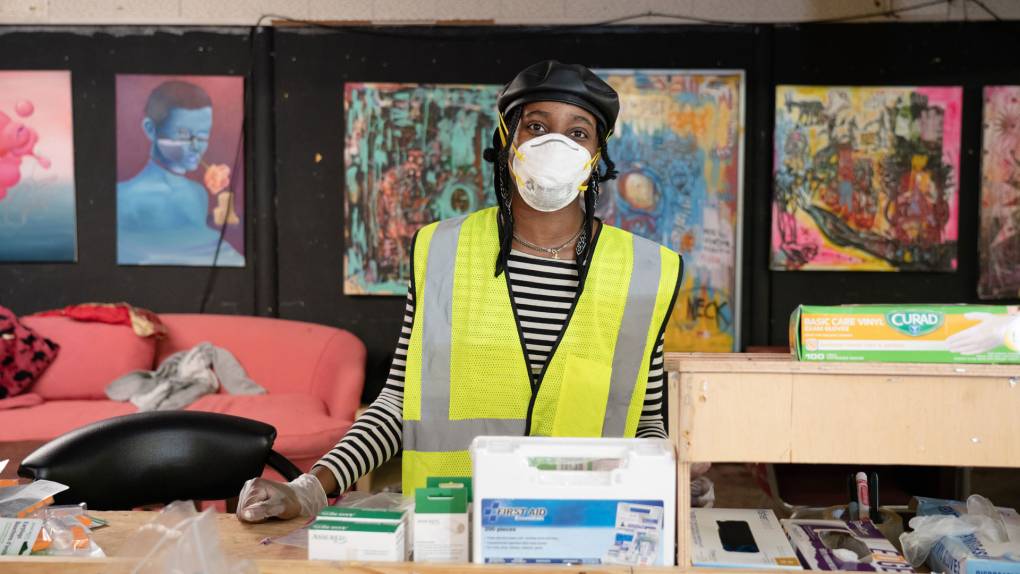
"caption": "The mutual aid project Protesters Kit Oakland emerged out of AroMa's desire to properly equip themselves and others for recent protests. ",
"description": "The mutual aid project Protesters Kit Oakland emerged out of AroMa's desire to properly equip themselves and others for recent protests.",
"title": "KQED_AroMa_PK_The_Hustle_hires_16_COVER",
"credit": "Graham Holoch / KQED",
"status": "inherit",
"isLoading": false,
"fetchFailed": false
},
"arts_13881668": {
"type": "attachments",
"id": "arts_13881668",
"meta": {
"index": "attachments_1716263798",
"site": "arts",
"id": "13881668",
"found": true
},
"parent": 13881650,
"imgSizes": {
"twentyfourteen-full-width": {
"file": "https://ww2.kqed.org/app/uploads/sites/2/2020/06/Gianna-1038x576.jpg",
"width": 1038,
"mimeType": "image/jpeg",
"height": 576
},
"thumbnail": {
"file": "https://ww2.kqed.org/app/uploads/sites/2/2020/06/Gianna-160x90.jpg",
"width": 160,
"mimeType": "image/jpeg",
"height": 90
},
"post-thumbnail": {
"file": "https://ww2.kqed.org/app/uploads/sites/2/2020/06/Gianna-672x372.jpg",
"width": 672,
"mimeType": "image/jpeg",
"height": 372
},
"kqedFullSize": {
"file": "https://ww2.kqed.org/app/uploads/sites/2/2020/06/Gianna.jpg",
"width": 1334,
"height": 750
},
"large": {
"file": "https://ww2.kqed.org/app/uploads/sites/2/2020/06/Gianna-1020x573.jpg",
"width": 1020,
"mimeType": "image/jpeg",
"height": 573
},
"medium": {
"file": "https://ww2.kqed.org/app/uploads/sites/2/2020/06/Gianna-800x450.jpg",
"width": 800,
"mimeType": "image/jpeg",
"height": 450
},
"medium_large": {
"file": "https://ww2.kqed.org/app/uploads/sites/2/2020/06/Gianna-768x432.jpg",
"width": 768,
"mimeType": "image/jpeg",
"height": 432
}
},
"publishDate": 1591697907,
"modified": 1591697965,
"caption": "Gianna Louis-Jacques, 17, born and raised in Santa Rosa: 'In the past 4 days... I’ve had a firework blow up on me, I fought, I was jumped, I’ve been tear gassed, I was arrested, and I would do it all again if it meant we were closer to justice. I LOVE MY PEOPLE.'",
"description": "Gianna Louis-Jacques, 17, born and raised in Santa Rosa: 'In the past 4 days... I’ve had a firework blow up on me, I fought, I was jumped, I’ve been tear gassed, I was arrested, and I would do it all again if it meant we were closer to justice. I LOVE MY PEOPLE.'",
"title": "Gianna",
"credit": "Gabe Meline/KQED",
"status": "inherit",
"isLoading": false,
"fetchFailed": false
},
"arts_13881491": {
"type": "attachments",
"id": "arts_13881491",
"meta": {
"index": "attachments_1716263798",
"site": "arts",
"id": "13881491",
"found": true
},
"parent": 13881489,
"imgSizes": {
"twentyfourteen-full-width": {
"file": "https://ww2.kqed.org/app/uploads/sites/2/2020/06/GettyImages-1218023784-1-1038x576.jpg",
"width": 1038,
"mimeType": "image/jpeg",
"height": 576
},
"thumbnail": {
"file": "https://ww2.kqed.org/app/uploads/sites/2/2020/06/GettyImages-1218023784-1-160x107.jpg",
"width": 160,
"mimeType": "image/jpeg",
"height": 107
},
"post-thumbnail": {
"file": "https://ww2.kqed.org/app/uploads/sites/2/2020/06/GettyImages-1218023784-1-672x372.jpg",
"width": 672,
"mimeType": "image/jpeg",
"height": 372
},
"kqedFullSize": {
"file": "https://ww2.kqed.org/app/uploads/sites/2/2020/06/GettyImages-1218023784-1-e1591601310455.jpg",
"width": 1920,
"height": 1280
},
"large": {
"file": "https://ww2.kqed.org/app/uploads/sites/2/2020/06/GettyImages-1218023784-1-1020x680.jpg",
"width": 1020,
"mimeType": "image/jpeg",
"height": 680
},
"full-width": {
"file": "https://ww2.kqed.org/app/uploads/sites/2/2020/06/GettyImages-1218023784-1-1920x1280.jpg",
"width": 1920,
"mimeType": "image/jpeg",
"height": 1280
},
"medium": {
"file": "https://ww2.kqed.org/app/uploads/sites/2/2020/06/GettyImages-1218023784-1-800x533.jpg",
"width": 800,
"mimeType": "image/jpeg",
"height": 533
},
"medium_large": {
"file": "https://ww2.kqed.org/app/uploads/sites/2/2020/06/GettyImages-1218023784-1-768x512.jpg",
"width": 768,
"mimeType": "image/jpeg",
"height": 512
}
},
"publishDate": 1591601290,
"modified": 1591601367,
"caption": "Protesters pose with Black Lives Matter signs on the Golden Gate Bridge during a demonstration against racism and police brutality in San Francisco, California, on June 6, 2020. ",
"description": "Protesters pose with Black Lives Matter signs on the Golden Gate Bridge during a demonstration against racism and police brutality in San Francisco, California, on June 6, 2020. ",
"title": "Protesters pose with Black Lives Matter signs on the Golden Gate Bridge during a demonstration against racism and police brutality in San Francisco, California, on June 6, 2020.",
"credit": "VIVIAN LIN/AFP via Getty Images",
"status": "inherit",
"isLoading": false,
"fetchFailed": false
},
"arts_13881681": {
"type": "attachments",
"id": "arts_13881681",
"meta": {
"index": "attachments_1716263798",
"site": "arts",
"id": "13881681",
"found": true
},
"parent": 13881679,
"imgSizes": {
"twentyfourteen-full-width": {
"file": "https://ww2.kqed.org/app/uploads/sites/2/2020/06/gettyimages-1218181548_custom-95fefd5d558c153d761ebb44e02b1b41920bffcc-s1500-c85-1038x576.jpg",
"width": 1038,
"mimeType": "image/jpeg",
"height": 576
},
"thumbnail": {
"file": "https://ww2.kqed.org/app/uploads/sites/2/2020/06/gettyimages-1218181548_custom-95fefd5d558c153d761ebb44e02b1b41920bffcc-s1500-c85-160x107.jpg",
"width": 160,
"mimeType": "image/jpeg",
"height": 107
},
"post-thumbnail": {
"file": "https://ww2.kqed.org/app/uploads/sites/2/2020/06/gettyimages-1218181548_custom-95fefd5d558c153d761ebb44e02b1b41920bffcc-s1500-c85-672x372.jpg",
"width": 672,
"mimeType": "image/jpeg",
"height": 372
},
"kqedFullSize": {
"file": "https://ww2.kqed.org/app/uploads/sites/2/2020/06/gettyimages-1218181548_custom-95fefd5d558c153d761ebb44e02b1b41920bffcc-s1500-c85.jpg",
"width": 1500,
"height": 999
},
"large": {
"file": "https://ww2.kqed.org/app/uploads/sites/2/2020/06/gettyimages-1218181548_custom-95fefd5d558c153d761ebb44e02b1b41920bffcc-s1500-c85-1020x679.jpg",
"width": 1020,
"mimeType": "image/jpeg",
"height": 679
},
"medium": {
"file": "https://ww2.kqed.org/app/uploads/sites/2/2020/06/gettyimages-1218181548_custom-95fefd5d558c153d761ebb44e02b1b41920bffcc-s1500-c85-800x533.jpg",
"width": 800,
"mimeType": "image/jpeg",
"height": 533
},
"medium_large": {
"file": "https://ww2.kqed.org/app/uploads/sites/2/2020/06/gettyimages-1218181548_custom-95fefd5d558c153d761ebb44e02b1b41920bffcc-s1500-c85-768x511.jpg",
"width": 768,
"mimeType": "image/jpeg",
"height": 511
}
},
"publishDate": 1591721437,
"modified": 1591721458,
"caption": null,
"description": null,
"title": "gettyimages-1218181548_custom-95fefd5d558c153d761ebb44e02b1b41920bffcc-s1500-c85",
"credit": "Matteo Nardone/Pacific Press/LightRocket via Getty Images",
"status": "inherit",
"isLoading": false,
"fetchFailed": false
},
"arts_13881449": {
"type": "attachments",
"id": "arts_13881449",
"meta": {
"index": "attachments_1716263798",
"site": "arts",
"id": "13881449",
"found": true
},
"parent": 13881446,
"imgSizes": {
"twentyfourteen-full-width": {
"file": "https://ww2.kqed.org/app/uploads/sites/2/2020/06/ICCD302_San_Juan_WP-1038x576.jpg",
"width": 1038,
"mimeType": "image/jpeg",
"height": 576
},
"thumbnail": {
"file": "https://ww2.kqed.org/app/uploads/sites/2/2020/06/ICCD302_San_Juan_WP-160x90.jpg",
"width": 160,
"mimeType": "image/jpeg",
"height": 90
},
"post-thumbnail": {
"file": "https://ww2.kqed.org/app/uploads/sites/2/2020/06/ICCD302_San_Juan_WP-672x372.jpg",
"width": 672,
"mimeType": "image/jpeg",
"height": 372
},
"kqedFullSize": {
"file": "https://ww2.kqed.org/app/uploads/sites/2/2020/06/ICCD302_San_Juan_WP.jpg",
"width": 1920,
"height": 1079
},
"large": {
"file": "https://ww2.kqed.org/app/uploads/sites/2/2020/06/ICCD302_San_Juan_WP-1020x573.jpg",
"width": 1020,
"mimeType": "image/jpeg",
"height": 573
},
"full-width": {
"file": "https://ww2.kqed.org/app/uploads/sites/2/2020/06/ICCD302_San_Juan_WP-1920x1079.jpg",
"width": 1920,
"mimeType": "image/jpeg",
"height": 1079
},
"medium": {
"file": "https://ww2.kqed.org/app/uploads/sites/2/2020/06/ICCD302_San_Juan_WP-800x450.jpg",
"width": 800,
"mimeType": "image/jpeg",
"height": 450
},
"medium_large": {
"file": "https://ww2.kqed.org/app/uploads/sites/2/2020/06/ICCD302_San_Juan_WP-768x432.jpg",
"width": 768,
"mimeType": "image/jpeg",
"height": 432
}
},
"publishDate": 1591395273,
"modified": 1591395350,
"caption": "Bomba dancer María Cruz in San Juan, Puerto Rico",
"description": "Bomba dancer María Cruz in San Juan, Puerto Rico",
"title": "Bomba dancer María Cruz in San Juan, Puerto Rico",
"credit": "Armando Aparicio",
"status": "inherit",
"isLoading": false,
"fetchFailed": false
},
"arts_13881553": {
"type": "attachments",
"id": "arts_13881553",
"meta": {
"index": "attachments_1716263798",
"site": "arts",
"id": "13881553",
"found": true
},
"parent": 13881529,
"imgSizes": {
"twentyfourteen-full-width": {
"file": "https://ww2.kqed.org/app/uploads/sites/2/2020/06/Photo-Jun-06-3-32-09-PM-1038x576.jpg",
"width": 1038,
"mimeType": "image/jpeg",
"height": 576
},
"thumbnail": {
"file": "https://ww2.kqed.org/app/uploads/sites/2/2020/06/Photo-Jun-06-3-32-09-PM-160x120.jpg",
"width": 160,
"mimeType": "image/jpeg",
"height": 120
},
"post-thumbnail": {
"file": "https://ww2.kqed.org/app/uploads/sites/2/2020/06/Photo-Jun-06-3-32-09-PM-672x372.jpg",
"width": 672,
"mimeType": "image/jpeg",
"height": 372
},
"kqedFullSize": {
"file": "https://ww2.kqed.org/app/uploads/sites/2/2020/06/Photo-Jun-06-3-32-09-PM.jpg",
"width": 1200,
"height": 900
},
"large": {
"file": "https://ww2.kqed.org/app/uploads/sites/2/2020/06/Photo-Jun-06-3-32-09-PM-1020x765.jpg",
"width": 1020,
"mimeType": "image/jpeg",
"height": 765
},
"medium": {
"file": "https://ww2.kqed.org/app/uploads/sites/2/2020/06/Photo-Jun-06-3-32-09-PM-800x600.jpg",
"width": 800,
"mimeType": "image/jpeg",
"height": 600
},
"medium_large": {
"file": "https://ww2.kqed.org/app/uploads/sites/2/2020/06/Photo-Jun-06-3-32-09-PM-768x576.jpg",
"width": 768,
"mimeType": "image/jpeg",
"height": 576
}
},
"publishDate": 1591648709,
"modified": 1591720247,
"caption": "One of the many new artworks in downtown Oakland in solidarity with the movement for Black lives. Artwork by the Trust Your Struggle Collective, Cece Carpio, Nisha K. Sethi, Priya Handa and Robert Trujillo.",
"description": "One of the many new artworks in downtown Oakland in solidarity with the movement for Black lives. Artwork by the Trust Your Struggle Collective, Cece Carpio, Nisha K. Sethi, Priya Handa and Robert Trujillo.",
"title": "Photo Jun 06, 3 32 09 PM",
"credit": "Cianni Jackson",
"status": "inherit",
"isLoading": false,
"fetchFailed": false
},
"arts_13881411": {
"type": "attachments",
"id": "arts_13881411",
"meta": {
"index": "attachments_1716263798",
"site": "arts",
"id": "13881411",
"found": true
},
"parent": 13881399,
"imgSizes": {
"twentyfourteen-full-width": {
"file": "https://ww2.kqed.org/app/uploads/sites/2/2020/06/breonna-taylor-oscar-grant-plaza-1038x576.jpg",
"width": 1038,
"mimeType": "image/jpeg",
"height": 576
},
"thumbnail": {
"file": "https://ww2.kqed.org/app/uploads/sites/2/2020/06/breonna-taylor-oscar-grant-plaza-160x107.jpg",
"width": 160,
"mimeType": "image/jpeg",
"height": 107
},
"post-thumbnail": {
"file": "https://ww2.kqed.org/app/uploads/sites/2/2020/06/breonna-taylor-oscar-grant-plaza-672x372.jpg",
"width": 672,
"mimeType": "image/jpeg",
"height": 372
},
"kqedFullSize": {
"file": "https://ww2.kqed.org/app/uploads/sites/2/2020/06/breonna-taylor-oscar-grant-plaza.jpg",
"width": 1446,
"height": 964
},
"large": {
"file": "https://ww2.kqed.org/app/uploads/sites/2/2020/06/breonna-taylor-oscar-grant-plaza-1020x680.jpg",
"width": 1020,
"mimeType": "image/jpeg",
"height": 680
},
"medium": {
"file": "https://ww2.kqed.org/app/uploads/sites/2/2020/06/breonna-taylor-oscar-grant-plaza-800x533.jpg",
"width": 800,
"mimeType": "image/jpeg",
"height": 533
},
"medium_large": {
"file": "https://ww2.kqed.org/app/uploads/sites/2/2020/06/breonna-taylor-oscar-grant-plaza-768x512.jpg",
"width": 768,
"mimeType": "image/jpeg",
"height": 512
}
},
"publishDate": 1591310492,
"modified": 1591310531,
"caption": "A memorial at Oscar Grant Plaza for Black lives lost to police violence. ",
"description": "A memorial at Oscar Grant Plaza for black lives lost to police violence. ",
"title": "breonna taylor oscar grant plaza",
"credit": "Beth LaBerge/KQED",
"status": "inherit",
"isLoading": false,
"fetchFailed": false
},
"arts_13870751": {
"type": "attachments",
"id": "arts_13870751",
"meta": {
"index": "attachments_1716263798",
"site": "arts",
"id": "13870751",
"found": true
},
"parent": 13870746,
"imgSizes": {
"twentyfourteen-full-width": {
"file": "https://ww2.kqed.org/app/uploads/sites/2/2019/12/GettyImages-457674096-1038x576.jpg",
"width": 1038,
"mimeType": "image/jpeg",
"height": 576
},
"thumbnail": {
"file": "https://ww2.kqed.org/app/uploads/sites/2/2019/12/GettyImages-457674096-160x107.jpg",
"width": 160,
"mimeType": "image/jpeg",
"height": 107
},
"post-thumbnail": {
"file": "https://ww2.kqed.org/app/uploads/sites/2/2019/12/GettyImages-457674096-672x372.jpg",
"width": 672,
"mimeType": "image/jpeg",
"height": 372
},
"kqedFullSize": {
"file": "https://ww2.kqed.org/app/uploads/sites/2/2019/12/GettyImages-457674096-e1593540086954.jpg",
"width": 1920,
"height": 1283
},
"large": {
"file": "https://ww2.kqed.org/app/uploads/sites/2/2019/12/GettyImages-457674096-1020x682.jpg",
"width": 1020,
"mimeType": "image/jpeg",
"height": 682
},
"complete_open_graph": {
"file": "https://ww2.kqed.org/app/uploads/sites/2/2019/12/GettyImages-457674096-1200x802.jpg",
"width": 1200,
"mimeType": "image/jpeg",
"height": 802
},
"full-width": {
"file": "https://ww2.kqed.org/app/uploads/sites/2/2019/12/GettyImages-457674096-1920x1283.jpg",
"width": 1920,
"mimeType": "image/jpeg",
"height": 1283
},
"medium": {
"file": "https://ww2.kqed.org/app/uploads/sites/2/2019/12/GettyImages-457674096-800x535.jpg",
"width": 800,
"mimeType": "image/jpeg",
"height": 535
},
"medium_large": {
"file": "https://ww2.kqed.org/app/uploads/sites/2/2019/12/GettyImages-457674096-768x513.jpg",
"width": 768,
"mimeType": "image/jpeg",
"height": 513
}
},
"publishDate": 1575399251,
"modified": 1593541321,
"caption": "Protesters hold signs during a demonstration against police brutality on October 22, 2014 in Oakland, California. ",
"description": "Protesters hold signs during a demonstration against police brutality on October 22, 2014 in Oakland, California. ",
"title": "Protesters Rally In Oakland Against Police Brutality",
"credit": "Justin Sullivan/Getty Images",
"status": "inherit",
"isLoading": false,
"fetchFailed": false
},
"arts_13870853": {
"type": "attachments",
"id": "arts_13870853",
"meta": {
"index": "attachments_1716263798",
"site": "arts",
"id": "13870853",
"found": true
},
"parent": 13870640,
"imgSizes": {
"twentyfourteen-full-width": {
"file": "https://ww2.kqed.org/app/uploads/sites/2/2018/12/IMG_4696-2-1038x576.jpg",
"width": 1038,
"mimeType": "image/jpeg",
"height": 576
},
"thumbnail": {
"file": "https://ww2.kqed.org/app/uploads/sites/2/2018/12/IMG_4696-2-160x90.jpg",
"width": 160,
"mimeType": "image/jpeg",
"height": 90
},
"post-thumbnail": {
"file": "https://ww2.kqed.org/app/uploads/sites/2/2018/12/IMG_4696-2-672x372.jpg",
"width": 672,
"mimeType": "image/jpeg",
"height": 372
},
"kqedFullSize": {
"file": "https://ww2.kqed.org/app/uploads/sites/2/2018/12/IMG_4696-2.jpg",
"width": 1920,
"height": 1080
},
"large": {
"file": "https://ww2.kqed.org/app/uploads/sites/2/2018/12/IMG_4696-2-1020x574.jpg",
"width": 1020,
"mimeType": "image/jpeg",
"height": 574
},
"complete_open_graph": {
"file": "https://ww2.kqed.org/app/uploads/sites/2/2018/12/IMG_4696-2-1200x675.jpg",
"width": 1200,
"mimeType": "image/jpeg",
"height": 675
},
"full-width": {
"file": "https://ww2.kqed.org/app/uploads/sites/2/2018/12/IMG_4696-2-1920x1080.jpg",
"width": 1920,
"mimeType": "image/jpeg",
"height": 1080
},
"medium": {
"file": "https://ww2.kqed.org/app/uploads/sites/2/2018/12/IMG_4696-2-800x450.jpg",
"width": 800,
"mimeType": "image/jpeg",
"height": 450
},
"medium_large": {
"file": "https://ww2.kqed.org/app/uploads/sites/2/2018/12/IMG_4696-2-768x432.jpg",
"width": 768,
"mimeType": "image/jpeg",
"height": 432
}
},
"publishDate": 1575427649,
"modified": 1575427732,
"caption": "In April 2016, Equipto, Sellassie Blackwell, Maria Cristina Gutierrez, Edwin Lindo (left to right) and Ike Pinkston (not pictured) waged one of the longest hunger strikes in San Francisco history to protest police brutality.",
"description": "In April 2016, Equipto, Sellassie Blackwell, Maria Cristina Gutierrez, Edwin Lindo (left to right) and Ike Pinkston (not pictured) waged one of the longest hunger strikes in San Francisco history to protest police brutality.",
"title": "IMG_4696 2",
"credit": "Bert Johnson",
"status": "inherit",
"isLoading": false,
"fetchFailed": false
},
"arts_13870851": {
"type": "attachments",
"id": "arts_13870851",
"meta": {
"index": "attachments_1716263798",
"site": "arts",
"id": "13870851",
"found": true
},
"parent": 13870746,
"imgSizes": {
"twentyfourteen-full-width": {
"file": "https://ww2.kqed.org/app/uploads/sites/2/2018/12/HERO-GettyImages-131196469-1-1038x576.jpg",
"width": 1038,
"mimeType": "image/jpeg",
"height": 576
},
"thumbnail": {
"file": "https://ww2.kqed.org/app/uploads/sites/2/2018/12/HERO-GettyImages-131196469-1-160x90.jpg",
"width": 160,
"mimeType": "image/jpeg",
"height": 90
},
"post-thumbnail": {
"file": "https://ww2.kqed.org/app/uploads/sites/2/2018/12/HERO-GettyImages-131196469-1-672x372.jpg",
"width": 672,
"mimeType": "image/jpeg",
"height": 372
},
"kqedFullSize": {
"file": "https://ww2.kqed.org/app/uploads/sites/2/2018/12/HERO-GettyImages-131196469-1.jpg",
"width": 1920,
"height": 1080
},
"large": {
"file": "https://ww2.kqed.org/app/uploads/sites/2/2018/12/HERO-GettyImages-131196469-1-1020x574.jpg",
"width": 1020,
"mimeType": "image/jpeg",
"height": 574
},
"complete_open_graph": {
"file": "https://ww2.kqed.org/app/uploads/sites/2/2018/12/HERO-GettyImages-131196469-1-1200x675.jpg",
"width": 1200,
"mimeType": "image/jpeg",
"height": 675
},
"full-width": {
"file": "https://ww2.kqed.org/app/uploads/sites/2/2018/12/HERO-GettyImages-131196469-1-1920x1080.jpg",
"width": 1920,
"mimeType": "image/jpeg",
"height": 1080
},
"medium": {
"file": "https://ww2.kqed.org/app/uploads/sites/2/2018/12/HERO-GettyImages-131196469-1-800x450.jpg",
"width": 800,
"mimeType": "image/jpeg",
"height": 450
},
"medium_large": {
"file": "https://ww2.kqed.org/app/uploads/sites/2/2018/12/HERO-GettyImages-131196469-1-768x432.jpg",
"width": 768,
"mimeType": "image/jpeg",
"height": 432
}
},
"publishDate": 1575426549,
"modified": 1575491097,
"caption": "Protesters hold signs as they demonstrate during Occupy Oakland's general strike on Nov. 2, 2011.",
"description": "Protesters hold signs as they demonstrate during Occupy Oakland's general strike on Nov. 2, 2011.",
"title": "Occupy Oakland Calls For General Strike",
"credit": "Justin Sullivan/Getty Images",
"status": "inherit",
"isLoading": false,
"fetchFailed": false
},
"arts_13865027": {
"type": "attachments",
"id": "arts_13865027",
"meta": {
"index": "attachments_1716263798",
"site": "arts",
"id": "13865027",
"found": true
},
"parent": 13865026,
"imgSizes": {
"twentyfourteen-full-width": {
"file": "https://ww2.kqed.org/app/uploads/sites/2/2019/08/gettyimages-478920136_custom-246236ac58056dd18e0ae106f108c5c71c44101e-1038x576.jpg",
"width": 1038,
"mimeType": "image/jpeg",
"height": 576
},
"thumbnail": {
"file": "https://ww2.kqed.org/app/uploads/sites/2/2019/08/gettyimages-478920136_custom-246236ac58056dd18e0ae106f108c5c71c44101e-160x109.jpg",
"width": 160,
"mimeType": "image/jpeg",
"height": 109
},
"post-thumbnail": {
"file": "https://ww2.kqed.org/app/uploads/sites/2/2019/08/gettyimages-478920136_custom-246236ac58056dd18e0ae106f108c5c71c44101e-672x372.jpg",
"width": 672,
"mimeType": "image/jpeg",
"height": 372
},
"kqedFullSize": {
"file": "https://ww2.kqed.org/app/uploads/sites/2/2019/08/gettyimages-478920136_custom-246236ac58056dd18e0ae106f108c5c71c44101e.jpg",
"width": 2048,
"height": 1392
},
"large": {
"file": "https://ww2.kqed.org/app/uploads/sites/2/2019/08/gettyimages-478920136_custom-246236ac58056dd18e0ae106f108c5c71c44101e-1020x693.jpg",
"width": 1020,
"mimeType": "image/jpeg",
"height": 693
},
"complete_open_graph": {
"file": "https://ww2.kqed.org/app/uploads/sites/2/2019/08/gettyimages-478920136_custom-246236ac58056dd18e0ae106f108c5c71c44101e-1200x816.jpg",
"width": 1200,
"mimeType": "image/jpeg",
"height": 816
},
"full-width": {
"file": "https://ww2.kqed.org/app/uploads/sites/2/2019/08/gettyimages-478920136_custom-246236ac58056dd18e0ae106f108c5c71c44101e-1920x1305.jpg",
"width": 1920,
"mimeType": "image/jpeg",
"height": 1305
},
"medium": {
"file": "https://ww2.kqed.org/app/uploads/sites/2/2019/08/gettyimages-478920136_custom-246236ac58056dd18e0ae106f108c5c71c44101e-800x544.jpg",
"width": 800,
"mimeType": "image/jpeg",
"height": 544
},
"medium_large": {
"file": "https://ww2.kqed.org/app/uploads/sites/2/2019/08/gettyimages-478920136_custom-246236ac58056dd18e0ae106f108c5c71c44101e-768x522.jpg",
"width": 768,
"mimeType": "image/jpeg",
"height": 522
}
},
"publishDate": 1566932363,
"modified": 1566933248,
"caption": "Kendrick Lamar performs at the 2015 BET Awards in Los Angeles.\n",
"description": "Kendrick Lamar performs at the 2015 BET Awards in Los Angeles.",
"title": "Kendrick Lamar performs at the 2015 BET Awards in Los Angeles.",
"credit": "Christopher Polk/Getty Images for BET",
"status": "inherit",
"isLoading": false,
"fetchFailed": false
},
"arts_13852245": {
"type": "attachments",
"id": "arts_13852245",
"meta": {
"index": "attachments_1716263798",
"site": "arts",
"id": "13852245",
"found": true
},
"parent": 13852233,
"imgSizes": {
"twentyfourteen-full-width": {
"file": "https://ww2.kqed.org/app/uploads/sites/2/2019/03/6-owunna_infiniteessence23_slide-996081ca064e1951115a25a8e42c9454419985a6-s1300-c85-1038x576.jpg",
"width": 1038,
"mimeType": "image/jpeg",
"height": 576
},
"thumbnail": {
"file": "https://ww2.kqed.org/app/uploads/sites/2/2019/03/6-owunna_infiniteessence23_slide-996081ca064e1951115a25a8e42c9454419985a6-s1300-c85-160x107.jpg",
"width": 160,
"mimeType": "image/jpeg",
"height": 107
},
"post-thumbnail": {
"file": "https://ww2.kqed.org/app/uploads/sites/2/2019/03/6-owunna_infiniteessence23_slide-996081ca064e1951115a25a8e42c9454419985a6-s1300-c85-672x372.jpg",
"width": 672,
"mimeType": "image/jpeg",
"height": 372
},
"kqedFullSize": {
"file": "https://ww2.kqed.org/app/uploads/sites/2/2019/03/6-owunna_infiniteessence23_slide-996081ca064e1951115a25a8e42c9454419985a6-s1300-c85.jpg",
"width": 1300,
"height": 866
},
"large": {
"file": "https://ww2.kqed.org/app/uploads/sites/2/2019/03/6-owunna_infiniteessence23_slide-996081ca064e1951115a25a8e42c9454419985a6-s1300-c85-1020x679.jpg",
"width": 1020,
"mimeType": "image/jpeg",
"height": 679
},
"complete_open_graph": {
"file": "https://ww2.kqed.org/app/uploads/sites/2/2019/03/6-owunna_infiniteessence23_slide-996081ca064e1951115a25a8e42c9454419985a6-s1300-c85-1200x799.jpg",
"width": 1200,
"mimeType": "image/jpeg",
"height": 799
},
"guest-author-50": {
"file": "https://ww2.kqed.org/app/uploads/sites/2/2019/03/6-owunna_infiniteessence23_slide-996081ca064e1951115a25a8e42c9454419985a6-s1300-c85-50x50.jpg",
"width": 50,
"mimeType": "image/jpeg",
"height": 50
},
"guest-author-96": {
"file": "https://ww2.kqed.org/app/uploads/sites/2/2019/03/6-owunna_infiniteessence23_slide-996081ca064e1951115a25a8e42c9454419985a6-s1300-c85-96x96.jpg",
"width": 96,
"mimeType": "image/jpeg",
"height": 96
},
"medium": {
"file": "https://ww2.kqed.org/app/uploads/sites/2/2019/03/6-owunna_infiniteessence23_slide-996081ca064e1951115a25a8e42c9454419985a6-s1300-c85-800x533.jpg",
"width": 800,
"mimeType": "image/jpeg",
"height": 533
},
"guest-author-64": {
"file": "https://ww2.kqed.org/app/uploads/sites/2/2019/03/6-owunna_infiniteessence23_slide-996081ca064e1951115a25a8e42c9454419985a6-s1300-c85-64x64.jpg",
"width": 64,
"mimeType": "image/jpeg",
"height": 64
},
"guest-author-32": {
"file": "https://ww2.kqed.org/app/uploads/sites/2/2019/03/6-owunna_infiniteessence23_slide-996081ca064e1951115a25a8e42c9454419985a6-s1300-c85-32x32.jpg",
"width": 32,
"mimeType": "image/jpeg",
"height": 32
},
"medium_large": {
"file": "https://ww2.kqed.org/app/uploads/sites/2/2019/03/6-owunna_infiniteessence23_slide-996081ca064e1951115a25a8e42c9454419985a6-s1300-c85-768x512.jpg",
"width": 768,
"mimeType": "image/jpeg",
"height": 512
},
"guest-author-128": {
"file": "https://ww2.kqed.org/app/uploads/sites/2/2019/03/6-owunna_infiniteessence23_slide-996081ca064e1951115a25a8e42c9454419985a6-s1300-c85-128x128.jpg",
"width": 128,
"mimeType": "image/jpeg",
"height": 128
}
},
"publishDate": 1551743106,
"modified": 1551743208,
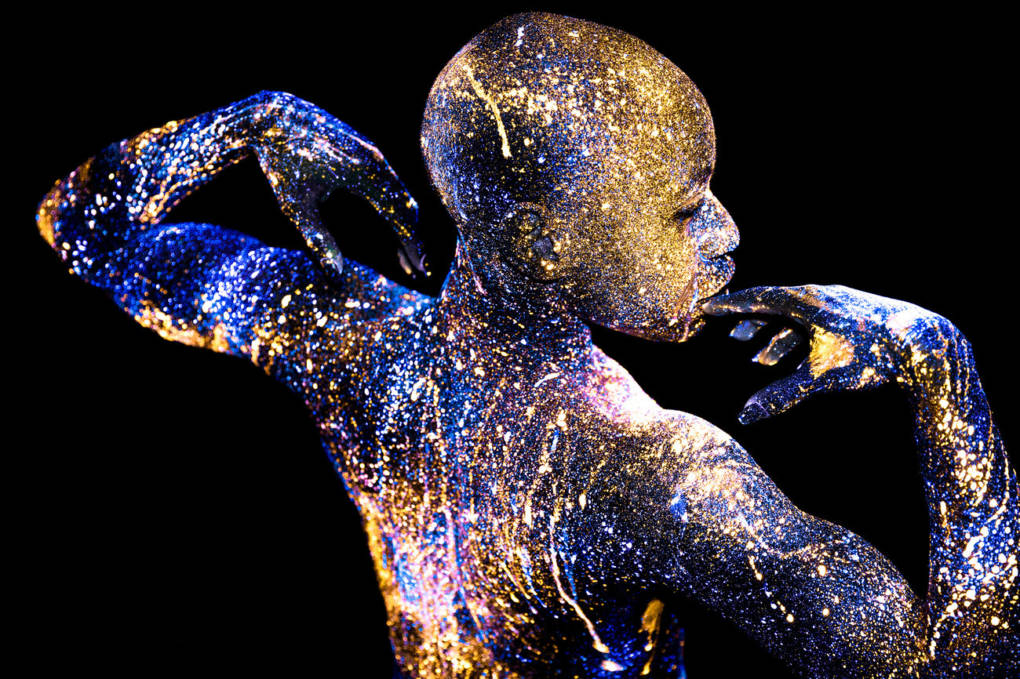
"caption": "Emem, 2018",
"description": "Emem, 2018",
"title": "6-owunna_infiniteessence23_slide-996081ca064e1951115a25a8e42c9454419985a6-s1300-c85",
"credit": "Mikael Owunna",
"status": "inherit",
"isLoading": false,
"fetchFailed": false
}
},
"audioPlayerReducer": {
"postId": "stream_live",
"isPaused": true,
"isPlaying": false,
"pfsActive": false,
"pledgeModalIsOpen": true,
"playerDrawerIsOpen": false,
"liveAudioPlayStartedAt": 0,
"liveAudioPlayContext": ""
},
"authorsReducer": {
"byline_arts_13881679": {
"type": "authors",
"id": "byline_arts_13881679",
"meta": {
"override": true
},
"slug": "byline_arts_13881679",
"name": "Allison Aubrey",
"isLoading": false
},
"byline_arts_13881446": {
"type": "authors",
"id": "byline_arts_13881446",
"meta": {
"override": true
},
"slug": "byline_arts_13881446",
"name": "Armando Aparicio, Charlotte Buchen Khadra",
"isLoading": false
},
"byline_arts_13881529": {
"type": "authors",
"id": "byline_arts_13881529",
"meta": {
"override": true
},
"slug": "byline_arts_13881529",
"name": "Cianni Jackson",
"isLoading": false
},
"byline_arts_13865026": {
"type": "authors",
"id": "byline_arts_13865026",
"meta": {
"override": true
},
"slug": "byline_arts_13865026",
"name": "Andrew Limbong",
"isLoading": false
},
"byline_arts_13852233": {
"type": "authors",
"id": "byline_arts_13852233",
"meta": {
"override": true
},
"slug": "byline_arts_13852233",
"name": "Becky Harlan, Mikael Owunna",
"isLoading": false
},
"shotchkiss": {
"type": "authors",
"id": "61",
"meta": {
"index": "authors_1716337520",
"id": "61",
"found": true
},
"name": "Sarah Hotchkiss",
"firstName": "Sarah",
"lastName": "Hotchkiss",
"slug": "shotchkiss",
"email": "shotchkiss@kqed.org",
"display_author_email": true,
"staff_mastheads": [
"arts"
],
"title": "Senior Editor",
"bio": "Sarah Hotchkiss is a San Francisco \u003ca href=\"http://www.sarahhotchkiss.com\">artist\u003c/a> and arts writer. In 2019, she received the Dorothea & Leo Rabkin Foundation grant for visual art journalism and in 2020 she received a Society of Professional Journalists, Northern California award for excellence in arts and culture reporting.",
"avatar": "https://secure.gravatar.com/avatar/bc662df144b3d27fd8b1b6f1c2a420d34e91e53154d411bb7ad353cc8b6cea8d?s=600&d=blank&r=g",
"twitter": null,
"bluesky": null,
"facebook": null,
"instagram": null,
"linkedin": null,
"sites": [
{
"site": "",
"roles": [
"editor"
]
},
{
"site": "arts",
"roles": [
"Contributor",
"administrator"
]
},
{
"site": "artschool",
"roles": [
"administrator"
]
},
{
"site": "news",
"roles": [
"editor"
]
},
{
"site": "pop",
"roles": [
"administrator"
]
},
{
"site": "bayareabites",
"roles": [
"editor"
]
},
{
"site": "spark",
"roles": [
"editor"
]
},
{
"site": "checkplease",
"roles": [
"editor"
]
}
],
"headData": {
"title": "Sarah Hotchkiss | KQED",
"description": "Senior Editor",
"ogImgSrc": "https://secure.gravatar.com/avatar/bc662df144b3d27fd8b1b6f1c2a420d34e91e53154d411bb7ad353cc8b6cea8d?s=600&d=blank&r=g",
"twImgSrc": "https://secure.gravatar.com/avatar/bc662df144b3d27fd8b1b6f1c2a420d34e91e53154d411bb7ad353cc8b6cea8d?s=600&d=blank&r=g"
},
"isLoading": false,
"link": "/author/shotchkiss"
},
"gmeline": {
"type": "authors",
"id": "185",
"meta": {
"index": "authors_1716337520",
"id": "185",
"found": true
},
"name": "Gabe Meline",
"firstName": "Gabe",
"lastName": "Meline",
"slug": "gmeline",
"email": "gmeline@kqed.org",
"display_author_email": true,
"staff_mastheads": [
"arts"
],
"title": "Senior Editor, KQED Arts & Culture",
"bio": "Gabe Meline entered journalism at age 15 making photocopied zines, and has since earned awards from the Edward R. Murrow Awards, the Society for Professional Journalists, the Online Journalism Awards, the Association of Alternative Newsweeklies and the California Newspaper Publishers Association. Prior to KQED, he was the editor of the \u003cem>North Bay Bohemian\u003c/em> and a touring musician. He lives with his wife and daughter in his hometown of Santa Rosa, CA.",
"avatar": "https://secure.gravatar.com/avatar/5bebe57be0d8bc2dd318934feb47299e2d2d10cba28d09d8d7afb389a2ce2bdd?s=600&d=blank&r=g",
"twitter": null,
"bluesky": null,
"facebook": null,
"instagram": null,
"linkedin": null,
"sites": [
{
"site": "",
"roles": [
"editor"
]
},
{
"site": "arts",
"roles": [
"administrator"
]
},
{
"site": "artschool",
"roles": [
"editor"
]
},
{
"site": "news",
"roles": [
"author"
]
},
{
"site": "pop",
"roles": [
"editor"
]
},
{
"site": "bayareabites",
"roles": [
"editor"
]
},
{
"site": "food",
"roles": [
"editor"
]
},
{
"site": "forum",
"roles": [
"administrator"
]
},
{
"site": "liveblog",
"roles": [
"editor"
]
},
{
"site": "hiphop",
"roles": [
"editor"
]
}
],
"headData": {
"title": "Gabe Meline | KQED",
"description": "Senior Editor, KQED Arts & Culture",
"ogImgSrc": "https://secure.gravatar.com/avatar/5bebe57be0d8bc2dd318934feb47299e2d2d10cba28d09d8d7afb389a2ce2bdd?s=600&d=blank&r=g",
"twImgSrc": "https://secure.gravatar.com/avatar/5bebe57be0d8bc2dd318934feb47299e2d2d10cba28d09d8d7afb389a2ce2bdd?s=600&d=blank&r=g"
},
"isLoading": false,
"link": "/author/gmeline"
},
"ralexandra": {
"type": "authors",
"id": "11242",
"meta": {
"index": "authors_1716337520",
"id": "11242",
"found": true
},
"name": "Rae Alexandra",
"firstName": "Rae",
"lastName": "Alexandra",
"slug": "ralexandra",
"email": "ralexandra@kqed.org",
"display_author_email": true,
"staff_mastheads": [],
"title": "Reporter/Producer",
"bio": "Rae Alexandra is a Reporter/Producer for KQED Arts & Culture, and the creator/author of the \u003ca href=\"https://www.kqed.org/arts/program/rebel-girls-from-bay-area-history\">Rebel Girls From Bay Area History\u003c/a> and \u003ca href=\"https://www.kqed.org/bizarrebayarea\">Bizarre Bay Area\u003c/a> series. Her debut book, \u003ca href=\"https://citylights.com/politics-current-events-history/unsung-heroines35-women-who-changed/\">Unsung Heroines: 35 Women Who Changed the Bay Area\u003c/a> was published by City Lights in March 2026. In 2023, Rae was awarded an SPJ Excellence in Journalism Award for Arts & Culture. Rae was born and raised in Wales and subsequently — even after two decades in Northern California — still uses phrases that regularly baffle her coworkers.",
"avatar": "https://secure.gravatar.com/avatar/edfee8176c80cc0a382b051190f5341997df378a934a5774dcb0977732dfd401?s=600&d=blank&r=g",
"twitter": null,
"bluesky": null,
"facebook": null,
"instagram": null,
"linkedin": null,
"sites": [
{
"site": "arts",
"roles": [
"subscriber"
]
},
{
"site": "news",
"roles": [
"subscriber"
]
},
{
"site": "pop",
"roles": [
"subscriber"
]
},
{
"site": "bayareabites",
"roles": [
"subscriber"
]
},
{
"site": "science",
"roles": [
"subscriber"
]
}
],
"headData": {
"title": "Rae Alexandra | KQED",
"description": "Reporter/Producer",
"ogImgSrc": "https://secure.gravatar.com/avatar/edfee8176c80cc0a382b051190f5341997df378a934a5774dcb0977732dfd401?s=600&d=blank&r=g",
"twImgSrc": "https://secure.gravatar.com/avatar/edfee8176c80cc0a382b051190f5341997df378a934a5774dcb0977732dfd401?s=600&d=blank&r=g"
},
"isLoading": false,
"link": "/author/ralexandra"
},
"nvoynovskaya": {
"type": "authors",
"id": "11387",
"meta": {
"index": "authors_1716337520",
"id": "11387",
"found": true
},
"name": "Nastia Voynovskaya",
"firstName": "Nastia",
"lastName": "Voynovskaya",
"slug": "nvoynovskaya",
"email": "nvoynovskaya@kqed.org",
"display_author_email": false,
"staff_mastheads": [
"arts"
],
"title": "Editor and reporter",
"bio": "Nastia Voynovskaya is a reporter, editor and host at KQED Arts & Culture. She's been covering the arts in the Bay Area for over a decade, with a focus on music, queer culture, labor issues and grassroots organizing. She has edited KQED story series such as Trans Bay: A History of San Francisco's Gender-Diverse Community, and co-created KQED's Bay Area hip-hop history project, That's My Word. Nastia's work has been recognized by the Society of Professional Journalists and San Francisco Press Club. She regularly appears on podcasts and radio programs, including NPR's All Songs Considered, and hosts live events where music, culture and conversation meet.",
"avatar": "https://secure.gravatar.com/avatar/5025ee460e5a85d69ca20ea6c6f2f80d7e17795c828f61ea3aecfcd924e9042e?s=600&d=blank&r=g",
"twitter": null,
"bluesky": null,
"facebook": null,
"instagram": "https://www.instagram.com/nananastia/",
"linkedin": null,
"sites": [
{
"site": "",
"roles": [
"editor"
]
},
{
"site": "arts",
"roles": [
"administrator"
]
},
{
"site": "news",
"roles": [
"editor"
]
},
{
"site": "pop",
"roles": [
"administrator"
]
},
{
"site": "bayareabites",
"roles": [
"editor"
]
},
{
"site": "podcasts",
"roles": [
"editor"
]
},
{
"site": "hiphop",
"roles": [
"editor"
]
}
],
"headData": {
"title": "Nastia Voynovskaya | KQED",
"description": "Editor and reporter",
"ogImgSrc": "https://secure.gravatar.com/avatar/5025ee460e5a85d69ca20ea6c6f2f80d7e17795c828f61ea3aecfcd924e9042e?s=600&d=blank&r=g",
"twImgSrc": "https://secure.gravatar.com/avatar/5025ee460e5a85d69ca20ea6c6f2f80d7e17795c828f61ea3aecfcd924e9042e?s=600&d=blank&r=g"
},
"isLoading": false,
"link": "/author/nvoynovskaya"
},
"ogpenn": {
"type": "authors",
"id": "11491",
"meta": {
"index": "authors_1716337520",
"id": "11491",
"found": true
},
"name": "Pendarvis Harshaw",
"firstName": "Pendarvis",
"lastName": "Harshaw",
"slug": "ogpenn",
"email": "ogpenn@gmail.com",
"display_author_email": false,
"staff_mastheads": [
"arts"
],
"title": "Community Engagement Reporter",
"bio": "Pendarvis Harshaw is an educator, host and writer with KQED Arts.",
"avatar": "https://secure.gravatar.com/avatar/972b77ee8e3f346ae2b00622661187fbfabd059b5693bbdc1475ea7a722fd4cd?s=600&d=blank&r=g",
"twitter": null,
"bluesky": null,
"facebook": null,
"instagram": "ogpenn",
"linkedin": null,
"sites": [
{
"site": "arts",
"roles": [
"administrator"
]
},
{
"site": "news",
"roles": [
"editor"
]
},
{
"site": "bayareabites",
"roles": [
"author"
]
},
{
"site": "hiphop",
"roles": [
"editor"
]
}
],
"headData": {
"title": "Pendarvis Harshaw | KQED",
"description": "Community Engagement Reporter",
"ogImgSrc": "https://secure.gravatar.com/avatar/972b77ee8e3f346ae2b00622661187fbfabd059b5693bbdc1475ea7a722fd4cd?s=600&d=blank&r=g",
"twImgSrc": "https://secure.gravatar.com/avatar/972b77ee8e3f346ae2b00622661187fbfabd059b5693bbdc1475ea7a722fd4cd?s=600&d=blank&r=g"
},
"isLoading": false,
"link": "/author/ogpenn"
},
"maddycliff": {
"type": "authors",
"id": "11725",
"meta": {
"index": "authors_1716337520",
"id": "11725",
"found": true
},
"name": "Maddy Clifford",
"firstName": "Maddy",
"lastName": "Clifford",
"slug": "maddycliff",
"email": "maddycliff@gmail.com",
"display_author_email": true,
"staff_mastheads": [],
"title": "KQED Contributor",
"bio": "Maddy Clifford is an Oakland-based writer, artist, and activist. She has a notable career highlighted by her eight-year tenure as a Poet in Residence at the San Francisco Juvenile Justice Center. Following this, Maddy released a solo album titled \"downCHANTS\" and composed a forty-minute musical score for the aerial dance piece \"Apparatus of Repair\" in collaboration with Flyaway Productions. Her latest project is a video-podcast called \"What’s Pimpin’?\" produced with KQED Arts. Maddy's written contributions can be found in Prism Reports, Truthout and 48hills.",
"avatar": "https://secure.gravatar.com/avatar/a90ce07df8d231f24acf7ea72e94e394?s=600&d=blank&r=g",
"twitter": "@mad_lines",
"facebook": "https://www.facebook.com/MADlinesmusic/",
"instagram": "https://www.instagram.com/mad.lines/",
"linkedin": "https://www.linkedin.com/in/maddy-clifford-65ba7729/",
"sites": [
{
"site": "arts",
"roles": [
"contributor"
]
}
],
"headData": {
"title": "Maddy Clifford | KQED",
"description": "KQED Contributor",
"ogImgSrc": "https://secure.gravatar.com/avatar/a90ce07df8d231f24acf7ea72e94e394?s=600&d=blank&r=g",
"twImgSrc": "https://secure.gravatar.com/avatar/a90ce07df8d231f24acf7ea72e94e394?s=600&d=blank&r=g"
},
"isLoading": false,
"link": "/author/maddycliff"
}
},
"pagesReducer": {
"arts_tag_black-lives-matter": {
"type": "terms",
"id": "arts_3156",
"meta": {
"index": "terms_1716263798",
"site": "arts",
"id": "3156",
"score": 8.794299
},
"featImg": null,
"name": "Black Lives Matter",
"description": null,
"taxonomy": "tag",
"headData": {
"twImgId": null,
"twTitle": null,
"ogTitle": null,
"ogImgId": null,
"twDescription": null,
"description": null,
"title": "Black Lives Matter Archives | KQED Arts",
"ogDescription": null
},
"ttid": 3168,
"slug": "black-lives-matter",
"isLoading": false,
"title": "Black Lives Matter",
"pageMeta": {
"site": "arts",
"WpPageTemplate": "page-topic-editorial",
"currentPage": 4
},
"blocks": [
{
"blockName": "kqed/post-list",
"attrs": {
"layout": "cardArticle2",
"query": "posts/arts?tag=black-lives-matter",
"seeMore": false,
"paginated": true,
"page": 4
}
},
{
"blockName": "kqed/ad"
}
]
}
},
"pfsSessionReducer": {},
"postsReducer": {
"stream_live": {
"type": "live",
"id": "stream_live",
"audioUrl": "https://streams.kqed.org/kqedradio",
"title": "Live Stream",
"excerpt": "Live Stream information currently unavailable.",
"link": "/radio",
"featImg": "",
"label": {
"name": "KQED Live",
"link": "/"
}
},
"stream_kqedNewscast": {
"type": "posts",
"id": "stream_kqedNewscast",
"audioUrl": "https://www.kqed.org/.stream/anon/radio/RDnews/newscast.mp3?_=1",
"title": "KQED Newscast",
"featImg": "",
"label": {
"name": "88.5 FM",
"link": "/"
}
},
"arts_13881996": {
"type": "posts",
"id": "arts_13881996",
"meta": {
"index": "posts_1716263798",
"site": "arts",
"id": "13881996",
"score": null,
"sort": [
1592409467000
]
},
"guestAuthors": [],
"slug": "hustle-protesters-kit-oakland-aroma",
"title": "A Filmmaker Turns to Organizing Through Mutual Aid",
"publishDate": 1592409467,
"format": "image",
"headTitle": "A Filmmaker Turns to Organizing Through Mutual Aid | KQED",
"labelTerm": {
"term": 4525,
"site": "arts"
},
"content": "\u003cp>Before the past month, AroMa, a 22-year-old artist from Oakland, didn’t self-identify as an activist or an organizer. \u003c/p>\n\u003cp>“Recently my friends and I have been like, ‘What was your life before you were a revolutionary?’” AroMa laughs. “It really does feel like a past life.”\u003c/p>\n\u003cp>That past life was spent directing Bay Area artists’ music videos, making a debut short film \u003ci>\u003ca href=\"https://www.youtube.com/watch?v=cNBsHZpeSxA\" rel=\"noopener noreferrer\" target=\"_blank\">ZoomBug\u003c/a>\u003c/i>, which premiered in 2018, and working on another musical film project, \u003ci>\u003ca href=\"https://www.moonbabyfilm.com/\" rel=\"noopener noreferrer\" target=\"_blank\">MoonBaby\u003c/a>\u003c/i>. \u003c/p>\n\u003cp>But when the protests started in Oakland in response to the killing of George Floyd by Minneapolis police officer Derrick Chauvin, AroMa’s first impulse was to join in—after doing a little research about the risks involved. The urgency of the situation, especially after Trump tweeted “when the looting starts, the shooting starts,” was palpable. “It felt like one of those undeniable moments,” says AroMa of the president’s May 28 tweet. “If you didn’t understand what side the state is on in relation to you before, please understand now.” \u003c/p>\n\u003cfigure id=\"attachment_13882012\" class=\"wp-caption aligncenter\" style=\"max-width: 1200px\">\u003cimg loading=\"lazy\" decoding=\"async\" src=\"https://ww2.kqed.org/app/uploads/sites/2/2020/06/KQED_AroMa_PK_The_Hustle_hires_7_1200.jpg\" alt=\"\" width=\"1200\" height=\"800\" class=\"size-full wp-image-13882012\" srcset=\"https://cdn.kqed.org/wp-content/uploads/sites/2/2020/06/KQED_AroMa_PK_The_Hustle_hires_7_1200.jpg 1200w, https://cdn.kqed.org/wp-content/uploads/sites/2/2020/06/KQED_AroMa_PK_The_Hustle_hires_7_1200-160x107.jpg 160w, https://cdn.kqed.org/wp-content/uploads/sites/2/2020/06/KQED_AroMa_PK_The_Hustle_hires_7_1200-800x533.jpg 800w, https://cdn.kqed.org/wp-content/uploads/sites/2/2020/06/KQED_AroMa_PK_The_Hustle_hires_7_1200-768x512.jpg 768w, https://cdn.kqed.org/wp-content/uploads/sites/2/2020/06/KQED_AroMa_PK_The_Hustle_hires_7_1200-1020x680.jpg 1020w\" sizes=\"(max-width: 1200px) 100vw, 1200px\">\u003cfigcaption class=\"wp-caption-text\">Instructions in the Omni Commons basement for mixing a solution to lessen the effects of tear gas, a formula learned from Hong Kong protesters. \u003ccite>(Graham Holoch / KQED)\u003c/cite>\u003c/figcaption>\u003c/figure>\n\u003cp>At the same time, previous experience taught AroMa, who uses they/them pronouns, to hit the streets prepared. “If you’re from here, you’re not new to protests and gatherings even if you’re not an ‘organizer/activist,’” they explain. AroMa had participated in Occupy protests while they were still in high school, and remembered seeing protesters exposed to tear gas being treated with liquid sprayed into their faces. That image from nearly a decade ago lodged in AroMa’s memory: “What’s the spray made of?”\u003c/p>\n\u003cp>[ad fullwidth]\u003c/p>\n\u003cp>Floating an idea \u003ca href=\"https://twitter.com/Yea_itsmethough/status/1266264381978865670?s=20\" rel=\"noopener noreferrer\" target=\"_blank\">on Twitter\u003c/a> on May 29—“Thinking of making little protest / riot kits to hand out for free”—AroMa immediately heard back from followers asking how they could donate money to the cause. Later that night, with help from friends, they handed out over 100 kits to protesters in downtown Oakland, hastily assembled with supplies from Dollar Tree and other shops. The total cost of putting together the kits came to about $500, AroMa says.\u003c/p>\n\u003cp>Two days later, the group had a name (\u003ca href=\"https://www.instagram.com/pkoakland2020/\" rel=\"noopener noreferrer\" target=\"_blank\">Protesters Kit Oakland\u003c/a>), a Cash App account, a Gmail address and the goal of making 200 additional kits.\u003c/p>\n\u003cp>“Things just kind of started to snowball on their own,” AroMa says. PKO is now run by a core group of five. “With my background in producing films and connecting with people, I’m good at organizing people quickly to do a certain task.” \u003c/p>\n\u003cfigure id=\"attachment_13882011\" class=\"wp-caption aligncenter\" style=\"max-width: 1200px\">\u003cimg loading=\"lazy\" decoding=\"async\" src=\"https://ww2.kqed.org/app/uploads/sites/2/2020/06/KQED_AroMa_PK_The_Hustle_hires_3_1200.jpg\" alt=\"\" width=\"1200\" height=\"889\" class=\"size-full wp-image-13882011\" srcset=\"https://cdn.kqed.org/wp-content/uploads/sites/2/2020/06/KQED_AroMa_PK_The_Hustle_hires_3_1200.jpg 1200w, https://cdn.kqed.org/wp-content/uploads/sites/2/2020/06/KQED_AroMa_PK_The_Hustle_hires_3_1200-160x119.jpg 160w, https://cdn.kqed.org/wp-content/uploads/sites/2/2020/06/KQED_AroMa_PK_The_Hustle_hires_3_1200-800x593.jpg 800w, https://cdn.kqed.org/wp-content/uploads/sites/2/2020/06/KQED_AroMa_PK_The_Hustle_hires_3_1200-768x569.jpg 768w, https://cdn.kqed.org/wp-content/uploads/sites/2/2020/06/KQED_AroMa_PK_The_Hustle_hires_3_1200-1020x756.jpg 1020w\" sizes=\"(max-width: 1200px) 100vw, 1200px\">\u003cfigcaption class=\"wp-caption-text\">AroMa in the Omni Commons basement, where kits are assembled by a group of volunteers. \u003ccite>(Graham Holoch / KQED)\u003c/cite>\u003c/figcaption>\u003c/figure>\n\u003cp>As the protests continued, PKO’s kits adapted to meet new needs and on-the-ground experience. In addition to swim goggles and a solution of baking soda and water used to lessen the effects of pepper spray and tear gas, they started including permanent markers and basic first aid supplies, later adding snacks. \u003c/p>\n\u003cp>Socially distanced volunteers helped assemble the kits, first in a living room, then a backyard, then in the basement of Omni Commons. People donated not just money but supplies, easing the burden on the organizers, who’d been driving around town looking for mini spray bottles or waiting on bulk orders from online vendors. \u003c/p>\n\u003cp>For over a week, as protests and actions moved through the streets in concert with a national uprising for racial justice, PKO was AroMa’s full-time focus. They wanted to honor the trust both the protesters and the donors had placed in PKO, by researching kit contents, responding to messages and forging connections with other grassroots operations, like a group of organizers in Anaheim, who AroMa drove down to meet, delivering surplus kits.\u003c/p>\n\u003cfigure id=\"attachment_13882013\" class=\"wp-caption aligncenter\" style=\"max-width: 1200px\">\u003cimg loading=\"lazy\" decoding=\"async\" src=\"https://ww2.kqed.org/app/uploads/sites/2/2020/06/KQED_AroMa_PK_The_Hustle_hires_8_1200.jpg\" alt=\"\" width=\"1200\" height=\"800\" class=\"size-full wp-image-13882013\" srcset=\"https://cdn.kqed.org/wp-content/uploads/sites/2/2020/06/KQED_AroMa_PK_The_Hustle_hires_8_1200.jpg 1200w, https://cdn.kqed.org/wp-content/uploads/sites/2/2020/06/KQED_AroMa_PK_The_Hustle_hires_8_1200-160x107.jpg 160w, https://cdn.kqed.org/wp-content/uploads/sites/2/2020/06/KQED_AroMa_PK_The_Hustle_hires_8_1200-800x533.jpg 800w, https://cdn.kqed.org/wp-content/uploads/sites/2/2020/06/KQED_AroMa_PK_The_Hustle_hires_8_1200-768x512.jpg 768w, https://cdn.kqed.org/wp-content/uploads/sites/2/2020/06/KQED_AroMa_PK_The_Hustle_hires_8_1200-1020x680.jpg 1020w\" sizes=\"(max-width: 1200px) 100vw, 1200px\">\u003cfigcaption class=\"wp-caption-text\">AroMa handles the coordination for PKO through Instagram messages, by text and email. \u003ccite>(Graham Holoch / KQED)\u003c/cite>\u003c/figcaption>\u003c/figure>\n\u003cp>As the protests in Oakland calmed, AroMA started looking to the future of the project. In total, they estimate PKO has received about $10,000 in donations and supplies, $3,000 of which has already been spent on kits handed out at recent protests. AroMa is looking to donate some of that to other organizations in need, now that PKO has the resources to do so. \u003c/p>\n\u003cp>The material output of the project is constantly adapting. PKO is now shifting focus to education and community building. “Protesters Kit goes beyond emergency needs,” they say. “It’s really about equipping people with the right tools to combat oppression, and those tools can look different at any point. Sometimes that will be gauze and tear gas solution and sometimes that will be as simple as water, snacks and information.”\u003c/p>\n\u003cp>[pullquote size='medium' align='right' citation='AroMa']‘I have never been activated in the way that I’m activated now.’[/pullquote]“Being artists and trying to figure out how to employ our specific skill sets and talents around this movement is very very important right now,” they add. “There has to be a way to continue to build around this moment.” AroMa envisions PKO as an auxiliary to existing organizations and established movements, working collaboratively towards the ultimate goal of abolishing the police through a strategy of demilitarization. They list off other goals: ban the use of tear gas in Oakland and Alameda County, make public all records of police misconduct, reallocate OPD funding into public schools. \u003c/p>\n\u003cp>In the immediate, PKO is organizing \u003ca href=\"https://www.instagram.com/p/CBhbiBphKWU/\" rel=\"noopener noreferrer\" target=\"_blank\">a community walk\u003c/a> to celebrate Black life and culture. The day is about “making a movement thrive by making it absolutely irresistible.” \u003c/p>\n\u003cp>AroMa is in it for the long haul: “I have never been activated in the way that I’m activated now.”\u003c/p>\n\u003cp>For younger folks, AroMa says, joining a larger organization with an established hierarchy can be daunting. But mutual aid—seeing an immediate need and responding to it directly—just felt like the right thing to do. “When it comes to getting involved you just have to do it,” they say.\u003c/p>\n\u003cp>[ad floatright]\u003c/p>\n\u003cp>“You just can’t let the fear of ignorance or of mistakes paralyze you. Inaction is way worse. Stagnation is way worse. Complacency is way worse. That’s the same attitude I have towards PKO and literally any art I do.” \u003c/p>\n\n",
"blocks": [],
"excerpt": "AroMa launched themselves into organizing the same way they approach art: wholeheartedly. ",
"status": "publish",
"parent": 0,
"modified": 1726761868,
"stats": {
"hasAudio": false,
"hasVideo": false,
"hasChartOrMap": false,
"iframeSrcs": [],
"hasGoogleForm": false,
"hasGallery": false,
"hasHearkenModule": false,
"hasPolis": false,
"paragraphCount": 20,
"wordCount": 1111
},
"headData": {
"title": "A Filmmaker Turns to Organizing Through Mutual Aid | KQED",
"description": "AroMa launched themselves into organizing the same way they approach art: wholeheartedly. ",
"ogTitle": "",
"ogDescription": "",
"ogImgId": "",
"twTitle": "",
"twDescription": "",
"twImgId": "",
"schema": {
"@context": "https://schema.org",
"@type": "Article",
"headline": "A Filmmaker Turns to Organizing Through Mutual Aid",
"datePublished": "2020-06-17T08:57:47-07:00",
"dateModified": "2024-09-19T09:04:28-07:00",
"image": "https://cdn.kqed.org/wp-content/uploads/2020/02/KQED-OG-Image@1x.png"
}
},
"sticky": false,
"templateType": "standard",
"featuredImageType": "standard",
"path": "/arts/13881996/hustle-protesters-kit-oakland-aroma",
"audioTrackLength": null,
"parsedContent": [
{
"type": "contentString",
"content": "\u003cdiv class=\"post-body\">\u003cp>\u003cp>Before the past month, AroMa, a 22-year-old artist from Oakland, didn’t self-identify as an activist or an organizer. \u003c/p>\n\u003cp>“Recently my friends and I have been like, ‘What was your life before you were a revolutionary?’” AroMa laughs. “It really does feel like a past life.”\u003c/p>\n\u003cp>That past life was spent directing Bay Area artists’ music videos, making a debut short film \u003ci>\u003ca href=\"https://www.youtube.com/watch?v=cNBsHZpeSxA\" rel=\"noopener noreferrer\" target=\"_blank\">ZoomBug\u003c/a>\u003c/i>, which premiered in 2018, and working on another musical film project, \u003ci>\u003ca href=\"https://www.moonbabyfilm.com/\" rel=\"noopener noreferrer\" target=\"_blank\">MoonBaby\u003c/a>\u003c/i>. \u003c/p>\n\u003cp>But when the protests started in Oakland in response to the killing of George Floyd by Minneapolis police officer Derrick Chauvin, AroMa’s first impulse was to join in—after doing a little research about the risks involved. The urgency of the situation, especially after Trump tweeted “when the looting starts, the shooting starts,” was palpable. “It felt like one of those undeniable moments,” says AroMa of the president’s May 28 tweet. “If you didn’t understand what side the state is on in relation to you before, please understand now.” \u003c/p>\n\u003cfigure id=\"attachment_13882012\" class=\"wp-caption aligncenter\" style=\"max-width: 1200px\">\u003cimg loading=\"lazy\" decoding=\"async\" src=\"https://ww2.kqed.org/app/uploads/sites/2/2020/06/KQED_AroMa_PK_The_Hustle_hires_7_1200.jpg\" alt=\"\" width=\"1200\" height=\"800\" class=\"size-full wp-image-13882012\" srcset=\"https://cdn.kqed.org/wp-content/uploads/sites/2/2020/06/KQED_AroMa_PK_The_Hustle_hires_7_1200.jpg 1200w, https://cdn.kqed.org/wp-content/uploads/sites/2/2020/06/KQED_AroMa_PK_The_Hustle_hires_7_1200-160x107.jpg 160w, https://cdn.kqed.org/wp-content/uploads/sites/2/2020/06/KQED_AroMa_PK_The_Hustle_hires_7_1200-800x533.jpg 800w, https://cdn.kqed.org/wp-content/uploads/sites/2/2020/06/KQED_AroMa_PK_The_Hustle_hires_7_1200-768x512.jpg 768w, https://cdn.kqed.org/wp-content/uploads/sites/2/2020/06/KQED_AroMa_PK_The_Hustle_hires_7_1200-1020x680.jpg 1020w\" sizes=\"(max-width: 1200px) 100vw, 1200px\">\u003cfigcaption class=\"wp-caption-text\">Instructions in the Omni Commons basement for mixing a solution to lessen the effects of tear gas, a formula learned from Hong Kong protesters. \u003ccite>(Graham Holoch / KQED)\u003c/cite>\u003c/figcaption>\u003c/figure>\n\u003cp>At the same time, previous experience taught AroMa, who uses they/them pronouns, to hit the streets prepared. “If you’re from here, you’re not new to protests and gatherings even if you’re not an ‘organizer/activist,’” they explain. AroMa had participated in Occupy protests while they were still in high school, and remembered seeing protesters exposed to tear gas being treated with liquid sprayed into their faces. That image from nearly a decade ago lodged in AroMa’s memory: “What’s the spray made of?”\u003c/p>\n\u003cp>\u003c/p>\u003c/div>",
"attributes": {
"named": {},
"numeric": []
}
},
{
"type": "component",
"content": "",
"name": "ad",
"attributes": {
"named": {
"label": "fullwidth"
},
"numeric": [
"fullwidth"
]
}
},
{
"type": "contentString",
"content": "\u003cdiv class=\"post-body\">\u003cp>\u003c/p>\n\u003cp>Floating an idea \u003ca href=\"https://twitter.com/Yea_itsmethough/status/1266264381978865670?s=20\" rel=\"noopener noreferrer\" target=\"_blank\">on Twitter\u003c/a> on May 29—“Thinking of making little protest / riot kits to hand out for free”—AroMa immediately heard back from followers asking how they could donate money to the cause. Later that night, with help from friends, they handed out over 100 kits to protesters in downtown Oakland, hastily assembled with supplies from Dollar Tree and other shops. The total cost of putting together the kits came to about $500, AroMa says.\u003c/p>\n\u003cp>Two days later, the group had a name (\u003ca href=\"https://www.instagram.com/pkoakland2020/\" rel=\"noopener noreferrer\" target=\"_blank\">Protesters Kit Oakland\u003c/a>), a Cash App account, a Gmail address and the goal of making 200 additional kits.\u003c/p>\n\u003cp>“Things just kind of started to snowball on their own,” AroMa says. PKO is now run by a core group of five. “With my background in producing films and connecting with people, I’m good at organizing people quickly to do a certain task.” \u003c/p>\n\u003cfigure id=\"attachment_13882011\" class=\"wp-caption aligncenter\" style=\"max-width: 1200px\">\u003cimg loading=\"lazy\" decoding=\"async\" src=\"https://ww2.kqed.org/app/uploads/sites/2/2020/06/KQED_AroMa_PK_The_Hustle_hires_3_1200.jpg\" alt=\"\" width=\"1200\" height=\"889\" class=\"size-full wp-image-13882011\" srcset=\"https://cdn.kqed.org/wp-content/uploads/sites/2/2020/06/KQED_AroMa_PK_The_Hustle_hires_3_1200.jpg 1200w, https://cdn.kqed.org/wp-content/uploads/sites/2/2020/06/KQED_AroMa_PK_The_Hustle_hires_3_1200-160x119.jpg 160w, https://cdn.kqed.org/wp-content/uploads/sites/2/2020/06/KQED_AroMa_PK_The_Hustle_hires_3_1200-800x593.jpg 800w, https://cdn.kqed.org/wp-content/uploads/sites/2/2020/06/KQED_AroMa_PK_The_Hustle_hires_3_1200-768x569.jpg 768w, https://cdn.kqed.org/wp-content/uploads/sites/2/2020/06/KQED_AroMa_PK_The_Hustle_hires_3_1200-1020x756.jpg 1020w\" sizes=\"(max-width: 1200px) 100vw, 1200px\">\u003cfigcaption class=\"wp-caption-text\">AroMa in the Omni Commons basement, where kits are assembled by a group of volunteers. \u003ccite>(Graham Holoch / KQED)\u003c/cite>\u003c/figcaption>\u003c/figure>\n\u003cp>As the protests continued, PKO’s kits adapted to meet new needs and on-the-ground experience. In addition to swim goggles and a solution of baking soda and water used to lessen the effects of pepper spray and tear gas, they started including permanent markers and basic first aid supplies, later adding snacks. \u003c/p>\n\u003cp>Socially distanced volunteers helped assemble the kits, first in a living room, then a backyard, then in the basement of Omni Commons. People donated not just money but supplies, easing the burden on the organizers, who’d been driving around town looking for mini spray bottles or waiting on bulk orders from online vendors. \u003c/p>\n\u003cp>For over a week, as protests and actions moved through the streets in concert with a national uprising for racial justice, PKO was AroMa’s full-time focus. They wanted to honor the trust both the protesters and the donors had placed in PKO, by researching kit contents, responding to messages and forging connections with other grassroots operations, like a group of organizers in Anaheim, who AroMa drove down to meet, delivering surplus kits.\u003c/p>\n\u003cfigure id=\"attachment_13882013\" class=\"wp-caption aligncenter\" style=\"max-width: 1200px\">\u003cimg loading=\"lazy\" decoding=\"async\" src=\"https://ww2.kqed.org/app/uploads/sites/2/2020/06/KQED_AroMa_PK_The_Hustle_hires_8_1200.jpg\" alt=\"\" width=\"1200\" height=\"800\" class=\"size-full wp-image-13882013\" srcset=\"https://cdn.kqed.org/wp-content/uploads/sites/2/2020/06/KQED_AroMa_PK_The_Hustle_hires_8_1200.jpg 1200w, https://cdn.kqed.org/wp-content/uploads/sites/2/2020/06/KQED_AroMa_PK_The_Hustle_hires_8_1200-160x107.jpg 160w, https://cdn.kqed.org/wp-content/uploads/sites/2/2020/06/KQED_AroMa_PK_The_Hustle_hires_8_1200-800x533.jpg 800w, https://cdn.kqed.org/wp-content/uploads/sites/2/2020/06/KQED_AroMa_PK_The_Hustle_hires_8_1200-768x512.jpg 768w, https://cdn.kqed.org/wp-content/uploads/sites/2/2020/06/KQED_AroMa_PK_The_Hustle_hires_8_1200-1020x680.jpg 1020w\" sizes=\"(max-width: 1200px) 100vw, 1200px\">\u003cfigcaption class=\"wp-caption-text\">AroMa handles the coordination for PKO through Instagram messages, by text and email. \u003ccite>(Graham Holoch / KQED)\u003c/cite>\u003c/figcaption>\u003c/figure>\n\u003cp>As the protests in Oakland calmed, AroMA started looking to the future of the project. In total, they estimate PKO has received about $10,000 in donations and supplies, $3,000 of which has already been spent on kits handed out at recent protests. AroMa is looking to donate some of that to other organizations in need, now that PKO has the resources to do so. \u003c/p>\n\u003cp>The material output of the project is constantly adapting. PKO is now shifting focus to education and community building. “Protesters Kit goes beyond emergency needs,” they say. “It’s really about equipping people with the right tools to combat oppression, and those tools can look different at any point. Sometimes that will be gauze and tear gas solution and sometimes that will be as simple as water, snacks and information.”\u003c/p>\n\u003cp>\u003c/p>\u003c/div>",
"attributes": {
"named": {},
"numeric": []
}
},
{
"type": "component",
"content": "‘I have never been activated in the way that I’m activated now.’",
"name": "pullquote",
"attributes": {
"named": {
"size": "medium",
"align": "right",
"citation": "AroMa",
"label": ""
},
"numeric": []
}
},
{
"type": "contentString",
"content": "\u003cdiv class=\"post-body\">\u003cp>“Being artists and trying to figure out how to employ our specific skill sets and talents around this movement is very very important right now,” they add. “There has to be a way to continue to build around this moment.” AroMa envisions PKO as an auxiliary to existing organizations and established movements, working collaboratively towards the ultimate goal of abolishing the police through a strategy of demilitarization. They list off other goals: ban the use of tear gas in Oakland and Alameda County, make public all records of police misconduct, reallocate OPD funding into public schools. \u003c/p>\n\u003cp>In the immediate, PKO is organizing \u003ca href=\"https://www.instagram.com/p/CBhbiBphKWU/\" rel=\"noopener noreferrer\" target=\"_blank\">a community walk\u003c/a> to celebrate Black life and culture. The day is about “making a movement thrive by making it absolutely irresistible.” \u003c/p>\n\u003cp>AroMa is in it for the long haul: “I have never been activated in the way that I’m activated now.”\u003c/p>\n\u003cp>For younger folks, AroMa says, joining a larger organization with an established hierarchy can be daunting. But mutual aid—seeing an immediate need and responding to it directly—just felt like the right thing to do. “When it comes to getting involved you just have to do it,” they say.\u003c/p>\n\u003cp>\u003c/p>\u003c/div>",
"attributes": {
"named": {},
"numeric": []
}
},
{
"type": "component",
"content": "",
"name": "ad",
"attributes": {
"named": {
"label": "floatright"
},
"numeric": [
"floatright"
]
}
},
{
"type": "contentString",
"content": "\u003cdiv class=\"post-body\">\u003cp>\u003c/p>\n\u003cp>“You just can’t let the fear of ignorance or of mistakes paralyze you. Inaction is way worse. Stagnation is way worse. Complacency is way worse. That’s the same attitude I have towards PKO and literally any art I do.” \u003c/p>\n\n\u003c/div>\u003c/p>",
"attributes": {
"named": {},
"numeric": []
}
}
],
"link": "/arts/13881996/hustle-protesters-kit-oakland-aroma",
"authors": [
"61"
],
"series": [
"arts_4525"
],
"categories": [
"arts_1"
],
"tags": [
"arts_4459",
"arts_3156",
"arts_10278",
"arts_10785",
"arts_1756",
"arts_4213"
],
"featImg": "arts_13882014",
"label": "arts_4525"
},
"arts_13881650": {
"type": "posts",
"id": "arts_13881650",
"meta": {
"index": "posts_1716263798",
"site": "arts",
"id": "13881650",
"score": null,
"sort": [
1591745554000
]
},
"guestAuthors": [],
"slug": "santa-rosa-protests-george-floyd-andy-lopez-black-lives-matter",
"title": "Eight Nights in the Streets of Santa Rosa",
"publishDate": 1591745554,
"format": "standard",
"headTitle": "Eight Nights in the Streets of Santa Rosa | KQED",
"labelTerm": {},
"content": "\u003cp>\u003cspan style=\"font-size: 4.6875em;float: left;line-height: 0.733em;padding: 0.05em 0.1em 0 0;font-family: times, serif, georgia\">S\u003c/span>anta Rosa, my hometown, is a relatively serene place. You may know it as the home to \u003cem>Peanuts\u003c/em>, \u003ca href=\"https://www.huffpost.com/entry/pliny-the-younger_n_1525647\" rel=\"noopener noreferrer\" target=\"_blank\">Pliny the Younger\u003c/a>, and a tourist-friendly food and wine scene. When Alfred Hitchcock needed an all-American small town in which to set \u003cem>Shadow of a Doubt\u003c/em>, he chose Santa Rosa, quiet and idyllic.\u003c/p>\n\u003cp>\u003cimg loading=\"lazy\" decoding=\"async\" class=\"alignright size-full wp-image-13881659\" src=\"https://ww2.kqed.org/app/uploads/sites/2/2020/06/Gabe.Bio_.Cap_.small_.jpg\" alt=\"\" width=\"180\" height=\"204\" srcset=\"https://cdn.kqed.org/wp-content/uploads/sites/2/2020/06/Gabe.Bio_.Cap_.small_.jpg 180w, https://cdn.kqed.org/wp-content/uploads/sites/2/2020/06/Gabe.Bio_.Cap_.small_-160x181.jpg 160w\" sizes=\"(max-width: 180px) 100vw, 180px\">\u003c/p>\n\u003cp>But like most cities across America, Santa Rosa has looked and sounded a little different these past 10 days. I’ve been out in the streets until after midnight on almost all of those nights, walking and talking with an incredible uprising of people, mostly young, demanding an end to systemic racism and police brutality in the aftermath of the police killings of George Floyd and Breonna Taylor. I’ve lived in Santa Rosa my entire life and I have never seen anything like it.\u003c/p>\n\u003cp>What’s happening here is remarkable, not just on an aesthetic level—Santa Rosa can always use a little more chaos, in my humble opinion—but for the important, deeper work of necessary change. Racial oppression and acute injustice that’s long simmered under the surface here has now boiled over into public view. Ideas previously dismissed as unfeasible are being taken seriously.\u003c/p>\n\u003cp>And the kids—of course, it’s always the kids—are leading the way. And I’ve been following them.\u003c/p>\n\u003cfigure id=\"attachment_13881698\" class=\"wp-caption aligncenter\" style=\"max-width: 800px\">\u003cimg loading=\"lazy\" decoding=\"async\" src=\"https://ww2.kqed.org/app/uploads/sites/2/2020/06/Protest.Freeway.jpg\" alt=\"Protesters face off with police near a downtown freeway offramp in Santa Rosa on Saturday, May 30.\" width=\"800\" height=\"752\" class=\"size-full wp-image-13881698\" srcset=\"https://cdn.kqed.org/wp-content/uploads/sites/2/2020/06/Protest.Freeway.jpg 800w, https://cdn.kqed.org/wp-content/uploads/sites/2/2020/06/Protest.Freeway-160x150.jpg 160w, https://cdn.kqed.org/wp-content/uploads/sites/2/2020/06/Protest.Freeway-768x722.jpg 768w\" sizes=\"(max-width: 800px) 100vw, 800px\">\u003cfigcaption class=\"wp-caption-text\">Protesters face off with police near a downtown freeway offramp in Santa Rosa on Saturday, May 30. \u003ccite>(Gabe Meline/KQED)\u003c/cite>\u003c/figcaption>\u003c/figure>\n\u003cp>\u003cspan style=\"font-size: 4.6875em;float: left;line-height: 0.733em;padding: 0.05em 0.1em 0 0;font-family: times, serif, georgia\">H\u003c/span>ere are a few things I’ve seen and heard while \u003ca href=\"https://www.kqed.org/news/11822946/in-santa-rosa-a-week-of-tear-gas-rubber-bullets-and-over-150-arrests\" rel=\"noopener noreferrer\" target=\"_blank\">reporting\u003c/a> and \u003ca href=\"https://twitter.com/gmeline\" rel=\"noopener noreferrer\" target=\"_blank\">live-tweeting\u003c/a> from the front lines of the protests in Santa Rosa.\u003c/p>\n\u003cp>I’ve been \u003ca href=\"https://twitter.com/gmeline/status/1266966367753785344\" target=\"_blank\" rel=\"noopener noreferrer\">tear gassed\u003c/a> \u003ca href=\"https://twitter.com/gmeline/status/1267357917172252673\" target=\"_blank\" rel=\"noopener noreferrer\">twice\u003c/a>. I’ve had \u003ca href=\"https://twitter.com/gmeline/status/1267727761491124226\" target=\"_blank\" rel=\"noopener noreferrer\">rubber bullets\u003c/a> fired in my direction. I’ve watched a young woman of color \u003ca href=\"https://twitter.com/gmeline/status/1268060389100490752\" target=\"_blank\" rel=\"noopener noreferrer\">wrestled to the ground by four officers\u003c/a> and pinned to the asphalt, screaming, with a knee in her back. I’ve seen an 11-year old girl in zip ties, being led away by an officer.\u003c/p>\n\u003cp>I’ve seen people \u003ca href=\"https://twitter.com/gmeline/status/1266951227117465600\" target=\"_blank\" rel=\"noopener noreferrer\">tumble down a hill\u003c/a>, their scrapes bleeding, when the police chased them away for \u003ca href=\"https://twitter.com/gmeline/status/1266949481158725632\" target=\"_blank\" rel=\"noopener noreferrer\">blocking the freeway\u003c/a>. I’ve heard from a small business owner whose window was broken from a rubber bullet fired by police, which the police denied doing until shown video evidence. I’ve talked to a building manager whose roof was commandeered without his permission by police, who cut open the fence around the roof, and who left it that way without telling him, leaving it exposed to trespassers.\u003c/p>\n\u003cp>https://twitter.com/gmeline/status/1267357917172252673\u003c/p>\n\u003cp>I’ve seen the police chief \u003ca href=\"https://twitter.com/gmeline/status/1267557883341795328\" target=\"_blank\" rel=\"noopener noreferrer\">take a knee\u003c/a> with young demonstrators and, later that same night, seen his officers \u003ca href=\"https://twitter.com/gmeline/status/1267727761491124226\" target=\"_blank\" rel=\"noopener noreferrer\">shooting tear gas\u003c/a> into a crowd, in addition to rubber bullets that hit a local tribal leader in the mouth and \u003ca href=\"https://www.pressdemocrat.com/news/11005880-181/anger-concern-mount-over-santa\" target=\"_blank\" rel=\"noopener noreferrer\">smashed his teeth out\u003c/a>.\u003c/p>\n\u003cp>I’ve talked with a \u003ca href=\"https://twitter.com/gmeline/status/1268045630863114242\" target=\"_blank\" rel=\"noopener noreferrer\">reporter wearing clearly visible credentials, just after he was detained\u003c/a>, during which police ordered him to put his arms up, zip-tied his wrists, asked for his Facebook page and if he’d been engaged in the perfectly legal practice of livestreaming the protests.\u003c/p>\n\u003cp>I’ve also seen people \u003ca href=\"https://twitter.com/gmeline/status/1268022926177009664\" target=\"_blank\" rel=\"noopener noreferrer\">hurl bottles toward police\u003c/a>, both plastic and glass. I’ve seen people warn police “\u003ca href=\"https://twitter.com/gmeline/status/1266940332421246977\" target=\"_blank\" rel=\"noopener noreferrer\">You saw Minneapolis burn up, you may be next\u003c/a>.” I’ve seen people shout all sorts of threats, insults and provably false accusations at police. I’ve heard of people \u003ca href=\"https://twitter.com/Kingbuzzo2/status/1270203489751232514\" target=\"_blank\" rel=\"noopener noreferrer\">shooting fireworks toward police\u003c/a>. I’ve seen \u003ca href=\"https://twitter.com/gmeline/status/1267338554394345472\" target=\"_blank\" rel=\"noopener noreferrer\">department store windows smashed\u003c/a>, and \u003ca href=\"https://twitter.com/gmeline/status/1267350679447728130\" target=\"_blank\" rel=\"noopener noreferrer\">large brawls\u003c/a>, and \u003ca href=\"https://twitter.com/gmeline/status/1266936331105525761\" target=\"_blank\" rel=\"noopener noreferrer\">graffiti galore\u003c/a>.\u003c/p>\n\u003cfigure id=\"attachment_13881697\" class=\"wp-caption aligncenter\" style=\"max-width: 600px\">\u003cimg loading=\"lazy\" decoding=\"async\" src=\"https://ww2.kqed.org/app/uploads/sites/2/2020/06/Protest.BadBrains.jpg\" alt=\"A line of protesters blocks the intersection of College and Mendocino Avenues in Santa Rosa on Friday, June 5.\" width=\"600\" height=\"800\" class=\"size-full wp-image-13881697\" srcset=\"https://cdn.kqed.org/wp-content/uploads/sites/2/2020/06/Protest.BadBrains.jpg 800w, https://cdn.kqed.org/wp-content/uploads/sites/2/2020/06/Protest.BadBrains-160x213.jpg 160w, https://cdn.kqed.org/wp-content/uploads/sites/2/2020/06/Protest.BadBrains-768x1024.jpg 768w\" sizes=\"(max-width: 600px) 100vw, 600px\">\u003cfigcaption class=\"wp-caption-text\">A line of protesters blocks the intersection of College and Mendocino Avenues in Santa Rosa on Friday, June 5. \u003ccite>(Gabe Meline/KQED)\u003c/cite>\u003c/figcaption>\u003c/figure>\n\u003cp>But here’s what I want to say, and after eight nights in the streets I can say it with authority: The ones doing these things constitute a very small number, relative to a larger, focused group that cares passionately about dismantling systemic racism, and which by and large polices itself.\u003c/p>\n\u003cp>Each time I’ve seen something thrown at police, the majority of the crowd castigates them. When a \u003ca href=\"https://twitter.com/gmeline/status/1267343402946854913\" target=\"_blank\" rel=\"noopener noreferrer\">sideshow turned rowdy\u003c/a> with fighting on the periphery, protesters pushed the few troublemakers away while others \u003ca href=\"https://twitter.com/gmeline/status/1267347481190264834\" target=\"_blank\" rel=\"noopener noreferrer\">took over the intersection and knelt\u003c/a>, reclaiming their space and refocusing the protest on the issues at hand.\u003c/p>\n\u003cp>And as for the \u003ca href=\"https://twitter.com/gmeline/status/1267341570140827648\" target=\"_blank\" rel=\"noopener noreferrer\">single case I witnessed of someone stealing store merchandise\u003c/a>, through the broken windows of an athletic store in the mall? The man who \u003ca href=\"https://twitter.com/gmeline/status/1267489053198303235\" rel=\"noopener noreferrer\" target=\"_blank\">ran past me\u003c/a> with an handful of clothes was swiftly intercepted by a group of young women, who took the clothes away from him and actually \u003cem>walked back to the store to return them\u003c/em>.\u003c/p>\n\u003cp>https://twitter.com/gmeline/status/1267489053198303235\u003c/p>\n\u003cp>For the most part, I have seen joy and determination. I’ve watched people \u003ca href=\"https://twitter.com/gmeline/status/1267666299796123648\" target=\"_blank\" rel=\"noopener noreferrer\">dancing in the streets\u003c/a>. I’ve witnessed a rap video against police brutality \u003ca href=\"https://twitter.com/gmeline/status/1269139427751673858\" target=\"_blank\" rel=\"noopener noreferrer\">filmed in the middle of an intersection\u003c/a>. I’ve seen kids \u003ca href=\"https://twitter.com/gmeline/status/1267583800344637440\" target=\"_blank\" rel=\"noopener noreferrer\">popping wheelies\u003c/a> on bikes. I’ve walked alongside people \u003ca href=\"https://twitter.com/gmeline/status/1269114467289202688\" target=\"_blank\" rel=\"noopener noreferrer\">carrying heavy stereo systems\u003c/a> on their backs to play \u003ca href=\"https://twitter.com/gmeline/status/1268847582744211456\" target=\"_blank\" rel=\"noopener noreferrer\">YG, Biggie, Boosie, E-40, Nipsey, Tupac, Mozzy and so much Mac Dre\u003c/a>. I’ve met \u003ca href=\"https://twitter.com/gmeline/status/1269134943684198400\" rel=\"noopener noreferrer\" target=\"_blank\">a five-year-old boy\u003c/a> who keeps encouraging his mother to bring him out to march. I’ve seen neighbors \u003ca href=\"https://twitter.com/gmeline/status/1268030076727091200\" target=\"_blank\" rel=\"noopener noreferrer\">cheer on marchers\u003c/a> from their porches, and \u003ca href=\"https://twitter.com/gmeline/status/1268040537258381312\" target=\"_blank\" rel=\"noopener noreferrer\">marchers hug neighbors\u003c/a> who are scared. \u003c/p>\n\u003cp>On the last night I was out, I met a guy who’d had a rubber bullet \u003ca href=\"https://twitter.com/gmeline/status/1269104239235624961\" target=\"_blank\" rel=\"noopener noreferrer\">shot into his forehead\u003c/a> by police, piercing his skin. Did it stop him? No. There he was, a few days later in a downtown intersection, cooking hamburgers and hot dogs and \u003ca href=\"https://twitter.com/gmeline/status/1269133801667432448\" target=\"_blank\" rel=\"noopener noreferrer\">serving them to protesters off the back of his truck\u003c/a>, free of charge.\u003c/p>\n\u003cfigure id=\"attachment_13881700\" class=\"wp-caption aligncenter\" style=\"max-width: 800px\">\u003cimg loading=\"lazy\" decoding=\"async\" src=\"https://ww2.kqed.org/app/uploads/sites/2/2020/06/Protest.CarDoors-800x615.jpg\" alt=\"A car of protesters drives beneath the downtown mall in Santa Rosa on Saturday, June 2.\" width=\"800\" height=\"615\" class=\"size-medium wp-image-13881700\" srcset=\"https://cdn.kqed.org/wp-content/uploads/sites/2/2020/06/Protest.CarDoors-800x615.jpg 800w, https://cdn.kqed.org/wp-content/uploads/sites/2/2020/06/Protest.CarDoors-160x123.jpg 160w, https://cdn.kqed.org/wp-content/uploads/sites/2/2020/06/Protest.CarDoors-768x590.jpg 768w, https://cdn.kqed.org/wp-content/uploads/sites/2/2020/06/Protest.CarDoors-1020x784.jpg 1020w, https://cdn.kqed.org/wp-content/uploads/sites/2/2020/06/Protest.CarDoors.jpg 1100w\" sizes=\"(max-width: 800px) 100vw, 800px\">\u003cfigcaption class=\"wp-caption-text\">A car of protesters drives beneath the downtown mall in Santa Rosa on Saturday, June 2. \u003ccite>(Gabe Meline/KQED)\u003c/cite>\u003c/figcaption>\u003c/figure>\n\u003cp>\u003cspan style=\"font-size: 4.6875em;float: left;line-height: 0.733em;padding: 0.05em 0.1em 0 0;font-family: times, serif, georgia\">A\u003c/span>t age 44, I’ve learned a lot about political action from these young protesters. I’m really into this feeling that political action doesn’t have to be traditional political action, standing around and carrying earnest signs. Political action doesn’t have to hold you by the hand and constantly tell you how political it’s being.\u003c/p>\n\u003cp>Political action can be blocking freeways, smoking blunts, dancing to “Get Stupid,” hanging off open car doors and lighting fireworks. The kids I’ve walked with and gotten to know aren’t fighting for the right to do those specific things, but they \u003cem>are\u003c/em> creating a tangible energy. Doing these things creates the space in which they can feel freedom, in a society that constantly stifles them, and tells them they’re too young to understand the way things work. That space, that energy, that freedom created by their chaos is undeniably a political act.\u003c/p>\n\u003cp>When you spend time with younger people and understand their language, these things come into focus. I may not understand why one would get in their car and \u003ca href=\"https://twitter.com/gmeline/status/1267343402946854913\" target=\"_blank\" rel=\"noopener noreferrer\">spin donuts in circles\u003c/a> dangerously close to a bunch of strangers. But in my own experience, freedom through chaos has come from hardcore shows, in the pit, \u003ca href=\"http://citysound.bohemian.com/2010/06/05/live-review-filth-reunion-at-gilman/\" target=\"_blank\" rel=\"noopener noreferrer\">flailing dangerously\u003c/a>, enmeshed with a bunch of other strangers, around and around in a circle. How is a sideshow much different?\u003c/p>\n\u003cp>https://twitter.com/gmeline/status/1267343402946854913\u003c/p>\n\u003cp>A swarm of lefty progressives standing around and holding signs that say “This is what democracy looks like”—that doesn’t make me feel free. If anything, it makes me feel trapped, by the chains of tradition, by the drudgery of the way it’s always been done. And after 30 years of watching protests I can tell you it doesn’t work. It’s why the police allow you to stand around and hold signs: it doesn’t change a system which benefits them.\u003c/p>\n\u003cp>There are other things the kids are teaching us. How donations can be made via Venmo and CashApp directly to individuals, instead of 501(c)(3) charities with salaries and overhead. How mutual aid can replace traditional fundraising. How you don’t have to hold endless meetings to plan a protest, and can simply post a notice on Instagram stories and watch people come.\u003c/p>\n\u003cp>I’d like to believe young people could learn something from my generation, too. But they’ve already learned a lot, because of something that happened in Santa Rosa in 2013. It shows up in graffiti and signs at protests here, and in moments like last Tuesday’s march, when the crowd stopped at an intersection and sang “\u003ca href=\"https://twitter.com/gmeline/status/1268035512184369152\" target=\"_blank\" rel=\"noopener noreferrer\">Happy Birthday\u003c/a>” to a 13-year-old kid who should have had the chance to live, named Andy Lopez.\u003c/p>\n\u003cfigure id=\"attachment_13881701\" class=\"wp-caption aligncenter\" style=\"max-width: 800px\">\u003cimg loading=\"lazy\" decoding=\"async\" src=\"https://ww2.kqed.org/app/uploads/sites/2/2020/06/Protest.Kamari-800x600.jpg\" alt=\"Kamari Houston, 5, helps serve food in Santa Rosa on Friday, June 5. He’s talked his mother Onjelle into coming out each night: "He seen it on the news and told me ‘Mama, I have to go out there, I have to be a part of that.'"\" width=\"800\" height=\"600\" class=\"size-medium wp-image-13881701\" srcset=\"https://cdn.kqed.org/wp-content/uploads/sites/2/2020/06/Protest.Kamari-800x600.jpg 800w, https://cdn.kqed.org/wp-content/uploads/sites/2/2020/06/Protest.Kamari-160x120.jpg 160w, https://cdn.kqed.org/wp-content/uploads/sites/2/2020/06/Protest.Kamari-768x576.jpg 768w, https://cdn.kqed.org/wp-content/uploads/sites/2/2020/06/Protest.Kamari-1020x765.jpg 1020w, https://cdn.kqed.org/wp-content/uploads/sites/2/2020/06/Protest.Kamari.jpg 1920w\" sizes=\"(max-width: 800px) 100vw, 800px\">\u003cfigcaption class=\"wp-caption-text\">Kamari Houston, 5, helps serve food in Santa Rosa on Friday, June 5. He’s talked his mother Onjelle into coming out each night: “He seen it on the news and told me ‘Mama, I have to go out there, I have to be a part of that.'” \u003ccite>(Gabe Meline/KQED)\u003c/cite>\u003c/figcaption>\u003c/figure>\n\u003cp>\u003cspan style=\"font-size: 4.6875em;float: left;line-height: 0.733em;padding: 0.05em 0.1em 0 0;font-family: times, serif, georgia\">I\u003c/span>n 2013, Lopez was walking with an airsoft gun made to look like an AK-47, with the orange tip indicating it as a replica removed. Two sheriff’s deputies spotted him and stopped their car, and one, Erick Gelhaus, got out and told Andy to put down his gun. As Andy moved to turn around and face the deputy, Gelhaus fired at him and struck him seven times, killing him on the spot.\u003c/p>\n\u003cp>By the SRPD’s admission, Andy hadn’t fully turned around to see who might be calling to him before he was filled with bullets. According to the autopsy, he was struck, among other places, in the right hip and right buttock—from behind.\u003c/p>\n\u003cp>The protesters I’ve walked with in Santa Rosa this past week are largely between the ages of 18 and 25. These are the kids who went to school with Andy. They haven’t forgotten.\u003c/p>\n\u003cp>[ad fullwidth]\u003c/p>\n\u003cp>Andy Lopez’s killing, and its aftermath, is an object lesson in things that are fundamentally wrong within law enforcement. A deputy knows he only has to say he \u003ca href=\"https://www.bohemian.com/northbay/gun-crazy/Content?oid=2502580\" target=\"_blank\" rel=\"noopener noreferrer\">feared for his life\u003c/a> to get away with a fatal shooting. The department will put him \u003ca href=\"https://www.pressdemocrat.com/news/2477642-181/deputy-who-shot-santa-rosa\" target=\"_blank\" rel=\"noopener noreferrer\">on paid leave\u003c/a> while an investigation gets underway—not by an independent oversight committee, but by the local police. The district attorney will \u003ca href=\"https://www.pressdemocrat.com/news/2355212-181/ravitch-no-criminal-charges-warranted\" target=\"_blank\" rel=\"noopener noreferrer\">report that the boy had smoked marijuana and that the deputy acted within the law\u003c/a>. The grand jury, made up primarily of older white people, will \u003ca href=\"https://www.pressdemocrat.com/news/2364903-181/grand-jury-may-not-review\" target=\"_blank\" rel=\"noopener noreferrer\">decline to review\u003c/a> the report. Somewhere in all the aftermath, the deputy will return to work, and be \u003ca href=\"https://www.facebook.com/gmeline/posts/10204895880894352\" target=\"_blank\" rel=\"noopener noreferrer\">given an award\u003c/a>, and a \u003ca href=\"https://www.petaluma360.com/news/5934083-182/sonoma-county-sheriff-promotes-deputy?artslide=0\" target=\"_blank\" rel=\"noopener noreferrer\">promotion\u003c/a>.\u003c/p>\n\u003cp>This is the way the system works. The kids in Santa Rosa know this. The cops are now \u003ca href=\"https://twitter.com/gmeline/status/1268075386321027072\" rel=\"noopener noreferrer\" target=\"_blank\">arresting them\u003c/a>.\u003c/p>\n\u003cp>https://twitter.com/gmeline/status/1268060389100490752\u003c/p>\n\u003cp>We have a policing problem in this country. That’s not a radical idea anymore, and neither is the notion of \u003ca href=\"https://twitter.com/Yamiche/status/1270062570691534851\" rel=\"noopener noreferrer\" target=\"_blank\">reducing police budgets and redistributing funds\u003c/a> to other departments. In Santa Rosa, where our mayor is the former police chief who routinely votes in favor of police funding, the police budget currently accounts for 32% of the \u003ca href=\"https://srcity.org/DocumentCenter/View/25591/FY-2019-20-Operations-and-Maintenance-Documents\" target=\"_blank\" rel=\"noopener noreferrer\">city’s general fund expenditures\u003c/a>. Fire receives 24%; transportation and public works 15%; community engagement and recreation 6%.\u003c/p>\n\u003cp>Housing, in dire shortage here \u003ca href=\"https://www.kqed.org/arts/series/up-from-the-ashes\" rel=\"noopener noreferrer\" target=\"_blank\">since the 2017 wildfires\u003c/a>, receives 1%.\u003c/p>\n\u003cp>But the current protests in Santa Rosa and across the county aren’t just about law enforcement and inequity. They’re about hundreds of years of sick, systemic racism. In Santa Rosa, that stain goes back over 100 years, to an influx of early settlers from Missouri, and to the \u003ca href=\"https://www.pressdemocrat.com/news/8980330-181/gaye-lebaron-based-on-truth\" target=\"_blank\" rel=\"noopener noreferrer\">town’s support of the Confederacy\u003c/a> during the Civil War, and to the \u003ca href=\"https://www.pressdemocrat.com/news/2171735-181/clarence-h-barney-barnard-anonymously\" target=\"_blank\" rel=\"noopener noreferrer\">second-to-last known lynching\u003c/a> in the West. It goes back to a \u003ca href=\"https://www.pressdemocrat.com/news/7335296-181/lebaron-the-day-the-nazis\" target=\"_blank\" rel=\"noopener noreferrer\">Nazi rally in 1978\u003c/a>. It goes back to the 1920s, when a giant sign spanned the corner of Fourth and Mendocino, above the intersection in the heart of Santa Rosa, that read “\u003ca href=\"https://www.pressdemocrat.com/news/2317072-181/lebaron-citys-rich-painful-chinese\" target=\"_blank\" rel=\"noopener noreferrer\">The Chinese Must Go\u003c/a>.”\u003c/p>\n\u003cp>I think of the kids protesting in the middle of that very same intersection now—kneeling, dancing, hanging off car doors, blaring music, chanting, fighting for a better future—and I hope to God they never stop.\u003c/p>\n\u003cp>\u003cimg loading=\"lazy\" decoding=\"async\" src=\"https://ww2.kqed.org/app/uploads/sites/2/2016/09/Q.Logo_.Break_-800x78.jpg\" alt=\"\" width=\"800\" height=\"78\" class=\"aligncenter size-medium wp-image-12127869\" srcset=\"https://cdn.kqed.org/wp-content/uploads/sites/2/2016/09/Q.Logo_.Break_.jpg 800w, https://cdn.kqed.org/wp-content/uploads/sites/2/2016/09/Q.Logo_.Break_-400x39.jpg 400w, https://cdn.kqed.org/wp-content/uploads/sites/2/2016/09/Q.Logo_.Break_-768x75.jpg 768w\" sizes=\"(max-width: 800px) 100vw, 800px\">\u003c/p>\n\u003cp>[ad floatright]\u003c/p>\n",
"blocks": [],
"excerpt": "Santa Rosa's protests for George Floyd, Breonna Taylor and Andy Lopez are like nothing I've ever seen in my hometown.",
"status": "publish",
"parent": 0,
"modified": 1726761913,
"stats": {
"hasAudio": false,
"hasVideo": false,
"hasChartOrMap": false,
"iframeSrcs": [],
"hasGoogleForm": false,
"hasGallery": false,
"hasHearkenModule": false,
"hasPolis": false,
"paragraphCount": 34,
"wordCount": 2086
},
"headData": {
"title": "Eight Nights in the Streets of Santa Rosa | KQED",
"description": "Santa Rosa's protests for George Floyd, Breonna Taylor and Andy Lopez are like nothing I've ever seen in my hometown.",
"ogTitle": "",
"ogDescription": "",
"ogImgId": "",
"twTitle": "",
"twDescription": "",
"twImgId": "",
"schema": {
"@context": "https://schema.org",
"@type": "Article",
"headline": "Eight Nights in the Streets of Santa Rosa",
"datePublished": "2020-06-09T16:32:34-07:00",
"dateModified": "2024-09-19T09:05:13-07:00",
"image": "https://cdn.kqed.org/wp-content/uploads/2020/02/KQED-OG-Image@1x.png"
}
},
"source": "Commentary",
"sourceUrl": "https://www.kqed.org/arts/category/commentary",
"sticky": false,
"templateType": "standard",
"featuredImageType": "standard",
"path": "/arts/13881650/santa-rosa-protests-george-floyd-andy-lopez-black-lives-matter",
"audioTrackLength": null,
"parsedContent": [
{
"type": "contentString",
"content": "\u003cdiv class=\"post-body\">\u003cp>\u003cp>\u003cspan style=\"font-size: 4.6875em;float: left;line-height: 0.733em;padding: 0.05em 0.1em 0 0;font-family: times, serif, georgia\">S\u003c/span>anta Rosa, my hometown, is a relatively serene place. You may know it as the home to \u003cem>Peanuts\u003c/em>, \u003ca href=\"https://www.huffpost.com/entry/pliny-the-younger_n_1525647\" rel=\"noopener noreferrer\" target=\"_blank\">Pliny the Younger\u003c/a>, and a tourist-friendly food and wine scene. When Alfred Hitchcock needed an all-American small town in which to set \u003cem>Shadow of a Doubt\u003c/em>, he chose Santa Rosa, quiet and idyllic.\u003c/p>\n\u003cp>\u003cimg loading=\"lazy\" decoding=\"async\" class=\"alignright size-full wp-image-13881659\" src=\"https://ww2.kqed.org/app/uploads/sites/2/2020/06/Gabe.Bio_.Cap_.small_.jpg\" alt=\"\" width=\"180\" height=\"204\" srcset=\"https://cdn.kqed.org/wp-content/uploads/sites/2/2020/06/Gabe.Bio_.Cap_.small_.jpg 180w, https://cdn.kqed.org/wp-content/uploads/sites/2/2020/06/Gabe.Bio_.Cap_.small_-160x181.jpg 160w\" sizes=\"(max-width: 180px) 100vw, 180px\">\u003c/p>\n\u003cp>But like most cities across America, Santa Rosa has looked and sounded a little different these past 10 days. I’ve been out in the streets until after midnight on almost all of those nights, walking and talking with an incredible uprising of people, mostly young, demanding an end to systemic racism and police brutality in the aftermath of the police killings of George Floyd and Breonna Taylor. I’ve lived in Santa Rosa my entire life and I have never seen anything like it.\u003c/p>\n\u003cp>What’s happening here is remarkable, not just on an aesthetic level—Santa Rosa can always use a little more chaos, in my humble opinion—but for the important, deeper work of necessary change. Racial oppression and acute injustice that’s long simmered under the surface here has now boiled over into public view. Ideas previously dismissed as unfeasible are being taken seriously.\u003c/p>\n\u003cp>And the kids—of course, it’s always the kids—are leading the way. And I’ve been following them.\u003c/p>\n\u003cfigure id=\"attachment_13881698\" class=\"wp-caption aligncenter\" style=\"max-width: 800px\">\u003cimg loading=\"lazy\" decoding=\"async\" src=\"https://ww2.kqed.org/app/uploads/sites/2/2020/06/Protest.Freeway.jpg\" alt=\"Protesters face off with police near a downtown freeway offramp in Santa Rosa on Saturday, May 30.\" width=\"800\" height=\"752\" class=\"size-full wp-image-13881698\" srcset=\"https://cdn.kqed.org/wp-content/uploads/sites/2/2020/06/Protest.Freeway.jpg 800w, https://cdn.kqed.org/wp-content/uploads/sites/2/2020/06/Protest.Freeway-160x150.jpg 160w, https://cdn.kqed.org/wp-content/uploads/sites/2/2020/06/Protest.Freeway-768x722.jpg 768w\" sizes=\"(max-width: 800px) 100vw, 800px\">\u003cfigcaption class=\"wp-caption-text\">Protesters face off with police near a downtown freeway offramp in Santa Rosa on Saturday, May 30. \u003ccite>(Gabe Meline/KQED)\u003c/cite>\u003c/figcaption>\u003c/figure>\n\u003cp>\u003cspan style=\"font-size: 4.6875em;float: left;line-height: 0.733em;padding: 0.05em 0.1em 0 0;font-family: times, serif, georgia\">H\u003c/span>ere are a few things I’ve seen and heard while \u003ca href=\"https://www.kqed.org/news/11822946/in-santa-rosa-a-week-of-tear-gas-rubber-bullets-and-over-150-arrests\" rel=\"noopener noreferrer\" target=\"_blank\">reporting\u003c/a> and \u003ca href=\"https://twitter.com/gmeline\" rel=\"noopener noreferrer\" target=\"_blank\">live-tweeting\u003c/a> from the front lines of the protests in Santa Rosa.\u003c/p>\n\u003cp>I’ve been \u003ca href=\"https://twitter.com/gmeline/status/1266966367753785344\" target=\"_blank\" rel=\"noopener noreferrer\">tear gassed\u003c/a> \u003ca href=\"https://twitter.com/gmeline/status/1267357917172252673\" target=\"_blank\" rel=\"noopener noreferrer\">twice\u003c/a>. I’ve had \u003ca href=\"https://twitter.com/gmeline/status/1267727761491124226\" target=\"_blank\" rel=\"noopener noreferrer\">rubber bullets\u003c/a> fired in my direction. I’ve watched a young woman of color \u003ca href=\"https://twitter.com/gmeline/status/1268060389100490752\" target=\"_blank\" rel=\"noopener noreferrer\">wrestled to the ground by four officers\u003c/a> and pinned to the asphalt, screaming, with a knee in her back. I’ve seen an 11-year old girl in zip ties, being led away by an officer.\u003c/p>\n\u003cp>I’ve seen people \u003ca href=\"https://twitter.com/gmeline/status/1266951227117465600\" target=\"_blank\" rel=\"noopener noreferrer\">tumble down a hill\u003c/a>, their scrapes bleeding, when the police chased them away for \u003ca href=\"https://twitter.com/gmeline/status/1266949481158725632\" target=\"_blank\" rel=\"noopener noreferrer\">blocking the freeway\u003c/a>. I’ve heard from a small business owner whose window was broken from a rubber bullet fired by police, which the police denied doing until shown video evidence. I’ve talked to a building manager whose roof was commandeered without his permission by police, who cut open the fence around the roof, and who left it that way without telling him, leaving it exposed to trespassers.\u003c/p>\u003c/p>\u003c/div>",
"attributes": {
"named": {},
"numeric": []
}
},
{
"type": "component",
"content": "",
"name": "singleTwitterStatus",
"attributes": {
"named": {
"id": "1267357917172252673"
},
"numeric": []
}
},
{
"type": "contentString",
"content": "\u003cdiv class=\"post-body\">\u003cp>\n\u003cp>I’ve seen the police chief \u003ca href=\"https://twitter.com/gmeline/status/1267557883341795328\" target=\"_blank\" rel=\"noopener noreferrer\">take a knee\u003c/a> with young demonstrators and, later that same night, seen his officers \u003ca href=\"https://twitter.com/gmeline/status/1267727761491124226\" target=\"_blank\" rel=\"noopener noreferrer\">shooting tear gas\u003c/a> into a crowd, in addition to rubber bullets that hit a local tribal leader in the mouth and \u003ca href=\"https://www.pressdemocrat.com/news/11005880-181/anger-concern-mount-over-santa\" target=\"_blank\" rel=\"noopener noreferrer\">smashed his teeth out\u003c/a>.\u003c/p>\n\u003cp>I’ve talked with a \u003ca href=\"https://twitter.com/gmeline/status/1268045630863114242\" target=\"_blank\" rel=\"noopener noreferrer\">reporter wearing clearly visible credentials, just after he was detained\u003c/a>, during which police ordered him to put his arms up, zip-tied his wrists, asked for his Facebook page and if he’d been engaged in the perfectly legal practice of livestreaming the protests.\u003c/p>\n\u003cp>I’ve also seen people \u003ca href=\"https://twitter.com/gmeline/status/1268022926177009664\" target=\"_blank\" rel=\"noopener noreferrer\">hurl bottles toward police\u003c/a>, both plastic and glass. I’ve seen people warn police “\u003ca href=\"https://twitter.com/gmeline/status/1266940332421246977\" target=\"_blank\" rel=\"noopener noreferrer\">You saw Minneapolis burn up, you may be next\u003c/a>.” I’ve seen people shout all sorts of threats, insults and provably false accusations at police. I’ve heard of people \u003ca href=\"https://twitter.com/Kingbuzzo2/status/1270203489751232514\" target=\"_blank\" rel=\"noopener noreferrer\">shooting fireworks toward police\u003c/a>. I’ve seen \u003ca href=\"https://twitter.com/gmeline/status/1267338554394345472\" target=\"_blank\" rel=\"noopener noreferrer\">department store windows smashed\u003c/a>, and \u003ca href=\"https://twitter.com/gmeline/status/1267350679447728130\" target=\"_blank\" rel=\"noopener noreferrer\">large brawls\u003c/a>, and \u003ca href=\"https://twitter.com/gmeline/status/1266936331105525761\" target=\"_blank\" rel=\"noopener noreferrer\">graffiti galore\u003c/a>.\u003c/p>\n\u003cfigure id=\"attachment_13881697\" class=\"wp-caption aligncenter\" style=\"max-width: 600px\">\u003cimg loading=\"lazy\" decoding=\"async\" src=\"https://ww2.kqed.org/app/uploads/sites/2/2020/06/Protest.BadBrains.jpg\" alt=\"A line of protesters blocks the intersection of College and Mendocino Avenues in Santa Rosa on Friday, June 5.\" width=\"600\" height=\"800\" class=\"size-full wp-image-13881697\" srcset=\"https://cdn.kqed.org/wp-content/uploads/sites/2/2020/06/Protest.BadBrains.jpg 800w, https://cdn.kqed.org/wp-content/uploads/sites/2/2020/06/Protest.BadBrains-160x213.jpg 160w, https://cdn.kqed.org/wp-content/uploads/sites/2/2020/06/Protest.BadBrains-768x1024.jpg 768w\" sizes=\"(max-width: 600px) 100vw, 600px\">\u003cfigcaption class=\"wp-caption-text\">A line of protesters blocks the intersection of College and Mendocino Avenues in Santa Rosa on Friday, June 5. \u003ccite>(Gabe Meline/KQED)\u003c/cite>\u003c/figcaption>\u003c/figure>\n\u003cp>But here’s what I want to say, and after eight nights in the streets I can say it with authority: The ones doing these things constitute a very small number, relative to a larger, focused group that cares passionately about dismantling systemic racism, and which by and large polices itself.\u003c/p>\n\u003cp>Each time I’ve seen something thrown at police, the majority of the crowd castigates them. When a \u003ca href=\"https://twitter.com/gmeline/status/1267343402946854913\" target=\"_blank\" rel=\"noopener noreferrer\">sideshow turned rowdy\u003c/a> with fighting on the periphery, protesters pushed the few troublemakers away while others \u003ca href=\"https://twitter.com/gmeline/status/1267347481190264834\" target=\"_blank\" rel=\"noopener noreferrer\">took over the intersection and knelt\u003c/a>, reclaiming their space and refocusing the protest on the issues at hand.\u003c/p>\n\u003cp>And as for the \u003ca href=\"https://twitter.com/gmeline/status/1267341570140827648\" target=\"_blank\" rel=\"noopener noreferrer\">single case I witnessed of someone stealing store merchandise\u003c/a>, through the broken windows of an athletic store in the mall? The man who \u003ca href=\"https://twitter.com/gmeline/status/1267489053198303235\" rel=\"noopener noreferrer\" target=\"_blank\">ran past me\u003c/a> with an handful of clothes was swiftly intercepted by a group of young women, who took the clothes away from him and actually \u003cem>walked back to the store to return them\u003c/em>.\u003c/p>\u003c/p>\u003c/div>",
"attributes": {
"named": {},
"numeric": []
}
},
{
"type": "component",
"content": "",
"name": "singleTwitterStatus",
"attributes": {
"named": {
"id": "1267489053198303235"
},
"numeric": []
}
},
{
"type": "contentString",
"content": "\u003cdiv class=\"post-body\">\u003cp>\n\u003cp>For the most part, I have seen joy and determination. I’ve watched people \u003ca href=\"https://twitter.com/gmeline/status/1267666299796123648\" target=\"_blank\" rel=\"noopener noreferrer\">dancing in the streets\u003c/a>. I’ve witnessed a rap video against police brutality \u003ca href=\"https://twitter.com/gmeline/status/1269139427751673858\" target=\"_blank\" rel=\"noopener noreferrer\">filmed in the middle of an intersection\u003c/a>. I’ve seen kids \u003ca href=\"https://twitter.com/gmeline/status/1267583800344637440\" target=\"_blank\" rel=\"noopener noreferrer\">popping wheelies\u003c/a> on bikes. I’ve walked alongside people \u003ca href=\"https://twitter.com/gmeline/status/1269114467289202688\" target=\"_blank\" rel=\"noopener noreferrer\">carrying heavy stereo systems\u003c/a> on their backs to play \u003ca href=\"https://twitter.com/gmeline/status/1268847582744211456\" target=\"_blank\" rel=\"noopener noreferrer\">YG, Biggie, Boosie, E-40, Nipsey, Tupac, Mozzy and so much Mac Dre\u003c/a>. I’ve met \u003ca href=\"https://twitter.com/gmeline/status/1269134943684198400\" rel=\"noopener noreferrer\" target=\"_blank\">a five-year-old boy\u003c/a> who keeps encouraging his mother to bring him out to march. I’ve seen neighbors \u003ca href=\"https://twitter.com/gmeline/status/1268030076727091200\" target=\"_blank\" rel=\"noopener noreferrer\">cheer on marchers\u003c/a> from their porches, and \u003ca href=\"https://twitter.com/gmeline/status/1268040537258381312\" target=\"_blank\" rel=\"noopener noreferrer\">marchers hug neighbors\u003c/a> who are scared. \u003c/p>\n\u003cp>On the last night I was out, I met a guy who’d had a rubber bullet \u003ca href=\"https://twitter.com/gmeline/status/1269104239235624961\" target=\"_blank\" rel=\"noopener noreferrer\">shot into his forehead\u003c/a> by police, piercing his skin. Did it stop him? No. There he was, a few days later in a downtown intersection, cooking hamburgers and hot dogs and \u003ca href=\"https://twitter.com/gmeline/status/1269133801667432448\" target=\"_blank\" rel=\"noopener noreferrer\">serving them to protesters off the back of his truck\u003c/a>, free of charge.\u003c/p>\n\u003cfigure id=\"attachment_13881700\" class=\"wp-caption aligncenter\" style=\"max-width: 800px\">\u003cimg loading=\"lazy\" decoding=\"async\" src=\"https://ww2.kqed.org/app/uploads/sites/2/2020/06/Protest.CarDoors-800x615.jpg\" alt=\"A car of protesters drives beneath the downtown mall in Santa Rosa on Saturday, June 2.\" width=\"800\" height=\"615\" class=\"size-medium wp-image-13881700\" srcset=\"https://cdn.kqed.org/wp-content/uploads/sites/2/2020/06/Protest.CarDoors-800x615.jpg 800w, https://cdn.kqed.org/wp-content/uploads/sites/2/2020/06/Protest.CarDoors-160x123.jpg 160w, https://cdn.kqed.org/wp-content/uploads/sites/2/2020/06/Protest.CarDoors-768x590.jpg 768w, https://cdn.kqed.org/wp-content/uploads/sites/2/2020/06/Protest.CarDoors-1020x784.jpg 1020w, https://cdn.kqed.org/wp-content/uploads/sites/2/2020/06/Protest.CarDoors.jpg 1100w\" sizes=\"(max-width: 800px) 100vw, 800px\">\u003cfigcaption class=\"wp-caption-text\">A car of protesters drives beneath the downtown mall in Santa Rosa on Saturday, June 2. \u003ccite>(Gabe Meline/KQED)\u003c/cite>\u003c/figcaption>\u003c/figure>\n\u003cp>\u003cspan style=\"font-size: 4.6875em;float: left;line-height: 0.733em;padding: 0.05em 0.1em 0 0;font-family: times, serif, georgia\">A\u003c/span>t age 44, I’ve learned a lot about political action from these young protesters. I’m really into this feeling that political action doesn’t have to be traditional political action, standing around and carrying earnest signs. Political action doesn’t have to hold you by the hand and constantly tell you how political it’s being.\u003c/p>\n\u003cp>Political action can be blocking freeways, smoking blunts, dancing to “Get Stupid,” hanging off open car doors and lighting fireworks. The kids I’ve walked with and gotten to know aren’t fighting for the right to do those specific things, but they \u003cem>are\u003c/em> creating a tangible energy. Doing these things creates the space in which they can feel freedom, in a society that constantly stifles them, and tells them they’re too young to understand the way things work. That space, that energy, that freedom created by their chaos is undeniably a political act.\u003c/p>\n\u003cp>When you spend time with younger people and understand their language, these things come into focus. I may not understand why one would get in their car and \u003ca href=\"https://twitter.com/gmeline/status/1267343402946854913\" target=\"_blank\" rel=\"noopener noreferrer\">spin donuts in circles\u003c/a> dangerously close to a bunch of strangers. But in my own experience, freedom through chaos has come from hardcore shows, in the pit, \u003ca href=\"http://citysound.bohemian.com/2010/06/05/live-review-filth-reunion-at-gilman/\" target=\"_blank\" rel=\"noopener noreferrer\">flailing dangerously\u003c/a>, enmeshed with a bunch of other strangers, around and around in a circle. How is a sideshow much different?\u003c/p>\u003c/p>\u003c/div>",
"attributes": {
"named": {},
"numeric": []
}
},
{
"type": "component",
"content": "",
"name": "singleTwitterStatus",
"attributes": {
"named": {
"id": "1267343402946854913"
},
"numeric": []
}
},
{
"type": "contentString",
"content": "\u003cdiv class=\"post-body\">\u003cp>\n\u003cp>A swarm of lefty progressives standing around and holding signs that say “This is what democracy looks like”—that doesn’t make me feel free. If anything, it makes me feel trapped, by the chains of tradition, by the drudgery of the way it’s always been done. And after 30 years of watching protests I can tell you it doesn’t work. It’s why the police allow you to stand around and hold signs: it doesn’t change a system which benefits them.\u003c/p>\n\u003cp>There are other things the kids are teaching us. How donations can be made via Venmo and CashApp directly to individuals, instead of 501(c)(3) charities with salaries and overhead. How mutual aid can replace traditional fundraising. How you don’t have to hold endless meetings to plan a protest, and can simply post a notice on Instagram stories and watch people come.\u003c/p>\n\u003cp>I’d like to believe young people could learn something from my generation, too. But they’ve already learned a lot, because of something that happened in Santa Rosa in 2013. It shows up in graffiti and signs at protests here, and in moments like last Tuesday’s march, when the crowd stopped at an intersection and sang “\u003ca href=\"https://twitter.com/gmeline/status/1268035512184369152\" target=\"_blank\" rel=\"noopener noreferrer\">Happy Birthday\u003c/a>” to a 13-year-old kid who should have had the chance to live, named Andy Lopez.\u003c/p>\n\u003cfigure id=\"attachment_13881701\" class=\"wp-caption aligncenter\" style=\"max-width: 800px\">\u003cimg loading=\"lazy\" decoding=\"async\" src=\"https://ww2.kqed.org/app/uploads/sites/2/2020/06/Protest.Kamari-800x600.jpg\" alt=\"Kamari Houston, 5, helps serve food in Santa Rosa on Friday, June 5. He’s talked his mother Onjelle into coming out each night: "He seen it on the news and told me ‘Mama, I have to go out there, I have to be a part of that.'"\" width=\"800\" height=\"600\" class=\"size-medium wp-image-13881701\" srcset=\"https://cdn.kqed.org/wp-content/uploads/sites/2/2020/06/Protest.Kamari-800x600.jpg 800w, https://cdn.kqed.org/wp-content/uploads/sites/2/2020/06/Protest.Kamari-160x120.jpg 160w, https://cdn.kqed.org/wp-content/uploads/sites/2/2020/06/Protest.Kamari-768x576.jpg 768w, https://cdn.kqed.org/wp-content/uploads/sites/2/2020/06/Protest.Kamari-1020x765.jpg 1020w, https://cdn.kqed.org/wp-content/uploads/sites/2/2020/06/Protest.Kamari.jpg 1920w\" sizes=\"(max-width: 800px) 100vw, 800px\">\u003cfigcaption class=\"wp-caption-text\">Kamari Houston, 5, helps serve food in Santa Rosa on Friday, June 5. He’s talked his mother Onjelle into coming out each night: “He seen it on the news and told me ‘Mama, I have to go out there, I have to be a part of that.'” \u003ccite>(Gabe Meline/KQED)\u003c/cite>\u003c/figcaption>\u003c/figure>\n\u003cp>\u003cspan style=\"font-size: 4.6875em;float: left;line-height: 0.733em;padding: 0.05em 0.1em 0 0;font-family: times, serif, georgia\">I\u003c/span>n 2013, Lopez was walking with an airsoft gun made to look like an AK-47, with the orange tip indicating it as a replica removed. Two sheriff’s deputies spotted him and stopped their car, and one, Erick Gelhaus, got out and told Andy to put down his gun. As Andy moved to turn around and face the deputy, Gelhaus fired at him and struck him seven times, killing him on the spot.\u003c/p>\n\u003cp>By the SRPD’s admission, Andy hadn’t fully turned around to see who might be calling to him before he was filled with bullets. According to the autopsy, he was struck, among other places, in the right hip and right buttock—from behind.\u003c/p>\n\u003cp>The protesters I’ve walked with in Santa Rosa this past week are largely between the ages of 18 and 25. These are the kids who went to school with Andy. They haven’t forgotten.\u003c/p>\n\u003cp>\u003c/p>\u003c/div>",
"attributes": {
"named": {},
"numeric": []
}
},
{
"type": "component",
"content": "",
"name": "ad",
"attributes": {
"named": {
"label": "fullwidth"
},
"numeric": [
"fullwidth"
]
}
},
{
"type": "contentString",
"content": "\u003cdiv class=\"post-body\">\u003cp>\u003c/p>\n\u003cp>Andy Lopez’s killing, and its aftermath, is an object lesson in things that are fundamentally wrong within law enforcement. A deputy knows he only has to say he \u003ca href=\"https://www.bohemian.com/northbay/gun-crazy/Content?oid=2502580\" target=\"_blank\" rel=\"noopener noreferrer\">feared for his life\u003c/a> to get away with a fatal shooting. The department will put him \u003ca href=\"https://www.pressdemocrat.com/news/2477642-181/deputy-who-shot-santa-rosa\" target=\"_blank\" rel=\"noopener noreferrer\">on paid leave\u003c/a> while an investigation gets underway—not by an independent oversight committee, but by the local police. The district attorney will \u003ca href=\"https://www.pressdemocrat.com/news/2355212-181/ravitch-no-criminal-charges-warranted\" target=\"_blank\" rel=\"noopener noreferrer\">report that the boy had smoked marijuana and that the deputy acted within the law\u003c/a>. The grand jury, made up primarily of older white people, will \u003ca href=\"https://www.pressdemocrat.com/news/2364903-181/grand-jury-may-not-review\" target=\"_blank\" rel=\"noopener noreferrer\">decline to review\u003c/a> the report. Somewhere in all the aftermath, the deputy will return to work, and be \u003ca href=\"https://www.facebook.com/gmeline/posts/10204895880894352\" target=\"_blank\" rel=\"noopener noreferrer\">given an award\u003c/a>, and a \u003ca href=\"https://www.petaluma360.com/news/5934083-182/sonoma-county-sheriff-promotes-deputy?artslide=0\" target=\"_blank\" rel=\"noopener noreferrer\">promotion\u003c/a>.\u003c/p>\n\u003cp>This is the way the system works. The kids in Santa Rosa know this. The cops are now \u003ca href=\"https://twitter.com/gmeline/status/1268075386321027072\" rel=\"noopener noreferrer\" target=\"_blank\">arresting them\u003c/a>.\u003c/p>\u003c/p>\u003c/div>",
"attributes": {
"named": {},
"numeric": []
}
},
{
"type": "component",
"content": "",
"name": "singleTwitterStatus",
"attributes": {
"named": {
"id": "1268060389100490752"
},
"numeric": []
}
},
{
"type": "contentString",
"content": "\u003cdiv class=\"post-body\">\u003cp>\n\u003cp>We have a policing problem in this country. That’s not a radical idea anymore, and neither is the notion of \u003ca href=\"https://twitter.com/Yamiche/status/1270062570691534851\" rel=\"noopener noreferrer\" target=\"_blank\">reducing police budgets and redistributing funds\u003c/a> to other departments. In Santa Rosa, where our mayor is the former police chief who routinely votes in favor of police funding, the police budget currently accounts for 32% of the \u003ca href=\"https://srcity.org/DocumentCenter/View/25591/FY-2019-20-Operations-and-Maintenance-Documents\" target=\"_blank\" rel=\"noopener noreferrer\">city’s general fund expenditures\u003c/a>. Fire receives 24%; transportation and public works 15%; community engagement and recreation 6%.\u003c/p>\n\u003cp>Housing, in dire shortage here \u003ca href=\"https://www.kqed.org/arts/series/up-from-the-ashes\" rel=\"noopener noreferrer\" target=\"_blank\">since the 2017 wildfires\u003c/a>, receives 1%.\u003c/p>\n\u003cp>But the current protests in Santa Rosa and across the county aren’t just about law enforcement and inequity. They’re about hundreds of years of sick, systemic racism. In Santa Rosa, that stain goes back over 100 years, to an influx of early settlers from Missouri, and to the \u003ca href=\"https://www.pressdemocrat.com/news/8980330-181/gaye-lebaron-based-on-truth\" target=\"_blank\" rel=\"noopener noreferrer\">town’s support of the Confederacy\u003c/a> during the Civil War, and to the \u003ca href=\"https://www.pressdemocrat.com/news/2171735-181/clarence-h-barney-barnard-anonymously\" target=\"_blank\" rel=\"noopener noreferrer\">second-to-last known lynching\u003c/a> in the West. It goes back to a \u003ca href=\"https://www.pressdemocrat.com/news/7335296-181/lebaron-the-day-the-nazis\" target=\"_blank\" rel=\"noopener noreferrer\">Nazi rally in 1978\u003c/a>. It goes back to the 1920s, when a giant sign spanned the corner of Fourth and Mendocino, above the intersection in the heart of Santa Rosa, that read “\u003ca href=\"https://www.pressdemocrat.com/news/2317072-181/lebaron-citys-rich-painful-chinese\" target=\"_blank\" rel=\"noopener noreferrer\">The Chinese Must Go\u003c/a>.”\u003c/p>\n\u003cp>I think of the kids protesting in the middle of that very same intersection now—kneeling, dancing, hanging off car doors, blaring music, chanting, fighting for a better future—and I hope to God they never stop.\u003c/p>\n\u003cp>\u003cimg loading=\"lazy\" decoding=\"async\" src=\"https://ww2.kqed.org/app/uploads/sites/2/2016/09/Q.Logo_.Break_-800x78.jpg\" alt=\"\" width=\"800\" height=\"78\" class=\"aligncenter size-medium wp-image-12127869\" srcset=\"https://cdn.kqed.org/wp-content/uploads/sites/2/2016/09/Q.Logo_.Break_.jpg 800w, https://cdn.kqed.org/wp-content/uploads/sites/2/2016/09/Q.Logo_.Break_-400x39.jpg 400w, https://cdn.kqed.org/wp-content/uploads/sites/2/2016/09/Q.Logo_.Break_-768x75.jpg 768w\" sizes=\"(max-width: 800px) 100vw, 800px\">\u003c/p>\n\u003cp>\u003c/p>\u003c/div>",
"attributes": {
"named": {},
"numeric": []
}
},
{
"type": "component",
"content": "",
"name": "ad",
"attributes": {
"named": {
"label": "floatright"
},
"numeric": [
"floatright"
]
}
},
{
"type": "contentString",
"content": "\u003cdiv class=\"post-body\">\u003cp>\u003c/p>\n\u003c/div>\u003c/p>",
"attributes": {
"named": {},
"numeric": []
}
}
],
"link": "/arts/13881650/santa-rosa-protests-george-floyd-andy-lopez-black-lives-matter",
"authors": [
"185"
],
"categories": [
"arts_1",
"arts_2303",
"arts_235"
],
"tags": [
"arts_11296",
"arts_3156",
"arts_11162",
"arts_2767",
"arts_10342",
"arts_10278",
"arts_11163",
"arts_4730",
"arts_1756",
"arts_5293",
"arts_2721",
"arts_3965"
],
"featImg": "arts_13881668",
"label": "source_arts_13881650"
},
"arts_13881489": {
"type": "posts",
"id": "arts_13881489",
"meta": {
"index": "posts_1716263798",
"site": "arts",
"id": "13881489",
"score": null,
"sort": [
1591742387000
]
},
"parent": 0,
"labelTerm": {
"site": "arts"
},
"blocks": [],
"publishDate": 1591742387,
"format": "standard",
"title": "BLM Allies: It’s Time to Take This Harvard Test About Subconscious Bias",
"headTitle": "BLM Allies: It’s Time to Take This Harvard Test About Subconscious Bias | KQED",
"content": "\u003cp>Last week, in the aftermath of an \u003ca href=\"https://www.usatoday.com/in-depth/graphics/2020/06/03/map-protests-wake-george-floyds-death/5310149002\" target=\"_blank\" rel=\"noopener noreferrer\">unprecedented number of protests\u003c/a> against police brutality, cities around the country started to take steps towards dismantling systemic racism.\u003c/p>\n\u003cp>Minneapolis committed to “\u003ca href=\"https://www.bbc.com/news/world-us-canada-52960227\" target=\"_blank\" rel=\"noopener noreferrer\">end the current policing system.\u003c/a>” In New York City, Mayor Bill de Blasio pledged to \u003ca href=\"https://www.nytimes.com/2020/06/07/nyregion/deblasio-nypd-funding.html\" target=\"_blank\" rel=\"noopener noreferrer\">reroute funding\u003c/a> away from the NYPD and towards youth programs and social services. Los Angeles Mayor Eric Garcetti announced he would \u003ca href=\"https://www.latimes.com/california/story/2020-06-05/eric-garcetti-lapd-budget-cuts-10000-officers-protests\" target=\"_blank\" rel=\"noopener noreferrer\">abandon plans\u003c/a> to give the LAPD a massive budget increase. And the Democrats just introduced the \u003ca href=\"https://judiciary.house.gov/news/documentsingle.aspx?DocumentID=3005\" target=\"_blank\" rel=\"noopener noreferrer\">Justice in Policing Act\u003c/a>, a police reform bill that would, among other things, ban chokeholds.\u003c/p>\n\u003cp>These actions felt simultaneously swift and long overdue; a direct result of both the scale and intersectionality of the protests. But some cultural critics have \u003ca href=\"https://www.washingtonpost.com/outlook/2020/06/02/white-people-black-protests/\" target=\"_blank\" rel=\"noopener noreferrer\">raised questions\u003c/a> about whether or not allies are in this for the long haul.[aside postid='arts_13881529']\u003c/p>\n\u003cp>Over the weekend, in a \u003cem>New York Times\u003c/em> opinion piece titled “\u003ca href=\"https://www.nytimes.com/2020/06/07/opinion/white-privilege-civil-rights.html\" target=\"_blank\" rel=\"noopener noreferrer\">Allies, Don’t Fail Us Again\u003c/a>,” Charles M. Blow pointed out that, for many white people who marched and organized alongside black protesters in the 1960s, the struggle ended with the passage of the Civil Rights Act.\u003c/p>\n\u003cp>“Many of the white liberals who supported the movement had been moved by embarrassment, moved by images of cruelty rather than the idea of genuine, equitable inclusion,” Blow wrote. “How will our white allies respond … when civil rights gets personal and it’s about them and not just punishing the white man who pressed his knee into George Floyd’s neck? How will they respond when true equality threatens their privilege?”\u003c/p>\n\u003cp>[ad fullwidth]\u003c/p>\n\u003cp>In 2020, if systemic transformation is going to be meaningful, efforts by protesters must not stop with police reform. Activism must not halt the moment that shelter in place is over. And if allies are truly committed to racial equality, self-examination and holding oneself accountable must be an integral part of pushing for progress and parity. [aside postid='arts_13881138']\u003c/p>\n\u003cp>In 2007, two professors—Brian Nosek of the University of Virginia and Anthony Greenwald of the University of Washington—developed an \u003ca href=\"https://implicit.harvard.edu/implicit/selectatest.html\" target=\"_blank\" rel=\"noopener noreferrer\">Implicit Association Test\u003c/a> (or IAT for short) designed to expose subconscious racial prejudice that might be lurking beneath otherwise anti-racist surfaces. (“Most Americans,” the test cautions, “have an automatic preference for white over black.”)\u003c/p>\n\u003cp>Nosek told the \u003ca href=\"https://www.bohemian.com/northbay/harvard-racism-test/Content?oid=2175840\" target=\"_blank\" rel=\"noopener noreferrer\">\u003cem>North Bay Bohemian\u003c/em>\u003c/a> in 2007, “There’s stuff in my mind that exists there without my permission, without necessarily my desiring it and without my necessarily being able to control it. And so what that introduces is that I may be behaving in ways that are inconsistent with my values without even really recognizing it.”\u003c/p>\n\u003cp>The IAT on race—which takes less than five minutes to complete, and is hosted by Harvard University—evaluates subconscious bias using the test subject’s own automatic impulses and reflexes. A series of short online exercises ask the user to categorize photos of white and black faces, and a series of positive and negative words (including “joy,” “love,” “wonderful,” “agony,” “terrible” and “nasty”), as quickly as possible. Results reveal whether you have a weak, moderate or strong “automatic preference” for black or white people.\u003c/p>\n\u003cp>The first time I did the test, a decade ago, I was sure I would ace it. I was a lifelong liberal. My first protest march, at the age of 14, was against the racist \u003ca href=\"https://en.wikipedia.org/wiki/British_National_Party\" target=\"_blank\" rel=\"noopener noreferrer\">British National Party\u003c/a>, and I’d attended many others in the years since. Since the age of 18, my best friend has been a woman of color. I believed myself, wholeheartedly, to be not racist, consciously or otherwise. So when I did not get the test results I had been expecting, it was sobering to say the least. [aside postid='arts_13881229']\u003c/p>\n\u003cp>Afterwards, not only was I compelled to take a greater interest in issues around racial inequality, I began checking myself like never before. These practices, ongoing since—and directly prompted by—my first IAT, have yielded positive outcomes. This week I took the IAT again and it gave me the results I had been hoping for the first time around.\u003c/p>\n\u003cp>While taking the IAT can make for an uncomfortable experience, it is undoubtedly a useful one. You cannot undo what you don’t know is there. If allies truly wish to make a change and do better, our actions must go beyond protesting the most obvious, egregious kinds of racism, and also delve into the more insidious and invisible barriers to equality. The IAT is an excellent place to start.\u003c/p>\n\u003cp>\u003c/p>\n\u003cp>You can take the Implicit Association Test \u003ca href=\"https://implicit.harvard.edu/implicit/selectatest.html\" target=\"_blank\" rel=\"noopener noreferrer\">here\u003c/a>.\u003c/p>\n\n",
"stats": {
"hasVideo": false,
"hasChartOrMap": false,
"hasAudio": false,
"hasPolis": false,
"wordCount": 795,
"hasGoogleForm": false,
"hasGallery": false,
"hasHearkenModule": false,
"iframeSrcs": [],
"paragraphCount": 15
},
"modified": 1705020608,
"excerpt": "The Implicit Association Test shines a light on subconscious biases we may not otherwise recognize.",
"headData": {
"twImgId": "",
"twTitle": "",
"ogTitle": "",
"ogImgId": "",
"twDescription": "",
"description": "The Implicit Association Test shines a light on subconscious biases we may not otherwise recognize.",
"title": "BLM Allies: It’s Time to Take This Harvard Test About Subconscious Bias | KQED",
"ogDescription": "",
"schema": {
"@context": "https://schema.org",
"@type": "Article",
"headline": "BLM Allies: It’s Time to Take This Harvard Test About Subconscious Bias",
"datePublished": "2020-06-09T15:39:47-07:00",
"dateModified": "2024-01-11T16:50:08-08:00",
"image": "https://cdn.kqed.org/wp-content/uploads/2020/02/KQED-OG-Image@1x.png"
}
},
"guestAuthors": [],
"slug": "blm-allies-its-time-to-take-this-harvard-test-about-subconscious-bias",
"status": "publish",
"templateType": "standard",
"featuredImageType": "standard",
"sticky": false,
"path": "/arts/13881489/blm-allies-its-time-to-take-this-harvard-test-about-subconscious-bias",
"audioTrackLength": null,
"parsedContent": [
{
"type": "contentString",
"content": "\u003cdiv class=\"post-body\">\u003cp>\u003cp>Last week, in the aftermath of an \u003ca href=\"https://www.usatoday.com/in-depth/graphics/2020/06/03/map-protests-wake-george-floyds-death/5310149002\" target=\"_blank\" rel=\"noopener noreferrer\">unprecedented number of protests\u003c/a> against police brutality, cities around the country started to take steps towards dismantling systemic racism.\u003c/p>\n\u003cp>Minneapolis committed to “\u003ca href=\"https://www.bbc.com/news/world-us-canada-52960227\" target=\"_blank\" rel=\"noopener noreferrer\">end the current policing system.\u003c/a>” In New York City, Mayor Bill de Blasio pledged to \u003ca href=\"https://www.nytimes.com/2020/06/07/nyregion/deblasio-nypd-funding.html\" target=\"_blank\" rel=\"noopener noreferrer\">reroute funding\u003c/a> away from the NYPD and towards youth programs and social services. Los Angeles Mayor Eric Garcetti announced he would \u003ca href=\"https://www.latimes.com/california/story/2020-06-05/eric-garcetti-lapd-budget-cuts-10000-officers-protests\" target=\"_blank\" rel=\"noopener noreferrer\">abandon plans\u003c/a> to give the LAPD a massive budget increase. And the Democrats just introduced the \u003ca href=\"https://judiciary.house.gov/news/documentsingle.aspx?DocumentID=3005\" target=\"_blank\" rel=\"noopener noreferrer\">Justice in Policing Act\u003c/a>, a police reform bill that would, among other things, ban chokeholds.\u003c/p>\n\u003cp>These actions felt simultaneously swift and long overdue; a direct result of both the scale and intersectionality of the protests. But some cultural critics have \u003ca href=\"https://www.washingtonpost.com/outlook/2020/06/02/white-people-black-protests/\" target=\"_blank\" rel=\"noopener noreferrer\">raised questions\u003c/a> about whether or not allies are in this for the long haul.\u003c/p>\u003c/div>",
"attributes": {
"named": {},
"numeric": []
}
},
{
"type": "component",
"content": "",
"name": "aside",
"attributes": {
"named": {
"postid": "arts_13881529",
"label": ""
},
"numeric": []
}
},
{
"type": "contentString",
"content": "\u003cdiv class=\"post-body\">\u003cp>\u003c/p>\n\u003cp>Over the weekend, in a \u003cem>New York Times\u003c/em> opinion piece titled “\u003ca href=\"https://www.nytimes.com/2020/06/07/opinion/white-privilege-civil-rights.html\" target=\"_blank\" rel=\"noopener noreferrer\">Allies, Don’t Fail Us Again\u003c/a>,” Charles M. Blow pointed out that, for many white people who marched and organized alongside black protesters in the 1960s, the struggle ended with the passage of the Civil Rights Act.\u003c/p>\n\u003cp>“Many of the white liberals who supported the movement had been moved by embarrassment, moved by images of cruelty rather than the idea of genuine, equitable inclusion,” Blow wrote. “How will our white allies respond … when civil rights gets personal and it’s about them and not just punishing the white man who pressed his knee into George Floyd’s neck? How will they respond when true equality threatens their privilege?”\u003c/p>\n\u003cp>\u003c/p>\u003c/div>",
"attributes": {
"named": {},
"numeric": []
}
},
{
"type": "component",
"content": "",
"name": "ad",
"attributes": {
"named": {
"label": "fullwidth"
},
"numeric": [
"fullwidth"
]
}
},
{
"type": "contentString",
"content": "\u003cdiv class=\"post-body\">\u003cp>\u003c/p>\n\u003cp>In 2020, if systemic transformation is going to be meaningful, efforts by protesters must not stop with police reform. Activism must not halt the moment that shelter in place is over. And if allies are truly committed to racial equality, self-examination and holding oneself accountable must be an integral part of pushing for progress and parity. \u003c/p>\u003c/div>",
"attributes": {
"named": {},
"numeric": []
}
},
{
"type": "component",
"content": "",
"name": "aside",
"attributes": {
"named": {
"postid": "arts_13881138",
"label": ""
},
"numeric": []
}
},
{
"type": "contentString",
"content": "\u003cdiv class=\"post-body\">\u003cp>\u003c/p>\n\u003cp>In 2007, two professors—Brian Nosek of the University of Virginia and Anthony Greenwald of the University of Washington—developed an \u003ca href=\"https://implicit.harvard.edu/implicit/selectatest.html\" target=\"_blank\" rel=\"noopener noreferrer\">Implicit Association Test\u003c/a> (or IAT for short) designed to expose subconscious racial prejudice that might be lurking beneath otherwise anti-racist surfaces. (“Most Americans,” the test cautions, “have an automatic preference for white over black.”)\u003c/p>\n\u003cp>Nosek told the \u003ca href=\"https://www.bohemian.com/northbay/harvard-racism-test/Content?oid=2175840\" target=\"_blank\" rel=\"noopener noreferrer\">\u003cem>North Bay Bohemian\u003c/em>\u003c/a> in 2007, “There’s stuff in my mind that exists there without my permission, without necessarily my desiring it and without my necessarily being able to control it. And so what that introduces is that I may be behaving in ways that are inconsistent with my values without even really recognizing it.”\u003c/p>\n\u003cp>The IAT on race—which takes less than five minutes to complete, and is hosted by Harvard University—evaluates subconscious bias using the test subject’s own automatic impulses and reflexes. A series of short online exercises ask the user to categorize photos of white and black faces, and a series of positive and negative words (including “joy,” “love,” “wonderful,” “agony,” “terrible” and “nasty”), as quickly as possible. Results reveal whether you have a weak, moderate or strong “automatic preference” for black or white people.\u003c/p>\n\u003cp>The first time I did the test, a decade ago, I was sure I would ace it. I was a lifelong liberal. My first protest march, at the age of 14, was against the racist \u003ca href=\"https://en.wikipedia.org/wiki/British_National_Party\" target=\"_blank\" rel=\"noopener noreferrer\">British National Party\u003c/a>, and I’d attended many others in the years since. Since the age of 18, my best friend has been a woman of color. I believed myself, wholeheartedly, to be not racist, consciously or otherwise. So when I did not get the test results I had been expecting, it was sobering to say the least. \u003c/p>\u003c/div>",
"attributes": {
"named": {},
"numeric": []
}
},
{
"type": "component",
"content": "",
"name": "aside",
"attributes": {
"named": {
"postid": "arts_13881229",
"label": ""
},
"numeric": []
}
},
{
"type": "contentString",
"content": "\u003cdiv class=\"post-body\">\u003cp>\u003c/p>\n\u003cp>Afterwards, not only was I compelled to take a greater interest in issues around racial inequality, I began checking myself like never before. These practices, ongoing since—and directly prompted by—my first IAT, have yielded positive outcomes. This week I took the IAT again and it gave me the results I had been hoping for the first time around.\u003c/p>\n\u003cp>While taking the IAT can make for an uncomfortable experience, it is undoubtedly a useful one. You cannot undo what you don’t know is there. If allies truly wish to make a change and do better, our actions must go beyond protesting the most obvious, egregious kinds of racism, and also delve into the more insidious and invisible barriers to equality. The IAT is an excellent place to start.\u003c/p>\n\u003cp>\u003c/p>\n\u003cp>You can take the Implicit Association Test \u003ca href=\"https://implicit.harvard.edu/implicit/selectatest.html\" target=\"_blank\" rel=\"noopener noreferrer\">here\u003c/a>.\u003c/p>\n\n\u003c/div>\u003c/p>",
"attributes": {
"named": {},
"numeric": []
}
}
],
"link": "/arts/13881489/blm-allies-its-time-to-take-this-harvard-test-about-subconscious-bias",
"authors": [
"11242"
],
"categories": [
"arts_1",
"arts_2303"
],
"tags": [
"arts_3156",
"arts_11272",
"arts_2767",
"arts_3652"
],
"featImg": "arts_13881491",
"label": "arts"
},
"arts_13881679": {
"type": "posts",
"id": "arts_13881679",
"meta": {
"index": "posts_1716263798",
"site": "arts",
"id": "13881679",
"score": null,
"sort": [
1591721558000
]
},
"guestAuthors": [],
"slug": "even-in-a-pandemic-who-believes-that-public-protests-are-important",
"title": "Even in a Pandemic, WHO Believes That Public Protests Are Important",
"publishDate": 1591721558,
"format": "standard",
"headTitle": "Even in a Pandemic, WHO Believes That Public Protests Are Important | KQED",
"labelTerm": {
"term": 137,
"site": "arts"
},
"content": "\u003cp>In the midst of the coronavirus pandemic, the World Health Organization took time at its daily press conference to address another pressing issue: the wave of protests against police violence and racial injustice. The demonstrations began in the U.S. when George Floyd died on May 25 after a police officer had pressed a knee into his neck for 8 minutes and 46 seconds while detaining him in Minneapolis.\u003c/p>\n\u003cp>The protests are now spreading around the world to Europe, Africa and other regions.\u003c/p>\n\u003cp>“WHO fully supports equality and the global movement against racism. We reject discrimination of all kinds,” said WHO director-general Tedros Adhanom Ghebreyesus on \u003ca href=\"https://twitter.com/WHO/status/1270013794366812160\" target=\"_blank\" rel=\"noopener noreferrer\">June 8\u003c/a>.\u003c/p>\n\u003cp>The demonstrations have prompted fear that the close contact of thousands of marchers could lead to a spike in case counts—which hit a new high on Sunday, with 136,000 cases reported that day.\u003c/p>\n\u003cp>\u003ca href=\"https://twitter.com/trvrb/status/1269786159032397824\" target=\"_blank\" rel=\"noopener noreferrer\">Modelers say\u003c/a> it’s difficult to assess how the protests will influence COVID-19 infections. Because COVID-19 generally has an incubation time of up to two weeks, public health officials think it will take a \u003ca href=\"https://www.npr.org/sections/coronavirus-live-updates/2020/06/01/867200259/protests-over-racism-versus-risk-of-covid-i-wouldn-t-weigh-these-crises-separate\" target=\"_blank\" rel=\"noopener noreferrer\">couple of weeks\u003c/a> before they see the impact.\u003c/p>\n\u003cp>[ad fullwidth]\u003c/p>\n\u003cp>But it’s clear that a key ingredient for transmission is present at many of these rallies: close contact. The images of protesters standing shoulder to shoulder—some wearing face masks, others not—raise concerns, especially in cities with higher rates of infection.\u003c/p>\n\u003cp>To that end, Tedros recommends that protesters follow the guidance of local health officials and take precautions to protect themselves from the novel coronavirus. “We encourage all those protesting around the world to do so safely,” he said, “Clean your hands, cover your cough and wear a mask if you attend a protest.” He also advised people to maintain a safe distance from others—and to stay home if they are sick.\u003c/p>\n\u003cp>“The riskiest situation to be in is to be in close proximity to a case, particularly a symptomatic case, of COVID-19,” said Michael Ryan, director of WHO’s health emergencies program at the \u003ca href=\"https://twitter.com/WHO/status/1270013794366812160\" target=\"_blank\" rel=\"noopener noreferrer\">Monday\u003c/a> press conference, so healthy people protesting next to one another may not meet the definition of coming in contact with the disease.\u003c/p>\n\u003cp>However, it’s become clear to researchers that the new coronavirus \u003ca href=\"https://www.npr.org/sections/goatsandsoda/2020/04/13/831883560/can-a-coronavirus-patient-who-isnt-showing-symptoms-infect-others\" target=\"_blank\" rel=\"noopener noreferrer\">can be spread\u003c/a> by people who aren’t showing symptoms of it. “Local public health official[s], on the basis of abundance of caution, could advise people either to quarantine or to get tested [after attending a mass gathering],” Ryan said.\u003c/p>\n\u003cp>Local officials have expressed similar worries about the interplay of the protests and the pandemic. Last week Washington, D.C., Mayor Muriel Bowser said she was concerned about what mass gatherings in the streets “could mean for spikes in our coronavirus cases later.” She urged protesters to consider their exposure and consider being tested.\u003c/p>\n\u003cp>Denver Mayor Michael Hancock announced free tests for demonstrators. Officials in Atlanta and New York have suggested testing as well.\u003c/p>\n\u003cp>“Testing everyone that participated in demonstrations would be useful in communities where many new cases are being reported every day. These new cases indicate that transmission is occurring at a high rate in the communities,” said Bill Miller, an epidemiologist and physician at Ohio State University.\u003c/p>\n\u003cp>He said an alternative to testing everyone would be active contact tracing. “With new cases, the tracers could ask about demonstration participation, including days and times,” Miller said. Then, if cases are linked to a demonstration, a call could go out to get everyone who participated in that event to be tested.\u003c/p>\n\u003cp>Being outdoors seems to reduce the risk of exposure because the virus can’t survive long in sunlight and there’s better air circulation, but it’s no guarantee against infection. Health experts warn that some activities linked with the protests—such as riding public transportation to attend rallies or getting arrested and jailed indoors with others—could increase a person’s risk of getting exposed to the virus.\u003c/p>\n\u003cp>\u003c/p>\n\u003cp>Meanwhile, protests are expected to continue in the days ahead. George Floyd’s burial service will take place on Tuesday at a private service in Houston.\u003c/p>\n\u003cdiv class=\"fullattribution\">\u003cem>Copyright 2020 NPR. To see more, visit \u003ca href=\"https://www.npr.org\" target=\"_blank\" rel=\"noopener noreferrer\">NPR\u003c/a>.\u003cimg decoding=\"async\" src=\"https://www.google-analytics.com/__utm.gif?utmac=UA-5828686-4&utmdt=Even+In+A+Pandemic%2C+WHO+Believes+That+Public+Protests+Are+Important&utme=8(APIKey)9(MDAxOTAwOTE4MDEyMTkxMDAzNjczZDljZA004)\">\u003c/em>\u003c/div>\n\n",
"blocks": [],
"excerpt": "The World Health Organization, in a press conference on Monday, shared advice to reduce the risk of catching COVID-19.",
"status": "publish",
"parent": 0,
"modified": 1726761923,
"stats": {
"hasAudio": false,
"hasVideo": false,
"hasChartOrMap": false,
"iframeSrcs": [],
"hasGoogleForm": false,
"hasGallery": false,
"hasHearkenModule": false,
"hasPolis": false,
"paragraphCount": 17,
"wordCount": 721
},
"headData": {
"title": "Even in a Pandemic, WHO Believes That Public Protests Are Important | KQED",
"description": "The World Health Organization, in a press conference on Monday, shared advice to reduce the risk of catching COVID-19.",
"ogTitle": "",
"ogDescription": "",
"ogImgId": "",
"twTitle": "",
"twDescription": "",
"twImgId": "",
"schema": {
"@context": "https://schema.org",
"@type": "Article",
"headline": "Even in a Pandemic, WHO Believes That Public Protests Are Important",
"datePublished": "2020-06-09T09:52:38-07:00",
"dateModified": "2024-09-19T09:05:23-07:00",
"image": "https://cdn.kqed.org/wp-content/uploads/2020/02/KQED-OG-Image@1x.png"
}
},
"sticky": false,
"nprByline": "Allison Aubrey",
"nprStoryId": "872419850",
"nprApiLink": "http://api.npr.org/query?id=872419850&apiKey=MDAxOTAwOTE4MDEyMTkxMDAzNjczZDljZA004",
"nprHtmlLink": "https://www.npr.org/sections/goatsandsoda/2020/06/08/872419850/even-in-a-pandemic-who-believes-that-public-protests-are-important?ft=nprml&f=872419850",
"nprRetrievedStory": "1",
"nprPubDate": "Mon, 08 Jun 2020 17:52:00 -0400",
"nprStoryDate": "Mon, 08 Jun 2020 17:40:00 -0400",
"nprLastModifiedDate": "Mon, 08 Jun 2020 17:52:35 -0400",
"templateType": "standard",
"featuredImageType": "standard",
"path": "/arts/13881679/even-in-a-pandemic-who-believes-that-public-protests-are-important",
"audioTrackLength": null,
"parsedContent": [
{
"type": "contentString",
"content": "\u003cdiv class=\"post-body\">\u003cp>\u003cp>In the midst of the coronavirus pandemic, the World Health Organization took time at its daily press conference to address another pressing issue: the wave of protests against police violence and racial injustice. The demonstrations began in the U.S. when George Floyd died on May 25 after a police officer had pressed a knee into his neck for 8 minutes and 46 seconds while detaining him in Minneapolis.\u003c/p>\n\u003cp>The protests are now spreading around the world to Europe, Africa and other regions.\u003c/p>\n\u003cp>“WHO fully supports equality and the global movement against racism. We reject discrimination of all kinds,” said WHO director-general Tedros Adhanom Ghebreyesus on \u003ca href=\"https://twitter.com/WHO/status/1270013794366812160\" target=\"_blank\" rel=\"noopener noreferrer\">June 8\u003c/a>.\u003c/p>\n\u003cp>The demonstrations have prompted fear that the close contact of thousands of marchers could lead to a spike in case counts—which hit a new high on Sunday, with 136,000 cases reported that day.\u003c/p>\n\u003cp>\u003ca href=\"https://twitter.com/trvrb/status/1269786159032397824\" target=\"_blank\" rel=\"noopener noreferrer\">Modelers say\u003c/a> it’s difficult to assess how the protests will influence COVID-19 infections. Because COVID-19 generally has an incubation time of up to two weeks, public health officials think it will take a \u003ca href=\"https://www.npr.org/sections/coronavirus-live-updates/2020/06/01/867200259/protests-over-racism-versus-risk-of-covid-i-wouldn-t-weigh-these-crises-separate\" target=\"_blank\" rel=\"noopener noreferrer\">couple of weeks\u003c/a> before they see the impact.\u003c/p>\n\u003cp>\u003c/p>\u003c/div>",
"attributes": {
"named": {},
"numeric": []
}
},
{
"type": "component",
"content": "",
"name": "ad",
"attributes": {
"named": {
"label": "fullwidth"
},
"numeric": [
"fullwidth"
]
}
},
{
"type": "contentString",
"content": "\u003cdiv class=\"post-body\">\u003cp>\u003c/p>\n\u003cp>But it’s clear that a key ingredient for transmission is present at many of these rallies: close contact. The images of protesters standing shoulder to shoulder—some wearing face masks, others not—raise concerns, especially in cities with higher rates of infection.\u003c/p>\n\u003cp>To that end, Tedros recommends that protesters follow the guidance of local health officials and take precautions to protect themselves from the novel coronavirus. “We encourage all those protesting around the world to do so safely,” he said, “Clean your hands, cover your cough and wear a mask if you attend a protest.” He also advised people to maintain a safe distance from others—and to stay home if they are sick.\u003c/p>\n\u003cp>“The riskiest situation to be in is to be in close proximity to a case, particularly a symptomatic case, of COVID-19,” said Michael Ryan, director of WHO’s health emergencies program at the \u003ca href=\"https://twitter.com/WHO/status/1270013794366812160\" target=\"_blank\" rel=\"noopener noreferrer\">Monday\u003c/a> press conference, so healthy people protesting next to one another may not meet the definition of coming in contact with the disease.\u003c/p>\n\u003cp>However, it’s become clear to researchers that the new coronavirus \u003ca href=\"https://www.npr.org/sections/goatsandsoda/2020/04/13/831883560/can-a-coronavirus-patient-who-isnt-showing-symptoms-infect-others\" target=\"_blank\" rel=\"noopener noreferrer\">can be spread\u003c/a> by people who aren’t showing symptoms of it. “Local public health official[s], on the basis of abundance of caution, could advise people either to quarantine or to get tested [after attending a mass gathering],” Ryan said.\u003c/p>\n\u003cp>Local officials have expressed similar worries about the interplay of the protests and the pandemic. Last week Washington, D.C., Mayor Muriel Bowser said she was concerned about what mass gatherings in the streets “could mean for spikes in our coronavirus cases later.” She urged protesters to consider their exposure and consider being tested.\u003c/p>\n\u003cp>Denver Mayor Michael Hancock announced free tests for demonstrators. Officials in Atlanta and New York have suggested testing as well.\u003c/p>\n\u003cp>“Testing everyone that participated in demonstrations would be useful in communities where many new cases are being reported every day. These new cases indicate that transmission is occurring at a high rate in the communities,” said Bill Miller, an epidemiologist and physician at Ohio State University.\u003c/p>\n\u003cp>He said an alternative to testing everyone would be active contact tracing. “With new cases, the tracers could ask about demonstration participation, including days and times,” Miller said. Then, if cases are linked to a demonstration, a call could go out to get everyone who participated in that event to be tested.\u003c/p>\n\u003cp>Being outdoors seems to reduce the risk of exposure because the virus can’t survive long in sunlight and there’s better air circulation, but it’s no guarantee against infection. Health experts warn that some activities linked with the protests—such as riding public transportation to attend rallies or getting arrested and jailed indoors with others—could increase a person’s risk of getting exposed to the virus.\u003c/p>\n\u003cp>\u003c/p>\n\u003cp>Meanwhile, protests are expected to continue in the days ahead. George Floyd’s burial service will take place on Tuesday at a private service in Houston.\u003c/p>\n\u003cdiv class=\"fullattribution\">\u003cem>Copyright 2020 NPR. To see more, visit \u003ca href=\"https://www.npr.org\" target=\"_blank\" rel=\"noopener noreferrer\">NPR\u003c/a>.\u003cimg decoding=\"async\" src=\"https://www.google-analytics.com/__utm.gif?utmac=UA-5828686-4&utmdt=Even+In+A+Pandemic%2C+WHO+Believes+That+Public+Protests+Are+Important&utme=8(APIKey)9(MDAxOTAwOTE4MDEyMTkxMDAzNjczZDljZA004)\">\u003c/em>\u003c/div>\n\n\u003c/div>\u003c/p>",
"attributes": {
"named": {},
"numeric": []
}
}
],
"link": "/arts/13881679/even-in-a-pandemic-who-believes-that-public-protests-are-important",
"authors": [
"byline_arts_13881679"
],
"categories": [
"arts_1"
],
"tags": [
"arts_3156",
"arts_11272",
"arts_10126",
"arts_10127",
"arts_9598",
"arts_5293"
],
"affiliates": [
"arts_137"
],
"featImg": "arts_13881681",
"label": "arts_137"
},
"arts_13881446": {
"type": "posts",
"id": "arts_13881446",
"meta": {
"index": "posts_1716263798",
"site": "arts",
"id": "13881446",
"score": null,
"sort": [
1591714807000
]
},
"guestAuthors": [],
"slug": "if-cities-could-dance-bomba",
"title": "For the Ancestors: Bomba is Puerto Rico’s Afro-Latino Dance of Resistance",
"publishDate": 1591714807,
"format": "video",
"headTitle": "For the Ancestors: Bomba is Puerto Rico’s Afro-Latino Dance of Resistance | KQED",
"labelTerm": {
"term": 4422,
"site": "arts"
},
"content": "\u003cp>\u003cem>Editor’s note: KQED Arts’ award-winning video series \u003ca href=\"https://www.youtube.com/playlist?list=PLeGdTT0--8Kh9ohLGAYIVzVb-TKwEAxER\" target=\"_blank\" rel=\"noopener noreferrer\">If Cities Could Dance \u003c/a>is back for a third season! In each episode, meet dancers across the country representing their city’s signature moves. New episodes premiere every two weeks. \u003ca href=\"https://ww2.kqed.org/app/uploads/sites/2/2020/06/ICCD302_San_Juan_English_Captions_English.pdf\" target=\"_blank\" rel=\"noopener noreferrer\">Download English Transcript.\u003c/a> \u003ca href=\"https://ww2.kqed.org/app/uploads/sites/2/2020/06/ICCD302_San_Juan_Spanish_Captions.pdf\" target=\"_blank\" rel=\"noopener noreferrer\">Download Spanish Transcript. \u003c/a>\u003ca href=\"https://ww2.kqed.org/app/uploads/sites/2/2020/06/ICCD302_San_Juan_Content_Description.pdf\" target=\"_blank\" rel=\"noopener noreferrer\">Download Content Description.\u003c/a>\u003c/em>\u003c/p>\n\u003cp>\u003cspan style=\"font-weight: 400\">Mar Cruz, an Afro-Puerto Rican dancer, was 22 years old when a West African ancestor visited her in a dream, put his hand on her chest and prayed in a Yoruba dialect. “When he finished his prayer I suddenly began hearing a drum beating inside of me, inside of my body, and it was so strong that it shook me,” she says. Days later she heard the exact same rhythms while walking in town, beckoning her to the free community program where she would begin to study bomba.\u003c/span>\u003c/p>\n\u003cp>The movement and sound of bomba originates in the practices of West Africans brought to the Caribbean island by European colonizers as slaves in the 17th century, and over time absorbed influences from the Spanish as well as the region’s indigenous Taíno people. Slavery fueled sugar production and many other industries, and continued until 1873, when a law creating a gradual ban went into effect. Like other Afro-Caribbean cultural forms, bomba provided a source of political and spiritual expression for people who’d been forcibly uprooted from their homes, at times catalyzing rebellions.\u003c/p>\n\u003cp>“When we have something to say to protest, we go out there and play bomba,” says Mar. “It is our way of saying ‘we are here.’”\u003c/p>\n\u003cp>\u003ca href=\"https://bit.ly/HowToBomba\" target=\"_blank\" rel=\"noopener noreferrer\">\u003cem>Follow Mar Cruz in this how-to tutorial as she explains the foundations of bomba dance and goes over some basic steps or “piquetes”.\u003c/em>\u003c/a>\u003c/p>\n\u003cp>[ad fullwidth]\u003c/p>\n\u003cp>In Puerto Rico’s center of black culture, Loíza, \u003ca href=\"https://remezcla.com/culture/puerto-rico-protests-loiza-george-floyd-black-lives-matter/\" target=\"_blank\" rel=\"noopener noreferrer\">bomba is at the heart of protests\u003c/a>. Since the killing of George Floyd in Minneapolis, groups like \u003ca href=\"https://www.instagram.com/colectivoile/\" target=\"_blank\" rel=\"noopener noreferrer\">Colectivo Ilé\u003c/a> have shared their grief through the dance. “That death didn’t only affect the African American community but also \u003ca href=\"https://youtu.be/lUuvPF_r6jg\" target=\"_blank\" rel=\"noopener noreferrer\">the Afro-Puerto Rican community\u003c/a>,” says Mar. “People have always been racist towards us. They are finally willing to say, ‘That was a tragedy!’ But they are racist too. There used to be lynchings here too.”\u003c/p>\n\u003cp>A new movement to assert black pride and to acknowledge the island’s complex history of racism is part of the resurgence of bomba, providing \u003ca href=\"https://www.instagram.com/sebailabomba/\" target=\"_blank\" rel=\"noopener noreferrer\">Mar and her sister María\u003c/a>, along with many more Afro-Puerto Rican performers in both Puerto Rico and diaspora communities, a creative outlet to celebrate their oft-suppressed cultural heritage. “I’m representing my ancestors,” says María. “Those black slaves who danced in the past, that was their only method of self-expression.”\u003c/p>\n\u003cfigure id=\"attachment_13884446\" class=\"wp-caption aligncenter\" style=\"max-width: 800px\">\u003ca href=\"https://ww2.kqed.org/app/uploads/sites/2/2020/06/Mar-Maria.jpg\">\u003cimg loading=\"lazy\" decoding=\"async\" class=\"wp-image-13884446 size-medium\" src=\"https://ww2.kqed.org/app/uploads/sites/2/2020/06/Mar-Maria-800x450.jpg\" alt=\"Afro-Puerto Rican sisters Mar and María Cruz stand on a picturesque beach with palm trees near San Juan, Puerto Rico.\" width=\"800\" height=\"450\" srcset=\"https://cdn.kqed.org/wp-content/uploads/sites/2/2020/06/Mar-Maria-800x450.jpg 800w, https://cdn.kqed.org/wp-content/uploads/sites/2/2020/06/Mar-Maria-1020x573.jpg 1020w, https://cdn.kqed.org/wp-content/uploads/sites/2/2020/06/Mar-Maria-160x90.jpg 160w, https://cdn.kqed.org/wp-content/uploads/sites/2/2020/06/Mar-Maria-768x432.jpg 768w, https://cdn.kqed.org/wp-content/uploads/sites/2/2020/06/Mar-Maria-1536x863.jpg 1536w, https://cdn.kqed.org/wp-content/uploads/sites/2/2020/06/Mar-Maria.jpg 1920w\" sizes=\"(max-width: 800px) 100vw, 800px\">\u003c/a>\u003cfigcaption class=\"wp-caption-text\">Sisters Mar and María Cruz. \u003ccite>(Photo by Armando Aparicio)\u003c/cite>\u003c/figcaption>\u003c/figure>\n\u003cp>This episode of \u003cem>If Cities Could Dance\u003c/em> highlights the artists and communities committed to bomba in its many forms, inviting new meanings and political significance in the 21st century. It brings viewers performances from San Juan, Santurce and Loíza, important sites of Afro-Puerto Rican culture. Wearing traditional long, ruffled skirts, the Cruz sisters dance in the streets of San Juan, the island’s historic port city; in front of a cave near Loíza that is believed to have sheltered black people who’d escaped their captors, and at one of Puerto Rico’s traditional chinchorros—a casual place to eat and drink—to the rhythms of the popular local act \u003ca href=\"https://www.facebook.com/Tendencias787/\" target=\"_blank\" rel=\"noopener noreferrer\">Tendencias\u003c/a>. “Anyone can join the dance,” María says of the venue’s nightly bomba events. “No one is going to judge you.”\u003c/p>\n\u003cp>\u003ciframe loading=\"lazy\" title=\"Bomba Dance Tutorial with Afro-Puerto Rican Dancer Mar Cruz | If Cities Could Dance\" width=\"640\" height=\"360\" src=\"https://www.youtube.com/embed/4nFyLdsyIgk?feature=oembed\" frameborder=\"0\" allow=\"accelerometer; autoplay; clipboard-write; encrypted-media; gyroscope; picture-in-picture; web-share\" referrerpolicy=\"strict-origin-when-cross-origin\" allowfullscreen>\u003c/iframe>\u003c/p>\n\u003cp>A bomba percussion ensemble generally comprises a few barriles, hand drums originally made from rum barrels, with differing pitches determining musical roles; a cuá, or barrel drum played with sticks; and a time-keeping maraca, often played by a singer. Although there are archetypical rhythmic patterns, prominently holandés, yuba and sica, the life of bomba is in the improvisational interplay between dancer and the primo barril—with the dancer taking the lead.\u003c/p>\n\u003cp>\u003c!-- iframe plugin v.4.3 wordpress.org/plugins/iframe/ -->\u003cbr>\n\u003ciframe loading=\"lazy\" src=\"https://open.spotify.com/embed/playlist/28QfTGjY8j1hUfDVhmd4Hy\" width=\"100%\" height=\"380\" frameborder=\"0\" allowtransparency=\"true\" scrolling=\"yes\" class=\"iframe-class\">\u003c/iframe>\u003c/p>\n\u003cp>Leading the drummer is one of the elements that attracts Mar to bomba. It’s different from learning the steps in what she considers more “academic” dances such as salsa, merengue or bachata in that the bomba dancer creates the rhythm spontaneously, challenging the drummers to follow. “You’re making the music with your body and on top of that it’s improvised,” she says. “Everything you freestyle becomes a communication between the dancer and the drummer.”\u003c/p>\n\u003cp>Yet if not for the efforts of families such as the Cepedas of Santurce \u003cspan style=\"font-weight: 400\">(captured in the remarkable documentary \u003c/span>\u003ca href=\"https://vimeo.com/198901090\">\u003ci>\u003cspan style=\"font-weight: 400\">Bomba: Dancing the Drum\u003c/span>\u003c/i>\u003c/a>\u003cspan style=\"font-weight: 400\"> by Searchlight Films)\u003c/span>, bomba might’ve been lost to time. In the early- and mid-20th century, as other styles grew popular among Puerto Ricans and the newly-installed colonial regime of the United States, Rafael Cepeda Atiles drew international profile as a \u003ca href=\"https://www.arts.gov/honors/heritage/fellows/rafael-cepeda\" target=\"_blank\" rel=\"noopener noreferrer\">bomba ambassador\u003c/a>, kickstarting a resurgence that continues today.\u003c/p>\n\u003cp>“[Bomba] had been marginalized and forgotten, simply because it was black music,” says Jesús Cepeda, son of Rafael Cepeda, who continues stewarding the culture through the \u003ca href=\"https://www.facebook.com/cepedaofc/\" target=\"_blank\" rel=\"noopener noreferrer\">Fundación Rafael Cepeda & Grupo Folklórico Hermanos Cepeda\u003c/a>. “That’s something that not only he, but all of us endured collectively. Our music was stereotyped as a … byproduct of black slum culture, as music of the uneducated.”\u003c/p>\n\u003cfigure id=\"attachment_13884435\" class=\"wp-caption aligncenter\" style=\"max-width: 800px\">\u003ca href=\"https://ww2.kqed.org/app/uploads/sites/2/2020/06/Jesus_Cepeda.jpg\">\u003cimg loading=\"lazy\" decoding=\"async\" class=\"size-medium wp-image-13884435\" src=\"https://ww2.kqed.org/app/uploads/sites/2/2020/06/Jesus_Cepeda-800x450.jpg\" alt=\"Men in an open-air room groove to the beat as Jesús Cepeda, who appears more prominently on the right side of the photo, plays a large barrel drum.\" width=\"800\" height=\"450\" srcset=\"https://cdn.kqed.org/wp-content/uploads/sites/2/2020/06/Jesus_Cepeda-800x450.jpg 800w, https://cdn.kqed.org/wp-content/uploads/sites/2/2020/06/Jesus_Cepeda-1020x574.jpg 1020w, https://cdn.kqed.org/wp-content/uploads/sites/2/2020/06/Jesus_Cepeda-160x90.jpg 160w, https://cdn.kqed.org/wp-content/uploads/sites/2/2020/06/Jesus_Cepeda-768x432.jpg 768w, https://cdn.kqed.org/wp-content/uploads/sites/2/2020/06/Jesus_Cepeda-1536x864.jpg 1536w, https://cdn.kqed.org/wp-content/uploads/sites/2/2020/06/Jesus_Cepeda.jpg 1920w\" sizes=\"(max-width: 800px) 100vw, 800px\">\u003c/a>\u003cfigcaption class=\"wp-caption-text\">Jesús Cepeda, son of Rafael Cepeda and master drummer at the Don Rafael Cepeda School of Bomba and Plena. \u003ccite>(Photo by Armando Aparicio)\u003c/cite>\u003c/figcaption>\u003c/figure>\n\u003cp>Now, though\u003cspan style=\"font-weight: 400\">,\u003c/span> Jesús is pleased to find a new generation embracing the cause of his family. And he thinks bomba culture can continue to play a role in the United States territory’s struggle for dignity and independence. “Papi always said that when Puerto Rico finally reaches a point where it recognizes the value of its folklore, it will fight to defend its honor,” Jesús says. \u003cem>—\u003c/em> \u003cem>Text by Sam Lefebvre\u003c/em>\u003c/p>\n\u003cp> \u003c/p>\n\u003chr>\n\u003cp>\u003cem>\u003cstrong>Visit the vibrant old town of San Juan and some of Puerto Rico’s oldest black neighborhoods to see the Afro-Latino diasporic dance tradition of Bomba with our interactive story map. \u003c/strong>\u003c/em>\u003c/p>\n\u003cp>\u003c/p>\n\u003cp>\u003c!-- iframe plugin v.4.3 wordpress.org/plugins/iframe/ -->\u003cbr>\n\u003ciframe loading=\"lazy\" src=\"https://uploads.knightlab.com/storymapjs/4d72621d07063db4c4778f6461829723/if-cities-could-dance-san-juan-puerto-rico/index.html\" frameborder=\"0\" width=\"100%\" height=\"500\" scrolling=\"yes\" class=\"iframe-class\">\u003c/iframe>\u003c/p>\n\n",
"blocks": [],
"excerpt": "Once marginalized and near-forgotten, bomba is experiencing a resurgence in popularity and relevance with younger dancers.",
"status": "publish",
"parent": 0,
"modified": 1725920592,
"stats": {
"hasAudio": false,
"hasVideo": true,
"hasChartOrMap": true,
"iframeSrcs": [
"https://uploads.knightlab.com/storymapjs/4d72621d07063db4c4778f6461829723/if-cities-could-dance-san-juan-puerto-rico/index.html"
],
"hasGoogleForm": false,
"hasGallery": false,
"hasHearkenModule": false,
"hasPolis": false,
"paragraphCount": 19,
"wordCount": 1093
},
"headData": {
"title": "For the Ancestors: Bomba is Puerto Rico’s Afro-Latino Dance of Resistance | KQED",
"description": "Once marginalized and near-forgotten, bomba is experiencing a resurgence in popularity and relevance with younger dancers.",
"ogTitle": "",
"ogDescription": "",
"ogImgId": "",
"twTitle": "",
"twDescription": "",
"twImgId": "",
"socialDescription": "Once marginalized and near-forgotten, bomba is experiencing a resurgence in popularity and relevance with younger dancers.",
"schema": {
"@context": "https://schema.org",
"@type": "Article",
"headline": "For the Ancestors: Bomba is Puerto Rico’s Afro-Latino Dance of Resistance",
"datePublished": "2020-06-09T08:00:07-07:00",
"dateModified": "2024-09-09T15:23:12-07:00",
"image": "https://cdn.kqed.org/wp-content/uploads/2020/02/KQED-OG-Image@1x.png"
}
},
"videoEmbed": "https://youtu.be/z0vzkGKEWX4",
"pbsMediaId": "3044573634",
"sticky": false,
"nprByline": "Armando Aparicio, Charlotte Buchen Khadra",
"templateType": "standard",
"featuredImageType": "standard",
"excludeFromSiteSearch": "Include",
"showOnAuthorArchivePages": "No",
"path": "/arts/13881446/if-cities-could-dance-bomba",
"audioTrackLength": null,
"parsedContent": [
{
"type": "contentString",
"content": "\u003cdiv class=\"post-body\">\u003cp>\u003cp>\u003cem>Editor’s note: KQED Arts’ award-winning video series \u003ca href=\"https://www.youtube.com/playlist?list=PLeGdTT0--8Kh9ohLGAYIVzVb-TKwEAxER\" target=\"_blank\" rel=\"noopener noreferrer\">If Cities Could Dance \u003c/a>is back for a third season! In each episode, meet dancers across the country representing their city’s signature moves. New episodes premiere every two weeks. \u003ca href=\"https://ww2.kqed.org/app/uploads/sites/2/2020/06/ICCD302_San_Juan_English_Captions_English.pdf\" target=\"_blank\" rel=\"noopener noreferrer\">Download English Transcript.\u003c/a> \u003ca href=\"https://ww2.kqed.org/app/uploads/sites/2/2020/06/ICCD302_San_Juan_Spanish_Captions.pdf\" target=\"_blank\" rel=\"noopener noreferrer\">Download Spanish Transcript. \u003c/a>\u003ca href=\"https://ww2.kqed.org/app/uploads/sites/2/2020/06/ICCD302_San_Juan_Content_Description.pdf\" target=\"_blank\" rel=\"noopener noreferrer\">Download Content Description.\u003c/a>\u003c/em>\u003c/p>\n\u003cp>\u003cspan style=\"font-weight: 400\">Mar Cruz, an Afro-Puerto Rican dancer, was 22 years old when a West African ancestor visited her in a dream, put his hand on her chest and prayed in a Yoruba dialect. “When he finished his prayer I suddenly began hearing a drum beating inside of me, inside of my body, and it was so strong that it shook me,” she says. Days later she heard the exact same rhythms while walking in town, beckoning her to the free community program where she would begin to study bomba.\u003c/span>\u003c/p>\n\u003cp>The movement and sound of bomba originates in the practices of West Africans brought to the Caribbean island by European colonizers as slaves in the 17th century, and over time absorbed influences from the Spanish as well as the region’s indigenous Taíno people. Slavery fueled sugar production and many other industries, and continued until 1873, when a law creating a gradual ban went into effect. Like other Afro-Caribbean cultural forms, bomba provided a source of political and spiritual expression for people who’d been forcibly uprooted from their homes, at times catalyzing rebellions.\u003c/p>\n\u003cp>“When we have something to say to protest, we go out there and play bomba,” says Mar. “It is our way of saying ‘we are here.’”\u003c/p>\n\u003cp>\u003ca href=\"https://bit.ly/HowToBomba\" target=\"_blank\" rel=\"noopener noreferrer\">\u003cem>Follow Mar Cruz in this how-to tutorial as she explains the foundations of bomba dance and goes over some basic steps or “piquetes”.\u003c/em>\u003c/a>\u003c/p>\n\u003cp>\u003c/p>\u003c/div>",
"attributes": {
"named": {},
"numeric": []
}
},
{
"type": "component",
"content": "",
"name": "ad",
"attributes": {
"named": {
"label": "fullwidth"
},
"numeric": [
"fullwidth"
]
}
},
{
"type": "contentString",
"content": "\u003cdiv class=\"post-body\">\u003cp>\u003c/p>\n\u003cp>In Puerto Rico’s center of black culture, Loíza, \u003ca href=\"https://remezcla.com/culture/puerto-rico-protests-loiza-george-floyd-black-lives-matter/\" target=\"_blank\" rel=\"noopener noreferrer\">bomba is at the heart of protests\u003c/a>. Since the killing of George Floyd in Minneapolis, groups like \u003ca href=\"https://www.instagram.com/colectivoile/\" target=\"_blank\" rel=\"noopener noreferrer\">Colectivo Ilé\u003c/a> have shared their grief through the dance. “That death didn’t only affect the African American community but also \u003ca href=\"https://youtu.be/lUuvPF_r6jg\" target=\"_blank\" rel=\"noopener noreferrer\">the Afro-Puerto Rican community\u003c/a>,” says Mar. “People have always been racist towards us. They are finally willing to say, ‘That was a tragedy!’ But they are racist too. There used to be lynchings here too.”\u003c/p>\n\u003cp>A new movement to assert black pride and to acknowledge the island’s complex history of racism is part of the resurgence of bomba, providing \u003ca href=\"https://www.instagram.com/sebailabomba/\" target=\"_blank\" rel=\"noopener noreferrer\">Mar and her sister María\u003c/a>, along with many more Afro-Puerto Rican performers in both Puerto Rico and diaspora communities, a creative outlet to celebrate their oft-suppressed cultural heritage. “I’m representing my ancestors,” says María. “Those black slaves who danced in the past, that was their only method of self-expression.”\u003c/p>\n\u003cfigure id=\"attachment_13884446\" class=\"wp-caption aligncenter\" style=\"max-width: 800px\">\u003ca href=\"https://ww2.kqed.org/app/uploads/sites/2/2020/06/Mar-Maria.jpg\">\u003cimg loading=\"lazy\" decoding=\"async\" class=\"wp-image-13884446 size-medium\" src=\"https://ww2.kqed.org/app/uploads/sites/2/2020/06/Mar-Maria-800x450.jpg\" alt=\"Afro-Puerto Rican sisters Mar and María Cruz stand on a picturesque beach with palm trees near San Juan, Puerto Rico.\" width=\"800\" height=\"450\" srcset=\"https://cdn.kqed.org/wp-content/uploads/sites/2/2020/06/Mar-Maria-800x450.jpg 800w, https://cdn.kqed.org/wp-content/uploads/sites/2/2020/06/Mar-Maria-1020x573.jpg 1020w, https://cdn.kqed.org/wp-content/uploads/sites/2/2020/06/Mar-Maria-160x90.jpg 160w, https://cdn.kqed.org/wp-content/uploads/sites/2/2020/06/Mar-Maria-768x432.jpg 768w, https://cdn.kqed.org/wp-content/uploads/sites/2/2020/06/Mar-Maria-1536x863.jpg 1536w, https://cdn.kqed.org/wp-content/uploads/sites/2/2020/06/Mar-Maria.jpg 1920w\" sizes=\"(max-width: 800px) 100vw, 800px\">\u003c/a>\u003cfigcaption class=\"wp-caption-text\">Sisters Mar and María Cruz. \u003ccite>(Photo by Armando Aparicio)\u003c/cite>\u003c/figcaption>\u003c/figure>\n\u003cp>This episode of \u003cem>If Cities Could Dance\u003c/em> highlights the artists and communities committed to bomba in its many forms, inviting new meanings and political significance in the 21st century. It brings viewers performances from San Juan, Santurce and Loíza, important sites of Afro-Puerto Rican culture. Wearing traditional long, ruffled skirts, the Cruz sisters dance in the streets of San Juan, the island’s historic port city; in front of a cave near Loíza that is believed to have sheltered black people who’d escaped their captors, and at one of Puerto Rico’s traditional chinchorros—a casual place to eat and drink—to the rhythms of the popular local act \u003ca href=\"https://www.facebook.com/Tendencias787/\" target=\"_blank\" rel=\"noopener noreferrer\">Tendencias\u003c/a>. “Anyone can join the dance,” María says of the venue’s nightly bomba events. “No one is going to judge you.”\u003c/p>\n\u003cp>\u003ciframe loading=\"lazy\" title=\"Bomba Dance Tutorial with Afro-Puerto Rican Dancer Mar Cruz | If Cities Could Dance\" width=\"640\" height=\"360\" src=\"https://www.youtube.com/embed/4nFyLdsyIgk?feature=oembed\" frameborder=\"0\" allow=\"accelerometer; autoplay; clipboard-write; encrypted-media; gyroscope; picture-in-picture; web-share\" referrerpolicy=\"strict-origin-when-cross-origin\" allowfullscreen>\u003c/iframe>\u003c/p>\n\u003cp>A bomba percussion ensemble generally comprises a few barriles, hand drums originally made from rum barrels, with differing pitches determining musical roles; a cuá, or barrel drum played with sticks; and a time-keeping maraca, often played by a singer. Although there are archetypical rhythmic patterns, prominently holandés, yuba and sica, the life of bomba is in the improvisational interplay between dancer and the primo barril—with the dancer taking the lead.\u003c/p>\n\u003cp>\u003c!-- iframe plugin v.4.3 wordpress.org/plugins/iframe/ -->\u003cbr>\n\u003ciframe loading=\"lazy\" src=\"https://open.spotify.com/embed/playlist/28QfTGjY8j1hUfDVhmd4Hy\" width=\"100%\" height=\"380\" frameborder=\"0\" allowtransparency=\"true\" scrolling=\"yes\" class=\"iframe-class\">\u003c/iframe>\u003c/p>\n\u003cp>Leading the drummer is one of the elements that attracts Mar to bomba. It’s different from learning the steps in what she considers more “academic” dances such as salsa, merengue or bachata in that the bomba dancer creates the rhythm spontaneously, challenging the drummers to follow. “You’re making the music with your body and on top of that it’s improvised,” she says. “Everything you freestyle becomes a communication between the dancer and the drummer.”\u003c/p>\n\u003cp>Yet if not for the efforts of families such as the Cepedas of Santurce \u003cspan style=\"font-weight: 400\">(captured in the remarkable documentary \u003c/span>\u003ca href=\"https://vimeo.com/198901090\">\u003ci>\u003cspan style=\"font-weight: 400\">Bomba: Dancing the Drum\u003c/span>\u003c/i>\u003c/a>\u003cspan style=\"font-weight: 400\"> by Searchlight Films)\u003c/span>, bomba might’ve been lost to time. In the early- and mid-20th century, as other styles grew popular among Puerto Ricans and the newly-installed colonial regime of the United States, Rafael Cepeda Atiles drew international profile as a \u003ca href=\"https://www.arts.gov/honors/heritage/fellows/rafael-cepeda\" target=\"_blank\" rel=\"noopener noreferrer\">bomba ambassador\u003c/a>, kickstarting a resurgence that continues today.\u003c/p>\n\u003cp>“[Bomba] had been marginalized and forgotten, simply because it was black music,” says Jesús Cepeda, son of Rafael Cepeda, who continues stewarding the culture through the \u003ca href=\"https://www.facebook.com/cepedaofc/\" target=\"_blank\" rel=\"noopener noreferrer\">Fundación Rafael Cepeda & Grupo Folklórico Hermanos Cepeda\u003c/a>. “That’s something that not only he, but all of us endured collectively. Our music was stereotyped as a … byproduct of black slum culture, as music of the uneducated.”\u003c/p>\n\u003cfigure id=\"attachment_13884435\" class=\"wp-caption aligncenter\" style=\"max-width: 800px\">\u003ca href=\"https://ww2.kqed.org/app/uploads/sites/2/2020/06/Jesus_Cepeda.jpg\">\u003cimg loading=\"lazy\" decoding=\"async\" class=\"size-medium wp-image-13884435\" src=\"https://ww2.kqed.org/app/uploads/sites/2/2020/06/Jesus_Cepeda-800x450.jpg\" alt=\"Men in an open-air room groove to the beat as Jesús Cepeda, who appears more prominently on the right side of the photo, plays a large barrel drum.\" width=\"800\" height=\"450\" srcset=\"https://cdn.kqed.org/wp-content/uploads/sites/2/2020/06/Jesus_Cepeda-800x450.jpg 800w, https://cdn.kqed.org/wp-content/uploads/sites/2/2020/06/Jesus_Cepeda-1020x574.jpg 1020w, https://cdn.kqed.org/wp-content/uploads/sites/2/2020/06/Jesus_Cepeda-160x90.jpg 160w, https://cdn.kqed.org/wp-content/uploads/sites/2/2020/06/Jesus_Cepeda-768x432.jpg 768w, https://cdn.kqed.org/wp-content/uploads/sites/2/2020/06/Jesus_Cepeda-1536x864.jpg 1536w, https://cdn.kqed.org/wp-content/uploads/sites/2/2020/06/Jesus_Cepeda.jpg 1920w\" sizes=\"(max-width: 800px) 100vw, 800px\">\u003c/a>\u003cfigcaption class=\"wp-caption-text\">Jesús Cepeda, son of Rafael Cepeda and master drummer at the Don Rafael Cepeda School of Bomba and Plena. \u003ccite>(Photo by Armando Aparicio)\u003c/cite>\u003c/figcaption>\u003c/figure>\n\u003cp>Now, though\u003cspan style=\"font-weight: 400\">,\u003c/span> Jesús is pleased to find a new generation embracing the cause of his family. And he thinks bomba culture can continue to play a role in the United States territory’s struggle for dignity and independence. “Papi always said that when Puerto Rico finally reaches a point where it recognizes the value of its folklore, it will fight to defend its honor,” Jesús says. \u003cem>—\u003c/em> \u003cem>Text by Sam Lefebvre\u003c/em>\u003c/p>\n\u003cp> \u003c/p>\n\u003chr>\n\u003cp>\u003cem>\u003cstrong>Visit the vibrant old town of San Juan and some of Puerto Rico’s oldest black neighborhoods to see the Afro-Latino diasporic dance tradition of Bomba with our interactive story map. \u003c/strong>\u003c/em>\u003c/p>\n\u003cp>\u003c/p>\n\u003cp>\u003c!-- iframe plugin v.4.3 wordpress.org/plugins/iframe/ -->\u003cbr>\n\u003ciframe loading=\"lazy\" src=\"https://uploads.knightlab.com/storymapjs/4d72621d07063db4c4778f6461829723/if-cities-could-dance-san-juan-puerto-rico/index.html\" frameborder=\"0\" width=\"100%\" height=\"500\" scrolling=\"yes\" class=\"iframe-class\">\u003c/iframe>\u003c/p>\n\n\u003c/div>\u003c/p>",
"attributes": {
"named": {},
"numeric": []
}
}
],
"link": "/arts/13881446/if-cities-could-dance-bomba",
"authors": [
"byline_arts_13881446"
],
"series": [
"arts_4422"
],
"categories": [
"arts_1",
"arts_22189"
],
"tags": [
"arts_888",
"arts_2438",
"arts_7875",
"arts_2944",
"arts_3156",
"arts_11239",
"arts_879",
"arts_11238",
"arts_1118",
"arts_10278",
"arts_2640",
"arts_4522",
"arts_10882",
"arts_4524",
"arts_5747",
"arts_11110",
"arts_596",
"arts_1756",
"arts_4244",
"arts_3652",
"arts_7723",
"arts_1007",
"arts_20228"
],
"featImg": "arts_13881449",
"label": "arts_4422"
},
"arts_13881529": {
"type": "posts",
"id": "arts_13881529",
"meta": {
"index": "posts_1716263798",
"site": "arts",
"id": "13881529",
"score": null,
"sort": [
1591661983000
]
},
"guestAuthors": [],
"slug": "photos-black-lives-matter-murals-call-for-justice-on-oaklands-walls",
"title": "PHOTOS: Oakland’s Black Lives Matter Murals Call for Justice",
"publishDate": 1591661983,
"format": "standard",
"headTitle": "PHOTOS: Oakland’s Black Lives Matter Murals Call for Justice | KQED",
"labelTerm": {
"site": "arts"
},
"content": "\u003cp>Over the last week, Oaklanders have risen up in solidarity with protestors in Minneapolis, Louisville and cities across the country to denounce police violence and systemic, anti-black racism. Tens of thousands of people marching have called for the city to defund or abolish the police, and have advocated for bringing the killers of George Floyd, Breonna Taylor, Tony McDade and other black victims of violence to justice. While the protests have mostly been peaceful, some have resulted in broken windows and graffiti that drastically changed the face of the city.\u003c/p>\n\u003cp>Over the weekend, local artists came together to cover Oakland’s streets with murals that bear remembrances, messages of solidarity with the black community, outrage and visions for a more equitable future. \u003ca href=\"https://twitter.com/jacknicas/status/1269758998171004930?s=20\" target=\"_blank\" rel=\"noopener noreferrer\">On 15th Street\u003c/a>, artists wrote the words “Black Lives Matter” in enormous letters that spanned three blocks.\u003c/p>\n\u003cp>Photographer \u003ca href=\"https://www.instagram.com/heyitsthemomlife/\" target=\"_blank\" rel=\"noopener noreferrer\">Cianni Jackson\u003c/a> was at the scene. —\u003cem>Nastia Voynovskaya\u003c/em>\u003c/p>\n\u003cp>\u003cem>\u003cstrong>Editor’s note:\u003c/strong> KQED tried to credit the artists whenever possible, but not all the murals were signed. Email \u003ca href=\"mailto:nvoynovskaya@kqed.org\" target=\"_blank\" rel=\"noopener noreferrer\">nvoynovskaya@kqed.org\u003c/a> to have an artist’s name added. \u003c/em>\u003c/p>\n\u003cfigure id=\"attachment_13881557\" class=\"wp-caption aligncenter\" style=\"max-width: 800px\">\u003cimg loading=\"lazy\" decoding=\"async\" class=\"size-medium wp-image-13881557\" src=\"https://ww2.kqed.org/app/uploads/sites/2/2020/06/Photo-Jun-06-3-33-36-PM-800x600.jpg\" alt=\"\" width=\"800\" height=\"600\" srcset=\"https://cdn.kqed.org/wp-content/uploads/sites/2/2020/06/Photo-Jun-06-3-33-36-PM-800x600.jpg 800w, https://cdn.kqed.org/wp-content/uploads/sites/2/2020/06/Photo-Jun-06-3-33-36-PM-160x120.jpg 160w, https://cdn.kqed.org/wp-content/uploads/sites/2/2020/06/Photo-Jun-06-3-33-36-PM-768x576.jpg 768w, https://cdn.kqed.org/wp-content/uploads/sites/2/2020/06/Photo-Jun-06-3-33-36-PM-1020x765.jpg 1020w, https://cdn.kqed.org/wp-content/uploads/sites/2/2020/06/Photo-Jun-06-3-33-36-PM.jpg 1200w\" sizes=\"(max-width: 800px) 100vw, 800px\">\u003cfigcaption class=\"wp-caption-text\">Mural by DeredWRK (@deredwrk). \u003ccite>(Cianni Jackson)\u003c/cite>\u003c/figcaption>\u003c/figure>\n\u003cfigure id=\"attachment_13881578\" class=\"wp-caption aligncenter\" style=\"max-width: 800px\">\u003cimg loading=\"lazy\" decoding=\"async\" class=\"size-medium wp-image-13881578\" src=\"https://ww2.kqed.org/app/uploads/sites/2/2020/06/Photo-Jun-06-3-48-18-PM-800x600.jpg\" alt=\"\" width=\"800\" height=\"600\" srcset=\"https://cdn.kqed.org/wp-content/uploads/sites/2/2020/06/Photo-Jun-06-3-48-18-PM-800x600.jpg 800w, https://cdn.kqed.org/wp-content/uploads/sites/2/2020/06/Photo-Jun-06-3-48-18-PM-160x120.jpg 160w, https://cdn.kqed.org/wp-content/uploads/sites/2/2020/06/Photo-Jun-06-3-48-18-PM-768x576.jpg 768w, https://cdn.kqed.org/wp-content/uploads/sites/2/2020/06/Photo-Jun-06-3-48-18-PM-1020x765.jpg 1020w, https://cdn.kqed.org/wp-content/uploads/sites/2/2020/06/Photo-Jun-06-3-48-18-PM.jpg 1200w\" sizes=\"(max-width: 800px) 100vw, 800px\">\u003cfigcaption class=\"wp-caption-text\">Mural by T. Banks (@reallyfebanksy). \u003ccite>(Cianni Jackson)\u003c/cite>\u003c/figcaption>\u003c/figure>\n\u003cfigure id=\"attachment_13881542\" class=\"wp-caption aligncenter\" style=\"max-width: 800px\">\u003cimg loading=\"lazy\" decoding=\"async\" class=\"size-medium wp-image-13881542\" src=\"https://ww2.kqed.org/app/uploads/sites/2/2020/06/Photo-Jun-06-3-21-58-PM-800x1067.jpg\" alt=\"\" width=\"800\" height=\"1067\" srcset=\"https://cdn.kqed.org/wp-content/uploads/sites/2/2020/06/Photo-Jun-06-3-21-58-PM-800x1067.jpg 800w, https://cdn.kqed.org/wp-content/uploads/sites/2/2020/06/Photo-Jun-06-3-21-58-PM-160x213.jpg 160w, https://cdn.kqed.org/wp-content/uploads/sites/2/2020/06/Photo-Jun-06-3-21-58-PM-768x1024.jpg 768w, https://cdn.kqed.org/wp-content/uploads/sites/2/2020/06/Photo-Jun-06-3-21-58-PM-1020x1360.jpg 1020w, https://cdn.kqed.org/wp-content/uploads/sites/2/2020/06/Photo-Jun-06-3-21-58-PM.jpg 1200w\" sizes=\"(max-width: 800px) 100vw, 800px\">\u003cfigcaption class=\"wp-caption-text\">Mural by @studionoiroakland. \u003ccite>(Cianni Jackson )\u003c/cite>\u003c/figcaption>\u003c/figure>\n\u003cfigure id=\"attachment_13881580\" class=\"wp-caption aligncenter\" style=\"max-width: 800px\">\u003cimg loading=\"lazy\" decoding=\"async\" class=\"size-medium wp-image-13881580\" src=\"https://ww2.kqed.org/app/uploads/sites/2/2020/06/Photo-Jun-06-3-50-00-PM-800x600.jpg\" alt=\"A Black Lives Matter mural in downtown Oakland by @studionoiroakland.\" width=\"800\" height=\"600\" srcset=\"https://cdn.kqed.org/wp-content/uploads/sites/2/2020/06/Photo-Jun-06-3-50-00-PM-800x600.jpg 800w, https://cdn.kqed.org/wp-content/uploads/sites/2/2020/06/Photo-Jun-06-3-50-00-PM-160x120.jpg 160w, https://cdn.kqed.org/wp-content/uploads/sites/2/2020/06/Photo-Jun-06-3-50-00-PM-768x576.jpg 768w, https://cdn.kqed.org/wp-content/uploads/sites/2/2020/06/Photo-Jun-06-3-50-00-PM-1020x765.jpg 1020w, https://cdn.kqed.org/wp-content/uploads/sites/2/2020/06/Photo-Jun-06-3-50-00-PM.jpg 1200w\" sizes=\"(max-width: 800px) 100vw, 800px\">\u003cfigcaption class=\"wp-caption-text\">Artist unknown. \u003ccite>(Cianni Jackson )\u003c/cite>\u003c/figcaption>\u003c/figure>\n\u003cfigure id=\"attachment_13881579\" class=\"wp-caption aligncenter\" style=\"max-width: 800px\">\u003cimg loading=\"lazy\" decoding=\"async\" class=\"size-medium wp-image-13881579\" src=\"https://ww2.kqed.org/app/uploads/sites/2/2020/06/Photo-Jun-06-3-49-23-PM-800x600.jpg\" alt=\"\" width=\"800\" height=\"600\" srcset=\"https://cdn.kqed.org/wp-content/uploads/sites/2/2020/06/Photo-Jun-06-3-49-23-PM-800x600.jpg 800w, https://cdn.kqed.org/wp-content/uploads/sites/2/2020/06/Photo-Jun-06-3-49-23-PM-160x120.jpg 160w, https://cdn.kqed.org/wp-content/uploads/sites/2/2020/06/Photo-Jun-06-3-49-23-PM-768x576.jpg 768w, https://cdn.kqed.org/wp-content/uploads/sites/2/2020/06/Photo-Jun-06-3-49-23-PM-1020x765.jpg 1020w, https://cdn.kqed.org/wp-content/uploads/sites/2/2020/06/Photo-Jun-06-3-49-23-PM.jpg 1200w\" sizes=\"(max-width: 800px) 100vw, 800px\">\u003cfigcaption class=\"wp-caption-text\">Artist unknown. \u003ccite>(Cianni Jackson )\u003c/cite>\u003c/figcaption>\u003c/figure>\n\u003cfigure id=\"attachment_13881577\" class=\"wp-caption aligncenter\" style=\"max-width: 800px\">\u003cimg loading=\"lazy\" decoding=\"async\" class=\"size-medium wp-image-13881577\" src=\"https://ww2.kqed.org/app/uploads/sites/2/2020/06/Photo-Jun-06-3-48-09-PM-800x1067.jpg\" alt=\"\" width=\"800\" height=\"1067\" srcset=\"https://cdn.kqed.org/wp-content/uploads/sites/2/2020/06/Photo-Jun-06-3-48-09-PM-800x1067.jpg 800w, https://cdn.kqed.org/wp-content/uploads/sites/2/2020/06/Photo-Jun-06-3-48-09-PM-160x213.jpg 160w, https://cdn.kqed.org/wp-content/uploads/sites/2/2020/06/Photo-Jun-06-3-48-09-PM-768x1024.jpg 768w, https://cdn.kqed.org/wp-content/uploads/sites/2/2020/06/Photo-Jun-06-3-48-09-PM-1020x1360.jpg 1020w, https://cdn.kqed.org/wp-content/uploads/sites/2/2020/06/Photo-Jun-06-3-48-09-PM.jpg 1200w\" sizes=\"(max-width: 800px) 100vw, 800px\">\u003cfigcaption class=\"wp-caption-text\">Mural by Divya Bala (@divyabala). \u003ccite>(Cianni Jackson )\u003c/cite>\u003c/figcaption>\u003c/figure>\n\u003cfigure id=\"attachment_13881576\" class=\"wp-caption aligncenter\" style=\"max-width: 800px\">\u003cimg loading=\"lazy\" decoding=\"async\" class=\"size-medium wp-image-13881576\" src=\"https://ww2.kqed.org/app/uploads/sites/2/2020/06/Photo-Jun-06-3-46-57-PM-800x1067.jpg\" alt=\"\" width=\"800\" height=\"1067\" srcset=\"https://cdn.kqed.org/wp-content/uploads/sites/2/2020/06/Photo-Jun-06-3-46-57-PM-800x1067.jpg 800w, https://cdn.kqed.org/wp-content/uploads/sites/2/2020/06/Photo-Jun-06-3-46-57-PM-160x213.jpg 160w, https://cdn.kqed.org/wp-content/uploads/sites/2/2020/06/Photo-Jun-06-3-46-57-PM-768x1024.jpg 768w, https://cdn.kqed.org/wp-content/uploads/sites/2/2020/06/Photo-Jun-06-3-46-57-PM-1020x1360.jpg 1020w, https://cdn.kqed.org/wp-content/uploads/sites/2/2020/06/Photo-Jun-06-3-46-57-PM.jpg 1200w\" sizes=\"(max-width: 800px) 100vw, 800px\">\u003cfigcaption class=\"wp-caption-text\">Mural by Skyline High School students. (@_lemons_draw, @meyerlemonsketches, @happyemoart, @kaiadesigncircle, @rachelkantor.skyline) \u003ccite>(Cianni Jackson )\u003c/cite>\u003c/figcaption>\u003c/figure>\n\u003cfigure id=\"attachment_13881575\" class=\"wp-caption aligncenter\" style=\"max-width: 800px\">\u003cimg loading=\"lazy\" decoding=\"async\" class=\"size-medium wp-image-13881575\" src=\"https://ww2.kqed.org/app/uploads/sites/2/2020/06/Photo-Jun-06-3-45-42-PM-800x600.jpg\" alt=\"\" width=\"800\" height=\"600\" srcset=\"https://cdn.kqed.org/wp-content/uploads/sites/2/2020/06/Photo-Jun-06-3-45-42-PM-800x600.jpg 800w, https://cdn.kqed.org/wp-content/uploads/sites/2/2020/06/Photo-Jun-06-3-45-42-PM-160x120.jpg 160w, https://cdn.kqed.org/wp-content/uploads/sites/2/2020/06/Photo-Jun-06-3-45-42-PM-768x576.jpg 768w, https://cdn.kqed.org/wp-content/uploads/sites/2/2020/06/Photo-Jun-06-3-45-42-PM-1020x765.jpg 1020w, https://cdn.kqed.org/wp-content/uploads/sites/2/2020/06/Photo-Jun-06-3-45-42-PM.jpg 1200w\" sizes=\"(max-width: 800px) 100vw, 800px\">\u003cfigcaption class=\"wp-caption-text\">Artist unknown. \u003ccite>(Cianni Jackson)\u003c/cite>\u003c/figcaption>\u003c/figure>\n\u003cfigure id=\"attachment_13881574\" class=\"wp-caption aligncenter\" style=\"max-width: 800px\">\u003cimg loading=\"lazy\" decoding=\"async\" class=\"size-medium wp-image-13881574\" src=\"https://ww2.kqed.org/app/uploads/sites/2/2020/06/Photo-Jun-06-3-45-17-PM-800x1067.jpg\" alt=\"\" width=\"800\" height=\"1067\" srcset=\"https://cdn.kqed.org/wp-content/uploads/sites/2/2020/06/Photo-Jun-06-3-45-17-PM-800x1067.jpg 800w, https://cdn.kqed.org/wp-content/uploads/sites/2/2020/06/Photo-Jun-06-3-45-17-PM-160x213.jpg 160w, https://cdn.kqed.org/wp-content/uploads/sites/2/2020/06/Photo-Jun-06-3-45-17-PM-768x1024.jpg 768w, https://cdn.kqed.org/wp-content/uploads/sites/2/2020/06/Photo-Jun-06-3-45-17-PM-1020x1360.jpg 1020w, https://cdn.kqed.org/wp-content/uploads/sites/2/2020/06/Photo-Jun-06-3-45-17-PM.jpg 1200w\" sizes=\"(max-width: 800px) 100vw, 800px\">\u003cfigcaption class=\"wp-caption-text\">Artist unknown. \u003ccite>(Cianni Jackson.)\u003c/cite>\u003c/figcaption>\u003c/figure>\n\u003cfigure id=\"attachment_13881573\" class=\"wp-caption aligncenter\" style=\"max-width: 800px\">\u003cimg loading=\"lazy\" decoding=\"async\" class=\"size-medium wp-image-13881573\" src=\"https://ww2.kqed.org/app/uploads/sites/2/2020/06/Photo-Jun-06-3-45-07-PM-800x1067.jpg\" alt=\"\" width=\"800\" height=\"1067\" srcset=\"https://cdn.kqed.org/wp-content/uploads/sites/2/2020/06/Photo-Jun-06-3-45-07-PM-800x1067.jpg 800w, https://cdn.kqed.org/wp-content/uploads/sites/2/2020/06/Photo-Jun-06-3-45-07-PM-160x213.jpg 160w, https://cdn.kqed.org/wp-content/uploads/sites/2/2020/06/Photo-Jun-06-3-45-07-PM-768x1024.jpg 768w, https://cdn.kqed.org/wp-content/uploads/sites/2/2020/06/Photo-Jun-06-3-45-07-PM-1020x1360.jpg 1020w, https://cdn.kqed.org/wp-content/uploads/sites/2/2020/06/Photo-Jun-06-3-45-07-PM.jpg 1200w\" sizes=\"(max-width: 800px) 100vw, 800px\">\u003cfigcaption class=\"wp-caption-text\">Artist unknown. \u003ccite>(Cianni Jackson)\u003c/cite>\u003c/figcaption>\u003c/figure>\n\u003cfigure id=\"attachment_13881570\" class=\"wp-caption aligncenter\" style=\"max-width: 800px\">\u003cimg loading=\"lazy\" decoding=\"async\" class=\"size-medium wp-image-13881570\" src=\"https://ww2.kqed.org/app/uploads/sites/2/2020/06/Photo-Jun-06-3-43-12-PM-800x1067.jpg\" alt=\"\" width=\"800\" height=\"1067\" srcset=\"https://cdn.kqed.org/wp-content/uploads/sites/2/2020/06/Photo-Jun-06-3-43-12-PM-800x1067.jpg 800w, https://cdn.kqed.org/wp-content/uploads/sites/2/2020/06/Photo-Jun-06-3-43-12-PM-160x213.jpg 160w, https://cdn.kqed.org/wp-content/uploads/sites/2/2020/06/Photo-Jun-06-3-43-12-PM-768x1024.jpg 768w, https://cdn.kqed.org/wp-content/uploads/sites/2/2020/06/Photo-Jun-06-3-43-12-PM-1020x1360.jpg 1020w, https://cdn.kqed.org/wp-content/uploads/sites/2/2020/06/Photo-Jun-06-3-43-12-PM.jpg 1200w\" sizes=\"(max-width: 800px) 100vw, 800px\">\u003cfigcaption class=\"wp-caption-text\">Artist unknown. \u003ccite>(Cianni Jackson)\u003c/cite>\u003c/figcaption>\u003c/figure>\n\u003cfigure id=\"attachment_13881571\" class=\"wp-caption aligncenter\" style=\"max-width: 800px\">\u003cimg loading=\"lazy\" decoding=\"async\" class=\"size-medium wp-image-13881571\" src=\"https://ww2.kqed.org/app/uploads/sites/2/2020/06/Photo-Jun-06-3-44-33-PM-800x1067.jpg\" alt=\"\" width=\"800\" height=\"1067\" srcset=\"https://cdn.kqed.org/wp-content/uploads/sites/2/2020/06/Photo-Jun-06-3-44-33-PM-800x1067.jpg 800w, https://cdn.kqed.org/wp-content/uploads/sites/2/2020/06/Photo-Jun-06-3-44-33-PM-160x213.jpg 160w, https://cdn.kqed.org/wp-content/uploads/sites/2/2020/06/Photo-Jun-06-3-44-33-PM-768x1024.jpg 768w, https://cdn.kqed.org/wp-content/uploads/sites/2/2020/06/Photo-Jun-06-3-44-33-PM-1020x1360.jpg 1020w, https://cdn.kqed.org/wp-content/uploads/sites/2/2020/06/Photo-Jun-06-3-44-33-PM.jpg 1200w\" sizes=\"(max-width: 800px) 100vw, 800px\">\u003cfigcaption class=\"wp-caption-text\">Mural by @justblaze88tats. \u003ccite>(Cianni Jackson)\u003c/cite>\u003c/figcaption>\u003c/figure>\n\u003cfigure id=\"attachment_13881569\" class=\"wp-caption aligncenter\" style=\"max-width: 800px\">\u003cimg loading=\"lazy\" decoding=\"async\" class=\"size-medium wp-image-13881569\" src=\"https://ww2.kqed.org/app/uploads/sites/2/2020/06/Photo-Jun-06-3-41-25-PM-800x600.jpg\" alt=\"\" width=\"800\" height=\"600\" srcset=\"https://cdn.kqed.org/wp-content/uploads/sites/2/2020/06/Photo-Jun-06-3-41-25-PM-800x600.jpg 800w, https://cdn.kqed.org/wp-content/uploads/sites/2/2020/06/Photo-Jun-06-3-41-25-PM-160x120.jpg 160w, https://cdn.kqed.org/wp-content/uploads/sites/2/2020/06/Photo-Jun-06-3-41-25-PM-768x576.jpg 768w, https://cdn.kqed.org/wp-content/uploads/sites/2/2020/06/Photo-Jun-06-3-41-25-PM-1020x765.jpg 1020w, https://cdn.kqed.org/wp-content/uploads/sites/2/2020/06/Photo-Jun-06-3-41-25-PM.jpg 1200w\" sizes=\"(max-width: 800px) 100vw, 800px\">\u003cfigcaption class=\"wp-caption-text\">Artist unknown. \u003ccite>(Cianni Jackson)\u003c/cite>\u003c/figcaption>\u003c/figure>\n\u003cfigure id=\"attachment_13881568\" class=\"wp-caption aligncenter\" style=\"max-width: 800px\">\u003cimg loading=\"lazy\" decoding=\"async\" class=\"wp-image-13881568 size-medium\" src=\"https://ww2.kqed.org/app/uploads/sites/2/2020/06/Photo-Jun-06-3-39-53-PM-800x600.jpg\" alt=\"\" width=\"800\" height=\"600\" srcset=\"https://cdn.kqed.org/wp-content/uploads/sites/2/2020/06/Photo-Jun-06-3-39-53-PM-800x600.jpg 800w, https://cdn.kqed.org/wp-content/uploads/sites/2/2020/06/Photo-Jun-06-3-39-53-PM-160x120.jpg 160w, https://cdn.kqed.org/wp-content/uploads/sites/2/2020/06/Photo-Jun-06-3-39-53-PM-768x576.jpg 768w, https://cdn.kqed.org/wp-content/uploads/sites/2/2020/06/Photo-Jun-06-3-39-53-PM-1020x765.jpg 1020w, https://cdn.kqed.org/wp-content/uploads/sites/2/2020/06/Photo-Jun-06-3-39-53-PM.jpg 1200w\" sizes=\"(max-width: 800px) 100vw, 800px\">\u003cfigcaption class=\"wp-caption-text\">Mural by Sofia Sharpe and Estella Tse (@filosa_sofia and @estellatse). \u003ccite>(Cianni Jackson)\u003c/cite>\u003c/figcaption>\u003c/figure>\n\u003cfigure id=\"attachment_13881567\" class=\"wp-caption aligncenter\" style=\"max-width: 800px\">\u003cimg loading=\"lazy\" decoding=\"async\" class=\"size-medium wp-image-13881567\" src=\"https://ww2.kqed.org/app/uploads/sites/2/2020/06/Photo-Jun-06-3-39-28-PM-800x1067.jpg\" alt=\"\" width=\"800\" height=\"1067\" srcset=\"https://cdn.kqed.org/wp-content/uploads/sites/2/2020/06/Photo-Jun-06-3-39-28-PM-800x1067.jpg 800w, https://cdn.kqed.org/wp-content/uploads/sites/2/2020/06/Photo-Jun-06-3-39-28-PM-160x213.jpg 160w, https://cdn.kqed.org/wp-content/uploads/sites/2/2020/06/Photo-Jun-06-3-39-28-PM-768x1024.jpg 768w, https://cdn.kqed.org/wp-content/uploads/sites/2/2020/06/Photo-Jun-06-3-39-28-PM-1020x1360.jpg 1020w, https://cdn.kqed.org/wp-content/uploads/sites/2/2020/06/Photo-Jun-06-3-39-28-PM.jpg 1200w\" sizes=\"(max-width: 800px) 100vw, 800px\">\u003cfigcaption class=\"wp-caption-text\">Mural by Keene Visionz. \u003ccite>(Cianni Jackson)\u003c/cite>\u003c/figcaption>\u003c/figure>\n\u003cfigure id=\"attachment_13881566\" class=\"wp-caption aligncenter\" style=\"max-width: 800px\">\u003cimg loading=\"lazy\" decoding=\"async\" class=\"size-medium wp-image-13881566\" src=\"https://ww2.kqed.org/app/uploads/sites/2/2020/06/Photo-Jun-06-3-39-24-PM-800x600.jpg\" alt=\"\" width=\"800\" height=\"600\" srcset=\"https://cdn.kqed.org/wp-content/uploads/sites/2/2020/06/Photo-Jun-06-3-39-24-PM-800x600.jpg 800w, https://cdn.kqed.org/wp-content/uploads/sites/2/2020/06/Photo-Jun-06-3-39-24-PM-160x120.jpg 160w, https://cdn.kqed.org/wp-content/uploads/sites/2/2020/06/Photo-Jun-06-3-39-24-PM-768x576.jpg 768w, https://cdn.kqed.org/wp-content/uploads/sites/2/2020/06/Photo-Jun-06-3-39-24-PM-1020x765.jpg 1020w, https://cdn.kqed.org/wp-content/uploads/sites/2/2020/06/Photo-Jun-06-3-39-24-PM.jpg 1200w\" sizes=\"(max-width: 800px) 100vw, 800px\">\u003cfigcaption class=\"wp-caption-text\">Mural by Christian Muñoz (@kilimunoz). \u003ccite>(Cianni Jackson)\u003c/cite>\u003c/figcaption>\u003c/figure>\n\u003cfigure id=\"attachment_13881565\" class=\"wp-caption aligncenter\" style=\"max-width: 800px\">\u003cimg loading=\"lazy\" decoding=\"async\" class=\"size-medium wp-image-13881565\" src=\"https://ww2.kqed.org/app/uploads/sites/2/2020/06/Photo-Jun-06-3-38-57-PM-800x600.jpg\" alt=\"\" width=\"800\" height=\"600\" srcset=\"https://cdn.kqed.org/wp-content/uploads/sites/2/2020/06/Photo-Jun-06-3-38-57-PM-800x600.jpg 800w, https://cdn.kqed.org/wp-content/uploads/sites/2/2020/06/Photo-Jun-06-3-38-57-PM-160x120.jpg 160w, https://cdn.kqed.org/wp-content/uploads/sites/2/2020/06/Photo-Jun-06-3-38-57-PM-768x576.jpg 768w, https://cdn.kqed.org/wp-content/uploads/sites/2/2020/06/Photo-Jun-06-3-38-57-PM-1020x765.jpg 1020w, https://cdn.kqed.org/wp-content/uploads/sites/2/2020/06/Photo-Jun-06-3-38-57-PM.jpg 1200w\" sizes=\"(max-width: 800px) 100vw, 800px\">\u003cfigcaption class=\"wp-caption-text\">Artist unknown. \u003ccite>(Cianni Jackson)\u003c/cite>\u003c/figcaption>\u003c/figure>\n\u003cfigure id=\"attachment_13881563\" class=\"wp-caption aligncenter\" style=\"max-width: 800px\">\u003cimg loading=\"lazy\" decoding=\"async\" class=\"size-medium wp-image-13881563\" src=\"https://ww2.kqed.org/app/uploads/sites/2/2020/06/Photo-Jun-06-3-38-05-PM-800x600.jpg\" alt=\"\" width=\"800\" height=\"600\" srcset=\"https://cdn.kqed.org/wp-content/uploads/sites/2/2020/06/Photo-Jun-06-3-38-05-PM-800x600.jpg 800w, https://cdn.kqed.org/wp-content/uploads/sites/2/2020/06/Photo-Jun-06-3-38-05-PM-160x120.jpg 160w, https://cdn.kqed.org/wp-content/uploads/sites/2/2020/06/Photo-Jun-06-3-38-05-PM-768x576.jpg 768w, https://cdn.kqed.org/wp-content/uploads/sites/2/2020/06/Photo-Jun-06-3-38-05-PM-1020x765.jpg 1020w, https://cdn.kqed.org/wp-content/uploads/sites/2/2020/06/Photo-Jun-06-3-38-05-PM.jpg 1200w\" sizes=\"(max-width: 800px) 100vw, 800px\">\u003cfigcaption class=\"wp-caption-text\">Mural by Sarah Siskin (@ssiskin). \u003ccite>(Cianni Jackson)\u003c/cite>\u003c/figcaption>\u003c/figure>\n\u003cfigure id=\"attachment_13881561\" class=\"wp-caption aligncenter\" style=\"max-width: 800px\">\u003cimg loading=\"lazy\" decoding=\"async\" class=\"size-medium wp-image-13881561\" src=\"https://ww2.kqed.org/app/uploads/sites/2/2020/06/Photo-Jun-06-3-36-32-PM-800x600.jpg\" alt=\"\" width=\"800\" height=\"600\" srcset=\"https://cdn.kqed.org/wp-content/uploads/sites/2/2020/06/Photo-Jun-06-3-36-32-PM-800x600.jpg 800w, https://cdn.kqed.org/wp-content/uploads/sites/2/2020/06/Photo-Jun-06-3-36-32-PM-160x120.jpg 160w, https://cdn.kqed.org/wp-content/uploads/sites/2/2020/06/Photo-Jun-06-3-36-32-PM-768x576.jpg 768w, https://cdn.kqed.org/wp-content/uploads/sites/2/2020/06/Photo-Jun-06-3-36-32-PM-1020x765.jpg 1020w, https://cdn.kqed.org/wp-content/uploads/sites/2/2020/06/Photo-Jun-06-3-36-32-PM.jpg 1200w\" sizes=\"(max-width: 800px) 100vw, 800px\">\u003cfigcaption class=\"wp-caption-text\">Mural by Keena (@lamakina510), Leslie Dime Lopez (@ladimeuna) and Few and Far Women (@fewandfarwomen). \u003ccite>(Cianni Jackson)\u003c/cite>\u003c/figcaption>\u003c/figure>\n\u003cfigure id=\"attachment_13881556\" class=\"wp-caption aligncenter\" style=\"max-width: 800px\">\u003cimg loading=\"lazy\" decoding=\"async\" class=\"size-medium wp-image-13881556\" src=\"https://ww2.kqed.org/app/uploads/sites/2/2020/06/Photo-Jun-06-3-33-14-PM-800x1067.jpg\" alt=\"\" width=\"800\" height=\"1067\" srcset=\"https://cdn.kqed.org/wp-content/uploads/sites/2/2020/06/Photo-Jun-06-3-33-14-PM-800x1067.jpg 800w, https://cdn.kqed.org/wp-content/uploads/sites/2/2020/06/Photo-Jun-06-3-33-14-PM-160x213.jpg 160w, https://cdn.kqed.org/wp-content/uploads/sites/2/2020/06/Photo-Jun-06-3-33-14-PM-768x1024.jpg 768w, https://cdn.kqed.org/wp-content/uploads/sites/2/2020/06/Photo-Jun-06-3-33-14-PM-1020x1360.jpg 1020w, https://cdn.kqed.org/wp-content/uploads/sites/2/2020/06/Photo-Jun-06-3-33-14-PM.jpg 1200w\" sizes=\"(max-width: 800px) 100vw, 800px\">\u003cfigcaption class=\"wp-caption-text\">Mural by Gaia (@gaiaw.xyz). \u003ccite>(Cianni Jackson)\u003c/cite>\u003c/figcaption>\u003c/figure>\n\u003cfigure id=\"attachment_13881555\" class=\"wp-caption aligncenter\" style=\"max-width: 800px\">\u003cimg loading=\"lazy\" decoding=\"async\" class=\"size-medium wp-image-13881555\" src=\"https://ww2.kqed.org/app/uploads/sites/2/2020/06/Photo-Jun-06-3-33-04-PM-800x1067.jpg\" alt=\"\" width=\"800\" height=\"1067\" srcset=\"https://cdn.kqed.org/wp-content/uploads/sites/2/2020/06/Photo-Jun-06-3-33-04-PM-800x1067.jpg 800w, https://cdn.kqed.org/wp-content/uploads/sites/2/2020/06/Photo-Jun-06-3-33-04-PM-160x213.jpg 160w, https://cdn.kqed.org/wp-content/uploads/sites/2/2020/06/Photo-Jun-06-3-33-04-PM-768x1024.jpg 768w, https://cdn.kqed.org/wp-content/uploads/sites/2/2020/06/Photo-Jun-06-3-33-04-PM-1020x1360.jpg 1020w, https://cdn.kqed.org/wp-content/uploads/sites/2/2020/06/Photo-Jun-06-3-33-04-PM.jpg 1200w\" sizes=\"(max-width: 800px) 100vw, 800px\">\u003cfigcaption class=\"wp-caption-text\">Mural by Gaia (@gaiaw.xyz). \u003ccite>(Cianni Jackson)\u003c/cite>\u003c/figcaption>\u003c/figure>\n\u003cfigure id=\"attachment_13881554\" class=\"wp-caption aligncenter\" style=\"max-width: 800px\">\u003cimg loading=\"lazy\" decoding=\"async\" class=\"size-medium wp-image-13881554\" src=\"https://ww2.kqed.org/app/uploads/sites/2/2020/06/Photo-Jun-06-3-32-54-PM-800x1067.jpg\" alt=\"\" width=\"800\" height=\"1067\" srcset=\"https://cdn.kqed.org/wp-content/uploads/sites/2/2020/06/Photo-Jun-06-3-32-54-PM-800x1067.jpg 800w, https://cdn.kqed.org/wp-content/uploads/sites/2/2020/06/Photo-Jun-06-3-32-54-PM-160x213.jpg 160w, https://cdn.kqed.org/wp-content/uploads/sites/2/2020/06/Photo-Jun-06-3-32-54-PM-768x1024.jpg 768w, https://cdn.kqed.org/wp-content/uploads/sites/2/2020/06/Photo-Jun-06-3-32-54-PM-1020x1360.jpg 1020w, https://cdn.kqed.org/wp-content/uploads/sites/2/2020/06/Photo-Jun-06-3-32-54-PM.jpg 1200w\" sizes=\"(max-width: 800px) 100vw, 800px\">\u003cfigcaption class=\"wp-caption-text\">Mural by Maxx Slaughter (@maxxslaughter). \u003ccite>(Cianni Jackson)\u003c/cite>\u003c/figcaption>\u003c/figure>\n\u003cfigure id=\"attachment_13881600\" class=\"wp-caption aligncenter\" style=\"max-width: 800px\">\u003cimg loading=\"lazy\" decoding=\"async\" class=\"size-medium wp-image-13881600\" src=\"https://ww2.kqed.org/app/uploads/sites/2/2020/06/Photo-Jun-06-3-32-18-PM-800x1067.jpg\" alt=\"\" width=\"800\" height=\"1067\" srcset=\"https://cdn.kqed.org/wp-content/uploads/sites/2/2020/06/Photo-Jun-06-3-32-18-PM-800x1067.jpg 800w, https://cdn.kqed.org/wp-content/uploads/sites/2/2020/06/Photo-Jun-06-3-32-18-PM-160x213.jpg 160w, https://cdn.kqed.org/wp-content/uploads/sites/2/2020/06/Photo-Jun-06-3-32-18-PM-768x1024.jpg 768w, https://cdn.kqed.org/wp-content/uploads/sites/2/2020/06/Photo-Jun-06-3-32-18-PM-1020x1360.jpg 1020w, https://cdn.kqed.org/wp-content/uploads/sites/2/2020/06/Photo-Jun-06-3-32-18-PM.jpg 1200w\" sizes=\"(max-width: 800px) 100vw, 800px\">\u003cfigcaption class=\"wp-caption-text\">Mural by C. Gazaleh (@c.gazaleh). \u003ccite>(Cianni Jackson)\u003c/cite>\u003c/figcaption>\u003c/figure>\n\u003cfigure id=\"attachment_13881552\" class=\"wp-caption aligncenter\" style=\"max-width: 800px\">\u003cimg loading=\"lazy\" decoding=\"async\" class=\"size-medium wp-image-13881552\" src=\"https://ww2.kqed.org/app/uploads/sites/2/2020/06/Photo-Jun-06-3-31-19-PM-800x600.jpg\" alt=\"\" width=\"800\" height=\"600\" srcset=\"https://cdn.kqed.org/wp-content/uploads/sites/2/2020/06/Photo-Jun-06-3-31-19-PM-800x600.jpg 800w, https://cdn.kqed.org/wp-content/uploads/sites/2/2020/06/Photo-Jun-06-3-31-19-PM-160x120.jpg 160w, https://cdn.kqed.org/wp-content/uploads/sites/2/2020/06/Photo-Jun-06-3-31-19-PM-768x576.jpg 768w, https://cdn.kqed.org/wp-content/uploads/sites/2/2020/06/Photo-Jun-06-3-31-19-PM-1020x765.jpg 1020w, https://cdn.kqed.org/wp-content/uploads/sites/2/2020/06/Photo-Jun-06-3-31-19-PM.jpg 1200w\" sizes=\"(max-width: 800px) 100vw, 800px\">\u003cfigcaption class=\"wp-caption-text\">Artist unknown. \u003ccite>(Cianni Jackson)\u003c/cite>\u003c/figcaption>\u003c/figure>\n\u003cfigure id=\"attachment_13881551\" class=\"wp-caption aligncenter\" style=\"max-width: 800px\">\u003cimg loading=\"lazy\" decoding=\"async\" class=\"size-medium wp-image-13881551\" src=\"https://ww2.kqed.org/app/uploads/sites/2/2020/06/Photo-Jun-06-3-31-04-PM-800x600.jpg\" alt=\"\" width=\"800\" height=\"600\" srcset=\"https://cdn.kqed.org/wp-content/uploads/sites/2/2020/06/Photo-Jun-06-3-31-04-PM-800x600.jpg 800w, https://cdn.kqed.org/wp-content/uploads/sites/2/2020/06/Photo-Jun-06-3-31-04-PM-160x120.jpg 160w, https://cdn.kqed.org/wp-content/uploads/sites/2/2020/06/Photo-Jun-06-3-31-04-PM-768x576.jpg 768w, https://cdn.kqed.org/wp-content/uploads/sites/2/2020/06/Photo-Jun-06-3-31-04-PM-1020x765.jpg 1020w, https://cdn.kqed.org/wp-content/uploads/sites/2/2020/06/Photo-Jun-06-3-31-04-PM.jpg 1200w\" sizes=\"(max-width: 800px) 100vw, 800px\">\u003cfigcaption class=\"wp-caption-text\">Artist unknown. \u003ccite>(Cianni Jackson)\u003c/cite>\u003c/figcaption>\u003c/figure>\n\u003cfigure id=\"attachment_13881550\" class=\"wp-caption aligncenter\" style=\"max-width: 800px\">\u003cimg loading=\"lazy\" decoding=\"async\" class=\"size-medium wp-image-13881550\" src=\"https://ww2.kqed.org/app/uploads/sites/2/2020/06/Photo-Jun-06-3-30-27-PM-800x600.jpg\" alt=\"\" width=\"800\" height=\"600\" srcset=\"https://cdn.kqed.org/wp-content/uploads/sites/2/2020/06/Photo-Jun-06-3-30-27-PM-800x600.jpg 800w, https://cdn.kqed.org/wp-content/uploads/sites/2/2020/06/Photo-Jun-06-3-30-27-PM-160x120.jpg 160w, https://cdn.kqed.org/wp-content/uploads/sites/2/2020/06/Photo-Jun-06-3-30-27-PM-768x576.jpg 768w, https://cdn.kqed.org/wp-content/uploads/sites/2/2020/06/Photo-Jun-06-3-30-27-PM-1020x765.jpg 1020w, https://cdn.kqed.org/wp-content/uploads/sites/2/2020/06/Photo-Jun-06-3-30-27-PM.jpg 1200w\" sizes=\"(max-width: 800px) 100vw, 800px\">\u003cfigcaption class=\"wp-caption-text\">Artist unknown. \u003ccite>(Cianni Jackson)\u003c/cite>\u003c/figcaption>\u003c/figure>\n\u003cfigure id=\"attachment_13881549\" class=\"wp-caption aligncenter\" style=\"max-width: 800px\">\u003cimg loading=\"lazy\" decoding=\"async\" class=\"size-medium wp-image-13881549\" src=\"https://ww2.kqed.org/app/uploads/sites/2/2020/06/Photo-Jun-06-3-29-52-PM-800x600.jpg\" alt=\"\" width=\"800\" height=\"600\" srcset=\"https://cdn.kqed.org/wp-content/uploads/sites/2/2020/06/Photo-Jun-06-3-29-52-PM-800x600.jpg 800w, https://cdn.kqed.org/wp-content/uploads/sites/2/2020/06/Photo-Jun-06-3-29-52-PM-160x120.jpg 160w, https://cdn.kqed.org/wp-content/uploads/sites/2/2020/06/Photo-Jun-06-3-29-52-PM-768x576.jpg 768w, https://cdn.kqed.org/wp-content/uploads/sites/2/2020/06/Photo-Jun-06-3-29-52-PM-1020x765.jpg 1020w, https://cdn.kqed.org/wp-content/uploads/sites/2/2020/06/Photo-Jun-06-3-29-52-PM.jpg 1200w\" sizes=\"(max-width: 800px) 100vw, 800px\">\u003cfigcaption class=\"wp-caption-text\">Artist unknown. \u003ccite>(Cianni Jackson)\u003c/cite>\u003c/figcaption>\u003c/figure>\n\u003cfigure id=\"attachment_13881548\" class=\"wp-caption aligncenter\" style=\"max-width: 800px\">\u003cimg loading=\"lazy\" decoding=\"async\" class=\"size-medium wp-image-13881548\" src=\"https://ww2.kqed.org/app/uploads/sites/2/2020/06/Photo-Jun-06-3-29-33-PM-800x1067.jpg\" alt=\"\" width=\"800\" height=\"1067\" srcset=\"https://cdn.kqed.org/wp-content/uploads/sites/2/2020/06/Photo-Jun-06-3-29-33-PM-800x1067.jpg 800w, https://cdn.kqed.org/wp-content/uploads/sites/2/2020/06/Photo-Jun-06-3-29-33-PM-160x213.jpg 160w, https://cdn.kqed.org/wp-content/uploads/sites/2/2020/06/Photo-Jun-06-3-29-33-PM-768x1024.jpg 768w, https://cdn.kqed.org/wp-content/uploads/sites/2/2020/06/Photo-Jun-06-3-29-33-PM-1020x1360.jpg 1020w, https://cdn.kqed.org/wp-content/uploads/sites/2/2020/06/Photo-Jun-06-3-29-33-PM.jpg 1200w\" sizes=\"(max-width: 800px) 100vw, 800px\">\u003cfigcaption class=\"wp-caption-text\">Artist unknown. \u003ccite>(Cianni Jackson)\u003c/cite>\u003c/figcaption>\u003c/figure>\n\u003cfigure id=\"attachment_13881547\" class=\"wp-caption aligncenter\" style=\"max-width: 800px\">\u003cimg loading=\"lazy\" decoding=\"async\" class=\"size-medium wp-image-13881547\" src=\"https://ww2.kqed.org/app/uploads/sites/2/2020/06/Photo-Jun-06-3-28-40-PM-800x600.jpg\" alt=\"\" width=\"800\" height=\"600\" srcset=\"https://cdn.kqed.org/wp-content/uploads/sites/2/2020/06/Photo-Jun-06-3-28-40-PM-800x600.jpg 800w, https://cdn.kqed.org/wp-content/uploads/sites/2/2020/06/Photo-Jun-06-3-28-40-PM-160x120.jpg 160w, https://cdn.kqed.org/wp-content/uploads/sites/2/2020/06/Photo-Jun-06-3-28-40-PM-768x576.jpg 768w, https://cdn.kqed.org/wp-content/uploads/sites/2/2020/06/Photo-Jun-06-3-28-40-PM-1020x765.jpg 1020w, https://cdn.kqed.org/wp-content/uploads/sites/2/2020/06/Photo-Jun-06-3-28-40-PM.jpg 1200w\" sizes=\"(max-width: 800px) 100vw, 800px\">\u003cfigcaption class=\"wp-caption-text\">Mural by @girlmobb. \u003ccite>(Cianni Jackson)\u003c/cite>\u003c/figcaption>\u003c/figure>\n\u003cfigure id=\"attachment_13881546\" class=\"wp-caption aligncenter\" style=\"max-width: 800px\">\u003cimg loading=\"lazy\" decoding=\"async\" class=\"size-medium wp-image-13881546\" src=\"https://ww2.kqed.org/app/uploads/sites/2/2020/06/Photo-Jun-06-3-28-27-PM-800x600.jpg\" alt=\"\" width=\"800\" height=\"600\" srcset=\"https://cdn.kqed.org/wp-content/uploads/sites/2/2020/06/Photo-Jun-06-3-28-27-PM-800x600.jpg 800w, https://cdn.kqed.org/wp-content/uploads/sites/2/2020/06/Photo-Jun-06-3-28-27-PM-160x120.jpg 160w, https://cdn.kqed.org/wp-content/uploads/sites/2/2020/06/Photo-Jun-06-3-28-27-PM-768x576.jpg 768w, https://cdn.kqed.org/wp-content/uploads/sites/2/2020/06/Photo-Jun-06-3-28-27-PM-1020x765.jpg 1020w, https://cdn.kqed.org/wp-content/uploads/sites/2/2020/06/Photo-Jun-06-3-28-27-PM.jpg 1200w\" sizes=\"(max-width: 800px) 100vw, 800px\">\u003cfigcaption class=\"wp-caption-text\">Mural by @girlmobb. \u003ccite>(Cianni Jackson)\u003c/cite>\u003c/figcaption>\u003c/figure>\n\u003cfigure id=\"attachment_13881559\" class=\"wp-caption aligncenter\" style=\"max-width: 800px\">\u003cimg loading=\"lazy\" decoding=\"async\" class=\"size-medium wp-image-13881559\" src=\"https://ww2.kqed.org/app/uploads/sites/2/2020/06/Photo-Jun-06-3-35-56-PM-800x600.jpg\" alt=\"\" width=\"800\" height=\"600\" srcset=\"https://cdn.kqed.org/wp-content/uploads/sites/2/2020/06/Photo-Jun-06-3-35-56-PM-800x600.jpg 800w, https://cdn.kqed.org/wp-content/uploads/sites/2/2020/06/Photo-Jun-06-3-35-56-PM-160x120.jpg 160w, https://cdn.kqed.org/wp-content/uploads/sites/2/2020/06/Photo-Jun-06-3-35-56-PM-768x576.jpg 768w, https://cdn.kqed.org/wp-content/uploads/sites/2/2020/06/Photo-Jun-06-3-35-56-PM-1020x765.jpg 1020w, https://cdn.kqed.org/wp-content/uploads/sites/2/2020/06/Photo-Jun-06-3-35-56-PM.jpg 1200w\" sizes=\"(max-width: 800px) 100vw, 800px\">\u003cfigcaption class=\"wp-caption-text\">Artists unknown. \u003ccite>(Cianni Jackson)\u003c/cite>\u003c/figcaption>\u003c/figure>\n\u003cp>[ad fullwidth]\u003c/p>\u003cp>\u003c/p>\n",
"blocks": [],
"excerpt": "Artists covered Oakland’s streets with murals that bear remembrances, messages of solidarity, outrage and visions for an equitable future.",
"status": "publish",
"parent": 0,
"modified": 1726761931,
"stats": {
"hasAudio": false,
"hasVideo": false,
"hasChartOrMap": false,
"iframeSrcs": [],
"hasGoogleForm": false,
"hasGallery": false,
"hasHearkenModule": false,
"hasPolis": false,
"paragraphCount": 6,
"wordCount": 376
},
"headData": {
"title": "PHOTOS: Oakland’s Black Lives Matter Murals Call for Justice | KQED",
"description": "Artists covered Oakland’s streets with murals that bear remembrances, messages of solidarity, outrage and visions for an equitable future.",
"ogTitle": "",
"ogDescription": "",
"ogImgId": "",
"twTitle": "",
"twDescription": "",
"twImgId": "",
"schema": {
"@context": "https://schema.org",
"@type": "Article",
"headline": "PHOTOS: Oakland’s Black Lives Matter Murals Call for Justice",
"datePublished": "2020-06-08T17:19:43-07:00",
"dateModified": "2024-09-19T09:05:31-07:00",
"image": "https://cdn.kqed.org/wp-content/uploads/2020/02/KQED-OG-Image@1x.png"
}
},
"sticky": false,
"nprByline": "Cianni Jackson",
"templateType": "standard",
"featuredImageType": "standard",
"path": "/arts/13881529/photos-black-lives-matter-murals-call-for-justice-on-oaklands-walls",
"audioTrackLength": null,
"parsedContent": [
{
"type": "contentString",
"content": "\u003cdiv class=\"post-body\">\u003cp>\u003cp>Over the last week, Oaklanders have risen up in solidarity with protestors in Minneapolis, Louisville and cities across the country to denounce police violence and systemic, anti-black racism. Tens of thousands of people marching have called for the city to defund or abolish the police, and have advocated for bringing the killers of George Floyd, Breonna Taylor, Tony McDade and other black victims of violence to justice. While the protests have mostly been peaceful, some have resulted in broken windows and graffiti that drastically changed the face of the city.\u003c/p>\n\u003cp>Over the weekend, local artists came together to cover Oakland’s streets with murals that bear remembrances, messages of solidarity with the black community, outrage and visions for a more equitable future. \u003ca href=\"https://twitter.com/jacknicas/status/1269758998171004930?s=20\" target=\"_blank\" rel=\"noopener noreferrer\">On 15th Street\u003c/a>, artists wrote the words “Black Lives Matter” in enormous letters that spanned three blocks.\u003c/p>\n\u003cp>Photographer \u003ca href=\"https://www.instagram.com/heyitsthemomlife/\" target=\"_blank\" rel=\"noopener noreferrer\">Cianni Jackson\u003c/a> was at the scene. —\u003cem>Nastia Voynovskaya\u003c/em>\u003c/p>\n\u003cp>\u003cem>\u003cstrong>Editor’s note:\u003c/strong> KQED tried to credit the artists whenever possible, but not all the murals were signed. Email \u003ca href=\"mailto:nvoynovskaya@kqed.org\" target=\"_blank\" rel=\"noopener noreferrer\">nvoynovskaya@kqed.org\u003c/a> to have an artist’s name added. \u003c/em>\u003c/p>\n\u003cfigure id=\"attachment_13881557\" class=\"wp-caption aligncenter\" style=\"max-width: 800px\">\u003cimg loading=\"lazy\" decoding=\"async\" class=\"size-medium wp-image-13881557\" src=\"https://ww2.kqed.org/app/uploads/sites/2/2020/06/Photo-Jun-06-3-33-36-PM-800x600.jpg\" alt=\"\" width=\"800\" height=\"600\" srcset=\"https://cdn.kqed.org/wp-content/uploads/sites/2/2020/06/Photo-Jun-06-3-33-36-PM-800x600.jpg 800w, https://cdn.kqed.org/wp-content/uploads/sites/2/2020/06/Photo-Jun-06-3-33-36-PM-160x120.jpg 160w, https://cdn.kqed.org/wp-content/uploads/sites/2/2020/06/Photo-Jun-06-3-33-36-PM-768x576.jpg 768w, https://cdn.kqed.org/wp-content/uploads/sites/2/2020/06/Photo-Jun-06-3-33-36-PM-1020x765.jpg 1020w, https://cdn.kqed.org/wp-content/uploads/sites/2/2020/06/Photo-Jun-06-3-33-36-PM.jpg 1200w\" sizes=\"(max-width: 800px) 100vw, 800px\">\u003cfigcaption class=\"wp-caption-text\">Mural by DeredWRK (@deredwrk). \u003ccite>(Cianni Jackson)\u003c/cite>\u003c/figcaption>\u003c/figure>\n\u003cfigure id=\"attachment_13881578\" class=\"wp-caption aligncenter\" style=\"max-width: 800px\">\u003cimg loading=\"lazy\" decoding=\"async\" class=\"size-medium wp-image-13881578\" src=\"https://ww2.kqed.org/app/uploads/sites/2/2020/06/Photo-Jun-06-3-48-18-PM-800x600.jpg\" alt=\"\" width=\"800\" height=\"600\" srcset=\"https://cdn.kqed.org/wp-content/uploads/sites/2/2020/06/Photo-Jun-06-3-48-18-PM-800x600.jpg 800w, https://cdn.kqed.org/wp-content/uploads/sites/2/2020/06/Photo-Jun-06-3-48-18-PM-160x120.jpg 160w, https://cdn.kqed.org/wp-content/uploads/sites/2/2020/06/Photo-Jun-06-3-48-18-PM-768x576.jpg 768w, https://cdn.kqed.org/wp-content/uploads/sites/2/2020/06/Photo-Jun-06-3-48-18-PM-1020x765.jpg 1020w, https://cdn.kqed.org/wp-content/uploads/sites/2/2020/06/Photo-Jun-06-3-48-18-PM.jpg 1200w\" sizes=\"(max-width: 800px) 100vw, 800px\">\u003cfigcaption class=\"wp-caption-text\">Mural by T. Banks (@reallyfebanksy). \u003ccite>(Cianni Jackson)\u003c/cite>\u003c/figcaption>\u003c/figure>\n\u003cfigure id=\"attachment_13881542\" class=\"wp-caption aligncenter\" style=\"max-width: 800px\">\u003cimg loading=\"lazy\" decoding=\"async\" class=\"size-medium wp-image-13881542\" src=\"https://ww2.kqed.org/app/uploads/sites/2/2020/06/Photo-Jun-06-3-21-58-PM-800x1067.jpg\" alt=\"\" width=\"800\" height=\"1067\" srcset=\"https://cdn.kqed.org/wp-content/uploads/sites/2/2020/06/Photo-Jun-06-3-21-58-PM-800x1067.jpg 800w, https://cdn.kqed.org/wp-content/uploads/sites/2/2020/06/Photo-Jun-06-3-21-58-PM-160x213.jpg 160w, https://cdn.kqed.org/wp-content/uploads/sites/2/2020/06/Photo-Jun-06-3-21-58-PM-768x1024.jpg 768w, https://cdn.kqed.org/wp-content/uploads/sites/2/2020/06/Photo-Jun-06-3-21-58-PM-1020x1360.jpg 1020w, https://cdn.kqed.org/wp-content/uploads/sites/2/2020/06/Photo-Jun-06-3-21-58-PM.jpg 1200w\" sizes=\"(max-width: 800px) 100vw, 800px\">\u003cfigcaption class=\"wp-caption-text\">Mural by @studionoiroakland. \u003ccite>(Cianni Jackson )\u003c/cite>\u003c/figcaption>\u003c/figure>\n\u003cfigure id=\"attachment_13881580\" class=\"wp-caption aligncenter\" style=\"max-width: 800px\">\u003cimg loading=\"lazy\" decoding=\"async\" class=\"size-medium wp-image-13881580\" src=\"https://ww2.kqed.org/app/uploads/sites/2/2020/06/Photo-Jun-06-3-50-00-PM-800x600.jpg\" alt=\"A Black Lives Matter mural in downtown Oakland by @studionoiroakland.\" width=\"800\" height=\"600\" srcset=\"https://cdn.kqed.org/wp-content/uploads/sites/2/2020/06/Photo-Jun-06-3-50-00-PM-800x600.jpg 800w, https://cdn.kqed.org/wp-content/uploads/sites/2/2020/06/Photo-Jun-06-3-50-00-PM-160x120.jpg 160w, https://cdn.kqed.org/wp-content/uploads/sites/2/2020/06/Photo-Jun-06-3-50-00-PM-768x576.jpg 768w, https://cdn.kqed.org/wp-content/uploads/sites/2/2020/06/Photo-Jun-06-3-50-00-PM-1020x765.jpg 1020w, https://cdn.kqed.org/wp-content/uploads/sites/2/2020/06/Photo-Jun-06-3-50-00-PM.jpg 1200w\" sizes=\"(max-width: 800px) 100vw, 800px\">\u003cfigcaption class=\"wp-caption-text\">Artist unknown. \u003ccite>(Cianni Jackson )\u003c/cite>\u003c/figcaption>\u003c/figure>\n\u003cfigure id=\"attachment_13881579\" class=\"wp-caption aligncenter\" style=\"max-width: 800px\">\u003cimg loading=\"lazy\" decoding=\"async\" class=\"size-medium wp-image-13881579\" src=\"https://ww2.kqed.org/app/uploads/sites/2/2020/06/Photo-Jun-06-3-49-23-PM-800x600.jpg\" alt=\"\" width=\"800\" height=\"600\" srcset=\"https://cdn.kqed.org/wp-content/uploads/sites/2/2020/06/Photo-Jun-06-3-49-23-PM-800x600.jpg 800w, https://cdn.kqed.org/wp-content/uploads/sites/2/2020/06/Photo-Jun-06-3-49-23-PM-160x120.jpg 160w, https://cdn.kqed.org/wp-content/uploads/sites/2/2020/06/Photo-Jun-06-3-49-23-PM-768x576.jpg 768w, https://cdn.kqed.org/wp-content/uploads/sites/2/2020/06/Photo-Jun-06-3-49-23-PM-1020x765.jpg 1020w, https://cdn.kqed.org/wp-content/uploads/sites/2/2020/06/Photo-Jun-06-3-49-23-PM.jpg 1200w\" sizes=\"(max-width: 800px) 100vw, 800px\">\u003cfigcaption class=\"wp-caption-text\">Artist unknown. \u003ccite>(Cianni Jackson )\u003c/cite>\u003c/figcaption>\u003c/figure>\n\u003cfigure id=\"attachment_13881577\" class=\"wp-caption aligncenter\" style=\"max-width: 800px\">\u003cimg loading=\"lazy\" decoding=\"async\" class=\"size-medium wp-image-13881577\" src=\"https://ww2.kqed.org/app/uploads/sites/2/2020/06/Photo-Jun-06-3-48-09-PM-800x1067.jpg\" alt=\"\" width=\"800\" height=\"1067\" srcset=\"https://cdn.kqed.org/wp-content/uploads/sites/2/2020/06/Photo-Jun-06-3-48-09-PM-800x1067.jpg 800w, https://cdn.kqed.org/wp-content/uploads/sites/2/2020/06/Photo-Jun-06-3-48-09-PM-160x213.jpg 160w, https://cdn.kqed.org/wp-content/uploads/sites/2/2020/06/Photo-Jun-06-3-48-09-PM-768x1024.jpg 768w, https://cdn.kqed.org/wp-content/uploads/sites/2/2020/06/Photo-Jun-06-3-48-09-PM-1020x1360.jpg 1020w, https://cdn.kqed.org/wp-content/uploads/sites/2/2020/06/Photo-Jun-06-3-48-09-PM.jpg 1200w\" sizes=\"(max-width: 800px) 100vw, 800px\">\u003cfigcaption class=\"wp-caption-text\">Mural by Divya Bala (@divyabala). \u003ccite>(Cianni Jackson )\u003c/cite>\u003c/figcaption>\u003c/figure>\n\u003cfigure id=\"attachment_13881576\" class=\"wp-caption aligncenter\" style=\"max-width: 800px\">\u003cimg loading=\"lazy\" decoding=\"async\" class=\"size-medium wp-image-13881576\" src=\"https://ww2.kqed.org/app/uploads/sites/2/2020/06/Photo-Jun-06-3-46-57-PM-800x1067.jpg\" alt=\"\" width=\"800\" height=\"1067\" srcset=\"https://cdn.kqed.org/wp-content/uploads/sites/2/2020/06/Photo-Jun-06-3-46-57-PM-800x1067.jpg 800w, https://cdn.kqed.org/wp-content/uploads/sites/2/2020/06/Photo-Jun-06-3-46-57-PM-160x213.jpg 160w, https://cdn.kqed.org/wp-content/uploads/sites/2/2020/06/Photo-Jun-06-3-46-57-PM-768x1024.jpg 768w, https://cdn.kqed.org/wp-content/uploads/sites/2/2020/06/Photo-Jun-06-3-46-57-PM-1020x1360.jpg 1020w, https://cdn.kqed.org/wp-content/uploads/sites/2/2020/06/Photo-Jun-06-3-46-57-PM.jpg 1200w\" sizes=\"(max-width: 800px) 100vw, 800px\">\u003cfigcaption class=\"wp-caption-text\">Mural by Skyline High School students. (@_lemons_draw, @meyerlemonsketches, @happyemoart, @kaiadesigncircle, @rachelkantor.skyline) \u003ccite>(Cianni Jackson )\u003c/cite>\u003c/figcaption>\u003c/figure>\n\u003cfigure id=\"attachment_13881575\" class=\"wp-caption aligncenter\" style=\"max-width: 800px\">\u003cimg loading=\"lazy\" decoding=\"async\" class=\"size-medium wp-image-13881575\" src=\"https://ww2.kqed.org/app/uploads/sites/2/2020/06/Photo-Jun-06-3-45-42-PM-800x600.jpg\" alt=\"\" width=\"800\" height=\"600\" srcset=\"https://cdn.kqed.org/wp-content/uploads/sites/2/2020/06/Photo-Jun-06-3-45-42-PM-800x600.jpg 800w, https://cdn.kqed.org/wp-content/uploads/sites/2/2020/06/Photo-Jun-06-3-45-42-PM-160x120.jpg 160w, https://cdn.kqed.org/wp-content/uploads/sites/2/2020/06/Photo-Jun-06-3-45-42-PM-768x576.jpg 768w, https://cdn.kqed.org/wp-content/uploads/sites/2/2020/06/Photo-Jun-06-3-45-42-PM-1020x765.jpg 1020w, https://cdn.kqed.org/wp-content/uploads/sites/2/2020/06/Photo-Jun-06-3-45-42-PM.jpg 1200w\" sizes=\"(max-width: 800px) 100vw, 800px\">\u003cfigcaption class=\"wp-caption-text\">Artist unknown. \u003ccite>(Cianni Jackson)\u003c/cite>\u003c/figcaption>\u003c/figure>\n\u003cfigure id=\"attachment_13881574\" class=\"wp-caption aligncenter\" style=\"max-width: 800px\">\u003cimg loading=\"lazy\" decoding=\"async\" class=\"size-medium wp-image-13881574\" src=\"https://ww2.kqed.org/app/uploads/sites/2/2020/06/Photo-Jun-06-3-45-17-PM-800x1067.jpg\" alt=\"\" width=\"800\" height=\"1067\" srcset=\"https://cdn.kqed.org/wp-content/uploads/sites/2/2020/06/Photo-Jun-06-3-45-17-PM-800x1067.jpg 800w, https://cdn.kqed.org/wp-content/uploads/sites/2/2020/06/Photo-Jun-06-3-45-17-PM-160x213.jpg 160w, https://cdn.kqed.org/wp-content/uploads/sites/2/2020/06/Photo-Jun-06-3-45-17-PM-768x1024.jpg 768w, https://cdn.kqed.org/wp-content/uploads/sites/2/2020/06/Photo-Jun-06-3-45-17-PM-1020x1360.jpg 1020w, https://cdn.kqed.org/wp-content/uploads/sites/2/2020/06/Photo-Jun-06-3-45-17-PM.jpg 1200w\" sizes=\"(max-width: 800px) 100vw, 800px\">\u003cfigcaption class=\"wp-caption-text\">Artist unknown. \u003ccite>(Cianni Jackson.)\u003c/cite>\u003c/figcaption>\u003c/figure>\n\u003cfigure id=\"attachment_13881573\" class=\"wp-caption aligncenter\" style=\"max-width: 800px\">\u003cimg loading=\"lazy\" decoding=\"async\" class=\"size-medium wp-image-13881573\" src=\"https://ww2.kqed.org/app/uploads/sites/2/2020/06/Photo-Jun-06-3-45-07-PM-800x1067.jpg\" alt=\"\" width=\"800\" height=\"1067\" srcset=\"https://cdn.kqed.org/wp-content/uploads/sites/2/2020/06/Photo-Jun-06-3-45-07-PM-800x1067.jpg 800w, https://cdn.kqed.org/wp-content/uploads/sites/2/2020/06/Photo-Jun-06-3-45-07-PM-160x213.jpg 160w, https://cdn.kqed.org/wp-content/uploads/sites/2/2020/06/Photo-Jun-06-3-45-07-PM-768x1024.jpg 768w, https://cdn.kqed.org/wp-content/uploads/sites/2/2020/06/Photo-Jun-06-3-45-07-PM-1020x1360.jpg 1020w, https://cdn.kqed.org/wp-content/uploads/sites/2/2020/06/Photo-Jun-06-3-45-07-PM.jpg 1200w\" sizes=\"(max-width: 800px) 100vw, 800px\">\u003cfigcaption class=\"wp-caption-text\">Artist unknown. \u003ccite>(Cianni Jackson)\u003c/cite>\u003c/figcaption>\u003c/figure>\n\u003cfigure id=\"attachment_13881570\" class=\"wp-caption aligncenter\" style=\"max-width: 800px\">\u003cimg loading=\"lazy\" decoding=\"async\" class=\"size-medium wp-image-13881570\" src=\"https://ww2.kqed.org/app/uploads/sites/2/2020/06/Photo-Jun-06-3-43-12-PM-800x1067.jpg\" alt=\"\" width=\"800\" height=\"1067\" srcset=\"https://cdn.kqed.org/wp-content/uploads/sites/2/2020/06/Photo-Jun-06-3-43-12-PM-800x1067.jpg 800w, https://cdn.kqed.org/wp-content/uploads/sites/2/2020/06/Photo-Jun-06-3-43-12-PM-160x213.jpg 160w, https://cdn.kqed.org/wp-content/uploads/sites/2/2020/06/Photo-Jun-06-3-43-12-PM-768x1024.jpg 768w, https://cdn.kqed.org/wp-content/uploads/sites/2/2020/06/Photo-Jun-06-3-43-12-PM-1020x1360.jpg 1020w, https://cdn.kqed.org/wp-content/uploads/sites/2/2020/06/Photo-Jun-06-3-43-12-PM.jpg 1200w\" sizes=\"(max-width: 800px) 100vw, 800px\">\u003cfigcaption class=\"wp-caption-text\">Artist unknown. \u003ccite>(Cianni Jackson)\u003c/cite>\u003c/figcaption>\u003c/figure>\n\u003cfigure id=\"attachment_13881571\" class=\"wp-caption aligncenter\" style=\"max-width: 800px\">\u003cimg loading=\"lazy\" decoding=\"async\" class=\"size-medium wp-image-13881571\" src=\"https://ww2.kqed.org/app/uploads/sites/2/2020/06/Photo-Jun-06-3-44-33-PM-800x1067.jpg\" alt=\"\" width=\"800\" height=\"1067\" srcset=\"https://cdn.kqed.org/wp-content/uploads/sites/2/2020/06/Photo-Jun-06-3-44-33-PM-800x1067.jpg 800w, https://cdn.kqed.org/wp-content/uploads/sites/2/2020/06/Photo-Jun-06-3-44-33-PM-160x213.jpg 160w, https://cdn.kqed.org/wp-content/uploads/sites/2/2020/06/Photo-Jun-06-3-44-33-PM-768x1024.jpg 768w, https://cdn.kqed.org/wp-content/uploads/sites/2/2020/06/Photo-Jun-06-3-44-33-PM-1020x1360.jpg 1020w, https://cdn.kqed.org/wp-content/uploads/sites/2/2020/06/Photo-Jun-06-3-44-33-PM.jpg 1200w\" sizes=\"(max-width: 800px) 100vw, 800px\">\u003cfigcaption class=\"wp-caption-text\">Mural by @justblaze88tats. \u003ccite>(Cianni Jackson)\u003c/cite>\u003c/figcaption>\u003c/figure>\n\u003cfigure id=\"attachment_13881569\" class=\"wp-caption aligncenter\" style=\"max-width: 800px\">\u003cimg loading=\"lazy\" decoding=\"async\" class=\"size-medium wp-image-13881569\" src=\"https://ww2.kqed.org/app/uploads/sites/2/2020/06/Photo-Jun-06-3-41-25-PM-800x600.jpg\" alt=\"\" width=\"800\" height=\"600\" srcset=\"https://cdn.kqed.org/wp-content/uploads/sites/2/2020/06/Photo-Jun-06-3-41-25-PM-800x600.jpg 800w, https://cdn.kqed.org/wp-content/uploads/sites/2/2020/06/Photo-Jun-06-3-41-25-PM-160x120.jpg 160w, https://cdn.kqed.org/wp-content/uploads/sites/2/2020/06/Photo-Jun-06-3-41-25-PM-768x576.jpg 768w, https://cdn.kqed.org/wp-content/uploads/sites/2/2020/06/Photo-Jun-06-3-41-25-PM-1020x765.jpg 1020w, https://cdn.kqed.org/wp-content/uploads/sites/2/2020/06/Photo-Jun-06-3-41-25-PM.jpg 1200w\" sizes=\"(max-width: 800px) 100vw, 800px\">\u003cfigcaption class=\"wp-caption-text\">Artist unknown. \u003ccite>(Cianni Jackson)\u003c/cite>\u003c/figcaption>\u003c/figure>\n\u003cfigure id=\"attachment_13881568\" class=\"wp-caption aligncenter\" style=\"max-width: 800px\">\u003cimg loading=\"lazy\" decoding=\"async\" class=\"wp-image-13881568 size-medium\" src=\"https://ww2.kqed.org/app/uploads/sites/2/2020/06/Photo-Jun-06-3-39-53-PM-800x600.jpg\" alt=\"\" width=\"800\" height=\"600\" srcset=\"https://cdn.kqed.org/wp-content/uploads/sites/2/2020/06/Photo-Jun-06-3-39-53-PM-800x600.jpg 800w, https://cdn.kqed.org/wp-content/uploads/sites/2/2020/06/Photo-Jun-06-3-39-53-PM-160x120.jpg 160w, https://cdn.kqed.org/wp-content/uploads/sites/2/2020/06/Photo-Jun-06-3-39-53-PM-768x576.jpg 768w, https://cdn.kqed.org/wp-content/uploads/sites/2/2020/06/Photo-Jun-06-3-39-53-PM-1020x765.jpg 1020w, https://cdn.kqed.org/wp-content/uploads/sites/2/2020/06/Photo-Jun-06-3-39-53-PM.jpg 1200w\" sizes=\"(max-width: 800px) 100vw, 800px\">\u003cfigcaption class=\"wp-caption-text\">Mural by Sofia Sharpe and Estella Tse (@filosa_sofia and @estellatse). \u003ccite>(Cianni Jackson)\u003c/cite>\u003c/figcaption>\u003c/figure>\n\u003cfigure id=\"attachment_13881567\" class=\"wp-caption aligncenter\" style=\"max-width: 800px\">\u003cimg loading=\"lazy\" decoding=\"async\" class=\"size-medium wp-image-13881567\" src=\"https://ww2.kqed.org/app/uploads/sites/2/2020/06/Photo-Jun-06-3-39-28-PM-800x1067.jpg\" alt=\"\" width=\"800\" height=\"1067\" srcset=\"https://cdn.kqed.org/wp-content/uploads/sites/2/2020/06/Photo-Jun-06-3-39-28-PM-800x1067.jpg 800w, https://cdn.kqed.org/wp-content/uploads/sites/2/2020/06/Photo-Jun-06-3-39-28-PM-160x213.jpg 160w, https://cdn.kqed.org/wp-content/uploads/sites/2/2020/06/Photo-Jun-06-3-39-28-PM-768x1024.jpg 768w, https://cdn.kqed.org/wp-content/uploads/sites/2/2020/06/Photo-Jun-06-3-39-28-PM-1020x1360.jpg 1020w, https://cdn.kqed.org/wp-content/uploads/sites/2/2020/06/Photo-Jun-06-3-39-28-PM.jpg 1200w\" sizes=\"(max-width: 800px) 100vw, 800px\">\u003cfigcaption class=\"wp-caption-text\">Mural by Keene Visionz. \u003ccite>(Cianni Jackson)\u003c/cite>\u003c/figcaption>\u003c/figure>\n\u003cfigure id=\"attachment_13881566\" class=\"wp-caption aligncenter\" style=\"max-width: 800px\">\u003cimg loading=\"lazy\" decoding=\"async\" class=\"size-medium wp-image-13881566\" src=\"https://ww2.kqed.org/app/uploads/sites/2/2020/06/Photo-Jun-06-3-39-24-PM-800x600.jpg\" alt=\"\" width=\"800\" height=\"600\" srcset=\"https://cdn.kqed.org/wp-content/uploads/sites/2/2020/06/Photo-Jun-06-3-39-24-PM-800x600.jpg 800w, https://cdn.kqed.org/wp-content/uploads/sites/2/2020/06/Photo-Jun-06-3-39-24-PM-160x120.jpg 160w, https://cdn.kqed.org/wp-content/uploads/sites/2/2020/06/Photo-Jun-06-3-39-24-PM-768x576.jpg 768w, https://cdn.kqed.org/wp-content/uploads/sites/2/2020/06/Photo-Jun-06-3-39-24-PM-1020x765.jpg 1020w, https://cdn.kqed.org/wp-content/uploads/sites/2/2020/06/Photo-Jun-06-3-39-24-PM.jpg 1200w\" sizes=\"(max-width: 800px) 100vw, 800px\">\u003cfigcaption class=\"wp-caption-text\">Mural by Christian Muñoz (@kilimunoz). \u003ccite>(Cianni Jackson)\u003c/cite>\u003c/figcaption>\u003c/figure>\n\u003cfigure id=\"attachment_13881565\" class=\"wp-caption aligncenter\" style=\"max-width: 800px\">\u003cimg loading=\"lazy\" decoding=\"async\" class=\"size-medium wp-image-13881565\" src=\"https://ww2.kqed.org/app/uploads/sites/2/2020/06/Photo-Jun-06-3-38-57-PM-800x600.jpg\" alt=\"\" width=\"800\" height=\"600\" srcset=\"https://cdn.kqed.org/wp-content/uploads/sites/2/2020/06/Photo-Jun-06-3-38-57-PM-800x600.jpg 800w, https://cdn.kqed.org/wp-content/uploads/sites/2/2020/06/Photo-Jun-06-3-38-57-PM-160x120.jpg 160w, https://cdn.kqed.org/wp-content/uploads/sites/2/2020/06/Photo-Jun-06-3-38-57-PM-768x576.jpg 768w, https://cdn.kqed.org/wp-content/uploads/sites/2/2020/06/Photo-Jun-06-3-38-57-PM-1020x765.jpg 1020w, https://cdn.kqed.org/wp-content/uploads/sites/2/2020/06/Photo-Jun-06-3-38-57-PM.jpg 1200w\" sizes=\"(max-width: 800px) 100vw, 800px\">\u003cfigcaption class=\"wp-caption-text\">Artist unknown. \u003ccite>(Cianni Jackson)\u003c/cite>\u003c/figcaption>\u003c/figure>\n\u003cfigure id=\"attachment_13881563\" class=\"wp-caption aligncenter\" style=\"max-width: 800px\">\u003cimg loading=\"lazy\" decoding=\"async\" class=\"size-medium wp-image-13881563\" src=\"https://ww2.kqed.org/app/uploads/sites/2/2020/06/Photo-Jun-06-3-38-05-PM-800x600.jpg\" alt=\"\" width=\"800\" height=\"600\" srcset=\"https://cdn.kqed.org/wp-content/uploads/sites/2/2020/06/Photo-Jun-06-3-38-05-PM-800x600.jpg 800w, https://cdn.kqed.org/wp-content/uploads/sites/2/2020/06/Photo-Jun-06-3-38-05-PM-160x120.jpg 160w, https://cdn.kqed.org/wp-content/uploads/sites/2/2020/06/Photo-Jun-06-3-38-05-PM-768x576.jpg 768w, https://cdn.kqed.org/wp-content/uploads/sites/2/2020/06/Photo-Jun-06-3-38-05-PM-1020x765.jpg 1020w, https://cdn.kqed.org/wp-content/uploads/sites/2/2020/06/Photo-Jun-06-3-38-05-PM.jpg 1200w\" sizes=\"(max-width: 800px) 100vw, 800px\">\u003cfigcaption class=\"wp-caption-text\">Mural by Sarah Siskin (@ssiskin). \u003ccite>(Cianni Jackson)\u003c/cite>\u003c/figcaption>\u003c/figure>\n\u003cfigure id=\"attachment_13881561\" class=\"wp-caption aligncenter\" style=\"max-width: 800px\">\u003cimg loading=\"lazy\" decoding=\"async\" class=\"size-medium wp-image-13881561\" src=\"https://ww2.kqed.org/app/uploads/sites/2/2020/06/Photo-Jun-06-3-36-32-PM-800x600.jpg\" alt=\"\" width=\"800\" height=\"600\" srcset=\"https://cdn.kqed.org/wp-content/uploads/sites/2/2020/06/Photo-Jun-06-3-36-32-PM-800x600.jpg 800w, https://cdn.kqed.org/wp-content/uploads/sites/2/2020/06/Photo-Jun-06-3-36-32-PM-160x120.jpg 160w, https://cdn.kqed.org/wp-content/uploads/sites/2/2020/06/Photo-Jun-06-3-36-32-PM-768x576.jpg 768w, https://cdn.kqed.org/wp-content/uploads/sites/2/2020/06/Photo-Jun-06-3-36-32-PM-1020x765.jpg 1020w, https://cdn.kqed.org/wp-content/uploads/sites/2/2020/06/Photo-Jun-06-3-36-32-PM.jpg 1200w\" sizes=\"(max-width: 800px) 100vw, 800px\">\u003cfigcaption class=\"wp-caption-text\">Mural by Keena (@lamakina510), Leslie Dime Lopez (@ladimeuna) and Few and Far Women (@fewandfarwomen). \u003ccite>(Cianni Jackson)\u003c/cite>\u003c/figcaption>\u003c/figure>\n\u003cfigure id=\"attachment_13881556\" class=\"wp-caption aligncenter\" style=\"max-width: 800px\">\u003cimg loading=\"lazy\" decoding=\"async\" class=\"size-medium wp-image-13881556\" src=\"https://ww2.kqed.org/app/uploads/sites/2/2020/06/Photo-Jun-06-3-33-14-PM-800x1067.jpg\" alt=\"\" width=\"800\" height=\"1067\" srcset=\"https://cdn.kqed.org/wp-content/uploads/sites/2/2020/06/Photo-Jun-06-3-33-14-PM-800x1067.jpg 800w, https://cdn.kqed.org/wp-content/uploads/sites/2/2020/06/Photo-Jun-06-3-33-14-PM-160x213.jpg 160w, https://cdn.kqed.org/wp-content/uploads/sites/2/2020/06/Photo-Jun-06-3-33-14-PM-768x1024.jpg 768w, https://cdn.kqed.org/wp-content/uploads/sites/2/2020/06/Photo-Jun-06-3-33-14-PM-1020x1360.jpg 1020w, https://cdn.kqed.org/wp-content/uploads/sites/2/2020/06/Photo-Jun-06-3-33-14-PM.jpg 1200w\" sizes=\"(max-width: 800px) 100vw, 800px\">\u003cfigcaption class=\"wp-caption-text\">Mural by Gaia (@gaiaw.xyz). \u003ccite>(Cianni Jackson)\u003c/cite>\u003c/figcaption>\u003c/figure>\n\u003cfigure id=\"attachment_13881555\" class=\"wp-caption aligncenter\" style=\"max-width: 800px\">\u003cimg loading=\"lazy\" decoding=\"async\" class=\"size-medium wp-image-13881555\" src=\"https://ww2.kqed.org/app/uploads/sites/2/2020/06/Photo-Jun-06-3-33-04-PM-800x1067.jpg\" alt=\"\" width=\"800\" height=\"1067\" srcset=\"https://cdn.kqed.org/wp-content/uploads/sites/2/2020/06/Photo-Jun-06-3-33-04-PM-800x1067.jpg 800w, https://cdn.kqed.org/wp-content/uploads/sites/2/2020/06/Photo-Jun-06-3-33-04-PM-160x213.jpg 160w, https://cdn.kqed.org/wp-content/uploads/sites/2/2020/06/Photo-Jun-06-3-33-04-PM-768x1024.jpg 768w, https://cdn.kqed.org/wp-content/uploads/sites/2/2020/06/Photo-Jun-06-3-33-04-PM-1020x1360.jpg 1020w, https://cdn.kqed.org/wp-content/uploads/sites/2/2020/06/Photo-Jun-06-3-33-04-PM.jpg 1200w\" sizes=\"(max-width: 800px) 100vw, 800px\">\u003cfigcaption class=\"wp-caption-text\">Mural by Gaia (@gaiaw.xyz). \u003ccite>(Cianni Jackson)\u003c/cite>\u003c/figcaption>\u003c/figure>\n\u003cfigure id=\"attachment_13881554\" class=\"wp-caption aligncenter\" style=\"max-width: 800px\">\u003cimg loading=\"lazy\" decoding=\"async\" class=\"size-medium wp-image-13881554\" src=\"https://ww2.kqed.org/app/uploads/sites/2/2020/06/Photo-Jun-06-3-32-54-PM-800x1067.jpg\" alt=\"\" width=\"800\" height=\"1067\" srcset=\"https://cdn.kqed.org/wp-content/uploads/sites/2/2020/06/Photo-Jun-06-3-32-54-PM-800x1067.jpg 800w, https://cdn.kqed.org/wp-content/uploads/sites/2/2020/06/Photo-Jun-06-3-32-54-PM-160x213.jpg 160w, https://cdn.kqed.org/wp-content/uploads/sites/2/2020/06/Photo-Jun-06-3-32-54-PM-768x1024.jpg 768w, https://cdn.kqed.org/wp-content/uploads/sites/2/2020/06/Photo-Jun-06-3-32-54-PM-1020x1360.jpg 1020w, https://cdn.kqed.org/wp-content/uploads/sites/2/2020/06/Photo-Jun-06-3-32-54-PM.jpg 1200w\" sizes=\"(max-width: 800px) 100vw, 800px\">\u003cfigcaption class=\"wp-caption-text\">Mural by Maxx Slaughter (@maxxslaughter). \u003ccite>(Cianni Jackson)\u003c/cite>\u003c/figcaption>\u003c/figure>\n\u003cfigure id=\"attachment_13881600\" class=\"wp-caption aligncenter\" style=\"max-width: 800px\">\u003cimg loading=\"lazy\" decoding=\"async\" class=\"size-medium wp-image-13881600\" src=\"https://ww2.kqed.org/app/uploads/sites/2/2020/06/Photo-Jun-06-3-32-18-PM-800x1067.jpg\" alt=\"\" width=\"800\" height=\"1067\" srcset=\"https://cdn.kqed.org/wp-content/uploads/sites/2/2020/06/Photo-Jun-06-3-32-18-PM-800x1067.jpg 800w, https://cdn.kqed.org/wp-content/uploads/sites/2/2020/06/Photo-Jun-06-3-32-18-PM-160x213.jpg 160w, https://cdn.kqed.org/wp-content/uploads/sites/2/2020/06/Photo-Jun-06-3-32-18-PM-768x1024.jpg 768w, https://cdn.kqed.org/wp-content/uploads/sites/2/2020/06/Photo-Jun-06-3-32-18-PM-1020x1360.jpg 1020w, https://cdn.kqed.org/wp-content/uploads/sites/2/2020/06/Photo-Jun-06-3-32-18-PM.jpg 1200w\" sizes=\"(max-width: 800px) 100vw, 800px\">\u003cfigcaption class=\"wp-caption-text\">Mural by C. Gazaleh (@c.gazaleh). \u003ccite>(Cianni Jackson)\u003c/cite>\u003c/figcaption>\u003c/figure>\n\u003cfigure id=\"attachment_13881552\" class=\"wp-caption aligncenter\" style=\"max-width: 800px\">\u003cimg loading=\"lazy\" decoding=\"async\" class=\"size-medium wp-image-13881552\" src=\"https://ww2.kqed.org/app/uploads/sites/2/2020/06/Photo-Jun-06-3-31-19-PM-800x600.jpg\" alt=\"\" width=\"800\" height=\"600\" srcset=\"https://cdn.kqed.org/wp-content/uploads/sites/2/2020/06/Photo-Jun-06-3-31-19-PM-800x600.jpg 800w, https://cdn.kqed.org/wp-content/uploads/sites/2/2020/06/Photo-Jun-06-3-31-19-PM-160x120.jpg 160w, https://cdn.kqed.org/wp-content/uploads/sites/2/2020/06/Photo-Jun-06-3-31-19-PM-768x576.jpg 768w, https://cdn.kqed.org/wp-content/uploads/sites/2/2020/06/Photo-Jun-06-3-31-19-PM-1020x765.jpg 1020w, https://cdn.kqed.org/wp-content/uploads/sites/2/2020/06/Photo-Jun-06-3-31-19-PM.jpg 1200w\" sizes=\"(max-width: 800px) 100vw, 800px\">\u003cfigcaption class=\"wp-caption-text\">Artist unknown. \u003ccite>(Cianni Jackson)\u003c/cite>\u003c/figcaption>\u003c/figure>\n\u003cfigure id=\"attachment_13881551\" class=\"wp-caption aligncenter\" style=\"max-width: 800px\">\u003cimg loading=\"lazy\" decoding=\"async\" class=\"size-medium wp-image-13881551\" src=\"https://ww2.kqed.org/app/uploads/sites/2/2020/06/Photo-Jun-06-3-31-04-PM-800x600.jpg\" alt=\"\" width=\"800\" height=\"600\" srcset=\"https://cdn.kqed.org/wp-content/uploads/sites/2/2020/06/Photo-Jun-06-3-31-04-PM-800x600.jpg 800w, https://cdn.kqed.org/wp-content/uploads/sites/2/2020/06/Photo-Jun-06-3-31-04-PM-160x120.jpg 160w, https://cdn.kqed.org/wp-content/uploads/sites/2/2020/06/Photo-Jun-06-3-31-04-PM-768x576.jpg 768w, https://cdn.kqed.org/wp-content/uploads/sites/2/2020/06/Photo-Jun-06-3-31-04-PM-1020x765.jpg 1020w, https://cdn.kqed.org/wp-content/uploads/sites/2/2020/06/Photo-Jun-06-3-31-04-PM.jpg 1200w\" sizes=\"(max-width: 800px) 100vw, 800px\">\u003cfigcaption class=\"wp-caption-text\">Artist unknown. \u003ccite>(Cianni Jackson)\u003c/cite>\u003c/figcaption>\u003c/figure>\n\u003cfigure id=\"attachment_13881550\" class=\"wp-caption aligncenter\" style=\"max-width: 800px\">\u003cimg loading=\"lazy\" decoding=\"async\" class=\"size-medium wp-image-13881550\" src=\"https://ww2.kqed.org/app/uploads/sites/2/2020/06/Photo-Jun-06-3-30-27-PM-800x600.jpg\" alt=\"\" width=\"800\" height=\"600\" srcset=\"https://cdn.kqed.org/wp-content/uploads/sites/2/2020/06/Photo-Jun-06-3-30-27-PM-800x600.jpg 800w, https://cdn.kqed.org/wp-content/uploads/sites/2/2020/06/Photo-Jun-06-3-30-27-PM-160x120.jpg 160w, https://cdn.kqed.org/wp-content/uploads/sites/2/2020/06/Photo-Jun-06-3-30-27-PM-768x576.jpg 768w, https://cdn.kqed.org/wp-content/uploads/sites/2/2020/06/Photo-Jun-06-3-30-27-PM-1020x765.jpg 1020w, https://cdn.kqed.org/wp-content/uploads/sites/2/2020/06/Photo-Jun-06-3-30-27-PM.jpg 1200w\" sizes=\"(max-width: 800px) 100vw, 800px\">\u003cfigcaption class=\"wp-caption-text\">Artist unknown. \u003ccite>(Cianni Jackson)\u003c/cite>\u003c/figcaption>\u003c/figure>\n\u003cfigure id=\"attachment_13881549\" class=\"wp-caption aligncenter\" style=\"max-width: 800px\">\u003cimg loading=\"lazy\" decoding=\"async\" class=\"size-medium wp-image-13881549\" src=\"https://ww2.kqed.org/app/uploads/sites/2/2020/06/Photo-Jun-06-3-29-52-PM-800x600.jpg\" alt=\"\" width=\"800\" height=\"600\" srcset=\"https://cdn.kqed.org/wp-content/uploads/sites/2/2020/06/Photo-Jun-06-3-29-52-PM-800x600.jpg 800w, https://cdn.kqed.org/wp-content/uploads/sites/2/2020/06/Photo-Jun-06-3-29-52-PM-160x120.jpg 160w, https://cdn.kqed.org/wp-content/uploads/sites/2/2020/06/Photo-Jun-06-3-29-52-PM-768x576.jpg 768w, https://cdn.kqed.org/wp-content/uploads/sites/2/2020/06/Photo-Jun-06-3-29-52-PM-1020x765.jpg 1020w, https://cdn.kqed.org/wp-content/uploads/sites/2/2020/06/Photo-Jun-06-3-29-52-PM.jpg 1200w\" sizes=\"(max-width: 800px) 100vw, 800px\">\u003cfigcaption class=\"wp-caption-text\">Artist unknown. \u003ccite>(Cianni Jackson)\u003c/cite>\u003c/figcaption>\u003c/figure>\n\u003cfigure id=\"attachment_13881548\" class=\"wp-caption aligncenter\" style=\"max-width: 800px\">\u003cimg loading=\"lazy\" decoding=\"async\" class=\"size-medium wp-image-13881548\" src=\"https://ww2.kqed.org/app/uploads/sites/2/2020/06/Photo-Jun-06-3-29-33-PM-800x1067.jpg\" alt=\"\" width=\"800\" height=\"1067\" srcset=\"https://cdn.kqed.org/wp-content/uploads/sites/2/2020/06/Photo-Jun-06-3-29-33-PM-800x1067.jpg 800w, https://cdn.kqed.org/wp-content/uploads/sites/2/2020/06/Photo-Jun-06-3-29-33-PM-160x213.jpg 160w, https://cdn.kqed.org/wp-content/uploads/sites/2/2020/06/Photo-Jun-06-3-29-33-PM-768x1024.jpg 768w, https://cdn.kqed.org/wp-content/uploads/sites/2/2020/06/Photo-Jun-06-3-29-33-PM-1020x1360.jpg 1020w, https://cdn.kqed.org/wp-content/uploads/sites/2/2020/06/Photo-Jun-06-3-29-33-PM.jpg 1200w\" sizes=\"(max-width: 800px) 100vw, 800px\">\u003cfigcaption class=\"wp-caption-text\">Artist unknown. \u003ccite>(Cianni Jackson)\u003c/cite>\u003c/figcaption>\u003c/figure>\n\u003cfigure id=\"attachment_13881547\" class=\"wp-caption aligncenter\" style=\"max-width: 800px\">\u003cimg loading=\"lazy\" decoding=\"async\" class=\"size-medium wp-image-13881547\" src=\"https://ww2.kqed.org/app/uploads/sites/2/2020/06/Photo-Jun-06-3-28-40-PM-800x600.jpg\" alt=\"\" width=\"800\" height=\"600\" srcset=\"https://cdn.kqed.org/wp-content/uploads/sites/2/2020/06/Photo-Jun-06-3-28-40-PM-800x600.jpg 800w, https://cdn.kqed.org/wp-content/uploads/sites/2/2020/06/Photo-Jun-06-3-28-40-PM-160x120.jpg 160w, https://cdn.kqed.org/wp-content/uploads/sites/2/2020/06/Photo-Jun-06-3-28-40-PM-768x576.jpg 768w, https://cdn.kqed.org/wp-content/uploads/sites/2/2020/06/Photo-Jun-06-3-28-40-PM-1020x765.jpg 1020w, https://cdn.kqed.org/wp-content/uploads/sites/2/2020/06/Photo-Jun-06-3-28-40-PM.jpg 1200w\" sizes=\"(max-width: 800px) 100vw, 800px\">\u003cfigcaption class=\"wp-caption-text\">Mural by @girlmobb. \u003ccite>(Cianni Jackson)\u003c/cite>\u003c/figcaption>\u003c/figure>\n\u003cfigure id=\"attachment_13881546\" class=\"wp-caption aligncenter\" style=\"max-width: 800px\">\u003cimg loading=\"lazy\" decoding=\"async\" class=\"size-medium wp-image-13881546\" src=\"https://ww2.kqed.org/app/uploads/sites/2/2020/06/Photo-Jun-06-3-28-27-PM-800x600.jpg\" alt=\"\" width=\"800\" height=\"600\" srcset=\"https://cdn.kqed.org/wp-content/uploads/sites/2/2020/06/Photo-Jun-06-3-28-27-PM-800x600.jpg 800w, https://cdn.kqed.org/wp-content/uploads/sites/2/2020/06/Photo-Jun-06-3-28-27-PM-160x120.jpg 160w, https://cdn.kqed.org/wp-content/uploads/sites/2/2020/06/Photo-Jun-06-3-28-27-PM-768x576.jpg 768w, https://cdn.kqed.org/wp-content/uploads/sites/2/2020/06/Photo-Jun-06-3-28-27-PM-1020x765.jpg 1020w, https://cdn.kqed.org/wp-content/uploads/sites/2/2020/06/Photo-Jun-06-3-28-27-PM.jpg 1200w\" sizes=\"(max-width: 800px) 100vw, 800px\">\u003cfigcaption class=\"wp-caption-text\">Mural by @girlmobb. \u003ccite>(Cianni Jackson)\u003c/cite>\u003c/figcaption>\u003c/figure>\n\u003cfigure id=\"attachment_13881559\" class=\"wp-caption aligncenter\" style=\"max-width: 800px\">\u003cimg loading=\"lazy\" decoding=\"async\" class=\"size-medium wp-image-13881559\" src=\"https://ww2.kqed.org/app/uploads/sites/2/2020/06/Photo-Jun-06-3-35-56-PM-800x600.jpg\" alt=\"\" width=\"800\" height=\"600\" srcset=\"https://cdn.kqed.org/wp-content/uploads/sites/2/2020/06/Photo-Jun-06-3-35-56-PM-800x600.jpg 800w, https://cdn.kqed.org/wp-content/uploads/sites/2/2020/06/Photo-Jun-06-3-35-56-PM-160x120.jpg 160w, https://cdn.kqed.org/wp-content/uploads/sites/2/2020/06/Photo-Jun-06-3-35-56-PM-768x576.jpg 768w, https://cdn.kqed.org/wp-content/uploads/sites/2/2020/06/Photo-Jun-06-3-35-56-PM-1020x765.jpg 1020w, https://cdn.kqed.org/wp-content/uploads/sites/2/2020/06/Photo-Jun-06-3-35-56-PM.jpg 1200w\" sizes=\"(max-width: 800px) 100vw, 800px\">\u003cfigcaption class=\"wp-caption-text\">Artists unknown. \u003ccite>(Cianni Jackson)\u003c/cite>\u003c/figcaption>\u003c/figure>\n\u003cp>\u003c/p>\u003c/div>",
"attributes": {
"named": {},
"numeric": []
}
},
{
"type": "component",
"content": "",
"name": "ad",
"attributes": {
"named": {
"label": "fullwidth"
},
"numeric": [
"fullwidth"
]
}
},
{
"type": "contentString",
"content": "\u003cdiv class=\"post-body\">\u003cp>\u003c/p>\u003cp>\u003c/p>\n\u003c/div>\u003c/p>",
"attributes": {
"named": {},
"numeric": []
}
}
],
"link": "/arts/13881529/photos-black-lives-matter-murals-call-for-justice-on-oaklands-walls",
"authors": [
"byline_arts_13881529"
],
"categories": [
"arts_1",
"arts_235",
"arts_70"
],
"tags": [
"arts_3156",
"arts_10342",
"arts_10278",
"arts_11163",
"arts_1737",
"arts_1756"
],
"featImg": "arts_13881553",
"label": "arts"
},
"arts_13881399": {
"type": "posts",
"id": "arts_13881399",
"meta": {
"index": "posts_1716263798",
"site": "arts",
"id": "13881399",
"score": null,
"sort": [
1591369242000
]
},
"parent": 0,
"labelTerm": {},
"blocks": [],
"publishDate": 1591369242,
"format": "standard",
"title": "Why We Must Center Healing in the Movement for Black Lives",
"headTitle": "Why We Must Center Healing in the Movement for Black Lives | KQED",
"content": "\u003cp>On Aug. 22, 1964, voting rights activist \u003ca href=\"https://www.womenshistory.org/education-resources/biographies/fannie-lou-hamer\" target=\"_blank\" rel=\"noopener noreferrer\">Fannie Lou Hamer\u003c/a> spoke before a live televised audience at the Democratic National Convention. Her \u003ca href=\"http://americanradioworks.publicradio.org/features/sayitplain/flhamer.html\" target=\"_blank\" rel=\"noopener noreferrer\">harrowing account\u003c/a> of police brutality was so powerful that President Lyndon B. Johnson interrupted the broadcast for an impromptu press conference. Still, she could not be silenced. Hamer would go on to become an important figure in the Civil Rights Movement, once calling America “home of the grave.”\u003c/p>\n\u003cp>Sadly, Hamer died of breast cancer and hypertension 15 years after dedicating her life to organizing. Perhaps most recognized for the phrase “I’m sick and tired of being sick and tired,” Hamer’s brave fight for justice is both a testament to the kind of exhaustion that can spark uprisings and the urgent need for intentional, radical healing.\u003c/p>\n\u003cp>https://www.instagram.com/p/CA6GC2JhtUB/\u003c/p>\n\u003cp>It is true, the national and global movement for Black lives has many (Black folks, non-Black people of color and white allies alike) energized to take action. But this year has already stretched our collective emotional, spiritual and physical capacities. We remain in the midst of a pandemic hitting Black and brown communities the hardest. And many organizers, especially locally, have been marching since the police killing of Oscar Grant more than a decade ago. [aside postid='arts_13881229']\u003c/p>\n\u003cp>Furthermore, as new folks enter the fold, some of us become weary from the lack of awareness of \u003ca href=\"https://www.vox.com/the-highlight/2019/5/20/18542843/intersectionality-conservatism-law-race-gender-discrimination\" target=\"_blank\" rel=\"noopener noreferrer\">interlocking systems of oppression\u003c/a> that include gender and sexuality as well as race. These systems make it difficult for all Black lives to matter. We find ourselves repeating, like a broken record, that we must care as much about the killings of \u003ca href=\"https://www.washingtonpost.com/opinions/2020/06/03/no-knock-warrant-breonna-taylor-was-illegal/\" target=\"_blank\" rel=\"noopener noreferrer\">Breonna Taylor\u003c/a> and \u003ca href=\"https://www.advocate.com/crime/2020/5/29/black-trans-man-tony-mcdade-killed-police-florida\" target=\"_blank\" rel=\"noopener noreferrer\">Tony McDade\u003c/a> as much as we do about George Floyd. We are weary because we can’t bear repeating the traumas of the past.\u003c/p>\n\u003cp>[ad fullwidth]\u003c/p>\n\u003cp>https://www.instagram.com/p/B5sospaAVPn/\u003c/p>\n\u003cp>Racism, in particular, is complex in its assault because it functions in four main ways: ideologically, institutionally, interpersonally and internally. We are often taught to react only to interpersonal anti-Blackness and racism, as we definitely should. A white guy saying the n-word, a white woman \u003ca href=\"https://www.washingtonpost.com/nation/2020/05/27/this-invokes-history-terror-central-park-incident-between-white-woman-black-man-is-part-fraught-legacy/\">calling the cops\u003c/a> on a Black man for bird watching—these can all escalate to heinous violence such as Ahmaud Arbery’s death at the hands of white vigilantes. [aside postid='arts_13881227']\u003c/p>\n\u003cp>But there are layers to this stuff. Anti-Blackness is prevalent within this nation’s institutions, which dictate where we do or do not place value. Ideologies have a kind of invisible power, and oppression also festers within our hearts and minds. Sometimes we internalize oppressive frameworks, adopting notions of overworking ourselves to burnout and holding onto harmful concepts like shaming ourselves or one another for not doing more. Often we engage in unhealthy coping mechanisms to mask our grief, forgetting that exploiting substance addiction was often used as a tool of warfare against Black resistance. We normalize being cloudy when we should be clearheaded. We feel off balance when we need to keep ten toes down to run in the right direction towards significant change.\u003c/p>\n\u003cp>A friend of mine recently observed that spirit and strategy often get pitted against each other. This thinking should shift. Fortunately, many people are embracing intergenerational healing, often examining their personal histories in order to bring that understanding back to the collective. This can help us get free. Taking care of our bodies as well as going to therapy, embracing ancestral spiritual practices and unlearning harmful notions should continue to be more common. [aside postid='arts_13876619']\u003c/p>\n\u003cp>Let’s support organizations such as \u003ca href=\"https://thenapministry.wordpress.com/\" target=\"_blank\" rel=\"noopener noreferrer\">The Nap Ministry\u003c/a> for promoting much-needed rest. Or \u003ca href=\"https://www.blackhealersconnect.org/\" target=\"_blank\" rel=\"noopener noreferrer\">Black Healers Connect\u003c/a>, \u003ca href=\"https://www.kindredmedicine.com/\" target=\"_blank\" rel=\"noopener noreferrer\">Kindred Medicine\u003c/a> and \u003ca href=\"https://www.thegoddesscommune.org/\" target=\"_blank\" rel=\"noopener noreferrer\">The Goddess Commune\u003c/a> as they promote healing-centered approaches to daily life. Black women, especially those who are part of the LGBTQ+ community, are also expanding on what it means to live shame-free, sexually liberated lives as evidenced in the amazing work of \u003ca href=\"https://www.youtube.com/watch?v=ISKEnvcRmMs\">adrienne maree brown\u003c/a>, whose book \u003cem>Pleasure Activism\u003c/em> advocates for centering joy in social justice work.\u003c/p>\n\u003cp>https://www.instagram.com/p/CAtc7ToJiPr/?utm_source=ig_web_copy_link\u003c/p>\n\u003cp>Sometimes, in photos, I see trauma trapped behind the eyes of Fannie Lou Hamer. But I have seen her smile also. I know she would \u003ca href=\"https://www.youtube.com/watch?v=tnfcofde5vw\" target=\"_blank\" rel=\"noopener noreferrer\">sing often\u003c/a>. I’m sure her laugh could fill a whole room. What she reminds me is that the fight for freedom is no joke. She was unafraid of her rage. She named her sorrow and refused to bypass the agonizing feelings. Anger, for one, is a map. It tells us where to look, it demands attention.\u003c/p>\n\u003cp>Black women, like the struggle, are intricately beautiful. Audre Lorde said “self preservation” is also an “act of political warfare.” In the days, months and years ahead there will be a lot of work to do. We must remember to also prioritize our wellbeing so that we can have difficult conversations about equity. We must live healing-centered lives, the opposite of what we may see on television, on social media and even within some of our homes. Many are remarking that we need more than a moment—we need a movement for the long haul.\u003c/p>\n\u003cp>Indeed, we do. And we deserve to heal along the way.\u003c/p>\n\u003cp>\u003c/p>\n\u003cp>\u003cem>Maddy Clifford, aka \u003ca href=\"http://madlinesinfo.com\" target=\"_blank\" rel=\"noopener noreferrer\">MADlines\u003c/a>, is a musician, educator and activist in Oakland.\u003c/em>\u003c/p>\n\n",
"stats": {
"hasVideo": false,
"hasChartOrMap": false,
"hasAudio": false,
"hasPolis": false,
"wordCount": 896,
"hasGoogleForm": false,
"hasGallery": false,
"hasHearkenModule": false,
"iframeSrcs": [],
"paragraphCount": 14
},
"modified": 1705020632,
"excerpt": "We need a movement for the long haul. Nurturing ourselves physically, emotionally and spiritually will make it sustainable. ",
"headData": {
"twImgId": "",
"twTitle": "",
"ogTitle": "",
"ogImgId": "",
"twDescription": "",
"description": "We need a movement for the long haul. Nurturing ourselves physically, emotionally and spiritually will make it sustainable. ",
"title": "Why We Must Center Healing in the Movement for Black Lives | KQED",
"ogDescription": "",
"schema": {
"@context": "https://schema.org",
"@type": "Article",
"headline": "Why We Must Center Healing in the Movement for Black Lives",
"datePublished": "2020-06-05T08:00:42-07:00",
"dateModified": "2024-01-11T16:50:32-08:00",
"image": "https://cdn.kqed.org/wp-content/uploads/2020/02/KQED-OG-Image@1x.png"
}
},
"guestAuthors": [],
"slug": "why-we-must-center-healing-in-the-movement-for-black-lives",
"status": "publish",
"templateType": "standard",
"excludeFromSiteSearch": "Include",
"featuredImageType": "standard",
"sticky": false,
"source": "Commentary",
"articleAge": "0",
"path": "/arts/13881399/why-we-must-center-healing-in-the-movement-for-black-lives",
"audioTrackLength": null,
"parsedContent": [
{
"type": "contentString",
"content": "\u003cdiv class=\"post-body\">\u003cp>\u003cp>On Aug. 22, 1964, voting rights activist \u003ca href=\"https://www.womenshistory.org/education-resources/biographies/fannie-lou-hamer\" target=\"_blank\" rel=\"noopener noreferrer\">Fannie Lou Hamer\u003c/a> spoke before a live televised audience at the Democratic National Convention. Her \u003ca href=\"http://americanradioworks.publicradio.org/features/sayitplain/flhamer.html\" target=\"_blank\" rel=\"noopener noreferrer\">harrowing account\u003c/a> of police brutality was so powerful that President Lyndon B. Johnson interrupted the broadcast for an impromptu press conference. Still, she could not be silenced. Hamer would go on to become an important figure in the Civil Rights Movement, once calling America “home of the grave.”\u003c/p>\n\u003cp>Sadly, Hamer died of breast cancer and hypertension 15 years after dedicating her life to organizing. Perhaps most recognized for the phrase “I’m sick and tired of being sick and tired,” Hamer’s brave fight for justice is both a testament to the kind of exhaustion that can spark uprisings and the urgent need for intentional, radical healing.\u003c/p>\u003c/p>\u003c/div>",
"attributes": {
"named": {},
"numeric": []
}
},
{
"type": "component",
"content": "",
"name": "instagramLink",
"attributes": {
"named": {
"instagramUrl": "https://www.instagram.com/p/CA6GC2JhtUB/"
},
"numeric": []
}
},
{
"type": "contentString",
"content": "\u003cdiv class=\"post-body\">\u003cp>\u003cp>It is true, the national and global movement for Black lives has many (Black folks, non-Black people of color and white allies alike) energized to take action. But this year has already stretched our collective emotional, spiritual and physical capacities. We remain in the midst of a pandemic hitting Black and brown communities the hardest. And many organizers, especially locally, have been marching since the police killing of Oscar Grant more than a decade ago. \u003c/p>\u003c/div>",
"attributes": {
"named": {},
"numeric": []
}
},
{
"type": "component",
"content": "",
"name": "aside",
"attributes": {
"named": {
"postid": "arts_13881229",
"label": ""
},
"numeric": []
}
},
{
"type": "contentString",
"content": "\u003cdiv class=\"post-body\">\u003cp>\u003c/p>\n\u003cp>Furthermore, as new folks enter the fold, some of us become weary from the lack of awareness of \u003ca href=\"https://www.vox.com/the-highlight/2019/5/20/18542843/intersectionality-conservatism-law-race-gender-discrimination\" target=\"_blank\" rel=\"noopener noreferrer\">interlocking systems of oppression\u003c/a> that include gender and sexuality as well as race. These systems make it difficult for all Black lives to matter. We find ourselves repeating, like a broken record, that we must care as much about the killings of \u003ca href=\"https://www.washingtonpost.com/opinions/2020/06/03/no-knock-warrant-breonna-taylor-was-illegal/\" target=\"_blank\" rel=\"noopener noreferrer\">Breonna Taylor\u003c/a> and \u003ca href=\"https://www.advocate.com/crime/2020/5/29/black-trans-man-tony-mcdade-killed-police-florida\" target=\"_blank\" rel=\"noopener noreferrer\">Tony McDade\u003c/a> as much as we do about George Floyd. We are weary because we can’t bear repeating the traumas of the past.\u003c/p>\n\u003cp>\u003c/p>\u003c/div>",
"attributes": {
"named": {},
"numeric": []
}
},
{
"type": "component",
"content": "",
"name": "ad",
"attributes": {
"named": {
"label": "fullwidth"
},
"numeric": [
"fullwidth"
]
}
},
{
"type": "contentString",
"content": "\u003cdiv class=\"post-body\">\u003cp>\u003c/p>\u003c/p>\u003c/div>",
"attributes": {
"named": {},
"numeric": []
}
},
{
"type": "component",
"content": "",
"name": "instagramLink",
"attributes": {
"named": {
"instagramUrl": "https://www.instagram.com/p/B5sospaAVPn/"
},
"numeric": []
}
},
{
"type": "contentString",
"content": "\u003cdiv class=\"post-body\">\u003cp>\u003cp>Racism, in particular, is complex in its assault because it functions in four main ways: ideologically, institutionally, interpersonally and internally. We are often taught to react only to interpersonal anti-Blackness and racism, as we definitely should. A white guy saying the n-word, a white woman \u003ca href=\"https://www.washingtonpost.com/nation/2020/05/27/this-invokes-history-terror-central-park-incident-between-white-woman-black-man-is-part-fraught-legacy/\">calling the cops\u003c/a> on a Black man for bird watching—these can all escalate to heinous violence such as Ahmaud Arbery’s death at the hands of white vigilantes. \u003c/p>\u003c/div>",
"attributes": {
"named": {},
"numeric": []
}
},
{
"type": "component",
"content": "",
"name": "aside",
"attributes": {
"named": {
"postid": "arts_13881227",
"label": ""
},
"numeric": []
}
},
{
"type": "contentString",
"content": "\u003cdiv class=\"post-body\">\u003cp>\u003c/p>\n\u003cp>But there are layers to this stuff. Anti-Blackness is prevalent within this nation’s institutions, which dictate where we do or do not place value. Ideologies have a kind of invisible power, and oppression also festers within our hearts and minds. Sometimes we internalize oppressive frameworks, adopting notions of overworking ourselves to burnout and holding onto harmful concepts like shaming ourselves or one another for not doing more. Often we engage in unhealthy coping mechanisms to mask our grief, forgetting that exploiting substance addiction was often used as a tool of warfare against Black resistance. We normalize being cloudy when we should be clearheaded. We feel off balance when we need to keep ten toes down to run in the right direction towards significant change.\u003c/p>\n\u003cp>A friend of mine recently observed that spirit and strategy often get pitted against each other. This thinking should shift. Fortunately, many people are embracing intergenerational healing, often examining their personal histories in order to bring that understanding back to the collective. This can help us get free. Taking care of our bodies as well as going to therapy, embracing ancestral spiritual practices and unlearning harmful notions should continue to be more common. \u003c/p>\u003c/div>",
"attributes": {
"named": {},
"numeric": []
}
},
{
"type": "component",
"content": "",
"name": "aside",
"attributes": {
"named": {
"postid": "arts_13876619",
"label": ""
},
"numeric": []
}
},
{
"type": "contentString",
"content": "\u003cdiv class=\"post-body\">\u003cp>\u003c/p>\n\u003cp>Let’s support organizations such as \u003ca href=\"https://thenapministry.wordpress.com/\" target=\"_blank\" rel=\"noopener noreferrer\">The Nap Ministry\u003c/a> for promoting much-needed rest. Or \u003ca href=\"https://www.blackhealersconnect.org/\" target=\"_blank\" rel=\"noopener noreferrer\">Black Healers Connect\u003c/a>, \u003ca href=\"https://www.kindredmedicine.com/\" target=\"_blank\" rel=\"noopener noreferrer\">Kindred Medicine\u003c/a> and \u003ca href=\"https://www.thegoddesscommune.org/\" target=\"_blank\" rel=\"noopener noreferrer\">The Goddess Commune\u003c/a> as they promote healing-centered approaches to daily life. Black women, especially those who are part of the LGBTQ+ community, are also expanding on what it means to live shame-free, sexually liberated lives as evidenced in the amazing work of \u003ca href=\"https://www.youtube.com/watch?v=ISKEnvcRmMs\">adrienne maree brown\u003c/a>, whose book \u003cem>Pleasure Activism\u003c/em> advocates for centering joy in social justice work.\u003c/p>\u003c/p>\u003c/div>",
"attributes": {
"named": {},
"numeric": []
}
},
{
"type": "component",
"content": "",
"name": "instagramLink",
"attributes": {
"named": {
"instagramUrl": "https://www.instagram.com/p/CAtc7ToJiPr/?utm_source=ig_web_copy_link"
},
"numeric": []
}
},
{
"type": "contentString",
"content": "\u003cdiv class=\"post-body\">\u003cp>\u003cp>Sometimes, in photos, I see trauma trapped behind the eyes of Fannie Lou Hamer. But I have seen her smile also. I know she would \u003ca href=\"https://www.youtube.com/watch?v=tnfcofde5vw\" target=\"_blank\" rel=\"noopener noreferrer\">sing often\u003c/a>. I’m sure her laugh could fill a whole room. What she reminds me is that the fight for freedom is no joke. She was unafraid of her rage. She named her sorrow and refused to bypass the agonizing feelings. Anger, for one, is a map. It tells us where to look, it demands attention.\u003c/p>\n\u003cp>Black women, like the struggle, are intricately beautiful. Audre Lorde said “self preservation” is also an “act of political warfare.” In the days, months and years ahead there will be a lot of work to do. We must remember to also prioritize our wellbeing so that we can have difficult conversations about equity. We must live healing-centered lives, the opposite of what we may see on television, on social media and even within some of our homes. Many are remarking that we need more than a moment—we need a movement for the long haul.\u003c/p>\n\u003cp>Indeed, we do. And we deserve to heal along the way.\u003c/p>\n\u003cp>\u003c/p>\n\u003cp>\u003cem>Maddy Clifford, aka \u003ca href=\"http://madlinesinfo.com\" target=\"_blank\" rel=\"noopener noreferrer\">MADlines\u003c/a>, is a musician, educator and activist in Oakland.\u003c/em>\u003c/p>\n\n\u003c/div>\u003c/p>",
"attributes": {
"named": {},
"numeric": []
}
}
],
"link": "/arts/13881399/why-we-must-center-healing-in-the-movement-for-black-lives",
"authors": [
"11725"
],
"categories": [
"arts_1",
"arts_2303"
],
"tags": [
"arts_3156",
"arts_11162",
"arts_2767",
"arts_10342",
"arts_11163"
],
"featImg": "arts_13881411",
"label": "source_arts_13881399"
},
"arts_13881199": {
"type": "posts",
"id": "arts_13881199",
"meta": {
"index": "posts_1716263798",
"site": "arts",
"id": "13881199",
"score": null,
"sort": [
1590783909000
]
},
"guestAuthors": [],
"slug": "5-ways-to-show-up-for-racial-justice-today",
"title": "5 Ways to Show Up for Racial Justice Today",
"publishDate": 1590783909,
"format": "standard",
"headTitle": "5 Ways to Show Up for Racial Justice Today | KQED",
"labelTerm": {
"site": "arts"
},
"content": "\u003cp>\u003ca href=\"https://www.kqed.org/arts/13881241/5-maneras-de-participar-en-favor-de-la-justicia-racial\" target=\"_blank\" rel=\"noopener noreferrer\">\u003cem>Leer en español.\u003c/em>\u003c/a>\u003c/p>\n\u003cp>\u003cstrong>\u003cem>Aug. 27, 12:23pm: \u003c/em>\u003c/strong>\u003cem>This post was updated to include information on the Milwaukee Freedom Fund. \u003c/em>\u003c/p>\n\u003cp>\u003cb>June\u003c/b>\u003cem>\u003cb> 2, 10:36am: \u003c/b>This post was updated to include the latest information on Bay Area bail funds. \u003c/em>\u003c/p>\n\u003cp>The scope of systemic racism in this country is overwhelming and infuriating. Race affects everything—how seriously your doctor evaluates your symptoms, your quality of education, your job and housing prospects. And, of course, your likelihood of being harassed, arrested or killed by police, who, in the vast majority of cases, walk away with impunity.\u003c/p>\n\u003cp>In the wake of the police killing of George Floyd in Minneapolis on May 25, anti-police brutality protests have reignited across the country, \u003ca href=\"http://www.antipoliceterrorproject.org/blog-entire/emergency-communique-george-floyds-murder?fbclid=IwAR3VoHqhzluWXpYMw1JOK4HPGTbVOn1P2L-jXNOwNg9g6QTUegsFLI-Kj_A\" target=\"_blank\" rel=\"noopener noreferrer\">including in Oakland\u003c/a> and \u003ca href=\"https://sanfrancisco.cbslocal.com/2020/05/28/demonstrators-protest-hayward-police-shooting-man-driveway/\" target=\"_blank\" rel=\"noopener noreferrer\">Hayward\u003c/a>, the latter of which had two police shootings this month. Meanwhile, many people are struggling with ways to contribute to the fight for racial justice at a time when health authorities advise that the best way to help the world right now is to stay at home.\u003c/p>\n\u003cp>[ad fullwidth]\u003c/p>\n\u003cp>If that’s you, then here are some concrete ways to be helpful while sheltering in place.\u003c/p>\n\u003ch2>Donate to On-the-Ground Activists\u003c/h2>\n\u003cp>Activists attending physical protests during the pandemic are putting themselves on the line in numerous ways, especially if they are people of color who are likelier to be taken to jail, where the risk of COVID-19 transmission is incredibly high. In Kenosha, the \u003ca href=\"https://supportwomenshealth.salsalabs.org/mkefreedomfund/index.html\" target=\"_blank\" rel=\"noopener noreferrer\">Milwaukee Freedom Fund\u003c/a> is organizing legal support for protestors demanding justice for Jacob Blake. \u003ca href=\"https://minnesotafreedomfund.org/\" target=\"_blank\" rel=\"noopener noreferrer\">The Minnesota Freedom Fund\u003c/a> is bailing people out of jail who were arrested in the ongoing Minneapolis street protests with the help of the National Lawyers Guild and Legal Rights Center. In Oakland, \u003ca href=\"https://www.instagram.com/p/CA6gKKKh8_2/\" target=\"_blank\" rel=\"noopener noreferrer\">People’s Breakfast\u003c/a> and the \u003ca href=\"https://rally.org/ARCbailfund\" target=\"_blank\" rel=\"noopener noreferrer\">Bay Area Anti-Repression Committee\u003c/a> are bailing out protestors. The Anti-Repression Committee, formed out of the Occupy protests of 2011, is collaborating with the \u003ca href=\"https://nlgsf.org/ways-to-contribute/\" target=\"_blank\" rel=\"noopener noreferrer\">National Lawyers Guild San Francisco Bay Area Chapter\u003c/a>, which is also supported by donations. [aside postid='news_11821950']\u003c/p>\n\u003ch2>Help When It’s Not an Emergency\u003c/h2>\n\u003cp>A police killing is an extreme example of the ways racism manifests in America, but there are ways to support Black and brown communities even when it’s not a state of emergency. Equal access to housing, food, medical care and education are also crucial in the fight for racial justice.\u003c/p>\n\u003cp>In Alameda County, where Black people make up 11% of the total population, 47% of homeless people are Black. The grassroots organizations \u003ca href=\"https://www.instagram.com/peoplesbreakfastoakland/?hl=en\" target=\"_blank\" rel=\"noopener noreferrer\">People’s Breakfast Oakland\u003c/a> and the \u003ca href=\"http://www.eastoaklandcollective.com/\" target=\"_blank\" rel=\"noopener noreferrer\">East Oakland Collective\u003c/a> are working directly to provide meals and hygienic supplies to our unhoused neighbors, going out into the field even during the pandemic. [aside postid='arts_13883580']\u003c/p>\n\u003cp>\u003ca href=\"https://plantingjustice.org/about-70\" target=\"_blank\" rel=\"noopener noreferrer\">Planting Justice\u003c/a> employs formerly incarcerated people and gives low-income communities of color access to fresh fruits and vegetables. \u003ca href=\"https://rootsclinic.org/\" target=\"_blank\" rel=\"noopener noreferrer\">The Roots Community Health Center\u003c/a> offers health services to those impacted by systemic poverty—including COVID-19 testing, which we know low-income Black and brown need people most. The \u003ca href=\"http://www.tgijp.org/\" target=\"_blank\" rel=\"noopener noreferrer\">Transgender, Gender-Variant and Intersex Justice Project\u003c/a> assists and advocates for gender non-conforming people, especially trans women of color, in California’s jails and prisons.\u003c/p>\n\u003cp>Donating directly to individuals is also a solid option when you see them crowdfunding on social media.\u003c/p>\n\u003cp>https://www.instagram.com/p/CAwYUXzHqTS/\u003c/p>\n\u003ch2>Educate Yourself\u003c/h2>\n\u003cp>Reading, watching documentaries and joining an anti-racist educational program are all good ways to learn the facts of how deeply racism permeates all facets of American life. \u003ca href=\"https://www.surjbayarea.org/community.html\" target=\"_blank\" rel=\"noopener noreferrer\">Showing Up for Racial Justice\u003c/a> (SURJ) is a national network that seeks to foster anti-racist solidarity among white people through education and actions. Author Ibram X. Kendi put together an \u003ca href=\"https://www.nytimes.com/2019/05/29/books/review/antiracist-reading-list-ibram-x-kendi.html\" target=\"_blank\" rel=\"noopener noreferrer\">anti-racist reading list.\u003c/a> Robin D’Angelo’s \u003ca href=\"https://robindiangelo.com/publications/\" target=\"_blank\" rel=\"noopener noreferrer\">\u003cem>White Fragility\u003c/em>\u003c/a> digs into the communication breakdowns white people face when talking about race. Michelle Alexander’s \u003ca href=\"https://newjimcrow.com/\" target=\"_blank\" rel=\"noopener noreferrer\">\u003cem>The New Jim Crow\u003c/em>\u003c/a> details how the criminal justice system perpetuates racist oppression. \u003ca href=\"https://www.sealpress.com/titles/ijeoma-oluo/so-you-want-to-talk-about-race/9781580056779/\" target=\"_blank\" rel=\"noopener noreferrer\">\u003cem>So You Want to Talk About Race\u003c/em>\u003c/a> by Ijeoma Oluo gets into a variety of topics, including the school-to-prison pipeline, the model minority myth and more. There are also many guides online for ways non-Black people can put their anti-racist beliefs into action, including this one with \u003ca href=\"https://medium.com/equality-includes-you/what-white-people-can-do-for-racial-justice-f2d18b0e0234\" target=\"_blank\" rel=\"noopener noreferrer\">75 suggestions\u003c/a>. [aside postid='arts_13880973']\u003c/p>\n\u003ch2>Call Lawmakers and Vote\u003c/h2>\n\u003cp>Although some people feel uninspired to vote in the presidential election, local ballot measures and officials impact our communities directly. Earlier this year in San Francisco, for instance, voters elected Chesa Boudin as district attorney, and he quickly moved to eliminate cash bail and stop prosecuting a variety of non-violent offenses. (For context, in San Francisco, 56% of jail inmates are Black, while Black people make up less that 6% of the city’s population.) This November, several California State Senate and Assembly seats are up for grabs, as well as Alameda County Board of Supervisors seats. [aside postid='arts_13881138']\u003c/p>\n\u003cp>If you’re unsatisfied with how your local officials are handling issues of racial justice and otherwise—whether it’s your city’s response to the housing crisis, its treatment of people experiencing homelessness or its handling of COVID-19 relief efforts—call their offices, and get your friends to call too. Attending a city council meeting (which you can do virtually during the pandemic) and speaking during public comment is another way to get your voice heard.\u003c/p>\n\u003ch2>Talk to Your Community\u003c/h2>\n\u003cp>\u003c/p>\n\u003cp>If you are white or a non-Black person of color, chances are you’ve seen and heard examples of anti-Black racism from friends, family or colleagues. It’s our job to call it out when it happens, even if it feels uncomfortable. You’re not “ruining” an otherwise peaceful occasion—they’re ruining it by being racist. For those of us who come from immigrant families, \u003ca href=\"https://lettersforblacklives.com/\" target=\"_blank\" rel=\"noopener noreferrer\">Letters for Black Lives \u003c/a>offers explainers of the Black Lives Matter movement in dozens of languages, including Chinese, Spanish, Russian and more. In addition to policy shifts, white supremacy needs to be met with a cultural shift. Some people may be resistant to you trying to educate them, but regardless of their response, it’s important to let them know that racism is unacceptable.\u003c/p>\n\n",
"blocks": [],
"excerpt": "Racism in America is all-encompassing and infuriating. Here are ways to put anti-racist beliefs into action.",
"status": "publish",
"parent": 0,
"modified": 1726761990,
"stats": {
"hasAudio": false,
"hasVideo": false,
"hasChartOrMap": false,
"iframeSrcs": [],
"hasGoogleForm": false,
"hasGallery": false,
"hasHearkenModule": false,
"hasPolis": false,
"paragraphCount": 17,
"wordCount": 1047
},
"headData": {
"title": "5 Ways to Show Up for Racial Justice Today | KQED",
"description": "Racism in America is all-encompassing and infuriating. Here are ways to put anti-racist beliefs into action.",
"ogTitle": "",
"ogDescription": "",
"ogImgId": "",
"twTitle": "",
"twDescription": "",
"twImgId": "",
"schema": {
"@context": "https://schema.org",
"@type": "Article",
"headline": "5 Ways to Show Up for Racial Justice Today",
"datePublished": "2020-05-29T13:25:09-07:00",
"dateModified": "2024-09-19T09:06:30-07:00",
"image": "https://cdn.kqed.org/wp-content/uploads/2020/02/KQED-OG-Image@1x.png"
}
},
"sticky": false,
"templateType": "standard",
"featuredImageType": "standard",
"excludeFromSiteSearch": "Include",
"articleAge": "0",
"path": "/arts/13881199/5-ways-to-show-up-for-racial-justice-today",
"audioTrackLength": null,
"parsedContent": [
{
"type": "contentString",
"content": "\u003cdiv class=\"post-body\">\u003cp>\u003cp>\u003ca href=\"https://www.kqed.org/arts/13881241/5-maneras-de-participar-en-favor-de-la-justicia-racial\" target=\"_blank\" rel=\"noopener noreferrer\">\u003cem>Leer en español.\u003c/em>\u003c/a>\u003c/p>\n\u003cp>\u003cstrong>\u003cem>Aug. 27, 12:23pm: \u003c/em>\u003c/strong>\u003cem>This post was updated to include information on the Milwaukee Freedom Fund. \u003c/em>\u003c/p>\n\u003cp>\u003cb>June\u003c/b>\u003cem>\u003cb> 2, 10:36am: \u003c/b>This post was updated to include the latest information on Bay Area bail funds. \u003c/em>\u003c/p>\n\u003cp>The scope of systemic racism in this country is overwhelming and infuriating. Race affects everything—how seriously your doctor evaluates your symptoms, your quality of education, your job and housing prospects. And, of course, your likelihood of being harassed, arrested or killed by police, who, in the vast majority of cases, walk away with impunity.\u003c/p>\n\u003cp>In the wake of the police killing of George Floyd in Minneapolis on May 25, anti-police brutality protests have reignited across the country, \u003ca href=\"http://www.antipoliceterrorproject.org/blog-entire/emergency-communique-george-floyds-murder?fbclid=IwAR3VoHqhzluWXpYMw1JOK4HPGTbVOn1P2L-jXNOwNg9g6QTUegsFLI-Kj_A\" target=\"_blank\" rel=\"noopener noreferrer\">including in Oakland\u003c/a> and \u003ca href=\"https://sanfrancisco.cbslocal.com/2020/05/28/demonstrators-protest-hayward-police-shooting-man-driveway/\" target=\"_blank\" rel=\"noopener noreferrer\">Hayward\u003c/a>, the latter of which had two police shootings this month. Meanwhile, many people are struggling with ways to contribute to the fight for racial justice at a time when health authorities advise that the best way to help the world right now is to stay at home.\u003c/p>\n\u003cp>\u003c/p>\u003c/div>",
"attributes": {
"named": {},
"numeric": []
}
},
{
"type": "component",
"content": "",
"name": "ad",
"attributes": {
"named": {
"label": "fullwidth"
},
"numeric": [
"fullwidth"
]
}
},
{
"type": "contentString",
"content": "\u003cdiv class=\"post-body\">\u003cp>\u003c/p>\n\u003cp>If that’s you, then here are some concrete ways to be helpful while sheltering in place.\u003c/p>\n\u003ch2>Donate to On-the-Ground Activists\u003c/h2>\n\u003cp>Activists attending physical protests during the pandemic are putting themselves on the line in numerous ways, especially if they are people of color who are likelier to be taken to jail, where the risk of COVID-19 transmission is incredibly high. In Kenosha, the \u003ca href=\"https://supportwomenshealth.salsalabs.org/mkefreedomfund/index.html\" target=\"_blank\" rel=\"noopener noreferrer\">Milwaukee Freedom Fund\u003c/a> is organizing legal support for protestors demanding justice for Jacob Blake. \u003ca href=\"https://minnesotafreedomfund.org/\" target=\"_blank\" rel=\"noopener noreferrer\">The Minnesota Freedom Fund\u003c/a> is bailing people out of jail who were arrested in the ongoing Minneapolis street protests with the help of the National Lawyers Guild and Legal Rights Center. In Oakland, \u003ca href=\"https://www.instagram.com/p/CA6gKKKh8_2/\" target=\"_blank\" rel=\"noopener noreferrer\">People’s Breakfast\u003c/a> and the \u003ca href=\"https://rally.org/ARCbailfund\" target=\"_blank\" rel=\"noopener noreferrer\">Bay Area Anti-Repression Committee\u003c/a> are bailing out protestors. The Anti-Repression Committee, formed out of the Occupy protests of 2011, is collaborating with the \u003ca href=\"https://nlgsf.org/ways-to-contribute/\" target=\"_blank\" rel=\"noopener noreferrer\">National Lawyers Guild San Francisco Bay Area Chapter\u003c/a>, which is also supported by donations. \u003c/p>\u003c/div>",
"attributes": {
"named": {},
"numeric": []
}
},
{
"type": "component",
"content": "",
"name": "aside",
"attributes": {
"named": {
"postid": "news_11821950",
"label": ""
},
"numeric": []
}
},
{
"type": "contentString",
"content": "\u003cdiv class=\"post-body\">\u003cp>\u003c/p>\n\u003ch2>Help When It’s Not an Emergency\u003c/h2>\n\u003cp>A police killing is an extreme example of the ways racism manifests in America, but there are ways to support Black and brown communities even when it’s not a state of emergency. Equal access to housing, food, medical care and education are also crucial in the fight for racial justice.\u003c/p>\n\u003cp>In Alameda County, where Black people make up 11% of the total population, 47% of homeless people are Black. The grassroots organizations \u003ca href=\"https://www.instagram.com/peoplesbreakfastoakland/?hl=en\" target=\"_blank\" rel=\"noopener noreferrer\">People’s Breakfast Oakland\u003c/a> and the \u003ca href=\"http://www.eastoaklandcollective.com/\" target=\"_blank\" rel=\"noopener noreferrer\">East Oakland Collective\u003c/a> are working directly to provide meals and hygienic supplies to our unhoused neighbors, going out into the field even during the pandemic. \u003c/p>\u003c/div>",
"attributes": {
"named": {},
"numeric": []
}
},
{
"type": "component",
"content": "",
"name": "aside",
"attributes": {
"named": {
"postid": "arts_13883580",
"label": ""
},
"numeric": []
}
},
{
"type": "contentString",
"content": "\u003cdiv class=\"post-body\">\u003cp>\u003c/p>\n\u003cp>\u003ca href=\"https://plantingjustice.org/about-70\" target=\"_blank\" rel=\"noopener noreferrer\">Planting Justice\u003c/a> employs formerly incarcerated people and gives low-income communities of color access to fresh fruits and vegetables. \u003ca href=\"https://rootsclinic.org/\" target=\"_blank\" rel=\"noopener noreferrer\">The Roots Community Health Center\u003c/a> offers health services to those impacted by systemic poverty—including COVID-19 testing, which we know low-income Black and brown need people most. The \u003ca href=\"http://www.tgijp.org/\" target=\"_blank\" rel=\"noopener noreferrer\">Transgender, Gender-Variant and Intersex Justice Project\u003c/a> assists and advocates for gender non-conforming people, especially trans women of color, in California’s jails and prisons.\u003c/p>\n\u003cp>Donating directly to individuals is also a solid option when you see them crowdfunding on social media.\u003c/p>\u003c/p>\u003c/div>",
"attributes": {
"named": {},
"numeric": []
}
},
{
"type": "component",
"content": "",
"name": "instagramLink",
"attributes": {
"named": {
"instagramUrl": "https://www.instagram.com/p/CAwYUXzHqTS/"
},
"numeric": []
}
},
{
"type": "contentString",
"content": "\u003cdiv class=\"post-body\">\u003cp>\u003ch2>Educate Yourself\u003c/h2>\n\u003cp>Reading, watching documentaries and joining an anti-racist educational program are all good ways to learn the facts of how deeply racism permeates all facets of American life. \u003ca href=\"https://www.surjbayarea.org/community.html\" target=\"_blank\" rel=\"noopener noreferrer\">Showing Up for Racial Justice\u003c/a> (SURJ) is a national network that seeks to foster anti-racist solidarity among white people through education and actions. Author Ibram X. Kendi put together an \u003ca href=\"https://www.nytimes.com/2019/05/29/books/review/antiracist-reading-list-ibram-x-kendi.html\" target=\"_blank\" rel=\"noopener noreferrer\">anti-racist reading list.\u003c/a> Robin D’Angelo’s \u003ca href=\"https://robindiangelo.com/publications/\" target=\"_blank\" rel=\"noopener noreferrer\">\u003cem>White Fragility\u003c/em>\u003c/a> digs into the communication breakdowns white people face when talking about race. Michelle Alexander’s \u003ca href=\"https://newjimcrow.com/\" target=\"_blank\" rel=\"noopener noreferrer\">\u003cem>The New Jim Crow\u003c/em>\u003c/a> details how the criminal justice system perpetuates racist oppression. \u003ca href=\"https://www.sealpress.com/titles/ijeoma-oluo/so-you-want-to-talk-about-race/9781580056779/\" target=\"_blank\" rel=\"noopener noreferrer\">\u003cem>So You Want to Talk About Race\u003c/em>\u003c/a> by Ijeoma Oluo gets into a variety of topics, including the school-to-prison pipeline, the model minority myth and more. There are also many guides online for ways non-Black people can put their anti-racist beliefs into action, including this one with \u003ca href=\"https://medium.com/equality-includes-you/what-white-people-can-do-for-racial-justice-f2d18b0e0234\" target=\"_blank\" rel=\"noopener noreferrer\">75 suggestions\u003c/a>. \u003c/p>\u003c/div>",
"attributes": {
"named": {},
"numeric": []
}
},
{
"type": "component",
"content": "",
"name": "aside",
"attributes": {
"named": {
"postid": "arts_13880973",
"label": ""
},
"numeric": []
}
},
{
"type": "contentString",
"content": "\u003cdiv class=\"post-body\">\u003cp>\u003c/p>\n\u003ch2>Call Lawmakers and Vote\u003c/h2>\n\u003cp>Although some people feel uninspired to vote in the presidential election, local ballot measures and officials impact our communities directly. Earlier this year in San Francisco, for instance, voters elected Chesa Boudin as district attorney, and he quickly moved to eliminate cash bail and stop prosecuting a variety of non-violent offenses. (For context, in San Francisco, 56% of jail inmates are Black, while Black people make up less that 6% of the city’s population.) This November, several California State Senate and Assembly seats are up for grabs, as well as Alameda County Board of Supervisors seats. \u003c/p>\u003c/div>",
"attributes": {
"named": {},
"numeric": []
}
},
{
"type": "component",
"content": "",
"name": "aside",
"attributes": {
"named": {
"postid": "arts_13881138",
"label": ""
},
"numeric": []
}
},
{
"type": "contentString",
"content": "\u003cdiv class=\"post-body\">\u003cp>\u003c/p>\n\u003cp>If you’re unsatisfied with how your local officials are handling issues of racial justice and otherwise—whether it’s your city’s response to the housing crisis, its treatment of people experiencing homelessness or its handling of COVID-19 relief efforts—call their offices, and get your friends to call too. Attending a city council meeting (which you can do virtually during the pandemic) and speaking during public comment is another way to get your voice heard.\u003c/p>\n\u003ch2>Talk to Your Community\u003c/h2>\n\u003cp>\u003c/p>\n\u003cp>If you are white or a non-Black person of color, chances are you’ve seen and heard examples of anti-Black racism from friends, family or colleagues. It’s our job to call it out when it happens, even if it feels uncomfortable. You’re not “ruining” an otherwise peaceful occasion—they’re ruining it by being racist. For those of us who come from immigrant families, \u003ca href=\"https://lettersforblacklives.com/\" target=\"_blank\" rel=\"noopener noreferrer\">Letters for Black Lives \u003c/a>offers explainers of the Black Lives Matter movement in dozens of languages, including Chinese, Spanish, Russian and more. In addition to policy shifts, white supremacy needs to be met with a cultural shift. Some people may be resistant to you trying to educate them, but regardless of their response, it’s important to let them know that racism is unacceptable.\u003c/p>\n\n\u003c/div>\u003c/p>",
"attributes": {
"named": {},
"numeric": []
}
}
],
"link": "/arts/13881199/5-ways-to-show-up-for-racial-justice-today",
"authors": [
"11387"
],
"categories": [
"arts_1",
"arts_2303",
"arts_235"
],
"tags": [
"arts_3156",
"arts_2767",
"arts_10342",
"arts_1118",
"arts_10278",
"arts_10422",
"arts_11163",
"arts_11204",
"arts_3652"
],
"featImg": "arts_13870751",
"label": "arts"
},
"arts_13870640": {
"type": "posts",
"id": "arts_13870640",
"meta": {
"index": "posts_1716263798",
"site": "arts",
"id": "13870640",
"score": null,
"sort": [
1575494080000
]
},
"parent": 0,
"labelTerm": {
"site": "arts"
},
"blocks": [],
"publishDate": 1575494080,
"format": "standard",
"disqusTitle": "The Hunger Strike That Changed SFPD",
"title": "The Hunger Strike That Changed SFPD",
"headTitle": "KQED Arts",
"content": "\u003cp>\u003cspan style=\"font-weight: 400\">The police shooting of Alex Nieto in 2014 sent shockwaves through San Francisco, where tensions between communities of color and SFPD had already been brewing for decades. Nieto, born and raised in the city, had been eating chips in a park when a newcomer to his neighborhood found him suspicious and made the 911 call that ended his life. Author Rebecca Solnit called it “\u003c/span>\u003ca href=\"https://www.theguardian.com/us-news/2016/mar/21/death-by-gentrification-the-killing-that-shamed-san-francisco\" target=\"_blank\" rel=\"noopener noreferrer\">\u003cspan style=\"font-weight: 400\">death by gentrification\u003c/span>\u003c/a>\u003cspan style=\"font-weight: 400\">.” \u003c/span>\u003c/p>\n\u003cp>\u003cspan style=\"font-weight: 400\">Rapper Equipto was one of the activists who sprung into action following Nieto’s death, joining a growing national movement against police brutality that had peroclated since the deaths of Oscar Grant and Trayvon Martin. In addition to police violence, San Francisco’s black and brown communities felt squeezed by evictions and pro-tech policies, and Equipto spent months imagining what he would tell Mayor Ed Lee if he ever got the chance to talk to him. \u003c/span>\u003c/p>\n\u003cp>\u003cspan style=\"font-weight: 400\">Then, one evening in October 2015, Equipto ran into Lee at a restaurant.\u003c/span>\u003c/p>\n\u003cp>\u003cspan style=\"font-weight: 400\">“You’re a disgrace to Asians,” Equipto, whose real name is Ilyich Sato, called after Lee. “The people that built this city, you’re getting all of them all kicked out of here.”\u003c/span>\u003c/p>\n\u003cfigure id=\"attachment_13870682\" class=\"wp-caption aligncenter\" style=\"max-width: 800px\">\u003cimg class=\"size-medium wp-image-13870682\" src=\"https://ww2.kqed.org/app/uploads/sites/2/2019/12/ed-lee-and-suhr-800x600.jpg\" alt=\"San Francisco Mayor Ed Lee with Fire Chief Joanne Hayes-White and then-Police Chief Greg Suhr in 2013.\" width=\"800\" height=\"600\" srcset=\"https://ww2.kqed.org/app/uploads/sites/2/2019/12/ed-lee-and-suhr-800x600.jpg 800w, https://ww2.kqed.org/app/uploads/sites/2/2019/12/ed-lee-and-suhr-160x120.jpg 160w, https://ww2.kqed.org/app/uploads/sites/2/2019/12/ed-lee-and-suhr-768x576.jpg 768w, https://ww2.kqed.org/app/uploads/sites/2/2019/12/ed-lee-and-suhr-1020x765.jpg 1020w, https://ww2.kqed.org/app/uploads/sites/2/2019/12/ed-lee-and-suhr-1200x900.jpg 1200w, https://ww2.kqed.org/app/uploads/sites/2/2019/12/ed-lee-and-suhr.jpg 1920w\" sizes=\"(max-width: 800px) 100vw, 800px\">\u003cfigcaption class=\"wp-caption-text\">Former San Francisco Mayor Ed Lee with Fire Chief Joanne Hayes-White and then-Police Chief Greg Suhr in 2013. \u003ccite>(Deborah Svoboda/KQED)\u003c/cite>\u003c/figcaption>\u003c/figure>\n\u003cp>\u003cspan style=\"font-weight: 400\">A \u003c/span>\u003ca href=\"https://www.youtube.com/watch?v=YY7y6yamBt8\" target=\"_blank\" rel=\"noopener noreferrer\">\u003cspan style=\"font-weight: 400\">41-second video\u003c/span>\u003c/a>\u003cspan style=\"font-weight: 400\"> of the incident went viral, and the confrontation made headlines in local media. Meanwhile, activists pointed fingers at Lee for shielding the police department and its chief, Greg Suhr, from accountability. In 2015, multiple SFPD officers were found to have sent \u003c/span>\u003ca href=\"https://www.kqed.org/news/10476086/sfpd-suspends-eight-officers-in-text-messaging-scandal\" target=\"_blank\" rel=\"noopener noreferrer\">\u003cspan style=\"font-weight: 400\">racist text messages\u003c/span>\u003c/a>\u003cspan style=\"font-weight: 400\"> that demeaned the people they were in charge of protecting and serving. And the high-profile police killings of \u003c/span>\u003ca href=\"https://www.kqed.org/news/11404976/da-no-criminal-charges-for-s-f-officers-who-fatally-shot-20-year-old-from-behind\" target=\"_blank\" rel=\"noopener noreferrer\">\u003cspan style=\"font-weight: 400\">Amilcar Perez Lopez\u003c/span>\u003c/a>\u003cspan style=\"font-weight: 400\">, \u003c/span>\u003ca href=\"https://www.kqed.org/news/11752153/san-francisco-to-pay-400000-to-settle-lawsuit-over-police-killing-of-mario-woods\" target=\"_blank\" rel=\"noopener noreferrer\">\u003cspan style=\"font-weight: 400\">Mario Woods\u003c/span>\u003c/a>\u003cspan style=\"font-weight: 400\"> and \u003c/span>\u003ca href=\"https://www.kqed.org/news/11757334/s-f-oversight-agency-calls-for-suspension-of-officers-who-shot-homeless-man-in-2016\" target=\"_blank\" rel=\"noopener noreferrer\">\u003cspan style=\"font-weight: 400\">Luis Góngora Pat\u003c/span>\u003c/a>\u003cspan style=\"font-weight: 400\"> left many questioning why officers were so quick to resort to lethal force, sometimes within seconds, without making clear attempts at deescalation. \u003c/span>\u003c/p>\n\u003cp>[ad fullwidth]\u003c/p>\n\u003cp>\u003cspan style=\"font-weight: 400\">That was when Equipto’s mother, longtime activist Maria Cristina Gutierrez, suggested the idea of a hunger strike. In April 2016, the mother and son enlisted educator and rapper Ike Pinkston; rapper Sellassie Blackwell; and Edwin Lindo, a candidate in the District 9 Supervisor race. Together, they called themselves the Frisco 5.\u003c/span>\u003c/p>\n\u003cp>\u003cspan style=\"font-weight: 400\">On April 21, 2016, the activists set up tents in front of the Valencia Street police station in the Mission district, declaring that they’d stay there, sustaining themselves with coconut water and herbal tea, until Lee resigned or Suhr was fired. They ended up waging one of the longest hunger strikes in San Francisco history, forcing city leaders to examine failing policies and make substantive reforms. \u003c/span>\u003c/p>\n\u003cp>\u003cspan style=\"font-weight: 400\">Though many necessary changes remain to be made at SFPD, the hunger strike was a heartening example of effective direct action during a decade when protests such as Occupy and Black Lives Matter were repeatedly squelched by local governments and police. \u003c/span>\u003c/p>\n\u003cfigure id=\"attachment_13870683\" class=\"wp-caption aligncenter\" style=\"max-width: 800px\">\u003cimg class=\"size-medium wp-image-13870683\" src=\"https://ww2.kqed.org/app/uploads/sites/2/2019/12/frisco-5-800x600.jpg\" alt=\"Thousands of protesters joined the Frisco 5 in a march to San Francisco City Hall in May 2016.\" width=\"800\" height=\"600\" srcset=\"https://ww2.kqed.org/app/uploads/sites/2/2019/12/frisco-5-800x600.jpg 800w, https://ww2.kqed.org/app/uploads/sites/2/2019/12/frisco-5-160x120.jpg 160w, https://ww2.kqed.org/app/uploads/sites/2/2019/12/frisco-5-768x576.jpg 768w, https://ww2.kqed.org/app/uploads/sites/2/2019/12/frisco-5-1020x765.jpg 1020w, https://ww2.kqed.org/app/uploads/sites/2/2019/12/frisco-5-1200x900.jpg 1200w, https://ww2.kqed.org/app/uploads/sites/2/2019/12/frisco-5.jpg 1280w\" sizes=\"(max-width: 800px) 100vw, 800px\">\u003cfigcaption class=\"wp-caption-text\">Thousands of protesters joined the Frisco 5 in a march to San Francisco City Hall in May 2016. \u003ccite>(Nastia Voynovskaya)\u003c/cite>\u003c/figcaption>\u003c/figure>\n\u003cp>\u003cspan style=\"font-weight: 400\">For the Frisco 5, the hunger strike was a last resort. “We had protested, sent emails, gone to commission hearings,” says Lindo. “You name it, we had probably done it as far as some type of organizing, and it didn’t seem to be working.” \u003c/span>\u003c/p>\n\u003cp>\u003cspan style=\"font-weight: 400\">After the Frisco 5 set up camp, thousands of people joined them in front of the police station and in marches to City Hall. In addition to Suhr’s removal and Lee’s resignation, the people marching called for independent investigations of officer-involved shootings and criminal charges for the police officers involved in the killings of Nieto, Woods and others. Word spread through social media via the #Frisco5 hashtag—even Erykah Badu tweeted about it—and stories about the hunger strike appeared in major outlets like \u003c/span>\u003ca href=\"https://www.motherjones.com/politics/2016/04/hunger-strike-san-francisco-police-shootings/\">\u003cspan style=\"font-weight: 400\">Mother Jones\u003c/span>\u003c/a>\u003cspan style=\"font-weight: 400\"> and the \u003c/span>\u003ca href=\"https://www.bbc.com/news/world-us-canada-36240628\">\u003cspan style=\"font-weight: 400\">BBC\u003c/span>\u003c/a>\u003cspan style=\"font-weight: 400\">. \u003c/span>\u003c/p>\n\u003cp>\u003cspan style=\"font-weight: 400\">As the hunger strike stretched on into its second week, the Frisco 5 began using wheelchairs to conserve strength, and volunteer doctors supervised them as their bodies became depleted. By the 17th day, they reluctantly agreed to go to the hospital. Each person had lost nearly 30 pounds, and doctors told them that they risked irreversible organ damage and even death. Dozens of the Frisco 5’s supporters continued to protest at City Hall in the following days. \u003c/span>\u003c/p>\n\u003cp>\u003cspan style=\"font-weight: 400\">“The community all came together, they got their ribs broken,” said Equipto, describing demonstrators’ clashes with baton-wielding police. “They took over [City Hall] while we were in the hospital. I was watching live footage, crying and shit, like ‘Oh my god, look at all my folks in there.’” \u003c/span>\u003c/p>\n\u003cfigure id=\"attachment_13870684\" class=\"wp-caption aligncenter\" style=\"max-width: 800px\">\u003cimg class=\"size-medium wp-image-13870684\" src=\"https://ww2.kqed.org/app/uploads/sites/2/2019/12/IMG_4619-800x533.jpg\" alt=\"Hunger striker Maria Cristina Gutierrez with author Rebecca Solnit. \" width=\"800\" height=\"533\" srcset=\"https://ww2.kqed.org/app/uploads/sites/2/2019/12/IMG_4619-800x533.jpg 800w, https://ww2.kqed.org/app/uploads/sites/2/2019/12/IMG_4619-160x107.jpg 160w, https://ww2.kqed.org/app/uploads/sites/2/2019/12/IMG_4619-768x512.jpg 768w, https://ww2.kqed.org/app/uploads/sites/2/2019/12/IMG_4619-1020x680.jpg 1020w, https://ww2.kqed.org/app/uploads/sites/2/2019/12/IMG_4619-1200x800.jpg 1200w, https://ww2.kqed.org/app/uploads/sites/2/2019/12/IMG_4619.jpg 1920w\" sizes=\"(max-width: 800px) 100vw, 800px\">\u003cfigcaption class=\"wp-caption-text\">Hunger striker Maria Cristina Gutierrez with author Rebecca Solnit. \u003ccite>(Bert Johnson)\u003c/cite>\u003c/figcaption>\u003c/figure>\n\u003cp>\u003cspan style=\"font-weight: 400\">Then, on May 19, 2016, officers shot and killed Jessica Nelson Williams, an unarmed black woman. \u003c/span>\u003cspan style=\"font-weight: 400\">By that point, the mayor and Suhr himself had run out of excuses for SFPD’s use of force. The department had been responsible for three fatal shootings in less than six months. “The community is grieving, and I join them in that grief,” Lee said in a press conference. \u003c/span>\u003c/p>\n\u003cp>\u003cspan style=\"font-weight: 400\">At Lee’s request, Suhr resigned later that day. \u003c/span>\u003c/p>\n\u003cp>\u003cspan style=\"font-weight: 400\">Though it had been one of their central demands, Suhr’s resignation was bittersweet for the Frisco 5. “I was so conflicted as to why it had to happen like that,” says Equipto. “I was in tears, didn’t really know how to feel. I was happy that the motherfucker was gone, but why did it take Jessica Nelson having to lose her life for this to happen?” \u003c/span>\u003c/p>\n\u003cp>\u003cspan style=\"font-weight: 400\">Reforms progressed from there. In October 2016, the Department of Justice published a report with 272 recommendations for SFPD, mostly focusing on transparency and community policing. Today, under Police Chief William Scott and Mayor London Breed, the department has implemented about 10 percent of the DOJ’s recommendations—a pace many activists \u003c/span>\u003ca href=\"https://www.sfexaminer.com/news/sfpd-touts-lack-of-police-shootings-decline-in-use-of-force-as-evidence-of-progress/\" target=\"_blank\" rel=\"noopener noreferrer\">\u003cspan style=\"font-weight: 400\">decry as far too slow\u003c/span>\u003c/a>\u003cspan style=\"font-weight: 400\">. \u003c/span>\u003c/p>\n\u003cp>\u003cspan style=\"font-weight: 400\">That includes PolicyLink’s managing director Anand Subramanian, who \u003c/span>\u003ca href=\"https://www.kqed.org/forum/2010101855630/blue-ribbon-panel-finds-code-of-silence-in-sfpd-in-need-of-overhaul\" target=\"_blank\" rel=\"noopener noreferrer\">\u003cspan style=\"font-weight: 400\">helped uncover biases\u003c/span>\u003c/a>\u003cspan style=\"font-weight: 400\"> in SFPD in the wake of 2015’s racist text messaging scandal. Subramanian says that a crucial next step is dismantling California’s Peace Officers Bill of Rights. “It gives officers unnecessary privileges when it comes to investigations of police misconduct—privileges that no one in other professions in any other contexts really get,” says Subramanian. \u003c/span>\u003c/p>\n\u003cp>\u003cspan style=\"font-weight: 400\">Many in San Francisco continue to voice concerns about SFPD’s \u003c/span>\u003ca href=\"https://www.sfexaminer.com/news/sfpd-touts-lack-of-police-shootings-decline-in-use-of-force-as-evidence-of-progress/\" target=\"_blank\" rel=\"noopener noreferrer\">\u003cspan style=\"font-weight: 400\">disproportionate use of force against people of color\u003c/span>\u003c/a>\u003cspan style=\"font-weight: 400\"> and its treatment of homeless people. For his part, Equipto spends many of his evenings filming SFPD officers’ encounters with civilians with the group Frisco Copwatch.\u003c/span>\u003c/p>\n\u003cp>\u003cspan style=\"font-weight: 400\">Still, San Francisco Police Commission President Robert Hirsch says that in the past several years, there have been significant improvements at SFPD. “The department uses far less force than it used to use. It trains officers in crisis intervention, it developed a review board where every incident involving an officer is reviewed by the department and discussed publicly in a commission meeting,” says Hirsch. \u003c/span>\u003c/p>\n\u003cp>\u003cspan style=\"font-weight: 400\">Though there is a long way to go, in the past two years, crucial reforms have also occurred on the state level: California passed new legislation aimed at curbing police misconduct, including unsealing decades of police records, and raising the standard for acceptable use of force. In 2019, there haven’t been any officer-involved shootings in San Francisco, according to the police department’s latest report. (\u003cstrong>\u003cem>Editor's note:\u003c/em>\u003c/strong> Shortly after the publication of this story, SFPD officers \u003ca href=\"https://www.sfchronicle.com/crime/article/One-person-wounded-in-officer-involved-shooting-14889636.php#\" target=\"_blank\" rel=\"noopener noreferrer\">shot and critically injured\u003c/a> a man in the Mission district.)\u003c/span>\u003c/p>\n\u003cp>[ad floatright]\u003c/p>\n\u003cp>\u003cspan style=\"font-weight: 400\">“I’m sure protests helped precipitate it,” says Hirsch. “They put tremendous pressure on the mayor, the city and the department to do something different, because the status quo was not working.”\u003c/span>\u003c/p>\n\n",
"disqusIdentifier": "13870640 https://ww2.kqed.org/arts/?p=13870640",
"disqusUrl": "https://ww2.kqed.org/arts/2019/12/04/a-confrontation-with-the-mayor-sparked-a-hunger-strike-against-sfpd/",
"stats": {
"hasVideo": false,
"hasChartOrMap": false,
"hasAudio": false,
"hasPolis": false,
"wordCount": 1343,
"hasGoogleForm": false,
"hasGallery": false,
"hasHearkenModule": false,
"iframeSrcs": [],
"paragraphCount": 23
},
"modified": 1576018636,
"excerpt": "Equipto and the #Frisco5 mounted pressure on city leadership, helping pave the way for important reforms.",
"headData": {
"twImgId": "",
"twTitle": "",
"ogTitle": "",
"ogImgId": "",
"twDescription": "",
"description": "Equipto and the #Frisco5 mounted pressure on city leadership, helping pave the way for important reforms.",
"title": "The Hunger Strike That Changed SFPD | KQED",
"ogDescription": "",
"schema": {
"@context": "https://schema.org",
"@type": "Article",
"headline": "The Hunger Strike That Changed SFPD",
"datePublished": "2019-12-04T13:14:40-08:00",
"dateModified": "2019-12-10T14:57:16-08:00",
"image": "https://cdn.kqed.org/wp-content/uploads/2020/02/KQED-OG-Image@1x.png"
}
},
"guestAuthors": [],
"slug": "a-confrontation-with-the-mayor-sparked-a-hunger-strike-against-sfpd",
"status": "publish",
"templateType": "eod",
"featuredImageType": "standard",
"postYear": "2015",
"postArticleBullets": [
{
"bulletLink": "/arts/10357773/the-jacka-killed-in-oakland-shooting",
"bullet": "Iconic East Bay rapper the Jacka is shot and killed in Oakland. He’s remembered for his impact on the Northern California mobb music scene and collaborations with E-40, Husalah and others. "
},
{
"bulletLink": "/news/11787277/california-sues-e-cigarette-maker-juul-alleges-it-deliberately-marketed-to-teens",
"bullet": "Two Stanford University graduates found the e-cigarette company Juul in San Francisco. Juul becomes the biggest company in tobacco vaping, and is the defendant of a 2019 California lawsuit."
},
{
"bulletLink": "/news/10760417/oakland-police-kill-man-they-say-brandished-replica-pistol",
"bullet": "The Oakland Police Department ends a two-year streak of no officer-involved shootings with officer Nicole Rhodes shooting and killing Demouria Hogg, who was asleep in his car near Lake Merritt. "
}
],
"path": "/arts/13870640/a-confrontation-with-the-mayor-sparked-a-hunger-strike-against-sfpd",
"audioTrackLength": null,
"parsedContent": [
{
"type": "contentString",
"content": "\u003cdiv class=\"post-body\">\u003cp>\u003cp>\u003cspan style=\"font-weight: 400\">The police shooting of Alex Nieto in 2014 sent shockwaves through San Francisco, where tensions between communities of color and SFPD had already been brewing for decades. Nieto, born and raised in the city, had been eating chips in a park when a newcomer to his neighborhood found him suspicious and made the 911 call that ended his life. Author Rebecca Solnit called it “\u003c/span>\u003ca href=\"https://www.theguardian.com/us-news/2016/mar/21/death-by-gentrification-the-killing-that-shamed-san-francisco\" target=\"_blank\" rel=\"noopener noreferrer\">\u003cspan style=\"font-weight: 400\">death by gentrification\u003c/span>\u003c/a>\u003cspan style=\"font-weight: 400\">.” \u003c/span>\u003c/p>\n\u003cp>\u003cspan style=\"font-weight: 400\">Rapper Equipto was one of the activists who sprung into action following Nieto’s death, joining a growing national movement against police brutality that had peroclated since the deaths of Oscar Grant and Trayvon Martin. In addition to police violence, San Francisco’s black and brown communities felt squeezed by evictions and pro-tech policies, and Equipto spent months imagining what he would tell Mayor Ed Lee if he ever got the chance to talk to him. \u003c/span>\u003c/p>\n\u003cp>\u003cspan style=\"font-weight: 400\">Then, one evening in October 2015, Equipto ran into Lee at a restaurant.\u003c/span>\u003c/p>\n\u003cp>\u003cspan style=\"font-weight: 400\">“You’re a disgrace to Asians,” Equipto, whose real name is Ilyich Sato, called after Lee. “The people that built this city, you’re getting all of them all kicked out of here.”\u003c/span>\u003c/p>\n\u003cfigure id=\"attachment_13870682\" class=\"wp-caption aligncenter\" style=\"max-width: 800px\">\u003cimg class=\"size-medium wp-image-13870682\" src=\"https://ww2.kqed.org/app/uploads/sites/2/2019/12/ed-lee-and-suhr-800x600.jpg\" alt=\"San Francisco Mayor Ed Lee with Fire Chief Joanne Hayes-White and then-Police Chief Greg Suhr in 2013.\" width=\"800\" height=\"600\" srcset=\"https://ww2.kqed.org/app/uploads/sites/2/2019/12/ed-lee-and-suhr-800x600.jpg 800w, https://ww2.kqed.org/app/uploads/sites/2/2019/12/ed-lee-and-suhr-160x120.jpg 160w, https://ww2.kqed.org/app/uploads/sites/2/2019/12/ed-lee-and-suhr-768x576.jpg 768w, https://ww2.kqed.org/app/uploads/sites/2/2019/12/ed-lee-and-suhr-1020x765.jpg 1020w, https://ww2.kqed.org/app/uploads/sites/2/2019/12/ed-lee-and-suhr-1200x900.jpg 1200w, https://ww2.kqed.org/app/uploads/sites/2/2019/12/ed-lee-and-suhr.jpg 1920w\" sizes=\"(max-width: 800px) 100vw, 800px\">\u003cfigcaption class=\"wp-caption-text\">Former San Francisco Mayor Ed Lee with Fire Chief Joanne Hayes-White and then-Police Chief Greg Suhr in 2013. \u003ccite>(Deborah Svoboda/KQED)\u003c/cite>\u003c/figcaption>\u003c/figure>\n\u003cp>\u003cspan style=\"font-weight: 400\">A \u003c/span>\u003ca href=\"https://www.youtube.com/watch?v=YY7y6yamBt8\" target=\"_blank\" rel=\"noopener noreferrer\">\u003cspan style=\"font-weight: 400\">41-second video\u003c/span>\u003c/a>\u003cspan style=\"font-weight: 400\"> of the incident went viral, and the confrontation made headlines in local media. Meanwhile, activists pointed fingers at Lee for shielding the police department and its chief, Greg Suhr, from accountability. In 2015, multiple SFPD officers were found to have sent \u003c/span>\u003ca href=\"https://www.kqed.org/news/10476086/sfpd-suspends-eight-officers-in-text-messaging-scandal\" target=\"_blank\" rel=\"noopener noreferrer\">\u003cspan style=\"font-weight: 400\">racist text messages\u003c/span>\u003c/a>\u003cspan style=\"font-weight: 400\"> that demeaned the people they were in charge of protecting and serving. And the high-profile police killings of \u003c/span>\u003ca href=\"https://www.kqed.org/news/11404976/da-no-criminal-charges-for-s-f-officers-who-fatally-shot-20-year-old-from-behind\" target=\"_blank\" rel=\"noopener noreferrer\">\u003cspan style=\"font-weight: 400\">Amilcar Perez Lopez\u003c/span>\u003c/a>\u003cspan style=\"font-weight: 400\">, \u003c/span>\u003ca href=\"https://www.kqed.org/news/11752153/san-francisco-to-pay-400000-to-settle-lawsuit-over-police-killing-of-mario-woods\" target=\"_blank\" rel=\"noopener noreferrer\">\u003cspan style=\"font-weight: 400\">Mario Woods\u003c/span>\u003c/a>\u003cspan style=\"font-weight: 400\"> and \u003c/span>\u003ca href=\"https://www.kqed.org/news/11757334/s-f-oversight-agency-calls-for-suspension-of-officers-who-shot-homeless-man-in-2016\" target=\"_blank\" rel=\"noopener noreferrer\">\u003cspan style=\"font-weight: 400\">Luis Góngora Pat\u003c/span>\u003c/a>\u003cspan style=\"font-weight: 400\"> left many questioning why officers were so quick to resort to lethal force, sometimes within seconds, without making clear attempts at deescalation. \u003c/span>\u003c/p>\n\u003cp>\u003c/p>\u003c/div>",
"attributes": {
"named": {},
"numeric": []
}
},
{
"type": "component",
"content": "",
"name": "ad",
"attributes": {
"named": {
"label": "fullwidth"
},
"numeric": [
"fullwidth"
]
}
},
{
"type": "contentString",
"content": "\u003cdiv class=\"post-body\">\u003cp>\u003c/p>\n\u003cp>\u003cspan style=\"font-weight: 400\">That was when Equipto’s mother, longtime activist Maria Cristina Gutierrez, suggested the idea of a hunger strike. In April 2016, the mother and son enlisted educator and rapper Ike Pinkston; rapper Sellassie Blackwell; and Edwin Lindo, a candidate in the District 9 Supervisor race. Together, they called themselves the Frisco 5.\u003c/span>\u003c/p>\n\u003cp>\u003cspan style=\"font-weight: 400\">On April 21, 2016, the activists set up tents in front of the Valencia Street police station in the Mission district, declaring that they’d stay there, sustaining themselves with coconut water and herbal tea, until Lee resigned or Suhr was fired. They ended up waging one of the longest hunger strikes in San Francisco history, forcing city leaders to examine failing policies and make substantive reforms. \u003c/span>\u003c/p>\n\u003cp>\u003cspan style=\"font-weight: 400\">Though many necessary changes remain to be made at SFPD, the hunger strike was a heartening example of effective direct action during a decade when protests such as Occupy and Black Lives Matter were repeatedly squelched by local governments and police. \u003c/span>\u003c/p>\n\u003cfigure id=\"attachment_13870683\" class=\"wp-caption aligncenter\" style=\"max-width: 800px\">\u003cimg class=\"size-medium wp-image-13870683\" src=\"https://ww2.kqed.org/app/uploads/sites/2/2019/12/frisco-5-800x600.jpg\" alt=\"Thousands of protesters joined the Frisco 5 in a march to San Francisco City Hall in May 2016.\" width=\"800\" height=\"600\" srcset=\"https://ww2.kqed.org/app/uploads/sites/2/2019/12/frisco-5-800x600.jpg 800w, https://ww2.kqed.org/app/uploads/sites/2/2019/12/frisco-5-160x120.jpg 160w, https://ww2.kqed.org/app/uploads/sites/2/2019/12/frisco-5-768x576.jpg 768w, https://ww2.kqed.org/app/uploads/sites/2/2019/12/frisco-5-1020x765.jpg 1020w, https://ww2.kqed.org/app/uploads/sites/2/2019/12/frisco-5-1200x900.jpg 1200w, https://ww2.kqed.org/app/uploads/sites/2/2019/12/frisco-5.jpg 1280w\" sizes=\"(max-width: 800px) 100vw, 800px\">\u003cfigcaption class=\"wp-caption-text\">Thousands of protesters joined the Frisco 5 in a march to San Francisco City Hall in May 2016. \u003ccite>(Nastia Voynovskaya)\u003c/cite>\u003c/figcaption>\u003c/figure>\n\u003cp>\u003cspan style=\"font-weight: 400\">For the Frisco 5, the hunger strike was a last resort. “We had protested, sent emails, gone to commission hearings,” says Lindo. “You name it, we had probably done it as far as some type of organizing, and it didn’t seem to be working.” \u003c/span>\u003c/p>\n\u003cp>\u003cspan style=\"font-weight: 400\">After the Frisco 5 set up camp, thousands of people joined them in front of the police station and in marches to City Hall. In addition to Suhr’s removal and Lee’s resignation, the people marching called for independent investigations of officer-involved shootings and criminal charges for the police officers involved in the killings of Nieto, Woods and others. Word spread through social media via the #Frisco5 hashtag—even Erykah Badu tweeted about it—and stories about the hunger strike appeared in major outlets like \u003c/span>\u003ca href=\"https://www.motherjones.com/politics/2016/04/hunger-strike-san-francisco-police-shootings/\">\u003cspan style=\"font-weight: 400\">Mother Jones\u003c/span>\u003c/a>\u003cspan style=\"font-weight: 400\"> and the \u003c/span>\u003ca href=\"https://www.bbc.com/news/world-us-canada-36240628\">\u003cspan style=\"font-weight: 400\">BBC\u003c/span>\u003c/a>\u003cspan style=\"font-weight: 400\">. \u003c/span>\u003c/p>\n\u003cp>\u003cspan style=\"font-weight: 400\">As the hunger strike stretched on into its second week, the Frisco 5 began using wheelchairs to conserve strength, and volunteer doctors supervised them as their bodies became depleted. By the 17th day, they reluctantly agreed to go to the hospital. Each person had lost nearly 30 pounds, and doctors told them that they risked irreversible organ damage and even death. Dozens of the Frisco 5’s supporters continued to protest at City Hall in the following days. \u003c/span>\u003c/p>\n\u003cp>\u003cspan style=\"font-weight: 400\">“The community all came together, they got their ribs broken,” said Equipto, describing demonstrators’ clashes with baton-wielding police. “They took over [City Hall] while we were in the hospital. I was watching live footage, crying and shit, like ‘Oh my god, look at all my folks in there.’” \u003c/span>\u003c/p>\n\u003cfigure id=\"attachment_13870684\" class=\"wp-caption aligncenter\" style=\"max-width: 800px\">\u003cimg class=\"size-medium wp-image-13870684\" src=\"https://ww2.kqed.org/app/uploads/sites/2/2019/12/IMG_4619-800x533.jpg\" alt=\"Hunger striker Maria Cristina Gutierrez with author Rebecca Solnit. \" width=\"800\" height=\"533\" srcset=\"https://ww2.kqed.org/app/uploads/sites/2/2019/12/IMG_4619-800x533.jpg 800w, https://ww2.kqed.org/app/uploads/sites/2/2019/12/IMG_4619-160x107.jpg 160w, https://ww2.kqed.org/app/uploads/sites/2/2019/12/IMG_4619-768x512.jpg 768w, https://ww2.kqed.org/app/uploads/sites/2/2019/12/IMG_4619-1020x680.jpg 1020w, https://ww2.kqed.org/app/uploads/sites/2/2019/12/IMG_4619-1200x800.jpg 1200w, https://ww2.kqed.org/app/uploads/sites/2/2019/12/IMG_4619.jpg 1920w\" sizes=\"(max-width: 800px) 100vw, 800px\">\u003cfigcaption class=\"wp-caption-text\">Hunger striker Maria Cristina Gutierrez with author Rebecca Solnit. \u003ccite>(Bert Johnson)\u003c/cite>\u003c/figcaption>\u003c/figure>\n\u003cp>\u003cspan style=\"font-weight: 400\">Then, on May 19, 2016, officers shot and killed Jessica Nelson Williams, an unarmed black woman. \u003c/span>\u003cspan style=\"font-weight: 400\">By that point, the mayor and Suhr himself had run out of excuses for SFPD’s use of force. The department had been responsible for three fatal shootings in less than six months. “The community is grieving, and I join them in that grief,” Lee said in a press conference. \u003c/span>\u003c/p>\n\u003cp>\u003cspan style=\"font-weight: 400\">At Lee’s request, Suhr resigned later that day. \u003c/span>\u003c/p>\n\u003cp>\u003cspan style=\"font-weight: 400\">Though it had been one of their central demands, Suhr’s resignation was bittersweet for the Frisco 5. “I was so conflicted as to why it had to happen like that,” says Equipto. “I was in tears, didn’t really know how to feel. I was happy that the motherfucker was gone, but why did it take Jessica Nelson having to lose her life for this to happen?” \u003c/span>\u003c/p>\n\u003cp>\u003cspan style=\"font-weight: 400\">Reforms progressed from there. In October 2016, the Department of Justice published a report with 272 recommendations for SFPD, mostly focusing on transparency and community policing. Today, under Police Chief William Scott and Mayor London Breed, the department has implemented about 10 percent of the DOJ’s recommendations—a pace many activists \u003c/span>\u003ca href=\"https://www.sfexaminer.com/news/sfpd-touts-lack-of-police-shootings-decline-in-use-of-force-as-evidence-of-progress/\" target=\"_blank\" rel=\"noopener noreferrer\">\u003cspan style=\"font-weight: 400\">decry as far too slow\u003c/span>\u003c/a>\u003cspan style=\"font-weight: 400\">. \u003c/span>\u003c/p>\n\u003cp>\u003cspan style=\"font-weight: 400\">That includes PolicyLink’s managing director Anand Subramanian, who \u003c/span>\u003ca href=\"https://www.kqed.org/forum/2010101855630/blue-ribbon-panel-finds-code-of-silence-in-sfpd-in-need-of-overhaul\" target=\"_blank\" rel=\"noopener noreferrer\">\u003cspan style=\"font-weight: 400\">helped uncover biases\u003c/span>\u003c/a>\u003cspan style=\"font-weight: 400\"> in SFPD in the wake of 2015’s racist text messaging scandal. Subramanian says that a crucial next step is dismantling California’s Peace Officers Bill of Rights. “It gives officers unnecessary privileges when it comes to investigations of police misconduct—privileges that no one in other professions in any other contexts really get,” says Subramanian. \u003c/span>\u003c/p>\n\u003cp>\u003cspan style=\"font-weight: 400\">Many in San Francisco continue to voice concerns about SFPD’s \u003c/span>\u003ca href=\"https://www.sfexaminer.com/news/sfpd-touts-lack-of-police-shootings-decline-in-use-of-force-as-evidence-of-progress/\" target=\"_blank\" rel=\"noopener noreferrer\">\u003cspan style=\"font-weight: 400\">disproportionate use of force against people of color\u003c/span>\u003c/a>\u003cspan style=\"font-weight: 400\"> and its treatment of homeless people. For his part, Equipto spends many of his evenings filming SFPD officers’ encounters with civilians with the group Frisco Copwatch.\u003c/span>\u003c/p>\n\u003cp>\u003cspan style=\"font-weight: 400\">Still, San Francisco Police Commission President Robert Hirsch says that in the past several years, there have been significant improvements at SFPD. “The department uses far less force than it used to use. It trains officers in crisis intervention, it developed a review board where every incident involving an officer is reviewed by the department and discussed publicly in a commission meeting,” says Hirsch. \u003c/span>\u003c/p>\n\u003cp>\u003cspan style=\"font-weight: 400\">Though there is a long way to go, in the past two years, crucial reforms have also occurred on the state level: California passed new legislation aimed at curbing police misconduct, including unsealing decades of police records, and raising the standard for acceptable use of force. In 2019, there haven’t been any officer-involved shootings in San Francisco, according to the police department’s latest report. (\u003cstrong>\u003cem>Editor's note:\u003c/em>\u003c/strong> Shortly after the publication of this story, SFPD officers \u003ca href=\"https://www.sfchronicle.com/crime/article/One-person-wounded-in-officer-involved-shooting-14889636.php#\" target=\"_blank\" rel=\"noopener noreferrer\">shot and critically injured\u003c/a> a man in the Mission district.)\u003c/span>\u003c/p>\n\u003cp>\u003c/p>\u003c/div>",
"attributes": {
"named": {},
"numeric": []
}
},
{
"type": "component",
"content": "",
"name": "ad",
"attributes": {
"named": {
"label": "floatright"
},
"numeric": [
"floatright"
]
}
},
{
"type": "contentString",
"content": "\u003cdiv class=\"post-body\">\u003cp>\u003c/p>\n\u003cp>\u003cspan style=\"font-weight: 400\">“I’m sure protests helped precipitate it,” says Hirsch. “They put tremendous pressure on the mayor, the city and the department to do something different, because the status quo was not working.”\u003c/span>\u003c/p>\n\n\u003c/div>\u003c/p>",
"attributes": {
"named": {},
"numeric": []
}
}
],
"link": "/arts/13870640/a-confrontation-with-the-mayor-sparked-a-hunger-strike-against-sfpd",
"authors": [
"11387"
],
"categories": [
"arts_835",
"arts_235"
],
"tags": [
"arts_3156",
"arts_5169",
"arts_9345",
"arts_5848",
"arts_1756",
"arts_9344"
],
"featImg": "arts_13870853",
"label": "arts"
},
"arts_13870746": {
"type": "posts",
"id": "arts_13870746",
"meta": {
"index": "posts_1716263798",
"site": "arts",
"id": "13870746",
"score": null,
"sort": [
1575493760000
]
},
"parent": 0,
"labelTerm": {
"site": "arts"
},
"blocks": [],
"publishDate": 1575493760,
"format": "standard",
"disqusTitle": "The Occupy Movement Took Activism Online",
"title": "The Occupy Movement Took Activism Online",
"headTitle": "KQED Arts",
"content": "\u003cp>In October 2011, about 100 people pitched tents in front of Oakland City Hall, mounting signs that condemned the country’s disproportionately wealthy one percent. As thousands more protesters joined them, Oakland became a high-profile outpost of a growing international movement against income inequality and corporate influence: Occupy Wall Street, which began in Zuccotti Park in New York City a month prior.\u003c/p>\n\u003cp>Protesters held loud dance parties and somber candlelight vigils. Danny Glover and Michael Moore stopped by to visit. Boots Riley led direct actions. At one point, the encampment grew so large that a second one was erected at nearby Snow Park.\u003c/p>\n\u003cp>Occupy had its problems: there were reports of sexual harassment, drug use and unsanitary conditions. One evening, a 25 year-old named Kayode Ola Foster, who had been residing in the encampment, was shot and killed not too far from the tents. On multiple occasions, “occupiers” clashed with law enforcement. During one of these confrontations, police shot a bean bag round at an Iraq War veteran named Scott Olsen; he was treated for a fractured skull, resulting in a $4.5 million settlement with the city.\u003c/p>\n\u003cp>At the same time, with its slogan “We Are the 99%,” \u003ca href=\"https://ww2.kqed.org/spark/occupy-bay-area-2/\" target=\"_blank\" rel=\"noopener noreferrer\">Occupy\u003c/a> painted a very clear picture of the country’s inequality, one \u003ca href=\"https://web.archive.org/web/20140306131043/http://www.cbo.gov/publication/42729\" target=\"_blank\" rel=\"noopener noreferrer\">backed up by the Congressional Budget Office\u003c/a>. It brought conversations about bank reform, student loan debt, speculative trading, corporate tax rates and Citizens United to the public square.\u003c/p>\n\u003cp>And, importantly, it coincided with the rise of smartphones.\u003c/p>\n\u003cfigure id=\"attachment_13870749\" class=\"wp-caption aligncenter\" style=\"max-width: 800px\">\u003cimg class=\"wp-image-13870749 size-medium\" src=\"https://ww2.kqed.org/app/uploads/sites/2/2019/12/GettyImages-135686947-800x555.jpg\" alt=\"Scott Olsen, a war veteran, who was injured by a police projectile during a Occupy Oakland protest on Oct. 25, speaks in front of Occupy Oakland protesters near Oakland City Hall during the West Coast port blockage on Dec. 12, 2011 in California.\" width=\"800\" height=\"555\">\u003cfigcaption class=\"wp-caption-text\">Scott Olsen, a war veteran who was injured by a police projectile during a Occupy Oakland protest, speaks in front of Occupy Oakland protesters near Oakland City Hall during the West Coast port blockage on Dec. 12, 2011. \u003ccite>(Kimihiro Hoshino/AFP/Getty)\u003c/cite>\u003c/figcaption>\u003c/figure>\n\u003cp>Technology played a huge role in Occupy, which took inspiration from the Arab Spring and its use of social networks to organize. “The streets and the internet made a pact,” explains Shake MC El (formerly Shake Anderson), who was a resident of the Occupy encampment and a member of its media team.\u003c/p>\n\u003cp>[ad fullwidth]\u003c/p>\n\u003cp>And at the dawn of the decade, smartphones weren’t the primary tool for on-the-street organizing and reporting. That all changed with Occupy, when “citizen journalism” became a household term, and technology became a dominant tool for protests: livestreams of police clashes in downtown Oakland, immediate information and calls to action on Twitter and in private group chats.\u003c/p>\n\u003cp>Occupy was just one of many major protests in the 2010s—Ferguson, Standing Rock, Charlottesville. But it was a rare sustained movement where technology aided, and didn’t overtake, on-the-street activism. Just a few years after Occupy, a hashtag could spark a movement (#OscarsSoWhite, #MeToo). And in the closing years of the decade, lengthy, on-the-street marches dwindled in favor of occasional one-off protests and the rise of clickable online activism.\u003c/p>\n\u003cp>Occupy Oakland started just months after the community gathered to demand justice for \u003ca href=\"https://www.kqed.org/news/11717416/it-started-with-oscar-grant-a-police-shooting-in-oakland-and-the-making-of-a-movement\" target=\"_blank\" rel=\"noopener noreferrer\">Oscar Grant\u003c/a>, and protesting police brutality remained a central focus. The people of Occupy unofficially renamed Frank Ogawa Plaza as Oscar Grant Plaza, where occupants set up culinary and sanitary stations, as well as strategic lines of communication. Quickly, the movement’s popular support began to grow.\u003c/p>\n\u003cp>On Nov. 2, 2011, protesters organized a general strike. Thousands of people marched from downtown and eventually shut down the Port of Oakland—the third largest port on the West Coast. And on Dec. 12 of that year, the port was shut down again.\u003c/p>\n\u003cp>The protesters’ thinking was simple: “Now that you’ve shut down the port, you can get any political concession you want from Oakland City Council,” recalls photographer Eric Arnold.\u003c/p>\n\u003cp>But the triumphant feeling didn’t last long. Masked demonstrators set trash cans on fire and broke businesses’ windows, making headlines. “People questioned if these anarchists were agent provocateurs or something,” says Arnold. At that point, “Occupy just kind of devolved.”\u003c/p>\n\u003cp>The final straw came on Jan. 28, 2012, when protesters attempted to occupy a downtown building. Arnold described the scene as a standoff between police in riot gear and people with homemade shields and cudgels.\u003c/p>\n\u003cp>\u003ca href=\"https://www.nytimes.com/2012/01/30/us/occupy-oakland-protest-leads-to-hundreds-of-arrests.html\" target=\"_blank\" rel=\"noopener noreferrer\">Over 400 arrests were reported\u003c/a>, and soon after, Occupy fizzled.\u003c/p>\n\u003cfigure id=\"attachment_13870750\" class=\"wp-caption aligncenter\" style=\"max-width: 800px\">\u003cimg class=\"size-medium wp-image-13870750\" src=\"https://ww2.kqed.org/app/uploads/sites/2/2019/12/GettyImages-135704005-800x513.jpg\" alt=\"Occupy protesters march at the Port of Oakland on Dec. 12, 2011 in Oakland, California. \" width=\"800\" height=\"513\" srcset=\"https://ww2.kqed.org/app/uploads/sites/2/2019/12/GettyImages-135704005-800x513.jpg 800w, https://ww2.kqed.org/app/uploads/sites/2/2019/12/GettyImages-135704005-160x103.jpg 160w, https://ww2.kqed.org/app/uploads/sites/2/2019/12/GettyImages-135704005-768x492.jpg 768w, https://ww2.kqed.org/app/uploads/sites/2/2019/12/GettyImages-135704005-1020x654.jpg 1020w, https://ww2.kqed.org/app/uploads/sites/2/2019/12/GettyImages-135704005-1200x769.jpg 1200w, https://ww2.kqed.org/app/uploads/sites/2/2019/12/GettyImages-135704005-1920x1231.jpg 1920w\" sizes=\"(max-width: 800px) 100vw, 800px\">\u003cfigcaption class=\"wp-caption-text\">Occupy protesters march at the Port of Oakland on Dec. 12, 2011 in Oakland, California. \u003ccite>(Justin Sullivan/Getty Images)\u003c/cite>\u003c/figcaption>\u003c/figure>\n\u003cp>In a way, Occupy foreshadowed the income inequality that would affect the Bay Area in the years to come. When looking at the changes in Oakland’s protests over the course of the decade, for example, it’s clear that the displacement of working class Oaklanders, and an influx of higher-income residents, has impacted the city’s protest activity.\u003c/p>\n\u003cp>“What you fight for is going to be very different than what someone fights for who is making $100K a year since they got here,” says longtime activist Needa Bee, who was involved with Occupy Oakland and currently works as an advocate for unhoused people.\u003c/p>\n\u003cp>“Gentrification has killed our movement. You can’t really come up with a mass-base, organized protest like you could 20 years ago,” Bee continues. “Some of the most beautiful, brilliant leaders are homeless in Oakland right now.”\u003c/p>\n\u003cp>After Occupy, in 2014 and ’15, thousands of demonstrators across the Bay Area marched against police brutality, protesting the deaths of Michael Brown and Eric Garner. The Black Lives Matter movement continued into 2016 following the high-profile police killings of Philando Castile and Alton Sterling—and locally, Demouria Hogg, Alex Nieto, Mario Woods, Alan Blueford and others. Rapper Equipto and four other activists staged a hunger strike against the San Francisco Police Department that year, calling themselves the #Frisco5.\u003c/p>\n\u003cp>Once again, social media played a key role. The #BlackLivesMatter hashtag, created by Alicia Garza, Patrisse Cullors and Opal Tometi, galvanized street marches on Facebook and Twitter.\u003c/p>\n\u003cp>Black Lives Matter marches died down by late 2016, and some critics on the left—indeed, most of the people interviewed for this piece—argue that protest culture became watered down by the nonprofit sector. Black Lives Matter, many say, became less effective when it incorporated as a nonprofit organization with outside funding, undermining its initial intent.\u003c/p>\n\u003cp>“People started doing grassroots movements based on what was going to get funded,” Bee says, adding that a lot of nonprofits work to “fight the system” but have no exit strategy for when their work is done.\u003c/p>\n\u003cfigure id=\"attachment_13870751\" class=\"wp-caption aligncenter\" style=\"max-width: 800px\">\u003cimg class=\"size-medium wp-image-13870751\" src=\"https://ww2.kqed.org/app/uploads/sites/2/2019/12/GettyImages-457674096-800x535.jpg\" alt=\"Protesters hold signs during a demonstration against police brutality on Oct. 22, 2014 in Oakland, California. \" width=\"800\" height=\"535\">\u003cfigcaption class=\"wp-caption-text\">Protesters hold signs during a demonstration against police brutality on Oct. 22, 2014 in Oakland, California. \u003ccite>(Justin Sullivan/Getty Images)\u003c/cite>\u003c/figcaption>\u003c/figure>\n\u003cp>“There’s been a shift from people going out in large numbers—or from protesting against the system with our bodies—to a way that’s more subversive and focusing on the community and our survival,” says Oakland organizer Ashley Yates, noting that police suppression and plain exhaustion has also played a role in the shift. “You can only protest so much to move the people who don’t care, and then you have to turn around and speak to the people who do care.”\u003c/p>\n\u003cp>Street marches may have slowed down, but many of the “protests” in the United States are currently happening in law offices and courtrooms around the country, as well as online. And many of Oakland’s activists are focused on providing resources to the city’s unhoused populations, whose tents and possessions are routinely destroyed in city sweeps.\u003c/p>\n\u003cp>This November, two unsheltered mothers, Dominique Walker and Sameerah Karim, took over a vacant house in West Oakland that a corporation purchased in foreclosure and left vacant for 18 months. Calling their movement \u003ca href=\"https://www.kqed.org/news/11787750/two-homeless-moms-occupy-vacant-house-to-protest-oakland-housing-crisis\" target=\"_blank\" rel=\"noopener noreferrer\">Moms 4 Housing\u003c/a>, their occupation is a direct rebuke of Bay Area housing policy, and the ongoing action is getting people talking about solutions. (Also in November, activists demanding housing and dignity for homeless people \u003ca href=\"https://www.sfchronicle.com/bayarea/article/Arrests-outside-Oakland-City-Hall-as-protesters-14861567.php\" target=\"_blank\" rel=\"noopener noreferrer\">attempted to occupy\u003c/a> the lawn in front of Oakland’s City Hall, but over 60 police officers stopped them.)\u003c/p>\n\u003cp>Like the protest movements before them, Moms 4 Housing run an active Twitter account. But their physical occupation is evidence that in-person protest still serves a purpose.\u003c/p>\n\u003cp>[ad floatright]\u003c/p>\n\u003cp>If anything, the last ten years prove that in order for real change to occur, it takes a combination of social media savvy \u003ci>and\u003c/i> showing up.\u003c/p>\n\n",
"disqusIdentifier": "13870746 https://ww2.kqed.org/arts/?p=13870746",
"disqusUrl": "https://ww2.kqed.org/arts/2019/12/04/how-occupy-oakland-took-activism-online/",
"stats": {
"hasVideo": false,
"hasChartOrMap": false,
"hasAudio": false,
"hasPolis": false,
"wordCount": 1425,
"hasGoogleForm": false,
"hasGallery": false,
"hasHearkenModule": false,
"iframeSrcs": [],
"paragraphCount": 28
},
"modified": 1575658126,
"excerpt": "At Occupy, \"the streets and the internet made a pact,\" shaping a decade of organizing. ",
"headData": {
"twImgId": "",
"twTitle": "",
"ogTitle": "",
"ogImgId": "",
"twDescription": "",
"description": "At Occupy, "the streets and the internet made a pact," shaping a decade of organizing. ",
"title": "The Occupy Movement Took Activism Online | KQED",
"ogDescription": "",
"schema": {
"@context": "https://schema.org",
"@type": "Article",
"headline": "The Occupy Movement Took Activism Online",
"datePublished": "2019-12-04T13:09:20-08:00",
"dateModified": "2019-12-06T10:48:46-08:00",
"image": "https://cdn.kqed.org/wp-content/uploads/2020/02/KQED-OG-Image@1x.png"
}
},
"guestAuthors": [],
"slug": "how-occupy-oakland-took-activism-online",
"status": "publish",
"templateType": "eod",
"featuredImageType": "standard",
"postYear": "2011",
"postArticleBullets": [
{
"bulletLink": "/news/11753060/thats-just-really-sad-supervisors-lament-results-of-twitter-tax-break",
"bullet": "San Francisco Mayor Ed Lee’s tax break attracts tech companies to Market Street, making downtown San Francisco a center of the industry in addition to Silicon Valley."
},
{
"bulletLink": "/news/121169/total-value-of-homes-in-san-francisco-metro-jump-way-up",
"bullet": "An influx of new residents and an affordable housing shortage fuel a growing trend of rising rents, evictions and displacement of lower-income Bay Area residents."
},
{
"bulletLink": "https://www.kqed.org/science/1235760/california-drought-six-years-in-how-will-the-state-keep-saving-water",
"bullet": "California enters a seven-year drought, prompting Governor Jerry Brown to issue a water conservation mandate by executive order in 2016."
},
{
"bulletLink": "/arts/13865645/hieroglyphics-hip-hop-holy-day-celebrated-the-bay-areas-independent-spirit",
"bullet": "Hiero Day debuts as a grassroots block party, transforming into an Oakland institution and celebration of the region’s homegrown hip-hop culture in the years to come. "
}
],
"path": "/arts/13870746/how-occupy-oakland-took-activism-online",
"audioTrackLength": null,
"parsedContent": [
{
"type": "contentString",
"content": "\u003cdiv class=\"post-body\">\u003cp>\u003cp>In October 2011, about 100 people pitched tents in front of Oakland City Hall, mounting signs that condemned the country’s disproportionately wealthy one percent. As thousands more protesters joined them, Oakland became a high-profile outpost of a growing international movement against income inequality and corporate influence: Occupy Wall Street, which began in Zuccotti Park in New York City a month prior.\u003c/p>\n\u003cp>Protesters held loud dance parties and somber candlelight vigils. Danny Glover and Michael Moore stopped by to visit. Boots Riley led direct actions. At one point, the encampment grew so large that a second one was erected at nearby Snow Park.\u003c/p>\n\u003cp>Occupy had its problems: there were reports of sexual harassment, drug use and unsanitary conditions. One evening, a 25 year-old named Kayode Ola Foster, who had been residing in the encampment, was shot and killed not too far from the tents. On multiple occasions, “occupiers” clashed with law enforcement. During one of these confrontations, police shot a bean bag round at an Iraq War veteran named Scott Olsen; he was treated for a fractured skull, resulting in a $4.5 million settlement with the city.\u003c/p>\n\u003cp>At the same time, with its slogan “We Are the 99%,” \u003ca href=\"https://ww2.kqed.org/spark/occupy-bay-area-2/\" target=\"_blank\" rel=\"noopener noreferrer\">Occupy\u003c/a> painted a very clear picture of the country’s inequality, one \u003ca href=\"https://web.archive.org/web/20140306131043/http://www.cbo.gov/publication/42729\" target=\"_blank\" rel=\"noopener noreferrer\">backed up by the Congressional Budget Office\u003c/a>. It brought conversations about bank reform, student loan debt, speculative trading, corporate tax rates and Citizens United to the public square.\u003c/p>\n\u003cp>And, importantly, it coincided with the rise of smartphones.\u003c/p>\n\u003cfigure id=\"attachment_13870749\" class=\"wp-caption aligncenter\" style=\"max-width: 800px\">\u003cimg class=\"wp-image-13870749 size-medium\" src=\"https://ww2.kqed.org/app/uploads/sites/2/2019/12/GettyImages-135686947-800x555.jpg\" alt=\"Scott Olsen, a war veteran, who was injured by a police projectile during a Occupy Oakland protest on Oct. 25, speaks in front of Occupy Oakland protesters near Oakland City Hall during the West Coast port blockage on Dec. 12, 2011 in California.\" width=\"800\" height=\"555\">\u003cfigcaption class=\"wp-caption-text\">Scott Olsen, a war veteran who was injured by a police projectile during a Occupy Oakland protest, speaks in front of Occupy Oakland protesters near Oakland City Hall during the West Coast port blockage on Dec. 12, 2011. \u003ccite>(Kimihiro Hoshino/AFP/Getty)\u003c/cite>\u003c/figcaption>\u003c/figure>\n\u003cp>Technology played a huge role in Occupy, which took inspiration from the Arab Spring and its use of social networks to organize. “The streets and the internet made a pact,” explains Shake MC El (formerly Shake Anderson), who was a resident of the Occupy encampment and a member of its media team.\u003c/p>\n\u003cp>\u003c/p>\u003c/div>",
"attributes": {
"named": {},
"numeric": []
}
},
{
"type": "component",
"content": "",
"name": "ad",
"attributes": {
"named": {
"label": "fullwidth"
},
"numeric": [
"fullwidth"
]
}
},
{
"type": "contentString",
"content": "\u003cdiv class=\"post-body\">\u003cp>\u003c/p>\n\u003cp>And at the dawn of the decade, smartphones weren’t the primary tool for on-the-street organizing and reporting. That all changed with Occupy, when “citizen journalism” became a household term, and technology became a dominant tool for protests: livestreams of police clashes in downtown Oakland, immediate information and calls to action on Twitter and in private group chats.\u003c/p>\n\u003cp>Occupy was just one of many major protests in the 2010s—Ferguson, Standing Rock, Charlottesville. But it was a rare sustained movement where technology aided, and didn’t overtake, on-the-street activism. Just a few years after Occupy, a hashtag could spark a movement (#OscarsSoWhite, #MeToo). And in the closing years of the decade, lengthy, on-the-street marches dwindled in favor of occasional one-off protests and the rise of clickable online activism.\u003c/p>\n\u003cp>Occupy Oakland started just months after the community gathered to demand justice for \u003ca href=\"https://www.kqed.org/news/11717416/it-started-with-oscar-grant-a-police-shooting-in-oakland-and-the-making-of-a-movement\" target=\"_blank\" rel=\"noopener noreferrer\">Oscar Grant\u003c/a>, and protesting police brutality remained a central focus. The people of Occupy unofficially renamed Frank Ogawa Plaza as Oscar Grant Plaza, where occupants set up culinary and sanitary stations, as well as strategic lines of communication. Quickly, the movement’s popular support began to grow.\u003c/p>\n\u003cp>On Nov. 2, 2011, protesters organized a general strike. Thousands of people marched from downtown and eventually shut down the Port of Oakland—the third largest port on the West Coast. And on Dec. 12 of that year, the port was shut down again.\u003c/p>\n\u003cp>The protesters’ thinking was simple: “Now that you’ve shut down the port, you can get any political concession you want from Oakland City Council,” recalls photographer Eric Arnold.\u003c/p>\n\u003cp>But the triumphant feeling didn’t last long. Masked demonstrators set trash cans on fire and broke businesses’ windows, making headlines. “People questioned if these anarchists were agent provocateurs or something,” says Arnold. At that point, “Occupy just kind of devolved.”\u003c/p>\n\u003cp>The final straw came on Jan. 28, 2012, when protesters attempted to occupy a downtown building. Arnold described the scene as a standoff between police in riot gear and people with homemade shields and cudgels.\u003c/p>\n\u003cp>\u003ca href=\"https://www.nytimes.com/2012/01/30/us/occupy-oakland-protest-leads-to-hundreds-of-arrests.html\" target=\"_blank\" rel=\"noopener noreferrer\">Over 400 arrests were reported\u003c/a>, and soon after, Occupy fizzled.\u003c/p>\n\u003cfigure id=\"attachment_13870750\" class=\"wp-caption aligncenter\" style=\"max-width: 800px\">\u003cimg class=\"size-medium wp-image-13870750\" src=\"https://ww2.kqed.org/app/uploads/sites/2/2019/12/GettyImages-135704005-800x513.jpg\" alt=\"Occupy protesters march at the Port of Oakland on Dec. 12, 2011 in Oakland, California. \" width=\"800\" height=\"513\" srcset=\"https://ww2.kqed.org/app/uploads/sites/2/2019/12/GettyImages-135704005-800x513.jpg 800w, https://ww2.kqed.org/app/uploads/sites/2/2019/12/GettyImages-135704005-160x103.jpg 160w, https://ww2.kqed.org/app/uploads/sites/2/2019/12/GettyImages-135704005-768x492.jpg 768w, https://ww2.kqed.org/app/uploads/sites/2/2019/12/GettyImages-135704005-1020x654.jpg 1020w, https://ww2.kqed.org/app/uploads/sites/2/2019/12/GettyImages-135704005-1200x769.jpg 1200w, https://ww2.kqed.org/app/uploads/sites/2/2019/12/GettyImages-135704005-1920x1231.jpg 1920w\" sizes=\"(max-width: 800px) 100vw, 800px\">\u003cfigcaption class=\"wp-caption-text\">Occupy protesters march at the Port of Oakland on Dec. 12, 2011 in Oakland, California. \u003ccite>(Justin Sullivan/Getty Images)\u003c/cite>\u003c/figcaption>\u003c/figure>\n\u003cp>In a way, Occupy foreshadowed the income inequality that would affect the Bay Area in the years to come. When looking at the changes in Oakland’s protests over the course of the decade, for example, it’s clear that the displacement of working class Oaklanders, and an influx of higher-income residents, has impacted the city’s protest activity.\u003c/p>\n\u003cp>“What you fight for is going to be very different than what someone fights for who is making $100K a year since they got here,” says longtime activist Needa Bee, who was involved with Occupy Oakland and currently works as an advocate for unhoused people.\u003c/p>\n\u003cp>“Gentrification has killed our movement. You can’t really come up with a mass-base, organized protest like you could 20 years ago,” Bee continues. “Some of the most beautiful, brilliant leaders are homeless in Oakland right now.”\u003c/p>\n\u003cp>After Occupy, in 2014 and ’15, thousands of demonstrators across the Bay Area marched against police brutality, protesting the deaths of Michael Brown and Eric Garner. The Black Lives Matter movement continued into 2016 following the high-profile police killings of Philando Castile and Alton Sterling—and locally, Demouria Hogg, Alex Nieto, Mario Woods, Alan Blueford and others. Rapper Equipto and four other activists staged a hunger strike against the San Francisco Police Department that year, calling themselves the #Frisco5.\u003c/p>\n\u003cp>Once again, social media played a key role. The #BlackLivesMatter hashtag, created by Alicia Garza, Patrisse Cullors and Opal Tometi, galvanized street marches on Facebook and Twitter.\u003c/p>\n\u003cp>Black Lives Matter marches died down by late 2016, and some critics on the left—indeed, most of the people interviewed for this piece—argue that protest culture became watered down by the nonprofit sector. Black Lives Matter, many say, became less effective when it incorporated as a nonprofit organization with outside funding, undermining its initial intent.\u003c/p>\n\u003cp>“People started doing grassroots movements based on what was going to get funded,” Bee says, adding that a lot of nonprofits work to “fight the system” but have no exit strategy for when their work is done.\u003c/p>\n\u003cfigure id=\"attachment_13870751\" class=\"wp-caption aligncenter\" style=\"max-width: 800px\">\u003cimg class=\"size-medium wp-image-13870751\" src=\"https://ww2.kqed.org/app/uploads/sites/2/2019/12/GettyImages-457674096-800x535.jpg\" alt=\"Protesters hold signs during a demonstration against police brutality on Oct. 22, 2014 in Oakland, California. \" width=\"800\" height=\"535\">\u003cfigcaption class=\"wp-caption-text\">Protesters hold signs during a demonstration against police brutality on Oct. 22, 2014 in Oakland, California. \u003ccite>(Justin Sullivan/Getty Images)\u003c/cite>\u003c/figcaption>\u003c/figure>\n\u003cp>“There’s been a shift from people going out in large numbers—or from protesting against the system with our bodies—to a way that’s more subversive and focusing on the community and our survival,” says Oakland organizer Ashley Yates, noting that police suppression and plain exhaustion has also played a role in the shift. “You can only protest so much to move the people who don’t care, and then you have to turn around and speak to the people who do care.”\u003c/p>\n\u003cp>Street marches may have slowed down, but many of the “protests” in the United States are currently happening in law offices and courtrooms around the country, as well as online. And many of Oakland’s activists are focused on providing resources to the city’s unhoused populations, whose tents and possessions are routinely destroyed in city sweeps.\u003c/p>\n\u003cp>This November, two unsheltered mothers, Dominique Walker and Sameerah Karim, took over a vacant house in West Oakland that a corporation purchased in foreclosure and left vacant for 18 months. Calling their movement \u003ca href=\"https://www.kqed.org/news/11787750/two-homeless-moms-occupy-vacant-house-to-protest-oakland-housing-crisis\" target=\"_blank\" rel=\"noopener noreferrer\">Moms 4 Housing\u003c/a>, their occupation is a direct rebuke of Bay Area housing policy, and the ongoing action is getting people talking about solutions. (Also in November, activists demanding housing and dignity for homeless people \u003ca href=\"https://www.sfchronicle.com/bayarea/article/Arrests-outside-Oakland-City-Hall-as-protesters-14861567.php\" target=\"_blank\" rel=\"noopener noreferrer\">attempted to occupy\u003c/a> the lawn in front of Oakland’s City Hall, but over 60 police officers stopped them.)\u003c/p>\n\u003cp>Like the protest movements before them, Moms 4 Housing run an active Twitter account. But their physical occupation is evidence that in-person protest still serves a purpose.\u003c/p>\n\u003cp>\u003c/p>\u003c/div>",
"attributes": {
"named": {},
"numeric": []
}
},
{
"type": "component",
"content": "",
"name": "ad",
"attributes": {
"named": {
"label": "floatright"
},
"numeric": [
"floatright"
]
}
},
{
"type": "contentString",
"content": "\u003cdiv class=\"post-body\">\u003cp>\u003c/p>\n\u003cp>If anything, the last ten years prove that in order for real change to occur, it takes a combination of social media savvy \u003ci>and\u003c/i> showing up.\u003c/p>\n\n\u003c/div>\u003c/p>",
"attributes": {
"named": {},
"numeric": []
}
}
],
"link": "/arts/13870746/how-occupy-oakland-took-activism-online",
"authors": [
"11491"
],
"categories": [
"arts_835",
"arts_235"
],
"tags": [
"arts_4459",
"arts_3156",
"arts_9367",
"arts_9345",
"arts_9344"
],
"featImg": "arts_13870851",
"label": "arts"
},
"arts_13865026": {
"type": "posts",
"id": "arts_13865026",
"meta": {
"index": "posts_1716263798",
"site": "arts",
"id": "13865026",
"score": null,
"sort": [
1566933336000
]
},
"parent": 0,
"labelTerm": {
"site": "arts",
"term": 137
},
"blocks": [],
"publishDate": 1566933336,
"format": "standard",
"title": "Both Party and Protest, 'Alright' is the Sound of Black Life's Duality",
"headTitle": "Both Party and Protest, ‘Alright’ is the Sound of Black Life’s Duality | KQED",
"content": "\u003cp>\u003cem>This story is part of American Anthem, a yearlong series on songs that rouse, unite, celebrate and call to action. Find more at\u003c/em> \u003ca href=\"https://www.npr.org/series/622671774/american-anthem\">NPR.org/Anthem\u003c/a>.\u003c/p>\n\u003chr>\n\u003cp>It was a coincidence that the police were there.\u003c/p>\n\u003cp>In the summer of 2015, hundreds of black activists and organizers from across the country gathered on the campus of Cleveland State University for a three-day conference called the Movement for Black Lives. This was an opportunity to get together and share best practices and plan future actions, and was the first time many of them were meeting face to face.\u003c/p>\n\u003cp>It was a heavy moment. News was spreading about Sandra Bland—a black woman who was found dead in a Texas jail cell after being arrested at a traffic stop, and just the latest in a long list of names that had become synonymous with police violence against black people. But there were moments of joy, too. During a break, someone put on the song “\u003ca href=\"https://www.youtube.com/watch?v=Z-48u_uWMHY\">Alright\u003c/a>” by \u003ca href=\"https://www.npr.org/artists/166009689/kendrick-lamar\">Kendrick Lamar\u003c/a>, and a whole auditorium of people broke loose.\u003c/p>\n\u003cp>https://www.youtube.com/watch?time_continue=1&v=Z-48u_uWMHY\u003c/p>\n\u003cp>[ad fullwidth]\u003c/p>\n\u003cp>“It was a celebratory moment of black love,” says Waltrina Midleton. She’s a youth reverend, then based in Cleveland, who helped set up the event.\u003c/p>\n\u003cp>The conference ended on a Sunday afternoon. At the same time people were saying their goodbyes with hugs and kisses, a bus was coming across campus. Inside, a police officer was detaining a black 14-year-old suspected of drinking alcohol. \u003ca href=\"https://www.youtube.com/watch?v=PivXg7xp2F0\">In surveillance and body cam tape\u003c/a> released by the Greater Cleveland Authority Regional Transit Police, you can see the cop take the kid off the bus and handcuff him inside a sheltered bus stop.\u003c/p>\n\u003cp>Middleton could make out that something was going on. “I’m standing on the steps,” she says, “and all of a sudden, the crowd went from of folks saying goodbye to, ‘Oh, something’s happening.’ ” It had been less than a year since police shot and killed Tamir Rice, a 12-year-old who was playing with an Airsoft gun outside a rec center, in the very same city. People started gathering at the scene, holding up their phones to record.\u003c/p>\n\u003cp>According to the incident report, officers asked the 14-year-old for his mother’s name and address, which he gave to them. One of the bystanders also asked for this information. From the report:\u003c/p>\n\u003cblockquote>\u003cp>“That unknown female was informed by us that we will handle calling a parent or guardian. [REDACTED] blurted out to her his mother’s phone number. Ptl. Horton and Ptl. Dorko were blocking the crowd from entering the shelter and the ability for them to have any communication with [REDACTED] (for his safety).”\u003c/p>\u003c/blockquote>\n\u003cp>“Our ultimate goal was to make sure that this young child was not criminalized,” Middleton says. “That this child left the situation alive, and also that an adult who was accountable for that child was present.”\u003c/p>\n\u003cp>The crowd grew, more police showed up, and bystanders became protesters. Some of them linked arms around the police cars. An officer pepper sprayed them. The scene continued to intensify until, finally, the teen’s mother arrived. The police escorted mom and son to an ambulance, and then let them go.\u003c/p>\n\u003cp>For a story involving a young black male, escalating tensions, police in riot gear and people getting pepper sprayed, this is a happy ending. Some of the protesters begin to shout a familiar refrain: “\u003ca href=\"https://www.youtube.com/watch?v=VUC_DOhfzwQ\">We gon’ be alright\u003c/a>.”\u003c/p>\n\u003chr>\n\u003cp>Kendrick Lamar’s \u003cem>To Pimp a Butterfly\u003c/em> was released in the spring of 2015. “Alright” was the fourth single off the record. It’s hard to say exactly when the song was first used at a protest, but the story in Cleveland touched on many of the issues of the moment concerning police relations with black people. At \u003ca href=\"https://twitter.com/TheHilltopHU/status/652838787492519936\">similar\u003c/a> \u003ca href=\"https://www.youtube.com/watch?v=c2hKKT7JWcA&t=2s\">demonstrations\u003c/a>, the chanted hook quickly became a fixture.\u003c/p>\n\u003cp>\u003ca href=\"https://www.youtube.com/watch?v=4lPD5PtqMiE&t=1554s\">In a 2016 interview\u003c/a> with super-producer Rick Rubin hosted by \u003cem>GQ\u003c/em>, Lamar said he sat on the beat—dreamed up by another super-producer, \u003ca href=\"https://www.npr.org/artists/122029835/pharrell-williams\">Pharrell Williams\u003c/a>—for six months before figuring out what he wanted to say. “The beat sounds fun,” he said. “But it’s something else inside the chords that Pharrell put down.”\u003c/p>\n\u003cp>https://www.youtube.com/watch?time_continue=1554&v=4lPD5PtqMiE\u003c/p>\n\u003cp>The \u003cem>dah dah dah\u003c/em>s that make up those chords are Williams’ own disembodied voice, running constantly through the song. They’re haunting, in a way. “Maybe it’s the ancestors who never received the justice they deserved,” says Miles Marshall Lewis.\u003c/p>\n\u003cp>The author of the upcoming book \u003cem>Promise That You Will Sing About Me: The Power and Poetry of Kendrick Lamar\u003c/em>, Lewis interviewed Lamar after the release of \u003cem>To Pimp a Butterfly\u003c/em> and learned the artist was inspired to write “Alright” by a trip to South Africa—specifically the cell on Robben Island where Nelson Mandela was imprisoned. Similarly, Lamar told NPR in a 2015 interview that he was thinking about the history of chattel slavery in America.\u003c/p>\n\u003cp>“Four hundred years ago, as slaves, we prayed and sung joyful songs to keep our heads level-headed with what was going on,” Lamar said. “Four hundred years later, we still need that music to heal. And I think that ‘Alright’ is definitely one of those records that makes you feel good no matter what the times are.”\u003c/p>\n\u003cp>In the song’s prechorus, Lamar lays this feeling out succinctly. He begins in the past:\u003c/p>\n\u003cblockquote>\u003cp>\u003cem>Wouldn’t you know, we been hurt, been down before\u003cbr>\nWhen our pride was low\u003cbr>\nLooking at the world like “Where do we go?”\u003c/em>\u003c/p>\u003c/blockquote>\n\u003cp>The emotional payoff of the chorus isn’t complete without this lead-in, acknowledging the long history of black oppression. Then he brings us back to the present, where things are different, but not different enough:\u003c/p>\n\u003cblockquote>\u003cp>\u003cem>And we hate po-po\u003cbr>\nWanna kill us dead in the streets for sure\u003cbr>\nI’m at the preacher’s door\u003cbr>\nMy knees getting weak, and my gun might blow,\u003cbr>\nBut we gon’ be alright\u003c/em>\u003c/p>\u003c/blockquote>\n\u003cp>When the narrator shows up at a preacher’s door, reeling in the face of police violence and oppression, he’s holding a gun. Lewis says the moment reflects the old duality of the civil rights struggle: “He might trade in the Martin hat for the Malcolm hat, and have to defend himself.”\u003c/p>\n\u003cp>But it’s up to the listener to decide which way the gun is pointed: at the police, at the preacher, at someone else, or back at the artist himself.\u003c/p>\n\u003chr>\n\u003cp>On June 17, 2015, a white nationalist shot and killed nine black people inside Emanuel AME Church in Charleston, S. C.—including Reverend DePayne Middleton Doctor, Waltrina Middleton’s cousin. In the aftermath, Middleton said she wanted to leave her work, her ministry, her activism, shut the door to the world and people around her. “It’s so easy to say ‘my cousin was murdered, I’m done. Eff all this. This isn’t going to change anything.’ And walk away,” she said.\u003c/p>\n\u003cp>This sentiment is reflected in “Alright,” too — particularly the contrast of the bright, optimistic, communal chorus against the dark, self-critical and solitary verses: “I can see the evil, I can tell it, I know it’s illegal / I don’t think about it, I deposit every other zero.” There’s a powerlessness here, as even Lamar, who at this point in his career was positioned as \u003cem>the\u003c/em> rapper, succumbs to apathy and greed.\u003c/p>\n\u003cp>“He’s not denying that we’re in a protracted state of trauma,” Middleton says. “He’s saying, ‘I know that we may have all of these things around us that will allow us to escape, but the movement is still there, the fight is still there.’ And I think it’s important to recognize that—because sometimes we don’t think about the psychological impact and trauma of fighting for your life every single day.”\u003c/p>\n\u003cp>“After the death of Freddie Gray, a lot of us was just stuck and lost,” says Devin Allen. He’s a photographer from Baltimore, who documented many of the protests, prayers, riots and marches that took place in 2015 when Freddie Gray, a 25-year-old black man, died after injuries he sustained while being transported by police.\u003c/p>\n\u003cp>When we spoke, Allen talked about the curfew that followed, the occupation, the black people shot by police who, for better or worse, haven’t become household names. He said that protesters in Baltimore weren’t singing “Alright” in the streets like in other cities. Instead, the song had a more private presence: something you listened to in the car by yourself, at home with your family, at the club with your friends.\u003c/p>\n\u003cp>Allen’s photos these days deal with softer subject matter: Friends, neighbors, random kids living their lives in Baltimore. It’s cautiously optimistic work that he says is inspired by Lamar. And he sometimes posts videos of his daughter dancing along to “Alright,” or mugging for the camera, rapping along.\u003c/p>\n\u003cp>“One day we will be all right,” he says. “Gotta keep fighting for that. The moment I don’t believe it’s gonna be all right, what am I fighting for?”\u003c/p>\n\u003cp>[ad floatright]\u003c/p>\n\u003cp>You can read the phrase “We gon’ be alright” as indicative of some distant future, where white supremacy and oppression are no longer a major concern — \u003cem>one day\u003c/em>, as Allen puts it. But maybe it can also mean something simpler, sooner. Something as small as coming home to your family.\u003c/p>\n\u003cdiv class=\"fullattribution\">\u003cem>Copyright 2019 NPR. To see more, visit \u003ca href=\"https://www.npr.org\" target=\"_blank\" rel=\"noopener noreferrer\">NPR\u003c/a>.\u003cimg decoding=\"async\" src=\"https://www.google-analytics.com/__utm.gif?utmac=UA-5828686-4&utmdt=Both+Party+And+Protest%2C+%27Alright%27+Is+The+Sound+Of+Black+Life%27s+Duality&utme=8(APIKey)9(MDAxOTAwOTE4MDEyMTkxMDAzNjczZDljZA004)\">\u003c/em>\u003c/div>\n\n",
"stats": {
"hasVideo": true,
"hasChartOrMap": false,
"hasAudio": false,
"hasPolis": false,
"wordCount": 1704,
"hasGoogleForm": false,
"hasGallery": false,
"hasHearkenModule": false,
"iframeSrcs": [],
"paragraphCount": 33
},
"modified": 1705022249,
"excerpt": "The Kendrick Lamar song turned protest chant against police violence identifies a daily balancing act: There is hope, and there is despair. There's the ideal world, and there's the real one.",
"headData": {
"twImgId": "",
"twTitle": "",
"ogTitle": "",
"ogImgId": "",
"twDescription": "",
"description": "The Kendrick Lamar song turned protest chant against police violence identifies a daily balancing act: There is hope, and there is despair. There's the ideal world, and there's the real one.",
"title": "Both Party and Protest, 'Alright' is the Sound of Black Life's Duality | KQED",
"ogDescription": "",
"schema": {
"@context": "https://schema.org",
"@type": "Article",
"headline": "Both Party and Protest, 'Alright' is the Sound of Black Life's Duality",
"datePublished": "2019-08-27T12:15:36-07:00",
"dateModified": "2024-01-11T17:17:29-08:00",
"image": "https://cdn.kqed.org/wp-content/uploads/2020/02/KQED-OG-Image@1x.png"
}
},
"guestAuthors": [],
"slug": "both-party-and-protest-alright-is-the-sound-of-black-lifes-duality",
"status": "publish",
"nprApiLink": "http://api.npr.org/query?id=753511135&apiKey=MDAxOTAwOTE4MDEyMTkxMDAzNjczZDljZA004",
"templateType": "standard",
"nprStoryDate": "Mon, 26 Aug 2019 05:06:00 -0400",
"excludeFromSiteSearch": "Include",
"nprLastModifiedDate": "Mon, 26 Aug 2019 21:34:01 -0400",
"featuredImageType": "standard",
"nprHtmlLink": "https://www.npr.org/2019/08/26/753511135/kendrick-lamar-alright-american-anthem-party-protest?ft=nprml&f=753511135",
"nprAudio": "https://ondemand.npr.org/anon.npr-mp3/npr/me/2019/08/20190826_me_both_party_and_protest_alright_is_the_sound_of_black_lifes_duality.mp3?orgId=1&topicId=613820055&aggIds=622671774&d=439&p=3&story=753511135&ft=nprml&f=753511135",
"nprImageAgency": "Getty Images for BET",
"nprAudioM3u": "http://api.npr.org/m3u/1754266286-7dcf19.m3u?orgId=1&topicId=613820055&aggIds=622671774&d=439&p=3&story=753511135&ft=nprml&f=753511135",
"nprStoryId": "753511135",
"nprByline": "Andrew Limbong",
"sticky": false,
"audioTrackLength": 439,
"nprImageCredit": "Christopher Polk",
"showOnAuthorArchivePages": "No",
"articleAge": "0",
"nprRetrievedStory": "1",
"nprPubDate": "Mon, 26 Aug 2019 21:34:00 -0400",
"path": "/arts/13865026/both-party-and-protest-alright-is-the-sound-of-black-lifes-duality",
"audioUrl": "https://ondemand.npr.org/anon.npr-mp3/npr/me/2019/08/20190826_me_both_party_and_protest_alright_is_the_sound_of_black_lifes_duality.mp3?orgId=1&topicId=613820055&aggIds=622671774&d=439&p=3&story=753511135&ft=nprml&f=753511135",
"parsedContent": [
{
"type": "contentString",
"content": "\u003cdiv class=\"post-body\">\u003cp>\u003cp>\u003cem>This story is part of American Anthem, a yearlong series on songs that rouse, unite, celebrate and call to action. Find more at\u003c/em> \u003ca href=\"https://www.npr.org/series/622671774/american-anthem\">NPR.org/Anthem\u003c/a>.\u003c/p>\n\u003chr>\n\u003cp>It was a coincidence that the police were there.\u003c/p>\n\u003cp>In the summer of 2015, hundreds of black activists and organizers from across the country gathered on the campus of Cleveland State University for a three-day conference called the Movement for Black Lives. This was an opportunity to get together and share best practices and plan future actions, and was the first time many of them were meeting face to face.\u003c/p>\n\u003cp>It was a heavy moment. News was spreading about Sandra Bland—a black woman who was found dead in a Texas jail cell after being arrested at a traffic stop, and just the latest in a long list of names that had become synonymous with police violence against black people. But there were moments of joy, too. During a break, someone put on the song “\u003ca href=\"https://www.youtube.com/watch?v=Z-48u_uWMHY\">Alright\u003c/a>” by \u003ca href=\"https://www.npr.org/artists/166009689/kendrick-lamar\">Kendrick Lamar\u003c/a>, and a whole auditorium of people broke loose.\u003c/p>\u003c/p>\u003cp>\u003cspan class='utils-parseShortcode-shortcodes-__youtubeShortcode__embedYoutube'>\n \u003cspan class='utils-parseShortcode-shortcodes-__youtubeShortcode__embedYoutubeInside'>\n \u003ciframe\n loading='lazy'\n class='utils-parseShortcode-shortcodes-__youtubeShortcode__youtubePlayer'\n type='text/html'\n src='//www.youtube.com/embed/Z-48u_uWMHY'\n title='//www.youtube.com/embed/Z-48u_uWMHY'\n allowfullscreen='true'\n style='border:0;'>\u003c/iframe>\n \u003c/span>\n \u003c/span>\u003c/p>\u003cp>\u003cp>\u003c/p>\u003c/div>",
"attributes": {
"named": {},
"numeric": []
}
},
{
"type": "component",
"content": "",
"name": "ad",
"attributes": {
"named": {
"label": "fullwidth"
},
"numeric": [
"fullwidth"
]
}
},
{
"type": "contentString",
"content": "\u003cdiv class=\"post-body\">\u003cp>\u003c/p>\n\u003cp>“It was a celebratory moment of black love,” says Waltrina Midleton. She’s a youth reverend, then based in Cleveland, who helped set up the event.\u003c/p>\n\u003cp>The conference ended on a Sunday afternoon. At the same time people were saying their goodbyes with hugs and kisses, a bus was coming across campus. Inside, a police officer was detaining a black 14-year-old suspected of drinking alcohol. \u003ca href=\"https://www.youtube.com/watch?v=PivXg7xp2F0\">In surveillance and body cam tape\u003c/a> released by the Greater Cleveland Authority Regional Transit Police, you can see the cop take the kid off the bus and handcuff him inside a sheltered bus stop.\u003c/p>\n\u003cp>Middleton could make out that something was going on. “I’m standing on the steps,” she says, “and all of a sudden, the crowd went from of folks saying goodbye to, ‘Oh, something’s happening.’ ” It had been less than a year since police shot and killed Tamir Rice, a 12-year-old who was playing with an Airsoft gun outside a rec center, in the very same city. People started gathering at the scene, holding up their phones to record.\u003c/p>\n\u003cp>According to the incident report, officers asked the 14-year-old for his mother’s name and address, which he gave to them. One of the bystanders also asked for this information. From the report:\u003c/p>\n\u003cblockquote>\u003cp>“That unknown female was informed by us that we will handle calling a parent or guardian. [REDACTED] blurted out to her his mother’s phone number. Ptl. Horton and Ptl. Dorko were blocking the crowd from entering the shelter and the ability for them to have any communication with [REDACTED] (for his safety).”\u003c/p>\u003c/blockquote>\n\u003cp>“Our ultimate goal was to make sure that this young child was not criminalized,” Middleton says. “That this child left the situation alive, and also that an adult who was accountable for that child was present.”\u003c/p>\n\u003cp>The crowd grew, more police showed up, and bystanders became protesters. Some of them linked arms around the police cars. An officer pepper sprayed them. The scene continued to intensify until, finally, the teen’s mother arrived. The police escorted mom and son to an ambulance, and then let them go.\u003c/p>\n\u003cp>For a story involving a young black male, escalating tensions, police in riot gear and people getting pepper sprayed, this is a happy ending. Some of the protesters begin to shout a familiar refrain: “\u003ca href=\"https://www.youtube.com/watch?v=VUC_DOhfzwQ\">We gon’ be alright\u003c/a>.”\u003c/p>\n\u003chr>\n\u003cp>Kendrick Lamar’s \u003cem>To Pimp a Butterfly\u003c/em> was released in the spring of 2015. “Alright” was the fourth single off the record. It’s hard to say exactly when the song was first used at a protest, but the story in Cleveland touched on many of the issues of the moment concerning police relations with black people. At \u003ca href=\"https://twitter.com/TheHilltopHU/status/652838787492519936\">similar\u003c/a> \u003ca href=\"https://www.youtube.com/watch?v=c2hKKT7JWcA&t=2s\">demonstrations\u003c/a>, the chanted hook quickly became a fixture.\u003c/p>\n\u003cp>\u003ca href=\"https://www.youtube.com/watch?v=4lPD5PtqMiE&t=1554s\">In a 2016 interview\u003c/a> with super-producer Rick Rubin hosted by \u003cem>GQ\u003c/em>, Lamar said he sat on the beat—dreamed up by another super-producer, \u003ca href=\"https://www.npr.org/artists/122029835/pharrell-williams\">Pharrell Williams\u003c/a>—for six months before figuring out what he wanted to say. “The beat sounds fun,” he said. “But it’s something else inside the chords that Pharrell put down.”\u003c/p>\u003c/p>\u003cp>\u003cspan class='utils-parseShortcode-shortcodes-__youtubeShortcode__embedYoutube'>\n \u003cspan class='utils-parseShortcode-shortcodes-__youtubeShortcode__embedYoutubeInside'>\n \u003ciframe\n loading='lazy'\n class='utils-parseShortcode-shortcodes-__youtubeShortcode__youtubePlayer'\n type='text/html'\n src='//www.youtube.com/embed/4lPD5PtqMiE'\n title='//www.youtube.com/embed/4lPD5PtqMiE'\n allowfullscreen='true'\n style='border:0;'>\u003c/iframe>\n \u003c/span>\n \u003c/span>\u003c/p>\u003cp>\u003cp>The \u003cem>dah dah dah\u003c/em>s that make up those chords are Williams’ own disembodied voice, running constantly through the song. They’re haunting, in a way. “Maybe it’s the ancestors who never received the justice they deserved,” says Miles Marshall Lewis.\u003c/p>\n\u003cp>The author of the upcoming book \u003cem>Promise That You Will Sing About Me: The Power and Poetry of Kendrick Lamar\u003c/em>, Lewis interviewed Lamar after the release of \u003cem>To Pimp a Butterfly\u003c/em> and learned the artist was inspired to write “Alright” by a trip to South Africa—specifically the cell on Robben Island where Nelson Mandela was imprisoned. Similarly, Lamar told NPR in a 2015 interview that he was thinking about the history of chattel slavery in America.\u003c/p>\n\u003cp>“Four hundred years ago, as slaves, we prayed and sung joyful songs to keep our heads level-headed with what was going on,” Lamar said. “Four hundred years later, we still need that music to heal. And I think that ‘Alright’ is definitely one of those records that makes you feel good no matter what the times are.”\u003c/p>\n\u003cp>In the song’s prechorus, Lamar lays this feeling out succinctly. He begins in the past:\u003c/p>\n\u003cblockquote>\u003cp>\u003cem>Wouldn’t you know, we been hurt, been down before\u003cbr>\nWhen our pride was low\u003cbr>\nLooking at the world like “Where do we go?”\u003c/em>\u003c/p>\u003c/blockquote>\n\u003cp>The emotional payoff of the chorus isn’t complete without this lead-in, acknowledging the long history of black oppression. Then he brings us back to the present, where things are different, but not different enough:\u003c/p>\n\u003cblockquote>\u003cp>\u003cem>And we hate po-po\u003cbr>\nWanna kill us dead in the streets for sure\u003cbr>\nI’m at the preacher’s door\u003cbr>\nMy knees getting weak, and my gun might blow,\u003cbr>\nBut we gon’ be alright\u003c/em>\u003c/p>\u003c/blockquote>\n\u003cp>When the narrator shows up at a preacher’s door, reeling in the face of police violence and oppression, he’s holding a gun. Lewis says the moment reflects the old duality of the civil rights struggle: “He might trade in the Martin hat for the Malcolm hat, and have to defend himself.”\u003c/p>\n\u003cp>But it’s up to the listener to decide which way the gun is pointed: at the police, at the preacher, at someone else, or back at the artist himself.\u003c/p>\n\u003chr>\n\u003cp>On June 17, 2015, a white nationalist shot and killed nine black people inside Emanuel AME Church in Charleston, S. C.—including Reverend DePayne Middleton Doctor, Waltrina Middleton’s cousin. In the aftermath, Middleton said she wanted to leave her work, her ministry, her activism, shut the door to the world and people around her. “It’s so easy to say ‘my cousin was murdered, I’m done. Eff all this. This isn’t going to change anything.’ And walk away,” she said.\u003c/p>\n\u003cp>This sentiment is reflected in “Alright,” too — particularly the contrast of the bright, optimistic, communal chorus against the dark, self-critical and solitary verses: “I can see the evil, I can tell it, I know it’s illegal / I don’t think about it, I deposit every other zero.” There’s a powerlessness here, as even Lamar, who at this point in his career was positioned as \u003cem>the\u003c/em> rapper, succumbs to apathy and greed.\u003c/p>\n\u003cp>“He’s not denying that we’re in a protracted state of trauma,” Middleton says. “He’s saying, ‘I know that we may have all of these things around us that will allow us to escape, but the movement is still there, the fight is still there.’ And I think it’s important to recognize that—because sometimes we don’t think about the psychological impact and trauma of fighting for your life every single day.”\u003c/p>\n\u003cp>“After the death of Freddie Gray, a lot of us was just stuck and lost,” says Devin Allen. He’s a photographer from Baltimore, who documented many of the protests, prayers, riots and marches that took place in 2015 when Freddie Gray, a 25-year-old black man, died after injuries he sustained while being transported by police.\u003c/p>\n\u003cp>When we spoke, Allen talked about the curfew that followed, the occupation, the black people shot by police who, for better or worse, haven’t become household names. He said that protesters in Baltimore weren’t singing “Alright” in the streets like in other cities. Instead, the song had a more private presence: something you listened to in the car by yourself, at home with your family, at the club with your friends.\u003c/p>\n\u003cp>Allen’s photos these days deal with softer subject matter: Friends, neighbors, random kids living their lives in Baltimore. It’s cautiously optimistic work that he says is inspired by Lamar. And he sometimes posts videos of his daughter dancing along to “Alright,” or mugging for the camera, rapping along.\u003c/p>\n\u003cp>“One day we will be all right,” he says. “Gotta keep fighting for that. The moment I don’t believe it’s gonna be all right, what am I fighting for?”\u003c/p>\n\u003cp>\u003c/p>\u003c/div>",
"attributes": {
"named": {},
"numeric": []
}
},
{
"type": "component",
"content": "",
"name": "ad",
"attributes": {
"named": {
"label": "floatright"
},
"numeric": [
"floatright"
]
}
},
{
"type": "contentString",
"content": "\u003cdiv class=\"post-body\">\u003cp>\u003c/p>\n\u003cp>You can read the phrase “We gon’ be alright” as indicative of some distant future, where white supremacy and oppression are no longer a major concern — \u003cem>one day\u003c/em>, as Allen puts it. But maybe it can also mean something simpler, sooner. Something as small as coming home to your family.\u003c/p>\n\u003cdiv class=\"fullattribution\">\u003cem>Copyright 2019 NPR. To see more, visit \u003ca href=\"https://www.npr.org\" target=\"_blank\" rel=\"noopener noreferrer\">NPR\u003c/a>.\u003cimg decoding=\"async\" src=\"https://www.google-analytics.com/__utm.gif?utmac=UA-5828686-4&utmdt=Both+Party+And+Protest%2C+%27Alright%27+Is+The+Sound+Of+Black+Life%27s+Duality&utme=8(APIKey)9(MDAxOTAwOTE4MDEyMTkxMDAzNjczZDljZA004)\">\u003c/em>\u003c/div>\n\n\u003c/div>\u003c/p>",
"attributes": {
"named": {},
"numeric": []
}
}
],
"link": "/arts/13865026/both-party-and-protest-alright-is-the-sound-of-black-lifes-duality",
"authors": [
"byline_arts_13865026"
],
"categories": [
"arts_2303",
"arts_69",
"arts_75"
],
"tags": [
"arts_3156",
"arts_2767",
"arts_1774"
],
"affiliates": [
"arts_137"
],
"featImg": "arts_13865027",
"label": "arts_137"
},
"arts_13852233": {
"type": "posts",
"id": "arts_13852233",
"meta": {
"index": "posts_1716263798",
"site": "arts",
"id": "13852233",
"score": null,
"sort": [
1551744083000
]
},
"guestAuthors": [],
"slug": "every-black-person-deserves-to-see-themselves-this-way",
"title": "'Every Black Person Deserves To See Themselves This Way'",
"publishDate": 1551744083,
"format": "image",
"headTitle": "‘Every Black Person Deserves To See Themselves This Way’ | KQED",
"labelTerm": {
"site": "arts"
},
"content": "\u003cp>Using fluorescent body paint and ultraviolet light, photographer Mikael Owunna’s latest work aims to transform the black body into “the cosmos and eternal.” The images evoke celestial beings, magical and otherworldly.\u003c/p>\n\u003cp>But the concept for the project, \u003ca href=\"https://www.mikaelowunna.com/infinite-essence\">Infinite Essence\u003c/a>, was sparked by frustration and exhaustion.\u003c/p>\n\u003cp>The 28-year-old Nigerian-Swedish photographer, who was born in Pittsburgh, Pa., and is based there now, says he grew weary of the barrage of violent, dehumanizing imagery of black people he saw in the media.\u003c/p>\n\u003cp>“Black people dead and dying. Being gunned down by police officers, drowning and washing up on the shores of the Mediterranean, starving and suffering in award-winning photography. The trope of the black body as a site of death is everywhere,” he says in his artist statement.\u003c/p>\n\u003cfigure id=\"attachment_13852241\" class=\"wp-caption aligncenter\" style=\"max-width: 700px\">\u003cimg loading=\"lazy\" decoding=\"async\" class=\"size-full wp-image-13852241\" src=\"https://ww2.kqed.org/arts/wp-content/uploads/sites/2/2019/03/2-owunna_infiniteessence18_custom-d5245d79645f45f9341c4d1cd2bd62b2216670d0-s700-c85.jpg\" alt=\"DeShaun, 2017\" width=\"700\" height=\"1051\" srcset=\"https://cdn.kqed.org/wp-content/uploads/sites/2/2019/03/2-owunna_infiniteessence18_custom-d5245d79645f45f9341c4d1cd2bd62b2216670d0-s700-c85.jpg 700w, https://cdn.kqed.org/wp-content/uploads/sites/2/2019/03/2-owunna_infiniteessence18_custom-d5245d79645f45f9341c4d1cd2bd62b2216670d0-s700-c85-160x240.jpg 160w\" sizes=\"(max-width: 700px) 100vw, 700px\">\u003cfigcaption class=\"wp-caption-text\">DeShaun, 2017 \u003ccite>(Mikael Owunna)\u003c/cite>\u003c/figcaption>\u003c/figure>\n\u003cp>For Owunna, the final provocation came in 2014: seeing photos of \u003ca href=\"https://www.nytimes.com/2018/08/14/magazine/media-bodies-censorship.html\">Michael Brown’s body lying in the street\u003c/a> after he was killed by Darren Wilson, a white police officer in Ferguson, Mo. The image spread across the media, even appearing on the front page of \u003cem>The New York Times\u003c/em>.\u003c/p>\n\u003cp>[ad fullwidth]\u003c/p>\n\u003cp>“If the majority of images that you see of yourself are negative,” Owunna says, “if people who look like you are dead or dying or captured in a negative light, how do those images enter your body?”\u003c/p>\n\u003cp>Owunna wanted to counteract the pain of those photos, to create imagery that showed the black body not as a site of death but as a site of magic.\u003c/p>\n\u003cfigure id=\"attachment_13852242\" class=\"wp-caption aligncenter\" style=\"max-width: 700px\">\u003cimg loading=\"lazy\" decoding=\"async\" class=\"size-full wp-image-13852242\" src=\"https://ww2.kqed.org/arts/wp-content/uploads/sites/2/2019/03/3-owunna_infiniteessence12_custom-2d66316dcfe0a4951d736614575b712429b08e5c-s700-c85.jpg\" alt=\"James, 2018\" width=\"700\" height=\"928\" srcset=\"https://cdn.kqed.org/wp-content/uploads/sites/2/2019/03/3-owunna_infiniteessence12_custom-2d66316dcfe0a4951d736614575b712429b08e5c-s700-c85.jpg 700w, https://cdn.kqed.org/wp-content/uploads/sites/2/2019/03/3-owunna_infiniteessence12_custom-2d66316dcfe0a4951d736614575b712429b08e5c-s700-c85-160x212.jpg 160w\" sizes=\"(max-width: 700px) 100vw, 700px\">\u003cfigcaption class=\"wp-caption-text\">James, 2018 \u003ccite>(Mikael Owunna)\u003c/cite>\u003c/figcaption>\u003c/figure>\n\u003cp>The name of Owunna’s project was inspired by Chinua Achebe’s writing on traditional Igbo spirituality, its supreme deity, Chukwu, and the concept of \u003cem>chi\u003c/em>, the spirit guide found in every person: “Is \u003cem>chi \u003c/em>an infinitesimal manifestation of Chukwu’s \u003cem>infinite essence\u003c/em> given to each of us separately and uniquely, a single ray from the sun’s boundless radiance?” Achebe writes in his essay, “Chi in Igbo Cosmology.”\u003c/p>\n\u003cp>Owunna elaborates.\u003c/p>\n\u003cp>“Each of our spirits is just one ray of the infinite essence of the sun. And in my photography, [I’m] shooting that UV light, trying to capture that spiritual dimension that we’re all on,” he says. “How can I capture a piece or fragment or a shadow in that land of magic? That’s what I’m grounding the project in and that’s what I’m capturing, the spiritual guide for the individual models.”\u003c/p>\n\u003cfigure id=\"attachment_13852243\" class=\"wp-caption aligncenter\" style=\"max-width: 800px\">\u003cimg loading=\"lazy\" decoding=\"async\" class=\"size-medium wp-image-13852243\" src=\"https://ww2.kqed.org/arts/wp-content/uploads/sites/2/2019/03/4-owunna_infiniteessence06_custom-15fddc8953855bf9bb85d41b99d23904e27fcca7-s1300-c85-800x532.jpg\" alt=\"Sam, 2018\" width=\"800\" height=\"532\" srcset=\"https://cdn.kqed.org/wp-content/uploads/sites/2/2019/03/4-owunna_infiniteessence06_custom-15fddc8953855bf9bb85d41b99d23904e27fcca7-s1300-c85-800x532.jpg 800w, https://cdn.kqed.org/wp-content/uploads/sites/2/2019/03/4-owunna_infiniteessence06_custom-15fddc8953855bf9bb85d41b99d23904e27fcca7-s1300-c85-160x106.jpg 160w, https://cdn.kqed.org/wp-content/uploads/sites/2/2019/03/4-owunna_infiniteessence06_custom-15fddc8953855bf9bb85d41b99d23904e27fcca7-s1300-c85-768x511.jpg 768w, https://cdn.kqed.org/wp-content/uploads/sites/2/2019/03/4-owunna_infiniteessence06_custom-15fddc8953855bf9bb85d41b99d23904e27fcca7-s1300-c85-1020x679.jpg 1020w, https://cdn.kqed.org/wp-content/uploads/sites/2/2019/03/4-owunna_infiniteessence06_custom-15fddc8953855bf9bb85d41b99d23904e27fcca7-s1300-c85-1200x798.jpg 1200w, https://cdn.kqed.org/wp-content/uploads/sites/2/2019/03/4-owunna_infiniteessence06_custom-15fddc8953855bf9bb85d41b99d23904e27fcca7-s1300-c85.jpg 1300w\" sizes=\"(max-width: 800px) 100vw, 800px\">\u003cfigcaption class=\"wp-caption-text\">Sam, 2018 \u003ccite>(Mikael Owunna)\u003c/cite>\u003c/figcaption>\u003c/figure>\n\u003cp>For inspiration, Owunna looked back to a painful season from his past. As a teenager, he felt isolated and bullied for coming out as queer at the Ohio boarding school he attended. Fantasy helped him cope.\u003c/p>\n\u003cp>“I would catapult myself into these lands of magic that would be captured in Japanese anime or video games or fantasy novels,” he says. “So magic, for me, was this world of escape.”\u003c/p>\n\u003cp>(One of Owunna’s earlier projects, \u003ca href=\"http://limitlessafricans.com/\">Limit(less)\u003c/a>, depicts a \u003ca href=\"https://www.npr.org/sections/codeswitch/2017/05/12/476893927/picturing-queer-africans-in-the-diaspora\">diaspora of queer Africans\u003c/a>.\u003cem>)\u003c/em>\u003c/p>\n\u003cfigure id=\"attachment_13852244\" class=\"wp-caption aligncenter\" style=\"max-width: 700px\">\u003cimg loading=\"lazy\" decoding=\"async\" class=\"size-full wp-image-13852244\" src=\"https://ww2.kqed.org/arts/wp-content/uploads/sites/2/2019/03/5-owunna_infiniteessence01_custom-e23908d58d3cc025ab8cb3439ae061778c518fb7-s700-c85.jpg\" alt=\"Uche, 2019\" width=\"700\" height=\"884\" srcset=\"https://cdn.kqed.org/wp-content/uploads/sites/2/2019/03/5-owunna_infiniteessence01_custom-e23908d58d3cc025ab8cb3439ae061778c518fb7-s700-c85.jpg 700w, https://cdn.kqed.org/wp-content/uploads/sites/2/2019/03/5-owunna_infiniteessence01_custom-e23908d58d3cc025ab8cb3439ae061778c518fb7-s700-c85-160x202.jpg 160w\" sizes=\"(max-width: 700px) 100vw, 700px\">\u003cfigcaption class=\"wp-caption-text\">Uche, 2019 \u003ccite>(Mikael Owunna)\u003c/cite>\u003c/figcaption>\u003c/figure>\n\u003cp>“I went back to the [anime] videos that had inspired me as a child, those videos of magic being formed, and those sparkles coming from the body,” he says. His goal became finding a way to embody the eternal — represented by those sparkles — through photography.\u003c/p>\n\u003cp>He found the solution in fluorescent body paint, the kind people might use for a black light party. The paint is barely visible in normal light, so Owunna had to figure out how to make it show up in his photos.\u003c/p>\n\u003cfigure id=\"attachment_13852240\" class=\"wp-caption aligncenter\" style=\"max-width: 800px\">\u003cimg loading=\"lazy\" decoding=\"async\" class=\"size-medium wp-image-13852240\" src=\"https://ww2.kqed.org/arts/wp-content/uploads/sites/2/2019/03/1-owunna_infiniteessence04_custom-d6668e68b394f18bad8398e8866186ddc00ee251-s1300-c85-800x583.jpg\" alt=\"Sam, 2018\" width=\"800\" height=\"583\" srcset=\"https://cdn.kqed.org/wp-content/uploads/sites/2/2019/03/1-owunna_infiniteessence04_custom-d6668e68b394f18bad8398e8866186ddc00ee251-s1300-c85-800x583.jpg 800w, https://cdn.kqed.org/wp-content/uploads/sites/2/2019/03/1-owunna_infiniteessence04_custom-d6668e68b394f18bad8398e8866186ddc00ee251-s1300-c85-160x117.jpg 160w, https://cdn.kqed.org/wp-content/uploads/sites/2/2019/03/1-owunna_infiniteessence04_custom-d6668e68b394f18bad8398e8866186ddc00ee251-s1300-c85-768x560.jpg 768w, https://cdn.kqed.org/wp-content/uploads/sites/2/2019/03/1-owunna_infiniteessence04_custom-d6668e68b394f18bad8398e8866186ddc00ee251-s1300-c85-1020x744.jpg 1020w, https://cdn.kqed.org/wp-content/uploads/sites/2/2019/03/1-owunna_infiniteessence04_custom-d6668e68b394f18bad8398e8866186ddc00ee251-s1300-c85-1200x875.jpg 1200w, https://cdn.kqed.org/wp-content/uploads/sites/2/2019/03/1-owunna_infiniteessence04_custom-d6668e68b394f18bad8398e8866186ddc00ee251-s1300-c85.jpg 1300w\" sizes=\"(max-width: 800px) 100vw, 800px\">\u003cfigcaption class=\"wp-caption-text\">Sam, 2018 \u003ccite>(Mikael Owunna)\u003c/cite>\u003c/figcaption>\u003c/figure>\n\u003cp>An engineering student in college, Owunna used that knowledge to augment a camera flash so that it would transmit only ultraviolet light frequencies. That way, when his subjects are covered with the paint and photographed in darkness, the fluorescent colors are illuminated and made visible by the UV light emitted from the flash.\u003c/p>\n\u003cp>The models look as if they’re wrapped in stars.\u003c/p>\n\u003cfigure id=\"attachment_13852251\" class=\"wp-caption aligncenter\" style=\"max-width: 700px\">\u003cimg loading=\"lazy\" decoding=\"async\" class=\"size-full wp-image-13852251\" src=\"https://ww2.kqed.org/arts/wp-content/uploads/sites/2/2019/03/owunna_infiniteessence16_custom-42712ddd0d8a8488c367ecdae533fab8aa993167-s700-c85.jpg\" alt=\"Kinya, 2017\" width=\"700\" height=\"1052\" srcset=\"https://cdn.kqed.org/wp-content/uploads/sites/2/2019/03/owunna_infiniteessence16_custom-42712ddd0d8a8488c367ecdae533fab8aa993167-s700-c85.jpg 700w, https://cdn.kqed.org/wp-content/uploads/sites/2/2019/03/owunna_infiniteessence16_custom-42712ddd0d8a8488c367ecdae533fab8aa993167-s700-c85-160x240.jpg 160w\" sizes=\"(max-width: 700px) 100vw, 700px\">\u003cfigcaption class=\"wp-caption-text\">Kinya, 2017 \u003ccite>(Mikael Owunna)\u003c/cite>\u003c/figcaption>\u003c/figure>\n\u003cp>That the UV light allows us to see these dazzling colors reflects larger themes in his work — as Owunna writes in his artist statement, that “regardless of our experiences of oppression on the physical plane, we are infinite. As infinite as the universe, and the stardust that forms every fiber of our beings.”\u003c/p>\n\u003cp>“Within the visible spectrum we have racism, sexism, homophobia, transphobia,” Owunna explains. “But if I look in the UV spectrum, which is beyond the comprehension of the human eye, the black body is a site of magic.”\u003c/p>\n\u003cfigure id=\"attachment_13852252\" class=\"wp-caption aligncenter\" style=\"max-width: 800px\">\u003cimg loading=\"lazy\" decoding=\"async\" class=\"size-medium wp-image-13852252\" src=\"https://ww2.kqed.org/arts/wp-content/uploads/sites/2/2019/03/8-owunna_infiniteessence22-75c2c34a7ddbd44ab7a3083f583e8b11fe79067c-s1300-c85-800x600.jpg\" alt=\"Emem, 2018\" width=\"800\" height=\"600\">\u003cfigcaption class=\"wp-caption-text\">Emem, 2018 \u003ccite>(Mikael Owunna)\u003c/cite>\u003c/figcaption>\u003c/figure>\n\u003cp>At first, Owunna’s subjects were friends and family. Now, two years into the project, strangers often contact him, asking to be included.\u003c/p>\n\u003cp>The process is intimate and requires trust. Owunna lets people choose the colors that speak to them. Then he paints their bodies with the nearly invisible paint, which takes about an hour. In all, the sessions take about five hours.\u003c/p>\n\u003cp>“It takes so long they get used to being naked in front of me,” he says. “It is intimate for sure.”\u003c/p>\n\u003cfigure id=\"attachment_13852254\" class=\"wp-caption aligncenter\" style=\"max-width: 800px\">\u003cimg loading=\"lazy\" decoding=\"async\" class=\"size-medium wp-image-13852254\" src=\"https://ww2.kqed.org/arts/wp-content/uploads/sites/2/2019/03/9-owunna_infiniteessence07_custom-eb6d8c56d2d389763999772e5968f812abf73bda-s1300-c85-800x800.jpg\" alt=\"Sam, 2018\" width=\"800\" height=\"800\">\u003cfigcaption class=\"wp-caption-text\">Sam, 2018 \u003ccite>(Mikael Owunna)\u003c/cite>\u003c/figcaption>\u003c/figure>\n\u003cp>The poses are collaborative and a result of conversation between photographer and model, but Owunna does gravitate toward certain themes. For example with masculine people, he says, he wants to show tenderness, “because masculinity is never really equated with tenderness.”\u003c/p>\n\u003cp>“That’s good work for them to be doing emotionally, in terms of opening themselves up to that,” he says.\u003c/p>\n\u003cp>Owunna prints the final images on aluminum, a nod to the West African metallurgy tradition and a tie between the models and their ancestors. The subjects see themselves reflected in the piece, fostering a transgenerational conversation. He also chose metal because though it appears strong, it’s fragile and easily bent — a tribute to the lives of black children who have been killed by law enforcement, like \u003ca href=\"https://www.npr.org/sections/thetwo-way/2014/12/12/370396496/tamir-rices-death-ruled-a-homicide-by-medical-examiner\">Tamir Rice\u003c/a>, \u003ca href=\"https://www.cbsnews.com/news/aiyana-stanley-jones-update-mistrial-declared-in-manslaughter-trial-of-detroit-cop-in-death-of-7-yr-old-girl/\">Aiyana Stanley-Jones\u003c/a>, \u003ca href=\"https://www.npr.org/sections/thetwo-way/2012/03/19/148905661/killing-of-fla-teen-trayvon-martin-becomes-national-story-about-race\">Trayvon Martin\u003c/a> and \u003ca href=\"https://www.npr.org/2018/06/27/623797909/east-pittsburgh-police-officer-charged-with-homicide-in-shooting-of-antwon-rose\">Antwon Rose Jr.\u003c/a>\u003c/p>\n\u003cfigure id=\"attachment_13852238\" class=\"wp-caption aligncenter\" style=\"max-width: 800px\">\u003cimg loading=\"lazy\" decoding=\"async\" class=\"size-medium wp-image-13852238\" src=\"https://ww2.kqed.org/arts/wp-content/uploads/sites/2/2019/03/owunna_infiniteessence10_custom-9c3f3c21f32059ed27bf927ebf86697f28b24402-3-800x1105.jpg\" alt=\"James, 2018\" width=\"800\" height=\"1105\">\u003cfigcaption class=\"wp-caption-text\">James, 2018 \u003ccite>(Mikael Owunna)\u003c/cite>\u003c/figcaption>\u003c/figure>\n\u003cp>Through this project, Owunna hopes to transform not only the bodies of those he photographs, but of those who \u003cem>see\u003c/em> his work.\u003c/p>\n\u003cfigure id=\"attachment_13852256\" class=\"wp-caption aligncenter\" style=\"max-width: 800px\">\u003cimg loading=\"lazy\" decoding=\"async\" class=\"size-medium wp-image-13852256\" src=\"https://ww2.kqed.org/arts/wp-content/uploads/sites/2/2019/03/11-owunna_infiniteessence03_slide-6cee2ff8b53bfb5af7f252dd8bab79e73554281a-s1300-c85-800x533.jpg\" alt=\"Uche, 2019\" width=\"800\" height=\"533\">\u003cfigcaption class=\"wp-caption-text\">Uche, 2019 \u003ccite>(Mikael Owunna)\u003c/cite>\u003c/figcaption>\u003c/figure>\n\u003cp>“I dream of creating exhibition spaces where people can go in, and particularly black people, can go in and feel affirmed in who they are and feel transformed,” he says.\u003c/p>\n\u003cp>“They walk in and their body posture changes,” Owunna says. “They take a deeper breath. Their shoulders drop. Their head is a bit higher, and that’s something they walk away with.”\u003c/p>\n\u003cfigure id=\"attachment_13852258\" class=\"wp-caption aligncenter\" style=\"max-width: 700px\">\u003cimg loading=\"lazy\" decoding=\"async\" class=\"size-full wp-image-13852258\" src=\"https://ww2.kqed.org/arts/wp-content/uploads/sites/2/2019/03/12-owunna_infiniteessence05_custom-f9e95e3cba89cd379ca2b54b36ef8b16c899701c-s700-c85.jpg\" alt=\"Sam, 2018\" width=\"700\" height=\"1011\" srcset=\"https://cdn.kqed.org/wp-content/uploads/sites/2/2019/03/12-owunna_infiniteessence05_custom-f9e95e3cba89cd379ca2b54b36ef8b16c899701c-s700-c85.jpg 700w, https://cdn.kqed.org/wp-content/uploads/sites/2/2019/03/12-owunna_infiniteessence05_custom-f9e95e3cba89cd379ca2b54b36ef8b16c899701c-s700-c85-160x231.jpg 160w\" sizes=\"(max-width: 700px) 100vw, 700px\">\u003cfigcaption class=\"wp-caption-text\">Sam, 2018 \u003ccite>(Mikael Owunna)\u003c/cite>\u003c/figcaption>\u003c/figure>\n\u003cp>He recalls the reaction of one of his models when they saw themselves in Owunna’s photo: “Wow, my whole life I’ve dreamed of being adorned with stars, and this is more than I’ve ever dreamed of. Every black person deserves to see themselves this way.”\u003c/p>\n\u003cfigure id=\"attachment_13852257\" class=\"wp-caption aligncenter\" style=\"max-width: 700px\">\u003cimg loading=\"lazy\" decoding=\"async\" class=\"size-full wp-image-13852257\" src=\"https://ww2.kqed.org/arts/wp-content/uploads/sites/2/2019/03/13-owunna_infiniteessence09_sq-18b0eada43149101169df7ca3dc5fad44d0a5cbd-s700-c85.jpg\" alt=\"Chukwuma, Self Portrait, 2018\" width=\"700\" height=\"700\" srcset=\"https://cdn.kqed.org/wp-content/uploads/sites/2/2019/03/13-owunna_infiniteessence09_sq-18b0eada43149101169df7ca3dc5fad44d0a5cbd-s700-c85.jpg 700w, https://cdn.kqed.org/wp-content/uploads/sites/2/2019/03/13-owunna_infiniteessence09_sq-18b0eada43149101169df7ca3dc5fad44d0a5cbd-s700-c85-160x160.jpg 160w, https://cdn.kqed.org/wp-content/uploads/sites/2/2019/03/13-owunna_infiniteessence09_sq-18b0eada43149101169df7ca3dc5fad44d0a5cbd-s700-c85-32x32.jpg 32w, https://cdn.kqed.org/wp-content/uploads/sites/2/2019/03/13-owunna_infiniteessence09_sq-18b0eada43149101169df7ca3dc5fad44d0a5cbd-s700-c85-50x50.jpg 50w, https://cdn.kqed.org/wp-content/uploads/sites/2/2019/03/13-owunna_infiniteessence09_sq-18b0eada43149101169df7ca3dc5fad44d0a5cbd-s700-c85-64x64.jpg 64w, https://cdn.kqed.org/wp-content/uploads/sites/2/2019/03/13-owunna_infiniteessence09_sq-18b0eada43149101169df7ca3dc5fad44d0a5cbd-s700-c85-96x96.jpg 96w, https://cdn.kqed.org/wp-content/uploads/sites/2/2019/03/13-owunna_infiniteessence09_sq-18b0eada43149101169df7ca3dc5fad44d0a5cbd-s700-c85-128x128.jpg 128w\" sizes=\"(max-width: 700px) 100vw, 700px\">\u003cfigcaption class=\"wp-caption-text\">Chukwuma, Self Portrait, 2018 \u003ccite>(Mikael Owunna)\u003c/cite>\u003c/figcaption>\u003c/figure>\n\u003chr>\n\u003cp>[ad floatright]\u003c/p>\n\u003cp>\u003cem>Mikael Owunna is a photographer based in Pittsburgh, Pa. He was recently awarded \u003c/em>\u003ca href=\"https://www.pittsburghartscouncil.org/about/news/25-press-releases/5098-greater-pittsburgh-arts-council-announces-lift-grant-awardees\">\u003cem>a $20,000 grant by the Greater Pittsburgh Arts Council\u003c/em>\u003c/a>\u003cem> to finish \u003c/em>Infinite Essence. \u003cem>See more of Owunna’s work \u003c/em>\u003ca href=\"https://www.instagram.com/mikaelowunna/\">\u003cem>on his Instagram\u003c/em>\u003c/a>\u003cem>.\u003c/em>\u003c/p>\n\u003cdiv id=\"con696989900\" class=\"container large btmbar\">\n\u003cdiv id=\"res696990303\" class=\"bucketwrap image small\">\n\u003cdiv class=\"imagewrap\">\u003cem>Copyright 2019 NPR. To see more, visit \u003ca href=\"https://www.npr.org/\">NPR\u003c/a>.\u003c/em>\u003c/div>\n\u003c/div>\n\u003c/div>\n\n",
"blocks": [],
"excerpt": "Frustrated by dehumanizing media images of black people, photographer Mikael Owunna uses fluorescent paint and UV light to adorn his subjects in stars, revealing magic as \"infinite as the universe.\"",
"status": "publish",
"parent": 0,
"modified": 1726700655,
"stats": {
"hasAudio": false,
"hasVideo": false,
"hasChartOrMap": false,
"iframeSrcs": [],
"hasGoogleForm": false,
"hasGallery": false,
"hasHearkenModule": false,
"hasPolis": false,
"paragraphCount": 32,
"wordCount": 1262
},
"headData": {
"title": "'Every Black Person Deserves To See Themselves This Way' | KQED",
"description": "Frustrated by dehumanizing media images of black people, photographer Mikael Owunna uses fluorescent paint and UV light to adorn his subjects in stars, revealing magic as "infinite as the universe."",
"ogTitle": "",
"ogDescription": "",
"ogImgId": "",
"twTitle": "",
"twDescription": "",
"twImgId": "",
"schema": {
"@context": "https://schema.org",
"@type": "Article",
"headline": "'Every Black Person Deserves To See Themselves This Way'",
"datePublished": "2019-03-04T16:01:23-08:00",
"dateModified": "2024-09-18T16:04:15-07:00",
"image": "https://cdn.kqed.org/wp-content/uploads/2020/02/KQED-OG-Image@1x.png"
}
},
"sticky": false,
"nprByline": "Becky Harlan, Mikael Owunna",
"path": "/arts/13852233/every-black-person-deserves-to-see-themselves-this-way",
"audioTrackLength": null,
"parsedContent": [
{
"type": "contentString",
"content": "\u003cdiv class=\"post-body\">\u003cp>\u003cp>Using fluorescent body paint and ultraviolet light, photographer Mikael Owunna’s latest work aims to transform the black body into “the cosmos and eternal.” The images evoke celestial beings, magical and otherworldly.\u003c/p>\n\u003cp>But the concept for the project, \u003ca href=\"https://www.mikaelowunna.com/infinite-essence\">Infinite Essence\u003c/a>, was sparked by frustration and exhaustion.\u003c/p>\n\u003cp>The 28-year-old Nigerian-Swedish photographer, who was born in Pittsburgh, Pa., and is based there now, says he grew weary of the barrage of violent, dehumanizing imagery of black people he saw in the media.\u003c/p>\n\u003cp>“Black people dead and dying. Being gunned down by police officers, drowning and washing up on the shores of the Mediterranean, starving and suffering in award-winning photography. The trope of the black body as a site of death is everywhere,” he says in his artist statement.\u003c/p>\n\u003cfigure id=\"attachment_13852241\" class=\"wp-caption aligncenter\" style=\"max-width: 700px\">\u003cimg loading=\"lazy\" decoding=\"async\" class=\"size-full wp-image-13852241\" src=\"https://ww2.kqed.org/arts/wp-content/uploads/sites/2/2019/03/2-owunna_infiniteessence18_custom-d5245d79645f45f9341c4d1cd2bd62b2216670d0-s700-c85.jpg\" alt=\"DeShaun, 2017\" width=\"700\" height=\"1051\" srcset=\"https://cdn.kqed.org/wp-content/uploads/sites/2/2019/03/2-owunna_infiniteessence18_custom-d5245d79645f45f9341c4d1cd2bd62b2216670d0-s700-c85.jpg 700w, https://cdn.kqed.org/wp-content/uploads/sites/2/2019/03/2-owunna_infiniteessence18_custom-d5245d79645f45f9341c4d1cd2bd62b2216670d0-s700-c85-160x240.jpg 160w\" sizes=\"(max-width: 700px) 100vw, 700px\">\u003cfigcaption class=\"wp-caption-text\">DeShaun, 2017 \u003ccite>(Mikael Owunna)\u003c/cite>\u003c/figcaption>\u003c/figure>\n\u003cp>For Owunna, the final provocation came in 2014: seeing photos of \u003ca href=\"https://www.nytimes.com/2018/08/14/magazine/media-bodies-censorship.html\">Michael Brown’s body lying in the street\u003c/a> after he was killed by Darren Wilson, a white police officer in Ferguson, Mo. The image spread across the media, even appearing on the front page of \u003cem>The New York Times\u003c/em>.\u003c/p>\n\u003cp>\u003c/p>\u003c/div>",
"attributes": {
"named": {},
"numeric": []
}
},
{
"type": "component",
"content": "",
"name": "ad",
"attributes": {
"named": {
"label": "fullwidth"
},
"numeric": [
"fullwidth"
]
}
},
{
"type": "contentString",
"content": "\u003cdiv class=\"post-body\">\u003cp>\u003c/p>\n\u003cp>“If the majority of images that you see of yourself are negative,” Owunna says, “if people who look like you are dead or dying or captured in a negative light, how do those images enter your body?”\u003c/p>\n\u003cp>Owunna wanted to counteract the pain of those photos, to create imagery that showed the black body not as a site of death but as a site of magic.\u003c/p>\n\u003cfigure id=\"attachment_13852242\" class=\"wp-caption aligncenter\" style=\"max-width: 700px\">\u003cimg loading=\"lazy\" decoding=\"async\" class=\"size-full wp-image-13852242\" src=\"https://ww2.kqed.org/arts/wp-content/uploads/sites/2/2019/03/3-owunna_infiniteessence12_custom-2d66316dcfe0a4951d736614575b712429b08e5c-s700-c85.jpg\" alt=\"James, 2018\" width=\"700\" height=\"928\" srcset=\"https://cdn.kqed.org/wp-content/uploads/sites/2/2019/03/3-owunna_infiniteessence12_custom-2d66316dcfe0a4951d736614575b712429b08e5c-s700-c85.jpg 700w, https://cdn.kqed.org/wp-content/uploads/sites/2/2019/03/3-owunna_infiniteessence12_custom-2d66316dcfe0a4951d736614575b712429b08e5c-s700-c85-160x212.jpg 160w\" sizes=\"(max-width: 700px) 100vw, 700px\">\u003cfigcaption class=\"wp-caption-text\">James, 2018 \u003ccite>(Mikael Owunna)\u003c/cite>\u003c/figcaption>\u003c/figure>\n\u003cp>The name of Owunna’s project was inspired by Chinua Achebe’s writing on traditional Igbo spirituality, its supreme deity, Chukwu, and the concept of \u003cem>chi\u003c/em>, the spirit guide found in every person: “Is \u003cem>chi \u003c/em>an infinitesimal manifestation of Chukwu’s \u003cem>infinite essence\u003c/em> given to each of us separately and uniquely, a single ray from the sun’s boundless radiance?” Achebe writes in his essay, “Chi in Igbo Cosmology.”\u003c/p>\n\u003cp>Owunna elaborates.\u003c/p>\n\u003cp>“Each of our spirits is just one ray of the infinite essence of the sun. And in my photography, [I’m] shooting that UV light, trying to capture that spiritual dimension that we’re all on,” he says. “How can I capture a piece or fragment or a shadow in that land of magic? That’s what I’m grounding the project in and that’s what I’m capturing, the spiritual guide for the individual models.”\u003c/p>\n\u003cfigure id=\"attachment_13852243\" class=\"wp-caption aligncenter\" style=\"max-width: 800px\">\u003cimg loading=\"lazy\" decoding=\"async\" class=\"size-medium wp-image-13852243\" src=\"https://ww2.kqed.org/arts/wp-content/uploads/sites/2/2019/03/4-owunna_infiniteessence06_custom-15fddc8953855bf9bb85d41b99d23904e27fcca7-s1300-c85-800x532.jpg\" alt=\"Sam, 2018\" width=\"800\" height=\"532\" srcset=\"https://cdn.kqed.org/wp-content/uploads/sites/2/2019/03/4-owunna_infiniteessence06_custom-15fddc8953855bf9bb85d41b99d23904e27fcca7-s1300-c85-800x532.jpg 800w, https://cdn.kqed.org/wp-content/uploads/sites/2/2019/03/4-owunna_infiniteessence06_custom-15fddc8953855bf9bb85d41b99d23904e27fcca7-s1300-c85-160x106.jpg 160w, https://cdn.kqed.org/wp-content/uploads/sites/2/2019/03/4-owunna_infiniteessence06_custom-15fddc8953855bf9bb85d41b99d23904e27fcca7-s1300-c85-768x511.jpg 768w, https://cdn.kqed.org/wp-content/uploads/sites/2/2019/03/4-owunna_infiniteessence06_custom-15fddc8953855bf9bb85d41b99d23904e27fcca7-s1300-c85-1020x679.jpg 1020w, https://cdn.kqed.org/wp-content/uploads/sites/2/2019/03/4-owunna_infiniteessence06_custom-15fddc8953855bf9bb85d41b99d23904e27fcca7-s1300-c85-1200x798.jpg 1200w, https://cdn.kqed.org/wp-content/uploads/sites/2/2019/03/4-owunna_infiniteessence06_custom-15fddc8953855bf9bb85d41b99d23904e27fcca7-s1300-c85.jpg 1300w\" sizes=\"(max-width: 800px) 100vw, 800px\">\u003cfigcaption class=\"wp-caption-text\">Sam, 2018 \u003ccite>(Mikael Owunna)\u003c/cite>\u003c/figcaption>\u003c/figure>\n\u003cp>For inspiration, Owunna looked back to a painful season from his past. As a teenager, he felt isolated and bullied for coming out as queer at the Ohio boarding school he attended. Fantasy helped him cope.\u003c/p>\n\u003cp>“I would catapult myself into these lands of magic that would be captured in Japanese anime or video games or fantasy novels,” he says. “So magic, for me, was this world of escape.”\u003c/p>\n\u003cp>(One of Owunna’s earlier projects, \u003ca href=\"http://limitlessafricans.com/\">Limit(less)\u003c/a>, depicts a \u003ca href=\"https://www.npr.org/sections/codeswitch/2017/05/12/476893927/picturing-queer-africans-in-the-diaspora\">diaspora of queer Africans\u003c/a>.\u003cem>)\u003c/em>\u003c/p>\n\u003cfigure id=\"attachment_13852244\" class=\"wp-caption aligncenter\" style=\"max-width: 700px\">\u003cimg loading=\"lazy\" decoding=\"async\" class=\"size-full wp-image-13852244\" src=\"https://ww2.kqed.org/arts/wp-content/uploads/sites/2/2019/03/5-owunna_infiniteessence01_custom-e23908d58d3cc025ab8cb3439ae061778c518fb7-s700-c85.jpg\" alt=\"Uche, 2019\" width=\"700\" height=\"884\" srcset=\"https://cdn.kqed.org/wp-content/uploads/sites/2/2019/03/5-owunna_infiniteessence01_custom-e23908d58d3cc025ab8cb3439ae061778c518fb7-s700-c85.jpg 700w, https://cdn.kqed.org/wp-content/uploads/sites/2/2019/03/5-owunna_infiniteessence01_custom-e23908d58d3cc025ab8cb3439ae061778c518fb7-s700-c85-160x202.jpg 160w\" sizes=\"(max-width: 700px) 100vw, 700px\">\u003cfigcaption class=\"wp-caption-text\">Uche, 2019 \u003ccite>(Mikael Owunna)\u003c/cite>\u003c/figcaption>\u003c/figure>\n\u003cp>“I went back to the [anime] videos that had inspired me as a child, those videos of magic being formed, and those sparkles coming from the body,” he says. His goal became finding a way to embody the eternal — represented by those sparkles — through photography.\u003c/p>\n\u003cp>He found the solution in fluorescent body paint, the kind people might use for a black light party. The paint is barely visible in normal light, so Owunna had to figure out how to make it show up in his photos.\u003c/p>\n\u003cfigure id=\"attachment_13852240\" class=\"wp-caption aligncenter\" style=\"max-width: 800px\">\u003cimg loading=\"lazy\" decoding=\"async\" class=\"size-medium wp-image-13852240\" src=\"https://ww2.kqed.org/arts/wp-content/uploads/sites/2/2019/03/1-owunna_infiniteessence04_custom-d6668e68b394f18bad8398e8866186ddc00ee251-s1300-c85-800x583.jpg\" alt=\"Sam, 2018\" width=\"800\" height=\"583\" srcset=\"https://cdn.kqed.org/wp-content/uploads/sites/2/2019/03/1-owunna_infiniteessence04_custom-d6668e68b394f18bad8398e8866186ddc00ee251-s1300-c85-800x583.jpg 800w, https://cdn.kqed.org/wp-content/uploads/sites/2/2019/03/1-owunna_infiniteessence04_custom-d6668e68b394f18bad8398e8866186ddc00ee251-s1300-c85-160x117.jpg 160w, https://cdn.kqed.org/wp-content/uploads/sites/2/2019/03/1-owunna_infiniteessence04_custom-d6668e68b394f18bad8398e8866186ddc00ee251-s1300-c85-768x560.jpg 768w, https://cdn.kqed.org/wp-content/uploads/sites/2/2019/03/1-owunna_infiniteessence04_custom-d6668e68b394f18bad8398e8866186ddc00ee251-s1300-c85-1020x744.jpg 1020w, https://cdn.kqed.org/wp-content/uploads/sites/2/2019/03/1-owunna_infiniteessence04_custom-d6668e68b394f18bad8398e8866186ddc00ee251-s1300-c85-1200x875.jpg 1200w, https://cdn.kqed.org/wp-content/uploads/sites/2/2019/03/1-owunna_infiniteessence04_custom-d6668e68b394f18bad8398e8866186ddc00ee251-s1300-c85.jpg 1300w\" sizes=\"(max-width: 800px) 100vw, 800px\">\u003cfigcaption class=\"wp-caption-text\">Sam, 2018 \u003ccite>(Mikael Owunna)\u003c/cite>\u003c/figcaption>\u003c/figure>\n\u003cp>An engineering student in college, Owunna used that knowledge to augment a camera flash so that it would transmit only ultraviolet light frequencies. That way, when his subjects are covered with the paint and photographed in darkness, the fluorescent colors are illuminated and made visible by the UV light emitted from the flash.\u003c/p>\n\u003cp>The models look as if they’re wrapped in stars.\u003c/p>\n\u003cfigure id=\"attachment_13852251\" class=\"wp-caption aligncenter\" style=\"max-width: 700px\">\u003cimg loading=\"lazy\" decoding=\"async\" class=\"size-full wp-image-13852251\" src=\"https://ww2.kqed.org/arts/wp-content/uploads/sites/2/2019/03/owunna_infiniteessence16_custom-42712ddd0d8a8488c367ecdae533fab8aa993167-s700-c85.jpg\" alt=\"Kinya, 2017\" width=\"700\" height=\"1052\" srcset=\"https://cdn.kqed.org/wp-content/uploads/sites/2/2019/03/owunna_infiniteessence16_custom-42712ddd0d8a8488c367ecdae533fab8aa993167-s700-c85.jpg 700w, https://cdn.kqed.org/wp-content/uploads/sites/2/2019/03/owunna_infiniteessence16_custom-42712ddd0d8a8488c367ecdae533fab8aa993167-s700-c85-160x240.jpg 160w\" sizes=\"(max-width: 700px) 100vw, 700px\">\u003cfigcaption class=\"wp-caption-text\">Kinya, 2017 \u003ccite>(Mikael Owunna)\u003c/cite>\u003c/figcaption>\u003c/figure>\n\u003cp>That the UV light allows us to see these dazzling colors reflects larger themes in his work — as Owunna writes in his artist statement, that “regardless of our experiences of oppression on the physical plane, we are infinite. As infinite as the universe, and the stardust that forms every fiber of our beings.”\u003c/p>\n\u003cp>“Within the visible spectrum we have racism, sexism, homophobia, transphobia,” Owunna explains. “But if I look in the UV spectrum, which is beyond the comprehension of the human eye, the black body is a site of magic.”\u003c/p>\n\u003cfigure id=\"attachment_13852252\" class=\"wp-caption aligncenter\" style=\"max-width: 800px\">\u003cimg loading=\"lazy\" decoding=\"async\" class=\"size-medium wp-image-13852252\" src=\"https://ww2.kqed.org/arts/wp-content/uploads/sites/2/2019/03/8-owunna_infiniteessence22-75c2c34a7ddbd44ab7a3083f583e8b11fe79067c-s1300-c85-800x600.jpg\" alt=\"Emem, 2018\" width=\"800\" height=\"600\">\u003cfigcaption class=\"wp-caption-text\">Emem, 2018 \u003ccite>(Mikael Owunna)\u003c/cite>\u003c/figcaption>\u003c/figure>\n\u003cp>At first, Owunna’s subjects were friends and family. Now, two years into the project, strangers often contact him, asking to be included.\u003c/p>\n\u003cp>The process is intimate and requires trust. Owunna lets people choose the colors that speak to them. Then he paints their bodies with the nearly invisible paint, which takes about an hour. In all, the sessions take about five hours.\u003c/p>\n\u003cp>“It takes so long they get used to being naked in front of me,” he says. “It is intimate for sure.”\u003c/p>\n\u003cfigure id=\"attachment_13852254\" class=\"wp-caption aligncenter\" style=\"max-width: 800px\">\u003cimg loading=\"lazy\" decoding=\"async\" class=\"size-medium wp-image-13852254\" src=\"https://ww2.kqed.org/arts/wp-content/uploads/sites/2/2019/03/9-owunna_infiniteessence07_custom-eb6d8c56d2d389763999772e5968f812abf73bda-s1300-c85-800x800.jpg\" alt=\"Sam, 2018\" width=\"800\" height=\"800\">\u003cfigcaption class=\"wp-caption-text\">Sam, 2018 \u003ccite>(Mikael Owunna)\u003c/cite>\u003c/figcaption>\u003c/figure>\n\u003cp>The poses are collaborative and a result of conversation between photographer and model, but Owunna does gravitate toward certain themes. For example with masculine people, he says, he wants to show tenderness, “because masculinity is never really equated with tenderness.”\u003c/p>\n\u003cp>“That’s good work for them to be doing emotionally, in terms of opening themselves up to that,” he says.\u003c/p>\n\u003cp>Owunna prints the final images on aluminum, a nod to the West African metallurgy tradition and a tie between the models and their ancestors. The subjects see themselves reflected in the piece, fostering a transgenerational conversation. He also chose metal because though it appears strong, it’s fragile and easily bent — a tribute to the lives of black children who have been killed by law enforcement, like \u003ca href=\"https://www.npr.org/sections/thetwo-way/2014/12/12/370396496/tamir-rices-death-ruled-a-homicide-by-medical-examiner\">Tamir Rice\u003c/a>, \u003ca href=\"https://www.cbsnews.com/news/aiyana-stanley-jones-update-mistrial-declared-in-manslaughter-trial-of-detroit-cop-in-death-of-7-yr-old-girl/\">Aiyana Stanley-Jones\u003c/a>, \u003ca href=\"https://www.npr.org/sections/thetwo-way/2012/03/19/148905661/killing-of-fla-teen-trayvon-martin-becomes-national-story-about-race\">Trayvon Martin\u003c/a> and \u003ca href=\"https://www.npr.org/2018/06/27/623797909/east-pittsburgh-police-officer-charged-with-homicide-in-shooting-of-antwon-rose\">Antwon Rose Jr.\u003c/a>\u003c/p>\n\u003cfigure id=\"attachment_13852238\" class=\"wp-caption aligncenter\" style=\"max-width: 800px\">\u003cimg loading=\"lazy\" decoding=\"async\" class=\"size-medium wp-image-13852238\" src=\"https://ww2.kqed.org/arts/wp-content/uploads/sites/2/2019/03/owunna_infiniteessence10_custom-9c3f3c21f32059ed27bf927ebf86697f28b24402-3-800x1105.jpg\" alt=\"James, 2018\" width=\"800\" height=\"1105\">\u003cfigcaption class=\"wp-caption-text\">James, 2018 \u003ccite>(Mikael Owunna)\u003c/cite>\u003c/figcaption>\u003c/figure>\n\u003cp>Through this project, Owunna hopes to transform not only the bodies of those he photographs, but of those who \u003cem>see\u003c/em> his work.\u003c/p>\n\u003cfigure id=\"attachment_13852256\" class=\"wp-caption aligncenter\" style=\"max-width: 800px\">\u003cimg loading=\"lazy\" decoding=\"async\" class=\"size-medium wp-image-13852256\" src=\"https://ww2.kqed.org/arts/wp-content/uploads/sites/2/2019/03/11-owunna_infiniteessence03_slide-6cee2ff8b53bfb5af7f252dd8bab79e73554281a-s1300-c85-800x533.jpg\" alt=\"Uche, 2019\" width=\"800\" height=\"533\">\u003cfigcaption class=\"wp-caption-text\">Uche, 2019 \u003ccite>(Mikael Owunna)\u003c/cite>\u003c/figcaption>\u003c/figure>\n\u003cp>“I dream of creating exhibition spaces where people can go in, and particularly black people, can go in and feel affirmed in who they are and feel transformed,” he says.\u003c/p>\n\u003cp>“They walk in and their body posture changes,” Owunna says. “They take a deeper breath. Their shoulders drop. Their head is a bit higher, and that’s something they walk away with.”\u003c/p>\n\u003cfigure id=\"attachment_13852258\" class=\"wp-caption aligncenter\" style=\"max-width: 700px\">\u003cimg loading=\"lazy\" decoding=\"async\" class=\"size-full wp-image-13852258\" src=\"https://ww2.kqed.org/arts/wp-content/uploads/sites/2/2019/03/12-owunna_infiniteessence05_custom-f9e95e3cba89cd379ca2b54b36ef8b16c899701c-s700-c85.jpg\" alt=\"Sam, 2018\" width=\"700\" height=\"1011\" srcset=\"https://cdn.kqed.org/wp-content/uploads/sites/2/2019/03/12-owunna_infiniteessence05_custom-f9e95e3cba89cd379ca2b54b36ef8b16c899701c-s700-c85.jpg 700w, https://cdn.kqed.org/wp-content/uploads/sites/2/2019/03/12-owunna_infiniteessence05_custom-f9e95e3cba89cd379ca2b54b36ef8b16c899701c-s700-c85-160x231.jpg 160w\" sizes=\"(max-width: 700px) 100vw, 700px\">\u003cfigcaption class=\"wp-caption-text\">Sam, 2018 \u003ccite>(Mikael Owunna)\u003c/cite>\u003c/figcaption>\u003c/figure>\n\u003cp>He recalls the reaction of one of his models when they saw themselves in Owunna’s photo: “Wow, my whole life I’ve dreamed of being adorned with stars, and this is more than I’ve ever dreamed of. Every black person deserves to see themselves this way.”\u003c/p>\n\u003cfigure id=\"attachment_13852257\" class=\"wp-caption aligncenter\" style=\"max-width: 700px\">\u003cimg loading=\"lazy\" decoding=\"async\" class=\"size-full wp-image-13852257\" src=\"https://ww2.kqed.org/arts/wp-content/uploads/sites/2/2019/03/13-owunna_infiniteessence09_sq-18b0eada43149101169df7ca3dc5fad44d0a5cbd-s700-c85.jpg\" alt=\"Chukwuma, Self Portrait, 2018\" width=\"700\" height=\"700\" srcset=\"https://cdn.kqed.org/wp-content/uploads/sites/2/2019/03/13-owunna_infiniteessence09_sq-18b0eada43149101169df7ca3dc5fad44d0a5cbd-s700-c85.jpg 700w, https://cdn.kqed.org/wp-content/uploads/sites/2/2019/03/13-owunna_infiniteessence09_sq-18b0eada43149101169df7ca3dc5fad44d0a5cbd-s700-c85-160x160.jpg 160w, https://cdn.kqed.org/wp-content/uploads/sites/2/2019/03/13-owunna_infiniteessence09_sq-18b0eada43149101169df7ca3dc5fad44d0a5cbd-s700-c85-32x32.jpg 32w, https://cdn.kqed.org/wp-content/uploads/sites/2/2019/03/13-owunna_infiniteessence09_sq-18b0eada43149101169df7ca3dc5fad44d0a5cbd-s700-c85-50x50.jpg 50w, https://cdn.kqed.org/wp-content/uploads/sites/2/2019/03/13-owunna_infiniteessence09_sq-18b0eada43149101169df7ca3dc5fad44d0a5cbd-s700-c85-64x64.jpg 64w, https://cdn.kqed.org/wp-content/uploads/sites/2/2019/03/13-owunna_infiniteessence09_sq-18b0eada43149101169df7ca3dc5fad44d0a5cbd-s700-c85-96x96.jpg 96w, https://cdn.kqed.org/wp-content/uploads/sites/2/2019/03/13-owunna_infiniteessence09_sq-18b0eada43149101169df7ca3dc5fad44d0a5cbd-s700-c85-128x128.jpg 128w\" sizes=\"(max-width: 700px) 100vw, 700px\">\u003cfigcaption class=\"wp-caption-text\">Chukwuma, Self Portrait, 2018 \u003ccite>(Mikael Owunna)\u003c/cite>\u003c/figcaption>\u003c/figure>\n\u003chr>\n\u003cp>\u003c/p>\u003c/div>",
"attributes": {
"named": {},
"numeric": []
}
},
{
"type": "component",
"content": "",
"name": "ad",
"attributes": {
"named": {
"label": "floatright"
},
"numeric": [
"floatright"
]
}
},
{
"type": "contentString",
"content": "\u003cdiv class=\"post-body\">\u003cp>\u003c/p>\n\u003cp>\u003cem>Mikael Owunna is a photographer based in Pittsburgh, Pa. He was recently awarded \u003c/em>\u003ca href=\"https://www.pittsburghartscouncil.org/about/news/25-press-releases/5098-greater-pittsburgh-arts-council-announces-lift-grant-awardees\">\u003cem>a $20,000 grant by the Greater Pittsburgh Arts Council\u003c/em>\u003c/a>\u003cem> to finish \u003c/em>Infinite Essence. \u003cem>See more of Owunna’s work \u003c/em>\u003ca href=\"https://www.instagram.com/mikaelowunna/\">\u003cem>on his Instagram\u003c/em>\u003c/a>\u003cem>.\u003c/em>\u003c/p>\n\u003cdiv id=\"con696989900\" class=\"container large btmbar\">\n\u003cdiv id=\"res696990303\" class=\"bucketwrap image small\">\n\u003cdiv class=\"imagewrap\">\u003cem>Copyright 2019 NPR. To see more, visit \u003ca href=\"https://www.npr.org/\">NPR\u003c/a>.\u003c/em>\u003c/div>\n\u003c/div>\n\u003c/div>\n\n\u003c/div>\u003c/p>",
"attributes": {
"named": {},
"numeric": []
}
}
],
"link": "/arts/13852233/every-black-person-deserves-to-see-themselves-this-way",
"authors": [
"byline_arts_13852233"
],
"categories": [
"arts_1"
],
"tags": [
"arts_6475",
"arts_3156",
"arts_1118",
"arts_6252",
"arts_822",
"arts_4505",
"arts_901"
],
"featImg": "arts_13852245",
"label": "arts"
}
},
"podcastsReducer": {
"isFetching": false,
"fetchFailed": false,
"hasFetched": false,
"podcasts": {}
},
"radioProgramsReducer": {
"isFetching": false,
"fetchFailed": false,
"hasFetched": false,
"radioPrograms": {}
},
"radioSearchSegmentsReducer": {},
"programsReducer": {
"all-things-considered": {
"id": "all-things-considered",
"title": "All Things Considered",
"info": "Every weekday, \u003cem>All Things Considered\u003c/em> hosts Robert Siegel, Audie Cornish, Ari Shapiro, and Kelly McEvers present the program's trademark mix of news, interviews, commentaries, reviews, and offbeat features. Michel Martin hosts on the weekends.",
"airtime": "MON-FRI 1pm-2pm, 4:30pm-6:30pm\u003cbr />SAT-SUN 5pm-6pm",
"imageSrc": "https://cdn.kqed.org/wp-content/uploads/2024/04/All-Things-Considered-Podcast-Tile-360x360-1.jpg",
"officialWebsiteLink": "https://www.npr.org/programs/all-things-considered/",
"meta": {
"site": "news",
"source": "npr"
},
"link": "/radio/program/all-things-considered"
},
"american-suburb-podcast": {
"id": "american-suburb-podcast",
"title": "American Suburb: The Podcast",
"tagline": "The flip side of gentrification, told through one town",
"info": "Gentrification is changing cities across America, forcing people from neighborhoods they have long called home. Call them the displaced. Now those priced out of the Bay Area are looking for a better life in an unlikely place. American Suburb follows this migration to one California town along the Delta, 45 miles from San Francisco. But is this once sleepy suburb ready for them?",
"imageSrc": "https://cdn.kqed.org/wp-content/uploads/2024/04/American-Suburb-Podcast-Tile-703x703-1.jpg",
"officialWebsiteLink": "/news/series/american-suburb-podcast",
"meta": {
"site": "news",
"source": "kqed",
"order": 19
},
"link": "/news/series/american-suburb-podcast/",
"subscribe": {
"npr": "https://rpb3r.app.goo.gl/RBrW",
"apple": "https://itunes.apple.com/WebObjects/MZStore.woa/wa/viewPodcast?mt=2&id=1287748328",
"tuneIn": "https://tunein.com/radio/American-Suburb-p1086805/",
"rss": "https://ww2.kqed.org/news/series/american-suburb-podcast/feed/podcast",
"google": "https://podcasts.google.com/feed/aHR0cHM6Ly9mZWVkcy5tZWdhcGhvbmUuZm0vS1FJTkMzMDExODgxNjA5"
}
},
"baycurious": {
"id": "baycurious",
"title": "Bay Curious",
"tagline": "Exploring the Bay Area, one question at a time",
"info": "KQED’s new podcast, Bay Curious, gets to the bottom of the mysteries — both profound and peculiar — that give the Bay Area its unique identity. And we’ll do it with your help! You ask the questions. You decide what Bay Curious investigates. And you join us on the journey to find the answers.",
"imageSrc": "https://cdn.kqed.org/wp-content/uploads/2024/04/Bay-Curious-Podcast-Tile-703x703-1.jpg",
"imageAlt": "KQED Bay Curious",
"officialWebsiteLink": "/news/series/baycurious",
"meta": {
"site": "news",
"source": "kqed",
"order": 3
},
"link": "/podcasts/baycurious",
"subscribe": {
"apple": "https://podcasts.apple.com/us/podcast/bay-curious/id1172473406",
"npr": "https://www.npr.org/podcasts/500557090/bay-curious",
"rss": "https://ww2.kqed.org/news/category/bay-curious-podcast/feed/podcast",
"amazon": "https://music.amazon.com/podcasts/9a90d476-aa04-455d-9a4c-0871ed6216d4/bay-curious",
"stitcher": "https://www.stitcher.com/podcast/kqed/bay-curious",
"spotify": "https://open.spotify.com/show/6O76IdmhixfijmhTZLIJ8k"
}
},
"bbc-world-service": {
"id": "bbc-world-service",
"title": "BBC World Service",
"info": "The day's top stories from BBC News compiled twice daily in the week, once at weekends.",
"airtime": "MON-FRI 9pm-10pm, TUE-FRI 1am-2am",
"imageSrc": "https://cdn.kqed.org/wp-content/uploads/2024/04/BBC-World-Service-Podcast-Tile-360x360-1.jpg",
"officialWebsiteLink": "https://www.bbc.co.uk/sounds/play/live:bbc_world_service",
"meta": {
"site": "news",
"source": "BBC World Service"
},
"link": "/radio/program/bbc-world-service",
"subscribe": {
"apple": "https://itunes.apple.com/us/podcast/global-news-podcast/id135067274?mt=2",
"tuneIn": "https://tunein.com/radio/BBC-World-Service-p455581/",
"rss": "https://podcasts.files.bbci.co.uk/p02nq0gn.rss"
}
},
"californiareport": {
"id": "californiareport",
"title": "The California Report",
"tagline": "California, day by day",
"info": "KQED’s statewide radio news program providing daily coverage of issues, trends and public policy decisions.",
"imageSrc": "https://cdn.kqed.org/wp-content/uploads/2024/04/The-California-Report-Podcast-Tile-703x703-1.jpg",
"imageAlt": "KQED The California Report",
"officialWebsiteLink": "/californiareport",
"meta": {
"site": "news",
"source": "kqed",
"order": 8
},
"link": "/californiareport",
"subscribe": {
"apple": "https://podcasts.apple.com/us/podcast/kqeds-the-california-report/id79681292",
"amazon": "https://music.amazon.com/podcasts/26099305-72af-4542-9dde-ac1807fe36d5/kqed-s-the-california-report",
"npr": "https://www.npr.org/podcasts/432285393/the-california-report",
"stitcher": "https://www.stitcher.com/podcast/kqedfm-kqeds-the-california-report-podcast-8838",
"rss": "https://ww2.kqed.org/news/tag/tcram/feed/podcast"
}
},
"californiareportmagazine": {
"id": "californiareportmagazine",
"title": "The California Report Magazine",
"tagline": "Your state, your stories",
"info": "Every week, The California Report Magazine takes you on a road trip for the ears: to visit the places and meet the people who make California unique. The in-depth storytelling podcast from the California Report.",
"airtime": "FRI 4:30pm-5pm, 6:30pm-7pm, 11pm-11:30pm",
"imageSrc": "https://cdn.kqed.org/wp-content/uploads/2024/04/The-California-Report-Magazine-Podcast-Tile-703x703-1.jpg",
"imageAlt": "KQED The California Report Magazine",
"officialWebsiteLink": "/californiareportmagazine",
"meta": {
"site": "news",
"source": "kqed",
"order": 10
},
"link": "/californiareportmagazine",
"subscribe": {
"apple": "https://podcasts.apple.com/us/podcast/the-california-report-magazine/id1314750545",
"google": "https://podcasts.google.com/feed/aHR0cHM6Ly9mZWVkcy5tZWdhcGhvbmUuZm0vS1FJTkM3NjkwNjk1OTAz",
"npr": "https://www.npr.org/podcasts/564733126/the-california-report-magazine",
"stitcher": "https://www.stitcher.com/podcast/kqed/the-california-report-magazine",
"rss": "https://ww2.kqed.org/news/tag/tcrmag/feed/podcast"
}
},
"city-arts": {
"id": "city-arts",
"title": "City Arts & Lectures",
"info": "A one-hour radio program to hear celebrated writers, artists and thinkers address contemporary ideas and values, often discussing the creative process. Please note: tapes or transcripts are not available",
"imageSrc": "https://ww2.kqed.org/radio/wp-content/uploads/sites/50/2018/05/cityartsandlecture-300x300.jpg",
"officialWebsiteLink": "https://www.cityarts.net/",
"airtime": "SUN 1pm-2pm, TUE 10pm, WED 1am",
"meta": {
"site": "news",
"source": "City Arts & Lectures"
},
"link": "https://www.cityarts.net",
"subscribe": {
"tuneIn": "https://tunein.com/radio/City-Arts-and-Lectures-p692/",
"rss": "https://www.cityarts.net/feed/"
}
},
"closealltabs": {
"id": "closealltabs",
"title": "Close All Tabs",
"tagline": "Your irreverent guide to the trends redefining our world",
"info": "Close All Tabs breaks down how digital culture shapes our world through thoughtful insights and irreverent humor.",
"imageSrc": "https://cdn.kqed.org/wp-content/uploads/2025/02/CAT_2_Tile-scaled.jpg",
"imageAlt": "KQED Close All Tabs",
"officialWebsiteLink": "/podcasts/closealltabs",
"meta": {
"site": "news",
"source": "kqed",
"order": 1
},
"link": "/podcasts/closealltabs",
"subscribe": {
"apple": "https://podcasts.apple.com/us/podcast/close-all-tabs/id214663465",
"rss": "https://feeds.megaphone.fm/KQINC6993880386",
"amazon": "https://music.amazon.com/podcasts/92d9d4ac-67a3-4eed-b10a-fb45d45b1ef2/close-all-tabs",
"spotify": "https://open.spotify.com/show/6LAJFHnGK1pYXYzv6SIol6?si=deb0cae19813417c"
}
},
"code-switch-life-kit": {
"id": "code-switch-life-kit",
"title": "Code Switch / Life Kit",
"info": "\u003cem>Code Switch\u003c/em>, which listeners will hear in the first part of the hour, has fearless and much-needed conversations about race. Hosted by journalists of color, the show tackles the subject of race head-on, exploring how it impacts every part of society — from politics and pop culture to history, sports and more.\u003cbr />\u003cbr />\u003cem>Life Kit\u003c/em>, which will be in the second part of the hour, guides you through spaces and feelings no one prepares you for — from finances to mental health, from workplace microaggressions to imposter syndrome, from relationships to parenting. The show features experts with real world experience and shares their knowledge. Because everyone needs a little help being human.\u003cbr />\u003cbr />\u003ca href=\"https://www.npr.org/podcasts/510312/codeswitch\">\u003cem>Code Switch\u003c/em> offical site and podcast\u003c/a>\u003cbr />\u003ca href=\"https://www.npr.org/lifekit\">\u003cem>Life Kit\u003c/em> offical site and podcast\u003c/a>\u003cbr />",
"airtime": "SUN 9pm-10pm",
"imageSrc": "https://cdn.kqed.org/wp-content/uploads/2024/04/Code-Switch-Life-Kit-Podcast-Tile-360x360-1.jpg",
"meta": {
"site": "radio",
"source": "npr"
},
"link": "/radio/program/code-switch-life-kit",
"subscribe": {
"apple": "https://podcasts.apple.com/podcast/1112190608?mt=2&at=11l79Y&ct=nprdirectory",
"google": "https://podcasts.google.com/feed/aHR0cHM6Ly93d3cubnByLm9yZy9yc3MvcG9kY2FzdC5waHA_aWQ9NTEwMzEy",
"spotify": "https://open.spotify.com/show/3bExJ9JQpkwNhoHvaIIuyV",
"rss": "https://feeds.npr.org/510312/podcast.xml"
}
},
"commonwealth-club": {
"id": "commonwealth-club",
"title": "Commonwealth Club of California Podcast",
"info": "The Commonwealth Club of California is the nation's oldest and largest public affairs forum. As a non-partisan forum, The Club brings to the public airwaves diverse viewpoints on important topics. The Club's weekly radio broadcast - the oldest in the U.S., dating back to 1924 - is carried across the nation on public radio stations and is now podcasting. Our website archive features audio of our recent programs, as well as selected speeches from our long and distinguished history. This podcast feed is usually updated twice a week and is always un-edited.",
"airtime": "THU 10pm, FRI 1am",
"imageSrc": "https://cdn.kqed.org/wp-content/uploads/2024/04/Commonwealth-Club-Podcast-Tile-360x360-1.jpg",
"officialWebsiteLink": "https://www.commonwealthclub.org/podcasts",
"meta": {
"site": "news",
"source": "Commonwealth Club of California"
},
"link": "/radio/program/commonwealth-club",
"subscribe": {
"apple": "https://itunes.apple.com/us/podcast/commonwealth-club-of-california-podcast/id976334034?mt=2",
"google": "https://podcasts.google.com/feed/aHR0cDovL3d3dy5jb21tb253ZWFsdGhjbHViLm9yZy9hdWRpby9wb2RjYXN0L3dlZWtseS54bWw",
"tuneIn": "https://tunein.com/radio/Commonwealth-Club-of-California-p1060/"
}
},
"forum": {
"id": "forum",
"title": "Forum",
"tagline": "The conversation starts here",
"info": "KQED’s live call-in program discussing local, state, national and international issues, as well as in-depth interviews.",
"airtime": "MON-FRI 9am-11am, 10pm-11pm",
"imageSrc": "https://cdn.kqed.org/wp-content/uploads/2024/04/Forum-Podcast-Tile-703x703-1.jpg",
"imageAlt": "KQED Forum with Mina Kim and Alexis Madrigal",
"officialWebsiteLink": "/forum",
"meta": {
"site": "news",
"source": "kqed",
"order": 9
},
"link": "/forum",
"subscribe": {
"apple": "https://podcasts.apple.com/us/podcast/kqeds-forum/id73329719",
"google": "https://podcasts.google.com/feed/aHR0cHM6Ly9mZWVkcy5tZWdhcGhvbmUuZm0vS1FJTkM5NTU3MzgxNjMz",
"npr": "https://www.npr.org/podcasts/432307980/forum",
"stitcher": "https://www.stitcher.com/podcast/kqedfm-kqeds-forum-podcast",
"rss": "https://feeds.megaphone.fm/KQINC9557381633"
}
},
"freakonomics-radio": {
"id": "freakonomics-radio",
"title": "Freakonomics Radio",
"info": "Freakonomics Radio is a one-hour award-winning podcast and public-radio project hosted by Stephen Dubner, with co-author Steve Levitt as a regular guest. It is produced in partnership with WNYC.",
"imageSrc": "https://ww2.kqed.org/news/wp-content/uploads/sites/10/2018/05/freakonomicsRadio.png",
"officialWebsiteLink": "http://freakonomics.com/",
"airtime": "SUN 1am-2am, SAT 3pm-4pm",
"meta": {
"site": "radio",
"source": "WNYC"
},
"link": "/radio/program/freakonomics-radio",
"subscribe": {
"npr": "https://rpb3r.app.goo.gl/4s8b",
"apple": "https://itunes.apple.com/us/podcast/freakonomics-radio/id354668519",
"tuneIn": "https://tunein.com/podcasts/WNYC-Podcasts/Freakonomics-Radio-p272293/",
"rss": "https://feeds.feedburner.com/freakonomicsradio"
}
},
"fresh-air": {
"id": "fresh-air",
"title": "Fresh Air",
"info": "Hosted by Terry Gross, \u003cem>Fresh Air from WHYY\u003c/em> is the Peabody Award-winning weekday magazine of contemporary arts and issues. One of public radio's most popular programs, Fresh Air features intimate conversations with today's biggest luminaries.",
"airtime": "MON-FRI 7pm-8pm",
"imageSrc": "https://cdn.kqed.org/wp-content/uploads/2024/04/Fresh-Air-Podcast-Tile-360x360-1.jpg",
"officialWebsiteLink": "https://www.npr.org/programs/fresh-air/",
"meta": {
"site": "radio",
"source": "npr"
},
"link": "/radio/program/fresh-air",
"subscribe": {
"npr": "https://rpb3r.app.goo.gl/4s8b",
"apple": "https://itunes.apple.com/WebObjects/MZStore.woa/wa/viewPodcast?s=143441&mt=2&id=214089682&at=11l79Y&ct=nprdirectory",
"tuneIn": "https://tunein.com/radio/Fresh-Air-p17/",
"rss": "https://feeds.npr.org/381444908/podcast.xml"
}
},
"here-and-now": {
"id": "here-and-now",
"title": "Here & Now",
"info": "A live production of NPR and WBUR Boston, in collaboration with stations across the country, Here & Now reflects the fluid world of news as it's happening in the middle of the day, with timely, in-depth news, interviews and conversation. Hosted by Robin Young, Jeremy Hobson and Tonya Mosley.",
"airtime": "MON-THU 11am-12pm",
"imageSrc": "https://cdn.kqed.org/wp-content/uploads/2024/04/Here-And-Now-Podcast-Tile-360x360-1.jpg",
"officialWebsiteLink": "http://www.wbur.org/hereandnow",
"meta": {
"site": "news",
"source": "npr"
},
"link": "/radio/program/here-and-now",
"subsdcribe": {
"apple": "https://itunes.apple.com/WebObjects/MZStore.woa/wa/viewPodcast?mt=2&id=426698661",
"tuneIn": "https://tunein.com/radio/Here--Now-p211/",
"rss": "https://feeds.npr.org/510051/podcast.xml"
}
},
"hidden-brain": {
"id": "hidden-brain",
"title": "Hidden Brain",
"info": "Shankar Vedantam uses science and storytelling to reveal the unconscious patterns that drive human behavior, shape our choices and direct our relationships.",
"imageSrc": "https://ww2.kqed.org/radio/wp-content/uploads/sites/50/2018/05/hiddenbrain.jpg",
"officialWebsiteLink": "https://www.npr.org/series/423302056/hidden-brain",
"airtime": "SUN 7pm-8pm",
"meta": {
"site": "news",
"source": "NPR"
},
"link": "/radio/program/hidden-brain",
"subscribe": {
"apple": "https://itunes.apple.com/us/podcast/hidden-brain/id1028908750?mt=2",
"tuneIn": "https://tunein.com/podcasts/Science-Podcasts/Hidden-Brain-p787503/",
"rss": "https://feeds.npr.org/510308/podcast.xml"
}
},
"how-i-built-this": {
"id": "how-i-built-this",
"title": "How I Built This with Guy Raz",
"info": "Guy Raz dives into the stories behind some of the world's best known companies. How I Built This weaves a narrative journey about innovators, entrepreneurs and idealists—and the movements they built.",
"imageSrc": "https://ww2.kqed.org/news/wp-content/uploads/sites/10/2018/05/howIBuiltThis.png",
"officialWebsiteLink": "https://www.npr.org/podcasts/510313/how-i-built-this",
"airtime": "SUN 7:30pm-8pm",
"meta": {
"site": "news",
"source": "npr"
},
"link": "/radio/program/how-i-built-this",
"subscribe": {
"npr": "https://rpb3r.app.goo.gl/3zxy",
"apple": "https://itunes.apple.com/us/podcast/how-i-built-this-with-guy-raz/id1150510297?mt=2",
"tuneIn": "https://tunein.com/podcasts/Arts--Culture-Podcasts/How-I-Built-This-p910896/",
"rss": "https://feeds.npr.org/510313/podcast.xml"
}
},
"hyphenacion": {
"id": "hyphenacion",
"title": "Hyphenación",
"tagline": "Where conversation and cultura meet",
"info": "What kind of no sabo word is Hyphenación? For us, it’s about living within a hyphenation. Like being a third-gen Mexican-American from the Texas border now living that Bay Area Chicano life. Like Xorje! Each week we bring together a couple of hyphenated Latinos to talk all about personal life choices: family, careers, relationships, belonging … everything is on the table. ",
"imageSrc": "https://cdn.kqed.org/wp-content/uploads/2025/03/Hyphenacion_FinalAssets_PodcastTile.png",
"imageAlt": "KQED Hyphenación",
"officialWebsiteLink": "/podcasts/hyphenacion",
"meta": {
"site": "news",
"source": "kqed",
"order": 15
},
"link": "/podcasts/hyphenacion",
"subscribe": {
"apple": "https://podcasts.apple.com/us/podcast/hyphenaci%C3%B3n/id1191591838",
"spotify": "https://open.spotify.com/show/2p3Fifq96nw9BPcmFdIq0o?si=39209f7b25774f38",
"youtube": "https://www.youtube.com/c/kqedarts",
"amazon": "https://music.amazon.com/podcasts/6c3dd23c-93fb-4aab-97ba-1725fa6315f1/hyphenaci%C3%B3n",
"rss": "https://feeds.megaphone.fm/KQINC2275451163"
}
},
"jerrybrown": {
"id": "jerrybrown",
"title": "The Political Mind of Jerry Brown",
"tagline": "Lessons from a lifetime in politics",
"info": "The Political Mind of Jerry Brown brings listeners the wisdom of the former Governor, Mayor, and presidential candidate. Scott Shafer interviewed Brown for more than 40 hours, covering the former governor's life and half-century in the political game – and Brown has some lessons he'd like to share. ",
"imageSrc": "https://cdn.kqed.org/wp-content/uploads/2024/04/The-Political-Mind-of-Jerry-Brown-Podcast-Tile-703x703-1.jpg",
"imageAlt": "KQED The Political Mind of Jerry Brown",
"officialWebsiteLink": "/podcasts/jerrybrown",
"meta": {
"site": "news",
"source": "kqed",
"order": 18
},
"link": "/podcasts/jerrybrown",
"subscribe": {
"npr": "https://www.npr.org/podcasts/790253322/the-political-mind-of-jerry-brown",
"apple": "https://itunes.apple.com/us/podcast/id1492194549",
"rss": "https://ww2.kqed.org/news/series/jerrybrown/feed/podcast/",
"tuneIn": "http://tun.in/pjGcK",
"stitcher": "https://www.stitcher.com/podcast/kqed/the-political-mind-of-jerry-brown",
"spotify": "https://open.spotify.com/show/54C1dmuyFyKMFttY6X2j6r?si=K8SgRCoISNK6ZbjpXrX5-w",
"amazon": "https://music.amazon.com/podcasts/44420f75-3b0e-4301-ab3b-16da6b09e543/the-political-mind-of-jerry-brown"
}
},
"latino-usa": {
"id": "latino-usa",
"title": "Latino USA",
"airtime": "MON 1am-2am, SUN 6pm-7pm",
"info": "Latino USA, the radio journal of news and culture, is the only national, English-language radio program produced from a Latino perspective.",
"imageSrc": "https://ww2.kqed.org/radio/wp-content/uploads/sites/50/2018/04/latinoUsa.jpg",
"officialWebsiteLink": "http://latinousa.org/",
"meta": {
"site": "news",
"source": "npr"
},
"link": "/radio/program/latino-usa",
"subscribe": {
"npr": "https://rpb3r.app.goo.gl/xtTd",
"apple": "https://itunes.apple.com/WebObjects/MZStore.woa/wa/viewPodcast?s=143441&mt=2&id=79681317&at=11l79Y&ct=nprdirectory",
"tuneIn": "https://tunein.com/radio/Latino-USA-p621/",
"rss": "https://feeds.npr.org/510016/podcast.xml"
}
},
"marketplace": {
"id": "marketplace",
"title": "Marketplace",
"info": "Our flagship program, helmed by Kai Ryssdal, examines what the day in money delivered, through stories, conversations, newsworthy numbers and more. Updated Monday through Friday at about 3:30 p.m. PT.",
"airtime": "MON-FRI 4pm-4:30pm, MON-WED 6:30pm-7pm",
"imageSrc": "https://cdn.kqed.org/wp-content/uploads/2024/04/Marketplace-Podcast-Tile-360x360-1.jpg",
"officialWebsiteLink": "https://www.marketplace.org/",
"meta": {
"site": "news",
"source": "American Public Media"
},
"link": "/radio/program/marketplace",
"subscribe": {
"apple": "https://itunes.apple.com/WebObjects/MZStore.woa/wa/viewPodcast?s=143441&mt=2&id=201853034&at=11l79Y&ct=nprdirectory",
"tuneIn": "https://tunein.com/radio/APM-Marketplace-p88/",
"rss": "https://feeds.publicradio.org/public_feeds/marketplace-pm/rss/rss"
}
},
"masters-of-scale": {
"id": "masters-of-scale",
"title": "Masters of Scale",
"info": "Masters of Scale is an original podcast in which LinkedIn co-founder and Greylock Partner Reid Hoffman sets out to describe and prove theories that explain how great entrepreneurs take their companies from zero to a gazillion in ingenious fashion.",
"airtime": "Every other Wednesday June 12 through October 16 at 8pm (repeats Thursdays at 2am)",
"imageSrc": "https://cdn.kqed.org/wp-content/uploads/2024/04/Masters-of-Scale-Podcast-Tile-360x360-1.jpg",
"officialWebsiteLink": "https://mastersofscale.com/",
"meta": {
"site": "radio",
"source": "WaitWhat"
},
"link": "/radio/program/masters-of-scale",
"subscribe": {
"apple": "http://mastersofscale.app.link/",
"rss": "https://rss.art19.com/masters-of-scale"
}
},
"mindshift": {
"id": "mindshift",
"title": "MindShift",
"tagline": "A podcast about the future of learning and how we raise our kids",
"info": "The MindShift podcast explores the innovations in education that are shaping how kids learn. Hosts Ki Sung and Katrina Schwartz introduce listeners to educators, researchers, parents and students who are developing effective ways to improve how kids learn. We cover topics like how fed-up administrators are developing surprising tactics to deal with classroom disruptions; how listening to podcasts are helping kids develop reading skills; the consequences of overparenting; and why interdisciplinary learning can engage students on all ends of the traditional achievement spectrum. This podcast is part of the MindShift education site, a division of KQED News. KQED is an NPR/PBS member station based in San Francisco. You can also visit the MindShift website for episodes and supplemental blog posts or tweet us \u003ca href=\"https://twitter.com/MindShiftKQED\">@MindShiftKQED\u003c/a> or visit us at \u003ca href=\"/mindshift\">MindShift.KQED.org\u003c/a>",
"imageSrc": "https://cdn.kqed.org/wp-content/uploads/2024/04/Mindshift-Podcast-Tile-703x703-1.jpg",
"imageAlt": "KQED MindShift: How We Will Learn",
"officialWebsiteLink": "/mindshift/",
"meta": {
"site": "news",
"source": "kqed",
"order": 12
},
"link": "/podcasts/mindshift",
"subscribe": {
"apple": "https://podcasts.apple.com/us/podcast/mindshift-podcast/id1078765985",
"google": "https://podcasts.google.com/feed/aHR0cHM6Ly9mZWVkcy5tZWdhcGhvbmUuZm0vS1FJTkM1NzY0NjAwNDI5",
"npr": "https://www.npr.org/podcasts/464615685/mind-shift-podcast",
"stitcher": "https://www.stitcher.com/podcast/kqed/stories-teachers-share",
"spotify": "https://open.spotify.com/show/0MxSpNYZKNprFLCl7eEtyx"
}
},
"morning-edition": {
"id": "morning-edition",
"title": "Morning Edition",
"info": "\u003cem>Morning Edition\u003c/em> takes listeners around the country and the world with multi-faceted stories and commentaries every weekday. Hosts Steve Inskeep, David Greene and Rachel Martin bring you the latest breaking news and features to prepare you for the day.",
"airtime": "MON-FRI 3am-9am",
"imageSrc": "https://cdn.kqed.org/wp-content/uploads/2024/04/Morning-Edition-Podcast-Tile-360x360-1.jpg",
"officialWebsiteLink": "https://www.npr.org/programs/morning-edition/",
"meta": {
"site": "news",
"source": "npr"
},
"link": "/radio/program/morning-edition"
},
"onourwatch": {
"id": "onourwatch",
"title": "On Our Watch",
"tagline": "Deeply-reported investigative journalism",
"info": "For decades, the process for how police police themselves has been inconsistent – if not opaque. In some states, like California, these proceedings were completely hidden. After a new police transparency law unsealed scores of internal affairs files, our reporters set out to examine these cases and the shadow world of police discipline. On Our Watch brings listeners into the rooms where officers are questioned and witnesses are interrogated to find out who this system is really protecting. Is it the officers, or the public they've sworn to serve?",
"imageSrc": "https://cdn.kqed.org/wp-content/uploads/2024/04/On-Our-Watch-Podcast-Tile-703x703-1.jpg",
"imageAlt": "On Our Watch from NPR and KQED",
"officialWebsiteLink": "/podcasts/onourwatch",
"meta": {
"site": "news",
"source": "kqed",
"order": 11
},
"link": "/podcasts/onourwatch",
"subscribe": {
"apple": "https://podcasts.apple.com/podcast/id1567098962",
"google": "https://podcasts.google.com/feed/aHR0cHM6Ly9mZWVkcy5ucHIub3JnLzUxMDM2MC9wb2RjYXN0LnhtbD9zYz1nb29nbGVwb2RjYXN0cw",
"npr": "https://rpb3r.app.goo.gl/onourwatch",
"spotify": "https://open.spotify.com/show/0OLWoyizopu6tY1XiuX70x",
"tuneIn": "https://tunein.com/radio/On-Our-Watch-p1436229/",
"stitcher": "https://www.stitcher.com/show/on-our-watch",
"rss": "https://feeds.npr.org/510360/podcast.xml"
}
},
"on-the-media": {
"id": "on-the-media",
"title": "On The Media",
"info": "Our weekly podcast explores how the media 'sausage' is made, casts an incisive eye on fluctuations in the marketplace of ideas, and examines threats to the freedom of information and expression in America and abroad. For one hour a week, the show tries to lift the veil from the process of \"making media,\" especially news media, because it's through that lens that we see the world and the world sees us",
"airtime": "SUN 2pm-3pm, MON 12am-1am",
"imageSrc": "https://ww2.kqed.org/radio/wp-content/uploads/sites/50/2018/04/onTheMedia.png",
"officialWebsiteLink": "https://www.wnycstudios.org/shows/otm",
"meta": {
"site": "news",
"source": "wnyc"
},
"link": "/radio/program/on-the-media",
"subscribe": {
"apple": "https://itunes.apple.com/us/podcast/on-the-media/id73330715?mt=2",
"tuneIn": "https://tunein.com/radio/On-the-Media-p69/",
"rss": "http://feeds.wnyc.org/onthemedia"
}
},
"pbs-newshour": {
"id": "pbs-newshour",
"title": "PBS NewsHour",
"info": "Analysis, background reports and updates from the PBS NewsHour putting today's news in context.",
"airtime": "MON-FRI 3pm-4pm",
"imageSrc": "https://cdn.kqed.org/wp-content/uploads/2024/04/PBS-News-Hour-Podcast-Tile-360x360-1.jpg",
"officialWebsiteLink": "https://www.pbs.org/newshour/",
"meta": {
"site": "news",
"source": "pbs"
},
"link": "/radio/program/pbs-newshour",
"subscribe": {
"apple": "https://itunes.apple.com/us/podcast/pbs-newshour-full-show/id394432287?mt=2",
"tuneIn": "https://tunein.com/radio/PBS-NewsHour---Full-Show-p425698/",
"rss": "https://www.pbs.org/newshour/feeds/rss/podcasts/show"
}
},
"perspectives": {
"id": "perspectives",
"title": "Perspectives",
"tagline": "KQED's series of daily listener commentaries since 1991",
"info": "KQED's series of daily listener commentaries since 1991.",
"imageSrc": "https://cdn.kqed.org/wp-content/uploads/2025/01/Perspectives_Tile_Final.jpg",
"imageAlt": "KQED Perspectives",
"officialWebsiteLink": "/perspectives/",
"meta": {
"site": "radio",
"source": "kqed",
"order": 14
},
"link": "/perspectives",
"subscribe": {
"apple": "https://podcasts.apple.com/us/podcast/id73801135",
"npr": "https://www.npr.org/podcasts/432309616/perspectives",
"rss": "https://ww2.kqed.org/perspectives/category/perspectives/feed/",
"google": "https://podcasts.google.com/feed/aHR0cHM6Ly93dzIua3FlZC5vcmcvcGVyc3BlY3RpdmVzL2NhdGVnb3J5L3BlcnNwZWN0aXZlcy9mZWVkLw"
}
},
"planet-money": {
"id": "planet-money",
"title": "Planet Money",
"info": "The economy explained. Imagine you could call up a friend and say, Meet me at the bar and tell me what's going on with the economy. Now imagine that's actually a fun evening.",
"airtime": "SUN 3pm-4pm",
"imageSrc": "https://ww2.kqed.org/radio/wp-content/uploads/sites/50/2018/04/planetmoney.jpg",
"officialWebsiteLink": "https://www.npr.org/sections/money/",
"meta": {
"site": "news",
"source": "npr"
},
"link": "/radio/program/planet-money",
"subscribe": {
"npr": "https://rpb3r.app.goo.gl/M4f5",
"apple": "https://itunes.apple.com/us/podcast/planet-money/id290783428?mt=2",
"tuneIn": "https://tunein.com/podcasts/Business--Economics-Podcasts/Planet-Money-p164680/",
"rss": "https://feeds.npr.org/510289/podcast.xml"
}
},
"politicalbreakdown": {
"id": "politicalbreakdown",
"title": "Political Breakdown",
"tagline": "Politics from a personal perspective",
"info": "Political Breakdown is a new series that explores the political intersection of California and the nation. Each week hosts Scott Shafer and Marisa Lagos are joined with a new special guest to unpack politics -- with personality — and offer an insider’s glimpse at how politics happens.",
"airtime": "THU 6:30pm-7pm",
"imageSrc": "https://cdn.kqed.org/wp-content/uploads/2024/04/Political-Breakdown-2024-Podcast-Tile-703x703-1.jpg",
"imageAlt": "KQED Political Breakdown",
"officialWebsiteLink": "/podcasts/politicalbreakdown",
"meta": {
"site": "radio",
"source": "kqed",
"order": 5
},
"link": "/podcasts/politicalbreakdown",
"subscribe": {
"apple": "https://podcasts.apple.com/us/podcast/political-breakdown/id1327641087",
"amazon": "https://music.amazon.com/podcasts/e0c2d153-ad36-4c8d-901d-f1da6a724824/political-breakdown",
"npr": "https://www.npr.org/podcasts/572155894/political-breakdown",
"stitcher": "https://www.stitcher.com/podcast/kqed/political-breakdown",
"spotify": "https://open.spotify.com/show/07RVyIjIdk2WDuVehvBMoN",
"rss": "https://ww2.kqed.org/news/tag/political-breakdown/feed/podcast"
}
},
"possible": {
"id": "possible",
"title": "Possible",
"info": "Possible is hosted by entrepreneur Reid Hoffman and writer Aria Finger. Together in Possible, Hoffman and Finger lead enlightening discussions about building a brighter collective future. The show features interviews with visionary guests like Trevor Noah, Sam Altman and Janette Sadik-Khan. Possible paints an optimistic portrait of the world we can create through science, policy, business, art and our shared humanity. It asks: What if everything goes right for once? How can we get there? Each episode also includes a short fiction story generated by advanced AI GPT-4, serving as a thought-provoking springboard to speculate how humanity could leverage technology for good.",
"airtime": "SUN 2pm",
"imageSrc": "https://cdn.kqed.org/wp-content/uploads/2024/04/Possible-Podcast-Tile-360x360-1.jpg",
"officialWebsiteLink": "https://www.possible.fm/",
"meta": {
"site": "news",
"source": "Possible"
},
"link": "/radio/program/possible",
"subscribe": {
"apple": "https://podcasts.apple.com/us/podcast/possible/id1677184070",
"spotify": "https://open.spotify.com/show/730YpdUSNlMyPQwNnyjp4k"
}
},
"pri-the-world": {
"id": "pri-the-world",
"title": "PRI's The World: Latest Edition",
"info": "Each weekday, host Marco Werman and his team of producers bring you the world's most interesting stories in an hour of radio that reminds us just how small our planet really is.",
"airtime": "MON-FRI 2pm-3pm",
"imageSrc": "https://cdn.kqed.org/wp-content/uploads/2024/04/The-World-Podcast-Tile-360x360-1.jpg",
"officialWebsiteLink": "https://www.pri.org/programs/the-world",
"meta": {
"site": "news",
"source": "PRI"
},
"link": "/radio/program/pri-the-world",
"subscribe": {
"apple": "https://itunes.apple.com/us/podcast/pris-the-world-latest-edition/id278196007?mt=2",
"tuneIn": "https://tunein.com/podcasts/News--Politics-Podcasts/PRIs-The-World-p24/",
"rss": "http://feeds.feedburner.com/pri/theworld"
}
},
"radiolab": {
"id": "radiolab",
"title": "Radiolab",
"info": "A two-time Peabody Award-winner, Radiolab is an investigation told through sounds and stories, and centered around one big idea. In the Radiolab world, information sounds like music and science and culture collide. Hosted by Jad Abumrad and Robert Krulwich, the show is designed for listeners who demand skepticism, but appreciate wonder. WNYC Studios is the producer of other leading podcasts including Freakonomics Radio, Death, Sex & Money, On the Media and many more.",
"airtime": "SUN 12am-1am, SAT 2pm-3pm",
"imageSrc": "https://ww2.kqed.org/radio/wp-content/uploads/sites/50/2018/04/radiolab1400.png",
"officialWebsiteLink": "https://www.wnycstudios.org/shows/radiolab/",
"meta": {
"site": "science",
"source": "WNYC"
},
"link": "/radio/program/radiolab",
"subscribe": {
"apple": "https://itunes.apple.com/us/podcast/radiolab/id152249110?mt=2",
"tuneIn": "https://tunein.com/radio/RadioLab-p68032/",
"rss": "https://feeds.wnyc.org/radiolab"
}
},
"reveal": {
"id": "reveal",
"title": "Reveal",
"info": "Created by The Center for Investigative Reporting and PRX, Reveal is public radios first one-hour weekly radio show and podcast dedicated to investigative reporting. Credible, fact based and without a partisan agenda, Reveal combines the power and artistry of driveway moment storytelling with data-rich reporting on critically important issues. The result is stories that inform and inspire, arming our listeners with information to right injustices, hold the powerful accountable and improve lives.Reveal is hosted by Al Letson and showcases the award-winning work of CIR and newsrooms large and small across the nation. In a radio and podcast market crowded with choices, Reveal focuses on important and often surprising stories that illuminate the world for our listeners.",
"airtime": "SAT 4pm-5pm",
"imageSrc": "https://ww2.kqed.org/radio/wp-content/uploads/sites/50/2018/04/reveal300px.png",
"officialWebsiteLink": "https://www.revealnews.org/episodes/",
"meta": {
"site": "news",
"source": "npr"
},
"link": "/radio/program/reveal",
"subscribe": {
"apple": "https://itunes.apple.com/us/podcast/reveal/id886009669",
"tuneIn": "https://tunein.com/radio/Reveal-p679597/",
"rss": "http://feeds.revealradio.org/revealpodcast"
}
},
"rightnowish": {
"id": "rightnowish",
"title": "Rightnowish",
"tagline": "Art is where you find it",
"info": "Rightnowish digs into life in the Bay Area right now… ish. Journalist Pendarvis Harshaw takes us to galleries painted on the sides of liquor stores in West Oakland. We'll dance in warehouses in the Bayview, make smoothies with kids in South Berkeley, and listen to classical music in a 1984 Cutlass Supreme in Richmond. Every week, Pen talks to movers and shakers about how the Bay Area shapes what they create, and how they shape the place we call home.",
"imageSrc": "https://cdn.kqed.org/wp-content/uploads/2024/04/Rightnowish-Podcast-Tile-500x500-1.jpg",
"imageAlt": "KQED Rightnowish with Pendarvis Harshaw",
"officialWebsiteLink": "/podcasts/rightnowish",
"meta": {
"site": "arts",
"source": "kqed",
"order": 16
},
"link": "/podcasts/rightnowish",
"subscribe": {
"npr": "https://www.npr.org/podcasts/721590300/rightnowish",
"rss": "https://ww2.kqed.org/arts/programs/rightnowish/feed/podcast",
"apple": "https://podcasts.apple.com/us/podcast/rightnowish/id1482187648",
"stitcher": "https://www.stitcher.com/podcast/kqed/rightnowish",
"google": "https://podcasts.google.com/feed/aHR0cHM6Ly9mZWVkcy5tZWdhcGhvbmUuZm0vS1FJTkMxMjU5MTY3NDc4",
"spotify": "https://open.spotify.com/show/7kEJuafTzTVan7B78ttz1I"
}
},
"science-friday": {
"id": "science-friday",
"title": "Science Friday",
"info": "Science Friday is a weekly science talk show, broadcast live over public radio stations nationwide. Each week, the show focuses on science topics that are in the news and tries to bring an educated, balanced discussion to bear on the scientific issues at hand. Panels of expert guests join host Ira Flatow, a veteran science journalist, to discuss science and to take questions from listeners during the call-in portion of the program.",
"airtime": "FRI 11am-1pm",
"imageSrc": "https://cdn.kqed.org/wp-content/uploads/2024/04/Science-Friday-Podcast-Tile-360x360-1.jpg",
"officialWebsiteLink": "https://www.wnycstudios.org/shows/science-friday",
"meta": {
"site": "news",
"source": "npr"
},
"link": "/radio/program/science-friday",
"subscribe": {
"apple": "https://itunes.apple.com/WebObjects/MZStore.woa/wa/viewPodcast?s=143441&mt=2&id=73329284&at=11l79Y&ct=nprdirectory",
"tuneIn": "https://tunein.com/radio/Science-Friday-p394/",
"rss": "http://feeds.wnyc.org/science-friday"
}
},
"snap-judgment": {
"id": "snap-judgment",
"title": "Snap Judgment",
"tagline": "Real stories with killer beats",
"info": "The Snap Judgment radio show and podcast mixes real stories with killer beats to produce cinematic, dramatic radio. Snap's musical brand of storytelling dares listeners to see the world through the eyes of another. This is storytelling... with a BEAT!! Snap first aired on public radio stations nationwide in July 2010. Today, Snap Judgment airs on over 450 public radio stations and is brought to the airwaves by KQED & PRX.",
"airtime": "SAT 1pm-2pm, 9pm-10pm",
"imageSrc": "https://cdn.kqed.org/wp-content/uploads/2024/05/Snap-Judgment-Podcast-Tile-703x703-1.jpg",
"imageAlt": "KQED Snap Judgment",
"officialWebsiteLink": "https://snapjudgment.org",
"meta": {
"site": "arts",
"source": "kqed",
"order": 4
},
"link": "https://snapjudgment.org",
"subscribe": {
"apple": "https://podcasts.apple.com/us/podcast/snap-judgment/id283657561",
"npr": "https://www.npr.org/podcasts/449018144/snap-judgment",
"stitcher": "https://www.pandora.com/podcast/snap-judgment/PC:241?source=stitcher-sunset",
"spotify": "https://open.spotify.com/show/3Cct7ZWmxHNAtLgBTqjC5v",
"rss": "https://snap.feed.snapjudgment.org/"
}
},
"soldout": {
"id": "soldout",
"title": "SOLD OUT: Rethinking Housing in America",
"tagline": "A new future for housing",
"info": "Sold Out: Rethinking Housing in America",
"imageSrc": "https://cdn.kqed.org/wp-content/uploads/2024/04/Sold-Out-Podcast-Tile-703x703-1.jpg",
"imageAlt": "KQED Sold Out: Rethinking Housing in America",
"officialWebsiteLink": "/podcasts/soldout",
"meta": {
"site": "news",
"source": "kqed",
"order": 13
},
"link": "/podcasts/soldout",
"subscribe": {
"npr": "https://www.npr.org/podcasts/911586047/s-o-l-d-o-u-t-a-new-future-for-housing",
"apple": "https://podcasts.apple.com/us/podcast/introducing-sold-out-rethinking-housing-in-america/id1531354937",
"rss": "https://feeds.megaphone.fm/soldout",
"spotify": "https://open.spotify.com/show/38dTBSk2ISFoPiyYNoKn1X",
"stitcher": "https://www.stitcher.com/podcast/kqed/sold-out-rethinking-housing-in-america",
"tunein": "https://tunein.com/radio/SOLD-OUT-Rethinking-Housing-in-America-p1365871/"
}
},
"spooked": {
"id": "spooked",
"title": "Spooked",
"tagline": "True-life supernatural stories",
"info": "",
"imageSrc": "https://cdn.kqed.org/wp-content/uploads/2024/10/Spooked-Podcast-Tile-703x703-1.jpg",
"imageAlt": "KQED Spooked",
"officialWebsiteLink": "https://spookedpodcast.org/",
"meta": {
"site": "news",
"source": "kqed",
"order": 7
},
"link": "https://spookedpodcast.org/",
"subscribe": {
"apple": "https://podcasts.apple.com/us/podcast/spooked/id1279361017",
"npr": "https://www.npr.org/podcasts/549547848/snap-judgment-presents-spooked",
"spotify": "https://open.spotify.com/show/76571Rfl3m7PLJQZKQIGCT",
"rss": "https://feeds.simplecast.com/TBotaapn"
}
},
"tech-nation": {
"id": "tech-nation",
"title": "Tech Nation Radio Podcast",
"info": "Tech Nation is a weekly public radio program, hosted by Dr. Moira Gunn. Founded in 1993, it has grown from a simple interview show to a multi-faceted production, featuring conversations with noted technology and science leaders, and a weekly science and technology-related commentary.",
"airtime": "FRI 10pm",
"imageSrc": "https://cdn.kqed.org/wp-content/uploads/2024/04/Tech-Nation-Radio-Podcast-Tile-360x360-1.jpg",
"officialWebsiteLink": "http://technation.podomatic.com/",
"meta": {
"site": "science",
"source": "Tech Nation Media"
},
"link": "/radio/program/tech-nation",
"subscribe": {
"rss": "https://technation.podomatic.com/rss2.xml"
}
},
"ted-radio-hour": {
"id": "ted-radio-hour",
"title": "TED Radio Hour",
"info": "The TED Radio Hour is a journey through fascinating ideas, astonishing inventions, fresh approaches to old problems, and new ways to think and create.",
"airtime": "SUN 3pm-4pm, SAT 10pm-11pm",
"imageSrc": "https://ww2.kqed.org/radio/wp-content/uploads/sites/50/2018/04/tedRadioHour.jpg",
"officialWebsiteLink": "https://www.npr.org/programs/ted-radio-hour/?showDate=2018-06-22",
"meta": {
"site": "news",
"source": "npr"
},
"link": "/radio/program/ted-radio-hour",
"subscribe": {
"npr": "https://rpb3r.app.goo.gl/8vsS",
"apple": "https://itunes.apple.com/WebObjects/MZStore.woa/wa/viewPodcast?s=143441&mt=2&id=523121474&at=11l79Y&ct=nprdirectory",
"tuneIn": "https://tunein.com/radio/TED-Radio-Hour-p418021/",
"rss": "https://feeds.npr.org/510298/podcast.xml"
}
},
"thebay": {
"id": "thebay",
"title": "The Bay",
"tagline": "Local news to keep you rooted",
"info": "Host Devin Katayama walks you through the biggest story of the day with reporters and newsmakers.",
"imageSrc": "https://cdn.kqed.org/wp-content/uploads/2024/04/The-Bay-Podcast-Tile-703x703-1.jpg",
"imageAlt": "KQED The Bay",
"officialWebsiteLink": "/podcasts/thebay",
"meta": {
"site": "radio",
"source": "kqed",
"order": 2
},
"link": "/podcasts/thebay",
"subscribe": {
"apple": "https://podcasts.apple.com/us/podcast/the-bay/id1350043452",
"amazon": "https://music.amazon.com/podcasts/d800ea4c-7a2c-42f2-b861-edaf78a5db0b/the-bay",
"npr": "https://www.npr.org/podcasts/586725995/the-bay",
"stitcher": "https://www.stitcher.com/podcast/kqed/the-bay",
"spotify": "https://open.spotify.com/show/4BIKBKIujizLHlIlBNaAqQ",
"rss": "https://feeds.megaphone.fm/KQINC8259786327"
}
},
"thelatest": {
"id": "thelatest",
"title": "The Latest",
"tagline": "Trusted local news in real time",
"info": "",
"imageSrc": "https://cdn.kqed.org/wp-content/uploads/2025/05/The-Latest-2025-Podcast-Tile-703x703-1.jpg",
"imageAlt": "KQED The Latest",
"officialWebsiteLink": "/thelatest",
"meta": {
"site": "news",
"source": "kqed",
"order": 6
},
"link": "/thelatest",
"subscribe": {
"apple": "https://podcasts.apple.com/us/podcast/the-latest-from-kqed/id1197721799",
"npr": "https://www.npr.org/podcasts/1257949365/the-latest-from-k-q-e-d",
"spotify": "https://open.spotify.com/show/5KIIXMgM9GTi5AepwOYvIZ?si=bd3053fec7244dba",
"rss": "https://feeds.megaphone.fm/KQINC9137121918"
}
},
"theleap": {
"id": "theleap",
"title": "The Leap",
"tagline": "What if you closed your eyes, and jumped?",
"info": "Stories about people making dramatic, risky changes, told by award-winning public radio reporter Judy Campbell.",
"imageSrc": "https://cdn.kqed.org/wp-content/uploads/2024/04/The-Leap-Podcast-Tile-703x703-1.jpg",
"imageAlt": "KQED The Leap",
"officialWebsiteLink": "/podcasts/theleap",
"meta": {
"site": "news",
"source": "kqed",
"order": 17
},
"link": "/podcasts/theleap",
"subscribe": {
"apple": "https://podcasts.apple.com/us/podcast/the-leap/id1046668171",
"npr": "https://www.npr.org/podcasts/447248267/the-leap",
"stitcher": "https://www.stitcher.com/podcast/kqed/the-leap",
"spotify": "https://open.spotify.com/show/3sSlVHHzU0ytLwuGs1SD1U",
"rss": "https://ww2.kqed.org/news/programs/the-leap/feed/podcast"
}
},
"the-moth-radio-hour": {
"id": "the-moth-radio-hour",
"title": "The Moth Radio Hour",
"info": "Since its launch in 1997, The Moth has presented thousands of true stories, told live and without notes, to standing-room-only crowds worldwide. Moth storytellers stand alone, under a spotlight, with only a microphone and a roomful of strangers. The storyteller and the audience embark on a high-wire act of shared experience which is both terrifying and exhilarating. Since 2008, The Moth podcast has featured many of our favorite stories told live on Moth stages around the country. For information on all of our programs and live events, visit themoth.org.",
"airtime": "SAT 8pm-9pm and SUN 11am-12pm",
"imageSrc": "https://ww2.kqed.org/radio/wp-content/uploads/sites/50/2018/04/theMoth.jpg",
"officialWebsiteLink": "https://themoth.org/",
"meta": {
"site": "arts",
"source": "prx"
},
"link": "/radio/program/the-moth-radio-hour",
"subscribe": {
"apple": "https://itunes.apple.com/us/podcast/the-moth-podcast/id275699983?mt=2",
"tuneIn": "https://tunein.com/radio/The-Moth-p273888/",
"rss": "http://feeds.themoth.org/themothpodcast"
}
},
"the-new-yorker-radio-hour": {
"id": "the-new-yorker-radio-hour",
"title": "The New Yorker Radio Hour",
"info": "The New Yorker Radio Hour is a weekly program presented by the magazine's editor, David Remnick, and produced by WNYC Studios and The New Yorker. Each episode features a diverse mix of interviews, profiles, storytelling, and an occasional burst of humor inspired by the magazine, and shaped by its writers, artists, and editors. This isn't a radio version of a magazine, but something all its own, reflecting the rich possibilities of audio storytelling and conversation. Theme music for the show was composed and performed by Merrill Garbus of tUnE-YArDs.",
"airtime": "SAT 10am-11am",
"imageSrc": "https://cdn.kqed.org/wp-content/uploads/2024/04/The-New-Yorker-Podcast-Tile-360x360-1.jpg",
"officialWebsiteLink": "https://www.wnycstudios.org/shows/tnyradiohour",
"meta": {
"site": "arts",
"source": "WNYC"
},
"link": "/radio/program/the-new-yorker-radio-hour",
"subscribe": {
"apple": "https://itunes.apple.com/us/podcast/id1050430296",
"tuneIn": "https://tunein.com/podcasts/WNYC-Podcasts/New-Yorker-Radio-Hour-p803804/",
"rss": "https://feeds.feedburner.com/newyorkerradiohour"
}
},
"the-sam-sanders-show": {
"id": "the-sam-sanders-show",
"title": "The Sam Sanders Show",
"info": "One of public radio's most dynamic voices, Sam Sanders helped launch The NPR Politics Podcast and hosted NPR's hit show It's Been A Minute. Now, the award-winning host returns with something brand new, The Sam Sanders Show. Every week, Sam Sanders and friends dig into the culture that shapes our lives: what's driving the biggest trends, how artists really think, and even the memes you can't stop scrolling past. Sam is beloved for his way of unpacking the world and bringing you up close to fresh currents and engaging conversations. The Sam Sanders Show is smart, funny and always a good time.",
"airtime": "FRI 12-1pm AND SAT 11am-12pm",
"imageSrc": "https://cdn.kqed.org/wp-content/uploads/2025/11/The-Sam-Sanders-Show-Podcast-Tile-400x400-1.jpg",
"officialWebsiteLink": "https://www.kcrw.com/shows/the-sam-sanders-show/latest",
"meta": {
"site": "arts",
"source": "KCRW"
},
"link": "https://www.kcrw.com/shows/the-sam-sanders-show/latest",
"subscribe": {
"rss": "https://feed.cdnstream1.com/zjb/feed/download/ac/28/59/ac28594c-e1d0-4231-8728-61865cdc80e8.xml"
}
},
"the-splendid-table": {
"id": "the-splendid-table",
"title": "The Splendid Table",
"info": "\u003cem>The Splendid Table\u003c/em> hosts our nation's conversations about cooking, sustainability and food culture.",
"imageSrc": "https://cdn.kqed.org/wp-content/uploads/2024/04/The-Splendid-Table-Podcast-Tile-360x360-1.jpg",
"officialWebsiteLink": "https://www.splendidtable.org/",
"airtime": "SUN 10-11 pm",
"meta": {
"site": "radio",
"source": "npr"
},
"link": "/radio/program/the-splendid-table"
},
"this-american-life": {
"id": "this-american-life",
"title": "This American Life",
"info": "This American Life is a weekly public radio show, heard by 2.2 million people on more than 500 stations. Another 2.5 million people download the weekly podcast. It is hosted by Ira Glass, produced in collaboration with Chicago Public Media, delivered to stations by PRX The Public Radio Exchange, and has won all of the major broadcasting awards.",
"airtime": "SAT 12pm-1pm, 7pm-8pm",
"imageSrc": "https://ww2.kqed.org/radio/wp-content/uploads/sites/50/2018/04/thisAmericanLife.png",
"officialWebsiteLink": "https://www.thisamericanlife.org/",
"meta": {
"site": "news",
"source": "wbez"
},
"link": "/radio/program/this-american-life",
"subscribe": {
"apple": "https://itunes.apple.com/WebObjects/MZStore.woa/wa/viewPodcast?s=143441&mt=2&id=201671138&at=11l79Y&ct=nprdirectory",
"rss": "https://www.thisamericanlife.org/podcast/rss.xml"
}
},
"tinydeskradio": {
"id": "tinydeskradio",
"title": "Tiny Desk Radio",
"info": "We're bringing the best of Tiny Desk to the airwaves, only on public radio.",
"airtime": "SUN 8pm and SAT 9pm",
"imageSrc": "https://cdn.kqed.org/wp-content/uploads/2025/04/300x300-For-Member-Station-Logo-Tiny-Desk-Radio-@2x.png",
"officialWebsiteLink": "https://www.npr.org/series/g-s1-52030/tiny-desk-radio",
"meta": {
"site": "news",
"source": "npr"
},
"link": "/radio/program/tinydeskradio",
"subscribe": {
"rss": "https://feeds.npr.org/g-s1-52030/rss.xml"
}
},
"wait-wait-dont-tell-me": {
"id": "wait-wait-dont-tell-me",
"title": "Wait Wait... Don't Tell Me!",
"info": "Peter Sagal and Bill Kurtis host the weekly NPR News quiz show alongside some of the best and brightest news and entertainment personalities.",
"airtime": "SUN 10am-11am, SAT 11am-12pm, SAT 6pm-7pm",
"imageSrc": "https://cdn.kqed.org/wp-content/uploads/2024/04/Wait-Wait-Podcast-Tile-300x300-1.jpg",
"officialWebsiteLink": "https://www.npr.org/programs/wait-wait-dont-tell-me/",
"meta": {
"site": "news",
"source": "npr"
},
"link": "/radio/program/wait-wait-dont-tell-me",
"subscribe": {
"npr": "https://rpb3r.app.goo.gl/Xogv",
"apple": "https://itunes.apple.com/WebObjects/MZStore.woa/wa/viewPodcast?s=143441&mt=2&id=121493804&at=11l79Y&ct=nprdirectory",
"tuneIn": "https://tunein.com/radio/Wait-Wait-Dont-Tell-Me-p46/",
"rss": "https://feeds.npr.org/344098539/podcast.xml"
}
},
"weekend-edition-saturday": {
"id": "weekend-edition-saturday",
"title": "Weekend Edition Saturday",
"info": "Weekend Edition Saturday wraps up the week's news and offers a mix of analysis and features on a wide range of topics, including arts, sports, entertainment, and human interest stories. The two-hour program is hosted by NPR's Peabody Award-winning Scott Simon.",
"airtime": "SAT 5am-10am",
"imageSrc": "https://cdn.kqed.org/wp-content/uploads/2024/04/Weekend-Edition-Podcast-Tile-360x360-1.jpg",
"officialWebsiteLink": "https://www.npr.org/programs/weekend-edition-saturday/",
"meta": {
"site": "news",
"source": "npr"
},
"link": "/radio/program/weekend-edition-saturday"
},
"weekend-edition-sunday": {
"id": "weekend-edition-sunday",
"title": "Weekend Edition Sunday",
"info": "Weekend Edition Sunday features interviews with newsmakers, artists, scientists, politicians, musicians, writers, theologians and historians. The program has covered news events from Nelson Mandela's 1990 release from a South African prison to the capture of Saddam Hussein.",
"airtime": "SUN 5am-10am",
"imageSrc": "https://cdn.kqed.org/wp-content/uploads/2024/04/Weekend-Edition-Podcast-Tile-360x360-1.jpg",
"officialWebsiteLink": "https://www.npr.org/programs/weekend-edition-sunday/",
"meta": {
"site": "news",
"source": "npr"
},
"link": "/radio/program/weekend-edition-sunday"
}
},
"racesReducer": {},
"racesGenElectionReducer": {},
"racesGenElection2026Reducer": {},
"radioSchedulesReducer": {},
"listsReducer": {
"posts/arts?tag=black-lives-matter": {
"isFetching": false,
"latestQuery": {
"from": 36,
"size": 12
},
"vitalsOnly": false,
"totalRequested": 12,
"isLoading": false,
"isLoadingMore": true,
"total": {
"value": 57,
"relation": "eq"
},
"items": [
"arts_13881996",
"arts_13881650",
"arts_13881489",
"arts_13881679",
"arts_13881446",
"arts_13881529",
"arts_13881399",
"arts_13881199",
"arts_13870640",
"arts_13870746",
"arts_13865026",
"arts_13852233"
],
"complete": true
}
},
"recallGuideReducer": {
"intros": {},
"policy": {},
"candidates": {}
},
"savedArticleReducer": {
"articles": [],
"status": {}
},
"newslettersReducer": {
"isFetching": false,
"fetchFailed": false,
"hasFetched": false,
"newsletters": {},
"isSubscribing": false,
"isUnsubscribing": false,
"subscribedNewsletters": {}
},
"termsReducer": {
"about": {
"name": "About",
"type": "terms",
"id": "about",
"slug": "about",
"link": "/about",
"taxonomy": "site"
},
"arts": {
"name": "Arts & Culture",
"grouping": [
"arts",
"pop",
"trulyca"
],
"description": "KQED Arts provides daily in-depth coverage of the Bay Area's music, art, film, performing arts, literature and arts news, as well as cultural commentary and criticism.",
"type": "terms",
"id": "arts",
"slug": "arts",
"link": "/arts",
"taxonomy": "site"
},
"artschool": {
"name": "Art School",
"parent": "arts",
"type": "terms",
"id": "artschool",
"slug": "artschool",
"link": "/artschool",
"taxonomy": "site"
},
"bayareabites": {
"name": "KQED food",
"grouping": [
"food",
"bayareabites",
"checkplease"
],
"parent": "food",
"type": "terms",
"id": "bayareabites",
"slug": "bayareabites",
"link": "/food",
"taxonomy": "site"
},
"bayareahiphop": {
"name": "Bay Area Hiphop",
"type": "terms",
"id": "bayareahiphop",
"slug": "bayareahiphop",
"link": "/bayareahiphop",
"taxonomy": "site"
},
"campaign21": {
"name": "Campaign 21",
"type": "terms",
"id": "campaign21",
"slug": "campaign21",
"link": "/campaign21",
"taxonomy": "site"
},
"careers": {
"name": "Careers",
"type": "terms",
"id": "careers",
"slug": "careers",
"link": "/careers",
"taxonomy": "site"
},
"checkplease": {
"name": "KQED food",
"grouping": [
"food",
"bayareabites",
"checkplease"
],
"parent": "food",
"type": "terms",
"id": "checkplease",
"slug": "checkplease",
"link": "/food",
"taxonomy": "site"
},
"education": {
"name": "Education",
"grouping": [
"education"
],
"type": "terms",
"id": "education",
"slug": "education",
"link": "/education",
"taxonomy": "site"
},
"elections": {
"name": "Elections",
"type": "terms",
"id": "elections",
"slug": "elections",
"link": "/elections",
"taxonomy": "site"
},
"events": {
"name": "Events",
"type": "terms",
"id": "events",
"slug": "events",
"link": "/events",
"taxonomy": "site"
},
"event": {
"name": "Event",
"alias": "events",
"type": "terms",
"id": "event",
"slug": "event",
"link": "/event",
"taxonomy": "site"
},
"filmschoolshorts": {
"name": "Film School Shorts",
"type": "terms",
"id": "filmschoolshorts",
"slug": "filmschoolshorts",
"link": "/filmschoolshorts",
"taxonomy": "site"
},
"food": {
"name": "KQED food",
"grouping": [
"food",
"bayareabites",
"checkplease"
],
"type": "terms",
"id": "food",
"slug": "food",
"link": "/food",
"taxonomy": "site"
},
"forum": {
"name": "Forum",
"relatedContentQuery": "posts/forum?",
"parent": "news",
"type": "terms",
"id": "forum",
"slug": "forum",
"link": "/forum",
"taxonomy": "site"
},
"futureofyou": {
"name": "Future of You",
"grouping": [
"science",
"futureofyou"
],
"parent": "science",
"type": "terms",
"id": "futureofyou",
"slug": "futureofyou",
"link": "/futureofyou",
"taxonomy": "site"
},
"jpepinheart": {
"name": "KQED food",
"relatedContentQuery": "posts/food,bayareabites,checkplease",
"parent": "food",
"type": "terms",
"id": "jpepinheart",
"slug": "jpepinheart",
"link": "/food",
"taxonomy": "site"
},
"liveblog": {
"name": "Live Blog",
"type": "terms",
"id": "liveblog",
"slug": "liveblog",
"link": "/liveblog",
"taxonomy": "site"
},
"livetv": {
"name": "Live TV",
"parent": "tv",
"type": "terms",
"id": "livetv",
"slug": "livetv",
"link": "/livetv",
"taxonomy": "site"
},
"lowdown": {
"name": "The Lowdown",
"relatedContentQuery": "posts/lowdown?",
"parent": "news",
"type": "terms",
"id": "lowdown",
"slug": "lowdown",
"link": "/lowdown",
"taxonomy": "site"
},
"mindshift": {
"name": "Mindshift",
"parent": "news",
"description": "MindShift explores the future of education by highlighting the innovative – and sometimes counterintuitive – ways educators and parents are helping all children succeed.",
"type": "terms",
"id": "mindshift",
"slug": "mindshift",
"link": "/mindshift",
"taxonomy": "site"
},
"news": {
"name": "News",
"grouping": [
"news",
"forum"
],
"type": "terms",
"id": "news",
"slug": "news",
"link": "/news",
"taxonomy": "site"
},
"newsletters": {
"name": "newsletters",
"type": "terms",
"id": "newsletters",
"slug": "newsletters",
"link": "/newsletters",
"taxonomy": "site"
},
"perspectives": {
"name": "Perspectives",
"parent": "radio",
"type": "terms",
"id": "perspectives",
"slug": "perspectives",
"link": "/perspectives",
"taxonomy": "site"
},
"podcasts": {
"name": "Podcasts",
"type": "terms",
"id": "podcasts",
"slug": "podcasts",
"link": "/podcasts",
"taxonomy": "site"
},
"pop": {
"name": "Pop",
"parent": "arts",
"type": "terms",
"id": "pop",
"slug": "pop",
"link": "/pop",
"taxonomy": "site"
},
"pressroom": {
"name": "Pressroom",
"type": "terms",
"id": "pressroom",
"slug": "pressroom",
"link": "/pressroom",
"taxonomy": "site"
},
"quest": {
"name": "Quest",
"parent": "science",
"type": "terms",
"id": "quest",
"slug": "quest",
"link": "/quest",
"taxonomy": "site"
},
"radio": {
"name": "Radio",
"grouping": [
"forum",
"perspectives"
],
"description": "Listen to KQED Public Radio – home of Forum and The California Report – on 88.5 FM in San Francisco, 89.3 FM in Sacramento, 88.3 FM in Santa Rosa and 88.1 FM in Martinez.",
"type": "terms",
"id": "radio",
"slug": "radio",
"link": "/radio",
"taxonomy": "site"
},
"root": {
"name": "KQED",
"image": "https://ww2.kqed.org/app/uploads/2020/02/KQED-OG-Image@1x.png",
"imageWidth": 1200,
"imageHeight": 630,
"headData": {
"title": "KQED | News, Radio, Podcasts, TV | Public Media for Northern California",
"description": "KQED provides public radio, television, and independent reporting on issues that matter to the Bay Area. We’re the NPR and PBS member station for Northern California."
},
"type": "terms",
"id": "root",
"slug": "root",
"link": "/root",
"taxonomy": "site"
},
"science": {
"name": "Science",
"grouping": [
"science",
"futureofyou"
],
"description": "KQED Science brings you award-winning science and environment coverage from the Bay Area and beyond.",
"type": "terms",
"id": "science",
"slug": "science",
"link": "/science",
"taxonomy": "site"
},
"stateofhealth": {
"name": "State of Health",
"parent": "science",
"type": "terms",
"id": "stateofhealth",
"slug": "stateofhealth",
"link": "/stateofhealth",
"taxonomy": "site"
},
"support": {
"name": "Support",
"type": "terms",
"id": "support",
"slug": "support",
"link": "/support",
"taxonomy": "site"
},
"thedolist": {
"name": "The Do List",
"parent": "arts",
"type": "terms",
"id": "thedolist",
"slug": "thedolist",
"link": "/thedolist",
"taxonomy": "site"
},
"trulyca": {
"name": "Truly CA",
"grouping": [
"arts",
"pop",
"trulyca"
],
"parent": "arts",
"type": "terms",
"id": "trulyca",
"slug": "trulyca",
"link": "/trulyca",
"taxonomy": "site"
},
"tv": {
"name": "TV",
"type": "terms",
"id": "tv",
"slug": "tv",
"link": "/tv",
"taxonomy": "site"
},
"voterguide": {
"name": "Voter Guide",
"parent": "elections",
"alias": "elections",
"type": "terms",
"id": "voterguide",
"slug": "voterguide",
"link": "/voterguide",
"taxonomy": "site"
},
"guiaelectoral": {
"name": "Guia Electoral",
"parent": "elections",
"alias": "elections",
"type": "terms",
"id": "guiaelectoral",
"slug": "guiaelectoral",
"link": "/guiaelectoral",
"taxonomy": "site"
},
"arts_tag_black-lives-matter": {
"isLoading": true
},
"arts_3156": {
"type": "terms",
"id": "arts_3156",
"meta": {
"index": "terms_1716263798",
"site": "arts",
"id": "3156",
"found": true
},
"relationships": {},
"featImg": null,
"name": "Black Lives Matter",
"description": null,
"taxonomy": "tag",
"headData": {
"twImgId": null,
"twTitle": null,
"ogTitle": null,
"ogImgId": null,
"twDescription": null,
"description": null,
"title": "Black Lives Matter Archives | KQED Arts",
"ogDescription": null
},
"ttid": 3168,
"slug": "black-lives-matter",
"isLoading": false,
"link": "/arts/tag/black-lives-matter"
},
"source_arts_13881650": {
"type": "terms",
"id": "source_arts_13881650",
"meta": {
"override": true
},
"name": "Commentary",
"link": "https://www.kqed.org/arts/category/commentary",
"isLoading": false
},
"source_arts_13881399": {
"type": "terms",
"id": "source_arts_13881399",
"meta": {
"override": true
},
"name": "Commentary",
"isLoading": false
},
"arts_4525": {
"type": "terms",
"id": "arts_4525",
"meta": {
"index": "terms_1716263798",
"site": "arts",
"id": "4525",
"found": true
},
"relationships": {},
"featImg": null,
"name": "The Hustle",
"description": null,
"taxonomy": "series",
"headData": {
"twImgId": null,
"twTitle": null,
"ogTitle": null,
"ogImgId": null,
"twDescription": null,
"description": null,
"title": "The Hustle Archives | KQED Arts",
"ogDescription": null
},
"ttid": 4537,
"slug": "hustle",
"isLoading": false,
"link": "/arts/series/hustle"
},
"arts_1": {
"type": "terms",
"id": "arts_1",
"meta": {
"index": "terms_1716263798",
"site": "arts",
"id": "1",
"found": true
},
"relationships": {},
"featImg": null,
"name": "Arts",
"description": null,
"taxonomy": "category",
"headData": {
"twImgId": null,
"twTitle": null,
"ogTitle": null,
"ogImgId": null,
"twDescription": null,
"description": null,
"title": "Arts Archives | KQED Arts",
"ogDescription": null
},
"ttid": 1,
"slug": "arts",
"isLoading": false,
"link": "/arts/category/arts"
},
"arts_4459": {
"type": "terms",
"id": "arts_4459",
"meta": {
"index": "terms_1716263798",
"site": "arts",
"id": "4459",
"found": true
},
"relationships": {},
"featImg": null,
"name": "activism",
"description": null,
"taxonomy": "tag",
"headData": {
"twImgId": null,
"twTitle": null,
"ogTitle": null,
"ogImgId": null,
"twDescription": null,
"description": null,
"title": "activism Archives | KQED Arts",
"ogDescription": null
},
"ttid": 4471,
"slug": "activism",
"isLoading": false,
"link": "/arts/tag/activism"
},
"arts_10278": {
"type": "terms",
"id": "arts_10278",
"meta": {
"index": "terms_1716263798",
"site": "arts",
"id": "10278",
"found": true
},
"relationships": {},
"featImg": null,
"name": "featured-arts",
"description": null,
"taxonomy": "tag",
"headData": {
"twImgId": null,
"twTitle": null,
"ogTitle": null,
"ogImgId": null,
"twDescription": null,
"description": null,
"title": "featured-arts Archives | KQED Arts",
"ogDescription": null
},
"ttid": 10290,
"slug": "featured-arts",
"isLoading": false,
"link": "/arts/tag/featured-arts"
},
"arts_10785": {
"type": "terms",
"id": "arts_10785",
"meta": {
"index": "terms_1716263798",
"site": "arts",
"id": "10785",
"found": true
},
"relationships": {},
"featImg": null,
"name": "mutual aid",
"description": null,
"taxonomy": "tag",
"headData": {
"twImgId": null,
"twTitle": null,
"ogTitle": null,
"ogImgId": null,
"twDescription": null,
"description": null,
"title": "mutual aid Archives | KQED Arts",
"ogDescription": null
},
"ttid": 10797,
"slug": "mutual-aid",
"isLoading": false,
"link": "/arts/tag/mutual-aid"
},
"arts_1756": {
"type": "terms",
"id": "arts_1756",
"meta": {
"index": "terms_1716263798",
"site": "arts",
"id": "1756",
"found": true
},
"relationships": {},
"featImg": null,
"name": "protest",
"description": null,
"taxonomy": "tag",
"headData": {
"twImgId": null,
"twTitle": null,
"ogTitle": null,
"ogImgId": null,
"twDescription": null,
"description": null,
"title": "protest Archives | KQED Arts",
"ogDescription": null
},
"ttid": 1768,
"slug": "protest",
"isLoading": false,
"link": "/arts/tag/protest"
},
"arts_4213": {
"type": "terms",
"id": "arts_4213",
"meta": {
"index": "terms_1716263798",
"site": "arts",
"id": "4213",
"found": true
},
"relationships": {},
"featImg": null,
"name": "the hustle",
"description": null,
"taxonomy": "tag",
"headData": {
"twImgId": null,
"twTitle": null,
"ogTitle": null,
"ogImgId": null,
"twDescription": null,
"description": null,
"title": "the hustle Archives | KQED Arts",
"ogDescription": null
},
"ttid": 4225,
"slug": "the-hustle",
"isLoading": false,
"link": "/arts/tag/the-hustle"
},
"arts_2303": {
"type": "terms",
"id": "arts_2303",
"meta": {
"index": "terms_1716263798",
"site": "arts",
"id": "2303",
"found": true
},
"relationships": {},
"featImg": null,
"name": "Commentary",
"description": null,
"taxonomy": "category",
"headData": {
"twImgId": null,
"twTitle": null,
"ogTitle": null,
"ogImgId": null,
"twDescription": null,
"description": null,
"title": "Commentary Archives | KQED Arts",
"ogDescription": null
},
"ttid": 2315,
"slug": "commentary",
"isLoading": false,
"link": "/arts/category/commentary"
},
"arts_235": {
"type": "terms",
"id": "arts_235",
"meta": {
"index": "terms_1716263798",
"site": "arts",
"id": "235",
"found": true
},
"relationships": {},
"featImg": null,
"name": "News",
"description": null,
"taxonomy": "category",
"headData": {
"twImgId": null,
"twTitle": null,
"ogTitle": null,
"ogImgId": null,
"twDescription": null,
"description": null,
"title": "News Archives | KQED Arts",
"ogDescription": null
},
"ttid": 236,
"slug": "news",
"isLoading": false,
"link": "/arts/category/news"
},
"arts_11296": {
"type": "terms",
"id": "arts_11296",
"meta": {
"index": "terms_1716263798",
"site": "arts",
"id": "11296",
"found": true
},
"relationships": {},
"featImg": null,
"name": "andy lopez",
"description": null,
"taxonomy": "tag",
"headData": {
"twImgId": null,
"twTitle": null,
"ogTitle": null,
"ogImgId": null,
"twDescription": null,
"description": null,
"title": "andy lopez Archives | KQED Arts",
"ogDescription": null
},
"ttid": 11308,
"slug": "andy-lopez",
"isLoading": false,
"link": "/arts/tag/andy-lopez"
},
"arts_11162": {
"type": "terms",
"id": "arts_11162",
"meta": {
"index": "terms_1716263798",
"site": "arts",
"id": "11162",
"found": true
},
"relationships": {},
"featImg": null,
"name": "breonna taylor",
"description": null,
"taxonomy": "tag",
"headData": {
"twImgId": null,
"twTitle": null,
"ogTitle": null,
"ogImgId": null,
"twDescription": null,
"description": null,
"title": "breonna taylor Archives | KQED Arts",
"ogDescription": null
},
"ttid": 11174,
"slug": "breonna-taylor",
"isLoading": false,
"link": "/arts/tag/breonna-taylor"
},
"arts_2767": {
"type": "terms",
"id": "arts_2767",
"meta": {
"index": "terms_1716263798",
"site": "arts",
"id": "2767",
"found": true
},
"relationships": {},
"featImg": null,
"name": "commentary",
"description": null,
"taxonomy": "tag",
"headData": {
"twImgId": null,
"twTitle": null,
"ogTitle": null,
"ogImgId": null,
"twDescription": null,
"description": null,
"title": "commentary Archives | KQED Arts",
"ogDescription": null
},
"ttid": 2779,
"slug": "commentary",
"isLoading": false,
"link": "/arts/tag/commentary"
},
"arts_10342": {
"type": "terms",
"id": "arts_10342",
"meta": {
"index": "terms_1716263798",
"site": "arts",
"id": "10342",
"found": true
},
"relationships": {},
"featImg": null,
"name": "editorspick",
"description": null,
"taxonomy": "tag",
"headData": {
"twImgId": null,
"twTitle": null,
"ogTitle": null,
"ogImgId": null,
"twDescription": null,
"description": null,
"title": "editorspick Archives | KQED Arts",
"ogDescription": null
},
"ttid": 10354,
"slug": "editorspick",
"isLoading": false,
"link": "/arts/tag/editorspick"
},
"arts_11163": {
"type": "terms",
"id": "arts_11163",
"meta": {
"index": "terms_1716263798",
"site": "arts",
"id": "11163",
"found": true
},
"relationships": {},
"featImg": null,
"name": "george floyd",
"description": null,
"taxonomy": "tag",
"headData": {
"twImgId": null,
"twTitle": null,
"ogTitle": null,
"ogImgId": null,
"twDescription": null,
"description": null,
"title": "george floyd Archives | KQED Arts",
"ogDescription": null
},
"ttid": 11175,
"slug": "george-floyd",
"isLoading": false,
"link": "/arts/tag/george-floyd"
},
"arts_4730": {
"type": "terms",
"id": "arts_4730",
"meta": {
"index": "terms_1716263798",
"site": "arts",
"id": "4730",
"found": true
},
"relationships": {},
"featImg": null,
"name": "police",
"description": null,
"taxonomy": "tag",
"headData": {
"twImgId": null,
"twTitle": null,
"ogTitle": null,
"ogImgId": null,
"twDescription": null,
"description": null,
"title": "police Archives | KQED Arts",
"ogDescription": null
},
"ttid": 4742,
"slug": "police",
"isLoading": false,
"link": "/arts/tag/police"
},
"arts_5293": {
"type": "terms",
"id": "arts_5293",
"meta": {
"index": "terms_1716263798",
"site": "arts",
"id": "5293",
"found": true
},
"relationships": {},
"featImg": null,
"name": "protests",
"description": null,
"taxonomy": "tag",
"headData": {
"twImgId": null,
"twTitle": null,
"ogTitle": null,
"ogImgId": null,
"twDescription": null,
"description": null,
"title": "protests Archives | KQED Arts",
"ogDescription": null
},
"ttid": 5305,
"slug": "protests",
"isLoading": false,
"link": "/arts/tag/protests"
},
"arts_2721": {
"type": "terms",
"id": "arts_2721",
"meta": {
"index": "terms_1716263798",
"site": "arts",
"id": "2721",
"found": true
},
"relationships": {},
"featImg": null,
"name": "Santa Rosa",
"description": null,
"taxonomy": "tag",
"headData": {
"twImgId": null,
"twTitle": null,
"ogTitle": null,
"ogImgId": null,
"twDescription": null,
"description": null,
"title": "Santa Rosa Archives | KQED Arts",
"ogDescription": null
},
"ttid": 2733,
"slug": "santa-rosa",
"isLoading": false,
"link": "/arts/tag/santa-rosa"
},
"arts_3965": {
"type": "terms",
"id": "arts_3965",
"meta": {
"index": "terms_1716263798",
"site": "arts",
"id": "3965",
"found": true
},
"relationships": {},
"featImg": null,
"name": "sideshows",
"description": null,
"taxonomy": "tag",
"headData": {
"twImgId": null,
"twTitle": null,
"ogTitle": null,
"ogImgId": null,
"twDescription": null,
"description": null,
"title": "sideshows Archives | KQED Arts",
"ogDescription": null
},
"ttid": 3977,
"slug": "sideshows",
"isLoading": false,
"link": "/arts/tag/sideshows"
},
"arts_11272": {
"type": "terms",
"id": "arts_11272",
"meta": {
"index": "terms_1716263798",
"site": "arts",
"id": "11272",
"found": true
},
"relationships": {},
"featImg": null,
"name": "BLM",
"description": null,
"taxonomy": "tag",
"headData": {
"twImgId": null,
"twTitle": null,
"ogTitle": null,
"ogImgId": null,
"twDescription": null,
"description": null,
"title": "BLM Archives | KQED Arts",
"ogDescription": null
},
"ttid": 11284,
"slug": "blm",
"isLoading": false,
"link": "/arts/tag/blm"
},
"arts_3652": {
"type": "terms",
"id": "arts_3652",
"meta": {
"index": "terms_1716263798",
"site": "arts",
"id": "3652",
"found": true
},
"relationships": {},
"featImg": null,
"name": "racism",
"description": null,
"taxonomy": "tag",
"headData": {
"twImgId": null,
"twTitle": null,
"ogTitle": null,
"ogImgId": null,
"twDescription": null,
"description": null,
"title": "racism Archives | KQED Arts",
"ogDescription": null
},
"ttid": 3664,
"slug": "racism",
"isLoading": false,
"link": "/arts/tag/racism"
},
"arts_10126": {
"type": "terms",
"id": "arts_10126",
"meta": {
"index": "terms_1716263798",
"site": "arts",
"id": "10126",
"found": true
},
"relationships": {},
"featImg": null,
"name": "coronavirus",
"description": null,
"taxonomy": "tag",
"headData": {
"twImgId": null,
"twTitle": null,
"ogTitle": null,
"ogImgId": null,
"twDescription": null,
"description": null,
"title": "coronavirus Archives | KQED Arts",
"ogDescription": null
},
"ttid": 10138,
"slug": "coronavirus",
"isLoading": false,
"link": "/arts/tag/coronavirus"
},
"arts_10127": {
"type": "terms",
"id": "arts_10127",
"meta": {
"index": "terms_1716263798",
"site": "arts",
"id": "10127",
"found": true
},
"relationships": {},
"featImg": null,
"name": "covid-19",
"description": null,
"taxonomy": "tag",
"headData": {
"twImgId": null,
"twTitle": null,
"ogTitle": null,
"ogImgId": null,
"twDescription": null,
"description": null,
"title": "covid-19 Archives | KQED Arts",
"ogDescription": null
},
"ttid": 10139,
"slug": "covid-19",
"isLoading": false,
"link": "/arts/tag/covid-19"
},
"arts_9598": {
"type": "terms",
"id": "arts_9598",
"meta": {
"index": "terms_1716263798",
"site": "arts",
"id": "9598",
"found": true
},
"relationships": {},
"featImg": null,
"name": "health",
"description": null,
"taxonomy": "tag",
"headData": {
"twImgId": null,
"twTitle": null,
"ogTitle": null,
"ogImgId": null,
"twDescription": null,
"description": null,
"title": "health Archives | KQED Arts",
"ogDescription": null
},
"ttid": 9610,
"slug": "health",
"isLoading": false,
"link": "/arts/tag/health"
},
"arts_137": {
"type": "terms",
"id": "arts_137",
"meta": {
"index": "terms_1716263798",
"site": "arts",
"id": "137",
"found": true
},
"relationships": {},
"featImg": "https://ww2.kqed.org/app/uploads/sites/2/2014/04/logo-npr-lg1.png",
"name": "NPR",
"description": null,
"taxonomy": "affiliate",
"headData": {
"twImgId": null,
"twTitle": null,
"ogTitle": null,
"ogImgId": null,
"twDescription": null,
"description": null,
"title": "NPR Archives | KQED Arts",
"ogDescription": null
},
"ttid": 138,
"slug": "npr",
"isLoading": false,
"link": "/arts/affiliate/npr"
},
"arts_4422": {
"type": "terms",
"id": "arts_4422",
"meta": {
"index": "terms_1716263798",
"site": "arts",
"id": "4422",
"found": true
},
"relationships": {},
"featImg": null,
"name": "If Cities Could Dance: A Video Series",
"description": null,
"taxonomy": "series",
"headData": {
"twImgId": null,
"twTitle": null,
"ogTitle": null,
"ogImgId": null,
"twDescription": null,
"description": null,
"title": "If Cities Could Dance: A Video Series Archives | KQED Arts",
"ogDescription": null
},
"ttid": 4434,
"slug": "ifcitiescoulddance",
"isLoading": false,
"link": "/arts/series/ifcitiescoulddance"
},
"arts_22189": {
"type": "terms",
"id": "arts_22189",
"meta": {
"index": "terms_1716263798",
"site": "arts",
"id": "22189",
"found": true
},
"relationships": {},
"name": "Video",
"slug": "video",
"taxonomy": "category",
"description": null,
"featImg": null,
"headData": {
"title": "Video Archives | KQED Arts",
"description": null,
"ogTitle": null,
"ogDescription": null,
"ogImgId": null,
"twTitle": null,
"twDescription": null,
"twImgId": null
},
"ttid": 22201,
"isLoading": false,
"link": "/arts/category/video"
},
"arts_888": {
"type": "terms",
"id": "arts_888",
"meta": {
"index": "terms_1716263798",
"site": "arts",
"id": "888",
"found": true
},
"relationships": {},
"featImg": null,
"name": "African American",
"description": null,
"taxonomy": "tag",
"headData": {
"twImgId": null,
"twTitle": null,
"ogTitle": null,
"ogImgId": null,
"twDescription": null,
"description": null,
"title": "African American Archives | KQED Arts",
"ogDescription": null
},
"ttid": 906,
"slug": "african-american",
"isLoading": false,
"link": "/arts/tag/african-american"
},
"arts_2438": {
"type": "terms",
"id": "arts_2438",
"meta": {
"index": "terms_1716263798",
"site": "arts",
"id": "2438",
"found": true
},
"relationships": {},
"featImg": null,
"name": "African diaspora",
"description": null,
"taxonomy": "tag",
"headData": {
"twImgId": null,
"twTitle": null,
"ogTitle": null,
"ogImgId": null,
"twDescription": null,
"description": null,
"title": "African diaspora Archives | KQED Arts",
"ogDescription": null
},
"ttid": 2450,
"slug": "african-diaspora",
"isLoading": false,
"link": "/arts/tag/african-diaspora"
},
"arts_7875": {
"type": "terms",
"id": "arts_7875",
"meta": {
"index": "terms_1716263798",
"site": "arts",
"id": "7875",
"found": true
},
"relationships": {},
"featImg": null,
"name": "afro-latinx representation",
"description": null,
"taxonomy": "tag",
"headData": {
"twImgId": null,
"twTitle": null,
"ogTitle": null,
"ogImgId": null,
"twDescription": null,
"description": null,
"title": "afro-latinx representation Archives | KQED Arts",
"ogDescription": null
},
"ttid": 7887,
"slug": "afro-latinx-representation",
"isLoading": false,
"link": "/arts/tag/afro-latinx-representation"
},
"arts_2944": {
"type": "terms",
"id": "arts_2944",
"meta": {
"index": "terms_1716263798",
"site": "arts",
"id": "2944",
"found": true
},
"relationships": {},
"featImg": null,
"name": "arts-video",
"description": null,
"taxonomy": "tag",
"headData": {
"twImgId": null,
"twTitle": null,
"ogTitle": null,
"ogImgId": null,
"twDescription": null,
"description": null,
"title": "arts-video Archives | KQED Arts",
"ogDescription": null
},
"ttid": 2956,
"slug": "arts-video",
"isLoading": false,
"link": "/arts/tag/arts-video"
},
"arts_11239": {
"type": "terms",
"id": "arts_11239",
"meta": {
"index": "terms_1716263798",
"site": "arts",
"id": "11239",
"found": true
},
"relationships": {},
"featImg": null,
"name": "bomba",
"description": null,
"taxonomy": "tag",
"headData": {
"twImgId": null,
"twTitle": null,
"ogTitle": null,
"ogImgId": null,
"twDescription": null,
"description": null,
"title": "bomba Archives | KQED Arts",
"ogDescription": null
},
"ttid": 11251,
"slug": "bomba",
"isLoading": false,
"link": "/arts/tag/bomba"
},
"arts_879": {
"type": "terms",
"id": "arts_879",
"meta": {
"index": "terms_1716263798",
"site": "arts",
"id": "879",
"found": true
},
"relationships": {},
"featImg": null,
"name": "dance",
"description": "Covering dance events in the Bay Area and more.",
"taxonomy": "tag",
"headData": {
"twImgId": null,
"twTitle": null,
"ogTitle": null,
"ogImgId": null,
"twDescription": null,
"description": "Covering dance events in the Bay Area and more.",
"title": "dance Archives | KQED Arts",
"ogDescription": null
},
"ttid": 897,
"slug": "dance",
"isLoading": false,
"link": "/arts/tag/dance"
},
"arts_11238": {
"type": "terms",
"id": "arts_11238",
"meta": {
"index": "terms_1716263798",
"site": "arts",
"id": "11238",
"found": true
},
"relationships": {},
"featImg": null,
"name": "dance video",
"description": null,
"taxonomy": "tag",
"headData": {
"twImgId": null,
"twTitle": null,
"ogTitle": null,
"ogImgId": null,
"twDescription": null,
"description": null,
"title": "dance video Archives | KQED Arts",
"ogDescription": null
},
"ttid": 11250,
"slug": "dance-video",
"isLoading": false,
"link": "/arts/tag/dance-video"
},
"arts_1118": {
"type": "terms",
"id": "arts_1118",
"meta": {
"index": "terms_1716263798",
"site": "arts",
"id": "1118",
"found": true
},
"relationships": {},
"featImg": null,
"name": "featured",
"description": null,
"taxonomy": "tag",
"headData": {
"twImgId": null,
"twTitle": null,
"ogTitle": null,
"ogImgId": null,
"twDescription": null,
"description": null,
"title": "featured Archives | KQED Arts",
"ogDescription": null
},
"ttid": 1135,
"slug": "featured",
"isLoading": false,
"link": "/arts/tag/featured"
},
"arts_2640": {
"type": "terms",
"id": "arts_2640",
"meta": {
"index": "terms_1716263798",
"site": "arts",
"id": "2640",
"found": true
},
"relationships": {},
"featImg": null,
"name": "history",
"description": null,
"taxonomy": "tag",
"headData": {
"twImgId": null,
"twTitle": null,
"ogTitle": null,
"ogImgId": null,
"twDescription": null,
"description": null,
"title": "history Archives | KQED Arts",
"ogDescription": null
},
"ttid": 2652,
"slug": "history",
"isLoading": false,
"link": "/arts/tag/history"
},
"arts_4522": {
"type": "terms",
"id": "arts_4522",
"meta": {
"index": "terms_1716263798",
"site": "arts",
"id": "4522",
"found": true
},
"relationships": {},
"featImg": null,
"name": "if cities could dance",
"description": null,
"taxonomy": "tag",
"headData": {
"twImgId": null,
"twTitle": null,
"ogTitle": null,
"ogImgId": null,
"twDescription": null,
"description": null,
"title": "if cities could dance Archives | KQED Arts",
"ogDescription": null
},
"ttid": 4534,
"slug": "if-cities-could-dance",
"isLoading": false,
"link": "/arts/tag/if-cities-could-dance"
},
"arts_10882": {
"type": "terms",
"id": "arts_10882",
"meta": {
"index": "terms_1716263798",
"site": "arts",
"id": "10882",
"found": true
},
"relationships": {},
"featImg": null,
"name": "if cities could dance 3",
"description": null,
"taxonomy": "tag",
"headData": {
"twImgId": null,
"twTitle": null,
"ogTitle": null,
"ogImgId": null,
"twDescription": null,
"description": null,
"title": "if cities could dance 3 Archives | KQED Arts",
"ogDescription": null
},
"ttid": 10894,
"slug": "if-cities-could-dance-3",
"isLoading": false,
"link": "/arts/tag/if-cities-could-dance-3"
},
"arts_4524": {
"type": "terms",
"id": "arts_4524",
"meta": {
"index": "terms_1716263798",
"site": "arts",
"id": "4524",
"found": true
},
"relationships": {},
"featImg": null,
"name": "if-cities-could-dance-featured",
"description": null,
"taxonomy": "tag",
"headData": {
"twImgId": null,
"twTitle": null,
"ogTitle": null,
"ogImgId": null,
"twDescription": null,
"description": null,
"title": "if-cities-could-dance-featured Archives | KQED Arts",
"ogDescription": null
},
"ttid": 4536,
"slug": "if-cities-could-dance-featured",
"isLoading": false,
"link": "/arts/tag/if-cities-could-dance-featured"
},
"arts_5747": {
"type": "terms",
"id": "arts_5747",
"meta": {
"index": "terms_1716263798",
"site": "arts",
"id": "5747",
"found": true
},
"relationships": {},
"featImg": null,
"name": "latinx",
"description": null,
"taxonomy": "tag",
"headData": {
"twImgId": null,
"twTitle": null,
"ogTitle": null,
"ogImgId": null,
"twDescription": null,
"description": null,
"title": "latinx Archives | KQED Arts",
"ogDescription": null
},
"ttid": 5759,
"slug": "latinx",
"isLoading": false,
"link": "/arts/tag/latinx"
},
"arts_11110": {
"type": "terms",
"id": "arts_11110",
"meta": {
"index": "terms_1716263798",
"site": "arts",
"id": "11110",
"found": true
},
"relationships": {},
"featImg": null,
"name": "Mar Cruz",
"description": null,
"taxonomy": "tag",
"headData": {
"twImgId": null,
"twTitle": null,
"ogTitle": null,
"ogImgId": null,
"twDescription": null,
"description": null,
"title": "Mar Cruz Archives | KQED Arts",
"ogDescription": null
},
"ttid": 11122,
"slug": "mar-cruz",
"isLoading": false,
"link": "/arts/tag/mar-cruz"
},
"arts_596": {
"type": "terms",
"id": "arts_596",
"meta": {
"index": "terms_1716263798",
"site": "arts",
"id": "596",
"found": true
},
"relationships": {},
"featImg": null,
"name": "ntv",
"description": null,
"taxonomy": "tag",
"headData": {
"twImgId": null,
"twTitle": null,
"ogTitle": null,
"ogImgId": null,
"twDescription": null,
"description": null,
"title": "ntv Archives | KQED Arts",
"ogDescription": null
},
"ttid": 602,
"slug": "ntv",
"isLoading": false,
"link": "/arts/tag/ntv"
},
"arts_4244": {
"type": "terms",
"id": "arts_4244",
"meta": {
"index": "terms_1716263798",
"site": "arts",
"id": "4244",
"found": true
},
"relationships": {},
"featImg": null,
"name": "Puerto Rico",
"description": null,
"taxonomy": "tag",
"headData": {
"twImgId": null,
"twTitle": null,
"ogTitle": null,
"ogImgId": null,
"twDescription": null,
"description": null,
"title": "Puerto Rico Archives | KQED Arts",
"ogDescription": null
},
"ttid": 4256,
"slug": "puerto-rico",
"isLoading": false,
"link": "/arts/tag/puerto-rico"
},
"arts_7723": {
"type": "terms",
"id": "arts_7723",
"meta": {
"index": "terms_1716263798",
"site": "arts",
"id": "7723",
"found": true
},
"relationships": {},
"featImg": null,
"name": "slavery",
"description": null,
"taxonomy": "tag",
"headData": {
"twImgId": null,
"twTitle": null,
"ogTitle": null,
"ogImgId": null,
"twDescription": null,
"description": null,
"title": "slavery Archives | KQED Arts",
"ogDescription": null
},
"ttid": 7735,
"slug": "slavery",
"isLoading": false,
"link": "/arts/tag/slavery"
},
"arts_1007": {
"type": "terms",
"id": "arts_1007",
"meta": {
"index": "terms_1716263798",
"site": "arts",
"id": "1007",
"found": true
},
"relationships": {},
"featImg": null,
"name": "video",
"description": null,
"taxonomy": "tag",
"headData": {
"twImgId": null,
"twTitle": null,
"ogTitle": null,
"ogImgId": null,
"twDescription": null,
"description": null,
"title": "video Archives | KQED Arts",
"ogDescription": null
},
"ttid": 1024,
"slug": "video",
"isLoading": false,
"link": "/arts/tag/video"
},
"arts_20228": {
"type": "terms",
"id": "arts_20228",
"meta": {
"index": "terms_1716263798",
"site": "arts",
"id": "20228",
"found": true
},
"relationships": {},
"featImg": null,
"name": "world music",
"description": null,
"taxonomy": "tag",
"headData": {
"twImgId": null,
"twTitle": null,
"ogTitle": null,
"ogImgId": null,
"twDescription": null,
"description": null,
"title": "world music Archives | KQED Arts",
"ogDescription": null
},
"ttid": 20240,
"slug": "world-music",
"isLoading": false,
"link": "/arts/tag/world-music"
},
"arts_70": {
"type": "terms",
"id": "arts_70",
"meta": {
"index": "terms_1716263798",
"site": "arts",
"id": "70",
"found": true
},
"relationships": {},
"featImg": null,
"name": "Visual Arts",
"description": null,
"taxonomy": "category",
"headData": {
"twImgId": null,
"twTitle": null,
"ogTitle": null,
"ogImgId": null,
"twDescription": null,
"description": null,
"title": "Visual Arts Archives | KQED Arts",
"ogDescription": null
},
"ttid": 71,
"slug": "visualarts",
"isLoading": false,
"link": "/arts/category/visualarts"
},
"arts_1737": {
"type": "terms",
"id": "arts_1737",
"meta": {
"index": "terms_1716263798",
"site": "arts",
"id": "1737",
"found": true
},
"relationships": {},
"featImg": null,
"name": "murals",
"description": null,
"taxonomy": "tag",
"headData": {
"twImgId": null,
"twTitle": null,
"ogTitle": null,
"ogImgId": null,
"twDescription": null,
"description": null,
"title": "murals Archives | KQED Arts",
"ogDescription": null
},
"ttid": 1749,
"slug": "murals",
"isLoading": false,
"link": "/arts/tag/murals"
},
"arts_10422": {
"type": "terms",
"id": "arts_10422",
"meta": {
"index": "terms_1716263798",
"site": "arts",
"id": "10422",
"found": true
},
"relationships": {},
"featImg": null,
"name": "featured-news",
"description": null,
"taxonomy": "tag",
"headData": {
"twImgId": null,
"twTitle": null,
"ogTitle": null,
"ogImgId": null,
"twDescription": null,
"description": null,
"title": "featured-news Archives | KQED Arts",
"ogDescription": null
},
"ttid": 10434,
"slug": "featured-news",
"isLoading": false,
"link": "/arts/tag/featured-news"
},
"arts_11204": {
"type": "terms",
"id": "arts_11204",
"meta": {
"index": "terms_1716263798",
"site": "arts",
"id": "11204",
"found": true
},
"relationships": {},
"featImg": null,
"name": "racial justice",
"description": null,
"taxonomy": "tag",
"headData": {
"twImgId": null,
"twTitle": null,
"ogTitle": null,
"ogImgId": null,
"twDescription": null,
"description": null,
"title": "racial justice Archives | KQED Arts",
"ogDescription": null
},
"ttid": 11216,
"slug": "racial-justice",
"isLoading": false,
"link": "/arts/tag/racial-justice"
},
"arts_9345": {
"type": "terms",
"id": "arts_9345",
"meta": {
"index": "terms_1716263798",
"site": "arts",
"id": "9345",
"found": true
},
"relationships": {},
"featImg": null,
"name": "our turbulent decade",
"description": null,
"taxonomy": "tag",
"headData": {
"twImgId": null,
"twTitle": null,
"ogTitle": null,
"ogImgId": null,
"twDescription": null,
"description": null,
"title": "our turbulent decade Archives | KQED Arts",
"ogDescription": null
},
"ttid": 9357,
"slug": "our-turbulent-decade",
"isLoading": false,
"link": "/arts/tag/our-turbulent-decade"
},
"arts_5848": {
"type": "terms",
"id": "arts_5848",
"meta": {
"index": "terms_1716263798",
"site": "arts",
"id": "5848",
"found": true
},
"relationships": {},
"featImg": null,
"name": "police brutality",
"description": null,
"taxonomy": "tag",
"headData": {
"twImgId": null,
"twTitle": null,
"ogTitle": null,
"ogImgId": null,
"twDescription": null,
"description": null,
"title": "police brutality Archives | KQED Arts",
"ogDescription": null
},
"ttid": 5860,
"slug": "police-brutality",
"isLoading": false,
"link": "/arts/tag/police-brutality"
},
"arts_9344": {
"type": "terms",
"id": "arts_9344",
"meta": {
"index": "terms_1716263798",
"site": "arts",
"id": "9344",
"found": true
},
"relationships": {},
"featImg": null,
"name": "the 2010s",
"description": null,
"taxonomy": "tag",
"headData": {
"twImgId": null,
"twTitle": null,
"ogTitle": null,
"ogImgId": null,
"twDescription": null,
"description": null,
"title": "the 2010s Archives | KQED Arts",
"ogDescription": null
},
"ttid": 9356,
"slug": "the-2010s",
"isLoading": false,
"link": "/arts/tag/the-2010s"
},
"arts_69": {
"type": "terms",
"id": "arts_69",
"meta": {
"index": "terms_1716263798",
"site": "arts",
"id": "69",
"found": true
},
"relationships": {},
"featImg": null,
"name": "Music",
"description": null,
"taxonomy": "category",
"headData": {
"twImgId": null,
"twTitle": null,
"ogTitle": null,
"ogImgId": null,
"twDescription": null,
"description": null,
"title": "Music Archives | KQED Arts",
"ogDescription": null
},
"ttid": 70,
"slug": "music",
"isLoading": false,
"link": "/arts/category/music"
},
"arts_75": {
"type": "terms",
"id": "arts_75",
"meta": {
"index": "terms_1716263798",
"site": "arts",
"id": "75",
"found": true
},
"relationships": {},
"featImg": null,
"name": "Pop Culture",
"description": null,
"taxonomy": "category",
"headData": {
"twImgId": null,
"twTitle": null,
"ogTitle": null,
"ogImgId": null,
"twDescription": null,
"description": null,
"title": "Pop Culture Archives | KQED Arts",
"ogDescription": null
},
"ttid": 76,
"slug": "popculture",
"isLoading": false,
"link": "/arts/category/popculture"
},
"arts_1774": {
"type": "terms",
"id": "arts_1774",
"meta": {
"index": "terms_1716263798",
"site": "arts",
"id": "1774",
"found": true
},
"relationships": {},
"featImg": null,
"name": "kendrick lamar",
"description": null,
"taxonomy": "tag",
"headData": {
"twImgId": null,
"twTitle": null,
"ogTitle": null,
"ogImgId": null,
"twDescription": null,
"description": null,
"title": "kendrick lamar Archives | KQED Arts",
"ogDescription": null
},
"ttid": 1786,
"slug": "kendrick-lamar",
"isLoading": false,
"link": "/arts/tag/kendrick-lamar"
},
"arts_6475": {
"type": "terms",
"id": "arts_6475",
"meta": {
"index": "terms_1716263798",
"site": "arts",
"id": "6475",
"found": true
},
"relationships": {},
"featImg": null,
"name": "artspop",
"description": null,
"taxonomy": "tag",
"headData": {
"twImgId": null,
"twTitle": null,
"ogTitle": null,
"ogImgId": null,
"twDescription": null,
"description": null,
"title": "artspop Archives | KQED Arts",
"ogDescription": null
},
"ttid": 6487,
"slug": "artspop",
"isLoading": false,
"link": "/arts/tag/artspop"
},
"arts_6252": {
"type": "terms",
"id": "arts_6252",
"meta": {
"index": "terms_1716263798",
"site": "arts",
"id": "6252",
"found": true
},
"relationships": {},
"featImg": null,
"name": "oscar grant",
"description": null,
"taxonomy": "tag",
"headData": {
"twImgId": null,
"twTitle": null,
"ogTitle": null,
"ogImgId": null,
"twDescription": null,
"description": null,
"title": "oscar grant Archives | KQED Arts",
"ogDescription": null
},
"ttid": 6264,
"slug": "oscar-grant",
"isLoading": false,
"link": "/arts/tag/oscar-grant"
},
"arts_822": {
"type": "terms",
"id": "arts_822",
"meta": {
"index": "terms_1716263798",
"site": "arts",
"id": "822",
"found": true
},
"relationships": {},
"featImg": null,
"name": "photography",
"description": null,
"taxonomy": "tag",
"headData": {
"twImgId": null,
"twTitle": null,
"ogTitle": null,
"ogImgId": null,
"twDescription": null,
"description": null,
"title": "photography Archives | KQED Arts",
"ogDescription": null
},
"ttid": 840,
"slug": "photography",
"isLoading": false,
"link": "/arts/tag/photography"
},
"arts_4505": {
"type": "terms",
"id": "arts_4505",
"meta": {
"index": "terms_1716263798",
"site": "arts",
"id": "4505",
"found": true
},
"relationships": {},
"featImg": null,
"name": "stephon clark",
"description": null,
"taxonomy": "tag",
"headData": {
"twImgId": null,
"twTitle": null,
"ogTitle": null,
"ogImgId": null,
"twDescription": null,
"description": null,
"title": "stephon clark Archives | KQED Arts",
"ogDescription": null
},
"ttid": 4517,
"slug": "stephon-clark",
"isLoading": false,
"link": "/arts/tag/stephon-clark"
},
"arts_901": {
"type": "terms",
"id": "arts_901",
"meta": {
"index": "terms_1716263798",
"site": "arts",
"id": "901",
"found": true
},
"relationships": {},
"featImg": null,
"name": "visual art",
"description": null,
"taxonomy": "tag",
"headData": {
"twImgId": null,
"twTitle": null,
"ogTitle": null,
"ogImgId": null,
"twDescription": null,
"description": null,
"title": "visual art Archives | KQED Arts",
"ogDescription": null
},
"ttid": 919,
"slug": "visual-art",
"isLoading": false,
"link": "/arts/tag/visual-art"
}
},
"userPermissionsReducer": {
"wpLoggedIn": false
},
"eventsReducer": {},
"fssReducer": {},
"tvDailyScheduleReducer": {},
"tvWeeklyScheduleReducer": {},
"tvPrimetimeScheduleReducer": {},
"tvMonthlyScheduleReducer": {},
"userAccountReducer": {
"user": {
"email": null,
"emailStatus": "EMAIL_UNVALIDATED",
"loggedStatus": "LOGGED_OUT",
"loggingChecked": false,
"articles": [],
"firstName": null,
"lastName": null,
"phoneNumber": null,
"fetchingMembership": false,
"membershipError": false,
"memberships": [
{
"id": null,
"startDate": null,
"firstName": null,
"lastName": null,
"familyNumber": null,
"memberNumber": null,
"memberSince": null,
"expirationDate": null,
"pfsEligible": false,
"isSustaining": false,
"membershipLevel": "Prospect",
"membershipStatus": "Non Member",
"lastGiftDate": null,
"renewalDate": null,
"lastDonationAmount": null
}
]
},
"authModal": {
"isOpen": false,
"view": "LANDING_VIEW"
},
"error": null
},
"youthMediaReducer": {},
"checkPleaseReducer": {
"filterData": {
"region": {
"key": "Restaurant Region",
"filters": [
"Any Region"
]
},
"cuisine": {
"key": "Restaurant Cuisine",
"filters": [
"Any Cuisine"
]
}
},
"restaurantDataById": {},
"restaurantIdsSorted": [],
"error": null
},
"userAgentReducer": {
"userAgent": "Mozilla/5.0 AppleWebKit/537.36 (KHTML, like Gecko; compatible; ClaudeBot/1.0; +claudebot@anthropic.com)",
"isBot": true
},
"requestOutcomesReducer": {
"notFound": []
}
}