window.__IS_SSR__=true
window.__INITIAL_STATE__={
"attachmentsReducer": {
"audio_0": {
"type": "attachments",
"id": "audio_0",
"imgSizes": {
"kqedFullSize": {
"file": "https://ww2.kqed.org/news/wp-content/themes/KQED-unified/img/audio_bgs/background0.jpg"
}
}
},
"audio_1": {
"type": "attachments",
"id": "audio_1",
"imgSizes": {
"kqedFullSize": {
"file": "https://ww2.kqed.org/news/wp-content/themes/KQED-unified/img/audio_bgs/background1.jpg"
}
}
},
"audio_2": {
"type": "attachments",
"id": "audio_2",
"imgSizes": {
"kqedFullSize": {
"file": "https://ww2.kqed.org/news/wp-content/themes/KQED-unified/img/audio_bgs/background2.jpg"
}
}
},
"audio_3": {
"type": "attachments",
"id": "audio_3",
"imgSizes": {
"kqedFullSize": {
"file": "https://ww2.kqed.org/news/wp-content/themes/KQED-unified/img/audio_bgs/background3.jpg"
}
}
},
"audio_4": {
"type": "attachments",
"id": "audio_4",
"imgSizes": {
"kqedFullSize": {
"file": "https://ww2.kqed.org/news/wp-content/themes/KQED-unified/img/audio_bgs/background4.jpg"
}
}
},
"placeholder": {
"type": "attachments",
"id": "placeholder",
"imgSizes": {
"thumbnail": {
"file": "https://cdn.kqed.org/wp-content/uploads/2024/12/KQED-Default-Image-816638274-2000x1333-1-160x107.jpg",
"width": 160,
"height": 107,
"mimeType": "image/jpeg"
},
"medium": {
"file": "https://cdn.kqed.org/wp-content/uploads/2024/12/KQED-Default-Image-816638274-2000x1333-1-800x533.jpg",
"width": 800,
"height": 533,
"mimeType": "image/jpeg"
},
"medium_large": {
"file": "https://cdn.kqed.org/wp-content/uploads/2024/12/KQED-Default-Image-816638274-2000x1333-1-768x512.jpg",
"width": 768,
"height": 512,
"mimeType": "image/jpeg"
},
"large": {
"file": "https://cdn.kqed.org/wp-content/uploads/2024/12/KQED-Default-Image-816638274-2000x1333-1-1020x680.jpg",
"width": 1020,
"height": 680,
"mimeType": "image/jpeg"
},
"1536x1536": {
"file": "https://cdn.kqed.org/wp-content/uploads/2024/12/KQED-Default-Image-816638274-2000x1333-1-1536x1024.jpg",
"width": 1536,
"height": 1024,
"mimeType": "image/jpeg"
},
"fd-lrg": {
"file": "https://cdn.kqed.org/wp-content/uploads/2024/12/KQED-Default-Image-816638274-2000x1333-1-1536x1024.jpg",
"width": 1536,
"height": 1024,
"mimeType": "image/jpeg"
},
"fd-med": {
"file": "https://cdn.kqed.org/wp-content/uploads/2024/12/KQED-Default-Image-816638274-2000x1333-1-1020x680.jpg",
"width": 1020,
"height": 680,
"mimeType": "image/jpeg"
},
"fd-sm": {
"file": "https://cdn.kqed.org/wp-content/uploads/2024/12/KQED-Default-Image-816638274-2000x1333-1-800x533.jpg",
"width": 800,
"height": 533,
"mimeType": "image/jpeg"
},
"post-thumbnail": {
"file": "https://cdn.kqed.org/wp-content/uploads/2024/12/KQED-Default-Image-816638274-2000x1333-1-672x372.jpg",
"width": 672,
"height": 372,
"mimeType": "image/jpeg"
},
"twentyfourteen-full-width": {
"file": "https://cdn.kqed.org/wp-content/uploads/2024/12/KQED-Default-Image-816638274-2000x1333-1-1038x576.jpg",
"width": 1038,
"height": 576,
"mimeType": "image/jpeg"
},
"xxsmall": {
"file": "https://cdn.kqed.org/wp-content/uploads/2024/12/KQED-Default-Image-816638274-2000x1333-1-160x107.jpg",
"width": 160,
"height": 107,
"mimeType": "image/jpeg"
},
"xsmall": {
"file": "https://cdn.kqed.org/wp-content/uploads/2024/12/KQED-Default-Image-816638274-2000x1333-1-672x372.jpg",
"width": 672,
"height": 372,
"mimeType": "image/jpeg"
},
"small": {
"file": "https://cdn.kqed.org/wp-content/uploads/2024/12/KQED-Default-Image-816638274-2000x1333-1-672x372.jpg",
"width": 672,
"height": 372,
"mimeType": "image/jpeg"
},
"xlarge": {
"file": "https://cdn.kqed.org/wp-content/uploads/2024/12/KQED-Default-Image-816638274-2000x1333-1-1020x680.jpg",
"width": 1020,
"height": 680,
"mimeType": "image/jpeg"
},
"full-width": {
"file": "https://cdn.kqed.org/wp-content/uploads/2024/12/KQED-Default-Image-816638274-2000x1333-1-1920x1280.jpg",
"width": 1920,
"height": 1280,
"mimeType": "image/jpeg"
},
"guest-author-32": {
"file": "https://cdn.kqed.org/wp-content/uploads/2025/01/KQED-Default-Image-816638274-1333x1333-1-160x160.jpg",
"width": 32,
"height": 32,
"mimeType": "image/jpeg"
},
"guest-author-50": {
"file": "https://cdn.kqed.org/wp-content/uploads/2025/01/KQED-Default-Image-816638274-1333x1333-1-160x160.jpg",
"width": 50,
"height": 50,
"mimeType": "image/jpeg"
},
"guest-author-64": {
"file": "https://cdn.kqed.org/wp-content/uploads/2025/01/KQED-Default-Image-816638274-1333x1333-1-160x160.jpg",
"width": 64,
"height": 64,
"mimeType": "image/jpeg"
},
"guest-author-96": {
"file": "https://cdn.kqed.org/wp-content/uploads/2025/01/KQED-Default-Image-816638274-1333x1333-1-160x160.jpg",
"width": 96,
"height": 96,
"mimeType": "image/jpeg"
},
"guest-author-128": {
"file": "https://cdn.kqed.org/wp-content/uploads/2025/01/KQED-Default-Image-816638274-1333x1333-1-160x160.jpg",
"width": 128,
"height": 128,
"mimeType": "image/jpeg"
},
"detail": {
"file": "https://cdn.kqed.org/wp-content/uploads/2025/01/KQED-Default-Image-816638274-1333x1333-1-160x160.jpg",
"width": 160,
"height": 160,
"mimeType": "image/jpeg"
},
"kqedFullSize": {
"file": "https://cdn.kqed.org/wp-content/uploads/2024/12/KQED-Default-Image-816638274-2000x1333-1.jpg",
"width": 2000,
"height": 1333
}
}
},
"arts_13913384": {
"type": "attachments",
"id": "arts_13913384",
"meta": {
"index": "attachments_1716263798",
"site": "arts",
"id": "13913384",
"found": true
},
"parent": 0,
"imgSizes": {
"twentyfourteen-full-width": {
"file": "https://ww2.kqed.org/app/uploads/sites/2/2022/05/20220420_MikeBarnes-01-1038x576.jpg",
"width": 1038,
"mimeType": "image/jpeg",
"height": 576
},
"thumbnail": {
"file": "https://ww2.kqed.org/app/uploads/sites/2/2022/05/20220420_MikeBarnes-01-160x107.jpg",
"width": 160,
"mimeType": "image/jpeg",
"height": 107
},
"post-thumbnail": {
"file": "https://ww2.kqed.org/app/uploads/sites/2/2022/05/20220420_MikeBarnes-01-672x372.jpg",
"width": 672,
"mimeType": "image/jpeg",
"height": 372
},
"kqedFullSize": {
"file": "https://ww2.kqed.org/app/uploads/sites/2/2022/05/20220420_MikeBarnes-01.jpg",
"width": 2048,
"height": 1365
},
"large": {
"file": "https://ww2.kqed.org/app/uploads/sites/2/2022/05/20220420_MikeBarnes-01-1020x680.jpg",
"width": 1020,
"mimeType": "image/jpeg",
"height": 680
},
"1536x1536": {
"file": "https://ww2.kqed.org/app/uploads/sites/2/2022/05/20220420_MikeBarnes-01-1536x1024.jpg",
"width": 1536,
"mimeType": "image/jpeg",
"height": 1024
},
"full-width": {
"file": "https://ww2.kqed.org/app/uploads/sites/2/2022/05/20220420_MikeBarnes-01-1920x1280.jpg",
"width": 1920,
"mimeType": "image/jpeg",
"height": 1280
},
"medium": {
"file": "https://ww2.kqed.org/app/uploads/sites/2/2022/05/20220420_MikeBarnes-01-800x533.jpg",
"width": 800,
"mimeType": "image/jpeg",
"height": 533
},
"medium_large": {
"file": "https://ww2.kqed.org/app/uploads/sites/2/2022/05/20220420_MikeBarnes-01-768x512.jpg",
"width": 768,
"mimeType": "image/jpeg",
"height": 512
}
},
"publishDate": 1652720118,
"modified": 1652723927,
"caption": "Mike Barnes poses for a portrait in a gaudy marijuana costume at the 420 Hippie Hill event on April 20, 2022 in San Francisco.",
"description": null,
"title": "20220420_MikeBarnes-01",
"credit": "Amaya Edwards",
"status": "inherit",
"altTag": "A middle-aged white man wears a suitr and bucket hat adorned with marijuana leaves",
"isLoading": false,
"fetchFailed": false
},
"arts_13913229": {
"type": "attachments",
"id": "arts_13913229",
"meta": {
"index": "attachments_1716263798",
"site": "arts",
"id": "13913229",
"found": true
},
"parent": 13913228,
"imgSizes": {
"twentyfourteen-full-width": {
"file": "https://ww2.kqed.org/app/uploads/sites/2/2022/05/gettyimages-758310055-40d494634f4f030e5e7e00a9d532c8ff5d70845e-1038x576.jpg",
"width": 1038,
"mimeType": "image/jpeg",
"height": 576
},
"thumbnail": {
"file": "https://ww2.kqed.org/app/uploads/sites/2/2022/05/gettyimages-758310055-40d494634f4f030e5e7e00a9d532c8ff5d70845e-160x120.jpg",
"width": 160,
"mimeType": "image/jpeg",
"height": 120
},
"post-thumbnail": {
"file": "https://ww2.kqed.org/app/uploads/sites/2/2022/05/gettyimages-758310055-40d494634f4f030e5e7e00a9d532c8ff5d70845e-672x372.jpg",
"width": 672,
"mimeType": "image/jpeg",
"height": 372
},
"kqedFullSize": {
"file": "https://ww2.kqed.org/app/uploads/sites/2/2022/05/gettyimages-758310055-40d494634f4f030e5e7e00a9d532c8ff5d70845e-scaled-e1652311840961.jpg",
"width": 1920,
"height": 1439
},
"2048x2048": {
"file": "https://ww2.kqed.org/app/uploads/sites/2/2022/05/gettyimages-758310055-40d494634f4f030e5e7e00a9d532c8ff5d70845e-2048x1536.jpg",
"width": 2048,
"mimeType": "image/jpeg",
"height": 1536
},
"large": {
"file": "https://ww2.kqed.org/app/uploads/sites/2/2022/05/gettyimages-758310055-40d494634f4f030e5e7e00a9d532c8ff5d70845e-1020x765.jpg",
"width": 1020,
"mimeType": "image/jpeg",
"height": 765
},
"1536x1536": {
"file": "https://ww2.kqed.org/app/uploads/sites/2/2022/05/gettyimages-758310055-40d494634f4f030e5e7e00a9d532c8ff5d70845e-1536x1152.jpg",
"width": 1536,
"mimeType": "image/jpeg",
"height": 1152
},
"full-width": {
"file": "https://ww2.kqed.org/app/uploads/sites/2/2022/05/gettyimages-758310055-40d494634f4f030e5e7e00a9d532c8ff5d70845e-1920x1440.jpg",
"width": 1920,
"mimeType": "image/jpeg",
"height": 1440
},
"medium": {
"file": "https://ww2.kqed.org/app/uploads/sites/2/2022/05/gettyimages-758310055-40d494634f4f030e5e7e00a9d532c8ff5d70845e-800x600.jpg",
"width": 800,
"mimeType": "image/jpeg",
"height": 600
},
"medium_large": {
"file": "https://ww2.kqed.org/app/uploads/sites/2/2022/05/gettyimages-758310055-40d494634f4f030e5e7e00a9d532c8ff5d70845e-768x576.jpg",
"width": 768,
"mimeType": "image/jpeg",
"height": 576
}
},
"publishDate": 1652311478,
"modified": 1652311904,
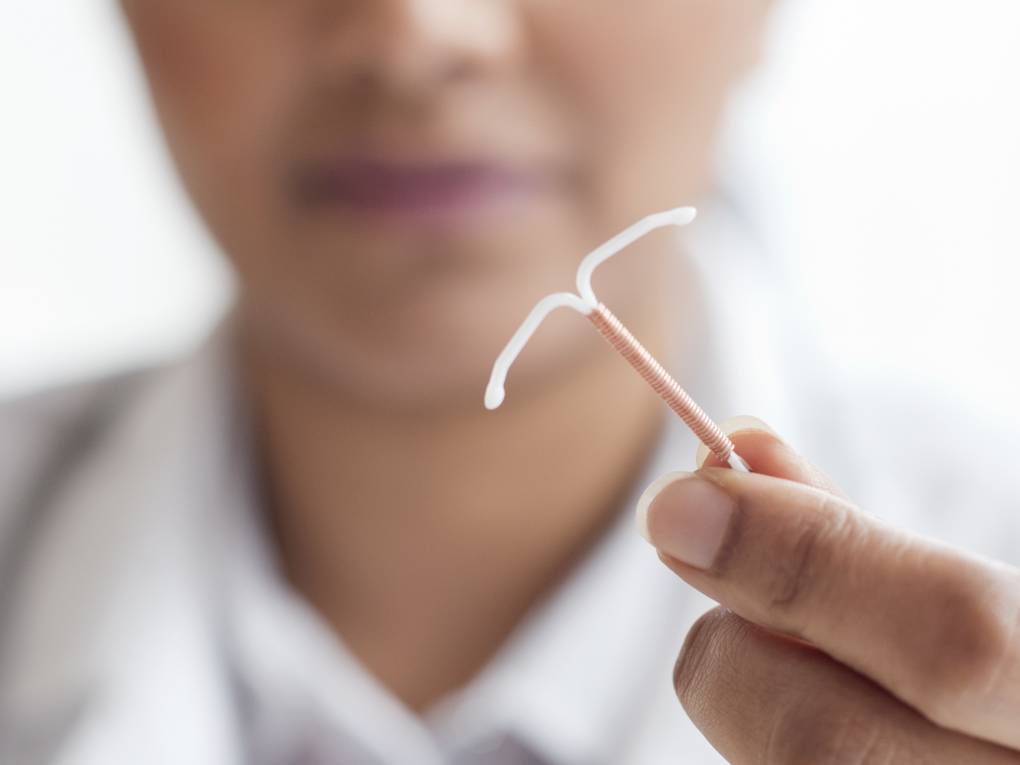
"caption": "Copper IUDs are a highly effective method of contraception. Some abortion rights opponents express moral objections to IUDs and other birth control methods.",
"description": null,
"title": "Copper IUDs are a highly effective method of contraception. Some abortion rights opponents express moral objections to IUDs and other birth control methods.",
"credit": "Science Photo Library/Getty Images/Science Photo Libra",
"status": "inherit",
"altTag": "Close up of an IUD device, held between the fingers of a woman wearing a white shirt and lab coat.",
"isLoading": false,
"fetchFailed": false
},
"arts_13913146": {
"type": "attachments",
"id": "arts_13913146",
"meta": {
"index": "attachments_1716263798",
"site": "arts",
"id": "13913146",
"found": true
},
"parent": 13913133,
"imgSizes": {
"twentyfourteen-full-width": {
"file": "https://ww2.kqed.org/app/uploads/sites/2/2022/05/Bobby.McFerrin-1024x576.jpg",
"width": 1024,
"mimeType": "image/jpeg",
"height": 576
},
"thumbnail": {
"file": "https://ww2.kqed.org/app/uploads/sites/2/2022/05/Bobby.McFerrin-160x107.jpg",
"width": 160,
"mimeType": "image/jpeg",
"height": 107
},
"post-thumbnail": {
"file": "https://ww2.kqed.org/app/uploads/sites/2/2022/05/Bobby.McFerrin-672x372.jpg",
"width": 672,
"mimeType": "image/jpeg",
"height": 372
},
"kqedFullSize": {
"file": "https://ww2.kqed.org/app/uploads/sites/2/2022/05/Bobby.McFerrin.jpg",
"width": 1024,
"height": 683
},
"large": {
"file": "https://ww2.kqed.org/app/uploads/sites/2/2022/05/Bobby.McFerrin-1020x680.jpg",
"width": 1020,
"mimeType": "image/jpeg",
"height": 680
},
"medium": {
"file": "https://ww2.kqed.org/app/uploads/sites/2/2022/05/Bobby.McFerrin-800x534.jpg",
"width": 800,
"mimeType": "image/jpeg",
"height": 534
},
"medium_large": {
"file": "https://ww2.kqed.org/app/uploads/sites/2/2022/05/Bobby.McFerrin-768x512.jpg",
"width": 768,
"mimeType": "image/jpeg",
"height": 512
}
},
"publishDate": 1652222968,
"modified": 1652223091,
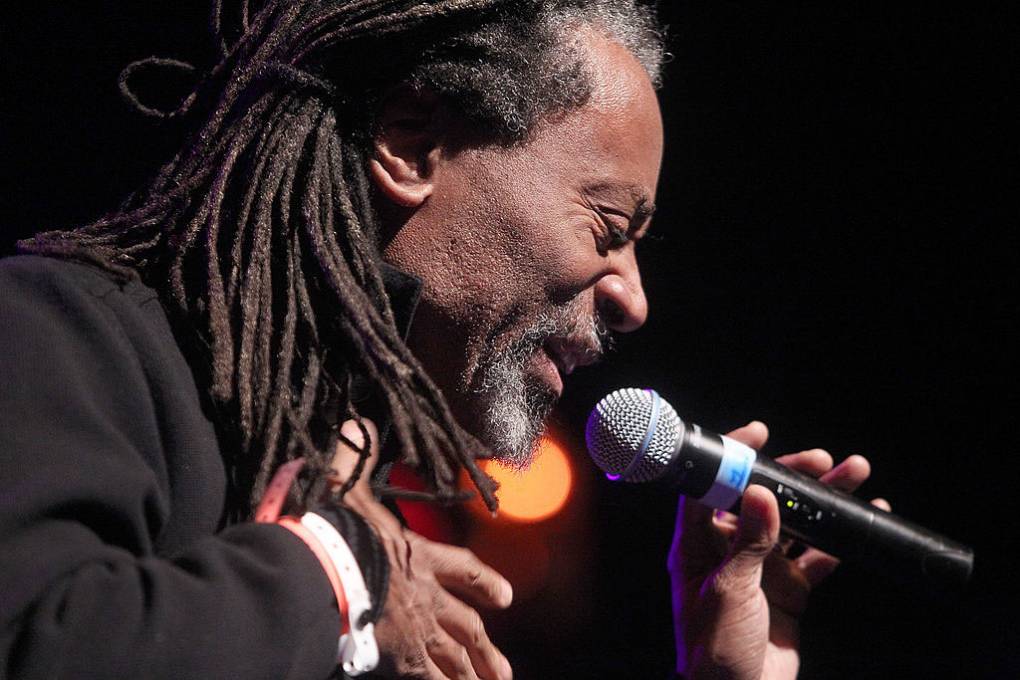
"caption": "Bobby McFerrin, pictured here onstage in Hollywood, has been leading participatory Monday-afternoon performances at Freight & Salvage in Berkeley. ",
"description": null,
"title": "Bobby.McFerrin",
"credit": "Chris Weeks/WireImage",
"status": "inherit",
"altTag": "AN African American man with dreadlocks sings into a microphone",
"isLoading": false,
"fetchFailed": false
},
"arts_13913040": {
"type": "attachments",
"id": "arts_13913040",
"meta": {
"index": "attachments_1716263798",
"site": "arts",
"id": "13913040",
"found": true
},
"parent": 13912976,
"imgSizes": {
"twentyfourteen-full-width": {
"file": "https://ww2.kqed.org/app/uploads/sites/2/2022/05/cafeohlone_hearst_main-1038x576.jpg",
"width": 1038,
"mimeType": "image/jpeg",
"height": 576
},
"thumbnail": {
"file": "https://ww2.kqed.org/app/uploads/sites/2/2022/05/cafeohlone_hearst_main-160x90.jpg",
"width": 160,
"mimeType": "image/jpeg",
"height": 90
},
"post-thumbnail": {
"file": "https://ww2.kqed.org/app/uploads/sites/2/2022/05/cafeohlone_hearst_main-672x372.jpg",
"width": 672,
"mimeType": "image/jpeg",
"height": 372
},
"kqedFullSize": {
"file": "https://ww2.kqed.org/app/uploads/sites/2/2022/05/cafeohlone_hearst_main-scaled.jpg",
"width": 2560,
"height": 1440
},
"2048x2048": {
"file": "https://ww2.kqed.org/app/uploads/sites/2/2022/05/cafeohlone_hearst_main-2048x1152.jpg",
"width": 2048,
"mimeType": "image/jpeg",
"height": 1152
},
"large": {
"file": "https://ww2.kqed.org/app/uploads/sites/2/2022/05/cafeohlone_hearst_main-1020x574.jpg",
"width": 1020,
"mimeType": "image/jpeg",
"height": 574
},
"1536x1536": {
"file": "https://ww2.kqed.org/app/uploads/sites/2/2022/05/cafeohlone_hearst_main-1536x864.jpg",
"width": 1536,
"mimeType": "image/jpeg",
"height": 864
},
"full-width": {
"file": "https://ww2.kqed.org/app/uploads/sites/2/2022/05/cafeohlone_hearst_main-1920x1080.jpg",
"width": 1920,
"mimeType": "image/jpeg",
"height": 1080
},
"medium": {
"file": "https://ww2.kqed.org/app/uploads/sites/2/2022/05/cafeohlone_hearst_main-800x450.jpg",
"width": 800,
"mimeType": "image/jpeg",
"height": 450
},
"medium_large": {
"file": "https://ww2.kqed.org/app/uploads/sites/2/2022/05/cafeohlone_hearst_main-768x432.jpg",
"width": 768,
"mimeType": "image/jpeg",
"height": 432
}
},
"publishDate": 1651869146,
"modified": 1651869400,
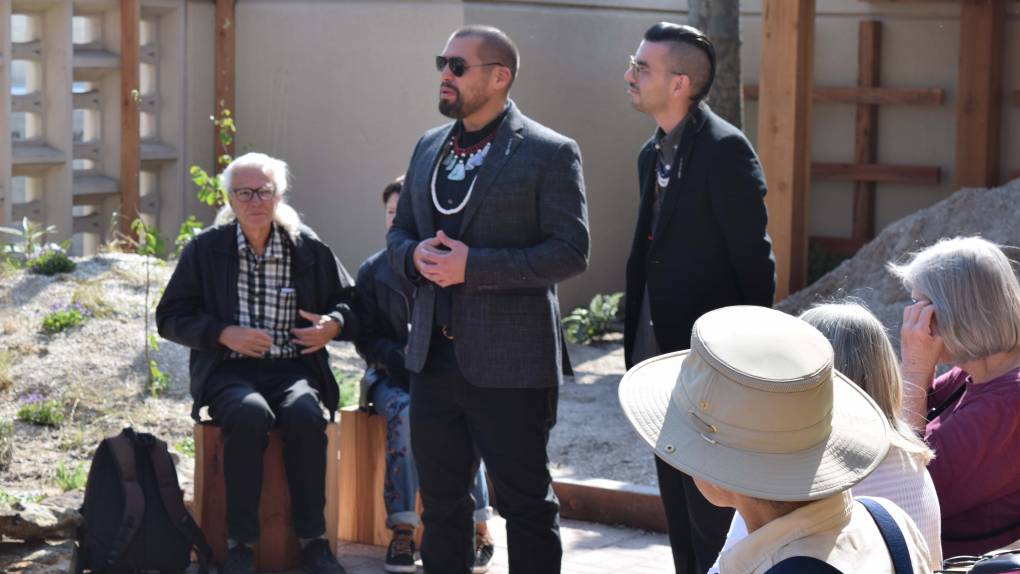
"caption": "“We’re calling it a love song to Ohlone culture,” Vincent Medina (center left) told guests at a preview event for the new Cafe Ohlone, located at UC Berkeley's Hearst Museum of Anthropology.",
"description": null,
"title": "cafeohlone_hearst_main",
"credit": "Hearst Museum of Anthropolgy",
"status": "inherit",
"altTag": "Vincent Medina and Louis Trevino address a group of visitors at a preview event for their restaurant Cafe Ohlone, in the outdoor courtyard of the Hearst Museum.",
"isLoading": false,
"fetchFailed": false
},
"arts_13913013": {
"type": "attachments",
"id": "arts_13913013",
"meta": {
"index": "attachments_1716263798",
"site": "arts",
"id": "13913013",
"found": true
},
"parent": 13912098,
"imgSizes": {
"twentyfourteen-full-width": {
"file": "https://ww2.kqed.org/app/uploads/sites/2/2022/05/Screen-Shot-2022-05-06-at-10.31.43-AM-1038x576.png",
"width": 1038,
"mimeType": "image/png",
"height": 576
},
"thumbnail": {
"file": "https://ww2.kqed.org/app/uploads/sites/2/2022/05/Screen-Shot-2022-05-06-at-10.31.43-AM-160x104.png",
"width": 160,
"mimeType": "image/png",
"height": 104
},
"post-thumbnail": {
"file": "https://ww2.kqed.org/app/uploads/sites/2/2022/05/Screen-Shot-2022-05-06-at-10.31.43-AM-672x372.png",
"width": 672,
"mimeType": "image/png",
"height": 372
},
"kqedFullSize": {
"file": "https://ww2.kqed.org/app/uploads/sites/2/2022/05/Screen-Shot-2022-05-06-at-10.31.43-AM-e1651858642362.png",
"width": 1920,
"height": 1254
},
"2048x2048": {
"file": "https://ww2.kqed.org/app/uploads/sites/2/2022/05/Screen-Shot-2022-05-06-at-10.31.43-AM-2048x1338.png",
"width": 2048,
"mimeType": "image/png",
"height": 1338
},
"large": {
"file": "https://ww2.kqed.org/app/uploads/sites/2/2022/05/Screen-Shot-2022-05-06-at-10.31.43-AM-1020x666.png",
"width": 1020,
"mimeType": "image/png",
"height": 666
},
"1536x1536": {
"file": "https://ww2.kqed.org/app/uploads/sites/2/2022/05/Screen-Shot-2022-05-06-at-10.31.43-AM-1536x1003.png",
"width": 1536,
"mimeType": "image/png",
"height": 1003
},
"full-width": {
"file": "https://ww2.kqed.org/app/uploads/sites/2/2022/05/Screen-Shot-2022-05-06-at-10.31.43-AM-1920x1254.png",
"width": 1920,
"mimeType": "image/png",
"height": 1254
},
"medium": {
"file": "https://ww2.kqed.org/app/uploads/sites/2/2022/05/Screen-Shot-2022-05-06-at-10.31.43-AM-800x522.png",
"width": 800,
"mimeType": "image/png",
"height": 522
},
"medium_large": {
"file": "https://ww2.kqed.org/app/uploads/sites/2/2022/05/Screen-Shot-2022-05-06-at-10.31.43-AM-768x502.png",
"width": 768,
"mimeType": "image/png",
"height": 502
}
},
"publishDate": 1651858336,
"modified": 1651858708,
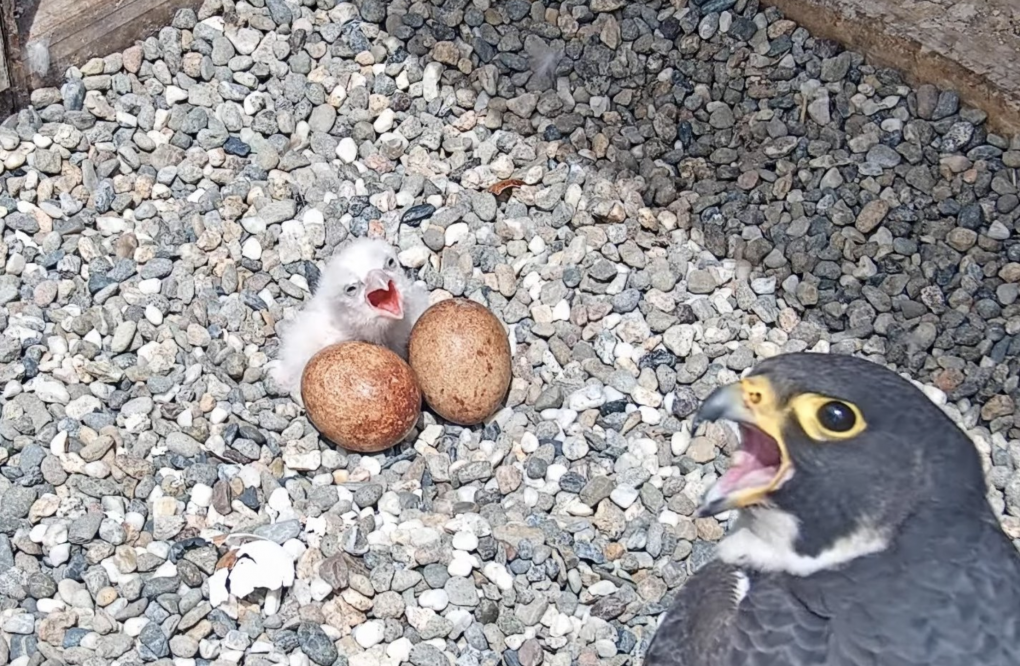
"caption": "Alden (aka 'New Guy') wonders what he got himself into while the first chick from Annie and Grinnell's last brood gets settled in and waits for their siblings.",
"description": null,
"title": "Alden (aka 'New Guy') wonders what he got himself into while the first chick from Annie and Grinnell's very last brood gets settled in and waits for their siblings.",
"credit": "Twitter/ @CatchALostStar/ @CalFalconCam",
"status": "inherit",
"altTag": "A one-day-old peregrine falcon chick snuggles up to two reddish-brown eggs. The chick and a nearby adult falcon both have their beaks open, as if squawking.",
"isLoading": false,
"fetchFailed": false
},
"arts_13909947": {
"type": "attachments",
"id": "arts_13909947",
"meta": {
"index": "attachments_1716263798",
"site": "arts",
"id": "13909947",
"found": true
},
"parent": 13909929,
"imgSizes": {
"twentyfourteen-full-width": {
"file": "https://ww2.kqed.org/app/uploads/sites/2/2022/03/Screen-Shot-2022-03-01-at-4.05.37-PM-1038x576.png",
"width": 1038,
"mimeType": "image/png",
"height": 576
},
"thumbnail": {
"file": "https://ww2.kqed.org/app/uploads/sites/2/2022/03/Screen-Shot-2022-03-01-at-4.05.37-PM-160x116.png",
"width": 160,
"mimeType": "image/png",
"height": 116
},
"post-thumbnail": {
"file": "https://ww2.kqed.org/app/uploads/sites/2/2022/03/Screen-Shot-2022-03-01-at-4.05.37-PM-672x372.png",
"width": 672,
"mimeType": "image/png",
"height": 372
},
"kqedFullSize": {
"file": "https://ww2.kqed.org/app/uploads/sites/2/2022/03/Screen-Shot-2022-03-01-at-4.05.37-PM.png",
"width": 1816,
"height": 1312
},
"large": {
"file": "https://ww2.kqed.org/app/uploads/sites/2/2022/03/Screen-Shot-2022-03-01-at-4.05.37-PM-1020x737.png",
"width": 1020,
"mimeType": "image/png",
"height": 737
},
"1536x1536": {
"file": "https://ww2.kqed.org/app/uploads/sites/2/2022/03/Screen-Shot-2022-03-01-at-4.05.37-PM-1536x1110.png",
"width": 1536,
"mimeType": "image/png",
"height": 1110
},
"medium": {
"file": "https://ww2.kqed.org/app/uploads/sites/2/2022/03/Screen-Shot-2022-03-01-at-4.05.37-PM-800x578.png",
"width": 800,
"mimeType": "image/png",
"height": 578
},
"medium_large": {
"file": "https://ww2.kqed.org/app/uploads/sites/2/2022/03/Screen-Shot-2022-03-01-at-4.05.37-PM-768x555.png",
"width": 768,
"mimeType": "image/png",
"height": 555
}
},
"publishDate": 1646179572,
"modified": 1646179717,
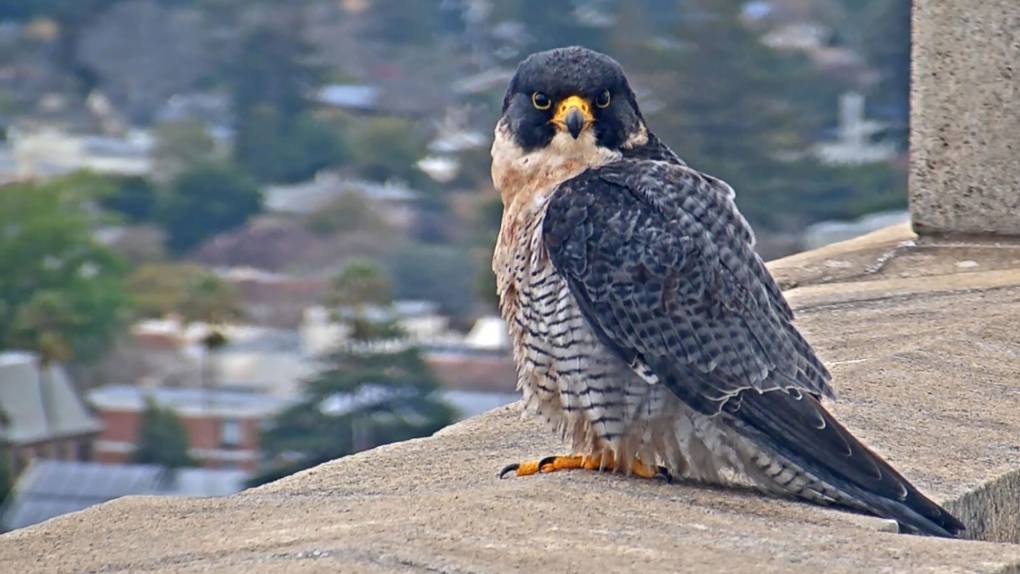
"caption": "Annie and Grinnell the peregrine falcons, as caught by the Cal Falcon cam in 2018.",
"description": null,
"title": "Annie and Grinnell the peregrine falcons, as caught by the Cal Falcon cam in 2018.",
"credit": "https://calfalcons.berkeley.edu/",
"status": "inherit",
"altTag": "One falcon turns its head to look up, directly into the camera. The other is distracted feeding meat to a new, white, fluffy chick.",
"isLoading": false,
"fetchFailed": false
},
"arts_13907863": {
"type": "attachments",
"id": "arts_13907863",
"meta": {
"index": "attachments_1716263798",
"site": "arts",
"id": "13907863",
"found": true
},
"parent": 13907837,
"imgSizes": {
"twentyfourteen-full-width": {
"file": "https://ww2.kqed.org/app/uploads/sites/2/2022/01/Falcon.Campanile.MAIN_-1038x576.jpg",
"width": 1038,
"mimeType": "image/jpeg",
"height": 576
},
"thumbnail": {
"file": "https://ww2.kqed.org/app/uploads/sites/2/2022/01/Falcon.Campanile.MAIN_-160x90.jpg",
"width": 160,
"mimeType": "image/jpeg",
"height": 90
},
"post-thumbnail": {
"file": "https://ww2.kqed.org/app/uploads/sites/2/2022/01/Falcon.Campanile.MAIN_-672x372.jpg",
"width": 672,
"mimeType": "image/jpeg",
"height": 372
},
"kqedFullSize": {
"file": "https://ww2.kqed.org/app/uploads/sites/2/2022/01/Falcon.Campanile.MAIN_.jpg",
"width": 1920,
"height": 1081
},
"large": {
"file": "https://ww2.kqed.org/app/uploads/sites/2/2022/01/Falcon.Campanile.MAIN_-1020x574.jpg",
"width": 1020,
"mimeType": "image/jpeg",
"height": 574
},
"1536x1536": {
"file": "https://ww2.kqed.org/app/uploads/sites/2/2022/01/Falcon.Campanile.MAIN_-1536x865.jpg",
"width": 1536,
"mimeType": "image/jpeg",
"height": 865
},
"medium": {
"file": "https://ww2.kqed.org/app/uploads/sites/2/2022/01/Falcon.Campanile.MAIN_-800x450.jpg",
"width": 800,
"mimeType": "image/jpeg",
"height": 450
},
"medium_large": {
"file": "https://ww2.kqed.org/app/uploads/sites/2/2022/01/Falcon.Campanile.MAIN_-768x432.jpg",
"width": 768,
"mimeType": "image/jpeg",
"height": 432
}
},
"publishDate": 1641586759,
"modified": 1641591383,
"caption": "Grinnell the peregrine falcon struts for the cameras atop UC Berkeley's campanile.",
"description": null,
"title": "Falcon.Campanile.MAIN",
"credit": "Cal Falcons / Screenshot by @SKPollock",
"status": "inherit",
"altTag": "A falcon sits on a ledge overlooking the city of Berkeley, resolute",
"isLoading": false,
"fetchFailed": false
},
"arts_13905906": {
"type": "attachments",
"id": "arts_13905906",
"meta": {
"index": "attachments_1716263798",
"site": "arts",
"id": "13905906",
"found": true
},
"parent": 13905905,
"imgSizes": {
"twentyfourteen-full-width": {
"file": "https://ww2.kqed.org/app/uploads/sites/2/2021/11/divroxximage-dbce118fded7d5fedf95755939f353bf2b9c006a-1038x576.jpg",
"width": 1038,
"mimeType": "image/jpeg",
"height": 576
},
"thumbnail": {
"file": "https://ww2.kqed.org/app/uploads/sites/2/2021/11/divroxximage-dbce118fded7d5fedf95755939f353bf2b9c006a-160x120.jpg",
"width": 160,
"mimeType": "image/jpeg",
"height": 120
},
"post-thumbnail": {
"file": "https://ww2.kqed.org/app/uploads/sites/2/2021/11/divroxximage-dbce118fded7d5fedf95755939f353bf2b9c006a-672x372.jpg",
"width": 672,
"mimeType": "image/jpeg",
"height": 372
},
"kqedFullSize": {
"file": "https://ww2.kqed.org/app/uploads/sites/2/2021/11/divroxximage-dbce118fded7d5fedf95755939f353bf2b9c006a-e1636073748646.jpg",
"width": 1920,
"height": 1440
},
"large": {
"file": "https://ww2.kqed.org/app/uploads/sites/2/2021/11/divroxximage-dbce118fded7d5fedf95755939f353bf2b9c006a-1020x765.jpg",
"width": 1020,
"mimeType": "image/jpeg",
"height": 765
},
"1536x1536": {
"file": "https://ww2.kqed.org/app/uploads/sites/2/2021/11/divroxximage-dbce118fded7d5fedf95755939f353bf2b9c006a-1536x1152.jpg",
"width": 1536,
"mimeType": "image/jpeg",
"height": 1152
},
"full-width": {
"file": "https://ww2.kqed.org/app/uploads/sites/2/2021/11/divroxximage-dbce118fded7d5fedf95755939f353bf2b9c006a-1920x1440.jpg",
"width": 1920,
"mimeType": "image/jpeg",
"height": 1440
},
"medium": {
"file": "https://ww2.kqed.org/app/uploads/sites/2/2021/11/divroxximage-dbce118fded7d5fedf95755939f353bf2b9c006a-800x600.jpg",
"width": 800,
"mimeType": "image/jpeg",
"height": 600
},
"medium_large": {
"file": "https://ww2.kqed.org/app/uploads/sites/2/2021/11/divroxximage-dbce118fded7d5fedf95755939f353bf2b9c006a-768x576.jpg",
"width": 768,
"mimeType": "image/jpeg",
"height": 576
}
},
"publishDate": 1636072261,
"modified": 1636073790,
"caption": "Bassist, songwriter and rapper Divinity Roxx has a new children's album and book project.",
"description": "Bassist, songwriter and rapper Divinity Roxx has a new children's album and book project.",
"title": "Bassist, songwriter and rapper Divinity Roxx has a new children's album and book project.",
"credit": "Courtesy of Divinity Roxx",
"status": "inherit",
"altTag": null,
"isLoading": false,
"fetchFailed": false
},
"arts_13905760": {
"type": "attachments",
"id": "arts_13905760",
"meta": {
"index": "attachments_1716263798",
"site": "arts",
"id": "13905760",
"found": true
},
"parent": 13905452,
"imgSizes": {
"twentyfourteen-full-width": {
"file": "https://ww2.kqed.org/app/uploads/sites/2/2021/11/ICCD407_Bay_Area_WP_All_Versions-1038x576.jpg",
"width": 1038,
"mimeType": "image/jpeg",
"height": 576
},
"thumbnail": {
"file": "https://ww2.kqed.org/app/uploads/sites/2/2021/11/ICCD407_Bay_Area_WP_All_Versions-160x90.jpg",
"width": 160,
"mimeType": "image/jpeg",
"height": 90
},
"post-thumbnail": {
"file": "https://ww2.kqed.org/app/uploads/sites/2/2021/11/ICCD407_Bay_Area_WP_All_Versions-672x372.jpg",
"width": 672,
"mimeType": "image/jpeg",
"height": 372
},
"kqedFullSize": {
"file": "https://ww2.kqed.org/app/uploads/sites/2/2021/11/ICCD407_Bay_Area_WP_All_Versions.jpg",
"width": 1920,
"height": 1079
},
"large": {
"file": "https://ww2.kqed.org/app/uploads/sites/2/2021/11/ICCD407_Bay_Area_WP_All_Versions-1020x573.jpg",
"width": 1020,
"mimeType": "image/jpeg",
"height": 573
},
"1536x1536": {
"file": "https://ww2.kqed.org/app/uploads/sites/2/2021/11/ICCD407_Bay_Area_WP_All_Versions-1536x863.jpg",
"width": 1536,
"mimeType": "image/jpeg",
"height": 863
},
"medium": {
"file": "https://ww2.kqed.org/app/uploads/sites/2/2021/11/ICCD407_Bay_Area_WP_All_Versions-800x450.jpg",
"width": 800,
"mimeType": "image/jpeg",
"height": 450
},
"medium_large": {
"file": "https://ww2.kqed.org/app/uploads/sites/2/2021/11/ICCD407_Bay_Area_WP_All_Versions-768x432.jpg",
"width": 768,
"mimeType": "image/jpeg",
"height": 432
}
},
"publishDate": 1635965191,
"modified": 1635967650,
"caption": "Members of Kinetic Light at Z Space in San Francisco, CA.",
"description": "Members of Kinetic Light at Z Space in San Francisco, CA.",
"title": "ICCD407_Bay_Area_WP_All_Versions",
"credit": "Manjula Varghese",
"status": "inherit",
"altTag": "A wide shot of three dancers on a dimly lit stage; the floor is awash in patterned green and blue light. Two dancers in wheelchairs hover above the ground, each with one arm extended up, holding on to a thick cable; Alice is a multiracial Black woman with coffee-colored skin and short curly hair and Laurel is a white woman with very short cropped hair. They each gaze at and tilt down toward Jerron, a dark-skinned Black man with blonde hair who is crouched between them, wrapped in barbed wire. All dancers are wearing shimmery green and gold costumes.",
"isLoading": false,
"fetchFailed": false
},
"arts_13902002": {
"type": "attachments",
"id": "arts_13902002",
"meta": {
"index": "attachments_1716263798",
"site": "arts",
"id": "13902002",
"found": true
},
"parent": 13901977,
"imgSizes": {
"twentyfourteen-full-width": {
"file": "https://ww2.kqed.org/app/uploads/sites/2/2021/08/GeorgeHorn-1038x576.jpg",
"width": 1038,
"mimeType": "image/jpeg",
"height": 576
},
"thumbnail": {
"file": "https://ww2.kqed.org/app/uploads/sites/2/2021/08/GeorgeHorn-160x90.jpg",
"width": 160,
"mimeType": "image/jpeg",
"height": 90
},
"post-thumbnail": {
"file": "https://ww2.kqed.org/app/uploads/sites/2/2021/08/GeorgeHorn-672x372.jpg",
"width": 672,
"mimeType": "image/jpeg",
"height": 372
},
"kqedFullSize": {
"file": "https://ww2.kqed.org/app/uploads/sites/2/2021/08/GeorgeHorn.jpg",
"width": 1204,
"height": 677
},
"large": {
"file": "https://ww2.kqed.org/app/uploads/sites/2/2021/08/GeorgeHorn-1020x574.jpg",
"width": 1020,
"mimeType": "image/jpeg",
"height": 574
},
"medium": {
"file": "https://ww2.kqed.org/app/uploads/sites/2/2021/08/GeorgeHorn-800x450.jpg",
"width": 800,
"mimeType": "image/jpeg",
"height": 450
},
"medium_large": {
"file": "https://ww2.kqed.org/app/uploads/sites/2/2021/08/GeorgeHorn-768x432.jpg",
"width": 768,
"mimeType": "image/jpeg",
"height": 432
}
},
"publishDate": 1630014010,
"modified": 1630014122,
"caption": "George Horn's skill at the mysterious art of mastering added final touches to hundreds of albums. ",
"description": "George Horn sitting at his studio controls",
"title": "GeorgeHorn",
"credit": "George Horn Mastering",
"status": "inherit",
"altTag": "George Horn sitting at his studio controls",
"isLoading": false,
"fetchFailed": false
},
"arts_13900426": {
"type": "attachments",
"id": "arts_13900426",
"meta": {
"index": "attachments_1716263798",
"site": "arts",
"id": "13900426",
"found": true
},
"parent": 13900412,
"imgSizes": {
"twentyfourteen-full-width": {
"file": "https://ww2.kqed.org/app/uploads/sites/2/2021/07/DSC00853-1038x576.jpg",
"width": 1038,
"mimeType": "image/jpeg",
"height": 576
},
"thumbnail": {
"file": "https://ww2.kqed.org/app/uploads/sites/2/2021/07/DSC00853-160x107.jpg",
"width": 160,
"mimeType": "image/jpeg",
"height": 107
},
"post-thumbnail": {
"file": "https://ww2.kqed.org/app/uploads/sites/2/2021/07/DSC00853-672x372.jpg",
"width": 672,
"mimeType": "image/jpeg",
"height": 372
},
"kqedFullSize": {
"file": "https://ww2.kqed.org/app/uploads/sites/2/2021/07/DSC00853.jpg",
"width": 1616,
"height": 1080
},
"large": {
"file": "https://ww2.kqed.org/app/uploads/sites/2/2021/07/DSC00853-1020x682.jpg",
"width": 1020,
"mimeType": "image/jpeg",
"height": 682
},
"1536x1536": {
"file": "https://ww2.kqed.org/app/uploads/sites/2/2021/07/DSC00853-1536x1027.jpg",
"width": 1536,
"mimeType": "image/jpeg",
"height": 1027
},
"medium": {
"file": "https://ww2.kqed.org/app/uploads/sites/2/2021/07/DSC00853-800x535.jpg",
"width": 800,
"mimeType": "image/jpeg",
"height": 535
},
"medium_large": {
"file": "https://ww2.kqed.org/app/uploads/sites/2/2021/07/DSC00853-768x513.jpg",
"width": 768,
"mimeType": "image/jpeg",
"height": 513
}
},
"publishDate": 1627594811,
"modified": 1627594869,
"caption": "A bookshelf in the making! Two young folks put their tools to use as they work on their next piece at Girls Garage.",
"description": "A bookshelf in the making! Two young folks put their tools to use as they work on their next piece at Girls Garage.",
"title": "A bookshelf in the making! Two young folks put their tools to use as they work on their next piece at Girls Garage.",
"credit": "Pendarvis Harshaw",
"status": "inherit",
"altTag": "A bookshelf in the making! Two young folks put their tools to use as they work on their next piece at Girls Garage.",
"isLoading": false,
"fetchFailed": false
},
"arts_13900126": {
"type": "attachments",
"id": "arts_13900126",
"meta": {
"index": "attachments_1716263798",
"site": "arts",
"id": "13900126",
"found": true
},
"parent": 13900085,
"imgSizes": {
"twentyfourteen-full-width": {
"file": "https://ww2.kqed.org/app/uploads/sites/2/2021/07/Stunnaman-1038x576.jpg",
"width": 1038,
"mimeType": "image/jpeg",
"height": 576
},
"thumbnail": {
"file": "https://ww2.kqed.org/app/uploads/sites/2/2021/07/Stunnaman-160x100.jpg",
"width": 160,
"mimeType": "image/jpeg",
"height": 100
},
"post-thumbnail": {
"file": "https://ww2.kqed.org/app/uploads/sites/2/2021/07/Stunnaman-672x372.jpg",
"width": 672,
"mimeType": "image/jpeg",
"height": 372
},
"kqedFullSize": {
"file": "https://ww2.kqed.org/app/uploads/sites/2/2021/07/Stunnaman.jpg",
"width": 1920,
"height": 1200
},
"large": {
"file": "https://ww2.kqed.org/app/uploads/sites/2/2021/07/Stunnaman-1020x638.jpg",
"width": 1020,
"mimeType": "image/jpeg",
"height": 638
},
"1536x1536": {
"file": "https://ww2.kqed.org/app/uploads/sites/2/2021/07/Stunnaman-1536x960.jpg",
"width": 1536,
"mimeType": "image/jpeg",
"height": 960
},
"medium": {
"file": "https://ww2.kqed.org/app/uploads/sites/2/2021/07/Stunnaman-800x500.jpg",
"width": 800,
"mimeType": "image/jpeg",
"height": 500
},
"medium_large": {
"file": "https://ww2.kqed.org/app/uploads/sites/2/2021/07/Stunnaman-768x480.jpg",
"width": 768,
"mimeType": "image/jpeg",
"height": 480
}
},
"publishDate": 1626812769,
"modified": 1626812825,
"caption": "Stunnaman02 performs 'Big Steppin' in front of an energetic audience at Cornerstone in Berkeley, July 17, 2021. ",
"description": "Stunnaman02 performs 'Big Steppin' in front of an energetic audience at Cornerstone in Berkeley, July 17, 2021. ",
"title": "Stunnaman",
"credit": "Pendarvis Harshaw/KQED",
"status": "inherit",
"altTag": "Stunnaman02 performs 'Big Steppin' in front of an energetic audience at Cornerstone in Berkeley, July 17, 2021.",
"isLoading": false,
"fetchFailed": false
}
},
"audioPlayerReducer": {
"postId": "stream_live",
"isPaused": true,
"isPlaying": false,
"pfsActive": false,
"pledgeModalIsOpen": true,
"playerDrawerIsOpen": false,
"liveAudioPlayStartedAt": 0,
"liveAudioPlayContext": ""
},
"authorsReducer": {
"byline_arts_13913228": {
"type": "authors",
"id": "byline_arts_13913228",
"meta": {
"override": true
},
"slug": "byline_arts_13913228",
"name": "Sarah McCammon",
"isLoading": false
},
"byline_arts_13913133": {
"type": "authors",
"id": "byline_arts_13913133",
"meta": {
"override": true
},
"slug": "byline_arts_13913133",
"name": "Alexander Ullman",
"isLoading": false
},
"byline_arts_13905905": {
"type": "authors",
"id": "byline_arts_13905905",
"meta": {
"override": true
},
"slug": "byline_arts_13905905",
"name": "Elizabeth Blair",
"isLoading": false
},
"byline_arts_13905452": {
"type": "authors",
"id": "byline_arts_13905452",
"meta": {
"override": true
},
"slug": "byline_arts_13905452",
"name": "Kelly Whalen, Isara Krieger",
"isLoading": false
},
"agilbert": {
"type": "authors",
"id": "86",
"meta": {
"index": "authors_1716337520",
"id": "86",
"found": true
},
"name": "Andrew Gilbert",
"firstName": "Andrew",
"lastName": "Gilbert",
"slug": "agilbert",
"email": "jazzscribe@aol.com",
"display_author_email": false,
"staff_mastheads": [],
"title": "KQED Contributor",
"bio": "A Los Angeles native based in the Berkeley area since 1996, Andrew Gilbert covers jazz, international music and dance for KQED's \u003ci>California Report, \u003c/i>the\u003ci> Mercury News\u003c/i>, \u003ci>San Francisco Chronicle\u003c/i>, \u003ci>Berkeleyside.com\u003c/i>, and other publications. He is available for weddings and bar and bat mitzvahs. #jazzscribe",
"avatar": "https://secure.gravatar.com/avatar/d7bcafdbefdd39e9a68f88724ca616eb4e7a5a6bff9cdfb62de652a1e1751471?s=600&d=blank&r=g",
"twitter": null,
"bluesky": null,
"facebook": null,
"instagram": null,
"linkedin": null,
"sites": [
{
"site": "arts",
"roles": [
"Contributor",
"author"
]
},
{
"site": "news",
"roles": [
"author"
]
}
],
"headData": {
"title": "Andrew Gilbert | KQED",
"description": "KQED Contributor",
"ogImgSrc": "https://secure.gravatar.com/avatar/d7bcafdbefdd39e9a68f88724ca616eb4e7a5a6bff9cdfb62de652a1e1751471?s=600&d=blank&r=g",
"twImgSrc": "https://secure.gravatar.com/avatar/d7bcafdbefdd39e9a68f88724ca616eb4e7a5a6bff9cdfb62de652a1e1751471?s=600&d=blank&r=g"
},
"isLoading": false,
"link": "/author/agilbert"
},
"ralexandra": {
"type": "authors",
"id": "11242",
"meta": {
"index": "authors_1716337520",
"id": "11242",
"found": true
},
"name": "Rae Alexandra",
"firstName": "Rae",
"lastName": "Alexandra",
"slug": "ralexandra",
"email": "ralexandra@kqed.org",
"display_author_email": true,
"staff_mastheads": [],
"title": "Reporter/Producer",
"bio": "Rae Alexandra is a Reporter/Producer for KQED Arts & Culture, and the creator/author of the \u003ca href=\"https://www.kqed.org/arts/program/rebel-girls-from-bay-area-history\">Rebel Girls From Bay Area History\u003c/a> and \u003ca href=\"https://www.kqed.org/bizarrebayarea\">Bizarre Bay Area\u003c/a> series. Her debut book, \u003ca href=\"https://citylights.com/politics-current-events-history/unsung-heroines35-women-who-changed/\">Unsung Heroines: 35 Women Who Changed the Bay Area\u003c/a> was published by City Lights in March 2026. In 2023, Rae was awarded an SPJ Excellence in Journalism Award for Arts & Culture. Rae was born and raised in Wales and subsequently — even after two decades in Northern California — still uses phrases that regularly baffle her coworkers.",
"avatar": "https://secure.gravatar.com/avatar/edfee8176c80cc0a382b051190f5341997df378a934a5774dcb0977732dfd401?s=600&d=blank&r=g",
"twitter": null,
"bluesky": null,
"facebook": null,
"instagram": null,
"linkedin": null,
"sites": [
{
"site": "arts",
"roles": [
"subscriber"
]
},
{
"site": "news",
"roles": [
"subscriber"
]
},
{
"site": "pop",
"roles": [
"subscriber"
]
},
{
"site": "bayareabites",
"roles": [
"subscriber"
]
},
{
"site": "science",
"roles": [
"subscriber"
]
}
],
"headData": {
"title": "Rae Alexandra | KQED",
"description": "Reporter/Producer",
"ogImgSrc": "https://secure.gravatar.com/avatar/edfee8176c80cc0a382b051190f5341997df378a934a5774dcb0977732dfd401?s=600&d=blank&r=g",
"twImgSrc": "https://secure.gravatar.com/avatar/edfee8176c80cc0a382b051190f5341997df378a934a5774dcb0977732dfd401?s=600&d=blank&r=g"
},
"isLoading": false,
"link": "/author/ralexandra"
},
"ogpenn": {
"type": "authors",
"id": "11491",
"meta": {
"index": "authors_1716337520",
"id": "11491",
"found": true
},
"name": "Pendarvis Harshaw",
"firstName": "Pendarvis",
"lastName": "Harshaw",
"slug": "ogpenn",
"email": "ogpenn@gmail.com",
"display_author_email": false,
"staff_mastheads": [
"arts"
],
"title": "Community Engagement Reporter",
"bio": "Pendarvis Harshaw is an educator, host and writer with KQED Arts.",
"avatar": "https://secure.gravatar.com/avatar/972b77ee8e3f346ae2b00622661187fbfabd059b5693bbdc1475ea7a722fd4cd?s=600&d=blank&r=g",
"twitter": null,
"bluesky": null,
"facebook": null,
"instagram": "ogpenn",
"linkedin": null,
"sites": [
{
"site": "arts",
"roles": [
"administrator"
]
},
{
"site": "news",
"roles": [
"editor"
]
},
{
"site": "bayareabites",
"roles": [
"author"
]
},
{
"site": "hiphop",
"roles": [
"editor"
]
}
],
"headData": {
"title": "Pendarvis Harshaw | KQED",
"description": "Community Engagement Reporter",
"ogImgSrc": "https://secure.gravatar.com/avatar/972b77ee8e3f346ae2b00622661187fbfabd059b5693bbdc1475ea7a722fd4cd?s=600&d=blank&r=g",
"twImgSrc": "https://secure.gravatar.com/avatar/972b77ee8e3f346ae2b00622661187fbfabd059b5693bbdc1475ea7a722fd4cd?s=600&d=blank&r=g"
},
"isLoading": false,
"link": "/author/ogpenn"
},
"mmedina": {
"type": "authors",
"id": "11528",
"meta": {
"index": "authors_1716337520",
"id": "11528",
"found": true
},
"name": "Marisol Medina-Cadena",
"firstName": "Marisol",
"lastName": "Medina-Cadena",
"slug": "mmedina",
"email": "mmedina@KQED.org",
"display_author_email": true,
"staff_mastheads": [],
"title": "Producer, Rightnowish Podcast",
"bio": "Marisol Medina-Cadena is a radio reporter and podcast producer. Before working at KQED, she produced for PBS member station, KCET, in Los Angeles. In 2017, Marisol won an Emmy Award for her work on the televised documentary, \u003cem>City Rising\u003c/em>, examining California's affordable housing crisis and the historical roots of gentrification.",
"avatar": "https://secure.gravatar.com/avatar/6c3db46a1cabb5e1fe9a365b5f4e681e?s=600&d=blank&r=g",
"twitter": "marisolreports",
"facebook": null,
"instagram": null,
"linkedin": null,
"sites": [
{
"site": "arts",
"roles": []
},
{
"site": "news",
"roles": [
"edit_others_posts"
]
}
],
"headData": {
"title": "Marisol Medina-Cadena | KQED",
"description": "Producer, Rightnowish Podcast",
"ogImgSrc": "https://secure.gravatar.com/avatar/6c3db46a1cabb5e1fe9a365b5f4e681e?s=600&d=blank&r=g",
"twImgSrc": "https://secure.gravatar.com/avatar/6c3db46a1cabb5e1fe9a365b5f4e681e?s=600&d=blank&r=g"
},
"isLoading": false,
"link": "/author/mmedina"
},
"ltsai": {
"type": "authors",
"id": "11743",
"meta": {
"index": "authors_1716337520",
"id": "11743",
"found": true
},
"name": "Luke Tsai",
"firstName": "Luke",
"lastName": "Tsai",
"slug": "ltsai",
"email": "ltsai@kqed.org",
"display_author_email": true,
"staff_mastheads": [
"arts"
],
"title": "Food Editor",
"bio": "Luke Tsai is KQED's food editor and resident stinky tofu connoisseur. Prior to KQED, he was an editor at Eater SF, \u003cem>San Francisco \u003c/em>magazine, and the \u003cem>East Bay Express\u003c/em>, and his work has also appeared in TASTE, the \u003cem>San Francisco Chronicle\u003c/em>, and the \u003cem>Best Food Writing\u003c/em> anthology. When he isn't writing or editing, you'll find him eating most everything he can get his hands on.",
"avatar": "https://secure.gravatar.com/avatar/1e59b45bf191526e7339d6ba46e33a57b2030d25c27660ecc64ea3cb863e34f7?s=600&d=blank&r=g",
"twitter": "theluketsai",
"bluesky": null,
"facebook": null,
"instagram": null,
"linkedin": null,
"sites": [
{
"site": "",
"roles": [
"editor"
]
},
{
"site": "arts",
"roles": [
"administrator"
]
},
{
"site": "news",
"roles": [
"editor",
"contributor"
]
},
{
"site": "bayareabites",
"roles": [
"editor"
]
},
{
"site": "food",
"roles": [
"editor"
]
}
],
"headData": {
"title": "Luke Tsai | KQED",
"description": "Food Editor",
"ogImgSrc": "https://secure.gravatar.com/avatar/1e59b45bf191526e7339d6ba46e33a57b2030d25c27660ecc64ea3cb863e34f7?s=600&d=blank&r=g",
"twImgSrc": "https://secure.gravatar.com/avatar/1e59b45bf191526e7339d6ba46e33a57b2030d25c27660ecc64ea3cb863e34f7?s=600&d=blank&r=g"
},
"isLoading": false,
"link": "/author/ltsai"
},
"jsorapuru": {
"type": "authors",
"id": "11792",
"meta": {
"index": "authors_1716337520",
"id": "11792",
"found": true
},
"name": "Julian E.J. Sorapuru",
"firstName": "Julian",
"lastName": "Sorapuru",
"slug": "jsorapuru",
"email": "jsorapuru@kqed.org",
"display_author_email": true,
"staff_mastheads": [],
"title": "Arts & Culture Reporter",
"bio": "Julian E.J. Sorapuru is an Arts & Culture Intern at KQED. Prior to joining KQED Arts, he interned at both POLITICO, covering transportation policy, and \u003cem>The Times-Picayune\u003c/em>, covering government and politics in his hometown of New Orleans, LA. Julian was the first and only Black male Editor-in-Chief in the 119 year history of the University of San Francisco's student newspaper, the\u003cem> San Francisco Foghorn\u003c/em>. He currently resides in San Francisco, CA and enjoys soccer, photography, and reading.",
"avatar": "https://secure.gravatar.com/avatar/e4d0156d1244f96b87927aa011d794a8?s=600&d=blank&r=g",
"twitter": "JulianSorapuru",
"facebook": null,
"instagram": null,
"linkedin": null,
"sites": [
{
"site": "arts",
"roles": [
"editor"
]
}
],
"headData": {
"title": "Julian E.J. Sorapuru | KQED",
"description": "Arts & Culture Reporter",
"ogImgSrc": "https://secure.gravatar.com/avatar/e4d0156d1244f96b87927aa011d794a8?s=600&d=blank&r=g",
"twImgSrc": "https://secure.gravatar.com/avatar/e4d0156d1244f96b87927aa011d794a8?s=600&d=blank&r=g"
},
"isLoading": false,
"link": "/author/jsorapuru"
},
"aedwards": {
"type": "authors",
"id": "11801",
"meta": {
"index": "authors_1716337520",
"id": "11801",
"found": true
},
"name": "Amaya Edwards",
"firstName": "Amaya Nicole",
"lastName": "Edwards",
"slug": "aedwards",
"email": "aedwards@kqed.org",
"display_author_email": false,
"staff_mastheads": [],
"title": "KQED Contributor",
"bio": null,
"avatar": "https://secure.gravatar.com/avatar/f5d39b025f433375f9fb2c91861c383a667382852273a3f70d610d8034145eca?s=600&d=blank&r=g",
"twitter": null,
"bluesky": null,
"facebook": null,
"instagram": "amayaee",
"linkedin": null,
"sites": [
{
"site": "",
"roles": [
"editor"
]
},
{
"site": "arts",
"roles": [
"subscriber"
]
}
],
"headData": {
"title": "Amaya Edwards | KQED",
"description": "KQED Contributor",
"ogImgSrc": "https://secure.gravatar.com/avatar/f5d39b025f433375f9fb2c91861c383a667382852273a3f70d610d8034145eca?s=600&d=blank&r=g",
"twImgSrc": "https://secure.gravatar.com/avatar/f5d39b025f433375f9fb2c91861c383a667382852273a3f70d610d8034145eca?s=600&d=blank&r=g"
},
"isLoading": false,
"link": "/author/aedwards"
}
},
"pagesReducer": {
"arts_tag_berkeley": {
"type": "terms",
"id": "arts_1270",
"meta": {
"index": "terms_1716263798",
"site": "arts",
"id": "1270",
"score": 6.9273148
},
"featImg": null,
"name": "Berkeley",
"description": null,
"taxonomy": "tag",
"headData": {
"twImgId": null,
"twTitle": null,
"ogTitle": null,
"ogImgId": null,
"twDescription": null,
"description": null,
"title": "Berkeley Archives | KQED Arts",
"ogDescription": null
},
"ttid": 1282,
"slug": "berkeley",
"isLoading": false,
"title": "Berkeley",
"pageMeta": {
"site": "arts",
"WpPageTemplate": "page-topic-editorial",
"currentPage": 12
},
"blocks": [
{
"blockName": "kqed/post-list",
"attrs": {
"layout": "cardArticle2",
"query": "posts/arts?tag=berkeley",
"seeMore": false,
"paginated": true,
"page": 12
}
},
{
"blockName": "kqed/ad"
}
]
}
},
"pfsSessionReducer": {},
"postsReducer": {
"stream_live": {
"type": "live",
"id": "stream_live",
"audioUrl": "https://streams.kqed.org/kqedradio",
"title": "Live Stream",
"excerpt": "Live Stream information currently unavailable.",
"link": "/radio",
"featImg": "",
"label": {
"name": "KQED Live",
"link": "/"
}
},
"stream_kqedNewscast": {
"type": "posts",
"id": "stream_kqedNewscast",
"audioUrl": "https://www.kqed.org/.stream/anon/radio/RDnews/newscast.mp3?_=1",
"title": "KQED Newscast",
"featImg": "",
"label": {
"name": "88.5 FM",
"link": "/"
}
},
"arts_13913301": {
"type": "posts",
"id": "arts_13913301",
"meta": {
"index": "posts_1716263798",
"site": "arts",
"id": "13913301",
"score": null,
"sort": [
1652799613000
]
},
"parent": 0,
"labelTerm": {},
"blocks": [],
"publishDate": 1652799613,
"format": "standard",
"title": "Mike Barnes Thinks He Should Be Able to Say the N-Word",
"headTitle": "Mike Barnes Thinks He Should Be Able to Say the N-Word | KQED",
"content": "\u003cp>\u003cem>\u003cstrong>Content Warning\u003c/strong>: This article contains multiple uncensored uses, including a recording, of derogatory phrases which some may find highly offensive.\u003c/em>\u003c/p>\n\u003cp>Last month, we arrived at San Francisco’s Hippie Hill in Golden Gate Park on 4/20, excited to document the return of the stoner celebration. Among the crowd were primarily young, Black and Brown people enjoying themselves—far more than you typically see in one space in modern-day San Francisco.\u003c/p>\n\u003cp>We—Julian, the reporter, and Amaya, the photojournalist—were looking forward to collaborating on a photo essay that centered Black and Brown entrepreneurs and artists. We wanted to help foster a sense of pride, and capture how folks who look like us have shaped California’s cannabis industry.\u003c/p>\n\u003cp>Instead, as Black journalists, we experienced an angry harangue from a white man named Mike Barnes involving aggressive use of the n-word. In a follow-up conversation, he used it many more times, and doubled down on his right to say it.\u003c/p>\n\u003cp>Barnes is a fixture in press coverage of Bay Area cannabis events, and appears to openly court media attention. We’ve decided to give it to him.\u003c/p>\n\u003cfigure id=\"attachment_13913394\" class=\"wp-caption aligncenter\" style=\"max-width: 800px\">\u003cimg loading=\"lazy\" decoding=\"async\" class=\"size-medium wp-image-13913394\" src=\"https://ww2.kqed.org/app/uploads/sites/2/2022/05/Image-from-iOS-8-800x600.jpg\" alt=\"A middle-aged white man in a marijuana-themed suit and hat, covered in leaves, points his finger at a young Black reporter during an interview.\" width=\"800\" height=\"600\" srcset=\"https://cdn.kqed.org/wp-content/uploads/sites/2/2022/05/Image-from-iOS-8-800x600.jpg 800w, https://cdn.kqed.org/wp-content/uploads/sites/2/2022/05/Image-from-iOS-8-1020x765.jpg 1020w, https://cdn.kqed.org/wp-content/uploads/sites/2/2022/05/Image-from-iOS-8-160x120.jpg 160w, https://cdn.kqed.org/wp-content/uploads/sites/2/2022/05/Image-from-iOS-8-768x576.jpg 768w, https://cdn.kqed.org/wp-content/uploads/sites/2/2022/05/Image-from-iOS-8-1536x1152.jpg 1536w, https://cdn.kqed.org/wp-content/uploads/sites/2/2022/05/Image-from-iOS-8-2048x1536.jpg 2048w, https://cdn.kqed.org/wp-content/uploads/sites/2/2022/05/Image-from-iOS-8-1920x1440.jpg 1920w\" sizes=\"(max-width: 800px) 100vw, 800px\">\u003cfigcaption class=\"wp-caption-text\">KQED reporter Julian Sorapuru (right) interviews Mike Barnes at Hippie Hill at 4/20. Shortly after the interview began, Barnes aggressively used a racial slur. \u003ccite>(Amaya Edwards)\u003c/cite>\u003c/figcaption>\u003c/figure>\n\u003ch2>Yes, With a Hard ‘R’\u003c/h2>\n\u003cp>At Hippie Hill on April 20, we see someone who we think would make an interesting addition to our story. He carries himself with the energy of a total character, dressed in a gaudy, black suit and bucket hat adorned all over with green marijuana leaves. It was hard to miss this large, middle-aged white man, so we identify ourselves as journalists and stop him for an interview. He agrees, and introduces himself as “Big Mike.” Neither of us expect what happened next.\u003c/p>\n\u003cp>[ad fullwidth]\u003c/p>\n\u003cp>After Amaya snaps some photos of him and we kick off the interview, Big Mike begins boasting about how many times he’s been in the media: \u003cem>\u003ca href=\"https://www.rollingstone.com/culture/culture-features/stoners-celebrate-420-weed-pot-cannabis-824550/\" target=\"_blank\" rel=\"noopener noreferrer\">Rolling Stone\u003c/a>\u003c/em>, KTVU, the \u003cem>\u003ca href=\"https://www.sfchronicle.com/sf/article/San-Francisco-s-420-celebration-lights-up-17110328.php\" target=\"_blank\" rel=\"noopener noreferrer\">San Francisco Chronicle\u003c/a>\u003c/em>—he’s something of a minor celebrity in the Bay Area cannabis scene. He says he’s a weed grower just there to have a good time.\u003c/p>\n\u003cp>Pretty standard answer so far. Then he suddenly launches into a story about an interaction he had with Mike Tyson while the former boxer and cannabis entrepreneur spoke on stage earlier in the day. He gets visibly angry as he describes how, in his version of events, Tyson swatted away the handfuls of weed Big Mike decided to throw at him while he spoke.\u003c/p>\n\u003cp>“I said, ‘Fuck you, nigger,’ and turned around and walked away,” Big Mike says aggressively. “You don’t want my weed? You want the whole bag?”\u003c/p>\n\u003cp>\u003cem>Hear Mike Barnes’ interview in full below:\u003c/em>\u003cbr>\n\u003caudio controls=\"controls\">\u003csource src=\"https://ww2.kqed.org/app/uploads/sites/2/2022/05/MikeBarnes.mp3\">\u003c/source>\u003c/audio>\u003c/p>\n\u003cp>At this point, I’m stunned into silence. My eyes go wide and I size him up. He’s a big dude: about 6 feet tall and over 200 pounds. Now I’m thinking about our safety. Centuries of generational trauma tell me that when a white man uses the n-word with that much vitriol, it’s either time to fight or get the hell out. Hearing that word could have meant life or death for our ancestors. It still can. But my journalism training tells me to let the source finish his statement.\u003c/p>\n\u003cp>And he does: “Let’s just say I’m not a Mike Tyson fan anymore,” Big Mike says. I half-expect to hear an apology or a joke, but he keeps doubling, tripling and quadrupling down on disparaging Tyson.\u003c/p>\n\u003cp>Finally I get out. “Have a good day, man,” I say, maintaining an air of professionalism and respect towards an interviewee who showed neither to us. I walk away and end the recording as he continues with his rant.\u003c/p>\n\u003cp>Did a white man dressed in a weed suit he ordered from Amazon really just say the n-word with a hard “R” without any provocation at a 4/20 festival? The absurdity of the incident made me feel like I was in an episode of \u003ci>Atlanta\u003c/i>. This is an event that’s supposed to be all about good vibes and relaxation, not hatred and bitterness.\u003c/p>\n\u003cp>Amaya laughs the way you do when you’re trying to hold back tears. “He can’t be serious,” she says.\u003c/p>\n\u003cp>It turns out, he absolutely \u003cem>was\u003c/em> serious.\u003c/p>\n\u003cfigure id=\"attachment_13913383\" class=\"wp-caption aligncenter\" style=\"max-width: 800px\">\u003cimg loading=\"lazy\" decoding=\"async\" class=\"size-medium wp-image-13913383\" src=\"https://ww2.kqed.org/app/uploads/sites/2/2022/05/20220420_MikeBarnes-12-800x533.jpg\" alt=\"\" width=\"800\" height=\"533\" srcset=\"https://cdn.kqed.org/wp-content/uploads/sites/2/2022/05/20220420_MikeBarnes-12-800x533.jpg 800w, https://cdn.kqed.org/wp-content/uploads/sites/2/2022/05/20220420_MikeBarnes-12-1020x680.jpg 1020w, https://cdn.kqed.org/wp-content/uploads/sites/2/2022/05/20220420_MikeBarnes-12-160x107.jpg 160w, https://cdn.kqed.org/wp-content/uploads/sites/2/2022/05/20220420_MikeBarnes-12-768x512.jpg 768w, https://cdn.kqed.org/wp-content/uploads/sites/2/2022/05/20220420_MikeBarnes-12-1536x1024.jpg 1536w, https://cdn.kqed.org/wp-content/uploads/sites/2/2022/05/20220420_MikeBarnes-12-1920x1280.jpg 1920w, https://cdn.kqed.org/wp-content/uploads/sites/2/2022/05/20220420_MikeBarnes-12.jpg 2048w\" sizes=\"(max-width: 800px) 100vw, 800px\">\u003cfigcaption class=\"wp-caption-text\">Mike Barnes poses for a portrait at the 420 Hippie Hill event on Apr. 20, 2022 in San Francisco. \u003ccite>(Amaya Edwards)\u003c/cite>\u003c/figcaption>\u003c/figure>\n\u003ch2>Who Is Mike Barnes?\u003c/h2>\n\u003cp>Big Mike’s real name is Mike Barnes. He is a 52 year-old resident of the Berkeley area. He’s a former Army airborne combat engineer, he says, who previously ran a dispensary called the Hayward Patients Resource Center, which is now defunct. Today, he is self-employed, earning a living by doing “handyman things” and growing marijuana for “a small group of private individuals for medical reasons.”\u003c/p>\n\u003cp>Barnes has a habit of popping up at cannabis-related events. Photos of him in his eye-catching suit at previous iterations of the 4/20 festival have appeared in the \u003ci>\u003ca href=\"https://www.sfexaminer.com/news/sf-may-start-permitting-cannabis-sales-consumption-at-events/\" target=\"_blank\" rel=\"noopener noreferrer\">San Francisco Examiner\u003c/a>\u003c/i>, \u003ci>\u003ca href=\"https://www.sfweekly.com/news/cannabis/4-20-in-golden-gate-park-is-officially-cancelled/\" target=\"_blank\" rel=\"noopener noreferrer\">SF Weekly\u003c/a>\u003c/i> and \u003ca href=\"https://ksltv.com/412196/brands-roll-stoner-holiday-pot-legalization-grows/\" target=\"_blank\" rel=\"noopener noreferrer\">KSL TV\u003c/a>. Barnes was photographed for a \u003ca href=\"https://www.sfgate.com/politics/joegarofoli/article/Smokeless-medicinal-pot-has-its-advocates-2661126.php\" target=\"_blank\" rel=\"noopener noreferrer\">San Francisco Chronicle article\u003c/a> as far back as 2005 (in a shirt that read: “The DEA took my medical marijuana away!… and all I got was this lousy t-shirt!”).\u003c/p>\n\u003cp>[aside postID='arts_13913116']Barnes was photographed and quoted in \u003ca href=\"https://www.berkeleyside.org/2018/01/01/crowds-gather-6-celebrate-first-sales-recreational-cannabis-berkeley?doing_wp_cron=1652725845.1196229457855224609375\" target=\"_blank\" rel=\"noopener noreferrer\">Berkeleyside\u003c/a> and \u003ci>\u003ca href=\"https://www.dailycal.org/2018/01/01/first-sales-of-recreational-marijuana-in-berkeley-usher-in-whole-new-era/\" target=\"_blank\" rel=\"noopener noreferrer\">The Daily Cal\u003c/a>\u003c/i> at the ribbon-cutting for Berkeley’s first legal recreational marijuana sale at the Berkeley Patients Group dispensary. His photo also appeared in a \u003ca href=\"https://www.sacbee.com/opinion/op-ed/article114091003.html\" target=\"_blank\" rel=\"noopener noreferrer\">\u003ci>Sacramento Bee\u003c/i> opinion article\u003c/a> on Proposition 64, which legalized the use of recreational cannabis in California. In the photo, Barnes is pictured smoking inside of his “420 Limo.”\u003c/p>\n\u003cp>We decided it was important to hold Barnes accountable for his words, so we called him on May 6 to inform him of our intention to publish the interview, and to see what he had to say for himself.\u003c/p>\n\u003cp>“Well, make the spelling N-I-G-G-A if you do it,” he says. “It’s like, people say nigga all the time, and it’s acceptable if you’re a Black man, but if you’re a white man, and you say nigga, then it’s completely racist, which is just, you know, completely hypocritical.”\u003c/p>\n\u003cp>He began rattling off other racial slurs against Latino, Asian and Black people, arguing that they only refer to the “lowlives” of each ethnic group and, in his eyes, are therefore OK to use. In the same breath, he asked us not to publish his quote, even though he gave it to us knowing full well that this was an on-record interview.\u003c/p>\n\u003cp>“I meant it in a disrespectful way towards [Tyson] specifically, nobody else,” Barnes says. “So if anybody else takes offense at it, well, fuck them. I wasn’t talking to you.”\u003c/p>\n\u003cfigure id=\"attachment_13913382\" class=\"wp-caption aligncenter\" style=\"max-width: 800px\">\u003cimg loading=\"lazy\" decoding=\"async\" class=\"size-medium wp-image-13913382\" src=\"https://ww2.kqed.org/app/uploads/sites/2/2022/05/20220420_MikeBarnes-04-800x533.jpg\" alt=\"Close-up on a bag of marijuana, a large joint, held by a man in a marijuana-themed outfit \" width=\"800\" height=\"533\" srcset=\"https://cdn.kqed.org/wp-content/uploads/sites/2/2022/05/20220420_MikeBarnes-04-800x533.jpg 800w, https://cdn.kqed.org/wp-content/uploads/sites/2/2022/05/20220420_MikeBarnes-04-1020x680.jpg 1020w, https://cdn.kqed.org/wp-content/uploads/sites/2/2022/05/20220420_MikeBarnes-04-160x107.jpg 160w, https://cdn.kqed.org/wp-content/uploads/sites/2/2022/05/20220420_MikeBarnes-04-768x512.jpg 768w, https://cdn.kqed.org/wp-content/uploads/sites/2/2022/05/20220420_MikeBarnes-04-1536x1024.jpg 1536w, https://cdn.kqed.org/wp-content/uploads/sites/2/2022/05/20220420_MikeBarnes-04-1920x1280.jpg 1920w, https://cdn.kqed.org/wp-content/uploads/sites/2/2022/05/20220420_MikeBarnes-04.jpg 2048w\" sizes=\"(max-width: 800px) 100vw, 800px\">\u003cfigcaption class=\"wp-caption-text\">Mike Barnes holds a bag of marijuana at the 420 Hippie Hill event on Apr. 20, 2022 in San Francisco, Calif. \u003ccite>(Amaya Edwards)\u003c/cite>\u003c/figcaption>\u003c/figure>\n\u003ch2>‘Deeply Disturbed,’ Says Friend and Dispensary Owner\u003c/h2>\n\u003cp>Barnes is a white man gaining clout, attention, and potentially income from a drug that has been used to criminalize Black people for decades. (Barnes told us that he’s been raided by law enforcement four times, but never charged with a crime.)\u003c/p>\n\u003cp>We’ve seen white people profit the most from the corporatization of cannabis in recent years while people of color continuously get left behind. The Associated Press reports that the cannabis industry was worth \u003ca href=\"https://apnews.com/article/lifestyle-business-race-and-ethnicity-8e047483fc6e83e2e5f6dc971cb4aa73\" target=\"_blank\" rel=\"noopener noreferrer\">$33 billion in sales in 2021\u003c/a>. Of all cannabis business owners in the United States, 81% are white, while just a little over 4% are Black, according to a \u003ca href=\"https://mjbizdaily.com/wp-content/uploads/2017/10/Women-and-Minorities-Report.pdf\" target=\"_blank\" rel=\"noopener noreferrer\">2017 survey from Marijuana Business Daily\u003c/a>.\u003c/p>\n\u003cp>[aside postID='arts_13849783']Not to mention that hundreds of thousands of Black and brown people are still sitting in jail for marijuana offenses. According to \u003ca href=\"https://www.aclu.org/sites/default/files/field_document/marijuanareport_03232021.pdf\" target=\"_blank\" rel=\"noopener noreferrer\">a 2020 report by the American Civil Liberties Union\u003c/a>, the national Black population is still nearly four times more likely than the white population to be arrested for marijuana possession, even after weed became legal in several states. These arrests have detrimental impacts, running along intersections of class and income, for communities of color.\u003c/p>\n\u003cp>Etienne Fontan, co-owner and vice president of Berkeley Patients Group, whom Barnes called “a friend of mine” who he has known for “a long time,” wrote in a statement to KQED, “I, along with the team at Berkeley Patients Group, do not tolerate racism or hate speech and this is the first we are learning of any accusations relating to Mr. Barnes’ use of such language.”\u003c/p>\n\u003cp>“I am deeply disturbed to learn that Mr. Barnes, who apparently attended public events held by BPG several years ago, expressed such views,” Fontan continued. “Such rhetoric and actions in no way reflect my or my company’s values.”\u003c/p>\n\u003cp>\u003cem>Watch Mike Barnes’ and Mike Tyson’s stage interaction below, filmed by Rich America Production Co. & Jamal Trulove:\u003c/em>\u003c/p>\n\u003cp>https://youtu.be/Md4o4CUltHA\u003c/p>\n\u003ch2>Mike Tyson and Harmful Stereotypes\u003c/h2>\n\u003cp>Barnes using the n-word to describe Mike Tyson is especially unsettling, considering that Tyson has often been portrayed in popular media as a Black Brute, a caricature of Black men that portrays them as dangerous, animalistic, sexually aggressive and unintelligent. This framing was especially prominent in the ’80s and ’90s, when Tyson was at the height of his boxing powers. (Representatives for Mike Tyson did not respond to requests for comment.)\u003c/p>\n\u003cp>Since the event in San Francisco, the media has covered Tyson for his “angry” interactions with fans, the first of which occurred April 21 aboard Tyson’s flight departing from San Francisco. A fellow passenger \u003ca href=\"https://www.washingtonpost.com/sports/2022/04/21/mike-tyson-punches-passenger-airplane-tmz/\" target=\"_blank\" rel=\"noopener noreferrer\">repeatedly harassed Tyson\u003c/a>, according to reports, which led the former boxer to punch the man multiple times. (Authorities declined to file charges against Tyson for the incident.) On May 3, a fan in Las Vegas \u003ca href=\"https://www.al.com/sports/2022/05/mike-tyson-has-another-angry-interaction-with-fan-when-woman-appears-to-try-to-pick-his-nose.html\" target=\"_blank\" rel=\"noopener noreferrer\">attempted to stick their finger up Tyson’s nose\u003c/a>, which prompted an annoyed reaction.\u003c/p>\n\u003cp>Barnes’ behavior—throwing things at Tyson while he is on stage attempting to give a speech—is in this same category of fans going too far. Many people, it seems, feel entitled to violate Tyson’s personal space.\u003c/p>\n\u003cp>Tyson is not perfect. He has done some reprehensible things. But to portray him as a brute is a reductionist and racist point of view of a complicated man. Regardless of one’s image or status, no one deserves to be called a racist slur.\u003c/p>\n\u003cfigure id=\"attachment_13913381\" class=\"wp-caption aligncenter\" style=\"max-width: 480px\">\u003cimg loading=\"lazy\" decoding=\"async\" class=\"size-large wp-image-13913381\" src=\"https://ww2.kqed.org/app/uploads/sites/2/2022/05/20220420_MikeBarnes-10-1020x1530.jpg\" alt=\"A middle-aged white man holds a bag of marijuana and a large joint, dressed in a marijuana-themed suit and bucket hat covered in leaves.\" width=\"480\" height=\"720\" srcset=\"https://cdn.kqed.org/wp-content/uploads/sites/2/2022/05/20220420_MikeBarnes-10-1020x1530.jpg 1020w, https://cdn.kqed.org/wp-content/uploads/sites/2/2022/05/20220420_MikeBarnes-10-800x1200.jpg 800w, https://cdn.kqed.org/wp-content/uploads/sites/2/2022/05/20220420_MikeBarnes-10-160x240.jpg 160w, https://cdn.kqed.org/wp-content/uploads/sites/2/2022/05/20220420_MikeBarnes-10-768x1152.jpg 768w, https://cdn.kqed.org/wp-content/uploads/sites/2/2022/05/20220420_MikeBarnes-10-1024x1536.jpg 1024w, https://cdn.kqed.org/wp-content/uploads/sites/2/2022/05/20220420_MikeBarnes-10.jpg 1365w\" sizes=\"(max-width: 480px) 100vw, 480px\">\u003cfigcaption class=\"wp-caption-text\">Mike Barnes poses for a portrait in a gaudy marijuana-themed costume at the 420 Hippie Hill event on Apr. 20, 2022 in San Francisco. \u003ccite>(Amaya Edwards)\u003c/cite>\u003c/figcaption>\u003c/figure>\n\u003ch2>The So-Called ‘Progressive’ Bay Area\u003c/h2>\n\u003cp>Barnes’ comments should not only make us interrogate one dimensional views of Mike Tyson, but it should also make us think critically about how we view race relations in the Bay Area. Often, the Bay is hailed as a racially enlightened, progressive haven where everyone is respectful of each other’s identities, culture and humanity.\u003c/p>\n\u003cp>But as a Black person in this country, living in a “progressive” place does not mean a reprieve from the smothering presence of racism; it just means your suffocation happens in the shadows. Our experience encountering anti-Black hate speech is not an isolated one. We just happen to have it on tape.\u003c/p>\n\u003cp>This incident is about more than just one word said by one man on one day. It’s a case study; a harsh, slap-to-the-face reminder that anti-Black racism is alive and very well, even in San Francisco. Barnes weaponized the power he holds as a white man in this country to disarm and dehumanize both Tyson and ourselves—a microcosm of the racial power dynamic inherent in the United States.\u003c/p>\n\u003cp>[aside postID='news_11905492']\u003c/p>\n\u003ch2>Taking the Power Back\u003c/h2>\n\u003cp>Black people must get through each day with a cloud over our heads, knowing that as our proximity to whiteness increases, so does the likelihood that we may be the victim of racism. Power coupled with ignorance is a terrible combination. It’s why everyone should strive to better understand the ways in which the n-word has been and continues to be weaponized.\u003c/p>\n\u003cp>That word from the mouth of a white person is a reminder of the ideology used against our ancestors to justify the inhumane atrocities of chattel slavery. It was the word shouted in hate by white mobs as they lynched Black people without due process of law. It was the word ordinary Black folks heard through ringing ears as they were brutalized by police simply for demanding their right to vote. It was the word \u003ca href=\"https://www.businessinsider.com/buffalo-shooting-suspect-had-n-word-written-on-gun-2022-5\">painted onto the barrel of the Buffalo shooter’s gun\u003c/a>. A white person saying the n-word is a reminder of the things that have been denied to us; the ways we have been treated as subhuman; how we have been forced to make a way out of no way.\u003c/p>\n\u003cp>So, in that grand tradition of those who came before us, we are attempting to create something proactive out of a negative experience. Hopefully we are not presumptive by saying that we speak in the interests of not only ourselves, but for many other Black people who don’t have the opportunity to do so.\u003c/p>\n\u003cp>[ad floatright]\u003c/p>\n\u003cp>Barnes’ actions should serve as a cautionary tale to anyone who feels emboldened to use that word in such a hateful way. For all of our sakes, hold your tongue—or be ready to face the consequences if you don’t.\u003c/p>\n\n",
"stats": {
"hasVideo": false,
"hasChartOrMap": false,
"hasAudio": false,
"hasPolis": false,
"wordCount": 2370,
"hasGoogleForm": false,
"hasGallery": false,
"hasHearkenModule": false,
"iframeSrcs": [],
"paragraphCount": 43
},
"modified": 1705006844,
"excerpt": "Mike Barnes, a fixture at cannabis events, angrily used the word multiple times to two Black journalists.",
"headData": {
"twImgId": "",
"twTitle": "",
"ogTitle": "",
"ogImgId": "",
"twDescription": "",
"description": "Mike Barnes, a fixture at cannabis events, angrily used the word multiple times to two Black journalists.",
"title": "Mike Barnes Thinks He Should Be Able to Say the N-Word | KQED",
"ogDescription": "",
"schema": {
"@context": "https://schema.org",
"@type": "Article",
"headline": "Mike Barnes Thinks He Should Be Able to Say the N-Word",
"datePublished": "2022-05-17T08:00:13-07:00",
"dateModified": "2024-01-11T13:00:44-08:00",
"image": "https://cdn.kqed.org/wp-content/uploads/2020/02/KQED-OG-Image@1x.png"
}
},
"guestAuthors": [],
"slug": "mike-barnes-n-word-cannabis-4-20-racism-berkeley",
"status": "publish",
"sourceUrl": "https://www.kqed.org/arts/category/commentary",
"templateType": "standard",
"excludeFromSiteSearch": "Include",
"featuredImageType": "standard",
"sticky": false,
"source": "Commentary",
"WpOldSlug": "mike-barnes-thinks-he-should-be-able-to-say-the-n-word",
"articleAge": "0",
"path": "/arts/13913301/mike-barnes-n-word-cannabis-4-20-racism-berkeley",
"audioTrackLength": null,
"parsedContent": [
{
"type": "contentString",
"content": "\u003cdiv class=\"post-body\">\u003cp>\u003cp>\u003cem>\u003cstrong>Content Warning\u003c/strong>: This article contains multiple uncensored uses, including a recording, of derogatory phrases which some may find highly offensive.\u003c/em>\u003c/p>\n\u003cp>Last month, we arrived at San Francisco’s Hippie Hill in Golden Gate Park on 4/20, excited to document the return of the stoner celebration. Among the crowd were primarily young, Black and Brown people enjoying themselves—far more than you typically see in one space in modern-day San Francisco.\u003c/p>\n\u003cp>We—Julian, the reporter, and Amaya, the photojournalist—were looking forward to collaborating on a photo essay that centered Black and Brown entrepreneurs and artists. We wanted to help foster a sense of pride, and capture how folks who look like us have shaped California’s cannabis industry.\u003c/p>\n\u003cp>Instead, as Black journalists, we experienced an angry harangue from a white man named Mike Barnes involving aggressive use of the n-word. In a follow-up conversation, he used it many more times, and doubled down on his right to say it.\u003c/p>\n\u003cp>Barnes is a fixture in press coverage of Bay Area cannabis events, and appears to openly court media attention. We’ve decided to give it to him.\u003c/p>\n\u003cfigure id=\"attachment_13913394\" class=\"wp-caption aligncenter\" style=\"max-width: 800px\">\u003cimg loading=\"lazy\" decoding=\"async\" class=\"size-medium wp-image-13913394\" src=\"https://ww2.kqed.org/app/uploads/sites/2/2022/05/Image-from-iOS-8-800x600.jpg\" alt=\"A middle-aged white man in a marijuana-themed suit and hat, covered in leaves, points his finger at a young Black reporter during an interview.\" width=\"800\" height=\"600\" srcset=\"https://cdn.kqed.org/wp-content/uploads/sites/2/2022/05/Image-from-iOS-8-800x600.jpg 800w, https://cdn.kqed.org/wp-content/uploads/sites/2/2022/05/Image-from-iOS-8-1020x765.jpg 1020w, https://cdn.kqed.org/wp-content/uploads/sites/2/2022/05/Image-from-iOS-8-160x120.jpg 160w, https://cdn.kqed.org/wp-content/uploads/sites/2/2022/05/Image-from-iOS-8-768x576.jpg 768w, https://cdn.kqed.org/wp-content/uploads/sites/2/2022/05/Image-from-iOS-8-1536x1152.jpg 1536w, https://cdn.kqed.org/wp-content/uploads/sites/2/2022/05/Image-from-iOS-8-2048x1536.jpg 2048w, https://cdn.kqed.org/wp-content/uploads/sites/2/2022/05/Image-from-iOS-8-1920x1440.jpg 1920w\" sizes=\"(max-width: 800px) 100vw, 800px\">\u003cfigcaption class=\"wp-caption-text\">KQED reporter Julian Sorapuru (right) interviews Mike Barnes at Hippie Hill at 4/20. Shortly after the interview began, Barnes aggressively used a racial slur. \u003ccite>(Amaya Edwards)\u003c/cite>\u003c/figcaption>\u003c/figure>\n\u003ch2>Yes, With a Hard ‘R’\u003c/h2>\n\u003cp>At Hippie Hill on April 20, we see someone who we think would make an interesting addition to our story. He carries himself with the energy of a total character, dressed in a gaudy, black suit and bucket hat adorned all over with green marijuana leaves. It was hard to miss this large, middle-aged white man, so we identify ourselves as journalists and stop him for an interview. He agrees, and introduces himself as “Big Mike.” Neither of us expect what happened next.\u003c/p>\n\u003cp>\u003c/p>\u003c/div>",
"attributes": {
"named": {},
"numeric": []
}
},
{
"type": "component",
"content": "",
"name": "ad",
"attributes": {
"named": {
"label": "fullwidth"
},
"numeric": [
"fullwidth"
]
}
},
{
"type": "contentString",
"content": "\u003cdiv class=\"post-body\">\u003cp>\u003c/p>\n\u003cp>After Amaya snaps some photos of him and we kick off the interview, Big Mike begins boasting about how many times he’s been in the media: \u003cem>\u003ca href=\"https://www.rollingstone.com/culture/culture-features/stoners-celebrate-420-weed-pot-cannabis-824550/\" target=\"_blank\" rel=\"noopener noreferrer\">Rolling Stone\u003c/a>\u003c/em>, KTVU, the \u003cem>\u003ca href=\"https://www.sfchronicle.com/sf/article/San-Francisco-s-420-celebration-lights-up-17110328.php\" target=\"_blank\" rel=\"noopener noreferrer\">San Francisco Chronicle\u003c/a>\u003c/em>—he’s something of a minor celebrity in the Bay Area cannabis scene. He says he’s a weed grower just there to have a good time.\u003c/p>\n\u003cp>Pretty standard answer so far. Then he suddenly launches into a story about an interaction he had with Mike Tyson while the former boxer and cannabis entrepreneur spoke on stage earlier in the day. He gets visibly angry as he describes how, in his version of events, Tyson swatted away the handfuls of weed Big Mike decided to throw at him while he spoke.\u003c/p>\n\u003cp>“I said, ‘Fuck you, nigger,’ and turned around and walked away,” Big Mike says aggressively. “You don’t want my weed? You want the whole bag?”\u003c/p>\n\u003cp>\u003cem>Hear Mike Barnes’ interview in full below:\u003c/em>\u003cbr>\n\u003caudio controls=\"controls\">\u003csource src=\"https://ww2.kqed.org/app/uploads/sites/2/2022/05/MikeBarnes.mp3\">\u003c/source>\u003c/audio>\u003c/p>\n\u003cp>At this point, I’m stunned into silence. My eyes go wide and I size him up. He’s a big dude: about 6 feet tall and over 200 pounds. Now I’m thinking about our safety. Centuries of generational trauma tell me that when a white man uses the n-word with that much vitriol, it’s either time to fight or get the hell out. Hearing that word could have meant life or death for our ancestors. It still can. But my journalism training tells me to let the source finish his statement.\u003c/p>\n\u003cp>And he does: “Let’s just say I’m not a Mike Tyson fan anymore,” Big Mike says. I half-expect to hear an apology or a joke, but he keeps doubling, tripling and quadrupling down on disparaging Tyson.\u003c/p>\n\u003cp>Finally I get out. “Have a good day, man,” I say, maintaining an air of professionalism and respect towards an interviewee who showed neither to us. I walk away and end the recording as he continues with his rant.\u003c/p>\n\u003cp>Did a white man dressed in a weed suit he ordered from Amazon really just say the n-word with a hard “R” without any provocation at a 4/20 festival? The absurdity of the incident made me feel like I was in an episode of \u003ci>Atlanta\u003c/i>. This is an event that’s supposed to be all about good vibes and relaxation, not hatred and bitterness.\u003c/p>\n\u003cp>Amaya laughs the way you do when you’re trying to hold back tears. “He can’t be serious,” she says.\u003c/p>\n\u003cp>It turns out, he absolutely \u003cem>was\u003c/em> serious.\u003c/p>\n\u003cfigure id=\"attachment_13913383\" class=\"wp-caption aligncenter\" style=\"max-width: 800px\">\u003cimg loading=\"lazy\" decoding=\"async\" class=\"size-medium wp-image-13913383\" src=\"https://ww2.kqed.org/app/uploads/sites/2/2022/05/20220420_MikeBarnes-12-800x533.jpg\" alt=\"\" width=\"800\" height=\"533\" srcset=\"https://cdn.kqed.org/wp-content/uploads/sites/2/2022/05/20220420_MikeBarnes-12-800x533.jpg 800w, https://cdn.kqed.org/wp-content/uploads/sites/2/2022/05/20220420_MikeBarnes-12-1020x680.jpg 1020w, https://cdn.kqed.org/wp-content/uploads/sites/2/2022/05/20220420_MikeBarnes-12-160x107.jpg 160w, https://cdn.kqed.org/wp-content/uploads/sites/2/2022/05/20220420_MikeBarnes-12-768x512.jpg 768w, https://cdn.kqed.org/wp-content/uploads/sites/2/2022/05/20220420_MikeBarnes-12-1536x1024.jpg 1536w, https://cdn.kqed.org/wp-content/uploads/sites/2/2022/05/20220420_MikeBarnes-12-1920x1280.jpg 1920w, https://cdn.kqed.org/wp-content/uploads/sites/2/2022/05/20220420_MikeBarnes-12.jpg 2048w\" sizes=\"(max-width: 800px) 100vw, 800px\">\u003cfigcaption class=\"wp-caption-text\">Mike Barnes poses for a portrait at the 420 Hippie Hill event on Apr. 20, 2022 in San Francisco. \u003ccite>(Amaya Edwards)\u003c/cite>\u003c/figcaption>\u003c/figure>\n\u003ch2>Who Is Mike Barnes?\u003c/h2>\n\u003cp>Big Mike’s real name is Mike Barnes. He is a 52 year-old resident of the Berkeley area. He’s a former Army airborne combat engineer, he says, who previously ran a dispensary called the Hayward Patients Resource Center, which is now defunct. Today, he is self-employed, earning a living by doing “handyman things” and growing marijuana for “a small group of private individuals for medical reasons.”\u003c/p>\n\u003cp>Barnes has a habit of popping up at cannabis-related events. Photos of him in his eye-catching suit at previous iterations of the 4/20 festival have appeared in the \u003ci>\u003ca href=\"https://www.sfexaminer.com/news/sf-may-start-permitting-cannabis-sales-consumption-at-events/\" target=\"_blank\" rel=\"noopener noreferrer\">San Francisco Examiner\u003c/a>\u003c/i>, \u003ci>\u003ca href=\"https://www.sfweekly.com/news/cannabis/4-20-in-golden-gate-park-is-officially-cancelled/\" target=\"_blank\" rel=\"noopener noreferrer\">SF Weekly\u003c/a>\u003c/i> and \u003ca href=\"https://ksltv.com/412196/brands-roll-stoner-holiday-pot-legalization-grows/\" target=\"_blank\" rel=\"noopener noreferrer\">KSL TV\u003c/a>. Barnes was photographed for a \u003ca href=\"https://www.sfgate.com/politics/joegarofoli/article/Smokeless-medicinal-pot-has-its-advocates-2661126.php\" target=\"_blank\" rel=\"noopener noreferrer\">San Francisco Chronicle article\u003c/a> as far back as 2005 (in a shirt that read: “The DEA took my medical marijuana away!… and all I got was this lousy t-shirt!”).\u003c/p>\n\u003cp>\u003c/p>\u003c/div>",
"attributes": {
"named": {},
"numeric": []
}
},
{
"type": "component",
"content": "",
"name": "aside",
"attributes": {
"named": {
"postid": "arts_13913116",
"label": ""
},
"numeric": []
}
},
{
"type": "contentString",
"content": "\u003cdiv class=\"post-body\">\u003cp>Barnes was photographed and quoted in \u003ca href=\"https://www.berkeleyside.org/2018/01/01/crowds-gather-6-celebrate-first-sales-recreational-cannabis-berkeley?doing_wp_cron=1652725845.1196229457855224609375\" target=\"_blank\" rel=\"noopener noreferrer\">Berkeleyside\u003c/a> and \u003ci>\u003ca href=\"https://www.dailycal.org/2018/01/01/first-sales-of-recreational-marijuana-in-berkeley-usher-in-whole-new-era/\" target=\"_blank\" rel=\"noopener noreferrer\">The Daily Cal\u003c/a>\u003c/i> at the ribbon-cutting for Berkeley’s first legal recreational marijuana sale at the Berkeley Patients Group dispensary. His photo also appeared in a \u003ca href=\"https://www.sacbee.com/opinion/op-ed/article114091003.html\" target=\"_blank\" rel=\"noopener noreferrer\">\u003ci>Sacramento Bee\u003c/i> opinion article\u003c/a> on Proposition 64, which legalized the use of recreational cannabis in California. In the photo, Barnes is pictured smoking inside of his “420 Limo.”\u003c/p>\n\u003cp>We decided it was important to hold Barnes accountable for his words, so we called him on May 6 to inform him of our intention to publish the interview, and to see what he had to say for himself.\u003c/p>\n\u003cp>“Well, make the spelling N-I-G-G-A if you do it,” he says. “It’s like, people say nigga all the time, and it’s acceptable if you’re a Black man, but if you’re a white man, and you say nigga, then it’s completely racist, which is just, you know, completely hypocritical.”\u003c/p>\n\u003cp>He began rattling off other racial slurs against Latino, Asian and Black people, arguing that they only refer to the “lowlives” of each ethnic group and, in his eyes, are therefore OK to use. In the same breath, he asked us not to publish his quote, even though he gave it to us knowing full well that this was an on-record interview.\u003c/p>\n\u003cp>“I meant it in a disrespectful way towards [Tyson] specifically, nobody else,” Barnes says. “So if anybody else takes offense at it, well, fuck them. I wasn’t talking to you.”\u003c/p>\n\u003cfigure id=\"attachment_13913382\" class=\"wp-caption aligncenter\" style=\"max-width: 800px\">\u003cimg loading=\"lazy\" decoding=\"async\" class=\"size-medium wp-image-13913382\" src=\"https://ww2.kqed.org/app/uploads/sites/2/2022/05/20220420_MikeBarnes-04-800x533.jpg\" alt=\"Close-up on a bag of marijuana, a large joint, held by a man in a marijuana-themed outfit \" width=\"800\" height=\"533\" srcset=\"https://cdn.kqed.org/wp-content/uploads/sites/2/2022/05/20220420_MikeBarnes-04-800x533.jpg 800w, https://cdn.kqed.org/wp-content/uploads/sites/2/2022/05/20220420_MikeBarnes-04-1020x680.jpg 1020w, https://cdn.kqed.org/wp-content/uploads/sites/2/2022/05/20220420_MikeBarnes-04-160x107.jpg 160w, https://cdn.kqed.org/wp-content/uploads/sites/2/2022/05/20220420_MikeBarnes-04-768x512.jpg 768w, https://cdn.kqed.org/wp-content/uploads/sites/2/2022/05/20220420_MikeBarnes-04-1536x1024.jpg 1536w, https://cdn.kqed.org/wp-content/uploads/sites/2/2022/05/20220420_MikeBarnes-04-1920x1280.jpg 1920w, https://cdn.kqed.org/wp-content/uploads/sites/2/2022/05/20220420_MikeBarnes-04.jpg 2048w\" sizes=\"(max-width: 800px) 100vw, 800px\">\u003cfigcaption class=\"wp-caption-text\">Mike Barnes holds a bag of marijuana at the 420 Hippie Hill event on Apr. 20, 2022 in San Francisco, Calif. \u003ccite>(Amaya Edwards)\u003c/cite>\u003c/figcaption>\u003c/figure>\n\u003ch2>‘Deeply Disturbed,’ Says Friend and Dispensary Owner\u003c/h2>\n\u003cp>Barnes is a white man gaining clout, attention, and potentially income from a drug that has been used to criminalize Black people for decades. (Barnes told us that he’s been raided by law enforcement four times, but never charged with a crime.)\u003c/p>\n\u003cp>We’ve seen white people profit the most from the corporatization of cannabis in recent years while people of color continuously get left behind. The Associated Press reports that the cannabis industry was worth \u003ca href=\"https://apnews.com/article/lifestyle-business-race-and-ethnicity-8e047483fc6e83e2e5f6dc971cb4aa73\" target=\"_blank\" rel=\"noopener noreferrer\">$33 billion in sales in 2021\u003c/a>. Of all cannabis business owners in the United States, 81% are white, while just a little over 4% are Black, according to a \u003ca href=\"https://mjbizdaily.com/wp-content/uploads/2017/10/Women-and-Minorities-Report.pdf\" target=\"_blank\" rel=\"noopener noreferrer\">2017 survey from Marijuana Business Daily\u003c/a>.\u003c/p>\n\u003cp>\u003c/p>\u003c/div>",
"attributes": {
"named": {},
"numeric": []
}
},
{
"type": "component",
"content": "",
"name": "aside",
"attributes": {
"named": {
"postid": "arts_13849783",
"label": ""
},
"numeric": []
}
},
{
"type": "contentString",
"content": "\u003cdiv class=\"post-body\">\u003cp>Not to mention that hundreds of thousands of Black and brown people are still sitting in jail for marijuana offenses. According to \u003ca href=\"https://www.aclu.org/sites/default/files/field_document/marijuanareport_03232021.pdf\" target=\"_blank\" rel=\"noopener noreferrer\">a 2020 report by the American Civil Liberties Union\u003c/a>, the national Black population is still nearly four times more likely than the white population to be arrested for marijuana possession, even after weed became legal in several states. These arrests have detrimental impacts, running along intersections of class and income, for communities of color.\u003c/p>\n\u003cp>Etienne Fontan, co-owner and vice president of Berkeley Patients Group, whom Barnes called “a friend of mine” who he has known for “a long time,” wrote in a statement to KQED, “I, along with the team at Berkeley Patients Group, do not tolerate racism or hate speech and this is the first we are learning of any accusations relating to Mr. Barnes’ use of such language.”\u003c/p>\n\u003cp>“I am deeply disturbed to learn that Mr. Barnes, who apparently attended public events held by BPG several years ago, expressed such views,” Fontan continued. “Such rhetoric and actions in no way reflect my or my company’s values.”\u003c/p>\n\u003cp>\u003cem>Watch Mike Barnes’ and Mike Tyson’s stage interaction below, filmed by Rich America Production Co. & Jamal Trulove:\u003c/em>\u003c/p>\u003c/p>\u003cp>\u003cspan class='utils-parseShortcode-shortcodes-__youtubeShortcode__embedYoutube'>\n \u003cspan class='utils-parseShortcode-shortcodes-__youtubeShortcode__embedYoutubeInside'>\n \u003ciframe\n loading='lazy'\n class='utils-parseShortcode-shortcodes-__youtubeShortcode__youtubePlayer'\n type='text/html'\n src='//www.youtube.com/embed/Md4o4CUltHA'\n title='//www.youtube.com/embed/Md4o4CUltHA'\n allowfullscreen='true'\n style='border:0;'>\u003c/iframe>\n \u003c/span>\n \u003c/span>\u003c/p>\u003cp>\u003ch2>Mike Tyson and Harmful Stereotypes\u003c/h2>\n\u003cp>Barnes using the n-word to describe Mike Tyson is especially unsettling, considering that Tyson has often been portrayed in popular media as a Black Brute, a caricature of Black men that portrays them as dangerous, animalistic, sexually aggressive and unintelligent. This framing was especially prominent in the ’80s and ’90s, when Tyson was at the height of his boxing powers. (Representatives for Mike Tyson did not respond to requests for comment.)\u003c/p>\n\u003cp>Since the event in San Francisco, the media has covered Tyson for his “angry” interactions with fans, the first of which occurred April 21 aboard Tyson’s flight departing from San Francisco. A fellow passenger \u003ca href=\"https://www.washingtonpost.com/sports/2022/04/21/mike-tyson-punches-passenger-airplane-tmz/\" target=\"_blank\" rel=\"noopener noreferrer\">repeatedly harassed Tyson\u003c/a>, according to reports, which led the former boxer to punch the man multiple times. (Authorities declined to file charges against Tyson for the incident.) On May 3, a fan in Las Vegas \u003ca href=\"https://www.al.com/sports/2022/05/mike-tyson-has-another-angry-interaction-with-fan-when-woman-appears-to-try-to-pick-his-nose.html\" target=\"_blank\" rel=\"noopener noreferrer\">attempted to stick their finger up Tyson’s nose\u003c/a>, which prompted an annoyed reaction.\u003c/p>\n\u003cp>Barnes’ behavior—throwing things at Tyson while he is on stage attempting to give a speech—is in this same category of fans going too far. Many people, it seems, feel entitled to violate Tyson’s personal space.\u003c/p>\n\u003cp>Tyson is not perfect. He has done some reprehensible things. But to portray him as a brute is a reductionist and racist point of view of a complicated man. Regardless of one’s image or status, no one deserves to be called a racist slur.\u003c/p>\n\u003cfigure id=\"attachment_13913381\" class=\"wp-caption aligncenter\" style=\"max-width: 480px\">\u003cimg loading=\"lazy\" decoding=\"async\" class=\"size-large wp-image-13913381\" src=\"https://ww2.kqed.org/app/uploads/sites/2/2022/05/20220420_MikeBarnes-10-1020x1530.jpg\" alt=\"A middle-aged white man holds a bag of marijuana and a large joint, dressed in a marijuana-themed suit and bucket hat covered in leaves.\" width=\"480\" height=\"720\" srcset=\"https://cdn.kqed.org/wp-content/uploads/sites/2/2022/05/20220420_MikeBarnes-10-1020x1530.jpg 1020w, https://cdn.kqed.org/wp-content/uploads/sites/2/2022/05/20220420_MikeBarnes-10-800x1200.jpg 800w, https://cdn.kqed.org/wp-content/uploads/sites/2/2022/05/20220420_MikeBarnes-10-160x240.jpg 160w, https://cdn.kqed.org/wp-content/uploads/sites/2/2022/05/20220420_MikeBarnes-10-768x1152.jpg 768w, https://cdn.kqed.org/wp-content/uploads/sites/2/2022/05/20220420_MikeBarnes-10-1024x1536.jpg 1024w, https://cdn.kqed.org/wp-content/uploads/sites/2/2022/05/20220420_MikeBarnes-10.jpg 1365w\" sizes=\"(max-width: 480px) 100vw, 480px\">\u003cfigcaption class=\"wp-caption-text\">Mike Barnes poses for a portrait in a gaudy marijuana-themed costume at the 420 Hippie Hill event on Apr. 20, 2022 in San Francisco. \u003ccite>(Amaya Edwards)\u003c/cite>\u003c/figcaption>\u003c/figure>\n\u003ch2>The So-Called ‘Progressive’ Bay Area\u003c/h2>\n\u003cp>Barnes’ comments should not only make us interrogate one dimensional views of Mike Tyson, but it should also make us think critically about how we view race relations in the Bay Area. Often, the Bay is hailed as a racially enlightened, progressive haven where everyone is respectful of each other’s identities, culture and humanity.\u003c/p>\n\u003cp>But as a Black person in this country, living in a “progressive” place does not mean a reprieve from the smothering presence of racism; it just means your suffocation happens in the shadows. Our experience encountering anti-Black hate speech is not an isolated one. We just happen to have it on tape.\u003c/p>\n\u003cp>This incident is about more than just one word said by one man on one day. It’s a case study; a harsh, slap-to-the-face reminder that anti-Black racism is alive and very well, even in San Francisco. Barnes weaponized the power he holds as a white man in this country to disarm and dehumanize both Tyson and ourselves—a microcosm of the racial power dynamic inherent in the United States.\u003c/p>\n\u003cp>\u003c/p>\u003c/div>",
"attributes": {
"named": {},
"numeric": []
}
},
{
"type": "component",
"content": "",
"name": "aside",
"attributes": {
"named": {
"postid": "news_11905492",
"label": ""
},
"numeric": []
}
},
{
"type": "contentString",
"content": "\u003cdiv class=\"post-body\">\u003cp>\u003c/p>\n\u003ch2>Taking the Power Back\u003c/h2>\n\u003cp>Black people must get through each day with a cloud over our heads, knowing that as our proximity to whiteness increases, so does the likelihood that we may be the victim of racism. Power coupled with ignorance is a terrible combination. It’s why everyone should strive to better understand the ways in which the n-word has been and continues to be weaponized.\u003c/p>\n\u003cp>That word from the mouth of a white person is a reminder of the ideology used against our ancestors to justify the inhumane atrocities of chattel slavery. It was the word shouted in hate by white mobs as they lynched Black people without due process of law. It was the word ordinary Black folks heard through ringing ears as they were brutalized by police simply for demanding their right to vote. It was the word \u003ca href=\"https://www.businessinsider.com/buffalo-shooting-suspect-had-n-word-written-on-gun-2022-5\">painted onto the barrel of the Buffalo shooter’s gun\u003c/a>. A white person saying the n-word is a reminder of the things that have been denied to us; the ways we have been treated as subhuman; how we have been forced to make a way out of no way.\u003c/p>\n\u003cp>So, in that grand tradition of those who came before us, we are attempting to create something proactive out of a negative experience. Hopefully we are not presumptive by saying that we speak in the interests of not only ourselves, but for many other Black people who don’t have the opportunity to do so.\u003c/p>\n\u003cp>\u003c/p>\u003c/div>",
"attributes": {
"named": {},
"numeric": []
}
},
{
"type": "component",
"content": "",
"name": "ad",
"attributes": {
"named": {
"label": "floatright"
},
"numeric": [
"floatright"
]
}
},
{
"type": "contentString",
"content": "\u003cdiv class=\"post-body\">\u003cp>\u003c/p>\n\u003cp>Barnes’ actions should serve as a cautionary tale to anyone who feels emboldened to use that word in such a hateful way. For all of our sakes, hold your tongue—or be ready to face the consequences if you don’t.\u003c/p>\n\n\u003c/div>\u003c/p>",
"attributes": {
"named": {},
"numeric": []
}
}
],
"link": "/arts/13913301/mike-barnes-n-word-cannabis-4-20-racism-berkeley",
"authors": [
"11792",
"11801"
],
"categories": [
"arts_1",
"arts_2303"
],
"tags": [
"arts_7158",
"arts_1270",
"arts_3077",
"arts_2767",
"arts_10342",
"arts_10278",
"arts_3652"
],
"featImg": "arts_13913384",
"label": "source_arts_13913301"
},
"arts_13913228": {
"type": "posts",
"id": "arts_13913228",
"meta": {
"index": "posts_1716263798",
"site": "arts",
"id": "13913228",
"score": null,
"sort": [
1652312120000
]
},
"guestAuthors": [],
"slug": "what-would-overturning-roe-mean-for-birth-control",
"title": "What Would Overturning Roe Mean for Birth Control?",
"publishDate": 1652312120,
"format": "standard",
"headTitle": "What Would Overturning Roe Mean for Birth Control? | KQED",
"labelTerm": {
"term": 137,
"site": "arts"
},
"content": "\u003cp>Overturning \u003cem>Roe v. Wade\u003c/em> could have implications for more than access to abortion; medical and legal experts say it could open the door to restrictions on other types of reproductive health care.\u003c/p>\n\u003cp>“To say that we are incredibly concerned would, I think, actually be putting it mildly,” said Dr. Kavita Arora, chair of the ethics committee at the \u003ca href=\"https://www.acog.org/womens-health/healthy-living/birth-control\" target=\"_blank\" rel=\"noopener noreferrer\">American College of Obstetricians & Gynecologists\u003c/a>.\u003c/p>\n\u003cp>[aside postid='arts_13911818']Arora said the decision could have far-reaching implications for other types of care including birth control, emergency contraception known as Plan B, trans-affirming healthcare, and fertility treatments such as \u003ca href=\"https://www.mayoclinic.org/tests-procedures/in-vitro-fertilization/about/pac-20384716\" target=\"_blank\" rel=\"noopener noreferrer\">in vitro fertilization\u003c/a>, which can produce leftover embryos.\u003c/p>\n\u003cp>“This threatens our ability to take care of patients on a daily basis,” Arora said.\u003c/p>\n\u003cp>Most types of contraception prevent a sperm from fertilizing an egg. But as a second line of defense, she said some can stop an already-fertilized egg from implanting in the uterus—considered the beginning of a pregnancy.\u003c/p>\n\u003cp>[ad fullwidth]\u003c/p>\n\u003cp>“In changing definition of when pregnancy starts to just at fertilization, it would compromise our ability to provide access to really highly effective methods of contraception such as the copper IUD,” Arora said.\u003c/p>\n\u003cp>Some abortion rights opponents regard such devices as quote “life-ending” because of the possibility that implantation can be disrupted.\u003c/p>\n\u003cp>[aside postid='arts_13913100']Kristan Hawkins is president of the anti-abortion rights groups Students for Life of America, which is pushing for state and federal legislation to recognize human life as beginning “\u003ca href=\"https://studentsforlife.org/2022/02/02/why-every-state-needs-a-life-at-conception-bill/\" target=\"_blank\" rel=\"noopener noreferrer\">at conception\u003c/a>.” Her group takes the position that some devices and pills that can prevent implantation of a fertilized egg are “mislabeled” as contraception—a position at odds with the American College of Obstetricians & Gynecologists, which defines pregnancy as beginning at implantation.\u003c/p>\n\u003cp>“I think legislators should be able to have the right to decide and to investigate if there are devices, if there’s chemicals that are ending the lives of their citizens in their state,” Hawkins said.\u003c/p>\n\u003cp>In an interview last week, Hawkins denied that birth control is a focus of her movement—and called that notion a “scare tactic.”\u003c/p>\n\u003cp>Some Republican leaders, including a state lawmaker \u003ca href=\"https://www.vice.com/en/article/g5qam9/roe-v-wade-birth-control\" target=\"_blank\" rel=\"noopener noreferrer\">in Idaho\u003c/a>, have expressed an openness to entertaining questions about the safety of contraceptives, which are tested by federal regulators before they are put on the market.\u003c/p>\n\u003cp>Last week, a Louisiana state lawmaker proposed a bill that would classify \u003ca href=\"https://www.wwno.org/2022-05-05/louisiana-bill-would-allow-murder-charges-for-abortions-opponents-call-it-barbaric\" target=\"_blank\" rel=\"noopener noreferrer\">abortion as a homicide\u003c/a>—beginning at the moment of fertilization.\u003c/p>\n\u003cp>On CNN’s “State of the Union” on Sunday, when host Jake Tapper asked Mississippi’s Republican Gov. Tate Reeves about the bill in his neighboring state, Reeves \u003ca href=\"https://www.cnn.com/videos/politics/2022/05/08/mississippi-abortion-law-roe-wade-governor-tate-reeves-sotu-vpx.cnn\" target=\"_blank\" rel=\"noopener noreferrer\">declined to rule out\u003c/a> support for similar legislation, saying only, “That is not what we are focused on at this time.”\u003c/p>\n\u003cp>[aside postid='arts_13912860']Under Roe, the right to an abortion is guaranteed under the right to privacy. That’s also part of the rationale for the \u003ca href=\"https://www.npr.org/2022/05/05/1096732347/roe-v-wade-implications-beyond-abortion\" target=\"_blank\" rel=\"noopener noreferrer\">Griswold v. Connecticut\u003c/a> decision in 1965, which recognized a right to contraception for married people—and eventually, everyone else.\u003c/p>\n\u003cp>In his draft opinion in the major abortion case, Dobbs v. Jackson Women’s Health Organization, which was leaked to \u003cem>Politico\u003c/em> last week, Justice Samuel Alito argued that abortion is different from other rights, like contraception and marriage, because he said it destroys fetal life.\u003c/p>\n\u003cp>But \u003ca href=\"https://www.law.berkeley.edu/our-faculty/faculty-profiles/khiara-bridges/\" target=\"_blank\" rel=\"noopener noreferrer\">Khiara M. Bridges\u003c/a>, a law professor at the UC Berkeley, said Alito’s originalist view of the Constitution offers no guarantees that women’s rights will be protected.\u003c/p>\n\u003cp>“Because women were not part of the body politic, the rights that are important to people who can get pregnant are just not contemplated by the Constitution,” Bridges said. “The drafters of the Constitution could care less about what women’s concerns were, what they needed in order to be fully human in society.”\u003c/p>\n\u003cp>\u003c/p>\n\u003cp>If the court is willing to do away with longstanding precedent like Roe, Bridges said, it’s impossible to predict what other rights also could be in question.\u003c/p>\n\u003cdiv class=\"fullattribution\">\u003cem>Copyright 2022 NPR. To see more, \u003ca href=\"https://www.npr.org\" target=\"_blank\" rel=\"noopener noreferrer\">visit NPR\u003c/a>.\u003cimg decoding=\"async\" src=\"https://www.google-analytics.com/__utm.gif?utmac=UA-5828686-4&utmdt=What+would+overturning+Roe+mean+for+birth+control%3F&utme=8(APIKey)9(MDAxOTAwOTE4MDEyMTkxMDAzNjczZDljZA004)\">\u003c/em>\u003c/div>\n\n",
"blocks": [],
"excerpt": "Overturning Roe v. Wade could threaten birth control and other care, experts say.",
"status": "publish",
"parent": 0,
"modified": 1726759508,
"stats": {
"hasAudio": false,
"hasVideo": false,
"hasChartOrMap": false,
"iframeSrcs": [],
"hasGoogleForm": false,
"hasGallery": false,
"hasHearkenModule": false,
"hasPolis": false,
"paragraphCount": 20,
"wordCount": 700
},
"headData": {
"title": "What Would Overturning Roe Mean for Birth Control? | KQED",
"description": "Overturning Roe v. Wade could threaten birth control and other care, experts say.",
"ogTitle": "",
"ogDescription": "",
"ogImgId": "",
"twTitle": "",
"twDescription": "",
"twImgId": "",
"schema": {
"@context": "https://schema.org",
"@type": "Article",
"headline": "What Would Overturning Roe Mean for Birth Control?",
"datePublished": "2022-05-11T16:35:20-07:00",
"dateModified": "2024-09-19T08:25:08-07:00",
"image": "https://cdn.kqed.org/wp-content/uploads/2020/02/KQED-OG-Image@1x.png"
}
},
"sticky": false,
"nprImageCredit": "Science Photo Library",
"nprByline": "Sarah McCammon",
"nprImageAgency": "Getty Images/Science Photo Libra",
"nprStoryId": "1097666334",
"nprApiLink": "http://api.npr.org/query?id=1097666334&apiKey=MDAxOTAwOTE4MDEyMTkxMDAzNjczZDljZA004",
"nprHtmlLink": "https://www.npr.org/2022/05/11/1097666334/roe-birth-control?ft=nprml&f=1097666334",
"nprRetrievedStory": "1",
"nprPubDate": "Wed, 11 May 2022 10:28:00 -0400",
"nprStoryDate": "Wed, 11 May 2022 09:31:45 -0400",
"nprLastModifiedDate": "Wed, 11 May 2022 10:28:33 -0400",
"nprAudio": "https://ondemand.npr.org/anon.npr-mp3/npr/atc/2022/05/20220509_atc_birth_control_and_scotus.mp3?orgId=1&topicId=1128&aggIds=1096684820&d=220&story=1097666334&ft=nprml&f=1097666334",
"nprAudioM3u": "http://api.npr.org/m3u/11098171276-37f8c1.m3u?orgId=1&topicId=1128&aggIds=1096684820&d=220&story=1097666334&ft=nprml&f=1097666334",
"templateType": "standard",
"featuredImageType": "standard",
"excludeFromSiteSearch": "Include",
"showOnAuthorArchivePages": "No",
"path": "/arts/13913228/what-would-overturning-roe-mean-for-birth-control",
"audioUrl": "https://ondemand.npr.org/anon.npr-mp3/npr/atc/2022/05/20220509_atc_birth_control_and_scotus.mp3?orgId=1&topicId=1128&aggIds=1096684820&d=220&story=1097666334&ft=nprml&f=1097666334",
"audioTrackLength": null,
"parsedContent": [
{
"type": "contentString",
"content": "\u003cdiv class=\"post-body\">\u003cp>\u003cp>Overturning \u003cem>Roe v. Wade\u003c/em> could have implications for more than access to abortion; medical and legal experts say it could open the door to restrictions on other types of reproductive health care.\u003c/p>\n\u003cp>“To say that we are incredibly concerned would, I think, actually be putting it mildly,” said Dr. Kavita Arora, chair of the ethics committee at the \u003ca href=\"https://www.acog.org/womens-health/healthy-living/birth-control\" target=\"_blank\" rel=\"noopener noreferrer\">American College of Obstetricians & Gynecologists\u003c/a>.\u003c/p>\n\u003cp>\u003c/p>\u003c/div>",
"attributes": {
"named": {},
"numeric": []
}
},
{
"type": "component",
"content": "",
"name": "aside",
"attributes": {
"named": {
"postid": "arts_13911818",
"label": ""
},
"numeric": []
}
},
{
"type": "contentString",
"content": "\u003cdiv class=\"post-body\">\u003cp>Arora said the decision could have far-reaching implications for other types of care including birth control, emergency contraception known as Plan B, trans-affirming healthcare, and fertility treatments such as \u003ca href=\"https://www.mayoclinic.org/tests-procedures/in-vitro-fertilization/about/pac-20384716\" target=\"_blank\" rel=\"noopener noreferrer\">in vitro fertilization\u003c/a>, which can produce leftover embryos.\u003c/p>\n\u003cp>“This threatens our ability to take care of patients on a daily basis,” Arora said.\u003c/p>\n\u003cp>Most types of contraception prevent a sperm from fertilizing an egg. But as a second line of defense, she said some can stop an already-fertilized egg from implanting in the uterus—considered the beginning of a pregnancy.\u003c/p>\n\u003cp>\u003c/p>\u003c/div>",
"attributes": {
"named": {},
"numeric": []
}
},
{
"type": "component",
"content": "",
"name": "ad",
"attributes": {
"named": {
"label": "fullwidth"
},
"numeric": [
"fullwidth"
]
}
},
{
"type": "contentString",
"content": "\u003cdiv class=\"post-body\">\u003cp>\u003c/p>\n\u003cp>“In changing definition of when pregnancy starts to just at fertilization, it would compromise our ability to provide access to really highly effective methods of contraception such as the copper IUD,” Arora said.\u003c/p>\n\u003cp>Some abortion rights opponents regard such devices as quote “life-ending” because of the possibility that implantation can be disrupted.\u003c/p>\n\u003cp>\u003c/p>\u003c/div>",
"attributes": {
"named": {},
"numeric": []
}
},
{
"type": "component",
"content": "",
"name": "aside",
"attributes": {
"named": {
"postid": "arts_13913100",
"label": ""
},
"numeric": []
}
},
{
"type": "contentString",
"content": "\u003cdiv class=\"post-body\">\u003cp>Kristan Hawkins is president of the anti-abortion rights groups Students for Life of America, which is pushing for state and federal legislation to recognize human life as beginning “\u003ca href=\"https://studentsforlife.org/2022/02/02/why-every-state-needs-a-life-at-conception-bill/\" target=\"_blank\" rel=\"noopener noreferrer\">at conception\u003c/a>.” Her group takes the position that some devices and pills that can prevent implantation of a fertilized egg are “mislabeled” as contraception—a position at odds with the American College of Obstetricians & Gynecologists, which defines pregnancy as beginning at implantation.\u003c/p>\n\u003cp>“I think legislators should be able to have the right to decide and to investigate if there are devices, if there’s chemicals that are ending the lives of their citizens in their state,” Hawkins said.\u003c/p>\n\u003cp>In an interview last week, Hawkins denied that birth control is a focus of her movement—and called that notion a “scare tactic.”\u003c/p>\n\u003cp>Some Republican leaders, including a state lawmaker \u003ca href=\"https://www.vice.com/en/article/g5qam9/roe-v-wade-birth-control\" target=\"_blank\" rel=\"noopener noreferrer\">in Idaho\u003c/a>, have expressed an openness to entertaining questions about the safety of contraceptives, which are tested by federal regulators before they are put on the market.\u003c/p>\n\u003cp>Last week, a Louisiana state lawmaker proposed a bill that would classify \u003ca href=\"https://www.wwno.org/2022-05-05/louisiana-bill-would-allow-murder-charges-for-abortions-opponents-call-it-barbaric\" target=\"_blank\" rel=\"noopener noreferrer\">abortion as a homicide\u003c/a>—beginning at the moment of fertilization.\u003c/p>\n\u003cp>On CNN’s “State of the Union” on Sunday, when host Jake Tapper asked Mississippi’s Republican Gov. Tate Reeves about the bill in his neighboring state, Reeves \u003ca href=\"https://www.cnn.com/videos/politics/2022/05/08/mississippi-abortion-law-roe-wade-governor-tate-reeves-sotu-vpx.cnn\" target=\"_blank\" rel=\"noopener noreferrer\">declined to rule out\u003c/a> support for similar legislation, saying only, “That is not what we are focused on at this time.”\u003c/p>\n\u003cp>\u003c/p>\u003c/div>",
"attributes": {
"named": {},
"numeric": []
}
},
{
"type": "component",
"content": "",
"name": "aside",
"attributes": {
"named": {
"postid": "arts_13912860",
"label": ""
},
"numeric": []
}
},
{
"type": "contentString",
"content": "\u003cdiv class=\"post-body\">\u003cp>Under Roe, the right to an abortion is guaranteed under the right to privacy. That’s also part of the rationale for the \u003ca href=\"https://www.npr.org/2022/05/05/1096732347/roe-v-wade-implications-beyond-abortion\" target=\"_blank\" rel=\"noopener noreferrer\">Griswold v. Connecticut\u003c/a> decision in 1965, which recognized a right to contraception for married people—and eventually, everyone else.\u003c/p>\n\u003cp>In his draft opinion in the major abortion case, Dobbs v. Jackson Women’s Health Organization, which was leaked to \u003cem>Politico\u003c/em> last week, Justice Samuel Alito argued that abortion is different from other rights, like contraception and marriage, because he said it destroys fetal life.\u003c/p>\n\u003cp>But \u003ca href=\"https://www.law.berkeley.edu/our-faculty/faculty-profiles/khiara-bridges/\" target=\"_blank\" rel=\"noopener noreferrer\">Khiara M. Bridges\u003c/a>, a law professor at the UC Berkeley, said Alito’s originalist view of the Constitution offers no guarantees that women’s rights will be protected.\u003c/p>\n\u003cp>“Because women were not part of the body politic, the rights that are important to people who can get pregnant are just not contemplated by the Constitution,” Bridges said. “The drafters of the Constitution could care less about what women’s concerns were, what they needed in order to be fully human in society.”\u003c/p>\n\u003cp>\u003c/p>\n\u003cp>If the court is willing to do away with longstanding precedent like Roe, Bridges said, it’s impossible to predict what other rights also could be in question.\u003c/p>\n\u003cdiv class=\"fullattribution\">\u003cem>Copyright 2022 NPR. To see more, \u003ca href=\"https://www.npr.org\" target=\"_blank\" rel=\"noopener noreferrer\">visit NPR\u003c/a>.\u003cimg decoding=\"async\" src=\"https://www.google-analytics.com/__utm.gif?utmac=UA-5828686-4&utmdt=What+would+overturning+Roe+mean+for+birth+control%3F&utme=8(APIKey)9(MDAxOTAwOTE4MDEyMTkxMDAzNjczZDljZA004)\">\u003c/em>\u003c/div>\n\n\u003c/div>\u003c/p>",
"attributes": {
"named": {},
"numeric": []
}
}
],
"link": "/arts/13913228/what-would-overturning-roe-mean-for-birth-control",
"authors": [
"byline_arts_13913228"
],
"categories": [
"arts_1",
"arts_235"
],
"tags": [
"arts_1270",
"arts_9598",
"arts_1674"
],
"affiliates": [
"arts_137"
],
"featImg": "arts_13913229",
"label": "arts_137"
},
"arts_13913133": {
"type": "posts",
"id": "arts_13913133",
"meta": {
"index": "posts_1716263798",
"site": "arts",
"id": "13913133",
"score": null,
"sort": [
1652292023000
]
},
"parent": 0,
"labelTerm": {
"site": "arts"
},
"blocks": [],
"publishDate": 1652292023,
"format": "standard",
"title": "Bobby McFerrin’s ‘Circlesongs’ and the Politics of Play",
"headTitle": "Bobby McFerrin’s ‘Circlesongs’ and the Politics of Play | KQED",
"content": "\u003cp>Do you remember the last thing you said aloud? \u003c/p>\n\u003cp>No? That’s ok. Try saying this: “Wow.” Pucker up. Let the lips widen and whip around a small ball of air before returning to their pursed shape. “W-O-W.” Now do it again. See that coworker looking at you strangely? Invite them to join you. “Wow.” Keep it up, until it loses all sense and becomes pure sound.\u003c/p>\n\u003cp>If you’re still with me, you’ve already enacted the core principle of Bobby McFerrin’s performance practice: playful repetition. For McFerrin, there’s a thin line between spoken word and song. A simple “wow” from the crowd becomes a bebop solo or a chorale in four-part harmony. \u003c/p>\n\u003cp>“As musicians,” McFerrin told me last week, “we say, ‘Okay, ready, set, \u003cem>play\u003c/em>.’ And I take that literally. The stage is a platform for adventure…Everything is game.”\u003c/p>\n\u003cp>You might know McFerrin as the voice behind the 1988 hit “Don’t Worry, Be Happy,” or even as one of the inspirations for Key and Peele’s “\u003ca href=\"https://www.youtube.com/watch?v=nCYWX5CkyjU\" rel=\"noopener noreferrer\" target=\"_blank\">Kings of Mouth Noise\u003c/a>” sketch. But scratch the surface of celebrity, and you’ll realize that McFerrin is one of the most inimitable musicians of the past 40 years: a virtuosic solo performer with a four-octave range, conductor of St. Paul Chamber Orchestra, and 2020 NEA Jazz Master.\u003c/p>\n\u003cp>[ad fullwidth]\u003c/p>\n\u003cp>Now in his seventies, McFerrin has returned to the stage, performing his \u003cem>Circlesongs\u003c/em> at Freight and Salvage each Monday through the end of May. It is the best kept secret in Berkeley right now. Playing the audience as his second instrument, McFerrin is clearly still an unparalleled creative force, a peaceful warrior of song. \u003c/p>\n\u003cfigure id=\"attachment_13913145\" class=\"wp-caption aligncenter\" style=\"max-width: 1920px\">\u003cimg loading=\"lazy\" decoding=\"async\" src=\"https://ww2.kqed.org/app/uploads/sites/2/2022/05/Bobby.Mcferrin.Freight.BW_.jpg\" alt=\"An African American man in a sweatshirt, jeans, and dreadlocks on stage. \" width=\"1920\" height=\"1277\" class=\"size-full wp-image-13913145\" srcset=\"https://cdn.kqed.org/wp-content/uploads/sites/2/2022/05/Bobby.Mcferrin.Freight.BW_.jpg 1920w, https://cdn.kqed.org/wp-content/uploads/sites/2/2022/05/Bobby.Mcferrin.Freight.BW_-800x532.jpg 800w, https://cdn.kqed.org/wp-content/uploads/sites/2/2022/05/Bobby.Mcferrin.Freight.BW_-1020x678.jpg 1020w, https://cdn.kqed.org/wp-content/uploads/sites/2/2022/05/Bobby.Mcferrin.Freight.BW_-160x106.jpg 160w, https://cdn.kqed.org/wp-content/uploads/sites/2/2022/05/Bobby.Mcferrin.Freight.BW_-768x511.jpg 768w, https://cdn.kqed.org/wp-content/uploads/sites/2/2022/05/Bobby.Mcferrin.Freight.BW_-1536x1022.jpg 1536w\" sizes=\"(max-width: 1920px) 100vw, 1920px\">\u003cfigcaption class=\"wp-caption-text\">McFerrin leads a recent ‘Circlesongs’ performance at Freight & Salvage in Berkeley. \u003ccite>(Courtesy Freight & Salvage)\u003c/cite>\u003c/figcaption>\u003c/figure>\n\u003ch2>A Communal Jam Session\u003c/h2>\n\u003cp>McFerrin released \u003cem>Circlesongs\u003c/em> as an album in 1997, but the term describes something much bigger: a completely improvised collective performance. The project began in the late 1980s, first as “Voicestra,” then “Hard Choral” in the nineties, and, until the pandemic, “Gimme 5.” The latest group, “Motion,” is aptly named.\u003c/p>\n\u003cp>“The simplest definition of improvisation is motion,” says McFerrin. “Play one note, then you play another one, and then another. And everyone can do that. It’s just like following words on a page.” \u003c/p>\n\u003cp>If improvising is like reading a book, it’s one we’re all writing. McFerrin leads \u003cem>Circlesongs\u003c/em>, playing the microphone like a piccolo, his longtime soundman Dan Vicari adding just the right amount of reverb to turn the wooden paneled room into a European cathedral. But like any great improviser, McFerrin knows how to foreground others. Bryan Dyer sings a rubber-band bassline to every figure, accompanied by the uncanny realism of Dave Worm’s vocal percussion. Destani Wolf harmonizes above and below, while Tammi Brown takes us into heavens of the higher registers. If you’re a vocalist or instrumentalist, don’t forget your axe: you may find yourself onstage.\u003c/p>\n\u003cp>[aside postID='arts_10430792']\u003cem>Circlesongs\u003c/em> is a communal jam session, but it’s also a very personal affair. This is especially true for Dave Worm, who was a theology student in Berkeley in the 1980s when he discovered McFerrin’s music at Leopold’s Records. As Worm recalls, “I just thought, if I could ever sing like this guy … that would be the thing.”\u003c/p>\n\u003cp>Worm changed career trajectories, and later that year, when he was singing at a Christmas party at the Newman Center, in walked McFerrin. The chance encounter led to a series of auditions, and the two have now been performing together for nearly 30 years. \u003c/p>\n\u003cp>But of all the members on stage, \u003cem>Circlesongs\u003c/em> is most personal for McFerrin. Having \u003ca href=\"https://www.bbc.co.uk/programmes/m0015tyc\" rel=\"noopener noreferrer\" target=\"_blank\">spoken openly about Parkinson’s\u003c/a> and the \u003ca href=\"https://www.npr.org/2022/01/20/1074372317/bobby-mcferrin-reflects-on-going-from-the-hotel-bar-to-prescribing-medicine-musi\" rel=\"noopener noreferrer\" target=\"_blank\">sudden loss of his friend Chick Corea\u003c/a>, performance is for him an act of spiritual healing.\u003c/p>\n\u003cp>“I’ve done some concerts, and [beforehand] I felt physically lousy,” he explains. “And then I do the gig and find out that 90 minutes later, I feel so much better.”\u003c/p>\n\u003cfigure id=\"attachment_13913144\" class=\"wp-caption aligncenter\" style=\"max-width: 1920px\">\u003cimg loading=\"lazy\" decoding=\"async\" src=\"https://ww2.kqed.org/app/uploads/sites/2/2022/05/Bobby.Mcferrin.stage_.jpg\" alt=\"An African American man and woman sit on stage, singing into microphones\" width=\"1920\" height=\"1372\" class=\"size-full wp-image-13913144\" srcset=\"https://cdn.kqed.org/wp-content/uploads/sites/2/2022/05/Bobby.Mcferrin.stage_.jpg 1920w, https://cdn.kqed.org/wp-content/uploads/sites/2/2022/05/Bobby.Mcferrin.stage_-800x572.jpg 800w, https://cdn.kqed.org/wp-content/uploads/sites/2/2022/05/Bobby.Mcferrin.stage_-1020x729.jpg 1020w, https://cdn.kqed.org/wp-content/uploads/sites/2/2022/05/Bobby.Mcferrin.stage_-160x114.jpg 160w, https://cdn.kqed.org/wp-content/uploads/sites/2/2022/05/Bobby.Mcferrin.stage_-768x549.jpg 768w, https://cdn.kqed.org/wp-content/uploads/sites/2/2022/05/Bobby.Mcferrin.stage_-1536x1098.jpg 1536w\" sizes=\"(max-width: 1920px) 100vw, 1920px\">\u003cfigcaption class=\"wp-caption-text\">McFerrin sings at a recent ‘Circlesongs’ performance at Freight & Salvage in Berkeley. \u003ccite>(Courtesy Freight & Salvage)\u003c/cite>\u003c/figcaption>\u003c/figure>\n\u003ch2>Democratic Principles at Play\u003c/h2>\n\u003cp>I’m usually wary, as a secular Jew in a Christain society, of any whiff of organized religion. But to become part of McFerrin’s communal canvas is to come as close to a religious experience as I’ve ever had. \u003cem>Circlesongs\u003c/em> unsettles the distinction between the spiritual and the secular: it all comes full circle.\u003c/p>\n\u003cp>If you’re not “wow-ed” or easily moved, you’ll definitely learn something. McFerrin often tells stories about his father, Robert McFerrin Sr., who was the first African American to sing at the Metropolitan Opera. As he tells it, “I used to hide under the piano as a kid. And so I heard some of his voice lessons.”\u003c/p>\n\u003cp>When he described these lessons to me, they sounded painstakingly detailed. But “Papa would take a mediocre singer and turn them into a really fine instrument.” With \u003cem>Circlesongs\u003c/em>, McFerrin revises his father’s method by making play the most powerful pedagogy, teaching us that we are in fact our own best teachers.\u003c/p>\n\u003cp>Though singing collectively is an ancient practice, McFerrin’s \u003cem>Circlesongs\u003c/em> gives it new meaning today. “I’ve been thinking a lot about musicians’ role during this time,” he told me, “the political unrest that’s going on in the world, on the planet. The threats to our everyday lives and the role that singing can have.”\u003c/p>\n\u003cp>[aside postID='news_11320037']Because we’ve spent the past five years fearing the rise of fascism, and the last two terrified of each other’s breath, \u003cem>Circlesongs\u003c/em> is paean to the democratic principle of shared air. The performance reminded me of the etymological meaning of inspiration: to allow yourself to be breathed into. Even though the audience is vaccinated and masked, it’s still the first time—in a long time—where everyone laughing and singing around me felt less like a burden and more like a blessing. \u003c/p>\n\u003cp>Thus, McFerrin’s \u003cem>Circlesongs\u003c/em> offers play as not just an aesthetics but a politics, a way not of escaping the problems of the world but a way of shaping them. “This might sound really naïve,” he says “but the first thing the politicians should do is sing. Talk later. They should first become acquainted with each other’s songs and dances and rituals.” Singing for him is not simply a celebration of victory nor a palliative for defeat, but a practice, something you do to instantiate change in the world everyday.\u003c/p>\n\u003cp>It’s no coincidence, then, that the show starts at 12pm. People are hungry for incorporating improvisation into their daily lives, and \u003cem>Circlesongs\u003c/em> offers that nourishment weekly. If you can make it, but especially if you can’t, pay attention to the last thing you said—because every breath has the potential to take flight into song. \u003c/p>\n\u003cp>\u003cimg loading=\"lazy\" decoding=\"async\" src=\"https://ww2.kqed.org/app/uploads/sites/2/2017/03/Q.Logo_.Break_-400x39.jpg\" alt=\"\" width=\"400\" height=\"39\" class=\"aligncenter size-full wp-image-12904247\" srcset=\"https://cdn.kqed.org/wp-content/uploads/sites/2/2017/03/Q.Logo_.Break_-400x39.jpg 400w, https://cdn.kqed.org/wp-content/uploads/sites/2/2017/03/Q.Logo_.Break_-400x39-160x16.jpg 160w, https://cdn.kqed.org/wp-content/uploads/sites/2/2017/03/Q.Logo_.Break_-400x39-240x23.jpg 240w, https://cdn.kqed.org/wp-content/uploads/sites/2/2017/03/Q.Logo_.Break_-400x39-375x37.jpg 375w\" sizes=\"(max-width: 400px) 100vw, 400px\">\u003c/p>\n\u003cp>[ad floatright]\u003c/p>\n\u003cp>\u003cem>Bobby McFerrin performs ‘Circlesongs’ each Monday, at noon, at Freight & Salvage in Berkeley. \u003ca href=\"https://secure.thefreight.org/events/466,10848?view=list&hidedate&kid=shows&startdate=2022-04-11\" rel=\"noopener noreferrer\" target=\"_blank\">Details here\u003c/a>. \u003c/em>\u003c/p>\n\n",
"stats": {
"hasVideo": false,
"hasChartOrMap": false,
"hasAudio": false,
"hasPolis": false,
"wordCount": 1266,
"hasGoogleForm": false,
"hasGallery": false,
"hasHearkenModule": false,
"iframeSrcs": [],
"paragraphCount": 24
},
"modified": 1705006866,
"excerpt": "Bobby McFerrin's Monday-afternoon residency is the best kept secret in Berkeley right now. ",
"headData": {
"twImgId": "",
"twTitle": "",
"ogTitle": "",
"ogImgId": "",
"twDescription": "",
"description": "Bobby McFerrin's Monday-afternoon residency is the best kept secret in Berkeley right now. ",
"title": "Bobby McFerrin’s ‘Circlesongs’ and the Politics of Play | KQED",
"ogDescription": "",
"schema": {
"@context": "https://schema.org",
"@type": "Article",
"headline": "Bobby McFerrin’s ‘Circlesongs’ and the Politics of Play",
"datePublished": "2022-05-11T11:00:23-07:00",
"dateModified": "2024-01-11T13:01:06-08:00",
"image": "https://cdn.kqed.org/wp-content/uploads/2020/02/KQED-OG-Image@1x.png"
}
},
"guestAuthors": [],
"slug": "bobby-mcferrins-circlesongs-and-the-politics-of-play",
"status": "publish",
"templateType": "standard",
"nprByline": "Alexander Ullman",
"excludeFromSiteSearch": "Include",
"featuredImageType": "standard",
"sticky": false,
"showOnAuthorArchivePages": "No",
"path": "/arts/13913133/bobby-mcferrins-circlesongs-and-the-politics-of-play",
"audioTrackLength": null,
"parsedContent": [
{
"type": "contentString",
"content": "\u003cdiv class=\"post-body\">\u003cp>\u003cp>Do you remember the last thing you said aloud? \u003c/p>\n\u003cp>No? That’s ok. Try saying this: “Wow.” Pucker up. Let the lips widen and whip around a small ball of air before returning to their pursed shape. “W-O-W.” Now do it again. See that coworker looking at you strangely? Invite them to join you. “Wow.” Keep it up, until it loses all sense and becomes pure sound.\u003c/p>\n\u003cp>If you’re still with me, you’ve already enacted the core principle of Bobby McFerrin’s performance practice: playful repetition. For McFerrin, there’s a thin line between spoken word and song. A simple “wow” from the crowd becomes a bebop solo or a chorale in four-part harmony. \u003c/p>\n\u003cp>“As musicians,” McFerrin told me last week, “we say, ‘Okay, ready, set, \u003cem>play\u003c/em>.’ And I take that literally. The stage is a platform for adventure…Everything is game.”\u003c/p>\n\u003cp>You might know McFerrin as the voice behind the 1988 hit “Don’t Worry, Be Happy,” or even as one of the inspirations for Key and Peele’s “\u003ca href=\"https://www.youtube.com/watch?v=nCYWX5CkyjU\" rel=\"noopener noreferrer\" target=\"_blank\">Kings of Mouth Noise\u003c/a>” sketch. But scratch the surface of celebrity, and you’ll realize that McFerrin is one of the most inimitable musicians of the past 40 years: a virtuosic solo performer with a four-octave range, conductor of St. Paul Chamber Orchestra, and 2020 NEA Jazz Master.\u003c/p>\n\u003cp>\u003c/p>\u003c/div>",
"attributes": {
"named": {},
"numeric": []
}
},
{
"type": "component",
"content": "",
"name": "ad",
"attributes": {
"named": {
"label": "fullwidth"
},
"numeric": [
"fullwidth"
]
}
},
{
"type": "contentString",
"content": "\u003cdiv class=\"post-body\">\u003cp>\u003c/p>\n\u003cp>Now in his seventies, McFerrin has returned to the stage, performing his \u003cem>Circlesongs\u003c/em> at Freight and Salvage each Monday through the end of May. It is the best kept secret in Berkeley right now. Playing the audience as his second instrument, McFerrin is clearly still an unparalleled creative force, a peaceful warrior of song. \u003c/p>\n\u003cfigure id=\"attachment_13913145\" class=\"wp-caption aligncenter\" style=\"max-width: 1920px\">\u003cimg loading=\"lazy\" decoding=\"async\" src=\"https://ww2.kqed.org/app/uploads/sites/2/2022/05/Bobby.Mcferrin.Freight.BW_.jpg\" alt=\"An African American man in a sweatshirt, jeans, and dreadlocks on stage. \" width=\"1920\" height=\"1277\" class=\"size-full wp-image-13913145\" srcset=\"https://cdn.kqed.org/wp-content/uploads/sites/2/2022/05/Bobby.Mcferrin.Freight.BW_.jpg 1920w, https://cdn.kqed.org/wp-content/uploads/sites/2/2022/05/Bobby.Mcferrin.Freight.BW_-800x532.jpg 800w, https://cdn.kqed.org/wp-content/uploads/sites/2/2022/05/Bobby.Mcferrin.Freight.BW_-1020x678.jpg 1020w, https://cdn.kqed.org/wp-content/uploads/sites/2/2022/05/Bobby.Mcferrin.Freight.BW_-160x106.jpg 160w, https://cdn.kqed.org/wp-content/uploads/sites/2/2022/05/Bobby.Mcferrin.Freight.BW_-768x511.jpg 768w, https://cdn.kqed.org/wp-content/uploads/sites/2/2022/05/Bobby.Mcferrin.Freight.BW_-1536x1022.jpg 1536w\" sizes=\"(max-width: 1920px) 100vw, 1920px\">\u003cfigcaption class=\"wp-caption-text\">McFerrin leads a recent ‘Circlesongs’ performance at Freight & Salvage in Berkeley. \u003ccite>(Courtesy Freight & Salvage)\u003c/cite>\u003c/figcaption>\u003c/figure>\n\u003ch2>A Communal Jam Session\u003c/h2>\n\u003cp>McFerrin released \u003cem>Circlesongs\u003c/em> as an album in 1997, but the term describes something much bigger: a completely improvised collective performance. The project began in the late 1980s, first as “Voicestra,” then “Hard Choral” in the nineties, and, until the pandemic, “Gimme 5.” The latest group, “Motion,” is aptly named.\u003c/p>\n\u003cp>“The simplest definition of improvisation is motion,” says McFerrin. “Play one note, then you play another one, and then another. And everyone can do that. It’s just like following words on a page.” \u003c/p>\n\u003cp>If improvising is like reading a book, it’s one we’re all writing. McFerrin leads \u003cem>Circlesongs\u003c/em>, playing the microphone like a piccolo, his longtime soundman Dan Vicari adding just the right amount of reverb to turn the wooden paneled room into a European cathedral. But like any great improviser, McFerrin knows how to foreground others. Bryan Dyer sings a rubber-band bassline to every figure, accompanied by the uncanny realism of Dave Worm’s vocal percussion. Destani Wolf harmonizes above and below, while Tammi Brown takes us into heavens of the higher registers. If you’re a vocalist or instrumentalist, don’t forget your axe: you may find yourself onstage.\u003c/p>\n\u003cp>\u003c/p>\u003c/div>",
"attributes": {
"named": {},
"numeric": []
}
},
{
"type": "component",
"content": "",
"name": "aside",
"attributes": {
"named": {
"postid": "arts_10430792",
"label": ""
},
"numeric": []
}
},
{
"type": "contentString",
"content": "\u003cdiv class=\"post-body\">\u003cp>\u003cem>Circlesongs\u003c/em> is a communal jam session, but it’s also a very personal affair. This is especially true for Dave Worm, who was a theology student in Berkeley in the 1980s when he discovered McFerrin’s music at Leopold’s Records. As Worm recalls, “I just thought, if I could ever sing like this guy … that would be the thing.”\u003c/p>\n\u003cp>Worm changed career trajectories, and later that year, when he was singing at a Christmas party at the Newman Center, in walked McFerrin. The chance encounter led to a series of auditions, and the two have now been performing together for nearly 30 years. \u003c/p>\n\u003cp>But of all the members on stage, \u003cem>Circlesongs\u003c/em> is most personal for McFerrin. Having \u003ca href=\"https://www.bbc.co.uk/programmes/m0015tyc\" rel=\"noopener noreferrer\" target=\"_blank\">spoken openly about Parkinson’s\u003c/a> and the \u003ca href=\"https://www.npr.org/2022/01/20/1074372317/bobby-mcferrin-reflects-on-going-from-the-hotel-bar-to-prescribing-medicine-musi\" rel=\"noopener noreferrer\" target=\"_blank\">sudden loss of his friend Chick Corea\u003c/a>, performance is for him an act of spiritual healing.\u003c/p>\n\u003cp>“I’ve done some concerts, and [beforehand] I felt physically lousy,” he explains. “And then I do the gig and find out that 90 minutes later, I feel so much better.”\u003c/p>\n\u003cfigure id=\"attachment_13913144\" class=\"wp-caption aligncenter\" style=\"max-width: 1920px\">\u003cimg loading=\"lazy\" decoding=\"async\" src=\"https://ww2.kqed.org/app/uploads/sites/2/2022/05/Bobby.Mcferrin.stage_.jpg\" alt=\"An African American man and woman sit on stage, singing into microphones\" width=\"1920\" height=\"1372\" class=\"size-full wp-image-13913144\" srcset=\"https://cdn.kqed.org/wp-content/uploads/sites/2/2022/05/Bobby.Mcferrin.stage_.jpg 1920w, https://cdn.kqed.org/wp-content/uploads/sites/2/2022/05/Bobby.Mcferrin.stage_-800x572.jpg 800w, https://cdn.kqed.org/wp-content/uploads/sites/2/2022/05/Bobby.Mcferrin.stage_-1020x729.jpg 1020w, https://cdn.kqed.org/wp-content/uploads/sites/2/2022/05/Bobby.Mcferrin.stage_-160x114.jpg 160w, https://cdn.kqed.org/wp-content/uploads/sites/2/2022/05/Bobby.Mcferrin.stage_-768x549.jpg 768w, https://cdn.kqed.org/wp-content/uploads/sites/2/2022/05/Bobby.Mcferrin.stage_-1536x1098.jpg 1536w\" sizes=\"(max-width: 1920px) 100vw, 1920px\">\u003cfigcaption class=\"wp-caption-text\">McFerrin sings at a recent ‘Circlesongs’ performance at Freight & Salvage in Berkeley. \u003ccite>(Courtesy Freight & Salvage)\u003c/cite>\u003c/figcaption>\u003c/figure>\n\u003ch2>Democratic Principles at Play\u003c/h2>\n\u003cp>I’m usually wary, as a secular Jew in a Christain society, of any whiff of organized religion. But to become part of McFerrin’s communal canvas is to come as close to a religious experience as I’ve ever had. \u003cem>Circlesongs\u003c/em> unsettles the distinction between the spiritual and the secular: it all comes full circle.\u003c/p>\n\u003cp>If you’re not “wow-ed” or easily moved, you’ll definitely learn something. McFerrin often tells stories about his father, Robert McFerrin Sr., who was the first African American to sing at the Metropolitan Opera. As he tells it, “I used to hide under the piano as a kid. And so I heard some of his voice lessons.”\u003c/p>\n\u003cp>When he described these lessons to me, they sounded painstakingly detailed. But “Papa would take a mediocre singer and turn them into a really fine instrument.” With \u003cem>Circlesongs\u003c/em>, McFerrin revises his father’s method by making play the most powerful pedagogy, teaching us that we are in fact our own best teachers.\u003c/p>\n\u003cp>Though singing collectively is an ancient practice, McFerrin’s \u003cem>Circlesongs\u003c/em> gives it new meaning today. “I’ve been thinking a lot about musicians’ role during this time,” he told me, “the political unrest that’s going on in the world, on the planet. The threats to our everyday lives and the role that singing can have.”\u003c/p>\n\u003cp>\u003c/p>\u003c/div>",
"attributes": {
"named": {},
"numeric": []
}
},
{
"type": "component",
"content": "",
"name": "aside",
"attributes": {
"named": {
"postid": "news_11320037",
"label": ""
},
"numeric": []
}
},
{
"type": "contentString",
"content": "\u003cdiv class=\"post-body\">\u003cp>Because we’ve spent the past five years fearing the rise of fascism, and the last two terrified of each other’s breath, \u003cem>Circlesongs\u003c/em> is paean to the democratic principle of shared air. The performance reminded me of the etymological meaning of inspiration: to allow yourself to be breathed into. Even though the audience is vaccinated and masked, it’s still the first time—in a long time—where everyone laughing and singing around me felt less like a burden and more like a blessing. \u003c/p>\n\u003cp>Thus, McFerrin’s \u003cem>Circlesongs\u003c/em> offers play as not just an aesthetics but a politics, a way not of escaping the problems of the world but a way of shaping them. “This might sound really naïve,” he says “but the first thing the politicians should do is sing. Talk later. They should first become acquainted with each other’s songs and dances and rituals.” Singing for him is not simply a celebration of victory nor a palliative for defeat, but a practice, something you do to instantiate change in the world everyday.\u003c/p>\n\u003cp>It’s no coincidence, then, that the show starts at 12pm. People are hungry for incorporating improvisation into their daily lives, and \u003cem>Circlesongs\u003c/em> offers that nourishment weekly. If you can make it, but especially if you can’t, pay attention to the last thing you said—because every breath has the potential to take flight into song. \u003c/p>\n\u003cp>\u003cimg loading=\"lazy\" decoding=\"async\" src=\"https://ww2.kqed.org/app/uploads/sites/2/2017/03/Q.Logo_.Break_-400x39.jpg\" alt=\"\" width=\"400\" height=\"39\" class=\"aligncenter size-full wp-image-12904247\" srcset=\"https://cdn.kqed.org/wp-content/uploads/sites/2/2017/03/Q.Logo_.Break_-400x39.jpg 400w, https://cdn.kqed.org/wp-content/uploads/sites/2/2017/03/Q.Logo_.Break_-400x39-160x16.jpg 160w, https://cdn.kqed.org/wp-content/uploads/sites/2/2017/03/Q.Logo_.Break_-400x39-240x23.jpg 240w, https://cdn.kqed.org/wp-content/uploads/sites/2/2017/03/Q.Logo_.Break_-400x39-375x37.jpg 375w\" sizes=\"(max-width: 400px) 100vw, 400px\">\u003c/p>\n\u003cp>\u003c/p>\u003c/div>",
"attributes": {
"named": {},
"numeric": []
}
},
{
"type": "component",
"content": "",
"name": "ad",
"attributes": {
"named": {
"label": "floatright"
},
"numeric": [
"floatright"
]
}
},
{
"type": "contentString",
"content": "\u003cdiv class=\"post-body\">\u003cp>\u003c/p>\n\u003cp>\u003cem>Bobby McFerrin performs ‘Circlesongs’ each Monday, at noon, at Freight & Salvage in Berkeley. \u003ca href=\"https://secure.thefreight.org/events/466,10848?view=list&hidedate&kid=shows&startdate=2022-04-11\" rel=\"noopener noreferrer\" target=\"_blank\">Details here\u003c/a>. \u003c/em>\u003c/p>\n\n\u003c/div>\u003c/p>",
"attributes": {
"named": {},
"numeric": []
}
}
],
"link": "/arts/13913133/bobby-mcferrins-circlesongs-and-the-politics-of-play",
"authors": [
"byline_arts_13913133"
],
"categories": [
"arts_1",
"arts_69"
],
"tags": [
"arts_1270",
"arts_1420",
"arts_6387",
"arts_585"
],
"featImg": "arts_13913146",
"label": "arts"
},
"arts_13912976": {
"type": "posts",
"id": "arts_13912976",
"meta": {
"index": "posts_1716263798",
"site": "arts",
"id": "13912976",
"score": null,
"sort": [
1652101245000
]
},
"parent": 0,
"labelTerm": {},
"blocks": [],
"publishDate": 1652101245,
"format": "standard",
"title": "At the World’s Only Ohlone Restaurant, Even the Trees Will Sing in Chochenyo",
"headTitle": "At the World’s Only Ohlone Restaurant, Even the Trees Will Sing in Chochenyo | KQED",
"content": "\u003cp>\u003cspan style=\"font-weight: 400\">For the better part of the pandemic, Vincent Medina and Louis Trevino didn’t even think about reopening \u003c/span>\u003ca href=\"https://www.makamham.com/cafeohlone\">\u003cspan style=\"font-weight: 400\">Cafe Ohlone\u003c/span>\u003c/a>\u003cspan style=\"font-weight: 400\">. The world’s only Ohlone restaurant never did outdoor dining. It only started offering a tiny number of \u003c/span>\u003ca href=\"https://sf.eater.com/2020/7/1/21309438/cafe-ohlone-closed-berkeley-takeout-new-location\">\u003cspan style=\"font-weight: 400\">take-home meal kits\u003c/span>\u003c/a>\u003cspan style=\"font-weight: 400\"> many months after takeout had become the new normal—and just for one Sunday a month.\u003c/span>\u003c/p>\n\u003cp>\u003cspan style=\"font-weight: 400\">Instead, Medina and Trevino found an even higher calling: While the restaurant hibernated, they huddled close within their own community and dedicated themselves to hosting weekly language classes over Zoom, teaching young children and 90-year-old elders how to speak Chochenyo and Rumsen Ohlone.\u003c/span>\u003c/p>\n\u003cp>\u003cspan style=\"font-weight: 400\">Now, all that cultural work is paying dividends for the restaurant, too. When Cafe Ohlone opens next month at its new location at UC Berkeley’s \u003c/span>\u003ca href=\"https://hearstmuseum.berkeley.edu/\">\u003cspan style=\"font-weight: 400\">Hearst Museum of Anthropology\u003c/span>\u003c/a>\u003cspan style=\"font-weight: 400\">, even the \u003c/span>\u003ci>\u003cspan style=\"font-weight: 400\">trees \u003c/span>\u003c/i>\u003cspan style=\"font-weight: 400\">will speak and sing in Chochenyo—trees hooked up to a state-of-the-art sound system playing recordings of those same Chochenyo students, to be specific. \u003c/span>\u003c/p>\n\u003cp>\u003cspan style=\"font-weight: 400\">The singing trees are just one of the showpieces in Cafe Ohlone’s new outdoor dining room, which is finally gearing up to open after the restaurant \u003c/span>\u003ca href=\"https://sf.eater.com/2020/7/1/21309438/cafe-ohlone-closed-berkeley-takeout-new-location\">\u003cspan style=\"font-weight: 400\">lost its original, back-of-a-bookstore Berkeley location\u003c/span>\u003c/a>\u003cspan style=\"font-weight: 400\"> fairly early on during shelter in place. According to Medina, every aspect of the new restaurant is meant to evoke “a beautiful reality that looks like an Ohlone village when you walk in.” \u003c/span>\u003c/p>\n\u003cfigure id=\"attachment_13913051\" class=\"wp-caption alignnone\" style=\"max-width: 2560px\">\u003cimg loading=\"lazy\" decoding=\"async\" class=\"size-full wp-image-13913051\" src=\"https://ww2.kqed.org/app/uploads/sites/2/2022/05/cafeohlone_sampler-scaled.jpg\" alt=\"A sampler plate of Ohlone food includes a small dish of acorn soup, fried sea lettuce and a skewer of venison backstrap.\" width=\"2560\" height=\"1920\" srcset=\"https://cdn.kqed.org/wp-content/uploads/sites/2/2022/05/cafeohlone_sampler-scaled.jpg 2560w, https://cdn.kqed.org/wp-content/uploads/sites/2/2022/05/cafeohlone_sampler-800x600.jpg 800w, https://cdn.kqed.org/wp-content/uploads/sites/2/2022/05/cafeohlone_sampler-1020x765.jpg 1020w, https://cdn.kqed.org/wp-content/uploads/sites/2/2022/05/cafeohlone_sampler-160x120.jpg 160w, https://cdn.kqed.org/wp-content/uploads/sites/2/2022/05/cafeohlone_sampler-768x576.jpg 768w, https://cdn.kqed.org/wp-content/uploads/sites/2/2022/05/cafeohlone_sampler-1536x1152.jpg 1536w, https://cdn.kqed.org/wp-content/uploads/sites/2/2022/05/cafeohlone_sampler-2048x1536.jpg 2048w, https://cdn.kqed.org/wp-content/uploads/sites/2/2022/05/cafeohlone_sampler-1920x1440.jpg 1920w\" sizes=\"(max-width: 2560px) 100vw, 2560px\">\u003cfigcaption class=\"wp-caption-text\">A sampling of Cafe Ohlone’s food given out at an April 23 preview event. Small bites included fried sea lettuce, roasted fiddlehead ferns, venison backstrap and cold black oak acorn soup for dipping. \u003ccite>(Luke Tsai)\u003c/cite>\u003c/figcaption>\u003c/figure>\n\u003cp>\u003cspan style=\"font-weight: 400\">“We’re calling it a love song to Ohlone culture,” Medina told guests at an April preview event held at the restaurant, “because every element of the space has been designed to be specific to our beautiful Ohlone culture—to our language, to our plants, to our foods, to our values, to our aesthetics.” \u003c/span>\u003c/p>\n\u003cp>[ad fullwidth]\u003c/p>\n\u003cp>\u003cspan style=\"font-weight: 400\">[aside postID=arts_13899524,arts_13913184]Even after Cafe Ohlone lost its home during the early months of the pandemic, Medina and Trevino were always insistent that the restaurant would return bigger and better than ever. But the two felt conflicted at first when the Hearst Museum offered them the opportunity to reopen. After all, \u003ca href=\"https://www.kqed.org/arts/13899524/cafe-ohlone-restaurant-hearst-museum-berkeley-opening\">the museum’s relationship with the Ohlones had been deeply fraught\u003c/a>: Alfred Kroeber, the museum’s longtime director, was the one who was largely responsible for the Ohlones losing their federal recognition when his \u003c/span>\u003ci>\u003cspan style=\"font-weight: 400\">Handbook of the Indians of California\u003c/span>\u003c/i>\u003cspan style=\"font-weight: 400\"> declared them to be “culturally extinct” in 1925. Subsequently, the museum itself looted the Ohlone shellmounds and took possession of many of their sacred objects and ancestral remains. \u003c/span>\u003c/p>\n\u003cp>\u003cspan style=\"font-weight: 400\">Still, Medina and Trevino decided to take the museum’s offer to host Cafe Ohlone as a first step toward righting some of those past wrongs. “In the past, the university has not been on our side,” Medina says. “But no one wants to stay stuck in a place of frustration. This is something that can go in a really beautiful direction, especially when it’s paired with Ohlone people having a permanent presence here.”\u003c/span>\u003c/p>\n\u003cfigure id=\"attachment_13913047\" class=\"wp-caption alignleft\" style=\"max-width: 1707px\">\u003cimg loading=\"lazy\" decoding=\"async\" class=\"size-full wp-image-13913047\" src=\"https://ww2.kqed.org/app/uploads/sites/2/2022/05/cafeohlone_pillar-scaled.jpg\" alt=\"Vincent Medina holds a wooden post with the name of an Ohlone community member inscribed on it.\" width=\"1707\" height=\"2560\" srcset=\"https://cdn.kqed.org/wp-content/uploads/sites/2/2022/05/cafeohlone_pillar-scaled.jpg 1707w, https://cdn.kqed.org/wp-content/uploads/sites/2/2022/05/cafeohlone_pillar-800x1200.jpg 800w, https://cdn.kqed.org/wp-content/uploads/sites/2/2022/05/cafeohlone_pillar-1020x1530.jpg 1020w, https://cdn.kqed.org/wp-content/uploads/sites/2/2022/05/cafeohlone_pillar-160x240.jpg 160w, https://cdn.kqed.org/wp-content/uploads/sites/2/2022/05/cafeohlone_pillar-768x1152.jpg 768w, https://cdn.kqed.org/wp-content/uploads/sites/2/2022/05/cafeohlone_pillar-1024x1536.jpg 1024w, https://cdn.kqed.org/wp-content/uploads/sites/2/2022/05/cafeohlone_pillar-1365x2048.jpg 1365w, https://cdn.kqed.org/wp-content/uploads/sites/2/2022/05/cafeohlone_pillar-1920x2880.jpg 1920w\" sizes=\"(max-width: 1707px) 100vw, 1707px\">\u003cfigcaption class=\"wp-caption-text\">Meyer Sound speakers will be attached to wooden posts next to each singing tree in the main dining area at cafe Ohlone. Each post will have the name of the Ohlone community whose voice recording is attached to that tree. \u003ccite>(Hearst Museum of Anthrolopogy)\u003c/cite>\u003c/figcaption>\u003c/figure>\n\u003cp>\u003cspan style=\"font-weight: 400\">The design of the space itself is meant to make Cafe Ohlone feel like a portal to a “whole world reimagined,” as Medina puts it—a place that reflects an Ohlone worldview down to the last detail. When guests first enter the open-air restaurant, they’ll cross through a redwood-framed “shadow box” of sorts, with plants native to the Ohlone lands illuminated onto a screen. Walking down a winding path, they’ll see two 5,000-pound granite boulders that will serve as the seats for one dining area. At the center of the restaurant, handmade tables and chairs made of reclaimed redwood will form several socially distanced “dining pods.” \u003c/span>\u003c/p>\n\u003cp>\u003cspan style=\"font-weight: 400\">On the wall along one side of the dining room, there will be a building-sized mural by the native artist Jean LaMarr that will depict the great-grandparents of today’s Ohlones looking down on the restaurant, with chipped glass on top made to look like stars illuminating the night sky. At the very back of the restaurant, next to a newly built shellmound, there will be one final, elevated dining area overlooking the entire restaurant—“one communal table for our elders to sit and take it all in,” Medina explains. \u003c/span>\u003c/p>\n\u003cp>\u003cspan style=\"font-weight: 400\">Meanwhile, the central area of the restaurant is where the singing trees will live. The idea came about through a collaboration with Meyer Sound, a Berkeley-based company known for its \u003c/span>\u003ca href=\"https://www.kqed.org/bayareabites/91355/two-east-bay-restaurants-take-unique-approach-to-noise\">\u003cspan style=\"font-weight: 400\">groundbreaking restaurant sound systems\u003c/span>\u003c/a>\u003cspan style=\"font-weight: 400\">. At the new Cafe Ohlone, the Meyer Sound–donated sound system will be set up so that the trees scattered throughout the outdoor dining room—valley oak, hazel, manzanita and sycamore—will have speakers attached that will fill the space with the living Chochenyo language. Each speaker will feature the recorded voice of a member of the Ohlone community—a student in Medina and Trevino’s ongoing Chochenyo classes, in fact. So, as guests sit down to enjoy their meal, the trees will also converse and share gossip with one another in Chochenyo. “One tree will tell a joke, and another will start laughing,” Medina says. \u003c/span>\u003c/p>\n\u003cfigure id=\"attachment_13913049\" class=\"wp-caption alignright\" style=\"max-width: 1707px\">\u003cimg loading=\"lazy\" decoding=\"async\" class=\"size-full wp-image-13913049\" src=\"https://ww2.kqed.org/app/uploads/sites/2/2022/05/cafeohlone_tea-scaled.jpg\" alt=\"A Hearst Museum staff member passes out cups of rosehip tea.\" width=\"1707\" height=\"2560\" srcset=\"https://cdn.kqed.org/wp-content/uploads/sites/2/2022/05/cafeohlone_tea-scaled.jpg 1707w, https://cdn.kqed.org/wp-content/uploads/sites/2/2022/05/cafeohlone_tea-800x1200.jpg 800w, https://cdn.kqed.org/wp-content/uploads/sites/2/2022/05/cafeohlone_tea-1020x1530.jpg 1020w, https://cdn.kqed.org/wp-content/uploads/sites/2/2022/05/cafeohlone_tea-160x240.jpg 160w, https://cdn.kqed.org/wp-content/uploads/sites/2/2022/05/cafeohlone_tea-768x1152.jpg 768w, https://cdn.kqed.org/wp-content/uploads/sites/2/2022/05/cafeohlone_tea-1024x1536.jpg 1024w, https://cdn.kqed.org/wp-content/uploads/sites/2/2022/05/cafeohlone_tea-1365x2048.jpg 1365w, https://cdn.kqed.org/wp-content/uploads/sites/2/2022/05/cafeohlone_tea-1920x2880.jpg 1920w\" sizes=\"(max-width: 1707px) 100vw, 1707px\">\u003cfigcaption class=\"wp-caption-text\">A Hearst Museum staff member passes out cups of lightly sweetened rosehip tea. \u003ccite>(Hearst Museum of Anthropology)\u003c/cite>\u003c/figcaption>\u003c/figure>\n\u003cp>\u003cspan style=\"font-weight: 400\">And yes, the trees will even sing. Medina explains that he and Trevino have translated some of the 1960s pop songs that their grandparents played at home. For instance, they’ve recorded a Chochenyo version of the old love song “\u003c/span>\u003ca href=\"https://www.youtube.com/watch?v=bu2dAQ3xb8s\">\u003cspan style=\"font-weight: 400\">Angel Baby\u003c/span>\u003c/a>\u003cspan style=\"font-weight: 400\">,” but they’ve changed it so that the song is now addressed to “holše noono,” which means “beautiful language”—a love song to Chochenyo itself. The song starts with a single tree—a single elder from the community—singing by itself until the others join in one by one. It ends with a ten-year-old girl named Amaya Ruano—a star pupil of those Chochenyo language classes—singing a solo to represent the passing of the torch to the next generation.\u003c/span>\u003c/p>\n\u003cp>\u003cspan style=\"font-weight: 400\">As for the food itself, one important change is that Medina and Trevino will train members of the Cal Dining staff to prepare most of the food that will be served at the original restaurant. Another is that the menu will have a little bit more of a modern feel. In addition to the most traditional, precolonial Ohlone food preparations, the new Cafe Ohlone will also serve rancheria dishes that became popular within the community during the late 1800s—things like rabbit mole, venison chile colorado and California’s native Olympia oysters, served both raw and smoked. Medina says he also plans to introduce some Ohlone-ized pasta dishes like the ones his great-great-great-grandfather—a Sicilian who took asylum at Mission San Jose and fell in love with an Ohlone woman—would have introduced to the community. So, Medina is playing around with handmade pasta dishes that incorporate native edible flowers like violet and nasturtium or a dandelion green pesto. “All these things are part of the Ohlone tradition,” he says.\u003c/span>\u003c/p>\n\u003cp>\u003cspan style=\"font-weight: 400\">Medina estimates that the construction and design work on the restaurant is currently about 60% complete, though major components like the mural and the sound system still need to be installed. If all goes well, Cafe Ohlone will start serving a series of meals for members of the Ohlone community later this month. By June, Medina says, the restaurant should be ready for its grand opening. \u003c/span>\u003c/p>\n\u003cp>\u003cimg loading=\"lazy\" decoding=\"async\" class=\"aligncenter size-full wp-image-12904247\" src=\"https://ww2.kqed.org/app/uploads/sites/2/2017/03/Q.Logo_.Break_-400x39.jpg\" alt=\"\" width=\"400\" height=\"39\" srcset=\"https://cdn.kqed.org/wp-content/uploads/sites/2/2017/03/Q.Logo_.Break_-400x39.jpg 400w, https://cdn.kqed.org/wp-content/uploads/sites/2/2017/03/Q.Logo_.Break_-400x39-160x16.jpg 160w, https://cdn.kqed.org/wp-content/uploads/sites/2/2017/03/Q.Logo_.Break_-400x39-240x23.jpg 240w, https://cdn.kqed.org/wp-content/uploads/sites/2/2017/03/Q.Logo_.Break_-400x39-375x37.jpg 375w\" sizes=\"(max-width: 400px) 100vw, 400px\">\u003c/p>\n\u003cp>\u003cem>Cafe Ohlone is slated to open in June at the Hearst Museum of Anthropology, at 102 Anthropology and Art Practice Building on Bancroft Way at College Ave. in Berkeley.\u003c/em>\u003c/p>\n\u003cp>[ad floatright]\u003c/p>\n\u003cp> \u003c/p>\n\n",
"stats": {
"hasVideo": false,
"hasChartOrMap": false,
"hasAudio": false,
"hasPolis": false,
"wordCount": 1399,
"hasGoogleForm": false,
"hasGallery": false,
"hasHearkenModule": false,
"iframeSrcs": [],
"paragraphCount": 17
},
"modified": 1705006880,
"excerpt": "Cafe Ohlone reopens at UC Berkeley’s Hearst Museum in June. ",
"headData": {
"twImgId": "",
"twTitle": "At the World’s Only Ohlone Restaurant, Even the Trees Will Sing in Chochenyo",
"socialTitle": "At the New Cafe Ohlone, Even the Trees Will Sing in Chochenyo %%page%% %%sep%% KQED",
"ogTitle": "At the World’s Only Ohlone Restaurant, Even the Trees Will Sing in Chochenyo",
"ogImgId": "",
"twDescription": "",
"description": "Cafe Ohlone reopens at UC Berkeley’s Hearst Museum in June. ",
"title": "At the New Cafe Ohlone, Even the Trees Will Sing in Chochenyo | KQED",
"ogDescription": "",
"schema": {
"@context": "https://schema.org",
"@type": "Article",
"headline": "At the World’s Only Ohlone Restaurant, Even the Trees Will Sing in Chochenyo",
"datePublished": "2022-05-09T06:00:45-07:00",
"dateModified": "2024-01-11T13:01:20-08:00",
"image": "https://cdn.kqed.org/wp-content/uploads/2020/02/KQED-OG-Image@1x.png"
}
},
"guestAuthors": [],
"slug": "cafe-ohlone-hearst-museum-opening-singing-trees",
"status": "publish",
"sourceUrl": "/food/",
"templateType": "standard",
"excludeFromSiteSearch": "Include",
"featuredImageType": "standard",
"sticky": false,
"source": "Food",
"path": "/arts/13912976/cafe-ohlone-hearst-museum-opening-singing-trees",
"audioTrackLength": null,
"parsedContent": [
{
"type": "contentString",
"content": "\u003cdiv class=\"post-body\">\u003cp>\u003cp>\u003cspan style=\"font-weight: 400\">For the better part of the pandemic, Vincent Medina and Louis Trevino didn’t even think about reopening \u003c/span>\u003ca href=\"https://www.makamham.com/cafeohlone\">\u003cspan style=\"font-weight: 400\">Cafe Ohlone\u003c/span>\u003c/a>\u003cspan style=\"font-weight: 400\">. The world’s only Ohlone restaurant never did outdoor dining. It only started offering a tiny number of \u003c/span>\u003ca href=\"https://sf.eater.com/2020/7/1/21309438/cafe-ohlone-closed-berkeley-takeout-new-location\">\u003cspan style=\"font-weight: 400\">take-home meal kits\u003c/span>\u003c/a>\u003cspan style=\"font-weight: 400\"> many months after takeout had become the new normal—and just for one Sunday a month.\u003c/span>\u003c/p>\n\u003cp>\u003cspan style=\"font-weight: 400\">Instead, Medina and Trevino found an even higher calling: While the restaurant hibernated, they huddled close within their own community and dedicated themselves to hosting weekly language classes over Zoom, teaching young children and 90-year-old elders how to speak Chochenyo and Rumsen Ohlone.\u003c/span>\u003c/p>\n\u003cp>\u003cspan style=\"font-weight: 400\">Now, all that cultural work is paying dividends for the restaurant, too. When Cafe Ohlone opens next month at its new location at UC Berkeley’s \u003c/span>\u003ca href=\"https://hearstmuseum.berkeley.edu/\">\u003cspan style=\"font-weight: 400\">Hearst Museum of Anthropology\u003c/span>\u003c/a>\u003cspan style=\"font-weight: 400\">, even the \u003c/span>\u003ci>\u003cspan style=\"font-weight: 400\">trees \u003c/span>\u003c/i>\u003cspan style=\"font-weight: 400\">will speak and sing in Chochenyo—trees hooked up to a state-of-the-art sound system playing recordings of those same Chochenyo students, to be specific. \u003c/span>\u003c/p>\n\u003cp>\u003cspan style=\"font-weight: 400\">The singing trees are just one of the showpieces in Cafe Ohlone’s new outdoor dining room, which is finally gearing up to open after the restaurant \u003c/span>\u003ca href=\"https://sf.eater.com/2020/7/1/21309438/cafe-ohlone-closed-berkeley-takeout-new-location\">\u003cspan style=\"font-weight: 400\">lost its original, back-of-a-bookstore Berkeley location\u003c/span>\u003c/a>\u003cspan style=\"font-weight: 400\"> fairly early on during shelter in place. According to Medina, every aspect of the new restaurant is meant to evoke “a beautiful reality that looks like an Ohlone village when you walk in.” \u003c/span>\u003c/p>\n\u003cfigure id=\"attachment_13913051\" class=\"wp-caption alignnone\" style=\"max-width: 2560px\">\u003cimg loading=\"lazy\" decoding=\"async\" class=\"size-full wp-image-13913051\" src=\"https://ww2.kqed.org/app/uploads/sites/2/2022/05/cafeohlone_sampler-scaled.jpg\" alt=\"A sampler plate of Ohlone food includes a small dish of acorn soup, fried sea lettuce and a skewer of venison backstrap.\" width=\"2560\" height=\"1920\" srcset=\"https://cdn.kqed.org/wp-content/uploads/sites/2/2022/05/cafeohlone_sampler-scaled.jpg 2560w, https://cdn.kqed.org/wp-content/uploads/sites/2/2022/05/cafeohlone_sampler-800x600.jpg 800w, https://cdn.kqed.org/wp-content/uploads/sites/2/2022/05/cafeohlone_sampler-1020x765.jpg 1020w, https://cdn.kqed.org/wp-content/uploads/sites/2/2022/05/cafeohlone_sampler-160x120.jpg 160w, https://cdn.kqed.org/wp-content/uploads/sites/2/2022/05/cafeohlone_sampler-768x576.jpg 768w, https://cdn.kqed.org/wp-content/uploads/sites/2/2022/05/cafeohlone_sampler-1536x1152.jpg 1536w, https://cdn.kqed.org/wp-content/uploads/sites/2/2022/05/cafeohlone_sampler-2048x1536.jpg 2048w, https://cdn.kqed.org/wp-content/uploads/sites/2/2022/05/cafeohlone_sampler-1920x1440.jpg 1920w\" sizes=\"(max-width: 2560px) 100vw, 2560px\">\u003cfigcaption class=\"wp-caption-text\">A sampling of Cafe Ohlone’s food given out at an April 23 preview event. Small bites included fried sea lettuce, roasted fiddlehead ferns, venison backstrap and cold black oak acorn soup for dipping. \u003ccite>(Luke Tsai)\u003c/cite>\u003c/figcaption>\u003c/figure>\n\u003cp>\u003cspan style=\"font-weight: 400\">“We’re calling it a love song to Ohlone culture,” Medina told guests at an April preview event held at the restaurant, “because every element of the space has been designed to be specific to our beautiful Ohlone culture—to our language, to our plants, to our foods, to our values, to our aesthetics.” \u003c/span>\u003c/p>\n\u003cp>\u003c/p>\u003c/div>",
"attributes": {
"named": {},
"numeric": []
}
},
{
"type": "component",
"content": "",
"name": "ad",
"attributes": {
"named": {
"label": "fullwidth"
},
"numeric": [
"fullwidth"
]
}
},
{
"type": "contentString",
"content": "\u003cdiv class=\"post-body\">\u003cp>\u003c/p>\n\u003cp>\u003cspan style=\"font-weight: 400\">\u003c/p>\u003c/div>",
"attributes": {
"named": {},
"numeric": []
}
},
{
"type": "component",
"content": "",
"name": "aside",
"attributes": {
"named": {
"postid": "arts_13899524,arts_13913184",
"label": ""
},
"numeric": []
}
},
{
"type": "contentString",
"content": "\u003cdiv class=\"post-body\">\u003cp>Even after Cafe Ohlone lost its home during the early months of the pandemic, Medina and Trevino were always insistent that the restaurant would return bigger and better than ever. But the two felt conflicted at first when the Hearst Museum offered them the opportunity to reopen. After all, \u003ca href=\"https://www.kqed.org/arts/13899524/cafe-ohlone-restaurant-hearst-museum-berkeley-opening\">the museum’s relationship with the Ohlones had been deeply fraught\u003c/a>: Alfred Kroeber, the museum’s longtime director, was the one who was largely responsible for the Ohlones losing their federal recognition when his \u003c/span>\u003ci>\u003cspan style=\"font-weight: 400\">Handbook of the Indians of California\u003c/span>\u003c/i>\u003cspan style=\"font-weight: 400\"> declared them to be “culturally extinct” in 1925. Subsequently, the museum itself looted the Ohlone shellmounds and took possession of many of their sacred objects and ancestral remains. \u003c/span>\u003c/p>\n\u003cp>\u003cspan style=\"font-weight: 400\">Still, Medina and Trevino decided to take the museum’s offer to host Cafe Ohlone as a first step toward righting some of those past wrongs. “In the past, the university has not been on our side,” Medina says. “But no one wants to stay stuck in a place of frustration. This is something that can go in a really beautiful direction, especially when it’s paired with Ohlone people having a permanent presence here.”\u003c/span>\u003c/p>\n\u003cfigure id=\"attachment_13913047\" class=\"wp-caption alignleft\" style=\"max-width: 1707px\">\u003cimg loading=\"lazy\" decoding=\"async\" class=\"size-full wp-image-13913047\" src=\"https://ww2.kqed.org/app/uploads/sites/2/2022/05/cafeohlone_pillar-scaled.jpg\" alt=\"Vincent Medina holds a wooden post with the name of an Ohlone community member inscribed on it.\" width=\"1707\" height=\"2560\" srcset=\"https://cdn.kqed.org/wp-content/uploads/sites/2/2022/05/cafeohlone_pillar-scaled.jpg 1707w, https://cdn.kqed.org/wp-content/uploads/sites/2/2022/05/cafeohlone_pillar-800x1200.jpg 800w, https://cdn.kqed.org/wp-content/uploads/sites/2/2022/05/cafeohlone_pillar-1020x1530.jpg 1020w, https://cdn.kqed.org/wp-content/uploads/sites/2/2022/05/cafeohlone_pillar-160x240.jpg 160w, https://cdn.kqed.org/wp-content/uploads/sites/2/2022/05/cafeohlone_pillar-768x1152.jpg 768w, https://cdn.kqed.org/wp-content/uploads/sites/2/2022/05/cafeohlone_pillar-1024x1536.jpg 1024w, https://cdn.kqed.org/wp-content/uploads/sites/2/2022/05/cafeohlone_pillar-1365x2048.jpg 1365w, https://cdn.kqed.org/wp-content/uploads/sites/2/2022/05/cafeohlone_pillar-1920x2880.jpg 1920w\" sizes=\"(max-width: 1707px) 100vw, 1707px\">\u003cfigcaption class=\"wp-caption-text\">Meyer Sound speakers will be attached to wooden posts next to each singing tree in the main dining area at cafe Ohlone. Each post will have the name of the Ohlone community whose voice recording is attached to that tree. \u003ccite>(Hearst Museum of Anthrolopogy)\u003c/cite>\u003c/figcaption>\u003c/figure>\n\u003cp>\u003cspan style=\"font-weight: 400\">The design of the space itself is meant to make Cafe Ohlone feel like a portal to a “whole world reimagined,” as Medina puts it—a place that reflects an Ohlone worldview down to the last detail. When guests first enter the open-air restaurant, they’ll cross through a redwood-framed “shadow box” of sorts, with plants native to the Ohlone lands illuminated onto a screen. Walking down a winding path, they’ll see two 5,000-pound granite boulders that will serve as the seats for one dining area. At the center of the restaurant, handmade tables and chairs made of reclaimed redwood will form several socially distanced “dining pods.” \u003c/span>\u003c/p>\n\u003cp>\u003cspan style=\"font-weight: 400\">On the wall along one side of the dining room, there will be a building-sized mural by the native artist Jean LaMarr that will depict the great-grandparents of today’s Ohlones looking down on the restaurant, with chipped glass on top made to look like stars illuminating the night sky. At the very back of the restaurant, next to a newly built shellmound, there will be one final, elevated dining area overlooking the entire restaurant—“one communal table for our elders to sit and take it all in,” Medina explains. \u003c/span>\u003c/p>\n\u003cp>\u003cspan style=\"font-weight: 400\">Meanwhile, the central area of the restaurant is where the singing trees will live. The idea came about through a collaboration with Meyer Sound, a Berkeley-based company known for its \u003c/span>\u003ca href=\"https://www.kqed.org/bayareabites/91355/two-east-bay-restaurants-take-unique-approach-to-noise\">\u003cspan style=\"font-weight: 400\">groundbreaking restaurant sound systems\u003c/span>\u003c/a>\u003cspan style=\"font-weight: 400\">. At the new Cafe Ohlone, the Meyer Sound–donated sound system will be set up so that the trees scattered throughout the outdoor dining room—valley oak, hazel, manzanita and sycamore—will have speakers attached that will fill the space with the living Chochenyo language. Each speaker will feature the recorded voice of a member of the Ohlone community—a student in Medina and Trevino’s ongoing Chochenyo classes, in fact. So, as guests sit down to enjoy their meal, the trees will also converse and share gossip with one another in Chochenyo. “One tree will tell a joke, and another will start laughing,” Medina says. \u003c/span>\u003c/p>\n\u003cfigure id=\"attachment_13913049\" class=\"wp-caption alignright\" style=\"max-width: 1707px\">\u003cimg loading=\"lazy\" decoding=\"async\" class=\"size-full wp-image-13913049\" src=\"https://ww2.kqed.org/app/uploads/sites/2/2022/05/cafeohlone_tea-scaled.jpg\" alt=\"A Hearst Museum staff member passes out cups of rosehip tea.\" width=\"1707\" height=\"2560\" srcset=\"https://cdn.kqed.org/wp-content/uploads/sites/2/2022/05/cafeohlone_tea-scaled.jpg 1707w, https://cdn.kqed.org/wp-content/uploads/sites/2/2022/05/cafeohlone_tea-800x1200.jpg 800w, https://cdn.kqed.org/wp-content/uploads/sites/2/2022/05/cafeohlone_tea-1020x1530.jpg 1020w, https://cdn.kqed.org/wp-content/uploads/sites/2/2022/05/cafeohlone_tea-160x240.jpg 160w, https://cdn.kqed.org/wp-content/uploads/sites/2/2022/05/cafeohlone_tea-768x1152.jpg 768w, https://cdn.kqed.org/wp-content/uploads/sites/2/2022/05/cafeohlone_tea-1024x1536.jpg 1024w, https://cdn.kqed.org/wp-content/uploads/sites/2/2022/05/cafeohlone_tea-1365x2048.jpg 1365w, https://cdn.kqed.org/wp-content/uploads/sites/2/2022/05/cafeohlone_tea-1920x2880.jpg 1920w\" sizes=\"(max-width: 1707px) 100vw, 1707px\">\u003cfigcaption class=\"wp-caption-text\">A Hearst Museum staff member passes out cups of lightly sweetened rosehip tea. \u003ccite>(Hearst Museum of Anthropology)\u003c/cite>\u003c/figcaption>\u003c/figure>\n\u003cp>\u003cspan style=\"font-weight: 400\">And yes, the trees will even sing. Medina explains that he and Trevino have translated some of the 1960s pop songs that their grandparents played at home. For instance, they’ve recorded a Chochenyo version of the old love song “\u003c/span>\u003ca href=\"https://www.youtube.com/watch?v=bu2dAQ3xb8s\">\u003cspan style=\"font-weight: 400\">Angel Baby\u003c/span>\u003c/a>\u003cspan style=\"font-weight: 400\">,” but they’ve changed it so that the song is now addressed to “holše noono,” which means “beautiful language”—a love song to Chochenyo itself. The song starts with a single tree—a single elder from the community—singing by itself until the others join in one by one. It ends with a ten-year-old girl named Amaya Ruano—a star pupil of those Chochenyo language classes—singing a solo to represent the passing of the torch to the next generation.\u003c/span>\u003c/p>\n\u003cp>\u003cspan style=\"font-weight: 400\">As for the food itself, one important change is that Medina and Trevino will train members of the Cal Dining staff to prepare most of the food that will be served at the original restaurant. Another is that the menu will have a little bit more of a modern feel. In addition to the most traditional, precolonial Ohlone food preparations, the new Cafe Ohlone will also serve rancheria dishes that became popular within the community during the late 1800s—things like rabbit mole, venison chile colorado and California’s native Olympia oysters, served both raw and smoked. Medina says he also plans to introduce some Ohlone-ized pasta dishes like the ones his great-great-great-grandfather—a Sicilian who took asylum at Mission San Jose and fell in love with an Ohlone woman—would have introduced to the community. So, Medina is playing around with handmade pasta dishes that incorporate native edible flowers like violet and nasturtium or a dandelion green pesto. “All these things are part of the Ohlone tradition,” he says.\u003c/span>\u003c/p>\n\u003cp>\u003cspan style=\"font-weight: 400\">Medina estimates that the construction and design work on the restaurant is currently about 60% complete, though major components like the mural and the sound system still need to be installed. If all goes well, Cafe Ohlone will start serving a series of meals for members of the Ohlone community later this month. By June, Medina says, the restaurant should be ready for its grand opening. \u003c/span>\u003c/p>\n\u003cp>\u003cimg loading=\"lazy\" decoding=\"async\" class=\"aligncenter size-full wp-image-12904247\" src=\"https://ww2.kqed.org/app/uploads/sites/2/2017/03/Q.Logo_.Break_-400x39.jpg\" alt=\"\" width=\"400\" height=\"39\" srcset=\"https://cdn.kqed.org/wp-content/uploads/sites/2/2017/03/Q.Logo_.Break_-400x39.jpg 400w, https://cdn.kqed.org/wp-content/uploads/sites/2/2017/03/Q.Logo_.Break_-400x39-160x16.jpg 160w, https://cdn.kqed.org/wp-content/uploads/sites/2/2017/03/Q.Logo_.Break_-400x39-240x23.jpg 240w, https://cdn.kqed.org/wp-content/uploads/sites/2/2017/03/Q.Logo_.Break_-400x39-375x37.jpg 375w\" sizes=\"(max-width: 400px) 100vw, 400px\">\u003c/p>\n\u003cp>\u003cem>Cafe Ohlone is slated to open in June at the Hearst Museum of Anthropology, at 102 Anthropology and Art Practice Building on Bancroft Way at College Ave. in Berkeley.\u003c/em>\u003c/p>\n\u003cp>\u003c/p>\u003c/div>",
"attributes": {
"named": {},
"numeric": []
}
},
{
"type": "component",
"content": "",
"name": "ad",
"attributes": {
"named": {
"label": "floatright"
},
"numeric": [
"floatright"
]
}
},
{
"type": "contentString",
"content": "\u003cdiv class=\"post-body\">\u003cp>\u003c/p>\n\u003cp> \u003c/p>\n\n\u003c/div>\u003c/p>",
"attributes": {
"named": {},
"numeric": []
}
}
],
"link": "/arts/13912976/cafe-ohlone-hearst-museum-opening-singing-trees",
"authors": [
"11743"
],
"categories": [
"arts_1",
"arts_12276"
],
"tags": [
"arts_1270",
"arts_14835",
"arts_10278",
"arts_1297"
],
"featImg": "arts_13913040",
"label": "source_arts_13912976"
},
"arts_13912098": {
"type": "posts",
"id": "arts_13912098",
"meta": {
"index": "posts_1716263798",
"site": "arts",
"id": "13912098",
"score": null,
"sort": [
1651774069000
]
},
"guestAuthors": [],
"slug": "berkeley-peregrine-falcons-annie-and-grinnell-hatching-hatchlings-new-babies",
"title": "UC Berkeley Falcons: Annie and Grinnell's Last Chicks Have Hatched!",
"publishDate": 1651774069,
"format": "standard",
"headTitle": "UC Berkeley Falcons: Annie and Grinnell’s Last Chicks Have Hatched! | KQED",
"labelTerm": {
"site": "arts"
},
"content": "\u003cp>\u003cstrong>Updated Monday, May 9 at 4:40pm.\u003c/strong>\u003c/p>\n\u003cp>The final brood of Annie and Grinnell, UC Berkeley’s famous peregrine falcons, has hatched on top of the university Campanile.\u003c/p>\n\u003cp>The new chicks began arriving on Thursday morning, monitored and announced by the dedicated ornithologists of \u003ca href=\"https://twitter.com/CalFalconCam\" target=\"_blank\" rel=\"noopener noreferrer\">@calfalconcam\u003c/a> on Twitter.\u003c/p>\n\u003cp>The first egg began to hatch at dawn:\u003c/p>\n\u003cp>https://twitter.com/CalFalconCam/status/1522200736607703041\u003c/p>\n\u003cp>[ad fullwidth]\u003c/p>\n\u003cp>And the first hatchling made an appearance a couple of hours later:\u003c/p>\n\u003cp>https://twitter.com/CalFalconCam/status/1522226390992576513\u003c/p>\n\u003cp>The hatchlings, when they first emerge, look like tiny meat sacks with a few sparse white feathers. This was the new chick first thing this morning.\u003c/p>\n\u003cfigure id=\"attachment_13912907\" class=\"wp-caption aligncenter\" style=\"max-width: 800px\">\u003cimg loading=\"lazy\" decoding=\"async\" class=\"size-medium wp-image-13912907\" src=\"https://ww2.kqed.org/app/uploads/sites/2/2022/05/Screen-Shot-2022-05-05-at-9.35.23-AM-800x640.png\" alt=\"A tiny, freshly hatched peregrine falcon chick sits between broken red-brown egg shell pieces, next to another intact egg. An adult peregrine falcon watches over the hatchling closely.\" width=\"800\" height=\"640\" srcset=\"https://cdn.kqed.org/wp-content/uploads/sites/2/2022/05/Screen-Shot-2022-05-05-at-9.35.23-AM-800x640.png 800w, https://cdn.kqed.org/wp-content/uploads/sites/2/2022/05/Screen-Shot-2022-05-05-at-9.35.23-AM-1020x816.png 1020w, https://cdn.kqed.org/wp-content/uploads/sites/2/2022/05/Screen-Shot-2022-05-05-at-9.35.23-AM-160x128.png 160w, https://cdn.kqed.org/wp-content/uploads/sites/2/2022/05/Screen-Shot-2022-05-05-at-9.35.23-AM-768x614.png 768w, https://cdn.kqed.org/wp-content/uploads/sites/2/2022/05/Screen-Shot-2022-05-05-at-9.35.23-AM.png 1368w\" sizes=\"(max-width: 800px) 100vw, 800px\">\u003cfigcaption class=\"wp-caption-text\">The first of the chicks that arrived on May 5. Look at its tiny beaky face! \u003ccite>(Twitter/ @calfalconcam)\u003c/cite>\u003c/figcaption>\u003c/figure>\n\u003cp>Just a few hours later, the cuteness factor went through the roof.\u003c/p>\n\u003cp>https://twitter.com/cal_alumna/status/1522279686352474112\u003c/p>\n\u003cp>Annie continued to incubate the two remaining eggs while also keeping the new chick safe and warm.\u003c/p>\n\u003cp>https://twitter.com/CalFalconCam/status/1522275821628628992\u003c/p>\n\u003cp>Then, on Friday morning, the second chick made its first appearance.\u003c/p>\n\u003cp>https://twitter.com/CalFalconCam/status/1522655860828389376\u003c/p>\n\u003cp>Chick no. 2 escaped its shell entirely just a couple of hours later.\u003c/p>\n\u003cp>https://twitter.com/CalFalconCam/status/1522683029264924672\u003c/p>\n\u003cp>Ultimately, the third egg was abandoned. The new parents, however, kept themselves busy with the very serious task of feeding the babies their snack of choice—raw meat.\u003c/p>\n\u003cp>https://www.youtube.com/watch?v=3w2gHoNOyVE\u003c/p>\n\u003cp>https://twitter.com/CalFalconCam/status/1523828974899666944\u003c/p>\n\u003cp>The tiny duo will no doubt consume the attention of falcon fans and UC Berkeley’s ornithologists as they mature over the next 40 days or so.\u003c/p>\n\u003cp>Annie and Grinnell’s fourteenth and fifteenth babies successfully making it out of their eggs is cause for celebration. Concerns that none of the toot-floofs would make it into the world went into overdrive on March 31, when \u003ca href=\"https://twitter.com/CalFalconCam/status/1509650552904466447\" target=\"_blank\" rel=\"noopener noreferrer\">Grinnell was hit and killed by a car\u003c/a>. At that time, Annie was incubating two eggs at their nest—a task she wouldn’t be able to complete alone.\u003c/p>\n\u003cp>Tributes to her beloved baby daddy, including flowers, photos and newspaper articles, were placed at the base of the Campanile in the days that followed. Annie and Grinnell had been resident at the Campanile together since 2016.\u003c/p>\n\u003cp>https://twitter.com/FakePaperclips/status/1510022367849824258\u003c/p>\n\u003cp>After Annie’s repeated calls to Grinnell went unheeded (sob), she quickly acquired an attentive new mate. Within one day of Grinnell’s departure, New Guy (as the internet initially dubbed him) started assisting Annie with \u003ca href=\"https://twitter.com/CalFalconCam/status/1509999046294970369\" target=\"_blank\" rel=\"noopener noreferrer\">egg-warming duties\u003c/a>, \u003ca href=\"https://twitter.com/CalFalconCam/status/1511388038273900549\" target=\"_blank\" rel=\"noopener noreferrer\">food deliveries\u003c/a> and \u003ca href=\"https://twitter.com/CalFalconCam/status/1510788263208001541\" target=\"_blank\" rel=\"noopener noreferrer\">nest defense\u003c/a> at the Campanile. Annie felt so at ease with New Guy, she even laid a third egg. Ordinarily when a mated peregrine falcon loses their partner during breeding season, the nest gets abandoned. Final proof, if we needed it, that Annie is no ordinary falcon. (We kind of figured that out after she \u003ca href=\"https://www.kqed.org/arts/13909929/uc-berkeley-peregrine-falcons-campanile-annie-grinnell-not-dead\" target=\"_blank\" rel=\"noopener noreferrer\">faked her own death at the end of February\u003c/a>.)\u003c/p>\n\u003cp>[aside postid='arts_13909929']Realizing Annie’s new partnership was not a flash in the pan (like that \u003ca href=\"https://www.kqed.org/arts/13907837/peregrine-falcon-annie-grinnel-berkeley-campanile-birdwatching\" target=\"_blank\" rel=\"noopener noreferrer\">mean falcon that hospitalized Grinnell back in Nov. 2021\u003c/a>), a public vote was held to decide on an official name for New Guy. The best little stepdad in Berkeley was renamed Alden on April 18 after winning 29% of the vote, and beating out the names Lou, Archie, Savio, Takaki, Ed, Ned, Morgan and Calvin. Alden was named after \u003ca href=\"https://en.wikipedia.org/wiki/Alden_H._Miller\" target=\"_blank\" rel=\"noopener noreferrer\">Alden Miller\u003c/a>, the ornithologist who took over as director of the university’s Museum of Vertebrate Zoology after \u003ca href=\"https://en.wikipedia.org/wiki/Joseph_Grinnell\" target=\"_blank\" rel=\"noopener noreferrer\">Joseph Grinnell\u003c/a> died in 1939. (Annie is named after \u003ca href=\"https://en.wikipedia.org/wiki/Annie_Montague_Alexander\" target=\"_blank\" rel=\"noopener noreferrer\">Annie Montague Alexander\u003c/a>, the founder of the museum.)\u003c/p>\n\u003cp>https://twitter.com/CalFalconCam/status/1516098490333552641\u003c/p>\n\u003cp>[aside postid='arts_13907837']A vote will imminently be held to decide what to name the last of Grinnell’s offspring. The birds of last year’s brood, which arrived between April 17 and 19, were named Fauci (for Dr. Anthony), Kaknu (the Ohlone name for falcon) and Wek’-Wek’ (the Miwok name for falcon). Names of prior chicks include Fiat, Lux, Berkelium, Californium and Lawrencium. (Though the current location of most of the babies is unknown, Lawrencium lives on Alcatraz.)\u003c/p>\n\u003cp>Perhaps the new chicks can be known as Grin and Nell in honor of their dear departed papa.\u003c/p>\n\u003cp>\u003c/p>\n\u003cp>https://www.youtube.com/watch?v=dKbk4bpHRPs\u003c/p>\n\n",
"blocks": [],
"excerpt": "Watch the falcon babies arrive, and catch up on the latest with Annie and the \"New Guy,\" Alden.",
"status": "publish",
"parent": 0,
"modified": 1726771210,
"stats": {
"hasAudio": false,
"hasVideo": true,
"hasChartOrMap": false,
"iframeSrcs": [],
"hasGoogleForm": false,
"hasGallery": false,
"hasHearkenModule": false,
"hasPolis": false,
"paragraphCount": 20,
"wordCount": 723
},
"headData": {
"title": "UC Berkeley Falcons: Annie and Grinnell's Last Chicks Have Hatched! | KQED",
"description": "Watch the falcon babies arrive, and catch up on the latest with Annie and the "New Guy," Alden.",
"ogTitle": "",
"ogDescription": "",
"ogImgId": "",
"twTitle": "",
"twDescription": "",
"twImgId": "",
"schema": {
"@context": "https://schema.org",
"@type": "Article",
"headline": "UC Berkeley Falcons: Annie and Grinnell's Last Chicks Have Hatched!",
"datePublished": "2022-05-05T11:07:49-07:00",
"dateModified": "2024-09-19T11:40:10-07:00",
"image": "https://cdn.kqed.org/wp-content/uploads/2020/02/KQED-OG-Image@1x.png"
}
},
"sticky": false,
"templateType": "standard",
"featuredImageType": "standard",
"excludeFromSiteSearch": "Include",
"path": "/arts/13912098/berkeley-peregrine-falcons-annie-and-grinnell-hatching-hatchlings-new-babies",
"audioTrackLength": null,
"parsedContent": [
{
"type": "contentString",
"content": "\u003cdiv class=\"post-body\">\u003cp>\u003cp>\u003cstrong>Updated Monday, May 9 at 4:40pm.\u003c/strong>\u003c/p>\n\u003cp>The final brood of Annie and Grinnell, UC Berkeley’s famous peregrine falcons, has hatched on top of the university Campanile.\u003c/p>\n\u003cp>The new chicks began arriving on Thursday morning, monitored and announced by the dedicated ornithologists of \u003ca href=\"https://twitter.com/CalFalconCam\" target=\"_blank\" rel=\"noopener noreferrer\">@calfalconcam\u003c/a> on Twitter.\u003c/p>\n\u003cp>The first egg began to hatch at dawn:\u003c/p>\u003c/p>\u003c/div>",
"attributes": {
"named": {},
"numeric": []
}
},
{
"type": "component",
"content": "",
"name": "singleTwitterStatus",
"attributes": {
"named": {
"id": "1522200736607703041"
},
"numeric": []
}
},
{
"type": "contentString",
"content": "\u003cdiv class=\"post-body\">\u003cp>\n\u003cp>\u003c/p>\u003c/div>",
"attributes": {
"named": {},
"numeric": []
}
},
{
"type": "component",
"content": "",
"name": "ad",
"attributes": {
"named": {
"label": "fullwidth"
},
"numeric": [
"fullwidth"
]
}
},
{
"type": "contentString",
"content": "\u003cdiv class=\"post-body\">\u003cp>\u003c/p>\n\u003cp>And the first hatchling made an appearance a couple of hours later:\u003c/p>\u003c/p>\u003c/div>",
"attributes": {
"named": {},
"numeric": []
}
},
{
"type": "component",
"content": "",
"name": "singleTwitterStatus",
"attributes": {
"named": {
"id": "1522226390992576513"
},
"numeric": []
}
},
{
"type": "contentString",
"content": "\u003cdiv class=\"post-body\">\u003cp>\n\u003cp>The hatchlings, when they first emerge, look like tiny meat sacks with a few sparse white feathers. This was the new chick first thing this morning.\u003c/p>\n\u003cfigure id=\"attachment_13912907\" class=\"wp-caption aligncenter\" style=\"max-width: 800px\">\u003cimg loading=\"lazy\" decoding=\"async\" class=\"size-medium wp-image-13912907\" src=\"https://ww2.kqed.org/app/uploads/sites/2/2022/05/Screen-Shot-2022-05-05-at-9.35.23-AM-800x640.png\" alt=\"A tiny, freshly hatched peregrine falcon chick sits between broken red-brown egg shell pieces, next to another intact egg. An adult peregrine falcon watches over the hatchling closely.\" width=\"800\" height=\"640\" srcset=\"https://cdn.kqed.org/wp-content/uploads/sites/2/2022/05/Screen-Shot-2022-05-05-at-9.35.23-AM-800x640.png 800w, https://cdn.kqed.org/wp-content/uploads/sites/2/2022/05/Screen-Shot-2022-05-05-at-9.35.23-AM-1020x816.png 1020w, https://cdn.kqed.org/wp-content/uploads/sites/2/2022/05/Screen-Shot-2022-05-05-at-9.35.23-AM-160x128.png 160w, https://cdn.kqed.org/wp-content/uploads/sites/2/2022/05/Screen-Shot-2022-05-05-at-9.35.23-AM-768x614.png 768w, https://cdn.kqed.org/wp-content/uploads/sites/2/2022/05/Screen-Shot-2022-05-05-at-9.35.23-AM.png 1368w\" sizes=\"(max-width: 800px) 100vw, 800px\">\u003cfigcaption class=\"wp-caption-text\">The first of the chicks that arrived on May 5. Look at its tiny beaky face! \u003ccite>(Twitter/ @calfalconcam)\u003c/cite>\u003c/figcaption>\u003c/figure>\n\u003cp>Just a few hours later, the cuteness factor went through the roof.\u003c/p>\u003c/p>\u003c/div>",
"attributes": {
"named": {},
"numeric": []
}
},
{
"type": "component",
"content": "",
"name": "singleTwitterStatus",
"attributes": {
"named": {
"id": "1522279686352474112"
},
"numeric": []
}
},
{
"type": "contentString",
"content": "\u003cdiv class=\"post-body\">\u003cp>\n\u003cp>Annie continued to incubate the two remaining eggs while also keeping the new chick safe and warm.\u003c/p>\u003c/p>\u003c/div>",
"attributes": {
"named": {},
"numeric": []
}
},
{
"type": "component",
"content": "",
"name": "singleTwitterStatus",
"attributes": {
"named": {
"id": "1522275821628628992"
},
"numeric": []
}
},
{
"type": "contentString",
"content": "\u003cdiv class=\"post-body\">\u003cp>\n\u003cp>Then, on Friday morning, the second chick made its first appearance.\u003c/p>\u003c/p>\u003c/div>",
"attributes": {
"named": {},
"numeric": []
}
},
{
"type": "component",
"content": "",
"name": "singleTwitterStatus",
"attributes": {
"named": {
"id": "1522655860828389376"
},
"numeric": []
}
},
{
"type": "contentString",
"content": "\u003cdiv class=\"post-body\">\u003cp>\n\u003cp>Chick no. 2 escaped its shell entirely just a couple of hours later.\u003c/p>\u003c/p>\u003c/div>",
"attributes": {
"named": {},
"numeric": []
}
},
{
"type": "component",
"content": "",
"name": "singleTwitterStatus",
"attributes": {
"named": {
"id": "1522683029264924672"
},
"numeric": []
}
},
{
"type": "contentString",
"content": "\u003cdiv class=\"post-body\">\u003cp>\n\u003cp>Ultimately, the third egg was abandoned. The new parents, however, kept themselves busy with the very serious task of feeding the babies their snack of choice—raw meat.\u003c/p>\u003c/p>\u003cp>\u003cspan class='utils-parseShortcode-shortcodes-__youtubeShortcode__embedYoutube'>\n \u003cspan class='utils-parseShortcode-shortcodes-__youtubeShortcode__embedYoutubeInside'>\n \u003ciframe\n loading='lazy'\n class='utils-parseShortcode-shortcodes-__youtubeShortcode__youtubePlayer'\n type='text/html'\n src='//www.youtube.com/embed/3w2gHoNOyVE'\n title='//www.youtube.com/embed/3w2gHoNOyVE'\n allowfullscreen='true'\n style='border:0;'>\u003c/iframe>\n \u003c/span>\n \u003c/span>\u003c/p>\u003cp>\u003c/p>\u003c/div>",
"attributes": {
"named": {},
"numeric": []
}
},
{
"type": "component",
"content": "",
"name": "singleTwitterStatus",
"attributes": {
"named": {
"id": "1523828974899666944"
},
"numeric": []
}
},
{
"type": "contentString",
"content": "\u003cdiv class=\"post-body\">\u003cp>\n\u003cp>The tiny duo will no doubt consume the attention of falcon fans and UC Berkeley’s ornithologists as they mature over the next 40 days or so.\u003c/p>\n\u003cp>Annie and Grinnell’s fourteenth and fifteenth babies successfully making it out of their eggs is cause for celebration. Concerns that none of the toot-floofs would make it into the world went into overdrive on March 31, when \u003ca href=\"https://twitter.com/CalFalconCam/status/1509650552904466447\" target=\"_blank\" rel=\"noopener noreferrer\">Grinnell was hit and killed by a car\u003c/a>. At that time, Annie was incubating two eggs at their nest—a task she wouldn’t be able to complete alone.\u003c/p>\n\u003cp>Tributes to her beloved baby daddy, including flowers, photos and newspaper articles, were placed at the base of the Campanile in the days that followed. Annie and Grinnell had been resident at the Campanile together since 2016.\u003c/p>\u003c/p>\u003c/div>",
"attributes": {
"named": {},
"numeric": []
}
},
{
"type": "component",
"content": "",
"name": "singleTwitterStatus",
"attributes": {
"named": {
"id": "1510022367849824258"
},
"numeric": []
}
},
{
"type": "contentString",
"content": "\u003cdiv class=\"post-body\">\u003cp>\n\u003cp>After Annie’s repeated calls to Grinnell went unheeded (sob), she quickly acquired an attentive new mate. Within one day of Grinnell’s departure, New Guy (as the internet initially dubbed him) started assisting Annie with \u003ca href=\"https://twitter.com/CalFalconCam/status/1509999046294970369\" target=\"_blank\" rel=\"noopener noreferrer\">egg-warming duties\u003c/a>, \u003ca href=\"https://twitter.com/CalFalconCam/status/1511388038273900549\" target=\"_blank\" rel=\"noopener noreferrer\">food deliveries\u003c/a> and \u003ca href=\"https://twitter.com/CalFalconCam/status/1510788263208001541\" target=\"_blank\" rel=\"noopener noreferrer\">nest defense\u003c/a> at the Campanile. Annie felt so at ease with New Guy, she even laid a third egg. Ordinarily when a mated peregrine falcon loses their partner during breeding season, the nest gets abandoned. Final proof, if we needed it, that Annie is no ordinary falcon. (We kind of figured that out after she \u003ca href=\"https://www.kqed.org/arts/13909929/uc-berkeley-peregrine-falcons-campanile-annie-grinnell-not-dead\" target=\"_blank\" rel=\"noopener noreferrer\">faked her own death at the end of February\u003c/a>.)\u003c/p>\n\u003cp>\u003c/p>\u003c/div>",
"attributes": {
"named": {},
"numeric": []
}
},
{
"type": "component",
"content": "",
"name": "aside",
"attributes": {
"named": {
"postid": "arts_13909929",
"label": ""
},
"numeric": []
}
},
{
"type": "contentString",
"content": "\u003cdiv class=\"post-body\">\u003cp>Realizing Annie’s new partnership was not a flash in the pan (like that \u003ca href=\"https://www.kqed.org/arts/13907837/peregrine-falcon-annie-grinnel-berkeley-campanile-birdwatching\" target=\"_blank\" rel=\"noopener noreferrer\">mean falcon that hospitalized Grinnell back in Nov. 2021\u003c/a>), a public vote was held to decide on an official name for New Guy. The best little stepdad in Berkeley was renamed Alden on April 18 after winning 29% of the vote, and beating out the names Lou, Archie, Savio, Takaki, Ed, Ned, Morgan and Calvin. Alden was named after \u003ca href=\"https://en.wikipedia.org/wiki/Alden_H._Miller\" target=\"_blank\" rel=\"noopener noreferrer\">Alden Miller\u003c/a>, the ornithologist who took over as director of the university’s Museum of Vertebrate Zoology after \u003ca href=\"https://en.wikipedia.org/wiki/Joseph_Grinnell\" target=\"_blank\" rel=\"noopener noreferrer\">Joseph Grinnell\u003c/a> died in 1939. (Annie is named after \u003ca href=\"https://en.wikipedia.org/wiki/Annie_Montague_Alexander\" target=\"_blank\" rel=\"noopener noreferrer\">Annie Montague Alexander\u003c/a>, the founder of the museum.)\u003c/p>\u003c/p>\u003c/div>",
"attributes": {
"named": {},
"numeric": []
}
},
{
"type": "component",
"content": "",
"name": "singleTwitterStatus",
"attributes": {
"named": {
"id": "1516098490333552641"
},
"numeric": []
}
},
{
"type": "contentString",
"content": "\u003cdiv class=\"post-body\">\u003cp>\n\u003cp>\u003c/p>\u003c/div>",
"attributes": {
"named": {},
"numeric": []
}
},
{
"type": "component",
"content": "",
"name": "aside",
"attributes": {
"named": {
"postid": "arts_13907837",
"label": ""
},
"numeric": []
}
},
{
"type": "contentString",
"content": "\u003cdiv class=\"post-body\">\u003cp>A vote will imminently be held to decide what to name the last of Grinnell’s offspring. The birds of last year’s brood, which arrived between April 17 and 19, were named Fauci (for Dr. Anthony), Kaknu (the Ohlone name for falcon) and Wek’-Wek’ (the Miwok name for falcon). Names of prior chicks include Fiat, Lux, Berkelium, Californium and Lawrencium. (Though the current location of most of the babies is unknown, Lawrencium lives on Alcatraz.)\u003c/p>\n\u003cp>Perhaps the new chicks can be known as Grin and Nell in honor of their dear departed papa.\u003c/p>\n\u003cp>\u003c/p>\u003c/p>\u003cp>\u003cspan class='utils-parseShortcode-shortcodes-__youtubeShortcode__embedYoutube'>\n \u003cspan class='utils-parseShortcode-shortcodes-__youtubeShortcode__embedYoutubeInside'>\n \u003ciframe\n loading='lazy'\n class='utils-parseShortcode-shortcodes-__youtubeShortcode__youtubePlayer'\n type='text/html'\n src='//www.youtube.com/embed/dKbk4bpHRPs'\n title='//www.youtube.com/embed/dKbk4bpHRPs'\n allowfullscreen='true'\n style='border:0;'>\u003c/iframe>\n \u003c/span>\n \u003c/span>\u003c/p>\u003cp>\n\u003c/div>\u003c/p>",
"attributes": {
"named": {},
"numeric": []
}
}
],
"link": "/arts/13912098/berkeley-peregrine-falcons-annie-and-grinnell-hatching-hatchlings-new-babies",
"authors": [
"11242"
],
"categories": [
"arts_1"
],
"tags": [
"arts_9124",
"arts_1270",
"arts_16385",
"arts_10278"
],
"featImg": "arts_13913013",
"label": "arts"
},
"arts_13909929": {
"type": "posts",
"id": "arts_13909929",
"meta": {
"index": "posts_1716263798",
"site": "arts",
"id": "13909929",
"score": null,
"sort": [
1646248827000
]
},
"guestAuthors": [],
"slug": "uc-berkeley-peregrine-falcons-campanile-annie-grinnell-not-dead",
"title": "UC Berkeley’s Famous Peregrine Falcon, Annie, Just Faked Her Own Death",
"publishDate": 1646248827,
"format": "standard",
"headTitle": "UC Berkeley’s Famous Peregrine Falcon, Annie, Just Faked Her Own Death | KQED",
"labelTerm": {
"site": "arts"
},
"content": "\u003cp>The terrible news broke on Monday. “We believe that Annie has either been displaced from the territory, is injured or dead.”\u003c/p>\n\u003cp>The very credible tweet was delivered by the ornithologists who’ve been watching over UC Berkeley’s resident peregrine falcons, Annie and Grinnell, for the last five years.\u003c/p>\n\u003cp>[aside postid='arts_13907837']“It’s incredibly difficult to say goodbye to Annie. She was a wonderful mother and raised 13 chicks in five broods,” the \u003ca href=\"https://twitter.com/CalFalconCam/status/1498374903149510660\" target=\"_blank\" rel=\"noopener noreferrer\">CalFalconCam experts continued in their Twitter obituary\u003c/a>. “We are going to miss Annie immensely, but we are so grateful for the five years we got to spend with her and her chicks.”\u003c/p>\n\u003cp>The news came as a blow to fans of the avian couple who, just a few months ago, were worried that Annie and Grinnell’s long-term relationship was over, thanks to \u003ca href=\"https://www.kqed.org/arts/13907837/peregrine-falcon-annie-grinnel-berkeley-campanile-birdwatching\" target=\"_blank\" rel=\"noopener noreferrer\">a flirty falcon who had beaten up Grinnell and set his sights on Annie\u003c/a>. There were sighs of relief all round after the beloved pair reunited in plenty of time for Valentine’s Day. News of Annie’s potential demise clearly came as a very sad shock. “So, so hope Annie has simply left the area in good health,” \u003ca href=\"https://twitter.com/SK_Pollock/status/1498377934242942980\" target=\"_blank\" rel=\"noopener noreferrer\">one fan wrote\u003c/a>. “Extremely sorry to hear this news,” \u003ca href=\"https://twitter.com/CoriMcCoriCori/status/1498375809790324737\" target=\"_blank\" rel=\"noopener noreferrer\">tweeted another\u003c/a>. “I’ve loved following Annie and Grinnell’s story and will truly miss her.”\u003c/p>\n\u003cp>https://twitter.com/Fyght4Cal/status/1498379356917284867\u003c/p>\n\u003cp>[ad fullwidth]\u003c/p>\n\u003cp>But then on Tuesday, out of the clear blue sky, Annie swooped back onto the UC Berkeley Campanile, screamed “SIKE!” at all the lady birds trying to move into her nest, and coldly demanded Grinnell fetch her a dead pigeon to feast on. Just kidding. But she \u003cem>did\u003c/em> come back.\u003c/p>\n\u003cp>On Tuesday morning, the (now obviously very confused) ornithologists hit Twitter once more to say sorry for presuming Annie was dead. “Uh… this is something we’ve never seen before,” their message began. “Annie is back! We’ve never, in our years of monitoring peregrine nests had a female disappear during the peak of breeding season and reappear a week later like nothing had changed.” (Consider this definitive proof that Annie simply isn’t like other falcons!)\u003c/p>\n\u003cp>https://twitter.com/CalFalconCam/status/1498743398244700164\u003c/p>\n\u003cp>“We have to take a moment to sincerely apologize,” the scientists continued as if Annie hadn’t planned the whole thing to get more Twitter followers. “But this is something that is totally unexpected and goes against pretty much everything we’ve seen.”\u003c/p>\n\u003cp>Needless to say, Annie and Grinnell fans rushed to celebrate the return of the best faker in falcon history.\u003c/p>\n\u003cp>https://twitter.com/CalFalconCam/status/1498760415890845709\u003c/p>\n\u003cp>\u003cimg loading=\"lazy\" decoding=\"async\" class=\"alignnone size-medium wp-image-13909963\" src=\"https://ww2.kqed.org/app/uploads/sites/2/2022/03/20220301_180141-800x1244.jpg\" alt=\"\" width=\"800\" height=\"1244\" srcset=\"https://cdn.kqed.org/wp-content/uploads/sites/2/2022/03/20220301_180141-800x1244.jpg 800w, https://cdn.kqed.org/wp-content/uploads/sites/2/2022/03/20220301_180141-1020x1587.jpg 1020w, https://cdn.kqed.org/wp-content/uploads/sites/2/2022/03/20220301_180141-160x249.jpg 160w, https://cdn.kqed.org/wp-content/uploads/sites/2/2022/03/20220301_180141-768x1195.jpg 768w, https://cdn.kqed.org/wp-content/uploads/sites/2/2022/03/20220301_180141-987x1536.jpg 987w, https://cdn.kqed.org/wp-content/uploads/sites/2/2022/03/20220301_180141.jpg 1080w\" sizes=\"(max-width: 800px) 100vw, 800px\">\u003c/p>\n\u003cp>https://twitter.com/joliclown/status/1498839051415085059\u003c/p>\n\u003cp>\u003c/p>\n\u003cp>Welcome back, Annie.\u003c/p>\n\n",
"blocks": [],
"excerpt": "On Monday, Annie's death was announced. On Tuesday, she swooped back in like nothing happened. ",
"status": "publish",
"parent": 0,
"modified": 1726771236,
"stats": {
"hasAudio": false,
"hasVideo": false,
"hasChartOrMap": false,
"iframeSrcs": [],
"hasGoogleForm": false,
"hasGallery": false,
"hasHearkenModule": false,
"hasPolis": false,
"paragraphCount": 12,
"wordCount": 476
},
"headData": {
"title": "UC Berkeley’s Famous Peregrine Falcon, Annie, Just Faked Her Own Death | KQED",
"description": "On Monday, Annie's death was announced. On Tuesday, she swooped back in like nothing happened. ",
"ogTitle": "",
"ogDescription": "",
"ogImgId": "",
"twTitle": "",
"twDescription": "",
"twImgId": "",
"schema": {
"@context": "https://schema.org",
"@type": "Article",
"headline": "UC Berkeley’s Famous Peregrine Falcon, Annie, Just Faked Her Own Death",
"datePublished": "2022-03-02T11:20:27-08:00",
"dateModified": "2024-09-19T11:40:36-07:00",
"image": "https://cdn.kqed.org/wp-content/uploads/2020/02/KQED-OG-Image@1x.png"
}
},
"sticky": false,
"WpOldSlug": "uc-berkeley-peregrine-falcons-campanile-annie-grinnell-dead",
"templateType": "standard",
"featuredImageType": "standard",
"excludeFromSiteSearch": "Include",
"path": "/arts/13909929/uc-berkeley-peregrine-falcons-campanile-annie-grinnell-not-dead",
"audioTrackLength": null,
"parsedContent": [
{
"type": "contentString",
"content": "\u003cdiv class=\"post-body\">\u003cp>\u003cp>The terrible news broke on Monday. “We believe that Annie has either been displaced from the territory, is injured or dead.”\u003c/p>\n\u003cp>The very credible tweet was delivered by the ornithologists who’ve been watching over UC Berkeley’s resident peregrine falcons, Annie and Grinnell, for the last five years.\u003c/p>\n\u003cp>\u003c/p>\u003c/div>",
"attributes": {
"named": {},
"numeric": []
}
},
{
"type": "component",
"content": "",
"name": "aside",
"attributes": {
"named": {
"postid": "arts_13907837",
"label": ""
},
"numeric": []
}
},
{
"type": "contentString",
"content": "\u003cdiv class=\"post-body\">\u003cp>“It’s incredibly difficult to say goodbye to Annie. She was a wonderful mother and raised 13 chicks in five broods,” the \u003ca href=\"https://twitter.com/CalFalconCam/status/1498374903149510660\" target=\"_blank\" rel=\"noopener noreferrer\">CalFalconCam experts continued in their Twitter obituary\u003c/a>. “We are going to miss Annie immensely, but we are so grateful for the five years we got to spend with her and her chicks.”\u003c/p>\n\u003cp>The news came as a blow to fans of the avian couple who, just a few months ago, were worried that Annie and Grinnell’s long-term relationship was over, thanks to \u003ca href=\"https://www.kqed.org/arts/13907837/peregrine-falcon-annie-grinnel-berkeley-campanile-birdwatching\" target=\"_blank\" rel=\"noopener noreferrer\">a flirty falcon who had beaten up Grinnell and set his sights on Annie\u003c/a>. There were sighs of relief all round after the beloved pair reunited in plenty of time for Valentine’s Day. News of Annie’s potential demise clearly came as a very sad shock. “So, so hope Annie has simply left the area in good health,” \u003ca href=\"https://twitter.com/SK_Pollock/status/1498377934242942980\" target=\"_blank\" rel=\"noopener noreferrer\">one fan wrote\u003c/a>. “Extremely sorry to hear this news,” \u003ca href=\"https://twitter.com/CoriMcCoriCori/status/1498375809790324737\" target=\"_blank\" rel=\"noopener noreferrer\">tweeted another\u003c/a>. “I’ve loved following Annie and Grinnell’s story and will truly miss her.”\u003c/p>\u003c/p>\u003c/div>",
"attributes": {
"named": {},
"numeric": []
}
},
{
"type": "component",
"content": "",
"name": "singleTwitterStatus",
"attributes": {
"named": {
"id": "1498379356917284867"
},
"numeric": []
}
},
{
"type": "contentString",
"content": "\u003cdiv class=\"post-body\">\u003cp>\n\u003cp>\u003c/p>\u003c/div>",
"attributes": {
"named": {},
"numeric": []
}
},
{
"type": "component",
"content": "",
"name": "ad",
"attributes": {
"named": {
"label": "fullwidth"
},
"numeric": [
"fullwidth"
]
}
},
{
"type": "contentString",
"content": "\u003cdiv class=\"post-body\">\u003cp>\u003c/p>\n\u003cp>But then on Tuesday, out of the clear blue sky, Annie swooped back onto the UC Berkeley Campanile, screamed “SIKE!” at all the lady birds trying to move into her nest, and coldly demanded Grinnell fetch her a dead pigeon to feast on. Just kidding. But she \u003cem>did\u003c/em> come back.\u003c/p>\n\u003cp>On Tuesday morning, the (now obviously very confused) ornithologists hit Twitter once more to say sorry for presuming Annie was dead. “Uh… this is something we’ve never seen before,” their message began. “Annie is back! We’ve never, in our years of monitoring peregrine nests had a female disappear during the peak of breeding season and reappear a week later like nothing had changed.” (Consider this definitive proof that Annie simply isn’t like other falcons!)\u003c/p>\u003c/p>\u003c/div>",
"attributes": {
"named": {},
"numeric": []
}
},
{
"type": "component",
"content": "",
"name": "singleTwitterStatus",
"attributes": {
"named": {
"id": "1498743398244700164"
},
"numeric": []
}
},
{
"type": "contentString",
"content": "\u003cdiv class=\"post-body\">\u003cp>\n\u003cp>“We have to take a moment to sincerely apologize,” the scientists continued as if Annie hadn’t planned the whole thing to get more Twitter followers. “But this is something that is totally unexpected and goes against pretty much everything we’ve seen.”\u003c/p>\n\u003cp>Needless to say, Annie and Grinnell fans rushed to celebrate the return of the best faker in falcon history.\u003c/p>\u003c/p>\u003c/div>",
"attributes": {
"named": {},
"numeric": []
}
},
{
"type": "component",
"content": "",
"name": "singleTwitterStatus",
"attributes": {
"named": {
"id": "1498760415890845709"
},
"numeric": []
}
},
{
"type": "contentString",
"content": "\u003cdiv class=\"post-body\">\u003cp>\n\u003cp>\u003cimg loading=\"lazy\" decoding=\"async\" class=\"alignnone size-medium wp-image-13909963\" src=\"https://ww2.kqed.org/app/uploads/sites/2/2022/03/20220301_180141-800x1244.jpg\" alt=\"\" width=\"800\" height=\"1244\" srcset=\"https://cdn.kqed.org/wp-content/uploads/sites/2/2022/03/20220301_180141-800x1244.jpg 800w, https://cdn.kqed.org/wp-content/uploads/sites/2/2022/03/20220301_180141-1020x1587.jpg 1020w, https://cdn.kqed.org/wp-content/uploads/sites/2/2022/03/20220301_180141-160x249.jpg 160w, https://cdn.kqed.org/wp-content/uploads/sites/2/2022/03/20220301_180141-768x1195.jpg 768w, https://cdn.kqed.org/wp-content/uploads/sites/2/2022/03/20220301_180141-987x1536.jpg 987w, https://cdn.kqed.org/wp-content/uploads/sites/2/2022/03/20220301_180141.jpg 1080w\" sizes=\"(max-width: 800px) 100vw, 800px\">\u003c/p>\u003c/p>\u003c/div>",
"attributes": {
"named": {},
"numeric": []
}
},
{
"type": "component",
"content": "",
"name": "singleTwitterStatus",
"attributes": {
"named": {
"id": "1498839051415085059"
},
"numeric": []
}
},
{
"type": "contentString",
"content": "\u003cdiv class=\"post-body\">\u003cp>\n\u003cp>\u003c/p>\n\u003cp>Welcome back, Annie.\u003c/p>\n\n\u003c/div>\u003c/p>",
"attributes": {
"named": {},
"numeric": []
}
}
],
"link": "/arts/13909929/uc-berkeley-peregrine-falcons-campanile-annie-grinnell-not-dead",
"authors": [
"11242"
],
"categories": [
"arts_1",
"arts_75"
],
"tags": [
"arts_9124",
"arts_1270",
"arts_16385",
"arts_16798",
"arts_1553"
],
"featImg": "arts_13909947",
"label": "arts"
},
"arts_13907837": {
"type": "posts",
"id": "arts_13907837",
"meta": {
"index": "posts_1716263798",
"site": "arts",
"id": "13907837",
"score": null,
"sort": [
1641587415000
]
},
"guestAuthors": [],
"slug": "peregrine-falcon-annie-grinnel-berkeley-campanile-birdwatching",
"title": "Peregrine Falcon Soap Opera Unfolds in Berkeley",
"publishDate": 1641587415,
"format": "standard",
"headTitle": "Peregrine Falcon Soap Opera Unfolds in Berkeley | KQED",
"labelTerm": {
"site": "arts"
},
"content": "\u003cp>It’s a tale as old as time. Boy meets girl. Girl has 13 babies. Boy gets attacked. Girl starts flirting with boy’s attacker while boy recuperates in hospital. Entire city of Berkeley waits to see if they’ll get back together.\u003c/p>\n\u003cp>[aside postID='arts_13901725,arts_13888053,arts_13897293']This is the sordid tale that’s been unfolding in the East Bay for the past three months. Only in this case, the star-crossed lovers aren’t human idiots—they’re peregrine falcons.\u003c/p>\n\u003cp>The hussy at the center of the love triangle is Annie, who first paired off with boy falcon Grinnell in late 2016. Since, the couple have been doing the most—nesting on UC Berkeley’s \u003ca href=\"https://visit.berkeley.edu/the-campanile/\" target=\"_blank\" rel=\"noopener noreferrer\">Campanile\u003c/a>, mating like bunnies, and providing hours of entertainment for local birdwatchers.\u003c/p>\n\u003cp>Young love, however, is terribly fickle. In October, poor Grinnell was attacked by a rowdy pair of hooligan falcons who left him with injuries to his chin, beak and left wing. He was found afterward languishing on a trash can (\u003cem>the humiliation!\u003c/em>) at the \u003ca href=\"https://www.berkeleytennisclub.org/\" target=\"_blank\" rel=\"noopener noreferrer\">Berkeley Tennis Club\u003c/a>, and whisked away to Walnut Creek’s \u003ca href=\"https://lindsaywildlife.org/hospital-2/\" target=\"_blank\" rel=\"noopener noreferrer\">Lindsay Wildlife Rehabilitation Hospital\u003c/a> to recuperate.\u003c/p>\n\u003cp>During his three-week absence, Annie and one of Grinnell’s avian attackers started brazenly flirting in front of God and everyone, all over town. They even spent Thanksgiving together! (What must the children think?) This despite the fact that the Lothario in question is a “floater”—ornithologist parlance for homewrecking, non-breeding falcons who are just in it to win a nest. (Get it together, Annie!)\u003c/p>\n\u003cp>[ad fullwidth]\u003c/p>\n\u003cp>https://twitter.com/josephe_anne/status/1464080764992200709\u003c/p>\n\u003cp>Shortly after Thanksgiving, ornithologist \u003ca href=\"https://www.berkeleyside.org/2021/11/30/campanile-soap-opera-annie-grinnell-rival-falcon\" target=\"_blank\" rel=\"noopener noreferrer\">Sean Peterson told \u003cem>Berkeleyside\u003c/em>\u003c/a> that “[Annie] is definitely interested in the new male, if he’s the one that ends up taking over the territory. Eventually, Grinnell and the new male will probably have a fight of some kind that will determine who the male at the Campanile will be.”\u003c/p>\n\u003cp>Since his release from the hospital on Nov. 17, Grinnell has been seen hanging out at the Campanile every day, in the spot where he and Annie have nested for the last five years. Despite making himself so embarrassingly available, Grinnell is apparently back in Annie’s good books. On New Year’s Day, Annie came to her damn senses and got back together with him. (New year, new leaf, girl!)\u003c/p>\n\u003cp>Early in the morning of Jan. 1, the two were caught canoodling on the Campanile balcony, performing head-bowing displays and hanging out like nothing ever happened. \u003ca href=\"https://twitter.com/CalFalconCam\" target=\"_blank\" rel=\"noopener noreferrer\">Cal Falcon Cam\u003c/a>‘s video of the heartwarming reunion has since been viewed over 19,000 times.\u003c/p>\n\u003cp>https://twitter.com/primerealmids91/status/1477324387179245573\u003c/p>\n\u003cp>The day after this little ritual, Annie was seen prepping her nest by lying on her belly and kicking gravel around. (Whatever floats your boat, birds.) If she and Grinnell do decide to mate for a sixth time, it will likely be in February.\u003c/p>\n\u003cp>If Grinnell’s got any sense, he’ll start prepping their Valentine’s Day plans now.\u003c/p>\n\u003cp>\u003cimg loading=\"lazy\" decoding=\"async\" class=\"aligncenter size-medium wp-image-12127869\" src=\"https://ww2.kqed.org/app/uploads/sites/2/2016/09/Q.Logo_.Break_-800x78.jpg\" alt=\"\" width=\"800\" height=\"78\" srcset=\"https://cdn.kqed.org/wp-content/uploads/sites/2/2016/09/Q.Logo_.Break_.jpg 800w, https://cdn.kqed.org/wp-content/uploads/sites/2/2016/09/Q.Logo_.Break_-400x39.jpg 400w, https://cdn.kqed.org/wp-content/uploads/sites/2/2016/09/Q.Logo_.Break_-768x75.jpg 768w\" sizes=\"(max-width: 800px) 100vw, 800px\">\u003c/p>\n\u003cp>\u003cem>Don’t miss \u003ca href=\"https://www.kqed.org/science/1969983/raising-peregrine-falcon-chicks-is-a-real-cliff-hanger/\" target=\"_blank\" rel=\"noopener noreferrer\">an article and video\u003c/a> on Annie and Grinnell from KQED’s own \u003ca href=\"https://www.kqed.org/science/1969983/raising-peregrine-falcon-chicks-is-a-real-cliff-hanger/\" target=\"_blank\" rel=\"noopener noreferrer\">Deep Look\u003c/a>:\u003c/em>\u003c/p>\n\u003cp>\u003c/p>\n\u003cp>https://www.youtube.com/watch?v=RTNZmnD27is\u003c/p>\n\n",
"blocks": [],
"excerpt": "UC Berkeley's most famous falcon couple, Annie and Grinnell, have been goin' through a rough patch.",
"status": "publish",
"parent": 0,
"modified": 1726771243,
"stats": {
"hasAudio": false,
"hasVideo": true,
"hasChartOrMap": false,
"iframeSrcs": [],
"hasGoogleForm": false,
"hasGallery": false,
"hasHearkenModule": false,
"hasPolis": false,
"paragraphCount": 14,
"wordCount": 548
},
"headData": {
"title": "Peregrine Falcon Soap Opera Unfolds in Berkeley | KQED",
"description": "UC Berkeley's most famous falcon couple, Annie and Grinnell, have been goin' through a rough patch.",
"ogTitle": "",
"ogDescription": "",
"ogImgId": "",
"twTitle": "",
"twDescription": "",
"twImgId": "",
"schema": {
"@context": "https://schema.org",
"@type": "Article",
"headline": "Peregrine Falcon Soap Opera Unfolds in Berkeley",
"datePublished": "2022-01-07T12:30:15-08:00",
"dateModified": "2024-09-19T11:40:43-07:00",
"image": "https://cdn.kqed.org/wp-content/uploads/2020/02/KQED-OG-Image@1x.png"
}
},
"audioUrl": "https://traffic.omny.fm/d/clips/0af137ef-751e-4b19-a055-aaef00d2d578/ffca7e9f-6831-4[…]f-aaef00f5a073/18386dbf-e1e0-4f2c-b6aa-ae1a01565eb6/audio.mp3",
"sticky": false,
"templateType": "standard",
"featuredImageType": "standard",
"excludeFromSiteSearch": "Include",
"path": "/arts/13907837/peregrine-falcon-annie-grinnel-berkeley-campanile-birdwatching",
"audioTrackLength": null,
"parsedContent": [
{
"type": "contentString",
"content": "\u003cdiv class=\"post-body\">\u003cp>\u003cp>It’s a tale as old as time. Boy meets girl. Girl has 13 babies. Boy gets attacked. Girl starts flirting with boy’s attacker while boy recuperates in hospital. Entire city of Berkeley waits to see if they’ll get back together.\u003c/p>\n\u003cp>\u003c/p>\u003c/div>",
"attributes": {
"named": {},
"numeric": []
}
},
{
"type": "component",
"content": "",
"name": "aside",
"attributes": {
"named": {
"postid": "arts_13901725,arts_13888053,arts_13897293",
"label": ""
},
"numeric": []
}
},
{
"type": "contentString",
"content": "\u003cdiv class=\"post-body\">\u003cp>This is the sordid tale that’s been unfolding in the East Bay for the past three months. Only in this case, the star-crossed lovers aren’t human idiots—they’re peregrine falcons.\u003c/p>\n\u003cp>The hussy at the center of the love triangle is Annie, who first paired off with boy falcon Grinnell in late 2016. Since, the couple have been doing the most—nesting on UC Berkeley’s \u003ca href=\"https://visit.berkeley.edu/the-campanile/\" target=\"_blank\" rel=\"noopener noreferrer\">Campanile\u003c/a>, mating like bunnies, and providing hours of entertainment for local birdwatchers.\u003c/p>\n\u003cp>Young love, however, is terribly fickle. In October, poor Grinnell was attacked by a rowdy pair of hooligan falcons who left him with injuries to his chin, beak and left wing. He was found afterward languishing on a trash can (\u003cem>the humiliation!\u003c/em>) at the \u003ca href=\"https://www.berkeleytennisclub.org/\" target=\"_blank\" rel=\"noopener noreferrer\">Berkeley Tennis Club\u003c/a>, and whisked away to Walnut Creek’s \u003ca href=\"https://lindsaywildlife.org/hospital-2/\" target=\"_blank\" rel=\"noopener noreferrer\">Lindsay Wildlife Rehabilitation Hospital\u003c/a> to recuperate.\u003c/p>\n\u003cp>During his three-week absence, Annie and one of Grinnell’s avian attackers started brazenly flirting in front of God and everyone, all over town. They even spent Thanksgiving together! (What must the children think?) This despite the fact that the Lothario in question is a “floater”—ornithologist parlance for homewrecking, non-breeding falcons who are just in it to win a nest. (Get it together, Annie!)\u003c/p>\n\u003cp>\u003c/p>\u003c/div>",
"attributes": {
"named": {},
"numeric": []
}
},
{
"type": "component",
"content": "",
"name": "ad",
"attributes": {
"named": {
"label": "fullwidth"
},
"numeric": [
"fullwidth"
]
}
},
{
"type": "contentString",
"content": "\u003cdiv class=\"post-body\">\u003cp>\u003c/p>\u003c/p>\u003c/div>",
"attributes": {
"named": {},
"numeric": []
}
},
{
"type": "component",
"content": "",
"name": "singleTwitterStatus",
"attributes": {
"named": {
"id": "1464080764992200709"
},
"numeric": []
}
},
{
"type": "contentString",
"content": "\u003cdiv class=\"post-body\">\u003cp>\n\u003cp>Shortly after Thanksgiving, ornithologist \u003ca href=\"https://www.berkeleyside.org/2021/11/30/campanile-soap-opera-annie-grinnell-rival-falcon\" target=\"_blank\" rel=\"noopener noreferrer\">Sean Peterson told \u003cem>Berkeleyside\u003c/em>\u003c/a> that “[Annie] is definitely interested in the new male, if he’s the one that ends up taking over the territory. Eventually, Grinnell and the new male will probably have a fight of some kind that will determine who the male at the Campanile will be.”\u003c/p>\n\u003cp>Since his release from the hospital on Nov. 17, Grinnell has been seen hanging out at the Campanile every day, in the spot where he and Annie have nested for the last five years. Despite making himself so embarrassingly available, Grinnell is apparently back in Annie’s good books. On New Year’s Day, Annie came to her damn senses and got back together with him. (New year, new leaf, girl!)\u003c/p>\n\u003cp>Early in the morning of Jan. 1, the two were caught canoodling on the Campanile balcony, performing head-bowing displays and hanging out like nothing ever happened. \u003ca href=\"https://twitter.com/CalFalconCam\" target=\"_blank\" rel=\"noopener noreferrer\">Cal Falcon Cam\u003c/a>‘s video of the heartwarming reunion has since been viewed over 19,000 times.\u003c/p>\u003c/p>\u003c/div>",
"attributes": {
"named": {},
"numeric": []
}
},
{
"type": "component",
"content": "",
"name": "singleTwitterStatus",
"attributes": {
"named": {
"id": "1477324387179245573"
},
"numeric": []
}
},
{
"type": "contentString",
"content": "\u003cdiv class=\"post-body\">\u003cp>\n\u003cp>The day after this little ritual, Annie was seen prepping her nest by lying on her belly and kicking gravel around. (Whatever floats your boat, birds.) If she and Grinnell do decide to mate for a sixth time, it will likely be in February.\u003c/p>\n\u003cp>If Grinnell’s got any sense, he’ll start prepping their Valentine’s Day plans now.\u003c/p>\n\u003cp>\u003cimg loading=\"lazy\" decoding=\"async\" class=\"aligncenter size-medium wp-image-12127869\" src=\"https://ww2.kqed.org/app/uploads/sites/2/2016/09/Q.Logo_.Break_-800x78.jpg\" alt=\"\" width=\"800\" height=\"78\" srcset=\"https://cdn.kqed.org/wp-content/uploads/sites/2/2016/09/Q.Logo_.Break_.jpg 800w, https://cdn.kqed.org/wp-content/uploads/sites/2/2016/09/Q.Logo_.Break_-400x39.jpg 400w, https://cdn.kqed.org/wp-content/uploads/sites/2/2016/09/Q.Logo_.Break_-768x75.jpg 768w\" sizes=\"(max-width: 800px) 100vw, 800px\">\u003c/p>\n\u003cp>\u003cem>Don’t miss \u003ca href=\"https://www.kqed.org/science/1969983/raising-peregrine-falcon-chicks-is-a-real-cliff-hanger/\" target=\"_blank\" rel=\"noopener noreferrer\">an article and video\u003c/a> on Annie and Grinnell from KQED’s own \u003ca href=\"https://www.kqed.org/science/1969983/raising-peregrine-falcon-chicks-is-a-real-cliff-hanger/\" target=\"_blank\" rel=\"noopener noreferrer\">Deep Look\u003c/a>:\u003c/em>\u003c/p>\n\u003cp>\u003c/p>\u003c/p>\u003cp>\u003cspan class='utils-parseShortcode-shortcodes-__youtubeShortcode__embedYoutube'>\n \u003cspan class='utils-parseShortcode-shortcodes-__youtubeShortcode__embedYoutubeInside'>\n \u003ciframe\n loading='lazy'\n class='utils-parseShortcode-shortcodes-__youtubeShortcode__youtubePlayer'\n type='text/html'\n src='//www.youtube.com/embed/RTNZmnD27is'\n title='//www.youtube.com/embed/RTNZmnD27is'\n allowfullscreen='true'\n style='border:0;'>\u003c/iframe>\n \u003c/span>\n \u003c/span>\u003c/p>\u003cp>\n\u003c/div>\u003c/p>",
"attributes": {
"named": {},
"numeric": []
}
}
],
"link": "/arts/13907837/peregrine-falcon-annie-grinnel-berkeley-campanile-birdwatching",
"authors": [
"11242"
],
"categories": [
"arts_1"
],
"tags": [
"arts_9124",
"arts_1270",
"arts_16385",
"arts_10342",
"arts_10278",
"arts_5878"
],
"featImg": "arts_13907863",
"label": "arts"
},
"arts_13905905": {
"type": "posts",
"id": "arts_13905905",
"meta": {
"index": "posts_1716263798",
"site": "arts",
"id": "13905905",
"score": null,
"sort": [
1636121333000
]
},
"parent": 0,
"labelTerm": {
"site": "arts",
"term": 137
},
"blocks": [],
"publishDate": 1636121333,
"format": "standard",
"title": "After Touring With Beyoncé, Divinity Roxx Brings Positive Vibes to Children's Music",
"headTitle": "After Touring With Beyoncé, Divinity Roxx Brings Positive Vibes to Children’s Music | KQED",
"content": "\u003cp>Divinity Roxx, best known for playing bass in Beyoncé’s all female band, is making her mark on the family music scene. From start to finish, her new album, \u003ca href=\"https://diviroxxkids.com/\" target=\"_blank\" rel=\"noopener noreferrer\">\u003cem>Ready, Set, Go\u003c/em>\u003c/a>\u003cem>,\u003c/em> is about positivity in mind and body.\u003c/p>\n\u003cp>Divinity says that as she was writing the album, she thought “about the kid inside of me,” as well as her nieces and nephews.\u003c/p>\n\u003cp>“A lot of times they’re listening to adult music, and these concepts are too mature for them, and I don’t like to hear them singing some of these lyrics,” she says. She set out to write “a jam that’s appropriate for a five-year-old, that makes them feel good about being alive, and makes them think about life in a different way.”\u003c/p>\n\u003cp>The \u003ca href=\"https://www.youtube.com/watch?v=k9ynCrayH5w\" target=\"_blank\" rel=\"noopener noreferrer\">title track\u003c/a> of \u003cem>Ready, Set, Go\u003c/em> is the ultimate morning jam, with its aerobic tempo and rhymes like “Put that pep in your step, put that pride in your stride.”\u003c/p>\n\u003cp>https://www.youtube.com/watch?v=k9ynCrayH5w\u003c/p>\n\u003cp>[ad fullwidth]\u003c/p>\n\u003cp>Weekday mornings were upbeat at the Atlanta home of little Debbie Walker, the future Divinity Roxx. Her mom was president of the local PTA. “She would give us a sermon every morning about how it was time to get up and why we were going to school,” Divinity recalls. “And you got to make opportunities for yourself and…go out there and be something in the world and you got to be prepared.” Channeling her mom’s energy, Divinity says, “The lyrics are just about being prepared for your day, because preparation is the key to success.”\u003c/p>\n\u003cp>[aside postid='arts_13899078']Divinity Roxx was \u003cem>plenty\u003c/em> prepared when she auditioned for Beyoncé, but getting to that point in her career wasn’t always easy. She’s been playing music since she was a little girl, and spent a lot of time with her uncle who played bass and saxophone. Divinity’s first instrument was clarinet.\u003c/p>\n\u003cp>But when she was in middle school, her mother started doing drugs. “She wore herself out. I had this really rare blood disorder as a kid, so she had to take me to the doctor every single week,” Divinity recalls. “And then as soon as I got better, my sister had arthritis in her knees, so then \u003cem>she\u003c/em> started going to the doctor every week. I think my mom just checked out at a certain point.\u003c/p>\n\u003cp>“Addiction is real,” she adds, “and it tears people apart.”\u003c/p>\n\u003cp>Divinity says her mom has been in recovery for 30 years now.\u003c/p>\n\u003cp>Years later, she used a voice-mail recording from her mom in the song “\u003ca href=\"https://divinityroxx.bandcamp.com/track/miracle\" target=\"_blank\" rel=\"noopener noreferrer\">Miracle\u003c/a>,” on her solo album \u003cem>ImPossible\u003c/em>.\u003c/p>\n\u003cp>https://www.youtube.com/watch?v=btjh_g6MKWw\u003c/p>\n\u003cp>\u003cstrong>‘You walk like a bass player. You talk like a bass player.’\u003c/strong>\u003c/p>\n\u003cp>Divinity went to the University of California at Berkeley to study journalism, but says she ended up mostly hanging out with musicians. She recalls that when she told a bassist friend she was ready to pick up an instrument again, he told her, “You’re a bass player. You walk like a bass player. You talk like a bass player.”\u003c/p>\n\u003cp>[aside postid='arts_13891275']She’s pretty sure now that her “vibe” was responsible: “Bass players are more laid back. They’re cool being in the cut.” (No offense to guitarists, she’s quick to add.)\u003c/p>\n\u003cp>Divinity practiced and played at clubs whenever she could. She learned that her idol, bassist \u003ca href=\"https://www.wgbh.org/news/arts/2021/10/28/first-electric-bass-soloist-to-be-featured-at-boston-symphony-orchestra-this-weekend\" target=\"_blank\" rel=\"noopener noreferrer\">Victor Wooten\u003c/a>, was hosting a bass camp in Tennessee. “He has this philosophy about how music and nature are really connected and interrelated so he was teaching life and survival skills as well as bass,” she says. “And when I heard that he was having the camp, I said, ‘I have to go.'”\u003c/p>\n\u003cp>“Divinity came across as the complete package—more than myself,” Wooten says. He remembers that when she first played for him and the other counselors, “it blew us all away.” When camp was over, Wooten asked Divinity to tour with him and his band. “She was a hit every night,” he says. “She was just riveting and powerful, and just electric on stage.”\u003c/p>\n\u003cfigure id=\"attachment_13905907\" class=\"wp-caption aligncenter\" style=\"max-width: 800px\">\u003cimg loading=\"lazy\" decoding=\"async\" class=\"size-medium wp-image-13905907\" src=\"https://ww2.kqed.org/app/uploads/sites/2/2021/11/gettyimages-72620874_wide-9d502dc0850906fc0e56fee7cf51f9fe1c99108b-800x450.jpg\" alt=\"\" width=\"800\" height=\"450\" srcset=\"https://cdn.kqed.org/wp-content/uploads/sites/2/2021/11/gettyimages-72620874_wide-9d502dc0850906fc0e56fee7cf51f9fe1c99108b-800x450.jpg 800w, https://cdn.kqed.org/wp-content/uploads/sites/2/2021/11/gettyimages-72620874_wide-9d502dc0850906fc0e56fee7cf51f9fe1c99108b-1020x574.jpg 1020w, https://cdn.kqed.org/wp-content/uploads/sites/2/2021/11/gettyimages-72620874_wide-9d502dc0850906fc0e56fee7cf51f9fe1c99108b-160x90.jpg 160w, https://cdn.kqed.org/wp-content/uploads/sites/2/2021/11/gettyimages-72620874_wide-9d502dc0850906fc0e56fee7cf51f9fe1c99108b-768x432.jpg 768w, https://cdn.kqed.org/wp-content/uploads/sites/2/2021/11/gettyimages-72620874_wide-9d502dc0850906fc0e56fee7cf51f9fe1c99108b-1536x864.jpg 1536w, https://cdn.kqed.org/wp-content/uploads/sites/2/2021/11/gettyimages-72620874_wide-9d502dc0850906fc0e56fee7cf51f9fe1c99108b-2048x1152.jpg 2048w, https://cdn.kqed.org/wp-content/uploads/sites/2/2021/11/gettyimages-72620874_wide-9d502dc0850906fc0e56fee7cf51f9fe1c99108b-1920x1080.jpg 1920w\" sizes=\"(max-width: 800px) 100vw, 800px\">\u003cfigcaption class=\"wp-caption-text\">Divinity Roxx (R) on stage with guitarist Bibi McGill (C) and Beyoncé (L), performing “Irreplaceable” at the 2006 American Music Awards. \u003ccite>(Ethan Miller/Getty Images))\u003c/cite>\u003c/figcaption>\u003c/figure>\n\u003cp>\u003cstrong>Divinity never heard Beyoncé say “I’m tired”\u003c/strong>\u003c/p>\n\u003cp>Divinity was over the moon. She says her “dream” was to have a career like Wooten, a Grammy-winning artist who makes a living writing, recording and performing. “He had his own tour bus!” she remembers thinking.\u003c/p>\n\u003cp>But in 2006, people kept telling her that Beyoncé was forming an all-female band, and that she should audition for it. “I didn’t think anything about it because I was like: Beyoncé is \u003cem>Beyoncé. \u003c/em>She can call anybody. I don’t even understand why she’s having auditions; I can think of five bass players she should hire right now, and none of them equal me, right?”\u003c/p>\n\u003cp>Wrong, it turned out. Having watched the pool of applicants get smaller and smaller after auditions in Atlanta and New York, Divinity and the other musicians still standing learned from Beyoncé’s father, Matthew Knowles, that they were hired.\u003c/p>\n\u003cp>[aside postid='arts_13901650']“He says, ‘OK, so Beyoncé wants all of you to be a part of her all-female band, and get ready, because in two weeks you’re going to play the BET awards,'” Divinity remembers. “We were just there dumbfounded—like, what just happened?!”\u003c/p>\n\u003cp>Touring the world with Beyoncé was a huge learning experience. During an exhausting period of traveling, performing and rehearsing, Divinity happened to get on the elevator with the superstar and her mom, Miss Tina.\u003c/p>\n\u003cp>Beyoncé, Divinity recalls, leaned up against the wall and sighed. “Miss Tina looks at her and says, ‘Are you tired?’ And she stands up and looks at her and says ‘I could run a mile.’ I just laughed and I said: ‘Yeah, that’s the attitude.’ I’ve never heard her say, ‘I’m tired\u003cem>.’\u003c/em> I try to take that out of my vocabulary. Because she’s going to do what she has to do to reach her goal.”\u003c/p>\n\u003cp>https://www.youtube.com/watch?v=te1crvr4wP0\u003c/p>\n\u003cp>\u003cstrong>Love wins every time\u003c/strong>\u003c/p>\n\u003cp>With her new children’s project, Divinity Roxx has now reached one of her goals. Good thing, says rapper \u003ca href=\"https://www.fyutch.com/\" target=\"_blank\" rel=\"noopener noreferrer\">FYÜTCH\u003c/a>, who’s active in the children’s music scene. He’s one of the guest artists on Divinity’s new album.\u003c/p>\n\u003cp>“The fact that Divinity Roxx is dedicating her mission, her time, her music, her resources, her experience as a world traveled musician to kids’ music and family music and books,” he says, “it’s showing how diverse this industry really is, and much potential there is.”\u003c/p>\n\u003cp>[aside postid='arts_13900514']While unabashed positivity runs throughout \u003cem>Ready, Set, Go\u003c/em>, Divinity also includes a song called “Love, Love, Love\u003cem>“\u003c/em> that recognizes sometimes families argue. “Whenever humans come together, there’s always some kind of conflict you’re going to face,” she says. “But if you can rest on the fact that you love each other and respect each other when you are expressing your differences, that love is what’s going to keep you bonded.” Wise words for grown-ups too.\u003c/p>\n\u003cp>Scholastic is publishing the lyrics of two of the songs from Divinity’s new album: \u003ca href=\"https://www.amazon.com/Happy-Healthy-Divinity-Roxx/dp/1338782630/ref=sr_1_1?dchild=1&keywords=divinity+roxx&qid=1631629374&rnid=2941120011&s=books&sr=1-1&utm_campaign=Happy+%2B+Healthy\" target=\"_blank\" rel=\"noopener noreferrer\">\u003cem>Happy and Healthy\u003c/em>\u003c/a> and the forthcoming \u003ca href=\"https://urldefense.com/v3/__https:/shop.scholastic.com/teachers-ecommerce/teacher/books/rhythm-rhymes-me-you-9781338782646.html__;!!Iwwt!EOZD1QOwyqNZiqov4bSKjq0ITa3kcASu1ScGONn3WCeQ5Qv7eE2F9_mMpLLP9w%24\" target=\"_blank\" rel=\"noopener noreferrer\">\u003cem>Me + You\u003c/em>\u003c/a>, both with illustrations by NaShanta Fletcher.\u003c/p>\n\u003cp>[ad floatright]\u003c/p>\n\u003cp>Now Divinity is working on a one-woman show which she describes as “the origin story of a superhero named Divinity Roxx.”\u003c/p>\n\u003cdiv class=\"fullattribution\">\u003cem>Copyright 2021 NPR. To see more, visit \u003ca href=\"https://www.npr.org\" target=\"_blank\" rel=\"noopener noreferrer\">NPR\u003c/a>.\u003cimg decoding=\"async\" src=\"https://www.google-analytics.com/__utm.gif?utmac=UA-5828686-4&utmdt=After+touring+with+Beyonc%C3%A9%2C+Divinity+Roxx+brings+positive+vibes+to+children%27s+music&utme=8(APIKey)9(MDAxOTAwOTE4MDEyMTkxMDAzNjczZDljZA004)\">\u003c/em>\u003c/div>\n\n",
"stats": {
"hasVideo": true,
"hasChartOrMap": false,
"hasAudio": false,
"hasPolis": false,
"wordCount": 1394,
"hasGoogleForm": false,
"hasGallery": false,
"hasHearkenModule": false,
"iframeSrcs": [],
"paragraphCount": 30
},
"modified": 1705007515,
"excerpt": "The bassist—and UC Berkeley alum—is releasing a new, inspiring and positive, kid-friendly album and book.",
"headData": {
"twImgId": "",
"twTitle": "",
"ogTitle": "",
"ogImgId": "",
"twDescription": "",
"description": "The bassist—and UC Berkeley alum—is releasing a new, inspiring and positive, kid-friendly album and book.",
"title": "After Touring With Beyoncé, Divinity Roxx Brings Positive Vibes to Children's Music | KQED",
"ogDescription": "",
"schema": {
"@context": "https://schema.org",
"@type": "Article",
"headline": "After Touring With Beyoncé, Divinity Roxx Brings Positive Vibes to Children's Music",
"datePublished": "2021-11-05T07:08:53-07:00",
"dateModified": "2024-01-11T13:11:55-08:00",
"image": "https://cdn.kqed.org/wp-content/uploads/2020/02/KQED-OG-Image@1x.png"
}
},
"guestAuthors": [],
"slug": "after-touring-with-beyonce-divinity-roxx-brings-positive-vibes-to-childrens-music",
"status": "publish",
"nprApiLink": "http://api.npr.org/query?id=1051890644&apiKey=MDAxOTAwOTE4MDEyMTkxMDAzNjczZDljZA004",
"templateType": "standard",
"nprStoryDate": "Thu, 04 Nov 2021 05:02:00 -0400",
"excludeFromSiteSearch": "Include",
"nprLastModifiedDate": "Thu, 04 Nov 2021 06:54:10 -0400",
"featuredImageType": "standard",
"nprHtmlLink": "https://www.npr.org/2021/11/04/1051890644/divinity-roxx-former-beyonce-bassist-childrens-music?ft=nprml&f=1051890644",
"nprAudio": "https://ondemand.npr.org/anon.npr-mp3/npr/me/2021/11/20211104_me_after_touring_with_beyonc_divinity_roxx_brings_positive_vibes_to_childrens_music.mp3?orgId=1&topicId=1008&d=430&p=3&story=1051890644&ft=nprml&f=1051890644",
"nprImageAgency": "Courtesy of Divinity Roxx",
"nprAudioM3u": "http://api.npr.org/m3u/11052248903-c0ec84.m3u?orgId=1&topicId=1008&d=430&p=3&story=1051890644&ft=nprml&f=1051890644",
"nprStoryId": "1051890644",
"nprByline": "Elizabeth Blair",
"sticky": false,
"nprRetrievedStory": "1",
"nprPubDate": "Thu, 04 Nov 2021 08:08:00 -0400",
"path": "/arts/13905905/after-touring-with-beyonce-divinity-roxx-brings-positive-vibes-to-childrens-music",
"audioUrl": "https://ondemand.npr.org/anon.npr-mp3/npr/me/2021/11/20211104_me_after_touring_with_beyonc_divinity_roxx_brings_positive_vibes_to_childrens_music.mp3?orgId=1&topicId=1008&d=430&p=3&story=1051890644&ft=nprml&f=1051890644",
"audioTrackLength": null,
"parsedContent": [
{
"type": "contentString",
"content": "\u003cdiv class=\"post-body\">\u003cp>\u003cp>Divinity Roxx, best known for playing bass in Beyoncé’s all female band, is making her mark on the family music scene. From start to finish, her new album, \u003ca href=\"https://diviroxxkids.com/\" target=\"_blank\" rel=\"noopener noreferrer\">\u003cem>Ready, Set, Go\u003c/em>\u003c/a>\u003cem>,\u003c/em> is about positivity in mind and body.\u003c/p>\n\u003cp>Divinity says that as she was writing the album, she thought “about the kid inside of me,” as well as her nieces and nephews.\u003c/p>\n\u003cp>“A lot of times they’re listening to adult music, and these concepts are too mature for them, and I don’t like to hear them singing some of these lyrics,” she says. She set out to write “a jam that’s appropriate for a five-year-old, that makes them feel good about being alive, and makes them think about life in a different way.”\u003c/p>\n\u003cp>The \u003ca href=\"https://www.youtube.com/watch?v=k9ynCrayH5w\" target=\"_blank\" rel=\"noopener noreferrer\">title track\u003c/a> of \u003cem>Ready, Set, Go\u003c/em> is the ultimate morning jam, with its aerobic tempo and rhymes like “Put that pep in your step, put that pride in your stride.”\u003c/p>\u003c/p>\u003cp>\u003cspan class='utils-parseShortcode-shortcodes-__youtubeShortcode__embedYoutube'>\n \u003cspan class='utils-parseShortcode-shortcodes-__youtubeShortcode__embedYoutubeInside'>\n \u003ciframe\n loading='lazy'\n class='utils-parseShortcode-shortcodes-__youtubeShortcode__youtubePlayer'\n type='text/html'\n src='//www.youtube.com/embed/k9ynCrayH5w'\n title='//www.youtube.com/embed/k9ynCrayH5w'\n allowfullscreen='true'\n style='border:0;'>\u003c/iframe>\n \u003c/span>\n \u003c/span>\u003c/p>\u003cp>\u003cp>\u003c/p>\u003c/div>",
"attributes": {
"named": {},
"numeric": []
}
},
{
"type": "component",
"content": "",
"name": "ad",
"attributes": {
"named": {
"label": "fullwidth"
},
"numeric": [
"fullwidth"
]
}
},
{
"type": "contentString",
"content": "\u003cdiv class=\"post-body\">\u003cp>\u003c/p>\n\u003cp>Weekday mornings were upbeat at the Atlanta home of little Debbie Walker, the future Divinity Roxx. Her mom was president of the local PTA. “She would give us a sermon every morning about how it was time to get up and why we were going to school,” Divinity recalls. “And you got to make opportunities for yourself and…go out there and be something in the world and you got to be prepared.” Channeling her mom’s energy, Divinity says, “The lyrics are just about being prepared for your day, because preparation is the key to success.”\u003c/p>\n\u003cp>\u003c/p>\u003c/div>",
"attributes": {
"named": {},
"numeric": []
}
},
{
"type": "component",
"content": "",
"name": "aside",
"attributes": {
"named": {
"postid": "arts_13899078",
"label": ""
},
"numeric": []
}
},
{
"type": "contentString",
"content": "\u003cdiv class=\"post-body\">\u003cp>Divinity Roxx was \u003cem>plenty\u003c/em> prepared when she auditioned for Beyoncé, but getting to that point in her career wasn’t always easy. She’s been playing music since she was a little girl, and spent a lot of time with her uncle who played bass and saxophone. Divinity’s first instrument was clarinet.\u003c/p>\n\u003cp>But when she was in middle school, her mother started doing drugs. “She wore herself out. I had this really rare blood disorder as a kid, so she had to take me to the doctor every single week,” Divinity recalls. “And then as soon as I got better, my sister had arthritis in her knees, so then \u003cem>she\u003c/em> started going to the doctor every week. I think my mom just checked out at a certain point.\u003c/p>\n\u003cp>“Addiction is real,” she adds, “and it tears people apart.”\u003c/p>\n\u003cp>Divinity says her mom has been in recovery for 30 years now.\u003c/p>\n\u003cp>Years later, she used a voice-mail recording from her mom in the song “\u003ca href=\"https://divinityroxx.bandcamp.com/track/miracle\" target=\"_blank\" rel=\"noopener noreferrer\">Miracle\u003c/a>,” on her solo album \u003cem>ImPossible\u003c/em>.\u003c/p>\u003c/p>\u003cp>\u003cspan class='utils-parseShortcode-shortcodes-__youtubeShortcode__embedYoutube'>\n \u003cspan class='utils-parseShortcode-shortcodes-__youtubeShortcode__embedYoutubeInside'>\n \u003ciframe\n loading='lazy'\n class='utils-parseShortcode-shortcodes-__youtubeShortcode__youtubePlayer'\n type='text/html'\n src='//www.youtube.com/embed/btjh_g6MKWw'\n title='//www.youtube.com/embed/btjh_g6MKWw'\n allowfullscreen='true'\n style='border:0;'>\u003c/iframe>\n \u003c/span>\n \u003c/span>\u003c/p>\u003cp>\u003cp>\u003cstrong>‘You walk like a bass player. You talk like a bass player.’\u003c/strong>\u003c/p>\n\u003cp>Divinity went to the University of California at Berkeley to study journalism, but says she ended up mostly hanging out with musicians. She recalls that when she told a bassist friend she was ready to pick up an instrument again, he told her, “You’re a bass player. You walk like a bass player. You talk like a bass player.”\u003c/p>\n\u003cp>\u003c/p>\u003c/div>",
"attributes": {
"named": {},
"numeric": []
}
},
{
"type": "component",
"content": "",
"name": "aside",
"attributes": {
"named": {
"postid": "arts_13891275",
"label": ""
},
"numeric": []
}
},
{
"type": "contentString",
"content": "\u003cdiv class=\"post-body\">\u003cp>She’s pretty sure now that her “vibe” was responsible: “Bass players are more laid back. They’re cool being in the cut.” (No offense to guitarists, she’s quick to add.)\u003c/p>\n\u003cp>Divinity practiced and played at clubs whenever she could. She learned that her idol, bassist \u003ca href=\"https://www.wgbh.org/news/arts/2021/10/28/first-electric-bass-soloist-to-be-featured-at-boston-symphony-orchestra-this-weekend\" target=\"_blank\" rel=\"noopener noreferrer\">Victor Wooten\u003c/a>, was hosting a bass camp in Tennessee. “He has this philosophy about how music and nature are really connected and interrelated so he was teaching life and survival skills as well as bass,” she says. “And when I heard that he was having the camp, I said, ‘I have to go.'”\u003c/p>\n\u003cp>“Divinity came across as the complete package—more than myself,” Wooten says. He remembers that when she first played for him and the other counselors, “it blew us all away.” When camp was over, Wooten asked Divinity to tour with him and his band. “She was a hit every night,” he says. “She was just riveting and powerful, and just electric on stage.”\u003c/p>\n\u003cfigure id=\"attachment_13905907\" class=\"wp-caption aligncenter\" style=\"max-width: 800px\">\u003cimg loading=\"lazy\" decoding=\"async\" class=\"size-medium wp-image-13905907\" src=\"https://ww2.kqed.org/app/uploads/sites/2/2021/11/gettyimages-72620874_wide-9d502dc0850906fc0e56fee7cf51f9fe1c99108b-800x450.jpg\" alt=\"\" width=\"800\" height=\"450\" srcset=\"https://cdn.kqed.org/wp-content/uploads/sites/2/2021/11/gettyimages-72620874_wide-9d502dc0850906fc0e56fee7cf51f9fe1c99108b-800x450.jpg 800w, https://cdn.kqed.org/wp-content/uploads/sites/2/2021/11/gettyimages-72620874_wide-9d502dc0850906fc0e56fee7cf51f9fe1c99108b-1020x574.jpg 1020w, https://cdn.kqed.org/wp-content/uploads/sites/2/2021/11/gettyimages-72620874_wide-9d502dc0850906fc0e56fee7cf51f9fe1c99108b-160x90.jpg 160w, https://cdn.kqed.org/wp-content/uploads/sites/2/2021/11/gettyimages-72620874_wide-9d502dc0850906fc0e56fee7cf51f9fe1c99108b-768x432.jpg 768w, https://cdn.kqed.org/wp-content/uploads/sites/2/2021/11/gettyimages-72620874_wide-9d502dc0850906fc0e56fee7cf51f9fe1c99108b-1536x864.jpg 1536w, https://cdn.kqed.org/wp-content/uploads/sites/2/2021/11/gettyimages-72620874_wide-9d502dc0850906fc0e56fee7cf51f9fe1c99108b-2048x1152.jpg 2048w, https://cdn.kqed.org/wp-content/uploads/sites/2/2021/11/gettyimages-72620874_wide-9d502dc0850906fc0e56fee7cf51f9fe1c99108b-1920x1080.jpg 1920w\" sizes=\"(max-width: 800px) 100vw, 800px\">\u003cfigcaption class=\"wp-caption-text\">Divinity Roxx (R) on stage with guitarist Bibi McGill (C) and Beyoncé (L), performing “Irreplaceable” at the 2006 American Music Awards. \u003ccite>(Ethan Miller/Getty Images))\u003c/cite>\u003c/figcaption>\u003c/figure>\n\u003cp>\u003cstrong>Divinity never heard Beyoncé say “I’m tired”\u003c/strong>\u003c/p>\n\u003cp>Divinity was over the moon. She says her “dream” was to have a career like Wooten, a Grammy-winning artist who makes a living writing, recording and performing. “He had his own tour bus!” she remembers thinking.\u003c/p>\n\u003cp>But in 2006, people kept telling her that Beyoncé was forming an all-female band, and that she should audition for it. “I didn’t think anything about it because I was like: Beyoncé is \u003cem>Beyoncé. \u003c/em>She can call anybody. I don’t even understand why she’s having auditions; I can think of five bass players she should hire right now, and none of them equal me, right?”\u003c/p>\n\u003cp>Wrong, it turned out. Having watched the pool of applicants get smaller and smaller after auditions in Atlanta and New York, Divinity and the other musicians still standing learned from Beyoncé’s father, Matthew Knowles, that they were hired.\u003c/p>\n\u003cp>\u003c/p>\u003c/div>",
"attributes": {
"named": {},
"numeric": []
}
},
{
"type": "component",
"content": "",
"name": "aside",
"attributes": {
"named": {
"postid": "arts_13901650",
"label": ""
},
"numeric": []
}
},
{
"type": "contentString",
"content": "\u003cdiv class=\"post-body\">\u003cp>“He says, ‘OK, so Beyoncé wants all of you to be a part of her all-female band, and get ready, because in two weeks you’re going to play the BET awards,'” Divinity remembers. “We were just there dumbfounded—like, what just happened?!”\u003c/p>\n\u003cp>Touring the world with Beyoncé was a huge learning experience. During an exhausting period of traveling, performing and rehearsing, Divinity happened to get on the elevator with the superstar and her mom, Miss Tina.\u003c/p>\n\u003cp>Beyoncé, Divinity recalls, leaned up against the wall and sighed. “Miss Tina looks at her and says, ‘Are you tired?’ And she stands up and looks at her and says ‘I could run a mile.’ I just laughed and I said: ‘Yeah, that’s the attitude.’ I’ve never heard her say, ‘I’m tired\u003cem>.’\u003c/em> I try to take that out of my vocabulary. Because she’s going to do what she has to do to reach her goal.”\u003c/p>\u003c/p>\u003cp>\u003cspan class='utils-parseShortcode-shortcodes-__youtubeShortcode__embedYoutube'>\n \u003cspan class='utils-parseShortcode-shortcodes-__youtubeShortcode__embedYoutubeInside'>\n \u003ciframe\n loading='lazy'\n class='utils-parseShortcode-shortcodes-__youtubeShortcode__youtubePlayer'\n type='text/html'\n src='//www.youtube.com/embed/te1crvr4wP0'\n title='//www.youtube.com/embed/te1crvr4wP0'\n allowfullscreen='true'\n style='border:0;'>\u003c/iframe>\n \u003c/span>\n \u003c/span>\u003c/p>\u003cp>\u003cp>\u003cstrong>Love wins every time\u003c/strong>\u003c/p>\n\u003cp>With her new children’s project, Divinity Roxx has now reached one of her goals. Good thing, says rapper \u003ca href=\"https://www.fyutch.com/\" target=\"_blank\" rel=\"noopener noreferrer\">FYÜTCH\u003c/a>, who’s active in the children’s music scene. He’s one of the guest artists on Divinity’s new album.\u003c/p>\n\u003cp>“The fact that Divinity Roxx is dedicating her mission, her time, her music, her resources, her experience as a world traveled musician to kids’ music and family music and books,” he says, “it’s showing how diverse this industry really is, and much potential there is.”\u003c/p>\n\u003cp>\u003c/p>\u003c/div>",
"attributes": {
"named": {},
"numeric": []
}
},
{
"type": "component",
"content": "",
"name": "aside",
"attributes": {
"named": {
"postid": "arts_13900514",
"label": ""
},
"numeric": []
}
},
{
"type": "contentString",
"content": "\u003cdiv class=\"post-body\">\u003cp>While unabashed positivity runs throughout \u003cem>Ready, Set, Go\u003c/em>, Divinity also includes a song called “Love, Love, Love\u003cem>“\u003c/em> that recognizes sometimes families argue. “Whenever humans come together, there’s always some kind of conflict you’re going to face,” she says. “But if you can rest on the fact that you love each other and respect each other when you are expressing your differences, that love is what’s going to keep you bonded.” Wise words for grown-ups too.\u003c/p>\n\u003cp>Scholastic is publishing the lyrics of two of the songs from Divinity’s new album: \u003ca href=\"https://www.amazon.com/Happy-Healthy-Divinity-Roxx/dp/1338782630/ref=sr_1_1?dchild=1&keywords=divinity+roxx&qid=1631629374&rnid=2941120011&s=books&sr=1-1&utm_campaign=Happy+%2B+Healthy\" target=\"_blank\" rel=\"noopener noreferrer\">\u003cem>Happy and Healthy\u003c/em>\u003c/a> and the forthcoming \u003ca href=\"https://urldefense.com/v3/__https:/shop.scholastic.com/teachers-ecommerce/teacher/books/rhythm-rhymes-me-you-9781338782646.html__;!!Iwwt!EOZD1QOwyqNZiqov4bSKjq0ITa3kcASu1ScGONn3WCeQ5Qv7eE2F9_mMpLLP9w%24\" target=\"_blank\" rel=\"noopener noreferrer\">\u003cem>Me + You\u003c/em>\u003c/a>, both with illustrations by NaShanta Fletcher.\u003c/p>\n\u003cp>\u003c/p>\u003c/div>",
"attributes": {
"named": {},
"numeric": []
}
},
{
"type": "component",
"content": "",
"name": "ad",
"attributes": {
"named": {
"label": "floatright"
},
"numeric": [
"floatright"
]
}
},
{
"type": "contentString",
"content": "\u003cdiv class=\"post-body\">\u003cp>\u003c/p>\n\u003cp>Now Divinity is working on a one-woman show which she describes as “the origin story of a superhero named Divinity Roxx.”\u003c/p>\n\u003cdiv class=\"fullattribution\">\u003cem>Copyright 2021 NPR. To see more, visit \u003ca href=\"https://www.npr.org\" target=\"_blank\" rel=\"noopener noreferrer\">NPR\u003c/a>.\u003cimg decoding=\"async\" src=\"https://www.google-analytics.com/__utm.gif?utmac=UA-5828686-4&utmdt=After+touring+with+Beyonc%C3%A9%2C+Divinity+Roxx+brings+positive+vibes+to+children%27s+music&utme=8(APIKey)9(MDAxOTAwOTE4MDEyMTkxMDAzNjczZDljZA004)\">\u003c/em>\u003c/div>\n\n\u003c/div>\u003c/p>",
"attributes": {
"named": {},
"numeric": []
}
}
],
"link": "/arts/13905905/after-touring-with-beyonce-divinity-roxx-brings-positive-vibes-to-childrens-music",
"authors": [
"byline_arts_13905905"
],
"categories": [
"arts_1",
"arts_69"
],
"tags": [
"arts_1270",
"arts_1686",
"arts_930"
],
"affiliates": [
"arts_137"
],
"featImg": "arts_13905906",
"label": "arts_137"
},
"arts_13905452": {
"type": "posts",
"id": "arts_13905452",
"meta": {
"index": "posts_1716263798",
"site": "arts",
"id": "13905452",
"score": null,
"sort": [
1635972591000
]
},
"guestAuthors": [],
"slug": "kinetic-light",
"title": "Kinetic Light Dancers Take Disability Arts to New Heights",
"publishDate": 1635972591,
"format": "video",
"headTitle": "Kinetic Light Dancers Take Disability Arts to New Heights | KQED",
"labelTerm": {
"term": 4422,
"site": "arts"
},
"content": "\u003cp>This episode of \u003cem>\u003ca href=\"https://youtube.com/playlist?list=PLeGdTT0--8KhbKEVbBBpeaZd9fAznBzz9\" target=\"_blank\" rel=\"noopener noreferrer\">If Cities Could Dance\u003c/a>\u003c/em> is presented in several accessible versions. Each is the same work, hosted on Youtube, and provides a different encounter:\u003c/p>\n\u003cp>\u003ca href=\"https://youtu.be/r0ty_1A5WfE\" target=\"_blank\" rel=\"noopener noreferrer\">Video with American Sign Language, Open Captions, Audio Description, and Closed Captions.\u003c/a>\u003c/p>\n\u003cp>\u003ca href=\"https://youtu.be/t5eaaI54zz8\" target=\"_blank\" rel=\"noopener noreferrer\">Video with Open Captions, Audio Description, and Closed Captions.\u003c/a>\u003c/p>\n\u003cp>\u003ca href=\"https://youtu.be/Pltu4IbNvxA\" target=\"_blank\" rel=\"noopener noreferrer\">Video with Closed Captions only.\u003c/a>\u003c/p>\n\u003cp>\u003ca href=\"https://ww2.kqed.org/app/uploads/sites/2/2021/11/Kinetic-Light-Audio.mp3\">Audio only.\u003c/a>\u003c/p>\n\u003cp>[ad fullwidth]\u003c/p>\n\u003cp>\u003ca href=\"https://ww2.kqed.org/app/uploads/sites/2/2021/11/ICCD407-Kinetic-Light-Captions-w-Timestamps.pdf\">Enhanced Transcript with Timecodes.\u003c/a> (PDF)\u003c/p>\n\u003cp>\u003ca href=\"https://ww2.kqed.org/app/uploads/sites/2/2021/11/KineticLightTranscriptNoTimecodes.pdf\">Enhanced Transcript without Timecodes.\u003c/a> (PDF)\u003c/p>\n\u003cp>\u003cem>The episode features American Sign Language by interpreter Angela Vilavong, who collaborated with interpreter Pilar Marsh. The voice-over appears in the integrated open captions (OC,) which are visible at the bottom of the screen. Audio Description (AD) includes a verbal description of the episode, with narration by Rebecca Singh. The Audio Description can optionally be downloaded as a separate audio file, and a transcript of the Audio Description and voice-over are also available for download to experience alongside the episode.\u003c/em>\u003c/p>\n\u003cp>For the disability arts ensemble Kinetic Light, whose members are spread across the country, working on their forthcoming piece \u003cem>Wired\u003c/em> in the San Francisco Bay Area has been a kind of coming home. Not only because dancer Jerron Herman grew up in Alameda, or because artistic director Alice Sheppard performed with AXIS Dance Company, but because of the region’s role in the history of the disability rights movement, which started in Berkeley in the 1960s.\u003c/p>\n\u003cp>Today, Berkeley’s Ed Roberts Campus stands as a physical reminder of those demonstrations, struggles and achievements — and a testament to the ways access can create welcoming, equitable and just spaces. “\u003cspan style=\"font-weight: 400\">We’re at home physically in a way we are in so few other places,” Kinetic Light artist and engineer Laurel Lawson says of the campus, which has what she describes as one of the “great ramps of the world.” \u003c/span>\u003c/p>\n\u003cp>“Places where I can say somebody thought about me when they were designing this — that sparks joy,” Lawson says. “That sparks a desire to explore and to find out what the designer might have had in mind. It’s like an artistic collaboration.”\u003c/p>\n\u003cfigure id=\"attachment_13905736\" class=\"wp-caption aligncenter\" style=\"max-width: 800px\">\u003ca href=\"https://ww2.kqed.org/app/uploads/sites/2/2021/11/aliceLaureldancing.jpg\">\u003cimg loading=\"lazy\" decoding=\"async\" class=\"wp-image-13905736 size-medium\" src=\"https://ww2.kqed.org/app/uploads/sites/2/2021/11/aliceLaureldancing-800x450.jpg\" alt=\"Disabled dancers Alice Sheppard and Laurel Lawson dance, holding hands as they face each other in their chairs. \" width=\"800\" height=\"450\" srcset=\"https://cdn.kqed.org/wp-content/uploads/sites/2/2021/11/aliceLaureldancing-800x450.jpg 800w, https://cdn.kqed.org/wp-content/uploads/sites/2/2021/11/aliceLaureldancing-1020x574.jpg 1020w, https://cdn.kqed.org/wp-content/uploads/sites/2/2021/11/aliceLaureldancing-160x90.jpg 160w, https://cdn.kqed.org/wp-content/uploads/sites/2/2021/11/aliceLaureldancing-768x432.jpg 768w, https://cdn.kqed.org/wp-content/uploads/sites/2/2021/11/aliceLaureldancing-1536x864.jpg 1536w, https://cdn.kqed.org/wp-content/uploads/sites/2/2021/11/aliceLaureldancing.jpg 1920w\" sizes=\"(max-width: 800px) 100vw, 800px\">\u003c/a>\u003cfigcaption class=\"wp-caption-text\">Members of Kinetic Light took time off from their technical residency for “Wired,” to visit the universally accessible Ed Roberts Campus in Berkeley. \u003ccite>(Kelly Whalen)\u003c/cite>\u003c/figcaption>\u003c/figure>\n\u003cp>\u003ca href=\"https://kineticlight.org\" target=\"_blank\" rel=\"noopener noreferrer\">Kinetic Light\u003c/a>, founded in 2016, seeks out a similar quality of engagement with audiences when creating their own productions. Lighting and projection designer Michael Maag describes the group as much more than a dance company. The ensemble is led by disabled artists, collaborates regularly with disabled artists across disciplines, and includes a uniquely talented and experienced group of professionals who work together on production, technical, artistic, and administrative aspects of the company.\u003c/p>\n\u003cp>Each decision Maag makes with regards to lighting is rooted in the company’s ongoing conversations about an artistic and aesthetic disability lens, about wheelchairs as extensions of a dancer’s embodiment. “I want to create lighting for the people that experience the world the way that I do,” Maag explains.\u003c/p>\n\u003cp>“Once you commit to imagining a disabled audience as primary and not as incidental,” Sheppard says. “It changes the understanding of the work.”\u003c/p>\n\u003cp>Perhaps most importantly, to Kinetic Light, access is not a static checklist, but a promise and continual learning process. The company engages with the disability community constantly, conducting extensive audience research in the making of their work. As Maag says, “It’s a two-way conversation when we present our work and audience members experience it.”\u003c/p>\n\u003cfigure id=\"attachment_13905737\" class=\"wp-caption aligncenter\" style=\"max-width: 800px\">\u003ca href=\"https://ww2.kqed.org/app/uploads/sites/2/2021/11/ICCD407_groupshotoutsideZSpace.jpg\">\u003cimg loading=\"lazy\" decoding=\"async\" class=\"wp-image-13905737 size-medium\" src=\"https://ww2.kqed.org/app/uploads/sites/2/2021/11/ICCD407_groupshotoutsideZSpace-800x450.jpg\" alt=\"Alice, Michael, and Laurel sit in their chairs, while Jerron stands leaning against the back of Laurel’s chair, in front of the ramp to the brick warehouse performance space.\" width=\"800\" height=\"450\" srcset=\"https://cdn.kqed.org/wp-content/uploads/sites/2/2021/11/ICCD407_groupshotoutsideZSpace-800x450.jpg 800w, https://cdn.kqed.org/wp-content/uploads/sites/2/2021/11/ICCD407_groupshotoutsideZSpace-1020x574.jpg 1020w, https://cdn.kqed.org/wp-content/uploads/sites/2/2021/11/ICCD407_groupshotoutsideZSpace-160x90.jpg 160w, https://cdn.kqed.org/wp-content/uploads/sites/2/2021/11/ICCD407_groupshotoutsideZSpace-768x432.jpg 768w, https://cdn.kqed.org/wp-content/uploads/sites/2/2021/11/ICCD407_groupshotoutsideZSpace-1536x864.jpg 1536w, https://cdn.kqed.org/wp-content/uploads/sites/2/2021/11/ICCD407_groupshotoutsideZSpace.jpg 1819w\" sizes=\"(max-width: 800px) 100vw, 800px\">\u003c/a>\u003cfigcaption class=\"wp-caption-text\">From left to right, Laurel, Jerron, Alice and Michael, in front of Z Space in San Francisco, CA. \u003ccite>(Peter Ruocco)\u003c/cite>\u003c/figcaption>\u003c/figure>\n\u003cp>While many performing arts companies increasingly integrate audio description to provide non-visual audience members with verbal descriptions of the on-stage action, and caption their videos or include an ASL interpreter in documentation, Kinetic Light is interested in offering audiences choice as they experience a performance. In conjunction with their 2018 production \u003cem>DESCENT\u003c/em>, Lawson developed the app \u003ca href=\"https://kineticlight.org/audimance\" target=\"_blank\" rel=\"noopener noreferrer\">\u003cspan style=\"font-weight: 400\">Audimance\u003c/span>\u003c/a>\u003cspan style=\"font-weight: 400\">. Users can select and shift from a variety of different styles of description (screenplay, sounds of the dancers’ bodies, a poetic rendition), choosing a focus that works for them.\u003c/span>\u003c/p>\n\u003cp>Sheppard references an idea from \u003ca href=\"https://vcresearch.berkeley.edu/faculty/georgina-kleege\" target=\"_blank\" rel=\"noopener noreferrer\">Georgina Kleege\u003c/a>, noted UC Berkeley professor who writes about access, disability and the arts (and advised on the creation of Audimance). “If someone in the audience gasps,” Sheppard explains, “the thing that produced that gasp should be available to everyone. Otherwise, why are you here?”\u003c/p>\n\u003cp>The company’s artists describe this approach as aesthetic equity.\u003c/p>\n\u003cfigure id=\"attachment_13905739\" class=\"wp-caption aligncenter\" style=\"max-width: 800px\">\u003ca href=\"https://ww2.kqed.org/app/uploads/sites/2/2021/11/jerronwrappedinwire2-2.jpg\">\u003cimg loading=\"lazy\" decoding=\"async\" class=\"wp-image-13905739 size-medium\" src=\"https://ww2.kqed.org/app/uploads/sites/2/2021/11/jerronwrappedinwire2-2-800x450.jpg\" alt=\"Kinetic Light dancer Jerron Herman dances wrapped in barb wire for technical rehearsals of “Wired.”\" width=\"800\" height=\"450\" srcset=\"https://cdn.kqed.org/wp-content/uploads/sites/2/2021/11/jerronwrappedinwire2-2-800x450.jpg 800w, https://cdn.kqed.org/wp-content/uploads/sites/2/2021/11/jerronwrappedinwire2-2-1020x574.jpg 1020w, https://cdn.kqed.org/wp-content/uploads/sites/2/2021/11/jerronwrappedinwire2-2-160x90.jpg 160w, https://cdn.kqed.org/wp-content/uploads/sites/2/2021/11/jerronwrappedinwire2-2-768x432.jpg 768w, https://cdn.kqed.org/wp-content/uploads/sites/2/2021/11/jerronwrappedinwire2-2-1536x864.jpg 1536w, https://cdn.kqed.org/wp-content/uploads/sites/2/2021/11/jerronwrappedinwire2-2.jpg 1920w\" sizes=\"(max-width: 800px) 100vw, 800px\">\u003c/a>\u003cfigcaption class=\"wp-caption-text\">Jerron Herman, in rehearsals at Z Space, says he felt a strong sense of independence growing up in the Bay Area, home of the disability rights movement. \u003ccite>(Peter Ruocco)\u003c/cite>\u003c/figcaption>\u003c/figure>\n\u003cp>\u003cem>Wired\u003c/em>, Kinetic Light’s first aerial production, will premiere in 2022 after pandemic-related delays and shifts in production. The show uses sound, light and movement to reflect on the stories and history of barbed wire, and how it has been used to separate people, groups, and movements on the basis of gender, race, sexuality and disability. As with previous work, the form and presentation of \u003cem>Wired\u003c/em> are both deeply rooted in access. Considering the ways people will encounter the work is inextricable from the process of fine-tuning the technical aspects of complex aerial choreography.\u003c/p>\n\u003cp>Thirty years after the passing of the American with Disabilities Act, the conversation around access has renewed energy, due in large part to the effects of COVID-19 on remote work, learning and entertainment. But access is too often approached as an accommodation or service, says Sheppard, which treats disabled people as different and lesser. Kinetic Light models a different relationship for those seeking to push the conversation about disability ever further.\u003c/p>\n\u003cp>“For us, access is a creative force,” Sheppard says, “It is a culture … how we want to be together and how we want our audiences to be with us.” — \u003ci>Article written by Sarah Hotchkiss\u003c/i>\u003c/p>\n\u003cp>Image Descriptions (in order of article):\u003c/p>\n\u003cp>A wide shot of three dancers on a dimly lit stage; the floor is awash in patterned green and blue light. Two dancers in wheelchairs hover above the ground, each with one arm extended up, holding on to a thick cable; Alice Sheppard is a multiracial Black woman with coffee-colored skin and short curly hair, and Laurel Lawson is a white woman with very short cropped hair. They each gaze at and tilt down toward Jerron Herman, a dark-skinned Black man with blonde hair who is crouched between them, wrapped in barbed wire. All dancers are wearing shimmery green and gold costumes. White Text: “BAY AREA: Disability Arts / IF CITIES COULD DANCE”\u003c/p>\n\u003cp>Kinetic Light dancers Laurel Lawson, a white woman with very short cropped brown hair\u003cb>,\u003c/b>\u003cspan style=\"font-weight: 400\"> and Alice Sheppard, a multiracial Black woman with coffee-colored skin and short curly brown hair, are holding both hands as they face each other in their chairs. Laurel is wearing a gray tank top and black leggings; Alice is wearing a pink and purple long-sleeved top with black leggings. They’re dancing in the lobby of the Ed Roberts Campus, with a historical black-and-white photo mural in the background, polished floors and curved red ramp behind them.\u003c/span>\u003c/p>\n\u003cp>A wide shot of the four members of the Kinetic Light disability arts ensemble pose in front of the Z Space building in San Francisco, CA. Alice is a multiracial Black woman with coffee-colored skin and short curly hair. She wears a pink hoodie, tan puffy vest, shimmery leggings and sheepskin boots; she leans back in her chair, balancing. Michael Maag, a white man with long white hair and beard, is wearing a black, short-sleeved cotton shirt, jeans and black sneakers; he poses in his chair, hand on his lap. Laurel is a white woman with very short cropped hair wearing a white, long-sleeved top, shimmery blue leggings and tan leather boots; she sits in her chair and holds her hands together. Jerron Herman, a dark-skinned Black man with blonde hair wears a black long-sleeved top with a yellow tank over it with black jeans and sneakers as he stands behind Laurel and rests his arm on her chair.\u003c/p>\n\u003cp>Kinetic Light dancer Jerron Herman, a dark-skinned Black man with blonde hair and dark moustache, \u003cspan style=\"font-weight: 400\">is kneeling on his left leg on a stage illuminated by a white spotlight and smoke. He wears a loose black tunic-like hooded top with shimmery leggings and is barefoot; barbed wire is coiled around his upper torso. His right arm is stretched over his head in a curved arc, while his left arm is tucked close to his chest. He looks upward with his mouth slightly open in an expression of deep concentration.\u003cbr>\n\u003c/span>\u003c/p>\n\u003cp> \u003c/p>\n\u003cp>[ad floatright]\u003c/p>\n\u003cp> \u003c/p>\n\n",
"blocks": [],
"excerpt": "Experience disabled artists create a thrilling aerial performance in the SF Bay Area, home of the disability rights movement.",
"status": "publish",
"parent": 0,
"modified": 1726705692,
"stats": {
"hasAudio": false,
"hasVideo": false,
"hasChartOrMap": false,
"iframeSrcs": [],
"hasGoogleForm": false,
"hasGallery": false,
"hasHearkenModule": false,
"hasPolis": false,
"paragraphCount": 28,
"wordCount": 1482
},
"headData": {
"title": "Kinetic Light Dancers Take Disability Arts to New Heights | KQED",
"description": "Experience disabled artists create a thrilling aerial dance performance in the San Francisco Bay Area, home of the disability rights movement.",
"ogTitle": "",
"ogDescription": "",
"ogImgId": "",
"twTitle": "",
"twDescription": "",
"twImgId": "",
"socialDescription": "Experience disabled artists create a thrilling aerial dance performance in the San Francisco Bay Area, home of the disability rights movement.",
"schema": {
"@context": "https://schema.org",
"@type": "Article",
"headline": "Kinetic Light Dancers Take Disability Arts to New Heights",
"datePublished": "2021-11-03T13:49:51-07:00",
"dateModified": "2024-09-18T17:28:12-07:00",
"image": "https://cdn.kqed.org/wp-content/uploads/2020/02/KQED-OG-Image@1x.png"
}
},
"videoEmbed": "https://youtu.be/r0ty_1A5WfE",
"pbsMediaId": "3071279192",
"sticky": false,
"nprByline": "Kelly Whalen, Isara Krieger",
"templateType": "standard",
"featuredImageType": "standard",
"excludeFromSiteSearch": "Include",
"showOnAuthorArchivePages": "No",
"path": "/arts/13905452/kinetic-light",
"audioUrl": "https://ww2.kqed.org/app/uploads/sites/2/2021/11/Kinetic-Light-Audio.mp3",
"audioDuration": null,
"audioTrackLength": null,
"parsedContent": [
{
"type": "contentString",
"content": "\u003cdiv class=\"post-body\">\u003cp>\u003cp>This episode of \u003cem>\u003ca href=\"https://youtube.com/playlist?list=PLeGdTT0--8KhbKEVbBBpeaZd9fAznBzz9\" target=\"_blank\" rel=\"noopener noreferrer\">If Cities Could Dance\u003c/a>\u003c/em> is presented in several accessible versions. Each is the same work, hosted on Youtube, and provides a different encounter:\u003c/p>\n\u003cp>\u003ca href=\"https://youtu.be/r0ty_1A5WfE\" target=\"_blank\" rel=\"noopener noreferrer\">Video with American Sign Language, Open Captions, Audio Description, and Closed Captions.\u003c/a>\u003c/p>\n\u003cp>\u003ca href=\"https://youtu.be/t5eaaI54zz8\" target=\"_blank\" rel=\"noopener noreferrer\">Video with Open Captions, Audio Description, and Closed Captions.\u003c/a>\u003c/p>\n\u003cp>\u003ca href=\"https://youtu.be/Pltu4IbNvxA\" target=\"_blank\" rel=\"noopener noreferrer\">Video with Closed Captions only.\u003c/a>\u003c/p>\n\u003cp>\u003ca href=\"https://ww2.kqed.org/app/uploads/sites/2/2021/11/Kinetic-Light-Audio.mp3\">Audio only.\u003c/a>\u003c/p>\n\u003cp>\u003c/p>\u003c/div>",
"attributes": {
"named": {},
"numeric": []
}
},
{
"type": "component",
"content": "",
"name": "ad",
"attributes": {
"named": {
"label": "fullwidth"
},
"numeric": [
"fullwidth"
]
}
},
{
"type": "contentString",
"content": "\u003cdiv class=\"post-body\">\u003cp>\u003c/p>\n\u003cp>\u003ca href=\"https://ww2.kqed.org/app/uploads/sites/2/2021/11/ICCD407-Kinetic-Light-Captions-w-Timestamps.pdf\">Enhanced Transcript with Timecodes.\u003c/a> (PDF)\u003c/p>\n\u003cp>\u003ca href=\"https://ww2.kqed.org/app/uploads/sites/2/2021/11/KineticLightTranscriptNoTimecodes.pdf\">Enhanced Transcript without Timecodes.\u003c/a> (PDF)\u003c/p>\n\u003cp>\u003cem>The episode features American Sign Language by interpreter Angela Vilavong, who collaborated with interpreter Pilar Marsh. The voice-over appears in the integrated open captions (OC,) which are visible at the bottom of the screen. Audio Description (AD) includes a verbal description of the episode, with narration by Rebecca Singh. The Audio Description can optionally be downloaded as a separate audio file, and a transcript of the Audio Description and voice-over are also available for download to experience alongside the episode.\u003c/em>\u003c/p>\n\u003cp>For the disability arts ensemble Kinetic Light, whose members are spread across the country, working on their forthcoming piece \u003cem>Wired\u003c/em> in the San Francisco Bay Area has been a kind of coming home. Not only because dancer Jerron Herman grew up in Alameda, or because artistic director Alice Sheppard performed with AXIS Dance Company, but because of the region’s role in the history of the disability rights movement, which started in Berkeley in the 1960s.\u003c/p>\n\u003cp>Today, Berkeley’s Ed Roberts Campus stands as a physical reminder of those demonstrations, struggles and achievements — and a testament to the ways access can create welcoming, equitable and just spaces. “\u003cspan style=\"font-weight: 400\">We’re at home physically in a way we are in so few other places,” Kinetic Light artist and engineer Laurel Lawson says of the campus, which has what she describes as one of the “great ramps of the world.” \u003c/span>\u003c/p>\n\u003cp>“Places where I can say somebody thought about me when they were designing this — that sparks joy,” Lawson says. “That sparks a desire to explore and to find out what the designer might have had in mind. It’s like an artistic collaboration.”\u003c/p>\n\u003cfigure id=\"attachment_13905736\" class=\"wp-caption aligncenter\" style=\"max-width: 800px\">\u003ca href=\"https://ww2.kqed.org/app/uploads/sites/2/2021/11/aliceLaureldancing.jpg\">\u003cimg loading=\"lazy\" decoding=\"async\" class=\"wp-image-13905736 size-medium\" src=\"https://ww2.kqed.org/app/uploads/sites/2/2021/11/aliceLaureldancing-800x450.jpg\" alt=\"Disabled dancers Alice Sheppard and Laurel Lawson dance, holding hands as they face each other in their chairs. \" width=\"800\" height=\"450\" srcset=\"https://cdn.kqed.org/wp-content/uploads/sites/2/2021/11/aliceLaureldancing-800x450.jpg 800w, https://cdn.kqed.org/wp-content/uploads/sites/2/2021/11/aliceLaureldancing-1020x574.jpg 1020w, https://cdn.kqed.org/wp-content/uploads/sites/2/2021/11/aliceLaureldancing-160x90.jpg 160w, https://cdn.kqed.org/wp-content/uploads/sites/2/2021/11/aliceLaureldancing-768x432.jpg 768w, https://cdn.kqed.org/wp-content/uploads/sites/2/2021/11/aliceLaureldancing-1536x864.jpg 1536w, https://cdn.kqed.org/wp-content/uploads/sites/2/2021/11/aliceLaureldancing.jpg 1920w\" sizes=\"(max-width: 800px) 100vw, 800px\">\u003c/a>\u003cfigcaption class=\"wp-caption-text\">Members of Kinetic Light took time off from their technical residency for “Wired,” to visit the universally accessible Ed Roberts Campus in Berkeley. \u003ccite>(Kelly Whalen)\u003c/cite>\u003c/figcaption>\u003c/figure>\n\u003cp>\u003ca href=\"https://kineticlight.org\" target=\"_blank\" rel=\"noopener noreferrer\">Kinetic Light\u003c/a>, founded in 2016, seeks out a similar quality of engagement with audiences when creating their own productions. Lighting and projection designer Michael Maag describes the group as much more than a dance company. The ensemble is led by disabled artists, collaborates regularly with disabled artists across disciplines, and includes a uniquely talented and experienced group of professionals who work together on production, technical, artistic, and administrative aspects of the company.\u003c/p>\n\u003cp>Each decision Maag makes with regards to lighting is rooted in the company’s ongoing conversations about an artistic and aesthetic disability lens, about wheelchairs as extensions of a dancer’s embodiment. “I want to create lighting for the people that experience the world the way that I do,” Maag explains.\u003c/p>\n\u003cp>“Once you commit to imagining a disabled audience as primary and not as incidental,” Sheppard says. “It changes the understanding of the work.”\u003c/p>\n\u003cp>Perhaps most importantly, to Kinetic Light, access is not a static checklist, but a promise and continual learning process. The company engages with the disability community constantly, conducting extensive audience research in the making of their work. As Maag says, “It’s a two-way conversation when we present our work and audience members experience it.”\u003c/p>\n\u003cfigure id=\"attachment_13905737\" class=\"wp-caption aligncenter\" style=\"max-width: 800px\">\u003ca href=\"https://ww2.kqed.org/app/uploads/sites/2/2021/11/ICCD407_groupshotoutsideZSpace.jpg\">\u003cimg loading=\"lazy\" decoding=\"async\" class=\"wp-image-13905737 size-medium\" src=\"https://ww2.kqed.org/app/uploads/sites/2/2021/11/ICCD407_groupshotoutsideZSpace-800x450.jpg\" alt=\"Alice, Michael, and Laurel sit in their chairs, while Jerron stands leaning against the back of Laurel’s chair, in front of the ramp to the brick warehouse performance space.\" width=\"800\" height=\"450\" srcset=\"https://cdn.kqed.org/wp-content/uploads/sites/2/2021/11/ICCD407_groupshotoutsideZSpace-800x450.jpg 800w, https://cdn.kqed.org/wp-content/uploads/sites/2/2021/11/ICCD407_groupshotoutsideZSpace-1020x574.jpg 1020w, https://cdn.kqed.org/wp-content/uploads/sites/2/2021/11/ICCD407_groupshotoutsideZSpace-160x90.jpg 160w, https://cdn.kqed.org/wp-content/uploads/sites/2/2021/11/ICCD407_groupshotoutsideZSpace-768x432.jpg 768w, https://cdn.kqed.org/wp-content/uploads/sites/2/2021/11/ICCD407_groupshotoutsideZSpace-1536x864.jpg 1536w, https://cdn.kqed.org/wp-content/uploads/sites/2/2021/11/ICCD407_groupshotoutsideZSpace.jpg 1819w\" sizes=\"(max-width: 800px) 100vw, 800px\">\u003c/a>\u003cfigcaption class=\"wp-caption-text\">From left to right, Laurel, Jerron, Alice and Michael, in front of Z Space in San Francisco, CA. \u003ccite>(Peter Ruocco)\u003c/cite>\u003c/figcaption>\u003c/figure>\n\u003cp>While many performing arts companies increasingly integrate audio description to provide non-visual audience members with verbal descriptions of the on-stage action, and caption their videos or include an ASL interpreter in documentation, Kinetic Light is interested in offering audiences choice as they experience a performance. In conjunction with their 2018 production \u003cem>DESCENT\u003c/em>, Lawson developed the app \u003ca href=\"https://kineticlight.org/audimance\" target=\"_blank\" rel=\"noopener noreferrer\">\u003cspan style=\"font-weight: 400\">Audimance\u003c/span>\u003c/a>\u003cspan style=\"font-weight: 400\">. Users can select and shift from a variety of different styles of description (screenplay, sounds of the dancers’ bodies, a poetic rendition), choosing a focus that works for them.\u003c/span>\u003c/p>\n\u003cp>Sheppard references an idea from \u003ca href=\"https://vcresearch.berkeley.edu/faculty/georgina-kleege\" target=\"_blank\" rel=\"noopener noreferrer\">Georgina Kleege\u003c/a>, noted UC Berkeley professor who writes about access, disability and the arts (and advised on the creation of Audimance). “If someone in the audience gasps,” Sheppard explains, “the thing that produced that gasp should be available to everyone. Otherwise, why are you here?”\u003c/p>\n\u003cp>The company’s artists describe this approach as aesthetic equity.\u003c/p>\n\u003cfigure id=\"attachment_13905739\" class=\"wp-caption aligncenter\" style=\"max-width: 800px\">\u003ca href=\"https://ww2.kqed.org/app/uploads/sites/2/2021/11/jerronwrappedinwire2-2.jpg\">\u003cimg loading=\"lazy\" decoding=\"async\" class=\"wp-image-13905739 size-medium\" src=\"https://ww2.kqed.org/app/uploads/sites/2/2021/11/jerronwrappedinwire2-2-800x450.jpg\" alt=\"Kinetic Light dancer Jerron Herman dances wrapped in barb wire for technical rehearsals of “Wired.”\" width=\"800\" height=\"450\" srcset=\"https://cdn.kqed.org/wp-content/uploads/sites/2/2021/11/jerronwrappedinwire2-2-800x450.jpg 800w, https://cdn.kqed.org/wp-content/uploads/sites/2/2021/11/jerronwrappedinwire2-2-1020x574.jpg 1020w, https://cdn.kqed.org/wp-content/uploads/sites/2/2021/11/jerronwrappedinwire2-2-160x90.jpg 160w, https://cdn.kqed.org/wp-content/uploads/sites/2/2021/11/jerronwrappedinwire2-2-768x432.jpg 768w, https://cdn.kqed.org/wp-content/uploads/sites/2/2021/11/jerronwrappedinwire2-2-1536x864.jpg 1536w, https://cdn.kqed.org/wp-content/uploads/sites/2/2021/11/jerronwrappedinwire2-2.jpg 1920w\" sizes=\"(max-width: 800px) 100vw, 800px\">\u003c/a>\u003cfigcaption class=\"wp-caption-text\">Jerron Herman, in rehearsals at Z Space, says he felt a strong sense of independence growing up in the Bay Area, home of the disability rights movement. \u003ccite>(Peter Ruocco)\u003c/cite>\u003c/figcaption>\u003c/figure>\n\u003cp>\u003cem>Wired\u003c/em>, Kinetic Light’s first aerial production, will premiere in 2022 after pandemic-related delays and shifts in production. The show uses sound, light and movement to reflect on the stories and history of barbed wire, and how it has been used to separate people, groups, and movements on the basis of gender, race, sexuality and disability. As with previous work, the form and presentation of \u003cem>Wired\u003c/em> are both deeply rooted in access. Considering the ways people will encounter the work is inextricable from the process of fine-tuning the technical aspects of complex aerial choreography.\u003c/p>\n\u003cp>Thirty years after the passing of the American with Disabilities Act, the conversation around access has renewed energy, due in large part to the effects of COVID-19 on remote work, learning and entertainment. But access is too often approached as an accommodation or service, says Sheppard, which treats disabled people as different and lesser. Kinetic Light models a different relationship for those seeking to push the conversation about disability ever further.\u003c/p>\n\u003cp>“For us, access is a creative force,” Sheppard says, “It is a culture … how we want to be together and how we want our audiences to be with us.” — \u003ci>Article written by Sarah Hotchkiss\u003c/i>\u003c/p>\n\u003cp>Image Descriptions (in order of article):\u003c/p>\n\u003cp>A wide shot of three dancers on a dimly lit stage; the floor is awash in patterned green and blue light. Two dancers in wheelchairs hover above the ground, each with one arm extended up, holding on to a thick cable; Alice Sheppard is a multiracial Black woman with coffee-colored skin and short curly hair, and Laurel Lawson is a white woman with very short cropped hair. They each gaze at and tilt down toward Jerron Herman, a dark-skinned Black man with blonde hair who is crouched between them, wrapped in barbed wire. All dancers are wearing shimmery green and gold costumes. White Text: “BAY AREA: Disability Arts / IF CITIES COULD DANCE”\u003c/p>\n\u003cp>Kinetic Light dancers Laurel Lawson, a white woman with very short cropped brown hair\u003cb>,\u003c/b>\u003cspan style=\"font-weight: 400\"> and Alice Sheppard, a multiracial Black woman with coffee-colored skin and short curly brown hair, are holding both hands as they face each other in their chairs. Laurel is wearing a gray tank top and black leggings; Alice is wearing a pink and purple long-sleeved top with black leggings. They’re dancing in the lobby of the Ed Roberts Campus, with a historical black-and-white photo mural in the background, polished floors and curved red ramp behind them.\u003c/span>\u003c/p>\n\u003cp>A wide shot of the four members of the Kinetic Light disability arts ensemble pose in front of the Z Space building in San Francisco, CA. Alice is a multiracial Black woman with coffee-colored skin and short curly hair. She wears a pink hoodie, tan puffy vest, shimmery leggings and sheepskin boots; she leans back in her chair, balancing. Michael Maag, a white man with long white hair and beard, is wearing a black, short-sleeved cotton shirt, jeans and black sneakers; he poses in his chair, hand on his lap. Laurel is a white woman with very short cropped hair wearing a white, long-sleeved top, shimmery blue leggings and tan leather boots; she sits in her chair and holds her hands together. Jerron Herman, a dark-skinned Black man with blonde hair wears a black long-sleeved top with a yellow tank over it with black jeans and sneakers as he stands behind Laurel and rests his arm on her chair.\u003c/p>\n\u003cp>Kinetic Light dancer Jerron Herman, a dark-skinned Black man with blonde hair and dark moustache, \u003cspan style=\"font-weight: 400\">is kneeling on his left leg on a stage illuminated by a white spotlight and smoke. He wears a loose black tunic-like hooded top with shimmery leggings and is barefoot; barbed wire is coiled around his upper torso. His right arm is stretched over his head in a curved arc, while his left arm is tucked close to his chest. He looks upward with his mouth slightly open in an expression of deep concentration.\u003cbr>\n\u003c/span>\u003c/p>\n\u003cp> \u003c/p>\n\u003cp>\u003c/p>\u003c/div>",
"attributes": {
"named": {},
"numeric": []
}
},
{
"type": "component",
"content": "",
"name": "ad",
"attributes": {
"named": {
"label": "floatright"
},
"numeric": [
"floatright"
]
}
},
{
"type": "contentString",
"content": "\u003cdiv class=\"post-body\">\u003cp>\u003c/p>\n\u003cp> \u003c/p>\n\n\u003c/div>\u003c/p>",
"attributes": {
"named": {},
"numeric": []
}
}
],
"link": "/arts/13905452/kinetic-light",
"authors": [
"byline_arts_13905452"
],
"series": [
"arts_4422"
],
"categories": [
"arts_1",
"arts_22189"
],
"tags": [
"arts_11374",
"arts_2944",
"arts_1331",
"arts_1270",
"arts_879",
"arts_11238",
"arts_9693",
"arts_10278",
"arts_2640",
"arts_4522",
"arts_4524",
"arts_7408",
"arts_596",
"arts_1146",
"arts_4204",
"arts_1007"
],
"featImg": "arts_13905760",
"label": "arts_4422"
},
"arts_13901977": {
"type": "posts",
"id": "arts_13901977",
"meta": {
"index": "posts_1716263798",
"site": "arts",
"id": "13901977",
"score": null,
"sort": [
1630015812000
]
},
"parent": 0,
"labelTerm": {
"site": "arts"
},
"blocks": [],
"publishDate": 1630015812,
"format": "standard",
"title": "George Horn, Essential Invisible Man of Bay Area Music, Dies at 87",
"headTitle": "George Horn, Essential Invisible Man of Bay Area Music, Dies at 87 | KQED",
"content": "\u003cp>Whether you love hip-hop, punk, modern jazz, jam bands, salsa or country music, George Horn’s fingerprints are all over your playlist.\u003c/p>\n\u003cp>As the chief engineer at a succession of Bay Area studios, most importantly during a nearly three-decade tenure at Fantasy Studios in Berkeley, Horn mastered thousands of albums by artists including Bob Dylan, Charles Mingus, MC Hammer, the Dead Kennedys, Crosby, Stills & Nash, Simon & Garfunkel, the Grateful Dead, Creedence Clearwater Revival, Rosemary Clooney and Santana.\u003c/p>\n\u003cp>An unsurpassed master of the mysterious art of mastering, Horn died early Saturday morning at 87 from pulmonary hypertension exacerbated by COVID-19, according to brother-in-law William Stetler. Described by family and colleagues as an introverted, deeply private man, he launched his own independent mastering studio in 2008 after Concord Records acquired Fantasy’s vast catalogue of jazz labels. At his studio within the Fantasy Studios building, he and his last protégé, Anne-Marie Suenram, maintained the region’s only regularly working lathe for cutting vinyl records.\u003c/p>\n\u003cfigure id=\"attachment_13902061\" class=\"wp-caption aligncenter\" style=\"max-width: 800px\">\u003cimg loading=\"lazy\" decoding=\"async\" src=\"https://ww2.kqed.org/app/uploads/sites/2/2021/08/GeorgeHorn.Handbook-800x512.jpg\" alt=\"\" width=\"800\" height=\"512\" class=\"size-medium wp-image-13902061\" srcset=\"https://cdn.kqed.org/wp-content/uploads/sites/2/2021/08/GeorgeHorn.Handbook-800x512.jpg 800w, https://cdn.kqed.org/wp-content/uploads/sites/2/2021/08/GeorgeHorn.Handbook-1020x653.jpg 1020w, https://cdn.kqed.org/wp-content/uploads/sites/2/2021/08/GeorgeHorn.Handbook-160x102.jpg 160w, https://cdn.kqed.org/wp-content/uploads/sites/2/2021/08/GeorgeHorn.Handbook-768x491.jpg 768w, https://cdn.kqed.org/wp-content/uploads/sites/2/2021/08/GeorgeHorn.Handbook.jpg 1263w\" sizes=\"(max-width: 800px) 100vw, 800px\">\u003cfigcaption class=\"wp-caption-text\">George Horn on the cover of ‘The Mastering Engineer’s Handbook’ (Thompson Course Technology); a recent photo in the studio. \u003ccite>(Courtesy Anne-Marie Suenram)\u003c/cite>\u003c/figcaption>\u003c/figure>\n\u003cp>A San Francisco native, Horn spent his teenage years building and repairing electronic devices. After working in broadcasting, he became chief engineer at a number of labels and studios, notably Columbia Records and Bill Putnam’s Coast Recorders Studios, before becoming chief engineer at Fantasy Studios in 1980. \u003c/p>\n\u003cp>The process of mastering has long held a bit of mystique. Horn learned the craft in the 1960s, when mastering was a mechanical job that meant using a record lathe to etch grooves onto a lacquer or acetate disc—and when, simultaneously, the Bay Area became ground zero for a rock movement unleashed as folk, blues and bluegrass musicians plugged in electric instruments.\u003c/p>\n\u003cp>[ad fullwidth]\u003c/p>\n\u003cp>[aside postID='forum_2010101866567']In the digital age, the job of mastering means preparing any kind of audio for release—a more complicated job “that requires taking all these different tracks that may have been recorded in different studios with different engineers and making them sound like a coherent album,” said veteran Oakland audio engineer Myles Boisen.\u003c/p>\n\u003cp>“It’s a science and an art. As a producer, you want a good mastering engineer to sprinkle their magic mastering dust on it,” Boisen added. “There are nuances they can do above and beyond what’s done in mixing, putting the final sheen on a project before it’s transmitted to the marketplace. Mastering is the last chance for a fresh set of ears.”\u003c/p>\n\u003cfigure id=\"attachment_13902059\" class=\"wp-caption aligncenter\" style=\"max-width: 600px\">\u003cimg loading=\"lazy\" decoding=\"async\" src=\"https://ww2.kqed.org/app/uploads/sites/2/2021/08/Horn.Albums.jpg\" alt=\"\" width=\"600\" height=\"599\" class=\"size-full wp-image-13902059\" srcset=\"https://cdn.kqed.org/wp-content/uploads/sites/2/2021/08/Horn.Albums.jpg 800w, https://cdn.kqed.org/wp-content/uploads/sites/2/2021/08/Horn.Albums-160x159.jpg 160w, https://cdn.kqed.org/wp-content/uploads/sites/2/2021/08/Horn.Albums-768x765.jpg 768w\" sizes=\"(max-width: 600px) 100vw, 600px\">\u003cfigcaption class=\"wp-caption-text\">Nine of the thousands of albums mastered by George Horn. Albums spanning every genre came across Horn’s sharp ear for finishing touches.\u003c/figcaption>\u003c/figure>\n\u003cp>Horn navigated the digital transition seamlessly, embracing the advent of compact discs and each subsequent sea change in the music business. At Fantasy, which owned a treasure trove of jazz recordings by epochal artists such as Miles Davis, John Coltrane, Bill Evans, and Thelonious Monk, Horn and Fantasy colleague Joe Tarantino ushered classic albums by the labels Prestige, Riverside, Contemporary, and Pablo into the digital age as part of a vast Original Jazz Classics (OJC) reissue series.\u003c/p>\n\u003cp>“For me, his major accomplishment was working on the OJC reissues, just a huge number of essential jazz records by Monk, Miles, Trane, and on and on,” Boisen said. “That earlier generation of compact discs didn’t always sound really good, but he took the time and care to make those CDs sound great.”\u003c/p>\n\u003cp>As word of Horn’s passing spread on social media, numerous musicians and colleagues reached out to share stories about him. He may have been loath to talk about his life outside the studio, but in his circle, he was a quiet force who emanated respect for the artists entrusting him with their music. Nothing seemed to faze him, and when punk rock exploded in San Francisco, he became the go-to guy for mastering their records.\u003c/p>\n\u003cfigure id=\"attachment_13902060\" class=\"wp-caption aligncenter\" style=\"max-width: 800px\">\u003cimg loading=\"lazy\" decoding=\"async\" src=\"https://ww2.kqed.org/app/uploads/sites/2/2021/08/George_and_rob-800x532.jpg\" alt=\"\" width=\"800\" height=\"532\" class=\"size-medium wp-image-13902060\" srcset=\"https://cdn.kqed.org/wp-content/uploads/sites/2/2021/08/George_and_rob-800x532.jpg 800w, https://cdn.kqed.org/wp-content/uploads/sites/2/2021/08/George_and_rob-1020x678.jpg 1020w, https://cdn.kqed.org/wp-content/uploads/sites/2/2021/08/George_and_rob-160x106.jpg 160w, https://cdn.kqed.org/wp-content/uploads/sites/2/2021/08/George_and_rob-768x510.jpg 768w, https://cdn.kqed.org/wp-content/uploads/sites/2/2021/08/George_and_rob-1536x1021.jpg 1536w, https://cdn.kqed.org/wp-content/uploads/sites/2/2021/08/George_and_rob.jpg 1920w\" sizes=\"(max-width: 800px) 100vw, 800px\">\u003cfigcaption class=\"wp-caption-text\">George Horn and Ralph Kaffel in the Fantasy Studios parking lot. \u003ccite>(Courtesy of Anne-Marie Suenram)\u003c/cite>\u003c/figcaption>\u003c/figure>\n\u003cp>“He saw everything as a challenge, and he wanted to translate what people wanted,” said Jello Biafra, who started hiring Horn in the early 1980s for the Dead Kennedys. “Before long, he was also doing Flipper and all the stuff Subterranean put out, and of course the rest of the Alternative Tentacles releases too. I attended every single cut that he did, knowing I had somebody’s baby on the line. We had a lot of respect for each other.”\u003c/p>\n\u003cp>Among his fellow engineers, Horn was known for his versatility and exceptional ears. He imbued his artist-first sensibility in the select group of engineers he took under his wing. Gary Hobish, who runs A. Hammer Mastering and Digital Media in San Francisco, got his start under Horn at Fantasy in the early ’80s, where he learned that “in mastering, you have to be able to take on all comers,” Hobish said.\u003c/p>\n\u003cp>“George was amazing at that. It seemed to me he didn’t feel it was his place to tell somebody how their record should sound. One day you’re doing a catalog cut of a classic Bill Evans recording from 1957 and the next day you’re doing a Flipper record or MX-80, something avant garde and intentionally harsh. I never saw a reaction or judgement either way. He knew he was contributing to an artistic scene.”\u003c/p>\n\u003cfigure id=\"attachment_13901978\" class=\"wp-caption alignnone\" style=\"max-width: 800px\">\u003cimg loading=\"lazy\" decoding=\"async\" class=\"size-medium wp-image-13901978\" src=\"https://ww2.kqed.org/app/uploads/sites/2/2021/08/George-Horns-lathe-800x451.jpg\" alt=\"\" width=\"800\" height=\"451\" srcset=\"https://cdn.kqed.org/wp-content/uploads/sites/2/2021/08/George-Horns-lathe-800x451.jpg 800w, https://cdn.kqed.org/wp-content/uploads/sites/2/2021/08/George-Horns-lathe-1020x575.jpg 1020w, https://cdn.kqed.org/wp-content/uploads/sites/2/2021/08/George-Horns-lathe-160x90.jpg 160w, https://cdn.kqed.org/wp-content/uploads/sites/2/2021/08/George-Horns-lathe-768x433.jpg 768w, https://cdn.kqed.org/wp-content/uploads/sites/2/2021/08/George-Horns-lathe-1536x866.jpg 1536w, https://cdn.kqed.org/wp-content/uploads/sites/2/2021/08/George-Horns-lathe-1920x1082.jpg 1920w, https://cdn.kqed.org/wp-content/uploads/sites/2/2021/08/George-Horns-lathe.jpg 2048w\" sizes=\"(max-width: 800px) 100vw, 800px\">\u003cfigcaption class=\"wp-caption-text\">The lathe in George Horn’s studio that’s cut hundreds of albums.\u003c/figcaption>\u003c/figure>\n\u003cp>When interest in vinyl came roaring back, Horn was uniquely placed to take on the new flow of work. He never got rid of his lathe, and he had a young set of ears to assist him. Anne-Marie Suenram, a classically trained vocalist and pianist, met Horn while interning at Fantasy Studios, and he welcomed her evident interest in the mastering process.\u003c/p>\n\u003cp>“As soon as my internship was over he started training me,” she said. “Within a year, he didn’t need to oversee me and he let me do a lot of the mastering and cutting. He was very good to me. When I was expecting my daughter, he would insist on doing anything with chemicals, and he was very supportive during maternity leave.”\u003c/p>\n\u003cp>For the immediate future, Suenram will continue operations at Horn’s studio in Berkeley, cutting records and mastering albums. She’ll also be talking about him, she knows, for years to come.\u003c/p>\n\u003cp>“He really was very much a background character,” Suenram says, “and I’d like people to know about him.”\u003c/p>\n\u003cp>\u003cimg loading=\"lazy\" decoding=\"async\" src=\"https://ww2.kqed.org/app/uploads/sites/2/2017/03/Q.Logo_.Break_-400x39.jpg\" alt=\"\" width=\"400\" height=\"39\" class=\"aligncenter size-full wp-image-12904247\" srcset=\"https://cdn.kqed.org/wp-content/uploads/sites/2/2017/03/Q.Logo_.Break_-400x39.jpg 400w, https://cdn.kqed.org/wp-content/uploads/sites/2/2017/03/Q.Logo_.Break_-400x39-160x16.jpg 160w, https://cdn.kqed.org/wp-content/uploads/sites/2/2017/03/Q.Logo_.Break_-400x39-240x23.jpg 240w, https://cdn.kqed.org/wp-content/uploads/sites/2/2017/03/Q.Logo_.Break_-400x39-375x37.jpg 375w\" sizes=\"(max-width: 400px) 100vw, 400px\">\u003c/p>\n\u003cp>[ad floatright]\u003c/p>\n\u003cp>\u003cem>Horn is survived by his wife of 20 years, Diane Mansfield. Services will take place graveside on Friday, Aug. 27, at 2:45pm, at Holy Cross Cemetery in Colma. Due to COVID, no gathering will follow.\u003c/em>\u003c/p>\n\n",
"stats": {
"hasVideo": false,
"hasChartOrMap": false,
"hasAudio": false,
"hasPolis": false,
"wordCount": 1188,
"hasGoogleForm": false,
"hasGallery": false,
"hasHearkenModule": false,
"iframeSrcs": [],
"paragraphCount": 21
},
"modified": 1705007890,
"excerpt": "A legend in the mysterious art of mastering, Horn died on Saturday from complications related to COVID.",
"headData": {
"twImgId": "",
"twTitle": "",
"ogTitle": "",
"ogImgId": "",
"twDescription": "",
"description": "A legend in the mysterious art of mastering, Horn died on Saturday from complications related to COVID.",
"socialDescription": "A legend in the mysterious art of mastering, Horn died on Saturday from complications related to COVID.",
"title": "George Horn, Essential Invisible Man of Bay Area Music, Dies at 87 | KQED",
"ogDescription": "",
"schema": {
"@context": "https://schema.org",
"@type": "Article",
"headline": "George Horn, Essential Invisible Man of Bay Area Music, Dies at 87",
"datePublished": "2021-08-26T15:10:12-07:00",
"dateModified": "2024-01-11T13:18:10-08:00",
"image": "https://cdn.kqed.org/wp-content/uploads/2020/02/KQED-OG-Image@1x.png"
}
},
"guestAuthors": [],
"slug": "george-horn-essential-invisible-man-of-bay-area-music-dies-at-87",
"status": "publish",
"templateType": "standard",
"featuredImageType": "standard",
"sticky": false,
"path": "/arts/13901977/george-horn-essential-invisible-man-of-bay-area-music-dies-at-87",
"audioTrackLength": null,
"parsedContent": [
{
"type": "contentString",
"content": "\u003cdiv class=\"post-body\">\u003cp>\u003cp>Whether you love hip-hop, punk, modern jazz, jam bands, salsa or country music, George Horn’s fingerprints are all over your playlist.\u003c/p>\n\u003cp>As the chief engineer at a succession of Bay Area studios, most importantly during a nearly three-decade tenure at Fantasy Studios in Berkeley, Horn mastered thousands of albums by artists including Bob Dylan, Charles Mingus, MC Hammer, the Dead Kennedys, Crosby, Stills & Nash, Simon & Garfunkel, the Grateful Dead, Creedence Clearwater Revival, Rosemary Clooney and Santana.\u003c/p>\n\u003cp>An unsurpassed master of the mysterious art of mastering, Horn died early Saturday morning at 87 from pulmonary hypertension exacerbated by COVID-19, according to brother-in-law William Stetler. Described by family and colleagues as an introverted, deeply private man, he launched his own independent mastering studio in 2008 after Concord Records acquired Fantasy’s vast catalogue of jazz labels. At his studio within the Fantasy Studios building, he and his last protégé, Anne-Marie Suenram, maintained the region’s only regularly working lathe for cutting vinyl records.\u003c/p>\n\u003cfigure id=\"attachment_13902061\" class=\"wp-caption aligncenter\" style=\"max-width: 800px\">\u003cimg loading=\"lazy\" decoding=\"async\" src=\"https://ww2.kqed.org/app/uploads/sites/2/2021/08/GeorgeHorn.Handbook-800x512.jpg\" alt=\"\" width=\"800\" height=\"512\" class=\"size-medium wp-image-13902061\" srcset=\"https://cdn.kqed.org/wp-content/uploads/sites/2/2021/08/GeorgeHorn.Handbook-800x512.jpg 800w, https://cdn.kqed.org/wp-content/uploads/sites/2/2021/08/GeorgeHorn.Handbook-1020x653.jpg 1020w, https://cdn.kqed.org/wp-content/uploads/sites/2/2021/08/GeorgeHorn.Handbook-160x102.jpg 160w, https://cdn.kqed.org/wp-content/uploads/sites/2/2021/08/GeorgeHorn.Handbook-768x491.jpg 768w, https://cdn.kqed.org/wp-content/uploads/sites/2/2021/08/GeorgeHorn.Handbook.jpg 1263w\" sizes=\"(max-width: 800px) 100vw, 800px\">\u003cfigcaption class=\"wp-caption-text\">George Horn on the cover of ‘The Mastering Engineer’s Handbook’ (Thompson Course Technology); a recent photo in the studio. \u003ccite>(Courtesy Anne-Marie Suenram)\u003c/cite>\u003c/figcaption>\u003c/figure>\n\u003cp>A San Francisco native, Horn spent his teenage years building and repairing electronic devices. After working in broadcasting, he became chief engineer at a number of labels and studios, notably Columbia Records and Bill Putnam’s Coast Recorders Studios, before becoming chief engineer at Fantasy Studios in 1980. \u003c/p>\n\u003cp>The process of mastering has long held a bit of mystique. Horn learned the craft in the 1960s, when mastering was a mechanical job that meant using a record lathe to etch grooves onto a lacquer or acetate disc—and when, simultaneously, the Bay Area became ground zero for a rock movement unleashed as folk, blues and bluegrass musicians plugged in electric instruments.\u003c/p>\n\u003cp>\u003c/p>\u003c/div>",
"attributes": {
"named": {},
"numeric": []
}
},
{
"type": "component",
"content": "",
"name": "ad",
"attributes": {
"named": {
"label": "fullwidth"
},
"numeric": [
"fullwidth"
]
}
},
{
"type": "contentString",
"content": "\u003cdiv class=\"post-body\">\u003cp>\u003c/p>\n\u003cp>\u003c/p>\u003c/div>",
"attributes": {
"named": {},
"numeric": []
}
},
{
"type": "component",
"content": "",
"name": "aside",
"attributes": {
"named": {
"postid": "forum_2010101866567",
"label": ""
},
"numeric": []
}
},
{
"type": "contentString",
"content": "\u003cdiv class=\"post-body\">\u003cp>In the digital age, the job of mastering means preparing any kind of audio for release—a more complicated job “that requires taking all these different tracks that may have been recorded in different studios with different engineers and making them sound like a coherent album,” said veteran Oakland audio engineer Myles Boisen.\u003c/p>\n\u003cp>“It’s a science and an art. As a producer, you want a good mastering engineer to sprinkle their magic mastering dust on it,” Boisen added. “There are nuances they can do above and beyond what’s done in mixing, putting the final sheen on a project before it’s transmitted to the marketplace. Mastering is the last chance for a fresh set of ears.”\u003c/p>\n\u003cfigure id=\"attachment_13902059\" class=\"wp-caption aligncenter\" style=\"max-width: 600px\">\u003cimg loading=\"lazy\" decoding=\"async\" src=\"https://ww2.kqed.org/app/uploads/sites/2/2021/08/Horn.Albums.jpg\" alt=\"\" width=\"600\" height=\"599\" class=\"size-full wp-image-13902059\" srcset=\"https://cdn.kqed.org/wp-content/uploads/sites/2/2021/08/Horn.Albums.jpg 800w, https://cdn.kqed.org/wp-content/uploads/sites/2/2021/08/Horn.Albums-160x159.jpg 160w, https://cdn.kqed.org/wp-content/uploads/sites/2/2021/08/Horn.Albums-768x765.jpg 768w\" sizes=\"(max-width: 600px) 100vw, 600px\">\u003cfigcaption class=\"wp-caption-text\">Nine of the thousands of albums mastered by George Horn. Albums spanning every genre came across Horn’s sharp ear for finishing touches.\u003c/figcaption>\u003c/figure>\n\u003cp>Horn navigated the digital transition seamlessly, embracing the advent of compact discs and each subsequent sea change in the music business. At Fantasy, which owned a treasure trove of jazz recordings by epochal artists such as Miles Davis, John Coltrane, Bill Evans, and Thelonious Monk, Horn and Fantasy colleague Joe Tarantino ushered classic albums by the labels Prestige, Riverside, Contemporary, and Pablo into the digital age as part of a vast Original Jazz Classics (OJC) reissue series.\u003c/p>\n\u003cp>“For me, his major accomplishment was working on the OJC reissues, just a huge number of essential jazz records by Monk, Miles, Trane, and on and on,” Boisen said. “That earlier generation of compact discs didn’t always sound really good, but he took the time and care to make those CDs sound great.”\u003c/p>\n\u003cp>As word of Horn’s passing spread on social media, numerous musicians and colleagues reached out to share stories about him. He may have been loath to talk about his life outside the studio, but in his circle, he was a quiet force who emanated respect for the artists entrusting him with their music. Nothing seemed to faze him, and when punk rock exploded in San Francisco, he became the go-to guy for mastering their records.\u003c/p>\n\u003cfigure id=\"attachment_13902060\" class=\"wp-caption aligncenter\" style=\"max-width: 800px\">\u003cimg loading=\"lazy\" decoding=\"async\" src=\"https://ww2.kqed.org/app/uploads/sites/2/2021/08/George_and_rob-800x532.jpg\" alt=\"\" width=\"800\" height=\"532\" class=\"size-medium wp-image-13902060\" srcset=\"https://cdn.kqed.org/wp-content/uploads/sites/2/2021/08/George_and_rob-800x532.jpg 800w, https://cdn.kqed.org/wp-content/uploads/sites/2/2021/08/George_and_rob-1020x678.jpg 1020w, https://cdn.kqed.org/wp-content/uploads/sites/2/2021/08/George_and_rob-160x106.jpg 160w, https://cdn.kqed.org/wp-content/uploads/sites/2/2021/08/George_and_rob-768x510.jpg 768w, https://cdn.kqed.org/wp-content/uploads/sites/2/2021/08/George_and_rob-1536x1021.jpg 1536w, https://cdn.kqed.org/wp-content/uploads/sites/2/2021/08/George_and_rob.jpg 1920w\" sizes=\"(max-width: 800px) 100vw, 800px\">\u003cfigcaption class=\"wp-caption-text\">George Horn and Ralph Kaffel in the Fantasy Studios parking lot. \u003ccite>(Courtesy of Anne-Marie Suenram)\u003c/cite>\u003c/figcaption>\u003c/figure>\n\u003cp>“He saw everything as a challenge, and he wanted to translate what people wanted,” said Jello Biafra, who started hiring Horn in the early 1980s for the Dead Kennedys. “Before long, he was also doing Flipper and all the stuff Subterranean put out, and of course the rest of the Alternative Tentacles releases too. I attended every single cut that he did, knowing I had somebody’s baby on the line. We had a lot of respect for each other.”\u003c/p>\n\u003cp>Among his fellow engineers, Horn was known for his versatility and exceptional ears. He imbued his artist-first sensibility in the select group of engineers he took under his wing. Gary Hobish, who runs A. Hammer Mastering and Digital Media in San Francisco, got his start under Horn at Fantasy in the early ’80s, where he learned that “in mastering, you have to be able to take on all comers,” Hobish said.\u003c/p>\n\u003cp>“George was amazing at that. It seemed to me he didn’t feel it was his place to tell somebody how their record should sound. One day you’re doing a catalog cut of a classic Bill Evans recording from 1957 and the next day you’re doing a Flipper record or MX-80, something avant garde and intentionally harsh. I never saw a reaction or judgement either way. He knew he was contributing to an artistic scene.”\u003c/p>\n\u003cfigure id=\"attachment_13901978\" class=\"wp-caption alignnone\" style=\"max-width: 800px\">\u003cimg loading=\"lazy\" decoding=\"async\" class=\"size-medium wp-image-13901978\" src=\"https://ww2.kqed.org/app/uploads/sites/2/2021/08/George-Horns-lathe-800x451.jpg\" alt=\"\" width=\"800\" height=\"451\" srcset=\"https://cdn.kqed.org/wp-content/uploads/sites/2/2021/08/George-Horns-lathe-800x451.jpg 800w, https://cdn.kqed.org/wp-content/uploads/sites/2/2021/08/George-Horns-lathe-1020x575.jpg 1020w, https://cdn.kqed.org/wp-content/uploads/sites/2/2021/08/George-Horns-lathe-160x90.jpg 160w, https://cdn.kqed.org/wp-content/uploads/sites/2/2021/08/George-Horns-lathe-768x433.jpg 768w, https://cdn.kqed.org/wp-content/uploads/sites/2/2021/08/George-Horns-lathe-1536x866.jpg 1536w, https://cdn.kqed.org/wp-content/uploads/sites/2/2021/08/George-Horns-lathe-1920x1082.jpg 1920w, https://cdn.kqed.org/wp-content/uploads/sites/2/2021/08/George-Horns-lathe.jpg 2048w\" sizes=\"(max-width: 800px) 100vw, 800px\">\u003cfigcaption class=\"wp-caption-text\">The lathe in George Horn’s studio that’s cut hundreds of albums.\u003c/figcaption>\u003c/figure>\n\u003cp>When interest in vinyl came roaring back, Horn was uniquely placed to take on the new flow of work. He never got rid of his lathe, and he had a young set of ears to assist him. Anne-Marie Suenram, a classically trained vocalist and pianist, met Horn while interning at Fantasy Studios, and he welcomed her evident interest in the mastering process.\u003c/p>\n\u003cp>“As soon as my internship was over he started training me,” she said. “Within a year, he didn’t need to oversee me and he let me do a lot of the mastering and cutting. He was very good to me. When I was expecting my daughter, he would insist on doing anything with chemicals, and he was very supportive during maternity leave.”\u003c/p>\n\u003cp>For the immediate future, Suenram will continue operations at Horn’s studio in Berkeley, cutting records and mastering albums. She’ll also be talking about him, she knows, for years to come.\u003c/p>\n\u003cp>“He really was very much a background character,” Suenram says, “and I’d like people to know about him.”\u003c/p>\n\u003cp>\u003cimg loading=\"lazy\" decoding=\"async\" src=\"https://ww2.kqed.org/app/uploads/sites/2/2017/03/Q.Logo_.Break_-400x39.jpg\" alt=\"\" width=\"400\" height=\"39\" class=\"aligncenter size-full wp-image-12904247\" srcset=\"https://cdn.kqed.org/wp-content/uploads/sites/2/2017/03/Q.Logo_.Break_-400x39.jpg 400w, https://cdn.kqed.org/wp-content/uploads/sites/2/2017/03/Q.Logo_.Break_-400x39-160x16.jpg 160w, https://cdn.kqed.org/wp-content/uploads/sites/2/2017/03/Q.Logo_.Break_-400x39-240x23.jpg 240w, https://cdn.kqed.org/wp-content/uploads/sites/2/2017/03/Q.Logo_.Break_-400x39-375x37.jpg 375w\" sizes=\"(max-width: 400px) 100vw, 400px\">\u003c/p>\n\u003cp>\u003c/p>\u003c/div>",
"attributes": {
"named": {},
"numeric": []
}
},
{
"type": "component",
"content": "",
"name": "ad",
"attributes": {
"named": {
"label": "floatright"
},
"numeric": [
"floatright"
]
}
},
{
"type": "contentString",
"content": "\u003cdiv class=\"post-body\">\u003cp>\u003c/p>\n\u003cp>\u003cem>Horn is survived by his wife of 20 years, Diane Mansfield. Services will take place graveside on Friday, Aug. 27, at 2:45pm, at Holy Cross Cemetery in Colma. Due to COVID, no gathering will follow.\u003c/em>\u003c/p>\n\n\u003c/div>\u003c/p>",
"attributes": {
"named": {},
"numeric": []
}
}
],
"link": "/arts/13901977/george-horn-essential-invisible-man-of-bay-area-music-dies-at-87",
"authors": [
"86"
],
"categories": [
"arts_1",
"arts_69",
"arts_235",
"arts_1564"
],
"tags": [
"arts_11374",
"arts_1270",
"arts_831",
"arts_1420",
"arts_1091"
],
"featImg": "arts_13902002",
"label": "arts"
},
"arts_13900412": {
"type": "posts",
"id": "arts_13900412",
"meta": {
"index": "posts_1716263798",
"site": "arts",
"id": "13900412",
"score": null,
"sort": [
1627639202000
]
},
"parent": 0,
"labelTerm": {},
"blocks": [],
"publishDate": 1627639202,
"format": "standard",
"title": "Building Confidence One Power Tool at a Time at Berkeley's Girls Garage",
"headTitle": "Building Confidence One Power Tool at a Time at Berkeley’s Girls Garage | KQED",
"content": "\u003cp>\u003c!-- iframe plugin v.4.3 wordpress.org/plugins/iframe/ -->\u003cbr>\n\u003ciframe loading=\"lazy\" frameborder=\"0\" height=\"200\" scrolling=\"no\" src=\"https://playlist.megaphone.fm?e=KQINC5267778834\" width=\"100%\" class=\"iframe-class\">\u003c/iframe>\u003c/p>\n\u003cp>Bookcases and bird feeders take shape amid the whir of chop saws, the bang of hammers and the trill of drills. Behind the power tools are girls and non-binary young folks, mostly in high school and middle school, but the youngest builders start at age 9.\u003c/p>\n\u003cfigure id=\"attachment_13900427\" class=\"wp-caption alignnone\" style=\"max-width: 800px\">\u003cimg loading=\"lazy\" decoding=\"async\" class=\"size-medium wp-image-13900427\" src=\"https://ww2.kqed.org/app/uploads/sites/2/2021/07/DSC00904-800x535.jpg\" alt=\"Emily Pilloton-Lam stands next to a flower box made by Girls Garage students and donated to the BOSS organization. \" width=\"800\" height=\"535\" srcset=\"https://cdn.kqed.org/wp-content/uploads/sites/2/2021/07/DSC00904-800x535.jpg 800w, https://cdn.kqed.org/wp-content/uploads/sites/2/2021/07/DSC00904-1020x682.jpg 1020w, https://cdn.kqed.org/wp-content/uploads/sites/2/2021/07/DSC00904-160x107.jpg 160w, https://cdn.kqed.org/wp-content/uploads/sites/2/2021/07/DSC00904-768x513.jpg 768w, https://cdn.kqed.org/wp-content/uploads/sites/2/2021/07/DSC00904-1536x1027.jpg 1536w, https://cdn.kqed.org/wp-content/uploads/sites/2/2021/07/DSC00904.jpg 1616w\" sizes=\"(max-width: 800px) 100vw, 800px\">\u003cfigcaption class=\"wp-caption-text\">Emily Pilloton-Lam stands next to a flower box made by Girls Garage students and donated to the BOSS organization. \u003ccite>(Pendarvis Harshaw)\u003c/cite>\u003c/figcaption>\u003c/figure>\n\u003cp>They’re all students at West Berkeley’s \u003ca href=\"https://girlsgarage.org/\" target=\"_blank\" rel=\"noopener noreferrer\">Girls Garage, \u003c/a>which was founded by \u003ca href=\"https://twitter.com/emilypilloton?lang=en\" target=\"_blank\" rel=\"noopener noreferrer\">Emily Pilloton-Lam\u003c/a> in 2013. The organization’s mission is to make sure the young apprentices have the physical and metaphorical tools to get the job – any job – done.\u003c/p>\n\u003cp>This week, we’re back to talking to people in-person for the first time in over a year. And what better way to get out there than to jump into the saw dust and discuss all that comes from the process of building.\u003c/p>\n\u003cp>\u003cstrong>Below are lightly edited excerpts of my conversation with Emily Pilloton-Lam.\u003c/strong>\u003c/p>\n\u003cp>Emily: One of the first tools that we teach is the chop saw or the miter saw. The one we have is a 12 inch blade. That’s a blade that’s bigger than your 9-year-old head. And that’s actually a really important thing for us: I want to welcome young people by inviting them to do things that they’re scared of…\u003c/p>\n\u003cp>\u003cem>Pen: First day in… chop saw? Goodness…\u003c/em>\u003c/p>\n\u003cp>Emily: I do feel like bravery is a thing that can be practiced. It’s a muscle that can be flexed. And so I want young people to have that experience of being afraid and of having someone standing next to you saying, you can do it. And every time you do it, it becomes less scary, to the point where you feel like an expert and where you can actually pass that on to others.\u003c/p>\n\u003cp>\u003cem>Pen: What do you actually build?\u003c/em>\u003c/p>\n\u003cp>Emily: We build everything from small-scale — sort of practice projects — like a birdhouse or a catapult. We use those small projects as stepping stones to get to full-scale design build projects for our community. And so examples of that are a 500 square foot chicken coop for Urban Tilth, which is an urban farm in North Richmond, sandboxes for local preschools. This summer we’re building a greenhouse for a middle school. And so it’s important that our projects are beautiful, well engineered structures that we want to live on for years and serve our community in really specific ways.\u003c/p>\n\u003cp>\u003cem>Pen: How do you choose what community partners you work with?\u003c/em>\u003c/p>\n\u003cp>Emily: We like to work with community partners who are really on the ground, direct aid, mutual aid models. And so if we can build you bookshelves or a chicken pavilion at no cost to you, then we’re able to sort of double our impact within the nonprofit sector in the Bay Area.\u003c/p>\n\u003cp>\u003cem>Pen: Beyond talking about the social and ethical issues that come up, how do you actually teach students hands on skills especially when students have different needs and learning styles?\u003c/em>\u003c/p>\n\u003cp>Emily: This is actually why I think design and building and construction is such a great activity for young people, because in some ways it’s the great equalizer. There are things that are very precise and there are things that are not that are a lot more just creative and art based. Like, if I’m really good at math, there’s a way to approach building a birdhouse. That’s very math specific. Let’s get all the dimensions right. Let’s get everything all lined up. If I’m more of a sort of abstract visual learner, then let’s do a crazy sketch and let’s figure out how to make that thing happen. There’s a sound component we teach like how to listen to your tools to know what’s going right and going wrong. I think there’s so many different ways to teach building. So to me, I think this is the perfect medium. It is really an invitation for anyone who learns in any way who’s interested in anything, like I’ll find a place for you in this project.\u003c/p>\n\u003cp>\u003cem>Pen: On top of having that skill set in their metaphorical tool toolbox, they walk out the door with a literal toolbox as well?\u003c/em>\u003c/p>\n\u003cp>Emily: They do, yes! we want to give something to girls that they can take with them when they’re not physically in our space, so that as they grow up and identify as builders and they’re at home and something breaks or they think, oh, I want to build a bookshelf, that they have the literal tools to do that. And so every teen girl who’s in our program is gifted a toolbox that’s about the size of a picnic cooler. It’s huge and it has twenty something tools in it.\u003c/p>\n\u003cp>Emily: The accumulation of the tools and the equipping yourself is often the barrier. It’s a financial barrier or a resource barrier. And so by providing this toolbox, we’re just removing that barrier and saying you have everything you need. Maybe you have to Google something, but you got this.\u003c/p>\n\u003cp>\u003cimg loading=\"lazy\" decoding=\"async\" class=\"aligncenter size-full wp-image-12127869\" src=\"https://ww2.kqed.org/app/uploads/sites/2/2016/09/Q.Logo_.Break_.jpg\" alt=\"\" width=\"800\" height=\"78\" srcset=\"https://cdn.kqed.org/wp-content/uploads/sites/2/2016/09/Q.Logo_.Break_.jpg 800w, https://cdn.kqed.org/wp-content/uploads/sites/2/2016/09/Q.Logo_.Break_-400x39.jpg 400w, https://cdn.kqed.org/wp-content/uploads/sites/2/2016/09/Q.Logo_.Break_-768x75.jpg 768w\" sizes=\"(max-width: 800px) 100vw, 800px\">\u003c/p>\n\u003cp>\u003cstrong>\u003cem>Rightnowish is an arts and culture podcast produced at KQED. Listen to it wherever you get your podcasts or click the play button at the top of this page and subscribe to the show on \u003ca href=\"https://www.npr.org/podcasts/721590300/rightnowish\">NPR One\u003c/a>, \u003ca href=\"https://open.spotify.com/show/7kEJuafTzTVan7B78ttz1I\">Spotify\u003c/a>, \u003ca href=\"https://podcasts.apple.com/us/podcast/rightnowish/id1482187648\">Apple Podcasts\u003c/a>, \u003ca href=\"https://tunein.com/podcasts/Arts--Culture-Podcasts/Rightnowish-p1258245/\">TuneIn\u003c/a>, \u003ca href=\"https://www.stitcher.com/podcast/kqed/rightnowish\">Stitcher\u003c/a> or wherever you get your podcasts. \u003c/em>\u003c/strong>\u003c/p>\n\u003cp>[ad fullwidth]\u003c/p>\n\u003cp>\u003c/p>\n",
"stats": {
"hasVideo": false,
"hasChartOrMap": false,
"hasAudio": true,
"hasPolis": false,
"wordCount": 973,
"hasGoogleForm": false,
"hasGallery": false,
"hasHearkenModule": false,
"iframeSrcs": [],
"paragraphCount": 21
},
"modified": 1705008042,
"excerpt": "Training girls and non-binary youth how to build their communities, friendships and themselves.",
"headData": {
"twImgId": "",
"twTitle": "",
"ogTitle": "",
"ogImgId": "",
"twDescription": "",
"description": "Training girls and non-binary youth how to build their communities, friendships and themselves.",
"title": "Building Confidence One Power Tool at a Time at Berkeley's Girls Garage | KQED",
"ogDescription": "",
"schema": {
"@context": "https://schema.org",
"@type": "Article",
"headline": "Building Confidence One Power Tool at a Time at Berkeley's Girls Garage",
"datePublished": "2021-07-30T03:00:02-07:00",
"dateModified": "2024-01-11T13:20:42-08:00",
"image": "https://cdn.kqed.org/wp-content/uploads/2020/02/KQED-OG-Image@1x.png"
}
},
"guestAuthors": [],
"slug": "rightnowish-girls-garage",
"status": "publish",
"sourceUrl": "https://www.kqed.org/podcasts/rightnowish",
"audioUrl": "https://www.podtrac.com/pts/redirect.mp3/traffic.megaphone.fm/KQINC5267778834.mp3?updated=1627586896",
"sticky": false,
"source": "Rightnowish",
"WpOldSlug": "building-confidence-one-power-tool-at-time-at-berkeleys-girls-garage",
"path": "/arts/13900412/rightnowish-girls-garage",
"audioTrackLength": null,
"parsedContent": [
{
"type": "contentString",
"content": "\u003cdiv class=\"post-body\">\u003cp>\u003cp>\u003c!-- iframe plugin v.4.3 wordpress.org/plugins/iframe/ -->\u003cbr>\n\u003ciframe loading=\"lazy\" frameborder=\"0\" height=\"200\" scrolling=\"no\" src=\"https://playlist.megaphone.fm?e=KQINC5267778834\" width=\"100%\" class=\"iframe-class\">\u003c/iframe>\u003c/p>\n\u003cp>Bookcases and bird feeders take shape amid the whir of chop saws, the bang of hammers and the trill of drills. Behind the power tools are girls and non-binary young folks, mostly in high school and middle school, but the youngest builders start at age 9.\u003c/p>\n\u003cfigure id=\"attachment_13900427\" class=\"wp-caption alignnone\" style=\"max-width: 800px\">\u003cimg loading=\"lazy\" decoding=\"async\" class=\"size-medium wp-image-13900427\" src=\"https://ww2.kqed.org/app/uploads/sites/2/2021/07/DSC00904-800x535.jpg\" alt=\"Emily Pilloton-Lam stands next to a flower box made by Girls Garage students and donated to the BOSS organization. \" width=\"800\" height=\"535\" srcset=\"https://cdn.kqed.org/wp-content/uploads/sites/2/2021/07/DSC00904-800x535.jpg 800w, https://cdn.kqed.org/wp-content/uploads/sites/2/2021/07/DSC00904-1020x682.jpg 1020w, https://cdn.kqed.org/wp-content/uploads/sites/2/2021/07/DSC00904-160x107.jpg 160w, https://cdn.kqed.org/wp-content/uploads/sites/2/2021/07/DSC00904-768x513.jpg 768w, https://cdn.kqed.org/wp-content/uploads/sites/2/2021/07/DSC00904-1536x1027.jpg 1536w, https://cdn.kqed.org/wp-content/uploads/sites/2/2021/07/DSC00904.jpg 1616w\" sizes=\"(max-width: 800px) 100vw, 800px\">\u003cfigcaption class=\"wp-caption-text\">Emily Pilloton-Lam stands next to a flower box made by Girls Garage students and donated to the BOSS organization. \u003ccite>(Pendarvis Harshaw)\u003c/cite>\u003c/figcaption>\u003c/figure>\n\u003cp>They’re all students at West Berkeley’s \u003ca href=\"https://girlsgarage.org/\" target=\"_blank\" rel=\"noopener noreferrer\">Girls Garage, \u003c/a>which was founded by \u003ca href=\"https://twitter.com/emilypilloton?lang=en\" target=\"_blank\" rel=\"noopener noreferrer\">Emily Pilloton-Lam\u003c/a> in 2013. The organization’s mission is to make sure the young apprentices have the physical and metaphorical tools to get the job – any job – done.\u003c/p>\n\u003cp>This week, we’re back to talking to people in-person for the first time in over a year. And what better way to get out there than to jump into the saw dust and discuss all that comes from the process of building.\u003c/p>\n\u003cp>\u003cstrong>Below are lightly edited excerpts of my conversation with Emily Pilloton-Lam.\u003c/strong>\u003c/p>\n\u003cp>Emily: One of the first tools that we teach is the chop saw or the miter saw. The one we have is a 12 inch blade. That’s a blade that’s bigger than your 9-year-old head. And that’s actually a really important thing for us: I want to welcome young people by inviting them to do things that they’re scared of…\u003c/p>\n\u003cp>\u003cem>Pen: First day in… chop saw? Goodness…\u003c/em>\u003c/p>\n\u003cp>Emily: I do feel like bravery is a thing that can be practiced. It’s a muscle that can be flexed. And so I want young people to have that experience of being afraid and of having someone standing next to you saying, you can do it. And every time you do it, it becomes less scary, to the point where you feel like an expert and where you can actually pass that on to others.\u003c/p>\n\u003cp>\u003cem>Pen: What do you actually build?\u003c/em>\u003c/p>\n\u003cp>Emily: We build everything from small-scale — sort of practice projects — like a birdhouse or a catapult. We use those small projects as stepping stones to get to full-scale design build projects for our community. And so examples of that are a 500 square foot chicken coop for Urban Tilth, which is an urban farm in North Richmond, sandboxes for local preschools. This summer we’re building a greenhouse for a middle school. And so it’s important that our projects are beautiful, well engineered structures that we want to live on for years and serve our community in really specific ways.\u003c/p>\n\u003cp>\u003cem>Pen: How do you choose what community partners you work with?\u003c/em>\u003c/p>\n\u003cp>Emily: We like to work with community partners who are really on the ground, direct aid, mutual aid models. And so if we can build you bookshelves or a chicken pavilion at no cost to you, then we’re able to sort of double our impact within the nonprofit sector in the Bay Area.\u003c/p>\n\u003cp>\u003cem>Pen: Beyond talking about the social and ethical issues that come up, how do you actually teach students hands on skills especially when students have different needs and learning styles?\u003c/em>\u003c/p>\n\u003cp>Emily: This is actually why I think design and building and construction is such a great activity for young people, because in some ways it’s the great equalizer. There are things that are very precise and there are things that are not that are a lot more just creative and art based. Like, if I’m really good at math, there’s a way to approach building a birdhouse. That’s very math specific. Let’s get all the dimensions right. Let’s get everything all lined up. If I’m more of a sort of abstract visual learner, then let’s do a crazy sketch and let’s figure out how to make that thing happen. There’s a sound component we teach like how to listen to your tools to know what’s going right and going wrong. I think there’s so many different ways to teach building. So to me, I think this is the perfect medium. It is really an invitation for anyone who learns in any way who’s interested in anything, like I’ll find a place for you in this project.\u003c/p>\n\u003cp>\u003cem>Pen: On top of having that skill set in their metaphorical tool toolbox, they walk out the door with a literal toolbox as well?\u003c/em>\u003c/p>\n\u003cp>Emily: They do, yes! we want to give something to girls that they can take with them when they’re not physically in our space, so that as they grow up and identify as builders and they’re at home and something breaks or they think, oh, I want to build a bookshelf, that they have the literal tools to do that. And so every teen girl who’s in our program is gifted a toolbox that’s about the size of a picnic cooler. It’s huge and it has twenty something tools in it.\u003c/p>\n\u003cp>Emily: The accumulation of the tools and the equipping yourself is often the barrier. It’s a financial barrier or a resource barrier. And so by providing this toolbox, we’re just removing that barrier and saying you have everything you need. Maybe you have to Google something, but you got this.\u003c/p>\n\u003cp>\u003cimg loading=\"lazy\" decoding=\"async\" class=\"aligncenter size-full wp-image-12127869\" src=\"https://ww2.kqed.org/app/uploads/sites/2/2016/09/Q.Logo_.Break_.jpg\" alt=\"\" width=\"800\" height=\"78\" srcset=\"https://cdn.kqed.org/wp-content/uploads/sites/2/2016/09/Q.Logo_.Break_.jpg 800w, https://cdn.kqed.org/wp-content/uploads/sites/2/2016/09/Q.Logo_.Break_-400x39.jpg 400w, https://cdn.kqed.org/wp-content/uploads/sites/2/2016/09/Q.Logo_.Break_-768x75.jpg 768w\" sizes=\"(max-width: 800px) 100vw, 800px\">\u003c/p>\n\u003cp>\u003cstrong>\u003cem>Rightnowish is an arts and culture podcast produced at KQED. Listen to it wherever you get your podcasts or click the play button at the top of this page and subscribe to the show on \u003ca href=\"https://www.npr.org/podcasts/721590300/rightnowish\">NPR One\u003c/a>, \u003ca href=\"https://open.spotify.com/show/7kEJuafTzTVan7B78ttz1I\">Spotify\u003c/a>, \u003ca href=\"https://podcasts.apple.com/us/podcast/rightnowish/id1482187648\">Apple Podcasts\u003c/a>, \u003ca href=\"https://tunein.com/podcasts/Arts--Culture-Podcasts/Rightnowish-p1258245/\">TuneIn\u003c/a>, \u003ca href=\"https://www.stitcher.com/podcast/kqed/rightnowish\">Stitcher\u003c/a> or wherever you get your podcasts. \u003c/em>\u003c/strong>\u003c/p>\n\u003cp>\u003c/p>\u003c/div>",
"attributes": {
"named": {},
"numeric": []
}
},
{
"type": "component",
"content": "",
"name": "ad",
"attributes": {
"named": {
"label": "fullwidth"
},
"numeric": [
"fullwidth"
]
}
},
{
"type": "contentString",
"content": "\u003cdiv class=\"post-body\">\u003cp>\u003c/p>\n\u003cp>\u003c/p>\n\u003c/div>\u003c/p>",
"attributes": {
"named": {},
"numeric": []
}
}
],
"link": "/arts/13900412/rightnowish-girls-garage",
"authors": [
"11491",
"11528"
],
"programs": [
"arts_8720"
],
"categories": [
"arts_1",
"arts_21759"
],
"tags": [
"arts_1270",
"arts_1118",
"arts_6764"
],
"featImg": "arts_13900426",
"label": "source_arts_13900412"
},
"arts_13900085": {
"type": "posts",
"id": "arts_13900085",
"meta": {
"index": "posts_1716263798",
"site": "arts",
"id": "13900085",
"score": null,
"sort": [
1626816744000
]
},
"parent": 0,
"labelTerm": {
"site": "arts"
},
"blocks": [],
"publishDate": 1626816744,
"format": "standard",
"title": "Stunnaman02 and the 'Big Steppin' Energy in the Room",
"headTitle": "Stunnaman02 and the ‘Big Steppin’ Energy in the Room | KQED",
"content": "\u003cp>I could write a whole book about the energy bouncing off the walls at Cornerstone in Berkeley on Saturday night—and specifically, from Stunnaman02.\u003c/p>\n\u003cp>I watched handshakes between reunited friends turn into palm-grasping mini-gig sessions. Airborne beach balls that drew people toward the stage. A sprayed bottle of champagne that caused them to retreat. At one point during the action-filled evening, a woman stood on the edge of the balcony, twerking a full story above the rest of the world.\u003c/p>\n\u003cp>All through the night, I watched energy emit from a crowd of true Bay Area hip-hop lovers. I took as many photos as I could, all the while knowing that capturing images doesn’t equate to capturing a vibe.\u003c/p>\n\u003cfigure id=\"attachment_13900090\" class=\"wp-caption alignnone\" style=\"max-width: 800px\">\u003cimg loading=\"lazy\" decoding=\"async\" class=\"size-medium wp-image-13900090\" src=\"https://ww2.kqed.org/app/uploads/sites/2/2021/07/DSC01441-800x535.jpg\" alt=\"Attendees hold up their phones, capturing footage of Nef The Pharaoh performing at Cornerstone in Berkeley. \" width=\"800\" height=\"535\" srcset=\"https://cdn.kqed.org/wp-content/uploads/sites/2/2021/07/DSC01441-800x535.jpg 800w, https://cdn.kqed.org/wp-content/uploads/sites/2/2021/07/DSC01441-1020x682.jpg 1020w, https://cdn.kqed.org/wp-content/uploads/sites/2/2021/07/DSC01441-160x107.jpg 160w, https://cdn.kqed.org/wp-content/uploads/sites/2/2021/07/DSC01441-768x513.jpg 768w, https://cdn.kqed.org/wp-content/uploads/sites/2/2021/07/DSC01441-1536x1027.jpg 1536w, https://cdn.kqed.org/wp-content/uploads/sites/2/2021/07/DSC01441.jpg 1616w\" sizes=\"(max-width: 800px) 100vw, 800px\">\u003cfigcaption class=\"wp-caption-text\">Attendees hold up their phones while Nef The Pharaoh performs at Cornerstone in Berkeley. \u003ccite>(Pendarvis Harshaw)\u003c/cite>\u003c/figcaption>\u003c/figure>\n\u003cp>Headlined by \u003ca href=\"https://www.instagram.com/bosslifebigspence/\">BossLife Big Spence\u003c/a> and \u003ca href=\"https://www.instagram.com/10piecetone/\">10 Piece Tone\u003c/a>, the building played host to a wide array of Bay Area talent, including \u003ca href=\"https://www.instagram.com/y0ungbari/\">Young Bari\u003c/a>, \u003ca href=\"https://www.instagram.com/oskiedoubleff/\">Oskie\u003c/a>, \u003ca href=\"https://www.instagram.com/slimyani/\">Slim Yani\u003c/a>, and \u003ca href=\"https://www.instagram.com/nefthepharaoh/\">Nef The Pharaoh\u003c/a>.\u003c/p>\n\u003cp>I moved from the balcony to the front of the stage, taking photos and monitoring the energy.\u003c/p>\n\u003cp>[ad fullwidth]\u003c/p>\n\u003cp>I took note of how the vocals of one of the opening acts were drowned out by the recorded track that they were supposed to be rapping over. I acknowledged the way seasoned veterans, like Hieroglyphics’ \u003ca href=\"https://www.instagram.com/djtourehiero/\" target=\"_blank\" rel=\"noopener noreferrer\">DJ Toure\u003c/a> and San Francisco’s \u003ca href=\"https://www.instagram.com/big.rich/\" target=\"_blank\" rel=\"noopener noreferrer\">Big Rich\u003c/a>, played the cut and let the youngsters turn up. I listened as \u003ca href=\"https://www.instagram.com/drewwwbanga/\" target=\"_blank\" rel=\"noopener noreferrer\">Drew Banga\u003c/a> managed the music on the ones and twos, and simultaneously controlled the amount of people on stage—or at least attempted to.\u003c/p>\n\u003cfigure id=\"attachment_13900089\" class=\"wp-caption alignnone\" style=\"max-width: 800px\">\u003cimg loading=\"lazy\" decoding=\"async\" class=\"size-medium wp-image-13900089\" src=\"https://ww2.kqed.org/app/uploads/sites/2/2021/07/DSC01486-800x535.jpg\" alt=\"10 Piece Tone punches an oversized beach ball in the air while performing at Cornerstone in Berkeley. \" width=\"800\" height=\"535\" srcset=\"https://cdn.kqed.org/wp-content/uploads/sites/2/2021/07/DSC01486-800x535.jpg 800w, https://cdn.kqed.org/wp-content/uploads/sites/2/2021/07/DSC01486-1020x682.jpg 1020w, https://cdn.kqed.org/wp-content/uploads/sites/2/2021/07/DSC01486-160x107.jpg 160w, https://cdn.kqed.org/wp-content/uploads/sites/2/2021/07/DSC01486-768x513.jpg 768w, https://cdn.kqed.org/wp-content/uploads/sites/2/2021/07/DSC01486-1536x1027.jpg 1536w, https://cdn.kqed.org/wp-content/uploads/sites/2/2021/07/DSC01486.jpg 1616w\" sizes=\"(max-width: 800px) 100vw, 800px\">\u003cfigcaption class=\"wp-caption-text\">10 Piece Tone punches an oversized beach ball in the air while performing at Cornerstone in Berkeley. \u003ccite>(Pendarvis Harshaw)\u003c/cite>\u003c/figcaption>\u003c/figure>\n\u003cp>I laughed at the way the thick weed smoke and lack of air conditioning made the term “hot box” an accurate double entendre. By the time the opening acts concluded, it was house-party hot inside of that joint. Then Stunnaman02 hit the stage, turning up the temperature, the energy, and every other lever he could find.\u003c/p>\n\u003cp>Stunnaman02 went from the edge of the stage to rapping in the middle of the crowd. I perched myself in the balcony to take bird’s eye view photos of his performance, only for him to run upstairs, past me, down the next stairway and eventually end up on top of the bar, rapping the whole time.\u003c/p>\n\u003cfigure id=\"attachment_13900091\" class=\"wp-caption alignnone\" style=\"max-width: 800px\">\u003cimg loading=\"lazy\" decoding=\"async\" class=\"size-medium wp-image-13900091\" src=\"https://ww2.kqed.org/app/uploads/sites/2/2021/07/DSC01419-800x535.jpg\" alt=\"A bird's eye view shot of Stunnaman02 standing on stage and performing. \" width=\"800\" height=\"535\" srcset=\"https://cdn.kqed.org/wp-content/uploads/sites/2/2021/07/DSC01419-800x535.jpg 800w, https://cdn.kqed.org/wp-content/uploads/sites/2/2021/07/DSC01419-1020x682.jpg 1020w, https://cdn.kqed.org/wp-content/uploads/sites/2/2021/07/DSC01419-160x107.jpg 160w, https://cdn.kqed.org/wp-content/uploads/sites/2/2021/07/DSC01419-768x513.jpg 768w, https://cdn.kqed.org/wp-content/uploads/sites/2/2021/07/DSC01419-1536x1027.jpg 1536w, https://cdn.kqed.org/wp-content/uploads/sites/2/2021/07/DSC01419.jpg 1616w\" sizes=\"(max-width: 800px) 100vw, 800px\">\u003cfigcaption class=\"wp-caption-text\">A bird’s eye view shot of Stunnaman02 standing on stage and performing. \u003ccite>(Pendarvis Harshaw)\u003c/cite>\u003c/figcaption>\u003c/figure>\n\u003cp>Hailing from San Francisco, Stunnaman02 is the artist behind the high-energy track “\u003ca href=\"https://www.youtube.com/watch?v=h8T00Bx1eQ0\">Gut Check\u003c/a>,” and the more laid-back song “\u003ca href=\"https://www.youtube.com/watch?v=7remciyEOlg\">SloMo\u003c/a>.” He’s also the guy behind the regional hit that’s quickly becoming the Bay Area the song of the summer, “\u003ca href=\"https://www.youtube.com/watch?v=5svEkex2YYo\">Big Steppin\u003c/a>.”\u003c/p>\n\u003cp>Over the weekend a video surfaced of \u003ca href=\"https://twitter.com/TheThizzler/status/1415854066907942916?s=20\">Stunnaman02 and E-40\u003c/a> doing the \u003ca href=\"https://www.instagram.com/explore/tags/bigsteppin02challenge/\" target=\"_blank\" rel=\"noopener noreferrer\">Big Steppin Challenge\u003c/a>, a dance trend that rhythmically mimics the act of bench pressing. As of this article’s publication, Stunnaman02 has recorded 41 straight days of himself doing the dance, oftentimes appearing in notable Bay Area locations with other known artists.\u003c/p>\n\u003cp>Late last month, Stunnaman02 teamed up with fellow Fillmore artist and actor Gunna Goes Global to drop the uptempo album \u003ca href=\"https://album.link/i/1574456703\" target=\"_blank\" rel=\"noopener noreferrer\">\u003cem>Feel More\u003c/em>\u003c/a>. Stunnaman02, real name Jordan Gomes, is also an actor, featured alongside Gunna Goes Global in the film \u003ci>The Last Black Man in San Francisco.\u003c/i> And he plays the role of a cop in the web series\u003ca href=\"https://www.youtube.com/watch?v=8zOO8fQHsic\">\u003ci> Rent Check\u003c/i>\u003c/a>. On top of that, Stunnaman02 is an entrepreneur, \u003ca href=\"https://www.instagram.com/stillwinnin02/\">selling clothing \u003c/a>and a self-made beverage, 02 Juice. And if that’s not enough, Stunnaman02 was a part of a group that momentarily \u003ca href=\"https://www.youtube.com/watch?v=asjKLWaNWg8\" target=\"_blank\" rel=\"noopener noreferrer\">shut down the Bay Bridge\u003c/a> last year, protesting police brutality.\u003c/p>\n\u003cfigure id=\"attachment_13900087\" class=\"wp-caption alignnone\" style=\"max-width: 800px\">\u003cimg loading=\"lazy\" decoding=\"async\" class=\"size-medium wp-image-13900087\" src=\"https://ww2.kqed.org/app/uploads/sites/2/2021/07/DSC01433-800x535.jpg\" alt=\"A fan in a San Francisco Giants hat takes in Stunnaman02's performance, as the emcee perches on the bar in the back of the venue. \" width=\"800\" height=\"535\" srcset=\"https://cdn.kqed.org/wp-content/uploads/sites/2/2021/07/DSC01433-800x535.jpg 800w, https://cdn.kqed.org/wp-content/uploads/sites/2/2021/07/DSC01433-1020x682.jpg 1020w, https://cdn.kqed.org/wp-content/uploads/sites/2/2021/07/DSC01433-160x107.jpg 160w, https://cdn.kqed.org/wp-content/uploads/sites/2/2021/07/DSC01433-768x513.jpg 768w, https://cdn.kqed.org/wp-content/uploads/sites/2/2021/07/DSC01433-1536x1027.jpg 1536w, https://cdn.kqed.org/wp-content/uploads/sites/2/2021/07/DSC01433.jpg 1616w\" sizes=\"(max-width: 800px) 100vw, 800px\">\u003cfigcaption class=\"wp-caption-text\">A fan in a San Francisco Giants hat takes in the show as Stunnaman02 perches on the bar in the back of the venue. \u003ccite>(Pendarvis Harshaw)\u003c/cite>\u003c/figcaption>\u003c/figure>\n\u003cp>All of this to say: he’s an active dude. But he’s not just a hyphy-ass live wire.\u003c/p>\n\u003cp>At one of the last pre-pandemic events I attended, in February of 2020, I bumped into Stunnaman02 at Oakland’s Black Joy Parade. He was stopping anyone and everyone who would listen to him, asking nothing more than that person have a great day.\u003c/p>\n\u003cp>This past weekend, during the show at Cornerstone in Berkeley, he showed that same sincerity.\u003c/p>\n\u003cfigure id=\"attachment_13900092\" class=\"wp-caption alignnone\" style=\"max-width: 800px\">\u003cimg loading=\"lazy\" decoding=\"async\" class=\"size-medium wp-image-13900092\" src=\"https://ww2.kqed.org/app/uploads/sites/2/2021/07/DSC01405-800x535.jpg\" alt=\"Stunnaman02 stands in sea of people, performing. \" width=\"800\" height=\"535\" srcset=\"https://cdn.kqed.org/wp-content/uploads/sites/2/2021/07/DSC01405-800x535.jpg 800w, https://cdn.kqed.org/wp-content/uploads/sites/2/2021/07/DSC01405-1020x682.jpg 1020w, https://cdn.kqed.org/wp-content/uploads/sites/2/2021/07/DSC01405-160x107.jpg 160w, https://cdn.kqed.org/wp-content/uploads/sites/2/2021/07/DSC01405-768x513.jpg 768w, https://cdn.kqed.org/wp-content/uploads/sites/2/2021/07/DSC01405-1536x1027.jpg 1536w, https://cdn.kqed.org/wp-content/uploads/sites/2/2021/07/DSC01405.jpg 1616w\" sizes=\"(max-width: 800px) 100vw, 800px\">\u003cfigcaption class=\"wp-caption-text\">Stunnaman02 stands in sea of people, performing. \u003ccite>(Pendarvis Harshaw)\u003c/cite>\u003c/figcaption>\u003c/figure>\n\u003cp>After tearing his shirt off and rocking the crowd, Stunnaman02 concluded his set with a prayer.\u003c/p>\n\u003cp>The crowd simmered as Stunnaman02 asked for the health of all of those in attendance. He rattled off a long list of specific types of health, including financial and mental. He then said the names of a couple of deceased friends, before screaming into the microphone, “WE STILL WINNING!”\u003c/p>\n\u003cfigure id=\"attachment_13900086\" class=\"wp-caption aligncenter\" style=\"max-width: 800px\">\u003cimg loading=\"lazy\" decoding=\"async\" class=\"size-medium wp-image-13900086\" src=\"https://ww2.kqed.org/app/uploads/sites/2/2021/07/DSC01500-800x535.jpg\" alt=\"10 Piece Tone and Boss Life Big Spence perform as DJ Meles sprays a bottle of champagne on the crowd.\" width=\"800\" height=\"535\" srcset=\"https://cdn.kqed.org/wp-content/uploads/sites/2/2021/07/DSC01500-800x535.jpg 800w, https://cdn.kqed.org/wp-content/uploads/sites/2/2021/07/DSC01500-1020x682.jpg 1020w, https://cdn.kqed.org/wp-content/uploads/sites/2/2021/07/DSC01500-160x107.jpg 160w, https://cdn.kqed.org/wp-content/uploads/sites/2/2021/07/DSC01500-768x513.jpg 768w, https://cdn.kqed.org/wp-content/uploads/sites/2/2021/07/DSC01500-1536x1027.jpg 1536w, https://cdn.kqed.org/wp-content/uploads/sites/2/2021/07/DSC01500.jpg 1616w\" sizes=\"(max-width: 800px) 100vw, 800px\">\u003cfigcaption class=\"wp-caption-text\">10 Piece Tone and Boss Life Big Spence perform as DJ Meles sprays a bottle of champagne on the crowd. \u003ccite>(Pendarvis Harshaw)\u003c/cite>\u003c/figcaption>\u003c/figure>\n\u003cp>Other artists followed, and the show’s energy didn’t wane. Young Bari lit up the crowd when he came out giggin’ to his track “\u003ca href=\"https://youtu.be/EU1ryBN9fVw\" target=\"_blank\" rel=\"noopener noreferrer\">So Mobby\u003c/a>.” BossLife Big Spence and 10 Piece Tone rocked the stage for a few minutes, took a set break and doubled back with an outfit change—and then rocked the crowd some more.\u003c/p>\n\u003cp>My weary legs, fatigued from not attending a fully energized live hip-hop show in over a calendar year, told me it was time to leave. As I exited the building and made my way back out to the Berkeley streets, I saw producer \u003ca href=\"https://www.instagram.com/quakebeatz/\" target=\"_blank\" rel=\"noopener noreferrer\">Quakebeatz\u003c/a> and Stunnaman02, and used my last bit of energy to congratulate them on a successful show.\u003c/p>\n\u003cp>Looking back at the footage from that night, some true gems were documented. A \u003ca href=\"https://www.instagram.com/p/CRhhOdYsQE5/?utm_source=ig_web_copy_link\" target=\"_blank\" rel=\"noopener noreferrer\">photo set by Sydney Welch\u003c/a> does justice to what took place that evening. And a duo of Instagram posts between \u003ca href=\"https://www.instagram.com/p/CRg9xZ-MH4m/\" target=\"_blank\" rel=\"noopener noreferrer\">BossLife Big Spence\u003c/a> and a huge fan of his, \u003ca href=\"https://www.instagram.com/p/CRe7gIMnYeQ/?utm_source=ig_web_copy_link\" target=\"_blank\" rel=\"noopener noreferrer\">Big Less\u003c/a>, who says Big Spence’s music has helped him with his battle against stage four cancer, really puts the power of that evening into perspective.\u003c/p>\n\u003cp>[ad floatright]\u003c/p>\n\u003cp>Yeah, there could be easily be a book written about the energy of Bay Area hip-hop artists and fans. But words and photos never fully capture that energy—you’ve just got to experience it.\u003c/p>\n\n",
"stats": {
"hasVideo": false,
"hasChartOrMap": false,
"hasAudio": false,
"hasPolis": false,
"wordCount": 1086,
"hasGoogleForm": false,
"hasGallery": false,
"hasHearkenModule": false,
"iframeSrcs": [],
"paragraphCount": 22
},
"modified": 1705008071,
"excerpt": "The Bay Area's song of the summer gets an East Bay crowd active after a year spent in lockdown.",
"headData": {
"twImgId": "",
"twTitle": "",
"ogTitle": "",
"ogImgId": "",
"twDescription": "",
"description": "The Bay Area's song of the summer gets an East Bay crowd active after a year spent in lockdown.",
"title": "Stunnaman02 and the 'Big Steppin' Energy in the Room | KQED",
"ogDescription": "",
"schema": {
"@context": "https://schema.org",
"@type": "Article",
"headline": "Stunnaman02 and the 'Big Steppin' Energy in the Room",
"datePublished": "2021-07-20T14:32:24-07:00",
"dateModified": "2024-01-11T13:21:11-08:00",
"image": "https://cdn.kqed.org/wp-content/uploads/2020/02/KQED-OG-Image@1x.png"
}
},
"guestAuthors": [],
"slug": "stunnaman02-and-the-big-steppin-energy-in-the-room",
"status": "publish",
"templateType": "standard",
"featuredImageType": "standard",
"sticky": false,
"path": "/arts/13900085/stunnaman02-and-the-big-steppin-energy-in-the-room",
"audioTrackLength": null,
"parsedContent": [
{
"type": "contentString",
"content": "\u003cdiv class=\"post-body\">\u003cp>\u003cp>I could write a whole book about the energy bouncing off the walls at Cornerstone in Berkeley on Saturday night—and specifically, from Stunnaman02.\u003c/p>\n\u003cp>I watched handshakes between reunited friends turn into palm-grasping mini-gig sessions. Airborne beach balls that drew people toward the stage. A sprayed bottle of champagne that caused them to retreat. At one point during the action-filled evening, a woman stood on the edge of the balcony, twerking a full story above the rest of the world.\u003c/p>\n\u003cp>All through the night, I watched energy emit from a crowd of true Bay Area hip-hop lovers. I took as many photos as I could, all the while knowing that capturing images doesn’t equate to capturing a vibe.\u003c/p>\n\u003cfigure id=\"attachment_13900090\" class=\"wp-caption alignnone\" style=\"max-width: 800px\">\u003cimg loading=\"lazy\" decoding=\"async\" class=\"size-medium wp-image-13900090\" src=\"https://ww2.kqed.org/app/uploads/sites/2/2021/07/DSC01441-800x535.jpg\" alt=\"Attendees hold up their phones, capturing footage of Nef The Pharaoh performing at Cornerstone in Berkeley. \" width=\"800\" height=\"535\" srcset=\"https://cdn.kqed.org/wp-content/uploads/sites/2/2021/07/DSC01441-800x535.jpg 800w, https://cdn.kqed.org/wp-content/uploads/sites/2/2021/07/DSC01441-1020x682.jpg 1020w, https://cdn.kqed.org/wp-content/uploads/sites/2/2021/07/DSC01441-160x107.jpg 160w, https://cdn.kqed.org/wp-content/uploads/sites/2/2021/07/DSC01441-768x513.jpg 768w, https://cdn.kqed.org/wp-content/uploads/sites/2/2021/07/DSC01441-1536x1027.jpg 1536w, https://cdn.kqed.org/wp-content/uploads/sites/2/2021/07/DSC01441.jpg 1616w\" sizes=\"(max-width: 800px) 100vw, 800px\">\u003cfigcaption class=\"wp-caption-text\">Attendees hold up their phones while Nef The Pharaoh performs at Cornerstone in Berkeley. \u003ccite>(Pendarvis Harshaw)\u003c/cite>\u003c/figcaption>\u003c/figure>\n\u003cp>Headlined by \u003ca href=\"https://www.instagram.com/bosslifebigspence/\">BossLife Big Spence\u003c/a> and \u003ca href=\"https://www.instagram.com/10piecetone/\">10 Piece Tone\u003c/a>, the building played host to a wide array of Bay Area talent, including \u003ca href=\"https://www.instagram.com/y0ungbari/\">Young Bari\u003c/a>, \u003ca href=\"https://www.instagram.com/oskiedoubleff/\">Oskie\u003c/a>, \u003ca href=\"https://www.instagram.com/slimyani/\">Slim Yani\u003c/a>, and \u003ca href=\"https://www.instagram.com/nefthepharaoh/\">Nef The Pharaoh\u003c/a>.\u003c/p>\n\u003cp>I moved from the balcony to the front of the stage, taking photos and monitoring the energy.\u003c/p>\n\u003cp>\u003c/p>\u003c/div>",
"attributes": {
"named": {},
"numeric": []
}
},
{
"type": "component",
"content": "",
"name": "ad",
"attributes": {
"named": {
"label": "fullwidth"
},
"numeric": [
"fullwidth"
]
}
},
{
"type": "contentString",
"content": "\u003cdiv class=\"post-body\">\u003cp>\u003c/p>\n\u003cp>I took note of how the vocals of one of the opening acts were drowned out by the recorded track that they were supposed to be rapping over. I acknowledged the way seasoned veterans, like Hieroglyphics’ \u003ca href=\"https://www.instagram.com/djtourehiero/\" target=\"_blank\" rel=\"noopener noreferrer\">DJ Toure\u003c/a> and San Francisco’s \u003ca href=\"https://www.instagram.com/big.rich/\" target=\"_blank\" rel=\"noopener noreferrer\">Big Rich\u003c/a>, played the cut and let the youngsters turn up. I listened as \u003ca href=\"https://www.instagram.com/drewwwbanga/\" target=\"_blank\" rel=\"noopener noreferrer\">Drew Banga\u003c/a> managed the music on the ones and twos, and simultaneously controlled the amount of people on stage—or at least attempted to.\u003c/p>\n\u003cfigure id=\"attachment_13900089\" class=\"wp-caption alignnone\" style=\"max-width: 800px\">\u003cimg loading=\"lazy\" decoding=\"async\" class=\"size-medium wp-image-13900089\" src=\"https://ww2.kqed.org/app/uploads/sites/2/2021/07/DSC01486-800x535.jpg\" alt=\"10 Piece Tone punches an oversized beach ball in the air while performing at Cornerstone in Berkeley. \" width=\"800\" height=\"535\" srcset=\"https://cdn.kqed.org/wp-content/uploads/sites/2/2021/07/DSC01486-800x535.jpg 800w, https://cdn.kqed.org/wp-content/uploads/sites/2/2021/07/DSC01486-1020x682.jpg 1020w, https://cdn.kqed.org/wp-content/uploads/sites/2/2021/07/DSC01486-160x107.jpg 160w, https://cdn.kqed.org/wp-content/uploads/sites/2/2021/07/DSC01486-768x513.jpg 768w, https://cdn.kqed.org/wp-content/uploads/sites/2/2021/07/DSC01486-1536x1027.jpg 1536w, https://cdn.kqed.org/wp-content/uploads/sites/2/2021/07/DSC01486.jpg 1616w\" sizes=\"(max-width: 800px) 100vw, 800px\">\u003cfigcaption class=\"wp-caption-text\">10 Piece Tone punches an oversized beach ball in the air while performing at Cornerstone in Berkeley. \u003ccite>(Pendarvis Harshaw)\u003c/cite>\u003c/figcaption>\u003c/figure>\n\u003cp>I laughed at the way the thick weed smoke and lack of air conditioning made the term “hot box” an accurate double entendre. By the time the opening acts concluded, it was house-party hot inside of that joint. Then Stunnaman02 hit the stage, turning up the temperature, the energy, and every other lever he could find.\u003c/p>\n\u003cp>Stunnaman02 went from the edge of the stage to rapping in the middle of the crowd. I perched myself in the balcony to take bird’s eye view photos of his performance, only for him to run upstairs, past me, down the next stairway and eventually end up on top of the bar, rapping the whole time.\u003c/p>\n\u003cfigure id=\"attachment_13900091\" class=\"wp-caption alignnone\" style=\"max-width: 800px\">\u003cimg loading=\"lazy\" decoding=\"async\" class=\"size-medium wp-image-13900091\" src=\"https://ww2.kqed.org/app/uploads/sites/2/2021/07/DSC01419-800x535.jpg\" alt=\"A bird's eye view shot of Stunnaman02 standing on stage and performing. \" width=\"800\" height=\"535\" srcset=\"https://cdn.kqed.org/wp-content/uploads/sites/2/2021/07/DSC01419-800x535.jpg 800w, https://cdn.kqed.org/wp-content/uploads/sites/2/2021/07/DSC01419-1020x682.jpg 1020w, https://cdn.kqed.org/wp-content/uploads/sites/2/2021/07/DSC01419-160x107.jpg 160w, https://cdn.kqed.org/wp-content/uploads/sites/2/2021/07/DSC01419-768x513.jpg 768w, https://cdn.kqed.org/wp-content/uploads/sites/2/2021/07/DSC01419-1536x1027.jpg 1536w, https://cdn.kqed.org/wp-content/uploads/sites/2/2021/07/DSC01419.jpg 1616w\" sizes=\"(max-width: 800px) 100vw, 800px\">\u003cfigcaption class=\"wp-caption-text\">A bird’s eye view shot of Stunnaman02 standing on stage and performing. \u003ccite>(Pendarvis Harshaw)\u003c/cite>\u003c/figcaption>\u003c/figure>\n\u003cp>Hailing from San Francisco, Stunnaman02 is the artist behind the high-energy track “\u003ca href=\"https://www.youtube.com/watch?v=h8T00Bx1eQ0\">Gut Check\u003c/a>,” and the more laid-back song “\u003ca href=\"https://www.youtube.com/watch?v=7remciyEOlg\">SloMo\u003c/a>.” He’s also the guy behind the regional hit that’s quickly becoming the Bay Area the song of the summer, “\u003ca href=\"https://www.youtube.com/watch?v=5svEkex2YYo\">Big Steppin\u003c/a>.”\u003c/p>\n\u003cp>Over the weekend a video surfaced of \u003ca href=\"https://twitter.com/TheThizzler/status/1415854066907942916?s=20\">Stunnaman02 and E-40\u003c/a> doing the \u003ca href=\"https://www.instagram.com/explore/tags/bigsteppin02challenge/\" target=\"_blank\" rel=\"noopener noreferrer\">Big Steppin Challenge\u003c/a>, a dance trend that rhythmically mimics the act of bench pressing. As of this article’s publication, Stunnaman02 has recorded 41 straight days of himself doing the dance, oftentimes appearing in notable Bay Area locations with other known artists.\u003c/p>\n\u003cp>Late last month, Stunnaman02 teamed up with fellow Fillmore artist and actor Gunna Goes Global to drop the uptempo album \u003ca href=\"https://album.link/i/1574456703\" target=\"_blank\" rel=\"noopener noreferrer\">\u003cem>Feel More\u003c/em>\u003c/a>. Stunnaman02, real name Jordan Gomes, is also an actor, featured alongside Gunna Goes Global in the film \u003ci>The Last Black Man in San Francisco.\u003c/i> And he plays the role of a cop in the web series\u003ca href=\"https://www.youtube.com/watch?v=8zOO8fQHsic\">\u003ci> Rent Check\u003c/i>\u003c/a>. On top of that, Stunnaman02 is an entrepreneur, \u003ca href=\"https://www.instagram.com/stillwinnin02/\">selling clothing \u003c/a>and a self-made beverage, 02 Juice. And if that’s not enough, Stunnaman02 was a part of a group that momentarily \u003ca href=\"https://www.youtube.com/watch?v=asjKLWaNWg8\" target=\"_blank\" rel=\"noopener noreferrer\">shut down the Bay Bridge\u003c/a> last year, protesting police brutality.\u003c/p>\n\u003cfigure id=\"attachment_13900087\" class=\"wp-caption alignnone\" style=\"max-width: 800px\">\u003cimg loading=\"lazy\" decoding=\"async\" class=\"size-medium wp-image-13900087\" src=\"https://ww2.kqed.org/app/uploads/sites/2/2021/07/DSC01433-800x535.jpg\" alt=\"A fan in a San Francisco Giants hat takes in Stunnaman02's performance, as the emcee perches on the bar in the back of the venue. \" width=\"800\" height=\"535\" srcset=\"https://cdn.kqed.org/wp-content/uploads/sites/2/2021/07/DSC01433-800x535.jpg 800w, https://cdn.kqed.org/wp-content/uploads/sites/2/2021/07/DSC01433-1020x682.jpg 1020w, https://cdn.kqed.org/wp-content/uploads/sites/2/2021/07/DSC01433-160x107.jpg 160w, https://cdn.kqed.org/wp-content/uploads/sites/2/2021/07/DSC01433-768x513.jpg 768w, https://cdn.kqed.org/wp-content/uploads/sites/2/2021/07/DSC01433-1536x1027.jpg 1536w, https://cdn.kqed.org/wp-content/uploads/sites/2/2021/07/DSC01433.jpg 1616w\" sizes=\"(max-width: 800px) 100vw, 800px\">\u003cfigcaption class=\"wp-caption-text\">A fan in a San Francisco Giants hat takes in the show as Stunnaman02 perches on the bar in the back of the venue. \u003ccite>(Pendarvis Harshaw)\u003c/cite>\u003c/figcaption>\u003c/figure>\n\u003cp>All of this to say: he’s an active dude. But he’s not just a hyphy-ass live wire.\u003c/p>\n\u003cp>At one of the last pre-pandemic events I attended, in February of 2020, I bumped into Stunnaman02 at Oakland’s Black Joy Parade. He was stopping anyone and everyone who would listen to him, asking nothing more than that person have a great day.\u003c/p>\n\u003cp>This past weekend, during the show at Cornerstone in Berkeley, he showed that same sincerity.\u003c/p>\n\u003cfigure id=\"attachment_13900092\" class=\"wp-caption alignnone\" style=\"max-width: 800px\">\u003cimg loading=\"lazy\" decoding=\"async\" class=\"size-medium wp-image-13900092\" src=\"https://ww2.kqed.org/app/uploads/sites/2/2021/07/DSC01405-800x535.jpg\" alt=\"Stunnaman02 stands in sea of people, performing. \" width=\"800\" height=\"535\" srcset=\"https://cdn.kqed.org/wp-content/uploads/sites/2/2021/07/DSC01405-800x535.jpg 800w, https://cdn.kqed.org/wp-content/uploads/sites/2/2021/07/DSC01405-1020x682.jpg 1020w, https://cdn.kqed.org/wp-content/uploads/sites/2/2021/07/DSC01405-160x107.jpg 160w, https://cdn.kqed.org/wp-content/uploads/sites/2/2021/07/DSC01405-768x513.jpg 768w, https://cdn.kqed.org/wp-content/uploads/sites/2/2021/07/DSC01405-1536x1027.jpg 1536w, https://cdn.kqed.org/wp-content/uploads/sites/2/2021/07/DSC01405.jpg 1616w\" sizes=\"(max-width: 800px) 100vw, 800px\">\u003cfigcaption class=\"wp-caption-text\">Stunnaman02 stands in sea of people, performing. \u003ccite>(Pendarvis Harshaw)\u003c/cite>\u003c/figcaption>\u003c/figure>\n\u003cp>After tearing his shirt off and rocking the crowd, Stunnaman02 concluded his set with a prayer.\u003c/p>\n\u003cp>The crowd simmered as Stunnaman02 asked for the health of all of those in attendance. He rattled off a long list of specific types of health, including financial and mental. He then said the names of a couple of deceased friends, before screaming into the microphone, “WE STILL WINNING!”\u003c/p>\n\u003cfigure id=\"attachment_13900086\" class=\"wp-caption aligncenter\" style=\"max-width: 800px\">\u003cimg loading=\"lazy\" decoding=\"async\" class=\"size-medium wp-image-13900086\" src=\"https://ww2.kqed.org/app/uploads/sites/2/2021/07/DSC01500-800x535.jpg\" alt=\"10 Piece Tone and Boss Life Big Spence perform as DJ Meles sprays a bottle of champagne on the crowd.\" width=\"800\" height=\"535\" srcset=\"https://cdn.kqed.org/wp-content/uploads/sites/2/2021/07/DSC01500-800x535.jpg 800w, https://cdn.kqed.org/wp-content/uploads/sites/2/2021/07/DSC01500-1020x682.jpg 1020w, https://cdn.kqed.org/wp-content/uploads/sites/2/2021/07/DSC01500-160x107.jpg 160w, https://cdn.kqed.org/wp-content/uploads/sites/2/2021/07/DSC01500-768x513.jpg 768w, https://cdn.kqed.org/wp-content/uploads/sites/2/2021/07/DSC01500-1536x1027.jpg 1536w, https://cdn.kqed.org/wp-content/uploads/sites/2/2021/07/DSC01500.jpg 1616w\" sizes=\"(max-width: 800px) 100vw, 800px\">\u003cfigcaption class=\"wp-caption-text\">10 Piece Tone and Boss Life Big Spence perform as DJ Meles sprays a bottle of champagne on the crowd. \u003ccite>(Pendarvis Harshaw)\u003c/cite>\u003c/figcaption>\u003c/figure>\n\u003cp>Other artists followed, and the show’s energy didn’t wane. Young Bari lit up the crowd when he came out giggin’ to his track “\u003ca href=\"https://youtu.be/EU1ryBN9fVw\" target=\"_blank\" rel=\"noopener noreferrer\">So Mobby\u003c/a>.” BossLife Big Spence and 10 Piece Tone rocked the stage for a few minutes, took a set break and doubled back with an outfit change—and then rocked the crowd some more.\u003c/p>\n\u003cp>My weary legs, fatigued from not attending a fully energized live hip-hop show in over a calendar year, told me it was time to leave. As I exited the building and made my way back out to the Berkeley streets, I saw producer \u003ca href=\"https://www.instagram.com/quakebeatz/\" target=\"_blank\" rel=\"noopener noreferrer\">Quakebeatz\u003c/a> and Stunnaman02, and used my last bit of energy to congratulate them on a successful show.\u003c/p>\n\u003cp>Looking back at the footage from that night, some true gems were documented. A \u003ca href=\"https://www.instagram.com/p/CRhhOdYsQE5/?utm_source=ig_web_copy_link\" target=\"_blank\" rel=\"noopener noreferrer\">photo set by Sydney Welch\u003c/a> does justice to what took place that evening. And a duo of Instagram posts between \u003ca href=\"https://www.instagram.com/p/CRg9xZ-MH4m/\" target=\"_blank\" rel=\"noopener noreferrer\">BossLife Big Spence\u003c/a> and a huge fan of his, \u003ca href=\"https://www.instagram.com/p/CRe7gIMnYeQ/?utm_source=ig_web_copy_link\" target=\"_blank\" rel=\"noopener noreferrer\">Big Less\u003c/a>, who says Big Spence’s music has helped him with his battle against stage four cancer, really puts the power of that evening into perspective.\u003c/p>\n\u003cp>\u003c/p>\u003c/div>",
"attributes": {
"named": {},
"numeric": []
}
},
{
"type": "component",
"content": "",
"name": "ad",
"attributes": {
"named": {
"label": "floatright"
},
"numeric": [
"floatright"
]
}
},
{
"type": "contentString",
"content": "\u003cdiv class=\"post-body\">\u003cp>\u003c/p>\n\u003cp>Yeah, there could be easily be a book written about the energy of Bay Area hip-hop artists and fans. But words and photos never fully capture that energy—you’ve just got to experience it.\u003c/p>\n\n\u003c/div>\u003c/p>",
"attributes": {
"named": {},
"numeric": []
}
}
],
"link": "/arts/13900085/stunnaman02-and-the-big-steppin-energy-in-the-room",
"authors": [
"11491"
],
"categories": [
"arts_1",
"arts_69"
],
"tags": [
"arts_1270",
"arts_10342",
"arts_10278",
"arts_831",
"arts_3420"
],
"featImg": "arts_13900126",
"label": "arts"
}
},
"podcastsReducer": {
"isFetching": false,
"fetchFailed": false,
"hasFetched": false,
"podcasts": {}
},
"radioProgramsReducer": {
"isFetching": false,
"fetchFailed": false,
"hasFetched": false,
"radioPrograms": {}
},
"radioSearchSegmentsReducer": {},
"programsReducer": {
"all-things-considered": {
"id": "all-things-considered",
"title": "All Things Considered",
"info": "Every weekday, \u003cem>All Things Considered\u003c/em> hosts Robert Siegel, Audie Cornish, Ari Shapiro, and Kelly McEvers present the program's trademark mix of news, interviews, commentaries, reviews, and offbeat features. Michel Martin hosts on the weekends.",
"airtime": "MON-FRI 1pm-2pm, 4:30pm-6:30pm\u003cbr />SAT-SUN 5pm-6pm",
"imageSrc": "https://cdn.kqed.org/wp-content/uploads/2024/04/All-Things-Considered-Podcast-Tile-360x360-1.jpg",
"officialWebsiteLink": "https://www.npr.org/programs/all-things-considered/",
"meta": {
"site": "news",
"source": "npr"
},
"link": "/radio/program/all-things-considered"
},
"american-suburb-podcast": {
"id": "american-suburb-podcast",
"title": "American Suburb: The Podcast",
"tagline": "The flip side of gentrification, told through one town",
"info": "Gentrification is changing cities across America, forcing people from neighborhoods they have long called home. Call them the displaced. Now those priced out of the Bay Area are looking for a better life in an unlikely place. American Suburb follows this migration to one California town along the Delta, 45 miles from San Francisco. But is this once sleepy suburb ready for them?",
"imageSrc": "https://cdn.kqed.org/wp-content/uploads/2024/04/American-Suburb-Podcast-Tile-703x703-1.jpg",
"officialWebsiteLink": "/news/series/american-suburb-podcast",
"meta": {
"site": "news",
"source": "kqed",
"order": 19
},
"link": "/news/series/american-suburb-podcast/",
"subscribe": {
"npr": "https://rpb3r.app.goo.gl/RBrW",
"apple": "https://itunes.apple.com/WebObjects/MZStore.woa/wa/viewPodcast?mt=2&id=1287748328",
"tuneIn": "https://tunein.com/radio/American-Suburb-p1086805/",
"rss": "https://ww2.kqed.org/news/series/american-suburb-podcast/feed/podcast",
"google": "https://podcasts.google.com/feed/aHR0cHM6Ly9mZWVkcy5tZWdhcGhvbmUuZm0vS1FJTkMzMDExODgxNjA5"
}
},
"baycurious": {
"id": "baycurious",
"title": "Bay Curious",
"tagline": "Exploring the Bay Area, one question at a time",
"info": "KQED’s new podcast, Bay Curious, gets to the bottom of the mysteries — both profound and peculiar — that give the Bay Area its unique identity. And we’ll do it with your help! You ask the questions. You decide what Bay Curious investigates. And you join us on the journey to find the answers.",
"imageSrc": "https://cdn.kqed.org/wp-content/uploads/2024/04/Bay-Curious-Podcast-Tile-703x703-1.jpg",
"imageAlt": "KQED Bay Curious",
"officialWebsiteLink": "/news/series/baycurious",
"meta": {
"site": "news",
"source": "kqed",
"order": 3
},
"link": "/podcasts/baycurious",
"subscribe": {
"apple": "https://podcasts.apple.com/us/podcast/bay-curious/id1172473406",
"npr": "https://www.npr.org/podcasts/500557090/bay-curious",
"rss": "https://ww2.kqed.org/news/category/bay-curious-podcast/feed/podcast",
"amazon": "https://music.amazon.com/podcasts/9a90d476-aa04-455d-9a4c-0871ed6216d4/bay-curious",
"stitcher": "https://www.stitcher.com/podcast/kqed/bay-curious",
"spotify": "https://open.spotify.com/show/6O76IdmhixfijmhTZLIJ8k"
}
},
"bbc-world-service": {
"id": "bbc-world-service",
"title": "BBC World Service",
"info": "The day's top stories from BBC News compiled twice daily in the week, once at weekends.",
"airtime": "MON-FRI 9pm-10pm, TUE-FRI 1am-2am",
"imageSrc": "https://cdn.kqed.org/wp-content/uploads/2024/04/BBC-World-Service-Podcast-Tile-360x360-1.jpg",
"officialWebsiteLink": "https://www.bbc.co.uk/sounds/play/live:bbc_world_service",
"meta": {
"site": "news",
"source": "BBC World Service"
},
"link": "/radio/program/bbc-world-service",
"subscribe": {
"apple": "https://itunes.apple.com/us/podcast/global-news-podcast/id135067274?mt=2",
"tuneIn": "https://tunein.com/radio/BBC-World-Service-p455581/",
"rss": "https://podcasts.files.bbci.co.uk/p02nq0gn.rss"
}
},
"californiareport": {
"id": "californiareport",
"title": "The California Report",
"tagline": "California, day by day",
"info": "KQED’s statewide radio news program providing daily coverage of issues, trends and public policy decisions.",
"imageSrc": "https://cdn.kqed.org/wp-content/uploads/2024/04/The-California-Report-Podcast-Tile-703x703-1.jpg",
"imageAlt": "KQED The California Report",
"officialWebsiteLink": "/californiareport",
"meta": {
"site": "news",
"source": "kqed",
"order": 8
},
"link": "/californiareport",
"subscribe": {
"apple": "https://podcasts.apple.com/us/podcast/kqeds-the-california-report/id79681292",
"amazon": "https://music.amazon.com/podcasts/26099305-72af-4542-9dde-ac1807fe36d5/kqed-s-the-california-report",
"npr": "https://www.npr.org/podcasts/432285393/the-california-report",
"stitcher": "https://www.stitcher.com/podcast/kqedfm-kqeds-the-california-report-podcast-8838",
"rss": "https://ww2.kqed.org/news/tag/tcram/feed/podcast"
}
},
"californiareportmagazine": {
"id": "californiareportmagazine",
"title": "The California Report Magazine",
"tagline": "Your state, your stories",
"info": "Every week, The California Report Magazine takes you on a road trip for the ears: to visit the places and meet the people who make California unique. The in-depth storytelling podcast from the California Report.",
"airtime": "FRI 4:30pm-5pm, 6:30pm-7pm, 11pm-11:30pm",
"imageSrc": "https://cdn.kqed.org/wp-content/uploads/2024/04/The-California-Report-Magazine-Podcast-Tile-703x703-1.jpg",
"imageAlt": "KQED The California Report Magazine",
"officialWebsiteLink": "/californiareportmagazine",
"meta": {
"site": "news",
"source": "kqed",
"order": 10
},
"link": "/californiareportmagazine",
"subscribe": {
"apple": "https://podcasts.apple.com/us/podcast/the-california-report-magazine/id1314750545",
"google": "https://podcasts.google.com/feed/aHR0cHM6Ly9mZWVkcy5tZWdhcGhvbmUuZm0vS1FJTkM3NjkwNjk1OTAz",
"npr": "https://www.npr.org/podcasts/564733126/the-california-report-magazine",
"stitcher": "https://www.stitcher.com/podcast/kqed/the-california-report-magazine",
"rss": "https://ww2.kqed.org/news/tag/tcrmag/feed/podcast"
}
},
"city-arts": {
"id": "city-arts",
"title": "City Arts & Lectures",
"info": "A one-hour radio program to hear celebrated writers, artists and thinkers address contemporary ideas and values, often discussing the creative process. Please note: tapes or transcripts are not available",
"imageSrc": "https://ww2.kqed.org/radio/wp-content/uploads/sites/50/2018/05/cityartsandlecture-300x300.jpg",
"officialWebsiteLink": "https://www.cityarts.net/",
"airtime": "SUN 1pm-2pm, TUE 10pm, WED 1am",
"meta": {
"site": "news",
"source": "City Arts & Lectures"
},
"link": "https://www.cityarts.net",
"subscribe": {
"tuneIn": "https://tunein.com/radio/City-Arts-and-Lectures-p692/",
"rss": "https://www.cityarts.net/feed/"
}
},
"closealltabs": {
"id": "closealltabs",
"title": "Close All Tabs",
"tagline": "Your irreverent guide to the trends redefining our world",
"info": "Close All Tabs breaks down how digital culture shapes our world through thoughtful insights and irreverent humor.",
"imageSrc": "https://cdn.kqed.org/wp-content/uploads/2025/02/CAT_2_Tile-scaled.jpg",
"imageAlt": "KQED Close All Tabs",
"officialWebsiteLink": "/podcasts/closealltabs",
"meta": {
"site": "news",
"source": "kqed",
"order": 1
},
"link": "/podcasts/closealltabs",
"subscribe": {
"apple": "https://podcasts.apple.com/us/podcast/close-all-tabs/id214663465",
"rss": "https://feeds.megaphone.fm/KQINC6993880386",
"amazon": "https://music.amazon.com/podcasts/92d9d4ac-67a3-4eed-b10a-fb45d45b1ef2/close-all-tabs",
"spotify": "https://open.spotify.com/show/6LAJFHnGK1pYXYzv6SIol6?si=deb0cae19813417c"
}
},
"code-switch-life-kit": {
"id": "code-switch-life-kit",
"title": "Code Switch / Life Kit",
"info": "\u003cem>Code Switch\u003c/em>, which listeners will hear in the first part of the hour, has fearless and much-needed conversations about race. Hosted by journalists of color, the show tackles the subject of race head-on, exploring how it impacts every part of society — from politics and pop culture to history, sports and more.\u003cbr />\u003cbr />\u003cem>Life Kit\u003c/em>, which will be in the second part of the hour, guides you through spaces and feelings no one prepares you for — from finances to mental health, from workplace microaggressions to imposter syndrome, from relationships to parenting. The show features experts with real world experience and shares their knowledge. Because everyone needs a little help being human.\u003cbr />\u003cbr />\u003ca href=\"https://www.npr.org/podcasts/510312/codeswitch\">\u003cem>Code Switch\u003c/em> offical site and podcast\u003c/a>\u003cbr />\u003ca href=\"https://www.npr.org/lifekit\">\u003cem>Life Kit\u003c/em> offical site and podcast\u003c/a>\u003cbr />",
"airtime": "SUN 9pm-10pm",
"imageSrc": "https://cdn.kqed.org/wp-content/uploads/2024/04/Code-Switch-Life-Kit-Podcast-Tile-360x360-1.jpg",
"meta": {
"site": "radio",
"source": "npr"
},
"link": "/radio/program/code-switch-life-kit",
"subscribe": {
"apple": "https://podcasts.apple.com/podcast/1112190608?mt=2&at=11l79Y&ct=nprdirectory",
"google": "https://podcasts.google.com/feed/aHR0cHM6Ly93d3cubnByLm9yZy9yc3MvcG9kY2FzdC5waHA_aWQ9NTEwMzEy",
"spotify": "https://open.spotify.com/show/3bExJ9JQpkwNhoHvaIIuyV",
"rss": "https://feeds.npr.org/510312/podcast.xml"
}
},
"commonwealth-club": {
"id": "commonwealth-club",
"title": "Commonwealth Club of California Podcast",
"info": "The Commonwealth Club of California is the nation's oldest and largest public affairs forum. As a non-partisan forum, The Club brings to the public airwaves diverse viewpoints on important topics. The Club's weekly radio broadcast - the oldest in the U.S., dating back to 1924 - is carried across the nation on public radio stations and is now podcasting. Our website archive features audio of our recent programs, as well as selected speeches from our long and distinguished history. This podcast feed is usually updated twice a week and is always un-edited.",
"airtime": "THU 10pm, FRI 1am",
"imageSrc": "https://cdn.kqed.org/wp-content/uploads/2024/04/Commonwealth-Club-Podcast-Tile-360x360-1.jpg",
"officialWebsiteLink": "https://www.commonwealthclub.org/podcasts",
"meta": {
"site": "news",
"source": "Commonwealth Club of California"
},
"link": "/radio/program/commonwealth-club",
"subscribe": {
"apple": "https://itunes.apple.com/us/podcast/commonwealth-club-of-california-podcast/id976334034?mt=2",
"google": "https://podcasts.google.com/feed/aHR0cDovL3d3dy5jb21tb253ZWFsdGhjbHViLm9yZy9hdWRpby9wb2RjYXN0L3dlZWtseS54bWw",
"tuneIn": "https://tunein.com/radio/Commonwealth-Club-of-California-p1060/"
}
},
"forum": {
"id": "forum",
"title": "Forum",
"tagline": "The conversation starts here",
"info": "KQED’s live call-in program discussing local, state, national and international issues, as well as in-depth interviews.",
"airtime": "MON-FRI 9am-11am, 10pm-11pm",
"imageSrc": "https://cdn.kqed.org/wp-content/uploads/2024/04/Forum-Podcast-Tile-703x703-1.jpg",
"imageAlt": "KQED Forum with Mina Kim and Alexis Madrigal",
"officialWebsiteLink": "/forum",
"meta": {
"site": "news",
"source": "kqed",
"order": 9
},
"link": "/forum",
"subscribe": {
"apple": "https://podcasts.apple.com/us/podcast/kqeds-forum/id73329719",
"google": "https://podcasts.google.com/feed/aHR0cHM6Ly9mZWVkcy5tZWdhcGhvbmUuZm0vS1FJTkM5NTU3MzgxNjMz",
"npr": "https://www.npr.org/podcasts/432307980/forum",
"stitcher": "https://www.stitcher.com/podcast/kqedfm-kqeds-forum-podcast",
"rss": "https://feeds.megaphone.fm/KQINC9557381633"
}
},
"freakonomics-radio": {
"id": "freakonomics-radio",
"title": "Freakonomics Radio",
"info": "Freakonomics Radio is a one-hour award-winning podcast and public-radio project hosted by Stephen Dubner, with co-author Steve Levitt as a regular guest. It is produced in partnership with WNYC.",
"imageSrc": "https://ww2.kqed.org/news/wp-content/uploads/sites/10/2018/05/freakonomicsRadio.png",
"officialWebsiteLink": "http://freakonomics.com/",
"airtime": "SUN 1am-2am, SAT 3pm-4pm",
"meta": {
"site": "radio",
"source": "WNYC"
},
"link": "/radio/program/freakonomics-radio",
"subscribe": {
"npr": "https://rpb3r.app.goo.gl/4s8b",
"apple": "https://itunes.apple.com/us/podcast/freakonomics-radio/id354668519",
"tuneIn": "https://tunein.com/podcasts/WNYC-Podcasts/Freakonomics-Radio-p272293/",
"rss": "https://feeds.feedburner.com/freakonomicsradio"
}
},
"fresh-air": {
"id": "fresh-air",
"title": "Fresh Air",
"info": "Hosted by Terry Gross, \u003cem>Fresh Air from WHYY\u003c/em> is the Peabody Award-winning weekday magazine of contemporary arts and issues. One of public radio's most popular programs, Fresh Air features intimate conversations with today's biggest luminaries.",
"airtime": "MON-FRI 7pm-8pm",
"imageSrc": "https://cdn.kqed.org/wp-content/uploads/2024/04/Fresh-Air-Podcast-Tile-360x360-1.jpg",
"officialWebsiteLink": "https://www.npr.org/programs/fresh-air/",
"meta": {
"site": "radio",
"source": "npr"
},
"link": "/radio/program/fresh-air",
"subscribe": {
"npr": "https://rpb3r.app.goo.gl/4s8b",
"apple": "https://itunes.apple.com/WebObjects/MZStore.woa/wa/viewPodcast?s=143441&mt=2&id=214089682&at=11l79Y&ct=nprdirectory",
"tuneIn": "https://tunein.com/radio/Fresh-Air-p17/",
"rss": "https://feeds.npr.org/381444908/podcast.xml"
}
},
"here-and-now": {
"id": "here-and-now",
"title": "Here & Now",
"info": "A live production of NPR and WBUR Boston, in collaboration with stations across the country, Here & Now reflects the fluid world of news as it's happening in the middle of the day, with timely, in-depth news, interviews and conversation. Hosted by Robin Young, Jeremy Hobson and Tonya Mosley.",
"airtime": "MON-THU 11am-12pm",
"imageSrc": "https://cdn.kqed.org/wp-content/uploads/2024/04/Here-And-Now-Podcast-Tile-360x360-1.jpg",
"officialWebsiteLink": "http://www.wbur.org/hereandnow",
"meta": {
"site": "news",
"source": "npr"
},
"link": "/radio/program/here-and-now",
"subsdcribe": {
"apple": "https://itunes.apple.com/WebObjects/MZStore.woa/wa/viewPodcast?mt=2&id=426698661",
"tuneIn": "https://tunein.com/radio/Here--Now-p211/",
"rss": "https://feeds.npr.org/510051/podcast.xml"
}
},
"hidden-brain": {
"id": "hidden-brain",
"title": "Hidden Brain",
"info": "Shankar Vedantam uses science and storytelling to reveal the unconscious patterns that drive human behavior, shape our choices and direct our relationships.",
"imageSrc": "https://ww2.kqed.org/radio/wp-content/uploads/sites/50/2018/05/hiddenbrain.jpg",
"officialWebsiteLink": "https://www.npr.org/series/423302056/hidden-brain",
"airtime": "SUN 7pm-8pm",
"meta": {
"site": "news",
"source": "NPR"
},
"link": "/radio/program/hidden-brain",
"subscribe": {
"apple": "https://itunes.apple.com/us/podcast/hidden-brain/id1028908750?mt=2",
"tuneIn": "https://tunein.com/podcasts/Science-Podcasts/Hidden-Brain-p787503/",
"rss": "https://feeds.npr.org/510308/podcast.xml"
}
},
"how-i-built-this": {
"id": "how-i-built-this",
"title": "How I Built This with Guy Raz",
"info": "Guy Raz dives into the stories behind some of the world's best known companies. How I Built This weaves a narrative journey about innovators, entrepreneurs and idealists—and the movements they built.",
"imageSrc": "https://ww2.kqed.org/news/wp-content/uploads/sites/10/2018/05/howIBuiltThis.png",
"officialWebsiteLink": "https://www.npr.org/podcasts/510313/how-i-built-this",
"airtime": "SUN 7:30pm-8pm",
"meta": {
"site": "news",
"source": "npr"
},
"link": "/radio/program/how-i-built-this",
"subscribe": {
"npr": "https://rpb3r.app.goo.gl/3zxy",
"apple": "https://itunes.apple.com/us/podcast/how-i-built-this-with-guy-raz/id1150510297?mt=2",
"tuneIn": "https://tunein.com/podcasts/Arts--Culture-Podcasts/How-I-Built-This-p910896/",
"rss": "https://feeds.npr.org/510313/podcast.xml"
}
},
"hyphenacion": {
"id": "hyphenacion",
"title": "Hyphenación",
"tagline": "Where conversation and cultura meet",
"info": "What kind of no sabo word is Hyphenación? For us, it’s about living within a hyphenation. Like being a third-gen Mexican-American from the Texas border now living that Bay Area Chicano life. Like Xorje! Each week we bring together a couple of hyphenated Latinos to talk all about personal life choices: family, careers, relationships, belonging … everything is on the table. ",
"imageSrc": "https://cdn.kqed.org/wp-content/uploads/2025/03/Hyphenacion_FinalAssets_PodcastTile.png",
"imageAlt": "KQED Hyphenación",
"officialWebsiteLink": "/podcasts/hyphenacion",
"meta": {
"site": "news",
"source": "kqed",
"order": 15
},
"link": "/podcasts/hyphenacion",
"subscribe": {
"apple": "https://podcasts.apple.com/us/podcast/hyphenaci%C3%B3n/id1191591838",
"spotify": "https://open.spotify.com/show/2p3Fifq96nw9BPcmFdIq0o?si=39209f7b25774f38",
"youtube": "https://www.youtube.com/c/kqedarts",
"amazon": "https://music.amazon.com/podcasts/6c3dd23c-93fb-4aab-97ba-1725fa6315f1/hyphenaci%C3%B3n",
"rss": "https://feeds.megaphone.fm/KQINC2275451163"
}
},
"jerrybrown": {
"id": "jerrybrown",
"title": "The Political Mind of Jerry Brown",
"tagline": "Lessons from a lifetime in politics",
"info": "The Political Mind of Jerry Brown brings listeners the wisdom of the former Governor, Mayor, and presidential candidate. Scott Shafer interviewed Brown for more than 40 hours, covering the former governor's life and half-century in the political game – and Brown has some lessons he'd like to share. ",
"imageSrc": "https://cdn.kqed.org/wp-content/uploads/2024/04/The-Political-Mind-of-Jerry-Brown-Podcast-Tile-703x703-1.jpg",
"imageAlt": "KQED The Political Mind of Jerry Brown",
"officialWebsiteLink": "/podcasts/jerrybrown",
"meta": {
"site": "news",
"source": "kqed",
"order": 18
},
"link": "/podcasts/jerrybrown",
"subscribe": {
"npr": "https://www.npr.org/podcasts/790253322/the-political-mind-of-jerry-brown",
"apple": "https://itunes.apple.com/us/podcast/id1492194549",
"rss": "https://ww2.kqed.org/news/series/jerrybrown/feed/podcast/",
"tuneIn": "http://tun.in/pjGcK",
"stitcher": "https://www.stitcher.com/podcast/kqed/the-political-mind-of-jerry-brown",
"spotify": "https://open.spotify.com/show/54C1dmuyFyKMFttY6X2j6r?si=K8SgRCoISNK6ZbjpXrX5-w",
"amazon": "https://music.amazon.com/podcasts/44420f75-3b0e-4301-ab3b-16da6b09e543/the-political-mind-of-jerry-brown"
}
},
"latino-usa": {
"id": "latino-usa",
"title": "Latino USA",
"airtime": "MON 1am-2am, SUN 6pm-7pm",
"info": "Latino USA, the radio journal of news and culture, is the only national, English-language radio program produced from a Latino perspective.",
"imageSrc": "https://ww2.kqed.org/radio/wp-content/uploads/sites/50/2018/04/latinoUsa.jpg",
"officialWebsiteLink": "http://latinousa.org/",
"meta": {
"site": "news",
"source": "npr"
},
"link": "/radio/program/latino-usa",
"subscribe": {
"npr": "https://rpb3r.app.goo.gl/xtTd",
"apple": "https://itunes.apple.com/WebObjects/MZStore.woa/wa/viewPodcast?s=143441&mt=2&id=79681317&at=11l79Y&ct=nprdirectory",
"tuneIn": "https://tunein.com/radio/Latino-USA-p621/",
"rss": "https://feeds.npr.org/510016/podcast.xml"
}
},
"marketplace": {
"id": "marketplace",
"title": "Marketplace",
"info": "Our flagship program, helmed by Kai Ryssdal, examines what the day in money delivered, through stories, conversations, newsworthy numbers and more. Updated Monday through Friday at about 3:30 p.m. PT.",
"airtime": "MON-FRI 4pm-4:30pm, MON-WED 6:30pm-7pm",
"imageSrc": "https://cdn.kqed.org/wp-content/uploads/2024/04/Marketplace-Podcast-Tile-360x360-1.jpg",
"officialWebsiteLink": "https://www.marketplace.org/",
"meta": {
"site": "news",
"source": "American Public Media"
},
"link": "/radio/program/marketplace",
"subscribe": {
"apple": "https://itunes.apple.com/WebObjects/MZStore.woa/wa/viewPodcast?s=143441&mt=2&id=201853034&at=11l79Y&ct=nprdirectory",
"tuneIn": "https://tunein.com/radio/APM-Marketplace-p88/",
"rss": "https://feeds.publicradio.org/public_feeds/marketplace-pm/rss/rss"
}
},
"masters-of-scale": {
"id": "masters-of-scale",
"title": "Masters of Scale",
"info": "Masters of Scale is an original podcast in which LinkedIn co-founder and Greylock Partner Reid Hoffman sets out to describe and prove theories that explain how great entrepreneurs take their companies from zero to a gazillion in ingenious fashion.",
"airtime": "Every other Wednesday June 12 through October 16 at 8pm (repeats Thursdays at 2am)",
"imageSrc": "https://cdn.kqed.org/wp-content/uploads/2024/04/Masters-of-Scale-Podcast-Tile-360x360-1.jpg",
"officialWebsiteLink": "https://mastersofscale.com/",
"meta": {
"site": "radio",
"source": "WaitWhat"
},
"link": "/radio/program/masters-of-scale",
"subscribe": {
"apple": "http://mastersofscale.app.link/",
"rss": "https://rss.art19.com/masters-of-scale"
}
},
"mindshift": {
"id": "mindshift",
"title": "MindShift",
"tagline": "A podcast about the future of learning and how we raise our kids",
"info": "The MindShift podcast explores the innovations in education that are shaping how kids learn. Hosts Ki Sung and Katrina Schwartz introduce listeners to educators, researchers, parents and students who are developing effective ways to improve how kids learn. We cover topics like how fed-up administrators are developing surprising tactics to deal with classroom disruptions; how listening to podcasts are helping kids develop reading skills; the consequences of overparenting; and why interdisciplinary learning can engage students on all ends of the traditional achievement spectrum. This podcast is part of the MindShift education site, a division of KQED News. KQED is an NPR/PBS member station based in San Francisco. You can also visit the MindShift website for episodes and supplemental blog posts or tweet us \u003ca href=\"https://twitter.com/MindShiftKQED\">@MindShiftKQED\u003c/a> or visit us at \u003ca href=\"/mindshift\">MindShift.KQED.org\u003c/a>",
"imageSrc": "https://cdn.kqed.org/wp-content/uploads/2024/04/Mindshift-Podcast-Tile-703x703-1.jpg",
"imageAlt": "KQED MindShift: How We Will Learn",
"officialWebsiteLink": "/mindshift/",
"meta": {
"site": "news",
"source": "kqed",
"order": 12
},
"link": "/podcasts/mindshift",
"subscribe": {
"apple": "https://podcasts.apple.com/us/podcast/mindshift-podcast/id1078765985",
"google": "https://podcasts.google.com/feed/aHR0cHM6Ly9mZWVkcy5tZWdhcGhvbmUuZm0vS1FJTkM1NzY0NjAwNDI5",
"npr": "https://www.npr.org/podcasts/464615685/mind-shift-podcast",
"stitcher": "https://www.stitcher.com/podcast/kqed/stories-teachers-share",
"spotify": "https://open.spotify.com/show/0MxSpNYZKNprFLCl7eEtyx"
}
},
"morning-edition": {
"id": "morning-edition",
"title": "Morning Edition",
"info": "\u003cem>Morning Edition\u003c/em> takes listeners around the country and the world with multi-faceted stories and commentaries every weekday. Hosts Steve Inskeep, David Greene and Rachel Martin bring you the latest breaking news and features to prepare you for the day.",
"airtime": "MON-FRI 3am-9am",
"imageSrc": "https://cdn.kqed.org/wp-content/uploads/2024/04/Morning-Edition-Podcast-Tile-360x360-1.jpg",
"officialWebsiteLink": "https://www.npr.org/programs/morning-edition/",
"meta": {
"site": "news",
"source": "npr"
},
"link": "/radio/program/morning-edition"
},
"onourwatch": {
"id": "onourwatch",
"title": "On Our Watch",
"tagline": "Deeply-reported investigative journalism",
"info": "For decades, the process for how police police themselves has been inconsistent – if not opaque. In some states, like California, these proceedings were completely hidden. After a new police transparency law unsealed scores of internal affairs files, our reporters set out to examine these cases and the shadow world of police discipline. On Our Watch brings listeners into the rooms where officers are questioned and witnesses are interrogated to find out who this system is really protecting. Is it the officers, or the public they've sworn to serve?",
"imageSrc": "https://cdn.kqed.org/wp-content/uploads/2024/04/On-Our-Watch-Podcast-Tile-703x703-1.jpg",
"imageAlt": "On Our Watch from NPR and KQED",
"officialWebsiteLink": "/podcasts/onourwatch",
"meta": {
"site": "news",
"source": "kqed",
"order": 11
},
"link": "/podcasts/onourwatch",
"subscribe": {
"apple": "https://podcasts.apple.com/podcast/id1567098962",
"google": "https://podcasts.google.com/feed/aHR0cHM6Ly9mZWVkcy5ucHIub3JnLzUxMDM2MC9wb2RjYXN0LnhtbD9zYz1nb29nbGVwb2RjYXN0cw",
"npr": "https://rpb3r.app.goo.gl/onourwatch",
"spotify": "https://open.spotify.com/show/0OLWoyizopu6tY1XiuX70x",
"tuneIn": "https://tunein.com/radio/On-Our-Watch-p1436229/",
"stitcher": "https://www.stitcher.com/show/on-our-watch",
"rss": "https://feeds.npr.org/510360/podcast.xml"
}
},
"on-the-media": {
"id": "on-the-media",
"title": "On The Media",
"info": "Our weekly podcast explores how the media 'sausage' is made, casts an incisive eye on fluctuations in the marketplace of ideas, and examines threats to the freedom of information and expression in America and abroad. For one hour a week, the show tries to lift the veil from the process of \"making media,\" especially news media, because it's through that lens that we see the world and the world sees us",
"airtime": "SUN 2pm-3pm, MON 12am-1am",
"imageSrc": "https://ww2.kqed.org/radio/wp-content/uploads/sites/50/2018/04/onTheMedia.png",
"officialWebsiteLink": "https://www.wnycstudios.org/shows/otm",
"meta": {
"site": "news",
"source": "wnyc"
},
"link": "/radio/program/on-the-media",
"subscribe": {
"apple": "https://itunes.apple.com/us/podcast/on-the-media/id73330715?mt=2",
"tuneIn": "https://tunein.com/radio/On-the-Media-p69/",
"rss": "http://feeds.wnyc.org/onthemedia"
}
},
"pbs-newshour": {
"id": "pbs-newshour",
"title": "PBS NewsHour",
"info": "Analysis, background reports and updates from the PBS NewsHour putting today's news in context.",
"airtime": "MON-FRI 3pm-4pm",
"imageSrc": "https://cdn.kqed.org/wp-content/uploads/2024/04/PBS-News-Hour-Podcast-Tile-360x360-1.jpg",
"officialWebsiteLink": "https://www.pbs.org/newshour/",
"meta": {
"site": "news",
"source": "pbs"
},
"link": "/radio/program/pbs-newshour",
"subscribe": {
"apple": "https://itunes.apple.com/us/podcast/pbs-newshour-full-show/id394432287?mt=2",
"tuneIn": "https://tunein.com/radio/PBS-NewsHour---Full-Show-p425698/",
"rss": "https://www.pbs.org/newshour/feeds/rss/podcasts/show"
}
},
"perspectives": {
"id": "perspectives",
"title": "Perspectives",
"tagline": "KQED's series of daily listener commentaries since 1991",
"info": "KQED's series of daily listener commentaries since 1991.",
"imageSrc": "https://cdn.kqed.org/wp-content/uploads/2025/01/Perspectives_Tile_Final.jpg",
"imageAlt": "KQED Perspectives",
"officialWebsiteLink": "/perspectives/",
"meta": {
"site": "radio",
"source": "kqed",
"order": 14
},
"link": "/perspectives",
"subscribe": {
"apple": "https://podcasts.apple.com/us/podcast/id73801135",
"npr": "https://www.npr.org/podcasts/432309616/perspectives",
"rss": "https://ww2.kqed.org/perspectives/category/perspectives/feed/",
"google": "https://podcasts.google.com/feed/aHR0cHM6Ly93dzIua3FlZC5vcmcvcGVyc3BlY3RpdmVzL2NhdGVnb3J5L3BlcnNwZWN0aXZlcy9mZWVkLw"
}
},
"planet-money": {
"id": "planet-money",
"title": "Planet Money",
"info": "The economy explained. Imagine you could call up a friend and say, Meet me at the bar and tell me what's going on with the economy. Now imagine that's actually a fun evening.",
"airtime": "SUN 3pm-4pm",
"imageSrc": "https://ww2.kqed.org/radio/wp-content/uploads/sites/50/2018/04/planetmoney.jpg",
"officialWebsiteLink": "https://www.npr.org/sections/money/",
"meta": {
"site": "news",
"source": "npr"
},
"link": "/radio/program/planet-money",
"subscribe": {
"npr": "https://rpb3r.app.goo.gl/M4f5",
"apple": "https://itunes.apple.com/us/podcast/planet-money/id290783428?mt=2",
"tuneIn": "https://tunein.com/podcasts/Business--Economics-Podcasts/Planet-Money-p164680/",
"rss": "https://feeds.npr.org/510289/podcast.xml"
}
},
"politicalbreakdown": {
"id": "politicalbreakdown",
"title": "Political Breakdown",
"tagline": "Politics from a personal perspective",
"info": "Political Breakdown is a new series that explores the political intersection of California and the nation. Each week hosts Scott Shafer and Marisa Lagos are joined with a new special guest to unpack politics -- with personality — and offer an insider’s glimpse at how politics happens.",
"airtime": "THU 6:30pm-7pm",
"imageSrc": "https://cdn.kqed.org/wp-content/uploads/2024/04/Political-Breakdown-2024-Podcast-Tile-703x703-1.jpg",
"imageAlt": "KQED Political Breakdown",
"officialWebsiteLink": "/podcasts/politicalbreakdown",
"meta": {
"site": "radio",
"source": "kqed",
"order": 5
},
"link": "/podcasts/politicalbreakdown",
"subscribe": {
"apple": "https://podcasts.apple.com/us/podcast/political-breakdown/id1327641087",
"amazon": "https://music.amazon.com/podcasts/e0c2d153-ad36-4c8d-901d-f1da6a724824/political-breakdown",
"npr": "https://www.npr.org/podcasts/572155894/political-breakdown",
"stitcher": "https://www.stitcher.com/podcast/kqed/political-breakdown",
"spotify": "https://open.spotify.com/show/07RVyIjIdk2WDuVehvBMoN",
"rss": "https://ww2.kqed.org/news/tag/political-breakdown/feed/podcast"
}
},
"possible": {
"id": "possible",
"title": "Possible",
"info": "Possible is hosted by entrepreneur Reid Hoffman and writer Aria Finger. Together in Possible, Hoffman and Finger lead enlightening discussions about building a brighter collective future. The show features interviews with visionary guests like Trevor Noah, Sam Altman and Janette Sadik-Khan. Possible paints an optimistic portrait of the world we can create through science, policy, business, art and our shared humanity. It asks: What if everything goes right for once? How can we get there? Each episode also includes a short fiction story generated by advanced AI GPT-4, serving as a thought-provoking springboard to speculate how humanity could leverage technology for good.",
"airtime": "SUN 2pm",
"imageSrc": "https://cdn.kqed.org/wp-content/uploads/2024/04/Possible-Podcast-Tile-360x360-1.jpg",
"officialWebsiteLink": "https://www.possible.fm/",
"meta": {
"site": "news",
"source": "Possible"
},
"link": "/radio/program/possible",
"subscribe": {
"apple": "https://podcasts.apple.com/us/podcast/possible/id1677184070",
"spotify": "https://open.spotify.com/show/730YpdUSNlMyPQwNnyjp4k"
}
},
"pri-the-world": {
"id": "pri-the-world",
"title": "PRI's The World: Latest Edition",
"info": "Each weekday, host Marco Werman and his team of producers bring you the world's most interesting stories in an hour of radio that reminds us just how small our planet really is.",
"airtime": "MON-FRI 2pm-3pm",
"imageSrc": "https://cdn.kqed.org/wp-content/uploads/2024/04/The-World-Podcast-Tile-360x360-1.jpg",
"officialWebsiteLink": "https://www.pri.org/programs/the-world",
"meta": {
"site": "news",
"source": "PRI"
},
"link": "/radio/program/pri-the-world",
"subscribe": {
"apple": "https://itunes.apple.com/us/podcast/pris-the-world-latest-edition/id278196007?mt=2",
"tuneIn": "https://tunein.com/podcasts/News--Politics-Podcasts/PRIs-The-World-p24/",
"rss": "http://feeds.feedburner.com/pri/theworld"
}
},
"radiolab": {
"id": "radiolab",
"title": "Radiolab",
"info": "A two-time Peabody Award-winner, Radiolab is an investigation told through sounds and stories, and centered around one big idea. In the Radiolab world, information sounds like music and science and culture collide. Hosted by Jad Abumrad and Robert Krulwich, the show is designed for listeners who demand skepticism, but appreciate wonder. WNYC Studios is the producer of other leading podcasts including Freakonomics Radio, Death, Sex & Money, On the Media and many more.",
"airtime": "SUN 12am-1am, SAT 2pm-3pm",
"imageSrc": "https://ww2.kqed.org/radio/wp-content/uploads/sites/50/2018/04/radiolab1400.png",
"officialWebsiteLink": "https://www.wnycstudios.org/shows/radiolab/",
"meta": {
"site": "science",
"source": "WNYC"
},
"link": "/radio/program/radiolab",
"subscribe": {
"apple": "https://itunes.apple.com/us/podcast/radiolab/id152249110?mt=2",
"tuneIn": "https://tunein.com/radio/RadioLab-p68032/",
"rss": "https://feeds.wnyc.org/radiolab"
}
},
"reveal": {
"id": "reveal",
"title": "Reveal",
"info": "Created by The Center for Investigative Reporting and PRX, Reveal is public radios first one-hour weekly radio show and podcast dedicated to investigative reporting. Credible, fact based and without a partisan agenda, Reveal combines the power and artistry of driveway moment storytelling with data-rich reporting on critically important issues. The result is stories that inform and inspire, arming our listeners with information to right injustices, hold the powerful accountable and improve lives.Reveal is hosted by Al Letson and showcases the award-winning work of CIR and newsrooms large and small across the nation. In a radio and podcast market crowded with choices, Reveal focuses on important and often surprising stories that illuminate the world for our listeners.",
"airtime": "SAT 4pm-5pm",
"imageSrc": "https://ww2.kqed.org/radio/wp-content/uploads/sites/50/2018/04/reveal300px.png",
"officialWebsiteLink": "https://www.revealnews.org/episodes/",
"meta": {
"site": "news",
"source": "npr"
},
"link": "/radio/program/reveal",
"subscribe": {
"apple": "https://itunes.apple.com/us/podcast/reveal/id886009669",
"tuneIn": "https://tunein.com/radio/Reveal-p679597/",
"rss": "http://feeds.revealradio.org/revealpodcast"
}
},
"rightnowish": {
"id": "rightnowish",
"title": "Rightnowish",
"tagline": "Art is where you find it",
"info": "Rightnowish digs into life in the Bay Area right now… ish. Journalist Pendarvis Harshaw takes us to galleries painted on the sides of liquor stores in West Oakland. We'll dance in warehouses in the Bayview, make smoothies with kids in South Berkeley, and listen to classical music in a 1984 Cutlass Supreme in Richmond. Every week, Pen talks to movers and shakers about how the Bay Area shapes what they create, and how they shape the place we call home.",
"imageSrc": "https://cdn.kqed.org/wp-content/uploads/2024/04/Rightnowish-Podcast-Tile-500x500-1.jpg",
"imageAlt": "KQED Rightnowish with Pendarvis Harshaw",
"officialWebsiteLink": "/podcasts/rightnowish",
"meta": {
"site": "arts",
"source": "kqed",
"order": 16
},
"link": "/podcasts/rightnowish",
"subscribe": {
"npr": "https://www.npr.org/podcasts/721590300/rightnowish",
"rss": "https://ww2.kqed.org/arts/programs/rightnowish/feed/podcast",
"apple": "https://podcasts.apple.com/us/podcast/rightnowish/id1482187648",
"stitcher": "https://www.stitcher.com/podcast/kqed/rightnowish",
"google": "https://podcasts.google.com/feed/aHR0cHM6Ly9mZWVkcy5tZWdhcGhvbmUuZm0vS1FJTkMxMjU5MTY3NDc4",
"spotify": "https://open.spotify.com/show/7kEJuafTzTVan7B78ttz1I"
}
},
"science-friday": {
"id": "science-friday",
"title": "Science Friday",
"info": "Science Friday is a weekly science talk show, broadcast live over public radio stations nationwide. Each week, the show focuses on science topics that are in the news and tries to bring an educated, balanced discussion to bear on the scientific issues at hand. Panels of expert guests join host Ira Flatow, a veteran science journalist, to discuss science and to take questions from listeners during the call-in portion of the program.",
"airtime": "FRI 11am-1pm",
"imageSrc": "https://cdn.kqed.org/wp-content/uploads/2024/04/Science-Friday-Podcast-Tile-360x360-1.jpg",
"officialWebsiteLink": "https://www.wnycstudios.org/shows/science-friday",
"meta": {
"site": "news",
"source": "npr"
},
"link": "/radio/program/science-friday",
"subscribe": {
"apple": "https://itunes.apple.com/WebObjects/MZStore.woa/wa/viewPodcast?s=143441&mt=2&id=73329284&at=11l79Y&ct=nprdirectory",
"tuneIn": "https://tunein.com/radio/Science-Friday-p394/",
"rss": "http://feeds.wnyc.org/science-friday"
}
},
"snap-judgment": {
"id": "snap-judgment",
"title": "Snap Judgment",
"tagline": "Real stories with killer beats",
"info": "The Snap Judgment radio show and podcast mixes real stories with killer beats to produce cinematic, dramatic radio. Snap's musical brand of storytelling dares listeners to see the world through the eyes of another. This is storytelling... with a BEAT!! Snap first aired on public radio stations nationwide in July 2010. Today, Snap Judgment airs on over 450 public radio stations and is brought to the airwaves by KQED & PRX.",
"airtime": "SAT 1pm-2pm, 9pm-10pm",
"imageSrc": "https://cdn.kqed.org/wp-content/uploads/2024/05/Snap-Judgment-Podcast-Tile-703x703-1.jpg",
"imageAlt": "KQED Snap Judgment",
"officialWebsiteLink": "https://snapjudgment.org",
"meta": {
"site": "arts",
"source": "kqed",
"order": 4
},
"link": "https://snapjudgment.org",
"subscribe": {
"apple": "https://podcasts.apple.com/us/podcast/snap-judgment/id283657561",
"npr": "https://www.npr.org/podcasts/449018144/snap-judgment",
"stitcher": "https://www.pandora.com/podcast/snap-judgment/PC:241?source=stitcher-sunset",
"spotify": "https://open.spotify.com/show/3Cct7ZWmxHNAtLgBTqjC5v",
"rss": "https://snap.feed.snapjudgment.org/"
}
},
"soldout": {
"id": "soldout",
"title": "SOLD OUT: Rethinking Housing in America",
"tagline": "A new future for housing",
"info": "Sold Out: Rethinking Housing in America",
"imageSrc": "https://cdn.kqed.org/wp-content/uploads/2024/04/Sold-Out-Podcast-Tile-703x703-1.jpg",
"imageAlt": "KQED Sold Out: Rethinking Housing in America",
"officialWebsiteLink": "/podcasts/soldout",
"meta": {
"site": "news",
"source": "kqed",
"order": 13
},
"link": "/podcasts/soldout",
"subscribe": {
"npr": "https://www.npr.org/podcasts/911586047/s-o-l-d-o-u-t-a-new-future-for-housing",
"apple": "https://podcasts.apple.com/us/podcast/introducing-sold-out-rethinking-housing-in-america/id1531354937",
"rss": "https://feeds.megaphone.fm/soldout",
"spotify": "https://open.spotify.com/show/38dTBSk2ISFoPiyYNoKn1X",
"stitcher": "https://www.stitcher.com/podcast/kqed/sold-out-rethinking-housing-in-america",
"tunein": "https://tunein.com/radio/SOLD-OUT-Rethinking-Housing-in-America-p1365871/"
}
},
"spooked": {
"id": "spooked",
"title": "Spooked",
"tagline": "True-life supernatural stories",
"info": "",
"imageSrc": "https://cdn.kqed.org/wp-content/uploads/2024/10/Spooked-Podcast-Tile-703x703-1.jpg",
"imageAlt": "KQED Spooked",
"officialWebsiteLink": "https://spookedpodcast.org/",
"meta": {
"site": "news",
"source": "kqed",
"order": 7
},
"link": "https://spookedpodcast.org/",
"subscribe": {
"apple": "https://podcasts.apple.com/us/podcast/spooked/id1279361017",
"npr": "https://www.npr.org/podcasts/549547848/snap-judgment-presents-spooked",
"spotify": "https://open.spotify.com/show/76571Rfl3m7PLJQZKQIGCT",
"rss": "https://feeds.simplecast.com/TBotaapn"
}
},
"tech-nation": {
"id": "tech-nation",
"title": "Tech Nation Radio Podcast",
"info": "Tech Nation is a weekly public radio program, hosted by Dr. Moira Gunn. Founded in 1993, it has grown from a simple interview show to a multi-faceted production, featuring conversations with noted technology and science leaders, and a weekly science and technology-related commentary.",
"airtime": "FRI 10pm",
"imageSrc": "https://cdn.kqed.org/wp-content/uploads/2024/04/Tech-Nation-Radio-Podcast-Tile-360x360-1.jpg",
"officialWebsiteLink": "http://technation.podomatic.com/",
"meta": {
"site": "science",
"source": "Tech Nation Media"
},
"link": "/radio/program/tech-nation",
"subscribe": {
"rss": "https://technation.podomatic.com/rss2.xml"
}
},
"ted-radio-hour": {
"id": "ted-radio-hour",
"title": "TED Radio Hour",
"info": "The TED Radio Hour is a journey through fascinating ideas, astonishing inventions, fresh approaches to old problems, and new ways to think and create.",
"airtime": "SUN 3pm-4pm, SAT 10pm-11pm",
"imageSrc": "https://ww2.kqed.org/radio/wp-content/uploads/sites/50/2018/04/tedRadioHour.jpg",
"officialWebsiteLink": "https://www.npr.org/programs/ted-radio-hour/?showDate=2018-06-22",
"meta": {
"site": "news",
"source": "npr"
},
"link": "/radio/program/ted-radio-hour",
"subscribe": {
"npr": "https://rpb3r.app.goo.gl/8vsS",
"apple": "https://itunes.apple.com/WebObjects/MZStore.woa/wa/viewPodcast?s=143441&mt=2&id=523121474&at=11l79Y&ct=nprdirectory",
"tuneIn": "https://tunein.com/radio/TED-Radio-Hour-p418021/",
"rss": "https://feeds.npr.org/510298/podcast.xml"
}
},
"thebay": {
"id": "thebay",
"title": "The Bay",
"tagline": "Local news to keep you rooted",
"info": "Host Devin Katayama walks you through the biggest story of the day with reporters and newsmakers.",
"imageSrc": "https://cdn.kqed.org/wp-content/uploads/2024/04/The-Bay-Podcast-Tile-703x703-1.jpg",
"imageAlt": "KQED The Bay",
"officialWebsiteLink": "/podcasts/thebay",
"meta": {
"site": "radio",
"source": "kqed",
"order": 2
},
"link": "/podcasts/thebay",
"subscribe": {
"apple": "https://podcasts.apple.com/us/podcast/the-bay/id1350043452",
"amazon": "https://music.amazon.com/podcasts/d800ea4c-7a2c-42f2-b861-edaf78a5db0b/the-bay",
"npr": "https://www.npr.org/podcasts/586725995/the-bay",
"stitcher": "https://www.stitcher.com/podcast/kqed/the-bay",
"spotify": "https://open.spotify.com/show/4BIKBKIujizLHlIlBNaAqQ",
"rss": "https://feeds.megaphone.fm/KQINC8259786327"
}
},
"thelatest": {
"id": "thelatest",
"title": "The Latest",
"tagline": "Trusted local news in real time",
"info": "",
"imageSrc": "https://cdn.kqed.org/wp-content/uploads/2025/05/The-Latest-2025-Podcast-Tile-703x703-1.jpg",
"imageAlt": "KQED The Latest",
"officialWebsiteLink": "/thelatest",
"meta": {
"site": "news",
"source": "kqed",
"order": 6
},
"link": "/thelatest",
"subscribe": {
"apple": "https://podcasts.apple.com/us/podcast/the-latest-from-kqed/id1197721799",
"npr": "https://www.npr.org/podcasts/1257949365/the-latest-from-k-q-e-d",
"spotify": "https://open.spotify.com/show/5KIIXMgM9GTi5AepwOYvIZ?si=bd3053fec7244dba",
"rss": "https://feeds.megaphone.fm/KQINC9137121918"
}
},
"theleap": {
"id": "theleap",
"title": "The Leap",
"tagline": "What if you closed your eyes, and jumped?",
"info": "Stories about people making dramatic, risky changes, told by award-winning public radio reporter Judy Campbell.",
"imageSrc": "https://cdn.kqed.org/wp-content/uploads/2024/04/The-Leap-Podcast-Tile-703x703-1.jpg",
"imageAlt": "KQED The Leap",
"officialWebsiteLink": "/podcasts/theleap",
"meta": {
"site": "news",
"source": "kqed",
"order": 17
},
"link": "/podcasts/theleap",
"subscribe": {
"apple": "https://podcasts.apple.com/us/podcast/the-leap/id1046668171",
"npr": "https://www.npr.org/podcasts/447248267/the-leap",
"stitcher": "https://www.stitcher.com/podcast/kqed/the-leap",
"spotify": "https://open.spotify.com/show/3sSlVHHzU0ytLwuGs1SD1U",
"rss": "https://ww2.kqed.org/news/programs/the-leap/feed/podcast"
}
},
"the-moth-radio-hour": {
"id": "the-moth-radio-hour",
"title": "The Moth Radio Hour",
"info": "Since its launch in 1997, The Moth has presented thousands of true stories, told live and without notes, to standing-room-only crowds worldwide. Moth storytellers stand alone, under a spotlight, with only a microphone and a roomful of strangers. The storyteller and the audience embark on a high-wire act of shared experience which is both terrifying and exhilarating. Since 2008, The Moth podcast has featured many of our favorite stories told live on Moth stages around the country. For information on all of our programs and live events, visit themoth.org.",
"airtime": "SAT 8pm-9pm and SUN 11am-12pm",
"imageSrc": "https://ww2.kqed.org/radio/wp-content/uploads/sites/50/2018/04/theMoth.jpg",
"officialWebsiteLink": "https://themoth.org/",
"meta": {
"site": "arts",
"source": "prx"
},
"link": "/radio/program/the-moth-radio-hour",
"subscribe": {
"apple": "https://itunes.apple.com/us/podcast/the-moth-podcast/id275699983?mt=2",
"tuneIn": "https://tunein.com/radio/The-Moth-p273888/",
"rss": "http://feeds.themoth.org/themothpodcast"
}
},
"the-new-yorker-radio-hour": {
"id": "the-new-yorker-radio-hour",
"title": "The New Yorker Radio Hour",
"info": "The New Yorker Radio Hour is a weekly program presented by the magazine's editor, David Remnick, and produced by WNYC Studios and The New Yorker. Each episode features a diverse mix of interviews, profiles, storytelling, and an occasional burst of humor inspired by the magazine, and shaped by its writers, artists, and editors. This isn't a radio version of a magazine, but something all its own, reflecting the rich possibilities of audio storytelling and conversation. Theme music for the show was composed and performed by Merrill Garbus of tUnE-YArDs.",
"airtime": "SAT 10am-11am",
"imageSrc": "https://cdn.kqed.org/wp-content/uploads/2024/04/The-New-Yorker-Podcast-Tile-360x360-1.jpg",
"officialWebsiteLink": "https://www.wnycstudios.org/shows/tnyradiohour",
"meta": {
"site": "arts",
"source": "WNYC"
},
"link": "/radio/program/the-new-yorker-radio-hour",
"subscribe": {
"apple": "https://itunes.apple.com/us/podcast/id1050430296",
"tuneIn": "https://tunein.com/podcasts/WNYC-Podcasts/New-Yorker-Radio-Hour-p803804/",
"rss": "https://feeds.feedburner.com/newyorkerradiohour"
}
},
"the-sam-sanders-show": {
"id": "the-sam-sanders-show",
"title": "The Sam Sanders Show",
"info": "One of public radio's most dynamic voices, Sam Sanders helped launch The NPR Politics Podcast and hosted NPR's hit show It's Been A Minute. Now, the award-winning host returns with something brand new, The Sam Sanders Show. Every week, Sam Sanders and friends dig into the culture that shapes our lives: what's driving the biggest trends, how artists really think, and even the memes you can't stop scrolling past. Sam is beloved for his way of unpacking the world and bringing you up close to fresh currents and engaging conversations. The Sam Sanders Show is smart, funny and always a good time.",
"airtime": "FRI 12-1pm AND SAT 11am-12pm",
"imageSrc": "https://cdn.kqed.org/wp-content/uploads/2025/11/The-Sam-Sanders-Show-Podcast-Tile-400x400-1.jpg",
"officialWebsiteLink": "https://www.kcrw.com/shows/the-sam-sanders-show/latest",
"meta": {
"site": "arts",
"source": "KCRW"
},
"link": "https://www.kcrw.com/shows/the-sam-sanders-show/latest",
"subscribe": {
"rss": "https://feed.cdnstream1.com/zjb/feed/download/ac/28/59/ac28594c-e1d0-4231-8728-61865cdc80e8.xml"
}
},
"the-splendid-table": {
"id": "the-splendid-table",
"title": "The Splendid Table",
"info": "\u003cem>The Splendid Table\u003c/em> hosts our nation's conversations about cooking, sustainability and food culture.",
"imageSrc": "https://cdn.kqed.org/wp-content/uploads/2024/04/The-Splendid-Table-Podcast-Tile-360x360-1.jpg",
"officialWebsiteLink": "https://www.splendidtable.org/",
"airtime": "SUN 10-11 pm",
"meta": {
"site": "radio",
"source": "npr"
},
"link": "/radio/program/the-splendid-table"
},
"this-american-life": {
"id": "this-american-life",
"title": "This American Life",
"info": "This American Life is a weekly public radio show, heard by 2.2 million people on more than 500 stations. Another 2.5 million people download the weekly podcast. It is hosted by Ira Glass, produced in collaboration with Chicago Public Media, delivered to stations by PRX The Public Radio Exchange, and has won all of the major broadcasting awards.",
"airtime": "SAT 12pm-1pm, 7pm-8pm",
"imageSrc": "https://ww2.kqed.org/radio/wp-content/uploads/sites/50/2018/04/thisAmericanLife.png",
"officialWebsiteLink": "https://www.thisamericanlife.org/",
"meta": {
"site": "news",
"source": "wbez"
},
"link": "/radio/program/this-american-life",
"subscribe": {
"apple": "https://itunes.apple.com/WebObjects/MZStore.woa/wa/viewPodcast?s=143441&mt=2&id=201671138&at=11l79Y&ct=nprdirectory",
"rss": "https://www.thisamericanlife.org/podcast/rss.xml"
}
},
"tinydeskradio": {
"id": "tinydeskradio",
"title": "Tiny Desk Radio",
"info": "We're bringing the best of Tiny Desk to the airwaves, only on public radio.",
"airtime": "SUN 8pm and SAT 9pm",
"imageSrc": "https://cdn.kqed.org/wp-content/uploads/2025/04/300x300-For-Member-Station-Logo-Tiny-Desk-Radio-@2x.png",
"officialWebsiteLink": "https://www.npr.org/series/g-s1-52030/tiny-desk-radio",
"meta": {
"site": "news",
"source": "npr"
},
"link": "/radio/program/tinydeskradio",
"subscribe": {
"rss": "https://feeds.npr.org/g-s1-52030/rss.xml"
}
},
"wait-wait-dont-tell-me": {
"id": "wait-wait-dont-tell-me",
"title": "Wait Wait... Don't Tell Me!",
"info": "Peter Sagal and Bill Kurtis host the weekly NPR News quiz show alongside some of the best and brightest news and entertainment personalities.",
"airtime": "SUN 10am-11am, SAT 11am-12pm, SAT 6pm-7pm",
"imageSrc": "https://cdn.kqed.org/wp-content/uploads/2024/04/Wait-Wait-Podcast-Tile-300x300-1.jpg",
"officialWebsiteLink": "https://www.npr.org/programs/wait-wait-dont-tell-me/",
"meta": {
"site": "news",
"source": "npr"
},
"link": "/radio/program/wait-wait-dont-tell-me",
"subscribe": {
"npr": "https://rpb3r.app.goo.gl/Xogv",
"apple": "https://itunes.apple.com/WebObjects/MZStore.woa/wa/viewPodcast?s=143441&mt=2&id=121493804&at=11l79Y&ct=nprdirectory",
"tuneIn": "https://tunein.com/radio/Wait-Wait-Dont-Tell-Me-p46/",
"rss": "https://feeds.npr.org/344098539/podcast.xml"
}
},
"weekend-edition-saturday": {
"id": "weekend-edition-saturday",
"title": "Weekend Edition Saturday",
"info": "Weekend Edition Saturday wraps up the week's news and offers a mix of analysis and features on a wide range of topics, including arts, sports, entertainment, and human interest stories. The two-hour program is hosted by NPR's Peabody Award-winning Scott Simon.",
"airtime": "SAT 5am-10am",
"imageSrc": "https://cdn.kqed.org/wp-content/uploads/2024/04/Weekend-Edition-Podcast-Tile-360x360-1.jpg",
"officialWebsiteLink": "https://www.npr.org/programs/weekend-edition-saturday/",
"meta": {
"site": "news",
"source": "npr"
},
"link": "/radio/program/weekend-edition-saturday"
},
"weekend-edition-sunday": {
"id": "weekend-edition-sunday",
"title": "Weekend Edition Sunday",
"info": "Weekend Edition Sunday features interviews with newsmakers, artists, scientists, politicians, musicians, writers, theologians and historians. The program has covered news events from Nelson Mandela's 1990 release from a South African prison to the capture of Saddam Hussein.",
"airtime": "SUN 5am-10am",
"imageSrc": "https://cdn.kqed.org/wp-content/uploads/2024/04/Weekend-Edition-Podcast-Tile-360x360-1.jpg",
"officialWebsiteLink": "https://www.npr.org/programs/weekend-edition-sunday/",
"meta": {
"site": "news",
"source": "npr"
},
"link": "/radio/program/weekend-edition-sunday"
}
},
"racesReducer": {},
"racesGenElectionReducer": {},
"racesGenElection2026Reducer": {},
"radioSchedulesReducer": {},
"listsReducer": {
"posts/arts?tag=berkeley": {
"isFetching": false,
"latestQuery": {
"from": 132,
"size": 12
},
"vitalsOnly": false,
"totalRequested": 12,
"isLoading": false,
"isLoadingMore": true,
"total": {
"value": 177,
"relation": "eq"
},
"items": [
"arts_13913301",
"arts_13913228",
"arts_13913133",
"arts_13912976",
"arts_13912098",
"arts_13909929",
"arts_13907837",
"arts_13905905",
"arts_13905452",
"arts_13901977",
"arts_13900412",
"arts_13900085"
],
"complete": true
}
},
"recallGuideReducer": {
"intros": {},
"policy": {},
"candidates": {}
},
"savedArticleReducer": {
"articles": [],
"status": {}
},
"newslettersReducer": {
"isFetching": false,
"fetchFailed": false,
"hasFetched": false,
"newsletters": {},
"isSubscribing": false,
"isUnsubscribing": false,
"subscribedNewsletters": {}
},
"termsReducer": {
"about": {
"name": "About",
"type": "terms",
"id": "about",
"slug": "about",
"link": "/about",
"taxonomy": "site"
},
"arts": {
"name": "Arts & Culture",
"grouping": [
"arts",
"pop",
"trulyca"
],
"description": "KQED Arts provides daily in-depth coverage of the Bay Area's music, art, film, performing arts, literature and arts news, as well as cultural commentary and criticism.",
"type": "terms",
"id": "arts",
"slug": "arts",
"link": "/arts",
"taxonomy": "site"
},
"artschool": {
"name": "Art School",
"parent": "arts",
"type": "terms",
"id": "artschool",
"slug": "artschool",
"link": "/artschool",
"taxonomy": "site"
},
"bayareabites": {
"name": "KQED food",
"grouping": [
"food",
"bayareabites",
"checkplease"
],
"parent": "food",
"type": "terms",
"id": "bayareabites",
"slug": "bayareabites",
"link": "/food",
"taxonomy": "site"
},
"bayareahiphop": {
"name": "Bay Area Hiphop",
"type": "terms",
"id": "bayareahiphop",
"slug": "bayareahiphop",
"link": "/bayareahiphop",
"taxonomy": "site"
},
"campaign21": {
"name": "Campaign 21",
"type": "terms",
"id": "campaign21",
"slug": "campaign21",
"link": "/campaign21",
"taxonomy": "site"
},
"careers": {
"name": "Careers",
"type": "terms",
"id": "careers",
"slug": "careers",
"link": "/careers",
"taxonomy": "site"
},
"checkplease": {
"name": "KQED food",
"grouping": [
"food",
"bayareabites",
"checkplease"
],
"parent": "food",
"type": "terms",
"id": "checkplease",
"slug": "checkplease",
"link": "/food",
"taxonomy": "site"
},
"education": {
"name": "Education",
"grouping": [
"education"
],
"type": "terms",
"id": "education",
"slug": "education",
"link": "/education",
"taxonomy": "site"
},
"elections": {
"name": "Elections",
"type": "terms",
"id": "elections",
"slug": "elections",
"link": "/elections",
"taxonomy": "site"
},
"events": {
"name": "Events",
"type": "terms",
"id": "events",
"slug": "events",
"link": "/events",
"taxonomy": "site"
},
"event": {
"name": "Event",
"alias": "events",
"type": "terms",
"id": "event",
"slug": "event",
"link": "/event",
"taxonomy": "site"
},
"filmschoolshorts": {
"name": "Film School Shorts",
"type": "terms",
"id": "filmschoolshorts",
"slug": "filmschoolshorts",
"link": "/filmschoolshorts",
"taxonomy": "site"
},
"food": {
"name": "KQED food",
"grouping": [
"food",
"bayareabites",
"checkplease"
],
"type": "terms",
"id": "food",
"slug": "food",
"link": "/food",
"taxonomy": "site"
},
"forum": {
"name": "Forum",
"relatedContentQuery": "posts/forum?",
"parent": "news",
"type": "terms",
"id": "forum",
"slug": "forum",
"link": "/forum",
"taxonomy": "site"
},
"futureofyou": {
"name": "Future of You",
"grouping": [
"science",
"futureofyou"
],
"parent": "science",
"type": "terms",
"id": "futureofyou",
"slug": "futureofyou",
"link": "/futureofyou",
"taxonomy": "site"
},
"jpepinheart": {
"name": "KQED food",
"relatedContentQuery": "posts/food,bayareabites,checkplease",
"parent": "food",
"type": "terms",
"id": "jpepinheart",
"slug": "jpepinheart",
"link": "/food",
"taxonomy": "site"
},
"liveblog": {
"name": "Live Blog",
"type": "terms",
"id": "liveblog",
"slug": "liveblog",
"link": "/liveblog",
"taxonomy": "site"
},
"livetv": {
"name": "Live TV",
"parent": "tv",
"type": "terms",
"id": "livetv",
"slug": "livetv",
"link": "/livetv",
"taxonomy": "site"
},
"lowdown": {
"name": "The Lowdown",
"relatedContentQuery": "posts/lowdown?",
"parent": "news",
"type": "terms",
"id": "lowdown",
"slug": "lowdown",
"link": "/lowdown",
"taxonomy": "site"
},
"mindshift": {
"name": "Mindshift",
"parent": "news",
"description": "MindShift explores the future of education by highlighting the innovative – and sometimes counterintuitive – ways educators and parents are helping all children succeed.",
"type": "terms",
"id": "mindshift",
"slug": "mindshift",
"link": "/mindshift",
"taxonomy": "site"
},
"news": {
"name": "News",
"grouping": [
"news",
"forum"
],
"type": "terms",
"id": "news",
"slug": "news",
"link": "/news",
"taxonomy": "site"
},
"newsletters": {
"name": "newsletters",
"type": "terms",
"id": "newsletters",
"slug": "newsletters",
"link": "/newsletters",
"taxonomy": "site"
},
"perspectives": {
"name": "Perspectives",
"parent": "radio",
"type": "terms",
"id": "perspectives",
"slug": "perspectives",
"link": "/perspectives",
"taxonomy": "site"
},
"podcasts": {
"name": "Podcasts",
"type": "terms",
"id": "podcasts",
"slug": "podcasts",
"link": "/podcasts",
"taxonomy": "site"
},
"pop": {
"name": "Pop",
"parent": "arts",
"type": "terms",
"id": "pop",
"slug": "pop",
"link": "/pop",
"taxonomy": "site"
},
"pressroom": {
"name": "Pressroom",
"type": "terms",
"id": "pressroom",
"slug": "pressroom",
"link": "/pressroom",
"taxonomy": "site"
},
"quest": {
"name": "Quest",
"parent": "science",
"type": "terms",
"id": "quest",
"slug": "quest",
"link": "/quest",
"taxonomy": "site"
},
"radio": {
"name": "Radio",
"grouping": [
"forum",
"perspectives"
],
"description": "Listen to KQED Public Radio – home of Forum and The California Report – on 88.5 FM in San Francisco, 89.3 FM in Sacramento, 88.3 FM in Santa Rosa and 88.1 FM in Martinez.",
"type": "terms",
"id": "radio",
"slug": "radio",
"link": "/radio",
"taxonomy": "site"
},
"root": {
"name": "KQED",
"image": "https://ww2.kqed.org/app/uploads/2020/02/KQED-OG-Image@1x.png",
"imageWidth": 1200,
"imageHeight": 630,
"headData": {
"title": "KQED | News, Radio, Podcasts, TV | Public Media for Northern California",
"description": "KQED provides public radio, television, and independent reporting on issues that matter to the Bay Area. We’re the NPR and PBS member station for Northern California."
},
"type": "terms",
"id": "root",
"slug": "root",
"link": "/root",
"taxonomy": "site"
},
"science": {
"name": "Science",
"grouping": [
"science",
"futureofyou"
],
"description": "KQED Science brings you award-winning science and environment coverage from the Bay Area and beyond.",
"type": "terms",
"id": "science",
"slug": "science",
"link": "/science",
"taxonomy": "site"
},
"stateofhealth": {
"name": "State of Health",
"parent": "science",
"type": "terms",
"id": "stateofhealth",
"slug": "stateofhealth",
"link": "/stateofhealth",
"taxonomy": "site"
},
"support": {
"name": "Support",
"type": "terms",
"id": "support",
"slug": "support",
"link": "/support",
"taxonomy": "site"
},
"thedolist": {
"name": "The Do List",
"parent": "arts",
"type": "terms",
"id": "thedolist",
"slug": "thedolist",
"link": "/thedolist",
"taxonomy": "site"
},
"trulyca": {
"name": "Truly CA",
"grouping": [
"arts",
"pop",
"trulyca"
],
"parent": "arts",
"type": "terms",
"id": "trulyca",
"slug": "trulyca",
"link": "/trulyca",
"taxonomy": "site"
},
"tv": {
"name": "TV",
"type": "terms",
"id": "tv",
"slug": "tv",
"link": "/tv",
"taxonomy": "site"
},
"voterguide": {
"name": "Voter Guide",
"parent": "elections",
"alias": "elections",
"type": "terms",
"id": "voterguide",
"slug": "voterguide",
"link": "/voterguide",
"taxonomy": "site"
},
"guiaelectoral": {
"name": "Guia Electoral",
"parent": "elections",
"alias": "elections",
"type": "terms",
"id": "guiaelectoral",
"slug": "guiaelectoral",
"link": "/guiaelectoral",
"taxonomy": "site"
},
"arts_tag_berkeley": {
"isLoading": true
},
"arts_1270": {
"type": "terms",
"id": "arts_1270",
"meta": {
"index": "terms_1716263798",
"site": "arts",
"id": "1270",
"found": true
},
"relationships": {},
"featImg": null,
"name": "Berkeley",
"description": null,
"taxonomy": "tag",
"headData": {
"twImgId": null,
"twTitle": null,
"ogTitle": null,
"ogImgId": null,
"twDescription": null,
"description": null,
"title": "Berkeley Archives | KQED Arts",
"ogDescription": null
},
"ttid": 1282,
"slug": "berkeley",
"isLoading": false,
"link": "/arts/tag/berkeley"
},
"source_arts_13913301": {
"type": "terms",
"id": "source_arts_13913301",
"meta": {
"override": true
},
"name": "Commentary",
"link": "https://www.kqed.org/arts/category/commentary",
"isLoading": false
},
"source_arts_13912976": {
"type": "terms",
"id": "source_arts_13912976",
"meta": {
"override": true
},
"name": "Food",
"link": "/food/",
"isLoading": false
},
"source_arts_13900412": {
"type": "terms",
"id": "source_arts_13900412",
"meta": {
"override": true
},
"name": "Rightnowish",
"link": "https://www.kqed.org/podcasts/rightnowish",
"isLoading": false
},
"arts_1": {
"type": "terms",
"id": "arts_1",
"meta": {
"index": "terms_1716263798",
"site": "arts",
"id": "1",
"found": true
},
"relationships": {},
"featImg": null,
"name": "Arts",
"description": null,
"taxonomy": "category",
"headData": {
"twImgId": null,
"twTitle": null,
"ogTitle": null,
"ogImgId": null,
"twDescription": null,
"description": null,
"title": "Arts Archives | KQED Arts",
"ogDescription": null
},
"ttid": 1,
"slug": "arts",
"isLoading": false,
"link": "/arts/category/arts"
},
"arts_2303": {
"type": "terms",
"id": "arts_2303",
"meta": {
"index": "terms_1716263798",
"site": "arts",
"id": "2303",
"found": true
},
"relationships": {},
"featImg": null,
"name": "Commentary",
"description": null,
"taxonomy": "category",
"headData": {
"twImgId": null,
"twTitle": null,
"ogTitle": null,
"ogImgId": null,
"twDescription": null,
"description": null,
"title": "Commentary Archives | KQED Arts",
"ogDescription": null
},
"ttid": 2315,
"slug": "commentary",
"isLoading": false,
"link": "/arts/category/commentary"
},
"arts_7158": {
"type": "terms",
"id": "arts_7158",
"meta": {
"index": "terms_1716263798",
"site": "arts",
"id": "7158",
"found": true
},
"relationships": {},
"featImg": null,
"name": "4/20",
"description": null,
"taxonomy": "tag",
"headData": {
"twImgId": null,
"twTitle": null,
"ogTitle": null,
"ogImgId": null,
"twDescription": null,
"description": null,
"title": "4/20 Archives | KQED Arts",
"ogDescription": null
},
"ttid": 7170,
"slug": "4-20",
"isLoading": false,
"link": "/arts/tag/4-20"
},
"arts_3077": {
"type": "terms",
"id": "arts_3077",
"meta": {
"index": "terms_1716263798",
"site": "arts",
"id": "3077",
"found": true
},
"relationships": {},
"featImg": null,
"name": "cannabis",
"description": null,
"taxonomy": "tag",
"headData": {
"twImgId": null,
"twTitle": null,
"ogTitle": null,
"ogImgId": null,
"twDescription": null,
"description": null,
"title": "cannabis Archives | KQED Arts",
"ogDescription": null
},
"ttid": 3089,
"slug": "cannabis",
"isLoading": false,
"link": "/arts/tag/cannabis"
},
"arts_2767": {
"type": "terms",
"id": "arts_2767",
"meta": {
"index": "terms_1716263798",
"site": "arts",
"id": "2767",
"found": true
},
"relationships": {},
"featImg": null,
"name": "commentary",
"description": null,
"taxonomy": "tag",
"headData": {
"twImgId": null,
"twTitle": null,
"ogTitle": null,
"ogImgId": null,
"twDescription": null,
"description": null,
"title": "commentary Archives | KQED Arts",
"ogDescription": null
},
"ttid": 2779,
"slug": "commentary",
"isLoading": false,
"link": "/arts/tag/commentary"
},
"arts_10342": {
"type": "terms",
"id": "arts_10342",
"meta": {
"index": "terms_1716263798",
"site": "arts",
"id": "10342",
"found": true
},
"relationships": {},
"featImg": null,
"name": "editorspick",
"description": null,
"taxonomy": "tag",
"headData": {
"twImgId": null,
"twTitle": null,
"ogTitle": null,
"ogImgId": null,
"twDescription": null,
"description": null,
"title": "editorspick Archives | KQED Arts",
"ogDescription": null
},
"ttid": 10354,
"slug": "editorspick",
"isLoading": false,
"link": "/arts/tag/editorspick"
},
"arts_10278": {
"type": "terms",
"id": "arts_10278",
"meta": {
"index": "terms_1716263798",
"site": "arts",
"id": "10278",
"found": true
},
"relationships": {},
"featImg": null,
"name": "featured-arts",
"description": null,
"taxonomy": "tag",
"headData": {
"twImgId": null,
"twTitle": null,
"ogTitle": null,
"ogImgId": null,
"twDescription": null,
"description": null,
"title": "featured-arts Archives | KQED Arts",
"ogDescription": null
},
"ttid": 10290,
"slug": "featured-arts",
"isLoading": false,
"link": "/arts/tag/featured-arts"
},
"arts_3652": {
"type": "terms",
"id": "arts_3652",
"meta": {
"index": "terms_1716263798",
"site": "arts",
"id": "3652",
"found": true
},
"relationships": {},
"featImg": null,
"name": "racism",
"description": null,
"taxonomy": "tag",
"headData": {
"twImgId": null,
"twTitle": null,
"ogTitle": null,
"ogImgId": null,
"twDescription": null,
"description": null,
"title": "racism Archives | KQED Arts",
"ogDescription": null
},
"ttid": 3664,
"slug": "racism",
"isLoading": false,
"link": "/arts/tag/racism"
},
"arts_235": {
"type": "terms",
"id": "arts_235",
"meta": {
"index": "terms_1716263798",
"site": "arts",
"id": "235",
"found": true
},
"relationships": {},
"featImg": null,
"name": "News",
"description": null,
"taxonomy": "category",
"headData": {
"twImgId": null,
"twTitle": null,
"ogTitle": null,
"ogImgId": null,
"twDescription": null,
"description": null,
"title": "News Archives | KQED Arts",
"ogDescription": null
},
"ttid": 236,
"slug": "news",
"isLoading": false,
"link": "/arts/category/news"
},
"arts_9598": {
"type": "terms",
"id": "arts_9598",
"meta": {
"index": "terms_1716263798",
"site": "arts",
"id": "9598",
"found": true
},
"relationships": {},
"featImg": null,
"name": "health",
"description": null,
"taxonomy": "tag",
"headData": {
"twImgId": null,
"twTitle": null,
"ogTitle": null,
"ogImgId": null,
"twDescription": null,
"description": null,
"title": "health Archives | KQED Arts",
"ogDescription": null
},
"ttid": 9610,
"slug": "health",
"isLoading": false,
"link": "/arts/tag/health"
},
"arts_1674": {
"type": "terms",
"id": "arts_1674",
"meta": {
"index": "terms_1716263798",
"site": "arts",
"id": "1674",
"found": true
},
"relationships": {},
"featImg": null,
"name": "roe v. wade",
"description": null,
"taxonomy": "tag",
"headData": {
"twImgId": null,
"twTitle": null,
"ogTitle": null,
"ogImgId": null,
"twDescription": null,
"description": null,
"title": "roe v. wade Archives | KQED Arts",
"ogDescription": null
},
"ttid": 1686,
"slug": "roe-v-wade",
"isLoading": false,
"link": "/arts/tag/roe-v-wade"
},
"arts_137": {
"type": "terms",
"id": "arts_137",
"meta": {
"index": "terms_1716263798",
"site": "arts",
"id": "137",
"found": true
},
"relationships": {},
"featImg": "https://ww2.kqed.org/app/uploads/sites/2/2014/04/logo-npr-lg1.png",
"name": "NPR",
"description": null,
"taxonomy": "affiliate",
"headData": {
"twImgId": null,
"twTitle": null,
"ogTitle": null,
"ogImgId": null,
"twDescription": null,
"description": null,
"title": "NPR Archives | KQED Arts",
"ogDescription": null
},
"ttid": 138,
"slug": "npr",
"isLoading": false,
"link": "/arts/affiliate/npr"
},
"arts_69": {
"type": "terms",
"id": "arts_69",
"meta": {
"index": "terms_1716263798",
"site": "arts",
"id": "69",
"found": true
},
"relationships": {},
"featImg": null,
"name": "Music",
"description": null,
"taxonomy": "category",
"headData": {
"twImgId": null,
"twTitle": null,
"ogTitle": null,
"ogImgId": null,
"twDescription": null,
"description": null,
"title": "Music Archives | KQED Arts",
"ogDescription": null
},
"ttid": 70,
"slug": "music",
"isLoading": false,
"link": "/arts/category/music"
},
"arts_1420": {
"type": "terms",
"id": "arts_1420",
"meta": {
"index": "terms_1716263798",
"site": "arts",
"id": "1420",
"found": true
},
"relationships": {},
"featImg": null,
"name": "jazz",
"description": null,
"taxonomy": "tag",
"headData": {
"twImgId": null,
"twTitle": null,
"ogTitle": null,
"ogImgId": null,
"twDescription": null,
"description": null,
"title": "jazz Archives | KQED Arts",
"ogDescription": null
},
"ttid": 1432,
"slug": "jazz",
"isLoading": false,
"link": "/arts/tag/jazz"
},
"arts_6387": {
"type": "terms",
"id": "arts_6387",
"meta": {
"index": "terms_1716263798",
"site": "arts",
"id": "6387",
"found": true
},
"relationships": {},
"featImg": null,
"name": "music venues",
"description": null,
"taxonomy": "tag",
"headData": {
"twImgId": null,
"twTitle": null,
"ogTitle": null,
"ogImgId": null,
"twDescription": null,
"description": null,
"title": "music venues Archives | KQED Arts",
"ogDescription": null
},
"ttid": 6399,
"slug": "music-venues",
"isLoading": false,
"link": "/arts/tag/music-venues"
},
"arts_585": {
"type": "terms",
"id": "arts_585",
"meta": {
"index": "terms_1716263798",
"site": "arts",
"id": "585",
"found": true
},
"relationships": {},
"featImg": null,
"name": "thedolist",
"description": null,
"taxonomy": "tag",
"headData": {
"twImgId": null,
"twTitle": null,
"ogTitle": null,
"ogImgId": null,
"twDescription": null,
"description": null,
"title": "thedolist Archives | KQED Arts",
"ogDescription": null
},
"ttid": 590,
"slug": "thedolist",
"isLoading": false,
"link": "/arts/tag/thedolist"
},
"arts_12276": {
"type": "terms",
"id": "arts_12276",
"meta": {
"index": "terms_1716263798",
"site": "arts",
"id": "12276",
"found": true
},
"relationships": {},
"featImg": null,
"name": "Food",
"description": null,
"taxonomy": "category",
"headData": {
"twImgId": null,
"twTitle": null,
"ogTitle": null,
"ogImgId": null,
"twDescription": null,
"description": "Explore the Bay Area culinary scene through KQED's food stories, recipes, dining experiences, and stories from the diverse tastemakers that define the Bay's cuisines.",
"title": "Bay Area Food Archives, Articles, News, and Reviews | KQED",
"ogDescription": null
},
"ttid": 12288,
"slug": "food",
"isLoading": false,
"link": "/arts/category/food"
},
"arts_14835": {
"type": "terms",
"id": "arts_14835",
"meta": {
"index": "terms_1716263798",
"site": "arts",
"id": "14835",
"found": true
},
"relationships": {},
"featImg": null,
"name": "Cafe Ohlone",
"description": null,
"taxonomy": "tag",
"headData": {
"twImgId": null,
"twTitle": null,
"ogTitle": null,
"ogImgId": null,
"twDescription": null,
"description": null,
"title": "Cafe Ohlone Archives | KQED Arts",
"ogDescription": null
},
"ttid": 14847,
"slug": "cafe-ohlone",
"isLoading": false,
"link": "/arts/tag/cafe-ohlone"
},
"arts_1297": {
"type": "terms",
"id": "arts_1297",
"meta": {
"index": "terms_1716263798",
"site": "arts",
"id": "1297",
"found": true
},
"relationships": {},
"featImg": null,
"name": "food",
"description": null,
"taxonomy": "tag",
"headData": {
"twImgId": null,
"twTitle": null,
"ogTitle": null,
"ogImgId": null,
"twDescription": null,
"description": null,
"title": "food Archives | KQED Arts",
"ogDescription": null
},
"ttid": 1309,
"slug": "food",
"isLoading": false,
"link": "/arts/tag/food"
},
"arts_9124": {
"type": "terms",
"id": "arts_9124",
"meta": {
"index": "terms_1716263798",
"site": "arts",
"id": "9124",
"found": true
},
"relationships": {},
"name": "Animals",
"slug": "animals",
"taxonomy": "tag",
"description": null,
"featImg": null,
"headData": {
"title": "Animals | KQED Arts",
"description": null,
"ogTitle": null,
"ogDescription": null,
"ogImgId": null,
"twTitle": null,
"twDescription": null,
"twImgId": null
},
"ttid": 9136,
"isLoading": false,
"link": "/arts/tag/animals"
},
"arts_16385": {
"type": "terms",
"id": "arts_16385",
"meta": {
"index": "terms_1716263798",
"site": "arts",
"id": "16385",
"found": true
},
"relationships": {},
"featImg": null,
"name": "birds",
"description": null,
"taxonomy": "tag",
"headData": {
"twImgId": null,
"twTitle": null,
"ogTitle": null,
"ogImgId": null,
"twDescription": null,
"description": null,
"title": "birds Archives | KQED Arts",
"ogDescription": null
},
"ttid": 16397,
"slug": "birds",
"isLoading": false,
"link": "/arts/tag/birds"
},
"arts_75": {
"type": "terms",
"id": "arts_75",
"meta": {
"index": "terms_1716263798",
"site": "arts",
"id": "75",
"found": true
},
"relationships": {},
"featImg": null,
"name": "Pop Culture",
"description": null,
"taxonomy": "category",
"headData": {
"twImgId": null,
"twTitle": null,
"ogTitle": null,
"ogImgId": null,
"twDescription": null,
"description": null,
"title": "Pop Culture Archives | KQED Arts",
"ogDescription": null
},
"ttid": 76,
"slug": "popculture",
"isLoading": false,
"link": "/arts/category/popculture"
},
"arts_16798": {
"type": "terms",
"id": "arts_16798",
"meta": {
"index": "terms_1716263798",
"site": "arts",
"id": "16798",
"found": true
},
"relationships": {},
"featImg": null,
"name": "ornithology",
"description": null,
"taxonomy": "tag",
"headData": {
"twImgId": null,
"twTitle": null,
"ogTitle": null,
"ogImgId": null,
"twDescription": null,
"description": null,
"title": "ornithology Archives | KQED Arts",
"ogDescription": null
},
"ttid": 16810,
"slug": "ornithology",
"isLoading": false,
"link": "/arts/tag/ornithology"
},
"arts_1553": {
"type": "terms",
"id": "arts_1553",
"meta": {
"index": "terms_1716263798",
"site": "arts",
"id": "1553",
"found": true
},
"relationships": {},
"featImg": null,
"name": "twitter",
"description": null,
"taxonomy": "tag",
"headData": {
"twImgId": null,
"twTitle": null,
"ogTitle": null,
"ogImgId": null,
"twDescription": null,
"description": null,
"title": "twitter Archives | KQED Arts",
"ogDescription": null
},
"ttid": 1565,
"slug": "twitter",
"isLoading": false,
"link": "/arts/tag/twitter"
},
"arts_5878": {
"type": "terms",
"id": "arts_5878",
"meta": {
"index": "terms_1716263798",
"site": "arts",
"id": "5878",
"found": true
},
"relationships": {},
"featImg": null,
"name": "wildlife",
"description": null,
"taxonomy": "tag",
"headData": {
"twImgId": null,
"twTitle": null,
"ogTitle": null,
"ogImgId": null,
"twDescription": null,
"description": null,
"title": "wildlife Archives | KQED Arts",
"ogDescription": null
},
"ttid": 5890,
"slug": "wildlife",
"isLoading": false,
"link": "/arts/tag/wildlife"
},
"arts_1686": {
"type": "terms",
"id": "arts_1686",
"meta": {
"index": "terms_1716263798",
"site": "arts",
"id": "1686",
"found": true
},
"relationships": {},
"featImg": null,
"name": "beyonce",
"description": null,
"taxonomy": "tag",
"headData": {
"twImgId": null,
"twTitle": null,
"ogTitle": null,
"ogImgId": null,
"twDescription": null,
"description": null,
"title": "beyonce Archives | KQED Arts",
"ogDescription": null
},
"ttid": 1698,
"slug": "beyonce",
"isLoading": false,
"link": "/arts/tag/beyonce"
},
"arts_930": {
"type": "terms",
"id": "arts_930",
"meta": {
"index": "terms_1716263798",
"site": "arts",
"id": "930",
"found": true
},
"relationships": {},
"featImg": null,
"name": "kids",
"description": null,
"taxonomy": "tag",
"headData": {
"twImgId": null,
"twTitle": null,
"ogTitle": null,
"ogImgId": null,
"twDescription": null,
"description": null,
"title": "kids Archives | KQED Arts",
"ogDescription": null
},
"ttid": 948,
"slug": "kids",
"isLoading": false,
"link": "/arts/tag/kids"
},
"arts_4422": {
"type": "terms",
"id": "arts_4422",
"meta": {
"index": "terms_1716263798",
"site": "arts",
"id": "4422",
"found": true
},
"relationships": {},
"featImg": null,
"name": "If Cities Could Dance: A Video Series",
"description": null,
"taxonomy": "series",
"headData": {
"twImgId": null,
"twTitle": null,
"ogTitle": null,
"ogImgId": null,
"twDescription": null,
"description": null,
"title": "If Cities Could Dance: A Video Series Archives | KQED Arts",
"ogDescription": null
},
"ttid": 4434,
"slug": "ifcitiescoulddance",
"isLoading": false,
"link": "/arts/series/ifcitiescoulddance"
},
"arts_22189": {
"type": "terms",
"id": "arts_22189",
"meta": {
"index": "terms_1716263798",
"site": "arts",
"id": "22189",
"found": true
},
"relationships": {},
"name": "Video",
"slug": "video",
"taxonomy": "category",
"description": null,
"featImg": null,
"headData": {
"title": "Video Archives | KQED Arts",
"description": null,
"ogTitle": null,
"ogDescription": null,
"ogImgId": null,
"twTitle": null,
"twDescription": null,
"twImgId": null
},
"ttid": 22201,
"isLoading": false,
"link": "/arts/category/video"
},
"arts_11374": {
"type": "terms",
"id": "arts_11374",
"meta": {
"index": "terms_1716263798",
"site": "arts",
"id": "11374",
"found": true
},
"relationships": {},
"featImg": null,
"name": "arts-featured",
"description": null,
"taxonomy": "tag",
"headData": {
"twImgId": null,
"twTitle": null,
"ogTitle": null,
"ogImgId": null,
"twDescription": null,
"description": null,
"title": "arts-featured Archives | KQED Arts",
"ogDescription": null
},
"ttid": 11386,
"slug": "arts-featured",
"isLoading": false,
"link": "/arts/tag/arts-featured"
},
"arts_2944": {
"type": "terms",
"id": "arts_2944",
"meta": {
"index": "terms_1716263798",
"site": "arts",
"id": "2944",
"found": true
},
"relationships": {},
"featImg": null,
"name": "arts-video",
"description": null,
"taxonomy": "tag",
"headData": {
"twImgId": null,
"twTitle": null,
"ogTitle": null,
"ogImgId": null,
"twDescription": null,
"description": null,
"title": "arts-video Archives | KQED Arts",
"ogDescription": null
},
"ttid": 2956,
"slug": "arts-video",
"isLoading": false,
"link": "/arts/tag/arts-video"
},
"arts_1331": {
"type": "terms",
"id": "arts_1331",
"meta": {
"index": "terms_1716263798",
"site": "arts",
"id": "1331",
"found": true
},
"relationships": {},
"featImg": null,
"name": "bay area",
"description": null,
"taxonomy": "tag",
"headData": {
"twImgId": null,
"twTitle": null,
"ogTitle": null,
"ogImgId": null,
"twDescription": null,
"description": null,
"title": "bay area Archives | KQED Arts",
"ogDescription": null
},
"ttid": 1343,
"slug": "bay-area",
"isLoading": false,
"link": "/arts/tag/bay-area"
},
"arts_879": {
"type": "terms",
"id": "arts_879",
"meta": {
"index": "terms_1716263798",
"site": "arts",
"id": "879",
"found": true
},
"relationships": {},
"featImg": null,
"name": "dance",
"description": "Covering dance events in the Bay Area and more.",
"taxonomy": "tag",
"headData": {
"twImgId": null,
"twTitle": null,
"ogTitle": null,
"ogImgId": null,
"twDescription": null,
"description": "Covering dance events in the Bay Area and more.",
"title": "dance Archives | KQED Arts",
"ogDescription": null
},
"ttid": 897,
"slug": "dance",
"isLoading": false,
"link": "/arts/tag/dance"
},
"arts_11238": {
"type": "terms",
"id": "arts_11238",
"meta": {
"index": "terms_1716263798",
"site": "arts",
"id": "11238",
"found": true
},
"relationships": {},
"featImg": null,
"name": "dance video",
"description": null,
"taxonomy": "tag",
"headData": {
"twImgId": null,
"twTitle": null,
"ogTitle": null,
"ogImgId": null,
"twDescription": null,
"description": null,
"title": "dance video Archives | KQED Arts",
"ogDescription": null
},
"ttid": 11250,
"slug": "dance-video",
"isLoading": false,
"link": "/arts/tag/dance-video"
},
"arts_9693": {
"type": "terms",
"id": "arts_9693",
"meta": {
"index": "terms_1716263798",
"site": "arts",
"id": "9693",
"found": true
},
"relationships": {},
"featImg": null,
"name": "disability",
"description": null,
"taxonomy": "tag",
"headData": {
"twImgId": null,
"twTitle": null,
"ogTitle": null,
"ogImgId": null,
"twDescription": null,
"description": null,
"title": "disability Archives | KQED Arts",
"ogDescription": null
},
"ttid": 9705,
"slug": "disability",
"isLoading": false,
"link": "/arts/tag/disability"
},
"arts_2640": {
"type": "terms",
"id": "arts_2640",
"meta": {
"index": "terms_1716263798",
"site": "arts",
"id": "2640",
"found": true
},
"relationships": {},
"featImg": null,
"name": "history",
"description": null,
"taxonomy": "tag",
"headData": {
"twImgId": null,
"twTitle": null,
"ogTitle": null,
"ogImgId": null,
"twDescription": null,
"description": null,
"title": "history Archives | KQED Arts",
"ogDescription": null
},
"ttid": 2652,
"slug": "history",
"isLoading": false,
"link": "/arts/tag/history"
},
"arts_4522": {
"type": "terms",
"id": "arts_4522",
"meta": {
"index": "terms_1716263798",
"site": "arts",
"id": "4522",
"found": true
},
"relationships": {},
"featImg": null,
"name": "if cities could dance",
"description": null,
"taxonomy": "tag",
"headData": {
"twImgId": null,
"twTitle": null,
"ogTitle": null,
"ogImgId": null,
"twDescription": null,
"description": null,
"title": "if cities could dance Archives | KQED Arts",
"ogDescription": null
},
"ttid": 4534,
"slug": "if-cities-could-dance",
"isLoading": false,
"link": "/arts/tag/if-cities-could-dance"
},
"arts_4524": {
"type": "terms",
"id": "arts_4524",
"meta": {
"index": "terms_1716263798",
"site": "arts",
"id": "4524",
"found": true
},
"relationships": {},
"featImg": null,
"name": "if-cities-could-dance-featured",
"description": null,
"taxonomy": "tag",
"headData": {
"twImgId": null,
"twTitle": null,
"ogTitle": null,
"ogImgId": null,
"twDescription": null,
"description": null,
"title": "if-cities-could-dance-featured Archives | KQED Arts",
"ogDescription": null
},
"ttid": 4536,
"slug": "if-cities-could-dance-featured",
"isLoading": false,
"link": "/arts/tag/if-cities-could-dance-featured"
},
"arts_7408": {
"type": "terms",
"id": "arts_7408",
"meta": {
"index": "terms_1716263798",
"site": "arts",
"id": "7408",
"found": true
},
"relationships": {},
"featImg": null,
"name": "modern dance",
"description": null,
"taxonomy": "tag",
"headData": {
"twImgId": null,
"twTitle": null,
"ogTitle": null,
"ogImgId": null,
"twDescription": null,
"description": null,
"title": "modern dance Archives | KQED Arts",
"ogDescription": null
},
"ttid": 7420,
"slug": "modern-dance",
"isLoading": false,
"link": "/arts/tag/modern-dance"
},
"arts_596": {
"type": "terms",
"id": "arts_596",
"meta": {
"index": "terms_1716263798",
"site": "arts",
"id": "596",
"found": true
},
"relationships": {},
"featImg": null,
"name": "ntv",
"description": null,
"taxonomy": "tag",
"headData": {
"twImgId": null,
"twTitle": null,
"ogTitle": null,
"ogImgId": null,
"twDescription": null,
"description": null,
"title": "ntv Archives | KQED Arts",
"ogDescription": null
},
"ttid": 602,
"slug": "ntv",
"isLoading": false,
"link": "/arts/tag/ntv"
},
"arts_1146": {
"type": "terms",
"id": "arts_1146",
"meta": {
"index": "terms_1716263798",
"site": "arts",
"id": "1146",
"found": true
},
"relationships": {},
"featImg": null,
"name": "San Francisco",
"description": null,
"taxonomy": "tag",
"headData": {
"twImgId": null,
"twTitle": null,
"ogTitle": null,
"ogImgId": null,
"twDescription": null,
"description": null,
"title": "San Francisco Archives | KQED Arts",
"ogDescription": null
},
"ttid": 701,
"slug": "san-francisco",
"isLoading": false,
"link": "/arts/tag/san-francisco"
},
"arts_4204": {
"type": "terms",
"id": "arts_4204",
"meta": {
"index": "terms_1716263798",
"site": "arts",
"id": "4204",
"found": true
},
"relationships": {},
"featImg": null,
"name": "top video",
"description": null,
"taxonomy": "tag",
"headData": {
"twImgId": null,
"twTitle": null,
"ogTitle": null,
"ogImgId": null,
"twDescription": null,
"description": null,
"title": "top video Archives | KQED Arts",
"ogDescription": null
},
"ttid": 4216,
"slug": "top-video",
"isLoading": false,
"link": "/arts/tag/top-video"
},
"arts_1007": {
"type": "terms",
"id": "arts_1007",
"meta": {
"index": "terms_1716263798",
"site": "arts",
"id": "1007",
"found": true
},
"relationships": {},
"featImg": null,
"name": "video",
"description": null,
"taxonomy": "tag",
"headData": {
"twImgId": null,
"twTitle": null,
"ogTitle": null,
"ogImgId": null,
"twDescription": null,
"description": null,
"title": "video Archives | KQED Arts",
"ogDescription": null
},
"ttid": 1024,
"slug": "video",
"isLoading": false,
"link": "/arts/tag/video"
},
"arts_1564": {
"type": "terms",
"id": "arts_1564",
"meta": {
"index": "terms_1716263798",
"site": "arts",
"id": "1564",
"found": true
},
"relationships": {},
"featImg": null,
"name": "Remembrance",
"description": null,
"taxonomy": "category",
"headData": {
"twImgId": null,
"twTitle": null,
"ogTitle": null,
"ogImgId": null,
"twDescription": null,
"description": null,
"title": "Remembrance Archives | KQED Arts",
"ogDescription": null
},
"ttid": 1576,
"slug": "remembrance",
"isLoading": false,
"link": "/arts/category/remembrance"
},
"arts_831": {
"type": "terms",
"id": "arts_831",
"meta": {
"index": "terms_1716263798",
"site": "arts",
"id": "831",
"found": true
},
"relationships": {},
"featImg": null,
"name": "Hip Hop",
"description": null,
"taxonomy": "tag",
"headData": {
"twImgId": null,
"twTitle": null,
"socialTitle": "Fresh Off the Streets: Get Amped by the Bay's Hottest Hip-Hop Stories",
"ogTitle": null,
"ogImgId": null,
"twDescription": null,
"description": "Discover rising stars, hidden gems, and live events that'll keep your head nodding. Find your next favorite local hip hop artist right here.",
"metaRobotsNoIndex": "index",
"title": "Fresh Off the Streets: Get Amped by the Bay's Hottest Hip-Hop Stories",
"ogDescription": null
},
"ttid": 849,
"slug": "hip-hop",
"isLoading": false,
"link": "/arts/tag/hip-hop"
},
"arts_1091": {
"type": "terms",
"id": "arts_1091",
"meta": {
"index": "terms_1716263798",
"site": "arts",
"id": "1091",
"found": true
},
"relationships": {},
"featImg": null,
"name": "obit",
"description": null,
"taxonomy": "tag",
"headData": {
"twImgId": null,
"twTitle": null,
"ogTitle": null,
"ogImgId": null,
"twDescription": null,
"description": null,
"title": "obit Archives | KQED Arts",
"ogDescription": null
},
"ttid": 1108,
"slug": "obit",
"isLoading": false,
"link": "/arts/tag/obit"
},
"arts_8720": {
"type": "terms",
"id": "arts_8720",
"meta": {
"index": "terms_1716263798",
"site": "arts",
"id": "8720",
"found": true
},
"relationships": {},
"featImg": null,
"name": "Rightnowish",
"description": null,
"taxonomy": "program",
"headData": {
"twImgId": null,
"twTitle": null,
"ogTitle": null,
"ogImgId": null,
"twDescription": null,
"description": null,
"title": "Rightnowish Archives | KQED Arts",
"ogDescription": null
},
"ttid": 8732,
"slug": "rightnowish",
"isLoading": false,
"link": "/arts/program/rightnowish"
},
"arts_21759": {
"type": "terms",
"id": "arts_21759",
"meta": {
"index": "terms_1716263798",
"site": "arts",
"id": "21759",
"found": true
},
"relationships": {},
"featImg": null,
"name": "Podcast",
"description": null,
"taxonomy": "category",
"headData": {
"twImgId": null,
"twTitle": null,
"ogTitle": null,
"ogImgId": null,
"twDescription": null,
"description": null,
"title": "Podcast Archives | KQED Arts",
"ogDescription": null
},
"ttid": 21771,
"slug": "podcast",
"isLoading": false,
"link": "/arts/category/podcast"
},
"arts_1118": {
"type": "terms",
"id": "arts_1118",
"meta": {
"index": "terms_1716263798",
"site": "arts",
"id": "1118",
"found": true
},
"relationships": {},
"featImg": null,
"name": "featured",
"description": null,
"taxonomy": "tag",
"headData": {
"twImgId": null,
"twTitle": null,
"ogTitle": null,
"ogImgId": null,
"twDescription": null,
"description": null,
"title": "featured Archives | KQED Arts",
"ogDescription": null
},
"ttid": 1135,
"slug": "featured",
"isLoading": false,
"link": "/arts/tag/featured"
},
"arts_6764": {
"type": "terms",
"id": "arts_6764",
"meta": {
"index": "terms_1716263798",
"site": "arts",
"id": "6764",
"found": true
},
"relationships": {},
"featImg": "https://ww2.kqed.org/app/uploads/sites/2/2019/02/Rightnowish-Link-for-Social.jpg",
"name": "Rightnowish",
"description": "Art is where you find it. Each week, follow lifelong Oaklander, Pendarvis Harshaw, on a brief but memorable trip through the Bay Area’s creative hubs. ",
"taxonomy": "tag",
"headData": {
"twImgId": null,
"twTitle": null,
"ogTitle": null,
"ogImgId": null,
"twDescription": null,
"description": "Art is where you find it. Each week, follow lifelong Oaklander, Pendarvis Harshaw, on a brief but memorable trip through the Bay Area’s creative hubs.",
"title": "Rightnowish Archives | KQED Arts",
"ogDescription": null
},
"ttid": 6776,
"slug": "rightnowish",
"isLoading": false,
"link": "/arts/tag/rightnowish"
},
"arts_3420": {
"type": "terms",
"id": "arts_3420",
"meta": {
"index": "terms_1716263798",
"site": "arts",
"id": "3420",
"found": true
},
"relationships": {},
"featImg": null,
"name": "Nef the Pharaoh",
"description": null,
"taxonomy": "tag",
"headData": {
"twImgId": null,
"twTitle": null,
"ogTitle": null,
"ogImgId": null,
"twDescription": null,
"description": null,
"title": "Nef the Pharaoh Archives | KQED Arts",
"ogDescription": null
},
"ttid": 3432,
"slug": "nef-the-pharaoh",
"isLoading": false,
"link": "/arts/tag/nef-the-pharaoh"
}
},
"userPermissionsReducer": {
"wpLoggedIn": false
},
"eventsReducer": {},
"fssReducer": {},
"tvDailyScheduleReducer": {},
"tvWeeklyScheduleReducer": {},
"tvPrimetimeScheduleReducer": {},
"tvMonthlyScheduleReducer": {},
"userAccountReducer": {
"user": {
"email": null,
"emailStatus": "EMAIL_UNVALIDATED",
"loggedStatus": "LOGGED_OUT",
"loggingChecked": false,
"articles": [],
"firstName": null,
"lastName": null,
"phoneNumber": null,
"fetchingMembership": false,
"membershipError": false,
"memberships": [
{
"id": null,
"startDate": null,
"firstName": null,
"lastName": null,
"familyNumber": null,
"memberNumber": null,
"memberSince": null,
"expirationDate": null,
"pfsEligible": false,
"isSustaining": false,
"membershipLevel": "Prospect",
"membershipStatus": "Non Member",
"lastGiftDate": null,
"renewalDate": null,
"lastDonationAmount": null
}
]
},
"authModal": {
"isOpen": false,
"view": "LANDING_VIEW"
},
"error": null
},
"youthMediaReducer": {},
"checkPleaseReducer": {
"filterData": {
"region": {
"key": "Restaurant Region",
"filters": [
"Any Region"
]
},
"cuisine": {
"key": "Restaurant Cuisine",
"filters": [
"Any Cuisine"
]
}
},
"restaurantDataById": {},
"restaurantIdsSorted": [],
"error": null
},
"userAgentReducer": {
"userAgent": "Mozilla/5.0 AppleWebKit/537.36 (KHTML, like Gecko; compatible; ClaudeBot/1.0; +claudebot@anthropic.com)",
"isBot": true
},
"requestOutcomesReducer": {
"notFound": []
}
}