window.__IS_SSR__=true
window.__INITIAL_STATE__={
"attachmentsReducer": {
"audio_0": {
"type": "attachments",
"id": "audio_0",
"imgSizes": {
"kqedFullSize": {
"file": "https://ww2.kqed.org/news/wp-content/themes/KQED-unified/img/audio_bgs/background0.jpg"
}
}
},
"audio_1": {
"type": "attachments",
"id": "audio_1",
"imgSizes": {
"kqedFullSize": {
"file": "https://ww2.kqed.org/news/wp-content/themes/KQED-unified/img/audio_bgs/background1.jpg"
}
}
},
"audio_2": {
"type": "attachments",
"id": "audio_2",
"imgSizes": {
"kqedFullSize": {
"file": "https://ww2.kqed.org/news/wp-content/themes/KQED-unified/img/audio_bgs/background2.jpg"
}
}
},
"audio_3": {
"type": "attachments",
"id": "audio_3",
"imgSizes": {
"kqedFullSize": {
"file": "https://ww2.kqed.org/news/wp-content/themes/KQED-unified/img/audio_bgs/background3.jpg"
}
}
},
"audio_4": {
"type": "attachments",
"id": "audio_4",
"imgSizes": {
"kqedFullSize": {
"file": "https://ww2.kqed.org/news/wp-content/themes/KQED-unified/img/audio_bgs/background4.jpg"
}
}
},
"placeholder": {
"type": "attachments",
"id": "placeholder",
"imgSizes": {
"thumbnail": {
"file": "https://cdn.kqed.org/wp-content/uploads/2024/12/KQED-Default-Image-816638274-2000x1333-1-160x107.jpg",
"width": 160,
"height": 107,
"mimeType": "image/jpeg"
},
"medium": {
"file": "https://cdn.kqed.org/wp-content/uploads/2024/12/KQED-Default-Image-816638274-2000x1333-1-800x533.jpg",
"width": 800,
"height": 533,
"mimeType": "image/jpeg"
},
"medium_large": {
"file": "https://cdn.kqed.org/wp-content/uploads/2024/12/KQED-Default-Image-816638274-2000x1333-1-768x512.jpg",
"width": 768,
"height": 512,
"mimeType": "image/jpeg"
},
"large": {
"file": "https://cdn.kqed.org/wp-content/uploads/2024/12/KQED-Default-Image-816638274-2000x1333-1-1020x680.jpg",
"width": 1020,
"height": 680,
"mimeType": "image/jpeg"
},
"1536x1536": {
"file": "https://cdn.kqed.org/wp-content/uploads/2024/12/KQED-Default-Image-816638274-2000x1333-1-1536x1024.jpg",
"width": 1536,
"height": 1024,
"mimeType": "image/jpeg"
},
"fd-lrg": {
"file": "https://cdn.kqed.org/wp-content/uploads/2024/12/KQED-Default-Image-816638274-2000x1333-1-1536x1024.jpg",
"width": 1536,
"height": 1024,
"mimeType": "image/jpeg"
},
"fd-med": {
"file": "https://cdn.kqed.org/wp-content/uploads/2024/12/KQED-Default-Image-816638274-2000x1333-1-1020x680.jpg",
"width": 1020,
"height": 680,
"mimeType": "image/jpeg"
},
"fd-sm": {
"file": "https://cdn.kqed.org/wp-content/uploads/2024/12/KQED-Default-Image-816638274-2000x1333-1-800x533.jpg",
"width": 800,
"height": 533,
"mimeType": "image/jpeg"
},
"post-thumbnail": {
"file": "https://cdn.kqed.org/wp-content/uploads/2024/12/KQED-Default-Image-816638274-2000x1333-1-672x372.jpg",
"width": 672,
"height": 372,
"mimeType": "image/jpeg"
},
"twentyfourteen-full-width": {
"file": "https://cdn.kqed.org/wp-content/uploads/2024/12/KQED-Default-Image-816638274-2000x1333-1-1038x576.jpg",
"width": 1038,
"height": 576,
"mimeType": "image/jpeg"
},
"xxsmall": {
"file": "https://cdn.kqed.org/wp-content/uploads/2024/12/KQED-Default-Image-816638274-2000x1333-1-160x107.jpg",
"width": 160,
"height": 107,
"mimeType": "image/jpeg"
},
"xsmall": {
"file": "https://cdn.kqed.org/wp-content/uploads/2024/12/KQED-Default-Image-816638274-2000x1333-1-672x372.jpg",
"width": 672,
"height": 372,
"mimeType": "image/jpeg"
},
"small": {
"file": "https://cdn.kqed.org/wp-content/uploads/2024/12/KQED-Default-Image-816638274-2000x1333-1-672x372.jpg",
"width": 672,
"height": 372,
"mimeType": "image/jpeg"
},
"xlarge": {
"file": "https://cdn.kqed.org/wp-content/uploads/2024/12/KQED-Default-Image-816638274-2000x1333-1-1020x680.jpg",
"width": 1020,
"height": 680,
"mimeType": "image/jpeg"
},
"full-width": {
"file": "https://cdn.kqed.org/wp-content/uploads/2024/12/KQED-Default-Image-816638274-2000x1333-1-1920x1280.jpg",
"width": 1920,
"height": 1280,
"mimeType": "image/jpeg"
},
"guest-author-32": {
"file": "https://cdn.kqed.org/wp-content/uploads/2025/01/KQED-Default-Image-816638274-1333x1333-1-160x160.jpg",
"width": 32,
"height": 32,
"mimeType": "image/jpeg"
},
"guest-author-50": {
"file": "https://cdn.kqed.org/wp-content/uploads/2025/01/KQED-Default-Image-816638274-1333x1333-1-160x160.jpg",
"width": 50,
"height": 50,
"mimeType": "image/jpeg"
},
"guest-author-64": {
"file": "https://cdn.kqed.org/wp-content/uploads/2025/01/KQED-Default-Image-816638274-1333x1333-1-160x160.jpg",
"width": 64,
"height": 64,
"mimeType": "image/jpeg"
},
"guest-author-96": {
"file": "https://cdn.kqed.org/wp-content/uploads/2025/01/KQED-Default-Image-816638274-1333x1333-1-160x160.jpg",
"width": 96,
"height": 96,
"mimeType": "image/jpeg"
},
"guest-author-128": {
"file": "https://cdn.kqed.org/wp-content/uploads/2025/01/KQED-Default-Image-816638274-1333x1333-1-160x160.jpg",
"width": 128,
"height": 128,
"mimeType": "image/jpeg"
},
"detail": {
"file": "https://cdn.kqed.org/wp-content/uploads/2025/01/KQED-Default-Image-816638274-1333x1333-1-160x160.jpg",
"width": 160,
"height": 160,
"mimeType": "image/jpeg"
},
"kqedFullSize": {
"file": "https://cdn.kqed.org/wp-content/uploads/2024/12/KQED-Default-Image-816638274-2000x1333-1.jpg",
"width": 2000,
"height": 1333
}
}
},
"arts_13920202": {
"type": "attachments",
"id": "arts_13920202",
"meta": {
"index": "attachments_1716263798",
"site": "arts",
"id": "13920202",
"found": true
},
"parent": 13920198,
"imgSizes": {
"twentyfourteen-full-width": {
"file": "https://ww2.kqed.org/app/uploads/sites/2/2022/10/zumbi-with-kids-1038x576.jpeg",
"width": 1038,
"mimeType": "image/jpeg",
"height": 576
},
"thumbnail": {
"file": "https://ww2.kqed.org/app/uploads/sites/2/2022/10/zumbi-with-kids-160x107.jpeg",
"width": 160,
"mimeType": "image/jpeg",
"height": 107
},
"post-thumbnail": {
"file": "https://ww2.kqed.org/app/uploads/sites/2/2022/10/zumbi-with-kids-672x372.jpeg",
"width": 672,
"mimeType": "image/jpeg",
"height": 372
},
"kqedFullSize": {
"file": "https://ww2.kqed.org/app/uploads/sites/2/2022/10/zumbi-with-kids.jpeg",
"width": 1200,
"height": 800
},
"large": {
"file": "https://ww2.kqed.org/app/uploads/sites/2/2022/10/zumbi-with-kids-1020x680.jpeg",
"width": 1020,
"mimeType": "image/jpeg",
"height": 680
},
"medium": {
"file": "https://ww2.kqed.org/app/uploads/sites/2/2022/10/zumbi-with-kids-800x533.jpeg",
"width": 800,
"mimeType": "image/jpeg",
"height": 533
},
"medium_large": {
"file": "https://ww2.kqed.org/app/uploads/sites/2/2022/10/zumbi-with-kids-768x512.jpeg",
"width": 768,
"mimeType": "image/jpeg",
"height": 512
}
},
"publishDate": 1665276339,
"modified": 1665277167,
"caption": "Those who knew Stephen Gaines remember him as a loving father of three boys, a brilliant lyricist and a spiritual practitioner. ",
"description": null,
"title": "zumbi with kids",
"credit": "GoFundMe",
"status": "inherit",
"altTag": null,
"isLoading": false,
"fetchFailed": false
},
"arts_13901547": {
"type": "attachments",
"id": "arts_13901547",
"meta": {
"index": "attachments_1716263798",
"site": "arts",
"id": "13901547",
"found": true
},
"parent": 13901531,
"imgSizes": {
"twentyfourteen-full-width": {
"file": "https://ww2.kqed.org/app/uploads/sites/2/2021/08/Gines.Circle-1038x576.jpg",
"width": 1038,
"mimeType": "image/jpeg",
"height": 576
},
"thumbnail": {
"file": "https://ww2.kqed.org/app/uploads/sites/2/2021/08/Gines.Circle-160x90.jpg",
"width": 160,
"mimeType": "image/jpeg",
"height": 90
},
"post-thumbnail": {
"file": "https://ww2.kqed.org/app/uploads/sites/2/2021/08/Gines.Circle-672x372.jpg",
"width": 672,
"mimeType": "image/jpeg",
"height": 372
},
"kqedFullSize": {
"file": "https://ww2.kqed.org/app/uploads/sites/2/2021/08/Gines.Circle.jpg",
"width": 1120,
"height": 630
},
"large": {
"file": "https://ww2.kqed.org/app/uploads/sites/2/2021/08/Gines.Circle-1020x574.jpg",
"width": 1020,
"mimeType": "image/jpeg",
"height": 574
},
"medium": {
"file": "https://ww2.kqed.org/app/uploads/sites/2/2021/08/Gines.Circle-800x450.jpg",
"width": 800,
"mimeType": "image/jpeg",
"height": 450
},
"medium_large": {
"file": "https://ww2.kqed.org/app/uploads/sites/2/2021/08/Gines.Circle-768x432.jpg",
"width": 768,
"mimeType": "image/jpeg",
"height": 432
}
},
"publishDate": 1629394667,
"modified": 1664985424,
"caption": "Friends and family remember Steve 'Zumbi' Gaines as an insightful lyricist, spiritual practitioner and devoted father. ",
"description": "Friends and family remember Steve 'Zumbi' Gaines as an insightful lyricist, spiritual practitioner and devoted father. Now, lawyers are investigating the cause of his untimely death at Alta Bates Summit Medical Center. ",
"title": "Gines.Circle",
"credit": "\u003ca href=\"http://jasonsinnphotography.com\" target=\"_blank\" rel=\"noopener noreferrer\">Jason Sinn\u003c/a>",
"status": "inherit",
"altTag": "Friends and family remember Steve 'Zumbi' Gaines as an insightful lyricist, spiritual practitioner and devoted father. Now, lawyers are investigating the cause of his untimely death at Alta Bates Summit Medical Center.",
"isLoading": false,
"fetchFailed": false
},
"arts_13919828": {
"type": "attachments",
"id": "arts_13919828",
"meta": {
"index": "attachments_1716263798",
"site": "arts",
"id": "13919828",
"found": true
},
"parent": 0,
"imgSizes": {
"twentyfourteen-full-width": {
"file": "https://ww2.kqed.org/app/uploads/sites/2/2022/09/hua.MAIN_-1038x576.jpg",
"width": 1038,
"mimeType": "image/jpeg",
"height": 576
},
"thumbnail": {
"file": "https://ww2.kqed.org/app/uploads/sites/2/2022/09/hua.MAIN_-160x90.jpg",
"width": 160,
"mimeType": "image/jpeg",
"height": 90
},
"post-thumbnail": {
"file": "https://ww2.kqed.org/app/uploads/sites/2/2022/09/hua.MAIN_-672x372.jpg",
"width": 672,
"mimeType": "image/jpeg",
"height": 372
},
"kqedFullSize": {
"file": "https://ww2.kqed.org/app/uploads/sites/2/2022/09/hua.MAIN_.jpg",
"width": 2139,
"height": 1203
},
"2048x2048": {
"file": "https://ww2.kqed.org/app/uploads/sites/2/2022/09/hua.MAIN_-2048x1152.jpg",
"width": 2048,
"mimeType": "image/jpeg",
"height": 1152
},
"large": {
"file": "https://ww2.kqed.org/app/uploads/sites/2/2022/09/hua.MAIN_-1020x574.jpg",
"width": 1020,
"mimeType": "image/jpeg",
"height": 574
},
"1536x1536": {
"file": "https://ww2.kqed.org/app/uploads/sites/2/2022/09/hua.MAIN_-1536x864.jpg",
"width": 1536,
"mimeType": "image/jpeg",
"height": 864
},
"full-width": {
"file": "https://ww2.kqed.org/app/uploads/sites/2/2022/09/hua.MAIN_-1920x1080.jpg",
"width": 1920,
"mimeType": "image/jpeg",
"height": 1080
},
"medium": {
"file": "https://ww2.kqed.org/app/uploads/sites/2/2022/09/hua.MAIN_-800x450.jpg",
"width": 800,
"mimeType": "image/jpeg",
"height": 450
},
"medium_large": {
"file": "https://ww2.kqed.org/app/uploads/sites/2/2022/09/hua.MAIN_-768x432.jpg",
"width": 768,
"mimeType": "image/jpeg",
"height": 432
}
},
"publishDate": 1664477782,
"modified": 1664480879,
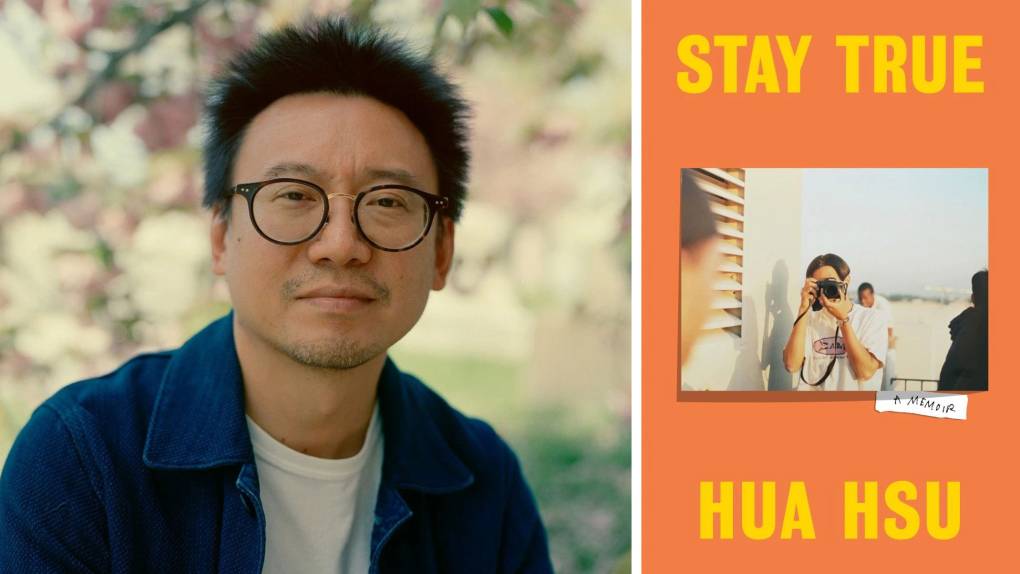
"caption": "Hua Hsu's memoir 'Stay True' brings the 1990s Bay Area to life in an evocative story of male friendship cut short too soon.",
"description": null,
"title": "hua.MAIN",
"credit": "Devlin Claro/Doubleday",
"status": "inherit",
"altTag": "A 40-ish Asian American man poses in front of a tree with pink flowers, in a diptych with an orange book cover showing a young man taking a photo",
"isLoading": false,
"fetchFailed": false
},
"arts_13918897": {
"type": "attachments",
"id": "arts_13918897",
"meta": {
"index": "attachments_1716263798",
"site": "arts",
"id": "13918897",
"found": true
},
"parent": 13918872,
"imgSizes": {
"twentyfourteen-full-width": {
"file": "https://ww2.kqed.org/app/uploads/sites/2/2022/09/Thumbnail-Sophia-1038x576.png",
"width": 1038,
"mimeType": "image/png",
"height": 576
},
"thumbnail": {
"file": "https://ww2.kqed.org/app/uploads/sites/2/2022/09/Thumbnail-Sophia-160x90.png",
"width": 160,
"mimeType": "image/png",
"height": 90
},
"post-thumbnail": {
"file": "https://ww2.kqed.org/app/uploads/sites/2/2022/09/Thumbnail-Sophia-672x372.png",
"width": 672,
"mimeType": "image/png",
"height": 372
},
"kqedFullSize": {
"file": "https://ww2.kqed.org/app/uploads/sites/2/2022/09/Thumbnail-Sophia.png",
"width": 1920,
"height": 1080
},
"large": {
"file": "https://ww2.kqed.org/app/uploads/sites/2/2022/09/Thumbnail-Sophia-1020x574.png",
"width": 1020,
"mimeType": "image/png",
"height": 574
},
"1536x1536": {
"file": "https://ww2.kqed.org/app/uploads/sites/2/2022/09/Thumbnail-Sophia-1536x864.png",
"width": 1536,
"mimeType": "image/png",
"height": 864
},
"medium": {
"file": "https://ww2.kqed.org/app/uploads/sites/2/2022/09/Thumbnail-Sophia-800x450.png",
"width": 800,
"mimeType": "image/png",
"height": 450
},
"medium_large": {
"file": "https://ww2.kqed.org/app/uploads/sites/2/2022/09/Thumbnail-Sophia-768x432.png",
"width": 768,
"mimeType": "image/png",
"height": 432
}
},
"publishDate": 1662674249,
"modified": 1662680958,
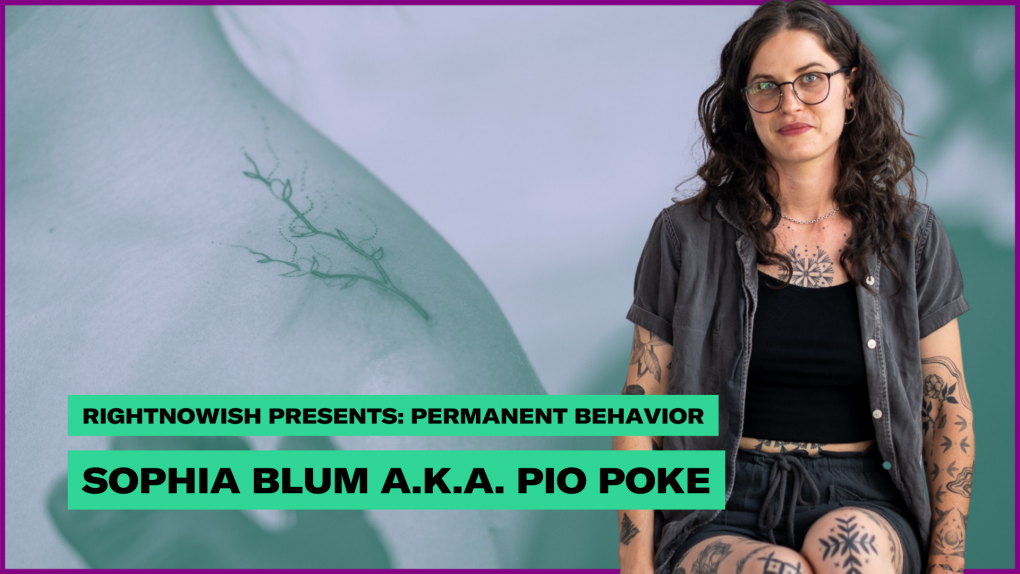
"caption": "Sophia Blum, a.k.a Pio Poke. ",
"description": null,
"title": "Thumbnail Sophia",
"credit": "Photo by Beth LeBarge, Design by Becca Kao/KQED",
"status": "inherit",
"altTag": null,
"isLoading": false,
"fetchFailed": false
},
"arts_13918593": {
"type": "attachments",
"id": "arts_13918593",
"meta": {
"index": "attachments_1716263798",
"site": "arts",
"id": "13918593",
"found": true
},
"parent": 13918498,
"imgSizes": {
"twentyfourteen-full-width": {
"file": "https://ww2.kqed.org/app/uploads/sites/2/2022/09/Thumbnail-Miguel-1-1-1038x576.png",
"width": 1038,
"mimeType": "image/png",
"height": 576
},
"thumbnail": {
"file": "https://ww2.kqed.org/app/uploads/sites/2/2022/09/Thumbnail-Miguel-1-1-160x90.png",
"width": 160,
"mimeType": "image/png",
"height": 90
},
"post-thumbnail": {
"file": "https://ww2.kqed.org/app/uploads/sites/2/2022/09/Thumbnail-Miguel-1-1-672x372.png",
"width": 672,
"mimeType": "image/png",
"height": 372
},
"kqedFullSize": {
"file": "https://ww2.kqed.org/app/uploads/sites/2/2022/09/Thumbnail-Miguel-1-1.png",
"width": 1920,
"height": 1080
},
"large": {
"file": "https://ww2.kqed.org/app/uploads/sites/2/2022/09/Thumbnail-Miguel-1-1-1020x574.png",
"width": 1020,
"mimeType": "image/png",
"height": 574
},
"1536x1536": {
"file": "https://ww2.kqed.org/app/uploads/sites/2/2022/09/Thumbnail-Miguel-1-1-1536x864.png",
"width": 1536,
"mimeType": "image/png",
"height": 864
},
"medium": {
"file": "https://ww2.kqed.org/app/uploads/sites/2/2022/09/Thumbnail-Miguel-1-1-800x450.png",
"width": 800,
"mimeType": "image/png",
"height": 450
},
"medium_large": {
"file": "https://ww2.kqed.org/app/uploads/sites/2/2022/09/Thumbnail-Miguel-1-1-768x432.png",
"width": 768,
"mimeType": "image/png",
"height": 432
}
},
"publishDate": 1662075701,
"modified": 1662092023,
"caption": null,
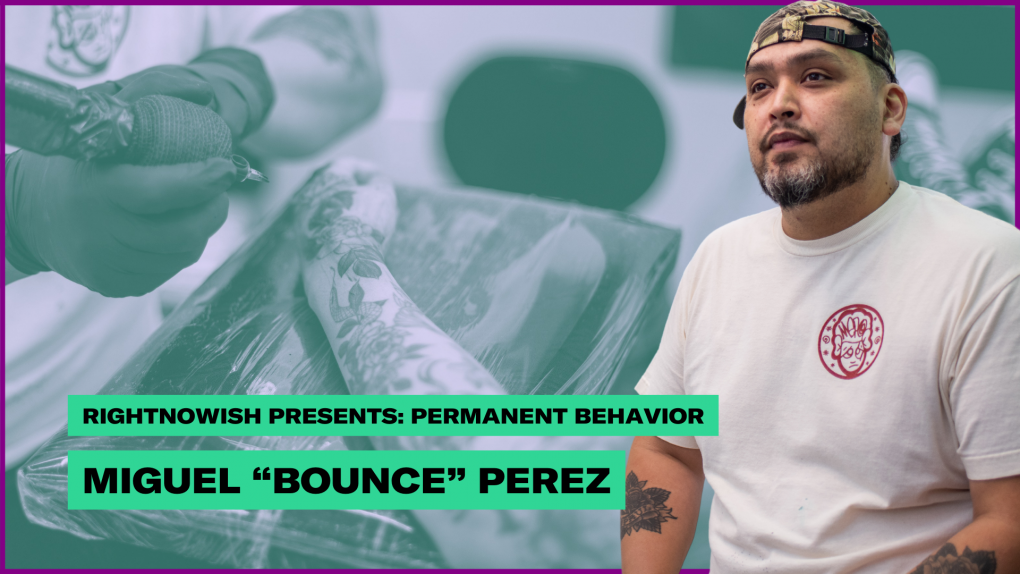
"description": "Miguel Bounce Perez wears a white t-shirt. In the background is an enlarged photo of his hand using a tattoo gun on a client's arm. ",
"title": "Thumbnail Miguel 1 (1)",
"credit": "Photo by Beth LeBarge, Design by Becca Kao/KQED",
"status": "inherit",
"altTag": null,
"isLoading": false,
"fetchFailed": false
},
"arts_13917981": {
"type": "attachments",
"id": "arts_13917981",
"meta": {
"index": "attachments_1716263798",
"site": "arts",
"id": "13917981",
"found": true
},
"parent": 13917969,
"imgSizes": {
"twentyfourteen-full-width": {
"file": "https://ww2.kqed.org/app/uploads/sites/2/2022/08/ICCD508A_Berkeley_WP-1038x576.jpg",
"width": 1038,
"mimeType": "image/jpeg",
"height": 576
},
"thumbnail": {
"file": "https://ww2.kqed.org/app/uploads/sites/2/2022/08/ICCD508A_Berkeley_WP-160x90.jpg",
"width": 160,
"mimeType": "image/jpeg",
"height": 90
},
"post-thumbnail": {
"file": "https://ww2.kqed.org/app/uploads/sites/2/2022/08/ICCD508A_Berkeley_WP-672x372.jpg",
"width": 672,
"mimeType": "image/jpeg",
"height": 372
},
"kqedFullSize": {
"file": "https://ww2.kqed.org/app/uploads/sites/2/2022/08/ICCD508A_Berkeley_WP.jpg",
"width": 1920,
"height": 1079
},
"large": {
"file": "https://ww2.kqed.org/app/uploads/sites/2/2022/08/ICCD508A_Berkeley_WP-1020x573.jpg",
"width": 1020,
"mimeType": "image/jpeg",
"height": 573
},
"1536x1536": {
"file": "https://ww2.kqed.org/app/uploads/sites/2/2022/08/ICCD508A_Berkeley_WP-1536x863.jpg",
"width": 1536,
"mimeType": "image/jpeg",
"height": 863
},
"medium": {
"file": "https://ww2.kqed.org/app/uploads/sites/2/2022/08/ICCD508A_Berkeley_WP-800x450.jpg",
"width": 800,
"mimeType": "image/jpeg",
"height": 450
},
"medium_large": {
"file": "https://ww2.kqed.org/app/uploads/sites/2/2022/08/ICCD508A_Berkeley_WP-768x432.jpg",
"width": 768,
"mimeType": "image/jpeg",
"height": 432
}
},
"publishDate": 1661363408,
"modified": 1661363728,
"caption": "Capoeirista Chinwe Oniah at Lake Merritt in Oakland, CA",
"description": "Capoeirista Chinwe Oniah at Lake Merritt in Oakland, CA",
"title": "ICCD508A_Berkeley_WP",
"credit": "Elie M. Khadra",
"status": "inherit",
"altTag": "A close-up of a woman looking into the camera while practicing capoeira moves by Lake Merritt in Oakland, CA",
"isLoading": false,
"fetchFailed": false
},
"arts_13917152": {
"type": "attachments",
"id": "arts_13917152",
"meta": {
"index": "attachments_1716263798",
"site": "arts",
"id": "13917152",
"found": true
},
"parent": 13917145,
"imgSizes": {
"twentyfourteen-full-width": {
"file": "https://cdn.kqed.org/wp-content/uploads/sites/2/2022/08/GettyImages-170427691-1038x576.jpg",
"width": 1038,
"mimeType": "image/jpeg",
"height": 576
},
"thumbnail": {
"file": "https://cdn.kqed.org/wp-content/uploads/sites/2/2022/08/GettyImages-170427691-160x107.jpg",
"width": 160,
"mimeType": "image/jpeg",
"height": 107
},
"post-thumbnail": {
"file": "https://cdn.kqed.org/wp-content/uploads/sites/2/2022/08/GettyImages-170427691-672x372.jpg",
"width": 672,
"mimeType": "image/jpeg",
"height": 372
},
"kqedFullSize": {
"file": "https://cdn.kqed.org/wp-content/uploads/sites/2/2022/08/GettyImages-170427691-scaled-e1659655840767.jpg",
"width": 1920,
"height": 1286
},
"2048x2048": {
"file": "https://cdn.kqed.org/wp-content/uploads/sites/2/2022/08/GettyImages-170427691-2048x1371.jpg",
"width": 2048,
"mimeType": "image/jpeg",
"height": 1371
},
"large": {
"file": "https://cdn.kqed.org/wp-content/uploads/sites/2/2022/08/GettyImages-170427691-1020x683.jpg",
"width": 1020,
"mimeType": "image/jpeg",
"height": 683
},
"1536x1536": {
"file": "https://cdn.kqed.org/wp-content/uploads/sites/2/2022/08/GettyImages-170427691-1536x1028.jpg",
"width": 1536,
"mimeType": "image/jpeg",
"height": 1028
},
"full-width": {
"file": "https://cdn.kqed.org/wp-content/uploads/sites/2/2022/08/GettyImages-170427691-1920x1285.jpg",
"width": 1920,
"mimeType": "image/jpeg",
"height": 1285
},
"medium": {
"file": "https://cdn.kqed.org/wp-content/uploads/sites/2/2022/08/GettyImages-170427691-800x536.jpg",
"width": 800,
"mimeType": "image/jpeg",
"height": 536
},
"medium_large": {
"file": "https://cdn.kqed.org/wp-content/uploads/sites/2/2022/08/GettyImages-170427691-768x514.jpg",
"width": 768,
"mimeType": "image/jpeg",
"height": 514
}
},
"publishDate": 1659655675,
"modified": 1707785233,
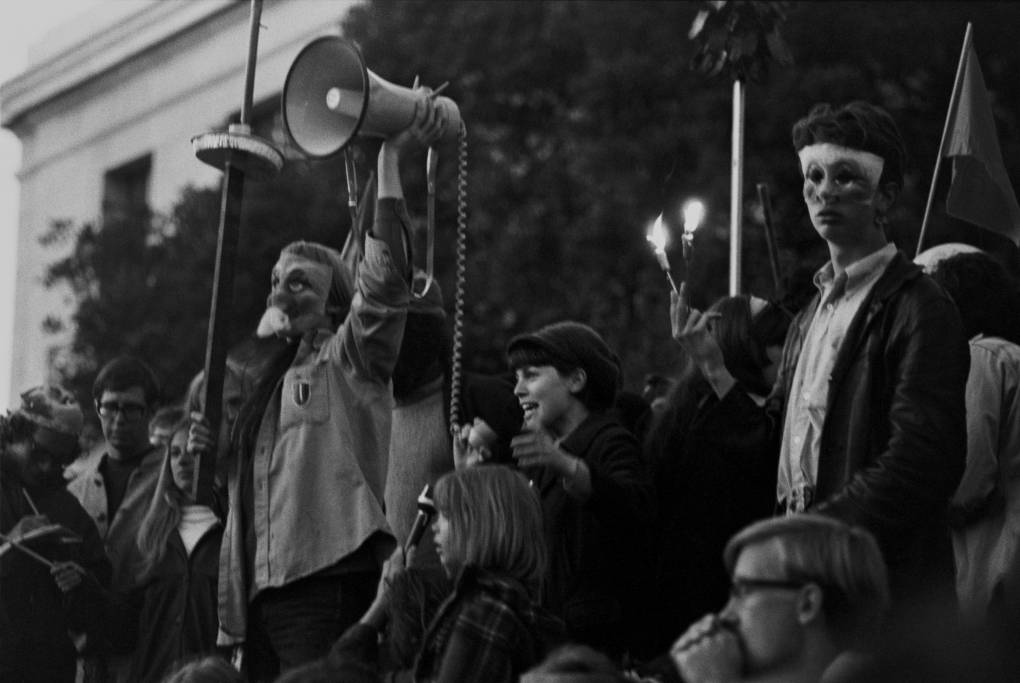
"caption": "Leaders of a candlelight vigil held for People's Park demonstrate at UC Berkeley on June 6, 1969. The protesters had attempted to march to People's Park but were blocked by Berkeley police.",
"description": null,
"title": "Leaders of a candlelight vigil that was held for People's Park in Berkeley on June 6, 1969. The protesters had attempted to march to People's Park but were blocked by Berkeley police.",
"credit": "Garth Eliassen/Getty Images",
"status": "inherit",
"altTag": "A masked demonstrator holds a megaphone aloft, as a speaker addresses a crowd.",
"isLoading": false,
"fetchFailed": false
},
"arts_13917123": {
"type": "attachments",
"id": "arts_13917123",
"meta": {
"index": "attachments_1716263798",
"site": "arts",
"id": "13917123",
"found": true
},
"parent": 13917120,
"imgSizes": {
"twentyfourteen-full-width": {
"file": "https://ww2.kqed.org/app/uploads/sites/2/2022/08/IMG_1161-1038x576.jpg",
"width": 1038,
"mimeType": "image/jpeg",
"height": 576
},
"thumbnail": {
"file": "https://ww2.kqed.org/app/uploads/sites/2/2022/08/IMG_1161-160x107.jpg",
"width": 160,
"mimeType": "image/jpeg",
"height": 107
},
"post-thumbnail": {
"file": "https://ww2.kqed.org/app/uploads/sites/2/2022/08/IMG_1161-672x372.jpg",
"width": 672,
"mimeType": "image/jpeg",
"height": 372
},
"kqedFullSize": {
"file": "https://ww2.kqed.org/app/uploads/sites/2/2022/08/IMG_1161-scaled.jpg",
"width": 2560,
"height": 1707
},
"2048x2048": {
"file": "https://ww2.kqed.org/app/uploads/sites/2/2022/08/IMG_1161-2048x1365.jpg",
"width": 2048,
"mimeType": "image/jpeg",
"height": 1365
},
"large": {
"file": "https://ww2.kqed.org/app/uploads/sites/2/2022/08/IMG_1161-1020x680.jpg",
"width": 1020,
"mimeType": "image/jpeg",
"height": 680
},
"1536x1536": {
"file": "https://ww2.kqed.org/app/uploads/sites/2/2022/08/IMG_1161-1536x1024.jpg",
"width": 1536,
"mimeType": "image/jpeg",
"height": 1024
},
"full-width": {
"file": "https://ww2.kqed.org/app/uploads/sites/2/2022/08/IMG_1161-1920x1280.jpg",
"width": 1920,
"mimeType": "image/jpeg",
"height": 1280
},
"medium": {
"file": "https://ww2.kqed.org/app/uploads/sites/2/2022/08/IMG_1161-800x533.jpg",
"width": 800,
"mimeType": "image/jpeg",
"height": 533
},
"medium_large": {
"file": "https://ww2.kqed.org/app/uploads/sites/2/2022/08/IMG_1161-768x512.jpg",
"width": 768,
"mimeType": "image/jpeg",
"height": 512
}
},
"publishDate": 1659640750,
"modified": 1659664260,
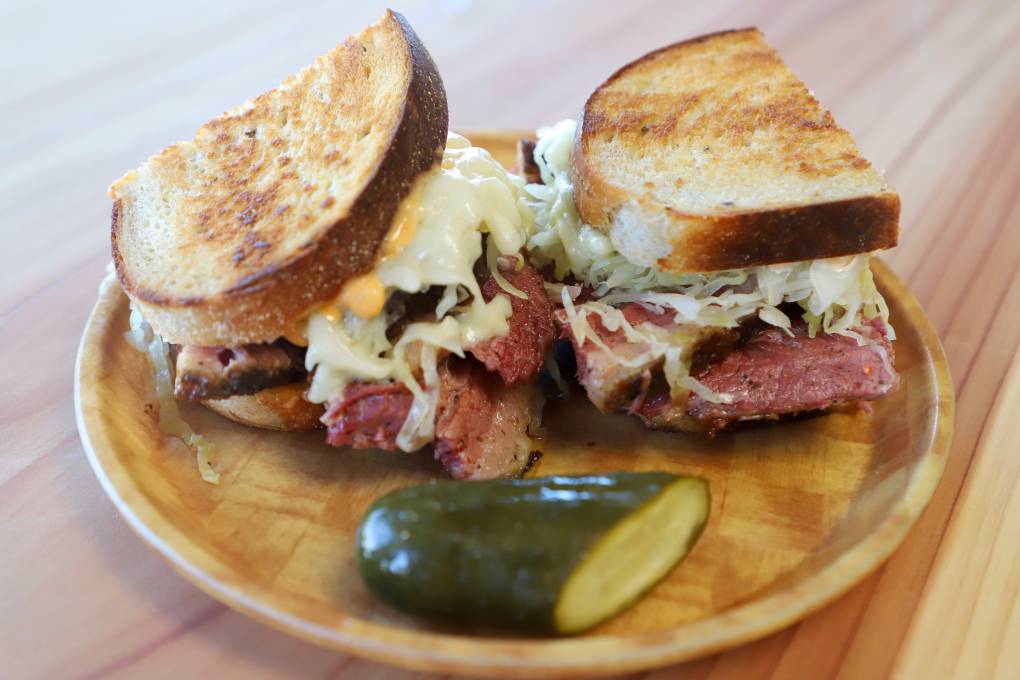
"caption": "The Reuben Sandwich is a pastrami-loaded favorite served at Delirama.",
"description": null,
"title": "IMG_1161",
"credit": "Alan Chazaro",
"status": "inherit",
"altTag": "a pastrami sandwich with coleslaw, cheese, and dressing served on a wooden plate with a pickle",
"isLoading": false,
"fetchFailed": false
},
"arts_13916638": {
"type": "attachments",
"id": "arts_13916638",
"meta": {
"index": "attachments_1716263798",
"site": "arts",
"id": "13916638",
"found": true
},
"parent": 13916612,
"imgSizes": {
"twentyfourteen-full-width": {
"file": "https://ww2.kqed.org/app/uploads/sites/2/2022/07/July2022-1038x576.jpg",
"width": 1038,
"mimeType": "image/jpeg",
"height": 576
},
"thumbnail": {
"file": "https://ww2.kqed.org/app/uploads/sites/2/2022/07/July2022-160x90.jpg",
"width": 160,
"mimeType": "image/jpeg",
"height": 90
},
"post-thumbnail": {
"file": "https://ww2.kqed.org/app/uploads/sites/2/2022/07/July2022-672x372.jpg",
"width": 672,
"mimeType": "image/jpeg",
"height": 372
},
"kqedFullSize": {
"file": "https://ww2.kqed.org/app/uploads/sites/2/2022/07/July2022.jpg",
"width": 1920,
"height": 1080
},
"large": {
"file": "https://ww2.kqed.org/app/uploads/sites/2/2022/07/July2022-1020x574.jpg",
"width": 1020,
"mimeType": "image/jpeg",
"height": 574
},
"1536x1536": {
"file": "https://ww2.kqed.org/app/uploads/sites/2/2022/07/July2022-1536x864.jpg",
"width": 1536,
"mimeType": "image/jpeg",
"height": 864
},
"medium": {
"file": "https://ww2.kqed.org/app/uploads/sites/2/2022/07/July2022-800x450.jpg",
"width": 800,
"mimeType": "image/jpeg",
"height": 450
},
"medium_large": {
"file": "https://ww2.kqed.org/app/uploads/sites/2/2022/07/July2022-768x432.jpg",
"width": 768,
"mimeType": "image/jpeg",
"height": 432
}
},
"publishDate": 1658865688,
"modified": 1658865688,
"caption": null,
"description": null,
"title": "July2022",
"credit": null,
"status": "inherit",
"altTag": null,
"isLoading": false,
"fetchFailed": false
},
"arts_13916290": {
"type": "attachments",
"id": "arts_13916290",
"meta": {
"index": "attachments_1716263798",
"site": "arts",
"id": "13916290",
"found": true
},
"parent": 13916282,
"imgSizes": {
"twentyfourteen-full-width": {
"file": "https://ww2.kqed.org/app/uploads/sites/2/2022/07/Copy-of-Pass-The-Aux-template-2-1038x576.png",
"width": 1038,
"mimeType": "image/png",
"height": 576
},
"thumbnail": {
"file": "https://ww2.kqed.org/app/uploads/sites/2/2022/07/Copy-of-Pass-The-Aux-template-2-160x90.png",
"width": 160,
"mimeType": "image/png",
"height": 90
},
"post-thumbnail": {
"file": "https://ww2.kqed.org/app/uploads/sites/2/2022/07/Copy-of-Pass-The-Aux-template-2-672x372.png",
"width": 672,
"mimeType": "image/png",
"height": 372
},
"kqedFullSize": {
"file": "https://ww2.kqed.org/app/uploads/sites/2/2022/07/Copy-of-Pass-The-Aux-template-2.png",
"width": 1920,
"height": 1080
},
"large": {
"file": "https://ww2.kqed.org/app/uploads/sites/2/2022/07/Copy-of-Pass-The-Aux-template-2-1020x574.png",
"width": 1020,
"mimeType": "image/png",
"height": 574
},
"1536x1536": {
"file": "https://ww2.kqed.org/app/uploads/sites/2/2022/07/Copy-of-Pass-The-Aux-template-2-1536x864.png",
"width": 1536,
"mimeType": "image/png",
"height": 864
},
"medium": {
"file": "https://ww2.kqed.org/app/uploads/sites/2/2022/07/Copy-of-Pass-The-Aux-template-2-800x450.png",
"width": 800,
"mimeType": "image/png",
"height": 450
},
"medium_large": {
"file": "https://ww2.kqed.org/app/uploads/sites/2/2022/07/Copy-of-Pass-The-Aux-template-2-768x432.png",
"width": 768,
"mimeType": "image/png",
"height": 432
}
},
"publishDate": 1658253386,
"modified": 1658253789,
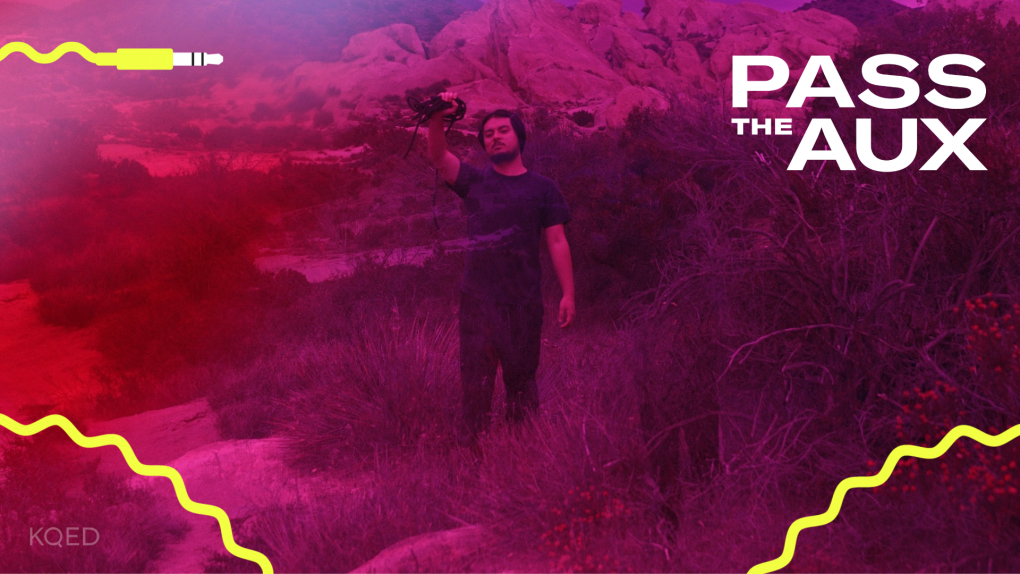
"caption": "2Chang's 'The Weather Inside' explores mental health in a five-part music video series. ",
"description": null,
"title": "Copy of Pass The Aux template (2)",
"credit": "Tatiana Tate and Jeung Bok Holmquist",
"status": "inherit",
"altTag": "Jonny Chang poses in a desert under pink lighting.",
"isLoading": false,
"fetchFailed": false
},
"arts_13915893": {
"type": "attachments",
"id": "arts_13915893",
"meta": {
"index": "attachments_1716263798",
"site": "arts",
"id": "13915893",
"found": true
},
"parent": 0,
"imgSizes": {
"twentyfourteen-full-width": {
"file": "https://ww2.kqed.org/app/uploads/sites/2/2022/07/IMG_0166-1024x576.jpg",
"width": 1024,
"mimeType": "image/jpeg",
"height": 576
},
"thumbnail": {
"file": "https://ww2.kqed.org/app/uploads/sites/2/2022/07/IMG_0166-160x107.jpg",
"width": 160,
"mimeType": "image/jpeg",
"height": 107
},
"post-thumbnail": {
"file": "https://ww2.kqed.org/app/uploads/sites/2/2022/07/IMG_0166-672x372.jpg",
"width": 672,
"mimeType": "image/jpeg",
"height": 372
},
"kqedFullSize": {
"file": "https://ww2.kqed.org/app/uploads/sites/2/2022/07/IMG_0166.jpg",
"width": 1024,
"height": 683
},
"large": {
"file": "https://ww2.kqed.org/app/uploads/sites/2/2022/07/IMG_0166-1020x680.jpg",
"width": 1020,
"mimeType": "image/jpeg",
"height": 680
},
"medium": {
"file": "https://ww2.kqed.org/app/uploads/sites/2/2022/07/IMG_0166-800x534.jpg",
"width": 800,
"mimeType": "image/jpeg",
"height": 534
},
"medium_large": {
"file": "https://ww2.kqed.org/app/uploads/sites/2/2022/07/IMG_0166-768x512.jpg",
"width": 768,
"mimeType": "image/jpeg",
"height": 512
}
},
"publishDate": 1657302906,
"modified": 1657578641,
"caption": "A group of local teenagers volunteer their time at the first annual Bizerkeley Food Fest",
"description": null,
"title": "IMG_0166",
"credit": "Jeffrey Litman",
"status": "inherit",
"altTag": "a group of young adults happily standing in front of a banner that says \"The Bizerkeley Food Festival\"",
"isLoading": false,
"fetchFailed": false
},
"arts_13913624": {
"type": "attachments",
"id": "arts_13913624",
"meta": {
"index": "attachments_1716263798",
"site": "arts",
"id": "13913624",
"found": true
},
"parent": 13913622,
"imgSizes": {
"twentyfourteen-full-width": {
"file": "https://ww2.kqed.org/app/uploads/sites/2/2022/05/image_from_ios-1038x576.jpg",
"width": 1038,
"mimeType": "image/jpeg",
"height": 576
},
"thumbnail": {
"file": "https://ww2.kqed.org/app/uploads/sites/2/2022/05/image_from_ios-160x120.jpg",
"width": 160,
"mimeType": "image/jpeg",
"height": 120
},
"post-thumbnail": {
"file": "https://ww2.kqed.org/app/uploads/sites/2/2022/05/image_from_ios-672x372.jpg",
"width": 672,
"mimeType": "image/jpeg",
"height": 372
},
"kqedFullSize": {
"file": "https://ww2.kqed.org/app/uploads/sites/2/2022/05/image_from_ios-scaled.jpg",
"width": 2560,
"height": 1920
},
"2048x2048": {
"file": "https://ww2.kqed.org/app/uploads/sites/2/2022/05/image_from_ios-2048x1536.jpg",
"width": 2048,
"mimeType": "image/jpeg",
"height": 1536
},
"large": {
"file": "https://ww2.kqed.org/app/uploads/sites/2/2022/05/image_from_ios-1020x765.jpg",
"width": 1020,
"mimeType": "image/jpeg",
"height": 765
},
"1536x1536": {
"file": "https://ww2.kqed.org/app/uploads/sites/2/2022/05/image_from_ios-1536x1152.jpg",
"width": 1536,
"mimeType": "image/jpeg",
"height": 1152
},
"full-width": {
"file": "https://ww2.kqed.org/app/uploads/sites/2/2022/05/image_from_ios-1920x1440.jpg",
"width": 1920,
"mimeType": "image/jpeg",
"height": 1440
},
"medium": {
"file": "https://ww2.kqed.org/app/uploads/sites/2/2022/05/image_from_ios-800x600.jpg",
"width": 800,
"mimeType": "image/jpeg",
"height": 600
},
"medium_large": {
"file": "https://ww2.kqed.org/app/uploads/sites/2/2022/05/image_from_ios-768x576.jpg",
"width": 768,
"mimeType": "image/jpeg",
"height": 576
}
},
"publishDate": 1652980362,
"modified": 1652980416,
"caption": "Nijla Mu'min",
"description": "Nijla Mu'min",
"title": "Nijla Mu'min",
"credit": "Pendarvis Harshaw",
"status": "inherit",
"altTag": "Nijla Mu'min",
"isLoading": false,
"fetchFailed": false
}
},
"audioPlayerReducer": {
"postId": "stream_live",
"isPaused": true,
"isPlaying": false,
"pfsActive": false,
"pledgeModalIsOpen": true,
"playerDrawerIsOpen": false,
"liveAudioPlayStartedAt": 0,
"liveAudioPlayContext": ""
},
"authorsReducer": {
"byline_arts_13917969": {
"type": "authors",
"id": "byline_arts_13917969",
"meta": {
"override": true
},
"slug": "byline_arts_13917969",
"name": "Chinwe Oniah",
"isLoading": false
},
"gmeline": {
"type": "authors",
"id": "185",
"meta": {
"index": "authors_1716337520",
"id": "185",
"found": true
},
"name": "Gabe Meline",
"firstName": "Gabe",
"lastName": "Meline",
"slug": "gmeline",
"email": "gmeline@kqed.org",
"display_author_email": true,
"staff_mastheads": [
"arts"
],
"title": "Senior Editor, KQED Arts & Culture",
"bio": "Gabe Meline entered journalism at age 15 making photocopied zines, and has since earned awards from the Edward R. Murrow Awards, the Society for Professional Journalists, the Online Journalism Awards, the Association of Alternative Newsweeklies and the California Newspaper Publishers Association. Prior to KQED, he was the editor of the \u003cem>North Bay Bohemian\u003c/em> and a touring musician. He lives with his wife and daughter in his hometown of Santa Rosa, CA.",
"avatar": "https://secure.gravatar.com/avatar/5bebe57be0d8bc2dd318934feb47299e2d2d10cba28d09d8d7afb389a2ce2bdd?s=600&d=blank&r=g",
"twitter": null,
"bluesky": null,
"facebook": null,
"instagram": null,
"linkedin": null,
"sites": [
{
"site": "",
"roles": [
"editor"
]
},
{
"site": "arts",
"roles": [
"administrator"
]
},
{
"site": "artschool",
"roles": [
"editor"
]
},
{
"site": "news",
"roles": [
"author"
]
},
{
"site": "pop",
"roles": [
"editor"
]
},
{
"site": "bayareabites",
"roles": [
"editor"
]
},
{
"site": "food",
"roles": [
"editor"
]
},
{
"site": "forum",
"roles": [
"administrator"
]
},
{
"site": "liveblog",
"roles": [
"editor"
]
},
{
"site": "hiphop",
"roles": [
"editor"
]
}
],
"headData": {
"title": "Gabe Meline | KQED",
"description": "Senior Editor, KQED Arts & Culture",
"ogImgSrc": "https://secure.gravatar.com/avatar/5bebe57be0d8bc2dd318934feb47299e2d2d10cba28d09d8d7afb389a2ce2bdd?s=600&d=blank&r=g",
"twImgSrc": "https://secure.gravatar.com/avatar/5bebe57be0d8bc2dd318934feb47299e2d2d10cba28d09d8d7afb389a2ce2bdd?s=600&d=blank&r=g"
},
"isLoading": false,
"link": "/author/gmeline"
},
"ralexandra": {
"type": "authors",
"id": "11242",
"meta": {
"index": "authors_1716337520",
"id": "11242",
"found": true
},
"name": "Rae Alexandra",
"firstName": "Rae",
"lastName": "Alexandra",
"slug": "ralexandra",
"email": "ralexandra@kqed.org",
"display_author_email": true,
"staff_mastheads": [],
"title": "Reporter/Producer",
"bio": "Rae Alexandra is a Reporter/Producer for KQED Arts & Culture, and the creator/author of the \u003ca href=\"https://www.kqed.org/arts/program/rebel-girls-from-bay-area-history\">Rebel Girls From Bay Area History\u003c/a> and \u003ca href=\"https://www.kqed.org/bizarrebayarea\">Bizarre Bay Area\u003c/a> series. Her debut book, \u003ca href=\"https://citylights.com/politics-current-events-history/unsung-heroines35-women-who-changed/\">Unsung Heroines: 35 Women Who Changed the Bay Area\u003c/a> was published by City Lights in March 2026. In 2023, Rae was awarded an SPJ Excellence in Journalism Award for Arts & Culture. Rae was born and raised in Wales and subsequently — even after two decades in Northern California — still uses phrases that regularly baffle her coworkers.",
"avatar": "https://secure.gravatar.com/avatar/edfee8176c80cc0a382b051190f5341997df378a934a5774dcb0977732dfd401?s=600&d=blank&r=g",
"twitter": null,
"bluesky": null,
"facebook": null,
"instagram": null,
"linkedin": null,
"sites": [
{
"site": "arts",
"roles": [
"subscriber"
]
},
{
"site": "news",
"roles": [
"subscriber"
]
},
{
"site": "pop",
"roles": [
"subscriber"
]
},
{
"site": "bayareabites",
"roles": [
"subscriber"
]
},
{
"site": "science",
"roles": [
"subscriber"
]
}
],
"headData": {
"title": "Rae Alexandra | KQED",
"description": "Reporter/Producer",
"ogImgSrc": "https://secure.gravatar.com/avatar/edfee8176c80cc0a382b051190f5341997df378a934a5774dcb0977732dfd401?s=600&d=blank&r=g",
"twImgSrc": "https://secure.gravatar.com/avatar/edfee8176c80cc0a382b051190f5341997df378a934a5774dcb0977732dfd401?s=600&d=blank&r=g"
},
"isLoading": false,
"link": "/author/ralexandra"
},
"nvoynovskaya": {
"type": "authors",
"id": "11387",
"meta": {
"index": "authors_1716337520",
"id": "11387",
"found": true
},
"name": "Nastia Voynovskaya",
"firstName": "Nastia",
"lastName": "Voynovskaya",
"slug": "nvoynovskaya",
"email": "nvoynovskaya@kqed.org",
"display_author_email": false,
"staff_mastheads": [
"arts"
],
"title": "Editor and reporter",
"bio": "Nastia Voynovskaya is a reporter, editor and host at KQED Arts & Culture. She's been covering the arts in the Bay Area for over a decade, with a focus on music, queer culture, labor issues and grassroots organizing. She has edited KQED story series such as Trans Bay: A History of San Francisco's Gender-Diverse Community, and co-created KQED's Bay Area hip-hop history project, That's My Word. Nastia's work has been recognized by the Society of Professional Journalists and San Francisco Press Club. She regularly appears on podcasts and radio programs, including NPR's All Songs Considered, and hosts live events where music, culture and conversation meet.",
"avatar": "https://secure.gravatar.com/avatar/5025ee460e5a85d69ca20ea6c6f2f80d7e17795c828f61ea3aecfcd924e9042e?s=600&d=blank&r=g",
"twitter": null,
"bluesky": null,
"facebook": null,
"instagram": "https://www.instagram.com/nananastia/",
"linkedin": null,
"sites": [
{
"site": "",
"roles": [
"editor"
]
},
{
"site": "arts",
"roles": [
"administrator"
]
},
{
"site": "news",
"roles": [
"editor"
]
},
{
"site": "pop",
"roles": [
"administrator"
]
},
{
"site": "bayareabites",
"roles": [
"editor"
]
},
{
"site": "podcasts",
"roles": [
"editor"
]
},
{
"site": "hiphop",
"roles": [
"editor"
]
}
],
"headData": {
"title": "Nastia Voynovskaya | KQED",
"description": "Editor and reporter",
"ogImgSrc": "https://secure.gravatar.com/avatar/5025ee460e5a85d69ca20ea6c6f2f80d7e17795c828f61ea3aecfcd924e9042e?s=600&d=blank&r=g",
"twImgSrc": "https://secure.gravatar.com/avatar/5025ee460e5a85d69ca20ea6c6f2f80d7e17795c828f61ea3aecfcd924e9042e?s=600&d=blank&r=g"
},
"isLoading": false,
"link": "/author/nvoynovskaya"
},
"ogpenn": {
"type": "authors",
"id": "11491",
"meta": {
"index": "authors_1716337520",
"id": "11491",
"found": true
},
"name": "Pendarvis Harshaw",
"firstName": "Pendarvis",
"lastName": "Harshaw",
"slug": "ogpenn",
"email": "ogpenn@gmail.com",
"display_author_email": false,
"staff_mastheads": [
"arts"
],
"title": "Community Engagement Reporter",
"bio": "Pendarvis Harshaw is an educator, host and writer with KQED Arts.",
"avatar": "https://secure.gravatar.com/avatar/972b77ee8e3f346ae2b00622661187fbfabd059b5693bbdc1475ea7a722fd4cd?s=600&d=blank&r=g",
"twitter": null,
"bluesky": null,
"facebook": null,
"instagram": "ogpenn",
"linkedin": null,
"sites": [
{
"site": "arts",
"roles": [
"administrator"
]
},
{
"site": "news",
"roles": [
"editor"
]
},
{
"site": "bayareabites",
"roles": [
"author"
]
},
{
"site": "hiphop",
"roles": [
"editor"
]
}
],
"headData": {
"title": "Pendarvis Harshaw | KQED",
"description": "Community Engagement Reporter",
"ogImgSrc": "https://secure.gravatar.com/avatar/972b77ee8e3f346ae2b00622661187fbfabd059b5693bbdc1475ea7a722fd4cd?s=600&d=blank&r=g",
"twImgSrc": "https://secure.gravatar.com/avatar/972b77ee8e3f346ae2b00622661187fbfabd059b5693bbdc1475ea7a722fd4cd?s=600&d=blank&r=g"
},
"isLoading": false,
"link": "/author/ogpenn"
},
"mmedina": {
"type": "authors",
"id": "11528",
"meta": {
"index": "authors_1716337520",
"id": "11528",
"found": true
},
"name": "Marisol Medina-Cadena",
"firstName": "Marisol",
"lastName": "Medina-Cadena",
"slug": "mmedina",
"email": "mmedina@KQED.org",
"display_author_email": true,
"staff_mastheads": [],
"title": "Producer, Rightnowish Podcast",
"bio": "Marisol Medina-Cadena is a radio reporter and podcast producer. Before working at KQED, she produced for PBS member station, KCET, in Los Angeles. In 2017, Marisol won an Emmy Award for her work on the televised documentary, \u003cem>City Rising\u003c/em>, examining California's affordable housing crisis and the historical roots of gentrification.",
"avatar": "https://secure.gravatar.com/avatar/6c3db46a1cabb5e1fe9a365b5f4e681e?s=600&d=blank&r=g",
"twitter": "marisolreports",
"facebook": null,
"instagram": null,
"linkedin": null,
"sites": [
{
"site": "arts",
"roles": []
},
{
"site": "news",
"roles": [
"edit_others_posts"
]
}
],
"headData": {
"title": "Marisol Medina-Cadena | KQED",
"description": "Producer, Rightnowish Podcast",
"ogImgSrc": "https://secure.gravatar.com/avatar/6c3db46a1cabb5e1fe9a365b5f4e681e?s=600&d=blank&r=g",
"twImgSrc": "https://secure.gravatar.com/avatar/6c3db46a1cabb5e1fe9a365b5f4e681e?s=600&d=blank&r=g"
},
"isLoading": false,
"link": "/author/mmedina"
},
"achazaro": {
"type": "authors",
"id": "11748",
"meta": {
"index": "authors_1716337520",
"id": "11748",
"found": true
},
"name": "Alan Chazaro",
"firstName": "Alan",
"lastName": "Chazaro",
"slug": "achazaro",
"email": "agchazaro@gmail.com",
"display_author_email": true,
"staff_mastheads": [],
"title": "Food Writer and Reporter",
"bio": "Alan Chazaro is the author of \u003cem>This Is Not a Frank Ocean Cover Album\u003c/em> (Black Lawrence Press, 2019), \u003cem>Piñata Theory\u003c/em> (Black Lawrence Press, 2020), and \u003cem>Notes from the Eastern Span of the Bay Bridge\u003c/em> (Ghost City Press, 2021). He is a graduate of June Jordan’s Poetry for the People program at UC Berkeley and a former Lawrence Ferlinghetti Fellow at the University of San Francisco. He writes about sports, food, art, music, education, and culture while repping the Bay on \u003ca href=\"https://twitter.com/alan_chazaro\">Twitter\u003c/a> and \u003ca href=\"https://www.instagram.com/alan_chazaro/?hl=en\">Instagram\u003c/a> at @alan_chazaro.",
"avatar": "https://secure.gravatar.com/avatar/ea8b6dd970fc5c29e7a188e7d5861df7?s=600&d=blank&r=g",
"twitter": "alan_chazaro",
"facebook": null,
"instagram": null,
"linkedin": null,
"sites": [
{
"site": "arts",
"roles": [
"contributor"
]
},
{
"site": "news",
"roles": [
"editor"
]
}
],
"headData": {
"title": "Alan Chazaro | KQED",
"description": "Food Writer and Reporter",
"ogImgSrc": "https://secure.gravatar.com/avatar/ea8b6dd970fc5c29e7a188e7d5861df7?s=600&d=blank&r=g",
"twImgSrc": "https://secure.gravatar.com/avatar/ea8b6dd970fc5c29e7a188e7d5861df7?s=600&d=blank&r=g"
},
"isLoading": false,
"link": "/author/achazaro"
},
"ksong": {
"type": "authors",
"id": "11813",
"meta": {
"index": "authors_1716337520",
"id": "11813",
"found": true
},
"name": "Kristie Song",
"firstName": "Kristie",
"lastName": "Song",
"slug": "ksong",
"email": "ksong@kqed.org",
"display_author_email": false,
"staff_mastheads": [],
"title": "Editorial Intern ",
"bio": "Kristie Song is an Arts & Culture Intern at KQED. She is currently a graduate student at UC Berkeley, where she studies audio and multimedia journalism. Previously, she covered the local community for Oakland North, produced episodes for The Science of Happiness, and served as news director for KUCI, UC Irvine’s radio station. Outside of reporting, she likes drawing comics, listening to angsty rock, and practicing the guitar.",
"avatar": "https://secure.gravatar.com/avatar/c1149e78c3c44f92d4945a8ab0711af6?s=600&d=blank&r=g",
"twitter": null,
"facebook": null,
"instagram": null,
"linkedin": null,
"sites": [
{
"site": "arts",
"roles": [
"editor"
]
}
],
"headData": {
"title": "Kristie Song | KQED",
"description": "Editorial Intern ",
"ogImgSrc": "https://secure.gravatar.com/avatar/c1149e78c3c44f92d4945a8ab0711af6?s=600&d=blank&r=g",
"twImgSrc": "https://secure.gravatar.com/avatar/c1149e78c3c44f92d4945a8ab0711af6?s=600&d=blank&r=g"
},
"isLoading": false,
"link": "/author/ksong"
}
},
"pagesReducer": {
"arts_tag_berkeley": {
"type": "terms",
"id": "arts_1270",
"meta": {
"index": "terms_1716263798",
"site": "arts",
"id": "1270",
"score": 6.9273148
},
"featImg": null,
"name": "Berkeley",
"description": null,
"taxonomy": "tag",
"headData": {
"twImgId": null,
"twTitle": null,
"ogTitle": null,
"ogImgId": null,
"twDescription": null,
"description": null,
"title": "Berkeley Archives | KQED Arts",
"ogDescription": null
},
"ttid": 1282,
"slug": "berkeley",
"isLoading": false,
"title": "Berkeley",
"pageMeta": {
"site": "arts",
"WpPageTemplate": "page-topic-editorial",
"currentPage": 11
},
"blocks": [
{
"blockName": "kqed/post-list",
"attrs": {
"layout": "cardArticle2",
"query": "posts/arts?tag=berkeley",
"seeMore": false,
"paginated": true,
"page": 11
}
},
{
"blockName": "kqed/ad"
}
]
}
},
"pfsSessionReducer": {},
"postsReducer": {
"stream_live": {
"type": "live",
"id": "stream_live",
"audioUrl": "https://streams.kqed.org/kqedradio",
"title": "Live Stream",
"excerpt": "Live Stream information currently unavailable.",
"link": "/radio",
"featImg": "",
"label": {
"name": "KQED Live",
"link": "/"
}
},
"stream_kqedNewscast": {
"type": "posts",
"id": "stream_kqedNewscast",
"audioUrl": "https://www.kqed.org/.stream/anon/radio/RDnews/newscast.mp3?_=1",
"title": "KQED Newscast",
"featImg": "",
"label": {
"name": "88.5 FM",
"link": "/"
}
},
"arts_13920198": {
"type": "posts",
"id": "arts_13920198",
"meta": {
"index": "posts_1716263798",
"site": "arts",
"id": "13920198",
"score": null,
"sort": [
1665340404000
]
},
"parent": 0,
"labelTerm": {
"site": "arts"
},
"blocks": [],
"publishDate": 1665340404,
"format": "standard",
"title": "‘He Should Still Be Here’: Zumbi’s Loved Ones Demand Charges for Hospital Staff, Security",
"headTitle": "‘He Should Still Be Here’: Zumbi’s Loved Ones Demand Charges for Hospital Staff, Security | KQED",
"content": "\u003cp>In the last weeks of his life, Oakland hip-hop artist Stephen Gaines, better known as Zumbi of Zion I, had started a hopeful new chapter.\u003c/p>\n\u003cp>In July 2021, he headlined a concert in Nevada City where eager fans lined up for pictures and autographs. He’d come down with COVID-19 after the show, but with his partner of four years, Millaray Rodriguez Avila, he began recovering. The couple visited the beach and went on hikes, and Gaines regained his appetite, eating second helpings of vegan ramen.\u003c/p>\n\u003cp>Gaines laid plans to release new music and embark upon a Zion I reunion tour with his longtime musical collaborator, Amp Live. He and Rodriguez Avila prepared to sign a lease on a house in Oakland, where they planned to live with Gaines’ mother, his young three boys and Rodriguez Avila’s middle school-age son.\u003c/p>\n\u003cp>All of those plans ground to a halt on Aug. 13, 2021, when Gaines was killed during a stay at Alta Bates Medical Center in Berkeley. [aside postid='arts_13920004']\u003c/p>\n\u003cp>The day prior, Gaines had called 911 for help during an apparent mental health crisis and checked himself into Alta Bates. His family and their lawyers say he should have walked out of the hospital alive. Instead, they allege, hospital staff and Allied Universal security guards used excessive force and killed him. According to the coroner’s report, three men, including a patient transporter and a security guard, piled on top of Gaines, placing their weight on his arms, legs and upper torso. They held Gaines to the ground for approximately five to 10 minutes.\u003c/p>\n\u003cp>[ad fullwidth]\u003c/p>\n\u003cp>The coroner determined that Gaines died by homicide, with the official cause of death as “physiologic stress of altercation and restraint during a psychotic episode,” and COVID-19 and an enlarged heart as contributing factors. Yet more than a year since Gaines’ death, Berkeley police have not announced any suspects nor made arrests. After initially stating that Gaines’ killing did not “appear criminal in nature,” the Alameda County District Attorney’s office reversed course on Oct. 5 and announced that, in light of new information, criminal charges could still be possible.\u003c/p>\n\u003cfigure id=\"attachment_13918678\" class=\"wp-caption aligncenter\" style=\"max-width: 800px\">\u003cimg loading=\"lazy\" decoding=\"async\" class=\"size-medium wp-image-13918678\" src=\"https://ww2.kqed.org/app/uploads/sites/2/2022/09/Baba-Zumbi%E2%80%99s-Family-on-the-main-stage-at-Hiero-Day-in-Oakland-on-Monday-Sept.-6-2022.-002-Estefany-Gonzalez-800x533.jpg\" alt=\"\" width=\"800\" height=\"533\" srcset=\"https://cdn.kqed.org/wp-content/uploads/sites/2/2022/09/Baba-Zumbi’s-Family-on-the-main-stage-at-Hiero-Day-in-Oakland-on-Monday-Sept.-6-2022.-002-Estefany-Gonzalez-800x533.jpg 800w, https://cdn.kqed.org/wp-content/uploads/sites/2/2022/09/Baba-Zumbi’s-Family-on-the-main-stage-at-Hiero-Day-in-Oakland-on-Monday-Sept.-6-2022.-002-Estefany-Gonzalez-1020x680.jpg 1020w, https://cdn.kqed.org/wp-content/uploads/sites/2/2022/09/Baba-Zumbi’s-Family-on-the-main-stage-at-Hiero-Day-in-Oakland-on-Monday-Sept.-6-2022.-002-Estefany-Gonzalez-160x107.jpg 160w, https://cdn.kqed.org/wp-content/uploads/sites/2/2022/09/Baba-Zumbi’s-Family-on-the-main-stage-at-Hiero-Day-in-Oakland-on-Monday-Sept.-6-2022.-002-Estefany-Gonzalez-768x512.jpg 768w, https://cdn.kqed.org/wp-content/uploads/sites/2/2022/09/Baba-Zumbi’s-Family-on-the-main-stage-at-Hiero-Day-in-Oakland-on-Monday-Sept.-6-2022.-002-Estefany-Gonzalez-1536x1024.jpg 1536w, https://cdn.kqed.org/wp-content/uploads/sites/2/2022/09/Baba-Zumbi’s-Family-on-the-main-stage-at-Hiero-Day-in-Oakland-on-Monday-Sept.-6-2022.-002-Estefany-Gonzalez.jpg 1920w\" sizes=\"(max-width: 800px) 100vw, 800px\">\u003cfigcaption class=\"wp-caption-text\">Zumbi’s family joins the main stage for a tribute to the Zion I MC at the Hiero Day festival in Oakland on Monday, Sept. 5, 2022. \u003ccite>(Estefany Gonzalez)\u003c/cite>\u003c/figcaption>\u003c/figure>\n\u003cp>“The restraints used by a combination of Allied Universal staff and Alta Bates staff [were] homicidal,” says Elizabeth Grossman, one of the attorneys representing Gaines’ mother Carolyn, Gaines’ three boys and Rodriguez Avila. Grossman says criminal charges are likely, and that she plans to file a civil lawsuit against Alta Bates hospital and Allied Universal.\u003c/p>\n\u003cp>“I think Ms. Gaines said it right when she was talking to Nancy O’Malley, the district attorney, the other day,” says Grossman. “She sadly recognized that she’s joined a terrible, small club of mothers whose sons have been murdered — not only sons, but children who have been murdered — and she called out George Floyd’s mother.”\u003c/p>\n\u003cp>Law enforcement’s lack of answers and long delays have frustrated those close to Gaines. Now, on what would have been Gaines’ 50th birthday, Oct. 9, loved ones who’d previously stayed silent as the investigation took its course are demanding answers and accountability.\u003c/p>\n\u003cp>“The only thing I want is charges for the people who are responsible for ending a beautiful life the way that they did,” says Rodriguez Avila.\u003c/p>\n\u003cfigure id=\"attachment_13920210\" class=\"wp-caption aligncenter\" style=\"max-width: 800px\">\u003cimg loading=\"lazy\" decoding=\"async\" class=\"size-medium wp-image-13920210\" src=\"https://ww2.kqed.org/app/uploads/sites/2/2022/10/millaray-800x591.jpg\" alt=\"\" width=\"800\" height=\"591\">\u003cfigcaption class=\"wp-caption-text\">Millaray Rodriguez Avila holds a photo of Stephen Gaines, her partner of four years. Before he died under suspicious circumstances at Alta Bates hospital, the couple had plans to move in together with Gaines’ mother, his three boys and Rodriguez Avila’s son. \u003ccite>(Nastia Voynovskaya/KQED)\u003c/cite>\u003c/figcaption>\u003c/figure>\n\u003ch2>Lawyers point to wrongful treatment on the hospital floor\u003c/h2>\n\u003cp>According to the coroner’s report, Gaines called 911 on Aug. 12, 2021, to seek help for suicidal ideation. He checked himself into the hospital, where he was placed on a 5150, the code for a 72-hour involuntary psychiatric hold. His toxicology screen was negative, and he was given anti-anxiety medication. Rodriguez Avila says she communicated with Gaines while he was in the hospital, and that he seemed optimistic about his recovery.\u003c/p>\n\u003cp>After sleeping through most of the night, the report says, Gaines awoke suddenly in his bed as attending nurses discussed ordering a CT scan. Witnesses said he chased nurses through the halls and put a pregnant security guard “in a choke hold.” After security and staff pulled Gaines from the guard, a patient transporter took Gaines to the floor, held him face down, and laid on top of him, straddling Gaines’ upper torso. A security guard later piled on top of the patient transporter, putting additional weight on Gaines’ torso, back, and left arm. A third person restrained Gaines’ legs and left elbow.\u003c/p>\n\u003cp>“It is unknown how much body weight was placed on Mr. Gaines,” the coroner’s report notes. Witnesses estimate Gaines was on the ground for “approximately 5-10 minutes.”\u003c/p>\n\u003cp>After a few minutes of struggle, according to the autopsy, the men on top of Gaines noticed blood coming from his mouth, and “could not tell if he was breathing.” When Berkeley police arrived, they attempted to handcuff Gaines while the three men stood up. Officers noticed that Gaines was unresponsive, rolled him on his back, and then put him in handcuffs before administering CPR. By then it was too late. Gaines was pronounced dead at 5:51 a.m. on Aug. 13.\u003c/p>\n\u003cp>[pullquote size='medium' align='right' citation='Millaray Rodriguez Avila']‘I want the truth. What happened that day? How did security and hospital staff end [the life of] a person who was so beautiful?’[/pullquote]That morning, Rodriguez Avila got a call from the hospital director. The partner she had been building a life with was dead.\u003c/p>\n\u003cp>“I kind of collapsed,” she says now, over a year later. “I lost myself, where I was. I thought it was a movie.”\u003c/p>\n\u003cp>“I want the truth,” Rodriguez Avila continues. “What happened that day? How did security and hospital staff end [the life of] a person who was so beautiful?”\u003c/p>\n\u003cp>She and friends who knew Gaines for decades describe him as a kind, gentle soul — a loving parent, partner and friend. They remember him as a health-conscious meditation practitioner who aspired to be his best self and encouraged people to be kinder to each other. That message was audible in his music, which often dealt with themes of societal injustices.\u003c/p>\n\u003cp>“He taught me love,” says Rodriguez Avila. “In our relationship, the beautiful thing is that love, that passion that we had for each other, it was around us, too. It was with our kids. It was with our friends. Everywhere we [went], we projected and received back love.”\u003c/p>\n\u003cp>“I remember him as somebody who always spread love and spread light, and somebody who was an innovator, extremely creative, original,” says friend and fellow hip-hop artist Dustin Sharpe. “Almost like a God-sent prophet because he always spoke wisdom. He always looked at the positive side of things.”\u003c/p>\n\u003cp>The people close to Gaines say he didn’t have a history of mental illness. He dealt with normal life stressors from parenthood and his career as an artist.\u003c/p>\n\u003cp>“When I heard that he brought himself to the hospital, I knew that something was up, that he must have been going through something,” says longtime friend and musical collaborator The Grouch. “People can reach a point of struggle, and whatever happens in that hospital, the hospital is the professionals, and they should be trained to take care of the situation.”\u003c/p>\n\u003cp>Federal regulations outline safe techniques for restraining patients in hospitals. “They specifically call out in the federal regulations that there cannot be positional asphyxiation,” Grossman says. “Most importantly, the regulations require that medical aid be given while restraints are being applied. These regulations were written with a history of understanding that mental health situations often result in restraints being used, and trying to correct bad practices.”\u003c/p>\n\u003cp>“In this case, every bad practice happened,” Grossman continues. “For the five to 10 minutes that he was being restrained with three men lying on his back, there was not one ounce of medical care offered to save this man’s life. That is ugly beyond belief.”\u003c/p>\n\u003cp>[pullquote size='large' align='left' citation='Deuce Eclipse']‘The bottom line for me is he should still be here.’[/pullquote]\u003c/p>\n\u003cp>Friends of Gaines are frustrated law enforcement hasn’t named any suspects. “What are the names of these people who laid on him for five to 10 minutes thinking that was right, whether he was having an episode or not?” says Gina Madrid, a friend and fellow hip-hop artist. “Because you’re not going to kill our brother like that.”\u003c/p>\n\u003cp>“People have to be held accountable,” says hip-hop artist Deuce Eclipse, who had been close with Gaines since the two were in high school. “The bottom line for me is he should still be here. There’s no reason I can find in my mind, my heart, my spirit and my soul why he would be killed in the hospital.”\u003c/p>\n\u003cp>Berkeley police, Alta Bates or its security company, Allied Universal, did not respond to requests for comment as of press time.\u003c/p>\n\u003cfigure id=\"attachment_13920201\" class=\"wp-caption aligncenter\" style=\"max-width: 800px\">\u003cimg loading=\"lazy\" decoding=\"async\" class=\"size-medium wp-image-13920201\" src=\"https://ww2.kqed.org/app/uploads/sites/2/2022/10/DSC01278_FreeReinTour_2018-800x533.jpg\" alt=\"\" width=\"800\" height=\"533\" srcset=\"https://cdn.kqed.org/wp-content/uploads/sites/2/2022/10/DSC01278_FreeReinTour_2018-800x533.jpg 800w, https://cdn.kqed.org/wp-content/uploads/sites/2/2022/10/DSC01278_FreeReinTour_2018-1020x680.jpg 1020w, https://cdn.kqed.org/wp-content/uploads/sites/2/2022/10/DSC01278_FreeReinTour_2018-160x107.jpg 160w, https://cdn.kqed.org/wp-content/uploads/sites/2/2022/10/DSC01278_FreeReinTour_2018-768x512.jpg 768w, https://cdn.kqed.org/wp-content/uploads/sites/2/2022/10/DSC01278_FreeReinTour_2018-1536x1024.jpg 1536w, https://cdn.kqed.org/wp-content/uploads/sites/2/2022/10/DSC01278_FreeReinTour_2018.jpg 1920w\" sizes=\"(max-width: 800px) 100vw, 800px\">\u003cfigcaption class=\"wp-caption-text\">Zumbi (back right) backstage with his friend Deuce Eclipse (front right) in 2018. The two had been close since high school. \u003ccite>(Courtesy of Deuce Eclipse)\u003c/cite>\u003c/figcaption>\u003c/figure>\n\u003ch2>Loved ones call for accountability for hospital security guards and staff\u003c/h2>\n\u003cp>In the eyes of his partner and friends, Gaines’ death is another example of authority figures treating the life of a Black person as disposable. For Rodriguez Avila, the loss was shocking, but it also felt disturbingly familiar.\u003c/p>\n\u003cp>“It’s happened before in this country. It’s happened in California. It’s happened in the Bay Area before,” she says. “And there’s so many families, mothers, brothers, sisters that are waiting for answers for other brown, Latino and Black people that have been killed by use of force.”\u003c/p>\n\u003cp>For others, what happened to Gaines is indicative of abuse and racism in the medical and criminal justice systems. “I think that there needs to be a magnifying glass put on the hospitals and how they function,” says The Grouch.\u003c/p>\n\u003cp>That includes the private security companies that hospitals hire. Allied Universal is a multi-billion-dollar global conglomerate that operates in 90 countries and employs 800,000. Liv Styler, a friend of Gaines and an independent journalist, points out that \u003ca href=\"https://livmuthafknstyler.medium.com/misuse-of-force-is-an-under-reported-epidemic-in-private-security-and-may-have-played-a-role-in-the-646f2627375\" target=\"_blank\" rel=\"noopener noreferrer\">security guards receive significantly less use-of-force training than police officers\u003c/a>. Unlike police, security guards have no public oversight. They aren’t compelled to disclose information by public records laws, which makes it possible to hide misconduct. (\u003ca href=\"https://www.capradio.org/articles/2020/07/10/california-has-no-clear-use-of-force-standard-for-security-guards-regulators-say-that-leaves-their-hands-tied/\" target=\"_blank\" rel=\"noopener noreferrer\">Another death at the hands of Allied Universal security guards\u003c/a> in 2019 prompted a new California law that will \u003ca href=\"https://www.capradio.org/articles/2021/10/28/new-california-law-requires-use-of-force-training-for-security-guards-prompted-by-capradio-investigation/\" target=\"_blank\" rel=\"noopener noreferrer\">create use-of-force standards\u003c/a> for the industry in 2023.)\u003c/p>\n\u003cp>[aside postID='news_11907746']“We need the same type of pressure that happened with police officers to happen with private security,” Styler says. “I think the fact that no one even really considers it an issue is huge.”\u003c/p>\n\u003cp>The investigation into Gaines’ death lasted for over a year, the Alameda County Coroner’s Bureau has said, because of delays in obtaining the toxicology report. Meanwhile, the delay in the district attorney’s decision on whether or not to file charges is “becoming detrimental to the case, and also just to the emotions and the sentiment of those who are close to him as we try to process this,” says musician and longtime friend Kev Choice.\u003c/p>\n\u003cp>Now, Gaines’ friends and family fear there could be further obstacles. O’Malley, the Alameda County District Attorney, will retire when her term ends at the beginning of 2023. A spokesperson for the D.A. told KQED on Oct. 7 that there is currently no timeline for a decision in Gaines’ case.\u003c/p>\n\u003cp>“It’s been 14 months,” says Rodriguez Avila. “What is gonna happen to the review of the case she says that she’s doing? I want to know the result of the review … I want her to [file] charges before she leaves office, before the elections in November next month.”\u003c/p>\n\u003cp>“I’m learning for the first time how to go day-by-day without my love. Without the person that was helping to raise my boy, too,” Rodriguez Avila adds. “That’s why I’m screaming for justice.”\u003c/p>\n\u003cp>[ad floatright]\u003c/p>\n\u003cp>\u003cimg loading=\"lazy\" decoding=\"async\" class=\"aligncenter size-medium wp-image-12127869\" src=\"https://ww2.kqed.org/app/uploads/sites/2/2016/09/Q.Logo_.Break_-800x78.jpg\" alt=\"\" width=\"800\" height=\"78\" srcset=\"https://cdn.kqed.org/wp-content/uploads/sites/2/2016/09/Q.Logo_.Break_.jpg 800w, https://cdn.kqed.org/wp-content/uploads/sites/2/2016/09/Q.Logo_.Break_-400x39.jpg 400w, https://cdn.kqed.org/wp-content/uploads/sites/2/2016/09/Q.Logo_.Break_-768x75.jpg 768w\" sizes=\"(max-width: 800px) 100vw, 800px\">\u003c/p>\n\n",
"stats": {
"hasVideo": false,
"hasChartOrMap": false,
"hasAudio": false,
"hasPolis": false,
"wordCount": 2205,
"hasGoogleForm": false,
"hasGallery": false,
"hasHearkenModule": false,
"iframeSrcs": [],
"paragraphCount": 40
},
"modified": 1705006289,
"excerpt": "'The only thing I want is charges for the people who are responsible for ending a beautiful life,' says his partner, Millaray Rodriguez.",
"headData": {
"twImgId": "",
"twTitle": "Zumbi’s Loved Ones Demand Charges for Hospital Staff, Security",
"socialTitle": "Zumbi’s Loved Ones Demand Charges for Hospital Staff, Security %%page%% %%sep%% KQED",
"ogTitle": "Zumbi’s Loved Ones Demand Charges for Hospital Staff, Security",
"ogImgId": "",
"twDescription": "",
"description": "'The only thing I want is charges for the people who are responsible for ending a beautiful life,' says his partner, Millaray Rodriguez.",
"title": "Zumbi’s Loved Ones Demand Charges for Hospital Staff, Security | KQED",
"ogDescription": "",
"schema": {
"@context": "https://schema.org",
"@type": "Article",
"headline": "‘He Should Still Be Here’: Zumbi’s Loved Ones Demand Charges for Hospital Staff, Security",
"datePublished": "2022-10-09T11:33:24-07:00",
"dateModified": "2024-01-11T12:51:29-08:00",
"image": "https://cdn.kqed.org/wp-content/uploads/2020/02/KQED-OG-Image@1x.png"
}
},
"guestAuthors": [],
"slug": "zumbi-zion-i-improper-restraint-at-hospital",
"status": "publish",
"templateType": "standard",
"excludeFromSiteSearch": "Include",
"featuredImageType": "standard",
"sticky": false,
"path": "/arts/13920198/zumbi-zion-i-improper-restraint-at-hospital",
"audioTrackLength": null,
"parsedContent": [
{
"type": "contentString",
"content": "\u003cdiv class=\"post-body\">\u003cp>\u003cp>In the last weeks of his life, Oakland hip-hop artist Stephen Gaines, better known as Zumbi of Zion I, had started a hopeful new chapter.\u003c/p>\n\u003cp>In July 2021, he headlined a concert in Nevada City where eager fans lined up for pictures and autographs. He’d come down with COVID-19 after the show, but with his partner of four years, Millaray Rodriguez Avila, he began recovering. The couple visited the beach and went on hikes, and Gaines regained his appetite, eating second helpings of vegan ramen.\u003c/p>\n\u003cp>Gaines laid plans to release new music and embark upon a Zion I reunion tour with his longtime musical collaborator, Amp Live. He and Rodriguez Avila prepared to sign a lease on a house in Oakland, where they planned to live with Gaines’ mother, his young three boys and Rodriguez Avila’s middle school-age son.\u003c/p>\n\u003cp>All of those plans ground to a halt on Aug. 13, 2021, when Gaines was killed during a stay at Alta Bates Medical Center in Berkeley. \u003c/p>\u003c/div>",
"attributes": {
"named": {},
"numeric": []
}
},
{
"type": "component",
"content": "",
"name": "aside",
"attributes": {
"named": {
"postid": "arts_13920004",
"label": ""
},
"numeric": []
}
},
{
"type": "contentString",
"content": "\u003cdiv class=\"post-body\">\u003cp>\u003c/p>\n\u003cp>The day prior, Gaines had called 911 for help during an apparent mental health crisis and checked himself into Alta Bates. His family and their lawyers say he should have walked out of the hospital alive. Instead, they allege, hospital staff and Allied Universal security guards used excessive force and killed him. According to the coroner’s report, three men, including a patient transporter and a security guard, piled on top of Gaines, placing their weight on his arms, legs and upper torso. They held Gaines to the ground for approximately five to 10 minutes.\u003c/p>\n\u003cp>\u003c/p>\u003c/div>",
"attributes": {
"named": {},
"numeric": []
}
},
{
"type": "component",
"content": "",
"name": "ad",
"attributes": {
"named": {
"label": "fullwidth"
},
"numeric": [
"fullwidth"
]
}
},
{
"type": "contentString",
"content": "\u003cdiv class=\"post-body\">\u003cp>\u003c/p>\n\u003cp>The coroner determined that Gaines died by homicide, with the official cause of death as “physiologic stress of altercation and restraint during a psychotic episode,” and COVID-19 and an enlarged heart as contributing factors. Yet more than a year since Gaines’ death, Berkeley police have not announced any suspects nor made arrests. After initially stating that Gaines’ killing did not “appear criminal in nature,” the Alameda County District Attorney’s office reversed course on Oct. 5 and announced that, in light of new information, criminal charges could still be possible.\u003c/p>\n\u003cfigure id=\"attachment_13918678\" class=\"wp-caption aligncenter\" style=\"max-width: 800px\">\u003cimg loading=\"lazy\" decoding=\"async\" class=\"size-medium wp-image-13918678\" src=\"https://ww2.kqed.org/app/uploads/sites/2/2022/09/Baba-Zumbi%E2%80%99s-Family-on-the-main-stage-at-Hiero-Day-in-Oakland-on-Monday-Sept.-6-2022.-002-Estefany-Gonzalez-800x533.jpg\" alt=\"\" width=\"800\" height=\"533\" srcset=\"https://cdn.kqed.org/wp-content/uploads/sites/2/2022/09/Baba-Zumbi’s-Family-on-the-main-stage-at-Hiero-Day-in-Oakland-on-Monday-Sept.-6-2022.-002-Estefany-Gonzalez-800x533.jpg 800w, https://cdn.kqed.org/wp-content/uploads/sites/2/2022/09/Baba-Zumbi’s-Family-on-the-main-stage-at-Hiero-Day-in-Oakland-on-Monday-Sept.-6-2022.-002-Estefany-Gonzalez-1020x680.jpg 1020w, https://cdn.kqed.org/wp-content/uploads/sites/2/2022/09/Baba-Zumbi’s-Family-on-the-main-stage-at-Hiero-Day-in-Oakland-on-Monday-Sept.-6-2022.-002-Estefany-Gonzalez-160x107.jpg 160w, https://cdn.kqed.org/wp-content/uploads/sites/2/2022/09/Baba-Zumbi’s-Family-on-the-main-stage-at-Hiero-Day-in-Oakland-on-Monday-Sept.-6-2022.-002-Estefany-Gonzalez-768x512.jpg 768w, https://cdn.kqed.org/wp-content/uploads/sites/2/2022/09/Baba-Zumbi’s-Family-on-the-main-stage-at-Hiero-Day-in-Oakland-on-Monday-Sept.-6-2022.-002-Estefany-Gonzalez-1536x1024.jpg 1536w, https://cdn.kqed.org/wp-content/uploads/sites/2/2022/09/Baba-Zumbi’s-Family-on-the-main-stage-at-Hiero-Day-in-Oakland-on-Monday-Sept.-6-2022.-002-Estefany-Gonzalez.jpg 1920w\" sizes=\"(max-width: 800px) 100vw, 800px\">\u003cfigcaption class=\"wp-caption-text\">Zumbi’s family joins the main stage for a tribute to the Zion I MC at the Hiero Day festival in Oakland on Monday, Sept. 5, 2022. \u003ccite>(Estefany Gonzalez)\u003c/cite>\u003c/figcaption>\u003c/figure>\n\u003cp>“The restraints used by a combination of Allied Universal staff and Alta Bates staff [were] homicidal,” says Elizabeth Grossman, one of the attorneys representing Gaines’ mother Carolyn, Gaines’ three boys and Rodriguez Avila. Grossman says criminal charges are likely, and that she plans to file a civil lawsuit against Alta Bates hospital and Allied Universal.\u003c/p>\n\u003cp>“I think Ms. Gaines said it right when she was talking to Nancy O’Malley, the district attorney, the other day,” says Grossman. “She sadly recognized that she’s joined a terrible, small club of mothers whose sons have been murdered — not only sons, but children who have been murdered — and she called out George Floyd’s mother.”\u003c/p>\n\u003cp>Law enforcement’s lack of answers and long delays have frustrated those close to Gaines. Now, on what would have been Gaines’ 50th birthday, Oct. 9, loved ones who’d previously stayed silent as the investigation took its course are demanding answers and accountability.\u003c/p>\n\u003cp>“The only thing I want is charges for the people who are responsible for ending a beautiful life the way that they did,” says Rodriguez Avila.\u003c/p>\n\u003cfigure id=\"attachment_13920210\" class=\"wp-caption aligncenter\" style=\"max-width: 800px\">\u003cimg loading=\"lazy\" decoding=\"async\" class=\"size-medium wp-image-13920210\" src=\"https://ww2.kqed.org/app/uploads/sites/2/2022/10/millaray-800x591.jpg\" alt=\"\" width=\"800\" height=\"591\">\u003cfigcaption class=\"wp-caption-text\">Millaray Rodriguez Avila holds a photo of Stephen Gaines, her partner of four years. Before he died under suspicious circumstances at Alta Bates hospital, the couple had plans to move in together with Gaines’ mother, his three boys and Rodriguez Avila’s son. \u003ccite>(Nastia Voynovskaya/KQED)\u003c/cite>\u003c/figcaption>\u003c/figure>\n\u003ch2>Lawyers point to wrongful treatment on the hospital floor\u003c/h2>\n\u003cp>According to the coroner’s report, Gaines called 911 on Aug. 12, 2021, to seek help for suicidal ideation. He checked himself into the hospital, where he was placed on a 5150, the code for a 72-hour involuntary psychiatric hold. His toxicology screen was negative, and he was given anti-anxiety medication. Rodriguez Avila says she communicated with Gaines while he was in the hospital, and that he seemed optimistic about his recovery.\u003c/p>\n\u003cp>After sleeping through most of the night, the report says, Gaines awoke suddenly in his bed as attending nurses discussed ordering a CT scan. Witnesses said he chased nurses through the halls and put a pregnant security guard “in a choke hold.” After security and staff pulled Gaines from the guard, a patient transporter took Gaines to the floor, held him face down, and laid on top of him, straddling Gaines’ upper torso. A security guard later piled on top of the patient transporter, putting additional weight on Gaines’ torso, back, and left arm. A third person restrained Gaines’ legs and left elbow.\u003c/p>\n\u003cp>“It is unknown how much body weight was placed on Mr. Gaines,” the coroner’s report notes. Witnesses estimate Gaines was on the ground for “approximately 5-10 minutes.”\u003c/p>\n\u003cp>After a few minutes of struggle, according to the autopsy, the men on top of Gaines noticed blood coming from his mouth, and “could not tell if he was breathing.” When Berkeley police arrived, they attempted to handcuff Gaines while the three men stood up. Officers noticed that Gaines was unresponsive, rolled him on his back, and then put him in handcuffs before administering CPR. By then it was too late. Gaines was pronounced dead at 5:51 a.m. on Aug. 13.\u003c/p>\n\u003cp>\u003c/p>\u003c/div>",
"attributes": {
"named": {},
"numeric": []
}
},
{
"type": "component",
"content": "‘I want the truth. What happened that day? How did security and hospital staff end [the life of] a person who was so beautiful?’",
"name": "pullquote",
"attributes": {
"named": {
"size": "medium",
"align": "right",
"citation": "Millaray Rodriguez Avila",
"label": ""
},
"numeric": []
}
},
{
"type": "contentString",
"content": "\u003cdiv class=\"post-body\">\u003cp>That morning, Rodriguez Avila got a call from the hospital director. The partner she had been building a life with was dead.\u003c/p>\n\u003cp>“I kind of collapsed,” she says now, over a year later. “I lost myself, where I was. I thought it was a movie.”\u003c/p>\n\u003cp>“I want the truth,” Rodriguez Avila continues. “What happened that day? How did security and hospital staff end [the life of] a person who was so beautiful?”\u003c/p>\n\u003cp>She and friends who knew Gaines for decades describe him as a kind, gentle soul — a loving parent, partner and friend. They remember him as a health-conscious meditation practitioner who aspired to be his best self and encouraged people to be kinder to each other. That message was audible in his music, which often dealt with themes of societal injustices.\u003c/p>\n\u003cp>“He taught me love,” says Rodriguez Avila. “In our relationship, the beautiful thing is that love, that passion that we had for each other, it was around us, too. It was with our kids. It was with our friends. Everywhere we [went], we projected and received back love.”\u003c/p>\n\u003cp>“I remember him as somebody who always spread love and spread light, and somebody who was an innovator, extremely creative, original,” says friend and fellow hip-hop artist Dustin Sharpe. “Almost like a God-sent prophet because he always spoke wisdom. He always looked at the positive side of things.”\u003c/p>\n\u003cp>The people close to Gaines say he didn’t have a history of mental illness. He dealt with normal life stressors from parenthood and his career as an artist.\u003c/p>\n\u003cp>“When I heard that he brought himself to the hospital, I knew that something was up, that he must have been going through something,” says longtime friend and musical collaborator The Grouch. “People can reach a point of struggle, and whatever happens in that hospital, the hospital is the professionals, and they should be trained to take care of the situation.”\u003c/p>\n\u003cp>Federal regulations outline safe techniques for restraining patients in hospitals. “They specifically call out in the federal regulations that there cannot be positional asphyxiation,” Grossman says. “Most importantly, the regulations require that medical aid be given while restraints are being applied. These regulations were written with a history of understanding that mental health situations often result in restraints being used, and trying to correct bad practices.”\u003c/p>\n\u003cp>“In this case, every bad practice happened,” Grossman continues. “For the five to 10 minutes that he was being restrained with three men lying on his back, there was not one ounce of medical care offered to save this man’s life. That is ugly beyond belief.”\u003c/p>\n\u003cp>\u003c/p>\u003c/div>",
"attributes": {
"named": {},
"numeric": []
}
},
{
"type": "component",
"content": "‘The bottom line for me is he should still be here.’",
"name": "pullquote",
"attributes": {
"named": {
"size": "large",
"align": "left",
"citation": "Deuce Eclipse",
"label": ""
},
"numeric": []
}
},
{
"type": "contentString",
"content": "\u003cdiv class=\"post-body\">\u003cp>\u003c/p>\n\u003cp>Friends of Gaines are frustrated law enforcement hasn’t named any suspects. “What are the names of these people who laid on him for five to 10 minutes thinking that was right, whether he was having an episode or not?” says Gina Madrid, a friend and fellow hip-hop artist. “Because you’re not going to kill our brother like that.”\u003c/p>\n\u003cp>“People have to be held accountable,” says hip-hop artist Deuce Eclipse, who had been close with Gaines since the two were in high school. “The bottom line for me is he should still be here. There’s no reason I can find in my mind, my heart, my spirit and my soul why he would be killed in the hospital.”\u003c/p>\n\u003cp>Berkeley police, Alta Bates or its security company, Allied Universal, did not respond to requests for comment as of press time.\u003c/p>\n\u003cfigure id=\"attachment_13920201\" class=\"wp-caption aligncenter\" style=\"max-width: 800px\">\u003cimg loading=\"lazy\" decoding=\"async\" class=\"size-medium wp-image-13920201\" src=\"https://ww2.kqed.org/app/uploads/sites/2/2022/10/DSC01278_FreeReinTour_2018-800x533.jpg\" alt=\"\" width=\"800\" height=\"533\" srcset=\"https://cdn.kqed.org/wp-content/uploads/sites/2/2022/10/DSC01278_FreeReinTour_2018-800x533.jpg 800w, https://cdn.kqed.org/wp-content/uploads/sites/2/2022/10/DSC01278_FreeReinTour_2018-1020x680.jpg 1020w, https://cdn.kqed.org/wp-content/uploads/sites/2/2022/10/DSC01278_FreeReinTour_2018-160x107.jpg 160w, https://cdn.kqed.org/wp-content/uploads/sites/2/2022/10/DSC01278_FreeReinTour_2018-768x512.jpg 768w, https://cdn.kqed.org/wp-content/uploads/sites/2/2022/10/DSC01278_FreeReinTour_2018-1536x1024.jpg 1536w, https://cdn.kqed.org/wp-content/uploads/sites/2/2022/10/DSC01278_FreeReinTour_2018.jpg 1920w\" sizes=\"(max-width: 800px) 100vw, 800px\">\u003cfigcaption class=\"wp-caption-text\">Zumbi (back right) backstage with his friend Deuce Eclipse (front right) in 2018. The two had been close since high school. \u003ccite>(Courtesy of Deuce Eclipse)\u003c/cite>\u003c/figcaption>\u003c/figure>\n\u003ch2>Loved ones call for accountability for hospital security guards and staff\u003c/h2>\n\u003cp>In the eyes of his partner and friends, Gaines’ death is another example of authority figures treating the life of a Black person as disposable. For Rodriguez Avila, the loss was shocking, but it also felt disturbingly familiar.\u003c/p>\n\u003cp>“It’s happened before in this country. It’s happened in California. It’s happened in the Bay Area before,” she says. “And there’s so many families, mothers, brothers, sisters that are waiting for answers for other brown, Latino and Black people that have been killed by use of force.”\u003c/p>\n\u003cp>For others, what happened to Gaines is indicative of abuse and racism in the medical and criminal justice systems. “I think that there needs to be a magnifying glass put on the hospitals and how they function,” says The Grouch.\u003c/p>\n\u003cp>That includes the private security companies that hospitals hire. Allied Universal is a multi-billion-dollar global conglomerate that operates in 90 countries and employs 800,000. Liv Styler, a friend of Gaines and an independent journalist, points out that \u003ca href=\"https://livmuthafknstyler.medium.com/misuse-of-force-is-an-under-reported-epidemic-in-private-security-and-may-have-played-a-role-in-the-646f2627375\" target=\"_blank\" rel=\"noopener noreferrer\">security guards receive significantly less use-of-force training than police officers\u003c/a>. Unlike police, security guards have no public oversight. They aren’t compelled to disclose information by public records laws, which makes it possible to hide misconduct. (\u003ca href=\"https://www.capradio.org/articles/2020/07/10/california-has-no-clear-use-of-force-standard-for-security-guards-regulators-say-that-leaves-their-hands-tied/\" target=\"_blank\" rel=\"noopener noreferrer\">Another death at the hands of Allied Universal security guards\u003c/a> in 2019 prompted a new California law that will \u003ca href=\"https://www.capradio.org/articles/2021/10/28/new-california-law-requires-use-of-force-training-for-security-guards-prompted-by-capradio-investigation/\" target=\"_blank\" rel=\"noopener noreferrer\">create use-of-force standards\u003c/a> for the industry in 2023.)\u003c/p>\n\u003cp>\u003c/p>\u003c/div>",
"attributes": {
"named": {},
"numeric": []
}
},
{
"type": "component",
"content": "",
"name": "aside",
"attributes": {
"named": {
"postid": "news_11907746",
"label": ""
},
"numeric": []
}
},
{
"type": "contentString",
"content": "\u003cdiv class=\"post-body\">\u003cp>“We need the same type of pressure that happened with police officers to happen with private security,” Styler says. “I think the fact that no one even really considers it an issue is huge.”\u003c/p>\n\u003cp>The investigation into Gaines’ death lasted for over a year, the Alameda County Coroner’s Bureau has said, because of delays in obtaining the toxicology report. Meanwhile, the delay in the district attorney’s decision on whether or not to file charges is “becoming detrimental to the case, and also just to the emotions and the sentiment of those who are close to him as we try to process this,” says musician and longtime friend Kev Choice.\u003c/p>\n\u003cp>Now, Gaines’ friends and family fear there could be further obstacles. O’Malley, the Alameda County District Attorney, will retire when her term ends at the beginning of 2023. A spokesperson for the D.A. told KQED on Oct. 7 that there is currently no timeline for a decision in Gaines’ case.\u003c/p>\n\u003cp>“It’s been 14 months,” says Rodriguez Avila. “What is gonna happen to the review of the case she says that she’s doing? I want to know the result of the review … I want her to [file] charges before she leaves office, before the elections in November next month.”\u003c/p>\n\u003cp>“I’m learning for the first time how to go day-by-day without my love. Without the person that was helping to raise my boy, too,” Rodriguez Avila adds. “That’s why I’m screaming for justice.”\u003c/p>\n\u003cp>\u003c/p>\u003c/div>",
"attributes": {
"named": {},
"numeric": []
}
},
{
"type": "component",
"content": "",
"name": "ad",
"attributes": {
"named": {
"label": "floatright"
},
"numeric": [
"floatright"
]
}
},
{
"type": "contentString",
"content": "\u003cdiv class=\"post-body\">\u003cp>\u003c/p>\n\u003cp>\u003cimg loading=\"lazy\" decoding=\"async\" class=\"aligncenter size-medium wp-image-12127869\" src=\"https://ww2.kqed.org/app/uploads/sites/2/2016/09/Q.Logo_.Break_-800x78.jpg\" alt=\"\" width=\"800\" height=\"78\" srcset=\"https://cdn.kqed.org/wp-content/uploads/sites/2/2016/09/Q.Logo_.Break_.jpg 800w, https://cdn.kqed.org/wp-content/uploads/sites/2/2016/09/Q.Logo_.Break_-400x39.jpg 400w, https://cdn.kqed.org/wp-content/uploads/sites/2/2016/09/Q.Logo_.Break_-768x75.jpg 768w\" sizes=\"(max-width: 800px) 100vw, 800px\">\u003c/p>\n\n\u003c/div>\u003c/p>",
"attributes": {
"named": {},
"numeric": []
}
}
],
"link": "/arts/13920198/zumbi-zion-i-improper-restraint-at-hospital",
"authors": [
"11387"
],
"categories": [
"arts_1",
"arts_69",
"arts_235"
],
"tags": [
"arts_1270",
"arts_10342",
"arts_10278",
"arts_15217",
"arts_15215"
],
"featImg": "arts_13920202",
"label": "arts"
},
"arts_13920004": {
"type": "posts",
"id": "arts_13920004",
"meta": {
"index": "posts_1716263798",
"site": "arts",
"id": "13920004",
"score": null,
"sort": [
1664991499000
]
},
"parent": 0,
"labelTerm": {
"site": "arts"
},
"blocks": [],
"publishDate": 1664991499,
"format": "standard",
"title": "Criminal Charges in Zumbi Homicide Investigation Still Possible, Family Says",
"headTitle": "Criminal Charges in Zumbi Homicide Investigation Still Possible, Family Says | KQED",
"content": "\u003cp>\u003cem>This story has been updated. \u003c/em>\u003c/p>\n\u003cp>Criminal charges may still be filed for the death of popular Bay Area hip-hop artist Stephen Gaines, best known as Baba Zumbi of the duo Zion I.\u003c/p>\n\u003cp>Gaines died at Alta Bates Summit Medical Center in Berkeley on Aug. 13, 2021, after being held down by three hospital security guards and handcuffed by Berkeley Police officers while unconscious. Berkeley Police investigated the case as a homicide, but did not announce suspects or make arrests.\u003c/p>\n\u003cp>\u003ca href=\"https://www.mercurynews.com/2022/09/30/exclusive-zion-i-rapper-zumbis-death-ruled-a-homicide-but-no-criminal-charges-will-be-filed/\" target=\"_blank\" rel=\"noopener noreferrer\">\u003cem>The Mercury News\u003c/em>\u003c/a> reported last week that the Alameda Country District Attorney’s office had declined to pursue criminal charges despite the death being ruled a homicide. But Wednesday, after meeting with District Attorney Nancy O’Malley, Gaines’ mother, Carolyn Gaines, and her lawyer, Elizabeth Grossman, released a statement that the D.A. still could bring criminal charges. [aside postID='arts_13901531']\u003c/p>\n\u003cp>“Nothing has been finalized on criminal charges related to my son’s death,” Carolyn Gaines said in a statement. “I feel assured and confident that this case is not over and criminal charges remain likely. I am holding steadfast that the institutions responsible for my son’s death will be held accountable.”\u003c/p>\n\u003cp>[ad fullwidth]\u003c/p>\n\u003cp>In the same statement, Grossman echoed the possibility of criminal charges. “I spoke directly with Nancy O’Malley today and a final decision has not been made,” she said.\u003c/p>\n\u003cp>The district attorney’s office confirmed this development. “We are looking at potential new information. That’s all we can say at this time,” a spokesperson for the district attorney told KQED on Wednesday. [pullquote size='medium' align='right' citation='Liv Styler, friend']‘If [Zumbi] was having a mental health episode, crisis, whatever, he should still be alive.’[/pullquote]\u003c/p>\n\u003cp>The circumstances surrounding Zumbi’s death have been shrouded in secrecy. Over the past year, KQED repeatedly requested interviews with the Berkeley Police Department and the Alameda County Coroner’s Bureau and did not receive a response, even after Berkeley Police concluded their investigation in August 2022. BPD also denied KQED’s public records request for officer body camera footage from the incident.\u003c/p>\n\u003cp>The slowness of the investigation and lack of transparency has frustrated Zumbi’s loved ones. “I’m infuriated. I’m mad and angry and sad, but I’m not surprised,” said rapper and activist Equipto, Zumbi’s close friend and collaborator, in an interview in August, adding: “I think people power is really the only way that we’re really going to get anything accomplished.”\u003c/p>\n\u003cfigure id=\"attachment_13918677\" class=\"wp-caption aligncenter\" style=\"max-width: 800px\">\u003cimg loading=\"lazy\" decoding=\"async\" class=\"size-medium wp-image-13918677\" src=\"https://ww2.kqed.org/app/uploads/sites/2/2022/09/Baba-Zumbi%E2%80%99s-Family-on-the-main-stage-at-Hiero-Day-in-Oakland-on-Monday-Sept.-6-2022.-001-Estefany-Gonzalez-800x533.jpg\" alt=\"\" width=\"800\" height=\"533\" srcset=\"https://cdn.kqed.org/wp-content/uploads/sites/2/2022/09/Baba-Zumbi’s-Family-on-the-main-stage-at-Hiero-Day-in-Oakland-on-Monday-Sept.-6-2022.-001-Estefany-Gonzalez-800x533.jpg 800w, https://cdn.kqed.org/wp-content/uploads/sites/2/2022/09/Baba-Zumbi’s-Family-on-the-main-stage-at-Hiero-Day-in-Oakland-on-Monday-Sept.-6-2022.-001-Estefany-Gonzalez-1020x680.jpg 1020w, https://cdn.kqed.org/wp-content/uploads/sites/2/2022/09/Baba-Zumbi’s-Family-on-the-main-stage-at-Hiero-Day-in-Oakland-on-Monday-Sept.-6-2022.-001-Estefany-Gonzalez-160x107.jpg 160w, https://cdn.kqed.org/wp-content/uploads/sites/2/2022/09/Baba-Zumbi’s-Family-on-the-main-stage-at-Hiero-Day-in-Oakland-on-Monday-Sept.-6-2022.-001-Estefany-Gonzalez-768x512.jpg 768w, https://cdn.kqed.org/wp-content/uploads/sites/2/2022/09/Baba-Zumbi’s-Family-on-the-main-stage-at-Hiero-Day-in-Oakland-on-Monday-Sept.-6-2022.-001-Estefany-Gonzalez-1536x1024.jpg 1536w, https://cdn.kqed.org/wp-content/uploads/sites/2/2022/09/Baba-Zumbi’s-Family-on-the-main-stage-at-Hiero-Day-in-Oakland-on-Monday-Sept.-6-2022.-001-Estefany-Gonzalez.jpg 1920w\" sizes=\"(max-width: 800px) 100vw, 800px\">\u003cfigcaption class=\"wp-caption-text\">Zumbi’s family joins the main stage for the Zion I tribute concert at Hiero Day on Monday, Sept. 5, 2022. \u003ccite>(Estefany Gonzalez)\u003c/cite>\u003c/figcaption>\u003c/figure>\n\u003cp>The coroner’s report, obtained by \u003cem>The Mercury News\u003c/em>, revealed previously unknown allegations from Berkeley Police investigators and hospital staff. The report noted that Gaines checked himself in during a mental health crisis during which he experienced suicidal ideation, and was diagnosed with COVID-related pneumonia. According to staff and investigators, prior to his death, Gaines woke up before a CT scan, chased hospital staff through the halls and put a pregnant security guard in a “choke hold.”\u003c/p>\n\u003cp>But family and friends of Zumbi question what happened in those last moments. Those who knew him describe Zumbi as a spiritual practitioner, loving father and kind, supportive friend. [pullquote size='medium' align='right' citation='Carolyn Gaines']‘I am holding steadfast that the institutions responsible for my son’s death will be held accountable.’[/pullquote]\u003c/p>\n\u003cp>“He was just a really great human. They took a really, really, really amazing person from a lot of people,” said Zumbi’s longtime friend Liv Styler, who added that she didn’t know him to have serious mental health issues. She and others are demanding that the hospital release its security footage.\u003c/p>\n\u003cp>“If he was having a mental health episode, crisis, whatever, he should still be alive,” said Styler. “No matter what version of a mental health situation he was in at the time, they decided it was OK to take his life.”\u003c/p>\n\u003cp>Styler, an activist and \u003ca href=\"https://livmuthafknstyler.medium.com/misuse-of-force-is-an-under-reported-epidemic-in-private-security-and-may-have-played-a-role-in-the-646f2627375\" target=\"_blank\" rel=\"noopener noreferrer\">independent journalist\u003c/a>, said on Tuesday that the incident points to a larger issue: the difficulty in holding private security guards — who have little use-of-force training, and no public oversight — accountable for deaths and injuries. (A \u003ca href=\"https://www.capradio.org/articles/2021/10/28/new-california-law-requires-use-of-force-training-for-security-guards-prompted-by-capradio-investigation/\" target=\"_blank\" rel=\"noopener noreferrer\">new California law\u003c/a> will require use-of-force standards and training for private security in 2023.)\u003c/p>\n\u003cp>Styler is frustrated by the lack of transparency in the investigation. “None of this has been handled well, and no one in the system is ever forced to really think about the kind of detriment that they do to the people who are actually impacted on a day-to-day basis after someone is murdered,” she said. “But for those of us that are still here, it’s like watching him die over and over again.”\u003c/p>\n\u003cp>\u003c/p>\n\u003cp>Styler and others are compiling tributes, and possible future calls to action, on a recently created \u003ca href=\"https://www.instagram.com/justice_for_zumbi/\" target=\"_blank\" rel=\"noopener noreferrer\">Justice for Zumbi\u003c/a> Instagram account.\u003c/p>\n\n",
"stats": {
"hasVideo": false,
"hasChartOrMap": false,
"hasAudio": false,
"hasPolis": false,
"wordCount": 869,
"hasGoogleForm": false,
"hasGallery": false,
"hasHearkenModule": false,
"iframeSrcs": [],
"paragraphCount": 18
},
"modified": 1705006302,
"excerpt": "Zumbi's mother and her attorney are still in talks with the Alameda Country district attorney. ",
"headData": {
"twImgId": "",
"twTitle": "",
"ogTitle": "",
"ogImgId": "",
"twDescription": "",
"description": "Zumbi's mother and her attorney are still in talks with the Alameda Country district attorney. ",
"title": "Criminal Charges in Zumbi Homicide Investigation Still Possible, Family Says | KQED",
"ogDescription": "",
"schema": {
"@context": "https://schema.org",
"@type": "Article",
"headline": "Criminal Charges in Zumbi Homicide Investigation Still Possible, Family Says",
"datePublished": "2022-10-05T10:38:19-07:00",
"dateModified": "2024-01-11T12:51:42-08:00",
"image": "https://cdn.kqed.org/wp-content/uploads/2020/02/KQED-OG-Image@1x.png"
}
},
"guestAuthors": [],
"slug": "zumbi-homicide-investigation-criminal-charges",
"status": "publish",
"templateType": "standard",
"excludeFromSiteSearch": "Include",
"featuredImageType": "standard",
"sticky": false,
"path": "/arts/13920004/zumbi-homicide-investigation-criminal-charges",
"audioTrackLength": null,
"parsedContent": [
{
"type": "contentString",
"content": "\u003cdiv class=\"post-body\">\u003cp>\u003cp>\u003cem>This story has been updated. \u003c/em>\u003c/p>\n\u003cp>Criminal charges may still be filed for the death of popular Bay Area hip-hop artist Stephen Gaines, best known as Baba Zumbi of the duo Zion I.\u003c/p>\n\u003cp>Gaines died at Alta Bates Summit Medical Center in Berkeley on Aug. 13, 2021, after being held down by three hospital security guards and handcuffed by Berkeley Police officers while unconscious. Berkeley Police investigated the case as a homicide, but did not announce suspects or make arrests.\u003c/p>\n\u003cp>\u003ca href=\"https://www.mercurynews.com/2022/09/30/exclusive-zion-i-rapper-zumbis-death-ruled-a-homicide-but-no-criminal-charges-will-be-filed/\" target=\"_blank\" rel=\"noopener noreferrer\">\u003cem>The Mercury News\u003c/em>\u003c/a> reported last week that the Alameda Country District Attorney’s office had declined to pursue criminal charges despite the death being ruled a homicide. But Wednesday, after meeting with District Attorney Nancy O’Malley, Gaines’ mother, Carolyn Gaines, and her lawyer, Elizabeth Grossman, released a statement that the D.A. still could bring criminal charges. \u003c/p>\u003c/div>",
"attributes": {
"named": {},
"numeric": []
}
},
{
"type": "component",
"content": "",
"name": "aside",
"attributes": {
"named": {
"postid": "arts_13901531",
"label": ""
},
"numeric": []
}
},
{
"type": "contentString",
"content": "\u003cdiv class=\"post-body\">\u003cp>\u003c/p>\n\u003cp>“Nothing has been finalized on criminal charges related to my son’s death,” Carolyn Gaines said in a statement. “I feel assured and confident that this case is not over and criminal charges remain likely. I am holding steadfast that the institutions responsible for my son’s death will be held accountable.”\u003c/p>\n\u003cp>\u003c/p>\u003c/div>",
"attributes": {
"named": {},
"numeric": []
}
},
{
"type": "component",
"content": "",
"name": "ad",
"attributes": {
"named": {
"label": "fullwidth"
},
"numeric": [
"fullwidth"
]
}
},
{
"type": "contentString",
"content": "\u003cdiv class=\"post-body\">\u003cp>\u003c/p>\n\u003cp>In the same statement, Grossman echoed the possibility of criminal charges. “I spoke directly with Nancy O’Malley today and a final decision has not been made,” she said.\u003c/p>\n\u003cp>The district attorney’s office confirmed this development. “We are looking at potential new information. That’s all we can say at this time,” a spokesperson for the district attorney told KQED on Wednesday. \u003c/p>\u003c/div>",
"attributes": {
"named": {},
"numeric": []
}
},
{
"type": "component",
"content": "‘If [Zumbi] was having a mental health episode, crisis, whatever, he should still be alive.’",
"name": "pullquote",
"attributes": {
"named": {
"size": "medium",
"align": "right",
"citation": "Liv Styler, friend",
"label": ""
},
"numeric": []
}
},
{
"type": "contentString",
"content": "\u003cdiv class=\"post-body\">\u003cp>\u003c/p>\n\u003cp>The circumstances surrounding Zumbi’s death have been shrouded in secrecy. Over the past year, KQED repeatedly requested interviews with the Berkeley Police Department and the Alameda County Coroner’s Bureau and did not receive a response, even after Berkeley Police concluded their investigation in August 2022. BPD also denied KQED’s public records request for officer body camera footage from the incident.\u003c/p>\n\u003cp>The slowness of the investigation and lack of transparency has frustrated Zumbi’s loved ones. “I’m infuriated. I’m mad and angry and sad, but I’m not surprised,” said rapper and activist Equipto, Zumbi’s close friend and collaborator, in an interview in August, adding: “I think people power is really the only way that we’re really going to get anything accomplished.”\u003c/p>\n\u003cfigure id=\"attachment_13918677\" class=\"wp-caption aligncenter\" style=\"max-width: 800px\">\u003cimg loading=\"lazy\" decoding=\"async\" class=\"size-medium wp-image-13918677\" src=\"https://ww2.kqed.org/app/uploads/sites/2/2022/09/Baba-Zumbi%E2%80%99s-Family-on-the-main-stage-at-Hiero-Day-in-Oakland-on-Monday-Sept.-6-2022.-001-Estefany-Gonzalez-800x533.jpg\" alt=\"\" width=\"800\" height=\"533\" srcset=\"https://cdn.kqed.org/wp-content/uploads/sites/2/2022/09/Baba-Zumbi’s-Family-on-the-main-stage-at-Hiero-Day-in-Oakland-on-Monday-Sept.-6-2022.-001-Estefany-Gonzalez-800x533.jpg 800w, https://cdn.kqed.org/wp-content/uploads/sites/2/2022/09/Baba-Zumbi’s-Family-on-the-main-stage-at-Hiero-Day-in-Oakland-on-Monday-Sept.-6-2022.-001-Estefany-Gonzalez-1020x680.jpg 1020w, https://cdn.kqed.org/wp-content/uploads/sites/2/2022/09/Baba-Zumbi’s-Family-on-the-main-stage-at-Hiero-Day-in-Oakland-on-Monday-Sept.-6-2022.-001-Estefany-Gonzalez-160x107.jpg 160w, https://cdn.kqed.org/wp-content/uploads/sites/2/2022/09/Baba-Zumbi’s-Family-on-the-main-stage-at-Hiero-Day-in-Oakland-on-Monday-Sept.-6-2022.-001-Estefany-Gonzalez-768x512.jpg 768w, https://cdn.kqed.org/wp-content/uploads/sites/2/2022/09/Baba-Zumbi’s-Family-on-the-main-stage-at-Hiero-Day-in-Oakland-on-Monday-Sept.-6-2022.-001-Estefany-Gonzalez-1536x1024.jpg 1536w, https://cdn.kqed.org/wp-content/uploads/sites/2/2022/09/Baba-Zumbi’s-Family-on-the-main-stage-at-Hiero-Day-in-Oakland-on-Monday-Sept.-6-2022.-001-Estefany-Gonzalez.jpg 1920w\" sizes=\"(max-width: 800px) 100vw, 800px\">\u003cfigcaption class=\"wp-caption-text\">Zumbi’s family joins the main stage for the Zion I tribute concert at Hiero Day on Monday, Sept. 5, 2022. \u003ccite>(Estefany Gonzalez)\u003c/cite>\u003c/figcaption>\u003c/figure>\n\u003cp>The coroner’s report, obtained by \u003cem>The Mercury News\u003c/em>, revealed previously unknown allegations from Berkeley Police investigators and hospital staff. The report noted that Gaines checked himself in during a mental health crisis during which he experienced suicidal ideation, and was diagnosed with COVID-related pneumonia. According to staff and investigators, prior to his death, Gaines woke up before a CT scan, chased hospital staff through the halls and put a pregnant security guard in a “choke hold.”\u003c/p>\n\u003cp>But family and friends of Zumbi question what happened in those last moments. Those who knew him describe Zumbi as a spiritual practitioner, loving father and kind, supportive friend. \u003c/p>\u003c/div>",
"attributes": {
"named": {},
"numeric": []
}
},
{
"type": "component",
"content": "‘I am holding steadfast that the institutions responsible for my son’s death will be held accountable.’",
"name": "pullquote",
"attributes": {
"named": {
"size": "medium",
"align": "right",
"citation": "Carolyn Gaines",
"label": ""
},
"numeric": []
}
},
{
"type": "contentString",
"content": "\u003cdiv class=\"post-body\">\u003cp>\u003c/p>\n\u003cp>“He was just a really great human. They took a really, really, really amazing person from a lot of people,” said Zumbi’s longtime friend Liv Styler, who added that she didn’t know him to have serious mental health issues. She and others are demanding that the hospital release its security footage.\u003c/p>\n\u003cp>“If he was having a mental health episode, crisis, whatever, he should still be alive,” said Styler. “No matter what version of a mental health situation he was in at the time, they decided it was OK to take his life.”\u003c/p>\n\u003cp>Styler, an activist and \u003ca href=\"https://livmuthafknstyler.medium.com/misuse-of-force-is-an-under-reported-epidemic-in-private-security-and-may-have-played-a-role-in-the-646f2627375\" target=\"_blank\" rel=\"noopener noreferrer\">independent journalist\u003c/a>, said on Tuesday that the incident points to a larger issue: the difficulty in holding private security guards — who have little use-of-force training, and no public oversight — accountable for deaths and injuries. (A \u003ca href=\"https://www.capradio.org/articles/2021/10/28/new-california-law-requires-use-of-force-training-for-security-guards-prompted-by-capradio-investigation/\" target=\"_blank\" rel=\"noopener noreferrer\">new California law\u003c/a> will require use-of-force standards and training for private security in 2023.)\u003c/p>\n\u003cp>Styler is frustrated by the lack of transparency in the investigation. “None of this has been handled well, and no one in the system is ever forced to really think about the kind of detriment that they do to the people who are actually impacted on a day-to-day basis after someone is murdered,” she said. “But for those of us that are still here, it’s like watching him die over and over again.”\u003c/p>\n\u003cp>\u003c/p>\n\u003cp>Styler and others are compiling tributes, and possible future calls to action, on a recently created \u003ca href=\"https://www.instagram.com/justice_for_zumbi/\" target=\"_blank\" rel=\"noopener noreferrer\">Justice for Zumbi\u003c/a> Instagram account.\u003c/p>\n\n\u003c/div>\u003c/p>",
"attributes": {
"named": {},
"numeric": []
}
}
],
"link": "/arts/13920004/zumbi-homicide-investigation-criminal-charges",
"authors": [
"11387"
],
"categories": [
"arts_1",
"arts_235"
],
"tags": [
"arts_1270",
"arts_10278",
"arts_831",
"arts_4730",
"arts_15217",
"arts_15215"
],
"featImg": "arts_13901547",
"label": "arts"
},
"arts_13919818": {
"type": "posts",
"id": "arts_13919818",
"meta": {
"index": "posts_1716263798",
"site": "arts",
"id": "13919818",
"score": null,
"sort": [
1664485642000
]
},
"parent": 0,
"labelTerm": {
"site": "arts",
"term": 140
},
"blocks": [],
"publishDate": 1664485642,
"format": "audio",
"title": "Hua Hsu’s ‘Stay True’ Recaptures a 1990s Berkeley — and a Friendship Lost Too Soon",
"headTitle": "Hua Hsu’s ‘Stay True’ Recaptures a 1990s Berkeley — and a Friendship Lost Too Soon | KQED",
"content": "\u003cp>What were the ’90s? I ask myself this question more and more lately. In the past month, I’ve watched \u003ca href=\"https://www.tiktok.com/@horsesweremylife/video/7143108449130401066?is_copy_url=1&is_from_webapp=v1&item_id=7143108449130401066\" target=\"_blank\" rel=\"noopener noreferrer\">a reunited Pavement\u003c/a> amble through a set of slacker anthems, witnessed \u003ca href=\"https://www.nylon.com/fashion/grunge-90s-fashion-clothes\" target=\"_blank\" rel=\"noopener noreferrer\">high school fashion turn into grunge 2.0\u003c/a>, tried to ignore \u003ca href=\"https://pitchfork.com/features/lists-and-guides/the-best-albums-of-the-1990s/\" target=\"_blank\" rel=\"noopener noreferrer\">dumb internet lists\u003c/a> and endured daily questions about the decade from my 13-year-old daughter. “What was your favorite movie in the ’90s?” she asks me. “Was Weezer cool in the ’90s?” “Is this shirt ’90s?”\u003c/p>\n\u003cp>Movies, music and fashion are all part of the decade, sure. Less easy to recall, 30 years later, is what daily life was actually like, and how people felt most of the time.\u003c/p>\n\u003cp>[aside label=\"Related Stories\" postID=\"forum_2010101889960,forum_2010101882386\"]I devoured Hua Hsu’s \u003cem>Stay True\u003c/em> (Doubleday; $26) in one sitting, finding new answers to the question on every page. A memoir of Hua’s college years at UC Berkeley, \u003cem>Stay True\u003c/em> is primarily about his relationship with his best friend, Ken. Confident, loud and outgoing, Ken belongs to a frat, listens to the Dave Matthews Band and comes from a Japanese American family, “bright and optimistic in a way I found suspect.” In other words: mainstream.\u003c/p>\n\u003cp>Hua, meanwhile, is one of the millions whose outlook was changed by Nirvana. Philosophical, cynical and quiet, he nonetheless strikes up an odd friendship with Ken, who is genuinely curious in his clothes, music and books. The two grow close through smoke breaks and road trips, and stay up late together talking about life. (“We came up with brilliant theories,” Hua writes, “but forgot to write them down.”)\u003c/p>\n\u003cp>Suddenly, Ken is murdered in a senseless carjacking, and nothing is the same. Hua describes his grief: he leans on friends, blames himself, goes to therapy and saves nearly everything Ken left behind. Somehow, some way, he settles into acceptance.\u003c/p>\n\u003cp>[ad fullwidth]\u003c/p>\n\u003cp>The details of this particular trauma are specific. But to the lingering question — what were the ’90s? — \u003cem>Stay True\u003c/em> also serves as an expertly pieced-together collage of life in Berkeley as a twentysomething in the Clinton years, a snapshot that will be immediately recognizable to readers who came of age in that decade. Part of this is achieved through simple markers, now out of date: the early internet of listservs, mall CD stores, fax machines. The book’s 173 pages are rife with obsolete objects, remembered from journals, clippings from his zine, and the many boxes of ephemera that he’s saved. (Hua is a \u003ca href=\"https://www.nytimes.com/2022/05/11/arts/music/popcast-collecting.html\" target=\"_blank\" rel=\"noopener noreferrer\">prolific caretaker of stuff\u003c/a>.)\u003c/p>\n\u003cp>The other part — the life that happens with the people close to you, around and between the stuff — is what Hua’s so good at capturing. It’s what’s in the faxes from his dad in Taiwan; what’s on the CDs from the mall and how his friends react to it all. \u003cem>Stay True\u003c/em> describes Berkeley institutions like Top Dog, Amoeba, the Daily Cal and Revolution Books; it also nails the experience of shopping at anglophile-indie record store Mod Lang, back when record stores were the only way to access new music, and clerks could afford to be haughty.\u003c/p>\n\u003cfigure id=\"attachment_13919839\" class=\"wp-caption aligncenter\" style=\"max-width: 635px\">\u003ca href=\"https://ww2.kqed.org/app/uploads/sites/2/2022/09/Hua.inline.jpg\">\u003cimg loading=\"lazy\" decoding=\"async\" class=\"size-full wp-image-13919839\" src=\"https://ww2.kqed.org/app/uploads/sites/2/2022/09/Hua.inline.jpg\" alt=\"a young Asian man's student ID against an orange backdrop\" width=\"635\" height=\"357\" srcset=\"https://cdn.kqed.org/wp-content/uploads/sites/2/2022/09/Hua.inline.jpg 635w, https://cdn.kqed.org/wp-content/uploads/sites/2/2022/09/Hua.inline-160x90.jpg 160w\" sizes=\"(max-width: 635px) 100vw, 635px\">\u003c/a>\u003cfigcaption class=\"wp-caption-text\">Hua Hsu’s UC Berkeley student ID. \u003ccite>(@huahsu/Twitter)\u003c/cite>\u003c/figcaption>\u003c/figure>\n\u003cp>One part early in the book \u003ca href=\"https://www.newyorker.com/magazine/2022/08/22/my-dad-and-kurt-cobain\" target=\"_blank\" rel=\"noopener noreferrer\">describes life in 1980s Cupertino\u003c/a>, among the first wave of software engineers emigrating from Asia. Nostalgia is a curious driver of Hua’s work; he reassembles the past carefully, but not necessarily in the service of a rosy-eyed, things-used-to-be-better view. The Chinese immigrants who moved to the South Bay ten years later, Hua writes, “probably didn’t even know there was once only a single Asian grocer in the area, and it wasn’t even that good, and you had to drive a half hour to get there.”\u003c/p>\n\u003cp>Given the setting in Berkeley, political organizing plays a part in Hua’s life; Jesse Jackson speaks at Sproul Plaza, and Hua’s friends are excited, until three weeks later when he comes to speak again, and then later, again. Hua helps out at the Black Panthers’ storefront, protests the anti-affirmative action initiative Prop. 209, and eventually volunteers at a Richmond youth center and works with prisoners inside San Quentin.\u003c/p>\n\u003cp>What were the ’90s? Honestly, most of it was boredom. Just as important, it was you and your friends’ various ways to alleviate boredom. That’s why I never felt comfortable with the ’90s being known as the “slacker” generation. Hua is bored, but to stave off stagnancy, he is constantly active — he makes zines and mixtapes, gets involved in causes, writes ridiculous movie scripts, marches in protests, saves \u003ca href=\"https://byhuahsu.com/listings\" target=\"_blank\" rel=\"noopener noreferrer\">a lot of things\u003c/a> along the way. He does most of it with a close group of friends by his side.\u003c/p>\n\u003cp>That’s what makes Ken’s death so heartbreaking. What’s worse: boredom or loss? How do you fill the hole left by a dead friend the same way you once filled long stretches of empty time, together? By the end of the book, it becomes clear that Hua’s achievement is the not-so-simple act, 24 years later, of keeping his friend alive.\u003c/p>\n\u003cp>\u003cimg loading=\"lazy\" decoding=\"async\" class=\"aligncenter size-full wp-image-12904247\" src=\"https://ww2.kqed.org/app/uploads/sites/2/2017/03/Q.Logo_.Break_-400x39.jpg\" alt=\"\" width=\"400\" height=\"39\" srcset=\"https://cdn.kqed.org/wp-content/uploads/sites/2/2017/03/Q.Logo_.Break_-400x39.jpg 400w, https://cdn.kqed.org/wp-content/uploads/sites/2/2017/03/Q.Logo_.Break_-400x39-160x16.jpg 160w, https://cdn.kqed.org/wp-content/uploads/sites/2/2017/03/Q.Logo_.Break_-400x39-240x23.jpg 240w, https://cdn.kqed.org/wp-content/uploads/sites/2/2017/03/Q.Logo_.Break_-400x39-375x37.jpg 375w\" sizes=\"(max-width: 400px) 100vw, 400px\">\u003c/p>\n\u003cp>\u003c/p>\n\u003cp>\u003cem>‘\u003ca href=\"https://www.penguinrandomhouse.com/books/688054/stay-true-by-hua-hsu/\">Stay True\u003c/a>’ is in stores now. \u003c/em>\u003c/p>\n\n",
"stats": {
"hasVideo": false,
"hasChartOrMap": false,
"hasAudio": false,
"hasPolis": false,
"wordCount": 913,
"hasGoogleForm": false,
"hasGallery": false,
"hasHearkenModule": false,
"iframeSrcs": [],
"paragraphCount": 15
},
"modified": 1705006320,
"excerpt": "A new memoir from the New Yorker staff writer resists easy nostalgia, presenting an honest snapshot of the decade through mixtapes, zines, boredom and grief.",
"headData": {
"twImgId": "",
"twTitle": "",
"ogTitle": "",
"ogImgId": "",
"twDescription": "",
"description": "A new memoir from the New Yorker staff writer resists easy nostalgia, presenting an honest snapshot of the decade through mixtapes, zines, boredom and grief.",
"title": "Hua Hsu’s ‘Stay True’ Recaptures a 1990s Berkeley — and a Friendship Lost Too Soon | KQED",
"ogDescription": "",
"schema": {
"@context": "https://schema.org",
"@type": "Article",
"headline": "Hua Hsu’s ‘Stay True’ Recaptures a 1990s Berkeley — and a Friendship Lost Too Soon",
"datePublished": "2022-09-29T14:07:22-07:00",
"dateModified": "2024-01-11T12:52:00-08:00",
"image": "https://cdn.kqed.org/wp-content/uploads/2020/02/KQED-OG-Image@1x.png"
}
},
"guestAuthors": [],
"slug": "hua-hsus-stay-true-uc-berkeley-book-review",
"status": "publish",
"templateType": "standard",
"audioUrl": "https://traffic.omny.fm/d/clips/0af137ef-751e-4b19-a055-aaef00d2d578/ffca7e9f-6831-41c5-bcaf-aaef00f5a073/a1b013c9-e1f3-41cf-aeb4-af400149084e/audio.mp3",
"excludeFromSiteSearch": "Include",
"featuredImageType": "standard",
"sticky": false,
"path": "/arts/13919818/hua-hsus-stay-true-uc-berkeley-book-review",
"audioTrackLength": null,
"parsedContent": [
{
"type": "contentString",
"content": "\u003cdiv class=\"post-body\">\u003cp>\u003cp>What were the ’90s? I ask myself this question more and more lately. In the past month, I’ve watched \u003ca href=\"https://www.tiktok.com/@horsesweremylife/video/7143108449130401066?is_copy_url=1&is_from_webapp=v1&item_id=7143108449130401066\" target=\"_blank\" rel=\"noopener noreferrer\">a reunited Pavement\u003c/a> amble through a set of slacker anthems, witnessed \u003ca href=\"https://www.nylon.com/fashion/grunge-90s-fashion-clothes\" target=\"_blank\" rel=\"noopener noreferrer\">high school fashion turn into grunge 2.0\u003c/a>, tried to ignore \u003ca href=\"https://pitchfork.com/features/lists-and-guides/the-best-albums-of-the-1990s/\" target=\"_blank\" rel=\"noopener noreferrer\">dumb internet lists\u003c/a> and endured daily questions about the decade from my 13-year-old daughter. “What was your favorite movie in the ’90s?” she asks me. “Was Weezer cool in the ’90s?” “Is this shirt ’90s?”\u003c/p>\n\u003cp>Movies, music and fashion are all part of the decade, sure. Less easy to recall, 30 years later, is what daily life was actually like, and how people felt most of the time.\u003c/p>\n\u003cp>\u003c/p>\u003c/div>",
"attributes": {
"named": {},
"numeric": []
}
},
{
"type": "component",
"content": "",
"name": "aside",
"attributes": {
"named": {
"label": "Related Stories ",
"postid": "forum_2010101889960,forum_2010101882386"
},
"numeric": []
}
},
{
"type": "contentString",
"content": "\u003cdiv class=\"post-body\">\u003cp>I devoured Hua Hsu’s \u003cem>Stay True\u003c/em> (Doubleday; $26) in one sitting, finding new answers to the question on every page. A memoir of Hua’s college years at UC Berkeley, \u003cem>Stay True\u003c/em> is primarily about his relationship with his best friend, Ken. Confident, loud and outgoing, Ken belongs to a frat, listens to the Dave Matthews Band and comes from a Japanese American family, “bright and optimistic in a way I found suspect.” In other words: mainstream.\u003c/p>\n\u003cp>Hua, meanwhile, is one of the millions whose outlook was changed by Nirvana. Philosophical, cynical and quiet, he nonetheless strikes up an odd friendship with Ken, who is genuinely curious in his clothes, music and books. The two grow close through smoke breaks and road trips, and stay up late together talking about life. (“We came up with brilliant theories,” Hua writes, “but forgot to write them down.”)\u003c/p>\n\u003cp>Suddenly, Ken is murdered in a senseless carjacking, and nothing is the same. Hua describes his grief: he leans on friends, blames himself, goes to therapy and saves nearly everything Ken left behind. Somehow, some way, he settles into acceptance.\u003c/p>\n\u003cp>\u003c/p>\u003c/div>",
"attributes": {
"named": {},
"numeric": []
}
},
{
"type": "component",
"content": "",
"name": "ad",
"attributes": {
"named": {
"label": "fullwidth"
},
"numeric": [
"fullwidth"
]
}
},
{
"type": "contentString",
"content": "\u003cdiv class=\"post-body\">\u003cp>\u003c/p>\n\u003cp>The details of this particular trauma are specific. But to the lingering question — what were the ’90s? — \u003cem>Stay True\u003c/em> also serves as an expertly pieced-together collage of life in Berkeley as a twentysomething in the Clinton years, a snapshot that will be immediately recognizable to readers who came of age in that decade. Part of this is achieved through simple markers, now out of date: the early internet of listservs, mall CD stores, fax machines. The book’s 173 pages are rife with obsolete objects, remembered from journals, clippings from his zine, and the many boxes of ephemera that he’s saved. (Hua is a \u003ca href=\"https://www.nytimes.com/2022/05/11/arts/music/popcast-collecting.html\" target=\"_blank\" rel=\"noopener noreferrer\">prolific caretaker of stuff\u003c/a>.)\u003c/p>\n\u003cp>The other part — the life that happens with the people close to you, around and between the stuff — is what Hua’s so good at capturing. It’s what’s in the faxes from his dad in Taiwan; what’s on the CDs from the mall and how his friends react to it all. \u003cem>Stay True\u003c/em> describes Berkeley institutions like Top Dog, Amoeba, the Daily Cal and Revolution Books; it also nails the experience of shopping at anglophile-indie record store Mod Lang, back when record stores were the only way to access new music, and clerks could afford to be haughty.\u003c/p>\n\u003cfigure id=\"attachment_13919839\" class=\"wp-caption aligncenter\" style=\"max-width: 635px\">\u003ca href=\"https://ww2.kqed.org/app/uploads/sites/2/2022/09/Hua.inline.jpg\">\u003cimg loading=\"lazy\" decoding=\"async\" class=\"size-full wp-image-13919839\" src=\"https://ww2.kqed.org/app/uploads/sites/2/2022/09/Hua.inline.jpg\" alt=\"a young Asian man's student ID against an orange backdrop\" width=\"635\" height=\"357\" srcset=\"https://cdn.kqed.org/wp-content/uploads/sites/2/2022/09/Hua.inline.jpg 635w, https://cdn.kqed.org/wp-content/uploads/sites/2/2022/09/Hua.inline-160x90.jpg 160w\" sizes=\"(max-width: 635px) 100vw, 635px\">\u003c/a>\u003cfigcaption class=\"wp-caption-text\">Hua Hsu’s UC Berkeley student ID. \u003ccite>(@huahsu/Twitter)\u003c/cite>\u003c/figcaption>\u003c/figure>\n\u003cp>One part early in the book \u003ca href=\"https://www.newyorker.com/magazine/2022/08/22/my-dad-and-kurt-cobain\" target=\"_blank\" rel=\"noopener noreferrer\">describes life in 1980s Cupertino\u003c/a>, among the first wave of software engineers emigrating from Asia. Nostalgia is a curious driver of Hua’s work; he reassembles the past carefully, but not necessarily in the service of a rosy-eyed, things-used-to-be-better view. The Chinese immigrants who moved to the South Bay ten years later, Hua writes, “probably didn’t even know there was once only a single Asian grocer in the area, and it wasn’t even that good, and you had to drive a half hour to get there.”\u003c/p>\n\u003cp>Given the setting in Berkeley, political organizing plays a part in Hua’s life; Jesse Jackson speaks at Sproul Plaza, and Hua’s friends are excited, until three weeks later when he comes to speak again, and then later, again. Hua helps out at the Black Panthers’ storefront, protests the anti-affirmative action initiative Prop. 209, and eventually volunteers at a Richmond youth center and works with prisoners inside San Quentin.\u003c/p>\n\u003cp>What were the ’90s? Honestly, most of it was boredom. Just as important, it was you and your friends’ various ways to alleviate boredom. That’s why I never felt comfortable with the ’90s being known as the “slacker” generation. Hua is bored, but to stave off stagnancy, he is constantly active — he makes zines and mixtapes, gets involved in causes, writes ridiculous movie scripts, marches in protests, saves \u003ca href=\"https://byhuahsu.com/listings\" target=\"_blank\" rel=\"noopener noreferrer\">a lot of things\u003c/a> along the way. He does most of it with a close group of friends by his side.\u003c/p>\n\u003cp>That’s what makes Ken’s death so heartbreaking. What’s worse: boredom or loss? How do you fill the hole left by a dead friend the same way you once filled long stretches of empty time, together? By the end of the book, it becomes clear that Hua’s achievement is the not-so-simple act, 24 years later, of keeping his friend alive.\u003c/p>\n\u003cp>\u003cimg loading=\"lazy\" decoding=\"async\" class=\"aligncenter size-full wp-image-12904247\" src=\"https://ww2.kqed.org/app/uploads/sites/2/2017/03/Q.Logo_.Break_-400x39.jpg\" alt=\"\" width=\"400\" height=\"39\" srcset=\"https://cdn.kqed.org/wp-content/uploads/sites/2/2017/03/Q.Logo_.Break_-400x39.jpg 400w, https://cdn.kqed.org/wp-content/uploads/sites/2/2017/03/Q.Logo_.Break_-400x39-160x16.jpg 160w, https://cdn.kqed.org/wp-content/uploads/sites/2/2017/03/Q.Logo_.Break_-400x39-240x23.jpg 240w, https://cdn.kqed.org/wp-content/uploads/sites/2/2017/03/Q.Logo_.Break_-400x39-375x37.jpg 375w\" sizes=\"(max-width: 400px) 100vw, 400px\">\u003c/p>\n\u003cp>\u003c/p>\n\u003cp>\u003cem>‘\u003ca href=\"https://www.penguinrandomhouse.com/books/688054/stay-true-by-hua-hsu/\">Stay True\u003c/a>’ is in stores now. \u003c/em>\u003c/p>\n\n\u003c/div>\u003c/p>",
"attributes": {
"named": {},
"numeric": []
}
}
],
"link": "/arts/13919818/hua-hsus-stay-true-uc-berkeley-book-review",
"authors": [
"185"
],
"programs": [
"arts_140"
],
"categories": [
"arts_1",
"arts_73"
],
"tags": [
"arts_1270",
"arts_928",
"arts_6902",
"arts_2836",
"arts_16105",
"arts_7970",
"arts_769",
"arts_905",
"arts_11460"
],
"featImg": "arts_13919828",
"label": "arts_140"
},
"arts_13918872": {
"type": "posts",
"id": "arts_13918872",
"meta": {
"index": "posts_1716263798",
"site": "arts",
"id": "13918872",
"score": null,
"sort": [
1662717651000
]
},
"parent": 0,
"labelTerm": {
"site": "arts",
"term": 8720
},
"blocks": [],
"publishDate": 1662717651,
"format": "audio",
"title": "Permanent Behavior: Collective Ownership + Bodily Autonomy Through Stick-and-Poke",
"headTitle": "Permanent Behavior: Collective Ownership + Bodily Autonomy Through Stick-and-Poke | KQED",
"content": "\u003cp>\u003cem>\u003cstrong>“Permanent Behavior: Getting Tatted in the Bay,” is our\u003ca href=\"https://www.kqed.org/arts/13918368/rightnowish-presents-permanent-behavior-getting-tatted-in-the-bay\"> four-part series\u003c/a>, about local tattoo artists. In these stories, we dive into the permanence of ink as it resides on impermanent beings.\u003c/strong>\u003c/em>\u003c/p>\n\u003cp>Sophia Blum, also known as \u003ca href=\"https://www.instagram.com/pio.poke/\" target=\"_blank\" rel=\"noopener noreferrer\">Pio Poke, \u003c/a>is a master of the stick-and-poke (or hand poke) method of tattooing. With a handheld needle, she creates detailed textile designs and images of feathers, arrows, birds and botanicals.\u003c/p>\n\u003cp>[aside postid='arts_13935864']Her designs are a nod to her Berkley roots, where she grew up with an affinity for flowers. Her personal stick-and-poke style stems from her family roots.\u003c/p>\n\u003cp>“My family is Mennonite,” she says, “and so they do a lot of hand stitching, hand sewing stuff.”\u003c/p>\n\u003cp>It’s amazing what she can do with thin, black lines of permanent ink.\u003c/p>\n\u003cfigure id=\"attachment_13918876\" class=\"wp-caption aligncenter\" style=\"max-width: 800px\">\u003cimg loading=\"lazy\" decoding=\"async\" class=\"wp-image-13918876 size-medium\" src=\"https://ww2.kqed.org/app/uploads/sites/2/2022/09/7EqF2nX4-800x533.jpg\" alt=\"Pio Poke at work!\" width=\"800\" height=\"533\" srcset=\"https://cdn.kqed.org/wp-content/uploads/sites/2/2022/09/7EqF2nX4-800x533.jpg 800w, https://cdn.kqed.org/wp-content/uploads/sites/2/2022/09/7EqF2nX4-1020x680.jpg 1020w, https://cdn.kqed.org/wp-content/uploads/sites/2/2022/09/7EqF2nX4-160x107.jpg 160w, https://cdn.kqed.org/wp-content/uploads/sites/2/2022/09/7EqF2nX4-768x512.jpg 768w, https://cdn.kqed.org/wp-content/uploads/sites/2/2022/09/7EqF2nX4-1536x1024.jpg 1536w, https://cdn.kqed.org/wp-content/uploads/sites/2/2022/09/7EqF2nX4.jpg 1920w\" sizes=\"(max-width: 800px) 100vw, 800px\">\u003cfigcaption class=\"wp-caption-text\">Sophia Blum, also known as Pio Poke, at work tattooing a client at Thorns Tattoo, Berkeley. \u003ccite>(Beth LaBerge)\u003c/cite>\u003c/figcaption>\u003c/figure>\n\u003cp>On top of being a skilled artist, she’s in the business of changing the industry — after recognizing unfair labor practices within traditional tattoo parlors, where owners get the lion’s share of the the revenue and workers make a small percentage, Blum organized with other artists and formed \u003ca href=\"https://www.instagram.com/thorns.tattoo/\" target=\"_blank\" rel=\"noopener noreferrer\">Thorns Tattoo\u003c/a>, a worker-owned studio.\u003c/p>\n\u003cp>It’s deeper than aesthetics too. Blume has used her craft to support social justice causes by organizing tattoo fundraisers donating the proceeds to folks on the front lines.\u003c/p>\n\u003cfigure id=\"attachment_13918877\" class=\"wp-caption aligncenter\" style=\"max-width: 800px\">\u003cimg loading=\"lazy\" decoding=\"async\" class=\"wp-image-13918877 size-medium\" src=\"https://ww2.kqed.org/app/uploads/sites/2/2022/09/8Sj5o4jA-800x533.jpg\" alt=\"Pamphlets and periodicals at Thorns Tattoo in Berkeley\" width=\"800\" height=\"533\" srcset=\"https://cdn.kqed.org/wp-content/uploads/sites/2/2022/09/8Sj5o4jA-800x533.jpg 800w, https://cdn.kqed.org/wp-content/uploads/sites/2/2022/09/8Sj5o4jA-1020x680.jpg 1020w, https://cdn.kqed.org/wp-content/uploads/sites/2/2022/09/8Sj5o4jA-160x107.jpg 160w, https://cdn.kqed.org/wp-content/uploads/sites/2/2022/09/8Sj5o4jA-768x512.jpg 768w, https://cdn.kqed.org/wp-content/uploads/sites/2/2022/09/8Sj5o4jA-1536x1024.jpg 1536w, https://cdn.kqed.org/wp-content/uploads/sites/2/2022/09/8Sj5o4jA.jpg 1920w\" sizes=\"(max-width: 800px) 100vw, 800px\">\u003cfigcaption class=\"wp-caption-text\">Pamphlets and periodicals at Thorns Tattoo in Berkeley. \u003ccite>(Beth LaBerge)\u003c/cite>\u003c/figcaption>\u003c/figure>\n\u003cp>For our second episode of ‘Permanent Behavior: Getting Tatted In The Bay’ we talk to Sophia Blum a.k.a. Pio Poke about \u003cem>manually\u003c/em> making her mark, as well as the importance of workers’ rights and bodily autonomy.\u003c/p>\n\u003ch5 id=\"embed-code\" class=\"inconsolata\">\u003cstrong>\u003cbr>\n\u003c!-- iframe plugin v.4.3 wordpress.org/plugins/iframe/ -->\u003cbr>\n\u003ciframe loading=\"lazy\" frameborder=\"0\" height=\"200\" scrolling=\"no\" src=\"https://playlist.megaphone.fm?e=KQINC6346815878&light=true\" width=\"100%\" class=\"iframe-class\">\u003c/iframe>\u003cbr>\n\u003c/strong>\u003c/h5>\n\u003cp> \u003c/p>\n\u003cp>\u003cem>Read the episode transcript \u003ca href=\"https://bit.ly/3BsJ1zk\" target=\"_blank\" rel=\"noopener noreferrer\">here.\u003c/a> \u003c/em>\u003c/p>\n\u003cp>\u003cstrong>Below are lightly edited excerpts of my conversation with Sophia Blum a.k.a. Pio Poke. \u003c/strong>\u003c/p>\n\u003cp>\u003cem>Sophia Blum:\u003c/em> \u003cspan style=\"font-weight: 400\">The origins of tattooing is pretty, pretty far back. Stick-and-poke feels like more of a modern iteration, but non-mechanical or non-machine tattoos have been around for as long as like humans have been wanting to mark their bodies. \u003c/span>\u003c/p>\n\u003cp>\u003cem>Pendarvis Harshaw: \u003cspan style=\"font-weight: 400\">Hand poke or stick-and-poke, that style, in my head is tied to prison tatts or even punk tatts… \u003c/span>\u003c/em>\u003c/p>\n\u003cp>\u003cem>Sophia:\u003c/em> \u003cspan style=\"font-weight: 400\">Sure, sure \u003c/span>\u003cb>\u003c/b>\u003c/p>\n\u003cp>\u003cem>Pen: \u003cspan style=\"font-weight: 400\">You know, like, am I wrong for having that assumption or connection?\u003c/span>\u003c/em>\u003c/p>\n\u003cfigure id=\"attachment_13918918\" class=\"wp-caption aligncenter\" style=\"max-width: 800px\">\u003cimg loading=\"lazy\" decoding=\"async\" class=\"size-medium wp-image-13918918\" src=\"https://ww2.kqed.org/app/uploads/sites/2/2022/09/008_KQEDArts_TattooArtistSophiaBlum_09012022-800x533.jpg\" alt=\"A hand in a black medical gloves uses a needle to poke ink to a client's shoulder.\" width=\"800\" height=\"533\" srcset=\"https://cdn.kqed.org/wp-content/uploads/sites/2/2022/09/008_KQEDArts_TattooArtistSophiaBlum_09012022-800x533.jpg 800w, https://cdn.kqed.org/wp-content/uploads/sites/2/2022/09/008_KQEDArts_TattooArtistSophiaBlum_09012022-1020x680.jpg 1020w, https://cdn.kqed.org/wp-content/uploads/sites/2/2022/09/008_KQEDArts_TattooArtistSophiaBlum_09012022-160x107.jpg 160w, https://cdn.kqed.org/wp-content/uploads/sites/2/2022/09/008_KQEDArts_TattooArtistSophiaBlum_09012022-768x512.jpg 768w, https://cdn.kqed.org/wp-content/uploads/sites/2/2022/09/008_KQEDArts_TattooArtistSophiaBlum_09012022-1536x1024.jpg 1536w, https://cdn.kqed.org/wp-content/uploads/sites/2/2022/09/008_KQEDArts_TattooArtistSophiaBlum_09012022.jpg 1920w\" sizes=\"(max-width: 800px) 100vw, 800px\">\u003cfigcaption class=\"wp-caption-text\">Sophia Blum specializes in hand poke tattoos. \u003ccite>(Beth LaBerge/KQED)\u003c/cite>\u003c/figcaption>\u003c/figure>\n\u003cp>\u003cspan style=\"font-weight: 400\">\u003cem>Sophia:\u003c/em> That’s definitely true. I mean, it’s like the simplest form, you know? So it’s just accessible. You know, all you need is like a needle or something pointy and some ink. \u003c/span>\u003cb>\u003c/b>\u003cspan style=\"font-weight: 400\">T\u003c/span>\u003cspan style=\"font-weight: 400\">he first tattoos that I ever made were, you know, like a BIC pen and a sewing needle. But that was like when I was like 14 before I knew what I was doing at all\u003c/span>\u003c/p>\n\u003cp>\u003cem>\u003cspan style=\"font-weight: 400\">Pen: \u003c/span>\u003c/em>\u003cem>\u003cspan style=\"font-weight: 400\">Ahh. That sounds aggressive! \u003c/span>\u003c/em>\u003c/p>\n\u003cp>\u003cem>\u003cspan style=\"font-weight: 400\">Sophia:\u003c/span>\u003c/em>\u003cspan style=\"font-weight: 400\">\u003cem> \u003c/em>It’s not something I would recommend for anybody to do. But I feel like that, you know, like the prison tattoo or the punk tattoo, it’s just kind of what you have. \u003c/span>\u003cspan style=\"font-weight: 400\">It’s a DIY kind of experience. But there’s also just so many simple ways you can make a machine too. I think that simplicity is kind of a part of all of that. But in terms of indigenous tattooing, practices like those have been around so much longer and there’s like a wide range of tools and specific practices that go into that. \u003c/span>\u003c/p>\n\u003cfigure id=\"attachment_13918916\" class=\"wp-caption aligncenter\" style=\"max-width: 800px\">\u003cimg loading=\"lazy\" decoding=\"async\" class=\"size-medium wp-image-13918916\" src=\"https://ww2.kqed.org/app/uploads/sites/2/2022/09/005_KQEDArts_TattooArtistSophiaBlum_09072022-800x533.jpg\" alt=\"\" width=\"800\" height=\"533\" srcset=\"https://cdn.kqed.org/wp-content/uploads/sites/2/2022/09/005_KQEDArts_TattooArtistSophiaBlum_09072022-800x533.jpg 800w, https://cdn.kqed.org/wp-content/uploads/sites/2/2022/09/005_KQEDArts_TattooArtistSophiaBlum_09072022-1020x680.jpg 1020w, https://cdn.kqed.org/wp-content/uploads/sites/2/2022/09/005_KQEDArts_TattooArtistSophiaBlum_09072022-160x107.jpg 160w, https://cdn.kqed.org/wp-content/uploads/sites/2/2022/09/005_KQEDArts_TattooArtistSophiaBlum_09072022-768x512.jpg 768w, https://cdn.kqed.org/wp-content/uploads/sites/2/2022/09/005_KQEDArts_TattooArtistSophiaBlum_09072022-1536x1024.jpg 1536w, https://cdn.kqed.org/wp-content/uploads/sites/2/2022/09/005_KQEDArts_TattooArtistSophiaBlum_09072022.jpg 1920w\" sizes=\"(max-width: 800px) 100vw, 800px\">\u003cfigcaption class=\"wp-caption-text\">Sophia Blum at Thorns Tattoo Studio in Berkeley. \u003ccite>(Beth LaBerge/KQED)\u003c/cite>\u003c/figcaption>\u003c/figure>\n\u003cp>\u003cem>Pen:\u003cspan style=\"font-weight: 400\"> Perusing your Instagram, I see that you have a lot of influence from like, nature. What’s your connection to flowers?\u003c/span>\u003c/em>\u003c/p>\n\u003cp>\u003cem>\u003cspan style=\"font-weight: 400\">Sophia\u003c/span>: \u003c/em>\u003cspan style=\"font-weight: 400\">I’ve been a florist for ten years now. Nope! Twelve years. Oh, time is a wild thing!\u003c/span>\u003cspan style=\"font-weight: 400\"> I just have an affinity for plants and flowers and I’m from the Bay — I grew up like hiking, backpacking all around California.\u003c/span>\u003c/p>\n\u003cp>\u003cspan style=\"font-weight: 400\">I get all my color work done with the flower side of things, so I don’t really bring it into like tattoos or like my art. \u003c/span>\u003cspan style=\"font-weight: 400\">Working with flowers has taught me everything that I know about design and composition. It’s just sculptural, but it’s also ephemeral. Like, it doesn’t last. You’re working with something that is temporary, and I’ll draw that parallel with tattoos pretty often.\u003c/span>\u003c/p>\n\u003cfigure id=\"attachment_13918899\" class=\"wp-caption aligncenter\" style=\"max-width: 800px\">\u003cimg loading=\"lazy\" decoding=\"async\" class=\"wp-image-13918899 size-medium\" src=\"https://ww2.kqed.org/app/uploads/sites/2/2022/09/016_KQEDArts_TattooArtistSophiaBlum_09012022-800x533.jpg\" alt=\"\" width=\"800\" height=\"533\" srcset=\"https://cdn.kqed.org/wp-content/uploads/sites/2/2022/09/016_KQEDArts_TattooArtistSophiaBlum_09012022-800x533.jpg 800w, https://cdn.kqed.org/wp-content/uploads/sites/2/2022/09/016_KQEDArts_TattooArtistSophiaBlum_09012022-1020x680.jpg 1020w, https://cdn.kqed.org/wp-content/uploads/sites/2/2022/09/016_KQEDArts_TattooArtistSophiaBlum_09012022-160x107.jpg 160w, https://cdn.kqed.org/wp-content/uploads/sites/2/2022/09/016_KQEDArts_TattooArtistSophiaBlum_09012022-768x512.jpg 768w, https://cdn.kqed.org/wp-content/uploads/sites/2/2022/09/016_KQEDArts_TattooArtistSophiaBlum_09012022-1536x1024.jpg 1536w, https://cdn.kqed.org/wp-content/uploads/sites/2/2022/09/016_KQEDArts_TattooArtistSophiaBlum_09012022.jpg 1920w\" sizes=\"(max-width: 800px) 100vw, 800px\">\u003cfigcaption class=\"wp-caption-text\">Sophia Blum, also known as Pio Poke, tattoos a client at Thorns Tattoo Studio in Berkeley on September 1, 2022. \u003ccite>(Beth LaBerge/KQED)\u003c/cite>\u003c/figcaption>\u003c/figure>\n\u003cp>\u003cem>\u003cspan style=\"font-weight: 400\">Pen\u003c/span>\u003cb>: \u003c/b>\u003cspan style=\"font-weight: 400\">You said something that stuck with me: Tattoos essentially don’t last forever. When I think of tattoos, I think like, that’s probably the most permanent form of art that I can think of — what lasts longer than tattoos, you know? And so why? Why are they impermanent?\u003c/span>\u003c/em>\u003c/p>\n\u003cp>\u003cem>\u003cspan style=\"font-weight: 400\">Sophia\u003c/span>:\u003c/em>\u003cspan style=\"font-weight: 400\"> To me, I think of it in the opposite sense. Most art lasts so much longer than your body does. Like a painting lasts for hundreds of years. A piece of sculpture will last way longer than the artist itself will last. \u003c/span>\u003cspan style=\"font-weight: 400\">A photograph lasts for a really long time. But you only last as long as you last. Tattooing is essentially just like decorating your vessel, and that can end at any moment. So to me, tattooing is one of the most temporary art forms. \u003c/span>\u003c/p>\n\u003cp>\u003cimg loading=\"lazy\" decoding=\"async\" class=\"aligncenter size-full wp-image-12127869\" src=\"https://ww2.kqed.org/app/uploads/sites/2/2016/09/Q.Logo_.Break_.jpg\" alt=\"\" width=\"800\" height=\"78\" srcset=\"https://cdn.kqed.org/wp-content/uploads/sites/2/2016/09/Q.Logo_.Break_.jpg 800w, https://cdn.kqed.org/wp-content/uploads/sites/2/2016/09/Q.Logo_.Break_-400x39.jpg 400w, https://cdn.kqed.org/wp-content/uploads/sites/2/2016/09/Q.Logo_.Break_-768x75.jpg 768w\" sizes=\"(max-width: 800px) 100vw, 800px\">\u003cstrong>\u003cem>Rightnowish is an arts and culture podcast produced at KQED. Listen to it wherever you get your podcasts or click the play button at the top of this page and subscribe to the show on \u003ca href=\"https://www.npr.org/podcasts/721590300/rightnowish\">NPR One\u003c/a>, \u003ca href=\"https://open.spotify.com/show/7kEJuafTzTVan7B78ttz1I\">Spotify\u003c/a>, \u003ca href=\"https://podcasts.apple.com/us/podcast/rightnowish/id1482187648\">Apple Podcasts\u003c/a>, \u003ca href=\"https://tunein.com/podcasts/Arts--Culture-Podcasts/Rightnowish-p1258245/\">TuneIn\u003c/a>, \u003ca href=\"https://www.stitcher.com/podcast/kqed/rightnowish\">Stitcher\u003c/a> or wherever you get your podcasts.\u003c/em>\u003c/strong>\u003c/p>\n\u003cp>[ad fullwidth]\u003c/p>\n\u003cp>\u003c/p>\n",
"stats": {
"hasVideo": false,
"hasChartOrMap": false,
"hasAudio": true,
"hasPolis": false,
"wordCount": 983,
"hasGoogleForm": false,
"hasGallery": false,
"hasHearkenModule": false,
"iframeSrcs": [],
"paragraphCount": 25
},
"modified": 1705006399,
"excerpt": "Sophia Blum, also known as Pio Poke, is a master of the stick-and-poke (or hand poke) method of tattooing.",
"headData": {
"twImgId": "",
"twTitle": "",
"ogTitle": "",
"ogImgId": "",
"twDescription": "",
"description": "Sophia Blum, also known as Pio Poke, is a master of the stick-and-poke (or hand poke) method of tattooing.",
"title": "Permanent Behavior: Collective Ownership + Bodily Autonomy Through Stick-and-Poke | KQED",
"ogDescription": "",
"schema": {
"@context": "https://schema.org",
"@type": "Article",
"headline": "Permanent Behavior: Collective Ownership + Bodily Autonomy Through Stick-and-Poke",
"datePublished": "2022-09-09T03:00:51-07:00",
"dateModified": "2024-01-11T12:53:19-08:00",
"image": "https://cdn.kqed.org/wp-content/uploads/2020/02/KQED-OG-Image@1x.png"
}
},
"guestAuthors": [],
"slug": "permanent-behavior-collective-ownership-bodily-autonomy-through-stick-and-poke",
"status": "publish",
"templateType": "standard",
"audioUrl": "https://www.podtrac.com/pts/redirect.mp3/traffic.megaphone.fm/KQINC6346815878.mp3?updated=1662682155",
"excludeFromSiteSearch": "Include",
"featuredImageType": "standard",
"sticky": false,
"articleAge": "0",
"path": "/arts/13918872/permanent-behavior-collective-ownership-bodily-autonomy-through-stick-and-poke",
"audioTrackLength": null,
"parsedContent": [
{
"type": "contentString",
"content": "\u003cdiv class=\"post-body\">\u003cp>\u003cp>\u003cem>\u003cstrong>“Permanent Behavior: Getting Tatted in the Bay,” is our\u003ca href=\"https://www.kqed.org/arts/13918368/rightnowish-presents-permanent-behavior-getting-tatted-in-the-bay\"> four-part series\u003c/a>, about local tattoo artists. In these stories, we dive into the permanence of ink as it resides on impermanent beings.\u003c/strong>\u003c/em>\u003c/p>\n\u003cp>Sophia Blum, also known as \u003ca href=\"https://www.instagram.com/pio.poke/\" target=\"_blank\" rel=\"noopener noreferrer\">Pio Poke, \u003c/a>is a master of the stick-and-poke (or hand poke) method of tattooing. With a handheld needle, she creates detailed textile designs and images of feathers, arrows, birds and botanicals.\u003c/p>\n\u003cp>\u003c/p>\u003c/div>",
"attributes": {
"named": {},
"numeric": []
}
},
{
"type": "component",
"content": "",
"name": "aside",
"attributes": {
"named": {
"postid": "arts_13935864",
"label": ""
},
"numeric": []
}
},
{
"type": "contentString",
"content": "\u003cdiv class=\"post-body\">\u003cp>Her designs are a nod to her Berkley roots, where she grew up with an affinity for flowers. Her personal stick-and-poke style stems from her family roots.\u003c/p>\n\u003cp>“My family is Mennonite,” she says, “and so they do a lot of hand stitching, hand sewing stuff.”\u003c/p>\n\u003cp>It’s amazing what she can do with thin, black lines of permanent ink.\u003c/p>\n\u003cfigure id=\"attachment_13918876\" class=\"wp-caption aligncenter\" style=\"max-width: 800px\">\u003cimg loading=\"lazy\" decoding=\"async\" class=\"wp-image-13918876 size-medium\" src=\"https://ww2.kqed.org/app/uploads/sites/2/2022/09/7EqF2nX4-800x533.jpg\" alt=\"Pio Poke at work!\" width=\"800\" height=\"533\" srcset=\"https://cdn.kqed.org/wp-content/uploads/sites/2/2022/09/7EqF2nX4-800x533.jpg 800w, https://cdn.kqed.org/wp-content/uploads/sites/2/2022/09/7EqF2nX4-1020x680.jpg 1020w, https://cdn.kqed.org/wp-content/uploads/sites/2/2022/09/7EqF2nX4-160x107.jpg 160w, https://cdn.kqed.org/wp-content/uploads/sites/2/2022/09/7EqF2nX4-768x512.jpg 768w, https://cdn.kqed.org/wp-content/uploads/sites/2/2022/09/7EqF2nX4-1536x1024.jpg 1536w, https://cdn.kqed.org/wp-content/uploads/sites/2/2022/09/7EqF2nX4.jpg 1920w\" sizes=\"(max-width: 800px) 100vw, 800px\">\u003cfigcaption class=\"wp-caption-text\">Sophia Blum, also known as Pio Poke, at work tattooing a client at Thorns Tattoo, Berkeley. \u003ccite>(Beth LaBerge)\u003c/cite>\u003c/figcaption>\u003c/figure>\n\u003cp>On top of being a skilled artist, she’s in the business of changing the industry — after recognizing unfair labor practices within traditional tattoo parlors, where owners get the lion’s share of the the revenue and workers make a small percentage, Blum organized with other artists and formed \u003ca href=\"https://www.instagram.com/thorns.tattoo/\" target=\"_blank\" rel=\"noopener noreferrer\">Thorns Tattoo\u003c/a>, a worker-owned studio.\u003c/p>\n\u003cp>It’s deeper than aesthetics too. Blume has used her craft to support social justice causes by organizing tattoo fundraisers donating the proceeds to folks on the front lines.\u003c/p>\n\u003cfigure id=\"attachment_13918877\" class=\"wp-caption aligncenter\" style=\"max-width: 800px\">\u003cimg loading=\"lazy\" decoding=\"async\" class=\"wp-image-13918877 size-medium\" src=\"https://ww2.kqed.org/app/uploads/sites/2/2022/09/8Sj5o4jA-800x533.jpg\" alt=\"Pamphlets and periodicals at Thorns Tattoo in Berkeley\" width=\"800\" height=\"533\" srcset=\"https://cdn.kqed.org/wp-content/uploads/sites/2/2022/09/8Sj5o4jA-800x533.jpg 800w, https://cdn.kqed.org/wp-content/uploads/sites/2/2022/09/8Sj5o4jA-1020x680.jpg 1020w, https://cdn.kqed.org/wp-content/uploads/sites/2/2022/09/8Sj5o4jA-160x107.jpg 160w, https://cdn.kqed.org/wp-content/uploads/sites/2/2022/09/8Sj5o4jA-768x512.jpg 768w, https://cdn.kqed.org/wp-content/uploads/sites/2/2022/09/8Sj5o4jA-1536x1024.jpg 1536w, https://cdn.kqed.org/wp-content/uploads/sites/2/2022/09/8Sj5o4jA.jpg 1920w\" sizes=\"(max-width: 800px) 100vw, 800px\">\u003cfigcaption class=\"wp-caption-text\">Pamphlets and periodicals at Thorns Tattoo in Berkeley. \u003ccite>(Beth LaBerge)\u003c/cite>\u003c/figcaption>\u003c/figure>\n\u003cp>For our second episode of ‘Permanent Behavior: Getting Tatted In The Bay’ we talk to Sophia Blum a.k.a. Pio Poke about \u003cem>manually\u003c/em> making her mark, as well as the importance of workers’ rights and bodily autonomy.\u003c/p>\n\u003ch5 id=\"embed-code\" class=\"inconsolata\">\u003cstrong>\u003cbr>\n\u003c!-- iframe plugin v.4.3 wordpress.org/plugins/iframe/ -->\u003cbr>\n\u003ciframe loading=\"lazy\" frameborder=\"0\" height=\"200\" scrolling=\"no\" src=\"https://playlist.megaphone.fm?e=KQINC6346815878&light=true\" width=\"100%\" class=\"iframe-class\">\u003c/iframe>\u003cbr>\n\u003c/strong>\u003c/h5>\n\u003cp> \u003c/p>\n\u003cp>\u003cem>Read the episode transcript \u003ca href=\"https://bit.ly/3BsJ1zk\" target=\"_blank\" rel=\"noopener noreferrer\">here.\u003c/a> \u003c/em>\u003c/p>\n\u003cp>\u003cstrong>Below are lightly edited excerpts of my conversation with Sophia Blum a.k.a. Pio Poke. \u003c/strong>\u003c/p>\n\u003cp>\u003cem>Sophia Blum:\u003c/em> \u003cspan style=\"font-weight: 400\">The origins of tattooing is pretty, pretty far back. Stick-and-poke feels like more of a modern iteration, but non-mechanical or non-machine tattoos have been around for as long as like humans have been wanting to mark their bodies. \u003c/span>\u003c/p>\n\u003cp>\u003cem>Pendarvis Harshaw: \u003cspan style=\"font-weight: 400\">Hand poke or stick-and-poke, that style, in my head is tied to prison tatts or even punk tatts… \u003c/span>\u003c/em>\u003c/p>\n\u003cp>\u003cem>Sophia:\u003c/em> \u003cspan style=\"font-weight: 400\">Sure, sure \u003c/span>\u003cb>\u003c/b>\u003c/p>\n\u003cp>\u003cem>Pen: \u003cspan style=\"font-weight: 400\">You know, like, am I wrong for having that assumption or connection?\u003c/span>\u003c/em>\u003c/p>\n\u003cfigure id=\"attachment_13918918\" class=\"wp-caption aligncenter\" style=\"max-width: 800px\">\u003cimg loading=\"lazy\" decoding=\"async\" class=\"size-medium wp-image-13918918\" src=\"https://ww2.kqed.org/app/uploads/sites/2/2022/09/008_KQEDArts_TattooArtistSophiaBlum_09012022-800x533.jpg\" alt=\"A hand in a black medical gloves uses a needle to poke ink to a client's shoulder.\" width=\"800\" height=\"533\" srcset=\"https://cdn.kqed.org/wp-content/uploads/sites/2/2022/09/008_KQEDArts_TattooArtistSophiaBlum_09012022-800x533.jpg 800w, https://cdn.kqed.org/wp-content/uploads/sites/2/2022/09/008_KQEDArts_TattooArtistSophiaBlum_09012022-1020x680.jpg 1020w, https://cdn.kqed.org/wp-content/uploads/sites/2/2022/09/008_KQEDArts_TattooArtistSophiaBlum_09012022-160x107.jpg 160w, https://cdn.kqed.org/wp-content/uploads/sites/2/2022/09/008_KQEDArts_TattooArtistSophiaBlum_09012022-768x512.jpg 768w, https://cdn.kqed.org/wp-content/uploads/sites/2/2022/09/008_KQEDArts_TattooArtistSophiaBlum_09012022-1536x1024.jpg 1536w, https://cdn.kqed.org/wp-content/uploads/sites/2/2022/09/008_KQEDArts_TattooArtistSophiaBlum_09012022.jpg 1920w\" sizes=\"(max-width: 800px) 100vw, 800px\">\u003cfigcaption class=\"wp-caption-text\">Sophia Blum specializes in hand poke tattoos. \u003ccite>(Beth LaBerge/KQED)\u003c/cite>\u003c/figcaption>\u003c/figure>\n\u003cp>\u003cspan style=\"font-weight: 400\">\u003cem>Sophia:\u003c/em> That’s definitely true. I mean, it’s like the simplest form, you know? So it’s just accessible. You know, all you need is like a needle or something pointy and some ink. \u003c/span>\u003cb>\u003c/b>\u003cspan style=\"font-weight: 400\">T\u003c/span>\u003cspan style=\"font-weight: 400\">he first tattoos that I ever made were, you know, like a BIC pen and a sewing needle. But that was like when I was like 14 before I knew what I was doing at all\u003c/span>\u003c/p>\n\u003cp>\u003cem>\u003cspan style=\"font-weight: 400\">Pen: \u003c/span>\u003c/em>\u003cem>\u003cspan style=\"font-weight: 400\">Ahh. That sounds aggressive! \u003c/span>\u003c/em>\u003c/p>\n\u003cp>\u003cem>\u003cspan style=\"font-weight: 400\">Sophia:\u003c/span>\u003c/em>\u003cspan style=\"font-weight: 400\">\u003cem> \u003c/em>It’s not something I would recommend for anybody to do. But I feel like that, you know, like the prison tattoo or the punk tattoo, it’s just kind of what you have. \u003c/span>\u003cspan style=\"font-weight: 400\">It’s a DIY kind of experience. But there’s also just so many simple ways you can make a machine too. I think that simplicity is kind of a part of all of that. But in terms of indigenous tattooing, practices like those have been around so much longer and there’s like a wide range of tools and specific practices that go into that. \u003c/span>\u003c/p>\n\u003cfigure id=\"attachment_13918916\" class=\"wp-caption aligncenter\" style=\"max-width: 800px\">\u003cimg loading=\"lazy\" decoding=\"async\" class=\"size-medium wp-image-13918916\" src=\"https://ww2.kqed.org/app/uploads/sites/2/2022/09/005_KQEDArts_TattooArtistSophiaBlum_09072022-800x533.jpg\" alt=\"\" width=\"800\" height=\"533\" srcset=\"https://cdn.kqed.org/wp-content/uploads/sites/2/2022/09/005_KQEDArts_TattooArtistSophiaBlum_09072022-800x533.jpg 800w, https://cdn.kqed.org/wp-content/uploads/sites/2/2022/09/005_KQEDArts_TattooArtistSophiaBlum_09072022-1020x680.jpg 1020w, https://cdn.kqed.org/wp-content/uploads/sites/2/2022/09/005_KQEDArts_TattooArtistSophiaBlum_09072022-160x107.jpg 160w, https://cdn.kqed.org/wp-content/uploads/sites/2/2022/09/005_KQEDArts_TattooArtistSophiaBlum_09072022-768x512.jpg 768w, https://cdn.kqed.org/wp-content/uploads/sites/2/2022/09/005_KQEDArts_TattooArtistSophiaBlum_09072022-1536x1024.jpg 1536w, https://cdn.kqed.org/wp-content/uploads/sites/2/2022/09/005_KQEDArts_TattooArtistSophiaBlum_09072022.jpg 1920w\" sizes=\"(max-width: 800px) 100vw, 800px\">\u003cfigcaption class=\"wp-caption-text\">Sophia Blum at Thorns Tattoo Studio in Berkeley. \u003ccite>(Beth LaBerge/KQED)\u003c/cite>\u003c/figcaption>\u003c/figure>\n\u003cp>\u003cem>Pen:\u003cspan style=\"font-weight: 400\"> Perusing your Instagram, I see that you have a lot of influence from like, nature. What’s your connection to flowers?\u003c/span>\u003c/em>\u003c/p>\n\u003cp>\u003cem>\u003cspan style=\"font-weight: 400\">Sophia\u003c/span>: \u003c/em>\u003cspan style=\"font-weight: 400\">I’ve been a florist for ten years now. Nope! Twelve years. Oh, time is a wild thing!\u003c/span>\u003cspan style=\"font-weight: 400\"> I just have an affinity for plants and flowers and I’m from the Bay — I grew up like hiking, backpacking all around California.\u003c/span>\u003c/p>\n\u003cp>\u003cspan style=\"font-weight: 400\">I get all my color work done with the flower side of things, so I don’t really bring it into like tattoos or like my art. \u003c/span>\u003cspan style=\"font-weight: 400\">Working with flowers has taught me everything that I know about design and composition. It’s just sculptural, but it’s also ephemeral. Like, it doesn’t last. You’re working with something that is temporary, and I’ll draw that parallel with tattoos pretty often.\u003c/span>\u003c/p>\n\u003cfigure id=\"attachment_13918899\" class=\"wp-caption aligncenter\" style=\"max-width: 800px\">\u003cimg loading=\"lazy\" decoding=\"async\" class=\"wp-image-13918899 size-medium\" src=\"https://ww2.kqed.org/app/uploads/sites/2/2022/09/016_KQEDArts_TattooArtistSophiaBlum_09012022-800x533.jpg\" alt=\"\" width=\"800\" height=\"533\" srcset=\"https://cdn.kqed.org/wp-content/uploads/sites/2/2022/09/016_KQEDArts_TattooArtistSophiaBlum_09012022-800x533.jpg 800w, https://cdn.kqed.org/wp-content/uploads/sites/2/2022/09/016_KQEDArts_TattooArtistSophiaBlum_09012022-1020x680.jpg 1020w, https://cdn.kqed.org/wp-content/uploads/sites/2/2022/09/016_KQEDArts_TattooArtistSophiaBlum_09012022-160x107.jpg 160w, https://cdn.kqed.org/wp-content/uploads/sites/2/2022/09/016_KQEDArts_TattooArtistSophiaBlum_09012022-768x512.jpg 768w, https://cdn.kqed.org/wp-content/uploads/sites/2/2022/09/016_KQEDArts_TattooArtistSophiaBlum_09012022-1536x1024.jpg 1536w, https://cdn.kqed.org/wp-content/uploads/sites/2/2022/09/016_KQEDArts_TattooArtistSophiaBlum_09012022.jpg 1920w\" sizes=\"(max-width: 800px) 100vw, 800px\">\u003cfigcaption class=\"wp-caption-text\">Sophia Blum, also known as Pio Poke, tattoos a client at Thorns Tattoo Studio in Berkeley on September 1, 2022. \u003ccite>(Beth LaBerge/KQED)\u003c/cite>\u003c/figcaption>\u003c/figure>\n\u003cp>\u003cem>\u003cspan style=\"font-weight: 400\">Pen\u003c/span>\u003cb>: \u003c/b>\u003cspan style=\"font-weight: 400\">You said something that stuck with me: Tattoos essentially don’t last forever. When I think of tattoos, I think like, that’s probably the most permanent form of art that I can think of — what lasts longer than tattoos, you know? And so why? Why are they impermanent?\u003c/span>\u003c/em>\u003c/p>\n\u003cp>\u003cem>\u003cspan style=\"font-weight: 400\">Sophia\u003c/span>:\u003c/em>\u003cspan style=\"font-weight: 400\"> To me, I think of it in the opposite sense. Most art lasts so much longer than your body does. Like a painting lasts for hundreds of years. A piece of sculpture will last way longer than the artist itself will last. \u003c/span>\u003cspan style=\"font-weight: 400\">A photograph lasts for a really long time. But you only last as long as you last. Tattooing is essentially just like decorating your vessel, and that can end at any moment. So to me, tattooing is one of the most temporary art forms. \u003c/span>\u003c/p>\n\u003cp>\u003cimg loading=\"lazy\" decoding=\"async\" class=\"aligncenter size-full wp-image-12127869\" src=\"https://ww2.kqed.org/app/uploads/sites/2/2016/09/Q.Logo_.Break_.jpg\" alt=\"\" width=\"800\" height=\"78\" srcset=\"https://cdn.kqed.org/wp-content/uploads/sites/2/2016/09/Q.Logo_.Break_.jpg 800w, https://cdn.kqed.org/wp-content/uploads/sites/2/2016/09/Q.Logo_.Break_-400x39.jpg 400w, https://cdn.kqed.org/wp-content/uploads/sites/2/2016/09/Q.Logo_.Break_-768x75.jpg 768w\" sizes=\"(max-width: 800px) 100vw, 800px\">\u003cstrong>\u003cem>Rightnowish is an arts and culture podcast produced at KQED. Listen to it wherever you get your podcasts or click the play button at the top of this page and subscribe to the show on \u003ca href=\"https://www.npr.org/podcasts/721590300/rightnowish\">NPR One\u003c/a>, \u003ca href=\"https://open.spotify.com/show/7kEJuafTzTVan7B78ttz1I\">Spotify\u003c/a>, \u003ca href=\"https://podcasts.apple.com/us/podcast/rightnowish/id1482187648\">Apple Podcasts\u003c/a>, \u003ca href=\"https://tunein.com/podcasts/Arts--Culture-Podcasts/Rightnowish-p1258245/\">TuneIn\u003c/a>, \u003ca href=\"https://www.stitcher.com/podcast/kqed/rightnowish\">Stitcher\u003c/a> or wherever you get your podcasts.\u003c/em>\u003c/strong>\u003c/p>\n\u003cp>\u003c/p>\u003c/div>",
"attributes": {
"named": {},
"numeric": []
}
},
{
"type": "component",
"content": "",
"name": "ad",
"attributes": {
"named": {
"label": "fullwidth"
},
"numeric": [
"fullwidth"
]
}
},
{
"type": "contentString",
"content": "\u003cdiv class=\"post-body\">\u003cp>\u003c/p>\n\u003cp>\u003c/p>\n\u003c/div>\u003c/p>",
"attributes": {
"named": {},
"numeric": []
}
}
],
"link": "/arts/13918872/permanent-behavior-collective-ownership-bodily-autonomy-through-stick-and-poke",
"authors": [
"11491",
"11528"
],
"programs": [
"arts_8720"
],
"categories": [
"arts_1",
"arts_21759"
],
"tags": [
"arts_1270",
"arts_10278",
"arts_2639",
"arts_3226",
"arts_18522",
"arts_4640",
"arts_6764",
"arts_5265",
"arts_3224"
],
"featImg": "arts_13918897",
"label": "arts_8720"
},
"arts_13918498": {
"type": "posts",
"id": "arts_13918498",
"meta": {
"index": "posts_1716263798",
"site": "arts",
"id": "13918498",
"score": null,
"sort": [
1662112832000
]
},
"guestAuthors": [],
"slug": "permanent-behavior-with-miguel-bounce-perez",
"title": "Permanent Behavior: Repping 'Cali-Chicano' Tattoo Style",
"publishDate": 1662112832,
"format": "audio",
"headTitle": "Permanent Behavior: Repping ‘Cali-Chicano’ Tattoo Style | KQED",
"labelTerm": {},
"content": "\u003cp>\u003c!-- iframe plugin v.4.3 wordpress.org/plugins/iframe/ -->\u003cbr>\n\u003ciframe loading=\"lazy\" frameborder=\"0\" height=\"200\" scrolling=\"no\" src=\"https://playlist.megaphone.fm?e=KQINC6818480529&light=true\" width=\"100%\" class=\"iframe-class\">\u003c/iframe>\u003c/p>\n\u003cp>\u003cem>\u003cstrong>“Permanent Behavior: Getting Tatted in the Bay,” is our\u003ca href=\"https://www.kqed.org/arts/13918368/rightnowish-presents-permanent-behavior-getting-tatted-in-the-bay\"> four-part series\u003c/a>, about local tattoo artists. In these stories, we dive into the permanence of ink as it resides on impermanent beings.\u003c/strong>\u003c/em>\u003c/p>\n\u003cp>\u003cem>Read the transcript \u003ca href=\"https://bit.ly/3cFNogV\">here\u003c/a>.\u003c/em>\u003c/p>\n\u003cp>Tattoo artist \u003ca class=\"c-link\" href=\"https://www.instagram.com/misterbouncer/\" target=\"_blank\" rel=\"noopener noreferrer\" data-stringify-link=\"https://www.instagram.com/misterbouncer/\" data-sk=\"tooltip_parent\" data-remove-tab-index=\"true\">Miguel “Bounce” Perez\u003c/a> has vivid childhood memories of art created by his family: His mother drew “chola-style” portraits of women with feathered hair and sharp brows, while his uncles created lettering in “Cali-Chicano” Old English script. His father was part of a car club in his West Berkeley community, a neighborhood that was also home to a number of graffiti murals.\u003c/p>\n\u003cfigure id=\"attachment_13918596\" class=\"wp-caption aligncenter\" style=\"max-width: 800px\">\u003cimg loading=\"lazy\" decoding=\"async\" class=\"size-medium wp-image-13918596\" src=\"https://ww2.kqed.org/app/uploads/sites/2/2022/09/005_KQEDArts_TattooArtistMiguelBouncePerez_08312022-800x533.jpg\" alt=\"\" width=\"800\" height=\"533\" srcset=\"https://cdn.kqed.org/wp-content/uploads/sites/2/2022/09/005_KQEDArts_TattooArtistMiguelBouncePerez_08312022-800x533.jpg 800w, https://cdn.kqed.org/wp-content/uploads/sites/2/2022/09/005_KQEDArts_TattooArtistMiguelBouncePerez_08312022-1020x680.jpg 1020w, https://cdn.kqed.org/wp-content/uploads/sites/2/2022/09/005_KQEDArts_TattooArtistMiguelBouncePerez_08312022-160x107.jpg 160w, https://cdn.kqed.org/wp-content/uploads/sites/2/2022/09/005_KQEDArts_TattooArtistMiguelBouncePerez_08312022-768x512.jpg 768w, https://cdn.kqed.org/wp-content/uploads/sites/2/2022/09/005_KQEDArts_TattooArtistMiguelBouncePerez_08312022-1536x1024.jpg 1536w, https://cdn.kqed.org/wp-content/uploads/sites/2/2022/09/005_KQEDArts_TattooArtistMiguelBouncePerez_08312022.jpg 1920w\" sizes=\"(max-width: 800px) 100vw, 800px\">\u003cfigcaption class=\"wp-caption-text\">Miguel “Bounce”Perez at the new location of Philthy Clean Tattoo in Berkeley on Aug. 31, 2022. \u003ccite>(Beth LaBerge/KQED)\u003c/cite>\u003c/figcaption>\u003c/figure>\n\u003cp>All of this poured into Perez, and laid the foundation for what he does today.\u003c/p>\n\u003cp>[aside postid='arts_13935864']He’s a versatile artist, who sees collaboration with his clients as central to his work. He’s done touch-ups for people who’ve been incarcerated, and even inked a team of mathletes. His art is detailed and graphic, ranging from Mayan goddesses to anime characters.\u003c/p>\n\u003cp>Perez says he doesn’t have a “specialty,” but he’s often asked to do cover-ups of faded tattoos; a community service of sorts.\u003c/p>\n\u003cp>He’s also part of the art collective\u003ca href=\"https://www.trustyourstruggle.org/\"> Trust Your Struggle\u003c/a>, which paints murals in other countries that have been historically colonized and thus, under-resourced.\u003c/p>\n\u003cfigure id=\"attachment_13918626\" class=\"wp-caption aligncenter\" style=\"max-width: 800px\">\u003cimg loading=\"lazy\" decoding=\"async\" class=\"wp-image-13918626 size-medium\" src=\"https://ww2.kqed.org/app/uploads/sites/2/2022/09/016_KQEDArts_TattooArtistMiguelBouncePerez_08312022-800x533.jpg\" alt=\"\" width=\"800\" height=\"533\" srcset=\"https://cdn.kqed.org/wp-content/uploads/sites/2/2022/09/016_KQEDArts_TattooArtistMiguelBouncePerez_08312022-800x533.jpg 800w, https://cdn.kqed.org/wp-content/uploads/sites/2/2022/09/016_KQEDArts_TattooArtistMiguelBouncePerez_08312022-1020x680.jpg 1020w, https://cdn.kqed.org/wp-content/uploads/sites/2/2022/09/016_KQEDArts_TattooArtistMiguelBouncePerez_08312022-160x107.jpg 160w, https://cdn.kqed.org/wp-content/uploads/sites/2/2022/09/016_KQEDArts_TattooArtistMiguelBouncePerez_08312022-768x512.jpg 768w, https://cdn.kqed.org/wp-content/uploads/sites/2/2022/09/016_KQEDArts_TattooArtistMiguelBouncePerez_08312022-1536x1024.jpg 1536w, https://cdn.kqed.org/wp-content/uploads/sites/2/2022/09/016_KQEDArts_TattooArtistMiguelBouncePerez_08312022.jpg 1920w\" sizes=\"(max-width: 800px) 100vw, 800px\">\u003cfigcaption class=\"wp-caption-text\">Miguel Bounce Perez works with Lindsey Tran to create her leg and sleeve tattoos at the new location of Philthy Clean Tattoo in Berkeley. \u003ccite>(Beth LaBerge/KQED)\u003c/cite>\u003c/figcaption>\u003c/figure>\n\u003cp>Given Perez’s experiences with both impermanent aerosol and indelible ink, I figured he’d be the best person to start this exploration into the culture of tattooing in the Bay Area, and what it feels like to create \u003cem>permanent\u003c/em> artwork— if such a thing exists.\u003c/p>\n\u003cp>\u003cstrong>Below are lightly edited excerpts of my conversation with Miguel “Bounce” Perez:\u003c/strong>\u003c/p>\n\u003cp>\u003cem>Pen: \u003cspan style=\"font-weight: 400\">Bring us back to the origins, how’d you get started in art in general?\u003c/span>\u003c/em>\u003c/p>\n\u003cp>\u003cem>Miguel:\u003c/em> \u003cspan style=\"font-weight: 400\">The first influences are like from my mom. \u003c/span>\u003cspan style=\"font-weight: 400\">She used to draw these kind of chola drawings, you know, the Chicano style cholas with feathered hair, all nice and detailed. \u003c/span>\u003cspan style=\"font-weight: 400\">I remember I used to create my own little comic characters and my uncles drew too. They all kind of did that same kind of that Cali-Chicano style. My uncles did the cholo letters. We’d see them around the house, like written on books and all this stuff. \u003c/span>\u003c/p>\n\u003cp>\u003cem>\u003cspan style=\"font-weight: 400\">Pen: \u003c/span>\u003cspan style=\"font-weight: 400\">So how did, how did Berkeley, as a city, pour into your work as an artist?\u003c/span>\u003c/em>\u003c/p>\n\u003cp>\u003cspan style=\"font-weight: 400\">\u003cem>Miguel:\u003c/em> \u003c/span>\u003cspan style=\"font-weight: 400\">I feel like there’s a lot of murals around Berkeley that influenced me. The Che mural, the West Campus one, the recycling mural that was on MLK. I went from seeing all the Chicano styles that my family was doing and seeing graff and murals on the street. I think that definitely seeped its way in. \u003c/span>\u003c/p>\n\u003cfigure id=\"attachment_13918624\" class=\"wp-caption aligncenter\" style=\"max-width: 800px\">\u003cimg loading=\"lazy\" decoding=\"async\" class=\"wp-image-13918624 size-medium\" src=\"https://ww2.kqed.org/app/uploads/sites/2/2022/09/022_KQEDArts_TattooArtistMiguelBouncePerez_08312022-800x533.jpg\" alt=\"\" width=\"800\" height=\"533\" srcset=\"https://cdn.kqed.org/wp-content/uploads/sites/2/2022/09/022_KQEDArts_TattooArtistMiguelBouncePerez_08312022-800x533.jpg 800w, https://cdn.kqed.org/wp-content/uploads/sites/2/2022/09/022_KQEDArts_TattooArtistMiguelBouncePerez_08312022-1020x680.jpg 1020w, https://cdn.kqed.org/wp-content/uploads/sites/2/2022/09/022_KQEDArts_TattooArtistMiguelBouncePerez_08312022-160x107.jpg 160w, https://cdn.kqed.org/wp-content/uploads/sites/2/2022/09/022_KQEDArts_TattooArtistMiguelBouncePerez_08312022-768x512.jpg 768w, https://cdn.kqed.org/wp-content/uploads/sites/2/2022/09/022_KQEDArts_TattooArtistMiguelBouncePerez_08312022-1536x1024.jpg 1536w, https://cdn.kqed.org/wp-content/uploads/sites/2/2022/09/022_KQEDArts_TattooArtistMiguelBouncePerez_08312022.jpg 1920w\" sizes=\"(max-width: 800px) 100vw, 800px\">\u003cfigcaption class=\"wp-caption-text\">Miguel Bounce Perez tattoos the sleeve of Lindsey Tran at the new location of Philthy Clean Tattoo in Berkeley. \u003ccite>(Beth LaBerge/KQED)\u003c/cite>\u003c/figcaption>\u003c/figure>\n\u003cp>\u003cem>\u003cspan style=\"font-weight: 400\">Pen: Miguel also came up with a crew known as Trust Your Struggle. The collective of artists do work for low or no cost in communities that could benefit from murals or other visual art that supports local culture. They started in 2003, and they’ve done work not only in the Bay but in Hawaii and the Philippines, and other places. \u003c/span>\u003c/em>\u003c/p>\n\u003cp>\u003cb>\u003cspan style=\"font-weight: 400\">\u003cem>Miguel\u003c/em>\u003c/span>:\u003c/b> \u003cspan style=\"font-weight: 400\">T\u003c/span>\u003cspan style=\"font-weight: 400\">rust Your Struggle it was definitely like-minded folks who had a lot of the same passions and same views on the world, politics and life and everything. I think we’re more just like a crew of homies. \u003c/span>\u003cspan style=\"font-weight: 400\">Some of the earlier things we were doing was these mural tours. We went started in Mexico and like worked our way down, on bus all the way to Nicaragua. Basically donated murals, linked up with different organizations and painted. \u003c/span>\u003c/p>\n\u003cp>\u003cspan style=\"font-weight: 400\">\u003cem>Miguel:\u003c/em> I remember one of the last ones we did in 2009, we went to the Philippines. \u003c/span>\u003cspan style=\"font-weight: 400\">We were meeting up with these orgs and stuff. Like this was the one we’d probably raised the most money for and we get out there and we’re like, ‘Yeah, we’re gonna do this mural for y’all, it’s free, blah, blah, blah.’ And they’re like, ‘Great, this is beautiful.’ And then we see like how they living and they’re like, ‘Oh shit. Like, they don’t need a mural. They need food, some clothes.’ \u003c/span>\u003c/p>\n\u003cfigure id=\"attachment_13918597\" class=\"wp-caption aligncenter\" style=\"max-width: 800px\">\u003cimg loading=\"lazy\" decoding=\"async\" class=\"size-medium wp-image-13918597\" src=\"https://ww2.kqed.org/app/uploads/sites/2/2022/09/032_KQEDArts_TattooArtistMiguelBouncePerez_08312022-800x533.jpg\" alt=\"\" width=\"800\" height=\"533\" srcset=\"https://cdn.kqed.org/wp-content/uploads/sites/2/2022/09/032_KQEDArts_TattooArtistMiguelBouncePerez_08312022-800x533.jpg 800w, https://cdn.kqed.org/wp-content/uploads/sites/2/2022/09/032_KQEDArts_TattooArtistMiguelBouncePerez_08312022-1020x680.jpg 1020w, https://cdn.kqed.org/wp-content/uploads/sites/2/2022/09/032_KQEDArts_TattooArtistMiguelBouncePerez_08312022-160x107.jpg 160w, https://cdn.kqed.org/wp-content/uploads/sites/2/2022/09/032_KQEDArts_TattooArtistMiguelBouncePerez_08312022-768x512.jpg 768w, https://cdn.kqed.org/wp-content/uploads/sites/2/2022/09/032_KQEDArts_TattooArtistMiguelBouncePerez_08312022-1536x1024.jpg 1536w, https://cdn.kqed.org/wp-content/uploads/sites/2/2022/09/032_KQEDArts_TattooArtistMiguelBouncePerez_08312022.jpg 1920w\" sizes=\"(max-width: 800px) 100vw, 800px\">\u003cfigcaption class=\"wp-caption-text\">Miguel Bounce Perez continues working on Lindsey Tran’s sleeve at Philthy Clean Tattoo in Berkeley. \u003ccite>(Beth LaBerge/KQED)\u003c/cite>\u003c/figcaption>\u003c/figure>\n\u003cp>\u003cspan style=\"font-weight: 400\">\u003cem>Miguel: \u003c/em>It humbled us. You ain’t gonna save the world with a painting. It might look pretty. So, some of us have got more into, actual legislation. My boy \u003ca href=\"https://www.kqed.org/arts/13918019/robert-liu-trujillo-on-creating-books-for-kids-like-me\">Rob [Liu-Trujillo]\u003c/a> is, like, doing, like, children’s books.\u003c/span>\u003c/p>\n\u003cp>\u003cspan style=\"font-weight: 400\">\u003cem>Miguel: \u003c/em>I’m doing tattoos, which is just like not like a political thing, but the thing that’s cool about tattoos, it’s always some transitional period in most people’s lives when they’re getting it. And it’s pretty cool to share that with them and even help guide them through it. \u003c/span>\u003c/p>\n\u003cp>\u003cem>\u003cb>\u003cspan style=\"font-weight: 400\">Pen\u003c/span>: \u003c/b>\u003cspan style=\"font-weight: 400\">That’s so tight, bro, like thinking about life in those transitional periods and change is the only constant. But to get something to signify that you’ve gone through a transitional period is to say that ‘I want something to last forever from this doorway that I’m going through.’ And you’re more or less holding that door open or helping construct the doorway.\u003c/span>\u003c/em>\u003c/p>\n\u003cp>\u003cem>Miguel:\u003c/em>\u003cspan style=\"font-weight: 400\">\u003cem> \u003c/em>Even sometimes I’m closing it, like, don’t go through that door! \u003c/span>\u003cspan style=\"font-weight: 400\">I don’t know if you want that door. [laughs]\u003c/span>\u003c/p>\n\u003cfigure id=\"attachment_13918620\" class=\"wp-caption aligncenter\" style=\"max-width: 800px\">\u003cimg loading=\"lazy\" decoding=\"async\" class=\"wp-image-13918620 size-medium\" src=\"https://ww2.kqed.org/app/uploads/sites/2/2022/09/027_KQEDArts_TattooArtistMiguelBouncePerez_08312022-800x533.jpg\" alt=\"\" width=\"800\" height=\"533\" srcset=\"https://cdn.kqed.org/wp-content/uploads/sites/2/2022/09/027_KQEDArts_TattooArtistMiguelBouncePerez_08312022-800x533.jpg 800w, https://cdn.kqed.org/wp-content/uploads/sites/2/2022/09/027_KQEDArts_TattooArtistMiguelBouncePerez_08312022-1020x680.jpg 1020w, https://cdn.kqed.org/wp-content/uploads/sites/2/2022/09/027_KQEDArts_TattooArtistMiguelBouncePerez_08312022-160x107.jpg 160w, https://cdn.kqed.org/wp-content/uploads/sites/2/2022/09/027_KQEDArts_TattooArtistMiguelBouncePerez_08312022-768x512.jpg 768w, https://cdn.kqed.org/wp-content/uploads/sites/2/2022/09/027_KQEDArts_TattooArtistMiguelBouncePerez_08312022-1536x1024.jpg 1536w, https://cdn.kqed.org/wp-content/uploads/sites/2/2022/09/027_KQEDArts_TattooArtistMiguelBouncePerez_08312022.jpg 1920w\" sizes=\"(max-width: 800px) 100vw, 800px\">\u003cfigcaption class=\"wp-caption-text\">The neon sign for Philthy Clean Tattoo in Berkeley. \u003ccite>(Beth LaBerge/KQED)\u003c/cite>\u003c/figcaption>\u003c/figure>\n\u003cp>\u003cimg loading=\"lazy\" decoding=\"async\" class=\"aligncenter size-full wp-image-12127869\" src=\"https://ww2.kqed.org/app/uploads/sites/2/2016/09/Q.Logo_.Break_.jpg\" alt=\"\" width=\"800\" height=\"78\" srcset=\"https://cdn.kqed.org/wp-content/uploads/sites/2/2016/09/Q.Logo_.Break_.jpg 800w, https://cdn.kqed.org/wp-content/uploads/sites/2/2016/09/Q.Logo_.Break_-400x39.jpg 400w, https://cdn.kqed.org/wp-content/uploads/sites/2/2016/09/Q.Logo_.Break_-768x75.jpg 768w\" sizes=\"(max-width: 800px) 100vw, 800px\">\u003c/p>\n\u003cp>\u003cstrong>\u003cem>Rightnowish is an arts and culture podcast produced at KQED. Listen to it wherever you get your podcasts or click the play button at the top of this page and subscribe to the show on \u003ca href=\"https://www.npr.org/podcasts/721590300/rightnowish\">NPR One\u003c/a>, \u003ca href=\"https://open.spotify.com/show/7kEJuafTzTVan7B78ttz1I\">Spotify\u003c/a>, \u003ca href=\"https://podcasts.apple.com/us/podcast/rightnowish/id1482187648\">Apple Podcasts\u003c/a>, \u003ca href=\"https://tunein.com/podcasts/Arts--Culture-Podcasts/Rightnowish-p1258245/\">TuneIn\u003c/a>, \u003ca href=\"https://www.stitcher.com/podcast/kqed/rightnowish\">Stitcher\u003c/a> or wherever you get your podcasts. \u003c/em>\u003c/strong>\u003c/p>\n\u003cp>[ad fullwidth]\u003c/p>\n\u003cp>[ad floatright]\u003c/p>\n",
"blocks": [],
"excerpt": "Tattoo artist Miguel \"Bounce\" Perez takes inspiration from the art created by his family and the West Berkeley neighborhood he grew up in. ",
"status": "publish",
"parent": 0,
"modified": 1726759305,
"stats": {
"hasAudio": true,
"hasVideo": false,
"hasChartOrMap": false,
"iframeSrcs": [],
"hasGoogleForm": false,
"hasGallery": false,
"hasHearkenModule": false,
"hasPolis": false,
"paragraphCount": 25,
"wordCount": 1106
},
"headData": {
"title": "Permanent Behavior: Repping 'Cali-Chicano' Tattoo Style | KQED",
"description": "Tattoo artist Miguel "Bounce" Perez takes inspiration from the art created by his family and the West Berkeley neighborhood he grew up in. ",
"ogTitle": "",
"ogDescription": "",
"ogImgId": "",
"twTitle": "",
"twDescription": "",
"twImgId": "",
"schema": {
"@context": "https://schema.org",
"@type": "Article",
"headline": "Permanent Behavior: Repping 'Cali-Chicano' Tattoo Style",
"datePublished": "2022-09-02T03:00:32-07:00",
"dateModified": "2024-09-19T08:21:45-07:00",
"image": "https://cdn.kqed.org/wp-content/uploads/2020/02/KQED-OG-Image@1x.png"
}
},
"source": "Food",
"sourceUrl": "https://www.kqed.org/food",
"audioUrl": "https://www.podtrac.com/pts/redirect.mp3/traffic.megaphone.fm/KQINC6818480529.mp3?updated=1662070288",
"sticky": false,
"templateType": "standard",
"featuredImageType": "standard",
"excludeFromSiteSearch": "Include",
"articleAge": "0",
"path": "/arts/13918498/permanent-behavior-with-miguel-bounce-perez",
"audioTrackLength": null,
"parsedContent": [
{
"type": "contentString",
"content": "\u003cdiv class=\"post-body\">\u003cp>\u003cp>\u003c!-- iframe plugin v.4.3 wordpress.org/plugins/iframe/ -->\u003cbr>\n\u003ciframe loading=\"lazy\" frameborder=\"0\" height=\"200\" scrolling=\"no\" src=\"https://playlist.megaphone.fm?e=KQINC6818480529&light=true\" width=\"100%\" class=\"iframe-class\">\u003c/iframe>\u003c/p>\n\u003cp>\u003cem>\u003cstrong>“Permanent Behavior: Getting Tatted in the Bay,” is our\u003ca href=\"https://www.kqed.org/arts/13918368/rightnowish-presents-permanent-behavior-getting-tatted-in-the-bay\"> four-part series\u003c/a>, about local tattoo artists. In these stories, we dive into the permanence of ink as it resides on impermanent beings.\u003c/strong>\u003c/em>\u003c/p>\n\u003cp>\u003cem>Read the transcript \u003ca href=\"https://bit.ly/3cFNogV\">here\u003c/a>.\u003c/em>\u003c/p>\n\u003cp>Tattoo artist \u003ca class=\"c-link\" href=\"https://www.instagram.com/misterbouncer/\" target=\"_blank\" rel=\"noopener noreferrer\" data-stringify-link=\"https://www.instagram.com/misterbouncer/\" data-sk=\"tooltip_parent\" data-remove-tab-index=\"true\">Miguel “Bounce” Perez\u003c/a> has vivid childhood memories of art created by his family: His mother drew “chola-style” portraits of women with feathered hair and sharp brows, while his uncles created lettering in “Cali-Chicano” Old English script. His father was part of a car club in his West Berkeley community, a neighborhood that was also home to a number of graffiti murals.\u003c/p>\n\u003cfigure id=\"attachment_13918596\" class=\"wp-caption aligncenter\" style=\"max-width: 800px\">\u003cimg loading=\"lazy\" decoding=\"async\" class=\"size-medium wp-image-13918596\" src=\"https://ww2.kqed.org/app/uploads/sites/2/2022/09/005_KQEDArts_TattooArtistMiguelBouncePerez_08312022-800x533.jpg\" alt=\"\" width=\"800\" height=\"533\" srcset=\"https://cdn.kqed.org/wp-content/uploads/sites/2/2022/09/005_KQEDArts_TattooArtistMiguelBouncePerez_08312022-800x533.jpg 800w, https://cdn.kqed.org/wp-content/uploads/sites/2/2022/09/005_KQEDArts_TattooArtistMiguelBouncePerez_08312022-1020x680.jpg 1020w, https://cdn.kqed.org/wp-content/uploads/sites/2/2022/09/005_KQEDArts_TattooArtistMiguelBouncePerez_08312022-160x107.jpg 160w, https://cdn.kqed.org/wp-content/uploads/sites/2/2022/09/005_KQEDArts_TattooArtistMiguelBouncePerez_08312022-768x512.jpg 768w, https://cdn.kqed.org/wp-content/uploads/sites/2/2022/09/005_KQEDArts_TattooArtistMiguelBouncePerez_08312022-1536x1024.jpg 1536w, https://cdn.kqed.org/wp-content/uploads/sites/2/2022/09/005_KQEDArts_TattooArtistMiguelBouncePerez_08312022.jpg 1920w\" sizes=\"(max-width: 800px) 100vw, 800px\">\u003cfigcaption class=\"wp-caption-text\">Miguel “Bounce”Perez at the new location of Philthy Clean Tattoo in Berkeley on Aug. 31, 2022. \u003ccite>(Beth LaBerge/KQED)\u003c/cite>\u003c/figcaption>\u003c/figure>\n\u003cp>All of this poured into Perez, and laid the foundation for what he does today.\u003c/p>\n\u003cp>\u003c/p>\u003c/div>",
"attributes": {
"named": {},
"numeric": []
}
},
{
"type": "component",
"content": "",
"name": "aside",
"attributes": {
"named": {
"postid": "arts_13935864",
"label": ""
},
"numeric": []
}
},
{
"type": "contentString",
"content": "\u003cdiv class=\"post-body\">\u003cp>He’s a versatile artist, who sees collaboration with his clients as central to his work. He’s done touch-ups for people who’ve been incarcerated, and even inked a team of mathletes. His art is detailed and graphic, ranging from Mayan goddesses to anime characters.\u003c/p>\n\u003cp>Perez says he doesn’t have a “specialty,” but he’s often asked to do cover-ups of faded tattoos; a community service of sorts.\u003c/p>\n\u003cp>He’s also part of the art collective\u003ca href=\"https://www.trustyourstruggle.org/\"> Trust Your Struggle\u003c/a>, which paints murals in other countries that have been historically colonized and thus, under-resourced.\u003c/p>\n\u003cfigure id=\"attachment_13918626\" class=\"wp-caption aligncenter\" style=\"max-width: 800px\">\u003cimg loading=\"lazy\" decoding=\"async\" class=\"wp-image-13918626 size-medium\" src=\"https://ww2.kqed.org/app/uploads/sites/2/2022/09/016_KQEDArts_TattooArtistMiguelBouncePerez_08312022-800x533.jpg\" alt=\"\" width=\"800\" height=\"533\" srcset=\"https://cdn.kqed.org/wp-content/uploads/sites/2/2022/09/016_KQEDArts_TattooArtistMiguelBouncePerez_08312022-800x533.jpg 800w, https://cdn.kqed.org/wp-content/uploads/sites/2/2022/09/016_KQEDArts_TattooArtistMiguelBouncePerez_08312022-1020x680.jpg 1020w, https://cdn.kqed.org/wp-content/uploads/sites/2/2022/09/016_KQEDArts_TattooArtistMiguelBouncePerez_08312022-160x107.jpg 160w, https://cdn.kqed.org/wp-content/uploads/sites/2/2022/09/016_KQEDArts_TattooArtistMiguelBouncePerez_08312022-768x512.jpg 768w, https://cdn.kqed.org/wp-content/uploads/sites/2/2022/09/016_KQEDArts_TattooArtistMiguelBouncePerez_08312022-1536x1024.jpg 1536w, https://cdn.kqed.org/wp-content/uploads/sites/2/2022/09/016_KQEDArts_TattooArtistMiguelBouncePerez_08312022.jpg 1920w\" sizes=\"(max-width: 800px) 100vw, 800px\">\u003cfigcaption class=\"wp-caption-text\">Miguel Bounce Perez works with Lindsey Tran to create her leg and sleeve tattoos at the new location of Philthy Clean Tattoo in Berkeley. \u003ccite>(Beth LaBerge/KQED)\u003c/cite>\u003c/figcaption>\u003c/figure>\n\u003cp>Given Perez’s experiences with both impermanent aerosol and indelible ink, I figured he’d be the best person to start this exploration into the culture of tattooing in the Bay Area, and what it feels like to create \u003cem>permanent\u003c/em> artwork— if such a thing exists.\u003c/p>\n\u003cp>\u003cstrong>Below are lightly edited excerpts of my conversation with Miguel “Bounce” Perez:\u003c/strong>\u003c/p>\n\u003cp>\u003cem>Pen: \u003cspan style=\"font-weight: 400\">Bring us back to the origins, how’d you get started in art in general?\u003c/span>\u003c/em>\u003c/p>\n\u003cp>\u003cem>Miguel:\u003c/em> \u003cspan style=\"font-weight: 400\">The first influences are like from my mom. \u003c/span>\u003cspan style=\"font-weight: 400\">She used to draw these kind of chola drawings, you know, the Chicano style cholas with feathered hair, all nice and detailed. \u003c/span>\u003cspan style=\"font-weight: 400\">I remember I used to create my own little comic characters and my uncles drew too. They all kind of did that same kind of that Cali-Chicano style. My uncles did the cholo letters. We’d see them around the house, like written on books and all this stuff. \u003c/span>\u003c/p>\n\u003cp>\u003cem>\u003cspan style=\"font-weight: 400\">Pen: \u003c/span>\u003cspan style=\"font-weight: 400\">So how did, how did Berkeley, as a city, pour into your work as an artist?\u003c/span>\u003c/em>\u003c/p>\n\u003cp>\u003cspan style=\"font-weight: 400\">\u003cem>Miguel:\u003c/em> \u003c/span>\u003cspan style=\"font-weight: 400\">I feel like there’s a lot of murals around Berkeley that influenced me. The Che mural, the West Campus one, the recycling mural that was on MLK. I went from seeing all the Chicano styles that my family was doing and seeing graff and murals on the street. I think that definitely seeped its way in. \u003c/span>\u003c/p>\n\u003cfigure id=\"attachment_13918624\" class=\"wp-caption aligncenter\" style=\"max-width: 800px\">\u003cimg loading=\"lazy\" decoding=\"async\" class=\"wp-image-13918624 size-medium\" src=\"https://ww2.kqed.org/app/uploads/sites/2/2022/09/022_KQEDArts_TattooArtistMiguelBouncePerez_08312022-800x533.jpg\" alt=\"\" width=\"800\" height=\"533\" srcset=\"https://cdn.kqed.org/wp-content/uploads/sites/2/2022/09/022_KQEDArts_TattooArtistMiguelBouncePerez_08312022-800x533.jpg 800w, https://cdn.kqed.org/wp-content/uploads/sites/2/2022/09/022_KQEDArts_TattooArtistMiguelBouncePerez_08312022-1020x680.jpg 1020w, https://cdn.kqed.org/wp-content/uploads/sites/2/2022/09/022_KQEDArts_TattooArtistMiguelBouncePerez_08312022-160x107.jpg 160w, https://cdn.kqed.org/wp-content/uploads/sites/2/2022/09/022_KQEDArts_TattooArtistMiguelBouncePerez_08312022-768x512.jpg 768w, https://cdn.kqed.org/wp-content/uploads/sites/2/2022/09/022_KQEDArts_TattooArtistMiguelBouncePerez_08312022-1536x1024.jpg 1536w, https://cdn.kqed.org/wp-content/uploads/sites/2/2022/09/022_KQEDArts_TattooArtistMiguelBouncePerez_08312022.jpg 1920w\" sizes=\"(max-width: 800px) 100vw, 800px\">\u003cfigcaption class=\"wp-caption-text\">Miguel Bounce Perez tattoos the sleeve of Lindsey Tran at the new location of Philthy Clean Tattoo in Berkeley. \u003ccite>(Beth LaBerge/KQED)\u003c/cite>\u003c/figcaption>\u003c/figure>\n\u003cp>\u003cem>\u003cspan style=\"font-weight: 400\">Pen: Miguel also came up with a crew known as Trust Your Struggle. The collective of artists do work for low or no cost in communities that could benefit from murals or other visual art that supports local culture. They started in 2003, and they’ve done work not only in the Bay but in Hawaii and the Philippines, and other places. \u003c/span>\u003c/em>\u003c/p>\n\u003cp>\u003cb>\u003cspan style=\"font-weight: 400\">\u003cem>Miguel\u003c/em>\u003c/span>:\u003c/b> \u003cspan style=\"font-weight: 400\">T\u003c/span>\u003cspan style=\"font-weight: 400\">rust Your Struggle it was definitely like-minded folks who had a lot of the same passions and same views on the world, politics and life and everything. I think we’re more just like a crew of homies. \u003c/span>\u003cspan style=\"font-weight: 400\">Some of the earlier things we were doing was these mural tours. We went started in Mexico and like worked our way down, on bus all the way to Nicaragua. Basically donated murals, linked up with different organizations and painted. \u003c/span>\u003c/p>\n\u003cp>\u003cspan style=\"font-weight: 400\">\u003cem>Miguel:\u003c/em> I remember one of the last ones we did in 2009, we went to the Philippines. \u003c/span>\u003cspan style=\"font-weight: 400\">We were meeting up with these orgs and stuff. Like this was the one we’d probably raised the most money for and we get out there and we’re like, ‘Yeah, we’re gonna do this mural for y’all, it’s free, blah, blah, blah.’ And they’re like, ‘Great, this is beautiful.’ And then we see like how they living and they’re like, ‘Oh shit. Like, they don’t need a mural. They need food, some clothes.’ \u003c/span>\u003c/p>\n\u003cfigure id=\"attachment_13918597\" class=\"wp-caption aligncenter\" style=\"max-width: 800px\">\u003cimg loading=\"lazy\" decoding=\"async\" class=\"size-medium wp-image-13918597\" src=\"https://ww2.kqed.org/app/uploads/sites/2/2022/09/032_KQEDArts_TattooArtistMiguelBouncePerez_08312022-800x533.jpg\" alt=\"\" width=\"800\" height=\"533\" srcset=\"https://cdn.kqed.org/wp-content/uploads/sites/2/2022/09/032_KQEDArts_TattooArtistMiguelBouncePerez_08312022-800x533.jpg 800w, https://cdn.kqed.org/wp-content/uploads/sites/2/2022/09/032_KQEDArts_TattooArtistMiguelBouncePerez_08312022-1020x680.jpg 1020w, https://cdn.kqed.org/wp-content/uploads/sites/2/2022/09/032_KQEDArts_TattooArtistMiguelBouncePerez_08312022-160x107.jpg 160w, https://cdn.kqed.org/wp-content/uploads/sites/2/2022/09/032_KQEDArts_TattooArtistMiguelBouncePerez_08312022-768x512.jpg 768w, https://cdn.kqed.org/wp-content/uploads/sites/2/2022/09/032_KQEDArts_TattooArtistMiguelBouncePerez_08312022-1536x1024.jpg 1536w, https://cdn.kqed.org/wp-content/uploads/sites/2/2022/09/032_KQEDArts_TattooArtistMiguelBouncePerez_08312022.jpg 1920w\" sizes=\"(max-width: 800px) 100vw, 800px\">\u003cfigcaption class=\"wp-caption-text\">Miguel Bounce Perez continues working on Lindsey Tran’s sleeve at Philthy Clean Tattoo in Berkeley. \u003ccite>(Beth LaBerge/KQED)\u003c/cite>\u003c/figcaption>\u003c/figure>\n\u003cp>\u003cspan style=\"font-weight: 400\">\u003cem>Miguel: \u003c/em>It humbled us. You ain’t gonna save the world with a painting. It might look pretty. So, some of us have got more into, actual legislation. My boy \u003ca href=\"https://www.kqed.org/arts/13918019/robert-liu-trujillo-on-creating-books-for-kids-like-me\">Rob [Liu-Trujillo]\u003c/a> is, like, doing, like, children’s books.\u003c/span>\u003c/p>\n\u003cp>\u003cspan style=\"font-weight: 400\">\u003cem>Miguel: \u003c/em>I’m doing tattoos, which is just like not like a political thing, but the thing that’s cool about tattoos, it’s always some transitional period in most people’s lives when they’re getting it. And it’s pretty cool to share that with them and even help guide them through it. \u003c/span>\u003c/p>\n\u003cp>\u003cem>\u003cb>\u003cspan style=\"font-weight: 400\">Pen\u003c/span>: \u003c/b>\u003cspan style=\"font-weight: 400\">That’s so tight, bro, like thinking about life in those transitional periods and change is the only constant. But to get something to signify that you’ve gone through a transitional period is to say that ‘I want something to last forever from this doorway that I’m going through.’ And you’re more or less holding that door open or helping construct the doorway.\u003c/span>\u003c/em>\u003c/p>\n\u003cp>\u003cem>Miguel:\u003c/em>\u003cspan style=\"font-weight: 400\">\u003cem> \u003c/em>Even sometimes I’m closing it, like, don’t go through that door! \u003c/span>\u003cspan style=\"font-weight: 400\">I don’t know if you want that door. [laughs]\u003c/span>\u003c/p>\n\u003cfigure id=\"attachment_13918620\" class=\"wp-caption aligncenter\" style=\"max-width: 800px\">\u003cimg loading=\"lazy\" decoding=\"async\" class=\"wp-image-13918620 size-medium\" src=\"https://ww2.kqed.org/app/uploads/sites/2/2022/09/027_KQEDArts_TattooArtistMiguelBouncePerez_08312022-800x533.jpg\" alt=\"\" width=\"800\" height=\"533\" srcset=\"https://cdn.kqed.org/wp-content/uploads/sites/2/2022/09/027_KQEDArts_TattooArtistMiguelBouncePerez_08312022-800x533.jpg 800w, https://cdn.kqed.org/wp-content/uploads/sites/2/2022/09/027_KQEDArts_TattooArtistMiguelBouncePerez_08312022-1020x680.jpg 1020w, https://cdn.kqed.org/wp-content/uploads/sites/2/2022/09/027_KQEDArts_TattooArtistMiguelBouncePerez_08312022-160x107.jpg 160w, https://cdn.kqed.org/wp-content/uploads/sites/2/2022/09/027_KQEDArts_TattooArtistMiguelBouncePerez_08312022-768x512.jpg 768w, https://cdn.kqed.org/wp-content/uploads/sites/2/2022/09/027_KQEDArts_TattooArtistMiguelBouncePerez_08312022-1536x1024.jpg 1536w, https://cdn.kqed.org/wp-content/uploads/sites/2/2022/09/027_KQEDArts_TattooArtistMiguelBouncePerez_08312022.jpg 1920w\" sizes=\"(max-width: 800px) 100vw, 800px\">\u003cfigcaption class=\"wp-caption-text\">The neon sign for Philthy Clean Tattoo in Berkeley. \u003ccite>(Beth LaBerge/KQED)\u003c/cite>\u003c/figcaption>\u003c/figure>\n\u003cp>\u003cimg loading=\"lazy\" decoding=\"async\" class=\"aligncenter size-full wp-image-12127869\" src=\"https://ww2.kqed.org/app/uploads/sites/2/2016/09/Q.Logo_.Break_.jpg\" alt=\"\" width=\"800\" height=\"78\" srcset=\"https://cdn.kqed.org/wp-content/uploads/sites/2/2016/09/Q.Logo_.Break_.jpg 800w, https://cdn.kqed.org/wp-content/uploads/sites/2/2016/09/Q.Logo_.Break_-400x39.jpg 400w, https://cdn.kqed.org/wp-content/uploads/sites/2/2016/09/Q.Logo_.Break_-768x75.jpg 768w\" sizes=\"(max-width: 800px) 100vw, 800px\">\u003c/p>\n\u003cp>\u003cstrong>\u003cem>Rightnowish is an arts and culture podcast produced at KQED. Listen to it wherever you get your podcasts or click the play button at the top of this page and subscribe to the show on \u003ca href=\"https://www.npr.org/podcasts/721590300/rightnowish\">NPR One\u003c/a>, \u003ca href=\"https://open.spotify.com/show/7kEJuafTzTVan7B78ttz1I\">Spotify\u003c/a>, \u003ca href=\"https://podcasts.apple.com/us/podcast/rightnowish/id1482187648\">Apple Podcasts\u003c/a>, \u003ca href=\"https://tunein.com/podcasts/Arts--Culture-Podcasts/Rightnowish-p1258245/\">TuneIn\u003c/a>, \u003ca href=\"https://www.stitcher.com/podcast/kqed/rightnowish\">Stitcher\u003c/a> or wherever you get your podcasts. \u003c/em>\u003c/strong>\u003c/p>\n\u003cp>\u003c/p>\u003c/div>",
"attributes": {
"named": {},
"numeric": []
}
},
{
"type": "component",
"content": "",
"name": "ad",
"attributes": {
"named": {
"label": "fullwidth"
},
"numeric": [
"fullwidth"
]
}
},
{
"type": "contentString",
"content": "\u003cdiv class=\"post-body\">\u003cp>\u003c/p>\n\u003cp>\u003c/p>\u003c/div>",
"attributes": {
"named": {},
"numeric": []
}
},
{
"type": "component",
"content": "",
"name": "ad",
"attributes": {
"named": {
"label": "floatright"
},
"numeric": [
"floatright"
]
}
},
{
"type": "contentString",
"content": "\u003cdiv class=\"post-body\">\u003cp>\u003c/p>\n\u003c/div>\u003c/p>",
"attributes": {
"named": {},
"numeric": []
}
}
],
"link": "/arts/13918498/permanent-behavior-with-miguel-bounce-perez",
"authors": [
"11491",
"11528"
],
"programs": [
"arts_8720"
],
"categories": [
"arts_1",
"arts_21759"
],
"tags": [
"arts_1270",
"arts_3419",
"arts_5747",
"arts_1737",
"arts_18522",
"arts_3224"
],
"featImg": "arts_13918593",
"label": "source_arts_13918498"
},
"arts_13917969": {
"type": "posts",
"id": "arts_13917969",
"meta": {
"index": "posts_1716263798",
"site": "arts",
"id": "13917969",
"score": null,
"sort": [
1661366109000
]
},
"guestAuthors": [],
"slug": "if-cities-could-dance-capoeira-berkeley",
"title": "Why I Hope More Black Americans Discover the Afro-Brazilian Art of Capoeira",
"publishDate": 1661366109,
"format": "video",
"headTitle": "Why I Hope More Black Americans Discover the Afro-Brazilian Art of Capoeira | KQED",
"labelTerm": {
"term": 4422,
"site": "arts"
},
"content": "\u003cp>\u003cem>Join the conversation \u003ca href=\"https://youtu.be/XFkbU9iGwUQ\" target=\"_blank\" rel=\"noopener noreferrer\">here\u003c/a> and \u003ca href=\"https://www.youtube.com/user/KQEDart\" target=\"_blank\" rel=\"noopener noreferrer\">subscribe to our YouTube channel\u003c/a> to never miss a new episode.\u003c/em>\u003c/p>\n\u003cp>I first became aware of capoeira at a young age, through Eddy Gordo in the video game \u003cem>Tekken\u003c/em>, and I instantly knew it was for me. Gordo’s maneuvers were like nothing I’d ever seen before, and his movement captivated me. A Black man with locs, wasting these other martial artists with this half-dance, half-fight? Little Nigerian me was in awe.\u003c/p>\n\u003cp>Decades later, I finally took a capoeira class at a friend’s invitation and was instantly hooked. It felt less like a fitness class, and more like reconnecting with a way of living that I’d become lost from.\u003c/p>\n\u003cp>Along my capoeira journey, two major things have stuck out to me. One, I’m usually the only Black girl in a class for an explicitly African-derived art form. And two, I can’t believe capoeira has been so close to me for so long, and that I never knew.\u003c/p>\n\u003cfigure id=\"attachment_13917998\" class=\"wp-caption aligncenter\" style=\"max-width: 800px\">\u003cimg loading=\"lazy\" decoding=\"async\" class=\"size-medium wp-image-13917998\" src=\"https://ww2.kqed.org/app/uploads/sites/2/2022/08/004_KQEDArts_IfCitiesCouldDance_Capoeira_05272022-800x533.jpg\" alt=\"A woman is practicing a capoeira move similar to breakdancing on a golden field in front of the bay in Berkeley, CA\" width=\"800\" height=\"533\" srcset=\"https://cdn.kqed.org/wp-content/uploads/sites/2/2022/08/004_KQEDArts_IfCitiesCouldDance_Capoeira_05272022-800x533.jpg 800w, https://cdn.kqed.org/wp-content/uploads/sites/2/2022/08/004_KQEDArts_IfCitiesCouldDance_Capoeira_05272022-1020x679.jpg 1020w, https://cdn.kqed.org/wp-content/uploads/sites/2/2022/08/004_KQEDArts_IfCitiesCouldDance_Capoeira_05272022-160x107.jpg 160w, https://cdn.kqed.org/wp-content/uploads/sites/2/2022/08/004_KQEDArts_IfCitiesCouldDance_Capoeira_05272022-768x511.jpg 768w, https://cdn.kqed.org/wp-content/uploads/sites/2/2022/08/004_KQEDArts_IfCitiesCouldDance_Capoeira_05272022-1536x1022.jpg 1536w, https://cdn.kqed.org/wp-content/uploads/sites/2/2022/08/004_KQEDArts_IfCitiesCouldDance_Capoeira_05272022-2048x1363.jpg 2048w, https://cdn.kqed.org/wp-content/uploads/sites/2/2022/08/004_KQEDArts_IfCitiesCouldDance_Capoeira_05272022-1920x1278.jpg 1920w\" sizes=\"(max-width: 800px) 100vw, 800px\">\u003cfigcaption class=\"wp-caption-text\">Chinwe Oniah at the César Chávez Park in Berkeley, CA on May 27, 2022. \u003ccite>(Beth LaBerge)\u003c/cite>\u003c/figcaption>\u003c/figure>\n\u003cp>Often described as a dance-like fight—or a fight-like dance—capoeira is an Afro-Brazilian art form that combines several elements: dance, martial arts, music, spirituality, history and philosophy. Some elements of breakdancing are said to come from the acrobatic moves found in capoeira.\u003c/p>\n\u003cp>[ad fullwidth]\u003c/p>\n\u003cp>“People have described capoeira to me as a martial art, and people have described capoeira to me as a dance. I think overall, capoeira changes on the necessity of the person,” says Ricky Lawson II, the Bay Area professor with whom I’ve trained for three years. Better known as Malandro, he’s the founder of \u003ca href=\"http://capoeirabayarea.com/\" target=\"_blank\" rel=\"noopener noreferrer\">Filhos de Bimba Escola de Capoeira, Bay Area\u003c/a>. A notable figure with over 20 years as a professor in the local capoeira scene, Malandro is part of a long line of capoeiristas from across the country and Brazil who’ve come to the Bay Area for capoeira.\u003c/p>\n\u003cfigure id=\"attachment_13917986\" class=\"wp-caption aligncenter\" style=\"max-width: 800px\">\u003cimg loading=\"lazy\" decoding=\"async\" class=\"size-medium wp-image-13917986\" src=\"https://ww2.kqed.org/app/uploads/sites/2/2022/08/ICCD508A_Roda-800x450.jpg\" alt=\"A group of men is standing on a field and is about to play capoeira.\" width=\"800\" height=\"450\" srcset=\"https://cdn.kqed.org/wp-content/uploads/sites/2/2022/08/ICCD508A_Roda-800x450.jpg 800w, https://cdn.kqed.org/wp-content/uploads/sites/2/2022/08/ICCD508A_Roda-1020x573.jpg 1020w, https://cdn.kqed.org/wp-content/uploads/sites/2/2022/08/ICCD508A_Roda-160x90.jpg 160w, https://cdn.kqed.org/wp-content/uploads/sites/2/2022/08/ICCD508A_Roda-768x432.jpg 768w, https://cdn.kqed.org/wp-content/uploads/sites/2/2022/08/ICCD508A_Roda-1536x863.jpg 1536w, https://cdn.kqed.org/wp-content/uploads/sites/2/2022/08/ICCD508A_Roda.jpg 1920w\" sizes=\"(max-width: 800px) 100vw, 800px\">\u003cfigcaption class=\"wp-caption-text\">Ricky Lawson II (pictured on the left), better known as Malandro, is the founder of Filhos de Bimba Escola de Capoeira, Bay Area. \u003ccite>(Elie M. Khadra)\u003c/cite>\u003c/figcaption>\u003c/figure>\n\u003cp>Capoeira is all over the world, and its story in the United States begins in two places. One is New York. The other is the Bay Area, which became a major hub for capoeira due to the work of Ubirajara Almeida, better known as Mestre Acordeon. From Bahia, Brazil, the birthplace of the art form, he’s widely known to be the first capoeira master to bring capoeira to the States.\u003c/p>\n\u003cp>“When I came here, there was a lot of people that had ideas about capoeira,” said Mestre Acordeon. “I [had] a whole bunch of friends that [were] enchanted with capoeira, because it is the one art that is not only fight—it’s a fight, it’s a dance, it’s music, all of that.”\u003c/p>\n\u003cfigure id=\"attachment_13917989\" class=\"wp-caption aligncenter\" style=\"max-width: 800px\">\u003cimg loading=\"lazy\" decoding=\"async\" class=\"size-medium wp-image-13917989\" src=\"https://ww2.kqed.org/app/uploads/sites/2/2022/08/Mestre_Acordeon_1-800x450.jpg\" alt=\"An older man with a white beard and mustache is looking into the camera while playing the berimbau.\" width=\"800\" height=\"450\" srcset=\"https://cdn.kqed.org/wp-content/uploads/sites/2/2022/08/Mestre_Acordeon_1-800x450.jpg 800w, https://cdn.kqed.org/wp-content/uploads/sites/2/2022/08/Mestre_Acordeon_1-1020x573.jpg 1020w, https://cdn.kqed.org/wp-content/uploads/sites/2/2022/08/Mestre_Acordeon_1-160x90.jpg 160w, https://cdn.kqed.org/wp-content/uploads/sites/2/2022/08/Mestre_Acordeon_1-768x432.jpg 768w, https://cdn.kqed.org/wp-content/uploads/sites/2/2022/08/Mestre_Acordeon_1-1536x863.jpg 1536w, https://cdn.kqed.org/wp-content/uploads/sites/2/2022/08/Mestre_Acordeon_1.jpg 1920w\" sizes=\"(max-width: 800px) 100vw, 800px\">\u003cfigcaption class=\"wp-caption-text\">Ubirajara Almeida, better known as Mestre Acordeon, is widely known to be the first capoeira master to bring capoeira to the United States. \u003ccite>(Shaandiin Tome)\u003c/cite>\u003c/figcaption>\u003c/figure>\n\u003cp>I was initially drawn to capoeira’s martial arts and self-defense elements, but it quickly developed into something greater. It was a return to form, a return to self. It surprises me that more Black people haven’t found interest in capoeira. To be clear, it’s a beautiful art form for everyone, no matter one’s age or walk of life. But capoeira is firmly part of Black people’s cultural legacy, and one that continues to thrive centuries after its beginnings.\u003c/p>\n\u003cp>As a producer for \u003cem>If Cities Could Dance\u003c/em>, I help others tell their stories. But for this episode, I’ve stepped in front of the camera to share my journey in capoeira. Along with Malandro, and featuring music from Mestre Acordeon, we hit some popular places around the East Bay to play capoeira, like Lake Merritt and Linden Park. You’ll even see some of the next generation of young Bay Area capoeira practitioners.\u003c/p>\n\u003cp>Be sure to \u003ca href=\"https://youtu.be/kQhQML6mqrU\" target=\"_blank\" rel=\"noopener noreferrer\">tune back in for a follow-up episode\u003c/a> on Wednesday, Sept. 7, when Malandro and I travel to Bahia to meet one of the original tradition-bearing Bahian families of capoeira.\u003c/p>\n\u003cp>\u003c/p>\n\u003cp>\u003ca href=\"https://bit.ly/ICCD_BerkeleyRSVP\" target=\"_blank\" rel=\"noopener noreferrer\">Join our YouTube Live\u003c/a>, Sept. 14, 2022, 6pm, with Chinwe Oniah, capoeira student and filmmaker, who will answer your questions and share what it was like to direct and produce two If Cities Could Dance episodes on the art form she loves so much.\u003c/p>\n\n",
"blocks": [],
"excerpt": "For an Afro-Brazilian art form, capoeira has surprisingly few Black practitioners, like me. ",
"status": "publish",
"parent": 0,
"modified": 1726705630,
"stats": {
"hasAudio": false,
"hasVideo": false,
"hasChartOrMap": false,
"iframeSrcs": [],
"hasGoogleForm": false,
"hasGallery": false,
"hasHearkenModule": false,
"hasPolis": false,
"paragraphCount": 14,
"wordCount": 783
},
"headData": {
"title": "Why I Hope More Black Americans Discover the Afro-Brazilian Art of Capoeira | KQED",
"description": "For an Afro-Brazilian art form, capoeira has surprisingly few Black practitioners, like me. ",
"ogTitle": "",
"ogDescription": "",
"ogImgId": "",
"twTitle": "",
"twDescription": "",
"twImgId": "",
"schema": {
"@context": "https://schema.org",
"@type": "Article",
"headline": "Why I Hope More Black Americans Discover the Afro-Brazilian Art of Capoeira",
"datePublished": "2022-08-24T11:35:09-07:00",
"dateModified": "2024-09-18T17:27:10-07:00",
"image": "https://cdn.kqed.org/wp-content/uploads/2020/02/KQED-OG-Image@1x.png"
}
},
"pbsMediaId": "3071649216",
"sticky": false,
"nprByline": "Chinwe Oniah",
"templateType": "standard",
"featuredImageType": "standard",
"excludeFromSiteSearch": "Include",
"showOnAuthorArchivePages": "No",
"path": "/arts/13917969/if-cities-could-dance-capoeira-berkeley",
"audioTrackLength": null,
"parsedContent": [
{
"type": "contentString",
"content": "\u003cdiv class=\"post-body\">\u003cp>\u003cp>\u003cem>Join the conversation \u003ca href=\"https://youtu.be/XFkbU9iGwUQ\" target=\"_blank\" rel=\"noopener noreferrer\">here\u003c/a> and \u003ca href=\"https://www.youtube.com/user/KQEDart\" target=\"_blank\" rel=\"noopener noreferrer\">subscribe to our YouTube channel\u003c/a> to never miss a new episode.\u003c/em>\u003c/p>\n\u003cp>I first became aware of capoeira at a young age, through Eddy Gordo in the video game \u003cem>Tekken\u003c/em>, and I instantly knew it was for me. Gordo’s maneuvers were like nothing I’d ever seen before, and his movement captivated me. A Black man with locs, wasting these other martial artists with this half-dance, half-fight? Little Nigerian me was in awe.\u003c/p>\n\u003cp>Decades later, I finally took a capoeira class at a friend’s invitation and was instantly hooked. It felt less like a fitness class, and more like reconnecting with a way of living that I’d become lost from.\u003c/p>\n\u003cp>Along my capoeira journey, two major things have stuck out to me. One, I’m usually the only Black girl in a class for an explicitly African-derived art form. And two, I can’t believe capoeira has been so close to me for so long, and that I never knew.\u003c/p>\n\u003cfigure id=\"attachment_13917998\" class=\"wp-caption aligncenter\" style=\"max-width: 800px\">\u003cimg loading=\"lazy\" decoding=\"async\" class=\"size-medium wp-image-13917998\" src=\"https://ww2.kqed.org/app/uploads/sites/2/2022/08/004_KQEDArts_IfCitiesCouldDance_Capoeira_05272022-800x533.jpg\" alt=\"A woman is practicing a capoeira move similar to breakdancing on a golden field in front of the bay in Berkeley, CA\" width=\"800\" height=\"533\" srcset=\"https://cdn.kqed.org/wp-content/uploads/sites/2/2022/08/004_KQEDArts_IfCitiesCouldDance_Capoeira_05272022-800x533.jpg 800w, https://cdn.kqed.org/wp-content/uploads/sites/2/2022/08/004_KQEDArts_IfCitiesCouldDance_Capoeira_05272022-1020x679.jpg 1020w, https://cdn.kqed.org/wp-content/uploads/sites/2/2022/08/004_KQEDArts_IfCitiesCouldDance_Capoeira_05272022-160x107.jpg 160w, https://cdn.kqed.org/wp-content/uploads/sites/2/2022/08/004_KQEDArts_IfCitiesCouldDance_Capoeira_05272022-768x511.jpg 768w, https://cdn.kqed.org/wp-content/uploads/sites/2/2022/08/004_KQEDArts_IfCitiesCouldDance_Capoeira_05272022-1536x1022.jpg 1536w, https://cdn.kqed.org/wp-content/uploads/sites/2/2022/08/004_KQEDArts_IfCitiesCouldDance_Capoeira_05272022-2048x1363.jpg 2048w, https://cdn.kqed.org/wp-content/uploads/sites/2/2022/08/004_KQEDArts_IfCitiesCouldDance_Capoeira_05272022-1920x1278.jpg 1920w\" sizes=\"(max-width: 800px) 100vw, 800px\">\u003cfigcaption class=\"wp-caption-text\">Chinwe Oniah at the César Chávez Park in Berkeley, CA on May 27, 2022. \u003ccite>(Beth LaBerge)\u003c/cite>\u003c/figcaption>\u003c/figure>\n\u003cp>Often described as a dance-like fight—or a fight-like dance—capoeira is an Afro-Brazilian art form that combines several elements: dance, martial arts, music, spirituality, history and philosophy. Some elements of breakdancing are said to come from the acrobatic moves found in capoeira.\u003c/p>\n\u003cp>\u003c/p>\u003c/div>",
"attributes": {
"named": {},
"numeric": []
}
},
{
"type": "component",
"content": "",
"name": "ad",
"attributes": {
"named": {
"label": "fullwidth"
},
"numeric": [
"fullwidth"
]
}
},
{
"type": "contentString",
"content": "\u003cdiv class=\"post-body\">\u003cp>\u003c/p>\n\u003cp>“People have described capoeira to me as a martial art, and people have described capoeira to me as a dance. I think overall, capoeira changes on the necessity of the person,” says Ricky Lawson II, the Bay Area professor with whom I’ve trained for three years. Better known as Malandro, he’s the founder of \u003ca href=\"http://capoeirabayarea.com/\" target=\"_blank\" rel=\"noopener noreferrer\">Filhos de Bimba Escola de Capoeira, Bay Area\u003c/a>. A notable figure with over 20 years as a professor in the local capoeira scene, Malandro is part of a long line of capoeiristas from across the country and Brazil who’ve come to the Bay Area for capoeira.\u003c/p>\n\u003cfigure id=\"attachment_13917986\" class=\"wp-caption aligncenter\" style=\"max-width: 800px\">\u003cimg loading=\"lazy\" decoding=\"async\" class=\"size-medium wp-image-13917986\" src=\"https://ww2.kqed.org/app/uploads/sites/2/2022/08/ICCD508A_Roda-800x450.jpg\" alt=\"A group of men is standing on a field and is about to play capoeira.\" width=\"800\" height=\"450\" srcset=\"https://cdn.kqed.org/wp-content/uploads/sites/2/2022/08/ICCD508A_Roda-800x450.jpg 800w, https://cdn.kqed.org/wp-content/uploads/sites/2/2022/08/ICCD508A_Roda-1020x573.jpg 1020w, https://cdn.kqed.org/wp-content/uploads/sites/2/2022/08/ICCD508A_Roda-160x90.jpg 160w, https://cdn.kqed.org/wp-content/uploads/sites/2/2022/08/ICCD508A_Roda-768x432.jpg 768w, https://cdn.kqed.org/wp-content/uploads/sites/2/2022/08/ICCD508A_Roda-1536x863.jpg 1536w, https://cdn.kqed.org/wp-content/uploads/sites/2/2022/08/ICCD508A_Roda.jpg 1920w\" sizes=\"(max-width: 800px) 100vw, 800px\">\u003cfigcaption class=\"wp-caption-text\">Ricky Lawson II (pictured on the left), better known as Malandro, is the founder of Filhos de Bimba Escola de Capoeira, Bay Area. \u003ccite>(Elie M. Khadra)\u003c/cite>\u003c/figcaption>\u003c/figure>\n\u003cp>Capoeira is all over the world, and its story in the United States begins in two places. One is New York. The other is the Bay Area, which became a major hub for capoeira due to the work of Ubirajara Almeida, better known as Mestre Acordeon. From Bahia, Brazil, the birthplace of the art form, he’s widely known to be the first capoeira master to bring capoeira to the States.\u003c/p>\n\u003cp>“When I came here, there was a lot of people that had ideas about capoeira,” said Mestre Acordeon. “I [had] a whole bunch of friends that [were] enchanted with capoeira, because it is the one art that is not only fight—it’s a fight, it’s a dance, it’s music, all of that.”\u003c/p>\n\u003cfigure id=\"attachment_13917989\" class=\"wp-caption aligncenter\" style=\"max-width: 800px\">\u003cimg loading=\"lazy\" decoding=\"async\" class=\"size-medium wp-image-13917989\" src=\"https://ww2.kqed.org/app/uploads/sites/2/2022/08/Mestre_Acordeon_1-800x450.jpg\" alt=\"An older man with a white beard and mustache is looking into the camera while playing the berimbau.\" width=\"800\" height=\"450\" srcset=\"https://cdn.kqed.org/wp-content/uploads/sites/2/2022/08/Mestre_Acordeon_1-800x450.jpg 800w, https://cdn.kqed.org/wp-content/uploads/sites/2/2022/08/Mestre_Acordeon_1-1020x573.jpg 1020w, https://cdn.kqed.org/wp-content/uploads/sites/2/2022/08/Mestre_Acordeon_1-160x90.jpg 160w, https://cdn.kqed.org/wp-content/uploads/sites/2/2022/08/Mestre_Acordeon_1-768x432.jpg 768w, https://cdn.kqed.org/wp-content/uploads/sites/2/2022/08/Mestre_Acordeon_1-1536x863.jpg 1536w, https://cdn.kqed.org/wp-content/uploads/sites/2/2022/08/Mestre_Acordeon_1.jpg 1920w\" sizes=\"(max-width: 800px) 100vw, 800px\">\u003cfigcaption class=\"wp-caption-text\">Ubirajara Almeida, better known as Mestre Acordeon, is widely known to be the first capoeira master to bring capoeira to the United States. \u003ccite>(Shaandiin Tome)\u003c/cite>\u003c/figcaption>\u003c/figure>\n\u003cp>I was initially drawn to capoeira’s martial arts and self-defense elements, but it quickly developed into something greater. It was a return to form, a return to self. It surprises me that more Black people haven’t found interest in capoeira. To be clear, it’s a beautiful art form for everyone, no matter one’s age or walk of life. But capoeira is firmly part of Black people’s cultural legacy, and one that continues to thrive centuries after its beginnings.\u003c/p>\n\u003cp>As a producer for \u003cem>If Cities Could Dance\u003c/em>, I help others tell their stories. But for this episode, I’ve stepped in front of the camera to share my journey in capoeira. Along with Malandro, and featuring music from Mestre Acordeon, we hit some popular places around the East Bay to play capoeira, like Lake Merritt and Linden Park. You’ll even see some of the next generation of young Bay Area capoeira practitioners.\u003c/p>\n\u003cp>Be sure to \u003ca href=\"https://youtu.be/kQhQML6mqrU\" target=\"_blank\" rel=\"noopener noreferrer\">tune back in for a follow-up episode\u003c/a> on Wednesday, Sept. 7, when Malandro and I travel to Bahia to meet one of the original tradition-bearing Bahian families of capoeira.\u003c/p>\n\u003cp>\u003c/p>\n\u003cp>\u003ca href=\"https://bit.ly/ICCD_BerkeleyRSVP\" target=\"_blank\" rel=\"noopener noreferrer\">Join our YouTube Live\u003c/a>, Sept. 14, 2022, 6pm, with Chinwe Oniah, capoeira student and filmmaker, who will answer your questions and share what it was like to direct and produce two If Cities Could Dance episodes on the art form she loves so much.\u003c/p>\n\n\u003c/div>\u003c/p>",
"attributes": {
"named": {},
"numeric": []
}
}
],
"link": "/arts/13917969/if-cities-could-dance-capoeira-berkeley",
"authors": [
"byline_arts_13917969"
],
"series": [
"arts_4422"
],
"categories": [
"arts_1",
"arts_966",
"arts_22189"
],
"tags": [
"arts_1270",
"arts_8384",
"arts_18421",
"arts_10278",
"arts_4522",
"arts_4524",
"arts_18420",
"arts_4506"
],
"featImg": "arts_13917981",
"label": "arts_4422"
},
"arts_13917145": {
"type": "posts",
"id": "arts_13917145",
"meta": {
"index": "posts_1716263798",
"site": "arts",
"id": "13917145",
"score": null,
"sort": [
1659735062000
]
},
"guestAuthors": [],
"slug": "a-brief-history-battle-peoples-park-berkeley-protests",
"title": "A Brief Photographic History of the Never-Ending Battle for People’s Park",
"publishDate": 1659735062,
"format": "standard",
"headTitle": "A Brief Photographic History of the Never-Ending Battle for People’s Park | KQED",
"labelTerm": {
"site": "arts"
},
"content": "\u003cp>For more than half a century, People’s Park in Berkeley has been a beacon of community activism. It’s also a place where authorities and the counterculture have done battle again and again. The space, east of Telegraph, has been a contentious plot of land ever since an April 1969 ad in the \u003cem>Berkeley Barb\u003c/em> encouraged people to congregate there.\u003c/p>\n\u003cp>UC Berkeley originally bought the 2.8 acre plot in 1967 to construct dorms, but after bulldozing several buildings, the university left the lot vacant. After that ad in the \u003cem>Barb\u003c/em> encouraged the public to take over the space, not only did crowds start gathering there, they quickly dug a pond, began gardening projects and put up a small playground. And thus, People’s Park was born.\u003c/p>\n\u003cp>The Haste Street plot quickly became a site for local protests, community gatherings and rallies like this anti-war demonstration.\u003c/p>\n\u003cfigure id=\"attachment_13917169\" class=\"wp-caption aligncenter\" style=\"max-width: 800px\">\u003cimg loading=\"lazy\" decoding=\"async\" class=\"size-medium wp-image-13917169\" src=\"https://ww2.kqed.org/app/uploads/sites/2/2022/08/GettyImages-993795492-1-800x628.jpg\" alt=\"\" width=\"800\" height=\"628\" srcset=\"https://cdn.kqed.org/wp-content/uploads/sites/2/2022/08/GettyImages-993795492-1-800x628.jpg 800w, https://cdn.kqed.org/wp-content/uploads/sites/2/2022/08/GettyImages-993795492-1-1020x801.jpg 1020w, https://cdn.kqed.org/wp-content/uploads/sites/2/2022/08/GettyImages-993795492-1-160x126.jpg 160w, https://cdn.kqed.org/wp-content/uploads/sites/2/2022/08/GettyImages-993795492-1-768x603.jpg 768w, https://cdn.kqed.org/wp-content/uploads/sites/2/2022/08/GettyImages-993795492-1-1536x1207.jpg 1536w, https://cdn.kqed.org/wp-content/uploads/sites/2/2022/08/GettyImages-993795492-1-2048x1609.jpg 2048w, https://cdn.kqed.org/wp-content/uploads/sites/2/2022/08/GettyImages-993795492-1-1920x1508.jpg 1920w\" sizes=\"(max-width: 800px) 100vw, 800px\">\u003cfigcaption class=\"wp-caption-text\">1969: Demonstrators, many making peace signs, during an anti-Vietnam War rally in People’s Park, in front of the President’s house at UC Berkeley. \u003ccite>(Underwood Archives/Getty Images)\u003c/cite>\u003c/figcaption>\u003c/figure>\n\u003cp>A month later, on May 15, work crews arrived, destroyed much of what the community had built and put up an 8-foot chain link fence to keep the public out. Protesters were not shy about sharing their feelings about the development.\u003c/p>\n\u003cfigure id=\"attachment_13917161\" class=\"wp-caption aligncenter\" style=\"max-width: 800px\">\u003cimg loading=\"lazy\" decoding=\"async\" class=\"size-medium wp-image-13917161\" src=\"https://ww2.kqed.org/app/uploads/sites/2/2022/08/GettyImages-636202594-800x550.jpg\" alt=\"\" width=\"800\" height=\"550\" srcset=\"https://cdn.kqed.org/wp-content/uploads/sites/2/2022/08/GettyImages-636202594-800x550.jpg 800w, https://cdn.kqed.org/wp-content/uploads/sites/2/2022/08/GettyImages-636202594-1020x701.jpg 1020w, https://cdn.kqed.org/wp-content/uploads/sites/2/2022/08/GettyImages-636202594-160x110.jpg 160w, https://cdn.kqed.org/wp-content/uploads/sites/2/2022/08/GettyImages-636202594-768x528.jpg 768w, https://cdn.kqed.org/wp-content/uploads/sites/2/2022/08/GettyImages-636202594-1536x1056.jpg 1536w, https://cdn.kqed.org/wp-content/uploads/sites/2/2022/08/GettyImages-636202594-2048x1408.jpg 2048w, https://cdn.kqed.org/wp-content/uploads/sites/2/2022/08/GettyImages-636202594-1920x1320.jpg 1920w\" sizes=\"(max-width: 800px) 100vw, 800px\">\u003cfigcaption class=\"wp-caption-text\">1969: A dismayed-looking hippie attempts to talk to an armored guard at People’s Park. \u003ccite>(Robert Altman/Michael Ochs Archives/Getty Images)\u003c/cite>\u003c/figcaption>\u003c/figure>\n\u003cp>Soon, protesters were clashing with Berkeley PD over the park. One man was killed by sheriff\u003cspan style=\"font-weight: 400\">’\u003c/span>s deputies. Another was blinded. Then-Governor Ronald Reagan sent in 2,000 National Guard troops. As feelings ran high, violent confrontations filled the streets. So did tear gas.\u003c/p>\n\u003cfigure id=\"attachment_13917153\" class=\"wp-caption aligncenter\" style=\"max-width: 800px\">\u003cimg loading=\"lazy\" decoding=\"async\" class=\"size-medium wp-image-13917153\" src=\"https://ww2.kqed.org/app/uploads/sites/2/2022/08/GettyImages-514677964-800x538.jpg\" alt=\"\" width=\"800\" height=\"538\" srcset=\"https://cdn.kqed.org/wp-content/uploads/sites/2/2022/08/GettyImages-514677964-800x538.jpg 800w, https://cdn.kqed.org/wp-content/uploads/sites/2/2022/08/GettyImages-514677964-1020x687.jpg 1020w, https://cdn.kqed.org/wp-content/uploads/sites/2/2022/08/GettyImages-514677964-160x108.jpg 160w, https://cdn.kqed.org/wp-content/uploads/sites/2/2022/08/GettyImages-514677964-768x517.jpg 768w, https://cdn.kqed.org/wp-content/uploads/sites/2/2022/08/GettyImages-514677964-1536x1034.jpg 1536w, https://cdn.kqed.org/wp-content/uploads/sites/2/2022/08/GettyImages-514677964-2048x1379.jpg 2048w, https://cdn.kqed.org/wp-content/uploads/sites/2/2022/08/GettyImages-514677964-1920x1292.jpg 1920w\" sizes=\"(max-width: 800px) 100vw, 800px\">\u003cfigcaption class=\"wp-caption-text\">1969: Demonstrators running from tear gas deployed by police during a protest over People’s Park. \u003ccite>(Bettmann / Getty Images Contributor)\u003c/cite>\u003c/figcaption>\u003c/figure>\n\u003cp>Meanwhile, a 25-minute walk away in what is now Ohlone Park on Hearst Avenue, work was under way to establish a “\u003ca href=\"https://diva.sfsu.edu/collections/sfbatv/bundles/208853\">People’s Park Mobile Annex.\u003c/a>” As had been done at the original site, people planted trees, brought in playground equipment and generally tried to beautify what was then a vacant lot.\u003c/p>\n\u003cfigure id=\"attachment_13917163\" class=\"wp-caption aligncenter\" style=\"max-width: 1024px\">\u003cimg loading=\"lazy\" decoding=\"async\" class=\"size-full wp-image-13917163\" src=\"https://cdn.kqed.org/wp-content/uploads/sites/2/2022/08/GettyImages-636202498.jpg\" alt=\"A woman bends down to dig a hole to plant a tree, while a gathered group watches on. One woman stands with her arms outstretched in joy. Another plays a zither.\" width=\"1024\" height=\"747\" srcset=\"https://cdn.kqed.org/wp-content/uploads/sites/2/2022/08/GettyImages-636202498.jpg 1024w, https://cdn.kqed.org/wp-content/uploads/sites/2/2022/08/GettyImages-636202498-800x584.jpg 800w, https://cdn.kqed.org/wp-content/uploads/sites/2/2022/08/GettyImages-636202498-1020x744.jpg 1020w, https://cdn.kqed.org/wp-content/uploads/sites/2/2022/08/GettyImages-636202498-160x117.jpg 160w, https://cdn.kqed.org/wp-content/uploads/sites/2/2022/08/GettyImages-636202498-768x560.jpg 768w\" sizes=\"(max-width: 1024px) 100vw, 1024px\">\u003cfigcaption class=\"wp-caption-text\">1969: A woman plants a tree at the People’s Park Annex. \u003ccite>(Robert Altman/ Michael Ochs Archives/Getty Images)\u003c/cite>\u003c/figcaption>\u003c/figure>\n\u003cfigure id=\"attachment_13917146\" class=\"wp-caption aligncenter\" style=\"max-width: 1024px\">\u003cimg loading=\"lazy\" decoding=\"async\" class=\"size-full wp-image-13917146\" src=\"https://cdn.kqed.org/wp-content/uploads/sites/2/2022/08/GettyImages-639224248-1.jpg\" alt=\"A man plays a guitar as others surround a sign that says People's Park. Two young women and a man sit nearby.\" width=\"1024\" height=\"669\" srcset=\"https://cdn.kqed.org/wp-content/uploads/sites/2/2022/08/GettyImages-639224248-1.jpg 1024w, https://cdn.kqed.org/wp-content/uploads/sites/2/2022/08/GettyImages-639224248-1-800x523.jpg 800w, https://cdn.kqed.org/wp-content/uploads/sites/2/2022/08/GettyImages-639224248-1-1020x666.jpg 1020w, https://cdn.kqed.org/wp-content/uploads/sites/2/2022/08/GettyImages-639224248-1-160x105.jpg 160w, https://cdn.kqed.org/wp-content/uploads/sites/2/2022/08/GettyImages-639224248-1-768x502.jpg 768w\" sizes=\"(max-width: 1024px) 100vw, 1024px\">\u003cfigcaption class=\"wp-caption-text\">1970: The People’s Park Annex survived into the new decade. \u003ccite>(Robert Altman/ Michael Ochs Archives/Getty Images)\u003c/cite>\u003c/figcaption>\u003c/figure>\n\u003cp>Despite several attempts by authorities to remove the plants and equipment at the Annex, people continued to gather there.\u003c/p>\n\u003cfigure id=\"attachment_13917155\" class=\"wp-caption aligncenter\" style=\"max-width: 1024px\">\u003cimg loading=\"lazy\" decoding=\"async\" class=\"size-full wp-image-13917155\" src=\"https://cdn.kqed.org/wp-content/uploads/sites/2/2022/08/GettyImages-639224242-1.jpg\" alt=\"A large crowd gathers together, some sitting, some standing, most smiling. One woman has her fist in the air.\" width=\"1024\" height=\"661\" srcset=\"https://cdn.kqed.org/wp-content/uploads/sites/2/2022/08/GettyImages-639224242-1.jpg 1024w, https://cdn.kqed.org/wp-content/uploads/sites/2/2022/08/GettyImages-639224242-1-800x516.jpg 800w, https://cdn.kqed.org/wp-content/uploads/sites/2/2022/08/GettyImages-639224242-1-1020x658.jpg 1020w, https://cdn.kqed.org/wp-content/uploads/sites/2/2022/08/GettyImages-639224242-1-160x103.jpg 160w, https://cdn.kqed.org/wp-content/uploads/sites/2/2022/08/GettyImages-639224242-1-768x496.jpg 768w\" sizes=\"(max-width: 1024px) 100vw, 1024px\">\u003cfigcaption class=\"wp-caption-text\">1970: A rally at the ‘People’s Park Annex.’ \u003ccite>(Robert Altman/ Michael Ochs Archives/ Getty Images)\u003c/cite>\u003c/figcaption>\u003c/figure>\n\u003cp>Apartments had originally been the intended use for the Hearst Avenue plot. However, in June 1979 — five years after \u003ca href=\"https://berkeleyca.gov/community-recreation/parks-recreation/parks/ohlone-park\">a citizen’s committee concluded\u003c/a> that locals overwhelmingly wanted it to be a public park — the land officially became Ohlone Park. A victory for the people, as well as their dogs — Ohlone bears the distinction of being one of the first off-leash dog parks in America.\u003c/p>\n\u003cp>[ad fullwidth]\u003c/p>\n\u003cp>As for the main People’s Park, as clashes continued in 1969, the National Guard stayed posted in Berkeley for more than two weeks, and a curfew was imposed. Still, protesters fought for their right to access the park. A candlelight vigil was held in Berkeley on June 6, 1969. The protesters had earlier attempted to march to the park itself but were blocked by police officers.\u003c/p>\n\u003cfigure id=\"attachment_13917154\" class=\"wp-caption aligncenter\" style=\"max-width: 800px\">\u003cimg loading=\"lazy\" decoding=\"async\" class=\"size-medium wp-image-13917154\" src=\"https://ww2.kqed.org/app/uploads/sites/2/2022/08/GettyImages-170427738-800x538.jpg\" alt=\"A young man wearing round spectacles smokes a cigarette and holds a lit candle. A young woman who long brown hair, also holding a candle, sits beside him.\" width=\"800\" height=\"538\" srcset=\"https://cdn.kqed.org/wp-content/uploads/sites/2/2022/08/GettyImages-170427738-800x538.jpg 800w, https://cdn.kqed.org/wp-content/uploads/sites/2/2022/08/GettyImages-170427738-1020x686.jpg 1020w, https://cdn.kqed.org/wp-content/uploads/sites/2/2022/08/GettyImages-170427738-160x108.jpg 160w, https://cdn.kqed.org/wp-content/uploads/sites/2/2022/08/GettyImages-170427738-768x516.jpg 768w, https://cdn.kqed.org/wp-content/uploads/sites/2/2022/08/GettyImages-170427738-1536x1033.jpg 1536w, https://cdn.kqed.org/wp-content/uploads/sites/2/2022/08/GettyImages-170427738-2048x1377.jpg 2048w, https://cdn.kqed.org/wp-content/uploads/sites/2/2022/08/GettyImages-170427738-1920x1291.jpg 1920w\" sizes=\"(max-width: 800px) 100vw, 800px\">\u003cfigcaption class=\"wp-caption-text\">1969: Peaceful protesters at the candlelight vigil. \u003ccite>(Garth Eliassen/ Getty Images)\u003c/cite>\u003c/figcaption>\u003c/figure>\n\u003cp>Once the tensions had died down, the university made only sporadic attempts to take the park back. Its attempts to put in a soccer field in 1971 failed, as did an attempt to turn part of it into a parking lot in 1979.\u003c/p>\n\u003cp>Throughout the \u003cspan style=\"font-weight: 400\">’\u003c/span>70s, People\u003cspan style=\"font-weight: 400\">’\u003c/span>s Park remained an important place to gather and protest. The park also became a place where the houseless and transient could gather and seek shelter.\u003c/p>\n\u003cfigure id=\"attachment_13917160\" class=\"wp-caption aligncenter\" style=\"max-width: 800px\">\u003cimg loading=\"lazy\" decoding=\"async\" class=\"size-medium wp-image-13917160\" src=\"https://ww2.kqed.org/app/uploads/sites/2/2022/08/GettyImages-1172347270-800x521.jpg\" alt=\"A group of men sit on crates and makeshift mattresses, next to two ramshackle tents in a park.\" width=\"800\" height=\"521\">\u003cfigcaption class=\"wp-caption-text\">1972: People squatting in People’s Park. \u003ccite>(MediaNews Group/ Bay Area News via Getty Images)\u003c/cite>\u003c/figcaption>\u003c/figure>\n\u003cfigure id=\"attachment_13917171\" class=\"wp-caption aligncenter\" style=\"max-width: 800px\">\u003cimg loading=\"lazy\" decoding=\"async\" class=\"size-medium wp-image-13917171\" src=\"https://ww2.kqed.org/app/uploads/sites/2/2022/08/GettyImages-1172347272-800x519.jpg\" alt=\"An unkempt man with tangled chin-length hair and a bushy beard smokes a cigarette while a grey striped cat stands on his shoulders.\" width=\"800\" height=\"519\">\u003cfigcaption class=\"wp-caption-text\">1979: Proof that Haight Street kids didn’t invent the cat-on-the-shoulder manoeuvre. \u003ccite>(MediaNews Group/Bay Area News via Getty Images)\u003c/cite>\u003c/figcaption>\u003c/figure>\n\u003cp>Throughout the \u003cspan style=\"font-weight: 400\">’\u003c/span>80s, new concerns emerged about the state of the park. It had become a hotspot for drug use, and discussions around how to clean it up began in earnest.\u003c/p>\n\u003cp>In 1990, rallies took place in Berkeley to assert the rights of the homeless community to shelter in the park.\u003c/p>\n\u003cfigure id=\"attachment_13917156\" class=\"wp-caption aligncenter\" style=\"max-width: 800px\">\u003cimg loading=\"lazy\" decoding=\"async\" class=\"size-medium wp-image-13917156\" src=\"https://ww2.kqed.org/app/uploads/sites/2/2022/08/GettyImages-1172347282-800x576.jpg\" alt=\"A large group of protesters march along a tree-lined street. Several hold up a large sign that reads 'Park People.'\" width=\"800\" height=\"576\">\u003cfigcaption class=\"wp-caption-text\">1990: U.C. Berkeley students and others march along Telegraph Avenue towards People’s Park. \u003ccite>(MediaNews Group/Bay Area News via Getty Images)\u003c/cite>\u003c/figcaption>\u003c/figure>\n\u003cp>In 1991, there were yet more protests when there was a proposal to put a volleyball court at the park.\u003c/p>\n\u003cfigure id=\"attachment_13917147\" class=\"wp-caption aligncenter\" style=\"max-width: 800px\">\u003cimg loading=\"lazy\" decoding=\"async\" class=\"size-medium wp-image-13917147\" src=\"https://ww2.kqed.org/app/uploads/sites/2/2022/08/GettyImages-1172352666-800x597.jpg\" alt=\"A man wearing a pointed paper hat and holding up a sign that reads 'No blood for volleyball' leads a group of young people. Two are shouting into a megaphone.\" width=\"800\" height=\"597\">\u003cfigcaption class=\"wp-caption-text\">1991: Protester David Nadel leads members of the People’s Park Defense Union as they protest outside of the U.C. Berkeley Services Office. \u003ccite>(MediaNews Group/Bay Area News via Getty Images)\u003c/cite>\u003c/figcaption>\u003c/figure>\n\u003cp>The anti-volleyball protests continued for months, even after nets were put up and games were actively happening.\u003c/p>\n\u003cfigure id=\"attachment_13917150\" class=\"wp-caption aligncenter\" style=\"max-width: 800px\">\u003cimg loading=\"lazy\" decoding=\"async\" class=\"size-medium wp-image-13917150\" src=\"https://ww2.kqed.org/app/uploads/sites/2/2022/08/GettyImages-1172347269-800x519.jpg\" alt=\"On the left of the image a vigorous volleyball game played by shirtless men in short shorts. On the right, a small group of protesters holds up signs that read 'UC Out' and 'Save the Park.'\" width=\"800\" height=\"519\">\u003cfigcaption class=\"wp-caption-text\">Protesters objecting to a volleyball game at People’s Park. Some of the protesters were arrested later that day. \u003ccite>(MediaNews Group/Bay Area News via Getty Images)\u003c/cite>\u003c/figcaption>\u003c/figure>\n\u003cp>(Apparently the protesters in the background of this photo later invaded the volleyball court and started building sand castles. Classic Berkeley.)\u003c/p>\n\u003cp>The following year, when construction of public bathrooms commenced at the park, there were even protests about that too.\u003c/p>\n\u003cfigure id=\"attachment_13917159\" class=\"wp-caption aligncenter\" style=\"max-width: 800px\">\u003cimg loading=\"lazy\" decoding=\"async\" class=\"size-medium wp-image-13917159\" src=\"https://ww2.kqed.org/app/uploads/sites/2/2022/08/GettyImages-1172347266-800x1216.jpg\" alt=\"A man with long hair and beard and dark sunglasses stands before a line of trees holding a sign that reads 'Save the Park.'\" width=\"800\" height=\"1216\" srcset=\"https://cdn.kqed.org/wp-content/uploads/sites/2/2022/08/GettyImages-1172347266-800x1216.jpg 800w, https://cdn.kqed.org/wp-content/uploads/sites/2/2022/08/GettyImages-1172347266-1020x1551.jpg 1020w, https://cdn.kqed.org/wp-content/uploads/sites/2/2022/08/GettyImages-1172347266-160x243.jpg 160w, https://cdn.kqed.org/wp-content/uploads/sites/2/2022/08/GettyImages-1172347266-768x1168.jpg 768w, https://cdn.kqed.org/wp-content/uploads/sites/2/2022/08/GettyImages-1172347266-1010x1536.jpg 1010w, https://cdn.kqed.org/wp-content/uploads/sites/2/2022/08/GettyImages-1172347266-1347x2048.jpg 1347w, https://cdn.kqed.org/wp-content/uploads/sites/2/2022/08/GettyImages-1172347266-1920x2919.jpg 1920w, https://cdn.kqed.org/wp-content/uploads/sites/2/2022/08/GettyImages-1172347266-scaled.jpg 1684w\" sizes=\"(max-width: 800px) 100vw, 800px\">\u003cfigcaption class=\"wp-caption-text\">1992: Al Ventimiglia of Napa did not want the People’s Park to have bathrooms for some reason. He and a dozen of his fellow protesters were later arrested. \u003ccite>(MediaNews Group/Bay Area News via Getty Images)\u003c/cite>\u003c/figcaption>\u003c/figure>\n\u003cp>By the end of the \u003cspan style=\"font-weight: 400\">’\u003c/span>90s, volunteers and city departments had worked together to clear out trash from the park; get grass, plants and trees in better shape; and turn the space into somewhere beautiful again. People\u003cspan style=\"font-weight: 400\">’\u003c/span>s Park was a favorite with everyone from lunching office workers to \u003ca href=\"https://eastbayfoodnotbombs.org/\" target=\"_blank\" rel=\"noopener noreferrer\">Food Not Bombs\u003c/a> volunteers who regularly showed up to hand out free meals. In 1996, Hip Hop in the Park started, becoming a hugely popular annual event that ran for two decades. More recently, People\u003cspan style=\"font-weight: 400\">’\u003c/span>s Park has once again become prominently occupied by a tent encampment.\u003c/p>\n\u003cp>[aside postid='news_11921415']UC Berkeley has been determined to start work on a $312 million construction project at People’s Park ever since plans were announced all the way back in 2018. The university says the new 16-story building it intends to build would accommodate 1,100 students, as well as 125 very low-income people, many of them currently homeless.\u003c/p>\n\u003cp>[ad floatright]\u003c/p>\n\u003cp>The City of Berkeley named People\u003cspan style=\"font-weight: 400\">’\u003c/span>s Park a cultural and historical landmark in 1984. It has been a symbol of Berkeley\u003cspan style=\"font-weight: 400\">’\u003c/span>s love affair with activism and revolutionary acts for more than 50 years. If UC Berkeley finally succeeds in building dorms on the site, it will undoubtedly be a great loss to the city and the communities that have been gathering there for decades.\u003c/p>\n\n",
"blocks": [],
"excerpt": "Authorities and the counterculture have done battle over People's Park ever since it became a gathering place in 1969.",
"status": "publish",
"parent": 0,
"modified": 1726771184,
"stats": {
"hasAudio": false,
"hasVideo": false,
"hasChartOrMap": false,
"iframeSrcs": [],
"hasGoogleForm": false,
"hasGallery": false,
"hasHearkenModule": false,
"hasPolis": false,
"paragraphCount": 22,
"wordCount": 1201
},
"headData": {
"title": "In Photos: A Brief History of Berkeley's People's Park | KQED",
"description": "Authorities and the counterculture have done battle over People's Park ever since it became a gathering place in 1969.",
"ogTitle": "A Brief History of the Neverending Battle For People's Park",
"ogDescription": "",
"ogImgId": "",
"twTitle": "A Brief History of the Neverending Battle For People's Park",
"twDescription": "",
"twImgId": "",
"socialTitle": "In Photos: A Brief History of Berkeley's People's Park%%page%% %%sep%% KQED",
"schema": {
"@context": "https://schema.org",
"@type": "Article",
"headline": "A Brief Photographic History of the Never-Ending Battle for People’s Park",
"datePublished": "2022-08-05T14:31:02-07:00",
"dateModified": "2024-09-19T11:39:44-07:00",
"image": "https://cdn.kqed.org/wp-content/uploads/2020/02/KQED-OG-Image@1x.png"
}
},
"sticky": false,
"templateType": "standard",
"featuredImageType": "standard",
"excludeFromSiteSearch": "Include",
"articleAge": "0",
"path": "/arts/13917145/a-brief-history-battle-peoples-park-berkeley-protests",
"audioTrackLength": null,
"parsedContent": [
{
"type": "contentString",
"content": "\u003cdiv class=\"post-body\">\u003cp>\u003cp>For more than half a century, People’s Park in Berkeley has been a beacon of community activism. It’s also a place where authorities and the counterculture have done battle again and again. The space, east of Telegraph, has been a contentious plot of land ever since an April 1969 ad in the \u003cem>Berkeley Barb\u003c/em> encouraged people to congregate there.\u003c/p>\n\u003cp>UC Berkeley originally bought the 2.8 acre plot in 1967 to construct dorms, but after bulldozing several buildings, the university left the lot vacant. After that ad in the \u003cem>Barb\u003c/em> encouraged the public to take over the space, not only did crowds start gathering there, they quickly dug a pond, began gardening projects and put up a small playground. And thus, People’s Park was born.\u003c/p>\n\u003cp>The Haste Street plot quickly became a site for local protests, community gatherings and rallies like this anti-war demonstration.\u003c/p>\n\u003cfigure id=\"attachment_13917169\" class=\"wp-caption aligncenter\" style=\"max-width: 800px\">\u003cimg loading=\"lazy\" decoding=\"async\" class=\"size-medium wp-image-13917169\" src=\"https://ww2.kqed.org/app/uploads/sites/2/2022/08/GettyImages-993795492-1-800x628.jpg\" alt=\"\" width=\"800\" height=\"628\" srcset=\"https://cdn.kqed.org/wp-content/uploads/sites/2/2022/08/GettyImages-993795492-1-800x628.jpg 800w, https://cdn.kqed.org/wp-content/uploads/sites/2/2022/08/GettyImages-993795492-1-1020x801.jpg 1020w, https://cdn.kqed.org/wp-content/uploads/sites/2/2022/08/GettyImages-993795492-1-160x126.jpg 160w, https://cdn.kqed.org/wp-content/uploads/sites/2/2022/08/GettyImages-993795492-1-768x603.jpg 768w, https://cdn.kqed.org/wp-content/uploads/sites/2/2022/08/GettyImages-993795492-1-1536x1207.jpg 1536w, https://cdn.kqed.org/wp-content/uploads/sites/2/2022/08/GettyImages-993795492-1-2048x1609.jpg 2048w, https://cdn.kqed.org/wp-content/uploads/sites/2/2022/08/GettyImages-993795492-1-1920x1508.jpg 1920w\" sizes=\"(max-width: 800px) 100vw, 800px\">\u003cfigcaption class=\"wp-caption-text\">1969: Demonstrators, many making peace signs, during an anti-Vietnam War rally in People’s Park, in front of the President’s house at UC Berkeley. \u003ccite>(Underwood Archives/Getty Images)\u003c/cite>\u003c/figcaption>\u003c/figure>\n\u003cp>A month later, on May 15, work crews arrived, destroyed much of what the community had built and put up an 8-foot chain link fence to keep the public out. Protesters were not shy about sharing their feelings about the development.\u003c/p>\n\u003cfigure id=\"attachment_13917161\" class=\"wp-caption aligncenter\" style=\"max-width: 800px\">\u003cimg loading=\"lazy\" decoding=\"async\" class=\"size-medium wp-image-13917161\" src=\"https://ww2.kqed.org/app/uploads/sites/2/2022/08/GettyImages-636202594-800x550.jpg\" alt=\"\" width=\"800\" height=\"550\" srcset=\"https://cdn.kqed.org/wp-content/uploads/sites/2/2022/08/GettyImages-636202594-800x550.jpg 800w, https://cdn.kqed.org/wp-content/uploads/sites/2/2022/08/GettyImages-636202594-1020x701.jpg 1020w, https://cdn.kqed.org/wp-content/uploads/sites/2/2022/08/GettyImages-636202594-160x110.jpg 160w, https://cdn.kqed.org/wp-content/uploads/sites/2/2022/08/GettyImages-636202594-768x528.jpg 768w, https://cdn.kqed.org/wp-content/uploads/sites/2/2022/08/GettyImages-636202594-1536x1056.jpg 1536w, https://cdn.kqed.org/wp-content/uploads/sites/2/2022/08/GettyImages-636202594-2048x1408.jpg 2048w, https://cdn.kqed.org/wp-content/uploads/sites/2/2022/08/GettyImages-636202594-1920x1320.jpg 1920w\" sizes=\"(max-width: 800px) 100vw, 800px\">\u003cfigcaption class=\"wp-caption-text\">1969: A dismayed-looking hippie attempts to talk to an armored guard at People’s Park. \u003ccite>(Robert Altman/Michael Ochs Archives/Getty Images)\u003c/cite>\u003c/figcaption>\u003c/figure>\n\u003cp>Soon, protesters were clashing with Berkeley PD over the park. One man was killed by sheriff\u003cspan style=\"font-weight: 400\">’\u003c/span>s deputies. Another was blinded. Then-Governor Ronald Reagan sent in 2,000 National Guard troops. As feelings ran high, violent confrontations filled the streets. So did tear gas.\u003c/p>\n\u003cfigure id=\"attachment_13917153\" class=\"wp-caption aligncenter\" style=\"max-width: 800px\">\u003cimg loading=\"lazy\" decoding=\"async\" class=\"size-medium wp-image-13917153\" src=\"https://ww2.kqed.org/app/uploads/sites/2/2022/08/GettyImages-514677964-800x538.jpg\" alt=\"\" width=\"800\" height=\"538\" srcset=\"https://cdn.kqed.org/wp-content/uploads/sites/2/2022/08/GettyImages-514677964-800x538.jpg 800w, https://cdn.kqed.org/wp-content/uploads/sites/2/2022/08/GettyImages-514677964-1020x687.jpg 1020w, https://cdn.kqed.org/wp-content/uploads/sites/2/2022/08/GettyImages-514677964-160x108.jpg 160w, https://cdn.kqed.org/wp-content/uploads/sites/2/2022/08/GettyImages-514677964-768x517.jpg 768w, https://cdn.kqed.org/wp-content/uploads/sites/2/2022/08/GettyImages-514677964-1536x1034.jpg 1536w, https://cdn.kqed.org/wp-content/uploads/sites/2/2022/08/GettyImages-514677964-2048x1379.jpg 2048w, https://cdn.kqed.org/wp-content/uploads/sites/2/2022/08/GettyImages-514677964-1920x1292.jpg 1920w\" sizes=\"(max-width: 800px) 100vw, 800px\">\u003cfigcaption class=\"wp-caption-text\">1969: Demonstrators running from tear gas deployed by police during a protest over People’s Park. \u003ccite>(Bettmann / Getty Images Contributor)\u003c/cite>\u003c/figcaption>\u003c/figure>\n\u003cp>Meanwhile, a 25-minute walk away in what is now Ohlone Park on Hearst Avenue, work was under way to establish a “\u003ca href=\"https://diva.sfsu.edu/collections/sfbatv/bundles/208853\">People’s Park Mobile Annex.\u003c/a>” As had been done at the original site, people planted trees, brought in playground equipment and generally tried to beautify what was then a vacant lot.\u003c/p>\n\u003cfigure id=\"attachment_13917163\" class=\"wp-caption aligncenter\" style=\"max-width: 1024px\">\u003cimg loading=\"lazy\" decoding=\"async\" class=\"size-full wp-image-13917163\" src=\"https://cdn.kqed.org/wp-content/uploads/sites/2/2022/08/GettyImages-636202498.jpg\" alt=\"A woman bends down to dig a hole to plant a tree, while a gathered group watches on. One woman stands with her arms outstretched in joy. Another plays a zither.\" width=\"1024\" height=\"747\" srcset=\"https://cdn.kqed.org/wp-content/uploads/sites/2/2022/08/GettyImages-636202498.jpg 1024w, https://cdn.kqed.org/wp-content/uploads/sites/2/2022/08/GettyImages-636202498-800x584.jpg 800w, https://cdn.kqed.org/wp-content/uploads/sites/2/2022/08/GettyImages-636202498-1020x744.jpg 1020w, https://cdn.kqed.org/wp-content/uploads/sites/2/2022/08/GettyImages-636202498-160x117.jpg 160w, https://cdn.kqed.org/wp-content/uploads/sites/2/2022/08/GettyImages-636202498-768x560.jpg 768w\" sizes=\"(max-width: 1024px) 100vw, 1024px\">\u003cfigcaption class=\"wp-caption-text\">1969: A woman plants a tree at the People’s Park Annex. \u003ccite>(Robert Altman/ Michael Ochs Archives/Getty Images)\u003c/cite>\u003c/figcaption>\u003c/figure>\n\u003cfigure id=\"attachment_13917146\" class=\"wp-caption aligncenter\" style=\"max-width: 1024px\">\u003cimg loading=\"lazy\" decoding=\"async\" class=\"size-full wp-image-13917146\" src=\"https://cdn.kqed.org/wp-content/uploads/sites/2/2022/08/GettyImages-639224248-1.jpg\" alt=\"A man plays a guitar as others surround a sign that says People's Park. Two young women and a man sit nearby.\" width=\"1024\" height=\"669\" srcset=\"https://cdn.kqed.org/wp-content/uploads/sites/2/2022/08/GettyImages-639224248-1.jpg 1024w, https://cdn.kqed.org/wp-content/uploads/sites/2/2022/08/GettyImages-639224248-1-800x523.jpg 800w, https://cdn.kqed.org/wp-content/uploads/sites/2/2022/08/GettyImages-639224248-1-1020x666.jpg 1020w, https://cdn.kqed.org/wp-content/uploads/sites/2/2022/08/GettyImages-639224248-1-160x105.jpg 160w, https://cdn.kqed.org/wp-content/uploads/sites/2/2022/08/GettyImages-639224248-1-768x502.jpg 768w\" sizes=\"(max-width: 1024px) 100vw, 1024px\">\u003cfigcaption class=\"wp-caption-text\">1970: The People’s Park Annex survived into the new decade. \u003ccite>(Robert Altman/ Michael Ochs Archives/Getty Images)\u003c/cite>\u003c/figcaption>\u003c/figure>\n\u003cp>Despite several attempts by authorities to remove the plants and equipment at the Annex, people continued to gather there.\u003c/p>\n\u003cfigure id=\"attachment_13917155\" class=\"wp-caption aligncenter\" style=\"max-width: 1024px\">\u003cimg loading=\"lazy\" decoding=\"async\" class=\"size-full wp-image-13917155\" src=\"https://cdn.kqed.org/wp-content/uploads/sites/2/2022/08/GettyImages-639224242-1.jpg\" alt=\"A large crowd gathers together, some sitting, some standing, most smiling. One woman has her fist in the air.\" width=\"1024\" height=\"661\" srcset=\"https://cdn.kqed.org/wp-content/uploads/sites/2/2022/08/GettyImages-639224242-1.jpg 1024w, https://cdn.kqed.org/wp-content/uploads/sites/2/2022/08/GettyImages-639224242-1-800x516.jpg 800w, https://cdn.kqed.org/wp-content/uploads/sites/2/2022/08/GettyImages-639224242-1-1020x658.jpg 1020w, https://cdn.kqed.org/wp-content/uploads/sites/2/2022/08/GettyImages-639224242-1-160x103.jpg 160w, https://cdn.kqed.org/wp-content/uploads/sites/2/2022/08/GettyImages-639224242-1-768x496.jpg 768w\" sizes=\"(max-width: 1024px) 100vw, 1024px\">\u003cfigcaption class=\"wp-caption-text\">1970: A rally at the ‘People’s Park Annex.’ \u003ccite>(Robert Altman/ Michael Ochs Archives/ Getty Images)\u003c/cite>\u003c/figcaption>\u003c/figure>\n\u003cp>Apartments had originally been the intended use for the Hearst Avenue plot. However, in June 1979 — five years after \u003ca href=\"https://berkeleyca.gov/community-recreation/parks-recreation/parks/ohlone-park\">a citizen’s committee concluded\u003c/a> that locals overwhelmingly wanted it to be a public park — the land officially became Ohlone Park. A victory for the people, as well as their dogs — Ohlone bears the distinction of being one of the first off-leash dog parks in America.\u003c/p>\n\u003cp>\u003c/p>\u003c/div>",
"attributes": {
"named": {},
"numeric": []
}
},
{
"type": "component",
"content": "",
"name": "ad",
"attributes": {
"named": {
"label": "fullwidth"
},
"numeric": [
"fullwidth"
]
}
},
{
"type": "contentString",
"content": "\u003cdiv class=\"post-body\">\u003cp>\u003c/p>\n\u003cp>As for the main People’s Park, as clashes continued in 1969, the National Guard stayed posted in Berkeley for more than two weeks, and a curfew was imposed. Still, protesters fought for their right to access the park. A candlelight vigil was held in Berkeley on June 6, 1969. The protesters had earlier attempted to march to the park itself but were blocked by police officers.\u003c/p>\n\u003cfigure id=\"attachment_13917154\" class=\"wp-caption aligncenter\" style=\"max-width: 800px\">\u003cimg loading=\"lazy\" decoding=\"async\" class=\"size-medium wp-image-13917154\" src=\"https://ww2.kqed.org/app/uploads/sites/2/2022/08/GettyImages-170427738-800x538.jpg\" alt=\"A young man wearing round spectacles smokes a cigarette and holds a lit candle. A young woman who long brown hair, also holding a candle, sits beside him.\" width=\"800\" height=\"538\" srcset=\"https://cdn.kqed.org/wp-content/uploads/sites/2/2022/08/GettyImages-170427738-800x538.jpg 800w, https://cdn.kqed.org/wp-content/uploads/sites/2/2022/08/GettyImages-170427738-1020x686.jpg 1020w, https://cdn.kqed.org/wp-content/uploads/sites/2/2022/08/GettyImages-170427738-160x108.jpg 160w, https://cdn.kqed.org/wp-content/uploads/sites/2/2022/08/GettyImages-170427738-768x516.jpg 768w, https://cdn.kqed.org/wp-content/uploads/sites/2/2022/08/GettyImages-170427738-1536x1033.jpg 1536w, https://cdn.kqed.org/wp-content/uploads/sites/2/2022/08/GettyImages-170427738-2048x1377.jpg 2048w, https://cdn.kqed.org/wp-content/uploads/sites/2/2022/08/GettyImages-170427738-1920x1291.jpg 1920w\" sizes=\"(max-width: 800px) 100vw, 800px\">\u003cfigcaption class=\"wp-caption-text\">1969: Peaceful protesters at the candlelight vigil. \u003ccite>(Garth Eliassen/ Getty Images)\u003c/cite>\u003c/figcaption>\u003c/figure>\n\u003cp>Once the tensions had died down, the university made only sporadic attempts to take the park back. Its attempts to put in a soccer field in 1971 failed, as did an attempt to turn part of it into a parking lot in 1979.\u003c/p>\n\u003cp>Throughout the \u003cspan style=\"font-weight: 400\">’\u003c/span>70s, People\u003cspan style=\"font-weight: 400\">’\u003c/span>s Park remained an important place to gather and protest. The park also became a place where the houseless and transient could gather and seek shelter.\u003c/p>\n\u003cfigure id=\"attachment_13917160\" class=\"wp-caption aligncenter\" style=\"max-width: 800px\">\u003cimg loading=\"lazy\" decoding=\"async\" class=\"size-medium wp-image-13917160\" src=\"https://ww2.kqed.org/app/uploads/sites/2/2022/08/GettyImages-1172347270-800x521.jpg\" alt=\"A group of men sit on crates and makeshift mattresses, next to two ramshackle tents in a park.\" width=\"800\" height=\"521\">\u003cfigcaption class=\"wp-caption-text\">1972: People squatting in People’s Park. \u003ccite>(MediaNews Group/ Bay Area News via Getty Images)\u003c/cite>\u003c/figcaption>\u003c/figure>\n\u003cfigure id=\"attachment_13917171\" class=\"wp-caption aligncenter\" style=\"max-width: 800px\">\u003cimg loading=\"lazy\" decoding=\"async\" class=\"size-medium wp-image-13917171\" src=\"https://ww2.kqed.org/app/uploads/sites/2/2022/08/GettyImages-1172347272-800x519.jpg\" alt=\"An unkempt man with tangled chin-length hair and a bushy beard smokes a cigarette while a grey striped cat stands on his shoulders.\" width=\"800\" height=\"519\">\u003cfigcaption class=\"wp-caption-text\">1979: Proof that Haight Street kids didn’t invent the cat-on-the-shoulder manoeuvre. \u003ccite>(MediaNews Group/Bay Area News via Getty Images)\u003c/cite>\u003c/figcaption>\u003c/figure>\n\u003cp>Throughout the \u003cspan style=\"font-weight: 400\">’\u003c/span>80s, new concerns emerged about the state of the park. It had become a hotspot for drug use, and discussions around how to clean it up began in earnest.\u003c/p>\n\u003cp>In 1990, rallies took place in Berkeley to assert the rights of the homeless community to shelter in the park.\u003c/p>\n\u003cfigure id=\"attachment_13917156\" class=\"wp-caption aligncenter\" style=\"max-width: 800px\">\u003cimg loading=\"lazy\" decoding=\"async\" class=\"size-medium wp-image-13917156\" src=\"https://ww2.kqed.org/app/uploads/sites/2/2022/08/GettyImages-1172347282-800x576.jpg\" alt=\"A large group of protesters march along a tree-lined street. Several hold up a large sign that reads 'Park People.'\" width=\"800\" height=\"576\">\u003cfigcaption class=\"wp-caption-text\">1990: U.C. Berkeley students and others march along Telegraph Avenue towards People’s Park. \u003ccite>(MediaNews Group/Bay Area News via Getty Images)\u003c/cite>\u003c/figcaption>\u003c/figure>\n\u003cp>In 1991, there were yet more protests when there was a proposal to put a volleyball court at the park.\u003c/p>\n\u003cfigure id=\"attachment_13917147\" class=\"wp-caption aligncenter\" style=\"max-width: 800px\">\u003cimg loading=\"lazy\" decoding=\"async\" class=\"size-medium wp-image-13917147\" src=\"https://ww2.kqed.org/app/uploads/sites/2/2022/08/GettyImages-1172352666-800x597.jpg\" alt=\"A man wearing a pointed paper hat and holding up a sign that reads 'No blood for volleyball' leads a group of young people. Two are shouting into a megaphone.\" width=\"800\" height=\"597\">\u003cfigcaption class=\"wp-caption-text\">1991: Protester David Nadel leads members of the People’s Park Defense Union as they protest outside of the U.C. Berkeley Services Office. \u003ccite>(MediaNews Group/Bay Area News via Getty Images)\u003c/cite>\u003c/figcaption>\u003c/figure>\n\u003cp>The anti-volleyball protests continued for months, even after nets were put up and games were actively happening.\u003c/p>\n\u003cfigure id=\"attachment_13917150\" class=\"wp-caption aligncenter\" style=\"max-width: 800px\">\u003cimg loading=\"lazy\" decoding=\"async\" class=\"size-medium wp-image-13917150\" src=\"https://ww2.kqed.org/app/uploads/sites/2/2022/08/GettyImages-1172347269-800x519.jpg\" alt=\"On the left of the image a vigorous volleyball game played by shirtless men in short shorts. On the right, a small group of protesters holds up signs that read 'UC Out' and 'Save the Park.'\" width=\"800\" height=\"519\">\u003cfigcaption class=\"wp-caption-text\">Protesters objecting to a volleyball game at People’s Park. Some of the protesters were arrested later that day. \u003ccite>(MediaNews Group/Bay Area News via Getty Images)\u003c/cite>\u003c/figcaption>\u003c/figure>\n\u003cp>(Apparently the protesters in the background of this photo later invaded the volleyball court and started building sand castles. Classic Berkeley.)\u003c/p>\n\u003cp>The following year, when construction of public bathrooms commenced at the park, there were even protests about that too.\u003c/p>\n\u003cfigure id=\"attachment_13917159\" class=\"wp-caption aligncenter\" style=\"max-width: 800px\">\u003cimg loading=\"lazy\" decoding=\"async\" class=\"size-medium wp-image-13917159\" src=\"https://ww2.kqed.org/app/uploads/sites/2/2022/08/GettyImages-1172347266-800x1216.jpg\" alt=\"A man with long hair and beard and dark sunglasses stands before a line of trees holding a sign that reads 'Save the Park.'\" width=\"800\" height=\"1216\" srcset=\"https://cdn.kqed.org/wp-content/uploads/sites/2/2022/08/GettyImages-1172347266-800x1216.jpg 800w, https://cdn.kqed.org/wp-content/uploads/sites/2/2022/08/GettyImages-1172347266-1020x1551.jpg 1020w, https://cdn.kqed.org/wp-content/uploads/sites/2/2022/08/GettyImages-1172347266-160x243.jpg 160w, https://cdn.kqed.org/wp-content/uploads/sites/2/2022/08/GettyImages-1172347266-768x1168.jpg 768w, https://cdn.kqed.org/wp-content/uploads/sites/2/2022/08/GettyImages-1172347266-1010x1536.jpg 1010w, https://cdn.kqed.org/wp-content/uploads/sites/2/2022/08/GettyImages-1172347266-1347x2048.jpg 1347w, https://cdn.kqed.org/wp-content/uploads/sites/2/2022/08/GettyImages-1172347266-1920x2919.jpg 1920w, https://cdn.kqed.org/wp-content/uploads/sites/2/2022/08/GettyImages-1172347266-scaled.jpg 1684w\" sizes=\"(max-width: 800px) 100vw, 800px\">\u003cfigcaption class=\"wp-caption-text\">1992: Al Ventimiglia of Napa did not want the People’s Park to have bathrooms for some reason. He and a dozen of his fellow protesters were later arrested. \u003ccite>(MediaNews Group/Bay Area News via Getty Images)\u003c/cite>\u003c/figcaption>\u003c/figure>\n\u003cp>By the end of the \u003cspan style=\"font-weight: 400\">’\u003c/span>90s, volunteers and city departments had worked together to clear out trash from the park; get grass, plants and trees in better shape; and turn the space into somewhere beautiful again. People\u003cspan style=\"font-weight: 400\">’\u003c/span>s Park was a favorite with everyone from lunching office workers to \u003ca href=\"https://eastbayfoodnotbombs.org/\" target=\"_blank\" rel=\"noopener noreferrer\">Food Not Bombs\u003c/a> volunteers who regularly showed up to hand out free meals. In 1996, Hip Hop in the Park started, becoming a hugely popular annual event that ran for two decades. More recently, People\u003cspan style=\"font-weight: 400\">’\u003c/span>s Park has once again become prominently occupied by a tent encampment.\u003c/p>\n\u003cp>\u003c/p>\u003c/div>",
"attributes": {
"named": {},
"numeric": []
}
},
{
"type": "component",
"content": "",
"name": "aside",
"attributes": {
"named": {
"postid": "news_11921415",
"label": ""
},
"numeric": []
}
},
{
"type": "contentString",
"content": "\u003cdiv class=\"post-body\">\u003cp>UC Berkeley has been determined to start work on a $312 million construction project at People’s Park ever since plans were announced all the way back in 2018. The university says the new 16-story building it intends to build would accommodate 1,100 students, as well as 125 very low-income people, many of them currently homeless.\u003c/p>\n\u003cp>\u003c/p>\u003c/div>",
"attributes": {
"named": {},
"numeric": []
}
},
{
"type": "component",
"content": "",
"name": "ad",
"attributes": {
"named": {
"label": "floatright"
},
"numeric": [
"floatright"
]
}
},
{
"type": "contentString",
"content": "\u003cdiv class=\"post-body\">\u003cp>\u003c/p>\n\u003cp>The City of Berkeley named People\u003cspan style=\"font-weight: 400\">’\u003c/span>s Park a cultural and historical landmark in 1984. It has been a symbol of Berkeley\u003cspan style=\"font-weight: 400\">’\u003c/span>s love affair with activism and revolutionary acts for more than 50 years. If UC Berkeley finally succeeds in building dorms on the site, it will undoubtedly be a great loss to the city and the communities that have been gathering there for decades.\u003c/p>\n\n\u003c/div>\u003c/p>",
"attributes": {
"named": {},
"numeric": []
}
}
],
"link": "/arts/13917145/a-brief-history-battle-peoples-park-berkeley-protests",
"authors": [
"11242"
],
"categories": [
"arts_1",
"arts_7862"
],
"tags": [
"arts_4459",
"arts_6660",
"arts_1270",
"arts_10342",
"arts_10278",
"arts_1756"
],
"featImg": "arts_13917152",
"label": "arts"
},
"arts_13917120": {
"type": "posts",
"id": "arts_13917120",
"meta": {
"index": "posts_1716263798",
"site": "arts",
"id": "13917120",
"score": null,
"sort": [
1659643774000
]
},
"guestAuthors": [],
"slug": "delirama-pastrami-berkeley-opening-hella-hungry",
"title": "Berkeley’s Delirama Is Putting Pastrami on Everything",
"publishDate": 1659643774,
"format": "standard",
"headTitle": "Berkeley’s Delirama Is Putting Pastrami on Everything | KQED",
"labelTerm": {},
"content": "\u003cp>\u003cb>\u003ci>¡Hella Hungry! is a column about Bay Area foodmakers, exploring the region’s culinary cultures through the mouth of a first-generation local.\u003c/i>\u003c/b>\u003c/p>\n\u003cp>\u003cspan style=\"font-weight: 400\">Although \u003c/span>\u003ca href=\"https://www.instagram.com/deliramaofficial/\">\u003cspan style=\"font-weight: 400\">Delirama\u003c/span>\u003c/a>\u003cspan style=\"font-weight: 400\">—a new, independently-owned deli in North Berkeley—won’t officially open its doors until Monday, August 8, the place is already poppin’ with pastrami.\u003c/span>\u003c/p>\n\u003cp>\u003cspan style=\"font-weight: 400\">That’s because it’s owned by Cash Caris and Anahita Cann, the innovative couple who delivered popular Oakland pop-ups \u003c/span>\u003ca href=\"https://www.instagram.com/pyrospastrami/\">\u003cspan style=\"font-weight: 400\">Pyro’s Pastrami\u003c/span>\u003c/a>\u003cspan style=\"font-weight: 400\"> and \u003c/span>\u003ca href=\"https://www.instagram.com/psychedelic_pizza_/\">\u003cspan style=\"font-weight: 400\">Psychedelic Pizza\u003c/span>\u003c/a>\u003cspan style=\"font-weight: 400\">. Both ventures earned an underground reputation for their \u003c/span>\u003ca href=\"https://www.youtube.com/watch?v=yonU4-77Pgg\">\u003cspan style=\"font-weight: 400\">unique, pastrami-loaded offerings\u003c/span>\u003c/a>\u003cspan style=\"font-weight: 400\">—pastrami pizza, pastrami bagels, pastrami cream cheese and even pastrami tacos. The pop-ups birthed a religious following of pastrami worshippers who have since been anticipating Delirama’s debut.\u003c/span>\u003c/p>\n\u003cp>\u003cspan style=\"font-weight: 400\">When I stopped by to chat with Caris at the funky, retro-inspired Solano Avenue restaurant, we kept getting interrupted by hopeful patrons who thought the deli was open. One listened intently as Caris described the initial menu before promising to return for lunch on opening day, saving notes on her phone’s calendar. Another gentleman just kept peering in longingly from the street. Between the two of them, I’d never seen so much eagerness to consume pastrami.\u003c/span>\u003c/p>\n\u003cp>https://www.instagram.com/p/CgU6I1ZPy5I/\u003c/p>\n\u003cp>[ad fullwidth]\u003c/p>\n\u003cp>\u003cspan style=\"font-weight: 400\">That’s the kind of gravity Delirama has. In just a few days, they’ll start serving their constellation of quirky, homestyle pastrami goodies like “the OG Sandwich”—beef pastrami (or a vegan version made with celery root) on rye, with Thousand Island dressing, gruyere cheese and coleslaw. The opening menu also includes a Hawaiian- and childhood-inspired “POG Juice” and fresh-baked bagels and bialys (a “cousin” of the bagel with an indentation in the middle that Delirama fills with caramelized onions and pastrami bits).\u003c/span>\u003c/p>\n\u003cp>\u003cspan style=\"font-weight: 400\">During my visit, Caris told me about the magic that goes into making pastrami—a laborious process that takes an average of 30 days—and his journey into the food industry over 15 years ago. He also hopped into the kitchen to make me one of his favorite dishes, the Reuben.\u003c/span>\u003c/p>\n\u003cp>\u003cspan style=\"font-weight: 400\">“[Pastrami] really is like a spiritual experience,” he told me while grilling fresh slices of meat to heavenly perfection. After one bite, I agreed.\u003c/span>\u003c/p>\n\u003cfigure id=\"attachment_13917125\" class=\"wp-caption alignnone\" style=\"max-width: 800px\">\u003cimg loading=\"lazy\" decoding=\"async\" class=\"size-medium wp-image-13917125\" src=\"https://ww2.kqed.org/app/uploads/sites/2/2022/08/IMG_1150-800x533.jpg\" alt=\"pastrami being cooked on the grill in Delirama's kitchen, with slices of bread being toasted nearby\" width=\"800\" height=\"533\" srcset=\"https://cdn.kqed.org/wp-content/uploads/sites/2/2022/08/IMG_1150-800x533.jpg 800w, https://cdn.kqed.org/wp-content/uploads/sites/2/2022/08/IMG_1150-1020x680.jpg 1020w, https://cdn.kqed.org/wp-content/uploads/sites/2/2022/08/IMG_1150-160x107.jpg 160w, https://cdn.kqed.org/wp-content/uploads/sites/2/2022/08/IMG_1150-768x512.jpg 768w, https://cdn.kqed.org/wp-content/uploads/sites/2/2022/08/IMG_1150-1536x1024.jpg 1536w, https://cdn.kqed.org/wp-content/uploads/sites/2/2022/08/IMG_1150-2048x1365.jpg 2048w, https://cdn.kqed.org/wp-content/uploads/sites/2/2022/08/IMG_1150-1920x1280.jpg 1920w\" sizes=\"(max-width: 800px) 100vw, 800px\">\u003cfigcaption class=\"wp-caption-text\">A “spiritual experience” being prepared by chef Cash Caris. \u003ccite>(Alan Chazaro)\u003c/cite>\u003c/figcaption>\u003c/figure>\n\u003cp>\u003ci>\u003cspan style=\"font-weight: 400\">This interview has been edited for length and clarity.\u003c/span>\u003c/i>\u003c/p>\n\u003cp style=\"text-align: center\">\u003cspan style=\"font-weight: 400\">********\u003c/span>\u003c/p>\n\u003cp>\u003cb>KQED: It seems like you’ve had a long love affair with pastrami. When did that begin?\u003c/b>\u003c/p>\n\u003cp>\u003cspan style=\"font-weight: 400\">(Laughs) We’ve definitely had a long affair. The first pastrami I remember eating as a kid was from those 10-cent packs at Lucky’s. You could get thin cured meats for real cheap. My grandma would always get one pack of pastrami and I would fry it in a pan. Then, when I worked at Togo’s later on, when I was probably like 16, I saw pastrami again. I ate pastrami there every day for free. It was completely different from what I knew. I just got interested and started tinkering at home with it. I never made it in a restaurant, though, because it’s very time-consuming. When I got older, I did a cross country trip with Anahita. I started to think about different types of cuisines I could do for a food pop-up. I thought about doing tacos, American food, fresh Italian pasta, burgers. I can make it all. But the one thing I realized that I had the strongest connection to was pastrami. I could live without any of the others, but I would never want to live without pastrami, rye bread and mustard. \u003c/span>\u003c/p>\n\u003cp>\u003cb>What’s your connection to the Bay Area, and how does your food reflect that?\u003c/b>\u003c/p>\n\u003cp>\u003cspan style=\"font-weight: 400\">I was born and raised in the South Bay; I’ve spent the largest portion of my life in San Jose. I love it, but it’s not a place for pastrami right now, unfortunately. That time is nearing though. It’s something I want to do—open more Deliramas.\u003c/span>\u003c/p>\n\u003cp>\u003cspan style=\"font-weight: 400\">As far as pastrami fitting into the food scene, the Bay is so food-centric, but pastrami itself doesn’t exist much here. The fact that it’s not here as much as I want it to be, that’s what gave us our purpose. The Bay needs pastrami. We are putting in the time and love to provide it. Certain communities already know about pastrami, but we want to spread it. Doing this with craft and originality, that’s what it deserves. I’ll never use injection or anything in the meat to speed up the process. It is owed the time and energy that it takes. It’s not easily done. To make 2,000 pounds of it and flip it and constantly check it and watch the temperatures. It’s the hardest thing I’ve ever done, to be honest, but also the most rewarding. We want to integrate our California roots with the deli style of the East Coast.\u003c/span>\u003c/p>\n\u003cp>\u003cb>What’s the most popular item that you’re bringing to your menu?\u003c/b>\u003c/p>\n\u003cp>\u003cspan style=\"font-weight: 400\">The OG [sandwich]. That’s the original, in California, in terms of pastrami. We use rye bread, Thousand Island dressing, coleslaw and gruyere cheese on pastrami. We also add “Dad’s mustard”—our house mustard. So many people have really gravitated towards it [at Pyro’s]. We’re giving them a peek into the [pastrami making] process and what goes into it. We’re not just ripping open a pack and steaming it and slicing it.\u003c/span>\u003c/p>\n\u003cp>\u003cb>I heard that you’re also planning to do pastrami tacos. I’m very intrigued.\u003c/b>\u003c/p>\n\u003cp>\u003cspan style=\"font-weight: 400\">Have you had a Crunchy Taco Supreme at Taco Bell? It’s sort of like that, but not exactly. We take parts of the pastrami, those little bits and pieces that don’t go into the sandwich, and we cook it— adding aromatics and spices, lettuce, sour cream and shredded sharp cheddar. Nostalgia catches people’s eyes, so that’s why I mention Taco Bell. It also taps into my roots [as a Mexican American]. My family is from SoCal and the Bay, but my great great grandparents were from Mexico on my mom’s side. The tacos taste incredible, but we won’t add that to the menu until September. People have always been asking me to do tacos, so I think they’ll be popular.\u003c/span>\u003c/p>\n\u003cfigure id=\"attachment_13917127\" class=\"wp-caption alignnone\" style=\"max-width: 800px\">\u003cimg loading=\"lazy\" decoding=\"async\" class=\"size-medium wp-image-13917127\" src=\"https://ww2.kqed.org/app/uploads/sites/2/2022/08/IMG_1090-800x1200.jpg\" alt=\"a row of pastrami-topped bialys (a type of bagel) on a rack displayed for customers inside Delirama\" width=\"800\" height=\"1200\" srcset=\"https://cdn.kqed.org/wp-content/uploads/sites/2/2022/08/IMG_1090-800x1200.jpg 800w, https://cdn.kqed.org/wp-content/uploads/sites/2/2022/08/IMG_1090-1020x1530.jpg 1020w, https://cdn.kqed.org/wp-content/uploads/sites/2/2022/08/IMG_1090-160x240.jpg 160w, https://cdn.kqed.org/wp-content/uploads/sites/2/2022/08/IMG_1090-768x1152.jpg 768w, https://cdn.kqed.org/wp-content/uploads/sites/2/2022/08/IMG_1090-1024x1536.jpg 1024w, https://cdn.kqed.org/wp-content/uploads/sites/2/2022/08/IMG_1090-1365x2048.jpg 1365w, https://cdn.kqed.org/wp-content/uploads/sites/2/2022/08/IMG_1090-1920x2880.jpg 1920w, https://cdn.kqed.org/wp-content/uploads/sites/2/2022/08/IMG_1090-scaled.jpg 1707w\" sizes=\"(max-width: 800px) 100vw, 800px\">\u003cfigcaption class=\"wp-caption-text\">Freshly baked bialys with pastrami await at Delirama. \u003ccite>(Alan Chazaro)\u003c/cite>\u003c/figcaption>\u003c/figure>\n\u003cp>\u003cb>I recently kicked it with the \u003c/b>\u003ca href=\"https://www.kqed.org/arts/13916044/sucka-free-soul-the-vegan-hood-chefs-honor-southern-heritage-with-a-frisco-twist\">\u003cb>Vegan Hood Chefs\u003c/b>\u003c/a>\u003cb>; I’m sure they’d be hyped to see your vegan options. Can you tell us how your vegan pastrami is made?\u003c/b>\u003c/p>\n\u003cp>\u003cspan style=\"font-weight: 400\">I used to live in Portland and was vegan. When we thought of Delirama, we knew we needed to have vegan options—at least 50% vegan and vegetarian on the menu—for the sake of the planet, the people. I didn’t want to use any soy or texturized protein. I wanted it all to be 100% plant-based and non-refined. Our vegan pastrami is made from celery root. It’s definitely a versatile root that is overlooked. We take the root, we brine it, smoke it, steam it. It’s chilled, then sliced super, super thin. It’s cooked al dente. We brine it again. It has this really great umami, smoky, salty savoriness. It makes for an amazing reuben sandwich. We throw it on our vegan rye, and our vegan Thousand Island sauce, get that all nice and melty with vegan cheese; it’s delicious. You feel good after it. A seitan is pure gluten and sodium. It’s like bread on bread. But this is fresh. You can never replace the meat fully, but it’s a delicious option and opens up the pastrami experience to people who wouldn’t expect to get something substantial at a deli. \u003c/span>\u003c/p>\n\u003cp>\u003cb>Where are your favorite delis in the Bay?\u003c/b>\u003c/p>\n\u003cp>\u003cspan style=\"font-weight: 400\">A really well-done deli that comes to mind is \u003c/span>\u003ca href=\"https://oksdeli.com/\">\u003cspan style=\"font-weight: 400\">Ok’s Deli\u003c/span>\u003c/a>\u003cspan style=\"font-weight: 400\">. They do everything from scratch and have extremely talented people working there. That’s up and coming for sure. It’s off Telegraph. They started as a pop-up as well. \u003c/span>\u003c/p>\n\u003cp>\u003cspan style=\"font-weight: 400\">There’s also \u003c/span>\u003ca href=\"https://www.picnicrotisserie.com/\">\u003cspan style=\"font-weight: 400\">Picnic\u003c/span>\u003c/a>\u003cspan style=\"font-weight: 400\">. It isn’t a deli though. It’s a woman-owned rotisserie. They make pastrami, too. They serve it on a baguette with coleslaw. Their pastrami is underrated. They have some of the best pastrami in the Bay. I don’t think people know about it, to be honest. They don’t blast it out.\u003c/span>\u003c/p>\n\u003cp>\u003cspan style=\"font-weight: 400\">In San Francisco, we like the pastrami sandwich at \u003c/span>\u003ca href=\"https://www.thelittleredwindow.com/\">\u003cspan style=\"font-weight: 400\">Little Red Window\u003c/span>\u003c/a>\u003cspan style=\"font-weight: 400\">. For nostalgia, we go to \u003c/span>\u003ca href=\"https://molinaridelisf.com/41085\">\u003cspan style=\"font-weight: 400\">Molinari\u003c/span>\u003c/a>\u003cspan style=\"font-weight: 400\"> for sandwiches. We’re also going to check out the \u003c/span>\u003ca href=\"https://www.instagram.com/sandwich_saint/?hl=en\">\u003cspan style=\"font-weight: 400\">Saint Sandwich\u003c/span>\u003c/a>\u003cspan style=\"font-weight: 400\"> shop next. We haven’t been yet, but we keep hearing great things about it. \u003c/span>\u003c/p>\n\u003cp>\u003cb>You’ve operated successful pop-ups and now you’re about to open your first brick-and-mortar deli in a few days. How does it feel?\u003c/b>\u003c/p>\n\u003cp>\u003cspan style=\"font-weight: 400\">[aside postID='arts_13913592,arts_13916044,arts_13914585']It’s emotional. We’re days away from opening and it almost doesn’t feel real. It’s here though, it’s gonna happen, but it’s still hard to believe. There have been a lot of roadblocks. We tried for a while to get a brick-and-mortar. We [previously] had another spot locked down, and it was ripped from underneath us. It was a local spot. We were paying back our [loans] and everything looked set, but it got sabotaged. If we didn’t find a new spot within 5 months, we wouldn’t have been able to survive. We had used up most of our capital. It was a scary feeling. To be here now is amazing. I’m confident in what we can do, and I have pure intentions with this brand and vision. It all happened for a reason. It was a blessing in disguise because we’re sitting here now.\u003c/span>\u003c/p>\n\u003cp>\u003cb>What early experiences have shaped your connection to the local food industry?\u003c/b>\u003c/p>\n\u003cp>\u003cspan style=\"font-weight: 400\">When I was a teenager, I raised some money to go to the SF Academy of Arts for Motion Picture and Television Production. But I needed a job. I didn’t have much experience, but I found a weird posting about an Israeli caterer in Santa Clara. It was a strange place with a dark, dingy kitchen. The couple running it didn’t speak English. But it smelled good. I was introduced to foods I’ve never seen before. Different spices and aromas. It took me by surprise. They hired me on the spot. I just washed dishes at first. I was young and without experience; I had to earn everything. Two months into it, the owner’s wife came over. She pointed at two bags of onions that needed to be chopped. That’s how I got into the kitchen, and I just stayed there. I eventually moved to an assistant on the hot line and kept moving up. We only communicated with body language the entire time. It was bonding, but not much guidance was given. Then I had to make a choice one day: Do I stay in the kitchen or keep making films? I was barely scraping by, but I just couldn’t stop thinking about the kitchen. So I went all in.\u003c/span>\u003c/p>\n\u003cp>\u003cimg loading=\"lazy\" decoding=\"async\" class=\"alignnone size-medium wp-image-13917129\" src=\"https://ww2.kqed.org/app/uploads/sites/2/2022/08/IMG_1136-800x533.jpg\" alt=\"a tray of sliced pastrami in the kitchen of Delirama, waiting to be used for sandwiches, pizzas, and more\" width=\"800\" height=\"533\" srcset=\"https://cdn.kqed.org/wp-content/uploads/sites/2/2022/08/IMG_1136-800x533.jpg 800w, https://cdn.kqed.org/wp-content/uploads/sites/2/2022/08/IMG_1136-1020x680.jpg 1020w, https://cdn.kqed.org/wp-content/uploads/sites/2/2022/08/IMG_1136-160x107.jpg 160w, https://cdn.kqed.org/wp-content/uploads/sites/2/2022/08/IMG_1136-768x512.jpg 768w, https://cdn.kqed.org/wp-content/uploads/sites/2/2022/08/IMG_1136-1536x1024.jpg 1536w, https://cdn.kqed.org/wp-content/uploads/sites/2/2022/08/IMG_1136-2048x1365.jpg 2048w, https://cdn.kqed.org/wp-content/uploads/sites/2/2022/08/IMG_1136-1920x1280.jpg 1920w\" sizes=\"(max-width: 800px) 100vw, 800px\">\u003c/p>\n\u003cp>\u003cspan style=\"font-weight: 400\">\u003cimg loading=\"lazy\" decoding=\"async\" class=\"alignnone size-full wp-image-12904247\" src=\"https://ww2.kqed.org/app/uploads/sites/2/2017/03/Q.Logo_.Break_-400x39.jpg\" alt=\"\" width=\"400\" height=\"39\" srcset=\"https://cdn.kqed.org/wp-content/uploads/sites/2/2017/03/Q.Logo_.Break_-400x39.jpg 400w, https://cdn.kqed.org/wp-content/uploads/sites/2/2017/03/Q.Logo_.Break_-400x39-160x16.jpg 160w, https://cdn.kqed.org/wp-content/uploads/sites/2/2017/03/Q.Logo_.Break_-400x39-240x23.jpg 240w, https://cdn.kqed.org/wp-content/uploads/sites/2/2017/03/Q.Logo_.Break_-400x39-375x37.jpg 375w\" sizes=\"(max-width: 400px) 100vw, 400px\">\u003c/span>\u003c/p>\n\u003cp>[ad floatright]\u003c/p>\n\u003cp>\u003ca href=\"https://www.instagram.com/deliramaofficial/\">\u003ci>\u003cspan style=\"font-weight: 400\">Delirama\u003c/span>\u003c/i>\u003c/a>\u003ci>\u003cspan style=\"font-weight: 400\"> (1746 Solano Ave, Berkeley) opens on Monday, August 8. Service will begin at 7 am until 3 pm (or until sold out). They will open every Mon., Thu. & Fri. 7 am–3 pm and Sat. & Sun. 9 am–5 pm (or until sold out).\u003c/span>\u003c/i>\u003c/p>\n\n",
"blocks": [],
"excerpt": "Pastrami pizza. Pastrami bagels. Even pastrami tacos.",
"status": "publish",
"parent": 0,
"modified": 1727131943,
"stats": {
"hasAudio": false,
"hasVideo": false,
"hasChartOrMap": false,
"iframeSrcs": [],
"hasGoogleForm": false,
"hasGallery": false,
"hasHearkenModule": false,
"hasPolis": false,
"paragraphCount": 32,
"wordCount": 2033
},
"headData": {
"title": "Berkeley’s Delirama Is Putting Pastrami on Everything | KQED",
"description": "Pastrami pizza. Pastrami bagels. Even pastrami tacos.",
"ogTitle": "",
"ogDescription": "",
"ogImgId": "",
"twTitle": "",
"twDescription": "",
"twImgId": "",
"schema": {
"@context": "https://schema.org",
"@type": "Article",
"headline": "Berkeley’s Delirama Is Putting Pastrami on Everything",
"datePublished": "2022-08-04T13:09:34-07:00",
"dateModified": "2024-09-23T15:52:23-07:00",
"image": "https://cdn.kqed.org/wp-content/uploads/2020/02/KQED-OG-Image@1x.png"
}
},
"source": "Food",
"sourceUrl": "https://www.kqed.org/food",
"sticky": false,
"excludeFromSiteSearch": "Include",
"articleAge": "0",
"path": "/arts/13917120/delirama-pastrami-berkeley-opening-hella-hungry",
"audioTrackLength": null,
"parsedContent": [
{
"type": "contentString",
"content": "\u003cdiv class=\"post-body\">\u003cp>\u003cp>\u003cb>\u003ci>¡Hella Hungry! is a column about Bay Area foodmakers, exploring the region’s culinary cultures through the mouth of a first-generation local.\u003c/i>\u003c/b>\u003c/p>\n\u003cp>\u003cspan style=\"font-weight: 400\">Although \u003c/span>\u003ca href=\"https://www.instagram.com/deliramaofficial/\">\u003cspan style=\"font-weight: 400\">Delirama\u003c/span>\u003c/a>\u003cspan style=\"font-weight: 400\">—a new, independently-owned deli in North Berkeley—won’t officially open its doors until Monday, August 8, the place is already poppin’ with pastrami.\u003c/span>\u003c/p>\n\u003cp>\u003cspan style=\"font-weight: 400\">That’s because it’s owned by Cash Caris and Anahita Cann, the innovative couple who delivered popular Oakland pop-ups \u003c/span>\u003ca href=\"https://www.instagram.com/pyrospastrami/\">\u003cspan style=\"font-weight: 400\">Pyro’s Pastrami\u003c/span>\u003c/a>\u003cspan style=\"font-weight: 400\"> and \u003c/span>\u003ca href=\"https://www.instagram.com/psychedelic_pizza_/\">\u003cspan style=\"font-weight: 400\">Psychedelic Pizza\u003c/span>\u003c/a>\u003cspan style=\"font-weight: 400\">. Both ventures earned an underground reputation for their \u003c/span>\u003ca href=\"https://www.youtube.com/watch?v=yonU4-77Pgg\">\u003cspan style=\"font-weight: 400\">unique, pastrami-loaded offerings\u003c/span>\u003c/a>\u003cspan style=\"font-weight: 400\">—pastrami pizza, pastrami bagels, pastrami cream cheese and even pastrami tacos. The pop-ups birthed a religious following of pastrami worshippers who have since been anticipating Delirama’s debut.\u003c/span>\u003c/p>\n\u003cp>\u003cspan style=\"font-weight: 400\">When I stopped by to chat with Caris at the funky, retro-inspired Solano Avenue restaurant, we kept getting interrupted by hopeful patrons who thought the deli was open. One listened intently as Caris described the initial menu before promising to return for lunch on opening day, saving notes on her phone’s calendar. Another gentleman just kept peering in longingly from the street. Between the two of them, I’d never seen so much eagerness to consume pastrami.\u003c/span>\u003c/p>\u003c/p>\u003c/div>",
"attributes": {
"named": {},
"numeric": []
}
},
{
"type": "component",
"content": "",
"name": "instagramLink",
"attributes": {
"named": {
"instagramUrl": "https://www.instagram.com/p/CgU6I1ZPy5I/"
},
"numeric": []
}
},
{
"type": "contentString",
"content": "\u003cdiv class=\"post-body\">\u003cp>\u003cp>\u003c/p>\u003c/div>",
"attributes": {
"named": {},
"numeric": []
}
},
{
"type": "component",
"content": "",
"name": "ad",
"attributes": {
"named": {
"label": "fullwidth"
},
"numeric": [
"fullwidth"
]
}
},
{
"type": "contentString",
"content": "\u003cdiv class=\"post-body\">\u003cp>\u003c/p>\n\u003cp>\u003cspan style=\"font-weight: 400\">That’s the kind of gravity Delirama has. In just a few days, they’ll start serving their constellation of quirky, homestyle pastrami goodies like “the OG Sandwich”—beef pastrami (or a vegan version made with celery root) on rye, with Thousand Island dressing, gruyere cheese and coleslaw. The opening menu also includes a Hawaiian- and childhood-inspired “POG Juice” and fresh-baked bagels and bialys (a “cousin” of the bagel with an indentation in the middle that Delirama fills with caramelized onions and pastrami bits).\u003c/span>\u003c/p>\n\u003cp>\u003cspan style=\"font-weight: 400\">During my visit, Caris told me about the magic that goes into making pastrami—a laborious process that takes an average of 30 days—and his journey into the food industry over 15 years ago. He also hopped into the kitchen to make me one of his favorite dishes, the Reuben.\u003c/span>\u003c/p>\n\u003cp>\u003cspan style=\"font-weight: 400\">“[Pastrami] really is like a spiritual experience,” he told me while grilling fresh slices of meat to heavenly perfection. After one bite, I agreed.\u003c/span>\u003c/p>\n\u003cfigure id=\"attachment_13917125\" class=\"wp-caption alignnone\" style=\"max-width: 800px\">\u003cimg loading=\"lazy\" decoding=\"async\" class=\"size-medium wp-image-13917125\" src=\"https://ww2.kqed.org/app/uploads/sites/2/2022/08/IMG_1150-800x533.jpg\" alt=\"pastrami being cooked on the grill in Delirama's kitchen, with slices of bread being toasted nearby\" width=\"800\" height=\"533\" srcset=\"https://cdn.kqed.org/wp-content/uploads/sites/2/2022/08/IMG_1150-800x533.jpg 800w, https://cdn.kqed.org/wp-content/uploads/sites/2/2022/08/IMG_1150-1020x680.jpg 1020w, https://cdn.kqed.org/wp-content/uploads/sites/2/2022/08/IMG_1150-160x107.jpg 160w, https://cdn.kqed.org/wp-content/uploads/sites/2/2022/08/IMG_1150-768x512.jpg 768w, https://cdn.kqed.org/wp-content/uploads/sites/2/2022/08/IMG_1150-1536x1024.jpg 1536w, https://cdn.kqed.org/wp-content/uploads/sites/2/2022/08/IMG_1150-2048x1365.jpg 2048w, https://cdn.kqed.org/wp-content/uploads/sites/2/2022/08/IMG_1150-1920x1280.jpg 1920w\" sizes=\"(max-width: 800px) 100vw, 800px\">\u003cfigcaption class=\"wp-caption-text\">A “spiritual experience” being prepared by chef Cash Caris. \u003ccite>(Alan Chazaro)\u003c/cite>\u003c/figcaption>\u003c/figure>\n\u003cp>\u003ci>\u003cspan style=\"font-weight: 400\">This interview has been edited for length and clarity.\u003c/span>\u003c/i>\u003c/p>\n\u003cp style=\"text-align: center\">\u003cspan style=\"font-weight: 400\">********\u003c/span>\u003c/p>\n\u003cp>\u003cb>KQED: It seems like you’ve had a long love affair with pastrami. When did that begin?\u003c/b>\u003c/p>\n\u003cp>\u003cspan style=\"font-weight: 400\">(Laughs) We’ve definitely had a long affair. The first pastrami I remember eating as a kid was from those 10-cent packs at Lucky’s. You could get thin cured meats for real cheap. My grandma would always get one pack of pastrami and I would fry it in a pan. Then, when I worked at Togo’s later on, when I was probably like 16, I saw pastrami again. I ate pastrami there every day for free. It was completely different from what I knew. I just got interested and started tinkering at home with it. I never made it in a restaurant, though, because it’s very time-consuming. When I got older, I did a cross country trip with Anahita. I started to think about different types of cuisines I could do for a food pop-up. I thought about doing tacos, American food, fresh Italian pasta, burgers. I can make it all. But the one thing I realized that I had the strongest connection to was pastrami. I could live without any of the others, but I would never want to live without pastrami, rye bread and mustard. \u003c/span>\u003c/p>\n\u003cp>\u003cb>What’s your connection to the Bay Area, and how does your food reflect that?\u003c/b>\u003c/p>\n\u003cp>\u003cspan style=\"font-weight: 400\">I was born and raised in the South Bay; I’ve spent the largest portion of my life in San Jose. I love it, but it’s not a place for pastrami right now, unfortunately. That time is nearing though. It’s something I want to do—open more Deliramas.\u003c/span>\u003c/p>\n\u003cp>\u003cspan style=\"font-weight: 400\">As far as pastrami fitting into the food scene, the Bay is so food-centric, but pastrami itself doesn’t exist much here. The fact that it’s not here as much as I want it to be, that’s what gave us our purpose. The Bay needs pastrami. We are putting in the time and love to provide it. Certain communities already know about pastrami, but we want to spread it. Doing this with craft and originality, that’s what it deserves. I’ll never use injection or anything in the meat to speed up the process. It is owed the time and energy that it takes. It’s not easily done. To make 2,000 pounds of it and flip it and constantly check it and watch the temperatures. It’s the hardest thing I’ve ever done, to be honest, but also the most rewarding. We want to integrate our California roots with the deli style of the East Coast.\u003c/span>\u003c/p>\n\u003cp>\u003cb>What’s the most popular item that you’re bringing to your menu?\u003c/b>\u003c/p>\n\u003cp>\u003cspan style=\"font-weight: 400\">The OG [sandwich]. That’s the original, in California, in terms of pastrami. We use rye bread, Thousand Island dressing, coleslaw and gruyere cheese on pastrami. We also add “Dad’s mustard”—our house mustard. So many people have really gravitated towards it [at Pyro’s]. We’re giving them a peek into the [pastrami making] process and what goes into it. We’re not just ripping open a pack and steaming it and slicing it.\u003c/span>\u003c/p>\n\u003cp>\u003cb>I heard that you’re also planning to do pastrami tacos. I’m very intrigued.\u003c/b>\u003c/p>\n\u003cp>\u003cspan style=\"font-weight: 400\">Have you had a Crunchy Taco Supreme at Taco Bell? It’s sort of like that, but not exactly. We take parts of the pastrami, those little bits and pieces that don’t go into the sandwich, and we cook it— adding aromatics and spices, lettuce, sour cream and shredded sharp cheddar. Nostalgia catches people’s eyes, so that’s why I mention Taco Bell. It also taps into my roots [as a Mexican American]. My family is from SoCal and the Bay, but my great great grandparents were from Mexico on my mom’s side. The tacos taste incredible, but we won’t add that to the menu until September. People have always been asking me to do tacos, so I think they’ll be popular.\u003c/span>\u003c/p>\n\u003cfigure id=\"attachment_13917127\" class=\"wp-caption alignnone\" style=\"max-width: 800px\">\u003cimg loading=\"lazy\" decoding=\"async\" class=\"size-medium wp-image-13917127\" src=\"https://ww2.kqed.org/app/uploads/sites/2/2022/08/IMG_1090-800x1200.jpg\" alt=\"a row of pastrami-topped bialys (a type of bagel) on a rack displayed for customers inside Delirama\" width=\"800\" height=\"1200\" srcset=\"https://cdn.kqed.org/wp-content/uploads/sites/2/2022/08/IMG_1090-800x1200.jpg 800w, https://cdn.kqed.org/wp-content/uploads/sites/2/2022/08/IMG_1090-1020x1530.jpg 1020w, https://cdn.kqed.org/wp-content/uploads/sites/2/2022/08/IMG_1090-160x240.jpg 160w, https://cdn.kqed.org/wp-content/uploads/sites/2/2022/08/IMG_1090-768x1152.jpg 768w, https://cdn.kqed.org/wp-content/uploads/sites/2/2022/08/IMG_1090-1024x1536.jpg 1024w, https://cdn.kqed.org/wp-content/uploads/sites/2/2022/08/IMG_1090-1365x2048.jpg 1365w, https://cdn.kqed.org/wp-content/uploads/sites/2/2022/08/IMG_1090-1920x2880.jpg 1920w, https://cdn.kqed.org/wp-content/uploads/sites/2/2022/08/IMG_1090-scaled.jpg 1707w\" sizes=\"(max-width: 800px) 100vw, 800px\">\u003cfigcaption class=\"wp-caption-text\">Freshly baked bialys with pastrami await at Delirama. \u003ccite>(Alan Chazaro)\u003c/cite>\u003c/figcaption>\u003c/figure>\n\u003cp>\u003cb>I recently kicked it with the \u003c/b>\u003ca href=\"https://www.kqed.org/arts/13916044/sucka-free-soul-the-vegan-hood-chefs-honor-southern-heritage-with-a-frisco-twist\">\u003cb>Vegan Hood Chefs\u003c/b>\u003c/a>\u003cb>; I’m sure they’d be hyped to see your vegan options. Can you tell us how your vegan pastrami is made?\u003c/b>\u003c/p>\n\u003cp>\u003cspan style=\"font-weight: 400\">I used to live in Portland and was vegan. When we thought of Delirama, we knew we needed to have vegan options—at least 50% vegan and vegetarian on the menu—for the sake of the planet, the people. I didn’t want to use any soy or texturized protein. I wanted it all to be 100% plant-based and non-refined. Our vegan pastrami is made from celery root. It’s definitely a versatile root that is overlooked. We take the root, we brine it, smoke it, steam it. It’s chilled, then sliced super, super thin. It’s cooked al dente. We brine it again. It has this really great umami, smoky, salty savoriness. It makes for an amazing reuben sandwich. We throw it on our vegan rye, and our vegan Thousand Island sauce, get that all nice and melty with vegan cheese; it’s delicious. You feel good after it. A seitan is pure gluten and sodium. It’s like bread on bread. But this is fresh. You can never replace the meat fully, but it’s a delicious option and opens up the pastrami experience to people who wouldn’t expect to get something substantial at a deli. \u003c/span>\u003c/p>\n\u003cp>\u003cb>Where are your favorite delis in the Bay?\u003c/b>\u003c/p>\n\u003cp>\u003cspan style=\"font-weight: 400\">A really well-done deli that comes to mind is \u003c/span>\u003ca href=\"https://oksdeli.com/\">\u003cspan style=\"font-weight: 400\">Ok’s Deli\u003c/span>\u003c/a>\u003cspan style=\"font-weight: 400\">. They do everything from scratch and have extremely talented people working there. That’s up and coming for sure. It’s off Telegraph. They started as a pop-up as well. \u003c/span>\u003c/p>\n\u003cp>\u003cspan style=\"font-weight: 400\">There’s also \u003c/span>\u003ca href=\"https://www.picnicrotisserie.com/\">\u003cspan style=\"font-weight: 400\">Picnic\u003c/span>\u003c/a>\u003cspan style=\"font-weight: 400\">. It isn’t a deli though. It’s a woman-owned rotisserie. They make pastrami, too. They serve it on a baguette with coleslaw. Their pastrami is underrated. They have some of the best pastrami in the Bay. I don’t think people know about it, to be honest. They don’t blast it out.\u003c/span>\u003c/p>\n\u003cp>\u003cspan style=\"font-weight: 400\">In San Francisco, we like the pastrami sandwich at \u003c/span>\u003ca href=\"https://www.thelittleredwindow.com/\">\u003cspan style=\"font-weight: 400\">Little Red Window\u003c/span>\u003c/a>\u003cspan style=\"font-weight: 400\">. For nostalgia, we go to \u003c/span>\u003ca href=\"https://molinaridelisf.com/41085\">\u003cspan style=\"font-weight: 400\">Molinari\u003c/span>\u003c/a>\u003cspan style=\"font-weight: 400\"> for sandwiches. We’re also going to check out the \u003c/span>\u003ca href=\"https://www.instagram.com/sandwich_saint/?hl=en\">\u003cspan style=\"font-weight: 400\">Saint Sandwich\u003c/span>\u003c/a>\u003cspan style=\"font-weight: 400\"> shop next. We haven’t been yet, but we keep hearing great things about it. \u003c/span>\u003c/p>\n\u003cp>\u003cb>You’ve operated successful pop-ups and now you’re about to open your first brick-and-mortar deli in a few days. How does it feel?\u003c/b>\u003c/p>\n\u003cp>\u003cspan style=\"font-weight: 400\">\u003c/p>\u003c/div>",
"attributes": {
"named": {},
"numeric": []
}
},
{
"type": "component",
"content": "",
"name": "aside",
"attributes": {
"named": {
"postid": "arts_13913592,arts_13916044,arts_13914585",
"label": ""
},
"numeric": []
}
},
{
"type": "contentString",
"content": "\u003cdiv class=\"post-body\">\u003cp>It’s emotional. We’re days away from opening and it almost doesn’t feel real. It’s here though, it’s gonna happen, but it’s still hard to believe. There have been a lot of roadblocks. We tried for a while to get a brick-and-mortar. We [previously] had another spot locked down, and it was ripped from underneath us. It was a local spot. We were paying back our [loans] and everything looked set, but it got sabotaged. If we didn’t find a new spot within 5 months, we wouldn’t have been able to survive. We had used up most of our capital. It was a scary feeling. To be here now is amazing. I’m confident in what we can do, and I have pure intentions with this brand and vision. It all happened for a reason. It was a blessing in disguise because we’re sitting here now.\u003c/span>\u003c/p>\n\u003cp>\u003cb>What early experiences have shaped your connection to the local food industry?\u003c/b>\u003c/p>\n\u003cp>\u003cspan style=\"font-weight: 400\">When I was a teenager, I raised some money to go to the SF Academy of Arts for Motion Picture and Television Production. But I needed a job. I didn’t have much experience, but I found a weird posting about an Israeli caterer in Santa Clara. It was a strange place with a dark, dingy kitchen. The couple running it didn’t speak English. But it smelled good. I was introduced to foods I’ve never seen before. Different spices and aromas. It took me by surprise. They hired me on the spot. I just washed dishes at first. I was young and without experience; I had to earn everything. Two months into it, the owner’s wife came over. She pointed at two bags of onions that needed to be chopped. That’s how I got into the kitchen, and I just stayed there. I eventually moved to an assistant on the hot line and kept moving up. We only communicated with body language the entire time. It was bonding, but not much guidance was given. Then I had to make a choice one day: Do I stay in the kitchen or keep making films? I was barely scraping by, but I just couldn’t stop thinking about the kitchen. So I went all in.\u003c/span>\u003c/p>\n\u003cp>\u003cimg loading=\"lazy\" decoding=\"async\" class=\"alignnone size-medium wp-image-13917129\" src=\"https://ww2.kqed.org/app/uploads/sites/2/2022/08/IMG_1136-800x533.jpg\" alt=\"a tray of sliced pastrami in the kitchen of Delirama, waiting to be used for sandwiches, pizzas, and more\" width=\"800\" height=\"533\" srcset=\"https://cdn.kqed.org/wp-content/uploads/sites/2/2022/08/IMG_1136-800x533.jpg 800w, https://cdn.kqed.org/wp-content/uploads/sites/2/2022/08/IMG_1136-1020x680.jpg 1020w, https://cdn.kqed.org/wp-content/uploads/sites/2/2022/08/IMG_1136-160x107.jpg 160w, https://cdn.kqed.org/wp-content/uploads/sites/2/2022/08/IMG_1136-768x512.jpg 768w, https://cdn.kqed.org/wp-content/uploads/sites/2/2022/08/IMG_1136-1536x1024.jpg 1536w, https://cdn.kqed.org/wp-content/uploads/sites/2/2022/08/IMG_1136-2048x1365.jpg 2048w, https://cdn.kqed.org/wp-content/uploads/sites/2/2022/08/IMG_1136-1920x1280.jpg 1920w\" sizes=\"(max-width: 800px) 100vw, 800px\">\u003c/p>\n\u003cp>\u003cspan style=\"font-weight: 400\">\u003cimg loading=\"lazy\" decoding=\"async\" class=\"alignnone size-full wp-image-12904247\" src=\"https://ww2.kqed.org/app/uploads/sites/2/2017/03/Q.Logo_.Break_-400x39.jpg\" alt=\"\" width=\"400\" height=\"39\" srcset=\"https://cdn.kqed.org/wp-content/uploads/sites/2/2017/03/Q.Logo_.Break_-400x39.jpg 400w, https://cdn.kqed.org/wp-content/uploads/sites/2/2017/03/Q.Logo_.Break_-400x39-160x16.jpg 160w, https://cdn.kqed.org/wp-content/uploads/sites/2/2017/03/Q.Logo_.Break_-400x39-240x23.jpg 240w, https://cdn.kqed.org/wp-content/uploads/sites/2/2017/03/Q.Logo_.Break_-400x39-375x37.jpg 375w\" sizes=\"(max-width: 400px) 100vw, 400px\">\u003c/span>\u003c/p>\n\u003cp>\u003c/p>\u003c/div>",
"attributes": {
"named": {},
"numeric": []
}
},
{
"type": "component",
"content": "",
"name": "ad",
"attributes": {
"named": {
"label": "floatright"
},
"numeric": [
"floatright"
]
}
},
{
"type": "contentString",
"content": "\u003cdiv class=\"post-body\">\u003cp>\u003c/p>\n\u003cp>\u003ca href=\"https://www.instagram.com/deliramaofficial/\">\u003ci>\u003cspan style=\"font-weight: 400\">Delirama\u003c/span>\u003c/i>\u003c/a>\u003ci>\u003cspan style=\"font-weight: 400\"> (1746 Solano Ave, Berkeley) opens on Monday, August 8. Service will begin at 7 am until 3 pm (or until sold out). They will open every Mon., Thu. & Fri. 7 am–3 pm and Sat. & Sun. 9 am–5 pm (or until sold out).\u003c/span>\u003c/i>\u003c/p>\n\n\u003c/div>\u003c/p>",
"attributes": {
"named": {},
"numeric": []
}
}
],
"link": "/arts/13917120/delirama-pastrami-berkeley-opening-hella-hungry",
"authors": [
"11748"
],
"series": [
"arts_22307"
],
"categories": [
"arts_1",
"arts_12276"
],
"tags": [
"arts_1270",
"arts_10278",
"arts_1297",
"arts_17573",
"arts_18242",
"arts_14730",
"arts_14089",
"arts_22211",
"arts_14984",
"arts_14087"
],
"featImg": "arts_13917123",
"label": "source_arts_13917120"
},
"arts_13916612": {
"type": "posts",
"id": "arts_13916612",
"meta": {
"index": "posts_1716263798",
"site": "arts",
"id": "13916612",
"score": null,
"sort": [
1659103233000
]
},
"guestAuthors": [],
"slug": "u-c-berkeley-sorority-founder-divine-9-naacp-delta-sigma-theta-ambulance-defense-corps",
"title": "The Sorority Sister Who Battled Racism in Berkeley and Beyond",
"publishDate": 1659103233,
"format": "standard",
"headTitle": "The Sorority Sister Who Battled Racism in Berkeley and Beyond | KQED",
"labelTerm": {},
"content": "\u003cp>After Vivian Osborne graduated from high school in 1914, she applied to study anthropology at U.C. Berkeley. A gifted student, she had earned outstanding grades at both Berkeley High and, prior to that, Houston High School.\u003c/p>\n\u003cp>But it wasn’t enough.\u003c/p>\n\u003cp>[aside postid='arts_13950520']At the time, U.C. Berkeley refused to admit any student who had been schooled even partially in Southern states unless that student also passed four additional entrance exams. Osborne completed only two — she was excused from the last couple because her results on the first two were so good. So exceptional, in fact, that her example prompted Berkeley to permanently scrap its discriminatory policies against students from the South.\u003c/p>\n\u003cp>That was just the first time that Vivian would transform U.C. Berkeley for the better. Not only was Vivian the first Black woman to ever major in anthropology at the university, she was also one of the first two women to earn a master’s degree there. (The other was Belinda Davison Mabson.) Vivian’s master’s thesis, titled “\u003ca href=\"https://babel.hathitrust.org/cgi/pt?id=uc1.b3807566&view=1up&seq=1\">Types and Distribution of Negro Folklore in America\u003c/a>,” successfully argued that many American children’s classics were, in fact, stories that originated in Africa.\u003c/p>\n\u003cp>“In America alone,” she wrote, “stories that the Negro brought over from Africa with him have either been preserved in their native forms, worked entirely over … or are altered in order to suit the surroundings.” She earned High Honors for her research.\u003c/p>\n\u003cp>[ad fullwidth]\u003c/p>\n\u003cp>It was while working toward her master’s degree that Vivian founded the first Black sorority at Berkeley, modeling the Kappa chapter of the Delta Sigma Theta sorority after the one founded at Howard University in 1913. Like the original, the Kappa chapter was dedicated to both “academic excellence and social service.”\u003c/p>\n\u003cp>Vivian acted as the sorority’s first president. By that time, Vivian understood implicitly the power garnered from working in organized groups. Throughout her academic life, she had been a member of the Phillis Wheatley Club — part of the California State Association for Colored Women, of which Vivian would be elected president in 1941.\u003c/p>\n\u003cp>After Vivian graduated in 1922, she embraced a life of activism, public service and leadership full-time. She and her new husband, Leon F. Marsh, lived in Berkeley, and their home on Grant Street quickly became a crucial hub for community organizers and political groups. Vivian was involved with so many, it’s genuinely hard to keep track of them all. It seems if there was a club actively fighting racism, sexism or both, Vivian was in it.\u003c/p>\n\u003cp>[aside postid='arts_13926548']Through her association with the Delta Sigma Theta sorority, she became active with the National Association of Colored Women’s Clubs, which was focused on civil rights and improving conditions for the Black community. Vivian was a member of the YWCA and the Berkeley Women’s Civic Club.\u003c/p>\n\u003cp>In 1928, she became director of the Oakland junior branch of the NAACP — she would work alongside the anti-racist organization in one way or another for the rest of her life. And in 1929, Vivian established the Omega Sigma Alumnae Chapter so that U.C. Berkeley women could continue their involvement in Delta Sigma Theta after they’d graduated. (She was Omega Sigma’s first president.) In fact, Vivian’s work for the sorority never ceased. In 1948, she and her sister Bessie founded the Patroness Club — a group of women who acted as mother figures to female pledges who were far from home.\u003c/p>\n\u003cp>In 1931, while serving as secretary for the Northern Board of the California Federation of Colored Women’s Clubs, Vivian fought hard to stop a racist bill that would have segregated children in recreational areas. The proposed law was written in response to a battle in Los Angeles to integrate public pools. Letters co-written by Vivian were reproduced in full in The Oakland Tribune as part of Delilah Beasley’s “Activities Among Negroes” column.\u003c/p>\n\u003cp>One letter to Frederick M. Roberts, the first African American man to be elected to the California State Assembly read:\u003c/p>\n\u003cblockquote>\u003cp>Dear Sir: The California Federation of Colored Women’s clubs … on the 6th day of January 1931, have unanimously gone on record as protesting the passage of the discriminatory act sponsored by the League of California Municipalities. This bill proposes to discriminate against colored boys and girls by setting aside for them certain hours and days in public playgrounds and swimming pools. Speaking for the thousands of colored voters, we petition you to use your best efforts before the legislature to prevent the passage of this bill.\u003c/p>\u003c/blockquote>\n\u003cp>The legislation was defeated.\u003c/p>\n\u003cp>Later in the decade, Vivian campaigned relentlessly at universities and women’s clubs to help get anti-lynching legislation passed. In 1938, the \u003cem>California Eagle\u003c/em> newspaper reported on a lecture-reception Vivian was hosting: “Her appearance in Los Angeles is expected to draw throngs and ovations similar to that received in the South,” it wrote, “especially at Fisk University where [writer and civil rights activist] James Weldon Johnson gave up his scheduled appearance in order that students might hear her.”\u003c/p>\n\u003cp>[aside postid='arts_13931436']\u003cem>The Eagle\u003c/em> quoted Vivian as saying, “If we keep constantly demanding of our senators that they vote for it, the [Wagner-Van Nuys-Gavagan anti-lynching] bill will be passed. Many of them are coming up for reelection and women’s auxiliaries should know those who supported the measure and use their vote accordingly.”\u003c/p>\n\u003cp>The anti-lynching bill ultimately failed to pass after four senators from Texas, Georgia and Florida filibustered for 30 days straight to block it. But the frustrating failure did nothing to dull Vivian’s fighting spirit.\u003c/p>\n\u003cp>Throughout the 1930s, Vivian was focused on helping young Black people across the nation. As part of her role as Delta Sigma Theta’s national president (1935-’39), she organized a traveling library for children in rural Georgia. Then she created a program called “Teen Lift,” which covered travel and ticket costs for underprivileged Black children to attend operas, symphonies, concerts and other live events.\u003c/p>\n\u003cp>During the Great Depression, Vivian was the first Black woman on the West Coast to take on the position of state supervisor of the National Youth Organization (NYO). Working in the Division of Negro Affairs, she was tasked with finding jobs for unemployed people of color between the ages of 16 and 25 and ensuring that other parts of the organization were free from discriminatory practices. At one stage, Vivian wrote to every chamber of commerce across California and requested assistance in finding NYO workers positions in the private sector. Her idea was greeted with flagrantly racist response letters. She later noted “The writers do not know they are writing to a Negro.”\u003c/p>\n\u003cp>The advent of World War II did nothing to slow Vivian down. She took it upon herself to be a unit commander of the Women’s Ambulance and Defense Corps of America. The women were trained in first aid, ambulance driving, nursing, rescue work, radio operations and infantry drills. They also sold war bonds and visited veterans in the hospital. By 1944, Vivian was so revered, she was invited to christen a Navy cargo ship (the SS Ocean Telegraph) in Oakland before it took its maiden voyage. She was elected vice-president of the National Council of Negro Women in 1945, and quickly formed smaller councils in Oakland, Richmond, Fresno and Sacramento to aid in the organization’s civil rights work.\u003c/p>\n\u003cp>In the 1950s, Vivian tackled social issues on both the political and personal fronts. An active member of the Republican party, she sat on the Alameda County Republican Central Committee and the State Republican Legislative Council. She also provided her home as a space where Senator Joseph R. Knowland could connect with members of the public. But she was known to offer advice on racial issues to Democrats too, including State Senator Nicholas C. Petris. Later in the decade, Berkeley’s city council appointed her to their Planning Commission.\u003c/p>\n\u003cp>[aside postid='arts_13889944']In the 1950s and ’60s, Vivian worked with her husband to establish fraternal organizations. She helped establish nine lodges, each of which provided scholarship grants to students, and donations of money, food and clothing to members of the community in need.\u003c/p>\n\u003cp>Vivian would go on to live her whole life in the house on Grant Street. She and Leon raised two sons there — Roy Curtin Osborne and Leon F. Marsh Jr., who grew up to be a well-respected firefighter in Berkeley. She stayed in the home even after Leon Jr. died in 1956 and Leon Sr. passed in 1968.\u003c/p>\n\u003cp>Vivian made it to age 88. She suffered a stroke in 1986 while at a convention, and passed away soon after. The marks she made on the community were not quickly forgotten, however. In 1981, the city of Berkeley declared Feb. 21 Vivian Osborne Marsh Day — a small token of gratitude for a life spent tirelessly in community service.\u003c/p>\n\u003chr>\n\u003cp>\u003cem>To learn about other Rebel Girls from Bay Area History, visit the \u003ca href=\"https://www.kqed.org/rebelgirls\" target=\"_blank\" rel=\"noopener noreferrer\">Rebel Girls homepage\u003c/a>.\u003c/em>\u003c/p>\n\u003cp>[ad floatright]\u003c/p>\n\u003cp>\u003cem>A book celebrating women from the Rebel Girls series, \u003ca href=\"https://citylights.com/politics-current-events-history/unsung-heroines35-women-who-changed/\">‘Unsung Heroines: 35 Women Who Changed the Bay Area,’\u003c/a> is available now from City Lights.\u003c/em>\u003c/p>\n\n",
"blocks": [],
"excerpt": "Vivian Osborne Marsh founded the first Black sorority at U.C. Berkeley, and spent six decades organizing for equality.",
"status": "publish",
"parent": 0,
"modified": 1769719957,
"stats": {
"hasAudio": false,
"hasVideo": false,
"hasChartOrMap": false,
"iframeSrcs": [],
"hasGoogleForm": false,
"hasGallery": false,
"hasHearkenModule": false,
"hasPolis": false,
"paragraphCount": 28,
"wordCount": 1590
},
"headData": {
"title": "The Life of Vivian Osborne Marsh, UC Berkeley Legend | KQED",
"description": "Vivian Osborne Marsh founded the first Black sorority at U.C. Berkeley, and spent six decades organizing for equality.",
"ogTitle": "The Sorority Sister Who Battled Racism in Berkeley and Beyond",
"ogDescription": "",
"ogImgId": "",
"twTitle": "The Sorority Sister Who Battled Racism in Berkeley and Beyond",
"twDescription": "",
"twImgId": "",
"socialTitle": "The Life of Vivian Osborne Marsh, UC Berkeley Legend %%page%% %%sep%% KQED",
"schema": {
"@context": "https://schema.org",
"@type": "Article",
"headline": "The Sorority Sister Who Battled Racism in Berkeley and Beyond",
"datePublished": "2022-07-29T07:00:33-07:00",
"dateModified": "2026-01-29T12:52:37-08:00",
"image": "https://cdn.kqed.org/wp-content/uploads/2020/02/KQED-OG-Image@1x.png"
}
},
"primaryCategory": {
"termId": 7862,
"slug": "history",
"name": "History"
},
"source": "Rebel Girls",
"sourceUrl": "https://www.kqed.org/rebelgirls",
"audioUrl": "https://traffic.omny.fm/d/clips/0af137ef-751e-4b19-a055-aaef00d2d578/ffca7e9f-6831-4[…]f-aaef00f5a073/d003c944-b343-4159-8b6e-aef2014fdb79/audio.mp3",
"sticky": false,
"templateType": "standard",
"featuredImageType": "standard",
"excludeFromSiteSearch": "Include",
"articleAge": "0",
"path": "/arts/13916612/u-c-berkeley-sorority-founder-divine-9-naacp-delta-sigma-theta-ambulance-defense-corps",
"audioTrackLength": null,
"parsedContent": [
{
"type": "contentString",
"content": "\u003cdiv class=\"post-body\">\u003cp>\u003cp>After Vivian Osborne graduated from high school in 1914, she applied to study anthropology at U.C. Berkeley. A gifted student, she had earned outstanding grades at both Berkeley High and, prior to that, Houston High School.\u003c/p>\n\u003cp>But it wasn’t enough.\u003c/p>\n\u003cp>\u003c/p>\u003c/div>",
"attributes": {
"named": {},
"numeric": []
}
},
{
"type": "component",
"content": "",
"name": "aside",
"attributes": {
"named": {
"postid": "arts_13950520",
"label": ""
},
"numeric": []
}
},
{
"type": "contentString",
"content": "\u003cdiv class=\"post-body\">\u003cp>At the time, U.C. Berkeley refused to admit any student who had been schooled even partially in Southern states unless that student also passed four additional entrance exams. Osborne completed only two — she was excused from the last couple because her results on the first two were so good. So exceptional, in fact, that her example prompted Berkeley to permanently scrap its discriminatory policies against students from the South.\u003c/p>\n\u003cp>That was just the first time that Vivian would transform U.C. Berkeley for the better. Not only was Vivian the first Black woman to ever major in anthropology at the university, she was also one of the first two women to earn a master’s degree there. (The other was Belinda Davison Mabson.) Vivian’s master’s thesis, titled “\u003ca href=\"https://babel.hathitrust.org/cgi/pt?id=uc1.b3807566&view=1up&seq=1\">Types and Distribution of Negro Folklore in America\u003c/a>,” successfully argued that many American children’s classics were, in fact, stories that originated in Africa.\u003c/p>\n\u003cp>“In America alone,” she wrote, “stories that the Negro brought over from Africa with him have either been preserved in their native forms, worked entirely over … or are altered in order to suit the surroundings.” She earned High Honors for her research.\u003c/p>\n\u003cp>\u003c/p>\u003c/div>",
"attributes": {
"named": {},
"numeric": []
}
},
{
"type": "component",
"content": "",
"name": "ad",
"attributes": {
"named": {
"label": "fullwidth"
},
"numeric": [
"fullwidth"
]
}
},
{
"type": "contentString",
"content": "\u003cdiv class=\"post-body\">\u003cp>\u003c/p>\n\u003cp>It was while working toward her master’s degree that Vivian founded the first Black sorority at Berkeley, modeling the Kappa chapter of the Delta Sigma Theta sorority after the one founded at Howard University in 1913. Like the original, the Kappa chapter was dedicated to both “academic excellence and social service.”\u003c/p>\n\u003cp>Vivian acted as the sorority’s first president. By that time, Vivian understood implicitly the power garnered from working in organized groups. Throughout her academic life, she had been a member of the Phillis Wheatley Club — part of the California State Association for Colored Women, of which Vivian would be elected president in 1941.\u003c/p>\n\u003cp>After Vivian graduated in 1922, she embraced a life of activism, public service and leadership full-time. She and her new husband, Leon F. Marsh, lived in Berkeley, and their home on Grant Street quickly became a crucial hub for community organizers and political groups. Vivian was involved with so many, it’s genuinely hard to keep track of them all. It seems if there was a club actively fighting racism, sexism or both, Vivian was in it.\u003c/p>\n\u003cp>\u003c/p>\u003c/div>",
"attributes": {
"named": {},
"numeric": []
}
},
{
"type": "component",
"content": "",
"name": "aside",
"attributes": {
"named": {
"postid": "arts_13926548",
"label": ""
},
"numeric": []
}
},
{
"type": "contentString",
"content": "\u003cdiv class=\"post-body\">\u003cp>Through her association with the Delta Sigma Theta sorority, she became active with the National Association of Colored Women’s Clubs, which was focused on civil rights and improving conditions for the Black community. Vivian was a member of the YWCA and the Berkeley Women’s Civic Club.\u003c/p>\n\u003cp>In 1928, she became director of the Oakland junior branch of the NAACP — she would work alongside the anti-racist organization in one way or another for the rest of her life. And in 1929, Vivian established the Omega Sigma Alumnae Chapter so that U.C. Berkeley women could continue their involvement in Delta Sigma Theta after they’d graduated. (She was Omega Sigma’s first president.) In fact, Vivian’s work for the sorority never ceased. In 1948, she and her sister Bessie founded the Patroness Club — a group of women who acted as mother figures to female pledges who were far from home.\u003c/p>\n\u003cp>In 1931, while serving as secretary for the Northern Board of the California Federation of Colored Women’s Clubs, Vivian fought hard to stop a racist bill that would have segregated children in recreational areas. The proposed law was written in response to a battle in Los Angeles to integrate public pools. Letters co-written by Vivian were reproduced in full in The Oakland Tribune as part of Delilah Beasley’s “Activities Among Negroes” column.\u003c/p>\n\u003cp>One letter to Frederick M. Roberts, the first African American man to be elected to the California State Assembly read:\u003c/p>\n\u003cblockquote>\u003cp>Dear Sir: The California Federation of Colored Women’s clubs … on the 6th day of January 1931, have unanimously gone on record as protesting the passage of the discriminatory act sponsored by the League of California Municipalities. This bill proposes to discriminate against colored boys and girls by setting aside for them certain hours and days in public playgrounds and swimming pools. Speaking for the thousands of colored voters, we petition you to use your best efforts before the legislature to prevent the passage of this bill.\u003c/p>\u003c/blockquote>\n\u003cp>The legislation was defeated.\u003c/p>\n\u003cp>Later in the decade, Vivian campaigned relentlessly at universities and women’s clubs to help get anti-lynching legislation passed. In 1938, the \u003cem>California Eagle\u003c/em> newspaper reported on a lecture-reception Vivian was hosting: “Her appearance in Los Angeles is expected to draw throngs and ovations similar to that received in the South,” it wrote, “especially at Fisk University where [writer and civil rights activist] James Weldon Johnson gave up his scheduled appearance in order that students might hear her.”\u003c/p>\n\u003cp>\u003c/p>\u003c/div>",
"attributes": {
"named": {},
"numeric": []
}
},
{
"type": "component",
"content": "",
"name": "aside",
"attributes": {
"named": {
"postid": "arts_13931436",
"label": ""
},
"numeric": []
}
},
{
"type": "contentString",
"content": "\u003cdiv class=\"post-body\">\u003cp>\u003cem>The Eagle\u003c/em> quoted Vivian as saying, “If we keep constantly demanding of our senators that they vote for it, the [Wagner-Van Nuys-Gavagan anti-lynching] bill will be passed. Many of them are coming up for reelection and women’s auxiliaries should know those who supported the measure and use their vote accordingly.”\u003c/p>\n\u003cp>The anti-lynching bill ultimately failed to pass after four senators from Texas, Georgia and Florida filibustered for 30 days straight to block it. But the frustrating failure did nothing to dull Vivian’s fighting spirit.\u003c/p>\n\u003cp>Throughout the 1930s, Vivian was focused on helping young Black people across the nation. As part of her role as Delta Sigma Theta’s national president (1935-’39), she organized a traveling library for children in rural Georgia. Then she created a program called “Teen Lift,” which covered travel and ticket costs for underprivileged Black children to attend operas, symphonies, concerts and other live events.\u003c/p>\n\u003cp>During the Great Depression, Vivian was the first Black woman on the West Coast to take on the position of state supervisor of the National Youth Organization (NYO). Working in the Division of Negro Affairs, she was tasked with finding jobs for unemployed people of color between the ages of 16 and 25 and ensuring that other parts of the organization were free from discriminatory practices. At one stage, Vivian wrote to every chamber of commerce across California and requested assistance in finding NYO workers positions in the private sector. Her idea was greeted with flagrantly racist response letters. She later noted “The writers do not know they are writing to a Negro.”\u003c/p>\n\u003cp>The advent of World War II did nothing to slow Vivian down. She took it upon herself to be a unit commander of the Women’s Ambulance and Defense Corps of America. The women were trained in first aid, ambulance driving, nursing, rescue work, radio operations and infantry drills. They also sold war bonds and visited veterans in the hospital. By 1944, Vivian was so revered, she was invited to christen a Navy cargo ship (the SS Ocean Telegraph) in Oakland before it took its maiden voyage. She was elected vice-president of the National Council of Negro Women in 1945, and quickly formed smaller councils in Oakland, Richmond, Fresno and Sacramento to aid in the organization’s civil rights work.\u003c/p>\n\u003cp>In the 1950s, Vivian tackled social issues on both the political and personal fronts. An active member of the Republican party, she sat on the Alameda County Republican Central Committee and the State Republican Legislative Council. She also provided her home as a space where Senator Joseph R. Knowland could connect with members of the public. But she was known to offer advice on racial issues to Democrats too, including State Senator Nicholas C. Petris. Later in the decade, Berkeley’s city council appointed her to their Planning Commission.\u003c/p>\n\u003cp>\u003c/p>\u003c/div>",
"attributes": {
"named": {},
"numeric": []
}
},
{
"type": "component",
"content": "",
"name": "aside",
"attributes": {
"named": {
"postid": "arts_13889944",
"label": ""
},
"numeric": []
}
},
{
"type": "contentString",
"content": "\u003cdiv class=\"post-body\">\u003cp>In the 1950s and ’60s, Vivian worked with her husband to establish fraternal organizations. She helped establish nine lodges, each of which provided scholarship grants to students, and donations of money, food and clothing to members of the community in need.\u003c/p>\n\u003cp>Vivian would go on to live her whole life in the house on Grant Street. She and Leon raised two sons there — Roy Curtin Osborne and Leon F. Marsh Jr., who grew up to be a well-respected firefighter in Berkeley. She stayed in the home even after Leon Jr. died in 1956 and Leon Sr. passed in 1968.\u003c/p>\n\u003cp>Vivian made it to age 88. She suffered a stroke in 1986 while at a convention, and passed away soon after. The marks she made on the community were not quickly forgotten, however. In 1981, the city of Berkeley declared Feb. 21 Vivian Osborne Marsh Day — a small token of gratitude for a life spent tirelessly in community service.\u003c/p>\n\u003chr>\n\u003cp>\u003cem>To learn about other Rebel Girls from Bay Area History, visit the \u003ca href=\"https://www.kqed.org/rebelgirls\" target=\"_blank\" rel=\"noopener noreferrer\">Rebel Girls homepage\u003c/a>.\u003c/em>\u003c/p>\n\u003cp>\u003c/p>\u003c/div>",
"attributes": {
"named": {},
"numeric": []
}
},
{
"type": "component",
"content": "",
"name": "ad",
"attributes": {
"named": {
"label": "floatright"
},
"numeric": [
"floatright"
]
}
},
{
"type": "contentString",
"content": "\u003cdiv class=\"post-body\">\u003cp>\u003c/p>\n\u003cp>\u003cem>A book celebrating women from the Rebel Girls series, \u003ca href=\"https://citylights.com/politics-current-events-history/unsung-heroines35-women-who-changed/\">‘Unsung Heroines: 35 Women Who Changed the Bay Area,’\u003c/a> is available now from City Lights.\u003c/em>\u003c/p>\n\n\u003c/div>\u003c/p>",
"attributes": {
"named": {},
"numeric": []
}
}
],
"link": "/arts/13916612/u-c-berkeley-sorority-founder-divine-9-naacp-delta-sigma-theta-ambulance-defense-corps",
"authors": [
"11242"
],
"series": [
"arts_22303"
],
"categories": [
"arts_1",
"arts_7862"
],
"tags": [
"arts_1270",
"arts_3652",
"arts_21841"
],
"featImg": "arts_13916638",
"label": "source_arts_13916612"
},
"arts_13916282": {
"type": "posts",
"id": "arts_13916282",
"meta": {
"index": "posts_1716263798",
"site": "arts",
"id": "13916282",
"score": null,
"sort": [
1658254183000
]
},
"parent": 0,
"labelTerm": {
"site": "arts"
},
"blocks": [],
"publishDate": 1658254183,
"format": "standard",
"title": "2Chang Explore Growing Pains and Inner Demons in ‘The Weather Inside’",
"headTitle": "2Chang Explore Growing Pains and Inner Demons in ‘The Weather Inside’ | KQED",
"content": "\u003cp>\u003cem>Welcome to Pass the Aux, where KQED Arts & Culture brings you our favorite new tracks by Bay Area artists. \u003ca href=\"https://www.kqed.org/arts/tag/pass-the-aux\" target=\"_blank\" rel=\"noopener noreferrer\">Check out past entries and submit a song for future coverage\u003c/a>.\u003c/em>\u003c/p>\n\u003cp>The summer I turned 20, I entered a tumultuous period of transition: rejoicing in new freedoms one moment and mourning the loss of my childhood the next. In the years that followed, I fumbled in the dark, trying to figure out what it meant to be a real adult. It’s an ongoing, confusing process I saw mirrored in \u003ca href=\"https://www.youtube.com/channel/UCjik5GHHJ0khtx4pidBIx4g/videos\" target=\"_blank\" rel=\"noopener noreferrer\">2Chang\u003c/a>’s \u003ca href=\"https://www.theweatherinside.org/\" target=\"_blank\" rel=\"noopener noreferrer\">\u003cem>The Weather Inside\u003c/em>\u003c/a>, a new EP and five-part music video series the Berkeley-raised duo released in May.\u003c/p>\n\u003cp>2Chang, composed of brothers Jonny and Solomon Chang, experiment with dreamy, hypnotic visuals and melodic rap to explore themes of mental health, race, identity and the pressures of growing up.\u003c/p>\n\u003cp>https://youtu.be/tvZvniBa-y8\u003c/p>\n\u003cp>Their music video “Normal” opens with a close-up shot of Jonny’s hands bound by thick, green rope as a quick, rhythmic tapping plays. As he unfurls the rope bit by bit, the tapping continues relentlessly, like the thump of an anxious heart. Soon after, he releases himself and bolts from a pair of masked captors, fleeing through liminal landscapes drenched in muted shades of green and purple.\u003c/p>\n\u003cp>[ad fullwidth]\u003c/p>\n\u003cp>“Not new, not normal, no news / I be in my brain, no clue,” Jonny raps in a voice as subdued as his surroundings. The song is slow and syrupy, delivered as if in a daze.\u003c/p>\n\u003cp>In contrast to “Normal,” the third episode, “Plant,” features upbeat instrumentals reminiscent of a Pokémon game with a highly saturated color palette of yellows, oranges and greens. Jonny’s voice is nostalgic as he longs for the past—for summers filled with heat, play and innocence. [aside postid='arts_13916130']\u003c/p>\n\u003cp>“No clocking hours / No vacays / Let me fall into something else that ain’t payday.”\u003c/p>\n\u003cp>Then, as a collage of videos and photos of the brothers as children flit across the screen, Jonny raps:\u003c/p>\n\u003cp>“Remind myself I am a body / Remind myself I am somebody.”\u003c/p>\n\u003cp>The deeply personal and reflective project is a culmination of years of writing, introspection and collaboration. For the brothers, looking backward is their way of moving forward—and their art is a means to navigate the uncertainty of this journey.\u003c/p>\n\u003cp>\u003c/p>\n\u003cp>https://youtu.be/LfYLKv0K640\u003c/p>\n\n",
"stats": {
"hasVideo": false,
"hasChartOrMap": false,
"hasAudio": false,
"hasPolis": false,
"wordCount": 412,
"hasGoogleForm": false,
"hasGallery": false,
"hasHearkenModule": false,
"iframeSrcs": [],
"paragraphCount": 12
},
"modified": 1705006598,
"excerpt": "The Berkeley-raised brothers' music video series addresses mental health and identity with dreamy visuals.",
"headData": {
"twImgId": "",
"twTitle": "",
"ogTitle": "",
"ogImgId": "",
"twDescription": "",
"description": "The Berkeley-raised brothers' music video series addresses mental health and identity with dreamy visuals.",
"title": "2Chang Explore Growing Pains and Inner Demons in ‘The Weather Inside’ | KQED",
"ogDescription": "",
"schema": {
"@context": "https://schema.org",
"@type": "Article",
"headline": "2Chang Explore Growing Pains and Inner Demons in ‘The Weather Inside’",
"datePublished": "2022-07-19T11:09:43-07:00",
"dateModified": "2024-01-11T12:56:38-08:00",
"image": "https://cdn.kqed.org/wp-content/uploads/2020/02/KQED-OG-Image@1x.png"
}
},
"guestAuthors": [],
"slug": "2chang-explore-growing-pains-and-inner-demons-in-the-weather-inside",
"status": "publish",
"templateType": "standard",
"excludeFromSiteSearch": "Include",
"featuredImageType": "standard",
"sticky": false,
"path": "/arts/13916282/2chang-explore-growing-pains-and-inner-demons-in-the-weather-inside",
"audioTrackLength": null,
"parsedContent": [
{
"type": "contentString",
"content": "\u003cdiv class=\"post-body\">\u003cp>\u003cp>\u003cem>Welcome to Pass the Aux, where KQED Arts & Culture brings you our favorite new tracks by Bay Area artists. \u003ca href=\"https://www.kqed.org/arts/tag/pass-the-aux\" target=\"_blank\" rel=\"noopener noreferrer\">Check out past entries and submit a song for future coverage\u003c/a>.\u003c/em>\u003c/p>\n\u003cp>The summer I turned 20, I entered a tumultuous period of transition: rejoicing in new freedoms one moment and mourning the loss of my childhood the next. In the years that followed, I fumbled in the dark, trying to figure out what it meant to be a real adult. It’s an ongoing, confusing process I saw mirrored in \u003ca href=\"https://www.youtube.com/channel/UCjik5GHHJ0khtx4pidBIx4g/videos\" target=\"_blank\" rel=\"noopener noreferrer\">2Chang\u003c/a>’s \u003ca href=\"https://www.theweatherinside.org/\" target=\"_blank\" rel=\"noopener noreferrer\">\u003cem>The Weather Inside\u003c/em>\u003c/a>, a new EP and five-part music video series the Berkeley-raised duo released in May.\u003c/p>\n\u003cp>2Chang, composed of brothers Jonny and Solomon Chang, experiment with dreamy, hypnotic visuals and melodic rap to explore themes of mental health, race, identity and the pressures of growing up.\u003c/p>\u003c/p>\u003cp>\u003cspan class='utils-parseShortcode-shortcodes-__youtubeShortcode__embedYoutube'>\n \u003cspan class='utils-parseShortcode-shortcodes-__youtubeShortcode__embedYoutubeInside'>\n \u003ciframe\n loading='lazy'\n class='utils-parseShortcode-shortcodes-__youtubeShortcode__youtubePlayer'\n type='text/html'\n src='//www.youtube.com/embed/tvZvniBa-y8'\n title='//www.youtube.com/embed/tvZvniBa-y8'\n allowfullscreen='true'\n style='border:0;'>\u003c/iframe>\n \u003c/span>\n \u003c/span>\u003c/p>\u003cp>\u003cp>Their music video “Normal” opens with a close-up shot of Jonny’s hands bound by thick, green rope as a quick, rhythmic tapping plays. As he unfurls the rope bit by bit, the tapping continues relentlessly, like the thump of an anxious heart. Soon after, he releases himself and bolts from a pair of masked captors, fleeing through liminal landscapes drenched in muted shades of green and purple.\u003c/p>\n\u003cp>\u003c/p>\u003c/div>",
"attributes": {
"named": {},
"numeric": []
}
},
{
"type": "component",
"content": "",
"name": "ad",
"attributes": {
"named": {
"label": "fullwidth"
},
"numeric": [
"fullwidth"
]
}
},
{
"type": "contentString",
"content": "\u003cdiv class=\"post-body\">\u003cp>\u003c/p>\n\u003cp>“Not new, not normal, no news / I be in my brain, no clue,” Jonny raps in a voice as subdued as his surroundings. The song is slow and syrupy, delivered as if in a daze.\u003c/p>\n\u003cp>In contrast to “Normal,” the third episode, “Plant,” features upbeat instrumentals reminiscent of a Pokémon game with a highly saturated color palette of yellows, oranges and greens. Jonny’s voice is nostalgic as he longs for the past—for summers filled with heat, play and innocence. \u003c/p>\u003c/div>",
"attributes": {
"named": {},
"numeric": []
}
},
{
"type": "component",
"content": "",
"name": "aside",
"attributes": {
"named": {
"postid": "arts_13916130",
"label": ""
},
"numeric": []
}
},
{
"type": "contentString",
"content": "\u003cdiv class=\"post-body\">\u003cp>\u003c/p>\n\u003cp>“No clocking hours / No vacays / Let me fall into something else that ain’t payday.”\u003c/p>\n\u003cp>Then, as a collage of videos and photos of the brothers as children flit across the screen, Jonny raps:\u003c/p>\n\u003cp>“Remind myself I am a body / Remind myself I am somebody.”\u003c/p>\n\u003cp>The deeply personal and reflective project is a culmination of years of writing, introspection and collaboration. For the brothers, looking backward is their way of moving forward—and their art is a means to navigate the uncertainty of this journey.\u003c/p>\n\u003cp>\u003c/p>\u003c/p>\u003cp>\u003cspan class='utils-parseShortcode-shortcodes-__youtubeShortcode__embedYoutube'>\n \u003cspan class='utils-parseShortcode-shortcodes-__youtubeShortcode__embedYoutubeInside'>\n \u003ciframe\n loading='lazy'\n class='utils-parseShortcode-shortcodes-__youtubeShortcode__youtubePlayer'\n type='text/html'\n src='//www.youtube.com/embed/LfYLKv0K640'\n title='//www.youtube.com/embed/LfYLKv0K640'\n allowfullscreen='true'\n style='border:0;'>\u003c/iframe>\n \u003c/span>\n \u003c/span>\u003c/p>\u003cp>\n\u003c/div>\u003c/p>",
"attributes": {
"named": {},
"numeric": []
}
}
],
"link": "/arts/13916282/2chang-explore-growing-pains-and-inner-demons-in-the-weather-inside",
"authors": [
"11813"
],
"categories": [
"arts_1",
"arts_69"
],
"tags": [
"arts_1270",
"arts_10278",
"arts_13240"
],
"featImg": "arts_13916290",
"label": "arts"
},
"arts_13915889": {
"type": "posts",
"id": "arts_13915889",
"meta": {
"index": "posts_1716263798",
"site": "arts",
"id": "13915889",
"score": null,
"sort": [
1657551642000
]
},
"parent": 0,
"labelTerm": {},
"blocks": [],
"publishDate": 1657551642,
"format": "standard",
"title": "The Activist Behind Berkeley’s Only Vegan Food Festival",
"headTitle": "The Activist Behind Berkeley’s Only Vegan Food Festival | KQED",
"content": "\u003cp>\u003cspan style=\"font-weight: 400\">In the 1960s, as Berkeley became a hotbed of anti-war and “hippie” countercultural thinking, Oakland was cooking up something with a slightly different flavor: the Black Panther Party, most famous for its revolutionary politics, which also offered a \u003c/span>\u003ca href=\"https://www.eater.com/2016/2/16/11002842/free-breakfast-schools-black-panthers\">\u003cspan style=\"font-weight: 400\">free breakfast program for local youth\u003c/span>\u003c/a>\u003cspan style=\"font-weight: 400\">. \u003c/span>\u003c/p>\n\u003cp>\u003cspan style=\"font-weight: 400\">Erika Hazel, a Berkeley-born and Vallejo-raised vegan advocate, is inspired by these traditions when she thinks about food and health awareness in 2022. As a K-12 school therapist in Oakland, adjunct professor at the University of San Francisco and vegan food blogger, Hazel—better known as “The Bizerkeley Vegan”—has set out to ensure food and health education remain accessible for those who have systemically been excluded from the conversation.\u003c/span>\u003c/p>\n\u003cp>\u003cspan style=\"font-weight: 400\">“Demystifying veganism is key to our future,” says Hazel, noting that she wasn’t exposed to the vegan lifestyle at all growing up in Vallejo. She initially became interested in veganism for her personal health, noting a history of cancer in her family that she hoped to reduce with a plant-based diet. \u003c/span>\u003c/p>\n\u003cp>\u003cspan style=\"font-weight: 400\">“Big meat factory farming is bad for our environment. We’re a meat-dependent society and it’s not good for us, especially for folks of color. My school is predominantly Black and Latinx, and seeing what they eat, it’s adding to the bigger equation of unhealthy habits.”\u003c/span>\u003c/p>\n\u003cp>\u003cspan style=\"font-weight: 400\">Hazel’s work is in line with a long legacy of food justice in the Bay Area. Aside from the Black Panther Party’s efforts, the Edible Schoolyard project brought gardening and food justice concepts to Berkeley middle-schoolers in a program that has since been replicated in New York and elsewhere. Nowadays, this lineage has continued with the recent efforts of \u003c/span>\u003ca href=\"https://vegnews.com/2021/7/berkeley-first-city-vegan-meals\">\u003cspan style=\"font-weight: 400\">local orgs fighting for Berkeley to become the first city in the country to commit to vegan options\u003c/span>\u003c/a>\u003cspan style=\"font-weight: 400\">.\u003c/span>\u003c/p>\n\u003cfigure id=\"attachment_13915892\" class=\"wp-caption alignnone\" style=\"max-width: 683px\">\u003cimg loading=\"lazy\" decoding=\"async\" class=\"size-full wp-image-13915892\" src=\"https://ww2.kqed.org/app/uploads/sites/2/2022/07/IMG_0167.jpg\" alt=\"Erika Hazel, who is the founder of the Bizerkeley Food Festival, stands in front of her festival's banner while smiling\" width=\"683\" height=\"1024\" srcset=\"https://cdn.kqed.org/wp-content/uploads/sites/2/2022/07/IMG_0167.jpg 683w, https://cdn.kqed.org/wp-content/uploads/sites/2/2022/07/IMG_0167-160x240.jpg 160w\" sizes=\"(max-width: 683px) 100vw, 683px\">\u003cfigcaption class=\"wp-caption-text\">Erika Hazel shines at the first annual Bizerkeley Food Festival she organized in 2021 \u003ccite>(Jeffrey Litman)\u003c/cite>\u003c/figcaption>\u003c/figure>\n\u003cp>\u003cspan style=\"font-weight: 400\">In this light, you can’t dismiss the ongoing journey of a homegrown proponent like Hazel, who shares her love for being vegan beyond her family’s dinner table. For her, the revolution doesn’t begin with what happens in Washington D.C.; it begins with what happens in our bodies, and the foods we choose to eat. \u003c/span>\u003c/p>\n\u003cp>[ad fullwidth]\u003c/p>\n\u003cp>\u003cspan style=\"font-weight: 400\">Since fully committing to veganism in 2016, The Bizerkeley Vegan has been getting to the plant of the matter by sharing her knowledge about vegan lifestyles with the public. Her biggest feat? Organizing the \u003c/span>\u003ca href=\"https://www.visitberkeley.com/events/the-bizerkeley-food-festival-2021/\">\u003cspan style=\"font-weight: 400\">Bizerkeley Food Festival\u003c/span>\u003c/a>\u003cspan style=\"font-weight: 400\"> in 2021—Berkeley’s first and only vegan food festival.\u003c/span>\u003c/p>\n\u003cp>\u003cspan style=\"font-weight: 400\">Originally slated to debut in May 2020, Hazel was forced to pause her plans until the following year, when she received sponsorship from Berkeley to launch the city’s first-ever vegan fest to a crowd of over 1,000 attendees in the parking lot of Sports Basement. The event featured local vegan vendors, family activities, and educational resources for community members of all ages. Now in its second year, Hazel looks forward to expanding its radius to include more vendors in order to benefit more folks.\u003c/span>\u003c/p>\n\u003cp>\u003cspan style=\"font-weight: 400\">But the success she’s now seeing wasn’t cooked up overnight—and it wasn’t a solo effort, either, thanks to her family and community members who have “wrapped around (her dietary choices) instead of rejecting (them).”\u003c/span>\u003c/p>\n\u003cp>\u003cspan style=\"font-weight: 400\">“My dad used to eat Burger King and McDonalds, and now he’s super mindful of meat consumption,” Hazel tells me. “I tell him, do you want to meet your grandchildren? You have to eat right. Illnesses like diabetes often run in families because of certain eating habits. You gotta have something green on your plate. Eat your steak, but eat more plants, too.”\u003c/span>\u003c/p>\n\u003cp>\u003cspan style=\"font-weight: 400\">For the past eight years, she has been volunteering, observing and connecting with vegan restaurants, festivals, and organizations around the country to to create a vegan food festival full of “culinary wizardry.” She owes a lot, she says, to the \u003c/span>\u003ca href=\"https://www.visitvallejo.com/events/upcoming-events/vallejo-healthy-food-fest-1\">\u003cspan style=\"font-weight: 400\">Vallejo Healthy Food Festival\u003c/span>\u003c/a>\u003cspan style=\"font-weight: 400\">, as well as to organizations like the \u003c/span>\u003ca href=\"http://@foodempowermentproject\">\u003cspan style=\"font-weight: 400\">Food Empowerment Project\u003c/span>\u003c/a>\u003cspan style=\"font-weight: 400\"> in San Jose.\u003c/span>\u003c/p>\n\u003cp>\u003cspan style=\"font-weight: 400\">“I’ve been inspired by the hustlers out here,” she says. “\u003c/span>\u003cspan style=\"font-weight: 400\">I first met the Vegan Hood Chefs in their early days when they just had a table at Bay Area pop-ups. Now they have their own food truck, catering business, and are featured on VICE. Seeing them grow, and coming from our communities, that made me appreciate the spirit of hustling that makes our vegan scene so dope.”\u003c/span>\u003c/p>\n\u003cp>\u003cspan style=\"font-weight: 400\">Watching other Black women like \u003c/span>\u003ca href=\"https://www.instagram.com/theveganhoodchefs/?hl=en\">\u003cspan style=\"font-weight: 400\">Vegan Hood Chefs\u003c/span>\u003c/a>\u003cspan style=\"font-weight: 400\"> gain national recognition through their Southern-style cooking and independent grit and appreciating \u003c/span>\u003ca href=\"https://www.kqed.org/arts/13907726/e-40-goon-with-the-spoon-bay-area-rappers-food-entrepreneurs-hustle\">\u003cspan style=\"font-weight: 400\">fellow Vallejo entrepreneurs like E-40\u003c/span>\u003c/a> \u003cspan style=\"font-weight: 400\">for his contributions to food culture, her passion now is sharing how the Bay is a world-class destination for any vegan.\u003c/span>\u003c/p>\n\u003cfigure id=\"attachment_13915891\" class=\"wp-caption alignnone\" style=\"max-width: 800px\">\u003cimg loading=\"lazy\" decoding=\"async\" class=\"wp-image-13915891 size-medium\" src=\"https://ww2.kqed.org/app/uploads/sites/2/2022/07/IMG_0168-800x534.jpg\" alt=\"a food vendor serves a vegan dish to a customer at the Bizerkeley Food Festival\" width=\"800\" height=\"534\" srcset=\"https://cdn.kqed.org/wp-content/uploads/sites/2/2022/07/IMG_0168-800x534.jpg 800w, https://cdn.kqed.org/wp-content/uploads/sites/2/2022/07/IMG_0168-1020x680.jpg 1020w, https://cdn.kqed.org/wp-content/uploads/sites/2/2022/07/IMG_0168-160x107.jpg 160w, https://cdn.kqed.org/wp-content/uploads/sites/2/2022/07/IMG_0168-768x512.jpg 768w, https://cdn.kqed.org/wp-content/uploads/sites/2/2022/07/IMG_0168.jpg 1024w\" sizes=\"(max-width: 800px) 100vw, 800px\">\u003cfigcaption class=\"wp-caption-text\">Supporting local vegan businesses like Vegan Heat is a priority for Hazel \u003ccite>(Jeffrey Litman)\u003c/cite>\u003c/figcaption>\u003c/figure>\n\u003cp>\u003cspan style=\"font-weight: 400\">At holiday events and cook outs, she tests recipes like buffalo cauliflower instead of chicken wings, or adapts Filipino dishes from her neighbors to make vegan sisig. In meat-dependent and \u003c/span>\u003ca href=\"https://abc7news.com/food-desert-bay-area-deserts-pantry-near-me-alameda-bank/11254529/\">\u003cspan style=\"font-weight: 400\">fast food-saturated environments that impact many low-income, East Bay communities\u003c/span>\u003c/a>\u003cspan style=\"font-weight: 400\">, Hazel is cooking up ways to rethink how everyone can benefit from vegan practices.\u003c/span>\u003c/p>\n\u003cp>\u003cspan style=\"font-weight: 400\">“There are so many ways to be vegan and healthy,” Hazel says. “It’s not an unattainable, white hippie thing. I want to take the whiteness out of veganism, because it’s really for everyone.” \u003c/span>\u003c/p>\n\u003cp>\u003cspan style=\"font-weight: 400\">Working with organizations like the \u003c/span>\u003ca href=\"http://@foodempowermentproject\">\u003cspan style=\"font-weight: 400\">Food Empowerment Project\u003c/span>\u003c/a>\u003cspan style=\"font-weight: 400\"> in Petaluma and coordinating the Vallejo Healthy Food Festival from 2019 to 2021, Hazel has been joyfully marinating in the Bay Area’s diverse vegan community and sharing what she has learned with others. \u003c/span>\u003c/p>\n\u003cp>\u003cspan style=\"font-weight: 400\">She might be a self-proclaimed “tree hugger,” but Hazel isn’t overly idealistic about her approach to changing eating habits for those living in her neighborhood. Currently, she is working on a cookbook with her mom that provides alternatives for dishes that are commonly enjoyed in her household, such as black-eyed peas. She is also collaborating with small businesses in the region, including \u003c/span>\u003ca href=\"https://www.drhops.com/\">\u003cspan style=\"font-weight: 400\">Doctor Hop’s Real Hard Kombucha\u003c/span>\u003c/a>\u003cspan style=\"font-weight: 400\">, \u003c/span>\u003ca href=\"https://www.instagram.com/liquifiedjuicery/?hl=en\">\u003cspan style=\"font-weight: 400\">Liquified Juicery\u003c/span>\u003c/a>\u003cspan style=\"font-weight: 400\">, \u003c/span>\u003ca href=\"https://www.eclipsefoods.com/\">\u003cspan style=\"font-weight: 400\">Eclipse Ice Cream\u003c/span>\u003c/a>\u003cspan style=\"font-weight: 400\">, and \u003c/span>\u003ca href=\"https://www.instagram.com/nixtafoods/?hl=en\">\u003cspan style=\"font-weight: 400\">Nixta Pupusas\u003c/span>\u003c/a>\u003cspan style=\"font-weight: 400\"> to “put on for the underdogs.” \u003c/span>\u003c/p>\n\u003cp>\u003cspan style=\"font-weight: 400\">For anyone skeptical of veganism’s practicality, The Bizerkeley Vegan has a simple reminder: “Anything you can eat, I can eat vegan.”\u003c/span>\u003c/p>\n\u003cp>\u003cimg loading=\"lazy\" decoding=\"async\" class=\"alignnone size-full wp-image-12904247\" src=\"https://ww2.kqed.org/app/uploads/sites/2/2017/03/Q.Logo_.Break_-400x39.jpg\" alt=\"\" width=\"400\" height=\"39\" srcset=\"https://cdn.kqed.org/wp-content/uploads/sites/2/2017/03/Q.Logo_.Break_-400x39.jpg 400w, https://cdn.kqed.org/wp-content/uploads/sites/2/2017/03/Q.Logo_.Break_-400x39-160x16.jpg 160w, https://cdn.kqed.org/wp-content/uploads/sites/2/2017/03/Q.Logo_.Break_-400x39-240x23.jpg 240w, https://cdn.kqed.org/wp-content/uploads/sites/2/2017/03/Q.Logo_.Break_-400x39-375x37.jpg 375w\" sizes=\"(max-width: 400px) 100vw, 400px\">\u003c/p>\n\u003cp>\u003cem>\u003cspan style=\"font-weight: 400\">Catch Erika serving more news about Bay Area vegan culture on \u003c/span>\u003ca href=\"https://www.thebizerkeleyvegan.com/\">\u003cspan style=\"font-weight: 400\">her website\u003c/span>\u003c/a>\u003cspan style=\"font-weight: 400\">, or watch as she \u003c/span>\u003ca href=\"https://www.youtube.com/watch?v=4CYYbER1JBs\">\u003cspan style=\"font-weight: 400\">recommends her favorite vegan pizza joint in San Francisco on an episode of KQED’s “Check, Please!”\u003c/span>\u003c/a>\u003cspan style=\"font-weight: 400\">.\u003c/span>\u003c/em>\u003c/p>\n\u003cp>[ad floatright]\u003c/p>\n\u003cp>\u003ca href=\"https://www.visitberkeley.com/events/the-bizerkeley-food-festival-2022/\">\u003ci>\u003cspan style=\"font-weight: 400\">The 2022 Bizerkeley Food Festival\u003c/span>\u003c/i>\u003c/a>\u003ci>\u003cspan style=\"font-weight: 400\">, originally scheduled for July, has been rescheduled until Sunday, Sep. 4. Tickets $15-20, children under age 12 free. 11am–5pm. Sports Basement, 2727 Milvia Street, Berkeley.\u003c/span>\u003c/i>\u003c/p>\n\n",
"stats": {
"hasVideo": false,
"hasChartOrMap": false,
"hasAudio": false,
"hasPolis": false,
"wordCount": 1177,
"hasGoogleForm": false,
"hasGallery": false,
"hasHearkenModule": false,
"iframeSrcs": [],
"paragraphCount": 23
},
"modified": 1705006636,
"excerpt": "Erika Hazel, better known as the “The Bizerkeley Vegan,” is on a mission to demystify veganism—and make healthy food accessible to all. ",
"headData": {
"twImgId": "",
"twTitle": "",
"ogTitle": "",
"ogImgId": "",
"twDescription": "",
"description": "Erika Hazel, better known as the “The Bizerkeley Vegan,” is on a mission to demystify veganism—and make healthy food accessible to all. ",
"title": "The Activist Behind Berkeley’s Only Vegan Food Festival | KQED",
"ogDescription": "",
"schema": {
"@context": "https://schema.org",
"@type": "Article",
"headline": "The Activist Behind Berkeley’s Only Vegan Food Festival",
"datePublished": "2022-07-11T08:00:42-07:00",
"dateModified": "2024-01-11T12:57:16-08:00",
"image": "https://cdn.kqed.org/wp-content/uploads/2020/02/KQED-OG-Image@1x.png"
}
},
"guestAuthors": [],
"slug": "berkeley-vegan-food-festival-bizerkeley-vegan",
"status": "publish",
"sourceUrl": "/food/",
"templateType": "standard",
"excludeFromSiteSearch": "Include",
"featuredImageType": "standard",
"sticky": false,
"source": "Food",
"path": "/arts/13915889/berkeley-vegan-food-festival-bizerkeley-vegan",
"audioTrackLength": null,
"parsedContent": [
{
"type": "contentString",
"content": "\u003cdiv class=\"post-body\">\u003cp>\u003cp>\u003cspan style=\"font-weight: 400\">In the 1960s, as Berkeley became a hotbed of anti-war and “hippie” countercultural thinking, Oakland was cooking up something with a slightly different flavor: the Black Panther Party, most famous for its revolutionary politics, which also offered a \u003c/span>\u003ca href=\"https://www.eater.com/2016/2/16/11002842/free-breakfast-schools-black-panthers\">\u003cspan style=\"font-weight: 400\">free breakfast program for local youth\u003c/span>\u003c/a>\u003cspan style=\"font-weight: 400\">. \u003c/span>\u003c/p>\n\u003cp>\u003cspan style=\"font-weight: 400\">Erika Hazel, a Berkeley-born and Vallejo-raised vegan advocate, is inspired by these traditions when she thinks about food and health awareness in 2022. As a K-12 school therapist in Oakland, adjunct professor at the University of San Francisco and vegan food blogger, Hazel—better known as “The Bizerkeley Vegan”—has set out to ensure food and health education remain accessible for those who have systemically been excluded from the conversation.\u003c/span>\u003c/p>\n\u003cp>\u003cspan style=\"font-weight: 400\">“Demystifying veganism is key to our future,” says Hazel, noting that she wasn’t exposed to the vegan lifestyle at all growing up in Vallejo. She initially became interested in veganism for her personal health, noting a history of cancer in her family that she hoped to reduce with a plant-based diet. \u003c/span>\u003c/p>\n\u003cp>\u003cspan style=\"font-weight: 400\">“Big meat factory farming is bad for our environment. We’re a meat-dependent society and it’s not good for us, especially for folks of color. My school is predominantly Black and Latinx, and seeing what they eat, it’s adding to the bigger equation of unhealthy habits.”\u003c/span>\u003c/p>\n\u003cp>\u003cspan style=\"font-weight: 400\">Hazel’s work is in line with a long legacy of food justice in the Bay Area. Aside from the Black Panther Party’s efforts, the Edible Schoolyard project brought gardening and food justice concepts to Berkeley middle-schoolers in a program that has since been replicated in New York and elsewhere. Nowadays, this lineage has continued with the recent efforts of \u003c/span>\u003ca href=\"https://vegnews.com/2021/7/berkeley-first-city-vegan-meals\">\u003cspan style=\"font-weight: 400\">local orgs fighting for Berkeley to become the first city in the country to commit to vegan options\u003c/span>\u003c/a>\u003cspan style=\"font-weight: 400\">.\u003c/span>\u003c/p>\n\u003cfigure id=\"attachment_13915892\" class=\"wp-caption alignnone\" style=\"max-width: 683px\">\u003cimg loading=\"lazy\" decoding=\"async\" class=\"size-full wp-image-13915892\" src=\"https://ww2.kqed.org/app/uploads/sites/2/2022/07/IMG_0167.jpg\" alt=\"Erika Hazel, who is the founder of the Bizerkeley Food Festival, stands in front of her festival's banner while smiling\" width=\"683\" height=\"1024\" srcset=\"https://cdn.kqed.org/wp-content/uploads/sites/2/2022/07/IMG_0167.jpg 683w, https://cdn.kqed.org/wp-content/uploads/sites/2/2022/07/IMG_0167-160x240.jpg 160w\" sizes=\"(max-width: 683px) 100vw, 683px\">\u003cfigcaption class=\"wp-caption-text\">Erika Hazel shines at the first annual Bizerkeley Food Festival she organized in 2021 \u003ccite>(Jeffrey Litman)\u003c/cite>\u003c/figcaption>\u003c/figure>\n\u003cp>\u003cspan style=\"font-weight: 400\">In this light, you can’t dismiss the ongoing journey of a homegrown proponent like Hazel, who shares her love for being vegan beyond her family’s dinner table. For her, the revolution doesn’t begin with what happens in Washington D.C.; it begins with what happens in our bodies, and the foods we choose to eat. \u003c/span>\u003c/p>\n\u003cp>\u003c/p>\u003c/div>",
"attributes": {
"named": {},
"numeric": []
}
},
{
"type": "component",
"content": "",
"name": "ad",
"attributes": {
"named": {
"label": "fullwidth"
},
"numeric": [
"fullwidth"
]
}
},
{
"type": "contentString",
"content": "\u003cdiv class=\"post-body\">\u003cp>\u003c/p>\n\u003cp>\u003cspan style=\"font-weight: 400\">Since fully committing to veganism in 2016, The Bizerkeley Vegan has been getting to the plant of the matter by sharing her knowledge about vegan lifestyles with the public. Her biggest feat? Organizing the \u003c/span>\u003ca href=\"https://www.visitberkeley.com/events/the-bizerkeley-food-festival-2021/\">\u003cspan style=\"font-weight: 400\">Bizerkeley Food Festival\u003c/span>\u003c/a>\u003cspan style=\"font-weight: 400\"> in 2021—Berkeley’s first and only vegan food festival.\u003c/span>\u003c/p>\n\u003cp>\u003cspan style=\"font-weight: 400\">Originally slated to debut in May 2020, Hazel was forced to pause her plans until the following year, when she received sponsorship from Berkeley to launch the city’s first-ever vegan fest to a crowd of over 1,000 attendees in the parking lot of Sports Basement. The event featured local vegan vendors, family activities, and educational resources for community members of all ages. Now in its second year, Hazel looks forward to expanding its radius to include more vendors in order to benefit more folks.\u003c/span>\u003c/p>\n\u003cp>\u003cspan style=\"font-weight: 400\">But the success she’s now seeing wasn’t cooked up overnight—and it wasn’t a solo effort, either, thanks to her family and community members who have “wrapped around (her dietary choices) instead of rejecting (them).”\u003c/span>\u003c/p>\n\u003cp>\u003cspan style=\"font-weight: 400\">“My dad used to eat Burger King and McDonalds, and now he’s super mindful of meat consumption,” Hazel tells me. “I tell him, do you want to meet your grandchildren? You have to eat right. Illnesses like diabetes often run in families because of certain eating habits. You gotta have something green on your plate. Eat your steak, but eat more plants, too.”\u003c/span>\u003c/p>\n\u003cp>\u003cspan style=\"font-weight: 400\">For the past eight years, she has been volunteering, observing and connecting with vegan restaurants, festivals, and organizations around the country to to create a vegan food festival full of “culinary wizardry.” She owes a lot, she says, to the \u003c/span>\u003ca href=\"https://www.visitvallejo.com/events/upcoming-events/vallejo-healthy-food-fest-1\">\u003cspan style=\"font-weight: 400\">Vallejo Healthy Food Festival\u003c/span>\u003c/a>\u003cspan style=\"font-weight: 400\">, as well as to organizations like the \u003c/span>\u003ca href=\"http://@foodempowermentproject\">\u003cspan style=\"font-weight: 400\">Food Empowerment Project\u003c/span>\u003c/a>\u003cspan style=\"font-weight: 400\"> in San Jose.\u003c/span>\u003c/p>\n\u003cp>\u003cspan style=\"font-weight: 400\">“I’ve been inspired by the hustlers out here,” she says. “\u003c/span>\u003cspan style=\"font-weight: 400\">I first met the Vegan Hood Chefs in their early days when they just had a table at Bay Area pop-ups. Now they have their own food truck, catering business, and are featured on VICE. Seeing them grow, and coming from our communities, that made me appreciate the spirit of hustling that makes our vegan scene so dope.”\u003c/span>\u003c/p>\n\u003cp>\u003cspan style=\"font-weight: 400\">Watching other Black women like \u003c/span>\u003ca href=\"https://www.instagram.com/theveganhoodchefs/?hl=en\">\u003cspan style=\"font-weight: 400\">Vegan Hood Chefs\u003c/span>\u003c/a>\u003cspan style=\"font-weight: 400\"> gain national recognition through their Southern-style cooking and independent grit and appreciating \u003c/span>\u003ca href=\"https://www.kqed.org/arts/13907726/e-40-goon-with-the-spoon-bay-area-rappers-food-entrepreneurs-hustle\">\u003cspan style=\"font-weight: 400\">fellow Vallejo entrepreneurs like E-40\u003c/span>\u003c/a> \u003cspan style=\"font-weight: 400\">for his contributions to food culture, her passion now is sharing how the Bay is a world-class destination for any vegan.\u003c/span>\u003c/p>\n\u003cfigure id=\"attachment_13915891\" class=\"wp-caption alignnone\" style=\"max-width: 800px\">\u003cimg loading=\"lazy\" decoding=\"async\" class=\"wp-image-13915891 size-medium\" src=\"https://ww2.kqed.org/app/uploads/sites/2/2022/07/IMG_0168-800x534.jpg\" alt=\"a food vendor serves a vegan dish to a customer at the Bizerkeley Food Festival\" width=\"800\" height=\"534\" srcset=\"https://cdn.kqed.org/wp-content/uploads/sites/2/2022/07/IMG_0168-800x534.jpg 800w, https://cdn.kqed.org/wp-content/uploads/sites/2/2022/07/IMG_0168-1020x680.jpg 1020w, https://cdn.kqed.org/wp-content/uploads/sites/2/2022/07/IMG_0168-160x107.jpg 160w, https://cdn.kqed.org/wp-content/uploads/sites/2/2022/07/IMG_0168-768x512.jpg 768w, https://cdn.kqed.org/wp-content/uploads/sites/2/2022/07/IMG_0168.jpg 1024w\" sizes=\"(max-width: 800px) 100vw, 800px\">\u003cfigcaption class=\"wp-caption-text\">Supporting local vegan businesses like Vegan Heat is a priority for Hazel \u003ccite>(Jeffrey Litman)\u003c/cite>\u003c/figcaption>\u003c/figure>\n\u003cp>\u003cspan style=\"font-weight: 400\">At holiday events and cook outs, she tests recipes like buffalo cauliflower instead of chicken wings, or adapts Filipino dishes from her neighbors to make vegan sisig. In meat-dependent and \u003c/span>\u003ca href=\"https://abc7news.com/food-desert-bay-area-deserts-pantry-near-me-alameda-bank/11254529/\">\u003cspan style=\"font-weight: 400\">fast food-saturated environments that impact many low-income, East Bay communities\u003c/span>\u003c/a>\u003cspan style=\"font-weight: 400\">, Hazel is cooking up ways to rethink how everyone can benefit from vegan practices.\u003c/span>\u003c/p>\n\u003cp>\u003cspan style=\"font-weight: 400\">“There are so many ways to be vegan and healthy,” Hazel says. “It’s not an unattainable, white hippie thing. I want to take the whiteness out of veganism, because it’s really for everyone.” \u003c/span>\u003c/p>\n\u003cp>\u003cspan style=\"font-weight: 400\">Working with organizations like the \u003c/span>\u003ca href=\"http://@foodempowermentproject\">\u003cspan style=\"font-weight: 400\">Food Empowerment Project\u003c/span>\u003c/a>\u003cspan style=\"font-weight: 400\"> in Petaluma and coordinating the Vallejo Healthy Food Festival from 2019 to 2021, Hazel has been joyfully marinating in the Bay Area’s diverse vegan community and sharing what she has learned with others. \u003c/span>\u003c/p>\n\u003cp>\u003cspan style=\"font-weight: 400\">She might be a self-proclaimed “tree hugger,” but Hazel isn’t overly idealistic about her approach to changing eating habits for those living in her neighborhood. Currently, she is working on a cookbook with her mom that provides alternatives for dishes that are commonly enjoyed in her household, such as black-eyed peas. She is also collaborating with small businesses in the region, including \u003c/span>\u003ca href=\"https://www.drhops.com/\">\u003cspan style=\"font-weight: 400\">Doctor Hop’s Real Hard Kombucha\u003c/span>\u003c/a>\u003cspan style=\"font-weight: 400\">, \u003c/span>\u003ca href=\"https://www.instagram.com/liquifiedjuicery/?hl=en\">\u003cspan style=\"font-weight: 400\">Liquified Juicery\u003c/span>\u003c/a>\u003cspan style=\"font-weight: 400\">, \u003c/span>\u003ca href=\"https://www.eclipsefoods.com/\">\u003cspan style=\"font-weight: 400\">Eclipse Ice Cream\u003c/span>\u003c/a>\u003cspan style=\"font-weight: 400\">, and \u003c/span>\u003ca href=\"https://www.instagram.com/nixtafoods/?hl=en\">\u003cspan style=\"font-weight: 400\">Nixta Pupusas\u003c/span>\u003c/a>\u003cspan style=\"font-weight: 400\"> to “put on for the underdogs.” \u003c/span>\u003c/p>\n\u003cp>\u003cspan style=\"font-weight: 400\">For anyone skeptical of veganism’s practicality, The Bizerkeley Vegan has a simple reminder: “Anything you can eat, I can eat vegan.”\u003c/span>\u003c/p>\n\u003cp>\u003cimg loading=\"lazy\" decoding=\"async\" class=\"alignnone size-full wp-image-12904247\" src=\"https://ww2.kqed.org/app/uploads/sites/2/2017/03/Q.Logo_.Break_-400x39.jpg\" alt=\"\" width=\"400\" height=\"39\" srcset=\"https://cdn.kqed.org/wp-content/uploads/sites/2/2017/03/Q.Logo_.Break_-400x39.jpg 400w, https://cdn.kqed.org/wp-content/uploads/sites/2/2017/03/Q.Logo_.Break_-400x39-160x16.jpg 160w, https://cdn.kqed.org/wp-content/uploads/sites/2/2017/03/Q.Logo_.Break_-400x39-240x23.jpg 240w, https://cdn.kqed.org/wp-content/uploads/sites/2/2017/03/Q.Logo_.Break_-400x39-375x37.jpg 375w\" sizes=\"(max-width: 400px) 100vw, 400px\">\u003c/p>\n\u003cp>\u003cem>\u003cspan style=\"font-weight: 400\">Catch Erika serving more news about Bay Area vegan culture on \u003c/span>\u003ca href=\"https://www.thebizerkeleyvegan.com/\">\u003cspan style=\"font-weight: 400\">her website\u003c/span>\u003c/a>\u003cspan style=\"font-weight: 400\">, or watch as she \u003c/span>\u003ca href=\"https://www.youtube.com/watch?v=4CYYbER1JBs\">\u003cspan style=\"font-weight: 400\">recommends her favorite vegan pizza joint in San Francisco on an episode of KQED’s “Check, Please!”\u003c/span>\u003c/a>\u003cspan style=\"font-weight: 400\">.\u003c/span>\u003c/em>\u003c/p>\n\u003cp>\u003c/p>\u003c/div>",
"attributes": {
"named": {},
"numeric": []
}
},
{
"type": "component",
"content": "",
"name": "ad",
"attributes": {
"named": {
"label": "floatright"
},
"numeric": [
"floatright"
]
}
},
{
"type": "contentString",
"content": "\u003cdiv class=\"post-body\">\u003cp>\u003c/p>\n\u003cp>\u003ca href=\"https://www.visitberkeley.com/events/the-bizerkeley-food-festival-2022/\">\u003ci>\u003cspan style=\"font-weight: 400\">The 2022 Bizerkeley Food Festival\u003c/span>\u003c/i>\u003c/a>\u003ci>\u003cspan style=\"font-weight: 400\">, originally scheduled for July, has been rescheduled until Sunday, Sep. 4. Tickets $15-20, children under age 12 free. 11am–5pm. Sports Basement, 2727 Milvia Street, Berkeley.\u003c/span>\u003c/i>\u003c/p>\n\n\u003c/div>\u003c/p>",
"attributes": {
"named": {},
"numeric": []
}
}
],
"link": "/arts/13915889/berkeley-vegan-food-festival-bizerkeley-vegan",
"authors": [
"11748"
],
"categories": [
"arts_1",
"arts_12276"
],
"tags": [
"arts_1270",
"arts_10278",
"arts_1297",
"arts_3800",
"arts_14087"
],
"featImg": "arts_13915893",
"label": "source_arts_13915889"
},
"arts_13913622": {
"type": "posts",
"id": "arts_13913622",
"meta": {
"index": "posts_1716263798",
"site": "arts",
"id": "13913622",
"score": null,
"sort": [
1653040826000
]
},
"parent": 0,
"labelTerm": {},
"blocks": [],
"publishDate": 1653040826,
"format": "standard",
"title": "'Love me Before the City Disappears' from The Bay Podcast",
"headTitle": "‘Love me Before the City Disappears’ from The Bay Podcast | KQED",
"content": "\u003cp>Nijla Mu’min’s poetry preserves her home by painting portraits with words.\u003c/p>\n\u003cp>She speaks about childhood memories of the East Oakland Black Muslim community. She shares notes on her time spent hanging out by Lake Merritt. And she questions what’s come of the East Bay neighborhoods where she socialized as a young person.\u003c/p>\n\u003cp>All of her memories are woven together to show appreciation for the culture that raised her.\u003c/p>\n\u003cp>I first befriended Nijla years ago while running in the same creative Bay Area circles, since then I’ve watched her craft flourish. From her film, Jinn, winning the \u003ca href=\"https://www.sxsw.com/film/2018/nijla-mumin-discusses-her-narrative-feature-special-jury-award-winning-film-jinn/\" target=\"_blank\" rel=\"noopener noreferrer\">SXSW Special Jury Recognition Award for Writing \u003c/a>to writing and directing for acclaimed shows, \u003cem>Queen Sugar, \u003c/em>the\u003cem> Blindspotting \u003c/em>series\u003cem>, \u003c/em>\u003cem>Wu-Tang: An American Saga\u003c/em>, and \u003cem>Insecure\u003c/em>.\u003c/p>\n\u003cp>But way before all of that, Nijla attended UC Berkeley, where her experiences in June Jordan’s Poetry for the People Program left an indelible mark. She still writes poetry to this day.\u003c/p>\n\u003cp>In late April, Nijla shared some of her work with the Bay Podcast’s Maria Esquinca in celebration of National Poetry Month.\u003c/p>\n\u003cp>This week we’re sharing that episode with you.\u003c/p>\n\u003cp>\u003c!-- iframe plugin v.4.3 wordpress.org/plugins/iframe/ -->\u003cbr>\n\u003ciframe loading=\"lazy\" frameborder=\"0\" height=\"200\" scrolling=\"no\" src=\"https://playlist.megaphone.fm?e=KQINC4501089091\" width=\"100%\" class=\"iframe-class\">\u003c/iframe>\u003c/p>\n\u003cfigure id=\"attachment_13913623\" class=\"wp-caption aligncenter\" style=\"max-width: 800px\">\u003cimg loading=\"lazy\" decoding=\"async\" class=\"size-medium wp-image-13913623\" src=\"https://ww2.kqed.org/app/uploads/sites/2/2022/05/image_from_ios-2-800x535.jpg\" alt=\"Nijla Mu'min stands in front of a mural that reads "Oakland Dreams," painted by the by the Trust Your Struggle Collective. \" width=\"800\" height=\"535\" srcset=\"https://cdn.kqed.org/wp-content/uploads/sites/2/2022/05/image_from_ios-2-800x535.jpg 800w, https://cdn.kqed.org/wp-content/uploads/sites/2/2022/05/image_from_ios-2-1020x682.jpg 1020w, https://cdn.kqed.org/wp-content/uploads/sites/2/2022/05/image_from_ios-2-160x107.jpg 160w, https://cdn.kqed.org/wp-content/uploads/sites/2/2022/05/image_from_ios-2-768x513.jpg 768w, https://cdn.kqed.org/wp-content/uploads/sites/2/2022/05/image_from_ios-2-1536x1027.jpg 1536w, https://cdn.kqed.org/wp-content/uploads/sites/2/2022/05/image_from_ios-2.jpg 1616w\" sizes=\"(max-width: 800px) 100vw, 800px\">\u003cfigcaption class=\"wp-caption-text\">Nijla Mu’min stands in front of a mural that reads “Oakland Dreams,” painted by the by the Trust Your Struggle Collective. \u003ccite>(Pendarvis Harshaw)\u003c/cite>\u003c/figcaption>\u003c/figure>\n\u003cp style=\"text-align: center\">\u003ca href=\"https://bit.ly/3Kw0nwm\">Read the Transcript of The Bay’s Episode. \u003c/a>\u003c/p>\n\u003cp>\u003cimg loading=\"lazy\" decoding=\"async\" class=\"aligncenter size-full wp-image-12127869\" src=\"https://ww2.kqed.org/app/uploads/sites/2/2016/09/Q.Logo_.Break_.jpg\" alt=\"\" width=\"800\" height=\"78\" srcset=\"https://cdn.kqed.org/wp-content/uploads/sites/2/2016/09/Q.Logo_.Break_.jpg 800w, https://cdn.kqed.org/wp-content/uploads/sites/2/2016/09/Q.Logo_.Break_-400x39.jpg 400w, https://cdn.kqed.org/wp-content/uploads/sites/2/2016/09/Q.Logo_.Break_-768x75.jpg 768w\" sizes=\"(max-width: 800px) 100vw, 800px\">\u003c/p>\n\u003cp>\u003cstrong>\u003cem>Rightnowish is an arts and culture podcast produced at KQED. Listen to it wherever you get your podcasts or click the play button at the top of this page and subscribe to the show on \u003ca href=\"https://www.npr.org/podcasts/721590300/rightnowish\">NPR One\u003c/a>, \u003ca href=\"https://open.spotify.com/show/7kEJuafTzTVan7B78ttz1I\">Spotify\u003c/a>, \u003ca href=\"https://podcasts.apple.com/us/podcast/rightnowish/id1482187648\">Apple Podcasts\u003c/a>, \u003ca href=\"https://tunein.com/podcasts/Arts--Culture-Podcasts/Rightnowish-p1258245/\">TuneIn\u003c/a>, \u003ca href=\"https://www.stitcher.com/podcast/kqed/rightnowish\">Stitcher\u003c/a> or wherever you get your podcasts. \u003c/em>\u003c/strong>\u003c/p>\n\u003cp>[ad fullwidth]\u003c/p>\n\u003cp>\u003c/p>\n",
"stats": {
"hasVideo": false,
"hasChartOrMap": false,
"hasAudio": true,
"hasPolis": false,
"wordCount": 284,
"hasGoogleForm": false,
"hasGallery": false,
"hasHearkenModule": false,
"iframeSrcs": [],
"paragraphCount": 12
},
"modified": 1705006822,
"excerpt": "Poet Nijla Mu'min weaves together memories to show appreciation for the Bay Area culture that raised her.",
"headData": {
"twImgId": "",
"twTitle": "",
"ogTitle": "",
"ogImgId": "",
"twDescription": "",
"description": "Poet Nijla Mu'min weaves together memories to show appreciation for the Bay Area culture that raised her.",
"title": "'Love me Before the City Disappears' from The Bay Podcast | KQED",
"ogDescription": "",
"schema": {
"@context": "https://schema.org",
"@type": "Article",
"headline": "'Love me Before the City Disappears' from The Bay Podcast",
"datePublished": "2022-05-20T03:00:26-07:00",
"dateModified": "2024-01-11T13:00:22-08:00",
"image": "https://cdn.kqed.org/wp-content/uploads/2020/02/KQED-OG-Image@1x.png"
}
},
"guestAuthors": [],
"slug": "rightnowish-the-bay-nijla-mumin",
"status": "publish",
"sourceUrl": "https://www.kqed.org/podcasts/rightnowish",
"audioUrl": "https://www.podtrac.com/pts/redirect.mp3/traffic.megaphone.fm/KQINC4501089091.mp3?updated=1652984763",
"excludeFromSiteSearch": "Include",
"sticky": false,
"subhead": "Poet Nijla Mu'min weaves together memories to show appreciation for the Bay Area culture that raised her.",
"source": "Rightnowish",
"path": "/arts/13913622/rightnowish-the-bay-nijla-mumin",
"audioTrackLength": null,
"parsedContent": [
{
"type": "contentString",
"content": "\u003cdiv class=\"post-body\">\u003cp>\u003cp>Nijla Mu’min’s poetry preserves her home by painting portraits with words.\u003c/p>\n\u003cp>She speaks about childhood memories of the East Oakland Black Muslim community. She shares notes on her time spent hanging out by Lake Merritt. And she questions what’s come of the East Bay neighborhoods where she socialized as a young person.\u003c/p>\n\u003cp>All of her memories are woven together to show appreciation for the culture that raised her.\u003c/p>\n\u003cp>I first befriended Nijla years ago while running in the same creative Bay Area circles, since then I’ve watched her craft flourish. From her film, Jinn, winning the \u003ca href=\"https://www.sxsw.com/film/2018/nijla-mumin-discusses-her-narrative-feature-special-jury-award-winning-film-jinn/\" target=\"_blank\" rel=\"noopener noreferrer\">SXSW Special Jury Recognition Award for Writing \u003c/a>to writing and directing for acclaimed shows, \u003cem>Queen Sugar, \u003c/em>the\u003cem> Blindspotting \u003c/em>series\u003cem>, \u003c/em>\u003cem>Wu-Tang: An American Saga\u003c/em>, and \u003cem>Insecure\u003c/em>.\u003c/p>\n\u003cp>But way before all of that, Nijla attended UC Berkeley, where her experiences in June Jordan’s Poetry for the People Program left an indelible mark. She still writes poetry to this day.\u003c/p>\n\u003cp>In late April, Nijla shared some of her work with the Bay Podcast’s Maria Esquinca in celebration of National Poetry Month.\u003c/p>\n\u003cp>This week we’re sharing that episode with you.\u003c/p>\n\u003cp>\u003c!-- iframe plugin v.4.3 wordpress.org/plugins/iframe/ -->\u003cbr>\n\u003ciframe loading=\"lazy\" frameborder=\"0\" height=\"200\" scrolling=\"no\" src=\"https://playlist.megaphone.fm?e=KQINC4501089091\" width=\"100%\" class=\"iframe-class\">\u003c/iframe>\u003c/p>\n\u003cfigure id=\"attachment_13913623\" class=\"wp-caption aligncenter\" style=\"max-width: 800px\">\u003cimg loading=\"lazy\" decoding=\"async\" class=\"size-medium wp-image-13913623\" src=\"https://ww2.kqed.org/app/uploads/sites/2/2022/05/image_from_ios-2-800x535.jpg\" alt=\"Nijla Mu'min stands in front of a mural that reads "Oakland Dreams," painted by the by the Trust Your Struggle Collective. \" width=\"800\" height=\"535\" srcset=\"https://cdn.kqed.org/wp-content/uploads/sites/2/2022/05/image_from_ios-2-800x535.jpg 800w, https://cdn.kqed.org/wp-content/uploads/sites/2/2022/05/image_from_ios-2-1020x682.jpg 1020w, https://cdn.kqed.org/wp-content/uploads/sites/2/2022/05/image_from_ios-2-160x107.jpg 160w, https://cdn.kqed.org/wp-content/uploads/sites/2/2022/05/image_from_ios-2-768x513.jpg 768w, https://cdn.kqed.org/wp-content/uploads/sites/2/2022/05/image_from_ios-2-1536x1027.jpg 1536w, https://cdn.kqed.org/wp-content/uploads/sites/2/2022/05/image_from_ios-2.jpg 1616w\" sizes=\"(max-width: 800px) 100vw, 800px\">\u003cfigcaption class=\"wp-caption-text\">Nijla Mu’min stands in front of a mural that reads “Oakland Dreams,” painted by the by the Trust Your Struggle Collective. \u003ccite>(Pendarvis Harshaw)\u003c/cite>\u003c/figcaption>\u003c/figure>\n\u003cp style=\"text-align: center\">\u003ca href=\"https://bit.ly/3Kw0nwm\">Read the Transcript of The Bay’s Episode. \u003c/a>\u003c/p>\n\u003cp>\u003cimg loading=\"lazy\" decoding=\"async\" class=\"aligncenter size-full wp-image-12127869\" src=\"https://ww2.kqed.org/app/uploads/sites/2/2016/09/Q.Logo_.Break_.jpg\" alt=\"\" width=\"800\" height=\"78\" srcset=\"https://cdn.kqed.org/wp-content/uploads/sites/2/2016/09/Q.Logo_.Break_.jpg 800w, https://cdn.kqed.org/wp-content/uploads/sites/2/2016/09/Q.Logo_.Break_-400x39.jpg 400w, https://cdn.kqed.org/wp-content/uploads/sites/2/2016/09/Q.Logo_.Break_-768x75.jpg 768w\" sizes=\"(max-width: 800px) 100vw, 800px\">\u003c/p>\n\u003cp>\u003cstrong>\u003cem>Rightnowish is an arts and culture podcast produced at KQED. Listen to it wherever you get your podcasts or click the play button at the top of this page and subscribe to the show on \u003ca href=\"https://www.npr.org/podcasts/721590300/rightnowish\">NPR One\u003c/a>, \u003ca href=\"https://open.spotify.com/show/7kEJuafTzTVan7B78ttz1I\">Spotify\u003c/a>, \u003ca href=\"https://podcasts.apple.com/us/podcast/rightnowish/id1482187648\">Apple Podcasts\u003c/a>, \u003ca href=\"https://tunein.com/podcasts/Arts--Culture-Podcasts/Rightnowish-p1258245/\">TuneIn\u003c/a>, \u003ca href=\"https://www.stitcher.com/podcast/kqed/rightnowish\">Stitcher\u003c/a> or wherever you get your podcasts. \u003c/em>\u003c/strong>\u003c/p>\n\u003cp>\u003c/p>\u003c/div>",
"attributes": {
"named": {},
"numeric": []
}
},
{
"type": "component",
"content": "",
"name": "ad",
"attributes": {
"named": {
"label": "fullwidth"
},
"numeric": [
"fullwidth"
]
}
},
{
"type": "contentString",
"content": "\u003cdiv class=\"post-body\">\u003cp>\u003c/p>\n\u003cp>\u003c/p>\n\u003c/div>\u003c/p>",
"attributes": {
"named": {},
"numeric": []
}
}
],
"link": "/arts/13913622/rightnowish-the-bay-nijla-mumin",
"authors": [
"11491"
],
"programs": [
"arts_8720"
],
"categories": [
"arts_1",
"arts_21759"
],
"tags": [
"arts_1270",
"arts_2468",
"arts_1118",
"arts_3851",
"arts_1496",
"arts_17559",
"arts_6764",
"arts_5422"
],
"featImg": "arts_13913624",
"label": "source_arts_13913622"
}
},
"podcastsReducer": {
"isFetching": false,
"fetchFailed": false,
"hasFetched": false,
"podcasts": {}
},
"radioProgramsReducer": {
"isFetching": false,
"fetchFailed": false,
"hasFetched": false,
"radioPrograms": {}
},
"radioSearchSegmentsReducer": {},
"programsReducer": {
"all-things-considered": {
"id": "all-things-considered",
"title": "All Things Considered",
"info": "Every weekday, \u003cem>All Things Considered\u003c/em> hosts Robert Siegel, Audie Cornish, Ari Shapiro, and Kelly McEvers present the program's trademark mix of news, interviews, commentaries, reviews, and offbeat features. Michel Martin hosts on the weekends.",
"airtime": "MON-FRI 1pm-2pm, 4:30pm-6:30pm\u003cbr />SAT-SUN 5pm-6pm",
"imageSrc": "https://cdn.kqed.org/wp-content/uploads/2024/04/All-Things-Considered-Podcast-Tile-360x360-1.jpg",
"officialWebsiteLink": "https://www.npr.org/programs/all-things-considered/",
"meta": {
"site": "news",
"source": "npr"
},
"link": "/radio/program/all-things-considered"
},
"american-suburb-podcast": {
"id": "american-suburb-podcast",
"title": "American Suburb: The Podcast",
"tagline": "The flip side of gentrification, told through one town",
"info": "Gentrification is changing cities across America, forcing people from neighborhoods they have long called home. Call them the displaced. Now those priced out of the Bay Area are looking for a better life in an unlikely place. American Suburb follows this migration to one California town along the Delta, 45 miles from San Francisco. But is this once sleepy suburb ready for them?",
"imageSrc": "https://cdn.kqed.org/wp-content/uploads/2024/04/American-Suburb-Podcast-Tile-703x703-1.jpg",
"officialWebsiteLink": "/news/series/american-suburb-podcast",
"meta": {
"site": "news",
"source": "kqed",
"order": 19
},
"link": "/news/series/american-suburb-podcast/",
"subscribe": {
"npr": "https://rpb3r.app.goo.gl/RBrW",
"apple": "https://itunes.apple.com/WebObjects/MZStore.woa/wa/viewPodcast?mt=2&id=1287748328",
"tuneIn": "https://tunein.com/radio/American-Suburb-p1086805/",
"rss": "https://ww2.kqed.org/news/series/american-suburb-podcast/feed/podcast",
"google": "https://podcasts.google.com/feed/aHR0cHM6Ly9mZWVkcy5tZWdhcGhvbmUuZm0vS1FJTkMzMDExODgxNjA5"
}
},
"baycurious": {
"id": "baycurious",
"title": "Bay Curious",
"tagline": "Exploring the Bay Area, one question at a time",
"info": "KQED’s new podcast, Bay Curious, gets to the bottom of the mysteries — both profound and peculiar — that give the Bay Area its unique identity. And we’ll do it with your help! You ask the questions. You decide what Bay Curious investigates. And you join us on the journey to find the answers.",
"imageSrc": "https://cdn.kqed.org/wp-content/uploads/2024/04/Bay-Curious-Podcast-Tile-703x703-1.jpg",
"imageAlt": "KQED Bay Curious",
"officialWebsiteLink": "/news/series/baycurious",
"meta": {
"site": "news",
"source": "kqed",
"order": 3
},
"link": "/podcasts/baycurious",
"subscribe": {
"apple": "https://podcasts.apple.com/us/podcast/bay-curious/id1172473406",
"npr": "https://www.npr.org/podcasts/500557090/bay-curious",
"rss": "https://ww2.kqed.org/news/category/bay-curious-podcast/feed/podcast",
"amazon": "https://music.amazon.com/podcasts/9a90d476-aa04-455d-9a4c-0871ed6216d4/bay-curious",
"stitcher": "https://www.stitcher.com/podcast/kqed/bay-curious",
"spotify": "https://open.spotify.com/show/6O76IdmhixfijmhTZLIJ8k"
}
},
"bbc-world-service": {
"id": "bbc-world-service",
"title": "BBC World Service",
"info": "The day's top stories from BBC News compiled twice daily in the week, once at weekends.",
"airtime": "MON-FRI 9pm-10pm, TUE-FRI 1am-2am",
"imageSrc": "https://cdn.kqed.org/wp-content/uploads/2024/04/BBC-World-Service-Podcast-Tile-360x360-1.jpg",
"officialWebsiteLink": "https://www.bbc.co.uk/sounds/play/live:bbc_world_service",
"meta": {
"site": "news",
"source": "BBC World Service"
},
"link": "/radio/program/bbc-world-service",
"subscribe": {
"apple": "https://itunes.apple.com/us/podcast/global-news-podcast/id135067274?mt=2",
"tuneIn": "https://tunein.com/radio/BBC-World-Service-p455581/",
"rss": "https://podcasts.files.bbci.co.uk/p02nq0gn.rss"
}
},
"californiareport": {
"id": "californiareport",
"title": "The California Report",
"tagline": "California, day by day",
"info": "KQED’s statewide radio news program providing daily coverage of issues, trends and public policy decisions.",
"imageSrc": "https://cdn.kqed.org/wp-content/uploads/2024/04/The-California-Report-Podcast-Tile-703x703-1.jpg",
"imageAlt": "KQED The California Report",
"officialWebsiteLink": "/californiareport",
"meta": {
"site": "news",
"source": "kqed",
"order": 8
},
"link": "/californiareport",
"subscribe": {
"apple": "https://podcasts.apple.com/us/podcast/kqeds-the-california-report/id79681292",
"amazon": "https://music.amazon.com/podcasts/26099305-72af-4542-9dde-ac1807fe36d5/kqed-s-the-california-report",
"npr": "https://www.npr.org/podcasts/432285393/the-california-report",
"stitcher": "https://www.stitcher.com/podcast/kqedfm-kqeds-the-california-report-podcast-8838",
"rss": "https://ww2.kqed.org/news/tag/tcram/feed/podcast"
}
},
"californiareportmagazine": {
"id": "californiareportmagazine",
"title": "The California Report Magazine",
"tagline": "Your state, your stories",
"info": "Every week, The California Report Magazine takes you on a road trip for the ears: to visit the places and meet the people who make California unique. The in-depth storytelling podcast from the California Report.",
"airtime": "FRI 4:30pm-5pm, 6:30pm-7pm, 11pm-11:30pm",
"imageSrc": "https://cdn.kqed.org/wp-content/uploads/2024/04/The-California-Report-Magazine-Podcast-Tile-703x703-1.jpg",
"imageAlt": "KQED The California Report Magazine",
"officialWebsiteLink": "/californiareportmagazine",
"meta": {
"site": "news",
"source": "kqed",
"order": 10
},
"link": "/californiareportmagazine",
"subscribe": {
"apple": "https://podcasts.apple.com/us/podcast/the-california-report-magazine/id1314750545",
"google": "https://podcasts.google.com/feed/aHR0cHM6Ly9mZWVkcy5tZWdhcGhvbmUuZm0vS1FJTkM3NjkwNjk1OTAz",
"npr": "https://www.npr.org/podcasts/564733126/the-california-report-magazine",
"stitcher": "https://www.stitcher.com/podcast/kqed/the-california-report-magazine",
"rss": "https://ww2.kqed.org/news/tag/tcrmag/feed/podcast"
}
},
"city-arts": {
"id": "city-arts",
"title": "City Arts & Lectures",
"info": "A one-hour radio program to hear celebrated writers, artists and thinkers address contemporary ideas and values, often discussing the creative process. Please note: tapes or transcripts are not available",
"imageSrc": "https://ww2.kqed.org/radio/wp-content/uploads/sites/50/2018/05/cityartsandlecture-300x300.jpg",
"officialWebsiteLink": "https://www.cityarts.net/",
"airtime": "SUN 1pm-2pm, TUE 10pm, WED 1am",
"meta": {
"site": "news",
"source": "City Arts & Lectures"
},
"link": "https://www.cityarts.net",
"subscribe": {
"tuneIn": "https://tunein.com/radio/City-Arts-and-Lectures-p692/",
"rss": "https://www.cityarts.net/feed/"
}
},
"closealltabs": {
"id": "closealltabs",
"title": "Close All Tabs",
"tagline": "Your irreverent guide to the trends redefining our world",
"info": "Close All Tabs breaks down how digital culture shapes our world through thoughtful insights and irreverent humor.",
"imageSrc": "https://cdn.kqed.org/wp-content/uploads/2025/02/CAT_2_Tile-scaled.jpg",
"imageAlt": "KQED Close All Tabs",
"officialWebsiteLink": "/podcasts/closealltabs",
"meta": {
"site": "news",
"source": "kqed",
"order": 1
},
"link": "/podcasts/closealltabs",
"subscribe": {
"apple": "https://podcasts.apple.com/us/podcast/close-all-tabs/id214663465",
"rss": "https://feeds.megaphone.fm/KQINC6993880386",
"amazon": "https://music.amazon.com/podcasts/92d9d4ac-67a3-4eed-b10a-fb45d45b1ef2/close-all-tabs",
"spotify": "https://open.spotify.com/show/6LAJFHnGK1pYXYzv6SIol6?si=deb0cae19813417c"
}
},
"code-switch-life-kit": {
"id": "code-switch-life-kit",
"title": "Code Switch / Life Kit",
"info": "\u003cem>Code Switch\u003c/em>, which listeners will hear in the first part of the hour, has fearless and much-needed conversations about race. Hosted by journalists of color, the show tackles the subject of race head-on, exploring how it impacts every part of society — from politics and pop culture to history, sports and more.\u003cbr />\u003cbr />\u003cem>Life Kit\u003c/em>, which will be in the second part of the hour, guides you through spaces and feelings no one prepares you for — from finances to mental health, from workplace microaggressions to imposter syndrome, from relationships to parenting. The show features experts with real world experience and shares their knowledge. Because everyone needs a little help being human.\u003cbr />\u003cbr />\u003ca href=\"https://www.npr.org/podcasts/510312/codeswitch\">\u003cem>Code Switch\u003c/em> offical site and podcast\u003c/a>\u003cbr />\u003ca href=\"https://www.npr.org/lifekit\">\u003cem>Life Kit\u003c/em> offical site and podcast\u003c/a>\u003cbr />",
"airtime": "SUN 9pm-10pm",
"imageSrc": "https://cdn.kqed.org/wp-content/uploads/2024/04/Code-Switch-Life-Kit-Podcast-Tile-360x360-1.jpg",
"meta": {
"site": "radio",
"source": "npr"
},
"link": "/radio/program/code-switch-life-kit",
"subscribe": {
"apple": "https://podcasts.apple.com/podcast/1112190608?mt=2&at=11l79Y&ct=nprdirectory",
"google": "https://podcasts.google.com/feed/aHR0cHM6Ly93d3cubnByLm9yZy9yc3MvcG9kY2FzdC5waHA_aWQ9NTEwMzEy",
"spotify": "https://open.spotify.com/show/3bExJ9JQpkwNhoHvaIIuyV",
"rss": "https://feeds.npr.org/510312/podcast.xml"
}
},
"commonwealth-club": {
"id": "commonwealth-club",
"title": "Commonwealth Club of California Podcast",
"info": "The Commonwealth Club of California is the nation's oldest and largest public affairs forum. As a non-partisan forum, The Club brings to the public airwaves diverse viewpoints on important topics. The Club's weekly radio broadcast - the oldest in the U.S., dating back to 1924 - is carried across the nation on public radio stations and is now podcasting. Our website archive features audio of our recent programs, as well as selected speeches from our long and distinguished history. This podcast feed is usually updated twice a week and is always un-edited.",
"airtime": "THU 10pm, FRI 1am",
"imageSrc": "https://cdn.kqed.org/wp-content/uploads/2024/04/Commonwealth-Club-Podcast-Tile-360x360-1.jpg",
"officialWebsiteLink": "https://www.commonwealthclub.org/podcasts",
"meta": {
"site": "news",
"source": "Commonwealth Club of California"
},
"link": "/radio/program/commonwealth-club",
"subscribe": {
"apple": "https://itunes.apple.com/us/podcast/commonwealth-club-of-california-podcast/id976334034?mt=2",
"google": "https://podcasts.google.com/feed/aHR0cDovL3d3dy5jb21tb253ZWFsdGhjbHViLm9yZy9hdWRpby9wb2RjYXN0L3dlZWtseS54bWw",
"tuneIn": "https://tunein.com/radio/Commonwealth-Club-of-California-p1060/"
}
},
"forum": {
"id": "forum",
"title": "Forum",
"tagline": "The conversation starts here",
"info": "KQED’s live call-in program discussing local, state, national and international issues, as well as in-depth interviews.",
"airtime": "MON-FRI 9am-11am, 10pm-11pm",
"imageSrc": "https://cdn.kqed.org/wp-content/uploads/2024/04/Forum-Podcast-Tile-703x703-1.jpg",
"imageAlt": "KQED Forum with Mina Kim and Alexis Madrigal",
"officialWebsiteLink": "/forum",
"meta": {
"site": "news",
"source": "kqed",
"order": 9
},
"link": "/forum",
"subscribe": {
"apple": "https://podcasts.apple.com/us/podcast/kqeds-forum/id73329719",
"google": "https://podcasts.google.com/feed/aHR0cHM6Ly9mZWVkcy5tZWdhcGhvbmUuZm0vS1FJTkM5NTU3MzgxNjMz",
"npr": "https://www.npr.org/podcasts/432307980/forum",
"stitcher": "https://www.stitcher.com/podcast/kqedfm-kqeds-forum-podcast",
"rss": "https://feeds.megaphone.fm/KQINC9557381633"
}
},
"freakonomics-radio": {
"id": "freakonomics-radio",
"title": "Freakonomics Radio",
"info": "Freakonomics Radio is a one-hour award-winning podcast and public-radio project hosted by Stephen Dubner, with co-author Steve Levitt as a regular guest. It is produced in partnership with WNYC.",
"imageSrc": "https://ww2.kqed.org/news/wp-content/uploads/sites/10/2018/05/freakonomicsRadio.png",
"officialWebsiteLink": "http://freakonomics.com/",
"airtime": "SUN 1am-2am, SAT 3pm-4pm",
"meta": {
"site": "radio",
"source": "WNYC"
},
"link": "/radio/program/freakonomics-radio",
"subscribe": {
"npr": "https://rpb3r.app.goo.gl/4s8b",
"apple": "https://itunes.apple.com/us/podcast/freakonomics-radio/id354668519",
"tuneIn": "https://tunein.com/podcasts/WNYC-Podcasts/Freakonomics-Radio-p272293/",
"rss": "https://feeds.feedburner.com/freakonomicsradio"
}
},
"fresh-air": {
"id": "fresh-air",
"title": "Fresh Air",
"info": "Hosted by Terry Gross, \u003cem>Fresh Air from WHYY\u003c/em> is the Peabody Award-winning weekday magazine of contemporary arts and issues. One of public radio's most popular programs, Fresh Air features intimate conversations with today's biggest luminaries.",
"airtime": "MON-FRI 7pm-8pm",
"imageSrc": "https://cdn.kqed.org/wp-content/uploads/2024/04/Fresh-Air-Podcast-Tile-360x360-1.jpg",
"officialWebsiteLink": "https://www.npr.org/programs/fresh-air/",
"meta": {
"site": "radio",
"source": "npr"
},
"link": "/radio/program/fresh-air",
"subscribe": {
"npr": "https://rpb3r.app.goo.gl/4s8b",
"apple": "https://itunes.apple.com/WebObjects/MZStore.woa/wa/viewPodcast?s=143441&mt=2&id=214089682&at=11l79Y&ct=nprdirectory",
"tuneIn": "https://tunein.com/radio/Fresh-Air-p17/",
"rss": "https://feeds.npr.org/381444908/podcast.xml"
}
},
"here-and-now": {
"id": "here-and-now",
"title": "Here & Now",
"info": "A live production of NPR and WBUR Boston, in collaboration with stations across the country, Here & Now reflects the fluid world of news as it's happening in the middle of the day, with timely, in-depth news, interviews and conversation. Hosted by Robin Young, Jeremy Hobson and Tonya Mosley.",
"airtime": "MON-THU 11am-12pm",
"imageSrc": "https://cdn.kqed.org/wp-content/uploads/2024/04/Here-And-Now-Podcast-Tile-360x360-1.jpg",
"officialWebsiteLink": "http://www.wbur.org/hereandnow",
"meta": {
"site": "news",
"source": "npr"
},
"link": "/radio/program/here-and-now",
"subsdcribe": {
"apple": "https://itunes.apple.com/WebObjects/MZStore.woa/wa/viewPodcast?mt=2&id=426698661",
"tuneIn": "https://tunein.com/radio/Here--Now-p211/",
"rss": "https://feeds.npr.org/510051/podcast.xml"
}
},
"hidden-brain": {
"id": "hidden-brain",
"title": "Hidden Brain",
"info": "Shankar Vedantam uses science and storytelling to reveal the unconscious patterns that drive human behavior, shape our choices and direct our relationships.",
"imageSrc": "https://ww2.kqed.org/radio/wp-content/uploads/sites/50/2018/05/hiddenbrain.jpg",
"officialWebsiteLink": "https://www.npr.org/series/423302056/hidden-brain",
"airtime": "SUN 7pm-8pm",
"meta": {
"site": "news",
"source": "NPR"
},
"link": "/radio/program/hidden-brain",
"subscribe": {
"apple": "https://itunes.apple.com/us/podcast/hidden-brain/id1028908750?mt=2",
"tuneIn": "https://tunein.com/podcasts/Science-Podcasts/Hidden-Brain-p787503/",
"rss": "https://feeds.npr.org/510308/podcast.xml"
}
},
"how-i-built-this": {
"id": "how-i-built-this",
"title": "How I Built This with Guy Raz",
"info": "Guy Raz dives into the stories behind some of the world's best known companies. How I Built This weaves a narrative journey about innovators, entrepreneurs and idealists—and the movements they built.",
"imageSrc": "https://ww2.kqed.org/news/wp-content/uploads/sites/10/2018/05/howIBuiltThis.png",
"officialWebsiteLink": "https://www.npr.org/podcasts/510313/how-i-built-this",
"airtime": "SUN 7:30pm-8pm",
"meta": {
"site": "news",
"source": "npr"
},
"link": "/radio/program/how-i-built-this",
"subscribe": {
"npr": "https://rpb3r.app.goo.gl/3zxy",
"apple": "https://itunes.apple.com/us/podcast/how-i-built-this-with-guy-raz/id1150510297?mt=2",
"tuneIn": "https://tunein.com/podcasts/Arts--Culture-Podcasts/How-I-Built-This-p910896/",
"rss": "https://feeds.npr.org/510313/podcast.xml"
}
},
"hyphenacion": {
"id": "hyphenacion",
"title": "Hyphenación",
"tagline": "Where conversation and cultura meet",
"info": "What kind of no sabo word is Hyphenación? For us, it’s about living within a hyphenation. Like being a third-gen Mexican-American from the Texas border now living that Bay Area Chicano life. Like Xorje! Each week we bring together a couple of hyphenated Latinos to talk all about personal life choices: family, careers, relationships, belonging … everything is on the table. ",
"imageSrc": "https://cdn.kqed.org/wp-content/uploads/2025/03/Hyphenacion_FinalAssets_PodcastTile.png",
"imageAlt": "KQED Hyphenación",
"officialWebsiteLink": "/podcasts/hyphenacion",
"meta": {
"site": "news",
"source": "kqed",
"order": 15
},
"link": "/podcasts/hyphenacion",
"subscribe": {
"apple": "https://podcasts.apple.com/us/podcast/hyphenaci%C3%B3n/id1191591838",
"spotify": "https://open.spotify.com/show/2p3Fifq96nw9BPcmFdIq0o?si=39209f7b25774f38",
"youtube": "https://www.youtube.com/c/kqedarts",
"amazon": "https://music.amazon.com/podcasts/6c3dd23c-93fb-4aab-97ba-1725fa6315f1/hyphenaci%C3%B3n",
"rss": "https://feeds.megaphone.fm/KQINC2275451163"
}
},
"jerrybrown": {
"id": "jerrybrown",
"title": "The Political Mind of Jerry Brown",
"tagline": "Lessons from a lifetime in politics",
"info": "The Political Mind of Jerry Brown brings listeners the wisdom of the former Governor, Mayor, and presidential candidate. Scott Shafer interviewed Brown for more than 40 hours, covering the former governor's life and half-century in the political game – and Brown has some lessons he'd like to share. ",
"imageSrc": "https://cdn.kqed.org/wp-content/uploads/2024/04/The-Political-Mind-of-Jerry-Brown-Podcast-Tile-703x703-1.jpg",
"imageAlt": "KQED The Political Mind of Jerry Brown",
"officialWebsiteLink": "/podcasts/jerrybrown",
"meta": {
"site": "news",
"source": "kqed",
"order": 18
},
"link": "/podcasts/jerrybrown",
"subscribe": {
"npr": "https://www.npr.org/podcasts/790253322/the-political-mind-of-jerry-brown",
"apple": "https://itunes.apple.com/us/podcast/id1492194549",
"rss": "https://ww2.kqed.org/news/series/jerrybrown/feed/podcast/",
"tuneIn": "http://tun.in/pjGcK",
"stitcher": "https://www.stitcher.com/podcast/kqed/the-political-mind-of-jerry-brown",
"spotify": "https://open.spotify.com/show/54C1dmuyFyKMFttY6X2j6r?si=K8SgRCoISNK6ZbjpXrX5-w",
"amazon": "https://music.amazon.com/podcasts/44420f75-3b0e-4301-ab3b-16da6b09e543/the-political-mind-of-jerry-brown"
}
},
"latino-usa": {
"id": "latino-usa",
"title": "Latino USA",
"airtime": "MON 1am-2am, SUN 6pm-7pm",
"info": "Latino USA, the radio journal of news and culture, is the only national, English-language radio program produced from a Latino perspective.",
"imageSrc": "https://ww2.kqed.org/radio/wp-content/uploads/sites/50/2018/04/latinoUsa.jpg",
"officialWebsiteLink": "http://latinousa.org/",
"meta": {
"site": "news",
"source": "npr"
},
"link": "/radio/program/latino-usa",
"subscribe": {
"npr": "https://rpb3r.app.goo.gl/xtTd",
"apple": "https://itunes.apple.com/WebObjects/MZStore.woa/wa/viewPodcast?s=143441&mt=2&id=79681317&at=11l79Y&ct=nprdirectory",
"tuneIn": "https://tunein.com/radio/Latino-USA-p621/",
"rss": "https://feeds.npr.org/510016/podcast.xml"
}
},
"marketplace": {
"id": "marketplace",
"title": "Marketplace",
"info": "Our flagship program, helmed by Kai Ryssdal, examines what the day in money delivered, through stories, conversations, newsworthy numbers and more. Updated Monday through Friday at about 3:30 p.m. PT.",
"airtime": "MON-FRI 4pm-4:30pm, MON-WED 6:30pm-7pm",
"imageSrc": "https://cdn.kqed.org/wp-content/uploads/2024/04/Marketplace-Podcast-Tile-360x360-1.jpg",
"officialWebsiteLink": "https://www.marketplace.org/",
"meta": {
"site": "news",
"source": "American Public Media"
},
"link": "/radio/program/marketplace",
"subscribe": {
"apple": "https://itunes.apple.com/WebObjects/MZStore.woa/wa/viewPodcast?s=143441&mt=2&id=201853034&at=11l79Y&ct=nprdirectory",
"tuneIn": "https://tunein.com/radio/APM-Marketplace-p88/",
"rss": "https://feeds.publicradio.org/public_feeds/marketplace-pm/rss/rss"
}
},
"masters-of-scale": {
"id": "masters-of-scale",
"title": "Masters of Scale",
"info": "Masters of Scale is an original podcast in which LinkedIn co-founder and Greylock Partner Reid Hoffman sets out to describe and prove theories that explain how great entrepreneurs take their companies from zero to a gazillion in ingenious fashion.",
"airtime": "Every other Wednesday June 12 through October 16 at 8pm (repeats Thursdays at 2am)",
"imageSrc": "https://cdn.kqed.org/wp-content/uploads/2024/04/Masters-of-Scale-Podcast-Tile-360x360-1.jpg",
"officialWebsiteLink": "https://mastersofscale.com/",
"meta": {
"site": "radio",
"source": "WaitWhat"
},
"link": "/radio/program/masters-of-scale",
"subscribe": {
"apple": "http://mastersofscale.app.link/",
"rss": "https://rss.art19.com/masters-of-scale"
}
},
"mindshift": {
"id": "mindshift",
"title": "MindShift",
"tagline": "A podcast about the future of learning and how we raise our kids",
"info": "The MindShift podcast explores the innovations in education that are shaping how kids learn. Hosts Ki Sung and Katrina Schwartz introduce listeners to educators, researchers, parents and students who are developing effective ways to improve how kids learn. We cover topics like how fed-up administrators are developing surprising tactics to deal with classroom disruptions; how listening to podcasts are helping kids develop reading skills; the consequences of overparenting; and why interdisciplinary learning can engage students on all ends of the traditional achievement spectrum. This podcast is part of the MindShift education site, a division of KQED News. KQED is an NPR/PBS member station based in San Francisco. You can also visit the MindShift website for episodes and supplemental blog posts or tweet us \u003ca href=\"https://twitter.com/MindShiftKQED\">@MindShiftKQED\u003c/a> or visit us at \u003ca href=\"/mindshift\">MindShift.KQED.org\u003c/a>",
"imageSrc": "https://cdn.kqed.org/wp-content/uploads/2024/04/Mindshift-Podcast-Tile-703x703-1.jpg",
"imageAlt": "KQED MindShift: How We Will Learn",
"officialWebsiteLink": "/mindshift/",
"meta": {
"site": "news",
"source": "kqed",
"order": 12
},
"link": "/podcasts/mindshift",
"subscribe": {
"apple": "https://podcasts.apple.com/us/podcast/mindshift-podcast/id1078765985",
"google": "https://podcasts.google.com/feed/aHR0cHM6Ly9mZWVkcy5tZWdhcGhvbmUuZm0vS1FJTkM1NzY0NjAwNDI5",
"npr": "https://www.npr.org/podcasts/464615685/mind-shift-podcast",
"stitcher": "https://www.stitcher.com/podcast/kqed/stories-teachers-share",
"spotify": "https://open.spotify.com/show/0MxSpNYZKNprFLCl7eEtyx"
}
},
"morning-edition": {
"id": "morning-edition",
"title": "Morning Edition",
"info": "\u003cem>Morning Edition\u003c/em> takes listeners around the country and the world with multi-faceted stories and commentaries every weekday. Hosts Steve Inskeep, David Greene and Rachel Martin bring you the latest breaking news and features to prepare you for the day.",
"airtime": "MON-FRI 3am-9am",
"imageSrc": "https://cdn.kqed.org/wp-content/uploads/2024/04/Morning-Edition-Podcast-Tile-360x360-1.jpg",
"officialWebsiteLink": "https://www.npr.org/programs/morning-edition/",
"meta": {
"site": "news",
"source": "npr"
},
"link": "/radio/program/morning-edition"
},
"onourwatch": {
"id": "onourwatch",
"title": "On Our Watch",
"tagline": "Deeply-reported investigative journalism",
"info": "For decades, the process for how police police themselves has been inconsistent – if not opaque. In some states, like California, these proceedings were completely hidden. After a new police transparency law unsealed scores of internal affairs files, our reporters set out to examine these cases and the shadow world of police discipline. On Our Watch brings listeners into the rooms where officers are questioned and witnesses are interrogated to find out who this system is really protecting. Is it the officers, or the public they've sworn to serve?",
"imageSrc": "https://cdn.kqed.org/wp-content/uploads/2024/04/On-Our-Watch-Podcast-Tile-703x703-1.jpg",
"imageAlt": "On Our Watch from NPR and KQED",
"officialWebsiteLink": "/podcasts/onourwatch",
"meta": {
"site": "news",
"source": "kqed",
"order": 11
},
"link": "/podcasts/onourwatch",
"subscribe": {
"apple": "https://podcasts.apple.com/podcast/id1567098962",
"google": "https://podcasts.google.com/feed/aHR0cHM6Ly9mZWVkcy5ucHIub3JnLzUxMDM2MC9wb2RjYXN0LnhtbD9zYz1nb29nbGVwb2RjYXN0cw",
"npr": "https://rpb3r.app.goo.gl/onourwatch",
"spotify": "https://open.spotify.com/show/0OLWoyizopu6tY1XiuX70x",
"tuneIn": "https://tunein.com/radio/On-Our-Watch-p1436229/",
"stitcher": "https://www.stitcher.com/show/on-our-watch",
"rss": "https://feeds.npr.org/510360/podcast.xml"
}
},
"on-the-media": {
"id": "on-the-media",
"title": "On The Media",
"info": "Our weekly podcast explores how the media 'sausage' is made, casts an incisive eye on fluctuations in the marketplace of ideas, and examines threats to the freedom of information and expression in America and abroad. For one hour a week, the show tries to lift the veil from the process of \"making media,\" especially news media, because it's through that lens that we see the world and the world sees us",
"airtime": "SUN 2pm-3pm, MON 12am-1am",
"imageSrc": "https://ww2.kqed.org/radio/wp-content/uploads/sites/50/2018/04/onTheMedia.png",
"officialWebsiteLink": "https://www.wnycstudios.org/shows/otm",
"meta": {
"site": "news",
"source": "wnyc"
},
"link": "/radio/program/on-the-media",
"subscribe": {
"apple": "https://itunes.apple.com/us/podcast/on-the-media/id73330715?mt=2",
"tuneIn": "https://tunein.com/radio/On-the-Media-p69/",
"rss": "http://feeds.wnyc.org/onthemedia"
}
},
"pbs-newshour": {
"id": "pbs-newshour",
"title": "PBS NewsHour",
"info": "Analysis, background reports and updates from the PBS NewsHour putting today's news in context.",
"airtime": "MON-FRI 3pm-4pm",
"imageSrc": "https://cdn.kqed.org/wp-content/uploads/2024/04/PBS-News-Hour-Podcast-Tile-360x360-1.jpg",
"officialWebsiteLink": "https://www.pbs.org/newshour/",
"meta": {
"site": "news",
"source": "pbs"
},
"link": "/radio/program/pbs-newshour",
"subscribe": {
"apple": "https://itunes.apple.com/us/podcast/pbs-newshour-full-show/id394432287?mt=2",
"tuneIn": "https://tunein.com/radio/PBS-NewsHour---Full-Show-p425698/",
"rss": "https://www.pbs.org/newshour/feeds/rss/podcasts/show"
}
},
"perspectives": {
"id": "perspectives",
"title": "Perspectives",
"tagline": "KQED's series of daily listener commentaries since 1991",
"info": "KQED's series of daily listener commentaries since 1991.",
"imageSrc": "https://cdn.kqed.org/wp-content/uploads/2025/01/Perspectives_Tile_Final.jpg",
"imageAlt": "KQED Perspectives",
"officialWebsiteLink": "/perspectives/",
"meta": {
"site": "radio",
"source": "kqed",
"order": 14
},
"link": "/perspectives",
"subscribe": {
"apple": "https://podcasts.apple.com/us/podcast/id73801135",
"npr": "https://www.npr.org/podcasts/432309616/perspectives",
"rss": "https://ww2.kqed.org/perspectives/category/perspectives/feed/",
"google": "https://podcasts.google.com/feed/aHR0cHM6Ly93dzIua3FlZC5vcmcvcGVyc3BlY3RpdmVzL2NhdGVnb3J5L3BlcnNwZWN0aXZlcy9mZWVkLw"
}
},
"planet-money": {
"id": "planet-money",
"title": "Planet Money",
"info": "The economy explained. Imagine you could call up a friend and say, Meet me at the bar and tell me what's going on with the economy. Now imagine that's actually a fun evening.",
"airtime": "SUN 3pm-4pm",
"imageSrc": "https://ww2.kqed.org/radio/wp-content/uploads/sites/50/2018/04/planetmoney.jpg",
"officialWebsiteLink": "https://www.npr.org/sections/money/",
"meta": {
"site": "news",
"source": "npr"
},
"link": "/radio/program/planet-money",
"subscribe": {
"npr": "https://rpb3r.app.goo.gl/M4f5",
"apple": "https://itunes.apple.com/us/podcast/planet-money/id290783428?mt=2",
"tuneIn": "https://tunein.com/podcasts/Business--Economics-Podcasts/Planet-Money-p164680/",
"rss": "https://feeds.npr.org/510289/podcast.xml"
}
},
"politicalbreakdown": {
"id": "politicalbreakdown",
"title": "Political Breakdown",
"tagline": "Politics from a personal perspective",
"info": "Political Breakdown is a new series that explores the political intersection of California and the nation. Each week hosts Scott Shafer and Marisa Lagos are joined with a new special guest to unpack politics -- with personality — and offer an insider’s glimpse at how politics happens.",
"airtime": "THU 6:30pm-7pm",
"imageSrc": "https://cdn.kqed.org/wp-content/uploads/2024/04/Political-Breakdown-2024-Podcast-Tile-703x703-1.jpg",
"imageAlt": "KQED Political Breakdown",
"officialWebsiteLink": "/podcasts/politicalbreakdown",
"meta": {
"site": "radio",
"source": "kqed",
"order": 5
},
"link": "/podcasts/politicalbreakdown",
"subscribe": {
"apple": "https://podcasts.apple.com/us/podcast/political-breakdown/id1327641087",
"amazon": "https://music.amazon.com/podcasts/e0c2d153-ad36-4c8d-901d-f1da6a724824/political-breakdown",
"npr": "https://www.npr.org/podcasts/572155894/political-breakdown",
"stitcher": "https://www.stitcher.com/podcast/kqed/political-breakdown",
"spotify": "https://open.spotify.com/show/07RVyIjIdk2WDuVehvBMoN",
"rss": "https://ww2.kqed.org/news/tag/political-breakdown/feed/podcast"
}
},
"possible": {
"id": "possible",
"title": "Possible",
"info": "Possible is hosted by entrepreneur Reid Hoffman and writer Aria Finger. Together in Possible, Hoffman and Finger lead enlightening discussions about building a brighter collective future. The show features interviews with visionary guests like Trevor Noah, Sam Altman and Janette Sadik-Khan. Possible paints an optimistic portrait of the world we can create through science, policy, business, art and our shared humanity. It asks: What if everything goes right for once? How can we get there? Each episode also includes a short fiction story generated by advanced AI GPT-4, serving as a thought-provoking springboard to speculate how humanity could leverage technology for good.",
"airtime": "SUN 2pm",
"imageSrc": "https://cdn.kqed.org/wp-content/uploads/2024/04/Possible-Podcast-Tile-360x360-1.jpg",
"officialWebsiteLink": "https://www.possible.fm/",
"meta": {
"site": "news",
"source": "Possible"
},
"link": "/radio/program/possible",
"subscribe": {
"apple": "https://podcasts.apple.com/us/podcast/possible/id1677184070",
"spotify": "https://open.spotify.com/show/730YpdUSNlMyPQwNnyjp4k"
}
},
"pri-the-world": {
"id": "pri-the-world",
"title": "PRI's The World: Latest Edition",
"info": "Each weekday, host Marco Werman and his team of producers bring you the world's most interesting stories in an hour of radio that reminds us just how small our planet really is.",
"airtime": "MON-FRI 2pm-3pm",
"imageSrc": "https://cdn.kqed.org/wp-content/uploads/2024/04/The-World-Podcast-Tile-360x360-1.jpg",
"officialWebsiteLink": "https://www.pri.org/programs/the-world",
"meta": {
"site": "news",
"source": "PRI"
},
"link": "/radio/program/pri-the-world",
"subscribe": {
"apple": "https://itunes.apple.com/us/podcast/pris-the-world-latest-edition/id278196007?mt=2",
"tuneIn": "https://tunein.com/podcasts/News--Politics-Podcasts/PRIs-The-World-p24/",
"rss": "http://feeds.feedburner.com/pri/theworld"
}
},
"radiolab": {
"id": "radiolab",
"title": "Radiolab",
"info": "A two-time Peabody Award-winner, Radiolab is an investigation told through sounds and stories, and centered around one big idea. In the Radiolab world, information sounds like music and science and culture collide. Hosted by Jad Abumrad and Robert Krulwich, the show is designed for listeners who demand skepticism, but appreciate wonder. WNYC Studios is the producer of other leading podcasts including Freakonomics Radio, Death, Sex & Money, On the Media and many more.",
"airtime": "SUN 12am-1am, SAT 2pm-3pm",
"imageSrc": "https://ww2.kqed.org/radio/wp-content/uploads/sites/50/2018/04/radiolab1400.png",
"officialWebsiteLink": "https://www.wnycstudios.org/shows/radiolab/",
"meta": {
"site": "science",
"source": "WNYC"
},
"link": "/radio/program/radiolab",
"subscribe": {
"apple": "https://itunes.apple.com/us/podcast/radiolab/id152249110?mt=2",
"tuneIn": "https://tunein.com/radio/RadioLab-p68032/",
"rss": "https://feeds.wnyc.org/radiolab"
}
},
"reveal": {
"id": "reveal",
"title": "Reveal",
"info": "Created by The Center for Investigative Reporting and PRX, Reveal is public radios first one-hour weekly radio show and podcast dedicated to investigative reporting. Credible, fact based and without a partisan agenda, Reveal combines the power and artistry of driveway moment storytelling with data-rich reporting on critically important issues. The result is stories that inform and inspire, arming our listeners with information to right injustices, hold the powerful accountable and improve lives.Reveal is hosted by Al Letson and showcases the award-winning work of CIR and newsrooms large and small across the nation. In a radio and podcast market crowded with choices, Reveal focuses on important and often surprising stories that illuminate the world for our listeners.",
"airtime": "SAT 4pm-5pm",
"imageSrc": "https://ww2.kqed.org/radio/wp-content/uploads/sites/50/2018/04/reveal300px.png",
"officialWebsiteLink": "https://www.revealnews.org/episodes/",
"meta": {
"site": "news",
"source": "npr"
},
"link": "/radio/program/reveal",
"subscribe": {
"apple": "https://itunes.apple.com/us/podcast/reveal/id886009669",
"tuneIn": "https://tunein.com/radio/Reveal-p679597/",
"rss": "http://feeds.revealradio.org/revealpodcast"
}
},
"rightnowish": {
"id": "rightnowish",
"title": "Rightnowish",
"tagline": "Art is where you find it",
"info": "Rightnowish digs into life in the Bay Area right now… ish. Journalist Pendarvis Harshaw takes us to galleries painted on the sides of liquor stores in West Oakland. We'll dance in warehouses in the Bayview, make smoothies with kids in South Berkeley, and listen to classical music in a 1984 Cutlass Supreme in Richmond. Every week, Pen talks to movers and shakers about how the Bay Area shapes what they create, and how they shape the place we call home.",
"imageSrc": "https://cdn.kqed.org/wp-content/uploads/2024/04/Rightnowish-Podcast-Tile-500x500-1.jpg",
"imageAlt": "KQED Rightnowish with Pendarvis Harshaw",
"officialWebsiteLink": "/podcasts/rightnowish",
"meta": {
"site": "arts",
"source": "kqed",
"order": 16
},
"link": "/podcasts/rightnowish",
"subscribe": {
"npr": "https://www.npr.org/podcasts/721590300/rightnowish",
"rss": "https://ww2.kqed.org/arts/programs/rightnowish/feed/podcast",
"apple": "https://podcasts.apple.com/us/podcast/rightnowish/id1482187648",
"stitcher": "https://www.stitcher.com/podcast/kqed/rightnowish",
"google": "https://podcasts.google.com/feed/aHR0cHM6Ly9mZWVkcy5tZWdhcGhvbmUuZm0vS1FJTkMxMjU5MTY3NDc4",
"spotify": "https://open.spotify.com/show/7kEJuafTzTVan7B78ttz1I"
}
},
"science-friday": {
"id": "science-friday",
"title": "Science Friday",
"info": "Science Friday is a weekly science talk show, broadcast live over public radio stations nationwide. Each week, the show focuses on science topics that are in the news and tries to bring an educated, balanced discussion to bear on the scientific issues at hand. Panels of expert guests join host Ira Flatow, a veteran science journalist, to discuss science and to take questions from listeners during the call-in portion of the program.",
"airtime": "FRI 11am-1pm",
"imageSrc": "https://cdn.kqed.org/wp-content/uploads/2024/04/Science-Friday-Podcast-Tile-360x360-1.jpg",
"officialWebsiteLink": "https://www.wnycstudios.org/shows/science-friday",
"meta": {
"site": "news",
"source": "npr"
},
"link": "/radio/program/science-friday",
"subscribe": {
"apple": "https://itunes.apple.com/WebObjects/MZStore.woa/wa/viewPodcast?s=143441&mt=2&id=73329284&at=11l79Y&ct=nprdirectory",
"tuneIn": "https://tunein.com/radio/Science-Friday-p394/",
"rss": "http://feeds.wnyc.org/science-friday"
}
},
"snap-judgment": {
"id": "snap-judgment",
"title": "Snap Judgment",
"tagline": "Real stories with killer beats",
"info": "The Snap Judgment radio show and podcast mixes real stories with killer beats to produce cinematic, dramatic radio. Snap's musical brand of storytelling dares listeners to see the world through the eyes of another. This is storytelling... with a BEAT!! Snap first aired on public radio stations nationwide in July 2010. Today, Snap Judgment airs on over 450 public radio stations and is brought to the airwaves by KQED & PRX.",
"airtime": "SAT 1pm-2pm, 9pm-10pm",
"imageSrc": "https://cdn.kqed.org/wp-content/uploads/2024/05/Snap-Judgment-Podcast-Tile-703x703-1.jpg",
"imageAlt": "KQED Snap Judgment",
"officialWebsiteLink": "https://snapjudgment.org",
"meta": {
"site": "arts",
"source": "kqed",
"order": 4
},
"link": "https://snapjudgment.org",
"subscribe": {
"apple": "https://podcasts.apple.com/us/podcast/snap-judgment/id283657561",
"npr": "https://www.npr.org/podcasts/449018144/snap-judgment",
"stitcher": "https://www.pandora.com/podcast/snap-judgment/PC:241?source=stitcher-sunset",
"spotify": "https://open.spotify.com/show/3Cct7ZWmxHNAtLgBTqjC5v",
"rss": "https://snap.feed.snapjudgment.org/"
}
},
"soldout": {
"id": "soldout",
"title": "SOLD OUT: Rethinking Housing in America",
"tagline": "A new future for housing",
"info": "Sold Out: Rethinking Housing in America",
"imageSrc": "https://cdn.kqed.org/wp-content/uploads/2024/04/Sold-Out-Podcast-Tile-703x703-1.jpg",
"imageAlt": "KQED Sold Out: Rethinking Housing in America",
"officialWebsiteLink": "/podcasts/soldout",
"meta": {
"site": "news",
"source": "kqed",
"order": 13
},
"link": "/podcasts/soldout",
"subscribe": {
"npr": "https://www.npr.org/podcasts/911586047/s-o-l-d-o-u-t-a-new-future-for-housing",
"apple": "https://podcasts.apple.com/us/podcast/introducing-sold-out-rethinking-housing-in-america/id1531354937",
"rss": "https://feeds.megaphone.fm/soldout",
"spotify": "https://open.spotify.com/show/38dTBSk2ISFoPiyYNoKn1X",
"stitcher": "https://www.stitcher.com/podcast/kqed/sold-out-rethinking-housing-in-america",
"tunein": "https://tunein.com/radio/SOLD-OUT-Rethinking-Housing-in-America-p1365871/"
}
},
"spooked": {
"id": "spooked",
"title": "Spooked",
"tagline": "True-life supernatural stories",
"info": "",
"imageSrc": "https://cdn.kqed.org/wp-content/uploads/2024/10/Spooked-Podcast-Tile-703x703-1.jpg",
"imageAlt": "KQED Spooked",
"officialWebsiteLink": "https://spookedpodcast.org/",
"meta": {
"site": "news",
"source": "kqed",
"order": 7
},
"link": "https://spookedpodcast.org/",
"subscribe": {
"apple": "https://podcasts.apple.com/us/podcast/spooked/id1279361017",
"npr": "https://www.npr.org/podcasts/549547848/snap-judgment-presents-spooked",
"spotify": "https://open.spotify.com/show/76571Rfl3m7PLJQZKQIGCT",
"rss": "https://feeds.simplecast.com/TBotaapn"
}
},
"tech-nation": {
"id": "tech-nation",
"title": "Tech Nation Radio Podcast",
"info": "Tech Nation is a weekly public radio program, hosted by Dr. Moira Gunn. Founded in 1993, it has grown from a simple interview show to a multi-faceted production, featuring conversations with noted technology and science leaders, and a weekly science and technology-related commentary.",
"airtime": "FRI 10pm",
"imageSrc": "https://cdn.kqed.org/wp-content/uploads/2024/04/Tech-Nation-Radio-Podcast-Tile-360x360-1.jpg",
"officialWebsiteLink": "http://technation.podomatic.com/",
"meta": {
"site": "science",
"source": "Tech Nation Media"
},
"link": "/radio/program/tech-nation",
"subscribe": {
"rss": "https://technation.podomatic.com/rss2.xml"
}
},
"ted-radio-hour": {
"id": "ted-radio-hour",
"title": "TED Radio Hour",
"info": "The TED Radio Hour is a journey through fascinating ideas, astonishing inventions, fresh approaches to old problems, and new ways to think and create.",
"airtime": "SUN 3pm-4pm, SAT 10pm-11pm",
"imageSrc": "https://ww2.kqed.org/radio/wp-content/uploads/sites/50/2018/04/tedRadioHour.jpg",
"officialWebsiteLink": "https://www.npr.org/programs/ted-radio-hour/?showDate=2018-06-22",
"meta": {
"site": "news",
"source": "npr"
},
"link": "/radio/program/ted-radio-hour",
"subscribe": {
"npr": "https://rpb3r.app.goo.gl/8vsS",
"apple": "https://itunes.apple.com/WebObjects/MZStore.woa/wa/viewPodcast?s=143441&mt=2&id=523121474&at=11l79Y&ct=nprdirectory",
"tuneIn": "https://tunein.com/radio/TED-Radio-Hour-p418021/",
"rss": "https://feeds.npr.org/510298/podcast.xml"
}
},
"thebay": {
"id": "thebay",
"title": "The Bay",
"tagline": "Local news to keep you rooted",
"info": "Host Devin Katayama walks you through the biggest story of the day with reporters and newsmakers.",
"imageSrc": "https://cdn.kqed.org/wp-content/uploads/2024/04/The-Bay-Podcast-Tile-703x703-1.jpg",
"imageAlt": "KQED The Bay",
"officialWebsiteLink": "/podcasts/thebay",
"meta": {
"site": "radio",
"source": "kqed",
"order": 2
},
"link": "/podcasts/thebay",
"subscribe": {
"apple": "https://podcasts.apple.com/us/podcast/the-bay/id1350043452",
"amazon": "https://music.amazon.com/podcasts/d800ea4c-7a2c-42f2-b861-edaf78a5db0b/the-bay",
"npr": "https://www.npr.org/podcasts/586725995/the-bay",
"stitcher": "https://www.stitcher.com/podcast/kqed/the-bay",
"spotify": "https://open.spotify.com/show/4BIKBKIujizLHlIlBNaAqQ",
"rss": "https://feeds.megaphone.fm/KQINC8259786327"
}
},
"thelatest": {
"id": "thelatest",
"title": "The Latest",
"tagline": "Trusted local news in real time",
"info": "",
"imageSrc": "https://cdn.kqed.org/wp-content/uploads/2025/05/The-Latest-2025-Podcast-Tile-703x703-1.jpg",
"imageAlt": "KQED The Latest",
"officialWebsiteLink": "/thelatest",
"meta": {
"site": "news",
"source": "kqed",
"order": 6
},
"link": "/thelatest",
"subscribe": {
"apple": "https://podcasts.apple.com/us/podcast/the-latest-from-kqed/id1197721799",
"npr": "https://www.npr.org/podcasts/1257949365/the-latest-from-k-q-e-d",
"spotify": "https://open.spotify.com/show/5KIIXMgM9GTi5AepwOYvIZ?si=bd3053fec7244dba",
"rss": "https://feeds.megaphone.fm/KQINC9137121918"
}
},
"theleap": {
"id": "theleap",
"title": "The Leap",
"tagline": "What if you closed your eyes, and jumped?",
"info": "Stories about people making dramatic, risky changes, told by award-winning public radio reporter Judy Campbell.",
"imageSrc": "https://cdn.kqed.org/wp-content/uploads/2024/04/The-Leap-Podcast-Tile-703x703-1.jpg",
"imageAlt": "KQED The Leap",
"officialWebsiteLink": "/podcasts/theleap",
"meta": {
"site": "news",
"source": "kqed",
"order": 17
},
"link": "/podcasts/theleap",
"subscribe": {
"apple": "https://podcasts.apple.com/us/podcast/the-leap/id1046668171",
"npr": "https://www.npr.org/podcasts/447248267/the-leap",
"stitcher": "https://www.stitcher.com/podcast/kqed/the-leap",
"spotify": "https://open.spotify.com/show/3sSlVHHzU0ytLwuGs1SD1U",
"rss": "https://ww2.kqed.org/news/programs/the-leap/feed/podcast"
}
},
"the-moth-radio-hour": {
"id": "the-moth-radio-hour",
"title": "The Moth Radio Hour",
"info": "Since its launch in 1997, The Moth has presented thousands of true stories, told live and without notes, to standing-room-only crowds worldwide. Moth storytellers stand alone, under a spotlight, with only a microphone and a roomful of strangers. The storyteller and the audience embark on a high-wire act of shared experience which is both terrifying and exhilarating. Since 2008, The Moth podcast has featured many of our favorite stories told live on Moth stages around the country. For information on all of our programs and live events, visit themoth.org.",
"airtime": "SAT 8pm-9pm and SUN 11am-12pm",
"imageSrc": "https://ww2.kqed.org/radio/wp-content/uploads/sites/50/2018/04/theMoth.jpg",
"officialWebsiteLink": "https://themoth.org/",
"meta": {
"site": "arts",
"source": "prx"
},
"link": "/radio/program/the-moth-radio-hour",
"subscribe": {
"apple": "https://itunes.apple.com/us/podcast/the-moth-podcast/id275699983?mt=2",
"tuneIn": "https://tunein.com/radio/The-Moth-p273888/",
"rss": "http://feeds.themoth.org/themothpodcast"
}
},
"the-new-yorker-radio-hour": {
"id": "the-new-yorker-radio-hour",
"title": "The New Yorker Radio Hour",
"info": "The New Yorker Radio Hour is a weekly program presented by the magazine's editor, David Remnick, and produced by WNYC Studios and The New Yorker. Each episode features a diverse mix of interviews, profiles, storytelling, and an occasional burst of humor inspired by the magazine, and shaped by its writers, artists, and editors. This isn't a radio version of a magazine, but something all its own, reflecting the rich possibilities of audio storytelling and conversation. Theme music for the show was composed and performed by Merrill Garbus of tUnE-YArDs.",
"airtime": "SAT 10am-11am",
"imageSrc": "https://cdn.kqed.org/wp-content/uploads/2024/04/The-New-Yorker-Podcast-Tile-360x360-1.jpg",
"officialWebsiteLink": "https://www.wnycstudios.org/shows/tnyradiohour",
"meta": {
"site": "arts",
"source": "WNYC"
},
"link": "/radio/program/the-new-yorker-radio-hour",
"subscribe": {
"apple": "https://itunes.apple.com/us/podcast/id1050430296",
"tuneIn": "https://tunein.com/podcasts/WNYC-Podcasts/New-Yorker-Radio-Hour-p803804/",
"rss": "https://feeds.feedburner.com/newyorkerradiohour"
}
},
"the-sam-sanders-show": {
"id": "the-sam-sanders-show",
"title": "The Sam Sanders Show",
"info": "One of public radio's most dynamic voices, Sam Sanders helped launch The NPR Politics Podcast and hosted NPR's hit show It's Been A Minute. Now, the award-winning host returns with something brand new, The Sam Sanders Show. Every week, Sam Sanders and friends dig into the culture that shapes our lives: what's driving the biggest trends, how artists really think, and even the memes you can't stop scrolling past. Sam is beloved for his way of unpacking the world and bringing you up close to fresh currents and engaging conversations. The Sam Sanders Show is smart, funny and always a good time.",
"airtime": "FRI 12-1pm AND SAT 11am-12pm",
"imageSrc": "https://cdn.kqed.org/wp-content/uploads/2025/11/The-Sam-Sanders-Show-Podcast-Tile-400x400-1.jpg",
"officialWebsiteLink": "https://www.kcrw.com/shows/the-sam-sanders-show/latest",
"meta": {
"site": "arts",
"source": "KCRW"
},
"link": "https://www.kcrw.com/shows/the-sam-sanders-show/latest",
"subscribe": {
"rss": "https://feed.cdnstream1.com/zjb/feed/download/ac/28/59/ac28594c-e1d0-4231-8728-61865cdc80e8.xml"
}
},
"the-splendid-table": {
"id": "the-splendid-table",
"title": "The Splendid Table",
"info": "\u003cem>The Splendid Table\u003c/em> hosts our nation's conversations about cooking, sustainability and food culture.",
"imageSrc": "https://cdn.kqed.org/wp-content/uploads/2024/04/The-Splendid-Table-Podcast-Tile-360x360-1.jpg",
"officialWebsiteLink": "https://www.splendidtable.org/",
"airtime": "SUN 10-11 pm",
"meta": {
"site": "radio",
"source": "npr"
},
"link": "/radio/program/the-splendid-table"
},
"this-american-life": {
"id": "this-american-life",
"title": "This American Life",
"info": "This American Life is a weekly public radio show, heard by 2.2 million people on more than 500 stations. Another 2.5 million people download the weekly podcast. It is hosted by Ira Glass, produced in collaboration with Chicago Public Media, delivered to stations by PRX The Public Radio Exchange, and has won all of the major broadcasting awards.",
"airtime": "SAT 12pm-1pm, 7pm-8pm",
"imageSrc": "https://ww2.kqed.org/radio/wp-content/uploads/sites/50/2018/04/thisAmericanLife.png",
"officialWebsiteLink": "https://www.thisamericanlife.org/",
"meta": {
"site": "news",
"source": "wbez"
},
"link": "/radio/program/this-american-life",
"subscribe": {
"apple": "https://itunes.apple.com/WebObjects/MZStore.woa/wa/viewPodcast?s=143441&mt=2&id=201671138&at=11l79Y&ct=nprdirectory",
"rss": "https://www.thisamericanlife.org/podcast/rss.xml"
}
},
"tinydeskradio": {
"id": "tinydeskradio",
"title": "Tiny Desk Radio",
"info": "We're bringing the best of Tiny Desk to the airwaves, only on public radio.",
"airtime": "SUN 8pm and SAT 9pm",
"imageSrc": "https://cdn.kqed.org/wp-content/uploads/2025/04/300x300-For-Member-Station-Logo-Tiny-Desk-Radio-@2x.png",
"officialWebsiteLink": "https://www.npr.org/series/g-s1-52030/tiny-desk-radio",
"meta": {
"site": "news",
"source": "npr"
},
"link": "/radio/program/tinydeskradio",
"subscribe": {
"rss": "https://feeds.npr.org/g-s1-52030/rss.xml"
}
},
"wait-wait-dont-tell-me": {
"id": "wait-wait-dont-tell-me",
"title": "Wait Wait... Don't Tell Me!",
"info": "Peter Sagal and Bill Kurtis host the weekly NPR News quiz show alongside some of the best and brightest news and entertainment personalities.",
"airtime": "SUN 10am-11am, SAT 11am-12pm, SAT 6pm-7pm",
"imageSrc": "https://cdn.kqed.org/wp-content/uploads/2024/04/Wait-Wait-Podcast-Tile-300x300-1.jpg",
"officialWebsiteLink": "https://www.npr.org/programs/wait-wait-dont-tell-me/",
"meta": {
"site": "news",
"source": "npr"
},
"link": "/radio/program/wait-wait-dont-tell-me",
"subscribe": {
"npr": "https://rpb3r.app.goo.gl/Xogv",
"apple": "https://itunes.apple.com/WebObjects/MZStore.woa/wa/viewPodcast?s=143441&mt=2&id=121493804&at=11l79Y&ct=nprdirectory",
"tuneIn": "https://tunein.com/radio/Wait-Wait-Dont-Tell-Me-p46/",
"rss": "https://feeds.npr.org/344098539/podcast.xml"
}
},
"weekend-edition-saturday": {
"id": "weekend-edition-saturday",
"title": "Weekend Edition Saturday",
"info": "Weekend Edition Saturday wraps up the week's news and offers a mix of analysis and features on a wide range of topics, including arts, sports, entertainment, and human interest stories. The two-hour program is hosted by NPR's Peabody Award-winning Scott Simon.",
"airtime": "SAT 5am-10am",
"imageSrc": "https://cdn.kqed.org/wp-content/uploads/2024/04/Weekend-Edition-Podcast-Tile-360x360-1.jpg",
"officialWebsiteLink": "https://www.npr.org/programs/weekend-edition-saturday/",
"meta": {
"site": "news",
"source": "npr"
},
"link": "/radio/program/weekend-edition-saturday"
},
"weekend-edition-sunday": {
"id": "weekend-edition-sunday",
"title": "Weekend Edition Sunday",
"info": "Weekend Edition Sunday features interviews with newsmakers, artists, scientists, politicians, musicians, writers, theologians and historians. The program has covered news events from Nelson Mandela's 1990 release from a South African prison to the capture of Saddam Hussein.",
"airtime": "SUN 5am-10am",
"imageSrc": "https://cdn.kqed.org/wp-content/uploads/2024/04/Weekend-Edition-Podcast-Tile-360x360-1.jpg",
"officialWebsiteLink": "https://www.npr.org/programs/weekend-edition-sunday/",
"meta": {
"site": "news",
"source": "npr"
},
"link": "/radio/program/weekend-edition-sunday"
}
},
"racesReducer": {},
"racesGenElectionReducer": {},
"racesGenElection2026Reducer": {},
"radioSchedulesReducer": {},
"listsReducer": {
"posts/arts?tag=berkeley": {
"isFetching": false,
"latestQuery": {
"from": 120,
"size": 12
},
"vitalsOnly": false,
"totalRequested": 12,
"isLoading": false,
"isLoadingMore": true,
"total": {
"value": 177,
"relation": "eq"
},
"items": [
"arts_13920198",
"arts_13920004",
"arts_13919818",
"arts_13918872",
"arts_13918498",
"arts_13917969",
"arts_13917145",
"arts_13917120",
"arts_13916612",
"arts_13916282",
"arts_13915889",
"arts_13913622"
],
"complete": true
}
},
"recallGuideReducer": {
"intros": {},
"policy": {},
"candidates": {}
},
"savedArticleReducer": {
"articles": [],
"status": {}
},
"newslettersReducer": {
"isFetching": false,
"fetchFailed": false,
"hasFetched": false,
"newsletters": {},
"isSubscribing": false,
"isUnsubscribing": false,
"subscribedNewsletters": {}
},
"termsReducer": {
"about": {
"name": "About",
"type": "terms",
"id": "about",
"slug": "about",
"link": "/about",
"taxonomy": "site"
},
"arts": {
"name": "Arts & Culture",
"grouping": [
"arts",
"pop",
"trulyca"
],
"description": "KQED Arts provides daily in-depth coverage of the Bay Area's music, art, film, performing arts, literature and arts news, as well as cultural commentary and criticism.",
"type": "terms",
"id": "arts",
"slug": "arts",
"link": "/arts",
"taxonomy": "site"
},
"artschool": {
"name": "Art School",
"parent": "arts",
"type": "terms",
"id": "artschool",
"slug": "artschool",
"link": "/artschool",
"taxonomy": "site"
},
"bayareabites": {
"name": "KQED food",
"grouping": [
"food",
"bayareabites",
"checkplease"
],
"parent": "food",
"type": "terms",
"id": "bayareabites",
"slug": "bayareabites",
"link": "/food",
"taxonomy": "site"
},
"bayareahiphop": {
"name": "Bay Area Hiphop",
"type": "terms",
"id": "bayareahiphop",
"slug": "bayareahiphop",
"link": "/bayareahiphop",
"taxonomy": "site"
},
"campaign21": {
"name": "Campaign 21",
"type": "terms",
"id": "campaign21",
"slug": "campaign21",
"link": "/campaign21",
"taxonomy": "site"
},
"careers": {
"name": "Careers",
"type": "terms",
"id": "careers",
"slug": "careers",
"link": "/careers",
"taxonomy": "site"
},
"checkplease": {
"name": "KQED food",
"grouping": [
"food",
"bayareabites",
"checkplease"
],
"parent": "food",
"type": "terms",
"id": "checkplease",
"slug": "checkplease",
"link": "/food",
"taxonomy": "site"
},
"education": {
"name": "Education",
"grouping": [
"education"
],
"type": "terms",
"id": "education",
"slug": "education",
"link": "/education",
"taxonomy": "site"
},
"elections": {
"name": "Elections",
"type": "terms",
"id": "elections",
"slug": "elections",
"link": "/elections",
"taxonomy": "site"
},
"events": {
"name": "Events",
"type": "terms",
"id": "events",
"slug": "events",
"link": "/events",
"taxonomy": "site"
},
"event": {
"name": "Event",
"alias": "events",
"type": "terms",
"id": "event",
"slug": "event",
"link": "/event",
"taxonomy": "site"
},
"filmschoolshorts": {
"name": "Film School Shorts",
"type": "terms",
"id": "filmschoolshorts",
"slug": "filmschoolshorts",
"link": "/filmschoolshorts",
"taxonomy": "site"
},
"food": {
"name": "KQED food",
"grouping": [
"food",
"bayareabites",
"checkplease"
],
"type": "terms",
"id": "food",
"slug": "food",
"link": "/food",
"taxonomy": "site"
},
"forum": {
"name": "Forum",
"relatedContentQuery": "posts/forum?",
"parent": "news",
"type": "terms",
"id": "forum",
"slug": "forum",
"link": "/forum",
"taxonomy": "site"
},
"futureofyou": {
"name": "Future of You",
"grouping": [
"science",
"futureofyou"
],
"parent": "science",
"type": "terms",
"id": "futureofyou",
"slug": "futureofyou",
"link": "/futureofyou",
"taxonomy": "site"
},
"jpepinheart": {
"name": "KQED food",
"relatedContentQuery": "posts/food,bayareabites,checkplease",
"parent": "food",
"type": "terms",
"id": "jpepinheart",
"slug": "jpepinheart",
"link": "/food",
"taxonomy": "site"
},
"liveblog": {
"name": "Live Blog",
"type": "terms",
"id": "liveblog",
"slug": "liveblog",
"link": "/liveblog",
"taxonomy": "site"
},
"livetv": {
"name": "Live TV",
"parent": "tv",
"type": "terms",
"id": "livetv",
"slug": "livetv",
"link": "/livetv",
"taxonomy": "site"
},
"lowdown": {
"name": "The Lowdown",
"relatedContentQuery": "posts/lowdown?",
"parent": "news",
"type": "terms",
"id": "lowdown",
"slug": "lowdown",
"link": "/lowdown",
"taxonomy": "site"
},
"mindshift": {
"name": "Mindshift",
"parent": "news",
"description": "MindShift explores the future of education by highlighting the innovative – and sometimes counterintuitive – ways educators and parents are helping all children succeed.",
"type": "terms",
"id": "mindshift",
"slug": "mindshift",
"link": "/mindshift",
"taxonomy": "site"
},
"news": {
"name": "News",
"grouping": [
"news",
"forum"
],
"type": "terms",
"id": "news",
"slug": "news",
"link": "/news",
"taxonomy": "site"
},
"newsletters": {
"name": "newsletters",
"type": "terms",
"id": "newsletters",
"slug": "newsletters",
"link": "/newsletters",
"taxonomy": "site"
},
"perspectives": {
"name": "Perspectives",
"parent": "radio",
"type": "terms",
"id": "perspectives",
"slug": "perspectives",
"link": "/perspectives",
"taxonomy": "site"
},
"podcasts": {
"name": "Podcasts",
"type": "terms",
"id": "podcasts",
"slug": "podcasts",
"link": "/podcasts",
"taxonomy": "site"
},
"pop": {
"name": "Pop",
"parent": "arts",
"type": "terms",
"id": "pop",
"slug": "pop",
"link": "/pop",
"taxonomy": "site"
},
"pressroom": {
"name": "Pressroom",
"type": "terms",
"id": "pressroom",
"slug": "pressroom",
"link": "/pressroom",
"taxonomy": "site"
},
"quest": {
"name": "Quest",
"parent": "science",
"type": "terms",
"id": "quest",
"slug": "quest",
"link": "/quest",
"taxonomy": "site"
},
"radio": {
"name": "Radio",
"grouping": [
"forum",
"perspectives"
],
"description": "Listen to KQED Public Radio – home of Forum and The California Report – on 88.5 FM in San Francisco, 89.3 FM in Sacramento, 88.3 FM in Santa Rosa and 88.1 FM in Martinez.",
"type": "terms",
"id": "radio",
"slug": "radio",
"link": "/radio",
"taxonomy": "site"
},
"root": {
"name": "KQED",
"image": "https://ww2.kqed.org/app/uploads/2020/02/KQED-OG-Image@1x.png",
"imageWidth": 1200,
"imageHeight": 630,
"headData": {
"title": "KQED | News, Radio, Podcasts, TV | Public Media for Northern California",
"description": "KQED provides public radio, television, and independent reporting on issues that matter to the Bay Area. We’re the NPR and PBS member station for Northern California."
},
"type": "terms",
"id": "root",
"slug": "root",
"link": "/root",
"taxonomy": "site"
},
"science": {
"name": "Science",
"grouping": [
"science",
"futureofyou"
],
"description": "KQED Science brings you award-winning science and environment coverage from the Bay Area and beyond.",
"type": "terms",
"id": "science",
"slug": "science",
"link": "/science",
"taxonomy": "site"
},
"stateofhealth": {
"name": "State of Health",
"parent": "science",
"type": "terms",
"id": "stateofhealth",
"slug": "stateofhealth",
"link": "/stateofhealth",
"taxonomy": "site"
},
"support": {
"name": "Support",
"type": "terms",
"id": "support",
"slug": "support",
"link": "/support",
"taxonomy": "site"
},
"thedolist": {
"name": "The Do List",
"parent": "arts",
"type": "terms",
"id": "thedolist",
"slug": "thedolist",
"link": "/thedolist",
"taxonomy": "site"
},
"trulyca": {
"name": "Truly CA",
"grouping": [
"arts",
"pop",
"trulyca"
],
"parent": "arts",
"type": "terms",
"id": "trulyca",
"slug": "trulyca",
"link": "/trulyca",
"taxonomy": "site"
},
"tv": {
"name": "TV",
"type": "terms",
"id": "tv",
"slug": "tv",
"link": "/tv",
"taxonomy": "site"
},
"voterguide": {
"name": "Voter Guide",
"parent": "elections",
"alias": "elections",
"type": "terms",
"id": "voterguide",
"slug": "voterguide",
"link": "/voterguide",
"taxonomy": "site"
},
"guiaelectoral": {
"name": "Guia Electoral",
"parent": "elections",
"alias": "elections",
"type": "terms",
"id": "guiaelectoral",
"slug": "guiaelectoral",
"link": "/guiaelectoral",
"taxonomy": "site"
},
"arts_tag_berkeley": {
"isLoading": true
},
"arts_1270": {
"type": "terms",
"id": "arts_1270",
"meta": {
"index": "terms_1716263798",
"site": "arts",
"id": "1270",
"found": true
},
"relationships": {},
"featImg": null,
"name": "Berkeley",
"description": null,
"taxonomy": "tag",
"headData": {
"twImgId": null,
"twTitle": null,
"ogTitle": null,
"ogImgId": null,
"twDescription": null,
"description": null,
"title": "Berkeley Archives | KQED Arts",
"ogDescription": null
},
"ttid": 1282,
"slug": "berkeley",
"isLoading": false,
"link": "/arts/tag/berkeley"
},
"source_arts_13918498": {
"type": "terms",
"id": "source_arts_13918498",
"meta": {
"override": true
},
"name": "Food",
"link": "https://www.kqed.org/food",
"isLoading": false
},
"source_arts_13917120": {
"type": "terms",
"id": "source_arts_13917120",
"meta": {
"override": true
},
"name": "Food",
"link": "https://www.kqed.org/food",
"isLoading": false
},
"source_arts_13916612": {
"type": "terms",
"id": "source_arts_13916612",
"meta": {
"override": true
},
"name": "Rebel Girls",
"link": "https://www.kqed.org/rebelgirls",
"isLoading": false
},
"source_arts_13915889": {
"type": "terms",
"id": "source_arts_13915889",
"meta": {
"override": true
},
"name": "Food",
"link": "/food/",
"isLoading": false
},
"source_arts_13913622": {
"type": "terms",
"id": "source_arts_13913622",
"meta": {
"override": true
},
"name": "Rightnowish",
"link": "https://www.kqed.org/podcasts/rightnowish",
"isLoading": false
},
"arts_1": {
"type": "terms",
"id": "arts_1",
"meta": {
"index": "terms_1716263798",
"site": "arts",
"id": "1",
"found": true
},
"relationships": {},
"featImg": null,
"name": "Arts",
"description": null,
"taxonomy": "category",
"headData": {
"twImgId": null,
"twTitle": null,
"ogTitle": null,
"ogImgId": null,
"twDescription": null,
"description": null,
"title": "Arts Archives | KQED Arts",
"ogDescription": null
},
"ttid": 1,
"slug": "arts",
"isLoading": false,
"link": "/arts/category/arts"
},
"arts_69": {
"type": "terms",
"id": "arts_69",
"meta": {
"index": "terms_1716263798",
"site": "arts",
"id": "69",
"found": true
},
"relationships": {},
"featImg": null,
"name": "Music",
"description": null,
"taxonomy": "category",
"headData": {
"twImgId": null,
"twTitle": null,
"ogTitle": null,
"ogImgId": null,
"twDescription": null,
"description": null,
"title": "Music Archives | KQED Arts",
"ogDescription": null
},
"ttid": 70,
"slug": "music",
"isLoading": false,
"link": "/arts/category/music"
},
"arts_235": {
"type": "terms",
"id": "arts_235",
"meta": {
"index": "terms_1716263798",
"site": "arts",
"id": "235",
"found": true
},
"relationships": {},
"featImg": null,
"name": "News",
"description": null,
"taxonomy": "category",
"headData": {
"twImgId": null,
"twTitle": null,
"ogTitle": null,
"ogImgId": null,
"twDescription": null,
"description": null,
"title": "News Archives | KQED Arts",
"ogDescription": null
},
"ttid": 236,
"slug": "news",
"isLoading": false,
"link": "/arts/category/news"
},
"arts_10342": {
"type": "terms",
"id": "arts_10342",
"meta": {
"index": "terms_1716263798",
"site": "arts",
"id": "10342",
"found": true
},
"relationships": {},
"featImg": null,
"name": "editorspick",
"description": null,
"taxonomy": "tag",
"headData": {
"twImgId": null,
"twTitle": null,
"ogTitle": null,
"ogImgId": null,
"twDescription": null,
"description": null,
"title": "editorspick Archives | KQED Arts",
"ogDescription": null
},
"ttid": 10354,
"slug": "editorspick",
"isLoading": false,
"link": "/arts/tag/editorspick"
},
"arts_10278": {
"type": "terms",
"id": "arts_10278",
"meta": {
"index": "terms_1716263798",
"site": "arts",
"id": "10278",
"found": true
},
"relationships": {},
"featImg": null,
"name": "featured-arts",
"description": null,
"taxonomy": "tag",
"headData": {
"twImgId": null,
"twTitle": null,
"ogTitle": null,
"ogImgId": null,
"twDescription": null,
"description": null,
"title": "featured-arts Archives | KQED Arts",
"ogDescription": null
},
"ttid": 10290,
"slug": "featured-arts",
"isLoading": false,
"link": "/arts/tag/featured-arts"
},
"arts_15217": {
"type": "terms",
"id": "arts_15217",
"meta": {
"index": "terms_1716263798",
"site": "arts",
"id": "15217",
"found": true
},
"relationships": {},
"featImg": null,
"name": "zion i",
"description": null,
"taxonomy": "tag",
"headData": {
"twImgId": null,
"twTitle": null,
"ogTitle": null,
"ogImgId": null,
"twDescription": null,
"description": null,
"title": "zion i Archives | KQED Arts",
"ogDescription": null
},
"ttid": 15229,
"slug": "zion-i",
"isLoading": false,
"link": "/arts/tag/zion-i"
},
"arts_15215": {
"type": "terms",
"id": "arts_15215",
"meta": {
"index": "terms_1716263798",
"site": "arts",
"id": "15215",
"found": true
},
"relationships": {},
"featImg": null,
"name": "zumbi",
"description": null,
"taxonomy": "tag",
"headData": {
"twImgId": null,
"twTitle": null,
"ogTitle": null,
"ogImgId": null,
"twDescription": null,
"description": null,
"title": "zumbi Archives | KQED Arts",
"ogDescription": null
},
"ttid": 15227,
"slug": "zumbi",
"isLoading": false,
"link": "/arts/tag/zumbi"
},
"arts_831": {
"type": "terms",
"id": "arts_831",
"meta": {
"index": "terms_1716263798",
"site": "arts",
"id": "831",
"found": true
},
"relationships": {},
"featImg": null,
"name": "Hip Hop",
"description": null,
"taxonomy": "tag",
"headData": {
"twImgId": null,
"twTitle": null,
"socialTitle": "Fresh Off the Streets: Get Amped by the Bay's Hottest Hip-Hop Stories",
"ogTitle": null,
"ogImgId": null,
"twDescription": null,
"description": "Discover rising stars, hidden gems, and live events that'll keep your head nodding. Find your next favorite local hip hop artist right here.",
"metaRobotsNoIndex": "index",
"title": "Fresh Off the Streets: Get Amped by the Bay's Hottest Hip-Hop Stories",
"ogDescription": null
},
"ttid": 849,
"slug": "hip-hop",
"isLoading": false,
"link": "/arts/tag/hip-hop"
},
"arts_4730": {
"type": "terms",
"id": "arts_4730",
"meta": {
"index": "terms_1716263798",
"site": "arts",
"id": "4730",
"found": true
},
"relationships": {},
"featImg": null,
"name": "police",
"description": null,
"taxonomy": "tag",
"headData": {
"twImgId": null,
"twTitle": null,
"ogTitle": null,
"ogImgId": null,
"twDescription": null,
"description": null,
"title": "police Archives | KQED Arts",
"ogDescription": null
},
"ttid": 4742,
"slug": "police",
"isLoading": false,
"link": "/arts/tag/police"
},
"arts_140": {
"type": "terms",
"id": "arts_140",
"meta": {
"index": "terms_1716263798",
"site": "arts",
"id": "140",
"found": true
},
"relationships": {},
"name": "The Do List",
"slug": "the-do-list",
"taxonomy": "program",
"description": null,
"featImg": "https://cdn.kqed.org/wp-content/uploads/sites/2/2015/11/The-Do-LIst-logo-2014-horizontal-015.png",
"headData": {
"title": "The Do List Archives | KQED Arts",
"description": null,
"ogTitle": null,
"ogDescription": null,
"ogImgId": null,
"twTitle": null,
"twDescription": null,
"twImgId": null
},
"ttid": 141,
"isLoading": false,
"link": "/arts/program/the-do-list"
},
"arts_73": {
"type": "terms",
"id": "arts_73",
"meta": {
"index": "terms_1716263798",
"site": "arts",
"id": "73",
"found": true
},
"relationships": {},
"featImg": null,
"name": "Books",
"description": null,
"taxonomy": "category",
"headData": {
"twImgId": null,
"twTitle": null,
"ogTitle": null,
"ogImgId": null,
"twDescription": null,
"description": null,
"title": "Books Archives | KQED Arts",
"ogDescription": null
},
"ttid": 74,
"slug": "literature",
"isLoading": false,
"link": "/arts/category/literature"
},
"arts_928": {
"type": "terms",
"id": "arts_928",
"meta": {
"index": "terms_1716263798",
"site": "arts",
"id": "928",
"found": true
},
"relationships": {},
"featImg": null,
"name": "books",
"description": null,
"taxonomy": "tag",
"headData": {
"twImgId": null,
"twTitle": null,
"ogTitle": null,
"ogImgId": null,
"twDescription": null,
"description": null,
"title": "books Archives | KQED Arts",
"ogDescription": null
},
"ttid": 946,
"slug": "books",
"isLoading": false,
"link": "/arts/tag/books"
},
"arts_6902": {
"type": "terms",
"id": "arts_6902",
"meta": {
"index": "terms_1716263798",
"site": "arts",
"id": "6902",
"found": true
},
"relationships": {},
"featImg": null,
"name": "Cupertino",
"description": null,
"taxonomy": "tag",
"headData": {
"twImgId": null,
"twTitle": null,
"ogTitle": null,
"ogImgId": null,
"twDescription": null,
"description": null,
"title": "Cupertino Archives | KQED Arts",
"ogDescription": null
},
"ttid": 6914,
"slug": "cupertino",
"isLoading": false,
"link": "/arts/tag/cupertino"
},
"arts_2836": {
"type": "terms",
"id": "arts_2836",
"meta": {
"index": "terms_1716263798",
"site": "arts",
"id": "2836",
"found": true
},
"relationships": {},
"featImg": null,
"name": "death",
"description": null,
"taxonomy": "tag",
"headData": {
"twImgId": null,
"twTitle": null,
"ogTitle": null,
"ogImgId": null,
"twDescription": null,
"description": null,
"title": "death Archives | KQED Arts",
"ogDescription": null
},
"ttid": 2848,
"slug": "death",
"isLoading": false,
"link": "/arts/tag/death"
},
"arts_16105": {
"type": "terms",
"id": "arts_16105",
"meta": {
"index": "terms_1716263798",
"site": "arts",
"id": "16105",
"found": true
},
"relationships": {},
"featImg": null,
"name": "immigrants",
"description": null,
"taxonomy": "tag",
"headData": {
"twImgId": null,
"twTitle": null,
"ogTitle": null,
"ogImgId": null,
"twDescription": null,
"description": null,
"title": "immigrants Archives | KQED Arts",
"ogDescription": null
},
"ttid": 16117,
"slug": "immigrants",
"isLoading": false,
"link": "/arts/tag/immigrants"
},
"arts_7970": {
"type": "terms",
"id": "arts_7970",
"meta": {
"index": "terms_1716263798",
"site": "arts",
"id": "7970",
"found": true
},
"relationships": {},
"featImg": null,
"name": "magazines",
"description": null,
"taxonomy": "tag",
"headData": {
"twImgId": null,
"twTitle": null,
"ogTitle": null,
"ogImgId": null,
"twDescription": null,
"description": null,
"title": "magazines Archives | KQED Arts",
"ogDescription": null
},
"ttid": 7982,
"slug": "magazines",
"isLoading": false,
"link": "/arts/tag/magazines"
},
"arts_769": {
"type": "terms",
"id": "arts_769",
"meta": {
"index": "terms_1716263798",
"site": "arts",
"id": "769",
"found": true
},
"relationships": {},
"featImg": null,
"name": "review",
"description": null,
"taxonomy": "tag",
"headData": {
"twImgId": null,
"twTitle": null,
"ogTitle": null,
"ogImgId": null,
"twDescription": null,
"description": null,
"title": "review Archives | KQED Arts",
"ogDescription": null
},
"ttid": 787,
"slug": "review",
"isLoading": false,
"link": "/arts/tag/review"
},
"arts_905": {
"type": "terms",
"id": "arts_905",
"meta": {
"index": "terms_1716263798",
"site": "arts",
"id": "905",
"found": true
},
"relationships": {},
"featImg": null,
"name": "rock",
"description": null,
"taxonomy": "tag",
"headData": {
"twImgId": null,
"twTitle": null,
"ogTitle": null,
"ogImgId": null,
"twDescription": null,
"description": null,
"title": "rock Archives | KQED Arts",
"ogDescription": null
},
"ttid": 923,
"slug": "rock",
"isLoading": false,
"link": "/arts/tag/rock"
},
"arts_11460": {
"type": "terms",
"id": "arts_11460",
"meta": {
"index": "terms_1716263798",
"site": "arts",
"id": "11460",
"found": true
},
"relationships": {},
"featImg": null,
"name": "Taiwan",
"description": null,
"taxonomy": "tag",
"headData": {
"twImgId": null,
"twTitle": null,
"ogTitle": null,
"ogImgId": null,
"twDescription": null,
"description": null,
"title": "Taiwan Archives | KQED Arts",
"ogDescription": null
},
"ttid": 11472,
"slug": "taiwan",
"isLoading": false,
"link": "/arts/tag/taiwan"
},
"arts_8720": {
"type": "terms",
"id": "arts_8720",
"meta": {
"index": "terms_1716263798",
"site": "arts",
"id": "8720",
"found": true
},
"relationships": {},
"featImg": null,
"name": "Rightnowish",
"description": null,
"taxonomy": "program",
"headData": {
"twImgId": null,
"twTitle": null,
"ogTitle": null,
"ogImgId": null,
"twDescription": null,
"description": null,
"title": "Rightnowish Archives | KQED Arts",
"ogDescription": null
},
"ttid": 8732,
"slug": "rightnowish",
"isLoading": false,
"link": "/arts/program/rightnowish"
},
"arts_21759": {
"type": "terms",
"id": "arts_21759",
"meta": {
"index": "terms_1716263798",
"site": "arts",
"id": "21759",
"found": true
},
"relationships": {},
"featImg": null,
"name": "Podcast",
"description": null,
"taxonomy": "category",
"headData": {
"twImgId": null,
"twTitle": null,
"ogTitle": null,
"ogImgId": null,
"twDescription": null,
"description": null,
"title": "Podcast Archives | KQED Arts",
"ogDescription": null
},
"ttid": 21771,
"slug": "podcast",
"isLoading": false,
"link": "/arts/category/podcast"
},
"arts_2639": {
"type": "terms",
"id": "arts_2639",
"meta": {
"index": "terms_1716263798",
"site": "arts",
"id": "2639",
"found": true
},
"relationships": {},
"featImg": null,
"name": "labor",
"description": null,
"taxonomy": "tag",
"headData": {
"twImgId": null,
"twTitle": null,
"ogTitle": null,
"ogImgId": null,
"twDescription": null,
"description": null,
"title": "labor Archives | KQED Arts",
"ogDescription": null
},
"ttid": 2651,
"slug": "labor",
"isLoading": false,
"link": "/arts/tag/labor"
},
"arts_3226": {
"type": "terms",
"id": "arts_3226",
"meta": {
"index": "terms_1716263798",
"site": "arts",
"id": "3226",
"found": true
},
"relationships": {},
"name": "LGBTQ+",
"slug": "lgbtq",
"taxonomy": "tag",
"description": null,
"featImg": null,
"headData": {
"title": "LGBTQ+ | KQED Arts",
"description": null,
"ogTitle": null,
"ogDescription": null,
"ogImgId": null,
"twTitle": null,
"twDescription": null,
"twImgId": null
},
"ttid": 3238,
"isLoading": false,
"link": "/arts/tag/lgbtq"
},
"arts_18522": {
"type": "terms",
"id": "arts_18522",
"meta": {
"index": "terms_1716263798",
"site": "arts",
"id": "18522",
"found": true
},
"relationships": {},
"featImg": null,
"name": "Permanent Behavior",
"description": null,
"taxonomy": "tag",
"headData": {
"twImgId": null,
"twTitle": null,
"ogTitle": null,
"ogImgId": null,
"twDescription": null,
"description": null,
"title": "Permanent Behavior Archives | KQED Arts",
"ogDescription": null
},
"ttid": 18534,
"slug": "permanent-behavior",
"isLoading": false,
"link": "/arts/tag/permanent-behavior"
},
"arts_4640": {
"type": "terms",
"id": "arts_4640",
"meta": {
"index": "terms_1716263798",
"site": "arts",
"id": "4640",
"found": true
},
"relationships": {},
"featImg": null,
"name": "queer",
"description": null,
"taxonomy": "tag",
"headData": {
"twImgId": null,
"twTitle": null,
"ogTitle": null,
"ogImgId": null,
"twDescription": null,
"description": null,
"title": "queer Archives | KQED Arts",
"ogDescription": null
},
"ttid": 4652,
"slug": "queer",
"isLoading": false,
"link": "/arts/tag/queer"
},
"arts_6764": {
"type": "terms",
"id": "arts_6764",
"meta": {
"index": "terms_1716263798",
"site": "arts",
"id": "6764",
"found": true
},
"relationships": {},
"featImg": "https://ww2.kqed.org/app/uploads/sites/2/2019/02/Rightnowish-Link-for-Social.jpg",
"name": "Rightnowish",
"description": "Art is where you find it. Each week, follow lifelong Oaklander, Pendarvis Harshaw, on a brief but memorable trip through the Bay Area’s creative hubs. ",
"taxonomy": "tag",
"headData": {
"twImgId": null,
"twTitle": null,
"ogTitle": null,
"ogImgId": null,
"twDescription": null,
"description": "Art is where you find it. Each week, follow lifelong Oaklander, Pendarvis Harshaw, on a brief but memorable trip through the Bay Area’s creative hubs.",
"title": "Rightnowish Archives | KQED Arts",
"ogDescription": null
},
"ttid": 6776,
"slug": "rightnowish",
"isLoading": false,
"link": "/arts/tag/rightnowish"
},
"arts_5265": {
"type": "terms",
"id": "arts_5265",
"meta": {
"index": "terms_1716263798",
"site": "arts",
"id": "5265",
"found": true
},
"relationships": {},
"featImg": null,
"name": "social justice",
"description": null,
"taxonomy": "tag",
"headData": {
"twImgId": null,
"twTitle": null,
"ogTitle": null,
"ogImgId": null,
"twDescription": null,
"description": null,
"title": "social justice Archives | KQED Arts",
"ogDescription": null
},
"ttid": 5277,
"slug": "social-justice",
"isLoading": false,
"link": "/arts/tag/social-justice"
},
"arts_3224": {
"type": "terms",
"id": "arts_3224",
"meta": {
"index": "terms_1716263798",
"site": "arts",
"id": "3224",
"found": true
},
"relationships": {},
"featImg": null,
"name": "tattoos",
"description": null,
"taxonomy": "tag",
"headData": {
"twImgId": null,
"twTitle": null,
"ogTitle": null,
"ogImgId": null,
"twDescription": null,
"description": null,
"title": "tattoos Archives | KQED Arts",
"ogDescription": null
},
"ttid": 3236,
"slug": "tattoos",
"isLoading": false,
"link": "/arts/tag/tattoos"
},
"arts_3419": {
"type": "terms",
"id": "arts_3419",
"meta": {
"index": "terms_1716263798",
"site": "arts",
"id": "3419",
"found": true
},
"relationships": {},
"featImg": null,
"name": "Chicano",
"description": null,
"taxonomy": "tag",
"headData": {
"twImgId": null,
"twTitle": null,
"ogTitle": null,
"ogImgId": null,
"twDescription": null,
"description": null,
"title": "Chicano Archives | KQED Arts",
"ogDescription": null
},
"ttid": 3431,
"slug": "chicano",
"isLoading": false,
"link": "/arts/tag/chicano"
},
"arts_5747": {
"type": "terms",
"id": "arts_5747",
"meta": {
"index": "terms_1716263798",
"site": "arts",
"id": "5747",
"found": true
},
"relationships": {},
"featImg": null,
"name": "latinx",
"description": null,
"taxonomy": "tag",
"headData": {
"twImgId": null,
"twTitle": null,
"ogTitle": null,
"ogImgId": null,
"twDescription": null,
"description": null,
"title": "latinx Archives | KQED Arts",
"ogDescription": null
},
"ttid": 5759,
"slug": "latinx",
"isLoading": false,
"link": "/arts/tag/latinx"
},
"arts_1737": {
"type": "terms",
"id": "arts_1737",
"meta": {
"index": "terms_1716263798",
"site": "arts",
"id": "1737",
"found": true
},
"relationships": {},
"featImg": null,
"name": "murals",
"description": null,
"taxonomy": "tag",
"headData": {
"twImgId": null,
"twTitle": null,
"ogTitle": null,
"ogImgId": null,
"twDescription": null,
"description": null,
"title": "murals Archives | KQED Arts",
"ogDescription": null
},
"ttid": 1749,
"slug": "murals",
"isLoading": false,
"link": "/arts/tag/murals"
},
"arts_4422": {
"type": "terms",
"id": "arts_4422",
"meta": {
"index": "terms_1716263798",
"site": "arts",
"id": "4422",
"found": true
},
"relationships": {},
"featImg": null,
"name": "If Cities Could Dance: A Video Series",
"description": null,
"taxonomy": "series",
"headData": {
"twImgId": null,
"twTitle": null,
"ogTitle": null,
"ogImgId": null,
"twDescription": null,
"description": null,
"title": "If Cities Could Dance: A Video Series Archives | KQED Arts",
"ogDescription": null
},
"ttid": 4434,
"slug": "ifcitiescoulddance",
"isLoading": false,
"link": "/arts/series/ifcitiescoulddance"
},
"arts_966": {
"type": "terms",
"id": "arts_966",
"meta": {
"index": "terms_1716263798",
"site": "arts",
"id": "966",
"found": true
},
"relationships": {},
"featImg": null,
"name": "Dance",
"description": null,
"taxonomy": "category",
"headData": {
"twImgId": null,
"twTitle": null,
"ogTitle": null,
"ogImgId": null,
"twDescription": null,
"description": null,
"title": "Dance Archives | KQED Arts",
"ogDescription": null
},
"ttid": 984,
"slug": "dance",
"isLoading": false,
"link": "/arts/category/dance"
},
"arts_22189": {
"type": "terms",
"id": "arts_22189",
"meta": {
"index": "terms_1716263798",
"site": "arts",
"id": "22189",
"found": true
},
"relationships": {},
"name": "Video",
"slug": "video",
"taxonomy": "category",
"description": null,
"featImg": null,
"headData": {
"title": "Video Archives | KQED Arts",
"description": null,
"ogTitle": null,
"ogDescription": null,
"ogImgId": null,
"twTitle": null,
"twDescription": null,
"twImgId": null
},
"ttid": 22201,
"isLoading": false,
"link": "/arts/category/video"
},
"arts_8384": {
"type": "terms",
"id": "arts_8384",
"meta": {
"index": "terms_1716263798",
"site": "arts",
"id": "8384",
"found": true
},
"relationships": {},
"featImg": null,
"name": "capoeira",
"description": null,
"taxonomy": "tag",
"headData": {
"twImgId": null,
"twTitle": null,
"ogTitle": null,
"ogImgId": null,
"twDescription": null,
"description": null,
"title": "capoeira Archives | KQED Arts",
"ogDescription": null
},
"ttid": 8396,
"slug": "capoeira",
"isLoading": false,
"link": "/arts/tag/capoeira"
},
"arts_18421": {
"type": "terms",
"id": "arts_18421",
"meta": {
"index": "terms_1716263798",
"site": "arts",
"id": "18421",
"found": true
},
"relationships": {},
"featImg": null,
"name": "Chinwe Oniah",
"description": null,
"taxonomy": "tag",
"headData": {
"twImgId": null,
"twTitle": null,
"ogTitle": null,
"ogImgId": null,
"twDescription": null,
"description": null,
"title": "Chinwe Oniah Archives | KQED Arts",
"ogDescription": null
},
"ttid": 18433,
"slug": "chinwe-oniah",
"isLoading": false,
"link": "/arts/tag/chinwe-oniah"
},
"arts_4522": {
"type": "terms",
"id": "arts_4522",
"meta": {
"index": "terms_1716263798",
"site": "arts",
"id": "4522",
"found": true
},
"relationships": {},
"featImg": null,
"name": "if cities could dance",
"description": null,
"taxonomy": "tag",
"headData": {
"twImgId": null,
"twTitle": null,
"ogTitle": null,
"ogImgId": null,
"twDescription": null,
"description": null,
"title": "if cities could dance Archives | KQED Arts",
"ogDescription": null
},
"ttid": 4534,
"slug": "if-cities-could-dance",
"isLoading": false,
"link": "/arts/tag/if-cities-could-dance"
},
"arts_4524": {
"type": "terms",
"id": "arts_4524",
"meta": {
"index": "terms_1716263798",
"site": "arts",
"id": "4524",
"found": true
},
"relationships": {},
"featImg": null,
"name": "if-cities-could-dance-featured",
"description": null,
"taxonomy": "tag",
"headData": {
"twImgId": null,
"twTitle": null,
"ogTitle": null,
"ogImgId": null,
"twDescription": null,
"description": null,
"title": "if-cities-could-dance-featured Archives | KQED Arts",
"ogDescription": null
},
"ttid": 4536,
"slug": "if-cities-could-dance-featured",
"isLoading": false,
"link": "/arts/tag/if-cities-could-dance-featured"
},
"arts_18420": {
"type": "terms",
"id": "arts_18420",
"meta": {
"index": "terms_1716263798",
"site": "arts",
"id": "18420",
"found": true
},
"relationships": {},
"featImg": null,
"name": "Ricky Lawson II",
"description": null,
"taxonomy": "tag",
"headData": {
"twImgId": null,
"twTitle": null,
"ogTitle": null,
"ogImgId": null,
"twDescription": null,
"description": null,
"title": "Ricky Lawson II Archives | KQED Arts",
"ogDescription": null
},
"ttid": 18432,
"slug": "ricky-lawson-ii",
"isLoading": false,
"link": "/arts/tag/ricky-lawson-ii"
},
"arts_4506": {
"type": "terms",
"id": "arts_4506",
"meta": {
"index": "terms_1716263798",
"site": "arts",
"id": "4506",
"found": true
},
"relationships": {},
"featImg": null,
"name": "Sports",
"description": null,
"taxonomy": "tag",
"headData": {
"twImgId": null,
"twTitle": null,
"ogTitle": null,
"ogImgId": null,
"twDescription": null,
"description": null,
"title": "Sports Archives | KQED Arts",
"ogDescription": null
},
"ttid": 4518,
"slug": "sports",
"isLoading": false,
"link": "/arts/tag/sports"
},
"arts_7862": {
"type": "terms",
"id": "arts_7862",
"meta": {
"index": "terms_1716263798",
"site": "arts",
"id": "7862",
"found": true
},
"relationships": {},
"featImg": null,
"name": "History",
"description": null,
"taxonomy": "category",
"headData": {
"twImgId": null,
"twTitle": null,
"ogTitle": null,
"ogImgId": null,
"twDescription": null,
"description": null,
"title": "History Archives | KQED Arts",
"ogDescription": null
},
"ttid": 7874,
"slug": "history",
"isLoading": false,
"link": "/arts/category/history"
},
"arts_4459": {
"type": "terms",
"id": "arts_4459",
"meta": {
"index": "terms_1716263798",
"site": "arts",
"id": "4459",
"found": true
},
"relationships": {},
"featImg": null,
"name": "activism",
"description": null,
"taxonomy": "tag",
"headData": {
"twImgId": null,
"twTitle": null,
"ogTitle": null,
"ogImgId": null,
"twDescription": null,
"description": null,
"title": "activism Archives | KQED Arts",
"ogDescription": null
},
"ttid": 4471,
"slug": "activism",
"isLoading": false,
"link": "/arts/tag/activism"
},
"arts_6660": {
"type": "terms",
"id": "arts_6660",
"meta": {
"index": "terms_1716263798",
"site": "arts",
"id": "6660",
"found": true
},
"relationships": {},
"featImg": null,
"name": "bay area history",
"description": null,
"taxonomy": "tag",
"headData": {
"twImgId": null,
"twTitle": null,
"ogTitle": null,
"ogImgId": null,
"twDescription": null,
"description": null,
"title": "bay area history Archives | KQED Arts",
"ogDescription": null
},
"ttid": 6672,
"slug": "bay-area-history",
"isLoading": false,
"link": "/arts/tag/bay-area-history"
},
"arts_1756": {
"type": "terms",
"id": "arts_1756",
"meta": {
"index": "terms_1716263798",
"site": "arts",
"id": "1756",
"found": true
},
"relationships": {},
"featImg": null,
"name": "protest",
"description": null,
"taxonomy": "tag",
"headData": {
"twImgId": null,
"twTitle": null,
"ogTitle": null,
"ogImgId": null,
"twDescription": null,
"description": null,
"title": "protest Archives | KQED Arts",
"ogDescription": null
},
"ttid": 1768,
"slug": "protest",
"isLoading": false,
"link": "/arts/tag/protest"
},
"arts_22307": {
"type": "terms",
"id": "arts_22307",
"meta": {
"index": "terms_1716263798",
"site": "arts",
"id": "22307",
"found": true
},
"relationships": {},
"name": "¡Hella Hungry!",
"slug": "hella-hungry",
"taxonomy": "series",
"description": null,
"featImg": null,
"headData": {
"title": "¡Hella Hungry! | KQED Arts",
"description": null,
"ogTitle": null,
"ogDescription": null,
"ogImgId": null,
"twTitle": null,
"twDescription": null,
"twImgId": null
},
"ttid": 22319,
"isLoading": false,
"link": "/arts/series/hella-hungry"
},
"arts_12276": {
"type": "terms",
"id": "arts_12276",
"meta": {
"index": "terms_1716263798",
"site": "arts",
"id": "12276",
"found": true
},
"relationships": {},
"featImg": null,
"name": "Food",
"description": null,
"taxonomy": "category",
"headData": {
"twImgId": null,
"twTitle": null,
"ogTitle": null,
"ogImgId": null,
"twDescription": null,
"description": "Explore the Bay Area culinary scene through KQED's food stories, recipes, dining experiences, and stories from the diverse tastemakers that define the Bay's cuisines.",
"title": "Bay Area Food Archives, Articles, News, and Reviews | KQED",
"ogDescription": null
},
"ttid": 12288,
"slug": "food",
"isLoading": false,
"link": "/arts/category/food"
},
"arts_1297": {
"type": "terms",
"id": "arts_1297",
"meta": {
"index": "terms_1716263798",
"site": "arts",
"id": "1297",
"found": true
},
"relationships": {},
"featImg": null,
"name": "food",
"description": null,
"taxonomy": "tag",
"headData": {
"twImgId": null,
"twTitle": null,
"ogTitle": null,
"ogImgId": null,
"twDescription": null,
"description": null,
"title": "food Archives | KQED Arts",
"ogDescription": null
},
"ttid": 1309,
"slug": "food",
"isLoading": false,
"link": "/arts/tag/food"
},
"arts_17573": {
"type": "terms",
"id": "arts_17573",
"meta": {
"index": "terms_1716263798",
"site": "arts",
"id": "17573",
"found": true
},
"relationships": {},
"featImg": null,
"name": "hella hungry",
"description": null,
"taxonomy": "tag",
"headData": {
"twImgId": null,
"twTitle": null,
"socialTitle": "From Tamales to Trendy Toasts: Hella Hungry Tours Bay Area Flavors",
"ogTitle": null,
"ogImgId": null,
"twDescription": null,
"description": "KQED's food blog, Hella Hungry, dives into the Bay Area's diverse culinary scene. Discover hidden gems, meet passionate chefs, and explore the stories behind the flavors.",
"metaRobotsNoIndex": "index",
"title": "From Tamales to Trendy Toasts: Hella Hungry Tours Bay Area Flavors",
"ogDescription": null
},
"ttid": 17585,
"slug": "hella-hungry",
"isLoading": false,
"link": "/arts/tag/hella-hungry"
},
"arts_18242": {
"type": "terms",
"id": "arts_18242",
"meta": {
"index": "terms_1716263798",
"site": "arts",
"id": "18242",
"found": true
},
"relationships": {},
"featImg": null,
"name": "Pastrami",
"description": null,
"taxonomy": "tag",
"headData": {
"twImgId": null,
"twTitle": null,
"ogTitle": null,
"ogImgId": null,
"twDescription": null,
"description": null,
"title": "Pastrami Archives | KQED Arts",
"ogDescription": null
},
"ttid": 18254,
"slug": "pastrami",
"isLoading": false,
"link": "/arts/tag/pastrami"
},
"arts_14730": {
"type": "terms",
"id": "arts_14730",
"meta": {
"index": "terms_1716263798",
"site": "arts",
"id": "14730",
"found": true
},
"relationships": {},
"featImg": null,
"name": "pizza",
"description": null,
"taxonomy": "tag",
"headData": {
"twImgId": null,
"twTitle": null,
"ogTitle": null,
"ogImgId": null,
"twDescription": null,
"description": null,
"title": "pizza Archives | KQED Arts",
"ogDescription": null
},
"ttid": 14742,
"slug": "pizza",
"isLoading": false,
"link": "/arts/tag/pizza"
},
"arts_14089": {
"type": "terms",
"id": "arts_14089",
"meta": {
"index": "terms_1716263798",
"site": "arts",
"id": "14089",
"found": true
},
"relationships": {},
"featImg": null,
"name": "pop-up",
"description": null,
"taxonomy": "tag",
"headData": {
"twImgId": null,
"twTitle": null,
"ogTitle": null,
"ogImgId": null,
"twDescription": null,
"description": null,
"title": "pop-up Archives | KQED Arts",
"ogDescription": null
},
"ttid": 14101,
"slug": "pop-up",
"isLoading": false,
"link": "/arts/tag/pop-up"
},
"arts_22211": {
"type": "terms",
"id": "arts_22211",
"meta": {
"index": "terms_1716263798",
"site": "arts",
"id": "22211",
"found": true
},
"relationships": {},
"name": "sandwiches",
"slug": "sandwiches",
"taxonomy": "tag",
"description": null,
"featImg": null,
"headData": {
"title": "sandwiches Archives | KQED Arts",
"description": null,
"ogTitle": null,
"ogDescription": null,
"ogImgId": null,
"twTitle": null,
"twDescription": null,
"twImgId": null
},
"ttid": 22223,
"isLoading": false,
"link": "/arts/tag/sandwiches"
},
"arts_14984": {
"type": "terms",
"id": "arts_14984",
"meta": {
"index": "terms_1716263798",
"site": "arts",
"id": "14984",
"found": true
},
"relationships": {},
"featImg": null,
"name": "tacos",
"description": null,
"taxonomy": "tag",
"headData": {
"twImgId": null,
"twTitle": null,
"ogTitle": null,
"ogImgId": null,
"twDescription": null,
"description": null,
"title": "tacos Archives | KQED Arts",
"ogDescription": null
},
"ttid": 14996,
"slug": "tacos",
"isLoading": false,
"link": "/arts/tag/tacos"
},
"arts_14087": {
"type": "terms",
"id": "arts_14087",
"meta": {
"index": "terms_1716263798",
"site": "arts",
"id": "14087",
"found": true
},
"relationships": {},
"featImg": null,
"name": "vegan",
"description": null,
"taxonomy": "tag",
"headData": {
"twImgId": null,
"twTitle": null,
"ogTitle": null,
"ogImgId": null,
"twDescription": null,
"description": null,
"title": "vegan Archives | KQED Arts",
"ogDescription": null
},
"ttid": 14099,
"slug": "vegan",
"isLoading": false,
"link": "/arts/tag/vegan"
},
"arts_22303": {
"type": "terms",
"id": "arts_22303",
"meta": {
"index": "terms_1716263798",
"site": "arts",
"id": "22303",
"found": true
},
"relationships": {},
"name": "Rebel Girls from Bay Area History",
"slug": "rebelgirls",
"taxonomy": "series",
"description": null,
"featImg": null,
"headData": {
"title": "Rebel Girls from Bay Area History | KQED Arts",
"description": null,
"ogTitle": null,
"ogDescription": null,
"ogImgId": null,
"twTitle": null,
"twDescription": null,
"twImgId": null
},
"ttid": 22315,
"isLoading": false,
"link": "/arts/series/rebelgirls"
},
"arts_3652": {
"type": "terms",
"id": "arts_3652",
"meta": {
"index": "terms_1716263798",
"site": "arts",
"id": "3652",
"found": true
},
"relationships": {},
"featImg": null,
"name": "racism",
"description": null,
"taxonomy": "tag",
"headData": {
"twImgId": null,
"twTitle": null,
"ogTitle": null,
"ogImgId": null,
"twDescription": null,
"description": null,
"title": "racism Archives | KQED Arts",
"ogDescription": null
},
"ttid": 3664,
"slug": "racism",
"isLoading": false,
"link": "/arts/tag/racism"
},
"arts_21841": {
"type": "terms",
"id": "arts_21841",
"meta": {
"index": "terms_1716263798",
"site": "arts",
"id": "21841",
"found": true
},
"relationships": {},
"featImg": null,
"name": "rebelgirls",
"description": null,
"taxonomy": "tag",
"headData": {
"twImgId": null,
"twTitle": null,
"ogTitle": null,
"ogImgId": null,
"twDescription": null,
"description": null,
"title": "rebelgirls Archives | KQED Arts",
"ogDescription": null
},
"ttid": 21853,
"slug": "rebelgirls",
"isLoading": false,
"link": "/arts/tag/rebelgirls"
},
"arts_21866": {
"type": "terms",
"id": "arts_21866",
"meta": {
"index": "terms_1716263798",
"site": "arts",
"id": "21866",
"found": true
},
"relationships": {},
"featImg": null,
"name": "Arts and Culture",
"description": null,
"taxonomy": "interest",
"headData": {
"twImgId": null,
"twTitle": null,
"ogTitle": null,
"ogImgId": null,
"twDescription": null,
"description": null,
"title": "Arts and Culture Archives | KQED Arts",
"ogDescription": null
},
"ttid": 21878,
"slug": "arts-and-culture",
"isLoading": false,
"link": "/arts/interest/arts-and-culture"
},
"arts_21872": {
"type": "terms",
"id": "arts_21872",
"meta": {
"index": "terms_1716263798",
"site": "arts",
"id": "21872",
"found": true
},
"relationships": {},
"featImg": null,
"name": "Berkeley",
"description": null,
"taxonomy": "interest",
"headData": {
"twImgId": null,
"twTitle": null,
"ogTitle": null,
"ogImgId": null,
"twDescription": null,
"description": null,
"title": "Berkeley Archives | KQED Arts",
"ogDescription": null
},
"ttid": 21884,
"slug": "berkeley",
"isLoading": false,
"link": "/arts/interest/berkeley"
},
"arts_13240": {
"type": "terms",
"id": "arts_13240",
"meta": {
"index": "terms_1716263798",
"site": "arts",
"id": "13240",
"found": true
},
"relationships": {},
"featImg": null,
"name": "Pass the Aux",
"description": null,
"taxonomy": "tag",
"headData": {
"twImgId": null,
"twTitle": null,
"socialTitle": "Bay Area Beats: Discover New Music with KQED's Pass the Aux",
"ogTitle": null,
"ogImgId": null,
"twDescription": null,
"description": "Discover rising stars, genre-bending gems, and local legends recommended by our music experts. Tune in, crank it up, and find your next musical obsession.",
"metaRobotsNoIndex": "index",
"title": "Bay Area Beats: Discover New Music with KQED's Pass the Aux",
"ogDescription": null
},
"ttid": 13252,
"slug": "pass-the-aux",
"isLoading": false,
"link": "/arts/tag/pass-the-aux"
},
"arts_3800": {
"type": "terms",
"id": "arts_3800",
"meta": {
"index": "terms_1716263798",
"site": "arts",
"id": "3800",
"found": true
},
"relationships": {},
"featImg": null,
"name": "vallejo",
"description": null,
"taxonomy": "tag",
"headData": {
"twImgId": null,
"twTitle": null,
"ogTitle": null,
"ogImgId": null,
"twDescription": null,
"description": null,
"title": "vallejo Archives | KQED Arts",
"ogDescription": null
},
"ttid": 3812,
"slug": "vallejo",
"isLoading": false,
"link": "/arts/tag/vallejo"
},
"arts_2468": {
"type": "terms",
"id": "arts_2468",
"meta": {
"index": "terms_1716263798",
"site": "arts",
"id": "2468",
"found": true
},
"relationships": {},
"featImg": null,
"name": "blindspotting",
"description": null,
"taxonomy": "tag",
"headData": {
"twImgId": null,
"twTitle": null,
"ogTitle": null,
"ogImgId": null,
"twDescription": null,
"description": null,
"title": "blindspotting Archives | KQED Arts",
"ogDescription": null
},
"ttid": 2480,
"slug": "blindspotting",
"isLoading": false,
"link": "/arts/tag/blindspotting"
},
"arts_1118": {
"type": "terms",
"id": "arts_1118",
"meta": {
"index": "terms_1716263798",
"site": "arts",
"id": "1118",
"found": true
},
"relationships": {},
"featImg": null,
"name": "featured",
"description": null,
"taxonomy": "tag",
"headData": {
"twImgId": null,
"twTitle": null,
"ogTitle": null,
"ogImgId": null,
"twDescription": null,
"description": null,
"title": "featured Archives | KQED Arts",
"ogDescription": null
},
"ttid": 1135,
"slug": "featured",
"isLoading": false,
"link": "/arts/tag/featured"
},
"arts_3851": {
"type": "terms",
"id": "arts_3851",
"meta": {
"index": "terms_1716263798",
"site": "arts",
"id": "3851",
"found": true
},
"relationships": {},
"featImg": null,
"name": "Nijla Mu’min",
"description": null,
"taxonomy": "tag",
"headData": {
"twImgId": null,
"twTitle": null,
"ogTitle": null,
"ogImgId": null,
"twDescription": null,
"description": null,
"title": "Nijla Mu’min Archives | KQED Arts",
"ogDescription": null
},
"ttid": 3863,
"slug": "nijla-mumin",
"isLoading": false,
"link": "/arts/tag/nijla-mumin"
},
"arts_1496": {
"type": "terms",
"id": "arts_1496",
"meta": {
"index": "terms_1716263798",
"site": "arts",
"id": "1496",
"found": true
},
"relationships": {},
"featImg": null,
"name": "Poetry",
"description": null,
"taxonomy": "tag",
"headData": {
"twImgId": null,
"twTitle": null,
"ogTitle": null,
"ogImgId": null,
"twDescription": null,
"description": null,
"title": "Poetry Archives | KQED Arts",
"ogDescription": null
},
"ttid": 1508,
"slug": "poetry",
"isLoading": false,
"link": "/arts/tag/poetry"
},
"arts_17559": {
"type": "terms",
"id": "arts_17559",
"meta": {
"index": "terms_1716263798",
"site": "arts",
"id": "17559",
"found": true
},
"relationships": {},
"featImg": null,
"name": "Queen Sugar",
"description": null,
"taxonomy": "tag",
"headData": {
"twImgId": null,
"twTitle": null,
"ogTitle": null,
"ogImgId": null,
"twDescription": null,
"description": null,
"title": "Queen Sugar Archives | KQED Arts",
"ogDescription": null
},
"ttid": 17571,
"slug": "queen-sugar",
"isLoading": false,
"link": "/arts/tag/queen-sugar"
},
"arts_5422": {
"type": "terms",
"id": "arts_5422",
"meta": {
"index": "terms_1716263798",
"site": "arts",
"id": "5422",
"found": true
},
"relationships": {},
"featImg": null,
"name": "television",
"description": null,
"taxonomy": "tag",
"headData": {
"twImgId": null,
"twTitle": null,
"ogTitle": null,
"ogImgId": null,
"twDescription": null,
"description": null,
"title": "television Archives | KQED Arts",
"ogDescription": null
},
"ttid": 5434,
"slug": "television",
"isLoading": false,
"link": "/arts/tag/television"
}
},
"userPermissionsReducer": {
"wpLoggedIn": false
},
"eventsReducer": {},
"fssReducer": {},
"tvDailyScheduleReducer": {},
"tvWeeklyScheduleReducer": {},
"tvPrimetimeScheduleReducer": {},
"tvMonthlyScheduleReducer": {},
"userAccountReducer": {
"user": {
"email": null,
"emailStatus": "EMAIL_UNVALIDATED",
"loggedStatus": "LOGGED_OUT",
"loggingChecked": false,
"articles": [],
"firstName": null,
"lastName": null,
"phoneNumber": null,
"fetchingMembership": false,
"membershipError": false,
"memberships": [
{
"id": null,
"startDate": null,
"firstName": null,
"lastName": null,
"familyNumber": null,
"memberNumber": null,
"memberSince": null,
"expirationDate": null,
"pfsEligible": false,
"isSustaining": false,
"membershipLevel": "Prospect",
"membershipStatus": "Non Member",
"lastGiftDate": null,
"renewalDate": null,
"lastDonationAmount": null
}
]
},
"authModal": {
"isOpen": false,
"view": "LANDING_VIEW"
},
"error": null
},
"youthMediaReducer": {},
"checkPleaseReducer": {
"filterData": {
"region": {
"key": "Restaurant Region",
"filters": [
"Any Region"
]
},
"cuisine": {
"key": "Restaurant Cuisine",
"filters": [
"Any Cuisine"
]
}
},
"restaurantDataById": {},
"restaurantIdsSorted": [],
"error": null
},
"userAgentReducer": {
"userAgent": "Mozilla/5.0 AppleWebKit/537.36 (KHTML, like Gecko; compatible; ClaudeBot/1.0; +claudebot@anthropic.com)",
"isBot": true
},
"requestOutcomesReducer": {
"notFound": []
}
}