window.__IS_SSR__=true
window.__INITIAL_STATE__={
"attachmentsReducer": {
"audio_0": {
"type": "attachments",
"id": "audio_0",
"imgSizes": {
"kqedFullSize": {
"file": "https://ww2.kqed.org/news/wp-content/themes/KQED-unified/img/audio_bgs/background0.jpg"
}
}
},
"audio_1": {
"type": "attachments",
"id": "audio_1",
"imgSizes": {
"kqedFullSize": {
"file": "https://ww2.kqed.org/news/wp-content/themes/KQED-unified/img/audio_bgs/background1.jpg"
}
}
},
"audio_2": {
"type": "attachments",
"id": "audio_2",
"imgSizes": {
"kqedFullSize": {
"file": "https://ww2.kqed.org/news/wp-content/themes/KQED-unified/img/audio_bgs/background2.jpg"
}
}
},
"audio_3": {
"type": "attachments",
"id": "audio_3",
"imgSizes": {
"kqedFullSize": {
"file": "https://ww2.kqed.org/news/wp-content/themes/KQED-unified/img/audio_bgs/background3.jpg"
}
}
},
"audio_4": {
"type": "attachments",
"id": "audio_4",
"imgSizes": {
"kqedFullSize": {
"file": "https://ww2.kqed.org/news/wp-content/themes/KQED-unified/img/audio_bgs/background4.jpg"
}
}
},
"placeholder": {
"type": "attachments",
"id": "placeholder",
"imgSizes": {
"thumbnail": {
"file": "https://cdn.kqed.org/wp-content/uploads/2024/12/KQED-Default-Image-816638274-2000x1333-1-160x107.jpg",
"width": 160,
"height": 107,
"mimeType": "image/jpeg"
},
"medium": {
"file": "https://cdn.kqed.org/wp-content/uploads/2024/12/KQED-Default-Image-816638274-2000x1333-1-800x533.jpg",
"width": 800,
"height": 533,
"mimeType": "image/jpeg"
},
"medium_large": {
"file": "https://cdn.kqed.org/wp-content/uploads/2024/12/KQED-Default-Image-816638274-2000x1333-1-768x512.jpg",
"width": 768,
"height": 512,
"mimeType": "image/jpeg"
},
"large": {
"file": "https://cdn.kqed.org/wp-content/uploads/2024/12/KQED-Default-Image-816638274-2000x1333-1-1020x680.jpg",
"width": 1020,
"height": 680,
"mimeType": "image/jpeg"
},
"1536x1536": {
"file": "https://cdn.kqed.org/wp-content/uploads/2024/12/KQED-Default-Image-816638274-2000x1333-1-1536x1024.jpg",
"width": 1536,
"height": 1024,
"mimeType": "image/jpeg"
},
"fd-lrg": {
"file": "https://cdn.kqed.org/wp-content/uploads/2024/12/KQED-Default-Image-816638274-2000x1333-1-1536x1024.jpg",
"width": 1536,
"height": 1024,
"mimeType": "image/jpeg"
},
"fd-med": {
"file": "https://cdn.kqed.org/wp-content/uploads/2024/12/KQED-Default-Image-816638274-2000x1333-1-1020x680.jpg",
"width": 1020,
"height": 680,
"mimeType": "image/jpeg"
},
"fd-sm": {
"file": "https://cdn.kqed.org/wp-content/uploads/2024/12/KQED-Default-Image-816638274-2000x1333-1-800x533.jpg",
"width": 800,
"height": 533,
"mimeType": "image/jpeg"
},
"post-thumbnail": {
"file": "https://cdn.kqed.org/wp-content/uploads/2024/12/KQED-Default-Image-816638274-2000x1333-1-672x372.jpg",
"width": 672,
"height": 372,
"mimeType": "image/jpeg"
},
"twentyfourteen-full-width": {
"file": "https://cdn.kqed.org/wp-content/uploads/2024/12/KQED-Default-Image-816638274-2000x1333-1-1038x576.jpg",
"width": 1038,
"height": 576,
"mimeType": "image/jpeg"
},
"xxsmall": {
"file": "https://cdn.kqed.org/wp-content/uploads/2024/12/KQED-Default-Image-816638274-2000x1333-1-160x107.jpg",
"width": 160,
"height": 107,
"mimeType": "image/jpeg"
},
"xsmall": {
"file": "https://cdn.kqed.org/wp-content/uploads/2024/12/KQED-Default-Image-816638274-2000x1333-1-672x372.jpg",
"width": 672,
"height": 372,
"mimeType": "image/jpeg"
},
"small": {
"file": "https://cdn.kqed.org/wp-content/uploads/2024/12/KQED-Default-Image-816638274-2000x1333-1-672x372.jpg",
"width": 672,
"height": 372,
"mimeType": "image/jpeg"
},
"xlarge": {
"file": "https://cdn.kqed.org/wp-content/uploads/2024/12/KQED-Default-Image-816638274-2000x1333-1-1020x680.jpg",
"width": 1020,
"height": 680,
"mimeType": "image/jpeg"
},
"full-width": {
"file": "https://cdn.kqed.org/wp-content/uploads/2024/12/KQED-Default-Image-816638274-2000x1333-1-1920x1280.jpg",
"width": 1920,
"height": 1280,
"mimeType": "image/jpeg"
},
"guest-author-32": {
"file": "https://cdn.kqed.org/wp-content/uploads/2025/01/KQED-Default-Image-816638274-1333x1333-1-160x160.jpg",
"width": 32,
"height": 32,
"mimeType": "image/jpeg"
},
"guest-author-50": {
"file": "https://cdn.kqed.org/wp-content/uploads/2025/01/KQED-Default-Image-816638274-1333x1333-1-160x160.jpg",
"width": 50,
"height": 50,
"mimeType": "image/jpeg"
},
"guest-author-64": {
"file": "https://cdn.kqed.org/wp-content/uploads/2025/01/KQED-Default-Image-816638274-1333x1333-1-160x160.jpg",
"width": 64,
"height": 64,
"mimeType": "image/jpeg"
},
"guest-author-96": {
"file": "https://cdn.kqed.org/wp-content/uploads/2025/01/KQED-Default-Image-816638274-1333x1333-1-160x160.jpg",
"width": 96,
"height": 96,
"mimeType": "image/jpeg"
},
"guest-author-128": {
"file": "https://cdn.kqed.org/wp-content/uploads/2025/01/KQED-Default-Image-816638274-1333x1333-1-160x160.jpg",
"width": 128,
"height": 128,
"mimeType": "image/jpeg"
},
"detail": {
"file": "https://cdn.kqed.org/wp-content/uploads/2025/01/KQED-Default-Image-816638274-1333x1333-1-160x160.jpg",
"width": 160,
"height": 160,
"mimeType": "image/jpeg"
},
"kqedFullSize": {
"file": "https://cdn.kqed.org/wp-content/uploads/2024/12/KQED-Default-Image-816638274-2000x1333-1.jpg",
"width": 2000,
"height": 1333
}
}
},
"arts_13927224": {
"type": "attachments",
"id": "arts_13927224",
"meta": {
"index": "attachments_1716263798",
"site": "arts",
"id": "13927224",
"found": true
},
"parent": 13927219,
"imgSizes": {
"twentyfourteen-full-width": {
"file": "https://ww2.kqed.org/app/uploads/sites/2/2023/04/image2-1038x576.jpg",
"width": 1038,
"mimeType": "image/jpeg",
"height": 576
},
"thumbnail": {
"file": "https://ww2.kqed.org/app/uploads/sites/2/2023/04/image2-160x120.jpg",
"width": 160,
"mimeType": "image/jpeg",
"height": 120
},
"post-thumbnail": {
"file": "https://ww2.kqed.org/app/uploads/sites/2/2023/04/image2-672x372.jpg",
"width": 672,
"mimeType": "image/jpeg",
"height": 372
},
"kqedFullSize": {
"file": "https://ww2.kqed.org/app/uploads/sites/2/2023/04/image2.jpg",
"width": 1999,
"height": 1500
},
"large": {
"file": "https://ww2.kqed.org/app/uploads/sites/2/2023/04/image2-1020x765.jpg",
"width": 1020,
"mimeType": "image/jpeg",
"height": 765
},
"1536x1536": {
"file": "https://ww2.kqed.org/app/uploads/sites/2/2023/04/image2-1536x1153.jpg",
"width": 1536,
"mimeType": "image/jpeg",
"height": 1153
},
"full-width": {
"file": "https://ww2.kqed.org/app/uploads/sites/2/2023/04/image2-1920x1441.jpg",
"width": 1920,
"mimeType": "image/jpeg",
"height": 1441
},
"medium": {
"file": "https://ww2.kqed.org/app/uploads/sites/2/2023/04/image2-800x600.jpg",
"width": 800,
"mimeType": "image/jpeg",
"height": 600
},
"medium_large": {
"file": "https://ww2.kqed.org/app/uploads/sites/2/2023/04/image2-768x576.jpg",
"width": 768,
"mimeType": "image/jpeg",
"height": 576
}
},
"publishDate": 1680554641,
"modified": 1680554758,
"caption": "(From left to right) Longtime Eastwind Books employee and poet, Brian Ang, owner Harvey Dong and employee Banoo Garcia-Afkhami in the store on March 28.",
"description": null,
"title": "image2",
"credit": "Ariana Proehl/KQED",
"status": "inherit",
"altTag": null,
"isLoading": false,
"fetchFailed": false
},
"arts_13927306": {
"type": "attachments",
"id": "arts_13927306",
"meta": {
"index": "attachments_1716263798",
"site": "arts",
"id": "13927306",
"found": true
},
"parent": 13926548,
"imgSizes": {
"twentyfourteen-full-width": {
"file": "https://ww2.kqed.org/app/uploads/sites/2/2023/04/April-2023-1038x576.png",
"width": 1038,
"mimeType": "image/png",
"height": 576
},
"thumbnail": {
"file": "https://ww2.kqed.org/app/uploads/sites/2/2023/04/April-2023-160x90.png",
"width": 160,
"mimeType": "image/png",
"height": 90
},
"post-thumbnail": {
"file": "https://ww2.kqed.org/app/uploads/sites/2/2023/04/April-2023-672x372.png",
"width": 672,
"mimeType": "image/png",
"height": 372
},
"kqedFullSize": {
"file": "https://ww2.kqed.org/app/uploads/sites/2/2023/04/April-2023.png",
"width": 1920,
"height": 1080
},
"large": {
"file": "https://ww2.kqed.org/app/uploads/sites/2/2023/04/April-2023-1020x574.png",
"width": 1020,
"mimeType": "image/png",
"height": 574
},
"1536x1536": {
"file": "https://ww2.kqed.org/app/uploads/sites/2/2023/04/April-2023-1536x864.png",
"width": 1536,
"mimeType": "image/png",
"height": 864
},
"medium": {
"file": "https://ww2.kqed.org/app/uploads/sites/2/2023/04/April-2023-800x450.png",
"width": 800,
"mimeType": "image/png",
"height": 450
},
"medium_large": {
"file": "https://ww2.kqed.org/app/uploads/sites/2/2023/04/April-2023-768x432.png",
"width": 768,
"mimeType": "image/png",
"height": 432
}
},
"publishDate": 1680633428,
"modified": 1680633428,
"caption": null,
"description": null,
"title": "April 2023",
"credit": null,
"status": "inherit",
"altTag": null,
"isLoading": false,
"fetchFailed": false
},
"arts_13926828": {
"type": "attachments",
"id": "arts_13926828",
"meta": {
"index": "attachments_1716263798",
"site": "arts",
"id": "13926828",
"found": true
},
"parent": 13926619,
"imgSizes": {
"twentyfourteen-full-width": {
"file": "https://ww2.kqed.org/app/uploads/sites/2/2023/03/SpieOne.SQ_-1038x576.jpg",
"width": 1038,
"mimeType": "image/jpeg",
"height": 576
},
"thumbnail": {
"file": "https://ww2.kqed.org/app/uploads/sites/2/2023/03/SpieOne.SQ_-160x160.jpg",
"width": 160,
"mimeType": "image/jpeg",
"height": 160
},
"post-thumbnail": {
"file": "https://ww2.kqed.org/app/uploads/sites/2/2023/03/SpieOne.SQ_-672x372.jpg",
"width": 672,
"mimeType": "image/jpeg",
"height": 372
},
"kqedFullSize": {
"file": "https://ww2.kqed.org/app/uploads/sites/2/2023/03/SpieOne.SQ_.jpg",
"width": 1920,
"height": 1920
},
"large": {
"file": "https://ww2.kqed.org/app/uploads/sites/2/2023/03/SpieOne.SQ_-1020x1020.jpg",
"width": 1020,
"mimeType": "image/jpeg",
"height": 1020
},
"1536x1536": {
"file": "https://ww2.kqed.org/app/uploads/sites/2/2023/03/SpieOne.SQ_-1536x1536.jpg",
"width": 1536,
"mimeType": "image/jpeg",
"height": 1536
},
"medium": {
"file": "https://ww2.kqed.org/app/uploads/sites/2/2023/03/SpieOne.SQ_-800x800.jpg",
"width": 800,
"mimeType": "image/jpeg",
"height": 800
},
"medium_large": {
"file": "https://ww2.kqed.org/app/uploads/sites/2/2023/03/SpieOne.SQ_-768x768.jpg",
"width": 768,
"mimeType": "image/jpeg",
"height": 768
}
},
"publishDate": 1679598900,
"modified": 1679599446,
"caption": "Spie One, pictured in 2015, in front of a Dia de Los Muertos mural he created at SOMArts in San Francisco in tribute to a friend.",
"description": null,
"title": "SpieOne.SQ",
"credit": "Michael Macor/The San Francisco Chronicle via Getty Images",
"status": "inherit",
"altTag": null,
"isLoading": false,
"fetchFailed": false
},
"arts_13926829": {
"type": "attachments",
"id": "arts_13926829",
"meta": {
"index": "attachments_1716263798",
"site": "arts",
"id": "13926829",
"found": true
},
"parent": 13926619,
"imgSizes": {
"twentyfourteen-full-width": {
"file": "https://ww2.kqed.org/app/uploads/sites/2/2023/03/SpieOne.MAIN_-1038x576.jpg",
"width": 1038,
"mimeType": "image/jpeg",
"height": 576
},
"thumbnail": {
"file": "https://ww2.kqed.org/app/uploads/sites/2/2023/03/SpieOne.MAIN_-160x90.jpg",
"width": 160,
"mimeType": "image/jpeg",
"height": 90
},
"post-thumbnail": {
"file": "https://ww2.kqed.org/app/uploads/sites/2/2023/03/SpieOne.MAIN_-672x372.jpg",
"width": 672,
"mimeType": "image/jpeg",
"height": 372
},
"kqedFullSize": {
"file": "https://ww2.kqed.org/app/uploads/sites/2/2023/03/SpieOne.MAIN_.jpg",
"width": 1920,
"height": 1080
},
"large": {
"file": "https://ww2.kqed.org/app/uploads/sites/2/2023/03/SpieOne.MAIN_-1020x574.jpg",
"width": 1020,
"mimeType": "image/jpeg",
"height": 574
},
"1536x1536": {
"file": "https://ww2.kqed.org/app/uploads/sites/2/2023/03/SpieOne.MAIN_-1536x864.jpg",
"width": 1536,
"mimeType": "image/jpeg",
"height": 864
},
"medium": {
"file": "https://ww2.kqed.org/app/uploads/sites/2/2023/03/SpieOne.MAIN_-800x450.jpg",
"width": 800,
"mimeType": "image/jpeg",
"height": 450
},
"medium_large": {
"file": "https://ww2.kqed.org/app/uploads/sites/2/2023/03/SpieOne.MAIN_-768x432.jpg",
"width": 768,
"mimeType": "image/jpeg",
"height": 432
}
},
"publishDate": 1679598909,
"modified": 1679599500,
"caption": "Spie One, pictured in 2015, in front of a Dia de Los Muertos mural he created at SOMArts in San Francisco in tribute to a friend.",
"description": null,
"title": "SpieOne.MAIN",
"credit": "Michael Macor/The San Francisco Chronicle via Getty Images",
"status": "inherit",
"altTag": null,
"isLoading": false,
"fetchFailed": false
},
"arts_13926137": {
"type": "attachments",
"id": "arts_13926137",
"meta": {
"index": "attachments_1716263798",
"site": "arts",
"id": "13926137",
"found": true
},
"parent": 13926136,
"imgSizes": {
"twentyfourteen-full-width": {
"file": "https://ww2.kqed.org/app/uploads/sites/2/2023/03/Screen-Shot-2023-03-13-at-12.54.44-PM-1038x576.png",
"width": 1038,
"mimeType": "image/png",
"height": 576
},
"thumbnail": {
"file": "https://ww2.kqed.org/app/uploads/sites/2/2023/03/Screen-Shot-2023-03-13-at-12.54.44-PM-160x105.png",
"width": 160,
"mimeType": "image/png",
"height": 105
},
"post-thumbnail": {
"file": "https://ww2.kqed.org/app/uploads/sites/2/2023/03/Screen-Shot-2023-03-13-at-12.54.44-PM-672x372.png",
"width": 672,
"mimeType": "image/png",
"height": 372
},
"kqedFullSize": {
"file": "https://ww2.kqed.org/app/uploads/sites/2/2023/03/Screen-Shot-2023-03-13-at-12.54.44-PM.png",
"width": 1896,
"height": 1248
},
"large": {
"file": "https://ww2.kqed.org/app/uploads/sites/2/2023/03/Screen-Shot-2023-03-13-at-12.54.44-PM-1020x671.png",
"width": 1020,
"mimeType": "image/png",
"height": 671
},
"1536x1536": {
"file": "https://ww2.kqed.org/app/uploads/sites/2/2023/03/Screen-Shot-2023-03-13-at-12.54.44-PM-1536x1011.png",
"width": 1536,
"mimeType": "image/png",
"height": 1011
},
"medium": {
"file": "https://ww2.kqed.org/app/uploads/sites/2/2023/03/Screen-Shot-2023-03-13-at-12.54.44-PM-800x527.png",
"width": 800,
"mimeType": "image/png",
"height": 527
},
"medium_large": {
"file": "https://ww2.kqed.org/app/uploads/sites/2/2023/03/Screen-Shot-2023-03-13-at-12.54.44-PM-768x506.png",
"width": 768,
"mimeType": "image/png",
"height": 506
}
},
"publishDate": 1678737978,
"modified": 1678747414,
"caption": "In ‘Ephemera’, Briana Loewinsohn explores her family history via her relationship with nature. Here, she feels the spirit of her mother in the garden she grew up in. ",
"description": null,
"title": "In ‘Ephemera’, Briana Loewinsohn explores her family history via her relationship with nature. Here, she feels the spirit of her mother in the garden she grew up in.",
"credit": "Fantagraphics Books Inc.",
"status": "inherit",
"altTag": "An illustration showing a young woman kneeling on the ground next to gardening tools, while the ghostly white figure of an older woman stands behind her, long white hair flowing in the breeze.",
"isLoading": false,
"fetchFailed": false
},
"arts_13924999": {
"type": "attachments",
"id": "arts_13924999",
"meta": {
"index": "attachments_1716263798",
"site": "arts",
"id": "13924999",
"found": true
},
"parent": 13924997,
"imgSizes": {
"twentyfourteen-full-width": {
"file": "https://ww2.kqed.org/app/uploads/sites/2/2023/02/Leungs-Cooking-Together-cropped-1038x576.jpg",
"width": 1038,
"mimeType": "image/jpeg",
"height": 576
},
"thumbnail": {
"file": "https://ww2.kqed.org/app/uploads/sites/2/2023/02/Leungs-Cooking-Together-cropped-160x90.jpg",
"width": 160,
"mimeType": "image/jpeg",
"height": 90
},
"post-thumbnail": {
"file": "https://ww2.kqed.org/app/uploads/sites/2/2023/02/Leungs-Cooking-Together-cropped-672x372.jpg",
"width": 672,
"mimeType": "image/jpeg",
"height": 372
},
"kqedFullSize": {
"file": "https://ww2.kqed.org/app/uploads/sites/2/2023/02/Leungs-Cooking-Together-cropped.jpg",
"width": 1920,
"height": 1080
},
"large": {
"file": "https://ww2.kqed.org/app/uploads/sites/2/2023/02/Leungs-Cooking-Together-cropped-1020x574.jpg",
"width": 1020,
"mimeType": "image/jpeg",
"height": 574
},
"1536x1536": {
"file": "https://ww2.kqed.org/app/uploads/sites/2/2023/02/Leungs-Cooking-Together-cropped-1536x864.jpg",
"width": 1536,
"mimeType": "image/jpeg",
"height": 864
},
"medium": {
"file": "https://ww2.kqed.org/app/uploads/sites/2/2023/02/Leungs-Cooking-Together-cropped-800x450.jpg",
"width": 800,
"mimeType": "image/jpeg",
"height": 450
},
"medium_large": {
"file": "https://ww2.kqed.org/app/uploads/sites/2/2023/02/Leungs-Cooking-Together-cropped-768x432.jpg",
"width": 768,
"mimeType": "image/jpeg",
"height": 432
}
},
"publishDate": 1676056051,
"modified": 1676056216,
"caption": "The Woks of Life is the rare multi-generational food blog: It's written by Sarah and Kaitlin Leung along with their parents, Bill and Judy.",
"description": null,
"title": "Leungs Cooking Together-cropped",
"credit": "Courtesy of The Woks of Life",
"status": "inherit",
"altTag": "A Chinese American family prepares a shrimp dish on their kitchen counter.",
"isLoading": false,
"fetchFailed": false
},
"arts_13924559": {
"type": "attachments",
"id": "arts_13924559",
"meta": {
"index": "attachments_1716263798",
"site": "arts",
"id": "13924559",
"found": true
},
"parent": 13923978,
"imgSizes": {
"twentyfourteen-full-width": {
"file": "https://ww2.kqed.org/app/uploads/sites/2/2023/01/DaveyD.KALX_.sq_-1038x576.jpg",
"width": 1038,
"mimeType": "image/jpeg",
"height": 576
},
"thumbnail": {
"file": "https://ww2.kqed.org/app/uploads/sites/2/2023/01/DaveyD.KALX_.sq_-160x160.jpg",
"width": 160,
"mimeType": "image/jpeg",
"height": 160
},
"post-thumbnail": {
"file": "https://ww2.kqed.org/app/uploads/sites/2/2023/01/DaveyD.KALX_.sq_-672x372.jpg",
"width": 672,
"mimeType": "image/jpeg",
"height": 372
},
"kqedFullSize": {
"file": "https://ww2.kqed.org/app/uploads/sites/2/2023/01/DaveyD.KALX_.sq_.jpg",
"width": 1529,
"height": 1529
},
"large": {
"file": "https://ww2.kqed.org/app/uploads/sites/2/2023/01/DaveyD.KALX_.sq_-1020x1020.jpg",
"width": 1020,
"mimeType": "image/jpeg",
"height": 1020
},
"medium": {
"file": "https://ww2.kqed.org/app/uploads/sites/2/2023/01/DaveyD.KALX_.sq_-800x800.jpg",
"width": 800,
"mimeType": "image/jpeg",
"height": 800
},
"medium_large": {
"file": "https://ww2.kqed.org/app/uploads/sites/2/2023/01/DaveyD.KALX_.sq_-768x768.jpg",
"width": 768,
"mimeType": "image/jpeg",
"height": 768
}
},
"publishDate": 1675239814,
"modified": 1675239845,
"caption": "Davey D is pictured here hosting his radio show on KALX in 1990. In the very early years of Bay Area hip-hop, Davey D says, the culture was still finding its place in society, and had yet to be defined.",
"description": null,
"title": "DaveyD.KALX.sq",
"credit": "KQED",
"status": "inherit",
"altTag": "A man in a yellow cycling cap talks into a microphone, with shelves of records in the background.",
"isLoading": false,
"fetchFailed": false
},
"arts_13924541": {
"type": "attachments",
"id": "arts_13924541",
"meta": {
"index": "attachments_1716263798",
"site": "arts",
"id": "13924541",
"found": true
},
"parent": 13923978,
"imgSizes": {
"twentyfourteen-full-width": {
"file": "https://ww2.kqed.org/app/uploads/sites/2/2023/01/DaveyD.KALX_.1990-1038x576.jpg",
"width": 1038,
"mimeType": "image/jpeg",
"height": 576
},
"thumbnail": {
"file": "https://ww2.kqed.org/app/uploads/sites/2/2023/01/DaveyD.KALX_.1990-160x104.jpg",
"width": 160,
"mimeType": "image/jpeg",
"height": 104
},
"post-thumbnail": {
"file": "https://ww2.kqed.org/app/uploads/sites/2/2023/01/DaveyD.KALX_.1990-672x372.jpg",
"width": 672,
"mimeType": "image/jpeg",
"height": 372
},
"kqedFullSize": {
"file": "https://ww2.kqed.org/app/uploads/sites/2/2023/01/DaveyD.KALX_.1990.jpg",
"width": 2350,
"height": 1529
},
"2048x2048": {
"file": "https://ww2.kqed.org/app/uploads/sites/2/2023/01/DaveyD.KALX_.1990-2048x1333.jpg",
"width": 2048,
"mimeType": "image/jpeg",
"height": 1333
},
"large": {
"file": "https://ww2.kqed.org/app/uploads/sites/2/2023/01/DaveyD.KALX_.1990-1020x664.jpg",
"width": 1020,
"mimeType": "image/jpeg",
"height": 664
},
"1536x1536": {
"file": "https://ww2.kqed.org/app/uploads/sites/2/2023/01/DaveyD.KALX_.1990-1536x999.jpg",
"width": 1536,
"mimeType": "image/jpeg",
"height": 999
},
"full-width": {
"file": "https://ww2.kqed.org/app/uploads/sites/2/2023/01/DaveyD.KALX_.1990-1920x1249.jpg",
"width": 1920,
"mimeType": "image/jpeg",
"height": 1249
},
"medium": {
"file": "https://ww2.kqed.org/app/uploads/sites/2/2023/01/DaveyD.KALX_.1990-800x521.jpg",
"width": 800,
"mimeType": "image/jpeg",
"height": 521
},
"medium_large": {
"file": "https://ww2.kqed.org/app/uploads/sites/2/2023/01/DaveyD.KALX_.1990-768x500.jpg",
"width": 768,
"mimeType": "image/jpeg",
"height": 500
}
},
"publishDate": 1675203539,
"modified": 1675203686,
"caption": "Davey D is pictured here hosting his radio show on KALX in 1990. In the very early years of Bay Area hip-hop, Davey D says, the culture was still finding its place in society, and had yet to be defined.",
"description": null,
"title": "DaveyD.KALX.1990",
"credit": "KQED",
"status": "inherit",
"altTag": "A man in a yellow cycling cap talks into a microphone, with shelves of records in the background.",
"isLoading": false,
"fetchFailed": false
},
"arts_13924461": {
"type": "attachments",
"id": "arts_13924461",
"meta": {
"index": "attachments_1716263798",
"site": "arts",
"id": "13924461",
"found": true
},
"parent": 13924375,
"imgSizes": {
"twentyfourteen-full-width": {
"file": "https://ww2.kqed.org/app/uploads/sites/2/2023/01/GettyImages-1169733361-1038x576.jpg",
"width": 1038,
"mimeType": "image/jpeg",
"height": 576
},
"thumbnail": {
"file": "https://ww2.kqed.org/app/uploads/sites/2/2023/01/GettyImages-1169733361-160x90.jpg",
"width": 160,
"mimeType": "image/jpeg",
"height": 90
},
"post-thumbnail": {
"file": "https://ww2.kqed.org/app/uploads/sites/2/2023/01/GettyImages-1169733361-672x372.jpg",
"width": 672,
"mimeType": "image/jpeg",
"height": 372
},
"kqedFullSize": {
"file": "https://ww2.kqed.org/app/uploads/sites/2/2023/01/GettyImages-1169733361.jpg",
"width": 1920,
"height": 1080
},
"large": {
"file": "https://ww2.kqed.org/app/uploads/sites/2/2023/01/GettyImages-1169733361-1020x574.jpg",
"width": 1020,
"mimeType": "image/jpeg",
"height": 574
},
"1536x1536": {
"file": "https://ww2.kqed.org/app/uploads/sites/2/2023/01/GettyImages-1169733361-1536x864.jpg",
"width": 1536,
"mimeType": "image/jpeg",
"height": 864
},
"medium": {
"file": "https://ww2.kqed.org/app/uploads/sites/2/2023/01/GettyImages-1169733361-800x450.jpg",
"width": 800,
"mimeType": "image/jpeg",
"height": 450
},
"medium_large": {
"file": "https://ww2.kqed.org/app/uploads/sites/2/2023/01/GettyImages-1169733361-768x432.jpg",
"width": 768,
"mimeType": "image/jpeg",
"height": 432
}
},
"publishDate": 1675121182,
"modified": 1675121269,
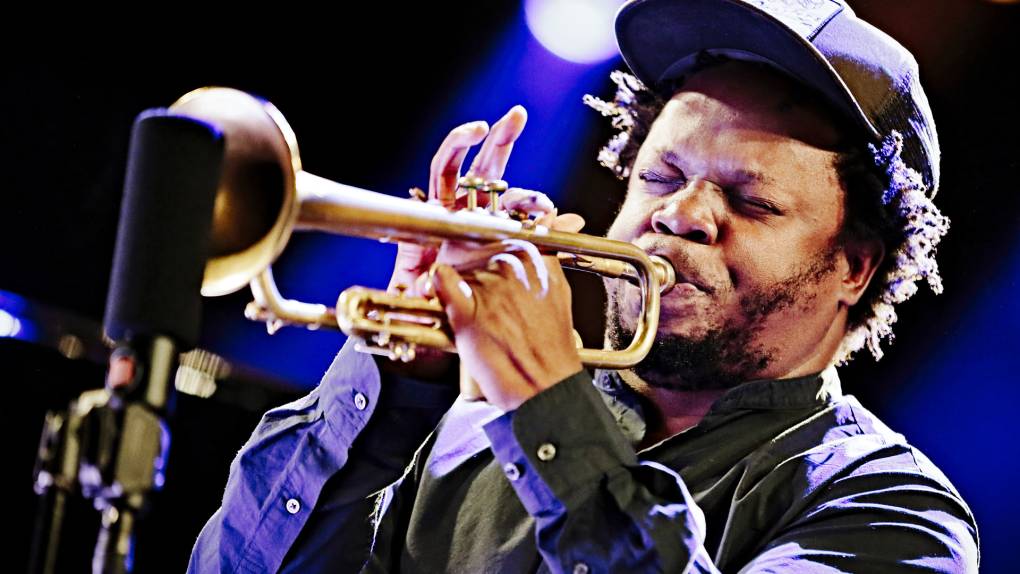
"caption": "Ambrose Akinmusire pictured in 2019. Akinmusire, who received his second Grammy nomination in November, will be skipping the award show in favor of his own residency at SFJAZZ, Feb. 3–5 and Feb. 9 at Grace Cathedral in San Francisco.",
"description": null,
"title": "GettyImages-1169733361",
"credit": "Peter Van Breukelen/Redferns/Getty Images",
"status": "inherit",
"altTag": "Black man in baseball cap plays trumpet with eyes closed",
"isLoading": false,
"fetchFailed": false
},
"arts_13923021": {
"type": "attachments",
"id": "arts_13923021",
"meta": {
"index": "attachments_1716263798",
"site": "arts",
"id": "13923021",
"found": true
},
"parent": 13923005,
"imgSizes": {
"twentyfourteen-full-width": {
"file": "https://ww2.kqed.org/app/uploads/sites/2/2022/12/osechi_chikuzenni-1038x576.jpg",
"width": 1038,
"mimeType": "image/jpeg",
"height": 576
},
"thumbnail": {
"file": "https://ww2.kqed.org/app/uploads/sites/2/2022/12/osechi_chikuzenni-160x110.jpg",
"width": 160,
"mimeType": "image/jpeg",
"height": 110
},
"post-thumbnail": {
"file": "https://ww2.kqed.org/app/uploads/sites/2/2022/12/osechi_chikuzenni-672x372.jpg",
"width": 672,
"mimeType": "image/jpeg",
"height": 372
},
"kqedFullSize": {
"file": "https://ww2.kqed.org/app/uploads/sites/2/2022/12/osechi_chikuzenni.jpg",
"width": 1920,
"height": 1318
},
"large": {
"file": "https://ww2.kqed.org/app/uploads/sites/2/2022/12/osechi_chikuzenni-1020x700.jpg",
"width": 1020,
"mimeType": "image/jpeg",
"height": 700
},
"1536x1536": {
"file": "https://ww2.kqed.org/app/uploads/sites/2/2022/12/osechi_chikuzenni-1536x1054.jpg",
"width": 1536,
"mimeType": "image/jpeg",
"height": 1054
},
"medium": {
"file": "https://ww2.kqed.org/app/uploads/sites/2/2022/12/osechi_chikuzenni-800x549.jpg",
"width": 800,
"mimeType": "image/jpeg",
"height": 549
},
"medium_large": {
"file": "https://ww2.kqed.org/app/uploads/sites/2/2022/12/osechi_chikuzenni-768x527.jpg",
"width": 768,
"mimeType": "image/jpeg",
"height": 527
}
},
"publishDate": 1671562485,
"modified": 1671562731,
"caption": "Chikuzenni, or simmered chicken with root vegetables, is one of the traditional dishes that chef Yuji Ishikata will be featuring in his Japanese New Year's pop-up.",
"description": null,
"title": "osechi_chikuzenni",
"credit": "Courtesy of J-Sei",
"status": "inherit",
"altTag": "Overhead view of wooden Japanese New Year's boxes filled with simmered chicken and root vegetables.",
"isLoading": false,
"fetchFailed": false
},
"arts_13921572": {
"type": "attachments",
"id": "arts_13921572",
"meta": {
"index": "attachments_1716263798",
"site": "arts",
"id": "13921572",
"found": true
},
"parent": 13921567,
"imgSizes": {
"twentyfourteen-full-width": {
"file": "https://ww2.kqed.org/app/uploads/sites/2/2022/11/GreatComet_Ensemble_Credit_BenjaminKrantz-1038x576.jpg",
"width": 1038,
"mimeType": "image/jpeg",
"height": 576
},
"thumbnail": {
"file": "https://ww2.kqed.org/app/uploads/sites/2/2022/11/GreatComet_Ensemble_Credit_BenjaminKrantz-160x107.jpg",
"width": 160,
"mimeType": "image/jpeg",
"height": 107
},
"post-thumbnail": {
"file": "https://ww2.kqed.org/app/uploads/sites/2/2022/11/GreatComet_Ensemble_Credit_BenjaminKrantz-672x372.jpg",
"width": 672,
"mimeType": "image/jpeg",
"height": 372
},
"kqedFullSize": {
"file": "https://ww2.kqed.org/app/uploads/sites/2/2022/11/GreatComet_Ensemble_Credit_BenjaminKrantz.jpg",
"width": 2000,
"height": 1333
},
"large": {
"file": "https://ww2.kqed.org/app/uploads/sites/2/2022/11/GreatComet_Ensemble_Credit_BenjaminKrantz-1020x680.jpg",
"width": 1020,
"mimeType": "image/jpeg",
"height": 680
},
"1536x1536": {
"file": "https://ww2.kqed.org/app/uploads/sites/2/2022/11/GreatComet_Ensemble_Credit_BenjaminKrantz-1536x1024.jpg",
"width": 1536,
"mimeType": "image/jpeg",
"height": 1024
},
"full-width": {
"file": "https://ww2.kqed.org/app/uploads/sites/2/2022/11/GreatComet_Ensemble_Credit_BenjaminKrantz-1920x1280.jpg",
"width": 1920,
"mimeType": "image/jpeg",
"height": 1280
},
"medium": {
"file": "https://ww2.kqed.org/app/uploads/sites/2/2022/11/GreatComet_Ensemble_Credit_BenjaminKrantz-800x533.jpg",
"width": 800,
"mimeType": "image/jpeg",
"height": 533
},
"medium_large": {
"file": "https://ww2.kqed.org/app/uploads/sites/2/2022/11/GreatComet_Ensemble_Credit_BenjaminKrantz-768x512.jpg",
"width": 768,
"mimeType": "image/jpeg",
"height": 512
}
},
"publishDate": 1668448859,
"modified": 1668448993,
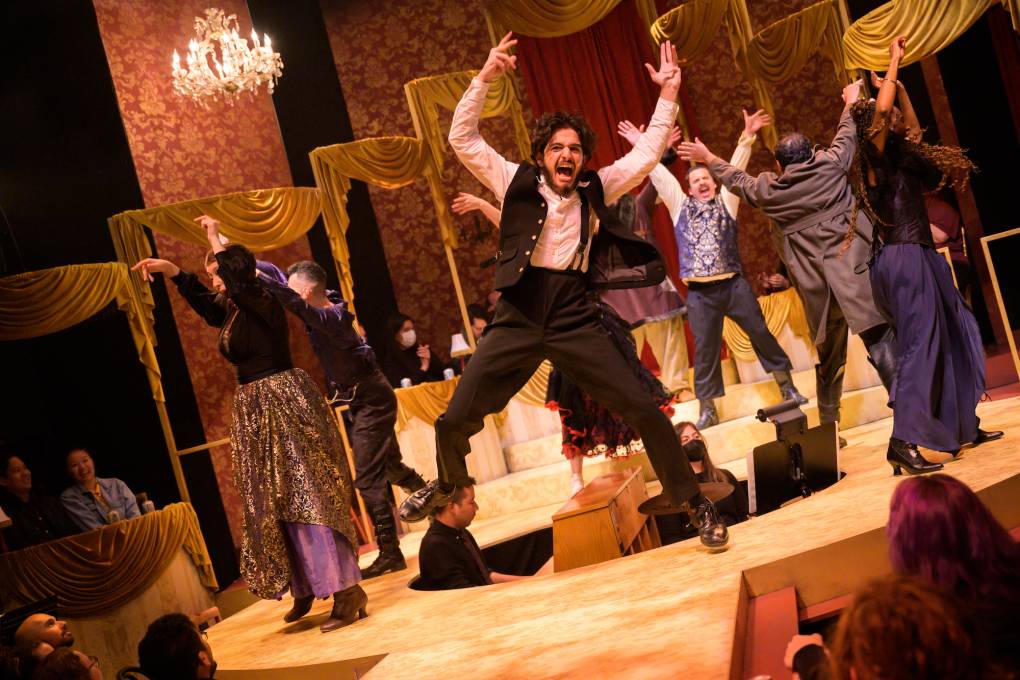
"caption": "Shotgun Players ensemble cast for Natasha, Pierre & the Great Comet of 1812, by Dave Malloy",
"description": "Shotgun Players ensemble cast for the Great Comet of 1812 dancing onstage and leaping into the air with arms raised in stage jubilation.",
"title": "GreatComet_Ensemble_Credit_BenjaminKrantz",
"credit": "Benjamin Krantz",
"status": "inherit",
"altTag": "Shotgun Players ensemble cast for the Great Comet of 1812 dancing onstage and leaping into the air with arms raised in stage jubilation",
"isLoading": false,
"fetchFailed": false
},
"arts_13921335": {
"type": "attachments",
"id": "arts_13921335",
"meta": {
"index": "attachments_1716263798",
"site": "arts",
"id": "13921335",
"found": true
},
"parent": 13921333,
"imgSizes": {
"twentyfourteen-full-width": {
"file": "https://ww2.kqed.org/app/uploads/sites/2/2022/11/colonialism-is-terrible-rehearsal-1038x576.jpg",
"width": 1038,
"mimeType": "image/jpeg",
"height": 576
},
"thumbnail": {
"file": "https://ww2.kqed.org/app/uploads/sites/2/2022/11/colonialism-is-terrible-rehearsal-160x90.jpg",
"width": 160,
"mimeType": "image/jpeg",
"height": 90
},
"post-thumbnail": {
"file": "https://ww2.kqed.org/app/uploads/sites/2/2022/11/colonialism-is-terrible-rehearsal-672x372.jpg",
"width": 672,
"mimeType": "image/jpeg",
"height": 372
},
"kqedFullSize": {
"file": "https://ww2.kqed.org/app/uploads/sites/2/2022/11/colonialism-is-terrible-rehearsal-scaled.jpg",
"width": 2560,
"height": 1440
},
"2048x2048": {
"file": "https://ww2.kqed.org/app/uploads/sites/2/2022/11/colonialism-is-terrible-rehearsal-2048x1152.jpg",
"width": 2048,
"mimeType": "image/jpeg",
"height": 1152
},
"large": {
"file": "https://ww2.kqed.org/app/uploads/sites/2/2022/11/colonialism-is-terrible-rehearsal-1020x574.jpg",
"width": 1020,
"mimeType": "image/jpeg",
"height": 574
},
"1536x1536": {
"file": "https://ww2.kqed.org/app/uploads/sites/2/2022/11/colonialism-is-terrible-rehearsal-1536x864.jpg",
"width": 1536,
"mimeType": "image/jpeg",
"height": 864
},
"full-width": {
"file": "https://ww2.kqed.org/app/uploads/sites/2/2022/11/colonialism-is-terrible-rehearsal-1920x1080.jpg",
"width": 1920,
"mimeType": "image/jpeg",
"height": 1080
},
"medium": {
"file": "https://ww2.kqed.org/app/uploads/sites/2/2022/11/colonialism-is-terrible-rehearsal-800x450.jpg",
"width": 800,
"mimeType": "image/jpeg",
"height": 450
},
"medium_large": {
"file": "https://ww2.kqed.org/app/uploads/sites/2/2022/11/colonialism-is-terrible-rehearsal-768x432.jpg",
"width": 768,
"mimeType": "image/jpeg",
"height": 432
}
},
"publishDate": 1667588349,
"modified": 1667588566,
"caption": "Actors Nicole Tung, Elissa Beth Stebbins and Anthony Doan rehearse a scene in Dustin Chinn's new play, 'Colonialism Is Terrible, But Pho Is Delicious,' at the Aurora Theatre in Berkeley.",
"description": null,
"title": "colonialism is terrible - rehearsal",
"credit": "Courtesy of Dustin Chinn",
"status": "inherit",
"altTag": "Three actors in 19th century colonial costumes rehearse a scene in a play.",
"isLoading": false,
"fetchFailed": false
},
"arts_13921224": {
"type": "attachments",
"id": "arts_13921224",
"meta": {
"index": "attachments_1716263798",
"site": "arts",
"id": "13921224",
"found": true
},
"parent": 13921216,
"imgSizes": {
"twentyfourteen-full-width": {
"file": "https://ww2.kqed.org/app/uploads/sites/2/2022/11/hal-with-alan-crop-1038x576.jpg",
"width": 1038,
"mimeType": "image/jpeg",
"height": 576
},
"thumbnail": {
"file": "https://ww2.kqed.org/app/uploads/sites/2/2022/11/hal-with-alan-crop-160x90.jpg",
"width": 160,
"mimeType": "image/jpeg",
"height": 90
},
"post-thumbnail": {
"file": "https://ww2.kqed.org/app/uploads/sites/2/2022/11/hal-with-alan-crop-672x372.jpg",
"width": 672,
"mimeType": "image/jpeg",
"height": 372
},
"kqedFullSize": {
"file": "https://ww2.kqed.org/app/uploads/sites/2/2022/11/hal-with-alan-crop.jpg",
"width": 1920,
"height": 1080
},
"large": {
"file": "https://ww2.kqed.org/app/uploads/sites/2/2022/11/hal-with-alan-crop-1020x574.jpg",
"width": 1020,
"mimeType": "image/jpeg",
"height": 574
},
"1536x1536": {
"file": "https://ww2.kqed.org/app/uploads/sites/2/2022/11/hal-with-alan-crop-1536x864.jpg",
"width": 1536,
"mimeType": "image/jpeg",
"height": 864
},
"medium": {
"file": "https://ww2.kqed.org/app/uploads/sites/2/2022/11/hal-with-alan-crop-800x450.jpg",
"width": 800,
"mimeType": "image/jpeg",
"height": 450
},
"medium_large": {
"file": "https://ww2.kqed.org/app/uploads/sites/2/2022/11/hal-with-alan-crop-768x432.jpg",
"width": 768,
"mimeType": "image/jpeg",
"height": 432
}
},
"publishDate": 1667422760,
"modified": 1667500868,
"caption": "KQED writer Alan Chazaro (left), stands with Hal Gordon (left center) and friends in 2021.",
"description": null,
"title": "hal with alan-crop",
"credit": "Kumar Butlar",
"status": "inherit",
"altTag": "A's fans standing with hot dog vendor, Hal Gordon, at the Oakland Coliseum",
"isLoading": false,
"fetchFailed": false
},
"arts_13920374": {
"type": "attachments",
"id": "arts_13920374",
"meta": {
"index": "attachments_1716263798",
"site": "arts",
"id": "13920374",
"found": true
},
"parent": 13920367,
"imgSizes": {
"twentyfourteen-full-width": {
"file": "https://ww2.kqed.org/app/uploads/sites/2/2022/10/IMG_4086-1038x576.jpeg",
"width": 1038,
"mimeType": "image/jpeg",
"height": 576
},
"thumbnail": {
"file": "https://ww2.kqed.org/app/uploads/sites/2/2022/10/IMG_4086-160x105.jpeg",
"width": 160,
"mimeType": "image/jpeg",
"height": 105
},
"post-thumbnail": {
"file": "https://ww2.kqed.org/app/uploads/sites/2/2022/10/IMG_4086-672x372.jpeg",
"width": 672,
"mimeType": "image/jpeg",
"height": 372
},
"kqedFullSize": {
"file": "https://ww2.kqed.org/app/uploads/sites/2/2022/10/IMG_4086.jpeg",
"width": 2048,
"height": 1341
},
"large": {
"file": "https://ww2.kqed.org/app/uploads/sites/2/2022/10/IMG_4086-1020x668.jpeg",
"width": 1020,
"mimeType": "image/jpeg",
"height": 668
},
"1536x1536": {
"file": "https://ww2.kqed.org/app/uploads/sites/2/2022/10/IMG_4086-1536x1006.jpeg",
"width": 1536,
"mimeType": "image/jpeg",
"height": 1006
},
"full-width": {
"file": "https://ww2.kqed.org/app/uploads/sites/2/2022/10/IMG_4086-1920x1257.jpeg",
"width": 1920,
"mimeType": "image/jpeg",
"height": 1257
},
"medium": {
"file": "https://ww2.kqed.org/app/uploads/sites/2/2022/10/IMG_4086-800x524.jpeg",
"width": 800,
"mimeType": "image/jpeg",
"height": 524
},
"medium_large": {
"file": "https://ww2.kqed.org/app/uploads/sites/2/2022/10/IMG_4086-768x503.jpeg",
"width": 768,
"mimeType": "image/jpeg",
"height": 503
}
},
"publishDate": 1665703909,
"modified": 1665704100,
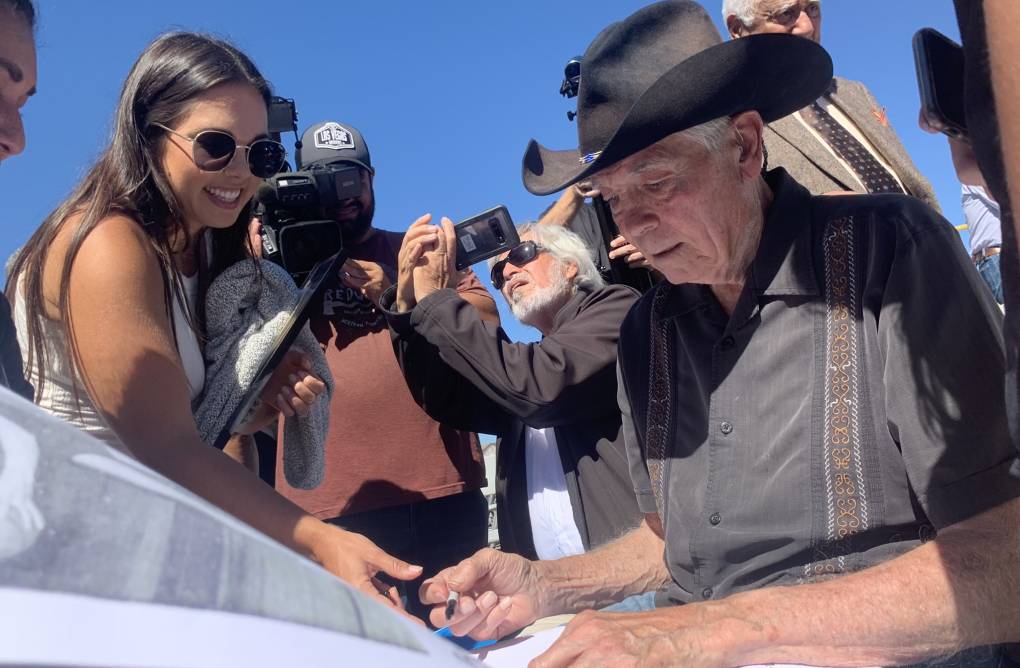
"caption": "Joe Kapp signs autographs during a ceremony at El Sausal Middle School in East Salinas.",
"description": null,
"title": "IMG_4086",
"credit": "Nick Lozito",
"status": "inherit",
"altTag": "an older man in a black cowboy hat signs autographs for a crowd while photographers snap photos",
"isLoading": false,
"fetchFailed": false
}
},
"audioPlayerReducer": {
"postId": "stream_live",
"isPaused": true,
"isPlaying": false,
"pfsActive": false,
"pledgeModalIsOpen": true,
"playerDrawerIsOpen": false,
"liveAudioPlayStartedAt": 0,
"liveAudioPlayContext": ""
},
"authorsReducer": {
"byline_arts_13920367": {
"type": "authors",
"id": "byline_arts_13920367",
"meta": {
"override": true
},
"slug": "byline_arts_13920367",
"name": "Nick Lozito",
"isLoading": false
},
"ralexandra": {
"type": "authors",
"id": "11242",
"meta": {
"index": "authors_1716337520",
"id": "11242",
"found": true
},
"name": "Rae Alexandra",
"firstName": "Rae",
"lastName": "Alexandra",
"slug": "ralexandra",
"email": "ralexandra@kqed.org",
"display_author_email": true,
"staff_mastheads": [],
"title": "Reporter/Producer",
"bio": "Rae Alexandra is a Reporter/Producer for KQED Arts & Culture, and the creator/author of the \u003ca href=\"https://www.kqed.org/arts/program/rebel-girls-from-bay-area-history\">Rebel Girls From Bay Area History\u003c/a> and \u003ca href=\"https://www.kqed.org/bizarrebayarea\">Bizarre Bay Area\u003c/a> series. Her debut book, \u003ca href=\"https://citylights.com/politics-current-events-history/unsung-heroines35-women-who-changed/\">Unsung Heroines: 35 Women Who Changed the Bay Area\u003c/a> was published by City Lights in March 2026. In 2023, Rae was awarded an SPJ Excellence in Journalism Award for Arts & Culture. Rae was born and raised in Wales and subsequently — even after two decades in Northern California — still uses phrases that regularly baffle her coworkers.",
"avatar": "https://secure.gravatar.com/avatar/edfee8176c80cc0a382b051190f5341997df378a934a5774dcb0977732dfd401?s=600&d=blank&r=g",
"twitter": null,
"bluesky": null,
"facebook": null,
"instagram": null,
"linkedin": null,
"sites": [
{
"site": "arts",
"roles": [
"subscriber"
]
},
{
"site": "news",
"roles": [
"subscriber"
]
},
{
"site": "pop",
"roles": [
"subscriber"
]
},
{
"site": "bayareabites",
"roles": [
"subscriber"
]
},
{
"site": "science",
"roles": [
"subscriber"
]
}
],
"headData": {
"title": "Rae Alexandra | KQED",
"description": "Reporter/Producer",
"ogImgSrc": "https://secure.gravatar.com/avatar/edfee8176c80cc0a382b051190f5341997df378a934a5774dcb0977732dfd401?s=600&d=blank&r=g",
"twImgSrc": "https://secure.gravatar.com/avatar/edfee8176c80cc0a382b051190f5341997df378a934a5774dcb0977732dfd401?s=600&d=blank&r=g"
},
"isLoading": false,
"link": "/author/ralexandra"
},
"aproehl": {
"type": "authors",
"id": "11296",
"meta": {
"index": "authors_1716337520",
"id": "11296",
"found": true
},
"name": "Ariana Proehl",
"firstName": "Ariana",
"lastName": "Proehl",
"slug": "aproehl",
"email": "aproehl@KQED.org",
"display_author_email": true,
"staff_mastheads": [
"news"
],
"title": "Culture Reporter, KQED",
"bio": "Ariana Proehl is a Culture Reporter and Host.",
"avatar": "https://secure.gravatar.com/avatar/c96b24567eb5bb3a4f8bb295ed53e232?s=600&d=blank&r=g",
"twitter": "ArianaProehl",
"facebook": null,
"instagram": null,
"linkedin": null,
"sites": [
{
"site": "arts",
"roles": []
},
{
"site": "news",
"roles": []
},
{
"site": "education",
"roles": []
},
{
"site": "forum",
"roles": []
}
],
"headData": {
"title": "Ariana Proehl | KQED",
"description": "Culture Reporter, KQED",
"ogImgSrc": "https://secure.gravatar.com/avatar/c96b24567eb5bb3a4f8bb295ed53e232?s=600&d=blank&r=g",
"twImgSrc": "https://secure.gravatar.com/avatar/c96b24567eb5bb3a4f8bb295ed53e232?s=600&d=blank&r=g"
},
"isLoading": false,
"link": "/author/aproehl"
},
"ogpenn": {
"type": "authors",
"id": "11491",
"meta": {
"index": "authors_1716337520",
"id": "11491",
"found": true
},
"name": "Pendarvis Harshaw",
"firstName": "Pendarvis",
"lastName": "Harshaw",
"slug": "ogpenn",
"email": "ogpenn@gmail.com",
"display_author_email": false,
"staff_mastheads": [
"arts"
],
"title": "Community Engagement Reporter",
"bio": "Pendarvis Harshaw is an educator, host and writer with KQED Arts.",
"avatar": "https://secure.gravatar.com/avatar/972b77ee8e3f346ae2b00622661187fbfabd059b5693bbdc1475ea7a722fd4cd?s=600&d=blank&r=g",
"twitter": null,
"bluesky": null,
"facebook": null,
"instagram": "ogpenn",
"linkedin": null,
"sites": [
{
"site": "arts",
"roles": [
"administrator"
]
},
{
"site": "news",
"roles": [
"editor"
]
},
{
"site": "bayareabites",
"roles": [
"author"
]
},
{
"site": "hiphop",
"roles": [
"editor"
]
}
],
"headData": {
"title": "Pendarvis Harshaw | KQED",
"description": "Community Engagement Reporter",
"ogImgSrc": "https://secure.gravatar.com/avatar/972b77ee8e3f346ae2b00622661187fbfabd059b5693bbdc1475ea7a722fd4cd?s=600&d=blank&r=g",
"twImgSrc": "https://secure.gravatar.com/avatar/972b77ee8e3f346ae2b00622661187fbfabd059b5693bbdc1475ea7a722fd4cd?s=600&d=blank&r=g"
},
"isLoading": false,
"link": "/author/ogpenn"
},
"ngluckstern": {
"type": "authors",
"id": "11497",
"meta": {
"index": "authors_1716337520",
"id": "11497",
"found": true
},
"name": "Nicole Gluckstern",
"firstName": "Nicole",
"lastName": "Gluckstern",
"slug": "ngluckstern",
"email": "gluckstern.nicole@gmail.com",
"display_author_email": false,
"staff_mastheads": [],
"title": "KQED Contributor",
"bio": null,
"avatar": "https://secure.gravatar.com/avatar/2c3d593194017bfe811a998ad03140909de330b22abebf4889e1a564ce5b3495?s=600&d=blank&r=g",
"twitter": null,
"bluesky": null,
"facebook": null,
"instagram": null,
"linkedin": null,
"sites": [
{
"site": "arts",
"roles": [
"contributor"
]
}
],
"headData": {
"title": "Nicole Gluckstern | KQED",
"description": "KQED Contributor",
"ogImgSrc": "https://secure.gravatar.com/avatar/2c3d593194017bfe811a998ad03140909de330b22abebf4889e1a564ce5b3495?s=600&d=blank&r=g",
"twImgSrc": "https://secure.gravatar.com/avatar/2c3d593194017bfe811a998ad03140909de330b22abebf4889e1a564ce5b3495?s=600&d=blank&r=g"
},
"isLoading": false,
"link": "/author/ngluckstern"
},
"ltsai": {
"type": "authors",
"id": "11743",
"meta": {
"index": "authors_1716337520",
"id": "11743",
"found": true
},
"name": "Luke Tsai",
"firstName": "Luke",
"lastName": "Tsai",
"slug": "ltsai",
"email": "ltsai@kqed.org",
"display_author_email": true,
"staff_mastheads": [
"arts"
],
"title": "Food Editor",
"bio": "Luke Tsai is KQED's food editor and resident stinky tofu connoisseur. Prior to KQED, he was an editor at Eater SF, \u003cem>San Francisco \u003c/em>magazine, and the \u003cem>East Bay Express\u003c/em>, and his work has also appeared in TASTE, the \u003cem>San Francisco Chronicle\u003c/em>, and the \u003cem>Best Food Writing\u003c/em> anthology. When he isn't writing or editing, you'll find him eating most everything he can get his hands on.",
"avatar": "https://secure.gravatar.com/avatar/1e59b45bf191526e7339d6ba46e33a57b2030d25c27660ecc64ea3cb863e34f7?s=600&d=blank&r=g",
"twitter": "theluketsai",
"bluesky": null,
"facebook": null,
"instagram": null,
"linkedin": null,
"sites": [
{
"site": "",
"roles": [
"editor"
]
},
{
"site": "arts",
"roles": [
"administrator"
]
},
{
"site": "news",
"roles": [
"editor",
"contributor"
]
},
{
"site": "bayareabites",
"roles": [
"editor"
]
},
{
"site": "food",
"roles": [
"editor"
]
}
],
"headData": {
"title": "Luke Tsai | KQED",
"description": "Food Editor",
"ogImgSrc": "https://secure.gravatar.com/avatar/1e59b45bf191526e7339d6ba46e33a57b2030d25c27660ecc64ea3cb863e34f7?s=600&d=blank&r=g",
"twImgSrc": "https://secure.gravatar.com/avatar/1e59b45bf191526e7339d6ba46e33a57b2030d25c27660ecc64ea3cb863e34f7?s=600&d=blank&r=g"
},
"isLoading": false,
"link": "/author/ltsai"
},
"achazaro": {
"type": "authors",
"id": "11748",
"meta": {
"index": "authors_1716337520",
"id": "11748",
"found": true
},
"name": "Alan Chazaro",
"firstName": "Alan",
"lastName": "Chazaro",
"slug": "achazaro",
"email": "agchazaro@gmail.com",
"display_author_email": true,
"staff_mastheads": [],
"title": "Food Writer and Reporter",
"bio": "Alan Chazaro is the author of \u003cem>This Is Not a Frank Ocean Cover Album\u003c/em> (Black Lawrence Press, 2019), \u003cem>Piñata Theory\u003c/em> (Black Lawrence Press, 2020), and \u003cem>Notes from the Eastern Span of the Bay Bridge\u003c/em> (Ghost City Press, 2021). He is a graduate of June Jordan’s Poetry for the People program at UC Berkeley and a former Lawrence Ferlinghetti Fellow at the University of San Francisco. He writes about sports, food, art, music, education, and culture while repping the Bay on \u003ca href=\"https://twitter.com/alan_chazaro\">Twitter\u003c/a> and \u003ca href=\"https://www.instagram.com/alan_chazaro/?hl=en\">Instagram\u003c/a> at @alan_chazaro.",
"avatar": "https://secure.gravatar.com/avatar/ea8b6dd970fc5c29e7a188e7d5861df7?s=600&d=blank&r=g",
"twitter": "alan_chazaro",
"facebook": null,
"instagram": null,
"linkedin": null,
"sites": [
{
"site": "arts",
"roles": [
"contributor"
]
},
{
"site": "news",
"roles": [
"editor"
]
}
],
"headData": {
"title": "Alan Chazaro | KQED",
"description": "Food Writer and Reporter",
"ogImgSrc": "https://secure.gravatar.com/avatar/ea8b6dd970fc5c29e7a188e7d5861df7?s=600&d=blank&r=g",
"twImgSrc": "https://secure.gravatar.com/avatar/ea8b6dd970fc5c29e7a188e7d5861df7?s=600&d=blank&r=g"
},
"isLoading": false,
"link": "/author/achazaro"
},
"earnold": {
"type": "authors",
"id": "11839",
"meta": {
"index": "authors_1716337520",
"id": "11839",
"found": true
},
"name": "Eric Arnold",
"firstName": "Eric",
"lastName": "Arnold",
"slug": "earnold",
"email": "earnold@kqed.org",
"display_author_email": false,
"staff_mastheads": [],
"title": "Contributing Editor, 'That's My Word'",
"bio": "Eric Arnold has covered hip-hop locally and nationally for over 30 years. Formerly the managing editor of \u003cem>4080\u003c/em> and columnist for \u003cem>The Source\u003c/em>, he chronicled hyphy’s rise and fall, co-curated the Oakland Museum of California’s first hip-hop exhibit in 2018 and won a 2022 Northern California Emmy Award for a mini-documentary on Oakland’s Boogaloo dance culture. He is a contributing editor for \u003cem>That’s My Word\u003c/em>, KQED's series on the history of Bay Area hip-hop.",
"avatar": "https://secure.gravatar.com/avatar/ede45b04898456ad0893a2811e78b0a2?s=600&d=blank&r=g",
"twitter": null,
"facebook": null,
"instagram": null,
"linkedin": null,
"sites": [
{
"site": "arts",
"roles": [
"contributor"
]
},
{
"site": "news",
"roles": [
"contributor"
]
},
{
"site": "hiphop",
"roles": [
"contributor"
]
}
],
"headData": {
"title": "Eric Arnold | KQED",
"description": "Contributing Editor, 'That's My Word'",
"ogImgSrc": "https://secure.gravatar.com/avatar/ede45b04898456ad0893a2811e78b0a2?s=600&d=blank&r=g",
"twImgSrc": "https://secure.gravatar.com/avatar/ede45b04898456ad0893a2811e78b0a2?s=600&d=blank&r=g"
},
"isLoading": false,
"link": "/author/earnold"
}
},
"pagesReducer": {
"arts_tag_berkeley": {
"type": "terms",
"id": "arts_1270",
"meta": {
"index": "terms_1716263798",
"site": "arts",
"id": "1270",
"score": 6.9273148
},
"featImg": null,
"name": "Berkeley",
"description": null,
"taxonomy": "tag",
"headData": {
"twImgId": null,
"twTitle": null,
"ogTitle": null,
"ogImgId": null,
"twDescription": null,
"description": null,
"title": "Berkeley Archives | KQED Arts",
"ogDescription": null
},
"ttid": 1282,
"slug": "berkeley",
"isLoading": false,
"title": "Berkeley",
"pageMeta": {
"site": "arts",
"WpPageTemplate": "page-topic-editorial",
"currentPage": 10
},
"blocks": [
{
"blockName": "kqed/post-list",
"attrs": {
"layout": "cardArticle2",
"query": "posts/arts?tag=berkeley",
"seeMore": false,
"paginated": true,
"page": 10
}
},
{
"blockName": "kqed/ad"
}
]
}
},
"pfsSessionReducer": {},
"postsReducer": {
"stream_live": {
"type": "live",
"id": "stream_live",
"audioUrl": "https://streams.kqed.org/kqedradio",
"title": "Live Stream",
"excerpt": "Live Stream information currently unavailable.",
"link": "/radio",
"featImg": "",
"label": {
"name": "KQED Live",
"link": "/"
}
},
"stream_kqedNewscast": {
"type": "posts",
"id": "stream_kqedNewscast",
"audioUrl": "https://www.kqed.org/.stream/anon/radio/RDnews/newscast.mp3?_=1",
"title": "KQED Newscast",
"featImg": "",
"label": {
"name": "88.5 FM",
"link": "/"
}
},
"arts_13927219": {
"type": "posts",
"id": "arts_13927219",
"meta": {
"index": "posts_1716263798",
"site": "arts",
"id": "13927219",
"score": null,
"sort": [
1680556714000
]
},
"parent": 0,
"labelTerm": {
"site": "arts"
},
"blocks": [],
"publishDate": 1680556714,
"format": "standard",
"title": "In Berkeley, an Asian American Institution Prepares to Close Its Doors",
"headTitle": "In Berkeley, an Asian American Institution Prepares to Close Its Doors | KQED",
"content": "\u003cp>When I visit \u003ca href=\"https://www.asiabookcenter.com/\">Eastwind Books\u003c/a> on Berkeley’s University Avenue in late March, the store is already starting to look a little bare. \u003ca href=\"https://www.berkeleyside.org/2023/03/21/eastwind-books-berkeley-harvey-beatrice-dong-university-avenue-asian-american\">News\u003c/a> has spread that one of the nation’s first Asian American bookstores is closing after 41 years of business. Discount signs for $5 books hang on the shelves, and sections of the store are being broken down.\u003c/p>\n\u003cp>“We’re all just cleaning shelves. We’re donating a lot of the center ones to other nonprofits,” says Banoo Garcia-Afkhami, an Eastwind Books employee since 2021.\u003c/p>\n\u003cp>“A lot of people have been coming in and they’ve been wanting merch,” Garcia-Afkhami adds. “They’ve been wanting postcards, they’ve been wanting things that remind them, like with our name on it.”\u003c/p>\n\u003cp>Eastwind Books has certainly been a “merch-worthy” fixture in the community — not only as a bookstore, but as an event space, publisher and local landmark for Asian American and ethnic studies. As someone who majored in ethnic studies at UC Berkeley 20 years ago, I still have vivid memories of sourcing school books from the packed, narrow store.\u003c/p>\n\u003cfigure id=\"attachment_13927225\" class=\"wp-caption aligncenter\" style=\"max-width: 800px\">\u003cimg loading=\"lazy\" decoding=\"async\" class=\"size-medium wp-image-13927225\" src=\"https://ww2.kqed.org/app/uploads/sites/2/2023/04/image1-800x600.jpg\" alt=\"The Eastwind Books storefront in Berkeley has big, glass windows with shelves full of books.\" width=\"800\" height=\"600\" srcset=\"https://cdn.kqed.org/wp-content/uploads/sites/2/2023/04/image1-800x600.jpg 800w, https://cdn.kqed.org/wp-content/uploads/sites/2/2023/04/image1-1020x765.jpg 1020w, https://cdn.kqed.org/wp-content/uploads/sites/2/2023/04/image1-160x120.jpg 160w, https://cdn.kqed.org/wp-content/uploads/sites/2/2023/04/image1-768x576.jpg 768w, https://cdn.kqed.org/wp-content/uploads/sites/2/2023/04/image1-1536x1153.jpg 1536w, https://cdn.kqed.org/wp-content/uploads/sites/2/2023/04/image1-1920x1441.jpg 1920w, https://cdn.kqed.org/wp-content/uploads/sites/2/2023/04/image1.jpg 1999w\" sizes=\"(max-width: 800px) 100vw, 800px\">\u003cfigcaption class=\"wp-caption-text\">The storefront of Eastwind Books of Berkeley on University Avenue in Berkeley on March 28. \u003ccite>(Ariana Proehl/KQED)\u003c/cite>\u003c/figcaption>\u003c/figure>\n\u003cp>But Eastwind Books’ lease is up at the end of April, and Harvey Dong, who owns it with his wife Beatrice Dong, says they had to make some tough decisions.\u003c/p>\n\u003cp>[ad fullwidth]\u003c/p>\n\u003cp>“I guess there were a number of factors,” says Dong, who is in his 70s. “One is our age, the other is having to deal with family issues, elderly parents.”\u003c/p>\n\u003cp>Dong also cites gentrification of the neighborhood as a cause, and the costs of rising rent and sales tax.\u003c/p>\n\u003cp>“Because we’ve been at it for 27 years, we felt that it’s time to open a new chapter in our lives,” Dong says.\u003c/p>\n\u003cp>The Dongs bought the bookstore in 1996. At the time, it had already been around for 14 years, and was known for selling Chinese-language books and books on U.S.-China relations. Under their ownership, the Dongs began adding Asian American literature and ethnic studies books to the shelves.\u003c/p>\n\u003cp>“In order for a bookstore to survive, it has to be something along the lines of a community center that takes in customer suggestions, and that helps give voice to the community,” Dong says. [aside postid='arts_13926503']\u003c/p>\n\u003cp>To that end, the Dongs pulled inspiration from Beatrice’s newly completed degree in ethnic studies, and their joint experiences as longtime activists who’d worked with numerous civil rights coalitions. They had been members of the Asian American Political Alliance at UC Berkeley, and participated in the \u003ca href=\"https://crg.berkeley.edu/third-world-liberation-front-research-initiative-twlf\">Third World Liberation Front\u003c/a> protests that resulted in the establishment of an ethnic studies department at UC Berkeley in 1969.\u003c/p>\n\u003cp>In the late 1970s, they fought to save low-income senior housing at San Francisco’s \u003ca href=\"https://www.ihotel-sf.org/\">International Hotel\u003c/a>. As part of those efforts, Harvey Dong got his first taste of bookselling, co-founding the country’s first Asian American bookstore, Everybody’s Bookstore, in the International Hotel building.\u003c/p>\n\u003cp>Taking over Eastwind Books and expanding its scope was a fitting endeavor for them. “We began very small scale,” Dong says. “But over time, we networked, we met authors. We made a lot of friends and contacts in the community. And from that, the Eastwind Books of Berkeley became very well connected in the Bay Area.”\u003c/p>\n\u003cp>Brian Ang, a poet who has worked at Eastwind Books for over a decade, says the store has consistently attracted great people, “both in the staff and community members. The spirit will live on for everyone it was important for.” [aside postid='arts_13923036']\u003c/p>\n\u003cp>Dong notes that a number of Eastwind Books employees over the years have gone on to be writers and educators themselves — another part of the store’s legacy that will endure.\u003c/p>\n\u003cp>As news of the closure has spread, the Dongs have seen a lot of old friends come out of the woodwork. “I haven’t been able to come here everyday, but I do see handwritten notes of appreciation for having been here, for having this location and for being able to know them,” Dong says. “I thought those were inspiring.”\u003c/p>\n\u003cp>While the physical bookstore is officially closing, Dong plans to keep building community with books, including online sales. One project already in the pipeline: working with retired UC Berkeley ethnic studies professor Carlos Muñoz, Jr. to publish his autobiography.\u003c/p>\n\u003cp>“We do want to continue our work through events, publishing and supporting authors,” Dong says.\u003c/p>\n\u003cp>\u003cimg loading=\"lazy\" decoding=\"async\" class=\"aligncenter size-medium wp-image-12127869\" src=\"https://ww2.kqed.org/app/uploads/sites/2/2016/09/Q.Logo_.Break_-800x78.jpg\" alt=\"\" width=\"800\" height=\"78\" srcset=\"https://cdn.kqed.org/wp-content/uploads/sites/2/2016/09/Q.Logo_.Break_.jpg 800w, https://cdn.kqed.org/wp-content/uploads/sites/2/2016/09/Q.Logo_.Break_-400x39.jpg 400w, https://cdn.kqed.org/wp-content/uploads/sites/2/2016/09/Q.Logo_.Break_-768x75.jpg 768w\" sizes=\"(max-width: 800px) 100vw, 800px\">\u003c/p>\n\u003cp>\u003c/p>\n\u003cp>\u003cem>Events are currently being organized to bid farewell to Eastwind Books, including a sendoff at UC Berkeley’s Multicultural Community Center on April 27. In the meantime, \u003ca href=\"https://www.asiabookcenter.com/\">Eastwind Books can be found online\u003c/a>.\u003c/em>\u003c/p>\n\n",
"stats": {
"hasVideo": false,
"hasChartOrMap": false,
"hasAudio": false,
"hasPolis": false,
"wordCount": 838,
"hasGoogleForm": false,
"hasGallery": false,
"hasHearkenModule": false,
"iframeSrcs": [],
"paragraphCount": 22
},
"modified": 1705005671,
"excerpt": "For 27 years, Harvey and Beatrice Dong have nurtured a tight-knit community at Eastwind Books.",
"headData": {
"twImgId": "",
"twTitle": "In Berkeley, an Asian American Institution Prepares to Close Its Doors",
"socialTitle": "Eastwind Books of Berkeley Will Close at the End of April %%page%% %%sep%% KQED",
"ogTitle": "In Berkeley, an Asian American Institution Prepares to Close Its Doors",
"ogImgId": "",
"twDescription": "",
"description": "For 27 years, Harvey and Beatrice Dong have nurtured a tight-knit community at Eastwind Books.",
"title": "Eastwind Books of Berkeley Will Close at the End of April | KQED",
"ogDescription": "",
"schema": {
"@context": "https://schema.org",
"@type": "Article",
"headline": "In Berkeley, an Asian American Institution Prepares to Close Its Doors",
"datePublished": "2023-04-03T14:18:34-07:00",
"dateModified": "2024-01-11T12:41:11-08:00",
"image": "https://cdn.kqed.org/wp-content/uploads/2020/02/KQED-OG-Image@1x.png"
}
},
"guestAuthors": [],
"slug": "eastwind-books-berkeley-closing-asian-american-activism-history",
"status": "publish",
"templateType": "standard",
"audioUrl": "https://traffic.omny.fm/d/clips/0af137ef-751e-4b19-a055-aaef00d2d578/ffca7e9f-6831-4[…]f-aaef00f5a073/e6422aa7-0cfa-43c9-bcd3-afdd013459dc/audio.mp3",
"excludeFromSiteSearch": "Include",
"featuredImageType": "standard",
"sticky": false,
"articleAge": "0",
"path": "/arts/13927219/eastwind-books-berkeley-closing-asian-american-activism-history",
"audioTrackLength": null,
"parsedContent": [
{
"type": "contentString",
"content": "\u003cdiv class=\"post-body\">\u003cp>\u003cp>When I visit \u003ca href=\"https://www.asiabookcenter.com/\">Eastwind Books\u003c/a> on Berkeley’s University Avenue in late March, the store is already starting to look a little bare. \u003ca href=\"https://www.berkeleyside.org/2023/03/21/eastwind-books-berkeley-harvey-beatrice-dong-university-avenue-asian-american\">News\u003c/a> has spread that one of the nation’s first Asian American bookstores is closing after 41 years of business. Discount signs for $5 books hang on the shelves, and sections of the store are being broken down.\u003c/p>\n\u003cp>“We’re all just cleaning shelves. We’re donating a lot of the center ones to other nonprofits,” says Banoo Garcia-Afkhami, an Eastwind Books employee since 2021.\u003c/p>\n\u003cp>“A lot of people have been coming in and they’ve been wanting merch,” Garcia-Afkhami adds. “They’ve been wanting postcards, they’ve been wanting things that remind them, like with our name on it.”\u003c/p>\n\u003cp>Eastwind Books has certainly been a “merch-worthy” fixture in the community — not only as a bookstore, but as an event space, publisher and local landmark for Asian American and ethnic studies. As someone who majored in ethnic studies at UC Berkeley 20 years ago, I still have vivid memories of sourcing school books from the packed, narrow store.\u003c/p>\n\u003cfigure id=\"attachment_13927225\" class=\"wp-caption aligncenter\" style=\"max-width: 800px\">\u003cimg loading=\"lazy\" decoding=\"async\" class=\"size-medium wp-image-13927225\" src=\"https://ww2.kqed.org/app/uploads/sites/2/2023/04/image1-800x600.jpg\" alt=\"The Eastwind Books storefront in Berkeley has big, glass windows with shelves full of books.\" width=\"800\" height=\"600\" srcset=\"https://cdn.kqed.org/wp-content/uploads/sites/2/2023/04/image1-800x600.jpg 800w, https://cdn.kqed.org/wp-content/uploads/sites/2/2023/04/image1-1020x765.jpg 1020w, https://cdn.kqed.org/wp-content/uploads/sites/2/2023/04/image1-160x120.jpg 160w, https://cdn.kqed.org/wp-content/uploads/sites/2/2023/04/image1-768x576.jpg 768w, https://cdn.kqed.org/wp-content/uploads/sites/2/2023/04/image1-1536x1153.jpg 1536w, https://cdn.kqed.org/wp-content/uploads/sites/2/2023/04/image1-1920x1441.jpg 1920w, https://cdn.kqed.org/wp-content/uploads/sites/2/2023/04/image1.jpg 1999w\" sizes=\"(max-width: 800px) 100vw, 800px\">\u003cfigcaption class=\"wp-caption-text\">The storefront of Eastwind Books of Berkeley on University Avenue in Berkeley on March 28. \u003ccite>(Ariana Proehl/KQED)\u003c/cite>\u003c/figcaption>\u003c/figure>\n\u003cp>But Eastwind Books’ lease is up at the end of April, and Harvey Dong, who owns it with his wife Beatrice Dong, says they had to make some tough decisions.\u003c/p>\n\u003cp>\u003c/p>\u003c/div>",
"attributes": {
"named": {},
"numeric": []
}
},
{
"type": "component",
"content": "",
"name": "ad",
"attributes": {
"named": {
"label": "fullwidth"
},
"numeric": [
"fullwidth"
]
}
},
{
"type": "contentString",
"content": "\u003cdiv class=\"post-body\">\u003cp>\u003c/p>\n\u003cp>“I guess there were a number of factors,” says Dong, who is in his 70s. “One is our age, the other is having to deal with family issues, elderly parents.”\u003c/p>\n\u003cp>Dong also cites gentrification of the neighborhood as a cause, and the costs of rising rent and sales tax.\u003c/p>\n\u003cp>“Because we’ve been at it for 27 years, we felt that it’s time to open a new chapter in our lives,” Dong says.\u003c/p>\n\u003cp>The Dongs bought the bookstore in 1996. At the time, it had already been around for 14 years, and was known for selling Chinese-language books and books on U.S.-China relations. Under their ownership, the Dongs began adding Asian American literature and ethnic studies books to the shelves.\u003c/p>\n\u003cp>“In order for a bookstore to survive, it has to be something along the lines of a community center that takes in customer suggestions, and that helps give voice to the community,” Dong says. \u003c/p>\u003c/div>",
"attributes": {
"named": {},
"numeric": []
}
},
{
"type": "component",
"content": "",
"name": "aside",
"attributes": {
"named": {
"postid": "arts_13926503",
"label": ""
},
"numeric": []
}
},
{
"type": "contentString",
"content": "\u003cdiv class=\"post-body\">\u003cp>\u003c/p>\n\u003cp>To that end, the Dongs pulled inspiration from Beatrice’s newly completed degree in ethnic studies, and their joint experiences as longtime activists who’d worked with numerous civil rights coalitions. They had been members of the Asian American Political Alliance at UC Berkeley, and participated in the \u003ca href=\"https://crg.berkeley.edu/third-world-liberation-front-research-initiative-twlf\">Third World Liberation Front\u003c/a> protests that resulted in the establishment of an ethnic studies department at UC Berkeley in 1969.\u003c/p>\n\u003cp>In the late 1970s, they fought to save low-income senior housing at San Francisco’s \u003ca href=\"https://www.ihotel-sf.org/\">International Hotel\u003c/a>. As part of those efforts, Harvey Dong got his first taste of bookselling, co-founding the country’s first Asian American bookstore, Everybody’s Bookstore, in the International Hotel building.\u003c/p>\n\u003cp>Taking over Eastwind Books and expanding its scope was a fitting endeavor for them. “We began very small scale,” Dong says. “But over time, we networked, we met authors. We made a lot of friends and contacts in the community. And from that, the Eastwind Books of Berkeley became very well connected in the Bay Area.”\u003c/p>\n\u003cp>Brian Ang, a poet who has worked at Eastwind Books for over a decade, says the store has consistently attracted great people, “both in the staff and community members. The spirit will live on for everyone it was important for.” \u003c/p>\u003c/div>",
"attributes": {
"named": {},
"numeric": []
}
},
{
"type": "component",
"content": "",
"name": "aside",
"attributes": {
"named": {
"postid": "arts_13923036",
"label": ""
},
"numeric": []
}
},
{
"type": "contentString",
"content": "\u003cdiv class=\"post-body\">\u003cp>\u003c/p>\n\u003cp>Dong notes that a number of Eastwind Books employees over the years have gone on to be writers and educators themselves — another part of the store’s legacy that will endure.\u003c/p>\n\u003cp>As news of the closure has spread, the Dongs have seen a lot of old friends come out of the woodwork. “I haven’t been able to come here everyday, but I do see handwritten notes of appreciation for having been here, for having this location and for being able to know them,” Dong says. “I thought those were inspiring.”\u003c/p>\n\u003cp>While the physical bookstore is officially closing, Dong plans to keep building community with books, including online sales. One project already in the pipeline: working with retired UC Berkeley ethnic studies professor Carlos Muñoz, Jr. to publish his autobiography.\u003c/p>\n\u003cp>“We do want to continue our work through events, publishing and supporting authors,” Dong says.\u003c/p>\n\u003cp>\u003cimg loading=\"lazy\" decoding=\"async\" class=\"aligncenter size-medium wp-image-12127869\" src=\"https://ww2.kqed.org/app/uploads/sites/2/2016/09/Q.Logo_.Break_-800x78.jpg\" alt=\"\" width=\"800\" height=\"78\" srcset=\"https://cdn.kqed.org/wp-content/uploads/sites/2/2016/09/Q.Logo_.Break_.jpg 800w, https://cdn.kqed.org/wp-content/uploads/sites/2/2016/09/Q.Logo_.Break_-400x39.jpg 400w, https://cdn.kqed.org/wp-content/uploads/sites/2/2016/09/Q.Logo_.Break_-768x75.jpg 768w\" sizes=\"(max-width: 800px) 100vw, 800px\">\u003c/p>\n\u003cp>\u003c/p>\n\u003cp>\u003cem>Events are currently being organized to bid farewell to Eastwind Books, including a sendoff at UC Berkeley’s Multicultural Community Center on April 27. In the meantime, \u003ca href=\"https://www.asiabookcenter.com/\">Eastwind Books can be found online\u003c/a>.\u003c/em>\u003c/p>\n\n\u003c/div>\u003c/p>",
"attributes": {
"named": {},
"numeric": []
}
}
],
"link": "/arts/13927219/eastwind-books-berkeley-closing-asian-american-activism-history",
"authors": [
"11296"
],
"categories": [
"arts_1",
"arts_73"
],
"tags": [
"arts_4672",
"arts_1270",
"arts_928",
"arts_10342",
"arts_10278"
],
"featImg": "arts_13927224",
"label": "arts"
},
"arts_13926548": {
"type": "posts",
"id": "arts_13926548",
"meta": {
"index": "posts_1716263798",
"site": "arts",
"id": "13926548",
"score": null,
"sort": [
1680298052000
]
},
"guestAuthors": [],
"slug": "mary-ann-pollar-presents-rainbow-sign-berkeley-nina-simone-bob-dylan",
"title": "The Concert Promoter Who Founded Berkeley’s Legendary Rainbow Sign",
"publishDate": 1680298052,
"format": "standard",
"headTitle": "The Concert Promoter Who Founded Berkeley’s Legendary Rainbow Sign | KQED",
"labelTerm": {},
"content": "\u003cp>[dropcap]O[/dropcap]ne afternoon in 1972, Nina Simone was getting ready to appear at Rainbow Sign, a Black cultural center that had recently opened in Berkeley. Situated at 2640 Grove St (today’s Martin Luther King Jr. Way), the venue had been set up by local concert promoter Mary Ann Pollar the year prior. After Simone and Pollar had finished eating lunch, they were on the way out of the building when they encountered two young girls in the hall, approximately 10 and 12 years old. They immediately caught Simone’s eye.\u003c/p>\n\u003cp>[aside postid='news_11901099']“Aren’t you supposed to be in school now?” Simone asked.\u003c/p>\n\u003cp>“Oh, I don’t have to go to school,” the older child said. “I’m going to be a singer like you.”\u003c/p>\n\u003cp>Simone immediately went into mentor mode. “Out of the next 100 people who walk in here, perhaps 90 can sing as well as I do,” Simone told the girl. “Do you really want to know how to become a singer?”\u003c/p>\n\u003cp>Simone took both girls aside and talked to them for 45 minutes about the importance of education, commitment and working hard towards their goals. Simone made clear that raw talent alone was not enough to make it in the world. It was a stunning — and probably life-changing — interaction for the girls, who had shown up just hoping to catch a glimpse of their hero. A couple of years later, Mary Ann Pollar relayed the story to local journalist Sandra Greenlow.\u003c/p>\n\u003cp>[ad fullwidth]\u003c/p>\n\u003cp>“In one way,” she said, “we probably scared those children half to death. In another though, [Simone] gave them a priceless lesson.”\u003c/p>\n\u003cp>https://twitter.com/NinaSimoneMusic/status/1509542736495529991\u003c/p>\n\u003cp>For the six years it was open, Rainbow Sign was a hotspot for the kind of exchanges that Simone and those Berkeley children had that day. It was a venue that entertained audiences with some of the greatest Black artists of the time — Curtis Mayfield, Marvin Gaye, Pharoah Sanders, Oscar Brown Jr. and Simone amongst them. Writers like Maya Angelou, James Baldwin, Alex Haley, Alice Walker and Joyce Carol Thomas gave readings there. Historians like Samella Lewis and Mrs. W. E. B. DuBois gave talks. Legendary dancer Josephine Baker even appeared in the 200-seat hall.\u003c/p>\n\u003cp>[aside postid='arts_13874853']At the time, Mary Ann tried to explain what made her intimate venue so appealing to such major artists. “It’s an energy,” she said. “It floats in the air. In other places people overhear the performers. In this room, they listen. I don’t know what explains it, but here it’s more than just someone standing on a stage.”\u003c/p>\n\u003cp>Rainbow Sign was much more than a music hall too. It hosted weddings, tea parties, art shows and children’s events. It was the venue at which Shirley Chisholm announced her presidential run. It was a restaurant that served up Mary Ann’s spectacular cooking — smothered steak, fried chicken and dessert pies were all raved-about favorites. The banquet hall hosted the League of Women voters, the NAACP and the Urban League. Rainbow Sign was a place where employees recently released from San Quentin could rub shoulders with Berkeley’s first Black mayor, Warren Widener. Rainbow Sign also served as a movie theater, a venue for film and writing workshops and a floor for dance classes.\u003c/p>\n\u003cp>Mary Ann’s daughter Odette Pollar tells KQED Arts today: “I remember the feeling of Rainbow Sign. It was like walking into somebody’s home. It was very friendly and warm and welcoming. It was a big place but it was always bustling — always something going on. It was fun. Everybody was very accessible.”\u003c/p>\n\u003cfigure id=\"attachment_13927307\" class=\"wp-caption aligncenter\" style=\"max-width: 800px\">\u003cimg loading=\"lazy\" decoding=\"async\" class=\"size-medium wp-image-13927307\" src=\"https://ww2.kqed.org/app/uploads/sites/2/2023/04/Screen-Shot-2023-04-03-at-5.14.18-PM_Edit2-800x972.png\" alt=\"A Black woman with very short hair smiles broadly, looking off in the distance. She is wearing a 1970s-era blouse with lots of ruffles.\" width=\"800\" height=\"972\" srcset=\"https://cdn.kqed.org/wp-content/uploads/sites/2/2023/04/Screen-Shot-2023-04-03-at-5.14.18-PM_Edit2-800x972.png 800w, https://cdn.kqed.org/wp-content/uploads/sites/2/2023/04/Screen-Shot-2023-04-03-at-5.14.18-PM_Edit2-1020x1239.png 1020w, https://cdn.kqed.org/wp-content/uploads/sites/2/2023/04/Screen-Shot-2023-04-03-at-5.14.18-PM_Edit2-160x194.png 160w, https://cdn.kqed.org/wp-content/uploads/sites/2/2023/04/Screen-Shot-2023-04-03-at-5.14.18-PM_Edit2-768x933.png 768w, https://cdn.kqed.org/wp-content/uploads/sites/2/2023/04/Screen-Shot-2023-04-03-at-5.14.18-PM_Edit2-1265x1536.png 1265w, https://cdn.kqed.org/wp-content/uploads/sites/2/2023/04/Screen-Shot-2023-04-03-at-5.14.18-PM_Edit2.png 1320w\" sizes=\"auto, (max-width: 800px) 100vw, 800px\">\u003cfigcaption class=\"wp-caption-text\">Mary Ann Pollar. \u003ccite>(Courtesy of Odette Pollar)\u003c/cite>\u003c/figcaption>\u003c/figure>\n\u003cp>[dropcap]W[/dropcap]hen people remember Mary Ann now, it is most frequently through the lens of what she did with Rainbow Sign, which, sadly, closed in 1977 because of financial woes. But Mary Ann was a pillar of the Bay Area community from the time she moved here in 1951.\u003c/p>\n\u003cp>Mary Ann was interested in workers’ rights from a young age. After graduating from Chicago’s Roosevelt University with a degree in labor education, she shared her unionizing knowhow while working with the \u003ca href=\"https://nul.org/\">National Urban League\u003c/a> — a nonprofit that, to this day, works towards economic empowerment, education and civil rights for underserved communities. In the late ’60s, she volunteered with the \u003ca href=\"https://www.un.org/en/observances/un-day\">United Nations Day\u003c/a> Committee, even helping to organize a U.N. birthday party in Oakland in 1968.\u003c/p>\n\u003cp>[aside postid='arts_13887962']“I am a U.N. fan,” she noted at the time. “The whole idea of everybody putting in his two cents’ worth has a lot of meaning for me.”\u003c/p>\n\u003cp>After Rainbow Sign’s closure, Mary Ann went back to this kind of work while employed by AC Transit. For the two decades she worked there, she took part in multiple campaigns to benefit her fellow workers. She encouraged employees to buy savings bonds — a safe and reliable means to invest — and she organized a local union.\u003c/p>\n\u003cp>It was music, however, that first turned Mary Ann into a public figure. In the 1950s, after booking a show for their friend \u003ca href=\"https://www.newyorker.com/culture/culture-desk/how-odetta-revolutionized-folk-music\">Odetta\u003c/a> — a beloved folk and blues musician — Mary Ann and her husband Henry decided to become concert promoters. Under the moniker “Mary Ann Pollar Presents,” the pair booked the likes of Simon and Garfunkel, Taj Mahal, Joan Baez, Frank Zappa, Nancy Wilson, Buffy St. Marie, Nana Mouskouri, Judy Collins, Pete Seeger, Arlo Guthrie, Peter Paul and Mary and, of course, Nina Simone. They were also responsible for booking Bob Dylan’s very first Bay Area concert in 1964.\u003c/p>\n\u003cfigure id=\"attachment_13926549\" class=\"wp-caption aligncenter\" style=\"max-width: 800px\">\u003cimg loading=\"lazy\" decoding=\"async\" class=\"size-medium wp-image-13926549\" src=\"https://ww2.kqed.org/app/uploads/sites/2/2023/03/Mary-Ann-Pollar-Presents-Ad-Oct-1969-800x610.png\" alt=\"\" width=\"800\" height=\"610\" srcset=\"https://cdn.kqed.org/wp-content/uploads/sites/2/2023/03/Mary-Ann-Pollar-Presents-Ad-Oct-1969-800x610.png 800w, https://cdn.kqed.org/wp-content/uploads/sites/2/2023/03/Mary-Ann-Pollar-Presents-Ad-Oct-1969-1020x778.png 1020w, https://cdn.kqed.org/wp-content/uploads/sites/2/2023/03/Mary-Ann-Pollar-Presents-Ad-Oct-1969-160x122.png 160w, https://cdn.kqed.org/wp-content/uploads/sites/2/2023/03/Mary-Ann-Pollar-Presents-Ad-Oct-1969-768x586.png 768w, https://cdn.kqed.org/wp-content/uploads/sites/2/2023/03/Mary-Ann-Pollar-Presents-Ad-Oct-1969.png 1080w\" sizes=\"auto, (max-width: 800px) 100vw, 800px\">\u003cfigcaption class=\"wp-caption-text\">An October 1969 newspaper ad for upcoming Mary Ann Pollar Presents concerts by Nina Simone, Pete Seeger and Arlo Guthrie. \u003ccite>(San Francisco Examiner)\u003c/cite>\u003c/figcaption>\u003c/figure>\n\u003cp>As concert promoters, the Pollars were involved in every single aspect of getting live music to the Bay. It was their job to find appropriate stages when there were very few dedicated live music venues. In the evenings, the couple and a pre-teen Odette would sit around their dining table stuffing envelopes with upcoming concert listings and sending them out to their mailing list. (“I loved it!” Odette says, reminiscing.)\u003c/p>\n\u003cp>The couple handled advertising, ticket printing and distribution, running the box office and even picking up and driving around the artists. After concerts were over, both musicians and audience members would usually resume the party in the Pollars’ living room on Shattuck Avenue. On at least one occasion, singer-songwriter \u003ca href=\"https://www.bobneuwirth.com/\">Bob Neuwith\u003c/a> acted as the designated door guy for the Berkeley home.\u003c/p>\n\u003cp>Because of the dedicated way the couple ran their business, and because they exercised good judgment in their booking, artists grew to trust the name Pollar, and Mary Ann became known well beyond Bay Area music scene.\u003c/p>\n\u003cp>“A lot of people came because they trusted my mom,” Odette says now. “So if there was a new performer and people got a flyer from my mom, people would go, ‘Let’s go. Let’s try it.’ That was very common. In the ’50s and ’60s, this was a small community. Not that many people knew folk music. Everyone was just starting out. Bob Dylan was just starting out!”\u003c/p>\n\u003cp>Though she is often remembered for her love of folk music, Odette mentions that her mom had very eclectic musical tastes — something Mary Ann had been careful to note in her own life.\u003c/p>\n\u003cp>“I’ve never been able to understand why I like folk music so much,” she once said. “I come from a family of Baptist preachers down in Texas on the border of Mexico, so of course I love gospel music. I dig flamenco too. I never had any musical background. I am a listener — really a listener.”\u003c/p>\n\u003cp>[dropcap]T[/dropcap]oday, looking back, Odette speculates that her mother’s childhood may have been the reason Mary Ann carried herself with such confidence and fortitude. Mary Ann grew up in \u003ca href=\"https://missiontexas.us/\">Mission, Texas\u003c/a> — a town so close to the border she grew up speaking fluent Spanish. Mary Ann’s mother, conscious that her daughter would get a better formal education elsewhere, sent Mary Ann to Chicago at the age of 12 to live with relatives. Getting thrown into big city living without her mom by her side proved to be an education for Mary Ann in more ways than one. Mary Ann and her parents would never live in the same place again. Odette’s maternal grandparents died before she could ever meet them.\u003c/p>\n\u003cp>[aside postid='arts_13916612']Mary Ann’s dedication to the Bay Area was not wasted. Even after her death in 1999, her good example and the effects the spaces she created had on others, continue to endure.\u003c/p>\n\u003cp>“Whenever we showed up at the Rainbow Sign, we were greeted with big smiles and warm hugs,” Kamala Harris wrote in her 2019 autobiography, \u003cem>The Truths We Hold\u003c/em>. “Kids like me who spent time at Rainbow Sign were exposed to dozens of extraordinary men and women who showed us what we could become.”\u003c/p>\n\u003cp>“They were risk-takers but not crazy,” Odette says of her parents now. “My dad would say ‘Go to college, get a degree, have fun, do anything you want, but also make sure you have a practical skill to fall back on.’ What I got from my mom,” Odette continues, “is the idea that you could create something from nothing.”\u003c/p>\n\u003cp>Mary Ann Pollar did that over and over and over again.\u003c/p>\n\u003cp>\u003cimg loading=\"lazy\" decoding=\"async\" class=\"aligncenter size-medium wp-image-12127869\" src=\"https://ww2.kqed.org/arts/wp-content/uploads/sites/2/2016/09/Q.Logo_.Break_-800x78.jpg\" alt=\"\" width=\"800\" height=\"78\" srcset=\"https://cdn.kqed.org/wp-content/uploads/sites/2/2016/09/Q.Logo_.Break_.jpg 800w, https://cdn.kqed.org/wp-content/uploads/sites/2/2016/09/Q.Logo_.Break_-400x39.jpg 400w, https://cdn.kqed.org/wp-content/uploads/sites/2/2016/09/Q.Logo_.Break_-768x75.jpg 768w\" sizes=\"auto, (max-width: 800px) 100vw, 800px\">\u003c/p>\n\u003cp>\u003cem>To learn about other Rebel Girls from Bay Area History, visit the \u003ca href=\"https://www.kqed.org/rebelgirls\" target=\"_blank\" rel=\"noopener noreferrer\">Rebel Girls homepage\u003c/a>.\u003c/em>\u003c/p>\n\u003cp>[ad floatright]\u003c/p>\n\u003cp>\u003cem>A book celebrating women from the Rebel Girls series, \u003ca href=\"https://citylights.com/politics-current-events-history/unsung-heroines35-women-who-changed/\">‘Unsung Heroines: 35 Women Who Changed the Bay Area,’\u003c/a> is available now from City Lights.\u003c/em>\u003c/p>\n\n",
"blocks": [],
"excerpt": "Mary Ann Pollar’s passion was music, but her heart was all about building community.",
"status": "publish",
"parent": 0,
"modified": 1769719796,
"stats": {
"hasAudio": false,
"hasVideo": false,
"hasChartOrMap": false,
"iframeSrcs": [],
"hasGoogleForm": false,
"hasGallery": false,
"hasHearkenModule": false,
"hasPolis": false,
"paragraphCount": 31,
"wordCount": 1711
},
"headData": {
"title": "Mary Ann Pollar: The Life and Times of the Rainbow Sign Founder | KQED",
"description": "Mary Ann Pollar’s passion was music, but her heart was all about building community.",
"ogTitle": "The Concert Promoter Who Founded Berkeley’s Legendary Rainbow Sign",
"ogDescription": "",
"ogImgId": "",
"twTitle": "The Concert Promoter Who Founded Berkeley’s Legendary Rainbow Sign",
"twDescription": "",
"twImgId": "",
"socialTitle": "Mary Ann Pollar: The Life and Times of the Rainbow Sign Founder %%page%% %%sep%% KQED",
"schema": {
"@context": "https://schema.org",
"@type": "Article",
"headline": "The Concert Promoter Who Founded Berkeley’s Legendary Rainbow Sign",
"datePublished": "2023-03-31T14:27:32-07:00",
"dateModified": "2026-01-29T12:49:56-08:00",
"image": "https://cdn.kqed.org/wp-content/uploads/2020/02/KQED-OG-Image@1x.png"
}
},
"primaryCategory": {
"termId": 1,
"slug": "arts",
"name": "Arts"
},
"source": "Rebel Girls",
"sourceUrl": "https://www.kqed.org/rebelgirls",
"audioUrl": "https://traffic.omny.fm/d/clips/0af137ef-751e-4b19-a055-aaef00d2d578/ffca7e9f-6831-4[…]f-aaef00f5a073/ba113172-3433-4b29-b684-afee0169b66e/audio.mp3",
"sticky": false,
"templateType": "standard",
"featuredImageType": "standard",
"excludeFromSiteSearch": "Include",
"articleAge": "0",
"path": "/arts/13926548/mary-ann-pollar-presents-rainbow-sign-berkeley-nina-simone-bob-dylan",
"audioTrackLength": null,
"parsedContent": [
{
"type": "contentString",
"content": "\u003cdiv class=\"post-body\">\u003cp>\u003cp>\u003c/p>\u003cp>\u003cspan class=\"utils-parseShortcode-shortcodes-__dropcapShortcode__dropcap\">O\u003c/span>\u003c/p>\u003cp>ne afternoon in 1972, Nina Simone was getting ready to appear at Rainbow Sign, a Black cultural center that had recently opened in Berkeley. Situated at 2640 Grove St (today’s Martin Luther King Jr. Way), the venue had been set up by local concert promoter Mary Ann Pollar the year prior. After Simone and Pollar had finished eating lunch, they were on the way out of the building when they encountered two young girls in the hall, approximately 10 and 12 years old. They immediately caught Simone’s eye.\u003c/p>\n\u003cp>\u003c/p>\u003c/div>",
"attributes": {
"named": {},
"numeric": []
}
},
{
"type": "component",
"content": "",
"name": "aside",
"attributes": {
"named": {
"postid": "news_11901099",
"label": ""
},
"numeric": []
}
},
{
"type": "contentString",
"content": "\u003cdiv class=\"post-body\">\u003cp>“Aren’t you supposed to be in school now?” Simone asked.\u003c/p>\n\u003cp>“Oh, I don’t have to go to school,” the older child said. “I’m going to be a singer like you.”\u003c/p>\n\u003cp>Simone immediately went into mentor mode. “Out of the next 100 people who walk in here, perhaps 90 can sing as well as I do,” Simone told the girl. “Do you really want to know how to become a singer?”\u003c/p>\n\u003cp>Simone took both girls aside and talked to them for 45 minutes about the importance of education, commitment and working hard towards their goals. Simone made clear that raw talent alone was not enough to make it in the world. It was a stunning — and probably life-changing — interaction for the girls, who had shown up just hoping to catch a glimpse of their hero. A couple of years later, Mary Ann Pollar relayed the story to local journalist Sandra Greenlow.\u003c/p>\n\u003cp>\u003c/p>\u003c/div>",
"attributes": {
"named": {},
"numeric": []
}
},
{
"type": "component",
"content": "",
"name": "ad",
"attributes": {
"named": {
"label": "fullwidth"
},
"numeric": [
"fullwidth"
]
}
},
{
"type": "contentString",
"content": "\u003cdiv class=\"post-body\">\u003cp>\u003c/p>\n\u003cp>“In one way,” she said, “we probably scared those children half to death. In another though, [Simone] gave them a priceless lesson.”\u003c/p>\u003c/p>\u003c/div>",
"attributes": {
"named": {},
"numeric": []
}
},
{
"type": "component",
"content": "",
"name": "singleTwitterStatus",
"attributes": {
"named": {
"id": "1509542736495529991"
},
"numeric": []
}
},
{
"type": "contentString",
"content": "\u003cdiv class=\"post-body\">\u003cp>\n\u003cp>For the six years it was open, Rainbow Sign was a hotspot for the kind of exchanges that Simone and those Berkeley children had that day. It was a venue that entertained audiences with some of the greatest Black artists of the time — Curtis Mayfield, Marvin Gaye, Pharoah Sanders, Oscar Brown Jr. and Simone amongst them. Writers like Maya Angelou, James Baldwin, Alex Haley, Alice Walker and Joyce Carol Thomas gave readings there. Historians like Samella Lewis and Mrs. W. E. B. DuBois gave talks. Legendary dancer Josephine Baker even appeared in the 200-seat hall.\u003c/p>\n\u003cp>\u003c/p>\u003c/div>",
"attributes": {
"named": {},
"numeric": []
}
},
{
"type": "component",
"content": "",
"name": "aside",
"attributes": {
"named": {
"postid": "arts_13874853",
"label": ""
},
"numeric": []
}
},
{
"type": "contentString",
"content": "\u003cdiv class=\"post-body\">\u003cp>At the time, Mary Ann tried to explain what made her intimate venue so appealing to such major artists. “It’s an energy,” she said. “It floats in the air. In other places people overhear the performers. In this room, they listen. I don’t know what explains it, but here it’s more than just someone standing on a stage.”\u003c/p>\n\u003cp>Rainbow Sign was much more than a music hall too. It hosted weddings, tea parties, art shows and children’s events. It was the venue at which Shirley Chisholm announced her presidential run. It was a restaurant that served up Mary Ann’s spectacular cooking — smothered steak, fried chicken and dessert pies were all raved-about favorites. The banquet hall hosted the League of Women voters, the NAACP and the Urban League. Rainbow Sign was a place where employees recently released from San Quentin could rub shoulders with Berkeley’s first Black mayor, Warren Widener. Rainbow Sign also served as a movie theater, a venue for film and writing workshops and a floor for dance classes.\u003c/p>\n\u003cp>Mary Ann’s daughter Odette Pollar tells KQED Arts today: “I remember the feeling of Rainbow Sign. It was like walking into somebody’s home. It was very friendly and warm and welcoming. It was a big place but it was always bustling — always something going on. It was fun. Everybody was very accessible.”\u003c/p>\n\u003cfigure id=\"attachment_13927307\" class=\"wp-caption aligncenter\" style=\"max-width: 800px\">\u003cimg loading=\"lazy\" decoding=\"async\" class=\"size-medium wp-image-13927307\" src=\"https://ww2.kqed.org/app/uploads/sites/2/2023/04/Screen-Shot-2023-04-03-at-5.14.18-PM_Edit2-800x972.png\" alt=\"A Black woman with very short hair smiles broadly, looking off in the distance. She is wearing a 1970s-era blouse with lots of ruffles.\" width=\"800\" height=\"972\" srcset=\"https://cdn.kqed.org/wp-content/uploads/sites/2/2023/04/Screen-Shot-2023-04-03-at-5.14.18-PM_Edit2-800x972.png 800w, https://cdn.kqed.org/wp-content/uploads/sites/2/2023/04/Screen-Shot-2023-04-03-at-5.14.18-PM_Edit2-1020x1239.png 1020w, https://cdn.kqed.org/wp-content/uploads/sites/2/2023/04/Screen-Shot-2023-04-03-at-5.14.18-PM_Edit2-160x194.png 160w, https://cdn.kqed.org/wp-content/uploads/sites/2/2023/04/Screen-Shot-2023-04-03-at-5.14.18-PM_Edit2-768x933.png 768w, https://cdn.kqed.org/wp-content/uploads/sites/2/2023/04/Screen-Shot-2023-04-03-at-5.14.18-PM_Edit2-1265x1536.png 1265w, https://cdn.kqed.org/wp-content/uploads/sites/2/2023/04/Screen-Shot-2023-04-03-at-5.14.18-PM_Edit2.png 1320w\" sizes=\"auto, (max-width: 800px) 100vw, 800px\">\u003cfigcaption class=\"wp-caption-text\">Mary Ann Pollar. \u003ccite>(Courtesy of Odette Pollar)\u003c/cite>\u003c/figcaption>\u003c/figure>\n\u003cp>\u003c/p>\u003cp>\u003cspan class=\"utils-parseShortcode-shortcodes-__dropcapShortcode__dropcap\">W\u003c/span>\u003c/p>\u003cp>hen people remember Mary Ann now, it is most frequently through the lens of what she did with Rainbow Sign, which, sadly, closed in 1977 because of financial woes. But Mary Ann was a pillar of the Bay Area community from the time she moved here in 1951.\u003c/p>\n\u003cp>Mary Ann was interested in workers’ rights from a young age. After graduating from Chicago’s Roosevelt University with a degree in labor education, she shared her unionizing knowhow while working with the \u003ca href=\"https://nul.org/\">National Urban League\u003c/a> — a nonprofit that, to this day, works towards economic empowerment, education and civil rights for underserved communities. In the late ’60s, she volunteered with the \u003ca href=\"https://www.un.org/en/observances/un-day\">United Nations Day\u003c/a> Committee, even helping to organize a U.N. birthday party in Oakland in 1968.\u003c/p>\n\u003cp>\u003c/p>\u003c/div>",
"attributes": {
"named": {},
"numeric": []
}
},
{
"type": "component",
"content": "",
"name": "aside",
"attributes": {
"named": {
"postid": "arts_13887962",
"label": ""
},
"numeric": []
}
},
{
"type": "contentString",
"content": "\u003cdiv class=\"post-body\">\u003cp>“I am a U.N. fan,” she noted at the time. “The whole idea of everybody putting in his two cents’ worth has a lot of meaning for me.”\u003c/p>\n\u003cp>After Rainbow Sign’s closure, Mary Ann went back to this kind of work while employed by AC Transit. For the two decades she worked there, she took part in multiple campaigns to benefit her fellow workers. She encouraged employees to buy savings bonds — a safe and reliable means to invest — and she organized a local union.\u003c/p>\n\u003cp>It was music, however, that first turned Mary Ann into a public figure. In the 1950s, after booking a show for their friend \u003ca href=\"https://www.newyorker.com/culture/culture-desk/how-odetta-revolutionized-folk-music\">Odetta\u003c/a> — a beloved folk and blues musician — Mary Ann and her husband Henry decided to become concert promoters. Under the moniker “Mary Ann Pollar Presents,” the pair booked the likes of Simon and Garfunkel, Taj Mahal, Joan Baez, Frank Zappa, Nancy Wilson, Buffy St. Marie, Nana Mouskouri, Judy Collins, Pete Seeger, Arlo Guthrie, Peter Paul and Mary and, of course, Nina Simone. They were also responsible for booking Bob Dylan’s very first Bay Area concert in 1964.\u003c/p>\n\u003cfigure id=\"attachment_13926549\" class=\"wp-caption aligncenter\" style=\"max-width: 800px\">\u003cimg loading=\"lazy\" decoding=\"async\" class=\"size-medium wp-image-13926549\" src=\"https://ww2.kqed.org/app/uploads/sites/2/2023/03/Mary-Ann-Pollar-Presents-Ad-Oct-1969-800x610.png\" alt=\"\" width=\"800\" height=\"610\" srcset=\"https://cdn.kqed.org/wp-content/uploads/sites/2/2023/03/Mary-Ann-Pollar-Presents-Ad-Oct-1969-800x610.png 800w, https://cdn.kqed.org/wp-content/uploads/sites/2/2023/03/Mary-Ann-Pollar-Presents-Ad-Oct-1969-1020x778.png 1020w, https://cdn.kqed.org/wp-content/uploads/sites/2/2023/03/Mary-Ann-Pollar-Presents-Ad-Oct-1969-160x122.png 160w, https://cdn.kqed.org/wp-content/uploads/sites/2/2023/03/Mary-Ann-Pollar-Presents-Ad-Oct-1969-768x586.png 768w, https://cdn.kqed.org/wp-content/uploads/sites/2/2023/03/Mary-Ann-Pollar-Presents-Ad-Oct-1969.png 1080w\" sizes=\"auto, (max-width: 800px) 100vw, 800px\">\u003cfigcaption class=\"wp-caption-text\">An October 1969 newspaper ad for upcoming Mary Ann Pollar Presents concerts by Nina Simone, Pete Seeger and Arlo Guthrie. \u003ccite>(San Francisco Examiner)\u003c/cite>\u003c/figcaption>\u003c/figure>\n\u003cp>As concert promoters, the Pollars were involved in every single aspect of getting live music to the Bay. It was their job to find appropriate stages when there were very few dedicated live music venues. In the evenings, the couple and a pre-teen Odette would sit around their dining table stuffing envelopes with upcoming concert listings and sending them out to their mailing list. (“I loved it!” Odette says, reminiscing.)\u003c/p>\n\u003cp>The couple handled advertising, ticket printing and distribution, running the box office and even picking up and driving around the artists. After concerts were over, both musicians and audience members would usually resume the party in the Pollars’ living room on Shattuck Avenue. On at least one occasion, singer-songwriter \u003ca href=\"https://www.bobneuwirth.com/\">Bob Neuwith\u003c/a> acted as the designated door guy for the Berkeley home.\u003c/p>\n\u003cp>Because of the dedicated way the couple ran their business, and because they exercised good judgment in their booking, artists grew to trust the name Pollar, and Mary Ann became known well beyond Bay Area music scene.\u003c/p>\n\u003cp>“A lot of people came because they trusted my mom,” Odette says now. “So if there was a new performer and people got a flyer from my mom, people would go, ‘Let’s go. Let’s try it.’ That was very common. In the ’50s and ’60s, this was a small community. Not that many people knew folk music. Everyone was just starting out. Bob Dylan was just starting out!”\u003c/p>\n\u003cp>Though she is often remembered for her love of folk music, Odette mentions that her mom had very eclectic musical tastes — something Mary Ann had been careful to note in her own life.\u003c/p>\n\u003cp>“I’ve never been able to understand why I like folk music so much,” she once said. “I come from a family of Baptist preachers down in Texas on the border of Mexico, so of course I love gospel music. I dig flamenco too. I never had any musical background. I am a listener — really a listener.”\u003c/p>\n\u003cp>\u003c/p>\u003cp>\u003cspan class=\"utils-parseShortcode-shortcodes-__dropcapShortcode__dropcap\">T\u003c/span>\u003c/p>\u003cp>oday, looking back, Odette speculates that her mother’s childhood may have been the reason Mary Ann carried herself with such confidence and fortitude. Mary Ann grew up in \u003ca href=\"https://missiontexas.us/\">Mission, Texas\u003c/a> — a town so close to the border she grew up speaking fluent Spanish. Mary Ann’s mother, conscious that her daughter would get a better formal education elsewhere, sent Mary Ann to Chicago at the age of 12 to live with relatives. Getting thrown into big city living without her mom by her side proved to be an education for Mary Ann in more ways than one. Mary Ann and her parents would never live in the same place again. Odette’s maternal grandparents died before she could ever meet them.\u003c/p>\n\u003cp>\u003c/p>\u003c/div>",
"attributes": {
"named": {},
"numeric": []
}
},
{
"type": "component",
"content": "",
"name": "aside",
"attributes": {
"named": {
"postid": "arts_13916612",
"label": ""
},
"numeric": []
}
},
{
"type": "contentString",
"content": "\u003cdiv class=\"post-body\">\u003cp>Mary Ann’s dedication to the Bay Area was not wasted. Even after her death in 1999, her good example and the effects the spaces she created had on others, continue to endure.\u003c/p>\n\u003cp>“Whenever we showed up at the Rainbow Sign, we were greeted with big smiles and warm hugs,” Kamala Harris wrote in her 2019 autobiography, \u003cem>The Truths We Hold\u003c/em>. “Kids like me who spent time at Rainbow Sign were exposed to dozens of extraordinary men and women who showed us what we could become.”\u003c/p>\n\u003cp>“They were risk-takers but not crazy,” Odette says of her parents now. “My dad would say ‘Go to college, get a degree, have fun, do anything you want, but also make sure you have a practical skill to fall back on.’ What I got from my mom,” Odette continues, “is the idea that you could create something from nothing.”\u003c/p>\n\u003cp>Mary Ann Pollar did that over and over and over again.\u003c/p>\n\u003cp>\u003cimg loading=\"lazy\" decoding=\"async\" class=\"aligncenter size-medium wp-image-12127869\" src=\"https://ww2.kqed.org/arts/wp-content/uploads/sites/2/2016/09/Q.Logo_.Break_-800x78.jpg\" alt=\"\" width=\"800\" height=\"78\" srcset=\"https://cdn.kqed.org/wp-content/uploads/sites/2/2016/09/Q.Logo_.Break_.jpg 800w, https://cdn.kqed.org/wp-content/uploads/sites/2/2016/09/Q.Logo_.Break_-400x39.jpg 400w, https://cdn.kqed.org/wp-content/uploads/sites/2/2016/09/Q.Logo_.Break_-768x75.jpg 768w\" sizes=\"auto, (max-width: 800px) 100vw, 800px\">\u003c/p>\n\u003cp>\u003cem>To learn about other Rebel Girls from Bay Area History, visit the \u003ca href=\"https://www.kqed.org/rebelgirls\" target=\"_blank\" rel=\"noopener noreferrer\">Rebel Girls homepage\u003c/a>.\u003c/em>\u003c/p>\n\u003cp>\u003c/p>\u003c/div>",
"attributes": {
"named": {},
"numeric": []
}
},
{
"type": "component",
"content": "",
"name": "ad",
"attributes": {
"named": {
"label": "floatright"
},
"numeric": [
"floatright"
]
}
},
{
"type": "contentString",
"content": "\u003cdiv class=\"post-body\">\u003cp>\u003c/p>\n\u003cp>\u003cem>A book celebrating women from the Rebel Girls series, \u003ca href=\"https://citylights.com/politics-current-events-history/unsung-heroines35-women-who-changed/\">‘Unsung Heroines: 35 Women Who Changed the Bay Area,’\u003c/a> is available now from City Lights.\u003c/em>\u003c/p>\n\n\u003c/div>\u003c/p>",
"attributes": {
"named": {},
"numeric": []
}
}
],
"link": "/arts/13926548/mary-ann-pollar-presents-rainbow-sign-berkeley-nina-simone-bob-dylan",
"authors": [
"11242"
],
"series": [
"arts_22303"
],
"categories": [
"arts_1",
"arts_7862"
],
"tags": [
"arts_888",
"arts_1270",
"arts_638",
"arts_8167",
"arts_10278",
"arts_2415",
"arts_2154",
"arts_21841"
],
"featImg": "arts_13927306",
"label": "source_arts_13926548"
},
"arts_13926619": {
"type": "posts",
"id": "arts_13926619",
"meta": {
"index": "posts_1716263798",
"site": "arts",
"id": "13926619",
"score": null,
"sort": [
1679511909000
]
},
"guestAuthors": [],
"slug": "spie-one-tdk-bay-area-graffiti-history-hip-hop",
"title": "‘Tax Dollars Kill’: Spie One’s Decades of Bay Area Graffiti Activism",
"publishDate": 1679511909,
"format": "standard",
"headTitle": "‘Tax Dollars Kill’: Spie One’s Decades of Bay Area Graffiti Activism | KQED",
"labelTerm": {},
"content": "\u003cp>\u003cb>\u003ci>Editor’s note:\u003c/i>\u003c/b>\u003ci> This story is part of\u003c/i>\u003ca href=\"http://kqed.org/bayareahiphop\"> That’s My Word\u003c/a>\u003ci>, KQED’s year-long exploration of \u003ca href=\"https://www.kqed.org/bayareahiphop\">Bay Area hip-hop history\u003c/a>, with new content dropping all throughout 2023.\u003c/i>\u003c/p>\n\u003cp>[dropcap]T[/dropcap]he name Spie One has resonated in the Bay Area for nearly 40 years. The prolific graffiti artist, muralist and artivist may be less famous than his former painting partner, the late Mike “Dream” Francisco, but Spie is no less legendary. A mainstay of the TDK Collective, Irie Posse and FC — all with gravitas and legacy in the underground art world — Spie has been both observer and participant throughout the most dynamic eras in \u003ca href=\"https://www.kqed.org/bayareahiphop\">Bay Area hip-hop history\u003c/a>.\u003c/p>\n\u003cp>But who is Spie? His \u003cem>nom de guerre\u003c/em> evokes subterfuge, counter-intelligence, covertness. Indeed, maintaining anonymity was imperative at the beginning of Spie’s career, during the formative stages of Bay Area graffiti itself.\u003c/p>\n\u003cp>Over the years, though, Spie evolved into a well-known force bridging activism and visual art in the streets. In recent years, he’s become an accomplished muralist working in different mediums, as well as a teacher, mentor and leader by example.\u003c/p>\n\u003cp>Those who know Spie well enough to call him a friend talk a lot about his character — his ethics, his dedication to his craft and his belief in collective liberation. They also mention his idiosyncrasies — the bugged-out sketches he randomly emails folks, his insistence on using 20-year-old paint from his garage instead of modern spray cans, his continued willingness to get up on impromptu street art missions even though he’s married with children and has a day job as a high school art teacher.[aside postid='arts_13924167,arts_13925931,arts_13924109' label='More on Bay Area Hip-Hop Culture']\u003c/p>\n\u003cp>The words “community” and “family” invariably come up in conversations with and about Spie. While he can claim status in a field where toys are destroyed and respect is earned one piece at a time, one of his defining characteristics is humility. His ethos, he says, is a simple “each one teach one” philosophy.\u003c/p>\n\u003cp>“You got knowledge, you got to pass it on,” Spie continues. “I got something to share. That’s why I chose to take my work to the next generation, the youth, and to help cultivate their imagination, their radical thoughts… Hip-hop combined with that is what has shaped my pathway.”\u003c/p>\n\u003ch2>I, Spie\u003c/h2>\n\u003cp>Spie grew up in a multiracial household in San Francisco in the 1970s, when the city was still identified with the remnants of 1960s counterculture. His artist mother and bus driver father were both activists whose shared worldview was shaped by revolutionary ideals. While his mom encouraged his artistic sensibilities, his dad let him pal along on bus rides and introduced him to eclectic, cutting-edge music, like Grandmaster Flash and the Furious Five’s “\u003ca href=\"https://www.youtube.com/watch?v=PobrSpMwKk4\">The Message\u003c/a>” — with bristling, Reagan-era sociopolitical commentary that made a lasting impression.\u003c/p>\n\u003cp>A tall, lanky youth, Spie was somewhat introverted, letting his artistic expressions manifest on notebooks and a dresser in his room. No one particular flashpoint led him to pursue graffiti. As a half-Asian kid, or \u003cem>hapa\u003c/em>, living in a diverse city, he was eager to carve out his own identity and find a community. The emergence of hip-hop and graffiti in the early ’80s gave him the sense of belonging and creative outlet he needed.\u003c/p>\n\u003cp>Spie’s first public attempt at a graffiti piece came in 1985, at the tennis courts of McAteer High School in San Francisco. It was a simple piece: a red and black rendering of his early moniker “Spy,” written boldly. Next to it were the words “one man bomber” — a testament to the fact that Spie painted it alone.\u003c/p>\n\u003cfigure id=\"attachment_13926652\" class=\"wp-caption aligncenter\" style=\"max-width: 800px\">\u003cimg loading=\"lazy\" decoding=\"async\" class=\"size-medium wp-image-13926652\" src=\"https://ww2.kqed.org/app/uploads/sites/2/2023/03/Spy-McAteer-e1679434426890-800x800.jpg\" alt=\"\" width=\"800\" height=\"800\" srcset=\"https://cdn.kqed.org/wp-content/uploads/sites/2/2023/03/Spy-McAteer-e1679434426890-800x800.jpg 800w, https://cdn.kqed.org/wp-content/uploads/sites/2/2023/03/Spy-McAteer-e1679434426890-1020x1020.jpg 1020w, https://cdn.kqed.org/wp-content/uploads/sites/2/2023/03/Spy-McAteer-e1679434426890-160x160.jpg 160w, https://cdn.kqed.org/wp-content/uploads/sites/2/2023/03/Spy-McAteer-e1679434426890-768x768.jpg 768w, https://cdn.kqed.org/wp-content/uploads/sites/2/2023/03/Spy-McAteer-e1679434426890-1536x1536.jpg 1536w, https://cdn.kqed.org/wp-content/uploads/sites/2/2023/03/Spy-McAteer-e1679434426890.jpg 1920w\" sizes=\"(max-width: 800px) 100vw, 800px\">\u003cfigcaption class=\"wp-caption-text\">Spie’s first piece at San Francisco’s McAteer High School, circa late 1983 or early 1984. \u003ccite>(Spie One)\u003c/cite>\u003c/figcaption>\u003c/figure>\n\u003cp>In a 2017 episode of Adam Fujita’s popular \u003ca href=\"https://podcasts.apple.com/us/podcast/episode-6-season-2-spie-tdk-fc-tmc-irie-possee/id1170942266?i=1000408431397\">graffiti podcast \u003cem>My Life In Letters\u003c/em>\u003c/a>, Spie explained how the piece brought him local notoriety; he soon became an active tagger on Muni buses, as well as in the Excelsior and the Mission. A Muni Fast Pass afforded him the opportunity to visit other neighborhoods and write his graffiti name across the city, and as he grew more prolific, so did his stylistic ability and reputation.\u003c/p>\n\u003cp>Young Spie wasn’t alone in this endeavor. Alongside him in the 1980s were hundreds, maybe thousands of restless youth finding their way within graffiti. The status quo called them vandals. But graffiti was \u003cem>their\u003c/em> counterculture, and a way to find meaning and identity in a society that didn’t always see or hear them. [pullquote size='large' citation='Spie']‘I got something to share. That’s why I chose to take my work to the next generation, the youth, and to help cultivate their imagination, their radical thoughts.’[/pullquote]\u003c/p>\n\u003cp>By 1982, graffiti had become known as one of hip-hop’s four elements. But it was also a standalone culture that preceded b-boying, MCing and DJ scratching. The \u003ca href=\"http://southsideprojections.org/2018/the-mural-movement-and-the-black-arts-movement/\">community mural movement\u003c/a> dated back to 1967 Chicago and aligned with the Black Arts Movement. Murals were already part of the cultural expression of \u003ca href=\"https://www.kcet.org/arts-culture/el-movimiento\">El Movimiento\u003c/a>, a.k.a. the Chicano Movement, a push for ethnic identity and empowerment. The \u003ca href=\"https://blogs.cuit.columbia.edu/ijt2106/moment-of-departure/the-emergence-of-modern-graffiti/\">modern graffiti movement\u003c/a> originated in Philadelphia in the late ’60s before spreading to New York. And gang-affiliated tags had long permeated SF’s Mission and Excelsior districts.\u003c/p>\n\u003cp>These cultural precedents were integral to graffiti’s evolution. In the late 1970s and early ’80s, New York’s aerosol kings conquered the subways of the five boroughs. Even though the Metropolitan Transit Authority combatted their wild styles with “the buff,” word spread around the country with films like 1983’s \u003cem>Wild Style\u003c/em>, along with the documentary \u003cem>Style Wars\u003c/em>, which aired nationally on PBS the same year. Its broadcast on KQED \u003ca href=\"https://www.kqed.org/artschool/52/bay-area-graffiti-the-early-days\">catalyzed the Bay Area graffiti scene\u003c/a>. “There was this gravitational pull toward what was happening coming out of these films,” Spie recalls.\u003c/p>\n\u003ch2>One wall to rule them all\u003c/h2>\n\u003cp>By the mid-’80s, a series of walls in an unsecured downtown parking lot near Van Ness Avenue and Market Street became an unlikely ground zero for aspiring aerosol aficionados. A wall painted by Doug “Dug-1” Cunningham in 1986 entitled “Psycho City” became so iconic, the quasi-legal graffiti spot was soon named in its honor.\u003c/p>\n\u003cp>“When Dug hit it, it was a full-on burner,” Spie recalls, referring to a particularly impressive stylistic production that metaphorically burned competition. “It was like it was framed. It was very solidly panoramic, rectangular. It had characters.”\u003c/p>\n\u003cp>Afterwards, “[graffiti] just started to expand to all the neighboring walls, to the point where [Psycho City] became the place to go to paint,” Spie adds.\u003c/p>\n\u003cfigure id=\"attachment_13926653\" class=\"wp-caption aligncenter\" style=\"max-width: 800px\">\u003cimg loading=\"lazy\" decoding=\"async\" class=\"size-medium wp-image-13926653\" src=\"https://ww2.kqed.org/app/uploads/sites/2/2023/03/Psycho-City-DUG-TMF-1986-800x550.jpg\" alt=\"\" width=\"800\" height=\"550\" srcset=\"https://cdn.kqed.org/wp-content/uploads/sites/2/2023/03/Psycho-City-DUG-TMF-1986-800x550.jpg 800w, https://cdn.kqed.org/wp-content/uploads/sites/2/2023/03/Psycho-City-DUG-TMF-1986-160x110.jpg 160w, https://cdn.kqed.org/wp-content/uploads/sites/2/2023/03/Psycho-City-DUG-TMF-1986-768x528.jpg 768w, https://cdn.kqed.org/wp-content/uploads/sites/2/2023/03/Psycho-City-DUG-TMF-1986.jpg 1011w\" sizes=\"(max-width: 800px) 100vw, 800px\">\u003cfigcaption class=\"wp-caption-text\">Dug-1’s ‘Psycho City’ piece gave the legendary San Francisco graffiti spot its name in 1986. \u003ccite>(Spie One)\u003c/cite>\u003c/figcaption>\u003c/figure>\n\u003cp>Graffiti artists from all over the Bay Area, and even other states and countries, found their way to Psycho City. Over time, the scene became more competitive as wall space became more limited. A piece painted one night might be painted over the next. Needless to say, the competition fueled innovation, as productions became bolder, bigger and more ambitious.\u003c/p>\n\u003cp>Spie recalls Psycho City remaining active up until November 1992, when a street festival featuring barbeque, DJs, and breakdancing by NYC’s Rock Steady Crew attracted police attention. In the ensuing confrontation, police vehicles were vandalized. The cops returned in greater numbers and began ticketing people. Soon after, “No Loitering” signs were put up, which allowed police to cite anyone in the area, effectively ending Psycho City’s reign. The irony, Spie says, is that instead of graffiti being contained within one centralized location, the police action “ended up pushing it to other parts of town.”\u003c/p>\n\u003cfigure id=\"attachment_13864059\" class=\"wp-caption aligncenter\" style=\"max-width: 800px\">\u003cimg loading=\"lazy\" decoding=\"async\" class=\"size-medium wp-image-13864059\" src=\"https://ww2.kqed.org/app/uploads/sites/2/2019/08/Screen-Shot-2019-08-14-at-7.32.36-AM-800x514.png\" alt='Mike \"Dream\" Francisco' width=\"800\" height=\"514\" srcset=\"https://cdn.kqed.org/wp-content/uploads/sites/2/2019/08/Screen-Shot-2019-08-14-at-7.32.36-AM-800x514.png 800w, https://cdn.kqed.org/wp-content/uploads/sites/2/2019/08/Screen-Shot-2019-08-14-at-7.32.36-AM-160x103.png 160w, https://cdn.kqed.org/wp-content/uploads/sites/2/2019/08/Screen-Shot-2019-08-14-at-7.32.36-AM-768x494.png 768w, https://cdn.kqed.org/wp-content/uploads/sites/2/2019/08/Screen-Shot-2019-08-14-at-7.32.36-AM-1020x656.png 1020w, https://cdn.kqed.org/wp-content/uploads/sites/2/2019/08/Screen-Shot-2019-08-14-at-7.32.36-AM-1200x771.png 1200w, https://cdn.kqed.org/wp-content/uploads/sites/2/2019/08/Screen-Shot-2019-08-14-at-7.32.36-AM-1920x1234.png 1920w, https://cdn.kqed.org/wp-content/uploads/sites/2/2019/08/Screen-Shot-2019-08-14-at-7.32.36-AM.png 2048w\" sizes=\"(max-width: 800px) 100vw, 800px\">\u003cfigcaption class=\"wp-caption-text\">Spie’s late painting partner, Mike ‘Dream’ Francisco. \u003ccite>(Spie One)\u003c/cite>\u003c/figcaption>\u003c/figure>\n\u003ch2>Pieces of a Dream\u003c/h2>\n\u003cp>By 1987, Spie had earned a reputation as an up-and-coming artist with a versatile array of lettering styles. That reputation would only grow over time — and with the help of a legendary collaborator.\u003c/p>\n\u003cp>Over in Oakland, a Filipino American artist named Mike “Dream” Francisco had established himself as the king of the 23rd Yard, a popular graffiti destination. At the time, “I didn’t know Dream, but he was my hero,” Spie says.\u003c/p>\n\u003cp>In July 1987, Dream painted a massive mural at the 23rd Yard entitled “Best of Both Worlds.” The painting — which has since become the center spread of 2011’s \u003cem>\u003ca href=\"https://www.pbs.org/newshour/arts/the-history-of-american-graffiti-from-subway-car-to-gallery\">The History of American Graffiti\u003c/a>\u003c/em> — consisted of two elaborately detailed letterforms, one in the computer-esque “New Wave” style and the other in the abstract “Funk” style. In mastering both styles, Dream was sending a not-so-subtle message to fellow artists of unity instead of division.\u003c/p>\n\u003cp>Spie and some artist pals journeyed to Oakland to see the wall. “Everyone was talking about it,” he says. He and Dream became friends that day, although it would be another two years before they would begin collaborating in earnest.\u003c/p>\n\u003cp>Soon after, Phase 2’s widely respected magazine \u003cem>\u003ca href=\"https://rmc.library.cornell.edu/EAD/htmldocs/RMM08067.html\">International Graffiti Times\u003c/a>\u003c/em> put out a call for artist submissions. “Dream won that one and it got really popularized. And then everybody knew that the Bay Area had a scene going on… Dream put the Bay Area on the map as far as graff,” Spie says.\u003c/p>\n\u003cfigure id=\"attachment_13926667\" class=\"wp-caption aligncenter\" style=\"max-width: 800px\">\u003cimg loading=\"lazy\" decoding=\"async\" class=\"wp-image-13926667 size-medium\" src=\"https://ww2.kqed.org/app/uploads/sites/2/2023/03/Dream-Best-of-Both-Worlds_Spie-One-800x145.jpg\" alt=\"\" width=\"800\" height=\"145\" srcset=\"https://cdn.kqed.org/wp-content/uploads/sites/2/2023/03/Dream-Best-of-Both-Worlds_Spie-One-800x145.jpg 800w, https://cdn.kqed.org/wp-content/uploads/sites/2/2023/03/Dream-Best-of-Both-Worlds_Spie-One-1020x185.jpg 1020w, https://cdn.kqed.org/wp-content/uploads/sites/2/2023/03/Dream-Best-of-Both-Worlds_Spie-One-160x29.jpg 160w, https://cdn.kqed.org/wp-content/uploads/sites/2/2023/03/Dream-Best-of-Both-Worlds_Spie-One-768x140.jpg 768w, https://cdn.kqed.org/wp-content/uploads/sites/2/2023/03/Dream-Best-of-Both-Worlds_Spie-One-1536x279.jpg 1536w, https://cdn.kqed.org/wp-content/uploads/sites/2/2023/03/Dream-Best-of-Both-Worlds_Spie-One-2048x372.jpg 2048w, https://cdn.kqed.org/wp-content/uploads/sites/2/2023/03/Dream-Best-of-Both-Worlds_Spie-One-1920x349.jpg 1920w\" sizes=\"(max-width: 800px) 100vw, 800px\">\u003cfigcaption class=\"wp-caption-text\">Dream’s 1987 ‘Best of Both Worlds’ wall in Oakland. \u003ccite>(Spie One)\u003c/cite>\u003c/figcaption>\u003c/figure>\n\u003cp>Bay Area graffiti was growing exponentially, “but it was frowned upon,” says Susan Cervantes of Mission-based arts non-profit \u003ca href=\"https://www.precitaeyes.org/\">Precita Eyes\u003c/a>. “If you had a marker you were considered a criminal. Youth were taking a lot of risk trying to do it.”\u003c/p>\n\u003cp>Still, the subculture continued to thrive. In August 1987, Henry Chalfant and James Prigoff’s book \u003cem>Spraycan Art\u003c/em> showcased local artists Crayone TWS, Del Phresh, Whisky and Daube alongside national and international talent.\u003c/p>\n\u003cp>“We were in love with [\u003cem>Spraycan Art\u003c/em>],” Spie says. He notes Prigoff, then a local resident, would sometimes invite Bay Area artists over to his house to view photographs of graffiti from other regions.\u003c/p>\n\u003cp>Cervantes, a community muralist since the ’70s, recognized that a new artistic movement was underway. Precita Eyes hosted a book release party for \u003cem>Spraycan Art\u003c/em>, and Cervantes curated a graffiti art competition at Mission Cultural Center, which brought her into contact with 16-year-old Spie, who knew some of the artists in the competition. After the event, Spie stayed in touch with Cervantes and the organization as they started to integrate graffiti’s aesthetic into their youth programming. They’ve been connected ever since.\u003c/p>\n\u003cp>In 1996, Spie and Dream participated in a panel during Precita Eyes’ first Urban Youth Arts Festival. “They discussed their experiences in the graffiti movement with all the young people who came to participate,” Cervantes says. “They were really good about the history of the graff movement and how important it was to show respect for each others’ work.” Their engagement with young people set a tone that Precita Eyes has followed for 27 years, with the annual festival as a linchpin of its programmatic activities.\u003c/p>\n\u003cp>“[Spie] is a really special person,” Cervantes says. “I think he’s very articulate not only in his visual expression, but also in activism around the issues that are important to him.”\u003c/p>\n\u003cfigure id=\"attachment_13926650\" class=\"wp-caption aligncenter\" style=\"max-width: 800px\">\u003cimg loading=\"lazy\" decoding=\"async\" class=\"size-medium wp-image-13926650\" src=\"https://ww2.kqed.org/app/uploads/sites/2/2023/03/TAXdollarsKILLportrait95-Final300dpi-e1679434266878-800x528.jpg\" alt=\"\" width=\"800\" height=\"528\" srcset=\"https://cdn.kqed.org/wp-content/uploads/sites/2/2023/03/TAXdollarsKILLportrait95-Final300dpi-e1679434266878-800x528.jpg 800w, https://cdn.kqed.org/wp-content/uploads/sites/2/2023/03/TAXdollarsKILLportrait95-Final300dpi-e1679434266878-1020x673.jpg 1020w, https://cdn.kqed.org/wp-content/uploads/sites/2/2023/03/TAXdollarsKILLportrait95-Final300dpi-e1679434266878-160x106.jpg 160w, https://cdn.kqed.org/wp-content/uploads/sites/2/2023/03/TAXdollarsKILLportrait95-Final300dpi-e1679434266878-768x506.jpg 768w, https://cdn.kqed.org/wp-content/uploads/sites/2/2023/03/TAXdollarsKILLportrait95-Final300dpi-e1679434266878-1536x1013.jpg 1536w, https://cdn.kqed.org/wp-content/uploads/sites/2/2023/03/TAXdollarsKILLportrait95-Final300dpi-e1679434266878.jpg 1920w\" sizes=\"(max-width: 800px) 100vw, 800px\">\u003cfigcaption class=\"wp-caption-text\">Mike “Dream” Francisco stands before his collaborative mural with Spie One, ‘Tax Dollars Kill,’ in 1995. \u003ccite>(Spie One)\u003c/cite>\u003c/figcaption>\u003c/figure>\n\u003ch2>Fighting the power\u003c/h2>\n\u003cp>Spie has always viewed activism as a generational legacy. He tells a story of how, during the height of the anti-apartheid movement, Berkeley hosted a “Spirit of Soweto” street festival on Telegraph Avenue. Revolution Books provided canvases for artists to paint politically-themed works. Coincidentally, Spie and Dream both brought sketches of \u003ca href=\"https://www.youtube.com/watch?v=luVpsM3YAgw\">Steve Biko\u003c/a>, a martyred South African activist.\u003c/p>\n\u003cp>Clearly, the two artists were aligned in their politics and artistic sensibilities, and Spie and Dream began working together shortly after. By that point, Spie had become a master of letterforms, characters and backgrounds. In archival photographs of their many collaborations, the pair appear evenly matched; a 1992 co-production at Psycho City literally rises above lesser tags with blazingly vibrant colors and impeccable aerosol calligraphy.\u003c/p>\n\u003cfigure id=\"attachment_13926654\" class=\"wp-caption aligncenter\" style=\"max-width: 800px\">\u003cimg loading=\"lazy\" decoding=\"async\" class=\"size-medium wp-image-13926654\" src=\"https://ww2.kqed.org/app/uploads/sites/2/2023/03/spiedream@psycho11_92-300dpi-800x517.jpg\" alt=\"\" width=\"800\" height=\"517\" srcset=\"https://cdn.kqed.org/wp-content/uploads/sites/2/2023/03/spiedream@psycho11_92-300dpi-800x517.jpg 800w, https://cdn.kqed.org/wp-content/uploads/sites/2/2023/03/spiedream@psycho11_92-300dpi-1020x659.jpg 1020w, https://cdn.kqed.org/wp-content/uploads/sites/2/2023/03/spiedream@psycho11_92-300dpi-160x103.jpg 160w, https://cdn.kqed.org/wp-content/uploads/sites/2/2023/03/spiedream@psycho11_92-300dpi-768x496.jpg 768w, https://cdn.kqed.org/wp-content/uploads/sites/2/2023/03/spiedream@psycho11_92-300dpi-1536x993.jpg 1536w, https://cdn.kqed.org/wp-content/uploads/sites/2/2023/03/spiedream@psycho11_92-300dpi.jpg 1685w\" sizes=\"(max-width: 800px) 100vw, 800px\">\u003cfigcaption class=\"wp-caption-text\">A collaborative piece by Spie and Dream at Psycho City in 1992. \u003ccite>(Spie One)\u003c/cite>\u003c/figcaption>\u003c/figure>\n\u003cp>Spie joined Dream’s crew TDK, influencing the collective’s aesthetic artistically and ideologically. The acronym originally stood for “Those Damn Kids,” but soon morphed into alternate meanings, among them “Teach Dem Knowledge.”\u003c/p>\n\u003cp>Francisco “Amend” Sanchez was still in high school when he met Dream, who was working at the Built to Last tattoo parlor, where aspiring young artists would often “hover” to watch the master at work. At the time, Sanchez had a different tag, but he switched to writing Amend after Dream told him, “Your name should represent. You should have some value to who you are.”\u003c/p>\n\u003cp>TDK, Amend says, isn’t just about the style of graffiti. “It’s also about just the culture within, an urban community that you want to represent and speak up for.”\u003c/p>\n\u003cp>According to Amend, Spie plays a unique role within the crew. “He doesn’t get enough credit on how influential he’s been in the Bay Area for multiple generations. As far as TDK goes, I think he’s the main guy who would push Mike Dream, to push the crew to go into that whole social justice point of view, speaking up for … people in the community.”\u003c/p>\n\u003cp>“This was the ‘Fight the Power’ era,” Spie recalls — a time when hip-hop often felt like a political movement, and rappers like Public Enemy and KRS-One pushed the envelope of sociopolitical commentary in pop culture. For Spie, it was a no-brainer to contribute visually, and inspire others to do the same. There were many causes to join: reproductive rights, opposing anti-immigration laws, protesting LAPD’s beating of Rodney King, pushing back against the Gulf War and resisting the 500-year anniversary of Columbus’ “discovery” of America in 1992.\u003c/p>\n\u003cp>“It was a great time of awareness,” Spie says. “I was very much in a learning mode of being aware of the Native struggle and needing to [let people] know that we are occupying Native peoples’ territories.”\u003c/p>\n\u003cfigure id=\"attachment_13926719\" class=\"wp-caption aligncenter\" style=\"max-width: 800px\">\u003cimg loading=\"lazy\" decoding=\"async\" class=\"size-medium wp-image-13926719\" src=\"https://ww2.kqed.org/app/uploads/sites/2/2023/03/spie-2018-oakland-museum-solidarity-copy-800x580.jpg\" alt=\"\" width=\"800\" height=\"580\" srcset=\"https://cdn.kqed.org/wp-content/uploads/sites/2/2023/03/spie-2018-oakland-museum-solidarity-copy-800x580.jpg 800w, https://cdn.kqed.org/wp-content/uploads/sites/2/2023/03/spie-2018-oakland-museum-solidarity-copy-1020x740.jpg 1020w, https://cdn.kqed.org/wp-content/uploads/sites/2/2023/03/spie-2018-oakland-museum-solidarity-copy-160x116.jpg 160w, https://cdn.kqed.org/wp-content/uploads/sites/2/2023/03/spie-2018-oakland-museum-solidarity-copy-768x557.jpg 768w, https://cdn.kqed.org/wp-content/uploads/sites/2/2023/03/spie-2018-oakland-museum-solidarity-copy-1536x1114.jpg 1536w, https://cdn.kqed.org/wp-content/uploads/sites/2/2023/03/spie-2018-oakland-museum-solidarity-copy.jpg 1783w\" sizes=\"(max-width: 800px) 100vw, 800px\">\u003cfigcaption class=\"wp-caption-text\">Spie’s ‘Solidarity’ was commissioned by the Oakland Museum of California for the exhibition ‘Respect: Style and Wisdom of Hip-Hop’ in 2018. \u003ccite>(Spie One)\u003c/cite>\u003c/figcaption>\u003c/figure>\n\u003ch2>No justice, just us\u003c/h2>\n\u003cp>As political graffiti proliferated in the Bay Area, a January 1993 exhibition at Oakland’s Pro Arts gallery titled \u003cem>No Justice No Peace\u003c/em> became the first local gallery show to feature the artform. Eastside Arts Alliance co-founder Greg Morozumi organized it during the Rodney King protests, which raised profound questions about police accountability. The exhibition, Spie says, was a “proverbial middle finger” against the system.\u003c/p>\n\u003cp>To enter the gallery, attendees had to walk over an American flag. “That was the welcome mat,” Spie says. Inside, viewers were greeted by paintings by Spie, Dream, Krash, Dug-1 and Refa One — most of which questioned the authority of law enforcement while reinforcing community resilience. Spie and Dream’s “No Justice” paid tribute to Jesse “Plan-B” Hall, an \u003ca href=\"https://youtu.be/7-NYa6SDNP8\">emerging rapper who was murdered in a still-unsolved drive-by shooting\u003c/a> in Oakland’s Sobrante Park. Juxtaposed with a Krash painting of a porcine-faced police officer pointing a gun, the piece addressed the emotional toll of inner-city violence.\u003c/p>\n\u003cfigure id=\"attachment_13926659\" class=\"wp-caption aligncenter\" style=\"max-width: 800px\">\u003cimg loading=\"lazy\" decoding=\"async\" class=\"size-medium wp-image-13926659\" src=\"https://ww2.kqed.org/app/uploads/sites/2/2023/03/noJUSTICEcolorEnhanced93-800x554.jpg\" alt=\"\" width=\"800\" height=\"554\" srcset=\"https://cdn.kqed.org/wp-content/uploads/sites/2/2023/03/noJUSTICEcolorEnhanced93-800x554.jpg 800w, https://cdn.kqed.org/wp-content/uploads/sites/2/2023/03/noJUSTICEcolorEnhanced93-1020x706.jpg 1020w, https://cdn.kqed.org/wp-content/uploads/sites/2/2023/03/noJUSTICEcolorEnhanced93-160x111.jpg 160w, https://cdn.kqed.org/wp-content/uploads/sites/2/2023/03/noJUSTICEcolorEnhanced93-768x532.jpg 768w, https://cdn.kqed.org/wp-content/uploads/sites/2/2023/03/noJUSTICEcolorEnhanced93-1536x1063.jpg 1536w, https://cdn.kqed.org/wp-content/uploads/sites/2/2023/03/noJUSTICEcolorEnhanced93.jpg 1712w\" sizes=\"(max-width: 800px) 100vw, 800px\">\u003cfigcaption class=\"wp-caption-text\">A look inside the ‘No Justice, No Peace’ exhibition at ProArts in 1993. \u003ccite>(Spie One)\u003c/cite>\u003c/figcaption>\u003c/figure>\n\u003cp>In 1994, Dream and Spie painted an on-stage backdrop for KMEL’s annual Summer Jam concert. The show, headlined by Patti LaBelle, also featured locals E-40, Rappin’ 4-Tay, Tony! Toni! Toné! and A Lighter Shade of Brown, along with Public Enemy, OutKast and Queen Latifah. The backdrop proved that the duo weren’t always incendiary, with colorful letters spelling out “Respect” along with the message “peace follows.”\u003c/p>\n\u003cp>In 1995, Spie and Dream collaborated on one of their most unflinching murals: “Tax Dollars Kill.” The names of the artists appeared in typical graffiti wildstyle fashion; above them was a depiction of lightning striking the U.S. Capitol building. The symbolism was inescapable, especially because the mural’s title was rendered boldly above the signatures in white lettering, like a masthead.\u003c/p>\n\u003cp>Throughout their association, Spie and Dream would “always try to bring some kind of message … something poetic to be a part of what people were reading, as far as the painting goes. And that just kind of kept manifesting.”\u003c/p>\n\u003cfigure id=\"attachment_13926708\" class=\"wp-caption aligncenter\" style=\"max-width: 800px\">\u003cimg loading=\"lazy\" decoding=\"async\" class=\"size-medium wp-image-13926708\" src=\"https://ww2.kqed.org/app/uploads/sites/2/2023/03/IMG_6410-800x800.jpg\" alt=\"\" width=\"800\" height=\"800\" srcset=\"https://cdn.kqed.org/wp-content/uploads/sites/2/2023/03/IMG_6410-800x800.jpg 800w, https://cdn.kqed.org/wp-content/uploads/sites/2/2023/03/IMG_6410-1020x1020.jpg 1020w, https://cdn.kqed.org/wp-content/uploads/sites/2/2023/03/IMG_6410-160x160.jpg 160w, https://cdn.kqed.org/wp-content/uploads/sites/2/2023/03/IMG_6410-768x768.jpg 768w, https://cdn.kqed.org/wp-content/uploads/sites/2/2023/03/IMG_6410.jpg 1224w\" sizes=\"(max-width: 800px) 100vw, 800px\">\u003cfigcaption class=\"wp-caption-text\">A copy of a 1994 edition of the \u003ci>San Francisco Chronicle\u003c/i> saved by Spie One, showing Patti Labelle performing in front of his collaborative mural with Mike “Dream” Francisco. \u003ccite>(Spie One)\u003c/cite>\u003c/figcaption>\u003c/figure>\n\u003cp>In addition to political influence, artist Cece Carpio, who calls Spie a mentor, maintains that he helped establish a Bay Area-identified lettering style. In the pre-internet days, she explains, graffiti was less ubiquitous and regions were often associated with specific styles. “Back then, the Bay Area letters got kind of curvy, just stylized lettering. I actually believe that’s something that the Bay Area started, and Spie was one of the pioneers who did that.”\u003c/p>\n\u003ch2>A controversial mural with a message\u003c/h2>\n\u003cp>While enrolled as an undergrad at San Francisco State University in 1996, Spie painted his first work with acrylic paint and brushes: a portrait of Malcolm X to commemorate the \u003ca href=\"https://www.kqed.org/bayareahiphop/timeline#third-world-liberation-front-paves-the-way-for-black-and-brown-unity\">1968 Third World Liberation Front student strike\u003c/a>, which resulted in the creation of one of the country’s first ethnic studies departments. Working in the mode of a traditional painter caused some apprehension and soul-searching for Spie.\u003c/p>\n\u003cp>“It was always just this back-and-forth around, ‘Are you staying true to this art form? Are you trying to do that other established thing that other people already consider art?’” he recalls. “That was something that I struggled with a lot of those years. But I think the Malcolm X piece really helped me to open up my own personal arts avenues much wider.”\u003c/p>\n\u003cp>Although the mural’s unveiling was a success (Spie got to meet Malcolm’s widow, Betty Shabazz, who came out for the event), the project had a long and controversial backstory.\u003c/p>\n\u003cp>An earlier version of the mural, painted by Oakland artist \u003ca href=\"https://www.kqed.org/arts/13851520/rightnowish-refa-one-spraypaint-in-hand-honors-west-oaklands-history\">Refa One\u003c/a>, included a border with dollar bills, a burning American flag, and a Star of David. Needless to say, this did not go over well with the university, whose spokesperson \u003ca href=\"https://www.nytimes.com/1994/05/27/us/san-francisco-state-destroys-malcolm-x-mural-after-furor.html\">called the piece “hateful” in \u003cem>The\u003c/em> \u003cem>New York Times\u003c/em>\u003c/a>. [ad fullwidth]\u003c/p>\n\u003cp>The school administration ordered the mural to be covered up, but a group of students reclaimed it with a bucket of water and soap, and camped out in front of the mural to protect it from further harm. In response, the school brought in a tactical unit in riot gear, aided by the SFPD, Spie recalls. Eventually, the mural was sandblasted over. “It was like they were assassinating Malcolm twice,” Spie says.\u003c/p>\n\u003cp>Two years later, the university put out another call for artists, and Spie was selected. Facing pressure from student activists, the school administration asked him to work with a Black artist, Kamau Ayubbi, a friend he knew from the 23rd Yard. The completed mural, still visible today, features two portraits of Malcolm X, with the African continent surrounding the United States, painted in black, in the background. It also includes a Malcolm X quote: “Our objective is complete freedom, justice, and equality By Any Means Necessary.”\u003c/p>\n\u003cfigure id=\"attachment_13926660\" class=\"wp-caption aligncenter\" style=\"max-width: 800px\">\u003cimg loading=\"lazy\" decoding=\"async\" class=\"size-medium wp-image-13926660\" src=\"https://ww2.kqed.org/app/uploads/sites/2/2023/03/Malcolm-X-sfsu-1996-800x570.jpg\" alt=\"\" width=\"800\" height=\"570\" srcset=\"https://cdn.kqed.org/wp-content/uploads/sites/2/2023/03/Malcolm-X-sfsu-1996-800x570.jpg 800w, https://cdn.kqed.org/wp-content/uploads/sites/2/2023/03/Malcolm-X-sfsu-1996-1020x727.jpg 1020w, https://cdn.kqed.org/wp-content/uploads/sites/2/2023/03/Malcolm-X-sfsu-1996-160x114.jpg 160w, https://cdn.kqed.org/wp-content/uploads/sites/2/2023/03/Malcolm-X-sfsu-1996-768x548.jpg 768w, https://cdn.kqed.org/wp-content/uploads/sites/2/2023/03/Malcolm-X-sfsu-1996-1536x1095.jpg 1536w, https://cdn.kqed.org/wp-content/uploads/sites/2/2023/03/Malcolm-X-sfsu-1996-2048x1460.jpg 2048w, https://cdn.kqed.org/wp-content/uploads/sites/2/2023/03/Malcolm-X-sfsu-1996-1920x1369.jpg 1920w\" sizes=\"(max-width: 800px) 100vw, 800px\">\u003cfigcaption class=\"wp-caption-text\">Spie and Kama Ayubbo’s 1996 Malcolm X mural at San Francisco State University. \u003ccite>(Spie One)\u003c/cite>\u003c/figcaption>\u003c/figure>\n\u003ch2>Rebel without a pause\u003c/h2>\n\u003cp>In 2000, the unthinkable happened: Mike Dream was murdered in West Oakland. The still-unsolved killing deprived the Bay Area of its most legendary graffiti artist. “It was a devastating blow when he left this world. … So much of my own kind of self-actualization came through his guidance,” Spie \u003ca href=\"https://eastbayexpress.com/a-dream-continued-1/\">later told the \u003cem>East Bay Express\u003c/em>\u003c/a>. Spie and the TDK crew have kept Dream alive and in their hearts for the past 23 years, organizing a series of annual “Dream Day” events in Oakland \u003ca href=\"https://hiphopandpolitics.com/tag/mike-dream/\">beginning in 2010\u003c/a>, benefitting Dream’s son Akil.\u003c/p>\n\u003cp>https://www.youtube.com/watch?v=cDp38sltic8\u003c/p>\n\u003cp>Rather than slow down, though, TDK remained active. Amend, Vogue and Stash all became widely known artists in their own right. Dream protege Marty Aranaydo, a.k.a. Meut TDK, a.k.a. DJ Willie Maze, furthered hip-hop activism through painting and as a member of socially conscious DJ collective Local 1200. Meanwhile, Spie soldiered on, earning a teaching credential and landing a job teaching art at a regional high school.\u003c/p>\n\u003cp>In the 2000s, a new generation of artist collectives emerged, building directly on Dream and Spie’s sociopolitical blueprint and the family values of TDK. \u003ca href=\"https://www.trustyourstruggle.org/\">Trust Your Struggle\u003c/a> member Carpio says Spie has gone out of his way to push her artistic efforts to the next level. And while \u003ca href=\"https://www.kqed.org/arts/13868732/cece-carpio\">Carpio’s work stands on its own\u003c/a>, Spie’s influence reflects in themes of Indigenous advocacy, resilience and racial solidarity.\u003c/p>\n\u003cp>The two recently painted a commemorative project at UC Berkeley honoring the Third World Liberation Front. The project, which has yet to be installed, features vibrant portraits of revolutionary icons Richard Aoki, June Jordan, Lehman Brightman, Ron Takaki and LaNada War Jack. According to Carpio, “what makes [Spie’s art] different in comparison to a lot of other graffiti and street art is his accountability to the movement and his accountability to the community.”\u003c/p>\n\u003cfigure id=\"attachment_13926661\" class=\"wp-caption aligncenter\" style=\"max-width: 800px\">\u003cimg loading=\"lazy\" decoding=\"async\" class=\"size-medium wp-image-13926661\" src=\"https://ww2.kqed.org/app/uploads/sites/2/2023/03/spie-key-tree-palestine-liberation-wall-800x816.jpg\" alt=\"\" width=\"800\" height=\"816\" srcset=\"https://cdn.kqed.org/wp-content/uploads/sites/2/2023/03/spie-key-tree-palestine-liberation-wall-800x816.jpg 800w, https://cdn.kqed.org/wp-content/uploads/sites/2/2023/03/spie-key-tree-palestine-liberation-wall-1020x1040.jpg 1020w, https://cdn.kqed.org/wp-content/uploads/sites/2/2023/03/spie-key-tree-palestine-liberation-wall-160x163.jpg 160w, https://cdn.kqed.org/wp-content/uploads/sites/2/2023/03/spie-key-tree-palestine-liberation-wall-768x783.jpg 768w, https://cdn.kqed.org/wp-content/uploads/sites/2/2023/03/spie-key-tree-palestine-liberation-wall-1506x1536.jpg 1506w, https://cdn.kqed.org/wp-content/uploads/sites/2/2023/03/spie-key-tree-palestine-liberation-wall-1920x1958.jpg 1920w, https://cdn.kqed.org/wp-content/uploads/sites/2/2023/03/spie-key-tree-palestine-liberation-wall.jpg 2006w\" sizes=\"(max-width: 800px) 100vw, 800px\">\u003cfigcaption class=\"wp-caption-text\">2014’s ‘Key Tree,’ Spie’s contribution to Oakland’s Palestine Solidarity Wall, visualizes liberation of oppressed peoples. \u003ccite>(Spie One)\u003c/cite>\u003c/figcaption>\u003c/figure>\n\u003cp>Spie has painted in New York, Los Angeles, Jamaica, Puerto Rico, Hawaii, Cuba, Costa Rica, Mexico and Portugal. Still, some of his most memorable work has been local. In 2007, he, Mike Ramos and H.O.M.E.Y. \u003ca href=\"https://digitalstories.famsf.org/teo/#teotihuacan-in-san-francisco\">painted\u003c/a> the mythical Aztec Feathered Serpent in the Mission. In 2014, he was one of 12 muralists who contributed to the “\u003ca href=\"https://artforces.org/projects/murals/usa/oakland-palestine-solidarity-mural/\">Oakland Palestine Solidarity Mural\u003c/a>” in Uptown.\u003c/p>\n\u003cp>In 2018, he manifested a solidarity-themed mural as part of the Oakland Museum’s first-ever hip-hop exhibit, and a ruby-throated hummingbird for environmental justice organization PODER. During the pandemic, he and several family members volunteered to paint the exterior of the Precita Eyes building. In 2021, during the George Floyd protests, he was one of the first artists to turn downtown Oakland into an outdoor art gallery. And in 2022, he painted a work entitled “\u003ca href=\"https://www.artspanart.org/eric-norberg-eai-summer-2022\">Serve the People\u003c/a>” on the window of Casa De Apoyo, a transitional housing resource center in the Excelsior.\u003c/p>\n\u003cp>As he’s become a more accomplished muralist, Spie has stayed true to his roots by including elements of graffiti even when working with other mediums. “I can remember that he started using acrylic paint with a brush to block in everything, and then he would do all the fine effects and details with the aerosol,” Cervantes says. “And that’s kind of what our youth arts program still does today.”\u003c/p>\n\u003cp>Throughout his storied career, Spie says he “always chose the side of the earth, the subjected and the oppressed. And, you know, what they like to say: the voice of the voiceless.”\u003c/p>\n\u003cfigure id=\"attachment_13926662\" class=\"wp-caption aligncenter\" style=\"max-width: 800px\">\u003cimg loading=\"lazy\" decoding=\"async\" class=\"size-medium wp-image-13926662\" src=\"https://ww2.kqed.org/app/uploads/sites/2/2023/03/3f.-twLF_whole_perspective-scaled-e1679437175726-800x800.jpg\" alt=\"\" width=\"800\" height=\"800\" srcset=\"https://cdn.kqed.org/wp-content/uploads/sites/2/2023/03/3f.-twLF_whole_perspective-scaled-e1679437175726-800x800.jpg 800w, https://cdn.kqed.org/wp-content/uploads/sites/2/2023/03/3f.-twLF_whole_perspective-scaled-e1679437175726-1020x1020.jpg 1020w, https://cdn.kqed.org/wp-content/uploads/sites/2/2023/03/3f.-twLF_whole_perspective-scaled-e1679437175726-160x160.jpg 160w, https://cdn.kqed.org/wp-content/uploads/sites/2/2023/03/3f.-twLF_whole_perspective-scaled-e1679437175726-768x768.jpg 768w, https://cdn.kqed.org/wp-content/uploads/sites/2/2023/03/3f.-twLF_whole_perspective-scaled-e1679437175726-1536x1536.jpg 1536w, https://cdn.kqed.org/wp-content/uploads/sites/2/2023/03/3f.-twLF_whole_perspective-scaled-e1679437175726.jpg 1920w\" sizes=\"(max-width: 800px) 100vw, 800px\">\u003cfigcaption class=\"wp-caption-text\">Spie and Cece Carpio collaborated on a tribute to the Third World Liberation Front and other revolutionary activists. Their work will be installed at UC Berkeley at a later date. \u003ccite>(Cece Carpio)\u003c/cite>\u003c/figcaption>\u003c/figure>\n\u003ch2>TDK: The Dream Kontinues\u003c/h2>\n\u003cp>Spie can recount descriptive accounts of protests from decades past, but when asked about future projects, he simply sends over a link to YBCA’s recent “YBCA 100” celebration, with a visual art display by TDK Collective.\u003c/p>\n\u003cp>At the event, Spie held court on the venue’s second floor, dressed unassumingly in a Madow Futur jacket and \u003ca href=\"https://youtu.be/i5OX8pDTyow\">Bored Stiff\u003c/a> baseball hat. As he greeted attendees, including visual artist Agana and documentary filmmaker Eli Jacobs-Fantauzzi, a monitor played \u003cem>\u003ca href=\"https://www.kqed.org/artschool/52/bay-area-graffiti-the-early-days\">Bay Area Graffiti: The Early Years\u003c/a>\u003c/em>, followed by \u003cem>Style Wars\u003c/em>.\u003c/p>\n\u003cp>Art supplies were laid out on a table, along with various hardcover books on graffiti. Adjacent walls were decorated with TDK’s historical works: several Spie-Dream collaborations, including “Tax Dollars Kill,” and a tribute to the Rodney King uprisings that depicted an overturned police car, a colorful piece by Pak (R.I.P.), a tribute to Plan-B, and a late career piece by Dream. Several of Spie’s solo works were integrated, among them two vibrant “Spie” letterforms, linked by the word “vs.” (referencing the classic \u003cem>Mad\u003c/em> magazine cartoon “Spy vs. Spy”). The artist was clearly in his element.\u003c/p>\n\u003cp>Spie pulled out a binder he’d assembled, consisting of Dream’s pieces, sketches, quotes and airbrush work. The collection held serious gravitas; all that it needed to be included in a library alongside \u003cem>Spraycan Art\u003c/em>, \u003cem>Dondi White: Style Master General\u003c/em> and similar graffiti books was a hardcover binding and written essays.\u003c/p>\n\u003cp>Whatever the future holds – a comprehensive TDK retrospective, the publication of his Dream book or some other legacy project – Spie doesn’t reveal exact plans. It’s understandable, and completely in character, that after five decades as an artist, he seems to take satisfaction in maintaining his mystique, revealing only what he deems necessary.\u003c/p>\n\u003cp>\u003cimg loading=\"lazy\" decoding=\"async\" class=\"aligncenter size-medium wp-image-12127869\" src=\"https://ww2.kqed.org/app/uploads/sites/2/2016/09/Q.Logo_.Break_-800x78.jpg\" alt=\"\" width=\"800\" height=\"78\" srcset=\"https://cdn.kqed.org/wp-content/uploads/sites/2/2016/09/Q.Logo_.Break_.jpg 800w, https://cdn.kqed.org/wp-content/uploads/sites/2/2016/09/Q.Logo_.Break_-400x39.jpg 400w, https://cdn.kqed.org/wp-content/uploads/sites/2/2016/09/Q.Logo_.Break_-768x75.jpg 768w\" sizes=\"(max-width: 800px) 100vw, 800px\">\u003c/p>\n\u003cp>[ad floatright]\u003c/p>\n",
"blocks": [],
"excerpt": "Meet graffiti artist Spie One, the Bay Area legend whose work spans nearly every era of graffiti.",
"status": "publish",
"parent": 0,
"modified": 1726791193,
"stats": {
"hasAudio": false,
"hasVideo": true,
"hasChartOrMap": false,
"iframeSrcs": [],
"hasGoogleForm": false,
"hasGallery": false,
"hasHearkenModule": false,
"hasPolis": false,
"paragraphCount": 65,
"wordCount": 4463
},
"headData": {
"title": "Spie One's Bay Area Graffiti Activism | KQED",
"description": "Meet graffiti artist Spie One, the Bay Area legend whose work spans nearly every era of graffiti.",
"ogTitle": "Spie One’s Decades of Bay Area Graffiti Activism",
"ogDescription": "",
"ogImgId": "arts_13926829",
"twTitle": "Spie One’s Decades of Bay Area Graffiti Activism",
"twDescription": "",
"twImgId": "arts_13926829",
"socialTitle": "Spie One's Bay Area Graffiti Activism %%page%% %%sep%% KQED",
"schema": {
"@context": "https://schema.org",
"@type": "Article",
"headline": "‘Tax Dollars Kill’: Spie One’s Decades of Bay Area Graffiti Activism",
"datePublished": "2023-03-22T12:05:09-07:00",
"dateModified": "2024-09-19T17:13:13-07:00",
"image": "https://cdn.kqed.org/wp-content/uploads/2020/02/KQED-OG-Image@1x.png"
}
},
"source": "That's My Word",
"sourceUrl": "https://www.kqed.org/bayareahiphop",
"sticky": false,
"templateType": "standard",
"featuredImageType": "standard",
"excludeFromSiteSearch": "Include",
"articleAge": "0",
"path": "/arts/13926619/spie-one-tdk-bay-area-graffiti-history-hip-hop",
"audioTrackLength": null,
"parsedContent": [
{
"type": "contentString",
"content": "\u003cdiv class=\"post-body\">\u003cp>\u003cp>\u003cb>\u003ci>Editor’s note:\u003c/i>\u003c/b>\u003ci> This story is part of\u003c/i>\u003ca href=\"http://kqed.org/bayareahiphop\"> That’s My Word\u003c/a>\u003ci>, KQED’s year-long exploration of \u003ca href=\"https://www.kqed.org/bayareahiphop\">Bay Area hip-hop history\u003c/a>, with new content dropping all throughout 2023.\u003c/i>\u003c/p>\n\u003cp>\u003c/p>\u003cp>\u003cspan class=\"utils-parseShortcode-shortcodes-__dropcapShortcode__dropcap\">T\u003c/span>\u003c/p>\u003cp>he name Spie One has resonated in the Bay Area for nearly 40 years. The prolific graffiti artist, muralist and artivist may be less famous than his former painting partner, the late Mike “Dream” Francisco, but Spie is no less legendary. A mainstay of the TDK Collective, Irie Posse and FC — all with gravitas and legacy in the underground art world — Spie has been both observer and participant throughout the most dynamic eras in \u003ca href=\"https://www.kqed.org/bayareahiphop\">Bay Area hip-hop history\u003c/a>.\u003c/p>\n\u003cp>But who is Spie? His \u003cem>nom de guerre\u003c/em> evokes subterfuge, counter-intelligence, covertness. Indeed, maintaining anonymity was imperative at the beginning of Spie’s career, during the formative stages of Bay Area graffiti itself.\u003c/p>\n\u003cp>Over the years, though, Spie evolved into a well-known force bridging activism and visual art in the streets. In recent years, he’s become an accomplished muralist working in different mediums, as well as a teacher, mentor and leader by example.\u003c/p>\n\u003cp>Those who know Spie well enough to call him a friend talk a lot about his character — his ethics, his dedication to his craft and his belief in collective liberation. They also mention his idiosyncrasies — the bugged-out sketches he randomly emails folks, his insistence on using 20-year-old paint from his garage instead of modern spray cans, his continued willingness to get up on impromptu street art missions even though he’s married with children and has a day job as a high school art teacher.\u003c/p>\u003c/div>",
"attributes": {
"named": {},
"numeric": []
}
},
{
"type": "component",
"content": "",
"name": "aside",
"attributes": {
"named": {
"postid": "arts_13924167,arts_13925931,arts_13924109",
"label": "More on Bay Area Hip-Hop Culture "
},
"numeric": []
}
},
{
"type": "contentString",
"content": "\u003cdiv class=\"post-body\">\u003cp>\u003c/p>\n\u003cp>The words “community” and “family” invariably come up in conversations with and about Spie. While he can claim status in a field where toys are destroyed and respect is earned one piece at a time, one of his defining characteristics is humility. His ethos, he says, is a simple “each one teach one” philosophy.\u003c/p>\n\u003cp>“You got knowledge, you got to pass it on,” Spie continues. “I got something to share. That’s why I chose to take my work to the next generation, the youth, and to help cultivate their imagination, their radical thoughts… Hip-hop combined with that is what has shaped my pathway.”\u003c/p>\n\u003ch2>I, Spie\u003c/h2>\n\u003cp>Spie grew up in a multiracial household in San Francisco in the 1970s, when the city was still identified with the remnants of 1960s counterculture. His artist mother and bus driver father were both activists whose shared worldview was shaped by revolutionary ideals. While his mom encouraged his artistic sensibilities, his dad let him pal along on bus rides and introduced him to eclectic, cutting-edge music, like Grandmaster Flash and the Furious Five’s “\u003ca href=\"https://www.youtube.com/watch?v=PobrSpMwKk4\">The Message\u003c/a>” — with bristling, Reagan-era sociopolitical commentary that made a lasting impression.\u003c/p>\n\u003cp>A tall, lanky youth, Spie was somewhat introverted, letting his artistic expressions manifest on notebooks and a dresser in his room. No one particular flashpoint led him to pursue graffiti. As a half-Asian kid, or \u003cem>hapa\u003c/em>, living in a diverse city, he was eager to carve out his own identity and find a community. The emergence of hip-hop and graffiti in the early ’80s gave him the sense of belonging and creative outlet he needed.\u003c/p>\n\u003cp>Spie’s first public attempt at a graffiti piece came in 1985, at the tennis courts of McAteer High School in San Francisco. It was a simple piece: a red and black rendering of his early moniker “Spy,” written boldly. Next to it were the words “one man bomber” — a testament to the fact that Spie painted it alone.\u003c/p>\n\u003cfigure id=\"attachment_13926652\" class=\"wp-caption aligncenter\" style=\"max-width: 800px\">\u003cimg loading=\"lazy\" decoding=\"async\" class=\"size-medium wp-image-13926652\" src=\"https://ww2.kqed.org/app/uploads/sites/2/2023/03/Spy-McAteer-e1679434426890-800x800.jpg\" alt=\"\" width=\"800\" height=\"800\" srcset=\"https://cdn.kqed.org/wp-content/uploads/sites/2/2023/03/Spy-McAteer-e1679434426890-800x800.jpg 800w, https://cdn.kqed.org/wp-content/uploads/sites/2/2023/03/Spy-McAteer-e1679434426890-1020x1020.jpg 1020w, https://cdn.kqed.org/wp-content/uploads/sites/2/2023/03/Spy-McAteer-e1679434426890-160x160.jpg 160w, https://cdn.kqed.org/wp-content/uploads/sites/2/2023/03/Spy-McAteer-e1679434426890-768x768.jpg 768w, https://cdn.kqed.org/wp-content/uploads/sites/2/2023/03/Spy-McAteer-e1679434426890-1536x1536.jpg 1536w, https://cdn.kqed.org/wp-content/uploads/sites/2/2023/03/Spy-McAteer-e1679434426890.jpg 1920w\" sizes=\"(max-width: 800px) 100vw, 800px\">\u003cfigcaption class=\"wp-caption-text\">Spie’s first piece at San Francisco’s McAteer High School, circa late 1983 or early 1984. \u003ccite>(Spie One)\u003c/cite>\u003c/figcaption>\u003c/figure>\n\u003cp>In a 2017 episode of Adam Fujita’s popular \u003ca href=\"https://podcasts.apple.com/us/podcast/episode-6-season-2-spie-tdk-fc-tmc-irie-possee/id1170942266?i=1000408431397\">graffiti podcast \u003cem>My Life In Letters\u003c/em>\u003c/a>, Spie explained how the piece brought him local notoriety; he soon became an active tagger on Muni buses, as well as in the Excelsior and the Mission. A Muni Fast Pass afforded him the opportunity to visit other neighborhoods and write his graffiti name across the city, and as he grew more prolific, so did his stylistic ability and reputation.\u003c/p>\n\u003cp>Young Spie wasn’t alone in this endeavor. Alongside him in the 1980s were hundreds, maybe thousands of restless youth finding their way within graffiti. The status quo called them vandals. But graffiti was \u003cem>their\u003c/em> counterculture, and a way to find meaning and identity in a society that didn’t always see or hear them. \u003c/p>\u003c/div>",
"attributes": {
"named": {},
"numeric": []
}
},
{
"type": "component",
"content": "‘I got something to share. That’s why I chose to take my work to the next generation, the youth, and to help cultivate their imagination, their radical thoughts.’",
"name": "pullquote",
"attributes": {
"named": {
"size": "large",
"citation": "Spie",
"label": ""
},
"numeric": []
}
},
{
"type": "contentString",
"content": "\u003cdiv class=\"post-body\">\u003cp>\u003c/p>\n\u003cp>By 1982, graffiti had become known as one of hip-hop’s four elements. But it was also a standalone culture that preceded b-boying, MCing and DJ scratching. The \u003ca href=\"http://southsideprojections.org/2018/the-mural-movement-and-the-black-arts-movement/\">community mural movement\u003c/a> dated back to 1967 Chicago and aligned with the Black Arts Movement. Murals were already part of the cultural expression of \u003ca href=\"https://www.kcet.org/arts-culture/el-movimiento\">El Movimiento\u003c/a>, a.k.a. the Chicano Movement, a push for ethnic identity and empowerment. The \u003ca href=\"https://blogs.cuit.columbia.edu/ijt2106/moment-of-departure/the-emergence-of-modern-graffiti/\">modern graffiti movement\u003c/a> originated in Philadelphia in the late ’60s before spreading to New York. And gang-affiliated tags had long permeated SF’s Mission and Excelsior districts.\u003c/p>\n\u003cp>These cultural precedents were integral to graffiti’s evolution. In the late 1970s and early ’80s, New York’s aerosol kings conquered the subways of the five boroughs. Even though the Metropolitan Transit Authority combatted their wild styles with “the buff,” word spread around the country with films like 1983’s \u003cem>Wild Style\u003c/em>, along with the documentary \u003cem>Style Wars\u003c/em>, which aired nationally on PBS the same year. Its broadcast on KQED \u003ca href=\"https://www.kqed.org/artschool/52/bay-area-graffiti-the-early-days\">catalyzed the Bay Area graffiti scene\u003c/a>. “There was this gravitational pull toward what was happening coming out of these films,” Spie recalls.\u003c/p>\n\u003ch2>One wall to rule them all\u003c/h2>\n\u003cp>By the mid-’80s, a series of walls in an unsecured downtown parking lot near Van Ness Avenue and Market Street became an unlikely ground zero for aspiring aerosol aficionados. A wall painted by Doug “Dug-1” Cunningham in 1986 entitled “Psycho City” became so iconic, the quasi-legal graffiti spot was soon named in its honor.\u003c/p>\n\u003cp>“When Dug hit it, it was a full-on burner,” Spie recalls, referring to a particularly impressive stylistic production that metaphorically burned competition. “It was like it was framed. It was very solidly panoramic, rectangular. It had characters.”\u003c/p>\n\u003cp>Afterwards, “[graffiti] just started to expand to all the neighboring walls, to the point where [Psycho City] became the place to go to paint,” Spie adds.\u003c/p>\n\u003cfigure id=\"attachment_13926653\" class=\"wp-caption aligncenter\" style=\"max-width: 800px\">\u003cimg loading=\"lazy\" decoding=\"async\" class=\"size-medium wp-image-13926653\" src=\"https://ww2.kqed.org/app/uploads/sites/2/2023/03/Psycho-City-DUG-TMF-1986-800x550.jpg\" alt=\"\" width=\"800\" height=\"550\" srcset=\"https://cdn.kqed.org/wp-content/uploads/sites/2/2023/03/Psycho-City-DUG-TMF-1986-800x550.jpg 800w, https://cdn.kqed.org/wp-content/uploads/sites/2/2023/03/Psycho-City-DUG-TMF-1986-160x110.jpg 160w, https://cdn.kqed.org/wp-content/uploads/sites/2/2023/03/Psycho-City-DUG-TMF-1986-768x528.jpg 768w, https://cdn.kqed.org/wp-content/uploads/sites/2/2023/03/Psycho-City-DUG-TMF-1986.jpg 1011w\" sizes=\"(max-width: 800px) 100vw, 800px\">\u003cfigcaption class=\"wp-caption-text\">Dug-1’s ‘Psycho City’ piece gave the legendary San Francisco graffiti spot its name in 1986. \u003ccite>(Spie One)\u003c/cite>\u003c/figcaption>\u003c/figure>\n\u003cp>Graffiti artists from all over the Bay Area, and even other states and countries, found their way to Psycho City. Over time, the scene became more competitive as wall space became more limited. A piece painted one night might be painted over the next. Needless to say, the competition fueled innovation, as productions became bolder, bigger and more ambitious.\u003c/p>\n\u003cp>Spie recalls Psycho City remaining active up until November 1992, when a street festival featuring barbeque, DJs, and breakdancing by NYC’s Rock Steady Crew attracted police attention. In the ensuing confrontation, police vehicles were vandalized. The cops returned in greater numbers and began ticketing people. Soon after, “No Loitering” signs were put up, which allowed police to cite anyone in the area, effectively ending Psycho City’s reign. The irony, Spie says, is that instead of graffiti being contained within one centralized location, the police action “ended up pushing it to other parts of town.”\u003c/p>\n\u003cfigure id=\"attachment_13864059\" class=\"wp-caption aligncenter\" style=\"max-width: 800px\">\u003cimg loading=\"lazy\" decoding=\"async\" class=\"size-medium wp-image-13864059\" src=\"https://ww2.kqed.org/app/uploads/sites/2/2019/08/Screen-Shot-2019-08-14-at-7.32.36-AM-800x514.png\" alt='Mike \"Dream\" Francisco' width=\"800\" height=\"514\" srcset=\"https://cdn.kqed.org/wp-content/uploads/sites/2/2019/08/Screen-Shot-2019-08-14-at-7.32.36-AM-800x514.png 800w, https://cdn.kqed.org/wp-content/uploads/sites/2/2019/08/Screen-Shot-2019-08-14-at-7.32.36-AM-160x103.png 160w, https://cdn.kqed.org/wp-content/uploads/sites/2/2019/08/Screen-Shot-2019-08-14-at-7.32.36-AM-768x494.png 768w, https://cdn.kqed.org/wp-content/uploads/sites/2/2019/08/Screen-Shot-2019-08-14-at-7.32.36-AM-1020x656.png 1020w, https://cdn.kqed.org/wp-content/uploads/sites/2/2019/08/Screen-Shot-2019-08-14-at-7.32.36-AM-1200x771.png 1200w, https://cdn.kqed.org/wp-content/uploads/sites/2/2019/08/Screen-Shot-2019-08-14-at-7.32.36-AM-1920x1234.png 1920w, https://cdn.kqed.org/wp-content/uploads/sites/2/2019/08/Screen-Shot-2019-08-14-at-7.32.36-AM.png 2048w\" sizes=\"(max-width: 800px) 100vw, 800px\">\u003cfigcaption class=\"wp-caption-text\">Spie’s late painting partner, Mike ‘Dream’ Francisco. \u003ccite>(Spie One)\u003c/cite>\u003c/figcaption>\u003c/figure>\n\u003ch2>Pieces of a Dream\u003c/h2>\n\u003cp>By 1987, Spie had earned a reputation as an up-and-coming artist with a versatile array of lettering styles. That reputation would only grow over time — and with the help of a legendary collaborator.\u003c/p>\n\u003cp>Over in Oakland, a Filipino American artist named Mike “Dream” Francisco had established himself as the king of the 23rd Yard, a popular graffiti destination. At the time, “I didn’t know Dream, but he was my hero,” Spie says.\u003c/p>\n\u003cp>In July 1987, Dream painted a massive mural at the 23rd Yard entitled “Best of Both Worlds.” The painting — which has since become the center spread of 2011’s \u003cem>\u003ca href=\"https://www.pbs.org/newshour/arts/the-history-of-american-graffiti-from-subway-car-to-gallery\">The History of American Graffiti\u003c/a>\u003c/em> — consisted of two elaborately detailed letterforms, one in the computer-esque “New Wave” style and the other in the abstract “Funk” style. In mastering both styles, Dream was sending a not-so-subtle message to fellow artists of unity instead of division.\u003c/p>\n\u003cp>Spie and some artist pals journeyed to Oakland to see the wall. “Everyone was talking about it,” he says. He and Dream became friends that day, although it would be another two years before they would begin collaborating in earnest.\u003c/p>\n\u003cp>Soon after, Phase 2’s widely respected magazine \u003cem>\u003ca href=\"https://rmc.library.cornell.edu/EAD/htmldocs/RMM08067.html\">International Graffiti Times\u003c/a>\u003c/em> put out a call for artist submissions. “Dream won that one and it got really popularized. And then everybody knew that the Bay Area had a scene going on… Dream put the Bay Area on the map as far as graff,” Spie says.\u003c/p>\n\u003cfigure id=\"attachment_13926667\" class=\"wp-caption aligncenter\" style=\"max-width: 800px\">\u003cimg loading=\"lazy\" decoding=\"async\" class=\"wp-image-13926667 size-medium\" src=\"https://ww2.kqed.org/app/uploads/sites/2/2023/03/Dream-Best-of-Both-Worlds_Spie-One-800x145.jpg\" alt=\"\" width=\"800\" height=\"145\" srcset=\"https://cdn.kqed.org/wp-content/uploads/sites/2/2023/03/Dream-Best-of-Both-Worlds_Spie-One-800x145.jpg 800w, https://cdn.kqed.org/wp-content/uploads/sites/2/2023/03/Dream-Best-of-Both-Worlds_Spie-One-1020x185.jpg 1020w, https://cdn.kqed.org/wp-content/uploads/sites/2/2023/03/Dream-Best-of-Both-Worlds_Spie-One-160x29.jpg 160w, https://cdn.kqed.org/wp-content/uploads/sites/2/2023/03/Dream-Best-of-Both-Worlds_Spie-One-768x140.jpg 768w, https://cdn.kqed.org/wp-content/uploads/sites/2/2023/03/Dream-Best-of-Both-Worlds_Spie-One-1536x279.jpg 1536w, https://cdn.kqed.org/wp-content/uploads/sites/2/2023/03/Dream-Best-of-Both-Worlds_Spie-One-2048x372.jpg 2048w, https://cdn.kqed.org/wp-content/uploads/sites/2/2023/03/Dream-Best-of-Both-Worlds_Spie-One-1920x349.jpg 1920w\" sizes=\"(max-width: 800px) 100vw, 800px\">\u003cfigcaption class=\"wp-caption-text\">Dream’s 1987 ‘Best of Both Worlds’ wall in Oakland. \u003ccite>(Spie One)\u003c/cite>\u003c/figcaption>\u003c/figure>\n\u003cp>Bay Area graffiti was growing exponentially, “but it was frowned upon,” says Susan Cervantes of Mission-based arts non-profit \u003ca href=\"https://www.precitaeyes.org/\">Precita Eyes\u003c/a>. “If you had a marker you were considered a criminal. Youth were taking a lot of risk trying to do it.”\u003c/p>\n\u003cp>Still, the subculture continued to thrive. In August 1987, Henry Chalfant and James Prigoff’s book \u003cem>Spraycan Art\u003c/em> showcased local artists Crayone TWS, Del Phresh, Whisky and Daube alongside national and international talent.\u003c/p>\n\u003cp>“We were in love with [\u003cem>Spraycan Art\u003c/em>],” Spie says. He notes Prigoff, then a local resident, would sometimes invite Bay Area artists over to his house to view photographs of graffiti from other regions.\u003c/p>\n\u003cp>Cervantes, a community muralist since the ’70s, recognized that a new artistic movement was underway. Precita Eyes hosted a book release party for \u003cem>Spraycan Art\u003c/em>, and Cervantes curated a graffiti art competition at Mission Cultural Center, which brought her into contact with 16-year-old Spie, who knew some of the artists in the competition. After the event, Spie stayed in touch with Cervantes and the organization as they started to integrate graffiti’s aesthetic into their youth programming. They’ve been connected ever since.\u003c/p>\n\u003cp>In 1996, Spie and Dream participated in a panel during Precita Eyes’ first Urban Youth Arts Festival. “They discussed their experiences in the graffiti movement with all the young people who came to participate,” Cervantes says. “They were really good about the history of the graff movement and how important it was to show respect for each others’ work.” Their engagement with young people set a tone that Precita Eyes has followed for 27 years, with the annual festival as a linchpin of its programmatic activities.\u003c/p>\n\u003cp>“[Spie] is a really special person,” Cervantes says. “I think he’s very articulate not only in his visual expression, but also in activism around the issues that are important to him.”\u003c/p>\n\u003cfigure id=\"attachment_13926650\" class=\"wp-caption aligncenter\" style=\"max-width: 800px\">\u003cimg loading=\"lazy\" decoding=\"async\" class=\"size-medium wp-image-13926650\" src=\"https://ww2.kqed.org/app/uploads/sites/2/2023/03/TAXdollarsKILLportrait95-Final300dpi-e1679434266878-800x528.jpg\" alt=\"\" width=\"800\" height=\"528\" srcset=\"https://cdn.kqed.org/wp-content/uploads/sites/2/2023/03/TAXdollarsKILLportrait95-Final300dpi-e1679434266878-800x528.jpg 800w, https://cdn.kqed.org/wp-content/uploads/sites/2/2023/03/TAXdollarsKILLportrait95-Final300dpi-e1679434266878-1020x673.jpg 1020w, https://cdn.kqed.org/wp-content/uploads/sites/2/2023/03/TAXdollarsKILLportrait95-Final300dpi-e1679434266878-160x106.jpg 160w, https://cdn.kqed.org/wp-content/uploads/sites/2/2023/03/TAXdollarsKILLportrait95-Final300dpi-e1679434266878-768x506.jpg 768w, https://cdn.kqed.org/wp-content/uploads/sites/2/2023/03/TAXdollarsKILLportrait95-Final300dpi-e1679434266878-1536x1013.jpg 1536w, https://cdn.kqed.org/wp-content/uploads/sites/2/2023/03/TAXdollarsKILLportrait95-Final300dpi-e1679434266878.jpg 1920w\" sizes=\"(max-width: 800px) 100vw, 800px\">\u003cfigcaption class=\"wp-caption-text\">Mike “Dream” Francisco stands before his collaborative mural with Spie One, ‘Tax Dollars Kill,’ in 1995. \u003ccite>(Spie One)\u003c/cite>\u003c/figcaption>\u003c/figure>\n\u003ch2>Fighting the power\u003c/h2>\n\u003cp>Spie has always viewed activism as a generational legacy. He tells a story of how, during the height of the anti-apartheid movement, Berkeley hosted a “Spirit of Soweto” street festival on Telegraph Avenue. Revolution Books provided canvases for artists to paint politically-themed works. Coincidentally, Spie and Dream both brought sketches of \u003ca href=\"https://www.youtube.com/watch?v=luVpsM3YAgw\">Steve Biko\u003c/a>, a martyred South African activist.\u003c/p>\n\u003cp>Clearly, the two artists were aligned in their politics and artistic sensibilities, and Spie and Dream began working together shortly after. By that point, Spie had become a master of letterforms, characters and backgrounds. In archival photographs of their many collaborations, the pair appear evenly matched; a 1992 co-production at Psycho City literally rises above lesser tags with blazingly vibrant colors and impeccable aerosol calligraphy.\u003c/p>\n\u003cfigure id=\"attachment_13926654\" class=\"wp-caption aligncenter\" style=\"max-width: 800px\">\u003cimg loading=\"lazy\" decoding=\"async\" class=\"size-medium wp-image-13926654\" src=\"https://ww2.kqed.org/app/uploads/sites/2/2023/03/spiedream@psycho11_92-300dpi-800x517.jpg\" alt=\"\" width=\"800\" height=\"517\" srcset=\"https://cdn.kqed.org/wp-content/uploads/sites/2/2023/03/spiedream@psycho11_92-300dpi-800x517.jpg 800w, https://cdn.kqed.org/wp-content/uploads/sites/2/2023/03/spiedream@psycho11_92-300dpi-1020x659.jpg 1020w, https://cdn.kqed.org/wp-content/uploads/sites/2/2023/03/spiedream@psycho11_92-300dpi-160x103.jpg 160w, https://cdn.kqed.org/wp-content/uploads/sites/2/2023/03/spiedream@psycho11_92-300dpi-768x496.jpg 768w, https://cdn.kqed.org/wp-content/uploads/sites/2/2023/03/spiedream@psycho11_92-300dpi-1536x993.jpg 1536w, https://cdn.kqed.org/wp-content/uploads/sites/2/2023/03/spiedream@psycho11_92-300dpi.jpg 1685w\" sizes=\"(max-width: 800px) 100vw, 800px\">\u003cfigcaption class=\"wp-caption-text\">A collaborative piece by Spie and Dream at Psycho City in 1992. \u003ccite>(Spie One)\u003c/cite>\u003c/figcaption>\u003c/figure>\n\u003cp>Spie joined Dream’s crew TDK, influencing the collective’s aesthetic artistically and ideologically. The acronym originally stood for “Those Damn Kids,” but soon morphed into alternate meanings, among them “Teach Dem Knowledge.”\u003c/p>\n\u003cp>Francisco “Amend” Sanchez was still in high school when he met Dream, who was working at the Built to Last tattoo parlor, where aspiring young artists would often “hover” to watch the master at work. At the time, Sanchez had a different tag, but he switched to writing Amend after Dream told him, “Your name should represent. You should have some value to who you are.”\u003c/p>\n\u003cp>TDK, Amend says, isn’t just about the style of graffiti. “It’s also about just the culture within, an urban community that you want to represent and speak up for.”\u003c/p>\n\u003cp>According to Amend, Spie plays a unique role within the crew. “He doesn’t get enough credit on how influential he’s been in the Bay Area for multiple generations. As far as TDK goes, I think he’s the main guy who would push Mike Dream, to push the crew to go into that whole social justice point of view, speaking up for … people in the community.”\u003c/p>\n\u003cp>“This was the ‘Fight the Power’ era,” Spie recalls — a time when hip-hop often felt like a political movement, and rappers like Public Enemy and KRS-One pushed the envelope of sociopolitical commentary in pop culture. For Spie, it was a no-brainer to contribute visually, and inspire others to do the same. There were many causes to join: reproductive rights, opposing anti-immigration laws, protesting LAPD’s beating of Rodney King, pushing back against the Gulf War and resisting the 500-year anniversary of Columbus’ “discovery” of America in 1992.\u003c/p>\n\u003cp>“It was a great time of awareness,” Spie says. “I was very much in a learning mode of being aware of the Native struggle and needing to [let people] know that we are occupying Native peoples’ territories.”\u003c/p>\n\u003cfigure id=\"attachment_13926719\" class=\"wp-caption aligncenter\" style=\"max-width: 800px\">\u003cimg loading=\"lazy\" decoding=\"async\" class=\"size-medium wp-image-13926719\" src=\"https://ww2.kqed.org/app/uploads/sites/2/2023/03/spie-2018-oakland-museum-solidarity-copy-800x580.jpg\" alt=\"\" width=\"800\" height=\"580\" srcset=\"https://cdn.kqed.org/wp-content/uploads/sites/2/2023/03/spie-2018-oakland-museum-solidarity-copy-800x580.jpg 800w, https://cdn.kqed.org/wp-content/uploads/sites/2/2023/03/spie-2018-oakland-museum-solidarity-copy-1020x740.jpg 1020w, https://cdn.kqed.org/wp-content/uploads/sites/2/2023/03/spie-2018-oakland-museum-solidarity-copy-160x116.jpg 160w, https://cdn.kqed.org/wp-content/uploads/sites/2/2023/03/spie-2018-oakland-museum-solidarity-copy-768x557.jpg 768w, https://cdn.kqed.org/wp-content/uploads/sites/2/2023/03/spie-2018-oakland-museum-solidarity-copy-1536x1114.jpg 1536w, https://cdn.kqed.org/wp-content/uploads/sites/2/2023/03/spie-2018-oakland-museum-solidarity-copy.jpg 1783w\" sizes=\"(max-width: 800px) 100vw, 800px\">\u003cfigcaption class=\"wp-caption-text\">Spie’s ‘Solidarity’ was commissioned by the Oakland Museum of California for the exhibition ‘Respect: Style and Wisdom of Hip-Hop’ in 2018. \u003ccite>(Spie One)\u003c/cite>\u003c/figcaption>\u003c/figure>\n\u003ch2>No justice, just us\u003c/h2>\n\u003cp>As political graffiti proliferated in the Bay Area, a January 1993 exhibition at Oakland’s Pro Arts gallery titled \u003cem>No Justice No Peace\u003c/em> became the first local gallery show to feature the artform. Eastside Arts Alliance co-founder Greg Morozumi organized it during the Rodney King protests, which raised profound questions about police accountability. The exhibition, Spie says, was a “proverbial middle finger” against the system.\u003c/p>\n\u003cp>To enter the gallery, attendees had to walk over an American flag. “That was the welcome mat,” Spie says. Inside, viewers were greeted by paintings by Spie, Dream, Krash, Dug-1 and Refa One — most of which questioned the authority of law enforcement while reinforcing community resilience. Spie and Dream’s “No Justice” paid tribute to Jesse “Plan-B” Hall, an \u003ca href=\"https://youtu.be/7-NYa6SDNP8\">emerging rapper who was murdered in a still-unsolved drive-by shooting\u003c/a> in Oakland’s Sobrante Park. Juxtaposed with a Krash painting of a porcine-faced police officer pointing a gun, the piece addressed the emotional toll of inner-city violence.\u003c/p>\n\u003cfigure id=\"attachment_13926659\" class=\"wp-caption aligncenter\" style=\"max-width: 800px\">\u003cimg loading=\"lazy\" decoding=\"async\" class=\"size-medium wp-image-13926659\" src=\"https://ww2.kqed.org/app/uploads/sites/2/2023/03/noJUSTICEcolorEnhanced93-800x554.jpg\" alt=\"\" width=\"800\" height=\"554\" srcset=\"https://cdn.kqed.org/wp-content/uploads/sites/2/2023/03/noJUSTICEcolorEnhanced93-800x554.jpg 800w, https://cdn.kqed.org/wp-content/uploads/sites/2/2023/03/noJUSTICEcolorEnhanced93-1020x706.jpg 1020w, https://cdn.kqed.org/wp-content/uploads/sites/2/2023/03/noJUSTICEcolorEnhanced93-160x111.jpg 160w, https://cdn.kqed.org/wp-content/uploads/sites/2/2023/03/noJUSTICEcolorEnhanced93-768x532.jpg 768w, https://cdn.kqed.org/wp-content/uploads/sites/2/2023/03/noJUSTICEcolorEnhanced93-1536x1063.jpg 1536w, https://cdn.kqed.org/wp-content/uploads/sites/2/2023/03/noJUSTICEcolorEnhanced93.jpg 1712w\" sizes=\"(max-width: 800px) 100vw, 800px\">\u003cfigcaption class=\"wp-caption-text\">A look inside the ‘No Justice, No Peace’ exhibition at ProArts in 1993. \u003ccite>(Spie One)\u003c/cite>\u003c/figcaption>\u003c/figure>\n\u003cp>In 1994, Dream and Spie painted an on-stage backdrop for KMEL’s annual Summer Jam concert. The show, headlined by Patti LaBelle, also featured locals E-40, Rappin’ 4-Tay, Tony! Toni! Toné! and A Lighter Shade of Brown, along with Public Enemy, OutKast and Queen Latifah. The backdrop proved that the duo weren’t always incendiary, with colorful letters spelling out “Respect” along with the message “peace follows.”\u003c/p>\n\u003cp>In 1995, Spie and Dream collaborated on one of their most unflinching murals: “Tax Dollars Kill.” The names of the artists appeared in typical graffiti wildstyle fashion; above them was a depiction of lightning striking the U.S. Capitol building. The symbolism was inescapable, especially because the mural’s title was rendered boldly above the signatures in white lettering, like a masthead.\u003c/p>\n\u003cp>Throughout their association, Spie and Dream would “always try to bring some kind of message … something poetic to be a part of what people were reading, as far as the painting goes. And that just kind of kept manifesting.”\u003c/p>\n\u003cfigure id=\"attachment_13926708\" class=\"wp-caption aligncenter\" style=\"max-width: 800px\">\u003cimg loading=\"lazy\" decoding=\"async\" class=\"size-medium wp-image-13926708\" src=\"https://ww2.kqed.org/app/uploads/sites/2/2023/03/IMG_6410-800x800.jpg\" alt=\"\" width=\"800\" height=\"800\" srcset=\"https://cdn.kqed.org/wp-content/uploads/sites/2/2023/03/IMG_6410-800x800.jpg 800w, https://cdn.kqed.org/wp-content/uploads/sites/2/2023/03/IMG_6410-1020x1020.jpg 1020w, https://cdn.kqed.org/wp-content/uploads/sites/2/2023/03/IMG_6410-160x160.jpg 160w, https://cdn.kqed.org/wp-content/uploads/sites/2/2023/03/IMG_6410-768x768.jpg 768w, https://cdn.kqed.org/wp-content/uploads/sites/2/2023/03/IMG_6410.jpg 1224w\" sizes=\"(max-width: 800px) 100vw, 800px\">\u003cfigcaption class=\"wp-caption-text\">A copy of a 1994 edition of the \u003ci>San Francisco Chronicle\u003c/i> saved by Spie One, showing Patti Labelle performing in front of his collaborative mural with Mike “Dream” Francisco. \u003ccite>(Spie One)\u003c/cite>\u003c/figcaption>\u003c/figure>\n\u003cp>In addition to political influence, artist Cece Carpio, who calls Spie a mentor, maintains that he helped establish a Bay Area-identified lettering style. In the pre-internet days, she explains, graffiti was less ubiquitous and regions were often associated with specific styles. “Back then, the Bay Area letters got kind of curvy, just stylized lettering. I actually believe that’s something that the Bay Area started, and Spie was one of the pioneers who did that.”\u003c/p>\n\u003ch2>A controversial mural with a message\u003c/h2>\n\u003cp>While enrolled as an undergrad at San Francisco State University in 1996, Spie painted his first work with acrylic paint and brushes: a portrait of Malcolm X to commemorate the \u003ca href=\"https://www.kqed.org/bayareahiphop/timeline#third-world-liberation-front-paves-the-way-for-black-and-brown-unity\">1968 Third World Liberation Front student strike\u003c/a>, which resulted in the creation of one of the country’s first ethnic studies departments. Working in the mode of a traditional painter caused some apprehension and soul-searching for Spie.\u003c/p>\n\u003cp>“It was always just this back-and-forth around, ‘Are you staying true to this art form? Are you trying to do that other established thing that other people already consider art?’” he recalls. “That was something that I struggled with a lot of those years. But I think the Malcolm X piece really helped me to open up my own personal arts avenues much wider.”\u003c/p>\n\u003cp>Although the mural’s unveiling was a success (Spie got to meet Malcolm’s widow, Betty Shabazz, who came out for the event), the project had a long and controversial backstory.\u003c/p>\n\u003cp>An earlier version of the mural, painted by Oakland artist \u003ca href=\"https://www.kqed.org/arts/13851520/rightnowish-refa-one-spraypaint-in-hand-honors-west-oaklands-history\">Refa One\u003c/a>, included a border with dollar bills, a burning American flag, and a Star of David. Needless to say, this did not go over well with the university, whose spokesperson \u003ca href=\"https://www.nytimes.com/1994/05/27/us/san-francisco-state-destroys-malcolm-x-mural-after-furor.html\">called the piece “hateful” in \u003cem>The\u003c/em> \u003cem>New York Times\u003c/em>\u003c/a>. \u003c/p>\u003c/div>",
"attributes": {
"named": {},
"numeric": []
}
},
{
"type": "component",
"content": "",
"name": "ad",
"attributes": {
"named": {
"label": "fullwidth"
},
"numeric": [
"fullwidth"
]
}
},
{
"type": "contentString",
"content": "\u003cdiv class=\"post-body\">\u003cp>\u003c/p>\n\u003cp>The school administration ordered the mural to be covered up, but a group of students reclaimed it with a bucket of water and soap, and camped out in front of the mural to protect it from further harm. In response, the school brought in a tactical unit in riot gear, aided by the SFPD, Spie recalls. Eventually, the mural was sandblasted over. “It was like they were assassinating Malcolm twice,” Spie says.\u003c/p>\n\u003cp>Two years later, the university put out another call for artists, and Spie was selected. Facing pressure from student activists, the school administration asked him to work with a Black artist, Kamau Ayubbi, a friend he knew from the 23rd Yard. The completed mural, still visible today, features two portraits of Malcolm X, with the African continent surrounding the United States, painted in black, in the background. It also includes a Malcolm X quote: “Our objective is complete freedom, justice, and equality By Any Means Necessary.”\u003c/p>\n\u003cfigure id=\"attachment_13926660\" class=\"wp-caption aligncenter\" style=\"max-width: 800px\">\u003cimg loading=\"lazy\" decoding=\"async\" class=\"size-medium wp-image-13926660\" src=\"https://ww2.kqed.org/app/uploads/sites/2/2023/03/Malcolm-X-sfsu-1996-800x570.jpg\" alt=\"\" width=\"800\" height=\"570\" srcset=\"https://cdn.kqed.org/wp-content/uploads/sites/2/2023/03/Malcolm-X-sfsu-1996-800x570.jpg 800w, https://cdn.kqed.org/wp-content/uploads/sites/2/2023/03/Malcolm-X-sfsu-1996-1020x727.jpg 1020w, https://cdn.kqed.org/wp-content/uploads/sites/2/2023/03/Malcolm-X-sfsu-1996-160x114.jpg 160w, https://cdn.kqed.org/wp-content/uploads/sites/2/2023/03/Malcolm-X-sfsu-1996-768x548.jpg 768w, https://cdn.kqed.org/wp-content/uploads/sites/2/2023/03/Malcolm-X-sfsu-1996-1536x1095.jpg 1536w, https://cdn.kqed.org/wp-content/uploads/sites/2/2023/03/Malcolm-X-sfsu-1996-2048x1460.jpg 2048w, https://cdn.kqed.org/wp-content/uploads/sites/2/2023/03/Malcolm-X-sfsu-1996-1920x1369.jpg 1920w\" sizes=\"(max-width: 800px) 100vw, 800px\">\u003cfigcaption class=\"wp-caption-text\">Spie and Kama Ayubbo’s 1996 Malcolm X mural at San Francisco State University. \u003ccite>(Spie One)\u003c/cite>\u003c/figcaption>\u003c/figure>\n\u003ch2>Rebel without a pause\u003c/h2>\n\u003cp>In 2000, the unthinkable happened: Mike Dream was murdered in West Oakland. The still-unsolved killing deprived the Bay Area of its most legendary graffiti artist. “It was a devastating blow when he left this world. … So much of my own kind of self-actualization came through his guidance,” Spie \u003ca href=\"https://eastbayexpress.com/a-dream-continued-1/\">later told the \u003cem>East Bay Express\u003c/em>\u003c/a>. Spie and the TDK crew have kept Dream alive and in their hearts for the past 23 years, organizing a series of annual “Dream Day” events in Oakland \u003ca href=\"https://hiphopandpolitics.com/tag/mike-dream/\">beginning in 2010\u003c/a>, benefitting Dream’s son Akil.\u003c/p>\u003c/p>\u003cp>\u003cspan class='utils-parseShortcode-shortcodes-__youtubeShortcode__embedYoutube'>\n \u003cspan class='utils-parseShortcode-shortcodes-__youtubeShortcode__embedYoutubeInside'>\n \u003ciframe\n loading='lazy'\n class='utils-parseShortcode-shortcodes-__youtubeShortcode__youtubePlayer'\n type='text/html'\n src='//www.youtube.com/embed/cDp38sltic8'\n title='//www.youtube.com/embed/cDp38sltic8'\n allowfullscreen='true'\n style='border:0;'>\u003c/iframe>\n \u003c/span>\n \u003c/span>\u003c/p>\u003cp>\u003cp>Rather than slow down, though, TDK remained active. Amend, Vogue and Stash all became widely known artists in their own right. Dream protege Marty Aranaydo, a.k.a. Meut TDK, a.k.a. DJ Willie Maze, furthered hip-hop activism through painting and as a member of socially conscious DJ collective Local 1200. Meanwhile, Spie soldiered on, earning a teaching credential and landing a job teaching art at a regional high school.\u003c/p>\n\u003cp>In the 2000s, a new generation of artist collectives emerged, building directly on Dream and Spie’s sociopolitical blueprint and the family values of TDK. \u003ca href=\"https://www.trustyourstruggle.org/\">Trust Your Struggle\u003c/a> member Carpio says Spie has gone out of his way to push her artistic efforts to the next level. And while \u003ca href=\"https://www.kqed.org/arts/13868732/cece-carpio\">Carpio’s work stands on its own\u003c/a>, Spie’s influence reflects in themes of Indigenous advocacy, resilience and racial solidarity.\u003c/p>\n\u003cp>The two recently painted a commemorative project at UC Berkeley honoring the Third World Liberation Front. The project, which has yet to be installed, features vibrant portraits of revolutionary icons Richard Aoki, June Jordan, Lehman Brightman, Ron Takaki and LaNada War Jack. According to Carpio, “what makes [Spie’s art] different in comparison to a lot of other graffiti and street art is his accountability to the movement and his accountability to the community.”\u003c/p>\n\u003cfigure id=\"attachment_13926661\" class=\"wp-caption aligncenter\" style=\"max-width: 800px\">\u003cimg loading=\"lazy\" decoding=\"async\" class=\"size-medium wp-image-13926661\" src=\"https://ww2.kqed.org/app/uploads/sites/2/2023/03/spie-key-tree-palestine-liberation-wall-800x816.jpg\" alt=\"\" width=\"800\" height=\"816\" srcset=\"https://cdn.kqed.org/wp-content/uploads/sites/2/2023/03/spie-key-tree-palestine-liberation-wall-800x816.jpg 800w, https://cdn.kqed.org/wp-content/uploads/sites/2/2023/03/spie-key-tree-palestine-liberation-wall-1020x1040.jpg 1020w, https://cdn.kqed.org/wp-content/uploads/sites/2/2023/03/spie-key-tree-palestine-liberation-wall-160x163.jpg 160w, https://cdn.kqed.org/wp-content/uploads/sites/2/2023/03/spie-key-tree-palestine-liberation-wall-768x783.jpg 768w, https://cdn.kqed.org/wp-content/uploads/sites/2/2023/03/spie-key-tree-palestine-liberation-wall-1506x1536.jpg 1506w, https://cdn.kqed.org/wp-content/uploads/sites/2/2023/03/spie-key-tree-palestine-liberation-wall-1920x1958.jpg 1920w, https://cdn.kqed.org/wp-content/uploads/sites/2/2023/03/spie-key-tree-palestine-liberation-wall.jpg 2006w\" sizes=\"(max-width: 800px) 100vw, 800px\">\u003cfigcaption class=\"wp-caption-text\">2014’s ‘Key Tree,’ Spie’s contribution to Oakland’s Palestine Solidarity Wall, visualizes liberation of oppressed peoples. \u003ccite>(Spie One)\u003c/cite>\u003c/figcaption>\u003c/figure>\n\u003cp>Spie has painted in New York, Los Angeles, Jamaica, Puerto Rico, Hawaii, Cuba, Costa Rica, Mexico and Portugal. Still, some of his most memorable work has been local. In 2007, he, Mike Ramos and H.O.M.E.Y. \u003ca href=\"https://digitalstories.famsf.org/teo/#teotihuacan-in-san-francisco\">painted\u003c/a> the mythical Aztec Feathered Serpent in the Mission. In 2014, he was one of 12 muralists who contributed to the “\u003ca href=\"https://artforces.org/projects/murals/usa/oakland-palestine-solidarity-mural/\">Oakland Palestine Solidarity Mural\u003c/a>” in Uptown.\u003c/p>\n\u003cp>In 2018, he manifested a solidarity-themed mural as part of the Oakland Museum’s first-ever hip-hop exhibit, and a ruby-throated hummingbird for environmental justice organization PODER. During the pandemic, he and several family members volunteered to paint the exterior of the Precita Eyes building. In 2021, during the George Floyd protests, he was one of the first artists to turn downtown Oakland into an outdoor art gallery. And in 2022, he painted a work entitled “\u003ca href=\"https://www.artspanart.org/eric-norberg-eai-summer-2022\">Serve the People\u003c/a>” on the window of Casa De Apoyo, a transitional housing resource center in the Excelsior.\u003c/p>\n\u003cp>As he’s become a more accomplished muralist, Spie has stayed true to his roots by including elements of graffiti even when working with other mediums. “I can remember that he started using acrylic paint with a brush to block in everything, and then he would do all the fine effects and details with the aerosol,” Cervantes says. “And that’s kind of what our youth arts program still does today.”\u003c/p>\n\u003cp>Throughout his storied career, Spie says he “always chose the side of the earth, the subjected and the oppressed. And, you know, what they like to say: the voice of the voiceless.”\u003c/p>\n\u003cfigure id=\"attachment_13926662\" class=\"wp-caption aligncenter\" style=\"max-width: 800px\">\u003cimg loading=\"lazy\" decoding=\"async\" class=\"size-medium wp-image-13926662\" src=\"https://ww2.kqed.org/app/uploads/sites/2/2023/03/3f.-twLF_whole_perspective-scaled-e1679437175726-800x800.jpg\" alt=\"\" width=\"800\" height=\"800\" srcset=\"https://cdn.kqed.org/wp-content/uploads/sites/2/2023/03/3f.-twLF_whole_perspective-scaled-e1679437175726-800x800.jpg 800w, https://cdn.kqed.org/wp-content/uploads/sites/2/2023/03/3f.-twLF_whole_perspective-scaled-e1679437175726-1020x1020.jpg 1020w, https://cdn.kqed.org/wp-content/uploads/sites/2/2023/03/3f.-twLF_whole_perspective-scaled-e1679437175726-160x160.jpg 160w, https://cdn.kqed.org/wp-content/uploads/sites/2/2023/03/3f.-twLF_whole_perspective-scaled-e1679437175726-768x768.jpg 768w, https://cdn.kqed.org/wp-content/uploads/sites/2/2023/03/3f.-twLF_whole_perspective-scaled-e1679437175726-1536x1536.jpg 1536w, https://cdn.kqed.org/wp-content/uploads/sites/2/2023/03/3f.-twLF_whole_perspective-scaled-e1679437175726.jpg 1920w\" sizes=\"(max-width: 800px) 100vw, 800px\">\u003cfigcaption class=\"wp-caption-text\">Spie and Cece Carpio collaborated on a tribute to the Third World Liberation Front and other revolutionary activists. Their work will be installed at UC Berkeley at a later date. \u003ccite>(Cece Carpio)\u003c/cite>\u003c/figcaption>\u003c/figure>\n\u003ch2>TDK: The Dream Kontinues\u003c/h2>\n\u003cp>Spie can recount descriptive accounts of protests from decades past, but when asked about future projects, he simply sends over a link to YBCA’s recent “YBCA 100” celebration, with a visual art display by TDK Collective.\u003c/p>\n\u003cp>At the event, Spie held court on the venue’s second floor, dressed unassumingly in a Madow Futur jacket and \u003ca href=\"https://youtu.be/i5OX8pDTyow\">Bored Stiff\u003c/a> baseball hat. As he greeted attendees, including visual artist Agana and documentary filmmaker Eli Jacobs-Fantauzzi, a monitor played \u003cem>\u003ca href=\"https://www.kqed.org/artschool/52/bay-area-graffiti-the-early-days\">Bay Area Graffiti: The Early Years\u003c/a>\u003c/em>, followed by \u003cem>Style Wars\u003c/em>.\u003c/p>\n\u003cp>Art supplies were laid out on a table, along with various hardcover books on graffiti. Adjacent walls were decorated with TDK’s historical works: several Spie-Dream collaborations, including “Tax Dollars Kill,” and a tribute to the Rodney King uprisings that depicted an overturned police car, a colorful piece by Pak (R.I.P.), a tribute to Plan-B, and a late career piece by Dream. Several of Spie’s solo works were integrated, among them two vibrant “Spie” letterforms, linked by the word “vs.” (referencing the classic \u003cem>Mad\u003c/em> magazine cartoon “Spy vs. Spy”). The artist was clearly in his element.\u003c/p>\n\u003cp>Spie pulled out a binder he’d assembled, consisting of Dream’s pieces, sketches, quotes and airbrush work. The collection held serious gravitas; all that it needed to be included in a library alongside \u003cem>Spraycan Art\u003c/em>, \u003cem>Dondi White: Style Master General\u003c/em> and similar graffiti books was a hardcover binding and written essays.\u003c/p>\n\u003cp>Whatever the future holds – a comprehensive TDK retrospective, the publication of his Dream book or some other legacy project – Spie doesn’t reveal exact plans. It’s understandable, and completely in character, that after five decades as an artist, he seems to take satisfaction in maintaining his mystique, revealing only what he deems necessary.\u003c/p>\n\u003cp>\u003cimg loading=\"lazy\" decoding=\"async\" class=\"aligncenter size-medium wp-image-12127869\" src=\"https://ww2.kqed.org/app/uploads/sites/2/2016/09/Q.Logo_.Break_-800x78.jpg\" alt=\"\" width=\"800\" height=\"78\" srcset=\"https://cdn.kqed.org/wp-content/uploads/sites/2/2016/09/Q.Logo_.Break_.jpg 800w, https://cdn.kqed.org/wp-content/uploads/sites/2/2016/09/Q.Logo_.Break_-400x39.jpg 400w, https://cdn.kqed.org/wp-content/uploads/sites/2/2016/09/Q.Logo_.Break_-768x75.jpg 768w\" sizes=\"(max-width: 800px) 100vw, 800px\">\u003c/p>\n\u003cp>\u003c/p>\u003c/div>",
"attributes": {
"named": {},
"numeric": []
}
},
{
"type": "component",
"content": "",
"name": "ad",
"attributes": {
"named": {
"label": "floatright"
},
"numeric": [
"floatright"
]
}
},
{
"type": "contentString",
"content": "\u003cdiv class=\"post-body\">\u003cp>\u003c/p>\n\u003c/div>\u003c/p>",
"attributes": {
"named": {},
"numeric": []
}
}
],
"link": "/arts/13926619/spie-one-tdk-bay-area-graffiti-history-hip-hop",
"authors": [
"11839"
],
"series": [
"arts_22314"
],
"categories": [
"arts_1",
"arts_69",
"arts_70"
],
"tags": [
"arts_1270",
"arts_10342",
"arts_903",
"arts_2907",
"arts_9510",
"arts_2908",
"arts_19347",
"arts_901"
],
"featImg": "arts_13926828",
"label": "source_arts_13926619"
},
"arts_13926136": {
"type": "posts",
"id": "arts_13926136",
"meta": {
"index": "posts_1716263798",
"site": "arts",
"id": "13926136",
"score": null,
"sort": [
1678814693000
]
},
"guestAuthors": [],
"slug": "poignant-graphic-novel-ephemera-explores-an-oakland-artists-lonely-childhood",
"title": "Poignant Graphic Novel ‘Ephemera’ Explores an Oakland Artist’s Lonely Childhood",
"publishDate": 1678814693,
"format": "standard",
"headTitle": "Poignant Graphic Novel ‘Ephemera’ Explores an Oakland Artist’s Lonely Childhood | KQED",
"labelTerm": {
"term": 140,
"site": "arts"
},
"content": "\u003cp>There is a profound yearning in Briana Loewinsohn’s new graphic novel \u003cem>Ephemera \u003c/em>that diligently creeps throughout, like so many vines in search of daylight. It’s a yearning that’s unspoken, lurking in empty corners and open fields. It’s present in small, desperate acts and silent scenes of isolation. That yearning provides a depth to the Oakland artist’s debut memoir that takes surface beauty and transforms it into something devastating.\u003c/p>\n\u003cp>\u003ca href=\"https://www.fantagraphics.com/products/ephemera\">\u003cem>Ephemera\u003c/em>\u003c/a> (Fantagraphics; $24.99) is the story of Loewinsohn’s childhood, of growing up with a mentally ill, neglectful mother who would disappear for extended periods, leaving Loewinsohn and her brother unattended. The author turned to nature for comfort, embracing tree branches, grass blades and potted plants when there was nothing to hold onto at home.\u003c/p>\n\u003cfigure id=\"attachment_13926139\" class=\"wp-caption aligncenter\" style=\"max-width: 800px\">\u003cimg loading=\"lazy\" decoding=\"async\" class=\"size-medium wp-image-13926139\" src=\"https://ww2.kqed.org/app/uploads/sites/2/2023/03/Screen-Shot-2023-03-13-at-12.57.37-PM-800x470.png\" alt=\"An illustration depicts a small girl lying on a tree branch. A caption above her reads 'Feeling your absence.'\" width=\"800\" height=\"470\" srcset=\"https://cdn.kqed.org/wp-content/uploads/sites/2/2023/03/Screen-Shot-2023-03-13-at-12.57.37-PM-800x470.png 800w, https://cdn.kqed.org/wp-content/uploads/sites/2/2023/03/Screen-Shot-2023-03-13-at-12.57.37-PM-1020x599.png 1020w, https://cdn.kqed.org/wp-content/uploads/sites/2/2023/03/Screen-Shot-2023-03-13-at-12.57.37-PM-160x94.png 160w, https://cdn.kqed.org/wp-content/uploads/sites/2/2023/03/Screen-Shot-2023-03-13-at-12.57.37-PM-768x451.png 768w, https://cdn.kqed.org/wp-content/uploads/sites/2/2023/03/Screen-Shot-2023-03-13-at-12.57.37-PM-1536x902.png 1536w, https://cdn.kqed.org/wp-content/uploads/sites/2/2023/03/Screen-Shot-2023-03-13-at-12.57.37-PM.png 1794w\" sizes=\"auto, (max-width: 800px) 100vw, 800px\">\u003cfigcaption class=\"wp-caption-text\">Nature and trees appear as a source of comfort in ‘Ephemera.’ \u003ccite>(Fantagraphics Books Inc.)\u003c/cite>\u003c/figcaption>\u003c/figure>\n\u003cp>Told from the perspective of the adult Loewinsohn as she returns to her childhood home in Berkeley to tend to the gardens there, the story distinguishes between the artist’s past and present using subdued but distinct color palettes. Her past is brought to life in blues and grays, emphasizing the coldness of the family home and the haze inherent to memories. Her present is tinged with reds, oranges and browns, like a new dawn, albeit one still contained in half-light.\u003c/p>\n\u003cp>[aside postid='arts_13923268']The vegetation around Loewinsohn is a reflection of her past, her present and her desire to heal. (“Sometimes,” Loewinsohn notes at one point, “I worry about the plants that grow alone.”) In tending to her childhood gardens in the present day, Loewinsohn is repaying the living things that nurtured her as a child. But she’s also honoring her absent mother, who took better care of the plants in her care than the children.\u003c/p>\n\u003cp>Loewinsohn shares restrained but sometimes agonizing realizations about how little love can sustain living things. “A little water can go a long way,” she notes after reviving one potted plant that appeared close to death.\u003c/p>\n\u003cfigure id=\"attachment_13926138\" class=\"wp-caption aligncenter\" style=\"max-width: 800px\">\u003cimg loading=\"lazy\" decoding=\"async\" class=\"size-medium wp-image-13926138\" src=\"https://ww2.kqed.org/app/uploads/sites/2/2023/03/Screen-Shot-2023-03-13-at-12.55.56-PM-800x527.png\" alt=\"An illustration showing a small girl curled up alone in a large bed, surrounded on all side by giant flowers and vines. \" width=\"800\" height=\"527\" srcset=\"https://cdn.kqed.org/wp-content/uploads/sites/2/2023/03/Screen-Shot-2023-03-13-at-12.55.56-PM-800x527.png 800w, https://cdn.kqed.org/wp-content/uploads/sites/2/2023/03/Screen-Shot-2023-03-13-at-12.55.56-PM-1020x672.png 1020w, https://cdn.kqed.org/wp-content/uploads/sites/2/2023/03/Screen-Shot-2023-03-13-at-12.55.56-PM-160x105.png 160w, https://cdn.kqed.org/wp-content/uploads/sites/2/2023/03/Screen-Shot-2023-03-13-at-12.55.56-PM-768x506.png 768w, https://cdn.kqed.org/wp-content/uploads/sites/2/2023/03/Screen-Shot-2023-03-13-at-12.55.56-PM-1536x1012.png 1536w, https://cdn.kqed.org/wp-content/uploads/sites/2/2023/03/Screen-Shot-2023-03-13-at-12.55.56-PM.png 1724w\" sizes=\"auto, (max-width: 800px) 100vw, 800px\">\u003cfigcaption class=\"wp-caption-text\">The young Loewinsohn curled up in her mother’s bed, seeking comfort. \u003ccite>(Fantagraphics Books Inc.)\u003c/cite>\u003c/figcaption>\u003c/figure>\n\u003cp>What makes \u003cem>Ephemera\u003c/em> extra-special is that it’s an almost wordless meditation. That quietude emphasizes the loneliness of Loewinsohn’s childhood in a manner that is frequently heart-wrenching. (I don’t remember a graphic novel that has ever made me cry as much as this one did.)\u003c/p>\n\u003cp>[ad fullwidth]\u003c/p>\n\u003cp>Helpfully, there is much grace and optimism here too — particularly in the understanding that beautiful things may still grow out of shadows. For that, and many other reasons, \u003cem>Ephemera\u003c/em> is an unusual and profoundly moving work.\u003c/p>\n\u003cp>\u003cimg loading=\"lazy\" decoding=\"async\" class=\"aligncenter size-medium wp-image-12127869\" src=\"https://ww2.kqed.org/arts/wp-content/uploads/sites/2/2016/09/Q.Logo_.Break_-800x78.jpg\" alt=\"\" width=\"800\" height=\"78\" srcset=\"https://cdn.kqed.org/wp-content/uploads/sites/2/2016/09/Q.Logo_.Break_.jpg 800w, https://cdn.kqed.org/wp-content/uploads/sites/2/2016/09/Q.Logo_.Break_-400x39.jpg 400w, https://cdn.kqed.org/wp-content/uploads/sites/2/2016/09/Q.Logo_.Break_-768x75.jpg 768w\" sizes=\"auto, (max-width: 800px) 100vw, 800px\">\u003c/p>\n\u003cp>\u003c/p>\n\u003cp>\u003cem>\u003ca href=\"https://www.fantagraphics.com/collections/new-this-month/products/ephemera\">‘Ephemera’ publishes March 21\u003c/a> via Fantagraphics Books. Loewinsohn will read and appear in conversation with graphic novelist Thien Pham at 7 p.m. on March 21 at Mrs. Dalloway’s Literary and Garden Arts in Berkeley. \u003ca href=\"https://www.eventbrite.com/e/briana-loewinsohn-in-store-launch-for-her-new-graphic-novel-ephemera-tickets-541707962097\">Details here\u003c/a>. Loewinsohn will also be in conversation with Gene Luen Yang and doing a book signing at Green Apple Books in San Francisco at 7 p.m. on March 27. \u003ca href=\"https://www.greenapplebooks.com/event/9th-ave-briana-loewinsohn-gene-luen-yang\">Details here\u003c/a>.\u003c/em>\u003c/p>\n\n",
"blocks": [],
"excerpt": "Briana Loewinsohn's moving debut recalls the comfort she found in nature while growing up with a mentally ill mother.",
"status": "publish",
"parent": 0,
"modified": 1769638156,
"stats": {
"hasAudio": false,
"hasVideo": false,
"hasChartOrMap": false,
"iframeSrcs": [],
"hasGoogleForm": false,
"hasGallery": false,
"hasHearkenModule": false,
"hasPolis": false,
"paragraphCount": 11,
"wordCount": 532
},
"headData": {
"title": "Graphic Novel Review: Briana Loewinsohn’s ‘Ephemera’ | KQED",
"description": "Briana Loewinsohn's moving debut recalls the comfort she found in nature while growing up with a mentally ill mother.",
"ogTitle": "",
"ogDescription": "",
"ogImgId": "",
"twTitle": "",
"twDescription": "",
"twImgId": "",
"socialTitle": "Graphic Novel Review: Briana Loewinsohn’s ‘Ephemera’%%page%% %%sep%% KQED",
"schema": {
"@context": "https://schema.org",
"@type": "Article",
"headline": "Poignant Graphic Novel ‘Ephemera’ Explores an Oakland Artist’s Lonely Childhood",
"datePublished": "2023-03-14T10:24:53-07:00",
"dateModified": "2026-01-28T14:09:16-08:00",
"image": "https://cdn.kqed.org/wp-content/uploads/2020/02/KQED-OG-Image@1x.png"
}
},
"primaryCategory": {
"termId": 73,
"slug": "literature",
"name": "Books"
},
"sticky": false,
"templateType": "standard",
"featuredImageType": "standard",
"excludeFromSiteSearch": "Include",
"articleAge": "0",
"path": "/arts/13926136/poignant-graphic-novel-ephemera-explores-an-oakland-artists-lonely-childhood",
"audioTrackLength": null,
"parsedContent": [
{
"type": "contentString",
"content": "\u003cdiv class=\"post-body\">\u003cp>\u003cp>There is a profound yearning in Briana Loewinsohn’s new graphic novel \u003cem>Ephemera \u003c/em>that diligently creeps throughout, like so many vines in search of daylight. It’s a yearning that’s unspoken, lurking in empty corners and open fields. It’s present in small, desperate acts and silent scenes of isolation. That yearning provides a depth to the Oakland artist’s debut memoir that takes surface beauty and transforms it into something devastating.\u003c/p>\n\u003cp>\u003ca href=\"https://www.fantagraphics.com/products/ephemera\">\u003cem>Ephemera\u003c/em>\u003c/a> (Fantagraphics; $24.99) is the story of Loewinsohn’s childhood, of growing up with a mentally ill, neglectful mother who would disappear for extended periods, leaving Loewinsohn and her brother unattended. The author turned to nature for comfort, embracing tree branches, grass blades and potted plants when there was nothing to hold onto at home.\u003c/p>\n\u003cfigure id=\"attachment_13926139\" class=\"wp-caption aligncenter\" style=\"max-width: 800px\">\u003cimg loading=\"lazy\" decoding=\"async\" class=\"size-medium wp-image-13926139\" src=\"https://ww2.kqed.org/app/uploads/sites/2/2023/03/Screen-Shot-2023-03-13-at-12.57.37-PM-800x470.png\" alt=\"An illustration depicts a small girl lying on a tree branch. A caption above her reads 'Feeling your absence.'\" width=\"800\" height=\"470\" srcset=\"https://cdn.kqed.org/wp-content/uploads/sites/2/2023/03/Screen-Shot-2023-03-13-at-12.57.37-PM-800x470.png 800w, https://cdn.kqed.org/wp-content/uploads/sites/2/2023/03/Screen-Shot-2023-03-13-at-12.57.37-PM-1020x599.png 1020w, https://cdn.kqed.org/wp-content/uploads/sites/2/2023/03/Screen-Shot-2023-03-13-at-12.57.37-PM-160x94.png 160w, https://cdn.kqed.org/wp-content/uploads/sites/2/2023/03/Screen-Shot-2023-03-13-at-12.57.37-PM-768x451.png 768w, https://cdn.kqed.org/wp-content/uploads/sites/2/2023/03/Screen-Shot-2023-03-13-at-12.57.37-PM-1536x902.png 1536w, https://cdn.kqed.org/wp-content/uploads/sites/2/2023/03/Screen-Shot-2023-03-13-at-12.57.37-PM.png 1794w\" sizes=\"auto, (max-width: 800px) 100vw, 800px\">\u003cfigcaption class=\"wp-caption-text\">Nature and trees appear as a source of comfort in ‘Ephemera.’ \u003ccite>(Fantagraphics Books Inc.)\u003c/cite>\u003c/figcaption>\u003c/figure>\n\u003cp>Told from the perspective of the adult Loewinsohn as she returns to her childhood home in Berkeley to tend to the gardens there, the story distinguishes between the artist’s past and present using subdued but distinct color palettes. Her past is brought to life in blues and grays, emphasizing the coldness of the family home and the haze inherent to memories. Her present is tinged with reds, oranges and browns, like a new dawn, albeit one still contained in half-light.\u003c/p>\n\u003cp>\u003c/p>\u003c/div>",
"attributes": {
"named": {},
"numeric": []
}
},
{
"type": "component",
"content": "",
"name": "aside",
"attributes": {
"named": {
"postid": "arts_13923268",
"label": ""
},
"numeric": []
}
},
{
"type": "contentString",
"content": "\u003cdiv class=\"post-body\">\u003cp>The vegetation around Loewinsohn is a reflection of her past, her present and her desire to heal. (“Sometimes,” Loewinsohn notes at one point, “I worry about the plants that grow alone.”) In tending to her childhood gardens in the present day, Loewinsohn is repaying the living things that nurtured her as a child. But she’s also honoring her absent mother, who took better care of the plants in her care than the children.\u003c/p>\n\u003cp>Loewinsohn shares restrained but sometimes agonizing realizations about how little love can sustain living things. “A little water can go a long way,” she notes after reviving one potted plant that appeared close to death.\u003c/p>\n\u003cfigure id=\"attachment_13926138\" class=\"wp-caption aligncenter\" style=\"max-width: 800px\">\u003cimg loading=\"lazy\" decoding=\"async\" class=\"size-medium wp-image-13926138\" src=\"https://ww2.kqed.org/app/uploads/sites/2/2023/03/Screen-Shot-2023-03-13-at-12.55.56-PM-800x527.png\" alt=\"An illustration showing a small girl curled up alone in a large bed, surrounded on all side by giant flowers and vines. \" width=\"800\" height=\"527\" srcset=\"https://cdn.kqed.org/wp-content/uploads/sites/2/2023/03/Screen-Shot-2023-03-13-at-12.55.56-PM-800x527.png 800w, https://cdn.kqed.org/wp-content/uploads/sites/2/2023/03/Screen-Shot-2023-03-13-at-12.55.56-PM-1020x672.png 1020w, https://cdn.kqed.org/wp-content/uploads/sites/2/2023/03/Screen-Shot-2023-03-13-at-12.55.56-PM-160x105.png 160w, https://cdn.kqed.org/wp-content/uploads/sites/2/2023/03/Screen-Shot-2023-03-13-at-12.55.56-PM-768x506.png 768w, https://cdn.kqed.org/wp-content/uploads/sites/2/2023/03/Screen-Shot-2023-03-13-at-12.55.56-PM-1536x1012.png 1536w, https://cdn.kqed.org/wp-content/uploads/sites/2/2023/03/Screen-Shot-2023-03-13-at-12.55.56-PM.png 1724w\" sizes=\"auto, (max-width: 800px) 100vw, 800px\">\u003cfigcaption class=\"wp-caption-text\">The young Loewinsohn curled up in her mother’s bed, seeking comfort. \u003ccite>(Fantagraphics Books Inc.)\u003c/cite>\u003c/figcaption>\u003c/figure>\n\u003cp>What makes \u003cem>Ephemera\u003c/em> extra-special is that it’s an almost wordless meditation. That quietude emphasizes the loneliness of Loewinsohn’s childhood in a manner that is frequently heart-wrenching. (I don’t remember a graphic novel that has ever made me cry as much as this one did.)\u003c/p>\n\u003cp>\u003c/p>\u003c/div>",
"attributes": {
"named": {},
"numeric": []
}
},
{
"type": "component",
"content": "",
"name": "ad",
"attributes": {
"named": {
"label": "fullwidth"
},
"numeric": [
"fullwidth"
]
}
},
{
"type": "contentString",
"content": "\u003cdiv class=\"post-body\">\u003cp>\u003c/p>\n\u003cp>Helpfully, there is much grace and optimism here too — particularly in the understanding that beautiful things may still grow out of shadows. For that, and many other reasons, \u003cem>Ephemera\u003c/em> is an unusual and profoundly moving work.\u003c/p>\n\u003cp>\u003cimg loading=\"lazy\" decoding=\"async\" class=\"aligncenter size-medium wp-image-12127869\" src=\"https://ww2.kqed.org/arts/wp-content/uploads/sites/2/2016/09/Q.Logo_.Break_-800x78.jpg\" alt=\"\" width=\"800\" height=\"78\" srcset=\"https://cdn.kqed.org/wp-content/uploads/sites/2/2016/09/Q.Logo_.Break_.jpg 800w, https://cdn.kqed.org/wp-content/uploads/sites/2/2016/09/Q.Logo_.Break_-400x39.jpg 400w, https://cdn.kqed.org/wp-content/uploads/sites/2/2016/09/Q.Logo_.Break_-768x75.jpg 768w\" sizes=\"auto, (max-width: 800px) 100vw, 800px\">\u003c/p>\n\u003cp>\u003c/p>\n\u003cp>\u003cem>\u003ca href=\"https://www.fantagraphics.com/collections/new-this-month/products/ephemera\">‘Ephemera’ publishes March 21\u003c/a> via Fantagraphics Books. Loewinsohn will read and appear in conversation with graphic novelist Thien Pham at 7 p.m. on March 21 at Mrs. Dalloway’s Literary and Garden Arts in Berkeley. \u003ca href=\"https://www.eventbrite.com/e/briana-loewinsohn-in-store-launch-for-her-new-graphic-novel-ephemera-tickets-541707962097\">Details here\u003c/a>. Loewinsohn will also be in conversation with Gene Luen Yang and doing a book signing at Green Apple Books in San Francisco at 7 p.m. on March 27. \u003ca href=\"https://www.greenapplebooks.com/event/9th-ave-briana-loewinsohn-gene-luen-yang\">Details here\u003c/a>.\u003c/em>\u003c/p>\n\n\u003c/div>\u003c/p>",
"attributes": {
"named": {},
"numeric": []
}
}
],
"link": "/arts/13926136/poignant-graphic-novel-ephemera-explores-an-oakland-artists-lonely-childhood",
"authors": [
"11242"
],
"programs": [
"arts_140"
],
"categories": [
"arts_1",
"arts_73"
],
"tags": [
"arts_1270",
"arts_19985",
"arts_654",
"arts_12034",
"arts_10629",
"arts_2832",
"arts_1143",
"arts_585"
],
"featImg": "arts_13926137",
"label": "arts_140"
},
"arts_13924997": {
"type": "posts",
"id": "arts_13924997",
"meta": {
"index": "posts_1716263798",
"site": "arts",
"id": "13924997",
"score": null,
"sort": [
1676057436000
]
},
"parent": 0,
"labelTerm": {},
"blocks": [],
"publishDate": 1676057436,
"format": "standard",
"title": "How The Woks of Life Helped a New Generation of Chinese Americans Learn to Cook",
"headTitle": "How The Woks of Life Helped a New Generation of Chinese Americans Learn to Cook | KQED",
"content": "\u003cp>[dropcap]F[/dropcap]or the first 18 years of my life, my mom cooked Chinese food every day — a couple of homey stir-fries, a whole steamed fish, a pot of white rice, all served family-style. She rarely even glanced at a recipe.\u003c/p>\n\u003cp>But when it came time for me to teach myself how to cook, I didn’t ask my mom for help. Instead, like so many young people who came of age in the ‘90s and early 2000s, I turned to the Food Network and the online recipes of the early internet. I bought three Jamie Oliver cookbooks. And by the time I started my own family, I was making coq au vin for fun on the weekends and could cook a mean risotto. What I didn’t really know how to cook at all, however, was Chinese food.\u003c/p>\n\u003cp>Part of the problem was that I only knew how to cook by following recipes. And up until maybe five or 10 years ago, the number of English-language recipes for Chinese dishes you could find in a cookbook or on the internet still felt extremely limited — at least when it came to homey, everyday recipes written with a younger Chinese American audience in mind.\u003c/p>\n\u003cp>That was the experience, too, for sisters Sarah and Kaitlin Leung, co-authors — along with their parents, Bill and Judy — of \u003ca href=\"https://thewoksoflife.com/the-woks-of-life-cookbook-now-available/\">\u003ci>The Woks of Life\u003c/i>\u003c/a>, a new Chinese American cookbook published this past November, based on the Leungs’ popular blog of the same name. Their book tour will arrive in the Bay Area on Saturday, Feb. 11, with the two sisters appearing at events at Omnivore Books in San Francisco and the main branch of the Berkeley Public Library.\u003c/p>\n\u003cfigure id=\"attachment_13925003\" class=\"wp-caption alignnone\" style=\"max-width: 1920px\">\u003cimg loading=\"lazy\" decoding=\"async\" class=\"size-full wp-image-13925003\" src=\"https://ww2.kqed.org/app/uploads/sites/2/2023/02/COVER_Woks-of-Life.jpg\" alt=\"Cover of The Woks of Life cookbook shows a bowl of spicy wontons against a red backdrop.\" width=\"1920\" height=\"2392\" srcset=\"https://cdn.kqed.org/wp-content/uploads/sites/2/2023/02/COVER_Woks-of-Life.jpg 1920w, https://cdn.kqed.org/wp-content/uploads/sites/2/2023/02/COVER_Woks-of-Life-800x997.jpg 800w, https://cdn.kqed.org/wp-content/uploads/sites/2/2023/02/COVER_Woks-of-Life-1020x1271.jpg 1020w, https://cdn.kqed.org/wp-content/uploads/sites/2/2023/02/COVER_Woks-of-Life-160x199.jpg 160w, https://cdn.kqed.org/wp-content/uploads/sites/2/2023/02/COVER_Woks-of-Life-768x957.jpg 768w, https://cdn.kqed.org/wp-content/uploads/sites/2/2023/02/COVER_Woks-of-Life-1233x1536.jpg 1233w, https://cdn.kqed.org/wp-content/uploads/sites/2/2023/02/COVER_Woks-of-Life-1644x2048.jpg 1644w\" sizes=\"(max-width: 1920px) 100vw, 1920px\">\u003cfigcaption class=\"wp-caption-text\">The cookbook version of the blog was published by Clarkson Potter this past November. \u003ccite>(Courtesy of Clarkson Potter/Penguin Random House)\u003c/cite>\u003c/figcaption>\u003c/figure>\n\u003cp>“We learned to cook from Rachael Ray and Ina Garten and Giada DeLaurentiis,” Sarah recalls. “But we learned to \u003ci>eat \u003c/i>from our parents.”\u003c/p>\n\u003cp>[ad fullwidth]\u003c/p>\n\u003cp>Like so many other ABCs (American-born Chinese) and younger first- and second-generation Chinese immigrants, the Leung sisters reached a point in their adult lives when they started to crave the food they’d grown up on, but found it really difficult to learn how to prepare it. There was such a “representation gap,” as Sarah puts it, in terms of what kinds of cuisines were prominently featured in those early days of TV celebrity chefs and the emerging food blogosphere.\u003c/p>\n\u003cp>\u003cspan style=\"font-weight: 400\">[pullquote size=\"large\" align=\"right\" citation=\"Sarah Leung\"]“We learned to cook from Rachael Ray and Ina Garten and Giada DeLaurentiis. But we learned to \u003ci>eat \u003c/i>from our parents.”[/pullquote]\u003c/span>As it turns out, though, the Leung sisters were uniquely positioned to do something about it: Bill, their father, had spent years cranking out beef and broccoli at his family’s Chinese American takeout restaurant in the Catskills in New York. Judy, their mom, was born and raised in Shanghai and had deep knowledge about traditional Shanghainese cooking. Meanwhile, the two sisters had grown up in the New Jersey suburbs, eating their parents’ food, but also immersed in America’s own food-obsessed culture.\u003c/p>\n\u003cp>So, in 2013, the Leungs did what so many young people did at that time: They started a food blog. What differentiated \u003ca href=\"https://thewoksoflife.com/\">The Woks of Life\u003c/a> from other blogs was that the intergenerational transfer of knowledge that the Leungs were so eager for was baked right into the concept: The four family members took turns posting recipes, each sharing their own favorites, tapping into their own areas of expertise. In that way, Sarah says, the blog reflected — and continues to reflect — the diversity of the Chinese diaspora.\u003c/p>\n\u003cfigure id=\"attachment_13925005\" class=\"wp-caption alignnone\" style=\"max-width: 1920px\">\u003cimg loading=\"lazy\" decoding=\"async\" class=\"size-full wp-image-13925005\" src=\"https://ww2.kqed.org/app/uploads/sites/2/2023/02/TWOL-90sFamilyPhoto2.jpg\" alt=\"A family photo of a Chinese American family taken during the 1990s. A father, mother and two daughters sit at the dinner table.\" width=\"1920\" height=\"1320\" srcset=\"https://cdn.kqed.org/wp-content/uploads/sites/2/2023/02/TWOL-90sFamilyPhoto2.jpg 1920w, https://cdn.kqed.org/wp-content/uploads/sites/2/2023/02/TWOL-90sFamilyPhoto2-800x550.jpg 800w, https://cdn.kqed.org/wp-content/uploads/sites/2/2023/02/TWOL-90sFamilyPhoto2-1020x701.jpg 1020w, https://cdn.kqed.org/wp-content/uploads/sites/2/2023/02/TWOL-90sFamilyPhoto2-160x110.jpg 160w, https://cdn.kqed.org/wp-content/uploads/sites/2/2023/02/TWOL-90sFamilyPhoto2-768x528.jpg 768w, https://cdn.kqed.org/wp-content/uploads/sites/2/2023/02/TWOL-90sFamilyPhoto2-1536x1056.jpg 1536w\" sizes=\"(max-width: 1920px) 100vw, 1920px\">\u003cfigcaption class=\"wp-caption-text\">The Leungs at dinner time in a family photo taken during the 1990s. \u003ccite>(Courtesy of The Woks of Life)\u003c/cite>\u003c/figcaption>\u003c/figure>\n\u003cp>The Woks of Life was one of the forerunners of a new generation of food blogs that started around that time — along with \u003ca href=\"https://www.maangchi.com/\">Maangchi\u003c/a> (for Korean food) and \u003ca href=\"https://www.kqed.org/arts/13920714/just-one-cookbook-japanese-recipe-food-blog-namiko-chen\">Just One Cookbook\u003c/a> (Japanese) — all geared, to a large extent, toward Asian Americans looking to reconnect with the food of their heritage.\u003c/p>\n\u003cp>I was in that exact target demographic: I wanted to learn how to cook Chinese food like my mom, but she was never in the habit of writing down recipes or giving precise measurements. Then, four or five years ago, I started coming across Woks of Life recipes on the regular. Their recipe for \u003ca href=\"https://thewoksoflife.com/steamed-pork-patty-preserved-vegetables/\">steamed pork patty\u003c/a> was the closest thing I found on the English-language internet to a dish my grandma always made for me when I was a kid. Their \u003ca href=\"https://thewoksoflife.com/taiwanese-beef-noodle-soup-instant-pot/\">Instant Pot Taiwanese beef noodle soup\u003c/a> recipe was such a resounding hit with my entire family, I basically gave up on trying to find an adequate restaurant version here in the Bay. (To show off the richness of regional Chinese cuisine, the blog has expanded far beyond just Shanghainese and Americanized Chinese dishes — and it now features dishes from Taiwan, Malaysia and Macau as well.)\u003c/p>\n\u003cp>Stories like mine are why the Leungs have kept the blog going for all these years. “We’re getting this incredible feedback,” Sarah says. “For us collectively, especially my mom, she feels like we’re doing this as a public service so that these recipes don’t get lost.”\u003c/p>\n\u003cfigure id=\"attachment_13925006\" class=\"wp-caption alignnone\" style=\"max-width: 1920px\">\u003cimg loading=\"lazy\" decoding=\"async\" class=\"size-full wp-image-13925006\" src=\"https://ww2.kqed.org/app/uploads/sites/2/2023/02/TWOL-Dumplings.jpg\" alt=\"A plate of boiled dumplings drizzled with red chili oil.\" width=\"1920\" height=\"2421\" srcset=\"https://cdn.kqed.org/wp-content/uploads/sites/2/2023/02/TWOL-Dumplings.jpg 1920w, https://cdn.kqed.org/wp-content/uploads/sites/2/2023/02/TWOL-Dumplings-800x1009.jpg 800w, https://cdn.kqed.org/wp-content/uploads/sites/2/2023/02/TWOL-Dumplings-1020x1286.jpg 1020w, https://cdn.kqed.org/wp-content/uploads/sites/2/2023/02/TWOL-Dumplings-160x202.jpg 160w, https://cdn.kqed.org/wp-content/uploads/sites/2/2023/02/TWOL-Dumplings-768x968.jpg 768w, https://cdn.kqed.org/wp-content/uploads/sites/2/2023/02/TWOL-Dumplings-1218x1536.jpg 1218w, https://cdn.kqed.org/wp-content/uploads/sites/2/2023/02/TWOL-Dumplings-1624x2048.jpg 1624w\" sizes=\"(max-width: 1920px) 100vw, 1920px\">\u003cfigcaption class=\"wp-caption-text\">Dumplings drizzled with the now-famous Woks of Life chili oil. \u003ccite>(Courtesy of The Woks of Life)\u003c/cite>\u003c/figcaption>\u003c/figure>\n\u003cp>Kaitlin stresses that The Woks of Life follows a long line of trailblazers — folks like Joyce Chen, Martin Yan and Ming Tsai, who first started to bring Chinese home cooking into the mainstream in the U.S. “We feel proud that we have made a meaningful mark over the past decade, shedding a light that there’s a huge demand for these recipes,” she says. “It’s about representation, yes, but there’s also a huge demand.”\u003c/p>\n\u003cp>[aside postID='arts_13920714,arts_13910817,arts_13904835']Five years ago, you wouldn’t have been able to find a ton of Chinese recipes in the \u003ci>New York Times \u003c/i>food section, Kaitlin notes. Now you can. She says the clearest example of that shift is the popularity of the Woks of Life recipe for Chinese-style \u003ca href=\"https://thewoksoflife.com/how-to-make-chili-oil/\">chili oil\u003c/a>. In 2015, when Kaitlin first posted that recipe, if you Googled “chili oil,” the top search result was a Giada De Laurentiis recipe for Calabrian chili oil. Now, the Woks of Life recipe is the top result. And more than that, she says, the American public’s idea of chili oil has changed to the point that now, for a lot of Americans — maybe even \u003ci>most \u003c/i>Americans — the first thing they think of is something you might use as a dipping sauce for dumplings.\u003c/p>\n\u003cp>“These dishes are becoming more part of the American consciousness,” Sarah says. “I think that’s a great thing. There’s a little bit more diversity out there on the internet.”\u003c/p>\n\u003cp>\u003cimg loading=\"lazy\" decoding=\"async\" class=\"aligncenter size-full wp-image-12904247\" src=\"https://ww2.kqed.org/app/uploads/sites/2/2017/03/Q.Logo_.Break_-400x39.jpg\" alt=\"\" width=\"400\" height=\"39\" srcset=\"https://cdn.kqed.org/wp-content/uploads/sites/2/2017/03/Q.Logo_.Break_-400x39.jpg 400w, https://cdn.kqed.org/wp-content/uploads/sites/2/2017/03/Q.Logo_.Break_-400x39-160x16.jpg 160w, https://cdn.kqed.org/wp-content/uploads/sites/2/2017/03/Q.Logo_.Break_-400x39-240x23.jpg 240w, https://cdn.kqed.org/wp-content/uploads/sites/2/2017/03/Q.Logo_.Break_-400x39-375x37.jpg 375w\" sizes=\"(max-width: 400px) 100vw, 400px\">\u003c/p>\n\u003cp>[ad floatright]\u003c/p>\n\u003cp>\u003ci>Kaitlin and Sarah Leung will give a presentation on the Woks of Life cookbook — and the blog’s role in cultivating Chinese cooking in America — at the \u003ca href=\"https://www.berkeleypubliclibrary.org/events/author-talk-woks-life-centralmr\">main branch of the Berkeley Public Library\u003c/a> (2090 Kittredge St.) on Saturday, Feb. 11, from 10:30 a.m.–12:30 p.m. On the same day, they’ll do a book talk and Q&A session at San Francisco’s \u003ca href=\"https://omnivorebooks.myshopify.com/collections/events/products/author-event-sat-feb-11-bill-leung-kaitlin-leung-judy-leung-sarah-leung-the-woks-of-life-recipes-to-know-and-love-from-a-chinese-american-family-3-00-p-m-free-to-attend-the-price-listed-is-for-the-book\">Omnivore Books on Food\u003c/a> (3885 Cesar Chavez St.) starting at 3 p.m. Both events are free and open to the public and will include book signings afterwards.\u003c/i>\u003c/p>\n\n",
"stats": {
"hasVideo": false,
"hasChartOrMap": false,
"hasAudio": false,
"hasPolis": false,
"wordCount": 1302,
"hasGoogleForm": false,
"hasGallery": false,
"hasHearkenModule": false,
"iframeSrcs": [],
"paragraphCount": 18
},
"modified": 1705005858,
"excerpt": "The influential food bloggers will appear in Berkeley and San Francisco on Feb. 11 to promote their new cookbook.",
"headData": {
"twImgId": "",
"twTitle": "How The Woks of Life Helped a New Generation of Chinese Americans Learn to Cook",
"socialTitle": "The Woks of Life Food Blog Helped a New Generation of Chinese Americans Learn to Cook %%page%% %%sep%% KQED",
"ogTitle": "How The Woks of Life Helped a New Generation of Chinese Americans Learn to Cook",
"ogImgId": "",
"twDescription": "",
"description": "The influential food bloggers will appear in Berkeley and San Francisco on Feb. 11 to promote their new cookbook.",
"title": "The Woks of Life Food Blog Helped a New Generation of Chinese Americans Learn to Cook | KQED",
"ogDescription": "",
"schema": {
"@context": "https://schema.org",
"@type": "Article",
"headline": "How The Woks of Life Helped a New Generation of Chinese Americans Learn to Cook",
"datePublished": "2023-02-10T11:30:36-08:00",
"dateModified": "2024-01-11T12:44:18-08:00",
"image": "https://cdn.kqed.org/wp-content/uploads/2020/02/KQED-OG-Image@1x.png"
}
},
"guestAuthors": [],
"slug": "the-woks-of-life-chinese-american-cookbook-berkeley-san-francisco-omnivore-books",
"status": "publish",
"sourceUrl": "https://www.kqed.org/food",
"excludeFromSiteSearch": "Include",
"sticky": false,
"source": "Food",
"articleAge": "0",
"path": "/arts/13924997/the-woks-of-life-chinese-american-cookbook-berkeley-san-francisco-omnivore-books",
"audioTrackLength": null,
"parsedContent": [
{
"type": "contentString",
"content": "\u003cdiv class=\"post-body\">\u003cp>\u003cp>\u003c/p>\u003cp>\u003cspan class=\"utils-parseShortcode-shortcodes-__dropcapShortcode__dropcap\">F\u003c/span>\u003c/p>\u003cp>or the first 18 years of my life, my mom cooked Chinese food every day — a couple of homey stir-fries, a whole steamed fish, a pot of white rice, all served family-style. She rarely even glanced at a recipe.\u003c/p>\n\u003cp>But when it came time for me to teach myself how to cook, I didn’t ask my mom for help. Instead, like so many young people who came of age in the ‘90s and early 2000s, I turned to the Food Network and the online recipes of the early internet. I bought three Jamie Oliver cookbooks. And by the time I started my own family, I was making coq au vin for fun on the weekends and could cook a mean risotto. What I didn’t really know how to cook at all, however, was Chinese food.\u003c/p>\n\u003cp>Part of the problem was that I only knew how to cook by following recipes. And up until maybe five or 10 years ago, the number of English-language recipes for Chinese dishes you could find in a cookbook or on the internet still felt extremely limited — at least when it came to homey, everyday recipes written with a younger Chinese American audience in mind.\u003c/p>\n\u003cp>That was the experience, too, for sisters Sarah and Kaitlin Leung, co-authors — along with their parents, Bill and Judy — of \u003ca href=\"https://thewoksoflife.com/the-woks-of-life-cookbook-now-available/\">\u003ci>The Woks of Life\u003c/i>\u003c/a>, a new Chinese American cookbook published this past November, based on the Leungs’ popular blog of the same name. Their book tour will arrive in the Bay Area on Saturday, Feb. 11, with the two sisters appearing at events at Omnivore Books in San Francisco and the main branch of the Berkeley Public Library.\u003c/p>\n\u003cfigure id=\"attachment_13925003\" class=\"wp-caption alignnone\" style=\"max-width: 1920px\">\u003cimg loading=\"lazy\" decoding=\"async\" class=\"size-full wp-image-13925003\" src=\"https://ww2.kqed.org/app/uploads/sites/2/2023/02/COVER_Woks-of-Life.jpg\" alt=\"Cover of The Woks of Life cookbook shows a bowl of spicy wontons against a red backdrop.\" width=\"1920\" height=\"2392\" srcset=\"https://cdn.kqed.org/wp-content/uploads/sites/2/2023/02/COVER_Woks-of-Life.jpg 1920w, https://cdn.kqed.org/wp-content/uploads/sites/2/2023/02/COVER_Woks-of-Life-800x997.jpg 800w, https://cdn.kqed.org/wp-content/uploads/sites/2/2023/02/COVER_Woks-of-Life-1020x1271.jpg 1020w, https://cdn.kqed.org/wp-content/uploads/sites/2/2023/02/COVER_Woks-of-Life-160x199.jpg 160w, https://cdn.kqed.org/wp-content/uploads/sites/2/2023/02/COVER_Woks-of-Life-768x957.jpg 768w, https://cdn.kqed.org/wp-content/uploads/sites/2/2023/02/COVER_Woks-of-Life-1233x1536.jpg 1233w, https://cdn.kqed.org/wp-content/uploads/sites/2/2023/02/COVER_Woks-of-Life-1644x2048.jpg 1644w\" sizes=\"(max-width: 1920px) 100vw, 1920px\">\u003cfigcaption class=\"wp-caption-text\">The cookbook version of the blog was published by Clarkson Potter this past November. \u003ccite>(Courtesy of Clarkson Potter/Penguin Random House)\u003c/cite>\u003c/figcaption>\u003c/figure>\n\u003cp>“We learned to cook from Rachael Ray and Ina Garten and Giada DeLaurentiis,” Sarah recalls. “But we learned to \u003ci>eat \u003c/i>from our parents.”\u003c/p>\n\u003cp>\u003c/p>\u003c/div>",
"attributes": {
"named": {},
"numeric": []
}
},
{
"type": "component",
"content": "",
"name": "ad",
"attributes": {
"named": {
"label": "fullwidth"
},
"numeric": [
"fullwidth"
]
}
},
{
"type": "contentString",
"content": "\u003cdiv class=\"post-body\">\u003cp>\u003c/p>\n\u003cp>Like so many other ABCs (American-born Chinese) and younger first- and second-generation Chinese immigrants, the Leung sisters reached a point in their adult lives when they started to crave the food they’d grown up on, but found it really difficult to learn how to prepare it. There was such a “representation gap,” as Sarah puts it, in terms of what kinds of cuisines were prominently featured in those early days of TV celebrity chefs and the emerging food blogosphere.\u003c/p>\n\u003cp>\u003cspan style=\"font-weight: 400\">\u003c/p>\u003c/div>",
"attributes": {
"named": {},
"numeric": []
}
},
{
"type": "component",
"content": "“We learned to cook from Rachael Ray and Ina Garten and Giada DeLaurentiis. But we learned to \u003ci>eat \u003c/i>from our parents.”",
"name": "pullquote",
"attributes": {
"named": {
"size": "large",
"align": "right",
"citation": "Sarah Leung",
"label": ""
},
"numeric": []
}
},
{
"type": "contentString",
"content": "\u003cdiv class=\"post-body\">\u003cp>\u003c/span>As it turns out, though, the Leung sisters were uniquely positioned to do something about it: Bill, their father, had spent years cranking out beef and broccoli at his family’s Chinese American takeout restaurant in the Catskills in New York. Judy, their mom, was born and raised in Shanghai and had deep knowledge about traditional Shanghainese cooking. Meanwhile, the two sisters had grown up in the New Jersey suburbs, eating their parents’ food, but also immersed in America’s own food-obsessed culture.\u003c/p>\n\u003cp>So, in 2013, the Leungs did what so many young people did at that time: They started a food blog. What differentiated \u003ca href=\"https://thewoksoflife.com/\">The Woks of Life\u003c/a> from other blogs was that the intergenerational transfer of knowledge that the Leungs were so eager for was baked right into the concept: The four family members took turns posting recipes, each sharing their own favorites, tapping into their own areas of expertise. In that way, Sarah says, the blog reflected — and continues to reflect — the diversity of the Chinese diaspora.\u003c/p>\n\u003cfigure id=\"attachment_13925005\" class=\"wp-caption alignnone\" style=\"max-width: 1920px\">\u003cimg loading=\"lazy\" decoding=\"async\" class=\"size-full wp-image-13925005\" src=\"https://ww2.kqed.org/app/uploads/sites/2/2023/02/TWOL-90sFamilyPhoto2.jpg\" alt=\"A family photo of a Chinese American family taken during the 1990s. A father, mother and two daughters sit at the dinner table.\" width=\"1920\" height=\"1320\" srcset=\"https://cdn.kqed.org/wp-content/uploads/sites/2/2023/02/TWOL-90sFamilyPhoto2.jpg 1920w, https://cdn.kqed.org/wp-content/uploads/sites/2/2023/02/TWOL-90sFamilyPhoto2-800x550.jpg 800w, https://cdn.kqed.org/wp-content/uploads/sites/2/2023/02/TWOL-90sFamilyPhoto2-1020x701.jpg 1020w, https://cdn.kqed.org/wp-content/uploads/sites/2/2023/02/TWOL-90sFamilyPhoto2-160x110.jpg 160w, https://cdn.kqed.org/wp-content/uploads/sites/2/2023/02/TWOL-90sFamilyPhoto2-768x528.jpg 768w, https://cdn.kqed.org/wp-content/uploads/sites/2/2023/02/TWOL-90sFamilyPhoto2-1536x1056.jpg 1536w\" sizes=\"(max-width: 1920px) 100vw, 1920px\">\u003cfigcaption class=\"wp-caption-text\">The Leungs at dinner time in a family photo taken during the 1990s. \u003ccite>(Courtesy of The Woks of Life)\u003c/cite>\u003c/figcaption>\u003c/figure>\n\u003cp>The Woks of Life was one of the forerunners of a new generation of food blogs that started around that time — along with \u003ca href=\"https://www.maangchi.com/\">Maangchi\u003c/a> (for Korean food) and \u003ca href=\"https://www.kqed.org/arts/13920714/just-one-cookbook-japanese-recipe-food-blog-namiko-chen\">Just One Cookbook\u003c/a> (Japanese) — all geared, to a large extent, toward Asian Americans looking to reconnect with the food of their heritage.\u003c/p>\n\u003cp>I was in that exact target demographic: I wanted to learn how to cook Chinese food like my mom, but she was never in the habit of writing down recipes or giving precise measurements. Then, four or five years ago, I started coming across Woks of Life recipes on the regular. Their recipe for \u003ca href=\"https://thewoksoflife.com/steamed-pork-patty-preserved-vegetables/\">steamed pork patty\u003c/a> was the closest thing I found on the English-language internet to a dish my grandma always made for me when I was a kid. Their \u003ca href=\"https://thewoksoflife.com/taiwanese-beef-noodle-soup-instant-pot/\">Instant Pot Taiwanese beef noodle soup\u003c/a> recipe was such a resounding hit with my entire family, I basically gave up on trying to find an adequate restaurant version here in the Bay. (To show off the richness of regional Chinese cuisine, the blog has expanded far beyond just Shanghainese and Americanized Chinese dishes — and it now features dishes from Taiwan, Malaysia and Macau as well.)\u003c/p>\n\u003cp>Stories like mine are why the Leungs have kept the blog going for all these years. “We’re getting this incredible feedback,” Sarah says. “For us collectively, especially my mom, she feels like we’re doing this as a public service so that these recipes don’t get lost.”\u003c/p>\n\u003cfigure id=\"attachment_13925006\" class=\"wp-caption alignnone\" style=\"max-width: 1920px\">\u003cimg loading=\"lazy\" decoding=\"async\" class=\"size-full wp-image-13925006\" src=\"https://ww2.kqed.org/app/uploads/sites/2/2023/02/TWOL-Dumplings.jpg\" alt=\"A plate of boiled dumplings drizzled with red chili oil.\" width=\"1920\" height=\"2421\" srcset=\"https://cdn.kqed.org/wp-content/uploads/sites/2/2023/02/TWOL-Dumplings.jpg 1920w, https://cdn.kqed.org/wp-content/uploads/sites/2/2023/02/TWOL-Dumplings-800x1009.jpg 800w, https://cdn.kqed.org/wp-content/uploads/sites/2/2023/02/TWOL-Dumplings-1020x1286.jpg 1020w, https://cdn.kqed.org/wp-content/uploads/sites/2/2023/02/TWOL-Dumplings-160x202.jpg 160w, https://cdn.kqed.org/wp-content/uploads/sites/2/2023/02/TWOL-Dumplings-768x968.jpg 768w, https://cdn.kqed.org/wp-content/uploads/sites/2/2023/02/TWOL-Dumplings-1218x1536.jpg 1218w, https://cdn.kqed.org/wp-content/uploads/sites/2/2023/02/TWOL-Dumplings-1624x2048.jpg 1624w\" sizes=\"(max-width: 1920px) 100vw, 1920px\">\u003cfigcaption class=\"wp-caption-text\">Dumplings drizzled with the now-famous Woks of Life chili oil. \u003ccite>(Courtesy of The Woks of Life)\u003c/cite>\u003c/figcaption>\u003c/figure>\n\u003cp>Kaitlin stresses that The Woks of Life follows a long line of trailblazers — folks like Joyce Chen, Martin Yan and Ming Tsai, who first started to bring Chinese home cooking into the mainstream in the U.S. “We feel proud that we have made a meaningful mark over the past decade, shedding a light that there’s a huge demand for these recipes,” she says. “It’s about representation, yes, but there’s also a huge demand.”\u003c/p>\n\u003cp>\u003c/p>\u003c/div>",
"attributes": {
"named": {},
"numeric": []
}
},
{
"type": "component",
"content": "",
"name": "aside",
"attributes": {
"named": {
"postid": "arts_13920714,arts_13910817,arts_13904835",
"label": ""
},
"numeric": []
}
},
{
"type": "contentString",
"content": "\u003cdiv class=\"post-body\">\u003cp>Five years ago, you wouldn’t have been able to find a ton of Chinese recipes in the \u003ci>New York Times \u003c/i>food section, Kaitlin notes. Now you can. She says the clearest example of that shift is the popularity of the Woks of Life recipe for Chinese-style \u003ca href=\"https://thewoksoflife.com/how-to-make-chili-oil/\">chili oil\u003c/a>. In 2015, when Kaitlin first posted that recipe, if you Googled “chili oil,” the top search result was a Giada De Laurentiis recipe for Calabrian chili oil. Now, the Woks of Life recipe is the top result. And more than that, she says, the American public’s idea of chili oil has changed to the point that now, for a lot of Americans — maybe even \u003ci>most \u003c/i>Americans — the first thing they think of is something you might use as a dipping sauce for dumplings.\u003c/p>\n\u003cp>“These dishes are becoming more part of the American consciousness,” Sarah says. “I think that’s a great thing. There’s a little bit more diversity out there on the internet.”\u003c/p>\n\u003cp>\u003cimg loading=\"lazy\" decoding=\"async\" class=\"aligncenter size-full wp-image-12904247\" src=\"https://ww2.kqed.org/app/uploads/sites/2/2017/03/Q.Logo_.Break_-400x39.jpg\" alt=\"\" width=\"400\" height=\"39\" srcset=\"https://cdn.kqed.org/wp-content/uploads/sites/2/2017/03/Q.Logo_.Break_-400x39.jpg 400w, https://cdn.kqed.org/wp-content/uploads/sites/2/2017/03/Q.Logo_.Break_-400x39-160x16.jpg 160w, https://cdn.kqed.org/wp-content/uploads/sites/2/2017/03/Q.Logo_.Break_-400x39-240x23.jpg 240w, https://cdn.kqed.org/wp-content/uploads/sites/2/2017/03/Q.Logo_.Break_-400x39-375x37.jpg 375w\" sizes=\"(max-width: 400px) 100vw, 400px\">\u003c/p>\n\u003cp>\u003c/p>\u003c/div>",
"attributes": {
"named": {},
"numeric": []
}
},
{
"type": "component",
"content": "",
"name": "ad",
"attributes": {
"named": {
"label": "floatright"
},
"numeric": [
"floatright"
]
}
},
{
"type": "contentString",
"content": "\u003cdiv class=\"post-body\">\u003cp>\u003c/p>\n\u003cp>\u003ci>Kaitlin and Sarah Leung will give a presentation on the Woks of Life cookbook — and the blog’s role in cultivating Chinese cooking in America — at the \u003ca href=\"https://www.berkeleypubliclibrary.org/events/author-talk-woks-life-centralmr\">main branch of the Berkeley Public Library\u003c/a> (2090 Kittredge St.) on Saturday, Feb. 11, from 10:30 a.m.–12:30 p.m. On the same day, they’ll do a book talk and Q&A session at San Francisco’s \u003ca href=\"https://omnivorebooks.myshopify.com/collections/events/products/author-event-sat-feb-11-bill-leung-kaitlin-leung-judy-leung-sarah-leung-the-woks-of-life-recipes-to-know-and-love-from-a-chinese-american-family-3-00-p-m-free-to-attend-the-price-listed-is-for-the-book\">Omnivore Books on Food\u003c/a> (3885 Cesar Chavez St.) starting at 3 p.m. Both events are free and open to the public and will include book signings afterwards.\u003c/i>\u003c/p>\n\n\u003c/div>\u003c/p>",
"attributes": {
"named": {},
"numeric": []
}
}
],
"link": "/arts/13924997/the-woks-of-life-chinese-american-cookbook-berkeley-san-francisco-omnivore-books",
"authors": [
"11743"
],
"programs": [
"arts_140"
],
"categories": [
"arts_1",
"arts_12276"
],
"tags": [
"arts_14125",
"arts_1270",
"arts_928",
"arts_21727",
"arts_16106",
"arts_10278",
"arts_1297",
"arts_1146"
],
"featImg": "arts_13924999",
"label": "source_arts_13924997"
},
"arts_13923978": {
"type": "posts",
"id": "arts_13923978",
"meta": {
"index": "posts_1716263798",
"site": "arts",
"id": "13923978",
"score": null,
"sort": [
1675281500000
]
},
"guestAuthors": [],
"slug": "davey-d-hip-hop-1984",
"title": "A Trip With Davey D Back to 1984, When Hip-Hop Was Still Undefined",
"publishDate": 1675281500,
"format": "audio",
"headTitle": "A Trip With Davey D Back to 1984, When Hip-Hop Was Still Undefined | KQED",
"labelTerm": {},
"content": "\u003cp>\u003cb>\u003ci>Editor’s note:\u003c/i>\u003c/b>\u003ci> This story is part of\u003c/i>\u003ca href=\"http://kqed.org/bayareahiphop\"> That’s My Word\u003c/a>\u003ci>, KQED’s year-long exploration of Bay Area hip-hop history, with new content dropping all throughout 2023.\u003c/i>\u003c/p>\n\u003cp>\u003ca href=\"https://www.daveyd.com/\" target=\"_blank\" rel=\"noopener noreferrer\">Dave “Davey D” Cook\u003c/a> is a cornerstone of hip-hop culture.\u003c/p>\n\u003cp>He currently co-hosts KPFA’s \u003ci>Hard Knock Radio\u003c/i> and serves as a professor of Africana studies at San Francisco State University, where he teaches popular courses on hip-hop and African American music. Working with historian Jeff Chang, Davey recently co-published the book \u003ci>Can’t Stop Won’t Stop: A History of the Hip-Hop Generation\u003c/i> (2021). (Both Davey and Jeff are advisors for KQED’s \u003ci>That’s My Word\u003c/i>.)\u003c/p>\n\u003cp>Davey D is a practitioner of the culture as well as a critic. Over the span of five decades, he’s been an MC, DJ, journalist, activist — the list goes on. He was at the heart of the \u003ca href=\"http://www.daveyd.com/articleradiosucks.html\" target=\"_blank\" rel=\"noopener noreferrer\">fight against a corporate media takeover\u003c/a> of a San Francisco hip-hop radio station. He \u003ca href=\"https://hiphopandpolitics.wordpress.com/tag/oscar-grant/\" target=\"_blank\" rel=\"noopener noreferrer\">amplified the call for justice\u003c/a> in Oakland after Oscar Grant was killed by BART police officer Johannes Mehserle. And during a financial literacy conference in New York, Davey D conducted one of the first major interviews with the \u003ca href=\"https://youtu.be/GwG4A_OrTmk\" target=\"_blank\" rel=\"noopener noreferrer\">late, legendary Los Angeles lyricist Nipsey Hussle\u003c/a>.\u003c/p>\n\u003cfigure id=\"attachment_13923991\" class=\"wp-caption aligncenter\" style=\"max-width: 800px\">\u003cimg loading=\"lazy\" decoding=\"async\" class=\"size-medium wp-image-13923991\" src=\"https://ww2.kqed.org/app/uploads/sites/2/2023/01/Screenshot-2022-12-05-at-11.21.56-AM-800x627.png\" alt=\"\" width=\"800\" height=\"627\" srcset=\"https://cdn.kqed.org/wp-content/uploads/sites/2/2023/01/Screenshot-2022-12-05-at-11.21.56-AM-800x627.png 800w, https://cdn.kqed.org/wp-content/uploads/sites/2/2023/01/Screenshot-2022-12-05-at-11.21.56-AM-1020x800.png 1020w, https://cdn.kqed.org/wp-content/uploads/sites/2/2023/01/Screenshot-2022-12-05-at-11.21.56-AM-160x125.png 160w, https://cdn.kqed.org/wp-content/uploads/sites/2/2023/01/Screenshot-2022-12-05-at-11.21.56-AM-768x602.png 768w, https://cdn.kqed.org/wp-content/uploads/sites/2/2023/01/Screenshot-2022-12-05-at-11.21.56-AM-1536x1205.png 1536w, https://cdn.kqed.org/wp-content/uploads/sites/2/2023/01/Screenshot-2022-12-05-at-11.21.56-AM-2048x1606.png 2048w, https://cdn.kqed.org/wp-content/uploads/sites/2/2023/01/Screenshot-2022-12-05-at-11.21.56-AM-1920x1506.png 1920w\" sizes=\"(max-width: 800px) 100vw, 800px\">\u003cfigcaption class=\"wp-caption-text\">Dave ‘Davey D’ Cook on stage with Dominique DiPrima at the Macy’s passport event in Oakland circa 1993. \u003ccite>(Courtesy of Davey D)\u003c/cite>\u003c/figcaption>\u003c/figure>\n\u003cp>Originally from The Bronx, New York, Davey D was there when this thing we call hip-hop was in its nascent form, before it even had a name. When he arrived in the Bay Area in the early ’80s, one of his missions as a UC Berkeley student was to lend some insight to this burgeoning culture. So he put on a few events, one of which was The Day in Hip-Hop on Oct. 24, 1984.\u003c/p>\n\u003cp>[ad fullwidth]\u003c/p>\n\u003cp>Footage of The Day in Hip-hop shows dancers, rappers and DJs performing in front of a captive audience, as they get a crash course on what would eventually become the most popular music in the world. The films are housed in UC Berkeley’s archives. Fortunately, a few clips have been uploaded to YouTube by Jim Richards. With the 50th anniversary of hip-hop at the front of mind, I spoke to Davey D about what the culture was like back then and how far it has come.\u003c/p>\n\u003cp>\u003c!-- iframe plugin v.4.3 wordpress.org/plugins/iframe/ -->\u003cbr>\n\u003ciframe loading=\"lazy\" frameborder=\"0\" height=\"200\" scrolling=\"no\" src=\"https://playlist.megaphone.fm/?e=KQINC6878706120&light=true\" width=\"100%\" class=\"iframe-class\">\u003c/iframe>\u003c/p>\n\u003cp>\u003cstrong>Below are lightly edited excerpts from my conversation with Davey D.\u003c/strong>\u003c/p>\n\u003cp>https://youtu.be/L_71XuDWzeE\u003c/p>\n\u003cp>\u003cb>PENDARVIS HARSHAW:\u003c/b> The objective of this interview is to talk about a video specifically from \u003ca href=\"https://www.youtube.com/watch?v=fOH_YgzQS7M\" target=\"_blank\" rel=\"noopener noreferrer\">1984 at UC Berkeley on Sproul Plaza\u003c/a> with you DJing. I saw the fresh cut, and you had your name on your shirt. It’s an early iteration of what hip-hop looks like in the Bay Area. It’s just a moving piece of footage. Can we talk through it while we watch it real quick?\u003c/p>\n\u003cp>\u003cb>DAVEY D:\u003c/b> So you got [the MCs] Commander C and Diamond D from Berkeley and Richmond. They were The Dazzling Two. And that graffiti that you see, that’s me.\u003c/p>\n\u003cp>\u003cb>You did the graffiti too?\u003c/b>\u003c/p>\n\u003cp>Yeah, I did the writing. I was never a graff artist, but I did do that. We were trying to do a showcase, and bring to the campus and celebrate this thing that was burgeoning. So what you see in the video is me, with a cut-off sweatshirt that has my name on it. You also see a guy named Patrick Norwood who is out of L.A. and was a good DJ. We had a crew called the New York/L.A. Connection because they were from L.A., and I was from New York. And we bought out some dancers. We brought out these artists. And it had to be several hundred people there watching as we did this thing. And it was just a day to remember, it was exciting. [pullquote align='right' size='medium' citation='Davey D']‘Hip-hop will [always] be a continuation of Black expression, it ain’t going nowhere.’[/pullquote]\u003c/p>\n\u003cp>When you look at it now, it’s kind of basic what we were doing. My scratches weren’t all that and the raps weren’t all that. But you know what? They were entertaining and could hold their own. I passed out a leaflet that explained what hip-hop was. They were on pink pieces of paper. And I think UC Berkeley filmed this as well, and they have it in their archives. We did another one several months later, and that one you actually have me rapping with a number of people. And we did an anti-apartheid song called “South Africa It’s Just a Matter of Time.”\u003c/p>\n\u003cp>Back in the day, I started out as an MC. I became a DJ when I moved out here. People just weren’t MCing like that when I first came out here. So I had more of an opportunity to do what I liked by DJing, versus getting on the mic and doing what the Dazzling Two were doing. I wonder whatever happened to them.\u003c/p>\n\u003cp>https://youtu.be/fOH_YgzQS7M\u003c/p>\n\u003cp>\u003cb>I’m watching the video, and the audience is kind of stunned. Sitting there, jaw dropped.\u003c/b>\u003c/p>\n\u003cp>They were watching because they hadn’t seen it. This was before the Fresh Fest [in December 1984, the first national hip-hop tour with Run D.M.C., Whodini and more]. So you didn’t really have performances like this. This was a treat for a lot of people. They might have seen something on a TV show, [or] \u003ci>Beat Street\u003c/i> the movie or something, but they hadn’t seen this up close and live. That’s why we wound up doing a second one. People were like, “Man, you all got to do that again.”\u003c/p>\n\u003cp>\u003cb>If we’re saying that the start of hip-hop was ’73, then 10 years later you have people rapping in French. And you have this spread to the West Coast.\u003c/b>\u003c/p>\n\u003cp>Well, that’s one way to look at it. Or the other way is to understand that Indigenous folks, and in this case when I say “Indigenous” I’m saying people that come from Black communities — you know, “the hood,” so to speak — we always had these expressions. And so hip-hop had two types of responses. If you talk to Commander C and Diamond from the Dazzling Two, and you tell them about rap, them being from [the East Bay], their response wouldn’t have been, “Oh wow, this is great. How do you do it?” Their response would have been more like, “Oh man, that sounds like something my uncle used to do.” Because there would be a reference point. “Oh man, it sounds like some hambone. That sounds like some pimp talk,” right? They’ve already seen people rhyming. They saw a \u003ci>Dolemite\u003c/i> movie. They had an uncle that would talk slick like that.\u003c/p>\n\u003cp>How [hip-hop] was packaged may have been new. Like, “Oh, I never thought to do it over beats like that.” But the concept wasn’t new. Then you have other people who’ve never seen anything like this. And their reference point then becomes, “What did I see on TV?” And if you’re telling me this is a New York thing, then I want to soak up everything that came out of New York. Whereas, I think a Richmond and Oakland cat was like, “This is good. I’m going to integrate this New York style with things that I’ve already done.”\u003c/p>\n\u003cp>\u003c!-- iframe plugin v.4.3 wordpress.org/plugins/iframe/ -->\u003cbr>\n\u003ciframe style=\"border-radius:12px\" src=\"https://open.spotify.com/embed/playlist/5Qh4JQ3yYUFhaC8t49NZnx?utm_source=generator\" width=\"100%\" height=\"352\" frameborder=\"0\" allowfullscreen allow=\"autoplay; clipboard-write; encrypted-media; fullscreen; picture-in-picture\" loading=\"lazy\" scrolling=\"yes\" class=\"iframe-class\">\u003c/iframe>\u003c/p>\n\u003cp>So if you listen to those guys, to their credit, they didn’t try to sound like they were from New York. They still sound like some cat from Richmond in ’83, ’84. And I think that’s a testament to the Bay. [It] has its own identity… They didn’t feel like [they] needed to follow a prescribed path.\u003c/p>\n\u003cp>You have to understand that there’s no YouTube at the time. Most people never saw a video like this until years later. This wasn’t on Channel Two or ABC or anything like that. This was something that [you] had to be there [for]. So for a lot of folks, they hadn’t seen this whole package until that day… And that’s what made it special. And I think if you were there, what I recall was the energy. There was a vibe. And it was almost euphoric, especially once the dancers got on.\u003c/p>\n\u003cp>https://youtu.be/JrbBU_Mfi1s\u003c/p>\n\u003cp>\u003cb>The dancers turned it out. There’s a scene where the dancers line up. You think it’s about to start, and then they drop their pants and they have pants under their pants. And you see their uniforms, and it’s like, ‘Oh, it’s about to go down.’\u003c/b>\u003c/p>\n\u003cp>But you also got to remember, in the Bay dance expression has been around for a long time too. They’re doing breaking, right? But there was a Bay style of dance that is — big shout out to The Black Resurgents and The Messengers, and all those groups. The Black Resurgents just celebrated their 50th anniversary. They were doing the boogaloo, and they were strutting, and they were roboting. [aside postid='arts_13891300']\u003c/p>\n\u003cp>So these guys [on campus] were breaking, they weren’t doing Bay traditional dances, and we can get into why that was the case: Because [some of] those guys who came out of that dance era that actually predates hip-hop in New York had aged out. They were older, doing other things. And the fascination of hip-hop out of New York was really through the visuals of dance.\u003c/p>\n\u003cp>\u003cb>I should acknowledge the fact that the elements that are hip-hop were present even before 1973 in the Bay Area, right?\u003c/b>\u003c/p>\n\u003cp>We’ve always danced. Percussion has always been our thing, right? Black people are the people of the drum. Native folks are people of the drum, so the drum is not foreign. And rhyming has been around for a very long time. Having all those elements put together in a package like that had not happened. So again, It’s not “either or,” it’s “both and.”\u003c/p>\n\u003cp>https://youtu.be/ALLGyes9MhA\u003c/p>\n\u003cp>\u003cb>One of the big things that jumped out at me about the video is that it’s at Sproul Plaza, and this is the home of the Free Speech Movement and anti-Vietnam War protests. Having this event at that same hallowed ground, does that bring some type of legitimacy? Legitimacy is a loaded word, but does it bring some weight to it?\u003c/b>\u003c/p>\n\u003cp>I don’t think people were thinking of it at that time. I certainly wasn’t. The reason we did it at Sproul Plaza was because that’s where all the Black folks hung out, the fraternities: the Alphas, who were probably the biggest one. And the Kappas, when they did their step shows, they did it on Sproul Plaza, right? Sproul Plaza is right there at the entry of the campus, so if you want to get maximum people, you’re going to do it on Sproul Plaza. The second one we did down in Zellerbach, but it wasn’t like, “Aw man, the Free Speech Movement happened here, let’s do it on Sproul Plaza.”\u003c/p>\n\u003cfigure id=\"attachment_13923986\" class=\"wp-caption aligncenter\" style=\"max-width: 800px\">\u003cimg loading=\"lazy\" decoding=\"async\" class=\"size-medium wp-image-13923986\" src=\"https://ww2.kqed.org/app/uploads/sites/2/2023/01/Screenshot-2022-12-05-at-11.16.13-AM-800x987.png\" alt='Davey D explains this new thing called \"hip-hop\" in this one-sheeter from 1984.' width=\"800\" height=\"987\" srcset=\"https://cdn.kqed.org/wp-content/uploads/sites/2/2023/01/Screenshot-2022-12-05-at-11.16.13-AM-800x987.png 800w, https://cdn.kqed.org/wp-content/uploads/sites/2/2023/01/Screenshot-2022-12-05-at-11.16.13-AM-1020x1258.png 1020w, https://cdn.kqed.org/wp-content/uploads/sites/2/2023/01/Screenshot-2022-12-05-at-11.16.13-AM-160x197.png 160w, https://cdn.kqed.org/wp-content/uploads/sites/2/2023/01/Screenshot-2022-12-05-at-11.16.13-AM-768x947.png 768w, https://cdn.kqed.org/wp-content/uploads/sites/2/2023/01/Screenshot-2022-12-05-at-11.16.13-AM.png 1218w\" sizes=\"(max-width: 800px) 100vw, 800px\">\u003cfigcaption class=\"wp-caption-text\">Davey D explains this new thing called “hip-hop” in this one-sheeter from 1984. \u003ccite>(Via Dave \"Davey D\" Cook)\u003c/cite>\u003c/figcaption>\u003c/figure>\n\u003cp>\u003cb>And you said you passed out a flyer there.\u003c/b>\u003c/p>\n\u003cp>Not a flyer, but a piece of — it was an article that I wrote explaining what hip-hop was.\u003c/p>\n\u003cp>\u003cb>A one-sheeter, right?\u003c/b>\u003c/p>\n\u003cp>A one-sheeter, yeah.\u003c/p>\n\u003cp>\u003cb>Why would you need to pass on a one-sheeter explaining hip-hop?\u003c/b>\u003c/p>\n\u003cp>Because people didn’t know at that time, and you wanted to make sure they had it. What are you watching? Why are you watching this? So, again, for many people that was the first time they saw something live like that. We take it for granted now, but in 1984, you didn’t see that like that. There wasn’t no [hip-hop] block parties here. So this was the first time for a lot of people. And we wanted to make sure that they had an understanding.\u003c/p>\n\u003cp>My mom was mad because she said, “You didn’t put your name on it.” She’s like, “Put your name on it so people know that you wrote this, I don’t want nobody taking your stuff.” And I was like, “Nah, ma, they seen me pass it out.” But it became important because a lot of people did use that article. It showed up in the \u003ci>San Francisco Chronicle\u003c/i>. There were people that quoted from it and didn’t know where it came from. I seen it on websites years later, right? But, you know, it’s actually \u003ca href=\"https://www.daveyd.com/whatishipdav.html\" target=\"_blank\" rel=\"noopener noreferrer\">on my site now\u003c/a>. I was asked to write it for a magazine, so I rewrote that and added to it.\u003c/p>\n\u003cp>\u003cb>In the early days, how did hip-hop culture spread to the Bay Area?\u003c/b>\u003c/p>\n\u003cp>It spread the same way that it does everywhere else where Black folks are. First, we have to ask the question: What parts of hip-hop? So you have to get a graff writer in here to break down how they were passing along secrets and understandings and cultural aesthetics. You know, somebody like \u003ca href=\"http://www.refa1.com/\" target=\"_blank\" rel=\"noopener noreferrer\">Refa One\u003c/a>.\u003c/p>\n\u003cp>I think us as DJs, there’s a whole path that we took, right? … So I’ll give you an example: There was a guy named Quickie Kev who was on the campus, and I was the main DJ, but Quickie Kev came out of L.A. and he knew how to scratch. His scratch was picked up from [the radio station] KDAY. And at that time, they had a bunch of DJs on there. Tony G. Joe Cooley, right? So there was an “L.A. Fast Scratch,” that’s what we called it. And he picked that up, and he was vicious on it. So whenever he did a party, people were sitting around like, “Man, how do we do that?” So that became one way some of that trickery was passed along. Much of it was seeing somebody who had a skillset, and they would pick it up.\u003c/p>\n\u003cp>https://youtu.be/7bYXW4x7RXk\u003c/p>\n\u003cp>\u003cb>Was there a point in the late ’80s, early ’90s where you could pinpoint and say hip-hop had irreversibly established itself?\u003c/b>\u003c/p>\n\u003cp>When \u003ci>Beat Street\u003c/i> came out, I think there was no turning back. Shout out to Harry Belafonte and all those people who put it together. I know we had \u003ci>Krush Groove\u003c/i>, and \u003ci>Wild Style\u003c/i> had come out prior to that. But I think \u003ci>Beat Street\u003c/i> because it was such a mainstream thing, it was the one that was for people who grew up with that in New York — this was a validation. I think there was no turning back at that point.\u003c/p>\n\u003cp>I remember, I was at a place called the Promenade, which is next to Marble Hill Projects in the Bronx. And my crew was doing a party. And I remember sitting there like, “Wow, look at all these people here.” And I said, “I wonder if people around the world know what we’re doing.” This is incredible. It just hit me. And within two years time, “\u003ca href=\"https://www.npr.org/2000/12/29/1116242/rappers-delight\" target=\"_blank\" rel=\"noopener noreferrer\">Rapper’s Delight\u003c/a>” came out and that was irreversible there.\u003c/p>\n\u003cp>\u003cb>So, one more question on my end: 50 years from now, hip-hop is…?\u003c/b>\u003c/p>\n\u003cp>Hip-hop will be a continuation of Black expression, it ain’t going nowhere. We’re gonna stop singing and vocalizing ourselves? No. We gonna stop dancing? No. Are we going to have different rhythms? Absolutely. You can have a crunk beat, boom-bap beat, hyphy beat, underground lo-fi beat, jazzy beat, right? You can have those 808 beats, Miami bass beat. There’s like 50 different beats that you can find within hip-hop. There will be new beats 50 years from now. It might not be called hip-hop, but it’s still going to be here.\u003c/p>\n\u003cp>It will never leave because hip-hop at its core is the expression of people who want to build community with one another. Who want to lose themselves in other ways, to express themselves and not be limited to what society says is valid expression.\u003c/p>\n\u003cp>The key for us is, can we connect the past with the present? And can we connect the past and present to the future? That’s our job. So we’re here to open your mind, and as Black Moon would say, “get you open.”\u003c/p>\n\u003cp>[ad floatright]\u003c/p>\n\u003cp>\u003cimg loading=\"lazy\" decoding=\"async\" class=\"aligncenter size-medium wp-image-11687704\" src=\"https://ww2.kqed.org/app/uploads/sites/2/2016/06/Turntable.Break_-800x60.jpg\" alt=\"\" width=\"800\" height=\"60\" srcset=\"https://cdn.kqed.org/wp-content/uploads/sites/2/2016/06/Turntable.Break_.jpg 800w, https://cdn.kqed.org/wp-content/uploads/sites/2/2016/06/Turntable.Break_-400x30.jpg 400w, https://cdn.kqed.org/wp-content/uploads/sites/2/2016/06/Turntable.Break_-768x58.jpg 768w\" sizes=\"(max-width: 800px) 100vw, 800px\">\u003c/p>\n\n",
"blocks": [],
"excerpt": "The veteran radio host reflects on his 1984 hip-hop event at UC Berkeley, and how far the culture has come.",
"status": "publish",
"parent": 0,
"modified": 1726791237,
"stats": {
"hasAudio": true,
"hasVideo": false,
"hasChartOrMap": false,
"iframeSrcs": [],
"hasGoogleForm": false,
"hasGallery": false,
"hasHearkenModule": false,
"hasPolis": false,
"paragraphCount": 49,
"wordCount": 2933
},
"headData": {
"title": "A Trip With Davey D Back to 1984, When Hip-Hop Was Still Undefined | KQED",
"description": "The veteran radio host reflects on his 1984 hip-hop event at UC Berkeley, and how far the culture has come.",
"ogTitle": "A Trip With Davey D Back to 1984, When Hip-Hop Was Still Undefined",
"ogDescription": "The veteran radio host reflects on his 1984 hip-hop event at UC Berkeley, and how far the culture has come.",
"ogImgId": "arts_13924541",
"twTitle": "A Trip With Davey D Back to 1984, When Hip-Hop Was Still Undefined",
"twDescription": "The veteran radio host reflects on his 1984 hip-hop event at UC Berkeley, and how far the culture has come.",
"twImgId": "arts_13924541",
"schema": {
"@context": "https://schema.org",
"@type": "Article",
"headline": "A Trip With Davey D Back to 1984, When Hip-Hop Was Still Undefined",
"datePublished": "2023-02-01T11:58:20-08:00",
"dateModified": "2024-09-19T17:13:57-07:00",
"image": "https://cdn.kqed.org/wp-content/uploads/2020/02/KQED-OG-Image@1x.png"
}
},
"source": "That's My Word",
"sourceUrl": "http://kqed.org/bayareahiphop",
"audioUrl": "https://www.podtrac.com/pts/redirect.mp3/chrt.fm/track/A511B8/traffic.megaphone.fm/KQINC6878706120.mp3?updated=1675382517",
"sticky": false,
"templateType": "standard",
"featuredImageType": "standard",
"subhead": "A 1984 video from UC Berkeley gives a glimpse into West Coast hip-hop's nascent form. ",
"excludeFromSiteSearch": "Include",
"articleAge": "0",
"path": "/arts/13923978/davey-d-hip-hop-1984",
"audioTrackLength": null,
"parsedContent": [
{
"type": "contentString",
"content": "\u003cdiv class=\"post-body\">\u003cp>\u003cp>\u003cb>\u003ci>Editor’s note:\u003c/i>\u003c/b>\u003ci> This story is part of\u003c/i>\u003ca href=\"http://kqed.org/bayareahiphop\"> That’s My Word\u003c/a>\u003ci>, KQED’s year-long exploration of Bay Area hip-hop history, with new content dropping all throughout 2023.\u003c/i>\u003c/p>\n\u003cp>\u003ca href=\"https://www.daveyd.com/\" target=\"_blank\" rel=\"noopener noreferrer\">Dave “Davey D” Cook\u003c/a> is a cornerstone of hip-hop culture.\u003c/p>\n\u003cp>He currently co-hosts KPFA’s \u003ci>Hard Knock Radio\u003c/i> and serves as a professor of Africana studies at San Francisco State University, where he teaches popular courses on hip-hop and African American music. Working with historian Jeff Chang, Davey recently co-published the book \u003ci>Can’t Stop Won’t Stop: A History of the Hip-Hop Generation\u003c/i> (2021). (Both Davey and Jeff are advisors for KQED’s \u003ci>That’s My Word\u003c/i>.)\u003c/p>\n\u003cp>Davey D is a practitioner of the culture as well as a critic. Over the span of five decades, he’s been an MC, DJ, journalist, activist — the list goes on. He was at the heart of the \u003ca href=\"http://www.daveyd.com/articleradiosucks.html\" target=\"_blank\" rel=\"noopener noreferrer\">fight against a corporate media takeover\u003c/a> of a San Francisco hip-hop radio station. He \u003ca href=\"https://hiphopandpolitics.wordpress.com/tag/oscar-grant/\" target=\"_blank\" rel=\"noopener noreferrer\">amplified the call for justice\u003c/a> in Oakland after Oscar Grant was killed by BART police officer Johannes Mehserle. And during a financial literacy conference in New York, Davey D conducted one of the first major interviews with the \u003ca href=\"https://youtu.be/GwG4A_OrTmk\" target=\"_blank\" rel=\"noopener noreferrer\">late, legendary Los Angeles lyricist Nipsey Hussle\u003c/a>.\u003c/p>\n\u003cfigure id=\"attachment_13923991\" class=\"wp-caption aligncenter\" style=\"max-width: 800px\">\u003cimg loading=\"lazy\" decoding=\"async\" class=\"size-medium wp-image-13923991\" src=\"https://ww2.kqed.org/app/uploads/sites/2/2023/01/Screenshot-2022-12-05-at-11.21.56-AM-800x627.png\" alt=\"\" width=\"800\" height=\"627\" srcset=\"https://cdn.kqed.org/wp-content/uploads/sites/2/2023/01/Screenshot-2022-12-05-at-11.21.56-AM-800x627.png 800w, https://cdn.kqed.org/wp-content/uploads/sites/2/2023/01/Screenshot-2022-12-05-at-11.21.56-AM-1020x800.png 1020w, https://cdn.kqed.org/wp-content/uploads/sites/2/2023/01/Screenshot-2022-12-05-at-11.21.56-AM-160x125.png 160w, https://cdn.kqed.org/wp-content/uploads/sites/2/2023/01/Screenshot-2022-12-05-at-11.21.56-AM-768x602.png 768w, https://cdn.kqed.org/wp-content/uploads/sites/2/2023/01/Screenshot-2022-12-05-at-11.21.56-AM-1536x1205.png 1536w, https://cdn.kqed.org/wp-content/uploads/sites/2/2023/01/Screenshot-2022-12-05-at-11.21.56-AM-2048x1606.png 2048w, https://cdn.kqed.org/wp-content/uploads/sites/2/2023/01/Screenshot-2022-12-05-at-11.21.56-AM-1920x1506.png 1920w\" sizes=\"(max-width: 800px) 100vw, 800px\">\u003cfigcaption class=\"wp-caption-text\">Dave ‘Davey D’ Cook on stage with Dominique DiPrima at the Macy’s passport event in Oakland circa 1993. \u003ccite>(Courtesy of Davey D)\u003c/cite>\u003c/figcaption>\u003c/figure>\n\u003cp>Originally from The Bronx, New York, Davey D was there when this thing we call hip-hop was in its nascent form, before it even had a name. When he arrived in the Bay Area in the early ’80s, one of his missions as a UC Berkeley student was to lend some insight to this burgeoning culture. So he put on a few events, one of which was The Day in Hip-Hop on Oct. 24, 1984.\u003c/p>\n\u003cp>\u003c/p>\u003c/div>",
"attributes": {
"named": {},
"numeric": []
}
},
{
"type": "component",
"content": "",
"name": "ad",
"attributes": {
"named": {
"label": "fullwidth"
},
"numeric": [
"fullwidth"
]
}
},
{
"type": "contentString",
"content": "\u003cdiv class=\"post-body\">\u003cp>\u003c/p>\n\u003cp>Footage of The Day in Hip-hop shows dancers, rappers and DJs performing in front of a captive audience, as they get a crash course on what would eventually become the most popular music in the world. The films are housed in UC Berkeley’s archives. Fortunately, a few clips have been uploaded to YouTube by Jim Richards. With the 50th anniversary of hip-hop at the front of mind, I spoke to Davey D about what the culture was like back then and how far it has come.\u003c/p>\n\u003cp>\u003c!-- iframe plugin v.4.3 wordpress.org/plugins/iframe/ -->\u003cbr>\n\u003ciframe loading=\"lazy\" frameborder=\"0\" height=\"200\" scrolling=\"no\" src=\"https://playlist.megaphone.fm/?e=KQINC6878706120&light=true\" width=\"100%\" class=\"iframe-class\">\u003c/iframe>\u003c/p>\n\u003cp>\u003cstrong>Below are lightly edited excerpts from my conversation with Davey D.\u003c/strong>\u003c/p>\u003c/p>\u003cp>\u003cspan class='utils-parseShortcode-shortcodes-__youtubeShortcode__embedYoutube'>\n \u003cspan class='utils-parseShortcode-shortcodes-__youtubeShortcode__embedYoutubeInside'>\n \u003ciframe\n loading='lazy'\n class='utils-parseShortcode-shortcodes-__youtubeShortcode__youtubePlayer'\n type='text/html'\n src='//www.youtube.com/embed/L_71XuDWzeE'\n title='//www.youtube.com/embed/L_71XuDWzeE'\n allowfullscreen='true'\n style='border:0;'>\u003c/iframe>\n \u003c/span>\n \u003c/span>\u003c/p>\u003cp>\u003cp>\u003cb>PENDARVIS HARSHAW:\u003c/b> The objective of this interview is to talk about a video specifically from \u003ca href=\"https://www.youtube.com/watch?v=fOH_YgzQS7M\" target=\"_blank\" rel=\"noopener noreferrer\">1984 at UC Berkeley on Sproul Plaza\u003c/a> with you DJing. I saw the fresh cut, and you had your name on your shirt. It’s an early iteration of what hip-hop looks like in the Bay Area. It’s just a moving piece of footage. Can we talk through it while we watch it real quick?\u003c/p>\n\u003cp>\u003cb>DAVEY D:\u003c/b> So you got [the MCs] Commander C and Diamond D from Berkeley and Richmond. They were The Dazzling Two. And that graffiti that you see, that’s me.\u003c/p>\n\u003cp>\u003cb>You did the graffiti too?\u003c/b>\u003c/p>\n\u003cp>Yeah, I did the writing. I was never a graff artist, but I did do that. We were trying to do a showcase, and bring to the campus and celebrate this thing that was burgeoning. So what you see in the video is me, with a cut-off sweatshirt that has my name on it. You also see a guy named Patrick Norwood who is out of L.A. and was a good DJ. We had a crew called the New York/L.A. Connection because they were from L.A., and I was from New York. And we bought out some dancers. We brought out these artists. And it had to be several hundred people there watching as we did this thing. And it was just a day to remember, it was exciting. \u003c/p>\u003c/div>",
"attributes": {
"named": {},
"numeric": []
}
},
{
"type": "component",
"content": "‘Hip-hop will [always] be a continuation of Black expression, it ain’t going nowhere.’",
"name": "pullquote",
"attributes": {
"named": {
"align": "right",
"size": "medium",
"citation": "Davey D",
"label": ""
},
"numeric": []
}
},
{
"type": "contentString",
"content": "\u003cdiv class=\"post-body\">\u003cp>\u003c/p>\n\u003cp>When you look at it now, it’s kind of basic what we were doing. My scratches weren’t all that and the raps weren’t all that. But you know what? They were entertaining and could hold their own. I passed out a leaflet that explained what hip-hop was. They were on pink pieces of paper. And I think UC Berkeley filmed this as well, and they have it in their archives. We did another one several months later, and that one you actually have me rapping with a number of people. And we did an anti-apartheid song called “South Africa It’s Just a Matter of Time.”\u003c/p>\n\u003cp>Back in the day, I started out as an MC. I became a DJ when I moved out here. People just weren’t MCing like that when I first came out here. So I had more of an opportunity to do what I liked by DJing, versus getting on the mic and doing what the Dazzling Two were doing. I wonder whatever happened to them.\u003c/p>\u003c/p>\u003cp>\u003cspan class='utils-parseShortcode-shortcodes-__youtubeShortcode__embedYoutube'>\n \u003cspan class='utils-parseShortcode-shortcodes-__youtubeShortcode__embedYoutubeInside'>\n \u003ciframe\n loading='lazy'\n class='utils-parseShortcode-shortcodes-__youtubeShortcode__youtubePlayer'\n type='text/html'\n src='//www.youtube.com/embed/fOH_YgzQS7M'\n title='//www.youtube.com/embed/fOH_YgzQS7M'\n allowfullscreen='true'\n style='border:0;'>\u003c/iframe>\n \u003c/span>\n \u003c/span>\u003c/p>\u003cp>\u003cp>\u003cb>I’m watching the video, and the audience is kind of stunned. Sitting there, jaw dropped.\u003c/b>\u003c/p>\n\u003cp>They were watching because they hadn’t seen it. This was before the Fresh Fest [in December 1984, the first national hip-hop tour with Run D.M.C., Whodini and more]. So you didn’t really have performances like this. This was a treat for a lot of people. They might have seen something on a TV show, [or] \u003ci>Beat Street\u003c/i> the movie or something, but they hadn’t seen this up close and live. That’s why we wound up doing a second one. People were like, “Man, you all got to do that again.”\u003c/p>\n\u003cp>\u003cb>If we’re saying that the start of hip-hop was ’73, then 10 years later you have people rapping in French. And you have this spread to the West Coast.\u003c/b>\u003c/p>\n\u003cp>Well, that’s one way to look at it. Or the other way is to understand that Indigenous folks, and in this case when I say “Indigenous” I’m saying people that come from Black communities — you know, “the hood,” so to speak — we always had these expressions. And so hip-hop had two types of responses. If you talk to Commander C and Diamond from the Dazzling Two, and you tell them about rap, them being from [the East Bay], their response wouldn’t have been, “Oh wow, this is great. How do you do it?” Their response would have been more like, “Oh man, that sounds like something my uncle used to do.” Because there would be a reference point. “Oh man, it sounds like some hambone. That sounds like some pimp talk,” right? They’ve already seen people rhyming. They saw a \u003ci>Dolemite\u003c/i> movie. They had an uncle that would talk slick like that.\u003c/p>\n\u003cp>How [hip-hop] was packaged may have been new. Like, “Oh, I never thought to do it over beats like that.” But the concept wasn’t new. Then you have other people who’ve never seen anything like this. And their reference point then becomes, “What did I see on TV?” And if you’re telling me this is a New York thing, then I want to soak up everything that came out of New York. Whereas, I think a Richmond and Oakland cat was like, “This is good. I’m going to integrate this New York style with things that I’ve already done.”\u003c/p>\n\u003cp>\u003c!-- iframe plugin v.4.3 wordpress.org/plugins/iframe/ -->\u003cbr>\n\u003ciframe style=\"border-radius:12px\" src=\"https://open.spotify.com/embed/playlist/5Qh4JQ3yYUFhaC8t49NZnx?utm_source=generator\" width=\"100%\" height=\"352\" frameborder=\"0\" allowfullscreen allow=\"autoplay; clipboard-write; encrypted-media; fullscreen; picture-in-picture\" loading=\"lazy\" scrolling=\"yes\" class=\"iframe-class\">\u003c/iframe>\u003c/p>\n\u003cp>So if you listen to those guys, to their credit, they didn’t try to sound like they were from New York. They still sound like some cat from Richmond in ’83, ’84. And I think that’s a testament to the Bay. [It] has its own identity… They didn’t feel like [they] needed to follow a prescribed path.\u003c/p>\n\u003cp>You have to understand that there’s no YouTube at the time. Most people never saw a video like this until years later. This wasn’t on Channel Two or ABC or anything like that. This was something that [you] had to be there [for]. So for a lot of folks, they hadn’t seen this whole package until that day… And that’s what made it special. And I think if you were there, what I recall was the energy. There was a vibe. And it was almost euphoric, especially once the dancers got on.\u003c/p>\u003c/p>\u003cp>\u003cspan class='utils-parseShortcode-shortcodes-__youtubeShortcode__embedYoutube'>\n \u003cspan class='utils-parseShortcode-shortcodes-__youtubeShortcode__embedYoutubeInside'>\n \u003ciframe\n loading='lazy'\n class='utils-parseShortcode-shortcodes-__youtubeShortcode__youtubePlayer'\n type='text/html'\n src='//www.youtube.com/embed/JrbBU_Mfi1s'\n title='//www.youtube.com/embed/JrbBU_Mfi1s'\n allowfullscreen='true'\n style='border:0;'>\u003c/iframe>\n \u003c/span>\n \u003c/span>\u003c/p>\u003cp>\u003cp>\u003cb>The dancers turned it out. There’s a scene where the dancers line up. You think it’s about to start, and then they drop their pants and they have pants under their pants. And you see their uniforms, and it’s like, ‘Oh, it’s about to go down.’\u003c/b>\u003c/p>\n\u003cp>But you also got to remember, in the Bay dance expression has been around for a long time too. They’re doing breaking, right? But there was a Bay style of dance that is — big shout out to The Black Resurgents and The Messengers, and all those groups. The Black Resurgents just celebrated their 50th anniversary. They were doing the boogaloo, and they were strutting, and they were roboting. \u003c/p>\u003c/div>",
"attributes": {
"named": {},
"numeric": []
}
},
{
"type": "component",
"content": "",
"name": "aside",
"attributes": {
"named": {
"postid": "arts_13891300",
"label": ""
},
"numeric": []
}
},
{
"type": "contentString",
"content": "\u003cdiv class=\"post-body\">\u003cp>\u003c/p>\n\u003cp>So these guys [on campus] were breaking, they weren’t doing Bay traditional dances, and we can get into why that was the case: Because [some of] those guys who came out of that dance era that actually predates hip-hop in New York had aged out. They were older, doing other things. And the fascination of hip-hop out of New York was really through the visuals of dance.\u003c/p>\n\u003cp>\u003cb>I should acknowledge the fact that the elements that are hip-hop were present even before 1973 in the Bay Area, right?\u003c/b>\u003c/p>\n\u003cp>We’ve always danced. Percussion has always been our thing, right? Black people are the people of the drum. Native folks are people of the drum, so the drum is not foreign. And rhyming has been around for a very long time. Having all those elements put together in a package like that had not happened. So again, It’s not “either or,” it’s “both and.”\u003c/p>\u003c/p>\u003cp>\u003cspan class='utils-parseShortcode-shortcodes-__youtubeShortcode__embedYoutube'>\n \u003cspan class='utils-parseShortcode-shortcodes-__youtubeShortcode__embedYoutubeInside'>\n \u003ciframe\n loading='lazy'\n class='utils-parseShortcode-shortcodes-__youtubeShortcode__youtubePlayer'\n type='text/html'\n src='//www.youtube.com/embed/ALLGyes9MhA'\n title='//www.youtube.com/embed/ALLGyes9MhA'\n allowfullscreen='true'\n style='border:0;'>\u003c/iframe>\n \u003c/span>\n \u003c/span>\u003c/p>\u003cp>\u003cp>\u003cb>One of the big things that jumped out at me about the video is that it’s at Sproul Plaza, and this is the home of the Free Speech Movement and anti-Vietnam War protests. Having this event at that same hallowed ground, does that bring some type of legitimacy? Legitimacy is a loaded word, but does it bring some weight to it?\u003c/b>\u003c/p>\n\u003cp>I don’t think people were thinking of it at that time. I certainly wasn’t. The reason we did it at Sproul Plaza was because that’s where all the Black folks hung out, the fraternities: the Alphas, who were probably the biggest one. And the Kappas, when they did their step shows, they did it on Sproul Plaza, right? Sproul Plaza is right there at the entry of the campus, so if you want to get maximum people, you’re going to do it on Sproul Plaza. The second one we did down in Zellerbach, but it wasn’t like, “Aw man, the Free Speech Movement happened here, let’s do it on Sproul Plaza.”\u003c/p>\n\u003cfigure id=\"attachment_13923986\" class=\"wp-caption aligncenter\" style=\"max-width: 800px\">\u003cimg loading=\"lazy\" decoding=\"async\" class=\"size-medium wp-image-13923986\" src=\"https://ww2.kqed.org/app/uploads/sites/2/2023/01/Screenshot-2022-12-05-at-11.16.13-AM-800x987.png\" alt='Davey D explains this new thing called \"hip-hop\" in this one-sheeter from 1984.' width=\"800\" height=\"987\" srcset=\"https://cdn.kqed.org/wp-content/uploads/sites/2/2023/01/Screenshot-2022-12-05-at-11.16.13-AM-800x987.png 800w, https://cdn.kqed.org/wp-content/uploads/sites/2/2023/01/Screenshot-2022-12-05-at-11.16.13-AM-1020x1258.png 1020w, https://cdn.kqed.org/wp-content/uploads/sites/2/2023/01/Screenshot-2022-12-05-at-11.16.13-AM-160x197.png 160w, https://cdn.kqed.org/wp-content/uploads/sites/2/2023/01/Screenshot-2022-12-05-at-11.16.13-AM-768x947.png 768w, https://cdn.kqed.org/wp-content/uploads/sites/2/2023/01/Screenshot-2022-12-05-at-11.16.13-AM.png 1218w\" sizes=\"(max-width: 800px) 100vw, 800px\">\u003cfigcaption class=\"wp-caption-text\">Davey D explains this new thing called “hip-hop” in this one-sheeter from 1984. \u003ccite>(Via Dave \"Davey D\" Cook)\u003c/cite>\u003c/figcaption>\u003c/figure>\n\u003cp>\u003cb>And you said you passed out a flyer there.\u003c/b>\u003c/p>\n\u003cp>Not a flyer, but a piece of — it was an article that I wrote explaining what hip-hop was.\u003c/p>\n\u003cp>\u003cb>A one-sheeter, right?\u003c/b>\u003c/p>\n\u003cp>A one-sheeter, yeah.\u003c/p>\n\u003cp>\u003cb>Why would you need to pass on a one-sheeter explaining hip-hop?\u003c/b>\u003c/p>\n\u003cp>Because people didn’t know at that time, and you wanted to make sure they had it. What are you watching? Why are you watching this? So, again, for many people that was the first time they saw something live like that. We take it for granted now, but in 1984, you didn’t see that like that. There wasn’t no [hip-hop] block parties here. So this was the first time for a lot of people. And we wanted to make sure that they had an understanding.\u003c/p>\n\u003cp>My mom was mad because she said, “You didn’t put your name on it.” She’s like, “Put your name on it so people know that you wrote this, I don’t want nobody taking your stuff.” And I was like, “Nah, ma, they seen me pass it out.” But it became important because a lot of people did use that article. It showed up in the \u003ci>San Francisco Chronicle\u003c/i>. There were people that quoted from it and didn’t know where it came from. I seen it on websites years later, right? But, you know, it’s actually \u003ca href=\"https://www.daveyd.com/whatishipdav.html\" target=\"_blank\" rel=\"noopener noreferrer\">on my site now\u003c/a>. I was asked to write it for a magazine, so I rewrote that and added to it.\u003c/p>\n\u003cp>\u003cb>In the early days, how did hip-hop culture spread to the Bay Area?\u003c/b>\u003c/p>\n\u003cp>It spread the same way that it does everywhere else where Black folks are. First, we have to ask the question: What parts of hip-hop? So you have to get a graff writer in here to break down how they were passing along secrets and understandings and cultural aesthetics. You know, somebody like \u003ca href=\"http://www.refa1.com/\" target=\"_blank\" rel=\"noopener noreferrer\">Refa One\u003c/a>.\u003c/p>\n\u003cp>I think us as DJs, there’s a whole path that we took, right? … So I’ll give you an example: There was a guy named Quickie Kev who was on the campus, and I was the main DJ, but Quickie Kev came out of L.A. and he knew how to scratch. His scratch was picked up from [the radio station] KDAY. And at that time, they had a bunch of DJs on there. Tony G. Joe Cooley, right? So there was an “L.A. Fast Scratch,” that’s what we called it. And he picked that up, and he was vicious on it. So whenever he did a party, people were sitting around like, “Man, how do we do that?” So that became one way some of that trickery was passed along. Much of it was seeing somebody who had a skillset, and they would pick it up.\u003c/p>\u003c/p>\u003cp>\u003cspan class='utils-parseShortcode-shortcodes-__youtubeShortcode__embedYoutube'>\n \u003cspan class='utils-parseShortcode-shortcodes-__youtubeShortcode__embedYoutubeInside'>\n \u003ciframe\n loading='lazy'\n class='utils-parseShortcode-shortcodes-__youtubeShortcode__youtubePlayer'\n type='text/html'\n src='//www.youtube.com/embed/7bYXW4x7RXk'\n title='//www.youtube.com/embed/7bYXW4x7RXk'\n allowfullscreen='true'\n style='border:0;'>\u003c/iframe>\n \u003c/span>\n \u003c/span>\u003c/p>\u003cp>\u003cp>\u003cb>Was there a point in the late ’80s, early ’90s where you could pinpoint and say hip-hop had irreversibly established itself?\u003c/b>\u003c/p>\n\u003cp>When \u003ci>Beat Street\u003c/i> came out, I think there was no turning back. Shout out to Harry Belafonte and all those people who put it together. I know we had \u003ci>Krush Groove\u003c/i>, and \u003ci>Wild Style\u003c/i> had come out prior to that. But I think \u003ci>Beat Street\u003c/i> because it was such a mainstream thing, it was the one that was for people who grew up with that in New York — this was a validation. I think there was no turning back at that point.\u003c/p>\n\u003cp>I remember, I was at a place called the Promenade, which is next to Marble Hill Projects in the Bronx. And my crew was doing a party. And I remember sitting there like, “Wow, look at all these people here.” And I said, “I wonder if people around the world know what we’re doing.” This is incredible. It just hit me. And within two years time, “\u003ca href=\"https://www.npr.org/2000/12/29/1116242/rappers-delight\" target=\"_blank\" rel=\"noopener noreferrer\">Rapper’s Delight\u003c/a>” came out and that was irreversible there.\u003c/p>\n\u003cp>\u003cb>So, one more question on my end: 50 years from now, hip-hop is…?\u003c/b>\u003c/p>\n\u003cp>Hip-hop will be a continuation of Black expression, it ain’t going nowhere. We’re gonna stop singing and vocalizing ourselves? No. We gonna stop dancing? No. Are we going to have different rhythms? Absolutely. You can have a crunk beat, boom-bap beat, hyphy beat, underground lo-fi beat, jazzy beat, right? You can have those 808 beats, Miami bass beat. There’s like 50 different beats that you can find within hip-hop. There will be new beats 50 years from now. It might not be called hip-hop, but it’s still going to be here.\u003c/p>\n\u003cp>It will never leave because hip-hop at its core is the expression of people who want to build community with one another. Who want to lose themselves in other ways, to express themselves and not be limited to what society says is valid expression.\u003c/p>\n\u003cp>The key for us is, can we connect the past with the present? And can we connect the past and present to the future? That’s our job. So we’re here to open your mind, and as Black Moon would say, “get you open.”\u003c/p>\n\u003cp>\u003c/p>\u003c/div>",
"attributes": {
"named": {},
"numeric": []
}
},
{
"type": "component",
"content": "",
"name": "ad",
"attributes": {
"named": {
"label": "floatright"
},
"numeric": [
"floatright"
]
}
},
{
"type": "contentString",
"content": "\u003cdiv class=\"post-body\">\u003cp>\u003c/p>\n\u003cp>\u003cimg loading=\"lazy\" decoding=\"async\" class=\"aligncenter size-medium wp-image-11687704\" src=\"https://ww2.kqed.org/app/uploads/sites/2/2016/06/Turntable.Break_-800x60.jpg\" alt=\"\" width=\"800\" height=\"60\" srcset=\"https://cdn.kqed.org/wp-content/uploads/sites/2/2016/06/Turntable.Break_.jpg 800w, https://cdn.kqed.org/wp-content/uploads/sites/2/2016/06/Turntable.Break_-400x30.jpg 400w, https://cdn.kqed.org/wp-content/uploads/sites/2/2016/06/Turntable.Break_-768x58.jpg 768w\" sizes=\"(max-width: 800px) 100vw, 800px\">\u003c/p>\n\n\u003c/div>\u003c/p>",
"attributes": {
"named": {},
"numeric": []
}
}
],
"link": "/arts/13923978/davey-d-hip-hop-1984",
"authors": [
"11491"
],
"programs": [
"arts_8720"
],
"series": [
"arts_22314"
],
"categories": [
"arts_1",
"arts_966",
"arts_69",
"arts_70"
],
"tags": [
"arts_8505",
"arts_1270",
"arts_7711",
"arts_831",
"arts_19347"
],
"featImg": "arts_13924559",
"label": "source_arts_13923978"
},
"arts_13924375": {
"type": "posts",
"id": "arts_13924375",
"meta": {
"index": "posts_1716263798",
"site": "arts",
"id": "13924375",
"score": null,
"sort": [
1675121290000
]
},
"guestAuthors": [],
"slug": "ambrose-akinmusire-jazz-trumpet-grammys-oakland-music",
"title": "Ambrose Akinmusire Is Skipping the Grammys to Honor His Music Heroes",
"publishDate": 1675121290,
"format": "standard",
"headTitle": "Ambrose Akinmusire Is Skipping the Grammys to Honor His Music Heroes | KQED",
"labelTerm": {
"term": 140,
"site": "arts"
},
"content": "\u003cp>Oakland-born jazz trumpeter \u003ca href=\"https://www.ambroseakinmusire.com/\">Ambrose Akinmusire\u003c/a> received the second Grammy nomination of his career in November. It was for Best Improvised Jazz Solo, with the song “Rounds (Live)” on Terri Lynne Carrington’s pivotal \u003cem>\u003ca href=\"https://www.npr.org/2022/09/21/1124362063/terri-lyne-carrington-addresses-womens-omission-from-jazz-canon-with-new-standar\">New Standards, Vol. 1\u003c/a>.\u003c/em>\u003c/p>\n\u003cp>But Akinmusire won’t be in Los Angeles on Feb. 5 for this year’s awards ceremony. Instead, the acclaimed musician will be in the Bay — where he’s based — paying tribute to his musical mentors, with a new residency Feb. 3–9 at SFJAZZ.\u003c/p>\n\u003cp>[aside label=\"Related Stories\" postID=\"arts_13887363\"]Described as possibly “the most distinctive, elusive and ultimately satisfying trumpeter of his generation,” by \u003ca href=\"https://www.nytimes.com/2018/10/10/arts/music/ambrose-akinmusire-origami-harvest-review.html\">the \u003ci>New York Times\u003c/i>\u003c/a>, Akinmusire is a master improviser whose original compositions blend influences beyond classical jazz, including poetry, blues and hip-hop. And while his talent and accomplishments regularly send him to venues all over the world, there’s still no place like home.\u003c/p>\n\u003cp>“I believe that Oakland, specifically, is sacred ground,” says Akinmusire. “I think it’s a place where you can come and replenish yourself. And that’s something that I see in the culture. It’s something I hear in the music. It’s something that I hear in the way we talk.”\u003c/p>\n\u003cp>The series of four performances will cap off his role as one of SFJAZZ’s 2022-23 resident artistic directors. “I told [SFJAZZ] I just wanted to find creative ways of saying ‘thank you.’ Showing gratitude,” says the musician of the opportunity.\u003c/p>\n\u003cp>https://www.youtube.com/watch?v=Dm2eK__EbUw\u003c/p>\n\u003cp>He kicked off the role last March with a residency titled “Porter,” after his first jazz trumpet teacher, the late Robert Porter, and featured guest performances by some of the Bay Area musicians and mentors who shaped him as an artist, like bassist \u003ca href=\"https://www.kqed.org/arts/tag/marcus-shelby\">Marcus Shelby\u003c/a>.\u003c/p>\n\u003cp>“There was a lot of older cats that were here that mentored me that nobody knows of. Like \u003ca href=\"https://www.eastbaytimes.com/2005/02/06/local-jazz-great-ed-kelly-69-dies/\">Ed Kelly\u003c/a> or Robert Porter or \u003ca href=\"https://www.sfgate.com/music/article/Khalil-Shaheed-noted-jazz-trumpet-player-dies-3439622.php\">Khalil Shaheed\u003c/a> … a drummer named Hi Fi — all these old-school cats who were just around,” says Akinmusire, who played in the jazz ensemble at Berkeley High School. “And some of them were ex-Black Panthers and all these other things. But they played jazz and they were really instrumental in developing me and a lot of the younger musicians.”\u003c/p>\n\u003cp>The tribute to his musical heroes continues with this new run of performances, which will feature artists like drummer Thomas Pridgen, formerly of the group Mars Volta, and saxophonist Joshua Redman, a fellow Berkeley High alum.\u003c/p>\n\u003cp>Akinmusire will perform as part of a quartet, trio and duo at the SFJAZZ Center’s Miner Auditorium and then conclude with a solo performance at San Francisco’s Grace Cathedral, giving a cool “countdown” structure to the performances — 4, 3, 2, 1 — for which Akinmusire gives credit to outgoing SFJAZZ founder and executive artistic director Randall Kline.\u003c/p>\n\u003cp>For the duo performance, Akinmusire will be joined by legendary double bassist Ron Carter — which is a dream come true for the trumpeter. “At a young age, I wanted to — and I still want to — be Ron Carter. I want to grow up and have the integrity that he has. I mean everything he says, every note he plays has so much integrity and beauty in it,” says the musician, pointing out that Carter doesn’t typically perform with artists of Akinmusire’s generation.\u003c/p>\n\u003cp>https://www.youtube.com/watch?v=86PPN1zVdZw\u003c/p>\n\u003cp>The final, solo performance at Grace Cathedral carries special meaning, says the musician, who notes that he recorded a solo album about a year and a half ago that has yet to be released.\u003c/p>\n\u003cp>“Playing solo has just been something that’s been in the back of my head,” he says. The appeal, he adds, is the beauty that lives in sitting with oneself — and that being enough.\u003c/p>\n\u003cp>“I think when you have a lot of technique and you can play almost everything that’s in your head, it’s hard to commit to beauty. It’s hard to not do the flashy stuff,” says Akinmusire. “So I wanted to do a solo project that is just about sitting in the center of the beauty. The center of self, which is, for me, beauty. And so that’s why I’m doing the Grace Cathedral [show].”\u003c/p>\n\u003cp>And that’s likely why so many music lovers will relish the opportunity to experience it with him.\u003c/p>\n\u003cp>\u003cimg loading=\"lazy\" decoding=\"async\" class=\"aligncenter size-full wp-image-12127869\" src=\"https://ww2.kqed.org/app/uploads/sites/2/2016/09/Q.Logo_.Break_.jpg\" alt=\"\" width=\"800\" height=\"78\" srcset=\"https://cdn.kqed.org/wp-content/uploads/sites/2/2016/09/Q.Logo_.Break_.jpg 800w, https://cdn.kqed.org/wp-content/uploads/sites/2/2016/09/Q.Logo_.Break_-400x39.jpg 400w, https://cdn.kqed.org/wp-content/uploads/sites/2/2016/09/Q.Logo_.Break_-768x75.jpg 768w\" sizes=\"(max-width: 800px) 100vw, 800px\">\u003c/p>\n\u003cp>\u003ci>Ambrose Akinmusire performs nightly from Feb. 3–5 at the SFJAZZ Center and Feb. 9 at Grace Cathedral in San Francisco. \u003ca href=\"https://www.sfjazz.org/calendar/?month=2.2023&series=50876\">Details here\u003c/a>.\u003c/i>\u003c/p>\n\u003cp>[ad fullwidth]\u003c/p>\n\u003cp>\u003c/p>\n",
"blocks": [],
"excerpt": "The acclaimed jazz trumpeter, who received his second nomination in November, performs at an SFJAZZ residency Feb. 3–9.",
"status": "publish",
"parent": 0,
"modified": 1726759056,
"stats": {
"hasAudio": false,
"hasVideo": true,
"hasChartOrMap": false,
"iframeSrcs": [],
"hasGoogleForm": false,
"hasGallery": false,
"hasHearkenModule": false,
"hasPolis": false,
"paragraphCount": 18,
"wordCount": 814
},
"headData": {
"title": "Ambrose Akinmusire Is Skipping the Grammys for Bay Area Shows | KQED",
"description": "The acclaimed jazz trumpeter, who received his second nomination in November, performs at an SFJAZZ residency Feb. 3–9.",
"ogTitle": "Ambrose Akinmusire Is Skipping the Grammys to Honor His Oakland Music Heroes",
"ogDescription": "",
"ogImgId": "",
"twTitle": "Ambrose Akinmusire Is Skipping the Grammys to Honor His Oakland Music Heroes",
"twDescription": "",
"twImgId": "",
"socialTitle": "Ambrose Akinmusire Is Skipping the Grammys for Bay Area Shows %%page%% %%sep%% KQED",
"schema": {
"@context": "https://schema.org",
"@type": "Article",
"headline": "Ambrose Akinmusire Is Skipping the Grammys to Honor His Music Heroes",
"datePublished": "2023-01-30T15:28:10-08:00",
"dateModified": "2024-09-19T08:17:36-07:00",
"image": "https://cdn.kqed.org/wp-content/uploads/2020/02/KQED-OG-Image@1x.png"
}
},
"audioUrl": "https://traffic.omny.fm/d/clips/0af137ef-751e-4b19-a055-aaef00d2d578/ffca7e9f-6831-4[…]f-aaef00f5a073/72b58c58-d7f5-4320-bb30-af9e014a1191/audio.mp3",
"sticky": false,
"templateType": "standard",
"featuredImageType": "standard",
"excludeFromSiteSearch": "Include",
"articleAge": "0",
"path": "/arts/13924375/ambrose-akinmusire-jazz-trumpet-grammys-oakland-music",
"audioTrackLength": null,
"parsedContent": [
{
"type": "contentString",
"content": "\u003cdiv class=\"post-body\">\u003cp>\u003cp>Oakland-born jazz trumpeter \u003ca href=\"https://www.ambroseakinmusire.com/\">Ambrose Akinmusire\u003c/a> received the second Grammy nomination of his career in November. It was for Best Improvised Jazz Solo, with the song “Rounds (Live)” on Terri Lynne Carrington’s pivotal \u003cem>\u003ca href=\"https://www.npr.org/2022/09/21/1124362063/terri-lyne-carrington-addresses-womens-omission-from-jazz-canon-with-new-standar\">New Standards, Vol. 1\u003c/a>.\u003c/em>\u003c/p>\n\u003cp>But Akinmusire won’t be in Los Angeles on Feb. 5 for this year’s awards ceremony. Instead, the acclaimed musician will be in the Bay — where he’s based — paying tribute to his musical mentors, with a new residency Feb. 3–9 at SFJAZZ.\u003c/p>\n\u003cp>\u003c/p>\u003c/div>",
"attributes": {
"named": {},
"numeric": []
}
},
{
"type": "component",
"content": "",
"name": "aside",
"attributes": {
"named": {
"label": "Related Stories ",
"postid": "arts_13887363"
},
"numeric": []
}
},
{
"type": "contentString",
"content": "\u003cdiv class=\"post-body\">\u003cp>Described as possibly “the most distinctive, elusive and ultimately satisfying trumpeter of his generation,” by \u003ca href=\"https://www.nytimes.com/2018/10/10/arts/music/ambrose-akinmusire-origami-harvest-review.html\">the \u003ci>New York Times\u003c/i>\u003c/a>, Akinmusire is a master improviser whose original compositions blend influences beyond classical jazz, including poetry, blues and hip-hop. And while his talent and accomplishments regularly send him to venues all over the world, there’s still no place like home.\u003c/p>\n\u003cp>“I believe that Oakland, specifically, is sacred ground,” says Akinmusire. “I think it’s a place where you can come and replenish yourself. And that’s something that I see in the culture. It’s something I hear in the music. It’s something that I hear in the way we talk.”\u003c/p>\n\u003cp>The series of four performances will cap off his role as one of SFJAZZ’s 2022-23 resident artistic directors. “I told [SFJAZZ] I just wanted to find creative ways of saying ‘thank you.’ Showing gratitude,” says the musician of the opportunity.\u003c/p>\u003c/p>\u003cp>\u003cspan class='utils-parseShortcode-shortcodes-__youtubeShortcode__embedYoutube'>\n \u003cspan class='utils-parseShortcode-shortcodes-__youtubeShortcode__embedYoutubeInside'>\n \u003ciframe\n loading='lazy'\n class='utils-parseShortcode-shortcodes-__youtubeShortcode__youtubePlayer'\n type='text/html'\n src='//www.youtube.com/embed/Dm2eK__EbUw'\n title='//www.youtube.com/embed/Dm2eK__EbUw'\n allowfullscreen='true'\n style='border:0;'>\u003c/iframe>\n \u003c/span>\n \u003c/span>\u003c/p>\u003cp>\u003cp>He kicked off the role last March with a residency titled “Porter,” after his first jazz trumpet teacher, the late Robert Porter, and featured guest performances by some of the Bay Area musicians and mentors who shaped him as an artist, like bassist \u003ca href=\"https://www.kqed.org/arts/tag/marcus-shelby\">Marcus Shelby\u003c/a>.\u003c/p>\n\u003cp>“There was a lot of older cats that were here that mentored me that nobody knows of. Like \u003ca href=\"https://www.eastbaytimes.com/2005/02/06/local-jazz-great-ed-kelly-69-dies/\">Ed Kelly\u003c/a> or Robert Porter or \u003ca href=\"https://www.sfgate.com/music/article/Khalil-Shaheed-noted-jazz-trumpet-player-dies-3439622.php\">Khalil Shaheed\u003c/a> … a drummer named Hi Fi — all these old-school cats who were just around,” says Akinmusire, who played in the jazz ensemble at Berkeley High School. “And some of them were ex-Black Panthers and all these other things. But they played jazz and they were really instrumental in developing me and a lot of the younger musicians.”\u003c/p>\n\u003cp>The tribute to his musical heroes continues with this new run of performances, which will feature artists like drummer Thomas Pridgen, formerly of the group Mars Volta, and saxophonist Joshua Redman, a fellow Berkeley High alum.\u003c/p>\n\u003cp>Akinmusire will perform as part of a quartet, trio and duo at the SFJAZZ Center’s Miner Auditorium and then conclude with a solo performance at San Francisco’s Grace Cathedral, giving a cool “countdown” structure to the performances — 4, 3, 2, 1 — for which Akinmusire gives credit to outgoing SFJAZZ founder and executive artistic director Randall Kline.\u003c/p>\n\u003cp>For the duo performance, Akinmusire will be joined by legendary double bassist Ron Carter — which is a dream come true for the trumpeter. “At a young age, I wanted to — and I still want to — be Ron Carter. I want to grow up and have the integrity that he has. I mean everything he says, every note he plays has so much integrity and beauty in it,” says the musician, pointing out that Carter doesn’t typically perform with artists of Akinmusire’s generation.\u003c/p>\u003c/p>\u003cp>\u003cspan class='utils-parseShortcode-shortcodes-__youtubeShortcode__embedYoutube'>\n \u003cspan class='utils-parseShortcode-shortcodes-__youtubeShortcode__embedYoutubeInside'>\n \u003ciframe\n loading='lazy'\n class='utils-parseShortcode-shortcodes-__youtubeShortcode__youtubePlayer'\n type='text/html'\n src='//www.youtube.com/embed/86PPN1zVdZw'\n title='//www.youtube.com/embed/86PPN1zVdZw'\n allowfullscreen='true'\n style='border:0;'>\u003c/iframe>\n \u003c/span>\n \u003c/span>\u003c/p>\u003cp>\u003cp>The final, solo performance at Grace Cathedral carries special meaning, says the musician, who notes that he recorded a solo album about a year and a half ago that has yet to be released.\u003c/p>\n\u003cp>“Playing solo has just been something that’s been in the back of my head,” he says. The appeal, he adds, is the beauty that lives in sitting with oneself — and that being enough.\u003c/p>\n\u003cp>“I think when you have a lot of technique and you can play almost everything that’s in your head, it’s hard to commit to beauty. It’s hard to not do the flashy stuff,” says Akinmusire. “So I wanted to do a solo project that is just about sitting in the center of the beauty. The center of self, which is, for me, beauty. And so that’s why I’m doing the Grace Cathedral [show].”\u003c/p>\n\u003cp>And that’s likely why so many music lovers will relish the opportunity to experience it with him.\u003c/p>\n\u003cp>\u003cimg loading=\"lazy\" decoding=\"async\" class=\"aligncenter size-full wp-image-12127869\" src=\"https://ww2.kqed.org/app/uploads/sites/2/2016/09/Q.Logo_.Break_.jpg\" alt=\"\" width=\"800\" height=\"78\" srcset=\"https://cdn.kqed.org/wp-content/uploads/sites/2/2016/09/Q.Logo_.Break_.jpg 800w, https://cdn.kqed.org/wp-content/uploads/sites/2/2016/09/Q.Logo_.Break_-400x39.jpg 400w, https://cdn.kqed.org/wp-content/uploads/sites/2/2016/09/Q.Logo_.Break_-768x75.jpg 768w\" sizes=\"(max-width: 800px) 100vw, 800px\">\u003c/p>\n\u003cp>\u003ci>Ambrose Akinmusire performs nightly from Feb. 3–5 at the SFJAZZ Center and Feb. 9 at Grace Cathedral in San Francisco. \u003ca href=\"https://www.sfjazz.org/calendar/?month=2.2023&series=50876\">Details here\u003c/a>.\u003c/i>\u003c/p>\n\u003cp>\u003c/p>\u003c/div>",
"attributes": {
"named": {},
"numeric": []
}
},
{
"type": "component",
"content": "",
"name": "ad",
"attributes": {
"named": {
"label": "fullwidth"
},
"numeric": [
"fullwidth"
]
}
},
{
"type": "contentString",
"content": "\u003cdiv class=\"post-body\">\u003cp>\u003c/p>\n\u003cp>\u003c/p>\n\u003c/div>\u003c/p>",
"attributes": {
"named": {},
"numeric": []
}
}
],
"link": "/arts/13924375/ambrose-akinmusire-jazz-trumpet-grammys-oakland-music",
"authors": [
"11296"
],
"programs": [
"arts_140"
],
"categories": [
"arts_1",
"arts_69"
],
"tags": [
"arts_4516",
"arts_8355",
"arts_1270",
"arts_1626",
"arts_1420",
"arts_1720",
"arts_1143",
"arts_2048",
"arts_585"
],
"featImg": "arts_13924461",
"label": "arts_140"
},
"arts_13923005": {
"type": "posts",
"id": "arts_13923005",
"meta": {
"index": "posts_1716263798",
"site": "arts",
"id": "13923005",
"score": null,
"sort": [
1671570087000
]
},
"parent": 0,
"labelTerm": {},
"blocks": [],
"publishDate": 1671570087,
"format": "standard",
"title": "An East Bay Chef's Japanese New Year Meals Celebrate Intergenerational Joy",
"headTitle": "An East Bay Chef’s Japanese New Year Meals Celebrate Intergenerational Joy | KQED",
"content": "\u003cp>As a teenager growing up in the East Bay, Yuji Ishikata veered away from formal schooling. Instead, he gained his education by working at local restaurants and grocery stores, including Berkeley Bowl and \u003ca href=\"https://www.tokyofish.net/\">Tokyo Fish Market\u003c/a>. As a Yonsei — a fourth-generation Japanese American — that’s where he embraced his community of elders and peers while developing a love for culinary expression.\u003c/p>\n\u003cp>Now a chef with over 15 years of experience in the food industry, Ishikata is inviting others to experience the tight-knit traditions he was raised around. And for him, there’s nothing more representative of those traditions than Japanese New Year, which he’ll ring in with a \u003ca href=\"https://www.instagram.com/p/CmW4euKvEBN/?hl=en\">one-day pop-up\u003c/a> featuring dishes rooted in the childhood nostalgia and intergenerational joy inherent to the holiday.\u003c/p>\n\u003cp>“There’s so many different types of foods that represent different aspects of life in Japanese culture,” says Ishikata, who currently works as the Nutrition Program Chef at \u003ca href=\"https://j-sei.org/\">J-Sei\u003c/a>, a senior-focused Asian American cultural center. “I remember those smells. These are things my grandma, aunties and uncles cooked every New Year. I want to modernize it and introduce it to anyone who wants food that represents the Japanese New Year with love and soul put into it.”\u003c/p>\n\u003cfigure id=\"attachment_13923024\" class=\"wp-caption alignnone\" style=\"max-width: 1920px\">\u003cimg loading=\"lazy\" decoding=\"async\" class=\"size-full wp-image-13923024\" src=\"https://ww2.kqed.org/app/uploads/sites/2/2022/12/osechi_chefyuji.jpg\" alt=\"Chef in a baseball cap and a sleeve tattoo leans over a table of Japanese New Year's boxes that he's preparing.\" width=\"1920\" height=\"1440\" srcset=\"https://cdn.kqed.org/wp-content/uploads/sites/2/2022/12/osechi_chefyuji.jpg 1920w, https://cdn.kqed.org/wp-content/uploads/sites/2/2022/12/osechi_chefyuji-800x600.jpg 800w, https://cdn.kqed.org/wp-content/uploads/sites/2/2022/12/osechi_chefyuji-1020x765.jpg 1020w, https://cdn.kqed.org/wp-content/uploads/sites/2/2022/12/osechi_chefyuji-160x120.jpg 160w, https://cdn.kqed.org/wp-content/uploads/sites/2/2022/12/osechi_chefyuji-768x576.jpg 768w, https://cdn.kqed.org/wp-content/uploads/sites/2/2022/12/osechi_chefyuji-1536x1152.jpg 1536w\" sizes=\"(max-width: 1920px) 100vw, 1920px\">\u003cfigcaption class=\"wp-caption-text\">Chef Yuji Ishikata cut his teeth in the food industry as an East Bay teen, working at places like Berkeley Bowl and Tokyo Fish Market. \u003ccite>(J-Sei)\u003c/cite>\u003c/figcaption>\u003c/figure>\n\u003cp>Ishikata recalls an open-door policy among older Japanese immigrants and Japanese American neighbors who would serve special holiday dishes for friends and guests as a way to start the calendar year with community, intention and gratitude. That’s the spirit Ishikata is bringing to his New Year’s pop-up, a collaboration with Berkeley’s Tokyo Fish Market that he’s calling “\u003ca href=\"https://www.instagram.com/p/Clm30ckLEHb/\">Oshogatsu Offering.\u003c/a>”\u003c/p>\n\u003cp>The menu will offer four meal options: an ozoni soup kit, for making a fish broth–based mochi soup that Japanese households eat on New Year’s Day; hamachi kama (the fatty, oily collar of yellowtail fish marinated in sake pulp); a temaki hand roll kit — a create-your-own-adventure food experience that allows diners to make their own sushi with spicy tuna, salmon skin and roe, pickled plums, shiso and more; and the osechi ryori box, the traditional full-fledged holiday meal whose components — including chikuzenni (simmered chicken and root vegetables), umami no ebi (simmered shrimp) and namasu (daikon and carrot salad) — are served up in decorative boxes.\u003c/p>\n\u003cp>[ad fullwidth]\u003c/p>\n\u003cp>It’s no accident that the foods are steeped in shareability and customization, a reflection of a generous collective mindset and language of exchange. In Ishikata’s rendition, an order of one of the large meals will feed four to six people; ordering all four meals can feed up to 20. The experience is meant to highlight the holiday’s flair as much as its large flavors.\u003c/p>\n\u003cfigure id=\"attachment_13923025\" class=\"wp-caption alignnone\" style=\"max-width: 1920px\">\u003cimg loading=\"lazy\" decoding=\"async\" class=\"size-full wp-image-13923025\" src=\"https://ww2.kqed.org/app/uploads/sites/2/2022/12/osechi_salad.jpg\" alt=\"Many wooden boxes filled with traditional Japanese New Year's dishes, including colorful fish cakes, daikon and carrot salad, and sweet black soybeans.\" width=\"1920\" height=\"2560\" srcset=\"https://cdn.kqed.org/wp-content/uploads/sites/2/2022/12/osechi_salad.jpg 1920w, https://cdn.kqed.org/wp-content/uploads/sites/2/2022/12/osechi_salad-800x1067.jpg 800w, https://cdn.kqed.org/wp-content/uploads/sites/2/2022/12/osechi_salad-1020x1360.jpg 1020w, https://cdn.kqed.org/wp-content/uploads/sites/2/2022/12/osechi_salad-160x213.jpg 160w, https://cdn.kqed.org/wp-content/uploads/sites/2/2022/12/osechi_salad-768x1024.jpg 768w, https://cdn.kqed.org/wp-content/uploads/sites/2/2022/12/osechi_salad-1152x1536.jpg 1152w, https://cdn.kqed.org/wp-content/uploads/sites/2/2022/12/osechi_salad-1536x2048.jpg 1536w\" sizes=\"(max-width: 1920px) 100vw, 1920px\">\u003cfigcaption class=\"wp-caption-text\">Namasu (daikon and carrot salad), sweet black soybeans and other traditional New Year’s dishes. \u003ccite>(J-Sei)\u003c/cite>\u003c/figcaption>\u003c/figure>\n\u003cp>“When you open the box, it’s a celebratory time,” says Ishikata. “I want to be able to share this New Year’s thing because I want to make it special for everybody. It was always a big party.”\u003c/p>\n\u003cp>[aside postID='arts_13920714,arts_13921917,arts_13904788']Each meal is carefully prepared with attention to “Japanese aesthetics,” like floral patterns on the vegetables created with delicate knife-work meant to elicit the individual beauty of each ingredient. Ishikata is also deliberate with where he sources his produce, having built a relationship with Japanese-owned \u003ca href=\"https://www.goodeggs.com/hikarifarms\">Hikari Farms\u003c/a> in Watsonville. Though the farm’s founders are now 99 and 101 years old, Ishikata hopes to continue their legacy by working with the new owner who has inherited her family’s mission.\u003c/p>\n\u003cp>“As a chef, this is a special place to me. I’ve taken it seriously as my responsibility to represent for us, regardless of our ethnicity, to be that voice to show that our generation cares about these things,” he says. “If we don’t, who will?”\u003c/p>\n\u003cp>\u003cimg loading=\"lazy\" decoding=\"async\" class=\"aligncenter size-full wp-image-12904247\" src=\"https://ww2.kqed.org/app/uploads/sites/2/2017/03/Q.Logo_.Break_-400x39.jpg\" alt=\"\" width=\"400\" height=\"39\" srcset=\"https://cdn.kqed.org/wp-content/uploads/sites/2/2017/03/Q.Logo_.Break_-400x39.jpg 400w, https://cdn.kqed.org/wp-content/uploads/sites/2/2017/03/Q.Logo_.Break_-400x39-160x16.jpg 160w, https://cdn.kqed.org/wp-content/uploads/sites/2/2017/03/Q.Logo_.Break_-400x39-240x23.jpg 240w, https://cdn.kqed.org/wp-content/uploads/sites/2/2017/03/Q.Logo_.Break_-400x39-375x37.jpg 375w\" sizes=\"(max-width: 400px) 100vw, 400px\">\u003c/p>\n\u003cp>\u003c/p>\n\u003cp>\u003ci>The Oshogatsu Offering Japanese New Year’s meals are available to order at Tokyo Fish Market (1220 San Pablo Ave., Berkeley) from now through Dec. 24. Pickups will take place at J-Sei (1285 66th St., Emeryville) on Jan. 1, 2023, at noon, 1 p.m., and 2 p.m. Prices vary from $15–300. For further details or inquiries, contact Yuji Ishikata on \u003c/i>\u003ca href=\"https://www.instagram.com/ishikatanotabekata/?hl=en\">\u003ci>Instagram\u003c/i>\u003c/a>\u003ci>.\u003c/i>\u003c/p>\n\n",
"stats": {
"hasVideo": false,
"hasChartOrMap": false,
"hasAudio": false,
"hasPolis": false,
"wordCount": 777,
"hasGoogleForm": false,
"hasGallery": false,
"hasHearkenModule": false,
"iframeSrcs": [],
"paragraphCount": 13
},
"modified": 1705006038,
"excerpt": "Osechi ryori boxes, mochi soup and sushi hand roll kits sold in collaboration with Berkeley's Tokyo Fish Market.",
"headData": {
"twImgId": "",
"twTitle": "",
"ogTitle": "",
"ogImgId": "",
"twDescription": "",
"description": "Osechi ryori boxes, mochi soup and sushi hand roll kits sold in collaboration with Berkeley's Tokyo Fish Market.",
"title": "An East Bay Chef's Japanese New Year Meals Celebrate Intergenerational Joy | KQED",
"ogDescription": "",
"schema": {
"@context": "https://schema.org",
"@type": "Article",
"headline": "An East Bay Chef's Japanese New Year Meals Celebrate Intergenerational Joy",
"datePublished": "2022-12-20T13:01:27-08:00",
"dateModified": "2024-01-11T12:47:18-08:00",
"image": "https://cdn.kqed.org/wp-content/uploads/2020/02/KQED-OG-Image@1x.png"
}
},
"guestAuthors": [],
"slug": "japanese-new-year-osechi-boxes-tokyo-fish-market-yuji-ishikata-berkeley",
"status": "publish",
"sourceUrl": "https://www.kqed.org/food/",
"excludeFromSiteSearch": "Include",
"sticky": false,
"source": "Food",
"articleAge": "0",
"path": "/arts/13923005/japanese-new-year-osechi-boxes-tokyo-fish-market-yuji-ishikata-berkeley",
"audioTrackLength": null,
"parsedContent": [
{
"type": "contentString",
"content": "\u003cdiv class=\"post-body\">\u003cp>\u003cp>As a teenager growing up in the East Bay, Yuji Ishikata veered away from formal schooling. Instead, he gained his education by working at local restaurants and grocery stores, including Berkeley Bowl and \u003ca href=\"https://www.tokyofish.net/\">Tokyo Fish Market\u003c/a>. As a Yonsei — a fourth-generation Japanese American — that’s where he embraced his community of elders and peers while developing a love for culinary expression.\u003c/p>\n\u003cp>Now a chef with over 15 years of experience in the food industry, Ishikata is inviting others to experience the tight-knit traditions he was raised around. And for him, there’s nothing more representative of those traditions than Japanese New Year, which he’ll ring in with a \u003ca href=\"https://www.instagram.com/p/CmW4euKvEBN/?hl=en\">one-day pop-up\u003c/a> featuring dishes rooted in the childhood nostalgia and intergenerational joy inherent to the holiday.\u003c/p>\n\u003cp>“There’s so many different types of foods that represent different aspects of life in Japanese culture,” says Ishikata, who currently works as the Nutrition Program Chef at \u003ca href=\"https://j-sei.org/\">J-Sei\u003c/a>, a senior-focused Asian American cultural center. “I remember those smells. These are things my grandma, aunties and uncles cooked every New Year. I want to modernize it and introduce it to anyone who wants food that represents the Japanese New Year with love and soul put into it.”\u003c/p>\n\u003cfigure id=\"attachment_13923024\" class=\"wp-caption alignnone\" style=\"max-width: 1920px\">\u003cimg loading=\"lazy\" decoding=\"async\" class=\"size-full wp-image-13923024\" src=\"https://ww2.kqed.org/app/uploads/sites/2/2022/12/osechi_chefyuji.jpg\" alt=\"Chef in a baseball cap and a sleeve tattoo leans over a table of Japanese New Year's boxes that he's preparing.\" width=\"1920\" height=\"1440\" srcset=\"https://cdn.kqed.org/wp-content/uploads/sites/2/2022/12/osechi_chefyuji.jpg 1920w, https://cdn.kqed.org/wp-content/uploads/sites/2/2022/12/osechi_chefyuji-800x600.jpg 800w, https://cdn.kqed.org/wp-content/uploads/sites/2/2022/12/osechi_chefyuji-1020x765.jpg 1020w, https://cdn.kqed.org/wp-content/uploads/sites/2/2022/12/osechi_chefyuji-160x120.jpg 160w, https://cdn.kqed.org/wp-content/uploads/sites/2/2022/12/osechi_chefyuji-768x576.jpg 768w, https://cdn.kqed.org/wp-content/uploads/sites/2/2022/12/osechi_chefyuji-1536x1152.jpg 1536w\" sizes=\"(max-width: 1920px) 100vw, 1920px\">\u003cfigcaption class=\"wp-caption-text\">Chef Yuji Ishikata cut his teeth in the food industry as an East Bay teen, working at places like Berkeley Bowl and Tokyo Fish Market. \u003ccite>(J-Sei)\u003c/cite>\u003c/figcaption>\u003c/figure>\n\u003cp>Ishikata recalls an open-door policy among older Japanese immigrants and Japanese American neighbors who would serve special holiday dishes for friends and guests as a way to start the calendar year with community, intention and gratitude. That’s the spirit Ishikata is bringing to his New Year’s pop-up, a collaboration with Berkeley’s Tokyo Fish Market that he’s calling “\u003ca href=\"https://www.instagram.com/p/Clm30ckLEHb/\">Oshogatsu Offering.\u003c/a>”\u003c/p>\n\u003cp>The menu will offer four meal options: an ozoni soup kit, for making a fish broth–based mochi soup that Japanese households eat on New Year’s Day; hamachi kama (the fatty, oily collar of yellowtail fish marinated in sake pulp); a temaki hand roll kit — a create-your-own-adventure food experience that allows diners to make their own sushi with spicy tuna, salmon skin and roe, pickled plums, shiso and more; and the osechi ryori box, the traditional full-fledged holiday meal whose components — including chikuzenni (simmered chicken and root vegetables), umami no ebi (simmered shrimp) and namasu (daikon and carrot salad) — are served up in decorative boxes.\u003c/p>\n\u003cp>\u003c/p>\u003c/div>",
"attributes": {
"named": {},
"numeric": []
}
},
{
"type": "component",
"content": "",
"name": "ad",
"attributes": {
"named": {
"label": "fullwidth"
},
"numeric": [
"fullwidth"
]
}
},
{
"type": "contentString",
"content": "\u003cdiv class=\"post-body\">\u003cp>\u003c/p>\n\u003cp>It’s no accident that the foods are steeped in shareability and customization, a reflection of a generous collective mindset and language of exchange. In Ishikata’s rendition, an order of one of the large meals will feed four to six people; ordering all four meals can feed up to 20. The experience is meant to highlight the holiday’s flair as much as its large flavors.\u003c/p>\n\u003cfigure id=\"attachment_13923025\" class=\"wp-caption alignnone\" style=\"max-width: 1920px\">\u003cimg loading=\"lazy\" decoding=\"async\" class=\"size-full wp-image-13923025\" src=\"https://ww2.kqed.org/app/uploads/sites/2/2022/12/osechi_salad.jpg\" alt=\"Many wooden boxes filled with traditional Japanese New Year's dishes, including colorful fish cakes, daikon and carrot salad, and sweet black soybeans.\" width=\"1920\" height=\"2560\" srcset=\"https://cdn.kqed.org/wp-content/uploads/sites/2/2022/12/osechi_salad.jpg 1920w, https://cdn.kqed.org/wp-content/uploads/sites/2/2022/12/osechi_salad-800x1067.jpg 800w, https://cdn.kqed.org/wp-content/uploads/sites/2/2022/12/osechi_salad-1020x1360.jpg 1020w, https://cdn.kqed.org/wp-content/uploads/sites/2/2022/12/osechi_salad-160x213.jpg 160w, https://cdn.kqed.org/wp-content/uploads/sites/2/2022/12/osechi_salad-768x1024.jpg 768w, https://cdn.kqed.org/wp-content/uploads/sites/2/2022/12/osechi_salad-1152x1536.jpg 1152w, https://cdn.kqed.org/wp-content/uploads/sites/2/2022/12/osechi_salad-1536x2048.jpg 1536w\" sizes=\"(max-width: 1920px) 100vw, 1920px\">\u003cfigcaption class=\"wp-caption-text\">Namasu (daikon and carrot salad), sweet black soybeans and other traditional New Year’s dishes. \u003ccite>(J-Sei)\u003c/cite>\u003c/figcaption>\u003c/figure>\n\u003cp>“When you open the box, it’s a celebratory time,” says Ishikata. “I want to be able to share this New Year’s thing because I want to make it special for everybody. It was always a big party.”\u003c/p>\n\u003cp>\u003c/p>\u003c/div>",
"attributes": {
"named": {},
"numeric": []
}
},
{
"type": "component",
"content": "",
"name": "aside",
"attributes": {
"named": {
"postid": "arts_13920714,arts_13921917,arts_13904788",
"label": ""
},
"numeric": []
}
},
{
"type": "contentString",
"content": "\u003cdiv class=\"post-body\">\u003cp>Each meal is carefully prepared with attention to “Japanese aesthetics,” like floral patterns on the vegetables created with delicate knife-work meant to elicit the individual beauty of each ingredient. Ishikata is also deliberate with where he sources his produce, having built a relationship with Japanese-owned \u003ca href=\"https://www.goodeggs.com/hikarifarms\">Hikari Farms\u003c/a> in Watsonville. Though the farm’s founders are now 99 and 101 years old, Ishikata hopes to continue their legacy by working with the new owner who has inherited her family’s mission.\u003c/p>\n\u003cp>“As a chef, this is a special place to me. I’ve taken it seriously as my responsibility to represent for us, regardless of our ethnicity, to be that voice to show that our generation cares about these things,” he says. “If we don’t, who will?”\u003c/p>\n\u003cp>\u003cimg loading=\"lazy\" decoding=\"async\" class=\"aligncenter size-full wp-image-12904247\" src=\"https://ww2.kqed.org/app/uploads/sites/2/2017/03/Q.Logo_.Break_-400x39.jpg\" alt=\"\" width=\"400\" height=\"39\" srcset=\"https://cdn.kqed.org/wp-content/uploads/sites/2/2017/03/Q.Logo_.Break_-400x39.jpg 400w, https://cdn.kqed.org/wp-content/uploads/sites/2/2017/03/Q.Logo_.Break_-400x39-160x16.jpg 160w, https://cdn.kqed.org/wp-content/uploads/sites/2/2017/03/Q.Logo_.Break_-400x39-240x23.jpg 240w, https://cdn.kqed.org/wp-content/uploads/sites/2/2017/03/Q.Logo_.Break_-400x39-375x37.jpg 375w\" sizes=\"(max-width: 400px) 100vw, 400px\">\u003c/p>\n\u003cp>\u003c/p>\n\u003cp>\u003ci>The Oshogatsu Offering Japanese New Year’s meals are available to order at Tokyo Fish Market (1220 San Pablo Ave., Berkeley) from now through Dec. 24. Pickups will take place at J-Sei (1285 66th St., Emeryville) on Jan. 1, 2023, at noon, 1 p.m., and 2 p.m. Prices vary from $15–300. For further details or inquiries, contact Yuji Ishikata on \u003c/i>\u003ca href=\"https://www.instagram.com/ishikatanotabekata/?hl=en\">\u003ci>Instagram\u003c/i>\u003c/a>\u003ci>.\u003c/i>\u003c/p>\n\n\u003c/div>\u003c/p>",
"attributes": {
"named": {},
"numeric": []
}
}
],
"link": "/arts/13923005/japanese-new-year-osechi-boxes-tokyo-fish-market-yuji-ishikata-berkeley",
"authors": [
"11748"
],
"programs": [
"arts_140"
],
"categories": [
"arts_1",
"arts_12276"
],
"tags": [
"arts_4672",
"arts_1270",
"arts_6357",
"arts_10278",
"arts_1297",
"arts_21732",
"arts_585"
],
"featImg": "arts_13923021",
"label": "source_arts_13923005"
},
"arts_13921567": {
"type": "posts",
"id": "arts_13921567",
"meta": {
"index": "posts_1716263798",
"site": "arts",
"id": "13921567",
"score": null,
"sort": [
1668618036000
]
},
"parent": 0,
"labelTerm": {
"site": "arts",
"term": 140
},
"blocks": [],
"publishDate": 1668618036,
"format": "standard",
"title": "'Natasha, Pierre & the Great Comet of 1812' a Grand Reunion for Dave Malloy and Shotgun Players",
"headTitle": "‘Natasha, Pierre & the Great Comet of 1812’ a Grand Reunion for Dave Malloy and Shotgun Players | KQED",
"content": "\u003cp>It’s been a good year for composer and playsmith Dave Malloy reconnecting to the Bay Area. His chamber musical \u003cem>Octet\u003c/em> had a Berkeley Rep run in the spring, and, last week, his highly-anticipated West Coast premiere of \u003cem>Natasha, Pierre & the Great Comet of 1812 \u003c/em>opened for previews at the Ashby Stage. Once a Shotgun Players regular — having co-developed \u003cem>Beowulf, a Thousand Years of Baggage\u003c/em> in 2008, and \u003cem>Beardo\u003c/em> in 2011 — Malloy’s triumphal return feels almost pre-ordained. \u003c/p>\n\u003cp>Watch enough theatre in the Bay Area and you start to identify how one moment in an artist’s trajectory connects to another, years, sometimes decades down the line. In \u003cem>Great Comet\u003c/em> are reverberations of Malloy’s earlier works: A riff on a literary manuscript of great importance (in this case, \u003cem>War and Peace\u003c/em>), a reuniting with Imperial Russia, a rock-inflected score revealing the emotional layers of each character before they’re expressed in verse, and a playful quality infusing the action with an undercurrent of genial bonhomie, no matter its weight.\u003c/p>\n\u003cfigure id=\"attachment_13921570\" class=\"wp-caption aligncenter\" style=\"max-width: 800px\">\u003cimg loading=\"lazy\" decoding=\"async\" class=\"size-medium wp-image-13921570\" src=\"https://ww2.kqed.org/app/uploads/sites/2/2022/11/GreatComet_JacquelineDennis_Credit_BenjaminKrantz-800x533.jpg\" alt=\"Jacqueline Dennis, a Black woman in a pink satin ballgown, stands centerstage in blue lighti, singing with her arms outstretched beneath a large chandelier\" width=\"800\" height=\"533\" srcset=\"https://cdn.kqed.org/wp-content/uploads/sites/2/2022/11/GreatComet_JacquelineDennis_Credit_BenjaminKrantz-800x533.jpg 800w, https://cdn.kqed.org/wp-content/uploads/sites/2/2022/11/GreatComet_JacquelineDennis_Credit_BenjaminKrantz-1020x680.jpg 1020w, https://cdn.kqed.org/wp-content/uploads/sites/2/2022/11/GreatComet_JacquelineDennis_Credit_BenjaminKrantz-160x107.jpg 160w, https://cdn.kqed.org/wp-content/uploads/sites/2/2022/11/GreatComet_JacquelineDennis_Credit_BenjaminKrantz-768x512.jpg 768w, https://cdn.kqed.org/wp-content/uploads/sites/2/2022/11/GreatComet_JacquelineDennis_Credit_BenjaminKrantz.jpg 1200w\" sizes=\"(max-width: 800px) 100vw, 800px\">\u003cfigcaption class=\"wp-caption-text\">Jacqueline Dennis as Natasha in ‘Natasha, Pierre & the Great Comet of 1812,’ by Dave Malloy. \u003ccite>(Benjamin Krantz)\u003c/cite>\u003c/figcaption>\u003c/figure>\n\u003cp>This gaiety makes itself known even before the play begins. A Nina Ball-designed banquet table-cum-catwalk stretches from the stage into the center of the room, with the audience seated on either side. An enormous chandelier commands the space from above, a lone chair upholstered in red satin sits at one end of the runway, and the world’s smallest orchestra pit — containing just two musicians — peeks up from its center. (From here, music director Daniel Alley conducts and plays an upright piano while actors spin and prance all around.) Some audience members have come in costume (those who do get free drinks), jello shots are on the menu, and Russian electronica pumps through the sound system. It all adds up to a modern-day approximation of aristocratic decadence circa 1812.\u003c/p>\n\u003cp>Right from the top, Malloy makes this small foray into Tolstoy’s masterpiece as breezy and accessible as possible. There’s no need to have done the reading beforehand. The characters are each introduced by their defining characteristic. Natasha (Jacqueline Dennis) is “young.” Marya (Michelle Ianiro) is “old-school.” Anatole (Nick Rodrigues) is “hot.” His sister Hélène (Angel Adedokun) is a “slut.” And Andrey (James Mayagoitia) — Natasha’s fiancé — “isn’t here.”\u003c/p>\n\u003cfigure id=\"attachment_13921569\" class=\"wp-caption aligncenter\" style=\"max-width: 600px\">\u003cimg loading=\"lazy\" decoding=\"async\" class=\"size-medium wp-image-13921569\" src=\"https://ww2.kqed.org/app/uploads/sites/2/2022/11/GreatComet_AngelAdedokun_Credit_BenjaminKrantz-800x1200.jpg\" alt=\"Angel Adedokun walks down a long catwalk, her hand raised in the air. She is a slender Black woman with long textured hair and a purple silk dress and black boots. The ensemble dances behind her.\" width=\"600\" height=\"900\" srcset=\"https://cdn.kqed.org/wp-content/uploads/sites/2/2022/11/GreatComet_AngelAdedokun_Credit_BenjaminKrantz-800x1200.jpg 800w, https://cdn.kqed.org/wp-content/uploads/sites/2/2022/11/GreatComet_AngelAdedokun_Credit_BenjaminKrantz-1020x1530.jpg 1020w, https://cdn.kqed.org/wp-content/uploads/sites/2/2022/11/GreatComet_AngelAdedokun_Credit_BenjaminKrantz-160x240.jpg 160w, https://cdn.kqed.org/wp-content/uploads/sites/2/2022/11/GreatComet_AngelAdedokun_Credit_BenjaminKrantz-768x1152.jpg 768w, https://cdn.kqed.org/wp-content/uploads/sites/2/2022/11/GreatComet_AngelAdedokun_Credit_BenjaminKrantz-1024x1536.jpg 1024w, https://cdn.kqed.org/wp-content/uploads/sites/2/2022/11/GreatComet_AngelAdedokun_Credit_BenjaminKrantz.jpg 1200w\" sizes=\"(max-width: 600px) 100vw, 600px\">\u003cfigcaption class=\"wp-caption-text\">Angel Adedokun as Hélène owning the runway in ‘Natasha, Pierre & the Great Comet of 1812,’ \u003ccite>(Benjamin Krantz)\u003c/cite>\u003c/figcaption>\u003c/figure>\n\u003cp>From this point the story follows a predictable, almost melodramatic path. Natasha falls for the rakish Anaotle. Marya (and most of Moscovian society) is appalled. Hélène is an active participant in orchestrating their impending elopement. And Pierre (Albert Hodge) — Hélène’s beleaguered husband, whose satined seat at the center of the room affords him the best, most voyeuristic view into the lives of his play-mates — quietly turns the pages of his leather-bound copy of \u003cem>War and Peace\u003c/em> as its rambunctious contents unfold on the stage in front of him.\u003c/p>\n\u003cp>[ad fullwidth]\u003c/p>\n\u003cp>As Natasha, Jacqueline Dennis is a delightful anchor for the staged tempests of Tolstoy. Wearing her ill-advised desire for Anatole as freshly as the virginal rose she wears in her hair, Dennis shines with a celestial radiance that brightens and enhances each performer pulled into her orbit. These include a blissfully lovely duet with her winsome cousin Sonya (Veronica Renner); a blushing acceptance of the effects of her evident charms on Moscow’s elite, gathered around her at the opera; and the rakish whims of Anatole transformed almost to gentleness by her illuminating presence.\u003c/p>\n\u003cfigure id=\"attachment_13921571\" class=\"wp-caption aligncenter\" style=\"max-width: 800px\">\u003cimg loading=\"lazy\" decoding=\"async\" class=\"size-medium wp-image-13921571\" src=\"https://ww2.kqed.org/app/uploads/sites/2/2022/11/GreatComet_NickRodrigues_Credit_BenjaminKrantz-800x533.jpg\" alt=\"Nick Rodrigues wearing a loose purple silk shirt and tight black trousers holds out his hand and smiles.\" width=\"800\" height=\"533\" srcset=\"https://cdn.kqed.org/wp-content/uploads/sites/2/2022/11/GreatComet_NickRodrigues_Credit_BenjaminKrantz-800x533.jpg 800w, https://cdn.kqed.org/wp-content/uploads/sites/2/2022/11/GreatComet_NickRodrigues_Credit_BenjaminKrantz-1020x680.jpg 1020w, https://cdn.kqed.org/wp-content/uploads/sites/2/2022/11/GreatComet_NickRodrigues_Credit_BenjaminKrantz-160x107.jpg 160w, https://cdn.kqed.org/wp-content/uploads/sites/2/2022/11/GreatComet_NickRodrigues_Credit_BenjaminKrantz-768x512.jpg 768w, https://cdn.kqed.org/wp-content/uploads/sites/2/2022/11/GreatComet_NickRodrigues_Credit_BenjaminKrantz.jpg 1200w\" sizes=\"(max-width: 800px) 100vw, 800px\">\u003cfigcaption class=\"wp-caption-text\">Anatole is hot. Nick Rodrigues as Anatole in ‘Natasha, Pierre & the Great Comet of 1812,’ by Dave Malloy. \u003ccite>(Benjamin Krantz)\u003c/cite>\u003c/figcaption>\u003c/figure>\n\u003cp>In turn, Nick Rodrigues as Anatole cuts a very convincing cad. His vocals, while sometimes shaky, combine with superlative cheekbones to lend him the blazing sex appeal of a Wham!-era George Michael. Equally matched for heat and charm, Angel Adedokun as Hélène steals almost every scene she’s present in, even when it’s merely as a witness to the forward motion of unstoppable events. She struts down the catwalk like she owns it, flirts outrageously with every person within a 100-foot radius, and pounds out the beat of Anatole’s own overheated heart on a drum as he capriciously plots Natasha’s inevitable downfall.\u003c/p>\n\u003cfigure id=\"attachment_13921568\" class=\"wp-caption aligncenter\" style=\"max-width: 600px\">\u003cimg loading=\"lazy\" decoding=\"async\" class=\"size-medium wp-image-13921568\" src=\"https://ww2.kqed.org/app/uploads/sites/2/2022/11/GreatComet_AlbertHodge_Credit_BenjaminKrantz-800x1200.jpg\" alt=\"Albert Hodge, a Black Man in a furcoat and a brown suit and red satin tie looks into the distance, a red curtain behind him.\" width=\"600\" height=\"900\" srcset=\"https://cdn.kqed.org/wp-content/uploads/sites/2/2022/11/GreatComet_AlbertHodge_Credit_BenjaminKrantz-800x1200.jpg 800w, https://cdn.kqed.org/wp-content/uploads/sites/2/2022/11/GreatComet_AlbertHodge_Credit_BenjaminKrantz-1020x1530.jpg 1020w, https://cdn.kqed.org/wp-content/uploads/sites/2/2022/11/GreatComet_AlbertHodge_Credit_BenjaminKrantz-160x240.jpg 160w, https://cdn.kqed.org/wp-content/uploads/sites/2/2022/11/GreatComet_AlbertHodge_Credit_BenjaminKrantz-768x1152.jpg 768w, https://cdn.kqed.org/wp-content/uploads/sites/2/2022/11/GreatComet_AlbertHodge_Credit_BenjaminKrantz-1024x1536.jpg 1024w, https://cdn.kqed.org/wp-content/uploads/sites/2/2022/11/GreatComet_AlbertHodge_Credit_BenjaminKrantz.jpg 1200w\" sizes=\"(max-width: 600px) 100vw, 600px\">\u003cfigcaption class=\"wp-caption-text\">Albert Hodge as Pierre in ‘Natasha, Pierre & the Great Comet of 1812,’ by Dave Malloy. \u003ccite>(Benjamin Krantz)\u003c/cite>\u003c/figcaption>\u003c/figure>\n\u003cp>Through all of the tumult and drama and excess, Pierre watches, often silently, from his corner of the room. When he joins the others, he drinks too much and speaks too loudly — a barroom philosophizer with a maudlin streak. And yet, Albert Hodge imbues his Pierre with a gravitas befitting his centrality to the plot. Despite (or perhaps because of) his less dignified moments, one can’t help but to root for things to finally work out in his favor. And so they do, when the long tail of the play comes back around to meet itself on the other side of intermission, like that of the titular Great Comet that dazzles both the nineteenth-century countryside and the twenty-first century theatre set. A brilliant beacon heralding a new age. Or, at least, a new path forward for Pierre and for his well-wishers, past and present.\u003c/p>\n\u003cp>\u003cimg loading=\"lazy\" decoding=\"async\" src=\"https://ww2.kqed.org/app/uploads/sites/2/2017/03/Q.Logo_.Break_-400x39.jpg\" alt=\"\" width=\"400\" height=\"39\" class=\"aligncenter size-full wp-image-12904247\" srcset=\"https://cdn.kqed.org/wp-content/uploads/sites/2/2017/03/Q.Logo_.Break_-400x39.jpg 400w, https://cdn.kqed.org/wp-content/uploads/sites/2/2017/03/Q.Logo_.Break_-400x39-160x16.jpg 160w, https://cdn.kqed.org/wp-content/uploads/sites/2/2017/03/Q.Logo_.Break_-400x39-240x23.jpg 240w, https://cdn.kqed.org/wp-content/uploads/sites/2/2017/03/Q.Logo_.Break_-400x39-375x37.jpg 375w\" sizes=\"(max-width: 400px) 100vw, 400px\">\u003c/p>\n\u003cp>\u003c/p>\n\u003cp>\u003cem>‘Natasha, Pierre & the Great Comet of 1812’ runs through Jan. 15, 2023, at Ashby Stage in Berkeley. \u003ca href=\"http://shotgunplayers.org/online/article/great-comet\">Details here.\u003c/a>\u003c/em>\u003c/p>\n\n",
"stats": {
"hasVideo": false,
"hasChartOrMap": false,
"hasAudio": false,
"hasPolis": false,
"wordCount": 985,
"hasGoogleForm": false,
"hasGallery": false,
"hasHearkenModule": false,
"iframeSrcs": [],
"paragraphCount": 12
},
"modified": 1705006154,
"excerpt": "With an elaborate set in tow, Dave Malloy's return to the Bay Area offers a joyful adaptation of 'War and Peace.'",
"headData": {
"twImgId": "",
"twTitle": "Review: 'Natasha, Pierre & the Great Comet of 1812' is Elegant, Elaborate at Shotgun Players",
"socialTitle": "Review: 'Natasha, Pierre & the Great Comet of 1812' is Elegant, Elaborate at Shotgun Players %%page%% %%sep%% KQED",
"ogTitle": "Review: 'Natasha, Pierre & the Great Comet of 1812' is Elegant, Elaborate at Shotgun Players",
"ogImgId": "",
"twDescription": "",
"description": "With an elaborate set in tow, Dave Malloy's return to the Bay Area offers a joyful adaptation of 'War and Peace.'",
"title": "Review: 'Natasha, Pierre & the Great Comet of 1812' is Elegant, Elaborate at Shotgun Players | KQED",
"ogDescription": "",
"schema": {
"@context": "https://schema.org",
"@type": "Article",
"headline": "'Natasha, Pierre & the Great Comet of 1812' a Grand Reunion for Dave Malloy and Shotgun Players",
"datePublished": "2022-11-16T09:00:36-08:00",
"dateModified": "2024-01-11T12:49:14-08:00",
"image": "https://cdn.kqed.org/wp-content/uploads/2020/02/KQED-OG-Image@1x.png"
}
},
"guestAuthors": [],
"slug": "review-natasha-pierre-the-great-comet-of-1812-dave-malloy-shotgun-players",
"status": "publish",
"templateType": "standard",
"excludeFromSiteSearch": "Include",
"featuredImageType": "standard",
"sticky": false,
"path": "/arts/13921567/review-natasha-pierre-the-great-comet-of-1812-dave-malloy-shotgun-players",
"audioTrackLength": null,
"parsedContent": [
{
"type": "contentString",
"content": "\u003cdiv class=\"post-body\">\u003cp>\u003cp>It’s been a good year for composer and playsmith Dave Malloy reconnecting to the Bay Area. His chamber musical \u003cem>Octet\u003c/em> had a Berkeley Rep run in the spring, and, last week, his highly-anticipated West Coast premiere of \u003cem>Natasha, Pierre & the Great Comet of 1812 \u003c/em>opened for previews at the Ashby Stage. Once a Shotgun Players regular — having co-developed \u003cem>Beowulf, a Thousand Years of Baggage\u003c/em> in 2008, and \u003cem>Beardo\u003c/em> in 2011 — Malloy’s triumphal return feels almost pre-ordained. \u003c/p>\n\u003cp>Watch enough theatre in the Bay Area and you start to identify how one moment in an artist’s trajectory connects to another, years, sometimes decades down the line. In \u003cem>Great Comet\u003c/em> are reverberations of Malloy’s earlier works: A riff on a literary manuscript of great importance (in this case, \u003cem>War and Peace\u003c/em>), a reuniting with Imperial Russia, a rock-inflected score revealing the emotional layers of each character before they’re expressed in verse, and a playful quality infusing the action with an undercurrent of genial bonhomie, no matter its weight.\u003c/p>\n\u003cfigure id=\"attachment_13921570\" class=\"wp-caption aligncenter\" style=\"max-width: 800px\">\u003cimg loading=\"lazy\" decoding=\"async\" class=\"size-medium wp-image-13921570\" src=\"https://ww2.kqed.org/app/uploads/sites/2/2022/11/GreatComet_JacquelineDennis_Credit_BenjaminKrantz-800x533.jpg\" alt=\"Jacqueline Dennis, a Black woman in a pink satin ballgown, stands centerstage in blue lighti, singing with her arms outstretched beneath a large chandelier\" width=\"800\" height=\"533\" srcset=\"https://cdn.kqed.org/wp-content/uploads/sites/2/2022/11/GreatComet_JacquelineDennis_Credit_BenjaminKrantz-800x533.jpg 800w, https://cdn.kqed.org/wp-content/uploads/sites/2/2022/11/GreatComet_JacquelineDennis_Credit_BenjaminKrantz-1020x680.jpg 1020w, https://cdn.kqed.org/wp-content/uploads/sites/2/2022/11/GreatComet_JacquelineDennis_Credit_BenjaminKrantz-160x107.jpg 160w, https://cdn.kqed.org/wp-content/uploads/sites/2/2022/11/GreatComet_JacquelineDennis_Credit_BenjaminKrantz-768x512.jpg 768w, https://cdn.kqed.org/wp-content/uploads/sites/2/2022/11/GreatComet_JacquelineDennis_Credit_BenjaminKrantz.jpg 1200w\" sizes=\"(max-width: 800px) 100vw, 800px\">\u003cfigcaption class=\"wp-caption-text\">Jacqueline Dennis as Natasha in ‘Natasha, Pierre & the Great Comet of 1812,’ by Dave Malloy. \u003ccite>(Benjamin Krantz)\u003c/cite>\u003c/figcaption>\u003c/figure>\n\u003cp>This gaiety makes itself known even before the play begins. A Nina Ball-designed banquet table-cum-catwalk stretches from the stage into the center of the room, with the audience seated on either side. An enormous chandelier commands the space from above, a lone chair upholstered in red satin sits at one end of the runway, and the world’s smallest orchestra pit — containing just two musicians — peeks up from its center. (From here, music director Daniel Alley conducts and plays an upright piano while actors spin and prance all around.) Some audience members have come in costume (those who do get free drinks), jello shots are on the menu, and Russian electronica pumps through the sound system. It all adds up to a modern-day approximation of aristocratic decadence circa 1812.\u003c/p>\n\u003cp>Right from the top, Malloy makes this small foray into Tolstoy’s masterpiece as breezy and accessible as possible. There’s no need to have done the reading beforehand. The characters are each introduced by their defining characteristic. Natasha (Jacqueline Dennis) is “young.” Marya (Michelle Ianiro) is “old-school.” Anatole (Nick Rodrigues) is “hot.” His sister Hélène (Angel Adedokun) is a “slut.” And Andrey (James Mayagoitia) — Natasha’s fiancé — “isn’t here.”\u003c/p>\n\u003cfigure id=\"attachment_13921569\" class=\"wp-caption aligncenter\" style=\"max-width: 600px\">\u003cimg loading=\"lazy\" decoding=\"async\" class=\"size-medium wp-image-13921569\" src=\"https://ww2.kqed.org/app/uploads/sites/2/2022/11/GreatComet_AngelAdedokun_Credit_BenjaminKrantz-800x1200.jpg\" alt=\"Angel Adedokun walks down a long catwalk, her hand raised in the air. She is a slender Black woman with long textured hair and a purple silk dress and black boots. The ensemble dances behind her.\" width=\"600\" height=\"900\" srcset=\"https://cdn.kqed.org/wp-content/uploads/sites/2/2022/11/GreatComet_AngelAdedokun_Credit_BenjaminKrantz-800x1200.jpg 800w, https://cdn.kqed.org/wp-content/uploads/sites/2/2022/11/GreatComet_AngelAdedokun_Credit_BenjaminKrantz-1020x1530.jpg 1020w, https://cdn.kqed.org/wp-content/uploads/sites/2/2022/11/GreatComet_AngelAdedokun_Credit_BenjaminKrantz-160x240.jpg 160w, https://cdn.kqed.org/wp-content/uploads/sites/2/2022/11/GreatComet_AngelAdedokun_Credit_BenjaminKrantz-768x1152.jpg 768w, https://cdn.kqed.org/wp-content/uploads/sites/2/2022/11/GreatComet_AngelAdedokun_Credit_BenjaminKrantz-1024x1536.jpg 1024w, https://cdn.kqed.org/wp-content/uploads/sites/2/2022/11/GreatComet_AngelAdedokun_Credit_BenjaminKrantz.jpg 1200w\" sizes=\"(max-width: 600px) 100vw, 600px\">\u003cfigcaption class=\"wp-caption-text\">Angel Adedokun as Hélène owning the runway in ‘Natasha, Pierre & the Great Comet of 1812,’ \u003ccite>(Benjamin Krantz)\u003c/cite>\u003c/figcaption>\u003c/figure>\n\u003cp>From this point the story follows a predictable, almost melodramatic path. Natasha falls for the rakish Anaotle. Marya (and most of Moscovian society) is appalled. Hélène is an active participant in orchestrating their impending elopement. And Pierre (Albert Hodge) — Hélène’s beleaguered husband, whose satined seat at the center of the room affords him the best, most voyeuristic view into the lives of his play-mates — quietly turns the pages of his leather-bound copy of \u003cem>War and Peace\u003c/em> as its rambunctious contents unfold on the stage in front of him.\u003c/p>\n\u003cp>\u003c/p>\u003c/div>",
"attributes": {
"named": {},
"numeric": []
}
},
{
"type": "component",
"content": "",
"name": "ad",
"attributes": {
"named": {
"label": "fullwidth"
},
"numeric": [
"fullwidth"
]
}
},
{
"type": "contentString",
"content": "\u003cdiv class=\"post-body\">\u003cp>\u003c/p>\n\u003cp>As Natasha, Jacqueline Dennis is a delightful anchor for the staged tempests of Tolstoy. Wearing her ill-advised desire for Anatole as freshly as the virginal rose she wears in her hair, Dennis shines with a celestial radiance that brightens and enhances each performer pulled into her orbit. These include a blissfully lovely duet with her winsome cousin Sonya (Veronica Renner); a blushing acceptance of the effects of her evident charms on Moscow’s elite, gathered around her at the opera; and the rakish whims of Anatole transformed almost to gentleness by her illuminating presence.\u003c/p>\n\u003cfigure id=\"attachment_13921571\" class=\"wp-caption aligncenter\" style=\"max-width: 800px\">\u003cimg loading=\"lazy\" decoding=\"async\" class=\"size-medium wp-image-13921571\" src=\"https://ww2.kqed.org/app/uploads/sites/2/2022/11/GreatComet_NickRodrigues_Credit_BenjaminKrantz-800x533.jpg\" alt=\"Nick Rodrigues wearing a loose purple silk shirt and tight black trousers holds out his hand and smiles.\" width=\"800\" height=\"533\" srcset=\"https://cdn.kqed.org/wp-content/uploads/sites/2/2022/11/GreatComet_NickRodrigues_Credit_BenjaminKrantz-800x533.jpg 800w, https://cdn.kqed.org/wp-content/uploads/sites/2/2022/11/GreatComet_NickRodrigues_Credit_BenjaminKrantz-1020x680.jpg 1020w, https://cdn.kqed.org/wp-content/uploads/sites/2/2022/11/GreatComet_NickRodrigues_Credit_BenjaminKrantz-160x107.jpg 160w, https://cdn.kqed.org/wp-content/uploads/sites/2/2022/11/GreatComet_NickRodrigues_Credit_BenjaminKrantz-768x512.jpg 768w, https://cdn.kqed.org/wp-content/uploads/sites/2/2022/11/GreatComet_NickRodrigues_Credit_BenjaminKrantz.jpg 1200w\" sizes=\"(max-width: 800px) 100vw, 800px\">\u003cfigcaption class=\"wp-caption-text\">Anatole is hot. Nick Rodrigues as Anatole in ‘Natasha, Pierre & the Great Comet of 1812,’ by Dave Malloy. \u003ccite>(Benjamin Krantz)\u003c/cite>\u003c/figcaption>\u003c/figure>\n\u003cp>In turn, Nick Rodrigues as Anatole cuts a very convincing cad. His vocals, while sometimes shaky, combine with superlative cheekbones to lend him the blazing sex appeal of a Wham!-era George Michael. Equally matched for heat and charm, Angel Adedokun as Hélène steals almost every scene she’s present in, even when it’s merely as a witness to the forward motion of unstoppable events. She struts down the catwalk like she owns it, flirts outrageously with every person within a 100-foot radius, and pounds out the beat of Anatole’s own overheated heart on a drum as he capriciously plots Natasha’s inevitable downfall.\u003c/p>\n\u003cfigure id=\"attachment_13921568\" class=\"wp-caption aligncenter\" style=\"max-width: 600px\">\u003cimg loading=\"lazy\" decoding=\"async\" class=\"size-medium wp-image-13921568\" src=\"https://ww2.kqed.org/app/uploads/sites/2/2022/11/GreatComet_AlbertHodge_Credit_BenjaminKrantz-800x1200.jpg\" alt=\"Albert Hodge, a Black Man in a furcoat and a brown suit and red satin tie looks into the distance, a red curtain behind him.\" width=\"600\" height=\"900\" srcset=\"https://cdn.kqed.org/wp-content/uploads/sites/2/2022/11/GreatComet_AlbertHodge_Credit_BenjaminKrantz-800x1200.jpg 800w, https://cdn.kqed.org/wp-content/uploads/sites/2/2022/11/GreatComet_AlbertHodge_Credit_BenjaminKrantz-1020x1530.jpg 1020w, https://cdn.kqed.org/wp-content/uploads/sites/2/2022/11/GreatComet_AlbertHodge_Credit_BenjaminKrantz-160x240.jpg 160w, https://cdn.kqed.org/wp-content/uploads/sites/2/2022/11/GreatComet_AlbertHodge_Credit_BenjaminKrantz-768x1152.jpg 768w, https://cdn.kqed.org/wp-content/uploads/sites/2/2022/11/GreatComet_AlbertHodge_Credit_BenjaminKrantz-1024x1536.jpg 1024w, https://cdn.kqed.org/wp-content/uploads/sites/2/2022/11/GreatComet_AlbertHodge_Credit_BenjaminKrantz.jpg 1200w\" sizes=\"(max-width: 600px) 100vw, 600px\">\u003cfigcaption class=\"wp-caption-text\">Albert Hodge as Pierre in ‘Natasha, Pierre & the Great Comet of 1812,’ by Dave Malloy. \u003ccite>(Benjamin Krantz)\u003c/cite>\u003c/figcaption>\u003c/figure>\n\u003cp>Through all of the tumult and drama and excess, Pierre watches, often silently, from his corner of the room. When he joins the others, he drinks too much and speaks too loudly — a barroom philosophizer with a maudlin streak. And yet, Albert Hodge imbues his Pierre with a gravitas befitting his centrality to the plot. Despite (or perhaps because of) his less dignified moments, one can’t help but to root for things to finally work out in his favor. And so they do, when the long tail of the play comes back around to meet itself on the other side of intermission, like that of the titular Great Comet that dazzles both the nineteenth-century countryside and the twenty-first century theatre set. A brilliant beacon heralding a new age. Or, at least, a new path forward for Pierre and for his well-wishers, past and present.\u003c/p>\n\u003cp>\u003cimg loading=\"lazy\" decoding=\"async\" src=\"https://ww2.kqed.org/app/uploads/sites/2/2017/03/Q.Logo_.Break_-400x39.jpg\" alt=\"\" width=\"400\" height=\"39\" class=\"aligncenter size-full wp-image-12904247\" srcset=\"https://cdn.kqed.org/wp-content/uploads/sites/2/2017/03/Q.Logo_.Break_-400x39.jpg 400w, https://cdn.kqed.org/wp-content/uploads/sites/2/2017/03/Q.Logo_.Break_-400x39-160x16.jpg 160w, https://cdn.kqed.org/wp-content/uploads/sites/2/2017/03/Q.Logo_.Break_-400x39-240x23.jpg 240w, https://cdn.kqed.org/wp-content/uploads/sites/2/2017/03/Q.Logo_.Break_-400x39-375x37.jpg 375w\" sizes=\"(max-width: 400px) 100vw, 400px\">\u003c/p>\n\u003cp>\u003c/p>\n\u003cp>\u003cem>‘Natasha, Pierre & the Great Comet of 1812’ runs through Jan. 15, 2023, at Ashby Stage in Berkeley. \u003ca href=\"http://shotgunplayers.org/online/article/great-comet\">Details here.\u003c/a>\u003c/em>\u003c/p>\n\n\u003c/div>\u003c/p>",
"attributes": {
"named": {},
"numeric": []
}
}
],
"link": "/arts/13921567/review-natasha-pierre-the-great-comet-of-1812-dave-malloy-shotgun-players",
"authors": [
"11497"
],
"programs": [
"arts_140"
],
"categories": [
"arts_1",
"arts_967"
],
"tags": [
"arts_1270",
"arts_10278",
"arts_2360",
"arts_1072",
"arts_585"
],
"featImg": "arts_13921572",
"label": "arts_140"
},
"arts_13921333": {
"type": "posts",
"id": "arts_13921333",
"meta": {
"index": "posts_1716263798",
"site": "arts",
"id": "13921333",
"score": null,
"sort": [
1667590468000
]
},
"parent": 0,
"labelTerm": {},
"blocks": [],
"publishDate": 1667590468,
"format": "standard",
"title": "‘Colonialism Is Terrible, But Pho Is Delicious’ Is a Play About Food and Ownership",
"headTitle": "‘Colonialism Is Terrible, But Pho Is Delicious’ Is a Play About Food and Ownership | KQED",
"content": "\u003cp>If you ask playwright Dustin Chinn for his Joker origin story, he might point to that time in 2016 when \u003ci>Bon Appétit \u003c/i>released a video entitled “\u003ca href=\"https://www.facebook.com/a11in/videos/10155292990304897/?t=0\">PSA: This Is How You Should Be Eating Pho\u003c/a>.”\u003c/p>\n\u003cp>You might remember the one — the white chef in a backwards baseball cap confidently dismissing anyone who adds hoisin or Sriracha to their pho broth while, in the \u003ci>very next breath\u003c/i>, explaining that he’ll squeeze as many limes into his broth as the restaurant is willing to give him (!!).\u003c/p>\n\u003cp>It was one of those classic internet moments: There was the swift backlash (much of it from Vietnamese Americans righteously peeved at some dude-bro telling them they’d been doing it wrong this whole time), the \u003ca href=\"https://www.cosmopolitan.com/food-cocktails/news/a63868/bon-appetit-pho-controversy/\">defensive non-apology\u003c/a> and, eventually, a \u003ca href=\"https://www.bonappetit.com/story/how-you-should-eating-pho\">lengthier \u003ci>mea culpa\u003c/i>\u003c/a>. For Chinn, who is Chinese American, the incident helped spark a years-long obsession with questions of appropriation, colonialism and cultural ownership in food. Eventually, it culminated in his latest play, \u003ca href=\"https://auroratheatre.org/Pho\">\u003ci>Colonialism Is Terrible, But Pho Is Delicious\u003c/i>\u003c/a>, which debuts this week at the \u003ca href=\"https://auroratheatre.org/\">Aurora Theatre Company\u003c/a> in Berkeley under the direction of Oanh Nguyen.\u003c/p>\n\u003cfigure id=\"attachment_13921339\" class=\"wp-caption alignright\" style=\"max-width: 240px\">\u003cimg loading=\"lazy\" decoding=\"async\" class=\"wp-image-13921339\" src=\"https://ww2.kqed.org/app/uploads/sites/2/2022/11/dustin-chinn-headshot-160x224.jpg\" alt=\"Headshot of an Asian man in a hoodie.\" width=\"240\" height=\"336\" srcset=\"https://cdn.kqed.org/wp-content/uploads/sites/2/2022/11/dustin-chinn-headshot-160x224.jpg 160w, https://cdn.kqed.org/wp-content/uploads/sites/2/2022/11/dustin-chinn-headshot-768x1075.jpg 768w, https://cdn.kqed.org/wp-content/uploads/sites/2/2022/11/dustin-chinn-headshot.jpg 800w\" sizes=\"(max-width: 240px) 100vw, 240px\">\u003cfigcaption class=\"wp-caption-text\">Playwright Dustin Chinn. \u003ccite>(Courtesy of the Aurora Theatre)\u003c/cite>\u003c/figcaption>\u003c/figure>\n\u003cp data-wp-editing=\"1\">“I think what struck me about [the video] was this particular brand of arrogance to suggest that there is a ‘right’ way [to eat pho]. And also for someone coming from the outsider perspective, who didn’t grow up in the tradition, to claim that they had ownership of it — wow, I don’t know where that comes from,” Chinn says. “Where do you cross the line to where you say, ‘I’ve got this. I’ve got this down’?”\u003c/p>\n\u003cp>The play is set up as a triptych, exploring the aforementioned themes of appropriation and ownership through scenes taken from three imagined moments in the history of pho. The first is a retelling of the dish’s creation story, which is at least partly apocryphal. Chinn’s version focuses on a French aristocrat living in Hanoi during the late 19th century, when the city was the colonial capital of French Indochina. He hires a Vietnamese cook, who has to learn how to prepare pot-au-feu, the French stew that some people believe is the dish that eventually evolved into Vietnamese pho (though this is \u003ca href=\"https://www.splendidtable.org/story/2017/03/06/evolution-of-pho-a-modern-dish-born-of-multicultural-traditions\">widely disputed\u003c/a>).\u003c/p>\n\u003cp>[ad fullwidth]\u003c/p>\n\u003cp>The second scene takes place in 1999 in Ho Chi Minh City, on the eve of President Bill Clinton’s visit — and right as Burger King was about to open the first American burger franchises in Vietnam. It focuses on two Americans visiting a pho cart, never having tried the dish before.\u003c/p>\n\u003cp>Finally, the last scene takes us to a Vietnamese restaurant in today’s rapidly gentrifying Brooklyn — a restaurant that, in a callback to the infamous \u003ci>Bon Appétit\u003c/i> video, refuses to provide any sauce to accompany its pho.\u003c/p>\n\u003cp>Each of the scenes deals with colonialism and the power dynamics that come into play when one culture adapts or borrows from another culture’s cuisine. Each explores questions of what kind of food is considered “fancy” and who profits — and how much they profit — off the sale and popularization of that food.\u003c/p>\n\u003cp>Chinn, for his part, doesn’t consider himself a “hardliner.” He doesn’t believe there should be any one-size-fits-all rule about who is “allowed” to cook certain types of food. He says he’s more interested in questions than in messages. That’s also why he says he wrote the play as a comedy rather than a straightforward drama.\u003c/p>\n\u003cp>[aside postID='arts_13905293,arts_13895488,arts_13914750']“I’m a Chinese American writing about Vietnamese themes,” Chinn says. “This play is not about what it means to be Vietnamese. This play is more about the gray areas within these discussions of authorship and cultural ownership.”\u003c/p>\n\u003cp>What he’s hoping is that the play will attract people who don’t typically go to the theater but who do feel invested in these kinds of issues around food culture. After all, he says, food is the one cultural topic that people get uniquely passionate about — to the point that there are some who consider it “hacky” when writers use food as a shorthand for culture.\u003c/p>\n\u003cp>For Chinn, however, it’s for good reason that food evokes those kinds of primal feelings in people. “It’s something you engage with every day, more than literature or even music. It encompasses things about family and daily needs,” Chinn says. “In lieu of religion, people get very religious about food.”\u003c/p>\n\u003cp>\u003cimg loading=\"lazy\" decoding=\"async\" class=\"aligncenter size-full wp-image-12904247\" src=\"https://ww2.kqed.org/app/uploads/sites/2/2017/03/Q.Logo_.Break_-400x39.jpg\" alt=\"\" width=\"400\" height=\"39\" srcset=\"https://cdn.kqed.org/wp-content/uploads/sites/2/2017/03/Q.Logo_.Break_-400x39.jpg 400w, https://cdn.kqed.org/wp-content/uploads/sites/2/2017/03/Q.Logo_.Break_-400x39-160x16.jpg 160w, https://cdn.kqed.org/wp-content/uploads/sites/2/2017/03/Q.Logo_.Break_-400x39-240x23.jpg 240w, https://cdn.kqed.org/wp-content/uploads/sites/2/2017/03/Q.Logo_.Break_-400x39-375x37.jpg 375w\" sizes=\"(max-width: 400px) 100vw, 400px\">\u003c/p>\n\u003cp>\u003c/p>\n\u003cp>Colonialism Is Terrible, But Pho Is Delicious\u003ci> is in previews until Nov. 10 at the Aurora Theatre Company (2081 Addison St., Berkeley). The official opening night is Thursday, Nov. 10 at 8 p.m., and the play runs until Dec. 4. You can \u003c/i>\u003ca href=\"https://tickets.auroratheatre.org/TheatreManager/1/online?event=0\">\u003ci>buy tickets online\u003c/i>\u003c/a>\u003ci>. \u003c/i>\u003c/p>\n\n",
"stats": {
"hasVideo": false,
"hasChartOrMap": false,
"hasAudio": false,
"hasPolis": false,
"wordCount": 853,
"hasGoogleForm": false,
"hasGallery": false,
"hasHearkenModule": false,
"iframeSrcs": [],
"paragraphCount": 15
},
"modified": 1705006181,
"excerpt": "Dustin Chinn’s new comedy at Berkeley’s Aurora Theatre was inspired by recent controversies around cultural appropriation.",
"headData": {
"twImgId": "",
"twTitle": "",
"ogTitle": "",
"ogImgId": "",
"twDescription": "",
"description": "Dustin Chinn’s new comedy at Berkeley’s Aurora Theatre was inspired by recent controversies around cultural appropriation.",
"title": "‘Colonialism Is Terrible, But Pho Is Delicious’ Is a Play About Food and Ownership | KQED",
"ogDescription": "",
"schema": {
"@context": "https://schema.org",
"@type": "Article",
"headline": "‘Colonialism Is Terrible, But Pho Is Delicious’ Is a Play About Food and Ownership",
"datePublished": "2022-11-04T12:34:28-07:00",
"dateModified": "2024-01-11T12:49:41-08:00",
"image": "https://cdn.kqed.org/wp-content/uploads/2020/02/KQED-OG-Image@1x.png"
}
},
"guestAuthors": [],
"slug": "colonialism-is-terrible-but-pho-is-delicious-is-a-play-about-food-and-ownership",
"status": "publish",
"sourceUrl": "https://www.kqed.org/food",
"excludeFromSiteSearch": "Include",
"sticky": false,
"source": "Food",
"path": "/arts/13921333/colonialism-is-terrible-but-pho-is-delicious-is-a-play-about-food-and-ownership",
"audioTrackLength": null,
"parsedContent": [
{
"type": "contentString",
"content": "\u003cdiv class=\"post-body\">\u003cp>\u003cp>If you ask playwright Dustin Chinn for his Joker origin story, he might point to that time in 2016 when \u003ci>Bon Appétit \u003c/i>released a video entitled “\u003ca href=\"https://www.facebook.com/a11in/videos/10155292990304897/?t=0\">PSA: This Is How You Should Be Eating Pho\u003c/a>.”\u003c/p>\n\u003cp>You might remember the one — the white chef in a backwards baseball cap confidently dismissing anyone who adds hoisin or Sriracha to their pho broth while, in the \u003ci>very next breath\u003c/i>, explaining that he’ll squeeze as many limes into his broth as the restaurant is willing to give him (!!).\u003c/p>\n\u003cp>It was one of those classic internet moments: There was the swift backlash (much of it from Vietnamese Americans righteously peeved at some dude-bro telling them they’d been doing it wrong this whole time), the \u003ca href=\"https://www.cosmopolitan.com/food-cocktails/news/a63868/bon-appetit-pho-controversy/\">defensive non-apology\u003c/a> and, eventually, a \u003ca href=\"https://www.bonappetit.com/story/how-you-should-eating-pho\">lengthier \u003ci>mea culpa\u003c/i>\u003c/a>. For Chinn, who is Chinese American, the incident helped spark a years-long obsession with questions of appropriation, colonialism and cultural ownership in food. Eventually, it culminated in his latest play, \u003ca href=\"https://auroratheatre.org/Pho\">\u003ci>Colonialism Is Terrible, But Pho Is Delicious\u003c/i>\u003c/a>, which debuts this week at the \u003ca href=\"https://auroratheatre.org/\">Aurora Theatre Company\u003c/a> in Berkeley under the direction of Oanh Nguyen.\u003c/p>\n\u003cfigure id=\"attachment_13921339\" class=\"wp-caption alignright\" style=\"max-width: 240px\">\u003cimg loading=\"lazy\" decoding=\"async\" class=\"wp-image-13921339\" src=\"https://ww2.kqed.org/app/uploads/sites/2/2022/11/dustin-chinn-headshot-160x224.jpg\" alt=\"Headshot of an Asian man in a hoodie.\" width=\"240\" height=\"336\" srcset=\"https://cdn.kqed.org/wp-content/uploads/sites/2/2022/11/dustin-chinn-headshot-160x224.jpg 160w, https://cdn.kqed.org/wp-content/uploads/sites/2/2022/11/dustin-chinn-headshot-768x1075.jpg 768w, https://cdn.kqed.org/wp-content/uploads/sites/2/2022/11/dustin-chinn-headshot.jpg 800w\" sizes=\"(max-width: 240px) 100vw, 240px\">\u003cfigcaption class=\"wp-caption-text\">Playwright Dustin Chinn. \u003ccite>(Courtesy of the Aurora Theatre)\u003c/cite>\u003c/figcaption>\u003c/figure>\n\u003cp data-wp-editing=\"1\">“I think what struck me about [the video] was this particular brand of arrogance to suggest that there is a ‘right’ way [to eat pho]. And also for someone coming from the outsider perspective, who didn’t grow up in the tradition, to claim that they had ownership of it — wow, I don’t know where that comes from,” Chinn says. “Where do you cross the line to where you say, ‘I’ve got this. I’ve got this down’?”\u003c/p>\n\u003cp>The play is set up as a triptych, exploring the aforementioned themes of appropriation and ownership through scenes taken from three imagined moments in the history of pho. The first is a retelling of the dish’s creation story, which is at least partly apocryphal. Chinn’s version focuses on a French aristocrat living in Hanoi during the late 19th century, when the city was the colonial capital of French Indochina. He hires a Vietnamese cook, who has to learn how to prepare pot-au-feu, the French stew that some people believe is the dish that eventually evolved into Vietnamese pho (though this is \u003ca href=\"https://www.splendidtable.org/story/2017/03/06/evolution-of-pho-a-modern-dish-born-of-multicultural-traditions\">widely disputed\u003c/a>).\u003c/p>\n\u003cp>\u003c/p>\u003c/div>",
"attributes": {
"named": {},
"numeric": []
}
},
{
"type": "component",
"content": "",
"name": "ad",
"attributes": {
"named": {
"label": "fullwidth"
},
"numeric": [
"fullwidth"
]
}
},
{
"type": "contentString",
"content": "\u003cdiv class=\"post-body\">\u003cp>\u003c/p>\n\u003cp>The second scene takes place in 1999 in Ho Chi Minh City, on the eve of President Bill Clinton’s visit — and right as Burger King was about to open the first American burger franchises in Vietnam. It focuses on two Americans visiting a pho cart, never having tried the dish before.\u003c/p>\n\u003cp>Finally, the last scene takes us to a Vietnamese restaurant in today’s rapidly gentrifying Brooklyn — a restaurant that, in a callback to the infamous \u003ci>Bon Appétit\u003c/i> video, refuses to provide any sauce to accompany its pho.\u003c/p>\n\u003cp>Each of the scenes deals with colonialism and the power dynamics that come into play when one culture adapts or borrows from another culture’s cuisine. Each explores questions of what kind of food is considered “fancy” and who profits — and how much they profit — off the sale and popularization of that food.\u003c/p>\n\u003cp>Chinn, for his part, doesn’t consider himself a “hardliner.” He doesn’t believe there should be any one-size-fits-all rule about who is “allowed” to cook certain types of food. He says he’s more interested in questions than in messages. That’s also why he says he wrote the play as a comedy rather than a straightforward drama.\u003c/p>\n\u003cp>\u003c/p>\u003c/div>",
"attributes": {
"named": {},
"numeric": []
}
},
{
"type": "component",
"content": "",
"name": "aside",
"attributes": {
"named": {
"postid": "arts_13905293,arts_13895488,arts_13914750",
"label": ""
},
"numeric": []
}
},
{
"type": "contentString",
"content": "\u003cdiv class=\"post-body\">\u003cp>“I’m a Chinese American writing about Vietnamese themes,” Chinn says. “This play is not about what it means to be Vietnamese. This play is more about the gray areas within these discussions of authorship and cultural ownership.”\u003c/p>\n\u003cp>What he’s hoping is that the play will attract people who don’t typically go to the theater but who do feel invested in these kinds of issues around food culture. After all, he says, food is the one cultural topic that people get uniquely passionate about — to the point that there are some who consider it “hacky” when writers use food as a shorthand for culture.\u003c/p>\n\u003cp>For Chinn, however, it’s for good reason that food evokes those kinds of primal feelings in people. “It’s something you engage with every day, more than literature or even music. It encompasses things about family and daily needs,” Chinn says. “In lieu of religion, people get very religious about food.”\u003c/p>\n\u003cp>\u003cimg loading=\"lazy\" decoding=\"async\" class=\"aligncenter size-full wp-image-12904247\" src=\"https://ww2.kqed.org/app/uploads/sites/2/2017/03/Q.Logo_.Break_-400x39.jpg\" alt=\"\" width=\"400\" height=\"39\" srcset=\"https://cdn.kqed.org/wp-content/uploads/sites/2/2017/03/Q.Logo_.Break_-400x39.jpg 400w, https://cdn.kqed.org/wp-content/uploads/sites/2/2017/03/Q.Logo_.Break_-400x39-160x16.jpg 160w, https://cdn.kqed.org/wp-content/uploads/sites/2/2017/03/Q.Logo_.Break_-400x39-240x23.jpg 240w, https://cdn.kqed.org/wp-content/uploads/sites/2/2017/03/Q.Logo_.Break_-400x39-375x37.jpg 375w\" sizes=\"(max-width: 400px) 100vw, 400px\">\u003c/p>\n\u003cp>\u003c/p>\n\u003cp>Colonialism Is Terrible, But Pho Is Delicious\u003ci> is in previews until Nov. 10 at the Aurora Theatre Company (2081 Addison St., Berkeley). The official opening night is Thursday, Nov. 10 at 8 p.m., and the play runs until Dec. 4. You can \u003c/i>\u003ca href=\"https://tickets.auroratheatre.org/TheatreManager/1/online?event=0\">\u003ci>buy tickets online\u003c/i>\u003c/a>\u003ci>. \u003c/i>\u003c/p>\n\n\u003c/div>\u003c/p>",
"attributes": {
"named": {},
"numeric": []
}
}
],
"link": "/arts/13921333/colonialism-is-terrible-but-pho-is-delicious-is-a-play-about-food-and-ownership",
"authors": [
"11743"
],
"programs": [
"arts_140"
],
"categories": [
"arts_1",
"arts_12276",
"arts_967"
],
"tags": [
"arts_1270",
"arts_10278",
"arts_19019",
"arts_3652",
"arts_1072",
"arts_585",
"arts_2473",
"arts_15126"
],
"featImg": "arts_13921335",
"label": "source_arts_13921333"
},
"arts_13921216": {
"type": "posts",
"id": "arts_13921216",
"meta": {
"index": "posts_1716263798",
"site": "arts",
"id": "13921216",
"score": null,
"sort": [
1667502244000
]
},
"parent": 0,
"labelTerm": {},
"blocks": [],
"publishDate": 1667502244,
"format": "standard",
"title": "A Farewell to the Oakland Coliseum's Quirky, Lovable Hot Dog Vendor",
"headTitle": "A Farewell to the Oakland Coliseum’s Quirky, Lovable Hot Dog Vendor | KQED",
"content": "\u003cp>\u003cspan style=\"font-weight: 400\">The Oakland Athletics are used to the departure of big personalities: Reggie Jackson. Rickey Henderson. Barry Zito. Yoenis Cespedes.\u003c/span>\u003c/p>\n\u003cp>\u003cspan style=\"font-weight: 400\">Yet it’s not always the big-name players whom fans are saddest to see go.\u003c/span>\u003c/p>\n\u003cp>\u003cspan style=\"font-weight: 400\">Next season, \u003c/span>\u003ca href=\"https://www.kqed.org/arts/13914585/hal-the-hot-dog-guy-oakland-coliseum-hella-hungry\">\u003cspan style=\"font-weight: 400\">Hal Gordon\u003c/span>\u003c/a>\u003cspan style=\"font-weight: 400\"> — better known as “\u003c/span>\u003ca href=\"https://twitter.com/ashotdog\">\u003cspan style=\"font-weight: 400\">Hal the Hot Dog Guy\u003c/span>\u003c/a>\u003cspan style=\"font-weight: 400\">” — will not return as the stadium’s most well-known food vendor. Gordon \u003c/span>\u003ca href=\"https://twitter.com/AsHotDog/status/1585008321811320832\">\u003cspan style=\"font-weight: 400\">first shared the news on Twitter\u003c/span>\u003c/a>\u003cspan style=\"font-weight: 400\"> to his loyal cadre of fans last week, announcing his decision to depart from the A’s after six seasons. As a graduate student in the process of earning his PhD in Economics at UC Berkeley, Gordon will transition away from the role that has brought him local fame and adoration: hawking hot dogs and being a friendly jokester.\u003c/span>\u003c/p>\n\u003cp>\u003cspan style=\"font-weight: 400\">Along with his well-known shticks, like shouting “Let’s ketchup!” in late innings whenever the A’s were losing, Gordon also cared for the fans and the city, often bringing \u003c/span>\u003ca href=\"https://www.kqed.org/arts/13914585/hal-the-hot-dog-guy-oakland-coliseum-hella-hungry\">\u003cspan style=\"font-weight: 400\">his own array of extra condiments\u003c/span>\u003c/a>\u003cspan style=\"font-weight: 400\"> that are otherwise unavailable at the Coliseum — such as jalapeño mustard and capers — and supporting local charities by donating a portion of his tips.\u003c/span>\u003c/p>\n\u003cp>\u003cspan style=\"font-weight: 400\">Since he’s working to complete his degree, Gordon had been hoping that the A’s would hire him long-term at closer to the salary that a PhD economist would make — \u003c/span>\u003ca href=\"https://twitter.com/AsHotDog/status/1585717211489935361\">\u003cspan style=\"font-weight: 400\">perhaps as the team’s in-house data scientist\u003c/span>\u003c/a>\u003cspan style=\"font-weight: 400\">. But he knew it was a long shot.\u003c/span>\u003c/p>\n\u003cp>[ad fullwidth]\u003c/p>\n\u003cp>\u003cspan style=\"font-weight: 400\">“Creating this character and hearing people tell me I’ve become part of their experience [at the Coliseum] was just som\u003c/span>\u003cspan style=\"font-weight: 400\">ething that kept me going during grad school,” Gordon says. “I get it, I understand [the A’s] are in a tough spot. I was never an employee of the team. I’m the employee of a subcontractor. I’m sure the organization is more worried about keeping employees who have been there much longer than me. I gave my all and it just couldn’t be.”\u003c/span>\u003c/p>\n\u003cp>\u003cspan style=\"font-weight: 400\">Fans have resorted to tweeting out their frustration, even asking A’s owner, Dave Kaval, to reconsider.\u003c/span>\u003c/p>\n\u003cp>https://twitter.com/MrChris80/status/1585721540506574848\u003c/p>\n\u003cp>\u003cspan style=\"font-weight: 400\">For those who have no connection to the Oakland A’s community, it may seem farcical to see fans getting so emotional about losing a food vendor. But if you’ve sat in the Coliseum, endured the recent onslaught of \u003c/span>\u003ca href=\"https://www.theguardian.com/sport/2022/aug/31/feral-cats-few-fans-and-lewd-acts-is-the-as-era-in-oakland-over\">\u003cspan style=\"font-weight: 400\">ridicule and scrutiny in the media\u003c/span>\u003c/a>\u003cspan style=\"font-weight: 400\"> and ridden the rollercoaster of on-field disappointment that the Oakland A’s have embarrassingly served up, then you’d know how it feels to be losing out on a rare bright spot — even if it’s something as seemingly unremarkable as a fun-loving, community-focused hot dog server.\u003c/span>\u003c/p>\n\u003cp>\u003cspan style=\"font-weight: 400\">Gordon isn’t the first beloved doggie slinger to win the hearts of green and gold fans. In 2019, Jimmy Graff, whom Gordon praised as his mentor and inspiration, \u003c/span>\u003ca href=\"https://www.usatoday.com/story/sports/mlb/2019/12/29/giants-athletics-popular-hot-dog-vendor-jimmy-graff-dies-49/2769223001/\">\u003cspan style=\"font-weight: 400\">passed away at age 49\u003c/span>\u003c/a>\u003cspan style=\"font-weight: 400\">, leaving the A’s community distraught. In his place, Gordon rose in popularity and proudly continued Graff’s legacy as a goofy, carefree and passionate vendor — even dressing up in an old-timey striped uniform that Graff created — at one of \u003c/span>\u003ca href=\"https://ballparkdigest.com/2022/06/02/we-knew-things-at-the-coliseum-were-bad-but-the-as-say-theyre-worse/\">\u003cspan style=\"font-weight: 400\">Major League Baseball’s notoriously “worst” venues\u003c/span>\u003c/a>\u003cspan style=\"font-weight: 400\">.\u003c/span>\u003c/p>\n\u003cp>\u003cspan style=\"font-weight: 400\">Despite the many flaws inside East Oakland’s dilapidated baseball cathedral, it’s the diehard fans and workers like Gordon — as well as Graff and many others before them — who have kept the experience vibrant over the years. This season, in particular, \u003c/span>\u003ca href=\"https://www.youtube.com/watch?v=WHZR75QjAIA\">\u003cspan style=\"font-weight: 400\">Gordon’s well-known love for hot dogs and pranks\u003c/span>\u003c/a>\u003cspan style=\"font-weight: 400\"> has given attendees something to look forward to in an otherwise dismal campaign that ended with a last-place finish. By going beyond the call of duty to bring extra condiments on BART and creating his own chants, Gordon has gained the undying support of the Bay Area’s underdog baseball team — and those who call its stadium home.\u003c/span>\u003c/p>\n\u003cp>\u003cspan style=\"font-weight: 400\">“I grew up at the Coliseum, so I’m familiar with hot dog vendors. When Hal came around, he was another one of those Coliseum charms. The position isn’t going away, but I will always remember those moments he gave us as a hawker with the A’s,” says Bryan Johansen. He’s the co-founder of \u003c/span>\u003ca href=\"https://lastdivebar.com/\">\u003cspan style=\"font-weight: 400\">Last Dive Bar\u003c/span>\u003c/a>\u003cspan style=\"font-weight: 400\">, an online A’s apparel shop independently run by him and his two friends, Carl Moren and Paul Bailey, since 2019.\u003c/span>\u003c/p>\n\u003cp>\u003cspan style=\"font-weight: 400\">[pullquote size=\"large\" align=\"right\"]“Over time, Gordon’s Twitter feed has become a live photo gallery of real faces at the Coliseum. He is, quite literally, a man among the people.”[/pullquote]In 2020, Last Dive Bar teamed up with Gordon to create shirts with slogans like \u003c/span>\u003ca href=\"https://lastdivebar.com/products/gimme-an-a-tee\">\u003cspan style=\"font-weight: 400\">“Gimme an A!”\u003c/span>\u003c/a>\u003cspan style=\"font-weight: 400\"> and “Hal’s My Pal” — all phrases popularized by Gordon and his fans during his tenure. Each tee is illustrated by \u003c/span>\u003ca href=\"https://twitter.com/AsFanByDesign\">\u003cspan style=\"font-weight: 400\">A’s Fan by Design\u003c/span>\u003c/a>\u003cspan style=\"font-weight: 400\">, with proceeds going to the \u003c/span>\u003ca href=\"https://www.accfb.org/\">\u003cspan style=\"font-weight: 400\">Alameda County Community Food Bank\u003c/span>\u003c/a>\u003cspan style=\"font-weight: 400\">.\u003c/span>\u003c/p>\n\u003cp>\u003cspan style=\"font-weight: 400\">“It’s all a reflection of your experiences [at the Coliseum],” Johansen says. “It’s about people’s connection to being a fan of their favorite team and their baseball stadium. Hal is a part of those aspects.”\u003c/span>\u003c/p>\n\u003cp>https://twitter.com/AsHotDog/status/1585433381122473984\u003c/p>\n\u003cp>\u003cspan style=\"font-weight: 400\">Gordon embodies a sense of organic community that is strong among A’s fans, who’ve arguably endured more suffering than any of the remaining Bay Area sports franchises. Over time, Gordon’s Twitter feed has become a live photo gallery of real faces at the Coliseum in a way that sports media would never be able to portray. He is, quite literally, a man among the people. \u003c/span>\u003c/p>\n\u003cp>\u003cspan style=\"font-weight: 400\">The \u003c/span>\u003ca href=\"https://www.foxnews.com/sports/athletics-likely-leave-oakland-las-vegas-mlb-commissioner-says\">\u003cspan style=\"font-weight: 400\">dramatic turmoil surrounding the future of the Oakland A’s\u003c/span>\u003c/a>\u003cspan style=\"font-weight: 400\"> has allowed figures like Gordon to become even more noticeable. There’s a reason Gordon was embraced in Oakland and not, for instance, in San Francisco — where Gordon would occasionally vend as well.\u003c/span>\u003c/p>\n\u003cp>\u003cspan style=\"font-weight: 400\">“The blessing of being an A’s fan and working for the A’s is that there was so much room and oxygen to try new things and do new things,” he says. “I’ve gotten to know so many people there by name and by face, and have made so many friends. I know every single season ticket holder. That wouldn’t have been possible at almost any other stadium. It’s a blessing.”\u003c/span>\u003c/p>\n\u003cp>\u003cspan style=\"font-weight: 400\">For Gordon, it’s about the friendships he’s made and the good memories he’s been a part of, especially during a time of negativity surrounding sports franchises in Oakland. It fueled him to do what he did during his time behind the proverbial food plate — especially when it came to younger fans.\u003c/span>\u003c/p>\n\u003cp>\u003cspan style=\"font-weight: 400\">[pullquote size=\"large\" align=\"right\" citation=\"Hal Gordon\"]“I know every single season ticket holder. That wouldn’t have been possible at almost any other stadium.”[/pullquote]“Hal created lasting moments for my son and for the future generation of fans,” says Johansen. “My son knows his name. He’s not super into baseball, but he remembers names: Ramón [Laureano], [Tony] Kemp, Hal. Hal took the time to make the moment special for him and other kids.”\u003c/span>\u003c/p>\n\u003cp>\u003cspan style=\"font-weight: 400\">One of the ways he has done that is by gifting homemade prank ketchup bottles that shoot out red string — another Gordon signature — to excitable young fans, including \u003c/span>\u003ca href=\"https://twitter.com/SandLot408/status/1585720636885696512\">\u003cspan style=\"font-weight: 400\">Johansen’s son\u003c/span>\u003c/a>\u003cspan style=\"font-weight: 400\">. Gordon also gives away Hal the Hot Dog Guy trading cards, which kids and adults alike have been known to collect. (I have a few stashed away with my lifetime A’s memorabilia.)\u003c/span>\u003c/p>\n\u003cp>https://twitter.com/mushlederman/status/1587117212627742721\u003c/p>\n\u003cp>\u003cspan style=\"font-weight: 400\">When the games were over and the lights turned off, Gordon was often one of the last workers to leave the Coliseum. Often, he could be found at community events throughout the East Bay, too.\u003c/span>\u003c/p>\n\u003cp>\u003cspan style=\"font-weight: 400\">“He helped organize a great Fan Fest earlier this year with the Oakland 68s,” \u003c/span>\u003ca href=\"https://twitter.com/AlexEspinozaIV/status/1587537588310589440\">\u003cspan style=\"font-weight: 400\">tweeted Alex Espinoza of 95.7 The Game\u003c/span>\u003c/a>\u003cspan style=\"font-weight: 400\">. “Won’t be the same without him!”\u003c/span>\u003c/p>\n\u003cp>\u003cspan style=\"font-weight: 400\">[aside postID='arts_13914585,arts_13920345']Mike Delia — \u003ca href=\"https://www.sfmta.com/blog/transit-driver-appreciation-day-meet-mr-boston\">a San Francisco public transit operator\u003c/a> — credits Gordon as the inspiration behind him creating his own MUNI-themed baseball cards. \u003c/span>\u003cspan style=\"font-weight: 400\">Another fan started \u003c/span>\u003ca href=\"https://twitter.com/jstemily/status/1587536959248793600\">\u003cspan style=\"font-weight: 400\">an online petition to keep Gordon at the Coliseum\u003c/span>\u003c/a>\u003cspan style=\"font-weight: 400\"> that has more than 250 signatures so far.\u003c/span>\u003c/p>\n\u003cp>\u003cspan style=\"font-weight: 400\">For every game of the A’s season, there’s a story about Gordon’s kindness or goofball antics to be told. Still, he knows the magic will remain, with or without his hot dogs.\u003c/span>\u003c/p>\n\u003cp>\u003cspan style=\"font-weight: 400\">“The most important part is that we were just having fun. Those of us at the stadium just had fun together,” says Gordon. “This East Bay community isn’t going anywhere. Those friendships, the people, the fandom — it’s bigger than the politics and whims of any one person.”\u003c/span>\u003c/p>\n\u003cp>\u003cspan style=\"font-weight: 400\">Who can’t rally around that?\u003c/span>\u003c/p>\n\u003cp>\u003cimg loading=\"lazy\" decoding=\"async\" class=\"size-full wp-image-12904247 aligncenter\" src=\"https://ww2.kqed.org/app/uploads/sites/2/2017/03/Q.Logo_.Break_-400x39.jpg\" alt=\"\" width=\"400\" height=\"39\" srcset=\"https://cdn.kqed.org/wp-content/uploads/sites/2/2017/03/Q.Logo_.Break_-400x39.jpg 400w, https://cdn.kqed.org/wp-content/uploads/sites/2/2017/03/Q.Logo_.Break_-400x39-160x16.jpg 160w, https://cdn.kqed.org/wp-content/uploads/sites/2/2017/03/Q.Logo_.Break_-400x39-240x23.jpg 240w, https://cdn.kqed.org/wp-content/uploads/sites/2/2017/03/Q.Logo_.Break_-400x39-375x37.jpg 375w\" sizes=\"(max-width: 400px) 100vw, 400px\">\u003c/p>\n\u003cp>\u003cem>A curated selection of photos were submitted by Oakland A’s fans in response to \u003ca href=\"https://twitter.com/alan_chazaro/status/1587502450436542464\">this Tweet\u003c/a>. \u003c/em>\u003c/p>\n\u003cp>\u003cimg loading=\"lazy\" decoding=\"async\" class=\"alignnone size-full wp-image-13921226\" src=\"https://ww2.kqed.org/app/uploads/sites/2/2022/11/hal-with-kid.jpg\" alt=\"Hot dog vendor in old-timey striped vest poses with a young A's fan.\" width=\"1920\" height=\"1080\" srcset=\"https://cdn.kqed.org/wp-content/uploads/sites/2/2022/11/hal-with-kid.jpg 1920w, https://cdn.kqed.org/wp-content/uploads/sites/2/2022/11/hal-with-kid-800x450.jpg 800w, https://cdn.kqed.org/wp-content/uploads/sites/2/2022/11/hal-with-kid-1020x574.jpg 1020w, https://cdn.kqed.org/wp-content/uploads/sites/2/2022/11/hal-with-kid-160x90.jpg 160w, https://cdn.kqed.org/wp-content/uploads/sites/2/2022/11/hal-with-kid-768x432.jpg 768w, https://cdn.kqed.org/wp-content/uploads/sites/2/2022/11/hal-with-kid-1536x864.jpg 1536w\" sizes=\"(max-width: 1920px) 100vw, 1920px\">\u003c/p>\n\u003cp>\u003cimg loading=\"lazy\" decoding=\"async\" class=\"alignnone size-full wp-image-13921225\" src=\"https://ww2.kqed.org/app/uploads/sites/2/2022/11/hal-with-fans.jpg\" alt=\"Hot dog vendor holds a tray of condiments surrounded by smiling A's fans.\" width=\"1920\" height=\"1442\" srcset=\"https://cdn.kqed.org/wp-content/uploads/sites/2/2022/11/hal-with-fans.jpg 1920w, https://cdn.kqed.org/wp-content/uploads/sites/2/2022/11/hal-with-fans-800x601.jpg 800w, https://cdn.kqed.org/wp-content/uploads/sites/2/2022/11/hal-with-fans-1020x766.jpg 1020w, https://cdn.kqed.org/wp-content/uploads/sites/2/2022/11/hal-with-fans-160x120.jpg 160w, https://cdn.kqed.org/wp-content/uploads/sites/2/2022/11/hal-with-fans-768x577.jpg 768w, https://cdn.kqed.org/wp-content/uploads/sites/2/2022/11/hal-with-fans-1536x1154.jpg 1536w\" sizes=\"(max-width: 1920px) 100vw, 1920px\">\u003c/p>\n\u003cp>\u003cimg loading=\"lazy\" decoding=\"async\" class=\"alignnone size-medium wp-image-13921227\" src=\"https://ww2.kqed.org/app/uploads/sites/2/2022/11/hal-young-fan-800x1067.jpg\" alt=\"\" width=\"800\" height=\"1067\" srcset=\"https://cdn.kqed.org/wp-content/uploads/sites/2/2022/11/hal-young-fan-800x1067.jpg 800w, https://cdn.kqed.org/wp-content/uploads/sites/2/2022/11/hal-young-fan-160x213.jpg 160w, https://cdn.kqed.org/wp-content/uploads/sites/2/2022/11/hal-young-fan-768x1024.jpg 768w, https://cdn.kqed.org/wp-content/uploads/sites/2/2022/11/hal-young-fan.jpg 900w\" sizes=\"(max-width: 800px) 100vw, 800px\">\u003c/p>\n\u003cp>\u003cimg loading=\"lazy\" decoding=\"async\" class=\"alignnone size-full wp-image-13921229\" src=\"https://ww2.kqed.org/app/uploads/sites/2/2022/11/hal-feelmore.jpg\" alt='Man in a green \"Binding Vote Szn\" t-shirt poses with a woman in a black baseball cap.' width=\"1200\" height=\"1600\" srcset=\"https://cdn.kqed.org/wp-content/uploads/sites/2/2022/11/hal-feelmore.jpg 1200w, https://cdn.kqed.org/wp-content/uploads/sites/2/2022/11/hal-feelmore-800x1067.jpg 800w, https://cdn.kqed.org/wp-content/uploads/sites/2/2022/11/hal-feelmore-1020x1360.jpg 1020w, https://cdn.kqed.org/wp-content/uploads/sites/2/2022/11/hal-feelmore-160x213.jpg 160w, https://cdn.kqed.org/wp-content/uploads/sites/2/2022/11/hal-feelmore-768x1024.jpg 768w, https://cdn.kqed.org/wp-content/uploads/sites/2/2022/11/hal-feelmore-1152x1536.jpg 1152w\" sizes=\"(max-width: 1200px) 100vw, 1200px\">\u003c/p>\n\u003cp>\u003cimg loading=\"lazy\" decoding=\"async\" class=\"alignnone size-full wp-image-13921231\" src=\"https://ww2.kqed.org/app/uploads/sites/2/2022/11/hal-trading-card.jpg\" alt=\"Man holds up a Hal the Hot Dog Guy trading card while posing with the man himself at the stadium.\" width=\"900\" height=\"1200\" srcset=\"https://cdn.kqed.org/wp-content/uploads/sites/2/2022/11/hal-trading-card.jpg 900w, https://cdn.kqed.org/wp-content/uploads/sites/2/2022/11/hal-trading-card-800x1067.jpg 800w, https://cdn.kqed.org/wp-content/uploads/sites/2/2022/11/hal-trading-card-160x213.jpg 160w, https://cdn.kqed.org/wp-content/uploads/sites/2/2022/11/hal-trading-card-768x1024.jpg 768w\" sizes=\"(max-width: 900px) 100vw, 900px\">\u003c/p>\n\u003cp>\u003cimg loading=\"lazy\" decoding=\"async\" class=\"alignnone size-full wp-image-13921228\" src=\"https://ww2.kqed.org/app/uploads/sites/2/2022/11/hal-cutouts.jpg\" alt=\"Hot dog vendor and a fan pose dramatically next to cardboard cutouts of themselves.\" width=\"1200\" height=\"1200\" srcset=\"https://cdn.kqed.org/wp-content/uploads/sites/2/2022/11/hal-cutouts.jpg 1200w, https://cdn.kqed.org/wp-content/uploads/sites/2/2022/11/hal-cutouts-800x800.jpg 800w, https://cdn.kqed.org/wp-content/uploads/sites/2/2022/11/hal-cutouts-1020x1020.jpg 1020w, https://cdn.kqed.org/wp-content/uploads/sites/2/2022/11/hal-cutouts-160x160.jpg 160w, https://cdn.kqed.org/wp-content/uploads/sites/2/2022/11/hal-cutouts-768x768.jpg 768w\" sizes=\"(max-width: 1200px) 100vw, 1200px\">\u003c/p>\n\u003cp>[ad floatright]\u003c/p>\n\u003cp>\u003cimg loading=\"lazy\" decoding=\"async\" class=\"alignnone size-full wp-image-13921230\" src=\"https://ww2.kqed.org/app/uploads/sites/2/2022/11/hal-fresh-hot-dogs.jpg\" alt='Hot dog vendor and a fan shouting out at the stadium. The cart in front of the vendor reads, \"Fresh Hot Dogs.\"' width=\"900\" height=\"1200\" srcset=\"https://cdn.kqed.org/wp-content/uploads/sites/2/2022/11/hal-fresh-hot-dogs.jpg 900w, https://cdn.kqed.org/wp-content/uploads/sites/2/2022/11/hal-fresh-hot-dogs-800x1067.jpg 800w, https://cdn.kqed.org/wp-content/uploads/sites/2/2022/11/hal-fresh-hot-dogs-160x213.jpg 160w, https://cdn.kqed.org/wp-content/uploads/sites/2/2022/11/hal-fresh-hot-dogs-768x1024.jpg 768w\" sizes=\"(max-width: 900px) 100vw, 900px\">\u003c/p>\n\n",
"stats": {
"hasVideo": false,
"hasChartOrMap": false,
"hasAudio": false,
"hasPolis": false,
"wordCount": 1584,
"hasGoogleForm": false,
"hasGallery": false,
"hasHearkenModule": false,
"iframeSrcs": [],
"paragraphCount": 36
},
"modified": 1705006190,
"excerpt": "Hal the Hot Dog Guy won't return to the stadium next season.",
"headData": {
"twImgId": "",
"twTitle": "A Farewell to the Oakland Coliseum's Quirky, Lovable Hot Dog Vendor",
"socialTitle": "A Farewell to Hal the Hot Dog Guy %%page%% %%sep%% KQED",
"ogTitle": "A Farewell to the Oakland Coliseum's Quirky, Lovable Hot Dog Vendor",
"ogImgId": "",
"twDescription": "",
"description": "Hal the Hot Dog Guy won't return to the stadium next season.",
"title": "A Farewell to Hal the Hot Dog Guy | KQED",
"ogDescription": "",
"schema": {
"@context": "https://schema.org",
"@type": "Article",
"headline": "A Farewell to the Oakland Coliseum's Quirky, Lovable Hot Dog Vendor",
"datePublished": "2022-11-03T12:04:04-07:00",
"dateModified": "2024-01-11T12:49:50-08:00",
"image": "https://cdn.kqed.org/wp-content/uploads/2020/02/KQED-OG-Image@1x.png"
}
},
"guestAuthors": [],
"slug": "hal-the-hot-dog-guy-oakland-coliseum-tribute-retiring",
"status": "publish",
"sourceUrl": "/food/",
"excludeFromSiteSearch": "Include",
"sticky": false,
"source": "Food",
"path": "/arts/13921216/hal-the-hot-dog-guy-oakland-coliseum-tribute-retiring",
"audioTrackLength": null,
"parsedContent": [
{
"type": "contentString",
"content": "\u003cdiv class=\"post-body\">\u003cp>\u003cp>\u003cspan style=\"font-weight: 400\">The Oakland Athletics are used to the departure of big personalities: Reggie Jackson. Rickey Henderson. Barry Zito. Yoenis Cespedes.\u003c/span>\u003c/p>\n\u003cp>\u003cspan style=\"font-weight: 400\">Yet it’s not always the big-name players whom fans are saddest to see go.\u003c/span>\u003c/p>\n\u003cp>\u003cspan style=\"font-weight: 400\">Next season, \u003c/span>\u003ca href=\"https://www.kqed.org/arts/13914585/hal-the-hot-dog-guy-oakland-coliseum-hella-hungry\">\u003cspan style=\"font-weight: 400\">Hal Gordon\u003c/span>\u003c/a>\u003cspan style=\"font-weight: 400\"> — better known as “\u003c/span>\u003ca href=\"https://twitter.com/ashotdog\">\u003cspan style=\"font-weight: 400\">Hal the Hot Dog Guy\u003c/span>\u003c/a>\u003cspan style=\"font-weight: 400\">” — will not return as the stadium’s most well-known food vendor. Gordon \u003c/span>\u003ca href=\"https://twitter.com/AsHotDog/status/1585008321811320832\">\u003cspan style=\"font-weight: 400\">first shared the news on Twitter\u003c/span>\u003c/a>\u003cspan style=\"font-weight: 400\"> to his loyal cadre of fans last week, announcing his decision to depart from the A’s after six seasons. As a graduate student in the process of earning his PhD in Economics at UC Berkeley, Gordon will transition away from the role that has brought him local fame and adoration: hawking hot dogs and being a friendly jokester.\u003c/span>\u003c/p>\n\u003cp>\u003cspan style=\"font-weight: 400\">Along with his well-known shticks, like shouting “Let’s ketchup!” in late innings whenever the A’s were losing, Gordon also cared for the fans and the city, often bringing \u003c/span>\u003ca href=\"https://www.kqed.org/arts/13914585/hal-the-hot-dog-guy-oakland-coliseum-hella-hungry\">\u003cspan style=\"font-weight: 400\">his own array of extra condiments\u003c/span>\u003c/a>\u003cspan style=\"font-weight: 400\"> that are otherwise unavailable at the Coliseum — such as jalapeño mustard and capers — and supporting local charities by donating a portion of his tips.\u003c/span>\u003c/p>\n\u003cp>\u003cspan style=\"font-weight: 400\">Since he’s working to complete his degree, Gordon had been hoping that the A’s would hire him long-term at closer to the salary that a PhD economist would make — \u003c/span>\u003ca href=\"https://twitter.com/AsHotDog/status/1585717211489935361\">\u003cspan style=\"font-weight: 400\">perhaps as the team’s in-house data scientist\u003c/span>\u003c/a>\u003cspan style=\"font-weight: 400\">. But he knew it was a long shot.\u003c/span>\u003c/p>\n\u003cp>\u003c/p>\u003c/div>",
"attributes": {
"named": {},
"numeric": []
}
},
{
"type": "component",
"content": "",
"name": "ad",
"attributes": {
"named": {
"label": "fullwidth"
},
"numeric": [
"fullwidth"
]
}
},
{
"type": "contentString",
"content": "\u003cdiv class=\"post-body\">\u003cp>\u003c/p>\n\u003cp>\u003cspan style=\"font-weight: 400\">“Creating this character and hearing people tell me I’ve become part of their experience [at the Coliseum] was just som\u003c/span>\u003cspan style=\"font-weight: 400\">ething that kept me going during grad school,” Gordon says. “I get it, I understand [the A’s] are in a tough spot. I was never an employee of the team. I’m the employee of a subcontractor. I’m sure the organization is more worried about keeping employees who have been there much longer than me. I gave my all and it just couldn’t be.”\u003c/span>\u003c/p>\n\u003cp>\u003cspan style=\"font-weight: 400\">Fans have resorted to tweeting out their frustration, even asking A’s owner, Dave Kaval, to reconsider.\u003c/span>\u003c/p>\u003c/p>\u003c/div>",
"attributes": {
"named": {},
"numeric": []
}
},
{
"type": "component",
"content": "",
"name": "singleTwitterStatus",
"attributes": {
"named": {
"id": "1585721540506574848"
},
"numeric": []
}
},
{
"type": "contentString",
"content": "\u003cdiv class=\"post-body\">\u003cp>\n\u003cp>\u003cspan style=\"font-weight: 400\">For those who have no connection to the Oakland A’s community, it may seem farcical to see fans getting so emotional about losing a food vendor. But if you’ve sat in the Coliseum, endured the recent onslaught of \u003c/span>\u003ca href=\"https://www.theguardian.com/sport/2022/aug/31/feral-cats-few-fans-and-lewd-acts-is-the-as-era-in-oakland-over\">\u003cspan style=\"font-weight: 400\">ridicule and scrutiny in the media\u003c/span>\u003c/a>\u003cspan style=\"font-weight: 400\"> and ridden the rollercoaster of on-field disappointment that the Oakland A’s have embarrassingly served up, then you’d know how it feels to be losing out on a rare bright spot — even if it’s something as seemingly unremarkable as a fun-loving, community-focused hot dog server.\u003c/span>\u003c/p>\n\u003cp>\u003cspan style=\"font-weight: 400\">Gordon isn’t the first beloved doggie slinger to win the hearts of green and gold fans. In 2019, Jimmy Graff, whom Gordon praised as his mentor and inspiration, \u003c/span>\u003ca href=\"https://www.usatoday.com/story/sports/mlb/2019/12/29/giants-athletics-popular-hot-dog-vendor-jimmy-graff-dies-49/2769223001/\">\u003cspan style=\"font-weight: 400\">passed away at age 49\u003c/span>\u003c/a>\u003cspan style=\"font-weight: 400\">, leaving the A’s community distraught. In his place, Gordon rose in popularity and proudly continued Graff’s legacy as a goofy, carefree and passionate vendor — even dressing up in an old-timey striped uniform that Graff created — at one of \u003c/span>\u003ca href=\"https://ballparkdigest.com/2022/06/02/we-knew-things-at-the-coliseum-were-bad-but-the-as-say-theyre-worse/\">\u003cspan style=\"font-weight: 400\">Major League Baseball’s notoriously “worst” venues\u003c/span>\u003c/a>\u003cspan style=\"font-weight: 400\">.\u003c/span>\u003c/p>\n\u003cp>\u003cspan style=\"font-weight: 400\">Despite the many flaws inside East Oakland’s dilapidated baseball cathedral, it’s the diehard fans and workers like Gordon — as well as Graff and many others before them — who have kept the experience vibrant over the years. This season, in particular, \u003c/span>\u003ca href=\"https://www.youtube.com/watch?v=WHZR75QjAIA\">\u003cspan style=\"font-weight: 400\">Gordon’s well-known love for hot dogs and pranks\u003c/span>\u003c/a>\u003cspan style=\"font-weight: 400\"> has given attendees something to look forward to in an otherwise dismal campaign that ended with a last-place finish. By going beyond the call of duty to bring extra condiments on BART and creating his own chants, Gordon has gained the undying support of the Bay Area’s underdog baseball team — and those who call its stadium home.\u003c/span>\u003c/p>\n\u003cp>\u003cspan style=\"font-weight: 400\">“I grew up at the Coliseum, so I’m familiar with hot dog vendors. When Hal came around, he was another one of those Coliseum charms. The position isn’t going away, but I will always remember those moments he gave us as a hawker with the A’s,” says Bryan Johansen. He’s the co-founder of \u003c/span>\u003ca href=\"https://lastdivebar.com/\">\u003cspan style=\"font-weight: 400\">Last Dive Bar\u003c/span>\u003c/a>\u003cspan style=\"font-weight: 400\">, an online A’s apparel shop independently run by him and his two friends, Carl Moren and Paul Bailey, since 2019.\u003c/span>\u003c/p>\n\u003cp>\u003cspan style=\"font-weight: 400\">\u003c/p>\u003c/div>",
"attributes": {
"named": {},
"numeric": []
}
},
{
"type": "component",
"content": "“Over time, Gordon’s Twitter feed has become a live photo gallery of real faces at the Coliseum. He is, quite literally, a man among the people.”",
"name": "pullquote",
"attributes": {
"named": {
"size": "large",
"align": "right",
"label": ""
},
"numeric": []
}
},
{
"type": "contentString",
"content": "\u003cdiv class=\"post-body\">\u003cp>In 2020, Last Dive Bar teamed up with Gordon to create shirts with slogans like \u003c/span>\u003ca href=\"https://lastdivebar.com/products/gimme-an-a-tee\">\u003cspan style=\"font-weight: 400\">“Gimme an A!”\u003c/span>\u003c/a>\u003cspan style=\"font-weight: 400\"> and “Hal’s My Pal” — all phrases popularized by Gordon and his fans during his tenure. Each tee is illustrated by \u003c/span>\u003ca href=\"https://twitter.com/AsFanByDesign\">\u003cspan style=\"font-weight: 400\">A’s Fan by Design\u003c/span>\u003c/a>\u003cspan style=\"font-weight: 400\">, with proceeds going to the \u003c/span>\u003ca href=\"https://www.accfb.org/\">\u003cspan style=\"font-weight: 400\">Alameda County Community Food Bank\u003c/span>\u003c/a>\u003cspan style=\"font-weight: 400\">.\u003c/span>\u003c/p>\n\u003cp>\u003cspan style=\"font-weight: 400\">“It’s all a reflection of your experiences [at the Coliseum],” Johansen says. “It’s about people’s connection to being a fan of their favorite team and their baseball stadium. Hal is a part of those aspects.”\u003c/span>\u003c/p>\u003c/p>\u003c/div>",
"attributes": {
"named": {},
"numeric": []
}
},
{
"type": "component",
"content": "",
"name": "singleTwitterStatus",
"attributes": {
"named": {
"id": "1585433381122473984"
},
"numeric": []
}
},
{
"type": "contentString",
"content": "\u003cdiv class=\"post-body\">\u003cp>\n\u003cp>\u003cspan style=\"font-weight: 400\">Gordon embodies a sense of organic community that is strong among A’s fans, who’ve arguably endured more suffering than any of the remaining Bay Area sports franchises. Over time, Gordon’s Twitter feed has become a live photo gallery of real faces at the Coliseum in a way that sports media would never be able to portray. He is, quite literally, a man among the people. \u003c/span>\u003c/p>\n\u003cp>\u003cspan style=\"font-weight: 400\">The \u003c/span>\u003ca href=\"https://www.foxnews.com/sports/athletics-likely-leave-oakland-las-vegas-mlb-commissioner-says\">\u003cspan style=\"font-weight: 400\">dramatic turmoil surrounding the future of the Oakland A’s\u003c/span>\u003c/a>\u003cspan style=\"font-weight: 400\"> has allowed figures like Gordon to become even more noticeable. There’s a reason Gordon was embraced in Oakland and not, for instance, in San Francisco — where Gordon would occasionally vend as well.\u003c/span>\u003c/p>\n\u003cp>\u003cspan style=\"font-weight: 400\">“The blessing of being an A’s fan and working for the A’s is that there was so much room and oxygen to try new things and do new things,” he says. “I’ve gotten to know so many people there by name and by face, and have made so many friends. I know every single season ticket holder. That wouldn’t have been possible at almost any other stadium. It’s a blessing.”\u003c/span>\u003c/p>\n\u003cp>\u003cspan style=\"font-weight: 400\">For Gordon, it’s about the friendships he’s made and the good memories he’s been a part of, especially during a time of negativity surrounding sports franchises in Oakland. It fueled him to do what he did during his time behind the proverbial food plate — especially when it came to younger fans.\u003c/span>\u003c/p>\n\u003cp>\u003cspan style=\"font-weight: 400\">\u003c/p>\u003c/div>",
"attributes": {
"named": {},
"numeric": []
}
},
{
"type": "component",
"content": "“I know every single season ticket holder. That wouldn’t have been possible at almost any other stadium.”",
"name": "pullquote",
"attributes": {
"named": {
"size": "large",
"align": "right",
"citation": "Hal Gordon",
"label": ""
},
"numeric": []
}
},
{
"type": "contentString",
"content": "\u003cdiv class=\"post-body\">\u003cp>“Hal created lasting moments for my son and for the future generation of fans,” says Johansen. “My son knows his name. He’s not super into baseball, but he remembers names: Ramón [Laureano], [Tony] Kemp, Hal. Hal took the time to make the moment special for him and other kids.”\u003c/span>\u003c/p>\n\u003cp>\u003cspan style=\"font-weight: 400\">One of the ways he has done that is by gifting homemade prank ketchup bottles that shoot out red string — another Gordon signature — to excitable young fans, including \u003c/span>\u003ca href=\"https://twitter.com/SandLot408/status/1585720636885696512\">\u003cspan style=\"font-weight: 400\">Johansen’s son\u003c/span>\u003c/a>\u003cspan style=\"font-weight: 400\">. Gordon also gives away Hal the Hot Dog Guy trading cards, which kids and adults alike have been known to collect. (I have a few stashed away with my lifetime A’s memorabilia.)\u003c/span>\u003c/p>\u003c/p>\u003c/div>",
"attributes": {
"named": {},
"numeric": []
}
},
{
"type": "component",
"content": "",
"name": "singleTwitterStatus",
"attributes": {
"named": {
"id": "1587117212627742721"
},
"numeric": []
}
},
{
"type": "contentString",
"content": "\u003cdiv class=\"post-body\">\u003cp>\n\u003cp>\u003cspan style=\"font-weight: 400\">When the games were over and the lights turned off, Gordon was often one of the last workers to leave the Coliseum. Often, he could be found at community events throughout the East Bay, too.\u003c/span>\u003c/p>\n\u003cp>\u003cspan style=\"font-weight: 400\">“He helped organize a great Fan Fest earlier this year with the Oakland 68s,” \u003c/span>\u003ca href=\"https://twitter.com/AlexEspinozaIV/status/1587537588310589440\">\u003cspan style=\"font-weight: 400\">tweeted Alex Espinoza of 95.7 The Game\u003c/span>\u003c/a>\u003cspan style=\"font-weight: 400\">. “Won’t be the same without him!”\u003c/span>\u003c/p>\n\u003cp>\u003cspan style=\"font-weight: 400\">\u003c/p>\u003c/div>",
"attributes": {
"named": {},
"numeric": []
}
},
{
"type": "component",
"content": "",
"name": "aside",
"attributes": {
"named": {
"postid": "arts_13914585,arts_13920345",
"label": ""
},
"numeric": []
}
},
{
"type": "contentString",
"content": "\u003cdiv class=\"post-body\">\u003cp>Mike Delia — \u003ca href=\"https://www.sfmta.com/blog/transit-driver-appreciation-day-meet-mr-boston\">a San Francisco public transit operator\u003c/a> — credits Gordon as the inspiration behind him creating his own MUNI-themed baseball cards. \u003c/span>\u003cspan style=\"font-weight: 400\">Another fan started \u003c/span>\u003ca href=\"https://twitter.com/jstemily/status/1587536959248793600\">\u003cspan style=\"font-weight: 400\">an online petition to keep Gordon at the Coliseum\u003c/span>\u003c/a>\u003cspan style=\"font-weight: 400\"> that has more than 250 signatures so far.\u003c/span>\u003c/p>\n\u003cp>\u003cspan style=\"font-weight: 400\">For every game of the A’s season, there’s a story about Gordon’s kindness or goofball antics to be told. Still, he knows the magic will remain, with or without his hot dogs.\u003c/span>\u003c/p>\n\u003cp>\u003cspan style=\"font-weight: 400\">“The most important part is that we were just having fun. Those of us at the stadium just had fun together,” says Gordon. “This East Bay community isn’t going anywhere. Those friendships, the people, the fandom — it’s bigger than the politics and whims of any one person.”\u003c/span>\u003c/p>\n\u003cp>\u003cspan style=\"font-weight: 400\">Who can’t rally around that?\u003c/span>\u003c/p>\n\u003cp>\u003cimg loading=\"lazy\" decoding=\"async\" class=\"size-full wp-image-12904247 aligncenter\" src=\"https://ww2.kqed.org/app/uploads/sites/2/2017/03/Q.Logo_.Break_-400x39.jpg\" alt=\"\" width=\"400\" height=\"39\" srcset=\"https://cdn.kqed.org/wp-content/uploads/sites/2/2017/03/Q.Logo_.Break_-400x39.jpg 400w, https://cdn.kqed.org/wp-content/uploads/sites/2/2017/03/Q.Logo_.Break_-400x39-160x16.jpg 160w, https://cdn.kqed.org/wp-content/uploads/sites/2/2017/03/Q.Logo_.Break_-400x39-240x23.jpg 240w, https://cdn.kqed.org/wp-content/uploads/sites/2/2017/03/Q.Logo_.Break_-400x39-375x37.jpg 375w\" sizes=\"(max-width: 400px) 100vw, 400px\">\u003c/p>\n\u003cp>\u003cem>A curated selection of photos were submitted by Oakland A’s fans in response to \u003ca href=\"https://twitter.com/alan_chazaro/status/1587502450436542464\">this Tweet\u003c/a>. \u003c/em>\u003c/p>\n\u003cp>\u003cimg loading=\"lazy\" decoding=\"async\" class=\"alignnone size-full wp-image-13921226\" src=\"https://ww2.kqed.org/app/uploads/sites/2/2022/11/hal-with-kid.jpg\" alt=\"Hot dog vendor in old-timey striped vest poses with a young A's fan.\" width=\"1920\" height=\"1080\" srcset=\"https://cdn.kqed.org/wp-content/uploads/sites/2/2022/11/hal-with-kid.jpg 1920w, https://cdn.kqed.org/wp-content/uploads/sites/2/2022/11/hal-with-kid-800x450.jpg 800w, https://cdn.kqed.org/wp-content/uploads/sites/2/2022/11/hal-with-kid-1020x574.jpg 1020w, https://cdn.kqed.org/wp-content/uploads/sites/2/2022/11/hal-with-kid-160x90.jpg 160w, https://cdn.kqed.org/wp-content/uploads/sites/2/2022/11/hal-with-kid-768x432.jpg 768w, https://cdn.kqed.org/wp-content/uploads/sites/2/2022/11/hal-with-kid-1536x864.jpg 1536w\" sizes=\"(max-width: 1920px) 100vw, 1920px\">\u003c/p>\n\u003cp>\u003cimg loading=\"lazy\" decoding=\"async\" class=\"alignnone size-full wp-image-13921225\" src=\"https://ww2.kqed.org/app/uploads/sites/2/2022/11/hal-with-fans.jpg\" alt=\"Hot dog vendor holds a tray of condiments surrounded by smiling A's fans.\" width=\"1920\" height=\"1442\" srcset=\"https://cdn.kqed.org/wp-content/uploads/sites/2/2022/11/hal-with-fans.jpg 1920w, https://cdn.kqed.org/wp-content/uploads/sites/2/2022/11/hal-with-fans-800x601.jpg 800w, https://cdn.kqed.org/wp-content/uploads/sites/2/2022/11/hal-with-fans-1020x766.jpg 1020w, https://cdn.kqed.org/wp-content/uploads/sites/2/2022/11/hal-with-fans-160x120.jpg 160w, https://cdn.kqed.org/wp-content/uploads/sites/2/2022/11/hal-with-fans-768x577.jpg 768w, https://cdn.kqed.org/wp-content/uploads/sites/2/2022/11/hal-with-fans-1536x1154.jpg 1536w\" sizes=\"(max-width: 1920px) 100vw, 1920px\">\u003c/p>\n\u003cp>\u003cimg loading=\"lazy\" decoding=\"async\" class=\"alignnone size-medium wp-image-13921227\" src=\"https://ww2.kqed.org/app/uploads/sites/2/2022/11/hal-young-fan-800x1067.jpg\" alt=\"\" width=\"800\" height=\"1067\" srcset=\"https://cdn.kqed.org/wp-content/uploads/sites/2/2022/11/hal-young-fan-800x1067.jpg 800w, https://cdn.kqed.org/wp-content/uploads/sites/2/2022/11/hal-young-fan-160x213.jpg 160w, https://cdn.kqed.org/wp-content/uploads/sites/2/2022/11/hal-young-fan-768x1024.jpg 768w, https://cdn.kqed.org/wp-content/uploads/sites/2/2022/11/hal-young-fan.jpg 900w\" sizes=\"(max-width: 800px) 100vw, 800px\">\u003c/p>\n\u003cp>\u003cimg loading=\"lazy\" decoding=\"async\" class=\"alignnone size-full wp-image-13921229\" src=\"https://ww2.kqed.org/app/uploads/sites/2/2022/11/hal-feelmore.jpg\" alt='Man in a green \"Binding Vote Szn\" t-shirt poses with a woman in a black baseball cap.' width=\"1200\" height=\"1600\" srcset=\"https://cdn.kqed.org/wp-content/uploads/sites/2/2022/11/hal-feelmore.jpg 1200w, https://cdn.kqed.org/wp-content/uploads/sites/2/2022/11/hal-feelmore-800x1067.jpg 800w, https://cdn.kqed.org/wp-content/uploads/sites/2/2022/11/hal-feelmore-1020x1360.jpg 1020w, https://cdn.kqed.org/wp-content/uploads/sites/2/2022/11/hal-feelmore-160x213.jpg 160w, https://cdn.kqed.org/wp-content/uploads/sites/2/2022/11/hal-feelmore-768x1024.jpg 768w, https://cdn.kqed.org/wp-content/uploads/sites/2/2022/11/hal-feelmore-1152x1536.jpg 1152w\" sizes=\"(max-width: 1200px) 100vw, 1200px\">\u003c/p>\n\u003cp>\u003cimg loading=\"lazy\" decoding=\"async\" class=\"alignnone size-full wp-image-13921231\" src=\"https://ww2.kqed.org/app/uploads/sites/2/2022/11/hal-trading-card.jpg\" alt=\"Man holds up a Hal the Hot Dog Guy trading card while posing with the man himself at the stadium.\" width=\"900\" height=\"1200\" srcset=\"https://cdn.kqed.org/wp-content/uploads/sites/2/2022/11/hal-trading-card.jpg 900w, https://cdn.kqed.org/wp-content/uploads/sites/2/2022/11/hal-trading-card-800x1067.jpg 800w, https://cdn.kqed.org/wp-content/uploads/sites/2/2022/11/hal-trading-card-160x213.jpg 160w, https://cdn.kqed.org/wp-content/uploads/sites/2/2022/11/hal-trading-card-768x1024.jpg 768w\" sizes=\"(max-width: 900px) 100vw, 900px\">\u003c/p>\n\u003cp>\u003cimg loading=\"lazy\" decoding=\"async\" class=\"alignnone size-full wp-image-13921228\" src=\"https://ww2.kqed.org/app/uploads/sites/2/2022/11/hal-cutouts.jpg\" alt=\"Hot dog vendor and a fan pose dramatically next to cardboard cutouts of themselves.\" width=\"1200\" height=\"1200\" srcset=\"https://cdn.kqed.org/wp-content/uploads/sites/2/2022/11/hal-cutouts.jpg 1200w, https://cdn.kqed.org/wp-content/uploads/sites/2/2022/11/hal-cutouts-800x800.jpg 800w, https://cdn.kqed.org/wp-content/uploads/sites/2/2022/11/hal-cutouts-1020x1020.jpg 1020w, https://cdn.kqed.org/wp-content/uploads/sites/2/2022/11/hal-cutouts-160x160.jpg 160w, https://cdn.kqed.org/wp-content/uploads/sites/2/2022/11/hal-cutouts-768x768.jpg 768w\" sizes=\"(max-width: 1200px) 100vw, 1200px\">\u003c/p>\n\u003cp>\u003c/p>\u003c/div>",
"attributes": {
"named": {},
"numeric": []
}
},
{
"type": "component",
"content": "",
"name": "ad",
"attributes": {
"named": {
"label": "floatright"
},
"numeric": [
"floatright"
]
}
},
{
"type": "contentString",
"content": "\u003cdiv class=\"post-body\">\u003cp>\u003c/p>\n\u003cp>\u003cimg loading=\"lazy\" decoding=\"async\" class=\"alignnone size-full wp-image-13921230\" src=\"https://ww2.kqed.org/app/uploads/sites/2/2022/11/hal-fresh-hot-dogs.jpg\" alt='Hot dog vendor and a fan shouting out at the stadium. The cart in front of the vendor reads, \"Fresh Hot Dogs.\"' width=\"900\" height=\"1200\" srcset=\"https://cdn.kqed.org/wp-content/uploads/sites/2/2022/11/hal-fresh-hot-dogs.jpg 900w, https://cdn.kqed.org/wp-content/uploads/sites/2/2022/11/hal-fresh-hot-dogs-800x1067.jpg 800w, https://cdn.kqed.org/wp-content/uploads/sites/2/2022/11/hal-fresh-hot-dogs-160x213.jpg 160w, https://cdn.kqed.org/wp-content/uploads/sites/2/2022/11/hal-fresh-hot-dogs-768x1024.jpg 768w\" sizes=\"(max-width: 900px) 100vw, 900px\">\u003c/p>\n\n\u003c/div>\u003c/p>",
"attributes": {
"named": {},
"numeric": []
}
}
],
"link": "/arts/13921216/hal-the-hot-dog-guy-oakland-coliseum-tribute-retiring",
"authors": [
"11748"
],
"categories": [
"arts_1",
"arts_12276",
"arts_13238"
],
"tags": [
"arts_10092",
"arts_1270",
"arts_10278",
"arts_1297",
"arts_1551",
"arts_5489",
"arts_4506"
],
"featImg": "arts_13921224",
"label": "source_arts_13921216"
},
"arts_13920367": {
"type": "posts",
"id": "arts_13920367",
"meta": {
"index": "posts_1716263798",
"site": "arts",
"id": "13920367",
"score": null,
"sort": [
1666018828000
]
},
"guestAuthors": [],
"slug": "joe-kapp-toughest-chicano-salinas",
"title": "Honoring ‘The Toughest Chicano’: Joe Kapp’s Legacy in Salinas and Beyond",
"publishDate": 1666018828,
"format": "standard",
"headTitle": "Honoring ‘The Toughest Chicano’: Joe Kapp’s Legacy in Salinas and Beyond | KQED",
"labelTerm": {
"site": "arts"
},
"content": "\u003cp>Paul Renteria was an 11-year-old kid growing up outside of East Los Angeles when \u003cem>Sports Illustrated\u003c/em> published its 1970 cover story on Minnesota Vikings quarterback Joe Kapp.\u003c/p>\n\u003cp>“I hated Joe Kapp because he kicked the LA Rams’ ass every year,” Renteria recalls of that summer. “[But] then it came out in \u003cem>Sports Illustrated\u003c/em> that he was Chicano.”\u003c/p>\n\u003cp>Kapp had led Minnesota to the Super Bowl earlier that year. But the jarring headline, “The Toughest Chicano,” drew from Kapp’s earlier days in the Alisal neighborhood of East Salinas, playing catch using heads of lettuce with lifelong friend Everett Alvarez in fields near their elementary school.\u003c/p>\n\u003cp>For young Renteria, whose grandfather fought in the Mexican Revolution and later became a movie cowboy, the professional quarterback’s Latino heritage was a source of pride. And it meant something to Renteria that Kapp, like him, had grown up in a migrant neighborhood.\u003c/p>\n\u003cfigure id=\"attachment_13920376\" class=\"wp-caption aligncenter\" style=\"max-width: 800px\">\u003ca href=\"https://ww2.kqed.org/app/uploads/sites/2/2022/10/SI.jpg\">\u003cimg loading=\"lazy\" decoding=\"async\" class=\"size-full wp-image-13920376\" src=\"https://ww2.kqed.org/app/uploads/sites/2/2022/10/SI.jpg\" alt=\"a blue magazine cover with a football player with black hair in a purple jersey, and the words 'The Toughest Chicano,' Viking Quarterback Joe Kapp\" width=\"800\" height=\"1074\" srcset=\"https://cdn.kqed.org/wp-content/uploads/sites/2/2022/10/SI.jpg 800w, https://cdn.kqed.org/wp-content/uploads/sites/2/2022/10/SI-160x215.jpg 160w, https://cdn.kqed.org/wp-content/uploads/sites/2/2022/10/SI-768x1031.jpg 768w\" sizes=\"(max-width: 800px) 100vw, 800px\">\u003c/a>\u003cfigcaption class=\"wp-caption-text\">A ‘Sports Illustrated’ magazine cover from 1970 featured Joe Kapp with the headline ‘The Toughest Chicano.’ \u003ccite>(Sports Illustrated Vault)\u003c/cite>\u003c/figcaption>\u003c/figure>\n\u003cp>Just 40 days after the Kapp cover story, \u003cem>Los Angeles Times\u003c/em> columnist Ruben Salazar was killed at Laguna Park in East Los Angeles — where Renteria played Pop Warner football each summer — while covering a National Chicano Moratorium march in protest of the Vietnam War. Salazar was struck by a tear-gas projectile fired by a Los Angeles sheriff’s officer.\u003c/p>\n\u003cp>[ad fullwidth]\u003c/p>\n\u003cp>“I was scared of the violence in East L.A.,” Renteria recalls. Laguna Park, which later in 1970 was renamed Ruben Salazar Park, had gangs that surrounded the athletic fields and schoolyards.\u003c/p>\n\u003cp>“When I’d go to football practice, there were 100 cholos out there,” Renteria said. “Joe inspired me because he ran over people. So I ran over people. On the field I could handle my own, and the cholos weren’t tough anymore. Joe inspired me, just by his style of play.”\u003c/p>\n\u003ch2>‘These stories are important to working-class kids’\u003c/h2>\n\u003cp>Renteria is now a California railway surveyor and actor (he starred in \u003ca href=\"https://www.youtube.com/watch?v=QcG9Cyhyj6U\">Miller Lite’s “Man Law” commercials\u003c/a>, after lobbying beer companies to hire Latino actors). He was planning a trip to Sacramento for a railway meeting when he learned Kapp was to be honored at El Sausal Middle School in East Salinas, with the athletic field named in his honor. Instead of driving home to Los Angeles, Renteria detoured to the coastal city, sometimes called “The Salad Bowl” for its agriculture.\u003c/p>\n\u003cp>Ignacio Ornelas Rodriguez, a Stanford historian also from Salinas, organized the Sept. 29 celebration to honor a quarterback whose unique throwing style — Kapp didn’t grip the laces — and wobbly passes date to his lettuce-throwing days in Alisal. Kapp is the only quarterback to play in the Rose Bowl (with UC Berkeley), Super Bowl and Grey Cup (Canadian football’s title game). He’s one of eight NFL quarterbacks to throw seven touchdowns in a game, and was Cal’s coach for the miraculous last-second victory over Stanford known simply as “\u003ca href=\"https://www.youtube.com/watch?v=HG_afqO0fC4\" rel=\"noopener noreferrer\" target=\"_blank\">The Play\u003c/a>.”\u003c/p>\n\u003cp>“These stories are important to working-class and immigrant kids,” said Rodriguez, who attended El Sausal and lived in East Salinas after his family immigrated from Jalisco, Mexico, when he was 4. “When you’re living in poverty, it’s tough to have a sense of hope. Then you hear Joe’s story, and you’re like ‘Whoa!’ His story resonated with me.”\u003c/p>\n\u003cfigure id=\"attachment_13920379\" class=\"wp-caption aligncenter\" style=\"max-width: 800px\">\u003ca href=\"https://ww2.kqed.org/app/uploads/sites/2/2022/10/IMG_4068.jpeg\">\u003cimg loading=\"lazy\" decoding=\"async\" class=\"size-medium wp-image-13920379\" src=\"https://ww2.kqed.org/app/uploads/sites/2/2022/10/IMG_4068-800x600.jpeg\" alt=\"four men pose for a photo outside a school, with one in a black cowboy hat in a wheelchair\" width=\"800\" height=\"600\" srcset=\"https://cdn.kqed.org/wp-content/uploads/sites/2/2022/10/IMG_4068-800x600.jpeg 800w, https://cdn.kqed.org/wp-content/uploads/sites/2/2022/10/IMG_4068-1020x765.jpeg 1020w, https://cdn.kqed.org/wp-content/uploads/sites/2/2022/10/IMG_4068-160x120.jpeg 160w, https://cdn.kqed.org/wp-content/uploads/sites/2/2022/10/IMG_4068-768x576.jpeg 768w, https://cdn.kqed.org/wp-content/uploads/sites/2/2022/10/IMG_4068-1536x1152.jpeg 1536w, https://cdn.kqed.org/wp-content/uploads/sites/2/2022/10/IMG_4068-1920x1440.jpeg 1920w, https://cdn.kqed.org/wp-content/uploads/sites/2/2022/10/IMG_4068.jpeg 2048w\" sizes=\"(max-width: 800px) 100vw, 800px\">\u003c/a>\u003cfigcaption class=\"wp-caption-text\">Paul Renteria, right, stands next to Joe Kapp, his childhood football hero. \u003ccite>(Nick Lozito)\u003c/cite>\u003c/figcaption>\u003c/figure>\n\u003cp>At the celebration, surrounded by family, Kapp entered El Sausal’s gates in a wheelchair. Now 84, “The Toughest Chicano” is battling Alzheimer’s that is believed to be brought on by football collisions. He has retained his sense of humor, though, and lets out a playful cry when shaking hands.\u003c/p>\n\u003cp>That sense of playfulness is part of what got him in trouble during a Canadian Football League banquet in 2011 when, at age 73, Kapp approached former on-field rival (and professional wrestler) Angelo Mosca with flowers as a peace offering. Mosca swatted Kapp in the head with his cane. Kapp hit Mosca with a right cross, knocking him off the stage, and kicked him in the rear. The video went viral.\u003c/p>\n\u003cp>The El Sausal ceremony was more civil, though Kapp couldn’t resist a joke when a school board member took the stage in a red suit. “I don’t know if I can do this because you’re wearing red,” Kapp called out from the front row, turning to the crowd. “Stanford. Ever heard of them?”\u003c/p>\n\u003ch2>The California dream\u003c/h2>\n\u003cp>Kapp was born March 19, 1938, to Florencia Eufracia Garcia, a Mexican-American coffee shop waitress — whom Joe calls “The Toughest Chicana” in his 2020 autobiography, \u003cem>Joe Kapp: The Toughest Chicano\u003c/em> — and Robert Douglas Kapp, a blonde German immigrant who battled alcoholism. The family moved from New Mexico to Southern California when Joe was in kindergarten, and then to East Salinas when he was in the fourth grade. Robert’s fluent Spanish helped in selling cookware door-to-door in neighborhoods of migrant workers.\u003c/p>\n\u003cfigure id=\"attachment_13920380\" class=\"wp-caption aligncenter\" style=\"max-width: 500px\">\u003ca href=\"https://ww2.kqed.org/app/uploads/sites/2/2022/10/f788c6c5-c8d4-4685-9b71-e80d67a8aa4f.jpg\">\u003cimg loading=\"lazy\" decoding=\"async\" class=\"size-full wp-image-13920380\" src=\"https://ww2.kqed.org/app/uploads/sites/2/2022/10/f788c6c5-c8d4-4685-9b71-e80d67a8aa4f.jpg\" alt=\"a black and white photo of a Latina woman holding a baby outside a brick home\" width=\"500\" height=\"704\" srcset=\"https://cdn.kqed.org/wp-content/uploads/sites/2/2022/10/f788c6c5-c8d4-4685-9b71-e80d67a8aa4f.jpg 500w, https://cdn.kqed.org/wp-content/uploads/sites/2/2022/10/f788c6c5-c8d4-4685-9b71-e80d67a8aa4f-160x225.jpg 160w\" sizes=\"(max-width: 500px) 100vw, 500px\">\u003c/a>\u003cfigcaption class=\"wp-caption-text\">Joe Kapp with his mother, Florencia Eufracia Garcia, at his childhood home in Santa Fe, New Mexico. \u003ccite>(Courtesy of the Kapp family)\u003c/cite>\u003c/figcaption>\u003c/figure>\n\u003cp>“Salinas was kind of a sanctuary city for migrants, and the Kapps are one of those families,” said Rodriguez, who, with the Stanford Program of International and Cross-Cultural Education, has created a lesson plan based around Kapp’s legacy. “They moved to California to flee the Great Depression. They go to find the California dream, and they find work in Salinas.”\u003c/p>\n\u003cp>Kapp and Alvarez were part of the first class to attend El Sausal Middle School, with Kapp living across the street from the campus in a housing project of converted military barracks. Alvarez was blocks away, but Kapp joked he had “the gated community.” Joe played for hours on the El Sausal basketball courts.\u003c/p>\n\u003cfigure id=\"attachment_13920388\" class=\"wp-caption aligncenter\" style=\"max-width: 800px\">\u003ca href=\"https://ww2.kqed.org/app/uploads/sites/2/2022/10/joe-w-fam.jpg\">\u003cimg loading=\"lazy\" decoding=\"async\" class=\"size-medium wp-image-13920388\" src=\"https://ww2.kqed.org/app/uploads/sites/2/2022/10/joe-w-fam-800x1067.jpg\" alt=\"three kids in a black and white photo\" width=\"800\" height=\"1067\" srcset=\"https://cdn.kqed.org/wp-content/uploads/sites/2/2022/10/joe-w-fam-800x1067.jpg 800w, https://cdn.kqed.org/wp-content/uploads/sites/2/2022/10/joe-w-fam-1020x1360.jpg 1020w, https://cdn.kqed.org/wp-content/uploads/sites/2/2022/10/joe-w-fam-160x213.jpg 160w, https://cdn.kqed.org/wp-content/uploads/sites/2/2022/10/joe-w-fam-768x1024.jpg 768w, https://cdn.kqed.org/wp-content/uploads/sites/2/2022/10/joe-w-fam-1152x1536.jpg 1152w, https://cdn.kqed.org/wp-content/uploads/sites/2/2022/10/joe-w-fam.jpg 1512w\" sizes=\"(max-width: 800px) 100vw, 800px\">\u003c/a>\u003cfigcaption class=\"wp-caption-text\">Joe Kapp, middle, with brother Larry and sister Joanie in Salinas circa 1947-48. \u003ccite>(Courtesy of the Kapp family)\u003c/cite>\u003c/figcaption>\u003c/figure>\n\u003cp>“In general, racial tension was not an obvious problem, but there were two distinct groups — Okies and Latinos,” Kapp wrote of Alisal in his autobiography. “I was Mexican and German. With my name and appearance, I was identified as more of a gringo than a Latino. But what you looked like didn’t matter to me — I cared about what type of person you were, and especially what kind of teammate you were.”\u003c/p>\n\u003cp>Alvarez, among the speakers at the El Sausal ceremony, told the crowd about how he and Joe “fell in love” with seventh-grade teacher Palmina Brunelli. Ms. Brunelli, now 94, answered questions from Salinas TV reporter Felix Cortez. She recalled taking Everett and Joe to the UC Berkeley campus, where Everett was blown away by the academics — and Joe by Memorial Stadium.\u003c/p>\n\u003cfigure id=\"attachment_13920390\" class=\"wp-caption aligncenter\" style=\"max-width: 800px\">\u003ca href=\"https://ww2.kqed.org/app/uploads/sites/2/2022/10/MAC_0214-scaled.jpg\">\u003cimg loading=\"lazy\" decoding=\"async\" class=\"size-medium wp-image-13920390\" src=\"https://ww2.kqed.org/app/uploads/sites/2/2022/10/MAC_0214-800x535.jpg\" alt=\"an older man in a suit laughs with an older woman in a purple and light blue top\" width=\"800\" height=\"535\" srcset=\"https://cdn.kqed.org/wp-content/uploads/sites/2/2022/10/MAC_0214-800x535.jpg 800w, https://cdn.kqed.org/wp-content/uploads/sites/2/2022/10/MAC_0214-1020x682.jpg 1020w, https://cdn.kqed.org/wp-content/uploads/sites/2/2022/10/MAC_0214-160x107.jpg 160w, https://cdn.kqed.org/wp-content/uploads/sites/2/2022/10/MAC_0214-768x513.jpg 768w, https://cdn.kqed.org/wp-content/uploads/sites/2/2022/10/MAC_0214-1536x1027.jpg 1536w, https://cdn.kqed.org/wp-content/uploads/sites/2/2022/10/MAC_0214-2048x1369.jpg 2048w, https://cdn.kqed.org/wp-content/uploads/sites/2/2022/10/MAC_0214-1920x1283.jpg 1920w\" sizes=\"(max-width: 800px) 100vw, 800px\">\u003c/a>\u003cfigcaption class=\"wp-caption-text\">Everett Alvarez, a lifelong friend of Joe Kapp, with former El Sausal teacher Palmina Brunelli. \u003ccite>(Courtesy of Salinas Union High School District)\u003c/cite>\u003c/figcaption>\u003c/figure>\n\u003cp>After Joe’s sophomore year at Salinas High, the Kapps returned to Southern California. Joe reunited with Everett in Berkeley years later — Kapp as a Cal quarterback and Alvarez visiting from Santa Clara University. Before Cal football dinners, Alvarez told the audience, Kapp would hide his former classmate between Cal teammates and into the cafeteria. A quarterback sneak.\u003c/p>\n\u003cp>Kapp was recruited to play football for one legendary Cal coach, Pappy Waldorf, and given a scholarship to play basketball for another, Pete Newell. As a junior quarterback playing for new coach Pete Elliott, Kapp led Cal to the 1958 Rose Bowl (the loss to Iowa remains Cal’s most recent Rose Bowl berth). On the basketball court, Kapp played tough defense as a reserve.\u003c/p>\n\u003cp>After being selected in the NFL draft, Kapp instead signed with the Canadian Football League. Following a 1961 trade from Calgary, Kapp led the BC Lions to the 1964 Grey Cup title.\u003c/p>\n\u003cp>Alvarez enlisted in the Navy and, in 1964, became the first American serving in Vietnam to be shot down and detained as a prisoner of war. He was held captive for nine years, and for his service was awarded two Purple Hearts. A Salinas high school is named in his honor.\u003c/p>\n\u003cfigure id=\"attachment_13920389\" class=\"wp-caption aligncenter\" style=\"max-width: 800px\">\u003ca href=\"https://ww2.kqed.org/app/uploads/sites/2/2022/10/GettyImages-107339470.jpg\">\u003cimg loading=\"lazy\" decoding=\"async\" class=\"size-medium wp-image-13920389\" src=\"https://ww2.kqed.org/app/uploads/sites/2/2022/10/GettyImages-107339470-800x540.jpg\" alt=\"\" width=\"800\" height=\"540\" srcset=\"https://cdn.kqed.org/wp-content/uploads/sites/2/2022/10/GettyImages-107339470-800x540.jpg 800w, https://cdn.kqed.org/wp-content/uploads/sites/2/2022/10/GettyImages-107339470-1020x688.jpg 1020w, https://cdn.kqed.org/wp-content/uploads/sites/2/2022/10/GettyImages-107339470-160x108.jpg 160w, https://cdn.kqed.org/wp-content/uploads/sites/2/2022/10/GettyImages-107339470-768x518.jpg 768w, https://cdn.kqed.org/wp-content/uploads/sites/2/2022/10/GettyImages-107339470.jpg 1024w\" sizes=\"(max-width: 800px) 100vw, 800px\">\u003c/a>\u003cfigcaption class=\"wp-caption-text\">Joe Kapp, #11 on the Boston Patriots, throws a pass against the New York Jets during an NFL game at Shea Stadium on Nov. 22, 1970. \u003ccite>(Focus on Sport/Getty Images)\u003c/cite>\u003c/figcaption>\u003c/figure>\n\u003cp>In 1967, Kapp signed with the Vikings and, in 1968, he gained a reputation for his rugged play and leadership as the team earned its first postseason berth. In 1969, Kapp finished second in MVP voting, threw 19 touchdowns and led Minnesota to the Super Bowl, a loss to Kansas City.\u003c/p>\n\u003cp>It would be his last game with Minnesota.\u003c/p>\n\u003cp>Months after the Sports Illustrated cover story was published, Kapp signed a record four-year contract with the Boston Patriots, who were coming off a poor season. The team went 2-12 with Kapp. When Boston asked Kapp to sign a standard contract the following season, he refused. Kapp never played another NFL game. In 1974, he won a summary judgment against the NFL, citing restraint of trade, but never received compensation for damages.\u003c/p>\n\u003ch2>‘The Bear will not quit’\u003c/h2>\n\u003cp>Kapp took up acting for a few years, but couldn’t stay away from football for long: he returned to Cal as football coach in 1982. In his first game against rival Stanford, The Big Game, Cal used a series of laterals that culminated in a last-second, game-winning touchdown and toppled over a Stanford trombone player in the process. Kapp coached Cal through 1986, when the team finished with a 2-9 record but pulled off an upset of rival Stanford in Kapp’s final game.\u003c/p>\n\u003cp>“The Bear will not quit, the Bear will not die,” Kapp said, in what has become something of a \u003ca href=\"https://twitter.com/calfootball/status/1565823267251707904?lang=en\">catchphrase for the team\u003c/a>.\u003c/p>\n\u003cp>Kapp later became a general manager in the Canadian Football League and a coach in the Arena Football League before retiring. He now lives in Los Gatos.\u003c/p>\n\u003cfigure id=\"attachment_13920391\" class=\"wp-caption aligncenter\" style=\"max-width: 800px\">\u003ca href=\"https://ww2.kqed.org/app/uploads/sites/2/2022/10/MAC_0253-scaled.jpg\">\u003cimg loading=\"lazy\" decoding=\"async\" class=\"size-medium wp-image-13920391\" src=\"https://ww2.kqed.org/app/uploads/sites/2/2022/10/MAC_0253-800x535.jpg\" alt=\"a group of people pose in front of a sign that reads 'Joe Kapp Field' 'The Toughest Chicano'\" width=\"800\" height=\"535\" srcset=\"https://cdn.kqed.org/wp-content/uploads/sites/2/2022/10/MAC_0253-800x535.jpg 800w, https://cdn.kqed.org/wp-content/uploads/sites/2/2022/10/MAC_0253-1020x682.jpg 1020w, https://cdn.kqed.org/wp-content/uploads/sites/2/2022/10/MAC_0253-160x107.jpg 160w, https://cdn.kqed.org/wp-content/uploads/sites/2/2022/10/MAC_0253-768x513.jpg 768w, https://cdn.kqed.org/wp-content/uploads/sites/2/2022/10/MAC_0253-1536x1027.jpg 1536w, https://cdn.kqed.org/wp-content/uploads/sites/2/2022/10/MAC_0253-2048x1369.jpg 2048w, https://cdn.kqed.org/wp-content/uploads/sites/2/2022/10/MAC_0253-1920x1283.jpg 1920w\" sizes=\"(max-width: 800px) 100vw, 800px\">\u003c/a>\u003cfigcaption class=\"wp-caption-text\">Joe Kapp, center, surrounded by friends and family at the dedication of Joe Kapp Field. \u003ccite>(Courtesy of Salinas Union High School District)\u003c/cite>\u003c/figcaption>\u003c/figure>\n\u003cp>At El Sausal, a nervous Vikings fan — perhaps he saw the viral CFL video — eagerly waited to give Kapp a personalized hat. After the final speaker, a collection of fans, family, friends and media swarmed Kapp as his daughters, Emiliana and Gabriela, helped organize autographs.\u003c/p>\n\u003cp>At about this time, the bell rang and dozens more students surrounded Kapp, who had ditched his wheelchair and walked to the newly unveiled athletic field sign, designed by daughter Emiliana and Julio Gil of Central Coast Sign and Design. It reads “JOE KAPP FIELD,” along with “The Toughest Chicano,” and features an illustration of Kapp’s signature snarl under a single-bar facemask.\u003c/p>\n\u003cp>Then Kapp walked to a 1965 Buick Wildcat lowrider, driven by Debbie Martin of Lady Lowriders United. Kapp grimaced as he dipped into a sunken passenger seat, and the car drove away as students gave chase and “La Cucaracha” blared from the speakers at Joe Kapp Field.\u003c/p>\n\u003cp>[ad floatright]\u003c/p>\n\u003cp>https://www.youtube.com/watch?v=V0jgI2ff9WU\u003c/p>\n\n",
"blocks": [],
"excerpt": "In 2022, the famed football coach and Super Bowl champ helped unveil 'Joe Kapp Field' to an avid crowd.",
"status": "publish",
"parent": 0,
"modified": 1726759245,
"stats": {
"hasAudio": false,
"hasVideo": true,
"hasChartOrMap": false,
"iframeSrcs": [],
"hasGoogleForm": false,
"hasGallery": false,
"hasHearkenModule": false,
"hasPolis": false,
"paragraphCount": 33,
"wordCount": 1958
},
"headData": {
"title": "Honoring ‘The Toughest Chicano’: Joe Kapp’s Legacy in Salinas and Beyond | KQED",
"description": "In 2022, the famed football coach and Super Bowl champ helped unveil 'Joe Kapp Field' to an avid crowd.",
"ogTitle": "",
"ogDescription": "",
"ogImgId": "",
"twTitle": "",
"twDescription": "",
"twImgId": "",
"schema": {
"@context": "https://schema.org",
"@type": "Article",
"headline": "Honoring ‘The Toughest Chicano’: Joe Kapp’s Legacy in Salinas and Beyond",
"datePublished": "2022-10-17T08:00:28-07:00",
"dateModified": "2024-09-19T08:20:45-07:00",
"image": "https://cdn.kqed.org/wp-content/uploads/2020/02/KQED-OG-Image@1x.png"
}
},
"sticky": false,
"nprByline": "Nick Lozito",
"templateType": "standard",
"featuredImageType": "standard",
"excludeFromSiteSearch": "Include",
"showOnAuthorArchivePages": "No",
"articleAge": "0",
"path": "/arts/13920367/joe-kapp-toughest-chicano-salinas",
"audioTrackLength": null,
"parsedContent": [
{
"type": "contentString",
"content": "\u003cdiv class=\"post-body\">\u003cp>\u003cp>Paul Renteria was an 11-year-old kid growing up outside of East Los Angeles when \u003cem>Sports Illustrated\u003c/em> published its 1970 cover story on Minnesota Vikings quarterback Joe Kapp.\u003c/p>\n\u003cp>“I hated Joe Kapp because he kicked the LA Rams’ ass every year,” Renteria recalls of that summer. “[But] then it came out in \u003cem>Sports Illustrated\u003c/em> that he was Chicano.”\u003c/p>\n\u003cp>Kapp had led Minnesota to the Super Bowl earlier that year. But the jarring headline, “The Toughest Chicano,” drew from Kapp’s earlier days in the Alisal neighborhood of East Salinas, playing catch using heads of lettuce with lifelong friend Everett Alvarez in fields near their elementary school.\u003c/p>\n\u003cp>For young Renteria, whose grandfather fought in the Mexican Revolution and later became a movie cowboy, the professional quarterback’s Latino heritage was a source of pride. And it meant something to Renteria that Kapp, like him, had grown up in a migrant neighborhood.\u003c/p>\n\u003cfigure id=\"attachment_13920376\" class=\"wp-caption aligncenter\" style=\"max-width: 800px\">\u003ca href=\"https://ww2.kqed.org/app/uploads/sites/2/2022/10/SI.jpg\">\u003cimg loading=\"lazy\" decoding=\"async\" class=\"size-full wp-image-13920376\" src=\"https://ww2.kqed.org/app/uploads/sites/2/2022/10/SI.jpg\" alt=\"a blue magazine cover with a football player with black hair in a purple jersey, and the words 'The Toughest Chicano,' Viking Quarterback Joe Kapp\" width=\"800\" height=\"1074\" srcset=\"https://cdn.kqed.org/wp-content/uploads/sites/2/2022/10/SI.jpg 800w, https://cdn.kqed.org/wp-content/uploads/sites/2/2022/10/SI-160x215.jpg 160w, https://cdn.kqed.org/wp-content/uploads/sites/2/2022/10/SI-768x1031.jpg 768w\" sizes=\"(max-width: 800px) 100vw, 800px\">\u003c/a>\u003cfigcaption class=\"wp-caption-text\">A ‘Sports Illustrated’ magazine cover from 1970 featured Joe Kapp with the headline ‘The Toughest Chicano.’ \u003ccite>(Sports Illustrated Vault)\u003c/cite>\u003c/figcaption>\u003c/figure>\n\u003cp>Just 40 days after the Kapp cover story, \u003cem>Los Angeles Times\u003c/em> columnist Ruben Salazar was killed at Laguna Park in East Los Angeles — where Renteria played Pop Warner football each summer — while covering a National Chicano Moratorium march in protest of the Vietnam War. Salazar was struck by a tear-gas projectile fired by a Los Angeles sheriff’s officer.\u003c/p>\n\u003cp>\u003c/p>\u003c/div>",
"attributes": {
"named": {},
"numeric": []
}
},
{
"type": "component",
"content": "",
"name": "ad",
"attributes": {
"named": {
"label": "fullwidth"
},
"numeric": [
"fullwidth"
]
}
},
{
"type": "contentString",
"content": "\u003cdiv class=\"post-body\">\u003cp>\u003c/p>\n\u003cp>“I was scared of the violence in East L.A.,” Renteria recalls. Laguna Park, which later in 1970 was renamed Ruben Salazar Park, had gangs that surrounded the athletic fields and schoolyards.\u003c/p>\n\u003cp>“When I’d go to football practice, there were 100 cholos out there,” Renteria said. “Joe inspired me because he ran over people. So I ran over people. On the field I could handle my own, and the cholos weren’t tough anymore. Joe inspired me, just by his style of play.”\u003c/p>\n\u003ch2>‘These stories are important to working-class kids’\u003c/h2>\n\u003cp>Renteria is now a California railway surveyor and actor (he starred in \u003ca href=\"https://www.youtube.com/watch?v=QcG9Cyhyj6U\">Miller Lite’s “Man Law” commercials\u003c/a>, after lobbying beer companies to hire Latino actors). He was planning a trip to Sacramento for a railway meeting when he learned Kapp was to be honored at El Sausal Middle School in East Salinas, with the athletic field named in his honor. Instead of driving home to Los Angeles, Renteria detoured to the coastal city, sometimes called “The Salad Bowl” for its agriculture.\u003c/p>\n\u003cp>Ignacio Ornelas Rodriguez, a Stanford historian also from Salinas, organized the Sept. 29 celebration to honor a quarterback whose unique throwing style — Kapp didn’t grip the laces — and wobbly passes date to his lettuce-throwing days in Alisal. Kapp is the only quarterback to play in the Rose Bowl (with UC Berkeley), Super Bowl and Grey Cup (Canadian football’s title game). He’s one of eight NFL quarterbacks to throw seven touchdowns in a game, and was Cal’s coach for the miraculous last-second victory over Stanford known simply as “\u003ca href=\"https://www.youtube.com/watch?v=HG_afqO0fC4\" rel=\"noopener noreferrer\" target=\"_blank\">The Play\u003c/a>.”\u003c/p>\n\u003cp>“These stories are important to working-class and immigrant kids,” said Rodriguez, who attended El Sausal and lived in East Salinas after his family immigrated from Jalisco, Mexico, when he was 4. “When you’re living in poverty, it’s tough to have a sense of hope. Then you hear Joe’s story, and you’re like ‘Whoa!’ His story resonated with me.”\u003c/p>\n\u003cfigure id=\"attachment_13920379\" class=\"wp-caption aligncenter\" style=\"max-width: 800px\">\u003ca href=\"https://ww2.kqed.org/app/uploads/sites/2/2022/10/IMG_4068.jpeg\">\u003cimg loading=\"lazy\" decoding=\"async\" class=\"size-medium wp-image-13920379\" src=\"https://ww2.kqed.org/app/uploads/sites/2/2022/10/IMG_4068-800x600.jpeg\" alt=\"four men pose for a photo outside a school, with one in a black cowboy hat in a wheelchair\" width=\"800\" height=\"600\" srcset=\"https://cdn.kqed.org/wp-content/uploads/sites/2/2022/10/IMG_4068-800x600.jpeg 800w, https://cdn.kqed.org/wp-content/uploads/sites/2/2022/10/IMG_4068-1020x765.jpeg 1020w, https://cdn.kqed.org/wp-content/uploads/sites/2/2022/10/IMG_4068-160x120.jpeg 160w, https://cdn.kqed.org/wp-content/uploads/sites/2/2022/10/IMG_4068-768x576.jpeg 768w, https://cdn.kqed.org/wp-content/uploads/sites/2/2022/10/IMG_4068-1536x1152.jpeg 1536w, https://cdn.kqed.org/wp-content/uploads/sites/2/2022/10/IMG_4068-1920x1440.jpeg 1920w, https://cdn.kqed.org/wp-content/uploads/sites/2/2022/10/IMG_4068.jpeg 2048w\" sizes=\"(max-width: 800px) 100vw, 800px\">\u003c/a>\u003cfigcaption class=\"wp-caption-text\">Paul Renteria, right, stands next to Joe Kapp, his childhood football hero. \u003ccite>(Nick Lozito)\u003c/cite>\u003c/figcaption>\u003c/figure>\n\u003cp>At the celebration, surrounded by family, Kapp entered El Sausal’s gates in a wheelchair. Now 84, “The Toughest Chicano” is battling Alzheimer’s that is believed to be brought on by football collisions. He has retained his sense of humor, though, and lets out a playful cry when shaking hands.\u003c/p>\n\u003cp>That sense of playfulness is part of what got him in trouble during a Canadian Football League banquet in 2011 when, at age 73, Kapp approached former on-field rival (and professional wrestler) Angelo Mosca with flowers as a peace offering. Mosca swatted Kapp in the head with his cane. Kapp hit Mosca with a right cross, knocking him off the stage, and kicked him in the rear. The video went viral.\u003c/p>\n\u003cp>The El Sausal ceremony was more civil, though Kapp couldn’t resist a joke when a school board member took the stage in a red suit. “I don’t know if I can do this because you’re wearing red,” Kapp called out from the front row, turning to the crowd. “Stanford. Ever heard of them?”\u003c/p>\n\u003ch2>The California dream\u003c/h2>\n\u003cp>Kapp was born March 19, 1938, to Florencia Eufracia Garcia, a Mexican-American coffee shop waitress — whom Joe calls “The Toughest Chicana” in his 2020 autobiography, \u003cem>Joe Kapp: The Toughest Chicano\u003c/em> — and Robert Douglas Kapp, a blonde German immigrant who battled alcoholism. The family moved from New Mexico to Southern California when Joe was in kindergarten, and then to East Salinas when he was in the fourth grade. Robert’s fluent Spanish helped in selling cookware door-to-door in neighborhoods of migrant workers.\u003c/p>\n\u003cfigure id=\"attachment_13920380\" class=\"wp-caption aligncenter\" style=\"max-width: 500px\">\u003ca href=\"https://ww2.kqed.org/app/uploads/sites/2/2022/10/f788c6c5-c8d4-4685-9b71-e80d67a8aa4f.jpg\">\u003cimg loading=\"lazy\" decoding=\"async\" class=\"size-full wp-image-13920380\" src=\"https://ww2.kqed.org/app/uploads/sites/2/2022/10/f788c6c5-c8d4-4685-9b71-e80d67a8aa4f.jpg\" alt=\"a black and white photo of a Latina woman holding a baby outside a brick home\" width=\"500\" height=\"704\" srcset=\"https://cdn.kqed.org/wp-content/uploads/sites/2/2022/10/f788c6c5-c8d4-4685-9b71-e80d67a8aa4f.jpg 500w, https://cdn.kqed.org/wp-content/uploads/sites/2/2022/10/f788c6c5-c8d4-4685-9b71-e80d67a8aa4f-160x225.jpg 160w\" sizes=\"(max-width: 500px) 100vw, 500px\">\u003c/a>\u003cfigcaption class=\"wp-caption-text\">Joe Kapp with his mother, Florencia Eufracia Garcia, at his childhood home in Santa Fe, New Mexico. \u003ccite>(Courtesy of the Kapp family)\u003c/cite>\u003c/figcaption>\u003c/figure>\n\u003cp>“Salinas was kind of a sanctuary city for migrants, and the Kapps are one of those families,” said Rodriguez, who, with the Stanford Program of International and Cross-Cultural Education, has created a lesson plan based around Kapp’s legacy. “They moved to California to flee the Great Depression. They go to find the California dream, and they find work in Salinas.”\u003c/p>\n\u003cp>Kapp and Alvarez were part of the first class to attend El Sausal Middle School, with Kapp living across the street from the campus in a housing project of converted military barracks. Alvarez was blocks away, but Kapp joked he had “the gated community.” Joe played for hours on the El Sausal basketball courts.\u003c/p>\n\u003cfigure id=\"attachment_13920388\" class=\"wp-caption aligncenter\" style=\"max-width: 800px\">\u003ca href=\"https://ww2.kqed.org/app/uploads/sites/2/2022/10/joe-w-fam.jpg\">\u003cimg loading=\"lazy\" decoding=\"async\" class=\"size-medium wp-image-13920388\" src=\"https://ww2.kqed.org/app/uploads/sites/2/2022/10/joe-w-fam-800x1067.jpg\" alt=\"three kids in a black and white photo\" width=\"800\" height=\"1067\" srcset=\"https://cdn.kqed.org/wp-content/uploads/sites/2/2022/10/joe-w-fam-800x1067.jpg 800w, https://cdn.kqed.org/wp-content/uploads/sites/2/2022/10/joe-w-fam-1020x1360.jpg 1020w, https://cdn.kqed.org/wp-content/uploads/sites/2/2022/10/joe-w-fam-160x213.jpg 160w, https://cdn.kqed.org/wp-content/uploads/sites/2/2022/10/joe-w-fam-768x1024.jpg 768w, https://cdn.kqed.org/wp-content/uploads/sites/2/2022/10/joe-w-fam-1152x1536.jpg 1152w, https://cdn.kqed.org/wp-content/uploads/sites/2/2022/10/joe-w-fam.jpg 1512w\" sizes=\"(max-width: 800px) 100vw, 800px\">\u003c/a>\u003cfigcaption class=\"wp-caption-text\">Joe Kapp, middle, with brother Larry and sister Joanie in Salinas circa 1947-48. \u003ccite>(Courtesy of the Kapp family)\u003c/cite>\u003c/figcaption>\u003c/figure>\n\u003cp>“In general, racial tension was not an obvious problem, but there were two distinct groups — Okies and Latinos,” Kapp wrote of Alisal in his autobiography. “I was Mexican and German. With my name and appearance, I was identified as more of a gringo than a Latino. But what you looked like didn’t matter to me — I cared about what type of person you were, and especially what kind of teammate you were.”\u003c/p>\n\u003cp>Alvarez, among the speakers at the El Sausal ceremony, told the crowd about how he and Joe “fell in love” with seventh-grade teacher Palmina Brunelli. Ms. Brunelli, now 94, answered questions from Salinas TV reporter Felix Cortez. She recalled taking Everett and Joe to the UC Berkeley campus, where Everett was blown away by the academics — and Joe by Memorial Stadium.\u003c/p>\n\u003cfigure id=\"attachment_13920390\" class=\"wp-caption aligncenter\" style=\"max-width: 800px\">\u003ca href=\"https://ww2.kqed.org/app/uploads/sites/2/2022/10/MAC_0214-scaled.jpg\">\u003cimg loading=\"lazy\" decoding=\"async\" class=\"size-medium wp-image-13920390\" src=\"https://ww2.kqed.org/app/uploads/sites/2/2022/10/MAC_0214-800x535.jpg\" alt=\"an older man in a suit laughs with an older woman in a purple and light blue top\" width=\"800\" height=\"535\" srcset=\"https://cdn.kqed.org/wp-content/uploads/sites/2/2022/10/MAC_0214-800x535.jpg 800w, https://cdn.kqed.org/wp-content/uploads/sites/2/2022/10/MAC_0214-1020x682.jpg 1020w, https://cdn.kqed.org/wp-content/uploads/sites/2/2022/10/MAC_0214-160x107.jpg 160w, https://cdn.kqed.org/wp-content/uploads/sites/2/2022/10/MAC_0214-768x513.jpg 768w, https://cdn.kqed.org/wp-content/uploads/sites/2/2022/10/MAC_0214-1536x1027.jpg 1536w, https://cdn.kqed.org/wp-content/uploads/sites/2/2022/10/MAC_0214-2048x1369.jpg 2048w, https://cdn.kqed.org/wp-content/uploads/sites/2/2022/10/MAC_0214-1920x1283.jpg 1920w\" sizes=\"(max-width: 800px) 100vw, 800px\">\u003c/a>\u003cfigcaption class=\"wp-caption-text\">Everett Alvarez, a lifelong friend of Joe Kapp, with former El Sausal teacher Palmina Brunelli. \u003ccite>(Courtesy of Salinas Union High School District)\u003c/cite>\u003c/figcaption>\u003c/figure>\n\u003cp>After Joe’s sophomore year at Salinas High, the Kapps returned to Southern California. Joe reunited with Everett in Berkeley years later — Kapp as a Cal quarterback and Alvarez visiting from Santa Clara University. Before Cal football dinners, Alvarez told the audience, Kapp would hide his former classmate between Cal teammates and into the cafeteria. A quarterback sneak.\u003c/p>\n\u003cp>Kapp was recruited to play football for one legendary Cal coach, Pappy Waldorf, and given a scholarship to play basketball for another, Pete Newell. As a junior quarterback playing for new coach Pete Elliott, Kapp led Cal to the 1958 Rose Bowl (the loss to Iowa remains Cal’s most recent Rose Bowl berth). On the basketball court, Kapp played tough defense as a reserve.\u003c/p>\n\u003cp>After being selected in the NFL draft, Kapp instead signed with the Canadian Football League. Following a 1961 trade from Calgary, Kapp led the BC Lions to the 1964 Grey Cup title.\u003c/p>\n\u003cp>Alvarez enlisted in the Navy and, in 1964, became the first American serving in Vietnam to be shot down and detained as a prisoner of war. He was held captive for nine years, and for his service was awarded two Purple Hearts. A Salinas high school is named in his honor.\u003c/p>\n\u003cfigure id=\"attachment_13920389\" class=\"wp-caption aligncenter\" style=\"max-width: 800px\">\u003ca href=\"https://ww2.kqed.org/app/uploads/sites/2/2022/10/GettyImages-107339470.jpg\">\u003cimg loading=\"lazy\" decoding=\"async\" class=\"size-medium wp-image-13920389\" src=\"https://ww2.kqed.org/app/uploads/sites/2/2022/10/GettyImages-107339470-800x540.jpg\" alt=\"\" width=\"800\" height=\"540\" srcset=\"https://cdn.kqed.org/wp-content/uploads/sites/2/2022/10/GettyImages-107339470-800x540.jpg 800w, https://cdn.kqed.org/wp-content/uploads/sites/2/2022/10/GettyImages-107339470-1020x688.jpg 1020w, https://cdn.kqed.org/wp-content/uploads/sites/2/2022/10/GettyImages-107339470-160x108.jpg 160w, https://cdn.kqed.org/wp-content/uploads/sites/2/2022/10/GettyImages-107339470-768x518.jpg 768w, https://cdn.kqed.org/wp-content/uploads/sites/2/2022/10/GettyImages-107339470.jpg 1024w\" sizes=\"(max-width: 800px) 100vw, 800px\">\u003c/a>\u003cfigcaption class=\"wp-caption-text\">Joe Kapp, #11 on the Boston Patriots, throws a pass against the New York Jets during an NFL game at Shea Stadium on Nov. 22, 1970. \u003ccite>(Focus on Sport/Getty Images)\u003c/cite>\u003c/figcaption>\u003c/figure>\n\u003cp>In 1967, Kapp signed with the Vikings and, in 1968, he gained a reputation for his rugged play and leadership as the team earned its first postseason berth. In 1969, Kapp finished second in MVP voting, threw 19 touchdowns and led Minnesota to the Super Bowl, a loss to Kansas City.\u003c/p>\n\u003cp>It would be his last game with Minnesota.\u003c/p>\n\u003cp>Months after the Sports Illustrated cover story was published, Kapp signed a record four-year contract with the Boston Patriots, who were coming off a poor season. The team went 2-12 with Kapp. When Boston asked Kapp to sign a standard contract the following season, he refused. Kapp never played another NFL game. In 1974, he won a summary judgment against the NFL, citing restraint of trade, but never received compensation for damages.\u003c/p>\n\u003ch2>‘The Bear will not quit’\u003c/h2>\n\u003cp>Kapp took up acting for a few years, but couldn’t stay away from football for long: he returned to Cal as football coach in 1982. In his first game against rival Stanford, The Big Game, Cal used a series of laterals that culminated in a last-second, game-winning touchdown and toppled over a Stanford trombone player in the process. Kapp coached Cal through 1986, when the team finished with a 2-9 record but pulled off an upset of rival Stanford in Kapp’s final game.\u003c/p>\n\u003cp>“The Bear will not quit, the Bear will not die,” Kapp said, in what has become something of a \u003ca href=\"https://twitter.com/calfootball/status/1565823267251707904?lang=en\">catchphrase for the team\u003c/a>.\u003c/p>\n\u003cp>Kapp later became a general manager in the Canadian Football League and a coach in the Arena Football League before retiring. He now lives in Los Gatos.\u003c/p>\n\u003cfigure id=\"attachment_13920391\" class=\"wp-caption aligncenter\" style=\"max-width: 800px\">\u003ca href=\"https://ww2.kqed.org/app/uploads/sites/2/2022/10/MAC_0253-scaled.jpg\">\u003cimg loading=\"lazy\" decoding=\"async\" class=\"size-medium wp-image-13920391\" src=\"https://ww2.kqed.org/app/uploads/sites/2/2022/10/MAC_0253-800x535.jpg\" alt=\"a group of people pose in front of a sign that reads 'Joe Kapp Field' 'The Toughest Chicano'\" width=\"800\" height=\"535\" srcset=\"https://cdn.kqed.org/wp-content/uploads/sites/2/2022/10/MAC_0253-800x535.jpg 800w, https://cdn.kqed.org/wp-content/uploads/sites/2/2022/10/MAC_0253-1020x682.jpg 1020w, https://cdn.kqed.org/wp-content/uploads/sites/2/2022/10/MAC_0253-160x107.jpg 160w, https://cdn.kqed.org/wp-content/uploads/sites/2/2022/10/MAC_0253-768x513.jpg 768w, https://cdn.kqed.org/wp-content/uploads/sites/2/2022/10/MAC_0253-1536x1027.jpg 1536w, https://cdn.kqed.org/wp-content/uploads/sites/2/2022/10/MAC_0253-2048x1369.jpg 2048w, https://cdn.kqed.org/wp-content/uploads/sites/2/2022/10/MAC_0253-1920x1283.jpg 1920w\" sizes=\"(max-width: 800px) 100vw, 800px\">\u003c/a>\u003cfigcaption class=\"wp-caption-text\">Joe Kapp, center, surrounded by friends and family at the dedication of Joe Kapp Field. \u003ccite>(Courtesy of Salinas Union High School District)\u003c/cite>\u003c/figcaption>\u003c/figure>\n\u003cp>At El Sausal, a nervous Vikings fan — perhaps he saw the viral CFL video — eagerly waited to give Kapp a personalized hat. After the final speaker, a collection of fans, family, friends and media swarmed Kapp as his daughters, Emiliana and Gabriela, helped organize autographs.\u003c/p>\n\u003cp>At about this time, the bell rang and dozens more students surrounded Kapp, who had ditched his wheelchair and walked to the newly unveiled athletic field sign, designed by daughter Emiliana and Julio Gil of Central Coast Sign and Design. It reads “JOE KAPP FIELD,” along with “The Toughest Chicano,” and features an illustration of Kapp’s signature snarl under a single-bar facemask.\u003c/p>\n\u003cp>Then Kapp walked to a 1965 Buick Wildcat lowrider, driven by Debbie Martin of Lady Lowriders United. Kapp grimaced as he dipped into a sunken passenger seat, and the car drove away as students gave chase and “La Cucaracha” blared from the speakers at Joe Kapp Field.\u003c/p>\n\u003cp>\u003c/p>\u003c/div>",
"attributes": {
"named": {},
"numeric": []
}
},
{
"type": "component",
"content": "",
"name": "ad",
"attributes": {
"named": {
"label": "floatright"
},
"numeric": [
"floatright"
]
}
},
{
"type": "contentString",
"content": "\u003cdiv class=\"post-body\">\u003cp>\u003c/p>\u003c/p>\u003cp>\u003cspan class='utils-parseShortcode-shortcodes-__youtubeShortcode__embedYoutube'>\n \u003cspan class='utils-parseShortcode-shortcodes-__youtubeShortcode__embedYoutubeInside'>\n \u003ciframe\n loading='lazy'\n class='utils-parseShortcode-shortcodes-__youtubeShortcode__youtubePlayer'\n type='text/html'\n src='//www.youtube.com/embed/V0jgI2ff9WU'\n title='//www.youtube.com/embed/V0jgI2ff9WU'\n allowfullscreen='true'\n style='border:0;'>\u003c/iframe>\n \u003c/span>\n \u003c/span>\u003c/p>\u003cp>\n\u003c/div>\u003c/p>",
"attributes": {
"named": {},
"numeric": []
}
}
],
"link": "/arts/13920367/joe-kapp-toughest-chicano-salinas",
"authors": [
"byline_arts_13920367"
],
"categories": [
"arts_1",
"arts_13238"
],
"tags": [
"arts_1270",
"arts_3419",
"arts_10278",
"arts_8273",
"arts_1256",
"arts_2565",
"arts_4751",
"arts_4506"
],
"featImg": "arts_13920374",
"label": "arts"
}
},
"podcastsReducer": {
"isFetching": false,
"fetchFailed": false,
"hasFetched": false,
"podcasts": {}
},
"radioProgramsReducer": {
"isFetching": false,
"fetchFailed": false,
"hasFetched": false,
"radioPrograms": {}
},
"radioSearchSegmentsReducer": {},
"programsReducer": {
"all-things-considered": {
"id": "all-things-considered",
"title": "All Things Considered",
"info": "Every weekday, \u003cem>All Things Considered\u003c/em> hosts Robert Siegel, Audie Cornish, Ari Shapiro, and Kelly McEvers present the program's trademark mix of news, interviews, commentaries, reviews, and offbeat features. Michel Martin hosts on the weekends.",
"airtime": "MON-FRI 1pm-2pm, 4:30pm-6:30pm\u003cbr />SAT-SUN 5pm-6pm",
"imageSrc": "https://cdn.kqed.org/wp-content/uploads/2024/04/All-Things-Considered-Podcast-Tile-360x360-1.jpg",
"officialWebsiteLink": "https://www.npr.org/programs/all-things-considered/",
"meta": {
"site": "news",
"source": "npr"
},
"link": "/radio/program/all-things-considered"
},
"american-suburb-podcast": {
"id": "american-suburb-podcast",
"title": "American Suburb: The Podcast",
"tagline": "The flip side of gentrification, told through one town",
"info": "Gentrification is changing cities across America, forcing people from neighborhoods they have long called home. Call them the displaced. Now those priced out of the Bay Area are looking for a better life in an unlikely place. American Suburb follows this migration to one California town along the Delta, 45 miles from San Francisco. But is this once sleepy suburb ready for them?",
"imageSrc": "https://cdn.kqed.org/wp-content/uploads/2024/04/American-Suburb-Podcast-Tile-703x703-1.jpg",
"officialWebsiteLink": "/news/series/american-suburb-podcast",
"meta": {
"site": "news",
"source": "kqed",
"order": 19
},
"link": "/news/series/american-suburb-podcast/",
"subscribe": {
"npr": "https://rpb3r.app.goo.gl/RBrW",
"apple": "https://itunes.apple.com/WebObjects/MZStore.woa/wa/viewPodcast?mt=2&id=1287748328",
"tuneIn": "https://tunein.com/radio/American-Suburb-p1086805/",
"rss": "https://ww2.kqed.org/news/series/american-suburb-podcast/feed/podcast",
"google": "https://podcasts.google.com/feed/aHR0cHM6Ly9mZWVkcy5tZWdhcGhvbmUuZm0vS1FJTkMzMDExODgxNjA5"
}
},
"baycurious": {
"id": "baycurious",
"title": "Bay Curious",
"tagline": "Exploring the Bay Area, one question at a time",
"info": "KQED’s new podcast, Bay Curious, gets to the bottom of the mysteries — both profound and peculiar — that give the Bay Area its unique identity. And we’ll do it with your help! You ask the questions. You decide what Bay Curious investigates. And you join us on the journey to find the answers.",
"imageSrc": "https://cdn.kqed.org/wp-content/uploads/2024/04/Bay-Curious-Podcast-Tile-703x703-1.jpg",
"imageAlt": "KQED Bay Curious",
"officialWebsiteLink": "/news/series/baycurious",
"meta": {
"site": "news",
"source": "kqed",
"order": 3
},
"link": "/podcasts/baycurious",
"subscribe": {
"apple": "https://podcasts.apple.com/us/podcast/bay-curious/id1172473406",
"npr": "https://www.npr.org/podcasts/500557090/bay-curious",
"rss": "https://ww2.kqed.org/news/category/bay-curious-podcast/feed/podcast",
"amazon": "https://music.amazon.com/podcasts/9a90d476-aa04-455d-9a4c-0871ed6216d4/bay-curious",
"stitcher": "https://www.stitcher.com/podcast/kqed/bay-curious",
"spotify": "https://open.spotify.com/show/6O76IdmhixfijmhTZLIJ8k"
}
},
"bbc-world-service": {
"id": "bbc-world-service",
"title": "BBC World Service",
"info": "The day's top stories from BBC News compiled twice daily in the week, once at weekends.",
"airtime": "MON-FRI 9pm-10pm, TUE-FRI 1am-2am",
"imageSrc": "https://cdn.kqed.org/wp-content/uploads/2024/04/BBC-World-Service-Podcast-Tile-360x360-1.jpg",
"officialWebsiteLink": "https://www.bbc.co.uk/sounds/play/live:bbc_world_service",
"meta": {
"site": "news",
"source": "BBC World Service"
},
"link": "/radio/program/bbc-world-service",
"subscribe": {
"apple": "https://itunes.apple.com/us/podcast/global-news-podcast/id135067274?mt=2",
"tuneIn": "https://tunein.com/radio/BBC-World-Service-p455581/",
"rss": "https://podcasts.files.bbci.co.uk/p02nq0gn.rss"
}
},
"californiareport": {
"id": "californiareport",
"title": "The California Report",
"tagline": "California, day by day",
"info": "KQED’s statewide radio news program providing daily coverage of issues, trends and public policy decisions.",
"imageSrc": "https://cdn.kqed.org/wp-content/uploads/2024/04/The-California-Report-Podcast-Tile-703x703-1.jpg",
"imageAlt": "KQED The California Report",
"officialWebsiteLink": "/californiareport",
"meta": {
"site": "news",
"source": "kqed",
"order": 8
},
"link": "/californiareport",
"subscribe": {
"apple": "https://podcasts.apple.com/us/podcast/kqeds-the-california-report/id79681292",
"amazon": "https://music.amazon.com/podcasts/26099305-72af-4542-9dde-ac1807fe36d5/kqed-s-the-california-report",
"npr": "https://www.npr.org/podcasts/432285393/the-california-report",
"stitcher": "https://www.stitcher.com/podcast/kqedfm-kqeds-the-california-report-podcast-8838",
"rss": "https://ww2.kqed.org/news/tag/tcram/feed/podcast"
}
},
"californiareportmagazine": {
"id": "californiareportmagazine",
"title": "The California Report Magazine",
"tagline": "Your state, your stories",
"info": "Every week, The California Report Magazine takes you on a road trip for the ears: to visit the places and meet the people who make California unique. The in-depth storytelling podcast from the California Report.",
"airtime": "FRI 4:30pm-5pm, 6:30pm-7pm, 11pm-11:30pm",
"imageSrc": "https://cdn.kqed.org/wp-content/uploads/2024/04/The-California-Report-Magazine-Podcast-Tile-703x703-1.jpg",
"imageAlt": "KQED The California Report Magazine",
"officialWebsiteLink": "/californiareportmagazine",
"meta": {
"site": "news",
"source": "kqed",
"order": 10
},
"link": "/californiareportmagazine",
"subscribe": {
"apple": "https://podcasts.apple.com/us/podcast/the-california-report-magazine/id1314750545",
"google": "https://podcasts.google.com/feed/aHR0cHM6Ly9mZWVkcy5tZWdhcGhvbmUuZm0vS1FJTkM3NjkwNjk1OTAz",
"npr": "https://www.npr.org/podcasts/564733126/the-california-report-magazine",
"stitcher": "https://www.stitcher.com/podcast/kqed/the-california-report-magazine",
"rss": "https://ww2.kqed.org/news/tag/tcrmag/feed/podcast"
}
},
"city-arts": {
"id": "city-arts",
"title": "City Arts & Lectures",
"info": "A one-hour radio program to hear celebrated writers, artists and thinkers address contemporary ideas and values, often discussing the creative process. Please note: tapes or transcripts are not available",
"imageSrc": "https://ww2.kqed.org/radio/wp-content/uploads/sites/50/2018/05/cityartsandlecture-300x300.jpg",
"officialWebsiteLink": "https://www.cityarts.net/",
"airtime": "SUN 1pm-2pm, TUE 10pm, WED 1am",
"meta": {
"site": "news",
"source": "City Arts & Lectures"
},
"link": "https://www.cityarts.net",
"subscribe": {
"tuneIn": "https://tunein.com/radio/City-Arts-and-Lectures-p692/",
"rss": "https://www.cityarts.net/feed/"
}
},
"closealltabs": {
"id": "closealltabs",
"title": "Close All Tabs",
"tagline": "Your irreverent guide to the trends redefining our world",
"info": "Close All Tabs breaks down how digital culture shapes our world through thoughtful insights and irreverent humor.",
"imageSrc": "https://cdn.kqed.org/wp-content/uploads/2025/02/CAT_2_Tile-scaled.jpg",
"imageAlt": "KQED Close All Tabs",
"officialWebsiteLink": "/podcasts/closealltabs",
"meta": {
"site": "news",
"source": "kqed",
"order": 1
},
"link": "/podcasts/closealltabs",
"subscribe": {
"apple": "https://podcasts.apple.com/us/podcast/close-all-tabs/id214663465",
"rss": "https://feeds.megaphone.fm/KQINC6993880386",
"amazon": "https://music.amazon.com/podcasts/92d9d4ac-67a3-4eed-b10a-fb45d45b1ef2/close-all-tabs",
"spotify": "https://open.spotify.com/show/6LAJFHnGK1pYXYzv6SIol6?si=deb0cae19813417c"
}
},
"code-switch-life-kit": {
"id": "code-switch-life-kit",
"title": "Code Switch / Life Kit",
"info": "\u003cem>Code Switch\u003c/em>, which listeners will hear in the first part of the hour, has fearless and much-needed conversations about race. Hosted by journalists of color, the show tackles the subject of race head-on, exploring how it impacts every part of society — from politics and pop culture to history, sports and more.\u003cbr />\u003cbr />\u003cem>Life Kit\u003c/em>, which will be in the second part of the hour, guides you through spaces and feelings no one prepares you for — from finances to mental health, from workplace microaggressions to imposter syndrome, from relationships to parenting. The show features experts with real world experience and shares their knowledge. Because everyone needs a little help being human.\u003cbr />\u003cbr />\u003ca href=\"https://www.npr.org/podcasts/510312/codeswitch\">\u003cem>Code Switch\u003c/em> offical site and podcast\u003c/a>\u003cbr />\u003ca href=\"https://www.npr.org/lifekit\">\u003cem>Life Kit\u003c/em> offical site and podcast\u003c/a>\u003cbr />",
"airtime": "SUN 9pm-10pm",
"imageSrc": "https://cdn.kqed.org/wp-content/uploads/2024/04/Code-Switch-Life-Kit-Podcast-Tile-360x360-1.jpg",
"meta": {
"site": "radio",
"source": "npr"
},
"link": "/radio/program/code-switch-life-kit",
"subscribe": {
"apple": "https://podcasts.apple.com/podcast/1112190608?mt=2&at=11l79Y&ct=nprdirectory",
"google": "https://podcasts.google.com/feed/aHR0cHM6Ly93d3cubnByLm9yZy9yc3MvcG9kY2FzdC5waHA_aWQ9NTEwMzEy",
"spotify": "https://open.spotify.com/show/3bExJ9JQpkwNhoHvaIIuyV",
"rss": "https://feeds.npr.org/510312/podcast.xml"
}
},
"commonwealth-club": {
"id": "commonwealth-club",
"title": "Commonwealth Club of California Podcast",
"info": "The Commonwealth Club of California is the nation's oldest and largest public affairs forum. As a non-partisan forum, The Club brings to the public airwaves diverse viewpoints on important topics. The Club's weekly radio broadcast - the oldest in the U.S., dating back to 1924 - is carried across the nation on public radio stations and is now podcasting. Our website archive features audio of our recent programs, as well as selected speeches from our long and distinguished history. This podcast feed is usually updated twice a week and is always un-edited.",
"airtime": "THU 10pm, FRI 1am",
"imageSrc": "https://cdn.kqed.org/wp-content/uploads/2024/04/Commonwealth-Club-Podcast-Tile-360x360-1.jpg",
"officialWebsiteLink": "https://www.commonwealthclub.org/podcasts",
"meta": {
"site": "news",
"source": "Commonwealth Club of California"
},
"link": "/radio/program/commonwealth-club",
"subscribe": {
"apple": "https://itunes.apple.com/us/podcast/commonwealth-club-of-california-podcast/id976334034?mt=2",
"google": "https://podcasts.google.com/feed/aHR0cDovL3d3dy5jb21tb253ZWFsdGhjbHViLm9yZy9hdWRpby9wb2RjYXN0L3dlZWtseS54bWw",
"tuneIn": "https://tunein.com/radio/Commonwealth-Club-of-California-p1060/"
}
},
"forum": {
"id": "forum",
"title": "Forum",
"tagline": "The conversation starts here",
"info": "KQED’s live call-in program discussing local, state, national and international issues, as well as in-depth interviews.",
"airtime": "MON-FRI 9am-11am, 10pm-11pm",
"imageSrc": "https://cdn.kqed.org/wp-content/uploads/2024/04/Forum-Podcast-Tile-703x703-1.jpg",
"imageAlt": "KQED Forum with Mina Kim and Alexis Madrigal",
"officialWebsiteLink": "/forum",
"meta": {
"site": "news",
"source": "kqed",
"order": 9
},
"link": "/forum",
"subscribe": {
"apple": "https://podcasts.apple.com/us/podcast/kqeds-forum/id73329719",
"google": "https://podcasts.google.com/feed/aHR0cHM6Ly9mZWVkcy5tZWdhcGhvbmUuZm0vS1FJTkM5NTU3MzgxNjMz",
"npr": "https://www.npr.org/podcasts/432307980/forum",
"stitcher": "https://www.stitcher.com/podcast/kqedfm-kqeds-forum-podcast",
"rss": "https://feeds.megaphone.fm/KQINC9557381633"
}
},
"freakonomics-radio": {
"id": "freakonomics-radio",
"title": "Freakonomics Radio",
"info": "Freakonomics Radio is a one-hour award-winning podcast and public-radio project hosted by Stephen Dubner, with co-author Steve Levitt as a regular guest. It is produced in partnership with WNYC.",
"imageSrc": "https://ww2.kqed.org/news/wp-content/uploads/sites/10/2018/05/freakonomicsRadio.png",
"officialWebsiteLink": "http://freakonomics.com/",
"airtime": "SUN 1am-2am, SAT 3pm-4pm",
"meta": {
"site": "radio",
"source": "WNYC"
},
"link": "/radio/program/freakonomics-radio",
"subscribe": {
"npr": "https://rpb3r.app.goo.gl/4s8b",
"apple": "https://itunes.apple.com/us/podcast/freakonomics-radio/id354668519",
"tuneIn": "https://tunein.com/podcasts/WNYC-Podcasts/Freakonomics-Radio-p272293/",
"rss": "https://feeds.feedburner.com/freakonomicsradio"
}
},
"fresh-air": {
"id": "fresh-air",
"title": "Fresh Air",
"info": "Hosted by Terry Gross, \u003cem>Fresh Air from WHYY\u003c/em> is the Peabody Award-winning weekday magazine of contemporary arts and issues. One of public radio's most popular programs, Fresh Air features intimate conversations with today's biggest luminaries.",
"airtime": "MON-FRI 7pm-8pm",
"imageSrc": "https://cdn.kqed.org/wp-content/uploads/2024/04/Fresh-Air-Podcast-Tile-360x360-1.jpg",
"officialWebsiteLink": "https://www.npr.org/programs/fresh-air/",
"meta": {
"site": "radio",
"source": "npr"
},
"link": "/radio/program/fresh-air",
"subscribe": {
"npr": "https://rpb3r.app.goo.gl/4s8b",
"apple": "https://itunes.apple.com/WebObjects/MZStore.woa/wa/viewPodcast?s=143441&mt=2&id=214089682&at=11l79Y&ct=nprdirectory",
"tuneIn": "https://tunein.com/radio/Fresh-Air-p17/",
"rss": "https://feeds.npr.org/381444908/podcast.xml"
}
},
"here-and-now": {
"id": "here-and-now",
"title": "Here & Now",
"info": "A live production of NPR and WBUR Boston, in collaboration with stations across the country, Here & Now reflects the fluid world of news as it's happening in the middle of the day, with timely, in-depth news, interviews and conversation. Hosted by Robin Young, Jeremy Hobson and Tonya Mosley.",
"airtime": "MON-THU 11am-12pm",
"imageSrc": "https://cdn.kqed.org/wp-content/uploads/2024/04/Here-And-Now-Podcast-Tile-360x360-1.jpg",
"officialWebsiteLink": "http://www.wbur.org/hereandnow",
"meta": {
"site": "news",
"source": "npr"
},
"link": "/radio/program/here-and-now",
"subsdcribe": {
"apple": "https://itunes.apple.com/WebObjects/MZStore.woa/wa/viewPodcast?mt=2&id=426698661",
"tuneIn": "https://tunein.com/radio/Here--Now-p211/",
"rss": "https://feeds.npr.org/510051/podcast.xml"
}
},
"hidden-brain": {
"id": "hidden-brain",
"title": "Hidden Brain",
"info": "Shankar Vedantam uses science and storytelling to reveal the unconscious patterns that drive human behavior, shape our choices and direct our relationships.",
"imageSrc": "https://ww2.kqed.org/radio/wp-content/uploads/sites/50/2018/05/hiddenbrain.jpg",
"officialWebsiteLink": "https://www.npr.org/series/423302056/hidden-brain",
"airtime": "SUN 7pm-8pm",
"meta": {
"site": "news",
"source": "NPR"
},
"link": "/radio/program/hidden-brain",
"subscribe": {
"apple": "https://itunes.apple.com/us/podcast/hidden-brain/id1028908750?mt=2",
"tuneIn": "https://tunein.com/podcasts/Science-Podcasts/Hidden-Brain-p787503/",
"rss": "https://feeds.npr.org/510308/podcast.xml"
}
},
"how-i-built-this": {
"id": "how-i-built-this",
"title": "How I Built This with Guy Raz",
"info": "Guy Raz dives into the stories behind some of the world's best known companies. How I Built This weaves a narrative journey about innovators, entrepreneurs and idealists—and the movements they built.",
"imageSrc": "https://ww2.kqed.org/news/wp-content/uploads/sites/10/2018/05/howIBuiltThis.png",
"officialWebsiteLink": "https://www.npr.org/podcasts/510313/how-i-built-this",
"airtime": "SUN 7:30pm-8pm",
"meta": {
"site": "news",
"source": "npr"
},
"link": "/radio/program/how-i-built-this",
"subscribe": {
"npr": "https://rpb3r.app.goo.gl/3zxy",
"apple": "https://itunes.apple.com/us/podcast/how-i-built-this-with-guy-raz/id1150510297?mt=2",
"tuneIn": "https://tunein.com/podcasts/Arts--Culture-Podcasts/How-I-Built-This-p910896/",
"rss": "https://feeds.npr.org/510313/podcast.xml"
}
},
"hyphenacion": {
"id": "hyphenacion",
"title": "Hyphenación",
"tagline": "Where conversation and cultura meet",
"info": "What kind of no sabo word is Hyphenación? For us, it’s about living within a hyphenation. Like being a third-gen Mexican-American from the Texas border now living that Bay Area Chicano life. Like Xorje! Each week we bring together a couple of hyphenated Latinos to talk all about personal life choices: family, careers, relationships, belonging … everything is on the table. ",
"imageSrc": "https://cdn.kqed.org/wp-content/uploads/2025/03/Hyphenacion_FinalAssets_PodcastTile.png",
"imageAlt": "KQED Hyphenación",
"officialWebsiteLink": "/podcasts/hyphenacion",
"meta": {
"site": "news",
"source": "kqed",
"order": 15
},
"link": "/podcasts/hyphenacion",
"subscribe": {
"apple": "https://podcasts.apple.com/us/podcast/hyphenaci%C3%B3n/id1191591838",
"spotify": "https://open.spotify.com/show/2p3Fifq96nw9BPcmFdIq0o?si=39209f7b25774f38",
"youtube": "https://www.youtube.com/c/kqedarts",
"amazon": "https://music.amazon.com/podcasts/6c3dd23c-93fb-4aab-97ba-1725fa6315f1/hyphenaci%C3%B3n",
"rss": "https://feeds.megaphone.fm/KQINC2275451163"
}
},
"jerrybrown": {
"id": "jerrybrown",
"title": "The Political Mind of Jerry Brown",
"tagline": "Lessons from a lifetime in politics",
"info": "The Political Mind of Jerry Brown brings listeners the wisdom of the former Governor, Mayor, and presidential candidate. Scott Shafer interviewed Brown for more than 40 hours, covering the former governor's life and half-century in the political game – and Brown has some lessons he'd like to share. ",
"imageSrc": "https://cdn.kqed.org/wp-content/uploads/2024/04/The-Political-Mind-of-Jerry-Brown-Podcast-Tile-703x703-1.jpg",
"imageAlt": "KQED The Political Mind of Jerry Brown",
"officialWebsiteLink": "/podcasts/jerrybrown",
"meta": {
"site": "news",
"source": "kqed",
"order": 18
},
"link": "/podcasts/jerrybrown",
"subscribe": {
"npr": "https://www.npr.org/podcasts/790253322/the-political-mind-of-jerry-brown",
"apple": "https://itunes.apple.com/us/podcast/id1492194549",
"rss": "https://ww2.kqed.org/news/series/jerrybrown/feed/podcast/",
"tuneIn": "http://tun.in/pjGcK",
"stitcher": "https://www.stitcher.com/podcast/kqed/the-political-mind-of-jerry-brown",
"spotify": "https://open.spotify.com/show/54C1dmuyFyKMFttY6X2j6r?si=K8SgRCoISNK6ZbjpXrX5-w",
"amazon": "https://music.amazon.com/podcasts/44420f75-3b0e-4301-ab3b-16da6b09e543/the-political-mind-of-jerry-brown"
}
},
"latino-usa": {
"id": "latino-usa",
"title": "Latino USA",
"airtime": "MON 1am-2am, SUN 6pm-7pm",
"info": "Latino USA, the radio journal of news and culture, is the only national, English-language radio program produced from a Latino perspective.",
"imageSrc": "https://ww2.kqed.org/radio/wp-content/uploads/sites/50/2018/04/latinoUsa.jpg",
"officialWebsiteLink": "http://latinousa.org/",
"meta": {
"site": "news",
"source": "npr"
},
"link": "/radio/program/latino-usa",
"subscribe": {
"npr": "https://rpb3r.app.goo.gl/xtTd",
"apple": "https://itunes.apple.com/WebObjects/MZStore.woa/wa/viewPodcast?s=143441&mt=2&id=79681317&at=11l79Y&ct=nprdirectory",
"tuneIn": "https://tunein.com/radio/Latino-USA-p621/",
"rss": "https://feeds.npr.org/510016/podcast.xml"
}
},
"marketplace": {
"id": "marketplace",
"title": "Marketplace",
"info": "Our flagship program, helmed by Kai Ryssdal, examines what the day in money delivered, through stories, conversations, newsworthy numbers and more. Updated Monday through Friday at about 3:30 p.m. PT.",
"airtime": "MON-FRI 4pm-4:30pm, MON-WED 6:30pm-7pm",
"imageSrc": "https://cdn.kqed.org/wp-content/uploads/2024/04/Marketplace-Podcast-Tile-360x360-1.jpg",
"officialWebsiteLink": "https://www.marketplace.org/",
"meta": {
"site": "news",
"source": "American Public Media"
},
"link": "/radio/program/marketplace",
"subscribe": {
"apple": "https://itunes.apple.com/WebObjects/MZStore.woa/wa/viewPodcast?s=143441&mt=2&id=201853034&at=11l79Y&ct=nprdirectory",
"tuneIn": "https://tunein.com/radio/APM-Marketplace-p88/",
"rss": "https://feeds.publicradio.org/public_feeds/marketplace-pm/rss/rss"
}
},
"masters-of-scale": {
"id": "masters-of-scale",
"title": "Masters of Scale",
"info": "Masters of Scale is an original podcast in which LinkedIn co-founder and Greylock Partner Reid Hoffman sets out to describe and prove theories that explain how great entrepreneurs take their companies from zero to a gazillion in ingenious fashion.",
"airtime": "Every other Wednesday June 12 through October 16 at 8pm (repeats Thursdays at 2am)",
"imageSrc": "https://cdn.kqed.org/wp-content/uploads/2024/04/Masters-of-Scale-Podcast-Tile-360x360-1.jpg",
"officialWebsiteLink": "https://mastersofscale.com/",
"meta": {
"site": "radio",
"source": "WaitWhat"
},
"link": "/radio/program/masters-of-scale",
"subscribe": {
"apple": "http://mastersofscale.app.link/",
"rss": "https://rss.art19.com/masters-of-scale"
}
},
"mindshift": {
"id": "mindshift",
"title": "MindShift",
"tagline": "A podcast about the future of learning and how we raise our kids",
"info": "The MindShift podcast explores the innovations in education that are shaping how kids learn. Hosts Ki Sung and Katrina Schwartz introduce listeners to educators, researchers, parents and students who are developing effective ways to improve how kids learn. We cover topics like how fed-up administrators are developing surprising tactics to deal with classroom disruptions; how listening to podcasts are helping kids develop reading skills; the consequences of overparenting; and why interdisciplinary learning can engage students on all ends of the traditional achievement spectrum. This podcast is part of the MindShift education site, a division of KQED News. KQED is an NPR/PBS member station based in San Francisco. You can also visit the MindShift website for episodes and supplemental blog posts or tweet us \u003ca href=\"https://twitter.com/MindShiftKQED\">@MindShiftKQED\u003c/a> or visit us at \u003ca href=\"/mindshift\">MindShift.KQED.org\u003c/a>",
"imageSrc": "https://cdn.kqed.org/wp-content/uploads/2024/04/Mindshift-Podcast-Tile-703x703-1.jpg",
"imageAlt": "KQED MindShift: How We Will Learn",
"officialWebsiteLink": "/mindshift/",
"meta": {
"site": "news",
"source": "kqed",
"order": 12
},
"link": "/podcasts/mindshift",
"subscribe": {
"apple": "https://podcasts.apple.com/us/podcast/mindshift-podcast/id1078765985",
"google": "https://podcasts.google.com/feed/aHR0cHM6Ly9mZWVkcy5tZWdhcGhvbmUuZm0vS1FJTkM1NzY0NjAwNDI5",
"npr": "https://www.npr.org/podcasts/464615685/mind-shift-podcast",
"stitcher": "https://www.stitcher.com/podcast/kqed/stories-teachers-share",
"spotify": "https://open.spotify.com/show/0MxSpNYZKNprFLCl7eEtyx"
}
},
"morning-edition": {
"id": "morning-edition",
"title": "Morning Edition",
"info": "\u003cem>Morning Edition\u003c/em> takes listeners around the country and the world with multi-faceted stories and commentaries every weekday. Hosts Steve Inskeep, David Greene and Rachel Martin bring you the latest breaking news and features to prepare you for the day.",
"airtime": "MON-FRI 3am-9am",
"imageSrc": "https://cdn.kqed.org/wp-content/uploads/2024/04/Morning-Edition-Podcast-Tile-360x360-1.jpg",
"officialWebsiteLink": "https://www.npr.org/programs/morning-edition/",
"meta": {
"site": "news",
"source": "npr"
},
"link": "/radio/program/morning-edition"
},
"onourwatch": {
"id": "onourwatch",
"title": "On Our Watch",
"tagline": "Deeply-reported investigative journalism",
"info": "For decades, the process for how police police themselves has been inconsistent – if not opaque. In some states, like California, these proceedings were completely hidden. After a new police transparency law unsealed scores of internal affairs files, our reporters set out to examine these cases and the shadow world of police discipline. On Our Watch brings listeners into the rooms where officers are questioned and witnesses are interrogated to find out who this system is really protecting. Is it the officers, or the public they've sworn to serve?",
"imageSrc": "https://cdn.kqed.org/wp-content/uploads/2024/04/On-Our-Watch-Podcast-Tile-703x703-1.jpg",
"imageAlt": "On Our Watch from NPR and KQED",
"officialWebsiteLink": "/podcasts/onourwatch",
"meta": {
"site": "news",
"source": "kqed",
"order": 11
},
"link": "/podcasts/onourwatch",
"subscribe": {
"apple": "https://podcasts.apple.com/podcast/id1567098962",
"google": "https://podcasts.google.com/feed/aHR0cHM6Ly9mZWVkcy5ucHIub3JnLzUxMDM2MC9wb2RjYXN0LnhtbD9zYz1nb29nbGVwb2RjYXN0cw",
"npr": "https://rpb3r.app.goo.gl/onourwatch",
"spotify": "https://open.spotify.com/show/0OLWoyizopu6tY1XiuX70x",
"tuneIn": "https://tunein.com/radio/On-Our-Watch-p1436229/",
"stitcher": "https://www.stitcher.com/show/on-our-watch",
"rss": "https://feeds.npr.org/510360/podcast.xml"
}
},
"on-the-media": {
"id": "on-the-media",
"title": "On The Media",
"info": "Our weekly podcast explores how the media 'sausage' is made, casts an incisive eye on fluctuations in the marketplace of ideas, and examines threats to the freedom of information and expression in America and abroad. For one hour a week, the show tries to lift the veil from the process of \"making media,\" especially news media, because it's through that lens that we see the world and the world sees us",
"airtime": "SUN 2pm-3pm, MON 12am-1am",
"imageSrc": "https://ww2.kqed.org/radio/wp-content/uploads/sites/50/2018/04/onTheMedia.png",
"officialWebsiteLink": "https://www.wnycstudios.org/shows/otm",
"meta": {
"site": "news",
"source": "wnyc"
},
"link": "/radio/program/on-the-media",
"subscribe": {
"apple": "https://itunes.apple.com/us/podcast/on-the-media/id73330715?mt=2",
"tuneIn": "https://tunein.com/radio/On-the-Media-p69/",
"rss": "http://feeds.wnyc.org/onthemedia"
}
},
"pbs-newshour": {
"id": "pbs-newshour",
"title": "PBS NewsHour",
"info": "Analysis, background reports and updates from the PBS NewsHour putting today's news in context.",
"airtime": "MON-FRI 3pm-4pm",
"imageSrc": "https://cdn.kqed.org/wp-content/uploads/2024/04/PBS-News-Hour-Podcast-Tile-360x360-1.jpg",
"officialWebsiteLink": "https://www.pbs.org/newshour/",
"meta": {
"site": "news",
"source": "pbs"
},
"link": "/radio/program/pbs-newshour",
"subscribe": {
"apple": "https://itunes.apple.com/us/podcast/pbs-newshour-full-show/id394432287?mt=2",
"tuneIn": "https://tunein.com/radio/PBS-NewsHour---Full-Show-p425698/",
"rss": "https://www.pbs.org/newshour/feeds/rss/podcasts/show"
}
},
"perspectives": {
"id": "perspectives",
"title": "Perspectives",
"tagline": "KQED's series of daily listener commentaries since 1991",
"info": "KQED's series of daily listener commentaries since 1991.",
"imageSrc": "https://cdn.kqed.org/wp-content/uploads/2025/01/Perspectives_Tile_Final.jpg",
"imageAlt": "KQED Perspectives",
"officialWebsiteLink": "/perspectives/",
"meta": {
"site": "radio",
"source": "kqed",
"order": 14
},
"link": "/perspectives",
"subscribe": {
"apple": "https://podcasts.apple.com/us/podcast/id73801135",
"npr": "https://www.npr.org/podcasts/432309616/perspectives",
"rss": "https://ww2.kqed.org/perspectives/category/perspectives/feed/",
"google": "https://podcasts.google.com/feed/aHR0cHM6Ly93dzIua3FlZC5vcmcvcGVyc3BlY3RpdmVzL2NhdGVnb3J5L3BlcnNwZWN0aXZlcy9mZWVkLw"
}
},
"planet-money": {
"id": "planet-money",
"title": "Planet Money",
"info": "The economy explained. Imagine you could call up a friend and say, Meet me at the bar and tell me what's going on with the economy. Now imagine that's actually a fun evening.",
"airtime": "SUN 3pm-4pm",
"imageSrc": "https://ww2.kqed.org/radio/wp-content/uploads/sites/50/2018/04/planetmoney.jpg",
"officialWebsiteLink": "https://www.npr.org/sections/money/",
"meta": {
"site": "news",
"source": "npr"
},
"link": "/radio/program/planet-money",
"subscribe": {
"npr": "https://rpb3r.app.goo.gl/M4f5",
"apple": "https://itunes.apple.com/us/podcast/planet-money/id290783428?mt=2",
"tuneIn": "https://tunein.com/podcasts/Business--Economics-Podcasts/Planet-Money-p164680/",
"rss": "https://feeds.npr.org/510289/podcast.xml"
}
},
"politicalbreakdown": {
"id": "politicalbreakdown",
"title": "Political Breakdown",
"tagline": "Politics from a personal perspective",
"info": "Political Breakdown is a new series that explores the political intersection of California and the nation. Each week hosts Scott Shafer and Marisa Lagos are joined with a new special guest to unpack politics -- with personality — and offer an insider’s glimpse at how politics happens.",
"airtime": "THU 6:30pm-7pm",
"imageSrc": "https://cdn.kqed.org/wp-content/uploads/2024/04/Political-Breakdown-2024-Podcast-Tile-703x703-1.jpg",
"imageAlt": "KQED Political Breakdown",
"officialWebsiteLink": "/podcasts/politicalbreakdown",
"meta": {
"site": "radio",
"source": "kqed",
"order": 5
},
"link": "/podcasts/politicalbreakdown",
"subscribe": {
"apple": "https://podcasts.apple.com/us/podcast/political-breakdown/id1327641087",
"amazon": "https://music.amazon.com/podcasts/e0c2d153-ad36-4c8d-901d-f1da6a724824/political-breakdown",
"npr": "https://www.npr.org/podcasts/572155894/political-breakdown",
"stitcher": "https://www.stitcher.com/podcast/kqed/political-breakdown",
"spotify": "https://open.spotify.com/show/07RVyIjIdk2WDuVehvBMoN",
"rss": "https://ww2.kqed.org/news/tag/political-breakdown/feed/podcast"
}
},
"possible": {
"id": "possible",
"title": "Possible",
"info": "Possible is hosted by entrepreneur Reid Hoffman and writer Aria Finger. Together in Possible, Hoffman and Finger lead enlightening discussions about building a brighter collective future. The show features interviews with visionary guests like Trevor Noah, Sam Altman and Janette Sadik-Khan. Possible paints an optimistic portrait of the world we can create through science, policy, business, art and our shared humanity. It asks: What if everything goes right for once? How can we get there? Each episode also includes a short fiction story generated by advanced AI GPT-4, serving as a thought-provoking springboard to speculate how humanity could leverage technology for good.",
"airtime": "SUN 2pm",
"imageSrc": "https://cdn.kqed.org/wp-content/uploads/2024/04/Possible-Podcast-Tile-360x360-1.jpg",
"officialWebsiteLink": "https://www.possible.fm/",
"meta": {
"site": "news",
"source": "Possible"
},
"link": "/radio/program/possible",
"subscribe": {
"apple": "https://podcasts.apple.com/us/podcast/possible/id1677184070",
"spotify": "https://open.spotify.com/show/730YpdUSNlMyPQwNnyjp4k"
}
},
"pri-the-world": {
"id": "pri-the-world",
"title": "PRI's The World: Latest Edition",
"info": "Each weekday, host Marco Werman and his team of producers bring you the world's most interesting stories in an hour of radio that reminds us just how small our planet really is.",
"airtime": "MON-FRI 2pm-3pm",
"imageSrc": "https://cdn.kqed.org/wp-content/uploads/2024/04/The-World-Podcast-Tile-360x360-1.jpg",
"officialWebsiteLink": "https://www.pri.org/programs/the-world",
"meta": {
"site": "news",
"source": "PRI"
},
"link": "/radio/program/pri-the-world",
"subscribe": {
"apple": "https://itunes.apple.com/us/podcast/pris-the-world-latest-edition/id278196007?mt=2",
"tuneIn": "https://tunein.com/podcasts/News--Politics-Podcasts/PRIs-The-World-p24/",
"rss": "http://feeds.feedburner.com/pri/theworld"
}
},
"radiolab": {
"id": "radiolab",
"title": "Radiolab",
"info": "A two-time Peabody Award-winner, Radiolab is an investigation told through sounds and stories, and centered around one big idea. In the Radiolab world, information sounds like music and science and culture collide. Hosted by Jad Abumrad and Robert Krulwich, the show is designed for listeners who demand skepticism, but appreciate wonder. WNYC Studios is the producer of other leading podcasts including Freakonomics Radio, Death, Sex & Money, On the Media and many more.",
"airtime": "SUN 12am-1am, SAT 2pm-3pm",
"imageSrc": "https://ww2.kqed.org/radio/wp-content/uploads/sites/50/2018/04/radiolab1400.png",
"officialWebsiteLink": "https://www.wnycstudios.org/shows/radiolab/",
"meta": {
"site": "science",
"source": "WNYC"
},
"link": "/radio/program/radiolab",
"subscribe": {
"apple": "https://itunes.apple.com/us/podcast/radiolab/id152249110?mt=2",
"tuneIn": "https://tunein.com/radio/RadioLab-p68032/",
"rss": "https://feeds.wnyc.org/radiolab"
}
},
"reveal": {
"id": "reveal",
"title": "Reveal",
"info": "Created by The Center for Investigative Reporting and PRX, Reveal is public radios first one-hour weekly radio show and podcast dedicated to investigative reporting. Credible, fact based and without a partisan agenda, Reveal combines the power and artistry of driveway moment storytelling with data-rich reporting on critically important issues. The result is stories that inform and inspire, arming our listeners with information to right injustices, hold the powerful accountable and improve lives.Reveal is hosted by Al Letson and showcases the award-winning work of CIR and newsrooms large and small across the nation. In a radio and podcast market crowded with choices, Reveal focuses on important and often surprising stories that illuminate the world for our listeners.",
"airtime": "SAT 4pm-5pm",
"imageSrc": "https://ww2.kqed.org/radio/wp-content/uploads/sites/50/2018/04/reveal300px.png",
"officialWebsiteLink": "https://www.revealnews.org/episodes/",
"meta": {
"site": "news",
"source": "npr"
},
"link": "/radio/program/reveal",
"subscribe": {
"apple": "https://itunes.apple.com/us/podcast/reveal/id886009669",
"tuneIn": "https://tunein.com/radio/Reveal-p679597/",
"rss": "http://feeds.revealradio.org/revealpodcast"
}
},
"rightnowish": {
"id": "rightnowish",
"title": "Rightnowish",
"tagline": "Art is where you find it",
"info": "Rightnowish digs into life in the Bay Area right now… ish. Journalist Pendarvis Harshaw takes us to galleries painted on the sides of liquor stores in West Oakland. We'll dance in warehouses in the Bayview, make smoothies with kids in South Berkeley, and listen to classical music in a 1984 Cutlass Supreme in Richmond. Every week, Pen talks to movers and shakers about how the Bay Area shapes what they create, and how they shape the place we call home.",
"imageSrc": "https://cdn.kqed.org/wp-content/uploads/2024/04/Rightnowish-Podcast-Tile-500x500-1.jpg",
"imageAlt": "KQED Rightnowish with Pendarvis Harshaw",
"officialWebsiteLink": "/podcasts/rightnowish",
"meta": {
"site": "arts",
"source": "kqed",
"order": 16
},
"link": "/podcasts/rightnowish",
"subscribe": {
"npr": "https://www.npr.org/podcasts/721590300/rightnowish",
"rss": "https://ww2.kqed.org/arts/programs/rightnowish/feed/podcast",
"apple": "https://podcasts.apple.com/us/podcast/rightnowish/id1482187648",
"stitcher": "https://www.stitcher.com/podcast/kqed/rightnowish",
"google": "https://podcasts.google.com/feed/aHR0cHM6Ly9mZWVkcy5tZWdhcGhvbmUuZm0vS1FJTkMxMjU5MTY3NDc4",
"spotify": "https://open.spotify.com/show/7kEJuafTzTVan7B78ttz1I"
}
},
"science-friday": {
"id": "science-friday",
"title": "Science Friday",
"info": "Science Friday is a weekly science talk show, broadcast live over public radio stations nationwide. Each week, the show focuses on science topics that are in the news and tries to bring an educated, balanced discussion to bear on the scientific issues at hand. Panels of expert guests join host Ira Flatow, a veteran science journalist, to discuss science and to take questions from listeners during the call-in portion of the program.",
"airtime": "FRI 11am-1pm",
"imageSrc": "https://cdn.kqed.org/wp-content/uploads/2024/04/Science-Friday-Podcast-Tile-360x360-1.jpg",
"officialWebsiteLink": "https://www.wnycstudios.org/shows/science-friday",
"meta": {
"site": "news",
"source": "npr"
},
"link": "/radio/program/science-friday",
"subscribe": {
"apple": "https://itunes.apple.com/WebObjects/MZStore.woa/wa/viewPodcast?s=143441&mt=2&id=73329284&at=11l79Y&ct=nprdirectory",
"tuneIn": "https://tunein.com/radio/Science-Friday-p394/",
"rss": "http://feeds.wnyc.org/science-friday"
}
},
"snap-judgment": {
"id": "snap-judgment",
"title": "Snap Judgment",
"tagline": "Real stories with killer beats",
"info": "The Snap Judgment radio show and podcast mixes real stories with killer beats to produce cinematic, dramatic radio. Snap's musical brand of storytelling dares listeners to see the world through the eyes of another. This is storytelling... with a BEAT!! Snap first aired on public radio stations nationwide in July 2010. Today, Snap Judgment airs on over 450 public radio stations and is brought to the airwaves by KQED & PRX.",
"airtime": "SAT 1pm-2pm, 9pm-10pm",
"imageSrc": "https://cdn.kqed.org/wp-content/uploads/2024/05/Snap-Judgment-Podcast-Tile-703x703-1.jpg",
"imageAlt": "KQED Snap Judgment",
"officialWebsiteLink": "https://snapjudgment.org",
"meta": {
"site": "arts",
"source": "kqed",
"order": 4
},
"link": "https://snapjudgment.org",
"subscribe": {
"apple": "https://podcasts.apple.com/us/podcast/snap-judgment/id283657561",
"npr": "https://www.npr.org/podcasts/449018144/snap-judgment",
"stitcher": "https://www.pandora.com/podcast/snap-judgment/PC:241?source=stitcher-sunset",
"spotify": "https://open.spotify.com/show/3Cct7ZWmxHNAtLgBTqjC5v",
"rss": "https://snap.feed.snapjudgment.org/"
}
},
"soldout": {
"id": "soldout",
"title": "SOLD OUT: Rethinking Housing in America",
"tagline": "A new future for housing",
"info": "Sold Out: Rethinking Housing in America",
"imageSrc": "https://cdn.kqed.org/wp-content/uploads/2024/04/Sold-Out-Podcast-Tile-703x703-1.jpg",
"imageAlt": "KQED Sold Out: Rethinking Housing in America",
"officialWebsiteLink": "/podcasts/soldout",
"meta": {
"site": "news",
"source": "kqed",
"order": 13
},
"link": "/podcasts/soldout",
"subscribe": {
"npr": "https://www.npr.org/podcasts/911586047/s-o-l-d-o-u-t-a-new-future-for-housing",
"apple": "https://podcasts.apple.com/us/podcast/introducing-sold-out-rethinking-housing-in-america/id1531354937",
"rss": "https://feeds.megaphone.fm/soldout",
"spotify": "https://open.spotify.com/show/38dTBSk2ISFoPiyYNoKn1X",
"stitcher": "https://www.stitcher.com/podcast/kqed/sold-out-rethinking-housing-in-america",
"tunein": "https://tunein.com/radio/SOLD-OUT-Rethinking-Housing-in-America-p1365871/"
}
},
"spooked": {
"id": "spooked",
"title": "Spooked",
"tagline": "True-life supernatural stories",
"info": "",
"imageSrc": "https://cdn.kqed.org/wp-content/uploads/2024/10/Spooked-Podcast-Tile-703x703-1.jpg",
"imageAlt": "KQED Spooked",
"officialWebsiteLink": "https://spookedpodcast.org/",
"meta": {
"site": "news",
"source": "kqed",
"order": 7
},
"link": "https://spookedpodcast.org/",
"subscribe": {
"apple": "https://podcasts.apple.com/us/podcast/spooked/id1279361017",
"npr": "https://www.npr.org/podcasts/549547848/snap-judgment-presents-spooked",
"spotify": "https://open.spotify.com/show/76571Rfl3m7PLJQZKQIGCT",
"rss": "https://feeds.simplecast.com/TBotaapn"
}
},
"tech-nation": {
"id": "tech-nation",
"title": "Tech Nation Radio Podcast",
"info": "Tech Nation is a weekly public radio program, hosted by Dr. Moira Gunn. Founded in 1993, it has grown from a simple interview show to a multi-faceted production, featuring conversations with noted technology and science leaders, and a weekly science and technology-related commentary.",
"airtime": "FRI 10pm",
"imageSrc": "https://cdn.kqed.org/wp-content/uploads/2024/04/Tech-Nation-Radio-Podcast-Tile-360x360-1.jpg",
"officialWebsiteLink": "http://technation.podomatic.com/",
"meta": {
"site": "science",
"source": "Tech Nation Media"
},
"link": "/radio/program/tech-nation",
"subscribe": {
"rss": "https://technation.podomatic.com/rss2.xml"
}
},
"ted-radio-hour": {
"id": "ted-radio-hour",
"title": "TED Radio Hour",
"info": "The TED Radio Hour is a journey through fascinating ideas, astonishing inventions, fresh approaches to old problems, and new ways to think and create.",
"airtime": "SUN 3pm-4pm, SAT 10pm-11pm",
"imageSrc": "https://ww2.kqed.org/radio/wp-content/uploads/sites/50/2018/04/tedRadioHour.jpg",
"officialWebsiteLink": "https://www.npr.org/programs/ted-radio-hour/?showDate=2018-06-22",
"meta": {
"site": "news",
"source": "npr"
},
"link": "/radio/program/ted-radio-hour",
"subscribe": {
"npr": "https://rpb3r.app.goo.gl/8vsS",
"apple": "https://itunes.apple.com/WebObjects/MZStore.woa/wa/viewPodcast?s=143441&mt=2&id=523121474&at=11l79Y&ct=nprdirectory",
"tuneIn": "https://tunein.com/radio/TED-Radio-Hour-p418021/",
"rss": "https://feeds.npr.org/510298/podcast.xml"
}
},
"thebay": {
"id": "thebay",
"title": "The Bay",
"tagline": "Local news to keep you rooted",
"info": "Host Devin Katayama walks you through the biggest story of the day with reporters and newsmakers.",
"imageSrc": "https://cdn.kqed.org/wp-content/uploads/2024/04/The-Bay-Podcast-Tile-703x703-1.jpg",
"imageAlt": "KQED The Bay",
"officialWebsiteLink": "/podcasts/thebay",
"meta": {
"site": "radio",
"source": "kqed",
"order": 2
},
"link": "/podcasts/thebay",
"subscribe": {
"apple": "https://podcasts.apple.com/us/podcast/the-bay/id1350043452",
"amazon": "https://music.amazon.com/podcasts/d800ea4c-7a2c-42f2-b861-edaf78a5db0b/the-bay",
"npr": "https://www.npr.org/podcasts/586725995/the-bay",
"stitcher": "https://www.stitcher.com/podcast/kqed/the-bay",
"spotify": "https://open.spotify.com/show/4BIKBKIujizLHlIlBNaAqQ",
"rss": "https://feeds.megaphone.fm/KQINC8259786327"
}
},
"thelatest": {
"id": "thelatest",
"title": "The Latest",
"tagline": "Trusted local news in real time",
"info": "",
"imageSrc": "https://cdn.kqed.org/wp-content/uploads/2025/05/The-Latest-2025-Podcast-Tile-703x703-1.jpg",
"imageAlt": "KQED The Latest",
"officialWebsiteLink": "/thelatest",
"meta": {
"site": "news",
"source": "kqed",
"order": 6
},
"link": "/thelatest",
"subscribe": {
"apple": "https://podcasts.apple.com/us/podcast/the-latest-from-kqed/id1197721799",
"npr": "https://www.npr.org/podcasts/1257949365/the-latest-from-k-q-e-d",
"spotify": "https://open.spotify.com/show/5KIIXMgM9GTi5AepwOYvIZ?si=bd3053fec7244dba",
"rss": "https://feeds.megaphone.fm/KQINC9137121918"
}
},
"theleap": {
"id": "theleap",
"title": "The Leap",
"tagline": "What if you closed your eyes, and jumped?",
"info": "Stories about people making dramatic, risky changes, told by award-winning public radio reporter Judy Campbell.",
"imageSrc": "https://cdn.kqed.org/wp-content/uploads/2024/04/The-Leap-Podcast-Tile-703x703-1.jpg",
"imageAlt": "KQED The Leap",
"officialWebsiteLink": "/podcasts/theleap",
"meta": {
"site": "news",
"source": "kqed",
"order": 17
},
"link": "/podcasts/theleap",
"subscribe": {
"apple": "https://podcasts.apple.com/us/podcast/the-leap/id1046668171",
"npr": "https://www.npr.org/podcasts/447248267/the-leap",
"stitcher": "https://www.stitcher.com/podcast/kqed/the-leap",
"spotify": "https://open.spotify.com/show/3sSlVHHzU0ytLwuGs1SD1U",
"rss": "https://ww2.kqed.org/news/programs/the-leap/feed/podcast"
}
},
"the-moth-radio-hour": {
"id": "the-moth-radio-hour",
"title": "The Moth Radio Hour",
"info": "Since its launch in 1997, The Moth has presented thousands of true stories, told live and without notes, to standing-room-only crowds worldwide. Moth storytellers stand alone, under a spotlight, with only a microphone and a roomful of strangers. The storyteller and the audience embark on a high-wire act of shared experience which is both terrifying and exhilarating. Since 2008, The Moth podcast has featured many of our favorite stories told live on Moth stages around the country. For information on all of our programs and live events, visit themoth.org.",
"airtime": "SAT 8pm-9pm and SUN 11am-12pm",
"imageSrc": "https://ww2.kqed.org/radio/wp-content/uploads/sites/50/2018/04/theMoth.jpg",
"officialWebsiteLink": "https://themoth.org/",
"meta": {
"site": "arts",
"source": "prx"
},
"link": "/radio/program/the-moth-radio-hour",
"subscribe": {
"apple": "https://itunes.apple.com/us/podcast/the-moth-podcast/id275699983?mt=2",
"tuneIn": "https://tunein.com/radio/The-Moth-p273888/",
"rss": "http://feeds.themoth.org/themothpodcast"
}
},
"the-new-yorker-radio-hour": {
"id": "the-new-yorker-radio-hour",
"title": "The New Yorker Radio Hour",
"info": "The New Yorker Radio Hour is a weekly program presented by the magazine's editor, David Remnick, and produced by WNYC Studios and The New Yorker. Each episode features a diverse mix of interviews, profiles, storytelling, and an occasional burst of humor inspired by the magazine, and shaped by its writers, artists, and editors. This isn't a radio version of a magazine, but something all its own, reflecting the rich possibilities of audio storytelling and conversation. Theme music for the show was composed and performed by Merrill Garbus of tUnE-YArDs.",
"airtime": "SAT 10am-11am",
"imageSrc": "https://cdn.kqed.org/wp-content/uploads/2024/04/The-New-Yorker-Podcast-Tile-360x360-1.jpg",
"officialWebsiteLink": "https://www.wnycstudios.org/shows/tnyradiohour",
"meta": {
"site": "arts",
"source": "WNYC"
},
"link": "/radio/program/the-new-yorker-radio-hour",
"subscribe": {
"apple": "https://itunes.apple.com/us/podcast/id1050430296",
"tuneIn": "https://tunein.com/podcasts/WNYC-Podcasts/New-Yorker-Radio-Hour-p803804/",
"rss": "https://feeds.feedburner.com/newyorkerradiohour"
}
},
"the-sam-sanders-show": {
"id": "the-sam-sanders-show",
"title": "The Sam Sanders Show",
"info": "One of public radio's most dynamic voices, Sam Sanders helped launch The NPR Politics Podcast and hosted NPR's hit show It's Been A Minute. Now, the award-winning host returns with something brand new, The Sam Sanders Show. Every week, Sam Sanders and friends dig into the culture that shapes our lives: what's driving the biggest trends, how artists really think, and even the memes you can't stop scrolling past. Sam is beloved for his way of unpacking the world and bringing you up close to fresh currents and engaging conversations. The Sam Sanders Show is smart, funny and always a good time.",
"airtime": "FRI 12-1pm AND SAT 11am-12pm",
"imageSrc": "https://cdn.kqed.org/wp-content/uploads/2025/11/The-Sam-Sanders-Show-Podcast-Tile-400x400-1.jpg",
"officialWebsiteLink": "https://www.kcrw.com/shows/the-sam-sanders-show/latest",
"meta": {
"site": "arts",
"source": "KCRW"
},
"link": "https://www.kcrw.com/shows/the-sam-sanders-show/latest",
"subscribe": {
"rss": "https://feed.cdnstream1.com/zjb/feed/download/ac/28/59/ac28594c-e1d0-4231-8728-61865cdc80e8.xml"
}
},
"the-splendid-table": {
"id": "the-splendid-table",
"title": "The Splendid Table",
"info": "\u003cem>The Splendid Table\u003c/em> hosts our nation's conversations about cooking, sustainability and food culture.",
"imageSrc": "https://cdn.kqed.org/wp-content/uploads/2024/04/The-Splendid-Table-Podcast-Tile-360x360-1.jpg",
"officialWebsiteLink": "https://www.splendidtable.org/",
"airtime": "SUN 10-11 pm",
"meta": {
"site": "radio",
"source": "npr"
},
"link": "/radio/program/the-splendid-table"
},
"this-american-life": {
"id": "this-american-life",
"title": "This American Life",
"info": "This American Life is a weekly public radio show, heard by 2.2 million people on more than 500 stations. Another 2.5 million people download the weekly podcast. It is hosted by Ira Glass, produced in collaboration with Chicago Public Media, delivered to stations by PRX The Public Radio Exchange, and has won all of the major broadcasting awards.",
"airtime": "SAT 12pm-1pm, 7pm-8pm",
"imageSrc": "https://ww2.kqed.org/radio/wp-content/uploads/sites/50/2018/04/thisAmericanLife.png",
"officialWebsiteLink": "https://www.thisamericanlife.org/",
"meta": {
"site": "news",
"source": "wbez"
},
"link": "/radio/program/this-american-life",
"subscribe": {
"apple": "https://itunes.apple.com/WebObjects/MZStore.woa/wa/viewPodcast?s=143441&mt=2&id=201671138&at=11l79Y&ct=nprdirectory",
"rss": "https://www.thisamericanlife.org/podcast/rss.xml"
}
},
"tinydeskradio": {
"id": "tinydeskradio",
"title": "Tiny Desk Radio",
"info": "We're bringing the best of Tiny Desk to the airwaves, only on public radio.",
"airtime": "SUN 8pm and SAT 9pm",
"imageSrc": "https://cdn.kqed.org/wp-content/uploads/2025/04/300x300-For-Member-Station-Logo-Tiny-Desk-Radio-@2x.png",
"officialWebsiteLink": "https://www.npr.org/series/g-s1-52030/tiny-desk-radio",
"meta": {
"site": "news",
"source": "npr"
},
"link": "/radio/program/tinydeskradio",
"subscribe": {
"rss": "https://feeds.npr.org/g-s1-52030/rss.xml"
}
},
"wait-wait-dont-tell-me": {
"id": "wait-wait-dont-tell-me",
"title": "Wait Wait... Don't Tell Me!",
"info": "Peter Sagal and Bill Kurtis host the weekly NPR News quiz show alongside some of the best and brightest news and entertainment personalities.",
"airtime": "SUN 10am-11am, SAT 11am-12pm, SAT 6pm-7pm",
"imageSrc": "https://cdn.kqed.org/wp-content/uploads/2024/04/Wait-Wait-Podcast-Tile-300x300-1.jpg",
"officialWebsiteLink": "https://www.npr.org/programs/wait-wait-dont-tell-me/",
"meta": {
"site": "news",
"source": "npr"
},
"link": "/radio/program/wait-wait-dont-tell-me",
"subscribe": {
"npr": "https://rpb3r.app.goo.gl/Xogv",
"apple": "https://itunes.apple.com/WebObjects/MZStore.woa/wa/viewPodcast?s=143441&mt=2&id=121493804&at=11l79Y&ct=nprdirectory",
"tuneIn": "https://tunein.com/radio/Wait-Wait-Dont-Tell-Me-p46/",
"rss": "https://feeds.npr.org/344098539/podcast.xml"
}
},
"weekend-edition-saturday": {
"id": "weekend-edition-saturday",
"title": "Weekend Edition Saturday",
"info": "Weekend Edition Saturday wraps up the week's news and offers a mix of analysis and features on a wide range of topics, including arts, sports, entertainment, and human interest stories. The two-hour program is hosted by NPR's Peabody Award-winning Scott Simon.",
"airtime": "SAT 5am-10am",
"imageSrc": "https://cdn.kqed.org/wp-content/uploads/2024/04/Weekend-Edition-Podcast-Tile-360x360-1.jpg",
"officialWebsiteLink": "https://www.npr.org/programs/weekend-edition-saturday/",
"meta": {
"site": "news",
"source": "npr"
},
"link": "/radio/program/weekend-edition-saturday"
},
"weekend-edition-sunday": {
"id": "weekend-edition-sunday",
"title": "Weekend Edition Sunday",
"info": "Weekend Edition Sunday features interviews with newsmakers, artists, scientists, politicians, musicians, writers, theologians and historians. The program has covered news events from Nelson Mandela's 1990 release from a South African prison to the capture of Saddam Hussein.",
"airtime": "SUN 5am-10am",
"imageSrc": "https://cdn.kqed.org/wp-content/uploads/2024/04/Weekend-Edition-Podcast-Tile-360x360-1.jpg",
"officialWebsiteLink": "https://www.npr.org/programs/weekend-edition-sunday/",
"meta": {
"site": "news",
"source": "npr"
},
"link": "/radio/program/weekend-edition-sunday"
}
},
"racesReducer": {},
"racesGenElectionReducer": {},
"racesGenElection2026Reducer": {},
"radioSchedulesReducer": {},
"listsReducer": {
"posts/arts?tag=berkeley": {
"isFetching": false,
"latestQuery": {
"from": 108,
"size": 12
},
"vitalsOnly": false,
"totalRequested": 12,
"isLoading": false,
"isLoadingMore": true,
"total": {
"value": 177,
"relation": "eq"
},
"items": [
"arts_13927219",
"arts_13926548",
"arts_13926619",
"arts_13926136",
"arts_13924997",
"arts_13923978",
"arts_13924375",
"arts_13923005",
"arts_13921567",
"arts_13921333",
"arts_13921216",
"arts_13920367"
],
"complete": true
}
},
"recallGuideReducer": {
"intros": {},
"policy": {},
"candidates": {}
},
"savedArticleReducer": {
"articles": [],
"status": {}
},
"newslettersReducer": {
"isFetching": false,
"fetchFailed": false,
"hasFetched": false,
"newsletters": {},
"isSubscribing": false,
"isUnsubscribing": false,
"subscribedNewsletters": {}
},
"termsReducer": {
"about": {
"name": "About",
"type": "terms",
"id": "about",
"slug": "about",
"link": "/about",
"taxonomy": "site"
},
"arts": {
"name": "Arts & Culture",
"grouping": [
"arts",
"pop",
"trulyca"
],
"description": "KQED Arts provides daily in-depth coverage of the Bay Area's music, art, film, performing arts, literature and arts news, as well as cultural commentary and criticism.",
"type": "terms",
"id": "arts",
"slug": "arts",
"link": "/arts",
"taxonomy": "site"
},
"artschool": {
"name": "Art School",
"parent": "arts",
"type": "terms",
"id": "artschool",
"slug": "artschool",
"link": "/artschool",
"taxonomy": "site"
},
"bayareabites": {
"name": "KQED food",
"grouping": [
"food",
"bayareabites",
"checkplease"
],
"parent": "food",
"type": "terms",
"id": "bayareabites",
"slug": "bayareabites",
"link": "/food",
"taxonomy": "site"
},
"bayareahiphop": {
"name": "Bay Area Hiphop",
"type": "terms",
"id": "bayareahiphop",
"slug": "bayareahiphop",
"link": "/bayareahiphop",
"taxonomy": "site"
},
"campaign21": {
"name": "Campaign 21",
"type": "terms",
"id": "campaign21",
"slug": "campaign21",
"link": "/campaign21",
"taxonomy": "site"
},
"careers": {
"name": "Careers",
"type": "terms",
"id": "careers",
"slug": "careers",
"link": "/careers",
"taxonomy": "site"
},
"checkplease": {
"name": "KQED food",
"grouping": [
"food",
"bayareabites",
"checkplease"
],
"parent": "food",
"type": "terms",
"id": "checkplease",
"slug": "checkplease",
"link": "/food",
"taxonomy": "site"
},
"education": {
"name": "Education",
"grouping": [
"education"
],
"type": "terms",
"id": "education",
"slug": "education",
"link": "/education",
"taxonomy": "site"
},
"elections": {
"name": "Elections",
"type": "terms",
"id": "elections",
"slug": "elections",
"link": "/elections",
"taxonomy": "site"
},
"events": {
"name": "Events",
"type": "terms",
"id": "events",
"slug": "events",
"link": "/events",
"taxonomy": "site"
},
"event": {
"name": "Event",
"alias": "events",
"type": "terms",
"id": "event",
"slug": "event",
"link": "/event",
"taxonomy": "site"
},
"filmschoolshorts": {
"name": "Film School Shorts",
"type": "terms",
"id": "filmschoolshorts",
"slug": "filmschoolshorts",
"link": "/filmschoolshorts",
"taxonomy": "site"
},
"food": {
"name": "KQED food",
"grouping": [
"food",
"bayareabites",
"checkplease"
],
"type": "terms",
"id": "food",
"slug": "food",
"link": "/food",
"taxonomy": "site"
},
"forum": {
"name": "Forum",
"relatedContentQuery": "posts/forum?",
"parent": "news",
"type": "terms",
"id": "forum",
"slug": "forum",
"link": "/forum",
"taxonomy": "site"
},
"futureofyou": {
"name": "Future of You",
"grouping": [
"science",
"futureofyou"
],
"parent": "science",
"type": "terms",
"id": "futureofyou",
"slug": "futureofyou",
"link": "/futureofyou",
"taxonomy": "site"
},
"jpepinheart": {
"name": "KQED food",
"relatedContentQuery": "posts/food,bayareabites,checkplease",
"parent": "food",
"type": "terms",
"id": "jpepinheart",
"slug": "jpepinheart",
"link": "/food",
"taxonomy": "site"
},
"liveblog": {
"name": "Live Blog",
"type": "terms",
"id": "liveblog",
"slug": "liveblog",
"link": "/liveblog",
"taxonomy": "site"
},
"livetv": {
"name": "Live TV",
"parent": "tv",
"type": "terms",
"id": "livetv",
"slug": "livetv",
"link": "/livetv",
"taxonomy": "site"
},
"lowdown": {
"name": "The Lowdown",
"relatedContentQuery": "posts/lowdown?",
"parent": "news",
"type": "terms",
"id": "lowdown",
"slug": "lowdown",
"link": "/lowdown",
"taxonomy": "site"
},
"mindshift": {
"name": "Mindshift",
"parent": "news",
"description": "MindShift explores the future of education by highlighting the innovative – and sometimes counterintuitive – ways educators and parents are helping all children succeed.",
"type": "terms",
"id": "mindshift",
"slug": "mindshift",
"link": "/mindshift",
"taxonomy": "site"
},
"news": {
"name": "News",
"grouping": [
"news",
"forum"
],
"type": "terms",
"id": "news",
"slug": "news",
"link": "/news",
"taxonomy": "site"
},
"newsletters": {
"name": "newsletters",
"type": "terms",
"id": "newsletters",
"slug": "newsletters",
"link": "/newsletters",
"taxonomy": "site"
},
"perspectives": {
"name": "Perspectives",
"parent": "radio",
"type": "terms",
"id": "perspectives",
"slug": "perspectives",
"link": "/perspectives",
"taxonomy": "site"
},
"podcasts": {
"name": "Podcasts",
"type": "terms",
"id": "podcasts",
"slug": "podcasts",
"link": "/podcasts",
"taxonomy": "site"
},
"pop": {
"name": "Pop",
"parent": "arts",
"type": "terms",
"id": "pop",
"slug": "pop",
"link": "/pop",
"taxonomy": "site"
},
"pressroom": {
"name": "Pressroom",
"type": "terms",
"id": "pressroom",
"slug": "pressroom",
"link": "/pressroom",
"taxonomy": "site"
},
"quest": {
"name": "Quest",
"parent": "science",
"type": "terms",
"id": "quest",
"slug": "quest",
"link": "/quest",
"taxonomy": "site"
},
"radio": {
"name": "Radio",
"grouping": [
"forum",
"perspectives"
],
"description": "Listen to KQED Public Radio – home of Forum and The California Report – on 88.5 FM in San Francisco, 89.3 FM in Sacramento, 88.3 FM in Santa Rosa and 88.1 FM in Martinez.",
"type": "terms",
"id": "radio",
"slug": "radio",
"link": "/radio",
"taxonomy": "site"
},
"root": {
"name": "KQED",
"image": "https://ww2.kqed.org/app/uploads/2020/02/KQED-OG-Image@1x.png",
"imageWidth": 1200,
"imageHeight": 630,
"headData": {
"title": "KQED | News, Radio, Podcasts, TV | Public Media for Northern California",
"description": "KQED provides public radio, television, and independent reporting on issues that matter to the Bay Area. We’re the NPR and PBS member station for Northern California."
},
"type": "terms",
"id": "root",
"slug": "root",
"link": "/root",
"taxonomy": "site"
},
"science": {
"name": "Science",
"grouping": [
"science",
"futureofyou"
],
"description": "KQED Science brings you award-winning science and environment coverage from the Bay Area and beyond.",
"type": "terms",
"id": "science",
"slug": "science",
"link": "/science",
"taxonomy": "site"
},
"stateofhealth": {
"name": "State of Health",
"parent": "science",
"type": "terms",
"id": "stateofhealth",
"slug": "stateofhealth",
"link": "/stateofhealth",
"taxonomy": "site"
},
"support": {
"name": "Support",
"type": "terms",
"id": "support",
"slug": "support",
"link": "/support",
"taxonomy": "site"
},
"thedolist": {
"name": "The Do List",
"parent": "arts",
"type": "terms",
"id": "thedolist",
"slug": "thedolist",
"link": "/thedolist",
"taxonomy": "site"
},
"trulyca": {
"name": "Truly CA",
"grouping": [
"arts",
"pop",
"trulyca"
],
"parent": "arts",
"type": "terms",
"id": "trulyca",
"slug": "trulyca",
"link": "/trulyca",
"taxonomy": "site"
},
"tv": {
"name": "TV",
"type": "terms",
"id": "tv",
"slug": "tv",
"link": "/tv",
"taxonomy": "site"
},
"voterguide": {
"name": "Voter Guide",
"parent": "elections",
"alias": "elections",
"type": "terms",
"id": "voterguide",
"slug": "voterguide",
"link": "/voterguide",
"taxonomy": "site"
},
"guiaelectoral": {
"name": "Guia Electoral",
"parent": "elections",
"alias": "elections",
"type": "terms",
"id": "guiaelectoral",
"slug": "guiaelectoral",
"link": "/guiaelectoral",
"taxonomy": "site"
},
"arts_tag_berkeley": {
"isLoading": true
},
"arts_1270": {
"type": "terms",
"id": "arts_1270",
"meta": {
"index": "terms_1716263798",
"site": "arts",
"id": "1270",
"found": true
},
"relationships": {},
"featImg": null,
"name": "Berkeley",
"description": null,
"taxonomy": "tag",
"headData": {
"twImgId": null,
"twTitle": null,
"ogTitle": null,
"ogImgId": null,
"twDescription": null,
"description": null,
"title": "Berkeley Archives | KQED Arts",
"ogDescription": null
},
"ttid": 1282,
"slug": "berkeley",
"isLoading": false,
"link": "/arts/tag/berkeley"
},
"source_arts_13926548": {
"type": "terms",
"id": "source_arts_13926548",
"meta": {
"override": true
},
"name": "Rebel Girls",
"link": "https://www.kqed.org/rebelgirls",
"isLoading": false
},
"source_arts_13926619": {
"type": "terms",
"id": "source_arts_13926619",
"meta": {
"override": true
},
"name": "That's My Word",
"link": "https://www.kqed.org/bayareahiphop",
"isLoading": false
},
"source_arts_13924997": {
"type": "terms",
"id": "source_arts_13924997",
"meta": {
"override": true
},
"name": "Food",
"link": "https://www.kqed.org/food",
"isLoading": false
},
"source_arts_13923978": {
"type": "terms",
"id": "source_arts_13923978",
"meta": {
"override": true
},
"name": "That's My Word",
"link": "http://kqed.org/bayareahiphop",
"isLoading": false
},
"source_arts_13923005": {
"type": "terms",
"id": "source_arts_13923005",
"meta": {
"override": true
},
"name": "Food",
"link": "https://www.kqed.org/food/",
"isLoading": false
},
"source_arts_13921333": {
"type": "terms",
"id": "source_arts_13921333",
"meta": {
"override": true
},
"name": "Food",
"link": "https://www.kqed.org/food",
"isLoading": false
},
"source_arts_13921216": {
"type": "terms",
"id": "source_arts_13921216",
"meta": {
"override": true
},
"name": "Food",
"link": "/food/",
"isLoading": false
},
"arts_1": {
"type": "terms",
"id": "arts_1",
"meta": {
"index": "terms_1716263798",
"site": "arts",
"id": "1",
"found": true
},
"relationships": {},
"featImg": null,
"name": "Arts",
"description": null,
"taxonomy": "category",
"headData": {
"twImgId": null,
"twTitle": null,
"ogTitle": null,
"ogImgId": null,
"twDescription": null,
"description": null,
"title": "Arts Archives | KQED Arts",
"ogDescription": null
},
"ttid": 1,
"slug": "arts",
"isLoading": false,
"link": "/arts/category/arts"
},
"arts_73": {
"type": "terms",
"id": "arts_73",
"meta": {
"index": "terms_1716263798",
"site": "arts",
"id": "73",
"found": true
},
"relationships": {},
"featImg": null,
"name": "Books",
"description": null,
"taxonomy": "category",
"headData": {
"twImgId": null,
"twTitle": null,
"ogTitle": null,
"ogImgId": null,
"twDescription": null,
"description": null,
"title": "Books Archives | KQED Arts",
"ogDescription": null
},
"ttid": 74,
"slug": "literature",
"isLoading": false,
"link": "/arts/category/literature"
},
"arts_4672": {
"type": "terms",
"id": "arts_4672",
"meta": {
"index": "terms_1716263798",
"site": "arts",
"id": "4672",
"found": true
},
"relationships": {},
"featImg": null,
"name": "Asian American",
"description": null,
"taxonomy": "tag",
"headData": {
"twImgId": null,
"twTitle": null,
"ogTitle": null,
"ogImgId": null,
"twDescription": null,
"description": null,
"title": "Asian American Archives | KQED Arts",
"ogDescription": null
},
"ttid": 4684,
"slug": "asian-american",
"isLoading": false,
"link": "/arts/tag/asian-american"
},
"arts_928": {
"type": "terms",
"id": "arts_928",
"meta": {
"index": "terms_1716263798",
"site": "arts",
"id": "928",
"found": true
},
"relationships": {},
"featImg": null,
"name": "books",
"description": null,
"taxonomy": "tag",
"headData": {
"twImgId": null,
"twTitle": null,
"ogTitle": null,
"ogImgId": null,
"twDescription": null,
"description": null,
"title": "books Archives | KQED Arts",
"ogDescription": null
},
"ttid": 946,
"slug": "books",
"isLoading": false,
"link": "/arts/tag/books"
},
"arts_10342": {
"type": "terms",
"id": "arts_10342",
"meta": {
"index": "terms_1716263798",
"site": "arts",
"id": "10342",
"found": true
},
"relationships": {},
"featImg": null,
"name": "editorspick",
"description": null,
"taxonomy": "tag",
"headData": {
"twImgId": null,
"twTitle": null,
"ogTitle": null,
"ogImgId": null,
"twDescription": null,
"description": null,
"title": "editorspick Archives | KQED Arts",
"ogDescription": null
},
"ttid": 10354,
"slug": "editorspick",
"isLoading": false,
"link": "/arts/tag/editorspick"
},
"arts_10278": {
"type": "terms",
"id": "arts_10278",
"meta": {
"index": "terms_1716263798",
"site": "arts",
"id": "10278",
"found": true
},
"relationships": {},
"featImg": null,
"name": "featured-arts",
"description": null,
"taxonomy": "tag",
"headData": {
"twImgId": null,
"twTitle": null,
"ogTitle": null,
"ogImgId": null,
"twDescription": null,
"description": null,
"title": "featured-arts Archives | KQED Arts",
"ogDescription": null
},
"ttid": 10290,
"slug": "featured-arts",
"isLoading": false,
"link": "/arts/tag/featured-arts"
},
"arts_22303": {
"type": "terms",
"id": "arts_22303",
"meta": {
"index": "terms_1716263798",
"site": "arts",
"id": "22303",
"found": true
},
"relationships": {},
"name": "Rebel Girls from Bay Area History",
"slug": "rebelgirls",
"taxonomy": "series",
"description": null,
"featImg": null,
"headData": {
"title": "Rebel Girls from Bay Area History | KQED Arts",
"description": null,
"ogTitle": null,
"ogDescription": null,
"ogImgId": null,
"twTitle": null,
"twDescription": null,
"twImgId": null
},
"ttid": 22315,
"isLoading": false,
"link": "/arts/series/rebelgirls"
},
"arts_7862": {
"type": "terms",
"id": "arts_7862",
"meta": {
"index": "terms_1716263798",
"site": "arts",
"id": "7862",
"found": true
},
"relationships": {},
"featImg": null,
"name": "History",
"description": null,
"taxonomy": "category",
"headData": {
"twImgId": null,
"twTitle": null,
"ogTitle": null,
"ogImgId": null,
"twDescription": null,
"description": null,
"title": "History Archives | KQED Arts",
"ogDescription": null
},
"ttid": 7874,
"slug": "history",
"isLoading": false,
"link": "/arts/category/history"
},
"arts_888": {
"type": "terms",
"id": "arts_888",
"meta": {
"index": "terms_1716263798",
"site": "arts",
"id": "888",
"found": true
},
"relationships": {},
"featImg": null,
"name": "African American",
"description": null,
"taxonomy": "tag",
"headData": {
"twImgId": null,
"twTitle": null,
"ogTitle": null,
"ogImgId": null,
"twDescription": null,
"description": null,
"title": "African American Archives | KQED Arts",
"ogDescription": null
},
"ttid": 906,
"slug": "african-american",
"isLoading": false,
"link": "/arts/tag/african-american"
},
"arts_638": {
"type": "terms",
"id": "arts_638",
"meta": {
"index": "terms_1716263798",
"site": "arts",
"id": "638",
"found": true
},
"relationships": {},
"featImg": null,
"name": "blues",
"description": null,
"taxonomy": "tag",
"headData": {
"twImgId": null,
"twTitle": null,
"ogTitle": null,
"ogImgId": null,
"twDescription": null,
"description": null,
"title": "blues Archives | KQED Arts",
"ogDescription": null
},
"ttid": 647,
"slug": "blues",
"isLoading": false,
"link": "/arts/tag/blues"
},
"arts_8167": {
"type": "terms",
"id": "arts_8167",
"meta": {
"index": "terms_1716263798",
"site": "arts",
"id": "8167",
"found": true
},
"relationships": {},
"featImg": null,
"name": "community",
"description": null,
"taxonomy": "tag",
"headData": {
"twImgId": null,
"twTitle": null,
"ogTitle": null,
"ogImgId": null,
"twDescription": null,
"description": null,
"title": "community Archives | KQED Arts",
"ogDescription": null
},
"ttid": 8179,
"slug": "community",
"isLoading": false,
"link": "/arts/tag/community"
},
"arts_2415": {
"type": "terms",
"id": "arts_2415",
"meta": {
"index": "terms_1716263798",
"site": "arts",
"id": "2415",
"found": true
},
"relationships": {},
"featImg": null,
"name": "folk music",
"description": null,
"taxonomy": "tag",
"headData": {
"twImgId": null,
"twTitle": null,
"ogTitle": null,
"ogImgId": null,
"twDescription": null,
"description": null,
"title": "folk music Archives | KQED Arts",
"ogDescription": null
},
"ttid": 2427,
"slug": "folk-music",
"isLoading": false,
"link": "/arts/tag/folk-music"
},
"arts_2154": {
"type": "terms",
"id": "arts_2154",
"meta": {
"index": "terms_1716263798",
"site": "arts",
"id": "2154",
"found": true
},
"relationships": {},
"featImg": null,
"name": "Nina Simone",
"description": null,
"taxonomy": "tag",
"headData": {
"twImgId": null,
"twTitle": null,
"ogTitle": null,
"ogImgId": null,
"twDescription": null,
"description": null,
"title": "Nina Simone Archives | KQED Arts",
"ogDescription": null
},
"ttid": 2166,
"slug": "nina-simone",
"isLoading": false,
"link": "/arts/tag/nina-simone"
},
"arts_21841": {
"type": "terms",
"id": "arts_21841",
"meta": {
"index": "terms_1716263798",
"site": "arts",
"id": "21841",
"found": true
},
"relationships": {},
"featImg": null,
"name": "rebelgirls",
"description": null,
"taxonomy": "tag",
"headData": {
"twImgId": null,
"twTitle": null,
"ogTitle": null,
"ogImgId": null,
"twDescription": null,
"description": null,
"title": "rebelgirls Archives | KQED Arts",
"ogDescription": null
},
"ttid": 21853,
"slug": "rebelgirls",
"isLoading": false,
"link": "/arts/tag/rebelgirls"
},
"arts_22314": {
"type": "terms",
"id": "arts_22314",
"meta": {
"index": "terms_1716263798",
"site": "arts",
"id": "22314",
"found": true
},
"relationships": {},
"name": "That’s My Word",
"slug": "thats-my-word",
"taxonomy": "series",
"description": null,
"featImg": null,
"headData": {
"title": "That’s My Word | KQED Arts",
"description": null,
"ogTitle": null,
"ogDescription": null,
"ogImgId": null,
"twTitle": null,
"twDescription": null,
"twImgId": null
},
"ttid": 22326,
"isLoading": false,
"link": "/arts/series/thats-my-word"
},
"arts_69": {
"type": "terms",
"id": "arts_69",
"meta": {
"index": "terms_1716263798",
"site": "arts",
"id": "69",
"found": true
},
"relationships": {},
"featImg": null,
"name": "Music",
"description": null,
"taxonomy": "category",
"headData": {
"twImgId": null,
"twTitle": null,
"ogTitle": null,
"ogImgId": null,
"twDescription": null,
"description": null,
"title": "Music Archives | KQED Arts",
"ogDescription": null
},
"ttid": 70,
"slug": "music",
"isLoading": false,
"link": "/arts/category/music"
},
"arts_70": {
"type": "terms",
"id": "arts_70",
"meta": {
"index": "terms_1716263798",
"site": "arts",
"id": "70",
"found": true
},
"relationships": {},
"featImg": null,
"name": "Visual Arts",
"description": null,
"taxonomy": "category",
"headData": {
"twImgId": null,
"twTitle": null,
"ogTitle": null,
"ogImgId": null,
"twDescription": null,
"description": null,
"title": "Visual Arts Archives | KQED Arts",
"ogDescription": null
},
"ttid": 71,
"slug": "visualarts",
"isLoading": false,
"link": "/arts/category/visualarts"
},
"arts_903": {
"type": "terms",
"id": "arts_903",
"meta": {
"index": "terms_1716263798",
"site": "arts",
"id": "903",
"found": true
},
"relationships": {},
"featImg": null,
"name": "graffiti",
"description": null,
"taxonomy": "tag",
"headData": {
"twImgId": null,
"twTitle": null,
"ogTitle": null,
"ogImgId": null,
"twDescription": null,
"description": null,
"title": "graffiti Archives | KQED Arts",
"ogDescription": null
},
"ttid": 921,
"slug": "graffiti",
"isLoading": false,
"link": "/arts/tag/graffiti"
},
"arts_2907": {
"type": "terms",
"id": "arts_2907",
"meta": {
"index": "terms_1716263798",
"site": "arts",
"id": "2907",
"found": true
},
"relationships": {},
"featImg": null,
"name": "mike dream francisco",
"description": null,
"taxonomy": "tag",
"headData": {
"twImgId": null,
"twTitle": null,
"ogTitle": null,
"ogImgId": null,
"twDescription": null,
"description": null,
"title": "mike dream francisco Archives | KQED Arts",
"ogDescription": null
},
"ttid": 2919,
"slug": "mike-dream-francisco",
"isLoading": false,
"link": "/arts/tag/mike-dream-francisco"
},
"arts_9510": {
"type": "terms",
"id": "arts_9510",
"meta": {
"index": "terms_1716263798",
"site": "arts",
"id": "9510",
"found": true
},
"relationships": {},
"featImg": null,
"name": "sfsu",
"description": null,
"taxonomy": "tag",
"headData": {
"twImgId": null,
"twTitle": null,
"ogTitle": null,
"ogImgId": null,
"twDescription": null,
"description": null,
"title": "sfsu Archives | KQED Arts",
"ogDescription": null
},
"ttid": 9522,
"slug": "sfsu",
"isLoading": false,
"link": "/arts/tag/sfsu"
},
"arts_2908": {
"type": "terms",
"id": "arts_2908",
"meta": {
"index": "terms_1716263798",
"site": "arts",
"id": "2908",
"found": true
},
"relationships": {},
"featImg": null,
"name": "TDK",
"description": null,
"taxonomy": "tag",
"headData": {
"twImgId": null,
"twTitle": null,
"ogTitle": null,
"ogImgId": null,
"twDescription": null,
"description": null,
"title": "TDK Archives | KQED Arts",
"ogDescription": null
},
"ttid": 2920,
"slug": "tdk",
"isLoading": false,
"link": "/arts/tag/tdk"
},
"arts_19347": {
"type": "terms",
"id": "arts_19347",
"meta": {
"index": "terms_1716263798",
"site": "arts",
"id": "19347",
"found": true
},
"relationships": {},
"featImg": null,
"name": "tmw-latest",
"description": null,
"taxonomy": "tag",
"headData": {
"twImgId": null,
"twTitle": null,
"ogTitle": null,
"ogImgId": null,
"twDescription": null,
"description": null,
"title": "tmw-latest Archives | KQED Arts",
"ogDescription": null
},
"ttid": 19359,
"slug": "tmw-latest",
"isLoading": false,
"link": "/arts/tag/tmw-latest"
},
"arts_901": {
"type": "terms",
"id": "arts_901",
"meta": {
"index": "terms_1716263798",
"site": "arts",
"id": "901",
"found": true
},
"relationships": {},
"featImg": null,
"name": "visual art",
"description": null,
"taxonomy": "tag",
"headData": {
"twImgId": null,
"twTitle": null,
"ogTitle": null,
"ogImgId": null,
"twDescription": null,
"description": null,
"title": "visual art Archives | KQED Arts",
"ogDescription": null
},
"ttid": 919,
"slug": "visual-art",
"isLoading": false,
"link": "/arts/tag/visual-art"
},
"arts_140": {
"type": "terms",
"id": "arts_140",
"meta": {
"index": "terms_1716263798",
"site": "arts",
"id": "140",
"found": true
},
"relationships": {},
"name": "The Do List",
"slug": "the-do-list",
"taxonomy": "program",
"description": null,
"featImg": "https://cdn.kqed.org/wp-content/uploads/sites/2/2015/11/The-Do-LIst-logo-2014-horizontal-015.png",
"headData": {
"title": "The Do List Archives | KQED Arts",
"description": null,
"ogTitle": null,
"ogDescription": null,
"ogImgId": null,
"twTitle": null,
"twDescription": null,
"twImgId": null
},
"ttid": 141,
"isLoading": false,
"link": "/arts/program/the-do-list"
},
"arts_19985": {
"type": "terms",
"id": "arts_19985",
"meta": {
"index": "terms_1716263798",
"site": "arts",
"id": "19985",
"found": true
},
"relationships": {},
"featImg": null,
"name": "Briana Loewinsohn",
"description": null,
"taxonomy": "tag",
"headData": {
"twImgId": null,
"twTitle": null,
"ogTitle": null,
"ogImgId": null,
"twDescription": null,
"description": null,
"title": "Briana Loewinsohn Archives | KQED Arts",
"ogDescription": null
},
"ttid": 19997,
"slug": "briana-loewinsohn",
"isLoading": false,
"link": "/arts/tag/briana-loewinsohn"
},
"arts_654": {
"type": "terms",
"id": "arts_654",
"meta": {
"index": "terms_1716263798",
"site": "arts",
"id": "654",
"found": true
},
"relationships": {},
"featImg": null,
"name": "family",
"description": null,
"taxonomy": "tag",
"headData": {
"twImgId": null,
"twTitle": null,
"ogTitle": null,
"ogImgId": null,
"twDescription": null,
"description": null,
"title": "family Archives | KQED Arts",
"ogDescription": null
},
"ttid": 663,
"slug": "family",
"isLoading": false,
"link": "/arts/tag/family"
},
"arts_12034": {
"type": "terms",
"id": "arts_12034",
"meta": {
"index": "terms_1716263798",
"site": "arts",
"id": "12034",
"found": true
},
"relationships": {},
"featImg": null,
"name": "gardening",
"description": null,
"taxonomy": "tag",
"headData": {
"twImgId": null,
"twTitle": null,
"ogTitle": null,
"ogImgId": null,
"twDescription": null,
"description": null,
"title": "gardening Archives | KQED Arts",
"ogDescription": null
},
"ttid": 12046,
"slug": "gardening",
"isLoading": false,
"link": "/arts/tag/gardening"
},
"arts_10629": {
"type": "terms",
"id": "arts_10629",
"meta": {
"index": "terms_1716263798",
"site": "arts",
"id": "10629",
"found": true
},
"relationships": {},
"name": "Graphic Novels",
"slug": "graphic-novels",
"taxonomy": "tag",
"description": null,
"featImg": null,
"headData": {
"title": "Graphic Novels | KQED Arts",
"description": null,
"ogTitle": null,
"ogDescription": null,
"ogImgId": null,
"twTitle": null,
"twDescription": null,
"twImgId": null
},
"ttid": 10641,
"isLoading": false,
"link": "/arts/tag/graphic-novels"
},
"arts_2832": {
"type": "terms",
"id": "arts_2832",
"meta": {
"index": "terms_1716263798",
"site": "arts",
"id": "2832",
"found": true
},
"relationships": {},
"featImg": null,
"name": "nature",
"description": null,
"taxonomy": "tag",
"headData": {
"twImgId": null,
"twTitle": null,
"ogTitle": null,
"ogImgId": null,
"twDescription": null,
"description": null,
"title": "nature Archives | KQED Arts",
"ogDescription": null
},
"ttid": 2844,
"slug": "nature",
"isLoading": false,
"link": "/arts/tag/nature"
},
"arts_1143": {
"type": "terms",
"id": "arts_1143",
"meta": {
"index": "terms_1716263798",
"site": "arts",
"id": "1143",
"found": true
},
"relationships": {},
"featImg": null,
"name": "Oakland",
"description": null,
"taxonomy": "tag",
"headData": {
"twImgId": null,
"twTitle": null,
"ogTitle": null,
"ogImgId": null,
"twDescription": null,
"description": null,
"title": "Oakland Archives | KQED Arts",
"ogDescription": null
},
"ttid": 692,
"slug": "oakland",
"isLoading": false,
"link": "/arts/tag/oakland"
},
"arts_585": {
"type": "terms",
"id": "arts_585",
"meta": {
"index": "terms_1716263798",
"site": "arts",
"id": "585",
"found": true
},
"relationships": {},
"featImg": null,
"name": "thedolist",
"description": null,
"taxonomy": "tag",
"headData": {
"twImgId": null,
"twTitle": null,
"ogTitle": null,
"ogImgId": null,
"twDescription": null,
"description": null,
"title": "thedolist Archives | KQED Arts",
"ogDescription": null
},
"ttid": 590,
"slug": "thedolist",
"isLoading": false,
"link": "/arts/tag/thedolist"
},
"arts_12276": {
"type": "terms",
"id": "arts_12276",
"meta": {
"index": "terms_1716263798",
"site": "arts",
"id": "12276",
"found": true
},
"relationships": {},
"featImg": null,
"name": "Food",
"description": null,
"taxonomy": "category",
"headData": {
"twImgId": null,
"twTitle": null,
"ogTitle": null,
"ogImgId": null,
"twDescription": null,
"description": "Explore the Bay Area culinary scene through KQED's food stories, recipes, dining experiences, and stories from the diverse tastemakers that define the Bay's cuisines.",
"title": "Bay Area Food Archives, Articles, News, and Reviews | KQED",
"ogDescription": null
},
"ttid": 12288,
"slug": "food",
"isLoading": false,
"link": "/arts/category/food"
},
"arts_14125": {
"type": "terms",
"id": "arts_14125",
"meta": {
"index": "terms_1716263798",
"site": "arts",
"id": "14125",
"found": true
},
"relationships": {},
"featImg": null,
"name": "beef noodle soup",
"description": null,
"taxonomy": "tag",
"headData": {
"twImgId": null,
"twTitle": null,
"ogTitle": null,
"ogImgId": null,
"twDescription": null,
"description": null,
"title": "beef noodle soup Archives | KQED Arts",
"ogDescription": null
},
"ttid": 14137,
"slug": "beef-noodle-soup",
"isLoading": false,
"link": "/arts/tag/beef-noodle-soup"
},
"arts_21727": {
"type": "terms",
"id": "arts_21727",
"meta": {
"index": "terms_1716263798",
"site": "arts",
"id": "21727",
"found": true
},
"relationships": {},
"featImg": null,
"name": "chinese food",
"description": null,
"taxonomy": "tag",
"headData": {
"twImgId": null,
"twTitle": null,
"ogTitle": null,
"ogImgId": null,
"twDescription": null,
"description": null,
"title": "chinese food Archives | KQED Arts",
"ogDescription": null
},
"ttid": 21739,
"slug": "chinese-food",
"isLoading": false,
"link": "/arts/tag/chinese-food"
},
"arts_16106": {
"type": "terms",
"id": "arts_16106",
"meta": {
"index": "terms_1716263798",
"site": "arts",
"id": "16106",
"found": true
},
"relationships": {},
"featImg": null,
"name": "cookbook",
"description": null,
"taxonomy": "tag",
"headData": {
"twImgId": null,
"twTitle": null,
"ogTitle": null,
"ogImgId": null,
"twDescription": null,
"description": null,
"title": "cookbook Archives | KQED Arts",
"ogDescription": null
},
"ttid": 16118,
"slug": "cookbook",
"isLoading": false,
"link": "/arts/tag/cookbook"
},
"arts_1297": {
"type": "terms",
"id": "arts_1297",
"meta": {
"index": "terms_1716263798",
"site": "arts",
"id": "1297",
"found": true
},
"relationships": {},
"featImg": null,
"name": "food",
"description": null,
"taxonomy": "tag",
"headData": {
"twImgId": null,
"twTitle": null,
"ogTitle": null,
"ogImgId": null,
"twDescription": null,
"description": null,
"title": "food Archives | KQED Arts",
"ogDescription": null
},
"ttid": 1309,
"slug": "food",
"isLoading": false,
"link": "/arts/tag/food"
},
"arts_1146": {
"type": "terms",
"id": "arts_1146",
"meta": {
"index": "terms_1716263798",
"site": "arts",
"id": "1146",
"found": true
},
"relationships": {},
"featImg": null,
"name": "San Francisco",
"description": null,
"taxonomy": "tag",
"headData": {
"twImgId": null,
"twTitle": null,
"ogTitle": null,
"ogImgId": null,
"twDescription": null,
"description": null,
"title": "San Francisco Archives | KQED Arts",
"ogDescription": null
},
"ttid": 701,
"slug": "san-francisco",
"isLoading": false,
"link": "/arts/tag/san-francisco"
},
"arts_8720": {
"type": "terms",
"id": "arts_8720",
"meta": {
"index": "terms_1716263798",
"site": "arts",
"id": "8720",
"found": true
},
"relationships": {},
"featImg": null,
"name": "Rightnowish",
"description": null,
"taxonomy": "program",
"headData": {
"twImgId": null,
"twTitle": null,
"ogTitle": null,
"ogImgId": null,
"twDescription": null,
"description": null,
"title": "Rightnowish Archives | KQED Arts",
"ogDescription": null
},
"ttid": 8732,
"slug": "rightnowish",
"isLoading": false,
"link": "/arts/program/rightnowish"
},
"arts_966": {
"type": "terms",
"id": "arts_966",
"meta": {
"index": "terms_1716263798",
"site": "arts",
"id": "966",
"found": true
},
"relationships": {},
"featImg": null,
"name": "Dance",
"description": null,
"taxonomy": "category",
"headData": {
"twImgId": null,
"twTitle": null,
"ogTitle": null,
"ogImgId": null,
"twDescription": null,
"description": null,
"title": "Dance Archives | KQED Arts",
"ogDescription": null
},
"ttid": 984,
"slug": "dance",
"isLoading": false,
"link": "/arts/category/dance"
},
"arts_8505": {
"type": "terms",
"id": "arts_8505",
"meta": {
"index": "terms_1716263798",
"site": "arts",
"id": "8505",
"found": true
},
"relationships": {},
"featImg": null,
"name": "bay area hip-hop",
"description": null,
"taxonomy": "tag",
"headData": {
"twImgId": null,
"twTitle": null,
"ogTitle": null,
"ogImgId": null,
"twDescription": null,
"description": null,
"title": "bay area hip-hop Archives | KQED Arts",
"ogDescription": null
},
"ttid": 8517,
"slug": "bay-area-hip-hop",
"isLoading": false,
"link": "/arts/tag/bay-area-hip-hop"
},
"arts_7711": {
"type": "terms",
"id": "arts_7711",
"meta": {
"index": "terms_1716263798",
"site": "arts",
"id": "7711",
"found": true
},
"relationships": {},
"featImg": null,
"name": "Davey D",
"description": null,
"taxonomy": "tag",
"headData": {
"twImgId": null,
"twTitle": null,
"ogTitle": null,
"ogImgId": null,
"twDescription": null,
"description": null,
"title": "Davey D Archives | KQED Arts",
"ogDescription": null
},
"ttid": 7723,
"slug": "davey-d",
"isLoading": false,
"link": "/arts/tag/davey-d"
},
"arts_831": {
"type": "terms",
"id": "arts_831",
"meta": {
"index": "terms_1716263798",
"site": "arts",
"id": "831",
"found": true
},
"relationships": {},
"featImg": null,
"name": "Hip Hop",
"description": null,
"taxonomy": "tag",
"headData": {
"twImgId": null,
"twTitle": null,
"socialTitle": "Fresh Off the Streets: Get Amped by the Bay's Hottest Hip-Hop Stories",
"ogTitle": null,
"ogImgId": null,
"twDescription": null,
"description": "Discover rising stars, hidden gems, and live events that'll keep your head nodding. Find your next favorite local hip hop artist right here.",
"metaRobotsNoIndex": "index",
"title": "Fresh Off the Streets: Get Amped by the Bay's Hottest Hip-Hop Stories",
"ogDescription": null
},
"ttid": 849,
"slug": "hip-hop",
"isLoading": false,
"link": "/arts/tag/hip-hop"
},
"arts_4516": {
"type": "terms",
"id": "arts_4516",
"meta": {
"index": "terms_1716263798",
"site": "arts",
"id": "4516",
"found": true
},
"relationships": {},
"featImg": null,
"name": "bay area artists",
"description": null,
"taxonomy": "tag",
"headData": {
"twImgId": null,
"twTitle": null,
"ogTitle": null,
"ogImgId": null,
"twDescription": null,
"description": null,
"title": "bay area artists Archives | KQED Arts",
"ogDescription": null
},
"ttid": 4528,
"slug": "bay-area-artists",
"isLoading": false,
"link": "/arts/tag/bay-area-artists"
},
"arts_8355": {
"type": "terms",
"id": "arts_8355",
"meta": {
"index": "terms_1716263798",
"site": "arts",
"id": "8355",
"found": true
},
"relationships": {},
"featImg": null,
"name": "bay area jazz",
"description": null,
"taxonomy": "tag",
"headData": {
"twImgId": null,
"twTitle": null,
"ogTitle": null,
"ogImgId": null,
"twDescription": null,
"description": null,
"title": "bay area jazz Archives | KQED Arts",
"ogDescription": null
},
"ttid": 8367,
"slug": "bay-area-jazz",
"isLoading": false,
"link": "/arts/tag/bay-area-jazz"
},
"arts_1626": {
"type": "terms",
"id": "arts_1626",
"meta": {
"index": "terms_1716263798",
"site": "arts",
"id": "1626",
"found": true
},
"relationships": {},
"featImg": null,
"name": "Grace Cathedral",
"description": null,
"taxonomy": "tag",
"headData": {
"twImgId": null,
"twTitle": null,
"ogTitle": null,
"ogImgId": null,
"twDescription": null,
"description": null,
"title": "Grace Cathedral Archives | KQED Arts",
"ogDescription": null
},
"ttid": 1638,
"slug": "grace-cathedral",
"isLoading": false,
"link": "/arts/tag/grace-cathedral"
},
"arts_1420": {
"type": "terms",
"id": "arts_1420",
"meta": {
"index": "terms_1716263798",
"site": "arts",
"id": "1420",
"found": true
},
"relationships": {},
"featImg": null,
"name": "jazz",
"description": null,
"taxonomy": "tag",
"headData": {
"twImgId": null,
"twTitle": null,
"ogTitle": null,
"ogImgId": null,
"twDescription": null,
"description": null,
"title": "jazz Archives | KQED Arts",
"ogDescription": null
},
"ttid": 1432,
"slug": "jazz",
"isLoading": false,
"link": "/arts/tag/jazz"
},
"arts_1720": {
"type": "terms",
"id": "arts_1720",
"meta": {
"index": "terms_1716263798",
"site": "arts",
"id": "1720",
"found": true
},
"relationships": {},
"featImg": null,
"name": "local music",
"description": null,
"taxonomy": "tag",
"headData": {
"twImgId": null,
"twTitle": null,
"ogTitle": null,
"ogImgId": null,
"twDescription": null,
"description": null,
"title": "local music Archives | KQED Arts",
"ogDescription": null
},
"ttid": 1732,
"slug": "local-music",
"isLoading": false,
"link": "/arts/tag/local-music"
},
"arts_2048": {
"type": "terms",
"id": "arts_2048",
"meta": {
"index": "terms_1716263798",
"site": "arts",
"id": "2048",
"found": true
},
"relationships": {},
"featImg": null,
"name": "SFJAZZ",
"description": null,
"taxonomy": "tag",
"headData": {
"twImgId": null,
"twTitle": null,
"ogTitle": null,
"ogImgId": null,
"twDescription": null,
"description": null,
"title": "SFJAZZ Archives | KQED Arts",
"ogDescription": null
},
"ttid": 2060,
"slug": "sfjazz",
"isLoading": false,
"link": "/arts/tag/sfjazz"
},
"arts_6357": {
"type": "terms",
"id": "arts_6357",
"meta": {
"index": "terms_1716263798",
"site": "arts",
"id": "6357",
"found": true
},
"relationships": {},
"featImg": null,
"name": "emeryville",
"description": null,
"taxonomy": "tag",
"headData": {
"twImgId": null,
"twTitle": null,
"ogTitle": null,
"ogImgId": null,
"twDescription": null,
"description": null,
"title": "emeryville Archives | KQED Arts",
"ogDescription": null
},
"ttid": 6369,
"slug": "emeryville",
"isLoading": false,
"link": "/arts/tag/emeryville"
},
"arts_21732": {
"type": "terms",
"id": "arts_21732",
"meta": {
"index": "terms_1716263798",
"site": "arts",
"id": "21732",
"found": true
},
"relationships": {},
"featImg": null,
"name": "japanese food",
"description": null,
"taxonomy": "tag",
"headData": {
"twImgId": null,
"twTitle": null,
"ogTitle": null,
"ogImgId": null,
"twDescription": null,
"description": null,
"title": "japanese food Archives | KQED Arts",
"ogDescription": null
},
"ttid": 21744,
"slug": "japanese-food",
"isLoading": false,
"link": "/arts/tag/japanese-food"
},
"arts_967": {
"type": "terms",
"id": "arts_967",
"meta": {
"index": "terms_1716263798",
"site": "arts",
"id": "967",
"found": true
},
"relationships": {},
"featImg": null,
"name": "Theater",
"description": null,
"taxonomy": "category",
"headData": {
"twImgId": null,
"twTitle": null,
"ogTitle": null,
"ogImgId": null,
"twDescription": null,
"description": null,
"title": "Theater Archives | KQED Arts",
"ogDescription": null
},
"ttid": 985,
"slug": "theater",
"isLoading": false,
"link": "/arts/category/theater"
},
"arts_2360": {
"type": "terms",
"id": "arts_2360",
"meta": {
"index": "terms_1716263798",
"site": "arts",
"id": "2360",
"found": true
},
"relationships": {},
"featImg": null,
"name": "Shotgun Players",
"description": null,
"taxonomy": "tag",
"headData": {
"twImgId": null,
"twTitle": null,
"socialTitle": "Experience Raw & Daring Theatre: Shotgun Players, Berkeley's Gem",
"ogTitle": null,
"ogImgId": null,
"twDescription": null,
"description": "Dive into the electrifying world of Shotgun Players, Berkeley's acclaimed theatre company. Discover immersive productions & intimate experiences.",
"metaRobotsNoIndex": "index",
"title": "Experience Raw & Daring Theatre: Shotgun Players, Berkeley's Gem",
"ogDescription": null
},
"ttid": 2372,
"slug": "shotgun-players",
"isLoading": false,
"link": "/arts/tag/shotgun-players"
},
"arts_1072": {
"type": "terms",
"id": "arts_1072",
"meta": {
"index": "terms_1716263798",
"site": "arts",
"id": "1072",
"found": true
},
"relationships": {},
"featImg": null,
"name": "theater",
"description": null,
"taxonomy": "tag",
"headData": {
"twImgId": null,
"twTitle": null,
"ogTitle": null,
"ogImgId": null,
"twDescription": null,
"description": null,
"title": "theater Archives | KQED Arts",
"ogDescription": null
},
"ttid": 1089,
"slug": "theater",
"isLoading": false,
"link": "/arts/tag/theater"
},
"arts_19019": {
"type": "terms",
"id": "arts_19019",
"meta": {
"index": "terms_1716263798",
"site": "arts",
"id": "19019",
"found": true
},
"relationships": {},
"featImg": null,
"name": "pho",
"description": null,
"taxonomy": "tag",
"headData": {
"twImgId": null,
"twTitle": null,
"ogTitle": null,
"ogImgId": null,
"twDescription": null,
"description": null,
"title": "pho Archives | KQED Arts",
"ogDescription": null
},
"ttid": 19031,
"slug": "pho",
"isLoading": false,
"link": "/arts/tag/pho"
},
"arts_3652": {
"type": "terms",
"id": "arts_3652",
"meta": {
"index": "terms_1716263798",
"site": "arts",
"id": "3652",
"found": true
},
"relationships": {},
"featImg": null,
"name": "racism",
"description": null,
"taxonomy": "tag",
"headData": {
"twImgId": null,
"twTitle": null,
"ogTitle": null,
"ogImgId": null,
"twDescription": null,
"description": null,
"title": "racism Archives | KQED Arts",
"ogDescription": null
},
"ttid": 3664,
"slug": "racism",
"isLoading": false,
"link": "/arts/tag/racism"
},
"arts_2473": {
"type": "terms",
"id": "arts_2473",
"meta": {
"index": "terms_1716263798",
"site": "arts",
"id": "2473",
"found": true
},
"relationships": {},
"featImg": null,
"name": "Vietnam",
"description": null,
"taxonomy": "tag",
"headData": {
"twImgId": null,
"twTitle": null,
"ogTitle": null,
"ogImgId": null,
"twDescription": null,
"description": null,
"title": "Vietnam Archives | KQED Arts",
"ogDescription": null
},
"ttid": 2485,
"slug": "vietnam",
"isLoading": false,
"link": "/arts/tag/vietnam"
},
"arts_15126": {
"type": "terms",
"id": "arts_15126",
"meta": {
"index": "terms_1716263798",
"site": "arts",
"id": "15126",
"found": true
},
"relationships": {},
"featImg": null,
"name": "vietnamese food",
"description": null,
"taxonomy": "tag",
"headData": {
"twImgId": null,
"twTitle": null,
"ogTitle": null,
"ogImgId": null,
"twDescription": null,
"description": null,
"title": "vietnamese food Archives | KQED Arts",
"ogDescription": null
},
"ttid": 15138,
"slug": "vietnamese-food",
"isLoading": false,
"link": "/arts/tag/vietnamese-food"
},
"arts_13238": {
"type": "terms",
"id": "arts_13238",
"meta": {
"index": "terms_1716263798",
"site": "arts",
"id": "13238",
"found": true
},
"relationships": {},
"featImg": null,
"name": "Sports",
"description": null,
"taxonomy": "category",
"headData": {
"twImgId": null,
"twTitle": null,
"ogTitle": null,
"ogImgId": null,
"twDescription": null,
"description": null,
"title": "Sports Archives | KQED Arts",
"ogDescription": null
},
"ttid": 13250,
"slug": "sports",
"isLoading": false,
"link": "/arts/category/sports"
},
"arts_10092": {
"type": "terms",
"id": "arts_10092",
"meta": {
"index": "terms_1716263798",
"site": "arts",
"id": "10092",
"found": true
},
"relationships": {},
"featImg": null,
"name": "Baseball",
"description": null,
"taxonomy": "tag",
"headData": {
"twImgId": null,
"twTitle": null,
"ogTitle": null,
"ogImgId": null,
"twDescription": null,
"description": null,
"title": "Baseball Archives | KQED Arts",
"ogDescription": null
},
"ttid": 10104,
"slug": "baseball",
"isLoading": false,
"link": "/arts/tag/baseball"
},
"arts_1551": {
"type": "terms",
"id": "arts_1551",
"meta": {
"index": "terms_1716263798",
"site": "arts",
"id": "1551",
"found": true
},
"relationships": {},
"featImg": null,
"name": "oakland a's",
"description": null,
"taxonomy": "tag",
"headData": {
"twImgId": null,
"twTitle": null,
"ogTitle": null,
"ogImgId": null,
"twDescription": null,
"description": null,
"title": "oakland a's Archives | KQED Arts",
"ogDescription": null
},
"ttid": 1563,
"slug": "oakland-as",
"isLoading": false,
"link": "/arts/tag/oakland-as"
},
"arts_5489": {
"type": "terms",
"id": "arts_5489",
"meta": {
"index": "terms_1716263798",
"site": "arts",
"id": "5489",
"found": true
},
"relationships": {},
"featImg": null,
"name": "oakland coliseum",
"description": null,
"taxonomy": "tag",
"headData": {
"twImgId": null,
"twTitle": null,
"ogTitle": null,
"ogImgId": null,
"twDescription": null,
"description": null,
"title": "oakland coliseum Archives | KQED Arts",
"ogDescription": null
},
"ttid": 5501,
"slug": "oakland-coliseum",
"isLoading": false,
"link": "/arts/tag/oakland-coliseum"
},
"arts_4506": {
"type": "terms",
"id": "arts_4506",
"meta": {
"index": "terms_1716263798",
"site": "arts",
"id": "4506",
"found": true
},
"relationships": {},
"featImg": null,
"name": "Sports",
"description": null,
"taxonomy": "tag",
"headData": {
"twImgId": null,
"twTitle": null,
"ogTitle": null,
"ogImgId": null,
"twDescription": null,
"description": null,
"title": "Sports Archives | KQED Arts",
"ogDescription": null
},
"ttid": 4518,
"slug": "sports",
"isLoading": false,
"link": "/arts/tag/sports"
},
"arts_3419": {
"type": "terms",
"id": "arts_3419",
"meta": {
"index": "terms_1716263798",
"site": "arts",
"id": "3419",
"found": true
},
"relationships": {},
"featImg": null,
"name": "Chicano",
"description": null,
"taxonomy": "tag",
"headData": {
"twImgId": null,
"twTitle": null,
"ogTitle": null,
"ogImgId": null,
"twDescription": null,
"description": null,
"title": "Chicano Archives | KQED Arts",
"ogDescription": null
},
"ttid": 3431,
"slug": "chicano",
"isLoading": false,
"link": "/arts/tag/chicano"
},
"arts_8273": {
"type": "terms",
"id": "arts_8273",
"meta": {
"index": "terms_1716263798",
"site": "arts",
"id": "8273",
"found": true
},
"relationships": {},
"featImg": null,
"name": "football",
"description": null,
"taxonomy": "tag",
"headData": {
"twImgId": null,
"twTitle": null,
"ogTitle": null,
"ogImgId": null,
"twDescription": null,
"description": null,
"title": "football Archives | KQED Arts",
"ogDescription": null
},
"ttid": 8285,
"slug": "football",
"isLoading": false,
"link": "/arts/tag/football"
},
"arts_1256": {
"type": "terms",
"id": "arts_1256",
"meta": {
"index": "terms_1716263798",
"site": "arts",
"id": "1256",
"found": true
},
"relationships": {},
"featImg": null,
"name": "Latino",
"description": null,
"taxonomy": "tag",
"headData": {
"twImgId": null,
"twTitle": null,
"ogTitle": null,
"ogImgId": null,
"twDescription": null,
"description": null,
"title": "Latino Archives | KQED Arts",
"ogDescription": null
},
"ttid": 1268,
"slug": "latino",
"isLoading": false,
"link": "/arts/tag/latino"
},
"arts_2565": {
"type": "terms",
"id": "arts_2565",
"meta": {
"index": "terms_1716263798",
"site": "arts",
"id": "2565",
"found": true
},
"relationships": {},
"featImg": null,
"name": "nfl",
"description": null,
"taxonomy": "tag",
"headData": {
"twImgId": null,
"twTitle": null,
"ogTitle": null,
"ogImgId": null,
"twDescription": null,
"description": null,
"title": "nfl Archives | KQED Arts",
"ogDescription": null
},
"ttid": 2577,
"slug": "nfl",
"isLoading": false,
"link": "/arts/tag/nfl"
},
"arts_4751": {
"type": "terms",
"id": "arts_4751",
"meta": {
"index": "terms_1716263798",
"site": "arts",
"id": "4751",
"found": true
},
"relationships": {},
"featImg": null,
"name": "Salinas",
"description": null,
"taxonomy": "tag",
"headData": {
"twImgId": null,
"twTitle": null,
"ogTitle": null,
"ogImgId": null,
"twDescription": null,
"description": null,
"title": "Salinas Archives | KQED Arts",
"ogDescription": null
},
"ttid": 4763,
"slug": "salinas",
"isLoading": false,
"link": "/arts/tag/salinas"
}
},
"userPermissionsReducer": {
"wpLoggedIn": false
},
"eventsReducer": {},
"fssReducer": {},
"tvDailyScheduleReducer": {},
"tvWeeklyScheduleReducer": {},
"tvPrimetimeScheduleReducer": {},
"tvMonthlyScheduleReducer": {},
"userAccountReducer": {
"user": {
"email": null,
"emailStatus": "EMAIL_UNVALIDATED",
"loggedStatus": "LOGGED_OUT",
"loggingChecked": false,
"articles": [],
"firstName": null,
"lastName": null,
"phoneNumber": null,
"fetchingMembership": false,
"membershipError": false,
"memberships": [
{
"id": null,
"startDate": null,
"firstName": null,
"lastName": null,
"familyNumber": null,
"memberNumber": null,
"memberSince": null,
"expirationDate": null,
"pfsEligible": false,
"isSustaining": false,
"membershipLevel": "Prospect",
"membershipStatus": "Non Member",
"lastGiftDate": null,
"renewalDate": null,
"lastDonationAmount": null
}
]
},
"authModal": {
"isOpen": false,
"view": "LANDING_VIEW"
},
"error": null
},
"youthMediaReducer": {},
"checkPleaseReducer": {
"filterData": {
"region": {
"key": "Restaurant Region",
"filters": [
"Any Region"
]
},
"cuisine": {
"key": "Restaurant Cuisine",
"filters": [
"Any Cuisine"
]
}
},
"restaurantDataById": {},
"restaurantIdsSorted": [],
"error": null
},
"userAgentReducer": {
"userAgent": "Mozilla/5.0 AppleWebKit/537.36 (KHTML, like Gecko; compatible; ClaudeBot/1.0; +claudebot@anthropic.com)",
"isBot": true
},
"requestOutcomesReducer": {
"notFound": []
}
}