window.__IS_SSR__=true
window.__INITIAL_STATE__={
"attachmentsReducer": {
"audio_0": {
"type": "attachments",
"id": "audio_0",
"imgSizes": {
"kqedFullSize": {
"file": "https://ww2.kqed.org/news/wp-content/themes/KQED-unified/img/audio_bgs/background0.jpg"
}
}
},
"audio_1": {
"type": "attachments",
"id": "audio_1",
"imgSizes": {
"kqedFullSize": {
"file": "https://ww2.kqed.org/news/wp-content/themes/KQED-unified/img/audio_bgs/background1.jpg"
}
}
},
"audio_2": {
"type": "attachments",
"id": "audio_2",
"imgSizes": {
"kqedFullSize": {
"file": "https://ww2.kqed.org/news/wp-content/themes/KQED-unified/img/audio_bgs/background2.jpg"
}
}
},
"audio_3": {
"type": "attachments",
"id": "audio_3",
"imgSizes": {
"kqedFullSize": {
"file": "https://ww2.kqed.org/news/wp-content/themes/KQED-unified/img/audio_bgs/background3.jpg"
}
}
},
"audio_4": {
"type": "attachments",
"id": "audio_4",
"imgSizes": {
"kqedFullSize": {
"file": "https://ww2.kqed.org/news/wp-content/themes/KQED-unified/img/audio_bgs/background4.jpg"
}
}
},
"placeholder": {
"type": "attachments",
"id": "placeholder",
"imgSizes": {
"thumbnail": {
"file": "https://cdn.kqed.org/wp-content/uploads/2024/12/KQED-Default-Image-816638274-2000x1333-1-160x107.jpg",
"width": 160,
"height": 107,
"mimeType": "image/jpeg"
},
"medium": {
"file": "https://cdn.kqed.org/wp-content/uploads/2024/12/KQED-Default-Image-816638274-2000x1333-1-800x533.jpg",
"width": 800,
"height": 533,
"mimeType": "image/jpeg"
},
"medium_large": {
"file": "https://cdn.kqed.org/wp-content/uploads/2024/12/KQED-Default-Image-816638274-2000x1333-1-768x512.jpg",
"width": 768,
"height": 512,
"mimeType": "image/jpeg"
},
"large": {
"file": "https://cdn.kqed.org/wp-content/uploads/2024/12/KQED-Default-Image-816638274-2000x1333-1-1020x680.jpg",
"width": 1020,
"height": 680,
"mimeType": "image/jpeg"
},
"1536x1536": {
"file": "https://cdn.kqed.org/wp-content/uploads/2024/12/KQED-Default-Image-816638274-2000x1333-1-1536x1024.jpg",
"width": 1536,
"height": 1024,
"mimeType": "image/jpeg"
},
"fd-lrg": {
"file": "https://cdn.kqed.org/wp-content/uploads/2024/12/KQED-Default-Image-816638274-2000x1333-1-1536x1024.jpg",
"width": 1536,
"height": 1024,
"mimeType": "image/jpeg"
},
"fd-med": {
"file": "https://cdn.kqed.org/wp-content/uploads/2024/12/KQED-Default-Image-816638274-2000x1333-1-1020x680.jpg",
"width": 1020,
"height": 680,
"mimeType": "image/jpeg"
},
"fd-sm": {
"file": "https://cdn.kqed.org/wp-content/uploads/2024/12/KQED-Default-Image-816638274-2000x1333-1-800x533.jpg",
"width": 800,
"height": 533,
"mimeType": "image/jpeg"
},
"post-thumbnail": {
"file": "https://cdn.kqed.org/wp-content/uploads/2024/12/KQED-Default-Image-816638274-2000x1333-1-672x372.jpg",
"width": 672,
"height": 372,
"mimeType": "image/jpeg"
},
"twentyfourteen-full-width": {
"file": "https://cdn.kqed.org/wp-content/uploads/2024/12/KQED-Default-Image-816638274-2000x1333-1-1038x576.jpg",
"width": 1038,
"height": 576,
"mimeType": "image/jpeg"
},
"xxsmall": {
"file": "https://cdn.kqed.org/wp-content/uploads/2024/12/KQED-Default-Image-816638274-2000x1333-1-160x107.jpg",
"width": 160,
"height": 107,
"mimeType": "image/jpeg"
},
"xsmall": {
"file": "https://cdn.kqed.org/wp-content/uploads/2024/12/KQED-Default-Image-816638274-2000x1333-1-672x372.jpg",
"width": 672,
"height": 372,
"mimeType": "image/jpeg"
},
"small": {
"file": "https://cdn.kqed.org/wp-content/uploads/2024/12/KQED-Default-Image-816638274-2000x1333-1-672x372.jpg",
"width": 672,
"height": 372,
"mimeType": "image/jpeg"
},
"xlarge": {
"file": "https://cdn.kqed.org/wp-content/uploads/2024/12/KQED-Default-Image-816638274-2000x1333-1-1020x680.jpg",
"width": 1020,
"height": 680,
"mimeType": "image/jpeg"
},
"full-width": {
"file": "https://cdn.kqed.org/wp-content/uploads/2024/12/KQED-Default-Image-816638274-2000x1333-1-1920x1280.jpg",
"width": 1920,
"height": 1280,
"mimeType": "image/jpeg"
},
"guest-author-32": {
"file": "https://cdn.kqed.org/wp-content/uploads/2025/01/KQED-Default-Image-816638274-1333x1333-1-160x160.jpg",
"width": 32,
"height": 32,
"mimeType": "image/jpeg"
},
"guest-author-50": {
"file": "https://cdn.kqed.org/wp-content/uploads/2025/01/KQED-Default-Image-816638274-1333x1333-1-160x160.jpg",
"width": 50,
"height": 50,
"mimeType": "image/jpeg"
},
"guest-author-64": {
"file": "https://cdn.kqed.org/wp-content/uploads/2025/01/KQED-Default-Image-816638274-1333x1333-1-160x160.jpg",
"width": 64,
"height": 64,
"mimeType": "image/jpeg"
},
"guest-author-96": {
"file": "https://cdn.kqed.org/wp-content/uploads/2025/01/KQED-Default-Image-816638274-1333x1333-1-160x160.jpg",
"width": 96,
"height": 96,
"mimeType": "image/jpeg"
},
"guest-author-128": {
"file": "https://cdn.kqed.org/wp-content/uploads/2025/01/KQED-Default-Image-816638274-1333x1333-1-160x160.jpg",
"width": 128,
"height": 128,
"mimeType": "image/jpeg"
},
"detail": {
"file": "https://cdn.kqed.org/wp-content/uploads/2025/01/KQED-Default-Image-816638274-1333x1333-1-160x160.jpg",
"width": 160,
"height": 160,
"mimeType": "image/jpeg"
},
"kqedFullSize": {
"file": "https://cdn.kqed.org/wp-content/uploads/2024/12/KQED-Default-Image-816638274-2000x1333-1.jpg",
"width": 2000,
"height": 1333
}
}
},
"arts_13904859": {
"type": "attachments",
"id": "arts_13904859",
"meta": {
"index": "attachments_1716263798",
"site": "arts",
"id": "13904859",
"found": true
},
"parent": 13904183,
"imgSizes": {
"twentyfourteen-full-width": {
"file": "https://ww2.kqed.org/app/uploads/sites/2/2021/10/Hipolita-Orendain-de-Medina-1038x576.jpg",
"width": 1038,
"mimeType": "image/jpeg",
"height": 576
},
"thumbnail": {
"file": "https://ww2.kqed.org/app/uploads/sites/2/2021/10/Hipolita-Orendain-de-Medina-160x90.jpg",
"width": 160,
"mimeType": "image/jpeg",
"height": 90
},
"post-thumbnail": {
"file": "https://ww2.kqed.org/app/uploads/sites/2/2021/10/Hipolita-Orendain-de-Medina-672x372.jpg",
"width": 672,
"mimeType": "image/jpeg",
"height": 372
},
"kqedFullSize": {
"file": "https://ww2.kqed.org/app/uploads/sites/2/2021/10/Hipolita-Orendain-de-Medina.jpg",
"width": 1920,
"height": 1080
},
"large": {
"file": "https://ww2.kqed.org/app/uploads/sites/2/2021/10/Hipolita-Orendain-de-Medina-1020x574.jpg",
"width": 1020,
"mimeType": "image/jpeg",
"height": 574
},
"1536x1536": {
"file": "https://ww2.kqed.org/app/uploads/sites/2/2021/10/Hipolita-Orendain-de-Medina-1536x864.jpg",
"width": 1536,
"mimeType": "image/jpeg",
"height": 864
},
"medium": {
"file": "https://ww2.kqed.org/app/uploads/sites/2/2021/10/Hipolita-Orendain-de-Medina-800x450.jpg",
"width": 800,
"mimeType": "image/jpeg",
"height": 450
},
"medium_large": {
"file": "https://ww2.kqed.org/app/uploads/sites/2/2021/10/Hipolita-Orendain-de-Medina-768x432.jpg",
"width": 768,
"mimeType": "image/jpeg",
"height": 432
}
},
"publishDate": 1634684757,
"modified": 1636501950,
"caption": null,
"description": null,
"title": "Hipolita Orendain de Medina",
"credit": null,
"status": "inherit",
"altTag": "A turn-of-the-century portrait of a middle-aged woman with dark but greying wavy hair, wearing a frilled white collar under a black dress, plus large hooped earrings.",
"isLoading": false,
"fetchFailed": false
},
"arts_13904060": {
"type": "attachments",
"id": "arts_13904060",
"meta": {
"index": "attachments_1716263798",
"site": "arts",
"id": "13904060",
"found": true
},
"parent": 13902628,
"imgSizes": {
"twentyfourteen-full-width": {
"file": "https://ww2.kqed.org/app/uploads/sites/2/2021/09/Sally-Rand-1038x576.jpg",
"width": 1038,
"mimeType": "image/jpeg",
"height": 576
},
"thumbnail": {
"file": "https://ww2.kqed.org/app/uploads/sites/2/2021/09/Sally-Rand-160x90.jpg",
"width": 160,
"mimeType": "image/jpeg",
"height": 90
},
"post-thumbnail": {
"file": "https://ww2.kqed.org/app/uploads/sites/2/2021/09/Sally-Rand-672x372.jpg",
"width": 672,
"mimeType": "image/jpeg",
"height": 372
},
"kqedFullSize": {
"file": "https://ww2.kqed.org/app/uploads/sites/2/2021/09/Sally-Rand.jpg",
"width": 1920,
"height": 1080
},
"large": {
"file": "https://ww2.kqed.org/app/uploads/sites/2/2021/09/Sally-Rand-1020x574.jpg",
"width": 1020,
"mimeType": "image/jpeg",
"height": 574
},
"1536x1536": {
"file": "https://ww2.kqed.org/app/uploads/sites/2/2021/09/Sally-Rand-1536x864.jpg",
"width": 1536,
"mimeType": "image/jpeg",
"height": 864
},
"medium": {
"file": "https://ww2.kqed.org/app/uploads/sites/2/2021/09/Sally-Rand-800x450.jpg",
"width": 800,
"mimeType": "image/jpeg",
"height": 450
},
"medium_large": {
"file": "https://ww2.kqed.org/app/uploads/sites/2/2021/09/Sally-Rand-768x432.jpg",
"width": 768,
"mimeType": "image/jpeg",
"height": 432
}
},
"publishDate": 1633047243,
"modified": 1636502142,
"caption": null,
"description": null,
"title": "Sally Rand",
"credit": null,
"status": "inherit",
"altTag": "A beautiful blond woman with shoulder-length hair reveals a naked shoulder, arm and side, sandwiched between two large white feathers concealing the rest of her body.",
"isLoading": false,
"fetchFailed": false
},
"arts_13901786": {
"type": "attachments",
"id": "arts_13901786",
"meta": {
"index": "attachments_1716263798",
"site": "arts",
"id": "13901786",
"found": true
},
"parent": 13897608,
"imgSizes": {
"twentyfourteen-full-width": {
"file": "https://ww2.kqed.org/app/uploads/sites/2/2021/08/MargaretChung_Final-1038x576.jpg",
"width": 1038,
"mimeType": "image/jpeg",
"height": 576
},
"thumbnail": {
"file": "https://ww2.kqed.org/app/uploads/sites/2/2021/08/MargaretChung_Final-160x90.jpg",
"width": 160,
"mimeType": "image/jpeg",
"height": 90
},
"post-thumbnail": {
"file": "https://ww2.kqed.org/app/uploads/sites/2/2021/08/MargaretChung_Final-672x372.jpg",
"width": 672,
"mimeType": "image/jpeg",
"height": 372
},
"kqedFullSize": {
"file": "https://ww2.kqed.org/app/uploads/sites/2/2021/08/MargaretChung_Final.jpg",
"width": 1920,
"height": 1080
},
"large": {
"file": "https://ww2.kqed.org/app/uploads/sites/2/2021/08/MargaretChung_Final-1020x574.jpg",
"width": 1020,
"mimeType": "image/jpeg",
"height": 574
},
"1536x1536": {
"file": "https://ww2.kqed.org/app/uploads/sites/2/2021/08/MargaretChung_Final-1536x864.jpg",
"width": 1536,
"mimeType": "image/jpeg",
"height": 864
},
"medium": {
"file": "https://ww2.kqed.org/app/uploads/sites/2/2021/08/MargaretChung_Final-800x450.jpg",
"width": 800,
"mimeType": "image/jpeg",
"height": 450
},
"medium_large": {
"file": "https://ww2.kqed.org/app/uploads/sites/2/2021/08/MargaretChung_Final-768x432.jpg",
"width": 768,
"mimeType": "image/jpeg",
"height": 432
}
},
"publishDate": 1629842673,
"modified": 1636502286,
"caption": "Margaret Chung in 1909, posing in an automobile. Her love of sports cars would later become common knowledge around San Francisco. ",
"description": "Margaret Chung in 1909, posing in an automobile. Her love of sports cars would later become common knowledge around San Francisco. ",
"title": "Margaret Chung in 1909, posing in an automobile. Her love of sports cars would later become common knowledge around San Francisco.",
"credit": "Shades of L.A. Archives, Los Angeles Public Library",
"status": "inherit",
"altTag": "A Chinese American woman in her twenties sits behind the steering wheel of a vintage car, wearing a smart hat and grey suit, a small bow tied at her neck.",
"isLoading": false,
"fetchFailed": false
},
"arts_13899021": {
"type": "attachments",
"id": "arts_13899021",
"meta": {
"index": "attachments_1716263798",
"site": "arts",
"id": "13899021",
"found": true
},
"parent": 13898345,
"imgSizes": {
"twentyfourteen-full-width": {
"file": "https://ww2.kqed.org/app/uploads/sites/2/2021/06/mary_kelly_option2-1038x576.jpg",
"width": 1038,
"mimeType": "image/jpeg",
"height": 576
},
"thumbnail": {
"file": "https://ww2.kqed.org/app/uploads/sites/2/2021/06/mary_kelly_option2-160x90.jpg",
"width": 160,
"mimeType": "image/jpeg",
"height": 90
},
"post-thumbnail": {
"file": "https://ww2.kqed.org/app/uploads/sites/2/2021/06/mary_kelly_option2-672x372.jpg",
"width": 672,
"mimeType": "image/jpeg",
"height": 372
},
"kqedFullSize": {
"file": "https://ww2.kqed.org/app/uploads/sites/2/2021/06/mary_kelly_option2.jpg",
"width": 1920,
"height": 1080
},
"large": {
"file": "https://ww2.kqed.org/app/uploads/sites/2/2021/06/mary_kelly_option2-1020x574.jpg",
"width": 1020,
"mimeType": "image/jpeg",
"height": 574
},
"1536x1536": {
"file": "https://ww2.kqed.org/app/uploads/sites/2/2021/06/mary_kelly_option2-1536x864.jpg",
"width": 1536,
"mimeType": "image/jpeg",
"height": 864
},
"medium": {
"file": "https://ww2.kqed.org/app/uploads/sites/2/2021/06/mary_kelly_option2-800x450.jpg",
"width": 800,
"mimeType": "image/jpeg",
"height": 450
},
"medium_large": {
"file": "https://ww2.kqed.org/app/uploads/sites/2/2021/06/mary_kelly_option2-768x432.jpg",
"width": 768,
"mimeType": "image/jpeg",
"height": 432
}
},
"publishDate": 1623972739,
"modified": 1636502497,
"caption": null,
"description": null,
"title": "mary_kelly_option2",
"credit": null,
"status": "inherit",
"altTag": "A grainy photograph lifted from a newspaper in 1907 shows Mary Kelly, frowning slightly, wearing round spectacles, hair pulled back roughly, and holding a small American flag.",
"isLoading": false,
"fetchFailed": false
},
"arts_13897164": {
"type": "attachments",
"id": "arts_13897164",
"meta": {
"index": "attachments_1716263798",
"site": "arts",
"id": "13897164",
"found": true
},
"parent": 13895374,
"imgSizes": {
"twentyfourteen-full-width": {
"file": "https://ww2.kqed.org/app/uploads/sites/2/2021/05/Masako-Katsura-1038x576.jpg",
"width": 1038,
"mimeType": "image/jpeg",
"height": 576
},
"thumbnail": {
"file": "https://ww2.kqed.org/app/uploads/sites/2/2021/05/Masako-Katsura-160x90.jpg",
"width": 160,
"mimeType": "image/jpeg",
"height": 90
},
"post-thumbnail": {
"file": "https://ww2.kqed.org/app/uploads/sites/2/2021/05/Masako-Katsura-672x372.jpg",
"width": 672,
"mimeType": "image/jpeg",
"height": 372
},
"kqedFullSize": {
"file": "https://ww2.kqed.org/app/uploads/sites/2/2021/05/Masako-Katsura.jpg",
"width": 1920,
"height": 1080
},
"large": {
"file": "https://ww2.kqed.org/app/uploads/sites/2/2021/05/Masako-Katsura-1020x574.jpg",
"width": 1020,
"mimeType": "image/jpeg",
"height": 574
},
"1536x1536": {
"file": "https://ww2.kqed.org/app/uploads/sites/2/2021/05/Masako-Katsura-1536x864.jpg",
"width": 1536,
"mimeType": "image/jpeg",
"height": 864
},
"medium": {
"file": "https://ww2.kqed.org/app/uploads/sites/2/2021/05/Masako-Katsura-800x450.jpg",
"width": 800,
"mimeType": "image/jpeg",
"height": 450
},
"medium_large": {
"file": "https://ww2.kqed.org/app/uploads/sites/2/2021/05/Masako-Katsura-768x432.jpg",
"width": 768,
"mimeType": "image/jpeg",
"height": 432
}
},
"publishDate": 1621013385,
"modified": 1636502753,
"caption": null,
"description": null,
"title": "Masako Katsura",
"credit": null,
"status": "inherit",
"altTag": "A Japanese woman, deep in concentration and wearing a white short-sleeved blouse and dark skirt, positions her cue on the edge of a billiards table to take a shot.",
"isLoading": false,
"fetchFailed": false
},
"arts_13895650": {
"type": "attachments",
"id": "arts_13895650",
"meta": {
"index": "attachments_1716263798",
"site": "arts",
"id": "13895650",
"found": true
},
"parent": 13894842,
"imgSizes": {
"twentyfourteen-full-width": {
"file": "https://ww2.kqed.org/app/uploads/sites/2/2021/04/April2021-1038x576.jpg",
"width": 1038,
"mimeType": "image/jpeg",
"height": 576
},
"thumbnail": {
"file": "https://ww2.kqed.org/app/uploads/sites/2/2021/04/April2021-160x90.jpg",
"width": 160,
"mimeType": "image/jpeg",
"height": 90
},
"post-thumbnail": {
"file": "https://ww2.kqed.org/app/uploads/sites/2/2021/04/April2021-672x372.jpg",
"width": 672,
"mimeType": "image/jpeg",
"height": 372
},
"kqedFullSize": {
"file": "https://ww2.kqed.org/app/uploads/sites/2/2021/04/April2021.jpg",
"width": 1920,
"height": 1080
},
"large": {
"file": "https://ww2.kqed.org/app/uploads/sites/2/2021/04/April2021-1020x574.jpg",
"width": 1020,
"mimeType": "image/jpeg",
"height": 574
},
"1536x1536": {
"file": "https://ww2.kqed.org/app/uploads/sites/2/2021/04/April2021-1536x864.jpg",
"width": 1536,
"mimeType": "image/jpeg",
"height": 864
},
"medium": {
"file": "https://ww2.kqed.org/app/uploads/sites/2/2021/04/April2021-800x450.jpg",
"width": 800,
"mimeType": "image/jpeg",
"height": 450
},
"medium_large": {
"file": "https://ww2.kqed.org/app/uploads/sites/2/2021/04/April2021-768x432.jpg",
"width": 768,
"mimeType": "image/jpeg",
"height": 432
}
},
"publishDate": 1618337233,
"modified": 1636502949,
"caption": "The anonymous woman above starred in an erotic featurette film in the 1920s. Like her, and most of the sex workers of the time, Alice Smith's true identity remains unknown.",
"description": "The anonymous woman above starred in an erotic featurette film in the 1920s. Like her, and most of the sex workers of the time, Alice Smith's true identity remains unknown.",
"title": "The anonymous woman above starred in an erotic featurette film in the 1920s. Like her, and most of the sex workers of the time, Alice Smith's true identity remains unknown.",
"credit": "YouTube/@ChristopherWest",
"status": "inherit",
"altTag": "A woman with dark, wavy, shoulder-length hair stands in front of heavy, draped curtains. She looks down and reaches back to unhook her bra.",
"isLoading": false,
"fetchFailed": false
},
"arts_13894642": {
"type": "attachments",
"id": "arts_13894642",
"meta": {
"index": "attachments_1716263798",
"site": "arts",
"id": "13894642",
"found": true
},
"parent": 13893514,
"imgSizes": {
"twentyfourteen-full-width": {
"file": "https://ww2.kqed.org/app/uploads/sites/2/2021/03/Enriqueta-Andazola-Feature-Image-1038x576.jpg",
"width": 1038,
"mimeType": "image/jpeg",
"height": 576
},
"thumbnail": {
"file": "https://ww2.kqed.org/app/uploads/sites/2/2021/03/Enriqueta-Andazola-Feature-Image-160x90.jpg",
"width": 160,
"mimeType": "image/jpeg",
"height": 90
},
"post-thumbnail": {
"file": "https://ww2.kqed.org/app/uploads/sites/2/2021/03/Enriqueta-Andazola-Feature-Image-672x372.jpg",
"width": 672,
"mimeType": "image/jpeg",
"height": 372
},
"kqedFullSize": {
"file": "https://ww2.kqed.org/app/uploads/sites/2/2021/03/Enriqueta-Andazola-Feature-Image.jpg",
"width": 1920,
"height": 1080
},
"large": {
"file": "https://ww2.kqed.org/app/uploads/sites/2/2021/03/Enriqueta-Andazola-Feature-Image-1020x574.jpg",
"width": 1020,
"mimeType": "image/jpeg",
"height": 574
},
"1536x1536": {
"file": "https://ww2.kqed.org/app/uploads/sites/2/2021/03/Enriqueta-Andazola-Feature-Image-1536x864.jpg",
"width": 1536,
"mimeType": "image/jpeg",
"height": 864
},
"medium": {
"file": "https://ww2.kqed.org/app/uploads/sites/2/2021/03/Enriqueta-Andazola-Feature-Image-800x450.jpg",
"width": 800,
"mimeType": "image/jpeg",
"height": 450
},
"medium_large": {
"file": "https://ww2.kqed.org/app/uploads/sites/2/2021/03/Enriqueta-Andazola-Feature-Image-768x432.jpg",
"width": 768,
"mimeType": "image/jpeg",
"height": 432
}
},
"publishDate": 1616711353,
"modified": 1636503140,
"caption": null,
"description": null,
"title": "Enriqueta Andazola Feature Image",
"credit": null,
"status": "inherit",
"altTag": "A dainty Latina wearing a black shirt and grey suit sits with two of her sons either side of her. They are wearing decorated military uniforms.",
"isLoading": false,
"fetchFailed": false
},
"arts_13893044": {
"type": "attachments",
"id": "arts_13893044",
"meta": {
"index": "attachments_1716263798",
"site": "arts",
"id": "13893044",
"found": true
},
"parent": 13892514,
"imgSizes": {
"twentyfourteen-full-width": {
"file": "https://ww2.kqed.org/app/uploads/sites/2/2021/02/AbbyFisher-1038x576.jpg",
"width": 1038,
"mimeType": "image/jpeg",
"height": 576
},
"thumbnail": {
"file": "https://ww2.kqed.org/app/uploads/sites/2/2021/02/AbbyFisher-160x90.jpg",
"width": 160,
"mimeType": "image/jpeg",
"height": 90
},
"post-thumbnail": {
"file": "https://ww2.kqed.org/app/uploads/sites/2/2021/02/AbbyFisher-672x372.jpg",
"width": 672,
"mimeType": "image/jpeg",
"height": 372
},
"kqedFullSize": {
"file": "https://ww2.kqed.org/app/uploads/sites/2/2021/02/AbbyFisher.jpg",
"width": 1920,
"height": 1080
},
"large": {
"file": "https://ww2.kqed.org/app/uploads/sites/2/2021/02/AbbyFisher-1020x574.jpg",
"width": 1020,
"mimeType": "image/jpeg",
"height": 574
},
"1536x1536": {
"file": "https://ww2.kqed.org/app/uploads/sites/2/2021/02/AbbyFisher-1536x864.jpg",
"width": 1536,
"mimeType": "image/jpeg",
"height": 864
},
"medium": {
"file": "https://ww2.kqed.org/app/uploads/sites/2/2021/02/AbbyFisher-800x450.jpg",
"width": 800,
"mimeType": "image/jpeg",
"height": 450
},
"medium_large": {
"file": "https://ww2.kqed.org/app/uploads/sites/2/2021/02/AbbyFisher-768x432.jpg",
"width": 768,
"mimeType": "image/jpeg",
"height": 432
}
},
"publishDate": 1613776026,
"modified": 1636503412,
"caption": "Enslaved people in South Carolina in the process of being freed by the federal government around 1862. Abby Fisher was born and raised on a South Carolina plantation, but after gaining her freedom, found success in San Francisco.",
"description": "Enslaved people in South Carolina in the process of being freed by the federal government around 1862. Abby Fisher was born and raised on a South Carolina plantation, but after gaining her freedom, found success in San Francisco.",
"title": "Enslaved people in South Carolina in the process of being freed by the federal government around 1862. Abby Fisher was born and raised on a South Carolina plantation, but after gaining her freedom, found success in San Francisco.",
"credit": "Henry P. Moore",
"status": "inherit",
"altTag": "A sepia-toned photograph of Black men and women, 22 standing, and 14 sitting along with 3 children, all looking directly into the camera.",
"isLoading": false,
"fetchFailed": false
},
"arts_13891727": {
"type": "attachments",
"id": "arts_13891727",
"meta": {
"index": "attachments_1716263798",
"site": "arts",
"id": "13891727",
"found": true
},
"parent": 13889944,
"imgSizes": {
"twentyfourteen-full-width": {
"file": "https://ww2.kqed.org/app/uploads/sites/2/2021/01/BarbaraCameron_Final-1038x576.jpg",
"width": 1038,
"mimeType": "image/jpeg",
"height": 576
},
"thumbnail": {
"file": "https://ww2.kqed.org/app/uploads/sites/2/2021/01/BarbaraCameron_Final-160x90.jpg",
"width": 160,
"mimeType": "image/jpeg",
"height": 90
},
"post-thumbnail": {
"file": "https://ww2.kqed.org/app/uploads/sites/2/2021/01/BarbaraCameron_Final-672x372.jpg",
"width": 672,
"mimeType": "image/jpeg",
"height": 372
},
"kqedFullSize": {
"file": "https://ww2.kqed.org/app/uploads/sites/2/2021/01/BarbaraCameron_Final.jpg",
"width": 1920,
"height": 1080
},
"large": {
"file": "https://ww2.kqed.org/app/uploads/sites/2/2021/01/BarbaraCameron_Final-1020x574.jpg",
"width": 1020,
"mimeType": "image/jpeg",
"height": 574
},
"1536x1536": {
"file": "https://ww2.kqed.org/app/uploads/sites/2/2021/01/BarbaraCameron_Final-1536x864.jpg",
"width": 1536,
"mimeType": "image/jpeg",
"height": 864
},
"medium": {
"file": "https://ww2.kqed.org/app/uploads/sites/2/2021/01/BarbaraCameron_Final-800x450.jpg",
"width": 800,
"mimeType": "image/jpeg",
"height": 450
},
"medium_large": {
"file": "https://ww2.kqed.org/app/uploads/sites/2/2021/01/BarbaraCameron_Final-768x432.jpg",
"width": 768,
"mimeType": "image/jpeg",
"height": 432
}
},
"publishDate": 1611353064,
"modified": 1636503556,
"caption": null,
"description": null,
"title": "BarbaraCameron_Final",
"credit": null,
"status": "inherit",
"altTag": "A woman with a round face smiles warmly. Her dark hair is cut into a messy bob and partially concealed under a hat.",
"isLoading": false,
"fetchFailed": false
},
"arts_13888529": {
"type": "attachments",
"id": "arts_13888529",
"meta": {
"index": "attachments_1716263798",
"site": "arts",
"id": "13888529",
"found": true
},
"parent": 13887962,
"imgSizes": {
"twentyfourteen-full-width": {
"file": "https://ww2.kqed.org/app/uploads/sites/2/2020/10/helene_powell_final-1038x576.jpg",
"width": 1038,
"mimeType": "image/jpeg",
"height": 576
},
"thumbnail": {
"file": "https://ww2.kqed.org/app/uploads/sites/2/2020/10/helene_powell_final-160x90.jpg",
"width": 160,
"mimeType": "image/jpeg",
"height": 90
},
"post-thumbnail": {
"file": "https://ww2.kqed.org/app/uploads/sites/2/2020/10/helene_powell_final-672x372.jpg",
"width": 672,
"mimeType": "image/jpeg",
"height": 372
},
"kqedFullSize": {
"file": "https://ww2.kqed.org/app/uploads/sites/2/2020/10/helene_powell_final.jpg",
"width": 1920,
"height": 1080
},
"large": {
"file": "https://ww2.kqed.org/app/uploads/sites/2/2020/10/helene_powell_final-1020x574.jpg",
"width": 1020,
"mimeType": "image/jpeg",
"height": 574
},
"1536x1536": {
"file": "https://ww2.kqed.org/app/uploads/sites/2/2020/10/helene_powell_final-1536x864.jpg",
"width": 1536,
"mimeType": "image/jpeg",
"height": 864
},
"medium": {
"file": "https://ww2.kqed.org/app/uploads/sites/2/2020/10/helene_powell_final-800x450.jpg",
"width": 800,
"mimeType": "image/jpeg",
"height": 450
},
"medium_large": {
"file": "https://ww2.kqed.org/app/uploads/sites/2/2020/10/helene_powell_final-768x432.jpg",
"width": 768,
"mimeType": "image/jpeg",
"height": 432
}
},
"publishDate": 1603944275,
"modified": 1636503752,
"caption": null,
"description": null,
"title": "helene_powell_final",
"credit": null,
"status": "inherit",
"altTag": "A young Black woman with light brown skin smiles broadly with her arms folded in front of her. She is wearing a white shirt and casual hairstyle typical for 1940s women.",
"isLoading": false,
"fetchFailed": false
},
"arts_13886827": {
"type": "attachments",
"id": "arts_13886827",
"meta": {
"index": "attachments_1716263798",
"site": "arts",
"id": "13886827",
"found": true
},
"parent": 13886781,
"imgSizes": {
"twentyfourteen-full-width": {
"file": "https://ww2.kqed.org/app/uploads/sites/2/2020/09/julia_morgan_final-1038x576.jpg",
"width": 1038,
"mimeType": "image/jpeg",
"height": 576
},
"thumbnail": {
"file": "https://ww2.kqed.org/app/uploads/sites/2/2020/09/julia_morgan_final-160x90.jpg",
"width": 160,
"mimeType": "image/jpeg",
"height": 90
},
"post-thumbnail": {
"file": "https://ww2.kqed.org/app/uploads/sites/2/2020/09/julia_morgan_final-672x372.jpg",
"width": 672,
"mimeType": "image/jpeg",
"height": 372
},
"kqedFullSize": {
"file": "https://ww2.kqed.org/app/uploads/sites/2/2020/09/julia_morgan_final.jpg",
"width": 1920,
"height": 1080
},
"large": {
"file": "https://ww2.kqed.org/app/uploads/sites/2/2020/09/julia_morgan_final-1020x574.jpg",
"width": 1020,
"mimeType": "image/jpeg",
"height": 574
},
"1536x1536": {
"file": "https://ww2.kqed.org/app/uploads/sites/2/2020/09/julia_morgan_final-1536x864.jpg",
"width": 1536,
"mimeType": "image/jpeg",
"height": 864
},
"medium": {
"file": "https://ww2.kqed.org/app/uploads/sites/2/2020/09/julia_morgan_final-800x450.jpg",
"width": 800,
"mimeType": "image/jpeg",
"height": 450
},
"medium_large": {
"file": "https://ww2.kqed.org/app/uploads/sites/2/2020/09/julia_morgan_final-768x432.jpg",
"width": 768,
"mimeType": "image/jpeg",
"height": 432
}
},
"publishDate": 1600972796,
"modified": 1636503949,
"caption": null,
"description": null,
"title": "julia_morgan_final",
"credit": null,
"status": "inherit",
"altTag": "A middle-aged white woman wearing round black spectacles, a crisp white shirt and smart black jacket, gazes to the side of the camera, her greying hair pulled back in a messy bun.",
"isLoading": false,
"fetchFailed": false
},
"arts_13884995": {
"type": "attachments",
"id": "arts_13884995",
"meta": {
"index": "attachments_1716263798",
"site": "arts",
"id": "13884995",
"found": true
},
"parent": 13884082,
"imgSizes": {
"twentyfourteen-full-width": {
"file": "https://ww2.kqed.org/app/uploads/sites/2/2020/08/clara_elizabeth_chan_lee-1038x576.jpg",
"width": 1038,
"mimeType": "image/jpeg",
"height": 576
},
"thumbnail": {
"file": "https://ww2.kqed.org/app/uploads/sites/2/2020/08/clara_elizabeth_chan_lee-160x90.jpg",
"width": 160,
"mimeType": "image/jpeg",
"height": 90
},
"post-thumbnail": {
"file": "https://ww2.kqed.org/app/uploads/sites/2/2020/08/clara_elizabeth_chan_lee-672x372.jpg",
"width": 672,
"mimeType": "image/jpeg",
"height": 372
},
"kqedFullSize": {
"file": "https://ww2.kqed.org/app/uploads/sites/2/2020/08/clara_elizabeth_chan_lee.jpg",
"width": 1920,
"height": 1080
},
"large": {
"file": "https://ww2.kqed.org/app/uploads/sites/2/2020/08/clara_elizabeth_chan_lee-1020x574.jpg",
"width": 1020,
"mimeType": "image/jpeg",
"height": 574
},
"1536x1536": {
"file": "https://ww2.kqed.org/app/uploads/sites/2/2020/08/clara_elizabeth_chan_lee-1536x864.jpg",
"width": 1536,
"mimeType": "image/jpeg",
"height": 864
},
"medium": {
"file": "https://ww2.kqed.org/app/uploads/sites/2/2020/08/clara_elizabeth_chan_lee-800x450.jpg",
"width": 800,
"mimeType": "image/jpeg",
"height": 450
},
"medium_large": {
"file": "https://ww2.kqed.org/app/uploads/sites/2/2020/08/clara_elizabeth_chan_lee-768x432.jpg",
"width": 768,
"mimeType": "image/jpeg",
"height": 432
}
},
"publishDate": 1597789915,
"modified": 1636504150,
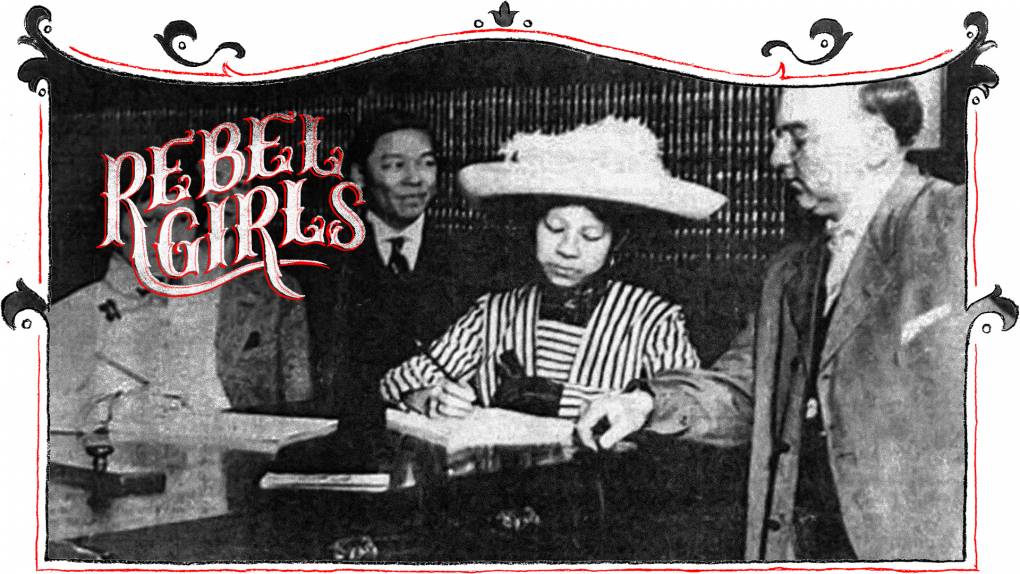
"caption": "Clara Elizabeth Chan Lee, registering to vote at the Alameda County Courthouse in 1911.",
"description": "Clara Elizabeth Chan Lee, registering to vote at the Alameda County Courthouse in 1911.",
"title": "Clara Elizabeth Chan Lee, registering to vote at the Alameda County Courthouse in 1911.",
"credit": null,
"status": "inherit",
"altTag": "A Chinese-American woman wearing a black and white striped dress and broad-brimmed white hat signs a book, watched over by a white man in a suit with his hair slicked back. A besuited man of Chinese descent stands behind her, smiling.",
"isLoading": false,
"fetchFailed": false
}
},
"audioPlayerReducer": {
"postId": "stream_live",
"isPaused": true,
"isPlaying": false,
"pfsActive": false,
"pledgeModalIsOpen": true,
"playerDrawerIsOpen": false,
"liveAudioPlayStartedAt": 0,
"liveAudioPlayContext": ""
},
"authorsReducer": {
"ralexandra": {
"type": "authors",
"id": "11242",
"meta": {
"index": "authors_1716337520",
"id": "11242",
"found": true
},
"name": "Rae Alexandra",
"firstName": "Rae",
"lastName": "Alexandra",
"slug": "ralexandra",
"email": "ralexandra@kqed.org",
"display_author_email": true,
"staff_mastheads": [],
"title": "Reporter/Producer",
"bio": "Rae Alexandra is a Reporter/Producer for KQED Arts & Culture, and the creator/author of the \u003ca href=\"https://www.kqed.org/arts/program/rebel-girls-from-bay-area-history\">Rebel Girls From Bay Area History\u003c/a> and \u003ca href=\"https://www.kqed.org/bizarrebayarea\">Bizarre Bay Area\u003c/a> series. Her debut book, \u003ca href=\"https://citylights.com/politics-current-events-history/unsung-heroines35-women-who-changed/\">Unsung Heroines: 35 Women Who Changed the Bay Area\u003c/a> was published by City Lights in March 2026. In 2023, Rae was awarded an SPJ Excellence in Journalism Award for Arts & Culture. Rae was born and raised in Wales and subsequently — even after two decades in Northern California — still uses phrases that regularly baffle her coworkers.",
"avatar": "https://secure.gravatar.com/avatar/edfee8176c80cc0a382b051190f5341997df378a934a5774dcb0977732dfd401?s=600&d=blank&r=g",
"twitter": null,
"bluesky": null,
"facebook": null,
"instagram": null,
"linkedin": null,
"sites": [
{
"site": "arts",
"roles": [
"subscriber"
]
},
{
"site": "news",
"roles": [
"subscriber"
]
},
{
"site": "pop",
"roles": [
"subscriber"
]
},
{
"site": "bayareabites",
"roles": [
"subscriber"
]
},
{
"site": "science",
"roles": [
"subscriber"
]
}
],
"headData": {
"title": "Rae Alexandra | KQED",
"description": "Reporter/Producer",
"ogImgSrc": "https://secure.gravatar.com/avatar/edfee8176c80cc0a382b051190f5341997df378a934a5774dcb0977732dfd401?s=600&d=blank&r=g",
"twImgSrc": "https://secure.gravatar.com/avatar/edfee8176c80cc0a382b051190f5341997df378a934a5774dcb0977732dfd401?s=600&d=blank&r=g"
},
"isLoading": false,
"link": "/author/ralexandra"
}
},
"pagesReducer": {
"arts_series_rebelgirls": {
"type": "terms",
"id": "arts_22303",
"meta": {
"index": "terms_1716263798",
"site": "arts",
"id": "22303",
"score": 14.651087
},
"name": "Rebel Girls from Bay Area History",
"slug": "rebelgirls",
"taxonomy": "series",
"description": null,
"featImg": null,
"headData": {
"title": "Rebel Girls from Bay Area History | KQED Arts",
"description": null,
"ogTitle": null,
"ogDescription": null,
"ogImgId": null,
"twTitle": null,
"twDescription": null,
"twImgId": null
},
"ttid": 22315,
"isLoading": false,
"title": "Rebel Girls from Bay Area History",
"pageMeta": {
"site": "arts",
"WpPageTemplate": "page-topic-editorial",
"currentPage": 3
},
"blocks": [
{
"blockName": "kqed/post-list",
"attrs": {
"layout": "cardArticle2",
"query": "posts/arts?series=rebelgirls",
"seeMore": false,
"paginated": true,
"page": 3
}
},
{
"blockName": "kqed/ad"
}
]
}
},
"pfsSessionReducer": {},
"postsReducer": {
"stream_live": {
"type": "live",
"id": "stream_live",
"audioUrl": "https://streams.kqed.org/kqedradio",
"title": "Live Stream",
"excerpt": "Live Stream information currently unavailable.",
"link": "/radio",
"featImg": "",
"label": {
"name": "KQED Live",
"link": "/"
}
},
"stream_kqedNewscast": {
"type": "posts",
"id": "stream_kqedNewscast",
"audioUrl": "https://www.kqed.org/.stream/anon/radio/RDnews/newscast.mp3?_=1",
"title": "KQED Newscast",
"featImg": "",
"label": {
"name": "88.5 FM",
"link": "/"
}
},
"arts_13904183": {
"type": "posts",
"id": "arts_13904183",
"meta": {
"index": "posts_1716263798",
"site": "arts",
"id": "13904183",
"score": null,
"sort": [
1635357634000
]
},
"guestAuthors": [],
"slug": "rebel-girls-single-mom-mexican-history",
"title": "The Single Mom Who Preserved Mexican American History in the 1800s",
"publishDate": 1635357634,
"format": "standard",
"headTitle": "The Single Mom Who Preserved Mexican American History in the 1800s | KQED",
"labelTerm": {},
"content": "\u003cp>When Hipolita Orendain de Medina first arrived in San Francisco as a young child, it was the result of a bold move by her mother, Francisca Tejada de Orendain. Francisca made the decision to leave Mexico and head to San Francisco in the 1850s, after the death of her husband. The widow and her two children, Hipolita and Virginia, would be among the first wave of Mexican families to emigrate to California following the Mexican-American War, a conflict that ended when Mexico City fell to U.S. troops on Sept. 14, 1847—the same year Hipolita was born.\u003c/p>\n\u003cp>[aside postid='arts_13892514']Though tensions remained between the two countries at the time of the Orendains’ move, Francisca had inherited a fortune from her late husband Jesús Orendain’s silver mine, and sought new opportunities in the United States. Though she was moving to still-unruly Gold Rush country, Francisca was determined to raise her young daughters as respected and virtuous women of society. She succeeded. After investing in Oakland waterfront properties and some land on what is now Broadway, Francisca went about making sure Virginia and Hipolita received excellent educations. By adulthood, Hipolita was fluent in at least three languages—English, Spanish and German—and had developed a passion for all things literary.\u003c/p>\n\u003cp>It was her unbridled enthusiasm for the written word that led Hipolita to start keeping meticulous records of her poems, journals and musings. She also filed and stored her “recuerdos de amistad” (tokens of friendship)—the essays, letters, well wishes, portraits and business cards she received from friends and family. Without archival intentions, throughout the course of her life, Hipolita’s personal effects were quietly preserving a vibrant snapshot of Mexican American society in Northern California during the second half of the 1800s and into the early 1900s. One album alone spanned the years between 1865 and 1908.\u003c/p>\n\u003cfigure id=\"attachment_13904798\" class=\"wp-caption aligncenter\" style=\"max-width: 800px\">\u003cimg loading=\"lazy\" decoding=\"async\" class=\"size-medium wp-image-13904798\" src=\"https://ww2.kqed.org/app/uploads/sites/2/2021/10/Hipolita-album-Gods-Eye-800x495.jpg\" alt=\"\" width=\"800\" height=\"495\" srcset=\"https://cdn.kqed.org/wp-content/uploads/sites/2/2021/10/Hipolita-album-Gods-Eye-800x495.jpg 800w, https://cdn.kqed.org/wp-content/uploads/sites/2/2021/10/Hipolita-album-Gods-Eye-1020x631.jpg 1020w, https://cdn.kqed.org/wp-content/uploads/sites/2/2021/10/Hipolita-album-Gods-Eye-160x99.jpg 160w, https://cdn.kqed.org/wp-content/uploads/sites/2/2021/10/Hipolita-album-Gods-Eye-768x475.jpg 768w, https://cdn.kqed.org/wp-content/uploads/sites/2/2021/10/Hipolita-album-Gods-Eye-1536x951.jpg 1536w, https://cdn.kqed.org/wp-content/uploads/sites/2/2021/10/Hipolita-album-Gods-Eye-2048x1267.jpg 2048w, https://cdn.kqed.org/wp-content/uploads/sites/2/2021/10/Hipolita-album-Gods-Eye-1920x1188.jpg 1920w\" sizes=\"auto, (max-width: 800px) 100vw, 800px\">\u003cfigcaption class=\"wp-caption-text\">(L) The cover of Hipolita’s album of remembrance, full of notes, art, tokens of good luck, songs, poems and letters written by friends and family. It also contains pressed flowers. (R) A “God’s Eye” – or Ojo de Dios – gifted to Hipolita by a friend. The spiritual tokens are woven out of yarn upon a wooden cross and are believed to provide their owners with protection. \u003ccite>(Rae Alexandra/ Courtesy of the California Historical Society)\u003c/cite>\u003c/figcaption>\u003c/figure>\n\u003cp>Some of the letters Hipolita collected offer a glimpse into the hardships and political turmoil felt by the loved ones she left behind in Mexico. One, from M. Travesi, details the chaos and bloodshed of the \u003ca href=\"https://en.wikipedia.org/wiki/Second_French_intervention_in_Mexico\" target=\"_blank\" rel=\"noopener noreferrer\">Second French Intervention in Mexico\u003c/a>, a war fought between 1861 and 1867. The note, dated July 14, 1865 begins: “Standing before the arrogance of an infamous and brutal soldiery made up of the vile slaves of the traitor France might offer them liberty? Cowardly executioners! In order to defeat, they raise scaffolding where they assassinate forced martyrs and pure patriots whose noble blood is worn on their faces.”\u003c/p>\n\u003cp>On March 12, 1867, Hipolita’s cousin Felicio Orendain wrote from Mexico: “Today, we experience much fear while we wait for the result of the battle that at any moment will occur in Querétaro. All the resources of the Republicans against those of Maximiliano [the Archduke of Austria, installed in Mexico by the French government] are meant to create a federal army along with the help of the towns’ resources. In this context, it is very difficult for us (to live here) and, if this commotion persists, our general ruin will be a certain fact.”\u003c/p>\n\u003cp>[ad fullwidth]\u003c/p>\n\u003cp>Both Hipolita and her mother were actively contributing to the war effort from San Francisco. Hipolita was a member of San Francisco’s junta patriótica (patriotic assembly). She was also active in recruiting men in California to go and fight for their home country. (Words she jotted down in her private notebook show her to be quite persuasive in this regard. “If we have the courage to sacrifice everything to duty,” she wrote, “this sacrifice makes room for the most pleasant satisfaction one can taste.”) Francisca used her wealth to outfit the new soldiers and finance their travel to the Mexican frontlines.\u003c/p>\n\u003cp>[aside postid='arts_13893514']When \u003ca href=\"https://en.wikipedia.org/wiki/Benito_Ju%C3%A1rez\" target=\"_blank\" rel=\"noopener noreferrer\">President Benito Juárez\u003c/a> finally regained control of the country, the joy and relief was palpable in letters sent to Hipolita. But much of the correspondence she received is best described as declarations of adoration. Many men seem to have been quite besotted with her. On Sept. 27, 1865, José Montesinol wrote, “What is it about your look, what is it about your smile, that attracts so many hearts? What magic and enchanting qualities does your breath have that awakens soldiers, wounded by deception and their abandonment of love for glory?”\u003c/p>\n\u003cp>Just three weeks prior to Montesinol’s letter, another suitor named Lozano wrote to her: “Polita, you are the ideal woman, because you are just as virtuous as you are beautiful.” Hipolita no doubt would have seen this as a high compliment, given that in her personal musings she once wrote, “Perfect happiness derives only from virtue.” On another occasion, she noted, “Every time one does not fulfill one’s moral duty, one does not fulfill [one’s] other [duties] either.”\u003c/p>\n\u003cfigure id=\"attachment_13904796\" class=\"wp-caption aligncenter\" style=\"max-width: 800px\">\u003cimg loading=\"lazy\" decoding=\"async\" class=\"size-medium wp-image-13904796\" src=\"https://ww2.kqed.org/app/uploads/sites/2/2021/10/Hipolita-luck-and-music-800x495.jpg\" alt=\"\" width=\"800\" height=\"495\" srcset=\"https://cdn.kqed.org/wp-content/uploads/sites/2/2021/10/Hipolita-luck-and-music-800x495.jpg 800w, https://cdn.kqed.org/wp-content/uploads/sites/2/2021/10/Hipolita-luck-and-music-1020x631.jpg 1020w, https://cdn.kqed.org/wp-content/uploads/sites/2/2021/10/Hipolita-luck-and-music-160x99.jpg 160w, https://cdn.kqed.org/wp-content/uploads/sites/2/2021/10/Hipolita-luck-and-music-768x475.jpg 768w, https://cdn.kqed.org/wp-content/uploads/sites/2/2021/10/Hipolita-luck-and-music-1536x951.jpg 1536w, https://cdn.kqed.org/wp-content/uploads/sites/2/2021/10/Hipolita-luck-and-music-2048x1267.jpg 2048w, https://cdn.kqed.org/wp-content/uploads/sites/2/2021/10/Hipolita-luck-and-music-1920x1188.jpg 1920w\" sizes=\"auto, (max-width: 800px) 100vw, 800px\">\u003cfigcaption class=\"wp-caption-text\">(L) “May every blessing this wreath contains be yours.” Addressed to Hipolita and signed by a Mrs. E. Smith on April 15, 1883. (R) A song written for Hipolita by her husband, Emilio Medina. \u003ccite>(Rae Alexandra/ Courtesy of the California Historical Society)\u003c/cite>\u003c/figcaption>\u003c/figure>\n\u003cp>In October 1868, Hipolita married Emigdio “Emilio” Medina at Old St. Mary’s Church, on the corner of California and Grant in San Francisco. \u003ca href=\"https://www.foundsf.org/index.php?title=Joseph_Alemany\" target=\"_blank\" rel=\"noopener noreferrer\">Archbishop Joseph Alemany\u003c/a> performed the Roman Catholic ceremony, while Virginia acted as a witness. Once married, the couple settled into a family home at 707½ McAllister St. As with her other suitors, Medina was spellbound by Hipolita. In her album of remembrance, she saved the love notes and songs he wrote for her.\u003c/p>\n\u003cp>[aside postid='pop_102633']Despite promising beginnings, theirs was not a relationship that would last. Medina was a diplomat who traveled across Europe and South America on behalf of President Juárez to shore up Mexico’s relations overseas. And together, Hipolita and Medina brought four daughters into the world: Josefina in 1869, Virginia in 1871, Czarina in 1873, and Mercedes (nicknamed Mercy) in 1876. By the 1880 census, however, Medina was no longer listed as a resident in Hipolita’s home despite the fact that he was still an active member of San Francisco society. (In 1881, he co-founded and became editor for \u003cem>La Republica\u003c/em>, a weekly Spanish-language newspaper in San Francisco.) Hipolita started referring to herself as a widow long before Medina moved to Los Angeles to edit \u003cem>El Estandarte Mexicano\u003c/em>, a publication that was, according to one of his business cards, “Devoted to the interests of the resident Mexican population.”\u003c/p>\n\u003cp>In 1893, Hipolita and Medina came together once more to grieve the loss of their daughter Czarina, who died just three months after her 20th birthday. Hipolita lovingly taped details of her daughter’s memorial from both English and Spanish language newspapers under a passage written by Czarina for her mother. That poem ended with the line, “Wherever I am, I remember you yet.”\u003c/p>\n\u003cfigure id=\"attachment_13904827\" class=\"wp-caption aligncenter\" style=\"max-width: 800px\">\u003cimg loading=\"lazy\" decoding=\"async\" class=\"size-medium wp-image-13904827\" src=\"https://ww2.kqed.org/app/uploads/sites/2/2021/10/Czarina-800x495.jpg\" alt=\"\" width=\"800\" height=\"495\" srcset=\"https://cdn.kqed.org/wp-content/uploads/sites/2/2021/10/Czarina-800x495.jpg 800w, https://cdn.kqed.org/wp-content/uploads/sites/2/2021/10/Czarina-1020x631.jpg 1020w, https://cdn.kqed.org/wp-content/uploads/sites/2/2021/10/Czarina-160x99.jpg 160w, https://cdn.kqed.org/wp-content/uploads/sites/2/2021/10/Czarina-768x475.jpg 768w, https://cdn.kqed.org/wp-content/uploads/sites/2/2021/10/Czarina-1536x951.jpg 1536w, https://cdn.kqed.org/wp-content/uploads/sites/2/2021/10/Czarina-2048x1267.jpg 2048w, https://cdn.kqed.org/wp-content/uploads/sites/2/2021/10/Czarina-1920x1188.jpg 1920w\" sizes=\"auto, (max-width: 800px) 100vw, 800px\">\u003cfigcaption class=\"wp-caption-text\">(L) A poem written by Czarina surrounded by pressed ferns and her obituaries. (R) A poem written by Hipolita’s daughter Virginia, dated Jan. 10, 1883. \u003ccite>(Rae Alexandra/ Courtesy of the California Historical Society)\u003c/cite>\u003c/figcaption>\u003c/figure>\n\u003cp>As a single mother, Hipolita worked—alongside her sister—as a dressmaker. And she cultivated very close relationships with each and every one of her daughters. In 1894, one friend named Aurora wrote to Hipolita, “You have known with your love and your talent how to form the souls of your daughters with pieces of your heart so that they are the treasure and grace of their home. They have been nurtured by your example in their virtues; virtues that make a woman more esteemed and strong when faced with the trials of life.”\u003c/p>\n\u003cp>Some of Hipolita’s strength may have been inspired by learning from her own mother’s mistakes. Francisca lost most of her Oakland property investments to squatters, administrators, and the Southern Pacific Railroad. As Francisca prepared to fight the latter in court, threats were made on Hipolita and Virginia’s lives; Francisca retreated and dropped the suit.\u003c/p>\n\u003cp>Hipolita died in 1922. But her voice, and the voices of her loved ones, live on through her beautifully preserved books and correspondence. Her collection continues to present a vivid snapshot of 19th century life in both the Bay Area and Mexico. That Hipolita understood the value of these kinds of personal papers speaks to an impressive fortitude and degree of self-belief, qualities that continue to inspire new generations—including her own descendents.\u003c/p>\n\u003cp>In 2016, Hipolita’s great-granddaughter, award-winning author Laurel Anne Hill, dedicated her second novel, 2016’s \u003ca href=\"https://www.goodreads.com/en/book/show/32802993-the-engine-woman-s-light\" target=\"_blank\" rel=\"noopener noreferrer\">\u003cem>The Engine Woman’s Light\u003c/em>\u003c/a>, to her great-grandmother. Hill was also responsible, in 2009, for organizing and funding the translation of Hipolita’s letters and journals into English. Those papers now live alongside Hipolita’s original documents at the California Historical Society. Hipolita’s youngest daughter Mercedes (Hill’s grandmother) may have put it best in a sweet verse she wrote to her mother on Aug. 12, 1883:\u003c/p>\n\u003cblockquote>\u003cp>You are good as you are fair,\u003cbr>\nNone, none on Earth above you,\u003cbr>\nAs pure in thought as angels are,\u003cbr>\nTo know you is to love you.\u003c/p>\u003c/blockquote>\n\u003cp>\u003cimg loading=\"lazy\" decoding=\"async\" class=\"aligncenter size-medium wp-image-12127869\" src=\"https://ww2.kqed.org/arts/wp-content/uploads/sites/2/2016/09/Q.Logo_.Break_-800x78.jpg\" alt=\"\" width=\"800\" height=\"78\" srcset=\"https://cdn.kqed.org/wp-content/uploads/sites/2/2016/09/Q.Logo_.Break_.jpg 800w, https://cdn.kqed.org/wp-content/uploads/sites/2/2016/09/Q.Logo_.Break_-400x39.jpg 400w, https://cdn.kqed.org/wp-content/uploads/sites/2/2016/09/Q.Logo_.Break_-768x75.jpg 768w\" sizes=\"auto, (max-width: 800px) 100vw, 800px\">\u003c/p>\n\u003cp>\u003cem>To learn about other Rebel Girls from Bay Area History, visit the \u003ca href=\"https://www.kqed.org/rebelgirls\" target=\"_blank\" rel=\"noopener noreferrer\">Rebel Girls homepage\u003c/a>.\u003c/em>\u003c/p>\n\u003cp>[ad floatright]\u003c/p>\n\u003cp>\u003cem>A book celebrating women from the Rebel Girls series, \u003ca href=\"https://citylights.com/politics-current-events-history/unsung-heroines35-women-who-changed/\">‘Unsung Heroines: 35 Women Who Changed the Bay Area,’\u003c/a> is available now from City Lights.\u003c/em>\u003c/p>\n\n",
"blocks": [],
"excerpt": "Through meticulous record keeping, Hipolita Orendain de Medina provides a snapshot of Latino life in Gold Rush San Francisco.",
"status": "publish",
"parent": 0,
"modified": 1769720232,
"stats": {
"hasAudio": false,
"hasVideo": false,
"hasChartOrMap": false,
"iframeSrcs": [],
"hasGoogleForm": false,
"hasGallery": false,
"hasHearkenModule": false,
"hasPolis": false,
"paragraphCount": 21,
"wordCount": 1695
},
"headData": {
"title": "The Single Mom Who Preserved Mexican American History in the 1800s | KQED",
"description": "Through meticulous record keeping, Hipolita Orendain de Medina provides a snapshot of Latino life in Gold Rush San Francisco.",
"ogTitle": "",
"ogDescription": "",
"ogImgId": "",
"twTitle": "",
"twDescription": "",
"twImgId": "",
"schema": {
"@context": "https://schema.org",
"@type": "Article",
"headline": "The Single Mom Who Preserved Mexican American History in the 1800s",
"datePublished": "2021-10-27T11:00:34-07:00",
"dateModified": "2026-01-29T12:57:12-08:00",
"image": "https://cdn.kqed.org/wp-content/uploads/2020/02/KQED-OG-Image@1x.png"
}
},
"primaryCategory": {
"termId": 1,
"slug": "arts",
"name": "Arts"
},
"source": "Rebel Girls",
"sourceUrl": "https://www.kqed.org/rebelgirls",
"audioUrl": "https://traffic.omny.fm/d/clips/0af137ef-751e-4b19-a055-aaef00d2d578/ffca7e9f-6831-4[…]f-aaef00f5a073/c9115326-03f9-4dba-a7a9-ae23014c4f03/audio.mp3",
"sticky": false,
"templateType": "standard",
"featuredImageType": "standard",
"excludeFromSiteSearch": "Include",
"articleAge": "0",
"path": "/arts/13904183/rebel-girls-single-mom-mexican-history",
"audioTrackLength": null,
"parsedContent": [
{
"type": "contentString",
"content": "\u003cdiv class=\"post-body\">\u003cp>\u003cp>When Hipolita Orendain de Medina first arrived in San Francisco as a young child, it was the result of a bold move by her mother, Francisca Tejada de Orendain. Francisca made the decision to leave Mexico and head to San Francisco in the 1850s, after the death of her husband. The widow and her two children, Hipolita and Virginia, would be among the first wave of Mexican families to emigrate to California following the Mexican-American War, a conflict that ended when Mexico City fell to U.S. troops on Sept. 14, 1847—the same year Hipolita was born.\u003c/p>\n\u003cp>\u003c/p>\u003c/div>",
"attributes": {
"named": {},
"numeric": []
}
},
{
"type": "component",
"content": "",
"name": "aside",
"attributes": {
"named": {
"postid": "arts_13892514",
"label": ""
},
"numeric": []
}
},
{
"type": "contentString",
"content": "\u003cdiv class=\"post-body\">\u003cp>Though tensions remained between the two countries at the time of the Orendains’ move, Francisca had inherited a fortune from her late husband Jesús Orendain’s silver mine, and sought new opportunities in the United States. Though she was moving to still-unruly Gold Rush country, Francisca was determined to raise her young daughters as respected and virtuous women of society. She succeeded. After investing in Oakland waterfront properties and some land on what is now Broadway, Francisca went about making sure Virginia and Hipolita received excellent educations. By adulthood, Hipolita was fluent in at least three languages—English, Spanish and German—and had developed a passion for all things literary.\u003c/p>\n\u003cp>It was her unbridled enthusiasm for the written word that led Hipolita to start keeping meticulous records of her poems, journals and musings. She also filed and stored her “recuerdos de amistad” (tokens of friendship)—the essays, letters, well wishes, portraits and business cards she received from friends and family. Without archival intentions, throughout the course of her life, Hipolita’s personal effects were quietly preserving a vibrant snapshot of Mexican American society in Northern California during the second half of the 1800s and into the early 1900s. One album alone spanned the years between 1865 and 1908.\u003c/p>\n\u003cfigure id=\"attachment_13904798\" class=\"wp-caption aligncenter\" style=\"max-width: 800px\">\u003cimg loading=\"lazy\" decoding=\"async\" class=\"size-medium wp-image-13904798\" src=\"https://ww2.kqed.org/app/uploads/sites/2/2021/10/Hipolita-album-Gods-Eye-800x495.jpg\" alt=\"\" width=\"800\" height=\"495\" srcset=\"https://cdn.kqed.org/wp-content/uploads/sites/2/2021/10/Hipolita-album-Gods-Eye-800x495.jpg 800w, https://cdn.kqed.org/wp-content/uploads/sites/2/2021/10/Hipolita-album-Gods-Eye-1020x631.jpg 1020w, https://cdn.kqed.org/wp-content/uploads/sites/2/2021/10/Hipolita-album-Gods-Eye-160x99.jpg 160w, https://cdn.kqed.org/wp-content/uploads/sites/2/2021/10/Hipolita-album-Gods-Eye-768x475.jpg 768w, https://cdn.kqed.org/wp-content/uploads/sites/2/2021/10/Hipolita-album-Gods-Eye-1536x951.jpg 1536w, https://cdn.kqed.org/wp-content/uploads/sites/2/2021/10/Hipolita-album-Gods-Eye-2048x1267.jpg 2048w, https://cdn.kqed.org/wp-content/uploads/sites/2/2021/10/Hipolita-album-Gods-Eye-1920x1188.jpg 1920w\" sizes=\"auto, (max-width: 800px) 100vw, 800px\">\u003cfigcaption class=\"wp-caption-text\">(L) The cover of Hipolita’s album of remembrance, full of notes, art, tokens of good luck, songs, poems and letters written by friends and family. It also contains pressed flowers. (R) A “God’s Eye” – or Ojo de Dios – gifted to Hipolita by a friend. The spiritual tokens are woven out of yarn upon a wooden cross and are believed to provide their owners with protection. \u003ccite>(Rae Alexandra/ Courtesy of the California Historical Society)\u003c/cite>\u003c/figcaption>\u003c/figure>\n\u003cp>Some of the letters Hipolita collected offer a glimpse into the hardships and political turmoil felt by the loved ones she left behind in Mexico. One, from M. Travesi, details the chaos and bloodshed of the \u003ca href=\"https://en.wikipedia.org/wiki/Second_French_intervention_in_Mexico\" target=\"_blank\" rel=\"noopener noreferrer\">Second French Intervention in Mexico\u003c/a>, a war fought between 1861 and 1867. The note, dated July 14, 1865 begins: “Standing before the arrogance of an infamous and brutal soldiery made up of the vile slaves of the traitor France might offer them liberty? Cowardly executioners! In order to defeat, they raise scaffolding where they assassinate forced martyrs and pure patriots whose noble blood is worn on their faces.”\u003c/p>\n\u003cp>On March 12, 1867, Hipolita’s cousin Felicio Orendain wrote from Mexico: “Today, we experience much fear while we wait for the result of the battle that at any moment will occur in Querétaro. All the resources of the Republicans against those of Maximiliano [the Archduke of Austria, installed in Mexico by the French government] are meant to create a federal army along with the help of the towns’ resources. In this context, it is very difficult for us (to live here) and, if this commotion persists, our general ruin will be a certain fact.”\u003c/p>\n\u003cp>\u003c/p>\u003c/div>",
"attributes": {
"named": {},
"numeric": []
}
},
{
"type": "component",
"content": "",
"name": "ad",
"attributes": {
"named": {
"label": "fullwidth"
},
"numeric": [
"fullwidth"
]
}
},
{
"type": "contentString",
"content": "\u003cdiv class=\"post-body\">\u003cp>\u003c/p>\n\u003cp>Both Hipolita and her mother were actively contributing to the war effort from San Francisco. Hipolita was a member of San Francisco’s junta patriótica (patriotic assembly). She was also active in recruiting men in California to go and fight for their home country. (Words she jotted down in her private notebook show her to be quite persuasive in this regard. “If we have the courage to sacrifice everything to duty,” she wrote, “this sacrifice makes room for the most pleasant satisfaction one can taste.”) Francisca used her wealth to outfit the new soldiers and finance their travel to the Mexican frontlines.\u003c/p>\n\u003cp>\u003c/p>\u003c/div>",
"attributes": {
"named": {},
"numeric": []
}
},
{
"type": "component",
"content": "",
"name": "aside",
"attributes": {
"named": {
"postid": "arts_13893514",
"label": ""
},
"numeric": []
}
},
{
"type": "contentString",
"content": "\u003cdiv class=\"post-body\">\u003cp>When \u003ca href=\"https://en.wikipedia.org/wiki/Benito_Ju%C3%A1rez\" target=\"_blank\" rel=\"noopener noreferrer\">President Benito Juárez\u003c/a> finally regained control of the country, the joy and relief was palpable in letters sent to Hipolita. But much of the correspondence she received is best described as declarations of adoration. Many men seem to have been quite besotted with her. On Sept. 27, 1865, José Montesinol wrote, “What is it about your look, what is it about your smile, that attracts so many hearts? What magic and enchanting qualities does your breath have that awakens soldiers, wounded by deception and their abandonment of love for glory?”\u003c/p>\n\u003cp>Just three weeks prior to Montesinol’s letter, another suitor named Lozano wrote to her: “Polita, you are the ideal woman, because you are just as virtuous as you are beautiful.” Hipolita no doubt would have seen this as a high compliment, given that in her personal musings she once wrote, “Perfect happiness derives only from virtue.” On another occasion, she noted, “Every time one does not fulfill one’s moral duty, one does not fulfill [one’s] other [duties] either.”\u003c/p>\n\u003cfigure id=\"attachment_13904796\" class=\"wp-caption aligncenter\" style=\"max-width: 800px\">\u003cimg loading=\"lazy\" decoding=\"async\" class=\"size-medium wp-image-13904796\" src=\"https://ww2.kqed.org/app/uploads/sites/2/2021/10/Hipolita-luck-and-music-800x495.jpg\" alt=\"\" width=\"800\" height=\"495\" srcset=\"https://cdn.kqed.org/wp-content/uploads/sites/2/2021/10/Hipolita-luck-and-music-800x495.jpg 800w, https://cdn.kqed.org/wp-content/uploads/sites/2/2021/10/Hipolita-luck-and-music-1020x631.jpg 1020w, https://cdn.kqed.org/wp-content/uploads/sites/2/2021/10/Hipolita-luck-and-music-160x99.jpg 160w, https://cdn.kqed.org/wp-content/uploads/sites/2/2021/10/Hipolita-luck-and-music-768x475.jpg 768w, https://cdn.kqed.org/wp-content/uploads/sites/2/2021/10/Hipolita-luck-and-music-1536x951.jpg 1536w, https://cdn.kqed.org/wp-content/uploads/sites/2/2021/10/Hipolita-luck-and-music-2048x1267.jpg 2048w, https://cdn.kqed.org/wp-content/uploads/sites/2/2021/10/Hipolita-luck-and-music-1920x1188.jpg 1920w\" sizes=\"auto, (max-width: 800px) 100vw, 800px\">\u003cfigcaption class=\"wp-caption-text\">(L) “May every blessing this wreath contains be yours.” Addressed to Hipolita and signed by a Mrs. E. Smith on April 15, 1883. (R) A song written for Hipolita by her husband, Emilio Medina. \u003ccite>(Rae Alexandra/ Courtesy of the California Historical Society)\u003c/cite>\u003c/figcaption>\u003c/figure>\n\u003cp>In October 1868, Hipolita married Emigdio “Emilio” Medina at Old St. Mary’s Church, on the corner of California and Grant in San Francisco. \u003ca href=\"https://www.foundsf.org/index.php?title=Joseph_Alemany\" target=\"_blank\" rel=\"noopener noreferrer\">Archbishop Joseph Alemany\u003c/a> performed the Roman Catholic ceremony, while Virginia acted as a witness. Once married, the couple settled into a family home at 707½ McAllister St. As with her other suitors, Medina was spellbound by Hipolita. In her album of remembrance, she saved the love notes and songs he wrote for her.\u003c/p>\n\u003cp>\u003c/p>\u003c/div>",
"attributes": {
"named": {},
"numeric": []
}
},
{
"type": "component",
"content": "",
"name": "aside",
"attributes": {
"named": {
"postid": "pop_102633",
"label": ""
},
"numeric": []
}
},
{
"type": "contentString",
"content": "\u003cdiv class=\"post-body\">\u003cp>Despite promising beginnings, theirs was not a relationship that would last. Medina was a diplomat who traveled across Europe and South America on behalf of President Juárez to shore up Mexico’s relations overseas. And together, Hipolita and Medina brought four daughters into the world: Josefina in 1869, Virginia in 1871, Czarina in 1873, and Mercedes (nicknamed Mercy) in 1876. By the 1880 census, however, Medina was no longer listed as a resident in Hipolita’s home despite the fact that he was still an active member of San Francisco society. (In 1881, he co-founded and became editor for \u003cem>La Republica\u003c/em>, a weekly Spanish-language newspaper in San Francisco.) Hipolita started referring to herself as a widow long before Medina moved to Los Angeles to edit \u003cem>El Estandarte Mexicano\u003c/em>, a publication that was, according to one of his business cards, “Devoted to the interests of the resident Mexican population.”\u003c/p>\n\u003cp>In 1893, Hipolita and Medina came together once more to grieve the loss of their daughter Czarina, who died just three months after her 20th birthday. Hipolita lovingly taped details of her daughter’s memorial from both English and Spanish language newspapers under a passage written by Czarina for her mother. That poem ended with the line, “Wherever I am, I remember you yet.”\u003c/p>\n\u003cfigure id=\"attachment_13904827\" class=\"wp-caption aligncenter\" style=\"max-width: 800px\">\u003cimg loading=\"lazy\" decoding=\"async\" class=\"size-medium wp-image-13904827\" src=\"https://ww2.kqed.org/app/uploads/sites/2/2021/10/Czarina-800x495.jpg\" alt=\"\" width=\"800\" height=\"495\" srcset=\"https://cdn.kqed.org/wp-content/uploads/sites/2/2021/10/Czarina-800x495.jpg 800w, https://cdn.kqed.org/wp-content/uploads/sites/2/2021/10/Czarina-1020x631.jpg 1020w, https://cdn.kqed.org/wp-content/uploads/sites/2/2021/10/Czarina-160x99.jpg 160w, https://cdn.kqed.org/wp-content/uploads/sites/2/2021/10/Czarina-768x475.jpg 768w, https://cdn.kqed.org/wp-content/uploads/sites/2/2021/10/Czarina-1536x951.jpg 1536w, https://cdn.kqed.org/wp-content/uploads/sites/2/2021/10/Czarina-2048x1267.jpg 2048w, https://cdn.kqed.org/wp-content/uploads/sites/2/2021/10/Czarina-1920x1188.jpg 1920w\" sizes=\"auto, (max-width: 800px) 100vw, 800px\">\u003cfigcaption class=\"wp-caption-text\">(L) A poem written by Czarina surrounded by pressed ferns and her obituaries. (R) A poem written by Hipolita’s daughter Virginia, dated Jan. 10, 1883. \u003ccite>(Rae Alexandra/ Courtesy of the California Historical Society)\u003c/cite>\u003c/figcaption>\u003c/figure>\n\u003cp>As a single mother, Hipolita worked—alongside her sister—as a dressmaker. And she cultivated very close relationships with each and every one of her daughters. In 1894, one friend named Aurora wrote to Hipolita, “You have known with your love and your talent how to form the souls of your daughters with pieces of your heart so that they are the treasure and grace of their home. They have been nurtured by your example in their virtues; virtues that make a woman more esteemed and strong when faced with the trials of life.”\u003c/p>\n\u003cp>Some of Hipolita’s strength may have been inspired by learning from her own mother’s mistakes. Francisca lost most of her Oakland property investments to squatters, administrators, and the Southern Pacific Railroad. As Francisca prepared to fight the latter in court, threats were made on Hipolita and Virginia’s lives; Francisca retreated and dropped the suit.\u003c/p>\n\u003cp>Hipolita died in 1922. But her voice, and the voices of her loved ones, live on through her beautifully preserved books and correspondence. Her collection continues to present a vivid snapshot of 19th century life in both the Bay Area and Mexico. That Hipolita understood the value of these kinds of personal papers speaks to an impressive fortitude and degree of self-belief, qualities that continue to inspire new generations—including her own descendents.\u003c/p>\n\u003cp>In 2016, Hipolita’s great-granddaughter, award-winning author Laurel Anne Hill, dedicated her second novel, 2016’s \u003ca href=\"https://www.goodreads.com/en/book/show/32802993-the-engine-woman-s-light\" target=\"_blank\" rel=\"noopener noreferrer\">\u003cem>The Engine Woman’s Light\u003c/em>\u003c/a>, to her great-grandmother. Hill was also responsible, in 2009, for organizing and funding the translation of Hipolita’s letters and journals into English. Those papers now live alongside Hipolita’s original documents at the California Historical Society. Hipolita’s youngest daughter Mercedes (Hill’s grandmother) may have put it best in a sweet verse she wrote to her mother on Aug. 12, 1883:\u003c/p>\n\u003cblockquote>\u003cp>You are good as you are fair,\u003cbr>\nNone, none on Earth above you,\u003cbr>\nAs pure in thought as angels are,\u003cbr>\nTo know you is to love you.\u003c/p>\u003c/blockquote>\n\u003cp>\u003cimg loading=\"lazy\" decoding=\"async\" class=\"aligncenter size-medium wp-image-12127869\" src=\"https://ww2.kqed.org/arts/wp-content/uploads/sites/2/2016/09/Q.Logo_.Break_-800x78.jpg\" alt=\"\" width=\"800\" height=\"78\" srcset=\"https://cdn.kqed.org/wp-content/uploads/sites/2/2016/09/Q.Logo_.Break_.jpg 800w, https://cdn.kqed.org/wp-content/uploads/sites/2/2016/09/Q.Logo_.Break_-400x39.jpg 400w, https://cdn.kqed.org/wp-content/uploads/sites/2/2016/09/Q.Logo_.Break_-768x75.jpg 768w\" sizes=\"auto, (max-width: 800px) 100vw, 800px\">\u003c/p>\n\u003cp>\u003cem>To learn about other Rebel Girls from Bay Area History, visit the \u003ca href=\"https://www.kqed.org/rebelgirls\" target=\"_blank\" rel=\"noopener noreferrer\">Rebel Girls homepage\u003c/a>.\u003c/em>\u003c/p>\n\u003cp>\u003c/p>\u003c/div>",
"attributes": {
"named": {},
"numeric": []
}
},
{
"type": "component",
"content": "",
"name": "ad",
"attributes": {
"named": {
"label": "floatright"
},
"numeric": [
"floatright"
]
}
},
{
"type": "contentString",
"content": "\u003cdiv class=\"post-body\">\u003cp>\u003c/p>\n\u003cp>\u003cem>A book celebrating women from the Rebel Girls series, \u003ca href=\"https://citylights.com/politics-current-events-history/unsung-heroines35-women-who-changed/\">‘Unsung Heroines: 35 Women Who Changed the Bay Area,’\u003c/a> is available now from City Lights.\u003c/em>\u003c/p>\n\n\u003c/div>\u003c/p>",
"attributes": {
"named": {},
"numeric": []
}
}
],
"link": "/arts/13904183/rebel-girls-single-mom-mexican-history",
"authors": [
"11242"
],
"series": [
"arts_22303"
],
"categories": [
"arts_1",
"arts_7862"
],
"tags": [
"arts_4686",
"arts_10278",
"arts_1256",
"arts_21841"
],
"featImg": "arts_13904859",
"label": "source_arts_13904183"
},
"arts_13902628": {
"type": "posts",
"id": "arts_13902628",
"meta": {
"index": "posts_1716263798",
"site": "arts",
"id": "13902628",
"score": null,
"sort": [
1633038964000
]
},
"guestAuthors": [],
"slug": "the-burlesque-pioneer-who-fought-censorship-and-multiple-arrests",
"title": "The Burlesque Pioneer Who Fought Censorship and Multiple Arrests",
"publishDate": 1633038964,
"format": "standard",
"headTitle": "The Burlesque Pioneer Who Fought Censorship and Multiple Arrests | KQED",
"labelTerm": {},
"content": "\u003cp>[dropcap]O[/dropcap]n Feb. 17, 1939, scores of beautiful, scantily clad women rode horses in formation through downtown San Francisco. The pedestrian-stopping trot down Market Street was an unmissable promotional stunt masterminded by Sally Rand—by then, one of the most notorious women in America. Rand was advertising her new Nude Ranch on Treasure Island—a 40-acre attraction that opened as part of the 1939 Golden Gate International Exposition. (She also had an attraction at the expo named Gay Paree.)\u003c/p>\n\u003cp>At Sally Rand’s Nude Ranch, between the hours of 1pm and 2am, visitors could observe beautiful women participating “vigorously” in an array of “outdoor sports.” By the end of the expo, the ranch had out-grossed almost every other attraction on Treasure Island. It was no wonder. Rand already had a firm handle on what San Francisco audiences wanted. She’d transformed the Music Box—today’s Great American Music Hall—into a burlesque revue three years earlier. But she’d also spent the better part of the decade scandalizing and titillating audiences around the country with, first, her legendary fan dance and, later, her bubble dance.\u003c/p>\n\u003cp>Also a licensed pilot, Rand inherently understood the power of spectacle. She chose her Nude Ranch as the starting point when she broke the light plane speed record, flying from San Francisco to Reno.\u003c/p>\n\u003cfigure id=\"attachment_13903920\" class=\"wp-caption alignnone\" style=\"max-width: 800px\">\u003cimg loading=\"lazy\" decoding=\"async\" class=\"size-medium wp-image-13903920\" src=\"https://ww2.kqed.org/app/uploads/sites/2/2021/09/Screen-Shot-2021-09-28-at-2.55.20-PM-800x625.png\" alt=\"\" width=\"800\" height=\"625\" srcset=\"https://cdn.kqed.org/wp-content/uploads/sites/2/2021/09/Screen-Shot-2021-09-28-at-2.55.20-PM-800x625.png 800w, https://cdn.kqed.org/wp-content/uploads/sites/2/2021/09/Screen-Shot-2021-09-28-at-2.55.20-PM-1020x797.png 1020w, https://cdn.kqed.org/wp-content/uploads/sites/2/2021/09/Screen-Shot-2021-09-28-at-2.55.20-PM-160x125.png 160w, https://cdn.kqed.org/wp-content/uploads/sites/2/2021/09/Screen-Shot-2021-09-28-at-2.55.20-PM-768x600.png 768w, https://cdn.kqed.org/wp-content/uploads/sites/2/2021/09/Screen-Shot-2021-09-28-at-2.55.20-PM-1536x1201.png 1536w, https://cdn.kqed.org/wp-content/uploads/sites/2/2021/09/Screen-Shot-2021-09-28-at-2.55.20-PM-2048x1601.png 2048w, https://cdn.kqed.org/wp-content/uploads/sites/2/2021/09/Screen-Shot-2021-09-28-at-2.55.20-PM-1920x1501.png 1920w\" sizes=\"auto, (max-width: 800px) 100vw, 800px\">\u003cfigcaption class=\"wp-caption-text\">Sally Rand on Aug. 1 1939, outside her Nude Ranch, preparing to break the light plane speed record, flying from San Francisco to Reno. She did it in 1hr and 54 minutes. After completing the journey, she bought the airplane. \u003ccite>(Courtesy of the San Francisco Public Library)\u003c/cite>\u003c/figcaption>\u003c/figure>\n\u003cp>Rand had dated \u003ca href=\"https://en.wikipedia.org/wiki/Charles_Lindbergh\" target=\"_blank\" rel=\"noopener noreferrer\">Charles Lindbergh\u003c/a> in 1923 and it was he who first taught her how to fly a plane. By 1934, Rand had 240 hours of flying under her belt, in part because of her preference of flying herself to her own gigs. (“It’s the quickest, cleanest and most comfortable mode of travel,” she once asserted.) In 1943, during an \u003ca href=\"https://calgaryherald.com/news/local-news/stampede-100-day-countdown-1943\" target=\"_blank\" rel=\"noopener noreferrer\">interview with the \u003cem>Calgary Herald\u003c/em>\u003c/a>, Rand even expressed the desire to join the Air Force, to do her part for the war effort.\u003c/p>\n\u003cp>Even with her record-breaking flight planned, Rand knew the girls on horses parading up Market Street would provide the most effective kind of publicity of all: controversy. The horses were a nice touch too—Rand had gotten her first big break six years earlier, as a direct result of a stunt on a horse.\u003c/p>\n\u003cp>[ad fullwidth]\u003c/p>\n\u003cp>[dropcap]A[/dropcap]round the opening of the 1933 World’s Fair in Chicago, Rand had been hired to make an appearance as Lady Godiva at the Chicago Artists Ball dinner—a high-end affair hosted by \u003ca href=\"https://en.wikipedia.org/wiki/Millicent_Hearst\" target=\"_blank\" rel=\"noopener noreferrer\">Millicent Hearst\u003c/a> at the Stevens Hotel. But instead of merely taking her $25 fee and going straight there, Rand decided to trust her gut and take a gamble. She used $10 of it to rent a white horse, and then hired a barge to take them both to a yacht landing at the World’s Fair. She arrived at the Streets of Paris attraction and was promptly waved into the fair by a security guard. Sally later said that he’d “figured that a broad that arrives on a boat with a horse is supposed to be there.”\u003c/p>\n\u003cp>[aside postid='arts_13871297']Rand, wearing only a long blonde wig and a white velvet cape, rode the entire expanse of the fair, before arriving at the hotel on South Michigan Avenue. (It was situated just outside the southeast corner of the fairgrounds.) Though Lady Godiva impersonators had been a staple at the Chicago Artists Ball for years, never had one shown up on an actual real-life horse before. When security refused to let the stallion enter the hotel with her, Rand cajoled four artists from the dinner into carrying her into the ball seated on a table, hoisted above their heads. Three thousand attendees erupted as Sally made her triumphant entrance.\u003c/p>\n\u003cp>The following morning, Rand found herself splashed across newspaper pages around the city. Visitors to the fair, meanwhile, were demanding to see Lady Godiva. Resourceful as always, Rand ran to the Cafe de la Paix—part of the Streets of Paris concession—declared who she was, and was hired on the spot. She quickly began performing her fan dance—a routine she had perfected while dancing at Chicago’s Paramount Club—12 to 16 times a day. In the first four weeks alone, 70,000 people came to see her tease the audience with her 20-pound ostrich feather props.\u003c/p>\n\u003cp>Highlights from Rand’s fan dance at the Street of Paris can be seen in the clip below, starting from 2:36.\u003c/p>\n\u003cp>https://www.youtube.com/watch?v=9nxUt9M2rVw\u003c/p>\n\u003cp>By the end of the fair, the Streets of Paris had proven to be the most popular and profitable attraction there, thanks in large part to Rand’s contributions. Though at various points during and after the World’s Fair, Rand claimed audiences thought they were seeing more of her than they really were, the surviving footage proves that her nudity was not all an illusion. Still, she always insisted with a wink and a smile, “The Rand is quicker than the eye.”\u003c/p>\n\u003cp>The scrappy resourcefulness Rand displayed when securing her position at the World’s Fair was the product of years of struggle. Sally Rand was born Harriet Helen Gould Beck on April 3, 1904 in Elkton, Missouri, a tiny village in the Ozarks. Her mother was a teacher, registered nurse and a correspondent for newspapers in Kansas and Missouri. Her father was a post office clerk who was outwardly religious and strict, but who also abandoned Rand, her little brother and her mother to be with a woman he met while stationed in France during World War I. Rand later said that she never recovered from the heartbreak of losing her father this way.\u003c/p>\n\u003cp>Rand was a tomboy with a penchant for fishing and riding horses until, at the age of 10, she saw Russian prima ballerina Anna Pavlova perform. The little girl threw herself into dance lessons and by 13, Rand was dancing in the chorus of Kansas City’s Empress Theater. At 14, she ran away with the Ringling Brothers Circus. She lied and told them she was 16 so she could train as an acrobat.\u003c/p>\n\u003cp>[aside postid='arts_13895374']Her circus life was short-lived, and Rand spent the rest of her teens hustling her way through a variety of jobs—as a nude or swimsuit model, a hat check girl and a cigarette girl. She danced at amusement parks, clubs and ballet companies, and sometimes entered beauty contests—including one put on by the Ziegfeld Follies on Broadway. Around that time, Rand was so impoverished, she even spent some time sleeping rough in Central Park.\u003c/p>\n\u003cp>At 18, Rand found a way to put a roof over her head, dancing with \u003ca href=\"https://www.youtube.com/watch?v=2rYrwrHsEoc\" target=\"_blank\" rel=\"noopener noreferrer\">Lew Leslie’s Blackbirds Orchestra\u003c/a>—a mostly Black revue on Broadway featuring Cab Calloway and Bill “Bojangles” Robinson. This was the show that first took Rand to California and gave her the idea of trying to make it in Hollywood. Once in L.A., Rand found work as an extra, was hired to do a 15-foot dive in a \u003ca href=\"https://www.imdb.com/name/nm0784407/?ref_=fn_al_nm_2\" target=\"_blank\" rel=\"noopener noreferrer\">Mack Sennett\u003c/a> movie, then got spotted by \u003ca href=\"https://www.imdb.com/name/nm0001124/?ref_=fn_al_nm_1\" target=\"_blank\" rel=\"noopener noreferrer\">Cecil B. DeMille\u003c/a>, who was the one who gave her the stage name, Sally Rand. He once called her “the most beautiful girl in America.”\u003c/p>\n\u003cp>Despite her best efforts—in 1927’s \u003ca href=\"https://www.imdb.com/title/tt0017986/?ref_=nm_flmg_act_13\" target=\"_blank\" rel=\"noopener noreferrer\">\u003cem>Heroes in Blue\u003c/em>\u003c/a>, Rand performed a stunt that involved jumping from the fourth floor of a burning building—she found herself relegated to bit parts. Throughout her early 20s, Rand was still posing for ads, doing vaudeville performances and, sadly, still sometimes forced to sleep in alleyways. For a time, she danced in a traveling burlesque show called Sweethearts on Parade, and soon she found herself back in Chicago. The clubs where she danced in the windy city were kind to her—in part because she handled gangsters so well. She was friends with Al Capone’s bodyguard, \u003ca href=\"https://en.wikipedia.org/wiki/Jack_McGurn\" target=\"_blank\" rel=\"noopener noreferrer\">“Machine Gun Jack” McGurn\u003c/a>, and palled around with bootleggers on their yachts.\u003c/p>\n\u003cp>Rand’s World’s Fair success, then, felt both long overdue and hard won. After the fair, things were looking up. She earned $5,000 a week on tour, and was paid $20,000 to appear in 1934’s \u003cem>Bolero\u003c/em>. Once more, she wasn’t the star of the movie, but her grace and beauty lit up the screen, and her fan dance was immortalized forever. (The camera panned all the way to the back of the room for her “big reveal” at the end of the routine.)\u003c/p>\n\u003cp>https://www.youtube.com/watch?v=ahldaCK0DDI&t=73s\u003c/p>\n\u003cp>Rand’s new-found fame made her popular with both men and women. Men were enthralled by her beauty; women were inspired by her devil-may-care attitude, resilience and independent spirit. After \u003cem>Bolero\u003c/em>, in addition to touring America with a troupe of roller skating, dancing girls, Rand was also a popular speaker at women’s groups, conventions, luncheons, rotary clubs and colleges. At one point, she spoke at the Junior Chamber of Commerce. At another, she addressed the Class of ’41 at Harvard. Her wise-cracks and sense of humor made her enormously endearing at these events. She once joked, “I’m a girl from the Ozarks who likes going barefooted… up to the chin.”\u003c/p>\n\u003cp>In 1938, Rand found herself back on the big screen in \u003cem>Sunset Murder Case—\u003c/em>this time, with top billing. The movie also served to immortalize her bubble dance, albeit a PG-13 version of it.\u003c/p>\n\u003cp>https://www.youtube.com/watch?v=40Gvhu-Q4VQ\u003c/p>\n\u003cp>Rand never did become a true star in Hollywood, probably because it was while she was performing burlesque that Rand was at her most alluring. She resolutely believed in it as an art form, and as an expression of female empowerment. Not only did Rand continue to perform her classic burlesque routines well into her senior years, she spent much of her life in and out of police stations and courtrooms in defense of it.\u003c/p>\n\u003cp>[dropcap]R[/dropcap]and was arrested too many times to count, for a litany of offenses related to her onstage nudity. It cost her a fortune in legal costs and fines. At the World’s Fair, because people filed complaints against the fair’s “lewd and lascivious dances and exhibits,” she was arrested repeatedly, and charged with obscenity. At Balaban and Katz’s Chicago Theater, where Rand performed between shows at the World’s Fair, she was arrested four times on her first day alone. Later, one New York judge called Rand’s act “repulsive to public decency,” prompting her to openly weep in court. It was rare for her to show such vulnerability. After one club in Rhode Island banned her, she merely said: “It’s just a shame that there are narrow-minded persons who can’t differentiate between art and indecency.”\u003c/p>\n\u003cp>In 1933, the \u003cem>San Francisco Examiner\u003c/em> reported on an incident in which Rand was confronted by a female police officer before a performance at a movie theater. The officer, Bessie McShane, insisted Rand wear strategically placed gauze on her body. As soon as Rand hit the stage, she ripped the gauze off and used her fans for coverage, as usual. After the performance, chaos broke out as McShane and a male sergeant tried to arrest Rand.\u003c/p>\n\u003cp>“Arresting a lithe, naked dancer covered in grease paint,” the \u003cem>Examiner\u003c/em> reported, “is about as hard as catching a greased pig.” After the police caught up with her, Rand was taken to the station wearing blue silk pajamas, booked for indecent exposure, and released on $400 bail. Rand later accused McShane of breaking one of her toes.\u003c/p>\n\u003cp>[aside postid='arts_13894842']In 1946, Sally was arrested in North Beach, while performing at the \u003ca href=\"https://www.facebook.com/The-Savoy-Tivoli-165996010894/\" target=\"_blank\" rel=\"noopener noreferrer\">Savoy Tivoli\u003c/a>. She was charged with indecent exposure, corrupting the morals of an audience and conducting an obscene show. During her subsequent trial, she continued to perform in the evening, sometimes while wearing a sign that read: “CENSORED. SFPD.” In the end, the judge in the case insisted that he couldn’t pass judgement until he’d seen Rand’s show himself. He attended the club one night, mid-trial, and concluded, “Anyone who could find something lewd about the dance as she puts it on, has to have a perverted idea of morals.” Rand was found not guilty.\u003c/p>\n\u003cp>It wasn’t just the law that got Rand into trouble. She had to tolerate unruly audience members trying to pop the giant balloon she danced with. Worse, on one occasion, a male audience member stuck his camera under the transparent curtain she was performing behind and snapped a photo. Rand—all five feet and 105 pounds of her—was so incensed, she threw on a robe, chased him down, smashed his camera and exposed his film. The man’s female companion claimed Rand bit her during the ensuing melee. Rand was convicted of assault and fined $100.\u003c/p>\n\u003cp>Rand was also sued repeatedly. Once by Billy Rose, who said he was the originator of the Nude Ranch. And, more infamously by Faith Bacon who had been performing a fan dance for two years when Rand started hers. Rand was forced to declare bankruptcy at least once.\u003c/p>\n\u003cp>It was these kinds of non-stop legal issues that contributed to Rand’s financial woes. By the end of her life, she had burned through her fortune. She supported many of the people close to her, including her mother, lovers and half-brothers. Her accountant failed to pay her taxes on time. She often spent too much on costumes and scenery. Rand was excellent at bringing money in, but terrible at managing it once she had it. The Music Box, at least, survived until the end of the war in 1946, probably thanks in no small part to the management of her partner, George Riccomi.\u003c/p>\n\u003cfigure id=\"attachment_13904097\" class=\"wp-caption aligncenter\" style=\"max-width: 800px\">\u003cimg loading=\"lazy\" decoding=\"async\" class=\"size-medium wp-image-13904097\" src=\"https://ww2.kqed.org/app/uploads/sites/2/2021/10/Gay-Paree-passport-800x371.jpg\" alt=\"\" width=\"800\" height=\"371\" srcset=\"https://cdn.kqed.org/wp-content/uploads/sites/2/2021/10/Gay-Paree-passport-800x371.jpg 800w, https://cdn.kqed.org/wp-content/uploads/sites/2/2021/10/Gay-Paree-passport-1020x473.jpg 1020w, https://cdn.kqed.org/wp-content/uploads/sites/2/2021/10/Gay-Paree-passport-160x74.jpg 160w, https://cdn.kqed.org/wp-content/uploads/sites/2/2021/10/Gay-Paree-passport-768x356.jpg 768w, https://cdn.kqed.org/wp-content/uploads/sites/2/2021/10/Gay-Paree-passport-1536x713.jpg 1536w, https://cdn.kqed.org/wp-content/uploads/sites/2/2021/10/Gay-Paree-passport-2048x951.jpg 2048w, https://cdn.kqed.org/wp-content/uploads/sites/2/2021/10/Gay-Paree-passport-1920x891.jpg 1920w\" sizes=\"auto, (max-width: 800px) 100vw, 800px\">\u003cfigcaption class=\"wp-caption-text\">A souvenir passport from Sally Rand’s Gay Paree attraction at the 1939 Golden Gate International Exposition. Because of Rand’s commitment to these kinds of delightful but expensive details, Gay Paree was not a profitable attraction despite being very popular. \u003ccite>(Rae Alexandra/ Courtesy of the History Center, San Francisco Public Library )\u003c/cite>\u003c/figcaption>\u003c/figure>\n\u003cp>Rand’s personal life was messy too. She had three failed marriages—to her agent, a rodeo cowboy and a contractor. At 44, and still single, she adopted her son Sean from an unwed showgirl. The adoption, however, was not made legal until Sean turned 21.\u003c/p>\n\u003cp>Later in life, Rand’s base was a ranch in Glendora, near Los Angeles, that she purchased for her mother. Rand managed to acquire a college degree at the age of 52, but she never, ever stopped working the clubs. In the 1960s, when appearing at a Las Vegas casino, she told a reporter she was there because of “problems with the tax boys.” In the early 1970s, she appeared in \u003cem>This Was Burlesque\u003c/em> at San Francisco’s Mitchell Brothers strip club. Age to Rand was simply a number, and onlookers often marveled at how youthful she remained even in her sixties. “What in heaven’s name is strange about a grandmother dancing nude?” she once said. “I’ll bet lots of grandmothers do it.”\u003c/p>\n\u003cp>Sally Rand died of congestive heart failure at the Foothill Presbyterian Hospital in Glendora, on Aug. 31, 1979. But her legendary routines live on in burlesque today, with high profile dancers like \u003ca href=\"https://www.youtube.com/watch?v=fHM2nOE5LsE&list=RDfHM2nOE5LsE&start_radio=1\" target=\"_blank\" rel=\"noopener noreferrer\">Dita Von Teese still paying tribute\u003c/a> to her. At the time of Rand’s death, one \u003cem>Petaluma Argus\u003c/em> reporter recalled a conversation he had had with her in 1965.\u003c/p>\n\u003cp>“Whenever you introduce something new,” she said, “there are those who try to find a moral reason against it. I proved that my type of dancing was art—and that I was artistic.”\u003c/p>\n\u003cp>\u003cimg loading=\"lazy\" decoding=\"async\" class=\"aligncenter size-medium wp-image-12127869\" src=\"https://ww2.kqed.org/arts/wp-content/uploads/sites/2/2016/09/Q.Logo_.Break_-800x78.jpg\" alt=\"\" width=\"800\" height=\"78\" srcset=\"https://cdn.kqed.org/wp-content/uploads/sites/2/2016/09/Q.Logo_.Break_.jpg 800w, https://cdn.kqed.org/wp-content/uploads/sites/2/2016/09/Q.Logo_.Break_-400x39.jpg 400w, https://cdn.kqed.org/wp-content/uploads/sites/2/2016/09/Q.Logo_.Break_-768x75.jpg 768w\" sizes=\"auto, (max-width: 800px) 100vw, 800px\">\u003c/p>\n\u003cp>\u003cem>To learn about other Rebel Girls from Bay Area History, visit the \u003ca href=\"https://www.kqed.org/rebelgirls\" target=\"_blank\" rel=\"noopener noreferrer\">Rebel Girls homepage\u003c/a>.\u003c/em>\u003c/p>\n\u003cp>[ad floatright]\u003c/p>\n\u003cp>\u003cem>A book celebrating women from the Rebel Girls series, \u003ca href=\"https://citylights.com/politics-current-events-history/unsung-heroines35-women-who-changed/\">‘Unsung Heroines: 35 Women Who Changed the Bay Area,’\u003c/a> is available now from City Lights.\u003c/em>\u003c/p>\n\n",
"blocks": [],
"excerpt": "Controversy followed Sally Rand wherever she went. She responded by holding her head high, cracking a joke and refusing to stop.",
"status": "publish",
"parent": 0,
"modified": 1769720270,
"stats": {
"hasAudio": false,
"hasVideo": true,
"hasChartOrMap": false,
"iframeSrcs": [],
"hasGoogleForm": false,
"hasGallery": false,
"hasHearkenModule": false,
"hasPolis": false,
"paragraphCount": 35,
"wordCount": 2813
},
"headData": {
"title": "The Burlesque Pioneer Who Fought Censorship and Multiple Arrests | KQED",
"description": "Controversy followed Sally Rand wherever she went. She responded by holding her head high, cracking a joke and refusing to stop.",
"ogTitle": "",
"ogDescription": "",
"ogImgId": "",
"twTitle": "",
"twDescription": "",
"twImgId": "",
"schema": {
"@context": "https://schema.org",
"@type": "Article",
"headline": "The Burlesque Pioneer Who Fought Censorship and Multiple Arrests",
"datePublished": "2021-09-30T14:56:04-07:00",
"dateModified": "2026-01-29T12:57:50-08:00",
"image": "https://cdn.kqed.org/wp-content/uploads/2020/02/KQED-OG-Image@1x.png"
}
},
"primaryCategory": {
"termId": 7862,
"slug": "history",
"name": "History"
},
"source": "Rebel Girls",
"sourceUrl": "https://www.kqed.org/rebelgirls",
"audioUrl": "https://traffic.omny.fm/d/clips/0af137ef-751e-4b19-a055-aaef00d2d578/ffca7e9f-6831-4[…]f-aaef00f5a073/12208366-41e3-4b11-9065-add600fd741c/audio.mp3",
"sticky": false,
"templateType": "standard",
"featuredImageType": "standard",
"excludeFromSiteSearch": "Include",
"articleAge": "0",
"path": "/arts/13902628/the-burlesque-pioneer-who-fought-censorship-and-multiple-arrests",
"audioTrackLength": null,
"parsedContent": [
{
"type": "contentString",
"content": "\u003cdiv class=\"post-body\">\u003cp>\u003cp>\u003c/p>\u003cp>\u003cspan class=\"utils-parseShortcode-shortcodes-__dropcapShortcode__dropcap\">O\u003c/span>\u003c/p>\u003cp>n Feb. 17, 1939, scores of beautiful, scantily clad women rode horses in formation through downtown San Francisco. The pedestrian-stopping trot down Market Street was an unmissable promotional stunt masterminded by Sally Rand—by then, one of the most notorious women in America. Rand was advertising her new Nude Ranch on Treasure Island—a 40-acre attraction that opened as part of the 1939 Golden Gate International Exposition. (She also had an attraction at the expo named Gay Paree.)\u003c/p>\n\u003cp>At Sally Rand’s Nude Ranch, between the hours of 1pm and 2am, visitors could observe beautiful women participating “vigorously” in an array of “outdoor sports.” By the end of the expo, the ranch had out-grossed almost every other attraction on Treasure Island. It was no wonder. Rand already had a firm handle on what San Francisco audiences wanted. She’d transformed the Music Box—today’s Great American Music Hall—into a burlesque revue three years earlier. But she’d also spent the better part of the decade scandalizing and titillating audiences around the country with, first, her legendary fan dance and, later, her bubble dance.\u003c/p>\n\u003cp>Also a licensed pilot, Rand inherently understood the power of spectacle. She chose her Nude Ranch as the starting point when she broke the light plane speed record, flying from San Francisco to Reno.\u003c/p>\n\u003cfigure id=\"attachment_13903920\" class=\"wp-caption alignnone\" style=\"max-width: 800px\">\u003cimg loading=\"lazy\" decoding=\"async\" class=\"size-medium wp-image-13903920\" src=\"https://ww2.kqed.org/app/uploads/sites/2/2021/09/Screen-Shot-2021-09-28-at-2.55.20-PM-800x625.png\" alt=\"\" width=\"800\" height=\"625\" srcset=\"https://cdn.kqed.org/wp-content/uploads/sites/2/2021/09/Screen-Shot-2021-09-28-at-2.55.20-PM-800x625.png 800w, https://cdn.kqed.org/wp-content/uploads/sites/2/2021/09/Screen-Shot-2021-09-28-at-2.55.20-PM-1020x797.png 1020w, https://cdn.kqed.org/wp-content/uploads/sites/2/2021/09/Screen-Shot-2021-09-28-at-2.55.20-PM-160x125.png 160w, https://cdn.kqed.org/wp-content/uploads/sites/2/2021/09/Screen-Shot-2021-09-28-at-2.55.20-PM-768x600.png 768w, https://cdn.kqed.org/wp-content/uploads/sites/2/2021/09/Screen-Shot-2021-09-28-at-2.55.20-PM-1536x1201.png 1536w, https://cdn.kqed.org/wp-content/uploads/sites/2/2021/09/Screen-Shot-2021-09-28-at-2.55.20-PM-2048x1601.png 2048w, https://cdn.kqed.org/wp-content/uploads/sites/2/2021/09/Screen-Shot-2021-09-28-at-2.55.20-PM-1920x1501.png 1920w\" sizes=\"auto, (max-width: 800px) 100vw, 800px\">\u003cfigcaption class=\"wp-caption-text\">Sally Rand on Aug. 1 1939, outside her Nude Ranch, preparing to break the light plane speed record, flying from San Francisco to Reno. She did it in 1hr and 54 minutes. After completing the journey, she bought the airplane. \u003ccite>(Courtesy of the San Francisco Public Library)\u003c/cite>\u003c/figcaption>\u003c/figure>\n\u003cp>Rand had dated \u003ca href=\"https://en.wikipedia.org/wiki/Charles_Lindbergh\" target=\"_blank\" rel=\"noopener noreferrer\">Charles Lindbergh\u003c/a> in 1923 and it was he who first taught her how to fly a plane. By 1934, Rand had 240 hours of flying under her belt, in part because of her preference of flying herself to her own gigs. (“It’s the quickest, cleanest and most comfortable mode of travel,” she once asserted.) In 1943, during an \u003ca href=\"https://calgaryherald.com/news/local-news/stampede-100-day-countdown-1943\" target=\"_blank\" rel=\"noopener noreferrer\">interview with the \u003cem>Calgary Herald\u003c/em>\u003c/a>, Rand even expressed the desire to join the Air Force, to do her part for the war effort.\u003c/p>\n\u003cp>Even with her record-breaking flight planned, Rand knew the girls on horses parading up Market Street would provide the most effective kind of publicity of all: controversy. The horses were a nice touch too—Rand had gotten her first big break six years earlier, as a direct result of a stunt on a horse.\u003c/p>\n\u003cp>\u003c/p>\u003c/div>",
"attributes": {
"named": {},
"numeric": []
}
},
{
"type": "component",
"content": "",
"name": "ad",
"attributes": {
"named": {
"label": "fullwidth"
},
"numeric": [
"fullwidth"
]
}
},
{
"type": "contentString",
"content": "\u003cdiv class=\"post-body\">\u003cp>\u003c/p>\n\u003cp>\u003c/p>\u003cp>\u003cspan class=\"utils-parseShortcode-shortcodes-__dropcapShortcode__dropcap\">A\u003c/span>\u003c/p>\u003cp>round the opening of the 1933 World’s Fair in Chicago, Rand had been hired to make an appearance as Lady Godiva at the Chicago Artists Ball dinner—a high-end affair hosted by \u003ca href=\"https://en.wikipedia.org/wiki/Millicent_Hearst\" target=\"_blank\" rel=\"noopener noreferrer\">Millicent Hearst\u003c/a> at the Stevens Hotel. But instead of merely taking her $25 fee and going straight there, Rand decided to trust her gut and take a gamble. She used $10 of it to rent a white horse, and then hired a barge to take them both to a yacht landing at the World’s Fair. She arrived at the Streets of Paris attraction and was promptly waved into the fair by a security guard. Sally later said that he’d “figured that a broad that arrives on a boat with a horse is supposed to be there.”\u003c/p>\n\u003cp>\u003c/p>\u003c/div>",
"attributes": {
"named": {},
"numeric": []
}
},
{
"type": "component",
"content": "",
"name": "aside",
"attributes": {
"named": {
"postid": "arts_13871297",
"label": ""
},
"numeric": []
}
},
{
"type": "contentString",
"content": "\u003cdiv class=\"post-body\">\u003cp>Rand, wearing only a long blonde wig and a white velvet cape, rode the entire expanse of the fair, before arriving at the hotel on South Michigan Avenue. (It was situated just outside the southeast corner of the fairgrounds.) Though Lady Godiva impersonators had been a staple at the Chicago Artists Ball for years, never had one shown up on an actual real-life horse before. When security refused to let the stallion enter the hotel with her, Rand cajoled four artists from the dinner into carrying her into the ball seated on a table, hoisted above their heads. Three thousand attendees erupted as Sally made her triumphant entrance.\u003c/p>\n\u003cp>The following morning, Rand found herself splashed across newspaper pages around the city. Visitors to the fair, meanwhile, were demanding to see Lady Godiva. Resourceful as always, Rand ran to the Cafe de la Paix—part of the Streets of Paris concession—declared who she was, and was hired on the spot. She quickly began performing her fan dance—a routine she had perfected while dancing at Chicago’s Paramount Club—12 to 16 times a day. In the first four weeks alone, 70,000 people came to see her tease the audience with her 20-pound ostrich feather props.\u003c/p>\n\u003cp>Highlights from Rand’s fan dance at the Street of Paris can be seen in the clip below, starting from 2:36.\u003c/p>\u003c/p>\u003cp>\u003cspan class='utils-parseShortcode-shortcodes-__youtubeShortcode__embedYoutube'>\n \u003cspan class='utils-parseShortcode-shortcodes-__youtubeShortcode__embedYoutubeInside'>\n \u003ciframe\n loading='lazy'\n class='utils-parseShortcode-shortcodes-__youtubeShortcode__youtubePlayer'\n type='text/html'\n src='//www.youtube.com/embed/9nxUt9M2rVw'\n title='//www.youtube.com/embed/9nxUt9M2rVw'\n allowfullscreen='true'\n style='border:0;'>\u003c/iframe>\n \u003c/span>\n \u003c/span>\u003c/p>\u003cp>\u003cp>By the end of the fair, the Streets of Paris had proven to be the most popular and profitable attraction there, thanks in large part to Rand’s contributions. Though at various points during and after the World’s Fair, Rand claimed audiences thought they were seeing more of her than they really were, the surviving footage proves that her nudity was not all an illusion. Still, she always insisted with a wink and a smile, “The Rand is quicker than the eye.”\u003c/p>\n\u003cp>The scrappy resourcefulness Rand displayed when securing her position at the World’s Fair was the product of years of struggle. Sally Rand was born Harriet Helen Gould Beck on April 3, 1904 in Elkton, Missouri, a tiny village in the Ozarks. Her mother was a teacher, registered nurse and a correspondent for newspapers in Kansas and Missouri. Her father was a post office clerk who was outwardly religious and strict, but who also abandoned Rand, her little brother and her mother to be with a woman he met while stationed in France during World War I. Rand later said that she never recovered from the heartbreak of losing her father this way.\u003c/p>\n\u003cp>Rand was a tomboy with a penchant for fishing and riding horses until, at the age of 10, she saw Russian prima ballerina Anna Pavlova perform. The little girl threw herself into dance lessons and by 13, Rand was dancing in the chorus of Kansas City’s Empress Theater. At 14, she ran away with the Ringling Brothers Circus. She lied and told them she was 16 so she could train as an acrobat.\u003c/p>\n\u003cp>\u003c/p>\u003c/div>",
"attributes": {
"named": {},
"numeric": []
}
},
{
"type": "component",
"content": "",
"name": "aside",
"attributes": {
"named": {
"postid": "arts_13895374",
"label": ""
},
"numeric": []
}
},
{
"type": "contentString",
"content": "\u003cdiv class=\"post-body\">\u003cp>Her circus life was short-lived, and Rand spent the rest of her teens hustling her way through a variety of jobs—as a nude or swimsuit model, a hat check girl and a cigarette girl. She danced at amusement parks, clubs and ballet companies, and sometimes entered beauty contests—including one put on by the Ziegfeld Follies on Broadway. Around that time, Rand was so impoverished, she even spent some time sleeping rough in Central Park.\u003c/p>\n\u003cp>At 18, Rand found a way to put a roof over her head, dancing with \u003ca href=\"https://www.youtube.com/watch?v=2rYrwrHsEoc\" target=\"_blank\" rel=\"noopener noreferrer\">Lew Leslie’s Blackbirds Orchestra\u003c/a>—a mostly Black revue on Broadway featuring Cab Calloway and Bill “Bojangles” Robinson. This was the show that first took Rand to California and gave her the idea of trying to make it in Hollywood. Once in L.A., Rand found work as an extra, was hired to do a 15-foot dive in a \u003ca href=\"https://www.imdb.com/name/nm0784407/?ref_=fn_al_nm_2\" target=\"_blank\" rel=\"noopener noreferrer\">Mack Sennett\u003c/a> movie, then got spotted by \u003ca href=\"https://www.imdb.com/name/nm0001124/?ref_=fn_al_nm_1\" target=\"_blank\" rel=\"noopener noreferrer\">Cecil B. DeMille\u003c/a>, who was the one who gave her the stage name, Sally Rand. He once called her “the most beautiful girl in America.”\u003c/p>\n\u003cp>Despite her best efforts—in 1927’s \u003ca href=\"https://www.imdb.com/title/tt0017986/?ref_=nm_flmg_act_13\" target=\"_blank\" rel=\"noopener noreferrer\">\u003cem>Heroes in Blue\u003c/em>\u003c/a>, Rand performed a stunt that involved jumping from the fourth floor of a burning building—she found herself relegated to bit parts. Throughout her early 20s, Rand was still posing for ads, doing vaudeville performances and, sadly, still sometimes forced to sleep in alleyways. For a time, she danced in a traveling burlesque show called Sweethearts on Parade, and soon she found herself back in Chicago. The clubs where she danced in the windy city were kind to her—in part because she handled gangsters so well. She was friends with Al Capone’s bodyguard, \u003ca href=\"https://en.wikipedia.org/wiki/Jack_McGurn\" target=\"_blank\" rel=\"noopener noreferrer\">“Machine Gun Jack” McGurn\u003c/a>, and palled around with bootleggers on their yachts.\u003c/p>\n\u003cp>Rand’s World’s Fair success, then, felt both long overdue and hard won. After the fair, things were looking up. She earned $5,000 a week on tour, and was paid $20,000 to appear in 1934’s \u003cem>Bolero\u003c/em>. Once more, she wasn’t the star of the movie, but her grace and beauty lit up the screen, and her fan dance was immortalized forever. (The camera panned all the way to the back of the room for her “big reveal” at the end of the routine.)\u003c/p>\u003c/p>\u003cp>\u003cspan class='utils-parseShortcode-shortcodes-__youtubeShortcode__embedYoutube'>\n \u003cspan class='utils-parseShortcode-shortcodes-__youtubeShortcode__embedYoutubeInside'>\n \u003ciframe\n loading='lazy'\n class='utils-parseShortcode-shortcodes-__youtubeShortcode__youtubePlayer'\n type='text/html'\n src='//www.youtube.com/embed/ahldaCK0DDI'\n title='//www.youtube.com/embed/ahldaCK0DDI'\n allowfullscreen='true'\n style='border:0;'>\u003c/iframe>\n \u003c/span>\n \u003c/span>\u003c/p>\u003cp>\u003cp>Rand’s new-found fame made her popular with both men and women. Men were enthralled by her beauty; women were inspired by her devil-may-care attitude, resilience and independent spirit. After \u003cem>Bolero\u003c/em>, in addition to touring America with a troupe of roller skating, dancing girls, Rand was also a popular speaker at women’s groups, conventions, luncheons, rotary clubs and colleges. At one point, she spoke at the Junior Chamber of Commerce. At another, she addressed the Class of ’41 at Harvard. Her wise-cracks and sense of humor made her enormously endearing at these events. She once joked, “I’m a girl from the Ozarks who likes going barefooted… up to the chin.”\u003c/p>\n\u003cp>In 1938, Rand found herself back on the big screen in \u003cem>Sunset Murder Case—\u003c/em>this time, with top billing. The movie also served to immortalize her bubble dance, albeit a PG-13 version of it.\u003c/p>\u003c/p>\u003cp>\u003cspan class='utils-parseShortcode-shortcodes-__youtubeShortcode__embedYoutube'>\n \u003cspan class='utils-parseShortcode-shortcodes-__youtubeShortcode__embedYoutubeInside'>\n \u003ciframe\n loading='lazy'\n class='utils-parseShortcode-shortcodes-__youtubeShortcode__youtubePlayer'\n type='text/html'\n src='//www.youtube.com/embed/40Gvhu-Q4VQ'\n title='//www.youtube.com/embed/40Gvhu-Q4VQ'\n allowfullscreen='true'\n style='border:0;'>\u003c/iframe>\n \u003c/span>\n \u003c/span>\u003c/p>\u003cp>\u003cp>Rand never did become a true star in Hollywood, probably because it was while she was performing burlesque that Rand was at her most alluring. She resolutely believed in it as an art form, and as an expression of female empowerment. Not only did Rand continue to perform her classic burlesque routines well into her senior years, she spent much of her life in and out of police stations and courtrooms in defense of it.\u003c/p>\n\u003cp>\u003c/p>\u003cp>\u003cspan class=\"utils-parseShortcode-shortcodes-__dropcapShortcode__dropcap\">R\u003c/span>\u003c/p>\u003cp>and was arrested too many times to count, for a litany of offenses related to her onstage nudity. It cost her a fortune in legal costs and fines. At the World’s Fair, because people filed complaints against the fair’s “lewd and lascivious dances and exhibits,” she was arrested repeatedly, and charged with obscenity. At Balaban and Katz’s Chicago Theater, where Rand performed between shows at the World’s Fair, she was arrested four times on her first day alone. Later, one New York judge called Rand’s act “repulsive to public decency,” prompting her to openly weep in court. It was rare for her to show such vulnerability. After one club in Rhode Island banned her, she merely said: “It’s just a shame that there are narrow-minded persons who can’t differentiate between art and indecency.”\u003c/p>\n\u003cp>In 1933, the \u003cem>San Francisco Examiner\u003c/em> reported on an incident in which Rand was confronted by a female police officer before a performance at a movie theater. The officer, Bessie McShane, insisted Rand wear strategically placed gauze on her body. As soon as Rand hit the stage, she ripped the gauze off and used her fans for coverage, as usual. After the performance, chaos broke out as McShane and a male sergeant tried to arrest Rand.\u003c/p>\n\u003cp>“Arresting a lithe, naked dancer covered in grease paint,” the \u003cem>Examiner\u003c/em> reported, “is about as hard as catching a greased pig.” After the police caught up with her, Rand was taken to the station wearing blue silk pajamas, booked for indecent exposure, and released on $400 bail. Rand later accused McShane of breaking one of her toes.\u003c/p>\n\u003cp>\u003c/p>\u003c/div>",
"attributes": {
"named": {},
"numeric": []
}
},
{
"type": "component",
"content": "",
"name": "aside",
"attributes": {
"named": {
"postid": "arts_13894842",
"label": ""
},
"numeric": []
}
},
{
"type": "contentString",
"content": "\u003cdiv class=\"post-body\">\u003cp>In 1946, Sally was arrested in North Beach, while performing at the \u003ca href=\"https://www.facebook.com/The-Savoy-Tivoli-165996010894/\" target=\"_blank\" rel=\"noopener noreferrer\">Savoy Tivoli\u003c/a>. She was charged with indecent exposure, corrupting the morals of an audience and conducting an obscene show. During her subsequent trial, she continued to perform in the evening, sometimes while wearing a sign that read: “CENSORED. SFPD.” In the end, the judge in the case insisted that he couldn’t pass judgement until he’d seen Rand’s show himself. He attended the club one night, mid-trial, and concluded, “Anyone who could find something lewd about the dance as she puts it on, has to have a perverted idea of morals.” Rand was found not guilty.\u003c/p>\n\u003cp>It wasn’t just the law that got Rand into trouble. She had to tolerate unruly audience members trying to pop the giant balloon she danced with. Worse, on one occasion, a male audience member stuck his camera under the transparent curtain she was performing behind and snapped a photo. Rand—all five feet and 105 pounds of her—was so incensed, she threw on a robe, chased him down, smashed his camera and exposed his film. The man’s female companion claimed Rand bit her during the ensuing melee. Rand was convicted of assault and fined $100.\u003c/p>\n\u003cp>Rand was also sued repeatedly. Once by Billy Rose, who said he was the originator of the Nude Ranch. And, more infamously by Faith Bacon who had been performing a fan dance for two years when Rand started hers. Rand was forced to declare bankruptcy at least once.\u003c/p>\n\u003cp>It was these kinds of non-stop legal issues that contributed to Rand’s financial woes. By the end of her life, she had burned through her fortune. She supported many of the people close to her, including her mother, lovers and half-brothers. Her accountant failed to pay her taxes on time. She often spent too much on costumes and scenery. Rand was excellent at bringing money in, but terrible at managing it once she had it. The Music Box, at least, survived until the end of the war in 1946, probably thanks in no small part to the management of her partner, George Riccomi.\u003c/p>\n\u003cfigure id=\"attachment_13904097\" class=\"wp-caption aligncenter\" style=\"max-width: 800px\">\u003cimg loading=\"lazy\" decoding=\"async\" class=\"size-medium wp-image-13904097\" src=\"https://ww2.kqed.org/app/uploads/sites/2/2021/10/Gay-Paree-passport-800x371.jpg\" alt=\"\" width=\"800\" height=\"371\" srcset=\"https://cdn.kqed.org/wp-content/uploads/sites/2/2021/10/Gay-Paree-passport-800x371.jpg 800w, https://cdn.kqed.org/wp-content/uploads/sites/2/2021/10/Gay-Paree-passport-1020x473.jpg 1020w, https://cdn.kqed.org/wp-content/uploads/sites/2/2021/10/Gay-Paree-passport-160x74.jpg 160w, https://cdn.kqed.org/wp-content/uploads/sites/2/2021/10/Gay-Paree-passport-768x356.jpg 768w, https://cdn.kqed.org/wp-content/uploads/sites/2/2021/10/Gay-Paree-passport-1536x713.jpg 1536w, https://cdn.kqed.org/wp-content/uploads/sites/2/2021/10/Gay-Paree-passport-2048x951.jpg 2048w, https://cdn.kqed.org/wp-content/uploads/sites/2/2021/10/Gay-Paree-passport-1920x891.jpg 1920w\" sizes=\"auto, (max-width: 800px) 100vw, 800px\">\u003cfigcaption class=\"wp-caption-text\">A souvenir passport from Sally Rand’s Gay Paree attraction at the 1939 Golden Gate International Exposition. Because of Rand’s commitment to these kinds of delightful but expensive details, Gay Paree was not a profitable attraction despite being very popular. \u003ccite>(Rae Alexandra/ Courtesy of the History Center, San Francisco Public Library )\u003c/cite>\u003c/figcaption>\u003c/figure>\n\u003cp>Rand’s personal life was messy too. She had three failed marriages—to her agent, a rodeo cowboy and a contractor. At 44, and still single, she adopted her son Sean from an unwed showgirl. The adoption, however, was not made legal until Sean turned 21.\u003c/p>\n\u003cp>Later in life, Rand’s base was a ranch in Glendora, near Los Angeles, that she purchased for her mother. Rand managed to acquire a college degree at the age of 52, but she never, ever stopped working the clubs. In the 1960s, when appearing at a Las Vegas casino, she told a reporter she was there because of “problems with the tax boys.” In the early 1970s, she appeared in \u003cem>This Was Burlesque\u003c/em> at San Francisco’s Mitchell Brothers strip club. Age to Rand was simply a number, and onlookers often marveled at how youthful she remained even in her sixties. “What in heaven’s name is strange about a grandmother dancing nude?” she once said. “I’ll bet lots of grandmothers do it.”\u003c/p>\n\u003cp>Sally Rand died of congestive heart failure at the Foothill Presbyterian Hospital in Glendora, on Aug. 31, 1979. But her legendary routines live on in burlesque today, with high profile dancers like \u003ca href=\"https://www.youtube.com/watch?v=fHM2nOE5LsE&list=RDfHM2nOE5LsE&start_radio=1\" target=\"_blank\" rel=\"noopener noreferrer\">Dita Von Teese still paying tribute\u003c/a> to her. At the time of Rand’s death, one \u003cem>Petaluma Argus\u003c/em> reporter recalled a conversation he had had with her in 1965.\u003c/p>\n\u003cp>“Whenever you introduce something new,” she said, “there are those who try to find a moral reason against it. I proved that my type of dancing was art—and that I was artistic.”\u003c/p>\n\u003cp>\u003cimg loading=\"lazy\" decoding=\"async\" class=\"aligncenter size-medium wp-image-12127869\" src=\"https://ww2.kqed.org/arts/wp-content/uploads/sites/2/2016/09/Q.Logo_.Break_-800x78.jpg\" alt=\"\" width=\"800\" height=\"78\" srcset=\"https://cdn.kqed.org/wp-content/uploads/sites/2/2016/09/Q.Logo_.Break_.jpg 800w, https://cdn.kqed.org/wp-content/uploads/sites/2/2016/09/Q.Logo_.Break_-400x39.jpg 400w, https://cdn.kqed.org/wp-content/uploads/sites/2/2016/09/Q.Logo_.Break_-768x75.jpg 768w\" sizes=\"auto, (max-width: 800px) 100vw, 800px\">\u003c/p>\n\u003cp>\u003cem>To learn about other Rebel Girls from Bay Area History, visit the \u003ca href=\"https://www.kqed.org/rebelgirls\" target=\"_blank\" rel=\"noopener noreferrer\">Rebel Girls homepage\u003c/a>.\u003c/em>\u003c/p>\n\u003cp>\u003c/p>\u003c/div>",
"attributes": {
"named": {},
"numeric": []
}
},
{
"type": "component",
"content": "",
"name": "ad",
"attributes": {
"named": {
"label": "floatright"
},
"numeric": [
"floatright"
]
}
},
{
"type": "contentString",
"content": "\u003cdiv class=\"post-body\">\u003cp>\u003c/p>\n\u003cp>\u003cem>A book celebrating women from the Rebel Girls series, \u003ca href=\"https://citylights.com/politics-current-events-history/unsung-heroines35-women-who-changed/\">‘Unsung Heroines: 35 Women Who Changed the Bay Area,’\u003c/a> is available now from City Lights.\u003c/em>\u003c/p>\n\n\u003c/div>\u003c/p>",
"attributes": {
"named": {},
"numeric": []
}
}
],
"link": "/arts/13902628/the-burlesque-pioneer-who-fought-censorship-and-multiple-arrests",
"authors": [
"11242"
],
"series": [
"arts_22303"
],
"categories": [
"arts_1",
"arts_7862"
],
"tags": [
"arts_879",
"arts_10278",
"arts_2187",
"arts_21841"
],
"featImg": "arts_13904060",
"label": "source_arts_13902628"
},
"arts_13897608": {
"type": "posts",
"id": "arts_13897608",
"meta": {
"index": "posts_1716263798",
"site": "arts",
"id": "13897608",
"score": null,
"sort": [
1630099019000
]
},
"guestAuthors": [],
"slug": "the-chinese-american-doctor-who-raised-hell-and-1500-ww2-servicemen",
"title": "The Chinese-American Doctor Who Raised Hell—and 1,500 WW2 Servicemen",
"publishDate": 1630099019,
"format": "standard",
"headTitle": "The Chinese-American Doctor Who Raised Hell—and 1,500 WW2 Servicemen | KQED",
"labelTerm": {},
"content": "\u003cp>[dropcap]M[/dropcap]argaret Chung spent her entire life defying stereotypes. She defied them when she became the first American-born Chinese woman to become a doctor. She defied them when she opened the first Western clinic in San Francisco’s Chinatown. And she subverted them in her personal life—whether she was donning masculine clothes, or taking care of countless “military sons.” Chung knew exactly what she was doing—she often made fun of stereotypes with her particular brand of humor. Stereotype-bucking was a lifelong pursuit for Chung—and it also made her enormously popular.\u003c/p>\n\u003cp>[aside postid='arts_13880286']Margaret Jessie Chung was born in Santa Barbara in 1889, the oldest of 11 children. Her mother, Ah Yane, had been trafficked from China to San Francisco at the age of five and rescued by the \u003ca href=\"https://www.kqed.org/arts/13880286/the-child-slave-who-helped-rescue-thousands-of-women-in-chinatown\" target=\"_blank\" rel=\"noopener noreferrer\">Presbyterian Mission House in Chinatown\u003c/a> six years later. Chung’s father, Chung Wong, was a merchant who suffered repeated business failures. Her childhood was spent bouncing around Southern California towns, as her family tried—and failed—to claw their way out of poverty.\u003c/p>\n\u003cp>At 12, Chung starting working herself, slogging her way through long, grueling shifts at a restaurant, after school. Her strong work ethic was evident from the beginning, but being grossly underpaid imbued her with a fiery ambition. Chung even battled her way into a private, prestigious high school by winning a competition to sell the most \u003cem>Los Angeles Times\u003c/em> subscriptions. (The paper then paid her school fees.)\u003c/p>\n\u003cp>After that, Chung went on to attend medical school at USC. One of only two women in her class during most of her time there, she told the\u003cem> Los Angeles Evening Post Record\u003c/em> in 1914, “As the only Chinese girl in the USC Medical School, I am compelled to be different.” And while that was the period she first began wearing men’s suits—sometimes even referring to herself as “Mike”—she was also responsible for founding the first medical sorority at the university. (There were four fraternities when she arrived, but nothing for the female med students.)\u003c/p>\n\u003cfigure id=\"attachment_13901609\" class=\"wp-caption aligncenter\" style=\"max-width: 800px\">\u003cimg loading=\"lazy\" decoding=\"async\" class=\"size-medium wp-image-13901609\" src=\"https://ww2.kqed.org/app/uploads/sites/2/2021/08/20210820_154226-800x597.jpg\" alt=\"\" width=\"800\" height=\"597\" srcset=\"https://cdn.kqed.org/wp-content/uploads/sites/2/2021/08/20210820_154226-800x597.jpg 800w, https://cdn.kqed.org/wp-content/uploads/sites/2/2021/08/20210820_154226-1020x762.jpg 1020w, https://cdn.kqed.org/wp-content/uploads/sites/2/2021/08/20210820_154226-160x119.jpg 160w, https://cdn.kqed.org/wp-content/uploads/sites/2/2021/08/20210820_154226-768x574.jpg 768w, https://cdn.kqed.org/wp-content/uploads/sites/2/2021/08/20210820_154226-1536x1147.jpg 1536w, https://cdn.kqed.org/wp-content/uploads/sites/2/2021/08/20210820_154226-2048x1529.jpg 2048w, https://cdn.kqed.org/wp-content/uploads/sites/2/2021/08/20210820_154226-1920x1434.jpg 1920w\" sizes=\"auto, (max-width: 800px) 100vw, 800px\">\u003cfigcaption class=\"wp-caption-text\">Margaret Chung (front row, center) with her USC classmates, sophomore year, 1915. \u003ccite>(University of Southern California, on behalf of the USC University Archives.)\u003c/cite>\u003c/figcaption>\u003c/figure>\n\u003cp>Throughout her schooling, Chung’s ultimate goal had been to become a Presbyterian missionary. She admired the women who’d rescued her mother from a life of servitude, but wanted to incorporate her medical training into the job to be of even greater service. But after graduation, at the age of 26, Chung’s plans were foiled by racist policy. Her three applications to become a medical missionary were turned down purely because she was of Chinese descent. Between 1875 and 1920, all Presbyterian missionaries were white. Chung was so devastated that she abandoned the church altogether.\u003c/p>\n\u003cp>[ad fullwidth]\u003c/p>\n\u003cp>To make matters more frustrating, Chung also struggled to get a hospital internship because of her gender, so she initially went to work as a surgical nurse in Chicago. It was there that she found the Mary Thompson Hospital—an institution specializing in the care of female patients by female doctors. After three years interning there, she moved onto Los Angeles’ Santa Fe Railroad hospital in 1916, where she became an accomplished surgeon. Chung was so popular there, one of her colleagues once suggested that “some of the men were deliberately getting hurt so that Dr. Chung could take care of them.”\u003c/p>\n\u003cp>This was particularly remarkable given that in 1917, Chung’s father, his leg severed in a car crash, was refused admittance by a local hospital on account of his being Chinese. He died from the blood loss, unable to acquire medical assistance.\u003c/p>\n\u003cp>Looking back in 1939 about her time at Santa Fe Railroad, Chung told the \u003cem>Los Angeles Times\u003c/em>: “I think that the [male patients] were so anxious to see what made the wheels go ’round in a woman doctor, much less a Chinese one, that they didn’t feel anything but curiosity for the first few days.”\u003c/p>\n\u003cp>[dropcap]C[/dropcap]hung’s move to San Francisco came in 1921. She was invited to accompany two of her Hollywood patients there on vacation, and found herself immediately smitten with the city. She also saw great opportunity. “There were no Chinese doctors practicing American medicine and surgery in Chinatown,” she noted later, “and I thought I saw a great future here.” She opened her office on Sacramento Street, a short walk from where her mother grew up in the Presbyterian Mission House.\u003c/p>\n\u003cp>Chung struggled to get her office off the ground until fate stepped in. After saving the life of a local businesswoman, Chung found herself overrun with new patients—mostly Chinese women for whom the businesswoman had translated at prior doctor’s appointments. Chung also benefited from the fact that many of these women had been uncomfortable getting physically examined by a male doctor. Soon, because of her office’s proximity to the Hall of Justice, she also had a large clientele of white male police officers.\u003c/p>\n\u003cp>[aside postid='arts_13884082']Once Chung’s practice was successful, she began the business of transforming healthcare in Chinatown. She volunteered at a local school, teaching and giving free wellness checks to the 178 children there. Then, in 1925, she co-founded the Chinese Hospital and helmed the Gynecology, Obstetrics and Pediatrics unit there. She also participated in women’s organizations, including the San Francisco Medical Women’s Club and the San Francisco Women’s City Club.\u003c/p>\n\u003cp>As Chung became a well-known local figure, scandalous rumors spread about her sexuality and loose morals—she was known to date both women and men, and many of them were white. While this prompted some of her more old-fashioned patients to abandon her care, her reputation attracted lesbian couples who could not be open about their relationship status at other medical offices. In addition, her reputation as a thoroughly modern woman—she drank in speakeasys and was often seen zipping around the city in smart suits and flashy sports cars—also attracted women seeking birth control, sterilizations and abortions. While Chung did not perform the latter, she offered referrals to trustworthy doctors who did.\u003c/p>\n\u003cp>“Around Dr. Margaret Chung has clustered the glamour and romance of both east and west,” an issue of \u003cem>The Californian\u003c/em> noted in 1934. “Still well under middle age, this quiet voiced, attractive woman has achieved national fame as a physician and surgeon.” The article also noted that “every inch of wall space” in her consultation room was covered by signed photos of her most famous patients. They included Greta Garbo, Clark Gable and Joan Crawford.\u003c/p>\n\u003cp>[dropcap]I[/dropcap]t was a chance encounter, however, that would most raise Chung’s public profile. In 1931, after Japan invaded Northeast China and bombed Shanghai, a member of the U.S. Navy Reserves, Steven G. Bancroft, approached Chung to see if she knew a way for him to join the Chinese military. She didn’t. But, taking a shine to Bancroft, she invited him and six friends—all pilots—over for dinner. Chung hit it off to such a degree with the men that they were soon all eating, camping and hunting together on a regular basis.\u003c/p>\n\u003cp>One night, joking with Chung, one of the pilots said, “You’re as understanding as a mother … but hell, you’re an old maid and you haven’t got a father for us.”\u003c/p>\n\u003cp>Chung replied, “Well, that makes you a lot of fair-haired bastards, doesn’t it?” It was a moniker that stuck. And as word spread about “Mom Chung” and the “Fair-Haired Bastards,” the group became a sort of social club that many other military men quickly joined.\u003c/p>\n\u003cp>By 1937, Chung had over 500 “sons” serving in the RAF, Army, Navy and Marines. By the end of World War II, there were over 1,500—those of which who served on the sea, she nicknamed “Golden Dolphins.” She lived vicariously through the servicemen, and provided maternal love and support in return, often feeding and housing them before and after missions. She also gave each of them a small jade Buddha pendant, as a means to recognize one another while serving overseas. During the war, she sent care packages and daily letters to raise their spirits. Each Sunday, she held a huge dinner party for her “sons,” their guests, and a variety of celebrities, including John Wayne and Tennessee Williams. Up to 100 people attended each week and, at Thanksgiving, that number increased to 175.\u003c/p>\n\u003cfigure id=\"attachment_13901618\" class=\"wp-caption aligncenter\" style=\"max-width: 371px\">\u003cimg loading=\"lazy\" decoding=\"async\" class=\"size-full wp-image-13901618\" src=\"https://ww2.kqed.org/app/uploads/sites/2/2021/08/unnamed.jpg\" alt=\"A 1943 comic book, 'Real Heroes', featured a story about "Mom Chung and her 509 Fair-Haired Foster Sons."\" width=\"371\" height=\"512\" srcset=\"https://cdn.kqed.org/wp-content/uploads/sites/2/2021/08/unnamed.jpg 371w, https://cdn.kqed.org/wp-content/uploads/sites/2/2021/08/unnamed-160x221.jpg 160w\" sizes=\"auto, (max-width: 371px) 100vw, 371px\">\u003cfigcaption class=\"wp-caption-text\">A 1943 comic book, ‘Real Heroes,’ featured a story about “Mom Chung and her 509 Fair-Haired Foster Sons.” \u003ccite>(Parents' Magazine Institute)\u003c/cite>\u003c/figcaption>\u003c/figure>\n\u003cp>Chung’s figurative adoptions of so many servicemen attracted a lot of positive press attention, even spawning a story in the \u003cem>Real Heroes\u003c/em> comic book series in 1943. All of which raised her profile enough to make huge strides in her charitable campaigns. She co-founded Rice Bowl Parties—fundraising festivals held in seven hundred cities, including San Francisco. These parties went on to raise $235,000—the equivalent of $3.5 million today—to send aid to China. During the war, she also helped create the Women’s Naval Reserve, co-founded the San Francisco downtown Disaster Station, volunteered on its medical staff, and was an active member the Red Cross. In 1942, one newspaper, the \u003cem>Gustine Standard\u003c/em>, called her “San Francisco’s Number One United States citizen.”\u003c/p>\n\u003cp>[aside postid='arts_13893514']At the end of the war, Chung became the first American woman to receive the People’s Award of China. She also received a citation, signed by President Truman, from the Red Cross for “meritorious personal service performed in behalf of the nation.” She continued to look after her “sons” as they adjusted back to civilian life and even personally secured jobs for 20 of them. Her door remained open to them all until her death in 1959, aged 69, from ovarian cancer. Mayor George Christopher was one of her pallbearers.\u003c/p>\n\u003cp>After her death, one of her “Fair-Haired Bastards” paid tribute to her in his diary. “God bless and rest her very beautiful soul,” Vice Admiral Charles Lockwood wrote. “There will never be another Mom Chung.”\u003c/p>\n\u003cp>\u003cimg loading=\"lazy\" decoding=\"async\" class=\"aligncenter size-medium wp-image-12127869\" src=\"https://ww2.kqed.org/arts/wp-content/uploads/sites/2/2016/09/Q.Logo_.Break_-800x78.jpg\" alt=\"\" width=\"800\" height=\"78\" srcset=\"https://cdn.kqed.org/wp-content/uploads/sites/2/2016/09/Q.Logo_.Break_.jpg 800w, https://cdn.kqed.org/wp-content/uploads/sites/2/2016/09/Q.Logo_.Break_-400x39.jpg 400w, https://cdn.kqed.org/wp-content/uploads/sites/2/2016/09/Q.Logo_.Break_-768x75.jpg 768w\" sizes=\"auto, (max-width: 800px) 100vw, 800px\">\u003c/p>\n\u003cp>\u003cem>To learn about other Rebel Girls from Bay Area History, visit the \u003ca href=\"https://www.kqed.org/rebelgirls\" target=\"_blank\" rel=\"noopener noreferrer\">Rebel Girls homepage\u003c/a>.\u003c/em>\u003c/p>\n\u003cp>[ad floatright]\u003c/p>\n\u003cp>\u003cem>A book celebrating women from the Rebel Girls series, \u003ca href=\"https://citylights.com/politics-current-events-history/unsung-heroines35-women-who-changed/\">‘Unsung Heroines: 35 Women Who Changed the Bay Area,’\u003c/a> is available now from City Lights.\u003c/em>\u003c/p>\n\n",
"blocks": [],
"excerpt": "Margaret Chung was judged for her 'loose morals' and love of sports cars during a remarkable life of service to others.",
"status": "publish",
"parent": 0,
"modified": 1769720306,
"stats": {
"hasAudio": false,
"hasVideo": false,
"hasChartOrMap": false,
"iframeSrcs": [],
"hasGoogleForm": false,
"hasGallery": false,
"hasHearkenModule": false,
"hasPolis": false,
"paragraphCount": 25,
"wordCount": 1840
},
"headData": {
"title": "The Chinese-American Doctor Who Raised Hell—and 1,500 WW2 Servicemen | KQED",
"description": "Margaret Chung was judged for her 'loose morals' and love of sports cars during a remarkable life of service to others.",
"ogTitle": "",
"ogDescription": "",
"ogImgId": "",
"twTitle": "",
"twDescription": "",
"twImgId": "",
"schema": {
"@context": "https://schema.org",
"@type": "Article",
"headline": "The Chinese-American Doctor Who Raised Hell—and 1,500 WW2 Servicemen",
"datePublished": "2021-08-27T14:16:59-07:00",
"dateModified": "2026-01-29T12:58:26-08:00",
"image": "https://cdn.kqed.org/wp-content/uploads/2020/02/KQED-OG-Image@1x.png"
}
},
"primaryCategory": {
"termId": 7862,
"slug": "history",
"name": "History"
},
"source": "Rebel Girls",
"sourceUrl": "https://www.kqed.org/rebelgirls",
"audioUrl": "https://traffic.omny.fm/d/clips/0af137ef-751e-4b19-a055-aaef00d2d578/ffca7e9f-6831-4[…]f-aaef00f5a073/257e550f-53ae-461d-8bdc-ad8f01677a2d/audio.mp3",
"sticky": false,
"templateType": "standard",
"featuredImageType": "standard",
"excludeFromSiteSearch": "Include",
"articleAge": "0",
"path": "/arts/13897608/the-chinese-american-doctor-who-raised-hell-and-1500-ww2-servicemen",
"audioTrackLength": null,
"parsedContent": [
{
"type": "contentString",
"content": "\u003cdiv class=\"post-body\">\u003cp>\u003cp>\u003c/p>\u003cp>\u003cspan class=\"utils-parseShortcode-shortcodes-__dropcapShortcode__dropcap\">M\u003c/span>\u003c/p>\u003cp>argaret Chung spent her entire life defying stereotypes. She defied them when she became the first American-born Chinese woman to become a doctor. She defied them when she opened the first Western clinic in San Francisco’s Chinatown. And she subverted them in her personal life—whether she was donning masculine clothes, or taking care of countless “military sons.” Chung knew exactly what she was doing—she often made fun of stereotypes with her particular brand of humor. Stereotype-bucking was a lifelong pursuit for Chung—and it also made her enormously popular.\u003c/p>\n\u003cp>\u003c/p>\u003c/div>",
"attributes": {
"named": {},
"numeric": []
}
},
{
"type": "component",
"content": "",
"name": "aside",
"attributes": {
"named": {
"postid": "arts_13880286",
"label": ""
},
"numeric": []
}
},
{
"type": "contentString",
"content": "\u003cdiv class=\"post-body\">\u003cp>Margaret Jessie Chung was born in Santa Barbara in 1889, the oldest of 11 children. Her mother, Ah Yane, had been trafficked from China to San Francisco at the age of five and rescued by the \u003ca href=\"https://www.kqed.org/arts/13880286/the-child-slave-who-helped-rescue-thousands-of-women-in-chinatown\" target=\"_blank\" rel=\"noopener noreferrer\">Presbyterian Mission House in Chinatown\u003c/a> six years later. Chung’s father, Chung Wong, was a merchant who suffered repeated business failures. Her childhood was spent bouncing around Southern California towns, as her family tried—and failed—to claw their way out of poverty.\u003c/p>\n\u003cp>At 12, Chung starting working herself, slogging her way through long, grueling shifts at a restaurant, after school. Her strong work ethic was evident from the beginning, but being grossly underpaid imbued her with a fiery ambition. Chung even battled her way into a private, prestigious high school by winning a competition to sell the most \u003cem>Los Angeles Times\u003c/em> subscriptions. (The paper then paid her school fees.)\u003c/p>\n\u003cp>After that, Chung went on to attend medical school at USC. One of only two women in her class during most of her time there, she told the\u003cem> Los Angeles Evening Post Record\u003c/em> in 1914, “As the only Chinese girl in the USC Medical School, I am compelled to be different.” And while that was the period she first began wearing men’s suits—sometimes even referring to herself as “Mike”—she was also responsible for founding the first medical sorority at the university. (There were four fraternities when she arrived, but nothing for the female med students.)\u003c/p>\n\u003cfigure id=\"attachment_13901609\" class=\"wp-caption aligncenter\" style=\"max-width: 800px\">\u003cimg loading=\"lazy\" decoding=\"async\" class=\"size-medium wp-image-13901609\" src=\"https://ww2.kqed.org/app/uploads/sites/2/2021/08/20210820_154226-800x597.jpg\" alt=\"\" width=\"800\" height=\"597\" srcset=\"https://cdn.kqed.org/wp-content/uploads/sites/2/2021/08/20210820_154226-800x597.jpg 800w, https://cdn.kqed.org/wp-content/uploads/sites/2/2021/08/20210820_154226-1020x762.jpg 1020w, https://cdn.kqed.org/wp-content/uploads/sites/2/2021/08/20210820_154226-160x119.jpg 160w, https://cdn.kqed.org/wp-content/uploads/sites/2/2021/08/20210820_154226-768x574.jpg 768w, https://cdn.kqed.org/wp-content/uploads/sites/2/2021/08/20210820_154226-1536x1147.jpg 1536w, https://cdn.kqed.org/wp-content/uploads/sites/2/2021/08/20210820_154226-2048x1529.jpg 2048w, https://cdn.kqed.org/wp-content/uploads/sites/2/2021/08/20210820_154226-1920x1434.jpg 1920w\" sizes=\"auto, (max-width: 800px) 100vw, 800px\">\u003cfigcaption class=\"wp-caption-text\">Margaret Chung (front row, center) with her USC classmates, sophomore year, 1915. \u003ccite>(University of Southern California, on behalf of the USC University Archives.)\u003c/cite>\u003c/figcaption>\u003c/figure>\n\u003cp>Throughout her schooling, Chung’s ultimate goal had been to become a Presbyterian missionary. She admired the women who’d rescued her mother from a life of servitude, but wanted to incorporate her medical training into the job to be of even greater service. But after graduation, at the age of 26, Chung’s plans were foiled by racist policy. Her three applications to become a medical missionary were turned down purely because she was of Chinese descent. Between 1875 and 1920, all Presbyterian missionaries were white. Chung was so devastated that she abandoned the church altogether.\u003c/p>\n\u003cp>\u003c/p>\u003c/div>",
"attributes": {
"named": {},
"numeric": []
}
},
{
"type": "component",
"content": "",
"name": "ad",
"attributes": {
"named": {
"label": "fullwidth"
},
"numeric": [
"fullwidth"
]
}
},
{
"type": "contentString",
"content": "\u003cdiv class=\"post-body\">\u003cp>\u003c/p>\n\u003cp>To make matters more frustrating, Chung also struggled to get a hospital internship because of her gender, so she initially went to work as a surgical nurse in Chicago. It was there that she found the Mary Thompson Hospital—an institution specializing in the care of female patients by female doctors. After three years interning there, she moved onto Los Angeles’ Santa Fe Railroad hospital in 1916, where she became an accomplished surgeon. Chung was so popular there, one of her colleagues once suggested that “some of the men were deliberately getting hurt so that Dr. Chung could take care of them.”\u003c/p>\n\u003cp>This was particularly remarkable given that in 1917, Chung’s father, his leg severed in a car crash, was refused admittance by a local hospital on account of his being Chinese. He died from the blood loss, unable to acquire medical assistance.\u003c/p>\n\u003cp>Looking back in 1939 about her time at Santa Fe Railroad, Chung told the \u003cem>Los Angeles Times\u003c/em>: “I think that the [male patients] were so anxious to see what made the wheels go ’round in a woman doctor, much less a Chinese one, that they didn’t feel anything but curiosity for the first few days.”\u003c/p>\n\u003cp>\u003c/p>\u003cp>\u003cspan class=\"utils-parseShortcode-shortcodes-__dropcapShortcode__dropcap\">C\u003c/span>\u003c/p>\u003cp>hung’s move to San Francisco came in 1921. She was invited to accompany two of her Hollywood patients there on vacation, and found herself immediately smitten with the city. She also saw great opportunity. “There were no Chinese doctors practicing American medicine and surgery in Chinatown,” she noted later, “and I thought I saw a great future here.” She opened her office on Sacramento Street, a short walk from where her mother grew up in the Presbyterian Mission House.\u003c/p>\n\u003cp>Chung struggled to get her office off the ground until fate stepped in. After saving the life of a local businesswoman, Chung found herself overrun with new patients—mostly Chinese women for whom the businesswoman had translated at prior doctor’s appointments. Chung also benefited from the fact that many of these women had been uncomfortable getting physically examined by a male doctor. Soon, because of her office’s proximity to the Hall of Justice, she also had a large clientele of white male police officers.\u003c/p>\n\u003cp>\u003c/p>\u003c/div>",
"attributes": {
"named": {},
"numeric": []
}
},
{
"type": "component",
"content": "",
"name": "aside",
"attributes": {
"named": {
"postid": "arts_13884082",
"label": ""
},
"numeric": []
}
},
{
"type": "contentString",
"content": "\u003cdiv class=\"post-body\">\u003cp>Once Chung’s practice was successful, she began the business of transforming healthcare in Chinatown. She volunteered at a local school, teaching and giving free wellness checks to the 178 children there. Then, in 1925, she co-founded the Chinese Hospital and helmed the Gynecology, Obstetrics and Pediatrics unit there. She also participated in women’s organizations, including the San Francisco Medical Women’s Club and the San Francisco Women’s City Club.\u003c/p>\n\u003cp>As Chung became a well-known local figure, scandalous rumors spread about her sexuality and loose morals—she was known to date both women and men, and many of them were white. While this prompted some of her more old-fashioned patients to abandon her care, her reputation attracted lesbian couples who could not be open about their relationship status at other medical offices. In addition, her reputation as a thoroughly modern woman—she drank in speakeasys and was often seen zipping around the city in smart suits and flashy sports cars—also attracted women seeking birth control, sterilizations and abortions. While Chung did not perform the latter, she offered referrals to trustworthy doctors who did.\u003c/p>\n\u003cp>“Around Dr. Margaret Chung has clustered the glamour and romance of both east and west,” an issue of \u003cem>The Californian\u003c/em> noted in 1934. “Still well under middle age, this quiet voiced, attractive woman has achieved national fame as a physician and surgeon.” The article also noted that “every inch of wall space” in her consultation room was covered by signed photos of her most famous patients. They included Greta Garbo, Clark Gable and Joan Crawford.\u003c/p>\n\u003cp>\u003c/p>\u003cp>\u003cspan class=\"utils-parseShortcode-shortcodes-__dropcapShortcode__dropcap\">I\u003c/span>\u003c/p>\u003cp>t was a chance encounter, however, that would most raise Chung’s public profile. In 1931, after Japan invaded Northeast China and bombed Shanghai, a member of the U.S. Navy Reserves, Steven G. Bancroft, approached Chung to see if she knew a way for him to join the Chinese military. She didn’t. But, taking a shine to Bancroft, she invited him and six friends—all pilots—over for dinner. Chung hit it off to such a degree with the men that they were soon all eating, camping and hunting together on a regular basis.\u003c/p>\n\u003cp>One night, joking with Chung, one of the pilots said, “You’re as understanding as a mother … but hell, you’re an old maid and you haven’t got a father for us.”\u003c/p>\n\u003cp>Chung replied, “Well, that makes you a lot of fair-haired bastards, doesn’t it?” It was a moniker that stuck. And as word spread about “Mom Chung” and the “Fair-Haired Bastards,” the group became a sort of social club that many other military men quickly joined.\u003c/p>\n\u003cp>By 1937, Chung had over 500 “sons” serving in the RAF, Army, Navy and Marines. By the end of World War II, there were over 1,500—those of which who served on the sea, she nicknamed “Golden Dolphins.” She lived vicariously through the servicemen, and provided maternal love and support in return, often feeding and housing them before and after missions. She also gave each of them a small jade Buddha pendant, as a means to recognize one another while serving overseas. During the war, she sent care packages and daily letters to raise their spirits. Each Sunday, she held a huge dinner party for her “sons,” their guests, and a variety of celebrities, including John Wayne and Tennessee Williams. Up to 100 people attended each week and, at Thanksgiving, that number increased to 175.\u003c/p>\n\u003cfigure id=\"attachment_13901618\" class=\"wp-caption aligncenter\" style=\"max-width: 371px\">\u003cimg loading=\"lazy\" decoding=\"async\" class=\"size-full wp-image-13901618\" src=\"https://ww2.kqed.org/app/uploads/sites/2/2021/08/unnamed.jpg\" alt=\"A 1943 comic book, 'Real Heroes', featured a story about "Mom Chung and her 509 Fair-Haired Foster Sons."\" width=\"371\" height=\"512\" srcset=\"https://cdn.kqed.org/wp-content/uploads/sites/2/2021/08/unnamed.jpg 371w, https://cdn.kqed.org/wp-content/uploads/sites/2/2021/08/unnamed-160x221.jpg 160w\" sizes=\"auto, (max-width: 371px) 100vw, 371px\">\u003cfigcaption class=\"wp-caption-text\">A 1943 comic book, ‘Real Heroes,’ featured a story about “Mom Chung and her 509 Fair-Haired Foster Sons.” \u003ccite>(Parents' Magazine Institute)\u003c/cite>\u003c/figcaption>\u003c/figure>\n\u003cp>Chung’s figurative adoptions of so many servicemen attracted a lot of positive press attention, even spawning a story in the \u003cem>Real Heroes\u003c/em> comic book series in 1943. All of which raised her profile enough to make huge strides in her charitable campaigns. She co-founded Rice Bowl Parties—fundraising festivals held in seven hundred cities, including San Francisco. These parties went on to raise $235,000—the equivalent of $3.5 million today—to send aid to China. During the war, she also helped create the Women’s Naval Reserve, co-founded the San Francisco downtown Disaster Station, volunteered on its medical staff, and was an active member the Red Cross. In 1942, one newspaper, the \u003cem>Gustine Standard\u003c/em>, called her “San Francisco’s Number One United States citizen.”\u003c/p>\n\u003cp>\u003c/p>\u003c/div>",
"attributes": {
"named": {},
"numeric": []
}
},
{
"type": "component",
"content": "",
"name": "aside",
"attributes": {
"named": {
"postid": "arts_13893514",
"label": ""
},
"numeric": []
}
},
{
"type": "contentString",
"content": "\u003cdiv class=\"post-body\">\u003cp>At the end of the war, Chung became the first American woman to receive the People’s Award of China. She also received a citation, signed by President Truman, from the Red Cross for “meritorious personal service performed in behalf of the nation.” She continued to look after her “sons” as they adjusted back to civilian life and even personally secured jobs for 20 of them. Her door remained open to them all until her death in 1959, aged 69, from ovarian cancer. Mayor George Christopher was one of her pallbearers.\u003c/p>\n\u003cp>After her death, one of her “Fair-Haired Bastards” paid tribute to her in his diary. “God bless and rest her very beautiful soul,” Vice Admiral Charles Lockwood wrote. “There will never be another Mom Chung.”\u003c/p>\n\u003cp>\u003cimg loading=\"lazy\" decoding=\"async\" class=\"aligncenter size-medium wp-image-12127869\" src=\"https://ww2.kqed.org/arts/wp-content/uploads/sites/2/2016/09/Q.Logo_.Break_-800x78.jpg\" alt=\"\" width=\"800\" height=\"78\" srcset=\"https://cdn.kqed.org/wp-content/uploads/sites/2/2016/09/Q.Logo_.Break_.jpg 800w, https://cdn.kqed.org/wp-content/uploads/sites/2/2016/09/Q.Logo_.Break_-400x39.jpg 400w, https://cdn.kqed.org/wp-content/uploads/sites/2/2016/09/Q.Logo_.Break_-768x75.jpg 768w\" sizes=\"auto, (max-width: 800px) 100vw, 800px\">\u003c/p>\n\u003cp>\u003cem>To learn about other Rebel Girls from Bay Area History, visit the \u003ca href=\"https://www.kqed.org/rebelgirls\" target=\"_blank\" rel=\"noopener noreferrer\">Rebel Girls homepage\u003c/a>.\u003c/em>\u003c/p>\n\u003cp>\u003c/p>\u003c/div>",
"attributes": {
"named": {},
"numeric": []
}
},
{
"type": "component",
"content": "",
"name": "ad",
"attributes": {
"named": {
"label": "floatright"
},
"numeric": [
"floatright"
]
}
},
{
"type": "contentString",
"content": "\u003cdiv class=\"post-body\">\u003cp>\u003c/p>\n\u003cp>\u003cem>A book celebrating women from the Rebel Girls series, \u003ca href=\"https://citylights.com/politics-current-events-history/unsung-heroines35-women-who-changed/\">‘Unsung Heroines: 35 Women Who Changed the Bay Area,’\u003c/a> is available now from City Lights.\u003c/em>\u003c/p>\n\n\u003c/div>\u003c/p>",
"attributes": {
"named": {},
"numeric": []
}
}
],
"link": "/arts/13897608/the-chinese-american-doctor-who-raised-hell-and-1500-ww2-servicemen",
"authors": [
"11242"
],
"series": [
"arts_22303"
],
"categories": [
"arts_1",
"arts_7862"
],
"tags": [
"arts_2654",
"arts_10278",
"arts_9598",
"arts_3226",
"arts_21841",
"arts_3038"
],
"featImg": "arts_13901786",
"label": "source_arts_13897608"
},
"arts_13898345": {
"type": "posts",
"id": "arts_13898345",
"meta": {
"index": "posts_1716263798",
"site": "arts",
"id": "13898345",
"score": null,
"sort": [
1624914435000
]
},
"guestAuthors": [],
"slug": "the-1906-earthquake-survivor-who-fought-for-san-franciscos-homeless-population",
"title": "The 1906 Earthquake Survivor Who Fought For San Francisco’s Homeless Population",
"publishDate": 1624914435,
"format": "standard",
"headTitle": "The 1906 Earthquake Survivor Who Fought For San Francisco’s Homeless Population | KQED",
"labelTerm": {},
"content": "\u003cp>On Nov. 3, 1906, San Francisco residents, still busy rebuilding the city after April’s earthquake and fire, were startled by a truly bizarre sight. It was a four-horse truck hauling a refugee “cottage” through the city streets, from Fillmore’s Jefferson Square Park all the way down to Ingleside. Hanging out of one of the structure’s windows was an agitated, gray-haired woman in her late forties clutching two placards. They read, “We demand a share of the Relief Fund,” and “We demand a distribution of food and supplies.”\u003c/p>\n\u003cp>The defiant protester in the window was Mary Kelly, a cleaning woman by trade whose family had been residing in a camp in Jefferson Square since they lost their home and worldly belongings in the earthquake. After months of surviving in cold, leaky tents with her invalid husband William, Kelly had begun squatting in the cottage—a small uninsulated shack with no sanitary provisions—out of sheer desperation. Heads of the city’s Relief Corporation—the organization set up to distribute supplies and donations to refugees—ordered Kelly’s removal on the truck after a month of her refusing to move out or pay rent. As they hauled her away, she is said to have shouted, “I’ll stay with this house if they take it to the end of the Earth!”\u003c/p>\n\u003cfigure id=\"attachment_13899282\" class=\"wp-caption alignnone\" style=\"max-width: 800px\">\u003cimg loading=\"lazy\" decoding=\"async\" class=\"size-medium wp-image-13899282\" src=\"https://ww2.kqed.org/app/uploads/sites/2/2021/06/Mary-Kelly-Cottage-Protest-800x390.png\" alt=\"Mary Kelly, as seen in the 'San Francisco Call' newspaper on Nov. 4, 1906, after getting removed inside her temporary house, by city officials.\" width=\"800\" height=\"390\">\u003cfigcaption class=\"wp-caption-text\">Mary Kelly, as seen in the ‘San Francisco Call’ newspaper on Nov. 4, 1906, after getting removed inside her temporary house, by city officials.\u003c/figcaption>\u003c/figure>\n\u003cp>What was happening to Kelly was by no means standard practice for the Relief Corporation. It was an unusually harsh and public punishment doled out against an individual who had spent seven months loudly and persistently demanding dignity for those who lost their homes in the April 18 disaster. In that time, Kelly had transformed herself from a private, hard-working wife and mother into one of the most tenacious activists in the city. Her efforts made her a leader in her community, but a sharp thorn in the side of city officials and the Relief Corporation.\u003c/p>\n\u003cp>[aside postid='arts_13895374']Once delivered to Ingleside, for three whole days, Kelly stayed inside her cottage, “firmly roped to the truck,” the \u003cem>San Francisco Call\u003c/em> noted. She later reported that she was subjected to daily harassment and verbal abuse from Relief Corporation employees that would “turn the crowd of thugs in a tenderloin saloon, let alone a respectable woman.”\u003c/p>\n\u003cp>On her third day on the truck, the Relief Corporation roughly dismantled the cottage with Kelly still inside. “There seemed about ten men with axes and crowbars and hatchets getting on the roof and ripping off the shingles,” Kelly later wrote in a pamphlet titled \u003cem>Shame of the Relief\u003c/em>. This despite the fact that Kelly was, according to the \u003cem>San Francisco Call\u003c/em>, “worn and feeble” due to “a fast developing case of grip or pneumonia sapping her energy.”\u003c/p>\n\u003cp>[ad fullwidth]\u003c/p>\n\u003cp>“I had a perfect legal right to the cottage,” Kelly wrote in April 1908, “as it was built out of the money which had been sent here to San Francisco to rehabilitate the suffering and destitute refugees … The cottage was built on public ground, and it was not right to pay six dollars or any other sum per month for rent of these cottages.”\u003c/p>\n\u003cp>So what exactly had Kelly done that spurred the Relief Corporation into taking such cruel and unusual action towards her? It started almost immediately after the earthquake and fire.\u003c/p>\n\u003cfigure id=\"attachment_13898767\" class=\"wp-caption alignnone\" style=\"max-width: 800px\">\u003cimg loading=\"lazy\" decoding=\"async\" class=\"size-medium wp-image-13898767\" src=\"https://ww2.kqed.org/app/uploads/sites/2/2021/06/Screen-Shot-2021-06-11-at-12.25.34-PM-800x561.png\" alt=\"Earthquake refugees gather at Jefferson Square as smoke still billows from the 1906 fires.\" width=\"800\" height=\"561\" srcset=\"https://cdn.kqed.org/wp-content/uploads/sites/2/2021/06/Screen-Shot-2021-06-11-at-12.25.34-PM-800x561.png 800w, https://cdn.kqed.org/wp-content/uploads/sites/2/2021/06/Screen-Shot-2021-06-11-at-12.25.34-PM-1020x715.png 1020w, https://cdn.kqed.org/wp-content/uploads/sites/2/2021/06/Screen-Shot-2021-06-11-at-12.25.34-PM-160x112.png 160w, https://cdn.kqed.org/wp-content/uploads/sites/2/2021/06/Screen-Shot-2021-06-11-at-12.25.34-PM-768x538.png 768w, https://cdn.kqed.org/wp-content/uploads/sites/2/2021/06/Screen-Shot-2021-06-11-at-12.25.34-PM-1536x1077.png 1536w, https://cdn.kqed.org/wp-content/uploads/sites/2/2021/06/Screen-Shot-2021-06-11-at-12.25.34-PM-1920x1346.png 1920w, https://cdn.kqed.org/wp-content/uploads/sites/2/2021/06/Screen-Shot-2021-06-11-at-12.25.34-PM.png 1980w\" sizes=\"auto, (max-width: 800px) 100vw, 800px\">\u003cfigcaption class=\"wp-caption-text\">Earthquake refugees gather at Jefferson Square as smoke still billows from the 1906 fires. \u003ccite>(OpenSFHistory / wnp37.00042)\u003c/cite>\u003c/figcaption>\u003c/figure>\n\u003cp>When city officials encouraged camp residents to leave the parks, she was one of the loudest objectors. The rents in San Francisco were inflated after the fire—they doubled in the unburned Western Addition, for example—and many locals had lost their places of work. The working poor simply couldn’t afford to move into new homes.\u003c/p>\n\u003cp>When city officials encouraged camp residents to leave the city for towns with cheaper rent, Kelly publicly spoke out about the financial impracticality of doing so. The money she would have to come up with for her own, and her family’s, daily commutes to San Francisco for work, were entirely unfeasible.\u003c/p>\n\u003cfigure id=\"attachment_13898764\" class=\"wp-caption alignnone\" style=\"max-width: 800px\">\u003cimg loading=\"lazy\" decoding=\"async\" class=\"size-medium wp-image-13898764\" src=\"https://ww2.kqed.org/app/uploads/sites/2/2021/06/Screen-Shot-2021-06-11-at-12.16.41-PM-800x567.png\" alt=\"The Jefferson Square camp, viewed north from Turk St.\" width=\"800\" height=\"567\" srcset=\"https://cdn.kqed.org/wp-content/uploads/sites/2/2021/06/Screen-Shot-2021-06-11-at-12.16.41-PM-800x567.png 800w, https://cdn.kqed.org/wp-content/uploads/sites/2/2021/06/Screen-Shot-2021-06-11-at-12.16.41-PM-1020x723.png 1020w, https://cdn.kqed.org/wp-content/uploads/sites/2/2021/06/Screen-Shot-2021-06-11-at-12.16.41-PM-160x113.png 160w, https://cdn.kqed.org/wp-content/uploads/sites/2/2021/06/Screen-Shot-2021-06-11-at-12.16.41-PM-768x544.png 768w, https://cdn.kqed.org/wp-content/uploads/sites/2/2021/06/Screen-Shot-2021-06-11-at-12.16.41-PM-1536x1089.png 1536w, https://cdn.kqed.org/wp-content/uploads/sites/2/2021/06/Screen-Shot-2021-06-11-at-12.16.41-PM-1920x1361.png 1920w, https://cdn.kqed.org/wp-content/uploads/sites/2/2021/06/Screen-Shot-2021-06-11-at-12.16.41-PM.png 1984w\" sizes=\"auto, (max-width: 800px) 100vw, 800px\">\u003cfigcaption class=\"wp-caption-text\">The Jefferson Square camp, viewed north from Turk St. \u003ccite>(OpenSFHistory / wnp59.00056)\u003c/cite>\u003c/figcaption>\u003c/figure>\n\u003cp>Soon, Kelly was leading marches and making speeches on behalf of her community—in her words, a “steady, honest, hard-working class of people who never asked for charity from anyone and always paid their own way.” She demanded cash grants be distributed directly to the refugees. She publicly criticized camp administrators, city officials, and the Relief Corporation.\u003c/p>\n\u003cp>Kelly didn’t just go after the slow-moving bureaucracy that prevented the refugees from receiving their due, she went after the men at the head of the organizations. At one point, she accused “nearly every man that held any prominent position at the Relief Headquarters” of using relief money to buy expensive cars for their own personal use. At another, she led and made speeches in front of 3,000 protestors outside a banquet attended by city officials. “Let the whole world know,” their banners read, “that while we are starving, they are feasting.”\u003c/p>\n\u003cp>Kelly had no qualms about calling out these individuals and publicly portraying them as sniveling, self-serving cowards. Of the attendees at that particular banquet, Kelly later wrote, “Fearing that we might force an entrance and partake of their fine menu, they very quietly sneaked out of the back entrance of the hotel and rode away in their autos, not to again return to finish their banquet until after the poor, suffering refugees had returned to their cold and dreary tents.”\u003c/p>\n\u003cp>Though Mary’s delivery sometimes erred on the side of the dramatic, her keen sense of injustice was not without cause. Funds and provisions to assist earthquake survivors were woefully mishandled at times, and in ways that served to reinforce the pre-earthquake class structure. Financial assistance from the Relief Corporation, for example, was distributed on a tier system that benefited property owners, business owners and the well-connected first. The poorest, most hungry and least able to find work were often left to languish the longest.\u003c/p>\n\u003cfigure id=\"attachment_13898774\" class=\"wp-caption aligncenter\" style=\"max-width: 800px\">\u003cimg loading=\"lazy\" decoding=\"async\" class=\"size-medium wp-image-13898774\" src=\"https://ww2.kqed.org/app/uploads/sites/2/2021/06/Screen-Shot-2021-06-11-at-12.46.38-PM-800x504.png\" alt=\"Officers distributing flour near Moscone Playground (then Lobos Square).\" width=\"800\" height=\"504\" srcset=\"https://cdn.kqed.org/wp-content/uploads/sites/2/2021/06/Screen-Shot-2021-06-11-at-12.46.38-PM-800x504.png 800w, https://cdn.kqed.org/wp-content/uploads/sites/2/2021/06/Screen-Shot-2021-06-11-at-12.46.38-PM-1020x642.png 1020w, https://cdn.kqed.org/wp-content/uploads/sites/2/2021/06/Screen-Shot-2021-06-11-at-12.46.38-PM-160x101.png 160w, https://cdn.kqed.org/wp-content/uploads/sites/2/2021/06/Screen-Shot-2021-06-11-at-12.46.38-PM-768x484.png 768w, https://cdn.kqed.org/wp-content/uploads/sites/2/2021/06/Screen-Shot-2021-06-11-at-12.46.38-PM-1536x967.png 1536w, https://cdn.kqed.org/wp-content/uploads/sites/2/2021/06/Screen-Shot-2021-06-11-at-12.46.38-PM-1920x1209.png 1920w, https://cdn.kqed.org/wp-content/uploads/sites/2/2021/06/Screen-Shot-2021-06-11-at-12.46.38-PM.png 1988w\" sizes=\"auto, (max-width: 800px) 100vw, 800px\">\u003cfigcaption class=\"wp-caption-text\">Officers distributing flour near Moscone Playground (then Lobos Square). \u003ccite>(OpenSFHistory / wnp15.1682)\u003c/cite>\u003c/figcaption>\u003c/figure>\n\u003cp>One particularly egregious example of this occurred after the Relief Corporation attempted to sell some of the flour sent from Minneapolis to distribute to hungry refugees. When donors heard of the corporation’s intent to sell, they objected. The corporation responded by dumping multiple barrels of the flour into the Bay. This kind of spiteful mismanagement is what prompted Kelly, along with about a hundred other women, to storm the city’s main relief warehouse on July 6, 1906 and walk out with 2,000 pounds of flour. “The women declared that the flour had been sent here for them,” the \u003cem>San Francisco Chronicle\u003c/em> reported, “and they were going to take it.” The incident was characterized by the local press as a “riot” by “irate” women who “would not listen to reason.”\u003c/p>\n\u003cp>[aside postid='arts_13894842']The war between Kelly and city officials was granted a brief reprieve only after tragedy struck. In January 1907, two of Kelly’s daughters were tragically murdered by their sister’s husband. Joseph Rabley targeted the entire Kelly family after his wife, Mary Jr. left him after suffering beatings at home. After Rabley gunned down Elizabeth Kelly, 16, and Martha Krueger, 28, near the intersection of McAllister and Octavia, he turned the gun on himself, “tearing off the top of his skull,” the \u003ca href=\"https://chroniclingamerica.loc.gov/lccn/sn85066387/1907-01-07/ed-1/seq-1/\" target=\"_blank\" rel=\"noopener noreferrer\">\u003cem>San Francisco Call\u003c/em> reported\u003c/a>.\u003c/p>\n\u003cp>Just two months after they had paraded her through the streets and destroyed the cottage she claimed, the Relief Corporation finally granted Kelly and her husband a similar shelter at Dolores Park. The respite, born out of sympathy for the loss of Kelly’s daughters, lasted only eight months. That August, the city demanded refugees relocate their cottages out of the park. Unable to come up with the money to do so—on average, it cost $71 to move the structures—Kelly and her husband stayed put as long as they could. On Sept. 28, 1907, their cottage was torn down, leaving the couple to sleep entirely unsheltered.\u003c/p>\n\u003cfigure id=\"attachment_13898771\" class=\"wp-caption aligncenter\" style=\"max-width: 800px\">\u003cimg loading=\"lazy\" decoding=\"async\" class=\"size-medium wp-image-13898771\" src=\"https://ww2.kqed.org/app/uploads/sites/2/2021/06/Screen-Shot-2021-06-11-at-12.33.32-PM-800x786.png\" alt=\"A woman using a makeshift stove in the Jefferson Square refugee camp. City Hall's dome can be seen in the distance. \" width=\"800\" height=\"786\" srcset=\"https://cdn.kqed.org/wp-content/uploads/sites/2/2021/06/Screen-Shot-2021-06-11-at-12.33.32-PM-800x786.png 800w, https://cdn.kqed.org/wp-content/uploads/sites/2/2021/06/Screen-Shot-2021-06-11-at-12.33.32-PM-1020x1003.png 1020w, https://cdn.kqed.org/wp-content/uploads/sites/2/2021/06/Screen-Shot-2021-06-11-at-12.33.32-PM-160x157.png 160w, https://cdn.kqed.org/wp-content/uploads/sites/2/2021/06/Screen-Shot-2021-06-11-at-12.33.32-PM-768x755.png 768w, https://cdn.kqed.org/wp-content/uploads/sites/2/2021/06/Screen-Shot-2021-06-11-at-12.33.32-PM-1536x1510.png 1536w, https://cdn.kqed.org/wp-content/uploads/sites/2/2021/06/Screen-Shot-2021-06-11-at-12.33.32-PM.png 1644w\" sizes=\"auto, (max-width: 800px) 100vw, 800px\">\u003cfigcaption class=\"wp-caption-text\">A woman using a makeshift stove in the Jefferson Square refugee camp. City Hall’s dome can be seen in the distance. \u003ccite>(OpenSFHistory/wnp37.01528)\u003c/cite>\u003c/figcaption>\u003c/figure>\n\u003cp>It’s unknown how and when exactly Kelly’s war with the city ceased. But her own ending was not an unhappy one. On Oct. 18, 1911, the \u003cem>Chronicle\u003c/em> reported that Mary Isabella Kelly was among the first wave of women who registered to vote in California. She was, at that time, living at 47 Julia Street, near City Hall, and had not returned to cleaning houses. Rather, she now listed her occupation as “a nurse and labor unionist.”\u003c/p>\n\u003cp>In the end, Kelly’s tireless fighting for those who were left with the least in 1906 changed her life permanently. It politicized her, it made her a leader, and it taught city officials a thing or two about respect. In the latter half of her life, Kelly tirelessly demanded fairness and equality, and never backed down from a fight, even against people and organizations far more powerful than herself. She would have undoubtedly appreciated the description the \u003cem>Chronicle\u003c/em> once gave her. And it’s probably how we should remember her now: “The arch agitator of the refugees.”\u003c/p>\n\u003cp>\u003cimg loading=\"lazy\" decoding=\"async\" class=\"aligncenter size-medium wp-image-12127869\" style=\"font-style: italic;background-color: transparent\" src=\"https://ww2.kqed.org/arts/wp-content/uploads/sites/2/2016/09/Q.Logo_.Break_-800x78.jpg\" alt=\"\" width=\"800\" height=\"78\" srcset=\"https://cdn.kqed.org/wp-content/uploads/sites/2/2016/09/Q.Logo_.Break_.jpg 800w, https://cdn.kqed.org/wp-content/uploads/sites/2/2016/09/Q.Logo_.Break_-400x39.jpg 400w, https://cdn.kqed.org/wp-content/uploads/sites/2/2016/09/Q.Logo_.Break_-768x75.jpg 768w\" sizes=\"auto, (max-width: 800px) 100vw, 800px\">\u003c/p>\n\u003cp>\u003cem>To learn about other Rebel Girls from Bay Area History, visit the \u003ca href=\"https://www.kqed.org/rebelgirls\" target=\"_blank\" rel=\"noopener noreferrer\">Rebel Girls homepage\u003c/a>.\u003c/em>\u003c/p>\n\u003cp>[ad floatright]\u003c/p>\n\u003cp>\u003cem>A book celebrating women from the Rebel Girls series, \u003ca href=\"https://citylights.com/politics-current-events-history/unsung-heroines35-women-who-changed/\">‘Unsung Heroines: 35 Women Who Changed the Bay Area,’\u003c/a> is available now from City Lights.\u003c/em>\u003c/p>\n\n",
"blocks": [],
"excerpt": "After losing her home in the fire, Mary Kelly was transformed from a working-class mother to “the arch agitator of the refugees.” ",
"status": "publish",
"parent": 0,
"modified": 1769720340,
"stats": {
"hasAudio": false,
"hasVideo": false,
"hasChartOrMap": false,
"iframeSrcs": [],
"hasGoogleForm": false,
"hasGallery": false,
"hasHearkenModule": false,
"hasPolis": false,
"paragraphCount": 23,
"wordCount": 1704
},
"headData": {
"title": "The 1906 Earthquake Survivor Who Fought For San Francisco’s Homeless Population | KQED",
"description": "After losing her home in the fire, Mary Kelly was transformed from a working-class mother to “the arch agitator of the refugees.” ",
"ogTitle": "",
"ogDescription": "",
"ogImgId": "",
"twTitle": "",
"twDescription": "",
"twImgId": "",
"schema": {
"@context": "https://schema.org",
"@type": "Article",
"headline": "The 1906 Earthquake Survivor Who Fought For San Francisco’s Homeless Population",
"datePublished": "2021-06-28T14:07:15-07:00",
"dateModified": "2026-01-29T12:59:00-08:00",
"image": "https://cdn.kqed.org/wp-content/uploads/2020/02/KQED-OG-Image@1x.png"
}
},
"primaryCategory": {
"termId": 7862,
"slug": "history",
"name": "History"
},
"source": "Rebel Girls",
"sourceUrl": "https://www.kqed.org/rebelgirls",
"audioUrl": "https://traffic.omny.fm/d/clips/0af137ef-751e-4b19-a055-aaef00d2d578/ffca7e9f-6831-4[…]f-aaef00f5a073/1a5055de-c455-4cc8-8370-ad5e016a9f3a/audio.mp3",
"sticky": false,
"templateType": "standard",
"featuredImageType": "standard",
"excludeFromSiteSearch": "Include",
"articleAge": "0",
"path": "/arts/13898345/the-1906-earthquake-survivor-who-fought-for-san-franciscos-homeless-population",
"audioTrackLength": null,
"parsedContent": [
{
"type": "contentString",
"content": "\u003cdiv class=\"post-body\">\u003cp>\u003cp>On Nov. 3, 1906, San Francisco residents, still busy rebuilding the city after April’s earthquake and fire, were startled by a truly bizarre sight. It was a four-horse truck hauling a refugee “cottage” through the city streets, from Fillmore’s Jefferson Square Park all the way down to Ingleside. Hanging out of one of the structure’s windows was an agitated, gray-haired woman in her late forties clutching two placards. They read, “We demand a share of the Relief Fund,” and “We demand a distribution of food and supplies.”\u003c/p>\n\u003cp>The defiant protester in the window was Mary Kelly, a cleaning woman by trade whose family had been residing in a camp in Jefferson Square since they lost their home and worldly belongings in the earthquake. After months of surviving in cold, leaky tents with her invalid husband William, Kelly had begun squatting in the cottage—a small uninsulated shack with no sanitary provisions—out of sheer desperation. Heads of the city’s Relief Corporation—the organization set up to distribute supplies and donations to refugees—ordered Kelly’s removal on the truck after a month of her refusing to move out or pay rent. As they hauled her away, she is said to have shouted, “I’ll stay with this house if they take it to the end of the Earth!”\u003c/p>\n\u003cfigure id=\"attachment_13899282\" class=\"wp-caption alignnone\" style=\"max-width: 800px\">\u003cimg loading=\"lazy\" decoding=\"async\" class=\"size-medium wp-image-13899282\" src=\"https://ww2.kqed.org/app/uploads/sites/2/2021/06/Mary-Kelly-Cottage-Protest-800x390.png\" alt=\"Mary Kelly, as seen in the 'San Francisco Call' newspaper on Nov. 4, 1906, after getting removed inside her temporary house, by city officials.\" width=\"800\" height=\"390\">\u003cfigcaption class=\"wp-caption-text\">Mary Kelly, as seen in the ‘San Francisco Call’ newspaper on Nov. 4, 1906, after getting removed inside her temporary house, by city officials.\u003c/figcaption>\u003c/figure>\n\u003cp>What was happening to Kelly was by no means standard practice for the Relief Corporation. It was an unusually harsh and public punishment doled out against an individual who had spent seven months loudly and persistently demanding dignity for those who lost their homes in the April 18 disaster. In that time, Kelly had transformed herself from a private, hard-working wife and mother into one of the most tenacious activists in the city. Her efforts made her a leader in her community, but a sharp thorn in the side of city officials and the Relief Corporation.\u003c/p>\n\u003cp>\u003c/p>\u003c/div>",
"attributes": {
"named": {},
"numeric": []
}
},
{
"type": "component",
"content": "",
"name": "aside",
"attributes": {
"named": {
"postid": "arts_13895374",
"label": ""
},
"numeric": []
}
},
{
"type": "contentString",
"content": "\u003cdiv class=\"post-body\">\u003cp>Once delivered to Ingleside, for three whole days, Kelly stayed inside her cottage, “firmly roped to the truck,” the \u003cem>San Francisco Call\u003c/em> noted. She later reported that she was subjected to daily harassment and verbal abuse from Relief Corporation employees that would “turn the crowd of thugs in a tenderloin saloon, let alone a respectable woman.”\u003c/p>\n\u003cp>On her third day on the truck, the Relief Corporation roughly dismantled the cottage with Kelly still inside. “There seemed about ten men with axes and crowbars and hatchets getting on the roof and ripping off the shingles,” Kelly later wrote in a pamphlet titled \u003cem>Shame of the Relief\u003c/em>. This despite the fact that Kelly was, according to the \u003cem>San Francisco Call\u003c/em>, “worn and feeble” due to “a fast developing case of grip or pneumonia sapping her energy.”\u003c/p>\n\u003cp>\u003c/p>\u003c/div>",
"attributes": {
"named": {},
"numeric": []
}
},
{
"type": "component",
"content": "",
"name": "ad",
"attributes": {
"named": {
"label": "fullwidth"
},
"numeric": [
"fullwidth"
]
}
},
{
"type": "contentString",
"content": "\u003cdiv class=\"post-body\">\u003cp>\u003c/p>\n\u003cp>“I had a perfect legal right to the cottage,” Kelly wrote in April 1908, “as it was built out of the money which had been sent here to San Francisco to rehabilitate the suffering and destitute refugees … The cottage was built on public ground, and it was not right to pay six dollars or any other sum per month for rent of these cottages.”\u003c/p>\n\u003cp>So what exactly had Kelly done that spurred the Relief Corporation into taking such cruel and unusual action towards her? It started almost immediately after the earthquake and fire.\u003c/p>\n\u003cfigure id=\"attachment_13898767\" class=\"wp-caption alignnone\" style=\"max-width: 800px\">\u003cimg loading=\"lazy\" decoding=\"async\" class=\"size-medium wp-image-13898767\" src=\"https://ww2.kqed.org/app/uploads/sites/2/2021/06/Screen-Shot-2021-06-11-at-12.25.34-PM-800x561.png\" alt=\"Earthquake refugees gather at Jefferson Square as smoke still billows from the 1906 fires.\" width=\"800\" height=\"561\" srcset=\"https://cdn.kqed.org/wp-content/uploads/sites/2/2021/06/Screen-Shot-2021-06-11-at-12.25.34-PM-800x561.png 800w, https://cdn.kqed.org/wp-content/uploads/sites/2/2021/06/Screen-Shot-2021-06-11-at-12.25.34-PM-1020x715.png 1020w, https://cdn.kqed.org/wp-content/uploads/sites/2/2021/06/Screen-Shot-2021-06-11-at-12.25.34-PM-160x112.png 160w, https://cdn.kqed.org/wp-content/uploads/sites/2/2021/06/Screen-Shot-2021-06-11-at-12.25.34-PM-768x538.png 768w, https://cdn.kqed.org/wp-content/uploads/sites/2/2021/06/Screen-Shot-2021-06-11-at-12.25.34-PM-1536x1077.png 1536w, https://cdn.kqed.org/wp-content/uploads/sites/2/2021/06/Screen-Shot-2021-06-11-at-12.25.34-PM-1920x1346.png 1920w, https://cdn.kqed.org/wp-content/uploads/sites/2/2021/06/Screen-Shot-2021-06-11-at-12.25.34-PM.png 1980w\" sizes=\"auto, (max-width: 800px) 100vw, 800px\">\u003cfigcaption class=\"wp-caption-text\">Earthquake refugees gather at Jefferson Square as smoke still billows from the 1906 fires. \u003ccite>(OpenSFHistory / wnp37.00042)\u003c/cite>\u003c/figcaption>\u003c/figure>\n\u003cp>When city officials encouraged camp residents to leave the parks, she was one of the loudest objectors. The rents in San Francisco were inflated after the fire—they doubled in the unburned Western Addition, for example—and many locals had lost their places of work. The working poor simply couldn’t afford to move into new homes.\u003c/p>\n\u003cp>When city officials encouraged camp residents to leave the city for towns with cheaper rent, Kelly publicly spoke out about the financial impracticality of doing so. The money she would have to come up with for her own, and her family’s, daily commutes to San Francisco for work, were entirely unfeasible.\u003c/p>\n\u003cfigure id=\"attachment_13898764\" class=\"wp-caption alignnone\" style=\"max-width: 800px\">\u003cimg loading=\"lazy\" decoding=\"async\" class=\"size-medium wp-image-13898764\" src=\"https://ww2.kqed.org/app/uploads/sites/2/2021/06/Screen-Shot-2021-06-11-at-12.16.41-PM-800x567.png\" alt=\"The Jefferson Square camp, viewed north from Turk St.\" width=\"800\" height=\"567\" srcset=\"https://cdn.kqed.org/wp-content/uploads/sites/2/2021/06/Screen-Shot-2021-06-11-at-12.16.41-PM-800x567.png 800w, https://cdn.kqed.org/wp-content/uploads/sites/2/2021/06/Screen-Shot-2021-06-11-at-12.16.41-PM-1020x723.png 1020w, https://cdn.kqed.org/wp-content/uploads/sites/2/2021/06/Screen-Shot-2021-06-11-at-12.16.41-PM-160x113.png 160w, https://cdn.kqed.org/wp-content/uploads/sites/2/2021/06/Screen-Shot-2021-06-11-at-12.16.41-PM-768x544.png 768w, https://cdn.kqed.org/wp-content/uploads/sites/2/2021/06/Screen-Shot-2021-06-11-at-12.16.41-PM-1536x1089.png 1536w, https://cdn.kqed.org/wp-content/uploads/sites/2/2021/06/Screen-Shot-2021-06-11-at-12.16.41-PM-1920x1361.png 1920w, https://cdn.kqed.org/wp-content/uploads/sites/2/2021/06/Screen-Shot-2021-06-11-at-12.16.41-PM.png 1984w\" sizes=\"auto, (max-width: 800px) 100vw, 800px\">\u003cfigcaption class=\"wp-caption-text\">The Jefferson Square camp, viewed north from Turk St. \u003ccite>(OpenSFHistory / wnp59.00056)\u003c/cite>\u003c/figcaption>\u003c/figure>\n\u003cp>Soon, Kelly was leading marches and making speeches on behalf of her community—in her words, a “steady, honest, hard-working class of people who never asked for charity from anyone and always paid their own way.” She demanded cash grants be distributed directly to the refugees. She publicly criticized camp administrators, city officials, and the Relief Corporation.\u003c/p>\n\u003cp>Kelly didn’t just go after the slow-moving bureaucracy that prevented the refugees from receiving their due, she went after the men at the head of the organizations. At one point, she accused “nearly every man that held any prominent position at the Relief Headquarters” of using relief money to buy expensive cars for their own personal use. At another, she led and made speeches in front of 3,000 protestors outside a banquet attended by city officials. “Let the whole world know,” their banners read, “that while we are starving, they are feasting.”\u003c/p>\n\u003cp>Kelly had no qualms about calling out these individuals and publicly portraying them as sniveling, self-serving cowards. Of the attendees at that particular banquet, Kelly later wrote, “Fearing that we might force an entrance and partake of their fine menu, they very quietly sneaked out of the back entrance of the hotel and rode away in their autos, not to again return to finish their banquet until after the poor, suffering refugees had returned to their cold and dreary tents.”\u003c/p>\n\u003cp>Though Mary’s delivery sometimes erred on the side of the dramatic, her keen sense of injustice was not without cause. Funds and provisions to assist earthquake survivors were woefully mishandled at times, and in ways that served to reinforce the pre-earthquake class structure. Financial assistance from the Relief Corporation, for example, was distributed on a tier system that benefited property owners, business owners and the well-connected first. The poorest, most hungry and least able to find work were often left to languish the longest.\u003c/p>\n\u003cfigure id=\"attachment_13898774\" class=\"wp-caption aligncenter\" style=\"max-width: 800px\">\u003cimg loading=\"lazy\" decoding=\"async\" class=\"size-medium wp-image-13898774\" src=\"https://ww2.kqed.org/app/uploads/sites/2/2021/06/Screen-Shot-2021-06-11-at-12.46.38-PM-800x504.png\" alt=\"Officers distributing flour near Moscone Playground (then Lobos Square).\" width=\"800\" height=\"504\" srcset=\"https://cdn.kqed.org/wp-content/uploads/sites/2/2021/06/Screen-Shot-2021-06-11-at-12.46.38-PM-800x504.png 800w, https://cdn.kqed.org/wp-content/uploads/sites/2/2021/06/Screen-Shot-2021-06-11-at-12.46.38-PM-1020x642.png 1020w, https://cdn.kqed.org/wp-content/uploads/sites/2/2021/06/Screen-Shot-2021-06-11-at-12.46.38-PM-160x101.png 160w, https://cdn.kqed.org/wp-content/uploads/sites/2/2021/06/Screen-Shot-2021-06-11-at-12.46.38-PM-768x484.png 768w, https://cdn.kqed.org/wp-content/uploads/sites/2/2021/06/Screen-Shot-2021-06-11-at-12.46.38-PM-1536x967.png 1536w, https://cdn.kqed.org/wp-content/uploads/sites/2/2021/06/Screen-Shot-2021-06-11-at-12.46.38-PM-1920x1209.png 1920w, https://cdn.kqed.org/wp-content/uploads/sites/2/2021/06/Screen-Shot-2021-06-11-at-12.46.38-PM.png 1988w\" sizes=\"auto, (max-width: 800px) 100vw, 800px\">\u003cfigcaption class=\"wp-caption-text\">Officers distributing flour near Moscone Playground (then Lobos Square). \u003ccite>(OpenSFHistory / wnp15.1682)\u003c/cite>\u003c/figcaption>\u003c/figure>\n\u003cp>One particularly egregious example of this occurred after the Relief Corporation attempted to sell some of the flour sent from Minneapolis to distribute to hungry refugees. When donors heard of the corporation’s intent to sell, they objected. The corporation responded by dumping multiple barrels of the flour into the Bay. This kind of spiteful mismanagement is what prompted Kelly, along with about a hundred other women, to storm the city’s main relief warehouse on July 6, 1906 and walk out with 2,000 pounds of flour. “The women declared that the flour had been sent here for them,” the \u003cem>San Francisco Chronicle\u003c/em> reported, “and they were going to take it.” The incident was characterized by the local press as a “riot” by “irate” women who “would not listen to reason.”\u003c/p>\n\u003cp>\u003c/p>\u003c/div>",
"attributes": {
"named": {},
"numeric": []
}
},
{
"type": "component",
"content": "",
"name": "aside",
"attributes": {
"named": {
"postid": "arts_13894842",
"label": ""
},
"numeric": []
}
},
{
"type": "contentString",
"content": "\u003cdiv class=\"post-body\">\u003cp>The war between Kelly and city officials was granted a brief reprieve only after tragedy struck. In January 1907, two of Kelly’s daughters were tragically murdered by their sister’s husband. Joseph Rabley targeted the entire Kelly family after his wife, Mary Jr. left him after suffering beatings at home. After Rabley gunned down Elizabeth Kelly, 16, and Martha Krueger, 28, near the intersection of McAllister and Octavia, he turned the gun on himself, “tearing off the top of his skull,” the \u003ca href=\"https://chroniclingamerica.loc.gov/lccn/sn85066387/1907-01-07/ed-1/seq-1/\" target=\"_blank\" rel=\"noopener noreferrer\">\u003cem>San Francisco Call\u003c/em> reported\u003c/a>.\u003c/p>\n\u003cp>Just two months after they had paraded her through the streets and destroyed the cottage she claimed, the Relief Corporation finally granted Kelly and her husband a similar shelter at Dolores Park. The respite, born out of sympathy for the loss of Kelly’s daughters, lasted only eight months. That August, the city demanded refugees relocate their cottages out of the park. Unable to come up with the money to do so—on average, it cost $71 to move the structures—Kelly and her husband stayed put as long as they could. On Sept. 28, 1907, their cottage was torn down, leaving the couple to sleep entirely unsheltered.\u003c/p>\n\u003cfigure id=\"attachment_13898771\" class=\"wp-caption aligncenter\" style=\"max-width: 800px\">\u003cimg loading=\"lazy\" decoding=\"async\" class=\"size-medium wp-image-13898771\" src=\"https://ww2.kqed.org/app/uploads/sites/2/2021/06/Screen-Shot-2021-06-11-at-12.33.32-PM-800x786.png\" alt=\"A woman using a makeshift stove in the Jefferson Square refugee camp. City Hall's dome can be seen in the distance. \" width=\"800\" height=\"786\" srcset=\"https://cdn.kqed.org/wp-content/uploads/sites/2/2021/06/Screen-Shot-2021-06-11-at-12.33.32-PM-800x786.png 800w, https://cdn.kqed.org/wp-content/uploads/sites/2/2021/06/Screen-Shot-2021-06-11-at-12.33.32-PM-1020x1003.png 1020w, https://cdn.kqed.org/wp-content/uploads/sites/2/2021/06/Screen-Shot-2021-06-11-at-12.33.32-PM-160x157.png 160w, https://cdn.kqed.org/wp-content/uploads/sites/2/2021/06/Screen-Shot-2021-06-11-at-12.33.32-PM-768x755.png 768w, https://cdn.kqed.org/wp-content/uploads/sites/2/2021/06/Screen-Shot-2021-06-11-at-12.33.32-PM-1536x1510.png 1536w, https://cdn.kqed.org/wp-content/uploads/sites/2/2021/06/Screen-Shot-2021-06-11-at-12.33.32-PM.png 1644w\" sizes=\"auto, (max-width: 800px) 100vw, 800px\">\u003cfigcaption class=\"wp-caption-text\">A woman using a makeshift stove in the Jefferson Square refugee camp. City Hall’s dome can be seen in the distance. \u003ccite>(OpenSFHistory/wnp37.01528)\u003c/cite>\u003c/figcaption>\u003c/figure>\n\u003cp>It’s unknown how and when exactly Kelly’s war with the city ceased. But her own ending was not an unhappy one. On Oct. 18, 1911, the \u003cem>Chronicle\u003c/em> reported that Mary Isabella Kelly was among the first wave of women who registered to vote in California. She was, at that time, living at 47 Julia Street, near City Hall, and had not returned to cleaning houses. Rather, she now listed her occupation as “a nurse and labor unionist.”\u003c/p>\n\u003cp>In the end, Kelly’s tireless fighting for those who were left with the least in 1906 changed her life permanently. It politicized her, it made her a leader, and it taught city officials a thing or two about respect. In the latter half of her life, Kelly tirelessly demanded fairness and equality, and never backed down from a fight, even against people and organizations far more powerful than herself. She would have undoubtedly appreciated the description the \u003cem>Chronicle\u003c/em> once gave her. And it’s probably how we should remember her now: “The arch agitator of the refugees.”\u003c/p>\n\u003cp>\u003cimg loading=\"lazy\" decoding=\"async\" class=\"aligncenter size-medium wp-image-12127869\" style=\"font-style: italic;background-color: transparent\" src=\"https://ww2.kqed.org/arts/wp-content/uploads/sites/2/2016/09/Q.Logo_.Break_-800x78.jpg\" alt=\"\" width=\"800\" height=\"78\" srcset=\"https://cdn.kqed.org/wp-content/uploads/sites/2/2016/09/Q.Logo_.Break_.jpg 800w, https://cdn.kqed.org/wp-content/uploads/sites/2/2016/09/Q.Logo_.Break_-400x39.jpg 400w, https://cdn.kqed.org/wp-content/uploads/sites/2/2016/09/Q.Logo_.Break_-768x75.jpg 768w\" sizes=\"auto, (max-width: 800px) 100vw, 800px\">\u003c/p>\n\u003cp>\u003cem>To learn about other Rebel Girls from Bay Area History, visit the \u003ca href=\"https://www.kqed.org/rebelgirls\" target=\"_blank\" rel=\"noopener noreferrer\">Rebel Girls homepage\u003c/a>.\u003c/em>\u003c/p>\n\u003cp>\u003c/p>\u003c/div>",
"attributes": {
"named": {},
"numeric": []
}
},
{
"type": "component",
"content": "",
"name": "ad",
"attributes": {
"named": {
"label": "floatright"
},
"numeric": [
"floatright"
]
}
},
{
"type": "contentString",
"content": "\u003cdiv class=\"post-body\">\u003cp>\u003c/p>\n\u003cp>\u003cem>A book celebrating women from the Rebel Girls series, \u003ca href=\"https://citylights.com/politics-current-events-history/unsung-heroines35-women-who-changed/\">‘Unsung Heroines: 35 Women Who Changed the Bay Area,’\u003c/a> is available now from City Lights.\u003c/em>\u003c/p>\n\n\u003c/div>\u003c/p>",
"attributes": {
"named": {},
"numeric": []
}
}
],
"link": "/arts/13898345/the-1906-earthquake-survivor-who-fought-for-san-franciscos-homeless-population",
"authors": [
"11242"
],
"series": [
"arts_22303"
],
"categories": [
"arts_1",
"arts_7862"
],
"tags": [
"arts_10278",
"arts_5209",
"arts_1355",
"arts_21841",
"arts_1146"
],
"featImg": "arts_13899021",
"label": "source_arts_13898345"
},
"arts_13895374": {
"type": "posts",
"id": "arts_13895374",
"meta": {
"index": "posts_1716263798",
"site": "arts",
"id": "13895374",
"score": null,
"sort": [
1621293010000
]
},
"guestAuthors": [],
"slug": "the-first-lady-of-billiards-wowed-1950s-san-francisco-and-the-rest-of-the-world",
"title": "The ‘First Lady of Billiards’ Wowed 1950s San Francisco—and the Rest of the World",
"publishDate": 1621293010,
"format": "standard",
"headTitle": "The ‘First Lady of Billiards’ Wowed 1950s San Francisco—and the Rest of the World | KQED",
"labelTerm": {},
"content": "\u003cp>[dropcap]“T[/dropcap]o the average woman,” the \u003cem>Chicago Tribune\u003c/em> reported, “a cushion is something you sew, embroider or tuck behind your back for comfort. Three cushions are just three times that. But to one little lady, three cushions represent a challenge never before taken up by a woman. She is Miss Masako Katsura … a wisp of a woman who looks as if she would have difficulty blowing a feather away, but who instead can make billiard balls explode, or behave like chastened children.”\u003c/p>\n\u003cp>It was May 8, 1952 and Chicago was reacting with the same startled disbelief that had greeted three-cushion billiard pro Masako Katsura when she’d arrived in the Bay Area six months earlier. That a woman wanted to spend hours every day inside the smoky, male dominated billiard halls was the first surprise. But it was Katsura’s ability to compete at the same level as the best male players in the world that attracted big audiences wherever she went—and big headlines.\u003c/p>\n\u003cp>[aside postid='pop_102695']A week after the \u003cem>Chicago Tribune\u003c/em>’s report, the \u003cem>San Francisco Chronicle\u003c/em> described Katsura’s battle against \u003ca href=\"https://www.ozy.com/true-and-stories/she-broke-the-gender-barrier-in-billiards/94326/\" target=\"_blank\" rel=\"noopener noreferrer\">51-time world champion\u003c/a> Willie Hoppe in terms that quite purposely alluded to intimate partner violence. “No gentleman should treat a total stranger, let alone a gracefully proportioned young lady in a gold satin evening gown, the way Willie Hoppe did Miss Masako Katsura last night,” it reported. “He socked her good, he did, with a billiard cue … [Hoppe] cracked Miss Katsy. But not before he crumbled her heart by letting her a-l-m-o-s-t catch up.”\u003c/p>\n\u003cp>Katsura, who played ambidextrously, remained stoic during all of her matches and public appearances, despite all of the overwrought attention. She may not have understood everything the newspapers were saying about her—she was still learning English—but the effect she had on competition audiences was undeniable in any language. “She is cheerful and takes the resentment male competitors often feel with a nonchalant, ‘I don’t mind,’” the \u003cem>Sacramento Bee\u003c/em> reported in 1952. “I am alone at the table,” Katsura later noted.\u003c/p>\n\u003cp>[dropcap]M[/dropcap]asako Katsura acquired her considerable cue skills growing up in the billiard halls of Tokyo. She started playing at 14, inside the establishment her brother-in-law owned. “I was weak and I was tired all the time,” Katsura later explained. “So my mother wanted me to play billiards to give me exercise and make me stronger.”\u003c/p>\n\u003cp>[ad fullwidth]\u003c/p>\n\u003cp>Soon, Katsura took a job at the hall and spent her days studying tricks done by customers. Within two years, she had won the Japanese women’s straight-rail championship, in which points are scored by making the cue ball hit two object balls. With that win came the attention of Japan’s foremost billiard champion, Kinrey Matsuyama. Matsuyama immediately started coaching Katsura and taught her three-cushion billiards, in which the cue ball must touch the table’s cushions at least three times before hitting the second object ball. It is considered, even by billiard enthusiasts, to be extraordinarily challenging.\u003c/p>\n\u003cp>In Tokyo, women’s presence in the billiard halls was by no means the anomaly it was in the United States. There were 2,000 billiard rooms in Tokyo at the time, and most of them had female attendants, working one to a table. Later, when she arrived in America, Katsura found the stark gender division in American halls quite jarring. “I have only met one woman billiard player while I have been here,” she said. “Here a billiard parlor is thought of as a man’s place … You know, if someone had a billiard parlor for women only, that would be good.”\u003c/p>\n\u003cfigure id=\"attachment_13897035\" class=\"wp-caption aligncenter\" style=\"max-width: 800px\">\u003cimg loading=\"lazy\" decoding=\"async\" class=\"size-medium wp-image-13897035\" src=\"https://ww2.kqed.org/app/uploads/sites/2/2021/05/masako-makes-the-papers-800x598.jpg\" alt=\"Images of Masako Katsura, featured in (L) 'The Chicago Tribune' and (R) 'The Sacramento Bee' newspapers, during the early 1950s.\" width=\"800\" height=\"598\" srcset=\"https://cdn.kqed.org/wp-content/uploads/sites/2/2021/05/masako-makes-the-papers-800x598.jpg 800w, https://cdn.kqed.org/wp-content/uploads/sites/2/2021/05/masako-makes-the-papers-1020x763.jpg 1020w, https://cdn.kqed.org/wp-content/uploads/sites/2/2021/05/masako-makes-the-papers-160x120.jpg 160w, https://cdn.kqed.org/wp-content/uploads/sites/2/2021/05/masako-makes-the-papers-768x574.jpg 768w, https://cdn.kqed.org/wp-content/uploads/sites/2/2021/05/masako-makes-the-papers-1536x1148.jpg 1536w, https://cdn.kqed.org/wp-content/uploads/sites/2/2021/05/masako-makes-the-papers-2048x1531.jpg 2048w, https://cdn.kqed.org/wp-content/uploads/sites/2/2021/05/masako-makes-the-papers-1920x1435.jpg 1920w\" sizes=\"auto, (max-width: 800px) 100vw, 800px\">\u003cfigcaption class=\"wp-caption-text\">Images of Masako Katsura, featured in (L) ‘The Chicago Tribune’ and (R) ‘The Sacramento Bee’ newspapers, during the early 1950s. \u003ccite>(Newspapers.com)\u003c/cite>\u003c/figcaption>\u003c/figure>\n\u003cp>Katsura’s path to America was first paved in 1948 when she met Air Force Master Sergeant Vernon Greenleaf, who was stationed in Japan. Within two years, they were married. (Kansas’ \u003cem>Salina Journal\u003c/em> once referred to Katsura as “a little Japanese war bride.”) And in late 1951, when Greenleaf was transferred home, the couple moved to \u003ca href=\"https://en.wikipedia.org/wiki/Mather_Air_Force_Base\" target=\"_blank\" rel=\"noopener noreferrer\">Mather Air Force Base\u003c/a>, 12 miles east of Sacramento. But it wasn’t just Greenleaf greeted with warmth on his post-war return to America. Katsura, then 37, had a welcoming party all of her own—six-time three-cushion billiard champion Welker Cochran.\u003c/p>\n\u003cp>[dropcap]C[/dropcap]ochran was, in the \u003cem>San Francisco Examiner\u003c/em>’s estimation, “the finest player in the world until he retired from competition.” He had first learned about Katsura from servicemen returning from Japan after the war. They had seen Katsura after V-J (“victory over Japan”) Day, when she began putting on one-woman shows—in which she demonstrated her most impressive tricks—for the troops. (She had spent the war entertaining Japanese servicemen in much the same way.)\u003c/p>\n\u003cp>So many American G.I.s regaled Cochran with stories of Katsura’s cue skills that he felt compelled to find out more about her. Cochran asked his son—who was stationed 60 miles outside of Tokyo—to track Katsura down and check her out. The younger Cochran soon sent his father a 12-page letter expressing awe, admiration and the opinion that Katsura was as good a billiard player as Cochran himself. The billiard champ immediately contacted Katsura and asked her to come to the United States.\u003c/p>\n\u003cp>[aside postid='arts_13893514']When she finally arrived with her husband, Cochran immediately took on the role of Katsura’s manager. A month later, he told the \u003cem>San Francisco Examiner\u003c/em>: “The game has needed a woman player with skill enough to compete against the greatest of men players. And I’m convinced now that it’s finally got just that.”\u003c/p>\n\u003cp>As Katsura traveled around the country competing in tournaments and exhibition matches, the much-respected Cochran was always on hand to sing her praises to the awaiting press. “Her form, stroke and bridge can’t be improved upon,” he once told the \u003cem>Detroit Free Press\u003c/em> (who referred to Katsura as a “real Japanese cue-tee.”) Later to the \u003cem>Kansas City Star\u003c/em>, Cochran marveled, “She will spend four hours practicing, then play another four in her exhibitions and think nothing about it. She constantly amazes me by the shots she makes and by her little inventions which compensate for her lack of size.” \u003cem>Time\u003c/em> magazine once reported that she was “cue-tall (5 ft.) and light as chalk (96 lbs.).”\u003c/p>\n\u003cp>Katsura’s competitors weren’t shy about singing her praises either. Jay Bozeman said she was “one of the finest players I’ve faced in a world’s tournament.” And Willie Hoppe was stunned after playing her for the first time. “In the East they told me she was good, but I never expected to see anything like this. The girl is marvelous,” he told the \u003cem>San Francisco Examiner\u003c/em>. “She’s going to win her share of matches against the best of them.”\u003c/p>\n\u003cp>Katsura already had. After winning Japan’s national women’s billiards tournament, she finished second place in the national all men’s competition—twice. Once Stateside, Katsura made history as the first woman to ever compete for an international billiards title. She came in sixth place. Two years later, when the 1954 world championships were held in Buenos Aires, she came in fourth. Katsura achieved all of this, despite the barriers she was presented with because of her gender. “I want to play more,” she said in 1952, “but there are many problems. I can’t go into town until my husband is through [with] work.”\u003c/p>\n\u003cp>[aside postid='arts_13894842']Katsura spent the rest of the 1950s competing in tournaments and exhibitions, and played her final competition in 1961 against Harold Worst, the reigning world champion. She lost six out of seven matches and, with zero fanfare, quietly retired. Katsura never lost her cue skills though. In 1976, she made a surprise appearance in San Francisco, at Palace Billiards, and ran 100 points in a row before a rapt audience. Soon after, she was inducted into the brand new Women’s Professional Billiard Association—its very existence a testament to what Katsura had done for women in the sport.\u003c/p>\n\u003cp>As Welker Cochran noted some 24 years earlier: “Masako has opened a new field for women. Her presence has made the game attractive to women for the first time. But,” he added, “she has the power of a man.”\u003c/p>\n\u003cp>\u003cimg loading=\"lazy\" decoding=\"async\" class=\"aligncenter size-medium wp-image-12127869\" src=\"https://ww2.kqed.org/arts/wp-content/uploads/sites/2/2016/09/Q.Logo_.Break_-800x78.jpg\" alt=\"\" width=\"800\" height=\"78\" srcset=\"https://cdn.kqed.org/wp-content/uploads/sites/2/2016/09/Q.Logo_.Break_.jpg 800w, https://cdn.kqed.org/wp-content/uploads/sites/2/2016/09/Q.Logo_.Break_-400x39.jpg 400w, https://cdn.kqed.org/wp-content/uploads/sites/2/2016/09/Q.Logo_.Break_-768x75.jpg 768w\" sizes=\"auto, (max-width: 800px) 100vw, 800px\">\u003c/p>\n\u003cp>\u003cem>To learn about other Rebel Girls from Bay Area History, visit the \u003ca href=\"https://www.kqed.org/rebelgirls\" target=\"_blank\" rel=\"noopener noreferrer\">Rebel Girls homepage\u003c/a>.\u003c/em>\u003c/p>\n\u003cp>[ad floatright]\u003c/p>\n\u003cp>\u003cem>A book celebrating women from the Rebel Girls series, \u003ca href=\"https://citylights.com/politics-current-events-history/unsung-heroines35-women-who-changed/\">‘Unsung Heroines: 35 Women Who Changed the Bay Area,’\u003c/a> is available now from City Lights.\u003c/em>\u003c/p>\n\n",
"blocks": [],
"excerpt": "Masako Katsura gracefully ignored sexist scrutiny to become the first woman to compete in an international billiards championship.",
"status": "publish",
"parent": 0,
"modified": 1769720371,
"stats": {
"hasAudio": false,
"hasVideo": false,
"hasChartOrMap": false,
"iframeSrcs": [],
"hasGoogleForm": false,
"hasGallery": false,
"hasHearkenModule": false,
"hasPolis": false,
"paragraphCount": 21,
"wordCount": 1558
},
"headData": {
"title": "The ‘First Lady of Billiards’ Wowed 1950s San Francisco—and the Rest of the World | KQED",
"description": "Masako Katsura gracefully ignored sexist scrutiny to become the first woman to compete in an international billiards championship.",
"ogTitle": "",
"ogDescription": "",
"ogImgId": "",
"twTitle": "",
"twDescription": "",
"twImgId": "",
"schema": {
"@context": "https://schema.org",
"@type": "Article",
"headline": "The ‘First Lady of Billiards’ Wowed 1950s San Francisco—and the Rest of the World",
"datePublished": "2021-05-17T16:10:10-07:00",
"dateModified": "2026-01-29T12:59:31-08:00",
"image": "https://cdn.kqed.org/wp-content/uploads/2020/02/KQED-OG-Image@1x.png"
}
},
"primaryCategory": {
"termId": 1,
"slug": "arts",
"name": "Arts"
},
"source": "Rebel Girls",
"sourceUrl": "https://www.kqed.org/rebelgirls",
"audioUrl": "https://traffic.omny.fm/d/clips/0af137ef-751e-4b19-a055-aaef00d2d578/ffca7e9f-6831-4[…]f-aaef00f5a073/3459cc65-a96a-4a9c-a1fd-ad320143970c/audio.mp3",
"sticky": false,
"templateType": "standard",
"featuredImageType": "standard",
"excludeFromSiteSearch": "Include",
"articleAge": "0",
"path": "/arts/13895374/the-first-lady-of-billiards-wowed-1950s-san-francisco-and-the-rest-of-the-world",
"audioTrackLength": null,
"parsedContent": [
{
"type": "contentString",
"content": "\u003cdiv class=\"post-body\">\u003cp>\u003cp>\u003c/p>\u003cp>\u003cspan class=\"utils-parseShortcode-shortcodes-__dropcapShortcode__dropcap\">“T\u003c/span>\u003c/p>\u003cp>o the average woman,” the \u003cem>Chicago Tribune\u003c/em> reported, “a cushion is something you sew, embroider or tuck behind your back for comfort. Three cushions are just three times that. But to one little lady, three cushions represent a challenge never before taken up by a woman. She is Miss Masako Katsura … a wisp of a woman who looks as if she would have difficulty blowing a feather away, but who instead can make billiard balls explode, or behave like chastened children.”\u003c/p>\n\u003cp>It was May 8, 1952 and Chicago was reacting with the same startled disbelief that had greeted three-cushion billiard pro Masako Katsura when she’d arrived in the Bay Area six months earlier. That a woman wanted to spend hours every day inside the smoky, male dominated billiard halls was the first surprise. But it was Katsura’s ability to compete at the same level as the best male players in the world that attracted big audiences wherever she went—and big headlines.\u003c/p>\n\u003cp>\u003c/p>\u003c/div>",
"attributes": {
"named": {},
"numeric": []
}
},
{
"type": "component",
"content": "",
"name": "aside",
"attributes": {
"named": {
"postid": "pop_102695",
"label": ""
},
"numeric": []
}
},
{
"type": "contentString",
"content": "\u003cdiv class=\"post-body\">\u003cp>A week after the \u003cem>Chicago Tribune\u003c/em>’s report, the \u003cem>San Francisco Chronicle\u003c/em> described Katsura’s battle against \u003ca href=\"https://www.ozy.com/true-and-stories/she-broke-the-gender-barrier-in-billiards/94326/\" target=\"_blank\" rel=\"noopener noreferrer\">51-time world champion\u003c/a> Willie Hoppe in terms that quite purposely alluded to intimate partner violence. “No gentleman should treat a total stranger, let alone a gracefully proportioned young lady in a gold satin evening gown, the way Willie Hoppe did Miss Masako Katsura last night,” it reported. “He socked her good, he did, with a billiard cue … [Hoppe] cracked Miss Katsy. But not before he crumbled her heart by letting her a-l-m-o-s-t catch up.”\u003c/p>\n\u003cp>Katsura, who played ambidextrously, remained stoic during all of her matches and public appearances, despite all of the overwrought attention. She may not have understood everything the newspapers were saying about her—she was still learning English—but the effect she had on competition audiences was undeniable in any language. “She is cheerful and takes the resentment male competitors often feel with a nonchalant, ‘I don’t mind,’” the \u003cem>Sacramento Bee\u003c/em> reported in 1952. “I am alone at the table,” Katsura later noted.\u003c/p>\n\u003cp>\u003c/p>\u003cp>\u003cspan class=\"utils-parseShortcode-shortcodes-__dropcapShortcode__dropcap\">M\u003c/span>\u003c/p>\u003cp>asako Katsura acquired her considerable cue skills growing up in the billiard halls of Tokyo. She started playing at 14, inside the establishment her brother-in-law owned. “I was weak and I was tired all the time,” Katsura later explained. “So my mother wanted me to play billiards to give me exercise and make me stronger.”\u003c/p>\n\u003cp>\u003c/p>\u003c/div>",
"attributes": {
"named": {},
"numeric": []
}
},
{
"type": "component",
"content": "",
"name": "ad",
"attributes": {
"named": {
"label": "fullwidth"
},
"numeric": [
"fullwidth"
]
}
},
{
"type": "contentString",
"content": "\u003cdiv class=\"post-body\">\u003cp>\u003c/p>\n\u003cp>Soon, Katsura took a job at the hall and spent her days studying tricks done by customers. Within two years, she had won the Japanese women’s straight-rail championship, in which points are scored by making the cue ball hit two object balls. With that win came the attention of Japan’s foremost billiard champion, Kinrey Matsuyama. Matsuyama immediately started coaching Katsura and taught her three-cushion billiards, in which the cue ball must touch the table’s cushions at least three times before hitting the second object ball. It is considered, even by billiard enthusiasts, to be extraordinarily challenging.\u003c/p>\n\u003cp>In Tokyo, women’s presence in the billiard halls was by no means the anomaly it was in the United States. There were 2,000 billiard rooms in Tokyo at the time, and most of them had female attendants, working one to a table. Later, when she arrived in America, Katsura found the stark gender division in American halls quite jarring. “I have only met one woman billiard player while I have been here,” she said. “Here a billiard parlor is thought of as a man’s place … You know, if someone had a billiard parlor for women only, that would be good.”\u003c/p>\n\u003cfigure id=\"attachment_13897035\" class=\"wp-caption aligncenter\" style=\"max-width: 800px\">\u003cimg loading=\"lazy\" decoding=\"async\" class=\"size-medium wp-image-13897035\" src=\"https://ww2.kqed.org/app/uploads/sites/2/2021/05/masako-makes-the-papers-800x598.jpg\" alt=\"Images of Masako Katsura, featured in (L) 'The Chicago Tribune' and (R) 'The Sacramento Bee' newspapers, during the early 1950s.\" width=\"800\" height=\"598\" srcset=\"https://cdn.kqed.org/wp-content/uploads/sites/2/2021/05/masako-makes-the-papers-800x598.jpg 800w, https://cdn.kqed.org/wp-content/uploads/sites/2/2021/05/masako-makes-the-papers-1020x763.jpg 1020w, https://cdn.kqed.org/wp-content/uploads/sites/2/2021/05/masako-makes-the-papers-160x120.jpg 160w, https://cdn.kqed.org/wp-content/uploads/sites/2/2021/05/masako-makes-the-papers-768x574.jpg 768w, https://cdn.kqed.org/wp-content/uploads/sites/2/2021/05/masako-makes-the-papers-1536x1148.jpg 1536w, https://cdn.kqed.org/wp-content/uploads/sites/2/2021/05/masako-makes-the-papers-2048x1531.jpg 2048w, https://cdn.kqed.org/wp-content/uploads/sites/2/2021/05/masako-makes-the-papers-1920x1435.jpg 1920w\" sizes=\"auto, (max-width: 800px) 100vw, 800px\">\u003cfigcaption class=\"wp-caption-text\">Images of Masako Katsura, featured in (L) ‘The Chicago Tribune’ and (R) ‘The Sacramento Bee’ newspapers, during the early 1950s. \u003ccite>(Newspapers.com)\u003c/cite>\u003c/figcaption>\u003c/figure>\n\u003cp>Katsura’s path to America was first paved in 1948 when she met Air Force Master Sergeant Vernon Greenleaf, who was stationed in Japan. Within two years, they were married. (Kansas’ \u003cem>Salina Journal\u003c/em> once referred to Katsura as “a little Japanese war bride.”) And in late 1951, when Greenleaf was transferred home, the couple moved to \u003ca href=\"https://en.wikipedia.org/wiki/Mather_Air_Force_Base\" target=\"_blank\" rel=\"noopener noreferrer\">Mather Air Force Base\u003c/a>, 12 miles east of Sacramento. But it wasn’t just Greenleaf greeted with warmth on his post-war return to America. Katsura, then 37, had a welcoming party all of her own—six-time three-cushion billiard champion Welker Cochran.\u003c/p>\n\u003cp>\u003c/p>\u003cp>\u003cspan class=\"utils-parseShortcode-shortcodes-__dropcapShortcode__dropcap\">C\u003c/span>\u003c/p>\u003cp>ochran was, in the \u003cem>San Francisco Examiner\u003c/em>’s estimation, “the finest player in the world until he retired from competition.” He had first learned about Katsura from servicemen returning from Japan after the war. They had seen Katsura after V-J (“victory over Japan”) Day, when she began putting on one-woman shows—in which she demonstrated her most impressive tricks—for the troops. (She had spent the war entertaining Japanese servicemen in much the same way.)\u003c/p>\n\u003cp>So many American G.I.s regaled Cochran with stories of Katsura’s cue skills that he felt compelled to find out more about her. Cochran asked his son—who was stationed 60 miles outside of Tokyo—to track Katsura down and check her out. The younger Cochran soon sent his father a 12-page letter expressing awe, admiration and the opinion that Katsura was as good a billiard player as Cochran himself. The billiard champ immediately contacted Katsura and asked her to come to the United States.\u003c/p>\n\u003cp>\u003c/p>\u003c/div>",
"attributes": {
"named": {},
"numeric": []
}
},
{
"type": "component",
"content": "",
"name": "aside",
"attributes": {
"named": {
"postid": "arts_13893514",
"label": ""
},
"numeric": []
}
},
{
"type": "contentString",
"content": "\u003cdiv class=\"post-body\">\u003cp>When she finally arrived with her husband, Cochran immediately took on the role of Katsura’s manager. A month later, he told the \u003cem>San Francisco Examiner\u003c/em>: “The game has needed a woman player with skill enough to compete against the greatest of men players. And I’m convinced now that it’s finally got just that.”\u003c/p>\n\u003cp>As Katsura traveled around the country competing in tournaments and exhibition matches, the much-respected Cochran was always on hand to sing her praises to the awaiting press. “Her form, stroke and bridge can’t be improved upon,” he once told the \u003cem>Detroit Free Press\u003c/em> (who referred to Katsura as a “real Japanese cue-tee.”) Later to the \u003cem>Kansas City Star\u003c/em>, Cochran marveled, “She will spend four hours practicing, then play another four in her exhibitions and think nothing about it. She constantly amazes me by the shots she makes and by her little inventions which compensate for her lack of size.” \u003cem>Time\u003c/em> magazine once reported that she was “cue-tall (5 ft.) and light as chalk (96 lbs.).”\u003c/p>\n\u003cp>Katsura’s competitors weren’t shy about singing her praises either. Jay Bozeman said she was “one of the finest players I’ve faced in a world’s tournament.” And Willie Hoppe was stunned after playing her for the first time. “In the East they told me she was good, but I never expected to see anything like this. The girl is marvelous,” he told the \u003cem>San Francisco Examiner\u003c/em>. “She’s going to win her share of matches against the best of them.”\u003c/p>\n\u003cp>Katsura already had. After winning Japan’s national women’s billiards tournament, she finished second place in the national all men’s competition—twice. Once Stateside, Katsura made history as the first woman to ever compete for an international billiards title. She came in sixth place. Two years later, when the 1954 world championships were held in Buenos Aires, she came in fourth. Katsura achieved all of this, despite the barriers she was presented with because of her gender. “I want to play more,” she said in 1952, “but there are many problems. I can’t go into town until my husband is through [with] work.”\u003c/p>\n\u003cp>\u003c/p>\u003c/div>",
"attributes": {
"named": {},
"numeric": []
}
},
{
"type": "component",
"content": "",
"name": "aside",
"attributes": {
"named": {
"postid": "arts_13894842",
"label": ""
},
"numeric": []
}
},
{
"type": "contentString",
"content": "\u003cdiv class=\"post-body\">\u003cp>Katsura spent the rest of the 1950s competing in tournaments and exhibitions, and played her final competition in 1961 against Harold Worst, the reigning world champion. She lost six out of seven matches and, with zero fanfare, quietly retired. Katsura never lost her cue skills though. In 1976, she made a surprise appearance in San Francisco, at Palace Billiards, and ran 100 points in a row before a rapt audience. Soon after, she was inducted into the brand new Women’s Professional Billiard Association—its very existence a testament to what Katsura had done for women in the sport.\u003c/p>\n\u003cp>As Welker Cochran noted some 24 years earlier: “Masako has opened a new field for women. Her presence has made the game attractive to women for the first time. But,” he added, “she has the power of a man.”\u003c/p>\n\u003cp>\u003cimg loading=\"lazy\" decoding=\"async\" class=\"aligncenter size-medium wp-image-12127869\" src=\"https://ww2.kqed.org/arts/wp-content/uploads/sites/2/2016/09/Q.Logo_.Break_-800x78.jpg\" alt=\"\" width=\"800\" height=\"78\" srcset=\"https://cdn.kqed.org/wp-content/uploads/sites/2/2016/09/Q.Logo_.Break_.jpg 800w, https://cdn.kqed.org/wp-content/uploads/sites/2/2016/09/Q.Logo_.Break_-400x39.jpg 400w, https://cdn.kqed.org/wp-content/uploads/sites/2/2016/09/Q.Logo_.Break_-768x75.jpg 768w\" sizes=\"auto, (max-width: 800px) 100vw, 800px\">\u003c/p>\n\u003cp>\u003cem>To learn about other Rebel Girls from Bay Area History, visit the \u003ca href=\"https://www.kqed.org/rebelgirls\" target=\"_blank\" rel=\"noopener noreferrer\">Rebel Girls homepage\u003c/a>.\u003c/em>\u003c/p>\n\u003cp>\u003c/p>\u003c/div>",
"attributes": {
"named": {},
"numeric": []
}
},
{
"type": "component",
"content": "",
"name": "ad",
"attributes": {
"named": {
"label": "floatright"
},
"numeric": [
"floatright"
]
}
},
{
"type": "contentString",
"content": "\u003cdiv class=\"post-body\">\u003cp>\u003c/p>\n\u003cp>\u003cem>A book celebrating women from the Rebel Girls series, \u003ca href=\"https://citylights.com/politics-current-events-history/unsung-heroines35-women-who-changed/\">‘Unsung Heroines: 35 Women Who Changed the Bay Area,’\u003c/a> is available now from City Lights.\u003c/em>\u003c/p>\n\n\u003c/div>\u003c/p>",
"attributes": {
"named": {},
"numeric": []
}
}
],
"link": "/arts/13895374/the-first-lady-of-billiards-wowed-1950s-san-francisco-and-the-rest-of-the-world",
"authors": [
"11242"
],
"series": [
"arts_22303"
],
"categories": [
"arts_1",
"arts_7862"
],
"tags": [
"arts_10278",
"arts_21841"
],
"featImg": "arts_13897164",
"label": "source_arts_13895374"
},
"arts_13894842": {
"type": "posts",
"id": "arts_13894842",
"meta": {
"index": "posts_1716263798",
"site": "arts",
"id": "13894842",
"score": null,
"sort": [
1618946312000
]
},
"guestAuthors": [],
"slug": "the-woman-who-humanized-san-francisco-sex-workers-and-exposed-misogyny-in-1913",
"title": "The Woman Who Humanized San Francisco Sex Workers and Exposed Misogyny in 1913",
"publishDate": 1618946312,
"format": "standard",
"headTitle": "The Woman Who Humanized San Francisco Sex Workers and Exposed Misogyny in 1913 | KQED",
"labelTerm": {},
"content": "\u003cp>Nobody knows the true identity of Alice Smith, or exactly where she came from. But in 1913, her account of living on the margins of society as a young woman, and selling sex to survive, shook the foundations of Bay Area society. In her first-person column titled “A Voice From the Underworld” for the \u003cem>San Francisco Bulletin\u003c/em> newspaper, Smith humanized sex work and changed perceptions about women in “the life” for thousands of readers. And it happened just as California brothels faced unprecedented legal threats.\u003c/p>\n\u003cp>Smith hailed from a small town in the Midwest, where she was raised on a farm by her maternal grandparents after her mother died and her father moved away with a new wife. At 11, Smith dropped out of school, having fallen behind in class because her “eyes started to get bad,” and her grandparents “didn’t know about such things as glasses for children.” Later, in her teens, and frustrated by the limited employment options in her hometown, Smith accepted an invitation from her paternal grandmother to move to Northern California.\u003c/p>\n\u003cp>Once on the coast, Smith was stunned to find that the available work was woefully underpaid. Despite working long, exhausting days in a laundry, she was forced to skip meals in order to pay rent. In a moment of desperation, while still in her teens, Smith fell into sex work almost entirely on a whim. Early on, she made her own schedule, making brief returns to waitressing when jobs were available. But within a couple of years, she was residing and working full-time in brothels. At the time she shared her story with the \u003cem>Bulletin\u003c/em>, Smith was living in a brothel on Commercial Street, close to the newspaper offices.\u003c/p>\n\u003cp>Smith’s story—which ran six days a week for almost two months—was remarkable in its scope, candidness and relatability. “Evidently a prostitute was one who sold herself for money,” Smith pondered after having sex with a client for the first time. “Well, I wondered, was there anybody in the world, according to that, who didn’t sell herself or himself for money? Didn’t everybody supply some demand, in some more or less disagreeable way?”\u003c/p>\n\u003cp>[aside postid='pop_103907']Reading Smith’s account, one is struck by how few choices were available to women at the time—especially working-class women. Marriage to the first man who came along and a life of household gruntwork didn’t appeal to Smith. (“As soon as a girl married, she stopped growing, stopped learning, stopping thinking, stopped going ahead any; just gave up and became a drudge,” she wrote.) At the same time, living alone in boarding houses and tolerating a life of underpaid manual labor was also grim. (“I would go to bed at night so tired I could hardly walk,” Smith reported of her time at the laundry. “I would get up in the morning pretty near as tired—with all the time that empty gnawing feeling at my stomach.”) Selling sex was literally the only means Smith found, as an uneducated single woman, to crawl out of poverty.\u003c/p>\n\u003cp>[ad fullwidth]\u003c/p>\n\u003cp>Smith’s columns also explored how simply being a woman meant being subjected to the sexual whims of men, whether one was in the sex trade or not. “There was always something that seemed to come into the minds of men whenever I was alone with them,” she reported. “It gave me the queerest feeling—as if I was always going to be sort of hunted. As if I was never going to be safe, never off my guard, always bound to be chased by some man.”\u003c/p>\n\u003cp>For Smith, almost no topic was off the table. She talked plainly about corrupt police officers; about the list of people that brothel madams had to pay to keep their doors open; and about her own harrowing experiences with illegal abortion. “Underworld women don’t have any friends who will prosecute in case of death,” she said of her first termination. “I didn’t come far from dying. Of course, that doctor didn’t think I was worth much to the world, and didn’t give me proper care after the worst part was through; and it was just luck that brought me out finally without blood poisoning.”\u003c/p>\n\u003cp>In her accounts, the only details Smith ever shied away from were the ones related to her sexual encounters with clients. But one of the things that made her column so impactful was its ability to relay brothel life without resorting to salacious details. “Night after night it was the same,” she said of her first group house. “Men coming in, with their talk, ordering drinks … and that constant flow of dirty language from both men and women—curses, vile songs, the smell of whiskey and of disinfectants; and later in the evening, the ‘work.'” At times, she admitted, her reliance on alcohol and tobacco made her “miserably ill.”\u003c/p>\n\u003cfigure id=\"attachment_13895943\" class=\"wp-caption alignright\" style=\"max-width: 424px\">\u003cimg loading=\"lazy\" decoding=\"async\" class=\"size-full wp-image-13895943\" src=\"https://ww2.kqed.org/app/uploads/sites/2/2021/04/04704601.jpg\" alt=\"\" width=\"424\" height=\"600\" srcset=\"https://cdn.kqed.org/wp-content/uploads/sites/2/2021/04/04704601.jpg 424w, https://cdn.kqed.org/wp-content/uploads/sites/2/2021/04/04704601-160x226.jpg 160w\" sizes=\"auto, (max-width: 424px) 100vw, 424px\">\u003cfigcaption class=\"wp-caption-text\">A photograph by Edgar Degas (1895). \u003ccite>(The J. Paul Getty Museum, Los Angeles)\u003c/cite>\u003c/figcaption>\u003c/figure>\n\u003cp>Despite reliving some of the most painful parts of her life there, Smith was said to have liked coming into the newspaper’s office to tell her story. (She dictated it to \u003cem>Bulletin\u003c/em> employees, whose notes were then passed to senior journalist Ernest Hopkins, who ghost-wrote it.) The newspaper staff, in turn, is said to have adored her. Years after the column ran, newspaperman John D. Barry described Smith as “a girl of medium height, slim and quietly dressed, with refined, rather pretty features and a gentle manner. [She talked] briskly and smiling. What chiefly impressed me about her was the sincerity of all her remarks and her ways.”\u003c/p>\n\u003cp>\u003cem>Bulletin\u003c/em> publisher Fremont Older was so enamored with Smith, in fact, he is said to have openly wept after his first meeting with her. Older subsequently developed a greater interest in creating a platform for marginalized voices in his newspaper. This is, in part, what led to his decision to publish so many of the letters that poured into the \u003cem>Bulletin\u003c/em> once Smith’s “A Voice From the Underworld” column started running.\u003c/p>\n\u003cp>All told, the paper received 4,000 letters—an unprecedented outpouring—and the \u003cem>Bulletin\u003c/em> printed 291 of them. Of those that made it into print, 114 came from Smith’s fellow sex workers who, inspired by her straightforward manner, wrote in to speak their minds. “You like to save us,” one told the general public. “Pray, why do you not save the factory girl, who works from eight to twelve hours a day for a mere pittance? She ruins herself as quickly—I mean in body—as we do.”\u003c/p>\n\u003cp>Other women wrote in to share their own impossible living situations, and the temptation to stray into the underworld. “When one goes to bed hungry many times,” one wrote, “the demarcation between right and wrong becomes much less in evidence.”\u003c/p>\n\u003cp>For the \u003cem>San Francisco Bulletin\u003c/em> to give a major platform to so many of the city’s sex workers was important in 1913, and not just for the personal expression of women in the profession. It also gave them voice at a time when their fate was being determined by moral crusaders, politicians and people who knew little about them. Just two months before Smith’s series began, on April 7, 1913, the \u003ca href=\"https://en.wikipedia.org/wiki/Red_Light_Abatement_Act\" target=\"_blank\" rel=\"noopener noreferrer\">Red Light Abatement and Injunction Act\u003c/a>—designed to shut down brothels—was signed into law by California Governor Hiram Johnson. In San Francisco, where 63.9% of residents opposed it, the law was greeted with vocal objections and legal efforts to block its passage. “A Story From the Underworld” highlighted just how much the law would endanger women who were reliant on the sex trade for survival.\u003c/p>\n\u003cp>[aside postid='arts_13880286']In the end, Smith’s essays weren’t only essential in humanizing and understanding the motivations of sex workers. They also instantly started an open conversation about the damage wrought by sexism, classism and gender double standards in not just the Bay Area, but the entire United States.\u003c/p>\n\u003cp>In one column halfway through the series, Smith casually noted: “People can never understand the class below them.” But by the time her story was done, she had single-handedly changed that. Nowhere was that more obvious than in a letter printed in the \u003cem>Bulletin\u003c/em> in response to Smith’s story.\u003c/p>\n\u003cp>As the letter-writer ‘A Married Woman’ wrote, “I obey [my husband] because he supports me. I don’t know how to earn a living in any other way. So I have a great sympathy for women who must depend not on the whims and passions of one man in a day, but of ten … I sometimes think that if we wives ever told our story it would be as horrible as that of Alice Smith … For the first time, women of the upper world really understand how much they have in common with women of the underworld.”\u003c/p>\n\u003cp>\u003cimg loading=\"lazy\" decoding=\"async\" class=\"aligncenter size-medium wp-image-12127869\" src=\"https://ww2.kqed.org/arts/wp-content/uploads/sites/2/2016/09/Q.Logo_.Break_-800x78.jpg\" alt=\"\" width=\"800\" height=\"78\" srcset=\"https://cdn.kqed.org/wp-content/uploads/sites/2/2016/09/Q.Logo_.Break_.jpg 800w, https://cdn.kqed.org/wp-content/uploads/sites/2/2016/09/Q.Logo_.Break_-400x39.jpg 400w, https://cdn.kqed.org/wp-content/uploads/sites/2/2016/09/Q.Logo_.Break_-768x75.jpg 768w\" sizes=\"auto, (max-width: 800px) 100vw, 800px\">\u003c/p>\n\u003cp>\u003cem>To learn about other Rebel Girls from Bay Area History, visit the \u003ca href=\"https://www.kqed.org/rebelgirls\" target=\"_blank\" rel=\"noopener noreferrer\">Rebel Girls homepage\u003c/a>.\u003c/em>\u003c/p>\n\u003cp>[ad floatright]\u003c/p>\n\u003cp>\u003cem>A book celebrating women from the Rebel Girls series, \u003ca href=\"https://citylights.com/politics-current-events-history/unsung-heroines35-women-who-changed/\">‘Unsung Heroines: 35 Women Who Changed the Bay Area,’\u003c/a> is available now from City Lights.\u003c/em>\u003c/p>\n\n",
"blocks": [],
"excerpt": "In 1913, Alice Smith wrote about her life in prostitution for the 'San Francisco Bulletin' newspaper—and it shook the city.",
"status": "publish",
"parent": 0,
"modified": 1769720407,
"stats": {
"hasAudio": false,
"hasVideo": false,
"hasChartOrMap": false,
"iframeSrcs": [],
"hasGoogleForm": false,
"hasGallery": false,
"hasHearkenModule": false,
"hasPolis": false,
"paragraphCount": 21,
"wordCount": 1619
},
"headData": {
"title": "The Woman Who Humanized San Francisco Sex Workers and Exposed Misogyny in 1913 | KQED",
"description": "In 1913, Alice Smith wrote about her life in prostitution for the 'San Francisco Bulletin' newspaper—and it shook the city.",
"ogTitle": "",
"ogDescription": "",
"ogImgId": "",
"twTitle": "",
"twDescription": "",
"twImgId": "",
"schema": {
"@context": "https://schema.org",
"@type": "Article",
"headline": "The Woman Who Humanized San Francisco Sex Workers and Exposed Misogyny in 1913",
"datePublished": "2021-04-20T12:18:32-07:00",
"dateModified": "2026-01-29T13:00:07-08:00",
"image": "https://cdn.kqed.org/wp-content/uploads/2020/02/KQED-OG-Image@1x.png"
}
},
"primaryCategory": {
"termId": 1,
"slug": "arts",
"name": "Arts"
},
"source": "Rebel Girls",
"sourceUrl": "https://www.kqed.org/rebelgirls",
"audioUrl": "https://traffic.omny.fm/d/clips/0af137ef-751e-4b19-a055-aaef00d2d578/ffca7e9f-6831-41c5-bcaf-aaef00f5a073/7a44a82e-c781-47eb-9819-ad17011cc354/audio.mp3",
"sticky": false,
"templateType": "standard",
"featuredImageType": "standard",
"excludeFromSiteSearch": "Include",
"articleAge": "0",
"path": "/arts/13894842/the-woman-who-humanized-san-francisco-sex-workers-and-exposed-misogyny-in-1913",
"audioTrackLength": null,
"parsedContent": [
{
"type": "contentString",
"content": "\u003cdiv class=\"post-body\">\u003cp>\u003cp>Nobody knows the true identity of Alice Smith, or exactly where she came from. But in 1913, her account of living on the margins of society as a young woman, and selling sex to survive, shook the foundations of Bay Area society. In her first-person column titled “A Voice From the Underworld” for the \u003cem>San Francisco Bulletin\u003c/em> newspaper, Smith humanized sex work and changed perceptions about women in “the life” for thousands of readers. And it happened just as California brothels faced unprecedented legal threats.\u003c/p>\n\u003cp>Smith hailed from a small town in the Midwest, where she was raised on a farm by her maternal grandparents after her mother died and her father moved away with a new wife. At 11, Smith dropped out of school, having fallen behind in class because her “eyes started to get bad,” and her grandparents “didn’t know about such things as glasses for children.” Later, in her teens, and frustrated by the limited employment options in her hometown, Smith accepted an invitation from her paternal grandmother to move to Northern California.\u003c/p>\n\u003cp>Once on the coast, Smith was stunned to find that the available work was woefully underpaid. Despite working long, exhausting days in a laundry, she was forced to skip meals in order to pay rent. In a moment of desperation, while still in her teens, Smith fell into sex work almost entirely on a whim. Early on, she made her own schedule, making brief returns to waitressing when jobs were available. But within a couple of years, she was residing and working full-time in brothels. At the time she shared her story with the \u003cem>Bulletin\u003c/em>, Smith was living in a brothel on Commercial Street, close to the newspaper offices.\u003c/p>\n\u003cp>Smith’s story—which ran six days a week for almost two months—was remarkable in its scope, candidness and relatability. “Evidently a prostitute was one who sold herself for money,” Smith pondered after having sex with a client for the first time. “Well, I wondered, was there anybody in the world, according to that, who didn’t sell herself or himself for money? Didn’t everybody supply some demand, in some more or less disagreeable way?”\u003c/p>\n\u003cp>\u003c/p>\u003c/div>",
"attributes": {
"named": {},
"numeric": []
}
},
{
"type": "component",
"content": "",
"name": "aside",
"attributes": {
"named": {
"postid": "pop_103907",
"label": ""
},
"numeric": []
}
},
{
"type": "contentString",
"content": "\u003cdiv class=\"post-body\">\u003cp>Reading Smith’s account, one is struck by how few choices were available to women at the time—especially working-class women. Marriage to the first man who came along and a life of household gruntwork didn’t appeal to Smith. (“As soon as a girl married, she stopped growing, stopped learning, stopping thinking, stopped going ahead any; just gave up and became a drudge,” she wrote.) At the same time, living alone in boarding houses and tolerating a life of underpaid manual labor was also grim. (“I would go to bed at night so tired I could hardly walk,” Smith reported of her time at the laundry. “I would get up in the morning pretty near as tired—with all the time that empty gnawing feeling at my stomach.”) Selling sex was literally the only means Smith found, as an uneducated single woman, to crawl out of poverty.\u003c/p>\n\u003cp>\u003c/p>\u003c/div>",
"attributes": {
"named": {},
"numeric": []
}
},
{
"type": "component",
"content": "",
"name": "ad",
"attributes": {
"named": {
"label": "fullwidth"
},
"numeric": [
"fullwidth"
]
}
},
{
"type": "contentString",
"content": "\u003cdiv class=\"post-body\">\u003cp>\u003c/p>\n\u003cp>Smith’s columns also explored how simply being a woman meant being subjected to the sexual whims of men, whether one was in the sex trade or not. “There was always something that seemed to come into the minds of men whenever I was alone with them,” she reported. “It gave me the queerest feeling—as if I was always going to be sort of hunted. As if I was never going to be safe, never off my guard, always bound to be chased by some man.”\u003c/p>\n\u003cp>For Smith, almost no topic was off the table. She talked plainly about corrupt police officers; about the list of people that brothel madams had to pay to keep their doors open; and about her own harrowing experiences with illegal abortion. “Underworld women don’t have any friends who will prosecute in case of death,” she said of her first termination. “I didn’t come far from dying. Of course, that doctor didn’t think I was worth much to the world, and didn’t give me proper care after the worst part was through; and it was just luck that brought me out finally without blood poisoning.”\u003c/p>\n\u003cp>In her accounts, the only details Smith ever shied away from were the ones related to her sexual encounters with clients. But one of the things that made her column so impactful was its ability to relay brothel life without resorting to salacious details. “Night after night it was the same,” she said of her first group house. “Men coming in, with their talk, ordering drinks … and that constant flow of dirty language from both men and women—curses, vile songs, the smell of whiskey and of disinfectants; and later in the evening, the ‘work.'” At times, she admitted, her reliance on alcohol and tobacco made her “miserably ill.”\u003c/p>\n\u003cfigure id=\"attachment_13895943\" class=\"wp-caption alignright\" style=\"max-width: 424px\">\u003cimg loading=\"lazy\" decoding=\"async\" class=\"size-full wp-image-13895943\" src=\"https://ww2.kqed.org/app/uploads/sites/2/2021/04/04704601.jpg\" alt=\"\" width=\"424\" height=\"600\" srcset=\"https://cdn.kqed.org/wp-content/uploads/sites/2/2021/04/04704601.jpg 424w, https://cdn.kqed.org/wp-content/uploads/sites/2/2021/04/04704601-160x226.jpg 160w\" sizes=\"auto, (max-width: 424px) 100vw, 424px\">\u003cfigcaption class=\"wp-caption-text\">A photograph by Edgar Degas (1895). \u003ccite>(The J. Paul Getty Museum, Los Angeles)\u003c/cite>\u003c/figcaption>\u003c/figure>\n\u003cp>Despite reliving some of the most painful parts of her life there, Smith was said to have liked coming into the newspaper’s office to tell her story. (She dictated it to \u003cem>Bulletin\u003c/em> employees, whose notes were then passed to senior journalist Ernest Hopkins, who ghost-wrote it.) The newspaper staff, in turn, is said to have adored her. Years after the column ran, newspaperman John D. Barry described Smith as “a girl of medium height, slim and quietly dressed, with refined, rather pretty features and a gentle manner. [She talked] briskly and smiling. What chiefly impressed me about her was the sincerity of all her remarks and her ways.”\u003c/p>\n\u003cp>\u003cem>Bulletin\u003c/em> publisher Fremont Older was so enamored with Smith, in fact, he is said to have openly wept after his first meeting with her. Older subsequently developed a greater interest in creating a platform for marginalized voices in his newspaper. This is, in part, what led to his decision to publish so many of the letters that poured into the \u003cem>Bulletin\u003c/em> once Smith’s “A Voice From the Underworld” column started running.\u003c/p>\n\u003cp>All told, the paper received 4,000 letters—an unprecedented outpouring—and the \u003cem>Bulletin\u003c/em> printed 291 of them. Of those that made it into print, 114 came from Smith’s fellow sex workers who, inspired by her straightforward manner, wrote in to speak their minds. “You like to save us,” one told the general public. “Pray, why do you not save the factory girl, who works from eight to twelve hours a day for a mere pittance? She ruins herself as quickly—I mean in body—as we do.”\u003c/p>\n\u003cp>Other women wrote in to share their own impossible living situations, and the temptation to stray into the underworld. “When one goes to bed hungry many times,” one wrote, “the demarcation between right and wrong becomes much less in evidence.”\u003c/p>\n\u003cp>For the \u003cem>San Francisco Bulletin\u003c/em> to give a major platform to so many of the city’s sex workers was important in 1913, and not just for the personal expression of women in the profession. It also gave them voice at a time when their fate was being determined by moral crusaders, politicians and people who knew little about them. Just two months before Smith’s series began, on April 7, 1913, the \u003ca href=\"https://en.wikipedia.org/wiki/Red_Light_Abatement_Act\" target=\"_blank\" rel=\"noopener noreferrer\">Red Light Abatement and Injunction Act\u003c/a>—designed to shut down brothels—was signed into law by California Governor Hiram Johnson. In San Francisco, where 63.9% of residents opposed it, the law was greeted with vocal objections and legal efforts to block its passage. “A Story From the Underworld” highlighted just how much the law would endanger women who were reliant on the sex trade for survival.\u003c/p>\n\u003cp>\u003c/p>\u003c/div>",
"attributes": {
"named": {},
"numeric": []
}
},
{
"type": "component",
"content": "",
"name": "aside",
"attributes": {
"named": {
"postid": "arts_13880286",
"label": ""
},
"numeric": []
}
},
{
"type": "contentString",
"content": "\u003cdiv class=\"post-body\">\u003cp>In the end, Smith’s essays weren’t only essential in humanizing and understanding the motivations of sex workers. They also instantly started an open conversation about the damage wrought by sexism, classism and gender double standards in not just the Bay Area, but the entire United States.\u003c/p>\n\u003cp>In one column halfway through the series, Smith casually noted: “People can never understand the class below them.” But by the time her story was done, she had single-handedly changed that. Nowhere was that more obvious than in a letter printed in the \u003cem>Bulletin\u003c/em> in response to Smith’s story.\u003c/p>\n\u003cp>As the letter-writer ‘A Married Woman’ wrote, “I obey [my husband] because he supports me. I don’t know how to earn a living in any other way. So I have a great sympathy for women who must depend not on the whims and passions of one man in a day, but of ten … I sometimes think that if we wives ever told our story it would be as horrible as that of Alice Smith … For the first time, women of the upper world really understand how much they have in common with women of the underworld.”\u003c/p>\n\u003cp>\u003cimg loading=\"lazy\" decoding=\"async\" class=\"aligncenter size-medium wp-image-12127869\" src=\"https://ww2.kqed.org/arts/wp-content/uploads/sites/2/2016/09/Q.Logo_.Break_-800x78.jpg\" alt=\"\" width=\"800\" height=\"78\" srcset=\"https://cdn.kqed.org/wp-content/uploads/sites/2/2016/09/Q.Logo_.Break_.jpg 800w, https://cdn.kqed.org/wp-content/uploads/sites/2/2016/09/Q.Logo_.Break_-400x39.jpg 400w, https://cdn.kqed.org/wp-content/uploads/sites/2/2016/09/Q.Logo_.Break_-768x75.jpg 768w\" sizes=\"auto, (max-width: 800px) 100vw, 800px\">\u003c/p>\n\u003cp>\u003cem>To learn about other Rebel Girls from Bay Area History, visit the \u003ca href=\"https://www.kqed.org/rebelgirls\" target=\"_blank\" rel=\"noopener noreferrer\">Rebel Girls homepage\u003c/a>.\u003c/em>\u003c/p>\n\u003cp>\u003c/p>\u003c/div>",
"attributes": {
"named": {},
"numeric": []
}
},
{
"type": "component",
"content": "",
"name": "ad",
"attributes": {
"named": {
"label": "floatright"
},
"numeric": [
"floatright"
]
}
},
{
"type": "contentString",
"content": "\u003cdiv class=\"post-body\">\u003cp>\u003c/p>\n\u003cp>\u003cem>A book celebrating women from the Rebel Girls series, \u003ca href=\"https://citylights.com/politics-current-events-history/unsung-heroines35-women-who-changed/\">‘Unsung Heroines: 35 Women Who Changed the Bay Area,’\u003c/a> is available now from City Lights.\u003c/em>\u003c/p>\n\n\u003c/div>\u003c/p>",
"attributes": {
"named": {},
"numeric": []
}
}
],
"link": "/arts/13894842/the-woman-who-humanized-san-francisco-sex-workers-and-exposed-misogyny-in-1913",
"authors": [
"11242"
],
"series": [
"arts_22303"
],
"categories": [
"arts_1",
"arts_7862"
],
"tags": [
"arts_10278",
"arts_2640",
"arts_21841",
"arts_1146",
"arts_1386",
"arts_4330",
"arts_7580"
],
"featImg": "arts_13895650",
"label": "source_arts_13894842"
},
"arts_13893514": {
"type": "posts",
"id": "arts_13893514",
"meta": {
"index": "posts_1716263798",
"site": "arts",
"id": "13893514",
"score": null,
"sort": [
1616788183000
]
},
"guestAuthors": [],
"slug": "the-sacramento-activist-who-honored-mexican-american-world-war-veterans",
"title": "The Sacramento Activist Who Honored Mexican American World War Veterans",
"publishDate": 1616788183,
"format": "standard",
"headTitle": "The Sacramento Activist Who Honored Mexican American World War Veterans | KQED",
"labelTerm": {},
"content": "\u003cp>When Enriqueta Andazola’s four sons left Sacramento to fight in World War II, her trepidation about what they might face was outshined by a stronger emotion: pride. Andazola—like other mothers of the half million Mexican Americans who fought in the war—was immensely proud of her boys for serving their country. Despite spending years in the United States enduring rampant segregation, lower wages and poor housing conditions on the home front, her patriotism never wavered.\u003c/p>\n\u003cp>It’s widely acknowledged now that World War II was a watershed moment for America’s Mexican and Latin American communities. After years on active duty, returning soldiers started making demands for long-overdue civil rights and previously denied respect. It must have been heartening, then, for the veterans to find that some of the groundwork for this new battle had already been laid by the women they’d left at home. One of the most impactful of them was Enriqueta Andazola.\u003c/p>\n\u003cp>[aside postid='arts_13887962']Born in Chihuahua, Mexico in 1892, Andazola first came to Sacramento in 1917 to escape the chaos and violence of the Mexican Revolution. Although she had worked as a schoolteacher in Chihuahua, her first job in California was at the Sacramento Wool Company. Andazola subsequently spent 25 years of her life working at the Del Monte cannery.\u003c/p>\n\u003cp>Though locked out of her profession of choice, cannery work was the primary source of income for much of Sacramento’s Chicana community at the time. Andazola found a silver lining in the camaraderie and friendships she enjoyed through work. More from anything else, after her split from husband Ignacio Ramírez, the cannery gave her a steady income on which to raise their sons Joe (\u003cem>née\u003c/em> José), Edgardo, John and Paul.\u003c/p>\n\u003cfigure id=\"attachment_13894643\" class=\"wp-caption aligncenter\" style=\"max-width: 382px\">\u003cimg loading=\"lazy\" decoding=\"async\" class=\"size-full wp-image-13894643\" src=\"https://ww2.kqed.org/app/uploads/sites/2/2021/03/Enriqueta-Andazola.png\" alt=\"Enriqueta Andaloza surrounded by her sons, all World War II veterans. L-R: Joe Ramírez (kneeling), Edgardo Ramírez, John Ramírez, Abraham Salgado (her son-in-law) and Paul Ramírez.\" width=\"382\" height=\"440\" srcset=\"https://cdn.kqed.org/wp-content/uploads/sites/2/2021/03/Enriqueta-Andazola.png 382w, https://cdn.kqed.org/wp-content/uploads/sites/2/2021/03/Enriqueta-Andazola-160x184.png 160w\" sizes=\"auto, (max-width: 382px) 100vw, 382px\">\u003cfigcaption class=\"wp-caption-text\">Enriqueta Andaloza surrounded by her sons, all World War II veterans. L-R: Joe Ramírez (kneeling), Edgardo Ramírez, John Ramírez, Abraham Salgado (her son-in-law) and Paul Ramírez. \u003ccite>(Sacramento Historical Society)\u003c/cite>\u003c/figcaption>\u003c/figure>\n\u003cp>Though Andazola considered herself a proud American, it was never at the loss of her own cultural identity. As her granddaughter Diana Salgado Zuñiga would later note, “If there was anything she passed on to me, it was a true feeling of pride in being a Mexican. She assimilated into the society, but she kept her sense of culture.”\u003c/p>\n\u003cp>[ad fullwidth]\u003c/p>\n\u003cp>As such, throughout her life, Andazola actively kept Mexican traditions alive in Sacramento. She was instrumental in organizing and promoting Cinco de Mayo and Mexican Independence Day celebrations, and she was active in establishing community groups for Mexican Americans throughout her lifetime. In 1936, that included a branch of Alianza Hispanoamericana—a community organization that educated, empowered and advocated for people of Mexican descent living in the United States.\u003c/p>\n\u003cp>For decades, though, Andazola’s primary focus was on establishing spaces by and for women. “Men had clubs,” she once noted. “I felt that women deserved [clubs] too.” So, in 1920, she founded Las Amigas Del Hogar (Friends of Homemakers), a women’s group specifically for Chicanas. Nineteen years later, she established the Union Femenil (the Feminine Union). And in 1942, most significantly of all, she co-founded Las Madres Mexicanas de Guerra (Mexican War Mothers), alongside her dear friend, Antima Perez.\u003c/p>\n\u003cfigure id=\"attachment_13894647\" class=\"wp-caption aligncenter\" style=\"max-width: 800px\">\u003cimg loading=\"lazy\" decoding=\"async\" class=\"size-medium wp-image-13894647\" src=\"https://ww2.kqed.org/app/uploads/sites/2/2021/03/Screen-Shot-2021-03-25-at-3.38.07-PM-800x450.png\" alt=\"Enriqueta Andazola's granddaughter Diana Salgado Zuñiga unfurls a vintage 'Mexican War Mothers' banner, during KVIE documentary, 'Valentia: Mexican-Americans in World War II.' \" width=\"800\" height=\"450\" srcset=\"https://cdn.kqed.org/wp-content/uploads/sites/2/2021/03/Screen-Shot-2021-03-25-at-3.38.07-PM-800x450.png 800w, https://cdn.kqed.org/wp-content/uploads/sites/2/2021/03/Screen-Shot-2021-03-25-at-3.38.07-PM-1020x574.png 1020w, https://cdn.kqed.org/wp-content/uploads/sites/2/2021/03/Screen-Shot-2021-03-25-at-3.38.07-PM-160x90.png 160w, https://cdn.kqed.org/wp-content/uploads/sites/2/2021/03/Screen-Shot-2021-03-25-at-3.38.07-PM-768x432.png 768w, https://cdn.kqed.org/wp-content/uploads/sites/2/2021/03/Screen-Shot-2021-03-25-at-3.38.07-PM-1536x864.png 1536w, https://cdn.kqed.org/wp-content/uploads/sites/2/2021/03/Screen-Shot-2021-03-25-at-3.38.07-PM-2048x1152.png 2048w, https://cdn.kqed.org/wp-content/uploads/sites/2/2021/03/Screen-Shot-2021-03-25-at-3.38.07-PM-1920x1080.png 1920w\" sizes=\"auto, (max-width: 800px) 100vw, 800px\">\u003cfigcaption class=\"wp-caption-text\">Enriqueta Andazola’s granddaughter Diana Salgado Zuñiga unfurls a vintage ‘Mexican War Mothers’ banner, during KVIE documentary, ‘Valentia: Mexican-Americans in World War II.’ \u003ccite>(YouTube/ KVIE)\u003c/cite>\u003c/figcaption>\u003c/figure>\n\u003cp>Though all women of the era were expected to join in the war effort, Las Madres went above and beyond. They tended to wounded soldiers in local military hospitals. They launched letter-writing campaigns to the soldiers and sent care packages abroad. They held fundraising dinners and dances to raise money for the Veterans Affiliated Council. They regularly donated money to Yountville’s \u003ca href=\"https://www.calvet.ca.gov/VetHomes/pages/yountville.aspx\" target=\"_blank\" rel=\"noopener noreferrer\">Veterans Home of California\u003c/a>—an organization that, at that time, took care of the widows and orphans of servicemen. They attended Sacramento’s monthly USO meetings to serve home-cooked Mexican food. They even assisted with the burial service of Mexican American soldiers who were killed in action.\u003c/p>\n\u003cp>[aside postid='pop_102633']Even after the war, the service of Las Madres Mexicanas de Guerra didn’t stop. And their love for both America and Mexico was present at every one of their general meetings, when they stood to recite the pledge of allegiance in Spanish. Soon after the war ended, the women began selling pan dulce, tamales and raffle tickets at the local Catholic Church to raise yet more funds—this time for a monument to honor all Mexican Americans who served America in World War I and World War II.\u003c/p>\n\u003cp>Once the women had raised $4,000, they commissioned a statue to be made in Italy. It was sculpted in the likeness of a soldier—specifically Andazola’s son, Joe—and named “El Soldado.” And in 1951, it was installed at El Centro Mexicano de Sacramento (the Sacramento Mexican Center)—an organization Andazola had co-founded in 1948 with Phil Zúñiga. The community center was a physical symbol of Mexican American pride and fellowship in California’s capital, and “El Soldado” represented the contributions of the community to American society.\u003c/p>\n\u003cfigure id=\"attachment_13894650\" class=\"wp-caption aligncenter\" style=\"max-width: 800px\">\u003cimg loading=\"lazy\" decoding=\"async\" class=\"size-medium wp-image-13894650\" src=\"https://ww2.kqed.org/app/uploads/sites/2/2021/03/Screen-Shot-2021-03-25-at-3.52.54-PM-800x844.png\" alt='Enriqueta Andazola poses with school children and the \"El Soldado\" statue, whose likeness is based on her son, Joe.' width=\"800\" height=\"844\" srcset=\"https://cdn.kqed.org/wp-content/uploads/sites/2/2021/03/Screen-Shot-2021-03-25-at-3.52.54-PM-800x844.png 800w, https://cdn.kqed.org/wp-content/uploads/sites/2/2021/03/Screen-Shot-2021-03-25-at-3.52.54-PM-160x169.png 160w, https://cdn.kqed.org/wp-content/uploads/sites/2/2021/03/Screen-Shot-2021-03-25-at-3.52.54-PM-768x810.png 768w, https://cdn.kqed.org/wp-content/uploads/sites/2/2021/03/Screen-Shot-2021-03-25-at-3.52.54-PM.png 940w\" sizes=\"auto, (max-width: 800px) 100vw, 800px\">\u003cfigcaption class=\"wp-caption-text\">Enriqueta Andazola poses with school children and the “El Soldado” statue, whose likeness is based on her son, Joe. \u003ccite>(Center for Sacramento History)\u003c/cite>\u003c/figcaption>\u003c/figure>\n\u003cfigure id=\"attachment_13899893\" class=\"wp-caption aligncenter\" style=\"max-width: 800px\">\u003cimg loading=\"lazy\" decoding=\"async\" class=\"size-medium wp-image-13899893\" src=\"https://ww2.kqed.org/app/uploads/sites/2/2021/03/Soldado-Final-800x743.jpg\" alt=\"(L) El Soldado as it looks today (R) Standing guard over the State Capitol, June 2021.\" width=\"800\" height=\"743\" srcset=\"https://cdn.kqed.org/wp-content/uploads/sites/2/2021/03/Soldado-Final-800x743.jpg 800w, https://cdn.kqed.org/wp-content/uploads/sites/2/2021/03/Soldado-Final-1020x947.jpg 1020w, https://cdn.kqed.org/wp-content/uploads/sites/2/2021/03/Soldado-Final-160x149.jpg 160w, https://cdn.kqed.org/wp-content/uploads/sites/2/2021/03/Soldado-Final-768x713.jpg 768w, https://cdn.kqed.org/wp-content/uploads/sites/2/2021/03/Soldado-Final-1536x1426.jpg 1536w, https://cdn.kqed.org/wp-content/uploads/sites/2/2021/03/Soldado-Final-2048x1901.jpg 2048w, https://cdn.kqed.org/wp-content/uploads/sites/2/2021/03/Soldado-Final-1920x1782.jpg 1920w\" sizes=\"auto, (max-width: 800px) 100vw, 800px\">\u003cfigcaption class=\"wp-caption-text\">(L) El Soldado as it looks today (R) Standing guard over the State Capitol, June 2021. \u003ccite>(Rae Alexandra)\u003c/cite>\u003c/figcaption>\u003c/figure>\n\u003cp>In the years since the Sacramento Mexican Center closed its doors in 1975, “El Soldado” has stood guard over the State Capitol building. The statue was \u003ca href=\"https://www.sacbee.com/news/politics-government/capitol-alert/article178179646.html\" target=\"_blank\" rel=\"noopener noreferrer\">rededicated in 2017\u003c/a>, having undergone major repairs and renovations. It was also given a new plaza and a more elaborate pedestal, listing scores of Mexican American Medal of Honor recipients. Every year, it is the site for California Mexican American Veterans Day ceremonies.\u003c/p>\n\u003cp>To this day, “El Soldado” is the only memorial that specifically recognizes the service of Mexican American soldiers. But it also stands as a reminder for all that Andazola did for her community.\u003c/p>\n\u003cp>The reverence and respect for Enriqueta Andazola, by those who remember, remains strong. After her death in 1980, one eulogy at her funeral summarized the feelings of many friends and family in her life: “La pionera de nuestra colonia Mexicana.”\u003c/p>\n\u003cp>\u003cimg loading=\"lazy\" decoding=\"async\" class=\"aligncenter size-medium wp-image-12127869\" src=\"https://ww2.kqed.org/arts/wp-content/uploads/sites/2/2016/09/Q.Logo_.Break_-800x78.jpg\" alt=\"\" width=\"800\" height=\"78\" srcset=\"https://cdn.kqed.org/wp-content/uploads/sites/2/2016/09/Q.Logo_.Break_.jpg 800w, https://cdn.kqed.org/wp-content/uploads/sites/2/2016/09/Q.Logo_.Break_-400x39.jpg 400w, https://cdn.kqed.org/wp-content/uploads/sites/2/2016/09/Q.Logo_.Break_-768x75.jpg 768w\" sizes=\"auto, (max-width: 800px) 100vw, 800px\">\u003c/p>\n\u003cp>\u003cem>To learn about other Rebel Girls from Bay Area History, visit the \u003ca href=\"https://www.kqed.org/rebelgirls\" target=\"_blank\" rel=\"noopener noreferrer\">Rebel Girls homepage\u003c/a>.\u003c/em>\u003c/p>\n\u003cp>[ad floatright]\u003c/p>\n\u003cp>\u003cem>A book celebrating women from the Rebel Girls series, \u003ca href=\"https://citylights.com/politics-current-events-history/unsung-heroines35-women-who-changed/\">‘Unsung Heroines: 35 Women Who Changed the Bay Area,’\u003c/a> is available now from City Lights.\u003c/em>\u003c/p>\n\n",
"blocks": [],
"excerpt": "Enriqueta Andazola was a community leader who helped hundreds of soldiers during the war, and honored many more after it. ",
"status": "publish",
"parent": 0,
"modified": 1769720445,
"stats": {
"hasAudio": false,
"hasVideo": false,
"hasChartOrMap": false,
"iframeSrcs": [],
"hasGoogleForm": false,
"hasGallery": false,
"hasHearkenModule": false,
"hasPolis": false,
"paragraphCount": 18,
"wordCount": 1143
},
"headData": {
"title": "The Sacramento Activist Who Honored Mexican American World War Veterans | KQED",
"description": "Enriqueta Andazola was a community leader who helped hundreds of soldiers during the war, and honored many more after it. ",
"ogTitle": "",
"ogDescription": "",
"ogImgId": "",
"twTitle": "",
"twDescription": "",
"twImgId": "",
"schema": {
"@context": "https://schema.org",
"@type": "Article",
"headline": "The Sacramento Activist Who Honored Mexican American World War Veterans",
"datePublished": "2021-03-26T12:49:43-07:00",
"dateModified": "2026-01-29T13:00:45-08:00",
"image": "https://cdn.kqed.org/wp-content/uploads/2020/02/KQED-OG-Image@1x.png"
}
},
"primaryCategory": {
"termId": 7862,
"slug": "history",
"name": "History"
},
"source": "Rebel Girls",
"sourceUrl": "https://www.kqed.org/rebelgirls",
"audioUrl": "https://traffic.omny.fm/d/clips/0af137ef-751e-4b19-a055-aaef00d2d578/ffca7e9f-6831-4[…]f-aaef00f5a073/e75e40ec-fb72-4e43-9c0c-ad0201874bc9/audio.mp3",
"sticky": false,
"templateType": "standard",
"featuredImageType": "standard",
"excludeFromSiteSearch": "Include",
"articleAge": "0",
"path": "/arts/13893514/the-sacramento-activist-who-honored-mexican-american-world-war-veterans",
"audioTrackLength": null,
"parsedContent": [
{
"type": "contentString",
"content": "\u003cdiv class=\"post-body\">\u003cp>\u003cp>When Enriqueta Andazola’s four sons left Sacramento to fight in World War II, her trepidation about what they might face was outshined by a stronger emotion: pride. Andazola—like other mothers of the half million Mexican Americans who fought in the war—was immensely proud of her boys for serving their country. Despite spending years in the United States enduring rampant segregation, lower wages and poor housing conditions on the home front, her patriotism never wavered.\u003c/p>\n\u003cp>It’s widely acknowledged now that World War II was a watershed moment for America’s Mexican and Latin American communities. After years on active duty, returning soldiers started making demands for long-overdue civil rights and previously denied respect. It must have been heartening, then, for the veterans to find that some of the groundwork for this new battle had already been laid by the women they’d left at home. One of the most impactful of them was Enriqueta Andazola.\u003c/p>\n\u003cp>\u003c/p>\u003c/div>",
"attributes": {
"named": {},
"numeric": []
}
},
{
"type": "component",
"content": "",
"name": "aside",
"attributes": {
"named": {
"postid": "arts_13887962",
"label": ""
},
"numeric": []
}
},
{
"type": "contentString",
"content": "\u003cdiv class=\"post-body\">\u003cp>Born in Chihuahua, Mexico in 1892, Andazola first came to Sacramento in 1917 to escape the chaos and violence of the Mexican Revolution. Although she had worked as a schoolteacher in Chihuahua, her first job in California was at the Sacramento Wool Company. Andazola subsequently spent 25 years of her life working at the Del Monte cannery.\u003c/p>\n\u003cp>Though locked out of her profession of choice, cannery work was the primary source of income for much of Sacramento’s Chicana community at the time. Andazola found a silver lining in the camaraderie and friendships she enjoyed through work. More from anything else, after her split from husband Ignacio Ramírez, the cannery gave her a steady income on which to raise their sons Joe (\u003cem>née\u003c/em> José), Edgardo, John and Paul.\u003c/p>\n\u003cfigure id=\"attachment_13894643\" class=\"wp-caption aligncenter\" style=\"max-width: 382px\">\u003cimg loading=\"lazy\" decoding=\"async\" class=\"size-full wp-image-13894643\" src=\"https://ww2.kqed.org/app/uploads/sites/2/2021/03/Enriqueta-Andazola.png\" alt=\"Enriqueta Andaloza surrounded by her sons, all World War II veterans. L-R: Joe Ramírez (kneeling), Edgardo Ramírez, John Ramírez, Abraham Salgado (her son-in-law) and Paul Ramírez.\" width=\"382\" height=\"440\" srcset=\"https://cdn.kqed.org/wp-content/uploads/sites/2/2021/03/Enriqueta-Andazola.png 382w, https://cdn.kqed.org/wp-content/uploads/sites/2/2021/03/Enriqueta-Andazola-160x184.png 160w\" sizes=\"auto, (max-width: 382px) 100vw, 382px\">\u003cfigcaption class=\"wp-caption-text\">Enriqueta Andaloza surrounded by her sons, all World War II veterans. L-R: Joe Ramírez (kneeling), Edgardo Ramírez, John Ramírez, Abraham Salgado (her son-in-law) and Paul Ramírez. \u003ccite>(Sacramento Historical Society)\u003c/cite>\u003c/figcaption>\u003c/figure>\n\u003cp>Though Andazola considered herself a proud American, it was never at the loss of her own cultural identity. As her granddaughter Diana Salgado Zuñiga would later note, “If there was anything she passed on to me, it was a true feeling of pride in being a Mexican. She assimilated into the society, but she kept her sense of culture.”\u003c/p>\n\u003cp>\u003c/p>\u003c/div>",
"attributes": {
"named": {},
"numeric": []
}
},
{
"type": "component",
"content": "",
"name": "ad",
"attributes": {
"named": {
"label": "fullwidth"
},
"numeric": [
"fullwidth"
]
}
},
{
"type": "contentString",
"content": "\u003cdiv class=\"post-body\">\u003cp>\u003c/p>\n\u003cp>As such, throughout her life, Andazola actively kept Mexican traditions alive in Sacramento. She was instrumental in organizing and promoting Cinco de Mayo and Mexican Independence Day celebrations, and she was active in establishing community groups for Mexican Americans throughout her lifetime. In 1936, that included a branch of Alianza Hispanoamericana—a community organization that educated, empowered and advocated for people of Mexican descent living in the United States.\u003c/p>\n\u003cp>For decades, though, Andazola’s primary focus was on establishing spaces by and for women. “Men had clubs,” she once noted. “I felt that women deserved [clubs] too.” So, in 1920, she founded Las Amigas Del Hogar (Friends of Homemakers), a women’s group specifically for Chicanas. Nineteen years later, she established the Union Femenil (the Feminine Union). And in 1942, most significantly of all, she co-founded Las Madres Mexicanas de Guerra (Mexican War Mothers), alongside her dear friend, Antima Perez.\u003c/p>\n\u003cfigure id=\"attachment_13894647\" class=\"wp-caption aligncenter\" style=\"max-width: 800px\">\u003cimg loading=\"lazy\" decoding=\"async\" class=\"size-medium wp-image-13894647\" src=\"https://ww2.kqed.org/app/uploads/sites/2/2021/03/Screen-Shot-2021-03-25-at-3.38.07-PM-800x450.png\" alt=\"Enriqueta Andazola's granddaughter Diana Salgado Zuñiga unfurls a vintage 'Mexican War Mothers' banner, during KVIE documentary, 'Valentia: Mexican-Americans in World War II.' \" width=\"800\" height=\"450\" srcset=\"https://cdn.kqed.org/wp-content/uploads/sites/2/2021/03/Screen-Shot-2021-03-25-at-3.38.07-PM-800x450.png 800w, https://cdn.kqed.org/wp-content/uploads/sites/2/2021/03/Screen-Shot-2021-03-25-at-3.38.07-PM-1020x574.png 1020w, https://cdn.kqed.org/wp-content/uploads/sites/2/2021/03/Screen-Shot-2021-03-25-at-3.38.07-PM-160x90.png 160w, https://cdn.kqed.org/wp-content/uploads/sites/2/2021/03/Screen-Shot-2021-03-25-at-3.38.07-PM-768x432.png 768w, https://cdn.kqed.org/wp-content/uploads/sites/2/2021/03/Screen-Shot-2021-03-25-at-3.38.07-PM-1536x864.png 1536w, https://cdn.kqed.org/wp-content/uploads/sites/2/2021/03/Screen-Shot-2021-03-25-at-3.38.07-PM-2048x1152.png 2048w, https://cdn.kqed.org/wp-content/uploads/sites/2/2021/03/Screen-Shot-2021-03-25-at-3.38.07-PM-1920x1080.png 1920w\" sizes=\"auto, (max-width: 800px) 100vw, 800px\">\u003cfigcaption class=\"wp-caption-text\">Enriqueta Andazola’s granddaughter Diana Salgado Zuñiga unfurls a vintage ‘Mexican War Mothers’ banner, during KVIE documentary, ‘Valentia: Mexican-Americans in World War II.’ \u003ccite>(YouTube/ KVIE)\u003c/cite>\u003c/figcaption>\u003c/figure>\n\u003cp>Though all women of the era were expected to join in the war effort, Las Madres went above and beyond. They tended to wounded soldiers in local military hospitals. They launched letter-writing campaigns to the soldiers and sent care packages abroad. They held fundraising dinners and dances to raise money for the Veterans Affiliated Council. They regularly donated money to Yountville’s \u003ca href=\"https://www.calvet.ca.gov/VetHomes/pages/yountville.aspx\" target=\"_blank\" rel=\"noopener noreferrer\">Veterans Home of California\u003c/a>—an organization that, at that time, took care of the widows and orphans of servicemen. They attended Sacramento’s monthly USO meetings to serve home-cooked Mexican food. They even assisted with the burial service of Mexican American soldiers who were killed in action.\u003c/p>\n\u003cp>\u003c/p>\u003c/div>",
"attributes": {
"named": {},
"numeric": []
}
},
{
"type": "component",
"content": "",
"name": "aside",
"attributes": {
"named": {
"postid": "pop_102633",
"label": ""
},
"numeric": []
}
},
{
"type": "contentString",
"content": "\u003cdiv class=\"post-body\">\u003cp>Even after the war, the service of Las Madres Mexicanas de Guerra didn’t stop. And their love for both America and Mexico was present at every one of their general meetings, when they stood to recite the pledge of allegiance in Spanish. Soon after the war ended, the women began selling pan dulce, tamales and raffle tickets at the local Catholic Church to raise yet more funds—this time for a monument to honor all Mexican Americans who served America in World War I and World War II.\u003c/p>\n\u003cp>Once the women had raised $4,000, they commissioned a statue to be made in Italy. It was sculpted in the likeness of a soldier—specifically Andazola’s son, Joe—and named “El Soldado.” And in 1951, it was installed at El Centro Mexicano de Sacramento (the Sacramento Mexican Center)—an organization Andazola had co-founded in 1948 with Phil Zúñiga. The community center was a physical symbol of Mexican American pride and fellowship in California’s capital, and “El Soldado” represented the contributions of the community to American society.\u003c/p>\n\u003cfigure id=\"attachment_13894650\" class=\"wp-caption aligncenter\" style=\"max-width: 800px\">\u003cimg loading=\"lazy\" decoding=\"async\" class=\"size-medium wp-image-13894650\" src=\"https://ww2.kqed.org/app/uploads/sites/2/2021/03/Screen-Shot-2021-03-25-at-3.52.54-PM-800x844.png\" alt='Enriqueta Andazola poses with school children and the \"El Soldado\" statue, whose likeness is based on her son, Joe.' width=\"800\" height=\"844\" srcset=\"https://cdn.kqed.org/wp-content/uploads/sites/2/2021/03/Screen-Shot-2021-03-25-at-3.52.54-PM-800x844.png 800w, https://cdn.kqed.org/wp-content/uploads/sites/2/2021/03/Screen-Shot-2021-03-25-at-3.52.54-PM-160x169.png 160w, https://cdn.kqed.org/wp-content/uploads/sites/2/2021/03/Screen-Shot-2021-03-25-at-3.52.54-PM-768x810.png 768w, https://cdn.kqed.org/wp-content/uploads/sites/2/2021/03/Screen-Shot-2021-03-25-at-3.52.54-PM.png 940w\" sizes=\"auto, (max-width: 800px) 100vw, 800px\">\u003cfigcaption class=\"wp-caption-text\">Enriqueta Andazola poses with school children and the “El Soldado” statue, whose likeness is based on her son, Joe. \u003ccite>(Center for Sacramento History)\u003c/cite>\u003c/figcaption>\u003c/figure>\n\u003cfigure id=\"attachment_13899893\" class=\"wp-caption aligncenter\" style=\"max-width: 800px\">\u003cimg loading=\"lazy\" decoding=\"async\" class=\"size-medium wp-image-13899893\" src=\"https://ww2.kqed.org/app/uploads/sites/2/2021/03/Soldado-Final-800x743.jpg\" alt=\"(L) El Soldado as it looks today (R) Standing guard over the State Capitol, June 2021.\" width=\"800\" height=\"743\" srcset=\"https://cdn.kqed.org/wp-content/uploads/sites/2/2021/03/Soldado-Final-800x743.jpg 800w, https://cdn.kqed.org/wp-content/uploads/sites/2/2021/03/Soldado-Final-1020x947.jpg 1020w, https://cdn.kqed.org/wp-content/uploads/sites/2/2021/03/Soldado-Final-160x149.jpg 160w, https://cdn.kqed.org/wp-content/uploads/sites/2/2021/03/Soldado-Final-768x713.jpg 768w, https://cdn.kqed.org/wp-content/uploads/sites/2/2021/03/Soldado-Final-1536x1426.jpg 1536w, https://cdn.kqed.org/wp-content/uploads/sites/2/2021/03/Soldado-Final-2048x1901.jpg 2048w, https://cdn.kqed.org/wp-content/uploads/sites/2/2021/03/Soldado-Final-1920x1782.jpg 1920w\" sizes=\"auto, (max-width: 800px) 100vw, 800px\">\u003cfigcaption class=\"wp-caption-text\">(L) El Soldado as it looks today (R) Standing guard over the State Capitol, June 2021. \u003ccite>(Rae Alexandra)\u003c/cite>\u003c/figcaption>\u003c/figure>\n\u003cp>In the years since the Sacramento Mexican Center closed its doors in 1975, “El Soldado” has stood guard over the State Capitol building. The statue was \u003ca href=\"https://www.sacbee.com/news/politics-government/capitol-alert/article178179646.html\" target=\"_blank\" rel=\"noopener noreferrer\">rededicated in 2017\u003c/a>, having undergone major repairs and renovations. It was also given a new plaza and a more elaborate pedestal, listing scores of Mexican American Medal of Honor recipients. Every year, it is the site for California Mexican American Veterans Day ceremonies.\u003c/p>\n\u003cp>To this day, “El Soldado” is the only memorial that specifically recognizes the service of Mexican American soldiers. But it also stands as a reminder for all that Andazola did for her community.\u003c/p>\n\u003cp>The reverence and respect for Enriqueta Andazola, by those who remember, remains strong. After her death in 1980, one eulogy at her funeral summarized the feelings of many friends and family in her life: “La pionera de nuestra colonia Mexicana.”\u003c/p>\n\u003cp>\u003cimg loading=\"lazy\" decoding=\"async\" class=\"aligncenter size-medium wp-image-12127869\" src=\"https://ww2.kqed.org/arts/wp-content/uploads/sites/2/2016/09/Q.Logo_.Break_-800x78.jpg\" alt=\"\" width=\"800\" height=\"78\" srcset=\"https://cdn.kqed.org/wp-content/uploads/sites/2/2016/09/Q.Logo_.Break_.jpg 800w, https://cdn.kqed.org/wp-content/uploads/sites/2/2016/09/Q.Logo_.Break_-400x39.jpg 400w, https://cdn.kqed.org/wp-content/uploads/sites/2/2016/09/Q.Logo_.Break_-768x75.jpg 768w\" sizes=\"auto, (max-width: 800px) 100vw, 800px\">\u003c/p>\n\u003cp>\u003cem>To learn about other Rebel Girls from Bay Area History, visit the \u003ca href=\"https://www.kqed.org/rebelgirls\" target=\"_blank\" rel=\"noopener noreferrer\">Rebel Girls homepage\u003c/a>.\u003c/em>\u003c/p>\n\u003cp>\u003c/p>\u003c/div>",
"attributes": {
"named": {},
"numeric": []
}
},
{
"type": "component",
"content": "",
"name": "ad",
"attributes": {
"named": {
"label": "floatright"
},
"numeric": [
"floatright"
]
}
},
{
"type": "contentString",
"content": "\u003cdiv class=\"post-body\">\u003cp>\u003c/p>\n\u003cp>\u003cem>A book celebrating women from the Rebel Girls series, \u003ca href=\"https://citylights.com/politics-current-events-history/unsung-heroines35-women-who-changed/\">‘Unsung Heroines: 35 Women Who Changed the Bay Area,’\u003c/a> is available now from City Lights.\u003c/em>\u003c/p>\n\n\u003c/div>\u003c/p>",
"attributes": {
"named": {},
"numeric": []
}
}
],
"link": "/arts/13893514/the-sacramento-activist-who-honored-mexican-american-world-war-veterans",
"authors": [
"11242"
],
"series": [
"arts_22303"
],
"categories": [
"arts_1",
"arts_7862"
],
"tags": [
"arts_21841",
"arts_5779",
"arts_3038"
],
"featImg": "arts_13894642",
"label": "source_arts_13893514"
},
"arts_13892514": {
"type": "posts",
"id": "arts_13892514",
"meta": {
"index": "posts_1716263798",
"site": "arts",
"id": "13892514",
"score": null,
"sort": [
1614302201000
]
},
"guestAuthors": [],
"slug": "the-formerly-enslaved-cook-who-became-a-celebrity-chef-in-san-francisco",
"title": "The Formerly Enslaved Cook Who Became a Celebrity Chef in San Francisco",
"publishDate": 1614302201,
"format": "standard",
"headTitle": "The Formerly Enslaved Cook Who Became a Celebrity Chef in San Francisco | KQED",
"labelTerm": {},
"content": "\u003cp>[dropcap]O[/dropcap]nce Abby Fisher had made a name for herself in 1870s San Francisco, the award-winning Southern chef and businesswoman was bombarded with requests for her recipes. Fisher was more than happy to share over three decades of cookery know-how with her fans. But because Fisher was born enslaved and raised on a South Carolina plantation, she never had access to a formal education; she could neither read nor write.\u003c/p>\n\u003cp>Like all the obstacles Fisher faced in her life, illiteracy wasn’t going to stop her. And in 1880, she became the second Black woman in America to publish a cookbook. (\u003ca href=\"https://www.detroitnews.com/story/life/food/2020/02/19/1866-african-american-cookbook-offers-voice-past/4785067002/\" target=\"_blank\" rel=\"noopener noreferrer\">Malinda Russell\u003c/a> was the first.) Fisher authored it, rather ingeniously, via dictation to nine friends and associates, all of whom subsequently had their names and addresses printed on the first page of her book. \u003cem>What Mrs. Fisher Knows About Old Southern Cooking\u003c/em> was released in 1881 by the \u003ca href=\"https://www.foundsf.org/index.php?title=Women%E2%80%99s_Co-operative_Printing_Union\" target=\"_blank\" rel=\"noopener noreferrer\">Women’s Co-operative Printing Office\u003c/a>, then-headquartered on San Francisco’s Montgomery Street.\u003c/p>\n\u003cp>Remarkably, Fisher’s book begins with a “Preface and Apology”:\u003c/p>\n\u003cblockquote>\u003cp>Not being able to read or write myself, and my husband also having been without the advantages of an education … caused me to doubt whether I would be able to present a work that would give perfect satisfaction … The book will be found a complete instructor, so that a child can understand it and learn the art of cooking.\u003c/p>\u003c/blockquote>\n\u003cp>The dictation, however, was not without its flaws. Some of those assisting Fisher in writing and compiling her recipes either struggled with her Southern accent, or simply had never heard of the dishes. (Eight of her assistants were from San Francisco, one was based in Oakland.) As such, there are a few quirks in the text that stand as proof of the difficulty of the task Fisher and her transcribers faced. Succotash is referred to as “Circuit Hash.” Jambalaya is called “Jumberlie.” And mayonnaise is listed as “Milanese Sauce.”\u003c/p>\n\u003cp>[dropcap]A[/dropcap]bby Fisher was born in Orangeburg, South Carolina in 1831, the daughter of an enslaved woman and a white farmer. On the 1880 census, she reported that her father hailed from France—typical for many landowners in South Carolina at the time. From the moment she was big enough to reach the stove, Fisher worked in the plantation kitchen and became an expert in Southern cooking. She would go on to use those skills for the betterment of her family when they left the South—and slavery—behind.\u003c/p>\n\u003cp>[ad fullwidth]\u003c/p>\n\u003cp>It’s unclear when she gained her freedom, but Fisher met and married her husband Alexander C. Fisher in Mobile, Alabama in the late 1850s, before the Civil War commenced. Like his wife, Alexander was born into slavery and raised on a plantation. And like her, he was mixed-race. They had four children in Mobile, and another during a brief stay in Missouri as they journeyed to California. No one knows for sure how the Fishers made it all the way to San Francisco, but the best guess is that they joined a wagon train. It was an affordable means of travel that tended to welcome cooks with open arms—even those with five children in tow. [aside postID='arts_13883630']\u003c/p>\n\u003cp>By the time Fisher’s cookbook came out in 1880, her family had doubled in size. In her recipe, “Pap for Infant Diet”—a combination of flour boiled in a sealed jar, grated into boiling milk with added sugar—she noted: “I have given birth to eleven children and raised them all, and nursed them with this diet. It is a Southern plantation preparation.” She added: “When the child has diarrhea, boil a two-inch stick of cinnamon in the pap.”\u003c/p>\n\u003cp>It’s not the only occasion in \u003cem>What Mrs. Fisher Knows\u003c/em> that the cook deviates from straightforward food recipes in order to share remedies that will ease sickness. Her “Blackberry Syrup—For Dysentery in Children” is listed as “an old Southern plantation remedy among colored people.” These moments remain brief but enlightening snapshots of how enslaved people took care of their families with so few means at their disposal.\u003c/p>\n\u003cfigure id=\"attachment_13892517\" class=\"wp-caption alignnone\" style=\"max-width: 800px\">\u003cimg loading=\"lazy\" decoding=\"async\" class=\"size-medium wp-image-13892517\" src=\"https://ww2.kqed.org/app/uploads/sites/2/2021/02/Screen-Shot-2021-02-09-at-6.16.10-PM-800x427.png\" alt=\"Abby Fisher's 'Tonic Bitters: A Southern Remedy For Invalids,' as listed in 'What Mrs. Fisher Knows About Old Southern Cooking.'\" width=\"800\" height=\"427\" srcset=\"https://cdn.kqed.org/wp-content/uploads/sites/2/2021/02/Screen-Shot-2021-02-09-at-6.16.10-PM-800x427.png 800w, https://cdn.kqed.org/wp-content/uploads/sites/2/2021/02/Screen-Shot-2021-02-09-at-6.16.10-PM-1020x545.png 1020w, https://cdn.kqed.org/wp-content/uploads/sites/2/2021/02/Screen-Shot-2021-02-09-at-6.16.10-PM-160x85.png 160w, https://cdn.kqed.org/wp-content/uploads/sites/2/2021/02/Screen-Shot-2021-02-09-at-6.16.10-PM-768x410.png 768w, https://cdn.kqed.org/wp-content/uploads/sites/2/2021/02/Screen-Shot-2021-02-09-at-6.16.10-PM-1536x820.png 1536w, https://cdn.kqed.org/wp-content/uploads/sites/2/2021/02/Screen-Shot-2021-02-09-at-6.16.10-PM.png 1648w\" sizes=\"auto, (max-width: 800px) 100vw, 800px\">\u003cfigcaption class=\"wp-caption-text\">‘What Mrs. Fisher Knows About Southern Cooking’ included natural remedies to ease physical ailments. \u003ccite>(Applewood Books)\u003c/cite>\u003c/figcaption>\u003c/figure>\n\u003cp>Though much of what Fisher describes in her cookbook still sounds delicious to this day—especially her pie and preserve recipes—not all of it translates so well for today’s audiences. For example, the recipes for terrapin soup (“always have the female terrapins and put them alive in boiling water”) and calf’s head soup (“when the tongue is tenderly boiled or done, take it out”) are not for the faint of heart. (And that’s before we even get into how much lard was involved.)\u003c/p>\n\u003cp>But in her time, Fisher’s recipes couldn’t be beaten. Literally. In 1879, the Sacramento State Fair awarded her their prestigious “Diploma.” And in 1880, she won two medals at the San Francisco Mechanics’ Institute Fair. One for “Best Pickles and Sauces,” the other for “Best Assortment of Jellies and Preserves.”\u003c/p>\n\u003cfigure id=\"attachment_13892724\" class=\"wp-caption aligncenter\" style=\"max-width: 800px\">\u003cimg loading=\"lazy\" decoding=\"async\" class=\"size-medium wp-image-13892724\" src=\"https://ww2.kqed.org/app/uploads/sites/2/2021/02/Screen-Shot-2021-02-11-at-5.19.58-PM-800x785.png\" alt=\"The 1867 Mechanics Institute Fair in San Francisco. Photograph by Carleton Watkins.\" width=\"800\" height=\"785\" srcset=\"https://cdn.kqed.org/wp-content/uploads/sites/2/2021/02/Screen-Shot-2021-02-11-at-5.19.58-PM-800x785.png 800w, https://cdn.kqed.org/wp-content/uploads/sites/2/2021/02/Screen-Shot-2021-02-11-at-5.19.58-PM-1020x1001.png 1020w, https://cdn.kqed.org/wp-content/uploads/sites/2/2021/02/Screen-Shot-2021-02-11-at-5.19.58-PM-160x157.png 160w, https://cdn.kqed.org/wp-content/uploads/sites/2/2021/02/Screen-Shot-2021-02-11-at-5.19.58-PM-768x753.png 768w, https://cdn.kqed.org/wp-content/uploads/sites/2/2021/02/Screen-Shot-2021-02-11-at-5.19.58-PM-1536x1507.png 1536w, https://cdn.kqed.org/wp-content/uploads/sites/2/2021/02/Screen-Shot-2021-02-11-at-5.19.58-PM.png 1574w\" sizes=\"auto, (max-width: 800px) 100vw, 800px\">\u003cfigcaption class=\"wp-caption-text\">The 1867 Mechanics Institute Fair in San Francisco. Photograph by Carleton Watkins. \u003ccite>(The J. Paul Getty Museum, Los Angeles)\u003c/cite>\u003c/figcaption>\u003c/figure>\n\u003cp>By 1890, Fisher’s pickles and preserves business had moved from 569 Howard Street in SoMa to new headquarters in Noe Valley. By that time, she was also running it on her own. (Her husband Alexander had since become a porter.) [aside postID='arts_13881675']\u003c/p>\n\u003cp>The end of Abby Fisher’s life remains a mystery, and her important work came extraordinarily close to being lost after the 1906 earthquake and fire decimated parts of San Francisco. Only when a copy of her cookbook reemerged in 1984 at a Sotheby’s auction were her talents rediscovered. It was reprinted the following year, and again in 1995.\u003c/p>\n\u003cp>Today, \u003cem>What Mrs. Fisher Knows About Old Southern Cooking\u003c/em> stands as not just an important historical document, but a testament to Abby Fisher’s will to thrive under difficult circumstances. That her recipes continue to live on 140 years after she wrote them speaks to her determination, her irrefutable talent, and the Bay Area communities that joined forces to amplify them.\u003c/p>\n\u003cp>\u003cimg loading=\"lazy\" decoding=\"async\" class=\"aligncenter size-medium wp-image-12127869\" src=\"https://ww2.kqed.org/arts/wp-content/uploads/sites/2/2016/09/Q.Logo_.Break_-800x78.jpg\" alt=\"\" width=\"800\" height=\"78\" srcset=\"https://cdn.kqed.org/wp-content/uploads/sites/2/2016/09/Q.Logo_.Break_.jpg 800w, https://cdn.kqed.org/wp-content/uploads/sites/2/2016/09/Q.Logo_.Break_-400x39.jpg 400w, https://cdn.kqed.org/wp-content/uploads/sites/2/2016/09/Q.Logo_.Break_-768x75.jpg 768w\" sizes=\"auto, (max-width: 800px) 100vw, 800px\">\u003c/p>\n\u003cp>\u003cem>To learn about other Rebel Girls from Bay Area History, visit the \u003ca href=\"https://www.kqed.org/rebelgirls\" target=\"_blank\" rel=\"noopener noreferrer\">Rebel Girls homepage\u003c/a>.\u003c/em>\u003c/p>\n\u003cp>[ad floatright]\u003c/p>\n\u003cp>\u003cem>A book celebrating women from the Rebel Girls series, \u003ca href=\"https://citylights.com/politics-current-events-history/unsung-heroines35-women-who-changed/\">‘Unsung Heroines: 35 Women Who Changed the Bay Area,’\u003c/a> is available now from City Lights.\u003c/em>\u003c/p>\n\n",
"blocks": [],
"excerpt": "Abby Fisher was born in South Carolina, but found fame in San Francisco with her pickles, preserves and Southern cookbook.",
"status": "publish",
"parent": 0,
"modified": 1769720482,
"stats": {
"hasAudio": false,
"hasVideo": false,
"hasChartOrMap": false,
"iframeSrcs": [],
"hasGoogleForm": false,
"hasGallery": false,
"hasHearkenModule": false,
"hasPolis": false,
"paragraphCount": 19,
"wordCount": 1130
},
"headData": {
"title": "The Formerly Enslaved Cook Who Became a Celebrity Chef in San Francisco | KQED",
"description": "Abby Fisher was born in South Carolina, but found fame in San Francisco with her pickles, preserves and Southern cookbook.",
"ogTitle": "",
"ogDescription": "",
"ogImgId": "",
"twTitle": "",
"twDescription": "",
"twImgId": "",
"schema": {
"@context": "https://schema.org",
"@type": "Article",
"headline": "The Formerly Enslaved Cook Who Became a Celebrity Chef in San Francisco",
"datePublished": "2021-02-25T17:16:41-08:00",
"dateModified": "2026-01-29T13:01:22-08:00",
"image": "https://cdn.kqed.org/wp-content/uploads/2020/02/KQED-OG-Image@1x.png"
}
},
"primaryCategory": {
"termId": 7862,
"slug": "history",
"name": "History"
},
"source": "Rebel Girls",
"sourceUrl": "https://www.kqed.org/rebelgirls",
"audioUrl": "https://traffic.omny.fm/d/clips/0af137ef-751e-4b19-a055-aaef00d2d578/ffca7e9f-6831-4[…]f-aaef00f5a073/40e5fe08-0ab9-4399-95e0-acd9016ee87d/audio.mp3",
"sticky": false,
"templateType": "standard",
"featuredImageType": "standard",
"excludeFromSiteSearch": "Include",
"articleAge": "0",
"path": "/arts/13892514/the-formerly-enslaved-cook-who-became-a-celebrity-chef-in-san-francisco",
"audioTrackLength": null,
"parsedContent": [
{
"type": "contentString",
"content": "\u003cdiv class=\"post-body\">\u003cp>\u003cp>\u003c/p>\u003cp>\u003cspan class=\"utils-parseShortcode-shortcodes-__dropcapShortcode__dropcap\">O\u003c/span>\u003c/p>\u003cp>nce Abby Fisher had made a name for herself in 1870s San Francisco, the award-winning Southern chef and businesswoman was bombarded with requests for her recipes. Fisher was more than happy to share over three decades of cookery know-how with her fans. But because Fisher was born enslaved and raised on a South Carolina plantation, she never had access to a formal education; she could neither read nor write.\u003c/p>\n\u003cp>Like all the obstacles Fisher faced in her life, illiteracy wasn’t going to stop her. And in 1880, she became the second Black woman in America to publish a cookbook. (\u003ca href=\"https://www.detroitnews.com/story/life/food/2020/02/19/1866-african-american-cookbook-offers-voice-past/4785067002/\" target=\"_blank\" rel=\"noopener noreferrer\">Malinda Russell\u003c/a> was the first.) Fisher authored it, rather ingeniously, via dictation to nine friends and associates, all of whom subsequently had their names and addresses printed on the first page of her book. \u003cem>What Mrs. Fisher Knows About Old Southern Cooking\u003c/em> was released in 1881 by the \u003ca href=\"https://www.foundsf.org/index.php?title=Women%E2%80%99s_Co-operative_Printing_Union\" target=\"_blank\" rel=\"noopener noreferrer\">Women’s Co-operative Printing Office\u003c/a>, then-headquartered on San Francisco’s Montgomery Street.\u003c/p>\n\u003cp>Remarkably, Fisher’s book begins with a “Preface and Apology”:\u003c/p>\n\u003cblockquote>\u003cp>Not being able to read or write myself, and my husband also having been without the advantages of an education … caused me to doubt whether I would be able to present a work that would give perfect satisfaction … The book will be found a complete instructor, so that a child can understand it and learn the art of cooking.\u003c/p>\u003c/blockquote>\n\u003cp>The dictation, however, was not without its flaws. Some of those assisting Fisher in writing and compiling her recipes either struggled with her Southern accent, or simply had never heard of the dishes. (Eight of her assistants were from San Francisco, one was based in Oakland.) As such, there are a few quirks in the text that stand as proof of the difficulty of the task Fisher and her transcribers faced. Succotash is referred to as “Circuit Hash.” Jambalaya is called “Jumberlie.” And mayonnaise is listed as “Milanese Sauce.”\u003c/p>\n\u003cp>\u003c/p>\u003cp>\u003cspan class=\"utils-parseShortcode-shortcodes-__dropcapShortcode__dropcap\">A\u003c/span>\u003c/p>\u003cp>bby Fisher was born in Orangeburg, South Carolina in 1831, the daughter of an enslaved woman and a white farmer. On the 1880 census, she reported that her father hailed from France—typical for many landowners in South Carolina at the time. From the moment she was big enough to reach the stove, Fisher worked in the plantation kitchen and became an expert in Southern cooking. She would go on to use those skills for the betterment of her family when they left the South—and slavery—behind.\u003c/p>\n\u003cp>\u003c/p>\u003c/div>",
"attributes": {
"named": {},
"numeric": []
}
},
{
"type": "component",
"content": "",
"name": "ad",
"attributes": {
"named": {
"label": "fullwidth"
},
"numeric": [
"fullwidth"
]
}
},
{
"type": "contentString",
"content": "\u003cdiv class=\"post-body\">\u003cp>\u003c/p>\n\u003cp>It’s unclear when she gained her freedom, but Fisher met and married her husband Alexander C. Fisher in Mobile, Alabama in the late 1850s, before the Civil War commenced. Like his wife, Alexander was born into slavery and raised on a plantation. And like her, he was mixed-race. They had four children in Mobile, and another during a brief stay in Missouri as they journeyed to California. No one knows for sure how the Fishers made it all the way to San Francisco, but the best guess is that they joined a wagon train. It was an affordable means of travel that tended to welcome cooks with open arms—even those with five children in tow. \u003c/p>\u003c/div>",
"attributes": {
"named": {},
"numeric": []
}
},
{
"type": "component",
"content": "",
"name": "aside",
"attributes": {
"named": {
"postid": "arts_13883630",
"label": ""
},
"numeric": []
}
},
{
"type": "contentString",
"content": "\u003cdiv class=\"post-body\">\u003cp>\u003c/p>\n\u003cp>By the time Fisher’s cookbook came out in 1880, her family had doubled in size. In her recipe, “Pap for Infant Diet”—a combination of flour boiled in a sealed jar, grated into boiling milk with added sugar—she noted: “I have given birth to eleven children and raised them all, and nursed them with this diet. It is a Southern plantation preparation.” She added: “When the child has diarrhea, boil a two-inch stick of cinnamon in the pap.”\u003c/p>\n\u003cp>It’s not the only occasion in \u003cem>What Mrs. Fisher Knows\u003c/em> that the cook deviates from straightforward food recipes in order to share remedies that will ease sickness. Her “Blackberry Syrup—For Dysentery in Children” is listed as “an old Southern plantation remedy among colored people.” These moments remain brief but enlightening snapshots of how enslaved people took care of their families with so few means at their disposal.\u003c/p>\n\u003cfigure id=\"attachment_13892517\" class=\"wp-caption alignnone\" style=\"max-width: 800px\">\u003cimg loading=\"lazy\" decoding=\"async\" class=\"size-medium wp-image-13892517\" src=\"https://ww2.kqed.org/app/uploads/sites/2/2021/02/Screen-Shot-2021-02-09-at-6.16.10-PM-800x427.png\" alt=\"Abby Fisher's 'Tonic Bitters: A Southern Remedy For Invalids,' as listed in 'What Mrs. Fisher Knows About Old Southern Cooking.'\" width=\"800\" height=\"427\" srcset=\"https://cdn.kqed.org/wp-content/uploads/sites/2/2021/02/Screen-Shot-2021-02-09-at-6.16.10-PM-800x427.png 800w, https://cdn.kqed.org/wp-content/uploads/sites/2/2021/02/Screen-Shot-2021-02-09-at-6.16.10-PM-1020x545.png 1020w, https://cdn.kqed.org/wp-content/uploads/sites/2/2021/02/Screen-Shot-2021-02-09-at-6.16.10-PM-160x85.png 160w, https://cdn.kqed.org/wp-content/uploads/sites/2/2021/02/Screen-Shot-2021-02-09-at-6.16.10-PM-768x410.png 768w, https://cdn.kqed.org/wp-content/uploads/sites/2/2021/02/Screen-Shot-2021-02-09-at-6.16.10-PM-1536x820.png 1536w, https://cdn.kqed.org/wp-content/uploads/sites/2/2021/02/Screen-Shot-2021-02-09-at-6.16.10-PM.png 1648w\" sizes=\"auto, (max-width: 800px) 100vw, 800px\">\u003cfigcaption class=\"wp-caption-text\">‘What Mrs. Fisher Knows About Southern Cooking’ included natural remedies to ease physical ailments. \u003ccite>(Applewood Books)\u003c/cite>\u003c/figcaption>\u003c/figure>\n\u003cp>Though much of what Fisher describes in her cookbook still sounds delicious to this day—especially her pie and preserve recipes—not all of it translates so well for today’s audiences. For example, the recipes for terrapin soup (“always have the female terrapins and put them alive in boiling water”) and calf’s head soup (“when the tongue is tenderly boiled or done, take it out”) are not for the faint of heart. (And that’s before we even get into how much lard was involved.)\u003c/p>\n\u003cp>But in her time, Fisher’s recipes couldn’t be beaten. Literally. In 1879, the Sacramento State Fair awarded her their prestigious “Diploma.” And in 1880, she won two medals at the San Francisco Mechanics’ Institute Fair. One for “Best Pickles and Sauces,” the other for “Best Assortment of Jellies and Preserves.”\u003c/p>\n\u003cfigure id=\"attachment_13892724\" class=\"wp-caption aligncenter\" style=\"max-width: 800px\">\u003cimg loading=\"lazy\" decoding=\"async\" class=\"size-medium wp-image-13892724\" src=\"https://ww2.kqed.org/app/uploads/sites/2/2021/02/Screen-Shot-2021-02-11-at-5.19.58-PM-800x785.png\" alt=\"The 1867 Mechanics Institute Fair in San Francisco. Photograph by Carleton Watkins.\" width=\"800\" height=\"785\" srcset=\"https://cdn.kqed.org/wp-content/uploads/sites/2/2021/02/Screen-Shot-2021-02-11-at-5.19.58-PM-800x785.png 800w, https://cdn.kqed.org/wp-content/uploads/sites/2/2021/02/Screen-Shot-2021-02-11-at-5.19.58-PM-1020x1001.png 1020w, https://cdn.kqed.org/wp-content/uploads/sites/2/2021/02/Screen-Shot-2021-02-11-at-5.19.58-PM-160x157.png 160w, https://cdn.kqed.org/wp-content/uploads/sites/2/2021/02/Screen-Shot-2021-02-11-at-5.19.58-PM-768x753.png 768w, https://cdn.kqed.org/wp-content/uploads/sites/2/2021/02/Screen-Shot-2021-02-11-at-5.19.58-PM-1536x1507.png 1536w, https://cdn.kqed.org/wp-content/uploads/sites/2/2021/02/Screen-Shot-2021-02-11-at-5.19.58-PM.png 1574w\" sizes=\"auto, (max-width: 800px) 100vw, 800px\">\u003cfigcaption class=\"wp-caption-text\">The 1867 Mechanics Institute Fair in San Francisco. Photograph by Carleton Watkins. \u003ccite>(The J. Paul Getty Museum, Los Angeles)\u003c/cite>\u003c/figcaption>\u003c/figure>\n\u003cp>By 1890, Fisher’s pickles and preserves business had moved from 569 Howard Street in SoMa to new headquarters in Noe Valley. By that time, she was also running it on her own. (Her husband Alexander had since become a porter.) \u003c/p>\u003c/div>",
"attributes": {
"named": {},
"numeric": []
}
},
{
"type": "component",
"content": "",
"name": "aside",
"attributes": {
"named": {
"postid": "arts_13881675",
"label": ""
},
"numeric": []
}
},
{
"type": "contentString",
"content": "\u003cdiv class=\"post-body\">\u003cp>\u003c/p>\n\u003cp>The end of Abby Fisher’s life remains a mystery, and her important work came extraordinarily close to being lost after the 1906 earthquake and fire decimated parts of San Francisco. Only when a copy of her cookbook reemerged in 1984 at a Sotheby’s auction were her talents rediscovered. It was reprinted the following year, and again in 1995.\u003c/p>\n\u003cp>Today, \u003cem>What Mrs. Fisher Knows About Old Southern Cooking\u003c/em> stands as not just an important historical document, but a testament to Abby Fisher’s will to thrive under difficult circumstances. That her recipes continue to live on 140 years after she wrote them speaks to her determination, her irrefutable talent, and the Bay Area communities that joined forces to amplify them.\u003c/p>\n\u003cp>\u003cimg loading=\"lazy\" decoding=\"async\" class=\"aligncenter size-medium wp-image-12127869\" src=\"https://ww2.kqed.org/arts/wp-content/uploads/sites/2/2016/09/Q.Logo_.Break_-800x78.jpg\" alt=\"\" width=\"800\" height=\"78\" srcset=\"https://cdn.kqed.org/wp-content/uploads/sites/2/2016/09/Q.Logo_.Break_.jpg 800w, https://cdn.kqed.org/wp-content/uploads/sites/2/2016/09/Q.Logo_.Break_-400x39.jpg 400w, https://cdn.kqed.org/wp-content/uploads/sites/2/2016/09/Q.Logo_.Break_-768x75.jpg 768w\" sizes=\"auto, (max-width: 800px) 100vw, 800px\">\u003c/p>\n\u003cp>\u003cem>To learn about other Rebel Girls from Bay Area History, visit the \u003ca href=\"https://www.kqed.org/rebelgirls\" target=\"_blank\" rel=\"noopener noreferrer\">Rebel Girls homepage\u003c/a>.\u003c/em>\u003c/p>\n\u003cp>\u003c/p>\u003c/div>",
"attributes": {
"named": {},
"numeric": []
}
},
{
"type": "component",
"content": "",
"name": "ad",
"attributes": {
"named": {
"label": "floatright"
},
"numeric": [
"floatright"
]
}
},
{
"type": "contentString",
"content": "\u003cdiv class=\"post-body\">\u003cp>\u003c/p>\n\u003cp>\u003cem>A book celebrating women from the Rebel Girls series, \u003ca href=\"https://citylights.com/politics-current-events-history/unsung-heroines35-women-who-changed/\">‘Unsung Heroines: 35 Women Who Changed the Bay Area,’\u003c/a> is available now from City Lights.\u003c/em>\u003c/p>\n\n\u003c/div>\u003c/p>",
"attributes": {
"named": {},
"numeric": []
}
}
],
"link": "/arts/13892514/the-formerly-enslaved-cook-who-became-a-celebrity-chef-in-san-francisco",
"authors": [
"11242"
],
"series": [
"arts_22303"
],
"categories": [
"arts_1",
"arts_7862"
],
"tags": [
"arts_10278",
"arts_21841"
],
"featImg": "arts_13893044",
"label": "source_arts_13892514"
},
"arts_13889944": {
"type": "posts",
"id": "arts_13889944",
"meta": {
"index": "posts_1716263798",
"site": "arts",
"id": "13889944",
"score": null,
"sort": [
1611849652000
]
},
"guestAuthors": [],
"slug": "the-indigenous-activist-who-demanded-inclusion-for-all-lgbtq-people",
"title": "The Indigenous Activist Who Demanded Inclusion for All LGBTQ+ People",
"publishDate": 1611849652,
"format": "standard",
"headTitle": "The Indigenous Activist Who Demanded Inclusion for All LGBTQ+ People | KQED",
"labelTerm": {},
"content": "\u003cp>In 1963, when Barbara May Cameron was just 9 years old, she read an article about San Francisco. At the time, Cameron, a Hunkpapa Lakota, lived on the Standing Rock Reservation in North Dakota with her grandparents. As soon as she read about the far-away California city, she confidently informed her grandmother that, one day, she would live there. “And save the world too,” \u003ca href=\"http://www.thegully.com/essays/gaymundo/020313_barbara_cameron.html\" target=\"_blank\" rel=\"noopener noreferrer\">she added\u003c/a>. [aside postid='arts_13871297']\u003c/p>\n\u003cp>Just over a decade later, Cameron made it to San Francisco and got to work. First, she co-founded \u003ca href=\"https://en.wikipedia.org/wiki/Gay_American_Indians\" target=\"_blank\" rel=\"noopener noreferrer\">Gay American Indians\u003c/a> (GAI) alongside her friend Randy Burns. Cameron viewed GAI as both a support group for Native lesbians and gay men, and a means to carve out space for them within the wider (and whiter) LGBTQ+ community. Those pursuits carried over into her writing as well. Though she had originally trained as a photographer at Santa Fe’s Institute of American Indian Arts, Cameron found her message was better conveyed through essays. Hers were personal and powerful, and became a loudspeaker for the Indigenous gay community.\u003c/p>\n\u003cp>Cameron’s 1981 essay “\u003ca href=\"https://queertheories.files.wordpress.com/2012/01/cameron-gee-you-dont-seem.pdf\" target=\"_blank\" rel=\"noopener noreferrer\">Gee, You Don’t Seem Like An Indian From The Reservation\u003c/a>” remains a searing snapshot of the struggle to survive marginalization and thrive despite it. In it, she viscerally describes 26 years of bearing witness to violence against her community. Remarkably, she also uses that backdrop as a means to openly discuss her own lasting trauma and the challenge of erasing color lines.\u003c/p>\n\u003cblockquote>\u003cp>Because of experiencing racial violence, I sometimes panic when I’m the only non-white in a roomful of whites, even if they are my closest friends; I wonder if I’ll leave the room alive. The seemingly copacetic gay world of San Francisco becomes a mere dream after the panic leaves … I want to scream out my anger and disgust with myself for feeling distrustful of my white friends and I want to banish the society that has fostered those feelings of alienation.\u003c/p>\u003c/blockquote>\n\u003cp>Later, as Cameron describes working on becoming more comfortable in a white-dominated world, she wonders aloud about how she’ll do that without leaving some of her “Indianness” behind. As it turns out, for the rest of her life, Cameron never lost sight of her roots and identity. [aside postid='arts_13870056']\u003c/p>\n\u003cp>Cameron’s ability to use her own life story to magnify the struggles of Native American people was hugely impactful at the time, and remains powerful today. And she did it in essay after essay, never once shying away from uncomfortable, difficult subjects. “It is inappropriate for progressive or liberal white people,” she once wrote, “to expect warriors in brown armor to eradicate racism.”\u003c/p>\n\u003cp>[ad fullwidth]\u003c/p>\n\u003cp>In 1993’s “\u003ca href=\"http://s3-us-west-2.amazonaws.com/ucldc-nuxeo-ref-media/3c6b57d6-1604-4e20-8682-4fee12d6e43e\" target=\"_blank\" rel=\"noopener noreferrer\">Frybread in Berlin\u003c/a>”\u003cstrong> (\u003c/strong>originally published in the fourth\u003cbr>\n\u003cem>In The Wind: American Indian Alaska Native Community AIDS Network \u003c/em>newsletter), Cameron expressed frustration over the lack of visibility permitted to people of color within the gay community. She wrote:\u003c/p>\n\u003cblockquote>\u003cp>In reading newspapers in the SF Bay Area, one gets the impression that the only news coming out of the IXth International Conference on AIDS is the disruptions by ACT-UP, pretending they represent the heart and soul of all AIDS activism. But … Alaska Soto from the Native and Indigeous AIDS Network (NIAN) addressed the closing plenary with a reading of the group statement from NIAN. The statement reflected the continued frustration and efforts by Native people to be serious participants in the international arena of HIV and AIDS.\u003c/p>\u003c/blockquote>\n\u003cp>Critical though she was about issues of inclusivity within the LGBTQ+ community, Cameron also never stopped fighting for it. Her activism was prolific. Between 1980–’85, she helped organize the Lesbian Gay Freedom Day Parade and Celebration. (The predecessor to what we’ve been calling the Dyke March since 1993.) And in 1981, she co-chaired the Gay Freedom Day Committee.\u003c/p>\n\u003cp>\u003cimg loading=\"lazy\" decoding=\"async\" class=\"size-full wp-image-13891542 aligncenter\" src=\"https://ww2.kqed.org/app/uploads/sites/2/2021/01/Screen-Shot-2021-01-20-at-4.20.23-PM.png\" alt=\"\" width=\"574\" height=\"621\" srcset=\"https://cdn.kqed.org/wp-content/uploads/sites/2/2021/01/Screen-Shot-2021-01-20-at-4.20.23-PM.png 574w, https://cdn.kqed.org/wp-content/uploads/sites/2/2021/01/Screen-Shot-2021-01-20-at-4.20.23-PM-160x173.png 160w\" sizes=\"auto, (max-width: 574px) 100vw, 574px\">Though outspoken and formidable, Cameron is often remembered for her calm and respectful energy in the face of opposition. Those qualities made her a natural leader, and the positions she came to occupy reflect that.\u003c/p>\n\u003cp>In the late ’80s, Cameron co-chaired the \u003ca href=\"https://oac.cdlib.org/findaid/ark:/13030/tf7d5nb212/\" target=\"_blank\" rel=\"noopener noreferrer\">Lesbian Agenda for Action\u003c/a>, an organization that used social and political action to promote lesbian visibility. During the same period, she served as vice president of the \u003ca href=\"http://www.alicebtoklas.org/\" target=\"_blank\" rel=\"noopener noreferrer\">Alice B. Toklas LGBT Democratic Club\u003c/a>. The organization’s mission since 1971 has been to advocate within the Democratic party for social and economic justice, and to help elect candidates who are focused on the fight for equality. [aside postid='arts_13882943']\u003c/p>\n\u003cp>Cameron’s position at Alice facilitated new and significant political connections that raised her profile even more. She served as a delegate for \u003ca href=\"https://en.wikipedia.org/wiki/Rainbow/PUSH\" target=\"_blank\" rel=\"noopener noreferrer\">Jesse Jackson’s Rainbow Coalition\u003c/a> at the 1988 Democratic National Convention. Also that year, then-Mayor Dianne Feinstein appointed Cameron to the Citizens Committee on Community Development, and the San Francisco Human Rights Commission. When Frank Jordan became mayor in 1992, he appointed her to the United Nations Commission on the Status of Women. And between ’89 and ’92, Cameron was the executive director of Community United Against Violence—an organization dedicated to helping survivors of domestic violence and hate crimes.\u003c/p>\n\u003cp>In the end, Barbara Cameron’s passion, resilience and dedication allowed her not only to become a beacon and a voice for marginalized groups in the Bay Area, but also to act as a bridge between them. Chrystos, a Native American poet and activist, once said that Cameron had given her, “a sense of dignity about my place in the world, and my right to be in that place.” Cameron did that for countless Indigenous and LGBTQ+ people like her. Inspired by that, last year, the \u003ca href=\"https://www.instagram.com/prideisaprotest/\" target=\"_blank\" rel=\"noopener noreferrer\">Pride is a Protest\u003c/a> project honored her life with artwork displayed just across from the Ferry Building in San Francisco.\u003c/p>\n\u003cp>https://www.instagram.com/p/CFrwB04BcXu/\u003c/p>\n\u003cp>Barbara May Cameron died in 2002 at the age of 47, leaving behind her partner of 21 years, Linda Boyd, and their son Rhys. Despite having spent over half her life in San Francisco, Cameron was buried in South Dakota, just outside the reservation where she was raised. It was a fitting final resting place.\u003c/p>\n\u003cp>“I rediscovered myself there,” Cameron wrote of a visit to Standing Rock in 1981. “I was sad to leave but recognized that a significant part of myself has never left and never will. And that part is what gives me strength—the strength of my people’s enduring history and contenting belief in the sovereignty of our lives.”\u003c/p>\n\u003cp>\u003cimg loading=\"lazy\" decoding=\"async\" class=\"aligncenter size-medium wp-image-12127869\" src=\"https://ww2.kqed.org/arts/wp-content/uploads/sites/2/2016/09/Q.Logo_.Break_-800x78.jpg\" alt=\"\" width=\"800\" height=\"78\" srcset=\"https://cdn.kqed.org/wp-content/uploads/sites/2/2016/09/Q.Logo_.Break_.jpg 800w, https://cdn.kqed.org/wp-content/uploads/sites/2/2016/09/Q.Logo_.Break_-400x39.jpg 400w, https://cdn.kqed.org/wp-content/uploads/sites/2/2016/09/Q.Logo_.Break_-768x75.jpg 768w\" sizes=\"auto, (max-width: 800px) 100vw, 800px\">\u003c/p>\n\u003cp>\u003cem>To learn about other Rebel Girls from Bay Area History, visit the \u003ca href=\"https://www.kqed.org/rebelgirls\" target=\"_blank\" rel=\"noopener noreferrer\">Rebel Girls homepage\u003c/a>.\u003c/em>\u003c/p>\n\u003cp>[ad floatright]\u003c/p>\n\u003cp>\u003cem>A book celebrating women from the Rebel Girls series, \u003ca href=\"https://citylights.com/politics-current-events-history/unsung-heroines35-women-who-changed/\">‘Unsung Heroines: 35 Women Who Changed the Bay Area,’\u003c/a> is available now from City Lights.\u003c/em>\u003c/p>\n\n",
"blocks": [],
"excerpt": "Barbara Cameron, a lesbian from Standing Rock, wrote powerful essays, co-founded Gay American Indians and fought for equality in SF.",
"status": "publish",
"parent": 0,
"modified": 1769720539,
"stats": {
"hasAudio": false,
"hasVideo": false,
"hasChartOrMap": false,
"iframeSrcs": [],
"hasGoogleForm": false,
"hasGallery": false,
"hasHearkenModule": false,
"hasPolis": false,
"paragraphCount": 20,
"wordCount": 1162
},
"headData": {
"title": "The Indigenous Activist Who Demanded Inclusion for All LGBTQ+ People | KQED",
"description": "Barbara Cameron, a lesbian from Standing Rock, wrote powerful essays, co-founded Gay American Indians and fought for equality in SF.",
"ogTitle": "",
"ogDescription": "",
"ogImgId": "",
"twTitle": "",
"twDescription": "",
"twImgId": "",
"schema": {
"@context": "https://schema.org",
"@type": "Article",
"headline": "The Indigenous Activist Who Demanded Inclusion for All LGBTQ+ People",
"datePublished": "2021-01-28T08:00:52-08:00",
"dateModified": "2026-01-29T13:02:19-08:00",
"image": "https://cdn.kqed.org/wp-content/uploads/2020/02/KQED-OG-Image@1x.png"
}
},
"primaryCategory": {
"termId": 1,
"slug": "arts",
"name": "Arts"
},
"source": "Rebel Girls",
"sourceUrl": "https://www.kqed.org/rebelgirls",
"audioUrl": "https://traffic.omny.fm/d/clips/0af137ef-751e-4b19-a055-aaef00d2d578/ffca7e9f-6831-4[…]f-aaef00f5a073/39089e96-0807-4f2c-afe5-acbd001b0e41/audio.mp3",
"sticky": false,
"templateType": "standard",
"featuredImageType": "standard",
"excludeFromSiteSearch": "Include",
"articleAge": "0",
"path": "/arts/13889944/the-indigenous-activist-who-demanded-inclusion-for-all-lgbtq-people",
"audioTrackLength": null,
"parsedContent": [
{
"type": "contentString",
"content": "\u003cdiv class=\"post-body\">\u003cp>\u003cp>In 1963, when Barbara May Cameron was just 9 years old, she read an article about San Francisco. At the time, Cameron, a Hunkpapa Lakota, lived on the Standing Rock Reservation in North Dakota with her grandparents. As soon as she read about the far-away California city, she confidently informed her grandmother that, one day, she would live there. “And save the world too,” \u003ca href=\"http://www.thegully.com/essays/gaymundo/020313_barbara_cameron.html\" target=\"_blank\" rel=\"noopener noreferrer\">she added\u003c/a>. \u003c/p>\u003c/div>",
"attributes": {
"named": {},
"numeric": []
}
},
{
"type": "component",
"content": "",
"name": "aside",
"attributes": {
"named": {
"postid": "arts_13871297",
"label": ""
},
"numeric": []
}
},
{
"type": "contentString",
"content": "\u003cdiv class=\"post-body\">\u003cp>\u003c/p>\n\u003cp>Just over a decade later, Cameron made it to San Francisco and got to work. First, she co-founded \u003ca href=\"https://en.wikipedia.org/wiki/Gay_American_Indians\" target=\"_blank\" rel=\"noopener noreferrer\">Gay American Indians\u003c/a> (GAI) alongside her friend Randy Burns. Cameron viewed GAI as both a support group for Native lesbians and gay men, and a means to carve out space for them within the wider (and whiter) LGBTQ+ community. Those pursuits carried over into her writing as well. Though she had originally trained as a photographer at Santa Fe’s Institute of American Indian Arts, Cameron found her message was better conveyed through essays. Hers were personal and powerful, and became a loudspeaker for the Indigenous gay community.\u003c/p>\n\u003cp>Cameron’s 1981 essay “\u003ca href=\"https://queertheories.files.wordpress.com/2012/01/cameron-gee-you-dont-seem.pdf\" target=\"_blank\" rel=\"noopener noreferrer\">Gee, You Don’t Seem Like An Indian From The Reservation\u003c/a>” remains a searing snapshot of the struggle to survive marginalization and thrive despite it. In it, she viscerally describes 26 years of bearing witness to violence against her community. Remarkably, she also uses that backdrop as a means to openly discuss her own lasting trauma and the challenge of erasing color lines.\u003c/p>\n\u003cblockquote>\u003cp>Because of experiencing racial violence, I sometimes panic when I’m the only non-white in a roomful of whites, even if they are my closest friends; I wonder if I’ll leave the room alive. The seemingly copacetic gay world of San Francisco becomes a mere dream after the panic leaves … I want to scream out my anger and disgust with myself for feeling distrustful of my white friends and I want to banish the society that has fostered those feelings of alienation.\u003c/p>\u003c/blockquote>\n\u003cp>Later, as Cameron describes working on becoming more comfortable in a white-dominated world, she wonders aloud about how she’ll do that without leaving some of her “Indianness” behind. As it turns out, for the rest of her life, Cameron never lost sight of her roots and identity. \u003c/p>\u003c/div>",
"attributes": {
"named": {},
"numeric": []
}
},
{
"type": "component",
"content": "",
"name": "aside",
"attributes": {
"named": {
"postid": "arts_13870056",
"label": ""
},
"numeric": []
}
},
{
"type": "contentString",
"content": "\u003cdiv class=\"post-body\">\u003cp>\u003c/p>\n\u003cp>Cameron’s ability to use her own life story to magnify the struggles of Native American people was hugely impactful at the time, and remains powerful today. And she did it in essay after essay, never once shying away from uncomfortable, difficult subjects. “It is inappropriate for progressive or liberal white people,” she once wrote, “to expect warriors in brown armor to eradicate racism.”\u003c/p>\n\u003cp>\u003c/p>\u003c/div>",
"attributes": {
"named": {},
"numeric": []
}
},
{
"type": "component",
"content": "",
"name": "ad",
"attributes": {
"named": {
"label": "fullwidth"
},
"numeric": [
"fullwidth"
]
}
},
{
"type": "contentString",
"content": "\u003cdiv class=\"post-body\">\u003cp>\u003c/p>\n\u003cp>In 1993’s “\u003ca href=\"http://s3-us-west-2.amazonaws.com/ucldc-nuxeo-ref-media/3c6b57d6-1604-4e20-8682-4fee12d6e43e\" target=\"_blank\" rel=\"noopener noreferrer\">Frybread in Berlin\u003c/a>”\u003cstrong> (\u003c/strong>originally published in the fourth\u003cbr>\n\u003cem>In The Wind: American Indian Alaska Native Community AIDS Network \u003c/em>newsletter), Cameron expressed frustration over the lack of visibility permitted to people of color within the gay community. She wrote:\u003c/p>\n\u003cblockquote>\u003cp>In reading newspapers in the SF Bay Area, one gets the impression that the only news coming out of the IXth International Conference on AIDS is the disruptions by ACT-UP, pretending they represent the heart and soul of all AIDS activism. But … Alaska Soto from the Native and Indigeous AIDS Network (NIAN) addressed the closing plenary with a reading of the group statement from NIAN. The statement reflected the continued frustration and efforts by Native people to be serious participants in the international arena of HIV and AIDS.\u003c/p>\u003c/blockquote>\n\u003cp>Critical though she was about issues of inclusivity within the LGBTQ+ community, Cameron also never stopped fighting for it. Her activism was prolific. Between 1980–’85, she helped organize the Lesbian Gay Freedom Day Parade and Celebration. (The predecessor to what we’ve been calling the Dyke March since 1993.) And in 1981, she co-chaired the Gay Freedom Day Committee.\u003c/p>\n\u003cp>\u003cimg loading=\"lazy\" decoding=\"async\" class=\"size-full wp-image-13891542 aligncenter\" src=\"https://ww2.kqed.org/app/uploads/sites/2/2021/01/Screen-Shot-2021-01-20-at-4.20.23-PM.png\" alt=\"\" width=\"574\" height=\"621\" srcset=\"https://cdn.kqed.org/wp-content/uploads/sites/2/2021/01/Screen-Shot-2021-01-20-at-4.20.23-PM.png 574w, https://cdn.kqed.org/wp-content/uploads/sites/2/2021/01/Screen-Shot-2021-01-20-at-4.20.23-PM-160x173.png 160w\" sizes=\"auto, (max-width: 574px) 100vw, 574px\">Though outspoken and formidable, Cameron is often remembered for her calm and respectful energy in the face of opposition. Those qualities made her a natural leader, and the positions she came to occupy reflect that.\u003c/p>\n\u003cp>In the late ’80s, Cameron co-chaired the \u003ca href=\"https://oac.cdlib.org/findaid/ark:/13030/tf7d5nb212/\" target=\"_blank\" rel=\"noopener noreferrer\">Lesbian Agenda for Action\u003c/a>, an organization that used social and political action to promote lesbian visibility. During the same period, she served as vice president of the \u003ca href=\"http://www.alicebtoklas.org/\" target=\"_blank\" rel=\"noopener noreferrer\">Alice B. Toklas LGBT Democratic Club\u003c/a>. The organization’s mission since 1971 has been to advocate within the Democratic party for social and economic justice, and to help elect candidates who are focused on the fight for equality. \u003c/p>\u003c/div>",
"attributes": {
"named": {},
"numeric": []
}
},
{
"type": "component",
"content": "",
"name": "aside",
"attributes": {
"named": {
"postid": "arts_13882943",
"label": ""
},
"numeric": []
}
},
{
"type": "contentString",
"content": "\u003cdiv class=\"post-body\">\u003cp>\u003c/p>\n\u003cp>Cameron’s position at Alice facilitated new and significant political connections that raised her profile even more. She served as a delegate for \u003ca href=\"https://en.wikipedia.org/wiki/Rainbow/PUSH\" target=\"_blank\" rel=\"noopener noreferrer\">Jesse Jackson’s Rainbow Coalition\u003c/a> at the 1988 Democratic National Convention. Also that year, then-Mayor Dianne Feinstein appointed Cameron to the Citizens Committee on Community Development, and the San Francisco Human Rights Commission. When Frank Jordan became mayor in 1992, he appointed her to the United Nations Commission on the Status of Women. And between ’89 and ’92, Cameron was the executive director of Community United Against Violence—an organization dedicated to helping survivors of domestic violence and hate crimes.\u003c/p>\n\u003cp>In the end, Barbara Cameron’s passion, resilience and dedication allowed her not only to become a beacon and a voice for marginalized groups in the Bay Area, but also to act as a bridge between them. Chrystos, a Native American poet and activist, once said that Cameron had given her, “a sense of dignity about my place in the world, and my right to be in that place.” Cameron did that for countless Indigenous and LGBTQ+ people like her. Inspired by that, last year, the \u003ca href=\"https://www.instagram.com/prideisaprotest/\" target=\"_blank\" rel=\"noopener noreferrer\">Pride is a Protest\u003c/a> project honored her life with artwork displayed just across from the Ferry Building in San Francisco.\u003c/p>\u003c/p>\u003c/div>",
"attributes": {
"named": {},
"numeric": []
}
},
{
"type": "component",
"content": "",
"name": "instagramLink",
"attributes": {
"named": {
"instagramUrl": "https://www.instagram.com/p/CFrwB04BcXu/"
},
"numeric": []
}
},
{
"type": "contentString",
"content": "\u003cdiv class=\"post-body\">\u003cp>\u003cp>Barbara May Cameron died in 2002 at the age of 47, leaving behind her partner of 21 years, Linda Boyd, and their son Rhys. Despite having spent over half her life in San Francisco, Cameron was buried in South Dakota, just outside the reservation where she was raised. It was a fitting final resting place.\u003c/p>\n\u003cp>“I rediscovered myself there,” Cameron wrote of a visit to Standing Rock in 1981. “I was sad to leave but recognized that a significant part of myself has never left and never will. And that part is what gives me strength—the strength of my people’s enduring history and contenting belief in the sovereignty of our lives.”\u003c/p>\n\u003cp>\u003cimg loading=\"lazy\" decoding=\"async\" class=\"aligncenter size-medium wp-image-12127869\" src=\"https://ww2.kqed.org/arts/wp-content/uploads/sites/2/2016/09/Q.Logo_.Break_-800x78.jpg\" alt=\"\" width=\"800\" height=\"78\" srcset=\"https://cdn.kqed.org/wp-content/uploads/sites/2/2016/09/Q.Logo_.Break_.jpg 800w, https://cdn.kqed.org/wp-content/uploads/sites/2/2016/09/Q.Logo_.Break_-400x39.jpg 400w, https://cdn.kqed.org/wp-content/uploads/sites/2/2016/09/Q.Logo_.Break_-768x75.jpg 768w\" sizes=\"auto, (max-width: 800px) 100vw, 800px\">\u003c/p>\n\u003cp>\u003cem>To learn about other Rebel Girls from Bay Area History, visit the \u003ca href=\"https://www.kqed.org/rebelgirls\" target=\"_blank\" rel=\"noopener noreferrer\">Rebel Girls homepage\u003c/a>.\u003c/em>\u003c/p>\n\u003cp>\u003c/p>\u003c/div>",
"attributes": {
"named": {},
"numeric": []
}
},
{
"type": "component",
"content": "",
"name": "ad",
"attributes": {
"named": {
"label": "floatright"
},
"numeric": [
"floatright"
]
}
},
{
"type": "contentString",
"content": "\u003cdiv class=\"post-body\">\u003cp>\u003c/p>\n\u003cp>\u003cem>A book celebrating women from the Rebel Girls series, \u003ca href=\"https://citylights.com/politics-current-events-history/unsung-heroines35-women-who-changed/\">‘Unsung Heroines: 35 Women Who Changed the Bay Area,’\u003c/a> is available now from City Lights.\u003c/em>\u003c/p>\n\n\u003c/div>\u003c/p>",
"attributes": {
"named": {},
"numeric": []
}
}
],
"link": "/arts/13889944/the-indigenous-activist-who-demanded-inclusion-for-all-lgbtq-people",
"authors": [
"11242"
],
"series": [
"arts_22303"
],
"categories": [
"arts_1",
"arts_7862"
],
"tags": [
"arts_10278",
"arts_3226",
"arts_5442",
"arts_22180",
"arts_21841"
],
"featImg": "arts_13891727",
"label": "source_arts_13889944"
},
"arts_13887962": {
"type": "posts",
"id": "arts_13887962",
"meta": {
"index": "posts_1716263798",
"site": "arts",
"id": "13887962",
"score": null,
"sort": [
1603980140000
]
},
"guestAuthors": [],
"slug": "the-labor-activist-who-unionized-thousands-and-fought-for-equality",
"title": "The Labor Activist Who Unionized Thousands and Fought For Equality",
"publishDate": 1603980140,
"format": "standard",
"headTitle": "The Labor Activist Who Unionized Thousands and Fought For Equality | KQED",
"labelTerm": {},
"content": "\u003cp>When Helene Powell graduated from UC Berkeley in May 1941, she was faced with a dilemma. The prospect of becoming a teacher held some appeal, but earning the certificate to qualify meant another year in college; another year of expenses; another year of feeling less than independent. Keen to work, and while she figured out her next move, Powell took a temp job in the Alexander-Balart coffee warehouse in San Francisco. It was a move that would change the course of Powell’s life—and the lives of thousands of blue collar workers in California.\u003c/p>\n\u003cp>Helene Powell was born in 1919 to a close-knit family that respected her independence. (Powell’s mom, despite being religious herself, refused to baptize Helene until she was old enough to choose her own religion—very unusual for the time.) When Powell was a teenager, the family moved from San Jose to San Francisco’s almost exclusively Irish-Catholic Sunset District. Despite encountering racists that refused to talk to her because of her skin tone, Powell remembers most of her neighbors on 21st Avenue as “fantastic”—they were united, after all, by a strong work ethic. [aside postid='arts_13881675']\u003c/p>\n\u003cp>That passion for working hard was evident throughout Powell’s time at Berkeley. While earning her bachelor’s degree in Spanish, Powell was president of the Negro Students Club for two years, and active in a plethora of groups, including the California Youth Legislature and the Committee for Peace. Her involvement with the National Youth Administration got her her very first job, earning $15 a month for Spanish translation work, which helped pay for her books. And it was her colleagues in the Student Worker’s Federation who first told her about the Alexander-Balart warehouse job.\u003c/p>\n\u003cp>It was during a three-day strike at the coffee plant that Powell’s eyes were truly opened to the importance of labor activism. “I had thought previously that [union] members were extremely militant,” \u003ca href=\"https://californiahistoricalsociety.org/blog/honoring-helene-powell-gender-equality-advocate-and-labor-activist/\" target=\"_blank\" rel=\"noopener noreferrer\">Powell told the California Historical Society (CHS)\u003c/a> in 1976. “And I found out that this wasn’t true. These were just ordinary people trying to make a living.”\u003c/p>\n\u003cp>Powell’s enthusiasm for the union took a hit when she found out that in the terms of the strike settlement, female employees received less wage increases than male ones. “The women got sold down the river,” she later told CHS. And at her next few jobs (warehouse work was typically temporary and short-term), she saw the same thing happen over and over again. Among female workers, she recognized an air of “resentment but acceptance” that male employees were consistently treated better.\u003c/p>\n\u003cp>[ad fullwidth]\u003c/p>\n\u003cp>Then, while working at the warehouse of Independent Paper Stock, she was put in a position to make a change. She was elected stewardess—the employee responsible for passing women’s grievances onto the company for resolution. The male workers had their own separate steward. One of Powell’s first goals? Eliminating this gender segregation between workers to open up lines of communication between them, and create better opportunities for women. She wasn’t the only woman that pushed for this, but she was a leader in the meetings that finally led to it happening. From then on, there would be one steward for all workers.\u003c/p>\n\u003cp>Soon, as more and more men left to fight in World War II, roles that had once been exclusively male suddenly opened up to women. Powell took advantage, moving to a toy company where she could become an order filler. She was the only woman on the floor at first, but well-liked and quickly elected steward there too. She was a natural leader, and went above and beyond her duties, helping to organize blood drives and encouraging workers to persist with exhausting overtime that was for the war effort. Out of hours, she also regularly marched members of her union into San Francisco’s City Hall to demand that rent control be maintained. [aside postid='arts_13877186']\u003c/p>\n\u003cp>Quickly, word about Powell’s powers of persuasion spread south to Los Angeles and, at the age of just 24, she was appointed as the international representative for the International Longshore and Warehouse Union (ILWU). Workers in L.A. were nowhere near as organized as they were in the Bay Area, and Powell immediately went about encouraging workers all over Los Angeles to unionize.\u003c/p>\n\u003cp>She spoke to hundreds of workers a day, at factories and warehouses across the city, making speeches during their lunch hours. She utilized her Spanish degree by speaking at plants that employed Mexican-Americans, and writing a column in Spanish for the union newspaper. She wrote and handed out pro-union leaflets and brochures to workers on their way to and from work. She taught people the best way to block gates during picket lines. And she even worked undercover. (Usually, by the time she was discovered by factory bosses and fired, she’d already planted the seeds of unionization in the minds of the workers.)\u003c/p>\n\u003cp>Outside of the plants, she met with senators and consulted with the Democratic party to make sure candidates in the region would be union-friendly. She hosted consciousness raising events and got celebrities, including actress \u003ca href=\"https://en.wikipedia.org/wiki/Louise_Beavers\" target=\"_blank\" rel=\"noopener noreferrer\">Louise Beavers\u003c/a>, to make appearances. She even threw Sunday afternoon parties on her own patio for workers, serving tea and enchiladas.\u003c/p>\n\u003cp>Despite all of her hard work, she was eventually let go by LA’s ILWU for speaking out against a union official who tried to gain a “tremendous salary increase.” Her vocal objections resulted in his raise getting voted down, but also in her being fired. Powell had interfered beyond her perceived jurisdiction. “I knew I had!” she later laughed. “But I thought my position was correct! I’ve always been against union officials making so much more than the people they’ve been elected to help. They forget where they come from.”\u003c/p>\n\u003cfigure id=\"attachment_13888500\" class=\"wp-caption aligncenter\" style=\"max-width: 580px\">\u003cimg loading=\"lazy\" decoding=\"async\" class=\"size-full wp-image-13888500\" src=\"https://ww2.kqed.org/app/uploads/sites/2/2020/10/Screen-Shot-2020-10-28-at-12.02.27-PM.png\" alt=\"A photo from the July 9, 1943 issue of ‘The Labor Herald’ touted “CIO Women Organizers.” Helene Powell can be seen on the far right, alongside fellow union organizers: (L-R) Freda Cassa, Loretta Starvus and Irene Sparks.\" width=\"580\" height=\"483\" srcset=\"https://cdn.kqed.org/wp-content/uploads/sites/2/2020/10/Screen-Shot-2020-10-28-at-12.02.27-PM.png 580w, https://cdn.kqed.org/wp-content/uploads/sites/2/2020/10/Screen-Shot-2020-10-28-at-12.02.27-PM-160x133.png 160w\" sizes=\"auto, (max-width: 580px) 100vw, 580px\">\u003cfigcaption class=\"wp-caption-text\">A photo from the July 9, 1943 issue of ‘The Labor Herald’ touted “CIO Women Organizers.” Helene Powell can be seen on the far right, alongside fellow union organizers: (L-R) Freda Cassa, Loretta Starvus and Irene Sparks. \u003ccite>('The Labor Herald'/California Historical Society)\u003c/cite>\u003c/figcaption>\u003c/figure>\n\u003cp>No sooner than she was out of the ILWU, Powell was offered a job working for the CIO Political Action Committee for the duration of the 1944 election. It was a role she was already very prepared for, having grown so familiar with the situations of blue-collar workers around the city. Many of the women who attended her union events were Black and from the Deep South—and Powell knew they had never voted before. [aside postid='arts_13883630']\u003c/p>\n\u003cp>“They had come from areas where there were poll taxes,” Powell told CHS in 1977. “So they’d never been able to vote because they didn’t have the money to pay the poll tax. So there had to be quite an educational program to point out that in California you did not have to pay a poll tax in order to vote. Lots of signs on telephone posts—that sort of thing. After that was the drive to get people to register to vote—many of these people could not write very well.” But Powell went about throwing “tremendous registration drives” at Black churches, among other locations, and went door-to-door to get people registered to vote.\u003c/p>\n\u003cp>Once the election was over, having grown tired of the sheer expanse of Los Angeles, Helene Powell returned home to San Francisco. There, she lived and worked for the rest of her life. (“After Pearl Harbor, I never went on a woman’s job again,” she said.) She also never stopped organizing for the betterment of workers and particularly women in the Bay Area. As men started returning home from the war, she joined the Legislative Committee of the ILWU to actively tackle gender discrimination.\u003c/p>\n\u003cp>“There was real bias against women on the job,” she told CHS. “These women should be in the home—many men would come right out and say that to you. But there were many widows, divorcées, single women, who had to work in order to eat. They never gave that a consideration.”\u003c/p>\n\u003cp>For Powell, gender equality in the work place was simply part and parcel of ensuring that workers could unite, thrive and improve conditions for all. “A good day’s work for a good day’s pay,” she once said. “I really believe in that philosophy.”\u003c/p>\n\u003cp>\u003cimg loading=\"lazy\" decoding=\"async\" class=\"aligncenter size-medium wp-image-12127869\" src=\"https://ww2.kqed.org/arts/wp-content/uploads/sites/2/2016/09/Q.Logo_.Break_-800x78.jpg\" alt=\"\" width=\"800\" height=\"78\" srcset=\"https://cdn.kqed.org/wp-content/uploads/sites/2/2016/09/Q.Logo_.Break_.jpg 800w, https://cdn.kqed.org/wp-content/uploads/sites/2/2016/09/Q.Logo_.Break_-400x39.jpg 400w, https://cdn.kqed.org/wp-content/uploads/sites/2/2016/09/Q.Logo_.Break_-768x75.jpg 768w\" sizes=\"auto, (max-width: 800px) 100vw, 800px\">\u003c/p>\n\u003cp>\u003cem>For stories on other Rebel Girls from Bay Area History, click \u003ca href=\"https://www.kqed.org/rebelgirls\" target=\"_blank\" rel=\"noopener noreferrer\">here\u003c/a>. \u003c/em>\u003c/p>\n\u003cp>[ad floatright]\u003c/p>\n\u003cp>\u003cem>A book celebrating women from the Rebel Girls series, \u003ca href=\"https://citylights.com/politics-current-events-history/unsung-heroines35-women-who-changed/\">‘Unsung Heroines: 35 Women Who Changed the Bay Area,’\u003c/a> is available now from City Lights.\u003c/em>\u003c/p>\n\n",
"blocks": [],
"excerpt": "Helene Powell helped unionize thousands of workers in San Francisco and L.A., and fought for better conditions for women.",
"status": "publish",
"parent": 0,
"modified": 1769720571,
"stats": {
"hasAudio": false,
"hasVideo": false,
"hasChartOrMap": false,
"iframeSrcs": [],
"hasGoogleForm": false,
"hasGallery": false,
"hasHearkenModule": false,
"hasPolis": false,
"paragraphCount": 21,
"wordCount": 1517
},
"headData": {
"title": "The Labor Activist Who Unionized Thousands and Fought For Equality | KQED",
"description": "Helene Powell helped unionize thousands of workers in San Francisco and L.A., and fought for better conditions for women.",
"ogTitle": "",
"ogDescription": "",
"ogImgId": "",
"twTitle": "",
"twDescription": "",
"twImgId": "",
"schema": {
"@context": "https://schema.org",
"@type": "Article",
"headline": "The Labor Activist Who Unionized Thousands and Fought For Equality",
"datePublished": "2020-10-29T07:02:20-07:00",
"dateModified": "2026-01-29T13:02:51-08:00",
"image": "https://cdn.kqed.org/wp-content/uploads/2020/02/KQED-OG-Image@1x.png"
}
},
"primaryCategory": {
"termId": 7862,
"slug": "history",
"name": "History"
},
"source": "Rebel Girls",
"sourceUrl": "https://www.kqed.org/rebelgirls",
"audioUrl": "https://traffic.omny.fm/d/clips/0af137ef-751e-4b19-a055-aaef00d2d578/ffca7e9f-6831-4[…]f-aaef00f5a073/3ae5e721-c24b-4048-9831-ac98012cfd8b/audio.mp3",
"sticky": false,
"templateType": "standard",
"featuredImageType": "standard",
"excludeFromSiteSearch": "Include",
"articleAge": "0",
"path": "/arts/13887962/the-labor-activist-who-unionized-thousands-and-fought-for-equality",
"audioTrackLength": null,
"parsedContent": [
{
"type": "contentString",
"content": "\u003cdiv class=\"post-body\">\u003cp>\u003cp>When Helene Powell graduated from UC Berkeley in May 1941, she was faced with a dilemma. The prospect of becoming a teacher held some appeal, but earning the certificate to qualify meant another year in college; another year of expenses; another year of feeling less than independent. Keen to work, and while she figured out her next move, Powell took a temp job in the Alexander-Balart coffee warehouse in San Francisco. It was a move that would change the course of Powell’s life—and the lives of thousands of blue collar workers in California.\u003c/p>\n\u003cp>Helene Powell was born in 1919 to a close-knit family that respected her independence. (Powell’s mom, despite being religious herself, refused to baptize Helene until she was old enough to choose her own religion—very unusual for the time.) When Powell was a teenager, the family moved from San Jose to San Francisco’s almost exclusively Irish-Catholic Sunset District. Despite encountering racists that refused to talk to her because of her skin tone, Powell remembers most of her neighbors on 21st Avenue as “fantastic”—they were united, after all, by a strong work ethic. \u003c/p>\u003c/div>",
"attributes": {
"named": {},
"numeric": []
}
},
{
"type": "component",
"content": "",
"name": "aside",
"attributes": {
"named": {
"postid": "arts_13881675",
"label": ""
},
"numeric": []
}
},
{
"type": "contentString",
"content": "\u003cdiv class=\"post-body\">\u003cp>\u003c/p>\n\u003cp>That passion for working hard was evident throughout Powell’s time at Berkeley. While earning her bachelor’s degree in Spanish, Powell was president of the Negro Students Club for two years, and active in a plethora of groups, including the California Youth Legislature and the Committee for Peace. Her involvement with the National Youth Administration got her her very first job, earning $15 a month for Spanish translation work, which helped pay for her books. And it was her colleagues in the Student Worker’s Federation who first told her about the Alexander-Balart warehouse job.\u003c/p>\n\u003cp>It was during a three-day strike at the coffee plant that Powell’s eyes were truly opened to the importance of labor activism. “I had thought previously that [union] members were extremely militant,” \u003ca href=\"https://californiahistoricalsociety.org/blog/honoring-helene-powell-gender-equality-advocate-and-labor-activist/\" target=\"_blank\" rel=\"noopener noreferrer\">Powell told the California Historical Society (CHS)\u003c/a> in 1976. “And I found out that this wasn’t true. These were just ordinary people trying to make a living.”\u003c/p>\n\u003cp>Powell’s enthusiasm for the union took a hit when she found out that in the terms of the strike settlement, female employees received less wage increases than male ones. “The women got sold down the river,” she later told CHS. And at her next few jobs (warehouse work was typically temporary and short-term), she saw the same thing happen over and over again. Among female workers, she recognized an air of “resentment but acceptance” that male employees were consistently treated better.\u003c/p>\n\u003cp>\u003c/p>\u003c/div>",
"attributes": {
"named": {},
"numeric": []
}
},
{
"type": "component",
"content": "",
"name": "ad",
"attributes": {
"named": {
"label": "fullwidth"
},
"numeric": [
"fullwidth"
]
}
},
{
"type": "contentString",
"content": "\u003cdiv class=\"post-body\">\u003cp>\u003c/p>\n\u003cp>Then, while working at the warehouse of Independent Paper Stock, she was put in a position to make a change. She was elected stewardess—the employee responsible for passing women’s grievances onto the company for resolution. The male workers had their own separate steward. One of Powell’s first goals? Eliminating this gender segregation between workers to open up lines of communication between them, and create better opportunities for women. She wasn’t the only woman that pushed for this, but she was a leader in the meetings that finally led to it happening. From then on, there would be one steward for all workers.\u003c/p>\n\u003cp>Soon, as more and more men left to fight in World War II, roles that had once been exclusively male suddenly opened up to women. Powell took advantage, moving to a toy company where she could become an order filler. She was the only woman on the floor at first, but well-liked and quickly elected steward there too. She was a natural leader, and went above and beyond her duties, helping to organize blood drives and encouraging workers to persist with exhausting overtime that was for the war effort. Out of hours, she also regularly marched members of her union into San Francisco’s City Hall to demand that rent control be maintained. \u003c/p>\u003c/div>",
"attributes": {
"named": {},
"numeric": []
}
},
{
"type": "component",
"content": "",
"name": "aside",
"attributes": {
"named": {
"postid": "arts_13877186",
"label": ""
},
"numeric": []
}
},
{
"type": "contentString",
"content": "\u003cdiv class=\"post-body\">\u003cp>\u003c/p>\n\u003cp>Quickly, word about Powell’s powers of persuasion spread south to Los Angeles and, at the age of just 24, she was appointed as the international representative for the International Longshore and Warehouse Union (ILWU). Workers in L.A. were nowhere near as organized as they were in the Bay Area, and Powell immediately went about encouraging workers all over Los Angeles to unionize.\u003c/p>\n\u003cp>She spoke to hundreds of workers a day, at factories and warehouses across the city, making speeches during their lunch hours. She utilized her Spanish degree by speaking at plants that employed Mexican-Americans, and writing a column in Spanish for the union newspaper. She wrote and handed out pro-union leaflets and brochures to workers on their way to and from work. She taught people the best way to block gates during picket lines. And she even worked undercover. (Usually, by the time she was discovered by factory bosses and fired, she’d already planted the seeds of unionization in the minds of the workers.)\u003c/p>\n\u003cp>Outside of the plants, she met with senators and consulted with the Democratic party to make sure candidates in the region would be union-friendly. She hosted consciousness raising events and got celebrities, including actress \u003ca href=\"https://en.wikipedia.org/wiki/Louise_Beavers\" target=\"_blank\" rel=\"noopener noreferrer\">Louise Beavers\u003c/a>, to make appearances. She even threw Sunday afternoon parties on her own patio for workers, serving tea and enchiladas.\u003c/p>\n\u003cp>Despite all of her hard work, she was eventually let go by LA’s ILWU for speaking out against a union official who tried to gain a “tremendous salary increase.” Her vocal objections resulted in his raise getting voted down, but also in her being fired. Powell had interfered beyond her perceived jurisdiction. “I knew I had!” she later laughed. “But I thought my position was correct! I’ve always been against union officials making so much more than the people they’ve been elected to help. They forget where they come from.”\u003c/p>\n\u003cfigure id=\"attachment_13888500\" class=\"wp-caption aligncenter\" style=\"max-width: 580px\">\u003cimg loading=\"lazy\" decoding=\"async\" class=\"size-full wp-image-13888500\" src=\"https://ww2.kqed.org/app/uploads/sites/2/2020/10/Screen-Shot-2020-10-28-at-12.02.27-PM.png\" alt=\"A photo from the July 9, 1943 issue of ‘The Labor Herald’ touted “CIO Women Organizers.” Helene Powell can be seen on the far right, alongside fellow union organizers: (L-R) Freda Cassa, Loretta Starvus and Irene Sparks.\" width=\"580\" height=\"483\" srcset=\"https://cdn.kqed.org/wp-content/uploads/sites/2/2020/10/Screen-Shot-2020-10-28-at-12.02.27-PM.png 580w, https://cdn.kqed.org/wp-content/uploads/sites/2/2020/10/Screen-Shot-2020-10-28-at-12.02.27-PM-160x133.png 160w\" sizes=\"auto, (max-width: 580px) 100vw, 580px\">\u003cfigcaption class=\"wp-caption-text\">A photo from the July 9, 1943 issue of ‘The Labor Herald’ touted “CIO Women Organizers.” Helene Powell can be seen on the far right, alongside fellow union organizers: (L-R) Freda Cassa, Loretta Starvus and Irene Sparks. \u003ccite>('The Labor Herald'/California Historical Society)\u003c/cite>\u003c/figcaption>\u003c/figure>\n\u003cp>No sooner than she was out of the ILWU, Powell was offered a job working for the CIO Political Action Committee for the duration of the 1944 election. It was a role she was already very prepared for, having grown so familiar with the situations of blue-collar workers around the city. Many of the women who attended her union events were Black and from the Deep South—and Powell knew they had never voted before. \u003c/p>\u003c/div>",
"attributes": {
"named": {},
"numeric": []
}
},
{
"type": "component",
"content": "",
"name": "aside",
"attributes": {
"named": {
"postid": "arts_13883630",
"label": ""
},
"numeric": []
}
},
{
"type": "contentString",
"content": "\u003cdiv class=\"post-body\">\u003cp>\u003c/p>\n\u003cp>“They had come from areas where there were poll taxes,” Powell told CHS in 1977. “So they’d never been able to vote because they didn’t have the money to pay the poll tax. So there had to be quite an educational program to point out that in California you did not have to pay a poll tax in order to vote. Lots of signs on telephone posts—that sort of thing. After that was the drive to get people to register to vote—many of these people could not write very well.” But Powell went about throwing “tremendous registration drives” at Black churches, among other locations, and went door-to-door to get people registered to vote.\u003c/p>\n\u003cp>Once the election was over, having grown tired of the sheer expanse of Los Angeles, Helene Powell returned home to San Francisco. There, she lived and worked for the rest of her life. (“After Pearl Harbor, I never went on a woman’s job again,” she said.) She also never stopped organizing for the betterment of workers and particularly women in the Bay Area. As men started returning home from the war, she joined the Legislative Committee of the ILWU to actively tackle gender discrimination.\u003c/p>\n\u003cp>“There was real bias against women on the job,” she told CHS. “These women should be in the home—many men would come right out and say that to you. But there were many widows, divorcées, single women, who had to work in order to eat. They never gave that a consideration.”\u003c/p>\n\u003cp>For Powell, gender equality in the work place was simply part and parcel of ensuring that workers could unite, thrive and improve conditions for all. “A good day’s work for a good day’s pay,” she once said. “I really believe in that philosophy.”\u003c/p>\n\u003cp>\u003cimg loading=\"lazy\" decoding=\"async\" class=\"aligncenter size-medium wp-image-12127869\" src=\"https://ww2.kqed.org/arts/wp-content/uploads/sites/2/2016/09/Q.Logo_.Break_-800x78.jpg\" alt=\"\" width=\"800\" height=\"78\" srcset=\"https://cdn.kqed.org/wp-content/uploads/sites/2/2016/09/Q.Logo_.Break_.jpg 800w, https://cdn.kqed.org/wp-content/uploads/sites/2/2016/09/Q.Logo_.Break_-400x39.jpg 400w, https://cdn.kqed.org/wp-content/uploads/sites/2/2016/09/Q.Logo_.Break_-768x75.jpg 768w\" sizes=\"auto, (max-width: 800px) 100vw, 800px\">\u003c/p>\n\u003cp>\u003cem>For stories on other Rebel Girls from Bay Area History, click \u003ca href=\"https://www.kqed.org/rebelgirls\" target=\"_blank\" rel=\"noopener noreferrer\">here\u003c/a>. \u003c/em>\u003c/p>\n\u003cp>\u003c/p>\u003c/div>",
"attributes": {
"named": {},
"numeric": []
}
},
{
"type": "component",
"content": "",
"name": "ad",
"attributes": {
"named": {
"label": "floatright"
},
"numeric": [
"floatright"
]
}
},
{
"type": "contentString",
"content": "\u003cdiv class=\"post-body\">\u003cp>\u003c/p>\n\u003cp>\u003cem>A book celebrating women from the Rebel Girls series, \u003ca href=\"https://citylights.com/politics-current-events-history/unsung-heroines35-women-who-changed/\">‘Unsung Heroines: 35 Women Who Changed the Bay Area,’\u003c/a> is available now from City Lights.\u003c/em>\u003c/p>\n\n\u003c/div>\u003c/p>",
"attributes": {
"named": {},
"numeric": []
}
}
],
"link": "/arts/13887962/the-labor-activist-who-unionized-thousands-and-fought-for-equality",
"authors": [
"11242"
],
"series": [
"arts_22303"
],
"categories": [
"arts_1",
"arts_7862"
],
"tags": [
"arts_1962",
"arts_2639",
"arts_21841"
],
"featImg": "arts_13888529",
"label": "source_arts_13887962"
},
"arts_13886781": {
"type": "posts",
"id": "arts_13886781",
"meta": {
"index": "posts_1716263798",
"site": "arts",
"id": "13886781",
"score": null,
"sort": [
1601079149000
]
},
"guestAuthors": [],
"slug": "californias-trailblazing-female-architect-built-lavishly-lived-simply",
"title": "California's First Licensed Female Architect Built Lavishly, Lived Simply",
"publishDate": 1601079149,
"format": "standard",
"headTitle": "California’s First Licensed Female Architect Built Lavishly, Lived Simply | KQED",
"labelTerm": {},
"content": "\u003cp>Julia Morgan’s name might not be familiar to everyone, but some of the beautiful landmarks she left behind undoubtedly are. Hearst Castle in San Simeon stands as the most famous monument to Morgan’s boundless imagination—but across the Bay Area, \u003ca href=\"https://sf.curbed.com/maps/julia-morgan-buildings-best-sf\" target=\"_blank\" rel=\"noopener noreferrer\">her architectural fingerprints dot the landscape\u003c/a>.\u003c/p>\n\u003cp>Born in San Francisco in 1872, Morgan understood how to create grand and imposing structures without once sacrificing meticulous detail. It was a combination that forced the world to look past her gender—she was California’s first licensed female architect—and simply embrace her abilities. Her talent, coupled with a willingness to work around the clock, six days a week, made her prolific. In the first 12 years of her career alone, she completed 300 commissions, some of which were extremely prestigious.\u003c/p>\n\u003cp>Just four years after receiving her architectural license, Morgan was tasked with rebuilding the lavish (not to mention enormous) Fairmont Hotel in San Francisco’s Nob Hill. The hotel had been destroyed by the 1906 fire and the owners wanted to rebuild using the safest possible methods. They had no choice but to turn to Morgan: She had knowledge of reinforced concrete, a brand new technique, that other California architects lacked at the time. [aside postid='arts_13883118']\u003c/p>\n\u003cp>Part of the reason Morgan’s skills surpassed those of her peers was that she had studied abroad. Reinforced concrete was invented in England, but she learned about it at the prestigious École des Beaux-Arts in Paris. \u003ca href=\"http://exhibits.ced.berkeley.edu/exhibits/show/juliamorgan/early-life-and-the-ecole\" target=\"_blank\" rel=\"noopener noreferrer\">She was the first woman to ever attend the school,\u003c/a> and gaining the respect of her all-male peers was an isolating slog. Still, by all accounts, she never grumbled.\u003c/p>\n\u003cp>Though born privileged, Morgan had always been somewhat of an outsider. When she was little, she was a tomboy. In high school, where her sister and debutante classmates began to follow their prescribed paths of homemaking and high society, Morgan was obsessed only with her studies and making a mark on the world.\u003c/p>\n\u003cp>[ad fullwidth]\u003c/p>\n\u003cp>That singleminded determination gave her an adaptability that other pampered children might have lacked. In Paris, she sometimes sacrificed eating in order to buy books, steadfastly refusing to ask her parents for financial assistance. Later, when her Montgomery Street office was destroyed by the 1906 earthquake, she sketched her designs for the new and improved Fairmont in a rat-infested shack behind the hotel ruins.\u003c/p>\n\u003cp>Though she always dressed like a lady for work, Morgan was never afraid to get her hands dirty—literally. She was known on occasion to rip out tile work she deemed inadequate using only her bare hands. She also thought nothing of climbing wobbly ladders and towering scaffolding to check on building progress. One of her chief engineers, Walter Steilberg, once reported:\u003c/p>\n\u003cblockquote>\u003cp>When she reached the floor [from the scaffolding] she was quite a-glow with enthusiasm… She urged me to go up on the scaffold and see for myself. It was a fearful experience. But I went, conquering my trembling.\u003c/p>\u003c/blockquote>\n\u003cp>In the early 1920s, when Morgan was building Hearst Castle alongside William Randolph Hearst—a grueling, six-year-long process—her building site walks were particularly precarious. Her nephew, Morgan North, later recalled, “Every once in a while, when they hadn’t fenced off a stairwell or something, she would go right down to the floor below.” [aside postid='arts_13884082']\u003c/p>\n\u003cp>Morgan’s boundless appetite for work was slowed only twice in her life—by the Great Depression and World War II. And even then, it was out of practicality, rather than a lack of passion. She didn’t stop working entirely until the age of 79, and architecture had been her life’s entire focus. As such, Morgan never married and never had children, choosing instead to lavish attention and gifts on all the kids lucky enough to find themselves in her life—nieces, nephews \u003cem>and\u003c/em> the children of her employees. (At one point, she even built an elaborate playhouse for the daughter of one of her regular taxi drivers.)\u003c/p>\n\u003cp>Her nurturing side also found a place in her work. As women won the right to vote and began to forge new paths, Morgan was \u003ca href=\"https://hoodline.com/2019/02/oakland-ywca-building-a-symbol-of-julia-morgan-s-relationships-with-powerful-fellow-women\" target=\"_blank\" rel=\"noopener noreferrer\">hired to design YWCAs\u003c/a> for young women making their way in the world. She was enthusiastic about the task at hand, and expressed the desire to give the buildings as many home comforts as she could squeeze in. She worked sewing rooms, recreation rooms and even beauty parlors into her plans.\u003c/p>\n\u003cp>At a 1932 board meeting about the imminent construction of San Francisco’s YWCA—now the Clay Street Center—Morgan’s thoughtfulness was in evidence. She proposed filling a small, unused space with “little private dining rooms with little kitchenettes so that the girls can invite their friends, and cook a meal.” When a board member objected to the idea saying, “These are minimum wage girls. Why spoil them?” Julia stated plainly, “That’s just the reason.”\u003c/p>\n\u003cp>With Bay Area creations too numerous to list here, Julia Morgan’s ubiquity is fairly astonishing. In San Francisco, her spirit endures in the elegant columns of the Fairmont Hotel, and on the bronze Art Deco façade of the Hearst Building. In Berkeley, her pragmatic vision remains in the reinforced concrete of the Greek Theatre, and the redwood beams of St. John’s Presbyterian Church. And in Oakland, her eye for detail lives on in the red tile roof of the bell tower at Mills College. [aside postid='arts_13879147']\u003c/p>\n\u003cp>Morgan did not believe, she said, in “going around patting yourself on the back.” She wanted instead for her work to speak for her—and she lived by that rule for the duration of her life. Morgan never bothered to publish a book of her achievements, and she never pursued any architectural accolades. In death, however, she began receiving them regardless.\u003c/p>\n\u003cp>In 2008, Julia Morgan was inducted into the California Hall of Fame at Sacramento’s Museum for History, Women and the Arts. And in 2014, she became the first woman to \u003ca href=\"https://www.architecturalrecord.com/articles/3039-aia-awards-2014-gold-medal-to-julia-morgan\" target=\"_blank\" rel=\"noopener noreferrer\">receive a gold medal from the American Institute of Architects\u003c/a>—the organization’s highest honor. Despite the foundations she laid a century ago, Morgan currently remains the only woman to receive it, as well.\u003c/p>\n\u003cp>\u003cimg loading=\"lazy\" decoding=\"async\" class=\"aligncenter size-medium wp-image-12127869\" src=\"https://ww2.kqed.org/arts/wp-content/uploads/sites/2/2016/09/Q.Logo_.Break_-800x78.jpg\" alt=\"\" width=\"800\" height=\"78\" srcset=\"https://cdn.kqed.org/wp-content/uploads/sites/2/2016/09/Q.Logo_.Break_.jpg 800w, https://cdn.kqed.org/wp-content/uploads/sites/2/2016/09/Q.Logo_.Break_-400x39.jpg 400w, https://cdn.kqed.org/wp-content/uploads/sites/2/2016/09/Q.Logo_.Break_-768x75.jpg 768w\" sizes=\"auto, (max-width: 800px) 100vw, 800px\">\u003c/p>\n\u003cp>\u003cem>For stories on other Rebel Girls from Bay Area History, click \u003ca href=\"https://www.kqed.org/rebelgirls\" target=\"_blank\" rel=\"noopener noreferrer\">here\u003c/a>. \u003c/em>\u003c/p>\n\u003cp>[ad floatright]\u003c/p>\n\u003cp>\u003cem>A book celebrating women from the Rebel Girls series, \u003ca href=\"https://citylights.com/politics-current-events-history/unsung-heroines35-women-who-changed/\">‘Unsung Heroines: 35 Women Who Changed the Bay Area,’\u003c/a> is available now from City Lights.\u003c/em>\u003c/p>\n\n",
"blocks": [],
"excerpt": "Born in San Francisco, raised in Oakland and schooled in Paris, Julia Morgan's architectural fingerprints dot the Bay Area landscape.",
"status": "publish",
"parent": 0,
"modified": 1769720604,
"stats": {
"hasAudio": false,
"hasVideo": false,
"hasChartOrMap": false,
"iframeSrcs": [],
"hasGoogleForm": false,
"hasGallery": false,
"hasHearkenModule": false,
"hasPolis": false,
"paragraphCount": 20,
"wordCount": 1119
},
"headData": {
"title": "California's First Licensed Female Architect Built Lavishly, Lived Simply | KQED",
"description": "Born in San Francisco, raised in Oakland and schooled in Paris, Julia Morgan's architectural fingerprints dot the Bay Area landscape.",
"ogTitle": "",
"ogDescription": "",
"ogImgId": "",
"twTitle": "",
"twDescription": "",
"twImgId": "",
"schema": {
"@context": "https://schema.org",
"@type": "Article",
"headline": "California's First Licensed Female Architect Built Lavishly, Lived Simply",
"datePublished": "2020-09-25T17:12:29-07:00",
"dateModified": "2026-01-29T13:03:24-08:00",
"image": "https://cdn.kqed.org/wp-content/uploads/2020/02/KQED-OG-Image@1x.png"
}
},
"primaryCategory": {
"termId": 7862,
"slug": "history",
"name": "History"
},
"source": "Rebel Girls",
"sourceUrl": "https://www.kqed.org/rebelgirls",
"audioUrl": "https://traffic.omny.fm/d/clips/0af137ef-751e-4b19-a055-aaef00d2d578/ffca7e9f-6831-41c5-bcaf-aaef00f5a073/63cffce0-e98a-4505-8369-ac910161cdb2/audio.mp3",
"sticky": false,
"templateType": "standard",
"featuredImageType": "standard",
"excludeFromSiteSearch": "Include",
"articleAge": "0",
"path": "/arts/13886781/californias-trailblazing-female-architect-built-lavishly-lived-simply",
"audioTrackLength": null,
"parsedContent": [
{
"type": "contentString",
"content": "\u003cdiv class=\"post-body\">\u003cp>\u003cp>Julia Morgan’s name might not be familiar to everyone, but some of the beautiful landmarks she left behind undoubtedly are. Hearst Castle in San Simeon stands as the most famous monument to Morgan’s boundless imagination—but across the Bay Area, \u003ca href=\"https://sf.curbed.com/maps/julia-morgan-buildings-best-sf\" target=\"_blank\" rel=\"noopener noreferrer\">her architectural fingerprints dot the landscape\u003c/a>.\u003c/p>\n\u003cp>Born in San Francisco in 1872, Morgan understood how to create grand and imposing structures without once sacrificing meticulous detail. It was a combination that forced the world to look past her gender—she was California’s first licensed female architect—and simply embrace her abilities. Her talent, coupled with a willingness to work around the clock, six days a week, made her prolific. In the first 12 years of her career alone, she completed 300 commissions, some of which were extremely prestigious.\u003c/p>\n\u003cp>Just four years after receiving her architectural license, Morgan was tasked with rebuilding the lavish (not to mention enormous) Fairmont Hotel in San Francisco’s Nob Hill. The hotel had been destroyed by the 1906 fire and the owners wanted to rebuild using the safest possible methods. They had no choice but to turn to Morgan: She had knowledge of reinforced concrete, a brand new technique, that other California architects lacked at the time. \u003c/p>\u003c/div>",
"attributes": {
"named": {},
"numeric": []
}
},
{
"type": "component",
"content": "",
"name": "aside",
"attributes": {
"named": {
"postid": "arts_13883118",
"label": ""
},
"numeric": []
}
},
{
"type": "contentString",
"content": "\u003cdiv class=\"post-body\">\u003cp>\u003c/p>\n\u003cp>Part of the reason Morgan’s skills surpassed those of her peers was that she had studied abroad. Reinforced concrete was invented in England, but she learned about it at the prestigious École des Beaux-Arts in Paris. \u003ca href=\"http://exhibits.ced.berkeley.edu/exhibits/show/juliamorgan/early-life-and-the-ecole\" target=\"_blank\" rel=\"noopener noreferrer\">She was the first woman to ever attend the school,\u003c/a> and gaining the respect of her all-male peers was an isolating slog. Still, by all accounts, she never grumbled.\u003c/p>\n\u003cp>Though born privileged, Morgan had always been somewhat of an outsider. When she was little, she was a tomboy. In high school, where her sister and debutante classmates began to follow their prescribed paths of homemaking and high society, Morgan was obsessed only with her studies and making a mark on the world.\u003c/p>\n\u003cp>\u003c/p>\u003c/div>",
"attributes": {
"named": {},
"numeric": []
}
},
{
"type": "component",
"content": "",
"name": "ad",
"attributes": {
"named": {
"label": "fullwidth"
},
"numeric": [
"fullwidth"
]
}
},
{
"type": "contentString",
"content": "\u003cdiv class=\"post-body\">\u003cp>\u003c/p>\n\u003cp>That singleminded determination gave her an adaptability that other pampered children might have lacked. In Paris, she sometimes sacrificed eating in order to buy books, steadfastly refusing to ask her parents for financial assistance. Later, when her Montgomery Street office was destroyed by the 1906 earthquake, she sketched her designs for the new and improved Fairmont in a rat-infested shack behind the hotel ruins.\u003c/p>\n\u003cp>Though she always dressed like a lady for work, Morgan was never afraid to get her hands dirty—literally. She was known on occasion to rip out tile work she deemed inadequate using only her bare hands. She also thought nothing of climbing wobbly ladders and towering scaffolding to check on building progress. One of her chief engineers, Walter Steilberg, once reported:\u003c/p>\n\u003cblockquote>\u003cp>When she reached the floor [from the scaffolding] she was quite a-glow with enthusiasm… She urged me to go up on the scaffold and see for myself. It was a fearful experience. But I went, conquering my trembling.\u003c/p>\u003c/blockquote>\n\u003cp>In the early 1920s, when Morgan was building Hearst Castle alongside William Randolph Hearst—a grueling, six-year-long process—her building site walks were particularly precarious. Her nephew, Morgan North, later recalled, “Every once in a while, when they hadn’t fenced off a stairwell or something, she would go right down to the floor below.” \u003c/p>\u003c/div>",
"attributes": {
"named": {},
"numeric": []
}
},
{
"type": "component",
"content": "",
"name": "aside",
"attributes": {
"named": {
"postid": "arts_13884082",
"label": ""
},
"numeric": []
}
},
{
"type": "contentString",
"content": "\u003cdiv class=\"post-body\">\u003cp>\u003c/p>\n\u003cp>Morgan’s boundless appetite for work was slowed only twice in her life—by the Great Depression and World War II. And even then, it was out of practicality, rather than a lack of passion. She didn’t stop working entirely until the age of 79, and architecture had been her life’s entire focus. As such, Morgan never married and never had children, choosing instead to lavish attention and gifts on all the kids lucky enough to find themselves in her life—nieces, nephews \u003cem>and\u003c/em> the children of her employees. (At one point, she even built an elaborate playhouse for the daughter of one of her regular taxi drivers.)\u003c/p>\n\u003cp>Her nurturing side also found a place in her work. As women won the right to vote and began to forge new paths, Morgan was \u003ca href=\"https://hoodline.com/2019/02/oakland-ywca-building-a-symbol-of-julia-morgan-s-relationships-with-powerful-fellow-women\" target=\"_blank\" rel=\"noopener noreferrer\">hired to design YWCAs\u003c/a> for young women making their way in the world. She was enthusiastic about the task at hand, and expressed the desire to give the buildings as many home comforts as she could squeeze in. She worked sewing rooms, recreation rooms and even beauty parlors into her plans.\u003c/p>\n\u003cp>At a 1932 board meeting about the imminent construction of San Francisco’s YWCA—now the Clay Street Center—Morgan’s thoughtfulness was in evidence. She proposed filling a small, unused space with “little private dining rooms with little kitchenettes so that the girls can invite their friends, and cook a meal.” When a board member objected to the idea saying, “These are minimum wage girls. Why spoil them?” Julia stated plainly, “That’s just the reason.”\u003c/p>\n\u003cp>With Bay Area creations too numerous to list here, Julia Morgan’s ubiquity is fairly astonishing. In San Francisco, her spirit endures in the elegant columns of the Fairmont Hotel, and on the bronze Art Deco façade of the Hearst Building. In Berkeley, her pragmatic vision remains in the reinforced concrete of the Greek Theatre, and the redwood beams of St. John’s Presbyterian Church. And in Oakland, her eye for detail lives on in the red tile roof of the bell tower at Mills College. \u003c/p>\u003c/div>",
"attributes": {
"named": {},
"numeric": []
}
},
{
"type": "component",
"content": "",
"name": "aside",
"attributes": {
"named": {
"postid": "arts_13879147",
"label": ""
},
"numeric": []
}
},
{
"type": "contentString",
"content": "\u003cdiv class=\"post-body\">\u003cp>\u003c/p>\n\u003cp>Morgan did not believe, she said, in “going around patting yourself on the back.” She wanted instead for her work to speak for her—and she lived by that rule for the duration of her life. Morgan never bothered to publish a book of her achievements, and she never pursued any architectural accolades. In death, however, she began receiving them regardless.\u003c/p>\n\u003cp>In 2008, Julia Morgan was inducted into the California Hall of Fame at Sacramento’s Museum for History, Women and the Arts. And in 2014, she became the first woman to \u003ca href=\"https://www.architecturalrecord.com/articles/3039-aia-awards-2014-gold-medal-to-julia-morgan\" target=\"_blank\" rel=\"noopener noreferrer\">receive a gold medal from the American Institute of Architects\u003c/a>—the organization’s highest honor. Despite the foundations she laid a century ago, Morgan currently remains the only woman to receive it, as well.\u003c/p>\n\u003cp>\u003cimg loading=\"lazy\" decoding=\"async\" class=\"aligncenter size-medium wp-image-12127869\" src=\"https://ww2.kqed.org/arts/wp-content/uploads/sites/2/2016/09/Q.Logo_.Break_-800x78.jpg\" alt=\"\" width=\"800\" height=\"78\" srcset=\"https://cdn.kqed.org/wp-content/uploads/sites/2/2016/09/Q.Logo_.Break_.jpg 800w, https://cdn.kqed.org/wp-content/uploads/sites/2/2016/09/Q.Logo_.Break_-400x39.jpg 400w, https://cdn.kqed.org/wp-content/uploads/sites/2/2016/09/Q.Logo_.Break_-768x75.jpg 768w\" sizes=\"auto, (max-width: 800px) 100vw, 800px\">\u003c/p>\n\u003cp>\u003cem>For stories on other Rebel Girls from Bay Area History, click \u003ca href=\"https://www.kqed.org/rebelgirls\" target=\"_blank\" rel=\"noopener noreferrer\">here\u003c/a>. \u003c/em>\u003c/p>\n\u003cp>\u003c/p>\u003c/div>",
"attributes": {
"named": {},
"numeric": []
}
},
{
"type": "component",
"content": "",
"name": "ad",
"attributes": {
"named": {
"label": "floatright"
},
"numeric": [
"floatright"
]
}
},
{
"type": "contentString",
"content": "\u003cdiv class=\"post-body\">\u003cp>\u003c/p>\n\u003cp>\u003cem>A book celebrating women from the Rebel Girls series, \u003ca href=\"https://citylights.com/politics-current-events-history/unsung-heroines35-women-who-changed/\">‘Unsung Heroines: 35 Women Who Changed the Bay Area,’\u003c/a> is available now from City Lights.\u003c/em>\u003c/p>\n\n\u003c/div>\u003c/p>",
"attributes": {
"named": {},
"numeric": []
}
}
],
"link": "/arts/13886781/californias-trailblazing-female-architect-built-lavishly-lived-simply",
"authors": [
"11242"
],
"series": [
"arts_22303"
],
"categories": [
"arts_1",
"arts_7862"
],
"tags": [
"arts_10278",
"arts_2299",
"arts_6387",
"arts_21841"
],
"featImg": "arts_13886827",
"label": "source_arts_13886781"
},
"arts_13884082": {
"type": "posts",
"id": "arts_13884082",
"meta": {
"index": "posts_1716263798",
"site": "arts",
"id": "13884082",
"score": null,
"sort": [
1598470522000
]
},
"guestAuthors": [],
"slug": "the-first-chinese-american-woman-to-vote-in-the-us-fought-for-immigrants",
"title": "The First Chinese-American Woman to Vote in the US Fought For Immigrants",
"publishDate": 1598470522,
"format": "standard",
"headTitle": "The First Chinese-American Woman to Vote in the US Fought For Immigrants | KQED",
"labelTerm": {},
"content": "\u003cp>[dropcap]O[/dropcap]n Nov. 8, 1911, Clara Elizabeth Chan Lee put on her finest hat, went to the southeast corner of Lake Merritt, and entered the imposing facade of the Alameda County Courthouse. By her side was her husband Charles, her friend Emma Tom Leung, and Leung’s husband. Women had won voting rights in California just one month earlier, and now Lee and Leung were about to make history. They were the first Chinese-American women to register to vote in the United States.\u003c/p>\n\u003cp>After the registration papers were signed under the watchful eye of Assistant County Clerk W. B. Reith, Lee took little time to celebrate. Her work on behalf of Chinese-American women was only just beginning, and her community still had many metaphorical mountains to climb. Still, this was a historic first step—one that seemed impossible just a few years earlier. [aside postid='arts_13880286']\u003c/p>\n\u003cp>At the dawn of the 20th century, women of Asian descent living in the Bay Area faced barriers of both sexism and racism. The former was exacerbated by Chinatown’s ongoing issues with sex trafficking and slavery, which served to impose demeaning stereotypes on Asian women. And the latter was effectively endorsed by the highest echelons of the American government: 1875’s \u003ca href=\"https://en.wikipedia.org/wiki/Page_Act_of_1875\" target=\"_blank\" rel=\"noopener noreferrer\">Page Act\u003c/a> excluded Chinese women from immigrating to the United States; and 1882’s \u003ca href=\"https://en.wikipedia.org/wiki/Chinese_Exclusion_Act\" target=\"_blank\" rel=\"noopener noreferrer\">Chinese Exclusion Act\u003c/a> blocked Chinese laborers from entering the country.\u003c/p>\n\u003cp>Lee’s efforts to raise the stature of Chinese women continued the work of others who came before her. One particularly significant event occurred in 1903, when a teacher named Mai Zhouyi spoke at Chinatown’s Presbyterian Church. Lee was still a teenager at the time.\u003c/p>\n\u003cp>Zhouyi articulated the experience of many Chinese citizens attempting to immigrate to the United States when she told a congregation of 1,500 men and women—both Asian and white—of the horrors she endured at San Francisco’s wharf. Having traveled from Canton to reunite with her restaurateur husband in New York, Zhouyi was unable to leave the docks for over 40 days. Despite her husband’s stature as a businessman, the local authorities insisted he be classified as a laborer, thereby blocking her entrance.\u003c/p>\n\u003cp>[ad fullwidth]\u003c/p>\n\u003cp>Zhouyi was held in an unsanitary two-story shack while her attorneys fought her case in federal court. She was released only after she became too sick to stay in detention. Before leaving for Canada to apply for an American teacher’s visa, and hopefully gain entry to the U.S., she told the Chinatown congregation:\u003c/p>\n\u003cblockquote>\u003cp>I saw five Chinese ships arrive one after another … Only we Chinese were not allowed to see or talk to our loved ones … Even the cargo was picked up from the docks and delivered to its destination … How can it be that they look upon us as animals? As less than cargo? Do they think we Chinese are not made of flesh and blood? That we don’t have souls?\u003c/p>\u003c/blockquote>\n\u003cp>Zhouyi went on to suggest that only through education and better treatment for girls and women would the Chinese raise their stature in American eyes.\u003c/p>\n\u003cblockquote>\u003cp>Sisters, don’t say that educating women serves no purpose for home and country … If the women of today will make the effort to learn … then, when the time comes, they will be able to educate their children, from whose ranks talented people will surely come … There is a saying, ‘Wisdom is the root cause of a country’s prosperity.’\u003c/p>\u003c/blockquote>\n\u003cp>[dropcap]T[/dropcap]hese were values that Clara Lee came to embrace wholeheartedly. Less than two years after becoming the first Asian-American woman to register to vote, Lee started Lü-Mei-Zhongguo Nüjie Zilihui—the Chinese Women’s Jeleab (Self-Reliance) Association. The organization saw education as key to acquiring freedom, independence and respect. Its incorporation papers, filed at the \u003ca href=\"https://en.wikipedia.org/wiki/California_State_Capitol\" target=\"_blank\" rel=\"noopener noreferrer\">State Capitol\u003c/a>, declared the group’s purpose as: “social intercourse, benevolent work, educational advantages, and mutual assistance and benefit.”\u003c/p>\n\u003cp>The association distinguished itself by being staunchly independent, even avoiding any religious affiliation—deeply unusual for clubs of the era. Instead, it modeled itself after the Chinese Native Sons of the Golden State. (While the Native Sons organization prohibited female membership until 1973, it did make its Oakland headquarters available for the Jeleab Association to hold meetings.) Additionally, Lee’s group was not shy about using newspapers to spread its message.[aside postid='arts_13883630']\u003c/p>\n\u003cp>On Sept. 22, 1913, the Jeleab Association published a manifesto of sorts in the \u003cem>Sai Gai Yat Po\u003c/em> (\u003cem>Chinese World\u003c/em>) newspaper. “How can men … presume to be superior to women, trampling them underfoot, humiliating them, and making them serve men’s every whim?” it queried. “Before one can be self-reliant, one must have education … If we women are to become independent, we must form a large group so that we can cull and share ideas and benefit from each other … Our goal is to cultivate self-reliance in each of us and furthermore, to promote and propagate this concept in China, so as to strip away the black curtain that has blocked women’s view of the sky for thousands of years.”\u003c/p>\n\u003cp>Education remained a core focus of the group for the entirety of its existence. It offered women classes in literacy (taught by a Baptist minister’s wife named Mrs. T. L. Lee) as well as lessons in American sewing patterns.\u003c/p>\n\u003cp>On Feb. 8, 1914, after membership had swelled to over 200 women, both immigrants and American-born, the \u003cem>San Francisco Examiner\u003c/em> declared the Jeleab Association “The Most Unique Club in America.” The article gave prominent space to Lee as the association’s founding president.\u003c/p>\n\u003cfigure id=\"attachment_13884918\" class=\"wp-caption alignnone\" style=\"max-width: 800px\">\u003cimg loading=\"lazy\" decoding=\"async\" class=\"size-medium wp-image-13884918\" src=\"https://ww2.kqed.org/app/uploads/sites/2/2020/08/Examiner-800x512.png\" alt=\"The Chinese Women’s Jeleab Association, as featured in the San Francisco Examiner on Feb. 8, 1914. Clara Lee is pictured in the top left. The headline reads: ‘The Most Unique Club in America, A Club of Chinese Women!’\" width=\"800\" height=\"512\" srcset=\"https://cdn.kqed.org/wp-content/uploads/sites/2/2020/08/Examiner-800x512.png 800w, https://cdn.kqed.org/wp-content/uploads/sites/2/2020/08/Examiner-160x102.png 160w, https://cdn.kqed.org/wp-content/uploads/sites/2/2020/08/Examiner-768x492.png 768w, https://cdn.kqed.org/wp-content/uploads/sites/2/2020/08/Examiner.png 859w\" sizes=\"auto, (max-width: 800px) 100vw, 800px\">\u003cfigcaption class=\"wp-caption-text\">The Chinese Women’s Jeleab Association, as featured in the San Francisco Examiner on Feb. 8, 1914. Clara Lee is pictured in the top left. The headline reads: ‘The Most Unique Club in America, A Club of Chinese Women!’ \u003ccite>(San Francisco Examiner)\u003c/cite>\u003c/figcaption>\u003c/figure>\n\u003cp>Despite its successes, the Chinese Women’s Jeleab Association lasted only a few years; Lee later noted that geographical challenges became an impediment to getting women together for meetings. Its decision to disband did nothing, however, to discourage the women’s ongoing fight for education and independence. Most simply joined other clubs in its place.\u003c/p>\n\u003cp>Lee herself joined the Chinese YWCA, established in 1916, as well as the \u003ca href=\"https://www.newspapers.com/clip/9944840/fidelis-coterie/\" target=\"_blank\" rel=\"noopener noreferrer\">Fidelis Coterie\u003c/a>, a philanthropic Chinese women’s club. She also became a member of the \u003ca href=\"https://iibayarea.org/\" target=\"_blank\" rel=\"noopener noreferrer\">International Institute\u003c/a>, which continues to help “immigrants, refugees, and their families join and contribute to the community” today.\u003c/p>\n\u003cp>Lee would spend the rest of her life assisting others, performing volunteer work to benefit both women and the Bay Area’s Chinese community. And that was a lot of years of dedication—Clara Lee died in 1993, at the age of 107. Her spirit endures in the generations of women who have continued her legacy: self-reliance over servitude.\u003c/p>\n\u003cp>\u003cimg loading=\"lazy\" decoding=\"async\" class=\"aligncenter size-medium wp-image-12127869\" src=\"https://ww2.kqed.org/arts/wp-content/uploads/sites/2/2016/09/Q.Logo_.Break_-800x78.jpg\" alt=\"\" width=\"800\" height=\"78\" srcset=\"https://cdn.kqed.org/wp-content/uploads/sites/2/2016/09/Q.Logo_.Break_.jpg 800w, https://cdn.kqed.org/wp-content/uploads/sites/2/2016/09/Q.Logo_.Break_-400x39.jpg 400w, https://cdn.kqed.org/wp-content/uploads/sites/2/2016/09/Q.Logo_.Break_-768x75.jpg 768w\" sizes=\"auto, (max-width: 800px) 100vw, 800px\">\u003c/p>\n\u003cp>\u003cem>For stories on other Rebel Girls from Bay Area History, click \u003ca href=\"https://www.kqed.org/rebelgirls\" target=\"_blank\" rel=\"noopener noreferrer\">here\u003c/a>. \u003c/em>\u003c/p>\n\u003cp>[ad floatright]\u003c/p>\n\u003cp>\u003cem>A book celebrating women from the Rebel Girls series, \u003ca href=\"https://citylights.com/politics-current-events-history/unsung-heroines35-women-who-changed/\">‘Unsung Heroines: 35 Women Who Changed the Bay Area,’\u003c/a> is available now from City Lights.\u003c/em>\u003c/p>\n\n",
"blocks": [],
"excerpt": "Clara Elizabeth Chan Lee started the Chinese Women’s Self-Reliance Association, fighting for women's access to education.",
"status": "publish",
"parent": 0,
"modified": 1769720637,
"stats": {
"hasAudio": false,
"hasVideo": false,
"hasChartOrMap": false,
"iframeSrcs": [],
"hasGoogleForm": false,
"hasGallery": false,
"hasHearkenModule": false,
"hasPolis": false,
"paragraphCount": 22,
"wordCount": 1246
},
"headData": {
"title": "The First Chinese-American Woman to Vote in the US Fought For Immigrants | KQED",
"description": "Clara Elizabeth Chan Lee started the Chinese Women’s Self-Reliance Association, fighting for women's access to education.",
"ogTitle": "",
"ogDescription": "",
"ogImgId": "",
"twTitle": "",
"twDescription": "",
"twImgId": "",
"schema": {
"@context": "https://schema.org",
"@type": "Article",
"headline": "The First Chinese-American Woman to Vote in the US Fought For Immigrants",
"datePublished": "2020-08-26T12:35:22-07:00",
"dateModified": "2026-01-29T13:03:57-08:00",
"image": "https://cdn.kqed.org/wp-content/uploads/2020/02/KQED-OG-Image@1x.png"
}
},
"primaryCategory": {
"termId": 7862,
"slug": "history",
"name": "History"
},
"source": "Rebel Girls",
"sourceUrl": "https://www.kqed.org/rebelgirls",
"audioUrl": "https://traffic.omny.fm/d/clips/0af137ef-751e-4b19-a055-aaef00d2d578/ffca7e9f-6831-4[…]f-aaef00f5a073/c6c6e3a9-fb15-441b-8b12-ac8b00059332/audio.mp3",
"sticky": false,
"templateType": "standard",
"featuredImageType": "standard",
"excludeFromSiteSearch": "Include",
"articleAge": "0",
"path": "/arts/13884082/the-first-chinese-american-woman-to-vote-in-the-us-fought-for-immigrants",
"audioTrackLength": null,
"parsedContent": [
{
"type": "contentString",
"content": "\u003cdiv class=\"post-body\">\u003cp>\u003cp>\u003c/p>\u003cp>\u003cspan class=\"utils-parseShortcode-shortcodes-__dropcapShortcode__dropcap\">O\u003c/span>\u003c/p>\u003cp>n Nov. 8, 1911, Clara Elizabeth Chan Lee put on her finest hat, went to the southeast corner of Lake Merritt, and entered the imposing facade of the Alameda County Courthouse. By her side was her husband Charles, her friend Emma Tom Leung, and Leung’s husband. Women had won voting rights in California just one month earlier, and now Lee and Leung were about to make history. They were the first Chinese-American women to register to vote in the United States.\u003c/p>\n\u003cp>After the registration papers were signed under the watchful eye of Assistant County Clerk W. B. Reith, Lee took little time to celebrate. Her work on behalf of Chinese-American women was only just beginning, and her community still had many metaphorical mountains to climb. Still, this was a historic first step—one that seemed impossible just a few years earlier. \u003c/p>\u003c/div>",
"attributes": {
"named": {},
"numeric": []
}
},
{
"type": "component",
"content": "",
"name": "aside",
"attributes": {
"named": {
"postid": "arts_13880286",
"label": ""
},
"numeric": []
}
},
{
"type": "contentString",
"content": "\u003cdiv class=\"post-body\">\u003cp>\u003c/p>\n\u003cp>At the dawn of the 20th century, women of Asian descent living in the Bay Area faced barriers of both sexism and racism. The former was exacerbated by Chinatown’s ongoing issues with sex trafficking and slavery, which served to impose demeaning stereotypes on Asian women. And the latter was effectively endorsed by the highest echelons of the American government: 1875’s \u003ca href=\"https://en.wikipedia.org/wiki/Page_Act_of_1875\" target=\"_blank\" rel=\"noopener noreferrer\">Page Act\u003c/a> excluded Chinese women from immigrating to the United States; and 1882’s \u003ca href=\"https://en.wikipedia.org/wiki/Chinese_Exclusion_Act\" target=\"_blank\" rel=\"noopener noreferrer\">Chinese Exclusion Act\u003c/a> blocked Chinese laborers from entering the country.\u003c/p>\n\u003cp>Lee’s efforts to raise the stature of Chinese women continued the work of others who came before her. One particularly significant event occurred in 1903, when a teacher named Mai Zhouyi spoke at Chinatown’s Presbyterian Church. Lee was still a teenager at the time.\u003c/p>\n\u003cp>Zhouyi articulated the experience of many Chinese citizens attempting to immigrate to the United States when she told a congregation of 1,500 men and women—both Asian and white—of the horrors she endured at San Francisco’s wharf. Having traveled from Canton to reunite with her restaurateur husband in New York, Zhouyi was unable to leave the docks for over 40 days. Despite her husband’s stature as a businessman, the local authorities insisted he be classified as a laborer, thereby blocking her entrance.\u003c/p>\n\u003cp>\u003c/p>\u003c/div>",
"attributes": {
"named": {},
"numeric": []
}
},
{
"type": "component",
"content": "",
"name": "ad",
"attributes": {
"named": {
"label": "fullwidth"
},
"numeric": [
"fullwidth"
]
}
},
{
"type": "contentString",
"content": "\u003cdiv class=\"post-body\">\u003cp>\u003c/p>\n\u003cp>Zhouyi was held in an unsanitary two-story shack while her attorneys fought her case in federal court. She was released only after she became too sick to stay in detention. Before leaving for Canada to apply for an American teacher’s visa, and hopefully gain entry to the U.S., she told the Chinatown congregation:\u003c/p>\n\u003cblockquote>\u003cp>I saw five Chinese ships arrive one after another … Only we Chinese were not allowed to see or talk to our loved ones … Even the cargo was picked up from the docks and delivered to its destination … How can it be that they look upon us as animals? As less than cargo? Do they think we Chinese are not made of flesh and blood? That we don’t have souls?\u003c/p>\u003c/blockquote>\n\u003cp>Zhouyi went on to suggest that only through education and better treatment for girls and women would the Chinese raise their stature in American eyes.\u003c/p>\n\u003cblockquote>\u003cp>Sisters, don’t say that educating women serves no purpose for home and country … If the women of today will make the effort to learn … then, when the time comes, they will be able to educate their children, from whose ranks talented people will surely come … There is a saying, ‘Wisdom is the root cause of a country’s prosperity.’\u003c/p>\u003c/blockquote>\n\u003cp>\u003c/p>\u003cp>\u003cspan class=\"utils-parseShortcode-shortcodes-__dropcapShortcode__dropcap\">T\u003c/span>\u003c/p>\u003cp>hese were values that Clara Lee came to embrace wholeheartedly. Less than two years after becoming the first Asian-American woman to register to vote, Lee started Lü-Mei-Zhongguo Nüjie Zilihui—the Chinese Women’s Jeleab (Self-Reliance) Association. The organization saw education as key to acquiring freedom, independence and respect. Its incorporation papers, filed at the \u003ca href=\"https://en.wikipedia.org/wiki/California_State_Capitol\" target=\"_blank\" rel=\"noopener noreferrer\">State Capitol\u003c/a>, declared the group’s purpose as: “social intercourse, benevolent work, educational advantages, and mutual assistance and benefit.”\u003c/p>\n\u003cp>The association distinguished itself by being staunchly independent, even avoiding any religious affiliation—deeply unusual for clubs of the era. Instead, it modeled itself after the Chinese Native Sons of the Golden State. (While the Native Sons organization prohibited female membership until 1973, it did make its Oakland headquarters available for the Jeleab Association to hold meetings.) Additionally, Lee’s group was not shy about using newspapers to spread its message.\u003c/p>\u003c/div>",
"attributes": {
"named": {},
"numeric": []
}
},
{
"type": "component",
"content": "",
"name": "aside",
"attributes": {
"named": {
"postid": "arts_13883630",
"label": ""
},
"numeric": []
}
},
{
"type": "contentString",
"content": "\u003cdiv class=\"post-body\">\u003cp>\u003c/p>\n\u003cp>On Sept. 22, 1913, the Jeleab Association published a manifesto of sorts in the \u003cem>Sai Gai Yat Po\u003c/em> (\u003cem>Chinese World\u003c/em>) newspaper. “How can men … presume to be superior to women, trampling them underfoot, humiliating them, and making them serve men’s every whim?” it queried. “Before one can be self-reliant, one must have education … If we women are to become independent, we must form a large group so that we can cull and share ideas and benefit from each other … Our goal is to cultivate self-reliance in each of us and furthermore, to promote and propagate this concept in China, so as to strip away the black curtain that has blocked women’s view of the sky for thousands of years.”\u003c/p>\n\u003cp>Education remained a core focus of the group for the entirety of its existence. It offered women classes in literacy (taught by a Baptist minister’s wife named Mrs. T. L. Lee) as well as lessons in American sewing patterns.\u003c/p>\n\u003cp>On Feb. 8, 1914, after membership had swelled to over 200 women, both immigrants and American-born, the \u003cem>San Francisco Examiner\u003c/em> declared the Jeleab Association “The Most Unique Club in America.” The article gave prominent space to Lee as the association’s founding president.\u003c/p>\n\u003cfigure id=\"attachment_13884918\" class=\"wp-caption alignnone\" style=\"max-width: 800px\">\u003cimg loading=\"lazy\" decoding=\"async\" class=\"size-medium wp-image-13884918\" src=\"https://ww2.kqed.org/app/uploads/sites/2/2020/08/Examiner-800x512.png\" alt=\"The Chinese Women’s Jeleab Association, as featured in the San Francisco Examiner on Feb. 8, 1914. Clara Lee is pictured in the top left. The headline reads: ‘The Most Unique Club in America, A Club of Chinese Women!’\" width=\"800\" height=\"512\" srcset=\"https://cdn.kqed.org/wp-content/uploads/sites/2/2020/08/Examiner-800x512.png 800w, https://cdn.kqed.org/wp-content/uploads/sites/2/2020/08/Examiner-160x102.png 160w, https://cdn.kqed.org/wp-content/uploads/sites/2/2020/08/Examiner-768x492.png 768w, https://cdn.kqed.org/wp-content/uploads/sites/2/2020/08/Examiner.png 859w\" sizes=\"auto, (max-width: 800px) 100vw, 800px\">\u003cfigcaption class=\"wp-caption-text\">The Chinese Women’s Jeleab Association, as featured in the San Francisco Examiner on Feb. 8, 1914. Clara Lee is pictured in the top left. The headline reads: ‘The Most Unique Club in America, A Club of Chinese Women!’ \u003ccite>(San Francisco Examiner)\u003c/cite>\u003c/figcaption>\u003c/figure>\n\u003cp>Despite its successes, the Chinese Women’s Jeleab Association lasted only a few years; Lee later noted that geographical challenges became an impediment to getting women together for meetings. Its decision to disband did nothing, however, to discourage the women’s ongoing fight for education and independence. Most simply joined other clubs in its place.\u003c/p>\n\u003cp>Lee herself joined the Chinese YWCA, established in 1916, as well as the \u003ca href=\"https://www.newspapers.com/clip/9944840/fidelis-coterie/\" target=\"_blank\" rel=\"noopener noreferrer\">Fidelis Coterie\u003c/a>, a philanthropic Chinese women’s club. She also became a member of the \u003ca href=\"https://iibayarea.org/\" target=\"_blank\" rel=\"noopener noreferrer\">International Institute\u003c/a>, which continues to help “immigrants, refugees, and their families join and contribute to the community” today.\u003c/p>\n\u003cp>Lee would spend the rest of her life assisting others, performing volunteer work to benefit both women and the Bay Area’s Chinese community. And that was a lot of years of dedication—Clara Lee died in 1993, at the age of 107. Her spirit endures in the generations of women who have continued her legacy: self-reliance over servitude.\u003c/p>\n\u003cp>\u003cimg loading=\"lazy\" decoding=\"async\" class=\"aligncenter size-medium wp-image-12127869\" src=\"https://ww2.kqed.org/arts/wp-content/uploads/sites/2/2016/09/Q.Logo_.Break_-800x78.jpg\" alt=\"\" width=\"800\" height=\"78\" srcset=\"https://cdn.kqed.org/wp-content/uploads/sites/2/2016/09/Q.Logo_.Break_.jpg 800w, https://cdn.kqed.org/wp-content/uploads/sites/2/2016/09/Q.Logo_.Break_-400x39.jpg 400w, https://cdn.kqed.org/wp-content/uploads/sites/2/2016/09/Q.Logo_.Break_-768x75.jpg 768w\" sizes=\"auto, (max-width: 800px) 100vw, 800px\">\u003c/p>\n\u003cp>\u003cem>For stories on other Rebel Girls from Bay Area History, click \u003ca href=\"https://www.kqed.org/rebelgirls\" target=\"_blank\" rel=\"noopener noreferrer\">here\u003c/a>. \u003c/em>\u003c/p>\n\u003cp>\u003c/p>\u003c/div>",
"attributes": {
"named": {},
"numeric": []
}
},
{
"type": "component",
"content": "",
"name": "ad",
"attributes": {
"named": {
"label": "floatright"
},
"numeric": [
"floatright"
]
}
},
{
"type": "contentString",
"content": "\u003cdiv class=\"post-body\">\u003cp>\u003c/p>\n\u003cp>\u003cem>A book celebrating women from the Rebel Girls series, \u003ca href=\"https://citylights.com/politics-current-events-history/unsung-heroines35-women-who-changed/\">‘Unsung Heroines: 35 Women Who Changed the Bay Area,’\u003c/a> is available now from City Lights.\u003c/em>\u003c/p>\n\n\u003c/div>\u003c/p>",
"attributes": {
"named": {},
"numeric": []
}
}
],
"link": "/arts/13884082/the-first-chinese-american-woman-to-vote-in-the-us-fought-for-immigrants",
"authors": [
"11242"
],
"series": [
"arts_22303"
],
"categories": [
"arts_1",
"arts_7862",
"arts_235"
],
"tags": [
"arts_10278",
"arts_1962",
"arts_746",
"arts_5826",
"arts_21841",
"arts_11735"
],
"featImg": "arts_13884995",
"label": "source_arts_13884082"
}
},
"podcastsReducer": {
"isFetching": false,
"fetchFailed": false,
"hasFetched": false,
"podcasts": {}
},
"radioProgramsReducer": {
"isFetching": false,
"fetchFailed": false,
"hasFetched": false,
"radioPrograms": {}
},
"radioSearchSegmentsReducer": {},
"programsReducer": {
"all-things-considered": {
"id": "all-things-considered",
"title": "All Things Considered",
"info": "Every weekday, \u003cem>All Things Considered\u003c/em> hosts Robert Siegel, Audie Cornish, Ari Shapiro, and Kelly McEvers present the program's trademark mix of news, interviews, commentaries, reviews, and offbeat features. Michel Martin hosts on the weekends.",
"airtime": "MON-FRI 1pm-2pm, 4:30pm-6:30pm\u003cbr />SAT-SUN 5pm-6pm",
"imageSrc": "https://cdn.kqed.org/wp-content/uploads/2024/04/All-Things-Considered-Podcast-Tile-360x360-1.jpg",
"officialWebsiteLink": "https://www.npr.org/programs/all-things-considered/",
"meta": {
"site": "news",
"source": "npr"
},
"link": "/radio/program/all-things-considered"
},
"american-suburb-podcast": {
"id": "american-suburb-podcast",
"title": "American Suburb: The Podcast",
"tagline": "The flip side of gentrification, told through one town",
"info": "Gentrification is changing cities across America, forcing people from neighborhoods they have long called home. Call them the displaced. Now those priced out of the Bay Area are looking for a better life in an unlikely place. American Suburb follows this migration to one California town along the Delta, 45 miles from San Francisco. But is this once sleepy suburb ready for them?",
"imageSrc": "https://cdn.kqed.org/wp-content/uploads/2024/04/American-Suburb-Podcast-Tile-703x703-1.jpg",
"officialWebsiteLink": "/news/series/american-suburb-podcast",
"meta": {
"site": "news",
"source": "kqed",
"order": 19
},
"link": "/news/series/american-suburb-podcast/",
"subscribe": {
"npr": "https://rpb3r.app.goo.gl/RBrW",
"apple": "https://itunes.apple.com/WebObjects/MZStore.woa/wa/viewPodcast?mt=2&id=1287748328",
"tuneIn": "https://tunein.com/radio/American-Suburb-p1086805/",
"rss": "https://ww2.kqed.org/news/series/american-suburb-podcast/feed/podcast",
"google": "https://podcasts.google.com/feed/aHR0cHM6Ly9mZWVkcy5tZWdhcGhvbmUuZm0vS1FJTkMzMDExODgxNjA5"
}
},
"baycurious": {
"id": "baycurious",
"title": "Bay Curious",
"tagline": "Exploring the Bay Area, one question at a time",
"info": "KQED’s new podcast, Bay Curious, gets to the bottom of the mysteries — both profound and peculiar — that give the Bay Area its unique identity. And we’ll do it with your help! You ask the questions. You decide what Bay Curious investigates. And you join us on the journey to find the answers.",
"imageSrc": "https://cdn.kqed.org/wp-content/uploads/2024/04/Bay-Curious-Podcast-Tile-703x703-1.jpg",
"imageAlt": "KQED Bay Curious",
"officialWebsiteLink": "/news/series/baycurious",
"meta": {
"site": "news",
"source": "kqed",
"order": 3
},
"link": "/podcasts/baycurious",
"subscribe": {
"apple": "https://podcasts.apple.com/us/podcast/bay-curious/id1172473406",
"npr": "https://www.npr.org/podcasts/500557090/bay-curious",
"rss": "https://ww2.kqed.org/news/category/bay-curious-podcast/feed/podcast",
"amazon": "https://music.amazon.com/podcasts/9a90d476-aa04-455d-9a4c-0871ed6216d4/bay-curious",
"stitcher": "https://www.stitcher.com/podcast/kqed/bay-curious",
"spotify": "https://open.spotify.com/show/6O76IdmhixfijmhTZLIJ8k"
}
},
"bbc-world-service": {
"id": "bbc-world-service",
"title": "BBC World Service",
"info": "The day's top stories from BBC News compiled twice daily in the week, once at weekends.",
"airtime": "MON-FRI 9pm-10pm, TUE-FRI 1am-2am",
"imageSrc": "https://cdn.kqed.org/wp-content/uploads/2024/04/BBC-World-Service-Podcast-Tile-360x360-1.jpg",
"officialWebsiteLink": "https://www.bbc.co.uk/sounds/play/live:bbc_world_service",
"meta": {
"site": "news",
"source": "BBC World Service"
},
"link": "/radio/program/bbc-world-service",
"subscribe": {
"apple": "https://itunes.apple.com/us/podcast/global-news-podcast/id135067274?mt=2",
"tuneIn": "https://tunein.com/radio/BBC-World-Service-p455581/",
"rss": "https://podcasts.files.bbci.co.uk/p02nq0gn.rss"
}
},
"californiareport": {
"id": "californiareport",
"title": "The California Report",
"tagline": "California, day by day",
"info": "KQED’s statewide radio news program providing daily coverage of issues, trends and public policy decisions.",
"imageSrc": "https://cdn.kqed.org/wp-content/uploads/2024/04/The-California-Report-Podcast-Tile-703x703-1.jpg",
"imageAlt": "KQED The California Report",
"officialWebsiteLink": "/californiareport",
"meta": {
"site": "news",
"source": "kqed",
"order": 8
},
"link": "/californiareport",
"subscribe": {
"apple": "https://podcasts.apple.com/us/podcast/kqeds-the-california-report/id79681292",
"amazon": "https://music.amazon.com/podcasts/26099305-72af-4542-9dde-ac1807fe36d5/kqed-s-the-california-report",
"npr": "https://www.npr.org/podcasts/432285393/the-california-report",
"stitcher": "https://www.stitcher.com/podcast/kqedfm-kqeds-the-california-report-podcast-8838",
"rss": "https://ww2.kqed.org/news/tag/tcram/feed/podcast"
}
},
"californiareportmagazine": {
"id": "californiareportmagazine",
"title": "The California Report Magazine",
"tagline": "Your state, your stories",
"info": "Every week, The California Report Magazine takes you on a road trip for the ears: to visit the places and meet the people who make California unique. The in-depth storytelling podcast from the California Report.",
"airtime": "FRI 4:30pm-5pm, 6:30pm-7pm, 11pm-11:30pm",
"imageSrc": "https://cdn.kqed.org/wp-content/uploads/2024/04/The-California-Report-Magazine-Podcast-Tile-703x703-1.jpg",
"imageAlt": "KQED The California Report Magazine",
"officialWebsiteLink": "/californiareportmagazine",
"meta": {
"site": "news",
"source": "kqed",
"order": 10
},
"link": "/californiareportmagazine",
"subscribe": {
"apple": "https://podcasts.apple.com/us/podcast/the-california-report-magazine/id1314750545",
"google": "https://podcasts.google.com/feed/aHR0cHM6Ly9mZWVkcy5tZWdhcGhvbmUuZm0vS1FJTkM3NjkwNjk1OTAz",
"npr": "https://www.npr.org/podcasts/564733126/the-california-report-magazine",
"stitcher": "https://www.stitcher.com/podcast/kqed/the-california-report-magazine",
"rss": "https://ww2.kqed.org/news/tag/tcrmag/feed/podcast"
}
},
"city-arts": {
"id": "city-arts",
"title": "City Arts & Lectures",
"info": "A one-hour radio program to hear celebrated writers, artists and thinkers address contemporary ideas and values, often discussing the creative process. Please note: tapes or transcripts are not available",
"imageSrc": "https://ww2.kqed.org/radio/wp-content/uploads/sites/50/2018/05/cityartsandlecture-300x300.jpg",
"officialWebsiteLink": "https://www.cityarts.net/",
"airtime": "SUN 1pm-2pm, TUE 10pm, WED 1am",
"meta": {
"site": "news",
"source": "City Arts & Lectures"
},
"link": "https://www.cityarts.net",
"subscribe": {
"tuneIn": "https://tunein.com/radio/City-Arts-and-Lectures-p692/",
"rss": "https://www.cityarts.net/feed/"
}
},
"closealltabs": {
"id": "closealltabs",
"title": "Close All Tabs",
"tagline": "Your irreverent guide to the trends redefining our world",
"info": "Close All Tabs breaks down how digital culture shapes our world through thoughtful insights and irreverent humor.",
"imageSrc": "https://cdn.kqed.org/wp-content/uploads/2025/02/CAT_2_Tile-scaled.jpg",
"imageAlt": "KQED Close All Tabs",
"officialWebsiteLink": "/podcasts/closealltabs",
"meta": {
"site": "news",
"source": "kqed",
"order": 1
},
"link": "/podcasts/closealltabs",
"subscribe": {
"apple": "https://podcasts.apple.com/us/podcast/close-all-tabs/id214663465",
"rss": "https://feeds.megaphone.fm/KQINC6993880386",
"amazon": "https://music.amazon.com/podcasts/92d9d4ac-67a3-4eed-b10a-fb45d45b1ef2/close-all-tabs",
"spotify": "https://open.spotify.com/show/6LAJFHnGK1pYXYzv6SIol6?si=deb0cae19813417c"
}
},
"code-switch-life-kit": {
"id": "code-switch-life-kit",
"title": "Code Switch / Life Kit",
"info": "\u003cem>Code Switch\u003c/em>, which listeners will hear in the first part of the hour, has fearless and much-needed conversations about race. Hosted by journalists of color, the show tackles the subject of race head-on, exploring how it impacts every part of society — from politics and pop culture to history, sports and more.\u003cbr />\u003cbr />\u003cem>Life Kit\u003c/em>, which will be in the second part of the hour, guides you through spaces and feelings no one prepares you for — from finances to mental health, from workplace microaggressions to imposter syndrome, from relationships to parenting. The show features experts with real world experience and shares their knowledge. Because everyone needs a little help being human.\u003cbr />\u003cbr />\u003ca href=\"https://www.npr.org/podcasts/510312/codeswitch\">\u003cem>Code Switch\u003c/em> offical site and podcast\u003c/a>\u003cbr />\u003ca href=\"https://www.npr.org/lifekit\">\u003cem>Life Kit\u003c/em> offical site and podcast\u003c/a>\u003cbr />",
"airtime": "SUN 9pm-10pm",
"imageSrc": "https://cdn.kqed.org/wp-content/uploads/2024/04/Code-Switch-Life-Kit-Podcast-Tile-360x360-1.jpg",
"meta": {
"site": "radio",
"source": "npr"
},
"link": "/radio/program/code-switch-life-kit",
"subscribe": {
"apple": "https://podcasts.apple.com/podcast/1112190608?mt=2&at=11l79Y&ct=nprdirectory",
"google": "https://podcasts.google.com/feed/aHR0cHM6Ly93d3cubnByLm9yZy9yc3MvcG9kY2FzdC5waHA_aWQ9NTEwMzEy",
"spotify": "https://open.spotify.com/show/3bExJ9JQpkwNhoHvaIIuyV",
"rss": "https://feeds.npr.org/510312/podcast.xml"
}
},
"commonwealth-club": {
"id": "commonwealth-club",
"title": "Commonwealth Club of California Podcast",
"info": "The Commonwealth Club of California is the nation's oldest and largest public affairs forum. As a non-partisan forum, The Club brings to the public airwaves diverse viewpoints on important topics. The Club's weekly radio broadcast - the oldest in the U.S., dating back to 1924 - is carried across the nation on public radio stations and is now podcasting. Our website archive features audio of our recent programs, as well as selected speeches from our long and distinguished history. This podcast feed is usually updated twice a week and is always un-edited.",
"airtime": "THU 10pm, FRI 1am",
"imageSrc": "https://cdn.kqed.org/wp-content/uploads/2024/04/Commonwealth-Club-Podcast-Tile-360x360-1.jpg",
"officialWebsiteLink": "https://www.commonwealthclub.org/podcasts",
"meta": {
"site": "news",
"source": "Commonwealth Club of California"
},
"link": "/radio/program/commonwealth-club",
"subscribe": {
"apple": "https://itunes.apple.com/us/podcast/commonwealth-club-of-california-podcast/id976334034?mt=2",
"google": "https://podcasts.google.com/feed/aHR0cDovL3d3dy5jb21tb253ZWFsdGhjbHViLm9yZy9hdWRpby9wb2RjYXN0L3dlZWtseS54bWw",
"tuneIn": "https://tunein.com/radio/Commonwealth-Club-of-California-p1060/"
}
},
"forum": {
"id": "forum",
"title": "Forum",
"tagline": "The conversation starts here",
"info": "KQED’s live call-in program discussing local, state, national and international issues, as well as in-depth interviews.",
"airtime": "MON-FRI 9am-11am, 10pm-11pm",
"imageSrc": "https://cdn.kqed.org/wp-content/uploads/2024/04/Forum-Podcast-Tile-703x703-1.jpg",
"imageAlt": "KQED Forum with Mina Kim and Alexis Madrigal",
"officialWebsiteLink": "/forum",
"meta": {
"site": "news",
"source": "kqed",
"order": 9
},
"link": "/forum",
"subscribe": {
"apple": "https://podcasts.apple.com/us/podcast/kqeds-forum/id73329719",
"google": "https://podcasts.google.com/feed/aHR0cHM6Ly9mZWVkcy5tZWdhcGhvbmUuZm0vS1FJTkM5NTU3MzgxNjMz",
"npr": "https://www.npr.org/podcasts/432307980/forum",
"stitcher": "https://www.stitcher.com/podcast/kqedfm-kqeds-forum-podcast",
"rss": "https://feeds.megaphone.fm/KQINC9557381633"
}
},
"freakonomics-radio": {
"id": "freakonomics-radio",
"title": "Freakonomics Radio",
"info": "Freakonomics Radio is a one-hour award-winning podcast and public-radio project hosted by Stephen Dubner, with co-author Steve Levitt as a regular guest. It is produced in partnership with WNYC.",
"imageSrc": "https://ww2.kqed.org/news/wp-content/uploads/sites/10/2018/05/freakonomicsRadio.png",
"officialWebsiteLink": "http://freakonomics.com/",
"airtime": "SUN 1am-2am, SAT 3pm-4pm",
"meta": {
"site": "radio",
"source": "WNYC"
},
"link": "/radio/program/freakonomics-radio",
"subscribe": {
"npr": "https://rpb3r.app.goo.gl/4s8b",
"apple": "https://itunes.apple.com/us/podcast/freakonomics-radio/id354668519",
"tuneIn": "https://tunein.com/podcasts/WNYC-Podcasts/Freakonomics-Radio-p272293/",
"rss": "https://feeds.feedburner.com/freakonomicsradio"
}
},
"fresh-air": {
"id": "fresh-air",
"title": "Fresh Air",
"info": "Hosted by Terry Gross, \u003cem>Fresh Air from WHYY\u003c/em> is the Peabody Award-winning weekday magazine of contemporary arts and issues. One of public radio's most popular programs, Fresh Air features intimate conversations with today's biggest luminaries.",
"airtime": "MON-FRI 7pm-8pm",
"imageSrc": "https://cdn.kqed.org/wp-content/uploads/2024/04/Fresh-Air-Podcast-Tile-360x360-1.jpg",
"officialWebsiteLink": "https://www.npr.org/programs/fresh-air/",
"meta": {
"site": "radio",
"source": "npr"
},
"link": "/radio/program/fresh-air",
"subscribe": {
"npr": "https://rpb3r.app.goo.gl/4s8b",
"apple": "https://itunes.apple.com/WebObjects/MZStore.woa/wa/viewPodcast?s=143441&mt=2&id=214089682&at=11l79Y&ct=nprdirectory",
"tuneIn": "https://tunein.com/radio/Fresh-Air-p17/",
"rss": "https://feeds.npr.org/381444908/podcast.xml"
}
},
"here-and-now": {
"id": "here-and-now",
"title": "Here & Now",
"info": "A live production of NPR and WBUR Boston, in collaboration with stations across the country, Here & Now reflects the fluid world of news as it's happening in the middle of the day, with timely, in-depth news, interviews and conversation. Hosted by Robin Young, Jeremy Hobson and Tonya Mosley.",
"airtime": "MON-THU 11am-12pm",
"imageSrc": "https://cdn.kqed.org/wp-content/uploads/2024/04/Here-And-Now-Podcast-Tile-360x360-1.jpg",
"officialWebsiteLink": "http://www.wbur.org/hereandnow",
"meta": {
"site": "news",
"source": "npr"
},
"link": "/radio/program/here-and-now",
"subsdcribe": {
"apple": "https://itunes.apple.com/WebObjects/MZStore.woa/wa/viewPodcast?mt=2&id=426698661",
"tuneIn": "https://tunein.com/radio/Here--Now-p211/",
"rss": "https://feeds.npr.org/510051/podcast.xml"
}
},
"hidden-brain": {
"id": "hidden-brain",
"title": "Hidden Brain",
"info": "Shankar Vedantam uses science and storytelling to reveal the unconscious patterns that drive human behavior, shape our choices and direct our relationships.",
"imageSrc": "https://ww2.kqed.org/radio/wp-content/uploads/sites/50/2018/05/hiddenbrain.jpg",
"officialWebsiteLink": "https://www.npr.org/series/423302056/hidden-brain",
"airtime": "SUN 7pm-8pm",
"meta": {
"site": "news",
"source": "NPR"
},
"link": "/radio/program/hidden-brain",
"subscribe": {
"apple": "https://itunes.apple.com/us/podcast/hidden-brain/id1028908750?mt=2",
"tuneIn": "https://tunein.com/podcasts/Science-Podcasts/Hidden-Brain-p787503/",
"rss": "https://feeds.npr.org/510308/podcast.xml"
}
},
"how-i-built-this": {
"id": "how-i-built-this",
"title": "How I Built This with Guy Raz",
"info": "Guy Raz dives into the stories behind some of the world's best known companies. How I Built This weaves a narrative journey about innovators, entrepreneurs and idealists—and the movements they built.",
"imageSrc": "https://ww2.kqed.org/news/wp-content/uploads/sites/10/2018/05/howIBuiltThis.png",
"officialWebsiteLink": "https://www.npr.org/podcasts/510313/how-i-built-this",
"airtime": "SUN 7:30pm-8pm",
"meta": {
"site": "news",
"source": "npr"
},
"link": "/radio/program/how-i-built-this",
"subscribe": {
"npr": "https://rpb3r.app.goo.gl/3zxy",
"apple": "https://itunes.apple.com/us/podcast/how-i-built-this-with-guy-raz/id1150510297?mt=2",
"tuneIn": "https://tunein.com/podcasts/Arts--Culture-Podcasts/How-I-Built-This-p910896/",
"rss": "https://feeds.npr.org/510313/podcast.xml"
}
},
"hyphenacion": {
"id": "hyphenacion",
"title": "Hyphenación",
"tagline": "Where conversation and cultura meet",
"info": "What kind of no sabo word is Hyphenación? For us, it’s about living within a hyphenation. Like being a third-gen Mexican-American from the Texas border now living that Bay Area Chicano life. Like Xorje! Each week we bring together a couple of hyphenated Latinos to talk all about personal life choices: family, careers, relationships, belonging … everything is on the table. ",
"imageSrc": "https://cdn.kqed.org/wp-content/uploads/2025/03/Hyphenacion_FinalAssets_PodcastTile.png",
"imageAlt": "KQED Hyphenación",
"officialWebsiteLink": "/podcasts/hyphenacion",
"meta": {
"site": "news",
"source": "kqed",
"order": 15
},
"link": "/podcasts/hyphenacion",
"subscribe": {
"apple": "https://podcasts.apple.com/us/podcast/hyphenaci%C3%B3n/id1191591838",
"spotify": "https://open.spotify.com/show/2p3Fifq96nw9BPcmFdIq0o?si=39209f7b25774f38",
"youtube": "https://www.youtube.com/c/kqedarts",
"amazon": "https://music.amazon.com/podcasts/6c3dd23c-93fb-4aab-97ba-1725fa6315f1/hyphenaci%C3%B3n",
"rss": "https://feeds.megaphone.fm/KQINC2275451163"
}
},
"jerrybrown": {
"id": "jerrybrown",
"title": "The Political Mind of Jerry Brown",
"tagline": "Lessons from a lifetime in politics",
"info": "The Political Mind of Jerry Brown brings listeners the wisdom of the former Governor, Mayor, and presidential candidate. Scott Shafer interviewed Brown for more than 40 hours, covering the former governor's life and half-century in the political game – and Brown has some lessons he'd like to share. ",
"imageSrc": "https://cdn.kqed.org/wp-content/uploads/2024/04/The-Political-Mind-of-Jerry-Brown-Podcast-Tile-703x703-1.jpg",
"imageAlt": "KQED The Political Mind of Jerry Brown",
"officialWebsiteLink": "/podcasts/jerrybrown",
"meta": {
"site": "news",
"source": "kqed",
"order": 18
},
"link": "/podcasts/jerrybrown",
"subscribe": {
"npr": "https://www.npr.org/podcasts/790253322/the-political-mind-of-jerry-brown",
"apple": "https://itunes.apple.com/us/podcast/id1492194549",
"rss": "https://ww2.kqed.org/news/series/jerrybrown/feed/podcast/",
"tuneIn": "http://tun.in/pjGcK",
"stitcher": "https://www.stitcher.com/podcast/kqed/the-political-mind-of-jerry-brown",
"spotify": "https://open.spotify.com/show/54C1dmuyFyKMFttY6X2j6r?si=K8SgRCoISNK6ZbjpXrX5-w",
"amazon": "https://music.amazon.com/podcasts/44420f75-3b0e-4301-ab3b-16da6b09e543/the-political-mind-of-jerry-brown"
}
},
"latino-usa": {
"id": "latino-usa",
"title": "Latino USA",
"airtime": "MON 1am-2am, SUN 6pm-7pm",
"info": "Latino USA, the radio journal of news and culture, is the only national, English-language radio program produced from a Latino perspective.",
"imageSrc": "https://ww2.kqed.org/radio/wp-content/uploads/sites/50/2018/04/latinoUsa.jpg",
"officialWebsiteLink": "http://latinousa.org/",
"meta": {
"site": "news",
"source": "npr"
},
"link": "/radio/program/latino-usa",
"subscribe": {
"npr": "https://rpb3r.app.goo.gl/xtTd",
"apple": "https://itunes.apple.com/WebObjects/MZStore.woa/wa/viewPodcast?s=143441&mt=2&id=79681317&at=11l79Y&ct=nprdirectory",
"tuneIn": "https://tunein.com/radio/Latino-USA-p621/",
"rss": "https://feeds.npr.org/510016/podcast.xml"
}
},
"marketplace": {
"id": "marketplace",
"title": "Marketplace",
"info": "Our flagship program, helmed by Kai Ryssdal, examines what the day in money delivered, through stories, conversations, newsworthy numbers and more. Updated Monday through Friday at about 3:30 p.m. PT.",
"airtime": "MON-FRI 4pm-4:30pm, MON-WED 6:30pm-7pm",
"imageSrc": "https://cdn.kqed.org/wp-content/uploads/2024/04/Marketplace-Podcast-Tile-360x360-1.jpg",
"officialWebsiteLink": "https://www.marketplace.org/",
"meta": {
"site": "news",
"source": "American Public Media"
},
"link": "/radio/program/marketplace",
"subscribe": {
"apple": "https://itunes.apple.com/WebObjects/MZStore.woa/wa/viewPodcast?s=143441&mt=2&id=201853034&at=11l79Y&ct=nprdirectory",
"tuneIn": "https://tunein.com/radio/APM-Marketplace-p88/",
"rss": "https://feeds.publicradio.org/public_feeds/marketplace-pm/rss/rss"
}
},
"masters-of-scale": {
"id": "masters-of-scale",
"title": "Masters of Scale",
"info": "Masters of Scale is an original podcast in which LinkedIn co-founder and Greylock Partner Reid Hoffman sets out to describe and prove theories that explain how great entrepreneurs take their companies from zero to a gazillion in ingenious fashion.",
"airtime": "Every other Wednesday June 12 through October 16 at 8pm (repeats Thursdays at 2am)",
"imageSrc": "https://cdn.kqed.org/wp-content/uploads/2024/04/Masters-of-Scale-Podcast-Tile-360x360-1.jpg",
"officialWebsiteLink": "https://mastersofscale.com/",
"meta": {
"site": "radio",
"source": "WaitWhat"
},
"link": "/radio/program/masters-of-scale",
"subscribe": {
"apple": "http://mastersofscale.app.link/",
"rss": "https://rss.art19.com/masters-of-scale"
}
},
"mindshift": {
"id": "mindshift",
"title": "MindShift",
"tagline": "A podcast about the future of learning and how we raise our kids",
"info": "The MindShift podcast explores the innovations in education that are shaping how kids learn. Hosts Ki Sung and Katrina Schwartz introduce listeners to educators, researchers, parents and students who are developing effective ways to improve how kids learn. We cover topics like how fed-up administrators are developing surprising tactics to deal with classroom disruptions; how listening to podcasts are helping kids develop reading skills; the consequences of overparenting; and why interdisciplinary learning can engage students on all ends of the traditional achievement spectrum. This podcast is part of the MindShift education site, a division of KQED News. KQED is an NPR/PBS member station based in San Francisco. You can also visit the MindShift website for episodes and supplemental blog posts or tweet us \u003ca href=\"https://twitter.com/MindShiftKQED\">@MindShiftKQED\u003c/a> or visit us at \u003ca href=\"/mindshift\">MindShift.KQED.org\u003c/a>",
"imageSrc": "https://cdn.kqed.org/wp-content/uploads/2024/04/Mindshift-Podcast-Tile-703x703-1.jpg",
"imageAlt": "KQED MindShift: How We Will Learn",
"officialWebsiteLink": "/mindshift/",
"meta": {
"site": "news",
"source": "kqed",
"order": 12
},
"link": "/podcasts/mindshift",
"subscribe": {
"apple": "https://podcasts.apple.com/us/podcast/mindshift-podcast/id1078765985",
"google": "https://podcasts.google.com/feed/aHR0cHM6Ly9mZWVkcy5tZWdhcGhvbmUuZm0vS1FJTkM1NzY0NjAwNDI5",
"npr": "https://www.npr.org/podcasts/464615685/mind-shift-podcast",
"stitcher": "https://www.stitcher.com/podcast/kqed/stories-teachers-share",
"spotify": "https://open.spotify.com/show/0MxSpNYZKNprFLCl7eEtyx"
}
},
"morning-edition": {
"id": "morning-edition",
"title": "Morning Edition",
"info": "\u003cem>Morning Edition\u003c/em> takes listeners around the country and the world with multi-faceted stories and commentaries every weekday. Hosts Steve Inskeep, David Greene and Rachel Martin bring you the latest breaking news and features to prepare you for the day.",
"airtime": "MON-FRI 3am-9am",
"imageSrc": "https://cdn.kqed.org/wp-content/uploads/2024/04/Morning-Edition-Podcast-Tile-360x360-1.jpg",
"officialWebsiteLink": "https://www.npr.org/programs/morning-edition/",
"meta": {
"site": "news",
"source": "npr"
},
"link": "/radio/program/morning-edition"
},
"onourwatch": {
"id": "onourwatch",
"title": "On Our Watch",
"tagline": "Deeply-reported investigative journalism",
"info": "For decades, the process for how police police themselves has been inconsistent – if not opaque. In some states, like California, these proceedings were completely hidden. After a new police transparency law unsealed scores of internal affairs files, our reporters set out to examine these cases and the shadow world of police discipline. On Our Watch brings listeners into the rooms where officers are questioned and witnesses are interrogated to find out who this system is really protecting. Is it the officers, or the public they've sworn to serve?",
"imageSrc": "https://cdn.kqed.org/wp-content/uploads/2024/04/On-Our-Watch-Podcast-Tile-703x703-1.jpg",
"imageAlt": "On Our Watch from NPR and KQED",
"officialWebsiteLink": "/podcasts/onourwatch",
"meta": {
"site": "news",
"source": "kqed",
"order": 11
},
"link": "/podcasts/onourwatch",
"subscribe": {
"apple": "https://podcasts.apple.com/podcast/id1567098962",
"google": "https://podcasts.google.com/feed/aHR0cHM6Ly9mZWVkcy5ucHIub3JnLzUxMDM2MC9wb2RjYXN0LnhtbD9zYz1nb29nbGVwb2RjYXN0cw",
"npr": "https://rpb3r.app.goo.gl/onourwatch",
"spotify": "https://open.spotify.com/show/0OLWoyizopu6tY1XiuX70x",
"tuneIn": "https://tunein.com/radio/On-Our-Watch-p1436229/",
"stitcher": "https://www.stitcher.com/show/on-our-watch",
"rss": "https://feeds.npr.org/510360/podcast.xml"
}
},
"on-the-media": {
"id": "on-the-media",
"title": "On The Media",
"info": "Our weekly podcast explores how the media 'sausage' is made, casts an incisive eye on fluctuations in the marketplace of ideas, and examines threats to the freedom of information and expression in America and abroad. For one hour a week, the show tries to lift the veil from the process of \"making media,\" especially news media, because it's through that lens that we see the world and the world sees us",
"airtime": "SUN 2pm-3pm, MON 12am-1am",
"imageSrc": "https://ww2.kqed.org/radio/wp-content/uploads/sites/50/2018/04/onTheMedia.png",
"officialWebsiteLink": "https://www.wnycstudios.org/shows/otm",
"meta": {
"site": "news",
"source": "wnyc"
},
"link": "/radio/program/on-the-media",
"subscribe": {
"apple": "https://itunes.apple.com/us/podcast/on-the-media/id73330715?mt=2",
"tuneIn": "https://tunein.com/radio/On-the-Media-p69/",
"rss": "http://feeds.wnyc.org/onthemedia"
}
},
"pbs-newshour": {
"id": "pbs-newshour",
"title": "PBS NewsHour",
"info": "Analysis, background reports and updates from the PBS NewsHour putting today's news in context.",
"airtime": "MON-FRI 3pm-4pm",
"imageSrc": "https://cdn.kqed.org/wp-content/uploads/2024/04/PBS-News-Hour-Podcast-Tile-360x360-1.jpg",
"officialWebsiteLink": "https://www.pbs.org/newshour/",
"meta": {
"site": "news",
"source": "pbs"
},
"link": "/radio/program/pbs-newshour",
"subscribe": {
"apple": "https://itunes.apple.com/us/podcast/pbs-newshour-full-show/id394432287?mt=2",
"tuneIn": "https://tunein.com/radio/PBS-NewsHour---Full-Show-p425698/",
"rss": "https://www.pbs.org/newshour/feeds/rss/podcasts/show"
}
},
"perspectives": {
"id": "perspectives",
"title": "Perspectives",
"tagline": "KQED's series of daily listener commentaries since 1991",
"info": "KQED's series of daily listener commentaries since 1991.",
"imageSrc": "https://cdn.kqed.org/wp-content/uploads/2025/01/Perspectives_Tile_Final.jpg",
"imageAlt": "KQED Perspectives",
"officialWebsiteLink": "/perspectives/",
"meta": {
"site": "radio",
"source": "kqed",
"order": 14
},
"link": "/perspectives",
"subscribe": {
"apple": "https://podcasts.apple.com/us/podcast/id73801135",
"npr": "https://www.npr.org/podcasts/432309616/perspectives",
"rss": "https://ww2.kqed.org/perspectives/category/perspectives/feed/",
"google": "https://podcasts.google.com/feed/aHR0cHM6Ly93dzIua3FlZC5vcmcvcGVyc3BlY3RpdmVzL2NhdGVnb3J5L3BlcnNwZWN0aXZlcy9mZWVkLw"
}
},
"planet-money": {
"id": "planet-money",
"title": "Planet Money",
"info": "The economy explained. Imagine you could call up a friend and say, Meet me at the bar and tell me what's going on with the economy. Now imagine that's actually a fun evening.",
"airtime": "SUN 3pm-4pm",
"imageSrc": "https://ww2.kqed.org/radio/wp-content/uploads/sites/50/2018/04/planetmoney.jpg",
"officialWebsiteLink": "https://www.npr.org/sections/money/",
"meta": {
"site": "news",
"source": "npr"
},
"link": "/radio/program/planet-money",
"subscribe": {
"npr": "https://rpb3r.app.goo.gl/M4f5",
"apple": "https://itunes.apple.com/us/podcast/planet-money/id290783428?mt=2",
"tuneIn": "https://tunein.com/podcasts/Business--Economics-Podcasts/Planet-Money-p164680/",
"rss": "https://feeds.npr.org/510289/podcast.xml"
}
},
"politicalbreakdown": {
"id": "politicalbreakdown",
"title": "Political Breakdown",
"tagline": "Politics from a personal perspective",
"info": "Political Breakdown is a new series that explores the political intersection of California and the nation. Each week hosts Scott Shafer and Marisa Lagos are joined with a new special guest to unpack politics -- with personality — and offer an insider’s glimpse at how politics happens.",
"airtime": "THU 6:30pm-7pm",
"imageSrc": "https://cdn.kqed.org/wp-content/uploads/2024/04/Political-Breakdown-2024-Podcast-Tile-703x703-1.jpg",
"imageAlt": "KQED Political Breakdown",
"officialWebsiteLink": "/podcasts/politicalbreakdown",
"meta": {
"site": "radio",
"source": "kqed",
"order": 5
},
"link": "/podcasts/politicalbreakdown",
"subscribe": {
"apple": "https://podcasts.apple.com/us/podcast/political-breakdown/id1327641087",
"amazon": "https://music.amazon.com/podcasts/e0c2d153-ad36-4c8d-901d-f1da6a724824/political-breakdown",
"npr": "https://www.npr.org/podcasts/572155894/political-breakdown",
"stitcher": "https://www.stitcher.com/podcast/kqed/political-breakdown",
"spotify": "https://open.spotify.com/show/07RVyIjIdk2WDuVehvBMoN",
"rss": "https://ww2.kqed.org/news/tag/political-breakdown/feed/podcast"
}
},
"possible": {
"id": "possible",
"title": "Possible",
"info": "Possible is hosted by entrepreneur Reid Hoffman and writer Aria Finger. Together in Possible, Hoffman and Finger lead enlightening discussions about building a brighter collective future. The show features interviews with visionary guests like Trevor Noah, Sam Altman and Janette Sadik-Khan. Possible paints an optimistic portrait of the world we can create through science, policy, business, art and our shared humanity. It asks: What if everything goes right for once? How can we get there? Each episode also includes a short fiction story generated by advanced AI GPT-4, serving as a thought-provoking springboard to speculate how humanity could leverage technology for good.",
"airtime": "SUN 2pm",
"imageSrc": "https://cdn.kqed.org/wp-content/uploads/2024/04/Possible-Podcast-Tile-360x360-1.jpg",
"officialWebsiteLink": "https://www.possible.fm/",
"meta": {
"site": "news",
"source": "Possible"
},
"link": "/radio/program/possible",
"subscribe": {
"apple": "https://podcasts.apple.com/us/podcast/possible/id1677184070",
"spotify": "https://open.spotify.com/show/730YpdUSNlMyPQwNnyjp4k"
}
},
"pri-the-world": {
"id": "pri-the-world",
"title": "PRI's The World: Latest Edition",
"info": "Each weekday, host Marco Werman and his team of producers bring you the world's most interesting stories in an hour of radio that reminds us just how small our planet really is.",
"airtime": "MON-FRI 2pm-3pm",
"imageSrc": "https://cdn.kqed.org/wp-content/uploads/2024/04/The-World-Podcast-Tile-360x360-1.jpg",
"officialWebsiteLink": "https://www.pri.org/programs/the-world",
"meta": {
"site": "news",
"source": "PRI"
},
"link": "/radio/program/pri-the-world",
"subscribe": {
"apple": "https://itunes.apple.com/us/podcast/pris-the-world-latest-edition/id278196007?mt=2",
"tuneIn": "https://tunein.com/podcasts/News--Politics-Podcasts/PRIs-The-World-p24/",
"rss": "http://feeds.feedburner.com/pri/theworld"
}
},
"radiolab": {
"id": "radiolab",
"title": "Radiolab",
"info": "A two-time Peabody Award-winner, Radiolab is an investigation told through sounds and stories, and centered around one big idea. In the Radiolab world, information sounds like music and science and culture collide. Hosted by Jad Abumrad and Robert Krulwich, the show is designed for listeners who demand skepticism, but appreciate wonder. WNYC Studios is the producer of other leading podcasts including Freakonomics Radio, Death, Sex & Money, On the Media and many more.",
"airtime": "SUN 12am-1am, SAT 2pm-3pm",
"imageSrc": "https://ww2.kqed.org/radio/wp-content/uploads/sites/50/2018/04/radiolab1400.png",
"officialWebsiteLink": "https://www.wnycstudios.org/shows/radiolab/",
"meta": {
"site": "science",
"source": "WNYC"
},
"link": "/radio/program/radiolab",
"subscribe": {
"apple": "https://itunes.apple.com/us/podcast/radiolab/id152249110?mt=2",
"tuneIn": "https://tunein.com/radio/RadioLab-p68032/",
"rss": "https://feeds.wnyc.org/radiolab"
}
},
"reveal": {
"id": "reveal",
"title": "Reveal",
"info": "Created by The Center for Investigative Reporting and PRX, Reveal is public radios first one-hour weekly radio show and podcast dedicated to investigative reporting. Credible, fact based and without a partisan agenda, Reveal combines the power and artistry of driveway moment storytelling with data-rich reporting on critically important issues. The result is stories that inform and inspire, arming our listeners with information to right injustices, hold the powerful accountable and improve lives.Reveal is hosted by Al Letson and showcases the award-winning work of CIR and newsrooms large and small across the nation. In a radio and podcast market crowded with choices, Reveal focuses on important and often surprising stories that illuminate the world for our listeners.",
"airtime": "SAT 4pm-5pm",
"imageSrc": "https://ww2.kqed.org/radio/wp-content/uploads/sites/50/2018/04/reveal300px.png",
"officialWebsiteLink": "https://www.revealnews.org/episodes/",
"meta": {
"site": "news",
"source": "npr"
},
"link": "/radio/program/reveal",
"subscribe": {
"apple": "https://itunes.apple.com/us/podcast/reveal/id886009669",
"tuneIn": "https://tunein.com/radio/Reveal-p679597/",
"rss": "http://feeds.revealradio.org/revealpodcast"
}
},
"rightnowish": {
"id": "rightnowish",
"title": "Rightnowish",
"tagline": "Art is where you find it",
"info": "Rightnowish digs into life in the Bay Area right now… ish. Journalist Pendarvis Harshaw takes us to galleries painted on the sides of liquor stores in West Oakland. We'll dance in warehouses in the Bayview, make smoothies with kids in South Berkeley, and listen to classical music in a 1984 Cutlass Supreme in Richmond. Every week, Pen talks to movers and shakers about how the Bay Area shapes what they create, and how they shape the place we call home.",
"imageSrc": "https://cdn.kqed.org/wp-content/uploads/2024/04/Rightnowish-Podcast-Tile-500x500-1.jpg",
"imageAlt": "KQED Rightnowish with Pendarvis Harshaw",
"officialWebsiteLink": "/podcasts/rightnowish",
"meta": {
"site": "arts",
"source": "kqed",
"order": 16
},
"link": "/podcasts/rightnowish",
"subscribe": {
"npr": "https://www.npr.org/podcasts/721590300/rightnowish",
"rss": "https://ww2.kqed.org/arts/programs/rightnowish/feed/podcast",
"apple": "https://podcasts.apple.com/us/podcast/rightnowish/id1482187648",
"stitcher": "https://www.stitcher.com/podcast/kqed/rightnowish",
"google": "https://podcasts.google.com/feed/aHR0cHM6Ly9mZWVkcy5tZWdhcGhvbmUuZm0vS1FJTkMxMjU5MTY3NDc4",
"spotify": "https://open.spotify.com/show/7kEJuafTzTVan7B78ttz1I"
}
},
"science-friday": {
"id": "science-friday",
"title": "Science Friday",
"info": "Science Friday is a weekly science talk show, broadcast live over public radio stations nationwide. Each week, the show focuses on science topics that are in the news and tries to bring an educated, balanced discussion to bear on the scientific issues at hand. Panels of expert guests join host Ira Flatow, a veteran science journalist, to discuss science and to take questions from listeners during the call-in portion of the program.",
"airtime": "FRI 11am-1pm",
"imageSrc": "https://cdn.kqed.org/wp-content/uploads/2024/04/Science-Friday-Podcast-Tile-360x360-1.jpg",
"officialWebsiteLink": "https://www.wnycstudios.org/shows/science-friday",
"meta": {
"site": "news",
"source": "npr"
},
"link": "/radio/program/science-friday",
"subscribe": {
"apple": "https://itunes.apple.com/WebObjects/MZStore.woa/wa/viewPodcast?s=143441&mt=2&id=73329284&at=11l79Y&ct=nprdirectory",
"tuneIn": "https://tunein.com/radio/Science-Friday-p394/",
"rss": "http://feeds.wnyc.org/science-friday"
}
},
"snap-judgment": {
"id": "snap-judgment",
"title": "Snap Judgment",
"tagline": "Real stories with killer beats",
"info": "The Snap Judgment radio show and podcast mixes real stories with killer beats to produce cinematic, dramatic radio. Snap's musical brand of storytelling dares listeners to see the world through the eyes of another. This is storytelling... with a BEAT!! Snap first aired on public radio stations nationwide in July 2010. Today, Snap Judgment airs on over 450 public radio stations and is brought to the airwaves by KQED & PRX.",
"airtime": "SAT 1pm-2pm, 9pm-10pm",
"imageSrc": "https://cdn.kqed.org/wp-content/uploads/2024/05/Snap-Judgment-Podcast-Tile-703x703-1.jpg",
"imageAlt": "KQED Snap Judgment",
"officialWebsiteLink": "https://snapjudgment.org",
"meta": {
"site": "arts",
"source": "kqed",
"order": 4
},
"link": "https://snapjudgment.org",
"subscribe": {
"apple": "https://podcasts.apple.com/us/podcast/snap-judgment/id283657561",
"npr": "https://www.npr.org/podcasts/449018144/snap-judgment",
"stitcher": "https://www.pandora.com/podcast/snap-judgment/PC:241?source=stitcher-sunset",
"spotify": "https://open.spotify.com/show/3Cct7ZWmxHNAtLgBTqjC5v",
"rss": "https://snap.feed.snapjudgment.org/"
}
},
"soldout": {
"id": "soldout",
"title": "SOLD OUT: Rethinking Housing in America",
"tagline": "A new future for housing",
"info": "Sold Out: Rethinking Housing in America",
"imageSrc": "https://cdn.kqed.org/wp-content/uploads/2024/04/Sold-Out-Podcast-Tile-703x703-1.jpg",
"imageAlt": "KQED Sold Out: Rethinking Housing in America",
"officialWebsiteLink": "/podcasts/soldout",
"meta": {
"site": "news",
"source": "kqed",
"order": 13
},
"link": "/podcasts/soldout",
"subscribe": {
"npr": "https://www.npr.org/podcasts/911586047/s-o-l-d-o-u-t-a-new-future-for-housing",
"apple": "https://podcasts.apple.com/us/podcast/introducing-sold-out-rethinking-housing-in-america/id1531354937",
"rss": "https://feeds.megaphone.fm/soldout",
"spotify": "https://open.spotify.com/show/38dTBSk2ISFoPiyYNoKn1X",
"stitcher": "https://www.stitcher.com/podcast/kqed/sold-out-rethinking-housing-in-america",
"tunein": "https://tunein.com/radio/SOLD-OUT-Rethinking-Housing-in-America-p1365871/"
}
},
"spooked": {
"id": "spooked",
"title": "Spooked",
"tagline": "True-life supernatural stories",
"info": "",
"imageSrc": "https://cdn.kqed.org/wp-content/uploads/2024/10/Spooked-Podcast-Tile-703x703-1.jpg",
"imageAlt": "KQED Spooked",
"officialWebsiteLink": "https://spookedpodcast.org/",
"meta": {
"site": "news",
"source": "kqed",
"order": 7
},
"link": "https://spookedpodcast.org/",
"subscribe": {
"apple": "https://podcasts.apple.com/us/podcast/spooked/id1279361017",
"npr": "https://www.npr.org/podcasts/549547848/snap-judgment-presents-spooked",
"spotify": "https://open.spotify.com/show/76571Rfl3m7PLJQZKQIGCT",
"rss": "https://feeds.simplecast.com/TBotaapn"
}
},
"tech-nation": {
"id": "tech-nation",
"title": "Tech Nation Radio Podcast",
"info": "Tech Nation is a weekly public radio program, hosted by Dr. Moira Gunn. Founded in 1993, it has grown from a simple interview show to a multi-faceted production, featuring conversations with noted technology and science leaders, and a weekly science and technology-related commentary.",
"airtime": "FRI 10pm",
"imageSrc": "https://cdn.kqed.org/wp-content/uploads/2024/04/Tech-Nation-Radio-Podcast-Tile-360x360-1.jpg",
"officialWebsiteLink": "http://technation.podomatic.com/",
"meta": {
"site": "science",
"source": "Tech Nation Media"
},
"link": "/radio/program/tech-nation",
"subscribe": {
"rss": "https://technation.podomatic.com/rss2.xml"
}
},
"ted-radio-hour": {
"id": "ted-radio-hour",
"title": "TED Radio Hour",
"info": "The TED Radio Hour is a journey through fascinating ideas, astonishing inventions, fresh approaches to old problems, and new ways to think and create.",
"airtime": "SUN 3pm-4pm, SAT 10pm-11pm",
"imageSrc": "https://ww2.kqed.org/radio/wp-content/uploads/sites/50/2018/04/tedRadioHour.jpg",
"officialWebsiteLink": "https://www.npr.org/programs/ted-radio-hour/?showDate=2018-06-22",
"meta": {
"site": "news",
"source": "npr"
},
"link": "/radio/program/ted-radio-hour",
"subscribe": {
"npr": "https://rpb3r.app.goo.gl/8vsS",
"apple": "https://itunes.apple.com/WebObjects/MZStore.woa/wa/viewPodcast?s=143441&mt=2&id=523121474&at=11l79Y&ct=nprdirectory",
"tuneIn": "https://tunein.com/radio/TED-Radio-Hour-p418021/",
"rss": "https://feeds.npr.org/510298/podcast.xml"
}
},
"thebay": {
"id": "thebay",
"title": "The Bay",
"tagline": "Local news to keep you rooted",
"info": "Host Devin Katayama walks you through the biggest story of the day with reporters and newsmakers.",
"imageSrc": "https://cdn.kqed.org/wp-content/uploads/2024/04/The-Bay-Podcast-Tile-703x703-1.jpg",
"imageAlt": "KQED The Bay",
"officialWebsiteLink": "/podcasts/thebay",
"meta": {
"site": "radio",
"source": "kqed",
"order": 2
},
"link": "/podcasts/thebay",
"subscribe": {
"apple": "https://podcasts.apple.com/us/podcast/the-bay/id1350043452",
"amazon": "https://music.amazon.com/podcasts/d800ea4c-7a2c-42f2-b861-edaf78a5db0b/the-bay",
"npr": "https://www.npr.org/podcasts/586725995/the-bay",
"stitcher": "https://www.stitcher.com/podcast/kqed/the-bay",
"spotify": "https://open.spotify.com/show/4BIKBKIujizLHlIlBNaAqQ",
"rss": "https://feeds.megaphone.fm/KQINC8259786327"
}
},
"thelatest": {
"id": "thelatest",
"title": "The Latest",
"tagline": "Trusted local news in real time",
"info": "",
"imageSrc": "https://cdn.kqed.org/wp-content/uploads/2025/05/The-Latest-2025-Podcast-Tile-703x703-1.jpg",
"imageAlt": "KQED The Latest",
"officialWebsiteLink": "/thelatest",
"meta": {
"site": "news",
"source": "kqed",
"order": 6
},
"link": "/thelatest",
"subscribe": {
"apple": "https://podcasts.apple.com/us/podcast/the-latest-from-kqed/id1197721799",
"npr": "https://www.npr.org/podcasts/1257949365/the-latest-from-k-q-e-d",
"spotify": "https://open.spotify.com/show/5KIIXMgM9GTi5AepwOYvIZ?si=bd3053fec7244dba",
"rss": "https://feeds.megaphone.fm/KQINC9137121918"
}
},
"theleap": {
"id": "theleap",
"title": "The Leap",
"tagline": "What if you closed your eyes, and jumped?",
"info": "Stories about people making dramatic, risky changes, told by award-winning public radio reporter Judy Campbell.",
"imageSrc": "https://cdn.kqed.org/wp-content/uploads/2024/04/The-Leap-Podcast-Tile-703x703-1.jpg",
"imageAlt": "KQED The Leap",
"officialWebsiteLink": "/podcasts/theleap",
"meta": {
"site": "news",
"source": "kqed",
"order": 17
},
"link": "/podcasts/theleap",
"subscribe": {
"apple": "https://podcasts.apple.com/us/podcast/the-leap/id1046668171",
"npr": "https://www.npr.org/podcasts/447248267/the-leap",
"stitcher": "https://www.stitcher.com/podcast/kqed/the-leap",
"spotify": "https://open.spotify.com/show/3sSlVHHzU0ytLwuGs1SD1U",
"rss": "https://ww2.kqed.org/news/programs/the-leap/feed/podcast"
}
},
"the-moth-radio-hour": {
"id": "the-moth-radio-hour",
"title": "The Moth Radio Hour",
"info": "Since its launch in 1997, The Moth has presented thousands of true stories, told live and without notes, to standing-room-only crowds worldwide. Moth storytellers stand alone, under a spotlight, with only a microphone and a roomful of strangers. The storyteller and the audience embark on a high-wire act of shared experience which is both terrifying and exhilarating. Since 2008, The Moth podcast has featured many of our favorite stories told live on Moth stages around the country. For information on all of our programs and live events, visit themoth.org.",
"airtime": "SAT 8pm-9pm and SUN 11am-12pm",
"imageSrc": "https://ww2.kqed.org/radio/wp-content/uploads/sites/50/2018/04/theMoth.jpg",
"officialWebsiteLink": "https://themoth.org/",
"meta": {
"site": "arts",
"source": "prx"
},
"link": "/radio/program/the-moth-radio-hour",
"subscribe": {
"apple": "https://itunes.apple.com/us/podcast/the-moth-podcast/id275699983?mt=2",
"tuneIn": "https://tunein.com/radio/The-Moth-p273888/",
"rss": "http://feeds.themoth.org/themothpodcast"
}
},
"the-new-yorker-radio-hour": {
"id": "the-new-yorker-radio-hour",
"title": "The New Yorker Radio Hour",
"info": "The New Yorker Radio Hour is a weekly program presented by the magazine's editor, David Remnick, and produced by WNYC Studios and The New Yorker. Each episode features a diverse mix of interviews, profiles, storytelling, and an occasional burst of humor inspired by the magazine, and shaped by its writers, artists, and editors. This isn't a radio version of a magazine, but something all its own, reflecting the rich possibilities of audio storytelling and conversation. Theme music for the show was composed and performed by Merrill Garbus of tUnE-YArDs.",
"airtime": "SAT 10am-11am",
"imageSrc": "https://cdn.kqed.org/wp-content/uploads/2024/04/The-New-Yorker-Podcast-Tile-360x360-1.jpg",
"officialWebsiteLink": "https://www.wnycstudios.org/shows/tnyradiohour",
"meta": {
"site": "arts",
"source": "WNYC"
},
"link": "/radio/program/the-new-yorker-radio-hour",
"subscribe": {
"apple": "https://itunes.apple.com/us/podcast/id1050430296",
"tuneIn": "https://tunein.com/podcasts/WNYC-Podcasts/New-Yorker-Radio-Hour-p803804/",
"rss": "https://feeds.feedburner.com/newyorkerradiohour"
}
},
"the-sam-sanders-show": {
"id": "the-sam-sanders-show",
"title": "The Sam Sanders Show",
"info": "One of public radio's most dynamic voices, Sam Sanders helped launch The NPR Politics Podcast and hosted NPR's hit show It's Been A Minute. Now, the award-winning host returns with something brand new, The Sam Sanders Show. Every week, Sam Sanders and friends dig into the culture that shapes our lives: what's driving the biggest trends, how artists really think, and even the memes you can't stop scrolling past. Sam is beloved for his way of unpacking the world and bringing you up close to fresh currents and engaging conversations. The Sam Sanders Show is smart, funny and always a good time.",
"airtime": "FRI 12-1pm AND SAT 11am-12pm",
"imageSrc": "https://cdn.kqed.org/wp-content/uploads/2025/11/The-Sam-Sanders-Show-Podcast-Tile-400x400-1.jpg",
"officialWebsiteLink": "https://www.kcrw.com/shows/the-sam-sanders-show/latest",
"meta": {
"site": "arts",
"source": "KCRW"
},
"link": "https://www.kcrw.com/shows/the-sam-sanders-show/latest",
"subscribe": {
"rss": "https://feed.cdnstream1.com/zjb/feed/download/ac/28/59/ac28594c-e1d0-4231-8728-61865cdc80e8.xml"
}
},
"the-splendid-table": {
"id": "the-splendid-table",
"title": "The Splendid Table",
"info": "\u003cem>The Splendid Table\u003c/em> hosts our nation's conversations about cooking, sustainability and food culture.",
"imageSrc": "https://cdn.kqed.org/wp-content/uploads/2024/04/The-Splendid-Table-Podcast-Tile-360x360-1.jpg",
"officialWebsiteLink": "https://www.splendidtable.org/",
"airtime": "SUN 10-11 pm",
"meta": {
"site": "radio",
"source": "npr"
},
"link": "/radio/program/the-splendid-table"
},
"this-american-life": {
"id": "this-american-life",
"title": "This American Life",
"info": "This American Life is a weekly public radio show, heard by 2.2 million people on more than 500 stations. Another 2.5 million people download the weekly podcast. It is hosted by Ira Glass, produced in collaboration with Chicago Public Media, delivered to stations by PRX The Public Radio Exchange, and has won all of the major broadcasting awards.",
"airtime": "SAT 12pm-1pm, 7pm-8pm",
"imageSrc": "https://ww2.kqed.org/radio/wp-content/uploads/sites/50/2018/04/thisAmericanLife.png",
"officialWebsiteLink": "https://www.thisamericanlife.org/",
"meta": {
"site": "news",
"source": "wbez"
},
"link": "/radio/program/this-american-life",
"subscribe": {
"apple": "https://itunes.apple.com/WebObjects/MZStore.woa/wa/viewPodcast?s=143441&mt=2&id=201671138&at=11l79Y&ct=nprdirectory",
"rss": "https://www.thisamericanlife.org/podcast/rss.xml"
}
},
"tinydeskradio": {
"id": "tinydeskradio",
"title": "Tiny Desk Radio",
"info": "We're bringing the best of Tiny Desk to the airwaves, only on public radio.",
"airtime": "SUN 8pm and SAT 9pm",
"imageSrc": "https://cdn.kqed.org/wp-content/uploads/2025/04/300x300-For-Member-Station-Logo-Tiny-Desk-Radio-@2x.png",
"officialWebsiteLink": "https://www.npr.org/series/g-s1-52030/tiny-desk-radio",
"meta": {
"site": "news",
"source": "npr"
},
"link": "/radio/program/tinydeskradio",
"subscribe": {
"rss": "https://feeds.npr.org/g-s1-52030/rss.xml"
}
},
"wait-wait-dont-tell-me": {
"id": "wait-wait-dont-tell-me",
"title": "Wait Wait... Don't Tell Me!",
"info": "Peter Sagal and Bill Kurtis host the weekly NPR News quiz show alongside some of the best and brightest news and entertainment personalities.",
"airtime": "SUN 10am-11am, SAT 11am-12pm, SAT 6pm-7pm",
"imageSrc": "https://cdn.kqed.org/wp-content/uploads/2024/04/Wait-Wait-Podcast-Tile-300x300-1.jpg",
"officialWebsiteLink": "https://www.npr.org/programs/wait-wait-dont-tell-me/",
"meta": {
"site": "news",
"source": "npr"
},
"link": "/radio/program/wait-wait-dont-tell-me",
"subscribe": {
"npr": "https://rpb3r.app.goo.gl/Xogv",
"apple": "https://itunes.apple.com/WebObjects/MZStore.woa/wa/viewPodcast?s=143441&mt=2&id=121493804&at=11l79Y&ct=nprdirectory",
"tuneIn": "https://tunein.com/radio/Wait-Wait-Dont-Tell-Me-p46/",
"rss": "https://feeds.npr.org/344098539/podcast.xml"
}
},
"weekend-edition-saturday": {
"id": "weekend-edition-saturday",
"title": "Weekend Edition Saturday",
"info": "Weekend Edition Saturday wraps up the week's news and offers a mix of analysis and features on a wide range of topics, including arts, sports, entertainment, and human interest stories. The two-hour program is hosted by NPR's Peabody Award-winning Scott Simon.",
"airtime": "SAT 5am-10am",
"imageSrc": "https://cdn.kqed.org/wp-content/uploads/2024/04/Weekend-Edition-Podcast-Tile-360x360-1.jpg",
"officialWebsiteLink": "https://www.npr.org/programs/weekend-edition-saturday/",
"meta": {
"site": "news",
"source": "npr"
},
"link": "/radio/program/weekend-edition-saturday"
},
"weekend-edition-sunday": {
"id": "weekend-edition-sunday",
"title": "Weekend Edition Sunday",
"info": "Weekend Edition Sunday features interviews with newsmakers, artists, scientists, politicians, musicians, writers, theologians and historians. The program has covered news events from Nelson Mandela's 1990 release from a South African prison to the capture of Saddam Hussein.",
"airtime": "SUN 5am-10am",
"imageSrc": "https://cdn.kqed.org/wp-content/uploads/2024/04/Weekend-Edition-Podcast-Tile-360x360-1.jpg",
"officialWebsiteLink": "https://www.npr.org/programs/weekend-edition-sunday/",
"meta": {
"site": "news",
"source": "npr"
},
"link": "/radio/program/weekend-edition-sunday"
}
},
"racesReducer": {},
"racesGenElectionReducer": {},
"racesGenElection2026Reducer": {},
"racesGenElection2026PresidentialReducer": {},
"radioSchedulesReducer": {},
"listsReducer": {
"posts/arts?series=rebelgirls": {
"isFetching": false,
"latestQuery": {
"from": 24,
"size": 12
},
"vitalsOnly": false,
"totalRequested": 12,
"isLoading": false,
"isLoadingMore": true,
"total": {
"value": 46,
"relation": "eq"
},
"items": [
"arts_13904183",
"arts_13902628",
"arts_13897608",
"arts_13898345",
"arts_13895374",
"arts_13894842",
"arts_13893514",
"arts_13892514",
"arts_13889944",
"arts_13887962",
"arts_13886781",
"arts_13884082"
],
"complete": true
}
},
"recallGuideReducer": {
"intros": {},
"policy": {},
"candidates": {}
},
"savedArticleReducer": {
"articles": [],
"status": {}
},
"newslettersReducer": {
"isFetching": false,
"fetchFailed": false,
"hasFetched": false,
"newsletters": {},
"isSubscribing": false,
"isUnsubscribing": false,
"subscribedNewsletters": {}
},
"termsReducer": {
"about": {
"name": "About",
"type": "terms",
"id": "about",
"slug": "about",
"link": "/about",
"taxonomy": "site"
},
"arts": {
"name": "Arts & Culture",
"grouping": [
"arts",
"pop",
"trulyca"
],
"description": "KQED Arts provides daily in-depth coverage of the Bay Area's music, art, film, performing arts, literature and arts news, as well as cultural commentary and criticism.",
"type": "terms",
"id": "arts",
"slug": "arts",
"link": "/arts",
"taxonomy": "site"
},
"artschool": {
"name": "Art School",
"parent": "arts",
"type": "terms",
"id": "artschool",
"slug": "artschool",
"link": "/artschool",
"taxonomy": "site"
},
"bayareabites": {
"name": "KQED food",
"grouping": [
"food",
"bayareabites",
"checkplease"
],
"parent": "food",
"type": "terms",
"id": "bayareabites",
"slug": "bayareabites",
"link": "/food",
"taxonomy": "site"
},
"bayareahiphop": {
"name": "Bay Area Hiphop",
"type": "terms",
"id": "bayareahiphop",
"slug": "bayareahiphop",
"link": "/bayareahiphop",
"taxonomy": "site"
},
"campaign21": {
"name": "Campaign 21",
"type": "terms",
"id": "campaign21",
"slug": "campaign21",
"link": "/campaign21",
"taxonomy": "site"
},
"careers": {
"name": "Careers",
"type": "terms",
"id": "careers",
"slug": "careers",
"link": "/careers",
"taxonomy": "site"
},
"checkplease": {
"name": "KQED food",
"grouping": [
"food",
"bayareabites",
"checkplease"
],
"parent": "food",
"type": "terms",
"id": "checkplease",
"slug": "checkplease",
"link": "/food",
"taxonomy": "site"
},
"education": {
"name": "Education",
"grouping": [
"education"
],
"type": "terms",
"id": "education",
"slug": "education",
"link": "/education",
"taxonomy": "site"
},
"elections": {
"name": "Elections",
"type": "terms",
"id": "elections",
"slug": "elections",
"link": "/elections",
"taxonomy": "site"
},
"events": {
"name": "Events",
"type": "terms",
"id": "events",
"slug": "events",
"link": "/events",
"taxonomy": "site"
},
"event": {
"name": "Event",
"alias": "events",
"type": "terms",
"id": "event",
"slug": "event",
"link": "/event",
"taxonomy": "site"
},
"filmschoolshorts": {
"name": "Film School Shorts",
"type": "terms",
"id": "filmschoolshorts",
"slug": "filmschoolshorts",
"link": "/filmschoolshorts",
"taxonomy": "site"
},
"food": {
"name": "KQED food",
"grouping": [
"food",
"bayareabites",
"checkplease"
],
"type": "terms",
"id": "food",
"slug": "food",
"link": "/food",
"taxonomy": "site"
},
"forum": {
"name": "Forum",
"relatedContentQuery": "posts/forum?",
"parent": "news",
"type": "terms",
"id": "forum",
"slug": "forum",
"link": "/forum",
"taxonomy": "site"
},
"futureofyou": {
"name": "Future of You",
"grouping": [
"science",
"futureofyou"
],
"parent": "science",
"type": "terms",
"id": "futureofyou",
"slug": "futureofyou",
"link": "/futureofyou",
"taxonomy": "site"
},
"jpepinheart": {
"name": "KQED food",
"relatedContentQuery": "posts/food,bayareabites,checkplease",
"parent": "food",
"type": "terms",
"id": "jpepinheart",
"slug": "jpepinheart",
"link": "/food",
"taxonomy": "site"
},
"liveblog": {
"name": "Live Blog",
"type": "terms",
"id": "liveblog",
"slug": "liveblog",
"link": "/liveblog",
"taxonomy": "site"
},
"livetv": {
"name": "Live TV",
"parent": "tv",
"type": "terms",
"id": "livetv",
"slug": "livetv",
"link": "/livetv",
"taxonomy": "site"
},
"lowdown": {
"name": "The Lowdown",
"relatedContentQuery": "posts/lowdown?",
"parent": "news",
"type": "terms",
"id": "lowdown",
"slug": "lowdown",
"link": "/lowdown",
"taxonomy": "site"
},
"mindshift": {
"name": "Mindshift",
"parent": "news",
"description": "MindShift explores the future of education by highlighting the innovative – and sometimes counterintuitive – ways educators and parents are helping all children succeed.",
"type": "terms",
"id": "mindshift",
"slug": "mindshift",
"link": "/mindshift",
"taxonomy": "site"
},
"news": {
"name": "News",
"grouping": [
"news",
"forum"
],
"type": "terms",
"id": "news",
"slug": "news",
"link": "/news",
"taxonomy": "site"
},
"newsletters": {
"name": "newsletters",
"type": "terms",
"id": "newsletters",
"slug": "newsletters",
"link": "/newsletters",
"taxonomy": "site"
},
"perspectives": {
"name": "Perspectives",
"parent": "radio",
"type": "terms",
"id": "perspectives",
"slug": "perspectives",
"link": "/perspectives",
"taxonomy": "site"
},
"podcasts": {
"name": "Podcasts",
"type": "terms",
"id": "podcasts",
"slug": "podcasts",
"link": "/podcasts",
"taxonomy": "site"
},
"pop": {
"name": "Pop",
"parent": "arts",
"type": "terms",
"id": "pop",
"slug": "pop",
"link": "/pop",
"taxonomy": "site"
},
"pressroom": {
"name": "Pressroom",
"type": "terms",
"id": "pressroom",
"slug": "pressroom",
"link": "/pressroom",
"taxonomy": "site"
},
"quest": {
"name": "Quest",
"parent": "science",
"type": "terms",
"id": "quest",
"slug": "quest",
"link": "/quest",
"taxonomy": "site"
},
"radio": {
"name": "Radio",
"grouping": [
"forum",
"perspectives"
],
"description": "Listen to KQED Public Radio – home of Forum and The California Report – on 88.5 FM in San Francisco, 89.3 FM in Sacramento, 88.3 FM in Santa Rosa and 88.1 FM in Martinez.",
"type": "terms",
"id": "radio",
"slug": "radio",
"link": "/radio",
"taxonomy": "site"
},
"root": {
"name": "KQED",
"image": "https://ww2.kqed.org/app/uploads/2020/02/KQED-OG-Image@1x.png",
"imageWidth": 1200,
"imageHeight": 630,
"headData": {
"title": "KQED | News, Radio, Podcasts, TV | Public Media for Northern California",
"description": "KQED provides public radio, television, and independent reporting on issues that matter to the Bay Area. We’re the NPR and PBS member station for Northern California."
},
"type": "terms",
"id": "root",
"slug": "root",
"link": "/root",
"taxonomy": "site"
},
"science": {
"name": "Science",
"grouping": [
"science",
"futureofyou"
],
"description": "KQED Science brings you award-winning science and environment coverage from the Bay Area and beyond.",
"type": "terms",
"id": "science",
"slug": "science",
"link": "/science",
"taxonomy": "site"
},
"stateofhealth": {
"name": "State of Health",
"parent": "science",
"type": "terms",
"id": "stateofhealth",
"slug": "stateofhealth",
"link": "/stateofhealth",
"taxonomy": "site"
},
"support": {
"name": "Support",
"type": "terms",
"id": "support",
"slug": "support",
"link": "/support",
"taxonomy": "site"
},
"thedolist": {
"name": "The Do List",
"parent": "arts",
"type": "terms",
"id": "thedolist",
"slug": "thedolist",
"link": "/thedolist",
"taxonomy": "site"
},
"trulyca": {
"name": "Truly CA",
"grouping": [
"arts",
"pop",
"trulyca"
],
"parent": "arts",
"type": "terms",
"id": "trulyca",
"slug": "trulyca",
"link": "/trulyca",
"taxonomy": "site"
},
"tv": {
"name": "TV",
"type": "terms",
"id": "tv",
"slug": "tv",
"link": "/tv",
"taxonomy": "site"
},
"voterguide": {
"name": "Voter Guide",
"parent": "elections",
"alias": "elections",
"type": "terms",
"id": "voterguide",
"slug": "voterguide",
"link": "/voterguide",
"taxonomy": "site"
},
"guiaelectoral": {
"name": "Guia Electoral",
"parent": "elections",
"alias": "elections",
"type": "terms",
"id": "guiaelectoral",
"slug": "guiaelectoral",
"link": "/guiaelectoral",
"taxonomy": "site"
},
"arts_series_rebelgirls": {
"isLoading": true
},
"arts_22303": {
"type": "terms",
"id": "arts_22303",
"meta": {
"index": "terms_1716263798",
"site": "arts",
"id": "22303",
"found": true
},
"relationships": {},
"name": "Rebel Girls from Bay Area History",
"slug": "rebelgirls",
"taxonomy": "series",
"description": null,
"featImg": null,
"headData": {
"title": "Rebel Girls from Bay Area History | KQED Arts",
"description": null,
"ogTitle": null,
"ogDescription": null,
"ogImgId": null,
"twTitle": null,
"twDescription": null,
"twImgId": null
},
"ttid": 22315,
"isLoading": false,
"link": "/arts/series/rebelgirls"
},
"source_arts_13904183": {
"type": "terms",
"id": "source_arts_13904183",
"meta": {
"override": true
},
"name": "Rebel Girls",
"link": "https://www.kqed.org/rebelgirls",
"isLoading": false
},
"source_arts_13902628": {
"type": "terms",
"id": "source_arts_13902628",
"meta": {
"override": true
},
"name": "Rebel Girls",
"link": "https://www.kqed.org/rebelgirls",
"isLoading": false
},
"source_arts_13897608": {
"type": "terms",
"id": "source_arts_13897608",
"meta": {
"override": true
},
"name": "Rebel Girls",
"link": "https://www.kqed.org/rebelgirls",
"isLoading": false
},
"source_arts_13898345": {
"type": "terms",
"id": "source_arts_13898345",
"meta": {
"override": true
},
"name": "Rebel Girls",
"link": "https://www.kqed.org/rebelgirls",
"isLoading": false
},
"source_arts_13895374": {
"type": "terms",
"id": "source_arts_13895374",
"meta": {
"override": true
},
"name": "Rebel Girls",
"link": "https://www.kqed.org/rebelgirls",
"isLoading": false
},
"source_arts_13894842": {
"type": "terms",
"id": "source_arts_13894842",
"meta": {
"override": true
},
"name": "Rebel Girls",
"link": "https://www.kqed.org/rebelgirls",
"isLoading": false
},
"source_arts_13893514": {
"type": "terms",
"id": "source_arts_13893514",
"meta": {
"override": true
},
"name": "Rebel Girls",
"link": "https://www.kqed.org/rebelgirls",
"isLoading": false
},
"source_arts_13892514": {
"type": "terms",
"id": "source_arts_13892514",
"meta": {
"override": true
},
"name": "Rebel Girls",
"link": "https://www.kqed.org/rebelgirls",
"isLoading": false
},
"source_arts_13889944": {
"type": "terms",
"id": "source_arts_13889944",
"meta": {
"override": true
},
"name": "Rebel Girls",
"link": "https://www.kqed.org/rebelgirls",
"isLoading": false
},
"source_arts_13887962": {
"type": "terms",
"id": "source_arts_13887962",
"meta": {
"override": true
},
"name": "Rebel Girls",
"link": "https://www.kqed.org/rebelgirls",
"isLoading": false
},
"source_arts_13886781": {
"type": "terms",
"id": "source_arts_13886781",
"meta": {
"override": true
},
"name": "Rebel Girls",
"link": "https://www.kqed.org/rebelgirls",
"isLoading": false
},
"source_arts_13884082": {
"type": "terms",
"id": "source_arts_13884082",
"meta": {
"override": true
},
"name": "Rebel Girls",
"link": "https://www.kqed.org/rebelgirls",
"isLoading": false
},
"arts_1": {
"type": "terms",
"id": "arts_1",
"meta": {
"index": "terms_1716263798",
"site": "arts",
"id": "1",
"found": true
},
"relationships": {},
"featImg": null,
"name": "Arts",
"description": null,
"taxonomy": "category",
"headData": {
"twImgId": null,
"twTitle": null,
"ogTitle": null,
"ogImgId": null,
"twDescription": null,
"description": null,
"title": "Arts Archives | KQED Arts",
"ogDescription": null
},
"ttid": 1,
"slug": "arts",
"isLoading": false,
"link": "/arts/category/arts"
},
"arts_7862": {
"type": "terms",
"id": "arts_7862",
"meta": {
"index": "terms_1716263798",
"site": "arts",
"id": "7862",
"found": true
},
"relationships": {},
"featImg": null,
"name": "History",
"description": null,
"taxonomy": "category",
"headData": {
"twImgId": null,
"twTitle": null,
"ogTitle": null,
"ogImgId": null,
"twDescription": null,
"description": null,
"title": "History Archives | KQED Arts",
"ogDescription": null
},
"ttid": 7874,
"slug": "history",
"isLoading": false,
"link": "/arts/category/history"
},
"arts_4686": {
"type": "terms",
"id": "arts_4686",
"meta": {
"index": "terms_1716263798",
"site": "arts",
"id": "4686",
"found": true
},
"relationships": {},
"featImg": null,
"name": "california historical society",
"description": null,
"taxonomy": "tag",
"headData": {
"twImgId": null,
"twTitle": null,
"ogTitle": null,
"ogImgId": null,
"twDescription": null,
"description": null,
"title": "california historical society Archives | KQED Arts",
"ogDescription": null
},
"ttid": 4698,
"slug": "california-historical-society",
"isLoading": false,
"link": "/arts/tag/california-historical-society"
},
"arts_10278": {
"type": "terms",
"id": "arts_10278",
"meta": {
"index": "terms_1716263798",
"site": "arts",
"id": "10278",
"found": true
},
"relationships": {},
"featImg": null,
"name": "featured-arts",
"description": null,
"taxonomy": "tag",
"headData": {
"twImgId": null,
"twTitle": null,
"ogTitle": null,
"ogImgId": null,
"twDescription": null,
"description": null,
"title": "featured-arts Archives | KQED Arts",
"ogDescription": null
},
"ttid": 10290,
"slug": "featured-arts",
"isLoading": false,
"link": "/arts/tag/featured-arts"
},
"arts_1256": {
"type": "terms",
"id": "arts_1256",
"meta": {
"index": "terms_1716263798",
"site": "arts",
"id": "1256",
"found": true
},
"relationships": {},
"featImg": null,
"name": "Latino",
"description": null,
"taxonomy": "tag",
"headData": {
"twImgId": null,
"twTitle": null,
"ogTitle": null,
"ogImgId": null,
"twDescription": null,
"description": null,
"title": "Latino Archives | KQED Arts",
"ogDescription": null
},
"ttid": 1268,
"slug": "latino",
"isLoading": false,
"link": "/arts/tag/latino"
},
"arts_21841": {
"type": "terms",
"id": "arts_21841",
"meta": {
"index": "terms_1716263798",
"site": "arts",
"id": "21841",
"found": true
},
"relationships": {},
"featImg": null,
"name": "rebelgirls",
"description": null,
"taxonomy": "tag",
"headData": {
"twImgId": null,
"twTitle": null,
"ogTitle": null,
"ogImgId": null,
"twDescription": null,
"description": null,
"title": "rebelgirls Archives | KQED Arts",
"ogDescription": null
},
"ttid": 21853,
"slug": "rebelgirls",
"isLoading": false,
"link": "/arts/tag/rebelgirls"
},
"arts_879": {
"type": "terms",
"id": "arts_879",
"meta": {
"index": "terms_1716263798",
"site": "arts",
"id": "879",
"found": true
},
"relationships": {},
"featImg": null,
"name": "dance",
"description": "Covering dance events in the Bay Area and more.",
"taxonomy": "tag",
"headData": {
"twImgId": null,
"twTitle": null,
"ogTitle": null,
"ogImgId": null,
"twDescription": null,
"description": "Covering dance events in the Bay Area and more.",
"title": "dance Archives | KQED Arts",
"ogDescription": null
},
"ttid": 897,
"slug": "dance",
"isLoading": false,
"link": "/arts/tag/dance"
},
"arts_2187": {
"type": "terms",
"id": "arts_2187",
"meta": {
"index": "terms_1716263798",
"site": "arts",
"id": "2187",
"found": true
},
"relationships": {},
"featImg": null,
"name": "Great American Music Hall",
"description": null,
"taxonomy": "tag",
"headData": {
"twImgId": null,
"twTitle": null,
"ogTitle": null,
"ogImgId": null,
"twDescription": null,
"description": null,
"title": "Great American Music Hall Archives | KQED Arts",
"ogDescription": null
},
"ttid": 2199,
"slug": "great-american-music-hall",
"isLoading": false,
"link": "/arts/tag/great-american-music-hall"
},
"arts_2654": {
"type": "terms",
"id": "arts_2654",
"meta": {
"index": "terms_1716263798",
"site": "arts",
"id": "2654",
"found": true
},
"relationships": {},
"featImg": null,
"name": "chinatown",
"description": null,
"taxonomy": "tag",
"headData": {
"twImgId": null,
"twTitle": null,
"ogTitle": null,
"ogImgId": null,
"twDescription": null,
"description": null,
"title": "chinatown Archives | KQED Arts",
"ogDescription": null
},
"ttid": 2666,
"slug": "chinatown",
"isLoading": false,
"link": "/arts/tag/chinatown"
},
"arts_9598": {
"type": "terms",
"id": "arts_9598",
"meta": {
"index": "terms_1716263798",
"site": "arts",
"id": "9598",
"found": true
},
"relationships": {},
"featImg": null,
"name": "health",
"description": null,
"taxonomy": "tag",
"headData": {
"twImgId": null,
"twTitle": null,
"ogTitle": null,
"ogImgId": null,
"twDescription": null,
"description": null,
"title": "health Archives | KQED Arts",
"ogDescription": null
},
"ttid": 9610,
"slug": "health",
"isLoading": false,
"link": "/arts/tag/health"
},
"arts_3226": {
"type": "terms",
"id": "arts_3226",
"meta": {
"index": "terms_1716263798",
"site": "arts",
"id": "3226",
"found": true
},
"relationships": {},
"name": "LGBTQ+",
"slug": "lgbtq",
"taxonomy": "tag",
"description": null,
"featImg": null,
"headData": {
"title": "LGBTQ+ | KQED Arts",
"description": null,
"ogTitle": null,
"ogDescription": null,
"ogImgId": null,
"twTitle": null,
"twDescription": null,
"twImgId": null
},
"ttid": 3238,
"isLoading": false,
"link": "/arts/tag/lgbtq"
},
"arts_3038": {
"type": "terms",
"id": "arts_3038",
"meta": {
"index": "terms_1716263798",
"site": "arts",
"id": "3038",
"found": true
},
"relationships": {},
"featImg": null,
"name": "World War II",
"description": null,
"taxonomy": "tag",
"headData": {
"twImgId": null,
"twTitle": null,
"ogTitle": null,
"ogImgId": null,
"twDescription": null,
"description": null,
"title": "World War II Archives | KQED Arts",
"ogDescription": null
},
"ttid": 3050,
"slug": "world-war-ii",
"isLoading": false,
"link": "/arts/tag/world-war-ii"
},
"arts_5209": {
"type": "terms",
"id": "arts_5209",
"meta": {
"index": "terms_1716263798",
"site": "arts",
"id": "5209",
"found": true
},
"relationships": {},
"featImg": null,
"name": "homeless",
"description": null,
"taxonomy": "tag",
"headData": {
"twImgId": null,
"twTitle": null,
"ogTitle": null,
"ogImgId": null,
"twDescription": null,
"description": null,
"title": "homeless Archives | KQED Arts",
"ogDescription": null
},
"ttid": 5221,
"slug": "homeless",
"isLoading": false,
"link": "/arts/tag/homeless"
},
"arts_1355": {
"type": "terms",
"id": "arts_1355",
"meta": {
"index": "terms_1716263798",
"site": "arts",
"id": "1355",
"found": true
},
"relationships": {},
"featImg": null,
"name": "homelessness",
"description": null,
"taxonomy": "tag",
"headData": {
"twImgId": null,
"twTitle": null,
"ogTitle": null,
"ogImgId": null,
"twDescription": null,
"description": null,
"title": "homelessness Archives | KQED Arts",
"ogDescription": null
},
"ttid": 1367,
"slug": "homelessness",
"isLoading": false,
"link": "/arts/tag/homelessness"
},
"arts_1146": {
"type": "terms",
"id": "arts_1146",
"meta": {
"index": "terms_1716263798",
"site": "arts",
"id": "1146",
"found": true
},
"relationships": {},
"featImg": null,
"name": "San Francisco",
"description": null,
"taxonomy": "tag",
"headData": {
"twImgId": null,
"twTitle": null,
"ogTitle": null,
"ogImgId": null,
"twDescription": null,
"description": null,
"title": "San Francisco Archives | KQED Arts",
"ogDescription": null
},
"ttid": 701,
"slug": "san-francisco",
"isLoading": false,
"link": "/arts/tag/san-francisco"
},
"arts_2640": {
"type": "terms",
"id": "arts_2640",
"meta": {
"index": "terms_1716263798",
"site": "arts",
"id": "2640",
"found": true
},
"relationships": {},
"featImg": null,
"name": "history",
"description": null,
"taxonomy": "tag",
"headData": {
"twImgId": null,
"twTitle": null,
"ogTitle": null,
"ogImgId": null,
"twDescription": null,
"description": null,
"title": "history Archives | KQED Arts",
"ogDescription": null
},
"ttid": 2652,
"slug": "history",
"isLoading": false,
"link": "/arts/tag/history"
},
"arts_1386": {
"type": "terms",
"id": "arts_1386",
"meta": {
"index": "terms_1716263798",
"site": "arts",
"id": "1386",
"found": true
},
"relationships": {},
"featImg": null,
"name": "sex",
"description": null,
"taxonomy": "tag",
"headData": {
"twImgId": null,
"twTitle": null,
"ogTitle": null,
"ogImgId": null,
"twDescription": null,
"description": null,
"title": "sex Archives | KQED Arts",
"ogDescription": null
},
"ttid": 1398,
"slug": "sex",
"isLoading": false,
"link": "/arts/tag/sex"
},
"arts_4330": {
"type": "terms",
"id": "arts_4330",
"meta": {
"index": "terms_1716263798",
"site": "arts",
"id": "4330",
"found": true
},
"relationships": {},
"featImg": null,
"name": "sex work",
"description": null,
"taxonomy": "tag",
"headData": {
"twImgId": null,
"twTitle": null,
"ogTitle": null,
"ogImgId": null,
"twDescription": null,
"description": null,
"title": "sex work Archives | KQED Arts",
"ogDescription": null
},
"ttid": 4342,
"slug": "sex-work",
"isLoading": false,
"link": "/arts/tag/sex-work"
},
"arts_7580": {
"type": "terms",
"id": "arts_7580",
"meta": {
"index": "terms_1716263798",
"site": "arts",
"id": "7580",
"found": true
},
"relationships": {},
"featImg": null,
"name": "sexism",
"description": null,
"taxonomy": "tag",
"headData": {
"twImgId": null,
"twTitle": null,
"ogTitle": null,
"ogImgId": null,
"twDescription": null,
"description": null,
"title": "sexism Archives | KQED Arts",
"ogDescription": null
},
"ttid": 7592,
"slug": "sexism",
"isLoading": false,
"link": "/arts/tag/sexism"
},
"arts_5779": {
"type": "terms",
"id": "arts_5779",
"meta": {
"index": "terms_1716263798",
"site": "arts",
"id": "5779",
"found": true
},
"relationships": {},
"featImg": null,
"name": "sacramento",
"description": null,
"taxonomy": "tag",
"headData": {
"twImgId": null,
"twTitle": null,
"ogTitle": null,
"ogImgId": null,
"twDescription": null,
"description": null,
"title": "sacramento Archives | KQED Arts",
"ogDescription": null
},
"ttid": 5791,
"slug": "sacramento",
"isLoading": false,
"link": "/arts/tag/sacramento"
},
"arts_5442": {
"type": "terms",
"id": "arts_5442",
"meta": {
"index": "terms_1716263798",
"site": "arts",
"id": "5442",
"found": true
},
"relationships": {},
"featImg": null,
"name": "lgtbq",
"description": null,
"taxonomy": "tag",
"headData": {
"twImgId": null,
"twTitle": null,
"ogTitle": null,
"ogImgId": null,
"twDescription": null,
"description": null,
"title": "lgtbq Archives | KQED Arts",
"ogDescription": null
},
"ttid": 5454,
"slug": "lgtbq",
"isLoading": false,
"link": "/arts/tag/lgtbq"
},
"arts_22180": {
"type": "terms",
"id": "arts_22180",
"meta": {
"index": "terms_1716263798",
"site": "arts",
"id": "22180",
"found": true
},
"relationships": {},
"name": "pride resources",
"slug": "pride-resources",
"taxonomy": "tag",
"description": null,
"featImg": null,
"headData": {
"title": "pride resources Archives | KQED Arts",
"description": null,
"ogTitle": null,
"ogDescription": null,
"ogImgId": null,
"twTitle": null,
"twDescription": null,
"twImgId": null
},
"ttid": 22192,
"isLoading": false,
"link": "/arts/tag/pride-resources"
},
"arts_1962": {
"type": "terms",
"id": "arts_1962",
"meta": {
"index": "terms_1716263798",
"site": "arts",
"id": "1962",
"found": true
},
"relationships": {},
"featImg": null,
"name": "feminism",
"description": null,
"taxonomy": "tag",
"headData": {
"twImgId": null,
"twTitle": null,
"ogTitle": null,
"ogImgId": null,
"twDescription": null,
"description": null,
"title": "feminism Archives | KQED Arts",
"ogDescription": null
},
"ttid": 1974,
"slug": "feminism",
"isLoading": false,
"link": "/arts/tag/feminism"
},
"arts_2639": {
"type": "terms",
"id": "arts_2639",
"meta": {
"index": "terms_1716263798",
"site": "arts",
"id": "2639",
"found": true
},
"relationships": {},
"featImg": null,
"name": "labor",
"description": null,
"taxonomy": "tag",
"headData": {
"twImgId": null,
"twTitle": null,
"ogTitle": null,
"ogImgId": null,
"twDescription": null,
"description": null,
"title": "labor Archives | KQED Arts",
"ogDescription": null
},
"ttid": 2651,
"slug": "labor",
"isLoading": false,
"link": "/arts/tag/labor"
},
"arts_2299": {
"type": "terms",
"id": "arts_2299",
"meta": {
"index": "terms_1716263798",
"site": "arts",
"id": "2299",
"found": true
},
"relationships": {},
"featImg": null,
"name": "Mills College",
"description": null,
"taxonomy": "tag",
"headData": {
"twImgId": null,
"twTitle": null,
"ogTitle": null,
"ogImgId": null,
"twDescription": null,
"description": null,
"title": "Mills College Archives | KQED Arts",
"ogDescription": null
},
"ttid": 2311,
"slug": "mills-college",
"isLoading": false,
"link": "/arts/tag/mills-college"
},
"arts_6387": {
"type": "terms",
"id": "arts_6387",
"meta": {
"index": "terms_1716263798",
"site": "arts",
"id": "6387",
"found": true
},
"relationships": {},
"featImg": null,
"name": "music venues",
"description": null,
"taxonomy": "tag",
"headData": {
"twImgId": null,
"twTitle": null,
"ogTitle": null,
"ogImgId": null,
"twDescription": null,
"description": null,
"title": "music venues Archives | KQED Arts",
"ogDescription": null
},
"ttid": 6399,
"slug": "music-venues",
"isLoading": false,
"link": "/arts/tag/music-venues"
},
"arts_235": {
"type": "terms",
"id": "arts_235",
"meta": {
"index": "terms_1716263798",
"site": "arts",
"id": "235",
"found": true
},
"relationships": {},
"featImg": null,
"name": "News",
"description": null,
"taxonomy": "category",
"headData": {
"twImgId": null,
"twTitle": null,
"ogTitle": null,
"ogImgId": null,
"twDescription": null,
"description": null,
"title": "News Archives | KQED Arts",
"ogDescription": null
},
"ttid": 236,
"slug": "news",
"isLoading": false,
"link": "/arts/category/news"
},
"arts_746": {
"type": "terms",
"id": "arts_746",
"meta": {
"index": "terms_1716263798",
"site": "arts",
"id": "746",
"found": true
},
"relationships": {},
"featImg": null,
"name": "news",
"description": null,
"taxonomy": "tag",
"headData": {
"twImgId": null,
"twTitle": null,
"ogTitle": null,
"ogImgId": null,
"twDescription": null,
"description": null,
"title": "news Archives | KQED Arts",
"ogDescription": null
},
"ttid": 764,
"slug": "news-2",
"isLoading": false,
"link": "/arts/tag/news-2"
},
"arts_5826": {
"type": "terms",
"id": "arts_5826",
"meta": {
"index": "terms_1716263798",
"site": "arts",
"id": "5826",
"found": true
},
"relationships": {},
"featImg": null,
"name": "politics",
"description": null,
"taxonomy": "tag",
"headData": {
"twImgId": null,
"twTitle": null,
"ogTitle": null,
"ogImgId": null,
"twDescription": null,
"description": null,
"title": "politics Archives | KQED Arts",
"ogDescription": null
},
"ttid": 5838,
"slug": "politics",
"isLoading": false,
"link": "/arts/tag/politics"
},
"arts_11735": {
"type": "terms",
"id": "arts_11735",
"meta": {
"index": "terms_1716263798",
"site": "arts",
"id": "11735",
"found": true
},
"relationships": {},
"featImg": null,
"name": "women's suffrage",
"description": null,
"taxonomy": "tag",
"headData": {
"twImgId": null,
"twTitle": null,
"ogTitle": null,
"ogImgId": null,
"twDescription": null,
"description": null,
"title": "women's suffrage Archives | KQED Arts",
"ogDescription": null
},
"ttid": 11747,
"slug": "womens-suffrage",
"isLoading": false,
"link": "/arts/tag/womens-suffrage"
}
},
"userPermissionsReducer": {
"wpLoggedIn": false
},
"eventsReducer": {},
"fssReducer": {},
"tvDailyScheduleReducer": {},
"tvWeeklyScheduleReducer": {},
"tvPrimetimeScheduleReducer": {},
"tvMonthlyScheduleReducer": {},
"userAccountReducer": {
"user": {
"email": null,
"emailStatus": "EMAIL_UNVALIDATED",
"loggedStatus": "LOGGED_OUT",
"loggingChecked": false,
"articles": [],
"firstName": null,
"lastName": null,
"phoneNumber": null,
"fetchingMembership": false,
"membershipError": false,
"memberships": [
{
"id": null,
"startDate": null,
"firstName": null,
"lastName": null,
"familyNumber": null,
"memberNumber": null,
"memberSince": null,
"expirationDate": null,
"pfsEligible": false,
"isSustaining": false,
"membershipLevel": "Prospect",
"membershipStatus": "Non Member",
"lastGiftDate": null,
"renewalDate": null,
"lastDonationAmount": null
}
]
},
"authModal": {
"isOpen": false,
"view": "LANDING_VIEW"
},
"error": null
},
"youthMediaReducer": {},
"checkPleaseReducer": {
"filterData": {
"region": {
"key": "Restaurant Region",
"filters": [
"Any Region"
]
},
"cuisine": {
"key": "Restaurant Cuisine",
"filters": [
"Any Cuisine"
]
}
},
"restaurantDataById": {},
"restaurantIdsSorted": [],
"error": null
},
"userAgentReducer": {
"userAgent": "Mozilla/5.0 AppleWebKit/537.36 (KHTML, like Gecko; compatible; ClaudeBot/1.0; +claudebot@anthropic.com)",
"isBot": true
},
"requestOutcomesReducer": {
"notFound": []
}
}