window.__IS_SSR__=true
window.__INITIAL_STATE__={
"attachmentsReducer": {
"audio_0": {
"type": "attachments",
"id": "audio_0",
"imgSizes": {
"kqedFullSize": {
"file": "https://ww2.kqed.org/news/wp-content/themes/KQED-unified/img/audio_bgs/background0.jpg"
}
}
},
"audio_1": {
"type": "attachments",
"id": "audio_1",
"imgSizes": {
"kqedFullSize": {
"file": "https://ww2.kqed.org/news/wp-content/themes/KQED-unified/img/audio_bgs/background1.jpg"
}
}
},
"audio_2": {
"type": "attachments",
"id": "audio_2",
"imgSizes": {
"kqedFullSize": {
"file": "https://ww2.kqed.org/news/wp-content/themes/KQED-unified/img/audio_bgs/background2.jpg"
}
}
},
"audio_3": {
"type": "attachments",
"id": "audio_3",
"imgSizes": {
"kqedFullSize": {
"file": "https://ww2.kqed.org/news/wp-content/themes/KQED-unified/img/audio_bgs/background3.jpg"
}
}
},
"audio_4": {
"type": "attachments",
"id": "audio_4",
"imgSizes": {
"kqedFullSize": {
"file": "https://ww2.kqed.org/news/wp-content/themes/KQED-unified/img/audio_bgs/background4.jpg"
}
}
},
"placeholder": {
"type": "attachments",
"id": "placeholder",
"imgSizes": {
"thumbnail": {
"file": "https://cdn.kqed.org/wp-content/uploads/2024/12/KQED-Default-Image-816638274-2000x1333-1-160x107.jpg",
"width": 160,
"height": 107,
"mimeType": "image/jpeg"
},
"medium": {
"file": "https://cdn.kqed.org/wp-content/uploads/2024/12/KQED-Default-Image-816638274-2000x1333-1-800x533.jpg",
"width": 800,
"height": 533,
"mimeType": "image/jpeg"
},
"medium_large": {
"file": "https://cdn.kqed.org/wp-content/uploads/2024/12/KQED-Default-Image-816638274-2000x1333-1-768x512.jpg",
"width": 768,
"height": 512,
"mimeType": "image/jpeg"
},
"large": {
"file": "https://cdn.kqed.org/wp-content/uploads/2024/12/KQED-Default-Image-816638274-2000x1333-1-1020x680.jpg",
"width": 1020,
"height": 680,
"mimeType": "image/jpeg"
},
"1536x1536": {
"file": "https://cdn.kqed.org/wp-content/uploads/2024/12/KQED-Default-Image-816638274-2000x1333-1-1536x1024.jpg",
"width": 1536,
"height": 1024,
"mimeType": "image/jpeg"
},
"fd-lrg": {
"file": "https://cdn.kqed.org/wp-content/uploads/2024/12/KQED-Default-Image-816638274-2000x1333-1-1536x1024.jpg",
"width": 1536,
"height": 1024,
"mimeType": "image/jpeg"
},
"fd-med": {
"file": "https://cdn.kqed.org/wp-content/uploads/2024/12/KQED-Default-Image-816638274-2000x1333-1-1020x680.jpg",
"width": 1020,
"height": 680,
"mimeType": "image/jpeg"
},
"fd-sm": {
"file": "https://cdn.kqed.org/wp-content/uploads/2024/12/KQED-Default-Image-816638274-2000x1333-1-800x533.jpg",
"width": 800,
"height": 533,
"mimeType": "image/jpeg"
},
"post-thumbnail": {
"file": "https://cdn.kqed.org/wp-content/uploads/2024/12/KQED-Default-Image-816638274-2000x1333-1-672x372.jpg",
"width": 672,
"height": 372,
"mimeType": "image/jpeg"
},
"twentyfourteen-full-width": {
"file": "https://cdn.kqed.org/wp-content/uploads/2024/12/KQED-Default-Image-816638274-2000x1333-1-1038x576.jpg",
"width": 1038,
"height": 576,
"mimeType": "image/jpeg"
},
"xxsmall": {
"file": "https://cdn.kqed.org/wp-content/uploads/2024/12/KQED-Default-Image-816638274-2000x1333-1-160x107.jpg",
"width": 160,
"height": 107,
"mimeType": "image/jpeg"
},
"xsmall": {
"file": "https://cdn.kqed.org/wp-content/uploads/2024/12/KQED-Default-Image-816638274-2000x1333-1-672x372.jpg",
"width": 672,
"height": 372,
"mimeType": "image/jpeg"
},
"small": {
"file": "https://cdn.kqed.org/wp-content/uploads/2024/12/KQED-Default-Image-816638274-2000x1333-1-672x372.jpg",
"width": 672,
"height": 372,
"mimeType": "image/jpeg"
},
"xlarge": {
"file": "https://cdn.kqed.org/wp-content/uploads/2024/12/KQED-Default-Image-816638274-2000x1333-1-1020x680.jpg",
"width": 1020,
"height": 680,
"mimeType": "image/jpeg"
},
"full-width": {
"file": "https://cdn.kqed.org/wp-content/uploads/2024/12/KQED-Default-Image-816638274-2000x1333-1-1920x1280.jpg",
"width": 1920,
"height": 1280,
"mimeType": "image/jpeg"
},
"guest-author-32": {
"file": "https://cdn.kqed.org/wp-content/uploads/2025/01/KQED-Default-Image-816638274-1333x1333-1-160x160.jpg",
"width": 32,
"height": 32,
"mimeType": "image/jpeg"
},
"guest-author-50": {
"file": "https://cdn.kqed.org/wp-content/uploads/2025/01/KQED-Default-Image-816638274-1333x1333-1-160x160.jpg",
"width": 50,
"height": 50,
"mimeType": "image/jpeg"
},
"guest-author-64": {
"file": "https://cdn.kqed.org/wp-content/uploads/2025/01/KQED-Default-Image-816638274-1333x1333-1-160x160.jpg",
"width": 64,
"height": 64,
"mimeType": "image/jpeg"
},
"guest-author-96": {
"file": "https://cdn.kqed.org/wp-content/uploads/2025/01/KQED-Default-Image-816638274-1333x1333-1-160x160.jpg",
"width": 96,
"height": 96,
"mimeType": "image/jpeg"
},
"guest-author-128": {
"file": "https://cdn.kqed.org/wp-content/uploads/2025/01/KQED-Default-Image-816638274-1333x1333-1-160x160.jpg",
"width": 128,
"height": 128,
"mimeType": "image/jpeg"
},
"detail": {
"file": "https://cdn.kqed.org/wp-content/uploads/2025/01/KQED-Default-Image-816638274-1333x1333-1-160x160.jpg",
"width": 160,
"height": 160,
"mimeType": "image/jpeg"
},
"kqedFullSize": {
"file": "https://cdn.kqed.org/wp-content/uploads/2024/12/KQED-Default-Image-816638274-2000x1333-1.jpg",
"width": 2000,
"height": 1333
}
}
},
"arts_13866790": {
"type": "attachments",
"id": "arts_13866790",
"meta": {
"index": "attachments_1716263798",
"site": "arts",
"id": "13866790",
"found": true
},
"parent": 13866713,
"imgSizes": {
"twentyfourteen-full-width": {
"file": "https://ww2.kqed.org/app/uploads/sites/2/2019/09/GettyImages-1157861662-1038x576.jpg",
"width": 1038,
"mimeType": "image/jpeg",
"height": 576
},
"thumbnail": {
"file": "https://ww2.kqed.org/app/uploads/sites/2/2019/09/GettyImages-1157861662-160x90.jpg",
"width": 160,
"mimeType": "image/jpeg",
"height": 90
},
"post-thumbnail": {
"file": "https://ww2.kqed.org/app/uploads/sites/2/2019/09/GettyImages-1157861662-672x372.jpg",
"width": 672,
"mimeType": "image/jpeg",
"height": 372
},
"kqedFullSize": {
"file": "https://ww2.kqed.org/app/uploads/sites/2/2019/09/GettyImages-1157861662.jpg",
"width": 1920,
"height": 1080
},
"large": {
"file": "https://ww2.kqed.org/app/uploads/sites/2/2019/09/GettyImages-1157861662-1020x574.jpg",
"width": 1020,
"mimeType": "image/jpeg",
"height": 574
},
"complete_open_graph": {
"file": "https://ww2.kqed.org/app/uploads/sites/2/2019/09/GettyImages-1157861662-1200x675.jpg",
"width": 1200,
"mimeType": "image/jpeg",
"height": 675
},
"full-width": {
"file": "https://ww2.kqed.org/app/uploads/sites/2/2019/09/GettyImages-1157861662-1920x1080.jpg",
"width": 1920,
"mimeType": "image/jpeg",
"height": 1080
},
"medium": {
"file": "https://ww2.kqed.org/app/uploads/sites/2/2019/09/GettyImages-1157861662-800x450.jpg",
"width": 800,
"mimeType": "image/jpeg",
"height": 450
},
"medium_large": {
"file": "https://ww2.kqed.org/app/uploads/sites/2/2019/09/GettyImages-1157861662-768x432.jpg",
"width": 768,
"mimeType": "image/jpeg",
"height": 432
}
},
"publishDate": 1568932126,
"modified": 1568932154,
"caption": "Saweetie performs onstage during the Pre Show at the 2019 BET Awards at Microsoft Theater on June 23, 2019 in Los Angeles, California. ",
"description": "Saweetie performs onstage during the Pre Show at the 2019 BET Awards at Microsoft Theater on June 23, 2019 in Los Angeles, California. ",
"title": "BET Awards 2019 - Pre Show",
"credit": "Maury Phillips/Getty Images for BET",
"status": "inherit",
"isLoading": false,
"fetchFailed": false
},
"arts_13866752": {
"type": "attachments",
"id": "arts_13866752",
"meta": {
"index": "attachments_1716263798",
"site": "arts",
"id": "13866752",
"found": true
},
"parent": 13866705,
"imgSizes": {
"thumbnail": {
"file": "https://ww2.kqed.org/app/uploads/sites/2/2019/09/Charo-160x90.jpg",
"width": 160,
"mimeType": "image/jpeg",
"height": 90
},
"post-thumbnail": {
"file": "https://ww2.kqed.org/app/uploads/sites/2/2019/09/Charo-672x372.jpg",
"width": 672,
"mimeType": "image/jpeg",
"height": 372
},
"kqedFullSize": {
"file": "https://ww2.kqed.org/app/uploads/sites/2/2019/09/Charo.jpg",
"width": 800,
"height": 450
},
"medium": {
"file": "https://ww2.kqed.org/app/uploads/sites/2/2019/09/Charo-800x450.jpg",
"width": 800,
"mimeType": "image/jpeg",
"height": 450
},
"medium_large": {
"file": "https://ww2.kqed.org/app/uploads/sites/2/2019/09/Charo-768x432.jpg",
"width": 768,
"mimeType": "image/jpeg",
"height": 432
}
},
"publishDate": 1568919986,
"modified": 1568920031,
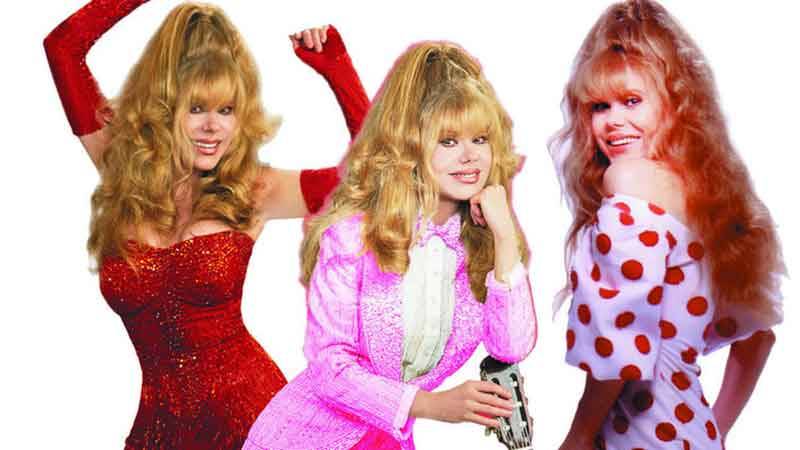
"caption": "Guitarist, singer, comedienne and all-around camp idol Charo performs in San Francisco this weekend.",
"description": "Guitarist, singer, comedienne and all-around camp idol Charo performs in San Francisco this weekend.",
"title": "Charo",
"credit": "artist photo",
"status": "inherit",
"isLoading": false,
"fetchFailed": false
},
"arts_13866554": {
"type": "attachments",
"id": "arts_13866554",
"meta": {
"index": "attachments_1716263798",
"site": "arts",
"id": "13866554",
"found": true
},
"parent": 13866549,
"imgSizes": {
"twentyfourteen-full-width": {
"file": "https://ww2.kqed.org/app/uploads/sites/2/2019/09/Boy-Scouts-Photo-Credit-Rachel-McCord-7-1038x576.gif",
"width": 1038,
"mimeType": "image/gif",
"height": 576
},
"thumbnail": {
"file": "https://ww2.kqed.org/app/uploads/sites/2/2019/09/Boy-Scouts-Photo-Credit-Rachel-McCord-7-160x107.gif",
"width": 160,
"mimeType": "image/gif",
"height": 107
},
"post-thumbnail": {
"file": "https://ww2.kqed.org/app/uploads/sites/2/2019/09/Boy-Scouts-Photo-Credit-Rachel-McCord-7-672x372.gif",
"width": 672,
"mimeType": "image/gif",
"height": 372
},
"kqedFullSize": {
"file": "https://ww2.kqed.org/app/uploads/sites/2/2019/09/Boy-Scouts-Photo-Credit-Rachel-McCord-7.gif",
"width": 1920,
"height": 1280
},
"large": {
"file": "https://ww2.kqed.org/app/uploads/sites/2/2019/09/Boy-Scouts-Photo-Credit-Rachel-McCord-7-1020x680.gif",
"width": 1020,
"mimeType": "image/gif",
"height": 680
},
"complete_open_graph": {
"file": "https://ww2.kqed.org/app/uploads/sites/2/2019/09/Boy-Scouts-Photo-Credit-Rachel-McCord-7-1200x800.gif",
"width": 1200,
"mimeType": "image/gif",
"height": 800
},
"full-width": {
"file": "https://ww2.kqed.org/app/uploads/sites/2/2019/09/Boy-Scouts-Photo-Credit-Rachel-McCord-7-1920x1280.gif",
"width": 1920,
"mimeType": "image/gif",
"height": 1280
},
"medium": {
"file": "https://ww2.kqed.org/app/uploads/sites/2/2019/09/Boy-Scouts-Photo-Credit-Rachel-McCord-7-800x533.gif",
"width": 800,
"mimeType": "image/gif",
"height": 533
},
"medium_large": {
"file": "https://ww2.kqed.org/app/uploads/sites/2/2019/09/Boy-Scouts-Photo-Credit-Rachel-McCord-7-768x512.gif",
"width": 768,
"mimeType": "image/gif",
"height": 512
}
},
"publishDate": 1568749658,
"modified": 1568749719,
"caption": "Boy Scouts, led by Taylor Vick (center), celebrate the release of 'Free Company' Thursday, Oct. 10 at Starline Social Club.",
"description": "Boy Scouts, led by Taylor Vick (center), celebrate the release of 'Free Company' Thursday, Oct. 10 at Starline Social Club.",
"title": "Boy Scouts, led by Taylor Vick (center), celebrate the release of 'Free Company' Thursday, Oct. 10 at Starline Social Club.",
"credit": "Rachel McCord/Courtesy ANTI-",
"status": "inherit",
"isLoading": false,
"fetchFailed": false
},
"arts_13866627": {
"type": "attachments",
"id": "arts_13866627",
"meta": {
"index": "attachments_1716263798",
"site": "arts",
"id": "13866627",
"found": true
},
"parent": 13866382,
"imgSizes": {
"twentyfourteen-full-width": {
"file": "https://ww2.kqed.org/app/uploads/sites/2/2019/09/CAM_SONY_08_29_1743444-1038x576.jpg",
"width": 1038,
"mimeType": "image/jpeg",
"height": 576
},
"thumbnail": {
"file": "https://ww2.kqed.org/app/uploads/sites/2/2019/09/CAM_SONY_08_29_1743444-160x107.jpg",
"width": 160,
"mimeType": "image/jpeg",
"height": 107
},
"post-thumbnail": {
"file": "https://ww2.kqed.org/app/uploads/sites/2/2019/09/CAM_SONY_08_29_1743444-672x372.jpg",
"width": 672,
"mimeType": "image/jpeg",
"height": 372
},
"kqedFullSize": {
"file": "https://ww2.kqed.org/app/uploads/sites/2/2019/09/CAM_SONY_08_29_1743444.jpg",
"width": 1920,
"height": 1280
},
"large": {
"file": "https://ww2.kqed.org/app/uploads/sites/2/2019/09/CAM_SONY_08_29_1743444-1020x680.jpg",
"width": 1020,
"mimeType": "image/jpeg",
"height": 680
},
"complete_open_graph": {
"file": "https://ww2.kqed.org/app/uploads/sites/2/2019/09/CAM_SONY_08_29_1743444-1200x800.jpg",
"width": 1200,
"mimeType": "image/jpeg",
"height": 800
},
"full-width": {
"file": "https://ww2.kqed.org/app/uploads/sites/2/2019/09/CAM_SONY_08_29_1743444-1920x1280.jpg",
"width": 1920,
"mimeType": "image/jpeg",
"height": 1280
},
"medium": {
"file": "https://ww2.kqed.org/app/uploads/sites/2/2019/09/CAM_SONY_08_29_1743444-800x533.jpg",
"width": 800,
"mimeType": "image/jpeg",
"height": 533
},
"medium_large": {
"file": "https://ww2.kqed.org/app/uploads/sites/2/2019/09/CAM_SONY_08_29_1743444-768x512.jpg",
"width": 768,
"mimeType": "image/jpeg",
"height": 512
}
},
"publishDate": 1568835018,
"modified": 1568837130,
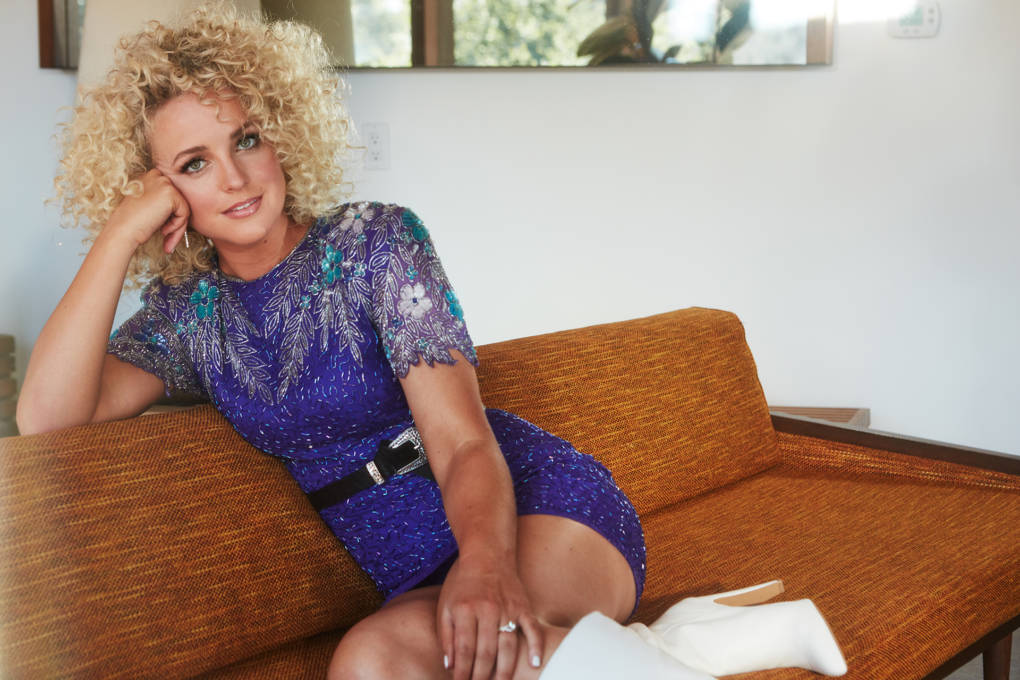
"caption": "Raised in the East Bay, Cam worked in psychology research before emerging as a platinum-selling country singer known for her thoughtful, perceptive lyricism. ",
"description": "Raised in the East Bay, Cam worked in psychology research before emerging as a platinum-selling country singer known for her thoughtful, perceptive lyricism. ",
"title": "CAM_SONY_08_29_1743444",
"credit": "Sony Music Entertainment",
"status": "inherit",
"isLoading": false,
"fetchFailed": false
},
"arts_13866553": {
"type": "attachments",
"id": "arts_13866553",
"meta": {
"index": "attachments_1716263798",
"site": "arts",
"id": "13866553",
"found": true
},
"parent": 13866256,
"imgSizes": {
"thumbnail": {
"file": "https://ww2.kqed.org/app/uploads/sites/2/2019/09/aerosmith-run-dmc-rico-nasty-160x90.jpg",
"width": 160,
"mimeType": "image/jpeg",
"height": 90
},
"post-thumbnail": {
"file": "https://ww2.kqed.org/app/uploads/sites/2/2019/09/aerosmith-run-dmc-rico-nasty-672x372.jpg",
"width": 672,
"mimeType": "image/jpeg",
"height": 372
},
"kqedFullSize": {
"file": "https://ww2.kqed.org/app/uploads/sites/2/2019/09/aerosmith-run-dmc-rico-nasty.jpg",
"width": 800,
"height": 450
},
"medium": {
"file": "https://ww2.kqed.org/app/uploads/sites/2/2019/09/aerosmith-run-dmc-rico-nasty-800x450.jpg",
"width": 800,
"mimeType": "image/jpeg",
"height": 450
},
"medium_large": {
"file": "https://ww2.kqed.org/app/uploads/sites/2/2019/09/aerosmith-run-dmc-rico-nasty-768x432.jpg",
"width": 768,
"mimeType": "image/jpeg",
"height": 432
}
},
"publishDate": 1568749579,
"modified": 1568749913,
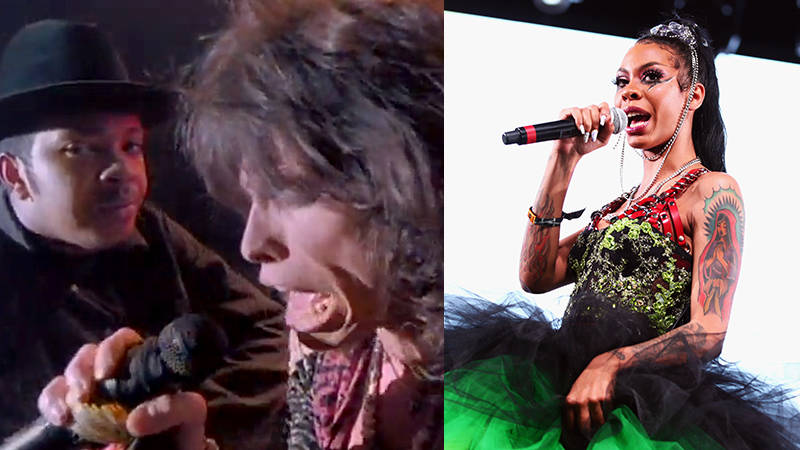
"caption": "Left: A still from Aerosmith and Run-D.M.C.'s \"Walk This Way\" music video. Right: Rico Nasty performs at Coachella 2019.",
"description": "Left: A still from Aerosmith and Run-D.M.C.'s \"Walk This Way\" music video. Right: Rico Nasty performs at Coachella 2019.",
"title": "aerosmith-run-dmc-rico-nasty",
"credit": "Def Jam via YouTube/Right: Rich Fury/Getty Images for Coachella",
"status": "inherit",
"isLoading": false,
"fetchFailed": false
},
"arts_13866536": {
"type": "attachments",
"id": "arts_13866536",
"meta": {
"index": "attachments_1716263798",
"site": "arts",
"id": "13866536",
"found": true
},
"parent": 13866535,
"imgSizes": {
"thumbnail": {
"file": "https://ww2.kqed.org/app/uploads/sites/2/2019/09/mandymoore_wide-6813517fb84da47154666e097f6ddbc19317e624-160x90.jpg",
"width": 160,
"mimeType": "image/jpeg",
"height": 90
},
"post-thumbnail": {
"file": "https://ww2.kqed.org/app/uploads/sites/2/2019/09/mandymoore_wide-6813517fb84da47154666e097f6ddbc19317e624-672x372.jpg",
"width": 672,
"mimeType": "image/jpeg",
"height": 372
},
"kqedFullSize": {
"file": "https://ww2.kqed.org/app/uploads/sites/2/2019/09/mandymoore_wide-6813517fb84da47154666e097f6ddbc19317e624.jpg",
"width": 902,
"height": 507
},
"medium": {
"file": "https://ww2.kqed.org/app/uploads/sites/2/2019/09/mandymoore_wide-6813517fb84da47154666e097f6ddbc19317e624-800x450.jpg",
"width": 800,
"mimeType": "image/jpeg",
"height": 450
},
"medium_large": {
"file": "https://ww2.kqed.org/app/uploads/sites/2/2019/09/mandymoore_wide-6813517fb84da47154666e097f6ddbc19317e624-768x432.jpg",
"width": 768,
"mimeType": "image/jpeg",
"height": 432
}
},
"publishDate": 1568743181,
"modified": 1568743486,
"caption": "Mandy Moore in the video for \"When I Wasn't Watching.\"",
"description": "Mandy Moore in the video for \"When I Wasn't Watching.\"",
"title": "Mandy Moore in the video for \"When I Wasn't Watching.\"",
"credit": null,
"status": "inherit",
"isLoading": false,
"fetchFailed": false
},
"arts_13866519": {
"type": "attachments",
"id": "arts_13866519",
"meta": {
"index": "attachments_1716263798",
"site": "arts",
"id": "13866519",
"found": true
},
"parent": 13866441,
"imgSizes": {
"thumbnail": {
"file": "https://ww2.kqed.org/app/uploads/sites/2/2019/09/CountryMusic.Charley.Hank_2-160x90.jpg",
"width": 160,
"mimeType": "image/jpeg",
"height": 90
},
"post-thumbnail": {
"file": "https://ww2.kqed.org/app/uploads/sites/2/2019/09/CountryMusic.Charley.Hank_2-672x372.jpg",
"width": 672,
"mimeType": "image/jpeg",
"height": 372
},
"kqedFullSize": {
"file": "https://ww2.kqed.org/app/uploads/sites/2/2019/09/CountryMusic.Charley.Hank_2.jpg",
"width": 1020,
"height": 574
},
"large": {
"file": "https://ww2.kqed.org/app/uploads/sites/2/2019/09/CountryMusic.Charley.Hank_2-1020x574.jpg",
"width": 1020,
"mimeType": "image/jpeg",
"height": 574
},
"medium": {
"file": "https://ww2.kqed.org/app/uploads/sites/2/2019/09/CountryMusic.Charley.Hank_2-800x450.jpg",
"width": 800,
"mimeType": "image/jpeg",
"height": 450
},
"medium_large": {
"file": "https://ww2.kqed.org/app/uploads/sites/2/2019/09/CountryMusic.Charley.Hank_2-768x432.jpg",
"width": 768,
"mimeType": "image/jpeg",
"height": 432
}
},
"publishDate": 1568694612,
"modified": 1568694627,
"caption": "Hank Williams, Jr. and Charley Pride (L–R) both appear in Ken Burns' new documentary, 'Country Music.' Like many country stars, Williams' famous father learned from black musicians; Pride, however, remains one of the very few black stars in the music's history. ",
"description": "Hank Williams, Jr. and Charley Pride (L–R) both appear in Ken Burns' new documentary, 'Country Music.' Like many country stars, Williams' famous father learned from black musicians; Pride, however, remains one of the very few black stars in the music's history. ",
"title": "CountryMusic.Charley.Hank_2",
"credit": "Chip Somodevilla / Erika Goldring / Getty Images",
"status": "inherit",
"isLoading": false,
"fetchFailed": false
},
"arts_13866502": {
"type": "attachments",
"id": "arts_13866502",
"meta": {
"index": "attachments_1716263798",
"site": "arts",
"id": "13866502",
"found": true
},
"parent": 13866501,
"imgSizes": {
"twentyfourteen-full-width": {
"file": "https://ww2.kqed.org/app/uploads/sites/2/2019/09/gettyimages-946374960-47ffa8d08d6856cee76a44935e9f2e6749be336b-1016x576.jpg",
"width": 1016,
"mimeType": "image/jpeg",
"height": 576
},
"thumbnail": {
"file": "https://ww2.kqed.org/app/uploads/sites/2/2019/09/gettyimages-946374960-47ffa8d08d6856cee76a44935e9f2e6749be336b-160x120.jpg",
"width": 160,
"mimeType": "image/jpeg",
"height": 120
},
"post-thumbnail": {
"file": "https://ww2.kqed.org/app/uploads/sites/2/2019/09/gettyimages-946374960-47ffa8d08d6856cee76a44935e9f2e6749be336b-672x372.jpg",
"width": 672,
"mimeType": "image/jpeg",
"height": 372
},
"kqedFullSize": {
"file": "https://ww2.kqed.org/app/uploads/sites/2/2019/09/gettyimages-946374960-47ffa8d08d6856cee76a44935e9f2e6749be336b.jpg",
"width": 1016,
"height": 762
},
"medium": {
"file": "https://ww2.kqed.org/app/uploads/sites/2/2019/09/gettyimages-946374960-47ffa8d08d6856cee76a44935e9f2e6749be336b-800x600.jpg",
"width": 800,
"mimeType": "image/jpeg",
"height": 600
},
"medium_large": {
"file": "https://ww2.kqed.org/app/uploads/sites/2/2019/09/gettyimages-946374960-47ffa8d08d6856cee76a44935e9f2e6749be336b-768x576.jpg",
"width": 768,
"mimeType": "image/jpeg",
"height": 576
}
},
"publishDate": 1568668260,
"modified": 1568668441,
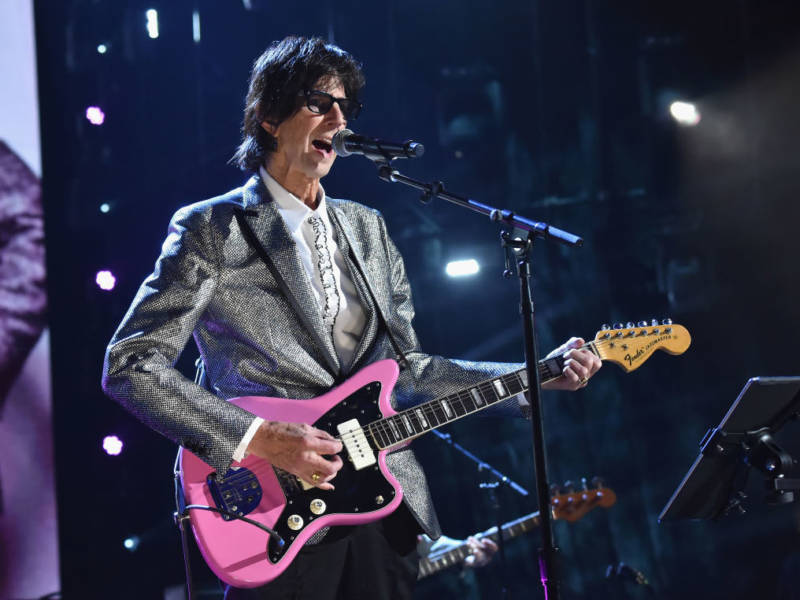
"caption": "Ric Ocasek of The Cars, performing at the group's induction ceremony into the Rock & Roll Hall of Fame in 2018. Ocasek died Sunday.",
"description": "Ric Ocasek of The Cars, performing at the group's induction ceremony into the Rock",
"title": "Ric Ocasek of The Cars, performing at the group's induction ceremony into the Rock & Roll Hall of Fame in 2018. Ocasek died Sunday.",
"credit": "Kevin Mazur/Getty Images For the Rock & Roll Hall of Fame",
"status": "inherit",
"isLoading": false,
"fetchFailed": false
},
"arts_13866287": {
"type": "attachments",
"id": "arts_13866287",
"meta": {
"index": "attachments_1716263798",
"site": "arts",
"id": "13866287",
"found": true
},
"parent": 13866270,
"imgSizes": {
"twentyfourteen-full-width": {
"file": "https://ww2.kqed.org/app/uploads/sites/2/2019/09/desolation_center_copy-1038x576.jpg",
"width": 1038,
"mimeType": "image/jpeg",
"height": 576
},
"thumbnail": {
"file": "https://ww2.kqed.org/app/uploads/sites/2/2019/09/desolation_center_copy-160x90.jpg",
"width": 160,
"mimeType": "image/jpeg",
"height": 90
},
"post-thumbnail": {
"file": "https://ww2.kqed.org/app/uploads/sites/2/2019/09/desolation_center_copy-672x372.jpg",
"width": 672,
"mimeType": "image/jpeg",
"height": 372
},
"kqedFullSize": {
"file": "https://ww2.kqed.org/app/uploads/sites/2/2019/09/desolation_center_copy.jpg",
"width": 1296,
"height": 730
},
"large": {
"file": "https://ww2.kqed.org/app/uploads/sites/2/2019/09/desolation_center_copy-1020x575.jpg",
"width": 1020,
"mimeType": "image/jpeg",
"height": 575
},
"complete_open_graph": {
"file": "https://ww2.kqed.org/app/uploads/sites/2/2019/09/desolation_center_copy-1200x676.jpg",
"width": 1200,
"mimeType": "image/jpeg",
"height": 676
},
"medium": {
"file": "https://ww2.kqed.org/app/uploads/sites/2/2019/09/desolation_center_copy-800x451.jpg",
"width": 800,
"mimeType": "image/jpeg",
"height": 451
},
"medium_large": {
"file": "https://ww2.kqed.org/app/uploads/sites/2/2019/09/desolation_center_copy-768x433.jpg",
"width": 768,
"mimeType": "image/jpeg",
"height": 433
}
},
"publishDate": 1568317965,
"modified": 1568318226,
"caption": "Anarchy reigning, in 'Desolation Center.'",
"description": "Anarchy reigning, in 'Desolation Center.'",
"title": "Anarchy reigning, in 'Desolation Center.'",
"credit": null,
"status": "inherit",
"isLoading": false,
"fetchFailed": false
},
"arts_13866386": {
"type": "attachments",
"id": "arts_13866386",
"meta": {
"index": "attachments_1716263798",
"site": "arts",
"id": "13866386",
"found": true
},
"parent": 13866378,
"imgSizes": {
"twentyfourteen-full-width": {
"file": "https://ww2.kqed.org/app/uploads/sites/2/2019/09/GettyImages-912018124-1038x576.jpg",
"width": 1038,
"mimeType": "image/jpeg",
"height": 576
},
"thumbnail": {
"file": "https://ww2.kqed.org/app/uploads/sites/2/2019/09/GettyImages-912018124-160x101.jpg",
"width": 160,
"mimeType": "image/jpeg",
"height": 101
},
"post-thumbnail": {
"file": "https://ww2.kqed.org/app/uploads/sites/2/2019/09/GettyImages-912018124-672x372.jpg",
"width": 672,
"mimeType": "image/jpeg",
"height": 372
},
"kqedFullSize": {
"file": "https://ww2.kqed.org/app/uploads/sites/2/2019/09/GettyImages-912018124.jpg",
"width": 2048,
"height": 1292
},
"large": {
"file": "https://ww2.kqed.org/app/uploads/sites/2/2019/09/GettyImages-912018124-1020x643.jpg",
"width": 1020,
"mimeType": "image/jpeg",
"height": 643
},
"complete_open_graph": {
"file": "https://ww2.kqed.org/app/uploads/sites/2/2019/09/GettyImages-912018124-1200x757.jpg",
"width": 1200,
"mimeType": "image/jpeg",
"height": 757
},
"full-width": {
"file": "https://ww2.kqed.org/app/uploads/sites/2/2019/09/GettyImages-912018124-1920x1211.jpg",
"width": 1920,
"mimeType": "image/jpeg",
"height": 1211
},
"medium": {
"file": "https://ww2.kqed.org/app/uploads/sites/2/2019/09/GettyImages-912018124-800x505.jpg",
"width": 800,
"mimeType": "image/jpeg",
"height": 505
},
"medium_large": {
"file": "https://ww2.kqed.org/app/uploads/sites/2/2019/09/GettyImages-912018124-768x484.jpg",
"width": 768,
"mimeType": "image/jpeg",
"height": 484
}
},
"publishDate": 1568414441,
"modified": 1568414563,
"caption": "October 2, 2019 marks the 150th anniversary of Mahatma Gandhi's birth. Revered in India and beyond, he's the subject of a thoughtful and provocative musical by the Silicon Valley based theater company Naatak. ",
"description": "October 2, 2019 marks the 150th anniversary of Mahatma Gandhi's birth. Revered in India and beyond, he's the subject of a thoughtful and provocative musical by the Silicon Valley based theater company Naatak. ",
"title": "TOPSHOT-INDIA-POLITICS-GANDHI",
"credit": "Photo: Courtesy of ARUN SANKAR/AFP/Getty Images",
"status": "inherit",
"isLoading": false,
"fetchFailed": false
},
"arts_13866340": {
"type": "attachments",
"id": "arts_13866340",
"meta": {
"index": "attachments_1716263798",
"site": "arts",
"id": "13866340",
"found": true
},
"parent": 13866339,
"imgSizes": {
"twentyfourteen-full-width": {
"file": "https://ww2.kqed.org/app/uploads/sites/2/2019/09/gettyimages-52438079-f23a3998f6e7cecf08cff5268ebed3ab8c5f52cb-1038x576.jpg",
"width": 1038,
"mimeType": "image/jpeg",
"height": 576
},
"thumbnail": {
"file": "https://ww2.kqed.org/app/uploads/sites/2/2019/09/gettyimages-52438079-f23a3998f6e7cecf08cff5268ebed3ab8c5f52cb-160x120.jpg",
"width": 160,
"mimeType": "image/jpeg",
"height": 120
},
"post-thumbnail": {
"file": "https://ww2.kqed.org/app/uploads/sites/2/2019/09/gettyimages-52438079-f23a3998f6e7cecf08cff5268ebed3ab8c5f52cb-672x372.jpg",
"width": 672,
"mimeType": "image/jpeg",
"height": 372
},
"kqedFullSize": {
"file": "https://ww2.kqed.org/app/uploads/sites/2/2019/09/gettyimages-52438079-f23a3998f6e7cecf08cff5268ebed3ab8c5f52cb-e1568334982171.jpg",
"width": 1920,
"height": 1440
},
"large": {
"file": "https://ww2.kqed.org/app/uploads/sites/2/2019/09/gettyimages-52438079-f23a3998f6e7cecf08cff5268ebed3ab8c5f52cb-1020x765.jpg",
"width": 1020,
"mimeType": "image/jpeg",
"height": 765
},
"complete_open_graph": {
"file": "https://ww2.kqed.org/app/uploads/sites/2/2019/09/gettyimages-52438079-f23a3998f6e7cecf08cff5268ebed3ab8c5f52cb-1200x900.jpg",
"width": 1200,
"mimeType": "image/jpeg",
"height": 900
},
"full-width": {
"file": "https://ww2.kqed.org/app/uploads/sites/2/2019/09/gettyimages-52438079-f23a3998f6e7cecf08cff5268ebed3ab8c5f52cb-1920x1440.jpg",
"width": 1920,
"mimeType": "image/jpeg",
"height": 1440
},
"medium": {
"file": "https://ww2.kqed.org/app/uploads/sites/2/2019/09/gettyimages-52438079-f23a3998f6e7cecf08cff5268ebed3ab8c5f52cb-800x600.jpg",
"width": 800,
"mimeType": "image/jpeg",
"height": 600
},
"medium_large": {
"file": "https://ww2.kqed.org/app/uploads/sites/2/2019/09/gettyimages-52438079-f23a3998f6e7cecf08cff5268ebed3ab8c5f52cb-768x576.jpg",
"width": 768,
"mimeType": "image/jpeg",
"height": 576
}
},
"publishDate": 1568333048,
"modified": 1568334974,
"caption": "Singer, songwriter and visual artist Daniel Johnston performs in Austin, Texas, in 2005. Johnston died on Wednesday.",
"description": "Singer, songwriter and visual artist Daniel Johnston performs in Austin, Texas, in 2005. Johnston died on Wednesday.",
"title": "Singer, songwriter and visual artist Daniel Johnston performs in Austin, Texas, in 2005. Johnston died on Wednesday.",
"credit": "Jana Birchum/Getty Images",
"status": "inherit",
"isLoading": false,
"fetchFailed": false
},
"arts_13850489": {
"type": "attachments",
"id": "arts_13850489",
"meta": {
"index": "attachments_1716263798",
"site": "arts",
"id": "13850489",
"found": true
},
"parent": 13850458,
"imgSizes": {
"twentyfourteen-full-width": {
"file": "https://ww2.kqed.org/app/uploads/sites/2/2019/02/GettyImages-1097571910-1038x576.jpg",
"width": 1038,
"mimeType": "image/jpeg",
"height": 576
},
"thumbnail": {
"file": "https://ww2.kqed.org/app/uploads/sites/2/2019/02/GettyImages-1097571910-160x90.jpg",
"width": 160,
"mimeType": "image/jpeg",
"height": 90
},
"post-thumbnail": {
"file": "https://ww2.kqed.org/app/uploads/sites/2/2019/02/GettyImages-1097571910-672x372.jpg",
"width": 672,
"mimeType": "image/jpeg",
"height": 372
},
"kqedFullSize": {
"file": "https://ww2.kqed.org/app/uploads/sites/2/2019/02/GettyImages-1097571910.jpg",
"width": 2048,
"height": 1152
},
"large": {
"file": "https://ww2.kqed.org/app/uploads/sites/2/2019/02/GettyImages-1097571910-1020x574.jpg",
"width": 1020,
"mimeType": "image/jpeg",
"height": 574
},
"complete_open_graph": {
"file": "https://ww2.kqed.org/app/uploads/sites/2/2019/02/GettyImages-1097571910-1200x675.jpg",
"width": 1200,
"mimeType": "image/jpeg",
"height": 675
},
"guest-author-50": {
"file": "https://ww2.kqed.org/app/uploads/sites/2/2019/02/GettyImages-1097571910-50x50.jpg",
"width": 50,
"mimeType": "image/jpeg",
"height": 50
},
"guest-author-96": {
"file": "https://ww2.kqed.org/app/uploads/sites/2/2019/02/GettyImages-1097571910-96x96.jpg",
"width": 96,
"mimeType": "image/jpeg",
"height": 96
},
"medium": {
"file": "https://ww2.kqed.org/app/uploads/sites/2/2019/02/GettyImages-1097571910-800x450.jpg",
"width": 800,
"mimeType": "image/jpeg",
"height": 450
},
"guest-author-64": {
"file": "https://ww2.kqed.org/app/uploads/sites/2/2019/02/GettyImages-1097571910-64x64.jpg",
"width": 64,
"mimeType": "image/jpeg",
"height": 64
},
"guest-author-32": {
"file": "https://ww2.kqed.org/app/uploads/sites/2/2019/02/GettyImages-1097571910-32x32.jpg",
"width": 32,
"mimeType": "image/jpeg",
"height": 32
},
"full-width": {
"file": "https://ww2.kqed.org/app/uploads/sites/2/2019/02/GettyImages-1097571910-1920x1080.jpg",
"width": 1920,
"mimeType": "image/jpeg",
"height": 1080
},
"detail": {
"file": "https://ww2.kqed.org/app/uploads/sites/2/2019/02/GettyImages-1097571910-150x150.jpg",
"width": 150,
"mimeType": "image/jpeg",
"height": 150
},
"medium_large": {
"file": "https://ww2.kqed.org/app/uploads/sites/2/2019/02/GettyImages-1097571910-768x432.jpg",
"width": 768,
"mimeType": "image/jpeg",
"height": 432
},
"guest-author-128": {
"file": "https://ww2.kqed.org/app/uploads/sites/2/2019/02/GettyImages-1097571910-128x128.jpg",
"width": 128,
"mimeType": "image/jpeg",
"height": 128
}
},
"publishDate": 1549852449,
"modified": 1549852490,
"caption": "H.E.R. performs onstage during the 61st Annual GRAMMY Awards at Staples Center on February 10, 2019 in Los Angeles, California. ",
"description": "H.E.R. performs onstage during the 61st Annual GRAMMY Awards at Staples Center on February 10, 2019 in Los Angeles, California. ",
"title": "61st Annual GRAMMY Awards - Inside",
"credit": "Kevin Winter/Getty Images for The Recording Academy)",
"status": "inherit",
"isLoading": false,
"fetchFailed": false
}
},
"audioPlayerReducer": {
"postId": "stream_live",
"isPaused": true,
"isPlaying": false,
"pfsActive": false,
"pledgeModalIsOpen": true,
"playerDrawerIsOpen": false,
"liveAudioPlayStartedAt": 0,
"liveAudioPlayContext": ""
},
"authorsReducer": {
"byline_arts_13866256": {
"type": "authors",
"id": "byline_arts_13866256",
"meta": {
"override": true
},
"slug": "byline_arts_13866256",
"name": "Brooklyn White",
"isLoading": false
},
"byline_arts_13866535": {
"type": "authors",
"id": "byline_arts_13866535",
"meta": {
"override": true
},
"slug": "byline_arts_13866535",
"name": "Lars Gotrich",
"isLoading": false
},
"byline_arts_13866501": {
"type": "authors",
"id": "byline_arts_13866501",
"meta": {
"override": true
},
"slug": "byline_arts_13866501",
"name": "Anastasia Tsioulcas",
"isLoading": false
},
"byline_arts_13866339": {
"type": "authors",
"id": "byline_arts_13866339",
"meta": {
"override": true
},
"slug": "byline_arts_13866339",
"name": "Anastasia Tsioulcas",
"isLoading": false
},
"gmeline": {
"type": "authors",
"id": "185",
"meta": {
"index": "authors_1716337520",
"id": "185",
"found": true
},
"name": "Gabe Meline",
"firstName": "Gabe",
"lastName": "Meline",
"slug": "gmeline",
"email": "gmeline@kqed.org",
"display_author_email": true,
"staff_mastheads": [
"arts"
],
"title": "Senior Editor, KQED Arts & Culture",
"bio": "Gabe Meline entered journalism at age 15 making photocopied zines, and has since earned awards from the Edward R. Murrow Awards, the Society for Professional Journalists, the Online Journalism Awards, the Association of Alternative Newsweeklies and the California Newspaper Publishers Association. Prior to KQED, he was the editor of the \u003cem>North Bay Bohemian\u003c/em> and a touring musician. He lives with his wife and daughter in his hometown of Santa Rosa, CA.",
"avatar": "https://secure.gravatar.com/avatar/5bebe57be0d8bc2dd318934feb47299e2d2d10cba28d09d8d7afb389a2ce2bdd?s=600&d=blank&r=g",
"twitter": null,
"bluesky": null,
"facebook": null,
"instagram": null,
"linkedin": null,
"sites": [
{
"site": "",
"roles": [
"editor"
]
},
{
"site": "arts",
"roles": [
"administrator"
]
},
{
"site": "artschool",
"roles": [
"editor"
]
},
{
"site": "news",
"roles": [
"author"
]
},
{
"site": "pop",
"roles": [
"editor"
]
},
{
"site": "bayareabites",
"roles": [
"editor"
]
},
{
"site": "food",
"roles": [
"editor"
]
},
{
"site": "forum",
"roles": [
"administrator"
]
},
{
"site": "liveblog",
"roles": [
"editor"
]
},
{
"site": "hiphop",
"roles": [
"editor"
]
}
],
"headData": {
"title": "Gabe Meline | KQED",
"description": "Senior Editor, KQED Arts & Culture",
"ogImgSrc": "https://secure.gravatar.com/avatar/5bebe57be0d8bc2dd318934feb47299e2d2d10cba28d09d8d7afb389a2ce2bdd?s=600&d=blank&r=g",
"twImgSrc": "https://secure.gravatar.com/avatar/5bebe57be0d8bc2dd318934feb47299e2d2d10cba28d09d8d7afb389a2ce2bdd?s=600&d=blank&r=g"
},
"isLoading": false,
"link": "/author/gmeline"
},
"rachael-myrow": {
"type": "authors",
"id": "251",
"meta": {
"index": "authors_1716337520",
"id": "251",
"found": true
},
"name": "Rachael Myrow",
"firstName": "Rachael",
"lastName": "Myrow",
"slug": "rachael-myrow",
"email": "rmyrow@kqed.org",
"display_author_email": true,
"staff_mastheads": [
"news"
],
"title": "Senior Editor of KQED's Silicon Valley News Desk",
"bio": "• I write and edit stories about how Silicon Valley power and policies shape everyday life in California. I’m also passionate about making Bay Area history and culture more accessible to a broad public. • I’ve been a journalist for most of my life, starting in high school with The Franklin Press in Los Angeles, where I grew up. While earning my first degree in English at UC Berkeley, I got my start in public radio at KALX-FM. After completing a second degree in journalism at Cal, I landed my first professional job at Marketplace, then moved on to KPCC (now LAist), and then KQED, where I hosted The California Report for more than seven years. • My reporting has appeared on NPR, The World, WBUR’s \u003ci>Here & Now\u003c/i>, and the BBC. I also guest host for KQED’s \u003ci>Forum\u003c/i>, as well as the Commonwealth Club in San Francisco. • I speak periodically on media, democracy and technology issues, and do voiceover work for documentaries and educational video projects. • Outside of the studio, you'll find me hiking Bay Area trails and whipping up Insta-ready meals in my kitchen. • I do not accept gifts, money, or favors from anyone connected to my reporting, I don't pay people for information, and I do not support or donate to political causes. • I strive to treat the people I report on with fairness, honesty, and respect. I also recognize there are often multiple sides to a story and work to verify information through multiple sources and documentation. If I get something wrong, I correct it.",
"avatar": "https://secure.gravatar.com/avatar/3ed8a3c5f26025e4a805ba634cda8cd764906b97438a6d9ce216b044e340da4e?s=600&d=blank&r=g",
"twitter": "rachaelmyrow",
"bluesky": null,
"facebook": null,
"instagram": null,
"linkedin": "https://www.linkedin.com/in/rachaelmyrow/",
"sites": [
{
"site": "arts",
"roles": [
"administrator"
]
},
{
"site": "news",
"roles": [
"edit_others_posts",
"editor"
]
},
{
"site": "futureofyou",
"roles": [
"editor"
]
},
{
"site": "bayareabites",
"roles": [
"editor"
]
},
{
"site": "stateofhealth",
"roles": [
"editor"
]
},
{
"site": "science",
"roles": [
"editor"
]
},
{
"site": "food",
"roles": [
"editor"
]
},
{
"site": "forum",
"roles": [
"editor"
]
},
{
"site": "liveblog",
"roles": [
"author"
]
}
],
"headData": {
"title": "Rachael Myrow | KQED",
"description": "Senior Editor of KQED's Silicon Valley News Desk",
"ogImgSrc": "https://secure.gravatar.com/avatar/3ed8a3c5f26025e4a805ba634cda8cd764906b97438a6d9ce216b044e340da4e?s=600&d=blank&r=g",
"twImgSrc": "https://secure.gravatar.com/avatar/3ed8a3c5f26025e4a805ba634cda8cd764906b97438a6d9ce216b044e340da4e?s=600&d=blank&r=g"
},
"isLoading": false,
"link": "/author/rachael-myrow"
},
"slefebvre": {
"type": "authors",
"id": "11091",
"meta": {
"index": "authors_1716337520",
"id": "11091",
"found": true
},
"name": "Sam Lefebvre",
"firstName": "Sam",
"lastName": "Lefebvre",
"slug": "slefebvre",
"email": "sdlefebvre@gmail.com",
"display_author_email": false,
"staff_mastheads": [],
"title": "KQED Contributor",
"bio": "Sam Lefebvre is an award-winning reporter at KQED Arts. He has worked as an editor and columnist at the \u003cem>East Bay Express\u003c/em>, \u003cem>SF Weekly \u003c/em>and Impose Magazine, and his journalism and criticism has appeared in \u003cem>The New York Times\u003c/em>, the Guardian and Pitchfork.",
"avatar": "https://secure.gravatar.com/avatar/49d39b42930b77fb13784ddd9fa63fe780666b71bf289368509dba576b64e69b?s=600&d=blank&r=g",
"twitter": "Lefebvre_Sam",
"bluesky": null,
"facebook": null,
"instagram": null,
"linkedin": null,
"sites": [
{
"site": "arts",
"roles": [
"subscriber"
]
},
{
"site": "news",
"roles": [
"author"
]
}
],
"headData": {
"title": "Sam Lefebvre | KQED",
"description": "KQED Contributor",
"ogImgSrc": "https://secure.gravatar.com/avatar/49d39b42930b77fb13784ddd9fa63fe780666b71bf289368509dba576b64e69b?s=600&d=blank&r=g",
"twImgSrc": "https://secure.gravatar.com/avatar/49d39b42930b77fb13784ddd9fa63fe780666b71bf289368509dba576b64e69b?s=600&d=blank&r=g"
},
"isLoading": false,
"link": "/author/slefebvre"
},
"ralexandra": {
"type": "authors",
"id": "11242",
"meta": {
"index": "authors_1716337520",
"id": "11242",
"found": true
},
"name": "Rae Alexandra",
"firstName": "Rae",
"lastName": "Alexandra",
"slug": "ralexandra",
"email": "ralexandra@kqed.org",
"display_author_email": true,
"staff_mastheads": [],
"title": "Reporter/Producer",
"bio": "Rae Alexandra is a Reporter/Producer for KQED Arts & Culture, and the creator/author of the \u003ca href=\"https://www.kqed.org/arts/program/rebel-girls-from-bay-area-history\">Rebel Girls From Bay Area History\u003c/a> and \u003ca href=\"https://www.kqed.org/bizarrebayarea\">Bizarre Bay Area\u003c/a> series. Her debut book, \u003ca href=\"https://citylights.com/politics-current-events-history/unsung-heroines35-women-who-changed/\">Unsung Heroines: 35 Women Who Changed the Bay Area\u003c/a> was published by City Lights in March 2026. In 2023, Rae was awarded an SPJ Excellence in Journalism Award for Arts & Culture. Rae was born and raised in Wales and subsequently — even after two decades in Northern California — still uses phrases that regularly baffle her coworkers.",
"avatar": "https://secure.gravatar.com/avatar/edfee8176c80cc0a382b051190f5341997df378a934a5774dcb0977732dfd401?s=600&d=blank&r=g",
"twitter": null,
"bluesky": null,
"facebook": null,
"instagram": null,
"linkedin": null,
"sites": [
{
"site": "arts",
"roles": [
"subscriber"
]
},
{
"site": "news",
"roles": [
"subscriber"
]
},
{
"site": "pop",
"roles": [
"subscriber"
]
},
{
"site": "bayareabites",
"roles": [
"subscriber"
]
},
{
"site": "science",
"roles": [
"subscriber"
]
}
],
"headData": {
"title": "Rae Alexandra | KQED",
"description": "Reporter/Producer",
"ogImgSrc": "https://secure.gravatar.com/avatar/edfee8176c80cc0a382b051190f5341997df378a934a5774dcb0977732dfd401?s=600&d=blank&r=g",
"twImgSrc": "https://secure.gravatar.com/avatar/edfee8176c80cc0a382b051190f5341997df378a934a5774dcb0977732dfd401?s=600&d=blank&r=g"
},
"isLoading": false,
"link": "/author/ralexandra"
},
"nvoynovskaya": {
"type": "authors",
"id": "11387",
"meta": {
"index": "authors_1716337520",
"id": "11387",
"found": true
},
"name": "Nastia Voynovskaya",
"firstName": "Nastia",
"lastName": "Voynovskaya",
"slug": "nvoynovskaya",
"email": "nvoynovskaya@kqed.org",
"display_author_email": false,
"staff_mastheads": [
"arts"
],
"title": "Editor and reporter",
"bio": "Nastia Voynovskaya is a reporter, editor and host at KQED Arts & Culture. She's been covering the arts in the Bay Area for over a decade, with a focus on music, queer culture, labor issues and grassroots organizing. She has edited KQED story series such as Trans Bay: A History of San Francisco's Gender-Diverse Community, and co-created KQED's Bay Area hip-hop history project, That's My Word. Nastia's work has been recognized by the Society of Professional Journalists and San Francisco Press Club. She regularly appears on podcasts and radio programs, including NPR's All Songs Considered, and hosts live events where music, culture and conversation meet.",
"avatar": "https://secure.gravatar.com/avatar/5025ee460e5a85d69ca20ea6c6f2f80d7e17795c828f61ea3aecfcd924e9042e?s=600&d=blank&r=g",
"twitter": null,
"bluesky": null,
"facebook": null,
"instagram": "https://www.instagram.com/nananastia/",
"linkedin": null,
"sites": [
{
"site": "",
"roles": [
"editor"
]
},
{
"site": "arts",
"roles": [
"administrator"
]
},
{
"site": "news",
"roles": [
"editor"
]
},
{
"site": "pop",
"roles": [
"administrator"
]
},
{
"site": "bayareabites",
"roles": [
"editor"
]
},
{
"site": "podcasts",
"roles": [
"editor"
]
},
{
"site": "hiphop",
"roles": [
"editor"
]
}
],
"headData": {
"title": "Nastia Voynovskaya | KQED",
"description": "Editor and reporter",
"ogImgSrc": "https://secure.gravatar.com/avatar/5025ee460e5a85d69ca20ea6c6f2f80d7e17795c828f61ea3aecfcd924e9042e?s=600&d=blank&r=g",
"twImgSrc": "https://secure.gravatar.com/avatar/5025ee460e5a85d69ca20ea6c6f2f80d7e17795c828f61ea3aecfcd924e9042e?s=600&d=blank&r=g"
},
"isLoading": false,
"link": "/author/nvoynovskaya"
}
},
"pagesReducer": {
"arts_category_music": {
"type": "terms",
"id": "arts_69",
"meta": {
"index": "terms_1716263798",
"site": "arts",
"id": "69",
"score": 10.851818
},
"featImg": null,
"name": "Music",
"description": null,
"taxonomy": "category",
"headData": {
"twImgId": null,
"twTitle": null,
"ogTitle": null,
"ogImgId": null,
"twDescription": null,
"description": null,
"title": "Music Archives | KQED Arts",
"ogDescription": null
},
"ttid": 70,
"slug": "music",
"isLoading": false,
"title": "Music",
"pageMeta": {
"site": "arts",
"WpPageTemplate": "page-topic-editorial",
"currentPage": 139
},
"blocks": [
{
"blockName": "kqed/post-list",
"attrs": {
"layout": "cardArticle2",
"query": "posts/arts?category=music",
"seeMore": false,
"paginated": true,
"page": 139
}
},
{
"blockName": "kqed/ad"
}
]
}
},
"pfsSessionReducer": {},
"postsReducer": {
"stream_live": {
"type": "live",
"id": "stream_live",
"audioUrl": "https://streams.kqed.org/kqedradio",
"title": "Live Stream",
"excerpt": "Live Stream information currently unavailable.",
"link": "/radio",
"featImg": "",
"label": {
"name": "KQED Live",
"link": "/"
}
},
"stream_kqedNewscast": {
"type": "posts",
"id": "stream_kqedNewscast",
"audioUrl": "https://www.kqed.org/.stream/anon/radio/RDnews/newscast.mp3?_=1",
"title": "KQED Newscast",
"featImg": "",
"label": {
"name": "88.5 FM",
"link": "/"
}
},
"arts_13866713": {
"type": "posts",
"id": "arts_13866713",
"meta": {
"index": "posts_1716263798",
"site": "arts",
"id": "13866713",
"score": null,
"sort": [
1568933636000
]
},
"parent": 0,
"labelTerm": {
"site": "arts"
},
"blocks": [],
"publishDate": 1568933636,
"format": "standard",
"title": "5 Must-See Bay Area Artists at Rolling Loud Oakland 2019",
"headTitle": "5 Must-See Bay Area Artists at Rolling Loud Oakland 2019 | KQED",
"content": "\u003cp>When \u003ca href=\"http://www.rollingloud.com/lineup\" target=\"_blank\" rel=\"noopener\">Rolling Loud\u003c/a> founders Tariq Cherif and Matt Zingler were looking to expand their Miami rap festival to other cities across the country, they were instantly drawn to the Bay Area.\u003c/p>\n\u003cp>“T\u003cspan style=\"font-weight: 400\">he Bay Area is really one of the most influential areas of the country when it comes to the history of hip-hop—more specifically when it comes to the independent hip-hop movement,” Cherif says in a recent phone interview. “E-40 and Mac Dre were pioneers of getting out there and doing it yourself.”\u003c/span>\u003c/p>\n\u003cp>In 2017, Rolling Loud made its Bay Area debut at Shoreline Ampitheater in Mountain View, drawing thousands of hip-hop fans. A triumphant comeback at the Oakland Coliseum in 2018 featured over a dozen local artists—including E-40, Kamaiyah, P-Lo and Mozzy—in a lineup stacked with major-label stars like Travis Scott, Young Thug and Pusha T.\u003c/p>\n\u003cp>This year, Rolling Loud is back at the Coliseum Sept. 28–29 with Oakland’s own G-Eazy headlining alongside Migos, Lil Uzi Vert and Future. His placement at the top tier of the rap pantheon is a huge deal for the Bay Area, which hadn’t seen a hip-hop artist hit that level of mainstream success since E-40 and Too $hort were all over the charts 10 years ago.\u003c/p>\n\u003cp>In addition to these headliners, Rolling Loud’s savvy curation juxtaposes party rockers with street poets, emo rap with hyphy and Gen Z upstarts with veterans. Highlights from the bill include Houston twerk queen Megan Thee Stallion, Atlanta gangster-turned-activist 21 Savage and Maryland nu-metal rapper Rico Nasty, as well as local favorites like Kamaiyah, Berner and Philthy Rich. With three stages, art installations, a skate park and a basketball court, the festival offers a lot to look forward to, including the five must-see Bay Area artists you’ll find below.\u003c/p>\n\u003cp>[ad fullwidth]\u003c/p>\n\u003cp>https://youtu.be/x5c2iRHlAHA\u003c/p>\n\u003cp>\u003cstrong>Saweetie\u003c/strong>\u003c/p>\n\u003cp>Long underestimated by the rap scene’s boys’ club, \u003ca href=\"https://soundcloud.com/saweetie\" target=\"_blank\" rel=\"noopener\">Saweetie\u003c/a> made the Bay Area’s 2019 song of the summer with “My Type,” a Petey Pablo-sampling dance floor anthem with X-rated lyrics. Things have only taken off from there for the Hayward- and Sacramento-raised rapper, with a debut clothing line that premiered at New York Fashion Week and collaborations with G-Eazy and City Girls. With tracks like “Icy Grl” and “Emotional,” Saweetie raps for fun-loving women who enjoy the finer things and aren’t afraid to express their sexuality.\u003c/p>\n\u003cp>https://youtu.be/I7-47-xgf0w\u003c/p>\n\u003cp>\u003cstrong>Rexx Life Raj\u003c/strong>\u003c/p>\n\u003cp>Berkeley’s \u003ca href=\"https://soundcloud.com/rexxliferaj\" target=\"_blank\" rel=\"noopener\">Rexx Life Raj\u003c/a> is a streetwise wordsmith with the voice of a gospel singer and the political awareness of a Black Panther. His low-key, contemplative rap has made him one of the freshest voices to come out of the Bay Area scene in recent years. After receiving rave reviews for his \u003cem>Father Figure 2: Flourish\u003c/em> (which made KQED Arts’ \u003ca href=\"https://www.kqed.org/arts/13817414/the-10-best-bay-area-albums-of-2017-rexx-life-raj-father-figure-2-flourish\" target=\"_blank\" rel=\"noopener\">top albums list in 2017\u003c/a>), he’s toured the country and worked with some promising up-and-coming producers, including Rico Nasty’s main collaborator Kenny Beats. Raj’s thoughtful lyrics will resonate with strivers trying to better themselves and level up their mindset.\u003c/p>\n\u003cp>https://youtu.be/FJVxiyiVflg\u003c/p>\n\u003cp>\u003cstrong>Nef the Pharaoh\u003c/strong>\u003c/p>\n\u003cp>Signed to E-40’s Sick Wid It Records, \u003ca href=\"https://soundcloud.com/nefidelaphante\" target=\"_blank\" rel=\"noopener\">Nef the Pharaoh\u003c/a> learned how to chart his path as an independent Bay Area artist from the best. While he made a splash with boastful tracks “Big Tymin” and “Bling Blaow,” beneath the surface of his discography are \u003ca href=\"https://www.kqed.org/arts/13838218/on-the-ranch-with-nef-the-pharaoh\" target=\"_blank\" rel=\"noopener\">thoughtful meditations\u003c/a> on loved ones lost too soon and the injustices of the criminal justice system. Regardless of his subject matter, Nef the Pharaoh is always brash and brutally honest, with clever lyrics that harness the hardness of the Bay Area’s mob music tradition.\u003c/p>\n\u003cp>https://youtu.be/EKZV3-wtmx8\u003c/p>\n\u003cp>\u003cstrong>Lil Kayla\u003c/strong>\u003c/p>\n\u003cp>\u003ca href=\"https://soundcloud.com/thereallilkayla\" target=\"_blank\" rel=\"noopener\">Lil Kayla\u003c/a> has been too underrated for too long. In her two-minute dispatches from San Francisco’s Sunnydale projects, she bites down like a pit bull, not letting up until she nails the target of her disdain with bars worthy of a rap battle. With tracks like 2015’s “Come Getcho” and this year’s “Like Sleeze,” Kayla demolishes men’s egos and bursts the bubbles of girls who buy into their empty promises. A student of Remy Ma and Lil Kim, Lil Kayla’s street-smart verses come with a side of cynical humor.\u003c/p>\n\u003cp>https://youtu.be/E82WG2Xrc3w\u003c/p>\n\u003cp>\u003cstrong>Derek King\u003c/strong>\u003c/p>\n\u003cp>\u003c/p>\n\u003cp>Though Antioch singer \u003ca href=\"https://soundcloud.com/derekkingonline\" target=\"_blank\" rel=\"noopener\">Derek King\u003c/a> was only four years old when Sisqo released his infamous “Thong Song,” King’s “Tetris” reworks its memorable beat (cue violins) into an R&Bass jam you didn’t know you needed on your playlist. Over the last few years, the Antioch artist perfected his club-friendly sound, collaborating with Sage the Gemini and Kirko Bangz when he was still a teen. Recently, King made a mark with solo singles like “Play,” which gives a P. Diddy sample a sleek, strip club-friendly makeover, and “Cappuccino,” which harks back to the dance floor-ready R&B of Usher and B2K.\u003c/p>\n\n",
"stats": {
"hasVideo": false,
"hasChartOrMap": false,
"hasAudio": false,
"hasPolis": false,
"wordCount": 898,
"hasGoogleForm": false,
"hasGallery": false,
"hasHearkenModule": false,
"iframeSrcs": [],
"paragraphCount": 17
},
"modified": 1705022118,
"excerpt": "In addition to G-Eazy, Migos and Megan Thee Stallion, the festival boasts plenty of local talent. ",
"headData": {
"twImgId": "",
"twTitle": "",
"ogTitle": "",
"ogImgId": "",
"twDescription": "",
"description": "In addition to G-Eazy, Migos and Megan Thee Stallion, the festival boasts plenty of local talent. ",
"title": "5 Must-See Bay Area Artists at Rolling Loud Oakland 2019 | KQED",
"ogDescription": "",
"schema": {
"@context": "https://schema.org",
"@type": "Article",
"headline": "5 Must-See Bay Area Artists at Rolling Loud Oakland 2019",
"datePublished": "2019-09-19T15:53:56-07:00",
"dateModified": "2024-01-11T17:15:18-08:00",
"image": "https://cdn.kqed.org/wp-content/uploads/2020/02/KQED-OG-Image@1x.png"
}
},
"guestAuthors": [],
"slug": "5-must-see-bay-area-artists-at-rolling-loud-oakland-2019",
"status": "publish",
"templateType": "standard",
"featuredImageType": "standard",
"sticky": false,
"path": "/arts/13866713/5-must-see-bay-area-artists-at-rolling-loud-oakland-2019",
"audioTrackLength": null,
"parsedContent": [
{
"type": "contentString",
"content": "\u003cdiv class=\"post-body\">\u003cp>\u003cp>When \u003ca href=\"http://www.rollingloud.com/lineup\" target=\"_blank\" rel=\"noopener\">Rolling Loud\u003c/a> founders Tariq Cherif and Matt Zingler were looking to expand their Miami rap festival to other cities across the country, they were instantly drawn to the Bay Area.\u003c/p>\n\u003cp>“T\u003cspan style=\"font-weight: 400\">he Bay Area is really one of the most influential areas of the country when it comes to the history of hip-hop—more specifically when it comes to the independent hip-hop movement,” Cherif says in a recent phone interview. “E-40 and Mac Dre were pioneers of getting out there and doing it yourself.”\u003c/span>\u003c/p>\n\u003cp>In 2017, Rolling Loud made its Bay Area debut at Shoreline Ampitheater in Mountain View, drawing thousands of hip-hop fans. A triumphant comeback at the Oakland Coliseum in 2018 featured over a dozen local artists—including E-40, Kamaiyah, P-Lo and Mozzy—in a lineup stacked with major-label stars like Travis Scott, Young Thug and Pusha T.\u003c/p>\n\u003cp>This year, Rolling Loud is back at the Coliseum Sept. 28–29 with Oakland’s own G-Eazy headlining alongside Migos, Lil Uzi Vert and Future. His placement at the top tier of the rap pantheon is a huge deal for the Bay Area, which hadn’t seen a hip-hop artist hit that level of mainstream success since E-40 and Too $hort were all over the charts 10 years ago.\u003c/p>\n\u003cp>In addition to these headliners, Rolling Loud’s savvy curation juxtaposes party rockers with street poets, emo rap with hyphy and Gen Z upstarts with veterans. Highlights from the bill include Houston twerk queen Megan Thee Stallion, Atlanta gangster-turned-activist 21 Savage and Maryland nu-metal rapper Rico Nasty, as well as local favorites like Kamaiyah, Berner and Philthy Rich. With three stages, art installations, a skate park and a basketball court, the festival offers a lot to look forward to, including the five must-see Bay Area artists you’ll find below.\u003c/p>\n\u003cp>\u003c/p>\u003c/div>",
"attributes": {
"named": {},
"numeric": []
}
},
{
"type": "component",
"content": "",
"name": "ad",
"attributes": {
"named": {
"label": "fullwidth"
},
"numeric": [
"fullwidth"
]
}
},
{
"type": "contentString",
"content": "\u003cdiv class=\"post-body\">\u003cp>\u003c/p>\u003c/p>\u003cp>\u003cspan class='utils-parseShortcode-shortcodes-__youtubeShortcode__embedYoutube'>\n \u003cspan class='utils-parseShortcode-shortcodes-__youtubeShortcode__embedYoutubeInside'>\n \u003ciframe\n loading='lazy'\n class='utils-parseShortcode-shortcodes-__youtubeShortcode__youtubePlayer'\n type='text/html'\n src='//www.youtube.com/embed/x5c2iRHlAHA'\n title='//www.youtube.com/embed/x5c2iRHlAHA'\n allowfullscreen='true'\n style='border:0;'>\u003c/iframe>\n \u003c/span>\n \u003c/span>\u003c/p>\u003cp>\u003cp>\u003cstrong>Saweetie\u003c/strong>\u003c/p>\n\u003cp>Long underestimated by the rap scene’s boys’ club, \u003ca href=\"https://soundcloud.com/saweetie\" target=\"_blank\" rel=\"noopener\">Saweetie\u003c/a> made the Bay Area’s 2019 song of the summer with “My Type,” a Petey Pablo-sampling dance floor anthem with X-rated lyrics. Things have only taken off from there for the Hayward- and Sacramento-raised rapper, with a debut clothing line that premiered at New York Fashion Week and collaborations with G-Eazy and City Girls. With tracks like “Icy Grl” and “Emotional,” Saweetie raps for fun-loving women who enjoy the finer things and aren’t afraid to express their sexuality.\u003c/p>\u003c/p>\u003cp>\u003cspan class='utils-parseShortcode-shortcodes-__youtubeShortcode__embedYoutube'>\n \u003cspan class='utils-parseShortcode-shortcodes-__youtubeShortcode__embedYoutubeInside'>\n \u003ciframe\n loading='lazy'\n class='utils-parseShortcode-shortcodes-__youtubeShortcode__youtubePlayer'\n type='text/html'\n src='//www.youtube.com/embed/I7-47-xgf0w'\n title='//www.youtube.com/embed/I7-47-xgf0w'\n allowfullscreen='true'\n style='border:0;'>\u003c/iframe>\n \u003c/span>\n \u003c/span>\u003c/p>\u003cp>\u003cp>\u003cstrong>Rexx Life Raj\u003c/strong>\u003c/p>\n\u003cp>Berkeley’s \u003ca href=\"https://soundcloud.com/rexxliferaj\" target=\"_blank\" rel=\"noopener\">Rexx Life Raj\u003c/a> is a streetwise wordsmith with the voice of a gospel singer and the political awareness of a Black Panther. His low-key, contemplative rap has made him one of the freshest voices to come out of the Bay Area scene in recent years. After receiving rave reviews for his \u003cem>Father Figure 2: Flourish\u003c/em> (which made KQED Arts’ \u003ca href=\"https://www.kqed.org/arts/13817414/the-10-best-bay-area-albums-of-2017-rexx-life-raj-father-figure-2-flourish\" target=\"_blank\" rel=\"noopener\">top albums list in 2017\u003c/a>), he’s toured the country and worked with some promising up-and-coming producers, including Rico Nasty’s main collaborator Kenny Beats. Raj’s thoughtful lyrics will resonate with strivers trying to better themselves and level up their mindset.\u003c/p>\u003c/p>\u003cp>\u003cspan class='utils-parseShortcode-shortcodes-__youtubeShortcode__embedYoutube'>\n \u003cspan class='utils-parseShortcode-shortcodes-__youtubeShortcode__embedYoutubeInside'>\n \u003ciframe\n loading='lazy'\n class='utils-parseShortcode-shortcodes-__youtubeShortcode__youtubePlayer'\n type='text/html'\n src='//www.youtube.com/embed/FJVxiyiVflg'\n title='//www.youtube.com/embed/FJVxiyiVflg'\n allowfullscreen='true'\n style='border:0;'>\u003c/iframe>\n \u003c/span>\n \u003c/span>\u003c/p>\u003cp>\u003cp>\u003cstrong>Nef the Pharaoh\u003c/strong>\u003c/p>\n\u003cp>Signed to E-40’s Sick Wid It Records, \u003ca href=\"https://soundcloud.com/nefidelaphante\" target=\"_blank\" rel=\"noopener\">Nef the Pharaoh\u003c/a> learned how to chart his path as an independent Bay Area artist from the best. While he made a splash with boastful tracks “Big Tymin” and “Bling Blaow,” beneath the surface of his discography are \u003ca href=\"https://www.kqed.org/arts/13838218/on-the-ranch-with-nef-the-pharaoh\" target=\"_blank\" rel=\"noopener\">thoughtful meditations\u003c/a> on loved ones lost too soon and the injustices of the criminal justice system. Regardless of his subject matter, Nef the Pharaoh is always brash and brutally honest, with clever lyrics that harness the hardness of the Bay Area’s mob music tradition.\u003c/p>\u003c/p>\u003cp>\u003cspan class='utils-parseShortcode-shortcodes-__youtubeShortcode__embedYoutube'>\n \u003cspan class='utils-parseShortcode-shortcodes-__youtubeShortcode__embedYoutubeInside'>\n \u003ciframe\n loading='lazy'\n class='utils-parseShortcode-shortcodes-__youtubeShortcode__youtubePlayer'\n type='text/html'\n src='//www.youtube.com/embed/EKZV3-wtmx8'\n title='//www.youtube.com/embed/EKZV3-wtmx8'\n allowfullscreen='true'\n style='border:0;'>\u003c/iframe>\n \u003c/span>\n \u003c/span>\u003c/p>\u003cp>\u003cp>\u003cstrong>Lil Kayla\u003c/strong>\u003c/p>\n\u003cp>\u003ca href=\"https://soundcloud.com/thereallilkayla\" target=\"_blank\" rel=\"noopener\">Lil Kayla\u003c/a> has been too underrated for too long. In her two-minute dispatches from San Francisco’s Sunnydale projects, she bites down like a pit bull, not letting up until she nails the target of her disdain with bars worthy of a rap battle. With tracks like 2015’s “Come Getcho” and this year’s “Like Sleeze,” Kayla demolishes men’s egos and bursts the bubbles of girls who buy into their empty promises. A student of Remy Ma and Lil Kim, Lil Kayla’s street-smart verses come with a side of cynical humor.\u003c/p>\u003c/p>\u003cp>\u003cspan class='utils-parseShortcode-shortcodes-__youtubeShortcode__embedYoutube'>\n \u003cspan class='utils-parseShortcode-shortcodes-__youtubeShortcode__embedYoutubeInside'>\n \u003ciframe\n loading='lazy'\n class='utils-parseShortcode-shortcodes-__youtubeShortcode__youtubePlayer'\n type='text/html'\n src='//www.youtube.com/embed/E82WG2Xrc3w'\n title='//www.youtube.com/embed/E82WG2Xrc3w'\n allowfullscreen='true'\n style='border:0;'>\u003c/iframe>\n \u003c/span>\n \u003c/span>\u003c/p>\u003cp>\u003cp>\u003cstrong>Derek King\u003c/strong>\u003c/p>\n\u003cp>\u003c/p>\n\u003cp>Though Antioch singer \u003ca href=\"https://soundcloud.com/derekkingonline\" target=\"_blank\" rel=\"noopener\">Derek King\u003c/a> was only four years old when Sisqo released his infamous “Thong Song,” King’s “Tetris” reworks its memorable beat (cue violins) into an R&Bass jam you didn’t know you needed on your playlist. Over the last few years, the Antioch artist perfected his club-friendly sound, collaborating with Sage the Gemini and Kirko Bangz when he was still a teen. Recently, King made a mark with solo singles like “Play,” which gives a P. Diddy sample a sleek, strip club-friendly makeover, and “Cappuccino,” which harks back to the dance floor-ready R&B of Usher and B2K.\u003c/p>\n\n\u003c/div>\u003c/p>",
"attributes": {
"named": {},
"numeric": []
}
}
],
"link": "/arts/13866713/5-must-see-bay-area-artists-at-rolling-loud-oakland-2019",
"authors": [
"11387"
],
"categories": [
"arts_69"
],
"tags": [
"arts_1118",
"arts_831",
"arts_3420",
"arts_1983",
"arts_8682"
],
"featImg": "arts_13866790",
"label": "arts"
},
"arts_13866705": {
"type": "posts",
"id": "arts_13866705",
"meta": {
"index": "posts_1716263798",
"site": "arts",
"id": "13866705",
"score": null,
"sort": [
1568920946000
]
},
"guestAuthors": [],
"slug": "the-do-list-listen-to-our-event-picks-for-sept-19-25",
"title": "The Do List: Listen to Our Event Picks for Sept. 19–25",
"publishDate": 1568920946,
"format": "audio",
"headTitle": "The Do List: Listen to Our Event Picks for Sept. 19–25 | KQED",
"labelTerm": {
"term": 140,
"site": "arts"
},
"content": "\u003cp>The weekend is almost here. Hooray!\u003c/p>\n\u003cp>Looking for things to do? Listen to KQED Arts’ Gabe Meline and Sarah Hotchkiss discuss their event picks at the audio link above, or read about each event below.\u003c/p>\n\u003cp>\u003cstrong>Charo\u003c/strong>: Ms. “\u003ca href=\"https://www.youtube.com/watch?v=BB8K93NG8qc\" rel=\"noopener\" target=\"_blank\">Cuchi Cuchi\u003c/a>” herself, Charo, is still at it, and this weekend she plays her first show in the Bay Area in ten years. Now, I’m not crazy, hear me out—I saw Charo once and it was so ridiculous, and so fun, I have never been the same since. In San Francisco, she’s bound to have a loyal camp following in the audience, but don’t forget her guitar playing and hilarious, self-effacing jokes. She plays on Friday, Sept. 20, at the Herbst Theater in San Francisco. \u003ca href=\"https://www.koshercomedy.com/charo\" rel=\"noopener\" target=\"_blank\">Details here\u003c/a>.\u003c/p>\n\u003cp>\u003cstrong>Free Museum Day\u003c/strong>: Officially, Sarah’s recommendation is to call in sick on Thursday, Sept. 19. That’s because a bunch of the museums around Yerba Buena Gardens, including SFMOMA, the Museum of the African Diaspora, YBCA and the Contemporary Jewish Museum are all opening their doors for free. It’s a celebration they’re calling Culture for Community, and most of the arts and culture institutions (over a dozen total) have extended hours and special programming happening—all of it completely free (though SFMOMA does recommend reserving your tickets in advance). \u003ca href=\"https://www.kqed.org/arts/13866548/free-entry-at-sfmoma-moad-other-yerba-buena-museums-this-thursday\" rel=\"noopener\" target=\"_blank\">Details here\u003c/a>.\u003c/p>\n\u003cp>\u003cstrong>’50 Faces’\u003c/strong>: This populist show is a collection from Italy of mosaic images of celebrities, and other figures: Carlos Santana, Frida Kahlo, David Bowie, Basquiat. Total Instagram bait, if we’re being honest. Sarah is unsettled by the Frida Kahlo portrait’s tiny doll hand earrings hanging off her mosaic ears, and I’m brave enough to admit that this is not high art. But if you’re like me, you have a side of you that loves this stuff. It opens Saturday, Sept. 21, at the Marin Museum of Contemporary Art in Novato, and runs through Nov. 10. \u003ca href=\"https://marinmoca.org/exhibitions/\" rel=\"noopener\" target=\"_blank\">Details here\u003c/a>.\u003c/p>\n\u003cp>[ad fullwidth]\u003c/p>\n\u003cp>\u003cstrong>‘Cities of the Future’\u003c/strong>: In this show, artists from San Quentin State Prison made one diorama depicting a city of the present, and a second diorama that imagines a city 300 years in the future. This is all made out of paper, cardboard, paint—the models are incredibly detailed. Sarah got to visit the art program at San Quentin just a few weeks ago, and the level of talent in that studio, she attests, is impressive. It’s on view at 2100 Milvia Street in downtown Berkeley through March 2020. \u003ca href=\"http://www.kala.org/exhibition/cities-of-the-future/\" rel=\"noopener\" target=\"_blank\">Details here\u003c/a>.\u003c/p>\n\u003cp>\u003cstrong>‘The Man in Black’\u003c/strong>: Who can pull of a ballet based on the music of Johnny Cash? SMUIN Ballet, that’s who. Created by James Kudelka, ‘The Man in Black’ is a ballet based on five of Johnny Cash’s songs—which also runs along dances based on the music of Dave Brubeck and \u003cem>Carmina Burana\u003c/em>. That’s on Friday and Saturday, Sept. 20 and 21, at the Lesher Center in Walnut Creek. \u003ca href=\"https://lesherartscenter.showare.com/eventperformances.asp?evt=1272\" rel=\"noopener\" target=\"_blank\">Details here\u003c/a>.\u003c/p>\n\u003cp>\u003c/p>\n\u003cp>\u003cstrong>Hank Williams Tribute\u003c/strong>: Meanwhile, to coincide with Ken Burns’ Country Music documentary, up in Petaluma there’s a live music tribute to the Hillbilly Shakespeare himself, Hank Williams. It features an all-star cast of local musicians and benefits KRCB public radio. “Lovesick Blues,” “Hey Good Lookin’,” “Your Cheatin’ Heart”—it all goes down on Saturday, Sept. 21, at the Mystic Theatre. \u003ca href=\"https://mystictheatre.tunestub.com/event.cfm?id=302320\" rel=\"noopener\" target=\"_blank\">Details here\u003c/a>.\u003c/p>\n\n",
"blocks": [],
"excerpt": null,
"status": "publish",
"parent": 0,
"modified": 1726766185,
"stats": {
"hasAudio": false,
"hasVideo": false,
"hasChartOrMap": false,
"iframeSrcs": [],
"hasGoogleForm": false,
"hasGallery": false,
"hasHearkenModule": false,
"hasPolis": false,
"paragraphCount": 10,
"wordCount": 598
},
"headData": {
"title": "The Do List: Listen to Our Event Picks for Sept. 19–25 | KQED",
"description": "The weekend is almost here. Hooray! Looking for things to do? Listen to KQED Arts’ Gabe Meline and Sarah Hotchkiss discuss their event picks at the audio link above, or read about each event below. Charo: Ms. "Cuchi Cuchi" herself, Charo, is still at it, and this weekend she plays her first show in the Bay Area in ten years. Now, I’m not crazy, hear me out—I saw Charo once and it was so ridiculous, and so fun, I have never been the same since. In San Francisco, she’s bound to have a loyal camp following in the audience, but",
"ogTitle": "",
"ogDescription": "",
"ogImgId": "",
"twTitle": "",
"twDescription": "",
"twImgId": "",
"schema": {
"@context": "https://schema.org",
"@type": "Article",
"headline": "The Do List: Listen to Our Event Picks for Sept. 19–25",
"datePublished": "2019-09-19T12:22:26-07:00",
"dateModified": "2024-09-19T10:16:25-07:00",
"image": "https://cdn.kqed.org/wp-content/uploads/2020/02/KQED-OG-Image@1x.png"
}
},
"audioUrl": "https://ww2.kqed.org/podcasts/wp-content/uploads/sites/77/2019/09/307280_TheDoListforThursdaySept19-SundaySept22mix2.mp3",
"sticky": false,
"audioTrackLength": 289,
"templateType": "standard",
"featuredImageType": "standard",
"startTime": 1568876400,
"endTime": 1569481200,
"path": "/arts/13866705/the-do-list-listen-to-our-event-picks-for-sept-19-25",
"parsedContent": [
{
"type": "contentString",
"content": "\u003cdiv class=\"post-body\">\u003cp>\u003cp>The weekend is almost here. Hooray!\u003c/p>\n\u003cp>Looking for things to do? Listen to KQED Arts’ Gabe Meline and Sarah Hotchkiss discuss their event picks at the audio link above, or read about each event below.\u003c/p>\n\u003cp>\u003cstrong>Charo\u003c/strong>: Ms. “\u003ca href=\"https://www.youtube.com/watch?v=BB8K93NG8qc\" rel=\"noopener\" target=\"_blank\">Cuchi Cuchi\u003c/a>” herself, Charo, is still at it, and this weekend she plays her first show in the Bay Area in ten years. Now, I’m not crazy, hear me out—I saw Charo once and it was so ridiculous, and so fun, I have never been the same since. In San Francisco, she’s bound to have a loyal camp following in the audience, but don’t forget her guitar playing and hilarious, self-effacing jokes. She plays on Friday, Sept. 20, at the Herbst Theater in San Francisco. \u003ca href=\"https://www.koshercomedy.com/charo\" rel=\"noopener\" target=\"_blank\">Details here\u003c/a>.\u003c/p>\n\u003cp>\u003cstrong>Free Museum Day\u003c/strong>: Officially, Sarah’s recommendation is to call in sick on Thursday, Sept. 19. That’s because a bunch of the museums around Yerba Buena Gardens, including SFMOMA, the Museum of the African Diaspora, YBCA and the Contemporary Jewish Museum are all opening their doors for free. It’s a celebration they’re calling Culture for Community, and most of the arts and culture institutions (over a dozen total) have extended hours and special programming happening—all of it completely free (though SFMOMA does recommend reserving your tickets in advance). \u003ca href=\"https://www.kqed.org/arts/13866548/free-entry-at-sfmoma-moad-other-yerba-buena-museums-this-thursday\" rel=\"noopener\" target=\"_blank\">Details here\u003c/a>.\u003c/p>\n\u003cp>\u003cstrong>’50 Faces’\u003c/strong>: This populist show is a collection from Italy of mosaic images of celebrities, and other figures: Carlos Santana, Frida Kahlo, David Bowie, Basquiat. Total Instagram bait, if we’re being honest. Sarah is unsettled by the Frida Kahlo portrait’s tiny doll hand earrings hanging off her mosaic ears, and I’m brave enough to admit that this is not high art. But if you’re like me, you have a side of you that loves this stuff. It opens Saturday, Sept. 21, at the Marin Museum of Contemporary Art in Novato, and runs through Nov. 10. \u003ca href=\"https://marinmoca.org/exhibitions/\" rel=\"noopener\" target=\"_blank\">Details here\u003c/a>.\u003c/p>\n\u003cp>\u003c/p>\u003c/div>",
"attributes": {
"named": {},
"numeric": []
}
},
{
"type": "component",
"content": "",
"name": "ad",
"attributes": {
"named": {
"label": "fullwidth"
},
"numeric": [
"fullwidth"
]
}
},
{
"type": "contentString",
"content": "\u003cdiv class=\"post-body\">\u003cp>\u003c/p>\n\u003cp>\u003cstrong>‘Cities of the Future’\u003c/strong>: In this show, artists from San Quentin State Prison made one diorama depicting a city of the present, and a second diorama that imagines a city 300 years in the future. This is all made out of paper, cardboard, paint—the models are incredibly detailed. Sarah got to visit the art program at San Quentin just a few weeks ago, and the level of talent in that studio, she attests, is impressive. It’s on view at 2100 Milvia Street in downtown Berkeley through March 2020. \u003ca href=\"http://www.kala.org/exhibition/cities-of-the-future/\" rel=\"noopener\" target=\"_blank\">Details here\u003c/a>.\u003c/p>\n\u003cp>\u003cstrong>‘The Man in Black’\u003c/strong>: Who can pull of a ballet based on the music of Johnny Cash? SMUIN Ballet, that’s who. Created by James Kudelka, ‘The Man in Black’ is a ballet based on five of Johnny Cash’s songs—which also runs along dances based on the music of Dave Brubeck and \u003cem>Carmina Burana\u003c/em>. That’s on Friday and Saturday, Sept. 20 and 21, at the Lesher Center in Walnut Creek. \u003ca href=\"https://lesherartscenter.showare.com/eventperformances.asp?evt=1272\" rel=\"noopener\" target=\"_blank\">Details here\u003c/a>.\u003c/p>\n\u003cp>\u003c/p>\n\u003cp>\u003cstrong>Hank Williams Tribute\u003c/strong>: Meanwhile, to coincide with Ken Burns’ Country Music documentary, up in Petaluma there’s a live music tribute to the Hillbilly Shakespeare himself, Hank Williams. It features an all-star cast of local musicians and benefits KRCB public radio. “Lovesick Blues,” “Hey Good Lookin’,” “Your Cheatin’ Heart”—it all goes down on Saturday, Sept. 21, at the Mystic Theatre. \u003ca href=\"https://mystictheatre.tunestub.com/event.cfm?id=302320\" rel=\"noopener\" target=\"_blank\">Details here\u003c/a>.\u003c/p>\n\n\u003c/div>\u003c/p>",
"attributes": {
"named": {},
"numeric": []
}
}
],
"link": "/arts/13866705/the-do-list-listen-to-our-event-picks-for-sept-19-25",
"authors": [
"185"
],
"programs": [
"arts_140"
],
"categories": [
"arts_73",
"arts_968",
"arts_966",
"arts_69",
"arts_75",
"arts_967"
],
"tags": [
"arts_7534",
"arts_879",
"arts_2763",
"arts_1985",
"arts_1334"
],
"featImg": "arts_13866752",
"label": "arts_140"
},
"arts_13866549": {
"type": "posts",
"id": "arts_13866549",
"meta": {
"index": "posts_1716263798",
"site": "arts",
"id": "13866549",
"score": null,
"sort": [
1568920588000
]
},
"parent": 0,
"labelTerm": {
"site": "arts",
"term": 140
},
"blocks": [],
"publishDate": 1568920588,
"format": "standard",
"title": "Indie Group Boy Scouts Poised to Find National Audience with 'Free Company'",
"headTitle": "Indie Group Boy Scouts Poised to Find National Audience with ‘Free Company’ | KQED",
"content": "\u003cp>All of the songs on \u003cem>Free Company\u003c/em>, the first full-length by Bay Area songwriter Taylor Vick’s indie-pop outlet Boy Scouts, contain the word “you,” and almost all of them are in the past tense. Vick shuttles between regret and acceptance, her barbs complemented by optimism that people who’ve behaved harmfully still have room to grow. The \u003ca href=\"https://www.youtube.com/watch?v=rCeKYDkTTRM\">music video\u003c/a> to album opener “Get Well Soon,” showing Vick with party props in modest, mostly unpeopled settings, captures the album theme of being alone with your memories, and the often painful clarity of hindsight. \u003c/p>\n\u003cp>\u003cem>Free Company\u003c/em> was recorded in a shipping container (by Stephen Steinbrink, who also plays on the album), but it sounds more polished and full than most of Vick’s wealth of homemade material: Guitar and keyboard melodies glint like satellites in a hazy night sky. Still, the record centers voice and rhythm guitar. Vick has a breathy, nimble lilt and tends to resolve gasps with sighs. She lingers on phrases, reluctant to let go, and most of the songs strike an ambling, unhurried gait. The music would be as affecting in the spare, acoustic context of earlier Boy Scouts demos. \u003c/p>\n\u003cp>Vick has self-released music as far back as 2010, more recently emerging as a distinct voice among a crop of loosely affiliated local musicians. The 2017 tape \u003cem>Hobby Limit\u003c/em> appeared on Processional Cross, a tiny label run by Jeff Day of Crush; it would’ve fit on San Francisco label Father/Daughter, which works with the comparable Pllush. \u003cem>Free Company\u003c/em>, though, is out on Epitaph Records’ eclectic ANTI- imprint (The Coup, Tom Waits), poising Boy Scouts to follow Jay Som as one of the few Bay Area indie-rock outfits to lately find a national audience. \u003c/p>\n\u003cp>Boy Scouts’ all-ages release show for \u003cem>Free Company\u003c/em>, announced after supporting Jay Som at the Fillmore, is Thursday, Oct. 10 at the Starline Social Club with Dick Stusso and Abe Hollow. \u003cem>—Sam Lefebvre\u003c/em> \u003c/p>\n\u003cp>\u003ca href=\"http://boyscouts.bandcamp.com/album/free-company\">Free Company by boy scouts\u003c/a>\u003c/p>\n\u003cp>[ad fullwidth]\u003c/p>\u003cp>\u003c/p>\n",
"stats": {
"hasVideo": false,
"hasChartOrMap": false,
"hasAudio": false,
"hasPolis": false,
"wordCount": 344,
"hasGoogleForm": false,
"hasGallery": false,
"hasHearkenModule": false,
"iframeSrcs": [],
"paragraphCount": 7
},
"modified": 1705022122,
"excerpt": "Boy Scouts celebrate the release of Free Company Thursday, Oct. 10 at Starline Social Club. ",
"headData": {
"twImgId": "",
"twTitle": "",
"ogTitle": "",
"ogImgId": "",
"twDescription": "",
"description": "Boy Scouts celebrate the release of Free Company Thursday, Oct. 10 at Starline Social Club. ",
"title": "Indie Group Boy Scouts Poised to Find National Audience with 'Free Company' | KQED",
"ogDescription": "",
"schema": {
"@context": "https://schema.org",
"@type": "Article",
"headline": "Indie Group Boy Scouts Poised to Find National Audience with 'Free Company'",
"datePublished": "2019-09-19T12:16:28-07:00",
"dateModified": "2024-01-11T17:15:22-08:00",
"image": "https://cdn.kqed.org/wp-content/uploads/2020/02/KQED-OG-Image@1x.png"
}
},
"guestAuthors": [],
"slug": "indie-group-boy-scouts-poised-to-find-national-audience-with-free-company",
"status": "publish",
"templateType": "event",
"venueName": "Starline Social Club",
"featuredImageType": "standard",
"sticky": false,
"startTime": 1570762800,
"endTime": 1570773600,
"startTimeString": "Thursday, Oct. 10, 8 p.m.",
"venueAddress": "2236 Martin Luther King Jr. Way, Oakland 94612",
"eventLink": "https://www.eventbrite.com/e/boy-scouts-free-company-record-release-with-dick-stusso-and-abe-hollow-tickets-72645106469",
"path": "/arts/13866549/indie-group-boy-scouts-poised-to-find-national-audience-with-free-company",
"audioTrackLength": null,
"parsedContent": [
{
"type": "contentString",
"content": "\u003cdiv class=\"post-body\">\u003cp>\u003cp>All of the songs on \u003cem>Free Company\u003c/em>, the first full-length by Bay Area songwriter Taylor Vick’s indie-pop outlet Boy Scouts, contain the word “you,” and almost all of them are in the past tense. Vick shuttles between regret and acceptance, her barbs complemented by optimism that people who’ve behaved harmfully still have room to grow. The \u003ca href=\"https://www.youtube.com/watch?v=rCeKYDkTTRM\">music video\u003c/a> to album opener “Get Well Soon,” showing Vick with party props in modest, mostly unpeopled settings, captures the album theme of being alone with your memories, and the often painful clarity of hindsight. \u003c/p>\n\u003cp>\u003cem>Free Company\u003c/em> was recorded in a shipping container (by Stephen Steinbrink, who also plays on the album), but it sounds more polished and full than most of Vick’s wealth of homemade material: Guitar and keyboard melodies glint like satellites in a hazy night sky. Still, the record centers voice and rhythm guitar. Vick has a breathy, nimble lilt and tends to resolve gasps with sighs. She lingers on phrases, reluctant to let go, and most of the songs strike an ambling, unhurried gait. The music would be as affecting in the spare, acoustic context of earlier Boy Scouts demos. \u003c/p>\n\u003cp>Vick has self-released music as far back as 2010, more recently emerging as a distinct voice among a crop of loosely affiliated local musicians. The 2017 tape \u003cem>Hobby Limit\u003c/em> appeared on Processional Cross, a tiny label run by Jeff Day of Crush; it would’ve fit on San Francisco label Father/Daughter, which works with the comparable Pllush. \u003cem>Free Company\u003c/em>, though, is out on Epitaph Records’ eclectic ANTI- imprint (The Coup, Tom Waits), poising Boy Scouts to follow Jay Som as one of the few Bay Area indie-rock outfits to lately find a national audience. \u003c/p>\n\u003cp>Boy Scouts’ all-ages release show for \u003cem>Free Company\u003c/em>, announced after supporting Jay Som at the Fillmore, is Thursday, Oct. 10 at the Starline Social Club with Dick Stusso and Abe Hollow. \u003cem>—Sam Lefebvre\u003c/em> \u003c/p>\n\u003cp>\u003ca href=\"http://boyscouts.bandcamp.com/album/free-company\">Free Company by boy scouts\u003c/a>\u003c/p>\n\u003cp>\u003c/p>\u003c/div>",
"attributes": {
"named": {},
"numeric": []
}
},
{
"type": "component",
"content": "",
"name": "ad",
"attributes": {
"named": {
"label": "fullwidth"
},
"numeric": [
"fullwidth"
]
}
},
{
"type": "contentString",
"content": "\u003cdiv class=\"post-body\">\u003cp>\u003c/p>\u003cp>\u003c/p>\n\u003c/div>\u003c/p>",
"attributes": {
"named": {},
"numeric": []
}
}
],
"link": "/arts/13866549/indie-group-boy-scouts-poised-to-find-national-audience-with-free-company",
"authors": [
"11091"
],
"programs": [
"arts_140"
],
"categories": [
"arts_1",
"arts_69"
],
"tags": [
"arts_21788",
"arts_596",
"arts_2830",
"arts_1334"
],
"featImg": "arts_13866554",
"label": "arts_140"
},
"arts_13866382": {
"type": "posts",
"id": "arts_13866382",
"meta": {
"index": "posts_1716263798",
"site": "arts",
"id": "13866382",
"score": null,
"sort": [
1568844055000
]
},
"parent": 0,
"labelTerm": {
"site": "arts"
},
"blocks": [],
"publishDate": 1568844055,
"format": "standard",
"title": "Cam's Unlikely Journey from the Bay Area to Country Music Stardom in Nashville",
"headTitle": "Cam’s Unlikely Journey from the Bay Area to Country Music Stardom in Nashville | KQED",
"content": "\u003cp>\u003cspan style=\"font-size: 4.6875em;float: left;line-height: 0.733em;padding: 0.05em 0.1em 0 0;font-family: times, serif, georgia\">W\u003c/span>ith a double-platinum country single and songwriting credits for Sam Smith and Miley Cyrus, the country singer \u003ca href=\"https://www.camcountry.com/\" target=\"_blank\" rel=\"noopener\">Cam\u003c/a> has made a name for herself as a full-fledged Nashville star. But a conversation with her quickly reveals that she’s a Bay Area girl through and through.\u003c/p>\n\u003cp>A UC Davis grad raised in the Contra Costa County suburb of Lafayette, Cam (born Camaron Ochs) got her start playing in venues like Berkeley folk music haven the Starry Plough and Oakland dives the Stork Club and \u003ca href=\"https://www.eastbayexpress.com/oakland/last-days-of-mama-buzz/Content?oid=3069004\" target=\"_blank\" rel=\"noopener\">Mama Buzz Cafe\u003c/a>. (Mama Buzz, a now-shuttered all-ages venue, was where Oakland’s now-famous First Fridays coalesced in the late 2000s, when the tourist-friendly street fair was still a tiny, DIY block party.)\u003c/p>\n\u003cp>Cam, raised on Patsy Cline, Bonnie Raitt, Ray Charles and Joni Mitchell, had felt the Bay Area’s economic pressure to get a full-time job rather than work on music. Though she knew audiences had a hunger for what she calls “acoustic guitar-driven stories,” the Bay Area didn’t—and still doesn’t—have much of a country music scene.\u003c/p>\n\u003cp>But Cam’s anxieties were quickly dispelled. “If I had a show, people packed it out,” she says in a recent phone interview. “So whatever people say of support for different genres, the community \u003cem>loves\u003c/em> music.”\u003c/p>\n\u003cfigure id=\"attachment_13866628\" class=\"wp-caption aligncenter\" style=\"max-width: 800px\">\u003cimg loading=\"lazy\" decoding=\"async\" class=\"size-medium wp-image-13866628\" src=\"https://ww2.kqed.org/arts/wp-content/uploads/sites/2/2019/09/CAM_press-photo-800x800.jpg\" alt=\"A portrait of Cam as she looks out a window and into the distance. \" width=\"800\" height=\"800\" srcset=\"https://cdn.kqed.org/wp-content/uploads/sites/2/2019/09/CAM_press-photo-800x800.jpg 800w, https://cdn.kqed.org/wp-content/uploads/sites/2/2019/09/CAM_press-photo-160x160.jpg 160w, https://cdn.kqed.org/wp-content/uploads/sites/2/2019/09/CAM_press-photo-768x768.jpg 768w, https://cdn.kqed.org/wp-content/uploads/sites/2/2019/09/CAM_press-photo-1020x1020.jpg 1020w, https://cdn.kqed.org/wp-content/uploads/sites/2/2019/09/CAM_press-photo-1200x1200.jpg 1200w, https://cdn.kqed.org/wp-content/uploads/sites/2/2019/09/CAM_press-photo.jpg 1920w\" sizes=\"(max-width: 800px) 100vw, 800px\">\u003cfigcaption class=\"wp-caption-text\">Cam. \u003ccite>(Sony Music Entertainment)\u003c/cite>\u003c/figcaption>\u003c/figure>\n\u003cp>Cam’s path to becoming one of country music’s most exciting voices was a winding one. Although she had always dreamed of a life in music, after graduating from UC Davis, she worked in psychology research at UC Berkeley and Stanford, waitressing on the side and playing shows on the weekends. While working at Stanford’s \u003ca href=\"https://culture-emotion-lab.stanford.edu/\" target=\"_blank\" rel=\"noopener\">Culture and Emotion Lab\u003c/a>, where Cam co-authored two papers, she mulled over whether to pursue music as a career. During a moment of doubt, her boss, Professor Jeanne Tsai, posed a question that put everything in perspective: “Picture yourself 80 years old,” she said. “Looking back on your life, what would you regret missing out on: psychology research or music?”\u003c/p>\n\u003cp>[ad fullwidth]\u003c/p>\n\u003cp>“It just clicked, it was clear,” says Cam. “I would beat myself up if I didn’t give it a shot.”\u003c/p>\n\u003cp>So Cam packed her bags and moved to Portland—to “retire young” from working a day job, she tells me jokingly, and to focus exclusively on music. There, she began to write “Burning House,” the heartbreaking ballad that put her on the map as a solo artist. Evoking the crushing feeling of wanting to save someone who can’t be saved, the sweetly strummed song showcases Cam’s quietly profound lyrical abilities.\u003c/p>\n\u003cp>In a decade of ironic, detached pop, Cam went in the opposite direction, writing earnest lyrics about how much she cares—about love, relationships, her dreams. The approach proved to be refreshing for listeners. In addition to becoming certified double platinum in 2018, “Burning House” peaked at No. 2 on Billboard’s country chart and No. 29 on the Hot 100, and earned Cam a Grammy nomination in 2016.\u003c/p>\n\u003cp>https://youtu.be/uyGSe76rAJc\u003c/p>\n\u003cp>\u003cspan style=\"font-size: 4.6875em;float: left;line-height: 0.733em;padding: 0.05em 0.1em 0 0;font-family: times, serif, georgia\">R\u003c/span>ealizing she needed to relocate to take her career to the next level, Cam left Portland for Los Angeles, where her close collaborator Tyler Johnson introduced her to Jeff Bhasker, a songwriter and producer for pop royalty like Beyoncé, Alicia Keys and Kanye West. With Bhasker and Johnson’s help, she began crafting what would become her first major album, \u003ca href=\"https://music.apple.com/us/album/untamed/1055442148\" target=\"_blank\" rel=\"noopener\">\u003cem>Untamed\u003c/em>\u003c/a>, released in 2015 on Sony Music Entertainment.\u003c/p>\n\u003cp>While \u003cem>Untamed\u003c/em> was still in the works circa 2012, a friend of a friend promised to pass some of Cam’s demos to Faith Hill. (“Word to the wise, for everyone who’s starting out in the industry: they don’t know Faith Hill,” Cam says, chuckling at her naiveté at the time.) The demos ended up in the hands of an artist manager in Nashville who had previously worked with the Dixie Chicks and Tim McGraw, and he bought the rights to one of Cam’s songs for a new artist he was developing.\u003c/p>\n\u003cp>Ecstatic that people with industry clout saw her potential as a songwriter, Cam decided to move to Nashville in 2012. But shortly after arriving, she turned down a publishing deal as a behind-the-scenes writer, setting her sights on her own solo career.\u003c/p>\n\u003cp>“It always feels so statistically impossible to make it in music, so whenever anything happens you get so overjoyed,” Cam says of the difficult decision to turn down the offer. “I’m glad I was a little older at that point, and I had some savvy, Bay Area ‘I know what things cost in real life.’ I knew I was worth more than this.”\u003c/p>\n\u003cp>She was right—as the success of \u003cem>Untamed\u003c/em> would later prove.\u003c/p>\n\u003cp>\u003cspan style=\"font-size: 4.6875em;float: left;line-height: 0.733em;padding: 0.05em 0.1em 0 0;font-family: times, serif, georgia\">A\u003c/span>s Cam worked on \u003cem>Untamed\u003c/em>, her profile as a songwriter continued to grow. She co-wrote “\u003ca href=\"https://youtu.be/RcYXDISiJuA\" target=\"_blank\" rel=\"noopener\">Maybe You’re Right\u003c/a>” for Miley Cyrus’ 2013 album \u003cem>Bangerz\u003c/em>, pairing lovelorn lyrics sung in a contemporary country croon with Johnson’s anthemic, kick drum-driven pop beat. Cam was accustomed to solo writing sessions with her acoustic guitar, and had never written lyrics to an already-finished pop instrumental. Not to mention, she had attempted to keep up in the “smoking department” with some of the rap producers Cyrus enlisted for the album, she remembers.\u003c/p>\n\u003cp>“They closed me in the vocal booth and just put the song on loop. It felt like it was hours, but I’m sure it was five minutes,” she says. To Cam’s surprise, Cyrus loved what she came up with.\u003c/p>\n\u003cp>Following the success of \u003cem>Untamed\u003c/em>, Johnson invited Cam into the studio to work with another high-profile client, Sam Smith. The British hitmaker was instantly charmed by the warm, sparse melody Cam strummed on her Gretsch Falcon guitar, as well as her lyrics about how falling in love, no matter the outcome, is “never a waste of time.”\u003c/p>\n\u003cp>The track they collaborated on ended up becoming “Palace” for Smith’s 2017 \u003cem>The Thrill of It All\u003c/em>, and the album hit No. 1 on Billboard. Smith invited Cam open for them on their 2018 tour (Smith \u003ca href=\"https://www.billboard.com/articles/news/pride/8529910/sam-smith-they-them-pronouns-change\" target=\"_blank\" rel=\"noopener\">uses they/them pronouns\u003c/a>), where the two musicians sang “Palace” as a duet in arenas across North America. “To have Sam Smith sing your words back to you is nuts!” Cam says excitedly.\u003c/p>\n\u003cp>https://youtu.be/4ANgUxbeXUc\u003c/p>\n\u003cp>Cam’s reached crucial milestones of music-industry success, and in keeping with the Bay Area’s tradition of activism, she uses her position to advocate for social change. She’s a member of the Recording Academy’s Task Force on Diversity and Inclusion. And although she’s pleased that conversations about gender are opening up in country music (honoring the genre’s women trailblazers, Carrie Underwood, Dolly Parton and Reba McEntire host this November’s \u003ca href=\"https://www.rollingstone.com/music/music-country/2019-cma-awards-host-carrie-underwood-dolly-parton-reba-873257/\" target=\"_blank\" rel=\"noopener\">Country Music Awards\u003c/a>), she’s quick to note how country’s gatekeepers have all but erased many of the genre’s black originators. “It was a segregated country, so it’s a segregated genre,” Cam says. [aside postid='arts_13866441']\u003c/p>\n\u003cp>Drawing on her psychology background, she holds a long view of music as a crucial part of human brain development, identity and cultural groups. For Cam, music is not just entertainment—which is why she says it’s important to advocate for a more inclusive industry. “It’s a record of stories, and it’s a confirmation that your story is real, and you’re hearing people who sound like you going through things that you’ve gone through,” she says.\u003c/p>\n\u003cp>“It’s just so important for community healing and growth. If you aren’t giving space for everyone to participate, the community is gonna suffer, the culture is gonna suffer.”\u003c/p>\n\u003cp>https://youtu.be/zScLQPhj_0Q\u003c/p>\n\u003cp>This year, in addition to performing at country music festival Stage Coach, Cam has kept busy working on new music for a forthcoming album (no release date yet) and trying out different directions herself. “So Long,” Cam’s new single with super-producer Diplo, is a bit of a crossover oddity, but its fiddles weirdly work over the sleek, house-pop beat. With her sweet, sincere voice front-and-center, Cam pleads with a problematic lover to an earworm of a tune.\u003c/p>\n\u003cp>Much like the willingness to take a chance on love Cam conveys in her lyrics, her approach to her music career has been similarly built on faith—in her musical abilities, her work ethic and her storytelling.\u003c/p>\n\u003cp>[ad floatright]\u003c/p>\n\u003cp>And so far, she’s placed a winning bet on herself.\u003c/p>\n\n",
"stats": {
"hasVideo": false,
"hasChartOrMap": false,
"hasAudio": false,
"hasPolis": false,
"wordCount": 1527,
"hasGoogleForm": false,
"hasGallery": false,
"hasHearkenModule": false,
"iframeSrcs": [],
"paragraphCount": 25
},
"modified": 1705022130,
"excerpt": "Once a psychology researcher at Stanford, Cam took a chance on her music career and became a platinum-selling country star. ",
"headData": {
"twImgId": "",
"twTitle": "",
"ogTitle": "",
"ogImgId": "",
"twDescription": "",
"description": "Once a psychology researcher at Stanford, Cam took a chance on her music career and became a platinum-selling country star. ",
"title": "Cam's Unlikely Journey from the Bay Area to Country Music Stardom in Nashville | KQED",
"ogDescription": "",
"schema": {
"@context": "https://schema.org",
"@type": "Article",
"headline": "Cam's Unlikely Journey from the Bay Area to Country Music Stardom in Nashville",
"datePublished": "2019-09-18T15:00:55-07:00",
"dateModified": "2024-01-11T17:15:30-08:00",
"image": "https://cdn.kqed.org/wp-content/uploads/2020/02/KQED-OG-Image@1x.png"
}
},
"guestAuthors": [],
"slug": "cams-unlikely-journey-from-the-bay-area-to-country-music-stardom-in-nashville",
"status": "publish",
"templateType": "standard",
"featuredImageType": "standard",
"sticky": false,
"path": "/arts/13866382/cams-unlikely-journey-from-the-bay-area-to-country-music-stardom-in-nashville",
"audioTrackLength": null,
"parsedContent": [
{
"type": "contentString",
"content": "\u003cdiv class=\"post-body\">\u003cp>\u003cp>\u003cspan style=\"font-size: 4.6875em;float: left;line-height: 0.733em;padding: 0.05em 0.1em 0 0;font-family: times, serif, georgia\">W\u003c/span>ith a double-platinum country single and songwriting credits for Sam Smith and Miley Cyrus, the country singer \u003ca href=\"https://www.camcountry.com/\" target=\"_blank\" rel=\"noopener\">Cam\u003c/a> has made a name for herself as a full-fledged Nashville star. But a conversation with her quickly reveals that she’s a Bay Area girl through and through.\u003c/p>\n\u003cp>A UC Davis grad raised in the Contra Costa County suburb of Lafayette, Cam (born Camaron Ochs) got her start playing in venues like Berkeley folk music haven the Starry Plough and Oakland dives the Stork Club and \u003ca href=\"https://www.eastbayexpress.com/oakland/last-days-of-mama-buzz/Content?oid=3069004\" target=\"_blank\" rel=\"noopener\">Mama Buzz Cafe\u003c/a>. (Mama Buzz, a now-shuttered all-ages venue, was where Oakland’s now-famous First Fridays coalesced in the late 2000s, when the tourist-friendly street fair was still a tiny, DIY block party.)\u003c/p>\n\u003cp>Cam, raised on Patsy Cline, Bonnie Raitt, Ray Charles and Joni Mitchell, had felt the Bay Area’s economic pressure to get a full-time job rather than work on music. Though she knew audiences had a hunger for what she calls “acoustic guitar-driven stories,” the Bay Area didn’t—and still doesn’t—have much of a country music scene.\u003c/p>\n\u003cp>But Cam’s anxieties were quickly dispelled. “If I had a show, people packed it out,” she says in a recent phone interview. “So whatever people say of support for different genres, the community \u003cem>loves\u003c/em> music.”\u003c/p>\n\u003cfigure id=\"attachment_13866628\" class=\"wp-caption aligncenter\" style=\"max-width: 800px\">\u003cimg loading=\"lazy\" decoding=\"async\" class=\"size-medium wp-image-13866628\" src=\"https://ww2.kqed.org/arts/wp-content/uploads/sites/2/2019/09/CAM_press-photo-800x800.jpg\" alt=\"A portrait of Cam as she looks out a window and into the distance. \" width=\"800\" height=\"800\" srcset=\"https://cdn.kqed.org/wp-content/uploads/sites/2/2019/09/CAM_press-photo-800x800.jpg 800w, https://cdn.kqed.org/wp-content/uploads/sites/2/2019/09/CAM_press-photo-160x160.jpg 160w, https://cdn.kqed.org/wp-content/uploads/sites/2/2019/09/CAM_press-photo-768x768.jpg 768w, https://cdn.kqed.org/wp-content/uploads/sites/2/2019/09/CAM_press-photo-1020x1020.jpg 1020w, https://cdn.kqed.org/wp-content/uploads/sites/2/2019/09/CAM_press-photo-1200x1200.jpg 1200w, https://cdn.kqed.org/wp-content/uploads/sites/2/2019/09/CAM_press-photo.jpg 1920w\" sizes=\"(max-width: 800px) 100vw, 800px\">\u003cfigcaption class=\"wp-caption-text\">Cam. \u003ccite>(Sony Music Entertainment)\u003c/cite>\u003c/figcaption>\u003c/figure>\n\u003cp>Cam’s path to becoming one of country music’s most exciting voices was a winding one. Although she had always dreamed of a life in music, after graduating from UC Davis, she worked in psychology research at UC Berkeley and Stanford, waitressing on the side and playing shows on the weekends. While working at Stanford’s \u003ca href=\"https://culture-emotion-lab.stanford.edu/\" target=\"_blank\" rel=\"noopener\">Culture and Emotion Lab\u003c/a>, where Cam co-authored two papers, she mulled over whether to pursue music as a career. During a moment of doubt, her boss, Professor Jeanne Tsai, posed a question that put everything in perspective: “Picture yourself 80 years old,” she said. “Looking back on your life, what would you regret missing out on: psychology research or music?”\u003c/p>\n\u003cp>\u003c/p>\u003c/div>",
"attributes": {
"named": {},
"numeric": []
}
},
{
"type": "component",
"content": "",
"name": "ad",
"attributes": {
"named": {
"label": "fullwidth"
},
"numeric": [
"fullwidth"
]
}
},
{
"type": "contentString",
"content": "\u003cdiv class=\"post-body\">\u003cp>\u003c/p>\n\u003cp>“It just clicked, it was clear,” says Cam. “I would beat myself up if I didn’t give it a shot.”\u003c/p>\n\u003cp>So Cam packed her bags and moved to Portland—to “retire young” from working a day job, she tells me jokingly, and to focus exclusively on music. There, she began to write “Burning House,” the heartbreaking ballad that put her on the map as a solo artist. Evoking the crushing feeling of wanting to save someone who can’t be saved, the sweetly strummed song showcases Cam’s quietly profound lyrical abilities.\u003c/p>\n\u003cp>In a decade of ironic, detached pop, Cam went in the opposite direction, writing earnest lyrics about how much she cares—about love, relationships, her dreams. The approach proved to be refreshing for listeners. In addition to becoming certified double platinum in 2018, “Burning House” peaked at No. 2 on Billboard’s country chart and No. 29 on the Hot 100, and earned Cam a Grammy nomination in 2016.\u003c/p>\u003c/p>\u003cp>\u003cspan class='utils-parseShortcode-shortcodes-__youtubeShortcode__embedYoutube'>\n \u003cspan class='utils-parseShortcode-shortcodes-__youtubeShortcode__embedYoutubeInside'>\n \u003ciframe\n loading='lazy'\n class='utils-parseShortcode-shortcodes-__youtubeShortcode__youtubePlayer'\n type='text/html'\n src='//www.youtube.com/embed/uyGSe76rAJc'\n title='//www.youtube.com/embed/uyGSe76rAJc'\n allowfullscreen='true'\n style='border:0;'>\u003c/iframe>\n \u003c/span>\n \u003c/span>\u003c/p>\u003cp>\u003cp>\u003cspan style=\"font-size: 4.6875em;float: left;line-height: 0.733em;padding: 0.05em 0.1em 0 0;font-family: times, serif, georgia\">R\u003c/span>ealizing she needed to relocate to take her career to the next level, Cam left Portland for Los Angeles, where her close collaborator Tyler Johnson introduced her to Jeff Bhasker, a songwriter and producer for pop royalty like Beyoncé, Alicia Keys and Kanye West. With Bhasker and Johnson’s help, she began crafting what would become her first major album, \u003ca href=\"https://music.apple.com/us/album/untamed/1055442148\" target=\"_blank\" rel=\"noopener\">\u003cem>Untamed\u003c/em>\u003c/a>, released in 2015 on Sony Music Entertainment.\u003c/p>\n\u003cp>While \u003cem>Untamed\u003c/em> was still in the works circa 2012, a friend of a friend promised to pass some of Cam’s demos to Faith Hill. (“Word to the wise, for everyone who’s starting out in the industry: they don’t know Faith Hill,” Cam says, chuckling at her naiveté at the time.) The demos ended up in the hands of an artist manager in Nashville who had previously worked with the Dixie Chicks and Tim McGraw, and he bought the rights to one of Cam’s songs for a new artist he was developing.\u003c/p>\n\u003cp>Ecstatic that people with industry clout saw her potential as a songwriter, Cam decided to move to Nashville in 2012. But shortly after arriving, she turned down a publishing deal as a behind-the-scenes writer, setting her sights on her own solo career.\u003c/p>\n\u003cp>“It always feels so statistically impossible to make it in music, so whenever anything happens you get so overjoyed,” Cam says of the difficult decision to turn down the offer. “I’m glad I was a little older at that point, and I had some savvy, Bay Area ‘I know what things cost in real life.’ I knew I was worth more than this.”\u003c/p>\n\u003cp>She was right—as the success of \u003cem>Untamed\u003c/em> would later prove.\u003c/p>\n\u003cp>\u003cspan style=\"font-size: 4.6875em;float: left;line-height: 0.733em;padding: 0.05em 0.1em 0 0;font-family: times, serif, georgia\">A\u003c/span>s Cam worked on \u003cem>Untamed\u003c/em>, her profile as a songwriter continued to grow. She co-wrote “\u003ca href=\"https://youtu.be/RcYXDISiJuA\" target=\"_blank\" rel=\"noopener\">Maybe You’re Right\u003c/a>” for Miley Cyrus’ 2013 album \u003cem>Bangerz\u003c/em>, pairing lovelorn lyrics sung in a contemporary country croon with Johnson’s anthemic, kick drum-driven pop beat. Cam was accustomed to solo writing sessions with her acoustic guitar, and had never written lyrics to an already-finished pop instrumental. Not to mention, she had attempted to keep up in the “smoking department” with some of the rap producers Cyrus enlisted for the album, she remembers.\u003c/p>\n\u003cp>“They closed me in the vocal booth and just put the song on loop. It felt like it was hours, but I’m sure it was five minutes,” she says. To Cam’s surprise, Cyrus loved what she came up with.\u003c/p>\n\u003cp>Following the success of \u003cem>Untamed\u003c/em>, Johnson invited Cam into the studio to work with another high-profile client, Sam Smith. The British hitmaker was instantly charmed by the warm, sparse melody Cam strummed on her Gretsch Falcon guitar, as well as her lyrics about how falling in love, no matter the outcome, is “never a waste of time.”\u003c/p>\n\u003cp>The track they collaborated on ended up becoming “Palace” for Smith’s 2017 \u003cem>The Thrill of It All\u003c/em>, and the album hit No. 1 on Billboard. Smith invited Cam open for them on their 2018 tour (Smith \u003ca href=\"https://www.billboard.com/articles/news/pride/8529910/sam-smith-they-them-pronouns-change\" target=\"_blank\" rel=\"noopener\">uses they/them pronouns\u003c/a>), where the two musicians sang “Palace” as a duet in arenas across North America. “To have Sam Smith sing your words back to you is nuts!” Cam says excitedly.\u003c/p>\u003c/p>\u003cp>\u003cspan class='utils-parseShortcode-shortcodes-__youtubeShortcode__embedYoutube'>\n \u003cspan class='utils-parseShortcode-shortcodes-__youtubeShortcode__embedYoutubeInside'>\n \u003ciframe\n loading='lazy'\n class='utils-parseShortcode-shortcodes-__youtubeShortcode__youtubePlayer'\n type='text/html'\n src='//www.youtube.com/embed/4ANgUxbeXUc'\n title='//www.youtube.com/embed/4ANgUxbeXUc'\n allowfullscreen='true'\n style='border:0;'>\u003c/iframe>\n \u003c/span>\n \u003c/span>\u003c/p>\u003cp>\u003cp>Cam’s reached crucial milestones of music-industry success, and in keeping with the Bay Area’s tradition of activism, she uses her position to advocate for social change. She’s a member of the Recording Academy’s Task Force on Diversity and Inclusion. And although she’s pleased that conversations about gender are opening up in country music (honoring the genre’s women trailblazers, Carrie Underwood, Dolly Parton and Reba McEntire host this November’s \u003ca href=\"https://www.rollingstone.com/music/music-country/2019-cma-awards-host-carrie-underwood-dolly-parton-reba-873257/\" target=\"_blank\" rel=\"noopener\">Country Music Awards\u003c/a>), she’s quick to note how country’s gatekeepers have all but erased many of the genre’s black originators. “It was a segregated country, so it’s a segregated genre,” Cam says. \u003c/p>\u003c/div>",
"attributes": {
"named": {},
"numeric": []
}
},
{
"type": "component",
"content": "",
"name": "aside",
"attributes": {
"named": {
"postid": "arts_13866441",
"label": ""
},
"numeric": []
}
},
{
"type": "contentString",
"content": "\u003cdiv class=\"post-body\">\u003cp>\u003c/p>\n\u003cp>Drawing on her psychology background, she holds a long view of music as a crucial part of human brain development, identity and cultural groups. For Cam, music is not just entertainment—which is why she says it’s important to advocate for a more inclusive industry. “It’s a record of stories, and it’s a confirmation that your story is real, and you’re hearing people who sound like you going through things that you’ve gone through,” she says.\u003c/p>\n\u003cp>“It’s just so important for community healing and growth. If you aren’t giving space for everyone to participate, the community is gonna suffer, the culture is gonna suffer.”\u003c/p>\u003c/p>\u003cp>\u003cspan class='utils-parseShortcode-shortcodes-__youtubeShortcode__embedYoutube'>\n \u003cspan class='utils-parseShortcode-shortcodes-__youtubeShortcode__embedYoutubeInside'>\n \u003ciframe\n loading='lazy'\n class='utils-parseShortcode-shortcodes-__youtubeShortcode__youtubePlayer'\n type='text/html'\n src='//www.youtube.com/embed/zScLQPhj_0Q'\n title='//www.youtube.com/embed/zScLQPhj_0Q'\n allowfullscreen='true'\n style='border:0;'>\u003c/iframe>\n \u003c/span>\n \u003c/span>\u003c/p>\u003cp>\u003cp>This year, in addition to performing at country music festival Stage Coach, Cam has kept busy working on new music for a forthcoming album (no release date yet) and trying out different directions herself. “So Long,” Cam’s new single with super-producer Diplo, is a bit of a crossover oddity, but its fiddles weirdly work over the sleek, house-pop beat. With her sweet, sincere voice front-and-center, Cam pleads with a problematic lover to an earworm of a tune.\u003c/p>\n\u003cp>Much like the willingness to take a chance on love Cam conveys in her lyrics, her approach to her music career has been similarly built on faith—in her musical abilities, her work ethic and her storytelling.\u003c/p>\n\u003cp>\u003c/p>\u003c/div>",
"attributes": {
"named": {},
"numeric": []
}
},
{
"type": "component",
"content": "",
"name": "ad",
"attributes": {
"named": {
"label": "floatright"
},
"numeric": [
"floatright"
]
}
},
{
"type": "contentString",
"content": "\u003cdiv class=\"post-body\">\u003cp>\u003c/p>\n\u003cp>And so far, she’s placed a winning bet on herself.\u003c/p>\n\n\u003c/div>\u003c/p>",
"attributes": {
"named": {},
"numeric": []
}
}
],
"link": "/arts/13866382/cams-unlikely-journey-from-the-bay-area-to-country-music-stardom-in-nashville",
"authors": [
"11387"
],
"categories": [
"arts_69",
"arts_235"
],
"tags": [
"arts_7534",
"arts_7535",
"arts_1118"
],
"featImg": "arts_13866627",
"label": "arts"
},
"arts_13866256": {
"type": "posts",
"id": "arts_13866256",
"meta": {
"index": "posts_1716263798",
"site": "arts",
"id": "13866256",
"score": null,
"sort": [
1568757648000
]
},
"parent": 0,
"labelTerm": {
"site": "arts"
},
"blocks": [],
"publishDate": 1568757648,
"format": "standard",
"title": "From 'Walk This Way' to Rico Nasty, Rap-Rock Collaborations Reveal Power Shifts in Music",
"headTitle": "From ‘Walk This Way’ to Rico Nasty, Rap-Rock Collaborations Reveal Power Shifts in Music | KQED",
"content": "\u003cp>\u003cspan style=\"font-weight: 400\">In 1986, rap was still a fledgling genre largely thought of as a fleeting trend—even though multiple hip-hop singles had reached the Billboard charts and Sugar Hill Records enjoyed seven years of success. Yet the genre’s \u003c/span>\u003cspan style=\"font-weight: 400\">new, creative energy proved to be the saving grace of one of the biggest rock bands of all time: Aerosmith, who were all but washed by the mid ’80s, with drug issues threatening the future of the band. \u003c/span>\u003c/p>\n\u003cp>\u003cspan style=\"font-weight: 400\">When Rick Rubin approached Aerosmith’s manager about working with the buzzing rap trio Run-DMC, both sides had reservations. But the groups got into the studio and pushed out a reworked version of the band’s 11-year-old track, “Walk This Way,” in a single day. The song peaked at No. 4 on Billboard’s Hot 100, charting higher than the original, and propelled Run-DMC’s \u003c/span>\u003ci>\u003cspan style=\"font-weight: 400\">Raising Hell\u003c/span>\u003c/i>\u003cspan style=\"font-weight: 400\"> to become the\u003ca href=\"https://www.washingtonpost.com/archive/lifestyle/1986/08/29/run-dmc-and-the-rap-flap/552172c5-eef3-48f3-b700-028ef4bcd28f/\" target=\"_blank\" rel=\"noopener noreferrer\"> first Platinum-selling hip-hop album\u003c/a>. \u003c/span>\u003c/p>\n\u003cp>https://youtu.be/4B_UYYPb-Gk\u003c/p>\n\u003cp>\u003cspan style=\"font-weight: 400\">Six months later, Beastie Boys released \u003c/span>\u003ci>\u003cspan style=\"font-weight: 400\">Licensed to Ill\u003c/span>\u003c/i>\u003cspan style=\"font-weight: 400\">, their rock-inspired debut album, also produced by Rick Rubin and Russell Simmons, that has since gone Diamond. (Beastie Boys had attempted to kick off the rap-rock trend two years earlier: in 1984, Def Jam withdrew their single “Rock Hard” because of an uncleared AC/DC sample.) Two months before \u003ca href=\"https://youtu.be/07Y0cy-nvAg\" target=\"_blank\" rel=\"noopener noreferrer\">\u003cem>Licensed to Ill\u003c/em>\u003c/a> came out, LL Cool J’s 1986 Rubin-produced song “\u003ca href=\"https://youtu.be/ZyswjkZJugI\" target=\"_blank\" rel=\"noopener noreferrer\">Rock the Bells\u003c/a>” also made Billboard’s Top 40. Def Jam was on top. [aside postid='arts_13866441']\u003c/span>\u003c/p>\n\u003cp>\u003cspan style=\"font-weight: 400\">“Walk This Way” was a win-win for Aerosmith and Run-DMC. Run-DMC got the mainstream music industry cosign they needed to transcend the underground. And Aerosmith enjoyed sustained longevity and pop-culture relevance: they released their album \u003c/span>\u003ci>\u003cspan style=\"font-weight: 400\">Permanent Vacation\u003c/span>\u003c/i>\u003cspan style=\"font-weight: 400\"> in 1987 (with three top-20 singles and over five million copies sold) and went on tour almost immediately. Executives and fans alike realized how powerful rap-rock was. Over the next 35 years, the two genres worked together to create career-defining material for multiple artists, and also created space for the genre-bending solo artists that are popular today. \u003c/span>\u003c/p>\n\u003cp>[ad fullwidth]\u003c/p>\n\u003cp>\u003cspan style=\"font-weight: 400\">In the 1990s, rock artists inspired by hip-hop, like Korn, Kid Rock and Limp Bizkit, were on the rise. Korn’s lead vocalist, Jonathan Davis, was a fan of Ice Cube and the gritty sounds of N.W.A., which was evident in the music he helped create. In 1998, the band collaborated with Ice Cube on “Children of the Korn,” exchanging hardcore verses that spoke to Gen X and Y rebellion, advising parents to “Report to your local church / Report to your local police department / It’s going down.” But Davis always resented the “rap metal” label, calling it “corny” \u003c/span>\u003ca href=\"https://allhiphop.com/features/jonathan-davis-of-korn-is-hip-hop-v91zVz_ZakWXULXJsJaAAw/\" target=\"_blank\" rel=\"noopener noreferrer\">\u003cspan style=\"font-weight: 400\">in a 2007 interview\u003c/span>\u003c/a>\u003cspan style=\"font-weight: 400\">. \u003c/span>\u003c/p>\n\u003cp>https://youtu.be/kdQN-B8aodw\u003c/p>\n\u003cp>\u003cspan style=\"font-weight: 400\">The ’90s also birthed the rap girl/pop girl formula that was showcased on Melanie C (of Spice Girls) and Left Eye’s 1999 song, “\u003ca href=\"https://youtu.be/2nEzfa43VF8\" target=\"_blank\" rel=\"noopener noreferrer\">Never Be The Same Again\u003c/a>.” Two years later, a newly-solo Gwen Stefani and Eve worked together on “Blow Ya Mind,” which won a Grammy for a new category: Best Rap/Sung Collaboration. \u003c/span>\u003c/p>\n\u003cp>\u003cspan style=\"font-weight: 400\">Jay-Z’s “99 Problems,” released in 2003, came during the beginning of an important shift in American pop culture: as \u003ca href=\"https://www.theguardian.com/music/2004/may/02/popandrock#00s\" target=\"_blank\" rel=\"noopener noreferrer\">\u003cem>The Guardian\u003c/em>’s Sean O’Hagan noted\u003c/a>, by October 2003, none of the top 10 songs on Billboard were by white artists for the first time. “\u003c/span>\u003cspan style=\"font-weight: 400\">The ascendancy of rap and contemporary R&B as the music of choice for young Americans, black and white, was total and irrefutable,” he wrote in 2004\u003c/span>\u003cspan style=\"font-weight: 400\">. Before “99 Problems,” rap historically leaned on rock, its older, angsty and rebellious sibling, for validation from the mainstream pop world. But in 2003, when Jay-Z shared his Rick Rubin-produced, cop-dodging anthem, rap was decades strong and was slowly overtaking rock as the more popular art form—\u003c/span>\u003cspan style=\"font-weight: 400\">though it would take nearly 15 years for it to dominate sales in the streaming era. \u003c/span>\u003c/p>\n\u003cp>\u003cspan style=\"font-weight: 400\">Unlike “Walk This Way,” the rap-rock collaborations of the early 2000s reflected a spirit of fun and collaboration rather than career-reviving necessity. Rap-rock group Linkin Park, which formed in 1996, released \u003c/span>\u003ci>\u003cspan style=\"font-weight: 400\">Collision Course\u003c/span>\u003c/i>\u003cspan style=\"font-weight: 400\"> with Jay-Z in 2004. The EP’s only single, “Numb/Encore” went on to win a Best Rap/Sung Grammy. But this collaboration wasn’t about resuscitating anyone’s career: both acts were at the top of their game.\u003c/span>\u003c/p>\n\u003cp>https://youtu.be/yNPECkESPbU\u003c/p>\n\u003cp>\u003cspan style=\"font-weight: 400\">Collaborations like Avril Lavigne and Lil Mama’s 2007 solid “\u003ca href=\"https://youtu.be/EnwLrQ2ys_g\" target=\"_blank\" rel=\"noopener noreferrer\">Girlfriend\u003c/a>” remix continued the formula’s success into the late 2000s, but by the end of that decade, rap-rock had all but lost its cool. As Jayson Greene noted in \u003c/span>\u003ca href=\"https://pitchfork.com/features/overtones/the-unlikely-resurgence-of-rap-rock/\" target=\"_blank\" rel=\"noopener noreferrer\">\u003cspan style=\"font-weight: 400\">Pitchfork\u003c/span>\u003c/a>\u003cspan style=\"font-weight: 400\">, listeners associated the genre with projects like Limp Bizkit’s \u003c/span>\u003ci>\u003cspan style=\"font-weight: 400\">Chocolate Starfish and the Hot Dog Flavored Water\u003c/span>\u003c/i>\u003cspan style=\"font-weight: 400\">, an album that brimmed with toxic masculinity and copious amounts of shock value. Lil Wayne’s 2010 guitar-heavy album \u003c/span>\u003ca href=\"https://youtu.be/kY1DgtW5kIQ\" target=\"_blank\" rel=\"noopener noreferrer\">\u003ci>\u003cspan style=\"font-weight: 400\">Rebirth \u003c/span>\u003c/i>\u003c/a>\u003cspan style=\"font-weight: 400\">didn’t do as well as his previous releases, and Gen Xers and older millennials began to scoff at rap-rock’s seemingly irredeemable corniness. [aside postid='arts_13854359']\u003c/span>\u003c/p>\n\u003cp>\u003cspan style=\"font-weight: 400\">Nonetheless, by the second half of the 2010s, enough time had passed for cringe-worthy rap-rock memories to fade, and a new generation that grew up with this fusion took up the mantle. Rock star rappers that came after Lil Wayne, like Young Thug, Lil Uzi Vert and Travis Scott—and even more underground performers such as Bones and Xavier Wulf—picked up the pieces. In 2018, \u003c/span>\u003ca href=\"https://www.usatoday.com/story/life/music/2018/01/03/rap-overtakes-rock-most-popular-genre-among-music-fans-heres-why/990873001/\" target=\"_blank\" rel=\"noopener noreferrer\">\u003cspan style=\"font-weight: 400\">Neilson reported\u003c/span>\u003c/a>\u003cspan style=\"font-weight: 400\"> that rap usurped rock as the best-selling genre, and rock continued to serve as a crucial source of inspiration for rap’s newer faces, including chart-topper Trippie Redd and 2019 \u003c/span>\u003ci>\u003cspan style=\"font-weight: 400\">XXL\u003c/span>\u003c/i>\u003cspan style=\"font-weight: 400\"> Freshman Rico Nasty. \u003c/span>\u003c/p>\n\u003cp>https://youtu.be/91QQqfr1qzE\u003c/p>\n\u003cp>\u003cspan style=\"font-weight: 400\">In a sense, the shift marks a return to form, as Chuck Berry, Little Richard and Big Mama Thornton and other black innovators are often credited for the invention of rock’n’roll. Collaborations continue, but the reception is different. Kendrick Lamar worked with U2 on his Pulitzer-winning album \u003c/span>\u003ci>\u003cspan style=\"font-weight: 400\">DAMN.\u003c/span>\u003c/i>\u003cspan style=\"font-weight: 400\"> (the first-ever rap album to win the prestigious award),\u003c/span> \u003cspan style=\"font-weight: 400\">but the album’s glowing reception had everything to do with Lamar’s vision and little with the rock giant’s cosign. The fledgling finally spread its wings and soared higher than anyone could’ve imagined in less than 40 years. \u003c/span>\u003c/p>\n\u003cp>[ad floatright]\u003c/p>\n\u003cp>\u003cspan style=\"font-weight: 400\">So now, when artists like pop-rap-rock crossover act Post Malone reach out to 21 Savage, the intent is different. Rap is now the top dog, the stamp of “cool” that rock acts turn to for charting material. Rock is still an endless well of auditory and visual inspiration. The two have historically helped one another sell, but above all, they’ve exposed each other’s demographics to new sounds and birthed some of the freshest material made the last several decades.\u003c/span>\u003c/p>\n\n",
"stats": {
"hasVideo": false,
"hasChartOrMap": false,
"hasAudio": false,
"hasPolis": false,
"wordCount": 1232,
"hasGoogleForm": false,
"hasGallery": false,
"hasHearkenModule": false,
"iframeSrcs": [],
"paragraphCount": 14
},
"modified": 1705022134,
"excerpt": "Rappers once leaned on rock stars to reach the mainstream. Now that rap is America's biggest-selling genre, the tables have turned. ",
"headData": {
"twImgId": "",
"twTitle": "",
"ogTitle": "",
"ogImgId": "",
"twDescription": "",
"description": "Rappers once leaned on rock stars to reach the mainstream. Now that rap is America's biggest-selling genre, the tables have turned. ",
"title": "From 'Walk This Way' to Rico Nasty, Rap-Rock Collaborations Reveal Power Shifts in Music | KQED",
"ogDescription": "",
"schema": {
"@context": "https://schema.org",
"@type": "Article",
"headline": "From 'Walk This Way' to Rico Nasty, Rap-Rock Collaborations Reveal Power Shifts in Music",
"datePublished": "2019-09-17T15:00:48-07:00",
"dateModified": "2024-01-11T17:15:34-08:00",
"image": "https://cdn.kqed.org/wp-content/uploads/2020/02/KQED-OG-Image@1x.png"
}
},
"guestAuthors": [],
"slug": "from-walk-this-way-to-rico-nasty-rap-rock-collaborations-reveal-power-shifts-in-music",
"status": "publish",
"templateType": "standard",
"nprByline": "Brooklyn White",
"excludeFromSiteSearch": "Include",
"featuredImageType": "standard",
"sticky": false,
"showOnAuthorArchivePages": "No",
"articleAge": "0",
"path": "/arts/13866256/from-walk-this-way-to-rico-nasty-rap-rock-collaborations-reveal-power-shifts-in-music",
"audioTrackLength": null,
"parsedContent": [
{
"type": "contentString",
"content": "\u003cdiv class=\"post-body\">\u003cp>\u003cp>\u003cspan style=\"font-weight: 400\">In 1986, rap was still a fledgling genre largely thought of as a fleeting trend—even though multiple hip-hop singles had reached the Billboard charts and Sugar Hill Records enjoyed seven years of success. Yet the genre’s \u003c/span>\u003cspan style=\"font-weight: 400\">new, creative energy proved to be the saving grace of one of the biggest rock bands of all time: Aerosmith, who were all but washed by the mid ’80s, with drug issues threatening the future of the band. \u003c/span>\u003c/p>\n\u003cp>\u003cspan style=\"font-weight: 400\">When Rick Rubin approached Aerosmith’s manager about working with the buzzing rap trio Run-DMC, both sides had reservations. But the groups got into the studio and pushed out a reworked version of the band’s 11-year-old track, “Walk This Way,” in a single day. The song peaked at No. 4 on Billboard’s Hot 100, charting higher than the original, and propelled Run-DMC’s \u003c/span>\u003ci>\u003cspan style=\"font-weight: 400\">Raising Hell\u003c/span>\u003c/i>\u003cspan style=\"font-weight: 400\"> to become the\u003ca href=\"https://www.washingtonpost.com/archive/lifestyle/1986/08/29/run-dmc-and-the-rap-flap/552172c5-eef3-48f3-b700-028ef4bcd28f/\" target=\"_blank\" rel=\"noopener noreferrer\"> first Platinum-selling hip-hop album\u003c/a>. \u003c/span>\u003c/p>\u003c/p>\u003cp>\u003cspan class='utils-parseShortcode-shortcodes-__youtubeShortcode__embedYoutube'>\n \u003cspan class='utils-parseShortcode-shortcodes-__youtubeShortcode__embedYoutubeInside'>\n \u003ciframe\n loading='lazy'\n class='utils-parseShortcode-shortcodes-__youtubeShortcode__youtubePlayer'\n type='text/html'\n src='//www.youtube.com/embed/4B_UYYPb-Gk'\n title='//www.youtube.com/embed/4B_UYYPb-Gk'\n allowfullscreen='true'\n style='border:0;'>\u003c/iframe>\n \u003c/span>\n \u003c/span>\u003c/p>\u003cp>\u003cp>\u003cspan style=\"font-weight: 400\">Six months later, Beastie Boys released \u003c/span>\u003ci>\u003cspan style=\"font-weight: 400\">Licensed to Ill\u003c/span>\u003c/i>\u003cspan style=\"font-weight: 400\">, their rock-inspired debut album, also produced by Rick Rubin and Russell Simmons, that has since gone Diamond. (Beastie Boys had attempted to kick off the rap-rock trend two years earlier: in 1984, Def Jam withdrew their single “Rock Hard” because of an uncleared AC/DC sample.) Two months before \u003ca href=\"https://youtu.be/07Y0cy-nvAg\" target=\"_blank\" rel=\"noopener noreferrer\">\u003cem>Licensed to Ill\u003c/em>\u003c/a> came out, LL Cool J’s 1986 Rubin-produced song “\u003ca href=\"https://youtu.be/ZyswjkZJugI\" target=\"_blank\" rel=\"noopener noreferrer\">Rock the Bells\u003c/a>” also made Billboard’s Top 40. Def Jam was on top. \u003c/p>\u003c/div>",
"attributes": {
"named": {},
"numeric": []
}
},
{
"type": "component",
"content": "",
"name": "aside",
"attributes": {
"named": {
"postid": "arts_13866441",
"label": ""
},
"numeric": []
}
},
{
"type": "contentString",
"content": "\u003cdiv class=\"post-body\">\u003cp>\u003c/span>\u003c/p>\n\u003cp>\u003cspan style=\"font-weight: 400\">“Walk This Way” was a win-win for Aerosmith and Run-DMC. Run-DMC got the mainstream music industry cosign they needed to transcend the underground. And Aerosmith enjoyed sustained longevity and pop-culture relevance: they released their album \u003c/span>\u003ci>\u003cspan style=\"font-weight: 400\">Permanent Vacation\u003c/span>\u003c/i>\u003cspan style=\"font-weight: 400\"> in 1987 (with three top-20 singles and over five million copies sold) and went on tour almost immediately. Executives and fans alike realized how powerful rap-rock was. Over the next 35 years, the two genres worked together to create career-defining material for multiple artists, and also created space for the genre-bending solo artists that are popular today. \u003c/span>\u003c/p>\n\u003cp>\u003c/p>\u003c/div>",
"attributes": {
"named": {},
"numeric": []
}
},
{
"type": "component",
"content": "",
"name": "ad",
"attributes": {
"named": {
"label": "fullwidth"
},
"numeric": [
"fullwidth"
]
}
},
{
"type": "contentString",
"content": "\u003cdiv class=\"post-body\">\u003cp>\u003c/p>\n\u003cp>\u003cspan style=\"font-weight: 400\">In the 1990s, rock artists inspired by hip-hop, like Korn, Kid Rock and Limp Bizkit, were on the rise. Korn’s lead vocalist, Jonathan Davis, was a fan of Ice Cube and the gritty sounds of N.W.A., which was evident in the music he helped create. In 1998, the band collaborated with Ice Cube on “Children of the Korn,” exchanging hardcore verses that spoke to Gen X and Y rebellion, advising parents to “Report to your local church / Report to your local police department / It’s going down.” But Davis always resented the “rap metal” label, calling it “corny” \u003c/span>\u003ca href=\"https://allhiphop.com/features/jonathan-davis-of-korn-is-hip-hop-v91zVz_ZakWXULXJsJaAAw/\" target=\"_blank\" rel=\"noopener noreferrer\">\u003cspan style=\"font-weight: 400\">in a 2007 interview\u003c/span>\u003c/a>\u003cspan style=\"font-weight: 400\">. \u003c/span>\u003c/p>\u003c/p>\u003cp>\u003cspan class='utils-parseShortcode-shortcodes-__youtubeShortcode__embedYoutube'>\n \u003cspan class='utils-parseShortcode-shortcodes-__youtubeShortcode__embedYoutubeInside'>\n \u003ciframe\n loading='lazy'\n class='utils-parseShortcode-shortcodes-__youtubeShortcode__youtubePlayer'\n type='text/html'\n src='//www.youtube.com/embed/kdQN-B8aodw'\n title='//www.youtube.com/embed/kdQN-B8aodw'\n allowfullscreen='true'\n style='border:0;'>\u003c/iframe>\n \u003c/span>\n \u003c/span>\u003c/p>\u003cp>\u003cp>\u003cspan style=\"font-weight: 400\">The ’90s also birthed the rap girl/pop girl formula that was showcased on Melanie C (of Spice Girls) and Left Eye’s 1999 song, “\u003ca href=\"https://youtu.be/2nEzfa43VF8\" target=\"_blank\" rel=\"noopener noreferrer\">Never Be The Same Again\u003c/a>.” Two years later, a newly-solo Gwen Stefani and Eve worked together on “Blow Ya Mind,” which won a Grammy for a new category: Best Rap/Sung Collaboration. \u003c/span>\u003c/p>\n\u003cp>\u003cspan style=\"font-weight: 400\">Jay-Z’s “99 Problems,” released in 2003, came during the beginning of an important shift in American pop culture: as \u003ca href=\"https://www.theguardian.com/music/2004/may/02/popandrock#00s\" target=\"_blank\" rel=\"noopener noreferrer\">\u003cem>The Guardian\u003c/em>’s Sean O’Hagan noted\u003c/a>, by October 2003, none of the top 10 songs on Billboard were by white artists for the first time. “\u003c/span>\u003cspan style=\"font-weight: 400\">The ascendancy of rap and contemporary R&B as the music of choice for young Americans, black and white, was total and irrefutable,” he wrote in 2004\u003c/span>\u003cspan style=\"font-weight: 400\">. Before “99 Problems,” rap historically leaned on rock, its older, angsty and rebellious sibling, for validation from the mainstream pop world. But in 2003, when Jay-Z shared his Rick Rubin-produced, cop-dodging anthem, rap was decades strong and was slowly overtaking rock as the more popular art form—\u003c/span>\u003cspan style=\"font-weight: 400\">though it would take nearly 15 years for it to dominate sales in the streaming era. \u003c/span>\u003c/p>\n\u003cp>\u003cspan style=\"font-weight: 400\">Unlike “Walk This Way,” the rap-rock collaborations of the early 2000s reflected a spirit of fun and collaboration rather than career-reviving necessity. Rap-rock group Linkin Park, which formed in 1996, released \u003c/span>\u003ci>\u003cspan style=\"font-weight: 400\">Collision Course\u003c/span>\u003c/i>\u003cspan style=\"font-weight: 400\"> with Jay-Z in 2004. The EP’s only single, “Numb/Encore” went on to win a Best Rap/Sung Grammy. But this collaboration wasn’t about resuscitating anyone’s career: both acts were at the top of their game.\u003c/span>\u003c/p>\u003c/p>\u003cp>\u003cspan class='utils-parseShortcode-shortcodes-__youtubeShortcode__embedYoutube'>\n \u003cspan class='utils-parseShortcode-shortcodes-__youtubeShortcode__embedYoutubeInside'>\n \u003ciframe\n loading='lazy'\n class='utils-parseShortcode-shortcodes-__youtubeShortcode__youtubePlayer'\n type='text/html'\n src='//www.youtube.com/embed/yNPECkESPbU'\n title='//www.youtube.com/embed/yNPECkESPbU'\n allowfullscreen='true'\n style='border:0;'>\u003c/iframe>\n \u003c/span>\n \u003c/span>\u003c/p>\u003cp>\u003cp>\u003cspan style=\"font-weight: 400\">Collaborations like Avril Lavigne and Lil Mama’s 2007 solid “\u003ca href=\"https://youtu.be/EnwLrQ2ys_g\" target=\"_blank\" rel=\"noopener noreferrer\">Girlfriend\u003c/a>” remix continued the formula’s success into the late 2000s, but by the end of that decade, rap-rock had all but lost its cool. As Jayson Greene noted in \u003c/span>\u003ca href=\"https://pitchfork.com/features/overtones/the-unlikely-resurgence-of-rap-rock/\" target=\"_blank\" rel=\"noopener noreferrer\">\u003cspan style=\"font-weight: 400\">Pitchfork\u003c/span>\u003c/a>\u003cspan style=\"font-weight: 400\">, listeners associated the genre with projects like Limp Bizkit’s \u003c/span>\u003ci>\u003cspan style=\"font-weight: 400\">Chocolate Starfish and the Hot Dog Flavored Water\u003c/span>\u003c/i>\u003cspan style=\"font-weight: 400\">, an album that brimmed with toxic masculinity and copious amounts of shock value. Lil Wayne’s 2010 guitar-heavy album \u003c/span>\u003ca href=\"https://youtu.be/kY1DgtW5kIQ\" target=\"_blank\" rel=\"noopener noreferrer\">\u003ci>\u003cspan style=\"font-weight: 400\">Rebirth \u003c/span>\u003c/i>\u003c/a>\u003cspan style=\"font-weight: 400\">didn’t do as well as his previous releases, and Gen Xers and older millennials began to scoff at rap-rock’s seemingly irredeemable corniness. \u003c/p>\u003c/div>",
"attributes": {
"named": {},
"numeric": []
}
},
{
"type": "component",
"content": "",
"name": "aside",
"attributes": {
"named": {
"postid": "arts_13854359",
"label": ""
},
"numeric": []
}
},
{
"type": "contentString",
"content": "\u003cdiv class=\"post-body\">\u003cp>\u003c/span>\u003c/p>\n\u003cp>\u003cspan style=\"font-weight: 400\">Nonetheless, by the second half of the 2010s, enough time had passed for cringe-worthy rap-rock memories to fade, and a new generation that grew up with this fusion took up the mantle. Rock star rappers that came after Lil Wayne, like Young Thug, Lil Uzi Vert and Travis Scott—and even more underground performers such as Bones and Xavier Wulf—picked up the pieces. In 2018, \u003c/span>\u003ca href=\"https://www.usatoday.com/story/life/music/2018/01/03/rap-overtakes-rock-most-popular-genre-among-music-fans-heres-why/990873001/\" target=\"_blank\" rel=\"noopener noreferrer\">\u003cspan style=\"font-weight: 400\">Neilson reported\u003c/span>\u003c/a>\u003cspan style=\"font-weight: 400\"> that rap usurped rock as the best-selling genre, and rock continued to serve as a crucial source of inspiration for rap’s newer faces, including chart-topper Trippie Redd and 2019 \u003c/span>\u003ci>\u003cspan style=\"font-weight: 400\">XXL\u003c/span>\u003c/i>\u003cspan style=\"font-weight: 400\"> Freshman Rico Nasty. \u003c/span>\u003c/p>\u003c/p>\u003cp>\u003cspan class='utils-parseShortcode-shortcodes-__youtubeShortcode__embedYoutube'>\n \u003cspan class='utils-parseShortcode-shortcodes-__youtubeShortcode__embedYoutubeInside'>\n \u003ciframe\n loading='lazy'\n class='utils-parseShortcode-shortcodes-__youtubeShortcode__youtubePlayer'\n type='text/html'\n src='//www.youtube.com/embed/91QQqfr1qzE'\n title='//www.youtube.com/embed/91QQqfr1qzE'\n allowfullscreen='true'\n style='border:0;'>\u003c/iframe>\n \u003c/span>\n \u003c/span>\u003c/p>\u003cp>\u003cp>\u003cspan style=\"font-weight: 400\">In a sense, the shift marks a return to form, as Chuck Berry, Little Richard and Big Mama Thornton and other black innovators are often credited for the invention of rock’n’roll. Collaborations continue, but the reception is different. Kendrick Lamar worked with U2 on his Pulitzer-winning album \u003c/span>\u003ci>\u003cspan style=\"font-weight: 400\">DAMN.\u003c/span>\u003c/i>\u003cspan style=\"font-weight: 400\"> (the first-ever rap album to win the prestigious award),\u003c/span> \u003cspan style=\"font-weight: 400\">but the album’s glowing reception had everything to do with Lamar’s vision and little with the rock giant’s cosign. The fledgling finally spread its wings and soared higher than anyone could’ve imagined in less than 40 years. \u003c/span>\u003c/p>\n\u003cp>\u003c/p>\u003c/div>",
"attributes": {
"named": {},
"numeric": []
}
},
{
"type": "component",
"content": "",
"name": "ad",
"attributes": {
"named": {
"label": "floatright"
},
"numeric": [
"floatright"
]
}
},
{
"type": "contentString",
"content": "\u003cdiv class=\"post-body\">\u003cp>\u003c/p>\n\u003cp>\u003cspan style=\"font-weight: 400\">So now, when artists like pop-rap-rock crossover act Post Malone reach out to 21 Savage, the intent is different. Rap is now the top dog, the stamp of “cool” that rock acts turn to for charting material. Rock is still an endless well of auditory and visual inspiration. The two have historically helped one another sell, but above all, they’ve exposed each other’s demographics to new sounds and birthed some of the freshest material made the last several decades.\u003c/span>\u003c/p>\n\n\u003c/div>\u003c/p>",
"attributes": {
"named": {},
"numeric": []
}
}
],
"link": "/arts/13866256/from-walk-this-way-to-rico-nasty-rap-rock-collaborations-reveal-power-shifts-in-music",
"authors": [
"byline_arts_13866256"
],
"categories": [
"arts_2303",
"arts_69",
"arts_75"
],
"tags": [
"arts_5665",
"arts_2767",
"arts_1118",
"arts_831",
"arts_974"
],
"featImg": "arts_13866553",
"label": "arts"
},
"arts_13866535": {
"type": "posts",
"id": "arts_13866535",
"meta": {
"index": "posts_1716263798",
"site": "arts",
"id": "13866535",
"score": null,
"sort": [
1568743693000
]
},
"parent": 0,
"labelTerm": {
"site": "arts",
"term": 137
},
"blocks": [],
"publishDate": 1568743693,
"format": "standard",
"title": "Mandy Moore Releases First Original Song in 10 Years, 'When I Wasn't Watching'",
"headTitle": "Mandy Moore Releases First Original Song in 10 Years, ‘When I Wasn’t Watching’ | KQED",
"content": "\u003cp>There was a time, around the turn of the century, when Mandy Moore the pop singer and Mandy Moore the actor existed simultaneously, touring with \u003ca href=\"https://www.npr.org/artists/120239634/-nsync\">*NSYNC\u003c/a> and starring alongside Anne Hathaway in \u003cem>The Princess Diaries\u003c/em>. But as she outgrew both bubblegum pop and bubblegum roles, so to speak, her simultaneous careers became richer, her talent deeper. Moore’s albums, especially, showcased a sophisticated singer-turned-songwriter invested in pop music’s history, for which she never really got much credit.\u003c/p>\n\u003cp>Moore is now the star of the NBC family drama \u003cem>This Is Us \u003c/em>(she \u003ca href=\"https://www.youtube.com/watch?v=nQknS1AVyAo\">covered\u003c/a> a Linda Ronstadt song for that show’s soundtrack, too) and the voice of Rapunzel on Disney’s \u003cem>Tangled: The Series,\u003c/em> but it’s been a decade since she released the album \u003cem>Amanda Leigh\u003c/em>.\u003c/p>\n\u003cp>“When I Wasn’t Watching” was co-written with longtime collaborator Mike Viola, \u003ca href=\"https://www.npr.org/artists/113932444/dawes\">Dawes\u003c/a> frontman (and husband) Taylor Goldsmith and Jason Boesel, the former drummer of \u003ca href=\"https://www.npr.org/artists/14984051/rilo-kiley\">Rilo Kiley\u003c/a>, \u003ca href=\"https://www.npr.org/artists/15189641/bright-eyes\">Bright Eyes\u003c/a>, and \u003ca href=\"https://www.npr.org/artists/15998977/conor-oberst\">Conor Oberst\u003c/a>‘s Mystic Valley Band. The song sways with a \u003ca href=\"https://www.npr.org/artists/173427475/stevie-nicks\">Stevie Nicks\u003c/a> energy—fringe and ruffles all the way down—as Moore reflects, with a resilient Nicks-ian bittersweetness, on who she became while not paying attention to herself: “My favorite version of me disappeared/ Through longer days and shorter years / So where was I when this was going down?/ Assumed the world would come around.”\u003c/p>\n\u003cp>https://www.youtube.com/watch?time_continue=143&v=e5yM8lHoOAk\u003c/p>\n\u003cp>Moore’s new album will be released sometime in 2020, via Verve Forecast.\u003c/p>\n\u003cdiv class=\"fullattribution\">\u003cem>Copyright 2019 NPR. To see more, visit \u003ca href=\"https://www.npr.org\" target=\"_blank\" rel=\"noopener\">NPR\u003c/a>.\u003cimg decoding=\"async\" src=\"https://www.google-analytics.com/__utm.gif?utmac=UA-5828686-4&utmdt=Mandy+Moore+Releases+First+Original+Song+In+10+Years%2C+%27When+I+Wasn%27t+Watching%27&utme=8(APIKey)9(MDAxOTAwOTE4MDEyMTkxMDAzNjczZDljZA004)\">\u003c/em>\u003c/div>\n\u003cp>[ad fullwidth]\u003c/p>\u003cp>\u003c/p>\n",
"stats": {
"hasVideo": true,
"hasChartOrMap": false,
"hasAudio": false,
"hasPolis": false,
"wordCount": 274,
"hasGoogleForm": false,
"hasGallery": false,
"hasHearkenModule": false,
"iframeSrcs": [],
"paragraphCount": 6
},
"modified": 1705022137,
"excerpt": "\"The idea of diving back into music after so much time and personal change was really intimidating to me for a while,\" says Moore of creating her new album, which she began working on early this year.",
"headData": {
"twImgId": "",
"twTitle": "",
"ogTitle": "",
"ogImgId": "",
"twDescription": "",
"description": ""The idea of diving back into music after so much time and personal change was really intimidating to me for a while," says Moore of creating her new album, which she began working on early this year.",
"title": "Mandy Moore Releases First Original Song in 10 Years, 'When I Wasn't Watching' | KQED",
"ogDescription": "",
"schema": {
"@context": "https://schema.org",
"@type": "Article",
"headline": "Mandy Moore Releases First Original Song in 10 Years, 'When I Wasn't Watching'",
"datePublished": "2019-09-17T11:08:13-07:00",
"dateModified": "2024-01-11T17:15:37-08:00",
"image": "https://cdn.kqed.org/wp-content/uploads/2020/02/KQED-OG-Image@1x.png"
}
},
"guestAuthors": [],
"slug": "mandy-moore-releases-first-original-song-in-10-years-when-i-wasnt-watching",
"status": "publish",
"nprApiLink": "http://api.npr.org/query?id=761530982&apiKey=MDAxOTAwOTE4MDEyMTkxMDAzNjczZDljZA004",
"templateType": "standard",
"nprByline": "Lars Gotrich",
"nprStoryDate": "Tue, 17 Sep 2019 11:21:46 -0400",
"nprLastModifiedDate": "Tue, 17 Sep 2019 11:21:46 -0400",
"featuredImageType": "standard",
"sticky": false,
"nprHtmlLink": "https://www.npr.org/2019/09/17/761530982/mandy-moore-releases-first-single-in-10-years-when-i-wasn-t-watching?ft=nprml&f=761530982",
"nprImageAgency": "YouTube",
"nprStoryId": "761530982",
"nprRetrievedStory": "1",
"nprPubDate": "Tue, 17 Sep 2019 11:21:00 -0400",
"path": "/arts/13866535/mandy-moore-releases-first-original-song-in-10-years-when-i-wasnt-watching",
"audioTrackLength": null,
"parsedContent": [
{
"type": "contentString",
"content": "\u003cdiv class=\"post-body\">\u003cp>\u003cp>There was a time, around the turn of the century, when Mandy Moore the pop singer and Mandy Moore the actor existed simultaneously, touring with \u003ca href=\"https://www.npr.org/artists/120239634/-nsync\">*NSYNC\u003c/a> and starring alongside Anne Hathaway in \u003cem>The Princess Diaries\u003c/em>. But as she outgrew both bubblegum pop and bubblegum roles, so to speak, her simultaneous careers became richer, her talent deeper. Moore’s albums, especially, showcased a sophisticated singer-turned-songwriter invested in pop music’s history, for which she never really got much credit.\u003c/p>\n\u003cp>Moore is now the star of the NBC family drama \u003cem>This Is Us \u003c/em>(she \u003ca href=\"https://www.youtube.com/watch?v=nQknS1AVyAo\">covered\u003c/a> a Linda Ronstadt song for that show’s soundtrack, too) and the voice of Rapunzel on Disney’s \u003cem>Tangled: The Series,\u003c/em> but it’s been a decade since she released the album \u003cem>Amanda Leigh\u003c/em>.\u003c/p>\n\u003cp>“When I Wasn’t Watching” was co-written with longtime collaborator Mike Viola, \u003ca href=\"https://www.npr.org/artists/113932444/dawes\">Dawes\u003c/a> frontman (and husband) Taylor Goldsmith and Jason Boesel, the former drummer of \u003ca href=\"https://www.npr.org/artists/14984051/rilo-kiley\">Rilo Kiley\u003c/a>, \u003ca href=\"https://www.npr.org/artists/15189641/bright-eyes\">Bright Eyes\u003c/a>, and \u003ca href=\"https://www.npr.org/artists/15998977/conor-oberst\">Conor Oberst\u003c/a>‘s Mystic Valley Band. The song sways with a \u003ca href=\"https://www.npr.org/artists/173427475/stevie-nicks\">Stevie Nicks\u003c/a> energy—fringe and ruffles all the way down—as Moore reflects, with a resilient Nicks-ian bittersweetness, on who she became while not paying attention to herself: “My favorite version of me disappeared/ Through longer days and shorter years / So where was I when this was going down?/ Assumed the world would come around.”\u003c/p>\u003c/p>\u003cp>\u003cspan class='utils-parseShortcode-shortcodes-__youtubeShortcode__embedYoutube'>\n \u003cspan class='utils-parseShortcode-shortcodes-__youtubeShortcode__embedYoutubeInside'>\n \u003ciframe\n loading='lazy'\n class='utils-parseShortcode-shortcodes-__youtubeShortcode__youtubePlayer'\n type='text/html'\n src='//www.youtube.com/embed/e5yM8lHoOAk'\n title='//www.youtube.com/embed/e5yM8lHoOAk'\n allowfullscreen='true'\n style='border:0;'>\u003c/iframe>\n \u003c/span>\n \u003c/span>\u003c/p>\u003cp>\u003cp>Moore’s new album will be released sometime in 2020, via Verve Forecast.\u003c/p>\n\u003cdiv class=\"fullattribution\">\u003cem>Copyright 2019 NPR. To see more, visit \u003ca href=\"https://www.npr.org\" target=\"_blank\" rel=\"noopener\">NPR\u003c/a>.\u003cimg decoding=\"async\" src=\"https://www.google-analytics.com/__utm.gif?utmac=UA-5828686-4&utmdt=Mandy+Moore+Releases+First+Original+Song+In+10+Years%2C+%27When+I+Wasn%27t+Watching%27&utme=8(APIKey)9(MDAxOTAwOTE4MDEyMTkxMDAzNjczZDljZA004)\">\u003c/em>\u003c/div>\n\u003cp>\u003c/p>\u003c/div>",
"attributes": {
"named": {},
"numeric": []
}
},
{
"type": "component",
"content": "",
"name": "ad",
"attributes": {
"named": {
"label": "fullwidth"
},
"numeric": [
"fullwidth"
]
}
},
{
"type": "contentString",
"content": "\u003cdiv class=\"post-body\">\u003cp>\u003c/p>\u003cp>\u003c/p>\n\u003c/div>\u003c/p>",
"attributes": {
"named": {},
"numeric": []
}
}
],
"link": "/arts/13866535/mandy-moore-releases-first-original-song-in-10-years-when-i-wasnt-watching",
"authors": [
"byline_arts_13866535"
],
"categories": [
"arts_69",
"arts_75"
],
"affiliates": [
"arts_137"
],
"featImg": "arts_13866536",
"label": "arts_137"
},
"arts_13866441": {
"type": "posts",
"id": "arts_13866441",
"meta": {
"index": "posts_1716263798",
"site": "arts",
"id": "13866441",
"score": null,
"sort": [
1568672398000
]
},
"guestAuthors": [],
"slug": "in-ken-burns-country-music-an-optimistic-handling-of-race",
"title": "Country Music and Race: Something Seems Missing in Ken Burns’ Latest",
"publishDate": 1568672398,
"format": "standard",
"headTitle": "Country Music and Race: Something Seems Missing in Ken Burns’ Latest | KQED",
"labelTerm": {
"site": "arts"
},
"content": "\u003cp>Over its 16-hour run time, Ken Burns’ documentary \u003ca href=\"https://www.pbs.org/kenburns/country-music/\" target=\"_blank\" rel=\"noopener noreferrer\">\u003cem>Country Music\u003c/em>\u003c/a> lends dignity and credibility to a genre often denigrated. And just as importantly, it elevates lesser-known figures, delving into a deeper history of country beyond its household names.\u003c/p>\n\u003cp>But what will surely have people talking is the way the documentary treats race in country music. Specifically, its genesis as a cross-cultural collaboration across racial lines. Within the first five minutes of the debut episode, the documentary credits both enslaved people and those living in border barrios as sources of country music, and emphasizes that the banjo—a key instrument in the genre—came to the southern United States from Africa.\u003c/p>\n\u003cp>“It’s not like we discovered that there’s deep roots that include black music that are part of country,” said Dayton Duncan, Burns’ writer and co-producer on the film, when I met with him and Burns in San Francisco. “It’s just there, in plain sight. But the common stereotype of country music is that it is only white music for white people. It’s become so encrusted. And I hope our film will show us that’s just as much of an unfair stereotype as any other unfair stereotype.”\u003c/p>\n\u003cp>Still, from the start of \u003cem>Country Music\u003c/em>, there’s a power imbalance. We learn that one of the music’s biggest stars, Fiddlin’ John Carson, performed at Ku Klux Klan rallies. When record producer Ralph Peer went to Atlanta after the success of Mamie Smith’s “Crazy Blues” to record more black artists, he instead was encouraged to record Carson, a white man, singing “Little Old Log Cabin in the Lane,” a song romanticizing slave life. Meanwhile, Stephen Foster wrote songs for minstrel shows with blackface performers that sold a sentimental version of the antebellum South. Emmett Miller, a blackface performer, recorded the first version of Hank Williams’ hit “Lovesick Blues.”\u003c/p>\n\u003cfigure id=\"attachment_13862150\" class=\"wp-caption aligncenter\" style=\"max-width: 800px\">\u003cimg loading=\"lazy\" decoding=\"async\" class=\"size-medium wp-image-13862150\" src=\"https://ww2.kqed.org/arts/wp-content/uploads/sites/2/2019/07/KenBurns.GabeMeline-800x450.jpg\" alt=\"Documentary filmmaker Ken Burns backstage at the Palace of Fine Arts in San Francisco, July 24, 2019.\" width=\"800\" height=\"450\" srcset=\"https://cdn.kqed.org/wp-content/uploads/sites/2/2019/07/KenBurns.GabeMeline-800x450.jpg 800w, https://cdn.kqed.org/wp-content/uploads/sites/2/2019/07/KenBurns.GabeMeline-160x90.jpg 160w, https://cdn.kqed.org/wp-content/uploads/sites/2/2019/07/KenBurns.GabeMeline-768x432.jpg 768w, https://cdn.kqed.org/wp-content/uploads/sites/2/2019/07/KenBurns.GabeMeline-1020x574.jpg 1020w, https://cdn.kqed.org/wp-content/uploads/sites/2/2019/07/KenBurns.GabeMeline-1200x675.jpg 1200w, https://cdn.kqed.org/wp-content/uploads/sites/2/2019/07/KenBurns.GabeMeline.jpg 1920w\" sizes=\"(max-width: 800px) 100vw, 800px\">\u003cfigcaption class=\"wp-caption-text\">Documentary filmmaker Ken Burns backstage at the Palace of Fine Arts in San Francisco, July 24, 2019. \u003ccite>(Gabe Meline/KQED)\u003c/cite>\u003c/figcaption>\u003c/figure>\n\u003cp>What to do with all of this? For Ken Burns, it means asking a handful of black artists to comment about it on camera: Charley Pride, Rihannon Giddens, Darius Rucker, Wynton Marsalis. Much of what they say in the film is about the uniting power of music, and not about the dividing nature of systemic racism in America.\u003c/p>\n\u003cp>When I met with Burns and Duncan, I wanted to know, especially after watching the documentary’s first episode: \u003cem>What happened?\u003c/em>\u003c/p>\n\u003cp>Country music is an almost entirely white genre now. The number of high-charting black country artists can be counted on one hand, and some of them, most recently \u003ca href=\"https://www.kqed.org/arts/13854359/old-town-road-lil-nas-x-billy-ray-cyrus\" target=\"_blank\" rel=\"noopener noreferrer\">Lil Nas X\u003c/a>, have faced overt resistance from the country music establishment. How did the African American influence in the music, and its help in creating its coalesced sound, give way so easily to overwhelmingly white country stars?\u003c/p>\n\u003cp>The answer, not fully explored in the remaining 14 hours of \u003cem>Country Music\u003c/em>, falls mostly to marketing, according to Duncan.\u003c/p>\n\u003cp>“Once music became commercialized, it was easier to say, ‘Oh, here are the race records,’ which meant this is music made by African Americans for an African-American audience, and ‘here is the hillbilly music,’ and that’s made by white artists for white people. On those two styles of music in particular, it was bifurcated really early,” Duncan said. “The truth is that it was more for commerce and convenience. We create certain categories, and we try to organize it a certain way. And some of that is necessary, some of it is good, and some of it can be distorting and bad, and even evil.”\u003c/p>\n\u003cp>[ad fullwidth]\u003c/p>\n\u003cp>Burns has first-person experience with those categories, having worked in an Ann Arbor record store when he was younger, filing albums into different genre sections dictated in part by race. But he clearly did not want to make the scourge of racism a greater issue in the film than the salve of music’s back-and-forth conversation.\u003c/p>\n\u003cp>“We know the history of the United States has not been exemplary with regard to race. So I don’t think we need to be too shocked anytime you find that African-American influence isn’t acknowledged,” said Burns. “Saying that race is an issue in America is not a banner headline. To me, the banner headline—which has run through all our work—is that for a population that hovers around 13 or 14 percent, it has had a disproportionate effect on our arts, particularly our music.”\u003c/p>\n\u003cp>It’s no surprise to learn, given Burns’ non-cynical nature, that he wants to focus on the better parts of humanity. The viewer sees it in the quotes he chooses. “You have a lot of opposites that create this richness,” comments Marsalis. Giddens is shown adding to this viewpoint: “It starts going back and forth,” she says, “and becomes this beautiful mix of cultures.”\u003c/p>\n\u003cfigure id=\"attachment_13866447\" class=\"wp-caption aligncenter\" style=\"max-width: 800px\">\u003cimg loading=\"lazy\" decoding=\"async\" class=\"size-medium wp-image-13866447\" src=\"https://ww2.kqed.org/arts/wp-content/uploads/sites/2/2019/09/UncleDaveMacon-800x581.jpg\" alt=\"Uncle Dave Macon, the first star of the Grand Ol' Opry, performed songs and stage moves from the black tradition.\" width=\"800\" height=\"581\" srcset=\"https://cdn.kqed.org/wp-content/uploads/sites/2/2019/09/UncleDaveMacon.jpg 800w, https://cdn.kqed.org/wp-content/uploads/sites/2/2019/09/UncleDaveMacon-160x116.jpg 160w, https://cdn.kqed.org/wp-content/uploads/sites/2/2019/09/UncleDaveMacon-768x558.jpg 768w\" sizes=\"(max-width: 800px) 100vw, 800px\">\u003cfigcaption class=\"wp-caption-text\">Uncle Dave Macon, the first star of the Grand Ol’ Opry, performed songs and stage moves from the black tradition. \u003ccite>(Wiki Commons)\u003c/cite>\u003c/figcaption>\u003c/figure>\n\u003cp>In fact, the film’s first episode is titled “The Rub,” named for the commingling of black and white in the South that gave birth to country music. Over the course of the subsequent seven episodes, we learn about the many black figures behind the scenes, helping white stars become famous. Gus Cannon for Johnny Cash. Rufus “Tee Tot” Payne for Hank Williams. Lesley Riddle for A.B. Carter. Arnold Shultz for Bill Monroe.\u003c/p>\n\u003cp>But is this true cross-pollination, or is it a siphoning? We learn about the banjo player Uncle Dave Macon, descended from Confederate soldiers, becoming a celebrity by taking songs and stage moves from the black tradition. We learn about Jimmie Rodgers picking up field hollers from black crews in the railroad yards where he worked as a water boy, and then performing in blackface for medicine shows before becoming the wealthiest country singer of his time.\u003c/p>\n\u003cp>Again: isn’t this theft? Not just theft of cultural production, but—when royalties are involved—actual money?\u003c/p>\n\u003cp>“I don’t want to say we \u003cem>stole\u003c/em> it—that’s a pretty strong word. But I will say that we adapted it,” says Nashville studio guitarist Harold Bradley at one point in the first episode. He’s talking about lifting melodies from the British Isles, but his comment resonates with the overall charitable approach that Burns takes in \u003cem>Country Music\u003c/em>.\u003c/p>\n\u003cp>“At the end Wynton says, ‘Art tells the tale of us coming together,’” said Burns. “We’ve categorized music, forgetting that for the artist, there’s no border. It’s a wonderful two-way street.”\u003c/p>\n\u003cp>It’s a nice thought, the two-way street. But, as many viewers watching \u003cem>Country Music\u003c/em> this week will surely recognize, the traffic never really flows equally both ways.\u003c/p>\n\u003cp>\u003cimg loading=\"lazy\" decoding=\"async\" class=\"aligncenter size-medium wp-image-12127869\" src=\"https://ww2.kqed.org/arts/wp-content/uploads/sites/2/2016/09/Q.Logo_.Break_-800x78.jpg\" alt=\"\" width=\"800\" height=\"78\" srcset=\"https://cdn.kqed.org/wp-content/uploads/sites/2/2016/09/Q.Logo_.Break_.jpg 800w, https://cdn.kqed.org/wp-content/uploads/sites/2/2016/09/Q.Logo_.Break_-400x39.jpg 400w, https://cdn.kqed.org/wp-content/uploads/sites/2/2016/09/Q.Logo_.Break_-768x75.jpg 768w\" sizes=\"(max-width: 800px) 100vw, 800px\">\u003c/p>\n\u003cp>\u003cem>‘Country Music’ premieres on Sept. 15 on PBS stations, including KQED 9. \u003ca href=\"https://www.pbs.org/kenburns/country-music/\" target=\"_blank\" rel=\"noopener noreferrer\">Details here\u003c/a>.\u003c/em>\u003c/p>\n\u003cp>[ad floatright]\u003c/p>\n",
"blocks": [],
"excerpt": "The new PBS documentary offers a too-charitable reading of power and privilege in country music.",
"status": "publish",
"parent": 0,
"modified": 1726766217,
"stats": {
"hasAudio": false,
"hasVideo": false,
"hasChartOrMap": false,
"iframeSrcs": [],
"hasGoogleForm": false,
"hasGallery": false,
"hasHearkenModule": false,
"hasPolis": false,
"paragraphCount": 22,
"wordCount": 1235
},
"headData": {
"title": "Country Music and Race: Something Seems Missing in Ken Burns’ Latest | KQED",
"description": "The new PBS documentary offers a too-charitable reading of power and privilege in country music.",
"ogTitle": "",
"ogDescription": "",
"ogImgId": "",
"twTitle": "",
"twDescription": "",
"twImgId": "",
"schema": {
"@context": "https://schema.org",
"@type": "Article",
"headline": "Country Music and Race: Something Seems Missing in Ken Burns’ Latest",
"datePublished": "2019-09-16T15:19:58-07:00",
"dateModified": "2024-09-19T10:16:57-07:00",
"image": "https://cdn.kqed.org/wp-content/uploads/2020/02/KQED-OG-Image@1x.png"
}
},
"sticky": false,
"templateType": "standard",
"featuredImageType": "standard",
"excludeFromSiteSearch": "Include",
"articleAge": "0",
"path": "/arts/13866441/in-ken-burns-country-music-an-optimistic-handling-of-race",
"audioTrackLength": null,
"parsedContent": [
{
"type": "contentString",
"content": "\u003cdiv class=\"post-body\">\u003cp>\u003cp>Over its 16-hour run time, Ken Burns’ documentary \u003ca href=\"https://www.pbs.org/kenburns/country-music/\" target=\"_blank\" rel=\"noopener noreferrer\">\u003cem>Country Music\u003c/em>\u003c/a> lends dignity and credibility to a genre often denigrated. And just as importantly, it elevates lesser-known figures, delving into a deeper history of country beyond its household names.\u003c/p>\n\u003cp>But what will surely have people talking is the way the documentary treats race in country music. Specifically, its genesis as a cross-cultural collaboration across racial lines. Within the first five minutes of the debut episode, the documentary credits both enslaved people and those living in border barrios as sources of country music, and emphasizes that the banjo—a key instrument in the genre—came to the southern United States from Africa.\u003c/p>\n\u003cp>“It’s not like we discovered that there’s deep roots that include black music that are part of country,” said Dayton Duncan, Burns’ writer and co-producer on the film, when I met with him and Burns in San Francisco. “It’s just there, in plain sight. But the common stereotype of country music is that it is only white music for white people. It’s become so encrusted. And I hope our film will show us that’s just as much of an unfair stereotype as any other unfair stereotype.”\u003c/p>\n\u003cp>Still, from the start of \u003cem>Country Music\u003c/em>, there’s a power imbalance. We learn that one of the music’s biggest stars, Fiddlin’ John Carson, performed at Ku Klux Klan rallies. When record producer Ralph Peer went to Atlanta after the success of Mamie Smith’s “Crazy Blues” to record more black artists, he instead was encouraged to record Carson, a white man, singing “Little Old Log Cabin in the Lane,” a song romanticizing slave life. Meanwhile, Stephen Foster wrote songs for minstrel shows with blackface performers that sold a sentimental version of the antebellum South. Emmett Miller, a blackface performer, recorded the first version of Hank Williams’ hit “Lovesick Blues.”\u003c/p>\n\u003cfigure id=\"attachment_13862150\" class=\"wp-caption aligncenter\" style=\"max-width: 800px\">\u003cimg loading=\"lazy\" decoding=\"async\" class=\"size-medium wp-image-13862150\" src=\"https://ww2.kqed.org/arts/wp-content/uploads/sites/2/2019/07/KenBurns.GabeMeline-800x450.jpg\" alt=\"Documentary filmmaker Ken Burns backstage at the Palace of Fine Arts in San Francisco, July 24, 2019.\" width=\"800\" height=\"450\" srcset=\"https://cdn.kqed.org/wp-content/uploads/sites/2/2019/07/KenBurns.GabeMeline-800x450.jpg 800w, https://cdn.kqed.org/wp-content/uploads/sites/2/2019/07/KenBurns.GabeMeline-160x90.jpg 160w, https://cdn.kqed.org/wp-content/uploads/sites/2/2019/07/KenBurns.GabeMeline-768x432.jpg 768w, https://cdn.kqed.org/wp-content/uploads/sites/2/2019/07/KenBurns.GabeMeline-1020x574.jpg 1020w, https://cdn.kqed.org/wp-content/uploads/sites/2/2019/07/KenBurns.GabeMeline-1200x675.jpg 1200w, https://cdn.kqed.org/wp-content/uploads/sites/2/2019/07/KenBurns.GabeMeline.jpg 1920w\" sizes=\"(max-width: 800px) 100vw, 800px\">\u003cfigcaption class=\"wp-caption-text\">Documentary filmmaker Ken Burns backstage at the Palace of Fine Arts in San Francisco, July 24, 2019. \u003ccite>(Gabe Meline/KQED)\u003c/cite>\u003c/figcaption>\u003c/figure>\n\u003cp>What to do with all of this? For Ken Burns, it means asking a handful of black artists to comment about it on camera: Charley Pride, Rihannon Giddens, Darius Rucker, Wynton Marsalis. Much of what they say in the film is about the uniting power of music, and not about the dividing nature of systemic racism in America.\u003c/p>\n\u003cp>When I met with Burns and Duncan, I wanted to know, especially after watching the documentary’s first episode: \u003cem>What happened?\u003c/em>\u003c/p>\n\u003cp>Country music is an almost entirely white genre now. The number of high-charting black country artists can be counted on one hand, and some of them, most recently \u003ca href=\"https://www.kqed.org/arts/13854359/old-town-road-lil-nas-x-billy-ray-cyrus\" target=\"_blank\" rel=\"noopener noreferrer\">Lil Nas X\u003c/a>, have faced overt resistance from the country music establishment. How did the African American influence in the music, and its help in creating its coalesced sound, give way so easily to overwhelmingly white country stars?\u003c/p>\n\u003cp>The answer, not fully explored in the remaining 14 hours of \u003cem>Country Music\u003c/em>, falls mostly to marketing, according to Duncan.\u003c/p>\n\u003cp>“Once music became commercialized, it was easier to say, ‘Oh, here are the race records,’ which meant this is music made by African Americans for an African-American audience, and ‘here is the hillbilly music,’ and that’s made by white artists for white people. On those two styles of music in particular, it was bifurcated really early,” Duncan said. “The truth is that it was more for commerce and convenience. We create certain categories, and we try to organize it a certain way. And some of that is necessary, some of it is good, and some of it can be distorting and bad, and even evil.”\u003c/p>\n\u003cp>\u003c/p>\u003c/div>",
"attributes": {
"named": {},
"numeric": []
}
},
{
"type": "component",
"content": "",
"name": "ad",
"attributes": {
"named": {
"label": "fullwidth"
},
"numeric": [
"fullwidth"
]
}
},
{
"type": "contentString",
"content": "\u003cdiv class=\"post-body\">\u003cp>\u003c/p>\n\u003cp>Burns has first-person experience with those categories, having worked in an Ann Arbor record store when he was younger, filing albums into different genre sections dictated in part by race. But he clearly did not want to make the scourge of racism a greater issue in the film than the salve of music’s back-and-forth conversation.\u003c/p>\n\u003cp>“We know the history of the United States has not been exemplary with regard to race. So I don’t think we need to be too shocked anytime you find that African-American influence isn’t acknowledged,” said Burns. “Saying that race is an issue in America is not a banner headline. To me, the banner headline—which has run through all our work—is that for a population that hovers around 13 or 14 percent, it has had a disproportionate effect on our arts, particularly our music.”\u003c/p>\n\u003cp>It’s no surprise to learn, given Burns’ non-cynical nature, that he wants to focus on the better parts of humanity. The viewer sees it in the quotes he chooses. “You have a lot of opposites that create this richness,” comments Marsalis. Giddens is shown adding to this viewpoint: “It starts going back and forth,” she says, “and becomes this beautiful mix of cultures.”\u003c/p>\n\u003cfigure id=\"attachment_13866447\" class=\"wp-caption aligncenter\" style=\"max-width: 800px\">\u003cimg loading=\"lazy\" decoding=\"async\" class=\"size-medium wp-image-13866447\" src=\"https://ww2.kqed.org/arts/wp-content/uploads/sites/2/2019/09/UncleDaveMacon-800x581.jpg\" alt=\"Uncle Dave Macon, the first star of the Grand Ol' Opry, performed songs and stage moves from the black tradition.\" width=\"800\" height=\"581\" srcset=\"https://cdn.kqed.org/wp-content/uploads/sites/2/2019/09/UncleDaveMacon.jpg 800w, https://cdn.kqed.org/wp-content/uploads/sites/2/2019/09/UncleDaveMacon-160x116.jpg 160w, https://cdn.kqed.org/wp-content/uploads/sites/2/2019/09/UncleDaveMacon-768x558.jpg 768w\" sizes=\"(max-width: 800px) 100vw, 800px\">\u003cfigcaption class=\"wp-caption-text\">Uncle Dave Macon, the first star of the Grand Ol’ Opry, performed songs and stage moves from the black tradition. \u003ccite>(Wiki Commons)\u003c/cite>\u003c/figcaption>\u003c/figure>\n\u003cp>In fact, the film’s first episode is titled “The Rub,” named for the commingling of black and white in the South that gave birth to country music. Over the course of the subsequent seven episodes, we learn about the many black figures behind the scenes, helping white stars become famous. Gus Cannon for Johnny Cash. Rufus “Tee Tot” Payne for Hank Williams. Lesley Riddle for A.B. Carter. Arnold Shultz for Bill Monroe.\u003c/p>\n\u003cp>But is this true cross-pollination, or is it a siphoning? We learn about the banjo player Uncle Dave Macon, descended from Confederate soldiers, becoming a celebrity by taking songs and stage moves from the black tradition. We learn about Jimmie Rodgers picking up field hollers from black crews in the railroad yards where he worked as a water boy, and then performing in blackface for medicine shows before becoming the wealthiest country singer of his time.\u003c/p>\n\u003cp>Again: isn’t this theft? Not just theft of cultural production, but—when royalties are involved—actual money?\u003c/p>\n\u003cp>“I don’t want to say we \u003cem>stole\u003c/em> it—that’s a pretty strong word. But I will say that we adapted it,” says Nashville studio guitarist Harold Bradley at one point in the first episode. He’s talking about lifting melodies from the British Isles, but his comment resonates with the overall charitable approach that Burns takes in \u003cem>Country Music\u003c/em>.\u003c/p>\n\u003cp>“At the end Wynton says, ‘Art tells the tale of us coming together,’” said Burns. “We’ve categorized music, forgetting that for the artist, there’s no border. It’s a wonderful two-way street.”\u003c/p>\n\u003cp>It’s a nice thought, the two-way street. But, as many viewers watching \u003cem>Country Music\u003c/em> this week will surely recognize, the traffic never really flows equally both ways.\u003c/p>\n\u003cp>\u003cimg loading=\"lazy\" decoding=\"async\" class=\"aligncenter size-medium wp-image-12127869\" src=\"https://ww2.kqed.org/arts/wp-content/uploads/sites/2/2016/09/Q.Logo_.Break_-800x78.jpg\" alt=\"\" width=\"800\" height=\"78\" srcset=\"https://cdn.kqed.org/wp-content/uploads/sites/2/2016/09/Q.Logo_.Break_.jpg 800w, https://cdn.kqed.org/wp-content/uploads/sites/2/2016/09/Q.Logo_.Break_-400x39.jpg 400w, https://cdn.kqed.org/wp-content/uploads/sites/2/2016/09/Q.Logo_.Break_-768x75.jpg 768w\" sizes=\"(max-width: 800px) 100vw, 800px\">\u003c/p>\n\u003cp>\u003cem>‘Country Music’ premieres on Sept. 15 on PBS stations, including KQED 9. \u003ca href=\"https://www.pbs.org/kenburns/country-music/\" target=\"_blank\" rel=\"noopener noreferrer\">Details here\u003c/a>.\u003c/em>\u003c/p>\n\u003cp>\u003c/p>\u003c/div>",
"attributes": {
"named": {},
"numeric": []
}
},
{
"type": "component",
"content": "",
"name": "ad",
"attributes": {
"named": {
"label": "floatright"
},
"numeric": [
"floatright"
]
}
},
{
"type": "contentString",
"content": "\u003cdiv class=\"post-body\">\u003cp>\u003c/p>\n\u003c/div>\u003c/p>",
"attributes": {
"named": {},
"numeric": []
}
}
],
"link": "/arts/13866441/in-ken-burns-country-music-an-optimistic-handling-of-race",
"authors": [
"185"
],
"categories": [
"arts_2303",
"arts_74",
"arts_69"
],
"tags": [
"arts_2767",
"arts_7534",
"arts_7535",
"arts_1118",
"arts_2041",
"arts_3650"
],
"featImg": "arts_13866519",
"label": "arts"
},
"arts_13866501": {
"type": "posts",
"id": "arts_13866501",
"meta": {
"index": "posts_1716263798",
"site": "arts",
"id": "13866501",
"score": null,
"sort": [
1568668595000
]
},
"guestAuthors": [],
"slug": "remembering-ric-ocasek-rock-roll-hall-of-famer-and-frontman-of-the-cars",
"title": "Remembering Ric Ocasek, Rock & Roll Hall of Famer and Frontman Of The Cars",
"publishDate": 1568668595,
"format": "standard",
"headTitle": "Remembering Ric Ocasek, Rock & Roll Hall of Famer and Frontman Of The Cars | KQED",
"labelTerm": {
"term": 137,
"site": "arts"
},
"content": "\u003cp>\u003cstrong>Updated at 4:18 p.m. Monday\u003c/strong>\u003c/p>\n\u003cp>Ric Ocasek, the lead singer of the rock band The Cars, died Sunday in New York; he was found unconscious Sunday afternoon at his townhouse in Manhattan. A New York Police Department spokesman confirmed Ocasek’s death to NPR. There is some confusion about Ocasek’s age: The NYPD said that he was 75; public records list his age as 70 years old.\u003c/p>\n\u003cp>On Monday, the New York City Office of Chief Medical Examiner told NPR in a statement that Ocasek died of heart disease, specifically hypertensive and atherosclerotic cardiovascular disease, with pulmonary emphysema as a contributing condition. (OCME also lists the singer’s age as 75.)\u003c/p>\n\u003cp>The Boston-based band was inducted into the Rock & Roll Hall of Fame in 2018; the Rock Hall \u003ca href=\"https://www.rockhall.com/inductees/cars?gclid=CjwKCAjwwvfrBRBIEiwA2nFiPR6ZqPqJ-1nBQ_Y-sHi_5GAAAyzL74sTlm2Y4J22xBC6I6tI1upsWhoCNuoQAvD_BwE\">called\u003c/a> The Cars “the ultimate New Wave dream machine: a hook-savvy super-charged quintet that fused 60s pop, 70s glam and avant-rock minimalism into a decade of dashboard-radio nirvana.”\u003c/p>\n\u003cp>[aside tag='rock, rock-n-roll' label='More Stories For You']\u003c/p>\n\u003cp>Ocasek — The Cars’ lead singer, guitarist and songwriter — was born in Baltimore (as Richard Otcasek) and raised in Cleveland. He co-founded the group with Benjamin Orr, a bassist and vocalist with whom he had begun playing in Ohio. The two began traveling as a duo before landing in Boston. The Cars came together in 1976 with three other musicians: guitarist Elliot Easton, keyboard player Greg Hawkes and drummer David Robinson.\u003c/p>\n\u003cp>Within a year, the group was signed to Elektra. During the initial wave of publicity for their eponymous debut album, then-\u003cem>Rolling Stone \u003c/em>critic Jon Pareles \u003ca href=\"https://www.rollingstone.com/music/music-news/the-cars-ric-ocasek-boston-new-wave-band-cover-176467/\">predicted\u003c/a> the band’s lasting appeal. He wrote: “Everybody liked it: New Wavers recognized Ocasek’s Velvet Underground debts and the cunning ambivalence of his lyrics, while rock fans and radio programmers picked up on the catchy tunes and meticulous arrangements.”\u003c/p>\n\u003cp>Several cuts from \u003cem>The Cars\u003c/em> became instant radio staples, including “Just What I Needed,” “Good Times Roll,” “My Best Friend’s Girl” and “You’re All I’ve Got Tonight.” Each of the group’s next four albums emerged as huge commercial successes as well.\u003c/p>\n\u003cp>But even at its most Top 40-friendly, The Cars wove offbeat, New Wave elements into its sound and look that were a perfect match for the MTV age, such as in 1984’s “\u003ca href=\"https://www.youtube.com/watch?v=3dOx510kyOs\">You Might Think\u003c/a>,” which won the first-ever Video of the Year honor at the MTV Video Music Awards.\u003c/p>\n\u003cp>Ocasek also worked in A&R and produced work by New Wave-era peers like Suicide and Romeo Void. The Cars broke up in 1988, but Ocasek’s influence in rock extended well beyond the apex of the group’s career. In addition to releasing half a dozen solo albums, he worked as a producer for leading bands of a younger generation, including Weezer, No Doubt, Guided by Voices and Bad Religion. Orr died of pancreatic cancer in 2000, but in 2011, the surviving members of The Cars reunited and released a new album, \u003cem>Move Like This\u003c/em>.\u003c/p>\n\u003cdiv class=\"fullattribution\">Copyright 2019 \u003ca href=\"https://www.npr.org\">NPR\u003c/a>.\u003c/div>\n\u003cp>[ad fullwidth]\u003c/p>\n\u003cp>\u003c/p>\n",
"blocks": [],
"excerpt": "The lead singer of The Cars — the offbeat Boston rock band that became a mainstay of radio in the 1980s — died Sunday afternoon in Manhattan.",
"status": "publish",
"parent": 0,
"modified": 1726704489,
"stats": {
"hasAudio": false,
"hasVideo": false,
"hasChartOrMap": false,
"iframeSrcs": [],
"hasGoogleForm": false,
"hasGallery": false,
"hasHearkenModule": false,
"hasPolis": false,
"paragraphCount": 12,
"wordCount": 544
},
"headData": {
"title": "Remembering Ric Ocasek, Rock & Roll Hall of Famer and Frontman Of The Cars | KQED",
"description": "The lead singer of The Cars — the offbeat Boston rock band that became a mainstay of radio in the 1980s — died Sunday afternoon in Manhattan.",
"ogTitle": "",
"ogDescription": "",
"ogImgId": "",
"twTitle": "",
"twDescription": "",
"twImgId": "",
"schema": {
"@context": "https://schema.org",
"@type": "Article",
"headline": "Remembering Ric Ocasek, Rock & Roll Hall of Famer and Frontman Of The Cars",
"datePublished": "2019-09-16T14:16:35-07:00",
"dateModified": "2024-09-18T17:08:09-07:00",
"image": "https://cdn.kqed.org/wp-content/uploads/2020/02/KQED-OG-Image@1x.png"
}
},
"sticky": false,
"nprImageCredit": "Kevin Mazur",
"nprByline": "Anastasia Tsioulcas",
"nprImageAgency": "Getty Images For the Rock & Roll Hall of Fame",
"nprStoryId": "761076999",
"nprApiLink": "http://api.npr.org/query?id=761076999&apiKey=MDAxOTAwOTE4MDEyMTkxMDAzNjczZDljZA004",
"nprHtmlLink": "https://www.npr.org/2019/09/15/761076999/ric-ocasek-frontman-of-the-cars-has-died?ft=nprml&f=761076999",
"nprRetrievedStory": "1",
"nprPubDate": "Mon, 16 Sep 2019 16:24:00 -0400",
"nprStoryDate": "Sun, 15 Sep 2019 22:01:00 -0400",
"nprLastModifiedDate": "Mon, 16 Sep 2019 16:24:48 -0400",
"path": "/arts/13866501/remembering-ric-ocasek-rock-roll-hall-of-famer-and-frontman-of-the-cars",
"audioTrackLength": null,
"parsedContent": [
{
"type": "contentString",
"content": "\u003cdiv class=\"post-body\">\u003cp>\u003cp>\u003cstrong>Updated at 4:18 p.m. Monday\u003c/strong>\u003c/p>\n\u003cp>Ric Ocasek, the lead singer of the rock band The Cars, died Sunday in New York; he was found unconscious Sunday afternoon at his townhouse in Manhattan. A New York Police Department spokesman confirmed Ocasek’s death to NPR. There is some confusion about Ocasek’s age: The NYPD said that he was 75; public records list his age as 70 years old.\u003c/p>\n\u003cp>On Monday, the New York City Office of Chief Medical Examiner told NPR in a statement that Ocasek died of heart disease, specifically hypertensive and atherosclerotic cardiovascular disease, with pulmonary emphysema as a contributing condition. (OCME also lists the singer’s age as 75.)\u003c/p>\n\u003cp>The Boston-based band was inducted into the Rock & Roll Hall of Fame in 2018; the Rock Hall \u003ca href=\"https://www.rockhall.com/inductees/cars?gclid=CjwKCAjwwvfrBRBIEiwA2nFiPR6ZqPqJ-1nBQ_Y-sHi_5GAAAyzL74sTlm2Y4J22xBC6I6tI1upsWhoCNuoQAvD_BwE\">called\u003c/a> The Cars “the ultimate New Wave dream machine: a hook-savvy super-charged quintet that fused 60s pop, 70s glam and avant-rock minimalism into a decade of dashboard-radio nirvana.”\u003c/p>\n\u003cp>\u003c/p>\u003c/div>",
"attributes": {
"named": {},
"numeric": []
}
},
{
"type": "component",
"content": "",
"name": "aside",
"attributes": {
"named": {
"tag": "rock, rock-n-roll",
"label": "More Stories For You "
},
"numeric": []
}
},
{
"type": "contentString",
"content": "\u003cdiv class=\"post-body\">\u003cp>\u003c/p>\n\u003cp>Ocasek — The Cars’ lead singer, guitarist and songwriter — was born in Baltimore (as Richard Otcasek) and raised in Cleveland. He co-founded the group with Benjamin Orr, a bassist and vocalist with whom he had begun playing in Ohio. The two began traveling as a duo before landing in Boston. The Cars came together in 1976 with three other musicians: guitarist Elliot Easton, keyboard player Greg Hawkes and drummer David Robinson.\u003c/p>\n\u003cp>Within a year, the group was signed to Elektra. During the initial wave of publicity for their eponymous debut album, then-\u003cem>Rolling Stone \u003c/em>critic Jon Pareles \u003ca href=\"https://www.rollingstone.com/music/music-news/the-cars-ric-ocasek-boston-new-wave-band-cover-176467/\">predicted\u003c/a> the band’s lasting appeal. He wrote: “Everybody liked it: New Wavers recognized Ocasek’s Velvet Underground debts and the cunning ambivalence of his lyrics, while rock fans and radio programmers picked up on the catchy tunes and meticulous arrangements.”\u003c/p>\n\u003cp>Several cuts from \u003cem>The Cars\u003c/em> became instant radio staples, including “Just What I Needed,” “Good Times Roll,” “My Best Friend’s Girl” and “You’re All I’ve Got Tonight.” Each of the group’s next four albums emerged as huge commercial successes as well.\u003c/p>\n\u003cp>But even at its most Top 40-friendly, The Cars wove offbeat, New Wave elements into its sound and look that were a perfect match for the MTV age, such as in 1984’s “\u003ca href=\"https://www.youtube.com/watch?v=3dOx510kyOs\">You Might Think\u003c/a>,” which won the first-ever Video of the Year honor at the MTV Video Music Awards.\u003c/p>\n\u003cp>Ocasek also worked in A&R and produced work by New Wave-era peers like Suicide and Romeo Void. The Cars broke up in 1988, but Ocasek’s influence in rock extended well beyond the apex of the group’s career. In addition to releasing half a dozen solo albums, he worked as a producer for leading bands of a younger generation, including Weezer, No Doubt, Guided by Voices and Bad Religion. Orr died of pancreatic cancer in 2000, but in 2011, the surviving members of The Cars reunited and released a new album, \u003cem>Move Like This\u003c/em>.\u003c/p>\n\u003cdiv class=\"fullattribution\">Copyright 2019 \u003ca href=\"https://www.npr.org\">NPR\u003c/a>.\u003c/div>\n\u003cp>\u003c/p>\u003c/div>",
"attributes": {
"named": {},
"numeric": []
}
},
{
"type": "component",
"content": "",
"name": "ad",
"attributes": {
"named": {
"label": "fullwidth"
},
"numeric": [
"fullwidth"
]
}
},
{
"type": "contentString",
"content": "\u003cdiv class=\"post-body\">\u003cp>\u003c/p>\n\u003cp>\u003c/p>\n\u003c/div>\u003c/p>",
"attributes": {
"named": {},
"numeric": []
}
}
],
"link": "/arts/13866501/remembering-ric-ocasek-rock-roll-hall-of-famer-and-frontman-of-the-cars",
"authors": [
"byline_arts_13866501"
],
"categories": [
"arts_69",
"arts_235",
"arts_1564"
],
"tags": [
"arts_7525",
"arts_596",
"arts_905"
],
"affiliates": [
"arts_137"
],
"featImg": "arts_13866502",
"label": "arts_137"
},
"arts_13866270": {
"type": "posts",
"id": "arts_13866270",
"meta": {
"index": "posts_1716263798",
"site": "arts",
"id": "13866270",
"score": null,
"sort": [
1568667698000
]
},
"parent": 0,
"labelTerm": {
"site": "arts",
"term": 140
},
"blocks": [],
"publishDate": 1568667698,
"format": "standard",
"title": "'Desolation Center' Explores Burning Man and Coachella's Punk Precursor",
"headTitle": "‘Desolation Center’ Explores Burning Man and Coachella’s Punk Precursor | KQED",
"content": "\u003cp>\u003cstrong>By Rae Alexandra\u003c/strong>\u003c/p>\n\u003cp>These days, as far as American music festivals go, you won’t find two more divisive than Coachella and Burning Man. These annual, much-anticipated events are, depending on your perspective, either essential and transformative or insufferably pretentious. Either way, they’ve both seeped into California culture so much that at this point, you’d be hard-pushed to find someone here who doesn’t have an opinion on both.\u003c/p>\n\u003cp>What most people don’t know is that a scrappy 1980s guerrilla music event called \u003ca href=\"https://www.desolationcenter.com/\" target=\"_blank\" rel=\"noopener\">Desolation Center \u003c/a>paved the way for these two behemoths. Prompted by the (now-infamous) overzealous policing of punk rock events in Los Angeles, bands simply trekked out to the desert and played there to avoid unwanted scrutiny. Faithful fans and scene kids followed.\u003c/p>\n\u003cp>Now Stuart Swezey, the man principally responsible for creating and organizing those underground, anarchic events, has directed, produced and written a documentary about them, featuring musicians from bands like Sonic Youth, Minutemen, Meat Puppets, Redd Kross and more.\u003c/p>\n\u003cp>https://www.youtube.com/watch?v=C1N_3THskMM\u003c/p>\n\u003cp>[ad fullwidth]\u003c/p>\n\u003cp>\u003c/p>\n\u003cp>\u003cem>Desolation Center\u003c/em> will open at San Francisco’s \u003ca href=\"https://www.roxie.com/ai1ec_event/desolation-center/?instance_id=36303\" target=\"_blank\" rel=\"noopener\">Roxie Theater\u003c/a> and Berkeley’s \u003ca href=\"https://www.rialtocinemas.com/index.php?location=elmwood&film=2019_desolation\" target=\"_blank\" rel=\"noopener\">Realto Cinemas\u003c/a> on Friday, Sept. 20, playing for seven nights at both. The Sept. 20 screening at the Roxie will also include an after-show discussion moderated by LA journalist \u003ca href=\"https://twitter.com/jbienkahn?ref_src=twsrc%5Egoogle%7Ctwcamp%5Eserp%7Ctwgr%5Eauthor\" target=\"_blank\" rel=\"noopener\">Joseph Bien-Kahn\u003c/a>, featuring Swezy, Burning Man co-founder \u003ca href=\"https://en.wikipedia.org/wiki/John_Law_(artist)\" target=\"_blank\" rel=\"noopener\">John Law\u003c/a>, Bay Area poet \u003ca href=\"https://www.nomadicpress.org/mawsheinwin\" target=\"_blank\" rel=\"noopener\">Maw Shein Win\u003c/a> and performance artist \u003ca href=\"https://en.wikipedia.org/wiki/Mark_Pauline\" target=\"_blank\" rel=\"noopener\">Mark Pauline\u003c/a>. V. Vale, of\u003ca href=\"https://en.wikipedia.org/wiki/V._Vale\" target=\"_blank\" rel=\"noopener\"> RE/Search Publications\u003c/a> will also appear after the screening on Thursday, Sept. 26.\u003c/p>\n\n",
"stats": {
"hasVideo": true,
"hasChartOrMap": false,
"hasAudio": false,
"hasPolis": false,
"wordCount": 270,
"hasGoogleForm": false,
"hasGallery": false,
"hasHearkenModule": false,
"iframeSrcs": [],
"paragraphCount": 7
},
"modified": 1705022142,
"excerpt": "The documentary about the '80s underground festival screens in Berkeley and San Francisco.",
"headData": {
"twImgId": "",
"twTitle": "",
"ogTitle": "",
"ogImgId": "",
"twDescription": "",
"description": "The documentary about the '80s underground festival screens in Berkeley and San Francisco.",
"title": "'Desolation Center' Explores Burning Man and Coachella's Punk Precursor | KQED",
"ogDescription": "",
"schema": {
"@context": "https://schema.org",
"@type": "Article",
"headline": "'Desolation Center' Explores Burning Man and Coachella's Punk Precursor",
"datePublished": "2019-09-16T14:01:38-07:00",
"dateModified": "2024-01-11T17:15:42-08:00",
"image": "https://cdn.kqed.org/wp-content/uploads/2020/02/KQED-OG-Image@1x.png"
}
},
"guestAuthors": [],
"slug": "desolation-center-explores-burning-man-and-coachellas-punk-precursor",
"status": "publish",
"templateType": "event",
"venueName": "Various Theaters",
"featuredImageType": "standard",
"sticky": false,
"startTime": 1568962800,
"endTime": 1569565800,
"startTimeString": "Sept. 20-26",
"venueAddress": "San Francisco and Berkeley",
"eventLink": "https://www.desolationcenter.com/screenings",
"path": "/arts/13866270/desolation-center-explores-burning-man-and-coachellas-punk-precursor",
"audioTrackLength": null,
"parsedContent": [
{
"type": "contentString",
"content": "\u003cdiv class=\"post-body\">\u003cp>\u003cp>\u003cstrong>By Rae Alexandra\u003c/strong>\u003c/p>\n\u003cp>These days, as far as American music festivals go, you won’t find two more divisive than Coachella and Burning Man. These annual, much-anticipated events are, depending on your perspective, either essential and transformative or insufferably pretentious. Either way, they’ve both seeped into California culture so much that at this point, you’d be hard-pushed to find someone here who doesn’t have an opinion on both.\u003c/p>\n\u003cp>What most people don’t know is that a scrappy 1980s guerrilla music event called \u003ca href=\"https://www.desolationcenter.com/\" target=\"_blank\" rel=\"noopener\">Desolation Center \u003c/a>paved the way for these two behemoths. Prompted by the (now-infamous) overzealous policing of punk rock events in Los Angeles, bands simply trekked out to the desert and played there to avoid unwanted scrutiny. Faithful fans and scene kids followed.\u003c/p>\n\u003cp>Now Stuart Swezey, the man principally responsible for creating and organizing those underground, anarchic events, has directed, produced and written a documentary about them, featuring musicians from bands like Sonic Youth, Minutemen, Meat Puppets, Redd Kross and more.\u003c/p>\u003c/p>\u003cp>\u003cspan class='utils-parseShortcode-shortcodes-__youtubeShortcode__embedYoutube'>\n \u003cspan class='utils-parseShortcode-shortcodes-__youtubeShortcode__embedYoutubeInside'>\n \u003ciframe\n loading='lazy'\n class='utils-parseShortcode-shortcodes-__youtubeShortcode__youtubePlayer'\n type='text/html'\n src='//www.youtube.com/embed/C1N_3THskMM'\n title='//www.youtube.com/embed/C1N_3THskMM'\n allowfullscreen='true'\n style='border:0;'>\u003c/iframe>\n \u003c/span>\n \u003c/span>\u003c/p>\u003cp>\u003cp>\u003c/p>\u003c/div>",
"attributes": {
"named": {},
"numeric": []
}
},
{
"type": "component",
"content": "",
"name": "ad",
"attributes": {
"named": {
"label": "fullwidth"
},
"numeric": [
"fullwidth"
]
}
},
{
"type": "contentString",
"content": "\u003cdiv class=\"post-body\">\u003cp>\u003c/p>\n\u003cp>\u003c/p>\n\u003cp>\u003cem>Desolation Center\u003c/em> will open at San Francisco’s \u003ca href=\"https://www.roxie.com/ai1ec_event/desolation-center/?instance_id=36303\" target=\"_blank\" rel=\"noopener\">Roxie Theater\u003c/a> and Berkeley’s \u003ca href=\"https://www.rialtocinemas.com/index.php?location=elmwood&film=2019_desolation\" target=\"_blank\" rel=\"noopener\">Realto Cinemas\u003c/a> on Friday, Sept. 20, playing for seven nights at both. The Sept. 20 screening at the Roxie will also include an after-show discussion moderated by LA journalist \u003ca href=\"https://twitter.com/jbienkahn?ref_src=twsrc%5Egoogle%7Ctwcamp%5Eserp%7Ctwgr%5Eauthor\" target=\"_blank\" rel=\"noopener\">Joseph Bien-Kahn\u003c/a>, featuring Swezy, Burning Man co-founder \u003ca href=\"https://en.wikipedia.org/wiki/John_Law_(artist)\" target=\"_blank\" rel=\"noopener\">John Law\u003c/a>, Bay Area poet \u003ca href=\"https://www.nomadicpress.org/mawsheinwin\" target=\"_blank\" rel=\"noopener\">Maw Shein Win\u003c/a> and performance artist \u003ca href=\"https://en.wikipedia.org/wiki/Mark_Pauline\" target=\"_blank\" rel=\"noopener\">Mark Pauline\u003c/a>. V. Vale, of\u003ca href=\"https://en.wikipedia.org/wiki/V._Vale\" target=\"_blank\" rel=\"noopener\"> RE/Search Publications\u003c/a> will also appear after the screening on Thursday, Sept. 26.\u003c/p>\n\n\u003c/div>\u003c/p>",
"attributes": {
"named": {},
"numeric": []
}
}
],
"link": "/arts/13866270/desolation-center-explores-burning-man-and-coachellas-punk-precursor",
"authors": [
"11242"
],
"programs": [
"arts_140"
],
"categories": [
"arts_74",
"arts_69",
"arts_75"
],
"tags": [
"arts_13672",
"arts_4681"
],
"featImg": "arts_13866287",
"label": "arts_140"
},
"arts_13866378": {
"type": "posts",
"id": "arts_13866378",
"meta": {
"index": "posts_1716263798",
"site": "arts",
"id": "13866378",
"score": null,
"sort": [
1568466052000
]
},
"parent": 0,
"labelTerm": {
"site": "arts"
},
"blocks": [],
"publishDate": 1568466052,
"format": "audio",
"title": "A Great Man, A Complicated Man: Gandhi On Stage in Song and Dance",
"headTitle": "A Great Man, A Complicated Man: Gandhi On Stage in Song and Dance | KQED",
"content": "\u003cp>It’s an epic story; everything from Mahatma Gandhi’s early days in law school to his campaigns in South Africa, to the civil disobedience movement he led against British colonial rule in India that inspired people all over the world, including \u003ca href=\"https://kinginstitute.stanford.edu/encyclopedia/gandhi-mohandas-k\" target=\"_blank\" rel=\"noopener\">Dr. Martin Luther King, Jr.\u003c/a>.\u003c/p>\n\u003cp>Naatak co-founder, artistic director and playwright Sujit Saraf says, with \u003ca style=\"font-style: italic\" href=\"https://www.naatak.com/portfolio/gandhi/\" target=\"_blank\" rel=\"noopener\">Gandhi: A Grand Musical\u003c/a>\u003ci>, the \u003c/i>theater company presents an accessible yet nuanced picture for Indians steeped in Gandhi love — and hate — from childhood on.\u003c/p>\n\u003cp>“Gandhi has total ‘brand permeation’ in India. We grew up with Gandhi as our father. Some of us continue to adore him. Then there is a strain of — it’s hot in India — where you mock everything Gandhi did because he’s extremely easy to mock.” That includes some of the very things that helped establish Gandhi’s moral and political stature in the first place, like the humble loincloth, or dhoti, he wore, the vow of celibacy he held to for much of his adult life, and his campaign to change sanitation practices.\u003c/p>\n\u003cp>“A man who led 300 million people and had something to say, over a long public career, on every subject on earth necessarily said many silly things. I could come up with a hundred silly things that Gandhi said and none of those put together would paint a picture of the man. So, in our play, he does say those things, but not in an attempt to make fun of him; in an attempt to better understand what Gandhi meant to India, to the world, and to history.”\u003c/p>\n\u003cfigure id=\"attachment_13866385\" class=\"wp-caption aligncenter\" style=\"max-width: 1568px\">\u003cimg loading=\"lazy\" decoding=\"async\" class=\"size-full wp-image-13866385\" src=\"https://ww2.kqed.org/arts/wp-content/uploads/sites/2/2019/09/DSC01728.jpeg\" alt='\"Gandhi: The Musical\" by Naatak runs September 14 - October 6 at Cubberley Theatre in Palo Alto.' width=\"1568\" height=\"1048\" srcset=\"https://cdn.kqed.org/wp-content/uploads/sites/2/2019/09/DSC01728.jpeg 1568w, https://cdn.kqed.org/wp-content/uploads/sites/2/2019/09/DSC01728-160x107.jpeg 160w, https://cdn.kqed.org/wp-content/uploads/sites/2/2019/09/DSC01728-800x535.jpeg 800w, https://cdn.kqed.org/wp-content/uploads/sites/2/2019/09/DSC01728-768x513.jpeg 768w, https://cdn.kqed.org/wp-content/uploads/sites/2/2019/09/DSC01728-1020x682.jpeg 1020w, https://cdn.kqed.org/wp-content/uploads/sites/2/2019/09/DSC01728-1200x802.jpeg 1200w\" sizes=\"(max-width: 1568px) 100vw, 1568px\">\u003cfigcaption class=\"wp-caption-text\">“Gandhi: A Grand Musical” by Naatak runs September 14 – October 6 at Cubberley Theatre in Palo Alto. \u003ccite>(Photo: Courtesy of Rajat Bhargava)\u003c/cite>\u003c/figcaption>\u003c/figure>\n\u003cp>\u003ca href=\"https://www.naatak.com\" target=\"_blank\" rel=\"noopener\">Naatak\u003c/a> has been delivering Indian theatre to Silicon Valley for a quarter century now, everything from Western classics cast with Indian-American locals to original work, like what opens tonight.\u003c/p>\n\u003cp>[ad fullwidth]\u003c/p>\n\u003cp>To write the play, Saraf dove deep into books about and recordings of the great man and come up with a sense of him as “stubborn, cruel, intelligent, and very very courageous.”\u003c/p>\n\u003cp>“The problem with most writings about Gandhi, including the big \u003ca href=\"https://www.youtube.com/watch?v=B7I6D3mSYTE\" target=\"_blank\" rel=\"noopener\">movie\u003c/a> [directed by Richard Attenborough], is that they are too conscious of his star power. They are too aware that he is a world figure. He is the father of the nation. So the movie, for instance, is full of slow motion footage of Gandhi putting on glasses, Gandhi slipping his feet into sandals. He utters witticisms and white people’s jaws drop.”\u003c/p>\n\u003cp>“We are Indians. I don’t need to see Gandhi through Western eyes. Not only that, I’m able to represent him in his own language.” Three languages, in fact: Ghandi’s native tongue, Gujarati, as well as Hindi and English.\u003c/p>\n\u003cp>[youtube https://www.youtube.com/watch?v=bhLexs13cZU]Saraf says there was a distinct difference in the way Gandhi communicated, depending on who his audience was.\u003c/p>\n\u003cp>“When he spoke in Hindi, he spoke very mundanely. When he spoke in English, he was aiming it at a western audience, and the point five percent of Indians who could speak English then. His speeches acquired a slightly more poetic air. He wasn’t an orator on the level of MLK. I don’t have Gandhi making beautiful speeches in the musical because it just doesn’t make sense. ”\u003c/p>\n\u003cp>That said, Naatak feels freer to take poetic license with original music (composed by Nachiketa Yakkundi and dance (choreography by Soumya Agastya, Shwetha Subraya and Nisha Natraj). “So many of Gandhi’s ideas and campaigns are presented in the play as lovely dance and music,” Saraf says. The musical also includes songs familiar from Gandhi’s life and the Indian independence movement.\u003c/p>\n\u003ch2>Resistance as Spiritual Practice\u003c/h2>\n\u003cp>Gandhi’s deeply rooted spiritual practice was central to his political practice, his philosophy of non-violent resistance to oppression. Political campaigns for him were a means to a larger end. He felt he was an instrument of divine will.\u003c/p>\n\u003cp>“He arrived at what he thought were some simple truths,” says Saraf. “Everything he did was an attempt to test those truths and his laboratory kept getting larger and larger. He really was a very personal man living as a public figure, testing out deeply held beliefs and theories — on abstinence, on sanitation, on humility. They took a political form, but the political life was not what he was talking about, and in a strange way, he never made a secret of it. He often talked about how independence from the British meant nothing [to him].”\u003c/p>\n\u003cp>What did mean something to Gandhi? “A life of dignity, harmony between Hindus and Muslims, and self-sufficiency. To him, these were the important aims and goals of life, and independence from British rule was merely a means of achieving these.”\u003c/p>\n\u003cfigure id=\"attachment_13866387\" class=\"wp-caption aligncenter\" style=\"max-width: 1616px\">\u003cimg loading=\"lazy\" decoding=\"async\" class=\"size-full wp-image-13866387\" src=\"https://ww2.kqed.org/arts/wp-content/uploads/sites/2/2019/09/DSC01284.jpg\" alt='Original music and dance feature prominently in \"Gandhi: The Musical\" put on by Silicon Valley-based Naatak.' width=\"1616\" height=\"1080\" srcset=\"https://cdn.kqed.org/wp-content/uploads/sites/2/2019/09/DSC01284.jpg 1616w, https://cdn.kqed.org/wp-content/uploads/sites/2/2019/09/DSC01284-160x107.jpg 160w, https://cdn.kqed.org/wp-content/uploads/sites/2/2019/09/DSC01284-800x535.jpg 800w, https://cdn.kqed.org/wp-content/uploads/sites/2/2019/09/DSC01284-768x513.jpg 768w, https://cdn.kqed.org/wp-content/uploads/sites/2/2019/09/DSC01284-1020x682.jpg 1020w, https://cdn.kqed.org/wp-content/uploads/sites/2/2019/09/DSC01284-1200x802.jpg 1200w\" sizes=\"(max-width: 1616px) 100vw, 1616px\">\u003cfigcaption class=\"wp-caption-text\">Original music and dance feature prominently in “Gandhi: A Grand Musical” put on by Silicon Valley-based Naatak. \u003ccite>(Photo: Courtesy of Rajat Bhargava)\u003c/cite>\u003c/figcaption>\u003c/figure>\n\u003cp>But if Gandhi succeeded in shaming the British out of India, he was completely unsuccessful in establishing a country free of religious and class divisions, and of politicians who stoke the fires of those divisions to get into and stay in power. Naked materialism is in vogue now, as much in India as any place else on earth.\u003c/p>\n\u003cp>“He would not be pleased if he came back,” muses Saraf. “I think he would go on a fast unto death, and sadly, I don’t know if anybody would care.”\u003c/p>\n\u003cp>Heady stuff to tackle on stage — and timely, given that October 2nd marks the 150th anniversary of Gandhi’s birth.\u003c/p>\n\u003cp>\u003cimg loading=\"lazy\" decoding=\"async\" class=\"aligncenter size-full wp-image-12127869\" src=\"https://ww2.kqed.org/arts/wp-content/uploads/sites/2/2016/09/Q.Logo_.Break_.jpg\" alt=\"\" width=\"800\" height=\"78\" srcset=\"https://cdn.kqed.org/wp-content/uploads/sites/2/2016/09/Q.Logo_.Break_.jpg 800w, https://cdn.kqed.org/wp-content/uploads/sites/2/2016/09/Q.Logo_.Break_-400x39.jpg 400w, https://cdn.kqed.org/wp-content/uploads/sites/2/2016/09/Q.Logo_.Break_-768x75.jpg 768w\" sizes=\"(max-width: 800px) 100vw, 800px\">\u003c/p>\n\u003cp>\u003c/p>\n\u003cp>\u003cem>\u003cstrong>Gandhi: A Grand Musical\u003c/strong> runs Sept. 14-Oct. 6 at Cubberley Theatre in Palo Alto. For more information, click \u003ca href=\"https://www.naatak.com/portfolio/gandhi/\" target=\"_blank\" rel=\"noopener\">\u003cstrong>here\u003c/strong>\u003c/a>. \u003c/em>\u003c/p>\n\n",
"stats": {
"hasVideo": true,
"hasChartOrMap": false,
"hasAudio": false,
"hasPolis": false,
"wordCount": 1022,
"hasGoogleForm": false,
"hasGallery": false,
"hasHearkenModule": false,
"iframeSrcs": [],
"paragraphCount": 21
},
"modified": 1705022151,
"excerpt": "The Bay Area theater troupe Naatak takes on the life story of the father of India on the 150th anniversary of his birth.",
"headData": {
"twImgId": "",
"twTitle": "",
"ogTitle": "",
"ogImgId": "",
"twDescription": "",
"description": "The Bay Area theater troupe Naatak takes on the life story of the father of India on the 150th anniversary of his birth.",
"title": "A Great Man, A Complicated Man: Gandhi On Stage in Song and Dance | KQED",
"ogDescription": "",
"schema": {
"@context": "https://schema.org",
"@type": "Article",
"headline": "A Great Man, A Complicated Man: Gandhi On Stage in Song and Dance",
"datePublished": "2019-09-14T06:00:52-07:00",
"dateModified": "2024-01-11T17:15:51-08:00",
"image": "https://cdn.kqed.org/wp-content/uploads/2020/02/KQED-OG-Image@1x.png"
}
},
"guestAuthors": [],
"slug": "a-great-man-a-complicated-man-gandhi-on-stage-in-song-and-dance",
"status": "publish",
"audioUrl": "https://www.kqed.org/.stream/anon/radio/RDnews/2019/09/MyrowGhandiMusical.mp3",
"sticky": false,
"audioTrackLength": 110,
"path": "/arts/13866378/a-great-man-a-complicated-man-gandhi-on-stage-in-song-and-dance",
"parsedContent": [
{
"type": "contentString",
"content": "\u003cdiv class=\"post-body\">\u003cp>\u003cp>It’s an epic story; everything from Mahatma Gandhi’s early days in law school to his campaigns in South Africa, to the civil disobedience movement he led against British colonial rule in India that inspired people all over the world, including \u003ca href=\"https://kinginstitute.stanford.edu/encyclopedia/gandhi-mohandas-k\" target=\"_blank\" rel=\"noopener\">Dr. Martin Luther King, Jr.\u003c/a>.\u003c/p>\n\u003cp>Naatak co-founder, artistic director and playwright Sujit Saraf says, with \u003ca style=\"font-style: italic\" href=\"https://www.naatak.com/portfolio/gandhi/\" target=\"_blank\" rel=\"noopener\">Gandhi: A Grand Musical\u003c/a>\u003ci>, the \u003c/i>theater company presents an accessible yet nuanced picture for Indians steeped in Gandhi love — and hate — from childhood on.\u003c/p>\n\u003cp>“Gandhi has total ‘brand permeation’ in India. We grew up with Gandhi as our father. Some of us continue to adore him. Then there is a strain of — it’s hot in India — where you mock everything Gandhi did because he’s extremely easy to mock.” That includes some of the very things that helped establish Gandhi’s moral and political stature in the first place, like the humble loincloth, or dhoti, he wore, the vow of celibacy he held to for much of his adult life, and his campaign to change sanitation practices.\u003c/p>\n\u003cp>“A man who led 300 million people and had something to say, over a long public career, on every subject on earth necessarily said many silly things. I could come up with a hundred silly things that Gandhi said and none of those put together would paint a picture of the man. So, in our play, he does say those things, but not in an attempt to make fun of him; in an attempt to better understand what Gandhi meant to India, to the world, and to history.”\u003c/p>\n\u003cfigure id=\"attachment_13866385\" class=\"wp-caption aligncenter\" style=\"max-width: 1568px\">\u003cimg loading=\"lazy\" decoding=\"async\" class=\"size-full wp-image-13866385\" src=\"https://ww2.kqed.org/arts/wp-content/uploads/sites/2/2019/09/DSC01728.jpeg\" alt='\"Gandhi: The Musical\" by Naatak runs September 14 - October 6 at Cubberley Theatre in Palo Alto.' width=\"1568\" height=\"1048\" srcset=\"https://cdn.kqed.org/wp-content/uploads/sites/2/2019/09/DSC01728.jpeg 1568w, https://cdn.kqed.org/wp-content/uploads/sites/2/2019/09/DSC01728-160x107.jpeg 160w, https://cdn.kqed.org/wp-content/uploads/sites/2/2019/09/DSC01728-800x535.jpeg 800w, https://cdn.kqed.org/wp-content/uploads/sites/2/2019/09/DSC01728-768x513.jpeg 768w, https://cdn.kqed.org/wp-content/uploads/sites/2/2019/09/DSC01728-1020x682.jpeg 1020w, https://cdn.kqed.org/wp-content/uploads/sites/2/2019/09/DSC01728-1200x802.jpeg 1200w\" sizes=\"(max-width: 1568px) 100vw, 1568px\">\u003cfigcaption class=\"wp-caption-text\">“Gandhi: A Grand Musical” by Naatak runs September 14 – October 6 at Cubberley Theatre in Palo Alto. \u003ccite>(Photo: Courtesy of Rajat Bhargava)\u003c/cite>\u003c/figcaption>\u003c/figure>\n\u003cp>\u003ca href=\"https://www.naatak.com\" target=\"_blank\" rel=\"noopener\">Naatak\u003c/a> has been delivering Indian theatre to Silicon Valley for a quarter century now, everything from Western classics cast with Indian-American locals to original work, like what opens tonight.\u003c/p>\n\u003cp>\u003c/p>\u003c/div>",
"attributes": {
"named": {},
"numeric": []
}
},
{
"type": "component",
"content": "",
"name": "ad",
"attributes": {
"named": {
"label": "fullwidth"
},
"numeric": [
"fullwidth"
]
}
},
{
"type": "contentString",
"content": "\u003cdiv class=\"post-body\">\u003cp>\u003c/p>\n\u003cp>To write the play, Saraf dove deep into books about and recordings of the great man and come up with a sense of him as “stubborn, cruel, intelligent, and very very courageous.”\u003c/p>\n\u003cp>“The problem with most writings about Gandhi, including the big \u003ca href=\"https://www.youtube.com/watch?v=B7I6D3mSYTE\" target=\"_blank\" rel=\"noopener\">movie\u003c/a> [directed by Richard Attenborough], is that they are too conscious of his star power. They are too aware that he is a world figure. He is the father of the nation. So the movie, for instance, is full of slow motion footage of Gandhi putting on glasses, Gandhi slipping his feet into sandals. He utters witticisms and white people’s jaws drop.”\u003c/p>\n\u003cp>“We are Indians. I don’t need to see Gandhi through Western eyes. Not only that, I’m able to represent him in his own language.” Three languages, in fact: Ghandi’s native tongue, Gujarati, as well as Hindi and English.\u003c/p>\n\u003cp>\u003c/p>\u003cp>\u003cspan class='utils-parseShortcode-shortcodes-__youtubeShortcode__embedYoutube'>\n \u003cspan class='utils-parseShortcode-shortcodes-__youtubeShortcode__embedYoutubeInside'>\n \u003ciframe\n loading='lazy'\n class='utils-parseShortcode-shortcodes-__youtubeShortcode__youtubePlayer'\n type='text/html'\n src='//www.youtube.com/embed/bhLexs13cZU'\n title='//www.youtube.com/embed/bhLexs13cZU'\n allowfullscreen='true'\n style='border:0;'>\u003c/iframe>\n \u003c/span>\n \u003c/span>\u003c/p>\u003cp>Saraf says there was a distinct difference in the way Gandhi communicated, depending on who his audience was.\u003c/p>\n\u003cp>“When he spoke in Hindi, he spoke very mundanely. When he spoke in English, he was aiming it at a western audience, and the point five percent of Indians who could speak English then. His speeches acquired a slightly more poetic air. He wasn’t an orator on the level of MLK. I don’t have Gandhi making beautiful speeches in the musical because it just doesn’t make sense. ”\u003c/p>\n\u003cp>That said, Naatak feels freer to take poetic license with original music (composed by Nachiketa Yakkundi and dance (choreography by Soumya Agastya, Shwetha Subraya and Nisha Natraj). “So many of Gandhi’s ideas and campaigns are presented in the play as lovely dance and music,” Saraf says. The musical also includes songs familiar from Gandhi’s life and the Indian independence movement.\u003c/p>\n\u003ch2>Resistance as Spiritual Practice\u003c/h2>\n\u003cp>Gandhi’s deeply rooted spiritual practice was central to his political practice, his philosophy of non-violent resistance to oppression. Political campaigns for him were a means to a larger end. He felt he was an instrument of divine will.\u003c/p>\n\u003cp>“He arrived at what he thought were some simple truths,” says Saraf. “Everything he did was an attempt to test those truths and his laboratory kept getting larger and larger. He really was a very personal man living as a public figure, testing out deeply held beliefs and theories — on abstinence, on sanitation, on humility. They took a political form, but the political life was not what he was talking about, and in a strange way, he never made a secret of it. He often talked about how independence from the British meant nothing [to him].”\u003c/p>\n\u003cp>What did mean something to Gandhi? “A life of dignity, harmony between Hindus and Muslims, and self-sufficiency. To him, these were the important aims and goals of life, and independence from British rule was merely a means of achieving these.”\u003c/p>\n\u003cfigure id=\"attachment_13866387\" class=\"wp-caption aligncenter\" style=\"max-width: 1616px\">\u003cimg loading=\"lazy\" decoding=\"async\" class=\"size-full wp-image-13866387\" src=\"https://ww2.kqed.org/arts/wp-content/uploads/sites/2/2019/09/DSC01284.jpg\" alt='Original music and dance feature prominently in \"Gandhi: The Musical\" put on by Silicon Valley-based Naatak.' width=\"1616\" height=\"1080\" srcset=\"https://cdn.kqed.org/wp-content/uploads/sites/2/2019/09/DSC01284.jpg 1616w, https://cdn.kqed.org/wp-content/uploads/sites/2/2019/09/DSC01284-160x107.jpg 160w, https://cdn.kqed.org/wp-content/uploads/sites/2/2019/09/DSC01284-800x535.jpg 800w, https://cdn.kqed.org/wp-content/uploads/sites/2/2019/09/DSC01284-768x513.jpg 768w, https://cdn.kqed.org/wp-content/uploads/sites/2/2019/09/DSC01284-1020x682.jpg 1020w, https://cdn.kqed.org/wp-content/uploads/sites/2/2019/09/DSC01284-1200x802.jpg 1200w\" sizes=\"(max-width: 1616px) 100vw, 1616px\">\u003cfigcaption class=\"wp-caption-text\">Original music and dance feature prominently in “Gandhi: A Grand Musical” put on by Silicon Valley-based Naatak. \u003ccite>(Photo: Courtesy of Rajat Bhargava)\u003c/cite>\u003c/figcaption>\u003c/figure>\n\u003cp>But if Gandhi succeeded in shaming the British out of India, he was completely unsuccessful in establishing a country free of religious and class divisions, and of politicians who stoke the fires of those divisions to get into and stay in power. Naked materialism is in vogue now, as much in India as any place else on earth.\u003c/p>\n\u003cp>“He would not be pleased if he came back,” muses Saraf. “I think he would go on a fast unto death, and sadly, I don’t know if anybody would care.”\u003c/p>\n\u003cp>Heady stuff to tackle on stage — and timely, given that October 2nd marks the 150th anniversary of Gandhi’s birth.\u003c/p>\n\u003cp>\u003cimg loading=\"lazy\" decoding=\"async\" class=\"aligncenter size-full wp-image-12127869\" src=\"https://ww2.kqed.org/arts/wp-content/uploads/sites/2/2016/09/Q.Logo_.Break_.jpg\" alt=\"\" width=\"800\" height=\"78\" srcset=\"https://cdn.kqed.org/wp-content/uploads/sites/2/2016/09/Q.Logo_.Break_.jpg 800w, https://cdn.kqed.org/wp-content/uploads/sites/2/2016/09/Q.Logo_.Break_-400x39.jpg 400w, https://cdn.kqed.org/wp-content/uploads/sites/2/2016/09/Q.Logo_.Break_-768x75.jpg 768w\" sizes=\"(max-width: 800px) 100vw, 800px\">\u003c/p>\n\u003cp>\u003c/p>\n\u003cp>\u003cem>\u003cstrong>Gandhi: A Grand Musical\u003c/strong> runs Sept. 14-Oct. 6 at Cubberley Theatre in Palo Alto. For more information, click \u003ca href=\"https://www.naatak.com/portfolio/gandhi/\" target=\"_blank\" rel=\"noopener\">\u003cstrong>here\u003c/strong>\u003c/a>. \u003c/em>\u003c/p>\n\n\u003c/div>\u003c/p>",
"attributes": {
"named": {},
"numeric": []
}
}
],
"link": "/arts/13866378/a-great-man-a-complicated-man-gandhi-on-stage-in-song-and-dance",
"authors": [
"251"
],
"categories": [
"arts_1",
"arts_966",
"arts_69",
"arts_235",
"arts_967"
],
"tags": [
"arts_1118",
"arts_8238",
"arts_596",
"arts_4642"
],
"featImg": "arts_13866386",
"label": "arts"
},
"arts_13866339": {
"type": "posts",
"id": "arts_13866339",
"meta": {
"index": "posts_1716263798",
"site": "arts",
"id": "13866339",
"score": null,
"sort": [
1568335354000
]
},
"guestAuthors": [],
"slug": "daniel-johnston-acclaimed-cult-icon-singer-songwriter-dies-at-58",
"title": "Daniel Johnston, Acclaimed Cult Icon and Singer-Songwriter, Dies At 58",
"publishDate": 1568335354,
"format": "standard",
"headTitle": "Daniel Johnston, Acclaimed Cult Icon and Singer-Songwriter, Dies At 58 | KQED",
"labelTerm": {
"term": 137,
"site": "arts"
},
"content": "\u003cp>The outsider singer, songwriter and visual artist Daniel Johnston has died. His death was confirmed to NPR by his brother, Dick Johnston, who said that Daniel had just been released on Tuesday from a hospital, where he had been treated for kidney issues. Dick Johnston said that Tuesday night, Daniel had seemed well, but he was found dead at his home in Waller, Texas, near Houston, Wednesday morning. He was 58 years old.\u003c/p>\n\u003cp>His sister, Margy Johnston, told the \u003ca href=\"https://www.austinchronicle.com/daily/music/2019-09-11/austin-singer-songwriter-daniel-johnston-dead-at-58/\">Austin Chronicle\u003c/a> in 2018 that he had been physically unwell in recent years; in a \u003ca href=\"https://www.nytimes.com/2017/09/27/arts/music/daniel-johnston-final-concerts.html\">2017 profile\u003c/a>, \u003cem>The New York Times\u003c/em> reported that he had struggled with diabetes, a kidney infection and hydrocephalus, in addition to the manic depression and schizophrenia that he bore for most of his adult life.\u003c/p>\n\u003cp>Born Jan. 22, 1961, in Sacramento, Calif., Johnston was a musician’s musician, whose guileless lyrics about love and isolation found significant fans who brought his singular songs to a wider audience. Tom Waits, Yo La Tengo, Bright Eyes and many other bands covered Johnston’s achingly sincere songs of alienation. Wayne Coyne of the Flaming Lips\u003ca href=\"https://www.austinchronicle.com/daily/music/2019-01-21/hi-how-are-you-day-wayne-coyne/\"> said\u003c/a>, of his music, “There’s definitely some absolutely pure, emotional thing that happens in his songs.” Kurt Cobain wore a T-shirt featuring the art from Johnston’s 1983 cassette \u003cem>Hi, How Are You. \u003c/em>\u003c/p>\n\u003cp>https://youtu.be/3OvWFurOBk8\u003c/p>\n\u003cp>He was beloved as a visual artist and cartoonist too: In 2006, the Whitney Museum of American Art chose him for its famed \u003ca href=\"https://whitney.org/exhibitions/2006-biennial\">Biennial\u003c/a>.\u003c/p>\n\u003cp>[ad fullwidth]\u003c/p>\n\u003cp>In 2005, he was the subject of a documentary, the Jeff Feuerzeig-directed\u003ca href=\"https://www.imdb.com/title/tt0436231/\"> The Devil and Daniel Johnston\u003c/a>, that traced his art-making and his significant struggles; the film won the documentary directing award at the Sundance Film Festival that year.\u003c/p>\n\u003cp>https://youtu.be/wJZOe65eA4Y\u003c/p>\n\u003cp>Dick Johnston also told NPR on Wednesday that the family has been working with director \u003ca href=\"https://catastrophictheatre.com/production/speeding-motorcycle/\">Jason Nodler\u003c/a> to create a biographical film of Daniel Johnston’s life, based on the stage work \u003cem>Speeding Motorcycle, \u003c/em>which Nodler directed and which is based on Johnston’s songs. “It’s so sad that he won’t get to see it,” Dick Johnston said.\u003c/p>\n\u003cp>\u003c/p>\n\u003cp>As news of his death spread, many musicians and artists have taken to social media to pay tribute to Johnston. “There are not enough words I can say about the … vitality of Daniel Johnston’s musical spirit,” Zola Jesus wrote on \u003ca href=\"https://twitter.com/ZOLAJESUS/status/1171883463584178176?s=20\">Twitter\u003c/a>. “He was a huge inspiration to me, to follow my creative impulses no matter how messy or simple.”\u003c/p>\n\u003cdiv class=\"fullattribution\">Copyright 2019 \u003ca href=\"https://www.npr.org\">NPR\u003c/a>.\u003c/div>\n\n",
"blocks": [],
"excerpt": "The outsider musician struggled with mental health issues throughout his adult life but found devoted fans, including major rock stars. He was found dead at his Texas home Wednesday morning.",
"status": "publish",
"parent": 0,
"modified": 1726704494,
"stats": {
"hasAudio": false,
"hasVideo": false,
"hasChartOrMap": false,
"iframeSrcs": [],
"hasGoogleForm": false,
"hasGallery": false,
"hasHearkenModule": false,
"hasPolis": false,
"paragraphCount": 9,
"wordCount": 438
},
"headData": {
"title": "Daniel Johnston, Acclaimed Cult Icon and Singer-Songwriter, Dies At 58 | KQED",
"description": "The outsider musician struggled with mental health issues throughout his adult life but found devoted fans, including major rock stars. He was found dead at his Texas home Wednesday morning.",
"ogTitle": "",
"ogDescription": "",
"ogImgId": "",
"twTitle": "",
"twDescription": "",
"twImgId": "",
"schema": {
"@context": "https://schema.org",
"@type": "Article",
"headline": "Daniel Johnston, Acclaimed Cult Icon and Singer-Songwriter, Dies At 58",
"datePublished": "2019-09-12T17:42:34-07:00",
"dateModified": "2024-09-18T17:08:14-07:00",
"image": "https://cdn.kqed.org/wp-content/uploads/2020/02/KQED-OG-Image@1x.png"
}
},
"sticky": false,
"nprImageCredit": "Jana Birchum",
"nprByline": "Anastasia Tsioulcas",
"nprImageAgency": "Getty Images",
"nprStoryId": "759904906",
"nprApiLink": "http://api.npr.org/query?id=759904906&apiKey=MDAxOTAwOTE4MDEyMTkxMDAzNjczZDljZA004",
"nprHtmlLink": "https://www.npr.org/2019/09/11/759904906/daniel-johnston-acclaimed-singer-songwriter-dies-at-58?ft=nprml&f=759904906",
"nprRetrievedStory": "1",
"nprPubDate": "Thu, 12 Sep 2019 12:05:00 -0400",
"nprStoryDate": "Wed, 11 Sep 2019 17:33:00 -0400",
"nprLastModifiedDate": "Thu, 12 Sep 2019 07:51:55 -0400",
"nprAudio": "https://ondemand.npr.org/anon.npr-mp3/npr/me/2019/09/20190912_me_daniel_johnston_acclaimed_singer-songwriter_dies_at_58.mp3?orgId=1&topicId=1106&d=130&p=3&story=759904906&ft=nprml&f=759904906",
"nprAudioM3u": "http://api.npr.org/m3u/1760077466-26a04a.m3u?orgId=1&topicId=1106&d=130&p=3&story=759904906&ft=nprml&f=759904906",
"audioTrackLength": 131,
"templateType": "standard",
"featuredImageType": "standard",
"path": "/arts/13866339/daniel-johnston-acclaimed-cult-icon-singer-songwriter-dies-at-58",
"audioUrl": "https://ondemand.npr.org/anon.npr-mp3/npr/me/2019/09/20190912_me_daniel_johnston_acclaimed_singer-songwriter_dies_at_58.mp3?orgId=1&topicId=1106&d=130&p=3&story=759904906&ft=nprml&f=759904906",
"parsedContent": [
{
"type": "contentString",
"content": "\u003cdiv class=\"post-body\">\u003cp>\u003cp>The outsider singer, songwriter and visual artist Daniel Johnston has died. His death was confirmed to NPR by his brother, Dick Johnston, who said that Daniel had just been released on Tuesday from a hospital, where he had been treated for kidney issues. Dick Johnston said that Tuesday night, Daniel had seemed well, but he was found dead at his home in Waller, Texas, near Houston, Wednesday morning. He was 58 years old.\u003c/p>\n\u003cp>His sister, Margy Johnston, told the \u003ca href=\"https://www.austinchronicle.com/daily/music/2019-09-11/austin-singer-songwriter-daniel-johnston-dead-at-58/\">Austin Chronicle\u003c/a> in 2018 that he had been physically unwell in recent years; in a \u003ca href=\"https://www.nytimes.com/2017/09/27/arts/music/daniel-johnston-final-concerts.html\">2017 profile\u003c/a>, \u003cem>The New York Times\u003c/em> reported that he had struggled with diabetes, a kidney infection and hydrocephalus, in addition to the manic depression and schizophrenia that he bore for most of his adult life.\u003c/p>\n\u003cp>Born Jan. 22, 1961, in Sacramento, Calif., Johnston was a musician’s musician, whose guileless lyrics about love and isolation found significant fans who brought his singular songs to a wider audience. Tom Waits, Yo La Tengo, Bright Eyes and many other bands covered Johnston’s achingly sincere songs of alienation. Wayne Coyne of the Flaming Lips\u003ca href=\"https://www.austinchronicle.com/daily/music/2019-01-21/hi-how-are-you-day-wayne-coyne/\"> said\u003c/a>, of his music, “There’s definitely some absolutely pure, emotional thing that happens in his songs.” Kurt Cobain wore a T-shirt featuring the art from Johnston’s 1983 cassette \u003cem>Hi, How Are You. \u003c/em>\u003c/p>\u003c/p>\u003cp>\u003cspan class='utils-parseShortcode-shortcodes-__youtubeShortcode__embedYoutube'>\n \u003cspan class='utils-parseShortcode-shortcodes-__youtubeShortcode__embedYoutubeInside'>\n \u003ciframe\n loading='lazy'\n class='utils-parseShortcode-shortcodes-__youtubeShortcode__youtubePlayer'\n type='text/html'\n src='//www.youtube.com/embed/3OvWFurOBk8'\n title='//www.youtube.com/embed/3OvWFurOBk8'\n allowfullscreen='true'\n style='border:0;'>\u003c/iframe>\n \u003c/span>\n \u003c/span>\u003c/p>\u003cp>\u003cp>He was beloved as a visual artist and cartoonist too: In 2006, the Whitney Museum of American Art chose him for its famed \u003ca href=\"https://whitney.org/exhibitions/2006-biennial\">Biennial\u003c/a>.\u003c/p>\n\u003cp>\u003c/p>\u003c/div>",
"attributes": {
"named": {},
"numeric": []
}
},
{
"type": "component",
"content": "",
"name": "ad",
"attributes": {
"named": {
"label": "fullwidth"
},
"numeric": [
"fullwidth"
]
}
},
{
"type": "contentString",
"content": "\u003cdiv class=\"post-body\">\u003cp>\u003c/p>\n\u003cp>In 2005, he was the subject of a documentary, the Jeff Feuerzeig-directed\u003ca href=\"https://www.imdb.com/title/tt0436231/\"> The Devil and Daniel Johnston\u003c/a>, that traced his art-making and his significant struggles; the film won the documentary directing award at the Sundance Film Festival that year.\u003c/p>\u003c/p>\u003cp>\u003cspan class='utils-parseShortcode-shortcodes-__youtubeShortcode__embedYoutube'>\n \u003cspan class='utils-parseShortcode-shortcodes-__youtubeShortcode__embedYoutubeInside'>\n \u003ciframe\n loading='lazy'\n class='utils-parseShortcode-shortcodes-__youtubeShortcode__youtubePlayer'\n type='text/html'\n src='//www.youtube.com/embed/wJZOe65eA4Y'\n title='//www.youtube.com/embed/wJZOe65eA4Y'\n allowfullscreen='true'\n style='border:0;'>\u003c/iframe>\n \u003c/span>\n \u003c/span>\u003c/p>\u003cp>\u003cp>Dick Johnston also told NPR on Wednesday that the family has been working with director \u003ca href=\"https://catastrophictheatre.com/production/speeding-motorcycle/\">Jason Nodler\u003c/a> to create a biographical film of Daniel Johnston’s life, based on the stage work \u003cem>Speeding Motorcycle, \u003c/em>which Nodler directed and which is based on Johnston’s songs. “It’s so sad that he won’t get to see it,” Dick Johnston said.\u003c/p>\n\u003cp>\u003c/p>\n\u003cp>As news of his death spread, many musicians and artists have taken to social media to pay tribute to Johnston. “There are not enough words I can say about the … vitality of Daniel Johnston’s musical spirit,” Zola Jesus wrote on \u003ca href=\"https://twitter.com/ZOLAJESUS/status/1171883463584178176?s=20\">Twitter\u003c/a>. “He was a huge inspiration to me, to follow my creative impulses no matter how messy or simple.”\u003c/p>\n\u003cdiv class=\"fullattribution\">Copyright 2019 \u003ca href=\"https://www.npr.org\">NPR\u003c/a>.\u003c/div>\n\n\u003c/div>\u003c/p>",
"attributes": {
"named": {},
"numeric": []
}
}
],
"link": "/arts/13866339/daniel-johnston-acclaimed-cult-icon-singer-songwriter-dies-at-58",
"authors": [
"byline_arts_13866339"
],
"categories": [
"arts_69",
"arts_235",
"arts_1564"
],
"tags": [
"arts_596",
"arts_5779"
],
"affiliates": [
"arts_137"
],
"featImg": "arts_13866340",
"label": "arts_137"
},
"arts_13866309": {
"type": "posts",
"id": "arts_13866309",
"meta": {
"index": "posts_1716263798",
"site": "arts",
"id": "13866309",
"score": null,
"sort": [
1568333158000
]
},
"parent": 0,
"labelTerm": {
"site": "arts",
"term": 140
},
"blocks": [],
"publishDate": 1568333158,
"format": "audio",
"title": "The Do List: Listen to Our Event Picks for Sept. 13–19",
"headTitle": "The Do List: Listen to Our Event Picks for Sept. 13–19 | KQED",
"content": "\u003cp>The weekend is almost here. Hooray!\u003c/p>\n\u003cp>Looking for things to do? Listen to KQED Arts’ Gabe Meline and Nastia Voynovskaya discuss their event picks at the audio link above, or read about each event below.\u003c/p>\n\u003cp>\u003cspan style=\"font-weight: 400\">\u003cstrong>Lights On Festival:\u003c/strong> On Sept. 14 at Concord Pavilion, there’s a chance to check out a new generation of R&B talent. Lights On Festival is an all-day extravaganza curated by rising artist H.E.R., a Grammy-winning singer from Vallejo. She’ll be joined by Ari Lennox, whose \u003c/span>\u003cspan style=\"font-weight: 400\">personal storytelling and rich voice shine on her recent album, \u003cem>Shea Butter Baby\u003c/em>. Jhene Aiko and Daniel Caesar are also on the bill, along with local artists Rayana Jay and Marc E. Bassy. Big festivals can be a bit overwhelming, so Lights On offers an antidote with a tightly curated lineup geared towards a specific music taste. \u003ca href=\"http://lightsonfest.com/\" target=\"_blank\" rel=\"noopener\">Details here\u003c/a>.\u003c/span>\u003c/p>\n\u003cp>\u003cstrong>San Francisco Fringe Festival: \u003cspan style=\"font-weight: 400\">One of the Bay Area’s most beloved theater events is happening at Exit Theatre through Sept. 14. If you’ve only ever been to giant touring musicals, the Fringe Festival is a way to experience the quirkier, more underground side of the theater spectrum. There are 19 short, boundary-pushing plays on tap—with titles like\u003cem> Why My Unicorn Left Me\u003c/em> and \u003cem>You’re Good for Nothing, I’ll Milk the Cow Myself\u003c/em>. It’s a thrilling example of what theater can be. And often, what theater audiences can be, as you become part of the show, or at least part of the bustle between shows. \u003ca href=\"https://www.sftourismtips.com/san-francisco-fringe-festival.html\" target=\"_blank\" rel=\"noopener\">Details here\u003c/a>. \u003c/span>\u003c/strong>\u003c/p>\n\u003cp>\u003cspan style=\"font-weight: 400\">\u003cstrong>Jay Som:\u003c/strong> Jay Som, a.k.a. Melina Duterte, is one of the most exciting indie rock acts to come out of the Bay Area in recent years. She’s from the Contra Costa County suburb of Brentwood, and her low-key, relatable lo-fi pop has earned her a following far beyond the East Bay. Just a couple years ago, she was opening for Mitski at Starline Social Club in Oakland. Now \u003c/span>\u003cspan style=\"font-weight: 400\">she’s on a national headlining tour that stops at the legendary Fillmore in San Francisco on Sept. 14, promoting her sophomore album, \u003ci>Anak Ko. \u003c/i>\u003ca href=\"https://thefillmore.com/event/jay-som-with-boy-scouts-affectionately/\" target=\"_blank\" rel=\"noopener\">Details here\u003c/a>. \u003c/span>\u003c/p>\n\u003cp>[ad fullwidth]\u003c/p>\n\u003cp>\u003cspan style=\"font-weight: 400\">\u003cstrong>\u003cem>Expressions of Divinity\u003c/em>:\u003c/strong> At the Triton Museum in Santa Clara, there’s something you don’t see every day: an exhibition of art from the Sikh faith, over five centuries old. \u003cem>Expressions of Divinity\u003c/em> contains work from several collections around the Bay Area, focused on the founder of the Sikh faith, Guru Nanak. If you had any doubt of the vast Indian population in the South Bay, consider that on opening day, the museum counted 500 visitors. The show is up through Nov. 3, and there’s an artist reception on Sept. 13. \u003ca href=\"http://www.tritonmuseum.org/exhibitions_expressions2019.php\" target=\"_blank\" rel=\"noopener\">Details here\u003c/a>. \u003c/span>\u003c/p>\n\u003cp>\u003cspan style=\"font-weight: 400\">\u003cem>\u003cstrong>FURY\u003c/strong>\u003c/em>\u003cstrong>:\u003c/strong> Remember the movie \u003cem>Mad Max: Fury Road\u003c/em>? You know, about the band of rogue adventurers fleeing from an evil cult leader in an apocalyptic desert? Well, there’s a ballet inspired by it called \u003cem>FURY\u003c/em> coming to the Tortona Big Top in downtown Oakland on Sept. 13 and 14. Choreographer Danielle Rowe adapted the action-packed, darkly funny film into a thrilling dance performance with original music by the North Bay indie pop band Yassou and composer Kristina Dutton. \u003ca href=\"https://www.furyshow.com/\" target=\"_blank\" rel=\"noopener\">Details here\u003c/a>. \u003c/span>\u003c/p>\n\u003cp>\u003c/p>\n\u003cp>\u003cspan style=\"font-weight: 400\">\u003cstrong>Blackalicious:\u003c/strong> In 1999, if you were anywhere in the Bay Area, you heard Blackalicious’ \u003cem>Nia\u003c/em> playing out of cars, at bars or restaurants, and especially around a scene that coalesced at the Justice League, a smoky club on Divisadero. On \u003cem>Nia\u003c/em>, Chief Xcel’s production is a combination of dusty and futuristic, and MC Gift of Gab is in top form. Blackalicious is excellent live, and they celebrate the album’s 20th anniversary in a show on Sept. 19 at Slim’s in San Francisco. \u003ca href=\"https://www.slimspresents.com/e/blackalicious-61971332925/\" target=\"_blank\" rel=\"noopener\">Details here\u003c/a>. \u003c/span>\u003c/p>\n\n",
"stats": {
"hasVideo": false,
"hasChartOrMap": false,
"hasAudio": false,
"hasPolis": false,
"wordCount": 659,
"hasGoogleForm": false,
"hasGallery": false,
"hasHearkenModule": false,
"iframeSrcs": [],
"paragraphCount": 10
},
"modified": 1705022156,
"excerpt": "Our weekend agenda includes an R&B festival, oddball theater, a Sikh art show and more. ",
"headData": {
"twImgId": "",
"twTitle": "",
"ogTitle": "",
"ogImgId": "",
"twDescription": "",
"description": "Our weekend agenda includes an R&B festival, oddball theater, a Sikh art show and more. ",
"title": "The Do List: Listen to Our Event Picks for Sept. 13–19 | KQED",
"ogDescription": "",
"schema": {
"@context": "https://schema.org",
"@type": "Article",
"headline": "The Do List: Listen to Our Event Picks for Sept. 13–19",
"datePublished": "2019-09-12T17:05:58-07:00",
"dateModified": "2024-01-11T17:15:56-08:00",
"image": "https://cdn.kqed.org/wp-content/uploads/2020/02/KQED-OG-Image@1x.png"
}
},
"guestAuthors": [],
"slug": "the-do-list-listen-to-our-event-picks-for-sept-13-19",
"status": "publish",
"templateType": "standard",
"audioUrl": "https://ww2.kqed.org/podcasts/wp-content/uploads/sites/77/2019/09/TheDoListforThursdaySept.12-SundaySept.15.mp3",
"featuredImageType": "standard",
"sticky": false,
"path": "/arts/13866309/the-do-list-listen-to-our-event-picks-for-sept-13-19",
"audioTrackLength": null,
"parsedContent": [
{
"type": "contentString",
"content": "\u003cdiv class=\"post-body\">\u003cp>\u003cp>The weekend is almost here. Hooray!\u003c/p>\n\u003cp>Looking for things to do? Listen to KQED Arts’ Gabe Meline and Nastia Voynovskaya discuss their event picks at the audio link above, or read about each event below.\u003c/p>\n\u003cp>\u003cspan style=\"font-weight: 400\">\u003cstrong>Lights On Festival:\u003c/strong> On Sept. 14 at Concord Pavilion, there’s a chance to check out a new generation of R&B talent. Lights On Festival is an all-day extravaganza curated by rising artist H.E.R., a Grammy-winning singer from Vallejo. She’ll be joined by Ari Lennox, whose \u003c/span>\u003cspan style=\"font-weight: 400\">personal storytelling and rich voice shine on her recent album, \u003cem>Shea Butter Baby\u003c/em>. Jhene Aiko and Daniel Caesar are also on the bill, along with local artists Rayana Jay and Marc E. Bassy. Big festivals can be a bit overwhelming, so Lights On offers an antidote with a tightly curated lineup geared towards a specific music taste. \u003ca href=\"http://lightsonfest.com/\" target=\"_blank\" rel=\"noopener\">Details here\u003c/a>.\u003c/span>\u003c/p>\n\u003cp>\u003cstrong>San Francisco Fringe Festival: \u003cspan style=\"font-weight: 400\">One of the Bay Area’s most beloved theater events is happening at Exit Theatre through Sept. 14. If you’ve only ever been to giant touring musicals, the Fringe Festival is a way to experience the quirkier, more underground side of the theater spectrum. There are 19 short, boundary-pushing plays on tap—with titles like\u003cem> Why My Unicorn Left Me\u003c/em> and \u003cem>You’re Good for Nothing, I’ll Milk the Cow Myself\u003c/em>. It’s a thrilling example of what theater can be. And often, what theater audiences can be, as you become part of the show, or at least part of the bustle between shows. \u003ca href=\"https://www.sftourismtips.com/san-francisco-fringe-festival.html\" target=\"_blank\" rel=\"noopener\">Details here\u003c/a>. \u003c/span>\u003c/strong>\u003c/p>\n\u003cp>\u003cspan style=\"font-weight: 400\">\u003cstrong>Jay Som:\u003c/strong> Jay Som, a.k.a. Melina Duterte, is one of the most exciting indie rock acts to come out of the Bay Area in recent years. She’s from the Contra Costa County suburb of Brentwood, and her low-key, relatable lo-fi pop has earned her a following far beyond the East Bay. Just a couple years ago, she was opening for Mitski at Starline Social Club in Oakland. Now \u003c/span>\u003cspan style=\"font-weight: 400\">she’s on a national headlining tour that stops at the legendary Fillmore in San Francisco on Sept. 14, promoting her sophomore album, \u003ci>Anak Ko. \u003c/i>\u003ca href=\"https://thefillmore.com/event/jay-som-with-boy-scouts-affectionately/\" target=\"_blank\" rel=\"noopener\">Details here\u003c/a>. \u003c/span>\u003c/p>\n\u003cp>\u003c/p>\u003c/div>",
"attributes": {
"named": {},
"numeric": []
}
},
{
"type": "component",
"content": "",
"name": "ad",
"attributes": {
"named": {
"label": "fullwidth"
},
"numeric": [
"fullwidth"
]
}
},
{
"type": "contentString",
"content": "\u003cdiv class=\"post-body\">\u003cp>\u003c/p>\n\u003cp>\u003cspan style=\"font-weight: 400\">\u003cstrong>\u003cem>Expressions of Divinity\u003c/em>:\u003c/strong> At the Triton Museum in Santa Clara, there’s something you don’t see every day: an exhibition of art from the Sikh faith, over five centuries old. \u003cem>Expressions of Divinity\u003c/em> contains work from several collections around the Bay Area, focused on the founder of the Sikh faith, Guru Nanak. If you had any doubt of the vast Indian population in the South Bay, consider that on opening day, the museum counted 500 visitors. The show is up through Nov. 3, and there’s an artist reception on Sept. 13. \u003ca href=\"http://www.tritonmuseum.org/exhibitions_expressions2019.php\" target=\"_blank\" rel=\"noopener\">Details here\u003c/a>. \u003c/span>\u003c/p>\n\u003cp>\u003cspan style=\"font-weight: 400\">\u003cem>\u003cstrong>FURY\u003c/strong>\u003c/em>\u003cstrong>:\u003c/strong> Remember the movie \u003cem>Mad Max: Fury Road\u003c/em>? You know, about the band of rogue adventurers fleeing from an evil cult leader in an apocalyptic desert? Well, there’s a ballet inspired by it called \u003cem>FURY\u003c/em> coming to the Tortona Big Top in downtown Oakland on Sept. 13 and 14. Choreographer Danielle Rowe adapted the action-packed, darkly funny film into a thrilling dance performance with original music by the North Bay indie pop band Yassou and composer Kristina Dutton. \u003ca href=\"https://www.furyshow.com/\" target=\"_blank\" rel=\"noopener\">Details here\u003c/a>. \u003c/span>\u003c/p>\n\u003cp>\u003c/p>\n\u003cp>\u003cspan style=\"font-weight: 400\">\u003cstrong>Blackalicious:\u003c/strong> In 1999, if you were anywhere in the Bay Area, you heard Blackalicious’ \u003cem>Nia\u003c/em> playing out of cars, at bars or restaurants, and especially around a scene that coalesced at the Justice League, a smoky club on Divisadero. On \u003cem>Nia\u003c/em>, Chief Xcel’s production is a combination of dusty and futuristic, and MC Gift of Gab is in top form. Blackalicious is excellent live, and they celebrate the album’s 20th anniversary in a show on Sept. 19 at Slim’s in San Francisco. \u003ca href=\"https://www.slimspresents.com/e/blackalicious-61971332925/\" target=\"_blank\" rel=\"noopener\">Details here\u003c/a>. \u003c/span>\u003c/p>\n\n\u003c/div>\u003c/p>",
"attributes": {
"named": {},
"numeric": []
}
}
],
"link": "/arts/13866309/the-do-list-listen-to-our-event-picks-for-sept-13-19",
"authors": [
"185",
"11387"
],
"programs": [
"arts_140"
],
"categories": [
"arts_1",
"arts_69",
"arts_967"
],
"tags": [
"arts_879",
"arts_1118",
"arts_831",
"arts_21788",
"arts_1694",
"arts_1072"
],
"featImg": "arts_13850489",
"label": "arts_140"
}
},
"podcastsReducer": {
"isFetching": false,
"fetchFailed": false,
"hasFetched": false,
"podcasts": {}
},
"radioProgramsReducer": {
"isFetching": false,
"fetchFailed": false,
"hasFetched": false,
"radioPrograms": {}
},
"radioSearchSegmentsReducer": {},
"programsReducer": {
"all-things-considered": {
"id": "all-things-considered",
"title": "All Things Considered",
"info": "Every weekday, \u003cem>All Things Considered\u003c/em> hosts Robert Siegel, Audie Cornish, Ari Shapiro, and Kelly McEvers present the program's trademark mix of news, interviews, commentaries, reviews, and offbeat features. Michel Martin hosts on the weekends.",
"airtime": "MON-FRI 1pm-2pm, 4:30pm-6:30pm\u003cbr />SAT-SUN 5pm-6pm",
"imageSrc": "https://cdn.kqed.org/wp-content/uploads/2024/04/All-Things-Considered-Podcast-Tile-360x360-1.jpg",
"officialWebsiteLink": "https://www.npr.org/programs/all-things-considered/",
"meta": {
"site": "news",
"source": "npr"
},
"link": "/radio/program/all-things-considered"
},
"american-suburb-podcast": {
"id": "american-suburb-podcast",
"title": "American Suburb: The Podcast",
"tagline": "The flip side of gentrification, told through one town",
"info": "Gentrification is changing cities across America, forcing people from neighborhoods they have long called home. Call them the displaced. Now those priced out of the Bay Area are looking for a better life in an unlikely place. American Suburb follows this migration to one California town along the Delta, 45 miles from San Francisco. But is this once sleepy suburb ready for them?",
"imageSrc": "https://cdn.kqed.org/wp-content/uploads/2024/04/American-Suburb-Podcast-Tile-703x703-1.jpg",
"officialWebsiteLink": "/news/series/american-suburb-podcast",
"meta": {
"site": "news",
"source": "kqed",
"order": 19
},
"link": "/news/series/american-suburb-podcast/",
"subscribe": {
"npr": "https://rpb3r.app.goo.gl/RBrW",
"apple": "https://itunes.apple.com/WebObjects/MZStore.woa/wa/viewPodcast?mt=2&id=1287748328",
"tuneIn": "https://tunein.com/radio/American-Suburb-p1086805/",
"rss": "https://ww2.kqed.org/news/series/american-suburb-podcast/feed/podcast",
"google": "https://podcasts.google.com/feed/aHR0cHM6Ly9mZWVkcy5tZWdhcGhvbmUuZm0vS1FJTkMzMDExODgxNjA5"
}
},
"baycurious": {
"id": "baycurious",
"title": "Bay Curious",
"tagline": "Exploring the Bay Area, one question at a time",
"info": "KQED’s new podcast, Bay Curious, gets to the bottom of the mysteries — both profound and peculiar — that give the Bay Area its unique identity. And we’ll do it with your help! You ask the questions. You decide what Bay Curious investigates. And you join us on the journey to find the answers.",
"imageSrc": "https://cdn.kqed.org/wp-content/uploads/2024/04/Bay-Curious-Podcast-Tile-703x703-1.jpg",
"imageAlt": "KQED Bay Curious",
"officialWebsiteLink": "/news/series/baycurious",
"meta": {
"site": "news",
"source": "kqed",
"order": 3
},
"link": "/podcasts/baycurious",
"subscribe": {
"apple": "https://podcasts.apple.com/us/podcast/bay-curious/id1172473406",
"npr": "https://www.npr.org/podcasts/500557090/bay-curious",
"rss": "https://ww2.kqed.org/news/category/bay-curious-podcast/feed/podcast",
"amazon": "https://music.amazon.com/podcasts/9a90d476-aa04-455d-9a4c-0871ed6216d4/bay-curious",
"stitcher": "https://www.stitcher.com/podcast/kqed/bay-curious",
"spotify": "https://open.spotify.com/show/6O76IdmhixfijmhTZLIJ8k"
}
},
"bbc-world-service": {
"id": "bbc-world-service",
"title": "BBC World Service",
"info": "The day's top stories from BBC News compiled twice daily in the week, once at weekends.",
"airtime": "MON-FRI 9pm-10pm, TUE-FRI 1am-2am",
"imageSrc": "https://cdn.kqed.org/wp-content/uploads/2024/04/BBC-World-Service-Podcast-Tile-360x360-1.jpg",
"officialWebsiteLink": "https://www.bbc.co.uk/sounds/play/live:bbc_world_service",
"meta": {
"site": "news",
"source": "BBC World Service"
},
"link": "/radio/program/bbc-world-service",
"subscribe": {
"apple": "https://itunes.apple.com/us/podcast/global-news-podcast/id135067274?mt=2",
"tuneIn": "https://tunein.com/radio/BBC-World-Service-p455581/",
"rss": "https://podcasts.files.bbci.co.uk/p02nq0gn.rss"
}
},
"californiareport": {
"id": "californiareport",
"title": "The California Report",
"tagline": "California, day by day",
"info": "KQED’s statewide radio news program providing daily coverage of issues, trends and public policy decisions.",
"imageSrc": "https://cdn.kqed.org/wp-content/uploads/2024/04/The-California-Report-Podcast-Tile-703x703-1.jpg",
"imageAlt": "KQED The California Report",
"officialWebsiteLink": "/californiareport",
"meta": {
"site": "news",
"source": "kqed",
"order": 8
},
"link": "/californiareport",
"subscribe": {
"apple": "https://podcasts.apple.com/us/podcast/kqeds-the-california-report/id79681292",
"amazon": "https://music.amazon.com/podcasts/26099305-72af-4542-9dde-ac1807fe36d5/kqed-s-the-california-report",
"npr": "https://www.npr.org/podcasts/432285393/the-california-report",
"stitcher": "https://www.stitcher.com/podcast/kqedfm-kqeds-the-california-report-podcast-8838",
"rss": "https://ww2.kqed.org/news/tag/tcram/feed/podcast"
}
},
"californiareportmagazine": {
"id": "californiareportmagazine",
"title": "The California Report Magazine",
"tagline": "Your state, your stories",
"info": "Every week, The California Report Magazine takes you on a road trip for the ears: to visit the places and meet the people who make California unique. The in-depth storytelling podcast from the California Report.",
"airtime": "FRI 4:30pm-5pm, 6:30pm-7pm, 11pm-11:30pm",
"imageSrc": "https://cdn.kqed.org/wp-content/uploads/2024/04/The-California-Report-Magazine-Podcast-Tile-703x703-1.jpg",
"imageAlt": "KQED The California Report Magazine",
"officialWebsiteLink": "/californiareportmagazine",
"meta": {
"site": "news",
"source": "kqed",
"order": 10
},
"link": "/californiareportmagazine",
"subscribe": {
"apple": "https://podcasts.apple.com/us/podcast/the-california-report-magazine/id1314750545",
"google": "https://podcasts.google.com/feed/aHR0cHM6Ly9mZWVkcy5tZWdhcGhvbmUuZm0vS1FJTkM3NjkwNjk1OTAz",
"npr": "https://www.npr.org/podcasts/564733126/the-california-report-magazine",
"stitcher": "https://www.stitcher.com/podcast/kqed/the-california-report-magazine",
"rss": "https://ww2.kqed.org/news/tag/tcrmag/feed/podcast"
}
},
"city-arts": {
"id": "city-arts",
"title": "City Arts & Lectures",
"info": "A one-hour radio program to hear celebrated writers, artists and thinkers address contemporary ideas and values, often discussing the creative process. Please note: tapes or transcripts are not available",
"imageSrc": "https://ww2.kqed.org/radio/wp-content/uploads/sites/50/2018/05/cityartsandlecture-300x300.jpg",
"officialWebsiteLink": "https://www.cityarts.net/",
"airtime": "SUN 1pm-2pm, TUE 10pm, WED 1am",
"meta": {
"site": "news",
"source": "City Arts & Lectures"
},
"link": "https://www.cityarts.net",
"subscribe": {
"tuneIn": "https://tunein.com/radio/City-Arts-and-Lectures-p692/",
"rss": "https://www.cityarts.net/feed/"
}
},
"closealltabs": {
"id": "closealltabs",
"title": "Close All Tabs",
"tagline": "Your irreverent guide to the trends redefining our world",
"info": "Close All Tabs breaks down how digital culture shapes our world through thoughtful insights and irreverent humor.",
"imageSrc": "https://cdn.kqed.org/wp-content/uploads/2025/02/CAT_2_Tile-scaled.jpg",
"imageAlt": "KQED Close All Tabs",
"officialWebsiteLink": "/podcasts/closealltabs",
"meta": {
"site": "news",
"source": "kqed",
"order": 1
},
"link": "/podcasts/closealltabs",
"subscribe": {
"apple": "https://podcasts.apple.com/us/podcast/close-all-tabs/id214663465",
"rss": "https://feeds.megaphone.fm/KQINC6993880386",
"amazon": "https://music.amazon.com/podcasts/92d9d4ac-67a3-4eed-b10a-fb45d45b1ef2/close-all-tabs",
"spotify": "https://open.spotify.com/show/6LAJFHnGK1pYXYzv6SIol6?si=deb0cae19813417c"
}
},
"code-switch-life-kit": {
"id": "code-switch-life-kit",
"title": "Code Switch / Life Kit",
"info": "\u003cem>Code Switch\u003c/em>, which listeners will hear in the first part of the hour, has fearless and much-needed conversations about race. Hosted by journalists of color, the show tackles the subject of race head-on, exploring how it impacts every part of society — from politics and pop culture to history, sports and more.\u003cbr />\u003cbr />\u003cem>Life Kit\u003c/em>, which will be in the second part of the hour, guides you through spaces and feelings no one prepares you for — from finances to mental health, from workplace microaggressions to imposter syndrome, from relationships to parenting. The show features experts with real world experience and shares their knowledge. Because everyone needs a little help being human.\u003cbr />\u003cbr />\u003ca href=\"https://www.npr.org/podcasts/510312/codeswitch\">\u003cem>Code Switch\u003c/em> offical site and podcast\u003c/a>\u003cbr />\u003ca href=\"https://www.npr.org/lifekit\">\u003cem>Life Kit\u003c/em> offical site and podcast\u003c/a>\u003cbr />",
"airtime": "SUN 9pm-10pm",
"imageSrc": "https://cdn.kqed.org/wp-content/uploads/2024/04/Code-Switch-Life-Kit-Podcast-Tile-360x360-1.jpg",
"meta": {
"site": "radio",
"source": "npr"
},
"link": "/radio/program/code-switch-life-kit",
"subscribe": {
"apple": "https://podcasts.apple.com/podcast/1112190608?mt=2&at=11l79Y&ct=nprdirectory",
"google": "https://podcasts.google.com/feed/aHR0cHM6Ly93d3cubnByLm9yZy9yc3MvcG9kY2FzdC5waHA_aWQ9NTEwMzEy",
"spotify": "https://open.spotify.com/show/3bExJ9JQpkwNhoHvaIIuyV",
"rss": "https://feeds.npr.org/510312/podcast.xml"
}
},
"commonwealth-club": {
"id": "commonwealth-club",
"title": "Commonwealth Club of California Podcast",
"info": "The Commonwealth Club of California is the nation's oldest and largest public affairs forum. As a non-partisan forum, The Club brings to the public airwaves diverse viewpoints on important topics. The Club's weekly radio broadcast - the oldest in the U.S., dating back to 1924 - is carried across the nation on public radio stations and is now podcasting. Our website archive features audio of our recent programs, as well as selected speeches from our long and distinguished history. This podcast feed is usually updated twice a week and is always un-edited.",
"airtime": "THU 10pm, FRI 1am",
"imageSrc": "https://cdn.kqed.org/wp-content/uploads/2024/04/Commonwealth-Club-Podcast-Tile-360x360-1.jpg",
"officialWebsiteLink": "https://www.commonwealthclub.org/podcasts",
"meta": {
"site": "news",
"source": "Commonwealth Club of California"
},
"link": "/radio/program/commonwealth-club",
"subscribe": {
"apple": "https://itunes.apple.com/us/podcast/commonwealth-club-of-california-podcast/id976334034?mt=2",
"google": "https://podcasts.google.com/feed/aHR0cDovL3d3dy5jb21tb253ZWFsdGhjbHViLm9yZy9hdWRpby9wb2RjYXN0L3dlZWtseS54bWw",
"tuneIn": "https://tunein.com/radio/Commonwealth-Club-of-California-p1060/"
}
},
"forum": {
"id": "forum",
"title": "Forum",
"tagline": "The conversation starts here",
"info": "KQED’s live call-in program discussing local, state, national and international issues, as well as in-depth interviews.",
"airtime": "MON-FRI 9am-11am, 10pm-11pm",
"imageSrc": "https://cdn.kqed.org/wp-content/uploads/2024/04/Forum-Podcast-Tile-703x703-1.jpg",
"imageAlt": "KQED Forum with Mina Kim and Alexis Madrigal",
"officialWebsiteLink": "/forum",
"meta": {
"site": "news",
"source": "kqed",
"order": 9
},
"link": "/forum",
"subscribe": {
"apple": "https://podcasts.apple.com/us/podcast/kqeds-forum/id73329719",
"google": "https://podcasts.google.com/feed/aHR0cHM6Ly9mZWVkcy5tZWdhcGhvbmUuZm0vS1FJTkM5NTU3MzgxNjMz",
"npr": "https://www.npr.org/podcasts/432307980/forum",
"stitcher": "https://www.stitcher.com/podcast/kqedfm-kqeds-forum-podcast",
"rss": "https://feeds.megaphone.fm/KQINC9557381633"
}
},
"freakonomics-radio": {
"id": "freakonomics-radio",
"title": "Freakonomics Radio",
"info": "Freakonomics Radio is a one-hour award-winning podcast and public-radio project hosted by Stephen Dubner, with co-author Steve Levitt as a regular guest. It is produced in partnership with WNYC.",
"imageSrc": "https://ww2.kqed.org/news/wp-content/uploads/sites/10/2018/05/freakonomicsRadio.png",
"officialWebsiteLink": "http://freakonomics.com/",
"airtime": "SUN 1am-2am, SAT 3pm-4pm",
"meta": {
"site": "radio",
"source": "WNYC"
},
"link": "/radio/program/freakonomics-radio",
"subscribe": {
"npr": "https://rpb3r.app.goo.gl/4s8b",
"apple": "https://itunes.apple.com/us/podcast/freakonomics-radio/id354668519",
"tuneIn": "https://tunein.com/podcasts/WNYC-Podcasts/Freakonomics-Radio-p272293/",
"rss": "https://feeds.feedburner.com/freakonomicsradio"
}
},
"fresh-air": {
"id": "fresh-air",
"title": "Fresh Air",
"info": "Hosted by Terry Gross, \u003cem>Fresh Air from WHYY\u003c/em> is the Peabody Award-winning weekday magazine of contemporary arts and issues. One of public radio's most popular programs, Fresh Air features intimate conversations with today's biggest luminaries.",
"airtime": "MON-FRI 7pm-8pm",
"imageSrc": "https://cdn.kqed.org/wp-content/uploads/2024/04/Fresh-Air-Podcast-Tile-360x360-1.jpg",
"officialWebsiteLink": "https://www.npr.org/programs/fresh-air/",
"meta": {
"site": "radio",
"source": "npr"
},
"link": "/radio/program/fresh-air",
"subscribe": {
"npr": "https://rpb3r.app.goo.gl/4s8b",
"apple": "https://itunes.apple.com/WebObjects/MZStore.woa/wa/viewPodcast?s=143441&mt=2&id=214089682&at=11l79Y&ct=nprdirectory",
"tuneIn": "https://tunein.com/radio/Fresh-Air-p17/",
"rss": "https://feeds.npr.org/381444908/podcast.xml"
}
},
"here-and-now": {
"id": "here-and-now",
"title": "Here & Now",
"info": "A live production of NPR and WBUR Boston, in collaboration with stations across the country, Here & Now reflects the fluid world of news as it's happening in the middle of the day, with timely, in-depth news, interviews and conversation. Hosted by Robin Young, Jeremy Hobson and Tonya Mosley.",
"airtime": "MON-THU 11am-12pm",
"imageSrc": "https://cdn.kqed.org/wp-content/uploads/2024/04/Here-And-Now-Podcast-Tile-360x360-1.jpg",
"officialWebsiteLink": "http://www.wbur.org/hereandnow",
"meta": {
"site": "news",
"source": "npr"
},
"link": "/radio/program/here-and-now",
"subsdcribe": {
"apple": "https://itunes.apple.com/WebObjects/MZStore.woa/wa/viewPodcast?mt=2&id=426698661",
"tuneIn": "https://tunein.com/radio/Here--Now-p211/",
"rss": "https://feeds.npr.org/510051/podcast.xml"
}
},
"hidden-brain": {
"id": "hidden-brain",
"title": "Hidden Brain",
"info": "Shankar Vedantam uses science and storytelling to reveal the unconscious patterns that drive human behavior, shape our choices and direct our relationships.",
"imageSrc": "https://ww2.kqed.org/radio/wp-content/uploads/sites/50/2018/05/hiddenbrain.jpg",
"officialWebsiteLink": "https://www.npr.org/series/423302056/hidden-brain",
"airtime": "SUN 7pm-8pm",
"meta": {
"site": "news",
"source": "NPR"
},
"link": "/radio/program/hidden-brain",
"subscribe": {
"apple": "https://itunes.apple.com/us/podcast/hidden-brain/id1028908750?mt=2",
"tuneIn": "https://tunein.com/podcasts/Science-Podcasts/Hidden-Brain-p787503/",
"rss": "https://feeds.npr.org/510308/podcast.xml"
}
},
"how-i-built-this": {
"id": "how-i-built-this",
"title": "How I Built This with Guy Raz",
"info": "Guy Raz dives into the stories behind some of the world's best known companies. How I Built This weaves a narrative journey about innovators, entrepreneurs and idealists—and the movements they built.",
"imageSrc": "https://ww2.kqed.org/news/wp-content/uploads/sites/10/2018/05/howIBuiltThis.png",
"officialWebsiteLink": "https://www.npr.org/podcasts/510313/how-i-built-this",
"airtime": "SUN 7:30pm-8pm",
"meta": {
"site": "news",
"source": "npr"
},
"link": "/radio/program/how-i-built-this",
"subscribe": {
"npr": "https://rpb3r.app.goo.gl/3zxy",
"apple": "https://itunes.apple.com/us/podcast/how-i-built-this-with-guy-raz/id1150510297?mt=2",
"tuneIn": "https://tunein.com/podcasts/Arts--Culture-Podcasts/How-I-Built-This-p910896/",
"rss": "https://feeds.npr.org/510313/podcast.xml"
}
},
"hyphenacion": {
"id": "hyphenacion",
"title": "Hyphenación",
"tagline": "Where conversation and cultura meet",
"info": "What kind of no sabo word is Hyphenación? For us, it’s about living within a hyphenation. Like being a third-gen Mexican-American from the Texas border now living that Bay Area Chicano life. Like Xorje! Each week we bring together a couple of hyphenated Latinos to talk all about personal life choices: family, careers, relationships, belonging … everything is on the table. ",
"imageSrc": "https://cdn.kqed.org/wp-content/uploads/2025/03/Hyphenacion_FinalAssets_PodcastTile.png",
"imageAlt": "KQED Hyphenación",
"officialWebsiteLink": "/podcasts/hyphenacion",
"meta": {
"site": "news",
"source": "kqed",
"order": 15
},
"link": "/podcasts/hyphenacion",
"subscribe": {
"apple": "https://podcasts.apple.com/us/podcast/hyphenaci%C3%B3n/id1191591838",
"spotify": "https://open.spotify.com/show/2p3Fifq96nw9BPcmFdIq0o?si=39209f7b25774f38",
"youtube": "https://www.youtube.com/c/kqedarts",
"amazon": "https://music.amazon.com/podcasts/6c3dd23c-93fb-4aab-97ba-1725fa6315f1/hyphenaci%C3%B3n",
"rss": "https://feeds.megaphone.fm/KQINC2275451163"
}
},
"jerrybrown": {
"id": "jerrybrown",
"title": "The Political Mind of Jerry Brown",
"tagline": "Lessons from a lifetime in politics",
"info": "The Political Mind of Jerry Brown brings listeners the wisdom of the former Governor, Mayor, and presidential candidate. Scott Shafer interviewed Brown for more than 40 hours, covering the former governor's life and half-century in the political game – and Brown has some lessons he'd like to share. ",
"imageSrc": "https://cdn.kqed.org/wp-content/uploads/2024/04/The-Political-Mind-of-Jerry-Brown-Podcast-Tile-703x703-1.jpg",
"imageAlt": "KQED The Political Mind of Jerry Brown",
"officialWebsiteLink": "/podcasts/jerrybrown",
"meta": {
"site": "news",
"source": "kqed",
"order": 18
},
"link": "/podcasts/jerrybrown",
"subscribe": {
"npr": "https://www.npr.org/podcasts/790253322/the-political-mind-of-jerry-brown",
"apple": "https://itunes.apple.com/us/podcast/id1492194549",
"rss": "https://ww2.kqed.org/news/series/jerrybrown/feed/podcast/",
"tuneIn": "http://tun.in/pjGcK",
"stitcher": "https://www.stitcher.com/podcast/kqed/the-political-mind-of-jerry-brown",
"spotify": "https://open.spotify.com/show/54C1dmuyFyKMFttY6X2j6r?si=K8SgRCoISNK6ZbjpXrX5-w",
"amazon": "https://music.amazon.com/podcasts/44420f75-3b0e-4301-ab3b-16da6b09e543/the-political-mind-of-jerry-brown"
}
},
"latino-usa": {
"id": "latino-usa",
"title": "Latino USA",
"airtime": "MON 1am-2am, SUN 6pm-7pm",
"info": "Latino USA, the radio journal of news and culture, is the only national, English-language radio program produced from a Latino perspective.",
"imageSrc": "https://ww2.kqed.org/radio/wp-content/uploads/sites/50/2018/04/latinoUsa.jpg",
"officialWebsiteLink": "http://latinousa.org/",
"meta": {
"site": "news",
"source": "npr"
},
"link": "/radio/program/latino-usa",
"subscribe": {
"npr": "https://rpb3r.app.goo.gl/xtTd",
"apple": "https://itunes.apple.com/WebObjects/MZStore.woa/wa/viewPodcast?s=143441&mt=2&id=79681317&at=11l79Y&ct=nprdirectory",
"tuneIn": "https://tunein.com/radio/Latino-USA-p621/",
"rss": "https://feeds.npr.org/510016/podcast.xml"
}
},
"marketplace": {
"id": "marketplace",
"title": "Marketplace",
"info": "Our flagship program, helmed by Kai Ryssdal, examines what the day in money delivered, through stories, conversations, newsworthy numbers and more. Updated Monday through Friday at about 3:30 p.m. PT.",
"airtime": "MON-FRI 4pm-4:30pm, MON-WED 6:30pm-7pm",
"imageSrc": "https://cdn.kqed.org/wp-content/uploads/2024/04/Marketplace-Podcast-Tile-360x360-1.jpg",
"officialWebsiteLink": "https://www.marketplace.org/",
"meta": {
"site": "news",
"source": "American Public Media"
},
"link": "/radio/program/marketplace",
"subscribe": {
"apple": "https://itunes.apple.com/WebObjects/MZStore.woa/wa/viewPodcast?s=143441&mt=2&id=201853034&at=11l79Y&ct=nprdirectory",
"tuneIn": "https://tunein.com/radio/APM-Marketplace-p88/",
"rss": "https://feeds.publicradio.org/public_feeds/marketplace-pm/rss/rss"
}
},
"masters-of-scale": {
"id": "masters-of-scale",
"title": "Masters of Scale",
"info": "Masters of Scale is an original podcast in which LinkedIn co-founder and Greylock Partner Reid Hoffman sets out to describe and prove theories that explain how great entrepreneurs take their companies from zero to a gazillion in ingenious fashion.",
"airtime": "Every other Wednesday June 12 through October 16 at 8pm (repeats Thursdays at 2am)",
"imageSrc": "https://cdn.kqed.org/wp-content/uploads/2024/04/Masters-of-Scale-Podcast-Tile-360x360-1.jpg",
"officialWebsiteLink": "https://mastersofscale.com/",
"meta": {
"site": "radio",
"source": "WaitWhat"
},
"link": "/radio/program/masters-of-scale",
"subscribe": {
"apple": "http://mastersofscale.app.link/",
"rss": "https://rss.art19.com/masters-of-scale"
}
},
"mindshift": {
"id": "mindshift",
"title": "MindShift",
"tagline": "A podcast about the future of learning and how we raise our kids",
"info": "The MindShift podcast explores the innovations in education that are shaping how kids learn. Hosts Ki Sung and Katrina Schwartz introduce listeners to educators, researchers, parents and students who are developing effective ways to improve how kids learn. We cover topics like how fed-up administrators are developing surprising tactics to deal with classroom disruptions; how listening to podcasts are helping kids develop reading skills; the consequences of overparenting; and why interdisciplinary learning can engage students on all ends of the traditional achievement spectrum. This podcast is part of the MindShift education site, a division of KQED News. KQED is an NPR/PBS member station based in San Francisco. You can also visit the MindShift website for episodes and supplemental blog posts or tweet us \u003ca href=\"https://twitter.com/MindShiftKQED\">@MindShiftKQED\u003c/a> or visit us at \u003ca href=\"/mindshift\">MindShift.KQED.org\u003c/a>",
"imageSrc": "https://cdn.kqed.org/wp-content/uploads/2024/04/Mindshift-Podcast-Tile-703x703-1.jpg",
"imageAlt": "KQED MindShift: How We Will Learn",
"officialWebsiteLink": "/mindshift/",
"meta": {
"site": "news",
"source": "kqed",
"order": 12
},
"link": "/podcasts/mindshift",
"subscribe": {
"apple": "https://podcasts.apple.com/us/podcast/mindshift-podcast/id1078765985",
"google": "https://podcasts.google.com/feed/aHR0cHM6Ly9mZWVkcy5tZWdhcGhvbmUuZm0vS1FJTkM1NzY0NjAwNDI5",
"npr": "https://www.npr.org/podcasts/464615685/mind-shift-podcast",
"stitcher": "https://www.stitcher.com/podcast/kqed/stories-teachers-share",
"spotify": "https://open.spotify.com/show/0MxSpNYZKNprFLCl7eEtyx"
}
},
"morning-edition": {
"id": "morning-edition",
"title": "Morning Edition",
"info": "\u003cem>Morning Edition\u003c/em> takes listeners around the country and the world with multi-faceted stories and commentaries every weekday. Hosts Steve Inskeep, David Greene and Rachel Martin bring you the latest breaking news and features to prepare you for the day.",
"airtime": "MON-FRI 3am-9am",
"imageSrc": "https://cdn.kqed.org/wp-content/uploads/2024/04/Morning-Edition-Podcast-Tile-360x360-1.jpg",
"officialWebsiteLink": "https://www.npr.org/programs/morning-edition/",
"meta": {
"site": "news",
"source": "npr"
},
"link": "/radio/program/morning-edition"
},
"onourwatch": {
"id": "onourwatch",
"title": "On Our Watch",
"tagline": "Deeply-reported investigative journalism",
"info": "For decades, the process for how police police themselves has been inconsistent – if not opaque. In some states, like California, these proceedings were completely hidden. After a new police transparency law unsealed scores of internal affairs files, our reporters set out to examine these cases and the shadow world of police discipline. On Our Watch brings listeners into the rooms where officers are questioned and witnesses are interrogated to find out who this system is really protecting. Is it the officers, or the public they've sworn to serve?",
"imageSrc": "https://cdn.kqed.org/wp-content/uploads/2024/04/On-Our-Watch-Podcast-Tile-703x703-1.jpg",
"imageAlt": "On Our Watch from NPR and KQED",
"officialWebsiteLink": "/podcasts/onourwatch",
"meta": {
"site": "news",
"source": "kqed",
"order": 11
},
"link": "/podcasts/onourwatch",
"subscribe": {
"apple": "https://podcasts.apple.com/podcast/id1567098962",
"google": "https://podcasts.google.com/feed/aHR0cHM6Ly9mZWVkcy5ucHIub3JnLzUxMDM2MC9wb2RjYXN0LnhtbD9zYz1nb29nbGVwb2RjYXN0cw",
"npr": "https://rpb3r.app.goo.gl/onourwatch",
"spotify": "https://open.spotify.com/show/0OLWoyizopu6tY1XiuX70x",
"tuneIn": "https://tunein.com/radio/On-Our-Watch-p1436229/",
"stitcher": "https://www.stitcher.com/show/on-our-watch",
"rss": "https://feeds.npr.org/510360/podcast.xml"
}
},
"on-the-media": {
"id": "on-the-media",
"title": "On The Media",
"info": "Our weekly podcast explores how the media 'sausage' is made, casts an incisive eye on fluctuations in the marketplace of ideas, and examines threats to the freedom of information and expression in America and abroad. For one hour a week, the show tries to lift the veil from the process of \"making media,\" especially news media, because it's through that lens that we see the world and the world sees us",
"airtime": "SUN 2pm-3pm, MON 12am-1am",
"imageSrc": "https://ww2.kqed.org/radio/wp-content/uploads/sites/50/2018/04/onTheMedia.png",
"officialWebsiteLink": "https://www.wnycstudios.org/shows/otm",
"meta": {
"site": "news",
"source": "wnyc"
},
"link": "/radio/program/on-the-media",
"subscribe": {
"apple": "https://itunes.apple.com/us/podcast/on-the-media/id73330715?mt=2",
"tuneIn": "https://tunein.com/radio/On-the-Media-p69/",
"rss": "http://feeds.wnyc.org/onthemedia"
}
},
"pbs-newshour": {
"id": "pbs-newshour",
"title": "PBS NewsHour",
"info": "Analysis, background reports and updates from the PBS NewsHour putting today's news in context.",
"airtime": "MON-FRI 3pm-4pm",
"imageSrc": "https://cdn.kqed.org/wp-content/uploads/2024/04/PBS-News-Hour-Podcast-Tile-360x360-1.jpg",
"officialWebsiteLink": "https://www.pbs.org/newshour/",
"meta": {
"site": "news",
"source": "pbs"
},
"link": "/radio/program/pbs-newshour",
"subscribe": {
"apple": "https://itunes.apple.com/us/podcast/pbs-newshour-full-show/id394432287?mt=2",
"tuneIn": "https://tunein.com/radio/PBS-NewsHour---Full-Show-p425698/",
"rss": "https://www.pbs.org/newshour/feeds/rss/podcasts/show"
}
},
"perspectives": {
"id": "perspectives",
"title": "Perspectives",
"tagline": "KQED's series of daily listener commentaries since 1991",
"info": "KQED's series of daily listener commentaries since 1991.",
"imageSrc": "https://cdn.kqed.org/wp-content/uploads/2025/01/Perspectives_Tile_Final.jpg",
"imageAlt": "KQED Perspectives",
"officialWebsiteLink": "/perspectives/",
"meta": {
"site": "radio",
"source": "kqed",
"order": 14
},
"link": "/perspectives",
"subscribe": {
"apple": "https://podcasts.apple.com/us/podcast/id73801135",
"npr": "https://www.npr.org/podcasts/432309616/perspectives",
"rss": "https://ww2.kqed.org/perspectives/category/perspectives/feed/",
"google": "https://podcasts.google.com/feed/aHR0cHM6Ly93dzIua3FlZC5vcmcvcGVyc3BlY3RpdmVzL2NhdGVnb3J5L3BlcnNwZWN0aXZlcy9mZWVkLw"
}
},
"planet-money": {
"id": "planet-money",
"title": "Planet Money",
"info": "The economy explained. Imagine you could call up a friend and say, Meet me at the bar and tell me what's going on with the economy. Now imagine that's actually a fun evening.",
"airtime": "SUN 3pm-4pm",
"imageSrc": "https://ww2.kqed.org/radio/wp-content/uploads/sites/50/2018/04/planetmoney.jpg",
"officialWebsiteLink": "https://www.npr.org/sections/money/",
"meta": {
"site": "news",
"source": "npr"
},
"link": "/radio/program/planet-money",
"subscribe": {
"npr": "https://rpb3r.app.goo.gl/M4f5",
"apple": "https://itunes.apple.com/us/podcast/planet-money/id290783428?mt=2",
"tuneIn": "https://tunein.com/podcasts/Business--Economics-Podcasts/Planet-Money-p164680/",
"rss": "https://feeds.npr.org/510289/podcast.xml"
}
},
"politicalbreakdown": {
"id": "politicalbreakdown",
"title": "Political Breakdown",
"tagline": "Politics from a personal perspective",
"info": "Political Breakdown is a new series that explores the political intersection of California and the nation. Each week hosts Scott Shafer and Marisa Lagos are joined with a new special guest to unpack politics -- with personality — and offer an insider’s glimpse at how politics happens.",
"airtime": "THU 6:30pm-7pm",
"imageSrc": "https://cdn.kqed.org/wp-content/uploads/2024/04/Political-Breakdown-2024-Podcast-Tile-703x703-1.jpg",
"imageAlt": "KQED Political Breakdown",
"officialWebsiteLink": "/podcasts/politicalbreakdown",
"meta": {
"site": "radio",
"source": "kqed",
"order": 5
},
"link": "/podcasts/politicalbreakdown",
"subscribe": {
"apple": "https://podcasts.apple.com/us/podcast/political-breakdown/id1327641087",
"amazon": "https://music.amazon.com/podcasts/e0c2d153-ad36-4c8d-901d-f1da6a724824/political-breakdown",
"npr": "https://www.npr.org/podcasts/572155894/political-breakdown",
"stitcher": "https://www.stitcher.com/podcast/kqed/political-breakdown",
"spotify": "https://open.spotify.com/show/07RVyIjIdk2WDuVehvBMoN",
"rss": "https://ww2.kqed.org/news/tag/political-breakdown/feed/podcast"
}
},
"possible": {
"id": "possible",
"title": "Possible",
"info": "Possible is hosted by entrepreneur Reid Hoffman and writer Aria Finger. Together in Possible, Hoffman and Finger lead enlightening discussions about building a brighter collective future. The show features interviews with visionary guests like Trevor Noah, Sam Altman and Janette Sadik-Khan. Possible paints an optimistic portrait of the world we can create through science, policy, business, art and our shared humanity. It asks: What if everything goes right for once? How can we get there? Each episode also includes a short fiction story generated by advanced AI GPT-4, serving as a thought-provoking springboard to speculate how humanity could leverage technology for good.",
"airtime": "SUN 2pm",
"imageSrc": "https://cdn.kqed.org/wp-content/uploads/2024/04/Possible-Podcast-Tile-360x360-1.jpg",
"officialWebsiteLink": "https://www.possible.fm/",
"meta": {
"site": "news",
"source": "Possible"
},
"link": "/radio/program/possible",
"subscribe": {
"apple": "https://podcasts.apple.com/us/podcast/possible/id1677184070",
"spotify": "https://open.spotify.com/show/730YpdUSNlMyPQwNnyjp4k"
}
},
"pri-the-world": {
"id": "pri-the-world",
"title": "PRI's The World: Latest Edition",
"info": "Each weekday, host Marco Werman and his team of producers bring you the world's most interesting stories in an hour of radio that reminds us just how small our planet really is.",
"airtime": "MON-FRI 2pm-3pm",
"imageSrc": "https://cdn.kqed.org/wp-content/uploads/2024/04/The-World-Podcast-Tile-360x360-1.jpg",
"officialWebsiteLink": "https://www.pri.org/programs/the-world",
"meta": {
"site": "news",
"source": "PRI"
},
"link": "/radio/program/pri-the-world",
"subscribe": {
"apple": "https://itunes.apple.com/us/podcast/pris-the-world-latest-edition/id278196007?mt=2",
"tuneIn": "https://tunein.com/podcasts/News--Politics-Podcasts/PRIs-The-World-p24/",
"rss": "http://feeds.feedburner.com/pri/theworld"
}
},
"radiolab": {
"id": "radiolab",
"title": "Radiolab",
"info": "A two-time Peabody Award-winner, Radiolab is an investigation told through sounds and stories, and centered around one big idea. In the Radiolab world, information sounds like music and science and culture collide. Hosted by Jad Abumrad and Robert Krulwich, the show is designed for listeners who demand skepticism, but appreciate wonder. WNYC Studios is the producer of other leading podcasts including Freakonomics Radio, Death, Sex & Money, On the Media and many more.",
"airtime": "SUN 12am-1am, SAT 2pm-3pm",
"imageSrc": "https://ww2.kqed.org/radio/wp-content/uploads/sites/50/2018/04/radiolab1400.png",
"officialWebsiteLink": "https://www.wnycstudios.org/shows/radiolab/",
"meta": {
"site": "science",
"source": "WNYC"
},
"link": "/radio/program/radiolab",
"subscribe": {
"apple": "https://itunes.apple.com/us/podcast/radiolab/id152249110?mt=2",
"tuneIn": "https://tunein.com/radio/RadioLab-p68032/",
"rss": "https://feeds.wnyc.org/radiolab"
}
},
"reveal": {
"id": "reveal",
"title": "Reveal",
"info": "Created by The Center for Investigative Reporting and PRX, Reveal is public radios first one-hour weekly radio show and podcast dedicated to investigative reporting. Credible, fact based and without a partisan agenda, Reveal combines the power and artistry of driveway moment storytelling with data-rich reporting on critically important issues. The result is stories that inform and inspire, arming our listeners with information to right injustices, hold the powerful accountable and improve lives.Reveal is hosted by Al Letson and showcases the award-winning work of CIR and newsrooms large and small across the nation. In a radio and podcast market crowded with choices, Reveal focuses on important and often surprising stories that illuminate the world for our listeners.",
"airtime": "SAT 4pm-5pm",
"imageSrc": "https://ww2.kqed.org/radio/wp-content/uploads/sites/50/2018/04/reveal300px.png",
"officialWebsiteLink": "https://www.revealnews.org/episodes/",
"meta": {
"site": "news",
"source": "npr"
},
"link": "/radio/program/reveal",
"subscribe": {
"apple": "https://itunes.apple.com/us/podcast/reveal/id886009669",
"tuneIn": "https://tunein.com/radio/Reveal-p679597/",
"rss": "http://feeds.revealradio.org/revealpodcast"
}
},
"rightnowish": {
"id": "rightnowish",
"title": "Rightnowish",
"tagline": "Art is where you find it",
"info": "Rightnowish digs into life in the Bay Area right now… ish. Journalist Pendarvis Harshaw takes us to galleries painted on the sides of liquor stores in West Oakland. We'll dance in warehouses in the Bayview, make smoothies with kids in South Berkeley, and listen to classical music in a 1984 Cutlass Supreme in Richmond. Every week, Pen talks to movers and shakers about how the Bay Area shapes what they create, and how they shape the place we call home.",
"imageSrc": "https://cdn.kqed.org/wp-content/uploads/2024/04/Rightnowish-Podcast-Tile-500x500-1.jpg",
"imageAlt": "KQED Rightnowish with Pendarvis Harshaw",
"officialWebsiteLink": "/podcasts/rightnowish",
"meta": {
"site": "arts",
"source": "kqed",
"order": 16
},
"link": "/podcasts/rightnowish",
"subscribe": {
"npr": "https://www.npr.org/podcasts/721590300/rightnowish",
"rss": "https://ww2.kqed.org/arts/programs/rightnowish/feed/podcast",
"apple": "https://podcasts.apple.com/us/podcast/rightnowish/id1482187648",
"stitcher": "https://www.stitcher.com/podcast/kqed/rightnowish",
"google": "https://podcasts.google.com/feed/aHR0cHM6Ly9mZWVkcy5tZWdhcGhvbmUuZm0vS1FJTkMxMjU5MTY3NDc4",
"spotify": "https://open.spotify.com/show/7kEJuafTzTVan7B78ttz1I"
}
},
"science-friday": {
"id": "science-friday",
"title": "Science Friday",
"info": "Science Friday is a weekly science talk show, broadcast live over public radio stations nationwide. Each week, the show focuses on science topics that are in the news and tries to bring an educated, balanced discussion to bear on the scientific issues at hand. Panels of expert guests join host Ira Flatow, a veteran science journalist, to discuss science and to take questions from listeners during the call-in portion of the program.",
"airtime": "FRI 11am-1pm",
"imageSrc": "https://cdn.kqed.org/wp-content/uploads/2024/04/Science-Friday-Podcast-Tile-360x360-1.jpg",
"officialWebsiteLink": "https://www.wnycstudios.org/shows/science-friday",
"meta": {
"site": "news",
"source": "npr"
},
"link": "/radio/program/science-friday",
"subscribe": {
"apple": "https://itunes.apple.com/WebObjects/MZStore.woa/wa/viewPodcast?s=143441&mt=2&id=73329284&at=11l79Y&ct=nprdirectory",
"tuneIn": "https://tunein.com/radio/Science-Friday-p394/",
"rss": "http://feeds.wnyc.org/science-friday"
}
},
"snap-judgment": {
"id": "snap-judgment",
"title": "Snap Judgment",
"tagline": "Real stories with killer beats",
"info": "The Snap Judgment radio show and podcast mixes real stories with killer beats to produce cinematic, dramatic radio. Snap's musical brand of storytelling dares listeners to see the world through the eyes of another. This is storytelling... with a BEAT!! Snap first aired on public radio stations nationwide in July 2010. Today, Snap Judgment airs on over 450 public radio stations and is brought to the airwaves by KQED & PRX.",
"airtime": "SAT 1pm-2pm, 9pm-10pm",
"imageSrc": "https://cdn.kqed.org/wp-content/uploads/2024/05/Snap-Judgment-Podcast-Tile-703x703-1.jpg",
"imageAlt": "KQED Snap Judgment",
"officialWebsiteLink": "https://snapjudgment.org",
"meta": {
"site": "arts",
"source": "kqed",
"order": 4
},
"link": "https://snapjudgment.org",
"subscribe": {
"apple": "https://podcasts.apple.com/us/podcast/snap-judgment/id283657561",
"npr": "https://www.npr.org/podcasts/449018144/snap-judgment",
"stitcher": "https://www.pandora.com/podcast/snap-judgment/PC:241?source=stitcher-sunset",
"spotify": "https://open.spotify.com/show/3Cct7ZWmxHNAtLgBTqjC5v",
"rss": "https://snap.feed.snapjudgment.org/"
}
},
"soldout": {
"id": "soldout",
"title": "SOLD OUT: Rethinking Housing in America",
"tagline": "A new future for housing",
"info": "Sold Out: Rethinking Housing in America",
"imageSrc": "https://cdn.kqed.org/wp-content/uploads/2024/04/Sold-Out-Podcast-Tile-703x703-1.jpg",
"imageAlt": "KQED Sold Out: Rethinking Housing in America",
"officialWebsiteLink": "/podcasts/soldout",
"meta": {
"site": "news",
"source": "kqed",
"order": 13
},
"link": "/podcasts/soldout",
"subscribe": {
"npr": "https://www.npr.org/podcasts/911586047/s-o-l-d-o-u-t-a-new-future-for-housing",
"apple": "https://podcasts.apple.com/us/podcast/introducing-sold-out-rethinking-housing-in-america/id1531354937",
"rss": "https://feeds.megaphone.fm/soldout",
"spotify": "https://open.spotify.com/show/38dTBSk2ISFoPiyYNoKn1X",
"stitcher": "https://www.stitcher.com/podcast/kqed/sold-out-rethinking-housing-in-america",
"tunein": "https://tunein.com/radio/SOLD-OUT-Rethinking-Housing-in-America-p1365871/"
}
},
"spooked": {
"id": "spooked",
"title": "Spooked",
"tagline": "True-life supernatural stories",
"info": "",
"imageSrc": "https://cdn.kqed.org/wp-content/uploads/2024/10/Spooked-Podcast-Tile-703x703-1.jpg",
"imageAlt": "KQED Spooked",
"officialWebsiteLink": "https://spookedpodcast.org/",
"meta": {
"site": "news",
"source": "kqed",
"order": 7
},
"link": "https://spookedpodcast.org/",
"subscribe": {
"apple": "https://podcasts.apple.com/us/podcast/spooked/id1279361017",
"npr": "https://www.npr.org/podcasts/549547848/snap-judgment-presents-spooked",
"spotify": "https://open.spotify.com/show/76571Rfl3m7PLJQZKQIGCT",
"rss": "https://feeds.simplecast.com/TBotaapn"
}
},
"tech-nation": {
"id": "tech-nation",
"title": "Tech Nation Radio Podcast",
"info": "Tech Nation is a weekly public radio program, hosted by Dr. Moira Gunn. Founded in 1993, it has grown from a simple interview show to a multi-faceted production, featuring conversations with noted technology and science leaders, and a weekly science and technology-related commentary.",
"airtime": "FRI 10pm",
"imageSrc": "https://cdn.kqed.org/wp-content/uploads/2024/04/Tech-Nation-Radio-Podcast-Tile-360x360-1.jpg",
"officialWebsiteLink": "http://technation.podomatic.com/",
"meta": {
"site": "science",
"source": "Tech Nation Media"
},
"link": "/radio/program/tech-nation",
"subscribe": {
"rss": "https://technation.podomatic.com/rss2.xml"
}
},
"ted-radio-hour": {
"id": "ted-radio-hour",
"title": "TED Radio Hour",
"info": "The TED Radio Hour is a journey through fascinating ideas, astonishing inventions, fresh approaches to old problems, and new ways to think and create.",
"airtime": "SUN 3pm-4pm, SAT 10pm-11pm",
"imageSrc": "https://ww2.kqed.org/radio/wp-content/uploads/sites/50/2018/04/tedRadioHour.jpg",
"officialWebsiteLink": "https://www.npr.org/programs/ted-radio-hour/?showDate=2018-06-22",
"meta": {
"site": "news",
"source": "npr"
},
"link": "/radio/program/ted-radio-hour",
"subscribe": {
"npr": "https://rpb3r.app.goo.gl/8vsS",
"apple": "https://itunes.apple.com/WebObjects/MZStore.woa/wa/viewPodcast?s=143441&mt=2&id=523121474&at=11l79Y&ct=nprdirectory",
"tuneIn": "https://tunein.com/radio/TED-Radio-Hour-p418021/",
"rss": "https://feeds.npr.org/510298/podcast.xml"
}
},
"thebay": {
"id": "thebay",
"title": "The Bay",
"tagline": "Local news to keep you rooted",
"info": "Host Devin Katayama walks you through the biggest story of the day with reporters and newsmakers.",
"imageSrc": "https://cdn.kqed.org/wp-content/uploads/2024/04/The-Bay-Podcast-Tile-703x703-1.jpg",
"imageAlt": "KQED The Bay",
"officialWebsiteLink": "/podcasts/thebay",
"meta": {
"site": "radio",
"source": "kqed",
"order": 2
},
"link": "/podcasts/thebay",
"subscribe": {
"apple": "https://podcasts.apple.com/us/podcast/the-bay/id1350043452",
"amazon": "https://music.amazon.com/podcasts/d800ea4c-7a2c-42f2-b861-edaf78a5db0b/the-bay",
"npr": "https://www.npr.org/podcasts/586725995/the-bay",
"stitcher": "https://www.stitcher.com/podcast/kqed/the-bay",
"spotify": "https://open.spotify.com/show/4BIKBKIujizLHlIlBNaAqQ",
"rss": "https://feeds.megaphone.fm/KQINC8259786327"
}
},
"thelatest": {
"id": "thelatest",
"title": "The Latest",
"tagline": "Trusted local news in real time",
"info": "",
"imageSrc": "https://cdn.kqed.org/wp-content/uploads/2025/05/The-Latest-2025-Podcast-Tile-703x703-1.jpg",
"imageAlt": "KQED The Latest",
"officialWebsiteLink": "/thelatest",
"meta": {
"site": "news",
"source": "kqed",
"order": 6
},
"link": "/thelatest",
"subscribe": {
"apple": "https://podcasts.apple.com/us/podcast/the-latest-from-kqed/id1197721799",
"npr": "https://www.npr.org/podcasts/1257949365/the-latest-from-k-q-e-d",
"spotify": "https://open.spotify.com/show/5KIIXMgM9GTi5AepwOYvIZ?si=bd3053fec7244dba",
"rss": "https://feeds.megaphone.fm/KQINC9137121918"
}
},
"theleap": {
"id": "theleap",
"title": "The Leap",
"tagline": "What if you closed your eyes, and jumped?",
"info": "Stories about people making dramatic, risky changes, told by award-winning public radio reporter Judy Campbell.",
"imageSrc": "https://cdn.kqed.org/wp-content/uploads/2024/04/The-Leap-Podcast-Tile-703x703-1.jpg",
"imageAlt": "KQED The Leap",
"officialWebsiteLink": "/podcasts/theleap",
"meta": {
"site": "news",
"source": "kqed",
"order": 17
},
"link": "/podcasts/theleap",
"subscribe": {
"apple": "https://podcasts.apple.com/us/podcast/the-leap/id1046668171",
"npr": "https://www.npr.org/podcasts/447248267/the-leap",
"stitcher": "https://www.stitcher.com/podcast/kqed/the-leap",
"spotify": "https://open.spotify.com/show/3sSlVHHzU0ytLwuGs1SD1U",
"rss": "https://ww2.kqed.org/news/programs/the-leap/feed/podcast"
}
},
"the-moth-radio-hour": {
"id": "the-moth-radio-hour",
"title": "The Moth Radio Hour",
"info": "Since its launch in 1997, The Moth has presented thousands of true stories, told live and without notes, to standing-room-only crowds worldwide. Moth storytellers stand alone, under a spotlight, with only a microphone and a roomful of strangers. The storyteller and the audience embark on a high-wire act of shared experience which is both terrifying and exhilarating. Since 2008, The Moth podcast has featured many of our favorite stories told live on Moth stages around the country. For information on all of our programs and live events, visit themoth.org.",
"airtime": "SAT 8pm-9pm and SUN 11am-12pm",
"imageSrc": "https://ww2.kqed.org/radio/wp-content/uploads/sites/50/2018/04/theMoth.jpg",
"officialWebsiteLink": "https://themoth.org/",
"meta": {
"site": "arts",
"source": "prx"
},
"link": "/radio/program/the-moth-radio-hour",
"subscribe": {
"apple": "https://itunes.apple.com/us/podcast/the-moth-podcast/id275699983?mt=2",
"tuneIn": "https://tunein.com/radio/The-Moth-p273888/",
"rss": "http://feeds.themoth.org/themothpodcast"
}
},
"the-new-yorker-radio-hour": {
"id": "the-new-yorker-radio-hour",
"title": "The New Yorker Radio Hour",
"info": "The New Yorker Radio Hour is a weekly program presented by the magazine's editor, David Remnick, and produced by WNYC Studios and The New Yorker. Each episode features a diverse mix of interviews, profiles, storytelling, and an occasional burst of humor inspired by the magazine, and shaped by its writers, artists, and editors. This isn't a radio version of a magazine, but something all its own, reflecting the rich possibilities of audio storytelling and conversation. Theme music for the show was composed and performed by Merrill Garbus of tUnE-YArDs.",
"airtime": "SAT 10am-11am",
"imageSrc": "https://cdn.kqed.org/wp-content/uploads/2024/04/The-New-Yorker-Podcast-Tile-360x360-1.jpg",
"officialWebsiteLink": "https://www.wnycstudios.org/shows/tnyradiohour",
"meta": {
"site": "arts",
"source": "WNYC"
},
"link": "/radio/program/the-new-yorker-radio-hour",
"subscribe": {
"apple": "https://itunes.apple.com/us/podcast/id1050430296",
"tuneIn": "https://tunein.com/podcasts/WNYC-Podcasts/New-Yorker-Radio-Hour-p803804/",
"rss": "https://feeds.feedburner.com/newyorkerradiohour"
}
},
"the-sam-sanders-show": {
"id": "the-sam-sanders-show",
"title": "The Sam Sanders Show",
"info": "One of public radio's most dynamic voices, Sam Sanders helped launch The NPR Politics Podcast and hosted NPR's hit show It's Been A Minute. Now, the award-winning host returns with something brand new, The Sam Sanders Show. Every week, Sam Sanders and friends dig into the culture that shapes our lives: what's driving the biggest trends, how artists really think, and even the memes you can't stop scrolling past. Sam is beloved for his way of unpacking the world and bringing you up close to fresh currents and engaging conversations. The Sam Sanders Show is smart, funny and always a good time.",
"airtime": "FRI 12-1pm AND SAT 11am-12pm",
"imageSrc": "https://cdn.kqed.org/wp-content/uploads/2025/11/The-Sam-Sanders-Show-Podcast-Tile-400x400-1.jpg",
"officialWebsiteLink": "https://www.kcrw.com/shows/the-sam-sanders-show/latest",
"meta": {
"site": "arts",
"source": "KCRW"
},
"link": "https://www.kcrw.com/shows/the-sam-sanders-show/latest",
"subscribe": {
"rss": "https://feed.cdnstream1.com/zjb/feed/download/ac/28/59/ac28594c-e1d0-4231-8728-61865cdc80e8.xml"
}
},
"the-splendid-table": {
"id": "the-splendid-table",
"title": "The Splendid Table",
"info": "\u003cem>The Splendid Table\u003c/em> hosts our nation's conversations about cooking, sustainability and food culture.",
"imageSrc": "https://cdn.kqed.org/wp-content/uploads/2024/04/The-Splendid-Table-Podcast-Tile-360x360-1.jpg",
"officialWebsiteLink": "https://www.splendidtable.org/",
"airtime": "SUN 10-11 pm",
"meta": {
"site": "radio",
"source": "npr"
},
"link": "/radio/program/the-splendid-table"
},
"this-american-life": {
"id": "this-american-life",
"title": "This American Life",
"info": "This American Life is a weekly public radio show, heard by 2.2 million people on more than 500 stations. Another 2.5 million people download the weekly podcast. It is hosted by Ira Glass, produced in collaboration with Chicago Public Media, delivered to stations by PRX The Public Radio Exchange, and has won all of the major broadcasting awards.",
"airtime": "SAT 12pm-1pm, 7pm-8pm",
"imageSrc": "https://ww2.kqed.org/radio/wp-content/uploads/sites/50/2018/04/thisAmericanLife.png",
"officialWebsiteLink": "https://www.thisamericanlife.org/",
"meta": {
"site": "news",
"source": "wbez"
},
"link": "/radio/program/this-american-life",
"subscribe": {
"apple": "https://itunes.apple.com/WebObjects/MZStore.woa/wa/viewPodcast?s=143441&mt=2&id=201671138&at=11l79Y&ct=nprdirectory",
"rss": "https://www.thisamericanlife.org/podcast/rss.xml"
}
},
"tinydeskradio": {
"id": "tinydeskradio",
"title": "Tiny Desk Radio",
"info": "We're bringing the best of Tiny Desk to the airwaves, only on public radio.",
"airtime": "SUN 8pm and SAT 9pm",
"imageSrc": "https://cdn.kqed.org/wp-content/uploads/2025/04/300x300-For-Member-Station-Logo-Tiny-Desk-Radio-@2x.png",
"officialWebsiteLink": "https://www.npr.org/series/g-s1-52030/tiny-desk-radio",
"meta": {
"site": "news",
"source": "npr"
},
"link": "/radio/program/tinydeskradio",
"subscribe": {
"rss": "https://feeds.npr.org/g-s1-52030/rss.xml"
}
},
"wait-wait-dont-tell-me": {
"id": "wait-wait-dont-tell-me",
"title": "Wait Wait... Don't Tell Me!",
"info": "Peter Sagal and Bill Kurtis host the weekly NPR News quiz show alongside some of the best and brightest news and entertainment personalities.",
"airtime": "SUN 10am-11am, SAT 11am-12pm, SAT 6pm-7pm",
"imageSrc": "https://cdn.kqed.org/wp-content/uploads/2024/04/Wait-Wait-Podcast-Tile-300x300-1.jpg",
"officialWebsiteLink": "https://www.npr.org/programs/wait-wait-dont-tell-me/",
"meta": {
"site": "news",
"source": "npr"
},
"link": "/radio/program/wait-wait-dont-tell-me",
"subscribe": {
"npr": "https://rpb3r.app.goo.gl/Xogv",
"apple": "https://itunes.apple.com/WebObjects/MZStore.woa/wa/viewPodcast?s=143441&mt=2&id=121493804&at=11l79Y&ct=nprdirectory",
"tuneIn": "https://tunein.com/radio/Wait-Wait-Dont-Tell-Me-p46/",
"rss": "https://feeds.npr.org/344098539/podcast.xml"
}
},
"weekend-edition-saturday": {
"id": "weekend-edition-saturday",
"title": "Weekend Edition Saturday",
"info": "Weekend Edition Saturday wraps up the week's news and offers a mix of analysis and features on a wide range of topics, including arts, sports, entertainment, and human interest stories. The two-hour program is hosted by NPR's Peabody Award-winning Scott Simon.",
"airtime": "SAT 5am-10am",
"imageSrc": "https://cdn.kqed.org/wp-content/uploads/2024/04/Weekend-Edition-Podcast-Tile-360x360-1.jpg",
"officialWebsiteLink": "https://www.npr.org/programs/weekend-edition-saturday/",
"meta": {
"site": "news",
"source": "npr"
},
"link": "/radio/program/weekend-edition-saturday"
},
"weekend-edition-sunday": {
"id": "weekend-edition-sunday",
"title": "Weekend Edition Sunday",
"info": "Weekend Edition Sunday features interviews with newsmakers, artists, scientists, politicians, musicians, writers, theologians and historians. The program has covered news events from Nelson Mandela's 1990 release from a South African prison to the capture of Saddam Hussein.",
"airtime": "SUN 5am-10am",
"imageSrc": "https://cdn.kqed.org/wp-content/uploads/2024/04/Weekend-Edition-Podcast-Tile-360x360-1.jpg",
"officialWebsiteLink": "https://www.npr.org/programs/weekend-edition-sunday/",
"meta": {
"site": "news",
"source": "npr"
},
"link": "/radio/program/weekend-edition-sunday"
}
},
"racesReducer": {},
"racesGenElectionReducer": {},
"racesGenElection2026Reducer": {},
"racesGenElection2026PresidentialReducer": {},
"radioSchedulesReducer": {},
"listsReducer": {
"posts/arts?category=music": {
"isFetching": false,
"latestQuery": {
"from": 1656,
"size": 12
},
"vitalsOnly": false,
"totalRequested": 12,
"isLoading": false,
"isLoadingMore": true,
"total": {
"value": 4933,
"relation": "eq"
},
"items": [
"arts_13866713",
"arts_13866705",
"arts_13866549",
"arts_13866382",
"arts_13866256",
"arts_13866535",
"arts_13866441",
"arts_13866501",
"arts_13866270",
"arts_13866378",
"arts_13866339",
"arts_13866309"
],
"complete": true
}
},
"recallGuideReducer": {
"intros": {},
"policy": {},
"candidates": {}
},
"savedArticleReducer": {
"articles": [],
"status": {}
},
"newslettersReducer": {
"isFetching": false,
"fetchFailed": false,
"hasFetched": false,
"newsletters": {},
"isSubscribing": false,
"isUnsubscribing": false,
"subscribedNewsletters": {}
},
"termsReducer": {
"about": {
"name": "About",
"type": "terms",
"id": "about",
"slug": "about",
"link": "/about",
"taxonomy": "site"
},
"arts": {
"name": "Arts & Culture",
"grouping": [
"arts",
"pop",
"trulyca"
],
"description": "KQED Arts provides daily in-depth coverage of the Bay Area's music, art, film, performing arts, literature and arts news, as well as cultural commentary and criticism.",
"type": "terms",
"id": "arts",
"slug": "arts",
"link": "/arts",
"taxonomy": "site"
},
"artschool": {
"name": "Art School",
"parent": "arts",
"type": "terms",
"id": "artschool",
"slug": "artschool",
"link": "/artschool",
"taxonomy": "site"
},
"bayareabites": {
"name": "KQED food",
"grouping": [
"food",
"bayareabites",
"checkplease"
],
"parent": "food",
"type": "terms",
"id": "bayareabites",
"slug": "bayareabites",
"link": "/food",
"taxonomy": "site"
},
"bayareahiphop": {
"name": "Bay Area Hiphop",
"type": "terms",
"id": "bayareahiphop",
"slug": "bayareahiphop",
"link": "/bayareahiphop",
"taxonomy": "site"
},
"campaign21": {
"name": "Campaign 21",
"type": "terms",
"id": "campaign21",
"slug": "campaign21",
"link": "/campaign21",
"taxonomy": "site"
},
"careers": {
"name": "Careers",
"type": "terms",
"id": "careers",
"slug": "careers",
"link": "/careers",
"taxonomy": "site"
},
"checkplease": {
"name": "KQED food",
"grouping": [
"food",
"bayareabites",
"checkplease"
],
"parent": "food",
"type": "terms",
"id": "checkplease",
"slug": "checkplease",
"link": "/food",
"taxonomy": "site"
},
"education": {
"name": "Education",
"grouping": [
"education"
],
"type": "terms",
"id": "education",
"slug": "education",
"link": "/education",
"taxonomy": "site"
},
"elections": {
"name": "Elections",
"type": "terms",
"id": "elections",
"slug": "elections",
"link": "/elections",
"taxonomy": "site"
},
"events": {
"name": "Events",
"type": "terms",
"id": "events",
"slug": "events",
"link": "/events",
"taxonomy": "site"
},
"event": {
"name": "Event",
"alias": "events",
"type": "terms",
"id": "event",
"slug": "event",
"link": "/event",
"taxonomy": "site"
},
"filmschoolshorts": {
"name": "Film School Shorts",
"type": "terms",
"id": "filmschoolshorts",
"slug": "filmschoolshorts",
"link": "/filmschoolshorts",
"taxonomy": "site"
},
"food": {
"name": "KQED food",
"grouping": [
"food",
"bayareabites",
"checkplease"
],
"type": "terms",
"id": "food",
"slug": "food",
"link": "/food",
"taxonomy": "site"
},
"forum": {
"name": "Forum",
"relatedContentQuery": "posts/forum?",
"parent": "news",
"type": "terms",
"id": "forum",
"slug": "forum",
"link": "/forum",
"taxonomy": "site"
},
"futureofyou": {
"name": "Future of You",
"grouping": [
"science",
"futureofyou"
],
"parent": "science",
"type": "terms",
"id": "futureofyou",
"slug": "futureofyou",
"link": "/futureofyou",
"taxonomy": "site"
},
"jpepinheart": {
"name": "KQED food",
"relatedContentQuery": "posts/food,bayareabites,checkplease",
"parent": "food",
"type": "terms",
"id": "jpepinheart",
"slug": "jpepinheart",
"link": "/food",
"taxonomy": "site"
},
"liveblog": {
"name": "Live Blog",
"type": "terms",
"id": "liveblog",
"slug": "liveblog",
"link": "/liveblog",
"taxonomy": "site"
},
"livetv": {
"name": "Live TV",
"parent": "tv",
"type": "terms",
"id": "livetv",
"slug": "livetv",
"link": "/livetv",
"taxonomy": "site"
},
"lowdown": {
"name": "The Lowdown",
"relatedContentQuery": "posts/lowdown?",
"parent": "news",
"type": "terms",
"id": "lowdown",
"slug": "lowdown",
"link": "/lowdown",
"taxonomy": "site"
},
"mindshift": {
"name": "Mindshift",
"parent": "news",
"description": "MindShift explores the future of education by highlighting the innovative – and sometimes counterintuitive – ways educators and parents are helping all children succeed.",
"type": "terms",
"id": "mindshift",
"slug": "mindshift",
"link": "/mindshift",
"taxonomy": "site"
},
"news": {
"name": "News",
"grouping": [
"news",
"forum"
],
"type": "terms",
"id": "news",
"slug": "news",
"link": "/news",
"taxonomy": "site"
},
"newsletters": {
"name": "newsletters",
"type": "terms",
"id": "newsletters",
"slug": "newsletters",
"link": "/newsletters",
"taxonomy": "site"
},
"perspectives": {
"name": "Perspectives",
"parent": "radio",
"type": "terms",
"id": "perspectives",
"slug": "perspectives",
"link": "/perspectives",
"taxonomy": "site"
},
"podcasts": {
"name": "Podcasts",
"type": "terms",
"id": "podcasts",
"slug": "podcasts",
"link": "/podcasts",
"taxonomy": "site"
},
"pop": {
"name": "Pop",
"parent": "arts",
"type": "terms",
"id": "pop",
"slug": "pop",
"link": "/pop",
"taxonomy": "site"
},
"pressroom": {
"name": "Pressroom",
"type": "terms",
"id": "pressroom",
"slug": "pressroom",
"link": "/pressroom",
"taxonomy": "site"
},
"quest": {
"name": "Quest",
"parent": "science",
"type": "terms",
"id": "quest",
"slug": "quest",
"link": "/quest",
"taxonomy": "site"
},
"radio": {
"name": "Radio",
"grouping": [
"forum",
"perspectives"
],
"description": "Listen to KQED Public Radio – home of Forum and The California Report – on 88.5 FM in San Francisco, 89.3 FM in Sacramento, 88.3 FM in Santa Rosa and 88.1 FM in Martinez.",
"type": "terms",
"id": "radio",
"slug": "radio",
"link": "/radio",
"taxonomy": "site"
},
"root": {
"name": "KQED",
"image": "https://ww2.kqed.org/app/uploads/2020/02/KQED-OG-Image@1x.png",
"imageWidth": 1200,
"imageHeight": 630,
"headData": {
"title": "KQED | News, Radio, Podcasts, TV | Public Media for Northern California",
"description": "KQED provides public radio, television, and independent reporting on issues that matter to the Bay Area. We’re the NPR and PBS member station for Northern California."
},
"type": "terms",
"id": "root",
"slug": "root",
"link": "/root",
"taxonomy": "site"
},
"science": {
"name": "Science",
"grouping": [
"science",
"futureofyou"
],
"description": "KQED Science brings you award-winning science and environment coverage from the Bay Area and beyond.",
"type": "terms",
"id": "science",
"slug": "science",
"link": "/science",
"taxonomy": "site"
},
"stateofhealth": {
"name": "State of Health",
"parent": "science",
"type": "terms",
"id": "stateofhealth",
"slug": "stateofhealth",
"link": "/stateofhealth",
"taxonomy": "site"
},
"support": {
"name": "Support",
"type": "terms",
"id": "support",
"slug": "support",
"link": "/support",
"taxonomy": "site"
},
"thedolist": {
"name": "The Do List",
"parent": "arts",
"type": "terms",
"id": "thedolist",
"slug": "thedolist",
"link": "/thedolist",
"taxonomy": "site"
},
"trulyca": {
"name": "Truly CA",
"grouping": [
"arts",
"pop",
"trulyca"
],
"parent": "arts",
"type": "terms",
"id": "trulyca",
"slug": "trulyca",
"link": "/trulyca",
"taxonomy": "site"
},
"tv": {
"name": "TV",
"type": "terms",
"id": "tv",
"slug": "tv",
"link": "/tv",
"taxonomy": "site"
},
"voterguide": {
"name": "Voter Guide",
"parent": "elections",
"alias": "elections",
"type": "terms",
"id": "voterguide",
"slug": "voterguide",
"link": "/voterguide",
"taxonomy": "site"
},
"guiaelectoral": {
"name": "Guia Electoral",
"parent": "elections",
"alias": "elections",
"type": "terms",
"id": "guiaelectoral",
"slug": "guiaelectoral",
"link": "/guiaelectoral",
"taxonomy": "site"
},
"arts_category_music": {
"isLoading": true
},
"arts_69": {
"type": "terms",
"id": "arts_69",
"meta": {
"index": "terms_1716263798",
"site": "arts",
"id": "69",
"found": true
},
"relationships": {},
"featImg": null,
"name": "Music",
"description": null,
"taxonomy": "category",
"headData": {
"twImgId": null,
"twTitle": null,
"ogTitle": null,
"ogImgId": null,
"twDescription": null,
"description": null,
"title": "Music Archives | KQED Arts",
"ogDescription": null
},
"ttid": 70,
"slug": "music",
"isLoading": false,
"link": "/arts/category/music"
},
"arts_1118": {
"type": "terms",
"id": "arts_1118",
"meta": {
"index": "terms_1716263798",
"site": "arts",
"id": "1118",
"found": true
},
"relationships": {},
"featImg": null,
"name": "featured",
"description": null,
"taxonomy": "tag",
"headData": {
"twImgId": null,
"twTitle": null,
"ogTitle": null,
"ogImgId": null,
"twDescription": null,
"description": null,
"title": "featured Archives | KQED Arts",
"ogDescription": null
},
"ttid": 1135,
"slug": "featured",
"isLoading": false,
"link": "/arts/tag/featured"
},
"arts_831": {
"type": "terms",
"id": "arts_831",
"meta": {
"index": "terms_1716263798",
"site": "arts",
"id": "831",
"found": true
},
"relationships": {},
"featImg": null,
"name": "Hip Hop",
"description": null,
"taxonomy": "tag",
"headData": {
"twImgId": null,
"twTitle": null,
"socialTitle": "Fresh Off the Streets: Get Amped by the Bay's Hottest Hip-Hop Stories",
"ogTitle": null,
"ogImgId": null,
"twDescription": null,
"description": "Discover rising stars, hidden gems, and live events that'll keep your head nodding. Find your next favorite local hip hop artist right here.",
"metaRobotsNoIndex": "index",
"title": "Fresh Off the Streets: Get Amped by the Bay's Hottest Hip-Hop Stories",
"ogDescription": null
},
"ttid": 849,
"slug": "hip-hop",
"isLoading": false,
"link": "/arts/tag/hip-hop"
},
"arts_3420": {
"type": "terms",
"id": "arts_3420",
"meta": {
"index": "terms_1716263798",
"site": "arts",
"id": "3420",
"found": true
},
"relationships": {},
"featImg": null,
"name": "Nef the Pharaoh",
"description": null,
"taxonomy": "tag",
"headData": {
"twImgId": null,
"twTitle": null,
"ogTitle": null,
"ogImgId": null,
"twDescription": null,
"description": null,
"title": "Nef the Pharaoh Archives | KQED Arts",
"ogDescription": null
},
"ttid": 3432,
"slug": "nef-the-pharaoh",
"isLoading": false,
"link": "/arts/tag/nef-the-pharaoh"
},
"arts_1983": {
"type": "terms",
"id": "arts_1983",
"meta": {
"index": "terms_1716263798",
"site": "arts",
"id": "1983",
"found": true
},
"relationships": {},
"featImg": null,
"name": "rexx life raj",
"description": null,
"taxonomy": "tag",
"headData": {
"twImgId": null,
"twTitle": null,
"ogTitle": null,
"ogImgId": null,
"twDescription": null,
"description": null,
"title": "rexx life raj Archives | KQED Arts",
"ogDescription": null
},
"ttid": 1995,
"slug": "rexx-life-raj",
"isLoading": false,
"link": "/arts/tag/rexx-life-raj"
},
"arts_8682": {
"type": "terms",
"id": "arts_8682",
"meta": {
"index": "terms_1716263798",
"site": "arts",
"id": "8682",
"found": true
},
"relationships": {},
"featImg": null,
"name": "saweetie",
"description": null,
"taxonomy": "tag",
"headData": {
"twImgId": null,
"twTitle": null,
"ogTitle": null,
"ogImgId": null,
"twDescription": null,
"description": null,
"title": "saweetie Archives | KQED Arts",
"ogDescription": null
},
"ttid": 8694,
"slug": "saweetie",
"isLoading": false,
"link": "/arts/tag/saweetie"
},
"arts_140": {
"type": "terms",
"id": "arts_140",
"meta": {
"index": "terms_1716263798",
"site": "arts",
"id": "140",
"found": true
},
"relationships": {},
"name": "The Do List",
"slug": "the-do-list",
"taxonomy": "program",
"description": null,
"featImg": "https://cdn.kqed.org/wp-content/uploads/sites/2/2015/11/The-Do-LIst-logo-2014-horizontal-015.png",
"headData": {
"title": "The Do List Archives | KQED Arts",
"description": null,
"ogTitle": null,
"ogDescription": null,
"ogImgId": null,
"twTitle": null,
"twDescription": null,
"twImgId": null
},
"ttid": 141,
"isLoading": false,
"link": "/arts/program/the-do-list"
},
"arts_73": {
"type": "terms",
"id": "arts_73",
"meta": {
"index": "terms_1716263798",
"site": "arts",
"id": "73",
"found": true
},
"relationships": {},
"featImg": null,
"name": "Books",
"description": null,
"taxonomy": "category",
"headData": {
"twImgId": null,
"twTitle": null,
"ogTitle": null,
"ogImgId": null,
"twDescription": null,
"description": null,
"title": "Books Archives | KQED Arts",
"ogDescription": null
},
"ttid": 74,
"slug": "literature",
"isLoading": false,
"link": "/arts/category/literature"
},
"arts_968": {
"type": "terms",
"id": "arts_968",
"meta": {
"index": "terms_1716263798",
"site": "arts",
"id": "968",
"found": true
},
"relationships": {},
"featImg": null,
"name": "Comedy",
"description": null,
"taxonomy": "category",
"headData": {
"twImgId": null,
"twTitle": null,
"ogTitle": null,
"ogImgId": null,
"twDescription": null,
"description": null,
"title": "Comedy Archives | KQED Arts",
"ogDescription": null
},
"ttid": 986,
"slug": "comedy",
"isLoading": false,
"link": "/arts/category/comedy"
},
"arts_966": {
"type": "terms",
"id": "arts_966",
"meta": {
"index": "terms_1716263798",
"site": "arts",
"id": "966",
"found": true
},
"relationships": {},
"featImg": null,
"name": "Dance",
"description": null,
"taxonomy": "category",
"headData": {
"twImgId": null,
"twTitle": null,
"ogTitle": null,
"ogImgId": null,
"twDescription": null,
"description": null,
"title": "Dance Archives | KQED Arts",
"ogDescription": null
},
"ttid": 984,
"slug": "dance",
"isLoading": false,
"link": "/arts/category/dance"
},
"arts_75": {
"type": "terms",
"id": "arts_75",
"meta": {
"index": "terms_1716263798",
"site": "arts",
"id": "75",
"found": true
},
"relationships": {},
"featImg": null,
"name": "Pop Culture",
"description": null,
"taxonomy": "category",
"headData": {
"twImgId": null,
"twTitle": null,
"ogTitle": null,
"ogImgId": null,
"twDescription": null,
"description": null,
"title": "Pop Culture Archives | KQED Arts",
"ogDescription": null
},
"ttid": 76,
"slug": "popculture",
"isLoading": false,
"link": "/arts/category/popculture"
},
"arts_967": {
"type": "terms",
"id": "arts_967",
"meta": {
"index": "terms_1716263798",
"site": "arts",
"id": "967",
"found": true
},
"relationships": {},
"featImg": null,
"name": "Theater",
"description": null,
"taxonomy": "category",
"headData": {
"twImgId": null,
"twTitle": null,
"ogTitle": null,
"ogImgId": null,
"twDescription": null,
"description": null,
"title": "Theater Archives | KQED Arts",
"ogDescription": null
},
"ttid": 985,
"slug": "theater",
"isLoading": false,
"link": "/arts/category/theater"
},
"arts_7534": {
"type": "terms",
"id": "arts_7534",
"meta": {
"index": "terms_1716263798",
"site": "arts",
"id": "7534",
"found": true
},
"relationships": {},
"featImg": null,
"name": "country music",
"description": null,
"taxonomy": "tag",
"headData": {
"twImgId": null,
"twTitle": null,
"ogTitle": null,
"ogImgId": null,
"twDescription": null,
"description": null,
"title": "country music Archives | KQED Arts",
"ogDescription": null
},
"ttid": 7546,
"slug": "country-music",
"isLoading": false,
"link": "/arts/tag/country-music"
},
"arts_879": {
"type": "terms",
"id": "arts_879",
"meta": {
"index": "terms_1716263798",
"site": "arts",
"id": "879",
"found": true
},
"relationships": {},
"featImg": null,
"name": "dance",
"description": "Covering dance events in the Bay Area and more.",
"taxonomy": "tag",
"headData": {
"twImgId": null,
"twTitle": null,
"ogTitle": null,
"ogImgId": null,
"twDescription": null,
"description": "Covering dance events in the Bay Area and more.",
"title": "dance Archives | KQED Arts",
"ogDescription": null
},
"ttid": 897,
"slug": "dance",
"isLoading": false,
"link": "/arts/tag/dance"
},
"arts_2763": {
"type": "terms",
"id": "arts_2763",
"meta": {
"index": "terms_1716263798",
"site": "arts",
"id": "2763",
"found": true
},
"relationships": {},
"featImg": null,
"name": "Mystic Theatre",
"description": null,
"taxonomy": "tag",
"headData": {
"twImgId": null,
"twTitle": null,
"ogTitle": null,
"ogImgId": null,
"twDescription": null,
"description": null,
"title": "Mystic Theatre Archives | KQED Arts",
"ogDescription": null
},
"ttid": 2775,
"slug": "mystic-theatre",
"isLoading": false,
"link": "/arts/tag/mystic-theatre"
},
"arts_1985": {
"type": "terms",
"id": "arts_1985",
"meta": {
"index": "terms_1716263798",
"site": "arts",
"id": "1985",
"found": true
},
"relationships": {},
"featImg": null,
"name": "San Quentin",
"description": null,
"taxonomy": "tag",
"headData": {
"twImgId": null,
"twTitle": null,
"ogTitle": null,
"ogImgId": null,
"twDescription": null,
"description": null,
"title": "San Quentin Archives | KQED Arts",
"ogDescription": null
},
"ttid": 1997,
"slug": "san-quentin",
"isLoading": false,
"link": "/arts/tag/san-quentin"
},
"arts_1334": {
"type": "terms",
"id": "arts_1334",
"meta": {
"index": "terms_1716263798",
"site": "arts",
"id": "1334",
"found": true
},
"relationships": {},
"featImg": null,
"name": "the do list",
"description": null,
"taxonomy": "tag",
"headData": {
"twImgId": null,
"twTitle": null,
"ogTitle": null,
"ogImgId": null,
"twDescription": null,
"description": null,
"title": "the do list Archives | KQED Arts",
"ogDescription": null
},
"ttid": 1346,
"slug": "the-do-list",
"isLoading": false,
"link": "/arts/tag/the-do-list"
},
"arts_1": {
"type": "terms",
"id": "arts_1",
"meta": {
"index": "terms_1716263798",
"site": "arts",
"id": "1",
"found": true
},
"relationships": {},
"featImg": null,
"name": "Arts",
"description": null,
"taxonomy": "category",
"headData": {
"twImgId": null,
"twTitle": null,
"ogTitle": null,
"ogImgId": null,
"twDescription": null,
"description": null,
"title": "Arts Archives | KQED Arts",
"ogDescription": null
},
"ttid": 1,
"slug": "arts",
"isLoading": false,
"link": "/arts/category/arts"
},
"arts_21788": {
"type": "terms",
"id": "arts_21788",
"meta": {
"index": "terms_1716263798",
"site": "arts",
"id": "21788",
"found": true
},
"relationships": {},
"featImg": null,
"name": "indie rock",
"description": null,
"taxonomy": "tag",
"headData": {
"twImgId": null,
"twTitle": null,
"ogTitle": null,
"ogImgId": null,
"twDescription": null,
"description": null,
"title": "indie rock Archives | KQED Arts",
"ogDescription": null
},
"ttid": 21800,
"slug": "indie-rock",
"isLoading": false,
"link": "/arts/tag/indie-rock"
},
"arts_596": {
"type": "terms",
"id": "arts_596",
"meta": {
"index": "terms_1716263798",
"site": "arts",
"id": "596",
"found": true
},
"relationships": {},
"featImg": null,
"name": "ntv",
"description": null,
"taxonomy": "tag",
"headData": {
"twImgId": null,
"twTitle": null,
"ogTitle": null,
"ogImgId": null,
"twDescription": null,
"description": null,
"title": "ntv Archives | KQED Arts",
"ogDescription": null
},
"ttid": 602,
"slug": "ntv",
"isLoading": false,
"link": "/arts/tag/ntv"
},
"arts_2830": {
"type": "terms",
"id": "arts_2830",
"meta": {
"index": "terms_1716263798",
"site": "arts",
"id": "2830",
"found": true
},
"relationships": {},
"featImg": null,
"name": "Starline Social Club",
"description": null,
"taxonomy": "tag",
"headData": {
"twImgId": null,
"twTitle": null,
"ogTitle": null,
"ogImgId": null,
"twDescription": null,
"description": null,
"title": "Starline Social Club Archives | KQED Arts",
"ogDescription": null
},
"ttid": 2842,
"slug": "starline-social-club",
"isLoading": false,
"link": "/arts/tag/starline-social-club"
},
"arts_235": {
"type": "terms",
"id": "arts_235",
"meta": {
"index": "terms_1716263798",
"site": "arts",
"id": "235",
"found": true
},
"relationships": {},
"featImg": null,
"name": "News",
"description": null,
"taxonomy": "category",
"headData": {
"twImgId": null,
"twTitle": null,
"ogTitle": null,
"ogImgId": null,
"twDescription": null,
"description": null,
"title": "News Archives | KQED Arts",
"ogDescription": null
},
"ttid": 236,
"slug": "news",
"isLoading": false,
"link": "/arts/category/news"
},
"arts_7535": {
"type": "terms",
"id": "arts_7535",
"meta": {
"index": "terms_1716263798",
"site": "arts",
"id": "7535",
"found": true
},
"relationships": {},
"featImg": null,
"name": "countrymusicPBS",
"description": null,
"taxonomy": "tag",
"headData": {
"twImgId": null,
"twTitle": null,
"ogTitle": null,
"ogImgId": null,
"twDescription": null,
"description": null,
"title": "countrymusicPBS Archives | KQED Arts",
"ogDescription": null
},
"ttid": 7547,
"slug": "countrymusicpbs",
"isLoading": false,
"link": "/arts/tag/countrymusicpbs"
},
"arts_2303": {
"type": "terms",
"id": "arts_2303",
"meta": {
"index": "terms_1716263798",
"site": "arts",
"id": "2303",
"found": true
},
"relationships": {},
"featImg": null,
"name": "Commentary",
"description": null,
"taxonomy": "category",
"headData": {
"twImgId": null,
"twTitle": null,
"ogTitle": null,
"ogImgId": null,
"twDescription": null,
"description": null,
"title": "Commentary Archives | KQED Arts",
"ogDescription": null
},
"ttid": 2315,
"slug": "commentary",
"isLoading": false,
"link": "/arts/category/commentary"
},
"arts_5665": {
"type": "terms",
"id": "arts_5665",
"meta": {
"index": "terms_1716263798",
"site": "arts",
"id": "5665",
"found": true
},
"relationships": {},
"featImg": null,
"name": "beastie boys",
"description": null,
"taxonomy": "tag",
"headData": {
"twImgId": null,
"twTitle": null,
"ogTitle": null,
"ogImgId": null,
"twDescription": null,
"description": null,
"title": "beastie boys Archives | KQED Arts",
"ogDescription": null
},
"ttid": 5677,
"slug": "beastie-boys",
"isLoading": false,
"link": "/arts/tag/beastie-boys"
},
"arts_2767": {
"type": "terms",
"id": "arts_2767",
"meta": {
"index": "terms_1716263798",
"site": "arts",
"id": "2767",
"found": true
},
"relationships": {},
"featImg": null,
"name": "commentary",
"description": null,
"taxonomy": "tag",
"headData": {
"twImgId": null,
"twTitle": null,
"ogTitle": null,
"ogImgId": null,
"twDescription": null,
"description": null,
"title": "commentary Archives | KQED Arts",
"ogDescription": null
},
"ttid": 2779,
"slug": "commentary",
"isLoading": false,
"link": "/arts/tag/commentary"
},
"arts_974": {
"type": "terms",
"id": "arts_974",
"meta": {
"index": "terms_1716263798",
"site": "arts",
"id": "974",
"found": true
},
"relationships": {},
"featImg": null,
"name": "rap",
"description": null,
"taxonomy": "tag",
"headData": {
"twImgId": null,
"twTitle": null,
"ogTitle": null,
"ogImgId": null,
"twDescription": null,
"description": null,
"title": "rap Archives | KQED Arts",
"ogDescription": null
},
"ttid": 992,
"slug": "rap",
"isLoading": false,
"link": "/arts/tag/rap"
},
"arts_137": {
"type": "terms",
"id": "arts_137",
"meta": {
"index": "terms_1716263798",
"site": "arts",
"id": "137",
"found": true
},
"relationships": {},
"featImg": "https://ww2.kqed.org/app/uploads/sites/2/2014/04/logo-npr-lg1.png",
"name": "NPR",
"description": null,
"taxonomy": "affiliate",
"headData": {
"twImgId": null,
"twTitle": null,
"ogTitle": null,
"ogImgId": null,
"twDescription": null,
"description": null,
"title": "NPR Archives | KQED Arts",
"ogDescription": null
},
"ttid": 138,
"slug": "npr",
"isLoading": false,
"link": "/arts/affiliate/npr"
},
"arts_74": {
"type": "terms",
"id": "arts_74",
"meta": {
"index": "terms_1716263798",
"site": "arts",
"id": "74",
"found": true
},
"relationships": {},
"featImg": null,
"name": "Movies",
"description": null,
"taxonomy": "category",
"headData": {
"twImgId": null,
"twTitle": null,
"ogTitle": null,
"ogImgId": null,
"twDescription": null,
"description": null,
"title": "Movies Archives | KQED Arts",
"ogDescription": null
},
"ttid": 75,
"slug": "movies",
"isLoading": false,
"link": "/arts/category/movies"
},
"arts_2041": {
"type": "terms",
"id": "arts_2041",
"meta": {
"index": "terms_1716263798",
"site": "arts",
"id": "2041",
"found": true
},
"relationships": {},
"featImg": null,
"name": "Ken Burns",
"description": null,
"taxonomy": "tag",
"headData": {
"twImgId": null,
"twTitle": null,
"ogTitle": null,
"ogImgId": null,
"twDescription": null,
"description": null,
"title": "Ken Burns Archives | KQED Arts",
"ogDescription": null
},
"ttid": 2053,
"slug": "ken-burns",
"isLoading": false,
"link": "/arts/tag/ken-burns"
},
"arts_3650": {
"type": "terms",
"id": "arts_3650",
"meta": {
"index": "terms_1716263798",
"site": "arts",
"id": "3650",
"found": true
},
"relationships": {},
"featImg": null,
"name": "race",
"description": null,
"taxonomy": "tag",
"headData": {
"twImgId": null,
"twTitle": null,
"ogTitle": null,
"ogImgId": null,
"twDescription": null,
"description": null,
"title": "race Archives | KQED Arts",
"ogDescription": null
},
"ttid": 3662,
"slug": "race",
"isLoading": false,
"link": "/arts/tag/race"
},
"arts_1564": {
"type": "terms",
"id": "arts_1564",
"meta": {
"index": "terms_1716263798",
"site": "arts",
"id": "1564",
"found": true
},
"relationships": {},
"featImg": null,
"name": "Remembrance",
"description": null,
"taxonomy": "category",
"headData": {
"twImgId": null,
"twTitle": null,
"ogTitle": null,
"ogImgId": null,
"twDescription": null,
"description": null,
"title": "Remembrance Archives | KQED Arts",
"ogDescription": null
},
"ttid": 1576,
"slug": "remembrance",
"isLoading": false,
"link": "/arts/category/remembrance"
},
"arts_7525": {
"type": "terms",
"id": "arts_7525",
"meta": {
"index": "terms_1716263798",
"site": "arts",
"id": "7525",
"found": true
},
"relationships": {},
"featImg": null,
"name": "in memoriam",
"description": null,
"taxonomy": "tag",
"headData": {
"twImgId": null,
"twTitle": null,
"ogTitle": null,
"ogImgId": null,
"twDescription": null,
"description": null,
"title": "in memoriam Archives | KQED Arts",
"ogDescription": null
},
"ttid": 7537,
"slug": "in-memoriam",
"isLoading": false,
"link": "/arts/tag/in-memoriam"
},
"arts_905": {
"type": "terms",
"id": "arts_905",
"meta": {
"index": "terms_1716263798",
"site": "arts",
"id": "905",
"found": true
},
"relationships": {},
"featImg": null,
"name": "rock",
"description": null,
"taxonomy": "tag",
"headData": {
"twImgId": null,
"twTitle": null,
"ogTitle": null,
"ogImgId": null,
"twDescription": null,
"description": null,
"title": "rock Archives | KQED Arts",
"ogDescription": null
},
"ttid": 923,
"slug": "rock",
"isLoading": false,
"link": "/arts/tag/rock"
},
"arts_13672": {
"type": "terms",
"id": "arts_13672",
"meta": {
"index": "terms_1716263798",
"site": "arts",
"id": "13672",
"found": true
},
"relationships": {},
"name": "Documentaries",
"slug": "documentaries",
"taxonomy": "tag",
"description": null,
"featImg": null,
"headData": {
"title": "Documentaries | KQED Arts",
"description": null,
"ogTitle": null,
"ogDescription": null,
"ogImgId": null,
"twTitle": null,
"twDescription": null,
"twImgId": null
},
"ttid": 13684,
"isLoading": false,
"link": "/arts/tag/documentaries"
},
"arts_4681": {
"type": "terms",
"id": "arts_4681",
"meta": {
"index": "terms_1716263798",
"site": "arts",
"id": "4681",
"found": true
},
"relationships": {},
"featImg": null,
"name": "los angeles",
"description": null,
"taxonomy": "tag",
"headData": {
"twImgId": null,
"twTitle": null,
"ogTitle": null,
"ogImgId": null,
"twDescription": null,
"description": null,
"title": "los angeles Archives | KQED Arts",
"ogDescription": null
},
"ttid": 4693,
"slug": "los-angeles",
"isLoading": false,
"link": "/arts/tag/los-angeles"
},
"arts_8238": {
"type": "terms",
"id": "arts_8238",
"meta": {
"index": "terms_1716263798",
"site": "arts",
"id": "8238",
"found": true
},
"relationships": {},
"featImg": null,
"name": "India",
"description": null,
"taxonomy": "tag",
"headData": {
"twImgId": null,
"twTitle": null,
"ogTitle": null,
"ogImgId": null,
"twDescription": null,
"description": null,
"title": "India Archives | KQED Arts",
"ogDescription": null
},
"ttid": 8250,
"slug": "india",
"isLoading": false,
"link": "/arts/tag/india"
},
"arts_4642": {
"type": "terms",
"id": "arts_4642",
"meta": {
"index": "terms_1716263798",
"site": "arts",
"id": "4642",
"found": true
},
"relationships": {},
"featImg": null,
"name": "Rachael Myrow",
"description": null,
"taxonomy": "tag",
"headData": {
"twImgId": null,
"twTitle": null,
"ogTitle": null,
"ogImgId": null,
"twDescription": null,
"description": null,
"title": "Rachael Myrow Archives | KQED Arts",
"ogDescription": null
},
"ttid": 4654,
"slug": "rachael-myrow",
"isLoading": false,
"link": "/arts/tag/rachael-myrow"
},
"arts_5779": {
"type": "terms",
"id": "arts_5779",
"meta": {
"index": "terms_1716263798",
"site": "arts",
"id": "5779",
"found": true
},
"relationships": {},
"featImg": null,
"name": "sacramento",
"description": null,
"taxonomy": "tag",
"headData": {
"twImgId": null,
"twTitle": null,
"ogTitle": null,
"ogImgId": null,
"twDescription": null,
"description": null,
"title": "sacramento Archives | KQED Arts",
"ogDescription": null
},
"ttid": 5791,
"slug": "sacramento",
"isLoading": false,
"link": "/arts/tag/sacramento"
},
"arts_1694": {
"type": "terms",
"id": "arts_1694",
"meta": {
"index": "terms_1716263798",
"site": "arts",
"id": "1694",
"found": true
},
"relationships": {},
"featImg": null,
"name": "music festivals",
"description": null,
"taxonomy": "tag",
"headData": {
"twImgId": null,
"twTitle": null,
"ogTitle": null,
"ogImgId": null,
"twDescription": null,
"description": null,
"title": "music festivals Archives | KQED Arts",
"ogDescription": null
},
"ttid": 1706,
"slug": "music-festivals",
"isLoading": false,
"link": "/arts/tag/music-festivals"
},
"arts_1072": {
"type": "terms",
"id": "arts_1072",
"meta": {
"index": "terms_1716263798",
"site": "arts",
"id": "1072",
"found": true
},
"relationships": {},
"featImg": null,
"name": "theater",
"description": null,
"taxonomy": "tag",
"headData": {
"twImgId": null,
"twTitle": null,
"ogTitle": null,
"ogImgId": null,
"twDescription": null,
"description": null,
"title": "theater Archives | KQED Arts",
"ogDescription": null
},
"ttid": 1089,
"slug": "theater",
"isLoading": false,
"link": "/arts/tag/theater"
}
},
"userPermissionsReducer": {
"wpLoggedIn": false
},
"eventsReducer": {},
"fssReducer": {},
"tvDailyScheduleReducer": {},
"tvWeeklyScheduleReducer": {},
"tvPrimetimeScheduleReducer": {},
"tvMonthlyScheduleReducer": {},
"userAccountReducer": {
"user": {
"email": null,
"emailStatus": "EMAIL_UNVALIDATED",
"loggedStatus": "LOGGED_OUT",
"loggingChecked": false,
"articles": [],
"firstName": null,
"lastName": null,
"phoneNumber": null,
"fetchingMembership": false,
"membershipError": false,
"memberships": [
{
"id": null,
"startDate": null,
"firstName": null,
"lastName": null,
"familyNumber": null,
"memberNumber": null,
"memberSince": null,
"expirationDate": null,
"pfsEligible": false,
"isSustaining": false,
"membershipLevel": "Prospect",
"membershipStatus": "Non Member",
"lastGiftDate": null,
"renewalDate": null,
"lastDonationAmount": null
}
]
},
"authModal": {
"isOpen": false,
"view": "LANDING_VIEW"
},
"error": null
},
"youthMediaReducer": {},
"checkPleaseReducer": {
"filterData": {
"region": {
"key": "Restaurant Region",
"filters": [
"Any Region"
]
},
"cuisine": {
"key": "Restaurant Cuisine",
"filters": [
"Any Cuisine"
]
}
},
"restaurantDataById": {},
"restaurantIdsSorted": [],
"error": null
},
"userAgentReducer": {
"userAgent": "Mozilla/5.0 AppleWebKit/537.36 (KHTML, like Gecko; compatible; ClaudeBot/1.0; +claudebot@anthropic.com)",
"isBot": true
},
"requestOutcomesReducer": {
"notFound": []
}
}