window.__IS_SSR__=true
window.__INITIAL_STATE__={
"attachmentsReducer": {
"audio_0": {
"type": "attachments",
"id": "audio_0",
"imgSizes": {
"kqedFullSize": {
"file": "https://ww2.kqed.org/news/wp-content/themes/KQED-unified/img/audio_bgs/background0.jpg"
}
}
},
"audio_1": {
"type": "attachments",
"id": "audio_1",
"imgSizes": {
"kqedFullSize": {
"file": "https://ww2.kqed.org/news/wp-content/themes/KQED-unified/img/audio_bgs/background1.jpg"
}
}
},
"audio_2": {
"type": "attachments",
"id": "audio_2",
"imgSizes": {
"kqedFullSize": {
"file": "https://ww2.kqed.org/news/wp-content/themes/KQED-unified/img/audio_bgs/background2.jpg"
}
}
},
"audio_3": {
"type": "attachments",
"id": "audio_3",
"imgSizes": {
"kqedFullSize": {
"file": "https://ww2.kqed.org/news/wp-content/themes/KQED-unified/img/audio_bgs/background3.jpg"
}
}
},
"audio_4": {
"type": "attachments",
"id": "audio_4",
"imgSizes": {
"kqedFullSize": {
"file": "https://ww2.kqed.org/news/wp-content/themes/KQED-unified/img/audio_bgs/background4.jpg"
}
}
},
"placeholder": {
"type": "attachments",
"id": "placeholder",
"imgSizes": {
"thumbnail": {
"file": "https://cdn.kqed.org/wp-content/uploads/2024/12/KQED-Default-Image-816638274-2000x1333-1-160x107.jpg",
"width": 160,
"height": 107,
"mimeType": "image/jpeg"
},
"medium": {
"file": "https://cdn.kqed.org/wp-content/uploads/2024/12/KQED-Default-Image-816638274-2000x1333-1-800x533.jpg",
"width": 800,
"height": 533,
"mimeType": "image/jpeg"
},
"medium_large": {
"file": "https://cdn.kqed.org/wp-content/uploads/2024/12/KQED-Default-Image-816638274-2000x1333-1-768x512.jpg",
"width": 768,
"height": 512,
"mimeType": "image/jpeg"
},
"large": {
"file": "https://cdn.kqed.org/wp-content/uploads/2024/12/KQED-Default-Image-816638274-2000x1333-1-1020x680.jpg",
"width": 1020,
"height": 680,
"mimeType": "image/jpeg"
},
"1536x1536": {
"file": "https://cdn.kqed.org/wp-content/uploads/2024/12/KQED-Default-Image-816638274-2000x1333-1-1536x1024.jpg",
"width": 1536,
"height": 1024,
"mimeType": "image/jpeg"
},
"fd-lrg": {
"file": "https://cdn.kqed.org/wp-content/uploads/2024/12/KQED-Default-Image-816638274-2000x1333-1-1536x1024.jpg",
"width": 1536,
"height": 1024,
"mimeType": "image/jpeg"
},
"fd-med": {
"file": "https://cdn.kqed.org/wp-content/uploads/2024/12/KQED-Default-Image-816638274-2000x1333-1-1020x680.jpg",
"width": 1020,
"height": 680,
"mimeType": "image/jpeg"
},
"fd-sm": {
"file": "https://cdn.kqed.org/wp-content/uploads/2024/12/KQED-Default-Image-816638274-2000x1333-1-800x533.jpg",
"width": 800,
"height": 533,
"mimeType": "image/jpeg"
},
"post-thumbnail": {
"file": "https://cdn.kqed.org/wp-content/uploads/2024/12/KQED-Default-Image-816638274-2000x1333-1-672x372.jpg",
"width": 672,
"height": 372,
"mimeType": "image/jpeg"
},
"twentyfourteen-full-width": {
"file": "https://cdn.kqed.org/wp-content/uploads/2024/12/KQED-Default-Image-816638274-2000x1333-1-1038x576.jpg",
"width": 1038,
"height": 576,
"mimeType": "image/jpeg"
},
"xxsmall": {
"file": "https://cdn.kqed.org/wp-content/uploads/2024/12/KQED-Default-Image-816638274-2000x1333-1-160x107.jpg",
"width": 160,
"height": 107,
"mimeType": "image/jpeg"
},
"xsmall": {
"file": "https://cdn.kqed.org/wp-content/uploads/2024/12/KQED-Default-Image-816638274-2000x1333-1-672x372.jpg",
"width": 672,
"height": 372,
"mimeType": "image/jpeg"
},
"small": {
"file": "https://cdn.kqed.org/wp-content/uploads/2024/12/KQED-Default-Image-816638274-2000x1333-1-672x372.jpg",
"width": 672,
"height": 372,
"mimeType": "image/jpeg"
},
"xlarge": {
"file": "https://cdn.kqed.org/wp-content/uploads/2024/12/KQED-Default-Image-816638274-2000x1333-1-1020x680.jpg",
"width": 1020,
"height": 680,
"mimeType": "image/jpeg"
},
"full-width": {
"file": "https://cdn.kqed.org/wp-content/uploads/2024/12/KQED-Default-Image-816638274-2000x1333-1-1920x1280.jpg",
"width": 1920,
"height": 1280,
"mimeType": "image/jpeg"
},
"guest-author-32": {
"file": "https://cdn.kqed.org/wp-content/uploads/2025/01/KQED-Default-Image-816638274-1333x1333-1-160x160.jpg",
"width": 32,
"height": 32,
"mimeType": "image/jpeg"
},
"guest-author-50": {
"file": "https://cdn.kqed.org/wp-content/uploads/2025/01/KQED-Default-Image-816638274-1333x1333-1-160x160.jpg",
"width": 50,
"height": 50,
"mimeType": "image/jpeg"
},
"guest-author-64": {
"file": "https://cdn.kqed.org/wp-content/uploads/2025/01/KQED-Default-Image-816638274-1333x1333-1-160x160.jpg",
"width": 64,
"height": 64,
"mimeType": "image/jpeg"
},
"guest-author-96": {
"file": "https://cdn.kqed.org/wp-content/uploads/2025/01/KQED-Default-Image-816638274-1333x1333-1-160x160.jpg",
"width": 96,
"height": 96,
"mimeType": "image/jpeg"
},
"guest-author-128": {
"file": "https://cdn.kqed.org/wp-content/uploads/2025/01/KQED-Default-Image-816638274-1333x1333-1-160x160.jpg",
"width": 128,
"height": 128,
"mimeType": "image/jpeg"
},
"detail": {
"file": "https://cdn.kqed.org/wp-content/uploads/2025/01/KQED-Default-Image-816638274-1333x1333-1-160x160.jpg",
"width": 160,
"height": 160,
"mimeType": "image/jpeg"
},
"kqedFullSize": {
"file": "https://cdn.kqed.org/wp-content/uploads/2024/12/KQED-Default-Image-816638274-2000x1333-1.jpg",
"width": 2000,
"height": 1333
}
}
},
"arts_13924837": {
"type": "attachments",
"id": "arts_13924837",
"meta": {
"index": "attachments_1716263798",
"site": "arts",
"id": "13924837",
"found": true
},
"parent": 13924682,
"imgSizes": {
"twentyfourteen-full-width": {
"file": "https://ww2.kqed.org/app/uploads/sites/2/2023/02/Bessie-1038x576.png",
"width": 1038,
"mimeType": "image/png",
"height": 576
},
"thumbnail": {
"file": "https://ww2.kqed.org/app/uploads/sites/2/2023/02/Bessie-160x101.png",
"width": 160,
"mimeType": "image/png",
"height": 101
},
"post-thumbnail": {
"file": "https://ww2.kqed.org/app/uploads/sites/2/2023/02/Bessie-672x372.png",
"width": 672,
"mimeType": "image/png",
"height": 372
},
"kqedFullSize": {
"file": "https://ww2.kqed.org/app/uploads/sites/2/2023/02/Bessie.png",
"width": 2048,
"height": 1292
},
"large": {
"file": "https://ww2.kqed.org/app/uploads/sites/2/2023/02/Bessie-1020x643.png",
"width": 1020,
"mimeType": "image/png",
"height": 643
},
"1536x1536": {
"file": "https://ww2.kqed.org/app/uploads/sites/2/2023/02/Bessie-1536x969.png",
"width": 1536,
"mimeType": "image/png",
"height": 969
},
"full-width": {
"file": "https://ww2.kqed.org/app/uploads/sites/2/2023/02/Bessie-1920x1211.png",
"width": 1920,
"mimeType": "image/png",
"height": 1211
},
"medium": {
"file": "https://ww2.kqed.org/app/uploads/sites/2/2023/02/Bessie-800x505.png",
"width": 800,
"mimeType": "image/png",
"height": 505
},
"medium_large": {
"file": "https://ww2.kqed.org/app/uploads/sites/2/2023/02/Bessie-768x485.png",
"width": 768,
"mimeType": "image/png",
"height": 485
}
},
"publishDate": 1675810626,
"modified": 1675810766,
"caption": "Writer and community college teacher Adam Bessie, as depicted by Peter Glanting in ‘Going Remote: A Teacher’s Journey.’",
"description": null,
"title": "Writer and community college teacher Adam Bessie, as depicted by Peter Glanting in ‘Going Remote: A Teacher’s Journey.’",
"credit": "Seven Stories Press",
"status": "inherit",
"altTag": "An illustration of a bearded man wearing a flat gap and casual suit, perched on the edge of a desk covered with books and a bag..",
"isLoading": false,
"fetchFailed": false
},
"arts_13928884": {
"type": "attachments",
"id": "arts_13928884",
"meta": {
"index": "attachments_1716263798",
"site": "arts",
"id": "13928884",
"found": true
},
"parent": 13928883,
"imgSizes": {
"twentyfourteen-full-width": {
"file": "https://ww2.kqed.org/app/uploads/sites/2/2023/05/tomhanks_gwidyatmadja_slide-56fac774be273f744500a13ffb86559a86beb907-scaled-e1683656926768-1038x576.jpg",
"width": 1038,
"mimeType": "image/jpeg",
"height": 576
},
"thumbnail": {
"file": "https://ww2.kqed.org/app/uploads/sites/2/2023/05/tomhanks_gwidyatmadja_slide-56fac774be273f744500a13ffb86559a86beb907-scaled-e1683656926768-160x107.jpg",
"width": 160,
"mimeType": "image/jpeg",
"height": 107
},
"post-thumbnail": {
"file": "https://ww2.kqed.org/app/uploads/sites/2/2023/05/tomhanks_gwidyatmadja_slide-56fac774be273f744500a13ffb86559a86beb907-scaled-e1683656926768-672x372.jpg",
"width": 672,
"mimeType": "image/jpeg",
"height": 372
},
"kqedFullSize": {
"file": "https://ww2.kqed.org/app/uploads/sites/2/2023/05/tomhanks_gwidyatmadja_slide-56fac774be273f744500a13ffb86559a86beb907-scaled-e1683656926768.jpg",
"width": 1920,
"height": 1280
},
"2048x2048": {
"file": "https://ww2.kqed.org/app/uploads/sites/2/2023/05/tomhanks_gwidyatmadja_slide-56fac774be273f744500a13ffb86559a86beb907-2048x1365.jpg",
"width": 2048,
"mimeType": "image/jpeg",
"height": 1365
},
"large": {
"file": "https://ww2.kqed.org/app/uploads/sites/2/2023/05/tomhanks_gwidyatmadja_slide-56fac774be273f744500a13ffb86559a86beb907-scaled-e1683656926768-1020x680.jpg",
"width": 1020,
"mimeType": "image/jpeg",
"height": 680
},
"1536x1536": {
"file": "https://ww2.kqed.org/app/uploads/sites/2/2023/05/tomhanks_gwidyatmadja_slide-56fac774be273f744500a13ffb86559a86beb907-scaled-e1683656926768-1536x1024.jpg",
"width": 1536,
"mimeType": "image/jpeg",
"height": 1024
},
"full-width": {
"file": "https://ww2.kqed.org/app/uploads/sites/2/2023/05/tomhanks_gwidyatmadja_slide-56fac774be273f744500a13ffb86559a86beb907-1920x1280.jpg",
"width": 1920,
"mimeType": "image/jpeg",
"height": 1280
},
"medium": {
"file": "https://ww2.kqed.org/app/uploads/sites/2/2023/05/tomhanks_gwidyatmadja_slide-56fac774be273f744500a13ffb86559a86beb907-scaled-e1683656926768-800x533.jpg",
"width": 800,
"mimeType": "image/jpeg",
"height": 533
},
"medium_large": {
"file": "https://ww2.kqed.org/app/uploads/sites/2/2023/05/tomhanks_gwidyatmadja_slide-56fac774be273f744500a13ffb86559a86beb907-scaled-e1683656926768-768x512.jpg",
"width": 768,
"mimeType": "image/jpeg",
"height": 512
}
},
"publishDate": 1683656287,
"modified": 1683657037,
"caption": "Tom Hanks used some of the pandemic slowdown to write a novel titled ‘The Making of Another Major Motion Picture Masterpiece.’",
"description": null,
"title": "Tom Hanks used some of the pandemic slowdown to write a novel titled ‘The Making of Another Major Motion Picture Masterpiece.’",
"credit": "Grace Widyatmadja/NPR",
"status": "inherit",
"altTag": "A white man in his sixties wearing an overcoat, standing before a brick building. He has a short, scruffy white beard.",
"isLoading": false,
"fetchFailed": false
},
"arts_13928574": {
"type": "attachments",
"id": "arts_13928574",
"meta": {
"index": "attachments_1716263798",
"site": "arts",
"id": "13928574",
"found": true
},
"parent": 13928562,
"imgSizes": {
"twentyfourteen-full-width": {
"file": "https://ww2.kqed.org/app/uploads/sites/2/2023/05/MACE-Exhibitors-Abby-Rocha-Illustration-1038x576.jpg",
"width": 1038,
"mimeType": "image/jpeg",
"height": 576
},
"thumbnail": {
"file": "https://ww2.kqed.org/app/uploads/sites/2/2023/05/MACE-Exhibitors-Abby-Rocha-Illustration-160x106.jpg",
"width": 160,
"mimeType": "image/jpeg",
"height": 106
},
"post-thumbnail": {
"file": "https://ww2.kqed.org/app/uploads/sites/2/2023/05/MACE-Exhibitors-Abby-Rocha-Illustration-672x372.jpg",
"width": 672,
"mimeType": "image/jpeg",
"height": 372
},
"kqedFullSize": {
"file": "https://ww2.kqed.org/app/uploads/sites/2/2023/05/MACE-Exhibitors-Abby-Rocha-Illustration.jpg",
"width": 1080,
"height": 718
},
"large": {
"file": "https://ww2.kqed.org/app/uploads/sites/2/2023/05/MACE-Exhibitors-Abby-Rocha-Illustration-1020x678.jpg",
"width": 1020,
"mimeType": "image/jpeg",
"height": 678
},
"medium": {
"file": "https://ww2.kqed.org/app/uploads/sites/2/2023/05/MACE-Exhibitors-Abby-Rocha-Illustration-800x532.jpg",
"width": 800,
"mimeType": "image/jpeg",
"height": 532
},
"medium_large": {
"file": "https://ww2.kqed.org/app/uploads/sites/2/2023/05/MACE-Exhibitors-Abby-Rocha-Illustration-768x511.jpg",
"width": 768,
"mimeType": "image/jpeg",
"height": 511
}
},
"publishDate": 1683066981,
"modified": 1683067347,
"caption": "Illustrator Abby Rocha is one of nearly 50 exhibitors at this year’s Mission Art and Comic Expo.",
"description": null,
"title": "MACE Exhibitors - Abby Rocha Illustration",
"credit": "Courtesy MACE",
"status": "inherit",
"altTag": "Woman in black ballcap and black rimmed glasses looks up from table of illustrations and printed materials",
"isLoading": false,
"fetchFailed": false
},
"arts_13928498": {
"type": "attachments",
"id": "arts_13928498",
"meta": {
"index": "attachments_1716263798",
"site": "arts",
"id": "13928498",
"found": true
},
"parent": 13928445,
"imgSizes": {
"twentyfourteen-full-width": {
"file": "https://ww2.kqed.org/app/uploads/sites/2/2023/05/At-BABF-photo-by-Michael-Hitchner-1030x687-2-1030x576.jpg",
"width": 1030,
"mimeType": "image/jpeg",
"height": 576
},
"thumbnail": {
"file": "https://ww2.kqed.org/app/uploads/sites/2/2023/05/At-BABF-photo-by-Michael-Hitchner-1030x687-2-160x107.jpg",
"width": 160,
"mimeType": "image/jpeg",
"height": 107
},
"post-thumbnail": {
"file": "https://ww2.kqed.org/app/uploads/sites/2/2023/05/At-BABF-photo-by-Michael-Hitchner-1030x687-2-672x372.jpg",
"width": 672,
"mimeType": "image/jpeg",
"height": 372
},
"kqedFullSize": {
"file": "https://ww2.kqed.org/app/uploads/sites/2/2023/05/At-BABF-photo-by-Michael-Hitchner-1030x687-2.jpg",
"width": 1030,
"height": 687
},
"large": {
"file": "https://ww2.kqed.org/app/uploads/sites/2/2023/05/At-BABF-photo-by-Michael-Hitchner-1030x687-2-1020x680.jpg",
"width": 1020,
"mimeType": "image/jpeg",
"height": 680
},
"medium": {
"file": "https://ww2.kqed.org/app/uploads/sites/2/2023/05/At-BABF-photo-by-Michael-Hitchner-1030x687-2-800x534.jpg",
"width": 800,
"mimeType": "image/jpeg",
"height": 534
},
"medium_large": {
"file": "https://ww2.kqed.org/app/uploads/sites/2/2023/05/At-BABF-photo-by-Michael-Hitchner-1030x687-2-768x512.jpg",
"width": 768,
"mimeType": "image/jpeg",
"height": 512
}
},
"publishDate": 1682966751,
"modified": 1682966782,
"caption": "This year marks the ninth annual Bay Area Books Festival, a (mostly) free indoor and outdoor event taking over the downtown Berkeley neighborhood May 6–7.",
"description": null,
"title": "At-BABF-photo-by-Michael-Hitchner-1030x687-2",
"credit": "Michael Hitchner",
"status": "inherit",
"altTag": "Three young women lean over their small stacks of books with banners and crowd behind",
"isLoading": false,
"fetchFailed": false
},
"arts_13928180": {
"type": "attachments",
"id": "arts_13928180",
"meta": {
"index": "attachments_1716263798",
"site": "arts",
"id": "13928180",
"found": true
},
"parent": 13928174,
"imgSizes": {
"twentyfourteen-full-width": {
"file": "https://ww2.kqed.org/app/uploads/sites/2/2023/04/mj2-1038x576.jpg",
"width": 1038,
"mimeType": "image/jpeg",
"height": 576
},
"thumbnail": {
"file": "https://ww2.kqed.org/app/uploads/sites/2/2023/04/mj2-160x120.jpg",
"width": 160,
"mimeType": "image/jpeg",
"height": 120
},
"post-thumbnail": {
"file": "https://ww2.kqed.org/app/uploads/sites/2/2023/04/mj2-672x372.jpg",
"width": 672,
"mimeType": "image/jpeg",
"height": 372
},
"kqedFullSize": {
"file": "https://ww2.kqed.org/app/uploads/sites/2/2023/04/mj2.jpg",
"width": 1600,
"height": 1200
},
"large": {
"file": "https://ww2.kqed.org/app/uploads/sites/2/2023/04/mj2-1020x765.jpg",
"width": 1020,
"mimeType": "image/jpeg",
"height": 765
},
"1536x1536": {
"file": "https://ww2.kqed.org/app/uploads/sites/2/2023/04/mj2-1536x1152.jpg",
"width": 1536,
"mimeType": "image/jpeg",
"height": 1152
},
"medium": {
"file": "https://ww2.kqed.org/app/uploads/sites/2/2023/04/mj2-800x600.jpg",
"width": 800,
"mimeType": "image/jpeg",
"height": 600
},
"medium_large": {
"file": "https://ww2.kqed.org/app/uploads/sites/2/2023/04/mj2-768x576.jpg",
"width": 768,
"mimeType": "image/jpeg",
"height": 576
}
},
"publishDate": 1682358377,
"modified": 1682358467,
"caption": "Poet Michal “MJ” Jones. ",
"description": null,
"title": "mj2",
"credit": "Courtesy of the author",
"status": "inherit",
"altTag": "A young black poet in a brown jacket against a blue vehicle painted with red and white polka dots.",
"isLoading": false,
"fetchFailed": false
},
"arts_13927866": {
"type": "attachments",
"id": "arts_13927866",
"meta": {
"index": "attachments_1716263798",
"site": "arts",
"id": "13927866",
"found": true
},
"parent": 13927861,
"imgSizes": {
"twentyfourteen-full-width": {
"file": "https://ww2.kqed.org/app/uploads/sites/2/2023/04/Screen-Shot-2023-04-17-at-10.45.00-AM-1038x576.png",
"width": 1038,
"mimeType": "image/png",
"height": 576
},
"thumbnail": {
"file": "https://ww2.kqed.org/app/uploads/sites/2/2023/04/Screen-Shot-2023-04-17-at-10.45.00-AM-160x102.png",
"width": 160,
"mimeType": "image/png",
"height": 102
},
"post-thumbnail": {
"file": "https://ww2.kqed.org/app/uploads/sites/2/2023/04/Screen-Shot-2023-04-17-at-10.45.00-AM-672x372.png",
"width": 672,
"mimeType": "image/png",
"height": 372
},
"kqedFullSize": {
"file": "https://ww2.kqed.org/app/uploads/sites/2/2023/04/Screen-Shot-2023-04-17-at-10.45.00-AM.png",
"width": 1666,
"height": 1066
},
"large": {
"file": "https://ww2.kqed.org/app/uploads/sites/2/2023/04/Screen-Shot-2023-04-17-at-10.45.00-AM-1020x653.png",
"width": 1020,
"mimeType": "image/png",
"height": 653
},
"1536x1536": {
"file": "https://ww2.kqed.org/app/uploads/sites/2/2023/04/Screen-Shot-2023-04-17-at-10.45.00-AM-1536x983.png",
"width": 1536,
"mimeType": "image/png",
"height": 983
},
"medium": {
"file": "https://ww2.kqed.org/app/uploads/sites/2/2023/04/Screen-Shot-2023-04-17-at-10.45.00-AM-800x512.png",
"width": 800,
"mimeType": "image/png",
"height": 512
},
"medium_large": {
"file": "https://ww2.kqed.org/app/uploads/sites/2/2023/04/Screen-Shot-2023-04-17-at-10.45.00-AM-768x491.png",
"width": 768,
"mimeType": "image/png",
"height": 491
}
},
"publishDate": 1681753543,
"modified": 1681753543,
"caption": null,
"description": null,
"title": "Screen Shot 2023-04-17 at 10.45.00 AM",
"credit": null,
"status": "inherit",
"altTag": null,
"isLoading": false,
"fetchFailed": false
},
"arts_13927698": {
"type": "attachments",
"id": "arts_13927698",
"meta": {
"index": "attachments_1716263798",
"site": "arts",
"id": "13927698",
"found": true
},
"parent": 13927695,
"imgSizes": {
"twentyfourteen-full-width": {
"file": "https://ww2.kqed.org/app/uploads/sites/2/2023/04/GettyImages-1235106275-scaled-e1681317814648-1038x576.jpg",
"width": 1038,
"mimeType": "image/jpeg",
"height": 576
},
"thumbnail": {
"file": "https://ww2.kqed.org/app/uploads/sites/2/2023/04/GettyImages-1235106275-scaled-e1681317814648-160x113.jpg",
"width": 160,
"mimeType": "image/jpeg",
"height": 113
},
"post-thumbnail": {
"file": "https://ww2.kqed.org/app/uploads/sites/2/2023/04/GettyImages-1235106275-scaled-e1681317814648-672x372.jpg",
"width": 672,
"mimeType": "image/jpeg",
"height": 372
},
"kqedFullSize": {
"file": "https://ww2.kqed.org/app/uploads/sites/2/2023/04/GettyImages-1235106275-scaled-e1681317814648.jpg",
"width": 1920,
"height": 1356
},
"2048x2048": {
"file": "https://ww2.kqed.org/app/uploads/sites/2/2023/04/GettyImages-1235106275-2048x1446.jpg",
"width": 2048,
"mimeType": "image/jpeg",
"height": 1446
},
"large": {
"file": "https://ww2.kqed.org/app/uploads/sites/2/2023/04/GettyImages-1235106275-scaled-e1681317814648-1020x720.jpg",
"width": 1020,
"mimeType": "image/jpeg",
"height": 720
},
"1536x1536": {
"file": "https://ww2.kqed.org/app/uploads/sites/2/2023/04/GettyImages-1235106275-scaled-e1681317814648-1536x1085.jpg",
"width": 1536,
"mimeType": "image/jpeg",
"height": 1085
},
"full-width": {
"file": "https://ww2.kqed.org/app/uploads/sites/2/2023/04/GettyImages-1235106275-1920x1356.jpg",
"width": 1920,
"mimeType": "image/jpeg",
"height": 1356
},
"medium": {
"file": "https://ww2.kqed.org/app/uploads/sites/2/2023/04/GettyImages-1235106275-scaled-e1681317814648-800x565.jpg",
"width": 800,
"mimeType": "image/jpeg",
"height": 565
},
"medium_large": {
"file": "https://ww2.kqed.org/app/uploads/sites/2/2023/04/GettyImages-1235106275-scaled-e1681317814648-768x542.jpg",
"width": 768,
"mimeType": "image/jpeg",
"height": 542
}
},
"publishDate": 1681317785,
"modified": 1681317965,
"caption": "Brittney Griner on the court with the Phoenix Mercury in 2021.",
"description": null,
"title": "Brittney Griner on the court with the Phoenix Mercury in 2021.",
"credit": "Michael Hickey/Getty Images",
"status": "inherit",
"altTag": "A woman with long dreadlocks tied back half-smiles as she strides across a basketball court.",
"isLoading": false,
"fetchFailed": false
},
"arts_13927472": {
"type": "attachments",
"id": "arts_13927472",
"meta": {
"index": "attachments_1716263798",
"site": "arts",
"id": "13927472",
"found": true
},
"parent": 13927394,
"imgSizes": {
"twentyfourteen-full-width": {
"file": "https://ww2.kqed.org/app/uploads/sites/2/2023/04/Screen-Shot-2023-04-06-at-4.15.35-PM-1038x576.png",
"width": 1038,
"mimeType": "image/png",
"height": 576
},
"thumbnail": {
"file": "https://ww2.kqed.org/app/uploads/sites/2/2023/04/Screen-Shot-2023-04-06-at-4.15.35-PM-160x103.png",
"width": 160,
"mimeType": "image/png",
"height": 103
},
"post-thumbnail": {
"file": "https://ww2.kqed.org/app/uploads/sites/2/2023/04/Screen-Shot-2023-04-06-at-4.15.35-PM-672x372.png",
"width": 672,
"mimeType": "image/png",
"height": 372
},
"kqedFullSize": {
"file": "https://ww2.kqed.org/app/uploads/sites/2/2023/04/Screen-Shot-2023-04-06-at-4.15.35-PM.png",
"width": 2146,
"height": 1386
},
"2048x2048": {
"file": "https://ww2.kqed.org/app/uploads/sites/2/2023/04/Screen-Shot-2023-04-06-at-4.15.35-PM-2048x1323.png",
"width": 2048,
"mimeType": "image/png",
"height": 1323
},
"large": {
"file": "https://ww2.kqed.org/app/uploads/sites/2/2023/04/Screen-Shot-2023-04-06-at-4.15.35-PM-1020x659.png",
"width": 1020,
"mimeType": "image/png",
"height": 659
},
"1536x1536": {
"file": "https://ww2.kqed.org/app/uploads/sites/2/2023/04/Screen-Shot-2023-04-06-at-4.15.35-PM-1536x992.png",
"width": 1536,
"mimeType": "image/png",
"height": 992
},
"full-width": {
"file": "https://ww2.kqed.org/app/uploads/sites/2/2023/04/Screen-Shot-2023-04-06-at-4.15.35-PM-1920x1240.png",
"width": 1920,
"mimeType": "image/png",
"height": 1240
},
"medium": {
"file": "https://ww2.kqed.org/app/uploads/sites/2/2023/04/Screen-Shot-2023-04-06-at-4.15.35-PM-800x517.png",
"width": 800,
"mimeType": "image/png",
"height": 517
},
"medium_large": {
"file": "https://ww2.kqed.org/app/uploads/sites/2/2023/04/Screen-Shot-2023-04-06-at-4.15.35-PM-768x496.png",
"width": 768,
"mimeType": "image/png",
"height": 496
}
},
"publishDate": 1680822953,
"modified": 1680822953,
"caption": null,
"description": null,
"title": "Screen Shot 2023-04-06 at 4.15.35 PM",
"credit": null,
"status": "inherit",
"altTag": null,
"isLoading": false,
"fetchFailed": false
},
"arts_13927224": {
"type": "attachments",
"id": "arts_13927224",
"meta": {
"index": "attachments_1716263798",
"site": "arts",
"id": "13927224",
"found": true
},
"parent": 13927219,
"imgSizes": {
"twentyfourteen-full-width": {
"file": "https://ww2.kqed.org/app/uploads/sites/2/2023/04/image2-1038x576.jpg",
"width": 1038,
"mimeType": "image/jpeg",
"height": 576
},
"thumbnail": {
"file": "https://ww2.kqed.org/app/uploads/sites/2/2023/04/image2-160x120.jpg",
"width": 160,
"mimeType": "image/jpeg",
"height": 120
},
"post-thumbnail": {
"file": "https://ww2.kqed.org/app/uploads/sites/2/2023/04/image2-672x372.jpg",
"width": 672,
"mimeType": "image/jpeg",
"height": 372
},
"kqedFullSize": {
"file": "https://ww2.kqed.org/app/uploads/sites/2/2023/04/image2.jpg",
"width": 1999,
"height": 1500
},
"large": {
"file": "https://ww2.kqed.org/app/uploads/sites/2/2023/04/image2-1020x765.jpg",
"width": 1020,
"mimeType": "image/jpeg",
"height": 765
},
"1536x1536": {
"file": "https://ww2.kqed.org/app/uploads/sites/2/2023/04/image2-1536x1153.jpg",
"width": 1536,
"mimeType": "image/jpeg",
"height": 1153
},
"full-width": {
"file": "https://ww2.kqed.org/app/uploads/sites/2/2023/04/image2-1920x1441.jpg",
"width": 1920,
"mimeType": "image/jpeg",
"height": 1441
},
"medium": {
"file": "https://ww2.kqed.org/app/uploads/sites/2/2023/04/image2-800x600.jpg",
"width": 800,
"mimeType": "image/jpeg",
"height": 600
},
"medium_large": {
"file": "https://ww2.kqed.org/app/uploads/sites/2/2023/04/image2-768x576.jpg",
"width": 768,
"mimeType": "image/jpeg",
"height": 576
}
},
"publishDate": 1680554641,
"modified": 1680554758,
"caption": "(From left to right) Longtime Eastwind Books employee and poet, Brian Ang, owner Harvey Dong and employee Banoo Garcia-Afkhami in the store on March 28.",
"description": null,
"title": "image2",
"credit": "Ariana Proehl/KQED",
"status": "inherit",
"altTag": null,
"isLoading": false,
"fetchFailed": false
},
"arts_13926831": {
"type": "attachments",
"id": "arts_13926831",
"meta": {
"index": "attachments_1716263798",
"site": "arts",
"id": "13926831",
"found": true
},
"parent": 13926826,
"imgSizes": {
"twentyfourteen-full-width": {
"file": "https://ww2.kqed.org/app/uploads/sites/2/2023/03/disbelief-cropped-1038x576.jpg",
"width": 1038,
"mimeType": "image/jpeg",
"height": 576
},
"thumbnail": {
"file": "https://ww2.kqed.org/app/uploads/sites/2/2023/03/disbelief-cropped-160x90.jpg",
"width": 160,
"mimeType": "image/jpeg",
"height": 90
},
"post-thumbnail": {
"file": "https://ww2.kqed.org/app/uploads/sites/2/2023/03/disbelief-cropped-672x372.jpg",
"width": 672,
"mimeType": "image/jpeg",
"height": 372
},
"kqedFullSize": {
"file": "https://ww2.kqed.org/app/uploads/sites/2/2023/03/disbelief-cropped.jpg",
"width": 1278,
"height": 719
},
"large": {
"file": "https://ww2.kqed.org/app/uploads/sites/2/2023/03/disbelief-cropped-1020x574.jpg",
"width": 1020,
"mimeType": "image/jpeg",
"height": 574
},
"medium": {
"file": "https://ww2.kqed.org/app/uploads/sites/2/2023/03/disbelief-cropped-800x450.jpg",
"width": 800,
"mimeType": "image/jpeg",
"height": 450
},
"medium_large": {
"file": "https://ww2.kqed.org/app/uploads/sites/2/2023/03/disbelief-cropped-768x432.jpg",
"width": 768,
"mimeType": "image/jpeg",
"height": 432
}
},
"publishDate": 1679599656,
"modified": 1679600560,
"caption": "'Disbelief: 100 Russian Anti-War Poems,' edited by Julia Nemirovskaya. ",
"description": null,
"title": "disbelief-cropped",
"credit": "Smokestack Books",
"status": "inherit",
"altTag": null,
"isLoading": false,
"fetchFailed": false
},
"arts_13926679": {
"type": "attachments",
"id": "arts_13926679",
"meta": {
"index": "attachments_1716263798",
"site": "arts",
"id": "13926679",
"found": true
},
"parent": 13926336,
"imgSizes": {
"twentyfourteen-full-width": {
"file": "https://ww2.kqed.org/app/uploads/sites/2/2023/03/MermaidPrincesses_cvr_c-scaled-e1679446834240-1038x576.jpg",
"width": 1038,
"mimeType": "image/jpeg",
"height": 576
},
"thumbnail": {
"file": "https://ww2.kqed.org/app/uploads/sites/2/2023/03/MermaidPrincesses_cvr_c-scaled-e1679446834240-160x113.jpg",
"width": 160,
"mimeType": "image/jpeg",
"height": 113
},
"post-thumbnail": {
"file": "https://ww2.kqed.org/app/uploads/sites/2/2023/03/MermaidPrincesses_cvr_c-scaled-e1679446834240-672x372.jpg",
"width": 672,
"mimeType": "image/jpeg",
"height": 372
},
"kqedFullSize": {
"file": "https://ww2.kqed.org/app/uploads/sites/2/2023/03/MermaidPrincesses_cvr_c-scaled-e1679446834240.jpg",
"width": 1920,
"height": 1360
},
"2048x2048": {
"file": "https://ww2.kqed.org/app/uploads/sites/2/2023/03/MermaidPrincesses_cvr_c-2048x1451.jpg",
"width": 2048,
"mimeType": "image/jpeg",
"height": 1451
},
"large": {
"file": "https://ww2.kqed.org/app/uploads/sites/2/2023/03/MermaidPrincesses_cvr_c-scaled-e1679446834240-1020x723.jpg",
"width": 1020,
"mimeType": "image/jpeg",
"height": 723
},
"1536x1536": {
"file": "https://ww2.kqed.org/app/uploads/sites/2/2023/03/MermaidPrincesses_cvr_c-scaled-e1679446834240-1536x1088.jpg",
"width": 1536,
"mimeType": "image/jpeg",
"height": 1088
},
"full-width": {
"file": "https://ww2.kqed.org/app/uploads/sites/2/2023/03/MermaidPrincesses_cvr_c-1920x1360.jpg",
"width": 1920,
"mimeType": "image/jpeg",
"height": 1360
},
"medium": {
"file": "https://ww2.kqed.org/app/uploads/sites/2/2023/03/MermaidPrincesses_cvr_c-scaled-e1679446834240-800x567.jpg",
"width": 800,
"mimeType": "image/jpeg",
"height": 567
},
"medium_large": {
"file": "https://ww2.kqed.org/app/uploads/sites/2/2023/03/MermaidPrincesses_cvr_c-scaled-e1679446834240-768x544.jpg",
"width": 768,
"mimeType": "image/jpeg",
"height": 544
}
},
"publishDate": 1679446812,
"modified": 1679454507,
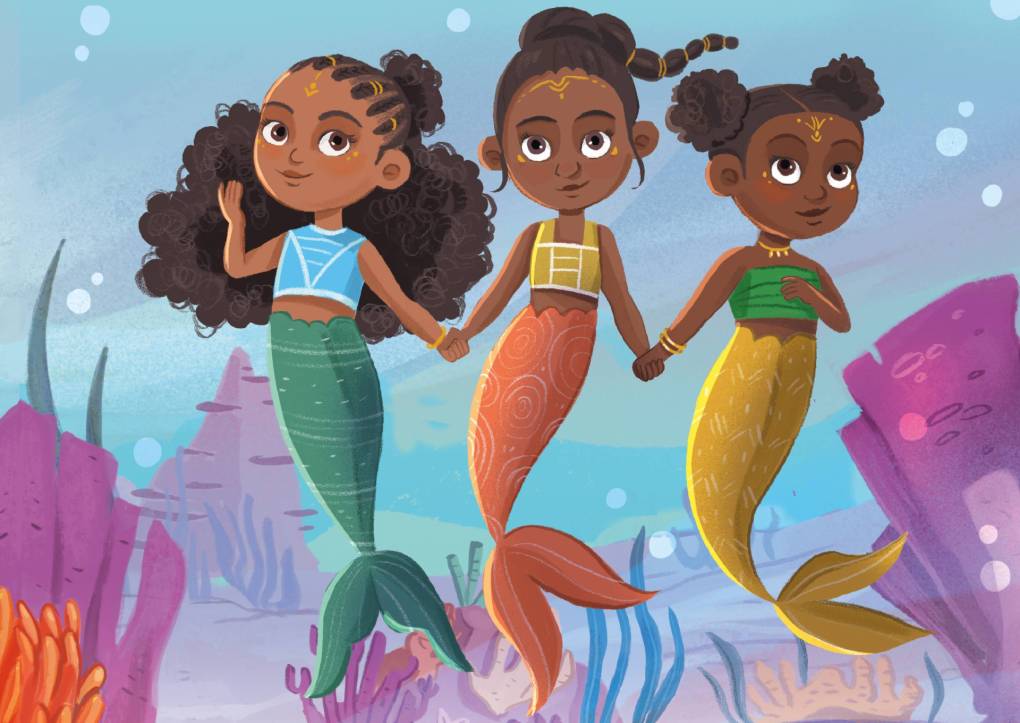
"caption": "Author Maya Cameron-Gordon created ‘The Mermaid Princesses’ so her daughter could read about magical girls that looked just like her.",
"description": null,
"title": "Author Maya Cameron-Gordon created ‘The Mermaid Princesses’ so her daughter could read about magical girls that looked just like her.",
"credit": "HarperCollins/ Illustration by Mirelle Ortega",
"status": "inherit",
"altTag": "A colorful illustration of three Black mermaids holding hands and floating in the ocean.",
"isLoading": false,
"fetchFailed": false
},
"arts_13926598": {
"type": "attachments",
"id": "arts_13926598",
"meta": {
"index": "attachments_1716263798",
"site": "arts",
"id": "13926598",
"found": true
},
"parent": 13926597,
"imgSizes": {
"twentyfourteen-full-width": {
"file": "https://ww2.kqed.org/app/uploads/sites/2/2023/03/img_0445_custom-110c04499cd12c7ec69e6145c09960dfa9d7ad3d-1-scaled-e1679424800989-1038x576.jpg",
"width": 1038,
"mimeType": "image/jpeg",
"height": 576
},
"thumbnail": {
"file": "https://ww2.kqed.org/app/uploads/sites/2/2023/03/img_0445_custom-110c04499cd12c7ec69e6145c09960dfa9d7ad3d-1-scaled-e1679424800989-160x107.jpg",
"width": 160,
"mimeType": "image/jpeg",
"height": 107
},
"post-thumbnail": {
"file": "https://ww2.kqed.org/app/uploads/sites/2/2023/03/img_0445_custom-110c04499cd12c7ec69e6145c09960dfa9d7ad3d-1-scaled-e1679424800989-672x372.jpg",
"width": 672,
"mimeType": "image/jpeg",
"height": 372
},
"kqedFullSize": {
"file": "https://ww2.kqed.org/app/uploads/sites/2/2023/03/img_0445_custom-110c04499cd12c7ec69e6145c09960dfa9d7ad3d-1-scaled-e1679424800989.jpg",
"width": 1920,
"height": 1279
},
"2048x2048": {
"file": "https://ww2.kqed.org/app/uploads/sites/2/2023/03/img_0445_custom-110c04499cd12c7ec69e6145c09960dfa9d7ad3d-1-2048x1364.jpg",
"width": 2048,
"mimeType": "image/jpeg",
"height": 1364
},
"large": {
"file": "https://ww2.kqed.org/app/uploads/sites/2/2023/03/img_0445_custom-110c04499cd12c7ec69e6145c09960dfa9d7ad3d-1-scaled-e1679424800989-1020x679.jpg",
"width": 1020,
"mimeType": "image/jpeg",
"height": 679
},
"1536x1536": {
"file": "https://ww2.kqed.org/app/uploads/sites/2/2023/03/img_0445_custom-110c04499cd12c7ec69e6145c09960dfa9d7ad3d-1-scaled-e1679424800989-1536x1023.jpg",
"width": 1536,
"mimeType": "image/jpeg",
"height": 1023
},
"full-width": {
"file": "https://ww2.kqed.org/app/uploads/sites/2/2023/03/img_0445_custom-110c04499cd12c7ec69e6145c09960dfa9d7ad3d-1-1920x1279.jpg",
"width": 1920,
"mimeType": "image/jpeg",
"height": 1279
},
"medium": {
"file": "https://ww2.kqed.org/app/uploads/sites/2/2023/03/img_0445_custom-110c04499cd12c7ec69e6145c09960dfa9d7ad3d-1-scaled-e1679424800989-800x533.jpg",
"width": 800,
"mimeType": "image/jpeg",
"height": 533
},
"medium_large": {
"file": "https://ww2.kqed.org/app/uploads/sites/2/2023/03/img_0445_custom-110c04499cd12c7ec69e6145c09960dfa9d7ad3d-1-scaled-e1679424800989-768x512.jpg",
"width": 768,
"mimeType": "image/jpeg",
"height": 512
}
},
"publishDate": 1679423426,
"modified": 1679424889,
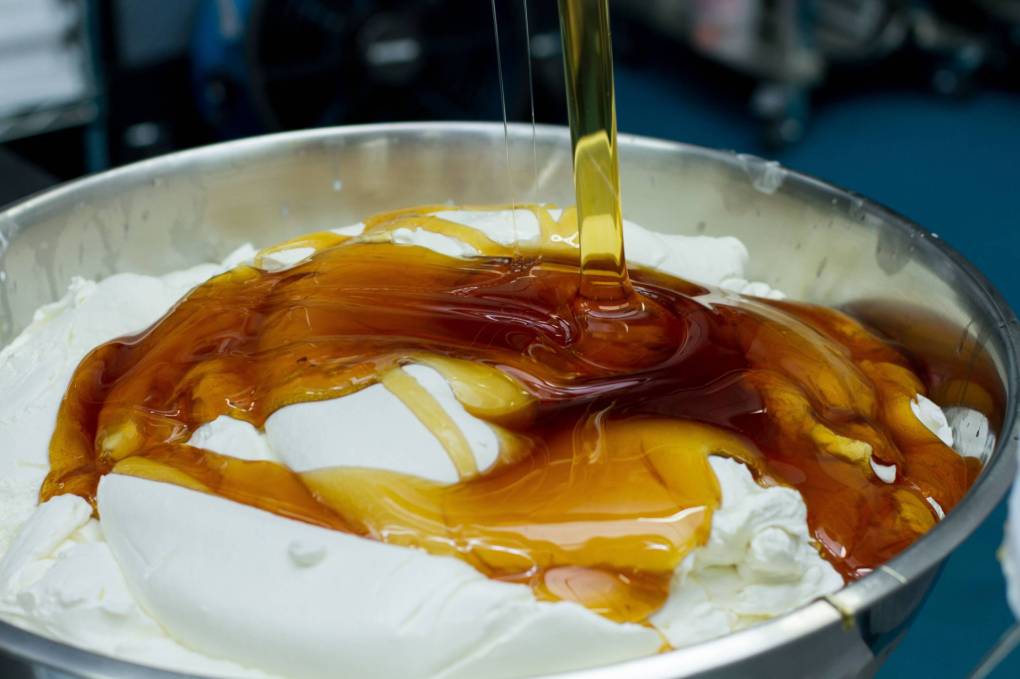
"caption": "Homa Dashtaki is the founder of The White Moustache yogurt company. (Her father’s mustache inspired the name.) Her new book is called ‘Yogurt & Whey: Recipes of an Iranian Immigrant Life.’",
"description": null,
"title": "Homa Dashtaki is the founder of The White Moustache yogurt company. (Her father’s mustache inspired the name.) Her new book is called ‘Yogurt & Whey: Recipes of an Iranian Immigrant Life.’",
"credit": "Mobolaji Adeolu/ The White Moustache",
"status": "inherit",
"altTag": "A metal bowl full of yoghurt getting drizzled with a generous helping of honey.",
"isLoading": false,
"fetchFailed": false
}
},
"audioPlayerReducer": {
"postId": "stream_live",
"isPaused": true,
"isPlaying": false,
"pfsActive": false,
"pledgeModalIsOpen": true,
"playerDrawerIsOpen": false,
"liveAudioPlayStartedAt": 0,
"liveAudioPlayContext": ""
},
"authorsReducer": {
"byline_arts_13928883": {
"type": "authors",
"id": "byline_arts_13928883",
"meta": {
"override": true
},
"slug": "byline_arts_13928883",
"name": "Ziad Buchh",
"isLoading": false
},
"byline_arts_13927861": {
"type": "authors",
"id": "byline_arts_13927861",
"meta": {
"override": true
},
"slug": "byline_arts_13927861",
"name": "Emma Bowman",
"isLoading": false
},
"byline_arts_13927695": {
"type": "authors",
"id": "byline_arts_13927695",
"meta": {
"override": true
},
"slug": "byline_arts_13927695",
"name": "The Associated Press",
"isLoading": false
},
"byline_arts_13927394": {
"type": "authors",
"id": "byline_arts_13927394",
"meta": {
"override": true
},
"slug": "byline_arts_13927394",
"name": "Michael Schaub",
"isLoading": false
},
"byline_arts_13926597": {
"type": "authors",
"id": "byline_arts_13926597",
"meta": {
"override": true
},
"slug": "byline_arts_13926597",
"name": "Diba Mohtasham",
"isLoading": false
},
"shotchkiss": {
"type": "authors",
"id": "61",
"meta": {
"index": "authors_1716337520",
"id": "61",
"found": true
},
"name": "Sarah Hotchkiss",
"firstName": "Sarah",
"lastName": "Hotchkiss",
"slug": "shotchkiss",
"email": "shotchkiss@kqed.org",
"display_author_email": true,
"staff_mastheads": [
"arts"
],
"title": "Senior Editor",
"bio": "Sarah Hotchkiss is a San Francisco \u003ca href=\"http://www.sarahhotchkiss.com\">artist\u003c/a> and arts writer. In 2019, she received the Dorothea & Leo Rabkin Foundation grant for visual art journalism and in 2020 she received a Society of Professional Journalists, Northern California award for excellence in arts and culture reporting.",
"avatar": "https://secure.gravatar.com/avatar/bc662df144b3d27fd8b1b6f1c2a420d34e91e53154d411bb7ad353cc8b6cea8d?s=600&d=blank&r=g",
"twitter": null,
"bluesky": null,
"facebook": null,
"instagram": null,
"linkedin": null,
"sites": [
{
"site": "",
"roles": [
"editor"
]
},
{
"site": "arts",
"roles": [
"Contributor",
"administrator"
]
},
{
"site": "artschool",
"roles": [
"administrator"
]
},
{
"site": "news",
"roles": [
"editor"
]
},
{
"site": "pop",
"roles": [
"administrator"
]
},
{
"site": "bayareabites",
"roles": [
"editor"
]
},
{
"site": "spark",
"roles": [
"editor"
]
},
{
"site": "checkplease",
"roles": [
"editor"
]
}
],
"headData": {
"title": "Sarah Hotchkiss | KQED",
"description": "Senior Editor",
"ogImgSrc": "https://secure.gravatar.com/avatar/bc662df144b3d27fd8b1b6f1c2a420d34e91e53154d411bb7ad353cc8b6cea8d?s=600&d=blank&r=g",
"twImgSrc": "https://secure.gravatar.com/avatar/bc662df144b3d27fd8b1b6f1c2a420d34e91e53154d411bb7ad353cc8b6cea8d?s=600&d=blank&r=g"
},
"isLoading": false,
"link": "/author/shotchkiss"
},
"ralexandra": {
"type": "authors",
"id": "11242",
"meta": {
"index": "authors_1716337520",
"id": "11242",
"found": true
},
"name": "Rae Alexandra",
"firstName": "Rae",
"lastName": "Alexandra",
"slug": "ralexandra",
"email": "ralexandra@kqed.org",
"display_author_email": true,
"staff_mastheads": [],
"title": "Reporter/Producer",
"bio": "Rae Alexandra is a Reporter/Producer for KQED Arts & Culture, and the creator/author of the \u003ca href=\"https://www.kqed.org/arts/program/rebel-girls-from-bay-area-history\">Rebel Girls From Bay Area History\u003c/a> and \u003ca href=\"https://www.kqed.org/bizarrebayarea\">Bizarre Bay Area\u003c/a> series. Her debut book, \u003ca href=\"https://citylights.com/politics-current-events-history/unsung-heroines35-women-who-changed/\">Unsung Heroines: 35 Women Who Changed the Bay Area\u003c/a> was published by City Lights in March 2026. In 2023, Rae was awarded an SPJ Excellence in Journalism Award for Arts & Culture. Rae was born and raised in Wales and subsequently — even after two decades in Northern California — still uses phrases that regularly baffle her coworkers.",
"avatar": "https://secure.gravatar.com/avatar/edfee8176c80cc0a382b051190f5341997df378a934a5774dcb0977732dfd401?s=600&d=blank&r=g",
"twitter": null,
"bluesky": null,
"facebook": null,
"instagram": null,
"linkedin": null,
"sites": [
{
"site": "arts",
"roles": [
"subscriber"
]
},
{
"site": "news",
"roles": [
"subscriber"
]
},
{
"site": "pop",
"roles": [
"subscriber"
]
},
{
"site": "bayareabites",
"roles": [
"subscriber"
]
},
{
"site": "science",
"roles": [
"subscriber"
]
}
],
"headData": {
"title": "Rae Alexandra | KQED",
"description": "Reporter/Producer",
"ogImgSrc": "https://secure.gravatar.com/avatar/edfee8176c80cc0a382b051190f5341997df378a934a5774dcb0977732dfd401?s=600&d=blank&r=g",
"twImgSrc": "https://secure.gravatar.com/avatar/edfee8176c80cc0a382b051190f5341997df378a934a5774dcb0977732dfd401?s=600&d=blank&r=g"
},
"isLoading": false,
"link": "/author/ralexandra"
},
"aproehl": {
"type": "authors",
"id": "11296",
"meta": {
"index": "authors_1716337520",
"id": "11296",
"found": true
},
"name": "Ariana Proehl",
"firstName": "Ariana",
"lastName": "Proehl",
"slug": "aproehl",
"email": "aproehl@KQED.org",
"display_author_email": true,
"staff_mastheads": [
"news"
],
"title": "Culture Reporter, KQED",
"bio": "Ariana Proehl is a Culture Reporter and Host.",
"avatar": "https://secure.gravatar.com/avatar/c96b24567eb5bb3a4f8bb295ed53e232?s=600&d=blank&r=g",
"twitter": "ArianaProehl",
"facebook": null,
"instagram": null,
"linkedin": null,
"sites": [
{
"site": "arts",
"roles": []
},
{
"site": "news",
"roles": []
},
{
"site": "education",
"roles": []
},
{
"site": "forum",
"roles": []
}
],
"headData": {
"title": "Ariana Proehl | KQED",
"description": "Culture Reporter, KQED",
"ogImgSrc": "https://secure.gravatar.com/avatar/c96b24567eb5bb3a4f8bb295ed53e232?s=600&d=blank&r=g",
"twImgSrc": "https://secure.gravatar.com/avatar/c96b24567eb5bb3a4f8bb295ed53e232?s=600&d=blank&r=g"
},
"isLoading": false,
"link": "/author/aproehl"
},
"nvoynovskaya": {
"type": "authors",
"id": "11387",
"meta": {
"index": "authors_1716337520",
"id": "11387",
"found": true
},
"name": "Nastia Voynovskaya",
"firstName": "Nastia",
"lastName": "Voynovskaya",
"slug": "nvoynovskaya",
"email": "nvoynovskaya@kqed.org",
"display_author_email": false,
"staff_mastheads": [
"arts"
],
"title": "Editor and reporter",
"bio": "Nastia Voynovskaya is a reporter, editor and host at KQED Arts & Culture. She's been covering the arts in the Bay Area for over a decade, with a focus on music, queer culture, labor issues and grassroots organizing. She has edited KQED story series such as Trans Bay: A History of San Francisco's Gender-Diverse Community, and co-created KQED's Bay Area hip-hop history project, That's My Word. Nastia's work has been recognized by the Society of Professional Journalists and San Francisco Press Club. She regularly appears on podcasts and radio programs, including NPR's All Songs Considered, and hosts live events where music, culture and conversation meet.",
"avatar": "https://secure.gravatar.com/avatar/5025ee460e5a85d69ca20ea6c6f2f80d7e17795c828f61ea3aecfcd924e9042e?s=600&d=blank&r=g",
"twitter": null,
"bluesky": null,
"facebook": null,
"instagram": "https://www.instagram.com/nananastia/",
"linkedin": null,
"sites": [
{
"site": "",
"roles": [
"editor"
]
},
{
"site": "arts",
"roles": [
"administrator"
]
},
{
"site": "news",
"roles": [
"editor"
]
},
{
"site": "pop",
"roles": [
"administrator"
]
},
{
"site": "bayareabites",
"roles": [
"editor"
]
},
{
"site": "podcasts",
"roles": [
"editor"
]
},
{
"site": "hiphop",
"roles": [
"editor"
]
}
],
"headData": {
"title": "Nastia Voynovskaya | KQED",
"description": "Editor and reporter",
"ogImgSrc": "https://secure.gravatar.com/avatar/5025ee460e5a85d69ca20ea6c6f2f80d7e17795c828f61ea3aecfcd924e9042e?s=600&d=blank&r=g",
"twImgSrc": "https://secure.gravatar.com/avatar/5025ee460e5a85d69ca20ea6c6f2f80d7e17795c828f61ea3aecfcd924e9042e?s=600&d=blank&r=g"
},
"isLoading": false,
"link": "/author/nvoynovskaya"
},
"ogpenn": {
"type": "authors",
"id": "11491",
"meta": {
"index": "authors_1716337520",
"id": "11491",
"found": true
},
"name": "Pendarvis Harshaw",
"firstName": "Pendarvis",
"lastName": "Harshaw",
"slug": "ogpenn",
"email": "ogpenn@gmail.com",
"display_author_email": false,
"staff_mastheads": [
"arts"
],
"title": "Community Engagement Reporter",
"bio": "Pendarvis Harshaw is an educator, host and writer with KQED Arts.",
"avatar": "https://secure.gravatar.com/avatar/972b77ee8e3f346ae2b00622661187fbfabd059b5693bbdc1475ea7a722fd4cd?s=600&d=blank&r=g",
"twitter": null,
"bluesky": null,
"facebook": null,
"instagram": "ogpenn",
"linkedin": null,
"sites": [
{
"site": "arts",
"roles": [
"administrator"
]
},
{
"site": "news",
"roles": [
"editor"
]
},
{
"site": "bayareabites",
"roles": [
"author"
]
},
{
"site": "hiphop",
"roles": [
"editor"
]
}
],
"headData": {
"title": "Pendarvis Harshaw | KQED",
"description": "Community Engagement Reporter",
"ogImgSrc": "https://secure.gravatar.com/avatar/972b77ee8e3f346ae2b00622661187fbfabd059b5693bbdc1475ea7a722fd4cd?s=600&d=blank&r=g",
"twImgSrc": "https://secure.gravatar.com/avatar/972b77ee8e3f346ae2b00622661187fbfabd059b5693bbdc1475ea7a722fd4cd?s=600&d=blank&r=g"
},
"isLoading": false,
"link": "/author/ogpenn"
},
"ksong": {
"type": "authors",
"id": "11813",
"meta": {
"index": "authors_1716337520",
"id": "11813",
"found": true
},
"name": "Kristie Song",
"firstName": "Kristie",
"lastName": "Song",
"slug": "ksong",
"email": "ksong@kqed.org",
"display_author_email": false,
"staff_mastheads": [],
"title": "Editorial Intern ",
"bio": "Kristie Song is an Arts & Culture Intern at KQED. She is currently a graduate student at UC Berkeley, where she studies audio and multimedia journalism. Previously, she covered the local community for Oakland North, produced episodes for The Science of Happiness, and served as news director for KUCI, UC Irvine’s radio station. Outside of reporting, she likes drawing comics, listening to angsty rock, and practicing the guitar.",
"avatar": "https://secure.gravatar.com/avatar/c1149e78c3c44f92d4945a8ab0711af6?s=600&d=blank&r=g",
"twitter": null,
"facebook": null,
"instagram": null,
"linkedin": null,
"sites": [
{
"site": "arts",
"roles": [
"editor"
]
}
],
"headData": {
"title": "Kristie Song | KQED",
"description": "Editorial Intern ",
"ogImgSrc": "https://secure.gravatar.com/avatar/c1149e78c3c44f92d4945a8ab0711af6?s=600&d=blank&r=g",
"twImgSrc": "https://secure.gravatar.com/avatar/c1149e78c3c44f92d4945a8ab0711af6?s=600&d=blank&r=g"
},
"isLoading": false,
"link": "/author/ksong"
}
},
"pagesReducer": {
"arts_category_literature": {
"type": "terms",
"id": "arts_73",
"meta": {
"index": "terms_1716263798",
"site": "arts",
"id": "73",
"score": 12.797476
},
"featImg": null,
"name": "Books",
"description": null,
"taxonomy": "category",
"headData": {
"twImgId": null,
"twTitle": null,
"ogTitle": null,
"ogImgId": null,
"twDescription": null,
"description": null,
"title": "Books Archives | KQED Arts",
"ogDescription": null
},
"ttid": 74,
"slug": "literature",
"isLoading": false,
"title": "Books",
"pageMeta": {
"site": "arts",
"WpPageTemplate": "page-topic-editorial",
"currentPage": 35
},
"blocks": [
{
"blockName": "kqed/post-list",
"attrs": {
"layout": "cardArticle2",
"query": "posts/arts?category=literature",
"seeMore": false,
"paginated": true,
"page": 35
}
},
{
"blockName": "kqed/ad"
}
]
}
},
"pfsSessionReducer": {},
"postsReducer": {
"stream_live": {
"type": "live",
"id": "stream_live",
"audioUrl": "https://streams.kqed.org/kqedradio",
"title": "Live Stream",
"excerpt": "Live Stream information currently unavailable.",
"link": "/radio",
"featImg": "",
"label": {
"name": "KQED Live",
"link": "/"
}
},
"stream_kqedNewscast": {
"type": "posts",
"id": "stream_kqedNewscast",
"audioUrl": "https://www.kqed.org/.stream/anon/radio/RDnews/newscast.mp3?_=1",
"title": "KQED Newscast",
"featImg": "",
"label": {
"name": "88.5 FM",
"link": "/"
}
},
"arts_13924682": {
"type": "posts",
"id": "arts_13924682",
"meta": {
"index": "posts_1716263798",
"site": "arts",
"id": "13924682",
"score": null,
"sort": [
1683816338000
]
},
"guestAuthors": [],
"slug": "adam-bessie-going-remote-pandemic-comic-graphic-novel-peter-glanting-seven-stories",
"title": "An East Bay Teacher Shares His Pandemic Experience in a Compelling New Graphic Novel",
"publishDate": 1683816338,
"format": "standard",
"headTitle": "An East Bay Teacher Shares His Pandemic Experience in a Compelling New Graphic Novel | KQED",
"labelTerm": {
"term": 140,
"site": "arts"
},
"content": "\u003cp>In the opening pages of the new graphic novel \u003cem>Going Remote: A Teacher’s Journey\u003c/em>, we see Hercules-based teacher \u003ca href=\"https://adambessie.com/\">Adam Bessie\u003c/a> talking to his students about E.M. Forster’s \u003ca href=\"https://en.wikipedia.org/wiki/The_Machine_Stops\">\u003cem>The Machine Stops\u003c/em>\u003c/a>. The 1909 sci-fi classic is about a distant future in which humans live underground, each in isolated cells, communicating only through screens connected by a single machine. The date of Bessie’s class is Feb. 15, 2020, and he is teaching English at \u003ca href=\"https://www.dvc.edu/\">Diablo Valley College\u003c/a> in Pleasant Hill. No one in the room knows just how prophetic Forster’s story is about to become.\u003c/p>\n\u003cp>[aside postid='pop_21265']Bessie and illustrator \u003ca href=\"https://www.peterglantingdraws.com/\">Peter Glanting\u003c/a>’s book documents the very recent past — one that each and every one of us just lived through — but Bessie’s perspective is particularly valuable. First, he is immunocompromised. He has been living with brain cancer for over a decade and his health hangs in the balance. Second, he is a teacher: a profession that was forced to adapt overnight to entirely new methods, and then expected to venture back into the world before most. Third, Bessie is a community college teacher specifically dedicated to working with financially challenged students.\u003c/p>\n\u003cp>The devastation and frustration Bessie feels to lose pupils because of the technological requirements of remote learning is palpable throughout \u003cem>Going Remote\u003c/em>.\u003c/p>\n\u003cfigure id=\"attachment_13928952\" class=\"wp-caption aligncenter\" style=\"max-width: 800px\">\u003cimg loading=\"lazy\" decoding=\"async\" class=\"size-medium wp-image-13928952\" src=\"https://ww2.kqed.org/app/uploads/sites/2/2023/05/GoingRemote_text_37-800x1203.jpeg\" alt=\"A page with nine small black and white panels depicting a teacher trying to talk to one of his students. He is talking to a muted black square.\" width=\"800\" height=\"1203\" srcset=\"https://cdn.kqed.org/wp-content/uploads/sites/2/2023/05/GoingRemote_text_37-800x1203.jpeg 800w, https://cdn.kqed.org/wp-content/uploads/sites/2/2023/05/GoingRemote_text_37-1020x1534.jpeg 1020w, https://cdn.kqed.org/wp-content/uploads/sites/2/2023/05/GoingRemote_text_37-160x241.jpeg 160w, https://cdn.kqed.org/wp-content/uploads/sites/2/2023/05/GoingRemote_text_37-768x1155.jpeg 768w, https://cdn.kqed.org/wp-content/uploads/sites/2/2023/05/GoingRemote_text_37-1021x1536.jpeg 1021w, https://cdn.kqed.org/wp-content/uploads/sites/2/2023/05/GoingRemote_text_37-1361x2048.jpeg 1361w, https://cdn.kqed.org/wp-content/uploads/sites/2/2023/05/GoingRemote_text_37.jpeg 1646w\" sizes=\"(max-width: 800px) 100vw, 800px\">\u003cfigcaption class=\"wp-caption-text\">Adam Bessie deals with the disconnections involved with remote teaching in ‘Going Remote: A Teacher’s Journey.’ \u003ccite>(Seven Stories Press)\u003c/cite>\u003c/figcaption>\u003c/figure>\n\u003cp>Bessie’s classroom, as depicted in the book, is lively, his students are engaged and jovial, and he’s the kind of teacher who moves chairs into circles every week. When he does this, he explains here, “There is an invisible force, an electrical current that flows through the room — through not just voices, but facial expressions, body language. An infectious energy.” The circles and group discussions in his classroom, Bessie writes, transform the space from “a random collection of students” into a real “community.” It’s clear that in the pandemic Bessie didn’t just lose a physical space, he lost the very thing that made him love his job the most.\u003c/p>\n\u003cp>[aside postid='arts_13923915']Bessie’s devastation to be separated from his students is conveyed effectively in his own words and by Glanting’s engaging black-and-white illustrations. When it comes to presenting group settings, Glanting pans out, depicting lively, bustling scenes from an admiring, far-off vantage point. Bessie’s busy classroom is viewed from above; the pre-pandemic Diablo Valley College campus is presented from a bird’s-eye perspective. In the scenes after shelter in place starts, Glanting’s panels are close, cropped, smaller. There are boxes of black, muted screens. The illustrations viscerally convey the claustrophobia and isolation we all experienced throughout most of 2020 and 2021. Heightening those elements are Bessie and Glanting’s frequent embrace of dystopic sci-fi imagery.\u003c/p>\n\u003cfigure id=\"attachment_13928951\" class=\"wp-caption aligncenter\" style=\"max-width: 800px\">\u003cimg loading=\"lazy\" decoding=\"async\" class=\"size-medium wp-image-13928951\" src=\"https://ww2.kqed.org/app/uploads/sites/2/2023/05/GoingRemote_text_41-800x609.jpeg\" alt=\"One panel illustrates a human figure bursting through a screen with the text ’Who will return?’ Next to it is another: a woman with a mute sign obscuring her face with the text ‘Who will never come back?’\" width=\"800\" height=\"609\" srcset=\"https://cdn.kqed.org/wp-content/uploads/sites/2/2023/05/GoingRemote_text_41-800x609.jpeg 800w, https://cdn.kqed.org/wp-content/uploads/sites/2/2023/05/GoingRemote_text_41-1020x776.jpeg 1020w, https://cdn.kqed.org/wp-content/uploads/sites/2/2023/05/GoingRemote_text_41-160x122.jpeg 160w, https://cdn.kqed.org/wp-content/uploads/sites/2/2023/05/GoingRemote_text_41-768x585.jpeg 768w, https://cdn.kqed.org/wp-content/uploads/sites/2/2023/05/GoingRemote_text_41-1536x1169.jpeg 1536w, https://cdn.kqed.org/wp-content/uploads/sites/2/2023/05/GoingRemote_text_41.jpeg 1624w\" sizes=\"(max-width: 800px) 100vw, 800px\">\u003cfigcaption class=\"wp-caption-text\">Students lost in the tech abyss in ‘Going Remote: A Teacher’s Journey’ by Adam Bessie and Peter Glanting. \u003ccite>(Seven Stories Press)\u003c/cite>\u003c/figcaption>\u003c/figure>\n\u003cp>In \u003cem>Going Remote\u003c/em>, Bessie and Glanting also capture the strangeness of a home life where each family member is forced into separate corners for different Zoom calls. Bessie touches on the mental health crisis that snuck into his work as students struggled at home. He also presents scenes from the racial reckoning of summer 2020, taking his young son to a Black Lives Matter demonstration in downtown Oakland. Two full pages of the graphic novel are dedicated to simply listing the hundreds of names of Black Americans, including George Floyd, who have died in racist killings in recent American history.\u003c/p>\n\u003cp>[ad fullwidth]\u003c/p>\n\u003cp>[aside postid='arts_13924431']\u003cem>Going Remote: A Teacher’s Journey\u003c/em> is ultimately at its best when Bessie is sharing his views and feelings about public education and the power of community. This book might only be a chronicle of one teacher’s attempts to keep his class together during the COVID pandemic, but it clearly reflects the experiences of thousands and thousands of other teachers waging similar battles across the country, and around the globe.\u003c/p>\n\u003cp>In examining the circumstances that separated us in the first place, Bessie indirectly makes a case for communities to come back together in more literal and robust ways. Through his and Glanting’s eyes, that feels as urgent now as staying home did in 2020.\u003c/p>\n\u003cfigure id=\"attachment_13924685\" class=\"wp-caption alignnone\" style=\"max-width: 794px\">\u003cimg loading=\"lazy\" decoding=\"async\" class=\"size-full wp-image-13924685\" src=\"https://ww2.kqed.org/app/uploads/sites/2/2023/02/Screen-Shot-2023-02-02-at-4.00.13-PM.png\" alt=\"An illustration shows a large building with many windows floating on a small piece of rock in space.\" width=\"794\" height=\"1260\" srcset=\"https://cdn.kqed.org/wp-content/uploads/sites/2/2023/02/Screen-Shot-2023-02-02-at-4.00.13-PM.png 794w, https://cdn.kqed.org/wp-content/uploads/sites/2/2023/02/Screen-Shot-2023-02-02-at-4.00.13-PM-160x254.png 160w, https://cdn.kqed.org/wp-content/uploads/sites/2/2023/02/Screen-Shot-2023-02-02-at-4.00.13-PM-768x1219.png 768w\" sizes=\"(max-width: 794px) 100vw, 794px\">\u003cfigcaption class=\"wp-caption-text\">‘Cloud College,’ an image from ‘Going Remote’ by Adam Bessie and Peter Glanting. \u003ccite>(Illustration by Peter Glanting)\u003c/cite>\u003c/figcaption>\u003c/figure>\n\u003cp>\u003cimg loading=\"lazy\" decoding=\"async\" class=\"aligncenter size-medium wp-image-12127869\" src=\"https://ww2.kqed.org/arts/wp-content/uploads/sites/2/2016/09/Q.Logo_.Break_-800x78.jpg\" alt=\"\" width=\"800\" height=\"78\" srcset=\"https://cdn.kqed.org/wp-content/uploads/sites/2/2016/09/Q.Logo_.Break_.jpg 800w, https://cdn.kqed.org/wp-content/uploads/sites/2/2016/09/Q.Logo_.Break_-400x39.jpg 400w, https://cdn.kqed.org/wp-content/uploads/sites/2/2016/09/Q.Logo_.Break_-768x75.jpg 768w\" sizes=\"(max-width: 800px) 100vw, 800px\">\u003c/p>\n\u003cp>\u003c/p>\n\u003cp>\u003cem>‘Going Remote: A Teacher’s Journey’ by Adam Bessie and Peter Glanting is out May 16, 2023, via \u003ca href=\"https://www.sevenstories.com/books/4488-going-remote\">Seven Stories Press\u003c/a> and \u003ca href=\"https://censoredpress.org/\">The Censored Press\u003c/a>.\u003c/em>\u003c/p>\n\n",
"blocks": [],
"excerpt": "‘Going Remote,’ by Adam Bessie and Peter Glanting, ponders the educational hopes dashed by COVID in 2020.",
"status": "publish",
"parent": 0,
"modified": 1726771114,
"stats": {
"hasAudio": false,
"hasVideo": false,
"hasChartOrMap": false,
"iframeSrcs": [],
"hasGoogleForm": false,
"hasGallery": false,
"hasHearkenModule": false,
"hasPolis": false,
"paragraphCount": 12,
"wordCount": 807
},
"headData": {
"title": "‘Going Remote’ Graphic Novel: Teaching in the Pandemic Void | KQED",
"description": "‘Going Remote,’ by Adam Bessie and Peter Glanting, ponders the educational hopes dashed by COVID in 2020.",
"ogTitle": "An Oakland Teacher Shares His Pandemic Experience in a Compelling New Graphic Novel",
"ogDescription": "",
"ogImgId": "",
"twTitle": "An Oakland Teacher Shares His Pandemic Experience in a Compelling New Graphic Novel",
"twDescription": "",
"twImgId": "",
"socialTitle": "‘Going Remote’ Graphic Novel: Teaching in the Pandemic Void %%page%% %%sep%% KQED",
"schema": {
"@context": "https://schema.org",
"@type": "Article",
"headline": "An East Bay Teacher Shares His Pandemic Experience in a Compelling New Graphic Novel",
"datePublished": "2023-05-11T07:45:38-07:00",
"dateModified": "2024-09-19T11:38:34-07:00",
"image": "https://cdn.kqed.org/wp-content/uploads/2020/02/KQED-OG-Image@1x.png"
}
},
"sticky": false,
"templateType": "standard",
"featuredImageType": "standard",
"excludeFromSiteSearch": "Include",
"articleAge": "0",
"path": "/arts/13924682/adam-bessie-going-remote-pandemic-comic-graphic-novel-peter-glanting-seven-stories",
"audioTrackLength": null,
"parsedContent": [
{
"type": "contentString",
"content": "\u003cdiv class=\"post-body\">\u003cp>\u003cp>In the opening pages of the new graphic novel \u003cem>Going Remote: A Teacher’s Journey\u003c/em>, we see Hercules-based teacher \u003ca href=\"https://adambessie.com/\">Adam Bessie\u003c/a> talking to his students about E.M. Forster’s \u003ca href=\"https://en.wikipedia.org/wiki/The_Machine_Stops\">\u003cem>The Machine Stops\u003c/em>\u003c/a>. The 1909 sci-fi classic is about a distant future in which humans live underground, each in isolated cells, communicating only through screens connected by a single machine. The date of Bessie’s class is Feb. 15, 2020, and he is teaching English at \u003ca href=\"https://www.dvc.edu/\">Diablo Valley College\u003c/a> in Pleasant Hill. No one in the room knows just how prophetic Forster’s story is about to become.\u003c/p>\n\u003cp>\u003c/p>\u003c/div>",
"attributes": {
"named": {},
"numeric": []
}
},
{
"type": "component",
"content": "",
"name": "aside",
"attributes": {
"named": {
"postid": "pop_21265",
"label": ""
},
"numeric": []
}
},
{
"type": "contentString",
"content": "\u003cdiv class=\"post-body\">\u003cp>Bessie and illustrator \u003ca href=\"https://www.peterglantingdraws.com/\">Peter Glanting\u003c/a>’s book documents the very recent past — one that each and every one of us just lived through — but Bessie’s perspective is particularly valuable. First, he is immunocompromised. He has been living with brain cancer for over a decade and his health hangs in the balance. Second, he is a teacher: a profession that was forced to adapt overnight to entirely new methods, and then expected to venture back into the world before most. Third, Bessie is a community college teacher specifically dedicated to working with financially challenged students.\u003c/p>\n\u003cp>The devastation and frustration Bessie feels to lose pupils because of the technological requirements of remote learning is palpable throughout \u003cem>Going Remote\u003c/em>.\u003c/p>\n\u003cfigure id=\"attachment_13928952\" class=\"wp-caption aligncenter\" style=\"max-width: 800px\">\u003cimg loading=\"lazy\" decoding=\"async\" class=\"size-medium wp-image-13928952\" src=\"https://ww2.kqed.org/app/uploads/sites/2/2023/05/GoingRemote_text_37-800x1203.jpeg\" alt=\"A page with nine small black and white panels depicting a teacher trying to talk to one of his students. He is talking to a muted black square.\" width=\"800\" height=\"1203\" srcset=\"https://cdn.kqed.org/wp-content/uploads/sites/2/2023/05/GoingRemote_text_37-800x1203.jpeg 800w, https://cdn.kqed.org/wp-content/uploads/sites/2/2023/05/GoingRemote_text_37-1020x1534.jpeg 1020w, https://cdn.kqed.org/wp-content/uploads/sites/2/2023/05/GoingRemote_text_37-160x241.jpeg 160w, https://cdn.kqed.org/wp-content/uploads/sites/2/2023/05/GoingRemote_text_37-768x1155.jpeg 768w, https://cdn.kqed.org/wp-content/uploads/sites/2/2023/05/GoingRemote_text_37-1021x1536.jpeg 1021w, https://cdn.kqed.org/wp-content/uploads/sites/2/2023/05/GoingRemote_text_37-1361x2048.jpeg 1361w, https://cdn.kqed.org/wp-content/uploads/sites/2/2023/05/GoingRemote_text_37.jpeg 1646w\" sizes=\"(max-width: 800px) 100vw, 800px\">\u003cfigcaption class=\"wp-caption-text\">Adam Bessie deals with the disconnections involved with remote teaching in ‘Going Remote: A Teacher’s Journey.’ \u003ccite>(Seven Stories Press)\u003c/cite>\u003c/figcaption>\u003c/figure>\n\u003cp>Bessie’s classroom, as depicted in the book, is lively, his students are engaged and jovial, and he’s the kind of teacher who moves chairs into circles every week. When he does this, he explains here, “There is an invisible force, an electrical current that flows through the room — through not just voices, but facial expressions, body language. An infectious energy.” The circles and group discussions in his classroom, Bessie writes, transform the space from “a random collection of students” into a real “community.” It’s clear that in the pandemic Bessie didn’t just lose a physical space, he lost the very thing that made him love his job the most.\u003c/p>\n\u003cp>\u003c/p>\u003c/div>",
"attributes": {
"named": {},
"numeric": []
}
},
{
"type": "component",
"content": "",
"name": "aside",
"attributes": {
"named": {
"postid": "arts_13923915",
"label": ""
},
"numeric": []
}
},
{
"type": "contentString",
"content": "\u003cdiv class=\"post-body\">\u003cp>Bessie’s devastation to be separated from his students is conveyed effectively in his own words and by Glanting’s engaging black-and-white illustrations. When it comes to presenting group settings, Glanting pans out, depicting lively, bustling scenes from an admiring, far-off vantage point. Bessie’s busy classroom is viewed from above; the pre-pandemic Diablo Valley College campus is presented from a bird’s-eye perspective. In the scenes after shelter in place starts, Glanting’s panels are close, cropped, smaller. There are boxes of black, muted screens. The illustrations viscerally convey the claustrophobia and isolation we all experienced throughout most of 2020 and 2021. Heightening those elements are Bessie and Glanting’s frequent embrace of dystopic sci-fi imagery.\u003c/p>\n\u003cfigure id=\"attachment_13928951\" class=\"wp-caption aligncenter\" style=\"max-width: 800px\">\u003cimg loading=\"lazy\" decoding=\"async\" class=\"size-medium wp-image-13928951\" src=\"https://ww2.kqed.org/app/uploads/sites/2/2023/05/GoingRemote_text_41-800x609.jpeg\" alt=\"One panel illustrates a human figure bursting through a screen with the text ’Who will return?’ Next to it is another: a woman with a mute sign obscuring her face with the text ‘Who will never come back?’\" width=\"800\" height=\"609\" srcset=\"https://cdn.kqed.org/wp-content/uploads/sites/2/2023/05/GoingRemote_text_41-800x609.jpeg 800w, https://cdn.kqed.org/wp-content/uploads/sites/2/2023/05/GoingRemote_text_41-1020x776.jpeg 1020w, https://cdn.kqed.org/wp-content/uploads/sites/2/2023/05/GoingRemote_text_41-160x122.jpeg 160w, https://cdn.kqed.org/wp-content/uploads/sites/2/2023/05/GoingRemote_text_41-768x585.jpeg 768w, https://cdn.kqed.org/wp-content/uploads/sites/2/2023/05/GoingRemote_text_41-1536x1169.jpeg 1536w, https://cdn.kqed.org/wp-content/uploads/sites/2/2023/05/GoingRemote_text_41.jpeg 1624w\" sizes=\"(max-width: 800px) 100vw, 800px\">\u003cfigcaption class=\"wp-caption-text\">Students lost in the tech abyss in ‘Going Remote: A Teacher’s Journey’ by Adam Bessie and Peter Glanting. \u003ccite>(Seven Stories Press)\u003c/cite>\u003c/figcaption>\u003c/figure>\n\u003cp>In \u003cem>Going Remote\u003c/em>, Bessie and Glanting also capture the strangeness of a home life where each family member is forced into separate corners for different Zoom calls. Bessie touches on the mental health crisis that snuck into his work as students struggled at home. He also presents scenes from the racial reckoning of summer 2020, taking his young son to a Black Lives Matter demonstration in downtown Oakland. Two full pages of the graphic novel are dedicated to simply listing the hundreds of names of Black Americans, including George Floyd, who have died in racist killings in recent American history.\u003c/p>\n\u003cp>\u003c/p>\u003c/div>",
"attributes": {
"named": {},
"numeric": []
}
},
{
"type": "component",
"content": "",
"name": "ad",
"attributes": {
"named": {
"label": "fullwidth"
},
"numeric": [
"fullwidth"
]
}
},
{
"type": "contentString",
"content": "\u003cdiv class=\"post-body\">\u003cp>\u003c/p>\n\u003cp>\u003c/p>\u003c/div>",
"attributes": {
"named": {},
"numeric": []
}
},
{
"type": "component",
"content": "",
"name": "aside",
"attributes": {
"named": {
"postid": "arts_13924431",
"label": ""
},
"numeric": []
}
},
{
"type": "contentString",
"content": "\u003cdiv class=\"post-body\">\u003cp>\u003cem>Going Remote: A Teacher’s Journey\u003c/em> is ultimately at its best when Bessie is sharing his views and feelings about public education and the power of community. This book might only be a chronicle of one teacher’s attempts to keep his class together during the COVID pandemic, but it clearly reflects the experiences of thousands and thousands of other teachers waging similar battles across the country, and around the globe.\u003c/p>\n\u003cp>In examining the circumstances that separated us in the first place, Bessie indirectly makes a case for communities to come back together in more literal and robust ways. Through his and Glanting’s eyes, that feels as urgent now as staying home did in 2020.\u003c/p>\n\u003cfigure id=\"attachment_13924685\" class=\"wp-caption alignnone\" style=\"max-width: 794px\">\u003cimg loading=\"lazy\" decoding=\"async\" class=\"size-full wp-image-13924685\" src=\"https://ww2.kqed.org/app/uploads/sites/2/2023/02/Screen-Shot-2023-02-02-at-4.00.13-PM.png\" alt=\"An illustration shows a large building with many windows floating on a small piece of rock in space.\" width=\"794\" height=\"1260\" srcset=\"https://cdn.kqed.org/wp-content/uploads/sites/2/2023/02/Screen-Shot-2023-02-02-at-4.00.13-PM.png 794w, https://cdn.kqed.org/wp-content/uploads/sites/2/2023/02/Screen-Shot-2023-02-02-at-4.00.13-PM-160x254.png 160w, https://cdn.kqed.org/wp-content/uploads/sites/2/2023/02/Screen-Shot-2023-02-02-at-4.00.13-PM-768x1219.png 768w\" sizes=\"(max-width: 794px) 100vw, 794px\">\u003cfigcaption class=\"wp-caption-text\">‘Cloud College,’ an image from ‘Going Remote’ by Adam Bessie and Peter Glanting. \u003ccite>(Illustration by Peter Glanting)\u003c/cite>\u003c/figcaption>\u003c/figure>\n\u003cp>\u003cimg loading=\"lazy\" decoding=\"async\" class=\"aligncenter size-medium wp-image-12127869\" src=\"https://ww2.kqed.org/arts/wp-content/uploads/sites/2/2016/09/Q.Logo_.Break_-800x78.jpg\" alt=\"\" width=\"800\" height=\"78\" srcset=\"https://cdn.kqed.org/wp-content/uploads/sites/2/2016/09/Q.Logo_.Break_.jpg 800w, https://cdn.kqed.org/wp-content/uploads/sites/2/2016/09/Q.Logo_.Break_-400x39.jpg 400w, https://cdn.kqed.org/wp-content/uploads/sites/2/2016/09/Q.Logo_.Break_-768x75.jpg 768w\" sizes=\"(max-width: 800px) 100vw, 800px\">\u003c/p>\n\u003cp>\u003c/p>\n\u003cp>\u003cem>‘Going Remote: A Teacher’s Journey’ by Adam Bessie and Peter Glanting is out May 16, 2023, via \u003ca href=\"https://www.sevenstories.com/books/4488-going-remote\">Seven Stories Press\u003c/a> and \u003ca href=\"https://censoredpress.org/\">The Censored Press\u003c/a>.\u003c/em>\u003c/p>\n\n\u003c/div>\u003c/p>",
"attributes": {
"named": {},
"numeric": []
}
}
],
"link": "/arts/13924682/adam-bessie-going-remote-pandemic-comic-graphic-novel-peter-glanting-seven-stories",
"authors": [
"11242"
],
"programs": [
"arts_140"
],
"categories": [
"arts_1",
"arts_73"
],
"tags": [
"arts_9535",
"arts_11272",
"arts_7584",
"arts_11014",
"arts_10127",
"arts_4725",
"arts_10278",
"arts_10629",
"arts_10416",
"arts_585"
],
"featImg": "arts_13924837",
"label": "arts_140"
},
"arts_13928883": {
"type": "posts",
"id": "arts_13928883",
"meta": {
"index": "posts_1716263798",
"site": "arts",
"id": "13928883",
"score": null,
"sort": [
1683657210000
]
},
"parent": 0,
"labelTerm": {
"site": "arts",
"term": 137
},
"blocks": [],
"publishDate": 1683657210,
"format": "standard",
"title": "Tom Hanks Has Starred in Dozens of Movies. Now He's Written a Novel Too",
"headTitle": "Tom Hanks Has Starred in Dozens of Movies. Now He’s Written a Novel Too | KQED",
"content": "\u003cp>The numbers speak for themselves: More than 100 movies in over 45 years of acting. Now Tom Hanks is drawing on all that experience to craft a story in a very different medium. He used some of the pandemic slowdown to write a novel. Titled \u003cem>The Making of Another Major Motion Picture Masterpiece\u003c/em>, it tells the story of a comic strip that becomes a multimillion-dollar superhero movie.\u003c/p>\n\u003cp>[aside postid='arts_13928562']The book spans seven decades, starting in 1947 when a U.S. Marine who served as a flamethrower returns from fighting in World War II. The uncle makes such a strong impression on his 5-year-old nephew that he makes him the superhero in a comic strip; eventually, that comic becomes the foundation of a blockbuster movie franchise, set in the present day.\u003c/p>\n\u003cp>The novel explores every step of the making of a movie: from a difficult leading actor, to eccentric writers and countless behind-the-scenes workers. Hanks says fleshing out the details was not hard for him. “I’ve got anecdotes galore,” he tells \u003cem>Morning Edition\u003c/em>‘s A Martinez.\u003c/p>\n\u003cp>All the actions and characters in his novel are drawn from the real-life experience of making a movie, he says. And he purposely focuses not only on the stars, but on the people working behind the scenes.\u003c/p>\n\u003cfigure id=\"attachment_13928885\" class=\"wp-caption aligncenter\" style=\"max-width: 800px\">\u003cimg loading=\"lazy\" decoding=\"async\" class=\"size-medium wp-image-13928885\" src=\"https://ww2.kqed.org/app/uploads/sites/2/2023/05/hanks-jacket_custom-34ca11d293c852962d1ce11ca58e259859a4a751-800x1170.jpg\" alt=\"A book cover with an illustration of the rearview of a man walking along a road.\" width=\"800\" height=\"1170\" srcset=\"https://cdn.kqed.org/wp-content/uploads/sites/2/2023/05/hanks-jacket_custom-34ca11d293c852962d1ce11ca58e259859a4a751-800x1170.jpg 800w, https://cdn.kqed.org/wp-content/uploads/sites/2/2023/05/hanks-jacket_custom-34ca11d293c852962d1ce11ca58e259859a4a751-1020x1492.jpg 1020w, https://cdn.kqed.org/wp-content/uploads/sites/2/2023/05/hanks-jacket_custom-34ca11d293c852962d1ce11ca58e259859a4a751-160x234.jpg 160w, https://cdn.kqed.org/wp-content/uploads/sites/2/2023/05/hanks-jacket_custom-34ca11d293c852962d1ce11ca58e259859a4a751-768x1123.jpg 768w, https://cdn.kqed.org/wp-content/uploads/sites/2/2023/05/hanks-jacket_custom-34ca11d293c852962d1ce11ca58e259859a4a751-1050x1536.jpg 1050w, https://cdn.kqed.org/wp-content/uploads/sites/2/2023/05/hanks-jacket_custom-34ca11d293c852962d1ce11ca58e259859a4a751-1401x2048.jpg 1401w, https://cdn.kqed.org/wp-content/uploads/sites/2/2023/05/hanks-jacket_custom-34ca11d293c852962d1ce11ca58e259859a4a751-1920x2808.jpg 1920w, https://cdn.kqed.org/wp-content/uploads/sites/2/2023/05/hanks-jacket_custom-34ca11d293c852962d1ce11ca58e259859a4a751-scaled.jpg 1751w\" sizes=\"(max-width: 800px) 100vw, 800px\">\u003cfigcaption class=\"wp-caption-text\">Tom Hanks has written a first novel, drawing on his decades in the movie industry. \u003ccite>(Alfred A. Knopf)\u003c/cite>\u003c/figcaption>\u003c/figure>\n\u003cp>“If someone is going to ask me what is the surefire way that I get to Hollywood, I would have two answers,” Hanks says. “One is as Bette Davis said, take Fountain [Boulevard]. But the other one is to solve problems.”\u003c/p>\n\u003cp>[ad fullwidth]\u003c/p>\n\u003cp>Ultimately, Hanks hopes to challenge people’s perceptions about how movies are made.\u003c/p>\n\u003cp>[aside postid='arts_13928445']“Most people think that a movie reels out like a Broadway play does or a performance of an opera. Everybody knows exactly what they are, where they need to be, how they need to do it,” he says. “But movies are a long series of accidents that you don’t expect, as well as, occasionally, something that goes off exactly as you planned. It’s all things all at the same time.”\u003c/p>\n\u003cp>\u003c/p>\n\u003cp>\u003cem>Hanks offered this statement about the ongoing Hollywood writers strike: “I am a member of every guild there is, and there is no doubt that the economics of our business has changed in the last few years. These changes affect everybody in the making of a Motion Picture Masterpiece — and something needs to be worked out now.”\u003c/em>\u003c/p>\n\u003cdiv class=\"fullattribution\">\u003cem>Copyright 2023 NPR. To see more, \u003ca href=\"https://www.npr.org\">visit NPR\u003c/a>.\u003cimg decoding=\"async\" src=\"https://www.google-analytics.com/__utm.gif?utmac=UA-5828686-4&utmdt=Tom+Hanks+has+starred+in+dozens+of+movies.+Now+he%27s+written+a+novel+too&utme=8(APIKey)9(MDAxOTAwOTE4MDEyMTkxMDAzNjczZDljZA004)\">\u003c/em>\u003c/div>\n\n",
"stats": {
"hasVideo": false,
"hasChartOrMap": false,
"hasAudio": false,
"hasPolis": false,
"wordCount": 453,
"hasGoogleForm": false,
"hasGallery": false,
"hasHearkenModule": false,
"iframeSrcs": [],
"paragraphCount": 10
},
"modified": 1705005525,
"excerpt": "For Tom Hanks, movies have always been transformative. Now he's written a novel based on his experiences on movie sets.",
"headData": {
"twImgId": "",
"twTitle": "Tom Hanks Has Starred in Dozens of Movies. Now He's Written a Novel Too",
"socialTitle": "New Tom Hanks Novel Makes Use of His Hollywood Anecdotes %%page%% %%sep%% KQED",
"ogTitle": "Tom Hanks Has Starred in Dozens of Movies. Now He's Written a Novel Too",
"ogImgId": "",
"twDescription": "",
"description": "For Tom Hanks, movies have always been transformative. Now he's written a novel based on his experiences on movie sets.",
"title": "New Tom Hanks Novel Makes Use of His Hollywood Anecdotes | KQED",
"ogDescription": "",
"schema": {
"@context": "https://schema.org",
"@type": "Article",
"headline": "Tom Hanks Has Starred in Dozens of Movies. Now He's Written a Novel Too",
"datePublished": "2023-05-09T11:33:30-07:00",
"dateModified": "2024-01-11T12:38:45-08:00",
"image": "https://cdn.kqed.org/wp-content/uploads/2020/02/KQED-OG-Image@1x.png"
}
},
"guestAuthors": [],
"slug": "tom-hanks-has-starred-in-dozens-of-movies-now-hes-written-a-novel-too",
"status": "publish",
"nprApiLink": "http://api.npr.org/query?id=1174934085&apiKey=MDAxOTAwOTE4MDEyMTkxMDAzNjczZDljZA004",
"templateType": "standard",
"nprStoryDate": "Tue, 09 May 2023 05:05:36 -0400",
"excludeFromSiteSearch": "Include",
"nprLastModifiedDate": "Tue, 09 May 2023 12:40:26 -0400",
"featuredImageType": "standard",
"nprHtmlLink": "https://www.npr.org/2023/05/09/1174934085/tom-hanks-has-starred-in-dozens-of-movies-now-hes-written-a-novel-too?ft=nprml&f=1174934085",
"nprAudio": "https://ondemand.npr.org/anon.npr-mp3/npr/me/2023/05/20230509_me_tom_hanks_has_starred_in_dozens_of_movies_now_hes_written_a_novel_too.mp3?orgId=1&topicId=1008&d=439&p=3&story=1174934085&ft=nprml&f=1174934085",
"nprImageAgency": "NPR",
"nprAudioM3u": "http://api.npr.org/m3u/11174944696-129057.m3u?orgId=1&topicId=1008&d=439&p=3&story=1174934085&ft=nprml&f=1174934085",
"nprStoryId": "1174934085",
"nprByline": "Ziad Buchh",
"sticky": false,
"nprImageCredit": "Grace Widyatmadja",
"showOnAuthorArchivePages": "No",
"articleAge": "0",
"nprRetrievedStory": "1",
"nprPubDate": "Tue, 09 May 2023 12:40:00 -0400",
"path": "/arts/13928883/tom-hanks-has-starred-in-dozens-of-movies-now-hes-written-a-novel-too",
"audioUrl": "https://ondemand.npr.org/anon.npr-mp3/npr/me/2023/05/20230509_me_tom_hanks_has_starred_in_dozens_of_movies_now_hes_written_a_novel_too.mp3?orgId=1&topicId=1008&d=439&p=3&story=1174934085&ft=nprml&f=1174934085",
"audioTrackLength": null,
"parsedContent": [
{
"type": "contentString",
"content": "\u003cdiv class=\"post-body\">\u003cp>\u003cp>The numbers speak for themselves: More than 100 movies in over 45 years of acting. Now Tom Hanks is drawing on all that experience to craft a story in a very different medium. He used some of the pandemic slowdown to write a novel. Titled \u003cem>The Making of Another Major Motion Picture Masterpiece\u003c/em>, it tells the story of a comic strip that becomes a multimillion-dollar superhero movie.\u003c/p>\n\u003cp>\u003c/p>\u003c/div>",
"attributes": {
"named": {},
"numeric": []
}
},
{
"type": "component",
"content": "",
"name": "aside",
"attributes": {
"named": {
"postid": "arts_13928562",
"label": ""
},
"numeric": []
}
},
{
"type": "contentString",
"content": "\u003cdiv class=\"post-body\">\u003cp>The book spans seven decades, starting in 1947 when a U.S. Marine who served as a flamethrower returns from fighting in World War II. The uncle makes such a strong impression on his 5-year-old nephew that he makes him the superhero in a comic strip; eventually, that comic becomes the foundation of a blockbuster movie franchise, set in the present day.\u003c/p>\n\u003cp>The novel explores every step of the making of a movie: from a difficult leading actor, to eccentric writers and countless behind-the-scenes workers. Hanks says fleshing out the details was not hard for him. “I’ve got anecdotes galore,” he tells \u003cem>Morning Edition\u003c/em>‘s A Martinez.\u003c/p>\n\u003cp>All the actions and characters in his novel are drawn from the real-life experience of making a movie, he says. And he purposely focuses not only on the stars, but on the people working behind the scenes.\u003c/p>\n\u003cfigure id=\"attachment_13928885\" class=\"wp-caption aligncenter\" style=\"max-width: 800px\">\u003cimg loading=\"lazy\" decoding=\"async\" class=\"size-medium wp-image-13928885\" src=\"https://ww2.kqed.org/app/uploads/sites/2/2023/05/hanks-jacket_custom-34ca11d293c852962d1ce11ca58e259859a4a751-800x1170.jpg\" alt=\"A book cover with an illustration of the rearview of a man walking along a road.\" width=\"800\" height=\"1170\" srcset=\"https://cdn.kqed.org/wp-content/uploads/sites/2/2023/05/hanks-jacket_custom-34ca11d293c852962d1ce11ca58e259859a4a751-800x1170.jpg 800w, https://cdn.kqed.org/wp-content/uploads/sites/2/2023/05/hanks-jacket_custom-34ca11d293c852962d1ce11ca58e259859a4a751-1020x1492.jpg 1020w, https://cdn.kqed.org/wp-content/uploads/sites/2/2023/05/hanks-jacket_custom-34ca11d293c852962d1ce11ca58e259859a4a751-160x234.jpg 160w, https://cdn.kqed.org/wp-content/uploads/sites/2/2023/05/hanks-jacket_custom-34ca11d293c852962d1ce11ca58e259859a4a751-768x1123.jpg 768w, https://cdn.kqed.org/wp-content/uploads/sites/2/2023/05/hanks-jacket_custom-34ca11d293c852962d1ce11ca58e259859a4a751-1050x1536.jpg 1050w, https://cdn.kqed.org/wp-content/uploads/sites/2/2023/05/hanks-jacket_custom-34ca11d293c852962d1ce11ca58e259859a4a751-1401x2048.jpg 1401w, https://cdn.kqed.org/wp-content/uploads/sites/2/2023/05/hanks-jacket_custom-34ca11d293c852962d1ce11ca58e259859a4a751-1920x2808.jpg 1920w, https://cdn.kqed.org/wp-content/uploads/sites/2/2023/05/hanks-jacket_custom-34ca11d293c852962d1ce11ca58e259859a4a751-scaled.jpg 1751w\" sizes=\"(max-width: 800px) 100vw, 800px\">\u003cfigcaption class=\"wp-caption-text\">Tom Hanks has written a first novel, drawing on his decades in the movie industry. \u003ccite>(Alfred A. Knopf)\u003c/cite>\u003c/figcaption>\u003c/figure>\n\u003cp>“If someone is going to ask me what is the surefire way that I get to Hollywood, I would have two answers,” Hanks says. “One is as Bette Davis said, take Fountain [Boulevard]. But the other one is to solve problems.”\u003c/p>\n\u003cp>\u003c/p>\u003c/div>",
"attributes": {
"named": {},
"numeric": []
}
},
{
"type": "component",
"content": "",
"name": "ad",
"attributes": {
"named": {
"label": "fullwidth"
},
"numeric": [
"fullwidth"
]
}
},
{
"type": "contentString",
"content": "\u003cdiv class=\"post-body\">\u003cp>\u003c/p>\n\u003cp>Ultimately, Hanks hopes to challenge people’s perceptions about how movies are made.\u003c/p>\n\u003cp>\u003c/p>\u003c/div>",
"attributes": {
"named": {},
"numeric": []
}
},
{
"type": "component",
"content": "",
"name": "aside",
"attributes": {
"named": {
"postid": "arts_13928445",
"label": ""
},
"numeric": []
}
},
{
"type": "contentString",
"content": "\u003cdiv class=\"post-body\">\u003cp>“Most people think that a movie reels out like a Broadway play does or a performance of an opera. Everybody knows exactly what they are, where they need to be, how they need to do it,” he says. “But movies are a long series of accidents that you don’t expect, as well as, occasionally, something that goes off exactly as you planned. It’s all things all at the same time.”\u003c/p>\n\u003cp>\u003c/p>\n\u003cp>\u003cem>Hanks offered this statement about the ongoing Hollywood writers strike: “I am a member of every guild there is, and there is no doubt that the economics of our business has changed in the last few years. These changes affect everybody in the making of a Motion Picture Masterpiece — and something needs to be worked out now.”\u003c/em>\u003c/p>\n\u003cdiv class=\"fullattribution\">\u003cem>Copyright 2023 NPR. To see more, \u003ca href=\"https://www.npr.org\">visit NPR\u003c/a>.\u003cimg decoding=\"async\" src=\"https://www.google-analytics.com/__utm.gif?utmac=UA-5828686-4&utmdt=Tom+Hanks+has+starred+in+dozens+of+movies.+Now+he%27s+written+a+novel+too&utme=8(APIKey)9(MDAxOTAwOTE4MDEyMTkxMDAzNjczZDljZA004)\">\u003c/em>\u003c/div>\n\n\u003c/div>\u003c/p>",
"attributes": {
"named": {},
"numeric": []
}
}
],
"link": "/arts/13928883/tom-hanks-has-starred-in-dozens-of-movies-now-hes-written-a-novel-too",
"authors": [
"byline_arts_13928883"
],
"categories": [
"arts_1",
"arts_73",
"arts_74"
],
"tags": [
"arts_8393",
"arts_6028",
"arts_2882"
],
"affiliates": [
"arts_137"
],
"featImg": "arts_13928884",
"label": "arts_137"
},
"arts_13928562": {
"type": "posts",
"id": "arts_13928562",
"meta": {
"index": "posts_1716263798",
"site": "arts",
"id": "13928562",
"score": null,
"sort": [
1683068394000
]
},
"parent": 0,
"labelTerm": {
"site": "arts",
"term": 140
},
"blocks": [],
"publishDate": 1683068394,
"format": "standard",
"title": "At the Mission Art and Comic Expo, ‘Hella Chicano Artists’ Rep a Local Scene",
"headTitle": "At the Mission Art and Comic Expo, ‘Hella Chicano Artists’ Rep a Local Scene | KQED",
"content": "\u003cp>Growing up in Sonoma County during the 1990s, Oakland artist \u003ca href=\"https://www.instagram.com/sodapaints/\">Alex Sodari\u003c/a> often saved up to buy Dark Horse comics at the grocery store and make the trek down to San Francisco for comic conventions. “I really would not be an artist if it weren’t for comic books,” says Sodari, who went on to study illustration at California College of the Arts. But as they moved from enthusiast to creator, they noticed a lack of Latinx and Chicano artists in the mainstream comics scene. \u003c/p>\n\u003cp>“Who are the comics artists that are Latino that are even out there?” says Sodari. “You can count them on one hand, and then it’s like ‘take it or leave it,’ you know? If you don’t like the \u003ca href=\"https://www.fantagraphics.com/collections/love-and-rockets\">Hernandez brothers\u003c/a>, then who else do you really have to read?” \u003c/p>\n\u003cp>Yearning to reconnect with his Mexican heritage and empower local queer and BIPOC zine and comics creators, Sodari founded the \u003ca href=\"https://www.instagram.com/missionartandcomicexpo/\">Mission Art and Comic Expo\u003c/a> (MACE) in 2019 alongside friend and fellow illustrator Anthony James Harmer. On May 7, MACE returns with a lineup of nearly 50 confirmed exhibiting artists at the \u003ca href=\"https://missionculturalcenter.org/\">Mission Cultural Center for Latino Arts\u003c/a>. \u003c/p>\n\u003cfigure id=\"attachment_13928575\" class=\"wp-caption aligncenter\" style=\"max-width: 1638px\">\u003cimg loading=\"lazy\" decoding=\"async\" src=\"https://ww2.kqed.org/app/uploads/sites/2/2023/05/MACE-2019-Alex-Sodari-left-Anthony-Harmer-right.jpg\" alt=\"Smiling person with long dark hair, bolo tie in front of table of zines and buttons, two people in background\" width=\"1638\" height=\"1638\" class=\"size-full wp-image-13928575\" srcset=\"https://cdn.kqed.org/wp-content/uploads/sites/2/2023/05/MACE-2019-Alex-Sodari-left-Anthony-Harmer-right.jpg 1638w, https://cdn.kqed.org/wp-content/uploads/sites/2/2023/05/MACE-2019-Alex-Sodari-left-Anthony-Harmer-right-800x800.jpg 800w, https://cdn.kqed.org/wp-content/uploads/sites/2/2023/05/MACE-2019-Alex-Sodari-left-Anthony-Harmer-right-1020x1020.jpg 1020w, https://cdn.kqed.org/wp-content/uploads/sites/2/2023/05/MACE-2019-Alex-Sodari-left-Anthony-Harmer-right-160x160.jpg 160w, https://cdn.kqed.org/wp-content/uploads/sites/2/2023/05/MACE-2019-Alex-Sodari-left-Anthony-Harmer-right-768x768.jpg 768w, https://cdn.kqed.org/wp-content/uploads/sites/2/2023/05/MACE-2019-Alex-Sodari-left-Anthony-Harmer-right-1536x1536.jpg 1536w\" sizes=\"(max-width: 1638px) 100vw, 1638px\">\u003cfigcaption class=\"wp-caption-text\">MACE co-founders Alex Sodari (center) and Anthony James Harmer (right) at the 2019 event. \u003ccite>(Courtesy MACE)\u003c/cite>\u003c/figcaption>\u003c/figure>\n\u003cp>A newer addition to the Bay Area indie comics sphere, MACE is inspired by longstanding events like SF Zine Fest and the East Bay Alternative Book and Zine Fest, which have drawn in hungry crowds of art lovers since their respective foundings in 2001 and 2010. When developing MACE, Sodari wanted to create an event that retained the DIY, punk spirit of these zine fests while also highlighting Latinx and Chicano artists in the Mission who may be struggling to put their art into the world and sustain their creative endeavors.\u003c/p>\n\u003cp>“At this point where gentrification is really hitting the Mission hard, [with] a lot of artists having to move out of San Francisco [and] being displaced, we felt like we need to do the event to show that artists still reside in the Mission, and that this is still a place for Chicano art to flourish, despite the economic challenges,” says Sodari. \u003c/p>\n\u003cp>[ad fullwidth]\u003c/p>\n\u003cp>At the first expo, the exhibition hall bustled with the excited chatter of artists and attendees discussing their love for comics. People jumped from table to table, leaving with handfuls of new zines and artwork. Older local Mission residents wandered in, curious, as they discovered pieces that held remnants of a shared home and language. This sense of intergenerational nostalgia and understanding formed a pillar for the expo as it continues to close gaps between community members of different ages and backgrounds. \u003c/p>\n\u003cfigure id=\"attachment_13928576\" class=\"wp-caption aligncenter\" style=\"max-width: 2560px\">\u003cimg loading=\"lazy\" decoding=\"async\" src=\"https://ww2.kqed.org/app/uploads/sites/2/2023/05/MACE-2021-three-Alex-Sodari-scaled.jpg\" alt=\"Table covered in zines and prints in front of wall with artwork and event name\" width=\"2560\" height=\"1920\" class=\"size-full wp-image-13928576\" srcset=\"https://cdn.kqed.org/wp-content/uploads/sites/2/2023/05/MACE-2021-three-Alex-Sodari-scaled.jpg 2560w, https://cdn.kqed.org/wp-content/uploads/sites/2/2023/05/MACE-2021-three-Alex-Sodari-800x600.jpg 800w, https://cdn.kqed.org/wp-content/uploads/sites/2/2023/05/MACE-2021-three-Alex-Sodari-1020x765.jpg 1020w, https://cdn.kqed.org/wp-content/uploads/sites/2/2023/05/MACE-2021-three-Alex-Sodari-160x120.jpg 160w, https://cdn.kqed.org/wp-content/uploads/sites/2/2023/05/MACE-2021-three-Alex-Sodari-768x576.jpg 768w, https://cdn.kqed.org/wp-content/uploads/sites/2/2023/05/MACE-2021-three-Alex-Sodari-1536x1152.jpg 1536w, https://cdn.kqed.org/wp-content/uploads/sites/2/2023/05/MACE-2021-three-Alex-Sodari-2048x1536.jpg 2048w, https://cdn.kqed.org/wp-content/uploads/sites/2/2023/05/MACE-2021-three-Alex-Sodari-1920x1440.jpg 1920w\" sizes=\"(max-width: 2560px) 100vw, 2560px\">\u003cfigcaption class=\"wp-caption-text\">A display at the 2021 Mission Art and Comic Expo. \u003ccite>(Alex Sodari)\u003c/cite>\u003c/figcaption>\u003c/figure>\n\u003cp>“A big part of doing [the expo] in the Mission and at Mission Cultural Center is being able to engage with the greater Chicano community. If you saw who attended our first event, it was really all ages — people bringing their kids and then also older folks,” says Sodari. “I feel like that was really big for those groups in particular, because they were able to see like, ‘Okay, cool, the young people are still expressing themselves and taking pride in their identity.’” \u003c/p>\n\u003cp>As an organizer, Sodari feels hopeful for the future as MACE continues to expand. Aside from the event, they aim to create a database of Bay Area Latinx and Chicano artists and operate as a distro, purchasing and distributing works from diverse, underrepresented creators. \u003c/p>\n\u003cp>For Sodari, it’s not so much about building a foundation of artists — the foundation has always been there. Instead, they are focusing on uncovering the talent that already exists, and encouraging others to finally recognize it. \u003c/p>\n\u003cp>“The Mission holds it down. The community is still out here and showing up and doing stuff, and we want to be a part of that,” says Sodari. “I want to people to see like, ‘Oh, yeah, there’s hella Chicano artists out there, you just don’t see them.’” \u003c/p>\n\u003cp>\u003cimg loading=\"lazy\" decoding=\"async\" src=\"https://ww2.kqed.org/app/uploads/sites/2/2016/09/Q.Logo_.Break_.jpg\" alt=\"\" width=\"800\" height=\"78\" class=\"aligncenter size-full wp-image-12127869\" srcset=\"https://cdn.kqed.org/wp-content/uploads/sites/2/2016/09/Q.Logo_.Break_.jpg 800w, https://cdn.kqed.org/wp-content/uploads/sites/2/2016/09/Q.Logo_.Break_-400x39.jpg 400w, https://cdn.kqed.org/wp-content/uploads/sites/2/2016/09/Q.Logo_.Break_-768x75.jpg 768w\" sizes=\"(max-width: 800px) 100vw, 800px\">\u003c/p>\n\u003cp>\u003c/p>\n\u003cp>\u003ci>The Mission Art and Comic Expo takes place at the Mission Cultural Center for Latino Arts (2868 Mission St.) on Sunday, May 7, 12–6 p.m. Admission is free. More information \u003ca href=\"https://www.instagram.com/missionartandcomicexpo/\">here\u003c/a>.\u003c/i>\u003c/p>\n\n",
"stats": {
"hasVideo": false,
"hasChartOrMap": false,
"hasAudio": false,
"hasPolis": false,
"wordCount": 738,
"hasGoogleForm": false,
"hasGallery": false,
"hasHearkenModule": false,
"iframeSrcs": [],
"paragraphCount": 14
},
"modified": 1705005551,
"excerpt": "The May 7 event, founded in 2019, returns to the Mission Cultural Center with nearly 50 local exhibitors.",
"headData": {
"twImgId": "",
"twTitle": "At the Mission Art and Comic Expo, ‘Hella Chicano Artists’ Rep a Local Scene",
"socialTitle": "Mission Art and Comic Expo Returns with ‘Hella Chicano Artists’ %%page%% %%sep%% KQED",
"ogTitle": "At the Mission Art and Comic Expo, ‘Hella Chicano Artists’ Rep a Local Scene",
"ogImgId": "",
"twDescription": "",
"description": "The May 7 event, founded in 2019, returns to the Mission Cultural Center with nearly 50 local exhibitors.",
"title": "Mission Art and Comic Expo Returns with ‘Hella Chicano Artists’ | KQED",
"ogDescription": "",
"schema": {
"@context": "https://schema.org",
"@type": "Article",
"headline": "At the Mission Art and Comic Expo, ‘Hella Chicano Artists’ Rep a Local Scene",
"datePublished": "2023-05-02T15:59:54-07:00",
"dateModified": "2024-01-11T12:39:11-08:00",
"image": "https://cdn.kqed.org/wp-content/uploads/2020/02/KQED-OG-Image@1x.png"
}
},
"guestAuthors": [],
"slug": "mission-art-and-comic-expo-chicano-latinx-artists",
"status": "publish",
"templateType": "standard",
"excludeFromSiteSearch": "Include",
"featuredImageType": "standard",
"sticky": false,
"articleAge": "0",
"path": "/arts/13928562/mission-art-and-comic-expo-chicano-latinx-artists",
"audioTrackLength": null,
"parsedContent": [
{
"type": "contentString",
"content": "\u003cdiv class=\"post-body\">\u003cp>\u003cp>Growing up in Sonoma County during the 1990s, Oakland artist \u003ca href=\"https://www.instagram.com/sodapaints/\">Alex Sodari\u003c/a> often saved up to buy Dark Horse comics at the grocery store and make the trek down to San Francisco for comic conventions. “I really would not be an artist if it weren’t for comic books,” says Sodari, who went on to study illustration at California College of the Arts. But as they moved from enthusiast to creator, they noticed a lack of Latinx and Chicano artists in the mainstream comics scene. \u003c/p>\n\u003cp>“Who are the comics artists that are Latino that are even out there?” says Sodari. “You can count them on one hand, and then it’s like ‘take it or leave it,’ you know? If you don’t like the \u003ca href=\"https://www.fantagraphics.com/collections/love-and-rockets\">Hernandez brothers\u003c/a>, then who else do you really have to read?” \u003c/p>\n\u003cp>Yearning to reconnect with his Mexican heritage and empower local queer and BIPOC zine and comics creators, Sodari founded the \u003ca href=\"https://www.instagram.com/missionartandcomicexpo/\">Mission Art and Comic Expo\u003c/a> (MACE) in 2019 alongside friend and fellow illustrator Anthony James Harmer. On May 7, MACE returns with a lineup of nearly 50 confirmed exhibiting artists at the \u003ca href=\"https://missionculturalcenter.org/\">Mission Cultural Center for Latino Arts\u003c/a>. \u003c/p>\n\u003cfigure id=\"attachment_13928575\" class=\"wp-caption aligncenter\" style=\"max-width: 1638px\">\u003cimg loading=\"lazy\" decoding=\"async\" src=\"https://ww2.kqed.org/app/uploads/sites/2/2023/05/MACE-2019-Alex-Sodari-left-Anthony-Harmer-right.jpg\" alt=\"Smiling person with long dark hair, bolo tie in front of table of zines and buttons, two people in background\" width=\"1638\" height=\"1638\" class=\"size-full wp-image-13928575\" srcset=\"https://cdn.kqed.org/wp-content/uploads/sites/2/2023/05/MACE-2019-Alex-Sodari-left-Anthony-Harmer-right.jpg 1638w, https://cdn.kqed.org/wp-content/uploads/sites/2/2023/05/MACE-2019-Alex-Sodari-left-Anthony-Harmer-right-800x800.jpg 800w, https://cdn.kqed.org/wp-content/uploads/sites/2/2023/05/MACE-2019-Alex-Sodari-left-Anthony-Harmer-right-1020x1020.jpg 1020w, https://cdn.kqed.org/wp-content/uploads/sites/2/2023/05/MACE-2019-Alex-Sodari-left-Anthony-Harmer-right-160x160.jpg 160w, https://cdn.kqed.org/wp-content/uploads/sites/2/2023/05/MACE-2019-Alex-Sodari-left-Anthony-Harmer-right-768x768.jpg 768w, https://cdn.kqed.org/wp-content/uploads/sites/2/2023/05/MACE-2019-Alex-Sodari-left-Anthony-Harmer-right-1536x1536.jpg 1536w\" sizes=\"(max-width: 1638px) 100vw, 1638px\">\u003cfigcaption class=\"wp-caption-text\">MACE co-founders Alex Sodari (center) and Anthony James Harmer (right) at the 2019 event. \u003ccite>(Courtesy MACE)\u003c/cite>\u003c/figcaption>\u003c/figure>\n\u003cp>A newer addition to the Bay Area indie comics sphere, MACE is inspired by longstanding events like SF Zine Fest and the East Bay Alternative Book and Zine Fest, which have drawn in hungry crowds of art lovers since their respective foundings in 2001 and 2010. When developing MACE, Sodari wanted to create an event that retained the DIY, punk spirit of these zine fests while also highlighting Latinx and Chicano artists in the Mission who may be struggling to put their art into the world and sustain their creative endeavors.\u003c/p>\n\u003cp>“At this point where gentrification is really hitting the Mission hard, [with] a lot of artists having to move out of San Francisco [and] being displaced, we felt like we need to do the event to show that artists still reside in the Mission, and that this is still a place for Chicano art to flourish, despite the economic challenges,” says Sodari. \u003c/p>\n\u003cp>\u003c/p>\u003c/div>",
"attributes": {
"named": {},
"numeric": []
}
},
{
"type": "component",
"content": "",
"name": "ad",
"attributes": {
"named": {
"label": "fullwidth"
},
"numeric": [
"fullwidth"
]
}
},
{
"type": "contentString",
"content": "\u003cdiv class=\"post-body\">\u003cp>\u003c/p>\n\u003cp>At the first expo, the exhibition hall bustled with the excited chatter of artists and attendees discussing their love for comics. People jumped from table to table, leaving with handfuls of new zines and artwork. Older local Mission residents wandered in, curious, as they discovered pieces that held remnants of a shared home and language. This sense of intergenerational nostalgia and understanding formed a pillar for the expo as it continues to close gaps between community members of different ages and backgrounds. \u003c/p>\n\u003cfigure id=\"attachment_13928576\" class=\"wp-caption aligncenter\" style=\"max-width: 2560px\">\u003cimg loading=\"lazy\" decoding=\"async\" src=\"https://ww2.kqed.org/app/uploads/sites/2/2023/05/MACE-2021-three-Alex-Sodari-scaled.jpg\" alt=\"Table covered in zines and prints in front of wall with artwork and event name\" width=\"2560\" height=\"1920\" class=\"size-full wp-image-13928576\" srcset=\"https://cdn.kqed.org/wp-content/uploads/sites/2/2023/05/MACE-2021-three-Alex-Sodari-scaled.jpg 2560w, https://cdn.kqed.org/wp-content/uploads/sites/2/2023/05/MACE-2021-three-Alex-Sodari-800x600.jpg 800w, https://cdn.kqed.org/wp-content/uploads/sites/2/2023/05/MACE-2021-three-Alex-Sodari-1020x765.jpg 1020w, https://cdn.kqed.org/wp-content/uploads/sites/2/2023/05/MACE-2021-three-Alex-Sodari-160x120.jpg 160w, https://cdn.kqed.org/wp-content/uploads/sites/2/2023/05/MACE-2021-three-Alex-Sodari-768x576.jpg 768w, https://cdn.kqed.org/wp-content/uploads/sites/2/2023/05/MACE-2021-three-Alex-Sodari-1536x1152.jpg 1536w, https://cdn.kqed.org/wp-content/uploads/sites/2/2023/05/MACE-2021-three-Alex-Sodari-2048x1536.jpg 2048w, https://cdn.kqed.org/wp-content/uploads/sites/2/2023/05/MACE-2021-three-Alex-Sodari-1920x1440.jpg 1920w\" sizes=\"(max-width: 2560px) 100vw, 2560px\">\u003cfigcaption class=\"wp-caption-text\">A display at the 2021 Mission Art and Comic Expo. \u003ccite>(Alex Sodari)\u003c/cite>\u003c/figcaption>\u003c/figure>\n\u003cp>“A big part of doing [the expo] in the Mission and at Mission Cultural Center is being able to engage with the greater Chicano community. If you saw who attended our first event, it was really all ages — people bringing their kids and then also older folks,” says Sodari. “I feel like that was really big for those groups in particular, because they were able to see like, ‘Okay, cool, the young people are still expressing themselves and taking pride in their identity.’” \u003c/p>\n\u003cp>As an organizer, Sodari feels hopeful for the future as MACE continues to expand. Aside from the event, they aim to create a database of Bay Area Latinx and Chicano artists and operate as a distro, purchasing and distributing works from diverse, underrepresented creators. \u003c/p>\n\u003cp>For Sodari, it’s not so much about building a foundation of artists — the foundation has always been there. Instead, they are focusing on uncovering the talent that already exists, and encouraging others to finally recognize it. \u003c/p>\n\u003cp>“The Mission holds it down. The community is still out here and showing up and doing stuff, and we want to be a part of that,” says Sodari. “I want to people to see like, ‘Oh, yeah, there’s hella Chicano artists out there, you just don’t see them.’” \u003c/p>\n\u003cp>\u003cimg loading=\"lazy\" decoding=\"async\" src=\"https://ww2.kqed.org/app/uploads/sites/2/2016/09/Q.Logo_.Break_.jpg\" alt=\"\" width=\"800\" height=\"78\" class=\"aligncenter size-full wp-image-12127869\" srcset=\"https://cdn.kqed.org/wp-content/uploads/sites/2/2016/09/Q.Logo_.Break_.jpg 800w, https://cdn.kqed.org/wp-content/uploads/sites/2/2016/09/Q.Logo_.Break_-400x39.jpg 400w, https://cdn.kqed.org/wp-content/uploads/sites/2/2016/09/Q.Logo_.Break_-768x75.jpg 768w\" sizes=\"(max-width: 800px) 100vw, 800px\">\u003c/p>\n\u003cp>\u003c/p>\n\u003cp>\u003ci>The Mission Art and Comic Expo takes place at the Mission Cultural Center for Latino Arts (2868 Mission St.) on Sunday, May 7, 12–6 p.m. Admission is free. More information \u003ca href=\"https://www.instagram.com/missionartandcomicexpo/\">here\u003c/a>.\u003c/i>\u003c/p>\n\n\u003c/div>\u003c/p>",
"attributes": {
"named": {},
"numeric": []
}
}
],
"link": "/arts/13928562/mission-art-and-comic-expo-chicano-latinx-artists",
"authors": [
"11813"
],
"programs": [
"arts_140"
],
"categories": [
"arts_1",
"arts_73",
"arts_70"
],
"tags": [
"arts_9111",
"arts_1942",
"arts_10278",
"arts_3649",
"arts_585"
],
"featImg": "arts_13928574",
"label": "arts_140"
},
"arts_13928445": {
"type": "posts",
"id": "arts_13928445",
"meta": {
"index": "posts_1716263798",
"site": "arts",
"id": "13928445",
"score": null,
"sort": [
1682969757000
]
},
"parent": 0,
"labelTerm": {
"site": "arts"
},
"blocks": [],
"publishDate": 1682969757,
"format": "standard",
"title": "Our Picks for the 2023 Bay Area Book Festival",
"headTitle": "Our Picks for the 2023 Bay Area Book Festival | KQED",
"content": "\u003cp>While certain themes usually emerge during the \u003ca href=\"https://www.baybookfest.org/\">Bay Area Book Festival\u003c/a>, now in its ninth year, the stacked two-day program always has a bit of something for everyone — whether you’re looking for \u003ca href=\"https://www.baybookfest.org/session/science-fiction-space-exploration/\">world-expanding sci-fi\u003c/a>, \u003ca href=\"https://www.baybookfest.org/session/do-the-work/\">anti-racist instruction\u003c/a>, an \u003ca href=\"https://www.baybookfest.org/session/scavenger-hunt/\">IRL \u003ci>Where’s Waldo\u003c/i> hunt\u003c/a> or your next \u003ca href=\"https://www.baybookfest.org/session/finding-nature-saving-time/\">contemplative read\u003c/a>.\u003c/p>\n\u003cp>Hosting nearly 300 authors on indoor and outdoor stages May 6 and 7 alongside literary exhibitors, food vendors and a youth expo, the Bay Area Book Festival is completely free to attend, save for ticketed events featuring \u003ca href=\"https://www.baybookfest.org/session/joan-baez/\">Joan Baez\u003c/a> and \u003ca href=\"https://www.baybookfest.org/session/do-the-work/\">W. Kamau Bell\u003c/a>. Expect enthusiastic crowds, and avoid driving if you can — parking will be hard to come by.\u003c/p>\n\u003cp>Below, find the KQED Arts & Culture team’s recommendations for the weekend, and be sure to \u003ca href=\"https://www.baybookfest.org/schedule23/\">check out the full weekend schedule\u003c/a>.\u003c/p>\n\u003ch2>\u003ca href=\"https://www.baybookfest.org/session/seen-and-unseen/\">Seen and Unseen: New Glimpses of Japanese Incarceration\u003c/a>\u003c/h2>\n\u003cp>\u003ci>Saturday, May 6, 11–11:45 a.m.\u003cbr>\nBerkeley Public Library, Community Meeting Room (2090 Kittredge St.)\u003c/i>\u003c/p>\n\u003cp>Last year, two beautifully illustrated works about the imprisonment of Japanese Americans during World War II were released by two Bay Area authors.\u003c/p>\n\u003cp>[ad fullwidth]\u003c/p>\n\u003cp>Elizabeth Partridge’s \u003ci>\u003ca href=\"https://www.elizabethpartridge.com/young/seenandunseed\">Seen and Unseen\u003c/a>\u003c/i> (illustrated by Lauren Tamaki) uses the documentary photos of Dorothea Lange, Ansel Adams and Toyo Miyatake — a photographer who endured incarceration alongside 120,000 other Japanese Americans — to tell the story of this great injustice from three different angles. It demonstrates to readers how the ways Lange, Adams and Miyatake each captured scenes at the camps reflected their own perspectives on what was happening.\u003c/p>\n\u003cp>[aside postID='arts_13927861']Meanwhile, Maggie Tokuda-Hall’s \u003ci>\u003ca href=\"https://www.penguinrandomhouse.com/books/688897/love-in-the-library-by-maggie-tokuda-hall-illustrated-by-yas-imamura/\">Love in the Library\u003c/a>\u003c/i> (illustrated by Yas Imamura) tells the story of the author’s grandparents — a couple who somehow found love while incarcerated, over the stacks of books that offered them some semblance of escape. Tokuda-Hall recently \u003ca href=\"https://www.kqed.org/arts/13927861/scholastic-wanted-to-license-her-childrens-book-if-she-cut-a-part-about-racism\">turned down a licensing deal\u003c/a> from Scholastic after the publisher asked her to remove a reference to “the deeply American tradition of racism” from her author’s note.\u003c/p>\n\u003cp>Both books take an unthinkable period from recent history and make it relatable and engaging for young readers. Both honor the people who lived and died in those camps. And both question what it means to be a “good American.”\u003c/p>\n\u003cp>The Bay Area Book Festival’s decision to pair these two authors for a deeper conversation about \u003ci>Seen and Unseen\u003c/i>, then, is a stroke of brilliance. Partridge and Tokuda-Hall will be discussing how history is shaped by those chosen to document it and how power imbalances impact the narratives we leave behind. This fascinating event is suitable for an audiences of all ages. — \u003ci>Rae Alexandra\u003c/i>\u003c/p>\n\u003cfigure id=\"attachment_13928492\" class=\"wp-caption aligncenter\" style=\"max-width: 1920px\">\u003cimg loading=\"lazy\" decoding=\"async\" class=\"size-full wp-image-13928492\" src=\"https://ww2.kqed.org/app/uploads/sites/2/2023/05/NatureWriting.jpg\" alt=\"Three book covers laid out side by side\" width=\"1920\" height=\"942\" srcset=\"https://cdn.kqed.org/wp-content/uploads/sites/2/2023/05/NatureWriting.jpg 1920w, https://cdn.kqed.org/wp-content/uploads/sites/2/2023/05/NatureWriting-800x393.jpg 800w, https://cdn.kqed.org/wp-content/uploads/sites/2/2023/05/NatureWriting-1020x500.jpg 1020w, https://cdn.kqed.org/wp-content/uploads/sites/2/2023/05/NatureWriting-160x79.jpg 160w, https://cdn.kqed.org/wp-content/uploads/sites/2/2023/05/NatureWriting-768x377.jpg 768w, https://cdn.kqed.org/wp-content/uploads/sites/2/2023/05/NatureWriting-1536x754.jpg 1536w\" sizes=\"(max-width: 1920px) 100vw, 1920px\">\u003cfigcaption class=\"wp-caption-text\">Authors Tom Commita, Talia Lakshmi Kolluri and Erica Berry appear together on a panel at the Magnes Museum. \u003ccite>(Covers courtesy of Coffee House Press, Tin House and Macmillan Publishers)\u003c/cite>\u003c/figcaption>\u003c/figure>\n\u003ch2>\u003ca href=\"https://www.baybookfest.org/session/nature-writing/\">The Beauty and Urgency of Nature Writing\u003c/a>\u003c/h2>\n\u003cp>\u003ci>Saturday, May 6, 11 a.m.–12 p.m.\u003cbr>\nThe Magnes Museum, Auditorium (2121 Allston Way)\u003c/i>\u003c/p>\n\u003cp>Those first few months of the pandemic hit me hard. \u003ci>Is spring always this glorious?\u003c/i> I wondered as I rambled along previously unknown paths in Golden Gate Park. The answer, of course, was yes. I just hadn’t been paying attention until I was forced — by the closure of all indoor spaces — to actually take stock of the blossoms, animals and shifting weather patterns around me.\u003c/p>\n\u003cp>Thankfully, authors Tom Comitta, Erica Berry and Talia Lakshmi Kolluri are far more observant than I am, and they’ve turned their focus to nature writing, a category as expansive in form as the subject it covers. Comitta’s \u003ci>\u003ca href=\"https://coffeehousepress.org/products/the-nature-book\">The Nature Book\u003c/a>\u003c/i> collages together nature writing from over 300 existing English-language novels — a method they call the “literary supercut.” By subtracting all references to the human world, Comitta challenges our anthropocentric view while also archiving the many ways we have, over time, written about nature.\u003c/p>\n\u003cp>Kolluri likewise commits to inventively shifting her readers’ focus. In \u003ci>\u003ca href=\"https://tinhouse.com/book/what-we-fed-to-the-manticore/\">What We Fed to the Manticore\u003c/a>\u003c/i>, short stories are told from the points of view of different animals, including vultures dining on an antelope in Central Asia. And Berry’s book, \u003ci>\u003ca href=\"https://us.macmillan.com/books/9781250821621/wolfish\">Wolfish: Wolf, Self, and the Stories We Tell About Fear\u003c/a>\u003c/i> uses wolves both real and metaphorical to examine what it means to be brave in a changing, damaged world. If all of the above wasn’t intriguing enough, this panel discussion will be moderated by KQED’s own community reporter \u003ca href=\"https://www.kqed.org/author/ccabreralomeli\">Carlos Cabrera-Lomelí\u003c/a>. — \u003ci>Sarah Hotchkiss\u003c/i>\u003c/p>\n\u003cfigure id=\"attachment_13875123\" class=\"wp-caption aligncenter\" style=\"max-width: 1616px\">\u003cimg loading=\"lazy\" decoding=\"async\" class=\"size-full wp-image-13875123\" src=\"https://ww2.kqed.org/app/uploads/sites/2/2020/02/DSC8425.jpg\" alt=\"An older Black woman with short hair wears glasses, a pink sweater and a light scarf, smiling in a library\" width=\"1616\" height=\"1080\" srcset=\"https://cdn.kqed.org/wp-content/uploads/sites/2/2020/02/DSC8425.jpg 1616w, https://cdn.kqed.org/wp-content/uploads/sites/2/2020/02/DSC8425-160x107.jpg 160w, https://cdn.kqed.org/wp-content/uploads/sites/2/2020/02/DSC8425-800x535.jpg 800w, https://cdn.kqed.org/wp-content/uploads/sites/2/2020/02/DSC8425-768x513.jpg 768w, https://cdn.kqed.org/wp-content/uploads/sites/2/2020/02/DSC8425-1020x682.jpg 1020w\" sizes=\"(max-width: 1616px) 100vw, 1616px\">\u003cfigcaption class=\"wp-caption-text\">Dorothy Lazard, former head librarian of the Oakland Public Library’s History Center, pictured in 2020. \u003ccite>(Pendarvis Harshaw/KQED)\u003c/cite>\u003c/figcaption>\u003c/figure>\n\u003ch2>\u003ca href=\"https://www.baybookfest.org/session/a-life-in-books/\">A Life In Books\u003c/a>\u003c/h2>\n\u003cp>\u003ci>Saturday May 6, 11 a.m.–12 p.m.\u003cbr>\nThe Marsh Theater (2120 Allston Way)\u003c/i>\u003c/p>\n\u003cp>In her forthcoming memoir, \u003ci>\u003ca href=\"https://www.heydaybooks.com/catalog/what-you-dont-know-will-make-a-whole-new-world/\">What You Don’t Know Will Make a Whole New World\u003c/a>\u003c/i>, beloved retired Oakland librarian and historian Dorothy Lazard opens with the period in her adolescence when she fell in love with reading. As a young person, she found a safe haven in her local library, diving into pages of books to escape the issues she was facing at home. Those years laid the foundation for a career in literature.\u003c/p>\n\u003cp>[aside postID='forum_2010101887349'] On this panel Lazard is joined by essayist, playwright and author Joan Frank, as well as Pulitzer Prize-winning author Jane Smiley. All three speakers have led amazing lives full of stories, and will be sharing their wisdom when it comes to accessing the power of words, the magic of writing and the wonders of reading. Hosted by author John Freeman, this conversation will center the beauty of living a life dedicated to the written word. — \u003ci>Pendarvis Harshaw\u003c/i>\u003c/p>\n\u003ch2>\u003ca href=\"https://www.baybookfest.org/session/noir-at-the-bar-23/\">Noir at the Bar\u003c/a>\u003c/h2>\n\u003cp>\u003ci>Saturday, May 6, 5:30–7 p.m.\u003cbr>\nCornerstone Berkeley (2367 Shattuck Ave.)\u003c/i>\u003c/p>\n\u003cp>While there’s plenty of offerings at the festival to get young people excited about reading, there’s also a time and place for, ahem, more adult matters. Look no further than this lineup of mystery and thriller writers that lets those 21 and above journey through time and space (like with Rina Ayuyang’s \u003ca href=\"https://drawnandquarterly.com/books/the-man-in-the-macintosh-suit/\">Depression-era graphic novel\u003c/a> about Filipino immigrants in rural California) in the cozy comfort of a Shattuck Avenue bar. The event, which also features readings from authors Mary Robinette Kwal, Marcie Rendon, T. Jefferson Parker, Kwei Quartey and Margot Douaihy, is emceed by Randal Brandt, curator of the California Detective Fiction Collection at the Bancroft Library. Talk about amazing jobs. One Dark ‘n’ Stormy, please! — \u003ci>Sarah Hotchkiss\u003c/i>\u003c/p>\n\u003cfigure id=\"attachment_13928484\" class=\"wp-caption aligncenter\" style=\"max-width: 1200px\">\u003cimg loading=\"lazy\" decoding=\"async\" class=\"size-full wp-image-13928484\" src=\"https://ww2.kqed.org/app/uploads/sites/2/2023/05/Alphabet-Rockers-6-performers-Nino-Fernandez_1200.jpg\" alt=\"Three adults and three teens in brightly colored clothes pose and smile at camera\" width=\"1200\" height=\"801\" srcset=\"https://cdn.kqed.org/wp-content/uploads/sites/2/2023/05/Alphabet-Rockers-6-performers-Nino-Fernandez_1200.jpg 1200w, https://cdn.kqed.org/wp-content/uploads/sites/2/2023/05/Alphabet-Rockers-6-performers-Nino-Fernandez_1200-800x534.jpg 800w, https://cdn.kqed.org/wp-content/uploads/sites/2/2023/05/Alphabet-Rockers-6-performers-Nino-Fernandez_1200-1020x681.jpg 1020w, https://cdn.kqed.org/wp-content/uploads/sites/2/2023/05/Alphabet-Rockers-6-performers-Nino-Fernandez_1200-160x107.jpg 160w, https://cdn.kqed.org/wp-content/uploads/sites/2/2023/05/Alphabet-Rockers-6-performers-Nino-Fernandez_1200-768x513.jpg 768w\" sizes=\"(max-width: 1200px) 100vw, 1200px\">\u003cfigcaption class=\"wp-caption-text\">The Grammy-winning Alphabet Rockers. \u003ccite>(Nino Fernandez)\u003c/cite>\u003c/figcaption>\u003c/figure>\n\u003ch2>\u003ca href=\"https://www.baybookfest.org/session/alphabet-rockers-musical-performance/\">Alphabet Rockers\u003c/a>\u003c/h2>\n\u003cp>\u003ci>Saturday, May 6, 2–2:45 p.m.\u003cbr>\nBART Plaza Stage (Shattuck & Allston)\u003c/i>\u003c/p>\n\u003cp>After being nominated for Grammy Awards two previous times, it was the Alphabet Rockers’ 2022 album, \u003ci>The Movement\u003c/i>, that brought home the gold earlier this year. Led by Kaitlin McGaw and Tommy Soulati Shepherd, the stars of the show are the three teenagers of the group, Kali de Jesus, Tommy Shepherd III and Maya Fleming.\u003c/p>\n\u003cp>[aside postID='arts_13856498'] The Oakland-based collective makes fresh music that has the foundational sound of hip-hop, the energy of rock and roll, and the messages we need to hear if we’re going to have a brighter future. If you’re around midday and need a break from using big words to talk about small books with enormous ideas, then I’d suggest watching this group get down. — \u003ci>Pendarvis Harshaw\u003c/i>\u003c/p>\n\u003ch2>\u003ca href=\"https://www.baybookfest.org/session/rest-is-resistance/\">Tricia Hersey: Rest is Resistance\u003c/a>\u003c/h2>\n\u003cp>\u003ci>Sunday, May 7, 2–3 p.m.\u003cbr>\nFreight & Salvage (2020 Addison St.)\u003c/i>\u003c/p>\n\u003cp>[aside postID='arts_13870917'] I love taking naps. But I never thought about them as forms of resistance or reparations until I encountered the work of \u003ca href=\"http://www.triciahersey.com/\">Tricia Hersey\u003c/a>, aka The Nap Bishop. \u003ci>You mean I’m\u003c/i> not \u003ci>lazy for preferring naps over “grind culture”? And I\u003c/i> should \u003ci>be daydreaming more?\u003c/i> Her frameworks around rest, detailed in her bestselling book, \u003ci>\u003ca href=\"https://www.hachettebookgroup.com/titles/tricia-hersey/rest-is-resistance/9780316365536/\">Rest is Resistance: A Manifesto\u003c/a>\u003c/i>, are as empowering as they are paradigm-shifting.\u003c/p>\n\u003cp>Hersey very much practices what she preaches, so her media appearances and interviews are intentionally few and far between — which means this is a prime opportunity for fans of her work and curious folk to take advantage of her visit to the Bay Area. That she’ll be in conversation with Bay Area curator Ashara Ekundayo, who leads the organization \u003ca href=\"https://www.artistasfirstresponder.com/\">Artist as First Responder\u003c/a>, makes the opportunity even sweeter. — \u003ci>Ariana Proehl\u003c/i>\u003c/p>\n\u003cfigure id=\"attachment_13928496\" class=\"wp-caption aligncenter\" style=\"max-width: 1620px\">\u003cimg loading=\"lazy\" decoding=\"async\" class=\"size-full wp-image-13928496\" src=\"https://ww2.kqed.org/app/uploads/sites/2/2023/05/Free-Books-BABF-Mike-Hitchner-8688x5792-2.jpg\" alt=\"\" width=\"1620\" height=\"1080\" srcset=\"https://cdn.kqed.org/wp-content/uploads/sites/2/2023/05/Free-Books-BABF-Mike-Hitchner-8688x5792-2.jpg 1620w, https://cdn.kqed.org/wp-content/uploads/sites/2/2023/05/Free-Books-BABF-Mike-Hitchner-8688x5792-2-800x533.jpg 800w, https://cdn.kqed.org/wp-content/uploads/sites/2/2023/05/Free-Books-BABF-Mike-Hitchner-8688x5792-2-1020x680.jpg 1020w, https://cdn.kqed.org/wp-content/uploads/sites/2/2023/05/Free-Books-BABF-Mike-Hitchner-8688x5792-2-160x107.jpg 160w, https://cdn.kqed.org/wp-content/uploads/sites/2/2023/05/Free-Books-BABF-Mike-Hitchner-8688x5792-2-768x512.jpg 768w, https://cdn.kqed.org/wp-content/uploads/sites/2/2023/05/Free-Books-BABF-Mike-Hitchner-8688x5792-2-1536x1024.jpg 1536w\" sizes=\"(max-width: 1620px) 100vw, 1620px\">\u003cfigcaption class=\"wp-caption-text\">Readers browse the free books at a past Bay Area Books Festival. \u003ccite>(Mike Hitchner)\u003c/cite>\u003c/figcaption>\u003c/figure>\n\u003ch2>Briefly Noted\u003c/h2>\n\u003cp>\u003ca href=\"https://www.baybookfest.org/session/hidden-histories/\">\u003cb>Hidden Histories\u003c/b>\u003c/a>\u003cbr>\n\u003ci>Saturday, May 6, 4–5 p.m. at the Brower Center’s Tamalpais Room (2150 Allston Way)\u003c/i>\u003cbr>\nKQED’s Ariana Proehl moderates a conversation on Saturday, May 6 with journalist Jori Lewis (\u003ci>\u003ca href=\"https://thenewpress.com/books/slaves-for-peanuts\">Slaves for Peanuts\u003c/a>\u003c/i>) and Swiss author Dorothee Elmiger (\u003ci>\u003ca href=\"https://www.catranslation.org/shop/book/out-of-the-sugar-factory/\">Out of the Sugar Factory\u003c/a>\u003c/i>) about the hidden histories of the peanut and sugar industries.\u003c/p>\n\u003cp>\u003cb>Emil DeAndreis tabling for \u003ci>\u003ca href=\"https://www.flexiblepub.com/tell-us-when-to-go\">Tell Us When To Go\u003c/a>\u003c/i>\u003c/b>\u003cbr>\n\u003ci>Sunday, May 7, 11 a.m.–5 p.m. at Booth #112 on Allston Way\u003c/i>\u003cbr>\nIn a world of technology, big business and gentrification, friendship is more valuable and unfortunately more volatile than ever. Through a unique lens, Emil DeAndreis brings readers into a coming-of-age tale based on the real-life changes happening to the place he calls home. Through the divergent stories of two friends, the reader gets a sense of the dichotomies that exist in the Bay Area, as well as the influence of tech companies and local hip-hop culture.\u003c/p>\n\u003cp>\u003ca href=\"https://www.baybookfest.org/session/parable-of-the-sower-turns-30/\">\u003cb>‘Parable of the Sower’ Turns 30\u003c/b>\u003c/a>\u003cbr>\n\u003ci>Sunday, May 7, 2:30–3:30 p.m. at the Brower Center’s Tamalpais Room (2150 Allston Way)\u003c/i>\u003cbr>\nPoets Camille Dungy and Ashia Ajani and novelist Aya de Leon discuss Octavia Butler’s increasingly prescient sci-fi \u003ci>Parable of the Sower\u003c/i>. Moderated by Pinole mayor and climate organizer Devin T. Murphy, the panel promises to address current efforts at movement building to address the climate crisis.\u003c/p>\n\u003cp>[ad floatright]\u003c/p>\n\u003cp>\u003ca href=\"https://www.baybookfest.org/session/poetry-at-the-end-of-the-world/\">\u003cb>Poetry at the End of the World\u003c/b>\u003c/a>\u003cbr>\n\u003ci>Sunday, May 7, 3:30–4:30 p.m. at Freight & Salvage (2020 Addison St.)\u003c/i>\u003cbr>\nA panel of poets, including Saeed Jones (\u003ci>\u003ca href=\"https://coffeehousepress.org/products/alive-at-the-end-of-the-world\">Alive at the End of the World\u003c/a>\u003c/i>) and the El Cerrito-based Tess Taylor (\u003ci>\u003ca href=\"https://www.tess-taylor.com/the-forage-house\">The Forage House\u003c/a>\u003c/i>), contemplate the apocalyptic and the hopeful.\u003c/p>\n\n",
"stats": {
"hasVideo": false,
"hasChartOrMap": false,
"hasAudio": false,
"hasPolis": false,
"wordCount": 1750,
"hasGoogleForm": false,
"hasGallery": false,
"hasHearkenModule": false,
"iframeSrcs": [],
"paragraphCount": 30
},
"modified": 1705005557,
"excerpt": "The literary bonanza on May 6 and 7 hosts nearly 300 authors — here's your guide to the weekend's best bets.",
"headData": {
"twImgId": "",
"twTitle": "",
"ogTitle": "",
"ogImgId": "",
"twDescription": "",
"description": "The literary bonanza on May 6 and 7 hosts nearly 300 authors — here's your guide to the weekend's best bets.",
"title": "Our Picks for the 2023 Bay Area Book Festival | KQED",
"ogDescription": "",
"schema": {
"@context": "https://schema.org",
"@type": "Article",
"headline": "Our Picks for the 2023 Bay Area Book Festival",
"datePublished": "2023-05-01T12:35:57-07:00",
"dateModified": "2024-01-11T12:39:17-08:00",
"image": "https://cdn.kqed.org/wp-content/uploads/2020/02/KQED-OG-Image@1x.png"
}
},
"guestAuthors": [],
"slug": "bay-area-book-festival-2023-guide",
"status": "publish",
"templateType": "standard",
"excludeFromSiteSearch": "Include",
"featuredImageType": "standard",
"sticky": false,
"articleAge": "0",
"path": "/arts/13928445/bay-area-book-festival-2023-guide",
"audioTrackLength": null,
"parsedContent": [
{
"type": "contentString",
"content": "\u003cdiv class=\"post-body\">\u003cp>\u003cp>While certain themes usually emerge during the \u003ca href=\"https://www.baybookfest.org/\">Bay Area Book Festival\u003c/a>, now in its ninth year, the stacked two-day program always has a bit of something for everyone — whether you’re looking for \u003ca href=\"https://www.baybookfest.org/session/science-fiction-space-exploration/\">world-expanding sci-fi\u003c/a>, \u003ca href=\"https://www.baybookfest.org/session/do-the-work/\">anti-racist instruction\u003c/a>, an \u003ca href=\"https://www.baybookfest.org/session/scavenger-hunt/\">IRL \u003ci>Where’s Waldo\u003c/i> hunt\u003c/a> or your next \u003ca href=\"https://www.baybookfest.org/session/finding-nature-saving-time/\">contemplative read\u003c/a>.\u003c/p>\n\u003cp>Hosting nearly 300 authors on indoor and outdoor stages May 6 and 7 alongside literary exhibitors, food vendors and a youth expo, the Bay Area Book Festival is completely free to attend, save for ticketed events featuring \u003ca href=\"https://www.baybookfest.org/session/joan-baez/\">Joan Baez\u003c/a> and \u003ca href=\"https://www.baybookfest.org/session/do-the-work/\">W. Kamau Bell\u003c/a>. Expect enthusiastic crowds, and avoid driving if you can — parking will be hard to come by.\u003c/p>\n\u003cp>Below, find the KQED Arts & Culture team’s recommendations for the weekend, and be sure to \u003ca href=\"https://www.baybookfest.org/schedule23/\">check out the full weekend schedule\u003c/a>.\u003c/p>\n\u003ch2>\u003ca href=\"https://www.baybookfest.org/session/seen-and-unseen/\">Seen and Unseen: New Glimpses of Japanese Incarceration\u003c/a>\u003c/h2>\n\u003cp>\u003ci>Saturday, May 6, 11–11:45 a.m.\u003cbr>\nBerkeley Public Library, Community Meeting Room (2090 Kittredge St.)\u003c/i>\u003c/p>\n\u003cp>Last year, two beautifully illustrated works about the imprisonment of Japanese Americans during World War II were released by two Bay Area authors.\u003c/p>\n\u003cp>\u003c/p>\u003c/div>",
"attributes": {
"named": {},
"numeric": []
}
},
{
"type": "component",
"content": "",
"name": "ad",
"attributes": {
"named": {
"label": "fullwidth"
},
"numeric": [
"fullwidth"
]
}
},
{
"type": "contentString",
"content": "\u003cdiv class=\"post-body\">\u003cp>\u003c/p>\n\u003cp>Elizabeth Partridge’s \u003ci>\u003ca href=\"https://www.elizabethpartridge.com/young/seenandunseed\">Seen and Unseen\u003c/a>\u003c/i> (illustrated by Lauren Tamaki) uses the documentary photos of Dorothea Lange, Ansel Adams and Toyo Miyatake — a photographer who endured incarceration alongside 120,000 other Japanese Americans — to tell the story of this great injustice from three different angles. It demonstrates to readers how the ways Lange, Adams and Miyatake each captured scenes at the camps reflected their own perspectives on what was happening.\u003c/p>\n\u003cp>\u003c/p>\u003c/div>",
"attributes": {
"named": {},
"numeric": []
}
},
{
"type": "component",
"content": "",
"name": "aside",
"attributes": {
"named": {
"postid": "arts_13927861",
"label": ""
},
"numeric": []
}
},
{
"type": "contentString",
"content": "\u003cdiv class=\"post-body\">\u003cp>Meanwhile, Maggie Tokuda-Hall’s \u003ci>\u003ca href=\"https://www.penguinrandomhouse.com/books/688897/love-in-the-library-by-maggie-tokuda-hall-illustrated-by-yas-imamura/\">Love in the Library\u003c/a>\u003c/i> (illustrated by Yas Imamura) tells the story of the author’s grandparents — a couple who somehow found love while incarcerated, over the stacks of books that offered them some semblance of escape. Tokuda-Hall recently \u003ca href=\"https://www.kqed.org/arts/13927861/scholastic-wanted-to-license-her-childrens-book-if-she-cut-a-part-about-racism\">turned down a licensing deal\u003c/a> from Scholastic after the publisher asked her to remove a reference to “the deeply American tradition of racism” from her author’s note.\u003c/p>\n\u003cp>Both books take an unthinkable period from recent history and make it relatable and engaging for young readers. Both honor the people who lived and died in those camps. And both question what it means to be a “good American.”\u003c/p>\n\u003cp>The Bay Area Book Festival’s decision to pair these two authors for a deeper conversation about \u003ci>Seen and Unseen\u003c/i>, then, is a stroke of brilliance. Partridge and Tokuda-Hall will be discussing how history is shaped by those chosen to document it and how power imbalances impact the narratives we leave behind. This fascinating event is suitable for an audiences of all ages. — \u003ci>Rae Alexandra\u003c/i>\u003c/p>\n\u003cfigure id=\"attachment_13928492\" class=\"wp-caption aligncenter\" style=\"max-width: 1920px\">\u003cimg loading=\"lazy\" decoding=\"async\" class=\"size-full wp-image-13928492\" src=\"https://ww2.kqed.org/app/uploads/sites/2/2023/05/NatureWriting.jpg\" alt=\"Three book covers laid out side by side\" width=\"1920\" height=\"942\" srcset=\"https://cdn.kqed.org/wp-content/uploads/sites/2/2023/05/NatureWriting.jpg 1920w, https://cdn.kqed.org/wp-content/uploads/sites/2/2023/05/NatureWriting-800x393.jpg 800w, https://cdn.kqed.org/wp-content/uploads/sites/2/2023/05/NatureWriting-1020x500.jpg 1020w, https://cdn.kqed.org/wp-content/uploads/sites/2/2023/05/NatureWriting-160x79.jpg 160w, https://cdn.kqed.org/wp-content/uploads/sites/2/2023/05/NatureWriting-768x377.jpg 768w, https://cdn.kqed.org/wp-content/uploads/sites/2/2023/05/NatureWriting-1536x754.jpg 1536w\" sizes=\"(max-width: 1920px) 100vw, 1920px\">\u003cfigcaption class=\"wp-caption-text\">Authors Tom Commita, Talia Lakshmi Kolluri and Erica Berry appear together on a panel at the Magnes Museum. \u003ccite>(Covers courtesy of Coffee House Press, Tin House and Macmillan Publishers)\u003c/cite>\u003c/figcaption>\u003c/figure>\n\u003ch2>\u003ca href=\"https://www.baybookfest.org/session/nature-writing/\">The Beauty and Urgency of Nature Writing\u003c/a>\u003c/h2>\n\u003cp>\u003ci>Saturday, May 6, 11 a.m.–12 p.m.\u003cbr>\nThe Magnes Museum, Auditorium (2121 Allston Way)\u003c/i>\u003c/p>\n\u003cp>Those first few months of the pandemic hit me hard. \u003ci>Is spring always this glorious?\u003c/i> I wondered as I rambled along previously unknown paths in Golden Gate Park. The answer, of course, was yes. I just hadn’t been paying attention until I was forced — by the closure of all indoor spaces — to actually take stock of the blossoms, animals and shifting weather patterns around me.\u003c/p>\n\u003cp>Thankfully, authors Tom Comitta, Erica Berry and Talia Lakshmi Kolluri are far more observant than I am, and they’ve turned their focus to nature writing, a category as expansive in form as the subject it covers. Comitta’s \u003ci>\u003ca href=\"https://coffeehousepress.org/products/the-nature-book\">The Nature Book\u003c/a>\u003c/i> collages together nature writing from over 300 existing English-language novels — a method they call the “literary supercut.” By subtracting all references to the human world, Comitta challenges our anthropocentric view while also archiving the many ways we have, over time, written about nature.\u003c/p>\n\u003cp>Kolluri likewise commits to inventively shifting her readers’ focus. In \u003ci>\u003ca href=\"https://tinhouse.com/book/what-we-fed-to-the-manticore/\">What We Fed to the Manticore\u003c/a>\u003c/i>, short stories are told from the points of view of different animals, including vultures dining on an antelope in Central Asia. And Berry’s book, \u003ci>\u003ca href=\"https://us.macmillan.com/books/9781250821621/wolfish\">Wolfish: Wolf, Self, and the Stories We Tell About Fear\u003c/a>\u003c/i> uses wolves both real and metaphorical to examine what it means to be brave in a changing, damaged world. If all of the above wasn’t intriguing enough, this panel discussion will be moderated by KQED’s own community reporter \u003ca href=\"https://www.kqed.org/author/ccabreralomeli\">Carlos Cabrera-Lomelí\u003c/a>. — \u003ci>Sarah Hotchkiss\u003c/i>\u003c/p>\n\u003cfigure id=\"attachment_13875123\" class=\"wp-caption aligncenter\" style=\"max-width: 1616px\">\u003cimg loading=\"lazy\" decoding=\"async\" class=\"size-full wp-image-13875123\" src=\"https://ww2.kqed.org/app/uploads/sites/2/2020/02/DSC8425.jpg\" alt=\"An older Black woman with short hair wears glasses, a pink sweater and a light scarf, smiling in a library\" width=\"1616\" height=\"1080\" srcset=\"https://cdn.kqed.org/wp-content/uploads/sites/2/2020/02/DSC8425.jpg 1616w, https://cdn.kqed.org/wp-content/uploads/sites/2/2020/02/DSC8425-160x107.jpg 160w, https://cdn.kqed.org/wp-content/uploads/sites/2/2020/02/DSC8425-800x535.jpg 800w, https://cdn.kqed.org/wp-content/uploads/sites/2/2020/02/DSC8425-768x513.jpg 768w, https://cdn.kqed.org/wp-content/uploads/sites/2/2020/02/DSC8425-1020x682.jpg 1020w\" sizes=\"(max-width: 1616px) 100vw, 1616px\">\u003cfigcaption class=\"wp-caption-text\">Dorothy Lazard, former head librarian of the Oakland Public Library’s History Center, pictured in 2020. \u003ccite>(Pendarvis Harshaw/KQED)\u003c/cite>\u003c/figcaption>\u003c/figure>\n\u003ch2>\u003ca href=\"https://www.baybookfest.org/session/a-life-in-books/\">A Life In Books\u003c/a>\u003c/h2>\n\u003cp>\u003ci>Saturday May 6, 11 a.m.–12 p.m.\u003cbr>\nThe Marsh Theater (2120 Allston Way)\u003c/i>\u003c/p>\n\u003cp>In her forthcoming memoir, \u003ci>\u003ca href=\"https://www.heydaybooks.com/catalog/what-you-dont-know-will-make-a-whole-new-world/\">What You Don’t Know Will Make a Whole New World\u003c/a>\u003c/i>, beloved retired Oakland librarian and historian Dorothy Lazard opens with the period in her adolescence when she fell in love with reading. As a young person, she found a safe haven in her local library, diving into pages of books to escape the issues she was facing at home. Those years laid the foundation for a career in literature.\u003c/p>\n\u003cp>\u003c/p>\u003c/div>",
"attributes": {
"named": {},
"numeric": []
}
},
{
"type": "component",
"content": "",
"name": "aside",
"attributes": {
"named": {
"postid": "forum_2010101887349",
"label": ""
},
"numeric": []
}
},
{
"type": "contentString",
"content": "\u003cdiv class=\"post-body\">\u003cp> On this panel Lazard is joined by essayist, playwright and author Joan Frank, as well as Pulitzer Prize-winning author Jane Smiley. All three speakers have led amazing lives full of stories, and will be sharing their wisdom when it comes to accessing the power of words, the magic of writing and the wonders of reading. Hosted by author John Freeman, this conversation will center the beauty of living a life dedicated to the written word. — \u003ci>Pendarvis Harshaw\u003c/i>\u003c/p>\n\u003ch2>\u003ca href=\"https://www.baybookfest.org/session/noir-at-the-bar-23/\">Noir at the Bar\u003c/a>\u003c/h2>\n\u003cp>\u003ci>Saturday, May 6, 5:30–7 p.m.\u003cbr>\nCornerstone Berkeley (2367 Shattuck Ave.)\u003c/i>\u003c/p>\n\u003cp>While there’s plenty of offerings at the festival to get young people excited about reading, there’s also a time and place for, ahem, more adult matters. Look no further than this lineup of mystery and thriller writers that lets those 21 and above journey through time and space (like with Rina Ayuyang’s \u003ca href=\"https://drawnandquarterly.com/books/the-man-in-the-macintosh-suit/\">Depression-era graphic novel\u003c/a> about Filipino immigrants in rural California) in the cozy comfort of a Shattuck Avenue bar. The event, which also features readings from authors Mary Robinette Kwal, Marcie Rendon, T. Jefferson Parker, Kwei Quartey and Margot Douaihy, is emceed by Randal Brandt, curator of the California Detective Fiction Collection at the Bancroft Library. Talk about amazing jobs. One Dark ‘n’ Stormy, please! — \u003ci>Sarah Hotchkiss\u003c/i>\u003c/p>\n\u003cfigure id=\"attachment_13928484\" class=\"wp-caption aligncenter\" style=\"max-width: 1200px\">\u003cimg loading=\"lazy\" decoding=\"async\" class=\"size-full wp-image-13928484\" src=\"https://ww2.kqed.org/app/uploads/sites/2/2023/05/Alphabet-Rockers-6-performers-Nino-Fernandez_1200.jpg\" alt=\"Three adults and three teens in brightly colored clothes pose and smile at camera\" width=\"1200\" height=\"801\" srcset=\"https://cdn.kqed.org/wp-content/uploads/sites/2/2023/05/Alphabet-Rockers-6-performers-Nino-Fernandez_1200.jpg 1200w, https://cdn.kqed.org/wp-content/uploads/sites/2/2023/05/Alphabet-Rockers-6-performers-Nino-Fernandez_1200-800x534.jpg 800w, https://cdn.kqed.org/wp-content/uploads/sites/2/2023/05/Alphabet-Rockers-6-performers-Nino-Fernandez_1200-1020x681.jpg 1020w, https://cdn.kqed.org/wp-content/uploads/sites/2/2023/05/Alphabet-Rockers-6-performers-Nino-Fernandez_1200-160x107.jpg 160w, https://cdn.kqed.org/wp-content/uploads/sites/2/2023/05/Alphabet-Rockers-6-performers-Nino-Fernandez_1200-768x513.jpg 768w\" sizes=\"(max-width: 1200px) 100vw, 1200px\">\u003cfigcaption class=\"wp-caption-text\">The Grammy-winning Alphabet Rockers. \u003ccite>(Nino Fernandez)\u003c/cite>\u003c/figcaption>\u003c/figure>\n\u003ch2>\u003ca href=\"https://www.baybookfest.org/session/alphabet-rockers-musical-performance/\">Alphabet Rockers\u003c/a>\u003c/h2>\n\u003cp>\u003ci>Saturday, May 6, 2–2:45 p.m.\u003cbr>\nBART Plaza Stage (Shattuck & Allston)\u003c/i>\u003c/p>\n\u003cp>After being nominated for Grammy Awards two previous times, it was the Alphabet Rockers’ 2022 album, \u003ci>The Movement\u003c/i>, that brought home the gold earlier this year. Led by Kaitlin McGaw and Tommy Soulati Shepherd, the stars of the show are the three teenagers of the group, Kali de Jesus, Tommy Shepherd III and Maya Fleming.\u003c/p>\n\u003cp>\u003c/p>\u003c/div>",
"attributes": {
"named": {},
"numeric": []
}
},
{
"type": "component",
"content": "",
"name": "aside",
"attributes": {
"named": {
"postid": "arts_13856498",
"label": ""
},
"numeric": []
}
},
{
"type": "contentString",
"content": "\u003cdiv class=\"post-body\">\u003cp> The Oakland-based collective makes fresh music that has the foundational sound of hip-hop, the energy of rock and roll, and the messages we need to hear if we’re going to have a brighter future. If you’re around midday and need a break from using big words to talk about small books with enormous ideas, then I’d suggest watching this group get down. — \u003ci>Pendarvis Harshaw\u003c/i>\u003c/p>\n\u003ch2>\u003ca href=\"https://www.baybookfest.org/session/rest-is-resistance/\">Tricia Hersey: Rest is Resistance\u003c/a>\u003c/h2>\n\u003cp>\u003ci>Sunday, May 7, 2–3 p.m.\u003cbr>\nFreight & Salvage (2020 Addison St.)\u003c/i>\u003c/p>\n\u003cp>\u003c/p>\u003c/div>",
"attributes": {
"named": {},
"numeric": []
}
},
{
"type": "component",
"content": "",
"name": "aside",
"attributes": {
"named": {
"postid": "arts_13870917",
"label": ""
},
"numeric": []
}
},
{
"type": "contentString",
"content": "\u003cdiv class=\"post-body\">\u003cp> I love taking naps. But I never thought about them as forms of resistance or reparations until I encountered the work of \u003ca href=\"http://www.triciahersey.com/\">Tricia Hersey\u003c/a>, aka The Nap Bishop. \u003ci>You mean I’m\u003c/i> not \u003ci>lazy for preferring naps over “grind culture”? And I\u003c/i> should \u003ci>be daydreaming more?\u003c/i> Her frameworks around rest, detailed in her bestselling book, \u003ci>\u003ca href=\"https://www.hachettebookgroup.com/titles/tricia-hersey/rest-is-resistance/9780316365536/\">Rest is Resistance: A Manifesto\u003c/a>\u003c/i>, are as empowering as they are paradigm-shifting.\u003c/p>\n\u003cp>Hersey very much practices what she preaches, so her media appearances and interviews are intentionally few and far between — which means this is a prime opportunity for fans of her work and curious folk to take advantage of her visit to the Bay Area. That she’ll be in conversation with Bay Area curator Ashara Ekundayo, who leads the organization \u003ca href=\"https://www.artistasfirstresponder.com/\">Artist as First Responder\u003c/a>, makes the opportunity even sweeter. — \u003ci>Ariana Proehl\u003c/i>\u003c/p>\n\u003cfigure id=\"attachment_13928496\" class=\"wp-caption aligncenter\" style=\"max-width: 1620px\">\u003cimg loading=\"lazy\" decoding=\"async\" class=\"size-full wp-image-13928496\" src=\"https://ww2.kqed.org/app/uploads/sites/2/2023/05/Free-Books-BABF-Mike-Hitchner-8688x5792-2.jpg\" alt=\"\" width=\"1620\" height=\"1080\" srcset=\"https://cdn.kqed.org/wp-content/uploads/sites/2/2023/05/Free-Books-BABF-Mike-Hitchner-8688x5792-2.jpg 1620w, https://cdn.kqed.org/wp-content/uploads/sites/2/2023/05/Free-Books-BABF-Mike-Hitchner-8688x5792-2-800x533.jpg 800w, https://cdn.kqed.org/wp-content/uploads/sites/2/2023/05/Free-Books-BABF-Mike-Hitchner-8688x5792-2-1020x680.jpg 1020w, https://cdn.kqed.org/wp-content/uploads/sites/2/2023/05/Free-Books-BABF-Mike-Hitchner-8688x5792-2-160x107.jpg 160w, https://cdn.kqed.org/wp-content/uploads/sites/2/2023/05/Free-Books-BABF-Mike-Hitchner-8688x5792-2-768x512.jpg 768w, https://cdn.kqed.org/wp-content/uploads/sites/2/2023/05/Free-Books-BABF-Mike-Hitchner-8688x5792-2-1536x1024.jpg 1536w\" sizes=\"(max-width: 1620px) 100vw, 1620px\">\u003cfigcaption class=\"wp-caption-text\">Readers browse the free books at a past Bay Area Books Festival. \u003ccite>(Mike Hitchner)\u003c/cite>\u003c/figcaption>\u003c/figure>\n\u003ch2>Briefly Noted\u003c/h2>\n\u003cp>\u003ca href=\"https://www.baybookfest.org/session/hidden-histories/\">\u003cb>Hidden Histories\u003c/b>\u003c/a>\u003cbr>\n\u003ci>Saturday, May 6, 4–5 p.m. at the Brower Center’s Tamalpais Room (2150 Allston Way)\u003c/i>\u003cbr>\nKQED’s Ariana Proehl moderates a conversation on Saturday, May 6 with journalist Jori Lewis (\u003ci>\u003ca href=\"https://thenewpress.com/books/slaves-for-peanuts\">Slaves for Peanuts\u003c/a>\u003c/i>) and Swiss author Dorothee Elmiger (\u003ci>\u003ca href=\"https://www.catranslation.org/shop/book/out-of-the-sugar-factory/\">Out of the Sugar Factory\u003c/a>\u003c/i>) about the hidden histories of the peanut and sugar industries.\u003c/p>\n\u003cp>\u003cb>Emil DeAndreis tabling for \u003ci>\u003ca href=\"https://www.flexiblepub.com/tell-us-when-to-go\">Tell Us When To Go\u003c/a>\u003c/i>\u003c/b>\u003cbr>\n\u003ci>Sunday, May 7, 11 a.m.–5 p.m. at Booth #112 on Allston Way\u003c/i>\u003cbr>\nIn a world of technology, big business and gentrification, friendship is more valuable and unfortunately more volatile than ever. Through a unique lens, Emil DeAndreis brings readers into a coming-of-age tale based on the real-life changes happening to the place he calls home. Through the divergent stories of two friends, the reader gets a sense of the dichotomies that exist in the Bay Area, as well as the influence of tech companies and local hip-hop culture.\u003c/p>\n\u003cp>\u003ca href=\"https://www.baybookfest.org/session/parable-of-the-sower-turns-30/\">\u003cb>‘Parable of the Sower’ Turns 30\u003c/b>\u003c/a>\u003cbr>\n\u003ci>Sunday, May 7, 2:30–3:30 p.m. at the Brower Center’s Tamalpais Room (2150 Allston Way)\u003c/i>\u003cbr>\nPoets Camille Dungy and Ashia Ajani and novelist Aya de Leon discuss Octavia Butler’s increasingly prescient sci-fi \u003ci>Parable of the Sower\u003c/i>. Moderated by Pinole mayor and climate organizer Devin T. Murphy, the panel promises to address current efforts at movement building to address the climate crisis.\u003c/p>\n\u003cp>\u003c/p>\u003c/div>",
"attributes": {
"named": {},
"numeric": []
}
},
{
"type": "component",
"content": "",
"name": "ad",
"attributes": {
"named": {
"label": "floatright"
},
"numeric": [
"floatright"
]
}
},
{
"type": "contentString",
"content": "\u003cdiv class=\"post-body\">\u003cp>\u003c/p>\n\u003cp>\u003ca href=\"https://www.baybookfest.org/session/poetry-at-the-end-of-the-world/\">\u003cb>Poetry at the End of the World\u003c/b>\u003c/a>\u003cbr>\n\u003ci>Sunday, May 7, 3:30–4:30 p.m. at Freight & Salvage (2020 Addison St.)\u003c/i>\u003cbr>\nA panel of poets, including Saeed Jones (\u003ci>\u003ca href=\"https://coffeehousepress.org/products/alive-at-the-end-of-the-world\">Alive at the End of the World\u003c/a>\u003c/i>) and the El Cerrito-based Tess Taylor (\u003ci>\u003ca href=\"https://www.tess-taylor.com/the-forage-house\">The Forage House\u003c/a>\u003c/i>), contemplate the apocalyptic and the hopeful.\u003c/p>\n\n\u003c/div>\u003c/p>",
"attributes": {
"named": {},
"numeric": []
}
}
],
"link": "/arts/13928445/bay-area-book-festival-2023-guide",
"authors": [
"61",
"11296",
"11491",
"11242"
],
"categories": [
"arts_1",
"arts_73"
],
"tags": [
"arts_4574",
"arts_10278",
"arts_2415",
"arts_1006",
"arts_1143",
"arts_585",
"arts_2450"
],
"featImg": "arts_13928498",
"label": "arts"
},
"arts_13928174": {
"type": "posts",
"id": "arts_13928174",
"meta": {
"index": "posts_1716263798",
"site": "arts",
"id": "13928174",
"score": null,
"sort": [
1682368201000
]
},
"parent": 0,
"labelTerm": {
"site": "arts"
},
"blocks": [],
"publishDate": 1682368201,
"format": "standard",
"title": "Talking With Oakland Poet Michal ‘MJ’ Jones",
"headTitle": "Talking With Oakland Poet Michal ‘MJ’ Jones | KQED",
"content": "\u003cp>I first encountered the poetry of \u003ca href=\"https://www.michal-jones.com/\">Michal “MJ” Jones\u003c/a> in April 2021, when they answered a call for submissions for a \u003ca href=\"https://www.kqed.org/arts/13896800/read-the-poems-bay-area-writers-shared-on-air-for-national-poetry-month\">National Poetry Month series\u003c/a> I produced for KQED Forum. Jones submitted their poem “Turnstiles,” and I was drawn in by the deep feeling and imagery of their words, as well as the rhythm. On their website, I saw a note about a forthcoming book. \u003c/p>\n\u003cp>Two years later, Jones has not only recently published their debut book of poetry, \u003ca href=\"https://blacklawrencepress.com/books/hood-vacations/#:~:text=Hood%20Vacations%20is%20a%20massive,familiar%20as%20your%20own%20home.\">\u003cem>Hood Vacations\u003c/em>\u003c/a>, but a chapbook as well, titled \u003ca href=\"https://www.spdbooks.org/Products/9781955239394/soft-armor.aspx\">\u003cem>Soft Armor\u003c/em>\u003c/a>. These accomplishments add to a resume that includes fellowships from the Hurston/Wright Foundation, VONA/Voices and the Kearny Street Workshop, a Pushcart Prize nomination and a role as editor in chief of the queer literary journal \u003ca href=\"https://foglifterjournal.com/\">\u003cem>Foglifter\u003c/em>\u003c/a>.\u003c/p>\n\u003cp>Jones and I reconnected for this year’s National Poetry Month to talk about their new books, the stories behind them and the role community care plays in their work. \u003c/p>\n\u003cp>\u003cem>Interview has been edited for length and clarity.\u003c/em>\u003c/p>\n\u003cp>\u003cstrong>KQED Arts: So, two published books since we last corresponded – in 2023 alone! What was the journey like for you becoming a published poet?\u003c/strong>\u003c/p>\n\u003cp>[ad fullwidth]\u003c/p>\n\u003cp>\u003cstrong>Michal “MJ” Jones\u003c/strong>: I went through a couple stages of submitting to places and having the work accepted, but wanted to find the right fit. I did with Black Lawrence [Press, for \u003cem>Hood Vacations\u003c/em>], and yeah, I’m weirdly bad at self-promotion, so I haven’t really processed being a published author. But it’s really meaningful to be able to hold the books. I have been a writer since I was a child and always dreamt of having a published book, so that’s meaningful. \u003c/p>\n\u003cp>\u003cstrong>How do you define your voice as a poet? \u003c/strong>\u003c/p>\n\u003cp>I guess I’m a lyrical poet in the sense that I am literally being influenced by music. I am also a musician, singer and songwriter, and music has been very informative. In fact, \u003cem>Hood Vacations\u003c/em> was primarily written using the music my father would play me. Because we would be on the road for like 8 to 15 hours at a time, depending on where we were going. We’d hear zydeco, jazz, soul, Motown, folk music, hip-hop – literally everything. So there is a certain rhythm and assonance and mouthfeel [to my work]. That’s very important to me and I think just how I naturally express myself in poems.\u003c/p>\n\u003cp>\u003cstrong>What’s the story behind all your road tripping as a kid? \u003c/strong>\u003c/p>\n\u003cp>I grew up in Michigan until I was 12. My parents separated when I was younger and my dad would take us to visit his family in Philly. And we would be on the road with him all the time because his job required a lot of travel. So we would drive out to Colorado and Kentucky – wherever he was working in the summers. So I got to see a lot of different parts of the country. And then moved out here to Berkeley with my mom when I was 12 or 13.\u003c/p>\n\u003cp>\u003cimg loading=\"lazy\" decoding=\"async\" src=\"https://ww2.kqed.org/app/uploads/sites/2/2023/04/Hood-Vacations-Soft-Armor-800x528.jpg\" alt=\"Two book covers; one with an abstract pink, black and white image, the other with a white background and illustration of a car\" width=\"800\" height=\"528\" class=\"aligncenter size-medium wp-image-13928192\" srcset=\"https://cdn.kqed.org/wp-content/uploads/sites/2/2023/04/Hood-Vacations-Soft-Armor-800x528.jpg 800w, https://cdn.kqed.org/wp-content/uploads/sites/2/2023/04/Hood-Vacations-Soft-Armor-1020x674.jpg 1020w, https://cdn.kqed.org/wp-content/uploads/sites/2/2023/04/Hood-Vacations-Soft-Armor-160x106.jpg 160w, https://cdn.kqed.org/wp-content/uploads/sites/2/2023/04/Hood-Vacations-Soft-Armor-768x507.jpg 768w, https://cdn.kqed.org/wp-content/uploads/sites/2/2023/04/Hood-Vacations-Soft-Armor-1536x1014.jpg 1536w, https://cdn.kqed.org/wp-content/uploads/sites/2/2023/04/Hood-Vacations-Soft-Armor.jpg 1920w\" sizes=\"(max-width: 800px) 100vw, 800px\">\u003c/p>\n\u003cp>\u003cstrong>Tell us about the books, and what each project represents for you.\u003c/strong>\u003c/p>\n\u003cp>I started writing the poems for \u003cem>Hood Vacations\u003c/em> over the course of three or four years, starting in 2018. It was shortly after my son was born and I was having insomnia and just like, if I’m going to be up, I’ll write some poems. So those poems came to me around then for several years. \u003c/p>\n\u003cp>It tackles a lot of political things: race, colorism, gender, sexuality, class – through the lens of my family. One of the motifs of \u003cem>Hood Vacations\u003c/em> is the road trip and how important travel was as a child. Traveling into different stages of Blackness or moving through privilege. The title \u003cem>Hood Vacations\u003c/em> comes from a line in the poem “Rita’s on Stenton”: \u003cem>You take hood vacations, you don’t stay there\u003c/em>. \u003c/p>\n\u003cp>And the poems from \u003cem>Soft Armor\u003c/em> – they’re just vastly different. Basically, what happened with \u003cem>Soft Armor\u003c/em> was I fell in love and met the love of my life. And those poems came very unexpectedly. It was really more of a channeling, like vignettes that just came and had very little revision to them. So super, super close to my essence. It’s also probably the most vulnerable that I’ve been in my writing.\u003c/p>\n\u003cp>\u003cem>Soft Armor\u003c/em> has a lot of poems about loving Sedona, Arizona, and poems about loving the redwood trees in Oakland. It’s a very place-based text, and a lot of my poems [overall] are place-based and talking about the political realities of the place and also just the connection and love of nature and how it ties to romantic love, familial love, love from my parents, myself to my child, etc. That is something that’s common to both of them: love of place or place as a metaphor.\u003c/p>\n\u003cp>https://www.youtube.com/watch?v=8HgR5JWeY1w\u003c/p>\n\u003cp>\u003cstrong>As I read \u003cem>Hood Vacations\u003c/em>, I was moved by the intermingling of the personal and the political across poems, and it made me think about poet and writer June Jordan who, among others, asserted that “the personal is political.” Does that resonate with your own view of your work?\u003c/strong> \u003c/p>\n\u003cp>I do agree with the idea of personal as political. Even when a poem is not specifically addressing a political issue, if I am writing it, it is [political], as a multi-marginalized person. I think often we are pigeonholed into writing maybe only about certain topics to the point where maybe we can’t write about anything else. Or it’s like, “well, where is ‘X identity’ in the poem?” if it’s not made explicit. I grapple with that because even in \u003cem>Soft Armor\u003c/em>, there are poems about the natural world and it references an aliveness that is fleeting. For me, poems demand aliveness and witness. They demand a specific moment. They demand a reader leaving with something shifting in their own perspective or vantage point. \u003c/p>\n\u003cp>https://www.youtube.com/watch?v=AZS8SphpzmY\u003c/p>\n\u003cp>\u003cstrong>Can you tell me about your work with the Bay Area-based journal \u003cem>Foglifter\u003c/em> and what that community means to you?\u003c/strong>\u003c/p>\n\u003cp>\u003cem>Foglifter\u003c/em> is a biannual journal that publishes queer and trans LGBTQI2S writers – all the folks in our alphabet. It’s an amazing, mighty queer publication. I actually started off as a contributor and they published my first published poem five years ago. So that’s how I came in and started off as a reader in poetry and then managed the poetry team. And now I’m editor-in-chief. It’s a really good, living example of queering text – hybrid forms that challenge a cis, hetero, white canon. It’s also transgressive. It’s bold. Unapologetic. It’s extremely rewarding to be a part of.\u003c/p>\n\u003cp>\u003cstrong>Hearing that \u003cem>Foglifter\u003c/em> provided you with the opportunity to be published for the first time makes me think about the significance of creating intentional space for marginalized voices to develop and be heard. That’s something you’ve done through your own workshops for Black queer and trans writers. Can you talk about those?\u003c/strong>\u003c/p>\n\u003cp>I called the group \u003cem>Litany!\u003c/em> after Audre Lorde’s [poem] “\u003ca href=\"https://www.poetryfoundation.org/poems/147275/a-litany-for-survival\">A Litany for Survival\u003c/a>.” It’s a passion project and I would really like to get it started up again in the summer. Especially when we are in \u003ca href=\"https://translegislation.com/\">unprecedented times of anti-trans legislation\u003c/a>. There’s never been a time where state, local, federal governments are after people as much as they are now. And so I think the baseline is surviving and creating spaces – spaces outside of the MFA pathway, especially for folks who cannot afford it, or choose not to learn in that way. I say that as somebody who has an MFA [in creative writing from Mills College] – and probably wouldn’t if it wasn’t fully funded, not going to lie. \u003c/p>\n\u003cp>Another thing that informs my writing, and just like who I am, is community care. So I put out a call at the beginning of the year for Black, queer, trans writers who had not yet published a debut to send me their work and I would edit it for free and consult on how to submit it for publication, etc. Because people need that. I can’t help everybody, but I committed to editing four projects this year. It’s important for me as a literary citizen to do what I can for other people. \u003c/p>\n\u003cp>\u003cstrong>What are you excited to explore next with your writing?\u003c/strong>\u003c/p>\n\u003cp>[ad floatright]\u003c/p>\n\u003cp>I am a huge fan of almost everything I can consume related to documentary poetics. And that is what my third project is primarily grounded in. So we’re talking Patricia Smith’s \u003ca href=\"https://www.npr.org/templates/story/story.php?storyId=96922274\">\u003cem>Blood Dazzler\u003c/em>\u003c/a>, Layli Long Soldier’s \u003ca href=\"https://www.nytimes.com/2017/08/04/books/review/whereas-layli-long-soldier.html\">\u003cem>Whereas\u003c/em>\u003c/a>, Solmaz Sharif’s \u003ca href=\"https://www.npr.org/2016/10/09/494928388/powerful-poetry-urges-us-to-look-more-closely\">\u003cem>Look\u003c/em>\u003c/a>, Tyehimba Jess’ \u003ca href=\"https://www.pulitzer.org/winners/tyehimba-jess\">\u003cem>Olio\u003c/em>\u003c/a>. That’s where I am at now. And I’m just really excited because I think that all of my projects will show some sort of range; something I’m interested in at the time and trying to do well. \u003c/p>\n\n",
"stats": {
"hasVideo": true,
"hasChartOrMap": false,
"hasAudio": false,
"hasPolis": false,
"wordCount": 1573,
"hasGoogleForm": false,
"hasGallery": false,
"hasHearkenModule": false,
"iframeSrcs": [],
"paragraphCount": 27
},
"modified": 1705005595,
"excerpt": "The author of 'Hood Vacations' discusses road trips, poetry as 'aliveness,' and falling in love. ",
"headData": {
"twImgId": "",
"twTitle": "",
"ogTitle": "",
"ogImgId": "",
"twDescription": "",
"description": "The author of 'Hood Vacations' discusses road trips, poetry as 'aliveness,' and falling in love. ",
"title": "Talking With Oakland Poet Michal ‘MJ’ Jones | KQED",
"ogDescription": "",
"schema": {
"@context": "https://schema.org",
"@type": "Article",
"headline": "Talking With Oakland Poet Michal ‘MJ’ Jones",
"datePublished": "2023-04-24T13:30:01-07:00",
"dateModified": "2024-01-11T12:39:55-08:00",
"image": "https://cdn.kqed.org/wp-content/uploads/2020/02/KQED-OG-Image@1x.png"
}
},
"guestAuthors": [],
"slug": "talking-with-oakland-poet-michal-mj-jones",
"status": "publish",
"templateType": "standard",
"excludeFromSiteSearch": "Include",
"featuredImageType": "standard",
"sticky": false,
"articleAge": "0",
"path": "/arts/13928174/talking-with-oakland-poet-michal-mj-jones",
"audioTrackLength": null,
"parsedContent": [
{
"type": "contentString",
"content": "\u003cdiv class=\"post-body\">\u003cp>\u003cp>I first encountered the poetry of \u003ca href=\"https://www.michal-jones.com/\">Michal “MJ” Jones\u003c/a> in April 2021, when they answered a call for submissions for a \u003ca href=\"https://www.kqed.org/arts/13896800/read-the-poems-bay-area-writers-shared-on-air-for-national-poetry-month\">National Poetry Month series\u003c/a> I produced for KQED Forum. Jones submitted their poem “Turnstiles,” and I was drawn in by the deep feeling and imagery of their words, as well as the rhythm. On their website, I saw a note about a forthcoming book. \u003c/p>\n\u003cp>Two years later, Jones has not only recently published their debut book of poetry, \u003ca href=\"https://blacklawrencepress.com/books/hood-vacations/#:~:text=Hood%20Vacations%20is%20a%20massive,familiar%20as%20your%20own%20home.\">\u003cem>Hood Vacations\u003c/em>\u003c/a>, but a chapbook as well, titled \u003ca href=\"https://www.spdbooks.org/Products/9781955239394/soft-armor.aspx\">\u003cem>Soft Armor\u003c/em>\u003c/a>. These accomplishments add to a resume that includes fellowships from the Hurston/Wright Foundation, VONA/Voices and the Kearny Street Workshop, a Pushcart Prize nomination and a role as editor in chief of the queer literary journal \u003ca href=\"https://foglifterjournal.com/\">\u003cem>Foglifter\u003c/em>\u003c/a>.\u003c/p>\n\u003cp>Jones and I reconnected for this year’s National Poetry Month to talk about their new books, the stories behind them and the role community care plays in their work. \u003c/p>\n\u003cp>\u003cem>Interview has been edited for length and clarity.\u003c/em>\u003c/p>\n\u003cp>\u003cstrong>KQED Arts: So, two published books since we last corresponded – in 2023 alone! What was the journey like for you becoming a published poet?\u003c/strong>\u003c/p>\n\u003cp>\u003c/p>\u003c/div>",
"attributes": {
"named": {},
"numeric": []
}
},
{
"type": "component",
"content": "",
"name": "ad",
"attributes": {
"named": {
"label": "fullwidth"
},
"numeric": [
"fullwidth"
]
}
},
{
"type": "contentString",
"content": "\u003cdiv class=\"post-body\">\u003cp>\u003c/p>\n\u003cp>\u003cstrong>Michal “MJ” Jones\u003c/strong>: I went through a couple stages of submitting to places and having the work accepted, but wanted to find the right fit. I did with Black Lawrence [Press, for \u003cem>Hood Vacations\u003c/em>], and yeah, I’m weirdly bad at self-promotion, so I haven’t really processed being a published author. But it’s really meaningful to be able to hold the books. I have been a writer since I was a child and always dreamt of having a published book, so that’s meaningful. \u003c/p>\n\u003cp>\u003cstrong>How do you define your voice as a poet? \u003c/strong>\u003c/p>\n\u003cp>I guess I’m a lyrical poet in the sense that I am literally being influenced by music. I am also a musician, singer and songwriter, and music has been very informative. In fact, \u003cem>Hood Vacations\u003c/em> was primarily written using the music my father would play me. Because we would be on the road for like 8 to 15 hours at a time, depending on where we were going. We’d hear zydeco, jazz, soul, Motown, folk music, hip-hop – literally everything. So there is a certain rhythm and assonance and mouthfeel [to my work]. That’s very important to me and I think just how I naturally express myself in poems.\u003c/p>\n\u003cp>\u003cstrong>What’s the story behind all your road tripping as a kid? \u003c/strong>\u003c/p>\n\u003cp>I grew up in Michigan until I was 12. My parents separated when I was younger and my dad would take us to visit his family in Philly. And we would be on the road with him all the time because his job required a lot of travel. So we would drive out to Colorado and Kentucky – wherever he was working in the summers. So I got to see a lot of different parts of the country. And then moved out here to Berkeley with my mom when I was 12 or 13.\u003c/p>\n\u003cp>\u003cimg loading=\"lazy\" decoding=\"async\" src=\"https://ww2.kqed.org/app/uploads/sites/2/2023/04/Hood-Vacations-Soft-Armor-800x528.jpg\" alt=\"Two book covers; one with an abstract pink, black and white image, the other with a white background and illustration of a car\" width=\"800\" height=\"528\" class=\"aligncenter size-medium wp-image-13928192\" srcset=\"https://cdn.kqed.org/wp-content/uploads/sites/2/2023/04/Hood-Vacations-Soft-Armor-800x528.jpg 800w, https://cdn.kqed.org/wp-content/uploads/sites/2/2023/04/Hood-Vacations-Soft-Armor-1020x674.jpg 1020w, https://cdn.kqed.org/wp-content/uploads/sites/2/2023/04/Hood-Vacations-Soft-Armor-160x106.jpg 160w, https://cdn.kqed.org/wp-content/uploads/sites/2/2023/04/Hood-Vacations-Soft-Armor-768x507.jpg 768w, https://cdn.kqed.org/wp-content/uploads/sites/2/2023/04/Hood-Vacations-Soft-Armor-1536x1014.jpg 1536w, https://cdn.kqed.org/wp-content/uploads/sites/2/2023/04/Hood-Vacations-Soft-Armor.jpg 1920w\" sizes=\"(max-width: 800px) 100vw, 800px\">\u003c/p>\n\u003cp>\u003cstrong>Tell us about the books, and what each project represents for you.\u003c/strong>\u003c/p>\n\u003cp>I started writing the poems for \u003cem>Hood Vacations\u003c/em> over the course of three or four years, starting in 2018. It was shortly after my son was born and I was having insomnia and just like, if I’m going to be up, I’ll write some poems. So those poems came to me around then for several years. \u003c/p>\n\u003cp>It tackles a lot of political things: race, colorism, gender, sexuality, class – through the lens of my family. One of the motifs of \u003cem>Hood Vacations\u003c/em> is the road trip and how important travel was as a child. Traveling into different stages of Blackness or moving through privilege. The title \u003cem>Hood Vacations\u003c/em> comes from a line in the poem “Rita’s on Stenton”: \u003cem>You take hood vacations, you don’t stay there\u003c/em>. \u003c/p>\n\u003cp>And the poems from \u003cem>Soft Armor\u003c/em> – they’re just vastly different. Basically, what happened with \u003cem>Soft Armor\u003c/em> was I fell in love and met the love of my life. And those poems came very unexpectedly. It was really more of a channeling, like vignettes that just came and had very little revision to them. So super, super close to my essence. It’s also probably the most vulnerable that I’ve been in my writing.\u003c/p>\n\u003cp>\u003cem>Soft Armor\u003c/em> has a lot of poems about loving Sedona, Arizona, and poems about loving the redwood trees in Oakland. It’s a very place-based text, and a lot of my poems [overall] are place-based and talking about the political realities of the place and also just the connection and love of nature and how it ties to romantic love, familial love, love from my parents, myself to my child, etc. That is something that’s common to both of them: love of place or place as a metaphor.\u003c/p>\u003c/p>\u003cp>\u003cspan class='utils-parseShortcode-shortcodes-__youtubeShortcode__embedYoutube'>\n \u003cspan class='utils-parseShortcode-shortcodes-__youtubeShortcode__embedYoutubeInside'>\n \u003ciframe\n loading='lazy'\n class='utils-parseShortcode-shortcodes-__youtubeShortcode__youtubePlayer'\n type='text/html'\n src='//www.youtube.com/embed/8HgR5JWeY1w'\n title='//www.youtube.com/embed/8HgR5JWeY1w'\n allowfullscreen='true'\n style='border:0;'>\u003c/iframe>\n \u003c/span>\n \u003c/span>\u003c/p>\u003cp>\u003cp>\u003cstrong>As I read \u003cem>Hood Vacations\u003c/em>, I was moved by the intermingling of the personal and the political across poems, and it made me think about poet and writer June Jordan who, among others, asserted that “the personal is political.” Does that resonate with your own view of your work?\u003c/strong> \u003c/p>\n\u003cp>I do agree with the idea of personal as political. Even when a poem is not specifically addressing a political issue, if I am writing it, it is [political], as a multi-marginalized person. I think often we are pigeonholed into writing maybe only about certain topics to the point where maybe we can’t write about anything else. Or it’s like, “well, where is ‘X identity’ in the poem?” if it’s not made explicit. I grapple with that because even in \u003cem>Soft Armor\u003c/em>, there are poems about the natural world and it references an aliveness that is fleeting. For me, poems demand aliveness and witness. They demand a specific moment. They demand a reader leaving with something shifting in their own perspective or vantage point. \u003c/p>\u003c/p>\u003cp>\u003cspan class='utils-parseShortcode-shortcodes-__youtubeShortcode__embedYoutube'>\n \u003cspan class='utils-parseShortcode-shortcodes-__youtubeShortcode__embedYoutubeInside'>\n \u003ciframe\n loading='lazy'\n class='utils-parseShortcode-shortcodes-__youtubeShortcode__youtubePlayer'\n type='text/html'\n src='//www.youtube.com/embed/AZS8SphpzmY'\n title='//www.youtube.com/embed/AZS8SphpzmY'\n allowfullscreen='true'\n style='border:0;'>\u003c/iframe>\n \u003c/span>\n \u003c/span>\u003c/p>\u003cp>\u003cp>\u003cstrong>Can you tell me about your work with the Bay Area-based journal \u003cem>Foglifter\u003c/em> and what that community means to you?\u003c/strong>\u003c/p>\n\u003cp>\u003cem>Foglifter\u003c/em> is a biannual journal that publishes queer and trans LGBTQI2S writers – all the folks in our alphabet. It’s an amazing, mighty queer publication. I actually started off as a contributor and they published my first published poem five years ago. So that’s how I came in and started off as a reader in poetry and then managed the poetry team. And now I’m editor-in-chief. It’s a really good, living example of queering text – hybrid forms that challenge a cis, hetero, white canon. It’s also transgressive. It’s bold. Unapologetic. It’s extremely rewarding to be a part of.\u003c/p>\n\u003cp>\u003cstrong>Hearing that \u003cem>Foglifter\u003c/em> provided you with the opportunity to be published for the first time makes me think about the significance of creating intentional space for marginalized voices to develop and be heard. That’s something you’ve done through your own workshops for Black queer and trans writers. Can you talk about those?\u003c/strong>\u003c/p>\n\u003cp>I called the group \u003cem>Litany!\u003c/em> after Audre Lorde’s [poem] “\u003ca href=\"https://www.poetryfoundation.org/poems/147275/a-litany-for-survival\">A Litany for Survival\u003c/a>.” It’s a passion project and I would really like to get it started up again in the summer. Especially when we are in \u003ca href=\"https://translegislation.com/\">unprecedented times of anti-trans legislation\u003c/a>. There’s never been a time where state, local, federal governments are after people as much as they are now. And so I think the baseline is surviving and creating spaces – spaces outside of the MFA pathway, especially for folks who cannot afford it, or choose not to learn in that way. I say that as somebody who has an MFA [in creative writing from Mills College] – and probably wouldn’t if it wasn’t fully funded, not going to lie. \u003c/p>\n\u003cp>Another thing that informs my writing, and just like who I am, is community care. So I put out a call at the beginning of the year for Black, queer, trans writers who had not yet published a debut to send me their work and I would edit it for free and consult on how to submit it for publication, etc. Because people need that. I can’t help everybody, but I committed to editing four projects this year. It’s important for me as a literary citizen to do what I can for other people. \u003c/p>\n\u003cp>\u003cstrong>What are you excited to explore next with your writing?\u003c/strong>\u003c/p>\n\u003cp>\u003c/p>\u003c/div>",
"attributes": {
"named": {},
"numeric": []
}
},
{
"type": "component",
"content": "",
"name": "ad",
"attributes": {
"named": {
"label": "floatright"
},
"numeric": [
"floatright"
]
}
},
{
"type": "contentString",
"content": "\u003cdiv class=\"post-body\">\u003cp>\u003c/p>\n\u003cp>I am a huge fan of almost everything I can consume related to documentary poetics. And that is what my third project is primarily grounded in. So we’re talking Patricia Smith’s \u003ca href=\"https://www.npr.org/templates/story/story.php?storyId=96922274\">\u003cem>Blood Dazzler\u003c/em>\u003c/a>, Layli Long Soldier’s \u003ca href=\"https://www.nytimes.com/2017/08/04/books/review/whereas-layli-long-soldier.html\">\u003cem>Whereas\u003c/em>\u003c/a>, Solmaz Sharif’s \u003ca href=\"https://www.npr.org/2016/10/09/494928388/powerful-poetry-urges-us-to-look-more-closely\">\u003cem>Look\u003c/em>\u003c/a>, Tyehimba Jess’ \u003ca href=\"https://www.pulitzer.org/winners/tyehimba-jess\">\u003cem>Olio\u003c/em>\u003c/a>. That’s where I am at now. And I’m just really excited because I think that all of my projects will show some sort of range; something I’m interested in at the time and trying to do well. \u003c/p>\n\n\u003c/div>\u003c/p>",
"attributes": {
"named": {},
"numeric": []
}
}
],
"link": "/arts/13928174/talking-with-oakland-poet-michal-mj-jones",
"authors": [
"11296"
],
"categories": [
"arts_1",
"arts_73"
],
"tags": [
"arts_10278",
"arts_1143",
"arts_1496"
],
"featImg": "arts_13928180",
"label": "arts"
},
"arts_13927861": {
"type": "posts",
"id": "arts_13927861",
"meta": {
"index": "posts_1716263798",
"site": "arts",
"id": "13927861",
"score": null,
"sort": [
1681754728000
]
},
"parent": 0,
"labelTerm": {
"site": "arts",
"term": 137
},
"blocks": [],
"publishDate": 1681754728,
"format": "aside",
"title": "Scholastic Wanted to License Her Children’s Book — if She Cut a Part About ‘Racism’",
"headTitle": "Scholastic Wanted to License Her Children’s Book — if She Cut a Part About ‘Racism’ | KQED",
"content": "\u003cfigure id=\"attachment_13927862\" class=\"wp-caption aligncenter\" style=\"max-width: 800px\">\u003cimg loading=\"lazy\" decoding=\"async\" class=\"size-medium wp-image-13927862\" src=\"https://ww2.kqed.org/app/uploads/sites/2/2023/04/litl_custom-90e0e303bdd9319c3cc4a2288c813f52af1159c8-e1681753318427-800x715.jpg\" alt=\"An illustration shows a young man carrying a pile of books and a young woman sitting on the floor reading one. They are between two rows of bookcases. Through the window behind them, barbed wire and a guard tower is visible.\" width=\"800\" height=\"715\" srcset=\"https://cdn.kqed.org/wp-content/uploads/sites/2/2023/04/litl_custom-90e0e303bdd9319c3cc4a2288c813f52af1159c8-e1681753318427-800x715.jpg 800w, https://cdn.kqed.org/wp-content/uploads/sites/2/2023/04/litl_custom-90e0e303bdd9319c3cc4a2288c813f52af1159c8-e1681753318427-1020x911.jpg 1020w, https://cdn.kqed.org/wp-content/uploads/sites/2/2023/04/litl_custom-90e0e303bdd9319c3cc4a2288c813f52af1159c8-e1681753318427-160x143.jpg 160w, https://cdn.kqed.org/wp-content/uploads/sites/2/2023/04/litl_custom-90e0e303bdd9319c3cc4a2288c813f52af1159c8-e1681753318427-768x686.jpg 768w, https://cdn.kqed.org/wp-content/uploads/sites/2/2023/04/litl_custom-90e0e303bdd9319c3cc4a2288c813f52af1159c8-e1681753318427-1536x1372.jpg 1536w, https://cdn.kqed.org/wp-content/uploads/sites/2/2023/04/litl_custom-90e0e303bdd9319c3cc4a2288c813f52af1159c8-e1681753318427.jpg 1920w\" sizes=\"(max-width: 800px) 100vw, 800px\">\u003cfigcaption class=\"wp-caption-text\">‘Love in the Library’, a children’s book written by Maggie Tokuda-Hall and illustrated by Yas Imamura, is a love story about finding hope in a dire setting: an internment camp where the U.S. detained Japanese Americans during World War II. \u003ccite>(Candlewick Press)\u003c/cite>\u003c/figcaption>\u003c/figure>\n\u003cp>Maggie Tokuda-Hall was thrilled when she first saw the offer from the publishing giant.\u003c/p>\n\u003cp>Scholastic wanted to license her 2022 children’s book \u003cem>Love in the Library\u003c/em>. The deal would draw a wider audience to\u003ca href=\"https://www.prettyokmaggie.com/press-kit-love-in-the-library\"> her book\u003c/a> — a love story set in a World War II incarceration camp for Japanese Americans and inspired by her grandparents, about the improbable joy found “in a place built to make people feel like they weren’t human.”\u003c/p>\n\u003cp>Then she read Scholastic’s suggested revisions to her book, included in the same email as the offer news. Her excitement at the opportunity was almost immediately tempered.\u003c/p>\n\u003cp>[aside postid='arts_13927219']The publisher\u003cstrong>‘\u003c/strong>s only suggested edit was to the author’s note: Scholastic had crossed out a key section that references “the deeply American tradition of racism” to describe the tale’s real-life historical backdrop — a time when the U.S. government forcibly relocated more than 120,000 Japanese Americans to dozens of internment sites from 1942-1945.\u003c/p>\n\u003cp>Scholastic gave its reasons for the suggested change in an email to the author and her original publisher, Candlewick Press, citing a “politically sensitive” moment for its market and a worry that the section “goes beyond what some teachers are willing to cover with the kids in their elementary classrooms.”\u003c/p>\n\u003cp>[ad fullwidth]\u003c/p>\n\u003cp>“This could lead to teachers declining to use the book, which would be a shame,” Scholastic’s email said.\u003c/p>\n\u003cp>The deal with Scholastic was contingent on not only nixing that section, according to the author, but removing the word “racism” from the author’s note entirely.\u003c/p>\n\u003cfigure id=\"attachment_13927867\" class=\"wp-caption aligncenter\" style=\"max-width: 800px\">\u003cimg loading=\"lazy\" decoding=\"async\" class=\"size-medium wp-image-13927867\" src=\"https://ww2.kqed.org/app/uploads/sites/2/2023/04/Screen-Shot-2023-04-17-at-10.47.01-AM-800x355.png\" alt=\"A double page spread titled Author's Note, with sections of text highlighted in red.\" width=\"800\" height=\"355\" srcset=\"https://cdn.kqed.org/wp-content/uploads/sites/2/2023/04/Screen-Shot-2023-04-17-at-10.47.01-AM-800x355.png 800w, https://cdn.kqed.org/wp-content/uploads/sites/2/2023/04/Screen-Shot-2023-04-17-at-10.47.01-AM-1020x453.png 1020w, https://cdn.kqed.org/wp-content/uploads/sites/2/2023/04/Screen-Shot-2023-04-17-at-10.47.01-AM-160x71.png 160w, https://cdn.kqed.org/wp-content/uploads/sites/2/2023/04/Screen-Shot-2023-04-17-at-10.47.01-AM-768x341.png 768w, https://cdn.kqed.org/wp-content/uploads/sites/2/2023/04/Screen-Shot-2023-04-17-at-10.47.01-AM-1536x682.png 1536w, https://cdn.kqed.org/wp-content/uploads/sites/2/2023/04/Screen-Shot-2023-04-17-at-10.47.01-AM.png 1694w\" sizes=\"(max-width: 800px) 100vw, 800px\">\u003cfigcaption class=\"wp-caption-text\">Scholastic made the suggested revisions above to Tokuda-Hall’s book in an attachment it sent to her original publisher. “They wanted to take this book and repackage it so that it was just a simple love story,” the author wrote on her blog. \u003ccite>(Prettyokmaggie.com)\u003c/cite>\u003c/figcaption>\u003c/figure>\n\u003cp>Infuriated by what she called a “horrific demand for censorship,” Tokuda-Hall gave Scholastic a hard no.\u003c/p>\n\u003cp>The author called the offer deeply offensive in an email to Candlewick Press, which passed along Scholastic’s proposal, a response she \u003ca href=\"https://www.prettyokmaggie.com/blog/2023/4/11/scholastic-and-a-faustian-bargain\">posted publicly to her website\u003c/a> on Tuesday.\u003c/p>\n\u003cp>“I’m typically a very compromising person,” the Oakland, Calif.-based author, who is Asian American, told NPR. “But when you omit the word racism from a story about the mass incarceration of a single group of people based on their race, there’s no compromise to be had with that if you can’t agree on basic facts.”\u003c/p>\n\u003cp>Without its proper context, she said, the story “runs the risk of just being like a lovely little love story. And that’s not what it is. To pretend otherwise would do a disservice not just to [my grandparents], but also to the 120,000 other people who were incarcerated at the time.”\u003c/p>\n\u003ch3>Scholastic issues an apology\u003c/h3>\n\u003cp>Two days after the author first spoke out about the offer, Scholastic said it had apologized to Tokuda-Hall for its editing approach, in a statement sent to NPR on Thursday night.\u003c/p>\n\u003cp>[aside postid='arts_13926336']“In our initial outreach we suggested edits to Ms. Tokuda-Hall’s author’s note,” the company’s CEO Peter Warwick wrote in a statement. “This approach was wrong and not in keeping with Scholastic’s values. We don’t want to diminish or in any way minimize the racism that tragically persists against Asian-Americans.”\u003c/p>\n\u003cp>Scholastic said that during the process it had failed to consult its “mentors” for the Rising Voices collection — authors and educators from Asian American, Native Hawaiian and Pacific Islander communities — and has since reached out to them to hear their concerns. “We must never do this again,” Warwick wrote.\u003c/p>\n\u003cp>Scholastic, which had planned to feature \u003cem>Love in the Library\u003c/em> as part of its “Rising Voices Library” collection highlighting voices, said it hopes to restart the conversation with Tokuda-Hall with the aim of sharing the book with the author’s note unchanged.\u003c/p>\n\u003cp>It’s not yet clear whether Tokuda-Hall will consider their revised offer.\u003c/p>\n\u003cp>“That conversation is not concluded and so I do not have any comment yet,” she told NPR in an email.\u003c/p>\n\u003cfigure id=\"attachment_13927868\" class=\"wp-caption aligncenter\" style=\"max-width: 800px\">\u003cimg loading=\"lazy\" decoding=\"async\" class=\"size-medium wp-image-13927868\" src=\"https://ww2.kqed.org/app/uploads/sites/2/2023/04/Screen-Shot-2023-04-17-at-10.50.04-AM-800x1003.png\" alt=\"A young Asian-American woman wearing a spotted dress and denim jacket smiles warmly. She had long black hair.\" width=\"800\" height=\"1003\" srcset=\"https://cdn.kqed.org/wp-content/uploads/sites/2/2023/04/Screen-Shot-2023-04-17-at-10.50.04-AM-800x1003.png 800w, https://cdn.kqed.org/wp-content/uploads/sites/2/2023/04/Screen-Shot-2023-04-17-at-10.50.04-AM-160x201.png 160w, https://cdn.kqed.org/wp-content/uploads/sites/2/2023/04/Screen-Shot-2023-04-17-at-10.50.04-AM-768x963.png 768w, https://cdn.kqed.org/wp-content/uploads/sites/2/2023/04/Screen-Shot-2023-04-17-at-10.50.04-AM.png 1000w\" sizes=\"(max-width: 800px) 100vw, 800px\">\u003cfigcaption class=\"wp-caption-text\">Maggie Tokuda-Hall is based in Oakland. \u003ccite>(Red Scott)\u003c/cite>\u003c/figcaption>\u003c/figure>\n\u003ch3>The author says publishers are silencing marginalized voices\u003c/h3>\n\u003cp>To Tokuda-Hall, her experience with Scholastic is another instance in which publishers are yielding to conservative advocacy groups in the face of recent\u003ca href=\"https://www.npr.org/2023/03/23/1164284891/book-bans-school-libraries-florida\"> battles over book bans and author censorship\u003c/a>.\u003c/p>\n\u003cp>In one case, a Florida textbook publisher removed all explicit references to race from its lesson materials about civil rights icon Rosa Parks in order to win approval from Florida’s Department of Education, \u003ca href=\"https://www.nytimes.com/2023/03/16/us/florida-textbooks-african-american-history.html\">\u003cem>The New York Times\u003c/em> reported last month.\u003c/a>\u003c/p>\n\u003cp>Publishers, she wrote on her website before the Scholastic apology, “want to sell our suffering, smoothed down and made palatable to the white readers they prioritize. … Our voices are the first sacrifice at the altar of marketability.”\u003c/p>\n\u003cp>[aside postid='arts_13926136']It’s impossible to put a price on what Tokuda-Hall may sacrifice from rejecting the deal with Scholastic, a trusted, powerhouse publisher in the children’s market that affords authors exposure. She feared that speaking publicly about the offer could harm her reputation and career.\u003c/p>\n\u003cp>“Children’s book authors — we’re fighting over nickels. It’s not exactly gangbusters, this industry,” she said. “So, when you’re presented with any opportunity to get your story, and particularly a story that you deeply believe in, in front of more eyes, it’s a huge opportunity.”\u003c/p>\n\u003cp>But she thinks kids and their families have the most to lose from situations like this.\u003c/p>\n\u003cp>“I think they’re losing the opportunity to talk about the truth, to learn the truth, to discuss it,” she said. “No substantive change for the better can be made without reconciliation with the truth.”\u003c/p>\n\u003cp>Since going public with her experience, the author says, she’s heard from other marginalized writers and people in the publishing industry — largely people of color and queer people, she says — who have also had to make difficult choices about their work and how its presented.\u003c/p>\n\u003cp>“My DMs have been absolutely full,” she said. “People sharing pretty horrific stories that they’re just too afraid to share in public.”\u003c/p>\n\u003cp>Some authors and others in the publishing world responded publicly in support of Tokuda-Hall.\u003c/p>\n\u003cp>“By refusing to let this story be situated in context of government oppression and enslavement of other marginalized groups, past and present, It makes it safe for them to say ‘historically, mistakes were made, but look at how successful Japanese American communities are now,’ ” \u003ca href=\"https://twitter.com/dongwon/status/1646274879770046465?s=20\">literary agent DongWon Song\u003c/a> tweeted. “This is white supremacy. This is how it operates.”\u003c/p>\n\u003cp>Author Martha Brockenbrough has collected close to 400 signatures \u003ca href=\"https://twitter.com/mbrockenbrough/status/1646630393024770048?s=20\">on a letter to Scholastic\u003c/a> calling on the publisher to feature \u003cem>Love in the Library\u003c/em> without edits.\u003c/p>\n\u003cp>[ad floatright]\u003c/p>\n\u003cp>Before she received Scholastic’s apology, Tokuda-Hall said that, whether or not the publisher apologizes, her “greatest fear is that this is a momentary flurry of outrage, but nothing changes. And other creators are asked to make horrible choices like this going forward in the dark.”\u003c/p>\n\u003cdiv class=\"fullattribution\">\u003cem>Copyright 2023 NPR. To see more, \u003ca href=\"https://www.npr.org\">visit NPR\u003c/a>.\u003cimg decoding=\"async\" src=\"https://www.google-analytics.com/__utm.gif?utmac=UA-5828686-4&utmdt=Scholastic+wanted+to+license+her+children%27s+book+%E2%80%94+if+she+cut+a+part+about+%27racism%27&utme=8(APIKey)9(MDAxOTAwOTE4MDEyMTkxMDAzNjczZDljZA004)\">\u003c/em>\u003c/div>\n\n",
"stats": {
"hasVideo": false,
"hasChartOrMap": false,
"hasAudio": false,
"hasPolis": false,
"wordCount": 1333,
"hasGoogleForm": false,
"hasGallery": false,
"hasHearkenModule": false,
"iframeSrcs": [],
"paragraphCount": 32
},
"modified": 1705005617,
"excerpt": "Oakland author Maggie Tokuda-Hall was thrilled when the publisher offered her a deal for her story — then she read the edits.",
"headData": {
"twImgId": "",
"twTitle": "Scholastic Wanted to License Her Children’s Book — if She Cut a Part About ‘Racism’",
"socialTitle": "Oakland Author Asked to Remove Racism Reference by Scholastic %%page%% %%sep%% KQED",
"ogTitle": "Scholastic Wanted to License Her Children’s Book — if She Cut a Part About ‘Racism’",
"ogImgId": "",
"twDescription": "",
"description": "Oakland author Maggie Tokuda-Hall was thrilled when the publisher offered her a deal for her story — then she read the edits.",
"title": "Oakland Author Asked to Remove Racism Reference by Scholastic | KQED",
"ogDescription": "",
"schema": {
"@context": "https://schema.org",
"@type": "Article",
"headline": "Scholastic Wanted to License Her Children’s Book — if She Cut a Part About ‘Racism’",
"datePublished": "2023-04-17T11:05:28-07:00",
"dateModified": "2024-01-11T12:40:17-08:00",
"image": "https://cdn.kqed.org/wp-content/uploads/2020/02/KQED-OG-Image@1x.png"
}
},
"guestAuthors": [],
"slug": "scholastic-wanted-to-license-her-childrens-book-if-she-cut-a-part-about-racism",
"status": "publish",
"nprApiLink": "http://api.npr.org/query?id=1169848627&apiKey=MDAxOTAwOTE4MDEyMTkxMDAzNjczZDljZA004",
"templateType": "standard",
"nprStoryDate": "Sat, 15 Apr 2023 07:51:24 -0400",
"excludeFromSiteSearch": "Include",
"nprLastModifiedDate": "Sat, 15 Apr 2023 07:51:24 -0400",
"featuredImageType": "standard",
"nprHtmlLink": "https://www.npr.org/2023/04/15/1169848627/scholastic-childrens-book-racism?ft=nprml&f=1169848627",
"nprImageAgency": "Candlewick Press",
"nprStoryId": "1169848627",
"nprByline": "Emma Bowman",
"sticky": false,
"showOnAuthorArchivePages": "No",
"articleAge": "0",
"nprRetrievedStory": "1",
"nprPubDate": "Sat, 15 Apr 2023 07:51:00 -0400",
"path": "/arts/13927861/scholastic-wanted-to-license-her-childrens-book-if-she-cut-a-part-about-racism",
"audioTrackLength": null,
"parsedContent": [
{
"type": "contentString",
"content": "\u003cdiv class=\"post-body\">\u003cp>\u003cfigure id=\"attachment_13927862\" class=\"wp-caption aligncenter\" style=\"max-width: 800px\">\u003cimg loading=\"lazy\" decoding=\"async\" class=\"size-medium wp-image-13927862\" src=\"https://ww2.kqed.org/app/uploads/sites/2/2023/04/litl_custom-90e0e303bdd9319c3cc4a2288c813f52af1159c8-e1681753318427-800x715.jpg\" alt=\"An illustration shows a young man carrying a pile of books and a young woman sitting on the floor reading one. They are between two rows of bookcases. Through the window behind them, barbed wire and a guard tower is visible.\" width=\"800\" height=\"715\" srcset=\"https://cdn.kqed.org/wp-content/uploads/sites/2/2023/04/litl_custom-90e0e303bdd9319c3cc4a2288c813f52af1159c8-e1681753318427-800x715.jpg 800w, https://cdn.kqed.org/wp-content/uploads/sites/2/2023/04/litl_custom-90e0e303bdd9319c3cc4a2288c813f52af1159c8-e1681753318427-1020x911.jpg 1020w, https://cdn.kqed.org/wp-content/uploads/sites/2/2023/04/litl_custom-90e0e303bdd9319c3cc4a2288c813f52af1159c8-e1681753318427-160x143.jpg 160w, https://cdn.kqed.org/wp-content/uploads/sites/2/2023/04/litl_custom-90e0e303bdd9319c3cc4a2288c813f52af1159c8-e1681753318427-768x686.jpg 768w, https://cdn.kqed.org/wp-content/uploads/sites/2/2023/04/litl_custom-90e0e303bdd9319c3cc4a2288c813f52af1159c8-e1681753318427-1536x1372.jpg 1536w, https://cdn.kqed.org/wp-content/uploads/sites/2/2023/04/litl_custom-90e0e303bdd9319c3cc4a2288c813f52af1159c8-e1681753318427.jpg 1920w\" sizes=\"(max-width: 800px) 100vw, 800px\">\u003cfigcaption class=\"wp-caption-text\">‘Love in the Library’, a children’s book written by Maggie Tokuda-Hall and illustrated by Yas Imamura, is a love story about finding hope in a dire setting: an internment camp where the U.S. detained Japanese Americans during World War II. \u003ccite>(Candlewick Press)\u003c/cite>\u003c/figcaption>\u003c/figure>\n\u003cp>Maggie Tokuda-Hall was thrilled when she first saw the offer from the publishing giant.\u003c/p>\n\u003cp>Scholastic wanted to license her 2022 children’s book \u003cem>Love in the Library\u003c/em>. The deal would draw a wider audience to\u003ca href=\"https://www.prettyokmaggie.com/press-kit-love-in-the-library\"> her book\u003c/a> — a love story set in a World War II incarceration camp for Japanese Americans and inspired by her grandparents, about the improbable joy found “in a place built to make people feel like they weren’t human.”\u003c/p>\n\u003cp>Then she read Scholastic’s suggested revisions to her book, included in the same email as the offer news. Her excitement at the opportunity was almost immediately tempered.\u003c/p>\n\u003cp>\u003c/p>\u003c/div>",
"attributes": {
"named": {},
"numeric": []
}
},
{
"type": "component",
"content": "",
"name": "aside",
"attributes": {
"named": {
"postid": "arts_13927219",
"label": ""
},
"numeric": []
}
},
{
"type": "contentString",
"content": "\u003cdiv class=\"post-body\">\u003cp>The publisher\u003cstrong>‘\u003c/strong>s only suggested edit was to the author’s note: Scholastic had crossed out a key section that references “the deeply American tradition of racism” to describe the tale’s real-life historical backdrop — a time when the U.S. government forcibly relocated more than 120,000 Japanese Americans to dozens of internment sites from 1942-1945.\u003c/p>\n\u003cp>Scholastic gave its reasons for the suggested change in an email to the author and her original publisher, Candlewick Press, citing a “politically sensitive” moment for its market and a worry that the section “goes beyond what some teachers are willing to cover with the kids in their elementary classrooms.”\u003c/p>\n\u003cp>\u003c/p>\u003c/div>",
"attributes": {
"named": {},
"numeric": []
}
},
{
"type": "component",
"content": "",
"name": "ad",
"attributes": {
"named": {
"label": "fullwidth"
},
"numeric": [
"fullwidth"
]
}
},
{
"type": "contentString",
"content": "\u003cdiv class=\"post-body\">\u003cp>\u003c/p>\n\u003cp>“This could lead to teachers declining to use the book, which would be a shame,” Scholastic’s email said.\u003c/p>\n\u003cp>The deal with Scholastic was contingent on not only nixing that section, according to the author, but removing the word “racism” from the author’s note entirely.\u003c/p>\n\u003cfigure id=\"attachment_13927867\" class=\"wp-caption aligncenter\" style=\"max-width: 800px\">\u003cimg loading=\"lazy\" decoding=\"async\" class=\"size-medium wp-image-13927867\" src=\"https://ww2.kqed.org/app/uploads/sites/2/2023/04/Screen-Shot-2023-04-17-at-10.47.01-AM-800x355.png\" alt=\"A double page spread titled Author's Note, with sections of text highlighted in red.\" width=\"800\" height=\"355\" srcset=\"https://cdn.kqed.org/wp-content/uploads/sites/2/2023/04/Screen-Shot-2023-04-17-at-10.47.01-AM-800x355.png 800w, https://cdn.kqed.org/wp-content/uploads/sites/2/2023/04/Screen-Shot-2023-04-17-at-10.47.01-AM-1020x453.png 1020w, https://cdn.kqed.org/wp-content/uploads/sites/2/2023/04/Screen-Shot-2023-04-17-at-10.47.01-AM-160x71.png 160w, https://cdn.kqed.org/wp-content/uploads/sites/2/2023/04/Screen-Shot-2023-04-17-at-10.47.01-AM-768x341.png 768w, https://cdn.kqed.org/wp-content/uploads/sites/2/2023/04/Screen-Shot-2023-04-17-at-10.47.01-AM-1536x682.png 1536w, https://cdn.kqed.org/wp-content/uploads/sites/2/2023/04/Screen-Shot-2023-04-17-at-10.47.01-AM.png 1694w\" sizes=\"(max-width: 800px) 100vw, 800px\">\u003cfigcaption class=\"wp-caption-text\">Scholastic made the suggested revisions above to Tokuda-Hall’s book in an attachment it sent to her original publisher. “They wanted to take this book and repackage it so that it was just a simple love story,” the author wrote on her blog. \u003ccite>(Prettyokmaggie.com)\u003c/cite>\u003c/figcaption>\u003c/figure>\n\u003cp>Infuriated by what she called a “horrific demand for censorship,” Tokuda-Hall gave Scholastic a hard no.\u003c/p>\n\u003cp>The author called the offer deeply offensive in an email to Candlewick Press, which passed along Scholastic’s proposal, a response she \u003ca href=\"https://www.prettyokmaggie.com/blog/2023/4/11/scholastic-and-a-faustian-bargain\">posted publicly to her website\u003c/a> on Tuesday.\u003c/p>\n\u003cp>“I’m typically a very compromising person,” the Oakland, Calif.-based author, who is Asian American, told NPR. “But when you omit the word racism from a story about the mass incarceration of a single group of people based on their race, there’s no compromise to be had with that if you can’t agree on basic facts.”\u003c/p>\n\u003cp>Without its proper context, she said, the story “runs the risk of just being like a lovely little love story. And that’s not what it is. To pretend otherwise would do a disservice not just to [my grandparents], but also to the 120,000 other people who were incarcerated at the time.”\u003c/p>\n\u003ch3>Scholastic issues an apology\u003c/h3>\n\u003cp>Two days after the author first spoke out about the offer, Scholastic said it had apologized to Tokuda-Hall for its editing approach, in a statement sent to NPR on Thursday night.\u003c/p>\n\u003cp>\u003c/p>\u003c/div>",
"attributes": {
"named": {},
"numeric": []
}
},
{
"type": "component",
"content": "",
"name": "aside",
"attributes": {
"named": {
"postid": "arts_13926336",
"label": ""
},
"numeric": []
}
},
{
"type": "contentString",
"content": "\u003cdiv class=\"post-body\">\u003cp>“In our initial outreach we suggested edits to Ms. Tokuda-Hall’s author’s note,” the company’s CEO Peter Warwick wrote in a statement. “This approach was wrong and not in keeping with Scholastic’s values. We don’t want to diminish or in any way minimize the racism that tragically persists against Asian-Americans.”\u003c/p>\n\u003cp>Scholastic said that during the process it had failed to consult its “mentors” for the Rising Voices collection — authors and educators from Asian American, Native Hawaiian and Pacific Islander communities — and has since reached out to them to hear their concerns. “We must never do this again,” Warwick wrote.\u003c/p>\n\u003cp>Scholastic, which had planned to feature \u003cem>Love in the Library\u003c/em> as part of its “Rising Voices Library” collection highlighting voices, said it hopes to restart the conversation with Tokuda-Hall with the aim of sharing the book with the author’s note unchanged.\u003c/p>\n\u003cp>It’s not yet clear whether Tokuda-Hall will consider their revised offer.\u003c/p>\n\u003cp>“That conversation is not concluded and so I do not have any comment yet,” she told NPR in an email.\u003c/p>\n\u003cfigure id=\"attachment_13927868\" class=\"wp-caption aligncenter\" style=\"max-width: 800px\">\u003cimg loading=\"lazy\" decoding=\"async\" class=\"size-medium wp-image-13927868\" src=\"https://ww2.kqed.org/app/uploads/sites/2/2023/04/Screen-Shot-2023-04-17-at-10.50.04-AM-800x1003.png\" alt=\"A young Asian-American woman wearing a spotted dress and denim jacket smiles warmly. She had long black hair.\" width=\"800\" height=\"1003\" srcset=\"https://cdn.kqed.org/wp-content/uploads/sites/2/2023/04/Screen-Shot-2023-04-17-at-10.50.04-AM-800x1003.png 800w, https://cdn.kqed.org/wp-content/uploads/sites/2/2023/04/Screen-Shot-2023-04-17-at-10.50.04-AM-160x201.png 160w, https://cdn.kqed.org/wp-content/uploads/sites/2/2023/04/Screen-Shot-2023-04-17-at-10.50.04-AM-768x963.png 768w, https://cdn.kqed.org/wp-content/uploads/sites/2/2023/04/Screen-Shot-2023-04-17-at-10.50.04-AM.png 1000w\" sizes=\"(max-width: 800px) 100vw, 800px\">\u003cfigcaption class=\"wp-caption-text\">Maggie Tokuda-Hall is based in Oakland. \u003ccite>(Red Scott)\u003c/cite>\u003c/figcaption>\u003c/figure>\n\u003ch3>The author says publishers are silencing marginalized voices\u003c/h3>\n\u003cp>To Tokuda-Hall, her experience with Scholastic is another instance in which publishers are yielding to conservative advocacy groups in the face of recent\u003ca href=\"https://www.npr.org/2023/03/23/1164284891/book-bans-school-libraries-florida\"> battles over book bans and author censorship\u003c/a>.\u003c/p>\n\u003cp>In one case, a Florida textbook publisher removed all explicit references to race from its lesson materials about civil rights icon Rosa Parks in order to win approval from Florida’s Department of Education, \u003ca href=\"https://www.nytimes.com/2023/03/16/us/florida-textbooks-african-american-history.html\">\u003cem>The New York Times\u003c/em> reported last month.\u003c/a>\u003c/p>\n\u003cp>Publishers, she wrote on her website before the Scholastic apology, “want to sell our suffering, smoothed down and made palatable to the white readers they prioritize. … Our voices are the first sacrifice at the altar of marketability.”\u003c/p>\n\u003cp>\u003c/p>\u003c/div>",
"attributes": {
"named": {},
"numeric": []
}
},
{
"type": "component",
"content": "",
"name": "aside",
"attributes": {
"named": {
"postid": "arts_13926136",
"label": ""
},
"numeric": []
}
},
{
"type": "contentString",
"content": "\u003cdiv class=\"post-body\">\u003cp>It’s impossible to put a price on what Tokuda-Hall may sacrifice from rejecting the deal with Scholastic, a trusted, powerhouse publisher in the children’s market that affords authors exposure. She feared that speaking publicly about the offer could harm her reputation and career.\u003c/p>\n\u003cp>“Children’s book authors — we’re fighting over nickels. It’s not exactly gangbusters, this industry,” she said. “So, when you’re presented with any opportunity to get your story, and particularly a story that you deeply believe in, in front of more eyes, it’s a huge opportunity.”\u003c/p>\n\u003cp>But she thinks kids and their families have the most to lose from situations like this.\u003c/p>\n\u003cp>“I think they’re losing the opportunity to talk about the truth, to learn the truth, to discuss it,” she said. “No substantive change for the better can be made without reconciliation with the truth.”\u003c/p>\n\u003cp>Since going public with her experience, the author says, she’s heard from other marginalized writers and people in the publishing industry — largely people of color and queer people, she says — who have also had to make difficult choices about their work and how its presented.\u003c/p>\n\u003cp>“My DMs have been absolutely full,” she said. “People sharing pretty horrific stories that they’re just too afraid to share in public.”\u003c/p>\n\u003cp>Some authors and others in the publishing world responded publicly in support of Tokuda-Hall.\u003c/p>\n\u003cp>“By refusing to let this story be situated in context of government oppression and enslavement of other marginalized groups, past and present, It makes it safe for them to say ‘historically, mistakes were made, but look at how successful Japanese American communities are now,’ ” \u003ca href=\"https://twitter.com/dongwon/status/1646274879770046465?s=20\">literary agent DongWon Song\u003c/a> tweeted. “This is white supremacy. This is how it operates.”\u003c/p>\n\u003cp>Author Martha Brockenbrough has collected close to 400 signatures \u003ca href=\"https://twitter.com/mbrockenbrough/status/1646630393024770048?s=20\">on a letter to Scholastic\u003c/a> calling on the publisher to feature \u003cem>Love in the Library\u003c/em> without edits.\u003c/p>\n\u003cp>\u003c/p>\u003c/div>",
"attributes": {
"named": {},
"numeric": []
}
},
{
"type": "component",
"content": "",
"name": "ad",
"attributes": {
"named": {
"label": "floatright"
},
"numeric": [
"floatright"
]
}
},
{
"type": "contentString",
"content": "\u003cdiv class=\"post-body\">\u003cp>\u003c/p>\n\u003cp>Before she received Scholastic’s apology, Tokuda-Hall said that, whether or not the publisher apologizes, her “greatest fear is that this is a momentary flurry of outrage, but nothing changes. And other creators are asked to make horrible choices like this going forward in the dark.”\u003c/p>\n\u003cdiv class=\"fullattribution\">\u003cem>Copyright 2023 NPR. To see more, \u003ca href=\"https://www.npr.org\">visit NPR\u003c/a>.\u003cimg decoding=\"async\" src=\"https://www.google-analytics.com/__utm.gif?utmac=UA-5828686-4&utmdt=Scholastic+wanted+to+license+her+children%27s+book+%E2%80%94+if+she+cut+a+part+about+%27racism%27&utme=8(APIKey)9(MDAxOTAwOTE4MDEyMTkxMDAzNjczZDljZA004)\">\u003c/em>\u003c/div>\n\n\u003c/div>\u003c/p>",
"attributes": {
"named": {},
"numeric": []
}
}
],
"link": "/arts/13927861/scholastic-wanted-to-license-her-childrens-book-if-she-cut-a-part-about-racism",
"authors": [
"byline_arts_13927861"
],
"categories": [
"arts_1",
"arts_73",
"arts_7862"
],
"tags": [
"arts_11007",
"arts_928",
"arts_4922",
"arts_3038"
],
"affiliates": [
"arts_137"
],
"featImg": "arts_13927866",
"label": "arts_137"
},
"arts_13927695": {
"type": "posts",
"id": "arts_13927695",
"meta": {
"index": "posts_1716263798",
"site": "arts",
"id": "13927695",
"score": null,
"sort": [
1681318434000
]
},
"parent": 0,
"labelTerm": {
"site": "arts",
"term": 137
},
"blocks": [],
"publishDate": 1681318434,
"format": "standard",
"title": "Brittney Griner is Working on a Memoir About Her Captivity in Russia",
"headTitle": "Brittney Griner is Working on a Memoir About Her Captivity in Russia | KQED",
"content": "\u003cp>Saying she is ready to share the “unfathomable” experience of being arrested and incarcerated in Russia, \u003ca href=\"https://www.npr.org/tags/149976483/brittney-griner\">basketball star Brittney Griner\u003c/a> is working on a memoir that is scheduled for spring 2024.\u003c/p>\n\u003cp>Griner was arrested last year at the airport in Moscow on drug-related charges and \u003ca href=\"https://www.npr.org/1141823389\">detained for nearly 10 months\u003c/a>, much of that time in prison. Her plight unfolded at the same time Russia invaded Ukraine and further heightened tensions between Russia and the U.S., ending only after she was freed in exchange for the notorious Russian arms dealer Viktor Bout.\u003c/p>\n\u003cp>[aside postid='arts_13917098']A WNBA All-Star with the Phoenix Mercury, Griner had flown to Moscow in February 2022 to rejoin UMMC Ekaterinburg, a Russian women’s team she has played for in the off-season since 2014.\u003c/p>\n\u003cp>“That day (in February) was the beginning of an unfathomable period in my life which only now am I ready to share,” Griner said in a statement released Tuesday by Alfred A. Knopf.\u003c/p>\n\u003cp>“The primary reason I traveled back to Russia for work that day was because I wanted to make my wife, family, and teammates proud. After an incredibly challenging 10 months in detainment, I am grateful to have been rescued and to be home. Readers will hear my story and understand why I’m so thankful for the outpouring of support from people across the world.”\u003c/p>\n\u003ch3>Griner says she hopes her book raises awareness for other detainees\u003c/h3>\n\u003cp>Griner added that she also hoped her book would raise awareness of other Americans detained overseas, including \u003ca href=\"https://www.npr.org/2023/03/30/1166984608/russia-detains-wall-street-journal-reporter-accuse-espionage\">\u003cem>Wall Street Journal\u003c/em> reporter Evan Gershkovich\u003c/a>, arrested in Russia last month and accused of espionage; businessman Kai Li, serving a 10-year sentence in China on charges of revealing state secrets to the FBI; and \u003ca href=\"https://www.npr.org/2022/12/08/1141561990/paul-whelan-detained-russia-brittney-griner-released\">Paul Whelan\u003c/a>, a corporate security executive imprisoned in Russia on spying charges. Around the time Griner was released, Whelan criticized the U.S. government for not doing enough to help him.\u003c/p>\n\u003cp>[ad fullwidth]\u003c/p>\n\u003cp>Russia has been a popular playing destination for top WNBA athletes in the offseason, with some earning salaries over $1 million — nearly quadruple what they can make as a base WNBA salary. Despite pleading guilty to possessing canisters with cannabis oil, a result of what she said was hasty packing, Griner still faced trial under Russian law.\u003c/p>\n\u003cp>Griner’s memoir is currently untitled and will eventually be published in a young adult edition. Financial terms were not disclosed.\u003c/p>\n\u003cp>[aside postid='arts_13884595']In Tuesday’s press statement, Knopf said that the book would be “intimate and moving” and that Griner would disclose “in vivid detail her harrowing experience of her wrongful detainment (as classified by the State Department) and the difficulty of navigating the byzantine Russian legal system in a language she did not speak.”\u003c/p>\n\u003cp>“Griner also describes her stark and surreal time living in a foreign prison and the terrifying aspects of day-to-day life in a women’s penal colony,” the announcement reads. “At the heart of the book, Griner highlights the personal turmoil she experienced during the near ten-month ordeal and the resilience that carried her through to the day of her return to the United States last December.”\u003c/p>\n\u003cp>Griner, 32, is a 6-foot-9 two-time Olympic gold medalist, three-time All-American at Baylor University, a prominent advocate for pay equity for women athletes and the first openly gay athlete to reach an endorsement deal with Nike. She is the author of \u003ca href=\"https://www.npr.org/sections/codeswitch/2014/04/08/300516000/coming-out-in-basketball-how-brittney-griner-found-a-place-of-peace\">one previous book\u003c/a>, \u003cem>In My Skin: My Life On and Off the Basketball Court\u003c/em>, published in 2014.\u003c/p>\n\u003cp>\u003c/p>\n\u003cp>In February, she \u003ca href=\"https://www.npr.org/2023/02/18/1158179143/brittney-griner-phoenix-mercury\">re-signed with the Mercury\u003c/a> and will play in its upcoming season, which runs from May through September.\u003c/p>\n\u003cdiv class=\"fullattribution\">\u003cem>Copyright 2023 NPR. To see more, \u003ca href=\"https://www.npr.org\">visit NPR\u003c/a>.\u003cimg decoding=\"async\" src=\"https://www.google-analytics.com/__utm.gif?utmac=UA-5828686-4&utmdt=Brittney+Griner+is+working+on+a+memoir+about+her+captivity+in+Russia&utme=8(APIKey)9(MDAxOTAwOTE4MDEyMTkxMDAzNjczZDljZA004)\">\u003c/em>\u003c/div>\n\n",
"stats": {
"hasVideo": false,
"hasChartOrMap": false,
"hasAudio": false,
"hasPolis": false,
"wordCount": 640,
"hasGoogleForm": false,
"hasGallery": false,
"hasHearkenModule": false,
"iframeSrcs": [],
"paragraphCount": 14
},
"modified": 1705005633,
"excerpt": "The basketball star says she’s ready to share the “unfathomable” experience of being incarcerated overseas.",
"headData": {
"twImgId": "",
"twTitle": "Brittney Griner is Working on a Memoir About Her Captivity in Russia",
"socialTitle": "A Brittney Griner Memoir is Coming in 2024 %%page%% %%sep%% KQED",
"ogTitle": "Brittney Griner is Working on a Memoir About Her Captivity in Russia",
"ogImgId": "",
"twDescription": "",
"description": "The basketball star says she’s ready to share the “unfathomable” experience of being incarcerated overseas.",
"title": "A Brittney Griner Memoir is Coming in 2024 | KQED",
"ogDescription": "",
"schema": {
"@context": "https://schema.org",
"@type": "Article",
"headline": "Brittney Griner is Working on a Memoir About Her Captivity in Russia",
"datePublished": "2023-04-12T09:53:54-07:00",
"dateModified": "2024-01-11T12:40:33-08:00",
"image": "https://cdn.kqed.org/wp-content/uploads/2020/02/KQED-OG-Image@1x.png"
}
},
"guestAuthors": [],
"slug": "brittney-griner-is-working-on-a-memoir-about-her-captivity-in-russia",
"status": "publish",
"nprApiLink": "http://api.npr.org/query?id=1169246215&apiKey=MDAxOTAwOTE4MDEyMTkxMDAzNjczZDljZA004",
"templateType": "standard",
"nprStoryDate": "Tue, 11 Apr 2023 13:02:19 -0400",
"excludeFromSiteSearch": "Include",
"nprLastModifiedDate": "Tue, 11 Apr 2023 13:02:19 -0400",
"featuredImageType": "standard",
"nprHtmlLink": "https://www.npr.org/2023/04/11/1169246215/brittney-griner-russia-book-memoir?ft=nprml&f=1169246215",
"nprStoryId": "1169246215",
"nprByline": "The Associated Press",
"sticky": false,
"showOnAuthorArchivePages": "No",
"articleAge": "0",
"nprRetrievedStory": "1",
"nprPubDate": "Tue, 11 Apr 2023 13:02:00 -0400",
"path": "/arts/13927695/brittney-griner-is-working-on-a-memoir-about-her-captivity-in-russia",
"audioTrackLength": null,
"parsedContent": [
{
"type": "contentString",
"content": "\u003cdiv class=\"post-body\">\u003cp>\u003cp>Saying she is ready to share the “unfathomable” experience of being arrested and incarcerated in Russia, \u003ca href=\"https://www.npr.org/tags/149976483/brittney-griner\">basketball star Brittney Griner\u003c/a> is working on a memoir that is scheduled for spring 2024.\u003c/p>\n\u003cp>Griner was arrested last year at the airport in Moscow on drug-related charges and \u003ca href=\"https://www.npr.org/1141823389\">detained for nearly 10 months\u003c/a>, much of that time in prison. Her plight unfolded at the same time Russia invaded Ukraine and further heightened tensions between Russia and the U.S., ending only after she was freed in exchange for the notorious Russian arms dealer Viktor Bout.\u003c/p>\n\u003cp>\u003c/p>\u003c/div>",
"attributes": {
"named": {},
"numeric": []
}
},
{
"type": "component",
"content": "",
"name": "aside",
"attributes": {
"named": {
"postid": "arts_13917098",
"label": ""
},
"numeric": []
}
},
{
"type": "contentString",
"content": "\u003cdiv class=\"post-body\">\u003cp>A WNBA All-Star with the Phoenix Mercury, Griner had flown to Moscow in February 2022 to rejoin UMMC Ekaterinburg, a Russian women’s team she has played for in the off-season since 2014.\u003c/p>\n\u003cp>“That day (in February) was the beginning of an unfathomable period in my life which only now am I ready to share,” Griner said in a statement released Tuesday by Alfred A. Knopf.\u003c/p>\n\u003cp>“The primary reason I traveled back to Russia for work that day was because I wanted to make my wife, family, and teammates proud. After an incredibly challenging 10 months in detainment, I am grateful to have been rescued and to be home. Readers will hear my story and understand why I’m so thankful for the outpouring of support from people across the world.”\u003c/p>\n\u003ch3>Griner says she hopes her book raises awareness for other detainees\u003c/h3>\n\u003cp>Griner added that she also hoped her book would raise awareness of other Americans detained overseas, including \u003ca href=\"https://www.npr.org/2023/03/30/1166984608/russia-detains-wall-street-journal-reporter-accuse-espionage\">\u003cem>Wall Street Journal\u003c/em> reporter Evan Gershkovich\u003c/a>, arrested in Russia last month and accused of espionage; businessman Kai Li, serving a 10-year sentence in China on charges of revealing state secrets to the FBI; and \u003ca href=\"https://www.npr.org/2022/12/08/1141561990/paul-whelan-detained-russia-brittney-griner-released\">Paul Whelan\u003c/a>, a corporate security executive imprisoned in Russia on spying charges. Around the time Griner was released, Whelan criticized the U.S. government for not doing enough to help him.\u003c/p>\n\u003cp>\u003c/p>\u003c/div>",
"attributes": {
"named": {},
"numeric": []
}
},
{
"type": "component",
"content": "",
"name": "ad",
"attributes": {
"named": {
"label": "fullwidth"
},
"numeric": [
"fullwidth"
]
}
},
{
"type": "contentString",
"content": "\u003cdiv class=\"post-body\">\u003cp>\u003c/p>\n\u003cp>Russia has been a popular playing destination for top WNBA athletes in the offseason, with some earning salaries over $1 million — nearly quadruple what they can make as a base WNBA salary. Despite pleading guilty to possessing canisters with cannabis oil, a result of what she said was hasty packing, Griner still faced trial under Russian law.\u003c/p>\n\u003cp>Griner’s memoir is currently untitled and will eventually be published in a young adult edition. Financial terms were not disclosed.\u003c/p>\n\u003cp>\u003c/p>\u003c/div>",
"attributes": {
"named": {},
"numeric": []
}
},
{
"type": "component",
"content": "",
"name": "aside",
"attributes": {
"named": {
"postid": "arts_13884595",
"label": ""
},
"numeric": []
}
},
{
"type": "contentString",
"content": "\u003cdiv class=\"post-body\">\u003cp>In Tuesday’s press statement, Knopf said that the book would be “intimate and moving” and that Griner would disclose “in vivid detail her harrowing experience of her wrongful detainment (as classified by the State Department) and the difficulty of navigating the byzantine Russian legal system in a language she did not speak.”\u003c/p>\n\u003cp>“Griner also describes her stark and surreal time living in a foreign prison and the terrifying aspects of day-to-day life in a women’s penal colony,” the announcement reads. “At the heart of the book, Griner highlights the personal turmoil she experienced during the near ten-month ordeal and the resilience that carried her through to the day of her return to the United States last December.”\u003c/p>\n\u003cp>Griner, 32, is a 6-foot-9 two-time Olympic gold medalist, three-time All-American at Baylor University, a prominent advocate for pay equity for women athletes and the first openly gay athlete to reach an endorsement deal with Nike. She is the author of \u003ca href=\"https://www.npr.org/sections/codeswitch/2014/04/08/300516000/coming-out-in-basketball-how-brittney-griner-found-a-place-of-peace\">one previous book\u003c/a>, \u003cem>In My Skin: My Life On and Off the Basketball Court\u003c/em>, published in 2014.\u003c/p>\n\u003cp>\u003c/p>\n\u003cp>In February, she \u003ca href=\"https://www.npr.org/2023/02/18/1158179143/brittney-griner-phoenix-mercury\">re-signed with the Mercury\u003c/a> and will play in its upcoming season, which runs from May through September.\u003c/p>\n\u003cdiv class=\"fullattribution\">\u003cem>Copyright 2023 NPR. To see more, \u003ca href=\"https://www.npr.org\">visit NPR\u003c/a>.\u003cimg decoding=\"async\" src=\"https://www.google-analytics.com/__utm.gif?utmac=UA-5828686-4&utmdt=Brittney+Griner+is+working+on+a+memoir+about+her+captivity+in+Russia&utme=8(APIKey)9(MDAxOTAwOTE4MDEyMTkxMDAzNjczZDljZA004)\">\u003c/em>\u003c/div>\n\n\u003c/div>\u003c/p>",
"attributes": {
"named": {},
"numeric": []
}
}
],
"link": "/arts/13927695/brittney-griner-is-working-on-a-memoir-about-her-captivity-in-russia",
"authors": [
"byline_arts_13927695"
],
"categories": [
"arts_1",
"arts_73",
"arts_13238"
],
"tags": [
"arts_1526",
"arts_4090",
"arts_4506"
],
"affiliates": [
"arts_137"
],
"featImg": "arts_13927698",
"label": "arts_137"
},
"arts_13927394": {
"type": "posts",
"id": "arts_13927394",
"meta": {
"index": "posts_1716263798",
"site": "arts",
"id": "13927394",
"score": null,
"sort": [
1680895846000
]
},
"parent": 0,
"labelTerm": {
"site": "arts",
"term": 137
},
"blocks": [],
"publishDate": 1680895846,
"format": "aside",
"title": "Susanna Hoffs’ ‘This Bird Has Flown’ is a Love Story — and a Valentine to Music",
"headTitle": "Susanna Hoffs’ ‘This Bird Has Flown’ is a Love Story — and a Valentine to Music | KQED",
"content": "\u003cfigure id=\"attachment_13927395\" class=\"wp-caption aligncenter\" style=\"max-width: 800px\">\u003cimg loading=\"lazy\" decoding=\"async\" class=\"size-medium wp-image-13927395\" src=\"https://ww2.kqed.org/app/uploads/sites/2/2023/04/bird1_custom-2e5973a79650e4beb40d736197b63dae9dcb1917-800x1243.jpg\" alt=\"An illustration of a young woman in side profile. She is wearing pink headphones, gold hoop earrings and a leopard print jacket.\" width=\"800\" height=\"1243\" srcset=\"https://cdn.kqed.org/wp-content/uploads/sites/2/2023/04/bird1_custom-2e5973a79650e4beb40d736197b63dae9dcb1917-800x1243.jpg 800w, https://cdn.kqed.org/wp-content/uploads/sites/2/2023/04/bird1_custom-2e5973a79650e4beb40d736197b63dae9dcb1917-1020x1584.jpg 1020w, https://cdn.kqed.org/wp-content/uploads/sites/2/2023/04/bird1_custom-2e5973a79650e4beb40d736197b63dae9dcb1917-160x249.jpg 160w, https://cdn.kqed.org/wp-content/uploads/sites/2/2023/04/bird1_custom-2e5973a79650e4beb40d736197b63dae9dcb1917-768x1193.jpg 768w, https://cdn.kqed.org/wp-content/uploads/sites/2/2023/04/bird1_custom-2e5973a79650e4beb40d736197b63dae9dcb1917-989x1536.jpg 989w, https://cdn.kqed.org/wp-content/uploads/sites/2/2023/04/bird1_custom-2e5973a79650e4beb40d736197b63dae9dcb1917-1318x2048.jpg 1318w, https://cdn.kqed.org/wp-content/uploads/sites/2/2023/04/bird1_custom-2e5973a79650e4beb40d736197b63dae9dcb1917.jpg 1648w\" sizes=\"(max-width: 800px) 100vw, 800px\">\u003cfigcaption class=\"wp-caption-text\">The book cover of ‘This Bird Has Flown’ by Susanna Hoffs. \u003ccite>(Little, Brown & Company)\u003c/cite>\u003c/figcaption>\u003c/figure>\n\u003cp>Jane Start’s life is all over the place.\u003c/p>\n\u003cp>The musician was once a star, albeit a brief one — she scored a hit single with “Can’t You See I Want You,” a cover of a song by a pop star named Jonesy. But in the 10 years that have passed since then, our hero has taken a fall: “I was living with my parents again, which at thirty-three was a demoralizing last resort,” she says, bemoaning her new life with all of her possessions in four garbage bags, sitting near her “sagging twin bed.”\u003c/p>\n\u003cp>Jane is the charming, funny, but unlucky protagonist of \u003cem>This Bird Has Flown\u003c/em>, the debut novel from Susanna Hoffs, the singer and guitarist who rose to fame with the Bangles in the 1980s. It’s a smart romantic comedy that proves that Hoffs’ immense writing talent isn’t just confined to songs.\u003c/p>\n\u003cp>[aside postid='arts_13926136']As the novel opens, Jane is preparing for a gig in Las Vegas. She’s not exactly thrilled to be playing a private party, but she chooses to look at the bright side: “The pay tonight would mean a deposit on an apartment, and a few months’ rent, a chance to make another artsy record, even if no one bothered to listen to it. It would matter to me. If I could ever write another song again, that is.”\u003c/p>\n\u003cp>She shows up for the performance “wearing a tiny scrap of fabric posing as a dress, half-hidden beneath my ex-boyfriend’s vintage cardigan, the one possession I’d pinched, for sentimental reasons, when he’d left me for a twenty-three-year-old lingerie model. Two months ago.” Her longtime friend and manager, Pippa, has some bad news for her: She’s only going to play one song (her sole hit) to the audience full of “rowdy frat-bro types,” and it will be accompanied by a karaoke track. And she’s expected to sing in a hot pink wig.\u003c/p>\n\u003cp>[ad fullwidth]\u003c/p>\n\u003cp>After the show, Pippa insists that Jane fly to London with her, a chance to regroup and write some new songs. Pippa ends up unable to make the flight, which turns out to be a bit of kismet — Jane finds herself seated next to an Oxford literature professor named Tom Hardy. The two chat about books and music over the course of the long flight and Jane, unable to resist the handsome academic, impulsively kisses him.\u003c/p>\n\u003cp>[aside postid='arts_13925644']Jane spends several days in London, pining for the one she thinks might have gotten away, until she finally gets a text message from him, asking her to visit him in Oxford. She does, and the two hit it off — so much so that she essentially moves in with him, accompanying him to events at his university, and befriending some of his colleagues.\u003c/p>\n\u003cp>She also gets some exciting career news: Jonesy, the author of her one hit, wants her to play with him at a special show at Royal Albert Hall. Jane isn’t sure she wants to go through with it; she’s been afflicted with stage fright for most of her career. And she’s growing used to the idea of living with her new eternal flame, far from the spotlight: “Could it be the life I wanted was the one in England, with Tom? To write, record, perform in small venues — a folk singer’s life?” But things get complicated with Tom — Jane learns that he’s got a secret, one that causes her to see him in a different light.\u003c/p>\n\u003cp>Novels like \u003cem>This Bird Has Flown \u003c/em>succeed or fail on the strength of their protagonists, and Jane is an unforgettable one. She’s refreshingly three-dimensional, aware of her own faults, frustrated over the difficult time she has getting over her ex-boyfriend. She’s self-deprecating, but knows she’s talented; Hoffs never makes her the butt of jokes. The reader sees her as a friend, not an object of pity, which is crucial to the novel’s success.\u003c/p>\n\u003cp>Tom, too, is a fully fleshed character, not the kind of stock love interest that Hugh Grant might have played in a 1990s movie. The relationship between the two is unforced and natural, and their dialogue together never descends into the too-cute-by-half banter that sometimes marks contemporary love stories.\u003c/p>\n\u003cp>[aside postid='arts_13926190']This novel is a comedy, and Hoffs is a tremendously funny author; she writes with an amused gentleness that syncs perfectly with Jane’s frenetic, somewhat anxious personality. And she nails the setting — London and Oxford turn into characters in the story, and Hoffs writes about them with real affection.\u003c/p>\n\u003cp>\u003c/p>\n\u003cp>\u003cem>This Bird Has Flown\u003c/em> is a love story, a sweet and tender romance, but not just one between Jane and Tom — it’s Hoffs’ valentine to music. (It’s no surprise that she titled the book after a song by her beloved Beatles.) “I’d never yearned for the spotlight, only the music, only to strive to give others what music has unwaveringly given to me,” Jane thinks at one point. “An outpouring of love, of expression, of connection.” That’s just what this novel is, and it’s an absolutely beautiful outpouring.\u003c/p>\n\u003cdiv class=\"fullattribution\">\u003cem>Copyright 2023 NPR. To see more, \u003ca href=\"https://www.npr.org\">visit NPR\u003c/a>.\u003cimg decoding=\"async\" src=\"https://www.google-analytics.com/__utm.gif?utmac=UA-5828686-4&utmdt=Susanna+Hoffs%27+%27This+Bird+Has+Flown%27+is+a+love+story+%E2%80%94+and+a+valentine+to+music&utme=8(APIKey)9(MDAxOTAwOTE4MDEyMTkxMDAzNjczZDljZA004)\">\u003c/em>\u003c/div>\n\n",
"stats": {
"hasVideo": false,
"hasChartOrMap": false,
"hasAudio": false,
"hasPolis": false,
"wordCount": 953,
"hasGoogleForm": false,
"hasGallery": false,
"hasHearkenModule": false,
"iframeSrcs": [],
"paragraphCount": 14
},
"modified": 1705005649,
"excerpt": "Susanna Hoffs rose to fame with the Bangles. Her new book proves her immense writing talent isn’t just confined to songs.",
"headData": {
"twImgId": "",
"twTitle": "Susanna Hoffs’ ‘This Bird Has Flown’ is a Love Story — and a Valentine to Music",
"socialTitle": "‘This Bird Has Flown’ Book Review: Susanna Hoffs Debut Shines%%page%% %%sep%% KQED",
"ogTitle": "Susanna Hoffs’ ‘This Bird Has Flown’ is a Love Story — and a Valentine to Music",
"ogImgId": "",
"twDescription": "",
"description": "Susanna Hoffs rose to fame with the Bangles. Her new book proves her immense writing talent isn’t just confined to songs.",
"title": "‘This Bird Has Flown’ Book Review: Susanna Hoffs Debut Shines | KQED",
"ogDescription": "",
"schema": {
"@context": "https://schema.org",
"@type": "Article",
"headline": "Susanna Hoffs’ ‘This Bird Has Flown’ is a Love Story — and a Valentine to Music",
"datePublished": "2023-04-07T12:30:46-07:00",
"dateModified": "2024-01-11T12:40:49-08:00",
"image": "https://cdn.kqed.org/wp-content/uploads/2020/02/KQED-OG-Image@1x.png"
}
},
"guestAuthors": [],
"slug": "susanna-hoffs-this-bird-has-flown-is-a-love-story-and-a-valentine-to-music",
"status": "publish",
"nprApiLink": "http://api.npr.org/query?id=1168120914&apiKey=MDAxOTAwOTE4MDEyMTkxMDAzNjczZDljZA004",
"templateType": "standard",
"nprStoryDate": "Wed, 05 Apr 2023 06:17:00 -0400",
"excludeFromSiteSearch": "Include",
"nprLastModifiedDate": "Wed, 05 Apr 2023 11:50:21 -0400",
"featuredImageType": "standard",
"nprHtmlLink": "https://www.npr.org/2023/04/05/1168120914/the-bangles-susanna-hoffs-book-this-bird-has-flown-is-a-love-story?ft=nprml&f=1168120914",
"nprImageAgency": "Little, Brown & Company",
"nprStoryId": "1168120914",
"nprByline": "Michael Schaub",
"sticky": false,
"showOnAuthorArchivePages": "No",
"articleAge": "0",
"nprRetrievedStory": "1",
"nprPubDate": "Wed, 05 Apr 2023 11:50:00 -0400",
"path": "/arts/13927394/susanna-hoffs-this-bird-has-flown-is-a-love-story-and-a-valentine-to-music",
"audioTrackLength": null,
"parsedContent": [
{
"type": "contentString",
"content": "\u003cdiv class=\"post-body\">\u003cp>\u003cfigure id=\"attachment_13927395\" class=\"wp-caption aligncenter\" style=\"max-width: 800px\">\u003cimg loading=\"lazy\" decoding=\"async\" class=\"size-medium wp-image-13927395\" src=\"https://ww2.kqed.org/app/uploads/sites/2/2023/04/bird1_custom-2e5973a79650e4beb40d736197b63dae9dcb1917-800x1243.jpg\" alt=\"An illustration of a young woman in side profile. She is wearing pink headphones, gold hoop earrings and a leopard print jacket.\" width=\"800\" height=\"1243\" srcset=\"https://cdn.kqed.org/wp-content/uploads/sites/2/2023/04/bird1_custom-2e5973a79650e4beb40d736197b63dae9dcb1917-800x1243.jpg 800w, https://cdn.kqed.org/wp-content/uploads/sites/2/2023/04/bird1_custom-2e5973a79650e4beb40d736197b63dae9dcb1917-1020x1584.jpg 1020w, https://cdn.kqed.org/wp-content/uploads/sites/2/2023/04/bird1_custom-2e5973a79650e4beb40d736197b63dae9dcb1917-160x249.jpg 160w, https://cdn.kqed.org/wp-content/uploads/sites/2/2023/04/bird1_custom-2e5973a79650e4beb40d736197b63dae9dcb1917-768x1193.jpg 768w, https://cdn.kqed.org/wp-content/uploads/sites/2/2023/04/bird1_custom-2e5973a79650e4beb40d736197b63dae9dcb1917-989x1536.jpg 989w, https://cdn.kqed.org/wp-content/uploads/sites/2/2023/04/bird1_custom-2e5973a79650e4beb40d736197b63dae9dcb1917-1318x2048.jpg 1318w, https://cdn.kqed.org/wp-content/uploads/sites/2/2023/04/bird1_custom-2e5973a79650e4beb40d736197b63dae9dcb1917.jpg 1648w\" sizes=\"(max-width: 800px) 100vw, 800px\">\u003cfigcaption class=\"wp-caption-text\">The book cover of ‘This Bird Has Flown’ by Susanna Hoffs. \u003ccite>(Little, Brown & Company)\u003c/cite>\u003c/figcaption>\u003c/figure>\n\u003cp>Jane Start’s life is all over the place.\u003c/p>\n\u003cp>The musician was once a star, albeit a brief one — she scored a hit single with “Can’t You See I Want You,” a cover of a song by a pop star named Jonesy. But in the 10 years that have passed since then, our hero has taken a fall: “I was living with my parents again, which at thirty-three was a demoralizing last resort,” she says, bemoaning her new life with all of her possessions in four garbage bags, sitting near her “sagging twin bed.”\u003c/p>\n\u003cp>Jane is the charming, funny, but unlucky protagonist of \u003cem>This Bird Has Flown\u003c/em>, the debut novel from Susanna Hoffs, the singer and guitarist who rose to fame with the Bangles in the 1980s. It’s a smart romantic comedy that proves that Hoffs’ immense writing talent isn’t just confined to songs.\u003c/p>\n\u003cp>\u003c/p>\u003c/div>",
"attributes": {
"named": {},
"numeric": []
}
},
{
"type": "component",
"content": "",
"name": "aside",
"attributes": {
"named": {
"postid": "arts_13926136",
"label": ""
},
"numeric": []
}
},
{
"type": "contentString",
"content": "\u003cdiv class=\"post-body\">\u003cp>As the novel opens, Jane is preparing for a gig in Las Vegas. She’s not exactly thrilled to be playing a private party, but she chooses to look at the bright side: “The pay tonight would mean a deposit on an apartment, and a few months’ rent, a chance to make another artsy record, even if no one bothered to listen to it. It would matter to me. If I could ever write another song again, that is.”\u003c/p>\n\u003cp>She shows up for the performance “wearing a tiny scrap of fabric posing as a dress, half-hidden beneath my ex-boyfriend’s vintage cardigan, the one possession I’d pinched, for sentimental reasons, when he’d left me for a twenty-three-year-old lingerie model. Two months ago.” Her longtime friend and manager, Pippa, has some bad news for her: She’s only going to play one song (her sole hit) to the audience full of “rowdy frat-bro types,” and it will be accompanied by a karaoke track. And she’s expected to sing in a hot pink wig.\u003c/p>\n\u003cp>\u003c/p>\u003c/div>",
"attributes": {
"named": {},
"numeric": []
}
},
{
"type": "component",
"content": "",
"name": "ad",
"attributes": {
"named": {
"label": "fullwidth"
},
"numeric": [
"fullwidth"
]
}
},
{
"type": "contentString",
"content": "\u003cdiv class=\"post-body\">\u003cp>\u003c/p>\n\u003cp>After the show, Pippa insists that Jane fly to London with her, a chance to regroup and write some new songs. Pippa ends up unable to make the flight, which turns out to be a bit of kismet — Jane finds herself seated next to an Oxford literature professor named Tom Hardy. The two chat about books and music over the course of the long flight and Jane, unable to resist the handsome academic, impulsively kisses him.\u003c/p>\n\u003cp>\u003c/p>\u003c/div>",
"attributes": {
"named": {},
"numeric": []
}
},
{
"type": "component",
"content": "",
"name": "aside",
"attributes": {
"named": {
"postid": "arts_13925644",
"label": ""
},
"numeric": []
}
},
{
"type": "contentString",
"content": "\u003cdiv class=\"post-body\">\u003cp>Jane spends several days in London, pining for the one she thinks might have gotten away, until she finally gets a text message from him, asking her to visit him in Oxford. She does, and the two hit it off — so much so that she essentially moves in with him, accompanying him to events at his university, and befriending some of his colleagues.\u003c/p>\n\u003cp>She also gets some exciting career news: Jonesy, the author of her one hit, wants her to play with him at a special show at Royal Albert Hall. Jane isn’t sure she wants to go through with it; she’s been afflicted with stage fright for most of her career. And she’s growing used to the idea of living with her new eternal flame, far from the spotlight: “Could it be the life I wanted was the one in England, with Tom? To write, record, perform in small venues — a folk singer’s life?” But things get complicated with Tom — Jane learns that he’s got a secret, one that causes her to see him in a different light.\u003c/p>\n\u003cp>Novels like \u003cem>This Bird Has Flown \u003c/em>succeed or fail on the strength of their protagonists, and Jane is an unforgettable one. She’s refreshingly three-dimensional, aware of her own faults, frustrated over the difficult time she has getting over her ex-boyfriend. She’s self-deprecating, but knows she’s talented; Hoffs never makes her the butt of jokes. The reader sees her as a friend, not an object of pity, which is crucial to the novel’s success.\u003c/p>\n\u003cp>Tom, too, is a fully fleshed character, not the kind of stock love interest that Hugh Grant might have played in a 1990s movie. The relationship between the two is unforced and natural, and their dialogue together never descends into the too-cute-by-half banter that sometimes marks contemporary love stories.\u003c/p>\n\u003cp>\u003c/p>\u003c/div>",
"attributes": {
"named": {},
"numeric": []
}
},
{
"type": "component",
"content": "",
"name": "aside",
"attributes": {
"named": {
"postid": "arts_13926190",
"label": ""
},
"numeric": []
}
},
{
"type": "contentString",
"content": "\u003cdiv class=\"post-body\">\u003cp>This novel is a comedy, and Hoffs is a tremendously funny author; she writes with an amused gentleness that syncs perfectly with Jane’s frenetic, somewhat anxious personality. And she nails the setting — London and Oxford turn into characters in the story, and Hoffs writes about them with real affection.\u003c/p>\n\u003cp>\u003c/p>\n\u003cp>\u003cem>This Bird Has Flown\u003c/em> is a love story, a sweet and tender romance, but not just one between Jane and Tom — it’s Hoffs’ valentine to music. (It’s no surprise that she titled the book after a song by her beloved Beatles.) “I’d never yearned for the spotlight, only the music, only to strive to give others what music has unwaveringly given to me,” Jane thinks at one point. “An outpouring of love, of expression, of connection.” That’s just what this novel is, and it’s an absolutely beautiful outpouring.\u003c/p>\n\u003cdiv class=\"fullattribution\">\u003cem>Copyright 2023 NPR. To see more, \u003ca href=\"https://www.npr.org\">visit NPR\u003c/a>.\u003cimg decoding=\"async\" src=\"https://www.google-analytics.com/__utm.gif?utmac=UA-5828686-4&utmdt=Susanna+Hoffs%27+%27This+Bird+Has+Flown%27+is+a+love+story+%E2%80%94+and+a+valentine+to+music&utme=8(APIKey)9(MDAxOTAwOTE4MDEyMTkxMDAzNjczZDljZA004)\">\u003c/em>\u003c/div>\n\n\u003c/div>\u003c/p>",
"attributes": {
"named": {},
"numeric": []
}
}
],
"link": "/arts/13927394/susanna-hoffs-this-bird-has-flown-is-a-love-story-and-a-valentine-to-music",
"authors": [
"byline_arts_13927394"
],
"categories": [
"arts_1",
"arts_73",
"arts_69"
],
"affiliates": [
"arts_137"
],
"featImg": "arts_13927472",
"label": "arts_137"
},
"arts_13927219": {
"type": "posts",
"id": "arts_13927219",
"meta": {
"index": "posts_1716263798",
"site": "arts",
"id": "13927219",
"score": null,
"sort": [
1680556714000
]
},
"parent": 0,
"labelTerm": {
"site": "arts"
},
"blocks": [],
"publishDate": 1680556714,
"format": "standard",
"title": "In Berkeley, an Asian American Institution Prepares to Close Its Doors",
"headTitle": "In Berkeley, an Asian American Institution Prepares to Close Its Doors | KQED",
"content": "\u003cp>When I visit \u003ca href=\"https://www.asiabookcenter.com/\">Eastwind Books\u003c/a> on Berkeley’s University Avenue in late March, the store is already starting to look a little bare. \u003ca href=\"https://www.berkeleyside.org/2023/03/21/eastwind-books-berkeley-harvey-beatrice-dong-university-avenue-asian-american\">News\u003c/a> has spread that one of the nation’s first Asian American bookstores is closing after 41 years of business. Discount signs for $5 books hang on the shelves, and sections of the store are being broken down.\u003c/p>\n\u003cp>“We’re all just cleaning shelves. We’re donating a lot of the center ones to other nonprofits,” says Banoo Garcia-Afkhami, an Eastwind Books employee since 2021.\u003c/p>\n\u003cp>“A lot of people have been coming in and they’ve been wanting merch,” Garcia-Afkhami adds. “They’ve been wanting postcards, they’ve been wanting things that remind them, like with our name on it.”\u003c/p>\n\u003cp>Eastwind Books has certainly been a “merch-worthy” fixture in the community — not only as a bookstore, but as an event space, publisher and local landmark for Asian American and ethnic studies. As someone who majored in ethnic studies at UC Berkeley 20 years ago, I still have vivid memories of sourcing school books from the packed, narrow store.\u003c/p>\n\u003cfigure id=\"attachment_13927225\" class=\"wp-caption aligncenter\" style=\"max-width: 800px\">\u003cimg loading=\"lazy\" decoding=\"async\" class=\"size-medium wp-image-13927225\" src=\"https://ww2.kqed.org/app/uploads/sites/2/2023/04/image1-800x600.jpg\" alt=\"The Eastwind Books storefront in Berkeley has big, glass windows with shelves full of books.\" width=\"800\" height=\"600\" srcset=\"https://cdn.kqed.org/wp-content/uploads/sites/2/2023/04/image1-800x600.jpg 800w, https://cdn.kqed.org/wp-content/uploads/sites/2/2023/04/image1-1020x765.jpg 1020w, https://cdn.kqed.org/wp-content/uploads/sites/2/2023/04/image1-160x120.jpg 160w, https://cdn.kqed.org/wp-content/uploads/sites/2/2023/04/image1-768x576.jpg 768w, https://cdn.kqed.org/wp-content/uploads/sites/2/2023/04/image1-1536x1153.jpg 1536w, https://cdn.kqed.org/wp-content/uploads/sites/2/2023/04/image1-1920x1441.jpg 1920w, https://cdn.kqed.org/wp-content/uploads/sites/2/2023/04/image1.jpg 1999w\" sizes=\"(max-width: 800px) 100vw, 800px\">\u003cfigcaption class=\"wp-caption-text\">The storefront of Eastwind Books of Berkeley on University Avenue in Berkeley on March 28. \u003ccite>(Ariana Proehl/KQED)\u003c/cite>\u003c/figcaption>\u003c/figure>\n\u003cp>But Eastwind Books’ lease is up at the end of April, and Harvey Dong, who owns it with his wife Beatrice Dong, says they had to make some tough decisions.\u003c/p>\n\u003cp>[ad fullwidth]\u003c/p>\n\u003cp>“I guess there were a number of factors,” says Dong, who is in his 70s. “One is our age, the other is having to deal with family issues, elderly parents.”\u003c/p>\n\u003cp>Dong also cites gentrification of the neighborhood as a cause, and the costs of rising rent and sales tax.\u003c/p>\n\u003cp>“Because we’ve been at it for 27 years, we felt that it’s time to open a new chapter in our lives,” Dong says.\u003c/p>\n\u003cp>The Dongs bought the bookstore in 1996. At the time, it had already been around for 14 years, and was known for selling Chinese-language books and books on U.S.-China relations. Under their ownership, the Dongs began adding Asian American literature and ethnic studies books to the shelves.\u003c/p>\n\u003cp>“In order for a bookstore to survive, it has to be something along the lines of a community center that takes in customer suggestions, and that helps give voice to the community,” Dong says. [aside postid='arts_13926503']\u003c/p>\n\u003cp>To that end, the Dongs pulled inspiration from Beatrice’s newly completed degree in ethnic studies, and their joint experiences as longtime activists who’d worked with numerous civil rights coalitions. They had been members of the Asian American Political Alliance at UC Berkeley, and participated in the \u003ca href=\"https://crg.berkeley.edu/third-world-liberation-front-research-initiative-twlf\">Third World Liberation Front\u003c/a> protests that resulted in the establishment of an ethnic studies department at UC Berkeley in 1969.\u003c/p>\n\u003cp>In the late 1970s, they fought to save low-income senior housing at San Francisco’s \u003ca href=\"https://www.ihotel-sf.org/\">International Hotel\u003c/a>. As part of those efforts, Harvey Dong got his first taste of bookselling, co-founding the country’s first Asian American bookstore, Everybody’s Bookstore, in the International Hotel building.\u003c/p>\n\u003cp>Taking over Eastwind Books and expanding its scope was a fitting endeavor for them. “We began very small scale,” Dong says. “But over time, we networked, we met authors. We made a lot of friends and contacts in the community. And from that, the Eastwind Books of Berkeley became very well connected in the Bay Area.”\u003c/p>\n\u003cp>Brian Ang, a poet who has worked at Eastwind Books for over a decade, says the store has consistently attracted great people, “both in the staff and community members. The spirit will live on for everyone it was important for.” [aside postid='arts_13923036']\u003c/p>\n\u003cp>Dong notes that a number of Eastwind Books employees over the years have gone on to be writers and educators themselves — another part of the store’s legacy that will endure.\u003c/p>\n\u003cp>As news of the closure has spread, the Dongs have seen a lot of old friends come out of the woodwork. “I haven’t been able to come here everyday, but I do see handwritten notes of appreciation for having been here, for having this location and for being able to know them,” Dong says. “I thought those were inspiring.”\u003c/p>\n\u003cp>While the physical bookstore is officially closing, Dong plans to keep building community with books, including online sales. One project already in the pipeline: working with retired UC Berkeley ethnic studies professor Carlos Muñoz, Jr. to publish his autobiography.\u003c/p>\n\u003cp>“We do want to continue our work through events, publishing and supporting authors,” Dong says.\u003c/p>\n\u003cp>\u003cimg loading=\"lazy\" decoding=\"async\" class=\"aligncenter size-medium wp-image-12127869\" src=\"https://ww2.kqed.org/app/uploads/sites/2/2016/09/Q.Logo_.Break_-800x78.jpg\" alt=\"\" width=\"800\" height=\"78\" srcset=\"https://cdn.kqed.org/wp-content/uploads/sites/2/2016/09/Q.Logo_.Break_.jpg 800w, https://cdn.kqed.org/wp-content/uploads/sites/2/2016/09/Q.Logo_.Break_-400x39.jpg 400w, https://cdn.kqed.org/wp-content/uploads/sites/2/2016/09/Q.Logo_.Break_-768x75.jpg 768w\" sizes=\"(max-width: 800px) 100vw, 800px\">\u003c/p>\n\u003cp>\u003c/p>\n\u003cp>\u003cem>Events are currently being organized to bid farewell to Eastwind Books, including a sendoff at UC Berkeley’s Multicultural Community Center on April 27. In the meantime, \u003ca href=\"https://www.asiabookcenter.com/\">Eastwind Books can be found online\u003c/a>.\u003c/em>\u003c/p>\n\n",
"stats": {
"hasVideo": false,
"hasChartOrMap": false,
"hasAudio": false,
"hasPolis": false,
"wordCount": 838,
"hasGoogleForm": false,
"hasGallery": false,
"hasHearkenModule": false,
"iframeSrcs": [],
"paragraphCount": 22
},
"modified": 1705005671,
"excerpt": "For 27 years, Harvey and Beatrice Dong have nurtured a tight-knit community at Eastwind Books.",
"headData": {
"twImgId": "",
"twTitle": "In Berkeley, an Asian American Institution Prepares to Close Its Doors",
"socialTitle": "Eastwind Books of Berkeley Will Close at the End of April %%page%% %%sep%% KQED",
"ogTitle": "In Berkeley, an Asian American Institution Prepares to Close Its Doors",
"ogImgId": "",
"twDescription": "",
"description": "For 27 years, Harvey and Beatrice Dong have nurtured a tight-knit community at Eastwind Books.",
"title": "Eastwind Books of Berkeley Will Close at the End of April | KQED",
"ogDescription": "",
"schema": {
"@context": "https://schema.org",
"@type": "Article",
"headline": "In Berkeley, an Asian American Institution Prepares to Close Its Doors",
"datePublished": "2023-04-03T14:18:34-07:00",
"dateModified": "2024-01-11T12:41:11-08:00",
"image": "https://cdn.kqed.org/wp-content/uploads/2020/02/KQED-OG-Image@1x.png"
}
},
"guestAuthors": [],
"slug": "eastwind-books-berkeley-closing-asian-american-activism-history",
"status": "publish",
"templateType": "standard",
"audioUrl": "https://traffic.omny.fm/d/clips/0af137ef-751e-4b19-a055-aaef00d2d578/ffca7e9f-6831-4[…]f-aaef00f5a073/e6422aa7-0cfa-43c9-bcd3-afdd013459dc/audio.mp3",
"excludeFromSiteSearch": "Include",
"featuredImageType": "standard",
"sticky": false,
"articleAge": "0",
"path": "/arts/13927219/eastwind-books-berkeley-closing-asian-american-activism-history",
"audioTrackLength": null,
"parsedContent": [
{
"type": "contentString",
"content": "\u003cdiv class=\"post-body\">\u003cp>\u003cp>When I visit \u003ca href=\"https://www.asiabookcenter.com/\">Eastwind Books\u003c/a> on Berkeley’s University Avenue in late March, the store is already starting to look a little bare. \u003ca href=\"https://www.berkeleyside.org/2023/03/21/eastwind-books-berkeley-harvey-beatrice-dong-university-avenue-asian-american\">News\u003c/a> has spread that one of the nation’s first Asian American bookstores is closing after 41 years of business. Discount signs for $5 books hang on the shelves, and sections of the store are being broken down.\u003c/p>\n\u003cp>“We’re all just cleaning shelves. We’re donating a lot of the center ones to other nonprofits,” says Banoo Garcia-Afkhami, an Eastwind Books employee since 2021.\u003c/p>\n\u003cp>“A lot of people have been coming in and they’ve been wanting merch,” Garcia-Afkhami adds. “They’ve been wanting postcards, they’ve been wanting things that remind them, like with our name on it.”\u003c/p>\n\u003cp>Eastwind Books has certainly been a “merch-worthy” fixture in the community — not only as a bookstore, but as an event space, publisher and local landmark for Asian American and ethnic studies. As someone who majored in ethnic studies at UC Berkeley 20 years ago, I still have vivid memories of sourcing school books from the packed, narrow store.\u003c/p>\n\u003cfigure id=\"attachment_13927225\" class=\"wp-caption aligncenter\" style=\"max-width: 800px\">\u003cimg loading=\"lazy\" decoding=\"async\" class=\"size-medium wp-image-13927225\" src=\"https://ww2.kqed.org/app/uploads/sites/2/2023/04/image1-800x600.jpg\" alt=\"The Eastwind Books storefront in Berkeley has big, glass windows with shelves full of books.\" width=\"800\" height=\"600\" srcset=\"https://cdn.kqed.org/wp-content/uploads/sites/2/2023/04/image1-800x600.jpg 800w, https://cdn.kqed.org/wp-content/uploads/sites/2/2023/04/image1-1020x765.jpg 1020w, https://cdn.kqed.org/wp-content/uploads/sites/2/2023/04/image1-160x120.jpg 160w, https://cdn.kqed.org/wp-content/uploads/sites/2/2023/04/image1-768x576.jpg 768w, https://cdn.kqed.org/wp-content/uploads/sites/2/2023/04/image1-1536x1153.jpg 1536w, https://cdn.kqed.org/wp-content/uploads/sites/2/2023/04/image1-1920x1441.jpg 1920w, https://cdn.kqed.org/wp-content/uploads/sites/2/2023/04/image1.jpg 1999w\" sizes=\"(max-width: 800px) 100vw, 800px\">\u003cfigcaption class=\"wp-caption-text\">The storefront of Eastwind Books of Berkeley on University Avenue in Berkeley on March 28. \u003ccite>(Ariana Proehl/KQED)\u003c/cite>\u003c/figcaption>\u003c/figure>\n\u003cp>But Eastwind Books’ lease is up at the end of April, and Harvey Dong, who owns it with his wife Beatrice Dong, says they had to make some tough decisions.\u003c/p>\n\u003cp>\u003c/p>\u003c/div>",
"attributes": {
"named": {},
"numeric": []
}
},
{
"type": "component",
"content": "",
"name": "ad",
"attributes": {
"named": {
"label": "fullwidth"
},
"numeric": [
"fullwidth"
]
}
},
{
"type": "contentString",
"content": "\u003cdiv class=\"post-body\">\u003cp>\u003c/p>\n\u003cp>“I guess there were a number of factors,” says Dong, who is in his 70s. “One is our age, the other is having to deal with family issues, elderly parents.”\u003c/p>\n\u003cp>Dong also cites gentrification of the neighborhood as a cause, and the costs of rising rent and sales tax.\u003c/p>\n\u003cp>“Because we’ve been at it for 27 years, we felt that it’s time to open a new chapter in our lives,” Dong says.\u003c/p>\n\u003cp>The Dongs bought the bookstore in 1996. At the time, it had already been around for 14 years, and was known for selling Chinese-language books and books on U.S.-China relations. Under their ownership, the Dongs began adding Asian American literature and ethnic studies books to the shelves.\u003c/p>\n\u003cp>“In order for a bookstore to survive, it has to be something along the lines of a community center that takes in customer suggestions, and that helps give voice to the community,” Dong says. \u003c/p>\u003c/div>",
"attributes": {
"named": {},
"numeric": []
}
},
{
"type": "component",
"content": "",
"name": "aside",
"attributes": {
"named": {
"postid": "arts_13926503",
"label": ""
},
"numeric": []
}
},
{
"type": "contentString",
"content": "\u003cdiv class=\"post-body\">\u003cp>\u003c/p>\n\u003cp>To that end, the Dongs pulled inspiration from Beatrice’s newly completed degree in ethnic studies, and their joint experiences as longtime activists who’d worked with numerous civil rights coalitions. They had been members of the Asian American Political Alliance at UC Berkeley, and participated in the \u003ca href=\"https://crg.berkeley.edu/third-world-liberation-front-research-initiative-twlf\">Third World Liberation Front\u003c/a> protests that resulted in the establishment of an ethnic studies department at UC Berkeley in 1969.\u003c/p>\n\u003cp>In the late 1970s, they fought to save low-income senior housing at San Francisco’s \u003ca href=\"https://www.ihotel-sf.org/\">International Hotel\u003c/a>. As part of those efforts, Harvey Dong got his first taste of bookselling, co-founding the country’s first Asian American bookstore, Everybody’s Bookstore, in the International Hotel building.\u003c/p>\n\u003cp>Taking over Eastwind Books and expanding its scope was a fitting endeavor for them. “We began very small scale,” Dong says. “But over time, we networked, we met authors. We made a lot of friends and contacts in the community. And from that, the Eastwind Books of Berkeley became very well connected in the Bay Area.”\u003c/p>\n\u003cp>Brian Ang, a poet who has worked at Eastwind Books for over a decade, says the store has consistently attracted great people, “both in the staff and community members. The spirit will live on for everyone it was important for.” \u003c/p>\u003c/div>",
"attributes": {
"named": {},
"numeric": []
}
},
{
"type": "component",
"content": "",
"name": "aside",
"attributes": {
"named": {
"postid": "arts_13923036",
"label": ""
},
"numeric": []
}
},
{
"type": "contentString",
"content": "\u003cdiv class=\"post-body\">\u003cp>\u003c/p>\n\u003cp>Dong notes that a number of Eastwind Books employees over the years have gone on to be writers and educators themselves — another part of the store’s legacy that will endure.\u003c/p>\n\u003cp>As news of the closure has spread, the Dongs have seen a lot of old friends come out of the woodwork. “I haven’t been able to come here everyday, but I do see handwritten notes of appreciation for having been here, for having this location and for being able to know them,” Dong says. “I thought those were inspiring.”\u003c/p>\n\u003cp>While the physical bookstore is officially closing, Dong plans to keep building community with books, including online sales. One project already in the pipeline: working with retired UC Berkeley ethnic studies professor Carlos Muñoz, Jr. to publish his autobiography.\u003c/p>\n\u003cp>“We do want to continue our work through events, publishing and supporting authors,” Dong says.\u003c/p>\n\u003cp>\u003cimg loading=\"lazy\" decoding=\"async\" class=\"aligncenter size-medium wp-image-12127869\" src=\"https://ww2.kqed.org/app/uploads/sites/2/2016/09/Q.Logo_.Break_-800x78.jpg\" alt=\"\" width=\"800\" height=\"78\" srcset=\"https://cdn.kqed.org/wp-content/uploads/sites/2/2016/09/Q.Logo_.Break_.jpg 800w, https://cdn.kqed.org/wp-content/uploads/sites/2/2016/09/Q.Logo_.Break_-400x39.jpg 400w, https://cdn.kqed.org/wp-content/uploads/sites/2/2016/09/Q.Logo_.Break_-768x75.jpg 768w\" sizes=\"(max-width: 800px) 100vw, 800px\">\u003c/p>\n\u003cp>\u003c/p>\n\u003cp>\u003cem>Events are currently being organized to bid farewell to Eastwind Books, including a sendoff at UC Berkeley’s Multicultural Community Center on April 27. In the meantime, \u003ca href=\"https://www.asiabookcenter.com/\">Eastwind Books can be found online\u003c/a>.\u003c/em>\u003c/p>\n\n\u003c/div>\u003c/p>",
"attributes": {
"named": {},
"numeric": []
}
}
],
"link": "/arts/13927219/eastwind-books-berkeley-closing-asian-american-activism-history",
"authors": [
"11296"
],
"categories": [
"arts_1",
"arts_73"
],
"tags": [
"arts_4672",
"arts_1270",
"arts_928",
"arts_10342",
"arts_10278"
],
"featImg": "arts_13927224",
"label": "arts"
},
"arts_13926826": {
"type": "posts",
"id": "arts_13926826",
"meta": {
"index": "posts_1716263798",
"site": "arts",
"id": "13926826",
"score": null,
"sort": [
1679613714000
]
},
"guestAuthors": [],
"slug": "disbelief-anti-war-russian-poets-reading-globus-books",
"title": "Anti-War Russian Poets Come Together for a Reading at SF’s Globus Books",
"publishDate": 1679613714,
"format": "aside",
"headTitle": "Anti-War Russian Poets Come Together for a Reading at SF’s Globus Books | KQED",
"labelTerm": {},
"content": "\u003cfigure id=\"attachment_13926832\" class=\"wp-caption aligncenter\" style=\"max-width: 800px\">\u003cimg loading=\"lazy\" decoding=\"async\" class=\"size-medium wp-image-13926832\" src=\"https://ww2.kqed.org/app/uploads/sites/2/2023/03/disbelief-800x1054.jpeg\" alt=\"\" width=\"800\" height=\"1054\" srcset=\"https://cdn.kqed.org/wp-content/uploads/sites/2/2023/03/disbelief-800x1054.jpeg 800w, https://cdn.kqed.org/wp-content/uploads/sites/2/2023/03/disbelief-1020x1344.jpeg 1020w, https://cdn.kqed.org/wp-content/uploads/sites/2/2023/03/disbelief-160x211.jpeg 160w, https://cdn.kqed.org/wp-content/uploads/sites/2/2023/03/disbelief-768x1012.jpeg 768w, https://cdn.kqed.org/wp-content/uploads/sites/2/2023/03/disbelief-1166x1536.jpeg 1166w, https://cdn.kqed.org/wp-content/uploads/sites/2/2023/03/disbelief-1555x2048.jpeg 1555w, https://cdn.kqed.org/wp-content/uploads/sites/2/2023/03/disbelief.jpeg 1711w\" sizes=\"(max-width: 800px) 100vw, 800px\">\u003cfigcaption class=\"wp-caption-text\">‘Disbelief: 100 Russian Anti-War Poems,’ edited by Julia Nemirovskaya. \u003ccite>(Smokestack Books)\u003c/cite>\u003c/figcaption>\u003c/figure>\n\u003cp>Student journalists sentenced to two years of \u003ca href=\"https://www.theguardian.com/world/2022/apr/13/russian-student-journalists-sentenced-to-labour-over-freedom-of-assembly-video\">forced labor\u003c/a>. Artists labeled “\u003ca href=\"https://www.latimes.com/world-nation/story/2021-12-30/russia-labels-pussy-riot-member-others-as-foreign-agents\">foreign agents\u003c/a>.” People arrested for \u003ca href=\"https://www.newsweek.com/russia-ukraine-war-invasion-protests-police-arrest-activists-holding-blank-signs-paper-1687603\">holding up blank signs\u003c/a>. Russia’s war in Ukraine has accompanied a war on free expression within its own country. And for immigrants like me, there’s a pervasive sense of alienation, a \u003ca href=\"https://www.washingtonpost.com/world/2023/02/13/russia-diaspora-war-ukraine/\">fear of returning home\u003c/a>. So we turn to art to try to wrap our minds around the atrocities, to feel less alone and to find a path forward.\u003c/p>\n\u003cp>Bilingual, Moscow-born author \u003ca href=\"https://julianemirovskaya.wixsite.com/nemirovskaya\">Julia Nemirovskaya\u003c/a>, a professor at the University of Oregon, has edited a new poetry anthology, \u003ca href=\"https://smokestack-books.co.uk/book.php?book=228\">\u003ci>Disbelief: 100 Russian Anti-War Poems\u003c/i>\u003c/a>, featuring the works of Russian-speaking authors in Ukraine, Russia and in the diaspora. Their stirring words reckon with the generational legacies of violence, resistance, displacement and feelings of helplessness.\u003c/p>\n\u003cp>\u003ci>Disbelief\u003c/i> follows a deep history of Russian wartime poetry. Smokestack Books, the publisher of this collection, also released \u003ca href=\"https://smokestack-books.co.uk/book.php?book=185\">\u003ci>Russia is Burning\u003c/i>\u003c/a>, which features World War II-era writings by soldiers, civilians, immigrants and gulag prisoners grappling with grief, trauma, fights against fascism and the war’s effects on society. [aside postid='arts_13872976']\u003c/p>\n\u003cp>Four immigrant authors from \u003ci>Disbelief\u003c/i>, Polina Barskova, Anna Krushelnitskaya, Andrei Burago and Dmitri Manin, will read their works at \u003ca href=\"https://www.globusbooks.com/\">Globus Books\u003c/a>, San Francisco’s 50-year-old Russian-language bookstore, on April 7. The \u003ca href=\"https://www.globusbooks.com/pages/events/71/disbelief-100-russian-anti-war-poems\">bilingual event\u003c/a>, held in the intimate, Richmond District space, will include readings and a Q&A, and copies of \u003ci>Disbelief\u003c/i> will be available for purchase.\u003c/p>\n\u003cp>\u003cimg loading=\"lazy\" decoding=\"async\" class=\"aligncenter size-medium wp-image-12127869\" src=\"https://ww2.kqed.org/app/uploads/sites/2/2016/09/Q.Logo_.Break_-800x78.jpg\" alt=\"\" width=\"800\" height=\"78\" srcset=\"https://cdn.kqed.org/wp-content/uploads/sites/2/2016/09/Q.Logo_.Break_.jpg 800w, https://cdn.kqed.org/wp-content/uploads/sites/2/2016/09/Q.Logo_.Break_-400x39.jpg 400w, https://cdn.kqed.org/wp-content/uploads/sites/2/2016/09/Q.Logo_.Break_-768x75.jpg 768w\" sizes=\"(max-width: 800px) 100vw, 800px\">\u003c/p>\n\u003cp>[ad fullwidth]\u003c/p>\n\u003cp>\u003c/p>\n\u003cp>\u003cem>Polina Barskova, Anna Krushelnitskaya, Andrei Burago and Dmitri Manin read from ‘Disbelief: 100 Russian Anti-War Poems’ at Globus Books (332 Balboa St., San Francisco) on April 7 at 5 p.m. This event is free and will be livestreamed. \u003ca href=\"https://www.globusbooks.com/pages/events/71/disbelief-100-russian-anti-war-poems\">Details here\u003c/a>.\u003c/em>\u003c/p>\n\n",
"blocks": [],
"excerpt": "The 50-year-old immigrant-centric bookstore hosts a reading from ‘Disbelief: 100 Russian Anti-War Poems.’",
"status": "publish",
"parent": 0,
"modified": 1729111920,
"stats": {
"hasAudio": false,
"hasVideo": false,
"hasChartOrMap": false,
"iframeSrcs": [],
"hasGoogleForm": false,
"hasGallery": false,
"hasHearkenModule": false,
"hasPolis": false,
"paragraphCount": 8,
"wordCount": 310
},
"headData": {
"title": "Anti-War Russian Poets Read from ‘Disbelief’ at Globus Books | KQED",
"description": "The 50-year-old immigrant-centric bookstore hosts a reading from ‘Disbelief: 100 Russian Anti-War Poems.’",
"ogTitle": "Anti-War Russian Poets Come Together for a Reading at SF’s Globus Books",
"ogDescription": "",
"ogImgId": "",
"twTitle": "Anti-War Russian Poets Come Together for a Reading at SF’s Globus Books",
"twDescription": "",
"twImgId": "",
"socialTitle": "Anti-War Russian Poets Read from ‘Disbelief’ at Globus Books %%page%% %%sep%% KQED",
"schema": {
"@context": "https://schema.org",
"@type": "Article",
"headline": "Anti-War Russian Poets Come Together for a Reading at SF’s Globus Books",
"datePublished": "2023-03-23T16:21:54-07:00",
"dateModified": "2024-10-16T13:52:00-07:00",
"image": "https://cdn.kqed.org/wp-content/uploads/2020/02/KQED-OG-Image@1x.png"
}
},
"source": "Food",
"sourceUrl": "https://www.kqed.org/food",
"sticky": false,
"templateType": "standard",
"featuredImageType": "standard",
"excludeFromSiteSearch": "Include",
"articleAge": "0",
"path": "/arts/13926826/disbelief-anti-war-russian-poets-reading-globus-books",
"audioTrackLength": null,
"parsedContent": [
{
"type": "contentString",
"content": "\u003cdiv class=\"post-body\">\u003cp>\u003cfigure id=\"attachment_13926832\" class=\"wp-caption aligncenter\" style=\"max-width: 800px\">\u003cimg loading=\"lazy\" decoding=\"async\" class=\"size-medium wp-image-13926832\" src=\"https://ww2.kqed.org/app/uploads/sites/2/2023/03/disbelief-800x1054.jpeg\" alt=\"\" width=\"800\" height=\"1054\" srcset=\"https://cdn.kqed.org/wp-content/uploads/sites/2/2023/03/disbelief-800x1054.jpeg 800w, https://cdn.kqed.org/wp-content/uploads/sites/2/2023/03/disbelief-1020x1344.jpeg 1020w, https://cdn.kqed.org/wp-content/uploads/sites/2/2023/03/disbelief-160x211.jpeg 160w, https://cdn.kqed.org/wp-content/uploads/sites/2/2023/03/disbelief-768x1012.jpeg 768w, https://cdn.kqed.org/wp-content/uploads/sites/2/2023/03/disbelief-1166x1536.jpeg 1166w, https://cdn.kqed.org/wp-content/uploads/sites/2/2023/03/disbelief-1555x2048.jpeg 1555w, https://cdn.kqed.org/wp-content/uploads/sites/2/2023/03/disbelief.jpeg 1711w\" sizes=\"(max-width: 800px) 100vw, 800px\">\u003cfigcaption class=\"wp-caption-text\">‘Disbelief: 100 Russian Anti-War Poems,’ edited by Julia Nemirovskaya. \u003ccite>(Smokestack Books)\u003c/cite>\u003c/figcaption>\u003c/figure>\n\u003cp>Student journalists sentenced to two years of \u003ca href=\"https://www.theguardian.com/world/2022/apr/13/russian-student-journalists-sentenced-to-labour-over-freedom-of-assembly-video\">forced labor\u003c/a>. Artists labeled “\u003ca href=\"https://www.latimes.com/world-nation/story/2021-12-30/russia-labels-pussy-riot-member-others-as-foreign-agents\">foreign agents\u003c/a>.” People arrested for \u003ca href=\"https://www.newsweek.com/russia-ukraine-war-invasion-protests-police-arrest-activists-holding-blank-signs-paper-1687603\">holding up blank signs\u003c/a>. Russia’s war in Ukraine has accompanied a war on free expression within its own country. And for immigrants like me, there’s a pervasive sense of alienation, a \u003ca href=\"https://www.washingtonpost.com/world/2023/02/13/russia-diaspora-war-ukraine/\">fear of returning home\u003c/a>. So we turn to art to try to wrap our minds around the atrocities, to feel less alone and to find a path forward.\u003c/p>\n\u003cp>Bilingual, Moscow-born author \u003ca href=\"https://julianemirovskaya.wixsite.com/nemirovskaya\">Julia Nemirovskaya\u003c/a>, a professor at the University of Oregon, has edited a new poetry anthology, \u003ca href=\"https://smokestack-books.co.uk/book.php?book=228\">\u003ci>Disbelief: 100 Russian Anti-War Poems\u003c/i>\u003c/a>, featuring the works of Russian-speaking authors in Ukraine, Russia and in the diaspora. Their stirring words reckon with the generational legacies of violence, resistance, displacement and feelings of helplessness.\u003c/p>\n\u003cp>\u003ci>Disbelief\u003c/i> follows a deep history of Russian wartime poetry. Smokestack Books, the publisher of this collection, also released \u003ca href=\"https://smokestack-books.co.uk/book.php?book=185\">\u003ci>Russia is Burning\u003c/i>\u003c/a>, which features World War II-era writings by soldiers, civilians, immigrants and gulag prisoners grappling with grief, trauma, fights against fascism and the war’s effects on society. \u003c/p>\u003c/div>",
"attributes": {
"named": {},
"numeric": []
}
},
{
"type": "component",
"content": "",
"name": "aside",
"attributes": {
"named": {
"postid": "arts_13872976",
"label": ""
},
"numeric": []
}
},
{
"type": "contentString",
"content": "\u003cdiv class=\"post-body\">\u003cp>\u003c/p>\n\u003cp>Four immigrant authors from \u003ci>Disbelief\u003c/i>, Polina Barskova, Anna Krushelnitskaya, Andrei Burago and Dmitri Manin, will read their works at \u003ca href=\"https://www.globusbooks.com/\">Globus Books\u003c/a>, San Francisco’s 50-year-old Russian-language bookstore, on April 7. The \u003ca href=\"https://www.globusbooks.com/pages/events/71/disbelief-100-russian-anti-war-poems\">bilingual event\u003c/a>, held in the intimate, Richmond District space, will include readings and a Q&A, and copies of \u003ci>Disbelief\u003c/i> will be available for purchase.\u003c/p>\n\u003cp>\u003cimg loading=\"lazy\" decoding=\"async\" class=\"aligncenter size-medium wp-image-12127869\" src=\"https://ww2.kqed.org/app/uploads/sites/2/2016/09/Q.Logo_.Break_-800x78.jpg\" alt=\"\" width=\"800\" height=\"78\" srcset=\"https://cdn.kqed.org/wp-content/uploads/sites/2/2016/09/Q.Logo_.Break_.jpg 800w, https://cdn.kqed.org/wp-content/uploads/sites/2/2016/09/Q.Logo_.Break_-400x39.jpg 400w, https://cdn.kqed.org/wp-content/uploads/sites/2/2016/09/Q.Logo_.Break_-768x75.jpg 768w\" sizes=\"(max-width: 800px) 100vw, 800px\">\u003c/p>\n\u003cp>\u003c/p>\u003c/div>",
"attributes": {
"named": {},
"numeric": []
}
},
{
"type": "component",
"content": "",
"name": "ad",
"attributes": {
"named": {
"label": "fullwidth"
},
"numeric": [
"fullwidth"
]
}
},
{
"type": "contentString",
"content": "\u003cdiv class=\"post-body\">\u003cp>\u003c/p>\n\u003cp>\u003c/p>\n\u003cp>\u003cem>Polina Barskova, Anna Krushelnitskaya, Andrei Burago and Dmitri Manin read from ‘Disbelief: 100 Russian Anti-War Poems’ at Globus Books (332 Balboa St., San Francisco) on April 7 at 5 p.m. This event is free and will be livestreamed. \u003ca href=\"https://www.globusbooks.com/pages/events/71/disbelief-100-russian-anti-war-poems\">Details here\u003c/a>.\u003c/em>\u003c/p>\n\n\u003c/div>\u003c/p>",
"attributes": {
"named": {},
"numeric": []
}
}
],
"link": "/arts/13926826/disbelief-anti-war-russian-poets-reading-globus-books",
"authors": [
"11387"
],
"programs": [
"arts_140"
],
"categories": [
"arts_1",
"arts_73",
"arts_22352"
],
"tags": [
"arts_10278",
"arts_1773",
"arts_1496",
"arts_585"
],
"featImg": "arts_13926831",
"label": "source_arts_13926826"
},
"arts_13926336": {
"type": "posts",
"id": "arts_13926336",
"meta": {
"index": "posts_1716263798",
"site": "arts",
"id": "13926336",
"score": null,
"sort": [
1679513287000
]
},
"guestAuthors": [],
"slug": "the-mermaid-princesses-kids-book-maya-cameron-gordon-mirelle-ortega",
"title": "San Francisco Author Wants Black Girls to See Themselves in ‘The Mermaid Princesses’",
"publishDate": 1679513287,
"format": "standard",
"headTitle": "San Francisco Author Wants Black Girls to See Themselves in ‘The Mermaid Princesses’ | KQED",
"labelTerm": {
"site": "arts"
},
"content": "\u003cp>Five years ago, Maya Cameron-Gordon was working as a mindfulness and expressive arts teacher at the \u003ca href=\"https://mindfullifeproject.org/\">Mindful Life Project\u003c/a> in Richmond. One day, she shared with her class her desire to write children’s books. When one of the kids asked why, she asked the class to conduct an experiment.\u003c/p>\n\u003cp>[aside postid='arts_13918019']“I had them all close their eyes,” Cameron-Gordon tells KQED Arts. “Then I asked them to imagine a princess. When I asked the girls what the princesses looked like, they all described the same character — fair-skinned with long, flowing blonde hair and a pretty dress. They literally all described the same thing. This was a group of all Black and Latina students. It broke my heart.”\u003c/p>\n\u003cp>Cameron-Gordon had long had an idea for a children’s book inspired by her own daughter, Amira Sanaa Gordon, and Amira’s love of mermaids. But it took that experience in class to make it happen: As soon as Cameron-Gordon got home that day, she put pen to paper and started writing the story, and \u003cem>The Mermaid Princesses \u003c/em>was born. Cameron-Gordon initially self-published the book, but it was picked up by HarperCollins and will be released nationwide this month.\u003c/p>\n\u003cfigure id=\"attachment_13926682\" class=\"wp-caption aligncenter\" style=\"max-width: 800px\">\u003cimg loading=\"lazy\" decoding=\"async\" class=\"size-medium wp-image-13926682\" src=\"https://ww2.kqed.org/app/uploads/sites/2/2023/03/Screen-Shot-2022-11-30-at-11.32.33-AM-800x1158.png\" alt=\"An attractive Black woman with long braids stands in a garden, smiling for the camera. She is wearing a long-sleeved white top and delicate gold earrings and necklace.\" width=\"800\" height=\"1158\" srcset=\"https://cdn.kqed.org/wp-content/uploads/sites/2/2023/03/Screen-Shot-2022-11-30-at-11.32.33-AM-800x1158.png 800w, https://cdn.kqed.org/wp-content/uploads/sites/2/2023/03/Screen-Shot-2022-11-30-at-11.32.33-AM-1020x1476.png 1020w, https://cdn.kqed.org/wp-content/uploads/sites/2/2023/03/Screen-Shot-2022-11-30-at-11.32.33-AM-160x232.png 160w, https://cdn.kqed.org/wp-content/uploads/sites/2/2023/03/Screen-Shot-2022-11-30-at-11.32.33-AM-768x1111.png 768w, https://cdn.kqed.org/wp-content/uploads/sites/2/2023/03/Screen-Shot-2022-11-30-at-11.32.33-AM.png 1056w\" sizes=\"(max-width: 800px) 100vw, 800px\">\u003cfigcaption class=\"wp-caption-text\">Author Maya Cameron-Gordon was born and raised in San Francisco and is based in Oakland. \u003ccite>(Courtesy of Lakeela Smith)\u003c/cite>\u003c/figcaption>\u003c/figure>\n\u003cp>At the center of the story are three mermaid sisters, all vying to one day become queen. Anaya is kind and compassionate. Shante is strong and brave. Kianna is wise and studious. When a big challenge arises, the trio must learn to work as a team and use their individual strengths to overcome their problems together.\u003c/p>\n\u003cp>Illustrator \u003ca href=\"https://www.mirelleortega.com/\">Mirell\u003c/a>\u003ca href=\"https://www.mirelleortega.com/\">e\u003c/a>\u003ca href=\"https://www.mirelleortega.com/\"> Ortega,\u003c/a> an award-winning Mexican artist living in LA, brings the sisters to life. When Cameron-Gordon first saw Ortega’s artwork, she knew she’d found the right collaborator for her project.\u003c/p>\n\u003cp>[ad fullwidth]\u003c/p>\n\u003cp>“I love that she’s another woman of color doing for her people what I’m trying to do for mine,” Cameron-Gordon explains. “We had really great chemistry working together. I sent her photos of hairstyles, jewelry, African face paint designs, along with other characters and illustrations I loved. Other illustrators would have had a problem with this, but Mirelle was open.”\u003c/p>\n\u003cfigure id=\"attachment_13926681\" class=\"wp-caption aligncenter\" style=\"max-width: 800px\">\u003cimg loading=\"lazy\" decoding=\"async\" class=\"size-medium wp-image-13926681\" src=\"https://ww2.kqed.org/app/uploads/sites/2/2023/03/Screen-Shot-2023-03-21-at-5.28.29-PM-800x840.png\" alt=\"A children's book illustration of a Black woman wearing gold armbands, necklaces, earrings and elaborate headdress.\" width=\"800\" height=\"840\" srcset=\"https://cdn.kqed.org/wp-content/uploads/sites/2/2023/03/Screen-Shot-2023-03-21-at-5.28.29-PM-800x840.png 800w, https://cdn.kqed.org/wp-content/uploads/sites/2/2023/03/Screen-Shot-2023-03-21-at-5.28.29-PM-1020x1071.png 1020w, https://cdn.kqed.org/wp-content/uploads/sites/2/2023/03/Screen-Shot-2023-03-21-at-5.28.29-PM-160x168.png 160w, https://cdn.kqed.org/wp-content/uploads/sites/2/2023/03/Screen-Shot-2023-03-21-at-5.28.29-PM-768x807.png 768w, https://cdn.kqed.org/wp-content/uploads/sites/2/2023/03/Screen-Shot-2023-03-21-at-5.28.29-PM-1462x1536.png 1462w, https://cdn.kqed.org/wp-content/uploads/sites/2/2023/03/Screen-Shot-2023-03-21-at-5.28.29-PM.png 1664w\" sizes=\"(max-width: 800px) 100vw, 800px\">\u003cfigcaption class=\"wp-caption-text\">The mermaid princesses’ very regal mom, the queen. \u003ccite>(HarperCollins/ Illustration by Mirelle Ortega)\u003c/cite>\u003c/figcaption>\u003c/figure>\n\u003cp>Cameron-Gordon knew from the start that she wanted the sisters to showcase Black beauty. She and Ortega made a conscious decision to give the three main characters different hair textures and skin tones. They also made sure that the mermaids all wore regal gold accessories.\u003c/p>\n\u003cp>[aside postid='arts_13894928']“That for me is symbolic,” Cameron-Gordon explains. “It represents strength, beauty and pride. I wanted little Black and brown girls to read this book and feel proud of who they are without directly being told to do so. I want Black and brown girls to love their skin tones and embrace their hair textures. At the same time, I was intentional about not having the emphasis be on their looks. I highlight the protagonists’ other qualities — strength, courage, kindness and intellect.”\u003c/p>\n\u003cp>The story also carries elements of African spirituality throughout. Mermaid myths have been part of African culture for thousands of years. The most famous, \u003ca href=\"https://en.wikipedia.org/wiki/Mami_Wata\">Mami Wata\u003c/a>, is said to bring luck and blessings to those who treat her with respect — but she is dangerous to those who try and harm her. Cameron-Gordon included a page of fun facts in the book about both Mami Wata and the African mermaid goddess \u003ca href=\"https://www.newyorklatinculture.com/yemaya-mother-orisha-of-the-sea/#:~:text=Yemay%C3%A1%20is%20the%20Yoruba%20orisha,a%20powerful%20influence%20on%20women.\">Yemaya\u003c/a>. Most exciting of all, however, is a character she created named Asheeka, a powerful sorceress who uses cowrie shells to predict the future.\u003c/p>\n\u003cp>“It’s one of the oldest known spiritual practices in the world,” Cameron-Gordon explains. “Originated by the Yoruba people of West Africa, cowrie shell divination is used to connect to the wisdom of ancestors and deities. Magic was so important for me to include in this story. I believe fantasy and adventure are most kids’ favorite genres, yet African Americans are almost nonexistent in them.”\u003c/p>\n\u003cfigure id=\"attachment_13926683\" class=\"wp-caption aligncenter\" style=\"max-width: 800px\">\u003cimg loading=\"lazy\" decoding=\"async\" class=\"size-medium wp-image-13926683\" src=\"https://ww2.kqed.org/app/uploads/sites/2/2023/03/Screen-Shot-2023-03-20-at-8.53.38-AM-800x785.png\" alt=\"A children's book illustration depicts a sorceress using shells to predict the future. Hovering over her head are images of two dolphins and an octopus. \" width=\"800\" height=\"785\" srcset=\"https://cdn.kqed.org/wp-content/uploads/sites/2/2023/03/Screen-Shot-2023-03-20-at-8.53.38-AM-800x785.png 800w, https://cdn.kqed.org/wp-content/uploads/sites/2/2023/03/Screen-Shot-2023-03-20-at-8.53.38-AM-1020x1001.png 1020w, https://cdn.kqed.org/wp-content/uploads/sites/2/2023/03/Screen-Shot-2023-03-20-at-8.53.38-AM-160x157.png 160w, https://cdn.kqed.org/wp-content/uploads/sites/2/2023/03/Screen-Shot-2023-03-20-at-8.53.38-AM-768x754.png 768w, https://cdn.kqed.org/wp-content/uploads/sites/2/2023/03/Screen-Shot-2023-03-20-at-8.53.38-AM-1536x1507.png 1536w, https://cdn.kqed.org/wp-content/uploads/sites/2/2023/03/Screen-Shot-2023-03-20-at-8.53.38-AM.png 1818w\" sizes=\"(max-width: 800px) 100vw, 800px\">\u003cfigcaption class=\"wp-caption-text\">Asheeka, the most powerful sorceress in the sea. \u003ccite>(HarperCollins/ Illustration by Mirelle Ortega)\u003c/cite>\u003c/figcaption>\u003c/figure>\n\u003cp>The conversation about representation is personal for Cameron-Gordon: In the course of creating \u003cem>The Mermaid Princesses, \u003c/em>the author realized that she was healing her own childhood wounds.\u003c/p>\n\u003cp>[aside postid='arts_13926136']“I was born in 1990 and media taught girls that the most important thing for us to be was pretty,” Cameron-Gordon says. “It also taught me that in order to be pretty I needed to be skinny, white, with blue eyes and blonde hair. I remember crying in the mirror because I did not like what I saw. I can’t even begin to describe how much I healed through the process of writing this book.\u003c/p>\n\u003cp>“Literature is one of the first places a child looks to find role models — the people they want to be like,” Cameron-Gordon continues. “I can’t stress enough how important it is for children to see darker complexioned characters in books.”\u003c/p>\n\u003cp>It turns out Cameron-Gordon was hardly alone in thinking it was well past time for kids to see a Black mermaid: When she started writing \u003cem>The Mermaid Princesses\u003c/em>, she had no way of knowing that her book would end up getting released just two months before Disney’s live action version of \u003cem>The Little Mermaid\u003c/em>. The movie, starring Halle Bailey as Ariel, caused a stir on social media with its first trailer in 2022, as Black families around the country filmed their daughters reacting to the sight of Ariel. The heartwarming clips quickly went viral.\u003c/p>\n\u003cp>https://www.youtube.com/watch?v=GsSJLK3WW54\u003c/p>\n\u003cp> \u003c/p>\n\u003cp>Cameron-Gordon has already seen little girls react to her book in a similar way.\u003c/p>\n\u003cp>“When I self-published my book, parents sent me videos of their children seeing \u003cem>The Mermaid Princesses\u003c/em> for the first time, and it was the most touching thing,” she says. “I had two different parents share with me that their kids saw my characters on their parent’s Instagram and grabbed the phone and said: ‘Mommy, she looks like me!’”\u003c/p>\n\u003cp>Cameron-Gordon can’t help but feel the close timing of \u003cem>The Mermaid Princesses\u003c/em> and \u003cem>The Little Mermaid\u003c/em> is serendipitous.\u003c/p>\n\u003cp>“I will always remember the night I found out that Disney was casting a Black girl for the role of Ariel,” the author says. “My godmother called me and when she told me the news, I screamed. I am so grateful and just so happy for our little Black and brown girls.”\u003c/p>\n\u003cp>\u003cimg loading=\"lazy\" decoding=\"async\" class=\"aligncenter size-medium wp-image-12127869\" src=\"https://ww2.kqed.org/arts/wp-content/uploads/sites/2/2016/09/Q.Logo_.Break_-800x78.jpg\" alt=\"\" width=\"800\" height=\"78\" srcset=\"https://cdn.kqed.org/wp-content/uploads/sites/2/2016/09/Q.Logo_.Break_.jpg 800w, https://cdn.kqed.org/wp-content/uploads/sites/2/2016/09/Q.Logo_.Break_-400x39.jpg 400w, https://cdn.kqed.org/wp-content/uploads/sites/2/2016/09/Q.Logo_.Break_-768x75.jpg 768w\" sizes=\"(max-width: 800px) 100vw, 800px\">\u003c/p>\n\u003cp>[ad floatright]\u003c/p>\n\u003cp>\u003cem>‘The Mermaid Princesses’ by Maya Cameron-Gordon, illustrated by Mirelle Ortega, is out on March 28 via HarperCollins. \u003ca href=\"https://www.harpercollins.com/products/the-mermaid-princesses-maya-cameron-gordon?variant=40565833433122\">Details here\u003c/a>. Cameron-Gordon will be appearing at Book Passage in Corte Madera on Saturday, April 15. \u003ca href=\"https://www.bookpassage.com/event/special-event-kids-maya-cameron-gordon-mermaid-princesses-corte-madera-store\">Event details here\u003c/a>.\u003c/em>\u003c/p>\n\n",
"blocks": [],
"excerpt": "Maya Cameron-Gordon wrote the book for her daughter. Now she wants it to inspire Black and brown girls everywhere.",
"status": "publish",
"parent": 0,
"modified": 1726771129,
"stats": {
"hasAudio": false,
"hasVideo": true,
"hasChartOrMap": false,
"iframeSrcs": [],
"hasGoogleForm": false,
"hasGallery": false,
"hasHearkenModule": false,
"hasPolis": false,
"paragraphCount": 22,
"wordCount": 1195
},
"headData": {
"title": "Author Interview: Maya Cameron-Gordon on ‘Mermaid Princesses’ | KQED",
"description": "Maya Cameron-Gordon wrote the book for her daughter. Now she wants it to inspire Black and brown girls everywhere.",
"ogTitle": "San Francisco Author Wants Black Girls to See Themselves in ‘The Mermaid Princesses’",
"ogDescription": "",
"ogImgId": "",
"twTitle": "San Francisco Author Wants Black Girls to See Themselves in ‘The Mermaid Princesses’",
"twDescription": "",
"twImgId": "",
"socialTitle": "Author Interview: Maya Cameron-Gordon on ‘Mermaid Princesses’ %%page%% %%sep%% KQED",
"schema": {
"@context": "https://schema.org",
"@type": "Article",
"headline": "San Francisco Author Wants Black Girls to See Themselves in ‘The Mermaid Princesses’",
"datePublished": "2023-03-22T12:28:07-07:00",
"dateModified": "2024-09-19T11:38:49-07:00",
"image": "https://cdn.kqed.org/wp-content/uploads/2020/02/KQED-OG-Image@1x.png"
}
},
"sticky": false,
"templateType": "standard",
"featuredImageType": "standard",
"excludeFromSiteSearch": "Include",
"articleAge": "0",
"path": "/arts/13926336/the-mermaid-princesses-kids-book-maya-cameron-gordon-mirelle-ortega",
"audioTrackLength": null,
"parsedContent": [
{
"type": "contentString",
"content": "\u003cdiv class=\"post-body\">\u003cp>\u003cp>Five years ago, Maya Cameron-Gordon was working as a mindfulness and expressive arts teacher at the \u003ca href=\"https://mindfullifeproject.org/\">Mindful Life Project\u003c/a> in Richmond. One day, she shared with her class her desire to write children’s books. When one of the kids asked why, she asked the class to conduct an experiment.\u003c/p>\n\u003cp>\u003c/p>\u003c/div>",
"attributes": {
"named": {},
"numeric": []
}
},
{
"type": "component",
"content": "",
"name": "aside",
"attributes": {
"named": {
"postid": "arts_13918019",
"label": ""
},
"numeric": []
}
},
{
"type": "contentString",
"content": "\u003cdiv class=\"post-body\">\u003cp>“I had them all close their eyes,” Cameron-Gordon tells KQED Arts. “Then I asked them to imagine a princess. When I asked the girls what the princesses looked like, they all described the same character — fair-skinned with long, flowing blonde hair and a pretty dress. They literally all described the same thing. This was a group of all Black and Latina students. It broke my heart.”\u003c/p>\n\u003cp>Cameron-Gordon had long had an idea for a children’s book inspired by her own daughter, Amira Sanaa Gordon, and Amira’s love of mermaids. But it took that experience in class to make it happen: As soon as Cameron-Gordon got home that day, she put pen to paper and started writing the story, and \u003cem>The Mermaid Princesses \u003c/em>was born. Cameron-Gordon initially self-published the book, but it was picked up by HarperCollins and will be released nationwide this month.\u003c/p>\n\u003cfigure id=\"attachment_13926682\" class=\"wp-caption aligncenter\" style=\"max-width: 800px\">\u003cimg loading=\"lazy\" decoding=\"async\" class=\"size-medium wp-image-13926682\" src=\"https://ww2.kqed.org/app/uploads/sites/2/2023/03/Screen-Shot-2022-11-30-at-11.32.33-AM-800x1158.png\" alt=\"An attractive Black woman with long braids stands in a garden, smiling for the camera. She is wearing a long-sleeved white top and delicate gold earrings and necklace.\" width=\"800\" height=\"1158\" srcset=\"https://cdn.kqed.org/wp-content/uploads/sites/2/2023/03/Screen-Shot-2022-11-30-at-11.32.33-AM-800x1158.png 800w, https://cdn.kqed.org/wp-content/uploads/sites/2/2023/03/Screen-Shot-2022-11-30-at-11.32.33-AM-1020x1476.png 1020w, https://cdn.kqed.org/wp-content/uploads/sites/2/2023/03/Screen-Shot-2022-11-30-at-11.32.33-AM-160x232.png 160w, https://cdn.kqed.org/wp-content/uploads/sites/2/2023/03/Screen-Shot-2022-11-30-at-11.32.33-AM-768x1111.png 768w, https://cdn.kqed.org/wp-content/uploads/sites/2/2023/03/Screen-Shot-2022-11-30-at-11.32.33-AM.png 1056w\" sizes=\"(max-width: 800px) 100vw, 800px\">\u003cfigcaption class=\"wp-caption-text\">Author Maya Cameron-Gordon was born and raised in San Francisco and is based in Oakland. \u003ccite>(Courtesy of Lakeela Smith)\u003c/cite>\u003c/figcaption>\u003c/figure>\n\u003cp>At the center of the story are three mermaid sisters, all vying to one day become queen. Anaya is kind and compassionate. Shante is strong and brave. Kianna is wise and studious. When a big challenge arises, the trio must learn to work as a team and use their individual strengths to overcome their problems together.\u003c/p>\n\u003cp>Illustrator \u003ca href=\"https://www.mirelleortega.com/\">Mirell\u003c/a>\u003ca href=\"https://www.mirelleortega.com/\">e\u003c/a>\u003ca href=\"https://www.mirelleortega.com/\"> Ortega,\u003c/a> an award-winning Mexican artist living in LA, brings the sisters to life. When Cameron-Gordon first saw Ortega’s artwork, she knew she’d found the right collaborator for her project.\u003c/p>\n\u003cp>\u003c/p>\u003c/div>",
"attributes": {
"named": {},
"numeric": []
}
},
{
"type": "component",
"content": "",
"name": "ad",
"attributes": {
"named": {
"label": "fullwidth"
},
"numeric": [
"fullwidth"
]
}
},
{
"type": "contentString",
"content": "\u003cdiv class=\"post-body\">\u003cp>\u003c/p>\n\u003cp>“I love that she’s another woman of color doing for her people what I’m trying to do for mine,” Cameron-Gordon explains. “We had really great chemistry working together. I sent her photos of hairstyles, jewelry, African face paint designs, along with other characters and illustrations I loved. Other illustrators would have had a problem with this, but Mirelle was open.”\u003c/p>\n\u003cfigure id=\"attachment_13926681\" class=\"wp-caption aligncenter\" style=\"max-width: 800px\">\u003cimg loading=\"lazy\" decoding=\"async\" class=\"size-medium wp-image-13926681\" src=\"https://ww2.kqed.org/app/uploads/sites/2/2023/03/Screen-Shot-2023-03-21-at-5.28.29-PM-800x840.png\" alt=\"A children's book illustration of a Black woman wearing gold armbands, necklaces, earrings and elaborate headdress.\" width=\"800\" height=\"840\" srcset=\"https://cdn.kqed.org/wp-content/uploads/sites/2/2023/03/Screen-Shot-2023-03-21-at-5.28.29-PM-800x840.png 800w, https://cdn.kqed.org/wp-content/uploads/sites/2/2023/03/Screen-Shot-2023-03-21-at-5.28.29-PM-1020x1071.png 1020w, https://cdn.kqed.org/wp-content/uploads/sites/2/2023/03/Screen-Shot-2023-03-21-at-5.28.29-PM-160x168.png 160w, https://cdn.kqed.org/wp-content/uploads/sites/2/2023/03/Screen-Shot-2023-03-21-at-5.28.29-PM-768x807.png 768w, https://cdn.kqed.org/wp-content/uploads/sites/2/2023/03/Screen-Shot-2023-03-21-at-5.28.29-PM-1462x1536.png 1462w, https://cdn.kqed.org/wp-content/uploads/sites/2/2023/03/Screen-Shot-2023-03-21-at-5.28.29-PM.png 1664w\" sizes=\"(max-width: 800px) 100vw, 800px\">\u003cfigcaption class=\"wp-caption-text\">The mermaid princesses’ very regal mom, the queen. \u003ccite>(HarperCollins/ Illustration by Mirelle Ortega)\u003c/cite>\u003c/figcaption>\u003c/figure>\n\u003cp>Cameron-Gordon knew from the start that she wanted the sisters to showcase Black beauty. She and Ortega made a conscious decision to give the three main characters different hair textures and skin tones. They also made sure that the mermaids all wore regal gold accessories.\u003c/p>\n\u003cp>\u003c/p>\u003c/div>",
"attributes": {
"named": {},
"numeric": []
}
},
{
"type": "component",
"content": "",
"name": "aside",
"attributes": {
"named": {
"postid": "arts_13894928",
"label": ""
},
"numeric": []
}
},
{
"type": "contentString",
"content": "\u003cdiv class=\"post-body\">\u003cp>“That for me is symbolic,” Cameron-Gordon explains. “It represents strength, beauty and pride. I wanted little Black and brown girls to read this book and feel proud of who they are without directly being told to do so. I want Black and brown girls to love their skin tones and embrace their hair textures. At the same time, I was intentional about not having the emphasis be on their looks. I highlight the protagonists’ other qualities — strength, courage, kindness and intellect.”\u003c/p>\n\u003cp>The story also carries elements of African spirituality throughout. Mermaid myths have been part of African culture for thousands of years. The most famous, \u003ca href=\"https://en.wikipedia.org/wiki/Mami_Wata\">Mami Wata\u003c/a>, is said to bring luck and blessings to those who treat her with respect — but she is dangerous to those who try and harm her. Cameron-Gordon included a page of fun facts in the book about both Mami Wata and the African mermaid goddess \u003ca href=\"https://www.newyorklatinculture.com/yemaya-mother-orisha-of-the-sea/#:~:text=Yemay%C3%A1%20is%20the%20Yoruba%20orisha,a%20powerful%20influence%20on%20women.\">Yemaya\u003c/a>. Most exciting of all, however, is a character she created named Asheeka, a powerful sorceress who uses cowrie shells to predict the future.\u003c/p>\n\u003cp>“It’s one of the oldest known spiritual practices in the world,” Cameron-Gordon explains. “Originated by the Yoruba people of West Africa, cowrie shell divination is used to connect to the wisdom of ancestors and deities. Magic was so important for me to include in this story. I believe fantasy and adventure are most kids’ favorite genres, yet African Americans are almost nonexistent in them.”\u003c/p>\n\u003cfigure id=\"attachment_13926683\" class=\"wp-caption aligncenter\" style=\"max-width: 800px\">\u003cimg loading=\"lazy\" decoding=\"async\" class=\"size-medium wp-image-13926683\" src=\"https://ww2.kqed.org/app/uploads/sites/2/2023/03/Screen-Shot-2023-03-20-at-8.53.38-AM-800x785.png\" alt=\"A children's book illustration depicts a sorceress using shells to predict the future. Hovering over her head are images of two dolphins and an octopus. \" width=\"800\" height=\"785\" srcset=\"https://cdn.kqed.org/wp-content/uploads/sites/2/2023/03/Screen-Shot-2023-03-20-at-8.53.38-AM-800x785.png 800w, https://cdn.kqed.org/wp-content/uploads/sites/2/2023/03/Screen-Shot-2023-03-20-at-8.53.38-AM-1020x1001.png 1020w, https://cdn.kqed.org/wp-content/uploads/sites/2/2023/03/Screen-Shot-2023-03-20-at-8.53.38-AM-160x157.png 160w, https://cdn.kqed.org/wp-content/uploads/sites/2/2023/03/Screen-Shot-2023-03-20-at-8.53.38-AM-768x754.png 768w, https://cdn.kqed.org/wp-content/uploads/sites/2/2023/03/Screen-Shot-2023-03-20-at-8.53.38-AM-1536x1507.png 1536w, https://cdn.kqed.org/wp-content/uploads/sites/2/2023/03/Screen-Shot-2023-03-20-at-8.53.38-AM.png 1818w\" sizes=\"(max-width: 800px) 100vw, 800px\">\u003cfigcaption class=\"wp-caption-text\">Asheeka, the most powerful sorceress in the sea. \u003ccite>(HarperCollins/ Illustration by Mirelle Ortega)\u003c/cite>\u003c/figcaption>\u003c/figure>\n\u003cp>The conversation about representation is personal for Cameron-Gordon: In the course of creating \u003cem>The Mermaid Princesses, \u003c/em>the author realized that she was healing her own childhood wounds.\u003c/p>\n\u003cp>\u003c/p>\u003c/div>",
"attributes": {
"named": {},
"numeric": []
}
},
{
"type": "component",
"content": "",
"name": "aside",
"attributes": {
"named": {
"postid": "arts_13926136",
"label": ""
},
"numeric": []
}
},
{
"type": "contentString",
"content": "\u003cdiv class=\"post-body\">\u003cp>“I was born in 1990 and media taught girls that the most important thing for us to be was pretty,” Cameron-Gordon says. “It also taught me that in order to be pretty I needed to be skinny, white, with blue eyes and blonde hair. I remember crying in the mirror because I did not like what I saw. I can’t even begin to describe how much I healed through the process of writing this book.\u003c/p>\n\u003cp>“Literature is one of the first places a child looks to find role models — the people they want to be like,” Cameron-Gordon continues. “I can’t stress enough how important it is for children to see darker complexioned characters in books.”\u003c/p>\n\u003cp>It turns out Cameron-Gordon was hardly alone in thinking it was well past time for kids to see a Black mermaid: When she started writing \u003cem>The Mermaid Princesses\u003c/em>, she had no way of knowing that her book would end up getting released just two months before Disney’s live action version of \u003cem>The Little Mermaid\u003c/em>. The movie, starring Halle Bailey as Ariel, caused a stir on social media with its first trailer in 2022, as Black families around the country filmed their daughters reacting to the sight of Ariel. The heartwarming clips quickly went viral.\u003c/p>\u003c/p>\u003cp>\u003cspan class='utils-parseShortcode-shortcodes-__youtubeShortcode__embedYoutube'>\n \u003cspan class='utils-parseShortcode-shortcodes-__youtubeShortcode__embedYoutubeInside'>\n \u003ciframe\n loading='lazy'\n class='utils-parseShortcode-shortcodes-__youtubeShortcode__youtubePlayer'\n type='text/html'\n src='//www.youtube.com/embed/GsSJLK3WW54'\n title='//www.youtube.com/embed/GsSJLK3WW54'\n allowfullscreen='true'\n style='border:0;'>\u003c/iframe>\n \u003c/span>\n \u003c/span>\u003c/p>\u003cp>\u003cp> \u003c/p>\n\u003cp>Cameron-Gordon has already seen little girls react to her book in a similar way.\u003c/p>\n\u003cp>“When I self-published my book, parents sent me videos of their children seeing \u003cem>The Mermaid Princesses\u003c/em> for the first time, and it was the most touching thing,” she says. “I had two different parents share with me that their kids saw my characters on their parent’s Instagram and grabbed the phone and said: ‘Mommy, she looks like me!’”\u003c/p>\n\u003cp>Cameron-Gordon can’t help but feel the close timing of \u003cem>The Mermaid Princesses\u003c/em> and \u003cem>The Little Mermaid\u003c/em> is serendipitous.\u003c/p>\n\u003cp>“I will always remember the night I found out that Disney was casting a Black girl for the role of Ariel,” the author says. “My godmother called me and when she told me the news, I screamed. I am so grateful and just so happy for our little Black and brown girls.”\u003c/p>\n\u003cp>\u003cimg loading=\"lazy\" decoding=\"async\" class=\"aligncenter size-medium wp-image-12127869\" src=\"https://ww2.kqed.org/arts/wp-content/uploads/sites/2/2016/09/Q.Logo_.Break_-800x78.jpg\" alt=\"\" width=\"800\" height=\"78\" srcset=\"https://cdn.kqed.org/wp-content/uploads/sites/2/2016/09/Q.Logo_.Break_.jpg 800w, https://cdn.kqed.org/wp-content/uploads/sites/2/2016/09/Q.Logo_.Break_-400x39.jpg 400w, https://cdn.kqed.org/wp-content/uploads/sites/2/2016/09/Q.Logo_.Break_-768x75.jpg 768w\" sizes=\"(max-width: 800px) 100vw, 800px\">\u003c/p>\n\u003cp>\u003c/p>\u003c/div>",
"attributes": {
"named": {},
"numeric": []
}
},
{
"type": "component",
"content": "",
"name": "ad",
"attributes": {
"named": {
"label": "floatright"
},
"numeric": [
"floatright"
]
}
},
{
"type": "contentString",
"content": "\u003cdiv class=\"post-body\">\u003cp>\u003c/p>\n\u003cp>\u003cem>‘The Mermaid Princesses’ by Maya Cameron-Gordon, illustrated by Mirelle Ortega, is out on March 28 via HarperCollins. \u003ca href=\"https://www.harpercollins.com/products/the-mermaid-princesses-maya-cameron-gordon?variant=40565833433122\">Details here\u003c/a>. Cameron-Gordon will be appearing at Book Passage in Corte Madera on Saturday, April 15. \u003ca href=\"https://www.bookpassage.com/event/special-event-kids-maya-cameron-gordon-mermaid-princesses-corte-madera-store\">Event details here\u003c/a>.\u003c/em>\u003c/p>\n\n\u003c/div>\u003c/p>",
"attributes": {
"named": {},
"numeric": []
}
}
],
"link": "/arts/13926336/the-mermaid-princesses-kids-book-maya-cameron-gordon-mirelle-ortega",
"authors": [
"11242"
],
"categories": [
"arts_1",
"arts_73"
],
"tags": [
"arts_1683",
"arts_10278",
"arts_930",
"arts_10527",
"arts_19864",
"arts_585"
],
"featImg": "arts_13926679",
"label": "arts"
},
"arts_13926597": {
"type": "posts",
"id": "arts_13926597",
"meta": {
"index": "posts_1716263798",
"site": "arts",
"id": "13926597",
"score": null,
"sort": [
1679425084000
]
},
"guestAuthors": [],
"slug": "homa-dashtaki-yogurt-and-whey-nowruz-recipes-zoroastrian-iranian",
"title": "If You Want to Up Your Yogurt Game, This Iranian Cookbook Will Show You the Whey",
"publishDate": 1679425084,
"format": "standard",
"headTitle": "If You Want to Up Your Yogurt Game, This Iranian Cookbook Will Show You the Whey | KQED",
"labelTerm": {},
"content": "\u003cp>Homa Dashtaki didn’t really think about her relationship to food until shortly after she was laid off from a career in law, and was living at home in California. She and her father would make yogurt together from scratch, just the way her Zoroastrian-Iranian ancestors had done for many generations. The comfort in taking up ancient traditions was enough to inspire her to completely pivot and start her own business selling yogurt at a local farmers’ market.\u003c/p>\n\u003cp>From the reaction of customers, she says, she realized they were onto something.\u003c/p>\n\u003cp>[aside postid='arts_13894263']After many hurdles — including an attempt, she says, at being shut down by the California Department of Food and Agriculture and a subsequent move to New York — \u003ca href=\"https://whitemoustache.com/\">The White Moustache\u003c/a> was born. Named in honor of her father’s bushy whiskers, the yogurt has become a cult item for the kind of New Yorker who shops in stores such as Whole Foods, Eataly and the Park Slope Food Coop.\u003c/p>\n\u003cp>In her new cookbook, \u003cem>Yogurt and Whey: Recipes of an Iranian Immigrant Life,\u003c/em> Dashtaki weaves her personal journey through nearly 100 recipes, old and new. One key ingredient is whey, the liquid byproduct of the yogurt-making process. With recipes such as whey cocktails and popsicles, the book demonstrates a central value of both her culture and business: nothing goes to waste.\u003c/p>\n\u003cp>“Every scrap is not thought of as trash,” Dashtaki says. “It’s thought of as an opportunity to celebrate that food.”\u003c/p>\n\u003cp>[ad fullwidth]\u003c/p>\n\u003cp>Think about butchering an animal — “from head to toe, you are using every single piece of it,” Dashtaki says. “And in a celebratory way … I think that very intense feeling has sort of informed everything I do.”\u003c/p>\n\u003cp>\u003cem>Yogurt and Whey\u003c/em> arrives just in time for this year’s Persian New Year (or \u003cem>Nowruz\u003c/em> in Persian), and the start of spring.\u003c/p>\n\u003cp>Below, find Dashtaki’s recipe for pancakes featuring whey.\u003c/p>\n\u003cfigure id=\"attachment_13926603\" class=\"wp-caption aligncenter\" style=\"max-width: 800px\">\u003cimg loading=\"lazy\" decoding=\"async\" class=\"size-medium wp-image-13926603\" src=\"https://ww2.kqed.org/app/uploads/sites/2/2023/03/f-w_white_moustache_0031_vert-a3cf5d907cf12cc8625ef6d5c848fd918baa4e8c-1-800x1067.jpg\" alt=\"A woman stands in a bright, white kitchen, dressed in crisp white chef's uniform. She is standing over a white mixing bowl smiling.\" width=\"800\" height=\"1067\" srcset=\"https://cdn.kqed.org/wp-content/uploads/sites/2/2023/03/f-w_white_moustache_0031_vert-a3cf5d907cf12cc8625ef6d5c848fd918baa4e8c-1-800x1067.jpg 800w, https://cdn.kqed.org/wp-content/uploads/sites/2/2023/03/f-w_white_moustache_0031_vert-a3cf5d907cf12cc8625ef6d5c848fd918baa4e8c-1-1020x1360.jpg 1020w, https://cdn.kqed.org/wp-content/uploads/sites/2/2023/03/f-w_white_moustache_0031_vert-a3cf5d907cf12cc8625ef6d5c848fd918baa4e8c-1-160x213.jpg 160w, https://cdn.kqed.org/wp-content/uploads/sites/2/2023/03/f-w_white_moustache_0031_vert-a3cf5d907cf12cc8625ef6d5c848fd918baa4e8c-1-768x1024.jpg 768w, https://cdn.kqed.org/wp-content/uploads/sites/2/2023/03/f-w_white_moustache_0031_vert-a3cf5d907cf12cc8625ef6d5c848fd918baa4e8c-1-1152x1536.jpg 1152w, https://cdn.kqed.org/wp-content/uploads/sites/2/2023/03/f-w_white_moustache_0031_vert-a3cf5d907cf12cc8625ef6d5c848fd918baa4e8c-1.jpg 1363w\" sizes=\"(max-width: 800px) 100vw, 800px\">\u003cfigcaption class=\"wp-caption-text\">Homa Dashtaki. \u003ccite>(Nicole Franzen/ The White Moustache)\u003c/cite>\u003c/figcaption>\u003c/figure>\n\u003ch3>\u003cstrong>Whey-to-Start-the-Weekend Pancakes\u003c/strong>\u003c/h3>\n\u003cp>\u003cstrong>Ingredients\u003c/strong>\u003c/p>\n\u003cp>1 1/3 cups all-purpose flour\u003cbr>\n2 tablespoons sugar\u003cbr>\n1 teaspoon baking powder\u003cbr>\n1 teaspoon baking soda\u003cbr>\n1 teaspoon kosher salt\u003cbr>\n2 large eggs\u003cbr>\n1 cup yogurt whey\u003cbr>\n4 tablespoons (1/2 stick) unsalted butter, melted, plus more for the skillet\u003cbr>\nNeutral oil (such as sunflower, canola, or grapeseed) or coconut oil for the skillet\u003c/p>\n\u003cp>\u003cem>Makes about 8 (4-inch) pancakes\u003c/em>\u003c/p>\n\u003cp>\u003cstrong>Recipe\u003c/strong>\u003c/p>\n\u003cp>In a large bowl, whisk together the flour, sugar, baking powder, baking soda, and salt.\u003c/p>\n\u003cp>In a medium bowl, whisk the eggs, whey, and melted butter until thoroughly combined. Pour the wet ingredients into the dry and gently whisk just until incorporated. (A few lumps are okay and preferable to an overmixed batter, which will lead to denser pancakes). Set the batter aside for 15 minutes at room temperature, until the surface is dotted with bubbles.\u003c/p>\n\u003cp>[aside postid='bayareabites_94115']Heat a large nonstick skillet or griddle over medium light. Plop in approximately 1 teaspoon butter and 1 teaspoon oil (you get the flavor and browning properties of butter, while the oil tempers burning), and swirl the pan to coat well.\u003c/p>\n\u003cp>Pour about 1/3 cup batter per pancake into the hot pan. Bubbles will form on the tops of the pancakes; wait to flip them until most of the bubbles have popped and the surface begins to lose its wet, shiny look, 2 to 3 minutes. If you like, use a spatula to peek underneath when you think the pancakes are getting close — the bottom should be golden brown. Flip and cook for another 1 to 2 minutes, just until golden. Transfer to a plate and repeat to cook the remaining pancakes, adding more butter and oil as needed.\u003c/p>\n\u003cp>\u003c/p>\n\u003cp>Serve with maple syrup, jam, yogurt, fresh fruit, or lemon juice and sugar… or all of the above. Or just stand at the stove and eat them with your hands. Hey, it’s the weekend.\u003c/p>\n\u003cdiv class=\"fullattribution\">\u003cem>Copyright 2023 NPR. To see more, \u003ca href=\"https://www.npr.org\">visit NPR\u003c/a>.\u003cimg decoding=\"async\" src=\"https://www.google-analytics.com/__utm.gif?utmac=UA-5828686-4&utmdt=If+you+want+to+up+your+yogurt+game%2C+this+Iranian+cookbook+will+show+you+the+whey&utme=8(APIKey)9(MDAxOTAwOTE4MDEyMTkxMDAzNjczZDljZA004)\">\u003c/em>\u003c/div>\n\n",
"blocks": [],
"excerpt": "Just in time for the Persian New Year, Homa Dashtaki has published the ‘Yogurt and Whey’ cookbook.",
"status": "publish",
"parent": 0,
"modified": 1726704656,
"stats": {
"hasAudio": false,
"hasVideo": false,
"hasChartOrMap": false,
"iframeSrcs": [],
"hasGoogleForm": false,
"hasGallery": false,
"hasHearkenModule": false,
"hasPolis": false,
"paragraphCount": 19,
"wordCount": 678
},
"headData": {
"title": "If You Want to Up Your Yogurt Game, This Iranian Cookbook Will Show You the Whey | KQED",
"description": "Just in time for the Persian New Year, Homa Dashtaki has published the ‘Yogurt and Whey’ cookbook.",
"ogTitle": "",
"ogDescription": "",
"ogImgId": "",
"twTitle": "",
"twDescription": "",
"twImgId": "",
"schema": {
"@context": "https://schema.org",
"@type": "Article",
"headline": "If You Want to Up Your Yogurt Game, This Iranian Cookbook Will Show You the Whey",
"datePublished": "2023-03-21T11:58:04-07:00",
"dateModified": "2024-09-18T17:10:56-07:00",
"image": "https://cdn.kqed.org/wp-content/uploads/2020/02/KQED-OG-Image@1x.png"
}
},
"source": "Food",
"sourceUrl": "https://www.kqed.org/food",
"sticky": false,
"nprImageCredit": "Mobolaji Adeolu ",
"nprByline": "Diba Mohtasham",
"nprImageAgency": "The White Moustache",
"nprStoryId": "1163377520",
"nprApiLink": "http://api.npr.org/query?id=1163377520&apiKey=MDAxOTAwOTE4MDEyMTkxMDAzNjczZDljZA004",
"nprHtmlLink": "https://www.npr.org/2023/03/20/1163377520/if-you-want-to-up-your-yogurt-game-this-iranian-cookbook-will-show-you-the-whey?ft=nprml&f=1163377520",
"nprRetrievedStory": "1",
"nprPubDate": "Mon, 20 Mar 2023 09:13:00 -0400",
"nprStoryDate": "Mon, 20 Mar 2023 05:10:00 -0400",
"nprLastModifiedDate": "Mon, 20 Mar 2023 05:31:15 -0400",
"nprAudio": "https://ondemand.npr.org/anon.npr-mp3/npr/me/2023/03/20230320_me_if_you_want_to_up_your_yogurt_game_this_iranian_cookbook_will_show_you_the_whey.mp3?orgId=1&topicId=1053&d=213&p=3&story=1163377520&ft=nprml&f=1163377520",
"nprAudioM3u": "http://api.npr.org/m3u/11164641759-3ae172.m3u?orgId=1&topicId=1053&d=213&p=3&story=1163377520&ft=nprml&f=1163377520",
"templateType": "standard",
"featuredImageType": "standard",
"excludeFromSiteSearch": "Include",
"showOnAuthorArchivePages": "No",
"articleAge": "0",
"path": "/arts/13926597/homa-dashtaki-yogurt-and-whey-nowruz-recipes-zoroastrian-iranian",
"audioUrl": "https://ondemand.npr.org/anon.npr-mp3/npr/me/2023/03/20230320_me_if_you_want_to_up_your_yogurt_game_this_iranian_cookbook_will_show_you_the_whey.mp3?orgId=1&topicId=1053&d=213&p=3&story=1163377520&ft=nprml&f=1163377520",
"audioTrackLength": null,
"parsedContent": [
{
"type": "contentString",
"content": "\u003cdiv class=\"post-body\">\u003cp>\u003cp>Homa Dashtaki didn’t really think about her relationship to food until shortly after she was laid off from a career in law, and was living at home in California. She and her father would make yogurt together from scratch, just the way her Zoroastrian-Iranian ancestors had done for many generations. The comfort in taking up ancient traditions was enough to inspire her to completely pivot and start her own business selling yogurt at a local farmers’ market.\u003c/p>\n\u003cp>From the reaction of customers, she says, she realized they were onto something.\u003c/p>\n\u003cp>\u003c/p>\u003c/div>",
"attributes": {
"named": {},
"numeric": []
}
},
{
"type": "component",
"content": "",
"name": "aside",
"attributes": {
"named": {
"postid": "arts_13894263",
"label": ""
},
"numeric": []
}
},
{
"type": "contentString",
"content": "\u003cdiv class=\"post-body\">\u003cp>After many hurdles — including an attempt, she says, at being shut down by the California Department of Food and Agriculture and a subsequent move to New York — \u003ca href=\"https://whitemoustache.com/\">The White Moustache\u003c/a> was born. Named in honor of her father’s bushy whiskers, the yogurt has become a cult item for the kind of New Yorker who shops in stores such as Whole Foods, Eataly and the Park Slope Food Coop.\u003c/p>\n\u003cp>In her new cookbook, \u003cem>Yogurt and Whey: Recipes of an Iranian Immigrant Life,\u003c/em> Dashtaki weaves her personal journey through nearly 100 recipes, old and new. One key ingredient is whey, the liquid byproduct of the yogurt-making process. With recipes such as whey cocktails and popsicles, the book demonstrates a central value of both her culture and business: nothing goes to waste.\u003c/p>\n\u003cp>“Every scrap is not thought of as trash,” Dashtaki says. “It’s thought of as an opportunity to celebrate that food.”\u003c/p>\n\u003cp>\u003c/p>\u003c/div>",
"attributes": {
"named": {},
"numeric": []
}
},
{
"type": "component",
"content": "",
"name": "ad",
"attributes": {
"named": {
"label": "fullwidth"
},
"numeric": [
"fullwidth"
]
}
},
{
"type": "contentString",
"content": "\u003cdiv class=\"post-body\">\u003cp>\u003c/p>\n\u003cp>Think about butchering an animal — “from head to toe, you are using every single piece of it,” Dashtaki says. “And in a celebratory way … I think that very intense feeling has sort of informed everything I do.”\u003c/p>\n\u003cp>\u003cem>Yogurt and Whey\u003c/em> arrives just in time for this year’s Persian New Year (or \u003cem>Nowruz\u003c/em> in Persian), and the start of spring.\u003c/p>\n\u003cp>Below, find Dashtaki’s recipe for pancakes featuring whey.\u003c/p>\n\u003cfigure id=\"attachment_13926603\" class=\"wp-caption aligncenter\" style=\"max-width: 800px\">\u003cimg loading=\"lazy\" decoding=\"async\" class=\"size-medium wp-image-13926603\" src=\"https://ww2.kqed.org/app/uploads/sites/2/2023/03/f-w_white_moustache_0031_vert-a3cf5d907cf12cc8625ef6d5c848fd918baa4e8c-1-800x1067.jpg\" alt=\"A woman stands in a bright, white kitchen, dressed in crisp white chef's uniform. She is standing over a white mixing bowl smiling.\" width=\"800\" height=\"1067\" srcset=\"https://cdn.kqed.org/wp-content/uploads/sites/2/2023/03/f-w_white_moustache_0031_vert-a3cf5d907cf12cc8625ef6d5c848fd918baa4e8c-1-800x1067.jpg 800w, https://cdn.kqed.org/wp-content/uploads/sites/2/2023/03/f-w_white_moustache_0031_vert-a3cf5d907cf12cc8625ef6d5c848fd918baa4e8c-1-1020x1360.jpg 1020w, https://cdn.kqed.org/wp-content/uploads/sites/2/2023/03/f-w_white_moustache_0031_vert-a3cf5d907cf12cc8625ef6d5c848fd918baa4e8c-1-160x213.jpg 160w, https://cdn.kqed.org/wp-content/uploads/sites/2/2023/03/f-w_white_moustache_0031_vert-a3cf5d907cf12cc8625ef6d5c848fd918baa4e8c-1-768x1024.jpg 768w, https://cdn.kqed.org/wp-content/uploads/sites/2/2023/03/f-w_white_moustache_0031_vert-a3cf5d907cf12cc8625ef6d5c848fd918baa4e8c-1-1152x1536.jpg 1152w, https://cdn.kqed.org/wp-content/uploads/sites/2/2023/03/f-w_white_moustache_0031_vert-a3cf5d907cf12cc8625ef6d5c848fd918baa4e8c-1.jpg 1363w\" sizes=\"(max-width: 800px) 100vw, 800px\">\u003cfigcaption class=\"wp-caption-text\">Homa Dashtaki. \u003ccite>(Nicole Franzen/ The White Moustache)\u003c/cite>\u003c/figcaption>\u003c/figure>\n\u003ch3>\u003cstrong>Whey-to-Start-the-Weekend Pancakes\u003c/strong>\u003c/h3>\n\u003cp>\u003cstrong>Ingredients\u003c/strong>\u003c/p>\n\u003cp>1 1/3 cups all-purpose flour\u003cbr>\n2 tablespoons sugar\u003cbr>\n1 teaspoon baking powder\u003cbr>\n1 teaspoon baking soda\u003cbr>\n1 teaspoon kosher salt\u003cbr>\n2 large eggs\u003cbr>\n1 cup yogurt whey\u003cbr>\n4 tablespoons (1/2 stick) unsalted butter, melted, plus more for the skillet\u003cbr>\nNeutral oil (such as sunflower, canola, or grapeseed) or coconut oil for the skillet\u003c/p>\n\u003cp>\u003cem>Makes about 8 (4-inch) pancakes\u003c/em>\u003c/p>\n\u003cp>\u003cstrong>Recipe\u003c/strong>\u003c/p>\n\u003cp>In a large bowl, whisk together the flour, sugar, baking powder, baking soda, and salt.\u003c/p>\n\u003cp>In a medium bowl, whisk the eggs, whey, and melted butter until thoroughly combined. Pour the wet ingredients into the dry and gently whisk just until incorporated. (A few lumps are okay and preferable to an overmixed batter, which will lead to denser pancakes). Set the batter aside for 15 minutes at room temperature, until the surface is dotted with bubbles.\u003c/p>\n\u003cp>\u003c/p>\u003c/div>",
"attributes": {
"named": {},
"numeric": []
}
},
{
"type": "component",
"content": "",
"name": "aside",
"attributes": {
"named": {
"postid": "bayareabites_94115",
"label": ""
},
"numeric": []
}
},
{
"type": "contentString",
"content": "\u003cdiv class=\"post-body\">\u003cp>Heat a large nonstick skillet or griddle over medium light. Plop in approximately 1 teaspoon butter and 1 teaspoon oil (you get the flavor and browning properties of butter, while the oil tempers burning), and swirl the pan to coat well.\u003c/p>\n\u003cp>Pour about 1/3 cup batter per pancake into the hot pan. Bubbles will form on the tops of the pancakes; wait to flip them until most of the bubbles have popped and the surface begins to lose its wet, shiny look, 2 to 3 minutes. If you like, use a spatula to peek underneath when you think the pancakes are getting close — the bottom should be golden brown. Flip and cook for another 1 to 2 minutes, just until golden. Transfer to a plate and repeat to cook the remaining pancakes, adding more butter and oil as needed.\u003c/p>\n\u003cp>\u003c/p>\n\u003cp>Serve with maple syrup, jam, yogurt, fresh fruit, or lemon juice and sugar… or all of the above. Or just stand at the stove and eat them with your hands. Hey, it’s the weekend.\u003c/p>\n\u003cdiv class=\"fullattribution\">\u003cem>Copyright 2023 NPR. To see more, \u003ca href=\"https://www.npr.org\">visit NPR\u003c/a>.\u003cimg decoding=\"async\" src=\"https://www.google-analytics.com/__utm.gif?utmac=UA-5828686-4&utmdt=If+you+want+to+up+your+yogurt+game%2C+this+Iranian+cookbook+will+show+you+the+whey&utme=8(APIKey)9(MDAxOTAwOTE4MDEyMTkxMDAzNjczZDljZA004)\">\u003c/em>\u003c/div>\n\n\u003c/div>\u003c/p>",
"attributes": {
"named": {},
"numeric": []
}
}
],
"link": "/arts/13926597/homa-dashtaki-yogurt-and-whey-nowruz-recipes-zoroastrian-iranian",
"authors": [
"byline_arts_13926597"
],
"categories": [
"arts_1",
"arts_73",
"arts_12276"
],
"tags": [
"arts_928",
"arts_16106",
"arts_1494"
],
"affiliates": [
"arts_137"
],
"featImg": "arts_13926598",
"label": "source_arts_13926597"
}
},
"podcastsReducer": {
"isFetching": false,
"fetchFailed": false,
"hasFetched": false,
"podcasts": {}
},
"radioProgramsReducer": {
"isFetching": false,
"fetchFailed": false,
"hasFetched": false,
"radioPrograms": {}
},
"radioSearchSegmentsReducer": {},
"programsReducer": {
"all-things-considered": {
"id": "all-things-considered",
"title": "All Things Considered",
"info": "Every weekday, \u003cem>All Things Considered\u003c/em> hosts Robert Siegel, Audie Cornish, Ari Shapiro, and Kelly McEvers present the program's trademark mix of news, interviews, commentaries, reviews, and offbeat features. Michel Martin hosts on the weekends.",
"airtime": "MON-FRI 1pm-2pm, 4:30pm-6:30pm\u003cbr />SAT-SUN 5pm-6pm",
"imageSrc": "https://cdn.kqed.org/wp-content/uploads/2024/04/All-Things-Considered-Podcast-Tile-360x360-1.jpg",
"officialWebsiteLink": "https://www.npr.org/programs/all-things-considered/",
"meta": {
"site": "news",
"source": "npr"
},
"link": "/radio/program/all-things-considered"
},
"american-suburb-podcast": {
"id": "american-suburb-podcast",
"title": "American Suburb: The Podcast",
"tagline": "The flip side of gentrification, told through one town",
"info": "Gentrification is changing cities across America, forcing people from neighborhoods they have long called home. Call them the displaced. Now those priced out of the Bay Area are looking for a better life in an unlikely place. American Suburb follows this migration to one California town along the Delta, 45 miles from San Francisco. But is this once sleepy suburb ready for them?",
"imageSrc": "https://cdn.kqed.org/wp-content/uploads/2024/04/American-Suburb-Podcast-Tile-703x703-1.jpg",
"officialWebsiteLink": "/news/series/american-suburb-podcast",
"meta": {
"site": "news",
"source": "kqed",
"order": 19
},
"link": "/news/series/american-suburb-podcast/",
"subscribe": {
"npr": "https://rpb3r.app.goo.gl/RBrW",
"apple": "https://itunes.apple.com/WebObjects/MZStore.woa/wa/viewPodcast?mt=2&id=1287748328",
"tuneIn": "https://tunein.com/radio/American-Suburb-p1086805/",
"rss": "https://ww2.kqed.org/news/series/american-suburb-podcast/feed/podcast",
"google": "https://podcasts.google.com/feed/aHR0cHM6Ly9mZWVkcy5tZWdhcGhvbmUuZm0vS1FJTkMzMDExODgxNjA5"
}
},
"baycurious": {
"id": "baycurious",
"title": "Bay Curious",
"tagline": "Exploring the Bay Area, one question at a time",
"info": "KQED’s new podcast, Bay Curious, gets to the bottom of the mysteries — both profound and peculiar — that give the Bay Area its unique identity. And we’ll do it with your help! You ask the questions. You decide what Bay Curious investigates. And you join us on the journey to find the answers.",
"imageSrc": "https://cdn.kqed.org/wp-content/uploads/2024/04/Bay-Curious-Podcast-Tile-703x703-1.jpg",
"imageAlt": "KQED Bay Curious",
"officialWebsiteLink": "/news/series/baycurious",
"meta": {
"site": "news",
"source": "kqed",
"order": 3
},
"link": "/podcasts/baycurious",
"subscribe": {
"apple": "https://podcasts.apple.com/us/podcast/bay-curious/id1172473406",
"npr": "https://www.npr.org/podcasts/500557090/bay-curious",
"rss": "https://ww2.kqed.org/news/category/bay-curious-podcast/feed/podcast",
"amazon": "https://music.amazon.com/podcasts/9a90d476-aa04-455d-9a4c-0871ed6216d4/bay-curious",
"stitcher": "https://www.stitcher.com/podcast/kqed/bay-curious",
"spotify": "https://open.spotify.com/show/6O76IdmhixfijmhTZLIJ8k"
}
},
"bbc-world-service": {
"id": "bbc-world-service",
"title": "BBC World Service",
"info": "The day's top stories from BBC News compiled twice daily in the week, once at weekends.",
"airtime": "MON-FRI 9pm-10pm, TUE-FRI 1am-2am",
"imageSrc": "https://cdn.kqed.org/wp-content/uploads/2024/04/BBC-World-Service-Podcast-Tile-360x360-1.jpg",
"officialWebsiteLink": "https://www.bbc.co.uk/sounds/play/live:bbc_world_service",
"meta": {
"site": "news",
"source": "BBC World Service"
},
"link": "/radio/program/bbc-world-service",
"subscribe": {
"apple": "https://itunes.apple.com/us/podcast/global-news-podcast/id135067274?mt=2",
"tuneIn": "https://tunein.com/radio/BBC-World-Service-p455581/",
"rss": "https://podcasts.files.bbci.co.uk/p02nq0gn.rss"
}
},
"californiareport": {
"id": "californiareport",
"title": "The California Report",
"tagline": "California, day by day",
"info": "KQED’s statewide radio news program providing daily coverage of issues, trends and public policy decisions.",
"imageSrc": "https://cdn.kqed.org/wp-content/uploads/2024/04/The-California-Report-Podcast-Tile-703x703-1.jpg",
"imageAlt": "KQED The California Report",
"officialWebsiteLink": "/californiareport",
"meta": {
"site": "news",
"source": "kqed",
"order": 8
},
"link": "/californiareport",
"subscribe": {
"apple": "https://podcasts.apple.com/us/podcast/kqeds-the-california-report/id79681292",
"amazon": "https://music.amazon.com/podcasts/26099305-72af-4542-9dde-ac1807fe36d5/kqed-s-the-california-report",
"npr": "https://www.npr.org/podcasts/432285393/the-california-report",
"stitcher": "https://www.stitcher.com/podcast/kqedfm-kqeds-the-california-report-podcast-8838",
"rss": "https://ww2.kqed.org/news/tag/tcram/feed/podcast"
}
},
"californiareportmagazine": {
"id": "californiareportmagazine",
"title": "The California Report Magazine",
"tagline": "Your state, your stories",
"info": "Every week, The California Report Magazine takes you on a road trip for the ears: to visit the places and meet the people who make California unique. The in-depth storytelling podcast from the California Report.",
"airtime": "FRI 4:30pm-5pm, 6:30pm-7pm, 11pm-11:30pm",
"imageSrc": "https://cdn.kqed.org/wp-content/uploads/2024/04/The-California-Report-Magazine-Podcast-Tile-703x703-1.jpg",
"imageAlt": "KQED The California Report Magazine",
"officialWebsiteLink": "/californiareportmagazine",
"meta": {
"site": "news",
"source": "kqed",
"order": 10
},
"link": "/californiareportmagazine",
"subscribe": {
"apple": "https://podcasts.apple.com/us/podcast/the-california-report-magazine/id1314750545",
"google": "https://podcasts.google.com/feed/aHR0cHM6Ly9mZWVkcy5tZWdhcGhvbmUuZm0vS1FJTkM3NjkwNjk1OTAz",
"npr": "https://www.npr.org/podcasts/564733126/the-california-report-magazine",
"stitcher": "https://www.stitcher.com/podcast/kqed/the-california-report-magazine",
"rss": "https://ww2.kqed.org/news/tag/tcrmag/feed/podcast"
}
},
"city-arts": {
"id": "city-arts",
"title": "City Arts & Lectures",
"info": "A one-hour radio program to hear celebrated writers, artists and thinkers address contemporary ideas and values, often discussing the creative process. Please note: tapes or transcripts are not available",
"imageSrc": "https://ww2.kqed.org/radio/wp-content/uploads/sites/50/2018/05/cityartsandlecture-300x300.jpg",
"officialWebsiteLink": "https://www.cityarts.net/",
"airtime": "SUN 1pm-2pm, TUE 10pm, WED 1am",
"meta": {
"site": "news",
"source": "City Arts & Lectures"
},
"link": "https://www.cityarts.net",
"subscribe": {
"tuneIn": "https://tunein.com/radio/City-Arts-and-Lectures-p692/",
"rss": "https://www.cityarts.net/feed/"
}
},
"closealltabs": {
"id": "closealltabs",
"title": "Close All Tabs",
"tagline": "Your irreverent guide to the trends redefining our world",
"info": "Close All Tabs breaks down how digital culture shapes our world through thoughtful insights and irreverent humor.",
"imageSrc": "https://cdn.kqed.org/wp-content/uploads/2025/02/CAT_2_Tile-scaled.jpg",
"imageAlt": "KQED Close All Tabs",
"officialWebsiteLink": "/podcasts/closealltabs",
"meta": {
"site": "news",
"source": "kqed",
"order": 1
},
"link": "/podcasts/closealltabs",
"subscribe": {
"apple": "https://podcasts.apple.com/us/podcast/close-all-tabs/id214663465",
"rss": "https://feeds.megaphone.fm/KQINC6993880386",
"amazon": "https://music.amazon.com/podcasts/92d9d4ac-67a3-4eed-b10a-fb45d45b1ef2/close-all-tabs",
"spotify": "https://open.spotify.com/show/6LAJFHnGK1pYXYzv6SIol6?si=deb0cae19813417c"
}
},
"code-switch-life-kit": {
"id": "code-switch-life-kit",
"title": "Code Switch / Life Kit",
"info": "\u003cem>Code Switch\u003c/em>, which listeners will hear in the first part of the hour, has fearless and much-needed conversations about race. Hosted by journalists of color, the show tackles the subject of race head-on, exploring how it impacts every part of society — from politics and pop culture to history, sports and more.\u003cbr />\u003cbr />\u003cem>Life Kit\u003c/em>, which will be in the second part of the hour, guides you through spaces and feelings no one prepares you for — from finances to mental health, from workplace microaggressions to imposter syndrome, from relationships to parenting. The show features experts with real world experience and shares their knowledge. Because everyone needs a little help being human.\u003cbr />\u003cbr />\u003ca href=\"https://www.npr.org/podcasts/510312/codeswitch\">\u003cem>Code Switch\u003c/em> offical site and podcast\u003c/a>\u003cbr />\u003ca href=\"https://www.npr.org/lifekit\">\u003cem>Life Kit\u003c/em> offical site and podcast\u003c/a>\u003cbr />",
"airtime": "SUN 9pm-10pm",
"imageSrc": "https://cdn.kqed.org/wp-content/uploads/2024/04/Code-Switch-Life-Kit-Podcast-Tile-360x360-1.jpg",
"meta": {
"site": "radio",
"source": "npr"
},
"link": "/radio/program/code-switch-life-kit",
"subscribe": {
"apple": "https://podcasts.apple.com/podcast/1112190608?mt=2&at=11l79Y&ct=nprdirectory",
"google": "https://podcasts.google.com/feed/aHR0cHM6Ly93d3cubnByLm9yZy9yc3MvcG9kY2FzdC5waHA_aWQ9NTEwMzEy",
"spotify": "https://open.spotify.com/show/3bExJ9JQpkwNhoHvaIIuyV",
"rss": "https://feeds.npr.org/510312/podcast.xml"
}
},
"commonwealth-club": {
"id": "commonwealth-club",
"title": "Commonwealth Club of California Podcast",
"info": "The Commonwealth Club of California is the nation's oldest and largest public affairs forum. As a non-partisan forum, The Club brings to the public airwaves diverse viewpoints on important topics. The Club's weekly radio broadcast - the oldest in the U.S., dating back to 1924 - is carried across the nation on public radio stations and is now podcasting. Our website archive features audio of our recent programs, as well as selected speeches from our long and distinguished history. This podcast feed is usually updated twice a week and is always un-edited.",
"airtime": "THU 10pm, FRI 1am",
"imageSrc": "https://cdn.kqed.org/wp-content/uploads/2024/04/Commonwealth-Club-Podcast-Tile-360x360-1.jpg",
"officialWebsiteLink": "https://www.commonwealthclub.org/podcasts",
"meta": {
"site": "news",
"source": "Commonwealth Club of California"
},
"link": "/radio/program/commonwealth-club",
"subscribe": {
"apple": "https://itunes.apple.com/us/podcast/commonwealth-club-of-california-podcast/id976334034?mt=2",
"google": "https://podcasts.google.com/feed/aHR0cDovL3d3dy5jb21tb253ZWFsdGhjbHViLm9yZy9hdWRpby9wb2RjYXN0L3dlZWtseS54bWw",
"tuneIn": "https://tunein.com/radio/Commonwealth-Club-of-California-p1060/"
}
},
"forum": {
"id": "forum",
"title": "Forum",
"tagline": "The conversation starts here",
"info": "KQED’s live call-in program discussing local, state, national and international issues, as well as in-depth interviews.",
"airtime": "MON-FRI 9am-11am, 10pm-11pm",
"imageSrc": "https://cdn.kqed.org/wp-content/uploads/2024/04/Forum-Podcast-Tile-703x703-1.jpg",
"imageAlt": "KQED Forum with Mina Kim and Alexis Madrigal",
"officialWebsiteLink": "/forum",
"meta": {
"site": "news",
"source": "kqed",
"order": 9
},
"link": "/forum",
"subscribe": {
"apple": "https://podcasts.apple.com/us/podcast/kqeds-forum/id73329719",
"google": "https://podcasts.google.com/feed/aHR0cHM6Ly9mZWVkcy5tZWdhcGhvbmUuZm0vS1FJTkM5NTU3MzgxNjMz",
"npr": "https://www.npr.org/podcasts/432307980/forum",
"stitcher": "https://www.stitcher.com/podcast/kqedfm-kqeds-forum-podcast",
"rss": "https://feeds.megaphone.fm/KQINC9557381633"
}
},
"freakonomics-radio": {
"id": "freakonomics-radio",
"title": "Freakonomics Radio",
"info": "Freakonomics Radio is a one-hour award-winning podcast and public-radio project hosted by Stephen Dubner, with co-author Steve Levitt as a regular guest. It is produced in partnership with WNYC.",
"imageSrc": "https://ww2.kqed.org/news/wp-content/uploads/sites/10/2018/05/freakonomicsRadio.png",
"officialWebsiteLink": "http://freakonomics.com/",
"airtime": "SUN 1am-2am, SAT 3pm-4pm",
"meta": {
"site": "radio",
"source": "WNYC"
},
"link": "/radio/program/freakonomics-radio",
"subscribe": {
"npr": "https://rpb3r.app.goo.gl/4s8b",
"apple": "https://itunes.apple.com/us/podcast/freakonomics-radio/id354668519",
"tuneIn": "https://tunein.com/podcasts/WNYC-Podcasts/Freakonomics-Radio-p272293/",
"rss": "https://feeds.feedburner.com/freakonomicsradio"
}
},
"fresh-air": {
"id": "fresh-air",
"title": "Fresh Air",
"info": "Hosted by Terry Gross, \u003cem>Fresh Air from WHYY\u003c/em> is the Peabody Award-winning weekday magazine of contemporary arts and issues. One of public radio's most popular programs, Fresh Air features intimate conversations with today's biggest luminaries.",
"airtime": "MON-FRI 7pm-8pm",
"imageSrc": "https://cdn.kqed.org/wp-content/uploads/2024/04/Fresh-Air-Podcast-Tile-360x360-1.jpg",
"officialWebsiteLink": "https://www.npr.org/programs/fresh-air/",
"meta": {
"site": "radio",
"source": "npr"
},
"link": "/radio/program/fresh-air",
"subscribe": {
"npr": "https://rpb3r.app.goo.gl/4s8b",
"apple": "https://itunes.apple.com/WebObjects/MZStore.woa/wa/viewPodcast?s=143441&mt=2&id=214089682&at=11l79Y&ct=nprdirectory",
"tuneIn": "https://tunein.com/radio/Fresh-Air-p17/",
"rss": "https://feeds.npr.org/381444908/podcast.xml"
}
},
"here-and-now": {
"id": "here-and-now",
"title": "Here & Now",
"info": "A live production of NPR and WBUR Boston, in collaboration with stations across the country, Here & Now reflects the fluid world of news as it's happening in the middle of the day, with timely, in-depth news, interviews and conversation. Hosted by Robin Young, Jeremy Hobson and Tonya Mosley.",
"airtime": "MON-THU 11am-12pm",
"imageSrc": "https://cdn.kqed.org/wp-content/uploads/2024/04/Here-And-Now-Podcast-Tile-360x360-1.jpg",
"officialWebsiteLink": "http://www.wbur.org/hereandnow",
"meta": {
"site": "news",
"source": "npr"
},
"link": "/radio/program/here-and-now",
"subsdcribe": {
"apple": "https://itunes.apple.com/WebObjects/MZStore.woa/wa/viewPodcast?mt=2&id=426698661",
"tuneIn": "https://tunein.com/radio/Here--Now-p211/",
"rss": "https://feeds.npr.org/510051/podcast.xml"
}
},
"hidden-brain": {
"id": "hidden-brain",
"title": "Hidden Brain",
"info": "Shankar Vedantam uses science and storytelling to reveal the unconscious patterns that drive human behavior, shape our choices and direct our relationships.",
"imageSrc": "https://ww2.kqed.org/radio/wp-content/uploads/sites/50/2018/05/hiddenbrain.jpg",
"officialWebsiteLink": "https://www.npr.org/series/423302056/hidden-brain",
"airtime": "SUN 7pm-8pm",
"meta": {
"site": "news",
"source": "NPR"
},
"link": "/radio/program/hidden-brain",
"subscribe": {
"apple": "https://itunes.apple.com/us/podcast/hidden-brain/id1028908750?mt=2",
"tuneIn": "https://tunein.com/podcasts/Science-Podcasts/Hidden-Brain-p787503/",
"rss": "https://feeds.npr.org/510308/podcast.xml"
}
},
"how-i-built-this": {
"id": "how-i-built-this",
"title": "How I Built This with Guy Raz",
"info": "Guy Raz dives into the stories behind some of the world's best known companies. How I Built This weaves a narrative journey about innovators, entrepreneurs and idealists—and the movements they built.",
"imageSrc": "https://ww2.kqed.org/news/wp-content/uploads/sites/10/2018/05/howIBuiltThis.png",
"officialWebsiteLink": "https://www.npr.org/podcasts/510313/how-i-built-this",
"airtime": "SUN 7:30pm-8pm",
"meta": {
"site": "news",
"source": "npr"
},
"link": "/radio/program/how-i-built-this",
"subscribe": {
"npr": "https://rpb3r.app.goo.gl/3zxy",
"apple": "https://itunes.apple.com/us/podcast/how-i-built-this-with-guy-raz/id1150510297?mt=2",
"tuneIn": "https://tunein.com/podcasts/Arts--Culture-Podcasts/How-I-Built-This-p910896/",
"rss": "https://feeds.npr.org/510313/podcast.xml"
}
},
"hyphenacion": {
"id": "hyphenacion",
"title": "Hyphenación",
"tagline": "Where conversation and cultura meet",
"info": "What kind of no sabo word is Hyphenación? For us, it’s about living within a hyphenation. Like being a third-gen Mexican-American from the Texas border now living that Bay Area Chicano life. Like Xorje! Each week we bring together a couple of hyphenated Latinos to talk all about personal life choices: family, careers, relationships, belonging … everything is on the table. ",
"imageSrc": "https://cdn.kqed.org/wp-content/uploads/2025/03/Hyphenacion_FinalAssets_PodcastTile.png",
"imageAlt": "KQED Hyphenación",
"officialWebsiteLink": "/podcasts/hyphenacion",
"meta": {
"site": "news",
"source": "kqed",
"order": 15
},
"link": "/podcasts/hyphenacion",
"subscribe": {
"apple": "https://podcasts.apple.com/us/podcast/hyphenaci%C3%B3n/id1191591838",
"spotify": "https://open.spotify.com/show/2p3Fifq96nw9BPcmFdIq0o?si=39209f7b25774f38",
"youtube": "https://www.youtube.com/c/kqedarts",
"amazon": "https://music.amazon.com/podcasts/6c3dd23c-93fb-4aab-97ba-1725fa6315f1/hyphenaci%C3%B3n",
"rss": "https://feeds.megaphone.fm/KQINC2275451163"
}
},
"jerrybrown": {
"id": "jerrybrown",
"title": "The Political Mind of Jerry Brown",
"tagline": "Lessons from a lifetime in politics",
"info": "The Political Mind of Jerry Brown brings listeners the wisdom of the former Governor, Mayor, and presidential candidate. Scott Shafer interviewed Brown for more than 40 hours, covering the former governor's life and half-century in the political game – and Brown has some lessons he'd like to share. ",
"imageSrc": "https://cdn.kqed.org/wp-content/uploads/2024/04/The-Political-Mind-of-Jerry-Brown-Podcast-Tile-703x703-1.jpg",
"imageAlt": "KQED The Political Mind of Jerry Brown",
"officialWebsiteLink": "/podcasts/jerrybrown",
"meta": {
"site": "news",
"source": "kqed",
"order": 18
},
"link": "/podcasts/jerrybrown",
"subscribe": {
"npr": "https://www.npr.org/podcasts/790253322/the-political-mind-of-jerry-brown",
"apple": "https://itunes.apple.com/us/podcast/id1492194549",
"rss": "https://ww2.kqed.org/news/series/jerrybrown/feed/podcast/",
"tuneIn": "http://tun.in/pjGcK",
"stitcher": "https://www.stitcher.com/podcast/kqed/the-political-mind-of-jerry-brown",
"spotify": "https://open.spotify.com/show/54C1dmuyFyKMFttY6X2j6r?si=K8SgRCoISNK6ZbjpXrX5-w",
"amazon": "https://music.amazon.com/podcasts/44420f75-3b0e-4301-ab3b-16da6b09e543/the-political-mind-of-jerry-brown"
}
},
"latino-usa": {
"id": "latino-usa",
"title": "Latino USA",
"airtime": "MON 1am-2am, SUN 6pm-7pm",
"info": "Latino USA, the radio journal of news and culture, is the only national, English-language radio program produced from a Latino perspective.",
"imageSrc": "https://ww2.kqed.org/radio/wp-content/uploads/sites/50/2018/04/latinoUsa.jpg",
"officialWebsiteLink": "http://latinousa.org/",
"meta": {
"site": "news",
"source": "npr"
},
"link": "/radio/program/latino-usa",
"subscribe": {
"npr": "https://rpb3r.app.goo.gl/xtTd",
"apple": "https://itunes.apple.com/WebObjects/MZStore.woa/wa/viewPodcast?s=143441&mt=2&id=79681317&at=11l79Y&ct=nprdirectory",
"tuneIn": "https://tunein.com/radio/Latino-USA-p621/",
"rss": "https://feeds.npr.org/510016/podcast.xml"
}
},
"marketplace": {
"id": "marketplace",
"title": "Marketplace",
"info": "Our flagship program, helmed by Kai Ryssdal, examines what the day in money delivered, through stories, conversations, newsworthy numbers and more. Updated Monday through Friday at about 3:30 p.m. PT.",
"airtime": "MON-FRI 4pm-4:30pm, MON-WED 6:30pm-7pm",
"imageSrc": "https://cdn.kqed.org/wp-content/uploads/2024/04/Marketplace-Podcast-Tile-360x360-1.jpg",
"officialWebsiteLink": "https://www.marketplace.org/",
"meta": {
"site": "news",
"source": "American Public Media"
},
"link": "/radio/program/marketplace",
"subscribe": {
"apple": "https://itunes.apple.com/WebObjects/MZStore.woa/wa/viewPodcast?s=143441&mt=2&id=201853034&at=11l79Y&ct=nprdirectory",
"tuneIn": "https://tunein.com/radio/APM-Marketplace-p88/",
"rss": "https://feeds.publicradio.org/public_feeds/marketplace-pm/rss/rss"
}
},
"masters-of-scale": {
"id": "masters-of-scale",
"title": "Masters of Scale",
"info": "Masters of Scale is an original podcast in which LinkedIn co-founder and Greylock Partner Reid Hoffman sets out to describe and prove theories that explain how great entrepreneurs take their companies from zero to a gazillion in ingenious fashion.",
"airtime": "Every other Wednesday June 12 through October 16 at 8pm (repeats Thursdays at 2am)",
"imageSrc": "https://cdn.kqed.org/wp-content/uploads/2024/04/Masters-of-Scale-Podcast-Tile-360x360-1.jpg",
"officialWebsiteLink": "https://mastersofscale.com/",
"meta": {
"site": "radio",
"source": "WaitWhat"
},
"link": "/radio/program/masters-of-scale",
"subscribe": {
"apple": "http://mastersofscale.app.link/",
"rss": "https://rss.art19.com/masters-of-scale"
}
},
"mindshift": {
"id": "mindshift",
"title": "MindShift",
"tagline": "A podcast about the future of learning and how we raise our kids",
"info": "The MindShift podcast explores the innovations in education that are shaping how kids learn. Hosts Ki Sung and Katrina Schwartz introduce listeners to educators, researchers, parents and students who are developing effective ways to improve how kids learn. We cover topics like how fed-up administrators are developing surprising tactics to deal with classroom disruptions; how listening to podcasts are helping kids develop reading skills; the consequences of overparenting; and why interdisciplinary learning can engage students on all ends of the traditional achievement spectrum. This podcast is part of the MindShift education site, a division of KQED News. KQED is an NPR/PBS member station based in San Francisco. You can also visit the MindShift website for episodes and supplemental blog posts or tweet us \u003ca href=\"https://twitter.com/MindShiftKQED\">@MindShiftKQED\u003c/a> or visit us at \u003ca href=\"/mindshift\">MindShift.KQED.org\u003c/a>",
"imageSrc": "https://cdn.kqed.org/wp-content/uploads/2024/04/Mindshift-Podcast-Tile-703x703-1.jpg",
"imageAlt": "KQED MindShift: How We Will Learn",
"officialWebsiteLink": "/mindshift/",
"meta": {
"site": "news",
"source": "kqed",
"order": 12
},
"link": "/podcasts/mindshift",
"subscribe": {
"apple": "https://podcasts.apple.com/us/podcast/mindshift-podcast/id1078765985",
"google": "https://podcasts.google.com/feed/aHR0cHM6Ly9mZWVkcy5tZWdhcGhvbmUuZm0vS1FJTkM1NzY0NjAwNDI5",
"npr": "https://www.npr.org/podcasts/464615685/mind-shift-podcast",
"stitcher": "https://www.stitcher.com/podcast/kqed/stories-teachers-share",
"spotify": "https://open.spotify.com/show/0MxSpNYZKNprFLCl7eEtyx"
}
},
"morning-edition": {
"id": "morning-edition",
"title": "Morning Edition",
"info": "\u003cem>Morning Edition\u003c/em> takes listeners around the country and the world with multi-faceted stories and commentaries every weekday. Hosts Steve Inskeep, David Greene and Rachel Martin bring you the latest breaking news and features to prepare you for the day.",
"airtime": "MON-FRI 3am-9am",
"imageSrc": "https://cdn.kqed.org/wp-content/uploads/2024/04/Morning-Edition-Podcast-Tile-360x360-1.jpg",
"officialWebsiteLink": "https://www.npr.org/programs/morning-edition/",
"meta": {
"site": "news",
"source": "npr"
},
"link": "/radio/program/morning-edition"
},
"onourwatch": {
"id": "onourwatch",
"title": "On Our Watch",
"tagline": "Deeply-reported investigative journalism",
"info": "For decades, the process for how police police themselves has been inconsistent – if not opaque. In some states, like California, these proceedings were completely hidden. After a new police transparency law unsealed scores of internal affairs files, our reporters set out to examine these cases and the shadow world of police discipline. On Our Watch brings listeners into the rooms where officers are questioned and witnesses are interrogated to find out who this system is really protecting. Is it the officers, or the public they've sworn to serve?",
"imageSrc": "https://cdn.kqed.org/wp-content/uploads/2024/04/On-Our-Watch-Podcast-Tile-703x703-1.jpg",
"imageAlt": "On Our Watch from NPR and KQED",
"officialWebsiteLink": "/podcasts/onourwatch",
"meta": {
"site": "news",
"source": "kqed",
"order": 11
},
"link": "/podcasts/onourwatch",
"subscribe": {
"apple": "https://podcasts.apple.com/podcast/id1567098962",
"google": "https://podcasts.google.com/feed/aHR0cHM6Ly9mZWVkcy5ucHIub3JnLzUxMDM2MC9wb2RjYXN0LnhtbD9zYz1nb29nbGVwb2RjYXN0cw",
"npr": "https://rpb3r.app.goo.gl/onourwatch",
"spotify": "https://open.spotify.com/show/0OLWoyizopu6tY1XiuX70x",
"tuneIn": "https://tunein.com/radio/On-Our-Watch-p1436229/",
"stitcher": "https://www.stitcher.com/show/on-our-watch",
"rss": "https://feeds.npr.org/510360/podcast.xml"
}
},
"on-the-media": {
"id": "on-the-media",
"title": "On The Media",
"info": "Our weekly podcast explores how the media 'sausage' is made, casts an incisive eye on fluctuations in the marketplace of ideas, and examines threats to the freedom of information and expression in America and abroad. For one hour a week, the show tries to lift the veil from the process of \"making media,\" especially news media, because it's through that lens that we see the world and the world sees us",
"airtime": "SUN 2pm-3pm, MON 12am-1am",
"imageSrc": "https://ww2.kqed.org/radio/wp-content/uploads/sites/50/2018/04/onTheMedia.png",
"officialWebsiteLink": "https://www.wnycstudios.org/shows/otm",
"meta": {
"site": "news",
"source": "wnyc"
},
"link": "/radio/program/on-the-media",
"subscribe": {
"apple": "https://itunes.apple.com/us/podcast/on-the-media/id73330715?mt=2",
"tuneIn": "https://tunein.com/radio/On-the-Media-p69/",
"rss": "http://feeds.wnyc.org/onthemedia"
}
},
"pbs-newshour": {
"id": "pbs-newshour",
"title": "PBS NewsHour",
"info": "Analysis, background reports and updates from the PBS NewsHour putting today's news in context.",
"airtime": "MON-FRI 3pm-4pm",
"imageSrc": "https://cdn.kqed.org/wp-content/uploads/2024/04/PBS-News-Hour-Podcast-Tile-360x360-1.jpg",
"officialWebsiteLink": "https://www.pbs.org/newshour/",
"meta": {
"site": "news",
"source": "pbs"
},
"link": "/radio/program/pbs-newshour",
"subscribe": {
"apple": "https://itunes.apple.com/us/podcast/pbs-newshour-full-show/id394432287?mt=2",
"tuneIn": "https://tunein.com/radio/PBS-NewsHour---Full-Show-p425698/",
"rss": "https://www.pbs.org/newshour/feeds/rss/podcasts/show"
}
},
"perspectives": {
"id": "perspectives",
"title": "Perspectives",
"tagline": "KQED's series of daily listener commentaries since 1991",
"info": "KQED's series of daily listener commentaries since 1991.",
"imageSrc": "https://cdn.kqed.org/wp-content/uploads/2025/01/Perspectives_Tile_Final.jpg",
"imageAlt": "KQED Perspectives",
"officialWebsiteLink": "/perspectives/",
"meta": {
"site": "radio",
"source": "kqed",
"order": 14
},
"link": "/perspectives",
"subscribe": {
"apple": "https://podcasts.apple.com/us/podcast/id73801135",
"npr": "https://www.npr.org/podcasts/432309616/perspectives",
"rss": "https://ww2.kqed.org/perspectives/category/perspectives/feed/",
"google": "https://podcasts.google.com/feed/aHR0cHM6Ly93dzIua3FlZC5vcmcvcGVyc3BlY3RpdmVzL2NhdGVnb3J5L3BlcnNwZWN0aXZlcy9mZWVkLw"
}
},
"planet-money": {
"id": "planet-money",
"title": "Planet Money",
"info": "The economy explained. Imagine you could call up a friend and say, Meet me at the bar and tell me what's going on with the economy. Now imagine that's actually a fun evening.",
"airtime": "SUN 3pm-4pm",
"imageSrc": "https://ww2.kqed.org/radio/wp-content/uploads/sites/50/2018/04/planetmoney.jpg",
"officialWebsiteLink": "https://www.npr.org/sections/money/",
"meta": {
"site": "news",
"source": "npr"
},
"link": "/radio/program/planet-money",
"subscribe": {
"npr": "https://rpb3r.app.goo.gl/M4f5",
"apple": "https://itunes.apple.com/us/podcast/planet-money/id290783428?mt=2",
"tuneIn": "https://tunein.com/podcasts/Business--Economics-Podcasts/Planet-Money-p164680/",
"rss": "https://feeds.npr.org/510289/podcast.xml"
}
},
"politicalbreakdown": {
"id": "politicalbreakdown",
"title": "Political Breakdown",
"tagline": "Politics from a personal perspective",
"info": "Political Breakdown is a new series that explores the political intersection of California and the nation. Each week hosts Scott Shafer and Marisa Lagos are joined with a new special guest to unpack politics -- with personality — and offer an insider’s glimpse at how politics happens.",
"airtime": "THU 6:30pm-7pm",
"imageSrc": "https://cdn.kqed.org/wp-content/uploads/2024/04/Political-Breakdown-2024-Podcast-Tile-703x703-1.jpg",
"imageAlt": "KQED Political Breakdown",
"officialWebsiteLink": "/podcasts/politicalbreakdown",
"meta": {
"site": "radio",
"source": "kqed",
"order": 5
},
"link": "/podcasts/politicalbreakdown",
"subscribe": {
"apple": "https://podcasts.apple.com/us/podcast/political-breakdown/id1327641087",
"amazon": "https://music.amazon.com/podcasts/e0c2d153-ad36-4c8d-901d-f1da6a724824/political-breakdown",
"npr": "https://www.npr.org/podcasts/572155894/political-breakdown",
"stitcher": "https://www.stitcher.com/podcast/kqed/political-breakdown",
"spotify": "https://open.spotify.com/show/07RVyIjIdk2WDuVehvBMoN",
"rss": "https://ww2.kqed.org/news/tag/political-breakdown/feed/podcast"
}
},
"possible": {
"id": "possible",
"title": "Possible",
"info": "Possible is hosted by entrepreneur Reid Hoffman and writer Aria Finger. Together in Possible, Hoffman and Finger lead enlightening discussions about building a brighter collective future. The show features interviews with visionary guests like Trevor Noah, Sam Altman and Janette Sadik-Khan. Possible paints an optimistic portrait of the world we can create through science, policy, business, art and our shared humanity. It asks: What if everything goes right for once? How can we get there? Each episode also includes a short fiction story generated by advanced AI GPT-4, serving as a thought-provoking springboard to speculate how humanity could leverage technology for good.",
"airtime": "SUN 2pm",
"imageSrc": "https://cdn.kqed.org/wp-content/uploads/2024/04/Possible-Podcast-Tile-360x360-1.jpg",
"officialWebsiteLink": "https://www.possible.fm/",
"meta": {
"site": "news",
"source": "Possible"
},
"link": "/radio/program/possible",
"subscribe": {
"apple": "https://podcasts.apple.com/us/podcast/possible/id1677184070",
"spotify": "https://open.spotify.com/show/730YpdUSNlMyPQwNnyjp4k"
}
},
"pri-the-world": {
"id": "pri-the-world",
"title": "PRI's The World: Latest Edition",
"info": "Each weekday, host Marco Werman and his team of producers bring you the world's most interesting stories in an hour of radio that reminds us just how small our planet really is.",
"airtime": "MON-FRI 2pm-3pm",
"imageSrc": "https://cdn.kqed.org/wp-content/uploads/2024/04/The-World-Podcast-Tile-360x360-1.jpg",
"officialWebsiteLink": "https://www.pri.org/programs/the-world",
"meta": {
"site": "news",
"source": "PRI"
},
"link": "/radio/program/pri-the-world",
"subscribe": {
"apple": "https://itunes.apple.com/us/podcast/pris-the-world-latest-edition/id278196007?mt=2",
"tuneIn": "https://tunein.com/podcasts/News--Politics-Podcasts/PRIs-The-World-p24/",
"rss": "http://feeds.feedburner.com/pri/theworld"
}
},
"radiolab": {
"id": "radiolab",
"title": "Radiolab",
"info": "A two-time Peabody Award-winner, Radiolab is an investigation told through sounds and stories, and centered around one big idea. In the Radiolab world, information sounds like music and science and culture collide. Hosted by Jad Abumrad and Robert Krulwich, the show is designed for listeners who demand skepticism, but appreciate wonder. WNYC Studios is the producer of other leading podcasts including Freakonomics Radio, Death, Sex & Money, On the Media and many more.",
"airtime": "SUN 12am-1am, SAT 2pm-3pm",
"imageSrc": "https://ww2.kqed.org/radio/wp-content/uploads/sites/50/2018/04/radiolab1400.png",
"officialWebsiteLink": "https://www.wnycstudios.org/shows/radiolab/",
"meta": {
"site": "science",
"source": "WNYC"
},
"link": "/radio/program/radiolab",
"subscribe": {
"apple": "https://itunes.apple.com/us/podcast/radiolab/id152249110?mt=2",
"tuneIn": "https://tunein.com/radio/RadioLab-p68032/",
"rss": "https://feeds.wnyc.org/radiolab"
}
},
"reveal": {
"id": "reveal",
"title": "Reveal",
"info": "Created by The Center for Investigative Reporting and PRX, Reveal is public radios first one-hour weekly radio show and podcast dedicated to investigative reporting. Credible, fact based and without a partisan agenda, Reveal combines the power and artistry of driveway moment storytelling with data-rich reporting on critically important issues. The result is stories that inform and inspire, arming our listeners with information to right injustices, hold the powerful accountable and improve lives.Reveal is hosted by Al Letson and showcases the award-winning work of CIR and newsrooms large and small across the nation. In a radio and podcast market crowded with choices, Reveal focuses on important and often surprising stories that illuminate the world for our listeners.",
"airtime": "SAT 4pm-5pm",
"imageSrc": "https://ww2.kqed.org/radio/wp-content/uploads/sites/50/2018/04/reveal300px.png",
"officialWebsiteLink": "https://www.revealnews.org/episodes/",
"meta": {
"site": "news",
"source": "npr"
},
"link": "/radio/program/reveal",
"subscribe": {
"apple": "https://itunes.apple.com/us/podcast/reveal/id886009669",
"tuneIn": "https://tunein.com/radio/Reveal-p679597/",
"rss": "http://feeds.revealradio.org/revealpodcast"
}
},
"rightnowish": {
"id": "rightnowish",
"title": "Rightnowish",
"tagline": "Art is where you find it",
"info": "Rightnowish digs into life in the Bay Area right now… ish. Journalist Pendarvis Harshaw takes us to galleries painted on the sides of liquor stores in West Oakland. We'll dance in warehouses in the Bayview, make smoothies with kids in South Berkeley, and listen to classical music in a 1984 Cutlass Supreme in Richmond. Every week, Pen talks to movers and shakers about how the Bay Area shapes what they create, and how they shape the place we call home.",
"imageSrc": "https://cdn.kqed.org/wp-content/uploads/2024/04/Rightnowish-Podcast-Tile-500x500-1.jpg",
"imageAlt": "KQED Rightnowish with Pendarvis Harshaw",
"officialWebsiteLink": "/podcasts/rightnowish",
"meta": {
"site": "arts",
"source": "kqed",
"order": 16
},
"link": "/podcasts/rightnowish",
"subscribe": {
"npr": "https://www.npr.org/podcasts/721590300/rightnowish",
"rss": "https://ww2.kqed.org/arts/programs/rightnowish/feed/podcast",
"apple": "https://podcasts.apple.com/us/podcast/rightnowish/id1482187648",
"stitcher": "https://www.stitcher.com/podcast/kqed/rightnowish",
"google": "https://podcasts.google.com/feed/aHR0cHM6Ly9mZWVkcy5tZWdhcGhvbmUuZm0vS1FJTkMxMjU5MTY3NDc4",
"spotify": "https://open.spotify.com/show/7kEJuafTzTVan7B78ttz1I"
}
},
"science-friday": {
"id": "science-friday",
"title": "Science Friday",
"info": "Science Friday is a weekly science talk show, broadcast live over public radio stations nationwide. Each week, the show focuses on science topics that are in the news and tries to bring an educated, balanced discussion to bear on the scientific issues at hand. Panels of expert guests join host Ira Flatow, a veteran science journalist, to discuss science and to take questions from listeners during the call-in portion of the program.",
"airtime": "FRI 11am-1pm",
"imageSrc": "https://cdn.kqed.org/wp-content/uploads/2024/04/Science-Friday-Podcast-Tile-360x360-1.jpg",
"officialWebsiteLink": "https://www.wnycstudios.org/shows/science-friday",
"meta": {
"site": "news",
"source": "npr"
},
"link": "/radio/program/science-friday",
"subscribe": {
"apple": "https://itunes.apple.com/WebObjects/MZStore.woa/wa/viewPodcast?s=143441&mt=2&id=73329284&at=11l79Y&ct=nprdirectory",
"tuneIn": "https://tunein.com/radio/Science-Friday-p394/",
"rss": "http://feeds.wnyc.org/science-friday"
}
},
"snap-judgment": {
"id": "snap-judgment",
"title": "Snap Judgment",
"tagline": "Real stories with killer beats",
"info": "The Snap Judgment radio show and podcast mixes real stories with killer beats to produce cinematic, dramatic radio. Snap's musical brand of storytelling dares listeners to see the world through the eyes of another. This is storytelling... with a BEAT!! Snap first aired on public radio stations nationwide in July 2010. Today, Snap Judgment airs on over 450 public radio stations and is brought to the airwaves by KQED & PRX.",
"airtime": "SAT 1pm-2pm, 9pm-10pm",
"imageSrc": "https://cdn.kqed.org/wp-content/uploads/2024/05/Snap-Judgment-Podcast-Tile-703x703-1.jpg",
"imageAlt": "KQED Snap Judgment",
"officialWebsiteLink": "https://snapjudgment.org",
"meta": {
"site": "arts",
"source": "kqed",
"order": 4
},
"link": "https://snapjudgment.org",
"subscribe": {
"apple": "https://podcasts.apple.com/us/podcast/snap-judgment/id283657561",
"npr": "https://www.npr.org/podcasts/449018144/snap-judgment",
"stitcher": "https://www.pandora.com/podcast/snap-judgment/PC:241?source=stitcher-sunset",
"spotify": "https://open.spotify.com/show/3Cct7ZWmxHNAtLgBTqjC5v",
"rss": "https://snap.feed.snapjudgment.org/"
}
},
"soldout": {
"id": "soldout",
"title": "SOLD OUT: Rethinking Housing in America",
"tagline": "A new future for housing",
"info": "Sold Out: Rethinking Housing in America",
"imageSrc": "https://cdn.kqed.org/wp-content/uploads/2024/04/Sold-Out-Podcast-Tile-703x703-1.jpg",
"imageAlt": "KQED Sold Out: Rethinking Housing in America",
"officialWebsiteLink": "/podcasts/soldout",
"meta": {
"site": "news",
"source": "kqed",
"order": 13
},
"link": "/podcasts/soldout",
"subscribe": {
"npr": "https://www.npr.org/podcasts/911586047/s-o-l-d-o-u-t-a-new-future-for-housing",
"apple": "https://podcasts.apple.com/us/podcast/introducing-sold-out-rethinking-housing-in-america/id1531354937",
"rss": "https://feeds.megaphone.fm/soldout",
"spotify": "https://open.spotify.com/show/38dTBSk2ISFoPiyYNoKn1X",
"stitcher": "https://www.stitcher.com/podcast/kqed/sold-out-rethinking-housing-in-america",
"tunein": "https://tunein.com/radio/SOLD-OUT-Rethinking-Housing-in-America-p1365871/"
}
},
"spooked": {
"id": "spooked",
"title": "Spooked",
"tagline": "True-life supernatural stories",
"info": "",
"imageSrc": "https://cdn.kqed.org/wp-content/uploads/2024/10/Spooked-Podcast-Tile-703x703-1.jpg",
"imageAlt": "KQED Spooked",
"officialWebsiteLink": "https://spookedpodcast.org/",
"meta": {
"site": "news",
"source": "kqed",
"order": 7
},
"link": "https://spookedpodcast.org/",
"subscribe": {
"apple": "https://podcasts.apple.com/us/podcast/spooked/id1279361017",
"npr": "https://www.npr.org/podcasts/549547848/snap-judgment-presents-spooked",
"spotify": "https://open.spotify.com/show/76571Rfl3m7PLJQZKQIGCT",
"rss": "https://feeds.simplecast.com/TBotaapn"
}
},
"tech-nation": {
"id": "tech-nation",
"title": "Tech Nation Radio Podcast",
"info": "Tech Nation is a weekly public radio program, hosted by Dr. Moira Gunn. Founded in 1993, it has grown from a simple interview show to a multi-faceted production, featuring conversations with noted technology and science leaders, and a weekly science and technology-related commentary.",
"airtime": "FRI 10pm",
"imageSrc": "https://cdn.kqed.org/wp-content/uploads/2024/04/Tech-Nation-Radio-Podcast-Tile-360x360-1.jpg",
"officialWebsiteLink": "http://technation.podomatic.com/",
"meta": {
"site": "science",
"source": "Tech Nation Media"
},
"link": "/radio/program/tech-nation",
"subscribe": {
"rss": "https://technation.podomatic.com/rss2.xml"
}
},
"ted-radio-hour": {
"id": "ted-radio-hour",
"title": "TED Radio Hour",
"info": "The TED Radio Hour is a journey through fascinating ideas, astonishing inventions, fresh approaches to old problems, and new ways to think and create.",
"airtime": "SUN 3pm-4pm, SAT 10pm-11pm",
"imageSrc": "https://ww2.kqed.org/radio/wp-content/uploads/sites/50/2018/04/tedRadioHour.jpg",
"officialWebsiteLink": "https://www.npr.org/programs/ted-radio-hour/?showDate=2018-06-22",
"meta": {
"site": "news",
"source": "npr"
},
"link": "/radio/program/ted-radio-hour",
"subscribe": {
"npr": "https://rpb3r.app.goo.gl/8vsS",
"apple": "https://itunes.apple.com/WebObjects/MZStore.woa/wa/viewPodcast?s=143441&mt=2&id=523121474&at=11l79Y&ct=nprdirectory",
"tuneIn": "https://tunein.com/radio/TED-Radio-Hour-p418021/",
"rss": "https://feeds.npr.org/510298/podcast.xml"
}
},
"thebay": {
"id": "thebay",
"title": "The Bay",
"tagline": "Local news to keep you rooted",
"info": "Host Devin Katayama walks you through the biggest story of the day with reporters and newsmakers.",
"imageSrc": "https://cdn.kqed.org/wp-content/uploads/2024/04/The-Bay-Podcast-Tile-703x703-1.jpg",
"imageAlt": "KQED The Bay",
"officialWebsiteLink": "/podcasts/thebay",
"meta": {
"site": "radio",
"source": "kqed",
"order": 2
},
"link": "/podcasts/thebay",
"subscribe": {
"apple": "https://podcasts.apple.com/us/podcast/the-bay/id1350043452",
"amazon": "https://music.amazon.com/podcasts/d800ea4c-7a2c-42f2-b861-edaf78a5db0b/the-bay",
"npr": "https://www.npr.org/podcasts/586725995/the-bay",
"stitcher": "https://www.stitcher.com/podcast/kqed/the-bay",
"spotify": "https://open.spotify.com/show/4BIKBKIujizLHlIlBNaAqQ",
"rss": "https://feeds.megaphone.fm/KQINC8259786327"
}
},
"thelatest": {
"id": "thelatest",
"title": "The Latest",
"tagline": "Trusted local news in real time",
"info": "",
"imageSrc": "https://cdn.kqed.org/wp-content/uploads/2025/05/The-Latest-2025-Podcast-Tile-703x703-1.jpg",
"imageAlt": "KQED The Latest",
"officialWebsiteLink": "/thelatest",
"meta": {
"site": "news",
"source": "kqed",
"order": 6
},
"link": "/thelatest",
"subscribe": {
"apple": "https://podcasts.apple.com/us/podcast/the-latest-from-kqed/id1197721799",
"npr": "https://www.npr.org/podcasts/1257949365/the-latest-from-k-q-e-d",
"spotify": "https://open.spotify.com/show/5KIIXMgM9GTi5AepwOYvIZ?si=bd3053fec7244dba",
"rss": "https://feeds.megaphone.fm/KQINC9137121918"
}
},
"theleap": {
"id": "theleap",
"title": "The Leap",
"tagline": "What if you closed your eyes, and jumped?",
"info": "Stories about people making dramatic, risky changes, told by award-winning public radio reporter Judy Campbell.",
"imageSrc": "https://cdn.kqed.org/wp-content/uploads/2024/04/The-Leap-Podcast-Tile-703x703-1.jpg",
"imageAlt": "KQED The Leap",
"officialWebsiteLink": "/podcasts/theleap",
"meta": {
"site": "news",
"source": "kqed",
"order": 17
},
"link": "/podcasts/theleap",
"subscribe": {
"apple": "https://podcasts.apple.com/us/podcast/the-leap/id1046668171",
"npr": "https://www.npr.org/podcasts/447248267/the-leap",
"stitcher": "https://www.stitcher.com/podcast/kqed/the-leap",
"spotify": "https://open.spotify.com/show/3sSlVHHzU0ytLwuGs1SD1U",
"rss": "https://ww2.kqed.org/news/programs/the-leap/feed/podcast"
}
},
"the-moth-radio-hour": {
"id": "the-moth-radio-hour",
"title": "The Moth Radio Hour",
"info": "Since its launch in 1997, The Moth has presented thousands of true stories, told live and without notes, to standing-room-only crowds worldwide. Moth storytellers stand alone, under a spotlight, with only a microphone and a roomful of strangers. The storyteller and the audience embark on a high-wire act of shared experience which is both terrifying and exhilarating. Since 2008, The Moth podcast has featured many of our favorite stories told live on Moth stages around the country. For information on all of our programs and live events, visit themoth.org.",
"airtime": "SAT 8pm-9pm and SUN 11am-12pm",
"imageSrc": "https://ww2.kqed.org/radio/wp-content/uploads/sites/50/2018/04/theMoth.jpg",
"officialWebsiteLink": "https://themoth.org/",
"meta": {
"site": "arts",
"source": "prx"
},
"link": "/radio/program/the-moth-radio-hour",
"subscribe": {
"apple": "https://itunes.apple.com/us/podcast/the-moth-podcast/id275699983?mt=2",
"tuneIn": "https://tunein.com/radio/The-Moth-p273888/",
"rss": "http://feeds.themoth.org/themothpodcast"
}
},
"the-new-yorker-radio-hour": {
"id": "the-new-yorker-radio-hour",
"title": "The New Yorker Radio Hour",
"info": "The New Yorker Radio Hour is a weekly program presented by the magazine's editor, David Remnick, and produced by WNYC Studios and The New Yorker. Each episode features a diverse mix of interviews, profiles, storytelling, and an occasional burst of humor inspired by the magazine, and shaped by its writers, artists, and editors. This isn't a radio version of a magazine, but something all its own, reflecting the rich possibilities of audio storytelling and conversation. Theme music for the show was composed and performed by Merrill Garbus of tUnE-YArDs.",
"airtime": "SAT 10am-11am",
"imageSrc": "https://cdn.kqed.org/wp-content/uploads/2024/04/The-New-Yorker-Podcast-Tile-360x360-1.jpg",
"officialWebsiteLink": "https://www.wnycstudios.org/shows/tnyradiohour",
"meta": {
"site": "arts",
"source": "WNYC"
},
"link": "/radio/program/the-new-yorker-radio-hour",
"subscribe": {
"apple": "https://itunes.apple.com/us/podcast/id1050430296",
"tuneIn": "https://tunein.com/podcasts/WNYC-Podcasts/New-Yorker-Radio-Hour-p803804/",
"rss": "https://feeds.feedburner.com/newyorkerradiohour"
}
},
"the-sam-sanders-show": {
"id": "the-sam-sanders-show",
"title": "The Sam Sanders Show",
"info": "One of public radio's most dynamic voices, Sam Sanders helped launch The NPR Politics Podcast and hosted NPR's hit show It's Been A Minute. Now, the award-winning host returns with something brand new, The Sam Sanders Show. Every week, Sam Sanders and friends dig into the culture that shapes our lives: what's driving the biggest trends, how artists really think, and even the memes you can't stop scrolling past. Sam is beloved for his way of unpacking the world and bringing you up close to fresh currents and engaging conversations. The Sam Sanders Show is smart, funny and always a good time.",
"airtime": "FRI 12-1pm AND SAT 11am-12pm",
"imageSrc": "https://cdn.kqed.org/wp-content/uploads/2025/11/The-Sam-Sanders-Show-Podcast-Tile-400x400-1.jpg",
"officialWebsiteLink": "https://www.kcrw.com/shows/the-sam-sanders-show/latest",
"meta": {
"site": "arts",
"source": "KCRW"
},
"link": "https://www.kcrw.com/shows/the-sam-sanders-show/latest",
"subscribe": {
"rss": "https://feed.cdnstream1.com/zjb/feed/download/ac/28/59/ac28594c-e1d0-4231-8728-61865cdc80e8.xml"
}
},
"the-splendid-table": {
"id": "the-splendid-table",
"title": "The Splendid Table",
"info": "\u003cem>The Splendid Table\u003c/em> hosts our nation's conversations about cooking, sustainability and food culture.",
"imageSrc": "https://cdn.kqed.org/wp-content/uploads/2024/04/The-Splendid-Table-Podcast-Tile-360x360-1.jpg",
"officialWebsiteLink": "https://www.splendidtable.org/",
"airtime": "SUN 10-11 pm",
"meta": {
"site": "radio",
"source": "npr"
},
"link": "/radio/program/the-splendid-table"
},
"this-american-life": {
"id": "this-american-life",
"title": "This American Life",
"info": "This American Life is a weekly public radio show, heard by 2.2 million people on more than 500 stations. Another 2.5 million people download the weekly podcast. It is hosted by Ira Glass, produced in collaboration with Chicago Public Media, delivered to stations by PRX The Public Radio Exchange, and has won all of the major broadcasting awards.",
"airtime": "SAT 12pm-1pm, 7pm-8pm",
"imageSrc": "https://ww2.kqed.org/radio/wp-content/uploads/sites/50/2018/04/thisAmericanLife.png",
"officialWebsiteLink": "https://www.thisamericanlife.org/",
"meta": {
"site": "news",
"source": "wbez"
},
"link": "/radio/program/this-american-life",
"subscribe": {
"apple": "https://itunes.apple.com/WebObjects/MZStore.woa/wa/viewPodcast?s=143441&mt=2&id=201671138&at=11l79Y&ct=nprdirectory",
"rss": "https://www.thisamericanlife.org/podcast/rss.xml"
}
},
"tinydeskradio": {
"id": "tinydeskradio",
"title": "Tiny Desk Radio",
"info": "We're bringing the best of Tiny Desk to the airwaves, only on public radio.",
"airtime": "SUN 8pm and SAT 9pm",
"imageSrc": "https://cdn.kqed.org/wp-content/uploads/2025/04/300x300-For-Member-Station-Logo-Tiny-Desk-Radio-@2x.png",
"officialWebsiteLink": "https://www.npr.org/series/g-s1-52030/tiny-desk-radio",
"meta": {
"site": "news",
"source": "npr"
},
"link": "/radio/program/tinydeskradio",
"subscribe": {
"rss": "https://feeds.npr.org/g-s1-52030/rss.xml"
}
},
"wait-wait-dont-tell-me": {
"id": "wait-wait-dont-tell-me",
"title": "Wait Wait... Don't Tell Me!",
"info": "Peter Sagal and Bill Kurtis host the weekly NPR News quiz show alongside some of the best and brightest news and entertainment personalities.",
"airtime": "SUN 10am-11am, SAT 11am-12pm, SAT 6pm-7pm",
"imageSrc": "https://cdn.kqed.org/wp-content/uploads/2024/04/Wait-Wait-Podcast-Tile-300x300-1.jpg",
"officialWebsiteLink": "https://www.npr.org/programs/wait-wait-dont-tell-me/",
"meta": {
"site": "news",
"source": "npr"
},
"link": "/radio/program/wait-wait-dont-tell-me",
"subscribe": {
"npr": "https://rpb3r.app.goo.gl/Xogv",
"apple": "https://itunes.apple.com/WebObjects/MZStore.woa/wa/viewPodcast?s=143441&mt=2&id=121493804&at=11l79Y&ct=nprdirectory",
"tuneIn": "https://tunein.com/radio/Wait-Wait-Dont-Tell-Me-p46/",
"rss": "https://feeds.npr.org/344098539/podcast.xml"
}
},
"weekend-edition-saturday": {
"id": "weekend-edition-saturday",
"title": "Weekend Edition Saturday",
"info": "Weekend Edition Saturday wraps up the week's news and offers a mix of analysis and features on a wide range of topics, including arts, sports, entertainment, and human interest stories. The two-hour program is hosted by NPR's Peabody Award-winning Scott Simon.",
"airtime": "SAT 5am-10am",
"imageSrc": "https://cdn.kqed.org/wp-content/uploads/2024/04/Weekend-Edition-Podcast-Tile-360x360-1.jpg",
"officialWebsiteLink": "https://www.npr.org/programs/weekend-edition-saturday/",
"meta": {
"site": "news",
"source": "npr"
},
"link": "/radio/program/weekend-edition-saturday"
},
"weekend-edition-sunday": {
"id": "weekend-edition-sunday",
"title": "Weekend Edition Sunday",
"info": "Weekend Edition Sunday features interviews with newsmakers, artists, scientists, politicians, musicians, writers, theologians and historians. The program has covered news events from Nelson Mandela's 1990 release from a South African prison to the capture of Saddam Hussein.",
"airtime": "SUN 5am-10am",
"imageSrc": "https://cdn.kqed.org/wp-content/uploads/2024/04/Weekend-Edition-Podcast-Tile-360x360-1.jpg",
"officialWebsiteLink": "https://www.npr.org/programs/weekend-edition-sunday/",
"meta": {
"site": "news",
"source": "npr"
},
"link": "/radio/program/weekend-edition-sunday"
}
},
"racesReducer": {},
"racesGenElectionReducer": {},
"racesGenElection2026Reducer": {},
"racesGenElection2026PresidentialReducer": {},
"radioSchedulesReducer": {},
"listsReducer": {
"posts/arts?category=literature": {
"isFetching": false,
"latestQuery": {
"from": 408,
"size": 12
},
"vitalsOnly": false,
"totalRequested": 12,
"isLoading": false,
"isLoadingMore": true,
"total": {
"value": 1928,
"relation": "eq"
},
"items": [
"arts_13924682",
"arts_13928883",
"arts_13928562",
"arts_13928445",
"arts_13928174",
"arts_13927861",
"arts_13927695",
"arts_13927394",
"arts_13927219",
"arts_13926826",
"arts_13926336",
"arts_13926597"
],
"complete": true
}
},
"recallGuideReducer": {
"intros": {},
"policy": {},
"candidates": {}
},
"savedArticleReducer": {
"articles": [],
"status": {}
},
"newslettersReducer": {
"isFetching": false,
"fetchFailed": false,
"hasFetched": false,
"newsletters": {},
"isSubscribing": false,
"isUnsubscribing": false,
"subscribedNewsletters": {}
},
"termsReducer": {
"about": {
"name": "About",
"type": "terms",
"id": "about",
"slug": "about",
"link": "/about",
"taxonomy": "site"
},
"arts": {
"name": "Arts & Culture",
"grouping": [
"arts",
"pop",
"trulyca"
],
"description": "KQED Arts provides daily in-depth coverage of the Bay Area's music, art, film, performing arts, literature and arts news, as well as cultural commentary and criticism.",
"type": "terms",
"id": "arts",
"slug": "arts",
"link": "/arts",
"taxonomy": "site"
},
"artschool": {
"name": "Art School",
"parent": "arts",
"type": "terms",
"id": "artschool",
"slug": "artschool",
"link": "/artschool",
"taxonomy": "site"
},
"bayareabites": {
"name": "KQED food",
"grouping": [
"food",
"bayareabites",
"checkplease"
],
"parent": "food",
"type": "terms",
"id": "bayareabites",
"slug": "bayareabites",
"link": "/food",
"taxonomy": "site"
},
"bayareahiphop": {
"name": "Bay Area Hiphop",
"type": "terms",
"id": "bayareahiphop",
"slug": "bayareahiphop",
"link": "/bayareahiphop",
"taxonomy": "site"
},
"campaign21": {
"name": "Campaign 21",
"type": "terms",
"id": "campaign21",
"slug": "campaign21",
"link": "/campaign21",
"taxonomy": "site"
},
"careers": {
"name": "Careers",
"type": "terms",
"id": "careers",
"slug": "careers",
"link": "/careers",
"taxonomy": "site"
},
"checkplease": {
"name": "KQED food",
"grouping": [
"food",
"bayareabites",
"checkplease"
],
"parent": "food",
"type": "terms",
"id": "checkplease",
"slug": "checkplease",
"link": "/food",
"taxonomy": "site"
},
"education": {
"name": "Education",
"grouping": [
"education"
],
"type": "terms",
"id": "education",
"slug": "education",
"link": "/education",
"taxonomy": "site"
},
"elections": {
"name": "Elections",
"type": "terms",
"id": "elections",
"slug": "elections",
"link": "/elections",
"taxonomy": "site"
},
"events": {
"name": "Events",
"type": "terms",
"id": "events",
"slug": "events",
"link": "/events",
"taxonomy": "site"
},
"event": {
"name": "Event",
"alias": "events",
"type": "terms",
"id": "event",
"slug": "event",
"link": "/event",
"taxonomy": "site"
},
"filmschoolshorts": {
"name": "Film School Shorts",
"type": "terms",
"id": "filmschoolshorts",
"slug": "filmschoolshorts",
"link": "/filmschoolshorts",
"taxonomy": "site"
},
"food": {
"name": "KQED food",
"grouping": [
"food",
"bayareabites",
"checkplease"
],
"type": "terms",
"id": "food",
"slug": "food",
"link": "/food",
"taxonomy": "site"
},
"forum": {
"name": "Forum",
"relatedContentQuery": "posts/forum?",
"parent": "news",
"type": "terms",
"id": "forum",
"slug": "forum",
"link": "/forum",
"taxonomy": "site"
},
"futureofyou": {
"name": "Future of You",
"grouping": [
"science",
"futureofyou"
],
"parent": "science",
"type": "terms",
"id": "futureofyou",
"slug": "futureofyou",
"link": "/futureofyou",
"taxonomy": "site"
},
"jpepinheart": {
"name": "KQED food",
"relatedContentQuery": "posts/food,bayareabites,checkplease",
"parent": "food",
"type": "terms",
"id": "jpepinheart",
"slug": "jpepinheart",
"link": "/food",
"taxonomy": "site"
},
"liveblog": {
"name": "Live Blog",
"type": "terms",
"id": "liveblog",
"slug": "liveblog",
"link": "/liveblog",
"taxonomy": "site"
},
"livetv": {
"name": "Live TV",
"parent": "tv",
"type": "terms",
"id": "livetv",
"slug": "livetv",
"link": "/livetv",
"taxonomy": "site"
},
"lowdown": {
"name": "The Lowdown",
"relatedContentQuery": "posts/lowdown?",
"parent": "news",
"type": "terms",
"id": "lowdown",
"slug": "lowdown",
"link": "/lowdown",
"taxonomy": "site"
},
"mindshift": {
"name": "Mindshift",
"parent": "news",
"description": "MindShift explores the future of education by highlighting the innovative – and sometimes counterintuitive – ways educators and parents are helping all children succeed.",
"type": "terms",
"id": "mindshift",
"slug": "mindshift",
"link": "/mindshift",
"taxonomy": "site"
},
"news": {
"name": "News",
"grouping": [
"news",
"forum"
],
"type": "terms",
"id": "news",
"slug": "news",
"link": "/news",
"taxonomy": "site"
},
"newsletters": {
"name": "newsletters",
"type": "terms",
"id": "newsletters",
"slug": "newsletters",
"link": "/newsletters",
"taxonomy": "site"
},
"perspectives": {
"name": "Perspectives",
"parent": "radio",
"type": "terms",
"id": "perspectives",
"slug": "perspectives",
"link": "/perspectives",
"taxonomy": "site"
},
"podcasts": {
"name": "Podcasts",
"type": "terms",
"id": "podcasts",
"slug": "podcasts",
"link": "/podcasts",
"taxonomy": "site"
},
"pop": {
"name": "Pop",
"parent": "arts",
"type": "terms",
"id": "pop",
"slug": "pop",
"link": "/pop",
"taxonomy": "site"
},
"pressroom": {
"name": "Pressroom",
"type": "terms",
"id": "pressroom",
"slug": "pressroom",
"link": "/pressroom",
"taxonomy": "site"
},
"quest": {
"name": "Quest",
"parent": "science",
"type": "terms",
"id": "quest",
"slug": "quest",
"link": "/quest",
"taxonomy": "site"
},
"radio": {
"name": "Radio",
"grouping": [
"forum",
"perspectives"
],
"description": "Listen to KQED Public Radio – home of Forum and The California Report – on 88.5 FM in San Francisco, 89.3 FM in Sacramento, 88.3 FM in Santa Rosa and 88.1 FM in Martinez.",
"type": "terms",
"id": "radio",
"slug": "radio",
"link": "/radio",
"taxonomy": "site"
},
"root": {
"name": "KQED",
"image": "https://ww2.kqed.org/app/uploads/2020/02/KQED-OG-Image@1x.png",
"imageWidth": 1200,
"imageHeight": 630,
"headData": {
"title": "KQED | News, Radio, Podcasts, TV | Public Media for Northern California",
"description": "KQED provides public radio, television, and independent reporting on issues that matter to the Bay Area. We’re the NPR and PBS member station for Northern California."
},
"type": "terms",
"id": "root",
"slug": "root",
"link": "/root",
"taxonomy": "site"
},
"science": {
"name": "Science",
"grouping": [
"science",
"futureofyou"
],
"description": "KQED Science brings you award-winning science and environment coverage from the Bay Area and beyond.",
"type": "terms",
"id": "science",
"slug": "science",
"link": "/science",
"taxonomy": "site"
},
"stateofhealth": {
"name": "State of Health",
"parent": "science",
"type": "terms",
"id": "stateofhealth",
"slug": "stateofhealth",
"link": "/stateofhealth",
"taxonomy": "site"
},
"support": {
"name": "Support",
"type": "terms",
"id": "support",
"slug": "support",
"link": "/support",
"taxonomy": "site"
},
"thedolist": {
"name": "The Do List",
"parent": "arts",
"type": "terms",
"id": "thedolist",
"slug": "thedolist",
"link": "/thedolist",
"taxonomy": "site"
},
"trulyca": {
"name": "Truly CA",
"grouping": [
"arts",
"pop",
"trulyca"
],
"parent": "arts",
"type": "terms",
"id": "trulyca",
"slug": "trulyca",
"link": "/trulyca",
"taxonomy": "site"
},
"tv": {
"name": "TV",
"type": "terms",
"id": "tv",
"slug": "tv",
"link": "/tv",
"taxonomy": "site"
},
"voterguide": {
"name": "Voter Guide",
"parent": "elections",
"alias": "elections",
"type": "terms",
"id": "voterguide",
"slug": "voterguide",
"link": "/voterguide",
"taxonomy": "site"
},
"guiaelectoral": {
"name": "Guia Electoral",
"parent": "elections",
"alias": "elections",
"type": "terms",
"id": "guiaelectoral",
"slug": "guiaelectoral",
"link": "/guiaelectoral",
"taxonomy": "site"
},
"arts_category_literature": {
"isLoading": true
},
"arts_73": {
"type": "terms",
"id": "arts_73",
"meta": {
"index": "terms_1716263798",
"site": "arts",
"id": "73",
"found": true
},
"relationships": {},
"featImg": null,
"name": "Books",
"description": null,
"taxonomy": "category",
"headData": {
"twImgId": null,
"twTitle": null,
"ogTitle": null,
"ogImgId": null,
"twDescription": null,
"description": null,
"title": "Books Archives | KQED Arts",
"ogDescription": null
},
"ttid": 74,
"slug": "literature",
"isLoading": false,
"link": "/arts/category/literature"
},
"source_arts_13926826": {
"type": "terms",
"id": "source_arts_13926826",
"meta": {
"override": true
},
"name": "Food",
"link": "https://www.kqed.org/food",
"isLoading": false
},
"source_arts_13926597": {
"type": "terms",
"id": "source_arts_13926597",
"meta": {
"override": true
},
"name": "Food",
"link": "https://www.kqed.org/food",
"isLoading": false
},
"arts_140": {
"type": "terms",
"id": "arts_140",
"meta": {
"index": "terms_1716263798",
"site": "arts",
"id": "140",
"found": true
},
"relationships": {},
"name": "The Do List",
"slug": "the-do-list",
"taxonomy": "program",
"description": null,
"featImg": "https://cdn.kqed.org/wp-content/uploads/sites/2/2015/11/The-Do-LIst-logo-2014-horizontal-015.png",
"headData": {
"title": "The Do List Archives | KQED Arts",
"description": null,
"ogTitle": null,
"ogDescription": null,
"ogImgId": null,
"twTitle": null,
"twDescription": null,
"twImgId": null
},
"ttid": 141,
"isLoading": false,
"link": "/arts/program/the-do-list"
},
"arts_1": {
"type": "terms",
"id": "arts_1",
"meta": {
"index": "terms_1716263798",
"site": "arts",
"id": "1",
"found": true
},
"relationships": {},
"featImg": null,
"name": "Arts",
"description": null,
"taxonomy": "category",
"headData": {
"twImgId": null,
"twTitle": null,
"ogTitle": null,
"ogImgId": null,
"twDescription": null,
"description": null,
"title": "Arts Archives | KQED Arts",
"ogDescription": null
},
"ttid": 1,
"slug": "arts",
"isLoading": false,
"link": "/arts/category/arts"
},
"arts_9535": {
"type": "terms",
"id": "arts_9535",
"meta": {
"index": "terms_1716263798",
"site": "arts",
"id": "9535",
"found": true
},
"relationships": {},
"featImg": null,
"name": "2020",
"description": null,
"taxonomy": "tag",
"headData": {
"twImgId": null,
"twTitle": null,
"ogTitle": null,
"ogImgId": null,
"twDescription": null,
"description": null,
"title": "2020 Archives | KQED Arts",
"ogDescription": null
},
"ttid": 9547,
"slug": "2020",
"isLoading": false,
"link": "/arts/tag/2020"
},
"arts_11272": {
"type": "terms",
"id": "arts_11272",
"meta": {
"index": "terms_1716263798",
"site": "arts",
"id": "11272",
"found": true
},
"relationships": {},
"featImg": null,
"name": "BLM",
"description": null,
"taxonomy": "tag",
"headData": {
"twImgId": null,
"twTitle": null,
"ogTitle": null,
"ogImgId": null,
"twDescription": null,
"description": null,
"title": "BLM Archives | KQED Arts",
"ogDescription": null
},
"ttid": 11284,
"slug": "blm",
"isLoading": false,
"link": "/arts/tag/blm"
},
"arts_7584": {
"type": "terms",
"id": "arts_7584",
"meta": {
"index": "terms_1716263798",
"site": "arts",
"id": "7584",
"found": true
},
"relationships": {},
"featImg": null,
"name": "comic books",
"description": null,
"taxonomy": "tag",
"headData": {
"twImgId": null,
"twTitle": null,
"ogTitle": null,
"ogImgId": null,
"twDescription": null,
"description": null,
"title": "comic books Archives | KQED Arts",
"ogDescription": null
},
"ttid": 7596,
"slug": "comic-books",
"isLoading": false,
"link": "/arts/tag/comic-books"
},
"arts_11014": {
"type": "terms",
"id": "arts_11014",
"meta": {
"index": "terms_1716263798",
"site": "arts",
"id": "11014",
"found": true
},
"relationships": {},
"featImg": null,
"name": "COVID",
"description": null,
"taxonomy": "tag",
"headData": {
"twImgId": null,
"twTitle": null,
"ogTitle": null,
"ogImgId": null,
"twDescription": null,
"description": null,
"title": "COVID Archives | KQED Arts",
"ogDescription": null
},
"ttid": 11026,
"slug": "covid",
"isLoading": false,
"link": "/arts/tag/covid"
},
"arts_10127": {
"type": "terms",
"id": "arts_10127",
"meta": {
"index": "terms_1716263798",
"site": "arts",
"id": "10127",
"found": true
},
"relationships": {},
"featImg": null,
"name": "covid-19",
"description": null,
"taxonomy": "tag",
"headData": {
"twImgId": null,
"twTitle": null,
"ogTitle": null,
"ogImgId": null,
"twDescription": null,
"description": null,
"title": "covid-19 Archives | KQED Arts",
"ogDescription": null
},
"ttid": 10139,
"slug": "covid-19",
"isLoading": false,
"link": "/arts/tag/covid-19"
},
"arts_4725": {
"type": "terms",
"id": "arts_4725",
"meta": {
"index": "terms_1716263798",
"site": "arts",
"id": "4725",
"found": true
},
"relationships": {},
"featImg": null,
"name": "education",
"description": null,
"taxonomy": "tag",
"headData": {
"twImgId": null,
"twTitle": null,
"ogTitle": null,
"ogImgId": null,
"twDescription": null,
"description": null,
"title": "education Archives | KQED Arts",
"ogDescription": null
},
"ttid": 4737,
"slug": "education",
"isLoading": false,
"link": "/arts/tag/education"
},
"arts_10278": {
"type": "terms",
"id": "arts_10278",
"meta": {
"index": "terms_1716263798",
"site": "arts",
"id": "10278",
"found": true
},
"relationships": {},
"featImg": null,
"name": "featured-arts",
"description": null,
"taxonomy": "tag",
"headData": {
"twImgId": null,
"twTitle": null,
"ogTitle": null,
"ogImgId": null,
"twDescription": null,
"description": null,
"title": "featured-arts Archives | KQED Arts",
"ogDescription": null
},
"ttid": 10290,
"slug": "featured-arts",
"isLoading": false,
"link": "/arts/tag/featured-arts"
},
"arts_10629": {
"type": "terms",
"id": "arts_10629",
"meta": {
"index": "terms_1716263798",
"site": "arts",
"id": "10629",
"found": true
},
"relationships": {},
"name": "Graphic Novels",
"slug": "graphic-novels",
"taxonomy": "tag",
"description": null,
"featImg": null,
"headData": {
"title": "Graphic Novels | KQED Arts",
"description": null,
"ogTitle": null,
"ogDescription": null,
"ogImgId": null,
"twTitle": null,
"twDescription": null,
"twImgId": null
},
"ttid": 10641,
"isLoading": false,
"link": "/arts/tag/graphic-novels"
},
"arts_10416": {
"type": "terms",
"id": "arts_10416",
"meta": {
"index": "terms_1716263798",
"site": "arts",
"id": "10416",
"found": true
},
"relationships": {},
"featImg": null,
"name": "shelter in place",
"description": null,
"taxonomy": "tag",
"headData": {
"twImgId": null,
"twTitle": null,
"ogTitle": null,
"ogImgId": null,
"twDescription": null,
"description": null,
"title": "shelter in place Archives | KQED Arts",
"ogDescription": null
},
"ttid": 10428,
"slug": "shelter-in-place",
"isLoading": false,
"link": "/arts/tag/shelter-in-place"
},
"arts_585": {
"type": "terms",
"id": "arts_585",
"meta": {
"index": "terms_1716263798",
"site": "arts",
"id": "585",
"found": true
},
"relationships": {},
"featImg": null,
"name": "thedolist",
"description": null,
"taxonomy": "tag",
"headData": {
"twImgId": null,
"twTitle": null,
"ogTitle": null,
"ogImgId": null,
"twDescription": null,
"description": null,
"title": "thedolist Archives | KQED Arts",
"ogDescription": null
},
"ttid": 590,
"slug": "thedolist",
"isLoading": false,
"link": "/arts/tag/thedolist"
},
"arts_74": {
"type": "terms",
"id": "arts_74",
"meta": {
"index": "terms_1716263798",
"site": "arts",
"id": "74",
"found": true
},
"relationships": {},
"featImg": null,
"name": "Movies",
"description": null,
"taxonomy": "category",
"headData": {
"twImgId": null,
"twTitle": null,
"ogTitle": null,
"ogImgId": null,
"twDescription": null,
"description": null,
"title": "Movies Archives | KQED Arts",
"ogDescription": null
},
"ttid": 75,
"slug": "movies",
"isLoading": false,
"link": "/arts/category/movies"
},
"arts_8393": {
"type": "terms",
"id": "arts_8393",
"meta": {
"index": "terms_1716263798",
"site": "arts",
"id": "8393",
"found": true
},
"relationships": {},
"featImg": null,
"name": "hollywood",
"description": null,
"taxonomy": "tag",
"headData": {
"twImgId": null,
"twTitle": null,
"ogTitle": null,
"ogImgId": null,
"twDescription": null,
"description": null,
"title": "hollywood Archives | KQED Arts",
"ogDescription": null
},
"ttid": 8405,
"slug": "hollywood",
"isLoading": false,
"link": "/arts/tag/hollywood"
},
"arts_6028": {
"type": "terms",
"id": "arts_6028",
"meta": {
"index": "terms_1716263798",
"site": "arts",
"id": "6028",
"found": true
},
"relationships": {},
"featImg": null,
"name": "novel",
"description": null,
"taxonomy": "tag",
"headData": {
"twImgId": null,
"twTitle": null,
"ogTitle": null,
"ogImgId": null,
"twDescription": null,
"description": null,
"title": "novel Archives | KQED Arts",
"ogDescription": null
},
"ttid": 6040,
"slug": "novel",
"isLoading": false,
"link": "/arts/tag/novel"
},
"arts_2882": {
"type": "terms",
"id": "arts_2882",
"meta": {
"index": "terms_1716263798",
"site": "arts",
"id": "2882",
"found": true
},
"relationships": {},
"featImg": null,
"name": "tom hanks",
"description": null,
"taxonomy": "tag",
"headData": {
"twImgId": null,
"twTitle": null,
"ogTitle": null,
"ogImgId": null,
"twDescription": null,
"description": null,
"title": "tom hanks Archives | KQED Arts",
"ogDescription": null
},
"ttid": 2894,
"slug": "tom-hanks",
"isLoading": false,
"link": "/arts/tag/tom-hanks"
},
"arts_137": {
"type": "terms",
"id": "arts_137",
"meta": {
"index": "terms_1716263798",
"site": "arts",
"id": "137",
"found": true
},
"relationships": {},
"featImg": "https://ww2.kqed.org/app/uploads/sites/2/2014/04/logo-npr-lg1.png",
"name": "NPR",
"description": null,
"taxonomy": "affiliate",
"headData": {
"twImgId": null,
"twTitle": null,
"ogTitle": null,
"ogImgId": null,
"twDescription": null,
"description": null,
"title": "NPR Archives | KQED Arts",
"ogDescription": null
},
"ttid": 138,
"slug": "npr",
"isLoading": false,
"link": "/arts/affiliate/npr"
},
"arts_70": {
"type": "terms",
"id": "arts_70",
"meta": {
"index": "terms_1716263798",
"site": "arts",
"id": "70",
"found": true
},
"relationships": {},
"featImg": null,
"name": "Visual Arts",
"description": null,
"taxonomy": "category",
"headData": {
"twImgId": null,
"twTitle": null,
"ogTitle": null,
"ogImgId": null,
"twDescription": null,
"description": null,
"title": "Visual Arts Archives | KQED Arts",
"ogDescription": null
},
"ttid": 71,
"slug": "visualarts",
"isLoading": false,
"link": "/arts/category/visualarts"
},
"arts_9111": {
"type": "terms",
"id": "arts_9111",
"meta": {
"index": "terms_1716263798",
"site": "arts",
"id": "9111",
"found": true
},
"relationships": {},
"featImg": null,
"name": "chicano art",
"description": null,
"taxonomy": "tag",
"headData": {
"twImgId": null,
"twTitle": null,
"ogTitle": null,
"ogImgId": null,
"twDescription": null,
"description": null,
"title": "chicano art Archives | KQED Arts",
"ogDescription": null
},
"ttid": 9123,
"slug": "chicano-art",
"isLoading": false,
"link": "/arts/tag/chicano-art"
},
"arts_1942": {
"type": "terms",
"id": "arts_1942",
"meta": {
"index": "terms_1716263798",
"site": "arts",
"id": "1942",
"found": true
},
"relationships": {},
"featImg": null,
"name": "comics",
"description": null,
"taxonomy": "tag",
"headData": {
"twImgId": null,
"twTitle": null,
"ogTitle": null,
"ogImgId": null,
"twDescription": null,
"description": null,
"title": "comics Archives | KQED Arts",
"ogDescription": null
},
"ttid": 1954,
"slug": "comics",
"isLoading": false,
"link": "/arts/tag/comics"
},
"arts_3649": {
"type": "terms",
"id": "arts_3649",
"meta": {
"index": "terms_1716263798",
"site": "arts",
"id": "3649",
"found": true
},
"relationships": {},
"featImg": null,
"name": "galleries",
"description": null,
"taxonomy": "tag",
"headData": {
"twImgId": null,
"twTitle": null,
"ogTitle": null,
"ogImgId": null,
"twDescription": null,
"description": null,
"title": "galleries Archives | KQED Arts",
"ogDescription": null
},
"ttid": 3661,
"slug": "galleries",
"isLoading": false,
"link": "/arts/tag/galleries"
},
"arts_4574": {
"type": "terms",
"id": "arts_4574",
"meta": {
"index": "terms_1716263798",
"site": "arts",
"id": "4574",
"found": true
},
"relationships": {},
"featImg": null,
"name": "bay area book festival",
"description": null,
"taxonomy": "tag",
"headData": {
"twImgId": null,
"twTitle": null,
"ogTitle": null,
"ogImgId": null,
"twDescription": null,
"description": null,
"title": "bay area book festival Archives | KQED Arts",
"ogDescription": null
},
"ttid": 4586,
"slug": "bay-area-book-festival",
"isLoading": false,
"link": "/arts/tag/bay-area-book-festival"
},
"arts_2415": {
"type": "terms",
"id": "arts_2415",
"meta": {
"index": "terms_1716263798",
"site": "arts",
"id": "2415",
"found": true
},
"relationships": {},
"featImg": null,
"name": "folk music",
"description": null,
"taxonomy": "tag",
"headData": {
"twImgId": null,
"twTitle": null,
"ogTitle": null,
"ogImgId": null,
"twDescription": null,
"description": null,
"title": "folk music Archives | KQED Arts",
"ogDescription": null
},
"ttid": 2427,
"slug": "folk-music",
"isLoading": false,
"link": "/arts/tag/folk-music"
},
"arts_1006": {
"type": "terms",
"id": "arts_1006",
"meta": {
"index": "terms_1716263798",
"site": "arts",
"id": "1006",
"found": true
},
"relationships": {},
"featImg": null,
"name": "guide",
"description": null,
"taxonomy": "tag",
"headData": {
"twImgId": null,
"twTitle": null,
"ogTitle": null,
"ogImgId": null,
"twDescription": null,
"description": null,
"title": "guide Archives | KQED Arts",
"ogDescription": null
},
"ttid": 1023,
"slug": "guide",
"isLoading": false,
"link": "/arts/tag/guide"
},
"arts_1143": {
"type": "terms",
"id": "arts_1143",
"meta": {
"index": "terms_1716263798",
"site": "arts",
"id": "1143",
"found": true
},
"relationships": {},
"featImg": null,
"name": "Oakland",
"description": null,
"taxonomy": "tag",
"headData": {
"twImgId": null,
"twTitle": null,
"ogTitle": null,
"ogImgId": null,
"twDescription": null,
"description": null,
"title": "Oakland Archives | KQED Arts",
"ogDescription": null
},
"ttid": 692,
"slug": "oakland",
"isLoading": false,
"link": "/arts/tag/oakland"
},
"arts_2450": {
"type": "terms",
"id": "arts_2450",
"meta": {
"index": "terms_1716263798",
"site": "arts",
"id": "2450",
"found": true
},
"relationships": {},
"featImg": null,
"name": "w. kamau bell",
"description": null,
"taxonomy": "tag",
"headData": {
"twImgId": null,
"twTitle": null,
"ogTitle": null,
"ogImgId": null,
"twDescription": null,
"description": null,
"title": "w. kamau bell Archives | KQED Arts",
"ogDescription": null
},
"ttid": 2462,
"slug": "w-kamau-bell",
"isLoading": false,
"link": "/arts/tag/w-kamau-bell"
},
"arts_1496": {
"type": "terms",
"id": "arts_1496",
"meta": {
"index": "terms_1716263798",
"site": "arts",
"id": "1496",
"found": true
},
"relationships": {},
"featImg": null,
"name": "Poetry",
"description": null,
"taxonomy": "tag",
"headData": {
"twImgId": null,
"twTitle": null,
"ogTitle": null,
"ogImgId": null,
"twDescription": null,
"description": null,
"title": "Poetry Archives | KQED Arts",
"ogDescription": null
},
"ttid": 1508,
"slug": "poetry",
"isLoading": false,
"link": "/arts/tag/poetry"
},
"arts_7862": {
"type": "terms",
"id": "arts_7862",
"meta": {
"index": "terms_1716263798",
"site": "arts",
"id": "7862",
"found": true
},
"relationships": {},
"featImg": null,
"name": "History",
"description": null,
"taxonomy": "category",
"headData": {
"twImgId": null,
"twTitle": null,
"ogTitle": null,
"ogImgId": null,
"twDescription": null,
"description": null,
"title": "History Archives | KQED Arts",
"ogDescription": null
},
"ttid": 7874,
"slug": "history",
"isLoading": false,
"link": "/arts/category/history"
},
"arts_11007": {
"type": "terms",
"id": "arts_11007",
"meta": {
"index": "terms_1716263798",
"site": "arts",
"id": "11007",
"found": true
},
"relationships": {},
"featImg": null,
"name": "AAPI",
"description": null,
"taxonomy": "tag",
"headData": {
"twImgId": null,
"twTitle": null,
"ogTitle": null,
"ogImgId": null,
"twDescription": null,
"description": null,
"title": "AAPI Archives | KQED Arts",
"ogDescription": null
},
"ttid": 11019,
"slug": "aapi",
"isLoading": false,
"link": "/arts/tag/aapi"
},
"arts_928": {
"type": "terms",
"id": "arts_928",
"meta": {
"index": "terms_1716263798",
"site": "arts",
"id": "928",
"found": true
},
"relationships": {},
"featImg": null,
"name": "books",
"description": null,
"taxonomy": "tag",
"headData": {
"twImgId": null,
"twTitle": null,
"ogTitle": null,
"ogImgId": null,
"twDescription": null,
"description": null,
"title": "books Archives | KQED Arts",
"ogDescription": null
},
"ttid": 946,
"slug": "books",
"isLoading": false,
"link": "/arts/tag/books"
},
"arts_4922": {
"type": "terms",
"id": "arts_4922",
"meta": {
"index": "terms_1716263798",
"site": "arts",
"id": "4922",
"found": true
},
"relationships": {},
"featImg": null,
"name": "japanese internment",
"description": null,
"taxonomy": "tag",
"headData": {
"twImgId": null,
"twTitle": null,
"ogTitle": null,
"ogImgId": null,
"twDescription": null,
"description": null,
"title": "japanese internment Archives | KQED Arts",
"ogDescription": null
},
"ttid": 4934,
"slug": "japanese-internment",
"isLoading": false,
"link": "/arts/tag/japanese-internment"
},
"arts_3038": {
"type": "terms",
"id": "arts_3038",
"meta": {
"index": "terms_1716263798",
"site": "arts",
"id": "3038",
"found": true
},
"relationships": {},
"featImg": null,
"name": "World War II",
"description": null,
"taxonomy": "tag",
"headData": {
"twImgId": null,
"twTitle": null,
"ogTitle": null,
"ogImgId": null,
"twDescription": null,
"description": null,
"title": "World War II Archives | KQED Arts",
"ogDescription": null
},
"ttid": 3050,
"slug": "world-war-ii",
"isLoading": false,
"link": "/arts/tag/world-war-ii"
},
"arts_13238": {
"type": "terms",
"id": "arts_13238",
"meta": {
"index": "terms_1716263798",
"site": "arts",
"id": "13238",
"found": true
},
"relationships": {},
"featImg": null,
"name": "Sports",
"description": null,
"taxonomy": "category",
"headData": {
"twImgId": null,
"twTitle": null,
"ogTitle": null,
"ogImgId": null,
"twDescription": null,
"description": null,
"title": "Sports Archives | KQED Arts",
"ogDescription": null
},
"ttid": 13250,
"slug": "sports",
"isLoading": false,
"link": "/arts/category/sports"
},
"arts_1526": {
"type": "terms",
"id": "arts_1526",
"meta": {
"index": "terms_1716263798",
"site": "arts",
"id": "1526",
"found": true
},
"relationships": {},
"featImg": null,
"name": "prison",
"description": null,
"taxonomy": "tag",
"headData": {
"twImgId": null,
"twTitle": null,
"ogTitle": null,
"ogImgId": null,
"twDescription": null,
"description": null,
"title": "prison Archives | KQED Arts",
"ogDescription": null
},
"ttid": 1538,
"slug": "prison",
"isLoading": false,
"link": "/arts/tag/prison"
},
"arts_4090": {
"type": "terms",
"id": "arts_4090",
"meta": {
"index": "terms_1716263798",
"site": "arts",
"id": "4090",
"found": true
},
"relationships": {},
"featImg": null,
"name": "russia",
"description": null,
"taxonomy": "tag",
"headData": {
"twImgId": null,
"twTitle": null,
"ogTitle": null,
"ogImgId": null,
"twDescription": null,
"description": null,
"title": "russia Archives | KQED Arts",
"ogDescription": null
},
"ttid": 4102,
"slug": "russia",
"isLoading": false,
"link": "/arts/tag/russia"
},
"arts_4506": {
"type": "terms",
"id": "arts_4506",
"meta": {
"index": "terms_1716263798",
"site": "arts",
"id": "4506",
"found": true
},
"relationships": {},
"featImg": null,
"name": "Sports",
"description": null,
"taxonomy": "tag",
"headData": {
"twImgId": null,
"twTitle": null,
"ogTitle": null,
"ogImgId": null,
"twDescription": null,
"description": null,
"title": "Sports Archives | KQED Arts",
"ogDescription": null
},
"ttid": 4518,
"slug": "sports",
"isLoading": false,
"link": "/arts/tag/sports"
},
"arts_69": {
"type": "terms",
"id": "arts_69",
"meta": {
"index": "terms_1716263798",
"site": "arts",
"id": "69",
"found": true
},
"relationships": {},
"featImg": null,
"name": "Music",
"description": null,
"taxonomy": "category",
"headData": {
"twImgId": null,
"twTitle": null,
"ogTitle": null,
"ogImgId": null,
"twDescription": null,
"description": null,
"title": "Music Archives | KQED Arts",
"ogDescription": null
},
"ttid": 70,
"slug": "music",
"isLoading": false,
"link": "/arts/category/music"
},
"arts_4672": {
"type": "terms",
"id": "arts_4672",
"meta": {
"index": "terms_1716263798",
"site": "arts",
"id": "4672",
"found": true
},
"relationships": {},
"featImg": null,
"name": "Asian American",
"description": null,
"taxonomy": "tag",
"headData": {
"twImgId": null,
"twTitle": null,
"ogTitle": null,
"ogImgId": null,
"twDescription": null,
"description": null,
"title": "Asian American Archives | KQED Arts",
"ogDescription": null
},
"ttid": 4684,
"slug": "asian-american",
"isLoading": false,
"link": "/arts/tag/asian-american"
},
"arts_1270": {
"type": "terms",
"id": "arts_1270",
"meta": {
"index": "terms_1716263798",
"site": "arts",
"id": "1270",
"found": true
},
"relationships": {},
"featImg": null,
"name": "Berkeley",
"description": null,
"taxonomy": "tag",
"headData": {
"twImgId": null,
"twTitle": null,
"ogTitle": null,
"ogImgId": null,
"twDescription": null,
"description": null,
"title": "Berkeley Archives | KQED Arts",
"ogDescription": null
},
"ttid": 1282,
"slug": "berkeley",
"isLoading": false,
"link": "/arts/tag/berkeley"
},
"arts_10342": {
"type": "terms",
"id": "arts_10342",
"meta": {
"index": "terms_1716263798",
"site": "arts",
"id": "10342",
"found": true
},
"relationships": {},
"featImg": null,
"name": "editorspick",
"description": null,
"taxonomy": "tag",
"headData": {
"twImgId": null,
"twTitle": null,
"ogTitle": null,
"ogImgId": null,
"twDescription": null,
"description": null,
"title": "editorspick Archives | KQED Arts",
"ogDescription": null
},
"ttid": 10354,
"slug": "editorspick",
"isLoading": false,
"link": "/arts/tag/editorspick"
},
"arts_22352": {
"type": "terms",
"id": "arts_22352",
"meta": {
"index": "terms_1716263798",
"site": "arts",
"id": "22352",
"found": true
},
"relationships": {},
"name": "Immigration",
"slug": "immigration",
"taxonomy": "category",
"description": null,
"featImg": null,
"headData": {
"title": "Immigration | KQED Arts",
"description": null,
"ogTitle": null,
"ogDescription": null,
"ogImgId": null,
"twTitle": null,
"twDescription": null,
"twImgId": null
},
"ttid": 22364,
"isLoading": false,
"link": "/arts/category/immigration"
},
"arts_1773": {
"type": "terms",
"id": "arts_1773",
"meta": {
"index": "terms_1716263798",
"site": "arts",
"id": "1773",
"found": true
},
"relationships": {},
"featImg": null,
"name": "immigration",
"description": null,
"taxonomy": "tag",
"headData": {
"twImgId": null,
"twTitle": null,
"ogTitle": null,
"ogImgId": null,
"twDescription": null,
"description": null,
"title": "immigration Archives | KQED Arts",
"ogDescription": null
},
"ttid": 1785,
"slug": "immigration",
"isLoading": false,
"link": "/arts/tag/immigration"
},
"arts_1683": {
"type": "terms",
"id": "arts_1683",
"meta": {
"index": "terms_1716263798",
"site": "arts",
"id": "1683",
"found": true
},
"relationships": {},
"featImg": null,
"name": "childrens books",
"description": null,
"taxonomy": "tag",
"headData": {
"twImgId": null,
"twTitle": null,
"ogTitle": null,
"ogImgId": null,
"twDescription": null,
"description": null,
"title": "childrens books Archives | KQED Arts",
"ogDescription": null
},
"ttid": 1695,
"slug": "childrens-books",
"isLoading": false,
"link": "/arts/tag/childrens-books"
},
"arts_930": {
"type": "terms",
"id": "arts_930",
"meta": {
"index": "terms_1716263798",
"site": "arts",
"id": "930",
"found": true
},
"relationships": {},
"featImg": null,
"name": "kids",
"description": null,
"taxonomy": "tag",
"headData": {
"twImgId": null,
"twTitle": null,
"ogTitle": null,
"ogImgId": null,
"twDescription": null,
"description": null,
"title": "kids Archives | KQED Arts",
"ogDescription": null
},
"ttid": 948,
"slug": "kids",
"isLoading": false,
"link": "/arts/tag/kids"
},
"arts_10527": {
"type": "terms",
"id": "arts_10527",
"meta": {
"index": "terms_1716263798",
"site": "arts",
"id": "10527",
"found": true
},
"relationships": {},
"featImg": null,
"name": "kids books",
"description": null,
"taxonomy": "tag",
"headData": {
"twImgId": null,
"twTitle": null,
"ogTitle": null,
"ogImgId": null,
"twDescription": null,
"description": null,
"title": "kids books Archives | KQED Arts",
"ogDescription": null
},
"ttid": 10539,
"slug": "kids-books",
"isLoading": false,
"link": "/arts/tag/kids-books"
},
"arts_19864": {
"type": "terms",
"id": "arts_19864",
"meta": {
"index": "terms_1716263798",
"site": "arts",
"id": "19864",
"found": true
},
"relationships": {},
"featImg": null,
"name": "local author",
"description": null,
"taxonomy": "tag",
"headData": {
"twImgId": null,
"twTitle": null,
"ogTitle": null,
"ogImgId": null,
"twDescription": null,
"description": null,
"title": "local author Archives | KQED Arts",
"ogDescription": null
},
"ttid": 19876,
"slug": "local-author",
"isLoading": false,
"link": "/arts/tag/local-author"
},
"arts_12276": {
"type": "terms",
"id": "arts_12276",
"meta": {
"index": "terms_1716263798",
"site": "arts",
"id": "12276",
"found": true
},
"relationships": {},
"featImg": null,
"name": "Food",
"description": null,
"taxonomy": "category",
"headData": {
"twImgId": null,
"twTitle": null,
"ogTitle": null,
"ogImgId": null,
"twDescription": null,
"description": "Explore the Bay Area culinary scene through KQED's food stories, recipes, dining experiences, and stories from the diverse tastemakers that define the Bay's cuisines.",
"title": "Bay Area Food Archives, Articles, News, and Reviews | KQED",
"ogDescription": null
},
"ttid": 12288,
"slug": "food",
"isLoading": false,
"link": "/arts/category/food"
},
"arts_16106": {
"type": "terms",
"id": "arts_16106",
"meta": {
"index": "terms_1716263798",
"site": "arts",
"id": "16106",
"found": true
},
"relationships": {},
"featImg": null,
"name": "cookbook",
"description": null,
"taxonomy": "tag",
"headData": {
"twImgId": null,
"twTitle": null,
"ogTitle": null,
"ogImgId": null,
"twDescription": null,
"description": null,
"title": "cookbook Archives | KQED Arts",
"ogDescription": null
},
"ttid": 16118,
"slug": "cookbook",
"isLoading": false,
"link": "/arts/tag/cookbook"
},
"arts_1494": {
"type": "terms",
"id": "arts_1494",
"meta": {
"index": "terms_1716263798",
"site": "arts",
"id": "1494",
"found": true
},
"relationships": {},
"featImg": null,
"name": "Iran",
"description": null,
"taxonomy": "tag",
"headData": {
"twImgId": null,
"twTitle": null,
"ogTitle": null,
"ogImgId": null,
"twDescription": null,
"description": null,
"title": "Iran Archives | KQED Arts",
"ogDescription": null
},
"ttid": 1506,
"slug": "iran",
"isLoading": false,
"link": "/arts/tag/iran"
}
},
"userPermissionsReducer": {
"wpLoggedIn": false
},
"eventsReducer": {},
"fssReducer": {},
"tvDailyScheduleReducer": {},
"tvWeeklyScheduleReducer": {},
"tvPrimetimeScheduleReducer": {},
"tvMonthlyScheduleReducer": {},
"userAccountReducer": {
"user": {
"email": null,
"emailStatus": "EMAIL_UNVALIDATED",
"loggedStatus": "LOGGED_OUT",
"loggingChecked": false,
"articles": [],
"firstName": null,
"lastName": null,
"phoneNumber": null,
"fetchingMembership": false,
"membershipError": false,
"memberships": [
{
"id": null,
"startDate": null,
"firstName": null,
"lastName": null,
"familyNumber": null,
"memberNumber": null,
"memberSince": null,
"expirationDate": null,
"pfsEligible": false,
"isSustaining": false,
"membershipLevel": "Prospect",
"membershipStatus": "Non Member",
"lastGiftDate": null,
"renewalDate": null,
"lastDonationAmount": null
}
]
},
"authModal": {
"isOpen": false,
"view": "LANDING_VIEW"
},
"error": null
},
"youthMediaReducer": {},
"checkPleaseReducer": {
"filterData": {
"region": {
"key": "Restaurant Region",
"filters": [
"Any Region"
]
},
"cuisine": {
"key": "Restaurant Cuisine",
"filters": [
"Any Cuisine"
]
}
},
"restaurantDataById": {},
"restaurantIdsSorted": [],
"error": null
},
"userAgentReducer": {
"userAgent": "Mozilla/5.0 AppleWebKit/537.36 (KHTML, like Gecko; compatible; ClaudeBot/1.0; +claudebot@anthropic.com)",
"isBot": true
},
"requestOutcomesReducer": {
"notFound": []
}
}