window.__IS_SSR__=true
window.__INITIAL_STATE__={
"attachmentsReducer": {
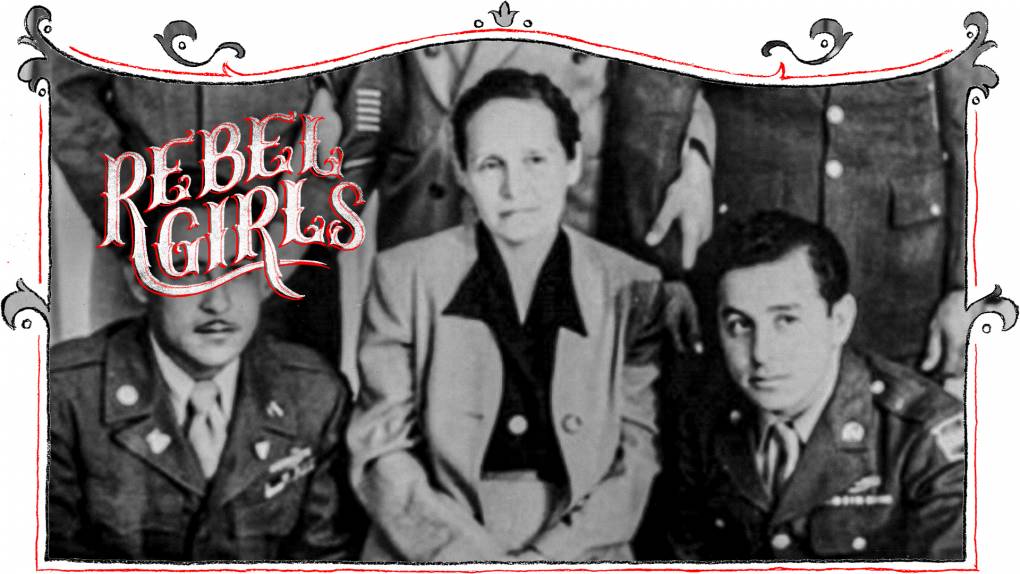
"audio_0": {
"type": "attachments",
"id": "audio_0",
"imgSizes": {
"kqedFullSize": {
"file": "https://ww2.kqed.org/news/wp-content/themes/KQED-unified/img/audio_bgs/background0.jpg"
}
}
},
"audio_1": {
"type": "attachments",
"id": "audio_1",
"imgSizes": {
"kqedFullSize": {
"file": "https://ww2.kqed.org/news/wp-content/themes/KQED-unified/img/audio_bgs/background1.jpg"
}
}
},
"audio_2": {
"type": "attachments",
"id": "audio_2",
"imgSizes": {
"kqedFullSize": {
"file": "https://ww2.kqed.org/news/wp-content/themes/KQED-unified/img/audio_bgs/background2.jpg"
}
}
},
"audio_3": {
"type": "attachments",
"id": "audio_3",
"imgSizes": {
"kqedFullSize": {
"file": "https://ww2.kqed.org/news/wp-content/themes/KQED-unified/img/audio_bgs/background3.jpg"
}
}
},
"audio_4": {
"type": "attachments",
"id": "audio_4",
"imgSizes": {
"kqedFullSize": {
"file": "https://ww2.kqed.org/news/wp-content/themes/KQED-unified/img/audio_bgs/background4.jpg"
}
}
},
"placeholder": {
"type": "attachments",
"id": "placeholder",
"imgSizes": {
"thumbnail": {
"file": "https://cdn.kqed.org/wp-content/uploads/2024/12/KQED-Default-Image-816638274-2000x1333-1-160x107.jpg",
"width": 160,
"height": 107,
"mimeType": "image/jpeg"
},
"medium": {
"file": "https://cdn.kqed.org/wp-content/uploads/2024/12/KQED-Default-Image-816638274-2000x1333-1-800x533.jpg",
"width": 800,
"height": 533,
"mimeType": "image/jpeg"
},
"medium_large": {
"file": "https://cdn.kqed.org/wp-content/uploads/2024/12/KQED-Default-Image-816638274-2000x1333-1-768x512.jpg",
"width": 768,
"height": 512,
"mimeType": "image/jpeg"
},
"large": {
"file": "https://cdn.kqed.org/wp-content/uploads/2024/12/KQED-Default-Image-816638274-2000x1333-1-1020x680.jpg",
"width": 1020,
"height": 680,
"mimeType": "image/jpeg"
},
"1536x1536": {
"file": "https://cdn.kqed.org/wp-content/uploads/2024/12/KQED-Default-Image-816638274-2000x1333-1-1536x1024.jpg",
"width": 1536,
"height": 1024,
"mimeType": "image/jpeg"
},
"fd-lrg": {
"file": "https://cdn.kqed.org/wp-content/uploads/2024/12/KQED-Default-Image-816638274-2000x1333-1-1536x1024.jpg",
"width": 1536,
"height": 1024,
"mimeType": "image/jpeg"
},
"fd-med": {
"file": "https://cdn.kqed.org/wp-content/uploads/2024/12/KQED-Default-Image-816638274-2000x1333-1-1020x680.jpg",
"width": 1020,
"height": 680,
"mimeType": "image/jpeg"
},
"fd-sm": {
"file": "https://cdn.kqed.org/wp-content/uploads/2024/12/KQED-Default-Image-816638274-2000x1333-1-800x533.jpg",
"width": 800,
"height": 533,
"mimeType": "image/jpeg"
},
"post-thumbnail": {
"file": "https://cdn.kqed.org/wp-content/uploads/2024/12/KQED-Default-Image-816638274-2000x1333-1-672x372.jpg",
"width": 672,
"height": 372,
"mimeType": "image/jpeg"
},
"twentyfourteen-full-width": {
"file": "https://cdn.kqed.org/wp-content/uploads/2024/12/KQED-Default-Image-816638274-2000x1333-1-1038x576.jpg",
"width": 1038,
"height": 576,
"mimeType": "image/jpeg"
},
"xxsmall": {
"file": "https://cdn.kqed.org/wp-content/uploads/2024/12/KQED-Default-Image-816638274-2000x1333-1-160x107.jpg",
"width": 160,
"height": 107,
"mimeType": "image/jpeg"
},
"xsmall": {
"file": "https://cdn.kqed.org/wp-content/uploads/2024/12/KQED-Default-Image-816638274-2000x1333-1-672x372.jpg",
"width": 672,
"height": 372,
"mimeType": "image/jpeg"
},
"small": {
"file": "https://cdn.kqed.org/wp-content/uploads/2024/12/KQED-Default-Image-816638274-2000x1333-1-672x372.jpg",
"width": 672,
"height": 372,
"mimeType": "image/jpeg"
},
"xlarge": {
"file": "https://cdn.kqed.org/wp-content/uploads/2024/12/KQED-Default-Image-816638274-2000x1333-1-1020x680.jpg",
"width": 1020,
"height": 680,
"mimeType": "image/jpeg"
},
"full-width": {
"file": "https://cdn.kqed.org/wp-content/uploads/2024/12/KQED-Default-Image-816638274-2000x1333-1-1920x1280.jpg",
"width": 1920,
"height": 1280,
"mimeType": "image/jpeg"
},
"guest-author-32": {
"file": "https://cdn.kqed.org/wp-content/uploads/2025/01/KQED-Default-Image-816638274-1333x1333-1-160x160.jpg",
"width": 32,
"height": 32,
"mimeType": "image/jpeg"
},
"guest-author-50": {
"file": "https://cdn.kqed.org/wp-content/uploads/2025/01/KQED-Default-Image-816638274-1333x1333-1-160x160.jpg",
"width": 50,
"height": 50,
"mimeType": "image/jpeg"
},
"guest-author-64": {
"file": "https://cdn.kqed.org/wp-content/uploads/2025/01/KQED-Default-Image-816638274-1333x1333-1-160x160.jpg",
"width": 64,
"height": 64,
"mimeType": "image/jpeg"
},
"guest-author-96": {
"file": "https://cdn.kqed.org/wp-content/uploads/2025/01/KQED-Default-Image-816638274-1333x1333-1-160x160.jpg",
"width": 96,
"height": 96,
"mimeType": "image/jpeg"
},
"guest-author-128": {
"file": "https://cdn.kqed.org/wp-content/uploads/2025/01/KQED-Default-Image-816638274-1333x1333-1-160x160.jpg",
"width": 128,
"height": 128,
"mimeType": "image/jpeg"
},
"detail": {
"file": "https://cdn.kqed.org/wp-content/uploads/2025/01/KQED-Default-Image-816638274-1333x1333-1-160x160.jpg",
"width": 160,
"height": 160,
"mimeType": "image/jpeg"
},
"kqedFullSize": {
"file": "https://cdn.kqed.org/wp-content/uploads/2024/12/KQED-Default-Image-816638274-2000x1333-1.jpg",
"width": 2000,
"height": 1333
}
}
},
"arts_13894642": {
"type": "attachments",
"id": "arts_13894642",
"meta": {
"index": "attachments_1716263798",
"site": "arts",
"id": "13894642",
"found": true
},
"parent": 13893514,
"imgSizes": {
"twentyfourteen-full-width": {
"file": "https://ww2.kqed.org/app/uploads/sites/2/2021/03/Enriqueta-Andazola-Feature-Image-1038x576.jpg",
"width": 1038,
"mimeType": "image/jpeg",
"height": 576
},
"thumbnail": {
"file": "https://ww2.kqed.org/app/uploads/sites/2/2021/03/Enriqueta-Andazola-Feature-Image-160x90.jpg",
"width": 160,
"mimeType": "image/jpeg",
"height": 90
},
"post-thumbnail": {
"file": "https://ww2.kqed.org/app/uploads/sites/2/2021/03/Enriqueta-Andazola-Feature-Image-672x372.jpg",
"width": 672,
"mimeType": "image/jpeg",
"height": 372
},
"kqedFullSize": {
"file": "https://ww2.kqed.org/app/uploads/sites/2/2021/03/Enriqueta-Andazola-Feature-Image.jpg",
"width": 1920,
"height": 1080
},
"large": {
"file": "https://ww2.kqed.org/app/uploads/sites/2/2021/03/Enriqueta-Andazola-Feature-Image-1020x574.jpg",
"width": 1020,
"mimeType": "image/jpeg",
"height": 574
},
"1536x1536": {
"file": "https://ww2.kqed.org/app/uploads/sites/2/2021/03/Enriqueta-Andazola-Feature-Image-1536x864.jpg",
"width": 1536,
"mimeType": "image/jpeg",
"height": 864
},
"medium": {
"file": "https://ww2.kqed.org/app/uploads/sites/2/2021/03/Enriqueta-Andazola-Feature-Image-800x450.jpg",
"width": 800,
"mimeType": "image/jpeg",
"height": 450
},
"medium_large": {
"file": "https://ww2.kqed.org/app/uploads/sites/2/2021/03/Enriqueta-Andazola-Feature-Image-768x432.jpg",
"width": 768,
"mimeType": "image/jpeg",
"height": 432
}
},
"publishDate": 1616711353,
"modified": 1636503140,
"caption": null,
"description": null,
"title": "Enriqueta Andazola Feature Image",
"credit": null,
"status": "inherit",
"altTag": "A dainty Latina wearing a black shirt and grey suit sits with two of her sons either side of her. They are wearing decorated military uniforms.",
"isLoading": false,
"fetchFailed": false
},
"arts_13894444": {
"type": "attachments",
"id": "arts_13894444",
"meta": {
"index": "attachments_1716263798",
"site": "arts",
"id": "13894444",
"found": true
},
"parent": 13894423,
"imgSizes": {
"twentyfourteen-full-width": {
"file": "https://ww2.kqed.org/app/uploads/sites/2/2021/03/Flints.MAIN_-1038x576.jpg",
"width": 1038,
"mimeType": "image/jpeg",
"height": 576
},
"thumbnail": {
"file": "https://ww2.kqed.org/app/uploads/sites/2/2021/03/Flints.MAIN_-160x90.jpg",
"width": 160,
"mimeType": "image/jpeg",
"height": 90
},
"post-thumbnail": {
"file": "https://ww2.kqed.org/app/uploads/sites/2/2021/03/Flints.MAIN_-672x372.jpg",
"width": 672,
"mimeType": "image/jpeg",
"height": 372
},
"kqedFullSize": {
"file": "https://ww2.kqed.org/app/uploads/sites/2/2021/03/Flints.MAIN_.jpg",
"width": 1920,
"height": 1080
},
"large": {
"file": "https://ww2.kqed.org/app/uploads/sites/2/2021/03/Flints.MAIN_-1020x574.jpg",
"width": 1020,
"mimeType": "image/jpeg",
"height": 574
},
"1536x1536": {
"file": "https://ww2.kqed.org/app/uploads/sites/2/2021/03/Flints.MAIN_-1536x864.jpg",
"width": 1536,
"mimeType": "image/jpeg",
"height": 864
},
"medium": {
"file": "https://ww2.kqed.org/app/uploads/sites/2/2021/03/Flints.MAIN_-800x450.jpg",
"width": 800,
"mimeType": "image/jpeg",
"height": 450
},
"medium_large": {
"file": "https://ww2.kqed.org/app/uploads/sites/2/2021/03/Flints.MAIN_-768x432.jpg",
"width": 768,
"mimeType": "image/jpeg",
"height": 432
}
},
"publishDate": 1616526666,
"modified": 1680737842,
"caption": "The original Flint's Barbecue location at 3114 San Pablo Ave. was an iconic Oakland restaurant until it closed in the late '90s. The current iteration of the business operates mostly as a pop-up and catering business.",
"description": null,
"title": "Flints.MAIN",
"credit": "Our Oakland",
"status": "inherit",
"altTag": "The exterior of Flint's Barbecue, with the \"Flint's Bar-B-Q\" sign visible",
"isLoading": false,
"fetchFailed": false
},
"arts_13894424": {
"type": "attachments",
"id": "arts_13894424",
"meta": {
"index": "attachments_1716263798",
"site": "arts",
"id": "13894424",
"found": true
},
"parent": 13894421,
"imgSizes": {
"thumbnail": {
"file": "https://ww2.kqed.org/app/uploads/sites/2/2021/03/Nina.MaryLou-160x90.jpg",
"width": 160,
"mimeType": "image/jpeg",
"height": 90
},
"post-thumbnail": {
"file": "https://ww2.kqed.org/app/uploads/sites/2/2021/03/Nina.MaryLou-672x372.jpg",
"width": 672,
"mimeType": "image/jpeg",
"height": 372
},
"kqedFullSize": {
"file": "https://ww2.kqed.org/app/uploads/sites/2/2021/03/Nina.MaryLou.jpg",
"width": 800,
"height": 450
},
"medium_large": {
"file": "https://ww2.kqed.org/app/uploads/sites/2/2021/03/Nina.MaryLou-768x432.jpg",
"width": 768,
"mimeType": "image/jpeg",
"height": 432
}
},
"publishDate": 1616522082,
"modified": 1616522134,
"caption": "'Convergence' imagines a meeting between jazz greats Mary Lou Williams and Nina Simone (L–R) in a Paris hotel lobby.",
"description": "'Convergence' imagines a meeting between jazz greats Mary Lou Williams and Nina Simone (L–R) in a Paris hotel lobby.",
"title": "Nina.MaryLou",
"credit": "Courtesy Healdsburg Jazz Festival",
"status": "inherit",
"altTag": "'Convergence' imagines a meeting between jazz greats Mary Lou Williams and Nina Simone (L–R) in a Paris hotel lobby.",
"isLoading": false,
"fetchFailed": false
},
"arts_13893515": {
"type": "attachments",
"id": "arts_13893515",
"meta": {
"index": "attachments_1716263798",
"site": "arts",
"id": "13893515",
"found": true
},
"parent": 13893272,
"imgSizes": {
"twentyfourteen-full-width": {
"file": "https://ww2.kqed.org/app/uploads/sites/2/2021/03/Hounds-1038x576.jpg",
"width": 1038,
"mimeType": "image/jpeg",
"height": 576
},
"thumbnail": {
"file": "https://ww2.kqed.org/app/uploads/sites/2/2021/03/Hounds-160x100.jpg",
"width": 160,
"mimeType": "image/jpeg",
"height": 100
},
"post-thumbnail": {
"file": "https://ww2.kqed.org/app/uploads/sites/2/2021/03/Hounds-672x372.jpg",
"width": 672,
"mimeType": "image/jpeg",
"height": 372
},
"kqedFullSize": {
"file": "https://ww2.kqed.org/app/uploads/sites/2/2021/03/Hounds.jpg",
"width": 1920,
"height": 1200
},
"large": {
"file": "https://ww2.kqed.org/app/uploads/sites/2/2021/03/Hounds-1020x638.jpg",
"width": 1020,
"mimeType": "image/jpeg",
"height": 638
},
"1536x1536": {
"file": "https://ww2.kqed.org/app/uploads/sites/2/2021/03/Hounds-1536x960.jpg",
"width": 1536,
"mimeType": "image/jpeg",
"height": 960
},
"medium": {
"file": "https://ww2.kqed.org/app/uploads/sites/2/2021/03/Hounds-800x500.jpg",
"width": 800,
"mimeType": "image/jpeg",
"height": 500
},
"medium_large": {
"file": "https://ww2.kqed.org/app/uploads/sites/2/2021/03/Hounds-768x480.jpg",
"width": 768,
"mimeType": "image/jpeg",
"height": 480
}
},
"publishDate": 1614734663,
"modified": 1614734696,
"caption": "An artist's rendition of the Hounds attacking a Chilean mining camp in San Francisco in 1849.",
"description": "An artist's rendition of the Hounds attacking a Chilean mining camp in San Francisco in 1849.",
"title": "Hounds",
"credit": "'The Annals of San Francisco,' 1855",
"status": "inherit",
"altTag": "An artist's rendition of the Hounds attacking a Chilean mining camp in San Francisco in 1849.",
"isLoading": false,
"fetchFailed": false
},
"arts_13893044": {
"type": "attachments",
"id": "arts_13893044",
"meta": {
"index": "attachments_1716263798",
"site": "arts",
"id": "13893044",
"found": true
},
"parent": 13892514,
"imgSizes": {
"twentyfourteen-full-width": {
"file": "https://ww2.kqed.org/app/uploads/sites/2/2021/02/AbbyFisher-1038x576.jpg",
"width": 1038,
"mimeType": "image/jpeg",
"height": 576
},
"thumbnail": {
"file": "https://ww2.kqed.org/app/uploads/sites/2/2021/02/AbbyFisher-160x90.jpg",
"width": 160,
"mimeType": "image/jpeg",
"height": 90
},
"post-thumbnail": {
"file": "https://ww2.kqed.org/app/uploads/sites/2/2021/02/AbbyFisher-672x372.jpg",
"width": 672,
"mimeType": "image/jpeg",
"height": 372
},
"kqedFullSize": {
"file": "https://ww2.kqed.org/app/uploads/sites/2/2021/02/AbbyFisher.jpg",
"width": 1920,
"height": 1080
},
"large": {
"file": "https://ww2.kqed.org/app/uploads/sites/2/2021/02/AbbyFisher-1020x574.jpg",
"width": 1020,
"mimeType": "image/jpeg",
"height": 574
},
"1536x1536": {
"file": "https://ww2.kqed.org/app/uploads/sites/2/2021/02/AbbyFisher-1536x864.jpg",
"width": 1536,
"mimeType": "image/jpeg",
"height": 864
},
"medium": {
"file": "https://ww2.kqed.org/app/uploads/sites/2/2021/02/AbbyFisher-800x450.jpg",
"width": 800,
"mimeType": "image/jpeg",
"height": 450
},
"medium_large": {
"file": "https://ww2.kqed.org/app/uploads/sites/2/2021/02/AbbyFisher-768x432.jpg",
"width": 768,
"mimeType": "image/jpeg",
"height": 432
}
},
"publishDate": 1613776026,
"modified": 1636503412,
"caption": "Enslaved people in South Carolina in the process of being freed by the federal government around 1862. Abby Fisher was born and raised on a South Carolina plantation, but after gaining her freedom, found success in San Francisco.",
"description": "Enslaved people in South Carolina in the process of being freed by the federal government around 1862. Abby Fisher was born and raised on a South Carolina plantation, but after gaining her freedom, found success in San Francisco.",
"title": "Enslaved people in South Carolina in the process of being freed by the federal government around 1862. Abby Fisher was born and raised on a South Carolina plantation, but after gaining her freedom, found success in San Francisco.",
"credit": "Henry P. Moore",
"status": "inherit",
"altTag": "A sepia-toned photograph of Black men and women, 22 standing, and 14 sitting along with 3 children, all looking directly into the camera.",
"isLoading": false,
"fetchFailed": false
},
"arts_13893118": {
"type": "attachments",
"id": "arts_13893118",
"meta": {
"index": "attachments_1716263798",
"site": "arts",
"id": "13893118",
"found": true
},
"parent": 13893054,
"imgSizes": {
"twentyfourteen-full-width": {
"file": "https://ww2.kqed.org/app/uploads/sites/2/2021/02/Pen_COVER-1038x576.jpg",
"width": 1038,
"mimeType": "image/jpeg",
"height": 576
},
"thumbnail": {
"file": "https://ww2.kqed.org/app/uploads/sites/2/2021/02/Pen_COVER-160x90.jpg",
"width": 160,
"mimeType": "image/jpeg",
"height": 90
},
"post-thumbnail": {
"file": "https://ww2.kqed.org/app/uploads/sites/2/2021/02/Pen_COVER-672x372.jpg",
"width": 672,
"mimeType": "image/jpeg",
"height": 372
},
"kqedFullSize": {
"file": "https://ww2.kqed.org/app/uploads/sites/2/2021/02/Pen_COVER.jpg",
"width": 1920,
"height": 1080
},
"large": {
"file": "https://ww2.kqed.org/app/uploads/sites/2/2021/02/Pen_COVER-1020x574.jpg",
"width": 1020,
"mimeType": "image/jpeg",
"height": 574
},
"1536x1536": {
"file": "https://ww2.kqed.org/app/uploads/sites/2/2021/02/Pen_COVER-1536x864.jpg",
"width": 1536,
"mimeType": "image/jpeg",
"height": 864
},
"medium": {
"file": "https://ww2.kqed.org/app/uploads/sites/2/2021/02/Pen_COVER-800x450.jpg",
"width": 800,
"mimeType": "image/jpeg",
"height": 450
},
"medium_large": {
"file": "https://ww2.kqed.org/app/uploads/sites/2/2021/02/Pen_COVER-768x432.jpg",
"width": 768,
"mimeType": "image/jpeg",
"height": 432
}
},
"publishDate": 1614105404,
"modified": 1614105478,
"caption": "Before becoming a reverend, Cheryl Dawson was a member of the Black Panther Party. Now, she's part of a towering mural in West Oakland paying tribute to the women of the Black Panther Party.",
"description": "Before becoming a reverend, Cheryl Dawson was a member of the Black Panther Party. Now, she's part of a towering mural in West Oakland paying tribute to the women of the Black Panther Party.",
"title": "Pen_COVER",
"credit": "Courtesy Cheryl Dawson",
"status": "inherit",
"altTag": "Before becoming a reverend, Cheryl Dawson was a member of the Black Panther Party. Now, she's part of a towering mural in West Oakland paying tribute to the women of the Black Panther Party.",
"isLoading": false,
"fetchFailed": false
},
"arts_13892961": {
"type": "attachments",
"id": "arts_13892961",
"meta": {
"index": "attachments_1716263798",
"site": "arts",
"id": "13892961",
"found": true
},
"parent": 13892672,
"imgSizes": {
"twentyfourteen-full-width": {
"file": "https://ww2.kqed.org/app/uploads/sites/2/2021/02/Screen-Shot-2021-02-18-at-1.55.03-PM-1038x576.png",
"width": 1038,
"mimeType": "image/png",
"height": 576
},
"thumbnail": {
"file": "https://ww2.kqed.org/app/uploads/sites/2/2021/02/Screen-Shot-2021-02-18-at-1.55.03-PM-160x98.png",
"width": 160,
"mimeType": "image/png",
"height": 98
},
"post-thumbnail": {
"file": "https://ww2.kqed.org/app/uploads/sites/2/2021/02/Screen-Shot-2021-02-18-at-1.55.03-PM-672x372.png",
"width": 672,
"mimeType": "image/png",
"height": 372
},
"kqedFullSize": {
"file": "https://ww2.kqed.org/app/uploads/sites/2/2021/02/Screen-Shot-2021-02-18-at-1.55.03-PM-e1613685521863.png",
"width": 1920,
"height": 1175
},
"large": {
"file": "https://ww2.kqed.org/app/uploads/sites/2/2021/02/Screen-Shot-2021-02-18-at-1.55.03-PM-1020x624.png",
"width": 1020,
"mimeType": "image/png",
"height": 624
},
"1536x1536": {
"file": "https://ww2.kqed.org/app/uploads/sites/2/2021/02/Screen-Shot-2021-02-18-at-1.55.03-PM-1536x940.png",
"width": 1536,
"mimeType": "image/png",
"height": 940
},
"full-width": {
"file": "https://ww2.kqed.org/app/uploads/sites/2/2021/02/Screen-Shot-2021-02-18-at-1.55.03-PM-1920x1175.png",
"width": 1920,
"mimeType": "image/png",
"height": 1175
},
"medium": {
"file": "https://ww2.kqed.org/app/uploads/sites/2/2021/02/Screen-Shot-2021-02-18-at-1.55.03-PM-800x489.png",
"width": 800,
"mimeType": "image/png",
"height": 489
},
"medium_large": {
"file": "https://ww2.kqed.org/app/uploads/sites/2/2021/02/Screen-Shot-2021-02-18-at-1.55.03-PM-768x470.png",
"width": 768,
"mimeType": "image/png",
"height": 470
}
},
"publishDate": 1613685500,
"modified": 1613685563,
"caption": "The Dew Drop Inn, just off Highway 49 in Grass Valley.",
"description": "The Dew Drop Inn, just off Highway 49 in Grass Valley.",
"title": "The Dew Drop Inn, just off Highway 49 in Grass Valley.",
"credit": "Courtesy of Lori Holcomb Godfrey",
"status": "inherit",
"altTag": "The Dew Drop Inn, just off Highway 49 in Grass Valley.",
"isLoading": false,
"fetchFailed": false
},
"arts_13892400": {
"type": "attachments",
"id": "arts_13892400",
"meta": {
"index": "attachments_1716263798",
"site": "arts",
"id": "13892400",
"found": true
},
"parent": 13891913,
"imgSizes": {
"twentyfourteen-full-width": {
"file": "https://ww2.kqed.org/app/uploads/sites/2/2021/02/GreyGardens262-1038x576.jpg",
"width": 1038,
"mimeType": "image/jpeg",
"height": 576
},
"thumbnail": {
"file": "https://ww2.kqed.org/app/uploads/sites/2/2021/02/GreyGardens262-160x109.jpg",
"width": 160,
"mimeType": "image/jpeg",
"height": 109
},
"post-thumbnail": {
"file": "https://ww2.kqed.org/app/uploads/sites/2/2021/02/GreyGardens262-672x372.jpg",
"width": 672,
"mimeType": "image/jpeg",
"height": 372
},
"kqedFullSize": {
"file": "https://ww2.kqed.org/app/uploads/sites/2/2021/02/GreyGardens262.jpg",
"width": 2520,
"height": 1722
},
"2048x2048": {
"file": "https://ww2.kqed.org/app/uploads/sites/2/2021/02/GreyGardens262-2048x1399.jpg",
"width": 2048,
"mimeType": "image/jpeg",
"height": 1399
},
"large": {
"file": "https://ww2.kqed.org/app/uploads/sites/2/2021/02/GreyGardens262-1020x697.jpg",
"width": 1020,
"mimeType": "image/jpeg",
"height": 697
},
"1536x1536": {
"file": "https://ww2.kqed.org/app/uploads/sites/2/2021/02/GreyGardens262-1536x1050.jpg",
"width": 1536,
"mimeType": "image/jpeg",
"height": 1050
},
"full-width": {
"file": "https://ww2.kqed.org/app/uploads/sites/2/2021/02/GreyGardens262-1920x1312.jpg",
"width": 1920,
"mimeType": "image/jpeg",
"height": 1312
},
"medium": {
"file": "https://ww2.kqed.org/app/uploads/sites/2/2021/02/GreyGardens262-800x547.jpg",
"width": 800,
"mimeType": "image/jpeg",
"height": 547
},
"medium_large": {
"file": "https://ww2.kqed.org/app/uploads/sites/2/2021/02/GreyGardens262-768x525.jpg",
"width": 768,
"mimeType": "image/jpeg",
"height": 525
}
},
"publishDate": 1612819102,
"modified": 1612819247,
"caption": "Little Edie listens to records with one of the many cats of 'Grey Gardens' (1976).",
"description": "Little Edie listens to records with one of the many cats of 'Grey Gardens' (1976).",
"title": "Little Edie listens to records with one of the many cats of 'Grey Gardens' (1976).",
"credit": "Janus Films",
"status": "inherit",
"altTag": "Little Edie listens to records with one of the many cats of 'Grey Gardens' (1976).",
"isLoading": false,
"fetchFailed": false
},
"arts_13891727": {
"type": "attachments",
"id": "arts_13891727",
"meta": {
"index": "attachments_1716263798",
"site": "arts",
"id": "13891727",
"found": true
},
"parent": 13889944,
"imgSizes": {
"twentyfourteen-full-width": {
"file": "https://ww2.kqed.org/app/uploads/sites/2/2021/01/BarbaraCameron_Final-1038x576.jpg",
"width": 1038,
"mimeType": "image/jpeg",
"height": 576
},
"thumbnail": {
"file": "https://ww2.kqed.org/app/uploads/sites/2/2021/01/BarbaraCameron_Final-160x90.jpg",
"width": 160,
"mimeType": "image/jpeg",
"height": 90
},
"post-thumbnail": {
"file": "https://ww2.kqed.org/app/uploads/sites/2/2021/01/BarbaraCameron_Final-672x372.jpg",
"width": 672,
"mimeType": "image/jpeg",
"height": 372
},
"kqedFullSize": {
"file": "https://ww2.kqed.org/app/uploads/sites/2/2021/01/BarbaraCameron_Final.jpg",
"width": 1920,
"height": 1080
},
"large": {
"file": "https://ww2.kqed.org/app/uploads/sites/2/2021/01/BarbaraCameron_Final-1020x574.jpg",
"width": 1020,
"mimeType": "image/jpeg",
"height": 574
},
"1536x1536": {
"file": "https://ww2.kqed.org/app/uploads/sites/2/2021/01/BarbaraCameron_Final-1536x864.jpg",
"width": 1536,
"mimeType": "image/jpeg",
"height": 864
},
"medium": {
"file": "https://ww2.kqed.org/app/uploads/sites/2/2021/01/BarbaraCameron_Final-800x450.jpg",
"width": 800,
"mimeType": "image/jpeg",
"height": 450
},
"medium_large": {
"file": "https://ww2.kqed.org/app/uploads/sites/2/2021/01/BarbaraCameron_Final-768x432.jpg",
"width": 768,
"mimeType": "image/jpeg",
"height": 432
}
},
"publishDate": 1611353064,
"modified": 1636503556,
"caption": null,
"description": null,
"title": "BarbaraCameron_Final",
"credit": null,
"status": "inherit",
"altTag": "A woman with a round face smiles warmly. Her dark hair is cut into a messy bob and partially concealed under a hat.",
"isLoading": false,
"fetchFailed": false
},
"arts_13891740": {
"type": "attachments",
"id": "arts_13891740",
"meta": {
"index": "attachments_1716263798",
"site": "arts",
"id": "13891740",
"found": true
},
"parent": 13891739,
"imgSizes": {
"twentyfourteen-full-width": {
"file": "https://ww2.kqed.org/app/uploads/sites/2/2021/01/zakir-hussain-ali-akbarkhan-and-mary-khan_custom-95e6237b77a0bf929706cde70e984fc2302163d0-1038x576.jpg",
"width": 1038,
"mimeType": "image/jpeg",
"height": 576
},
"thumbnail": {
"file": "https://ww2.kqed.org/app/uploads/sites/2/2021/01/zakir-hussain-ali-akbarkhan-and-mary-khan_custom-95e6237b77a0bf929706cde70e984fc2302163d0-160x112.jpg",
"width": 160,
"mimeType": "image/jpeg",
"height": 112
},
"post-thumbnail": {
"file": "https://ww2.kqed.org/app/uploads/sites/2/2021/01/zakir-hussain-ali-akbarkhan-and-mary-khan_custom-95e6237b77a0bf929706cde70e984fc2302163d0-672x372.jpg",
"width": 672,
"mimeType": "image/jpeg",
"height": 372
},
"kqedFullSize": {
"file": "https://ww2.kqed.org/app/uploads/sites/2/2021/01/zakir-hussain-ali-akbarkhan-and-mary-khan_custom-95e6237b77a0bf929706cde70e984fc2302163d0.jpg",
"width": 1288,
"height": 904
},
"large": {
"file": "https://ww2.kqed.org/app/uploads/sites/2/2021/01/zakir-hussain-ali-akbarkhan-and-mary-khan_custom-95e6237b77a0bf929706cde70e984fc2302163d0-1020x716.jpg",
"width": 1020,
"mimeType": "image/jpeg",
"height": 716
},
"medium": {
"file": "https://ww2.kqed.org/app/uploads/sites/2/2021/01/zakir-hussain-ali-akbarkhan-and-mary-khan_custom-95e6237b77a0bf929706cde70e984fc2302163d0-800x561.jpg",
"width": 800,
"mimeType": "image/jpeg",
"height": 561
},
"medium_large": {
"file": "https://ww2.kqed.org/app/uploads/sites/2/2021/01/zakir-hussain-ali-akbarkhan-and-mary-khan_custom-95e6237b77a0bf929706cde70e984fc2302163d0-768x539.jpg",
"width": 768,
"mimeType": "image/jpeg",
"height": 539
}
},
"publishDate": 1611596379,
"modified": 1611596910,
"caption": "Tabla player Zakir Hussain (left) accompanies sarod player Ali Akbar Khan and his wife and collaborator Mary Khan.",
"description": "Tabla player Zakir Hussain (left) accompanies sarod player Ali Akbar Khan and his wife and collaborator Mary Khan.",
"title": "Tabla player Zakir Hussain (left) accompanies sarod player Ali Akbar Khan and his wife and collaborator Mary Khan.",
"credit": "Courtesy of the Owsley Stanley Foundation",
"status": "inherit",
"altTag": "Tabla player Zakir Hussain (left) accompanies sarod player Ali Akbar Khan and his wife and collaborator Mary Khan.",
"isLoading": false,
"fetchFailed": false
},
"arts_13890864": {
"type": "attachments",
"id": "arts_13890864",
"meta": {
"index": "attachments_1716263798",
"site": "arts",
"id": "13890864",
"found": true
},
"parent": 13890853,
"imgSizes": {
"twentyfourteen-full-width": {
"file": "https://ww2.kqed.org/app/uploads/sites/2/2021/01/wnp36.01798-1000x576.jpg",
"width": 1000,
"mimeType": "image/jpeg",
"height": 576
},
"thumbnail": {
"file": "https://ww2.kqed.org/app/uploads/sites/2/2021/01/wnp36.01798-160x111.jpg",
"width": 160,
"mimeType": "image/jpeg",
"height": 111
},
"post-thumbnail": {
"file": "https://ww2.kqed.org/app/uploads/sites/2/2021/01/wnp36.01798-672x372.jpg",
"width": 672,
"mimeType": "image/jpeg",
"height": 372
},
"kqedFullSize": {
"file": "https://ww2.kqed.org/app/uploads/sites/2/2021/01/wnp36.01798.jpg",
"width": 1000,
"height": 694
},
"medium": {
"file": "https://ww2.kqed.org/app/uploads/sites/2/2021/01/wnp36.01798-800x555.jpg",
"width": 800,
"mimeType": "image/jpeg",
"height": 555
},
"medium_large": {
"file": "https://ww2.kqed.org/app/uploads/sites/2/2021/01/wnp36.01798-768x533.jpg",
"width": 768,
"mimeType": "image/jpeg",
"height": 533
}
},
"publishDate": 1609962277,
"modified": 1610044471,
"caption": "A smiling Mayor James Rolph on the steps of San Francisco's City Hall, with his coat slung over his arm. This image was taken in 1918, four years after the public opium burning.",
"description": "A smiling Mayor James Rolph on the steps of San Francisco's City Hall, with his coat slung over his arm. This image was taken in 1918, four years after the public opium burning.",
"title": "A smiling Mayor James Rolph on the steps of San Francisco's City Hall, with his coat slung over his arm. This image was taken in 1918, four years after the public opium burning.",
"credit": "OpenSFHistory / wnp36.01798.jpg",
"status": "inherit",
"altTag": "A smiling Mayor James Rolph on the steps of San Francisco's City Hall, with his coat slung over his arm. This image was taken in 1918, four years after the public opium burning.",
"isLoading": false,
"fetchFailed": false
},
"arts_13890803": {
"type": "attachments",
"id": "arts_13890803",
"meta": {
"index": "attachments_1716263798",
"site": "arts",
"id": "13890803",
"found": true
},
"parent": 13890789,
"imgSizes": {
"twentyfourteen-full-width": {
"file": "https://ww2.kqed.org/app/uploads/sites/2/2021/01/B000I8ES4S_JohnnyMnemonic_UXSY1._V391273860_RI_-1038x576.jpg",
"width": 1038,
"mimeType": "image/jpeg",
"height": 576
},
"thumbnail": {
"file": "https://ww2.kqed.org/app/uploads/sites/2/2021/01/B000I8ES4S_JohnnyMnemonic_UXSY1._V391273860_RI_-160x110.jpg",
"width": 160,
"mimeType": "image/jpeg",
"height": 110
},
"post-thumbnail": {
"file": "https://ww2.kqed.org/app/uploads/sites/2/2021/01/B000I8ES4S_JohnnyMnemonic_UXSY1._V391273860_RI_-672x372.jpg",
"width": 672,
"mimeType": "image/jpeg",
"height": 372
},
"kqedFullSize": {
"file": "https://ww2.kqed.org/app/uploads/sites/2/2021/01/B000I8ES4S_JohnnyMnemonic_UXSY1._V391273860_RI_.jpg",
"width": 1600,
"height": 1100
},
"large": {
"file": "https://ww2.kqed.org/app/uploads/sites/2/2021/01/B000I8ES4S_JohnnyMnemonic_UXSY1._V391273860_RI_-1020x701.jpg",
"width": 1020,
"mimeType": "image/jpeg",
"height": 701
},
"1536x1536": {
"file": "https://ww2.kqed.org/app/uploads/sites/2/2021/01/B000I8ES4S_JohnnyMnemonic_UXSY1._V391273860_RI_-1536x1056.jpg",
"width": 1536,
"mimeType": "image/jpeg",
"height": 1056
},
"medium": {
"file": "https://ww2.kqed.org/app/uploads/sites/2/2021/01/B000I8ES4S_JohnnyMnemonic_UXSY1._V391273860_RI_-800x550.jpg",
"width": 800,
"mimeType": "image/jpeg",
"height": 550
},
"medium_large": {
"file": "https://ww2.kqed.org/app/uploads/sites/2/2021/01/B000I8ES4S_JohnnyMnemonic_UXSY1._V391273860_RI_-768x528.jpg",
"width": 768,
"mimeType": "image/jpeg",
"height": 528
}
},
"publishDate": 1609809169,
"modified": 1609809287,
"caption": "Johnny (Keanu Reeves) and Jane (Dina Meyer) battling cyber scares and a pandemic in 1995's 'Johnny Mnemonic.' ",
"description": "Johnny (Keanu Reeves) and Jane (Dina Meyer) battling cyber scares and a pandemic in 1995's 'Johnny Mnemonic.' ",
"title": "Johnny (Keanu Reeves) and Jane (Dina Meyer) battling cyber scares and a pandemic in 1995's 'Johnny Mnemonic.'",
"credit": "Tristar",
"status": "inherit",
"altTag": "Johnny (Keanu Reeves) and Jane (Dina Meyer) battling cyber scares and a pandemic in 1995's 'Johnny Mnemonic.'",
"isLoading": false,
"fetchFailed": false
}
},
"audioPlayerReducer": {
"postId": "stream_live",
"isPaused": true,
"isPlaying": false,
"pfsActive": false,
"pledgeModalIsOpen": true,
"playerDrawerIsOpen": false,
"liveAudioPlayStartedAt": 0,
"liveAudioPlayContext": ""
},
"authorsReducer": {
"byline_arts_13891739": {
"type": "authors",
"id": "byline_arts_13891739",
"meta": {
"override": true
},
"slug": "byline_arts_13891739",
"name": "Bilal Qureshi",
"isLoading": false
},
"ralexandra": {
"type": "authors",
"id": "11242",
"meta": {
"index": "authors_1716337520",
"id": "11242",
"found": true
},
"name": "Rae Alexandra",
"firstName": "Rae",
"lastName": "Alexandra",
"slug": "ralexandra",
"email": "ralexandra@kqed.org",
"display_author_email": true,
"staff_mastheads": [],
"title": "Reporter/Producer",
"bio": "Rae Alexandra is a Reporter/Producer for KQED Arts & Culture, and the creator/author of the \u003ca href=\"https://www.kqed.org/arts/program/rebel-girls-from-bay-area-history\">Rebel Girls From Bay Area History\u003c/a> and \u003ca href=\"https://www.kqed.org/bizarrebayarea\">Bizarre Bay Area\u003c/a> series. Her debut book, \u003ca href=\"https://citylights.com/politics-current-events-history/unsung-heroines35-women-who-changed/\">Unsung Heroines: 35 Women Who Changed the Bay Area\u003c/a> was published by City Lights in March 2026. In 2023, Rae was awarded an SPJ Excellence in Journalism Award for Arts & Culture. Rae was born and raised in Wales and subsequently — even after two decades in Northern California — still uses phrases that regularly baffle her coworkers.",
"avatar": "https://secure.gravatar.com/avatar/edfee8176c80cc0a382b051190f5341997df378a934a5774dcb0977732dfd401?s=600&d=blank&r=g",
"twitter": null,
"bluesky": null,
"facebook": null,
"instagram": null,
"linkedin": null,
"sites": [
{
"site": "arts",
"roles": [
"subscriber"
]
},
{
"site": "news",
"roles": [
"subscriber"
]
},
{
"site": "pop",
"roles": [
"subscriber"
]
},
{
"site": "bayareabites",
"roles": [
"subscriber"
]
},
{
"site": "science",
"roles": [
"subscriber"
]
}
],
"headData": {
"title": "Rae Alexandra | KQED",
"description": "Reporter/Producer",
"ogImgSrc": "https://secure.gravatar.com/avatar/edfee8176c80cc0a382b051190f5341997df378a934a5774dcb0977732dfd401?s=600&d=blank&r=g",
"twImgSrc": "https://secure.gravatar.com/avatar/edfee8176c80cc0a382b051190f5341997df378a934a5774dcb0977732dfd401?s=600&d=blank&r=g"
},
"isLoading": false,
"link": "/author/ralexandra"
},
"ogpenn": {
"type": "authors",
"id": "11491",
"meta": {
"index": "authors_1716337520",
"id": "11491",
"found": true
},
"name": "Pendarvis Harshaw",
"firstName": "Pendarvis",
"lastName": "Harshaw",
"slug": "ogpenn",
"email": "ogpenn@gmail.com",
"display_author_email": false,
"staff_mastheads": [
"arts"
],
"title": "Community Engagement Reporter",
"bio": "Pendarvis Harshaw is an educator, host and writer with KQED Arts.",
"avatar": "https://secure.gravatar.com/avatar/972b77ee8e3f346ae2b00622661187fbfabd059b5693bbdc1475ea7a722fd4cd?s=600&d=blank&r=g",
"twitter": null,
"bluesky": null,
"facebook": null,
"instagram": "ogpenn",
"linkedin": null,
"sites": [
{
"site": "arts",
"roles": [
"administrator"
]
},
{
"site": "news",
"roles": [
"editor"
]
},
{
"site": "bayareabites",
"roles": [
"author"
]
},
{
"site": "hiphop",
"roles": [
"editor"
]
}
],
"headData": {
"title": "Pendarvis Harshaw | KQED",
"description": "Community Engagement Reporter",
"ogImgSrc": "https://secure.gravatar.com/avatar/972b77ee8e3f346ae2b00622661187fbfabd059b5693bbdc1475ea7a722fd4cd?s=600&d=blank&r=g",
"twImgSrc": "https://secure.gravatar.com/avatar/972b77ee8e3f346ae2b00622661187fbfabd059b5693bbdc1475ea7a722fd4cd?s=600&d=blank&r=g"
},
"isLoading": false,
"link": "/author/ogpenn"
},
"sgetachew": {
"type": "authors",
"id": "11734",
"meta": {
"index": "authors_1716337520",
"id": "11734",
"found": true
},
"name": "Samuel Getachew",
"firstName": "Samuel",
"lastName": "Getachew",
"slug": "sgetachew",
"email": "sgetachew@kqed.org",
"display_author_email": false,
"staff_mastheads": [],
"title": "KQED Contributor",
"bio": "\u003cspan style=\"font-weight: 400;\">Samuel Getachew is an 18-year-old poet and writer from Oakland, California. He is the 2019 Oakland Youth Poet Laureate, a 2020 Finalist for National Youth Poet Laureate, and a 4-time YoungArts Winner. His writing has been published in Teen Vogue, the New York Times, the Washington Post, and more. He will attend Yale University in the fall of 2021.\u003c/span>",
"avatar": "https://secure.gravatar.com/avatar/ebad3dcf2295975cfe77698fa670a089?s=600&d=blank&r=g",
"twitter": null,
"facebook": null,
"instagram": null,
"linkedin": null,
"sites": [
{
"site": "arts",
"roles": [
"subscriber"
]
}
],
"headData": {
"title": "Samuel Getachew | KQED",
"description": "KQED Contributor",
"ogImgSrc": "https://secure.gravatar.com/avatar/ebad3dcf2295975cfe77698fa670a089?s=600&d=blank&r=g",
"twImgSrc": "https://secure.gravatar.com/avatar/ebad3dcf2295975cfe77698fa670a089?s=600&d=blank&r=g"
},
"isLoading": false,
"link": "/author/sgetachew"
},
"ltsai": {
"type": "authors",
"id": "11743",
"meta": {
"index": "authors_1716337520",
"id": "11743",
"found": true
},
"name": "Luke Tsai",
"firstName": "Luke",
"lastName": "Tsai",
"slug": "ltsai",
"email": "ltsai@kqed.org",
"display_author_email": true,
"staff_mastheads": [
"arts"
],
"title": "Food Editor",
"bio": "Luke Tsai is KQED's food editor and resident stinky tofu connoisseur. Prior to KQED, he was an editor at Eater SF, \u003cem>San Francisco \u003c/em>magazine, and the \u003cem>East Bay Express\u003c/em>, and his work has also appeared in TASTE, the \u003cem>San Francisco Chronicle\u003c/em>, and the \u003cem>Best Food Writing\u003c/em> anthology. When he isn't writing or editing, you'll find him eating most everything he can get his hands on.",
"avatar": "https://secure.gravatar.com/avatar/1e59b45bf191526e7339d6ba46e33a57b2030d25c27660ecc64ea3cb863e34f7?s=600&d=blank&r=g",
"twitter": "theluketsai",
"bluesky": null,
"facebook": null,
"instagram": null,
"linkedin": null,
"sites": [
{
"site": "",
"roles": [
"editor"
]
},
{
"site": "arts",
"roles": [
"administrator"
]
},
{
"site": "news",
"roles": [
"editor",
"contributor"
]
},
{
"site": "bayareabites",
"roles": [
"editor"
]
},
{
"site": "food",
"roles": [
"editor"
]
}
],
"headData": {
"title": "Luke Tsai | KQED",
"description": "Food Editor",
"ogImgSrc": "https://secure.gravatar.com/avatar/1e59b45bf191526e7339d6ba46e33a57b2030d25c27660ecc64ea3cb863e34f7?s=600&d=blank&r=g",
"twImgSrc": "https://secure.gravatar.com/avatar/1e59b45bf191526e7339d6ba46e33a57b2030d25c27660ecc64ea3cb863e34f7?s=600&d=blank&r=g"
},
"isLoading": false,
"link": "/author/ltsai"
}
},
"pagesReducer": {
"arts_category_history": {
"type": "terms",
"id": "arts_7862",
"meta": {
"index": "terms_1716263798",
"site": "arts",
"id": "7862",
"score": 12.208591
},
"featImg": null,
"name": "History",
"description": null,
"taxonomy": "category",
"headData": {
"twImgId": null,
"twTitle": null,
"ogTitle": null,
"ogImgId": null,
"twDescription": null,
"description": null,
"title": "History Archives | KQED Arts",
"ogDescription": null
},
"ttid": 7874,
"slug": "history",
"isLoading": false,
"title": "History",
"pageMeta": {
"site": "arts",
"WpPageTemplate": "page-topic-editorial",
"currentPage": 25
},
"blocks": [
{
"blockName": "kqed/post-list",
"attrs": {
"layout": "cardArticle2",
"query": "posts/arts?category=history",
"seeMore": false,
"paginated": true,
"page": 25
}
},
{
"blockName": "kqed/ad"
}
]
}
},
"pfsSessionReducer": {},
"postsReducer": {
"stream_live": {
"type": "live",
"id": "stream_live",
"audioUrl": "https://streams.kqed.org/kqedradio",
"title": "Live Stream",
"excerpt": "Live Stream information currently unavailable.",
"link": "/radio",
"featImg": "",
"label": {
"name": "KQED Live",
"link": "/"
}
},
"stream_kqedNewscast": {
"type": "posts",
"id": "stream_kqedNewscast",
"audioUrl": "https://www.kqed.org/.stream/anon/radio/RDnews/newscast.mp3?_=1",
"title": "KQED Newscast",
"featImg": "",
"label": {
"name": "88.5 FM",
"link": "/"
}
},
"arts_13893514": {
"type": "posts",
"id": "arts_13893514",
"meta": {
"index": "posts_1716263798",
"site": "arts",
"id": "13893514",
"score": null,
"sort": [
1616788183000
]
},
"guestAuthors": [],
"slug": "the-sacramento-activist-who-honored-mexican-american-world-war-veterans",
"title": "The Sacramento Activist Who Honored Mexican American World War Veterans",
"publishDate": 1616788183,
"format": "standard",
"headTitle": "The Sacramento Activist Who Honored Mexican American World War Veterans | KQED",
"labelTerm": {},
"content": "\u003cp>When Enriqueta Andazola’s four sons left Sacramento to fight in World War II, her trepidation about what they might face was outshined by a stronger emotion: pride. Andazola—like other mothers of the half million Mexican Americans who fought in the war—was immensely proud of her boys for serving their country. Despite spending years in the United States enduring rampant segregation, lower wages and poor housing conditions on the home front, her patriotism never wavered.\u003c/p>\n\u003cp>It’s widely acknowledged now that World War II was a watershed moment for America’s Mexican and Latin American communities. After years on active duty, returning soldiers started making demands for long-overdue civil rights and previously denied respect. It must have been heartening, then, for the veterans to find that some of the groundwork for this new battle had already been laid by the women they’d left at home. One of the most impactful of them was Enriqueta Andazola.\u003c/p>\n\u003cp>[aside postid='arts_13887962']Born in Chihuahua, Mexico in 1892, Andazola first came to Sacramento in 1917 to escape the chaos and violence of the Mexican Revolution. Although she had worked as a schoolteacher in Chihuahua, her first job in California was at the Sacramento Wool Company. Andazola subsequently spent 25 years of her life working at the Del Monte cannery.\u003c/p>\n\u003cp>Though locked out of her profession of choice, cannery work was the primary source of income for much of Sacramento’s Chicana community at the time. Andazola found a silver lining in the camaraderie and friendships she enjoyed through work. More from anything else, after her split from husband Ignacio Ramírez, the cannery gave her a steady income on which to raise their sons Joe (\u003cem>née\u003c/em> José), Edgardo, John and Paul.\u003c/p>\n\u003cfigure id=\"attachment_13894643\" class=\"wp-caption aligncenter\" style=\"max-width: 382px\">\u003cimg loading=\"lazy\" decoding=\"async\" class=\"size-full wp-image-13894643\" src=\"https://ww2.kqed.org/app/uploads/sites/2/2021/03/Enriqueta-Andazola.png\" alt=\"Enriqueta Andaloza surrounded by her sons, all World War II veterans. L-R: Joe Ramírez (kneeling), Edgardo Ramírez, John Ramírez, Abraham Salgado (her son-in-law) and Paul Ramírez.\" width=\"382\" height=\"440\" srcset=\"https://cdn.kqed.org/wp-content/uploads/sites/2/2021/03/Enriqueta-Andazola.png 382w, https://cdn.kqed.org/wp-content/uploads/sites/2/2021/03/Enriqueta-Andazola-160x184.png 160w\" sizes=\"auto, (max-width: 382px) 100vw, 382px\">\u003cfigcaption class=\"wp-caption-text\">Enriqueta Andaloza surrounded by her sons, all World War II veterans. L-R: Joe Ramírez (kneeling), Edgardo Ramírez, John Ramírez, Abraham Salgado (her son-in-law) and Paul Ramírez. \u003ccite>(Sacramento Historical Society)\u003c/cite>\u003c/figcaption>\u003c/figure>\n\u003cp>Though Andazola considered herself a proud American, it was never at the loss of her own cultural identity. As her granddaughter Diana Salgado Zuñiga would later note, “If there was anything she passed on to me, it was a true feeling of pride in being a Mexican. She assimilated into the society, but she kept her sense of culture.”\u003c/p>\n\u003cp>[ad fullwidth]\u003c/p>\n\u003cp>As such, throughout her life, Andazola actively kept Mexican traditions alive in Sacramento. She was instrumental in organizing and promoting Cinco de Mayo and Mexican Independence Day celebrations, and she was active in establishing community groups for Mexican Americans throughout her lifetime. In 1936, that included a branch of Alianza Hispanoamericana—a community organization that educated, empowered and advocated for people of Mexican descent living in the United States.\u003c/p>\n\u003cp>For decades, though, Andazola’s primary focus was on establishing spaces by and for women. “Men had clubs,” she once noted. “I felt that women deserved [clubs] too.” So, in 1920, she founded Las Amigas Del Hogar (Friends of Homemakers), a women’s group specifically for Chicanas. Nineteen years later, she established the Union Femenil (the Feminine Union). And in 1942, most significantly of all, she co-founded Las Madres Mexicanas de Guerra (Mexican War Mothers), alongside her dear friend, Antima Perez.\u003c/p>\n\u003cfigure id=\"attachment_13894647\" class=\"wp-caption aligncenter\" style=\"max-width: 800px\">\u003cimg loading=\"lazy\" decoding=\"async\" class=\"size-medium wp-image-13894647\" src=\"https://ww2.kqed.org/app/uploads/sites/2/2021/03/Screen-Shot-2021-03-25-at-3.38.07-PM-800x450.png\" alt=\"Enriqueta Andazola's granddaughter Diana Salgado Zuñiga unfurls a vintage 'Mexican War Mothers' banner, during KVIE documentary, 'Valentia: Mexican-Americans in World War II.' \" width=\"800\" height=\"450\" srcset=\"https://cdn.kqed.org/wp-content/uploads/sites/2/2021/03/Screen-Shot-2021-03-25-at-3.38.07-PM-800x450.png 800w, https://cdn.kqed.org/wp-content/uploads/sites/2/2021/03/Screen-Shot-2021-03-25-at-3.38.07-PM-1020x574.png 1020w, https://cdn.kqed.org/wp-content/uploads/sites/2/2021/03/Screen-Shot-2021-03-25-at-3.38.07-PM-160x90.png 160w, https://cdn.kqed.org/wp-content/uploads/sites/2/2021/03/Screen-Shot-2021-03-25-at-3.38.07-PM-768x432.png 768w, https://cdn.kqed.org/wp-content/uploads/sites/2/2021/03/Screen-Shot-2021-03-25-at-3.38.07-PM-1536x864.png 1536w, https://cdn.kqed.org/wp-content/uploads/sites/2/2021/03/Screen-Shot-2021-03-25-at-3.38.07-PM-2048x1152.png 2048w, https://cdn.kqed.org/wp-content/uploads/sites/2/2021/03/Screen-Shot-2021-03-25-at-3.38.07-PM-1920x1080.png 1920w\" sizes=\"auto, (max-width: 800px) 100vw, 800px\">\u003cfigcaption class=\"wp-caption-text\">Enriqueta Andazola’s granddaughter Diana Salgado Zuñiga unfurls a vintage ‘Mexican War Mothers’ banner, during KVIE documentary, ‘Valentia: Mexican-Americans in World War II.’ \u003ccite>(YouTube/ KVIE)\u003c/cite>\u003c/figcaption>\u003c/figure>\n\u003cp>Though all women of the era were expected to join in the war effort, Las Madres went above and beyond. They tended to wounded soldiers in local military hospitals. They launched letter-writing campaigns to the soldiers and sent care packages abroad. They held fundraising dinners and dances to raise money for the Veterans Affiliated Council. They regularly donated money to Yountville’s \u003ca href=\"https://www.calvet.ca.gov/VetHomes/pages/yountville.aspx\" target=\"_blank\" rel=\"noopener noreferrer\">Veterans Home of California\u003c/a>—an organization that, at that time, took care of the widows and orphans of servicemen. They attended Sacramento’s monthly USO meetings to serve home-cooked Mexican food. They even assisted with the burial service of Mexican American soldiers who were killed in action.\u003c/p>\n\u003cp>[aside postid='pop_102633']Even after the war, the service of Las Madres Mexicanas de Guerra didn’t stop. And their love for both America and Mexico was present at every one of their general meetings, when they stood to recite the pledge of allegiance in Spanish. Soon after the war ended, the women began selling pan dulce, tamales and raffle tickets at the local Catholic Church to raise yet more funds—this time for a monument to honor all Mexican Americans who served America in World War I and World War II.\u003c/p>\n\u003cp>Once the women had raised $4,000, they commissioned a statue to be made in Italy. It was sculpted in the likeness of a soldier—specifically Andazola’s son, Joe—and named “El Soldado.” And in 1951, it was installed at El Centro Mexicano de Sacramento (the Sacramento Mexican Center)—an organization Andazola had co-founded in 1948 with Phil Zúñiga. The community center was a physical symbol of Mexican American pride and fellowship in California’s capital, and “El Soldado” represented the contributions of the community to American society.\u003c/p>\n\u003cfigure id=\"attachment_13894650\" class=\"wp-caption aligncenter\" style=\"max-width: 800px\">\u003cimg loading=\"lazy\" decoding=\"async\" class=\"size-medium wp-image-13894650\" src=\"https://ww2.kqed.org/app/uploads/sites/2/2021/03/Screen-Shot-2021-03-25-at-3.52.54-PM-800x844.png\" alt='Enriqueta Andazola poses with school children and the \"El Soldado\" statue, whose likeness is based on her son, Joe.' width=\"800\" height=\"844\" srcset=\"https://cdn.kqed.org/wp-content/uploads/sites/2/2021/03/Screen-Shot-2021-03-25-at-3.52.54-PM-800x844.png 800w, https://cdn.kqed.org/wp-content/uploads/sites/2/2021/03/Screen-Shot-2021-03-25-at-3.52.54-PM-160x169.png 160w, https://cdn.kqed.org/wp-content/uploads/sites/2/2021/03/Screen-Shot-2021-03-25-at-3.52.54-PM-768x810.png 768w, https://cdn.kqed.org/wp-content/uploads/sites/2/2021/03/Screen-Shot-2021-03-25-at-3.52.54-PM.png 940w\" sizes=\"auto, (max-width: 800px) 100vw, 800px\">\u003cfigcaption class=\"wp-caption-text\">Enriqueta Andazola poses with school children and the “El Soldado” statue, whose likeness is based on her son, Joe. \u003ccite>(Center for Sacramento History)\u003c/cite>\u003c/figcaption>\u003c/figure>\n\u003cfigure id=\"attachment_13899893\" class=\"wp-caption aligncenter\" style=\"max-width: 800px\">\u003cimg loading=\"lazy\" decoding=\"async\" class=\"size-medium wp-image-13899893\" src=\"https://ww2.kqed.org/app/uploads/sites/2/2021/03/Soldado-Final-800x743.jpg\" alt=\"(L) El Soldado as it looks today (R) Standing guard over the State Capitol, June 2021.\" width=\"800\" height=\"743\" srcset=\"https://cdn.kqed.org/wp-content/uploads/sites/2/2021/03/Soldado-Final-800x743.jpg 800w, https://cdn.kqed.org/wp-content/uploads/sites/2/2021/03/Soldado-Final-1020x947.jpg 1020w, https://cdn.kqed.org/wp-content/uploads/sites/2/2021/03/Soldado-Final-160x149.jpg 160w, https://cdn.kqed.org/wp-content/uploads/sites/2/2021/03/Soldado-Final-768x713.jpg 768w, https://cdn.kqed.org/wp-content/uploads/sites/2/2021/03/Soldado-Final-1536x1426.jpg 1536w, https://cdn.kqed.org/wp-content/uploads/sites/2/2021/03/Soldado-Final-2048x1901.jpg 2048w, https://cdn.kqed.org/wp-content/uploads/sites/2/2021/03/Soldado-Final-1920x1782.jpg 1920w\" sizes=\"auto, (max-width: 800px) 100vw, 800px\">\u003cfigcaption class=\"wp-caption-text\">(L) El Soldado as it looks today (R) Standing guard over the State Capitol, June 2021. \u003ccite>(Rae Alexandra)\u003c/cite>\u003c/figcaption>\u003c/figure>\n\u003cp>In the years since the Sacramento Mexican Center closed its doors in 1975, “El Soldado” has stood guard over the State Capitol building. The statue was \u003ca href=\"https://www.sacbee.com/news/politics-government/capitol-alert/article178179646.html\" target=\"_blank\" rel=\"noopener noreferrer\">rededicated in 2017\u003c/a>, having undergone major repairs and renovations. It was also given a new plaza and a more elaborate pedestal, listing scores of Mexican American Medal of Honor recipients. Every year, it is the site for California Mexican American Veterans Day ceremonies.\u003c/p>\n\u003cp>To this day, “El Soldado” is the only memorial that specifically recognizes the service of Mexican American soldiers. But it also stands as a reminder for all that Andazola did for her community.\u003c/p>\n\u003cp>The reverence and respect for Enriqueta Andazola, by those who remember, remains strong. After her death in 1980, one eulogy at her funeral summarized the feelings of many friends and family in her life: “La pionera de nuestra colonia Mexicana.”\u003c/p>\n\u003cp>\u003cimg loading=\"lazy\" decoding=\"async\" class=\"aligncenter size-medium wp-image-12127869\" src=\"https://ww2.kqed.org/arts/wp-content/uploads/sites/2/2016/09/Q.Logo_.Break_-800x78.jpg\" alt=\"\" width=\"800\" height=\"78\" srcset=\"https://cdn.kqed.org/wp-content/uploads/sites/2/2016/09/Q.Logo_.Break_.jpg 800w, https://cdn.kqed.org/wp-content/uploads/sites/2/2016/09/Q.Logo_.Break_-400x39.jpg 400w, https://cdn.kqed.org/wp-content/uploads/sites/2/2016/09/Q.Logo_.Break_-768x75.jpg 768w\" sizes=\"auto, (max-width: 800px) 100vw, 800px\">\u003c/p>\n\u003cp>\u003cem>To learn about other Rebel Girls from Bay Area History, visit the \u003ca href=\"https://www.kqed.org/rebelgirls\" target=\"_blank\" rel=\"noopener noreferrer\">Rebel Girls homepage\u003c/a>.\u003c/em>\u003c/p>\n\u003cp>[ad floatright]\u003c/p>\n\u003cp>\u003cem>A book celebrating women from the Rebel Girls series, \u003ca href=\"https://citylights.com/politics-current-events-history/unsung-heroines35-women-who-changed/\">‘Unsung Heroines: 35 Women Who Changed the Bay Area,’\u003c/a> is available now from City Lights.\u003c/em>\u003c/p>\n\n",
"blocks": [],
"excerpt": "Enriqueta Andazola was a community leader who helped hundreds of soldiers during the war, and honored many more after it. ",
"status": "publish",
"parent": 0,
"modified": 1769720445,
"stats": {
"hasAudio": false,
"hasVideo": false,
"hasChartOrMap": false,
"iframeSrcs": [],
"hasGoogleForm": false,
"hasGallery": false,
"hasHearkenModule": false,
"hasPolis": false,
"paragraphCount": 18,
"wordCount": 1143
},
"headData": {
"title": "The Sacramento Activist Who Honored Mexican American World War Veterans | KQED",
"description": "Enriqueta Andazola was a community leader who helped hundreds of soldiers during the war, and honored many more after it. ",
"ogTitle": "",
"ogDescription": "",
"ogImgId": "",
"twTitle": "",
"twDescription": "",
"twImgId": "",
"schema": {
"@context": "https://schema.org",
"@type": "Article",
"headline": "The Sacramento Activist Who Honored Mexican American World War Veterans",
"datePublished": "2021-03-26T12:49:43-07:00",
"dateModified": "2026-01-29T13:00:45-08:00",
"image": "https://cdn.kqed.org/wp-content/uploads/2020/02/KQED-OG-Image@1x.png"
}
},
"primaryCategory": {
"termId": 7862,
"slug": "history",
"name": "History"
},
"source": "Rebel Girls",
"sourceUrl": "https://www.kqed.org/rebelgirls",
"audioUrl": "https://traffic.omny.fm/d/clips/0af137ef-751e-4b19-a055-aaef00d2d578/ffca7e9f-6831-4[…]f-aaef00f5a073/e75e40ec-fb72-4e43-9c0c-ad0201874bc9/audio.mp3",
"sticky": false,
"templateType": "standard",
"featuredImageType": "standard",
"excludeFromSiteSearch": "Include",
"articleAge": "0",
"path": "/arts/13893514/the-sacramento-activist-who-honored-mexican-american-world-war-veterans",
"audioTrackLength": null,
"parsedContent": [
{
"type": "contentString",
"content": "\u003cdiv class=\"post-body\">\u003cp>\u003cp>When Enriqueta Andazola’s four sons left Sacramento to fight in World War II, her trepidation about what they might face was outshined by a stronger emotion: pride. Andazola—like other mothers of the half million Mexican Americans who fought in the war—was immensely proud of her boys for serving their country. Despite spending years in the United States enduring rampant segregation, lower wages and poor housing conditions on the home front, her patriotism never wavered.\u003c/p>\n\u003cp>It’s widely acknowledged now that World War II was a watershed moment for America’s Mexican and Latin American communities. After years on active duty, returning soldiers started making demands for long-overdue civil rights and previously denied respect. It must have been heartening, then, for the veterans to find that some of the groundwork for this new battle had already been laid by the women they’d left at home. One of the most impactful of them was Enriqueta Andazola.\u003c/p>\n\u003cp>\u003c/p>\u003c/div>",
"attributes": {
"named": {},
"numeric": []
}
},
{
"type": "component",
"content": "",
"name": "aside",
"attributes": {
"named": {
"postid": "arts_13887962",
"label": ""
},
"numeric": []
}
},
{
"type": "contentString",
"content": "\u003cdiv class=\"post-body\">\u003cp>Born in Chihuahua, Mexico in 1892, Andazola first came to Sacramento in 1917 to escape the chaos and violence of the Mexican Revolution. Although she had worked as a schoolteacher in Chihuahua, her first job in California was at the Sacramento Wool Company. Andazola subsequently spent 25 years of her life working at the Del Monte cannery.\u003c/p>\n\u003cp>Though locked out of her profession of choice, cannery work was the primary source of income for much of Sacramento’s Chicana community at the time. Andazola found a silver lining in the camaraderie and friendships she enjoyed through work. More from anything else, after her split from husband Ignacio Ramírez, the cannery gave her a steady income on which to raise their sons Joe (\u003cem>née\u003c/em> José), Edgardo, John and Paul.\u003c/p>\n\u003cfigure id=\"attachment_13894643\" class=\"wp-caption aligncenter\" style=\"max-width: 382px\">\u003cimg loading=\"lazy\" decoding=\"async\" class=\"size-full wp-image-13894643\" src=\"https://ww2.kqed.org/app/uploads/sites/2/2021/03/Enriqueta-Andazola.png\" alt=\"Enriqueta Andaloza surrounded by her sons, all World War II veterans. L-R: Joe Ramírez (kneeling), Edgardo Ramírez, John Ramírez, Abraham Salgado (her son-in-law) and Paul Ramírez.\" width=\"382\" height=\"440\" srcset=\"https://cdn.kqed.org/wp-content/uploads/sites/2/2021/03/Enriqueta-Andazola.png 382w, https://cdn.kqed.org/wp-content/uploads/sites/2/2021/03/Enriqueta-Andazola-160x184.png 160w\" sizes=\"auto, (max-width: 382px) 100vw, 382px\">\u003cfigcaption class=\"wp-caption-text\">Enriqueta Andaloza surrounded by her sons, all World War II veterans. L-R: Joe Ramírez (kneeling), Edgardo Ramírez, John Ramírez, Abraham Salgado (her son-in-law) and Paul Ramírez. \u003ccite>(Sacramento Historical Society)\u003c/cite>\u003c/figcaption>\u003c/figure>\n\u003cp>Though Andazola considered herself a proud American, it was never at the loss of her own cultural identity. As her granddaughter Diana Salgado Zuñiga would later note, “If there was anything she passed on to me, it was a true feeling of pride in being a Mexican. She assimilated into the society, but she kept her sense of culture.”\u003c/p>\n\u003cp>\u003c/p>\u003c/div>",
"attributes": {
"named": {},
"numeric": []
}
},
{
"type": "component",
"content": "",
"name": "ad",
"attributes": {
"named": {
"label": "fullwidth"
},
"numeric": [
"fullwidth"
]
}
},
{
"type": "contentString",
"content": "\u003cdiv class=\"post-body\">\u003cp>\u003c/p>\n\u003cp>As such, throughout her life, Andazola actively kept Mexican traditions alive in Sacramento. She was instrumental in organizing and promoting Cinco de Mayo and Mexican Independence Day celebrations, and she was active in establishing community groups for Mexican Americans throughout her lifetime. In 1936, that included a branch of Alianza Hispanoamericana—a community organization that educated, empowered and advocated for people of Mexican descent living in the United States.\u003c/p>\n\u003cp>For decades, though, Andazola’s primary focus was on establishing spaces by and for women. “Men had clubs,” she once noted. “I felt that women deserved [clubs] too.” So, in 1920, she founded Las Amigas Del Hogar (Friends of Homemakers), a women’s group specifically for Chicanas. Nineteen years later, she established the Union Femenil (the Feminine Union). And in 1942, most significantly of all, she co-founded Las Madres Mexicanas de Guerra (Mexican War Mothers), alongside her dear friend, Antima Perez.\u003c/p>\n\u003cfigure id=\"attachment_13894647\" class=\"wp-caption aligncenter\" style=\"max-width: 800px\">\u003cimg loading=\"lazy\" decoding=\"async\" class=\"size-medium wp-image-13894647\" src=\"https://ww2.kqed.org/app/uploads/sites/2/2021/03/Screen-Shot-2021-03-25-at-3.38.07-PM-800x450.png\" alt=\"Enriqueta Andazola's granddaughter Diana Salgado Zuñiga unfurls a vintage 'Mexican War Mothers' banner, during KVIE documentary, 'Valentia: Mexican-Americans in World War II.' \" width=\"800\" height=\"450\" srcset=\"https://cdn.kqed.org/wp-content/uploads/sites/2/2021/03/Screen-Shot-2021-03-25-at-3.38.07-PM-800x450.png 800w, https://cdn.kqed.org/wp-content/uploads/sites/2/2021/03/Screen-Shot-2021-03-25-at-3.38.07-PM-1020x574.png 1020w, https://cdn.kqed.org/wp-content/uploads/sites/2/2021/03/Screen-Shot-2021-03-25-at-3.38.07-PM-160x90.png 160w, https://cdn.kqed.org/wp-content/uploads/sites/2/2021/03/Screen-Shot-2021-03-25-at-3.38.07-PM-768x432.png 768w, https://cdn.kqed.org/wp-content/uploads/sites/2/2021/03/Screen-Shot-2021-03-25-at-3.38.07-PM-1536x864.png 1536w, https://cdn.kqed.org/wp-content/uploads/sites/2/2021/03/Screen-Shot-2021-03-25-at-3.38.07-PM-2048x1152.png 2048w, https://cdn.kqed.org/wp-content/uploads/sites/2/2021/03/Screen-Shot-2021-03-25-at-3.38.07-PM-1920x1080.png 1920w\" sizes=\"auto, (max-width: 800px) 100vw, 800px\">\u003cfigcaption class=\"wp-caption-text\">Enriqueta Andazola’s granddaughter Diana Salgado Zuñiga unfurls a vintage ‘Mexican War Mothers’ banner, during KVIE documentary, ‘Valentia: Mexican-Americans in World War II.’ \u003ccite>(YouTube/ KVIE)\u003c/cite>\u003c/figcaption>\u003c/figure>\n\u003cp>Though all women of the era were expected to join in the war effort, Las Madres went above and beyond. They tended to wounded soldiers in local military hospitals. They launched letter-writing campaigns to the soldiers and sent care packages abroad. They held fundraising dinners and dances to raise money for the Veterans Affiliated Council. They regularly donated money to Yountville’s \u003ca href=\"https://www.calvet.ca.gov/VetHomes/pages/yountville.aspx\" target=\"_blank\" rel=\"noopener noreferrer\">Veterans Home of California\u003c/a>—an organization that, at that time, took care of the widows and orphans of servicemen. They attended Sacramento’s monthly USO meetings to serve home-cooked Mexican food. They even assisted with the burial service of Mexican American soldiers who were killed in action.\u003c/p>\n\u003cp>\u003c/p>\u003c/div>",
"attributes": {
"named": {},
"numeric": []
}
},
{
"type": "component",
"content": "",
"name": "aside",
"attributes": {
"named": {
"postid": "pop_102633",
"label": ""
},
"numeric": []
}
},
{
"type": "contentString",
"content": "\u003cdiv class=\"post-body\">\u003cp>Even after the war, the service of Las Madres Mexicanas de Guerra didn’t stop. And their love for both America and Mexico was present at every one of their general meetings, when they stood to recite the pledge of allegiance in Spanish. Soon after the war ended, the women began selling pan dulce, tamales and raffle tickets at the local Catholic Church to raise yet more funds—this time for a monument to honor all Mexican Americans who served America in World War I and World War II.\u003c/p>\n\u003cp>Once the women had raised $4,000, they commissioned a statue to be made in Italy. It was sculpted in the likeness of a soldier—specifically Andazola’s son, Joe—and named “El Soldado.” And in 1951, it was installed at El Centro Mexicano de Sacramento (the Sacramento Mexican Center)—an organization Andazola had co-founded in 1948 with Phil Zúñiga. The community center was a physical symbol of Mexican American pride and fellowship in California’s capital, and “El Soldado” represented the contributions of the community to American society.\u003c/p>\n\u003cfigure id=\"attachment_13894650\" class=\"wp-caption aligncenter\" style=\"max-width: 800px\">\u003cimg loading=\"lazy\" decoding=\"async\" class=\"size-medium wp-image-13894650\" src=\"https://ww2.kqed.org/app/uploads/sites/2/2021/03/Screen-Shot-2021-03-25-at-3.52.54-PM-800x844.png\" alt='Enriqueta Andazola poses with school children and the \"El Soldado\" statue, whose likeness is based on her son, Joe.' width=\"800\" height=\"844\" srcset=\"https://cdn.kqed.org/wp-content/uploads/sites/2/2021/03/Screen-Shot-2021-03-25-at-3.52.54-PM-800x844.png 800w, https://cdn.kqed.org/wp-content/uploads/sites/2/2021/03/Screen-Shot-2021-03-25-at-3.52.54-PM-160x169.png 160w, https://cdn.kqed.org/wp-content/uploads/sites/2/2021/03/Screen-Shot-2021-03-25-at-3.52.54-PM-768x810.png 768w, https://cdn.kqed.org/wp-content/uploads/sites/2/2021/03/Screen-Shot-2021-03-25-at-3.52.54-PM.png 940w\" sizes=\"auto, (max-width: 800px) 100vw, 800px\">\u003cfigcaption class=\"wp-caption-text\">Enriqueta Andazola poses with school children and the “El Soldado” statue, whose likeness is based on her son, Joe. \u003ccite>(Center for Sacramento History)\u003c/cite>\u003c/figcaption>\u003c/figure>\n\u003cfigure id=\"attachment_13899893\" class=\"wp-caption aligncenter\" style=\"max-width: 800px\">\u003cimg loading=\"lazy\" decoding=\"async\" class=\"size-medium wp-image-13899893\" src=\"https://ww2.kqed.org/app/uploads/sites/2/2021/03/Soldado-Final-800x743.jpg\" alt=\"(L) El Soldado as it looks today (R) Standing guard over the State Capitol, June 2021.\" width=\"800\" height=\"743\" srcset=\"https://cdn.kqed.org/wp-content/uploads/sites/2/2021/03/Soldado-Final-800x743.jpg 800w, https://cdn.kqed.org/wp-content/uploads/sites/2/2021/03/Soldado-Final-1020x947.jpg 1020w, https://cdn.kqed.org/wp-content/uploads/sites/2/2021/03/Soldado-Final-160x149.jpg 160w, https://cdn.kqed.org/wp-content/uploads/sites/2/2021/03/Soldado-Final-768x713.jpg 768w, https://cdn.kqed.org/wp-content/uploads/sites/2/2021/03/Soldado-Final-1536x1426.jpg 1536w, https://cdn.kqed.org/wp-content/uploads/sites/2/2021/03/Soldado-Final-2048x1901.jpg 2048w, https://cdn.kqed.org/wp-content/uploads/sites/2/2021/03/Soldado-Final-1920x1782.jpg 1920w\" sizes=\"auto, (max-width: 800px) 100vw, 800px\">\u003cfigcaption class=\"wp-caption-text\">(L) El Soldado as it looks today (R) Standing guard over the State Capitol, June 2021. \u003ccite>(Rae Alexandra)\u003c/cite>\u003c/figcaption>\u003c/figure>\n\u003cp>In the years since the Sacramento Mexican Center closed its doors in 1975, “El Soldado” has stood guard over the State Capitol building. The statue was \u003ca href=\"https://www.sacbee.com/news/politics-government/capitol-alert/article178179646.html\" target=\"_blank\" rel=\"noopener noreferrer\">rededicated in 2017\u003c/a>, having undergone major repairs and renovations. It was also given a new plaza and a more elaborate pedestal, listing scores of Mexican American Medal of Honor recipients. Every year, it is the site for California Mexican American Veterans Day ceremonies.\u003c/p>\n\u003cp>To this day, “El Soldado” is the only memorial that specifically recognizes the service of Mexican American soldiers. But it also stands as a reminder for all that Andazola did for her community.\u003c/p>\n\u003cp>The reverence and respect for Enriqueta Andazola, by those who remember, remains strong. After her death in 1980, one eulogy at her funeral summarized the feelings of many friends and family in her life: “La pionera de nuestra colonia Mexicana.”\u003c/p>\n\u003cp>\u003cimg loading=\"lazy\" decoding=\"async\" class=\"aligncenter size-medium wp-image-12127869\" src=\"https://ww2.kqed.org/arts/wp-content/uploads/sites/2/2016/09/Q.Logo_.Break_-800x78.jpg\" alt=\"\" width=\"800\" height=\"78\" srcset=\"https://cdn.kqed.org/wp-content/uploads/sites/2/2016/09/Q.Logo_.Break_.jpg 800w, https://cdn.kqed.org/wp-content/uploads/sites/2/2016/09/Q.Logo_.Break_-400x39.jpg 400w, https://cdn.kqed.org/wp-content/uploads/sites/2/2016/09/Q.Logo_.Break_-768x75.jpg 768w\" sizes=\"auto, (max-width: 800px) 100vw, 800px\">\u003c/p>\n\u003cp>\u003cem>To learn about other Rebel Girls from Bay Area History, visit the \u003ca href=\"https://www.kqed.org/rebelgirls\" target=\"_blank\" rel=\"noopener noreferrer\">Rebel Girls homepage\u003c/a>.\u003c/em>\u003c/p>\n\u003cp>\u003c/p>\u003c/div>",
"attributes": {
"named": {},
"numeric": []
}
},
{
"type": "component",
"content": "",
"name": "ad",
"attributes": {
"named": {
"label": "floatright"
},
"numeric": [
"floatright"
]
}
},
{
"type": "contentString",
"content": "\u003cdiv class=\"post-body\">\u003cp>\u003c/p>\n\u003cp>\u003cem>A book celebrating women from the Rebel Girls series, \u003ca href=\"https://citylights.com/politics-current-events-history/unsung-heroines35-women-who-changed/\">‘Unsung Heroines: 35 Women Who Changed the Bay Area,’\u003c/a> is available now from City Lights.\u003c/em>\u003c/p>\n\n\u003c/div>\u003c/p>",
"attributes": {
"named": {},
"numeric": []
}
}
],
"link": "/arts/13893514/the-sacramento-activist-who-honored-mexican-american-world-war-veterans",
"authors": [
"11242"
],
"series": [
"arts_22303"
],
"categories": [
"arts_1",
"arts_7862"
],
"tags": [
"arts_21841",
"arts_5779",
"arts_3038"
],
"featImg": "arts_13894642",
"label": "source_arts_13893514"
},
"arts_13894423": {
"type": "posts",
"id": "arts_13894423",
"meta": {
"index": "posts_1716263798",
"site": "arts",
"id": "13894423",
"score": null,
"sort": [
1616527095000
]
},
"parent": 0,
"labelTerm": {},
"blocks": [],
"publishDate": 1616527095,
"format": "standard",
"title": "Flint’s, an Icon of Oakland Barbecue, Plots Return to Original Location",
"headTitle": "Flint’s, an Icon of Oakland Barbecue, Plots Return to Original Location | KQED",
"content": "\u003cp>\u003cspan style=\"font-weight: 400\">The dark red barbecue sauce at \u003c/span>\u003ca href=\"https://www.instagram.com/flintsbarbecue/\">\u003cspan style=\"font-weight: 400\">Flint’s Barbecue\u003c/span>\u003c/a>\u003cspan style=\"font-weight: 400\"> was deep in flavor, never too sweet. The house-made links were coarse-ground to maximize sauce absorption—the best around, according to the restaurant’s loyal fans. And by the time the restaurant closed the last of its three locations in Oakland in 2010, its legend was secure: To this day, there is no shortage of old-timers who insist that Flint’s was, without question, the greatest of all time, especially during the restaurant’s heyday in the 1970s and ’80s.\u003c/span>\u003c/p>\n\u003cp>\u003cspan style=\"font-weight: 400\">Then it was gone for good—until two years ago, that is, when Crystal Martin, the granddaughter of founder Willie Flintroy, resurrected the Flint’s name with a \u003c/span>\u003ca href=\"https://eastbayexpress.com/flints-bbq-is-coming-back-to-the-town-1/\">\u003cspan style=\"font-weight: 400\">series of pop-ups\u003c/span>\u003c/a>\u003cspan style=\"font-weight: 400\"> featuring all of the original recipes. Now, Martin says she’s one step closer to realizing her ultimate dream: to reopen Flint’s as a full-fledged restaurant at one of its original locations. Specifically, she’s in negotiations to lease the old Flint’s location at 3114 San Pablo Ave. in West Oakland—the same restaurant where she helped out as a kid, peeling potatoes for the potato salad in the prep kitchen area in back. (“That’s all I could do,” Martin recalls.) \u003c/span>\u003c/p>\n\u003cfigure id=\"attachment_13894445\" class=\"wp-caption aligncenter\" style=\"max-width: 640px\">\u003cimg loading=\"lazy\" decoding=\"async\" class=\"size-full wp-image-13894445\" src=\"https://ww2.kqed.org/app/uploads/sites/2/2021/03/flints_crystalmartin.crop_.jpg\" alt=\"Crystal Martin stands inside her Alameda commercial kitchen space during one of her Flint's pop-ups.\" width=\"640\" height=\"908\" srcset=\"https://cdn.kqed.org/wp-content/uploads/sites/2/2021/03/flints_crystalmartin.crop_.jpg 640w, https://cdn.kqed.org/wp-content/uploads/sites/2/2021/03/flints_crystalmartin.crop_-160x227.jpg 160w\" sizes=\"(max-width: 640px) 100vw, 640px\">\u003cfigcaption class=\"wp-caption-text\">Crystal Martin at her Alameda commercial kitchen space during one of her Flint’s pop-ups. \u003ccite>(HMTWNHERO)\u003c/cite>\u003c/figcaption>\u003c/figure>\n\u003cp>\u003cspan style=\"font-weight: 400\">The building has sat empty since that particular Flint’s closed in the late ’90s. At first, the whole point of the pop-ups was to build up enough capital to try to buy the place outright, Martin says. Instead, someone else recently bought the building, and the new owner reached out to Martin to see if she’d be interested in leasing the space—the first time that’s been a viable option since the restaurant closed.\u003c/span>\u003c/p>\n\u003cp>\u003cspan style=\"font-weight: 400\">There’s still a long way to go, however, before a reborn Flint’s restaurant becomes a reality. Martin says that in order to purchase all of the necessary kitchen equipment and to cover the first few months of rent while she gets the business off the ground, she needs to raise at least $75,000 to $100,000. She’s launched a \u003c/span>\u003ca href=\"https://www.gofundme.com/f/help-us-move-back-to-san-pablo\">\u003cspan style=\"font-weight: 400\">GoFundMe campaign\u003c/span>\u003c/a>\u003cspan style=\"font-weight: 400\">. Her hope is that the legion of folks who are nostalgic for Flint’s glory years will rally together to support the effort.\u003c/span>\u003c/p>\n\u003cp>\u003cspan style=\"font-weight: 400\">Still, the very prospect of bringing Flint’s back to one of its original homes has Martin feeling excited and hopeful. When she did a walkthrough a couple of weeks ago, it was the first time she’d been back in the space since the San Pablo Avenue location closed. As soon as she walked in the door, Martin says, she was flooded with memories of the time she spent there as a kid. \u003c/span>\u003c/p>\n\u003cp>[ad fullwidth]\u003c/p>\n\u003cp>\u003cspan style=\"font-weight: 400\">Martin’s older sister, Lynette Martin, worked at the restaurant as a high school student in the late ’70s. “The first thing I remembered was looking at the brick oven,” she says. “That brought back a lot of memories.” The San Pablo Avenue location was a very plainly decorated takeout-only restaurant, Lynette recalls. The only furniture, really, was a big cooler where they kept the soda and a jukebox that was always on, playing whatever R&B songs were popular at the time.\u003c/span>\u003c/p>\n\u003cp>\u003cspan style=\"font-weight: 400\">David Peters, a long-time resident of West Oakland’s Hoover-Foster neighborhood, grew up just around the corner from the San Pablo Avenue location and was a regular customer from the time it first opened in the early ’70s, often drawing long lines that wrapped around the block. (The very first Flint’s \u003c/span>\u003ca href=\"https://localwiki.org/oakland/Flint%27s_Bar-B-Q\">\u003cspan style=\"font-weight: 400\">opened on East 14th Street in 1968\u003c/span>\u003c/a>\u003cspan style=\"font-weight: 400\">.) “My enduring memory is the ‘thwack-thwack-thwack-thwack’ — is them hitting the cleavers, chopping up the ribs with the cleavers on the cutting boards. That’s the enduring auditory memory of Flint’s,” Peters says.\u003c/span>\u003c/p>\n\u003cfigure id=\"attachment_13894446\" class=\"wp-caption aligncenter\" style=\"max-width: 800px\">\u003cimg loading=\"lazy\" decoding=\"async\" class=\"size-full wp-image-13894446\" src=\"https://ww2.kqed.org/app/uploads/sites/2/2021/03/FlintSlinks.Crop_.jpg\" alt=\"Two trays full of Flint's house-made links.\" width=\"800\" height=\"646\" srcset=\"https://cdn.kqed.org/wp-content/uploads/sites/2/2021/03/FlintSlinks.Crop_.jpg 800w, https://cdn.kqed.org/wp-content/uploads/sites/2/2021/03/FlintSlinks.Crop_-160x129.jpg 160w, https://cdn.kqed.org/wp-content/uploads/sites/2/2021/03/FlintSlinks.Crop_-768x620.jpg 768w\" sizes=\"(max-width: 800px) 100vw, 800px\">\u003cfigcaption class=\"wp-caption-text\">The coarse-ground links were one of Flint’s signature items. \u003ccite>(Flint's Barbecue)\u003c/cite>\u003c/figcaption>\u003c/figure>\n\u003cp>\u003cspan style=\"font-weight: 400\">According to Peters, what set Flint’s apart were those coarse-ground links, which he never found anywhere else, and of course that barbecue sauce, which he says was “just so delicious”: \u003c/span>\u003c/p>\n\u003cp>\u003cspan style=\"font-weight: 400\">“You’d get it on your potato salad. You’d end up with a pool of it in their styrofoam to-go thing. You’d sop it up with bread. If I could have drank the stuff, it would have been fine.”\u003c/span>\u003c/p>\n\u003cp>\u003cspan style=\"font-weight: 400\">These days, Peters is the project director for a forthcoming “\u003ca href=\"https://walk.ouroakland.net/tour/black-liberation-1/\">Black Liberation Walking Tour\u003c/a>” of the Hoover-Foster neighborhood—a guided walk that aims to celebrate the history, culture, and art of that particular stretch of West Oakland. One of the first stops on the tour that’s already been planned? A visit to the old Flint’s, of course.\u003c/span>\u003c/p>\n\u003cp>\u003cspan style=\"font-weight: 400\">Peters believes the restaurant’s return would mark an important turning point for the neighborhood, which in his lifetime has gone from having just four Black families living on the block to being a predominantly Black neighborhood to now, once again, only having four Black families on the block. Since Flint’s departure in the ’90s, the once-vital commercial strip on that stretch of San Pablo Avenue has never been the same.\u003c/span>\u003c/p>\n\u003cp>\u003cspan style=\"font-weight: 400\">“[The restaurant] was a source of pride for the neighborhood,” Peters says of Flint’s. “People knew where we lived. It was affirming to see this thriving Black business do so well.”\u003c/span>\u003c/p>\n\u003cp>\u003cspan style=\"font-weight: 400\">In the meantime, nostalgic barbecue lovers looking to get a taste of that classic Flint’s flavor will have to content themselves with Martin’s pop-ups for now, starting with a sauce sale in late April to mark the \u003c/span>\u003ca href=\"https://www.instagram.com/p/CMi8B6Bs_TH/\">\u003cspan style=\"font-weight: 400\">two-year anniversary of her Flint’s comeback tour\u003c/span>\u003c/a>\u003cspan style=\"font-weight: 400\">. The next full-on barbecue pop-up will probably take place sometime over the summer. And in June, Martin will host the first pop-up for her new Creole soul food business, \u003c/span>\u003ca href=\"https://www.instagram.com/ladyflintscreolesoul/\">\u003cspan style=\"font-weight: 400\">Lady Flint’s Creole Soul\u003c/span>\u003c/a>\u003cspan style=\"font-weight: 400\">. All of the events will be held out of Martin’s commercial kitchen at 2400 Monarch St. in Alameda.\u003c/span>\u003c/p>\n\u003cp>\u003c/p>\n\u003cp>\u003cspan style=\"font-weight: 400\">But if all goes well, it’s possible that by early next year, Flint’s—in all its saucy glory—will rise again.\u003c/span>\u003c/p>\n\n",
"stats": {
"hasVideo": false,
"hasChartOrMap": false,
"hasAudio": false,
"hasPolis": false,
"wordCount": 1109,
"hasGoogleForm": false,
"hasGallery": false,
"hasHearkenModule": false,
"iframeSrcs": [],
"paragraphCount": 16
},
"modified": 1705019301,
"excerpt": "Crystal Martin, the granddaughter of the restaurant’s founder, is raising money to reopen Flint’s Barbecue’s long-shuttered West Oakland location.",
"headData": {
"twImgId": "",
"twTitle": "",
"ogTitle": "",
"ogImgId": "",
"twDescription": "",
"description": "Crystal Martin, the granddaughter of the restaurant’s founder, is raising money to reopen Flint’s Barbecue’s long-shuttered West Oakland location.",
"title": "Flint’s, an Icon of Oakland Barbecue, Plots Return to Original Location | KQED",
"ogDescription": "",
"schema": {
"@context": "https://schema.org",
"@type": "Article",
"headline": "Flint’s, an Icon of Oakland Barbecue, Plots Return to Original Location",
"datePublished": "2021-03-23T12:18:15-07:00",
"dateModified": "2024-01-11T16:28:21-08:00",
"image": "https://cdn.kqed.org/wp-content/uploads/2020/02/KQED-OG-Image@1x.png"
}
},
"guestAuthors": [],
"slug": "flints-an-icon-of-oakland-barbecue-plots-return-to-original-location",
"status": "publish",
"sourceUrl": "https://www.kqed.org/arts/category/food",
"templateType": "standard",
"featuredImageType": "standard",
"sticky": false,
"source": "Food",
"path": "/arts/13894423/flints-an-icon-of-oakland-barbecue-plots-return-to-original-location",
"audioTrackLength": null,
"parsedContent": [
{
"type": "contentString",
"content": "\u003cdiv class=\"post-body\">\u003cp>\u003cp>\u003cspan style=\"font-weight: 400\">The dark red barbecue sauce at \u003c/span>\u003ca href=\"https://www.instagram.com/flintsbarbecue/\">\u003cspan style=\"font-weight: 400\">Flint’s Barbecue\u003c/span>\u003c/a>\u003cspan style=\"font-weight: 400\"> was deep in flavor, never too sweet. The house-made links were coarse-ground to maximize sauce absorption—the best around, according to the restaurant’s loyal fans. And by the time the restaurant closed the last of its three locations in Oakland in 2010, its legend was secure: To this day, there is no shortage of old-timers who insist that Flint’s was, without question, the greatest of all time, especially during the restaurant’s heyday in the 1970s and ’80s.\u003c/span>\u003c/p>\n\u003cp>\u003cspan style=\"font-weight: 400\">Then it was gone for good—until two years ago, that is, when Crystal Martin, the granddaughter of founder Willie Flintroy, resurrected the Flint’s name with a \u003c/span>\u003ca href=\"https://eastbayexpress.com/flints-bbq-is-coming-back-to-the-town-1/\">\u003cspan style=\"font-weight: 400\">series of pop-ups\u003c/span>\u003c/a>\u003cspan style=\"font-weight: 400\"> featuring all of the original recipes. Now, Martin says she’s one step closer to realizing her ultimate dream: to reopen Flint’s as a full-fledged restaurant at one of its original locations. Specifically, she’s in negotiations to lease the old Flint’s location at 3114 San Pablo Ave. in West Oakland—the same restaurant where she helped out as a kid, peeling potatoes for the potato salad in the prep kitchen area in back. (“That’s all I could do,” Martin recalls.) \u003c/span>\u003c/p>\n\u003cfigure id=\"attachment_13894445\" class=\"wp-caption aligncenter\" style=\"max-width: 640px\">\u003cimg loading=\"lazy\" decoding=\"async\" class=\"size-full wp-image-13894445\" src=\"https://ww2.kqed.org/app/uploads/sites/2/2021/03/flints_crystalmartin.crop_.jpg\" alt=\"Crystal Martin stands inside her Alameda commercial kitchen space during one of her Flint's pop-ups.\" width=\"640\" height=\"908\" srcset=\"https://cdn.kqed.org/wp-content/uploads/sites/2/2021/03/flints_crystalmartin.crop_.jpg 640w, https://cdn.kqed.org/wp-content/uploads/sites/2/2021/03/flints_crystalmartin.crop_-160x227.jpg 160w\" sizes=\"(max-width: 640px) 100vw, 640px\">\u003cfigcaption class=\"wp-caption-text\">Crystal Martin at her Alameda commercial kitchen space during one of her Flint’s pop-ups. \u003ccite>(HMTWNHERO)\u003c/cite>\u003c/figcaption>\u003c/figure>\n\u003cp>\u003cspan style=\"font-weight: 400\">The building has sat empty since that particular Flint’s closed in the late ’90s. At first, the whole point of the pop-ups was to build up enough capital to try to buy the place outright, Martin says. Instead, someone else recently bought the building, and the new owner reached out to Martin to see if she’d be interested in leasing the space—the first time that’s been a viable option since the restaurant closed.\u003c/span>\u003c/p>\n\u003cp>\u003cspan style=\"font-weight: 400\">There’s still a long way to go, however, before a reborn Flint’s restaurant becomes a reality. Martin says that in order to purchase all of the necessary kitchen equipment and to cover the first few months of rent while she gets the business off the ground, she needs to raise at least $75,000 to $100,000. She’s launched a \u003c/span>\u003ca href=\"https://www.gofundme.com/f/help-us-move-back-to-san-pablo\">\u003cspan style=\"font-weight: 400\">GoFundMe campaign\u003c/span>\u003c/a>\u003cspan style=\"font-weight: 400\">. Her hope is that the legion of folks who are nostalgic for Flint’s glory years will rally together to support the effort.\u003c/span>\u003c/p>\n\u003cp>\u003cspan style=\"font-weight: 400\">Still, the very prospect of bringing Flint’s back to one of its original homes has Martin feeling excited and hopeful. When she did a walkthrough a couple of weeks ago, it was the first time she’d been back in the space since the San Pablo Avenue location closed. As soon as she walked in the door, Martin says, she was flooded with memories of the time she spent there as a kid. \u003c/span>\u003c/p>\n\u003cp>\u003c/p>\u003c/div>",
"attributes": {
"named": {},
"numeric": []
}
},
{
"type": "component",
"content": "",
"name": "ad",
"attributes": {
"named": {
"label": "fullwidth"
},
"numeric": [
"fullwidth"
]
}
},
{
"type": "contentString",
"content": "\u003cdiv class=\"post-body\">\u003cp>\u003c/p>\n\u003cp>\u003cspan style=\"font-weight: 400\">Martin’s older sister, Lynette Martin, worked at the restaurant as a high school student in the late ’70s. “The first thing I remembered was looking at the brick oven,” she says. “That brought back a lot of memories.” The San Pablo Avenue location was a very plainly decorated takeout-only restaurant, Lynette recalls. The only furniture, really, was a big cooler where they kept the soda and a jukebox that was always on, playing whatever R&B songs were popular at the time.\u003c/span>\u003c/p>\n\u003cp>\u003cspan style=\"font-weight: 400\">David Peters, a long-time resident of West Oakland’s Hoover-Foster neighborhood, grew up just around the corner from the San Pablo Avenue location and was a regular customer from the time it first opened in the early ’70s, often drawing long lines that wrapped around the block. (The very first Flint’s \u003c/span>\u003ca href=\"https://localwiki.org/oakland/Flint%27s_Bar-B-Q\">\u003cspan style=\"font-weight: 400\">opened on East 14th Street in 1968\u003c/span>\u003c/a>\u003cspan style=\"font-weight: 400\">.) “My enduring memory is the ‘thwack-thwack-thwack-thwack’ — is them hitting the cleavers, chopping up the ribs with the cleavers on the cutting boards. That’s the enduring auditory memory of Flint’s,” Peters says.\u003c/span>\u003c/p>\n\u003cfigure id=\"attachment_13894446\" class=\"wp-caption aligncenter\" style=\"max-width: 800px\">\u003cimg loading=\"lazy\" decoding=\"async\" class=\"size-full wp-image-13894446\" src=\"https://ww2.kqed.org/app/uploads/sites/2/2021/03/FlintSlinks.Crop_.jpg\" alt=\"Two trays full of Flint's house-made links.\" width=\"800\" height=\"646\" srcset=\"https://cdn.kqed.org/wp-content/uploads/sites/2/2021/03/FlintSlinks.Crop_.jpg 800w, https://cdn.kqed.org/wp-content/uploads/sites/2/2021/03/FlintSlinks.Crop_-160x129.jpg 160w, https://cdn.kqed.org/wp-content/uploads/sites/2/2021/03/FlintSlinks.Crop_-768x620.jpg 768w\" sizes=\"(max-width: 800px) 100vw, 800px\">\u003cfigcaption class=\"wp-caption-text\">The coarse-ground links were one of Flint’s signature items. \u003ccite>(Flint's Barbecue)\u003c/cite>\u003c/figcaption>\u003c/figure>\n\u003cp>\u003cspan style=\"font-weight: 400\">According to Peters, what set Flint’s apart were those coarse-ground links, which he never found anywhere else, and of course that barbecue sauce, which he says was “just so delicious”: \u003c/span>\u003c/p>\n\u003cp>\u003cspan style=\"font-weight: 400\">“You’d get it on your potato salad. You’d end up with a pool of it in their styrofoam to-go thing. You’d sop it up with bread. If I could have drank the stuff, it would have been fine.”\u003c/span>\u003c/p>\n\u003cp>\u003cspan style=\"font-weight: 400\">These days, Peters is the project director for a forthcoming “\u003ca href=\"https://walk.ouroakland.net/tour/black-liberation-1/\">Black Liberation Walking Tour\u003c/a>” of the Hoover-Foster neighborhood—a guided walk that aims to celebrate the history, culture, and art of that particular stretch of West Oakland. One of the first stops on the tour that’s already been planned? A visit to the old Flint’s, of course.\u003c/span>\u003c/p>\n\u003cp>\u003cspan style=\"font-weight: 400\">Peters believes the restaurant’s return would mark an important turning point for the neighborhood, which in his lifetime has gone from having just four Black families living on the block to being a predominantly Black neighborhood to now, once again, only having four Black families on the block. Since Flint’s departure in the ’90s, the once-vital commercial strip on that stretch of San Pablo Avenue has never been the same.\u003c/span>\u003c/p>\n\u003cp>\u003cspan style=\"font-weight: 400\">“[The restaurant] was a source of pride for the neighborhood,” Peters says of Flint’s. “People knew where we lived. It was affirming to see this thriving Black business do so well.”\u003c/span>\u003c/p>\n\u003cp>\u003cspan style=\"font-weight: 400\">In the meantime, nostalgic barbecue lovers looking to get a taste of that classic Flint’s flavor will have to content themselves with Martin’s pop-ups for now, starting with a sauce sale in late April to mark the \u003c/span>\u003ca href=\"https://www.instagram.com/p/CMi8B6Bs_TH/\">\u003cspan style=\"font-weight: 400\">two-year anniversary of her Flint’s comeback tour\u003c/span>\u003c/a>\u003cspan style=\"font-weight: 400\">. The next full-on barbecue pop-up will probably take place sometime over the summer. And in June, Martin will host the first pop-up for her new Creole soul food business, \u003c/span>\u003ca href=\"https://www.instagram.com/ladyflintscreolesoul/\">\u003cspan style=\"font-weight: 400\">Lady Flint’s Creole Soul\u003c/span>\u003c/a>\u003cspan style=\"font-weight: 400\">. All of the events will be held out of Martin’s commercial kitchen at 2400 Monarch St. in Alameda.\u003c/span>\u003c/p>\n\u003cp>\u003c/p>\n\u003cp>\u003cspan style=\"font-weight: 400\">But if all goes well, it’s possible that by early next year, Flint’s—in all its saucy glory—will rise again.\u003c/span>\u003c/p>\n\n\u003c/div>\u003c/p>",
"attributes": {
"named": {},
"numeric": []
}
}
],
"link": "/arts/13894423/flints-an-icon-of-oakland-barbecue-plots-return-to-original-location",
"authors": [
"11743"
],
"categories": [
"arts_1",
"arts_12276",
"arts_7862"
],
"tags": [
"arts_13831",
"arts_10342",
"arts_2533"
],
"featImg": "arts_13894444",
"label": "source_arts_13894423"
},
"arts_13894421": {
"type": "posts",
"id": "arts_13894421",
"meta": {
"index": "posts_1716263798",
"site": "arts",
"id": "13894421",
"score": null,
"sort": [
1616522498000
]
},
"parent": 0,
"labelTerm": {
"site": "arts",
"term": 140
},
"blocks": [],
"publishDate": 1616522498,
"format": "standard",
"title": "Nina Simone, Mary Lou Williams Celebrated in Healdsburg Jazz Event",
"headTitle": "Nina Simone, Mary Lou Williams Celebrated in Healdsburg Jazz Event | KQED",
"content": "\u003cp>For Women’s History Month, the Healdsburg Jazz Festival presents \u003cem>Convergence\u003c/em>, a virtual concert event celebrating iconic musicians Mary Lou Williams and Nina Simone through an imagined depiction of their first meeting.\u003c/p>\n\u003cp>The concert recounts a fictitious meeting of Williams and Simone in a lobby in Paris. When their paths cross, both artists are about to be honored by the French government with the National Order of Merit awards. Featuring original music in addition to renditions of the pair’s most well-known songs interwoven with dialogue and commentary, the event celebrates the cultural and musical contributions of the two artists. \u003c/p>\n\u003cp>Both Williams and Simone began playing the piano at around the age of three as children born to large families in the American south. While Williams was Simone’s senior by over two decades and their careers differed greatly, the two played during overlapping time periods. Both produced expansive bodies of work.[aside postID='arts_13885595']\u003c/p>\n\u003cp>\u003cem>Convergence\u003c/em> features contemporary pianists Victoria Theodore in the role of Nina Simone and Tammy L. Hall in the role of Mary Lou Williams. Hall is also the Healdsburg Jazz 2021 Artist in Residence, and has been playing piano since the age of four. Her career as a pianist, composer, and educator brought her from her hometown of Dallas, Texas to the Bay Area in 1979. \u003c/p>\n\u003cp>Her co-star Theodore began her journey as a pianist and singer in her teens as part of the UC Berkeley Young Musicians Program and the Oakland Youth Chorus, and in 2016 joined Beyoncé’s Formation World Tour as a keyboardist. Theodore also contributes original music to \u003cem>Convergence\u003c/em>. Hall and Theodore are joined onstage by bassist Ruth Davies and drummer Sylvia Cuenca, as well as Oakland-born Grammy-nominated spoken word artist RyanNicole Austin. \u003c/p>\n\u003cp>[ad fullwidth]\u003c/p>\n\u003cp>Directed by Kevin Johnson and filmed at Opus Studios in Oakland, the concert also serves as an educational asset. Healdsburg Jazz has created an original resource guide celebrating the contributions of women to the evolution and history of jazz music as well as a compilation of photos, interviews, and other educational materials in tandem with the \u003cem>Convergence\u003c/em> concert event. \u003c/p>\n\u003cp>\u003cimg loading=\"lazy\" decoding=\"async\" src=\"https://ww2.kqed.org/app/uploads/sites/2/2017/03/Q.Logo_.Break_-400x39.jpg\" alt=\"\" width=\"400\" height=\"39\" class=\"aligncenter size-full wp-image-12904247\" srcset=\"https://cdn.kqed.org/wp-content/uploads/sites/2/2017/03/Q.Logo_.Break_-400x39.jpg 400w, https://cdn.kqed.org/wp-content/uploads/sites/2/2017/03/Q.Logo_.Break_-400x39-160x16.jpg 160w, https://cdn.kqed.org/wp-content/uploads/sites/2/2017/03/Q.Logo_.Break_-400x39-240x23.jpg 240w, https://cdn.kqed.org/wp-content/uploads/sites/2/2017/03/Q.Logo_.Break_-400x39-375x37.jpg 375w\" sizes=\"(max-width: 400px) 100vw, 400px\">\u003c/p>\n\u003cp>\u003c/p>\n\u003cp>\u003cem>‘Convergence’ airs Wednesday, March 31 at 7pm. Tickets start at $10; a “Dinner Show To Go for Four” package with dinner for four from Spoonbar is available for $200. \u003ca href=\"https://healdsburgjazz.org/convergence-video-concert/\" rel=\"noopener noreferrer\" target=\"_blank\">Details here\u003c/a>.\u003c/em>\u003c/p>\n\n",
"stats": {
"hasVideo": false,
"hasChartOrMap": false,
"hasAudio": false,
"hasPolis": false,
"wordCount": 396,
"hasGoogleForm": false,
"hasGallery": false,
"hasHearkenModule": false,
"iframeSrcs": [],
"paragraphCount": 10
},
"modified": 1705019305,
"excerpt": "'Convergence' imagines a meeting between the jazz greats with dialogue and music.",
"headData": {
"twImgId": "",
"twTitle": "",
"ogTitle": "",
"ogImgId": "",
"twDescription": "",
"description": "'Convergence' imagines a meeting between the jazz greats with dialogue and music.",
"title": "Nina Simone, Mary Lou Williams Celebrated in Healdsburg Jazz Event | KQED",
"ogDescription": "",
"schema": {
"@context": "https://schema.org",
"@type": "Article",
"headline": "Nina Simone, Mary Lou Williams Celebrated in Healdsburg Jazz Event",
"datePublished": "2021-03-23T11:01:38-07:00",
"dateModified": "2024-01-11T16:28:25-08:00",
"image": "https://cdn.kqed.org/wp-content/uploads/2020/02/KQED-OG-Image@1x.png"
}
},
"guestAuthors": [],
"slug": "nina-simone-mary-lou-williams-celebrated-in-healdsburg-jazz-event",
"status": "publish",
"templateType": "standard",
"featuredImageType": "standard",
"sticky": false,
"path": "/arts/13894421/nina-simone-mary-lou-williams-celebrated-in-healdsburg-jazz-event",
"audioTrackLength": null,
"parsedContent": [
{
"type": "contentString",
"content": "\u003cdiv class=\"post-body\">\u003cp>\u003cp>For Women’s History Month, the Healdsburg Jazz Festival presents \u003cem>Convergence\u003c/em>, a virtual concert event celebrating iconic musicians Mary Lou Williams and Nina Simone through an imagined depiction of their first meeting.\u003c/p>\n\u003cp>The concert recounts a fictitious meeting of Williams and Simone in a lobby in Paris. When their paths cross, both artists are about to be honored by the French government with the National Order of Merit awards. Featuring original music in addition to renditions of the pair’s most well-known songs interwoven with dialogue and commentary, the event celebrates the cultural and musical contributions of the two artists. \u003c/p>\n\u003cp>Both Williams and Simone began playing the piano at around the age of three as children born to large families in the American south. While Williams was Simone’s senior by over two decades and their careers differed greatly, the two played during overlapping time periods. Both produced expansive bodies of work.\u003c/p>\u003c/div>",
"attributes": {
"named": {},
"numeric": []
}
},
{
"type": "component",
"content": "",
"name": "aside",
"attributes": {
"named": {
"postid": "arts_13885595",
"label": ""
},
"numeric": []
}
},
{
"type": "contentString",
"content": "\u003cdiv class=\"post-body\">\u003cp>\u003c/p>\n\u003cp>\u003cem>Convergence\u003c/em> features contemporary pianists Victoria Theodore in the role of Nina Simone and Tammy L. Hall in the role of Mary Lou Williams. Hall is also the Healdsburg Jazz 2021 Artist in Residence, and has been playing piano since the age of four. Her career as a pianist, composer, and educator brought her from her hometown of Dallas, Texas to the Bay Area in 1979. \u003c/p>\n\u003cp>Her co-star Theodore began her journey as a pianist and singer in her teens as part of the UC Berkeley Young Musicians Program and the Oakland Youth Chorus, and in 2016 joined Beyoncé’s Formation World Tour as a keyboardist. Theodore also contributes original music to \u003cem>Convergence\u003c/em>. Hall and Theodore are joined onstage by bassist Ruth Davies and drummer Sylvia Cuenca, as well as Oakland-born Grammy-nominated spoken word artist RyanNicole Austin. \u003c/p>\n\u003cp>\u003c/p>\u003c/div>",
"attributes": {
"named": {},
"numeric": []
}
},
{
"type": "component",
"content": "",
"name": "ad",
"attributes": {
"named": {
"label": "fullwidth"
},
"numeric": [
"fullwidth"
]
}
},
{
"type": "contentString",
"content": "\u003cdiv class=\"post-body\">\u003cp>\u003c/p>\n\u003cp>Directed by Kevin Johnson and filmed at Opus Studios in Oakland, the concert also serves as an educational asset. Healdsburg Jazz has created an original resource guide celebrating the contributions of women to the evolution and history of jazz music as well as a compilation of photos, interviews, and other educational materials in tandem with the \u003cem>Convergence\u003c/em> concert event. \u003c/p>\n\u003cp>\u003cimg loading=\"lazy\" decoding=\"async\" src=\"https://ww2.kqed.org/app/uploads/sites/2/2017/03/Q.Logo_.Break_-400x39.jpg\" alt=\"\" width=\"400\" height=\"39\" class=\"aligncenter size-full wp-image-12904247\" srcset=\"https://cdn.kqed.org/wp-content/uploads/sites/2/2017/03/Q.Logo_.Break_-400x39.jpg 400w, https://cdn.kqed.org/wp-content/uploads/sites/2/2017/03/Q.Logo_.Break_-400x39-160x16.jpg 160w, https://cdn.kqed.org/wp-content/uploads/sites/2/2017/03/Q.Logo_.Break_-400x39-240x23.jpg 240w, https://cdn.kqed.org/wp-content/uploads/sites/2/2017/03/Q.Logo_.Break_-400x39-375x37.jpg 375w\" sizes=\"(max-width: 400px) 100vw, 400px\">\u003c/p>\n\u003cp>\u003c/p>\n\u003cp>\u003cem>‘Convergence’ airs Wednesday, March 31 at 7pm. Tickets start at $10; a “Dinner Show To Go for Four” package with dinner for four from Spoonbar is available for $200. \u003ca href=\"https://healdsburgjazz.org/convergence-video-concert/\" rel=\"noopener noreferrer\" target=\"_blank\">Details here\u003c/a>.\u003c/em>\u003c/p>\n\n\u003c/div>\u003c/p>",
"attributes": {
"named": {},
"numeric": []
}
}
],
"link": "/arts/13894421/nina-simone-mary-lou-williams-celebrated-in-healdsburg-jazz-event",
"authors": [
"11734"
],
"programs": [
"arts_140"
],
"categories": [
"arts_1",
"arts_7862",
"arts_69"
],
"tags": [
"arts_1420",
"arts_2154",
"arts_585"
],
"featImg": "arts_13894424",
"label": "arts_140"
},
"arts_13893272": {
"type": "posts",
"id": "arts_13893272",
"meta": {
"index": "posts_1716263798",
"site": "arts",
"id": "13893272",
"score": null,
"sort": [
1614787227000
]
},
"parent": 0,
"labelTerm": {
"site": "arts"
},
"blocks": [],
"publishDate": 1614787227,
"format": "standard",
"title": "When San Francisco Rose Up to Chase a Racist Gang Out of Town",
"headTitle": "When San Francisco Rose Up to Chase a Racist Gang Out of Town | KQED",
"content": "\u003cp>In 1848, as San Francisco rapidly transformed from a small town of a few hundred people to a city besieged by Gold Rush fortune-seekers, a pervasive lawlessness took over. There was no police force; it was every-human-for-themselves. Out of the chaos, a violent racist group emerged. They called themselves the Hounds and, for the better part of a year, they terrorized the city.\u003c/p>\n\u003cp>The Hounds were young, angry and arrogant. (Think of them as Proud Boys for the Gold Rush era.) They loosely formed during the latter half of 1848, but in February 1849, the Hounds went official. They appointed leaders and established headquarters in a large tent near the intersection of Clay and Kearny. They called it “Tammany Hall” after New York’s \u003ca href=\"http://archives.nypl.org/mss/2946\" target=\"_blank\" rel=\"noopener noreferrer\">Tammany Society\u003c/a>—a fraternal organization for American-born men wishing to wield political influence. [aside postid='arts_13892672']\u003c/p>\n\u003cp>While the group’s official reason for being was “mutual defense,” members talked openly of the need to protect white citizens from immigrants. In truth, many of the Hounds were veterans of the \u003ca href=\"https://www.britannica.com/event/Mexican-American-War\" target=\"_blank\" rel=\"noopener noreferrer\">Mexican-American war\u003c/a>—which had come to an end in February 1848—and continued to harbor resentments towards Mexican citizens. That racism extended to all people of color, and foreigners more generally. (A Frenchman named Jules Rousson later testified that the Hounds attacked his restaurant repeatedly.)\u003c/p>\n\u003cp>Every Sunday, the Hounds would parade through the streets, waving weapons and banners, and playing drums and flutes. By night, they terrorized immigrants on the unlit streets. At the time, many structures in the city were impermanent because lumber was so expensive. That meant Mexican, Peruvian and Chilean miners living in tent encampments were particularly vulnerable to the Hounds. The gang beat, rob and attacked them with impunity.\u003c/p>\n\u003cp>No part of the city went undisrupted. The Hounds also ran \u003ca href=\"https://www.sfweekly.com/news/yesterdays-crimes-news/yesterdays-crimes-when-san-francisco-got-tough-on-immigration/\" target=\"_blank\" rel=\"noopener noreferrer\">protection rackets\u003c/a>, forcing multiple local businesses to pay up. In addition, according to the 1855 \u003ca href=\"https://books.google.com/books?id=XiHWAAAAMAAJ&pg=PA556&lpg=PA556&dq=annals+of+san+francisco+A+favorite+sport+was+to+intrude+themselves,+even+in+open+day,+in+a+numerous+gang,+upon+taverns+and+hotels,+and+demand+high+priced+drinks+and+food,+which+on+receiving--for+people+were+too+much+afraid+of+their+lives+and+property+to+refuse--they+would+recklessly+destroy+the+furniture+nearest+at+hand+and+forthwith+decamp+as+boldly+as+they+had+entered,+without+troubling+their+heads+as+to+who+should+pay+for+the+damage+or+the+articles+consumed.&source=bl&ots=rSRRNp7IWX&sig=ACfU3U1oUB3t03GU3pec3FjpCsDe7e0jtg&hl=en&sa=X&ved=2ahUKEwjr5dDLjJDvAhWYtZ4KHcnkC90Q6AEwAXoECAUQAw#v=onepage&q=annals%20of%20san%20francisco%20A%20favorite%20sport%20was%20to%20intrude%20themselves%2C%20even%20in%20open%20day%2C%20in%20a%20numerous%20gang%2C%20upon%20taverns%20and%20hotels%2C%20and%20demand%20high%20priced%20drinks%20and%20food%2C%20which%20on%20receiving--for%20people%20were%20too%20much%20afraid%20of%20their%20lives%20and%20property%20to%20refuse--they%20would%20recklessly%20destroy%20the%20furniture%20nearest%20at%20hand%20and%20forthwith%20decamp%20as%20boldly%20as%20they%20had%20entered%2C%20without%20troubling%20their%20heads%20as%20to%20who%20should%20pay%20for%20the%20damage%20or%20the%20articles%20consumed.&f=false\" target=\"_blank\" rel=\"noopener noreferrer\">\u003cem>Annals of San Francisco\u003c/em>\u003c/a>:\u003c/p>\n\u003cblockquote>\u003cp>A favorite sport was to intrude themselves, even in open day, in a numerous gang, upon taverns and hotels, and demand high priced drinks and food, which on receiving—for people were too much afraid of their lives and property to refuse—they would recklessly destroy the furniture nearest at hand and forthwith decamp as boldly as they had entered.\u003c/p>\u003c/blockquote>\n\u003cp>Emboldened by months of getting away with these kinds of intimidations, on Sunday, July 15, 1849, the Hounds went on a daylight rampage that would ultimately be their undoing.\u003c/p>\n\u003cp>[ad fullwidth]\u003c/p>\n\u003cp>That afternoon, on returning from a thieving expedition in Contra Costa County, the Hounds—now trying to rebrand themselves as “Regulators”—held an armed parade through the city. Guided by Hounds leader Samuel Roberts, who dressed in military uniform and was addressed as “Lieutenant,” the march ended at a Chilean encampment at Clark’s Point. (Today’s Embarcadero.)\u003c/p>\n\u003cp>There, the Hounds went on a wrecking spree, savagely beating and raping occupants, stealing money and valuables, and destroying tents and personal affects. Facing little opposition, they eventually began firing their weapons indiscriminately. There is no record of how many people the Hounds shot that afternoon, but at least one child later died from his injuries.\u003c/p>\n\u003cp>The \u003cem>Weekly Alta California\u003c/em> \u003ca href=\"https://cdnc.ucr.edu/?a=d&d=WAC18490804.2.2&e=-------en--20--1--txt-txIN--------1\" target=\"_blank\" rel=\"noopener noreferrer\">reported on Aug. 4, 1849\u003c/a>:\u003c/p>\n\u003cblockquote>\u003cp>\u003cspan style=\"color: #2b2b2b;font-size: 16px\">The scene, as heard by those residing in the vicinity, is described as heart-rending. In every direction were heard the cries and shrieks of women and children, mingled with the oaths and demoniac laughter of reckless and impious men, whilst the report of fire-arms, and the sound of blows falling thick and fast upon the defenseless gave to the act its finishing touch of cowardly outrage.\u003c/span>\u003c/p>\u003c/blockquote>\n\u003cp>Within hours of the attack, word of the carnage spread across San Francisco, and the city rose up in protest.\u003c/p>\n\u003cp>For months, the serving alcalde (mayor, for all intents and purposes), \u003ca href=\"https://springsmuseum.org/leavenworths-house/\" target=\"_blank\" rel=\"noopener noreferrer\">Thaddeus M. Leavenworth\u003c/a>, had been unsure how to tackle the gang. The day after the attack, however, Leavenworth was approached by two respected citizens with a plan. The first was entrepreneur \u003ca href=\"https://www.pbs.org/wgbh/americanexperience/features/goldrush-samuel-brannan/\" target=\"_blank\" rel=\"noopener noreferrer\">Samuel Brannan\u003c/a>, publisher of the \u003cem>California Star—\u003c/em>San Francisco’s first newspaper—and the first Gold Rush millionaire\u003cem>. \u003c/em>The second was \u003ca href=\"https://www.findagrave.com/memorial/59724921/bezer-simmons\" target=\"_blank\" rel=\"noopener noreferrer\">Captain Bezer Simmons\u003c/a>, an adventurer from Vermont with an honorable reputation. The two implored Leavenworth to deputize citizens and capture the Hounds.\u003c/p>\n\u003cfigure id=\"attachment_13893501\" class=\"wp-caption aligncenter\" style=\"max-width: 800px\">\u003cimg loading=\"lazy\" decoding=\"async\" class=\"size-medium wp-image-13893501\" src=\"https://ww2.kqed.org/app/uploads/sites/2/2021/03/Leavenworth-and-Brannan-800x743.jpg\" alt=\"Historical portraits of (L) Thaddeus M. Leavenworth and (R) Samuel Brannan.\" width=\"800\" height=\"743\" srcset=\"https://cdn.kqed.org/wp-content/uploads/sites/2/2021/03/Leavenworth-and-Brannan-800x743.jpg 800w, https://cdn.kqed.org/wp-content/uploads/sites/2/2021/03/Leavenworth-and-Brannan-1020x947.jpg 1020w, https://cdn.kqed.org/wp-content/uploads/sites/2/2021/03/Leavenworth-and-Brannan-160x149.jpg 160w, https://cdn.kqed.org/wp-content/uploads/sites/2/2021/03/Leavenworth-and-Brannan-768x713.jpg 768w, https://cdn.kqed.org/wp-content/uploads/sites/2/2021/03/Leavenworth-and-Brannan-1536x1426.jpg 1536w, https://cdn.kqed.org/wp-content/uploads/sites/2/2021/03/Leavenworth-and-Brannan-2048x1901.jpg 2048w, https://cdn.kqed.org/wp-content/uploads/sites/2/2021/03/Leavenworth-and-Brannan-1920x1782.jpg 1920w\" sizes=\"(max-width: 800px) 100vw, 800px\">\u003cfigcaption class=\"wp-caption-text\">(L) Thaddeus M. Leavenworth and (R) Samuel Brannan.\u003c/figcaption>\u003c/figure>\n\u003cp>Almost immediately, Leavenworth called the frustrated citizens of San Francisco to gather at 3pm at Portsmouth Square—right outside Tammany Hall. The meeting was passionate but remained orderly. Local businessman \u003ca href=\"https://burlingamefoundingfamilies.wordpress.com/howard-introduction/william-davis-merry-howard/\" target=\"_blank\" rel=\"noopener noreferrer\">William Davis Merry Howard\u003c/a> was elected president of the meeting. \u003ca href=\"https://www.guardiansofthecity.org/sfpd/historical_review/index.html\" target=\"_blank\" rel=\"noopener noreferrer\">James Ward\u003c/a> and merchant \u003ca href=\"https://www.jstor.org/stable/25156337?seq=1\" target=\"_blank\" rel=\"noopener noreferrer\">William Heath Davis\u003c/a> were vice-presidents; local doctor Victor J. Fourgeaud served as secretary; and Bezer Simmons was chairman.\u003c/p>\n\u003cp>Brannan took to the podium, denounced the Hounds, and asked that survivors of the previous day’s attack step forward and sign up for relief packets at the nearby \u003ca href=\"https://www.smdailyjournal.com/news/local/gambling-houses-hustlers-and-hookers/article_8930a569-c405-5c85-9b91-6c43e4d534af.html\" target=\"_blank\" rel=\"noopener noreferrer\">Parker House\u003c/a>—a high-end gambling den. Then Brannan implored able-bodied San Franciscans to volunteer as special constables. [aside postid='arts_13884403']\u003c/p>\n\u003cp>Two hundred and thirty people stepped up, and a man named Hiram Webb provided 60 muskets for them. Mr. A. J. Ellis was nominated as sheriff, and W. E. Spofford was made chief of police. On accepting the nomination, Spofford declared: “\u003ca href=\"https://www.guardiansofthecity.org/sfpd/historical_review/index.html\" target=\"_blank\" rel=\"noopener noreferrer\">When I forget my duty, may God forget me\u003c/a>.” He then organized volunteers into ten different police forces led by individual captains—Bezer Simmons was one of them.\u003c/p>\n\u003cp>That same day, just 24 hours after the Hounds had attacked the Chilean encampment, 20 members of the gang were caught and locked up. That group included Samuel Roberts, who had been caught trying to escape to Stockton via schooner, and prominent gang member John Curley, who was apprehended in the Mission. The Hounds were held in a makeshift jail on board the USS Warren, a stores ship. (The only jail in San Francisco at the time stood at Clay and Stockton, and was notoriously\u003ca href=\"https://www.foundsf.org/index.php?title=The_Prison_Ship_%27Euphemia%27\" target=\"_blank\" rel=\"noopener noreferrer\"> easy to escape from\u003c/a>.)\u003c/p>\n\u003cp>On Tuesday, July 17, the Hounds appeared before a grand jury comprised of three elected judges (Leavenworth, Ward and future senator, \u003ca href=\"https://en.wikipedia.org/wiki/William_M._Gwin\" target=\"_blank\" rel=\"noopener noreferrer\">William McKendree Gwin\u003c/a>) and a jury of citizens. The gang was charged with conspiracy, riot, robbery and assault with intent to kill. In his opening remarks, prosecution lawyer \u003ca href=\"https://en.wikipedia.org/wiki/Francis_J._Lippitt\" target=\"_blank\" rel=\"noopener noreferrer\">Francis J. Lippitt\u003c/a> noted: “The charges… do not present the whole of the outrages… We have called it simply conspiracy to avoid technicalities.”\u003c/p>\n\u003cp>Bizarrely, one of the witnesses that testified was Leavenworth himself. As soon as the alcalde arrived on the stand, the Hounds’ defense lawyer vehemently objected. Leavenworth made matters worse by threatening to have the lawyer arrested. Another judge was forced to intervene in the subsequent melee, stating: “If the alcalde comes on to the stand as a witness, he must abide by the rules applicable to all witnesses and cannot, for the time, be considered a part of the court.”\u003c/p>\n\u003cp>In the end, Roberts was found guilty on all counts, and eight of his cohorts were guilty of one or more of the charges. All were sentenced to prison time with hard labor. Unfortunately, all escaped without punishment due to the lack of judicial infrastructure that plagued San Francisco at the time, as well as the influence of corrupt local politicians.\u003c/p>\n\u003cp>The trial did accomplish one thing, though. After the Hounds’ escape from formal punishment, its members were too afraid to regroup. Making their lives even more precarious was the fact that the city never forgot the atrocities the Hounds committed. It was later reported that, after the gang split up, some members sought work in the mines, only to be instantly recognized by those they had previously attacked. Several were hanged on the spot by revenge-thirsty miners.\u003c/p>\n\u003cp>While the meting out of official justice ultimately failed on this occasion, the swift process of capturing and removing the Hounds from San Francisco streets left many in the city convinced that the concept of organized policing could work. An Irish immigrant named Malachi Fallon was quickly called on to form a police force. “The merchants of the town having heard of my former connections with police matters, called to see me and offered inducements to remain and organize a police,” \u003ca href=\"https://sfgov.org/policecommission/sfpd-history\" target=\"_blank\" rel=\"noopener noreferrer\">Fallon later wrote\u003c/a>. “The council met and appointed me Chief of Police at a salary of six thousand dollars a year.” [aside postid='arts_13890853']\u003c/p>\n\u003cp>Fallon started work on Aug. 13, 1849, and immediately appointed 30 officers, three sergeants and a deputy captain. The men had no formal training and no uniforms, and they made their headquarters in a one-room former schoolhouse near Portsmouth Square. Two months later, the town council announced the purchase of a new secure prison. It was a ship—\u003ca href=\"https://www.foundsf.org/index.php?title=The_Prison_Ship_%27Euphemia%27\" target=\"_blank\" rel=\"noopener noreferrer\">the brig Euphemia\u003c/a>—and it was ready for prisoners by February 1850.\u003c/p>\n\u003cp>[ad floatright]\u003c/p>\n\u003cp>It wasn’t all smooth sailing; \u003ca href=\"https://en.wikipedia.org/wiki/San_Francisco_Committee_of_Vigilance\" target=\"_blank\" rel=\"noopener noreferrer\">Vigilance Committees\u003c/a> briefly popped up in 1851 and 1856 and took matters of justice into their own hands, publicly hanging eight people in the streets. But Fallon’s police force marked the very beginning of law and order in San Francisco—a system that rose, initially at least, out of citizens declaring that enough was enough.\u003c/p>\n\n",
"stats": {
"hasVideo": false,
"hasChartOrMap": false,
"hasAudio": false,
"hasPolis": false,
"wordCount": 1565,
"hasGoogleForm": false,
"hasGallery": false,
"hasHearkenModule": false,
"iframeSrcs": [],
"paragraphCount": 26
},
"modified": 1705019402,
"excerpt": "The eradication of the Hounds, in 1849, formed the roots of San Francisco policing and justice.",
"headData": {
"twImgId": "",
"twTitle": "",
"ogTitle": "",
"ogImgId": "",
"twDescription": "",
"description": "The eradication of the Hounds, in 1849, formed the roots of San Francisco policing and justice.",
"title": "When San Francisco Rose Up to Chase a Racist Gang Out of Town | KQED",
"ogDescription": "",
"schema": {
"@context": "https://schema.org",
"@type": "Article",
"headline": "When San Francisco Rose Up to Chase a Racist Gang Out of Town",
"datePublished": "2021-03-03T08:00:27-08:00",
"dateModified": "2024-01-11T16:30:02-08:00",
"image": "https://cdn.kqed.org/wp-content/uploads/2020/02/KQED-OG-Image@1x.png"
}
},
"guestAuthors": [],
"slug": "when-san-francisco-rose-up-to-chase-a-racist-gang-out-of-town",
"status": "publish",
"templateType": "standard",
"excludeFromSiteSearch": "Include",
"featuredImageType": "standard",
"sticky": false,
"articleAge": "0",
"path": "/arts/13893272/when-san-francisco-rose-up-to-chase-a-racist-gang-out-of-town",
"audioTrackLength": null,
"parsedContent": [
{
"type": "contentString",
"content": "\u003cdiv class=\"post-body\">\u003cp>\u003cp>In 1848, as San Francisco rapidly transformed from a small town of a few hundred people to a city besieged by Gold Rush fortune-seekers, a pervasive lawlessness took over. There was no police force; it was every-human-for-themselves. Out of the chaos, a violent racist group emerged. They called themselves the Hounds and, for the better part of a year, they terrorized the city.\u003c/p>\n\u003cp>The Hounds were young, angry and arrogant. (Think of them as Proud Boys for the Gold Rush era.) They loosely formed during the latter half of 1848, but in February 1849, the Hounds went official. They appointed leaders and established headquarters in a large tent near the intersection of Clay and Kearny. They called it “Tammany Hall” after New York’s \u003ca href=\"http://archives.nypl.org/mss/2946\" target=\"_blank\" rel=\"noopener noreferrer\">Tammany Society\u003c/a>—a fraternal organization for American-born men wishing to wield political influence. \u003c/p>\u003c/div>",
"attributes": {
"named": {},
"numeric": []
}
},
{
"type": "component",
"content": "",
"name": "aside",
"attributes": {
"named": {
"postid": "arts_13892672",
"label": ""
},
"numeric": []
}
},
{
"type": "contentString",
"content": "\u003cdiv class=\"post-body\">\u003cp>\u003c/p>\n\u003cp>While the group’s official reason for being was “mutual defense,” members talked openly of the need to protect white citizens from immigrants. In truth, many of the Hounds were veterans of the \u003ca href=\"https://www.britannica.com/event/Mexican-American-War\" target=\"_blank\" rel=\"noopener noreferrer\">Mexican-American war\u003c/a>—which had come to an end in February 1848—and continued to harbor resentments towards Mexican citizens. That racism extended to all people of color, and foreigners more generally. (A Frenchman named Jules Rousson later testified that the Hounds attacked his restaurant repeatedly.)\u003c/p>\n\u003cp>Every Sunday, the Hounds would parade through the streets, waving weapons and banners, and playing drums and flutes. By night, they terrorized immigrants on the unlit streets. At the time, many structures in the city were impermanent because lumber was so expensive. That meant Mexican, Peruvian and Chilean miners living in tent encampments were particularly vulnerable to the Hounds. The gang beat, rob and attacked them with impunity.\u003c/p>\n\u003cp>No part of the city went undisrupted. The Hounds also ran \u003ca href=\"https://www.sfweekly.com/news/yesterdays-crimes-news/yesterdays-crimes-when-san-francisco-got-tough-on-immigration/\" target=\"_blank\" rel=\"noopener noreferrer\">protection rackets\u003c/a>, forcing multiple local businesses to pay up. In addition, according to the 1855 \u003ca href=\"https://books.google.com/books?id=XiHWAAAAMAAJ&pg=PA556&lpg=PA556&dq=annals+of+san+francisco+A+favorite+sport+was+to+intrude+themselves,+even+in+open+day,+in+a+numerous+gang,+upon+taverns+and+hotels,+and+demand+high+priced+drinks+and+food,+which+on+receiving--for+people+were+too+much+afraid+of+their+lives+and+property+to+refuse--they+would+recklessly+destroy+the+furniture+nearest+at+hand+and+forthwith+decamp+as+boldly+as+they+had+entered,+without+troubling+their+heads+as+to+who+should+pay+for+the+damage+or+the+articles+consumed.&source=bl&ots=rSRRNp7IWX&sig=ACfU3U1oUB3t03GU3pec3FjpCsDe7e0jtg&hl=en&sa=X&ved=2ahUKEwjr5dDLjJDvAhWYtZ4KHcnkC90Q6AEwAXoECAUQAw#v=onepage&q=annals%20of%20san%20francisco%20A%20favorite%20sport%20was%20to%20intrude%20themselves%2C%20even%20in%20open%20day%2C%20in%20a%20numerous%20gang%2C%20upon%20taverns%20and%20hotels%2C%20and%20demand%20high%20priced%20drinks%20and%20food%2C%20which%20on%20receiving--for%20people%20were%20too%20much%20afraid%20of%20their%20lives%20and%20property%20to%20refuse--they%20would%20recklessly%20destroy%20the%20furniture%20nearest%20at%20hand%20and%20forthwith%20decamp%20as%20boldly%20as%20they%20had%20entered%2C%20without%20troubling%20their%20heads%20as%20to%20who%20should%20pay%20for%20the%20damage%20or%20the%20articles%20consumed.&f=false\" target=\"_blank\" rel=\"noopener noreferrer\">\u003cem>Annals of San Francisco\u003c/em>\u003c/a>:\u003c/p>\n\u003cblockquote>\u003cp>A favorite sport was to intrude themselves, even in open day, in a numerous gang, upon taverns and hotels, and demand high priced drinks and food, which on receiving—for people were too much afraid of their lives and property to refuse—they would recklessly destroy the furniture nearest at hand and forthwith decamp as boldly as they had entered.\u003c/p>\u003c/blockquote>\n\u003cp>Emboldened by months of getting away with these kinds of intimidations, on Sunday, July 15, 1849, the Hounds went on a daylight rampage that would ultimately be their undoing.\u003c/p>\n\u003cp>\u003c/p>\u003c/div>",
"attributes": {
"named": {},
"numeric": []
}
},
{
"type": "component",
"content": "",
"name": "ad",
"attributes": {
"named": {
"label": "fullwidth"
},
"numeric": [
"fullwidth"
]
}
},
{
"type": "contentString",
"content": "\u003cdiv class=\"post-body\">\u003cp>\u003c/p>\n\u003cp>That afternoon, on returning from a thieving expedition in Contra Costa County, the Hounds—now trying to rebrand themselves as “Regulators”—held an armed parade through the city. Guided by Hounds leader Samuel Roberts, who dressed in military uniform and was addressed as “Lieutenant,” the march ended at a Chilean encampment at Clark’s Point. (Today’s Embarcadero.)\u003c/p>\n\u003cp>There, the Hounds went on a wrecking spree, savagely beating and raping occupants, stealing money and valuables, and destroying tents and personal affects. Facing little opposition, they eventually began firing their weapons indiscriminately. There is no record of how many people the Hounds shot that afternoon, but at least one child later died from his injuries.\u003c/p>\n\u003cp>The \u003cem>Weekly Alta California\u003c/em> \u003ca href=\"https://cdnc.ucr.edu/?a=d&d=WAC18490804.2.2&e=-------en--20--1--txt-txIN--------1\" target=\"_blank\" rel=\"noopener noreferrer\">reported on Aug. 4, 1849\u003c/a>:\u003c/p>\n\u003cblockquote>\u003cp>\u003cspan style=\"color: #2b2b2b;font-size: 16px\">The scene, as heard by those residing in the vicinity, is described as heart-rending. In every direction were heard the cries and shrieks of women and children, mingled with the oaths and demoniac laughter of reckless and impious men, whilst the report of fire-arms, and the sound of blows falling thick and fast upon the defenseless gave to the act its finishing touch of cowardly outrage.\u003c/span>\u003c/p>\u003c/blockquote>\n\u003cp>Within hours of the attack, word of the carnage spread across San Francisco, and the city rose up in protest.\u003c/p>\n\u003cp>For months, the serving alcalde (mayor, for all intents and purposes), \u003ca href=\"https://springsmuseum.org/leavenworths-house/\" target=\"_blank\" rel=\"noopener noreferrer\">Thaddeus M. Leavenworth\u003c/a>, had been unsure how to tackle the gang. The day after the attack, however, Leavenworth was approached by two respected citizens with a plan. The first was entrepreneur \u003ca href=\"https://www.pbs.org/wgbh/americanexperience/features/goldrush-samuel-brannan/\" target=\"_blank\" rel=\"noopener noreferrer\">Samuel Brannan\u003c/a>, publisher of the \u003cem>California Star—\u003c/em>San Francisco’s first newspaper—and the first Gold Rush millionaire\u003cem>. \u003c/em>The second was \u003ca href=\"https://www.findagrave.com/memorial/59724921/bezer-simmons\" target=\"_blank\" rel=\"noopener noreferrer\">Captain Bezer Simmons\u003c/a>, an adventurer from Vermont with an honorable reputation. The two implored Leavenworth to deputize citizens and capture the Hounds.\u003c/p>\n\u003cfigure id=\"attachment_13893501\" class=\"wp-caption aligncenter\" style=\"max-width: 800px\">\u003cimg loading=\"lazy\" decoding=\"async\" class=\"size-medium wp-image-13893501\" src=\"https://ww2.kqed.org/app/uploads/sites/2/2021/03/Leavenworth-and-Brannan-800x743.jpg\" alt=\"Historical portraits of (L) Thaddeus M. Leavenworth and (R) Samuel Brannan.\" width=\"800\" height=\"743\" srcset=\"https://cdn.kqed.org/wp-content/uploads/sites/2/2021/03/Leavenworth-and-Brannan-800x743.jpg 800w, https://cdn.kqed.org/wp-content/uploads/sites/2/2021/03/Leavenworth-and-Brannan-1020x947.jpg 1020w, https://cdn.kqed.org/wp-content/uploads/sites/2/2021/03/Leavenworth-and-Brannan-160x149.jpg 160w, https://cdn.kqed.org/wp-content/uploads/sites/2/2021/03/Leavenworth-and-Brannan-768x713.jpg 768w, https://cdn.kqed.org/wp-content/uploads/sites/2/2021/03/Leavenworth-and-Brannan-1536x1426.jpg 1536w, https://cdn.kqed.org/wp-content/uploads/sites/2/2021/03/Leavenworth-and-Brannan-2048x1901.jpg 2048w, https://cdn.kqed.org/wp-content/uploads/sites/2/2021/03/Leavenworth-and-Brannan-1920x1782.jpg 1920w\" sizes=\"(max-width: 800px) 100vw, 800px\">\u003cfigcaption class=\"wp-caption-text\">(L) Thaddeus M. Leavenworth and (R) Samuel Brannan.\u003c/figcaption>\u003c/figure>\n\u003cp>Almost immediately, Leavenworth called the frustrated citizens of San Francisco to gather at 3pm at Portsmouth Square—right outside Tammany Hall. The meeting was passionate but remained orderly. Local businessman \u003ca href=\"https://burlingamefoundingfamilies.wordpress.com/howard-introduction/william-davis-merry-howard/\" target=\"_blank\" rel=\"noopener noreferrer\">William Davis Merry Howard\u003c/a> was elected president of the meeting. \u003ca href=\"https://www.guardiansofthecity.org/sfpd/historical_review/index.html\" target=\"_blank\" rel=\"noopener noreferrer\">James Ward\u003c/a> and merchant \u003ca href=\"https://www.jstor.org/stable/25156337?seq=1\" target=\"_blank\" rel=\"noopener noreferrer\">William Heath Davis\u003c/a> were vice-presidents; local doctor Victor J. Fourgeaud served as secretary; and Bezer Simmons was chairman.\u003c/p>\n\u003cp>Brannan took to the podium, denounced the Hounds, and asked that survivors of the previous day’s attack step forward and sign up for relief packets at the nearby \u003ca href=\"https://www.smdailyjournal.com/news/local/gambling-houses-hustlers-and-hookers/article_8930a569-c405-5c85-9b91-6c43e4d534af.html\" target=\"_blank\" rel=\"noopener noreferrer\">Parker House\u003c/a>—a high-end gambling den. Then Brannan implored able-bodied San Franciscans to volunteer as special constables. \u003c/p>\u003c/div>",
"attributes": {
"named": {},
"numeric": []
}
},
{
"type": "component",
"content": "",
"name": "aside",
"attributes": {
"named": {
"postid": "arts_13884403",
"label": ""
},
"numeric": []
}
},
{
"type": "contentString",
"content": "\u003cdiv class=\"post-body\">\u003cp>\u003c/p>\n\u003cp>Two hundred and thirty people stepped up, and a man named Hiram Webb provided 60 muskets for them. Mr. A. J. Ellis was nominated as sheriff, and W. E. Spofford was made chief of police. On accepting the nomination, Spofford declared: “\u003ca href=\"https://www.guardiansofthecity.org/sfpd/historical_review/index.html\" target=\"_blank\" rel=\"noopener noreferrer\">When I forget my duty, may God forget me\u003c/a>.” He then organized volunteers into ten different police forces led by individual captains—Bezer Simmons was one of them.\u003c/p>\n\u003cp>That same day, just 24 hours after the Hounds had attacked the Chilean encampment, 20 members of the gang were caught and locked up. That group included Samuel Roberts, who had been caught trying to escape to Stockton via schooner, and prominent gang member John Curley, who was apprehended in the Mission. The Hounds were held in a makeshift jail on board the USS Warren, a stores ship. (The only jail in San Francisco at the time stood at Clay and Stockton, and was notoriously\u003ca href=\"https://www.foundsf.org/index.php?title=The_Prison_Ship_%27Euphemia%27\" target=\"_blank\" rel=\"noopener noreferrer\"> easy to escape from\u003c/a>.)\u003c/p>\n\u003cp>On Tuesday, July 17, the Hounds appeared before a grand jury comprised of three elected judges (Leavenworth, Ward and future senator, \u003ca href=\"https://en.wikipedia.org/wiki/William_M._Gwin\" target=\"_blank\" rel=\"noopener noreferrer\">William McKendree Gwin\u003c/a>) and a jury of citizens. The gang was charged with conspiracy, riot, robbery and assault with intent to kill. In his opening remarks, prosecution lawyer \u003ca href=\"https://en.wikipedia.org/wiki/Francis_J._Lippitt\" target=\"_blank\" rel=\"noopener noreferrer\">Francis J. Lippitt\u003c/a> noted: “The charges… do not present the whole of the outrages… We have called it simply conspiracy to avoid technicalities.”\u003c/p>\n\u003cp>Bizarrely, one of the witnesses that testified was Leavenworth himself. As soon as the alcalde arrived on the stand, the Hounds’ defense lawyer vehemently objected. Leavenworth made matters worse by threatening to have the lawyer arrested. Another judge was forced to intervene in the subsequent melee, stating: “If the alcalde comes on to the stand as a witness, he must abide by the rules applicable to all witnesses and cannot, for the time, be considered a part of the court.”\u003c/p>\n\u003cp>In the end, Roberts was found guilty on all counts, and eight of his cohorts were guilty of one or more of the charges. All were sentenced to prison time with hard labor. Unfortunately, all escaped without punishment due to the lack of judicial infrastructure that plagued San Francisco at the time, as well as the influence of corrupt local politicians.\u003c/p>\n\u003cp>The trial did accomplish one thing, though. After the Hounds’ escape from formal punishment, its members were too afraid to regroup. Making their lives even more precarious was the fact that the city never forgot the atrocities the Hounds committed. It was later reported that, after the gang split up, some members sought work in the mines, only to be instantly recognized by those they had previously attacked. Several were hanged on the spot by revenge-thirsty miners.\u003c/p>\n\u003cp>While the meting out of official justice ultimately failed on this occasion, the swift process of capturing and removing the Hounds from San Francisco streets left many in the city convinced that the concept of organized policing could work. An Irish immigrant named Malachi Fallon was quickly called on to form a police force. “The merchants of the town having heard of my former connections with police matters, called to see me and offered inducements to remain and organize a police,” \u003ca href=\"https://sfgov.org/policecommission/sfpd-history\" target=\"_blank\" rel=\"noopener noreferrer\">Fallon later wrote\u003c/a>. “The council met and appointed me Chief of Police at a salary of six thousand dollars a year.” \u003c/p>\u003c/div>",
"attributes": {
"named": {},
"numeric": []
}
},
{
"type": "component",
"content": "",
"name": "aside",
"attributes": {
"named": {
"postid": "arts_13890853",
"label": ""
},
"numeric": []
}
},
{
"type": "contentString",
"content": "\u003cdiv class=\"post-body\">\u003cp>\u003c/p>\n\u003cp>Fallon started work on Aug. 13, 1849, and immediately appointed 30 officers, three sergeants and a deputy captain. The men had no formal training and no uniforms, and they made their headquarters in a one-room former schoolhouse near Portsmouth Square. Two months later, the town council announced the purchase of a new secure prison. It was a ship—\u003ca href=\"https://www.foundsf.org/index.php?title=The_Prison_Ship_%27Euphemia%27\" target=\"_blank\" rel=\"noopener noreferrer\">the brig Euphemia\u003c/a>—and it was ready for prisoners by February 1850.\u003c/p>\n\u003cp>\u003c/p>\u003c/div>",
"attributes": {
"named": {},
"numeric": []
}
},
{
"type": "component",
"content": "",
"name": "ad",
"attributes": {
"named": {
"label": "floatright"
},
"numeric": [
"floatright"
]
}
},
{
"type": "contentString",
"content": "\u003cdiv class=\"post-body\">\u003cp>\u003c/p>\n\u003cp>It wasn’t all smooth sailing; \u003ca href=\"https://en.wikipedia.org/wiki/San_Francisco_Committee_of_Vigilance\" target=\"_blank\" rel=\"noopener noreferrer\">Vigilance Committees\u003c/a> briefly popped up in 1851 and 1856 and took matters of justice into their own hands, publicly hanging eight people in the streets. But Fallon’s police force marked the very beginning of law and order in San Francisco—a system that rose, initially at least, out of citizens declaring that enough was enough.\u003c/p>\n\n\u003c/div>\u003c/p>",
"attributes": {
"named": {},
"numeric": []
}
}
],
"link": "/arts/13893272/when-san-francisco-rose-up-to-chase-a-racist-gang-out-of-town",
"authors": [
"11242"
],
"categories": [
"arts_1",
"arts_7862"
],
"tags": [
"arts_6660",
"arts_10342",
"arts_2272",
"arts_4730"
],
"featImg": "arts_13893515",
"label": "arts"
},
"arts_13892514": {
"type": "posts",
"id": "arts_13892514",
"meta": {
"index": "posts_1716263798",
"site": "arts",
"id": "13892514",
"score": null,
"sort": [
1614302201000
]
},
"guestAuthors": [],
"slug": "the-formerly-enslaved-cook-who-became-a-celebrity-chef-in-san-francisco",
"title": "The Formerly Enslaved Cook Who Became a Celebrity Chef in San Francisco",
"publishDate": 1614302201,
"format": "standard",
"headTitle": "The Formerly Enslaved Cook Who Became a Celebrity Chef in San Francisco | KQED",
"labelTerm": {},
"content": "\u003cp>[dropcap]O[/dropcap]nce Abby Fisher had made a name for herself in 1870s San Francisco, the award-winning Southern chef and businesswoman was bombarded with requests for her recipes. Fisher was more than happy to share over three decades of cookery know-how with her fans. But because Fisher was born enslaved and raised on a South Carolina plantation, she never had access to a formal education; she could neither read nor write.\u003c/p>\n\u003cp>Like all the obstacles Fisher faced in her life, illiteracy wasn’t going to stop her. And in 1880, she became the second Black woman in America to publish a cookbook. (\u003ca href=\"https://www.detroitnews.com/story/life/food/2020/02/19/1866-african-american-cookbook-offers-voice-past/4785067002/\" target=\"_blank\" rel=\"noopener noreferrer\">Malinda Russell\u003c/a> was the first.) Fisher authored it, rather ingeniously, via dictation to nine friends and associates, all of whom subsequently had their names and addresses printed on the first page of her book. \u003cem>What Mrs. Fisher Knows About Old Southern Cooking\u003c/em> was released in 1881 by the \u003ca href=\"https://www.foundsf.org/index.php?title=Women%E2%80%99s_Co-operative_Printing_Union\" target=\"_blank\" rel=\"noopener noreferrer\">Women’s Co-operative Printing Office\u003c/a>, then-headquartered on San Francisco’s Montgomery Street.\u003c/p>\n\u003cp>Remarkably, Fisher’s book begins with a “Preface and Apology”:\u003c/p>\n\u003cblockquote>\u003cp>Not being able to read or write myself, and my husband also having been without the advantages of an education … caused me to doubt whether I would be able to present a work that would give perfect satisfaction … The book will be found a complete instructor, so that a child can understand it and learn the art of cooking.\u003c/p>\u003c/blockquote>\n\u003cp>The dictation, however, was not without its flaws. Some of those assisting Fisher in writing and compiling her recipes either struggled with her Southern accent, or simply had never heard of the dishes. (Eight of her assistants were from San Francisco, one was based in Oakland.) As such, there are a few quirks in the text that stand as proof of the difficulty of the task Fisher and her transcribers faced. Succotash is referred to as “Circuit Hash.” Jambalaya is called “Jumberlie.” And mayonnaise is listed as “Milanese Sauce.”\u003c/p>\n\u003cp>[dropcap]A[/dropcap]bby Fisher was born in Orangeburg, South Carolina in 1831, the daughter of an enslaved woman and a white farmer. On the 1880 census, she reported that her father hailed from France—typical for many landowners in South Carolina at the time. From the moment she was big enough to reach the stove, Fisher worked in the plantation kitchen and became an expert in Southern cooking. She would go on to use those skills for the betterment of her family when they left the South—and slavery—behind.\u003c/p>\n\u003cp>[ad fullwidth]\u003c/p>\n\u003cp>It’s unclear when she gained her freedom, but Fisher met and married her husband Alexander C. Fisher in Mobile, Alabama in the late 1850s, before the Civil War commenced. Like his wife, Alexander was born into slavery and raised on a plantation. And like her, he was mixed-race. They had four children in Mobile, and another during a brief stay in Missouri as they journeyed to California. No one knows for sure how the Fishers made it all the way to San Francisco, but the best guess is that they joined a wagon train. It was an affordable means of travel that tended to welcome cooks with open arms—even those with five children in tow. [aside postID='arts_13883630']\u003c/p>\n\u003cp>By the time Fisher’s cookbook came out in 1880, her family had doubled in size. In her recipe, “Pap for Infant Diet”—a combination of flour boiled in a sealed jar, grated into boiling milk with added sugar—she noted: “I have given birth to eleven children and raised them all, and nursed them with this diet. It is a Southern plantation preparation.” She added: “When the child has diarrhea, boil a two-inch stick of cinnamon in the pap.”\u003c/p>\n\u003cp>It’s not the only occasion in \u003cem>What Mrs. Fisher Knows\u003c/em> that the cook deviates from straightforward food recipes in order to share remedies that will ease sickness. Her “Blackberry Syrup—For Dysentery in Children” is listed as “an old Southern plantation remedy among colored people.” These moments remain brief but enlightening snapshots of how enslaved people took care of their families with so few means at their disposal.\u003c/p>\n\u003cfigure id=\"attachment_13892517\" class=\"wp-caption alignnone\" style=\"max-width: 800px\">\u003cimg loading=\"lazy\" decoding=\"async\" class=\"size-medium wp-image-13892517\" src=\"https://ww2.kqed.org/app/uploads/sites/2/2021/02/Screen-Shot-2021-02-09-at-6.16.10-PM-800x427.png\" alt=\"Abby Fisher's 'Tonic Bitters: A Southern Remedy For Invalids,' as listed in 'What Mrs. Fisher Knows About Old Southern Cooking.'\" width=\"800\" height=\"427\" srcset=\"https://cdn.kqed.org/wp-content/uploads/sites/2/2021/02/Screen-Shot-2021-02-09-at-6.16.10-PM-800x427.png 800w, https://cdn.kqed.org/wp-content/uploads/sites/2/2021/02/Screen-Shot-2021-02-09-at-6.16.10-PM-1020x545.png 1020w, https://cdn.kqed.org/wp-content/uploads/sites/2/2021/02/Screen-Shot-2021-02-09-at-6.16.10-PM-160x85.png 160w, https://cdn.kqed.org/wp-content/uploads/sites/2/2021/02/Screen-Shot-2021-02-09-at-6.16.10-PM-768x410.png 768w, https://cdn.kqed.org/wp-content/uploads/sites/2/2021/02/Screen-Shot-2021-02-09-at-6.16.10-PM-1536x820.png 1536w, https://cdn.kqed.org/wp-content/uploads/sites/2/2021/02/Screen-Shot-2021-02-09-at-6.16.10-PM.png 1648w\" sizes=\"auto, (max-width: 800px) 100vw, 800px\">\u003cfigcaption class=\"wp-caption-text\">‘What Mrs. Fisher Knows About Southern Cooking’ included natural remedies to ease physical ailments. \u003ccite>(Applewood Books)\u003c/cite>\u003c/figcaption>\u003c/figure>\n\u003cp>Though much of what Fisher describes in her cookbook still sounds delicious to this day—especially her pie and preserve recipes—not all of it translates so well for today’s audiences. For example, the recipes for terrapin soup (“always have the female terrapins and put them alive in boiling water”) and calf’s head soup (“when the tongue is tenderly boiled or done, take it out”) are not for the faint of heart. (And that’s before we even get into how much lard was involved.)\u003c/p>\n\u003cp>But in her time, Fisher’s recipes couldn’t be beaten. Literally. In 1879, the Sacramento State Fair awarded her their prestigious “Diploma.” And in 1880, she won two medals at the San Francisco Mechanics’ Institute Fair. One for “Best Pickles and Sauces,” the other for “Best Assortment of Jellies and Preserves.”\u003c/p>\n\u003cfigure id=\"attachment_13892724\" class=\"wp-caption aligncenter\" style=\"max-width: 800px\">\u003cimg loading=\"lazy\" decoding=\"async\" class=\"size-medium wp-image-13892724\" src=\"https://ww2.kqed.org/app/uploads/sites/2/2021/02/Screen-Shot-2021-02-11-at-5.19.58-PM-800x785.png\" alt=\"The 1867 Mechanics Institute Fair in San Francisco. Photograph by Carleton Watkins.\" width=\"800\" height=\"785\" srcset=\"https://cdn.kqed.org/wp-content/uploads/sites/2/2021/02/Screen-Shot-2021-02-11-at-5.19.58-PM-800x785.png 800w, https://cdn.kqed.org/wp-content/uploads/sites/2/2021/02/Screen-Shot-2021-02-11-at-5.19.58-PM-1020x1001.png 1020w, https://cdn.kqed.org/wp-content/uploads/sites/2/2021/02/Screen-Shot-2021-02-11-at-5.19.58-PM-160x157.png 160w, https://cdn.kqed.org/wp-content/uploads/sites/2/2021/02/Screen-Shot-2021-02-11-at-5.19.58-PM-768x753.png 768w, https://cdn.kqed.org/wp-content/uploads/sites/2/2021/02/Screen-Shot-2021-02-11-at-5.19.58-PM-1536x1507.png 1536w, https://cdn.kqed.org/wp-content/uploads/sites/2/2021/02/Screen-Shot-2021-02-11-at-5.19.58-PM.png 1574w\" sizes=\"auto, (max-width: 800px) 100vw, 800px\">\u003cfigcaption class=\"wp-caption-text\">The 1867 Mechanics Institute Fair in San Francisco. Photograph by Carleton Watkins. \u003ccite>(The J. Paul Getty Museum, Los Angeles)\u003c/cite>\u003c/figcaption>\u003c/figure>\n\u003cp>By 1890, Fisher’s pickles and preserves business had moved from 569 Howard Street in SoMa to new headquarters in Noe Valley. By that time, she was also running it on her own. (Her husband Alexander had since become a porter.) [aside postID='arts_13881675']\u003c/p>\n\u003cp>The end of Abby Fisher’s life remains a mystery, and her important work came extraordinarily close to being lost after the 1906 earthquake and fire decimated parts of San Francisco. Only when a copy of her cookbook reemerged in 1984 at a Sotheby’s auction were her talents rediscovered. It was reprinted the following year, and again in 1995.\u003c/p>\n\u003cp>Today, \u003cem>What Mrs. Fisher Knows About Old Southern Cooking\u003c/em> stands as not just an important historical document, but a testament to Abby Fisher’s will to thrive under difficult circumstances. That her recipes continue to live on 140 years after she wrote them speaks to her determination, her irrefutable talent, and the Bay Area communities that joined forces to amplify them.\u003c/p>\n\u003cp>\u003cimg loading=\"lazy\" decoding=\"async\" class=\"aligncenter size-medium wp-image-12127869\" src=\"https://ww2.kqed.org/arts/wp-content/uploads/sites/2/2016/09/Q.Logo_.Break_-800x78.jpg\" alt=\"\" width=\"800\" height=\"78\" srcset=\"https://cdn.kqed.org/wp-content/uploads/sites/2/2016/09/Q.Logo_.Break_.jpg 800w, https://cdn.kqed.org/wp-content/uploads/sites/2/2016/09/Q.Logo_.Break_-400x39.jpg 400w, https://cdn.kqed.org/wp-content/uploads/sites/2/2016/09/Q.Logo_.Break_-768x75.jpg 768w\" sizes=\"auto, (max-width: 800px) 100vw, 800px\">\u003c/p>\n\u003cp>\u003cem>To learn about other Rebel Girls from Bay Area History, visit the \u003ca href=\"https://www.kqed.org/rebelgirls\" target=\"_blank\" rel=\"noopener noreferrer\">Rebel Girls homepage\u003c/a>.\u003c/em>\u003c/p>\n\u003cp>[ad floatright]\u003c/p>\n\u003cp>\u003cem>A book celebrating women from the Rebel Girls series, \u003ca href=\"https://citylights.com/politics-current-events-history/unsung-heroines35-women-who-changed/\">‘Unsung Heroines: 35 Women Who Changed the Bay Area,’\u003c/a> is available now from City Lights.\u003c/em>\u003c/p>\n\n",
"blocks": [],
"excerpt": "Abby Fisher was born in South Carolina, but found fame in San Francisco with her pickles, preserves and Southern cookbook.",
"status": "publish",
"parent": 0,
"modified": 1769720482,
"stats": {
"hasAudio": false,
"hasVideo": false,
"hasChartOrMap": false,
"iframeSrcs": [],
"hasGoogleForm": false,
"hasGallery": false,
"hasHearkenModule": false,
"hasPolis": false,
"paragraphCount": 19,
"wordCount": 1130
},
"headData": {
"title": "The Formerly Enslaved Cook Who Became a Celebrity Chef in San Francisco | KQED",
"description": "Abby Fisher was born in South Carolina, but found fame in San Francisco with her pickles, preserves and Southern cookbook.",
"ogTitle": "",
"ogDescription": "",
"ogImgId": "",
"twTitle": "",
"twDescription": "",
"twImgId": "",
"schema": {
"@context": "https://schema.org",
"@type": "Article",
"headline": "The Formerly Enslaved Cook Who Became a Celebrity Chef in San Francisco",
"datePublished": "2021-02-25T17:16:41-08:00",
"dateModified": "2026-01-29T13:01:22-08:00",
"image": "https://cdn.kqed.org/wp-content/uploads/2020/02/KQED-OG-Image@1x.png"
}
},
"primaryCategory": {
"termId": 7862,
"slug": "history",
"name": "History"
},
"source": "Rebel Girls",
"sourceUrl": "https://www.kqed.org/rebelgirls",
"audioUrl": "https://traffic.omny.fm/d/clips/0af137ef-751e-4b19-a055-aaef00d2d578/ffca7e9f-6831-4[…]f-aaef00f5a073/40e5fe08-0ab9-4399-95e0-acd9016ee87d/audio.mp3",
"sticky": false,
"templateType": "standard",
"featuredImageType": "standard",
"excludeFromSiteSearch": "Include",
"articleAge": "0",
"path": "/arts/13892514/the-formerly-enslaved-cook-who-became-a-celebrity-chef-in-san-francisco",
"audioTrackLength": null,
"parsedContent": [
{
"type": "contentString",
"content": "\u003cdiv class=\"post-body\">\u003cp>\u003cp>\u003c/p>\u003cp>\u003cspan class=\"utils-parseShortcode-shortcodes-__dropcapShortcode__dropcap\">O\u003c/span>\u003c/p>\u003cp>nce Abby Fisher had made a name for herself in 1870s San Francisco, the award-winning Southern chef and businesswoman was bombarded with requests for her recipes. Fisher was more than happy to share over three decades of cookery know-how with her fans. But because Fisher was born enslaved and raised on a South Carolina plantation, she never had access to a formal education; she could neither read nor write.\u003c/p>\n\u003cp>Like all the obstacles Fisher faced in her life, illiteracy wasn’t going to stop her. And in 1880, she became the second Black woman in America to publish a cookbook. (\u003ca href=\"https://www.detroitnews.com/story/life/food/2020/02/19/1866-african-american-cookbook-offers-voice-past/4785067002/\" target=\"_blank\" rel=\"noopener noreferrer\">Malinda Russell\u003c/a> was the first.) Fisher authored it, rather ingeniously, via dictation to nine friends and associates, all of whom subsequently had their names and addresses printed on the first page of her book. \u003cem>What Mrs. Fisher Knows About Old Southern Cooking\u003c/em> was released in 1881 by the \u003ca href=\"https://www.foundsf.org/index.php?title=Women%E2%80%99s_Co-operative_Printing_Union\" target=\"_blank\" rel=\"noopener noreferrer\">Women’s Co-operative Printing Office\u003c/a>, then-headquartered on San Francisco’s Montgomery Street.\u003c/p>\n\u003cp>Remarkably, Fisher’s book begins with a “Preface and Apology”:\u003c/p>\n\u003cblockquote>\u003cp>Not being able to read or write myself, and my husband also having been without the advantages of an education … caused me to doubt whether I would be able to present a work that would give perfect satisfaction … The book will be found a complete instructor, so that a child can understand it and learn the art of cooking.\u003c/p>\u003c/blockquote>\n\u003cp>The dictation, however, was not without its flaws. Some of those assisting Fisher in writing and compiling her recipes either struggled with her Southern accent, or simply had never heard of the dishes. (Eight of her assistants were from San Francisco, one was based in Oakland.) As such, there are a few quirks in the text that stand as proof of the difficulty of the task Fisher and her transcribers faced. Succotash is referred to as “Circuit Hash.” Jambalaya is called “Jumberlie.” And mayonnaise is listed as “Milanese Sauce.”\u003c/p>\n\u003cp>\u003c/p>\u003cp>\u003cspan class=\"utils-parseShortcode-shortcodes-__dropcapShortcode__dropcap\">A\u003c/span>\u003c/p>\u003cp>bby Fisher was born in Orangeburg, South Carolina in 1831, the daughter of an enslaved woman and a white farmer. On the 1880 census, she reported that her father hailed from France—typical for many landowners in South Carolina at the time. From the moment she was big enough to reach the stove, Fisher worked in the plantation kitchen and became an expert in Southern cooking. She would go on to use those skills for the betterment of her family when they left the South—and slavery—behind.\u003c/p>\n\u003cp>\u003c/p>\u003c/div>",
"attributes": {
"named": {},
"numeric": []
}
},
{
"type": "component",
"content": "",
"name": "ad",
"attributes": {
"named": {
"label": "fullwidth"
},
"numeric": [
"fullwidth"
]
}
},
{
"type": "contentString",
"content": "\u003cdiv class=\"post-body\">\u003cp>\u003c/p>\n\u003cp>It’s unclear when she gained her freedom, but Fisher met and married her husband Alexander C. Fisher in Mobile, Alabama in the late 1850s, before the Civil War commenced. Like his wife, Alexander was born into slavery and raised on a plantation. And like her, he was mixed-race. They had four children in Mobile, and another during a brief stay in Missouri as they journeyed to California. No one knows for sure how the Fishers made it all the way to San Francisco, but the best guess is that they joined a wagon train. It was an affordable means of travel that tended to welcome cooks with open arms—even those with five children in tow. \u003c/p>\u003c/div>",
"attributes": {
"named": {},
"numeric": []
}
},
{
"type": "component",
"content": "",
"name": "aside",
"attributes": {
"named": {
"postid": "arts_13883630",
"label": ""
},
"numeric": []
}
},
{
"type": "contentString",
"content": "\u003cdiv class=\"post-body\">\u003cp>\u003c/p>\n\u003cp>By the time Fisher’s cookbook came out in 1880, her family had doubled in size. In her recipe, “Pap for Infant Diet”—a combination of flour boiled in a sealed jar, grated into boiling milk with added sugar—she noted: “I have given birth to eleven children and raised them all, and nursed them with this diet. It is a Southern plantation preparation.” She added: “When the child has diarrhea, boil a two-inch stick of cinnamon in the pap.”\u003c/p>\n\u003cp>It’s not the only occasion in \u003cem>What Mrs. Fisher Knows\u003c/em> that the cook deviates from straightforward food recipes in order to share remedies that will ease sickness. Her “Blackberry Syrup—For Dysentery in Children” is listed as “an old Southern plantation remedy among colored people.” These moments remain brief but enlightening snapshots of how enslaved people took care of their families with so few means at their disposal.\u003c/p>\n\u003cfigure id=\"attachment_13892517\" class=\"wp-caption alignnone\" style=\"max-width: 800px\">\u003cimg loading=\"lazy\" decoding=\"async\" class=\"size-medium wp-image-13892517\" src=\"https://ww2.kqed.org/app/uploads/sites/2/2021/02/Screen-Shot-2021-02-09-at-6.16.10-PM-800x427.png\" alt=\"Abby Fisher's 'Tonic Bitters: A Southern Remedy For Invalids,' as listed in 'What Mrs. Fisher Knows About Old Southern Cooking.'\" width=\"800\" height=\"427\" srcset=\"https://cdn.kqed.org/wp-content/uploads/sites/2/2021/02/Screen-Shot-2021-02-09-at-6.16.10-PM-800x427.png 800w, https://cdn.kqed.org/wp-content/uploads/sites/2/2021/02/Screen-Shot-2021-02-09-at-6.16.10-PM-1020x545.png 1020w, https://cdn.kqed.org/wp-content/uploads/sites/2/2021/02/Screen-Shot-2021-02-09-at-6.16.10-PM-160x85.png 160w, https://cdn.kqed.org/wp-content/uploads/sites/2/2021/02/Screen-Shot-2021-02-09-at-6.16.10-PM-768x410.png 768w, https://cdn.kqed.org/wp-content/uploads/sites/2/2021/02/Screen-Shot-2021-02-09-at-6.16.10-PM-1536x820.png 1536w, https://cdn.kqed.org/wp-content/uploads/sites/2/2021/02/Screen-Shot-2021-02-09-at-6.16.10-PM.png 1648w\" sizes=\"auto, (max-width: 800px) 100vw, 800px\">\u003cfigcaption class=\"wp-caption-text\">‘What Mrs. Fisher Knows About Southern Cooking’ included natural remedies to ease physical ailments. \u003ccite>(Applewood Books)\u003c/cite>\u003c/figcaption>\u003c/figure>\n\u003cp>Though much of what Fisher describes in her cookbook still sounds delicious to this day—especially her pie and preserve recipes—not all of it translates so well for today’s audiences. For example, the recipes for terrapin soup (“always have the female terrapins and put them alive in boiling water”) and calf’s head soup (“when the tongue is tenderly boiled or done, take it out”) are not for the faint of heart. (And that’s before we even get into how much lard was involved.)\u003c/p>\n\u003cp>But in her time, Fisher’s recipes couldn’t be beaten. Literally. In 1879, the Sacramento State Fair awarded her their prestigious “Diploma.” And in 1880, she won two medals at the San Francisco Mechanics’ Institute Fair. One for “Best Pickles and Sauces,” the other for “Best Assortment of Jellies and Preserves.”\u003c/p>\n\u003cfigure id=\"attachment_13892724\" class=\"wp-caption aligncenter\" style=\"max-width: 800px\">\u003cimg loading=\"lazy\" decoding=\"async\" class=\"size-medium wp-image-13892724\" src=\"https://ww2.kqed.org/app/uploads/sites/2/2021/02/Screen-Shot-2021-02-11-at-5.19.58-PM-800x785.png\" alt=\"The 1867 Mechanics Institute Fair in San Francisco. Photograph by Carleton Watkins.\" width=\"800\" height=\"785\" srcset=\"https://cdn.kqed.org/wp-content/uploads/sites/2/2021/02/Screen-Shot-2021-02-11-at-5.19.58-PM-800x785.png 800w, https://cdn.kqed.org/wp-content/uploads/sites/2/2021/02/Screen-Shot-2021-02-11-at-5.19.58-PM-1020x1001.png 1020w, https://cdn.kqed.org/wp-content/uploads/sites/2/2021/02/Screen-Shot-2021-02-11-at-5.19.58-PM-160x157.png 160w, https://cdn.kqed.org/wp-content/uploads/sites/2/2021/02/Screen-Shot-2021-02-11-at-5.19.58-PM-768x753.png 768w, https://cdn.kqed.org/wp-content/uploads/sites/2/2021/02/Screen-Shot-2021-02-11-at-5.19.58-PM-1536x1507.png 1536w, https://cdn.kqed.org/wp-content/uploads/sites/2/2021/02/Screen-Shot-2021-02-11-at-5.19.58-PM.png 1574w\" sizes=\"auto, (max-width: 800px) 100vw, 800px\">\u003cfigcaption class=\"wp-caption-text\">The 1867 Mechanics Institute Fair in San Francisco. Photograph by Carleton Watkins. \u003ccite>(The J. Paul Getty Museum, Los Angeles)\u003c/cite>\u003c/figcaption>\u003c/figure>\n\u003cp>By 1890, Fisher’s pickles and preserves business had moved from 569 Howard Street in SoMa to new headquarters in Noe Valley. By that time, she was also running it on her own. (Her husband Alexander had since become a porter.) \u003c/p>\u003c/div>",
"attributes": {
"named": {},
"numeric": []
}
},
{
"type": "component",
"content": "",
"name": "aside",
"attributes": {
"named": {
"postid": "arts_13881675",
"label": ""
},
"numeric": []
}
},
{
"type": "contentString",
"content": "\u003cdiv class=\"post-body\">\u003cp>\u003c/p>\n\u003cp>The end of Abby Fisher’s life remains a mystery, and her important work came extraordinarily close to being lost after the 1906 earthquake and fire decimated parts of San Francisco. Only when a copy of her cookbook reemerged in 1984 at a Sotheby’s auction were her talents rediscovered. It was reprinted the following year, and again in 1995.\u003c/p>\n\u003cp>Today, \u003cem>What Mrs. Fisher Knows About Old Southern Cooking\u003c/em> stands as not just an important historical document, but a testament to Abby Fisher’s will to thrive under difficult circumstances. That her recipes continue to live on 140 years after she wrote them speaks to her determination, her irrefutable talent, and the Bay Area communities that joined forces to amplify them.\u003c/p>\n\u003cp>\u003cimg loading=\"lazy\" decoding=\"async\" class=\"aligncenter size-medium wp-image-12127869\" src=\"https://ww2.kqed.org/arts/wp-content/uploads/sites/2/2016/09/Q.Logo_.Break_-800x78.jpg\" alt=\"\" width=\"800\" height=\"78\" srcset=\"https://cdn.kqed.org/wp-content/uploads/sites/2/2016/09/Q.Logo_.Break_.jpg 800w, https://cdn.kqed.org/wp-content/uploads/sites/2/2016/09/Q.Logo_.Break_-400x39.jpg 400w, https://cdn.kqed.org/wp-content/uploads/sites/2/2016/09/Q.Logo_.Break_-768x75.jpg 768w\" sizes=\"auto, (max-width: 800px) 100vw, 800px\">\u003c/p>\n\u003cp>\u003cem>To learn about other Rebel Girls from Bay Area History, visit the \u003ca href=\"https://www.kqed.org/rebelgirls\" target=\"_blank\" rel=\"noopener noreferrer\">Rebel Girls homepage\u003c/a>.\u003c/em>\u003c/p>\n\u003cp>\u003c/p>\u003c/div>",
"attributes": {
"named": {},
"numeric": []
}
},
{
"type": "component",
"content": "",
"name": "ad",
"attributes": {
"named": {
"label": "floatright"
},
"numeric": [
"floatright"
]
}
},
{
"type": "contentString",
"content": "\u003cdiv class=\"post-body\">\u003cp>\u003c/p>\n\u003cp>\u003cem>A book celebrating women from the Rebel Girls series, \u003ca href=\"https://citylights.com/politics-current-events-history/unsung-heroines35-women-who-changed/\">‘Unsung Heroines: 35 Women Who Changed the Bay Area,’\u003c/a> is available now from City Lights.\u003c/em>\u003c/p>\n\n\u003c/div>\u003c/p>",
"attributes": {
"named": {},
"numeric": []
}
}
],
"link": "/arts/13892514/the-formerly-enslaved-cook-who-became-a-celebrity-chef-in-san-francisco",
"authors": [
"11242"
],
"series": [
"arts_22303"
],
"categories": [
"arts_1",
"arts_7862"
],
"tags": [
"arts_10278",
"arts_21841"
],
"featImg": "arts_13893044",
"label": "source_arts_13892514"
},
"arts_13893054": {
"type": "posts",
"id": "arts_13893054",
"meta": {
"index": "posts_1716263798",
"site": "arts",
"id": "13893054",
"score": null,
"sort": [
1614125263000
]
},
"guestAuthors": [],
"slug": "the-black-panther-party-and-the-rev-cheryl-dawson",
"title": "The Black Panther Party and the Rev. Cheryl Dawson",
"publishDate": 1614125263,
"format": "standard",
"headTitle": "The Black Panther Party and the Rev. Cheryl Dawson | KQED",
"labelTerm": {},
"content": "\u003cp>\u003cspan style=\"font-size: 4.6875em;float: left;line-height: 0.733em;padding: 0.05em 0.1em 0 0;font-family: times, serif, georgia\">T\u003c/span>he sun shined down on West Oakland last Wednesday as I was greeted with a warm, welcoming, COVID-cautious elbow bump from Ericka Huggins.\u003cimg loading=\"lazy\" decoding=\"async\" class=\"alignright size-thumbnail wp-image-13833985\" src=\"https://ww2.kqed.org/app/uploads/sites/2/2018/05/OGPenn.Cap_-160x184.jpg\" alt=\"\" width=\"160\" height=\"184\" srcset=\"https://cdn.kqed.org/wp-content/uploads/sites/2/2018/05/OGPenn.Cap_-160x184.jpg 160w, https://cdn.kqed.org/wp-content/uploads/sites/2/2018/05/OGPenn.Cap_.jpg 180w\" sizes=\"auto, (max-width: 160px) 100vw, 160px\">\u003c/p>\n\u003cp>Huggins, the former director of the Black Panther Party’s Oakland Community School, stood masked among a scattered crowd of people on the 1.3-mile stretch of greenway that bisects Mandela Parkway in West Oakland. It’s here that the Cypress Structure collapsed in the ’89 quake—and also where two months prior in that same year, Black Panther Party cofounder Dr. Huey P. Newton was shot and killed just a few blocks away.\u003c/p>\n\u003cp>And yet—as I overheard one person say during Wednesday’s gathering—“this isn’t where he died, this is where he \u003cem>lived\u003c/em>.”\u003c/p>\n\u003cp>Last Wednesday, Feb. 17, would’ve been Dr. Newton’s 79th birthday. To help celebrate were newly minted street signs on a three-block section of 9th Street, now officially rechristened Dr. Huey P. Newton Way.\u003c/p>\n\u003cp>After Fredrika Newton, Dr. Newton’s widow and president of the \u003ca href=\"https://hueypnewtonfoundation.org/\">Dr. Huey P. Newton Foundation\u003c/a>, ceremoniously removed the cloth that covered the new street sign on 9th Street and Mandela Parkway, the crowd made its way to the intersection of 9th and Center Streets. That’s where a freshly painted mural dedicated to the women of the Black Panther Party now radiates from the broad side of a two-story Victorian home.\u003c/p>\n\u003cfigure id=\"attachment_13893058\" class=\"wp-caption alignnone\" style=\"max-width: 800px\">\u003cimg loading=\"lazy\" decoding=\"async\" class=\"size-medium wp-image-13893058\" src=\"https://ww2.kqed.org/app/uploads/sites/2/2021/02/IMG_3053-800x600.jpg\" alt=\"A two-story home on Center street and 9th street in West Oakland is now home to a mural dedicated to the women of the Black Panther Party. Artwork by Rachel Wolfe-Goldsmith. \" width=\"800\" height=\"600\" srcset=\"https://cdn.kqed.org/wp-content/uploads/sites/2/2021/02/IMG_3053-800x600.jpg 800w, https://cdn.kqed.org/wp-content/uploads/sites/2/2021/02/IMG_3053-1020x765.jpg 1020w, https://cdn.kqed.org/wp-content/uploads/sites/2/2021/02/IMG_3053-160x120.jpg 160w, https://cdn.kqed.org/wp-content/uploads/sites/2/2021/02/IMG_3053-768x576.jpg 768w, https://cdn.kqed.org/wp-content/uploads/sites/2/2021/02/IMG_3053.jpg 1024w\" sizes=\"auto, (max-width: 800px) 100vw, 800px\">\u003cfigcaption class=\"wp-caption-text\">A two-story home on Center street and 9th Street in West Oakland is now home to a mural dedicated to the women of the Black Panther Party. Artwork by Rachel Wolfe-Goldsmith. \u003ccite>(Pendarvis Harshaw)\u003c/cite>\u003c/figcaption>\u003c/figure>\n\u003cp>Lead artist \u003ca href=\"https://www.instagram.com/wolfe_.pack/\" target=\"_blank\" rel=\"noopener noreferrer\">Rachel Wolfe-Goldsmith\u003c/a> worked with other artists and community members on \u003ca href=\"https://linktr.ee/westoaklandmuralproject\" target=\"_blank\" rel=\"noopener noreferrer\">the #SayHerName: Women of the Black Panther Party Mural Project\u003c/a>, an initiative spearheaded by homeowner \u003ca href=\"https://www.instagram.com/missjilie/\" target=\"_blank\" rel=\"noopener noreferrer\">JiLchristina Vest\u003c/a> that honors the names of the largely overlooked women of the Black Panther Party. Towering images of women supplying groceries and carrying guns, drawn from photos taken by \u003ca href=\"https://stephenshames.com/projects/black-panther-party/\" target=\"_blank\" rel=\"noopener noreferrer\">Stephen Shames\u003c/a>, are accompanied by the written names of over 250 women—all former Panthers.\u003c/p>\n\u003cp>[ad fullwidth]\u003c/p>\n\u003cp>There aren’t that many public displays honoring the Black Panthers in Oakland. The new mural and street signs join a meager collection: a \u003ca href=\"https://localwiki.org/oakland/Black_Panther_Party\" target=\"_blank\" rel=\"noopener noreferrer\">small sign\u003c/a> on the corner of 55th and Market Streets, a \u003ca href=\"https://www.kqed.org/arts/13851520/rightnowish-refa-one-spraypaint-in-hand-honors-west-oaklands-history\" target=\"_blank\" rel=\"noopener noreferrer\">mural\u003c/a> on 14th and Peralta Streets, the \u003ca href=\"https://www.merritt.edu/student-life/hue-p-newton-lounge/\" target=\"_blank\" rel=\"noopener noreferrer\">Huey P. Newton Lounge\u003c/a> at Merritt College and \u003ca href=\"https://www.npr.org/2018/04/06/600055767/bobby-hutton-the-killing-that-catapulted-the-black-panthers-to-fame\" target=\"_blank\" rel=\"noopener noreferrer\">Lil Bobby Hutton Grove\u003c/a> in DeFremery Park.\u003c/p>\n\u003cp>But countless Panther flags, shirts, and tattoos on the skin of the people in this community all stand as evidence of a widely-known fact: this is Panther territory.\u003c/p>\n\u003cfigure id=\"attachment_13893145\" class=\"wp-caption aligncenter\" style=\"max-width: 800px\">\u003cimg loading=\"lazy\" decoding=\"async\" class=\"size-medium wp-image-13893145\" src=\"https://ww2.kqed.org/app/uploads/sites/2/2021/02/FreeHuey.Black_.Panthers-800x524.jpg\" alt=\"Two men hold a 'Free Huey' banner at the newly christened Huey P. Newton Way in West Oakland, Feb. 17, 2021. \" width=\"800\" height=\"524\" srcset=\"https://cdn.kqed.org/wp-content/uploads/sites/2/2021/02/FreeHuey.Black_.Panthers-800x524.jpg 800w, https://cdn.kqed.org/wp-content/uploads/sites/2/2021/02/FreeHuey.Black_.Panthers-1020x668.jpg 1020w, https://cdn.kqed.org/wp-content/uploads/sites/2/2021/02/FreeHuey.Black_.Panthers-160x105.jpg 160w, https://cdn.kqed.org/wp-content/uploads/sites/2/2021/02/FreeHuey.Black_.Panthers-768x503.jpg 768w, https://cdn.kqed.org/wp-content/uploads/sites/2/2021/02/FreeHuey.Black_.Panthers-1536x1006.jpg 1536w, https://cdn.kqed.org/wp-content/uploads/sites/2/2021/02/FreeHuey.Black_.Panthers.jpg 1920w\" sizes=\"auto, (max-width: 800px) 100vw, 800px\">\u003cfigcaption class=\"wp-caption-text\">Two men hold a ‘Free Huey’ banner at the newly christened Huey P. Newton Way in West Oakland, Feb. 17, 2021. \u003ccite>(Pendarvis Harshaw/KQED)\u003c/cite>\u003c/figcaption>\u003c/figure>\n\u003cp>\u003cspan style=\"font-size: 4.6875em;float: left;line-height: 0.733em;padding: 0.05em 0.1em 0 0;font-family: times, serif, georgia\">E\u003c/span>ven beyond Oakland’s city limits, the Black Panther Party is once again in the larger public consciousness.\u003c/p>\n\u003cp>Shaka King’s recently released film \u003ca href=\"https://www.kqed.org/arts/13892640/director-shaka-kings-long-journey-to-judas-and-the-black-messiah\" target=\"_blank\" rel=\"noopener noreferrer\">\u003ci>Judas and the Black Messiah\u003c/i>\u003c/a> has reinvigorated people’s interest in the life, politics, and assassination of the Illinois Black Panther Party chapter’s chairman, Fred Hampton. (The film is told from the perspective of William O’Neal, the informant who assisted the FBI in bringing Hampton down.)\u003c/p>\n\u003cp>But well before \u003cem>Judas and the Black Messiah\u003c/em>, and the murals and new signage in Oakland, the legacy of the Party and the individuals involved has long been a personal interest of mine.\u003c/p>\n\u003cp>I once held back childlike excitement when Ericka Huggins and archivist Lisbet Tellefsen allowed me to look through the \u003ca href=\"https://archive.curbed.com/2016/6/29/12010106/black-panther-school-mova-oakland\" target=\"_blank\" rel=\"noopener noreferrer\">old photos of the Black Panther’s Oakland Community School\u003c/a>. And I defeated pterodactyl-sized stomach butterflies of nervousness before asking Fredrika Newton \u003ca href=\"https://www.kqed.org/arts/13874735/fredrika-newton-huey-p-revolutionary-love\" target=\"_blank\" rel=\"noopener noreferrer\">intimate questions about her relationship with Dr. Newton\u003c/a>.[aside postID='arts_13874735']\u003c/p>\n\u003cp>I’ve talked to educational counselor and former Panther\u003ca href=\"https://ogtoldme.tumblr.com/post/68941837393/sometimes-we-devalue-ourselves-we-dont-really\" target=\"_blank\" rel=\"noopener noreferrer\"> Massai Minters\u003c/a> at UCLA’s Campbell Hall where Bunchy Carter and John Huggins were assassinated, attended an event at Merritt College where famed Black Panther Party illustrator \u003ca href=\"https://ogtoldme.tumblr.com/post/77494359367/culture-is-a-weapon-emory-douglas-emory\" target=\"_blank\" rel=\"noopener noreferrer\">Emory Douglas\u003c/a> spoke about his book \u003cem>Black Panther: The Revolutionary Art of Emory Douglas\u003c/em>, and even sat in a small apartment with a sick \u003ca href=\"https://ogtoldme.tumblr.com/post/49263235572/when-asked-what-guidance-he-would-give-to-a-young\" target=\"_blank\" rel=\"noopener noreferrer\">Ronald “Elder” Freeman\u003c/a>, discussing how to address the ills of society while simultaneously looking for his medicine. Elder has since passed, but his words linger.\u003c/p>\n\u003cp>Through these interactions, as well as reading books and watching documentaries, I’ve gained a certain understanding about the Panthers: terrorized by the government, stigmatized by the media, and loved by the people (well, \u003cem>some\u003c/em> of the people). The Panthers fought to save their community from the failures of a capitalist system, while simultaneously dealing with their own personal issues—issues that were largely the byproducts of a capitalist system.\u003c/p>\n\u003cp>Beyond the legacy of the Black Panther Party as a whole, I often think about the stories of the individual people involved. People whose stories haven’t been fully told. People like the Rev. Cheryl Dawson.\u003c/p>\n\u003cfigure id=\"attachment_13893142\" class=\"wp-caption aligncenter\" style=\"max-width: 800px\">\u003cimg loading=\"lazy\" decoding=\"async\" class=\"size-medium wp-image-13893142\" src=\"https://ww2.kqed.org/app/uploads/sites/2/2021/02/CherylDawson.2021-800x600.jpg\" alt=\"Rev. Cheryl Dawson.\" width=\"800\" height=\"600\" srcset=\"https://cdn.kqed.org/wp-content/uploads/sites/2/2021/02/CherylDawson.2021-800x600.jpg 800w, https://cdn.kqed.org/wp-content/uploads/sites/2/2021/02/CherylDawson.2021-1020x765.jpg 1020w, https://cdn.kqed.org/wp-content/uploads/sites/2/2021/02/CherylDawson.2021-160x120.jpg 160w, https://cdn.kqed.org/wp-content/uploads/sites/2/2021/02/CherylDawson.2021-768x576.jpg 768w, https://cdn.kqed.org/wp-content/uploads/sites/2/2021/02/CherylDawson.2021.jpg 1280w\" sizes=\"auto, (max-width: 800px) 100vw, 800px\">\u003cfigcaption class=\"wp-caption-text\">The Rev. Cheryl Dawson. \u003ccite>(Courtesy Cheryl Dawson.)\u003c/cite>\u003c/figcaption>\u003c/figure>\n\u003cp>\u003cspan style=\"font-size: 4.6875em;float: left;line-height: 0.733em;padding: 0.05em 0.1em 0 0;font-family: times, serif, georgia\">“I\u003c/span> took the political structure that I learned in the Party, and combined it with the information that I had about womanist theory and I took that work to the Congo—the Democratic Republic of the Congo—did I tell you about that?” Dawson asks me over the phone.\u003c/p>\n\u003cp>I tell her that during our two previous conversations she hadn’t mentioned that, so I’m glad she called back.\u003c/p>\n\u003cp>She tells me that about a decade ago she led empowerment workshops with women in Uganda and Haiti as well, using principles she developed when she was selling copies of the Black Panther Party newspaper on the corner of Alcatraz Avenue and Adeline Street in Berkeley back in the day.\u003c/p>\n\u003cp>In an earlier conversation, she mentions another chapter in her life that was also heavily influenced by her time with the Party.[aside postID='arts_13884294']\u003c/p>\n\u003cp>Starting in the early ’80s Dawson worked in and out of prisons, developing programs for women who are incarcerated. She spent the final decade of her career working as the Rehabilitation Services Coordinator in the San Francisco County Sheriff Office’s Women’s Resource Center. That’s where she implemented a curriculum to empower women through lectures, through the use of popular media to inspire critical thinking, and by asking class attendees to reflect on “\u003ca href=\"http://ww.sfsheriff.com/newsletter_june2017.html\" target=\"_blank\" rel=\"noopener noreferrer\">their own cultural experiences and injustices\u003c/a>”. Upon leaving her position last year, the San Francisco Sheriff’s Department honored her commitment to the work by naming Dec. 20 “Rev. Cheryl Dawson Day.”\u003c/p>\n\u003cp>I couldn’t help but wonder: \u003ci>How do you pivot from working for a revolutionary liberation organization to working for the very institution that incarcerates people?\u003c/i>\u003c/p>\n\u003cp>“I was working in the same sacred spaces,” explains Dawson. “The same tight corners, the same buried holes in the ground that I had tested, and walked in, and helped raise people up from when I was working in the Party … The pain that women wore in the prison is the same pain that I saw in the community from which they had come.”\u003c/p>\n\u003cp>Simply put, Dawson saw the position as an opportunity to get deeper into the system and make a change from within.\u003c/p>\n\u003cfigure id=\"attachment_13893149\" class=\"wp-caption aligncenter\" style=\"max-width: 600px\">\u003cimg loading=\"lazy\" decoding=\"async\" class=\"size-full wp-image-13893149\" src=\"https://ww2.kqed.org/app/uploads/sites/2/2021/02/CherylDawson.1970s.jpg\" alt=\"Cheryl Dawson in the 1970s. \" width=\"600\" height=\"800\" srcset=\"https://cdn.kqed.org/wp-content/uploads/sites/2/2021/02/CherylDawson.1970s.jpg 600w, https://cdn.kqed.org/wp-content/uploads/sites/2/2021/02/CherylDawson.1970s-160x213.jpg 160w\" sizes=\"auto, (max-width: 600px) 100vw, 600px\">\u003cfigcaption class=\"wp-caption-text\">Cheryl Dawson in the 1980s. \u003ccite>(Courtesy Rev. Cheryl Dawson)\u003c/cite>\u003c/figcaption>\u003c/figure>\n\u003cp>As a consultant at the federal prison in Dublin, she recalls sitting outside of solitary confinement, kneeling down on the cement floor, and talking through the slit in the steel door where the food was passed through. “I was trying to get a glimpse of the woman I was talking to,” says Dawson. “To just hold her gaze for a moment and try to give her hope for tomorrow.”\u003c/p>\n\u003cp>She did this work while continuing to face “that same deep intimate pain” that she experienced as a young girl; the pain that pushed her to join the Party in the first place.\u003c/p>\n\u003cp>As a child, Dawson lived in \u003ca href=\"https://universityvillage.berkeley.edu/about/village-history\" target=\"_blank\" rel=\"noopener noreferrer\">Codornices Village\u003c/a>, a housing project on land leased from UC Berkeley to house wartime workers and their families in the 40s, many of them African American. It’s no coincidence that in the 1960s, when the housing projects were closed and the property was returned to UC Berkeley, \u003ca href=\"http://www.bayareacensus.ca.gov/cities/Albany50.htm\" target=\"_blank\" rel=\"noopener noreferrer\">the “Negro” population\u003c/a> of Albany went from 1,778 people in 1950 down to just 75 people in 1960.\u003c/p>\n\u003cp>Afterward, Dawson spent some time in Oakland, but Berkeley was her home. She lived one block to the white side of the city’s racial housing dividing line, formerly known as Grove street (now Martin Luther King Jr. Boulevard).\u003c/p>\n\u003cp>At Berkeley’s Longfellow Elementary School, despite being in the Black neighborhood of South Berkeley, she saw racism firsthand. In class, Dawson says, she and the other Black kids were routinely overlooked when they raised their hands and over-punished when they got in trouble.\u003c/p>\n\u003cfigure id=\"attachment_13893150\" class=\"wp-caption aligncenter\" style=\"max-width: 600px\">\u003cimg loading=\"lazy\" decoding=\"async\" class=\"size-full wp-image-13893150\" src=\"https://ww2.kqed.org/app/uploads/sites/2/2021/02/CherylDawson.Wicker.jpg\" alt=\"Cheryl Dawson in the 1970s.\" width=\"600\" height=\"832\" srcset=\"https://cdn.kqed.org/wp-content/uploads/sites/2/2021/02/CherylDawson.Wicker.jpg 600w, https://cdn.kqed.org/wp-content/uploads/sites/2/2021/02/CherylDawson.Wicker-160x222.jpg 160w\" sizes=\"auto, (max-width: 600px) 100vw, 600px\">\u003cfigcaption class=\"wp-caption-text\">Cheryl Dawson in the 1970s. \u003ccite>(Courtesy Rev. Cheryl Dawson)\u003c/cite>\u003c/figcaption>\u003c/figure>\n\u003cp>She says a brother as dark as she was once got in trouble, and a white teacher grabbed him by the scruff of his neck and put him under one of those old-fashioned wooden desks. The teacher then sat down and scooted her chair in. “She pinned him in like he was a dog or cat or something,” says Dawson. “The only thing he could do is look out from under the desk.”\u003c/p>\n\u003cp>The memory of the disobedient boy and the heavy-handed punishment stuck with her. Shortly afterward she learned about social workers, and how they helped people; especially people who looked like her. “At a very young age,” says Dawson, “I had a desire to do that, it was stamped in my heart. Unbeknownst to me, it would continue to manifest for the remainder of my life.”\u003c/p>\n\u003cp>She went on to attend Willard Junior High, which was much whiter, and well above the racial dividing line. After attending Berkeley High for the majority of her high school years, she graduated from Oakland Tech and went on to Cal State East Bay.\u003c/p>\n\u003cp>While she was in college, Dawson was invited to an event at Oakland City College where Black Panther Party for Self-Defense co-founder Bobby Seale was speaking. And the rest was history.\u003c/p>\n\u003cfigure id=\"attachment_13893143\" class=\"wp-caption aligncenter\" style=\"max-width: 800px\">\u003cimg loading=\"lazy\" decoding=\"async\" class=\"size-medium wp-image-13893143\" src=\"https://ww2.kqed.org/app/uploads/sites/2/2021/02/CherylDawson-800x532.jpg\" alt=\"Cheryl Dawson, seen here with her family.\" width=\"800\" height=\"532\" srcset=\"https://cdn.kqed.org/wp-content/uploads/sites/2/2021/02/CherylDawson-800x532.jpg 800w, https://cdn.kqed.org/wp-content/uploads/sites/2/2021/02/CherylDawson-1020x678.jpg 1020w, https://cdn.kqed.org/wp-content/uploads/sites/2/2021/02/CherylDawson-160x106.jpg 160w, https://cdn.kqed.org/wp-content/uploads/sites/2/2021/02/CherylDawson-768x510.jpg 768w, https://cdn.kqed.org/wp-content/uploads/sites/2/2021/02/CherylDawson-1536x1021.jpg 1536w, https://cdn.kqed.org/wp-content/uploads/sites/2/2021/02/CherylDawson.jpg 1920w\" sizes=\"auto, (max-width: 800px) 100vw, 800px\">\u003cfigcaption class=\"wp-caption-text\">Cheryl Dawson, seen here with her children. \u003ccite>(Courtesy Cheryl Dawson)\u003c/cite>\u003c/figcaption>\u003c/figure>\n\u003cp>\u003cspan style=\"font-size: 4.6875em;float: left;line-height: 0.733em;padding: 0.05em 0.1em 0 0;font-family: times, serif, georgia\">R\u003c/span>ev. Dawson has no issue discussing details of her time in the Party, like bundling up her infant daughter at the early hour of “can’t see in the morning” so they could get to the Panther headquarters, serve the people and take political classes, only to return home at “can’t see at night.”\u003c/p>\n\u003cp>But what stands out from our conversation is Dawson periodically pausing to ask her grandchildren to “be careful while you’re doing that.”\u003c/p>\n\u003cp>Community service starts at home.\u003c/p>\n\u003cp>Dawson tells me she’s inspired by her great uncle, who left the south on a flatbed truck after being chased by the Klan. Once he settled in California, he sent for his sister, Dawson’s grandmother. Not too long after arriving in the Bay Area, Dawson’s grandmother and grandfather were wed through a marriage broker in West Oakland.[aside postID='arts_13825847']\u003c/p>\n\u003cp>Speaking highly of her four children, Dawson proudly mentions that two of her sons chose to change their names upon adulthood in an effort to shed their slave names.\u003c/p>\n\u003cp>Dawson holds a master’s degree in womanist theology from the American Baptist Seminary at UC Berkeley’s Graduate Theological Union, as well as an M.A. in women’s spirituality from San Francisco’s California Institute of Integral Studies. She was ordained as a reverend about five years ago, at the same place she served: the historic Beth Eden Baptist Church in West Oakland.\u003c/p>\n\u003cp>She tells me she just recently returned to the church, as nowadays spends most of her time with the grandchildren I heard in the background on our calls. And of course, she plans to take them to see the new mural featuring images of her comrades in West Oakland.\u003c/p>\n\u003cp>“The mural brings us from the margins to the center,” says Dawson of the artwork’s significance. “To turn the light on and say: I see you. And to further extend my view of connectivity and say, ‘I see you, because you are me.’ Just that alone is life-saving. And that’s what we were about in the Party: \u003cem>saving the lives of our people.\u003c/em>”\u003c/p>\n\u003cp>\u003cimg loading=\"lazy\" decoding=\"async\" class=\"aligncenter size-medium wp-image-12127869\" src=\"https://ww2.kqed.org/app/uploads/sites/2/2016/09/Q.Logo_.Break_-800x78.jpg\" alt=\"\" width=\"800\" height=\"78\" srcset=\"https://cdn.kqed.org/wp-content/uploads/sites/2/2016/09/Q.Logo_.Break_.jpg 800w, https://cdn.kqed.org/wp-content/uploads/sites/2/2016/09/Q.Logo_.Break_-400x39.jpg 400w, https://cdn.kqed.org/wp-content/uploads/sites/2/2016/09/Q.Logo_.Break_-768x75.jpg 768w\" sizes=\"auto, (max-width: 800px) 100vw, 800px\">\u003c/p>\n\u003cp>\u003cem>The Rev. Cheryl Dawson recently spoke about her experiences with the Black Panther Party on the KQED podcast The Bay. \u003ca href=\"https://www.kqed.org/news/11858928/west-oakland-mural-honors-women-of-black-panther-party\" target=\"_blank\" rel=\"noopener noreferrer\">Hear it here\u003c/a>. \u003c/em>\u003c/p>\n\u003cp>[ad floatright]\u003c/p>\n\u003cp>\u003cem>As part of ‘The Black Panther Party Celebration of Activism,’ Pendarvis Harshaw interviews Ryan Coogler, Marshawn Lynch, Marcus Roberts, Charles D. King and Josh Johnson, to be broadcast on Facebook Live and YouTube on Wednesday, Feb. 24, at noon PST. \u003ca href=\"https://www.oaklandrootssc.com/news_article/show/1146959\" target=\"_blank\" rel=\"noopener noreferrer\">Details here\u003c/a>. \u003c/em>\u003c/p>\n\n",
"blocks": [],
"excerpt": "A new mural in West Oakland honors the women of the Black Panther Party—and Rev. Cheryl Dawson is one of them.",
"status": "publish",
"parent": 0,
"modified": 1787684158,
"stats": {
"hasAudio": false,
"hasVideo": false,
"hasChartOrMap": false,
"iframeSrcs": [],
"hasGoogleForm": false,
"hasGallery": false,
"hasHearkenModule": false,
"hasPolis": false,
"paragraphCount": 45,
"wordCount": 2200
},
"headData": {
"title": "The Black Panther Party and the Rev. Cheryl Dawson | KQED",
"description": "A new mural in West Oakland honors the women of the Black Panther Party—and Rev. Cheryl Dawson is one of them.",
"ogTitle": "",
"ogDescription": "",
"ogImgId": "",
"twTitle": "",
"twDescription": "",
"twImgId": "",
"schema": {
"@context": "https://schema.org",
"@type": "Article",
"headline": "The Black Panther Party and the Rev. Cheryl Dawson",
"datePublished": "2021-02-23T16:07:43-08:00",
"dateModified": "2026-08-25T11:55:58-07:00",
"image": "https://cdn.kqed.org/wp-content/uploads/2020/02/KQED-OG-Image@1x.png"
}
},
"primaryCategory": {
"termId": 1,
"slug": "arts",
"name": "Arts"
},
"source": "Commentary",
"sourceUrl": "https://www.kqed.org/artscommentary",
"sticky": false,
"templateType": "standard",
"featuredImageType": "standard",
"excludeFromSiteSearch": "Include",
"articleAge": "0",
"path": "/arts/13893054/the-black-panther-party-and-the-rev-cheryl-dawson",
"audioTrackLength": null,
"parsedContent": [
{
"type": "contentString",
"content": "\u003cdiv class=\"post-body\">\u003cp>\u003cp>\u003cspan style=\"font-size: 4.6875em;float: left;line-height: 0.733em;padding: 0.05em 0.1em 0 0;font-family: times, serif, georgia\">T\u003c/span>he sun shined down on West Oakland last Wednesday as I was greeted with a warm, welcoming, COVID-cautious elbow bump from Ericka Huggins.\u003cimg loading=\"lazy\" decoding=\"async\" class=\"alignright size-thumbnail wp-image-13833985\" src=\"https://ww2.kqed.org/app/uploads/sites/2/2018/05/OGPenn.Cap_-160x184.jpg\" alt=\"\" width=\"160\" height=\"184\" srcset=\"https://cdn.kqed.org/wp-content/uploads/sites/2/2018/05/OGPenn.Cap_-160x184.jpg 160w, https://cdn.kqed.org/wp-content/uploads/sites/2/2018/05/OGPenn.Cap_.jpg 180w\" sizes=\"auto, (max-width: 160px) 100vw, 160px\">\u003c/p>\n\u003cp>Huggins, the former director of the Black Panther Party’s Oakland Community School, stood masked among a scattered crowd of people on the 1.3-mile stretch of greenway that bisects Mandela Parkway in West Oakland. It’s here that the Cypress Structure collapsed in the ’89 quake—and also where two months prior in that same year, Black Panther Party cofounder Dr. Huey P. Newton was shot and killed just a few blocks away.\u003c/p>\n\u003cp>And yet—as I overheard one person say during Wednesday’s gathering—“this isn’t where he died, this is where he \u003cem>lived\u003c/em>.”\u003c/p>\n\u003cp>Last Wednesday, Feb. 17, would’ve been Dr. Newton’s 79th birthday. To help celebrate were newly minted street signs on a three-block section of 9th Street, now officially rechristened Dr. Huey P. Newton Way.\u003c/p>\n\u003cp>After Fredrika Newton, Dr. Newton’s widow and president of the \u003ca href=\"https://hueypnewtonfoundation.org/\">Dr. Huey P. Newton Foundation\u003c/a>, ceremoniously removed the cloth that covered the new street sign on 9th Street and Mandela Parkway, the crowd made its way to the intersection of 9th and Center Streets. That’s where a freshly painted mural dedicated to the women of the Black Panther Party now radiates from the broad side of a two-story Victorian home.\u003c/p>\n\u003cfigure id=\"attachment_13893058\" class=\"wp-caption alignnone\" style=\"max-width: 800px\">\u003cimg loading=\"lazy\" decoding=\"async\" class=\"size-medium wp-image-13893058\" src=\"https://ww2.kqed.org/app/uploads/sites/2/2021/02/IMG_3053-800x600.jpg\" alt=\"A two-story home on Center street and 9th street in West Oakland is now home to a mural dedicated to the women of the Black Panther Party. Artwork by Rachel Wolfe-Goldsmith. \" width=\"800\" height=\"600\" srcset=\"https://cdn.kqed.org/wp-content/uploads/sites/2/2021/02/IMG_3053-800x600.jpg 800w, https://cdn.kqed.org/wp-content/uploads/sites/2/2021/02/IMG_3053-1020x765.jpg 1020w, https://cdn.kqed.org/wp-content/uploads/sites/2/2021/02/IMG_3053-160x120.jpg 160w, https://cdn.kqed.org/wp-content/uploads/sites/2/2021/02/IMG_3053-768x576.jpg 768w, https://cdn.kqed.org/wp-content/uploads/sites/2/2021/02/IMG_3053.jpg 1024w\" sizes=\"auto, (max-width: 800px) 100vw, 800px\">\u003cfigcaption class=\"wp-caption-text\">A two-story home on Center street and 9th Street in West Oakland is now home to a mural dedicated to the women of the Black Panther Party. Artwork by Rachel Wolfe-Goldsmith. \u003ccite>(Pendarvis Harshaw)\u003c/cite>\u003c/figcaption>\u003c/figure>\n\u003cp>Lead artist \u003ca href=\"https://www.instagram.com/wolfe_.pack/\" target=\"_blank\" rel=\"noopener noreferrer\">Rachel Wolfe-Goldsmith\u003c/a> worked with other artists and community members on \u003ca href=\"https://linktr.ee/westoaklandmuralproject\" target=\"_blank\" rel=\"noopener noreferrer\">the #SayHerName: Women of the Black Panther Party Mural Project\u003c/a>, an initiative spearheaded by homeowner \u003ca href=\"https://www.instagram.com/missjilie/\" target=\"_blank\" rel=\"noopener noreferrer\">JiLchristina Vest\u003c/a> that honors the names of the largely overlooked women of the Black Panther Party. Towering images of women supplying groceries and carrying guns, drawn from photos taken by \u003ca href=\"https://stephenshames.com/projects/black-panther-party/\" target=\"_blank\" rel=\"noopener noreferrer\">Stephen Shames\u003c/a>, are accompanied by the written names of over 250 women—all former Panthers.\u003c/p>\n\u003cp>\u003c/p>\u003c/div>",
"attributes": {
"named": {},
"numeric": []
}
},
{
"type": "component",
"content": "",
"name": "ad",
"attributes": {
"named": {
"label": "fullwidth"
},
"numeric": [
"fullwidth"
]
}
},
{
"type": "contentString",
"content": "\u003cdiv class=\"post-body\">\u003cp>\u003c/p>\n\u003cp>There aren’t that many public displays honoring the Black Panthers in Oakland. The new mural and street signs join a meager collection: a \u003ca href=\"https://localwiki.org/oakland/Black_Panther_Party\" target=\"_blank\" rel=\"noopener noreferrer\">small sign\u003c/a> on the corner of 55th and Market Streets, a \u003ca href=\"https://www.kqed.org/arts/13851520/rightnowish-refa-one-spraypaint-in-hand-honors-west-oaklands-history\" target=\"_blank\" rel=\"noopener noreferrer\">mural\u003c/a> on 14th and Peralta Streets, the \u003ca href=\"https://www.merritt.edu/student-life/hue-p-newton-lounge/\" target=\"_blank\" rel=\"noopener noreferrer\">Huey P. Newton Lounge\u003c/a> at Merritt College and \u003ca href=\"https://www.npr.org/2018/04/06/600055767/bobby-hutton-the-killing-that-catapulted-the-black-panthers-to-fame\" target=\"_blank\" rel=\"noopener noreferrer\">Lil Bobby Hutton Grove\u003c/a> in DeFremery Park.\u003c/p>\n\u003cp>But countless Panther flags, shirts, and tattoos on the skin of the people in this community all stand as evidence of a widely-known fact: this is Panther territory.\u003c/p>\n\u003cfigure id=\"attachment_13893145\" class=\"wp-caption aligncenter\" style=\"max-width: 800px\">\u003cimg loading=\"lazy\" decoding=\"async\" class=\"size-medium wp-image-13893145\" src=\"https://ww2.kqed.org/app/uploads/sites/2/2021/02/FreeHuey.Black_.Panthers-800x524.jpg\" alt=\"Two men hold a 'Free Huey' banner at the newly christened Huey P. Newton Way in West Oakland, Feb. 17, 2021. \" width=\"800\" height=\"524\" srcset=\"https://cdn.kqed.org/wp-content/uploads/sites/2/2021/02/FreeHuey.Black_.Panthers-800x524.jpg 800w, https://cdn.kqed.org/wp-content/uploads/sites/2/2021/02/FreeHuey.Black_.Panthers-1020x668.jpg 1020w, https://cdn.kqed.org/wp-content/uploads/sites/2/2021/02/FreeHuey.Black_.Panthers-160x105.jpg 160w, https://cdn.kqed.org/wp-content/uploads/sites/2/2021/02/FreeHuey.Black_.Panthers-768x503.jpg 768w, https://cdn.kqed.org/wp-content/uploads/sites/2/2021/02/FreeHuey.Black_.Panthers-1536x1006.jpg 1536w, https://cdn.kqed.org/wp-content/uploads/sites/2/2021/02/FreeHuey.Black_.Panthers.jpg 1920w\" sizes=\"auto, (max-width: 800px) 100vw, 800px\">\u003cfigcaption class=\"wp-caption-text\">Two men hold a ‘Free Huey’ banner at the newly christened Huey P. Newton Way in West Oakland, Feb. 17, 2021. \u003ccite>(Pendarvis Harshaw/KQED)\u003c/cite>\u003c/figcaption>\u003c/figure>\n\u003cp>\u003cspan style=\"font-size: 4.6875em;float: left;line-height: 0.733em;padding: 0.05em 0.1em 0 0;font-family: times, serif, georgia\">E\u003c/span>ven beyond Oakland’s city limits, the Black Panther Party is once again in the larger public consciousness.\u003c/p>\n\u003cp>Shaka King’s recently released film \u003ca href=\"https://www.kqed.org/arts/13892640/director-shaka-kings-long-journey-to-judas-and-the-black-messiah\" target=\"_blank\" rel=\"noopener noreferrer\">\u003ci>Judas and the Black Messiah\u003c/i>\u003c/a> has reinvigorated people’s interest in the life, politics, and assassination of the Illinois Black Panther Party chapter’s chairman, Fred Hampton. (The film is told from the perspective of William O’Neal, the informant who assisted the FBI in bringing Hampton down.)\u003c/p>\n\u003cp>But well before \u003cem>Judas and the Black Messiah\u003c/em>, and the murals and new signage in Oakland, the legacy of the Party and the individuals involved has long been a personal interest of mine.\u003c/p>\n\u003cp>I once held back childlike excitement when Ericka Huggins and archivist Lisbet Tellefsen allowed me to look through the \u003ca href=\"https://archive.curbed.com/2016/6/29/12010106/black-panther-school-mova-oakland\" target=\"_blank\" rel=\"noopener noreferrer\">old photos of the Black Panther’s Oakland Community School\u003c/a>. And I defeated pterodactyl-sized stomach butterflies of nervousness before asking Fredrika Newton \u003ca href=\"https://www.kqed.org/arts/13874735/fredrika-newton-huey-p-revolutionary-love\" target=\"_blank\" rel=\"noopener noreferrer\">intimate questions about her relationship with Dr. Newton\u003c/a>.\u003c/p>\u003c/div>",
"attributes": {
"named": {},
"numeric": []
}
},
{
"type": "component",
"content": "",
"name": "aside",
"attributes": {
"named": {
"postid": "arts_13874735",
"label": ""
},
"numeric": []
}
},
{
"type": "contentString",
"content": "\u003cdiv class=\"post-body\">\u003cp>\u003c/p>\n\u003cp>I’ve talked to educational counselor and former Panther\u003ca href=\"https://ogtoldme.tumblr.com/post/68941837393/sometimes-we-devalue-ourselves-we-dont-really\" target=\"_blank\" rel=\"noopener noreferrer\"> Massai Minters\u003c/a> at UCLA’s Campbell Hall where Bunchy Carter and John Huggins were assassinated, attended an event at Merritt College where famed Black Panther Party illustrator \u003ca href=\"https://ogtoldme.tumblr.com/post/77494359367/culture-is-a-weapon-emory-douglas-emory\" target=\"_blank\" rel=\"noopener noreferrer\">Emory Douglas\u003c/a> spoke about his book \u003cem>Black Panther: The Revolutionary Art of Emory Douglas\u003c/em>, and even sat in a small apartment with a sick \u003ca href=\"https://ogtoldme.tumblr.com/post/49263235572/when-asked-what-guidance-he-would-give-to-a-young\" target=\"_blank\" rel=\"noopener noreferrer\">Ronald “Elder” Freeman\u003c/a>, discussing how to address the ills of society while simultaneously looking for his medicine. Elder has since passed, but his words linger.\u003c/p>\n\u003cp>Through these interactions, as well as reading books and watching documentaries, I’ve gained a certain understanding about the Panthers: terrorized by the government, stigmatized by the media, and loved by the people (well, \u003cem>some\u003c/em> of the people). The Panthers fought to save their community from the failures of a capitalist system, while simultaneously dealing with their own personal issues—issues that were largely the byproducts of a capitalist system.\u003c/p>\n\u003cp>Beyond the legacy of the Black Panther Party as a whole, I often think about the stories of the individual people involved. People whose stories haven’t been fully told. People like the Rev. Cheryl Dawson.\u003c/p>\n\u003cfigure id=\"attachment_13893142\" class=\"wp-caption aligncenter\" style=\"max-width: 800px\">\u003cimg loading=\"lazy\" decoding=\"async\" class=\"size-medium wp-image-13893142\" src=\"https://ww2.kqed.org/app/uploads/sites/2/2021/02/CherylDawson.2021-800x600.jpg\" alt=\"Rev. Cheryl Dawson.\" width=\"800\" height=\"600\" srcset=\"https://cdn.kqed.org/wp-content/uploads/sites/2/2021/02/CherylDawson.2021-800x600.jpg 800w, https://cdn.kqed.org/wp-content/uploads/sites/2/2021/02/CherylDawson.2021-1020x765.jpg 1020w, https://cdn.kqed.org/wp-content/uploads/sites/2/2021/02/CherylDawson.2021-160x120.jpg 160w, https://cdn.kqed.org/wp-content/uploads/sites/2/2021/02/CherylDawson.2021-768x576.jpg 768w, https://cdn.kqed.org/wp-content/uploads/sites/2/2021/02/CherylDawson.2021.jpg 1280w\" sizes=\"auto, (max-width: 800px) 100vw, 800px\">\u003cfigcaption class=\"wp-caption-text\">The Rev. Cheryl Dawson. \u003ccite>(Courtesy Cheryl Dawson.)\u003c/cite>\u003c/figcaption>\u003c/figure>\n\u003cp>\u003cspan style=\"font-size: 4.6875em;float: left;line-height: 0.733em;padding: 0.05em 0.1em 0 0;font-family: times, serif, georgia\">“I\u003c/span> took the political structure that I learned in the Party, and combined it with the information that I had about womanist theory and I took that work to the Congo—the Democratic Republic of the Congo—did I tell you about that?” Dawson asks me over the phone.\u003c/p>\n\u003cp>I tell her that during our two previous conversations she hadn’t mentioned that, so I’m glad she called back.\u003c/p>\n\u003cp>She tells me that about a decade ago she led empowerment workshops with women in Uganda and Haiti as well, using principles she developed when she was selling copies of the Black Panther Party newspaper on the corner of Alcatraz Avenue and Adeline Street in Berkeley back in the day.\u003c/p>\n\u003cp>In an earlier conversation, she mentions another chapter in her life that was also heavily influenced by her time with the Party.\u003c/p>\u003c/div>",
"attributes": {
"named": {},
"numeric": []
}
},
{
"type": "component",
"content": "",
"name": "aside",
"attributes": {
"named": {
"postid": "arts_13884294",
"label": ""
},
"numeric": []
}
},
{
"type": "contentString",
"content": "\u003cdiv class=\"post-body\">\u003cp>\u003c/p>\n\u003cp>Starting in the early ’80s Dawson worked in and out of prisons, developing programs for women who are incarcerated. She spent the final decade of her career working as the Rehabilitation Services Coordinator in the San Francisco County Sheriff Office’s Women’s Resource Center. That’s where she implemented a curriculum to empower women through lectures, through the use of popular media to inspire critical thinking, and by asking class attendees to reflect on “\u003ca href=\"http://ww.sfsheriff.com/newsletter_june2017.html\" target=\"_blank\" rel=\"noopener noreferrer\">their own cultural experiences and injustices\u003c/a>”. Upon leaving her position last year, the San Francisco Sheriff’s Department honored her commitment to the work by naming Dec. 20 “Rev. Cheryl Dawson Day.”\u003c/p>\n\u003cp>I couldn’t help but wonder: \u003ci>How do you pivot from working for a revolutionary liberation organization to working for the very institution that incarcerates people?\u003c/i>\u003c/p>\n\u003cp>“I was working in the same sacred spaces,” explains Dawson. “The same tight corners, the same buried holes in the ground that I had tested, and walked in, and helped raise people up from when I was working in the Party … The pain that women wore in the prison is the same pain that I saw in the community from which they had come.”\u003c/p>\n\u003cp>Simply put, Dawson saw the position as an opportunity to get deeper into the system and make a change from within.\u003c/p>\n\u003cfigure id=\"attachment_13893149\" class=\"wp-caption aligncenter\" style=\"max-width: 600px\">\u003cimg loading=\"lazy\" decoding=\"async\" class=\"size-full wp-image-13893149\" src=\"https://ww2.kqed.org/app/uploads/sites/2/2021/02/CherylDawson.1970s.jpg\" alt=\"Cheryl Dawson in the 1970s. \" width=\"600\" height=\"800\" srcset=\"https://cdn.kqed.org/wp-content/uploads/sites/2/2021/02/CherylDawson.1970s.jpg 600w, https://cdn.kqed.org/wp-content/uploads/sites/2/2021/02/CherylDawson.1970s-160x213.jpg 160w\" sizes=\"auto, (max-width: 600px) 100vw, 600px\">\u003cfigcaption class=\"wp-caption-text\">Cheryl Dawson in the 1980s. \u003ccite>(Courtesy Rev. Cheryl Dawson)\u003c/cite>\u003c/figcaption>\u003c/figure>\n\u003cp>As a consultant at the federal prison in Dublin, she recalls sitting outside of solitary confinement, kneeling down on the cement floor, and talking through the slit in the steel door where the food was passed through. “I was trying to get a glimpse of the woman I was talking to,” says Dawson. “To just hold her gaze for a moment and try to give her hope for tomorrow.”\u003c/p>\n\u003cp>She did this work while continuing to face “that same deep intimate pain” that she experienced as a young girl; the pain that pushed her to join the Party in the first place.\u003c/p>\n\u003cp>As a child, Dawson lived in \u003ca href=\"https://universityvillage.berkeley.edu/about/village-history\" target=\"_blank\" rel=\"noopener noreferrer\">Codornices Village\u003c/a>, a housing project on land leased from UC Berkeley to house wartime workers and their families in the 40s, many of them African American. It’s no coincidence that in the 1960s, when the housing projects were closed and the property was returned to UC Berkeley, \u003ca href=\"http://www.bayareacensus.ca.gov/cities/Albany50.htm\" target=\"_blank\" rel=\"noopener noreferrer\">the “Negro” population\u003c/a> of Albany went from 1,778 people in 1950 down to just 75 people in 1960.\u003c/p>\n\u003cp>Afterward, Dawson spent some time in Oakland, but Berkeley was her home. She lived one block to the white side of the city’s racial housing dividing line, formerly known as Grove street (now Martin Luther King Jr. Boulevard).\u003c/p>\n\u003cp>At Berkeley’s Longfellow Elementary School, despite being in the Black neighborhood of South Berkeley, she saw racism firsthand. In class, Dawson says, she and the other Black kids were routinely overlooked when they raised their hands and over-punished when they got in trouble.\u003c/p>\n\u003cfigure id=\"attachment_13893150\" class=\"wp-caption aligncenter\" style=\"max-width: 600px\">\u003cimg loading=\"lazy\" decoding=\"async\" class=\"size-full wp-image-13893150\" src=\"https://ww2.kqed.org/app/uploads/sites/2/2021/02/CherylDawson.Wicker.jpg\" alt=\"Cheryl Dawson in the 1970s.\" width=\"600\" height=\"832\" srcset=\"https://cdn.kqed.org/wp-content/uploads/sites/2/2021/02/CherylDawson.Wicker.jpg 600w, https://cdn.kqed.org/wp-content/uploads/sites/2/2021/02/CherylDawson.Wicker-160x222.jpg 160w\" sizes=\"auto, (max-width: 600px) 100vw, 600px\">\u003cfigcaption class=\"wp-caption-text\">Cheryl Dawson in the 1970s. \u003ccite>(Courtesy Rev. Cheryl Dawson)\u003c/cite>\u003c/figcaption>\u003c/figure>\n\u003cp>She says a brother as dark as she was once got in trouble, and a white teacher grabbed him by the scruff of his neck and put him under one of those old-fashioned wooden desks. The teacher then sat down and scooted her chair in. “She pinned him in like he was a dog or cat or something,” says Dawson. “The only thing he could do is look out from under the desk.”\u003c/p>\n\u003cp>The memory of the disobedient boy and the heavy-handed punishment stuck with her. Shortly afterward she learned about social workers, and how they helped people; especially people who looked like her. “At a very young age,” says Dawson, “I had a desire to do that, it was stamped in my heart. Unbeknownst to me, it would continue to manifest for the remainder of my life.”\u003c/p>\n\u003cp>She went on to attend Willard Junior High, which was much whiter, and well above the racial dividing line. After attending Berkeley High for the majority of her high school years, she graduated from Oakland Tech and went on to Cal State East Bay.\u003c/p>\n\u003cp>While she was in college, Dawson was invited to an event at Oakland City College where Black Panther Party for Self-Defense co-founder Bobby Seale was speaking. And the rest was history.\u003c/p>\n\u003cfigure id=\"attachment_13893143\" class=\"wp-caption aligncenter\" style=\"max-width: 800px\">\u003cimg loading=\"lazy\" decoding=\"async\" class=\"size-medium wp-image-13893143\" src=\"https://ww2.kqed.org/app/uploads/sites/2/2021/02/CherylDawson-800x532.jpg\" alt=\"Cheryl Dawson, seen here with her family.\" width=\"800\" height=\"532\" srcset=\"https://cdn.kqed.org/wp-content/uploads/sites/2/2021/02/CherylDawson-800x532.jpg 800w, https://cdn.kqed.org/wp-content/uploads/sites/2/2021/02/CherylDawson-1020x678.jpg 1020w, https://cdn.kqed.org/wp-content/uploads/sites/2/2021/02/CherylDawson-160x106.jpg 160w, https://cdn.kqed.org/wp-content/uploads/sites/2/2021/02/CherylDawson-768x510.jpg 768w, https://cdn.kqed.org/wp-content/uploads/sites/2/2021/02/CherylDawson-1536x1021.jpg 1536w, https://cdn.kqed.org/wp-content/uploads/sites/2/2021/02/CherylDawson.jpg 1920w\" sizes=\"auto, (max-width: 800px) 100vw, 800px\">\u003cfigcaption class=\"wp-caption-text\">Cheryl Dawson, seen here with her children. \u003ccite>(Courtesy Cheryl Dawson)\u003c/cite>\u003c/figcaption>\u003c/figure>\n\u003cp>\u003cspan style=\"font-size: 4.6875em;float: left;line-height: 0.733em;padding: 0.05em 0.1em 0 0;font-family: times, serif, georgia\">R\u003c/span>ev. Dawson has no issue discussing details of her time in the Party, like bundling up her infant daughter at the early hour of “can’t see in the morning” so they could get to the Panther headquarters, serve the people and take political classes, only to return home at “can’t see at night.”\u003c/p>\n\u003cp>But what stands out from our conversation is Dawson periodically pausing to ask her grandchildren to “be careful while you’re doing that.”\u003c/p>\n\u003cp>Community service starts at home.\u003c/p>\n\u003cp>Dawson tells me she’s inspired by her great uncle, who left the south on a flatbed truck after being chased by the Klan. Once he settled in California, he sent for his sister, Dawson’s grandmother. Not too long after arriving in the Bay Area, Dawson’s grandmother and grandfather were wed through a marriage broker in West Oakland.\u003c/p>\u003c/div>",
"attributes": {
"named": {},
"numeric": []
}
},
{
"type": "component",
"content": "",
"name": "aside",
"attributes": {
"named": {
"postid": "arts_13825847",
"label": ""
},
"numeric": []
}
},
{
"type": "contentString",
"content": "\u003cdiv class=\"post-body\">\u003cp>\u003c/p>\n\u003cp>Speaking highly of her four children, Dawson proudly mentions that two of her sons chose to change their names upon adulthood in an effort to shed their slave names.\u003c/p>\n\u003cp>Dawson holds a master’s degree in womanist theology from the American Baptist Seminary at UC Berkeley’s Graduate Theological Union, as well as an M.A. in women’s spirituality from San Francisco’s California Institute of Integral Studies. She was ordained as a reverend about five years ago, at the same place she served: the historic Beth Eden Baptist Church in West Oakland.\u003c/p>\n\u003cp>She tells me she just recently returned to the church, as nowadays spends most of her time with the grandchildren I heard in the background on our calls. And of course, she plans to take them to see the new mural featuring images of her comrades in West Oakland.\u003c/p>\n\u003cp>“The mural brings us from the margins to the center,” says Dawson of the artwork’s significance. “To turn the light on and say: I see you. And to further extend my view of connectivity and say, ‘I see you, because you are me.’ Just that alone is life-saving. And that’s what we were about in the Party: \u003cem>saving the lives of our people.\u003c/em>”\u003c/p>\n\u003cp>\u003cimg loading=\"lazy\" decoding=\"async\" class=\"aligncenter size-medium wp-image-12127869\" src=\"https://ww2.kqed.org/app/uploads/sites/2/2016/09/Q.Logo_.Break_-800x78.jpg\" alt=\"\" width=\"800\" height=\"78\" srcset=\"https://cdn.kqed.org/wp-content/uploads/sites/2/2016/09/Q.Logo_.Break_.jpg 800w, https://cdn.kqed.org/wp-content/uploads/sites/2/2016/09/Q.Logo_.Break_-400x39.jpg 400w, https://cdn.kqed.org/wp-content/uploads/sites/2/2016/09/Q.Logo_.Break_-768x75.jpg 768w\" sizes=\"auto, (max-width: 800px) 100vw, 800px\">\u003c/p>\n\u003cp>\u003cem>The Rev. Cheryl Dawson recently spoke about her experiences with the Black Panther Party on the KQED podcast The Bay. \u003ca href=\"https://www.kqed.org/news/11858928/west-oakland-mural-honors-women-of-black-panther-party\" target=\"_blank\" rel=\"noopener noreferrer\">Hear it here\u003c/a>. \u003c/em>\u003c/p>\n\u003cp>\u003c/p>\u003c/div>",
"attributes": {
"named": {},
"numeric": []
}
},
{
"type": "component",
"content": "",
"name": "ad",
"attributes": {
"named": {
"label": "floatright"
},
"numeric": [
"floatright"
]
}
},
{
"type": "contentString",
"content": "\u003cdiv class=\"post-body\">\u003cp>\u003c/p>\n\u003cp>\u003cem>As part of ‘The Black Panther Party Celebration of Activism,’ Pendarvis Harshaw interviews Ryan Coogler, Marshawn Lynch, Marcus Roberts, Charles D. King and Josh Johnson, to be broadcast on Facebook Live and YouTube on Wednesday, Feb. 24, at noon PST. \u003ca href=\"https://www.oaklandrootssc.com/news_article/show/1146959\" target=\"_blank\" rel=\"noopener noreferrer\">Details here\u003c/a>. \u003c/em>\u003c/p>\n\n\u003c/div>\u003c/p>",
"attributes": {
"named": {},
"numeric": []
}
}
],
"link": "/arts/13893054/the-black-panther-party-and-the-rev-cheryl-dawson",
"authors": [
"11491"
],
"categories": [
"arts_1",
"arts_2303",
"arts_7862"
],
"tags": [
"arts_6775",
"arts_1346",
"arts_2767",
"arts_10342",
"arts_10278",
"arts_977",
"arts_8926",
"arts_1143",
"arts_13556",
"arts_2533"
],
"featImg": "arts_13893118",
"label": "source_arts_13893054"
},
"arts_13892672": {
"type": "posts",
"id": "arts_13892672",
"meta": {
"index": "posts_1716263798",
"site": "arts",
"id": "13892672",
"score": null,
"sort": [
1613923254000
]
},
"parent": 0,
"labelTerm": {
"site": "arts"
},
"blocks": [],
"publishDate": 1613923254,
"format": "standard",
"title": "Meet the Ghosts Who Haunt the 100-Year Old Dew Drop Inn",
"headTitle": "Meet the Ghosts Who Haunt the 100-Year Old Dew Drop Inn | KQED",
"content": "\u003cp>Lori Savageau was three days into her new job at the \u003ca href=\"https://www.facebook.com/dewdropinn49/\" target=\"_blank\" rel=\"noopener noreferrer\">Dew Drop Inn\u003c/a> the first time something weird happened. She’d arrived at the down-home Grass Valley landmark at 8 o’clock that morning, locked herself inside, and got to work cleaning the women’s bathroom.\u003c/p>\n\u003cp>“I heard the back door open, so I assumed it was the bar owner,” Savageau tells KQED via Facetime. “And then I heard a great big crash. It sounded like someone had dropped a shelf full of groceries. So I came out of the bathroom, and called out, ‘Are you okay?’ And I heard a woman’s voice call back, clear as day, ‘Oh, don’t worry! It’s just me!’ So I went to see if I could help.”\u003c/p>\n\u003cp>Once in the back room, Savageau found the back door still locked, nothing disturbed or broken, and no one to be found anywhere in the building. About an hour later, when owner Lori Holcomb Godfrey arrived, Savageau relayed the morning’s strange events. “And [Godfrey] just very casually said, ‘Oh yeah, the bar’s haunted,'” Savageau recalls. “Like this is perfectly normal.”\u003c/p>\n\u003cfigure id=\"attachment_13892833\" class=\"wp-caption aligncenter\" style=\"max-width: 800px\">\u003cimg loading=\"lazy\" decoding=\"async\" class=\"size-medium wp-image-13892833\" src=\"https://ww2.kqed.org/app/uploads/sites/2/2021/02/Kalli-Scogna-Lori-Holcomb-Godfrey-me-and-Vanessa-800x600.jpg\" alt=\"Behind the Dew Drop's bar, bartenders Kalli Scogna, owner Lori Holcomb Godfrey, Lori Savageau, and Vanessa.\" width=\"800\" height=\"600\" srcset=\"https://cdn.kqed.org/wp-content/uploads/sites/2/2021/02/Kalli-Scogna-Lori-Holcomb-Godfrey-me-and-Vanessa-800x600.jpg 800w, https://cdn.kqed.org/wp-content/uploads/sites/2/2021/02/Kalli-Scogna-Lori-Holcomb-Godfrey-me-and-Vanessa-1020x765.jpg 1020w, https://cdn.kqed.org/wp-content/uploads/sites/2/2021/02/Kalli-Scogna-Lori-Holcomb-Godfrey-me-and-Vanessa-160x120.jpg 160w, https://cdn.kqed.org/wp-content/uploads/sites/2/2021/02/Kalli-Scogna-Lori-Holcomb-Godfrey-me-and-Vanessa-768x576.jpg 768w, https://cdn.kqed.org/wp-content/uploads/sites/2/2021/02/Kalli-Scogna-Lori-Holcomb-Godfrey-me-and-Vanessa-1536x1152.jpg 1536w, https://cdn.kqed.org/wp-content/uploads/sites/2/2021/02/Kalli-Scogna-Lori-Holcomb-Godfrey-me-and-Vanessa-1920x1440.jpg 1920w, https://cdn.kqed.org/wp-content/uploads/sites/2/2021/02/Kalli-Scogna-Lori-Holcomb-Godfrey-me-and-Vanessa.jpg 2016w\" sizes=\"(max-width: 800px) 100vw, 800px\">\u003cfigcaption class=\"wp-caption-text\">Bartenders of the Dew Drop Inn. (L-R) Kalli Scogna, owner Lori Holcomb Godfrey, Lori Savageau, and Vanessa. \u003ccite>(Courtesy of Lori Savageau)\u003c/cite>\u003c/figcaption>\u003c/figure>\n\u003cp>When Savageau moved to Grass Valley from San Francisco in 2016, she did so in search of a quieter life. She had recently left her job as a program manager at Google after an accident at home left her with second- and third-degree burns across her chest, neck and arms, and the long recovery process forced her to reevaluate her life. Grass Valley, she thought, seemed like the perfect small community in which to recuperate. And for a while, it was. But toward the end of her first year in town, Savageau started noticing this little corner of Gold Rush country wasn’t quite what it had seemed.\u003c/p>\n\u003cp>“I’ve never lived anywhere like it,” she explains. “When you hear about ghosts up here, they’re never a surprise to anybody. The south county of Grass Valley is accepted as a haunted place by everyone who lives here. I certainly haven’t met anyone around here who doesn’t believe—it’s just treated as common knowledge. And that stuff,” she continues, referring to paranormal activity, “introduces itself gradually to newcomers. Then slowly you just begin to accept it. If you didn’t, you’d go crazy trying to explain things that can’t be explained.”\u003c/p>\n\u003cp>[ad fullwidth]\u003c/p>\n\u003cp>The list of things Savageau can’t explain about the Dew Drop Inn is long. Working alone in the bar, she has felt the back of her shirt pulled by unseen hands. She has witnessed heavy cigarette smoke emerge from nowhere, glasses shatter on their own, doors opening and closing of their own accord, and the jukebox turning itself on and off. (Usually to play Patti Page’s “\u003ca href=\"https://www.youtube.com/watch?v=go4YFiQ9PDI\" target=\"_blank\" rel=\"noopener noreferrer\">Mama From the Train\u003c/a>.”) She and six other witnesses once saw a speaker lift off the wall, drop one foot, then fly across the room towards a woman who was yelling at her husband. The speaker narrowly missed the woman’s head. The woman’s response? “Why are ghosts always throwing shit at me?”\u003c/p>\n\u003cfigure id=\"attachment_13893002\" class=\"wp-caption aligncenter\" style=\"max-width: 800px\">\u003cimg loading=\"lazy\" decoding=\"async\" class=\"size-medium wp-image-13893002\" src=\"https://ww2.kqed.org/app/uploads/sites/2/2021/02/o-2-800x600.jpg\" alt=\"Patrons of the Dew Drop Inn, seated at the bar.\" width=\"800\" height=\"600\" srcset=\"https://cdn.kqed.org/wp-content/uploads/sites/2/2021/02/o-2-800x600.jpg 800w, https://cdn.kqed.org/wp-content/uploads/sites/2/2021/02/o-2-160x120.jpg 160w, https://cdn.kqed.org/wp-content/uploads/sites/2/2021/02/o-2-768x576.jpg 768w, https://cdn.kqed.org/wp-content/uploads/sites/2/2021/02/o-2.jpg 1000w\" sizes=\"(max-width: 800px) 100vw, 800px\">\u003cfigcaption class=\"wp-caption-text\">Patrons of the Dew Drop Inn. \u003ccite>(Lori Holcomb Godfrey)\u003c/cite>\u003c/figcaption>\u003c/figure>\n\u003cp>Savageau says she has seen two different entities on the property. The first is a black-haired man with a sour face who sits hunched on a corner stool next to the pool table. (“I’ve noticed no one ever sits in that spot,” she notes. “A couple of people have seen a blurry black cloud there.”) The other is a child of about six years old that locals have long referred to as Tag. “He was wearing little overalls and a hat, and swinging on the back gate,” Savageau says.\u003c/p>\n\u003cp>[aside postid='arts_13883118']Godfrey, the owner, was taken aback by the activity in the bar when she first bought it in April 2017. But like everyone else who frequents the Dew Drop, she has come to expect it. Godfrey backs up Savageau’s claims about thrown objects and phantom cigarette smoke in the bar, and says she’s also encountered spirits.\u003c/p>\n\u003cp>“The weirdest one happened when I was alone at the bar,” she says. “I came out of the kitchen and there’s a guy with dark hair, wearing ’70s country clothes—bell-bottom jeans and a plaid shirt with pearl buttons. And I was like, ‘Oh, I didn’t hear you come in…’ And he looked at me and just disappeared. Oh my God, he was so solid. And then the next day, one of our customers was sitting at the end of the bar and she saw the same guy.”\u003c/p>\n\u003cp>Godfrey came to find out that not only were many locals already familiar with the disappearing man in the bell-bottoms, they referred to him by name—Wade. Wade is believed to be the spirit of a beloved regular from the ’80s, who died in his early twenties from a seizure caused by a traumatic brain injury. Most sightings have him striding towards the jukebox, as he apparently often did in life.\u003c/p>\n\u003cp>Like Savageau, Godfrey arrived at the Dew Drop after walking away from the stresses and strains of a more conventional life. She had worked as a paramedic for 14 years in and around Sacramento. When she realized the Dew Drop was at risk of being demolished, Godfrey and her husband Marcus saw an opportunity and bought the bar. “I mean, this place has ties to my family and the community,” Godfrey says. “But I’m also really big into history. And the Dew Drop is kind of an unsung landmark in the county. People don’t realize the history it’s had.”\u003c/p>\n\u003cp>[aside postid='arts_13884403']No one knows exactly when the Dew Drop Inn first arrived—Godfrey has tried and failed to find a solid date—but locals swear that it’s well over 100-years old. One neighbor, Kit White-Thomas, says she can prove it. She recently told Godfrey that her family property in Grass Valley was won by her great-great-grandfather in a poker game at the bar sometime during the Gold Rush. White-Thomas told Godfrey via text: “The original deed written up between my ancestor, Patrick Hurley, and the man that lost, Mr. Allison, states: ‘Property was won in a poker game for a 10$ gold piece at the Dew Drop Inn.’ And I can tell you that my grandmother was born on that property in 1895.”\u003c/p>\n\u003cp>The original Dew Drop was, locals tell me, surrounded by miner’s cabins, a brothel, a restaurant and a small market. Later, the inn was \u003ca href=\"https://hauntingsinthewildwest.home.blog/2019/10/22/ghosts-of-the-dew-drop-inn/\" target=\"_blank\" rel=\"noopener noreferrer\">connected to a gas station\u003c/a>. Then, in 1936, a huge stream-fed pool was constructed 100 yards away. The Dew Drop Inn has occupied what used to be the pool house \u003ca href=\"https://img1.wsimg.com/blobby/go/6139dd85-e798-4fad-af6d-8dfd039cdba3/downloads/1c829v3q6_579327.pdf\" target=\"_blank\" rel=\"noopener noreferrer\">since 1942\u003c/a>. And though it’s long since been filled in, swimming pool stairs eerily remain out on the lawn outside the bar.\u003c/p>\n\u003cfigure id=\"attachment_13892914\" class=\"wp-caption alignnone\" style=\"max-width: 800px\">\u003cimg loading=\"lazy\" decoding=\"async\" class=\"size-medium wp-image-13892914\" src=\"https://ww2.kqed.org/app/uploads/sites/2/2021/02/IMG_1329-800x1067.jpg\" alt=\"Old stairs from the swimming pool remain on the lawn outside the Dew Drop Inn.\" width=\"800\" height=\"1067\" srcset=\"https://cdn.kqed.org/wp-content/uploads/sites/2/2021/02/IMG_1329-800x1067.jpg 800w, https://cdn.kqed.org/wp-content/uploads/sites/2/2021/02/IMG_1329-1020x1360.jpg 1020w, https://cdn.kqed.org/wp-content/uploads/sites/2/2021/02/IMG_1329-160x213.jpg 160w, https://cdn.kqed.org/wp-content/uploads/sites/2/2021/02/IMG_1329-768x1024.jpg 768w, https://cdn.kqed.org/wp-content/uploads/sites/2/2021/02/IMG_1329-1152x1536.jpg 1152w, https://cdn.kqed.org/wp-content/uploads/sites/2/2021/02/IMG_1329.jpg 1200w\" sizes=\"(max-width: 800px) 100vw, 800px\">\u003cfigcaption class=\"wp-caption-text\">Old stairs from the swimming pool remain on the lawn outside the Dew Drop Inn. \u003ccite>(Lori Savageau)\u003c/cite>\u003c/figcaption>\u003c/figure>\n\u003cp>Today, the bar’s handyman, Jimmy Drouin, lives in the building that housed the original Dew Drop Inn. “Jimmy’s got really weird things that go on on his property,” Godfrey explains. “He even got shoved off his roof once.”\u003c/p>\n\u003cp>Another Dew Drop regular, H. (she asked me to only use her first initial), used to live in one of the old miner’s cabins. Like Jimmy, she experienced inexplicable events at home. Regular occurrences included disembodied footsteps (“It was \u003cem>loud\u003c/em>. Like a man in heavy boots walking slowly through the house”) and the sounds of a horse and carriage outside. Sometimes the smell of cigars would emerge in her house from nowhere. And it gets worse.\u003c/p>\n\u003cp>[aside postid='arts_13881990']“One summer night I heard someone shouting in anger,” H. says. “I ran outside to see who it was and it felt like I ran into an icebox. There was a cloudy white silhouette of a woman in a dress in the road, just past my cabin. I heard a blood-curdling scream, and then she disappeared.”\u003c/p>\n\u003cp>On another occasion at the cabin, H. was grabbed by what felt like “a large, calloused, man’s hand.” It scared her to such a great degree, she ran to a neighbor’s home wearing only her robe. “Still gives me chills just thinking about it,” she shudders.\u003c/p>\n\u003cp>Ask any Dew Drop regulars about the ghosts at the bar, and they’ll happily tell you about the three children who play outside (including Tag), along with a regular apparition inside named Dutch. When Dutch was alive, he always sat on the same stool at the end of the bar. (Dutch is believed to be the source of the phantom cigarette smoke, since it always emerges near his stool.) Then there’s Millie, Godfrey’s paternal grandmother, who was a staple at the Dew Drop in her own lifetime and worked behind the bar. Millie’s Bloody Mary recipe is still used at the inn today. (“People tend to see Millie more when [Godfrey] is working,” Savageau says.)\u003c/p>\n\u003cfigure id=\"attachment_13892845\" class=\"wp-caption aligncenter\" style=\"max-width: 800px\">\u003cimg loading=\"lazy\" decoding=\"async\" class=\"size-medium wp-image-13892845\" src=\"https://ww2.kqed.org/app/uploads/sites/2/2021/02/81472108_576105932945336_5319817707678334976_n-800x802.jpg\" alt=\"A Bloody Mary on the bar of the Dew Drop Inn. The recipe comes from the current owner's grandmother Millie, who is believed to still visit the bar as a spirit.\" width=\"800\" height=\"802\" srcset=\"https://cdn.kqed.org/wp-content/uploads/sites/2/2021/02/81472108_576105932945336_5319817707678334976_n-800x802.jpg 800w, https://cdn.kqed.org/wp-content/uploads/sites/2/2021/02/81472108_576105932945336_5319817707678334976_n-160x160.jpg 160w, https://cdn.kqed.org/wp-content/uploads/sites/2/2021/02/81472108_576105932945336_5319817707678334976_n-768x770.jpg 768w, https://cdn.kqed.org/wp-content/uploads/sites/2/2021/02/81472108_576105932945336_5319817707678334976_n.jpg 957w\" sizes=\"(max-width: 800px) 100vw, 800px\">\u003cfigcaption class=\"wp-caption-text\">The Dew Drop Inn’s current owner uses her grandmother Millie’s Bloody Mary recipe in the bar. Millie is believed to be one of the spirits still in residence, having worked in and frequented the bar during her lifetime. \u003ccite>(Courtesy of the Dew Drop Inn)\u003c/cite>\u003c/figcaption>\u003c/figure>\n\u003cp>For the record, everyone I spoke to in Grass Valley knows exactly how bizarre all of this sounds. Many of them wouldn’t believe it if they weren’t living through it.\u003c/p>\n\u003cp>[ad floatright]\u003c/p>\n\u003cp>“I’ll talk to friends from out of town,” Savageau says, “and they’re like, ‘It’s just mass hysteria.’ But no one’s hysterical. Everyone’s very calm about all of this. And there’s also a certain level of respect around it. And sympathy for the spirits. People are very protective of them. Living somewhere with so much history does make you feel a little bit special,” Savageau continues. “But it does feel like there’s some gravitational pull toward spiritual unrest here. Something in Grass Valley just… traps you.”\u003c/p>\n\n",
"stats": {
"hasVideo": false,
"hasChartOrMap": false,
"hasAudio": false,
"hasPolis": false,
"wordCount": 1841,
"hasGoogleForm": false,
"hasGallery": false,
"hasHearkenModule": false,
"iframeSrcs": [],
"paragraphCount": 22
},
"modified": 1705019447,
"excerpt": "The Grass Valley bar attracts no-nonsense locals and tough-as-nails bikers—and most have seen a ghost or two.",
"headData": {
"twImgId": "",
"twTitle": "",
"ogTitle": "",
"ogImgId": "",
"twDescription": "",
"description": "The Grass Valley bar attracts no-nonsense locals and tough-as-nails bikers—and most have seen a ghost or two.",
"title": "Meet the Ghosts Who Haunt the 100-Year Old Dew Drop Inn | KQED",
"ogDescription": "",
"schema": {
"@context": "https://schema.org",
"@type": "Article",
"headline": "Meet the Ghosts Who Haunt the 100-Year Old Dew Drop Inn",
"datePublished": "2021-02-21T08:00:54-08:00",
"dateModified": "2024-01-11T16:30:47-08:00",
"image": "https://cdn.kqed.org/wp-content/uploads/2020/02/KQED-OG-Image@1x.png"
}
},
"guestAuthors": [],
"slug": "meet-the-ghosts-who-haunt-the-100-year-old-dew-drop-inn",
"status": "publish",
"templateType": "standard",
"excludeFromSiteSearch": "Include",
"featuredImageType": "standard",
"sticky": false,
"path": "/arts/13892672/meet-the-ghosts-who-haunt-the-100-year-old-dew-drop-inn",
"audioTrackLength": null,
"parsedContent": [
{
"type": "contentString",
"content": "\u003cdiv class=\"post-body\">\u003cp>\u003cp>Lori Savageau was three days into her new job at the \u003ca href=\"https://www.facebook.com/dewdropinn49/\" target=\"_blank\" rel=\"noopener noreferrer\">Dew Drop Inn\u003c/a> the first time something weird happened. She’d arrived at the down-home Grass Valley landmark at 8 o’clock that morning, locked herself inside, and got to work cleaning the women’s bathroom.\u003c/p>\n\u003cp>“I heard the back door open, so I assumed it was the bar owner,” Savageau tells KQED via Facetime. “And then I heard a great big crash. It sounded like someone had dropped a shelf full of groceries. So I came out of the bathroom, and called out, ‘Are you okay?’ And I heard a woman’s voice call back, clear as day, ‘Oh, don’t worry! It’s just me!’ So I went to see if I could help.”\u003c/p>\n\u003cp>Once in the back room, Savageau found the back door still locked, nothing disturbed or broken, and no one to be found anywhere in the building. About an hour later, when owner Lori Holcomb Godfrey arrived, Savageau relayed the morning’s strange events. “And [Godfrey] just very casually said, ‘Oh yeah, the bar’s haunted,'” Savageau recalls. “Like this is perfectly normal.”\u003c/p>\n\u003cfigure id=\"attachment_13892833\" class=\"wp-caption aligncenter\" style=\"max-width: 800px\">\u003cimg loading=\"lazy\" decoding=\"async\" class=\"size-medium wp-image-13892833\" src=\"https://ww2.kqed.org/app/uploads/sites/2/2021/02/Kalli-Scogna-Lori-Holcomb-Godfrey-me-and-Vanessa-800x600.jpg\" alt=\"Behind the Dew Drop's bar, bartenders Kalli Scogna, owner Lori Holcomb Godfrey, Lori Savageau, and Vanessa.\" width=\"800\" height=\"600\" srcset=\"https://cdn.kqed.org/wp-content/uploads/sites/2/2021/02/Kalli-Scogna-Lori-Holcomb-Godfrey-me-and-Vanessa-800x600.jpg 800w, https://cdn.kqed.org/wp-content/uploads/sites/2/2021/02/Kalli-Scogna-Lori-Holcomb-Godfrey-me-and-Vanessa-1020x765.jpg 1020w, https://cdn.kqed.org/wp-content/uploads/sites/2/2021/02/Kalli-Scogna-Lori-Holcomb-Godfrey-me-and-Vanessa-160x120.jpg 160w, https://cdn.kqed.org/wp-content/uploads/sites/2/2021/02/Kalli-Scogna-Lori-Holcomb-Godfrey-me-and-Vanessa-768x576.jpg 768w, https://cdn.kqed.org/wp-content/uploads/sites/2/2021/02/Kalli-Scogna-Lori-Holcomb-Godfrey-me-and-Vanessa-1536x1152.jpg 1536w, https://cdn.kqed.org/wp-content/uploads/sites/2/2021/02/Kalli-Scogna-Lori-Holcomb-Godfrey-me-and-Vanessa-1920x1440.jpg 1920w, https://cdn.kqed.org/wp-content/uploads/sites/2/2021/02/Kalli-Scogna-Lori-Holcomb-Godfrey-me-and-Vanessa.jpg 2016w\" sizes=\"(max-width: 800px) 100vw, 800px\">\u003cfigcaption class=\"wp-caption-text\">Bartenders of the Dew Drop Inn. (L-R) Kalli Scogna, owner Lori Holcomb Godfrey, Lori Savageau, and Vanessa. \u003ccite>(Courtesy of Lori Savageau)\u003c/cite>\u003c/figcaption>\u003c/figure>\n\u003cp>When Savageau moved to Grass Valley from San Francisco in 2016, she did so in search of a quieter life. She had recently left her job as a program manager at Google after an accident at home left her with second- and third-degree burns across her chest, neck and arms, and the long recovery process forced her to reevaluate her life. Grass Valley, she thought, seemed like the perfect small community in which to recuperate. And for a while, it was. But toward the end of her first year in town, Savageau started noticing this little corner of Gold Rush country wasn’t quite what it had seemed.\u003c/p>\n\u003cp>“I’ve never lived anywhere like it,” she explains. “When you hear about ghosts up here, they’re never a surprise to anybody. The south county of Grass Valley is accepted as a haunted place by everyone who lives here. I certainly haven’t met anyone around here who doesn’t believe—it’s just treated as common knowledge. And that stuff,” she continues, referring to paranormal activity, “introduces itself gradually to newcomers. Then slowly you just begin to accept it. If you didn’t, you’d go crazy trying to explain things that can’t be explained.”\u003c/p>\n\u003cp>\u003c/p>\u003c/div>",
"attributes": {
"named": {},
"numeric": []
}
},
{
"type": "component",
"content": "",
"name": "ad",
"attributes": {
"named": {
"label": "fullwidth"
},
"numeric": [
"fullwidth"
]
}
},
{
"type": "contentString",
"content": "\u003cdiv class=\"post-body\">\u003cp>\u003c/p>\n\u003cp>The list of things Savageau can’t explain about the Dew Drop Inn is long. Working alone in the bar, she has felt the back of her shirt pulled by unseen hands. She has witnessed heavy cigarette smoke emerge from nowhere, glasses shatter on their own, doors opening and closing of their own accord, and the jukebox turning itself on and off. (Usually to play Patti Page’s “\u003ca href=\"https://www.youtube.com/watch?v=go4YFiQ9PDI\" target=\"_blank\" rel=\"noopener noreferrer\">Mama From the Train\u003c/a>.”) She and six other witnesses once saw a speaker lift off the wall, drop one foot, then fly across the room towards a woman who was yelling at her husband. The speaker narrowly missed the woman’s head. The woman’s response? “Why are ghosts always throwing shit at me?”\u003c/p>\n\u003cfigure id=\"attachment_13893002\" class=\"wp-caption aligncenter\" style=\"max-width: 800px\">\u003cimg loading=\"lazy\" decoding=\"async\" class=\"size-medium wp-image-13893002\" src=\"https://ww2.kqed.org/app/uploads/sites/2/2021/02/o-2-800x600.jpg\" alt=\"Patrons of the Dew Drop Inn, seated at the bar.\" width=\"800\" height=\"600\" srcset=\"https://cdn.kqed.org/wp-content/uploads/sites/2/2021/02/o-2-800x600.jpg 800w, https://cdn.kqed.org/wp-content/uploads/sites/2/2021/02/o-2-160x120.jpg 160w, https://cdn.kqed.org/wp-content/uploads/sites/2/2021/02/o-2-768x576.jpg 768w, https://cdn.kqed.org/wp-content/uploads/sites/2/2021/02/o-2.jpg 1000w\" sizes=\"(max-width: 800px) 100vw, 800px\">\u003cfigcaption class=\"wp-caption-text\">Patrons of the Dew Drop Inn. \u003ccite>(Lori Holcomb Godfrey)\u003c/cite>\u003c/figcaption>\u003c/figure>\n\u003cp>Savageau says she has seen two different entities on the property. The first is a black-haired man with a sour face who sits hunched on a corner stool next to the pool table. (“I’ve noticed no one ever sits in that spot,” she notes. “A couple of people have seen a blurry black cloud there.”) The other is a child of about six years old that locals have long referred to as Tag. “He was wearing little overalls and a hat, and swinging on the back gate,” Savageau says.\u003c/p>\n\u003cp>\u003c/p>\u003c/div>",
"attributes": {
"named": {},
"numeric": []
}
},
{
"type": "component",
"content": "",
"name": "aside",
"attributes": {
"named": {
"postid": "arts_13883118",
"label": ""
},
"numeric": []
}
},
{
"type": "contentString",
"content": "\u003cdiv class=\"post-body\">\u003cp>Godfrey, the owner, was taken aback by the activity in the bar when she first bought it in April 2017. But like everyone else who frequents the Dew Drop, she has come to expect it. Godfrey backs up Savageau’s claims about thrown objects and phantom cigarette smoke in the bar, and says she’s also encountered spirits.\u003c/p>\n\u003cp>“The weirdest one happened when I was alone at the bar,” she says. “I came out of the kitchen and there’s a guy with dark hair, wearing ’70s country clothes—bell-bottom jeans and a plaid shirt with pearl buttons. And I was like, ‘Oh, I didn’t hear you come in…’ And he looked at me and just disappeared. Oh my God, he was so solid. And then the next day, one of our customers was sitting at the end of the bar and she saw the same guy.”\u003c/p>\n\u003cp>Godfrey came to find out that not only were many locals already familiar with the disappearing man in the bell-bottoms, they referred to him by name—Wade. Wade is believed to be the spirit of a beloved regular from the ’80s, who died in his early twenties from a seizure caused by a traumatic brain injury. Most sightings have him striding towards the jukebox, as he apparently often did in life.\u003c/p>\n\u003cp>Like Savageau, Godfrey arrived at the Dew Drop after walking away from the stresses and strains of a more conventional life. She had worked as a paramedic for 14 years in and around Sacramento. When she realized the Dew Drop was at risk of being demolished, Godfrey and her husband Marcus saw an opportunity and bought the bar. “I mean, this place has ties to my family and the community,” Godfrey says. “But I’m also really big into history. And the Dew Drop is kind of an unsung landmark in the county. People don’t realize the history it’s had.”\u003c/p>\n\u003cp>\u003c/p>\u003c/div>",
"attributes": {
"named": {},
"numeric": []
}
},
{
"type": "component",
"content": "",
"name": "aside",
"attributes": {
"named": {
"postid": "arts_13884403",
"label": ""
},
"numeric": []
}
},
{
"type": "contentString",
"content": "\u003cdiv class=\"post-body\">\u003cp>No one knows exactly when the Dew Drop Inn first arrived—Godfrey has tried and failed to find a solid date—but locals swear that it’s well over 100-years old. One neighbor, Kit White-Thomas, says she can prove it. She recently told Godfrey that her family property in Grass Valley was won by her great-great-grandfather in a poker game at the bar sometime during the Gold Rush. White-Thomas told Godfrey via text: “The original deed written up between my ancestor, Patrick Hurley, and the man that lost, Mr. Allison, states: ‘Property was won in a poker game for a 10$ gold piece at the Dew Drop Inn.’ And I can tell you that my grandmother was born on that property in 1895.”\u003c/p>\n\u003cp>The original Dew Drop was, locals tell me, surrounded by miner’s cabins, a brothel, a restaurant and a small market. Later, the inn was \u003ca href=\"https://hauntingsinthewildwest.home.blog/2019/10/22/ghosts-of-the-dew-drop-inn/\" target=\"_blank\" rel=\"noopener noreferrer\">connected to a gas station\u003c/a>. Then, in 1936, a huge stream-fed pool was constructed 100 yards away. The Dew Drop Inn has occupied what used to be the pool house \u003ca href=\"https://img1.wsimg.com/blobby/go/6139dd85-e798-4fad-af6d-8dfd039cdba3/downloads/1c829v3q6_579327.pdf\" target=\"_blank\" rel=\"noopener noreferrer\">since 1942\u003c/a>. And though it’s long since been filled in, swimming pool stairs eerily remain out on the lawn outside the bar.\u003c/p>\n\u003cfigure id=\"attachment_13892914\" class=\"wp-caption alignnone\" style=\"max-width: 800px\">\u003cimg loading=\"lazy\" decoding=\"async\" class=\"size-medium wp-image-13892914\" src=\"https://ww2.kqed.org/app/uploads/sites/2/2021/02/IMG_1329-800x1067.jpg\" alt=\"Old stairs from the swimming pool remain on the lawn outside the Dew Drop Inn.\" width=\"800\" height=\"1067\" srcset=\"https://cdn.kqed.org/wp-content/uploads/sites/2/2021/02/IMG_1329-800x1067.jpg 800w, https://cdn.kqed.org/wp-content/uploads/sites/2/2021/02/IMG_1329-1020x1360.jpg 1020w, https://cdn.kqed.org/wp-content/uploads/sites/2/2021/02/IMG_1329-160x213.jpg 160w, https://cdn.kqed.org/wp-content/uploads/sites/2/2021/02/IMG_1329-768x1024.jpg 768w, https://cdn.kqed.org/wp-content/uploads/sites/2/2021/02/IMG_1329-1152x1536.jpg 1152w, https://cdn.kqed.org/wp-content/uploads/sites/2/2021/02/IMG_1329.jpg 1200w\" sizes=\"(max-width: 800px) 100vw, 800px\">\u003cfigcaption class=\"wp-caption-text\">Old stairs from the swimming pool remain on the lawn outside the Dew Drop Inn. \u003ccite>(Lori Savageau)\u003c/cite>\u003c/figcaption>\u003c/figure>\n\u003cp>Today, the bar’s handyman, Jimmy Drouin, lives in the building that housed the original Dew Drop Inn. “Jimmy’s got really weird things that go on on his property,” Godfrey explains. “He even got shoved off his roof once.”\u003c/p>\n\u003cp>Another Dew Drop regular, H. (she asked me to only use her first initial), used to live in one of the old miner’s cabins. Like Jimmy, she experienced inexplicable events at home. Regular occurrences included disembodied footsteps (“It was \u003cem>loud\u003c/em>. Like a man in heavy boots walking slowly through the house”) and the sounds of a horse and carriage outside. Sometimes the smell of cigars would emerge in her house from nowhere. And it gets worse.\u003c/p>\n\u003cp>\u003c/p>\u003c/div>",
"attributes": {
"named": {},
"numeric": []
}
},
{
"type": "component",
"content": "",
"name": "aside",
"attributes": {
"named": {
"postid": "arts_13881990",
"label": ""
},
"numeric": []
}
},
{
"type": "contentString",
"content": "\u003cdiv class=\"post-body\">\u003cp>“One summer night I heard someone shouting in anger,” H. says. “I ran outside to see who it was and it felt like I ran into an icebox. There was a cloudy white silhouette of a woman in a dress in the road, just past my cabin. I heard a blood-curdling scream, and then she disappeared.”\u003c/p>\n\u003cp>On another occasion at the cabin, H. was grabbed by what felt like “a large, calloused, man’s hand.” It scared her to such a great degree, she ran to a neighbor’s home wearing only her robe. “Still gives me chills just thinking about it,” she shudders.\u003c/p>\n\u003cp>Ask any Dew Drop regulars about the ghosts at the bar, and they’ll happily tell you about the three children who play outside (including Tag), along with a regular apparition inside named Dutch. When Dutch was alive, he always sat on the same stool at the end of the bar. (Dutch is believed to be the source of the phantom cigarette smoke, since it always emerges near his stool.) Then there’s Millie, Godfrey’s paternal grandmother, who was a staple at the Dew Drop in her own lifetime and worked behind the bar. Millie’s Bloody Mary recipe is still used at the inn today. (“People tend to see Millie more when [Godfrey] is working,” Savageau says.)\u003c/p>\n\u003cfigure id=\"attachment_13892845\" class=\"wp-caption aligncenter\" style=\"max-width: 800px\">\u003cimg loading=\"lazy\" decoding=\"async\" class=\"size-medium wp-image-13892845\" src=\"https://ww2.kqed.org/app/uploads/sites/2/2021/02/81472108_576105932945336_5319817707678334976_n-800x802.jpg\" alt=\"A Bloody Mary on the bar of the Dew Drop Inn. The recipe comes from the current owner's grandmother Millie, who is believed to still visit the bar as a spirit.\" width=\"800\" height=\"802\" srcset=\"https://cdn.kqed.org/wp-content/uploads/sites/2/2021/02/81472108_576105932945336_5319817707678334976_n-800x802.jpg 800w, https://cdn.kqed.org/wp-content/uploads/sites/2/2021/02/81472108_576105932945336_5319817707678334976_n-160x160.jpg 160w, https://cdn.kqed.org/wp-content/uploads/sites/2/2021/02/81472108_576105932945336_5319817707678334976_n-768x770.jpg 768w, https://cdn.kqed.org/wp-content/uploads/sites/2/2021/02/81472108_576105932945336_5319817707678334976_n.jpg 957w\" sizes=\"(max-width: 800px) 100vw, 800px\">\u003cfigcaption class=\"wp-caption-text\">The Dew Drop Inn’s current owner uses her grandmother Millie’s Bloody Mary recipe in the bar. Millie is believed to be one of the spirits still in residence, having worked in and frequented the bar during her lifetime. \u003ccite>(Courtesy of the Dew Drop Inn)\u003c/cite>\u003c/figcaption>\u003c/figure>\n\u003cp>For the record, everyone I spoke to in Grass Valley knows exactly how bizarre all of this sounds. Many of them wouldn’t believe it if they weren’t living through it.\u003c/p>\n\u003cp>\u003c/p>\u003c/div>",
"attributes": {
"named": {},
"numeric": []
}
},
{
"type": "component",
"content": "",
"name": "ad",
"attributes": {
"named": {
"label": "floatright"
},
"numeric": [
"floatright"
]
}
},
{
"type": "contentString",
"content": "\u003cdiv class=\"post-body\">\u003cp>\u003c/p>\n\u003cp>“I’ll talk to friends from out of town,” Savageau says, “and they’re like, ‘It’s just mass hysteria.’ But no one’s hysterical. Everyone’s very calm about all of this. And there’s also a certain level of respect around it. And sympathy for the spirits. People are very protective of them. Living somewhere with so much history does make you feel a little bit special,” Savageau continues. “But it does feel like there’s some gravitational pull toward spiritual unrest here. Something in Grass Valley just… traps you.”\u003c/p>\n\n\u003c/div>\u003c/p>",
"attributes": {
"named": {},
"numeric": []
}
}
],
"link": "/arts/13892672/meet-the-ghosts-who-haunt-the-100-year-old-dew-drop-inn",
"authors": [
"11242"
],
"categories": [
"arts_1",
"arts_7862"
],
"tags": [
"arts_14353",
"arts_10342"
],
"featImg": "arts_13892961",
"label": "arts"
},
"arts_13891913": {
"type": "posts",
"id": "arts_13891913",
"meta": {
"index": "posts_1716263798",
"site": "arts",
"id": "13891913",
"score": null,
"sort": [
1612824999000
]
},
"parent": 0,
"labelTerm": {
"site": "arts"
},
"blocks": [],
"publishDate": 1612824999,
"format": "standard",
"title": "How the ‘Crazy’ Cat Lady Became One of Pop Culture’s Most Enduring Sexist Tropes",
"headTitle": "How the ‘Crazy’ Cat Lady Became One of Pop Culture’s Most Enduring Sexist Tropes | KQED",
"content": "\u003cp>Old maid. Spinster. \u003ca href=\"https://metro.co.uk/2019/03/14/if-youre-an-unmarried-woman-over-the-age-of-26-youre-not-a-spinster-youre-a-thornback-8902030/\" target=\"_blank\" rel=\"noopener noreferrer\">Thornback\u003c/a>. There are plenty of words with derogatory overtones to describe single women, but the trope of the cat lady is one that has persisted in culture almost as long as culture’s been recorded. Today, most commonly, it represents a sad and lonely woman who uses felines as a substitute for both lovers and children. The fact that—among millennials at least—more men own cats than women (48% of men vs. 35% of women) tends to fly under the radar.\u003c/p>\n\u003cp>It’s not hard to find cat ladies in popular culture. In 1971’s \u003cem>A Clockwork Orange\u003c/em>, an eccentric, cat-loving \u003ca href=\"https://www.youtube.com/watch?v=jjlq92tQHVk\" target=\"_blank\" rel=\"noopener noreferrer\">single woman gets beaten to death\u003c/a> with a phallic statue. (Subtle.) In a \u003ca href=\"https://www.youtube.com/watch?v=EUUXbdEgjVo\" target=\"_blank\" rel=\"noopener noreferrer\">2004 \u003cem>SNL\u003c/em> skit\u003c/a>, Robert De Niro plays a cat lady who’s barely holding it together. In \u003cem>The Office\u003c/em>, \u003ca href=\"https://www.youtube.com/watch?v=w8TeV93Ji7M\" target=\"_blank\" rel=\"noopener noreferrer\">Angela is obsessed with cats\u003c/a>, watching her pets via nanny-cams at work, keeping them in filing cabinets, and bemoaning the lack of “cat maternity” leave at Dunder Mifflin. \u003cem>The Simpsons\u003c/em> has had a \u003ca href=\"https://www.youtube.com/watch?v=zKks1jCYkvA\" target=\"_blank\" rel=\"noopener noreferrer\">deranged cat lady\u003c/a> in its cast of characters for years.[aside postid='pop_30174']\u003c/p>\n\u003cp>The idea that cat companionship is a sign of poor mental health is patently false, despite what \u003cem>\u003ca href=\"https://www.youtube.com/watch?v=lq8ZlNCEW4w\" target=\"_blank\" rel=\"noopener noreferrer\">Grey Gardens\u003c/a>\u003c/em> might have implied in 1976. The \u003ca href=\"https://www.mentalhealth.org.uk/a-to-z/p/pets-and-mental-health\" target=\"_blank\" rel=\"noopener noreferrer\">Mental Health Foundation says\u003c/a> that pets are highly effective at relieving stress and anxiety. Other \u003ca href=\"https://www.ncbi.nlm.nih.gov/pmc/articles/PMC3317329/\" target=\"_blank\" rel=\"noopener noreferrer\">research\u003c/a> has shown that cats are good for humans in a multitude of ways; cat owners have significantly lower risks of both stroke and heart attack. And while it’s true that pop culture has worked overtime to keep false stereotypes alive, the cat lady also has her roots in hundreds of years of history.\u003c/p>\n\u003cp>In ancient times, cats and feminine deities went hand in hand. Egypt’s half-cat, half-woman \u003ca href=\"https://www.ancient.eu/Bastet/\" target=\"_blank\" rel=\"noopener noreferrer\">Bastet\u003c/a> was the goddess of domesticity, childbirth and “women’s secrets.” Chinese cat goddess \u003ca href=\"https://www.ancient.eu/article/466/cats-in-the-ancient-world/\" target=\"_blank\" rel=\"noopener noreferrer\">Li Shou\u003c/a> was a symbol of fertility. And in Norse mythology, Freya, the goddess of beauty and strength, rode a chariot led by cats.\u003c/p>\n\u003cp>https://twitter.com/catladyuniverse/status/498869046537109505\u003c/p>\n\u003cp>[ad fullwidth]\u003c/p>\n\u003cp>Everything was going pretty swimmingly for cat ladies then, until the Roman Catholic Church showed up in the Middle Ages. In an effort to rid the world of non-Christian gods, deities other than the Holy Trinity were stigmatized and rebranded as evil. Worse, cats garnered a reputation for being minions of Satan.\u003c/p>\n\u003cp>In 1232, Pope Gregory—a man fond of torturing people for information—wrote a letter to Germany’s King Henry VII in which \u003ca href=\"https://talesoftimesforgotten.com/2019/11/05/were-cats-really-killed-en-masse-during-the-middle-ages/#:~:text=The%20idea%20people%20in%20the,Death%20is%20100%25%20pure%20fantasy\" target=\"_blank\" rel=\"noopener noreferrer\">he described a Satanic ritual\u003c/a> that involved worshippers kissing the rear end of a magical cat:\u003c/p>\n\u003cblockquote>\u003cp>[A statue of] a black cat about the size of an average dog, descends backwards, with its tail erect. First the novice, then the master, then each one of the order who are worthy and perfect, kiss the cat on its hindquarters… They incline their heads towards the cat. ‘Forgive us,’ says the master, and the one next to him repeats this.\u003c/p>\u003c/blockquote>\n\u003cp>Then in 1486, the now-infamous \u003cem>\u003ca href=\"https://en.wikipedia.org/wiki/Malleus_Maleficarum\" target=\"_blank\" rel=\"noopener noreferrer\">Malleus Maleficarum\u003c/a>\u003c/em> (aka “the Witch Hammer”) book arrived. The German who wrote it, Heinrich Kramer, was inspired to do so after being ordered to leave his diocese by the church. His views on witches, and how to eradicate them, were so extreme, even other Catholics of the time couldn’t support them. That didn’t stop his book from being embraced by zealots everywhere. [aside postid='arts_13886425']\u003c/p>\n\u003cp>By the time England executed its first witch in 1566 (a 63-year-old by the name of \u003ca href=\"https://en.wikipedia.org/wiki/Agnes_Waterhouse\" target=\"_blank\" rel=\"noopener noreferrer\">Agnes Waterhouse\u003c/a>), the fact that she reportedly had a murderous, blood-drinking cat named Satan seemed totally plausible for many who heard about her case. A century later, demonic, power-hungry cats remained a \u003ca href=\"https://www.cunning-folk.com/read-posts/the-cats-of-old-salem\" target=\"_blank\" rel=\"noopener noreferrer\">major theme\u003c/a> of the Salem witch trials.\u003c/p>\n\u003cp>In the early 18th century, as the witch trials were widely recognized as a grave miscarriage of justice, single women with cats were suddenly transformed in the public eye from frightening fiends to figures to be pitied. Unfortunately, because single women of the time were so often viewed as a nuisance—without access to jobs, unmarried women had to rely on the kindness of relatives for financial support—the cat lady became a figure of ridicule. And as resentments towards these women grew, so did the popularity of the stereotype.\u003c/p>\n\u003cp>This 1789 painting, \u003ci>Old Maids at a Cat’s Funeral\u003c/i>, stands as a perfect example of the rhetoric of the time. If you don’t have a husband or children, it tells us, you will lose all sense of propriety.\u003c/p>\n\u003cfigure id=\"attachment_13891921\" class=\"wp-caption alignnone\" style=\"max-width: 800px\">\u003cimg loading=\"lazy\" decoding=\"async\" class=\"size-medium wp-image-13891921\" src=\"https://ww2.kqed.org/app/uploads/sites/2/2021/01/cat-lady-800x406.jpg\" alt=\"This colored stipple engraving depicts a funeral procession of elderly women with cats in their arms, following the coffin of a dead cat. The art, by J. Pettit after E.G. Byron, is dated 10 April 1789.\" width=\"800\" height=\"406\" srcset=\"https://cdn.kqed.org/wp-content/uploads/sites/2/2021/01/cat-lady-800x406.jpg 800w, https://cdn.kqed.org/wp-content/uploads/sites/2/2021/01/cat-lady-1020x518.jpg 1020w, https://cdn.kqed.org/wp-content/uploads/sites/2/2021/01/cat-lady-160x81.jpg 160w, https://cdn.kqed.org/wp-content/uploads/sites/2/2021/01/cat-lady-768x390.jpg 768w, https://cdn.kqed.org/wp-content/uploads/sites/2/2021/01/cat-lady.jpg 1024w\" sizes=\"(max-width: 800px) 100vw, 800px\">\u003cfigcaption class=\"wp-caption-text\">This colored stipple engraving depicts a funeral procession of elderly women with cats in their arms, following the coffin of a dead cat. The art, by J. Pettit after E.G. Byron, is dated 10 April 1789. \u003ccite>(Wellcomecollection.org)\u003c/cite>\u003c/figcaption>\u003c/figure>\n\u003cp>The stereotype, of course, stuck around. And by the Victorian era, the close relationship between single women and cats was accepted as an inevitable social norm. In 1880, the \u003ca href=\"https://bust.com/living/19427-cat-ladies-victorian-science.html\" target=\"_blank\" rel=\"noopener noreferrer\">\u003cem>Dundee Courier\u003c/em> reported\u003c/a>:\u003c/p>\n\u003cblockquote>\u003cp>There is nothing at all surprising in the old maid choosing a cat as a household pet or companion. Solitude is not congenial to human nature, and a poor forlorn female, shut up in a cheerless ‘garret,’ brooding all alone over her blighted hopes, would naturally centre her affections on some of the lower animals.\u003c/p>\u003c/blockquote>\n\u003cp>Viewing “old maids” as harmless didn’t last long, however. In the early 20th century, as women inched ever closer to gaining the right to vote, cats became a standard feature of anti-suffrage propaganda. This served two purposes. First, depicting suffragettes as cats acted as a means to reduce women to the status of inconsequential, trifling animals. Second, associating women’s rights activists with this particular pet acted as a wink and a nod to the public about what kind of woman wanted the vote: lonely, bitter man-haters.\u003c/p>\n\u003cfigure id=\"attachment_13891918\" class=\"wp-caption aligncenter\" style=\"max-width: 522px\">\u003cimg loading=\"lazy\" decoding=\"async\" class=\"size-full wp-image-13891918\" src=\"https://ww2.kqed.org/app/uploads/sites/2/2021/01/23ccde21a24f0a317329ea59ba7d0b10ddb00700.jpg\" alt=\"Art depicts a disheveled cat flexing its claws and holding a sign that reads 'VOTE FOR SHES'.\" width=\"522\" height=\"800\" srcset=\"https://cdn.kqed.org/wp-content/uploads/sites/2/2021/01/23ccde21a24f0a317329ea59ba7d0b10ddb00700.jpg 522w, https://cdn.kqed.org/wp-content/uploads/sites/2/2021/01/23ccde21a24f0a317329ea59ba7d0b10ddb00700-160x245.jpg 160w\" sizes=\"(max-width: 522px) 100vw, 522px\">\u003cfigcaption class=\"wp-caption-text\">Art by: William Henry Ellam. Publisher: Illustrated Postcard Co., New York and Germany. \u003ccite>(John Hopkins University library)\u003c/cite>\u003c/figcaption>\u003c/figure>\n\u003cfigure id=\"attachment_13892402\" class=\"wp-caption aligncenter\" style=\"max-width: 800px\">\u003cimg loading=\"lazy\" decoding=\"async\" class=\"size-medium wp-image-13892402\" src=\"https://ww2.kqed.org/app/uploads/sites/2/2021/02/Screen-Shot-2021-02-08-at-1.45.15-PM-800x1253.png\" alt=\"This 1908 postcard features art depicting an angry kitten with text that reads 'I want my vote!' and a background depicting the flag of the British suffrage movement.\" width=\"800\" height=\"1253\" srcset=\"https://cdn.kqed.org/wp-content/uploads/sites/2/2021/02/Screen-Shot-2021-02-08-at-1.45.15-PM-800x1253.png 800w, https://cdn.kqed.org/wp-content/uploads/sites/2/2021/02/Screen-Shot-2021-02-08-at-1.45.15-PM-160x251.png 160w, https://cdn.kqed.org/wp-content/uploads/sites/2/2021/02/Screen-Shot-2021-02-08-at-1.45.15-PM-768x1203.png 768w, https://cdn.kqed.org/wp-content/uploads/sites/2/2021/02/Screen-Shot-2021-02-08-at-1.45.15-PM-980x1536.png 980w, https://cdn.kqed.org/wp-content/uploads/sites/2/2021/02/Screen-Shot-2021-02-08-at-1.45.15-PM.png 1006w\" sizes=\"(max-width: 800px) 100vw, 800px\">\u003cfigcaption class=\"wp-caption-text\">Year: 1908. Courtesy of John Hopkins University library.\u003c/figcaption>\u003c/figure>\n\u003cfigure id=\"attachment_13891917\" class=\"wp-caption aligncenter\" style=\"max-width: 500px\">\u003cimg loading=\"lazy\" decoding=\"async\" class=\"size-full wp-image-13891917\" src=\"https://ww2.kqed.org/app/uploads/sites/2/2021/01/1__n9o9cqR4bIIZQP3qHWEVg.jpg\" alt=\"A cat wearing a hat, suffrage flag and 'Votes For Women' pin.\" width=\"500\" height=\"687\" srcset=\"https://cdn.kqed.org/wp-content/uploads/sites/2/2021/01/1__n9o9cqR4bIIZQP3qHWEVg.jpg 500w, https://cdn.kqed.org/wp-content/uploads/sites/2/2021/01/1__n9o9cqR4bIIZQP3qHWEVg-160x220.jpg 160w\" sizes=\"(max-width: 500px) 100vw, 500px\">\u003cfigcaption class=\"wp-caption-text\">Courtesy of Palczewski, Catherine H. Postcard Archive. University of Northern Iowa, Cedar Falls.\u003c/figcaption>\u003c/figure>\n\u003cp>It was in the mid-20th century that concerted efforts to subvert and reclaim the cat lady began in earnest. In the 1960s, \u003ca href=\"https://en.wikipedia.org/wiki/Carolee_Schneemann\" target=\"_blank\" rel=\"noopener noreferrer\">Carolee Schneemann\u003c/a> flipped the stereotype on its head with performance art that juxtaposed footage of her cat with her own raw sexuality. This culminated in 1967’s \u003cem>Fuses\u003c/em>—an 18-minute film in which Schneemann has sex with her boyfriend while her cat watches on.\u003c/p>\n\u003cp>Today, art and merchandise designed to joyfully rebrand the cat lady is a mere Google search away. Etsy is awash with the stuff, and companies like \u003ca href=\"https://www.etsy.com/uk/shop/MADOLDCATLADY?ref=search_shop_redirect\" target=\"_blank\" rel=\"noopener noreferrer\">Mad Old Cat Lady\u003c/a> proudly embrace and subvert imagery associated with “cat lovers, weirdos and witches.” What’s more, since 2015, \u003ca href=\"https://www.catconworldwide.com/\" target=\"_blank\" rel=\"noopener noreferrer\">CatCon\u003c/a> has encouraged 78,000 conference attendees to embrace their inner cat lady.\u003c/p>\n\u003cp>Unfortunately, no amount of online feminist discourse has yet managed to successfully rid pop culture of the sexist stereotype. 2009 documentary \u003ca href=\"https://www.youtube.com/watch?v=GdMIUYqochI\" target=\"_blank\" rel=\"noopener noreferrer\">\u003cem>Cat Ladies\u003c/em>\u003c/a> advertised itself as “a sensitive and emotionally honest portrait of women.” Instead, it focused all of its energy on proving that the very saddest portrayals of cat ladies were real and fairly common. The documentary subjects were forlorn, lonely, and, in some cases, doing more harm to their cats than good via obsessive and smothering behavior. (No clingy male cat owners were featured, of course.)\u003c/p>\n\u003cp>[ad floatright]\u003c/p>\n\u003cp>Clearly, the thing that connects every period of cat lady has little to do with the animals themselves. Rather, it’s about a deep-rooted fear of feminine power and female autonomy. Fear of goddesses, fear of witches, fear of single women. All dressed up and expertly masked with mockery, disdain and pity, in order to disincentivize other women from embracing their own power. As such, if you find yourself branded a cat lady this Valentine’s Day? You might just want to wear that as a badge of honor.\u003c/p>\n\n",
"stats": {
"hasVideo": false,
"hasChartOrMap": false,
"hasAudio": false,
"hasPolis": false,
"wordCount": 1364,
"hasGoogleForm": false,
"hasGallery": false,
"hasHearkenModule": false,
"iframeSrcs": [],
"paragraphCount": 20
},
"modified": 1705019518,
"excerpt": "The stereotype has been with us since the Middle Ages. But where did it come from? And why has it stuck around? ",
"headData": {
"twImgId": "",
"twTitle": "",
"ogTitle": "",
"ogImgId": "",
"twDescription": "",
"description": "The stereotype has been with us since the Middle Ages. But where did it come from? And why has it stuck around? ",
"title": "How the ‘Crazy’ Cat Lady Became One of Pop Culture’s Most Enduring Sexist Tropes | KQED",
"ogDescription": "",
"schema": {
"@context": "https://schema.org",
"@type": "Article",
"headline": "How the ‘Crazy’ Cat Lady Became One of Pop Culture’s Most Enduring Sexist Tropes",
"datePublished": "2021-02-08T14:56:39-08:00",
"dateModified": "2024-01-11T16:31:58-08:00",
"image": "https://cdn.kqed.org/wp-content/uploads/2020/02/KQED-OG-Image@1x.png"
}
},
"guestAuthors": [],
"slug": "how-the-crazy-cat-lady-became-one-of-pop-cultures-most-enduring-sexist-tropes",
"status": "publish",
"templateType": "standard",
"featuredImageType": "standard",
"sticky": false,
"path": "/arts/13891913/how-the-crazy-cat-lady-became-one-of-pop-cultures-most-enduring-sexist-tropes",
"audioTrackLength": null,
"parsedContent": [
{
"type": "contentString",
"content": "\u003cdiv class=\"post-body\">\u003cp>\u003cp>Old maid. Spinster. \u003ca href=\"https://metro.co.uk/2019/03/14/if-youre-an-unmarried-woman-over-the-age-of-26-youre-not-a-spinster-youre-a-thornback-8902030/\" target=\"_blank\" rel=\"noopener noreferrer\">Thornback\u003c/a>. There are plenty of words with derogatory overtones to describe single women, but the trope of the cat lady is one that has persisted in culture almost as long as culture’s been recorded. Today, most commonly, it represents a sad and lonely woman who uses felines as a substitute for both lovers and children. The fact that—among millennials at least—more men own cats than women (48% of men vs. 35% of women) tends to fly under the radar.\u003c/p>\n\u003cp>It’s not hard to find cat ladies in popular culture. In 1971’s \u003cem>A Clockwork Orange\u003c/em>, an eccentric, cat-loving \u003ca href=\"https://www.youtube.com/watch?v=jjlq92tQHVk\" target=\"_blank\" rel=\"noopener noreferrer\">single woman gets beaten to death\u003c/a> with a phallic statue. (Subtle.) In a \u003ca href=\"https://www.youtube.com/watch?v=EUUXbdEgjVo\" target=\"_blank\" rel=\"noopener noreferrer\">2004 \u003cem>SNL\u003c/em> skit\u003c/a>, Robert De Niro plays a cat lady who’s barely holding it together. In \u003cem>The Office\u003c/em>, \u003ca href=\"https://www.youtube.com/watch?v=w8TeV93Ji7M\" target=\"_blank\" rel=\"noopener noreferrer\">Angela is obsessed with cats\u003c/a>, watching her pets via nanny-cams at work, keeping them in filing cabinets, and bemoaning the lack of “cat maternity” leave at Dunder Mifflin. \u003cem>The Simpsons\u003c/em> has had a \u003ca href=\"https://www.youtube.com/watch?v=zKks1jCYkvA\" target=\"_blank\" rel=\"noopener noreferrer\">deranged cat lady\u003c/a> in its cast of characters for years.\u003c/p>\u003c/div>",
"attributes": {
"named": {},
"numeric": []
}
},
{
"type": "component",
"content": "",
"name": "aside",
"attributes": {
"named": {
"postid": "pop_30174",
"label": ""
},
"numeric": []
}
},
{
"type": "contentString",
"content": "\u003cdiv class=\"post-body\">\u003cp>\u003c/p>\n\u003cp>The idea that cat companionship is a sign of poor mental health is patently false, despite what \u003cem>\u003ca href=\"https://www.youtube.com/watch?v=lq8ZlNCEW4w\" target=\"_blank\" rel=\"noopener noreferrer\">Grey Gardens\u003c/a>\u003c/em> might have implied in 1976. The \u003ca href=\"https://www.mentalhealth.org.uk/a-to-z/p/pets-and-mental-health\" target=\"_blank\" rel=\"noopener noreferrer\">Mental Health Foundation says\u003c/a> that pets are highly effective at relieving stress and anxiety. Other \u003ca href=\"https://www.ncbi.nlm.nih.gov/pmc/articles/PMC3317329/\" target=\"_blank\" rel=\"noopener noreferrer\">research\u003c/a> has shown that cats are good for humans in a multitude of ways; cat owners have significantly lower risks of both stroke and heart attack. And while it’s true that pop culture has worked overtime to keep false stereotypes alive, the cat lady also has her roots in hundreds of years of history.\u003c/p>\n\u003cp>In ancient times, cats and feminine deities went hand in hand. Egypt’s half-cat, half-woman \u003ca href=\"https://www.ancient.eu/Bastet/\" target=\"_blank\" rel=\"noopener noreferrer\">Bastet\u003c/a> was the goddess of domesticity, childbirth and “women’s secrets.” Chinese cat goddess \u003ca href=\"https://www.ancient.eu/article/466/cats-in-the-ancient-world/\" target=\"_blank\" rel=\"noopener noreferrer\">Li Shou\u003c/a> was a symbol of fertility. And in Norse mythology, Freya, the goddess of beauty and strength, rode a chariot led by cats.\u003c/p>\u003c/p>\u003c/div>",
"attributes": {
"named": {},
"numeric": []
}
},
{
"type": "component",
"content": "",
"name": "singleTwitterStatus",
"attributes": {
"named": {
"id": "498869046537109505"
},
"numeric": []
}
},
{
"type": "contentString",
"content": "\u003cdiv class=\"post-body\">\u003cp>\n\u003cp>\u003c/p>\u003c/div>",
"attributes": {
"named": {},
"numeric": []
}
},
{
"type": "component",
"content": "",
"name": "ad",
"attributes": {
"named": {
"label": "fullwidth"
},
"numeric": [
"fullwidth"
]
}
},
{
"type": "contentString",
"content": "\u003cdiv class=\"post-body\">\u003cp>\u003c/p>\n\u003cp>Everything was going pretty swimmingly for cat ladies then, until the Roman Catholic Church showed up in the Middle Ages. In an effort to rid the world of non-Christian gods, deities other than the Holy Trinity were stigmatized and rebranded as evil. Worse, cats garnered a reputation for being minions of Satan.\u003c/p>\n\u003cp>In 1232, Pope Gregory—a man fond of torturing people for information—wrote a letter to Germany’s King Henry VII in which \u003ca href=\"https://talesoftimesforgotten.com/2019/11/05/were-cats-really-killed-en-masse-during-the-middle-ages/#:~:text=The%20idea%20people%20in%20the,Death%20is%20100%25%20pure%20fantasy\" target=\"_blank\" rel=\"noopener noreferrer\">he described a Satanic ritual\u003c/a> that involved worshippers kissing the rear end of a magical cat:\u003c/p>\n\u003cblockquote>\u003cp>[A statue of] a black cat about the size of an average dog, descends backwards, with its tail erect. First the novice, then the master, then each one of the order who are worthy and perfect, kiss the cat on its hindquarters… They incline their heads towards the cat. ‘Forgive us,’ says the master, and the one next to him repeats this.\u003c/p>\u003c/blockquote>\n\u003cp>Then in 1486, the now-infamous \u003cem>\u003ca href=\"https://en.wikipedia.org/wiki/Malleus_Maleficarum\" target=\"_blank\" rel=\"noopener noreferrer\">Malleus Maleficarum\u003c/a>\u003c/em> (aka “the Witch Hammer”) book arrived. The German who wrote it, Heinrich Kramer, was inspired to do so after being ordered to leave his diocese by the church. His views on witches, and how to eradicate them, were so extreme, even other Catholics of the time couldn’t support them. That didn’t stop his book from being embraced by zealots everywhere. \u003c/p>\u003c/div>",
"attributes": {
"named": {},
"numeric": []
}
},
{
"type": "component",
"content": "",
"name": "aside",
"attributes": {
"named": {
"postid": "arts_13886425",
"label": ""
},
"numeric": []
}
},
{
"type": "contentString",
"content": "\u003cdiv class=\"post-body\">\u003cp>\u003c/p>\n\u003cp>By the time England executed its first witch in 1566 (a 63-year-old by the name of \u003ca href=\"https://en.wikipedia.org/wiki/Agnes_Waterhouse\" target=\"_blank\" rel=\"noopener noreferrer\">Agnes Waterhouse\u003c/a>), the fact that she reportedly had a murderous, blood-drinking cat named Satan seemed totally plausible for many who heard about her case. A century later, demonic, power-hungry cats remained a \u003ca href=\"https://www.cunning-folk.com/read-posts/the-cats-of-old-salem\" target=\"_blank\" rel=\"noopener noreferrer\">major theme\u003c/a> of the Salem witch trials.\u003c/p>\n\u003cp>In the early 18th century, as the witch trials were widely recognized as a grave miscarriage of justice, single women with cats were suddenly transformed in the public eye from frightening fiends to figures to be pitied. Unfortunately, because single women of the time were so often viewed as a nuisance—without access to jobs, unmarried women had to rely on the kindness of relatives for financial support—the cat lady became a figure of ridicule. And as resentments towards these women grew, so did the popularity of the stereotype.\u003c/p>\n\u003cp>This 1789 painting, \u003ci>Old Maids at a Cat’s Funeral\u003c/i>, stands as a perfect example of the rhetoric of the time. If you don’t have a husband or children, it tells us, you will lose all sense of propriety.\u003c/p>\n\u003cfigure id=\"attachment_13891921\" class=\"wp-caption alignnone\" style=\"max-width: 800px\">\u003cimg loading=\"lazy\" decoding=\"async\" class=\"size-medium wp-image-13891921\" src=\"https://ww2.kqed.org/app/uploads/sites/2/2021/01/cat-lady-800x406.jpg\" alt=\"This colored stipple engraving depicts a funeral procession of elderly women with cats in their arms, following the coffin of a dead cat. The art, by J. Pettit after E.G. Byron, is dated 10 April 1789.\" width=\"800\" height=\"406\" srcset=\"https://cdn.kqed.org/wp-content/uploads/sites/2/2021/01/cat-lady-800x406.jpg 800w, https://cdn.kqed.org/wp-content/uploads/sites/2/2021/01/cat-lady-1020x518.jpg 1020w, https://cdn.kqed.org/wp-content/uploads/sites/2/2021/01/cat-lady-160x81.jpg 160w, https://cdn.kqed.org/wp-content/uploads/sites/2/2021/01/cat-lady-768x390.jpg 768w, https://cdn.kqed.org/wp-content/uploads/sites/2/2021/01/cat-lady.jpg 1024w\" sizes=\"(max-width: 800px) 100vw, 800px\">\u003cfigcaption class=\"wp-caption-text\">This colored stipple engraving depicts a funeral procession of elderly women with cats in their arms, following the coffin of a dead cat. The art, by J. Pettit after E.G. Byron, is dated 10 April 1789. \u003ccite>(Wellcomecollection.org)\u003c/cite>\u003c/figcaption>\u003c/figure>\n\u003cp>The stereotype, of course, stuck around. And by the Victorian era, the close relationship between single women and cats was accepted as an inevitable social norm. In 1880, the \u003ca href=\"https://bust.com/living/19427-cat-ladies-victorian-science.html\" target=\"_blank\" rel=\"noopener noreferrer\">\u003cem>Dundee Courier\u003c/em> reported\u003c/a>:\u003c/p>\n\u003cblockquote>\u003cp>There is nothing at all surprising in the old maid choosing a cat as a household pet or companion. Solitude is not congenial to human nature, and a poor forlorn female, shut up in a cheerless ‘garret,’ brooding all alone over her blighted hopes, would naturally centre her affections on some of the lower animals.\u003c/p>\u003c/blockquote>\n\u003cp>Viewing “old maids” as harmless didn’t last long, however. In the early 20th century, as women inched ever closer to gaining the right to vote, cats became a standard feature of anti-suffrage propaganda. This served two purposes. First, depicting suffragettes as cats acted as a means to reduce women to the status of inconsequential, trifling animals. Second, associating women’s rights activists with this particular pet acted as a wink and a nod to the public about what kind of woman wanted the vote: lonely, bitter man-haters.\u003c/p>\n\u003cfigure id=\"attachment_13891918\" class=\"wp-caption aligncenter\" style=\"max-width: 522px\">\u003cimg loading=\"lazy\" decoding=\"async\" class=\"size-full wp-image-13891918\" src=\"https://ww2.kqed.org/app/uploads/sites/2/2021/01/23ccde21a24f0a317329ea59ba7d0b10ddb00700.jpg\" alt=\"Art depicts a disheveled cat flexing its claws and holding a sign that reads 'VOTE FOR SHES'.\" width=\"522\" height=\"800\" srcset=\"https://cdn.kqed.org/wp-content/uploads/sites/2/2021/01/23ccde21a24f0a317329ea59ba7d0b10ddb00700.jpg 522w, https://cdn.kqed.org/wp-content/uploads/sites/2/2021/01/23ccde21a24f0a317329ea59ba7d0b10ddb00700-160x245.jpg 160w\" sizes=\"(max-width: 522px) 100vw, 522px\">\u003cfigcaption class=\"wp-caption-text\">Art by: William Henry Ellam. Publisher: Illustrated Postcard Co., New York and Germany. \u003ccite>(John Hopkins University library)\u003c/cite>\u003c/figcaption>\u003c/figure>\n\u003cfigure id=\"attachment_13892402\" class=\"wp-caption aligncenter\" style=\"max-width: 800px\">\u003cimg loading=\"lazy\" decoding=\"async\" class=\"size-medium wp-image-13892402\" src=\"https://ww2.kqed.org/app/uploads/sites/2/2021/02/Screen-Shot-2021-02-08-at-1.45.15-PM-800x1253.png\" alt=\"This 1908 postcard features art depicting an angry kitten with text that reads 'I want my vote!' and a background depicting the flag of the British suffrage movement.\" width=\"800\" height=\"1253\" srcset=\"https://cdn.kqed.org/wp-content/uploads/sites/2/2021/02/Screen-Shot-2021-02-08-at-1.45.15-PM-800x1253.png 800w, https://cdn.kqed.org/wp-content/uploads/sites/2/2021/02/Screen-Shot-2021-02-08-at-1.45.15-PM-160x251.png 160w, https://cdn.kqed.org/wp-content/uploads/sites/2/2021/02/Screen-Shot-2021-02-08-at-1.45.15-PM-768x1203.png 768w, https://cdn.kqed.org/wp-content/uploads/sites/2/2021/02/Screen-Shot-2021-02-08-at-1.45.15-PM-980x1536.png 980w, https://cdn.kqed.org/wp-content/uploads/sites/2/2021/02/Screen-Shot-2021-02-08-at-1.45.15-PM.png 1006w\" sizes=\"(max-width: 800px) 100vw, 800px\">\u003cfigcaption class=\"wp-caption-text\">Year: 1908. Courtesy of John Hopkins University library.\u003c/figcaption>\u003c/figure>\n\u003cfigure id=\"attachment_13891917\" class=\"wp-caption aligncenter\" style=\"max-width: 500px\">\u003cimg loading=\"lazy\" decoding=\"async\" class=\"size-full wp-image-13891917\" src=\"https://ww2.kqed.org/app/uploads/sites/2/2021/01/1__n9o9cqR4bIIZQP3qHWEVg.jpg\" alt=\"A cat wearing a hat, suffrage flag and 'Votes For Women' pin.\" width=\"500\" height=\"687\" srcset=\"https://cdn.kqed.org/wp-content/uploads/sites/2/2021/01/1__n9o9cqR4bIIZQP3qHWEVg.jpg 500w, https://cdn.kqed.org/wp-content/uploads/sites/2/2021/01/1__n9o9cqR4bIIZQP3qHWEVg-160x220.jpg 160w\" sizes=\"(max-width: 500px) 100vw, 500px\">\u003cfigcaption class=\"wp-caption-text\">Courtesy of Palczewski, Catherine H. Postcard Archive. University of Northern Iowa, Cedar Falls.\u003c/figcaption>\u003c/figure>\n\u003cp>It was in the mid-20th century that concerted efforts to subvert and reclaim the cat lady began in earnest. In the 1960s, \u003ca href=\"https://en.wikipedia.org/wiki/Carolee_Schneemann\" target=\"_blank\" rel=\"noopener noreferrer\">Carolee Schneemann\u003c/a> flipped the stereotype on its head with performance art that juxtaposed footage of her cat with her own raw sexuality. This culminated in 1967’s \u003cem>Fuses\u003c/em>—an 18-minute film in which Schneemann has sex with her boyfriend while her cat watches on.\u003c/p>\n\u003cp>Today, art and merchandise designed to joyfully rebrand the cat lady is a mere Google search away. Etsy is awash with the stuff, and companies like \u003ca href=\"https://www.etsy.com/uk/shop/MADOLDCATLADY?ref=search_shop_redirect\" target=\"_blank\" rel=\"noopener noreferrer\">Mad Old Cat Lady\u003c/a> proudly embrace and subvert imagery associated with “cat lovers, weirdos and witches.” What’s more, since 2015, \u003ca href=\"https://www.catconworldwide.com/\" target=\"_blank\" rel=\"noopener noreferrer\">CatCon\u003c/a> has encouraged 78,000 conference attendees to embrace their inner cat lady.\u003c/p>\n\u003cp>Unfortunately, no amount of online feminist discourse has yet managed to successfully rid pop culture of the sexist stereotype. 2009 documentary \u003ca href=\"https://www.youtube.com/watch?v=GdMIUYqochI\" target=\"_blank\" rel=\"noopener noreferrer\">\u003cem>Cat Ladies\u003c/em>\u003c/a> advertised itself as “a sensitive and emotionally honest portrait of women.” Instead, it focused all of its energy on proving that the very saddest portrayals of cat ladies were real and fairly common. The documentary subjects were forlorn, lonely, and, in some cases, doing more harm to their cats than good via obsessive and smothering behavior. (No clingy male cat owners were featured, of course.)\u003c/p>\n\u003cp>\u003c/p>\u003c/div>",
"attributes": {
"named": {},
"numeric": []
}
},
{
"type": "component",
"content": "",
"name": "ad",
"attributes": {
"named": {
"label": "floatright"
},
"numeric": [
"floatright"
]
}
},
{
"type": "contentString",
"content": "\u003cdiv class=\"post-body\">\u003cp>\u003c/p>\n\u003cp>Clearly, the thing that connects every period of cat lady has little to do with the animals themselves. Rather, it’s about a deep-rooted fear of feminine power and female autonomy. Fear of goddesses, fear of witches, fear of single women. All dressed up and expertly masked with mockery, disdain and pity, in order to disincentivize other women from embracing their own power. As such, if you find yourself branded a cat lady this Valentine’s Day? You might just want to wear that as a badge of honor.\u003c/p>\n\n\u003c/div>\u003c/p>",
"attributes": {
"named": {},
"numeric": []
}
}
],
"link": "/arts/13891913/how-the-crazy-cat-lady-became-one-of-pop-cultures-most-enduring-sexist-tropes",
"authors": [
"11242"
],
"categories": [
"arts_1",
"arts_7862",
"arts_75"
],
"tags": [
"arts_1962",
"arts_977",
"arts_9247",
"arts_5422",
"arts_4190"
],
"featImg": "arts_13892400",
"label": "arts"
},
"arts_13889944": {
"type": "posts",
"id": "arts_13889944",
"meta": {
"index": "posts_1716263798",
"site": "arts",
"id": "13889944",
"score": null,
"sort": [
1611849652000
]
},
"guestAuthors": [],
"slug": "the-indigenous-activist-who-demanded-inclusion-for-all-lgbtq-people",
"title": "The Indigenous Activist Who Demanded Inclusion for All LGBTQ+ People",
"publishDate": 1611849652,
"format": "standard",
"headTitle": "The Indigenous Activist Who Demanded Inclusion for All LGBTQ+ People | KQED",
"labelTerm": {},
"content": "\u003cp>In 1963, when Barbara May Cameron was just 9 years old, she read an article about San Francisco. At the time, Cameron, a Hunkpapa Lakota, lived on the Standing Rock Reservation in North Dakota with her grandparents. As soon as she read about the far-away California city, she confidently informed her grandmother that, one day, she would live there. “And save the world too,” \u003ca href=\"http://www.thegully.com/essays/gaymundo/020313_barbara_cameron.html\" target=\"_blank\" rel=\"noopener noreferrer\">she added\u003c/a>. [aside postid='arts_13871297']\u003c/p>\n\u003cp>Just over a decade later, Cameron made it to San Francisco and got to work. First, she co-founded \u003ca href=\"https://en.wikipedia.org/wiki/Gay_American_Indians\" target=\"_blank\" rel=\"noopener noreferrer\">Gay American Indians\u003c/a> (GAI) alongside her friend Randy Burns. Cameron viewed GAI as both a support group for Native lesbians and gay men, and a means to carve out space for them within the wider (and whiter) LGBTQ+ community. Those pursuits carried over into her writing as well. Though she had originally trained as a photographer at Santa Fe’s Institute of American Indian Arts, Cameron found her message was better conveyed through essays. Hers were personal and powerful, and became a loudspeaker for the Indigenous gay community.\u003c/p>\n\u003cp>Cameron’s 1981 essay “\u003ca href=\"https://queertheories.files.wordpress.com/2012/01/cameron-gee-you-dont-seem.pdf\" target=\"_blank\" rel=\"noopener noreferrer\">Gee, You Don’t Seem Like An Indian From The Reservation\u003c/a>” remains a searing snapshot of the struggle to survive marginalization and thrive despite it. In it, she viscerally describes 26 years of bearing witness to violence against her community. Remarkably, she also uses that backdrop as a means to openly discuss her own lasting trauma and the challenge of erasing color lines.\u003c/p>\n\u003cblockquote>\u003cp>Because of experiencing racial violence, I sometimes panic when I’m the only non-white in a roomful of whites, even if they are my closest friends; I wonder if I’ll leave the room alive. The seemingly copacetic gay world of San Francisco becomes a mere dream after the panic leaves … I want to scream out my anger and disgust with myself for feeling distrustful of my white friends and I want to banish the society that has fostered those feelings of alienation.\u003c/p>\u003c/blockquote>\n\u003cp>Later, as Cameron describes working on becoming more comfortable in a white-dominated world, she wonders aloud about how she’ll do that without leaving some of her “Indianness” behind. As it turns out, for the rest of her life, Cameron never lost sight of her roots and identity. [aside postid='arts_13870056']\u003c/p>\n\u003cp>Cameron’s ability to use her own life story to magnify the struggles of Native American people was hugely impactful at the time, and remains powerful today. And she did it in essay after essay, never once shying away from uncomfortable, difficult subjects. “It is inappropriate for progressive or liberal white people,” she once wrote, “to expect warriors in brown armor to eradicate racism.”\u003c/p>\n\u003cp>[ad fullwidth]\u003c/p>\n\u003cp>In 1993’s “\u003ca href=\"http://s3-us-west-2.amazonaws.com/ucldc-nuxeo-ref-media/3c6b57d6-1604-4e20-8682-4fee12d6e43e\" target=\"_blank\" rel=\"noopener noreferrer\">Frybread in Berlin\u003c/a>”\u003cstrong> (\u003c/strong>originally published in the fourth\u003cbr>\n\u003cem>In The Wind: American Indian Alaska Native Community AIDS Network \u003c/em>newsletter), Cameron expressed frustration over the lack of visibility permitted to people of color within the gay community. She wrote:\u003c/p>\n\u003cblockquote>\u003cp>In reading newspapers in the SF Bay Area, one gets the impression that the only news coming out of the IXth International Conference on AIDS is the disruptions by ACT-UP, pretending they represent the heart and soul of all AIDS activism. But … Alaska Soto from the Native and Indigeous AIDS Network (NIAN) addressed the closing plenary with a reading of the group statement from NIAN. The statement reflected the continued frustration and efforts by Native people to be serious participants in the international arena of HIV and AIDS.\u003c/p>\u003c/blockquote>\n\u003cp>Critical though she was about issues of inclusivity within the LGBTQ+ community, Cameron also never stopped fighting for it. Her activism was prolific. Between 1980–’85, she helped organize the Lesbian Gay Freedom Day Parade and Celebration. (The predecessor to what we’ve been calling the Dyke March since 1993.) And in 1981, she co-chaired the Gay Freedom Day Committee.\u003c/p>\n\u003cp>\u003cimg loading=\"lazy\" decoding=\"async\" class=\"size-full wp-image-13891542 aligncenter\" src=\"https://ww2.kqed.org/app/uploads/sites/2/2021/01/Screen-Shot-2021-01-20-at-4.20.23-PM.png\" alt=\"\" width=\"574\" height=\"621\" srcset=\"https://cdn.kqed.org/wp-content/uploads/sites/2/2021/01/Screen-Shot-2021-01-20-at-4.20.23-PM.png 574w, https://cdn.kqed.org/wp-content/uploads/sites/2/2021/01/Screen-Shot-2021-01-20-at-4.20.23-PM-160x173.png 160w\" sizes=\"auto, (max-width: 574px) 100vw, 574px\">Though outspoken and formidable, Cameron is often remembered for her calm and respectful energy in the face of opposition. Those qualities made her a natural leader, and the positions she came to occupy reflect that.\u003c/p>\n\u003cp>In the late ’80s, Cameron co-chaired the \u003ca href=\"https://oac.cdlib.org/findaid/ark:/13030/tf7d5nb212/\" target=\"_blank\" rel=\"noopener noreferrer\">Lesbian Agenda for Action\u003c/a>, an organization that used social and political action to promote lesbian visibility. During the same period, she served as vice president of the \u003ca href=\"http://www.alicebtoklas.org/\" target=\"_blank\" rel=\"noopener noreferrer\">Alice B. Toklas LGBT Democratic Club\u003c/a>. The organization’s mission since 1971 has been to advocate within the Democratic party for social and economic justice, and to help elect candidates who are focused on the fight for equality. [aside postid='arts_13882943']\u003c/p>\n\u003cp>Cameron’s position at Alice facilitated new and significant political connections that raised her profile even more. She served as a delegate for \u003ca href=\"https://en.wikipedia.org/wiki/Rainbow/PUSH\" target=\"_blank\" rel=\"noopener noreferrer\">Jesse Jackson’s Rainbow Coalition\u003c/a> at the 1988 Democratic National Convention. Also that year, then-Mayor Dianne Feinstein appointed Cameron to the Citizens Committee on Community Development, and the San Francisco Human Rights Commission. When Frank Jordan became mayor in 1992, he appointed her to the United Nations Commission on the Status of Women. And between ’89 and ’92, Cameron was the executive director of Community United Against Violence—an organization dedicated to helping survivors of domestic violence and hate crimes.\u003c/p>\n\u003cp>In the end, Barbara Cameron’s passion, resilience and dedication allowed her not only to become a beacon and a voice for marginalized groups in the Bay Area, but also to act as a bridge between them. Chrystos, a Native American poet and activist, once said that Cameron had given her, “a sense of dignity about my place in the world, and my right to be in that place.” Cameron did that for countless Indigenous and LGBTQ+ people like her. Inspired by that, last year, the \u003ca href=\"https://www.instagram.com/prideisaprotest/\" target=\"_blank\" rel=\"noopener noreferrer\">Pride is a Protest\u003c/a> project honored her life with artwork displayed just across from the Ferry Building in San Francisco.\u003c/p>\n\u003cp>https://www.instagram.com/p/CFrwB04BcXu/\u003c/p>\n\u003cp>Barbara May Cameron died in 2002 at the age of 47, leaving behind her partner of 21 years, Linda Boyd, and their son Rhys. Despite having spent over half her life in San Francisco, Cameron was buried in South Dakota, just outside the reservation where she was raised. It was a fitting final resting place.\u003c/p>\n\u003cp>“I rediscovered myself there,” Cameron wrote of a visit to Standing Rock in 1981. “I was sad to leave but recognized that a significant part of myself has never left and never will. And that part is what gives me strength—the strength of my people’s enduring history and contenting belief in the sovereignty of our lives.”\u003c/p>\n\u003cp>\u003cimg loading=\"lazy\" decoding=\"async\" class=\"aligncenter size-medium wp-image-12127869\" src=\"https://ww2.kqed.org/arts/wp-content/uploads/sites/2/2016/09/Q.Logo_.Break_-800x78.jpg\" alt=\"\" width=\"800\" height=\"78\" srcset=\"https://cdn.kqed.org/wp-content/uploads/sites/2/2016/09/Q.Logo_.Break_.jpg 800w, https://cdn.kqed.org/wp-content/uploads/sites/2/2016/09/Q.Logo_.Break_-400x39.jpg 400w, https://cdn.kqed.org/wp-content/uploads/sites/2/2016/09/Q.Logo_.Break_-768x75.jpg 768w\" sizes=\"auto, (max-width: 800px) 100vw, 800px\">\u003c/p>\n\u003cp>\u003cem>To learn about other Rebel Girls from Bay Area History, visit the \u003ca href=\"https://www.kqed.org/rebelgirls\" target=\"_blank\" rel=\"noopener noreferrer\">Rebel Girls homepage\u003c/a>.\u003c/em>\u003c/p>\n\u003cp>[ad floatright]\u003c/p>\n\u003cp>\u003cem>A book celebrating women from the Rebel Girls series, \u003ca href=\"https://citylights.com/politics-current-events-history/unsung-heroines35-women-who-changed/\">‘Unsung Heroines: 35 Women Who Changed the Bay Area,’\u003c/a> is available now from City Lights.\u003c/em>\u003c/p>\n\n",
"blocks": [],
"excerpt": "Barbara Cameron, a lesbian from Standing Rock, wrote powerful essays, co-founded Gay American Indians and fought for equality in SF.",
"status": "publish",
"parent": 0,
"modified": 1769720539,
"stats": {
"hasAudio": false,
"hasVideo": false,
"hasChartOrMap": false,
"iframeSrcs": [],
"hasGoogleForm": false,
"hasGallery": false,
"hasHearkenModule": false,
"hasPolis": false,
"paragraphCount": 20,
"wordCount": 1162
},
"headData": {
"title": "The Indigenous Activist Who Demanded Inclusion for All LGBTQ+ People | KQED",
"description": "Barbara Cameron, a lesbian from Standing Rock, wrote powerful essays, co-founded Gay American Indians and fought for equality in SF.",
"ogTitle": "",
"ogDescription": "",
"ogImgId": "",
"twTitle": "",
"twDescription": "",
"twImgId": "",
"schema": {
"@context": "https://schema.org",
"@type": "Article",
"headline": "The Indigenous Activist Who Demanded Inclusion for All LGBTQ+ People",
"datePublished": "2021-01-28T08:00:52-08:00",
"dateModified": "2026-01-29T13:02:19-08:00",
"image": "https://cdn.kqed.org/wp-content/uploads/2020/02/KQED-OG-Image@1x.png"
}
},
"primaryCategory": {
"termId": 1,
"slug": "arts",
"name": "Arts"
},
"source": "Rebel Girls",
"sourceUrl": "https://www.kqed.org/rebelgirls",
"audioUrl": "https://traffic.omny.fm/d/clips/0af137ef-751e-4b19-a055-aaef00d2d578/ffca7e9f-6831-4[…]f-aaef00f5a073/39089e96-0807-4f2c-afe5-acbd001b0e41/audio.mp3",
"sticky": false,
"templateType": "standard",
"featuredImageType": "standard",
"excludeFromSiteSearch": "Include",
"articleAge": "0",
"path": "/arts/13889944/the-indigenous-activist-who-demanded-inclusion-for-all-lgbtq-people",
"audioTrackLength": null,
"parsedContent": [
{
"type": "contentString",
"content": "\u003cdiv class=\"post-body\">\u003cp>\u003cp>In 1963, when Barbara May Cameron was just 9 years old, she read an article about San Francisco. At the time, Cameron, a Hunkpapa Lakota, lived on the Standing Rock Reservation in North Dakota with her grandparents. As soon as she read about the far-away California city, she confidently informed her grandmother that, one day, she would live there. “And save the world too,” \u003ca href=\"http://www.thegully.com/essays/gaymundo/020313_barbara_cameron.html\" target=\"_blank\" rel=\"noopener noreferrer\">she added\u003c/a>. \u003c/p>\u003c/div>",
"attributes": {
"named": {},
"numeric": []
}
},
{
"type": "component",
"content": "",
"name": "aside",
"attributes": {
"named": {
"postid": "arts_13871297",
"label": ""
},
"numeric": []
}
},
{
"type": "contentString",
"content": "\u003cdiv class=\"post-body\">\u003cp>\u003c/p>\n\u003cp>Just over a decade later, Cameron made it to San Francisco and got to work. First, she co-founded \u003ca href=\"https://en.wikipedia.org/wiki/Gay_American_Indians\" target=\"_blank\" rel=\"noopener noreferrer\">Gay American Indians\u003c/a> (GAI) alongside her friend Randy Burns. Cameron viewed GAI as both a support group for Native lesbians and gay men, and a means to carve out space for them within the wider (and whiter) LGBTQ+ community. Those pursuits carried over into her writing as well. Though she had originally trained as a photographer at Santa Fe’s Institute of American Indian Arts, Cameron found her message was better conveyed through essays. Hers were personal and powerful, and became a loudspeaker for the Indigenous gay community.\u003c/p>\n\u003cp>Cameron’s 1981 essay “\u003ca href=\"https://queertheories.files.wordpress.com/2012/01/cameron-gee-you-dont-seem.pdf\" target=\"_blank\" rel=\"noopener noreferrer\">Gee, You Don’t Seem Like An Indian From The Reservation\u003c/a>” remains a searing snapshot of the struggle to survive marginalization and thrive despite it. In it, she viscerally describes 26 years of bearing witness to violence against her community. Remarkably, she also uses that backdrop as a means to openly discuss her own lasting trauma and the challenge of erasing color lines.\u003c/p>\n\u003cblockquote>\u003cp>Because of experiencing racial violence, I sometimes panic when I’m the only non-white in a roomful of whites, even if they are my closest friends; I wonder if I’ll leave the room alive. The seemingly copacetic gay world of San Francisco becomes a mere dream after the panic leaves … I want to scream out my anger and disgust with myself for feeling distrustful of my white friends and I want to banish the society that has fostered those feelings of alienation.\u003c/p>\u003c/blockquote>\n\u003cp>Later, as Cameron describes working on becoming more comfortable in a white-dominated world, she wonders aloud about how she’ll do that without leaving some of her “Indianness” behind. As it turns out, for the rest of her life, Cameron never lost sight of her roots and identity. \u003c/p>\u003c/div>",
"attributes": {
"named": {},
"numeric": []
}
},
{
"type": "component",
"content": "",
"name": "aside",
"attributes": {
"named": {
"postid": "arts_13870056",
"label": ""
},
"numeric": []
}
},
{
"type": "contentString",
"content": "\u003cdiv class=\"post-body\">\u003cp>\u003c/p>\n\u003cp>Cameron’s ability to use her own life story to magnify the struggles of Native American people was hugely impactful at the time, and remains powerful today. And she did it in essay after essay, never once shying away from uncomfortable, difficult subjects. “It is inappropriate for progressive or liberal white people,” she once wrote, “to expect warriors in brown armor to eradicate racism.”\u003c/p>\n\u003cp>\u003c/p>\u003c/div>",
"attributes": {
"named": {},
"numeric": []
}
},
{
"type": "component",
"content": "",
"name": "ad",
"attributes": {
"named": {
"label": "fullwidth"
},
"numeric": [
"fullwidth"
]
}
},
{
"type": "contentString",
"content": "\u003cdiv class=\"post-body\">\u003cp>\u003c/p>\n\u003cp>In 1993’s “\u003ca href=\"http://s3-us-west-2.amazonaws.com/ucldc-nuxeo-ref-media/3c6b57d6-1604-4e20-8682-4fee12d6e43e\" target=\"_blank\" rel=\"noopener noreferrer\">Frybread in Berlin\u003c/a>”\u003cstrong> (\u003c/strong>originally published in the fourth\u003cbr>\n\u003cem>In The Wind: American Indian Alaska Native Community AIDS Network \u003c/em>newsletter), Cameron expressed frustration over the lack of visibility permitted to people of color within the gay community. She wrote:\u003c/p>\n\u003cblockquote>\u003cp>In reading newspapers in the SF Bay Area, one gets the impression that the only news coming out of the IXth International Conference on AIDS is the disruptions by ACT-UP, pretending they represent the heart and soul of all AIDS activism. But … Alaska Soto from the Native and Indigeous AIDS Network (NIAN) addressed the closing plenary with a reading of the group statement from NIAN. The statement reflected the continued frustration and efforts by Native people to be serious participants in the international arena of HIV and AIDS.\u003c/p>\u003c/blockquote>\n\u003cp>Critical though she was about issues of inclusivity within the LGBTQ+ community, Cameron also never stopped fighting for it. Her activism was prolific. Between 1980–’85, she helped organize the Lesbian Gay Freedom Day Parade and Celebration. (The predecessor to what we’ve been calling the Dyke March since 1993.) And in 1981, she co-chaired the Gay Freedom Day Committee.\u003c/p>\n\u003cp>\u003cimg loading=\"lazy\" decoding=\"async\" class=\"size-full wp-image-13891542 aligncenter\" src=\"https://ww2.kqed.org/app/uploads/sites/2/2021/01/Screen-Shot-2021-01-20-at-4.20.23-PM.png\" alt=\"\" width=\"574\" height=\"621\" srcset=\"https://cdn.kqed.org/wp-content/uploads/sites/2/2021/01/Screen-Shot-2021-01-20-at-4.20.23-PM.png 574w, https://cdn.kqed.org/wp-content/uploads/sites/2/2021/01/Screen-Shot-2021-01-20-at-4.20.23-PM-160x173.png 160w\" sizes=\"auto, (max-width: 574px) 100vw, 574px\">Though outspoken and formidable, Cameron is often remembered for her calm and respectful energy in the face of opposition. Those qualities made her a natural leader, and the positions she came to occupy reflect that.\u003c/p>\n\u003cp>In the late ’80s, Cameron co-chaired the \u003ca href=\"https://oac.cdlib.org/findaid/ark:/13030/tf7d5nb212/\" target=\"_blank\" rel=\"noopener noreferrer\">Lesbian Agenda for Action\u003c/a>, an organization that used social and political action to promote lesbian visibility. During the same period, she served as vice president of the \u003ca href=\"http://www.alicebtoklas.org/\" target=\"_blank\" rel=\"noopener noreferrer\">Alice B. Toklas LGBT Democratic Club\u003c/a>. The organization’s mission since 1971 has been to advocate within the Democratic party for social and economic justice, and to help elect candidates who are focused on the fight for equality. \u003c/p>\u003c/div>",
"attributes": {
"named": {},
"numeric": []
}
},
{
"type": "component",
"content": "",
"name": "aside",
"attributes": {
"named": {
"postid": "arts_13882943",
"label": ""
},
"numeric": []
}
},
{
"type": "contentString",
"content": "\u003cdiv class=\"post-body\">\u003cp>\u003c/p>\n\u003cp>Cameron’s position at Alice facilitated new and significant political connections that raised her profile even more. She served as a delegate for \u003ca href=\"https://en.wikipedia.org/wiki/Rainbow/PUSH\" target=\"_blank\" rel=\"noopener noreferrer\">Jesse Jackson’s Rainbow Coalition\u003c/a> at the 1988 Democratic National Convention. Also that year, then-Mayor Dianne Feinstein appointed Cameron to the Citizens Committee on Community Development, and the San Francisco Human Rights Commission. When Frank Jordan became mayor in 1992, he appointed her to the United Nations Commission on the Status of Women. And between ’89 and ’92, Cameron was the executive director of Community United Against Violence—an organization dedicated to helping survivors of domestic violence and hate crimes.\u003c/p>\n\u003cp>In the end, Barbara Cameron’s passion, resilience and dedication allowed her not only to become a beacon and a voice for marginalized groups in the Bay Area, but also to act as a bridge between them. Chrystos, a Native American poet and activist, once said that Cameron had given her, “a sense of dignity about my place in the world, and my right to be in that place.” Cameron did that for countless Indigenous and LGBTQ+ people like her. Inspired by that, last year, the \u003ca href=\"https://www.instagram.com/prideisaprotest/\" target=\"_blank\" rel=\"noopener noreferrer\">Pride is a Protest\u003c/a> project honored her life with artwork displayed just across from the Ferry Building in San Francisco.\u003c/p>\u003c/p>\u003c/div>",
"attributes": {
"named": {},
"numeric": []
}
},
{
"type": "component",
"content": "",
"name": "instagramLink",
"attributes": {
"named": {
"instagramUrl": "https://www.instagram.com/p/CFrwB04BcXu/"
},
"numeric": []
}
},
{
"type": "contentString",
"content": "\u003cdiv class=\"post-body\">\u003cp>\u003cp>Barbara May Cameron died in 2002 at the age of 47, leaving behind her partner of 21 years, Linda Boyd, and their son Rhys. Despite having spent over half her life in San Francisco, Cameron was buried in South Dakota, just outside the reservation where she was raised. It was a fitting final resting place.\u003c/p>\n\u003cp>“I rediscovered myself there,” Cameron wrote of a visit to Standing Rock in 1981. “I was sad to leave but recognized that a significant part of myself has never left and never will. And that part is what gives me strength—the strength of my people’s enduring history and contenting belief in the sovereignty of our lives.”\u003c/p>\n\u003cp>\u003cimg loading=\"lazy\" decoding=\"async\" class=\"aligncenter size-medium wp-image-12127869\" src=\"https://ww2.kqed.org/arts/wp-content/uploads/sites/2/2016/09/Q.Logo_.Break_-800x78.jpg\" alt=\"\" width=\"800\" height=\"78\" srcset=\"https://cdn.kqed.org/wp-content/uploads/sites/2/2016/09/Q.Logo_.Break_.jpg 800w, https://cdn.kqed.org/wp-content/uploads/sites/2/2016/09/Q.Logo_.Break_-400x39.jpg 400w, https://cdn.kqed.org/wp-content/uploads/sites/2/2016/09/Q.Logo_.Break_-768x75.jpg 768w\" sizes=\"auto, (max-width: 800px) 100vw, 800px\">\u003c/p>\n\u003cp>\u003cem>To learn about other Rebel Girls from Bay Area History, visit the \u003ca href=\"https://www.kqed.org/rebelgirls\" target=\"_blank\" rel=\"noopener noreferrer\">Rebel Girls homepage\u003c/a>.\u003c/em>\u003c/p>\n\u003cp>\u003c/p>\u003c/div>",
"attributes": {
"named": {},
"numeric": []
}
},
{
"type": "component",
"content": "",
"name": "ad",
"attributes": {
"named": {
"label": "floatright"
},
"numeric": [
"floatright"
]
}
},
{
"type": "contentString",
"content": "\u003cdiv class=\"post-body\">\u003cp>\u003c/p>\n\u003cp>\u003cem>A book celebrating women from the Rebel Girls series, \u003ca href=\"https://citylights.com/politics-current-events-history/unsung-heroines35-women-who-changed/\">‘Unsung Heroines: 35 Women Who Changed the Bay Area,’\u003c/a> is available now from City Lights.\u003c/em>\u003c/p>\n\n\u003c/div>\u003c/p>",
"attributes": {
"named": {},
"numeric": []
}
}
],
"link": "/arts/13889944/the-indigenous-activist-who-demanded-inclusion-for-all-lgbtq-people",
"authors": [
"11242"
],
"series": [
"arts_22303"
],
"categories": [
"arts_1",
"arts_7862"
],
"tags": [
"arts_10278",
"arts_3226",
"arts_5442",
"arts_22180",
"arts_21841"
],
"featImg": "arts_13891727",
"label": "source_arts_13889944"
},
"arts_13891739": {
"type": "posts",
"id": "arts_13891739",
"meta": {
"index": "posts_1716263798",
"site": "arts",
"id": "13891739",
"score": null,
"sort": [
1611597216000
]
},
"parent": 0,
"labelTerm": {
"site": "arts",
"term": 137
},
"blocks": [],
"publishDate": 1611597216,
"format": "standard",
"title": "When Indian Classical Music Giants Collided With Psychedelic San Francisco",
"headTitle": "When Indian Classical Music Giants Collided With Psychedelic San Francisco | KQED",
"content": "\u003cp>In May of 1970, at a San Francisco concert venue best known for reverberating with the sounds of the \u003ca href=\"https://www.npr.org/artists/15440218/grateful-dead\" target=\"_blank\" rel=\"noopener noreferrer\">Grateful Dead\u003c/a> and Jefferson Airplane, three masters of Indian classical music took the stage for a celebration of Indian ragas. The concert was recorded by another legend of the time: Owsley Stanley, the man who designed the Dead’s innovative sound system, as well as making what was reputed to be the best LSD of its day. That recording is now available as a live album, titled \u003cem>Bear’s Sonic Journals: That Which Colors the Mind\u003c/em>.\u003c/p>\n\u003cp>On that night, Indian sarod master Ali Akbar Khan was joined on stage by sitar player Indranil Bhattacharya and a 19-year-old percussionist named \u003ca href=\"https://www.npr.org/artists/113441328/zakir-hussain\" target=\"_blank\" rel=\"noopener noreferrer\">Zakir Hussain\u003c/a>. Hussain had just arrived in America a few months before, occupied with finding his way around the country and understanding the slang: “Words like ‘far-out’ and ‘groovy’ and all weren’t quite registering,” he says.\u003c/p>\n\u003cp>The language of the hippie generation may not have clicked for Hussain, but sitar maestro Ravi Shankar had already electrified the Woodstock and Monterey Pop festivals. The audience in San Francisco that night was primed to listen.\u003c/p>\n\u003cp>“In India, I was used to playing with the audience chiming in,” Hussain recalls. “Everybody saying ‘Wow’ and … ‘Do that again,’ and all that stuff. But here the audience was quiet, eyes closed, meditative. The room was dark so you couldn’t really make eye contact with the audience, and so you were left to rely on your interaction with your fellow musicians.”\u003c/p>\n\u003cp>Since his first American concert, Zakir Hussain has become perhaps the most famous tabla player in the world. He now lives in California, and he says it was this performance 50 years ago that showed him that Indian classical music could be played in the West in its purest form. “It really set the tone of how I would present myself to my fellow musicians—whoever I was accompanying—for the rest of my life.”\u003c/p>\n\u003cp>[ad fullwidth]\u003c/p>\n\u003cp>Capturing the performance in the highest fidelity possible was the goal of Owsley Stanley, the man known to friends as “The Bear.” Hussain says Stanley was often seen running around “like a madman,” tripping over wires and cursing. “This was a guy who knew what needed to be done about how this music should be presented to those who were not there. I mean, Bear had this idea that the music should be heard in a way where people can close their eyes and actually see where the musicians are seated.”\u003c/p>\n\u003cp>“His objective with his recording was to try to capture the audiences’ experience so that he could improve the sound system,” says Starfinder Stanley, son of the late sound man and head of the \u003ca href=\"https://owsleystanleyfoundation.org/\" target=\"_blank\" rel=\"noopener noreferrer\">Owsley Stanley Foundation\u003c/a>. He describes his father as an “audiophile who was born in a low fidelity world,” devoted to improving the sound systems and overall sonic experience of rock and roll. “He called his tapes his sonic journals,” he recalls. “They were his working diary so that he could improve the sound.”\u003c/p>\n\u003cp>https://www.youtube.com/watch?v=myYeIlhh45U\u003c/p>\n\u003cp>The Foundation has begun restoring Stanley’s tapes and releasing the music. “He had collected about 1,300 reels of 80 different artists in nearly every idiom you can imagine of music,” says Hawk Semins, the executive producer of the series. From Miles Davis to Janis Joplin, Semins says these live recordings capture the ‘magic’ of the ’60s and ’70s Bay Area music scene. “It’s just absolutely remarkable the mix that’s reflected, the contacts that there were, the open-mindedness of the scene in terms of the various musical influences,” he says. “You’ve got Ali Akbar Khan one night, and you’ve got Commander Cody another night, and you’ve got the Grateful Dead another night. And they were all listening to each other, and they were all playing with each other.”\u003c/p>\n\u003cp>It was a time for expanding consciousness, and while Starfinder acknowledges his father’s role in chemically altering the minds of that scene’s participants, he insists the music was Owsley Stanley’s real drug. Zakir Hussain says that idea is captured in the new album’s title: Thousands of years ago, an ancient thinker named Bharata lived in India; he wrote many treatises, including the \u003cem>Natya Shastra\u003c/em>, where raga originates. “It says, ‘\u003cem>Rangati iti raga\u003c/em>,’ which means ‘That which colors the mind is a raga.’ And that ties into this recording, the title.”\u003c/p>\n\u003cp>Starfinder says he hopes the recordings can introduce a new generation to a pivotal moment in American music history, when genres and cultures cross-pollinated in a spirit of openness and dialogue. He suggests that the album makes a great companion in the chaos of our current time, especially in moments where one needs to unplug and step back.\u003c/p>\n\u003cp>\u003c/p>\n\u003cp>“Stop doom-scrolling through all the crazy stuff that’s going on,” he says. “Let this into your mind, and let it soothe that internal monologue. And this album in particular is great for that—you know, it just transports you.”\u003c/p>\n\u003cdiv class=\"fullattribution\">\u003cem>Copyright 2021 NPR. To see more, visit \u003ca href=\"https://www.npr.org\" target=\"_blank\" rel=\"noopener noreferrer\">NPR\u003c/a>.\u003cimg decoding=\"async\" src=\"https://www.google-analytics.com/__utm.gif?utmac=UA-5828686-4&utmdt=When+The+Giants+Of+Indian+Classical+Music+Collided+With+Psychedelic+San+Francisco&utme=8(APIKey)9(MDAxOTAwOTE4MDEyMTkxMDAzNjczZDljZA004)\">\u003c/em>\u003c/div>\n\n",
"stats": {
"hasVideo": true,
"hasChartOrMap": false,
"hasAudio": false,
"hasPolis": false,
"wordCount": 927,
"hasGoogleForm": false,
"hasGallery": false,
"hasHearkenModule": false,
"iframeSrcs": [],
"paragraphCount": 13
},
"modified": 1705019598,
"excerpt": "New live album, 'That Which Colors the Mind,' captures Ali Akbar Khan, Zakir Hussain and Indranil Bhattacharya performing in 1970.",
"headData": {
"twImgId": "",
"twTitle": "",
"ogTitle": "",
"ogImgId": "",
"twDescription": "",
"description": "New live album, 'That Which Colors the Mind,' captures Ali Akbar Khan, Zakir Hussain and Indranil Bhattacharya performing in 1970.",
"title": "When Indian Classical Music Giants Collided With Psychedelic San Francisco | KQED",
"ogDescription": "",
"schema": {
"@context": "https://schema.org",
"@type": "Article",
"headline": "When Indian Classical Music Giants Collided With Psychedelic San Francisco",
"datePublished": "2021-01-25T09:53:36-08:00",
"dateModified": "2024-01-11T16:33:18-08:00",
"image": "https://cdn.kqed.org/wp-content/uploads/2020/02/KQED-OG-Image@1x.png"
}
},
"guestAuthors": [],
"slug": "when-indian-classical-music-giants-collided-with-psychedelic-san-francisco",
"status": "publish",
"nprApiLink": "http://api.npr.org/query?id=959394422&apiKey=MDAxOTAwOTE4MDEyMTkxMDAzNjczZDljZA004",
"templateType": "standard",
"nprStoryDate": "Sat, 23 Jan 2021 07:53:00 -0500",
"nprLastModifiedDate": "Sun, 24 Jan 2021 08:42:16 -0500",
"featuredImageType": "standard",
"nprHtmlLink": "https://www.npr.org/2021/01/23/959394422/when-the-giants-of-indian-classical-music-collided-with-psychedelic-san-francisc?ft=nprml&f=959394422",
"nprAudio": "https://ondemand.npr.org/anon.npr-mp3/npr/wesat/2021/01/20210123_wesat_when_the_giants_of_indian_classical_music_collided_with_psychedelic_san_francisco.mp3?orgId=1&topicId=1106&d=404&p=7&story=959394422&ft=nprml&f=959394422",
"nprImageAgency": "Courtesy of the Owsley Stanley Foundation",
"nprAudioM3u": "http://api.npr.org/m3u/1959884198-55ede0.m3u?orgId=1&topicId=1106&d=404&p=7&story=959394422&ft=nprml&f=959394422",
"nprStoryId": "959394422",
"nprByline": "Bilal Qureshi",
"sticky": false,
"nprRetrievedStory": "1",
"nprPubDate": "Sat, 23 Jan 2021 08:46:00 -0500",
"path": "/arts/13891739/when-indian-classical-music-giants-collided-with-psychedelic-san-francisco",
"audioUrl": "https://ondemand.npr.org/anon.npr-mp3/npr/wesat/2021/01/20210123_wesat_when_the_giants_of_indian_classical_music_collided_with_psychedelic_san_francisco.mp3?orgId=1&topicId=1106&d=404&p=7&story=959394422&ft=nprml&f=959394422",
"audioTrackLength": null,
"parsedContent": [
{
"type": "contentString",
"content": "\u003cdiv class=\"post-body\">\u003cp>\u003cp>In May of 1970, at a San Francisco concert venue best known for reverberating with the sounds of the \u003ca href=\"https://www.npr.org/artists/15440218/grateful-dead\" target=\"_blank\" rel=\"noopener noreferrer\">Grateful Dead\u003c/a> and Jefferson Airplane, three masters of Indian classical music took the stage for a celebration of Indian ragas. The concert was recorded by another legend of the time: Owsley Stanley, the man who designed the Dead’s innovative sound system, as well as making what was reputed to be the best LSD of its day. That recording is now available as a live album, titled \u003cem>Bear’s Sonic Journals: That Which Colors the Mind\u003c/em>.\u003c/p>\n\u003cp>On that night, Indian sarod master Ali Akbar Khan was joined on stage by sitar player Indranil Bhattacharya and a 19-year-old percussionist named \u003ca href=\"https://www.npr.org/artists/113441328/zakir-hussain\" target=\"_blank\" rel=\"noopener noreferrer\">Zakir Hussain\u003c/a>. Hussain had just arrived in America a few months before, occupied with finding his way around the country and understanding the slang: “Words like ‘far-out’ and ‘groovy’ and all weren’t quite registering,” he says.\u003c/p>\n\u003cp>The language of the hippie generation may not have clicked for Hussain, but sitar maestro Ravi Shankar had already electrified the Woodstock and Monterey Pop festivals. The audience in San Francisco that night was primed to listen.\u003c/p>\n\u003cp>“In India, I was used to playing with the audience chiming in,” Hussain recalls. “Everybody saying ‘Wow’ and … ‘Do that again,’ and all that stuff. But here the audience was quiet, eyes closed, meditative. The room was dark so you couldn’t really make eye contact with the audience, and so you were left to rely on your interaction with your fellow musicians.”\u003c/p>\n\u003cp>Since his first American concert, Zakir Hussain has become perhaps the most famous tabla player in the world. He now lives in California, and he says it was this performance 50 years ago that showed him that Indian classical music could be played in the West in its purest form. “It really set the tone of how I would present myself to my fellow musicians—whoever I was accompanying—for the rest of my life.”\u003c/p>\n\u003cp>\u003c/p>\u003c/div>",
"attributes": {
"named": {},
"numeric": []
}
},
{
"type": "component",
"content": "",
"name": "ad",
"attributes": {
"named": {
"label": "fullwidth"
},
"numeric": [
"fullwidth"
]
}
},
{
"type": "contentString",
"content": "\u003cdiv class=\"post-body\">\u003cp>\u003c/p>\n\u003cp>Capturing the performance in the highest fidelity possible was the goal of Owsley Stanley, the man known to friends as “The Bear.” Hussain says Stanley was often seen running around “like a madman,” tripping over wires and cursing. “This was a guy who knew what needed to be done about how this music should be presented to those who were not there. I mean, Bear had this idea that the music should be heard in a way where people can close their eyes and actually see where the musicians are seated.”\u003c/p>\n\u003cp>“His objective with his recording was to try to capture the audiences’ experience so that he could improve the sound system,” says Starfinder Stanley, son of the late sound man and head of the \u003ca href=\"https://owsleystanleyfoundation.org/\" target=\"_blank\" rel=\"noopener noreferrer\">Owsley Stanley Foundation\u003c/a>. He describes his father as an “audiophile who was born in a low fidelity world,” devoted to improving the sound systems and overall sonic experience of rock and roll. “He called his tapes his sonic journals,” he recalls. “They were his working diary so that he could improve the sound.”\u003c/p>\u003c/p>\u003cp>\u003cspan class='utils-parseShortcode-shortcodes-__youtubeShortcode__embedYoutube'>\n \u003cspan class='utils-parseShortcode-shortcodes-__youtubeShortcode__embedYoutubeInside'>\n \u003ciframe\n loading='lazy'\n class='utils-parseShortcode-shortcodes-__youtubeShortcode__youtubePlayer'\n type='text/html'\n src='//www.youtube.com/embed/myYeIlhh45U'\n title='//www.youtube.com/embed/myYeIlhh45U'\n allowfullscreen='true'\n style='border:0;'>\u003c/iframe>\n \u003c/span>\n \u003c/span>\u003c/p>\u003cp>\u003cp>The Foundation has begun restoring Stanley’s tapes and releasing the music. “He had collected about 1,300 reels of 80 different artists in nearly every idiom you can imagine of music,” says Hawk Semins, the executive producer of the series. From Miles Davis to Janis Joplin, Semins says these live recordings capture the ‘magic’ of the ’60s and ’70s Bay Area music scene. “It’s just absolutely remarkable the mix that’s reflected, the contacts that there were, the open-mindedness of the scene in terms of the various musical influences,” he says. “You’ve got Ali Akbar Khan one night, and you’ve got Commander Cody another night, and you’ve got the Grateful Dead another night. And they were all listening to each other, and they were all playing with each other.”\u003c/p>\n\u003cp>It was a time for expanding consciousness, and while Starfinder acknowledges his father’s role in chemically altering the minds of that scene’s participants, he insists the music was Owsley Stanley’s real drug. Zakir Hussain says that idea is captured in the new album’s title: Thousands of years ago, an ancient thinker named Bharata lived in India; he wrote many treatises, including the \u003cem>Natya Shastra\u003c/em>, where raga originates. “It says, ‘\u003cem>Rangati iti raga\u003c/em>,’ which means ‘That which colors the mind is a raga.’ And that ties into this recording, the title.”\u003c/p>\n\u003cp>Starfinder says he hopes the recordings can introduce a new generation to a pivotal moment in American music history, when genres and cultures cross-pollinated in a spirit of openness and dialogue. He suggests that the album makes a great companion in the chaos of our current time, especially in moments where one needs to unplug and step back.\u003c/p>\n\u003cp>\u003c/p>\n\u003cp>“Stop doom-scrolling through all the crazy stuff that’s going on,” he says. “Let this into your mind, and let it soothe that internal monologue. And this album in particular is great for that—you know, it just transports you.”\u003c/p>\n\u003cdiv class=\"fullattribution\">\u003cem>Copyright 2021 NPR. To see more, visit \u003ca href=\"https://www.npr.org\" target=\"_blank\" rel=\"noopener noreferrer\">NPR\u003c/a>.\u003cimg decoding=\"async\" src=\"https://www.google-analytics.com/__utm.gif?utmac=UA-5828686-4&utmdt=When+The+Giants+Of+Indian+Classical+Music+Collided+With+Psychedelic+San+Francisco&utme=8(APIKey)9(MDAxOTAwOTE4MDEyMTkxMDAzNjczZDljZA004)\">\u003c/em>\u003c/div>\n\n\u003c/div>\u003c/p>",
"attributes": {
"named": {},
"numeric": []
}
}
],
"link": "/arts/13891739/when-indian-classical-music-giants-collided-with-psychedelic-san-francisco",
"authors": [
"byline_arts_13891739"
],
"categories": [
"arts_1",
"arts_7862",
"arts_69",
"arts_75"
],
"tags": [
"arts_1845"
],
"affiliates": [
"arts_137"
],
"featImg": "arts_13891740",
"label": "arts_137"
},
"arts_13890853": {
"type": "posts",
"id": "arts_13890853",
"meta": {
"index": "posts_1716263798",
"site": "arts",
"id": "13890853",
"score": null,
"sort": [
1610049386000
]
},
"parent": 0,
"labelTerm": {
"site": "arts"
},
"blocks": [],
"publishDate": 1610049386,
"format": "standard",
"title": "Watch: That Time the Mayor Burned a Cage of Opium Outside SF City Hall",
"headTitle": "Watch: That Time the Mayor Burned a Cage of Opium Outside SF City Hall | KQED",
"content": "\u003cp>Picture, if you will, Mayor London Breed one day emerging from San Francisco City Hall to set fire to half a million dollars’ worth of narcotics piled inside a massive cage constructed out of drug paraphernalia. And imagine if the main thing in that burning structure was opium, which gets you high if you set it on fire and inhale the smoke it produces.\u003c/p>\n\u003cp>\u003cem>Yeah.\u003c/em>\u003c/p>\n\u003cp>In 1914, this is exactly what San Francisco’s mayor James Rolph did, in front of a gathered crowd of 5,000 people. Rolph’s stated goal was to send a very public message to local drug smugglers and dealers. (That message, to be clear, was supposed to be about zero tolerance, not the dangers of secondhand smoke.)\u003c/p>\n\u003cp>According to an article from the \u003ca href=\"https://books.google.com/books?id=XaxMAAAAYAAJ&pg=PA392&lpg=PA392&dq=%22Ten+thousand+packages+of+morphia,+opium,+and+cocaine%22&source=bl&ots=jYG95RRkUe&sig=ACfU3U1PE87JyT1fwGUYOdIjLFIJ5APIVA&hl=en&sa=X&ved=2ahUKEwjL4viNnYfgAhXDct8KHbn3A7AQ6AEwAHoECAAQAQ#v=onepage&q=%22Ten%20thousand%20packages%20of%20morphia%2C%20opium%2C%20and%20cocaine%22&f=false\" target=\"_blank\" rel=\"noopener noreferrer\">March 1914 issue of \u003cem>Technical World Magazine\u003c/em>\u003c/a>, “All the condemned articles were piled upon the stone ruins of the old City Hall. With the tins of drugs were mixed excelsior and other highly inflammable material, while the pipes were hung side by side on scaffolding erected for the purpose.” The photo accompanying the story called the resulting bonfire “The Funeral Pyre of Dreams.”\u003c/p>\n\u003cfigure id=\"attachment_13890860\" class=\"wp-caption alignnone\" style=\"max-width: 800px\">\u003cimg loading=\"lazy\" decoding=\"async\" class=\"size-medium wp-image-13890860\" src=\"https://ww2.kqed.org/app/uploads/sites/2/2021/01/Screen-Shot-2021-01-05-at-3.48.11-PM-800x497.png\" alt=\"The photo that 'Technical World Magazine' used in its March 1914 report on the opium bonfire shows a plume of black smoke rising up, outside San Francisco's City Hall.\" width=\"800\" height=\"497\" srcset=\"https://cdn.kqed.org/wp-content/uploads/sites/2/2021/01/Screen-Shot-2021-01-05-at-3.48.11-PM-800x497.png 800w, https://cdn.kqed.org/wp-content/uploads/sites/2/2021/01/Screen-Shot-2021-01-05-at-3.48.11-PM-160x99.png 160w, https://cdn.kqed.org/wp-content/uploads/sites/2/2021/01/Screen-Shot-2021-01-05-at-3.48.11-PM-768x477.png 768w, https://cdn.kqed.org/wp-content/uploads/sites/2/2021/01/Screen-Shot-2021-01-05-at-3.48.11-PM.png 1007w\" sizes=\"(max-width: 800px) 100vw, 800px\">\u003cfigcaption class=\"wp-caption-text\">The photo that ‘Technical World Magazine’ used in its report on the opium bonfire outside San Francisco’s City Hall. \u003ccite>(Technical World Magazine, March 1914, P.392.)\u003c/cite>\u003c/figcaption>\u003c/figure>\n\u003cp>This drug blaze was the result of an 18-month crackdown by California’s State Board of Pharmacy. During that time, 1,200 people were successfully prosecuted on narcotics-related charges, a multitude of pipes and syringes were seized, and $20,000 (in 1914 money) of opium, morphine and cocaine (around “10,000 packages”) was confiscated.\u003c/p>\n\u003cp>[ad fullwidth]\u003c/p>\n\u003cp>At around 2pm, Mayor Rolph set all of it alight, including, according to \u003cem>Technical World Magazine\u003c/em>, “several hundred pipes, centuries old, beautifully carved and ornamented with gold and jewels.” (Thankfully, Rolph did make a last minute call to rescue “several pipes, known to be more than two hundred years old” to be sent to “the Golden Gate Museum.”) The \u003cem>Chronicle\u003c/em> later \u003ca href=\"https://www.newstimes.com/sfhistory/article/San-Francisco-opium-burning-1914-13031409.php\" target=\"_blank\" rel=\"noopener noreferrer\">reported\u003c/a>, “It was only a matter of moments ere the entire monument of potential degeneracy and vice was sending its smoke up to heaven.”\u003c/p>\n\u003cp>Thankfully someone had the good sense to capture it on film:\u003c/p>\n\u003cp>https://www.youtube.com/watch?v=5ForrNJLv0A\u003c/p>\n\u003cp>At the time of the burning, the State Board of Pharmacy had been holding public drug-related burnings for five years. A year earlier, one bonfire set to destroy 1,300 pipes ($25,000 worth) came dangerously close to igniting several buildings on the corner of Washington Street and Ross Alley. After that close call, the wide open space outside City Hall must have seemed like a much safer option. [aside postid='arts_13886018']\u003c/p>\n\u003cp>These kinds of dramatic clampdowns came after decades of San Francisco mostly turning a blind eye to the opium boom. What started with the arrival of \u003ca href=\"https://www.foundsf.org/index.php?title=Chinatown%27s_Opium_Dens\" target=\"_blank\" rel=\"noopener noreferrer\">52 boxes of opium in 1861\u003c/a> had created around 300 opium dens by the end of the 1880s. While the city served as the \u003ca href=\"https://immigrants.harpweek.com/chineseamericans/Items/Item061L.htm\" target=\"_blank\" rel=\"noopener noreferrer\">primary American gateway\u003c/a> for drug imports from China, law enforcement was slow to do anything about it. Commissioner Jesse B. Cook, a former chief of SFPD and a sergeant of the “Chinatown Squad” before the 1906 earthquake, wrote in 1931 about his experience with opium in the city at the turn of the century.\u003c/p>\n\u003cp>“At that time nearly every store in Chinatown had an opium layout in the rear for their customers,” \u003ca href=\"http://www.sfmuseum.org/hist9/cook.html\" target=\"_blank\" rel=\"noopener noreferrer\">he reported\u003c/a>. “In those days the Chinese were allowed to smoke opium, provided they did not do so in the presence of a white man. If a white man was present it meant the arrest of all who were in the room at the time.”\u003c/p>\n\u003cp>Cook said that some dens could accommodate as many as 100 opium smokers. “The opium smoke was sometimes so thick in those dens that the gas jets looked like small matches burning. Opium has a peculiar, sweet smell, not at all distasteful, and many times when coming home from Chinatown after going through dens, people in the cars sitting near me, would be sniffing, smelling the opium in my clothes and wondering what it was. When I got home it would be necessary to undress in an outer room and air my clothes to get the opium fumes out of them.” [aside postid='arts_13884403']\u003c/p>\n\u003cp>At the end of the 19th century, messages about opium were fairly mixed, with some advocates viewing the narcotic as positively medicinal. One journal article titled “\u003ca href=\"https://jamanetwork.com/journals/jama/article-abstract/468857\" target=\"_blank\" rel=\"noopener noreferrer\">Opium Smoking\u003c/a>” from March 5, 1892 quoted one enthusiast as saying: “Opium smoking is not only innocuous, but positively beneficial to the system. It is a complete preservative against drunkenness.”\u003c/p>\n\u003cp>After the 1906 earthquake decimated much of Chinatown, many of the city’s opium dens disappeared literally overnight. And by 1914, public attitudes to narcotics entered a major shift on a national level. In 1908, Hamilton Wright had become United States Opium Commissioner and launched a passionate and concerted campaign to stamp out opium. In March 1911, \u003ca href=\"https://www.nytimes.com/1911/03/12/archives/-uncle-sam-is-the-worst-drug-fiend-in-the-world-dr-hamilton-wright-.html\" target=\"_blank\" rel=\"noopener noreferrer\">he told the \u003cem>New York Times\u003c/em>\u003c/a>:\u003c/p>\n\u003cblockquote>\u003cp>Of all the nations of the world, the United States consumes most habit-forming drugs per capita … China now guards [opium] with much greater care than we do; Japan preserves her people from it far more intelligently than we do ours, who can buy it, in almost any form, in every tenth one of our drug stores. Our physicians use it recklessly in remedies and thus become responsible for making numberless ‘dope fiends’ … The habit has this Nation in its grip to an astonishing extent. Our prisons and our hospitals are full of victims of it.\u003c/p>\u003c/blockquote>\n\u003cp>Heeding Wright’s warnings, America tip-toed into the war on drugs via the Harrison Narcotics Tax Act of 1914. The legislation imposed “a special tax on all persons who produce, import, manufacture, compound, deal in, dispense, sell, distribute, or give away opium or coca leaves, their salts, derivatives, or preparations, and for other purposes.”\u003c/p>\n\u003cp>\u003c/p>\n\u003cp>The act quickly reduced the amount of opium in circulation—without anyone having to publicly set it on fire.\u003c/p>\n\n",
"stats": {
"hasVideo": true,
"hasChartOrMap": false,
"hasAudio": false,
"hasPolis": false,
"wordCount": 1055,
"hasGoogleForm": false,
"hasGallery": false,
"hasHearkenModule": false,
"iframeSrcs": [],
"paragraphCount": 18
},
"modified": 1705019681,
"excerpt": "Mayor Rolph's destruction of 10,000 packages of narcotics marked the end of the opium boom that had gripped San Francisco since the 1860s.",
"headData": {
"twImgId": "",
"twTitle": "",
"ogTitle": "",
"ogImgId": "",
"twDescription": "",
"description": "Mayor Rolph's destruction of 10,000 packages of narcotics marked the end of the opium boom that had gripped San Francisco since the 1860s.",
"title": "Watch: That Time the Mayor Burned a Cage of Opium Outside SF City Hall | KQED",
"ogDescription": "",
"schema": {
"@context": "https://schema.org",
"@type": "Article",
"headline": "Watch: That Time the Mayor Burned a Cage of Opium Outside SF City Hall",
"datePublished": "2021-01-07T11:56:26-08:00",
"dateModified": "2024-01-11T16:34:41-08:00",
"image": "https://cdn.kqed.org/wp-content/uploads/2020/02/KQED-OG-Image@1x.png"
}
},
"guestAuthors": [],
"slug": "watch-that-time-the-mayor-burned-a-cage-of-opium-outside-sf-city-hall",
"status": "publish",
"templateType": "standard",
"excludeFromSiteSearch": "Include",
"featuredImageType": "standard",
"sticky": false,
"articleAge": "0",
"path": "/arts/13890853/watch-that-time-the-mayor-burned-a-cage-of-opium-outside-sf-city-hall",
"audioTrackLength": null,
"parsedContent": [
{
"type": "contentString",
"content": "\u003cdiv class=\"post-body\">\u003cp>\u003cp>Picture, if you will, Mayor London Breed one day emerging from San Francisco City Hall to set fire to half a million dollars’ worth of narcotics piled inside a massive cage constructed out of drug paraphernalia. And imagine if the main thing in that burning structure was opium, which gets you high if you set it on fire and inhale the smoke it produces.\u003c/p>\n\u003cp>\u003cem>Yeah.\u003c/em>\u003c/p>\n\u003cp>In 1914, this is exactly what San Francisco’s mayor James Rolph did, in front of a gathered crowd of 5,000 people. Rolph’s stated goal was to send a very public message to local drug smugglers and dealers. (That message, to be clear, was supposed to be about zero tolerance, not the dangers of secondhand smoke.)\u003c/p>\n\u003cp>According to an article from the \u003ca href=\"https://books.google.com/books?id=XaxMAAAAYAAJ&pg=PA392&lpg=PA392&dq=%22Ten+thousand+packages+of+morphia,+opium,+and+cocaine%22&source=bl&ots=jYG95RRkUe&sig=ACfU3U1PE87JyT1fwGUYOdIjLFIJ5APIVA&hl=en&sa=X&ved=2ahUKEwjL4viNnYfgAhXDct8KHbn3A7AQ6AEwAHoECAAQAQ#v=onepage&q=%22Ten%20thousand%20packages%20of%20morphia%2C%20opium%2C%20and%20cocaine%22&f=false\" target=\"_blank\" rel=\"noopener noreferrer\">March 1914 issue of \u003cem>Technical World Magazine\u003c/em>\u003c/a>, “All the condemned articles were piled upon the stone ruins of the old City Hall. With the tins of drugs were mixed excelsior and other highly inflammable material, while the pipes were hung side by side on scaffolding erected for the purpose.” The photo accompanying the story called the resulting bonfire “The Funeral Pyre of Dreams.”\u003c/p>\n\u003cfigure id=\"attachment_13890860\" class=\"wp-caption alignnone\" style=\"max-width: 800px\">\u003cimg loading=\"lazy\" decoding=\"async\" class=\"size-medium wp-image-13890860\" src=\"https://ww2.kqed.org/app/uploads/sites/2/2021/01/Screen-Shot-2021-01-05-at-3.48.11-PM-800x497.png\" alt=\"The photo that 'Technical World Magazine' used in its March 1914 report on the opium bonfire shows a plume of black smoke rising up, outside San Francisco's City Hall.\" width=\"800\" height=\"497\" srcset=\"https://cdn.kqed.org/wp-content/uploads/sites/2/2021/01/Screen-Shot-2021-01-05-at-3.48.11-PM-800x497.png 800w, https://cdn.kqed.org/wp-content/uploads/sites/2/2021/01/Screen-Shot-2021-01-05-at-3.48.11-PM-160x99.png 160w, https://cdn.kqed.org/wp-content/uploads/sites/2/2021/01/Screen-Shot-2021-01-05-at-3.48.11-PM-768x477.png 768w, https://cdn.kqed.org/wp-content/uploads/sites/2/2021/01/Screen-Shot-2021-01-05-at-3.48.11-PM.png 1007w\" sizes=\"(max-width: 800px) 100vw, 800px\">\u003cfigcaption class=\"wp-caption-text\">The photo that ‘Technical World Magazine’ used in its report on the opium bonfire outside San Francisco’s City Hall. \u003ccite>(Technical World Magazine, March 1914, P.392.)\u003c/cite>\u003c/figcaption>\u003c/figure>\n\u003cp>This drug blaze was the result of an 18-month crackdown by California’s State Board of Pharmacy. During that time, 1,200 people were successfully prosecuted on narcotics-related charges, a multitude of pipes and syringes were seized, and $20,000 (in 1914 money) of opium, morphine and cocaine (around “10,000 packages”) was confiscated.\u003c/p>\n\u003cp>\u003c/p>\u003c/div>",
"attributes": {
"named": {},
"numeric": []
}
},
{
"type": "component",
"content": "",
"name": "ad",
"attributes": {
"named": {
"label": "fullwidth"
},
"numeric": [
"fullwidth"
]
}
},
{
"type": "contentString",
"content": "\u003cdiv class=\"post-body\">\u003cp>\u003c/p>\n\u003cp>At around 2pm, Mayor Rolph set all of it alight, including, according to \u003cem>Technical World Magazine\u003c/em>, “several hundred pipes, centuries old, beautifully carved and ornamented with gold and jewels.” (Thankfully, Rolph did make a last minute call to rescue “several pipes, known to be more than two hundred years old” to be sent to “the Golden Gate Museum.”) The \u003cem>Chronicle\u003c/em> later \u003ca href=\"https://www.newstimes.com/sfhistory/article/San-Francisco-opium-burning-1914-13031409.php\" target=\"_blank\" rel=\"noopener noreferrer\">reported\u003c/a>, “It was only a matter of moments ere the entire monument of potential degeneracy and vice was sending its smoke up to heaven.”\u003c/p>\n\u003cp>Thankfully someone had the good sense to capture it on film:\u003c/p>\u003c/p>\u003cp>\u003cspan class='utils-parseShortcode-shortcodes-__youtubeShortcode__embedYoutube'>\n \u003cspan class='utils-parseShortcode-shortcodes-__youtubeShortcode__embedYoutubeInside'>\n \u003ciframe\n loading='lazy'\n class='utils-parseShortcode-shortcodes-__youtubeShortcode__youtubePlayer'\n type='text/html'\n src='//www.youtube.com/embed/5ForrNJLv0A'\n title='//www.youtube.com/embed/5ForrNJLv0A'\n allowfullscreen='true'\n style='border:0;'>\u003c/iframe>\n \u003c/span>\n \u003c/span>\u003c/p>\u003cp>\u003cp>At the time of the burning, the State Board of Pharmacy had been holding public drug-related burnings for five years. A year earlier, one bonfire set to destroy 1,300 pipes ($25,000 worth) came dangerously close to igniting several buildings on the corner of Washington Street and Ross Alley. After that close call, the wide open space outside City Hall must have seemed like a much safer option. \u003c/p>\u003c/div>",
"attributes": {
"named": {},
"numeric": []
}
},
{
"type": "component",
"content": "",
"name": "aside",
"attributes": {
"named": {
"postid": "arts_13886018",
"label": ""
},
"numeric": []
}
},
{
"type": "contentString",
"content": "\u003cdiv class=\"post-body\">\u003cp>\u003c/p>\n\u003cp>These kinds of dramatic clampdowns came after decades of San Francisco mostly turning a blind eye to the opium boom. What started with the arrival of \u003ca href=\"https://www.foundsf.org/index.php?title=Chinatown%27s_Opium_Dens\" target=\"_blank\" rel=\"noopener noreferrer\">52 boxes of opium in 1861\u003c/a> had created around 300 opium dens by the end of the 1880s. While the city served as the \u003ca href=\"https://immigrants.harpweek.com/chineseamericans/Items/Item061L.htm\" target=\"_blank\" rel=\"noopener noreferrer\">primary American gateway\u003c/a> for drug imports from China, law enforcement was slow to do anything about it. Commissioner Jesse B. Cook, a former chief of SFPD and a sergeant of the “Chinatown Squad” before the 1906 earthquake, wrote in 1931 about his experience with opium in the city at the turn of the century.\u003c/p>\n\u003cp>“At that time nearly every store in Chinatown had an opium layout in the rear for their customers,” \u003ca href=\"http://www.sfmuseum.org/hist9/cook.html\" target=\"_blank\" rel=\"noopener noreferrer\">he reported\u003c/a>. “In those days the Chinese were allowed to smoke opium, provided they did not do so in the presence of a white man. If a white man was present it meant the arrest of all who were in the room at the time.”\u003c/p>\n\u003cp>Cook said that some dens could accommodate as many as 100 opium smokers. “The opium smoke was sometimes so thick in those dens that the gas jets looked like small matches burning. Opium has a peculiar, sweet smell, not at all distasteful, and many times when coming home from Chinatown after going through dens, people in the cars sitting near me, would be sniffing, smelling the opium in my clothes and wondering what it was. When I got home it would be necessary to undress in an outer room and air my clothes to get the opium fumes out of them.” \u003c/p>\u003c/div>",
"attributes": {
"named": {},
"numeric": []
}
},
{
"type": "component",
"content": "",
"name": "aside",
"attributes": {
"named": {
"postid": "arts_13884403",
"label": ""
},
"numeric": []
}
},
{
"type": "contentString",
"content": "\u003cdiv class=\"post-body\">\u003cp>\u003c/p>\n\u003cp>At the end of the 19th century, messages about opium were fairly mixed, with some advocates viewing the narcotic as positively medicinal. One journal article titled “\u003ca href=\"https://jamanetwork.com/journals/jama/article-abstract/468857\" target=\"_blank\" rel=\"noopener noreferrer\">Opium Smoking\u003c/a>” from March 5, 1892 quoted one enthusiast as saying: “Opium smoking is not only innocuous, but positively beneficial to the system. It is a complete preservative against drunkenness.”\u003c/p>\n\u003cp>After the 1906 earthquake decimated much of Chinatown, many of the city’s opium dens disappeared literally overnight. And by 1914, public attitudes to narcotics entered a major shift on a national level. In 1908, Hamilton Wright had become United States Opium Commissioner and launched a passionate and concerted campaign to stamp out opium. In March 1911, \u003ca href=\"https://www.nytimes.com/1911/03/12/archives/-uncle-sam-is-the-worst-drug-fiend-in-the-world-dr-hamilton-wright-.html\" target=\"_blank\" rel=\"noopener noreferrer\">he told the \u003cem>New York Times\u003c/em>\u003c/a>:\u003c/p>\n\u003cblockquote>\u003cp>Of all the nations of the world, the United States consumes most habit-forming drugs per capita … China now guards [opium] with much greater care than we do; Japan preserves her people from it far more intelligently than we do ours, who can buy it, in almost any form, in every tenth one of our drug stores. Our physicians use it recklessly in remedies and thus become responsible for making numberless ‘dope fiends’ … The habit has this Nation in its grip to an astonishing extent. Our prisons and our hospitals are full of victims of it.\u003c/p>\u003c/blockquote>\n\u003cp>Heeding Wright’s warnings, America tip-toed into the war on drugs via the Harrison Narcotics Tax Act of 1914. The legislation imposed “a special tax on all persons who produce, import, manufacture, compound, deal in, dispense, sell, distribute, or give away opium or coca leaves, their salts, derivatives, or preparations, and for other purposes.”\u003c/p>\n\u003cp>\u003c/p>\n\u003cp>The act quickly reduced the amount of opium in circulation—without anyone having to publicly set it on fire.\u003c/p>\n\n\u003c/div>\u003c/p>",
"attributes": {
"named": {},
"numeric": []
}
}
],
"link": "/arts/13890853/watch-that-time-the-mayor-burned-a-cage-of-opium-outside-sf-city-hall",
"authors": [
"11242"
],
"categories": [
"arts_1",
"arts_7862"
],
"tags": [
"arts_6660",
"arts_14353",
"arts_2654",
"arts_10278",
"arts_5826",
"arts_1146"
],
"featImg": "arts_13890864",
"label": "arts"
},
"arts_13890789": {
"type": "posts",
"id": "arts_13890789",
"meta": {
"index": "posts_1716263798",
"site": "arts",
"id": "13890789",
"score": null,
"sort": [
1609874942000
]
},
"parent": 0,
"labelTerm": {
"site": "arts"
},
"blocks": [],
"publishDate": 1609874942,
"format": "standard",
"title": "All the Things 1995’s ‘Johnny Mnemonic’ Got Right About Life in 2021",
"headTitle": "All the Things 1995’s ‘Johnny Mnemonic’ Got Right About Life in 2021 | KQED",
"content": "\u003cp>On May 26, 1995, the day \u003cem>Johnny Mnemonic\u003c/em> first hit movie theaters, \u003ca href=\"https://www.rogerebert.com/reviews/johnny-mnemonic-1995\" target=\"_blank\" rel=\"noopener noreferrer\">Roger Ebert declared\u003c/a> it “a movie that doesn’t deserve one nanosecond of serious analysis.” Critics across the board were in agreement. “A disaster in every way,” said \u003ca href=\"https://www.nytimes.com/1995/05/26/movies/film-review-too-much-on-his-mind-ready-to-go-blooey.html\" target=\"_blank\" rel=\"noopener noreferrer\">\u003cem>The New York Times\u003c/em>\u003c/a>. “Utterly devoid of suspense,” \u003ca href=\"https://www.empireonline.com/movies/reviews/johnny-mnemonic-review/\" target=\"_blank\" rel=\"noopener noreferrer\">\u003cem>Empire\u003c/em>\u003c/a> reported. And it’s true: \u003cem>Johnny Mnemonic\u003c/em> was (and is) a total clunker; that special kind of movie that succeeds in being consistently preposterous \u003cem>and\u003c/em> kind of boring, all the way through.\u003c/p>\n\u003cp>Twenty-six years later, however, it’s impossible to pay any mind to Ebert’s suggestion. Because William Gibson’s story is of course set in 2021, which means movie masochists like myself can’t help but dive back in and pick apart this nonsense for timely meaning. And while \u003cem>Johnny Mnemonic\u003c/em> got a lot wrong—the fashions, the internet, the ability of mutant dolphins to fry human men using small satellite dishes (no, really)—some of it is surprisingly pertinent.\u003c/p>\n\u003cp>https://www.youtube.com/watch?v=Uwl5MBzTCRQ\u003c/p>\n\u003cp>First and foremost, \u003cem>Johnny Mnemonic\u003c/em> is set during a global pandemic. Nerve Attenuation Syndrome—or NAS, for short—is ravaging the planet, and scientists are struggling to get a cure to millions of infected and ailing civilians. (Sound familiar?) Standing between the scientists and the civilians are evil corporate entities who want control of the cure for their own social and financial gain. (Do with that what you will.)\u003c/p>\n\u003cp>NAS thrives because the feeble bodies of humans simply can’t cope with the amount of information and technology they are forced to absorb on a daily basis. (And who \u003cem>can’t\u003c/em> relate to that right now?) At one point, Henry Rollins, playing a \u003cspan style=\"text-decoration: line-through\">5G conspiracy theorist\u003c/span> doctor named Spider, attempts to explain how NAS contraction happens, and the scene is too gloriously stupefying not to share here.\u003c/p>\n\u003cp>[ad fullwidth]\u003c/p>\n\u003cp>https://www.youtube.com/watch?v=GOovtZXYqj4\u003c/p>\n\u003cp>Johnny (Keanu Reeves) has so much information in his skull, his brain is about to literally explode. (This is because he’s a clandestine courier who stores and transports secrets in his head.) His bodyguard Jane is infected with NAS, so she has similar, though less urgent, problems with her brain. Both of them occasionally lose all motor functions and writhe in agony as their bodies battle with the strain of it all. (Nine months into Zoom meetings, I can relate.)\u003c/p>\n\u003cp>In \u003cem>Johnny Mnemonic\u003c/em>, the stresses of the TMI pandemic have grown so strenuous that a great division has grown across the United States. (\u003cem>Uh-huh\u003c/em>.) On the ground, armies of resistance fighters, known as LoTeks, fight for justice and the greater good. (Ice-T is one of their leaders, in a role that’s only about one step above the humanoid kangaroo he played in \u003cem>\u003ca href=\"https://www.youtube.com/watch?v=Y3iEgKjh3Nk\" target=\"_blank\" rel=\"noopener noreferrer\">Tank Girl\u003c/a>—\u003c/em>another dystopian mess from ’95.) Several cars get set alight in the process, which is not an image that’s hard to conjure for anyone who lived through \u003ca href=\"https://www.kqed.org/news/11821931/photos-oakland-takes-to-the-streets-for-george-floyd\" target=\"_blank\" rel=\"noopener noreferrer\">last summer\u003c/a>.\u003c/p>\n\u003cp>And the movie captures more than shades of 2020’s social justice protests. At one point, Johnny has a massive tantrum about all the nice things he’s missing out on because of the pandemic, and his duties within it, and it’s astoundingly akin to the anti-lockdown protests from last spring. In this moment, Johnny—self-absorbed, screaming, and sick of being forced to think about other people—momentarily transforms into a walking \u003ca href=\"https://www.newsweek.com/protesters-wave-signs-branded-dumb-ignorant-1498873\" target=\"_blank\" rel=\"noopener noreferrer\">“I NEED A HAIRCUT” placard\u003c/a> with Nic Cage sensibilities. Only, he’s more concerned with “room service” and “laundered shirts” than his already perfectly coiffed hair.\u003c/p>\n\u003cp>https://www.youtube.com/watch?v=J1okpAj7Fhw\u003c/p>\n\u003cp>\u003cem>Johnny Mnemonic\u003c/em>’s broad themes are right on the money, but some of its details are also eerily accurate: the mass monitoring of personal information, communication via video calls, electronic passports, airport full-body scans, and the occasional jarring sight of a man bun.\u003c/p>\n\u003cp>It’s true that \u003cem>Johnny Mnemonic\u003c/em> gets as much wrong as it gets right. In actual 2021, we’re lacking electronic whips that can slice a man in two, and women aren’t walking around with pink hand grenades on key chains. (\u003cem>We wish!\u003c/em>) We don’t go to clubs to listen to opera singers backed by heavy metal guitars. We have neither computer chips in our brains, nor miniature fax machines in our pockets. And most of us wear much less latex. But it is genuinely surprising how much this quantifiably stupid movie understood about where the world would be at this very moment.\u003c/p>\n\u003cp>Truth be told, much of what we see in \u003cem>Johnny Mnemonic\u003c/em> that rings true are 2020 problems. But, in the end (spoiler alert!) Johnny, Jane, Ice-T and that magic dolphin I mentioned earlier \u003cem>do\u003c/em> figure out how to share the cure for the pandemic with the world. If there’s something about 2021 to cling to from this movie, it’s that. Minus the electro-dolphin, for reasons that should be obvious.\u003c/p>\n\u003cp>\u003cimg loading=\"lazy\" decoding=\"async\" class=\"size-full wp-image-13890809 aligncenter\" src=\"https://ww2.kqed.org/app/uploads/sites/2/2021/01/dolphin.gif\" alt=\"\" width=\"540\" height=\"292\">\u003c/p>\n\u003cp>\u003c/p>\n\u003cp>\u003cem>‘Johnny Mnemonic’ is streaming now on Hulu.\u003c/em>\u003c/p>\n\n",
"stats": {
"hasVideo": true,
"hasChartOrMap": false,
"hasAudio": false,
"hasPolis": false,
"wordCount": 874,
"hasGoogleForm": false,
"hasGallery": false,
"hasHearkenModule": false,
"iframeSrcs": [],
"paragraphCount": 14
},
"modified": 1705019689,
"excerpt": "Robert Longo’s unintentionally hilarious sci-fi movie predicted a pandemic, a social justice uprising and ... a cyber dolphin?",
"headData": {
"twImgId": "",
"twTitle": "",
"ogTitle": "",
"ogImgId": "",
"twDescription": "",
"description": "Robert Longo’s unintentionally hilarious sci-fi movie predicted a pandemic, a social justice uprising and ... a cyber dolphin?",
"title": "All the Things 1995’s ‘Johnny Mnemonic’ Got Right About Life in 2021 | KQED",
"ogDescription": "",
"schema": {
"@context": "https://schema.org",
"@type": "Article",
"headline": "All the Things 1995’s ‘Johnny Mnemonic’ Got Right About Life in 2021",
"datePublished": "2021-01-05T11:29:02-08:00",
"dateModified": "2024-01-11T16:34:49-08:00",
"image": "https://cdn.kqed.org/wp-content/uploads/2020/02/KQED-OG-Image@1x.png"
}
},
"guestAuthors": [],
"slug": "all-the-things-1995s-johnny-mnemonic-got-right-about-life-in-2021",
"status": "publish",
"templateType": "standard",
"featuredImageType": "standard",
"sticky": false,
"path": "/arts/13890789/all-the-things-1995s-johnny-mnemonic-got-right-about-life-in-2021",
"audioTrackLength": null,
"parsedContent": [
{
"type": "contentString",
"content": "\u003cdiv class=\"post-body\">\u003cp>\u003cp>On May 26, 1995, the day \u003cem>Johnny Mnemonic\u003c/em> first hit movie theaters, \u003ca href=\"https://www.rogerebert.com/reviews/johnny-mnemonic-1995\" target=\"_blank\" rel=\"noopener noreferrer\">Roger Ebert declared\u003c/a> it “a movie that doesn’t deserve one nanosecond of serious analysis.” Critics across the board were in agreement. “A disaster in every way,” said \u003ca href=\"https://www.nytimes.com/1995/05/26/movies/film-review-too-much-on-his-mind-ready-to-go-blooey.html\" target=\"_blank\" rel=\"noopener noreferrer\">\u003cem>The New York Times\u003c/em>\u003c/a>. “Utterly devoid of suspense,” \u003ca href=\"https://www.empireonline.com/movies/reviews/johnny-mnemonic-review/\" target=\"_blank\" rel=\"noopener noreferrer\">\u003cem>Empire\u003c/em>\u003c/a> reported. And it’s true: \u003cem>Johnny Mnemonic\u003c/em> was (and is) a total clunker; that special kind of movie that succeeds in being consistently preposterous \u003cem>and\u003c/em> kind of boring, all the way through.\u003c/p>\n\u003cp>Twenty-six years later, however, it’s impossible to pay any mind to Ebert’s suggestion. Because William Gibson’s story is of course set in 2021, which means movie masochists like myself can’t help but dive back in and pick apart this nonsense for timely meaning. And while \u003cem>Johnny Mnemonic\u003c/em> got a lot wrong—the fashions, the internet, the ability of mutant dolphins to fry human men using small satellite dishes (no, really)—some of it is surprisingly pertinent.\u003c/p>\u003c/p>\u003cp>\u003cspan class='utils-parseShortcode-shortcodes-__youtubeShortcode__embedYoutube'>\n \u003cspan class='utils-parseShortcode-shortcodes-__youtubeShortcode__embedYoutubeInside'>\n \u003ciframe\n loading='lazy'\n class='utils-parseShortcode-shortcodes-__youtubeShortcode__youtubePlayer'\n type='text/html'\n src='//www.youtube.com/embed/Uwl5MBzTCRQ'\n title='//www.youtube.com/embed/Uwl5MBzTCRQ'\n allowfullscreen='true'\n style='border:0;'>\u003c/iframe>\n \u003c/span>\n \u003c/span>\u003c/p>\u003cp>\u003cp>First and foremost, \u003cem>Johnny Mnemonic\u003c/em> is set during a global pandemic. Nerve Attenuation Syndrome—or NAS, for short—is ravaging the planet, and scientists are struggling to get a cure to millions of infected and ailing civilians. (Sound familiar?) Standing between the scientists and the civilians are evil corporate entities who want control of the cure for their own social and financial gain. (Do with that what you will.)\u003c/p>\n\u003cp>NAS thrives because the feeble bodies of humans simply can’t cope with the amount of information and technology they are forced to absorb on a daily basis. (And who \u003cem>can’t\u003c/em> relate to that right now?) At one point, Henry Rollins, playing a \u003cspan style=\"text-decoration: line-through\">5G conspiracy theorist\u003c/span> doctor named Spider, attempts to explain how NAS contraction happens, and the scene is too gloriously stupefying not to share here.\u003c/p>\n\u003cp>\u003c/p>\u003c/div>",
"attributes": {
"named": {},
"numeric": []
}
},
{
"type": "component",
"content": "",
"name": "ad",
"attributes": {
"named": {
"label": "fullwidth"
},
"numeric": [
"fullwidth"
]
}
},
{
"type": "contentString",
"content": "\u003cdiv class=\"post-body\">\u003cp>\u003c/p>\u003c/p>\u003cp>\u003cspan class='utils-parseShortcode-shortcodes-__youtubeShortcode__embedYoutube'>\n \u003cspan class='utils-parseShortcode-shortcodes-__youtubeShortcode__embedYoutubeInside'>\n \u003ciframe\n loading='lazy'\n class='utils-parseShortcode-shortcodes-__youtubeShortcode__youtubePlayer'\n type='text/html'\n src='//www.youtube.com/embed/GOovtZXYqj4'\n title='//www.youtube.com/embed/GOovtZXYqj4'\n allowfullscreen='true'\n style='border:0;'>\u003c/iframe>\n \u003c/span>\n \u003c/span>\u003c/p>\u003cp>\u003cp>Johnny (Keanu Reeves) has so much information in his skull, his brain is about to literally explode. (This is because he’s a clandestine courier who stores and transports secrets in his head.) His bodyguard Jane is infected with NAS, so she has similar, though less urgent, problems with her brain. Both of them occasionally lose all motor functions and writhe in agony as their bodies battle with the strain of it all. (Nine months into Zoom meetings, I can relate.)\u003c/p>\n\u003cp>In \u003cem>Johnny Mnemonic\u003c/em>, the stresses of the TMI pandemic have grown so strenuous that a great division has grown across the United States. (\u003cem>Uh-huh\u003c/em>.) On the ground, armies of resistance fighters, known as LoTeks, fight for justice and the greater good. (Ice-T is one of their leaders, in a role that’s only about one step above the humanoid kangaroo he played in \u003cem>\u003ca href=\"https://www.youtube.com/watch?v=Y3iEgKjh3Nk\" target=\"_blank\" rel=\"noopener noreferrer\">Tank Girl\u003c/a>—\u003c/em>another dystopian mess from ’95.) Several cars get set alight in the process, which is not an image that’s hard to conjure for anyone who lived through \u003ca href=\"https://www.kqed.org/news/11821931/photos-oakland-takes-to-the-streets-for-george-floyd\" target=\"_blank\" rel=\"noopener noreferrer\">last summer\u003c/a>.\u003c/p>\n\u003cp>And the movie captures more than shades of 2020’s social justice protests. At one point, Johnny has a massive tantrum about all the nice things he’s missing out on because of the pandemic, and his duties within it, and it’s astoundingly akin to the anti-lockdown protests from last spring. In this moment, Johnny—self-absorbed, screaming, and sick of being forced to think about other people—momentarily transforms into a walking \u003ca href=\"https://www.newsweek.com/protesters-wave-signs-branded-dumb-ignorant-1498873\" target=\"_blank\" rel=\"noopener noreferrer\">“I NEED A HAIRCUT” placard\u003c/a> with Nic Cage sensibilities. Only, he’s more concerned with “room service” and “laundered shirts” than his already perfectly coiffed hair.\u003c/p>\u003c/p>\u003cp>\u003cspan class='utils-parseShortcode-shortcodes-__youtubeShortcode__embedYoutube'>\n \u003cspan class='utils-parseShortcode-shortcodes-__youtubeShortcode__embedYoutubeInside'>\n \u003ciframe\n loading='lazy'\n class='utils-parseShortcode-shortcodes-__youtubeShortcode__youtubePlayer'\n type='text/html'\n src='//www.youtube.com/embed/J1okpAj7Fhw'\n title='//www.youtube.com/embed/J1okpAj7Fhw'\n allowfullscreen='true'\n style='border:0;'>\u003c/iframe>\n \u003c/span>\n \u003c/span>\u003c/p>\u003cp>\u003cp>\u003cem>Johnny Mnemonic\u003c/em>’s broad themes are right on the money, but some of its details are also eerily accurate: the mass monitoring of personal information, communication via video calls, electronic passports, airport full-body scans, and the occasional jarring sight of a man bun.\u003c/p>\n\u003cp>It’s true that \u003cem>Johnny Mnemonic\u003c/em> gets as much wrong as it gets right. In actual 2021, we’re lacking electronic whips that can slice a man in two, and women aren’t walking around with pink hand grenades on key chains. (\u003cem>We wish!\u003c/em>) We don’t go to clubs to listen to opera singers backed by heavy metal guitars. We have neither computer chips in our brains, nor miniature fax machines in our pockets. And most of us wear much less latex. But it is genuinely surprising how much this quantifiably stupid movie understood about where the world would be at this very moment.\u003c/p>\n\u003cp>Truth be told, much of what we see in \u003cem>Johnny Mnemonic\u003c/em> that rings true are 2020 problems. But, in the end (spoiler alert!) Johnny, Jane, Ice-T and that magic dolphin I mentioned earlier \u003cem>do\u003c/em> figure out how to share the cure for the pandemic with the world. If there’s something about 2021 to cling to from this movie, it’s that. Minus the electro-dolphin, for reasons that should be obvious.\u003c/p>\n\u003cp>\u003cimg loading=\"lazy\" decoding=\"async\" class=\"size-full wp-image-13890809 aligncenter\" src=\"https://ww2.kqed.org/app/uploads/sites/2/2021/01/dolphin.gif\" alt=\"\" width=\"540\" height=\"292\">\u003c/p>\n\u003cp>\u003c/p>\n\u003cp>\u003cem>‘Johnny Mnemonic’ is streaming now on Hulu.\u003c/em>\u003c/p>\n\n\u003c/div>\u003c/p>",
"attributes": {
"named": {},
"numeric": []
}
}
],
"link": "/arts/13890789/all-the-things-1995s-johnny-mnemonic-got-right-about-life-in-2021",
"authors": [
"11242"
],
"categories": [
"arts_1",
"arts_7862",
"arts_74"
],
"tags": [
"arts_11323",
"arts_10278",
"arts_10656",
"arts_3797"
],
"featImg": "arts_13890803",
"label": "arts"
}
},
"podcastsReducer": {
"isFetching": false,
"fetchFailed": false,
"hasFetched": false,
"podcasts": {}
},
"radioProgramsReducer": {
"isFetching": false,
"fetchFailed": false,
"hasFetched": false,
"radioPrograms": {}
},
"radioSearchSegmentsReducer": {},
"programsReducer": {
"all-things-considered": {
"id": "all-things-considered",
"title": "All Things Considered",
"info": "Every weekday, \u003cem>All Things Considered\u003c/em> hosts Robert Siegel, Audie Cornish, Ari Shapiro, and Kelly McEvers present the program's trademark mix of news, interviews, commentaries, reviews, and offbeat features. Michel Martin hosts on the weekends.",
"airtime": "MON-FRI 1pm-2pm, 4:30pm-6:30pm\u003cbr />SAT-SUN 5pm-6pm",
"imageSrc": "https://cdn.kqed.org/wp-content/uploads/2024/04/All-Things-Considered-Podcast-Tile-360x360-1.jpg",
"officialWebsiteLink": "https://www.npr.org/programs/all-things-considered/",
"meta": {
"site": "news",
"source": "npr"
},
"link": "/radio/program/all-things-considered"
},
"american-suburb-podcast": {
"id": "american-suburb-podcast",
"title": "American Suburb: The Podcast",
"tagline": "The flip side of gentrification, told through one town",
"info": "Gentrification is changing cities across America, forcing people from neighborhoods they have long called home. Call them the displaced. Now those priced out of the Bay Area are looking for a better life in an unlikely place. American Suburb follows this migration to one California town along the Delta, 45 miles from San Francisco. But is this once sleepy suburb ready for them?",
"imageSrc": "https://cdn.kqed.org/wp-content/uploads/2024/04/American-Suburb-Podcast-Tile-703x703-1.jpg",
"officialWebsiteLink": "/news/series/american-suburb-podcast",
"meta": {
"site": "news",
"source": "kqed",
"order": 19
},
"link": "/news/series/american-suburb-podcast/",
"subscribe": {
"npr": "https://rpb3r.app.goo.gl/RBrW",
"apple": "https://itunes.apple.com/WebObjects/MZStore.woa/wa/viewPodcast?mt=2&id=1287748328",
"tuneIn": "https://tunein.com/radio/American-Suburb-p1086805/",
"rss": "https://ww2.kqed.org/news/series/american-suburb-podcast/feed/podcast",
"google": "https://podcasts.google.com/feed/aHR0cHM6Ly9mZWVkcy5tZWdhcGhvbmUuZm0vS1FJTkMzMDExODgxNjA5"
}
},
"baycurious": {
"id": "baycurious",
"title": "Bay Curious",
"tagline": "Exploring the Bay Area, one question at a time",
"info": "KQED’s new podcast, Bay Curious, gets to the bottom of the mysteries — both profound and peculiar — that give the Bay Area its unique identity. And we’ll do it with your help! You ask the questions. You decide what Bay Curious investigates. And you join us on the journey to find the answers.",
"imageSrc": "https://cdn.kqed.org/wp-content/uploads/2024/04/Bay-Curious-Podcast-Tile-703x703-1.jpg",
"imageAlt": "KQED Bay Curious",
"officialWebsiteLink": "/news/series/baycurious",
"meta": {
"site": "news",
"source": "kqed",
"order": 3
},
"link": "/podcasts/baycurious",
"subscribe": {
"apple": "https://podcasts.apple.com/us/podcast/bay-curious/id1172473406",
"npr": "https://www.npr.org/podcasts/500557090/bay-curious",
"rss": "https://ww2.kqed.org/news/category/bay-curious-podcast/feed/podcast",
"amazon": "https://music.amazon.com/podcasts/9a90d476-aa04-455d-9a4c-0871ed6216d4/bay-curious",
"stitcher": "https://www.stitcher.com/podcast/kqed/bay-curious",
"spotify": "https://open.spotify.com/show/6O76IdmhixfijmhTZLIJ8k"
}
},
"bbc-world-service": {
"id": "bbc-world-service",
"title": "BBC World Service",
"info": "The day's top stories from BBC News compiled twice daily in the week, once at weekends.",
"airtime": "MON-FRI 9pm-10pm, TUE-FRI 1am-2am",
"imageSrc": "https://cdn.kqed.org/wp-content/uploads/2024/04/BBC-World-Service-Podcast-Tile-360x360-1.jpg",
"officialWebsiteLink": "https://www.bbc.co.uk/sounds/play/live:bbc_world_service",
"meta": {
"site": "news",
"source": "BBC World Service"
},
"link": "/radio/program/bbc-world-service",
"subscribe": {
"apple": "https://itunes.apple.com/us/podcast/global-news-podcast/id135067274?mt=2",
"tuneIn": "https://tunein.com/radio/BBC-World-Service-p455581/",
"rss": "https://podcasts.files.bbci.co.uk/p02nq0gn.rss"
}
},
"californiareport": {
"id": "californiareport",
"title": "The California Report",
"tagline": "California, day by day",
"info": "KQED’s statewide radio news program providing daily coverage of issues, trends and public policy decisions.",
"imageSrc": "https://cdn.kqed.org/wp-content/uploads/2024/04/The-California-Report-Podcast-Tile-703x703-1.jpg",
"imageAlt": "KQED The California Report",
"officialWebsiteLink": "/californiareport",
"meta": {
"site": "news",
"source": "kqed",
"order": 8
},
"link": "/californiareport",
"subscribe": {
"apple": "https://podcasts.apple.com/us/podcast/kqeds-the-california-report/id79681292",
"amazon": "https://music.amazon.com/podcasts/26099305-72af-4542-9dde-ac1807fe36d5/kqed-s-the-california-report",
"npr": "https://www.npr.org/podcasts/432285393/the-california-report",
"stitcher": "https://www.stitcher.com/podcast/kqedfm-kqeds-the-california-report-podcast-8838",
"rss": "https://ww2.kqed.org/news/tag/tcram/feed/podcast"
}
},
"californiareportmagazine": {
"id": "californiareportmagazine",
"title": "The California Report Magazine",
"tagline": "Your state, your stories",
"info": "Every week, The California Report Magazine takes you on a road trip for the ears: to visit the places and meet the people who make California unique. The in-depth storytelling podcast from the California Report.",
"airtime": "FRI 4:30pm-5pm, 6:30pm-7pm, 11pm-11:30pm",
"imageSrc": "https://cdn.kqed.org/wp-content/uploads/2024/04/The-California-Report-Magazine-Podcast-Tile-703x703-1.jpg",
"imageAlt": "KQED The California Report Magazine",
"officialWebsiteLink": "/californiareportmagazine",
"meta": {
"site": "news",
"source": "kqed",
"order": 10
},
"link": "/californiareportmagazine",
"subscribe": {
"apple": "https://podcasts.apple.com/us/podcast/the-california-report-magazine/id1314750545",
"google": "https://podcasts.google.com/feed/aHR0cHM6Ly9mZWVkcy5tZWdhcGhvbmUuZm0vS1FJTkM3NjkwNjk1OTAz",
"npr": "https://www.npr.org/podcasts/564733126/the-california-report-magazine",
"stitcher": "https://www.stitcher.com/podcast/kqed/the-california-report-magazine",
"rss": "https://ww2.kqed.org/news/tag/tcrmag/feed/podcast"
}
},
"city-arts": {
"id": "city-arts",
"title": "City Arts & Lectures",
"info": "A one-hour radio program to hear celebrated writers, artists and thinkers address contemporary ideas and values, often discussing the creative process. Please note: tapes or transcripts are not available",
"imageSrc": "https://ww2.kqed.org/radio/wp-content/uploads/sites/50/2018/05/cityartsandlecture-300x300.jpg",
"officialWebsiteLink": "https://www.cityarts.net/",
"airtime": "SUN 1pm-2pm, TUE 10pm, WED 1am",
"meta": {
"site": "news",
"source": "City Arts & Lectures"
},
"link": "https://www.cityarts.net",
"subscribe": {
"tuneIn": "https://tunein.com/radio/City-Arts-and-Lectures-p692/",
"rss": "https://www.cityarts.net/feed/"
}
},
"closealltabs": {
"id": "closealltabs",
"title": "Close All Tabs",
"tagline": "Your irreverent guide to the trends redefining our world",
"info": "Close All Tabs breaks down how digital culture shapes our world through thoughtful insights and irreverent humor.",
"imageSrc": "https://cdn.kqed.org/wp-content/uploads/2025/02/CAT_2_Tile-scaled.jpg",
"imageAlt": "KQED Close All Tabs",
"officialWebsiteLink": "/podcasts/closealltabs",
"meta": {
"site": "news",
"source": "kqed",
"order": 1
},
"link": "/podcasts/closealltabs",
"subscribe": {
"apple": "https://podcasts.apple.com/us/podcast/close-all-tabs/id214663465",
"rss": "https://feeds.megaphone.fm/KQINC6993880386",
"amazon": "https://music.amazon.com/podcasts/92d9d4ac-67a3-4eed-b10a-fb45d45b1ef2/close-all-tabs",
"spotify": "https://open.spotify.com/show/6LAJFHnGK1pYXYzv6SIol6?si=deb0cae19813417c"
}
},
"code-switch-life-kit": {
"id": "code-switch-life-kit",
"title": "Code Switch / Life Kit",
"info": "\u003cem>Code Switch\u003c/em>, which listeners will hear in the first part of the hour, has fearless and much-needed conversations about race. Hosted by journalists of color, the show tackles the subject of race head-on, exploring how it impacts every part of society — from politics and pop culture to history, sports and more.\u003cbr />\u003cbr />\u003cem>Life Kit\u003c/em>, which will be in the second part of the hour, guides you through spaces and feelings no one prepares you for — from finances to mental health, from workplace microaggressions to imposter syndrome, from relationships to parenting. The show features experts with real world experience and shares their knowledge. Because everyone needs a little help being human.\u003cbr />\u003cbr />\u003ca href=\"https://www.npr.org/podcasts/510312/codeswitch\">\u003cem>Code Switch\u003c/em> offical site and podcast\u003c/a>\u003cbr />\u003ca href=\"https://www.npr.org/lifekit\">\u003cem>Life Kit\u003c/em> offical site and podcast\u003c/a>\u003cbr />",
"airtime": "SUN 9pm-10pm",
"imageSrc": "https://cdn.kqed.org/wp-content/uploads/2024/04/Code-Switch-Life-Kit-Podcast-Tile-360x360-1.jpg",
"meta": {
"site": "radio",
"source": "npr"
},
"link": "/radio/program/code-switch-life-kit",
"subscribe": {
"apple": "https://podcasts.apple.com/podcast/1112190608?mt=2&at=11l79Y&ct=nprdirectory",
"google": "https://podcasts.google.com/feed/aHR0cHM6Ly93d3cubnByLm9yZy9yc3MvcG9kY2FzdC5waHA_aWQ9NTEwMzEy",
"spotify": "https://open.spotify.com/show/3bExJ9JQpkwNhoHvaIIuyV",
"rss": "https://feeds.npr.org/510312/podcast.xml"
}
},
"commonwealth-club": {
"id": "commonwealth-club",
"title": "Commonwealth Club of California Podcast",
"info": "The Commonwealth Club of California is the nation's oldest and largest public affairs forum. As a non-partisan forum, The Club brings to the public airwaves diverse viewpoints on important topics. The Club's weekly radio broadcast - the oldest in the U.S., dating back to 1924 - is carried across the nation on public radio stations and is now podcasting. Our website archive features audio of our recent programs, as well as selected speeches from our long and distinguished history. This podcast feed is usually updated twice a week and is always un-edited.",
"airtime": "THU 10pm, FRI 1am",
"imageSrc": "https://cdn.kqed.org/wp-content/uploads/2024/04/Commonwealth-Club-Podcast-Tile-360x360-1.jpg",
"officialWebsiteLink": "https://www.commonwealthclub.org/podcasts",
"meta": {
"site": "news",
"source": "Commonwealth Club of California"
},
"link": "/radio/program/commonwealth-club",
"subscribe": {
"apple": "https://itunes.apple.com/us/podcast/commonwealth-club-of-california-podcast/id976334034?mt=2",
"google": "https://podcasts.google.com/feed/aHR0cDovL3d3dy5jb21tb253ZWFsdGhjbHViLm9yZy9hdWRpby9wb2RjYXN0L3dlZWtseS54bWw",
"tuneIn": "https://tunein.com/radio/Commonwealth-Club-of-California-p1060/"
}
},
"forum": {
"id": "forum",
"title": "Forum",
"tagline": "The conversation starts here",
"info": "KQED’s live call-in program discussing local, state, national and international issues, as well as in-depth interviews.",
"airtime": "MON-FRI 9am-11am, 10pm-11pm",
"imageSrc": "https://cdn.kqed.org/wp-content/uploads/2024/04/Forum-Podcast-Tile-703x703-1.jpg",
"imageAlt": "KQED Forum with Mina Kim and Alexis Madrigal",
"officialWebsiteLink": "/forum",
"meta": {
"site": "news",
"source": "kqed",
"order": 9
},
"link": "/forum",
"subscribe": {
"apple": "https://podcasts.apple.com/us/podcast/kqeds-forum/id73329719",
"google": "https://podcasts.google.com/feed/aHR0cHM6Ly9mZWVkcy5tZWdhcGhvbmUuZm0vS1FJTkM5NTU3MzgxNjMz",
"npr": "https://www.npr.org/podcasts/432307980/forum",
"stitcher": "https://www.stitcher.com/podcast/kqedfm-kqeds-forum-podcast",
"rss": "https://feeds.megaphone.fm/KQINC9557381633"
}
},
"freakonomics-radio": {
"id": "freakonomics-radio",
"title": "Freakonomics Radio",
"info": "Freakonomics Radio is a one-hour award-winning podcast and public-radio project hosted by Stephen Dubner, with co-author Steve Levitt as a regular guest. It is produced in partnership with WNYC.",
"imageSrc": "https://ww2.kqed.org/news/wp-content/uploads/sites/10/2018/05/freakonomicsRadio.png",
"officialWebsiteLink": "http://freakonomics.com/",
"airtime": "SUN 1am-2am, SAT 3pm-4pm",
"meta": {
"site": "radio",
"source": "WNYC"
},
"link": "/radio/program/freakonomics-radio",
"subscribe": {
"npr": "https://rpb3r.app.goo.gl/4s8b",
"apple": "https://itunes.apple.com/us/podcast/freakonomics-radio/id354668519",
"tuneIn": "https://tunein.com/podcasts/WNYC-Podcasts/Freakonomics-Radio-p272293/",
"rss": "https://feeds.feedburner.com/freakonomicsradio"
}
},
"fresh-air": {
"id": "fresh-air",
"title": "Fresh Air",
"info": "Hosted by Terry Gross, \u003cem>Fresh Air from WHYY\u003c/em> is the Peabody Award-winning weekday magazine of contemporary arts and issues. One of public radio's most popular programs, Fresh Air features intimate conversations with today's biggest luminaries.",
"airtime": "MON-FRI 7pm-8pm",
"imageSrc": "https://cdn.kqed.org/wp-content/uploads/2024/04/Fresh-Air-Podcast-Tile-360x360-1.jpg",
"officialWebsiteLink": "https://www.npr.org/programs/fresh-air/",
"meta": {
"site": "radio",
"source": "npr"
},
"link": "/radio/program/fresh-air",
"subscribe": {
"npr": "https://rpb3r.app.goo.gl/4s8b",
"apple": "https://itunes.apple.com/WebObjects/MZStore.woa/wa/viewPodcast?s=143441&mt=2&id=214089682&at=11l79Y&ct=nprdirectory",
"tuneIn": "https://tunein.com/radio/Fresh-Air-p17/",
"rss": "https://feeds.npr.org/381444908/podcast.xml"
}
},
"here-and-now": {
"id": "here-and-now",
"title": "Here & Now",
"info": "A live production of NPR and WBUR Boston, in collaboration with stations across the country, Here & Now reflects the fluid world of news as it's happening in the middle of the day, with timely, in-depth news, interviews and conversation. Hosted by Robin Young, Jeremy Hobson and Tonya Mosley.",
"airtime": "MON-THU 11am-12pm",
"imageSrc": "https://cdn.kqed.org/wp-content/uploads/2024/04/Here-And-Now-Podcast-Tile-360x360-1.jpg",
"officialWebsiteLink": "http://www.wbur.org/hereandnow",
"meta": {
"site": "news",
"source": "npr"
},
"link": "/radio/program/here-and-now",
"subsdcribe": {
"apple": "https://itunes.apple.com/WebObjects/MZStore.woa/wa/viewPodcast?mt=2&id=426698661",
"tuneIn": "https://tunein.com/radio/Here--Now-p211/",
"rss": "https://feeds.npr.org/510051/podcast.xml"
}
},
"hidden-brain": {
"id": "hidden-brain",
"title": "Hidden Brain",
"info": "Shankar Vedantam uses science and storytelling to reveal the unconscious patterns that drive human behavior, shape our choices and direct our relationships.",
"imageSrc": "https://ww2.kqed.org/radio/wp-content/uploads/sites/50/2018/05/hiddenbrain.jpg",
"officialWebsiteLink": "https://www.npr.org/series/423302056/hidden-brain",
"airtime": "SUN 7pm-8pm",
"meta": {
"site": "news",
"source": "NPR"
},
"link": "/radio/program/hidden-brain",
"subscribe": {
"apple": "https://itunes.apple.com/us/podcast/hidden-brain/id1028908750?mt=2",
"tuneIn": "https://tunein.com/podcasts/Science-Podcasts/Hidden-Brain-p787503/",
"rss": "https://feeds.npr.org/510308/podcast.xml"
}
},
"how-i-built-this": {
"id": "how-i-built-this",
"title": "How I Built This with Guy Raz",
"info": "Guy Raz dives into the stories behind some of the world's best known companies. How I Built This weaves a narrative journey about innovators, entrepreneurs and idealists—and the movements they built.",
"imageSrc": "https://ww2.kqed.org/news/wp-content/uploads/sites/10/2018/05/howIBuiltThis.png",
"officialWebsiteLink": "https://www.npr.org/podcasts/510313/how-i-built-this",
"airtime": "SUN 7:30pm-8pm",
"meta": {
"site": "news",
"source": "npr"
},
"link": "/radio/program/how-i-built-this",
"subscribe": {
"npr": "https://rpb3r.app.goo.gl/3zxy",
"apple": "https://itunes.apple.com/us/podcast/how-i-built-this-with-guy-raz/id1150510297?mt=2",
"tuneIn": "https://tunein.com/podcasts/Arts--Culture-Podcasts/How-I-Built-This-p910896/",
"rss": "https://feeds.npr.org/510313/podcast.xml"
}
},
"hyphenacion": {
"id": "hyphenacion",
"title": "Hyphenación",
"tagline": "Where conversation and cultura meet",
"info": "What kind of no sabo word is Hyphenación? For us, it’s about living within a hyphenation. Like being a third-gen Mexican-American from the Texas border now living that Bay Area Chicano life. Like Xorje! Each week we bring together a couple of hyphenated Latinos to talk all about personal life choices: family, careers, relationships, belonging … everything is on the table. ",
"imageSrc": "https://cdn.kqed.org/wp-content/uploads/2025/03/Hyphenacion_FinalAssets_PodcastTile.png",
"imageAlt": "KQED Hyphenación",
"officialWebsiteLink": "/podcasts/hyphenacion",
"meta": {
"site": "news",
"source": "kqed",
"order": 15
},
"link": "/podcasts/hyphenacion",
"subscribe": {
"apple": "https://podcasts.apple.com/us/podcast/hyphenaci%C3%B3n/id1191591838",
"spotify": "https://open.spotify.com/show/2p3Fifq96nw9BPcmFdIq0o?si=39209f7b25774f38",
"youtube": "https://www.youtube.com/c/kqedarts",
"amazon": "https://music.amazon.com/podcasts/6c3dd23c-93fb-4aab-97ba-1725fa6315f1/hyphenaci%C3%B3n",
"rss": "https://feeds.megaphone.fm/KQINC2275451163"
}
},
"jerrybrown": {
"id": "jerrybrown",
"title": "The Political Mind of Jerry Brown",
"tagline": "Lessons from a lifetime in politics",
"info": "The Political Mind of Jerry Brown brings listeners the wisdom of the former Governor, Mayor, and presidential candidate. Scott Shafer interviewed Brown for more than 40 hours, covering the former governor's life and half-century in the political game – and Brown has some lessons he'd like to share. ",
"imageSrc": "https://cdn.kqed.org/wp-content/uploads/2024/04/The-Political-Mind-of-Jerry-Brown-Podcast-Tile-703x703-1.jpg",
"imageAlt": "KQED The Political Mind of Jerry Brown",
"officialWebsiteLink": "/podcasts/jerrybrown",
"meta": {
"site": "news",
"source": "kqed",
"order": 18
},
"link": "/podcasts/jerrybrown",
"subscribe": {
"npr": "https://www.npr.org/podcasts/790253322/the-political-mind-of-jerry-brown",
"apple": "https://itunes.apple.com/us/podcast/id1492194549",
"rss": "https://ww2.kqed.org/news/series/jerrybrown/feed/podcast/",
"tuneIn": "http://tun.in/pjGcK",
"stitcher": "https://www.stitcher.com/podcast/kqed/the-political-mind-of-jerry-brown",
"spotify": "https://open.spotify.com/show/54C1dmuyFyKMFttY6X2j6r?si=K8SgRCoISNK6ZbjpXrX5-w",
"amazon": "https://music.amazon.com/podcasts/44420f75-3b0e-4301-ab3b-16da6b09e543/the-political-mind-of-jerry-brown"
}
},
"latino-usa": {
"id": "latino-usa",
"title": "Latino USA",
"airtime": "MON 1am-2am, SUN 6pm-7pm",
"info": "Latino USA, the radio journal of news and culture, is the only national, English-language radio program produced from a Latino perspective.",
"imageSrc": "https://ww2.kqed.org/radio/wp-content/uploads/sites/50/2018/04/latinoUsa.jpg",
"officialWebsiteLink": "http://latinousa.org/",
"meta": {
"site": "news",
"source": "npr"
},
"link": "/radio/program/latino-usa",
"subscribe": {
"npr": "https://rpb3r.app.goo.gl/xtTd",
"apple": "https://itunes.apple.com/WebObjects/MZStore.woa/wa/viewPodcast?s=143441&mt=2&id=79681317&at=11l79Y&ct=nprdirectory",
"tuneIn": "https://tunein.com/radio/Latino-USA-p621/",
"rss": "https://feeds.npr.org/510016/podcast.xml"
}
},
"marketplace": {
"id": "marketplace",
"title": "Marketplace",
"info": "Our flagship program, helmed by Kai Ryssdal, examines what the day in money delivered, through stories, conversations, newsworthy numbers and more. Updated Monday through Friday at about 3:30 p.m. PT.",
"airtime": "MON-FRI 4pm-4:30pm, MON-WED 6:30pm-7pm",
"imageSrc": "https://cdn.kqed.org/wp-content/uploads/2024/04/Marketplace-Podcast-Tile-360x360-1.jpg",
"officialWebsiteLink": "https://www.marketplace.org/",
"meta": {
"site": "news",
"source": "American Public Media"
},
"link": "/radio/program/marketplace",
"subscribe": {
"apple": "https://itunes.apple.com/WebObjects/MZStore.woa/wa/viewPodcast?s=143441&mt=2&id=201853034&at=11l79Y&ct=nprdirectory",
"tuneIn": "https://tunein.com/radio/APM-Marketplace-p88/",
"rss": "https://feeds.publicradio.org/public_feeds/marketplace-pm/rss/rss"
}
},
"masters-of-scale": {
"id": "masters-of-scale",
"title": "Masters of Scale",
"info": "Masters of Scale is an original podcast in which LinkedIn co-founder and Greylock Partner Reid Hoffman sets out to describe and prove theories that explain how great entrepreneurs take their companies from zero to a gazillion in ingenious fashion.",
"airtime": "Every other Wednesday June 12 through October 16 at 8pm (repeats Thursdays at 2am)",
"imageSrc": "https://cdn.kqed.org/wp-content/uploads/2024/04/Masters-of-Scale-Podcast-Tile-360x360-1.jpg",
"officialWebsiteLink": "https://mastersofscale.com/",
"meta": {
"site": "radio",
"source": "WaitWhat"
},
"link": "/radio/program/masters-of-scale",
"subscribe": {
"apple": "http://mastersofscale.app.link/",
"rss": "https://rss.art19.com/masters-of-scale"
}
},
"mindshift": {
"id": "mindshift",
"title": "MindShift",
"tagline": "A podcast about the future of learning and how we raise our kids",
"info": "The MindShift podcast explores the innovations in education that are shaping how kids learn. Hosts Ki Sung and Katrina Schwartz introduce listeners to educators, researchers, parents and students who are developing effective ways to improve how kids learn. We cover topics like how fed-up administrators are developing surprising tactics to deal with classroom disruptions; how listening to podcasts are helping kids develop reading skills; the consequences of overparenting; and why interdisciplinary learning can engage students on all ends of the traditional achievement spectrum. This podcast is part of the MindShift education site, a division of KQED News. KQED is an NPR/PBS member station based in San Francisco. You can also visit the MindShift website for episodes and supplemental blog posts or tweet us \u003ca href=\"https://twitter.com/MindShiftKQED\">@MindShiftKQED\u003c/a> or visit us at \u003ca href=\"/mindshift\">MindShift.KQED.org\u003c/a>",
"imageSrc": "https://cdn.kqed.org/wp-content/uploads/2024/04/Mindshift-Podcast-Tile-703x703-1.jpg",
"imageAlt": "KQED MindShift: How We Will Learn",
"officialWebsiteLink": "/mindshift/",
"meta": {
"site": "news",
"source": "kqed",
"order": 12
},
"link": "/podcasts/mindshift",
"subscribe": {
"apple": "https://podcasts.apple.com/us/podcast/mindshift-podcast/id1078765985",
"google": "https://podcasts.google.com/feed/aHR0cHM6Ly9mZWVkcy5tZWdhcGhvbmUuZm0vS1FJTkM1NzY0NjAwNDI5",
"npr": "https://www.npr.org/podcasts/464615685/mind-shift-podcast",
"stitcher": "https://www.stitcher.com/podcast/kqed/stories-teachers-share",
"spotify": "https://open.spotify.com/show/0MxSpNYZKNprFLCl7eEtyx"
}
},
"morning-edition": {
"id": "morning-edition",
"title": "Morning Edition",
"info": "\u003cem>Morning Edition\u003c/em> takes listeners around the country and the world with multi-faceted stories and commentaries every weekday. Hosts Steve Inskeep, David Greene and Rachel Martin bring you the latest breaking news and features to prepare you for the day.",
"airtime": "MON-FRI 3am-9am",
"imageSrc": "https://cdn.kqed.org/wp-content/uploads/2024/04/Morning-Edition-Podcast-Tile-360x360-1.jpg",
"officialWebsiteLink": "https://www.npr.org/programs/morning-edition/",
"meta": {
"site": "news",
"source": "npr"
},
"link": "/radio/program/morning-edition"
},
"onourwatch": {
"id": "onourwatch",
"title": "On Our Watch",
"tagline": "Deeply-reported investigative journalism",
"info": "For decades, the process for how police police themselves has been inconsistent – if not opaque. In some states, like California, these proceedings were completely hidden. After a new police transparency law unsealed scores of internal affairs files, our reporters set out to examine these cases and the shadow world of police discipline. On Our Watch brings listeners into the rooms where officers are questioned and witnesses are interrogated to find out who this system is really protecting. Is it the officers, or the public they've sworn to serve?",
"imageSrc": "https://cdn.kqed.org/wp-content/uploads/2024/04/On-Our-Watch-Podcast-Tile-703x703-1.jpg",
"imageAlt": "On Our Watch from NPR and KQED",
"officialWebsiteLink": "/podcasts/onourwatch",
"meta": {
"site": "news",
"source": "kqed",
"order": 11
},
"link": "/podcasts/onourwatch",
"subscribe": {
"apple": "https://podcasts.apple.com/podcast/id1567098962",
"google": "https://podcasts.google.com/feed/aHR0cHM6Ly9mZWVkcy5ucHIub3JnLzUxMDM2MC9wb2RjYXN0LnhtbD9zYz1nb29nbGVwb2RjYXN0cw",
"npr": "https://rpb3r.app.goo.gl/onourwatch",
"spotify": "https://open.spotify.com/show/0OLWoyizopu6tY1XiuX70x",
"tuneIn": "https://tunein.com/radio/On-Our-Watch-p1436229/",
"stitcher": "https://www.stitcher.com/show/on-our-watch",
"rss": "https://feeds.npr.org/510360/podcast.xml"
}
},
"on-the-media": {
"id": "on-the-media",
"title": "On The Media",
"info": "Our weekly podcast explores how the media 'sausage' is made, casts an incisive eye on fluctuations in the marketplace of ideas, and examines threats to the freedom of information and expression in America and abroad. For one hour a week, the show tries to lift the veil from the process of \"making media,\" especially news media, because it's through that lens that we see the world and the world sees us",
"airtime": "SUN 2pm-3pm, MON 12am-1am",
"imageSrc": "https://ww2.kqed.org/radio/wp-content/uploads/sites/50/2018/04/onTheMedia.png",
"officialWebsiteLink": "https://www.wnycstudios.org/shows/otm",
"meta": {
"site": "news",
"source": "wnyc"
},
"link": "/radio/program/on-the-media",
"subscribe": {
"apple": "https://itunes.apple.com/us/podcast/on-the-media/id73330715?mt=2",
"tuneIn": "https://tunein.com/radio/On-the-Media-p69/",
"rss": "http://feeds.wnyc.org/onthemedia"
}
},
"pbs-newshour": {
"id": "pbs-newshour",
"title": "PBS NewsHour",
"info": "Analysis, background reports and updates from the PBS NewsHour putting today's news in context.",
"airtime": "MON-FRI 3pm-4pm",
"imageSrc": "https://cdn.kqed.org/wp-content/uploads/2024/04/PBS-News-Hour-Podcast-Tile-360x360-1.jpg",
"officialWebsiteLink": "https://www.pbs.org/newshour/",
"meta": {
"site": "news",
"source": "pbs"
},
"link": "/radio/program/pbs-newshour",
"subscribe": {
"apple": "https://itunes.apple.com/us/podcast/pbs-newshour-full-show/id394432287?mt=2",
"tuneIn": "https://tunein.com/radio/PBS-NewsHour---Full-Show-p425698/",
"rss": "https://www.pbs.org/newshour/feeds/rss/podcasts/show"
}
},
"perspectives": {
"id": "perspectives",
"title": "Perspectives",
"tagline": "KQED's series of daily listener commentaries since 1991",
"info": "KQED's series of daily listener commentaries since 1991.",
"imageSrc": "https://cdn.kqed.org/wp-content/uploads/2025/01/Perspectives_Tile_Final.jpg",
"imageAlt": "KQED Perspectives",
"officialWebsiteLink": "/perspectives/",
"meta": {
"site": "radio",
"source": "kqed",
"order": 14
},
"link": "/perspectives",
"subscribe": {
"apple": "https://podcasts.apple.com/us/podcast/id73801135",
"npr": "https://www.npr.org/podcasts/432309616/perspectives",
"rss": "https://ww2.kqed.org/perspectives/category/perspectives/feed/",
"google": "https://podcasts.google.com/feed/aHR0cHM6Ly93dzIua3FlZC5vcmcvcGVyc3BlY3RpdmVzL2NhdGVnb3J5L3BlcnNwZWN0aXZlcy9mZWVkLw"
}
},
"planet-money": {
"id": "planet-money",
"title": "Planet Money",
"info": "The economy explained. Imagine you could call up a friend and say, Meet me at the bar and tell me what's going on with the economy. Now imagine that's actually a fun evening.",
"airtime": "SUN 3pm-4pm",
"imageSrc": "https://ww2.kqed.org/radio/wp-content/uploads/sites/50/2018/04/planetmoney.jpg",
"officialWebsiteLink": "https://www.npr.org/sections/money/",
"meta": {
"site": "news",
"source": "npr"
},
"link": "/radio/program/planet-money",
"subscribe": {
"npr": "https://rpb3r.app.goo.gl/M4f5",
"apple": "https://itunes.apple.com/us/podcast/planet-money/id290783428?mt=2",
"tuneIn": "https://tunein.com/podcasts/Business--Economics-Podcasts/Planet-Money-p164680/",
"rss": "https://feeds.npr.org/510289/podcast.xml"
}
},
"politicalbreakdown": {
"id": "politicalbreakdown",
"title": "Political Breakdown",
"tagline": "Politics from a personal perspective",
"info": "Political Breakdown is a new series that explores the political intersection of California and the nation. Each week hosts Scott Shafer and Marisa Lagos are joined with a new special guest to unpack politics -- with personality — and offer an insider’s glimpse at how politics happens.",
"airtime": "THU 6:30pm-7pm",
"imageSrc": "https://cdn.kqed.org/wp-content/uploads/2024/04/Political-Breakdown-2024-Podcast-Tile-703x703-1.jpg",
"imageAlt": "KQED Political Breakdown",
"officialWebsiteLink": "/podcasts/politicalbreakdown",
"meta": {
"site": "radio",
"source": "kqed",
"order": 5
},
"link": "/podcasts/politicalbreakdown",
"subscribe": {
"apple": "https://podcasts.apple.com/us/podcast/political-breakdown/id1327641087",
"amazon": "https://music.amazon.com/podcasts/e0c2d153-ad36-4c8d-901d-f1da6a724824/political-breakdown",
"npr": "https://www.npr.org/podcasts/572155894/political-breakdown",
"stitcher": "https://www.stitcher.com/podcast/kqed/political-breakdown",
"spotify": "https://open.spotify.com/show/07RVyIjIdk2WDuVehvBMoN",
"rss": "https://ww2.kqed.org/news/tag/political-breakdown/feed/podcast"
}
},
"possible": {
"id": "possible",
"title": "Possible",
"info": "Possible is hosted by entrepreneur Reid Hoffman and writer Aria Finger. Together in Possible, Hoffman and Finger lead enlightening discussions about building a brighter collective future. The show features interviews with visionary guests like Trevor Noah, Sam Altman and Janette Sadik-Khan. Possible paints an optimistic portrait of the world we can create through science, policy, business, art and our shared humanity. It asks: What if everything goes right for once? How can we get there? Each episode also includes a short fiction story generated by advanced AI GPT-4, serving as a thought-provoking springboard to speculate how humanity could leverage technology for good.",
"airtime": "SUN 2pm",
"imageSrc": "https://cdn.kqed.org/wp-content/uploads/2024/04/Possible-Podcast-Tile-360x360-1.jpg",
"officialWebsiteLink": "https://www.possible.fm/",
"meta": {
"site": "news",
"source": "Possible"
},
"link": "/radio/program/possible",
"subscribe": {
"apple": "https://podcasts.apple.com/us/podcast/possible/id1677184070",
"spotify": "https://open.spotify.com/show/730YpdUSNlMyPQwNnyjp4k"
}
},
"pri-the-world": {
"id": "pri-the-world",
"title": "PRI's The World: Latest Edition",
"info": "Each weekday, host Marco Werman and his team of producers bring you the world's most interesting stories in an hour of radio that reminds us just how small our planet really is.",
"airtime": "MON-FRI 2pm-3pm",
"imageSrc": "https://cdn.kqed.org/wp-content/uploads/2024/04/The-World-Podcast-Tile-360x360-1.jpg",
"officialWebsiteLink": "https://www.pri.org/programs/the-world",
"meta": {
"site": "news",
"source": "PRI"
},
"link": "/radio/program/pri-the-world",
"subscribe": {
"apple": "https://itunes.apple.com/us/podcast/pris-the-world-latest-edition/id278196007?mt=2",
"tuneIn": "https://tunein.com/podcasts/News--Politics-Podcasts/PRIs-The-World-p24/",
"rss": "http://feeds.feedburner.com/pri/theworld"
}
},
"radiolab": {
"id": "radiolab",
"title": "Radiolab",
"info": "A two-time Peabody Award-winner, Radiolab is an investigation told through sounds and stories, and centered around one big idea. In the Radiolab world, information sounds like music and science and culture collide. Hosted by Jad Abumrad and Robert Krulwich, the show is designed for listeners who demand skepticism, but appreciate wonder. WNYC Studios is the producer of other leading podcasts including Freakonomics Radio, Death, Sex & Money, On the Media and many more.",
"airtime": "SUN 12am-1am, SAT 2pm-3pm",
"imageSrc": "https://ww2.kqed.org/radio/wp-content/uploads/sites/50/2018/04/radiolab1400.png",
"officialWebsiteLink": "https://www.wnycstudios.org/shows/radiolab/",
"meta": {
"site": "science",
"source": "WNYC"
},
"link": "/radio/program/radiolab",
"subscribe": {
"apple": "https://itunes.apple.com/us/podcast/radiolab/id152249110?mt=2",
"tuneIn": "https://tunein.com/radio/RadioLab-p68032/",
"rss": "https://feeds.wnyc.org/radiolab"
}
},
"reveal": {
"id": "reveal",
"title": "Reveal",
"info": "Created by The Center for Investigative Reporting and PRX, Reveal is public radios first one-hour weekly radio show and podcast dedicated to investigative reporting. Credible, fact based and without a partisan agenda, Reveal combines the power and artistry of driveway moment storytelling with data-rich reporting on critically important issues. The result is stories that inform and inspire, arming our listeners with information to right injustices, hold the powerful accountable and improve lives.Reveal is hosted by Al Letson and showcases the award-winning work of CIR and newsrooms large and small across the nation. In a radio and podcast market crowded with choices, Reveal focuses on important and often surprising stories that illuminate the world for our listeners.",
"airtime": "SAT 4pm-5pm",
"imageSrc": "https://ww2.kqed.org/radio/wp-content/uploads/sites/50/2018/04/reveal300px.png",
"officialWebsiteLink": "https://www.revealnews.org/episodes/",
"meta": {
"site": "news",
"source": "npr"
},
"link": "/radio/program/reveal",
"subscribe": {
"apple": "https://itunes.apple.com/us/podcast/reveal/id886009669",
"tuneIn": "https://tunein.com/radio/Reveal-p679597/",
"rss": "http://feeds.revealradio.org/revealpodcast"
}
},
"rightnowish": {
"id": "rightnowish",
"title": "Rightnowish",
"tagline": "Art is where you find it",
"info": "Rightnowish digs into life in the Bay Area right now… ish. Journalist Pendarvis Harshaw takes us to galleries painted on the sides of liquor stores in West Oakland. We'll dance in warehouses in the Bayview, make smoothies with kids in South Berkeley, and listen to classical music in a 1984 Cutlass Supreme in Richmond. Every week, Pen talks to movers and shakers about how the Bay Area shapes what they create, and how they shape the place we call home.",
"imageSrc": "https://cdn.kqed.org/wp-content/uploads/2024/04/Rightnowish-Podcast-Tile-500x500-1.jpg",
"imageAlt": "KQED Rightnowish with Pendarvis Harshaw",
"officialWebsiteLink": "/podcasts/rightnowish",
"meta": {
"site": "arts",
"source": "kqed",
"order": 16
},
"link": "/podcasts/rightnowish",
"subscribe": {
"npr": "https://www.npr.org/podcasts/721590300/rightnowish",
"rss": "https://ww2.kqed.org/arts/programs/rightnowish/feed/podcast",
"apple": "https://podcasts.apple.com/us/podcast/rightnowish/id1482187648",
"stitcher": "https://www.stitcher.com/podcast/kqed/rightnowish",
"google": "https://podcasts.google.com/feed/aHR0cHM6Ly9mZWVkcy5tZWdhcGhvbmUuZm0vS1FJTkMxMjU5MTY3NDc4",
"spotify": "https://open.spotify.com/show/7kEJuafTzTVan7B78ttz1I"
}
},
"science-friday": {
"id": "science-friday",
"title": "Science Friday",
"info": "Science Friday is a weekly science talk show, broadcast live over public radio stations nationwide. Each week, the show focuses on science topics that are in the news and tries to bring an educated, balanced discussion to bear on the scientific issues at hand. Panels of expert guests join host Ira Flatow, a veteran science journalist, to discuss science and to take questions from listeners during the call-in portion of the program.",
"airtime": "FRI 11am-1pm",
"imageSrc": "https://cdn.kqed.org/wp-content/uploads/2024/04/Science-Friday-Podcast-Tile-360x360-1.jpg",
"officialWebsiteLink": "https://www.wnycstudios.org/shows/science-friday",
"meta": {
"site": "news",
"source": "npr"
},
"link": "/radio/program/science-friday",
"subscribe": {
"apple": "https://itunes.apple.com/WebObjects/MZStore.woa/wa/viewPodcast?s=143441&mt=2&id=73329284&at=11l79Y&ct=nprdirectory",
"tuneIn": "https://tunein.com/radio/Science-Friday-p394/",
"rss": "http://feeds.wnyc.org/science-friday"
}
},
"snap-judgment": {
"id": "snap-judgment",
"title": "Snap Judgment",
"tagline": "Real stories with killer beats",
"info": "The Snap Judgment radio show and podcast mixes real stories with killer beats to produce cinematic, dramatic radio. Snap's musical brand of storytelling dares listeners to see the world through the eyes of another. This is storytelling... with a BEAT!! Snap first aired on public radio stations nationwide in July 2010. Today, Snap Judgment airs on over 450 public radio stations and is brought to the airwaves by KQED & PRX.",
"airtime": "SAT 1pm-2pm, 9pm-10pm",
"imageSrc": "https://cdn.kqed.org/wp-content/uploads/2024/05/Snap-Judgment-Podcast-Tile-703x703-1.jpg",
"imageAlt": "KQED Snap Judgment",
"officialWebsiteLink": "https://snapjudgment.org",
"meta": {
"site": "arts",
"source": "kqed",
"order": 4
},
"link": "https://snapjudgment.org",
"subscribe": {
"apple": "https://podcasts.apple.com/us/podcast/snap-judgment/id283657561",
"npr": "https://www.npr.org/podcasts/449018144/snap-judgment",
"stitcher": "https://www.pandora.com/podcast/snap-judgment/PC:241?source=stitcher-sunset",
"spotify": "https://open.spotify.com/show/3Cct7ZWmxHNAtLgBTqjC5v",
"rss": "https://snap.feed.snapjudgment.org/"
}
},
"soldout": {
"id": "soldout",
"title": "SOLD OUT: Rethinking Housing in America",
"tagline": "A new future for housing",
"info": "Sold Out: Rethinking Housing in America",
"imageSrc": "https://cdn.kqed.org/wp-content/uploads/2024/04/Sold-Out-Podcast-Tile-703x703-1.jpg",
"imageAlt": "KQED Sold Out: Rethinking Housing in America",
"officialWebsiteLink": "/podcasts/soldout",
"meta": {
"site": "news",
"source": "kqed",
"order": 13
},
"link": "/podcasts/soldout",
"subscribe": {
"npr": "https://www.npr.org/podcasts/911586047/s-o-l-d-o-u-t-a-new-future-for-housing",
"apple": "https://podcasts.apple.com/us/podcast/introducing-sold-out-rethinking-housing-in-america/id1531354937",
"rss": "https://feeds.megaphone.fm/soldout",
"spotify": "https://open.spotify.com/show/38dTBSk2ISFoPiyYNoKn1X",
"stitcher": "https://www.stitcher.com/podcast/kqed/sold-out-rethinking-housing-in-america",
"tunein": "https://tunein.com/radio/SOLD-OUT-Rethinking-Housing-in-America-p1365871/"
}
},
"spooked": {
"id": "spooked",
"title": "Spooked",
"tagline": "True-life supernatural stories",
"info": "",
"imageSrc": "https://cdn.kqed.org/wp-content/uploads/2024/10/Spooked-Podcast-Tile-703x703-1.jpg",
"imageAlt": "KQED Spooked",
"officialWebsiteLink": "https://spookedpodcast.org/",
"meta": {
"site": "news",
"source": "kqed",
"order": 7
},
"link": "https://spookedpodcast.org/",
"subscribe": {
"apple": "https://podcasts.apple.com/us/podcast/spooked/id1279361017",
"npr": "https://www.npr.org/podcasts/549547848/snap-judgment-presents-spooked",
"spotify": "https://open.spotify.com/show/76571Rfl3m7PLJQZKQIGCT",
"rss": "https://feeds.simplecast.com/TBotaapn"
}
},
"tech-nation": {
"id": "tech-nation",
"title": "Tech Nation Radio Podcast",
"info": "Tech Nation is a weekly public radio program, hosted by Dr. Moira Gunn. Founded in 1993, it has grown from a simple interview show to a multi-faceted production, featuring conversations with noted technology and science leaders, and a weekly science and technology-related commentary.",
"airtime": "FRI 10pm",
"imageSrc": "https://cdn.kqed.org/wp-content/uploads/2024/04/Tech-Nation-Radio-Podcast-Tile-360x360-1.jpg",
"officialWebsiteLink": "http://technation.podomatic.com/",
"meta": {
"site": "science",
"source": "Tech Nation Media"
},
"link": "/radio/program/tech-nation",
"subscribe": {
"rss": "https://technation.podomatic.com/rss2.xml"
}
},
"ted-radio-hour": {
"id": "ted-radio-hour",
"title": "TED Radio Hour",
"info": "The TED Radio Hour is a journey through fascinating ideas, astonishing inventions, fresh approaches to old problems, and new ways to think and create.",
"airtime": "SUN 3pm-4pm, SAT 10pm-11pm",
"imageSrc": "https://ww2.kqed.org/radio/wp-content/uploads/sites/50/2018/04/tedRadioHour.jpg",
"officialWebsiteLink": "https://www.npr.org/programs/ted-radio-hour/?showDate=2018-06-22",
"meta": {
"site": "news",
"source": "npr"
},
"link": "/radio/program/ted-radio-hour",
"subscribe": {
"npr": "https://rpb3r.app.goo.gl/8vsS",
"apple": "https://itunes.apple.com/WebObjects/MZStore.woa/wa/viewPodcast?s=143441&mt=2&id=523121474&at=11l79Y&ct=nprdirectory",
"tuneIn": "https://tunein.com/radio/TED-Radio-Hour-p418021/",
"rss": "https://feeds.npr.org/510298/podcast.xml"
}
},
"thebay": {
"id": "thebay",
"title": "The Bay",
"tagline": "Local news to keep you rooted",
"info": "Host Devin Katayama walks you through the biggest story of the day with reporters and newsmakers.",
"imageSrc": "https://cdn.kqed.org/wp-content/uploads/2024/04/The-Bay-Podcast-Tile-703x703-1.jpg",
"imageAlt": "KQED The Bay",
"officialWebsiteLink": "/podcasts/thebay",
"meta": {
"site": "radio",
"source": "kqed",
"order": 2
},
"link": "/podcasts/thebay",
"subscribe": {
"apple": "https://podcasts.apple.com/us/podcast/the-bay/id1350043452",
"amazon": "https://music.amazon.com/podcasts/d800ea4c-7a2c-42f2-b861-edaf78a5db0b/the-bay",
"npr": "https://www.npr.org/podcasts/586725995/the-bay",
"stitcher": "https://www.stitcher.com/podcast/kqed/the-bay",
"spotify": "https://open.spotify.com/show/4BIKBKIujizLHlIlBNaAqQ",
"rss": "https://feeds.megaphone.fm/KQINC8259786327"
}
},
"thelatest": {
"id": "thelatest",
"title": "The Latest",
"tagline": "Trusted local news in real time",
"info": "",
"imageSrc": "https://cdn.kqed.org/wp-content/uploads/2025/05/The-Latest-2025-Podcast-Tile-703x703-1.jpg",
"imageAlt": "KQED The Latest",
"officialWebsiteLink": "/thelatest",
"meta": {
"site": "news",
"source": "kqed",
"order": 6
},
"link": "/thelatest",
"subscribe": {
"apple": "https://podcasts.apple.com/us/podcast/the-latest-from-kqed/id1197721799",
"npr": "https://www.npr.org/podcasts/1257949365/the-latest-from-k-q-e-d",
"spotify": "https://open.spotify.com/show/5KIIXMgM9GTi5AepwOYvIZ?si=bd3053fec7244dba",
"rss": "https://feeds.megaphone.fm/KQINC9137121918"
}
},
"theleap": {
"id": "theleap",
"title": "The Leap",
"tagline": "What if you closed your eyes, and jumped?",
"info": "Stories about people making dramatic, risky changes, told by award-winning public radio reporter Judy Campbell.",
"imageSrc": "https://cdn.kqed.org/wp-content/uploads/2024/04/The-Leap-Podcast-Tile-703x703-1.jpg",
"imageAlt": "KQED The Leap",
"officialWebsiteLink": "/podcasts/theleap",
"meta": {
"site": "news",
"source": "kqed",
"order": 17
},
"link": "/podcasts/theleap",
"subscribe": {
"apple": "https://podcasts.apple.com/us/podcast/the-leap/id1046668171",
"npr": "https://www.npr.org/podcasts/447248267/the-leap",
"stitcher": "https://www.stitcher.com/podcast/kqed/the-leap",
"spotify": "https://open.spotify.com/show/3sSlVHHzU0ytLwuGs1SD1U",
"rss": "https://ww2.kqed.org/news/programs/the-leap/feed/podcast"
}
},
"the-moth-radio-hour": {
"id": "the-moth-radio-hour",
"title": "The Moth Radio Hour",
"info": "Since its launch in 1997, The Moth has presented thousands of true stories, told live and without notes, to standing-room-only crowds worldwide. Moth storytellers stand alone, under a spotlight, with only a microphone and a roomful of strangers. The storyteller and the audience embark on a high-wire act of shared experience which is both terrifying and exhilarating. Since 2008, The Moth podcast has featured many of our favorite stories told live on Moth stages around the country. For information on all of our programs and live events, visit themoth.org.",
"airtime": "SAT 8pm-9pm and SUN 11am-12pm",
"imageSrc": "https://ww2.kqed.org/radio/wp-content/uploads/sites/50/2018/04/theMoth.jpg",
"officialWebsiteLink": "https://themoth.org/",
"meta": {
"site": "arts",
"source": "prx"
},
"link": "/radio/program/the-moth-radio-hour",
"subscribe": {
"apple": "https://itunes.apple.com/us/podcast/the-moth-podcast/id275699983?mt=2",
"tuneIn": "https://tunein.com/radio/The-Moth-p273888/",
"rss": "http://feeds.themoth.org/themothpodcast"
}
},
"the-new-yorker-radio-hour": {
"id": "the-new-yorker-radio-hour",
"title": "The New Yorker Radio Hour",
"info": "The New Yorker Radio Hour is a weekly program presented by the magazine's editor, David Remnick, and produced by WNYC Studios and The New Yorker. Each episode features a diverse mix of interviews, profiles, storytelling, and an occasional burst of humor inspired by the magazine, and shaped by its writers, artists, and editors. This isn't a radio version of a magazine, but something all its own, reflecting the rich possibilities of audio storytelling and conversation. Theme music for the show was composed and performed by Merrill Garbus of tUnE-YArDs.",
"airtime": "SAT 10am-11am",
"imageSrc": "https://cdn.kqed.org/wp-content/uploads/2024/04/The-New-Yorker-Podcast-Tile-360x360-1.jpg",
"officialWebsiteLink": "https://www.wnycstudios.org/shows/tnyradiohour",
"meta": {
"site": "arts",
"source": "WNYC"
},
"link": "/radio/program/the-new-yorker-radio-hour",
"subscribe": {
"apple": "https://itunes.apple.com/us/podcast/id1050430296",
"tuneIn": "https://tunein.com/podcasts/WNYC-Podcasts/New-Yorker-Radio-Hour-p803804/",
"rss": "https://feeds.feedburner.com/newyorkerradiohour"
}
},
"the-sam-sanders-show": {
"id": "the-sam-sanders-show",
"title": "The Sam Sanders Show",
"info": "One of public radio's most dynamic voices, Sam Sanders helped launch The NPR Politics Podcast and hosted NPR's hit show It's Been A Minute. Now, the award-winning host returns with something brand new, The Sam Sanders Show. Every week, Sam Sanders and friends dig into the culture that shapes our lives: what's driving the biggest trends, how artists really think, and even the memes you can't stop scrolling past. Sam is beloved for his way of unpacking the world and bringing you up close to fresh currents and engaging conversations. The Sam Sanders Show is smart, funny and always a good time.",
"airtime": "FRI 12-1pm AND SAT 11am-12pm",
"imageSrc": "https://cdn.kqed.org/wp-content/uploads/2025/11/The-Sam-Sanders-Show-Podcast-Tile-400x400-1.jpg",
"officialWebsiteLink": "https://www.kcrw.com/shows/the-sam-sanders-show/latest",
"meta": {
"site": "arts",
"source": "KCRW"
},
"link": "https://www.kcrw.com/shows/the-sam-sanders-show/latest",
"subscribe": {
"rss": "https://feed.cdnstream1.com/zjb/feed/download/ac/28/59/ac28594c-e1d0-4231-8728-61865cdc80e8.xml"
}
},
"the-splendid-table": {
"id": "the-splendid-table",
"title": "The Splendid Table",
"info": "\u003cem>The Splendid Table\u003c/em> hosts our nation's conversations about cooking, sustainability and food culture.",
"imageSrc": "https://cdn.kqed.org/wp-content/uploads/2024/04/The-Splendid-Table-Podcast-Tile-360x360-1.jpg",
"officialWebsiteLink": "https://www.splendidtable.org/",
"airtime": "SUN 10-11 pm",
"meta": {
"site": "radio",
"source": "npr"
},
"link": "/radio/program/the-splendid-table"
},
"this-american-life": {
"id": "this-american-life",
"title": "This American Life",
"info": "This American Life is a weekly public radio show, heard by 2.2 million people on more than 500 stations. Another 2.5 million people download the weekly podcast. It is hosted by Ira Glass, produced in collaboration with Chicago Public Media, delivered to stations by PRX The Public Radio Exchange, and has won all of the major broadcasting awards.",
"airtime": "SAT 12pm-1pm, 7pm-8pm",
"imageSrc": "https://ww2.kqed.org/radio/wp-content/uploads/sites/50/2018/04/thisAmericanLife.png",
"officialWebsiteLink": "https://www.thisamericanlife.org/",
"meta": {
"site": "news",
"source": "wbez"
},
"link": "/radio/program/this-american-life",
"subscribe": {
"apple": "https://itunes.apple.com/WebObjects/MZStore.woa/wa/viewPodcast?s=143441&mt=2&id=201671138&at=11l79Y&ct=nprdirectory",
"rss": "https://www.thisamericanlife.org/podcast/rss.xml"
}
},
"tinydeskradio": {
"id": "tinydeskradio",
"title": "Tiny Desk Radio",
"info": "We're bringing the best of Tiny Desk to the airwaves, only on public radio.",
"airtime": "SUN 8pm and SAT 9pm",
"imageSrc": "https://cdn.kqed.org/wp-content/uploads/2025/04/300x300-For-Member-Station-Logo-Tiny-Desk-Radio-@2x.png",
"officialWebsiteLink": "https://www.npr.org/series/g-s1-52030/tiny-desk-radio",
"meta": {
"site": "news",
"source": "npr"
},
"link": "/radio/program/tinydeskradio",
"subscribe": {
"rss": "https://feeds.npr.org/g-s1-52030/rss.xml"
}
},
"wait-wait-dont-tell-me": {
"id": "wait-wait-dont-tell-me",
"title": "Wait Wait... Don't Tell Me!",
"info": "Peter Sagal and Bill Kurtis host the weekly NPR News quiz show alongside some of the best and brightest news and entertainment personalities.",
"airtime": "SUN 10am-11am, SAT 11am-12pm, SAT 6pm-7pm",
"imageSrc": "https://cdn.kqed.org/wp-content/uploads/2024/04/Wait-Wait-Podcast-Tile-300x300-1.jpg",
"officialWebsiteLink": "https://www.npr.org/programs/wait-wait-dont-tell-me/",
"meta": {
"site": "news",
"source": "npr"
},
"link": "/radio/program/wait-wait-dont-tell-me",
"subscribe": {
"npr": "https://rpb3r.app.goo.gl/Xogv",
"apple": "https://itunes.apple.com/WebObjects/MZStore.woa/wa/viewPodcast?s=143441&mt=2&id=121493804&at=11l79Y&ct=nprdirectory",
"tuneIn": "https://tunein.com/radio/Wait-Wait-Dont-Tell-Me-p46/",
"rss": "https://feeds.npr.org/344098539/podcast.xml"
}
},
"weekend-edition-saturday": {
"id": "weekend-edition-saturday",
"title": "Weekend Edition Saturday",
"info": "Weekend Edition Saturday wraps up the week's news and offers a mix of analysis and features on a wide range of topics, including arts, sports, entertainment, and human interest stories. The two-hour program is hosted by NPR's Peabody Award-winning Scott Simon.",
"airtime": "SAT 5am-10am",
"imageSrc": "https://cdn.kqed.org/wp-content/uploads/2024/04/Weekend-Edition-Podcast-Tile-360x360-1.jpg",
"officialWebsiteLink": "https://www.npr.org/programs/weekend-edition-saturday/",
"meta": {
"site": "news",
"source": "npr"
},
"link": "/radio/program/weekend-edition-saturday"
},
"weekend-edition-sunday": {
"id": "weekend-edition-sunday",
"title": "Weekend Edition Sunday",
"info": "Weekend Edition Sunday features interviews with newsmakers, artists, scientists, politicians, musicians, writers, theologians and historians. The program has covered news events from Nelson Mandela's 1990 release from a South African prison to the capture of Saddam Hussein.",
"airtime": "SUN 5am-10am",
"imageSrc": "https://cdn.kqed.org/wp-content/uploads/2024/04/Weekend-Edition-Podcast-Tile-360x360-1.jpg",
"officialWebsiteLink": "https://www.npr.org/programs/weekend-edition-sunday/",
"meta": {
"site": "news",
"source": "npr"
},
"link": "/radio/program/weekend-edition-sunday"
}
},
"racesReducer": {},
"racesGenElectionReducer": {},
"racesGenElection2026Reducer": {},
"radioSchedulesReducer": {},
"listsReducer": {
"posts/arts?category=history": {
"isFetching": false,
"latestQuery": {
"from": 288,
"size": 12
},
"vitalsOnly": false,
"totalRequested": 12,
"isLoading": false,
"isLoadingMore": true,
"total": {
"value": 397,
"relation": "eq"
},
"items": [
"arts_13893514",
"arts_13894423",
"arts_13894421",
"arts_13893272",
"arts_13892514",
"arts_13893054",
"arts_13892672",
"arts_13891913",
"arts_13889944",
"arts_13891739",
"arts_13890853",
"arts_13890789"
],
"complete": true
}
},
"recallGuideReducer": {
"intros": {},
"policy": {},
"candidates": {}
},
"savedArticleReducer": {
"articles": [],
"status": {}
},
"newslettersReducer": {
"isFetching": false,
"fetchFailed": false,
"hasFetched": false,
"newsletters": {},
"isSubscribing": false,
"isUnsubscribing": false,
"subscribedNewsletters": {}
},
"termsReducer": {
"about": {
"name": "About",
"type": "terms",
"id": "about",
"slug": "about",
"link": "/about",
"taxonomy": "site"
},
"arts": {
"name": "Arts & Culture",
"grouping": [
"arts",
"pop",
"trulyca"
],
"description": "KQED Arts provides daily in-depth coverage of the Bay Area's music, art, film, performing arts, literature and arts news, as well as cultural commentary and criticism.",
"type": "terms",
"id": "arts",
"slug": "arts",
"link": "/arts",
"taxonomy": "site"
},
"artschool": {
"name": "Art School",
"parent": "arts",
"type": "terms",
"id": "artschool",
"slug": "artschool",
"link": "/artschool",
"taxonomy": "site"
},
"bayareabites": {
"name": "KQED food",
"grouping": [
"food",
"bayareabites",
"checkplease"
],
"parent": "food",
"type": "terms",
"id": "bayareabites",
"slug": "bayareabites",
"link": "/food",
"taxonomy": "site"
},
"bayareahiphop": {
"name": "Bay Area Hiphop",
"type": "terms",
"id": "bayareahiphop",
"slug": "bayareahiphop",
"link": "/bayareahiphop",
"taxonomy": "site"
},
"campaign21": {
"name": "Campaign 21",
"type": "terms",
"id": "campaign21",
"slug": "campaign21",
"link": "/campaign21",
"taxonomy": "site"
},
"careers": {
"name": "Careers",
"type": "terms",
"id": "careers",
"slug": "careers",
"link": "/careers",
"taxonomy": "site"
},
"checkplease": {
"name": "KQED food",
"grouping": [
"food",
"bayareabites",
"checkplease"
],
"parent": "food",
"type": "terms",
"id": "checkplease",
"slug": "checkplease",
"link": "/food",
"taxonomy": "site"
},
"education": {
"name": "Education",
"grouping": [
"education"
],
"type": "terms",
"id": "education",
"slug": "education",
"link": "/education",
"taxonomy": "site"
},
"elections": {
"name": "Elections",
"type": "terms",
"id": "elections",
"slug": "elections",
"link": "/elections",
"taxonomy": "site"
},
"events": {
"name": "Events",
"type": "terms",
"id": "events",
"slug": "events",
"link": "/events",
"taxonomy": "site"
},
"event": {
"name": "Event",
"alias": "events",
"type": "terms",
"id": "event",
"slug": "event",
"link": "/event",
"taxonomy": "site"
},
"filmschoolshorts": {
"name": "Film School Shorts",
"type": "terms",
"id": "filmschoolshorts",
"slug": "filmschoolshorts",
"link": "/filmschoolshorts",
"taxonomy": "site"
},
"food": {
"name": "KQED food",
"grouping": [
"food",
"bayareabites",
"checkplease"
],
"type": "terms",
"id": "food",
"slug": "food",
"link": "/food",
"taxonomy": "site"
},
"forum": {
"name": "Forum",
"relatedContentQuery": "posts/forum?",
"parent": "news",
"type": "terms",
"id": "forum",
"slug": "forum",
"link": "/forum",
"taxonomy": "site"
},
"futureofyou": {
"name": "Future of You",
"grouping": [
"science",
"futureofyou"
],
"parent": "science",
"type": "terms",
"id": "futureofyou",
"slug": "futureofyou",
"link": "/futureofyou",
"taxonomy": "site"
},
"jpepinheart": {
"name": "KQED food",
"relatedContentQuery": "posts/food,bayareabites,checkplease",
"parent": "food",
"type": "terms",
"id": "jpepinheart",
"slug": "jpepinheart",
"link": "/food",
"taxonomy": "site"
},
"liveblog": {
"name": "Live Blog",
"type": "terms",
"id": "liveblog",
"slug": "liveblog",
"link": "/liveblog",
"taxonomy": "site"
},
"livetv": {
"name": "Live TV",
"parent": "tv",
"type": "terms",
"id": "livetv",
"slug": "livetv",
"link": "/livetv",
"taxonomy": "site"
},
"lowdown": {
"name": "The Lowdown",
"relatedContentQuery": "posts/lowdown?",
"parent": "news",
"type": "terms",
"id": "lowdown",
"slug": "lowdown",
"link": "/lowdown",
"taxonomy": "site"
},
"mindshift": {
"name": "Mindshift",
"parent": "news",
"description": "MindShift explores the future of education by highlighting the innovative – and sometimes counterintuitive – ways educators and parents are helping all children succeed.",
"type": "terms",
"id": "mindshift",
"slug": "mindshift",
"link": "/mindshift",
"taxonomy": "site"
},
"news": {
"name": "News",
"grouping": [
"news",
"forum"
],
"type": "terms",
"id": "news",
"slug": "news",
"link": "/news",
"taxonomy": "site"
},
"newsletters": {
"name": "newsletters",
"type": "terms",
"id": "newsletters",
"slug": "newsletters",
"link": "/newsletters",
"taxonomy": "site"
},
"perspectives": {
"name": "Perspectives",
"parent": "radio",
"type": "terms",
"id": "perspectives",
"slug": "perspectives",
"link": "/perspectives",
"taxonomy": "site"
},
"podcasts": {
"name": "Podcasts",
"type": "terms",
"id": "podcasts",
"slug": "podcasts",
"link": "/podcasts",
"taxonomy": "site"
},
"pop": {
"name": "Pop",
"parent": "arts",
"type": "terms",
"id": "pop",
"slug": "pop",
"link": "/pop",
"taxonomy": "site"
},
"pressroom": {
"name": "Pressroom",
"type": "terms",
"id": "pressroom",
"slug": "pressroom",
"link": "/pressroom",
"taxonomy": "site"
},
"quest": {
"name": "Quest",
"parent": "science",
"type": "terms",
"id": "quest",
"slug": "quest",
"link": "/quest",
"taxonomy": "site"
},
"radio": {
"name": "Radio",
"grouping": [
"forum",
"perspectives"
],
"description": "Listen to KQED Public Radio – home of Forum and The California Report – on 88.5 FM in San Francisco, 89.3 FM in Sacramento, 88.3 FM in Santa Rosa and 88.1 FM in Martinez.",
"type": "terms",
"id": "radio",
"slug": "radio",
"link": "/radio",
"taxonomy": "site"
},
"root": {
"name": "KQED",
"image": "https://ww2.kqed.org/app/uploads/2020/02/KQED-OG-Image@1x.png",
"imageWidth": 1200,
"imageHeight": 630,
"headData": {
"title": "KQED | News, Radio, Podcasts, TV | Public Media for Northern California",
"description": "KQED provides public radio, television, and independent reporting on issues that matter to the Bay Area. We’re the NPR and PBS member station for Northern California."
},
"type": "terms",
"id": "root",
"slug": "root",
"link": "/root",
"taxonomy": "site"
},
"science": {
"name": "Science",
"grouping": [
"science",
"futureofyou"
],
"description": "KQED Science brings you award-winning science and environment coverage from the Bay Area and beyond.",
"type": "terms",
"id": "science",
"slug": "science",
"link": "/science",
"taxonomy": "site"
},
"stateofhealth": {
"name": "State of Health",
"parent": "science",
"type": "terms",
"id": "stateofhealth",
"slug": "stateofhealth",
"link": "/stateofhealth",
"taxonomy": "site"
},
"support": {
"name": "Support",
"type": "terms",
"id": "support",
"slug": "support",
"link": "/support",
"taxonomy": "site"
},
"thedolist": {
"name": "The Do List",
"parent": "arts",
"type": "terms",
"id": "thedolist",
"slug": "thedolist",
"link": "/thedolist",
"taxonomy": "site"
},
"trulyca": {
"name": "Truly CA",
"grouping": [
"arts",
"pop",
"trulyca"
],
"parent": "arts",
"type": "terms",
"id": "trulyca",
"slug": "trulyca",
"link": "/trulyca",
"taxonomy": "site"
},
"tv": {
"name": "TV",
"type": "terms",
"id": "tv",
"slug": "tv",
"link": "/tv",
"taxonomy": "site"
},
"voterguide": {
"name": "Voter Guide",
"parent": "elections",
"alias": "elections",
"type": "terms",
"id": "voterguide",
"slug": "voterguide",
"link": "/voterguide",
"taxonomy": "site"
},
"guiaelectoral": {
"name": "Guia Electoral",
"parent": "elections",
"alias": "elections",
"type": "terms",
"id": "guiaelectoral",
"slug": "guiaelectoral",
"link": "/guiaelectoral",
"taxonomy": "site"
},
"arts_category_history": {
"isLoading": true
},
"arts_7862": {
"type": "terms",
"id": "arts_7862",
"meta": {
"index": "terms_1716263798",
"site": "arts",
"id": "7862",
"found": true
},
"relationships": {},
"featImg": null,
"name": "History",
"description": null,
"taxonomy": "category",
"headData": {
"twImgId": null,
"twTitle": null,
"ogTitle": null,
"ogImgId": null,
"twDescription": null,
"description": null,
"title": "History Archives | KQED Arts",
"ogDescription": null
},
"ttid": 7874,
"slug": "history",
"isLoading": false,
"link": "/arts/category/history"
},
"source_arts_13893514": {
"type": "terms",
"id": "source_arts_13893514",
"meta": {
"override": true
},
"name": "Rebel Girls",
"link": "https://www.kqed.org/rebelgirls",
"isLoading": false
},
"source_arts_13894423": {
"type": "terms",
"id": "source_arts_13894423",
"meta": {
"override": true
},
"name": "Food",
"link": "https://www.kqed.org/arts/category/food",
"isLoading": false
},
"source_arts_13892514": {
"type": "terms",
"id": "source_arts_13892514",
"meta": {
"override": true
},
"name": "Rebel Girls",
"link": "https://www.kqed.org/rebelgirls",
"isLoading": false
},
"source_arts_13893054": {
"type": "terms",
"id": "source_arts_13893054",
"meta": {
"override": true
},
"name": "Commentary",
"link": "https://www.kqed.org/artscommentary",
"isLoading": false
},
"source_arts_13889944": {
"type": "terms",
"id": "source_arts_13889944",
"meta": {
"override": true
},
"name": "Rebel Girls",
"link": "https://www.kqed.org/rebelgirls",
"isLoading": false
},
"arts_22303": {
"type": "terms",
"id": "arts_22303",
"meta": {
"index": "terms_1716263798",
"site": "arts",
"id": "22303",
"found": true
},
"relationships": {},
"name": "Rebel Girls from Bay Area History",
"slug": "rebelgirls",
"taxonomy": "series",
"description": null,
"featImg": null,
"headData": {
"title": "Rebel Girls from Bay Area History | KQED Arts",
"description": null,
"ogTitle": null,
"ogDescription": null,
"ogImgId": null,
"twTitle": null,
"twDescription": null,
"twImgId": null
},
"ttid": 22315,
"isLoading": false,
"link": "/arts/series/rebelgirls"
},
"arts_1": {
"type": "terms",
"id": "arts_1",
"meta": {
"index": "terms_1716263798",
"site": "arts",
"id": "1",
"found": true
},
"relationships": {},
"featImg": null,
"name": "Arts",
"description": null,
"taxonomy": "category",
"headData": {
"twImgId": null,
"twTitle": null,
"ogTitle": null,
"ogImgId": null,
"twDescription": null,
"description": null,
"title": "Arts Archives | KQED Arts",
"ogDescription": null
},
"ttid": 1,
"slug": "arts",
"isLoading": false,
"link": "/arts/category/arts"
},
"arts_21841": {
"type": "terms",
"id": "arts_21841",
"meta": {
"index": "terms_1716263798",
"site": "arts",
"id": "21841",
"found": true
},
"relationships": {},
"featImg": null,
"name": "rebelgirls",
"description": null,
"taxonomy": "tag",
"headData": {
"twImgId": null,
"twTitle": null,
"ogTitle": null,
"ogImgId": null,
"twDescription": null,
"description": null,
"title": "rebelgirls Archives | KQED Arts",
"ogDescription": null
},
"ttid": 21853,
"slug": "rebelgirls",
"isLoading": false,
"link": "/arts/tag/rebelgirls"
},
"arts_5779": {
"type": "terms",
"id": "arts_5779",
"meta": {
"index": "terms_1716263798",
"site": "arts",
"id": "5779",
"found": true
},
"relationships": {},
"featImg": null,
"name": "sacramento",
"description": null,
"taxonomy": "tag",
"headData": {
"twImgId": null,
"twTitle": null,
"ogTitle": null,
"ogImgId": null,
"twDescription": null,
"description": null,
"title": "sacramento Archives | KQED Arts",
"ogDescription": null
},
"ttid": 5791,
"slug": "sacramento",
"isLoading": false,
"link": "/arts/tag/sacramento"
},
"arts_3038": {
"type": "terms",
"id": "arts_3038",
"meta": {
"index": "terms_1716263798",
"site": "arts",
"id": "3038",
"found": true
},
"relationships": {},
"featImg": null,
"name": "World War II",
"description": null,
"taxonomy": "tag",
"headData": {
"twImgId": null,
"twTitle": null,
"ogTitle": null,
"ogImgId": null,
"twDescription": null,
"description": null,
"title": "World War II Archives | KQED Arts",
"ogDescription": null
},
"ttid": 3050,
"slug": "world-war-ii",
"isLoading": false,
"link": "/arts/tag/world-war-ii"
},
"arts_12276": {
"type": "terms",
"id": "arts_12276",
"meta": {
"index": "terms_1716263798",
"site": "arts",
"id": "12276",
"found": true
},
"relationships": {},
"featImg": null,
"name": "Food",
"description": null,
"taxonomy": "category",
"headData": {
"twImgId": null,
"twTitle": null,
"ogTitle": null,
"ogImgId": null,
"twDescription": null,
"description": "Explore the Bay Area culinary scene through KQED's food stories, recipes, dining experiences, and stories from the diverse tastemakers that define the Bay's cuisines.",
"title": "Bay Area Food Archives, Articles, News, and Reviews | KQED",
"ogDescription": null
},
"ttid": 12288,
"slug": "food",
"isLoading": false,
"link": "/arts/category/food"
},
"arts_13831": {
"type": "terms",
"id": "arts_13831",
"meta": {
"index": "terms_1716263798",
"site": "arts",
"id": "13831",
"found": true
},
"relationships": {},
"featImg": null,
"name": "barbecue",
"description": null,
"taxonomy": "tag",
"headData": {
"twImgId": null,
"twTitle": null,
"ogTitle": null,
"ogImgId": null,
"twDescription": null,
"description": null,
"title": "barbecue Archives | KQED Arts",
"ogDescription": null
},
"ttid": 13843,
"slug": "barbecue",
"isLoading": false,
"link": "/arts/tag/barbecue"
},
"arts_10342": {
"type": "terms",
"id": "arts_10342",
"meta": {
"index": "terms_1716263798",
"site": "arts",
"id": "10342",
"found": true
},
"relationships": {},
"featImg": null,
"name": "editorspick",
"description": null,
"taxonomy": "tag",
"headData": {
"twImgId": null,
"twTitle": null,
"ogTitle": null,
"ogImgId": null,
"twDescription": null,
"description": null,
"title": "editorspick Archives | KQED Arts",
"ogDescription": null
},
"ttid": 10354,
"slug": "editorspick",
"isLoading": false,
"link": "/arts/tag/editorspick"
},
"arts_2533": {
"type": "terms",
"id": "arts_2533",
"meta": {
"index": "terms_1716263798",
"site": "arts",
"id": "2533",
"found": true
},
"relationships": {},
"featImg": null,
"name": "West Oakland",
"description": null,
"taxonomy": "tag",
"headData": {
"twImgId": null,
"twTitle": null,
"ogTitle": null,
"ogImgId": null,
"twDescription": null,
"description": null,
"title": "West Oakland Archives | KQED Arts",
"ogDescription": null
},
"ttid": 2545,
"slug": "west-oakland",
"isLoading": false,
"link": "/arts/tag/west-oakland"
},
"arts_140": {
"type": "terms",
"id": "arts_140",
"meta": {
"index": "terms_1716263798",
"site": "arts",
"id": "140",
"found": true
},
"relationships": {},
"name": "The Do List",
"slug": "the-do-list",
"taxonomy": "program",
"description": null,
"featImg": "https://cdn.kqed.org/wp-content/uploads/sites/2/2015/11/The-Do-LIst-logo-2014-horizontal-015.png",
"headData": {
"title": "The Do List Archives | KQED Arts",
"description": null,
"ogTitle": null,
"ogDescription": null,
"ogImgId": null,
"twTitle": null,
"twDescription": null,
"twImgId": null
},
"ttid": 141,
"isLoading": false,
"link": "/arts/program/the-do-list"
},
"arts_69": {
"type": "terms",
"id": "arts_69",
"meta": {
"index": "terms_1716263798",
"site": "arts",
"id": "69",
"found": true
},
"relationships": {},
"featImg": null,
"name": "Music",
"description": null,
"taxonomy": "category",
"headData": {
"twImgId": null,
"twTitle": null,
"ogTitle": null,
"ogImgId": null,
"twDescription": null,
"description": null,
"title": "Music Archives | KQED Arts",
"ogDescription": null
},
"ttid": 70,
"slug": "music",
"isLoading": false,
"link": "/arts/category/music"
},
"arts_1420": {
"type": "terms",
"id": "arts_1420",
"meta": {
"index": "terms_1716263798",
"site": "arts",
"id": "1420",
"found": true
},
"relationships": {},
"featImg": null,
"name": "jazz",
"description": null,
"taxonomy": "tag",
"headData": {
"twImgId": null,
"twTitle": null,
"ogTitle": null,
"ogImgId": null,
"twDescription": null,
"description": null,
"title": "jazz Archives | KQED Arts",
"ogDescription": null
},
"ttid": 1432,
"slug": "jazz",
"isLoading": false,
"link": "/arts/tag/jazz"
},
"arts_2154": {
"type": "terms",
"id": "arts_2154",
"meta": {
"index": "terms_1716263798",
"site": "arts",
"id": "2154",
"found": true
},
"relationships": {},
"featImg": null,
"name": "Nina Simone",
"description": null,
"taxonomy": "tag",
"headData": {
"twImgId": null,
"twTitle": null,
"ogTitle": null,
"ogImgId": null,
"twDescription": null,
"description": null,
"title": "Nina Simone Archives | KQED Arts",
"ogDescription": null
},
"ttid": 2166,
"slug": "nina-simone",
"isLoading": false,
"link": "/arts/tag/nina-simone"
},
"arts_585": {
"type": "terms",
"id": "arts_585",
"meta": {
"index": "terms_1716263798",
"site": "arts",
"id": "585",
"found": true
},
"relationships": {},
"featImg": null,
"name": "thedolist",
"description": null,
"taxonomy": "tag",
"headData": {
"twImgId": null,
"twTitle": null,
"ogTitle": null,
"ogImgId": null,
"twDescription": null,
"description": null,
"title": "thedolist Archives | KQED Arts",
"ogDescription": null
},
"ttid": 590,
"slug": "thedolist",
"isLoading": false,
"link": "/arts/tag/thedolist"
},
"arts_6660": {
"type": "terms",
"id": "arts_6660",
"meta": {
"index": "terms_1716263798",
"site": "arts",
"id": "6660",
"found": true
},
"relationships": {},
"featImg": null,
"name": "bay area history",
"description": null,
"taxonomy": "tag",
"headData": {
"twImgId": null,
"twTitle": null,
"ogTitle": null,
"ogImgId": null,
"twDescription": null,
"description": null,
"title": "bay area history Archives | KQED Arts",
"ogDescription": null
},
"ttid": 6672,
"slug": "bay-area-history",
"isLoading": false,
"link": "/arts/tag/bay-area-history"
},
"arts_2272": {
"type": "terms",
"id": "arts_2272",
"meta": {
"index": "terms_1716263798",
"site": "arts",
"id": "2272",
"found": true
},
"relationships": {},
"featImg": null,
"name": "gold rush",
"description": null,
"taxonomy": "tag",
"headData": {
"twImgId": null,
"twTitle": null,
"ogTitle": null,
"ogImgId": null,
"twDescription": null,
"description": null,
"title": "gold rush Archives | KQED Arts",
"ogDescription": null
},
"ttid": 2284,
"slug": "gold-rush",
"isLoading": false,
"link": "/arts/tag/gold-rush"
},
"arts_4730": {
"type": "terms",
"id": "arts_4730",
"meta": {
"index": "terms_1716263798",
"site": "arts",
"id": "4730",
"found": true
},
"relationships": {},
"featImg": null,
"name": "police",
"description": null,
"taxonomy": "tag",
"headData": {
"twImgId": null,
"twTitle": null,
"ogTitle": null,
"ogImgId": null,
"twDescription": null,
"description": null,
"title": "police Archives | KQED Arts",
"ogDescription": null
},
"ttid": 4742,
"slug": "police",
"isLoading": false,
"link": "/arts/tag/police"
},
"arts_10278": {
"type": "terms",
"id": "arts_10278",
"meta": {
"index": "terms_1716263798",
"site": "arts",
"id": "10278",
"found": true
},
"relationships": {},
"featImg": null,
"name": "featured-arts",
"description": null,
"taxonomy": "tag",
"headData": {
"twImgId": null,
"twTitle": null,
"ogTitle": null,
"ogImgId": null,
"twDescription": null,
"description": null,
"title": "featured-arts Archives | KQED Arts",
"ogDescription": null
},
"ttid": 10290,
"slug": "featured-arts",
"isLoading": false,
"link": "/arts/tag/featured-arts"
},
"arts_2303": {
"type": "terms",
"id": "arts_2303",
"meta": {
"index": "terms_1716263798",
"site": "arts",
"id": "2303",
"found": true
},
"relationships": {},
"featImg": null,
"name": "Commentary",
"description": null,
"taxonomy": "category",
"headData": {
"twImgId": null,
"twTitle": null,
"ogTitle": null,
"ogImgId": null,
"twDescription": null,
"description": null,
"title": "Commentary Archives | KQED Arts",
"ogDescription": null
},
"ttid": 2315,
"slug": "commentary",
"isLoading": false,
"link": "/arts/category/commentary"
},
"arts_6775": {
"type": "terms",
"id": "arts_6775",
"meta": {
"index": "terms_1716263798",
"site": "arts",
"id": "6775",
"found": true
},
"relationships": {},
"featImg": null,
"name": "black panther party",
"description": null,
"taxonomy": "tag",
"headData": {
"twImgId": null,
"twTitle": null,
"ogTitle": null,
"ogImgId": null,
"twDescription": null,
"description": null,
"title": "black panther party Archives | KQED Arts",
"ogDescription": null
},
"ttid": 6787,
"slug": "black-panther-party",
"isLoading": false,
"link": "/arts/tag/black-panther-party"
},
"arts_1346": {
"type": "terms",
"id": "arts_1346",
"meta": {
"index": "terms_1716263798",
"site": "arts",
"id": "1346",
"found": true
},
"relationships": {},
"featImg": null,
"name": "Black Panthers",
"description": null,
"taxonomy": "tag",
"headData": {
"twImgId": null,
"twTitle": null,
"ogTitle": null,
"ogImgId": null,
"twDescription": null,
"description": null,
"title": "Black Panthers Archives | KQED Arts",
"ogDescription": null
},
"ttid": 1358,
"slug": "black-panthers",
"isLoading": false,
"link": "/arts/tag/black-panthers"
},
"arts_2767": {
"type": "terms",
"id": "arts_2767",
"meta": {
"index": "terms_1716263798",
"site": "arts",
"id": "2767",
"found": true
},
"relationships": {},
"featImg": null,
"name": "commentary",
"description": null,
"taxonomy": "tag",
"headData": {
"twImgId": null,
"twTitle": null,
"ogTitle": null,
"ogImgId": null,
"twDescription": null,
"description": null,
"title": "commentary Archives | KQED Arts",
"ogDescription": null
},
"ttid": 2779,
"slug": "commentary",
"isLoading": false,
"link": "/arts/tag/commentary"
},
"arts_977": {
"type": "terms",
"id": "arts_977",
"meta": {
"index": "terms_1716263798",
"site": "arts",
"id": "977",
"found": true
},
"relationships": {},
"name": "Film",
"slug": "film",
"taxonomy": "tag",
"description": null,
"featImg": null,
"headData": {
"title": "Film Archives | KQED Arts",
"description": null,
"ogTitle": null,
"ogDescription": null,
"ogImgId": null,
"twTitle": null,
"twDescription": null,
"twImgId": null
},
"ttid": 995,
"isLoading": false,
"link": "/arts/tag/film"
},
"arts_8926": {
"type": "terms",
"id": "arts_8926",
"meta": {
"index": "terms_1716263798",
"site": "arts",
"id": "8926",
"found": true
},
"relationships": {},
"featImg": null,
"name": "Fredrika Newton",
"description": null,
"taxonomy": "tag",
"headData": {
"twImgId": null,
"twTitle": null,
"ogTitle": null,
"ogImgId": null,
"twDescription": null,
"description": null,
"title": "Fredrika Newton Archives | KQED Arts",
"ogDescription": null
},
"ttid": 8938,
"slug": "fredrika-newton",
"isLoading": false,
"link": "/arts/tag/fredrika-newton"
},
"arts_1143": {
"type": "terms",
"id": "arts_1143",
"meta": {
"index": "terms_1716263798",
"site": "arts",
"id": "1143",
"found": true
},
"relationships": {},
"featImg": null,
"name": "Oakland",
"description": null,
"taxonomy": "tag",
"headData": {
"twImgId": null,
"twTitle": null,
"ogTitle": null,
"ogImgId": null,
"twDescription": null,
"description": null,
"title": "Oakland Archives | KQED Arts",
"ogDescription": null
},
"ttid": 692,
"slug": "oakland",
"isLoading": false,
"link": "/arts/tag/oakland"
},
"arts_13556": {
"type": "terms",
"id": "arts_13556",
"meta": {
"index": "terms_1716263798",
"site": "arts",
"id": "13556",
"found": true
},
"relationships": {},
"featImg": null,
"name": "Rachel Wolfe Goldsmith",
"description": null,
"taxonomy": "tag",
"headData": {
"twImgId": null,
"twTitle": null,
"ogTitle": null,
"ogImgId": null,
"twDescription": null,
"description": null,
"title": "Rachel Wolfe Goldsmith Archives | KQED Arts",
"ogDescription": null
},
"ttid": 13568,
"slug": "rachel-wolfe-goldsmith",
"isLoading": false,
"link": "/arts/tag/rachel-wolfe-goldsmith"
},
"arts_14353": {
"type": "terms",
"id": "arts_14353",
"meta": {
"index": "terms_1716263798",
"site": "arts",
"id": "14353",
"found": true
},
"relationships": {},
"featImg": null,
"name": "bizarrebayarea",
"description": null,
"taxonomy": "tag",
"headData": {
"twImgId": null,
"twTitle": null,
"ogTitle": null,
"ogImgId": null,
"twDescription": null,
"description": null,
"title": "bizarrebayarea Archives | KQED Arts",
"ogDescription": null
},
"ttid": 14365,
"slug": "bizarrebayarea",
"isLoading": false,
"link": "/arts/tag/bizarrebayarea"
},
"arts_75": {
"type": "terms",
"id": "arts_75",
"meta": {
"index": "terms_1716263798",
"site": "arts",
"id": "75",
"found": true
},
"relationships": {},
"featImg": null,
"name": "Pop Culture",
"description": null,
"taxonomy": "category",
"headData": {
"twImgId": null,
"twTitle": null,
"ogTitle": null,
"ogImgId": null,
"twDescription": null,
"description": null,
"title": "Pop Culture Archives | KQED Arts",
"ogDescription": null
},
"ttid": 76,
"slug": "popculture",
"isLoading": false,
"link": "/arts/category/popculture"
},
"arts_1962": {
"type": "terms",
"id": "arts_1962",
"meta": {
"index": "terms_1716263798",
"site": "arts",
"id": "1962",
"found": true
},
"relationships": {},
"featImg": null,
"name": "feminism",
"description": null,
"taxonomy": "tag",
"headData": {
"twImgId": null,
"twTitle": null,
"ogTitle": null,
"ogImgId": null,
"twDescription": null,
"description": null,
"title": "feminism Archives | KQED Arts",
"ogDescription": null
},
"ttid": 1974,
"slug": "feminism",
"isLoading": false,
"link": "/arts/tag/feminism"
},
"arts_9247": {
"type": "terms",
"id": "arts_9247",
"meta": {
"index": "terms_1716263798",
"site": "arts",
"id": "9247",
"found": true
},
"relationships": {},
"featImg": null,
"name": "SNL",
"description": null,
"taxonomy": "tag",
"headData": {
"twImgId": null,
"twTitle": null,
"ogTitle": null,
"ogImgId": null,
"twDescription": null,
"description": null,
"title": "SNL Archives | KQED Arts",
"ogDescription": null
},
"ttid": 9259,
"slug": "snl",
"isLoading": false,
"link": "/arts/tag/snl"
},
"arts_5422": {
"type": "terms",
"id": "arts_5422",
"meta": {
"index": "terms_1716263798",
"site": "arts",
"id": "5422",
"found": true
},
"relationships": {},
"featImg": null,
"name": "television",
"description": null,
"taxonomy": "tag",
"headData": {
"twImgId": null,
"twTitle": null,
"ogTitle": null,
"ogImgId": null,
"twDescription": null,
"description": null,
"title": "television Archives | KQED Arts",
"ogDescription": null
},
"ttid": 5434,
"slug": "television",
"isLoading": false,
"link": "/arts/tag/television"
},
"arts_4190": {
"type": "terms",
"id": "arts_4190",
"meta": {
"index": "terms_1716263798",
"site": "arts",
"id": "4190",
"found": true
},
"relationships": {},
"featImg": null,
"name": "The Simpsons",
"description": null,
"taxonomy": "tag",
"headData": {
"twImgId": null,
"twTitle": null,
"ogTitle": null,
"ogImgId": null,
"twDescription": null,
"description": null,
"title": "The Simpsons Archives | KQED Arts",
"ogDescription": null
},
"ttid": 4202,
"slug": "the-simpsons",
"isLoading": false,
"link": "/arts/tag/the-simpsons"
},
"arts_3226": {
"type": "terms",
"id": "arts_3226",
"meta": {
"index": "terms_1716263798",
"site": "arts",
"id": "3226",
"found": true
},
"relationships": {},
"name": "LGBTQ+",
"slug": "lgbtq",
"taxonomy": "tag",
"description": null,
"featImg": null,
"headData": {
"title": "LGBTQ+ | KQED Arts",
"description": null,
"ogTitle": null,
"ogDescription": null,
"ogImgId": null,
"twTitle": null,
"twDescription": null,
"twImgId": null
},
"ttid": 3238,
"isLoading": false,
"link": "/arts/tag/lgbtq"
},
"arts_5442": {
"type": "terms",
"id": "arts_5442",
"meta": {
"index": "terms_1716263798",
"site": "arts",
"id": "5442",
"found": true
},
"relationships": {},
"featImg": null,
"name": "lgtbq",
"description": null,
"taxonomy": "tag",
"headData": {
"twImgId": null,
"twTitle": null,
"ogTitle": null,
"ogImgId": null,
"twDescription": null,
"description": null,
"title": "lgtbq Archives | KQED Arts",
"ogDescription": null
},
"ttid": 5454,
"slug": "lgtbq",
"isLoading": false,
"link": "/arts/tag/lgtbq"
},
"arts_22180": {
"type": "terms",
"id": "arts_22180",
"meta": {
"index": "terms_1716263798",
"site": "arts",
"id": "22180",
"found": true
},
"relationships": {},
"name": "pride resources",
"slug": "pride-resources",
"taxonomy": "tag",
"description": null,
"featImg": null,
"headData": {
"title": "pride resources Archives | KQED Arts",
"description": null,
"ogTitle": null,
"ogDescription": null,
"ogImgId": null,
"twTitle": null,
"twDescription": null,
"twImgId": null
},
"ttid": 22192,
"isLoading": false,
"link": "/arts/tag/pride-resources"
},
"arts_1845": {
"type": "terms",
"id": "arts_1845",
"meta": {
"index": "terms_1716263798",
"site": "arts",
"id": "1845",
"found": true
},
"relationships": {},
"featImg": null,
"name": "Grateful Dead",
"description": null,
"taxonomy": "tag",
"headData": {
"twImgId": null,
"twTitle": null,
"ogTitle": null,
"ogImgId": null,
"twDescription": null,
"description": null,
"title": "Grateful Dead Archives | KQED Arts",
"ogDescription": null
},
"ttid": 1857,
"slug": "grateful-dead",
"isLoading": false,
"link": "/arts/tag/grateful-dead"
},
"arts_137": {
"type": "terms",
"id": "arts_137",
"meta": {
"index": "terms_1716263798",
"site": "arts",
"id": "137",
"found": true
},
"relationships": {},
"featImg": "https://ww2.kqed.org/app/uploads/sites/2/2014/04/logo-npr-lg1.png",
"name": "NPR",
"description": null,
"taxonomy": "affiliate",
"headData": {
"twImgId": null,
"twTitle": null,
"ogTitle": null,
"ogImgId": null,
"twDescription": null,
"description": null,
"title": "NPR Archives | KQED Arts",
"ogDescription": null
},
"ttid": 138,
"slug": "npr",
"isLoading": false,
"link": "/arts/affiliate/npr"
},
"arts_2654": {
"type": "terms",
"id": "arts_2654",
"meta": {
"index": "terms_1716263798",
"site": "arts",
"id": "2654",
"found": true
},
"relationships": {},
"featImg": null,
"name": "chinatown",
"description": null,
"taxonomy": "tag",
"headData": {
"twImgId": null,
"twTitle": null,
"ogTitle": null,
"ogImgId": null,
"twDescription": null,
"description": null,
"title": "chinatown Archives | KQED Arts",
"ogDescription": null
},
"ttid": 2666,
"slug": "chinatown",
"isLoading": false,
"link": "/arts/tag/chinatown"
},
"arts_5826": {
"type": "terms",
"id": "arts_5826",
"meta": {
"index": "terms_1716263798",
"site": "arts",
"id": "5826",
"found": true
},
"relationships": {},
"featImg": null,
"name": "politics",
"description": null,
"taxonomy": "tag",
"headData": {
"twImgId": null,
"twTitle": null,
"ogTitle": null,
"ogImgId": null,
"twDescription": null,
"description": null,
"title": "politics Archives | KQED Arts",
"ogDescription": null
},
"ttid": 5838,
"slug": "politics",
"isLoading": false,
"link": "/arts/tag/politics"
},
"arts_1146": {
"type": "terms",
"id": "arts_1146",
"meta": {
"index": "terms_1716263798",
"site": "arts",
"id": "1146",
"found": true
},
"relationships": {},
"featImg": null,
"name": "San Francisco",
"description": null,
"taxonomy": "tag",
"headData": {
"twImgId": null,
"twTitle": null,
"ogTitle": null,
"ogImgId": null,
"twDescription": null,
"description": null,
"title": "San Francisco Archives | KQED Arts",
"ogDescription": null
},
"ttid": 701,
"slug": "san-francisco",
"isLoading": false,
"link": "/arts/tag/san-francisco"
},
"arts_74": {
"type": "terms",
"id": "arts_74",
"meta": {
"index": "terms_1716263798",
"site": "arts",
"id": "74",
"found": true
},
"relationships": {},
"featImg": null,
"name": "Movies",
"description": null,
"taxonomy": "category",
"headData": {
"twImgId": null,
"twTitle": null,
"ogTitle": null,
"ogImgId": null,
"twDescription": null,
"description": null,
"title": "Movies Archives | KQED Arts",
"ogDescription": null
},
"ttid": 75,
"slug": "movies",
"isLoading": false,
"link": "/arts/category/movies"
},
"arts_11323": {
"type": "terms",
"id": "arts_11323",
"meta": {
"index": "terms_1716263798",
"site": "arts",
"id": "11323",
"found": true
},
"relationships": {},
"featImg": null,
"name": "celebrities",
"description": null,
"taxonomy": "tag",
"headData": {
"twImgId": null,
"twTitle": null,
"ogTitle": null,
"ogImgId": null,
"twDescription": null,
"description": null,
"title": "celebrities Archives | KQED Arts",
"ogDescription": null
},
"ttid": 11335,
"slug": "celebrities",
"isLoading": false,
"link": "/arts/tag/celebrities"
},
"arts_10656": {
"type": "terms",
"id": "arts_10656",
"meta": {
"index": "terms_1716263798",
"site": "arts",
"id": "10656",
"found": true
},
"relationships": {},
"featImg": null,
"name": "Ice T",
"description": null,
"taxonomy": "tag",
"headData": {
"twImgId": null,
"twTitle": null,
"ogTitle": null,
"ogImgId": null,
"twDescription": null,
"description": null,
"title": "Ice T Archives | KQED Arts",
"ogDescription": null
},
"ttid": 10668,
"slug": "ice-t",
"isLoading": false,
"link": "/arts/tag/ice-t"
},
"arts_3797": {
"type": "terms",
"id": "arts_3797",
"meta": {
"index": "terms_1716263798",
"site": "arts",
"id": "3797",
"found": true
},
"relationships": {},
"featImg": null,
"name": "sci-fi",
"description": null,
"taxonomy": "tag",
"headData": {
"twImgId": null,
"twTitle": null,
"ogTitle": null,
"ogImgId": null,
"twDescription": null,
"description": null,
"title": "sci-fi Archives | KQED Arts",
"ogDescription": null
},
"ttid": 3809,
"slug": "sci-fi",
"isLoading": false,
"link": "/arts/tag/sci-fi"
}
},
"userPermissionsReducer": {
"wpLoggedIn": false
},
"eventsReducer": {},
"fssReducer": {},
"tvDailyScheduleReducer": {},
"tvWeeklyScheduleReducer": {},
"tvPrimetimeScheduleReducer": {},
"tvMonthlyScheduleReducer": {},
"userAccountReducer": {
"user": {
"email": null,
"emailStatus": "EMAIL_UNVALIDATED",
"loggedStatus": "LOGGED_OUT",
"loggingChecked": false,
"articles": [],
"firstName": null,
"lastName": null,
"phoneNumber": null,
"fetchingMembership": false,
"membershipError": false,
"memberships": [
{
"id": null,
"startDate": null,
"firstName": null,
"lastName": null,
"familyNumber": null,
"memberNumber": null,
"memberSince": null,
"expirationDate": null,
"pfsEligible": false,
"isSustaining": false,
"membershipLevel": "Prospect",
"membershipStatus": "Non Member",
"lastGiftDate": null,
"renewalDate": null,
"lastDonationAmount": null
}
]
},
"authModal": {
"isOpen": false,
"view": "LANDING_VIEW"
},
"error": null
},
"youthMediaReducer": {},
"checkPleaseReducer": {
"filterData": {
"region": {
"key": "Restaurant Region",
"filters": [
"Any Region"
]
},
"cuisine": {
"key": "Restaurant Cuisine",
"filters": [
"Any Cuisine"
]
}
},
"restaurantDataById": {},
"restaurantIdsSorted": [],
"error": null
},
"userAgentReducer": {
"userAgent": "Mozilla/5.0 AppleWebKit/537.36 (KHTML, like Gecko; compatible; ClaudeBot/1.0; +claudebot@anthropic.com)",
"isBot": true
},
"requestOutcomesReducer": {
"notFound": []
}
}