window.__IS_SSR__=true
window.__INITIAL_STATE__={
"attachmentsReducer": {
"audio_0": {
"type": "attachments",
"id": "audio_0",
"imgSizes": {
"kqedFullSize": {
"file": "https://ww2.kqed.org/news/wp-content/themes/KQED-unified/img/audio_bgs/background0.jpg"
}
}
},
"audio_1": {
"type": "attachments",
"id": "audio_1",
"imgSizes": {
"kqedFullSize": {
"file": "https://ww2.kqed.org/news/wp-content/themes/KQED-unified/img/audio_bgs/background1.jpg"
}
}
},
"audio_2": {
"type": "attachments",
"id": "audio_2",
"imgSizes": {
"kqedFullSize": {
"file": "https://ww2.kqed.org/news/wp-content/themes/KQED-unified/img/audio_bgs/background2.jpg"
}
}
},
"audio_3": {
"type": "attachments",
"id": "audio_3",
"imgSizes": {
"kqedFullSize": {
"file": "https://ww2.kqed.org/news/wp-content/themes/KQED-unified/img/audio_bgs/background3.jpg"
}
}
},
"audio_4": {
"type": "attachments",
"id": "audio_4",
"imgSizes": {
"kqedFullSize": {
"file": "https://ww2.kqed.org/news/wp-content/themes/KQED-unified/img/audio_bgs/background4.jpg"
}
}
},
"placeholder": {
"type": "attachments",
"id": "placeholder",
"imgSizes": {
"thumbnail": {
"file": "https://cdn.kqed.org/wp-content/uploads/2024/12/KQED-Default-Image-816638274-2000x1333-1-160x107.jpg",
"width": 160,
"height": 107,
"mimeType": "image/jpeg"
},
"medium": {
"file": "https://cdn.kqed.org/wp-content/uploads/2024/12/KQED-Default-Image-816638274-2000x1333-1-800x533.jpg",
"width": 800,
"height": 533,
"mimeType": "image/jpeg"
},
"medium_large": {
"file": "https://cdn.kqed.org/wp-content/uploads/2024/12/KQED-Default-Image-816638274-2000x1333-1-768x512.jpg",
"width": 768,
"height": 512,
"mimeType": "image/jpeg"
},
"large": {
"file": "https://cdn.kqed.org/wp-content/uploads/2024/12/KQED-Default-Image-816638274-2000x1333-1-1020x680.jpg",
"width": 1020,
"height": 680,
"mimeType": "image/jpeg"
},
"1536x1536": {
"file": "https://cdn.kqed.org/wp-content/uploads/2024/12/KQED-Default-Image-816638274-2000x1333-1-1536x1024.jpg",
"width": 1536,
"height": 1024,
"mimeType": "image/jpeg"
},
"fd-lrg": {
"file": "https://cdn.kqed.org/wp-content/uploads/2024/12/KQED-Default-Image-816638274-2000x1333-1-1536x1024.jpg",
"width": 1536,
"height": 1024,
"mimeType": "image/jpeg"
},
"fd-med": {
"file": "https://cdn.kqed.org/wp-content/uploads/2024/12/KQED-Default-Image-816638274-2000x1333-1-1020x680.jpg",
"width": 1020,
"height": 680,
"mimeType": "image/jpeg"
},
"fd-sm": {
"file": "https://cdn.kqed.org/wp-content/uploads/2024/12/KQED-Default-Image-816638274-2000x1333-1-800x533.jpg",
"width": 800,
"height": 533,
"mimeType": "image/jpeg"
},
"post-thumbnail": {
"file": "https://cdn.kqed.org/wp-content/uploads/2024/12/KQED-Default-Image-816638274-2000x1333-1-672x372.jpg",
"width": 672,
"height": 372,
"mimeType": "image/jpeg"
},
"twentyfourteen-full-width": {
"file": "https://cdn.kqed.org/wp-content/uploads/2024/12/KQED-Default-Image-816638274-2000x1333-1-1038x576.jpg",
"width": 1038,
"height": 576,
"mimeType": "image/jpeg"
},
"xxsmall": {
"file": "https://cdn.kqed.org/wp-content/uploads/2024/12/KQED-Default-Image-816638274-2000x1333-1-160x107.jpg",
"width": 160,
"height": 107,
"mimeType": "image/jpeg"
},
"xsmall": {
"file": "https://cdn.kqed.org/wp-content/uploads/2024/12/KQED-Default-Image-816638274-2000x1333-1-672x372.jpg",
"width": 672,
"height": 372,
"mimeType": "image/jpeg"
},
"small": {
"file": "https://cdn.kqed.org/wp-content/uploads/2024/12/KQED-Default-Image-816638274-2000x1333-1-672x372.jpg",
"width": 672,
"height": 372,
"mimeType": "image/jpeg"
},
"xlarge": {
"file": "https://cdn.kqed.org/wp-content/uploads/2024/12/KQED-Default-Image-816638274-2000x1333-1-1020x680.jpg",
"width": 1020,
"height": 680,
"mimeType": "image/jpeg"
},
"full-width": {
"file": "https://cdn.kqed.org/wp-content/uploads/2024/12/KQED-Default-Image-816638274-2000x1333-1-1920x1280.jpg",
"width": 1920,
"height": 1280,
"mimeType": "image/jpeg"
},
"guest-author-32": {
"file": "https://cdn.kqed.org/wp-content/uploads/2025/01/KQED-Default-Image-816638274-1333x1333-1-160x160.jpg",
"width": 32,
"height": 32,
"mimeType": "image/jpeg"
},
"guest-author-50": {
"file": "https://cdn.kqed.org/wp-content/uploads/2025/01/KQED-Default-Image-816638274-1333x1333-1-160x160.jpg",
"width": 50,
"height": 50,
"mimeType": "image/jpeg"
},
"guest-author-64": {
"file": "https://cdn.kqed.org/wp-content/uploads/2025/01/KQED-Default-Image-816638274-1333x1333-1-160x160.jpg",
"width": 64,
"height": 64,
"mimeType": "image/jpeg"
},
"guest-author-96": {
"file": "https://cdn.kqed.org/wp-content/uploads/2025/01/KQED-Default-Image-816638274-1333x1333-1-160x160.jpg",
"width": 96,
"height": 96,
"mimeType": "image/jpeg"
},
"guest-author-128": {
"file": "https://cdn.kqed.org/wp-content/uploads/2025/01/KQED-Default-Image-816638274-1333x1333-1-160x160.jpg",
"width": 128,
"height": 128,
"mimeType": "image/jpeg"
},
"detail": {
"file": "https://cdn.kqed.org/wp-content/uploads/2025/01/KQED-Default-Image-816638274-1333x1333-1-160x160.jpg",
"width": 160,
"height": 160,
"mimeType": "image/jpeg"
},
"kqedFullSize": {
"file": "https://cdn.kqed.org/wp-content/uploads/2024/12/KQED-Default-Image-816638274-2000x1333-1.jpg",
"width": 2000,
"height": 1333
}
}
},
"arts_13900278": {
"type": "attachments",
"id": "arts_13900278",
"meta": {
"index": "attachments_1716263798",
"site": "arts",
"id": "13900278",
"found": true
},
"parent": 13900276,
"imgSizes": {
"twentyfourteen-full-width": {
"file": "https://ww2.kqed.org/app/uploads/sites/2/2021/07/gettyimages-1237540-e04381055b7f46f786259b83c9369dca3aa106ad-1038x576.jpg",
"width": 1038,
"mimeType": "image/jpeg",
"height": 576
},
"thumbnail": {
"file": "https://ww2.kqed.org/app/uploads/sites/2/2021/07/gettyimages-1237540-e04381055b7f46f786259b83c9369dca3aa106ad-160x120.jpg",
"width": 160,
"mimeType": "image/jpeg",
"height": 120
},
"post-thumbnail": {
"file": "https://ww2.kqed.org/app/uploads/sites/2/2021/07/gettyimages-1237540-e04381055b7f46f786259b83c9369dca3aa106ad-672x372.jpg",
"width": 672,
"mimeType": "image/jpeg",
"height": 372
},
"kqedFullSize": {
"file": "https://ww2.kqed.org/app/uploads/sites/2/2021/07/gettyimages-1237540-e04381055b7f46f786259b83c9369dca3aa106ad-scaled.jpg",
"width": 2560,
"height": 1920
},
"2048x2048": {
"file": "https://ww2.kqed.org/app/uploads/sites/2/2021/07/gettyimages-1237540-e04381055b7f46f786259b83c9369dca3aa106ad-2048x1536.jpg",
"width": 2048,
"mimeType": "image/jpeg",
"height": 1536
},
"large": {
"file": "https://ww2.kqed.org/app/uploads/sites/2/2021/07/gettyimages-1237540-e04381055b7f46f786259b83c9369dca3aa106ad-1020x765.jpg",
"width": 1020,
"mimeType": "image/jpeg",
"height": 765
},
"1536x1536": {
"file": "https://ww2.kqed.org/app/uploads/sites/2/2021/07/gettyimages-1237540-e04381055b7f46f786259b83c9369dca3aa106ad-1536x1152.jpg",
"width": 1536,
"mimeType": "image/jpeg",
"height": 1152
},
"full-width": {
"file": "https://ww2.kqed.org/app/uploads/sites/2/2021/07/gettyimages-1237540-e04381055b7f46f786259b83c9369dca3aa106ad-1920x1440.jpg",
"width": 1920,
"mimeType": "image/jpeg",
"height": 1440
},
"medium": {
"file": "https://ww2.kqed.org/app/uploads/sites/2/2021/07/gettyimages-1237540-e04381055b7f46f786259b83c9369dca3aa106ad-800x600.jpg",
"width": 800,
"mimeType": "image/jpeg",
"height": 600
},
"medium_large": {
"file": "https://ww2.kqed.org/app/uploads/sites/2/2021/07/gettyimages-1237540-e04381055b7f46f786259b83c9369dca3aa106ad-768x576.jpg",
"width": 768,
"mimeType": "image/jpeg",
"height": 576
}
},
"publishDate": 1627318036,
"modified": 1627318409,
"caption": "1960 Olympic decathlete gold medallist Rafer Johnson of the United States after climbing the stairs of the Memorial Coliseum prepares to light the Olympic flame during the opening ceremony for the XXIII Olympic Games on 28 July 1984 at the Los Angeles Memorial Coliseum in Los Angeles, California, United States. ",
"description": "1960 Olympic decathlete gold medallist Rafer Johnson of the United States after climbing the stairs of the Memorial Coliseum prepares to light the Olympic flame during the opening ceremony for the XXIII Olympic Games on 28 July 1984 at the Los Angeles Memorial Coliseum in Los Angeles, California, United States. (Photo by Tony Duffy/Allsport//Getty Images)",
"title": "The XXIII Olympic Games on 28 July 1984 at the Los Angeles Memorial Coliseum in Los Angeles.",
"credit": "Tony Duffy/Allsport//Getty Images",
"status": "inherit",
"altTag": "1960 Olympic decathlete gold medallist Rafer Johnson of the United States after climbing the stairs of the Memorial Coliseum prepares to light the Olympic flame during the opening ceremony for the XXIII Olympic Games on 28 July 1984 at the Los Angeles Memorial Coliseum in Los Angeles, California, United States.",
"isLoading": false,
"fetchFailed": false
},
"arts_13899715": {
"type": "attachments",
"id": "arts_13899715",
"meta": {
"index": "attachments_1716263798",
"site": "arts",
"id": "13899715",
"found": true
},
"parent": 13899714,
"imgSizes": {
"twentyfourteen-full-width": {
"file": "https://ww2.kqed.org/app/uploads/sites/2/2021/07/082_sos_00056-1_custom-d646a41e0001e6314cfeaff4988a20c0f78227ba-1038x576.jpg",
"width": 1038,
"mimeType": "image/jpeg",
"height": 576
},
"thumbnail": {
"file": "https://ww2.kqed.org/app/uploads/sites/2/2021/07/082_sos_00056-1_custom-d646a41e0001e6314cfeaff4988a20c0f78227ba-160x118.jpg",
"width": 160,
"mimeType": "image/jpeg",
"height": 118
},
"post-thumbnail": {
"file": "https://ww2.kqed.org/app/uploads/sites/2/2021/07/082_sos_00056-1_custom-d646a41e0001e6314cfeaff4988a20c0f78227ba-672x372.jpg",
"width": 672,
"mimeType": "image/jpeg",
"height": 372
},
"kqedFullSize": {
"file": "https://ww2.kqed.org/app/uploads/sites/2/2021/07/082_sos_00056-1_custom-d646a41e0001e6314cfeaff4988a20c0f78227ba.jpg",
"width": 1459,
"height": 1080
},
"large": {
"file": "https://ww2.kqed.org/app/uploads/sites/2/2021/07/082_sos_00056-1_custom-d646a41e0001e6314cfeaff4988a20c0f78227ba-1020x755.jpg",
"width": 1020,
"mimeType": "image/jpeg",
"height": 755
},
"medium": {
"file": "https://ww2.kqed.org/app/uploads/sites/2/2021/07/082_sos_00056-1_custom-d646a41e0001e6314cfeaff4988a20c0f78227ba-800x592.jpg",
"width": 800,
"mimeType": "image/jpeg",
"height": 592
},
"medium_large": {
"file": "https://ww2.kqed.org/app/uploads/sites/2/2021/07/082_sos_00056-1_custom-d646a41e0001e6314cfeaff4988a20c0f78227ba-768x568.jpg",
"width": 768,
"mimeType": "image/jpeg",
"height": 568
}
},
"publishDate": 1625161065,
"modified": 1625161901,
"caption": "The Harlem Cultural Festival in 1969 in the documentary 'Summer of Soul.'",
"description": "The Harlem Cultural Festival in 1969 in the documentary 'Summer of Soul.'",
"title": "The Harlem Cultural Festival in 1969 in the documentary 'Summer of Soul.'",
"credit": "Searchlight Pictures/20th Century Studios",
"status": "inherit",
"altTag": "The Harlem Cultural Festival in 1969 in the documentary 'Summer of Soul.'",
"isLoading": false,
"fetchFailed": false
},
"arts_13899651": {
"type": "attachments",
"id": "arts_13899651",
"meta": {
"index": "attachments_1716263798",
"site": "arts",
"id": "13899651",
"found": true
},
"parent": 13899634,
"imgSizes": {
"thumbnail": {
"file": "https://ww2.kqed.org/app/uploads/sites/2/2021/06/Jonestown.Book_.MAIN_.-160x90.jpg",
"width": 160,
"mimeType": "image/jpeg",
"height": 90
},
"post-thumbnail": {
"file": "https://ww2.kqed.org/app/uploads/sites/2/2021/06/Jonestown.Book_.MAIN_.-672x372.jpg",
"width": 672,
"mimeType": "image/jpeg",
"height": 372
},
"kqedFullSize": {
"file": "https://ww2.kqed.org/app/uploads/sites/2/2021/06/Jonestown.Book_.MAIN_..jpg",
"width": 1024,
"height": 576
},
"large": {
"file": "https://ww2.kqed.org/app/uploads/sites/2/2021/06/Jonestown.Book_.MAIN_.-1020x574.jpg",
"width": 1020,
"mimeType": "image/jpeg",
"height": 574
},
"medium": {
"file": "https://ww2.kqed.org/app/uploads/sites/2/2021/06/Jonestown.Book_.MAIN_.-800x450.jpg",
"width": 800,
"mimeType": "image/jpeg",
"height": 450
},
"medium_large": {
"file": "https://ww2.kqed.org/app/uploads/sites/2/2021/06/Jonestown.Book_.MAIN_.-768x432.jpg",
"width": 768,
"mimeType": "image/jpeg",
"height": 432
}
},
"publishDate": 1625081398,
"modified": 1625081589,
"caption": "Eugene Smith's memoir 'Back to the World: A Life After Jonestown' chronicles the reentry into civilian life after surviving the mass suicide of over 900 people in Guyana.",
"description": "Eugene Smith's memoir 'Back to the World: A Life After Jonestown' chronicles the reentry into civilian life after surviving the mass suicide of over 900 people in Guyana.",
"title": "Jonestown.Book.MAIN.",
"credit": "Texas A&M University Press; Getty Images",
"status": "inherit",
"altTag": "Eugene Smith's memoir 'Back to the World: A Life After Jonestown' chronicles the reentry into civilian life after surviving the mass suicide of over 900 people in Guyana.",
"isLoading": false,
"fetchFailed": false
},
"arts_13899021": {
"type": "attachments",
"id": "arts_13899021",
"meta": {
"index": "attachments_1716263798",
"site": "arts",
"id": "13899021",
"found": true
},
"parent": 13898345,
"imgSizes": {
"twentyfourteen-full-width": {
"file": "https://ww2.kqed.org/app/uploads/sites/2/2021/06/mary_kelly_option2-1038x576.jpg",
"width": 1038,
"mimeType": "image/jpeg",
"height": 576
},
"thumbnail": {
"file": "https://ww2.kqed.org/app/uploads/sites/2/2021/06/mary_kelly_option2-160x90.jpg",
"width": 160,
"mimeType": "image/jpeg",
"height": 90
},
"post-thumbnail": {
"file": "https://ww2.kqed.org/app/uploads/sites/2/2021/06/mary_kelly_option2-672x372.jpg",
"width": 672,
"mimeType": "image/jpeg",
"height": 372
},
"kqedFullSize": {
"file": "https://ww2.kqed.org/app/uploads/sites/2/2021/06/mary_kelly_option2.jpg",
"width": 1920,
"height": 1080
},
"large": {
"file": "https://ww2.kqed.org/app/uploads/sites/2/2021/06/mary_kelly_option2-1020x574.jpg",
"width": 1020,
"mimeType": "image/jpeg",
"height": 574
},
"1536x1536": {
"file": "https://ww2.kqed.org/app/uploads/sites/2/2021/06/mary_kelly_option2-1536x864.jpg",
"width": 1536,
"mimeType": "image/jpeg",
"height": 864
},
"medium": {
"file": "https://ww2.kqed.org/app/uploads/sites/2/2021/06/mary_kelly_option2-800x450.jpg",
"width": 800,
"mimeType": "image/jpeg",
"height": 450
},
"medium_large": {
"file": "https://ww2.kqed.org/app/uploads/sites/2/2021/06/mary_kelly_option2-768x432.jpg",
"width": 768,
"mimeType": "image/jpeg",
"height": 432
}
},
"publishDate": 1623972739,
"modified": 1636502497,
"caption": null,
"description": null,
"title": "mary_kelly_option2",
"credit": null,
"status": "inherit",
"altTag": "A grainy photograph lifted from a newspaper in 1907 shows Mary Kelly, frowning slightly, wearing round spectacles, hair pulled back roughly, and holding a small American flag.",
"isLoading": false,
"fetchFailed": false
},
"arts_13899144": {
"type": "attachments",
"id": "arts_13899144",
"meta": {
"index": "attachments_1716263798",
"site": "arts",
"id": "13899144",
"found": true
},
"parent": 13899143,
"imgSizes": {
"twentyfourteen-full-width": {
"file": "https://ww2.kqed.org/app/uploads/sites/2/2021/06/light-perpetual-9781982174149_hr-3e700f288c4440b1f32c26f33b8ef45ee88d061f-1038x576.jpg",
"width": 1038,
"mimeType": "image/jpeg",
"height": 576
},
"thumbnail": {
"file": "https://ww2.kqed.org/app/uploads/sites/2/2021/06/light-perpetual-9781982174149_hr-3e700f288c4440b1f32c26f33b8ef45ee88d061f-160x120.jpg",
"width": 160,
"mimeType": "image/jpeg",
"height": 120
},
"post-thumbnail": {
"file": "https://ww2.kqed.org/app/uploads/sites/2/2021/06/light-perpetual-9781982174149_hr-3e700f288c4440b1f32c26f33b8ef45ee88d061f-672x372.jpg",
"width": 672,
"mimeType": "image/jpeg",
"height": 372
},
"kqedFullSize": {
"file": "https://ww2.kqed.org/app/uploads/sites/2/2021/06/light-perpetual-9781982174149_hr-3e700f288c4440b1f32c26f33b8ef45ee88d061f.jpg",
"width": 1399,
"height": 1049
},
"large": {
"file": "https://ww2.kqed.org/app/uploads/sites/2/2021/06/light-perpetual-9781982174149_hr-3e700f288c4440b1f32c26f33b8ef45ee88d061f-1020x765.jpg",
"width": 1020,
"mimeType": "image/jpeg",
"height": 765
},
"medium": {
"file": "https://ww2.kqed.org/app/uploads/sites/2/2021/06/light-perpetual-9781982174149_hr-3e700f288c4440b1f32c26f33b8ef45ee88d061f-800x600.jpg",
"width": 800,
"mimeType": "image/jpeg",
"height": 600
},
"medium_large": {
"file": "https://ww2.kqed.org/app/uploads/sites/2/2021/06/light-perpetual-9781982174149_hr-3e700f288c4440b1f32c26f33b8ef45ee88d061f-768x576.jpg",
"width": 768,
"mimeType": "image/jpeg",
"height": 576
}
},
"publishDate": 1624385435,
"modified": 1624386173,
"caption": "'Light Perpetual,' by Francis Spufford.",
"description": null,
"title": "'Light Perpetual,' by Francis Spufford.",
"credit": "Simon & Schuster",
"status": "inherit",
"altTag": "Five children stand in a line on the cover of 'Light Perpetual,' by Francis Spufford.",
"isLoading": false,
"fetchFailed": false
},
"arts_13898281": {
"type": "attachments",
"id": "arts_13898281",
"meta": {
"index": "attachments_1716263798",
"site": "arts",
"id": "13898281",
"found": true
},
"parent": 13898252,
"imgSizes": {
"twentyfourteen-full-width": {
"file": "https://ww2.kqed.org/app/uploads/sites/2/2021/06/Screen-Shot-2021-06-03-at-3.20.30-PM-1038x576.png",
"width": 1038,
"mimeType": "image/png",
"height": 576
},
"thumbnail": {
"file": "https://ww2.kqed.org/app/uploads/sites/2/2021/06/Screen-Shot-2021-06-03-at-3.20.30-PM-160x111.png",
"width": 160,
"mimeType": "image/png",
"height": 111
},
"post-thumbnail": {
"file": "https://ww2.kqed.org/app/uploads/sites/2/2021/06/Screen-Shot-2021-06-03-at-3.20.30-PM-672x372.png",
"width": 672,
"mimeType": "image/png",
"height": 372
},
"kqedFullSize": {
"file": "https://ww2.kqed.org/app/uploads/sites/2/2021/06/Screen-Shot-2021-06-03-at-3.20.30-PM.png",
"width": 1512,
"height": 1050
},
"large": {
"file": "https://ww2.kqed.org/app/uploads/sites/2/2021/06/Screen-Shot-2021-06-03-at-3.20.30-PM-1020x708.png",
"width": 1020,
"mimeType": "image/png",
"height": 708
},
"medium": {
"file": "https://ww2.kqed.org/app/uploads/sites/2/2021/06/Screen-Shot-2021-06-03-at-3.20.30-PM-800x556.png",
"width": 800,
"mimeType": "image/png",
"height": 556
},
"medium_large": {
"file": "https://ww2.kqed.org/app/uploads/sites/2/2021/06/Screen-Shot-2021-06-03-at-3.20.30-PM-768x533.png",
"width": 768,
"mimeType": "image/png",
"height": 533
}
},
"publishDate": 1622758855,
"modified": 1622759001,
"caption": "\"Our fish were unwelcome baggage.\" One of the bizarre captions from the 1925 silent short film, based on the dream of an 'Oakland Tribune' reader.",
"description": "\"Our fish were unwelcome baggage.\" One of the bizarre captions from the 1925 silent short film, based on the dream of an 'Oakland Tribune' reader.",
"title": "\"Our fish were unwelcome baggage.\" One of the bizarre captions from the 1925 silent short film, based on the dream of an 'Oakland Tribune' reader.",
"credit": "YouTube/ @MindsiMedia Home",
"status": "inherit",
"altTag": "\"Our fish were unwelcome baggage.\" One of the bizarre captions from the 1925 silent short film, based on the dream of an 'Oakland Tribune' reader.",
"isLoading": false,
"fetchFailed": false
},
"arts_13898176": {
"type": "attachments",
"id": "arts_13898176",
"meta": {
"index": "attachments_1716263798",
"site": "arts",
"id": "13898176",
"found": true
},
"parent": 13898175,
"imgSizes": {
"twentyfourteen-full-width": {
"file": "https://ww2.kqed.org/app/uploads/sites/2/2021/06/gettyimages-517387814-6e7f068c2df707c066d663657a842e0e58693016-1038x576.jpg",
"width": 1038,
"mimeType": "image/jpeg",
"height": 576
},
"thumbnail": {
"file": "https://ww2.kqed.org/app/uploads/sites/2/2021/06/gettyimages-517387814-6e7f068c2df707c066d663657a842e0e58693016-160x120.jpg",
"width": 160,
"mimeType": "image/jpeg",
"height": 120
},
"post-thumbnail": {
"file": "https://ww2.kqed.org/app/uploads/sites/2/2021/06/gettyimages-517387814-6e7f068c2df707c066d663657a842e0e58693016-672x372.jpg",
"width": 672,
"mimeType": "image/jpeg",
"height": 372
},
"kqedFullSize": {
"file": "https://ww2.kqed.org/app/uploads/sites/2/2021/06/gettyimages-517387814-6e7f068c2df707c066d663657a842e0e58693016-scaled-e1622659249650.jpg",
"width": 1920,
"height": 1440
},
"2048x2048": {
"file": "https://ww2.kqed.org/app/uploads/sites/2/2021/06/gettyimages-517387814-6e7f068c2df707c066d663657a842e0e58693016-2048x1536.jpg",
"width": 2048,
"mimeType": "image/jpeg",
"height": 1536
},
"large": {
"file": "https://ww2.kqed.org/app/uploads/sites/2/2021/06/gettyimages-517387814-6e7f068c2df707c066d663657a842e0e58693016-1020x765.jpg",
"width": 1020,
"mimeType": "image/jpeg",
"height": 765
},
"1536x1536": {
"file": "https://ww2.kqed.org/app/uploads/sites/2/2021/06/gettyimages-517387814-6e7f068c2df707c066d663657a842e0e58693016-1536x1152.jpg",
"width": 1536,
"mimeType": "image/jpeg",
"height": 1152
},
"full-width": {
"file": "https://ww2.kqed.org/app/uploads/sites/2/2021/06/gettyimages-517387814-6e7f068c2df707c066d663657a842e0e58693016-1920x1440.jpg",
"width": 1920,
"mimeType": "image/jpeg",
"height": 1440
},
"medium": {
"file": "https://ww2.kqed.org/app/uploads/sites/2/2021/06/gettyimages-517387814-6e7f068c2df707c066d663657a842e0e58693016-800x600.jpg",
"width": 800,
"mimeType": "image/jpeg",
"height": 600
},
"medium_large": {
"file": "https://ww2.kqed.org/app/uploads/sites/2/2021/06/gettyimages-517387814-6e7f068c2df707c066d663657a842e0e58693016-768x576.jpg",
"width": 768,
"mimeType": "image/jpeg",
"height": 576
}
},
"publishDate": 1622658445,
"modified": 1622659321,
"caption": "Civil Rights activists are blocked by National Guardsmen brandishing bayonets while trying to stage a protest on Beale Street in Memphis, Tenn., in 1968.",
"description": "Civil Rights activists are blocked by National Guardsmen brandishing bayonets while trying to stage a protest on Beale Street in Memphis, Tenn., in 1968.",
"title": "Civil Rights activists are blocked by National Guardsmen brandishing bayonets while trying to stage a protest on Beale Street in Memphis, Tenn., in 1968.",
"credit": "Bettmann/Bettmann Archive",
"status": "inherit",
"altTag": "Civil Rights activists are blocked by National Guardsmen brandishing bayonets while trying to stage a protest on Beale Street in Memphis, Tenn., in 1968.",
"isLoading": false,
"fetchFailed": false
},
"arts_13898109": {
"type": "attachments",
"id": "arts_13898109",
"meta": {
"index": "attachments_1716263798",
"site": "arts",
"id": "13898109",
"found": true
},
"parent": 13898108,
"imgSizes": {
"twentyfourteen-full-width": {
"file": "https://ww2.kqed.org/app/uploads/sites/2/2021/05/1989-004-5-02-scaled-1_wide-d9b6e96ff6380a4d38187cce7cb0c6cf70959ebe-1038x576.jpe",
"width": 1038,
"mimeType": "image/jpeg",
"height": 576
},
"thumbnail": {
"file": "https://ww2.kqed.org/app/uploads/sites/2/2021/05/1989-004-5-02-scaled-1_wide-d9b6e96ff6380a4d38187cce7cb0c6cf70959ebe-160x90.jpe",
"width": 160,
"mimeType": "image/jpeg",
"height": 90
},
"post-thumbnail": {
"file": "https://ww2.kqed.org/app/uploads/sites/2/2021/05/1989-004-5-02-scaled-1_wide-d9b6e96ff6380a4d38187cce7cb0c6cf70959ebe-672x372.jpe",
"width": 672,
"mimeType": "image/jpeg",
"height": 372
},
"kqedFullSize": {
"file": "https://ww2.kqed.org/app/uploads/sites/2/2021/05/1989-004-5-02-scaled-1_wide-d9b6e96ff6380a4d38187cce7cb0c6cf70959ebe-e1622570596888.jpe",
"width": 1920,
"height": 1080
},
"2048x2048": {
"file": "https://ww2.kqed.org/app/uploads/sites/2/2021/05/1989-004-5-02-scaled-1_wide-d9b6e96ff6380a4d38187cce7cb0c6cf70959ebe-2048x1152.jpe",
"width": 2048,
"mimeType": "image/jpeg",
"height": 1152
},
"large": {
"file": "https://ww2.kqed.org/app/uploads/sites/2/2021/05/1989-004-5-02-scaled-1_wide-d9b6e96ff6380a4d38187cce7cb0c6cf70959ebe-1020x574.jpe",
"width": 1020,
"mimeType": "image/jpeg",
"height": 574
},
"1536x1536": {
"file": "https://ww2.kqed.org/app/uploads/sites/2/2021/05/1989-004-5-02-scaled-1_wide-d9b6e96ff6380a4d38187cce7cb0c6cf70959ebe-1536x864.jpe",
"width": 1536,
"mimeType": "image/jpeg",
"height": 864
},
"full-width": {
"file": "https://ww2.kqed.org/app/uploads/sites/2/2021/05/1989-004-5-02-scaled-1_wide-d9b6e96ff6380a4d38187cce7cb0c6cf70959ebe-1920x1080.jpe",
"width": 1920,
"mimeType": "image/jpeg",
"height": 1080
},
"medium": {
"file": "https://ww2.kqed.org/app/uploads/sites/2/2021/05/1989-004-5-02-scaled-1_wide-d9b6e96ff6380a4d38187cce7cb0c6cf70959ebe-800x450.jpe",
"width": 800,
"mimeType": "image/jpeg",
"height": 450
},
"medium_large": {
"file": "https://ww2.kqed.org/app/uploads/sites/2/2021/05/1989-004-5-02-scaled-1_wide-d9b6e96ff6380a4d38187cce7cb0c6cf70959ebe-768x432.jpe",
"width": 768,
"mimeType": "image/jpeg",
"height": 432
}
},
"publishDate": 1622569288,
"modified": 1622570724,
"caption": "Graphic photos of the Tulsa Race Massacre were turned into postcards and distributed by some white people. This one is labeled: \"Little Africa on Fire, Tulsa Race Riot, June 1, 1921.\"",
"description": "Graphic photos of the Tulsa Race Massacre were turned into postcards and distributed by some white people. This one is labeled: \"Little Africa on Fire, Tulsa Race Riot, June 1, 1921.\"",
"title": "Graphic photos of the Tulsa Race Massacre were turned into postcards and distributed by some white people. This one is labeled: \"Little Africa on Fire, Tulsa Race Riot, June 1, 1921.\"",
"credit": "University of Tulsa/McFarlin Library Special Collections",
"status": "inherit",
"altTag": "Graphic photos of the Tulsa Race Massacre were turned into postcards and distributed by some white people. This one is labeled: \"Little Africa on Fire, Tulsa Race Riot, June 1, 1921.\"",
"isLoading": false,
"fetchFailed": false
},
"arts_13897164": {
"type": "attachments",
"id": "arts_13897164",
"meta": {
"index": "attachments_1716263798",
"site": "arts",
"id": "13897164",
"found": true
},
"parent": 13895374,
"imgSizes": {
"twentyfourteen-full-width": {
"file": "https://ww2.kqed.org/app/uploads/sites/2/2021/05/Masako-Katsura-1038x576.jpg",
"width": 1038,
"mimeType": "image/jpeg",
"height": 576
},
"thumbnail": {
"file": "https://ww2.kqed.org/app/uploads/sites/2/2021/05/Masako-Katsura-160x90.jpg",
"width": 160,
"mimeType": "image/jpeg",
"height": 90
},
"post-thumbnail": {
"file": "https://ww2.kqed.org/app/uploads/sites/2/2021/05/Masako-Katsura-672x372.jpg",
"width": 672,
"mimeType": "image/jpeg",
"height": 372
},
"kqedFullSize": {
"file": "https://ww2.kqed.org/app/uploads/sites/2/2021/05/Masako-Katsura.jpg",
"width": 1920,
"height": 1080
},
"large": {
"file": "https://ww2.kqed.org/app/uploads/sites/2/2021/05/Masako-Katsura-1020x574.jpg",
"width": 1020,
"mimeType": "image/jpeg",
"height": 574
},
"1536x1536": {
"file": "https://ww2.kqed.org/app/uploads/sites/2/2021/05/Masako-Katsura-1536x864.jpg",
"width": 1536,
"mimeType": "image/jpeg",
"height": 864
},
"medium": {
"file": "https://ww2.kqed.org/app/uploads/sites/2/2021/05/Masako-Katsura-800x450.jpg",
"width": 800,
"mimeType": "image/jpeg",
"height": 450
},
"medium_large": {
"file": "https://ww2.kqed.org/app/uploads/sites/2/2021/05/Masako-Katsura-768x432.jpg",
"width": 768,
"mimeType": "image/jpeg",
"height": 432
}
},
"publishDate": 1621013385,
"modified": 1636502753,
"caption": null,
"description": null,
"title": "Masako Katsura",
"credit": null,
"status": "inherit",
"altTag": "A Japanese woman, deep in concentration and wearing a white short-sleeved blouse and dark skirt, positions her cue on the edge of a billiards table to take a shot.",
"isLoading": false,
"fetchFailed": false
},
"arts_13895650": {
"type": "attachments",
"id": "arts_13895650",
"meta": {
"index": "attachments_1716263798",
"site": "arts",
"id": "13895650",
"found": true
},
"parent": 13894842,
"imgSizes": {
"twentyfourteen-full-width": {
"file": "https://ww2.kqed.org/app/uploads/sites/2/2021/04/April2021-1038x576.jpg",
"width": 1038,
"mimeType": "image/jpeg",
"height": 576
},
"thumbnail": {
"file": "https://ww2.kqed.org/app/uploads/sites/2/2021/04/April2021-160x90.jpg",
"width": 160,
"mimeType": "image/jpeg",
"height": 90
},
"post-thumbnail": {
"file": "https://ww2.kqed.org/app/uploads/sites/2/2021/04/April2021-672x372.jpg",
"width": 672,
"mimeType": "image/jpeg",
"height": 372
},
"kqedFullSize": {
"file": "https://ww2.kqed.org/app/uploads/sites/2/2021/04/April2021.jpg",
"width": 1920,
"height": 1080
},
"large": {
"file": "https://ww2.kqed.org/app/uploads/sites/2/2021/04/April2021-1020x574.jpg",
"width": 1020,
"mimeType": "image/jpeg",
"height": 574
},
"1536x1536": {
"file": "https://ww2.kqed.org/app/uploads/sites/2/2021/04/April2021-1536x864.jpg",
"width": 1536,
"mimeType": "image/jpeg",
"height": 864
},
"medium": {
"file": "https://ww2.kqed.org/app/uploads/sites/2/2021/04/April2021-800x450.jpg",
"width": 800,
"mimeType": "image/jpeg",
"height": 450
},
"medium_large": {
"file": "https://ww2.kqed.org/app/uploads/sites/2/2021/04/April2021-768x432.jpg",
"width": 768,
"mimeType": "image/jpeg",
"height": 432
}
},
"publishDate": 1618337233,
"modified": 1636502949,
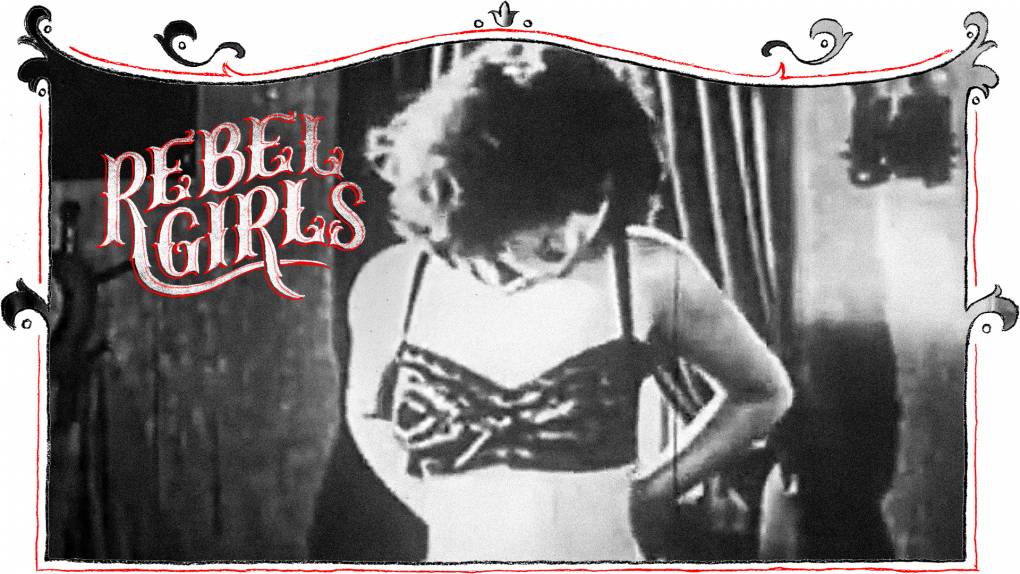
"caption": "The anonymous woman above starred in an erotic featurette film in the 1920s. Like her, and most of the sex workers of the time, Alice Smith's true identity remains unknown.",
"description": "The anonymous woman above starred in an erotic featurette film in the 1920s. Like her, and most of the sex workers of the time, Alice Smith's true identity remains unknown.",
"title": "The anonymous woman above starred in an erotic featurette film in the 1920s. Like her, and most of the sex workers of the time, Alice Smith's true identity remains unknown.",
"credit": "YouTube/@ChristopherWest",
"status": "inherit",
"altTag": "A woman with dark, wavy, shoulder-length hair stands in front of heavy, draped curtains. She looks down and reaches back to unhook her bra.",
"isLoading": false,
"fetchFailed": false
},
"arts_13895966": {
"type": "attachments",
"id": "arts_13895966",
"meta": {
"index": "attachments_1716263798",
"site": "arts",
"id": "13895966",
"found": true
},
"parent": 13894837,
"imgSizes": {
"twentyfourteen-full-width": {
"file": "https://ww2.kqed.org/app/uploads/sites/2/2021/04/Image-from-iOS-29-1038x576.jpg",
"width": 1038,
"mimeType": "image/jpeg",
"height": 576
},
"thumbnail": {
"file": "https://ww2.kqed.org/app/uploads/sites/2/2021/04/Image-from-iOS-29-160x120.jpg",
"width": 160,
"mimeType": "image/jpeg",
"height": 120
},
"post-thumbnail": {
"file": "https://ww2.kqed.org/app/uploads/sites/2/2021/04/Image-from-iOS-29-672x372.jpg",
"width": 672,
"mimeType": "image/jpeg",
"height": 372
},
"kqedFullSize": {
"file": "https://ww2.kqed.org/app/uploads/sites/2/2021/04/Image-from-iOS-29.jpg",
"width": 1920,
"height": 1440
},
"large": {
"file": "https://ww2.kqed.org/app/uploads/sites/2/2021/04/Image-from-iOS-29-1020x765.jpg",
"width": 1020,
"mimeType": "image/jpeg",
"height": 765
},
"1536x1536": {
"file": "https://ww2.kqed.org/app/uploads/sites/2/2021/04/Image-from-iOS-29-1536x1152.jpg",
"width": 1536,
"mimeType": "image/jpeg",
"height": 1152
},
"medium": {
"file": "https://ww2.kqed.org/app/uploads/sites/2/2021/04/Image-from-iOS-29-800x600.jpg",
"width": 800,
"mimeType": "image/jpeg",
"height": 600
},
"medium_large": {
"file": "https://ww2.kqed.org/app/uploads/sites/2/2021/04/Image-from-iOS-29-768x576.jpg",
"width": 768,
"mimeType": "image/jpeg",
"height": 576
}
},
"publishDate": 1618850816,
"modified": 1618856326,
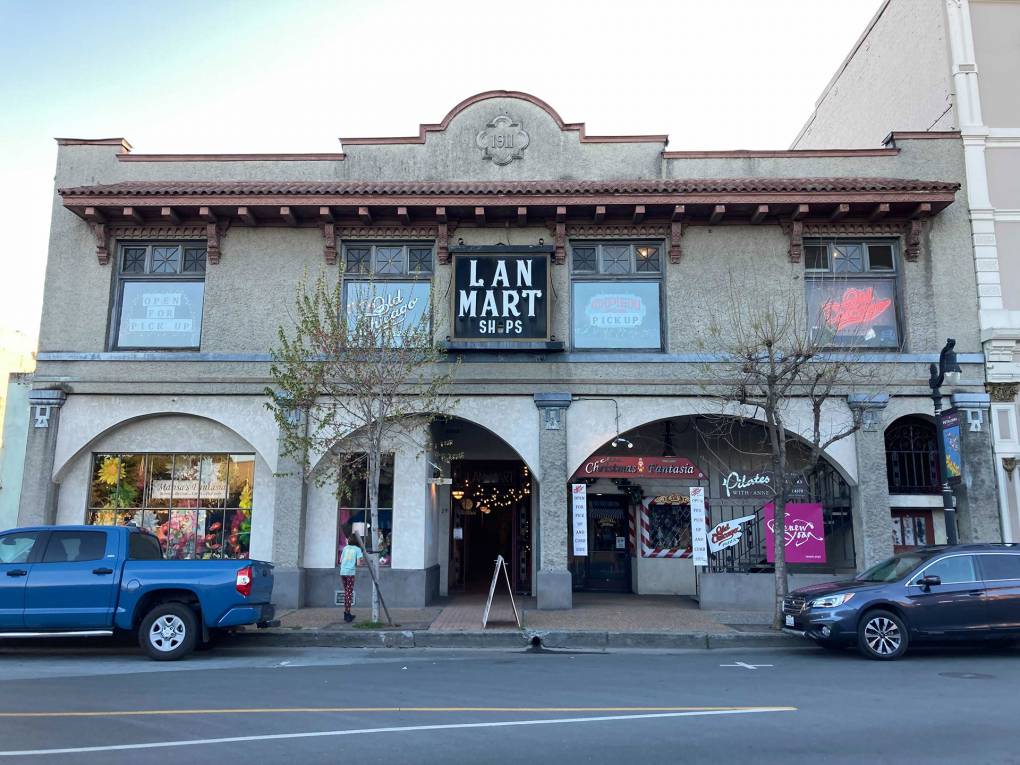
"caption": "The Lan Mart Building, 2021.",
"description": "The Lan Mart Building, 2021.",
"title": "The Lan Mart Building, 2021.",
"credit": "Gabe Meline/KQED",
"status": "inherit",
"altTag": "The Lan Mart Building, 2021.",
"isLoading": false,
"fetchFailed": false
},
"arts_13894896": {
"type": "attachments",
"id": "arts_13894896",
"meta": {
"index": "attachments_1716263798",
"site": "arts",
"id": "13894896",
"found": true
},
"parent": 13894885,
"imgSizes": {
"twentyfourteen-full-width": {
"file": "https://ww2.kqed.org/app/uploads/sites/2/2021/03/DSC00059-1038x576.jpg",
"width": 1038,
"mimeType": "image/jpeg",
"height": 576
},
"thumbnail": {
"file": "https://ww2.kqed.org/app/uploads/sites/2/2021/03/DSC00059-160x107.jpg",
"width": 160,
"mimeType": "image/jpeg",
"height": 107
},
"post-thumbnail": {
"file": "https://ww2.kqed.org/app/uploads/sites/2/2021/03/DSC00059-672x372.jpg",
"width": 672,
"mimeType": "image/jpeg",
"height": 372
},
"kqedFullSize": {
"file": "https://ww2.kqed.org/app/uploads/sites/2/2021/03/DSC00059.jpg",
"width": 1616,
"height": 1080
},
"large": {
"file": "https://ww2.kqed.org/app/uploads/sites/2/2021/03/DSC00059-1020x682.jpg",
"width": 1020,
"mimeType": "image/jpeg",
"height": 682
},
"1536x1536": {
"file": "https://ww2.kqed.org/app/uploads/sites/2/2021/03/DSC00059-1536x1027.jpg",
"width": 1536,
"mimeType": "image/jpeg",
"height": 1027
},
"medium": {
"file": "https://ww2.kqed.org/app/uploads/sites/2/2021/03/DSC00059-800x535.jpg",
"width": 800,
"mimeType": "image/jpeg",
"height": 535
},
"medium_large": {
"file": "https://ww2.kqed.org/app/uploads/sites/2/2021/03/DSC00059-768x513.jpg",
"width": 768,
"mimeType": "image/jpeg",
"height": 513
}
},
"publishDate": 1617210533,
"modified": 1617234453,
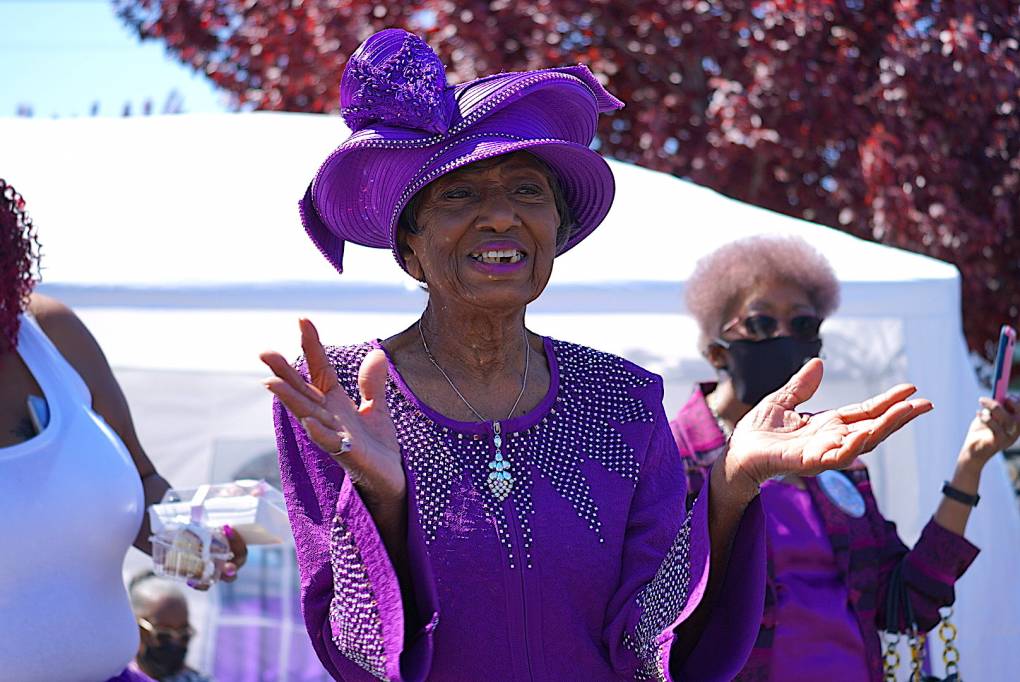
"caption": "Marcella Hubbard smiles as she stands and cheers as people drive by in celebration of her 100th birthday. ",
"description": "Marcella Hubbard smiles as she stands and cheers as people drive by in celebration of her 100th birthday. ",
"title": "Marcella Hubbard smiles as she stands and cheers as people drive by in celebration of her 100th birthday.",
"credit": "Pendarvis Harshaw/KQED",
"status": "inherit",
"altTag": "Marcella Hubbard smiles as she stands and cheers as people drive by in celebration of her 100th birthday.",
"isLoading": false,
"fetchFailed": false
}
},
"audioPlayerReducer": {
"postId": "stream_live",
"isPaused": true,
"isPlaying": false,
"pfsActive": false,
"pledgeModalIsOpen": true,
"playerDrawerIsOpen": false,
"liveAudioPlayStartedAt": 0,
"liveAudioPlayContext": ""
},
"authorsReducer": {
"byline_arts_13900276": {
"type": "authors",
"id": "byline_arts_13900276",
"meta": {
"override": true
},
"slug": "byline_arts_13900276",
"name": "Trevor Smith",
"isLoading": false
},
"byline_arts_13899714": {
"type": "authors",
"id": "byline_arts_13899714",
"meta": {
"override": true
},
"slug": "byline_arts_13899714",
"name": "Eric Deggans",
"isLoading": false
},
"byline_arts_13899143": {
"type": "authors",
"id": "byline_arts_13899143",
"meta": {
"override": true
},
"slug": "byline_arts_13899143",
"name": "Maureen Corrigan",
"isLoading": false
},
"byline_arts_13898175": {
"type": "authors",
"id": "byline_arts_13898175",
"meta": {
"override": true
},
"slug": "byline_arts_13898175",
"name": "Dave Davies",
"isLoading": false
},
"byline_arts_13898108": {
"type": "authors",
"id": "byline_arts_13898108",
"meta": {
"override": true
},
"slug": "byline_arts_13898108",
"name": "Eric Deggans",
"isLoading": false
},
"ralexandra": {
"type": "authors",
"id": "11242",
"meta": {
"index": "authors_1716337520",
"id": "11242",
"found": true
},
"name": "Rae Alexandra",
"firstName": "Rae",
"lastName": "Alexandra",
"slug": "ralexandra",
"email": "ralexandra@kqed.org",
"display_author_email": true,
"staff_mastheads": [],
"title": "Reporter/Producer",
"bio": "Rae Alexandra is a Reporter/Producer for KQED Arts & Culture, and the creator/author of the \u003ca href=\"https://www.kqed.org/arts/program/rebel-girls-from-bay-area-history\">Rebel Girls From Bay Area History\u003c/a> and \u003ca href=\"https://www.kqed.org/bizarrebayarea\">Bizarre Bay Area\u003c/a> series. Her debut book, \u003ca href=\"https://citylights.com/politics-current-events-history/unsung-heroines35-women-who-changed/\">Unsung Heroines: 35 Women Who Changed the Bay Area\u003c/a> was published by City Lights in March 2026. In 2023, Rae was awarded an SPJ Excellence in Journalism Award for Arts & Culture. Rae was born and raised in Wales and subsequently — even after two decades in Northern California — still uses phrases that regularly baffle her coworkers.",
"avatar": "https://secure.gravatar.com/avatar/edfee8176c80cc0a382b051190f5341997df378a934a5774dcb0977732dfd401?s=600&d=blank&r=g",
"twitter": null,
"bluesky": null,
"facebook": null,
"instagram": null,
"linkedin": null,
"sites": [
{
"site": "arts",
"roles": [
"subscriber"
]
},
{
"site": "news",
"roles": [
"subscriber"
]
},
{
"site": "pop",
"roles": [
"subscriber"
]
},
{
"site": "bayareabites",
"roles": [
"subscriber"
]
},
{
"site": "science",
"roles": [
"subscriber"
]
}
],
"headData": {
"title": "Rae Alexandra | KQED",
"description": "Reporter/Producer",
"ogImgSrc": "https://secure.gravatar.com/avatar/edfee8176c80cc0a382b051190f5341997df378a934a5774dcb0977732dfd401?s=600&d=blank&r=g",
"twImgSrc": "https://secure.gravatar.com/avatar/edfee8176c80cc0a382b051190f5341997df378a934a5774dcb0977732dfd401?s=600&d=blank&r=g"
},
"isLoading": false,
"link": "/author/ralexandra"
},
"ogpenn": {
"type": "authors",
"id": "11491",
"meta": {
"index": "authors_1716337520",
"id": "11491",
"found": true
},
"name": "Pendarvis Harshaw",
"firstName": "Pendarvis",
"lastName": "Harshaw",
"slug": "ogpenn",
"email": "ogpenn@gmail.com",
"display_author_email": false,
"staff_mastheads": [
"arts"
],
"title": "Community Engagement Reporter",
"bio": "Pendarvis Harshaw is an educator, host and writer with KQED Arts.",
"avatar": "https://secure.gravatar.com/avatar/972b77ee8e3f346ae2b00622661187fbfabd059b5693bbdc1475ea7a722fd4cd?s=600&d=blank&r=g",
"twitter": null,
"bluesky": null,
"facebook": null,
"instagram": "ogpenn",
"linkedin": null,
"sites": [
{
"site": "arts",
"roles": [
"administrator"
]
},
{
"site": "news",
"roles": [
"editor"
]
},
{
"site": "bayareabites",
"roles": [
"author"
]
},
{
"site": "hiphop",
"roles": [
"editor"
]
}
],
"headData": {
"title": "Pendarvis Harshaw | KQED",
"description": "Community Engagement Reporter",
"ogImgSrc": "https://secure.gravatar.com/avatar/972b77ee8e3f346ae2b00622661187fbfabd059b5693bbdc1475ea7a722fd4cd?s=600&d=blank&r=g",
"twImgSrc": "https://secure.gravatar.com/avatar/972b77ee8e3f346ae2b00622661187fbfabd059b5693bbdc1475ea7a722fd4cd?s=600&d=blank&r=g"
},
"isLoading": false,
"link": "/author/ogpenn"
},
"sgetachew": {
"type": "authors",
"id": "11734",
"meta": {
"index": "authors_1716337520",
"id": "11734",
"found": true
},
"name": "Samuel Getachew",
"firstName": "Samuel",
"lastName": "Getachew",
"slug": "sgetachew",
"email": "sgetachew@kqed.org",
"display_author_email": false,
"staff_mastheads": [],
"title": "KQED Contributor",
"bio": "\u003cspan style=\"font-weight: 400;\">Samuel Getachew is an 18-year-old poet and writer from Oakland, California. He is the 2019 Oakland Youth Poet Laureate, a 2020 Finalist for National Youth Poet Laureate, and a 4-time YoungArts Winner. His writing has been published in Teen Vogue, the New York Times, the Washington Post, and more. He will attend Yale University in the fall of 2021.\u003c/span>",
"avatar": "https://secure.gravatar.com/avatar/ebad3dcf2295975cfe77698fa670a089?s=600&d=blank&r=g",
"twitter": null,
"facebook": null,
"instagram": null,
"linkedin": null,
"sites": [
{
"site": "arts",
"roles": [
"subscriber"
]
}
],
"headData": {
"title": "Samuel Getachew | KQED",
"description": "KQED Contributor",
"ogImgSrc": "https://secure.gravatar.com/avatar/ebad3dcf2295975cfe77698fa670a089?s=600&d=blank&r=g",
"twImgSrc": "https://secure.gravatar.com/avatar/ebad3dcf2295975cfe77698fa670a089?s=600&d=blank&r=g"
},
"isLoading": false,
"link": "/author/sgetachew"
}
},
"pagesReducer": {
"arts_category_history": {
"type": "terms",
"id": "arts_7862",
"meta": {
"index": "terms_1716263798",
"site": "arts",
"id": "7862",
"score": 12.208591
},
"featImg": null,
"name": "History",
"description": null,
"taxonomy": "category",
"headData": {
"twImgId": null,
"twTitle": null,
"ogTitle": null,
"ogImgId": null,
"twDescription": null,
"description": null,
"title": "History Archives | KQED Arts",
"ogDescription": null
},
"ttid": 7874,
"slug": "history",
"isLoading": false,
"title": "History",
"pageMeta": {
"site": "arts",
"WpPageTemplate": "page-topic-editorial",
"currentPage": 24
},
"blocks": [
{
"blockName": "kqed/post-list",
"attrs": {
"layout": "cardArticle2",
"query": "posts/arts?category=history",
"seeMore": false,
"paginated": true,
"page": 24
}
},
{
"blockName": "kqed/ad"
}
]
}
},
"pfsSessionReducer": {},
"postsReducer": {
"stream_live": {
"type": "live",
"id": "stream_live",
"audioUrl": "https://streams.kqed.org/kqedradio",
"title": "Live Stream",
"excerpt": "Live Stream information currently unavailable.",
"link": "/radio",
"featImg": "",
"label": {
"name": "KQED Live",
"link": "/"
}
},
"stream_kqedNewscast": {
"type": "posts",
"id": "stream_kqedNewscast",
"audioUrl": "https://www.kqed.org/.stream/anon/radio/RDnews/newscast.mp3?_=1",
"title": "KQED Newscast",
"featImg": "",
"label": {
"name": "88.5 FM",
"link": "/"
}
},
"arts_13900276": {
"type": "posts",
"id": "arts_13900276",
"meta": {
"index": "posts_1716263798",
"site": "arts",
"id": "13900276",
"score": null,
"sort": [
1627318594000
]
},
"parent": 0,
"labelTerm": {
"site": "arts"
},
"blocks": [],
"publishDate": 1627318594,
"format": "standard",
"title": "Don't Forget the Timeless Soundtrack to Los Angeles' 1984 Summer Games",
"headTitle": "Don’t Forget the Timeless Soundtrack to Los Angeles’ 1984 Summer Games | KQED",
"content": "\u003cp>\u003cem>Chariots of Fire\u003c/em>, the drama depicting two British Olympian runners, was released in 1981—40 years ago this spring—and left us with an enduring cultural treasure: its musical \u003ca href=\"https://urldefense.com/v3/__https://www.youtube.com/watch?v=8a-HfNE3EIo__;!!Iwwt!CzTQJ0XYowDzIsT6mo3jVOxG37P1wMdKYkOXJZjLdRUuCqd_ysT1H-J16RiUUw%24\" target=\"_blank\" rel=\"noopener noreferrer\">theme\u003c/a>. The pulsing, instrumental anthem summoned the will to accomplish our dreams and served as the soundtrack for the world’s fake-slow-motion running activities for a generation.\u003c/p>\n\u003cp>The 1980s also gave the world \u003cem>another\u003c/em> musical gift of Olympic proportions—this time for the real-life Summer games: \u003cem>The Official Music of the XXIIIrd Olympiad Los Angeles 1984. \u003c/em>The lesser-known \u003ca href=\"https://www.discogs.com/Various-The-Official-Music-Of-The-XXIIIrd-Olympiad-Los-Angeles-1984/release/544704\" target=\"_blank\" rel=\"noopener noreferrer\">album\u003c/a> served, and serves, not only as an historical souvenir but as the definitive collection of athletic event and ceremony themes crafted for the occasion—including the debut of John William’s beloved and perennial composition, “\u003ca href=\"https://urldefense.com/v3/__https://www.youtube.com/watch?v=YWdOFgDQIn0__;!!Iwwt!CzTQJ0XYowDzIsT6mo3jVOxG37P1wMdKYkOXJZjLdRUuCqd_ysT1H-LOdu8hBw%24\" target=\"_blank\" rel=\"noopener noreferrer\">Olympic Fanfare and Theme\u003c/a>.”\u003c/p>\n\u003cp>https://www.youtube.com/watch?v=YWdOFgDQIn0\u003c/p>\n\u003cp>Lost to the vagaries of time and digitization and only available through piecemealed tracks and YouTube links, \u003cem>The Official Music\u003c/em> was an ambitious undertaking, led by Hollywood all-star producers Peter Guber and Jon Peters, who played off the glossy, neon-clad excess that the world of 1980s entertainment had in piles.\u003c/p>\n\u003cp>The top of the album leads off with the traditional “Bugler’s Dream (From Charge Suite)” by Arnaud, followed by a moody synthesizer swell. Then, a male vocalist gets on the mic: “You know you paid the price / you made every sacrifice” and bam, “Nothing’s Gonna Stop You Now (Team Sports Theme).”\u003c/p>\n\u003cp>[ad fullwidth]\u003c/p>\n\u003cp>https://www.youtube.com/watch?v=rDYh1b9fiZ0\u003c/p>\n\u003cp>The artist lineup was a who’s-who of ’80s musical legends and also Loverboy, each in turn contributing to a string of montage-worthy anthems: Toto’s “\u003ca href=\"https://www.youtube.com/watch?v=_BycQ-s4nZA\" target=\"_blank\" rel=\"noopener noreferrer\">Moodido (The Match) (Boxing Theme)\u003c/a>,” Foreigner’s marathon theme “\u003ca href=\"https://urldefense.com/v3/__https://www.youtube.com/watch?v=sjIakKdfBas__;!!Iwwt!CzTQJ0XYowDzIsT6mo3jVOxG37P1wMdKYkOXJZjLdRUuCqd_ysT1H-LRtv9P_g%24\" target=\"_blank\" rel=\"noopener noreferrer\">Street Thunder (Marathon Theme)\u003c/a>,” Bill Conti’s “\u003ca href=\"https://www.youtube.com/watch?v=DT-RlgbBj4Q\" target=\"_blank\" rel=\"noopener noreferrer\">Power (Power Sports Theme)\u003c/a>” and montage hall-of-famer Giorgio Moroder’s “Reach Out (Track Theme).” What would equate, in 2021 terms? Mike Dean’s skateboarding theme? Lizzo on a flute solo in the middle of the artistic swimming theme?\u003c/p>\n\u003cp>https://www.youtube.com/watch?v=vmlZGBikjgU\u003c/p>\n\u003cp>\u003cem>Music of the XXIIIrd Olympiad \u003c/em>wasn’t just wall-to-wall rock numbers—there are some notable genre-hopping curiosities, too. Keyboardist and composer Bob James scored extra points for the sampling of basketball dribbles on the bouncing “\u003ca href=\"https://www.youtube.com/watch?v=vpwX33_6BHo\" target=\"_blank\" rel=\"noopener noreferrer\">Courtship (Basketball Theme)\u003c/a>“; Herbie Hancock mixes international instruments and rhythms into a post-“Rockit” composition of pure synthesizer bliss for “Junku (Field Theme)”; Christopher Cross and Burt Bacharach teamed up to write “\u003ca href=\"https://www.youtube.com/watch?v=NlQtWljHBz0\" target=\"_blank\" rel=\"noopener noreferrer\">A Chance For Heaven (Swimming Theme)\u003c/a>,” which rocks as soft as water and, oddly, is mostly concerned with the climbing of mountains in its lyrics.\u003c/p>\n\u003cp>https://www.youtube.com/watch?v=DgwuFQSCORY\u003c/p>\n\u003cp>But it wouldn’t be an ’80s production without a contribution from Quincy Jones, whose digitally orchestral “Grace (Gymnastics Theme)” evokes the athletes’ nimble, sweeping movements. (The track also appeared as the B-Side to 1985’s “We Are The World,” in case the Summer Olympics wasn’t a global enough event for Quincy.)\u003c/p>\n\u003cp>https://www.youtube.com/watch?v=Q9JZY0Db8zQ\u003c/p>\n\u003cp>\u003c/p>\n\u003cp>The concept of unity was strong throughout, both musically and within the liner notes from the artists printed on the verso of the record sleeve. “I can think of no event to compare with the Olympic Games which makes us so conscious of our shared humanity, our common fate” wrote Philip Glass, who composed “\u003ca href=\"https://urldefense.com/v3/__https://www.youtube.com/watch?v=PMWkTGdvY1k__;!!Iwwt!CzTQJ0XYowDzIsT6mo3jVOxG37P1wMdKYkOXJZjLdRUuCqd_ysT1H-J8NQ-s5A%24\" target=\"_blank\" rel=\"noopener noreferrer\">The Olympian—Lighting Of The Torch\u003c/a>,” the closing track of the album. And he’s right. The Olympics offer an opportunity for the world to come together in competition and celebration—but there’s one thing I hope we can all be united on: This album slaps.\u003c/p>\n\u003cdiv class=\"fullattribution\">\u003cem>Copyright 2021 WBGO. To see more, visit \u003ca href=\"http://www.wbgo.org\">WBGO\u003c/a>.\u003c/em>\u003cimg decoding=\"async\" src=\"https://www.google-analytics.com/__utm.gif?utmac=UA-5828686-4&utmdt=Don%27t+Forget+The+Timeless+Soundtrack+To+Los+Angeles%27+1984+Summer+Games&utme=8(APIKey)9(MDAxOTAwOTE4MDEyMTkxMDAzNjczZDljZA004)\">\u003c/div>\n\n",
"stats": {
"hasVideo": true,
"hasChartOrMap": false,
"hasAudio": false,
"hasPolis": false,
"wordCount": 673,
"hasGoogleForm": false,
"hasGallery": false,
"hasHearkenModule": false,
"iframeSrcs": [],
"paragraphCount": 10
},
"modified": 1705008056,
"excerpt": "The official soundtrack to 'Los Angeles 1984' remains as slick and deliciously dramatic as the old games' host city.",
"headData": {
"twImgId": "",
"twTitle": "",
"ogTitle": "",
"ogImgId": "",
"twDescription": "",
"description": "The official soundtrack to 'Los Angeles 1984' remains as slick and deliciously dramatic as the old games' host city.",
"title": "Don't Forget the Timeless Soundtrack to Los Angeles' 1984 Summer Games | KQED",
"ogDescription": "",
"schema": {
"@context": "https://schema.org",
"@type": "Article",
"headline": "Don't Forget the Timeless Soundtrack to Los Angeles' 1984 Summer Games",
"datePublished": "2021-07-26T09:56:34-07:00",
"dateModified": "2024-01-11T13:20:56-08:00",
"image": "https://cdn.kqed.org/wp-content/uploads/2020/02/KQED-OG-Image@1x.png"
}
},
"guestAuthors": [],
"slug": "dont-forget-the-timeless-soundtrack-to-los-angeles-1984-summer-games",
"status": "publish",
"nprApiLink": "http://api.npr.org/query?id=1019422309&apiKey=MDAxOTAwOTE4MDEyMTkxMDAzNjczZDljZA004",
"templateType": "standard",
"nprStoryDate": "Fri, 23 Jul 2021 16:01:05 -0400",
"nprLastModifiedDate": "Fri, 23 Jul 2021 16:01:05 -0400",
"featuredImageType": "standard",
"nprHtmlLink": "https://www.npr.org/2021/07/23/1019422309/dont-forget-the-timeless-soundtrack-to-los-angeles-1984-summer-games?ft=nprml&f=1019422309",
"nprImageAgency": "Getty Images",
"nprStoryId": "1019422309",
"nprByline": "Trevor Smith",
"sticky": false,
"nprImageCredit": "Tony Duffy",
"nprRetrievedStory": "1",
"nprPubDate": "Fri, 23 Jul 2021 16:01:00 -0400",
"path": "/arts/13900276/dont-forget-the-timeless-soundtrack-to-los-angeles-1984-summer-games",
"audioTrackLength": null,
"parsedContent": [
{
"type": "contentString",
"content": "\u003cdiv class=\"post-body\">\u003cp>\u003cp>\u003cem>Chariots of Fire\u003c/em>, the drama depicting two British Olympian runners, was released in 1981—40 years ago this spring—and left us with an enduring cultural treasure: its musical \u003ca href=\"https://urldefense.com/v3/__https://www.youtube.com/watch?v=8a-HfNE3EIo__;!!Iwwt!CzTQJ0XYowDzIsT6mo3jVOxG37P1wMdKYkOXJZjLdRUuCqd_ysT1H-J16RiUUw%24\" target=\"_blank\" rel=\"noopener noreferrer\">theme\u003c/a>. The pulsing, instrumental anthem summoned the will to accomplish our dreams and served as the soundtrack for the world’s fake-slow-motion running activities for a generation.\u003c/p>\n\u003cp>The 1980s also gave the world \u003cem>another\u003c/em> musical gift of Olympic proportions—this time for the real-life Summer games: \u003cem>The Official Music of the XXIIIrd Olympiad Los Angeles 1984. \u003c/em>The lesser-known \u003ca href=\"https://www.discogs.com/Various-The-Official-Music-Of-The-XXIIIrd-Olympiad-Los-Angeles-1984/release/544704\" target=\"_blank\" rel=\"noopener noreferrer\">album\u003c/a> served, and serves, not only as an historical souvenir but as the definitive collection of athletic event and ceremony themes crafted for the occasion—including the debut of John William’s beloved and perennial composition, “\u003ca href=\"https://urldefense.com/v3/__https://www.youtube.com/watch?v=YWdOFgDQIn0__;!!Iwwt!CzTQJ0XYowDzIsT6mo3jVOxG37P1wMdKYkOXJZjLdRUuCqd_ysT1H-LOdu8hBw%24\" target=\"_blank\" rel=\"noopener noreferrer\">Olympic Fanfare and Theme\u003c/a>.”\u003c/p>\u003c/p>\u003cp>\u003cspan class='utils-parseShortcode-shortcodes-__youtubeShortcode__embedYoutube'>\n \u003cspan class='utils-parseShortcode-shortcodes-__youtubeShortcode__embedYoutubeInside'>\n \u003ciframe\n loading='lazy'\n class='utils-parseShortcode-shortcodes-__youtubeShortcode__youtubePlayer'\n type='text/html'\n src='//www.youtube.com/embed/YWdOFgDQIn0'\n title='//www.youtube.com/embed/YWdOFgDQIn0'\n allowfullscreen='true'\n style='border:0;'>\u003c/iframe>\n \u003c/span>\n \u003c/span>\u003c/p>\u003cp>\u003cp>Lost to the vagaries of time and digitization and only available through piecemealed tracks and YouTube links, \u003cem>The Official Music\u003c/em> was an ambitious undertaking, led by Hollywood all-star producers Peter Guber and Jon Peters, who played off the glossy, neon-clad excess that the world of 1980s entertainment had in piles.\u003c/p>\n\u003cp>The top of the album leads off with the traditional “Bugler’s Dream (From Charge Suite)” by Arnaud, followed by a moody synthesizer swell. Then, a male vocalist gets on the mic: “You know you paid the price / you made every sacrifice” and bam, “Nothing’s Gonna Stop You Now (Team Sports Theme).”\u003c/p>\n\u003cp>\u003c/p>\u003c/div>",
"attributes": {
"named": {},
"numeric": []
}
},
{
"type": "component",
"content": "",
"name": "ad",
"attributes": {
"named": {
"label": "fullwidth"
},
"numeric": [
"fullwidth"
]
}
},
{
"type": "contentString",
"content": "\u003cdiv class=\"post-body\">\u003cp>\u003c/p>\u003c/p>\u003cp>\u003cspan class='utils-parseShortcode-shortcodes-__youtubeShortcode__embedYoutube'>\n \u003cspan class='utils-parseShortcode-shortcodes-__youtubeShortcode__embedYoutubeInside'>\n \u003ciframe\n loading='lazy'\n class='utils-parseShortcode-shortcodes-__youtubeShortcode__youtubePlayer'\n type='text/html'\n src='//www.youtube.com/embed/rDYh1b9fiZ0'\n title='//www.youtube.com/embed/rDYh1b9fiZ0'\n allowfullscreen='true'\n style='border:0;'>\u003c/iframe>\n \u003c/span>\n \u003c/span>\u003c/p>\u003cp>\u003cp>The artist lineup was a who’s-who of ’80s musical legends and also Loverboy, each in turn contributing to a string of montage-worthy anthems: Toto’s “\u003ca href=\"https://www.youtube.com/watch?v=_BycQ-s4nZA\" target=\"_blank\" rel=\"noopener noreferrer\">Moodido (The Match) (Boxing Theme)\u003c/a>,” Foreigner’s marathon theme “\u003ca href=\"https://urldefense.com/v3/__https://www.youtube.com/watch?v=sjIakKdfBas__;!!Iwwt!CzTQJ0XYowDzIsT6mo3jVOxG37P1wMdKYkOXJZjLdRUuCqd_ysT1H-LRtv9P_g%24\" target=\"_blank\" rel=\"noopener noreferrer\">Street Thunder (Marathon Theme)\u003c/a>,” Bill Conti’s “\u003ca href=\"https://www.youtube.com/watch?v=DT-RlgbBj4Q\" target=\"_blank\" rel=\"noopener noreferrer\">Power (Power Sports Theme)\u003c/a>” and montage hall-of-famer Giorgio Moroder’s “Reach Out (Track Theme).” What would equate, in 2021 terms? Mike Dean’s skateboarding theme? Lizzo on a flute solo in the middle of the artistic swimming theme?\u003c/p>\u003c/p>\u003cp>\u003cspan class='utils-parseShortcode-shortcodes-__youtubeShortcode__embedYoutube'>\n \u003cspan class='utils-parseShortcode-shortcodes-__youtubeShortcode__embedYoutubeInside'>\n \u003ciframe\n loading='lazy'\n class='utils-parseShortcode-shortcodes-__youtubeShortcode__youtubePlayer'\n type='text/html'\n src='//www.youtube.com/embed/vmlZGBikjgU'\n title='//www.youtube.com/embed/vmlZGBikjgU'\n allowfullscreen='true'\n style='border:0;'>\u003c/iframe>\n \u003c/span>\n \u003c/span>\u003c/p>\u003cp>\u003cp>\u003cem>Music of the XXIIIrd Olympiad \u003c/em>wasn’t just wall-to-wall rock numbers—there are some notable genre-hopping curiosities, too. Keyboardist and composer Bob James scored extra points for the sampling of basketball dribbles on the bouncing “\u003ca href=\"https://www.youtube.com/watch?v=vpwX33_6BHo\" target=\"_blank\" rel=\"noopener noreferrer\">Courtship (Basketball Theme)\u003c/a>“; Herbie Hancock mixes international instruments and rhythms into a post-“Rockit” composition of pure synthesizer bliss for “Junku (Field Theme)”; Christopher Cross and Burt Bacharach teamed up to write “\u003ca href=\"https://www.youtube.com/watch?v=NlQtWljHBz0\" target=\"_blank\" rel=\"noopener noreferrer\">A Chance For Heaven (Swimming Theme)\u003c/a>,” which rocks as soft as water and, oddly, is mostly concerned with the climbing of mountains in its lyrics.\u003c/p>\u003c/p>\u003cp>\u003cspan class='utils-parseShortcode-shortcodes-__youtubeShortcode__embedYoutube'>\n \u003cspan class='utils-parseShortcode-shortcodes-__youtubeShortcode__embedYoutubeInside'>\n \u003ciframe\n loading='lazy'\n class='utils-parseShortcode-shortcodes-__youtubeShortcode__youtubePlayer'\n type='text/html'\n src='//www.youtube.com/embed/DgwuFQSCORY'\n title='//www.youtube.com/embed/DgwuFQSCORY'\n allowfullscreen='true'\n style='border:0;'>\u003c/iframe>\n \u003c/span>\n \u003c/span>\u003c/p>\u003cp>\u003cp>But it wouldn’t be an ’80s production without a contribution from Quincy Jones, whose digitally orchestral “Grace (Gymnastics Theme)” evokes the athletes’ nimble, sweeping movements. (The track also appeared as the B-Side to 1985’s “We Are The World,” in case the Summer Olympics wasn’t a global enough event for Quincy.)\u003c/p>\u003c/p>\u003cp>\u003cspan class='utils-parseShortcode-shortcodes-__youtubeShortcode__embedYoutube'>\n \u003cspan class='utils-parseShortcode-shortcodes-__youtubeShortcode__embedYoutubeInside'>\n \u003ciframe\n loading='lazy'\n class='utils-parseShortcode-shortcodes-__youtubeShortcode__youtubePlayer'\n type='text/html'\n src='//www.youtube.com/embed/Q9JZY0Db8zQ'\n title='//www.youtube.com/embed/Q9JZY0Db8zQ'\n allowfullscreen='true'\n style='border:0;'>\u003c/iframe>\n \u003c/span>\n \u003c/span>\u003c/p>\u003cp>\u003cp>\u003c/p>\n\u003cp>The concept of unity was strong throughout, both musically and within the liner notes from the artists printed on the verso of the record sleeve. “I can think of no event to compare with the Olympic Games which makes us so conscious of our shared humanity, our common fate” wrote Philip Glass, who composed “\u003ca href=\"https://urldefense.com/v3/__https://www.youtube.com/watch?v=PMWkTGdvY1k__;!!Iwwt!CzTQJ0XYowDzIsT6mo3jVOxG37P1wMdKYkOXJZjLdRUuCqd_ysT1H-J8NQ-s5A%24\" target=\"_blank\" rel=\"noopener noreferrer\">The Olympian—Lighting Of The Torch\u003c/a>,” the closing track of the album. And he’s right. The Olympics offer an opportunity for the world to come together in competition and celebration—but there’s one thing I hope we can all be united on: This album slaps.\u003c/p>\n\u003cdiv class=\"fullattribution\">\u003cem>Copyright 2021 WBGO. To see more, visit \u003ca href=\"http://www.wbgo.org\">WBGO\u003c/a>.\u003c/em>\u003cimg decoding=\"async\" src=\"https://www.google-analytics.com/__utm.gif?utmac=UA-5828686-4&utmdt=Don%27t+Forget+The+Timeless+Soundtrack+To+Los+Angeles%27+1984+Summer+Games&utme=8(APIKey)9(MDAxOTAwOTE4MDEyMTkxMDAzNjczZDljZA004)\">\u003c/div>\n\n\u003c/div>\u003c/p>",
"attributes": {
"named": {},
"numeric": []
}
}
],
"link": "/arts/13900276/dont-forget-the-timeless-soundtrack-to-los-angeles-1984-summer-games",
"authors": [
"byline_arts_13900276"
],
"categories": [
"arts_1",
"arts_7862",
"arts_69"
],
"tags": [
"arts_10278",
"arts_977",
"arts_4681",
"arts_3920"
],
"featImg": "arts_13900278",
"label": "arts"
},
"arts_13899714": {
"type": "posts",
"id": "arts_13899714",
"meta": {
"index": "posts_1716263798",
"site": "arts",
"id": "13899714",
"score": null,
"sort": [
1625162137000
]
},
"parent": 0,
"labelTerm": {
"site": "arts",
"term": 137
},
"blocks": [],
"publishDate": 1625162137,
"format": "standard",
"title": "'Summer of Soul' Celebrates a 1969 Black Cultural Festival Eclipsed By Woodstock",
"headTitle": "‘Summer of Soul’ Celebrates a 1969 Black Cultural Festival Eclipsed By Woodstock | KQED",
"content": "\u003cp>From the funky, opening groove of the film’s first song, Stevie Wonder’s slinky jam on the Isley’s Brothers’ “It’s Your Thing,” it is obvious the new documentary \u003cem>Summer of Soul (…or When the Revolution Could Not Be Televised)\u003c/em> will be packed with little-seen, landmark live performances.\u003c/p>\n\u003cp>But watch a little longer, as Wonder sits behind a drumkit to whip off a crackling drum solo. As he works the kit, clips of news reports and pundits surface talking about the crucial political and social issues facing Black people in 1969. And you realize you’re seeing something more.\u003c/p>\n\u003cp>Crafted from footage of the 1969 Harlem Cultural Festival—an event so filled with stars from soul, R&B, blues and jazz they called it the Black Woodstock—\u003cem>Summer of Soul\u003c/em> is a breathtaking chronicle of Black culture in a pivotal moment.\u003c/p>\n\u003cp>A wide constellation of stars turned up for the festival, which drew more than 300,000 people over six free concerts held in the space now known as Marcus Garvey Park. The roster of performers included Wonder, Nina Simone, Gladys Knight and the Pips, Mahalia Jackson, The Staples Singers, B.B. King, Ray Barretto, The Temptations’ former frontman David Ruffin, The 5th Dimension, and more.\u003c/p>\n\u003cp>Just documenting their jaw-dropping live work would add up to an amazing concert film. But \u003cem>Summer of Soul\u003c/em> uses the music as both inspiration and foundation, setting the scene for subjects to talk about everything from the debate over non-violence in civil rights work to Harlem’s status as a cultural oasis for Black people.\u003c/p>\n\u003cp>[ad fullwidth]\u003c/p>\n\u003cp>https://www.youtube.com/watch?v=1-siC9cugqA\u003c/p>\n\u003ch3>Remixing and recovering Black history\u003c/h3>\n\u003cp>If this sounds like the remix work of a master DJ, that’s because it is. \u003cem>Summer of Soul \u003c/em>is the directorial debut of Ahmir “Questlove” Thompson, the renowned DJ, drummer, producer and bandleader behind hip hop legends The Roots. Questlove crams the movie with historic musical moments. And, through new interviews, he lets musicians tell heartfelt stories about what led them to the festival.\u003c/p>\n\u003cp>“We were constantly being attacked because we weren’t, quote-unquote, ‘Black enough,’ ” says Marilyn McCoo, a member of the velvety-smooth, all-Black pop vocal group The 5th Dimension. She notes fans of their hits, like “Up, Up and Away,” sometimes thought the group was white until they saw an album cover or watched them perform live.\u003c/p>\n\u003cp>“Sometimes, we were called the Black group with the white sound … we didn’t like that … because, how do you color a sound?” says McCoo, tearing up while she watched footage of the group performing another hit, “Aquarius/Let the Sunshine In.”\u003c/p>\n\u003cp>“That was one of the reasons why performing in Harlem was so important to us,” she adds, voice cracking. “Because we wanted our people to know what we were about.”\u003c/p>\n\u003cp>That kind of emotion surfaces often in \u003cem>Summer of Soul\u003c/em>, as the camera captures people who attended the festival more than 50 years ago, crying as they remember the power of seeing so many Black people in one place, celebrating Black culture.\u003c/p>\n\u003cp>“As far as I could see, it was just Black people,” says screenwriter and producer Musa Jackson, who was a child when he attended the festival. “This was the first time I had seen so many of us … It was the ultimate Black barbecue.”\u003c/p>\n\u003cp>[aside postid='arts_13894392']The film lines up an impressive array of voices for new interviews, including Chris Rock, Sheila E., Lin-Manuel Miranda and his father, Luis Miranda. By 1969, the country had already endured the assassinations of John F. Kennedy and Martin Luther King Jr.; the film suggests one reason city officials backed the festival was in hope the celebration would prevent rioting on the anniversary of King’s murder.\u003c/p>\n\u003cp>The film also reflects significant shifts in Black culture and expression at that pivotal moment. Award-winning journalist and former NPR correspondent Charlayne Hunter-Gault spoke about transitioning from use of the word “negro” to “Black” in describing African Americans while working at \u003cem>The New York Times \u003c/em>in 1969. When an editor there changed words in one of her stories from “Black” to “negro,” she responded with an 11-page memo that convinced editor Abe Rosenthal to update the paper’s policy.\u003c/p>\n\u003cp>One of the film’s most affecting moments comes when gospel legends Mahalia Jackson and Mavis Staples team up to sing “Take My Hand, Precious Lord.” The gospel song was a favorite of civil rights leader Rev. Martin Luther King Jr., who had been assassinated one year earlier.\u003c/p>\n\u003cp>In a spellbinding sequence, the movie alternates between a new interview with the Rev. Jesse Jackson and footage from the festival where Jackson tells the crowd Dr. King mentioned the song in his last words before he was shot.\u003c/p>\n\u003cp>“Gospel was therapy for the stress and pressure of being Black in America,” Rev. Al Sharpton says, earlier in the film. “We didn’t go to a psychiatrist. We didn’t go lay on a couch. We didn’t know anything about therapists. But we knew Mahalia Jackson.”\u003c/p>\n\u003ch3>In once unseen and unclaimed footage, an erasure\u003c/h3>\n\u003cp>Director Hal Tulchin filmed all the performances: Six different free shows over six weeks. But the Woodstock Festival, which took place that same summer, completely overshadowed the Harlem Cultural Festival. When Tulchin tried to sell the footage to a film or TV outlet, no one wanted it.\u003c/p>\n\u003cp>[aside postid='arts_13889915']“The fact that 40 hours of this footage was kept from the public is living proof that revisionist history exists,” says Questlove, quoted in the film’s press materials. “I want to make sure Black erasure doesn’t happen during my lifetime … and the film was an opportunity to work towards that cause.”\u003c/p>\n\u003cp>That’s why the work of Questlove and his producers in unearthing the footage and shaping it into such an emotional, nostalgic, insightful story is so important.\u003c/p>\n\u003cp>[ad floatright]\u003c/p>\n\u003cp>He has reclaimed a crucial moment in history, reminding the world of the resilience and power of Black culture in the process.\u003c/p>\n\u003cdiv class=\"fullattribution\">\u003cem>Copyright 2021 NPR. To see more, visit \u003ca href=\"https://www.npr.org\" target=\"_blank\" rel=\"noopener noreferrer\">NPR\u003c/a>.\u003cimg decoding=\"async\" src=\"https://www.google-analytics.com/__utm.gif?utmac=UA-5828686-4&utmdt=%27Summer+Of+Soul%27+Celebrates+A+1969+Black+Cultural+Festival+Eclipsed+By+Woodstock&utme=8(APIKey)9(MDAxOTAwOTE4MDEyMTkxMDAzNjczZDljZA004)\">\u003c/em>\u003c/div>\n\n",
"stats": {
"hasVideo": true,
"hasChartOrMap": false,
"hasAudio": false,
"hasPolis": false,
"wordCount": 1088,
"hasGoogleForm": false,
"hasGallery": false,
"hasHearkenModule": false,
"iframeSrcs": [],
"paragraphCount": 22
},
"modified": 1705008117,
"excerpt": "Questlove revives 1969's Harlem Cultural Festival—six weekends of soul, R&B, blues and jazz. It drew more than 300,000 people.",
"headData": {
"twImgId": "",
"twTitle": "",
"ogTitle": "",
"ogImgId": "",
"twDescription": "",
"description": "Questlove revives 1969's Harlem Cultural Festival—six weekends of soul, R&B, blues and jazz. It drew more than 300,000 people.",
"title": "'Summer of Soul' Celebrates a 1969 Black Cultural Festival Eclipsed By Woodstock | KQED",
"ogDescription": "",
"schema": {
"@context": "https://schema.org",
"@type": "Article",
"headline": "'Summer of Soul' Celebrates a 1969 Black Cultural Festival Eclipsed By Woodstock",
"datePublished": "2021-07-01T10:55:37-07:00",
"dateModified": "2024-01-11T13:21:57-08:00",
"image": "https://cdn.kqed.org/wp-content/uploads/2020/02/KQED-OG-Image@1x.png"
}
},
"guestAuthors": [],
"slug": "summer-of-soul-celebrates-a-1969-black-cultural-festival-eclipsed-by-woodstock",
"status": "publish",
"nprApiLink": "http://api.npr.org/query?id=1010306918&apiKey=MDAxOTAwOTE4MDEyMTkxMDAzNjczZDljZA004",
"templateType": "standard",
"nprByline": "Eric Deggans",
"nprStoryDate": "Thu, 01 Jul 2021 05:01:00 -0400",
"nprLastModifiedDate": "Thu, 01 Jul 2021 05:01:00 -0400",
"featuredImageType": "standard",
"sticky": false,
"nprHtmlLink": "https://www.npr.org/2021/07/01/1010306918/summer-of-soul-questlove-movie-review-harlem-cultural-festival?ft=nprml&f=1010306918",
"nprImageAgency": "Searchlight Pictures/20th Century Studios",
"nprStoryId": "1010306918",
"nprRetrievedStory": "1",
"nprPubDate": "Thu, 01 Jul 2021 05:01:00 -0400",
"path": "/arts/13899714/summer-of-soul-celebrates-a-1969-black-cultural-festival-eclipsed-by-woodstock",
"audioTrackLength": null,
"parsedContent": [
{
"type": "contentString",
"content": "\u003cdiv class=\"post-body\">\u003cp>\u003cp>From the funky, opening groove of the film’s first song, Stevie Wonder’s slinky jam on the Isley’s Brothers’ “It’s Your Thing,” it is obvious the new documentary \u003cem>Summer of Soul (…or When the Revolution Could Not Be Televised)\u003c/em> will be packed with little-seen, landmark live performances.\u003c/p>\n\u003cp>But watch a little longer, as Wonder sits behind a drumkit to whip off a crackling drum solo. As he works the kit, clips of news reports and pundits surface talking about the crucial political and social issues facing Black people in 1969. And you realize you’re seeing something more.\u003c/p>\n\u003cp>Crafted from footage of the 1969 Harlem Cultural Festival—an event so filled with stars from soul, R&B, blues and jazz they called it the Black Woodstock—\u003cem>Summer of Soul\u003c/em> is a breathtaking chronicle of Black culture in a pivotal moment.\u003c/p>\n\u003cp>A wide constellation of stars turned up for the festival, which drew more than 300,000 people over six free concerts held in the space now known as Marcus Garvey Park. The roster of performers included Wonder, Nina Simone, Gladys Knight and the Pips, Mahalia Jackson, The Staples Singers, B.B. King, Ray Barretto, The Temptations’ former frontman David Ruffin, The 5th Dimension, and more.\u003c/p>\n\u003cp>Just documenting their jaw-dropping live work would add up to an amazing concert film. But \u003cem>Summer of Soul\u003c/em> uses the music as both inspiration and foundation, setting the scene for subjects to talk about everything from the debate over non-violence in civil rights work to Harlem’s status as a cultural oasis for Black people.\u003c/p>\n\u003cp>\u003c/p>\u003c/div>",
"attributes": {
"named": {},
"numeric": []
}
},
{
"type": "component",
"content": "",
"name": "ad",
"attributes": {
"named": {
"label": "fullwidth"
},
"numeric": [
"fullwidth"
]
}
},
{
"type": "contentString",
"content": "\u003cdiv class=\"post-body\">\u003cp>\u003c/p>\u003c/p>\u003cp>\u003cspan class='utils-parseShortcode-shortcodes-__youtubeShortcode__embedYoutube'>\n \u003cspan class='utils-parseShortcode-shortcodes-__youtubeShortcode__embedYoutubeInside'>\n \u003ciframe\n loading='lazy'\n class='utils-parseShortcode-shortcodes-__youtubeShortcode__youtubePlayer'\n type='text/html'\n src='//www.youtube.com/embed/1-siC9cugqA'\n title='//www.youtube.com/embed/1-siC9cugqA'\n allowfullscreen='true'\n style='border:0;'>\u003c/iframe>\n \u003c/span>\n \u003c/span>\u003c/p>\u003cp>\u003ch3>Remixing and recovering Black history\u003c/h3>\n\u003cp>If this sounds like the remix work of a master DJ, that’s because it is. \u003cem>Summer of Soul \u003c/em>is the directorial debut of Ahmir “Questlove” Thompson, the renowned DJ, drummer, producer and bandleader behind hip hop legends The Roots. Questlove crams the movie with historic musical moments. And, through new interviews, he lets musicians tell heartfelt stories about what led them to the festival.\u003c/p>\n\u003cp>“We were constantly being attacked because we weren’t, quote-unquote, ‘Black enough,’ ” says Marilyn McCoo, a member of the velvety-smooth, all-Black pop vocal group The 5th Dimension. She notes fans of their hits, like “Up, Up and Away,” sometimes thought the group was white until they saw an album cover or watched them perform live.\u003c/p>\n\u003cp>“Sometimes, we were called the Black group with the white sound … we didn’t like that … because, how do you color a sound?” says McCoo, tearing up while she watched footage of the group performing another hit, “Aquarius/Let the Sunshine In.”\u003c/p>\n\u003cp>“That was one of the reasons why performing in Harlem was so important to us,” she adds, voice cracking. “Because we wanted our people to know what we were about.”\u003c/p>\n\u003cp>That kind of emotion surfaces often in \u003cem>Summer of Soul\u003c/em>, as the camera captures people who attended the festival more than 50 years ago, crying as they remember the power of seeing so many Black people in one place, celebrating Black culture.\u003c/p>\n\u003cp>“As far as I could see, it was just Black people,” says screenwriter and producer Musa Jackson, who was a child when he attended the festival. “This was the first time I had seen so many of us … It was the ultimate Black barbecue.”\u003c/p>\n\u003cp>\u003c/p>\u003c/div>",
"attributes": {
"named": {},
"numeric": []
}
},
{
"type": "component",
"content": "",
"name": "aside",
"attributes": {
"named": {
"postid": "arts_13894392",
"label": ""
},
"numeric": []
}
},
{
"type": "contentString",
"content": "\u003cdiv class=\"post-body\">\u003cp>The film lines up an impressive array of voices for new interviews, including Chris Rock, Sheila E., Lin-Manuel Miranda and his father, Luis Miranda. By 1969, the country had already endured the assassinations of John F. Kennedy and Martin Luther King Jr.; the film suggests one reason city officials backed the festival was in hope the celebration would prevent rioting on the anniversary of King’s murder.\u003c/p>\n\u003cp>The film also reflects significant shifts in Black culture and expression at that pivotal moment. Award-winning journalist and former NPR correspondent Charlayne Hunter-Gault spoke about transitioning from use of the word “negro” to “Black” in describing African Americans while working at \u003cem>The New York Times \u003c/em>in 1969. When an editor there changed words in one of her stories from “Black” to “negro,” she responded with an 11-page memo that convinced editor Abe Rosenthal to update the paper’s policy.\u003c/p>\n\u003cp>One of the film’s most affecting moments comes when gospel legends Mahalia Jackson and Mavis Staples team up to sing “Take My Hand, Precious Lord.” The gospel song was a favorite of civil rights leader Rev. Martin Luther King Jr., who had been assassinated one year earlier.\u003c/p>\n\u003cp>In a spellbinding sequence, the movie alternates between a new interview with the Rev. Jesse Jackson and footage from the festival where Jackson tells the crowd Dr. King mentioned the song in his last words before he was shot.\u003c/p>\n\u003cp>“Gospel was therapy for the stress and pressure of being Black in America,” Rev. Al Sharpton says, earlier in the film. “We didn’t go to a psychiatrist. We didn’t go lay on a couch. We didn’t know anything about therapists. But we knew Mahalia Jackson.”\u003c/p>\n\u003ch3>In once unseen and unclaimed footage, an erasure\u003c/h3>\n\u003cp>Director Hal Tulchin filmed all the performances: Six different free shows over six weeks. But the Woodstock Festival, which took place that same summer, completely overshadowed the Harlem Cultural Festival. When Tulchin tried to sell the footage to a film or TV outlet, no one wanted it.\u003c/p>\n\u003cp>\u003c/p>\u003c/div>",
"attributes": {
"named": {},
"numeric": []
}
},
{
"type": "component",
"content": "",
"name": "aside",
"attributes": {
"named": {
"postid": "arts_13889915",
"label": ""
},
"numeric": []
}
},
{
"type": "contentString",
"content": "\u003cdiv class=\"post-body\">\u003cp>“The fact that 40 hours of this footage was kept from the public is living proof that revisionist history exists,” says Questlove, quoted in the film’s press materials. “I want to make sure Black erasure doesn’t happen during my lifetime … and the film was an opportunity to work towards that cause.”\u003c/p>\n\u003cp>That’s why the work of Questlove and his producers in unearthing the footage and shaping it into such an emotional, nostalgic, insightful story is so important.\u003c/p>\n\u003cp>\u003c/p>\u003c/div>",
"attributes": {
"named": {},
"numeric": []
}
},
{
"type": "component",
"content": "",
"name": "ad",
"attributes": {
"named": {
"label": "floatright"
},
"numeric": [
"floatright"
]
}
},
{
"type": "contentString",
"content": "\u003cdiv class=\"post-body\">\u003cp>\u003c/p>\n\u003cp>He has reclaimed a crucial moment in history, reminding the world of the resilience and power of Black culture in the process.\u003c/p>\n\u003cdiv class=\"fullattribution\">\u003cem>Copyright 2021 NPR. To see more, visit \u003ca href=\"https://www.npr.org\" target=\"_blank\" rel=\"noopener noreferrer\">NPR\u003c/a>.\u003cimg decoding=\"async\" src=\"https://www.google-analytics.com/__utm.gif?utmac=UA-5828686-4&utmdt=%27Summer+Of+Soul%27+Celebrates+A+1969+Black+Cultural+Festival+Eclipsed+By+Woodstock&utme=8(APIKey)9(MDAxOTAwOTE4MDEyMTkxMDAzNjczZDljZA004)\">\u003c/em>\u003c/div>\n\n\u003c/div>\u003c/p>",
"attributes": {
"named": {},
"numeric": []
}
}
],
"link": "/arts/13899714/summer-of-soul-celebrates-a-1969-black-cultural-festival-eclipsed-by-woodstock",
"authors": [
"byline_arts_13899714"
],
"categories": [
"arts_1",
"arts_7862",
"arts_74",
"arts_69"
],
"tags": [
"arts_13672",
"arts_977",
"arts_2154"
],
"affiliates": [
"arts_137"
],
"featImg": "arts_13899715",
"label": "arts_137"
},
"arts_13899634": {
"type": "posts",
"id": "arts_13899634",
"meta": {
"index": "posts_1716263798",
"site": "arts",
"id": "13899634",
"score": null,
"sort": [
1625085499000
]
},
"parent": 0,
"labelTerm": {
"site": "arts"
},
"blocks": [],
"publishDate": 1625085499,
"format": "standard",
"title": "Eugene Smith, Jonestown Survivor, on Coming 'Back to the World'",
"headTitle": "Eugene Smith, Jonestown Survivor, on Coming ‘Back to the World’ | KQED",
"content": "\u003cp>Originally based in San Francisco, the People’s Temple Agricultural Project aimed to practice “apostolic socialism” following the guidance of their leader, Jim Jones. Instead, in 1978 and in one of the largest losses of American civilian life, 909 people died in Guyana under Jones’ direction in what he called a “revolutionary suicide.” The handful of survivors returned to a firestorm of U.S. media coverage that, among other things, declared Jonestown a “cult of death.”\u003c/p>\n\u003cp>\u003cem>Back to the World: A Life After Jonestown\u003c/em> (Texas A&M University Press; $24.95) is the side of the story that sensational headlines and previous historical records have not shown. After years of silence, Bay Area author Eugene Smith recounts his path to Guyana and the course of his life after returning to the United States. With the kind of reflection that only time can bring, he describes moving to Jonestown with the hopes of joining a politically innovative community—only to lose his mother, wife, and infant son a year later, when he was only 21.\u003c/p>\n\u003cp>[aside postID='news_11705963']Like many Americans, I learned of Jonestown as a historical event retold and magnified so many times it had become almost mythical. I didn’t expect to see myself in Smith’s descriptions of his life in my hometown of Oakland, or to hear my thoughts echoed in his concerns about revolution in the social media age. Throughout our conversation, I was struck by how similar we were. Listening to him speak felt like speaking to a version of myself from a different time and circumstance.\u003c/p>\n\u003cp>Eugene Smith is a survivor, yes, but that is hardly the most interesting thing about him. After building a life again from scratch, dedicating years to public service, and overcoming some of the most arduous obstacles life has to offer, he has a wisdom that we can all learn from. \u003c/p>\n\u003cp>\u003cem>Interview has been edited for length and clarity. \u003c/em>\u003c/p>\n\u003cfigure id=\"attachment_13899654\" class=\"wp-caption aligncenter\" style=\"max-width: 600px\">\u003cimg loading=\"lazy\" decoding=\"async\" src=\"https://ww2.kqed.org/app/uploads/sites/2/2021/06/ExaminerJones.jpg\" alt=\"The front page of the San Francisco Examiner, Nov. 20, 1978, reported only a portion of the over 900 deaths. \" width=\"600\" height=\"545\" class=\"size-full wp-image-13899654\" srcset=\"https://cdn.kqed.org/wp-content/uploads/sites/2/2021/06/ExaminerJones.jpg 600w, https://cdn.kqed.org/wp-content/uploads/sites/2/2021/06/ExaminerJones-160x145.jpg 160w\" sizes=\"(max-width: 600px) 100vw, 600px\">\u003cfigcaption class=\"wp-caption-text\">The front page of the San Francisco Examiner, Nov. 20, 1978, reported only a portion of the over 900 deaths. \u003ccite>(Newspaper File)\u003c/cite>\u003c/figcaption>\u003c/figure>\n\u003cp>\u003cstrong>What you want a person with only a casual knowledge of Jonestown to really understand after reading your book?\u003c/strong>\u003c/p>\n\u003cp>[ad fullwidth]\u003c/p>\n\u003cp>I want them to understand that Jonestown, in a very unique way, was a microcosm of society. It wasn’t homogenous. Not everybody agreed with everything. The people at Jonestown were described by the media as zombies, to a certain extent. And that’s not the truth. \u003c/p>\n\u003cp>Hopefully my book will bring that forth, because I’m describing intelligent individuals that made a choice to join People’s Temple, but made that choice based on the idea that People’s Temple was helping change the world, or at least the United States, into a better environment than it was at that particular time.\u003c/p>\n\u003cp>\u003cstrong>Since 1978, you’ve been a very private person. In the book you talk about your desire to avoid being identified by this one event for the rest of your life, writing that you were “tasked with being a survivor.” Why come forward now? What changed for you?\u003c/strong>\u003c/p>\n\u003cp>Time. Time changed. It has been 40-plus years since “the incident,” as I call it. I have lived a lifetime in between then and now. It’s also allowed me time to look back at it as a matured senior versus a very young man at 21 years of age. And being able to look back at things that you’ve lived through, that you survived, allows you to have a clearer grasp on the rest of your life. \u003c/p>\n\u003cp>As survivors, we’ve all been fairly secretive. There’s been a couple of books that came out about Jonestown, but as far as I know, I’m the first African-American male to write about it. I want people to know that we were individuals. We didn’t all have collective thoughts, as we’ve been described.\u003c/p>\n\u003cfigure id=\"attachment_13899646\" class=\"wp-caption aligncenter\" style=\"max-width: 617px\">\u003cimg loading=\"lazy\" decoding=\"async\" src=\"https://ww2.kqed.org/app/uploads/sites/2/2021/06/FBI1.jpg\" alt=\"A page from Eugene Smith's FBI file, after returning to the United States. \" width=\"617\" height=\"800\" class=\"size-full wp-image-13899646\" srcset=\"https://cdn.kqed.org/wp-content/uploads/sites/2/2021/06/FBI1.jpg 617w, https://cdn.kqed.org/wp-content/uploads/sites/2/2021/06/FBI1-160x207.jpg 160w\" sizes=\"(max-width: 617px) 100vw, 617px\">\u003cfigcaption class=\"wp-caption-text\">A page from Eugene Smith’s FBI file, after returning to the United States. \u003ccite>(Courtesy Eugene Smith)\u003c/cite>\u003c/figcaption>\u003c/figure>\n\u003cp>\u003cstrong>Many people don’t know that the majority of people at Jonestown, over 70%, were black.\u003c/strong>\u003c/p>\n\u003cp>The majority of people there were black for multiple reasons. \u003c/p>\n\u003cp>People were there because they thought he was going to give America an example of what a interracial community could look like, and what a very intelligent political community could look like. I think the thing that enticed black people to join was the fact that Jones could get away with saying many things that a black minister could not get away with saying. And it can be attractive when you find a spokesman who represents your point of view, who says things the way you want them said. \u003c/p>\n\u003cp>\u003cstrong>You write about how People’s Temple was the first place where you felt like you were allowed to be a revolutionary. We live in a current period of a lot of political frustration, and there are a lot of very politically angry young people who are seeking outlets for that anger. Do you think that there are better outlets now for that political frustration than there were back then? \u003c/strong>\u003c/p>\n\u003cp>The first revolution that you have is when you change your mind. When you change your mind about something, whether it’s an individual or a cause or a purpose, that is revolutionary. \u003c/p>\n\u003cp>The second revolution is what you do once you’ve changed your mind. Are you going to spread the word? Are you going to become involved in terms of marching, in terms of protesting? Are you going to write letters? Are you going to try to influence people to do the same? Revolution can mean multiple things. For me, revolution was becoming as intelligent as I possibly could, knowing as much about the world as I possibly could. \u003c/p>\n\u003cp>Now we have more information, but I think in some sense that young people, especially those that are computer-savvy and into social media, might be getting overwhelmed because there are so many points of view that are being thrown at them. But nothing replaces researching, so you can come up with your own conclusion. It’s difficult, but it’s worth it. And I think people want things to be easy, so they don’t research what they hear. \u003c/p>\n\u003cfigure id=\"attachment_13899645\" class=\"wp-caption aligncenter\" style=\"max-width: 617px\">\u003cimg loading=\"lazy\" decoding=\"async\" src=\"https://ww2.kqed.org/app/uploads/sites/2/2021/06/FBI2.jpg\" alt=\"A page from Eugene Smith's FBI file, after returning to the United States. \" width=\"617\" height=\"800\" class=\"size-full wp-image-13899645\" srcset=\"https://cdn.kqed.org/wp-content/uploads/sites/2/2021/06/FBI2.jpg 617w, https://cdn.kqed.org/wp-content/uploads/sites/2/2021/06/FBI2-160x207.jpg 160w\" sizes=\"(max-width: 617px) 100vw, 617px\">\u003cfigcaption class=\"wp-caption-text\">A page from Eugene Smith’s FBI file, after returning to the United States. \u003ccite>(Courtesy Eugene Smith)\u003c/cite>\u003c/figcaption>\u003c/figure>\n\u003cp>\u003cstrong>With the COVID 19 pandemic, so much of life as people knew it vanished before their very eyes. For a lot of people, this has been an especially powerful lesson in accepting and dealing with loss and change. You wrote about how in one day, with one event, the entire world that you knew vanished. How do you think this impacted your experience of the pandemic?\u003c/strong>\u003c/p>\n\u003cp>It definitely affected me. And I was speaking to some fellow survivors about this in the midst of the pandemic. They told me they had the same feeling that they had the day after “the incident,” and the month after. When we had to come back to the US not knowing what we were facing, our whole world was changing. The people we knew were gone. The people we cared about were gone. The businesses that we used to go to are gone. Things that were normal are no longer normal. This pandemic was stressful in that sense, but it also brought out the coping mechanisms of some survivors and myself as well in terms of dealing with this. \u003c/p>\n\u003cp>[aside postID='news_11706669']The difference was this was a disease that you could catch, versus when we came back, the change was because of a hatred of us. People called us programmed, they called us murderers. \u003c/p>\n\u003cp>And being like that, you had no one to depend on but yourself, so you self-isolated, such as during the pandemic. For people who have never had to isolate on their own, for any reason, the pandemic was a shock to the heart because it took away everything that they knew, that comforted them. So this pandemic was stressful in that sense, but the difference was that this time, with this emergency, I already had coping mechanisms.\u003c/p>\n\u003cp>\u003cimg loading=\"lazy\" decoding=\"async\" src=\"https://ww2.kqed.org/app/uploads/sites/2/2016/09/Q.Logo_.Break_-800x78.jpg\" alt=\"\" width=\"800\" height=\"78\" class=\"aligncenter size-medium wp-image-12127869\" srcset=\"https://cdn.kqed.org/wp-content/uploads/sites/2/2016/09/Q.Logo_.Break_.jpg 800w, https://cdn.kqed.org/wp-content/uploads/sites/2/2016/09/Q.Logo_.Break_-400x39.jpg 400w, https://cdn.kqed.org/wp-content/uploads/sites/2/2016/09/Q.Logo_.Break_-768x75.jpg 768w\" sizes=\"(max-width: 800px) 100vw, 800px\">\u003c/p>\n\u003cp>[ad floatright]\u003c/p>\n\u003cp>\u003cem>‘Back to the World: A Life After Jonestown’ is available now. \u003ca href=\"https://www.tamupress.com/book/9780875657783/back-to-the-world/\" rel=\"noopener noreferrer\" target=\"_blank\">Details here\u003c/a>.\u003c/em>\u003c/p>\n\n",
"stats": {
"hasVideo": false,
"hasChartOrMap": false,
"hasAudio": false,
"hasPolis": false,
"wordCount": 1419,
"hasGoogleForm": false,
"hasGallery": false,
"hasHearkenModule": false,
"iframeSrcs": [],
"paragraphCount": 26
},
"modified": 1705008124,
"excerpt": "Over 70% of Jim Jones' followers were Black, including Eugene Smith, who lived in the shadows—until now.",
"headData": {
"twImgId": "",
"twTitle": "",
"ogTitle": "",
"ogImgId": "",
"twDescription": "",
"description": "Over 70% of Jim Jones' followers were Black, including Eugene Smith, who lived in the shadows—until now.",
"title": "Eugene Smith, Jonestown Survivor, on Coming 'Back to the World' | KQED",
"ogDescription": "",
"schema": {
"@context": "https://schema.org",
"@type": "Article",
"headline": "Eugene Smith, Jonestown Survivor, on Coming 'Back to the World'",
"datePublished": "2021-06-30T13:38:19-07:00",
"dateModified": "2024-01-11T13:22:04-08:00",
"image": "https://cdn.kqed.org/wp-content/uploads/2020/02/KQED-OG-Image@1x.png"
}
},
"guestAuthors": [],
"slug": "eugene-smith-jonestown-survivor-on-coming-back-to-the-world",
"status": "publish",
"templateType": "standard",
"featuredImageType": "standard",
"sticky": false,
"path": "/arts/13899634/eugene-smith-jonestown-survivor-on-coming-back-to-the-world",
"audioTrackLength": null,
"parsedContent": [
{
"type": "contentString",
"content": "\u003cdiv class=\"post-body\">\u003cp>\u003cp>Originally based in San Francisco, the People’s Temple Agricultural Project aimed to practice “apostolic socialism” following the guidance of their leader, Jim Jones. Instead, in 1978 and in one of the largest losses of American civilian life, 909 people died in Guyana under Jones’ direction in what he called a “revolutionary suicide.” The handful of survivors returned to a firestorm of U.S. media coverage that, among other things, declared Jonestown a “cult of death.”\u003c/p>\n\u003cp>\u003cem>Back to the World: A Life After Jonestown\u003c/em> (Texas A&M University Press; $24.95) is the side of the story that sensational headlines and previous historical records have not shown. After years of silence, Bay Area author Eugene Smith recounts his path to Guyana and the course of his life after returning to the United States. With the kind of reflection that only time can bring, he describes moving to Jonestown with the hopes of joining a politically innovative community—only to lose his mother, wife, and infant son a year later, when he was only 21.\u003c/p>\n\u003cp>\u003c/p>\u003c/div>",
"attributes": {
"named": {},
"numeric": []
}
},
{
"type": "component",
"content": "",
"name": "aside",
"attributes": {
"named": {
"postid": "news_11705963",
"label": ""
},
"numeric": []
}
},
{
"type": "contentString",
"content": "\u003cdiv class=\"post-body\">\u003cp>Like many Americans, I learned of Jonestown as a historical event retold and magnified so many times it had become almost mythical. I didn’t expect to see myself in Smith’s descriptions of his life in my hometown of Oakland, or to hear my thoughts echoed in his concerns about revolution in the social media age. Throughout our conversation, I was struck by how similar we were. Listening to him speak felt like speaking to a version of myself from a different time and circumstance.\u003c/p>\n\u003cp>Eugene Smith is a survivor, yes, but that is hardly the most interesting thing about him. After building a life again from scratch, dedicating years to public service, and overcoming some of the most arduous obstacles life has to offer, he has a wisdom that we can all learn from. \u003c/p>\n\u003cp>\u003cem>Interview has been edited for length and clarity. \u003c/em>\u003c/p>\n\u003cfigure id=\"attachment_13899654\" class=\"wp-caption aligncenter\" style=\"max-width: 600px\">\u003cimg loading=\"lazy\" decoding=\"async\" src=\"https://ww2.kqed.org/app/uploads/sites/2/2021/06/ExaminerJones.jpg\" alt=\"The front page of the San Francisco Examiner, Nov. 20, 1978, reported only a portion of the over 900 deaths. \" width=\"600\" height=\"545\" class=\"size-full wp-image-13899654\" srcset=\"https://cdn.kqed.org/wp-content/uploads/sites/2/2021/06/ExaminerJones.jpg 600w, https://cdn.kqed.org/wp-content/uploads/sites/2/2021/06/ExaminerJones-160x145.jpg 160w\" sizes=\"(max-width: 600px) 100vw, 600px\">\u003cfigcaption class=\"wp-caption-text\">The front page of the San Francisco Examiner, Nov. 20, 1978, reported only a portion of the over 900 deaths. \u003ccite>(Newspaper File)\u003c/cite>\u003c/figcaption>\u003c/figure>\n\u003cp>\u003cstrong>What you want a person with only a casual knowledge of Jonestown to really understand after reading your book?\u003c/strong>\u003c/p>\n\u003cp>\u003c/p>\u003c/div>",
"attributes": {
"named": {},
"numeric": []
}
},
{
"type": "component",
"content": "",
"name": "ad",
"attributes": {
"named": {
"label": "fullwidth"
},
"numeric": [
"fullwidth"
]
}
},
{
"type": "contentString",
"content": "\u003cdiv class=\"post-body\">\u003cp>\u003c/p>\n\u003cp>I want them to understand that Jonestown, in a very unique way, was a microcosm of society. It wasn’t homogenous. Not everybody agreed with everything. The people at Jonestown were described by the media as zombies, to a certain extent. And that’s not the truth. \u003c/p>\n\u003cp>Hopefully my book will bring that forth, because I’m describing intelligent individuals that made a choice to join People’s Temple, but made that choice based on the idea that People’s Temple was helping change the world, or at least the United States, into a better environment than it was at that particular time.\u003c/p>\n\u003cp>\u003cstrong>Since 1978, you’ve been a very private person. In the book you talk about your desire to avoid being identified by this one event for the rest of your life, writing that you were “tasked with being a survivor.” Why come forward now? What changed for you?\u003c/strong>\u003c/p>\n\u003cp>Time. Time changed. It has been 40-plus years since “the incident,” as I call it. I have lived a lifetime in between then and now. It’s also allowed me time to look back at it as a matured senior versus a very young man at 21 years of age. And being able to look back at things that you’ve lived through, that you survived, allows you to have a clearer grasp on the rest of your life. \u003c/p>\n\u003cp>As survivors, we’ve all been fairly secretive. There’s been a couple of books that came out about Jonestown, but as far as I know, I’m the first African-American male to write about it. I want people to know that we were individuals. We didn’t all have collective thoughts, as we’ve been described.\u003c/p>\n\u003cfigure id=\"attachment_13899646\" class=\"wp-caption aligncenter\" style=\"max-width: 617px\">\u003cimg loading=\"lazy\" decoding=\"async\" src=\"https://ww2.kqed.org/app/uploads/sites/2/2021/06/FBI1.jpg\" alt=\"A page from Eugene Smith's FBI file, after returning to the United States. \" width=\"617\" height=\"800\" class=\"size-full wp-image-13899646\" srcset=\"https://cdn.kqed.org/wp-content/uploads/sites/2/2021/06/FBI1.jpg 617w, https://cdn.kqed.org/wp-content/uploads/sites/2/2021/06/FBI1-160x207.jpg 160w\" sizes=\"(max-width: 617px) 100vw, 617px\">\u003cfigcaption class=\"wp-caption-text\">A page from Eugene Smith’s FBI file, after returning to the United States. \u003ccite>(Courtesy Eugene Smith)\u003c/cite>\u003c/figcaption>\u003c/figure>\n\u003cp>\u003cstrong>Many people don’t know that the majority of people at Jonestown, over 70%, were black.\u003c/strong>\u003c/p>\n\u003cp>The majority of people there were black for multiple reasons. \u003c/p>\n\u003cp>People were there because they thought he was going to give America an example of what a interracial community could look like, and what a very intelligent political community could look like. I think the thing that enticed black people to join was the fact that Jones could get away with saying many things that a black minister could not get away with saying. And it can be attractive when you find a spokesman who represents your point of view, who says things the way you want them said. \u003c/p>\n\u003cp>\u003cstrong>You write about how People’s Temple was the first place where you felt like you were allowed to be a revolutionary. We live in a current period of a lot of political frustration, and there are a lot of very politically angry young people who are seeking outlets for that anger. Do you think that there are better outlets now for that political frustration than there were back then? \u003c/strong>\u003c/p>\n\u003cp>The first revolution that you have is when you change your mind. When you change your mind about something, whether it’s an individual or a cause or a purpose, that is revolutionary. \u003c/p>\n\u003cp>The second revolution is what you do once you’ve changed your mind. Are you going to spread the word? Are you going to become involved in terms of marching, in terms of protesting? Are you going to write letters? Are you going to try to influence people to do the same? Revolution can mean multiple things. For me, revolution was becoming as intelligent as I possibly could, knowing as much about the world as I possibly could. \u003c/p>\n\u003cp>Now we have more information, but I think in some sense that young people, especially those that are computer-savvy and into social media, might be getting overwhelmed because there are so many points of view that are being thrown at them. But nothing replaces researching, so you can come up with your own conclusion. It’s difficult, but it’s worth it. And I think people want things to be easy, so they don’t research what they hear. \u003c/p>\n\u003cfigure id=\"attachment_13899645\" class=\"wp-caption aligncenter\" style=\"max-width: 617px\">\u003cimg loading=\"lazy\" decoding=\"async\" src=\"https://ww2.kqed.org/app/uploads/sites/2/2021/06/FBI2.jpg\" alt=\"A page from Eugene Smith's FBI file, after returning to the United States. \" width=\"617\" height=\"800\" class=\"size-full wp-image-13899645\" srcset=\"https://cdn.kqed.org/wp-content/uploads/sites/2/2021/06/FBI2.jpg 617w, https://cdn.kqed.org/wp-content/uploads/sites/2/2021/06/FBI2-160x207.jpg 160w\" sizes=\"(max-width: 617px) 100vw, 617px\">\u003cfigcaption class=\"wp-caption-text\">A page from Eugene Smith’s FBI file, after returning to the United States. \u003ccite>(Courtesy Eugene Smith)\u003c/cite>\u003c/figcaption>\u003c/figure>\n\u003cp>\u003cstrong>With the COVID 19 pandemic, so much of life as people knew it vanished before their very eyes. For a lot of people, this has been an especially powerful lesson in accepting and dealing with loss and change. You wrote about how in one day, with one event, the entire world that you knew vanished. How do you think this impacted your experience of the pandemic?\u003c/strong>\u003c/p>\n\u003cp>It definitely affected me. And I was speaking to some fellow survivors about this in the midst of the pandemic. They told me they had the same feeling that they had the day after “the incident,” and the month after. When we had to come back to the US not knowing what we were facing, our whole world was changing. The people we knew were gone. The people we cared about were gone. The businesses that we used to go to are gone. Things that were normal are no longer normal. This pandemic was stressful in that sense, but it also brought out the coping mechanisms of some survivors and myself as well in terms of dealing with this. \u003c/p>\n\u003cp>\u003c/p>\u003c/div>",
"attributes": {
"named": {},
"numeric": []
}
},
{
"type": "component",
"content": "",
"name": "aside",
"attributes": {
"named": {
"postid": "news_11706669",
"label": ""
},
"numeric": []
}
},
{
"type": "contentString",
"content": "\u003cdiv class=\"post-body\">\u003cp>The difference was this was a disease that you could catch, versus when we came back, the change was because of a hatred of us. People called us programmed, they called us murderers. \u003c/p>\n\u003cp>And being like that, you had no one to depend on but yourself, so you self-isolated, such as during the pandemic. For people who have never had to isolate on their own, for any reason, the pandemic was a shock to the heart because it took away everything that they knew, that comforted them. So this pandemic was stressful in that sense, but the difference was that this time, with this emergency, I already had coping mechanisms.\u003c/p>\n\u003cp>\u003cimg loading=\"lazy\" decoding=\"async\" src=\"https://ww2.kqed.org/app/uploads/sites/2/2016/09/Q.Logo_.Break_-800x78.jpg\" alt=\"\" width=\"800\" height=\"78\" class=\"aligncenter size-medium wp-image-12127869\" srcset=\"https://cdn.kqed.org/wp-content/uploads/sites/2/2016/09/Q.Logo_.Break_.jpg 800w, https://cdn.kqed.org/wp-content/uploads/sites/2/2016/09/Q.Logo_.Break_-400x39.jpg 400w, https://cdn.kqed.org/wp-content/uploads/sites/2/2016/09/Q.Logo_.Break_-768x75.jpg 768w\" sizes=\"(max-width: 800px) 100vw, 800px\">\u003c/p>\n\u003cp>\u003c/p>\u003c/div>",
"attributes": {
"named": {},
"numeric": []
}
},
{
"type": "component",
"content": "",
"name": "ad",
"attributes": {
"named": {
"label": "floatright"
},
"numeric": [
"floatright"
]
}
},
{
"type": "contentString",
"content": "\u003cdiv class=\"post-body\">\u003cp>\u003c/p>\n\u003cp>\u003cem>‘Back to the World: A Life After Jonestown’ is available now. \u003ca href=\"https://www.tamupress.com/book/9780875657783/back-to-the-world/\" rel=\"noopener noreferrer\" target=\"_blank\">Details here\u003c/a>.\u003c/em>\u003c/p>\n\n\u003c/div>\u003c/p>",
"attributes": {
"named": {},
"numeric": []
}
}
],
"link": "/arts/13899634/eugene-smith-jonestown-survivor-on-coming-back-to-the-world",
"authors": [
"11734"
],
"categories": [
"arts_1",
"arts_73",
"arts_7862"
],
"tags": [
"arts_4459",
"arts_888",
"arts_11374",
"arts_10278"
],
"featImg": "arts_13899651",
"label": "arts"
},
"arts_13898345": {
"type": "posts",
"id": "arts_13898345",
"meta": {
"index": "posts_1716263798",
"site": "arts",
"id": "13898345",
"score": null,
"sort": [
1624914435000
]
},
"guestAuthors": [],
"slug": "the-1906-earthquake-survivor-who-fought-for-san-franciscos-homeless-population",
"title": "The 1906 Earthquake Survivor Who Fought For San Francisco’s Homeless Population",
"publishDate": 1624914435,
"format": "standard",
"headTitle": "The 1906 Earthquake Survivor Who Fought For San Francisco’s Homeless Population | KQED",
"labelTerm": {},
"content": "\u003cp>On Nov. 3, 1906, San Francisco residents, still busy rebuilding the city after April’s earthquake and fire, were startled by a truly bizarre sight. It was a four-horse truck hauling a refugee “cottage” through the city streets, from Fillmore’s Jefferson Square Park all the way down to Ingleside. Hanging out of one of the structure’s windows was an agitated, gray-haired woman in her late forties clutching two placards. They read, “We demand a share of the Relief Fund,” and “We demand a distribution of food and supplies.”\u003c/p>\n\u003cp>The defiant protester in the window was Mary Kelly, a cleaning woman by trade whose family had been residing in a camp in Jefferson Square since they lost their home and worldly belongings in the earthquake. After months of surviving in cold, leaky tents with her invalid husband William, Kelly had begun squatting in the cottage—a small uninsulated shack with no sanitary provisions—out of sheer desperation. Heads of the city’s Relief Corporation—the organization set up to distribute supplies and donations to refugees—ordered Kelly’s removal on the truck after a month of her refusing to move out or pay rent. As they hauled her away, she is said to have shouted, “I’ll stay with this house if they take it to the end of the Earth!”\u003c/p>\n\u003cfigure id=\"attachment_13899282\" class=\"wp-caption alignnone\" style=\"max-width: 800px\">\u003cimg loading=\"lazy\" decoding=\"async\" class=\"size-medium wp-image-13899282\" src=\"https://ww2.kqed.org/app/uploads/sites/2/2021/06/Mary-Kelly-Cottage-Protest-800x390.png\" alt=\"Mary Kelly, as seen in the 'San Francisco Call' newspaper on Nov. 4, 1906, after getting removed inside her temporary house, by city officials.\" width=\"800\" height=\"390\">\u003cfigcaption class=\"wp-caption-text\">Mary Kelly, as seen in the ‘San Francisco Call’ newspaper on Nov. 4, 1906, after getting removed inside her temporary house, by city officials.\u003c/figcaption>\u003c/figure>\n\u003cp>What was happening to Kelly was by no means standard practice for the Relief Corporation. It was an unusually harsh and public punishment doled out against an individual who had spent seven months loudly and persistently demanding dignity for those who lost their homes in the April 18 disaster. In that time, Kelly had transformed herself from a private, hard-working wife and mother into one of the most tenacious activists in the city. Her efforts made her a leader in her community, but a sharp thorn in the side of city officials and the Relief Corporation.\u003c/p>\n\u003cp>[aside postid='arts_13895374']Once delivered to Ingleside, for three whole days, Kelly stayed inside her cottage, “firmly roped to the truck,” the \u003cem>San Francisco Call\u003c/em> noted. She later reported that she was subjected to daily harassment and verbal abuse from Relief Corporation employees that would “turn the crowd of thugs in a tenderloin saloon, let alone a respectable woman.”\u003c/p>\n\u003cp>On her third day on the truck, the Relief Corporation roughly dismantled the cottage with Kelly still inside. “There seemed about ten men with axes and crowbars and hatchets getting on the roof and ripping off the shingles,” Kelly later wrote in a pamphlet titled \u003cem>Shame of the Relief\u003c/em>. This despite the fact that Kelly was, according to the \u003cem>San Francisco Call\u003c/em>, “worn and feeble” due to “a fast developing case of grip or pneumonia sapping her energy.”\u003c/p>\n\u003cp>[ad fullwidth]\u003c/p>\n\u003cp>“I had a perfect legal right to the cottage,” Kelly wrote in April 1908, “as it was built out of the money which had been sent here to San Francisco to rehabilitate the suffering and destitute refugees … The cottage was built on public ground, and it was not right to pay six dollars or any other sum per month for rent of these cottages.”\u003c/p>\n\u003cp>So what exactly had Kelly done that spurred the Relief Corporation into taking such cruel and unusual action towards her? It started almost immediately after the earthquake and fire.\u003c/p>\n\u003cfigure id=\"attachment_13898767\" class=\"wp-caption alignnone\" style=\"max-width: 800px\">\u003cimg loading=\"lazy\" decoding=\"async\" class=\"size-medium wp-image-13898767\" src=\"https://ww2.kqed.org/app/uploads/sites/2/2021/06/Screen-Shot-2021-06-11-at-12.25.34-PM-800x561.png\" alt=\"Earthquake refugees gather at Jefferson Square as smoke still billows from the 1906 fires.\" width=\"800\" height=\"561\" srcset=\"https://cdn.kqed.org/wp-content/uploads/sites/2/2021/06/Screen-Shot-2021-06-11-at-12.25.34-PM-800x561.png 800w, https://cdn.kqed.org/wp-content/uploads/sites/2/2021/06/Screen-Shot-2021-06-11-at-12.25.34-PM-1020x715.png 1020w, https://cdn.kqed.org/wp-content/uploads/sites/2/2021/06/Screen-Shot-2021-06-11-at-12.25.34-PM-160x112.png 160w, https://cdn.kqed.org/wp-content/uploads/sites/2/2021/06/Screen-Shot-2021-06-11-at-12.25.34-PM-768x538.png 768w, https://cdn.kqed.org/wp-content/uploads/sites/2/2021/06/Screen-Shot-2021-06-11-at-12.25.34-PM-1536x1077.png 1536w, https://cdn.kqed.org/wp-content/uploads/sites/2/2021/06/Screen-Shot-2021-06-11-at-12.25.34-PM-1920x1346.png 1920w, https://cdn.kqed.org/wp-content/uploads/sites/2/2021/06/Screen-Shot-2021-06-11-at-12.25.34-PM.png 1980w\" sizes=\"auto, (max-width: 800px) 100vw, 800px\">\u003cfigcaption class=\"wp-caption-text\">Earthquake refugees gather at Jefferson Square as smoke still billows from the 1906 fires. \u003ccite>(OpenSFHistory / wnp37.00042)\u003c/cite>\u003c/figcaption>\u003c/figure>\n\u003cp>When city officials encouraged camp residents to leave the parks, she was one of the loudest objectors. The rents in San Francisco were inflated after the fire—they doubled in the unburned Western Addition, for example—and many locals had lost their places of work. The working poor simply couldn’t afford to move into new homes.\u003c/p>\n\u003cp>When city officials encouraged camp residents to leave the city for towns with cheaper rent, Kelly publicly spoke out about the financial impracticality of doing so. The money she would have to come up with for her own, and her family’s, daily commutes to San Francisco for work, were entirely unfeasible.\u003c/p>\n\u003cfigure id=\"attachment_13898764\" class=\"wp-caption alignnone\" style=\"max-width: 800px\">\u003cimg loading=\"lazy\" decoding=\"async\" class=\"size-medium wp-image-13898764\" src=\"https://ww2.kqed.org/app/uploads/sites/2/2021/06/Screen-Shot-2021-06-11-at-12.16.41-PM-800x567.png\" alt=\"The Jefferson Square camp, viewed north from Turk St.\" width=\"800\" height=\"567\" srcset=\"https://cdn.kqed.org/wp-content/uploads/sites/2/2021/06/Screen-Shot-2021-06-11-at-12.16.41-PM-800x567.png 800w, https://cdn.kqed.org/wp-content/uploads/sites/2/2021/06/Screen-Shot-2021-06-11-at-12.16.41-PM-1020x723.png 1020w, https://cdn.kqed.org/wp-content/uploads/sites/2/2021/06/Screen-Shot-2021-06-11-at-12.16.41-PM-160x113.png 160w, https://cdn.kqed.org/wp-content/uploads/sites/2/2021/06/Screen-Shot-2021-06-11-at-12.16.41-PM-768x544.png 768w, https://cdn.kqed.org/wp-content/uploads/sites/2/2021/06/Screen-Shot-2021-06-11-at-12.16.41-PM-1536x1089.png 1536w, https://cdn.kqed.org/wp-content/uploads/sites/2/2021/06/Screen-Shot-2021-06-11-at-12.16.41-PM-1920x1361.png 1920w, https://cdn.kqed.org/wp-content/uploads/sites/2/2021/06/Screen-Shot-2021-06-11-at-12.16.41-PM.png 1984w\" sizes=\"auto, (max-width: 800px) 100vw, 800px\">\u003cfigcaption class=\"wp-caption-text\">The Jefferson Square camp, viewed north from Turk St. \u003ccite>(OpenSFHistory / wnp59.00056)\u003c/cite>\u003c/figcaption>\u003c/figure>\n\u003cp>Soon, Kelly was leading marches and making speeches on behalf of her community—in her words, a “steady, honest, hard-working class of people who never asked for charity from anyone and always paid their own way.” She demanded cash grants be distributed directly to the refugees. She publicly criticized camp administrators, city officials, and the Relief Corporation.\u003c/p>\n\u003cp>Kelly didn’t just go after the slow-moving bureaucracy that prevented the refugees from receiving their due, she went after the men at the head of the organizations. At one point, she accused “nearly every man that held any prominent position at the Relief Headquarters” of using relief money to buy expensive cars for their own personal use. At another, she led and made speeches in front of 3,000 protestors outside a banquet attended by city officials. “Let the whole world know,” their banners read, “that while we are starving, they are feasting.”\u003c/p>\n\u003cp>Kelly had no qualms about calling out these individuals and publicly portraying them as sniveling, self-serving cowards. Of the attendees at that particular banquet, Kelly later wrote, “Fearing that we might force an entrance and partake of their fine menu, they very quietly sneaked out of the back entrance of the hotel and rode away in their autos, not to again return to finish their banquet until after the poor, suffering refugees had returned to their cold and dreary tents.”\u003c/p>\n\u003cp>Though Mary’s delivery sometimes erred on the side of the dramatic, her keen sense of injustice was not without cause. Funds and provisions to assist earthquake survivors were woefully mishandled at times, and in ways that served to reinforce the pre-earthquake class structure. Financial assistance from the Relief Corporation, for example, was distributed on a tier system that benefited property owners, business owners and the well-connected first. The poorest, most hungry and least able to find work were often left to languish the longest.\u003c/p>\n\u003cfigure id=\"attachment_13898774\" class=\"wp-caption aligncenter\" style=\"max-width: 800px\">\u003cimg loading=\"lazy\" decoding=\"async\" class=\"size-medium wp-image-13898774\" src=\"https://ww2.kqed.org/app/uploads/sites/2/2021/06/Screen-Shot-2021-06-11-at-12.46.38-PM-800x504.png\" alt=\"Officers distributing flour near Moscone Playground (then Lobos Square).\" width=\"800\" height=\"504\" srcset=\"https://cdn.kqed.org/wp-content/uploads/sites/2/2021/06/Screen-Shot-2021-06-11-at-12.46.38-PM-800x504.png 800w, https://cdn.kqed.org/wp-content/uploads/sites/2/2021/06/Screen-Shot-2021-06-11-at-12.46.38-PM-1020x642.png 1020w, https://cdn.kqed.org/wp-content/uploads/sites/2/2021/06/Screen-Shot-2021-06-11-at-12.46.38-PM-160x101.png 160w, https://cdn.kqed.org/wp-content/uploads/sites/2/2021/06/Screen-Shot-2021-06-11-at-12.46.38-PM-768x484.png 768w, https://cdn.kqed.org/wp-content/uploads/sites/2/2021/06/Screen-Shot-2021-06-11-at-12.46.38-PM-1536x967.png 1536w, https://cdn.kqed.org/wp-content/uploads/sites/2/2021/06/Screen-Shot-2021-06-11-at-12.46.38-PM-1920x1209.png 1920w, https://cdn.kqed.org/wp-content/uploads/sites/2/2021/06/Screen-Shot-2021-06-11-at-12.46.38-PM.png 1988w\" sizes=\"auto, (max-width: 800px) 100vw, 800px\">\u003cfigcaption class=\"wp-caption-text\">Officers distributing flour near Moscone Playground (then Lobos Square). \u003ccite>(OpenSFHistory / wnp15.1682)\u003c/cite>\u003c/figcaption>\u003c/figure>\n\u003cp>One particularly egregious example of this occurred after the Relief Corporation attempted to sell some of the flour sent from Minneapolis to distribute to hungry refugees. When donors heard of the corporation’s intent to sell, they objected. The corporation responded by dumping multiple barrels of the flour into the Bay. This kind of spiteful mismanagement is what prompted Kelly, along with about a hundred other women, to storm the city’s main relief warehouse on July 6, 1906 and walk out with 2,000 pounds of flour. “The women declared that the flour had been sent here for them,” the \u003cem>San Francisco Chronicle\u003c/em> reported, “and they were going to take it.” The incident was characterized by the local press as a “riot” by “irate” women who “would not listen to reason.”\u003c/p>\n\u003cp>[aside postid='arts_13894842']The war between Kelly and city officials was granted a brief reprieve only after tragedy struck. In January 1907, two of Kelly’s daughters were tragically murdered by their sister’s husband. Joseph Rabley targeted the entire Kelly family after his wife, Mary Jr. left him after suffering beatings at home. After Rabley gunned down Elizabeth Kelly, 16, and Martha Krueger, 28, near the intersection of McAllister and Octavia, he turned the gun on himself, “tearing off the top of his skull,” the \u003ca href=\"https://chroniclingamerica.loc.gov/lccn/sn85066387/1907-01-07/ed-1/seq-1/\" target=\"_blank\" rel=\"noopener noreferrer\">\u003cem>San Francisco Call\u003c/em> reported\u003c/a>.\u003c/p>\n\u003cp>Just two months after they had paraded her through the streets and destroyed the cottage she claimed, the Relief Corporation finally granted Kelly and her husband a similar shelter at Dolores Park. The respite, born out of sympathy for the loss of Kelly’s daughters, lasted only eight months. That August, the city demanded refugees relocate their cottages out of the park. Unable to come up with the money to do so—on average, it cost $71 to move the structures—Kelly and her husband stayed put as long as they could. On Sept. 28, 1907, their cottage was torn down, leaving the couple to sleep entirely unsheltered.\u003c/p>\n\u003cfigure id=\"attachment_13898771\" class=\"wp-caption aligncenter\" style=\"max-width: 800px\">\u003cimg loading=\"lazy\" decoding=\"async\" class=\"size-medium wp-image-13898771\" src=\"https://ww2.kqed.org/app/uploads/sites/2/2021/06/Screen-Shot-2021-06-11-at-12.33.32-PM-800x786.png\" alt=\"A woman using a makeshift stove in the Jefferson Square refugee camp. City Hall's dome can be seen in the distance. \" width=\"800\" height=\"786\" srcset=\"https://cdn.kqed.org/wp-content/uploads/sites/2/2021/06/Screen-Shot-2021-06-11-at-12.33.32-PM-800x786.png 800w, https://cdn.kqed.org/wp-content/uploads/sites/2/2021/06/Screen-Shot-2021-06-11-at-12.33.32-PM-1020x1003.png 1020w, https://cdn.kqed.org/wp-content/uploads/sites/2/2021/06/Screen-Shot-2021-06-11-at-12.33.32-PM-160x157.png 160w, https://cdn.kqed.org/wp-content/uploads/sites/2/2021/06/Screen-Shot-2021-06-11-at-12.33.32-PM-768x755.png 768w, https://cdn.kqed.org/wp-content/uploads/sites/2/2021/06/Screen-Shot-2021-06-11-at-12.33.32-PM-1536x1510.png 1536w, https://cdn.kqed.org/wp-content/uploads/sites/2/2021/06/Screen-Shot-2021-06-11-at-12.33.32-PM.png 1644w\" sizes=\"auto, (max-width: 800px) 100vw, 800px\">\u003cfigcaption class=\"wp-caption-text\">A woman using a makeshift stove in the Jefferson Square refugee camp. City Hall’s dome can be seen in the distance. \u003ccite>(OpenSFHistory/wnp37.01528)\u003c/cite>\u003c/figcaption>\u003c/figure>\n\u003cp>It’s unknown how and when exactly Kelly’s war with the city ceased. But her own ending was not an unhappy one. On Oct. 18, 1911, the \u003cem>Chronicle\u003c/em> reported that Mary Isabella Kelly was among the first wave of women who registered to vote in California. She was, at that time, living at 47 Julia Street, near City Hall, and had not returned to cleaning houses. Rather, she now listed her occupation as “a nurse and labor unionist.”\u003c/p>\n\u003cp>In the end, Kelly’s tireless fighting for those who were left with the least in 1906 changed her life permanently. It politicized her, it made her a leader, and it taught city officials a thing or two about respect. In the latter half of her life, Kelly tirelessly demanded fairness and equality, and never backed down from a fight, even against people and organizations far more powerful than herself. She would have undoubtedly appreciated the description the \u003cem>Chronicle\u003c/em> once gave her. And it’s probably how we should remember her now: “The arch agitator of the refugees.”\u003c/p>\n\u003cp>\u003cimg loading=\"lazy\" decoding=\"async\" class=\"aligncenter size-medium wp-image-12127869\" style=\"font-style: italic;background-color: transparent\" src=\"https://ww2.kqed.org/arts/wp-content/uploads/sites/2/2016/09/Q.Logo_.Break_-800x78.jpg\" alt=\"\" width=\"800\" height=\"78\" srcset=\"https://cdn.kqed.org/wp-content/uploads/sites/2/2016/09/Q.Logo_.Break_.jpg 800w, https://cdn.kqed.org/wp-content/uploads/sites/2/2016/09/Q.Logo_.Break_-400x39.jpg 400w, https://cdn.kqed.org/wp-content/uploads/sites/2/2016/09/Q.Logo_.Break_-768x75.jpg 768w\" sizes=\"auto, (max-width: 800px) 100vw, 800px\">\u003c/p>\n\u003cp>\u003cem>To learn about other Rebel Girls from Bay Area History, visit the \u003ca href=\"https://www.kqed.org/rebelgirls\" target=\"_blank\" rel=\"noopener noreferrer\">Rebel Girls homepage\u003c/a>.\u003c/em>\u003c/p>\n\u003cp>[ad floatright]\u003c/p>\n\u003cp>\u003cem>A book celebrating women from the Rebel Girls series, \u003ca href=\"https://citylights.com/politics-current-events-history/unsung-heroines35-women-who-changed/\">‘Unsung Heroines: 35 Women Who Changed the Bay Area,’\u003c/a> is available now from City Lights.\u003c/em>\u003c/p>\n\n",
"blocks": [],
"excerpt": "After losing her home in the fire, Mary Kelly was transformed from a working-class mother to “the arch agitator of the refugees.” ",
"status": "publish",
"parent": 0,
"modified": 1769720340,
"stats": {
"hasAudio": false,
"hasVideo": false,
"hasChartOrMap": false,
"iframeSrcs": [],
"hasGoogleForm": false,
"hasGallery": false,
"hasHearkenModule": false,
"hasPolis": false,
"paragraphCount": 23,
"wordCount": 1704
},
"headData": {
"title": "The 1906 Earthquake Survivor Who Fought For San Francisco’s Homeless Population | KQED",
"description": "After losing her home in the fire, Mary Kelly was transformed from a working-class mother to “the arch agitator of the refugees.” ",
"ogTitle": "",
"ogDescription": "",
"ogImgId": "",
"twTitle": "",
"twDescription": "",
"twImgId": "",
"schema": {
"@context": "https://schema.org",
"@type": "Article",
"headline": "The 1906 Earthquake Survivor Who Fought For San Francisco’s Homeless Population",
"datePublished": "2021-06-28T14:07:15-07:00",
"dateModified": "2026-01-29T12:59:00-08:00",
"image": "https://cdn.kqed.org/wp-content/uploads/2020/02/KQED-OG-Image@1x.png"
}
},
"primaryCategory": {
"termId": 7862,
"slug": "history",
"name": "History"
},
"source": "Rebel Girls",
"sourceUrl": "https://www.kqed.org/rebelgirls",
"audioUrl": "https://traffic.omny.fm/d/clips/0af137ef-751e-4b19-a055-aaef00d2d578/ffca7e9f-6831-4[…]f-aaef00f5a073/1a5055de-c455-4cc8-8370-ad5e016a9f3a/audio.mp3",
"sticky": false,
"templateType": "standard",
"featuredImageType": "standard",
"excludeFromSiteSearch": "Include",
"articleAge": "0",
"path": "/arts/13898345/the-1906-earthquake-survivor-who-fought-for-san-franciscos-homeless-population",
"audioTrackLength": null,
"parsedContent": [
{
"type": "contentString",
"content": "\u003cdiv class=\"post-body\">\u003cp>\u003cp>On Nov. 3, 1906, San Francisco residents, still busy rebuilding the city after April’s earthquake and fire, were startled by a truly bizarre sight. It was a four-horse truck hauling a refugee “cottage” through the city streets, from Fillmore’s Jefferson Square Park all the way down to Ingleside. Hanging out of one of the structure’s windows was an agitated, gray-haired woman in her late forties clutching two placards. They read, “We demand a share of the Relief Fund,” and “We demand a distribution of food and supplies.”\u003c/p>\n\u003cp>The defiant protester in the window was Mary Kelly, a cleaning woman by trade whose family had been residing in a camp in Jefferson Square since they lost their home and worldly belongings in the earthquake. After months of surviving in cold, leaky tents with her invalid husband William, Kelly had begun squatting in the cottage—a small uninsulated shack with no sanitary provisions—out of sheer desperation. Heads of the city’s Relief Corporation—the organization set up to distribute supplies and donations to refugees—ordered Kelly’s removal on the truck after a month of her refusing to move out or pay rent. As they hauled her away, she is said to have shouted, “I’ll stay with this house if they take it to the end of the Earth!”\u003c/p>\n\u003cfigure id=\"attachment_13899282\" class=\"wp-caption alignnone\" style=\"max-width: 800px\">\u003cimg loading=\"lazy\" decoding=\"async\" class=\"size-medium wp-image-13899282\" src=\"https://ww2.kqed.org/app/uploads/sites/2/2021/06/Mary-Kelly-Cottage-Protest-800x390.png\" alt=\"Mary Kelly, as seen in the 'San Francisco Call' newspaper on Nov. 4, 1906, after getting removed inside her temporary house, by city officials.\" width=\"800\" height=\"390\">\u003cfigcaption class=\"wp-caption-text\">Mary Kelly, as seen in the ‘San Francisco Call’ newspaper on Nov. 4, 1906, after getting removed inside her temporary house, by city officials.\u003c/figcaption>\u003c/figure>\n\u003cp>What was happening to Kelly was by no means standard practice for the Relief Corporation. It was an unusually harsh and public punishment doled out against an individual who had spent seven months loudly and persistently demanding dignity for those who lost their homes in the April 18 disaster. In that time, Kelly had transformed herself from a private, hard-working wife and mother into one of the most tenacious activists in the city. Her efforts made her a leader in her community, but a sharp thorn in the side of city officials and the Relief Corporation.\u003c/p>\n\u003cp>\u003c/p>\u003c/div>",
"attributes": {
"named": {},
"numeric": []
}
},
{
"type": "component",
"content": "",
"name": "aside",
"attributes": {
"named": {
"postid": "arts_13895374",
"label": ""
},
"numeric": []
}
},
{
"type": "contentString",
"content": "\u003cdiv class=\"post-body\">\u003cp>Once delivered to Ingleside, for three whole days, Kelly stayed inside her cottage, “firmly roped to the truck,” the \u003cem>San Francisco Call\u003c/em> noted. She later reported that she was subjected to daily harassment and verbal abuse from Relief Corporation employees that would “turn the crowd of thugs in a tenderloin saloon, let alone a respectable woman.”\u003c/p>\n\u003cp>On her third day on the truck, the Relief Corporation roughly dismantled the cottage with Kelly still inside. “There seemed about ten men with axes and crowbars and hatchets getting on the roof and ripping off the shingles,” Kelly later wrote in a pamphlet titled \u003cem>Shame of the Relief\u003c/em>. This despite the fact that Kelly was, according to the \u003cem>San Francisco Call\u003c/em>, “worn and feeble” due to “a fast developing case of grip or pneumonia sapping her energy.”\u003c/p>\n\u003cp>\u003c/p>\u003c/div>",
"attributes": {
"named": {},
"numeric": []
}
},
{
"type": "component",
"content": "",
"name": "ad",
"attributes": {
"named": {
"label": "fullwidth"
},
"numeric": [
"fullwidth"
]
}
},
{
"type": "contentString",
"content": "\u003cdiv class=\"post-body\">\u003cp>\u003c/p>\n\u003cp>“I had a perfect legal right to the cottage,” Kelly wrote in April 1908, “as it was built out of the money which had been sent here to San Francisco to rehabilitate the suffering and destitute refugees … The cottage was built on public ground, and it was not right to pay six dollars or any other sum per month for rent of these cottages.”\u003c/p>\n\u003cp>So what exactly had Kelly done that spurred the Relief Corporation into taking such cruel and unusual action towards her? It started almost immediately after the earthquake and fire.\u003c/p>\n\u003cfigure id=\"attachment_13898767\" class=\"wp-caption alignnone\" style=\"max-width: 800px\">\u003cimg loading=\"lazy\" decoding=\"async\" class=\"size-medium wp-image-13898767\" src=\"https://ww2.kqed.org/app/uploads/sites/2/2021/06/Screen-Shot-2021-06-11-at-12.25.34-PM-800x561.png\" alt=\"Earthquake refugees gather at Jefferson Square as smoke still billows from the 1906 fires.\" width=\"800\" height=\"561\" srcset=\"https://cdn.kqed.org/wp-content/uploads/sites/2/2021/06/Screen-Shot-2021-06-11-at-12.25.34-PM-800x561.png 800w, https://cdn.kqed.org/wp-content/uploads/sites/2/2021/06/Screen-Shot-2021-06-11-at-12.25.34-PM-1020x715.png 1020w, https://cdn.kqed.org/wp-content/uploads/sites/2/2021/06/Screen-Shot-2021-06-11-at-12.25.34-PM-160x112.png 160w, https://cdn.kqed.org/wp-content/uploads/sites/2/2021/06/Screen-Shot-2021-06-11-at-12.25.34-PM-768x538.png 768w, https://cdn.kqed.org/wp-content/uploads/sites/2/2021/06/Screen-Shot-2021-06-11-at-12.25.34-PM-1536x1077.png 1536w, https://cdn.kqed.org/wp-content/uploads/sites/2/2021/06/Screen-Shot-2021-06-11-at-12.25.34-PM-1920x1346.png 1920w, https://cdn.kqed.org/wp-content/uploads/sites/2/2021/06/Screen-Shot-2021-06-11-at-12.25.34-PM.png 1980w\" sizes=\"auto, (max-width: 800px) 100vw, 800px\">\u003cfigcaption class=\"wp-caption-text\">Earthquake refugees gather at Jefferson Square as smoke still billows from the 1906 fires. \u003ccite>(OpenSFHistory / wnp37.00042)\u003c/cite>\u003c/figcaption>\u003c/figure>\n\u003cp>When city officials encouraged camp residents to leave the parks, she was one of the loudest objectors. The rents in San Francisco were inflated after the fire—they doubled in the unburned Western Addition, for example—and many locals had lost their places of work. The working poor simply couldn’t afford to move into new homes.\u003c/p>\n\u003cp>When city officials encouraged camp residents to leave the city for towns with cheaper rent, Kelly publicly spoke out about the financial impracticality of doing so. The money she would have to come up with for her own, and her family’s, daily commutes to San Francisco for work, were entirely unfeasible.\u003c/p>\n\u003cfigure id=\"attachment_13898764\" class=\"wp-caption alignnone\" style=\"max-width: 800px\">\u003cimg loading=\"lazy\" decoding=\"async\" class=\"size-medium wp-image-13898764\" src=\"https://ww2.kqed.org/app/uploads/sites/2/2021/06/Screen-Shot-2021-06-11-at-12.16.41-PM-800x567.png\" alt=\"The Jefferson Square camp, viewed north from Turk St.\" width=\"800\" height=\"567\" srcset=\"https://cdn.kqed.org/wp-content/uploads/sites/2/2021/06/Screen-Shot-2021-06-11-at-12.16.41-PM-800x567.png 800w, https://cdn.kqed.org/wp-content/uploads/sites/2/2021/06/Screen-Shot-2021-06-11-at-12.16.41-PM-1020x723.png 1020w, https://cdn.kqed.org/wp-content/uploads/sites/2/2021/06/Screen-Shot-2021-06-11-at-12.16.41-PM-160x113.png 160w, https://cdn.kqed.org/wp-content/uploads/sites/2/2021/06/Screen-Shot-2021-06-11-at-12.16.41-PM-768x544.png 768w, https://cdn.kqed.org/wp-content/uploads/sites/2/2021/06/Screen-Shot-2021-06-11-at-12.16.41-PM-1536x1089.png 1536w, https://cdn.kqed.org/wp-content/uploads/sites/2/2021/06/Screen-Shot-2021-06-11-at-12.16.41-PM-1920x1361.png 1920w, https://cdn.kqed.org/wp-content/uploads/sites/2/2021/06/Screen-Shot-2021-06-11-at-12.16.41-PM.png 1984w\" sizes=\"auto, (max-width: 800px) 100vw, 800px\">\u003cfigcaption class=\"wp-caption-text\">The Jefferson Square camp, viewed north from Turk St. \u003ccite>(OpenSFHistory / wnp59.00056)\u003c/cite>\u003c/figcaption>\u003c/figure>\n\u003cp>Soon, Kelly was leading marches and making speeches on behalf of her community—in her words, a “steady, honest, hard-working class of people who never asked for charity from anyone and always paid their own way.” She demanded cash grants be distributed directly to the refugees. She publicly criticized camp administrators, city officials, and the Relief Corporation.\u003c/p>\n\u003cp>Kelly didn’t just go after the slow-moving bureaucracy that prevented the refugees from receiving their due, she went after the men at the head of the organizations. At one point, she accused “nearly every man that held any prominent position at the Relief Headquarters” of using relief money to buy expensive cars for their own personal use. At another, she led and made speeches in front of 3,000 protestors outside a banquet attended by city officials. “Let the whole world know,” their banners read, “that while we are starving, they are feasting.”\u003c/p>\n\u003cp>Kelly had no qualms about calling out these individuals and publicly portraying them as sniveling, self-serving cowards. Of the attendees at that particular banquet, Kelly later wrote, “Fearing that we might force an entrance and partake of their fine menu, they very quietly sneaked out of the back entrance of the hotel and rode away in their autos, not to again return to finish their banquet until after the poor, suffering refugees had returned to their cold and dreary tents.”\u003c/p>\n\u003cp>Though Mary’s delivery sometimes erred on the side of the dramatic, her keen sense of injustice was not without cause. Funds and provisions to assist earthquake survivors were woefully mishandled at times, and in ways that served to reinforce the pre-earthquake class structure. Financial assistance from the Relief Corporation, for example, was distributed on a tier system that benefited property owners, business owners and the well-connected first. The poorest, most hungry and least able to find work were often left to languish the longest.\u003c/p>\n\u003cfigure id=\"attachment_13898774\" class=\"wp-caption aligncenter\" style=\"max-width: 800px\">\u003cimg loading=\"lazy\" decoding=\"async\" class=\"size-medium wp-image-13898774\" src=\"https://ww2.kqed.org/app/uploads/sites/2/2021/06/Screen-Shot-2021-06-11-at-12.46.38-PM-800x504.png\" alt=\"Officers distributing flour near Moscone Playground (then Lobos Square).\" width=\"800\" height=\"504\" srcset=\"https://cdn.kqed.org/wp-content/uploads/sites/2/2021/06/Screen-Shot-2021-06-11-at-12.46.38-PM-800x504.png 800w, https://cdn.kqed.org/wp-content/uploads/sites/2/2021/06/Screen-Shot-2021-06-11-at-12.46.38-PM-1020x642.png 1020w, https://cdn.kqed.org/wp-content/uploads/sites/2/2021/06/Screen-Shot-2021-06-11-at-12.46.38-PM-160x101.png 160w, https://cdn.kqed.org/wp-content/uploads/sites/2/2021/06/Screen-Shot-2021-06-11-at-12.46.38-PM-768x484.png 768w, https://cdn.kqed.org/wp-content/uploads/sites/2/2021/06/Screen-Shot-2021-06-11-at-12.46.38-PM-1536x967.png 1536w, https://cdn.kqed.org/wp-content/uploads/sites/2/2021/06/Screen-Shot-2021-06-11-at-12.46.38-PM-1920x1209.png 1920w, https://cdn.kqed.org/wp-content/uploads/sites/2/2021/06/Screen-Shot-2021-06-11-at-12.46.38-PM.png 1988w\" sizes=\"auto, (max-width: 800px) 100vw, 800px\">\u003cfigcaption class=\"wp-caption-text\">Officers distributing flour near Moscone Playground (then Lobos Square). \u003ccite>(OpenSFHistory / wnp15.1682)\u003c/cite>\u003c/figcaption>\u003c/figure>\n\u003cp>One particularly egregious example of this occurred after the Relief Corporation attempted to sell some of the flour sent from Minneapolis to distribute to hungry refugees. When donors heard of the corporation’s intent to sell, they objected. The corporation responded by dumping multiple barrels of the flour into the Bay. This kind of spiteful mismanagement is what prompted Kelly, along with about a hundred other women, to storm the city’s main relief warehouse on July 6, 1906 and walk out with 2,000 pounds of flour. “The women declared that the flour had been sent here for them,” the \u003cem>San Francisco Chronicle\u003c/em> reported, “and they were going to take it.” The incident was characterized by the local press as a “riot” by “irate” women who “would not listen to reason.”\u003c/p>\n\u003cp>\u003c/p>\u003c/div>",
"attributes": {
"named": {},
"numeric": []
}
},
{
"type": "component",
"content": "",
"name": "aside",
"attributes": {
"named": {
"postid": "arts_13894842",
"label": ""
},
"numeric": []
}
},
{
"type": "contentString",
"content": "\u003cdiv class=\"post-body\">\u003cp>The war between Kelly and city officials was granted a brief reprieve only after tragedy struck. In January 1907, two of Kelly’s daughters were tragically murdered by their sister’s husband. Joseph Rabley targeted the entire Kelly family after his wife, Mary Jr. left him after suffering beatings at home. After Rabley gunned down Elizabeth Kelly, 16, and Martha Krueger, 28, near the intersection of McAllister and Octavia, he turned the gun on himself, “tearing off the top of his skull,” the \u003ca href=\"https://chroniclingamerica.loc.gov/lccn/sn85066387/1907-01-07/ed-1/seq-1/\" target=\"_blank\" rel=\"noopener noreferrer\">\u003cem>San Francisco Call\u003c/em> reported\u003c/a>.\u003c/p>\n\u003cp>Just two months after they had paraded her through the streets and destroyed the cottage she claimed, the Relief Corporation finally granted Kelly and her husband a similar shelter at Dolores Park. The respite, born out of sympathy for the loss of Kelly’s daughters, lasted only eight months. That August, the city demanded refugees relocate their cottages out of the park. Unable to come up with the money to do so—on average, it cost $71 to move the structures—Kelly and her husband stayed put as long as they could. On Sept. 28, 1907, their cottage was torn down, leaving the couple to sleep entirely unsheltered.\u003c/p>\n\u003cfigure id=\"attachment_13898771\" class=\"wp-caption aligncenter\" style=\"max-width: 800px\">\u003cimg loading=\"lazy\" decoding=\"async\" class=\"size-medium wp-image-13898771\" src=\"https://ww2.kqed.org/app/uploads/sites/2/2021/06/Screen-Shot-2021-06-11-at-12.33.32-PM-800x786.png\" alt=\"A woman using a makeshift stove in the Jefferson Square refugee camp. City Hall's dome can be seen in the distance. \" width=\"800\" height=\"786\" srcset=\"https://cdn.kqed.org/wp-content/uploads/sites/2/2021/06/Screen-Shot-2021-06-11-at-12.33.32-PM-800x786.png 800w, https://cdn.kqed.org/wp-content/uploads/sites/2/2021/06/Screen-Shot-2021-06-11-at-12.33.32-PM-1020x1003.png 1020w, https://cdn.kqed.org/wp-content/uploads/sites/2/2021/06/Screen-Shot-2021-06-11-at-12.33.32-PM-160x157.png 160w, https://cdn.kqed.org/wp-content/uploads/sites/2/2021/06/Screen-Shot-2021-06-11-at-12.33.32-PM-768x755.png 768w, https://cdn.kqed.org/wp-content/uploads/sites/2/2021/06/Screen-Shot-2021-06-11-at-12.33.32-PM-1536x1510.png 1536w, https://cdn.kqed.org/wp-content/uploads/sites/2/2021/06/Screen-Shot-2021-06-11-at-12.33.32-PM.png 1644w\" sizes=\"auto, (max-width: 800px) 100vw, 800px\">\u003cfigcaption class=\"wp-caption-text\">A woman using a makeshift stove in the Jefferson Square refugee camp. City Hall’s dome can be seen in the distance. \u003ccite>(OpenSFHistory/wnp37.01528)\u003c/cite>\u003c/figcaption>\u003c/figure>\n\u003cp>It’s unknown how and when exactly Kelly’s war with the city ceased. But her own ending was not an unhappy one. On Oct. 18, 1911, the \u003cem>Chronicle\u003c/em> reported that Mary Isabella Kelly was among the first wave of women who registered to vote in California. She was, at that time, living at 47 Julia Street, near City Hall, and had not returned to cleaning houses. Rather, she now listed her occupation as “a nurse and labor unionist.”\u003c/p>\n\u003cp>In the end, Kelly’s tireless fighting for those who were left with the least in 1906 changed her life permanently. It politicized her, it made her a leader, and it taught city officials a thing or two about respect. In the latter half of her life, Kelly tirelessly demanded fairness and equality, and never backed down from a fight, even against people and organizations far more powerful than herself. She would have undoubtedly appreciated the description the \u003cem>Chronicle\u003c/em> once gave her. And it’s probably how we should remember her now: “The arch agitator of the refugees.”\u003c/p>\n\u003cp>\u003cimg loading=\"lazy\" decoding=\"async\" class=\"aligncenter size-medium wp-image-12127869\" style=\"font-style: italic;background-color: transparent\" src=\"https://ww2.kqed.org/arts/wp-content/uploads/sites/2/2016/09/Q.Logo_.Break_-800x78.jpg\" alt=\"\" width=\"800\" height=\"78\" srcset=\"https://cdn.kqed.org/wp-content/uploads/sites/2/2016/09/Q.Logo_.Break_.jpg 800w, https://cdn.kqed.org/wp-content/uploads/sites/2/2016/09/Q.Logo_.Break_-400x39.jpg 400w, https://cdn.kqed.org/wp-content/uploads/sites/2/2016/09/Q.Logo_.Break_-768x75.jpg 768w\" sizes=\"auto, (max-width: 800px) 100vw, 800px\">\u003c/p>\n\u003cp>\u003cem>To learn about other Rebel Girls from Bay Area History, visit the \u003ca href=\"https://www.kqed.org/rebelgirls\" target=\"_blank\" rel=\"noopener noreferrer\">Rebel Girls homepage\u003c/a>.\u003c/em>\u003c/p>\n\u003cp>\u003c/p>\u003c/div>",
"attributes": {
"named": {},
"numeric": []
}
},
{
"type": "component",
"content": "",
"name": "ad",
"attributes": {
"named": {
"label": "floatright"
},
"numeric": [
"floatright"
]
}
},
{
"type": "contentString",
"content": "\u003cdiv class=\"post-body\">\u003cp>\u003c/p>\n\u003cp>\u003cem>A book celebrating women from the Rebel Girls series, \u003ca href=\"https://citylights.com/politics-current-events-history/unsung-heroines35-women-who-changed/\">‘Unsung Heroines: 35 Women Who Changed the Bay Area,’\u003c/a> is available now from City Lights.\u003c/em>\u003c/p>\n\n\u003c/div>\u003c/p>",
"attributes": {
"named": {},
"numeric": []
}
}
],
"link": "/arts/13898345/the-1906-earthquake-survivor-who-fought-for-san-franciscos-homeless-population",
"authors": [
"11242"
],
"series": [
"arts_22303"
],
"categories": [
"arts_1",
"arts_7862"
],
"tags": [
"arts_10278",
"arts_5209",
"arts_1355",
"arts_21841",
"arts_1146"
],
"featImg": "arts_13899021",
"label": "source_arts_13898345"
},
"arts_13899143": {
"type": "posts",
"id": "arts_13899143",
"meta": {
"index": "posts_1716263798",
"site": "arts",
"id": "13899143",
"score": null,
"sort": [
1624387163000
]
},
"parent": 0,
"labelTerm": {
"site": "arts",
"term": 137
},
"blocks": [],
"publishDate": 1624387163,
"format": "standard",
"title": "'Light Perpetual' Imagines Adulthood For 5 Fictional Kids Killed in WWII Attack",
"headTitle": "‘Light Perpetual’ Imagines Adulthood For 5 Fictional Kids Killed in WWII Attack | KQED",
"content": "\u003cp>At the end of his new novel, \u003cem>Light Perpetual\u003c/em>, Francis Spufford describes how he was inspired by a London plaque:\u003c/p>\n\u003cblockquote>\u003cp>[F]or the last twelve years, I’ve been walking to work at Goldsmiths College past a plaque commemorating the 1944 V-2 attack on the New Cross Road branch of Woolworths. Of the 168 people who died, fifteen were aged eleven or under. The novel is partly written in memory of those South London children, and their lost chance to experience the rest of the twentieth century.\u003c/p>\u003c/blockquote>\n\u003cp>Out of his contemplative pauses in front of that plaque, Spufford has created a resonant novel about what “might have been” for five young casualties of war, as well as a God’s-eye meditation on mutability and loss.\u003c/p>\n\u003cp>\u003cem>\u003cimg loading=\"lazy\" decoding=\"async\" class=\"size-full wp-image-13899148 alignright\" src=\"https://ww2.kqed.org/app/uploads/sites/2/2021/06/51PfIRRYIcL._SX329_BO1204203200_.jpg\" alt=\"\" width=\"331\" height=\"499\" srcset=\"https://cdn.kqed.org/wp-content/uploads/sites/2/2021/06/51PfIRRYIcL._SX329_BO1204203200_.jpg 331w, https://cdn.kqed.org/wp-content/uploads/sites/2/2021/06/51PfIRRYIcL._SX329_BO1204203200_-160x241.jpg 160w\" sizes=\"(max-width: 331px) 100vw, 331px\">Light Perpetual \u003c/em>opens with a slow motion reimagining of the V-2 rocket falling through that Woolworths on that long-ago Saturday. The lunchtime crowd, which has gathered to see a new delivery of aluminum saucepans (a rarity during the war), is instantaneously transformed into “a dome of debris.” Spufford’s omniscient narrator ticks off some of the cloud’s component parts: “Knitting Patterns. … Wooden table. Pans. Much-darned brown worsted hand-me-down served-three-siblings horned-buttoned winter coat. Skin. Bone.”\u003c/p>\n\u003cp>Spufford checks in on his characters at intervals of 15 years, beginning with their deaths in 1944 and ending in 2009 when the “children” are about 70. This plot structure can sound formulaic, plodding even. And, certainly, the pitfalls of sentimentality are many in a story that imagines the lives that five invented dead children might have led.\u003c/p>\n\u003cp>But Spufford avoids those pitfalls and as he moves his children through their imagined lives they become so much more than mere reverent icons. For instance, the class bully, Vernon, dubbed “Vermin” by his classmates, grows into a crooked property developer; another, more delicate child named Ben grows up to hold down jobs as a kitchen porter and bus conductor; he also has to be institutionalized for a time for schizophrenia and persistent nightmares of cannibalism.\u003c/p>\n\u003cp>[ad fullwidth]\u003c/p>\n\u003cp>[aside postid='arts_13893514']Alec, who from the get-go, is one of the most compelling of the children, must surrender his dreams of going to university because of his father’s early death. Alec marries young, becomes a leader in his printer’s union, and, at bedtime, devours heavy tomes like Robert Tressell’s 1914 Socialist classic, \u003cem>The Ragged-Trousered Philanthropists\u003c/em>.\u003c/p>\n\u003cp>Even to tick off these characters and their stories in this fashion renders them reductive in a way that Spufford never does. He’s such a beautiful writer, casually stunning in his language and perceptions. Here, for instance, Spufford captures the middle-aged Alec’s thoughts after an argument with his teenaged son:\u003c/p>\n\u003cblockquote>\u003cp>Everyone knows that parenthood changes you: but [Alec had] thought that meant the rearrangement that comes at the beginning of it, when you learn that your life is going to be curled protectively around the kids. He doesn’t know what to do with this recent, new rage, where you feel the … hopes and expectations you’ve had for them all this time start to shrivel and unpick, … where the story of their lives you’ve been telling yourself, with the chances you’d’ve liked, and a step up you’d’ve been glad to take, turns out to be nothing like their own story of themselves.\u003c/p>\u003c/blockquote>\n\u003cp>Along with incisively describing the progression—and setbacks—of his fictional children’s lives, Spufford conjures up an impressionistic history of six decades of London life. Here’s Jo who grows up to become a member of a “girl group” called the Tearaways during the Swinging ’60s. Spufford describes Jo standing next to a Beatles knock-off band in the wings of the Pelican Club, listening to an older blues musician. In a few quick sentences, Spufford nails the era’s signature style and sexism:\u003c/p>\n\u003cblockquote>\u003cp>She looks good tonight, she knows she does: the Tearaways have an Honor-Blackman-in-\u003cem>The-Avengers\u003c/em> thing going, and are all wearing tight black sweaters, tight black trousers and boots with spike heels. … But right now, she’s girl-furniture as far as these whispering oblivious boys are concerned. They’re locked in the serious business of male-to-male musical adoration.\u003c/p>\u003c/blockquote>\n\u003cp>\u003c/p>\n\u003cp>Again and again, Spufford draws us readers into the mundane particularity of his maturing characters’ lives and, again and again, we readers are jolted by the awareness that those five futures were cut short in 1944. In resurrecting lives that never were, \u003cem>Light Perpetual\u003c/em> is a miracle, not only of art, but of encompassing empathy. The novel becomes not only about the terribly brief lives of these five fictional children, but of the finitude that bounds all the living and the dead.\u003c/p>\n\u003cdiv class=\"fullattribution\">\u003cem>Copyright 2021 Fresh Air. To see more, visit \u003ca href=\"http://www.npr.org/programs/fresh-air/\" target=\"_blank\" rel=\"noopener noreferrer\">Fresh Air\u003c/a>.\u003cimg decoding=\"async\" src=\"https://www.google-analytics.com/__utm.gif?utmac=UA-5828686-4&utmdt=%27Light+Perpetual%27+Imagines+Adulthood+For+5+Fictional+Kids+Killed+In+WWII+Attack&utme=8(APIKey)9(MDAxOTAwOTE4MDEyMTkxMDAzNjczZDljZA004)\">\u003c/em>\u003c/div>\n\n",
"stats": {
"hasVideo": false,
"hasChartOrMap": false,
"hasAudio": false,
"hasPolis": false,
"wordCount": 849,
"hasGoogleForm": false,
"hasGallery": false,
"hasHearkenModule": false,
"iframeSrcs": [],
"paragraphCount": 14
},
"modified": 1705008178,
"excerpt": "Francis Spufford explores what \"might have been\" for five young casualties of a real-life 1944 bombing in London.",
"headData": {
"twImgId": "",
"twTitle": "",
"ogTitle": "",
"ogImgId": "",
"twDescription": "",
"description": "Francis Spufford explores what "might have been" for five young casualties of a real-life 1944 bombing in London.",
"title": "'Light Perpetual' Imagines Adulthood For 5 Fictional Kids Killed in WWII Attack | KQED",
"ogDescription": "",
"schema": {
"@context": "https://schema.org",
"@type": "Article",
"headline": "'Light Perpetual' Imagines Adulthood For 5 Fictional Kids Killed in WWII Attack",
"datePublished": "2021-06-22T11:39:23-07:00",
"dateModified": "2024-01-11T13:22:58-08:00",
"image": "https://cdn.kqed.org/wp-content/uploads/2020/02/KQED-OG-Image@1x.png"
}
},
"guestAuthors": [],
"slug": "light-perpetual-imagines-adulthood-for-5-fictional-kids-killed-in-wwii-attack",
"status": "publish",
"nprApiLink": "http://api.npr.org/query?id=1007677086&apiKey=MDAxOTAwOTE4MDEyMTkxMDAzNjczZDljZA004",
"templateType": "standard",
"nprByline": "Maureen Corrigan",
"nprStoryDate": "Tue, 22 Jun 2021 12:32:46 -0400",
"nprLastModifiedDate": "Tue, 22 Jun 2021 12:33:53 -0400",
"featuredImageType": "standard",
"sticky": false,
"nprHtmlLink": "https://www.npr.org/2021/06/22/1007677086/light-perpetual-francis-spufford-novel-book-review-world-war-ii?ft=nprml&f=1007677086",
"nprImageAgency": "Simon & Schuster",
"nprStoryId": "1007677086",
"nprRetrievedStory": "1",
"nprPubDate": "Tue, 22 Jun 2021 12:33:00 -0400",
"path": "/arts/13899143/light-perpetual-imagines-adulthood-for-5-fictional-kids-killed-in-wwii-attack",
"audioTrackLength": null,
"parsedContent": [
{
"type": "contentString",
"content": "\u003cdiv class=\"post-body\">\u003cp>\u003cp>At the end of his new novel, \u003cem>Light Perpetual\u003c/em>, Francis Spufford describes how he was inspired by a London plaque:\u003c/p>\n\u003cblockquote>\u003cp>[F]or the last twelve years, I’ve been walking to work at Goldsmiths College past a plaque commemorating the 1944 V-2 attack on the New Cross Road branch of Woolworths. Of the 168 people who died, fifteen were aged eleven or under. The novel is partly written in memory of those South London children, and their lost chance to experience the rest of the twentieth century.\u003c/p>\u003c/blockquote>\n\u003cp>Out of his contemplative pauses in front of that plaque, Spufford has created a resonant novel about what “might have been” for five young casualties of war, as well as a God’s-eye meditation on mutability and loss.\u003c/p>\n\u003cp>\u003cem>\u003cimg loading=\"lazy\" decoding=\"async\" class=\"size-full wp-image-13899148 alignright\" src=\"https://ww2.kqed.org/app/uploads/sites/2/2021/06/51PfIRRYIcL._SX329_BO1204203200_.jpg\" alt=\"\" width=\"331\" height=\"499\" srcset=\"https://cdn.kqed.org/wp-content/uploads/sites/2/2021/06/51PfIRRYIcL._SX329_BO1204203200_.jpg 331w, https://cdn.kqed.org/wp-content/uploads/sites/2/2021/06/51PfIRRYIcL._SX329_BO1204203200_-160x241.jpg 160w\" sizes=\"(max-width: 331px) 100vw, 331px\">Light Perpetual \u003c/em>opens with a slow motion reimagining of the V-2 rocket falling through that Woolworths on that long-ago Saturday. The lunchtime crowd, which has gathered to see a new delivery of aluminum saucepans (a rarity during the war), is instantaneously transformed into “a dome of debris.” Spufford’s omniscient narrator ticks off some of the cloud’s component parts: “Knitting Patterns. … Wooden table. Pans. Much-darned brown worsted hand-me-down served-three-siblings horned-buttoned winter coat. Skin. Bone.”\u003c/p>\n\u003cp>Spufford checks in on his characters at intervals of 15 years, beginning with their deaths in 1944 and ending in 2009 when the “children” are about 70. This plot structure can sound formulaic, plodding even. And, certainly, the pitfalls of sentimentality are many in a story that imagines the lives that five invented dead children might have led.\u003c/p>\n\u003cp>But Spufford avoids those pitfalls and as he moves his children through their imagined lives they become so much more than mere reverent icons. For instance, the class bully, Vernon, dubbed “Vermin” by his classmates, grows into a crooked property developer; another, more delicate child named Ben grows up to hold down jobs as a kitchen porter and bus conductor; he also has to be institutionalized for a time for schizophrenia and persistent nightmares of cannibalism.\u003c/p>\n\u003cp>\u003c/p>\u003c/div>",
"attributes": {
"named": {},
"numeric": []
}
},
{
"type": "component",
"content": "",
"name": "ad",
"attributes": {
"named": {
"label": "fullwidth"
},
"numeric": [
"fullwidth"
]
}
},
{
"type": "contentString",
"content": "\u003cdiv class=\"post-body\">\u003cp>\u003c/p>\n\u003cp>\u003c/p>\u003c/div>",
"attributes": {
"named": {},
"numeric": []
}
},
{
"type": "component",
"content": "",
"name": "aside",
"attributes": {
"named": {
"postid": "arts_13893514",
"label": ""
},
"numeric": []
}
},
{
"type": "contentString",
"content": "\u003cdiv class=\"post-body\">\u003cp>Alec, who from the get-go, is one of the most compelling of the children, must surrender his dreams of going to university because of his father’s early death. Alec marries young, becomes a leader in his printer’s union, and, at bedtime, devours heavy tomes like Robert Tressell’s 1914 Socialist classic, \u003cem>The Ragged-Trousered Philanthropists\u003c/em>.\u003c/p>\n\u003cp>Even to tick off these characters and their stories in this fashion renders them reductive in a way that Spufford never does. He’s such a beautiful writer, casually stunning in his language and perceptions. Here, for instance, Spufford captures the middle-aged Alec’s thoughts after an argument with his teenaged son:\u003c/p>\n\u003cblockquote>\u003cp>Everyone knows that parenthood changes you: but [Alec had] thought that meant the rearrangement that comes at the beginning of it, when you learn that your life is going to be curled protectively around the kids. He doesn’t know what to do with this recent, new rage, where you feel the … hopes and expectations you’ve had for them all this time start to shrivel and unpick, … where the story of their lives you’ve been telling yourself, with the chances you’d’ve liked, and a step up you’d’ve been glad to take, turns out to be nothing like their own story of themselves.\u003c/p>\u003c/blockquote>\n\u003cp>Along with incisively describing the progression—and setbacks—of his fictional children’s lives, Spufford conjures up an impressionistic history of six decades of London life. Here’s Jo who grows up to become a member of a “girl group” called the Tearaways during the Swinging ’60s. Spufford describes Jo standing next to a Beatles knock-off band in the wings of the Pelican Club, listening to an older blues musician. In a few quick sentences, Spufford nails the era’s signature style and sexism:\u003c/p>\n\u003cblockquote>\u003cp>She looks good tonight, she knows she does: the Tearaways have an Honor-Blackman-in-\u003cem>The-Avengers\u003c/em> thing going, and are all wearing tight black sweaters, tight black trousers and boots with spike heels. … But right now, she’s girl-furniture as far as these whispering oblivious boys are concerned. They’re locked in the serious business of male-to-male musical adoration.\u003c/p>\u003c/blockquote>\n\u003cp>\u003c/p>\n\u003cp>Again and again, Spufford draws us readers into the mundane particularity of his maturing characters’ lives and, again and again, we readers are jolted by the awareness that those five futures were cut short in 1944. In resurrecting lives that never were, \u003cem>Light Perpetual\u003c/em> is a miracle, not only of art, but of encompassing empathy. The novel becomes not only about the terribly brief lives of these five fictional children, but of the finitude that bounds all the living and the dead.\u003c/p>\n\u003cdiv class=\"fullattribution\">\u003cem>Copyright 2021 Fresh Air. To see more, visit \u003ca href=\"http://www.npr.org/programs/fresh-air/\" target=\"_blank\" rel=\"noopener noreferrer\">Fresh Air\u003c/a>.\u003cimg decoding=\"async\" src=\"https://www.google-analytics.com/__utm.gif?utmac=UA-5828686-4&utmdt=%27Light+Perpetual%27+Imagines+Adulthood+For+5+Fictional+Kids+Killed+In+WWII+Attack&utme=8(APIKey)9(MDAxOTAwOTE4MDEyMTkxMDAzNjczZDljZA004)\">\u003c/em>\u003c/div>\n\n\u003c/div>\u003c/p>",
"attributes": {
"named": {},
"numeric": []
}
}
],
"link": "/arts/13899143/light-perpetual-imagines-adulthood-for-5-fictional-kids-killed-in-wwii-attack",
"authors": [
"byline_arts_13899143"
],
"categories": [
"arts_1",
"arts_73",
"arts_7862"
],
"tags": [
"arts_5237",
"arts_3038"
],
"affiliates": [
"arts_137"
],
"featImg": "arts_13899144",
"label": "arts_137"
},
"arts_13898252": {
"type": "posts",
"id": "arts_13898252",
"meta": {
"index": "posts_1716263798",
"site": "arts",
"id": "13898252",
"score": null,
"sort": [
1623094605000
]
},
"parent": 0,
"labelTerm": {
"site": "arts"
},
"blocks": [],
"publishDate": 1623094605,
"format": "standard",
"title": "Watch: The Surreal Silent Film the Oakland Tribune Made in 1925 ... About a Reader’s Dream",
"headTitle": "Watch: The Surreal Silent Film the Oakland Tribune Made in 1925 … About a Reader’s Dream | KQED",
"content": "\u003cp>“Have you ever received a warning or intimation of approaching good or ill while wrapt in dreamy slumber? Have you ever been the victim of baffling situations, mysterious penalties, grotesque associations, or weird inconsistencies, because all the while you were enchanted in the stable fetters of sleep?”\u003c/p>\n\u003cp>This is how, on Nov. 16, 1925, the \u003ca href=\"https://twitter.com/OakTribNews\" target=\"_blank\" rel=\"noopener noreferrer\">\u003cem>Oakland Tribune\u003c/em>\u003c/a> launched the most surreal competition in its history: The Tribune-American Theater Dream Contest. Readers were asked to send in detailed descriptions of strange dreams they’d had, for the chance to win $25 and a movie role. “The winning dream,” the \u003cem>Tribune\u003c/em> explained, “will be made with local backgrounds and with the dreamers themselves re-enacting their slumber visions.” The film would then be shown at the American Theatre—then located on San Pablo Avenue near the corner of 17th Street.\u003c/p>\n\u003cfigure id=\"attachment_13898285\" class=\"wp-caption aligncenter\" style=\"max-width: 800px\">\u003cimg loading=\"lazy\" decoding=\"async\" class=\"size-medium wp-image-13898285\" src=\"https://ww2.kqed.org/app/uploads/sites/2/2021/06/Screen-Shot-2021-06-03-at-3.25.58-PM-800x289.png\" alt=\"The dream contest form, as seen in 'The Oakland Tribune' throughout November and December 1925.\" width=\"800\" height=\"289\" srcset=\"https://cdn.kqed.org/wp-content/uploads/sites/2/2021/06/Screen-Shot-2021-06-03-at-3.25.58-PM-800x289.png 800w, https://cdn.kqed.org/wp-content/uploads/sites/2/2021/06/Screen-Shot-2021-06-03-at-3.25.58-PM-1020x369.png 1020w, https://cdn.kqed.org/wp-content/uploads/sites/2/2021/06/Screen-Shot-2021-06-03-at-3.25.58-PM-160x58.png 160w, https://cdn.kqed.org/wp-content/uploads/sites/2/2021/06/Screen-Shot-2021-06-03-at-3.25.58-PM-768x278.png 768w, https://cdn.kqed.org/wp-content/uploads/sites/2/2021/06/Screen-Shot-2021-06-03-at-3.25.58-PM.png 1350w\" sizes=\"(max-width: 800px) 100vw, 800px\">\u003cfigcaption class=\"wp-caption-text\">The dream contest form, as seen in ‘The Oakland Tribune’ throughout November and December 1925. \u003ccite>(The Oakland Tribune)\u003c/cite>\u003c/figcaption>\u003c/figure>\n\u003cp>Within days, the newspaper was bombarded with entries from all over the Bay Area. “The chance to ‘see yourself in the movies’ has appealed to many aspirants who have long desired a screen test of themselves,” the \u003cem>Tribune\u003c/em> reported, “and numerous replies have been received from kiddies ambitious to make their screen debut.” In addition to entries from Oakland, Alameda and Berkeley, one story proudly stated, the paper also received dream summaries from “Stege, Avon, Glen Ellen, Hayward, Niles, Pinole, Watsonville and San Jose.”\u003c/p>\n\u003cp>[aside postid='arts_13884403']Readers told of dreams in which they died, became British royalty, received “nocturnal warnings,” and rode whales to France. The Nov. 19 \u003cem>Tribune\u003c/em> listed highlights from the “Dream Editor’s mail.” These included tales about “the Prince of Wales in a 1913 aeroplane, golden winged birds in fairy castles, a pedestrian jaunt across San Francisco Bay, a wicked hermit having a bodyguard of fierce lions, a midnight sky full of waving American flags,” and many more.\u003c/p>\n\u003cp>Some lucky entries were even given the dream analysis treatment in the \u003cem>Tribune\u003c/em>—a practice that had grown increasingly fashionable since Sigmund Freud published \u003cem>The Interpretation of Dreams\u003c/em> in 1900. (“To see one’s self beheaded is a sign that loyal friends are near you,” a \u003cem>Tribune\u003c/em> interpreter advised one reader.)\u003c/p>\n\u003cp>[ad fullwidth]\u003c/p>\n\u003cp>Then on Nov. 23, the \u003cem>Tribune\u003c/em> finally announced its winner: a Mrs. L. L. Nicholson of 3812 San Juan St., Oakland, who dreamed her baby stole the family car and got a speeding ticket. Nicholson, her husband, and their baby boy, Bobby, made a special appearance in the newspaper, photographed while receiving their $25 check.\u003c/p>\n\u003cfigure id=\"attachment_13898264\" class=\"wp-caption aligncenter\" style=\"max-width: 800px\">\u003cimg loading=\"lazy\" decoding=\"async\" class=\"size-medium wp-image-13898264\" src=\"https://ww2.kqed.org/app/uploads/sites/2/2021/06/Screen-Shot-2021-06-02-at-5.18.31-PM-800x717.png\" alt=\"The Nicholson family, as seen in the 'Oakland Tribune' on Nov. 28, 1925.\" width=\"800\" height=\"717\" srcset=\"https://cdn.kqed.org/wp-content/uploads/sites/2/2021/06/Screen-Shot-2021-06-02-at-5.18.31-PM-800x717.png 800w, https://cdn.kqed.org/wp-content/uploads/sites/2/2021/06/Screen-Shot-2021-06-02-at-5.18.31-PM-1020x914.png 1020w, https://cdn.kqed.org/wp-content/uploads/sites/2/2021/06/Screen-Shot-2021-06-02-at-5.18.31-PM-160x143.png 160w, https://cdn.kqed.org/wp-content/uploads/sites/2/2021/06/Screen-Shot-2021-06-02-at-5.18.31-PM-768x688.png 768w, https://cdn.kqed.org/wp-content/uploads/sites/2/2021/06/Screen-Shot-2021-06-02-at-5.18.31-PM.png 1216w\" sizes=\"(max-width: 800px) 100vw, 800px\">\u003cfigcaption class=\"wp-caption-text\">The Nicholson family, as seen in the ‘Oakland Tribune’ on Nov. 28, 1925. \u003ccite>(The Oakland Tribune)\u003c/cite>\u003c/figcaption>\u003c/figure>\n\u003cp>Five days before they appeared, the \u003cem>Tribune\u003c/em> had excitedly announced, “OAKLAND BOY, 11 MONTHS, TO STAR IN DREAM MOVIE.” The resulting seven-and-a-half-minute silent film starts at the family’s home in Oakland, travels to the ferry building in San Francisco, then back to the East Bay in a row boat. There are peculiar subplots involving two fish, and an “auto” acting “queerly.”\u003c/p>\n\u003cp>The Nicholson family’s dream movie can be seen in all its glory below:\u003c/p>\n\u003cp>https://www.youtube.com/watch?v=f3E0INvKAwQ\u003c/p>\n\u003cp>The \u003cem>Tribune\u003c/em> ran the dream competition two more times before the end of 1925. The second winner—Miss Carolyn Flowers of 5437 Thomas St.—won for a dream in which a KLX radio orchestra struggled to survive “repeated sinister interruptions.” A third winner was supposed to be named in mid-December, but that announcement can’t be found in the available \u003cem>Tribune\u003c/em> archives.\u003c/p>\n\u003cp>\u003c/p>\n\u003cp>The curious competition ultimately leaves us with a fascinating snapshot of the pop culture trends of 1925. Dreams, this contest leads us to believe, were celebrated as a wonderful form of escapism. As the \u003cem>Tribune\u003c/em> reported on Dec. 7: “In dreamland you abolish the limitations of time and space. You explore the weedy depths of the seven seas and are present at the birth of the morning.”\u003c/p>\n\n",
"stats": {
"hasVideo": true,
"hasChartOrMap": false,
"hasAudio": false,
"hasPolis": false,
"wordCount": 707,
"hasGoogleForm": false,
"hasGallery": false,
"hasHearkenModule": false,
"iframeSrcs": [],
"paragraphCount": 12
},
"modified": 1705008262,
"excerpt": "Winners of the hugely popular Tribune-American Theatre Dream Contest got $25 and a starring role in their own dream movie. ",
"headData": {
"twImgId": "",
"twTitle": "",
"ogTitle": "",
"ogImgId": "",
"twDescription": "",
"description": "Winners of the hugely popular Tribune-American Theatre Dream Contest got $25 and a starring role in their own dream movie. ",
"title": "Watch: The Surreal Silent Film the Oakland Tribune Made in 1925 ... About a Reader’s Dream | KQED",
"ogDescription": "",
"schema": {
"@context": "https://schema.org",
"@type": "Article",
"headline": "Watch: The Surreal Silent Film the Oakland Tribune Made in 1925 ... About a Reader’s Dream",
"datePublished": "2021-06-07T12:36:45-07:00",
"dateModified": "2024-01-11T13:24:22-08:00",
"image": "https://cdn.kqed.org/wp-content/uploads/2020/02/KQED-OG-Image@1x.png"
}
},
"guestAuthors": [],
"slug": "watch-the-surreal-silent-film-the-oakland-tribune-made-in-1925-about-a-readers-dream",
"status": "publish",
"templateType": "standard",
"featuredImageType": "standard",
"sticky": false,
"path": "/arts/13898252/watch-the-surreal-silent-film-the-oakland-tribune-made-in-1925-about-a-readers-dream",
"audioTrackLength": null,
"parsedContent": [
{
"type": "contentString",
"content": "\u003cdiv class=\"post-body\">\u003cp>\u003cp>“Have you ever received a warning or intimation of approaching good or ill while wrapt in dreamy slumber? Have you ever been the victim of baffling situations, mysterious penalties, grotesque associations, or weird inconsistencies, because all the while you were enchanted in the stable fetters of sleep?”\u003c/p>\n\u003cp>This is how, on Nov. 16, 1925, the \u003ca href=\"https://twitter.com/OakTribNews\" target=\"_blank\" rel=\"noopener noreferrer\">\u003cem>Oakland Tribune\u003c/em>\u003c/a> launched the most surreal competition in its history: The Tribune-American Theater Dream Contest. Readers were asked to send in detailed descriptions of strange dreams they’d had, for the chance to win $25 and a movie role. “The winning dream,” the \u003cem>Tribune\u003c/em> explained, “will be made with local backgrounds and with the dreamers themselves re-enacting their slumber visions.” The film would then be shown at the American Theatre—then located on San Pablo Avenue near the corner of 17th Street.\u003c/p>\n\u003cfigure id=\"attachment_13898285\" class=\"wp-caption aligncenter\" style=\"max-width: 800px\">\u003cimg loading=\"lazy\" decoding=\"async\" class=\"size-medium wp-image-13898285\" src=\"https://ww2.kqed.org/app/uploads/sites/2/2021/06/Screen-Shot-2021-06-03-at-3.25.58-PM-800x289.png\" alt=\"The dream contest form, as seen in 'The Oakland Tribune' throughout November and December 1925.\" width=\"800\" height=\"289\" srcset=\"https://cdn.kqed.org/wp-content/uploads/sites/2/2021/06/Screen-Shot-2021-06-03-at-3.25.58-PM-800x289.png 800w, https://cdn.kqed.org/wp-content/uploads/sites/2/2021/06/Screen-Shot-2021-06-03-at-3.25.58-PM-1020x369.png 1020w, https://cdn.kqed.org/wp-content/uploads/sites/2/2021/06/Screen-Shot-2021-06-03-at-3.25.58-PM-160x58.png 160w, https://cdn.kqed.org/wp-content/uploads/sites/2/2021/06/Screen-Shot-2021-06-03-at-3.25.58-PM-768x278.png 768w, https://cdn.kqed.org/wp-content/uploads/sites/2/2021/06/Screen-Shot-2021-06-03-at-3.25.58-PM.png 1350w\" sizes=\"(max-width: 800px) 100vw, 800px\">\u003cfigcaption class=\"wp-caption-text\">The dream contest form, as seen in ‘The Oakland Tribune’ throughout November and December 1925. \u003ccite>(The Oakland Tribune)\u003c/cite>\u003c/figcaption>\u003c/figure>\n\u003cp>Within days, the newspaper was bombarded with entries from all over the Bay Area. “The chance to ‘see yourself in the movies’ has appealed to many aspirants who have long desired a screen test of themselves,” the \u003cem>Tribune\u003c/em> reported, “and numerous replies have been received from kiddies ambitious to make their screen debut.” In addition to entries from Oakland, Alameda and Berkeley, one story proudly stated, the paper also received dream summaries from “Stege, Avon, Glen Ellen, Hayward, Niles, Pinole, Watsonville and San Jose.”\u003c/p>\n\u003cp>\u003c/p>\u003c/div>",
"attributes": {
"named": {},
"numeric": []
}
},
{
"type": "component",
"content": "",
"name": "aside",
"attributes": {
"named": {
"postid": "arts_13884403",
"label": ""
},
"numeric": []
}
},
{
"type": "contentString",
"content": "\u003cdiv class=\"post-body\">\u003cp>Readers told of dreams in which they died, became British royalty, received “nocturnal warnings,” and rode whales to France. The Nov. 19 \u003cem>Tribune\u003c/em> listed highlights from the “Dream Editor’s mail.” These included tales about “the Prince of Wales in a 1913 aeroplane, golden winged birds in fairy castles, a pedestrian jaunt across San Francisco Bay, a wicked hermit having a bodyguard of fierce lions, a midnight sky full of waving American flags,” and many more.\u003c/p>\n\u003cp>Some lucky entries were even given the dream analysis treatment in the \u003cem>Tribune\u003c/em>—a practice that had grown increasingly fashionable since Sigmund Freud published \u003cem>The Interpretation of Dreams\u003c/em> in 1900. (“To see one’s self beheaded is a sign that loyal friends are near you,” a \u003cem>Tribune\u003c/em> interpreter advised one reader.)\u003c/p>\n\u003cp>\u003c/p>\u003c/div>",
"attributes": {
"named": {},
"numeric": []
}
},
{
"type": "component",
"content": "",
"name": "ad",
"attributes": {
"named": {
"label": "fullwidth"
},
"numeric": [
"fullwidth"
]
}
},
{
"type": "contentString",
"content": "\u003cdiv class=\"post-body\">\u003cp>\u003c/p>\n\u003cp>Then on Nov. 23, the \u003cem>Tribune\u003c/em> finally announced its winner: a Mrs. L. L. Nicholson of 3812 San Juan St., Oakland, who dreamed her baby stole the family car and got a speeding ticket. Nicholson, her husband, and their baby boy, Bobby, made a special appearance in the newspaper, photographed while receiving their $25 check.\u003c/p>\n\u003cfigure id=\"attachment_13898264\" class=\"wp-caption aligncenter\" style=\"max-width: 800px\">\u003cimg loading=\"lazy\" decoding=\"async\" class=\"size-medium wp-image-13898264\" src=\"https://ww2.kqed.org/app/uploads/sites/2/2021/06/Screen-Shot-2021-06-02-at-5.18.31-PM-800x717.png\" alt=\"The Nicholson family, as seen in the 'Oakland Tribune' on Nov. 28, 1925.\" width=\"800\" height=\"717\" srcset=\"https://cdn.kqed.org/wp-content/uploads/sites/2/2021/06/Screen-Shot-2021-06-02-at-5.18.31-PM-800x717.png 800w, https://cdn.kqed.org/wp-content/uploads/sites/2/2021/06/Screen-Shot-2021-06-02-at-5.18.31-PM-1020x914.png 1020w, https://cdn.kqed.org/wp-content/uploads/sites/2/2021/06/Screen-Shot-2021-06-02-at-5.18.31-PM-160x143.png 160w, https://cdn.kqed.org/wp-content/uploads/sites/2/2021/06/Screen-Shot-2021-06-02-at-5.18.31-PM-768x688.png 768w, https://cdn.kqed.org/wp-content/uploads/sites/2/2021/06/Screen-Shot-2021-06-02-at-5.18.31-PM.png 1216w\" sizes=\"(max-width: 800px) 100vw, 800px\">\u003cfigcaption class=\"wp-caption-text\">The Nicholson family, as seen in the ‘Oakland Tribune’ on Nov. 28, 1925. \u003ccite>(The Oakland Tribune)\u003c/cite>\u003c/figcaption>\u003c/figure>\n\u003cp>Five days before they appeared, the \u003cem>Tribune\u003c/em> had excitedly announced, “OAKLAND BOY, 11 MONTHS, TO STAR IN DREAM MOVIE.” The resulting seven-and-a-half-minute silent film starts at the family’s home in Oakland, travels to the ferry building in San Francisco, then back to the East Bay in a row boat. There are peculiar subplots involving two fish, and an “auto” acting “queerly.”\u003c/p>\n\u003cp>The Nicholson family’s dream movie can be seen in all its glory below:\u003c/p>\u003c/p>\u003cp>\u003cspan class='utils-parseShortcode-shortcodes-__youtubeShortcode__embedYoutube'>\n \u003cspan class='utils-parseShortcode-shortcodes-__youtubeShortcode__embedYoutubeInside'>\n \u003ciframe\n loading='lazy'\n class='utils-parseShortcode-shortcodes-__youtubeShortcode__youtubePlayer'\n type='text/html'\n src='//www.youtube.com/embed/f3E0INvKAwQ'\n title='//www.youtube.com/embed/f3E0INvKAwQ'\n allowfullscreen='true'\n style='border:0;'>\u003c/iframe>\n \u003c/span>\n \u003c/span>\u003c/p>\u003cp>\u003cp>The \u003cem>Tribune\u003c/em> ran the dream competition two more times before the end of 1925. The second winner—Miss Carolyn Flowers of 5437 Thomas St.—won for a dream in which a KLX radio orchestra struggled to survive “repeated sinister interruptions.” A third winner was supposed to be named in mid-December, but that announcement can’t be found in the available \u003cem>Tribune\u003c/em> archives.\u003c/p>\n\u003cp>\u003c/p>\n\u003cp>The curious competition ultimately leaves us with a fascinating snapshot of the pop culture trends of 1925. Dreams, this contest leads us to believe, were celebrated as a wonderful form of escapism. As the \u003cem>Tribune\u003c/em> reported on Dec. 7: “In dreamland you abolish the limitations of time and space. You explore the weedy depths of the seven seas and are present at the birth of the morning.”\u003c/p>\n\n\u003c/div>\u003c/p>",
"attributes": {
"named": {},
"numeric": []
}
}
],
"link": "/arts/13898252/watch-the-surreal-silent-film-the-oakland-tribune-made-in-1925-about-a-readers-dream",
"authors": [
"11242"
],
"categories": [
"arts_1",
"arts_7862",
"arts_75"
],
"tags": [
"arts_14353",
"arts_5569",
"arts_10278",
"arts_977",
"arts_1143"
],
"featImg": "arts_13898281",
"label": "arts"
},
"arts_13898175": {
"type": "posts",
"id": "arts_13898175",
"meta": {
"index": "posts_1716263798",
"site": "arts",
"id": "13898175",
"score": null,
"sort": [
1622659484000
]
},
"parent": 0,
"labelTerm": {
"site": "arts",
"term": 137
},
"blocks": [],
"publishDate": 1622659484,
"format": "standard",
"title": "Historian Uncovers the Racist Roots of the 2nd Amendment",
"headTitle": "Historian Uncovers the Racist Roots of the 2nd Amendment | KQED",
"content": "\u003cp>Do Black people have full Second Amendment rights?\u003c/p>\n\u003cp>That’s the question historian Carol Anderson set out to answer after Minnesota police killed \u003ca href=\"https://www.npr.org/sections/thetwo-way/2016/07/07/485066807/police-stop-ends-in-black-mans-death-aftermath-is-livestreamed-online-video\" target=\"_blank\" rel=\"noopener noreferrer\">Philando Castile\u003c/a>, a Black man with a license to carry a gun, during a 2016 traffic stop.\u003c/p>\n\u003cp>“Here was a Black man who was pulled over by the police and the police officer asked to see his identification. Philando Castile, using the NRA guidelines, alerts to the officer that he has a licensed weapon with him,” she says. “[And] the police officer began shooting.”\u003c/p>\n\u003cp>In the 1990s, after the assault on the \u003ca href=\"https://www.npr.org/2013/04/20/178063471/two-decades-later-some-branch-davidians-still-believe\" target=\"_blank\" rel=\"noopener noreferrer\">Branch Davidian compound\u003c/a> in Waco, Texas, the National Rifle Association condemned federal authorities as “jack-booted government thugs.” But Anderson says the organization “went virtually silent” when when it came to Castile’s case, issuing a \u003ca href=\"https://www.facebook.com/NationalRifleAssociation/photos/10154483218346833/\" target=\"_blank\" rel=\"noopener noreferrer\">tepid statement\u003c/a> that did not mention Castile by name.\u003c/p>\n\u003cp>In her new book \u003cem>The Second: Race and Guns in a Fatally Unequal America,\u003c/em> Anderson traces racial distinctions in Americans’ treatment of gun ownership back to the founding of the country and the Second Amendment, which states:\u003c/p>\n\u003cblockquote>\u003cp>“A well-regulated Militia, being necessary to the security of a free State, the right of the people to keep and bear Arms, shall not be infringed.”\u003c/p>\u003c/blockquote>\n\u003cp>The language of the amendment, Anderson says, was crafted to ensure slave owners could quickly crush any rebellion or resistance from those they’d enslaved. And she says the right to bear arms, presumably guaranteed to all citizens, has been repeatedly denied to Black people.\u003c/p>\n\u003cp>[ad fullwidth]\u003c/p>\n\u003cp>“One of the things that I argue throughout this book is that it is just being Black that is the threat. And so when you mix that being Black as the threat with bearing arms, it’s an exponential fear,” she says. “This isn’t an anti-gun or a pro-gun book. This is a book about African Americans’ rights.”\u003c/p>\n\u003cfigure id=\"attachment_13898177\" class=\"wp-caption aligncenter\" style=\"max-width: 500px\">\u003cimg loading=\"lazy\" decoding=\"async\" class=\"size-full wp-image-13898177\" src=\"https://ww2.kqed.org/app/uploads/sites/2/2021/06/9781635574258-2ea460de0e43a1d016ac2f2c3fa40491e0ce53d9.jpg\" alt=\"'The Second: Race and Guns in a Fatally Unequal America,' by Carol Anderson.\" width=\"500\" height=\"375\" srcset=\"https://cdn.kqed.org/wp-content/uploads/sites/2/2021/06/9781635574258-2ea460de0e43a1d016ac2f2c3fa40491e0ce53d9.jpg 500w, https://cdn.kqed.org/wp-content/uploads/sites/2/2021/06/9781635574258-2ea460de0e43a1d016ac2f2c3fa40491e0ce53d9-160x120.jpg 160w\" sizes=\"(max-width: 500px) 100vw, 500px\">\u003cfigcaption class=\"wp-caption-text\">‘The Second: Race and Guns in a Fatally Unequal America,’ by Carol Anderson. \u003ccite>(Bloomsbury Publishing)\u003c/cite>\u003c/figcaption>\u003c/figure>\n\u003chr>\n\u003ch3>\u003cstrong>Interview highlights \u003c/strong>\u003c/h3>\n\u003cp>\u003cstrong>On the crafting of the Second Amendment at the Constitutional Convention \u003c/strong>\u003c/p>\n\u003cp>It was in response to the concerns coming out of the Virginia ratification convention for the Constitution, led by Patrick Henry and George Mason, that a militia that was controlled solely by the federal government would not be there to protect the slave owners from an enslaved uprising. And … James Madison crafted that language in order to mollify the concerns coming out of Virginia and the anti-Federalists, that they would still have full control over their state militias—and those militias were used in order to quell slave revolts. … The Second Amendment really provided the cover, the assurances that Patrick Henry and George Mason needed, that the militias would not be controlled by the federal government, but that they would be controlled by the states and at the beck and call of the states to be able to put down these uprisings.\u003c/p>\n\u003cp>\u003cstrong>On Black peoples’ access to arms after the American Revolution \u003c/strong>\u003c/p>\n\u003cp>You saw incredible restrictions being put in place about limiting access to arms. And this is across the board for free Blacks and, particularly, for the enslaved. And with each uprising, the laws became even more strict, even more definitive about who could and who could not bear arms. And so free Blacks were particularly proscribed. And so we see this, for instance, in Georgia, where Georgia had a law that restricted the carrying of guns.\u003c/p>\n\u003cp>\u003cstrong>On the founding fathers’ fear of a slave revolt, which was stoked by the Haitian revolution \u003c/strong>\u003c/p>\n\u003cp>When Haiti began to overthrow the French colonial masters and were seizing that country for themselves, when Blacks were seizing that country for themselves, the violence of the Haitian revolution, the existence of the Haitian revolution, just sent basically an earthquake of fear throughout the United States. You had George Washington lamenting the violence. You had Thomas Jefferson talking about [how] he was fearful that those ideas over there, if they get here, it’s going to be fire. You had James Madison worried. …\u003c/p>\n\u003cp>[aside postid='arts_13870538']Whites … were fleeing Haiti and were bringing their enslaved populations with them, their enslaved people with them. … [There was a fear that] the ideas that these Black Haitians would have, that somehow those ideas of revolution, those ideas of racial justice, those ideas of freedom and democracy would just metastasize throughout Virginia’s Black enslaved population and cause a revolt. You had that same fear coming out of Baltimore that then began to open up the public armory to whites saying, ‘You are justified in being armed because they’re bringing too many of these Black Haitians, these enslaved Haitians up here who have these ideas that Black people can be free.’\u003c/p>\n\u003cp>\u003cstrong>On how the Black Panthers responded to restrictions in Black people’s ability to bear arms in the 1960s\u003c/strong>\u003c/p>\n\u003cp>What the Black Panthers were dealing with was massive police brutality. Just beating on Black people, killing Black people at will with impunity. And the Panthers decided that they would police the police. Huey P. Newton, who was the co-founder of the Black Panthers along with Bobby Seale, … knew the law and he knew what the law said about being able to open carry weapons and the types of weapons you were able to openly carry and how far you had to stand away from the police arresting somebody or interrogating somebody. … And the police did not like having these aggressive Black men and women doing that work of policing the police. And the response was a thing called the Mulford Act, and the Mulford Act set out to ban open carrying of weapons. And it was drafted by a conservative assemblyman in California with the support and help of an NRA representative and eagerly signed by Gov. Ronald Reagan as a way to make illegal what the Panthers were legally doing.\u003c/p>\n\u003cp>[ad floatright]\u003c/p>\n\u003cp>\u003cem>Sam Briger and Kayla Lattimore produced and edited the audio of this interview. Bridget Bentz, Molly Seavy-Nesper and Meghan Sullivan adapted it for the web.\u003c/em>\u003c/p>\n\u003cdiv class=\"fullattribution\">\u003cem>Copyright 2021 Fresh Air. To see more, visit \u003ca href=\"http://www.npr.org/programs/fresh-air/\" target=\"_blank\" rel=\"noopener noreferrer\">Fresh Air\u003c/a>.\u003cimg decoding=\"async\" src=\"https://www.google-analytics.com/__utm.gif?utmac=UA-5828686-4&utmdt=Historian+Uncovers+The+Racist+Roots+Of+The+2nd+Amendment&utme=8(APIKey)9(MDAxOTAwOTE4MDEyMTkxMDAzNjczZDljZA004)\">\u003c/em>\u003c/div>\n\n",
"stats": {
"hasVideo": false,
"hasChartOrMap": false,
"hasAudio": false,
"hasPolis": false,
"wordCount": 1053,
"hasGoogleForm": false,
"hasGallery": false,
"hasHearkenModule": false,
"iframeSrcs": [],
"paragraphCount": 20
},
"modified": 1705008281,
"excerpt": "Carol Anderson, author of 'The Second,' says the amendment was designed to ensure slave owners could quickly crush rebellions.",
"headData": {
"twImgId": "",
"twTitle": "",
"ogTitle": "",
"ogImgId": "",
"twDescription": "",
"description": "Carol Anderson, author of 'The Second,' says the amendment was designed to ensure slave owners could quickly crush rebellions.",
"title": "Historian Uncovers the Racist Roots of the 2nd Amendment | KQED",
"ogDescription": "",
"schema": {
"@context": "https://schema.org",
"@type": "Article",
"headline": "Historian Uncovers the Racist Roots of the 2nd Amendment",
"datePublished": "2021-06-02T11:44:44-07:00",
"dateModified": "2024-01-11T13:24:41-08:00",
"image": "https://cdn.kqed.org/wp-content/uploads/2020/02/KQED-OG-Image@1x.png"
}
},
"guestAuthors": [],
"slug": "historian-uncovers-the-racist-roots-of-the-2nd-amendment",
"status": "publish",
"nprApiLink": "http://api.npr.org/query?id=1002107670&apiKey=MDAxOTAwOTE4MDEyMTkxMDAzNjczZDljZA004",
"templateType": "standard",
"nprStoryDate": "Wed, 02 Jun 2021 11:40:40 -0400",
"nprLastModifiedDate": "Wed, 02 Jun 2021 11:41:11 -0400",
"featuredImageType": "standard",
"nprHtmlLink": "https://www.npr.org/2021/06/02/1002107670/historian-uncovers-the-racist-roots-of-the-2nd-amendment?ft=nprml&f=1002107670",
"nprAudio": "https://ondemand.npr.org/anon.npr-mp3/npr/fa/2021/06/20210602_fa_01.mp3?orgId=427869011&topicId=1015&d=2124&p=13&story=1002107670&ft=nprml&f=1002107670",
"nprImageAgency": "Bettmann Archive",
"nprAudioM3u": "http://api.npr.org/m3u/11002520291-6ef799.m3u?orgId=427869011&topicId=1015&d=2124&p=13&story=1002107670&ft=nprml&f=1002107670",
"nprStoryId": "1002107670",
"nprByline": "Dave Davies",
"sticky": false,
"nprImageCredit": "Bettmann",
"nprRetrievedStory": "1",
"nprPubDate": "Wed, 02 Jun 2021 13:43:00 -0400",
"path": "/arts/13898175/historian-uncovers-the-racist-roots-of-the-2nd-amendment",
"audioUrl": "https://ondemand.npr.org/anon.npr-mp3/npr/fa/2021/06/20210602_fa_01.mp3?orgId=427869011&topicId=1015&d=2124&p=13&story=1002107670&ft=nprml&f=1002107670",
"audioTrackLength": null,
"parsedContent": [
{
"type": "contentString",
"content": "\u003cdiv class=\"post-body\">\u003cp>\u003cp>Do Black people have full Second Amendment rights?\u003c/p>\n\u003cp>That’s the question historian Carol Anderson set out to answer after Minnesota police killed \u003ca href=\"https://www.npr.org/sections/thetwo-way/2016/07/07/485066807/police-stop-ends-in-black-mans-death-aftermath-is-livestreamed-online-video\" target=\"_blank\" rel=\"noopener noreferrer\">Philando Castile\u003c/a>, a Black man with a license to carry a gun, during a 2016 traffic stop.\u003c/p>\n\u003cp>“Here was a Black man who was pulled over by the police and the police officer asked to see his identification. Philando Castile, using the NRA guidelines, alerts to the officer that he has a licensed weapon with him,” she says. “[And] the police officer began shooting.”\u003c/p>\n\u003cp>In the 1990s, after the assault on the \u003ca href=\"https://www.npr.org/2013/04/20/178063471/two-decades-later-some-branch-davidians-still-believe\" target=\"_blank\" rel=\"noopener noreferrer\">Branch Davidian compound\u003c/a> in Waco, Texas, the National Rifle Association condemned federal authorities as “jack-booted government thugs.” But Anderson says the organization “went virtually silent” when when it came to Castile’s case, issuing a \u003ca href=\"https://www.facebook.com/NationalRifleAssociation/photos/10154483218346833/\" target=\"_blank\" rel=\"noopener noreferrer\">tepid statement\u003c/a> that did not mention Castile by name.\u003c/p>\n\u003cp>In her new book \u003cem>The Second: Race and Guns in a Fatally Unequal America,\u003c/em> Anderson traces racial distinctions in Americans’ treatment of gun ownership back to the founding of the country and the Second Amendment, which states:\u003c/p>\n\u003cblockquote>\u003cp>“A well-regulated Militia, being necessary to the security of a free State, the right of the people to keep and bear Arms, shall not be infringed.”\u003c/p>\u003c/blockquote>\n\u003cp>The language of the amendment, Anderson says, was crafted to ensure slave owners could quickly crush any rebellion or resistance from those they’d enslaved. And she says the right to bear arms, presumably guaranteed to all citizens, has been repeatedly denied to Black people.\u003c/p>\n\u003cp>\u003c/p>\u003c/div>",
"attributes": {
"named": {},
"numeric": []
}
},
{
"type": "component",
"content": "",
"name": "ad",
"attributes": {
"named": {
"label": "fullwidth"
},
"numeric": [
"fullwidth"
]
}
},
{
"type": "contentString",
"content": "\u003cdiv class=\"post-body\">\u003cp>\u003c/p>\n\u003cp>“One of the things that I argue throughout this book is that it is just being Black that is the threat. And so when you mix that being Black as the threat with bearing arms, it’s an exponential fear,” she says. “This isn’t an anti-gun or a pro-gun book. This is a book about African Americans’ rights.”\u003c/p>\n\u003cfigure id=\"attachment_13898177\" class=\"wp-caption aligncenter\" style=\"max-width: 500px\">\u003cimg loading=\"lazy\" decoding=\"async\" class=\"size-full wp-image-13898177\" src=\"https://ww2.kqed.org/app/uploads/sites/2/2021/06/9781635574258-2ea460de0e43a1d016ac2f2c3fa40491e0ce53d9.jpg\" alt=\"'The Second: Race and Guns in a Fatally Unequal America,' by Carol Anderson.\" width=\"500\" height=\"375\" srcset=\"https://cdn.kqed.org/wp-content/uploads/sites/2/2021/06/9781635574258-2ea460de0e43a1d016ac2f2c3fa40491e0ce53d9.jpg 500w, https://cdn.kqed.org/wp-content/uploads/sites/2/2021/06/9781635574258-2ea460de0e43a1d016ac2f2c3fa40491e0ce53d9-160x120.jpg 160w\" sizes=\"(max-width: 500px) 100vw, 500px\">\u003cfigcaption class=\"wp-caption-text\">‘The Second: Race and Guns in a Fatally Unequal America,’ by Carol Anderson. \u003ccite>(Bloomsbury Publishing)\u003c/cite>\u003c/figcaption>\u003c/figure>\n\u003chr>\n\u003ch3>\u003cstrong>Interview highlights \u003c/strong>\u003c/h3>\n\u003cp>\u003cstrong>On the crafting of the Second Amendment at the Constitutional Convention \u003c/strong>\u003c/p>\n\u003cp>It was in response to the concerns coming out of the Virginia ratification convention for the Constitution, led by Patrick Henry and George Mason, that a militia that was controlled solely by the federal government would not be there to protect the slave owners from an enslaved uprising. And … James Madison crafted that language in order to mollify the concerns coming out of Virginia and the anti-Federalists, that they would still have full control over their state militias—and those militias were used in order to quell slave revolts. … The Second Amendment really provided the cover, the assurances that Patrick Henry and George Mason needed, that the militias would not be controlled by the federal government, but that they would be controlled by the states and at the beck and call of the states to be able to put down these uprisings.\u003c/p>\n\u003cp>\u003cstrong>On Black peoples’ access to arms after the American Revolution \u003c/strong>\u003c/p>\n\u003cp>You saw incredible restrictions being put in place about limiting access to arms. And this is across the board for free Blacks and, particularly, for the enslaved. And with each uprising, the laws became even more strict, even more definitive about who could and who could not bear arms. And so free Blacks were particularly proscribed. And so we see this, for instance, in Georgia, where Georgia had a law that restricted the carrying of guns.\u003c/p>\n\u003cp>\u003cstrong>On the founding fathers’ fear of a slave revolt, which was stoked by the Haitian revolution \u003c/strong>\u003c/p>\n\u003cp>When Haiti began to overthrow the French colonial masters and were seizing that country for themselves, when Blacks were seizing that country for themselves, the violence of the Haitian revolution, the existence of the Haitian revolution, just sent basically an earthquake of fear throughout the United States. You had George Washington lamenting the violence. You had Thomas Jefferson talking about [how] he was fearful that those ideas over there, if they get here, it’s going to be fire. You had James Madison worried. …\u003c/p>\n\u003cp>\u003c/p>\u003c/div>",
"attributes": {
"named": {},
"numeric": []
}
},
{
"type": "component",
"content": "",
"name": "aside",
"attributes": {
"named": {
"postid": "arts_13870538",
"label": ""
},
"numeric": []
}
},
{
"type": "contentString",
"content": "\u003cdiv class=\"post-body\">\u003cp>Whites … were fleeing Haiti and were bringing their enslaved populations with them, their enslaved people with them. … [There was a fear that] the ideas that these Black Haitians would have, that somehow those ideas of revolution, those ideas of racial justice, those ideas of freedom and democracy would just metastasize throughout Virginia’s Black enslaved population and cause a revolt. You had that same fear coming out of Baltimore that then began to open up the public armory to whites saying, ‘You are justified in being armed because they’re bringing too many of these Black Haitians, these enslaved Haitians up here who have these ideas that Black people can be free.’\u003c/p>\n\u003cp>\u003cstrong>On how the Black Panthers responded to restrictions in Black people’s ability to bear arms in the 1960s\u003c/strong>\u003c/p>\n\u003cp>What the Black Panthers were dealing with was massive police brutality. Just beating on Black people, killing Black people at will with impunity. And the Panthers decided that they would police the police. Huey P. Newton, who was the co-founder of the Black Panthers along with Bobby Seale, … knew the law and he knew what the law said about being able to open carry weapons and the types of weapons you were able to openly carry and how far you had to stand away from the police arresting somebody or interrogating somebody. … And the police did not like having these aggressive Black men and women doing that work of policing the police. And the response was a thing called the Mulford Act, and the Mulford Act set out to ban open carrying of weapons. And it was drafted by a conservative assemblyman in California with the support and help of an NRA representative and eagerly signed by Gov. Ronald Reagan as a way to make illegal what the Panthers were legally doing.\u003c/p>\n\u003cp>\u003c/p>\u003c/div>",
"attributes": {
"named": {},
"numeric": []
}
},
{
"type": "component",
"content": "",
"name": "ad",
"attributes": {
"named": {
"label": "floatright"
},
"numeric": [
"floatright"
]
}
},
{
"type": "contentString",
"content": "\u003cdiv class=\"post-body\">\u003cp>\u003c/p>\n\u003cp>\u003cem>Sam Briger and Kayla Lattimore produced and edited the audio of this interview. Bridget Bentz, Molly Seavy-Nesper and Meghan Sullivan adapted it for the web.\u003c/em>\u003c/p>\n\u003cdiv class=\"fullattribution\">\u003cem>Copyright 2021 Fresh Air. To see more, visit \u003ca href=\"http://www.npr.org/programs/fresh-air/\" target=\"_blank\" rel=\"noopener noreferrer\">Fresh Air\u003c/a>.\u003cimg decoding=\"async\" src=\"https://www.google-analytics.com/__utm.gif?utmac=UA-5828686-4&utmdt=Historian+Uncovers+The+Racist+Roots+Of+The+2nd+Amendment&utme=8(APIKey)9(MDAxOTAwOTE4MDEyMTkxMDAzNjczZDljZA004)\">\u003c/em>\u003c/div>\n\n\u003c/div>\u003c/p>",
"attributes": {
"named": {},
"numeric": []
}
}
],
"link": "/arts/13898175/historian-uncovers-the-racist-roots-of-the-2nd-amendment",
"authors": [
"byline_arts_13898175"
],
"categories": [
"arts_1",
"arts_73",
"arts_7862"
],
"tags": [
"arts_1346",
"arts_3080",
"arts_7723"
],
"affiliates": [
"arts_137"
],
"featImg": "arts_13898176",
"label": "arts_137"
},
"arts_13898108": {
"type": "posts",
"id": "arts_13898108",
"meta": {
"index": "posts_1716263798",
"site": "arts",
"id": "13898108",
"score": null,
"sort": [
1622571046000
]
},
"parent": 0,
"labelTerm": {
"site": "arts",
"term": 137
},
"blocks": [],
"publishDate": 1622571046,
"format": "standard",
"title": "3 Documentaries You Should Watch About the Tulsa Race Massacre",
"headTitle": "3 Documentaries You Should Watch About the Tulsa Race Massacre | KQED",
"content": "\u003cp>If all you know about the \u003ca href=\"https://www.tulsahistory.org/exhibit/1921-tulsa-race-massacre/\" target=\"_blank\" rel=\"noopener noreferrer\">Tulsa Race Massacre\u003c/a> is the re-creations of the attack featured in HBO series like \u003ca href=\"https://www.npr.org/2019/10/22/771998690/watchmen-creator-damon-lindelof-not-talking-about-race-felt-irresponsible\" target=\"_blank\" rel=\"noopener noreferrer\">\u003cem>Watchmen\u003c/em>\u003c/a> and \u003ca href=\"https://www.npr.org/2021/03/30/982668346/lovecraft-country-creator-aims-to-reclaim-the-horror-genre-for-people-of-color\" target=\"_blank\" rel=\"noopener noreferrer\">\u003cem>Lovecraft Country\u003c/em>\u003c/a>, prepare yourself for a serious education over the next few weeks.\u003c/p>\n\u003cp>Monday marked the 100th anniversary for one of the worst acts of racial violence in American history, the Tulsa Race Massacre. Back in 1921, a mob of white people tore down and burned the Greenwood district of Tulsa, Okla.—a segregated part of the city so prosperous and bustling, it was known as Black Wall Street.\u003c/p>\n\u003cp>[aside postid='arts_13881199']According to some historians, over 1,200 homes and buildings were \u003ca href=\"https://www.tulsalibrary.org/tulsa-race-riot-1921\" target=\"_blank\" rel=\"noopener noreferrer\">destroyed by the violence,\u003c/a> killing between 100 and 300 people. But thanks to white-dominated power structures in the city of Tulsa and state of Oklahoma, news about the massacre was wiped from many official sources for decades (several fans of \u003cem>Watchmen\u003c/em> and \u003cem>Lovecraft Country\u003c/em> have told me they had never heard of the massacre before these fictional TV shows dramatized the attack during their episodes last year and in 2019).\u003c/p>\n\u003cp>All that will likely change over the next week and beyond, as a flood of programs centered on the Tulsa Race Massacre come to television. From enterprise reporting efforts at ABC, CBS and NBC to projects on National Geographic, CNN, The History Channel and PBS, there are a wide array of documentary films and TV programs aimed at reminding Americans just how deadly unchecked racism can be.\u003c/p>\n\u003cp>After watching the films offered by \u003ca href=\"https://www.history.com/specials/tulsa-burning-the-1921-race-massacre\" target=\"_blank\" rel=\"noopener noreferrer\">The History Channel\u003c/a>, \u003ca href=\"https://www.cnn.com/shows/dreamland-cnn-films\" target=\"_blank\" rel=\"noopener noreferrer\">CNN\u003c/a> and \u003ca href=\"https://www.pbs.org/show/tulsa-fire-and-forgotten/\" target=\"_blank\" rel=\"noopener noreferrer\">PBS\u003c/a>, I saw common themes emerge. First was the power of white society to control what history is recognized, to erase uncomfortable truths and resist efforts to dig up the truth (sometimes literally, as when officials ended early attempts to find mass graves of massacre victims in 1999). Several films featured comments from longtime white residents of Tulsa, including its current mayor, G.T. Bynum, who said they didn’t even learn the Tulsa Race Massacre had happened until they were adults.\u003c/p>\n\u003cp>[ad fullwidth]\u003c/p>\n\u003cp>Such insistence on erasing Black pain from a community’s official history creates, by necessity, a shadow history kept among people of color and passed along, often by word of mouth. White America may have tried to forget Tulsa, but the massacre’s details lived in the stories of Black survivors and their descendants, handed down like bitter family heirlooms.\u003c/p>\n\u003cp>(Even worse, for a journalist like me, was to realize the role the media played back then—both in whipping up white fears about Black people through horrifically racist films and newspaper stories, while disappearing news of attacks and lynchings once white people took action.)\u003c/p>\n\u003cp>The second painful truth was the lasting damage such attacks can have on a people. According to CNN’s film, 191 Black-owned businesses stood in the Greenwood district before the massacre, including one of the finest hotels in the country. These days, there are fewer than a dozen Black-owned businesses in that same area, now reduced to a block-long main drag with modest establishments like a barbershop, health clinic and coffee shop.\u003c/p>\n\u003cp>Generations of Black wealth were erased in the massacre. Tulsa’s racial segregation and the struggle of its Black community remains.\u003c/p>\n\u003cp>Some people pop up in multiple documentaries, including the \u003ca href=\"http://robertturnerministries.net/\" target=\"_blank\" rel=\"noopener noreferrer\">Rev. Robert Turner,\u003c/a> the sharp-dressing pastor of Historic Vernon AME Church. His church’s basement hid survivors of the massacre 100 years ago; more recently, Turner is shown regularly visiting Tulsa’s City Hall with a bullhorn, reminding residents of the need for memory and reparations.\u003c/p>\n\u003cp>“Pastoring a church where the members died and the survivors never saw justice, that aggravated my spirit,” Turner says in the \u003ca href=\"https://www.history.com/specials/tulsa-burning-the-1921-race-massacre\" target=\"_blank\" rel=\"noopener noreferrer\">History Channel documentary\u003c/a>. “It’s an embarrassment that we have never had a district attorney investigate the worst crime in this city’s history.”\u003c/p>\n\u003cp>[aside postid='arts_13890558']Historian Hannibal B. Johnson talks about how Black people enslaved by Native Americans were freed and given land, forming the early basis for the Greenwood district’s wealth. And several experts also speak of the effort to find the rumored unmarked mass graves where Black people who were killed in the massacre may have been interred.\u003c/p>\n\u003cp>Most importantly, the films show how history’s broad trends can feed into a singular disaster. As Southern states ratcheted up racialized violence and racially oppressive laws to snatch back Black voting rights, a generation of Black veterans who had served America in World War I were no longer willing to accept the indignities of indiscriminate racial oppression.\u003c/p>\n\u003cp>When a large group of Black people showed up in Tulsa to stop the lynching of a young Black man unfairly accused of sexually assaulting a white female elevator operator—white crowds had been incited by incendiary, \u003ca href=\"https://www.okhistory.org/learn/trm3\" target=\"_blank\" rel=\"noopener noreferrer\">unfair coverage from\u003c/a> \u003cem>The Tulsa Tribune\u003c/em>—a white man tried to grab a gun from a Black man. A struggle ensued, the gun went off, and the white mob had their excuse to obliterate Black Wall Street over two days of brutal violence.\u003c/p>\n\u003cp>Here are capsule reviews of three powerful films I found most compelling, from The History Channel, CNN and PBS. Watch at least one of them to learn the kind of American history that should have been taught in classrooms and from schoolbooks nationwide for the past 100 years.\u003c/p>\n\u003cp>\u003cem>\u003cstrong>Tulsa Burning: The 1921 Race Massacre,\u003c/strong>\u003c/em>\u003cstrong> airing on The History Channel (May 30)\u003c/strong>\u003c/p>\n\u003cp>https://www.youtube.com/watch?v=bHrQouNrzBI&t=1s\u003c/p>\n\u003cp>This is easily the most cinematic of the three documentaries—small surprise, given its pedigree. Co-directed and executive produced by Emmy-winner \u003ca href=\"https://www.npr.org/2018/02/18/586958598/-tell-them-we-are-rising-tackles-impact-of-historically-black-colleges\" target=\"_blank\" rel=\"noopener noreferrer\">Stanley Nelson\u003c/a> (\u003ca href=\"https://www.npr.org/2011/05/05/136025553/freedom-riders-risked-their-lives-for-equality\" target=\"_blank\" rel=\"noopener noreferrer\">\u003cem>Freedom Riders\u003c/em>\u003c/a>), the film is also executive produced by NBA superstar Russell Westbrook, featuring original music from Branford Marsalis. The story begins with words from Rev. Turner’s bullhorn, unspooling into an epic tale of how Black people migrated to Tulsa and built a bustling, successful business district, keeping dollars in the Black community until two days of mob violence destroyed it all. Archival footage of Greenwood, looking impossibly clear and vivid, appears next to photos and inspired commentary from experts like \u003cem>The New York Times\u003c/em> columnist Brent Staples and historian Scott Ellsworth. The result is a detailed, evocative story of the massacre and its connection to modern Tulsa, including a renewed, modern effort to find mass graves. This compelling film is also paired with a six-part podcast produced by The History Channel and WNYC Studios in collaboration with KOSU public radio in Oklahoma, dubbed \u003ca href=\"https://www.wnycstudios.org/podcasts/blindspot\" target=\"_blank\" rel=\"noopener noreferrer\">\u003cem>Blindspot: Tulsa Burning\u003c/em>\u003c/a>.\u003c/p>\n\u003cp>\u003cem>\u003cstrong>Dreamland: The Burning of Black Wall Street, \u003c/strong>\u003c/em>\u003cstrong>debuting on CNN and streaming on HBO Max (May 31)\u003c/strong>\u003c/p>\n\u003cp>https://www.youtube.com/watch?v=bkz0dcqr3w8&t=1s\u003c/p>\n\u003cp>This film features another NBA star, LeBron James, as an executive producer, adding evocative animation sequences to newsreel footage and archival photos to re-create scenes from 100 years ago. CNN’s film traces a history similar to \u003cem>Tulsa Burning\u003c/em>, bringing cameras to modern Tulsa’s modest Greenwood district to show off small businesses continuing a historic legacy, as detailed maps display how much the area has shrunk from its successful heights 100 years ago. While Black people in 1921 enjoyed a community one expert says was like Bourbon Street, Harlem and Washington D.C. rolled into one, racist and resentful white Tulsans used pejorative phrases like “Little Africa” and “N*****town” to describe the area. Named for a popular theater in the Greenwood district, \u003cem>Dreamland\u003c/em> uses actors to read powerful quotes from politicians and publications of the time, including Tulsa’s mayor during the massacre, T. D. Evans, who blamed the Black victims of the attack for “instigating” a “negro uprising.” Rev. Turner also shows up here, pointing out areas in his church’s basement where victims huddled while the top floors of the church were destroyed. “I believe there is no expiration date on morality,” the pastor says, explaining why he remains an aggressive advocate for uncovering the mass graves and finding justice for the city’s Black community.\u003c/p>\n\u003cp>\u003cem>\u003cstrong>Tulsa: The Fire and the Forgotten,\u003c/strong>\u003c/em>\u003cstrong> premiering on PBS (May 31)\u003c/strong>\u003c/p>\n\u003cp>https://www.youtube.com/watch?v=diyUd6vsRV0\u003c/p>\n\u003cp>For a more personal story, consider this film, focused on the work of longtime \u003cem>Washington Post\u003c/em> journalist DeNeen L. Brown, \u003ca href=\"https://www.washingtonpost.com/people/deneen-l-brown/\" target=\"_blank\" rel=\"noopener noreferrer\">whose reporting\u003c/a> on the Tulsa Race Massacre has spread word about the history of the attack. Brown, whose father lives in Tulsa and is a pastor at a Baptist church in town, is shown interviewing descendants of attack victims and experts leading the modern effort to find and exhume unmarked graves. She also serves as a producer on the film, alongside human rights investigator Eric Stover, who is featured in interviews as an expert source; the film is narrated by NPR’s own Michel Martin, weekend host of\u003cem> All Things Considered\u003c/em>. Viewers learn of failed efforts to sue the government for failing to protect the community—descendants were told the statute of limitations had passed. And the film shows how graphic photos of the destruction were turned into postcards and distributed by some white people. Here, the search for evidence of unmarked graves is presented as a bit of a cliffhanger, as experts work to identify likely areas for the remains, hoping to prove they are the discarded bodies of massacre victims. “Oftentimes, Black people are called on camera after something racist occurs to explain racism … to explain what happened,” Brown says in one moment. “But I can’t explain why white people hate Black people so much.”\u003c/p>\n\u003cp>[ad floatright]\u003c/p>\n\u003cp>\u003cem>This story was edited for radio by Nina Gregory, and adapted for the web by Eric Deggans and Petra Mayer.\u003c/em>\u003c/p>\n\u003cdiv class=\"fullattribution\">\u003cem>Copyright 2021 NPR. To see more, visit \u003ca href=\"https://www.npr.org\" target=\"_blank\" rel=\"noopener noreferrer\">NPR\u003c/a>.\u003cimg decoding=\"async\" src=\"https://www.google-analytics.com/__utm.gif?utmac=UA-5828686-4&utmdt=3+Documentaries+You+Should+Watch+About+The+Tulsa+Race+Massacre&utme=8(APIKey)9(MDAxOTAwOTE4MDEyMTkxMDAzNjczZDljZA004)\">\u003c/em>\u003c/div>\n\n",
"stats": {
"hasVideo": true,
"hasChartOrMap": false,
"hasAudio": false,
"hasPolis": false,
"wordCount": 1651,
"hasGoogleForm": false,
"hasGallery": false,
"hasHearkenModule": false,
"iframeSrcs": [],
"paragraphCount": 24
},
"modified": 1705008289,
"excerpt": "Three new documentaries mark the 100th anniversary of one of the worst acts of racial violence in American history. ",
"headData": {
"twImgId": "",
"twTitle": "",
"ogTitle": "",
"ogImgId": "",
"twDescription": "",
"description": "Three new documentaries mark the 100th anniversary of one of the worst acts of racial violence in American history. ",
"title": "3 Documentaries You Should Watch About the Tulsa Race Massacre | KQED",
"ogDescription": "",
"schema": {
"@context": "https://schema.org",
"@type": "Article",
"headline": "3 Documentaries You Should Watch About the Tulsa Race Massacre",
"datePublished": "2021-06-01T11:10:46-07:00",
"dateModified": "2024-01-11T13:24:49-08:00",
"image": "https://cdn.kqed.org/wp-content/uploads/2020/02/KQED-OG-Image@1x.png"
}
},
"guestAuthors": [],
"slug": "3-documentaries-you-should-watch-about-the-tulsa-race-massacre",
"status": "publish",
"nprApiLink": "http://api.npr.org/query?id=1000923192&apiKey=MDAxOTAwOTE4MDEyMTkxMDAzNjczZDljZA004",
"templateType": "standard",
"nprStoryDate": "Sun, 30 May 2021 05:00:00 -0400",
"nprLastModifiedDate": "Sun, 30 May 2021 17:18:27 -0400",
"featuredImageType": "standard",
"nprHtmlLink": "https://www.npr.org/2021/05/30/1000923192/3-documentaries-you-should-watch-about-the-tulsa-race-massacre?ft=nprml&f=1000923192",
"nprAudio": "https://ondemand.npr.org/anon.npr-mp3/npr/atc/2021/05/20210530_atc_3_documentaries_you_should_watch_about_the_tulsa_race_massacre.mp3?orgId=1&topicId=1015&aggIds=1001433852,868567696&d=263&p=2&story=1000923192&ft=nprml&f=1000923192",
"nprImageAgency": "McFarlin Library Special Collections",
"nprAudioM3u": "http://api.npr.org/m3u/11001748895-b33ca1.m3u?orgId=1&topicId=1015&aggIds=1001433852,868567696&d=263&p=2&story=1000923192&ft=nprml&f=1000923192",
"nprStoryId": "1000923192",
"nprByline": "Eric Deggans",
"sticky": false,
"nprImageCredit": "University of Tulsa",
"nprRetrievedStory": "1",
"nprPubDate": "Sun, 30 May 2021 16:54:00 -0400",
"path": "/arts/13898108/3-documentaries-you-should-watch-about-the-tulsa-race-massacre",
"audioUrl": "https://ondemand.npr.org/anon.npr-mp3/npr/atc/2021/05/20210530_atc_3_documentaries_you_should_watch_about_the_tulsa_race_massacre.mp3?orgId=1&topicId=1015&aggIds=1001433852,868567696&d=263&p=2&story=1000923192&ft=nprml&f=1000923192",
"audioTrackLength": null,
"parsedContent": [
{
"type": "contentString",
"content": "\u003cdiv class=\"post-body\">\u003cp>\u003cp>If all you know about the \u003ca href=\"https://www.tulsahistory.org/exhibit/1921-tulsa-race-massacre/\" target=\"_blank\" rel=\"noopener noreferrer\">Tulsa Race Massacre\u003c/a> is the re-creations of the attack featured in HBO series like \u003ca href=\"https://www.npr.org/2019/10/22/771998690/watchmen-creator-damon-lindelof-not-talking-about-race-felt-irresponsible\" target=\"_blank\" rel=\"noopener noreferrer\">\u003cem>Watchmen\u003c/em>\u003c/a> and \u003ca href=\"https://www.npr.org/2021/03/30/982668346/lovecraft-country-creator-aims-to-reclaim-the-horror-genre-for-people-of-color\" target=\"_blank\" rel=\"noopener noreferrer\">\u003cem>Lovecraft Country\u003c/em>\u003c/a>, prepare yourself for a serious education over the next few weeks.\u003c/p>\n\u003cp>Monday marked the 100th anniversary for one of the worst acts of racial violence in American history, the Tulsa Race Massacre. Back in 1921, a mob of white people tore down and burned the Greenwood district of Tulsa, Okla.—a segregated part of the city so prosperous and bustling, it was known as Black Wall Street.\u003c/p>\n\u003cp>\u003c/p>\u003c/div>",
"attributes": {
"named": {},
"numeric": []
}
},
{
"type": "component",
"content": "",
"name": "aside",
"attributes": {
"named": {
"postid": "arts_13881199",
"label": ""
},
"numeric": []
}
},
{
"type": "contentString",
"content": "\u003cdiv class=\"post-body\">\u003cp>According to some historians, over 1,200 homes and buildings were \u003ca href=\"https://www.tulsalibrary.org/tulsa-race-riot-1921\" target=\"_blank\" rel=\"noopener noreferrer\">destroyed by the violence,\u003c/a> killing between 100 and 300 people. But thanks to white-dominated power structures in the city of Tulsa and state of Oklahoma, news about the massacre was wiped from many official sources for decades (several fans of \u003cem>Watchmen\u003c/em> and \u003cem>Lovecraft Country\u003c/em> have told me they had never heard of the massacre before these fictional TV shows dramatized the attack during their episodes last year and in 2019).\u003c/p>\n\u003cp>All that will likely change over the next week and beyond, as a flood of programs centered on the Tulsa Race Massacre come to television. From enterprise reporting efforts at ABC, CBS and NBC to projects on National Geographic, CNN, The History Channel and PBS, there are a wide array of documentary films and TV programs aimed at reminding Americans just how deadly unchecked racism can be.\u003c/p>\n\u003cp>After watching the films offered by \u003ca href=\"https://www.history.com/specials/tulsa-burning-the-1921-race-massacre\" target=\"_blank\" rel=\"noopener noreferrer\">The History Channel\u003c/a>, \u003ca href=\"https://www.cnn.com/shows/dreamland-cnn-films\" target=\"_blank\" rel=\"noopener noreferrer\">CNN\u003c/a> and \u003ca href=\"https://www.pbs.org/show/tulsa-fire-and-forgotten/\" target=\"_blank\" rel=\"noopener noreferrer\">PBS\u003c/a>, I saw common themes emerge. First was the power of white society to control what history is recognized, to erase uncomfortable truths and resist efforts to dig up the truth (sometimes literally, as when officials ended early attempts to find mass graves of massacre victims in 1999). Several films featured comments from longtime white residents of Tulsa, including its current mayor, G.T. Bynum, who said they didn’t even learn the Tulsa Race Massacre had happened until they were adults.\u003c/p>\n\u003cp>\u003c/p>\u003c/div>",
"attributes": {
"named": {},
"numeric": []
}
},
{
"type": "component",
"content": "",
"name": "ad",
"attributes": {
"named": {
"label": "fullwidth"
},
"numeric": [
"fullwidth"
]
}
},
{
"type": "contentString",
"content": "\u003cdiv class=\"post-body\">\u003cp>\u003c/p>\n\u003cp>Such insistence on erasing Black pain from a community’s official history creates, by necessity, a shadow history kept among people of color and passed along, often by word of mouth. White America may have tried to forget Tulsa, but the massacre’s details lived in the stories of Black survivors and their descendants, handed down like bitter family heirlooms.\u003c/p>\n\u003cp>(Even worse, for a journalist like me, was to realize the role the media played back then—both in whipping up white fears about Black people through horrifically racist films and newspaper stories, while disappearing news of attacks and lynchings once white people took action.)\u003c/p>\n\u003cp>The second painful truth was the lasting damage such attacks can have on a people. According to CNN’s film, 191 Black-owned businesses stood in the Greenwood district before the massacre, including one of the finest hotels in the country. These days, there are fewer than a dozen Black-owned businesses in that same area, now reduced to a block-long main drag with modest establishments like a barbershop, health clinic and coffee shop.\u003c/p>\n\u003cp>Generations of Black wealth were erased in the massacre. Tulsa’s racial segregation and the struggle of its Black community remains.\u003c/p>\n\u003cp>Some people pop up in multiple documentaries, including the \u003ca href=\"http://robertturnerministries.net/\" target=\"_blank\" rel=\"noopener noreferrer\">Rev. Robert Turner,\u003c/a> the sharp-dressing pastor of Historic Vernon AME Church. His church’s basement hid survivors of the massacre 100 years ago; more recently, Turner is shown regularly visiting Tulsa’s City Hall with a bullhorn, reminding residents of the need for memory and reparations.\u003c/p>\n\u003cp>“Pastoring a church where the members died and the survivors never saw justice, that aggravated my spirit,” Turner says in the \u003ca href=\"https://www.history.com/specials/tulsa-burning-the-1921-race-massacre\" target=\"_blank\" rel=\"noopener noreferrer\">History Channel documentary\u003c/a>. “It’s an embarrassment that we have never had a district attorney investigate the worst crime in this city’s history.”\u003c/p>\n\u003cp>\u003c/p>\u003c/div>",
"attributes": {
"named": {},
"numeric": []
}
},
{
"type": "component",
"content": "",
"name": "aside",
"attributes": {
"named": {
"postid": "arts_13890558",
"label": ""
},
"numeric": []
}
},
{
"type": "contentString",
"content": "\u003cdiv class=\"post-body\">\u003cp>Historian Hannibal B. Johnson talks about how Black people enslaved by Native Americans were freed and given land, forming the early basis for the Greenwood district’s wealth. And several experts also speak of the effort to find the rumored unmarked mass graves where Black people who were killed in the massacre may have been interred.\u003c/p>\n\u003cp>Most importantly, the films show how history’s broad trends can feed into a singular disaster. As Southern states ratcheted up racialized violence and racially oppressive laws to snatch back Black voting rights, a generation of Black veterans who had served America in World War I were no longer willing to accept the indignities of indiscriminate racial oppression.\u003c/p>\n\u003cp>When a large group of Black people showed up in Tulsa to stop the lynching of a young Black man unfairly accused of sexually assaulting a white female elevator operator—white crowds had been incited by incendiary, \u003ca href=\"https://www.okhistory.org/learn/trm3\" target=\"_blank\" rel=\"noopener noreferrer\">unfair coverage from\u003c/a> \u003cem>The Tulsa Tribune\u003c/em>—a white man tried to grab a gun from a Black man. A struggle ensued, the gun went off, and the white mob had their excuse to obliterate Black Wall Street over two days of brutal violence.\u003c/p>\n\u003cp>Here are capsule reviews of three powerful films I found most compelling, from The History Channel, CNN and PBS. Watch at least one of them to learn the kind of American history that should have been taught in classrooms and from schoolbooks nationwide for the past 100 years.\u003c/p>\n\u003cp>\u003cem>\u003cstrong>Tulsa Burning: The 1921 Race Massacre,\u003c/strong>\u003c/em>\u003cstrong> airing on The History Channel (May 30)\u003c/strong>\u003c/p>\u003c/p>\u003cp>\u003cspan class='utils-parseShortcode-shortcodes-__youtubeShortcode__embedYoutube'>\n \u003cspan class='utils-parseShortcode-shortcodes-__youtubeShortcode__embedYoutubeInside'>\n \u003ciframe\n loading='lazy'\n class='utils-parseShortcode-shortcodes-__youtubeShortcode__youtubePlayer'\n type='text/html'\n src='//www.youtube.com/embed/bHrQouNrzBI'\n title='//www.youtube.com/embed/bHrQouNrzBI'\n allowfullscreen='true'\n style='border:0;'>\u003c/iframe>\n \u003c/span>\n \u003c/span>\u003c/p>\u003cp>\u003cp>This is easily the most cinematic of the three documentaries—small surprise, given its pedigree. Co-directed and executive produced by Emmy-winner \u003ca href=\"https://www.npr.org/2018/02/18/586958598/-tell-them-we-are-rising-tackles-impact-of-historically-black-colleges\" target=\"_blank\" rel=\"noopener noreferrer\">Stanley Nelson\u003c/a> (\u003ca href=\"https://www.npr.org/2011/05/05/136025553/freedom-riders-risked-their-lives-for-equality\" target=\"_blank\" rel=\"noopener noreferrer\">\u003cem>Freedom Riders\u003c/em>\u003c/a>), the film is also executive produced by NBA superstar Russell Westbrook, featuring original music from Branford Marsalis. The story begins with words from Rev. Turner’s bullhorn, unspooling into an epic tale of how Black people migrated to Tulsa and built a bustling, successful business district, keeping dollars in the Black community until two days of mob violence destroyed it all. Archival footage of Greenwood, looking impossibly clear and vivid, appears next to photos and inspired commentary from experts like \u003cem>The New York Times\u003c/em> columnist Brent Staples and historian Scott Ellsworth. The result is a detailed, evocative story of the massacre and its connection to modern Tulsa, including a renewed, modern effort to find mass graves. This compelling film is also paired with a six-part podcast produced by The History Channel and WNYC Studios in collaboration with KOSU public radio in Oklahoma, dubbed \u003ca href=\"https://www.wnycstudios.org/podcasts/blindspot\" target=\"_blank\" rel=\"noopener noreferrer\">\u003cem>Blindspot: Tulsa Burning\u003c/em>\u003c/a>.\u003c/p>\n\u003cp>\u003cem>\u003cstrong>Dreamland: The Burning of Black Wall Street, \u003c/strong>\u003c/em>\u003cstrong>debuting on CNN and streaming on HBO Max (May 31)\u003c/strong>\u003c/p>\u003c/p>\u003cp>\u003cspan class='utils-parseShortcode-shortcodes-__youtubeShortcode__embedYoutube'>\n \u003cspan class='utils-parseShortcode-shortcodes-__youtubeShortcode__embedYoutubeInside'>\n \u003ciframe\n loading='lazy'\n class='utils-parseShortcode-shortcodes-__youtubeShortcode__youtubePlayer'\n type='text/html'\n src='//www.youtube.com/embed/bkz0dcqr3w8'\n title='//www.youtube.com/embed/bkz0dcqr3w8'\n allowfullscreen='true'\n style='border:0;'>\u003c/iframe>\n \u003c/span>\n \u003c/span>\u003c/p>\u003cp>\u003cp>This film features another NBA star, LeBron James, as an executive producer, adding evocative animation sequences to newsreel footage and archival photos to re-create scenes from 100 years ago. CNN’s film traces a history similar to \u003cem>Tulsa Burning\u003c/em>, bringing cameras to modern Tulsa’s modest Greenwood district to show off small businesses continuing a historic legacy, as detailed maps display how much the area has shrunk from its successful heights 100 years ago. While Black people in 1921 enjoyed a community one expert says was like Bourbon Street, Harlem and Washington D.C. rolled into one, racist and resentful white Tulsans used pejorative phrases like “Little Africa” and “N*****town” to describe the area. Named for a popular theater in the Greenwood district, \u003cem>Dreamland\u003c/em> uses actors to read powerful quotes from politicians and publications of the time, including Tulsa’s mayor during the massacre, T. D. Evans, who blamed the Black victims of the attack for “instigating” a “negro uprising.” Rev. Turner also shows up here, pointing out areas in his church’s basement where victims huddled while the top floors of the church were destroyed. “I believe there is no expiration date on morality,” the pastor says, explaining why he remains an aggressive advocate for uncovering the mass graves and finding justice for the city’s Black community.\u003c/p>\n\u003cp>\u003cem>\u003cstrong>Tulsa: The Fire and the Forgotten,\u003c/strong>\u003c/em>\u003cstrong> premiering on PBS (May 31)\u003c/strong>\u003c/p>\u003c/p>\u003cp>\u003cspan class='utils-parseShortcode-shortcodes-__youtubeShortcode__embedYoutube'>\n \u003cspan class='utils-parseShortcode-shortcodes-__youtubeShortcode__embedYoutubeInside'>\n \u003ciframe\n loading='lazy'\n class='utils-parseShortcode-shortcodes-__youtubeShortcode__youtubePlayer'\n type='text/html'\n src='//www.youtube.com/embed/diyUd6vsRV0'\n title='//www.youtube.com/embed/diyUd6vsRV0'\n allowfullscreen='true'\n style='border:0;'>\u003c/iframe>\n \u003c/span>\n \u003c/span>\u003c/p>\u003cp>\u003cp>For a more personal story, consider this film, focused on the work of longtime \u003cem>Washington Post\u003c/em> journalist DeNeen L. Brown, \u003ca href=\"https://www.washingtonpost.com/people/deneen-l-brown/\" target=\"_blank\" rel=\"noopener noreferrer\">whose reporting\u003c/a> on the Tulsa Race Massacre has spread word about the history of the attack. Brown, whose father lives in Tulsa and is a pastor at a Baptist church in town, is shown interviewing descendants of attack victims and experts leading the modern effort to find and exhume unmarked graves. She also serves as a producer on the film, alongside human rights investigator Eric Stover, who is featured in interviews as an expert source; the film is narrated by NPR’s own Michel Martin, weekend host of\u003cem> All Things Considered\u003c/em>. Viewers learn of failed efforts to sue the government for failing to protect the community—descendants were told the statute of limitations had passed. And the film shows how graphic photos of the destruction were turned into postcards and distributed by some white people. Here, the search for evidence of unmarked graves is presented as a bit of a cliffhanger, as experts work to identify likely areas for the remains, hoping to prove they are the discarded bodies of massacre victims. “Oftentimes, Black people are called on camera after something racist occurs to explain racism … to explain what happened,” Brown says in one moment. “But I can’t explain why white people hate Black people so much.”\u003c/p>\n\u003cp>\u003c/p>\u003c/div>",
"attributes": {
"named": {},
"numeric": []
}
},
{
"type": "component",
"content": "",
"name": "ad",
"attributes": {
"named": {
"label": "floatright"
},
"numeric": [
"floatright"
]
}
},
{
"type": "contentString",
"content": "\u003cdiv class=\"post-body\">\u003cp>\u003c/p>\n\u003cp>\u003cem>This story was edited for radio by Nina Gregory, and adapted for the web by Eric Deggans and Petra Mayer.\u003c/em>\u003c/p>\n\u003cdiv class=\"fullattribution\">\u003cem>Copyright 2021 NPR. To see more, visit \u003ca href=\"https://www.npr.org\" target=\"_blank\" rel=\"noopener noreferrer\">NPR\u003c/a>.\u003cimg decoding=\"async\" src=\"https://www.google-analytics.com/__utm.gif?utmac=UA-5828686-4&utmdt=3+Documentaries+You+Should+Watch+About+The+Tulsa+Race+Massacre&utme=8(APIKey)9(MDAxOTAwOTE4MDEyMTkxMDAzNjczZDljZA004)\">\u003c/em>\u003c/div>\n\n\u003c/div>\u003c/p>",
"attributes": {
"named": {},
"numeric": []
}
}
],
"link": "/arts/13898108/3-documentaries-you-should-watch-about-the-tulsa-race-massacre",
"authors": [
"byline_arts_13898108"
],
"categories": [
"arts_1",
"arts_7862",
"arts_990"
],
"tags": [
"arts_14573",
"arts_2640",
"arts_11813",
"arts_4565",
"arts_11204",
"arts_14567"
],
"affiliates": [
"arts_137"
],
"featImg": "arts_13898109",
"label": "arts_137"
},
"arts_13895374": {
"type": "posts",
"id": "arts_13895374",
"meta": {
"index": "posts_1716263798",
"site": "arts",
"id": "13895374",
"score": null,
"sort": [
1621293010000
]
},
"guestAuthors": [],
"slug": "the-first-lady-of-billiards-wowed-1950s-san-francisco-and-the-rest-of-the-world",
"title": "The ‘First Lady of Billiards’ Wowed 1950s San Francisco—and the Rest of the World",
"publishDate": 1621293010,
"format": "standard",
"headTitle": "The ‘First Lady of Billiards’ Wowed 1950s San Francisco—and the Rest of the World | KQED",
"labelTerm": {},
"content": "\u003cp>[dropcap]“T[/dropcap]o the average woman,” the \u003cem>Chicago Tribune\u003c/em> reported, “a cushion is something you sew, embroider or tuck behind your back for comfort. Three cushions are just three times that. But to one little lady, three cushions represent a challenge never before taken up by a woman. She is Miss Masako Katsura … a wisp of a woman who looks as if she would have difficulty blowing a feather away, but who instead can make billiard balls explode, or behave like chastened children.”\u003c/p>\n\u003cp>It was May 8, 1952 and Chicago was reacting with the same startled disbelief that had greeted three-cushion billiard pro Masako Katsura when she’d arrived in the Bay Area six months earlier. That a woman wanted to spend hours every day inside the smoky, male dominated billiard halls was the first surprise. But it was Katsura’s ability to compete at the same level as the best male players in the world that attracted big audiences wherever she went—and big headlines.\u003c/p>\n\u003cp>[aside postid='pop_102695']A week after the \u003cem>Chicago Tribune\u003c/em>’s report, the \u003cem>San Francisco Chronicle\u003c/em> described Katsura’s battle against \u003ca href=\"https://www.ozy.com/true-and-stories/she-broke-the-gender-barrier-in-billiards/94326/\" target=\"_blank\" rel=\"noopener noreferrer\">51-time world champion\u003c/a> Willie Hoppe in terms that quite purposely alluded to intimate partner violence. “No gentleman should treat a total stranger, let alone a gracefully proportioned young lady in a gold satin evening gown, the way Willie Hoppe did Miss Masako Katsura last night,” it reported. “He socked her good, he did, with a billiard cue … [Hoppe] cracked Miss Katsy. But not before he crumbled her heart by letting her a-l-m-o-s-t catch up.”\u003c/p>\n\u003cp>Katsura, who played ambidextrously, remained stoic during all of her matches and public appearances, despite all of the overwrought attention. She may not have understood everything the newspapers were saying about her—she was still learning English—but the effect she had on competition audiences was undeniable in any language. “She is cheerful and takes the resentment male competitors often feel with a nonchalant, ‘I don’t mind,’” the \u003cem>Sacramento Bee\u003c/em> reported in 1952. “I am alone at the table,” Katsura later noted.\u003c/p>\n\u003cp>[dropcap]M[/dropcap]asako Katsura acquired her considerable cue skills growing up in the billiard halls of Tokyo. She started playing at 14, inside the establishment her brother-in-law owned. “I was weak and I was tired all the time,” Katsura later explained. “So my mother wanted me to play billiards to give me exercise and make me stronger.”\u003c/p>\n\u003cp>[ad fullwidth]\u003c/p>\n\u003cp>Soon, Katsura took a job at the hall and spent her days studying tricks done by customers. Within two years, she had won the Japanese women’s straight-rail championship, in which points are scored by making the cue ball hit two object balls. With that win came the attention of Japan’s foremost billiard champion, Kinrey Matsuyama. Matsuyama immediately started coaching Katsura and taught her three-cushion billiards, in which the cue ball must touch the table’s cushions at least three times before hitting the second object ball. It is considered, even by billiard enthusiasts, to be extraordinarily challenging.\u003c/p>\n\u003cp>In Tokyo, women’s presence in the billiard halls was by no means the anomaly it was in the United States. There were 2,000 billiard rooms in Tokyo at the time, and most of them had female attendants, working one to a table. Later, when she arrived in America, Katsura found the stark gender division in American halls quite jarring. “I have only met one woman billiard player while I have been here,” she said. “Here a billiard parlor is thought of as a man’s place … You know, if someone had a billiard parlor for women only, that would be good.”\u003c/p>\n\u003cfigure id=\"attachment_13897035\" class=\"wp-caption aligncenter\" style=\"max-width: 800px\">\u003cimg loading=\"lazy\" decoding=\"async\" class=\"size-medium wp-image-13897035\" src=\"https://ww2.kqed.org/app/uploads/sites/2/2021/05/masako-makes-the-papers-800x598.jpg\" alt=\"Images of Masako Katsura, featured in (L) 'The Chicago Tribune' and (R) 'The Sacramento Bee' newspapers, during the early 1950s.\" width=\"800\" height=\"598\" srcset=\"https://cdn.kqed.org/wp-content/uploads/sites/2/2021/05/masako-makes-the-papers-800x598.jpg 800w, https://cdn.kqed.org/wp-content/uploads/sites/2/2021/05/masako-makes-the-papers-1020x763.jpg 1020w, https://cdn.kqed.org/wp-content/uploads/sites/2/2021/05/masako-makes-the-papers-160x120.jpg 160w, https://cdn.kqed.org/wp-content/uploads/sites/2/2021/05/masako-makes-the-papers-768x574.jpg 768w, https://cdn.kqed.org/wp-content/uploads/sites/2/2021/05/masako-makes-the-papers-1536x1148.jpg 1536w, https://cdn.kqed.org/wp-content/uploads/sites/2/2021/05/masako-makes-the-papers-2048x1531.jpg 2048w, https://cdn.kqed.org/wp-content/uploads/sites/2/2021/05/masako-makes-the-papers-1920x1435.jpg 1920w\" sizes=\"auto, (max-width: 800px) 100vw, 800px\">\u003cfigcaption class=\"wp-caption-text\">Images of Masako Katsura, featured in (L) ‘The Chicago Tribune’ and (R) ‘The Sacramento Bee’ newspapers, during the early 1950s. \u003ccite>(Newspapers.com)\u003c/cite>\u003c/figcaption>\u003c/figure>\n\u003cp>Katsura’s path to America was first paved in 1948 when she met Air Force Master Sergeant Vernon Greenleaf, who was stationed in Japan. Within two years, they were married. (Kansas’ \u003cem>Salina Journal\u003c/em> once referred to Katsura as “a little Japanese war bride.”) And in late 1951, when Greenleaf was transferred home, the couple moved to \u003ca href=\"https://en.wikipedia.org/wiki/Mather_Air_Force_Base\" target=\"_blank\" rel=\"noopener noreferrer\">Mather Air Force Base\u003c/a>, 12 miles east of Sacramento. But it wasn’t just Greenleaf greeted with warmth on his post-war return to America. Katsura, then 37, had a welcoming party all of her own—six-time three-cushion billiard champion Welker Cochran.\u003c/p>\n\u003cp>[dropcap]C[/dropcap]ochran was, in the \u003cem>San Francisco Examiner\u003c/em>’s estimation, “the finest player in the world until he retired from competition.” He had first learned about Katsura from servicemen returning from Japan after the war. They had seen Katsura after V-J (“victory over Japan”) Day, when she began putting on one-woman shows—in which she demonstrated her most impressive tricks—for the troops. (She had spent the war entertaining Japanese servicemen in much the same way.)\u003c/p>\n\u003cp>So many American G.I.s regaled Cochran with stories of Katsura’s cue skills that he felt compelled to find out more about her. Cochran asked his son—who was stationed 60 miles outside of Tokyo—to track Katsura down and check her out. The younger Cochran soon sent his father a 12-page letter expressing awe, admiration and the opinion that Katsura was as good a billiard player as Cochran himself. The billiard champ immediately contacted Katsura and asked her to come to the United States.\u003c/p>\n\u003cp>[aside postid='arts_13893514']When she finally arrived with her husband, Cochran immediately took on the role of Katsura’s manager. A month later, he told the \u003cem>San Francisco Examiner\u003c/em>: “The game has needed a woman player with skill enough to compete against the greatest of men players. And I’m convinced now that it’s finally got just that.”\u003c/p>\n\u003cp>As Katsura traveled around the country competing in tournaments and exhibition matches, the much-respected Cochran was always on hand to sing her praises to the awaiting press. “Her form, stroke and bridge can’t be improved upon,” he once told the \u003cem>Detroit Free Press\u003c/em> (who referred to Katsura as a “real Japanese cue-tee.”) Later to the \u003cem>Kansas City Star\u003c/em>, Cochran marveled, “She will spend four hours practicing, then play another four in her exhibitions and think nothing about it. She constantly amazes me by the shots she makes and by her little inventions which compensate for her lack of size.” \u003cem>Time\u003c/em> magazine once reported that she was “cue-tall (5 ft.) and light as chalk (96 lbs.).”\u003c/p>\n\u003cp>Katsura’s competitors weren’t shy about singing her praises either. Jay Bozeman said she was “one of the finest players I’ve faced in a world’s tournament.” And Willie Hoppe was stunned after playing her for the first time. “In the East they told me she was good, but I never expected to see anything like this. The girl is marvelous,” he told the \u003cem>San Francisco Examiner\u003c/em>. “She’s going to win her share of matches against the best of them.”\u003c/p>\n\u003cp>Katsura already had. After winning Japan’s national women’s billiards tournament, she finished second place in the national all men’s competition—twice. Once Stateside, Katsura made history as the first woman to ever compete for an international billiards title. She came in sixth place. Two years later, when the 1954 world championships were held in Buenos Aires, she came in fourth. Katsura achieved all of this, despite the barriers she was presented with because of her gender. “I want to play more,” she said in 1952, “but there are many problems. I can’t go into town until my husband is through [with] work.”\u003c/p>\n\u003cp>[aside postid='arts_13894842']Katsura spent the rest of the 1950s competing in tournaments and exhibitions, and played her final competition in 1961 against Harold Worst, the reigning world champion. She lost six out of seven matches and, with zero fanfare, quietly retired. Katsura never lost her cue skills though. In 1976, she made a surprise appearance in San Francisco, at Palace Billiards, and ran 100 points in a row before a rapt audience. Soon after, she was inducted into the brand new Women’s Professional Billiard Association—its very existence a testament to what Katsura had done for women in the sport.\u003c/p>\n\u003cp>As Welker Cochran noted some 24 years earlier: “Masako has opened a new field for women. Her presence has made the game attractive to women for the first time. But,” he added, “she has the power of a man.”\u003c/p>\n\u003cp>\u003cimg loading=\"lazy\" decoding=\"async\" class=\"aligncenter size-medium wp-image-12127869\" src=\"https://ww2.kqed.org/arts/wp-content/uploads/sites/2/2016/09/Q.Logo_.Break_-800x78.jpg\" alt=\"\" width=\"800\" height=\"78\" srcset=\"https://cdn.kqed.org/wp-content/uploads/sites/2/2016/09/Q.Logo_.Break_.jpg 800w, https://cdn.kqed.org/wp-content/uploads/sites/2/2016/09/Q.Logo_.Break_-400x39.jpg 400w, https://cdn.kqed.org/wp-content/uploads/sites/2/2016/09/Q.Logo_.Break_-768x75.jpg 768w\" sizes=\"auto, (max-width: 800px) 100vw, 800px\">\u003c/p>\n\u003cp>\u003cem>To learn about other Rebel Girls from Bay Area History, visit the \u003ca href=\"https://www.kqed.org/rebelgirls\" target=\"_blank\" rel=\"noopener noreferrer\">Rebel Girls homepage\u003c/a>.\u003c/em>\u003c/p>\n\u003cp>[ad floatright]\u003c/p>\n\u003cp>\u003cem>A book celebrating women from the Rebel Girls series, \u003ca href=\"https://citylights.com/politics-current-events-history/unsung-heroines35-women-who-changed/\">‘Unsung Heroines: 35 Women Who Changed the Bay Area,’\u003c/a> is available now from City Lights.\u003c/em>\u003c/p>\n\n",
"blocks": [],
"excerpt": "Masako Katsura gracefully ignored sexist scrutiny to become the first woman to compete in an international billiards championship.",
"status": "publish",
"parent": 0,
"modified": 1769720371,
"stats": {
"hasAudio": false,
"hasVideo": false,
"hasChartOrMap": false,
"iframeSrcs": [],
"hasGoogleForm": false,
"hasGallery": false,
"hasHearkenModule": false,
"hasPolis": false,
"paragraphCount": 21,
"wordCount": 1558
},
"headData": {
"title": "The ‘First Lady of Billiards’ Wowed 1950s San Francisco—and the Rest of the World | KQED",
"description": "Masako Katsura gracefully ignored sexist scrutiny to become the first woman to compete in an international billiards championship.",
"ogTitle": "",
"ogDescription": "",
"ogImgId": "",
"twTitle": "",
"twDescription": "",
"twImgId": "",
"schema": {
"@context": "https://schema.org",
"@type": "Article",
"headline": "The ‘First Lady of Billiards’ Wowed 1950s San Francisco—and the Rest of the World",
"datePublished": "2021-05-17T16:10:10-07:00",
"dateModified": "2026-01-29T12:59:31-08:00",
"image": "https://cdn.kqed.org/wp-content/uploads/2020/02/KQED-OG-Image@1x.png"
}
},
"primaryCategory": {
"termId": 1,
"slug": "arts",
"name": "Arts"
},
"source": "Rebel Girls",
"sourceUrl": "https://www.kqed.org/rebelgirls",
"audioUrl": "https://traffic.omny.fm/d/clips/0af137ef-751e-4b19-a055-aaef00d2d578/ffca7e9f-6831-4[…]f-aaef00f5a073/3459cc65-a96a-4a9c-a1fd-ad320143970c/audio.mp3",
"sticky": false,
"templateType": "standard",
"featuredImageType": "standard",
"excludeFromSiteSearch": "Include",
"articleAge": "0",
"path": "/arts/13895374/the-first-lady-of-billiards-wowed-1950s-san-francisco-and-the-rest-of-the-world",
"audioTrackLength": null,
"parsedContent": [
{
"type": "contentString",
"content": "\u003cdiv class=\"post-body\">\u003cp>\u003cp>\u003c/p>\u003cp>\u003cspan class=\"utils-parseShortcode-shortcodes-__dropcapShortcode__dropcap\">“T\u003c/span>\u003c/p>\u003cp>o the average woman,” the \u003cem>Chicago Tribune\u003c/em> reported, “a cushion is something you sew, embroider or tuck behind your back for comfort. Three cushions are just three times that. But to one little lady, three cushions represent a challenge never before taken up by a woman. She is Miss Masako Katsura … a wisp of a woman who looks as if she would have difficulty blowing a feather away, but who instead can make billiard balls explode, or behave like chastened children.”\u003c/p>\n\u003cp>It was May 8, 1952 and Chicago was reacting with the same startled disbelief that had greeted three-cushion billiard pro Masako Katsura when she’d arrived in the Bay Area six months earlier. That a woman wanted to spend hours every day inside the smoky, male dominated billiard halls was the first surprise. But it was Katsura’s ability to compete at the same level as the best male players in the world that attracted big audiences wherever she went—and big headlines.\u003c/p>\n\u003cp>\u003c/p>\u003c/div>",
"attributes": {
"named": {},
"numeric": []
}
},
{
"type": "component",
"content": "",
"name": "aside",
"attributes": {
"named": {
"postid": "pop_102695",
"label": ""
},
"numeric": []
}
},
{
"type": "contentString",
"content": "\u003cdiv class=\"post-body\">\u003cp>A week after the \u003cem>Chicago Tribune\u003c/em>’s report, the \u003cem>San Francisco Chronicle\u003c/em> described Katsura’s battle against \u003ca href=\"https://www.ozy.com/true-and-stories/she-broke-the-gender-barrier-in-billiards/94326/\" target=\"_blank\" rel=\"noopener noreferrer\">51-time world champion\u003c/a> Willie Hoppe in terms that quite purposely alluded to intimate partner violence. “No gentleman should treat a total stranger, let alone a gracefully proportioned young lady in a gold satin evening gown, the way Willie Hoppe did Miss Masako Katsura last night,” it reported. “He socked her good, he did, with a billiard cue … [Hoppe] cracked Miss Katsy. But not before he crumbled her heart by letting her a-l-m-o-s-t catch up.”\u003c/p>\n\u003cp>Katsura, who played ambidextrously, remained stoic during all of her matches and public appearances, despite all of the overwrought attention. She may not have understood everything the newspapers were saying about her—she was still learning English—but the effect she had on competition audiences was undeniable in any language. “She is cheerful and takes the resentment male competitors often feel with a nonchalant, ‘I don’t mind,’” the \u003cem>Sacramento Bee\u003c/em> reported in 1952. “I am alone at the table,” Katsura later noted.\u003c/p>\n\u003cp>\u003c/p>\u003cp>\u003cspan class=\"utils-parseShortcode-shortcodes-__dropcapShortcode__dropcap\">M\u003c/span>\u003c/p>\u003cp>asako Katsura acquired her considerable cue skills growing up in the billiard halls of Tokyo. She started playing at 14, inside the establishment her brother-in-law owned. “I was weak and I was tired all the time,” Katsura later explained. “So my mother wanted me to play billiards to give me exercise and make me stronger.”\u003c/p>\n\u003cp>\u003c/p>\u003c/div>",
"attributes": {
"named": {},
"numeric": []
}
},
{
"type": "component",
"content": "",
"name": "ad",
"attributes": {
"named": {
"label": "fullwidth"
},
"numeric": [
"fullwidth"
]
}
},
{
"type": "contentString",
"content": "\u003cdiv class=\"post-body\">\u003cp>\u003c/p>\n\u003cp>Soon, Katsura took a job at the hall and spent her days studying tricks done by customers. Within two years, she had won the Japanese women’s straight-rail championship, in which points are scored by making the cue ball hit two object balls. With that win came the attention of Japan’s foremost billiard champion, Kinrey Matsuyama. Matsuyama immediately started coaching Katsura and taught her three-cushion billiards, in which the cue ball must touch the table’s cushions at least three times before hitting the second object ball. It is considered, even by billiard enthusiasts, to be extraordinarily challenging.\u003c/p>\n\u003cp>In Tokyo, women’s presence in the billiard halls was by no means the anomaly it was in the United States. There were 2,000 billiard rooms in Tokyo at the time, and most of them had female attendants, working one to a table. Later, when she arrived in America, Katsura found the stark gender division in American halls quite jarring. “I have only met one woman billiard player while I have been here,” she said. “Here a billiard parlor is thought of as a man’s place … You know, if someone had a billiard parlor for women only, that would be good.”\u003c/p>\n\u003cfigure id=\"attachment_13897035\" class=\"wp-caption aligncenter\" style=\"max-width: 800px\">\u003cimg loading=\"lazy\" decoding=\"async\" class=\"size-medium wp-image-13897035\" src=\"https://ww2.kqed.org/app/uploads/sites/2/2021/05/masako-makes-the-papers-800x598.jpg\" alt=\"Images of Masako Katsura, featured in (L) 'The Chicago Tribune' and (R) 'The Sacramento Bee' newspapers, during the early 1950s.\" width=\"800\" height=\"598\" srcset=\"https://cdn.kqed.org/wp-content/uploads/sites/2/2021/05/masako-makes-the-papers-800x598.jpg 800w, https://cdn.kqed.org/wp-content/uploads/sites/2/2021/05/masako-makes-the-papers-1020x763.jpg 1020w, https://cdn.kqed.org/wp-content/uploads/sites/2/2021/05/masako-makes-the-papers-160x120.jpg 160w, https://cdn.kqed.org/wp-content/uploads/sites/2/2021/05/masako-makes-the-papers-768x574.jpg 768w, https://cdn.kqed.org/wp-content/uploads/sites/2/2021/05/masako-makes-the-papers-1536x1148.jpg 1536w, https://cdn.kqed.org/wp-content/uploads/sites/2/2021/05/masako-makes-the-papers-2048x1531.jpg 2048w, https://cdn.kqed.org/wp-content/uploads/sites/2/2021/05/masako-makes-the-papers-1920x1435.jpg 1920w\" sizes=\"auto, (max-width: 800px) 100vw, 800px\">\u003cfigcaption class=\"wp-caption-text\">Images of Masako Katsura, featured in (L) ‘The Chicago Tribune’ and (R) ‘The Sacramento Bee’ newspapers, during the early 1950s. \u003ccite>(Newspapers.com)\u003c/cite>\u003c/figcaption>\u003c/figure>\n\u003cp>Katsura’s path to America was first paved in 1948 when she met Air Force Master Sergeant Vernon Greenleaf, who was stationed in Japan. Within two years, they were married. (Kansas’ \u003cem>Salina Journal\u003c/em> once referred to Katsura as “a little Japanese war bride.”) And in late 1951, when Greenleaf was transferred home, the couple moved to \u003ca href=\"https://en.wikipedia.org/wiki/Mather_Air_Force_Base\" target=\"_blank\" rel=\"noopener noreferrer\">Mather Air Force Base\u003c/a>, 12 miles east of Sacramento. But it wasn’t just Greenleaf greeted with warmth on his post-war return to America. Katsura, then 37, had a welcoming party all of her own—six-time three-cushion billiard champion Welker Cochran.\u003c/p>\n\u003cp>\u003c/p>\u003cp>\u003cspan class=\"utils-parseShortcode-shortcodes-__dropcapShortcode__dropcap\">C\u003c/span>\u003c/p>\u003cp>ochran was, in the \u003cem>San Francisco Examiner\u003c/em>’s estimation, “the finest player in the world until he retired from competition.” He had first learned about Katsura from servicemen returning from Japan after the war. They had seen Katsura after V-J (“victory over Japan”) Day, when she began putting on one-woman shows—in which she demonstrated her most impressive tricks—for the troops. (She had spent the war entertaining Japanese servicemen in much the same way.)\u003c/p>\n\u003cp>So many American G.I.s regaled Cochran with stories of Katsura’s cue skills that he felt compelled to find out more about her. Cochran asked his son—who was stationed 60 miles outside of Tokyo—to track Katsura down and check her out. The younger Cochran soon sent his father a 12-page letter expressing awe, admiration and the opinion that Katsura was as good a billiard player as Cochran himself. The billiard champ immediately contacted Katsura and asked her to come to the United States.\u003c/p>\n\u003cp>\u003c/p>\u003c/div>",
"attributes": {
"named": {},
"numeric": []
}
},
{
"type": "component",
"content": "",
"name": "aside",
"attributes": {
"named": {
"postid": "arts_13893514",
"label": ""
},
"numeric": []
}
},
{
"type": "contentString",
"content": "\u003cdiv class=\"post-body\">\u003cp>When she finally arrived with her husband, Cochran immediately took on the role of Katsura’s manager. A month later, he told the \u003cem>San Francisco Examiner\u003c/em>: “The game has needed a woman player with skill enough to compete against the greatest of men players. And I’m convinced now that it’s finally got just that.”\u003c/p>\n\u003cp>As Katsura traveled around the country competing in tournaments and exhibition matches, the much-respected Cochran was always on hand to sing her praises to the awaiting press. “Her form, stroke and bridge can’t be improved upon,” he once told the \u003cem>Detroit Free Press\u003c/em> (who referred to Katsura as a “real Japanese cue-tee.”) Later to the \u003cem>Kansas City Star\u003c/em>, Cochran marveled, “She will spend four hours practicing, then play another four in her exhibitions and think nothing about it. She constantly amazes me by the shots she makes and by her little inventions which compensate for her lack of size.” \u003cem>Time\u003c/em> magazine once reported that she was “cue-tall (5 ft.) and light as chalk (96 lbs.).”\u003c/p>\n\u003cp>Katsura’s competitors weren’t shy about singing her praises either. Jay Bozeman said she was “one of the finest players I’ve faced in a world’s tournament.” And Willie Hoppe was stunned after playing her for the first time. “In the East they told me she was good, but I never expected to see anything like this. The girl is marvelous,” he told the \u003cem>San Francisco Examiner\u003c/em>. “She’s going to win her share of matches against the best of them.”\u003c/p>\n\u003cp>Katsura already had. After winning Japan’s national women’s billiards tournament, she finished second place in the national all men’s competition—twice. Once Stateside, Katsura made history as the first woman to ever compete for an international billiards title. She came in sixth place. Two years later, when the 1954 world championships were held in Buenos Aires, she came in fourth. Katsura achieved all of this, despite the barriers she was presented with because of her gender. “I want to play more,” she said in 1952, “but there are many problems. I can’t go into town until my husband is through [with] work.”\u003c/p>\n\u003cp>\u003c/p>\u003c/div>",
"attributes": {
"named": {},
"numeric": []
}
},
{
"type": "component",
"content": "",
"name": "aside",
"attributes": {
"named": {
"postid": "arts_13894842",
"label": ""
},
"numeric": []
}
},
{
"type": "contentString",
"content": "\u003cdiv class=\"post-body\">\u003cp>Katsura spent the rest of the 1950s competing in tournaments and exhibitions, and played her final competition in 1961 against Harold Worst, the reigning world champion. She lost six out of seven matches and, with zero fanfare, quietly retired. Katsura never lost her cue skills though. In 1976, she made a surprise appearance in San Francisco, at Palace Billiards, and ran 100 points in a row before a rapt audience. Soon after, she was inducted into the brand new Women’s Professional Billiard Association—its very existence a testament to what Katsura had done for women in the sport.\u003c/p>\n\u003cp>As Welker Cochran noted some 24 years earlier: “Masako has opened a new field for women. Her presence has made the game attractive to women for the first time. But,” he added, “she has the power of a man.”\u003c/p>\n\u003cp>\u003cimg loading=\"lazy\" decoding=\"async\" class=\"aligncenter size-medium wp-image-12127869\" src=\"https://ww2.kqed.org/arts/wp-content/uploads/sites/2/2016/09/Q.Logo_.Break_-800x78.jpg\" alt=\"\" width=\"800\" height=\"78\" srcset=\"https://cdn.kqed.org/wp-content/uploads/sites/2/2016/09/Q.Logo_.Break_.jpg 800w, https://cdn.kqed.org/wp-content/uploads/sites/2/2016/09/Q.Logo_.Break_-400x39.jpg 400w, https://cdn.kqed.org/wp-content/uploads/sites/2/2016/09/Q.Logo_.Break_-768x75.jpg 768w\" sizes=\"auto, (max-width: 800px) 100vw, 800px\">\u003c/p>\n\u003cp>\u003cem>To learn about other Rebel Girls from Bay Area History, visit the \u003ca href=\"https://www.kqed.org/rebelgirls\" target=\"_blank\" rel=\"noopener noreferrer\">Rebel Girls homepage\u003c/a>.\u003c/em>\u003c/p>\n\u003cp>\u003c/p>\u003c/div>",
"attributes": {
"named": {},
"numeric": []
}
},
{
"type": "component",
"content": "",
"name": "ad",
"attributes": {
"named": {
"label": "floatright"
},
"numeric": [
"floatright"
]
}
},
{
"type": "contentString",
"content": "\u003cdiv class=\"post-body\">\u003cp>\u003c/p>\n\u003cp>\u003cem>A book celebrating women from the Rebel Girls series, \u003ca href=\"https://citylights.com/politics-current-events-history/unsung-heroines35-women-who-changed/\">‘Unsung Heroines: 35 Women Who Changed the Bay Area,’\u003c/a> is available now from City Lights.\u003c/em>\u003c/p>\n\n\u003c/div>\u003c/p>",
"attributes": {
"named": {},
"numeric": []
}
}
],
"link": "/arts/13895374/the-first-lady-of-billiards-wowed-1950s-san-francisco-and-the-rest-of-the-world",
"authors": [
"11242"
],
"series": [
"arts_22303"
],
"categories": [
"arts_1",
"arts_7862"
],
"tags": [
"arts_10278",
"arts_21841"
],
"featImg": "arts_13897164",
"label": "source_arts_13895374"
},
"arts_13894842": {
"type": "posts",
"id": "arts_13894842",
"meta": {
"index": "posts_1716263798",
"site": "arts",
"id": "13894842",
"score": null,
"sort": [
1618946312000
]
},
"guestAuthors": [],
"slug": "the-woman-who-humanized-san-francisco-sex-workers-and-exposed-misogyny-in-1913",
"title": "The Woman Who Humanized San Francisco Sex Workers and Exposed Misogyny in 1913",
"publishDate": 1618946312,
"format": "standard",
"headTitle": "The Woman Who Humanized San Francisco Sex Workers and Exposed Misogyny in 1913 | KQED",
"labelTerm": {},
"content": "\u003cp>Nobody knows the true identity of Alice Smith, or exactly where she came from. But in 1913, her account of living on the margins of society as a young woman, and selling sex to survive, shook the foundations of Bay Area society. In her first-person column titled “A Voice From the Underworld” for the \u003cem>San Francisco Bulletin\u003c/em> newspaper, Smith humanized sex work and changed perceptions about women in “the life” for thousands of readers. And it happened just as California brothels faced unprecedented legal threats.\u003c/p>\n\u003cp>Smith hailed from a small town in the Midwest, where she was raised on a farm by her maternal grandparents after her mother died and her father moved away with a new wife. At 11, Smith dropped out of school, having fallen behind in class because her “eyes started to get bad,” and her grandparents “didn’t know about such things as glasses for children.” Later, in her teens, and frustrated by the limited employment options in her hometown, Smith accepted an invitation from her paternal grandmother to move to Northern California.\u003c/p>\n\u003cp>Once on the coast, Smith was stunned to find that the available work was woefully underpaid. Despite working long, exhausting days in a laundry, she was forced to skip meals in order to pay rent. In a moment of desperation, while still in her teens, Smith fell into sex work almost entirely on a whim. Early on, she made her own schedule, making brief returns to waitressing when jobs were available. But within a couple of years, she was residing and working full-time in brothels. At the time she shared her story with the \u003cem>Bulletin\u003c/em>, Smith was living in a brothel on Commercial Street, close to the newspaper offices.\u003c/p>\n\u003cp>Smith’s story—which ran six days a week for almost two months—was remarkable in its scope, candidness and relatability. “Evidently a prostitute was one who sold herself for money,” Smith pondered after having sex with a client for the first time. “Well, I wondered, was there anybody in the world, according to that, who didn’t sell herself or himself for money? Didn’t everybody supply some demand, in some more or less disagreeable way?”\u003c/p>\n\u003cp>[aside postid='pop_103907']Reading Smith’s account, one is struck by how few choices were available to women at the time—especially working-class women. Marriage to the first man who came along and a life of household gruntwork didn’t appeal to Smith. (“As soon as a girl married, she stopped growing, stopped learning, stopping thinking, stopped going ahead any; just gave up and became a drudge,” she wrote.) At the same time, living alone in boarding houses and tolerating a life of underpaid manual labor was also grim. (“I would go to bed at night so tired I could hardly walk,” Smith reported of her time at the laundry. “I would get up in the morning pretty near as tired—with all the time that empty gnawing feeling at my stomach.”) Selling sex was literally the only means Smith found, as an uneducated single woman, to crawl out of poverty.\u003c/p>\n\u003cp>[ad fullwidth]\u003c/p>\n\u003cp>Smith’s columns also explored how simply being a woman meant being subjected to the sexual whims of men, whether one was in the sex trade or not. “There was always something that seemed to come into the minds of men whenever I was alone with them,” she reported. “It gave me the queerest feeling—as if I was always going to be sort of hunted. As if I was never going to be safe, never off my guard, always bound to be chased by some man.”\u003c/p>\n\u003cp>For Smith, almost no topic was off the table. She talked plainly about corrupt police officers; about the list of people that brothel madams had to pay to keep their doors open; and about her own harrowing experiences with illegal abortion. “Underworld women don’t have any friends who will prosecute in case of death,” she said of her first termination. “I didn’t come far from dying. Of course, that doctor didn’t think I was worth much to the world, and didn’t give me proper care after the worst part was through; and it was just luck that brought me out finally without blood poisoning.”\u003c/p>\n\u003cp>In her accounts, the only details Smith ever shied away from were the ones related to her sexual encounters with clients. But one of the things that made her column so impactful was its ability to relay brothel life without resorting to salacious details. “Night after night it was the same,” she said of her first group house. “Men coming in, with their talk, ordering drinks … and that constant flow of dirty language from both men and women—curses, vile songs, the smell of whiskey and of disinfectants; and later in the evening, the ‘work.'” At times, she admitted, her reliance on alcohol and tobacco made her “miserably ill.”\u003c/p>\n\u003cfigure id=\"attachment_13895943\" class=\"wp-caption alignright\" style=\"max-width: 424px\">\u003cimg loading=\"lazy\" decoding=\"async\" class=\"size-full wp-image-13895943\" src=\"https://ww2.kqed.org/app/uploads/sites/2/2021/04/04704601.jpg\" alt=\"\" width=\"424\" height=\"600\" srcset=\"https://cdn.kqed.org/wp-content/uploads/sites/2/2021/04/04704601.jpg 424w, https://cdn.kqed.org/wp-content/uploads/sites/2/2021/04/04704601-160x226.jpg 160w\" sizes=\"auto, (max-width: 424px) 100vw, 424px\">\u003cfigcaption class=\"wp-caption-text\">A photograph by Edgar Degas (1895). \u003ccite>(The J. Paul Getty Museum, Los Angeles)\u003c/cite>\u003c/figcaption>\u003c/figure>\n\u003cp>Despite reliving some of the most painful parts of her life there, Smith was said to have liked coming into the newspaper’s office to tell her story. (She dictated it to \u003cem>Bulletin\u003c/em> employees, whose notes were then passed to senior journalist Ernest Hopkins, who ghost-wrote it.) The newspaper staff, in turn, is said to have adored her. Years after the column ran, newspaperman John D. Barry described Smith as “a girl of medium height, slim and quietly dressed, with refined, rather pretty features and a gentle manner. [She talked] briskly and smiling. What chiefly impressed me about her was the sincerity of all her remarks and her ways.”\u003c/p>\n\u003cp>\u003cem>Bulletin\u003c/em> publisher Fremont Older was so enamored with Smith, in fact, he is said to have openly wept after his first meeting with her. Older subsequently developed a greater interest in creating a platform for marginalized voices in his newspaper. This is, in part, what led to his decision to publish so many of the letters that poured into the \u003cem>Bulletin\u003c/em> once Smith’s “A Voice From the Underworld” column started running.\u003c/p>\n\u003cp>All told, the paper received 4,000 letters—an unprecedented outpouring—and the \u003cem>Bulletin\u003c/em> printed 291 of them. Of those that made it into print, 114 came from Smith’s fellow sex workers who, inspired by her straightforward manner, wrote in to speak their minds. “You like to save us,” one told the general public. “Pray, why do you not save the factory girl, who works from eight to twelve hours a day for a mere pittance? She ruins herself as quickly—I mean in body—as we do.”\u003c/p>\n\u003cp>Other women wrote in to share their own impossible living situations, and the temptation to stray into the underworld. “When one goes to bed hungry many times,” one wrote, “the demarcation between right and wrong becomes much less in evidence.”\u003c/p>\n\u003cp>For the \u003cem>San Francisco Bulletin\u003c/em> to give a major platform to so many of the city’s sex workers was important in 1913, and not just for the personal expression of women in the profession. It also gave them voice at a time when their fate was being determined by moral crusaders, politicians and people who knew little about them. Just two months before Smith’s series began, on April 7, 1913, the \u003ca href=\"https://en.wikipedia.org/wiki/Red_Light_Abatement_Act\" target=\"_blank\" rel=\"noopener noreferrer\">Red Light Abatement and Injunction Act\u003c/a>—designed to shut down brothels—was signed into law by California Governor Hiram Johnson. In San Francisco, where 63.9% of residents opposed it, the law was greeted with vocal objections and legal efforts to block its passage. “A Story From the Underworld” highlighted just how much the law would endanger women who were reliant on the sex trade for survival.\u003c/p>\n\u003cp>[aside postid='arts_13880286']In the end, Smith’s essays weren’t only essential in humanizing and understanding the motivations of sex workers. They also instantly started an open conversation about the damage wrought by sexism, classism and gender double standards in not just the Bay Area, but the entire United States.\u003c/p>\n\u003cp>In one column halfway through the series, Smith casually noted: “People can never understand the class below them.” But by the time her story was done, she had single-handedly changed that. Nowhere was that more obvious than in a letter printed in the \u003cem>Bulletin\u003c/em> in response to Smith’s story.\u003c/p>\n\u003cp>As the letter-writer ‘A Married Woman’ wrote, “I obey [my husband] because he supports me. I don’t know how to earn a living in any other way. So I have a great sympathy for women who must depend not on the whims and passions of one man in a day, but of ten … I sometimes think that if we wives ever told our story it would be as horrible as that of Alice Smith … For the first time, women of the upper world really understand how much they have in common with women of the underworld.”\u003c/p>\n\u003cp>\u003cimg loading=\"lazy\" decoding=\"async\" class=\"aligncenter size-medium wp-image-12127869\" src=\"https://ww2.kqed.org/arts/wp-content/uploads/sites/2/2016/09/Q.Logo_.Break_-800x78.jpg\" alt=\"\" width=\"800\" height=\"78\" srcset=\"https://cdn.kqed.org/wp-content/uploads/sites/2/2016/09/Q.Logo_.Break_.jpg 800w, https://cdn.kqed.org/wp-content/uploads/sites/2/2016/09/Q.Logo_.Break_-400x39.jpg 400w, https://cdn.kqed.org/wp-content/uploads/sites/2/2016/09/Q.Logo_.Break_-768x75.jpg 768w\" sizes=\"auto, (max-width: 800px) 100vw, 800px\">\u003c/p>\n\u003cp>\u003cem>To learn about other Rebel Girls from Bay Area History, visit the \u003ca href=\"https://www.kqed.org/rebelgirls\" target=\"_blank\" rel=\"noopener noreferrer\">Rebel Girls homepage\u003c/a>.\u003c/em>\u003c/p>\n\u003cp>[ad floatright]\u003c/p>\n\u003cp>\u003cem>A book celebrating women from the Rebel Girls series, \u003ca href=\"https://citylights.com/politics-current-events-history/unsung-heroines35-women-who-changed/\">‘Unsung Heroines: 35 Women Who Changed the Bay Area,’\u003c/a> is available now from City Lights.\u003c/em>\u003c/p>\n\n",
"blocks": [],
"excerpt": "In 1913, Alice Smith wrote about her life in prostitution for the 'San Francisco Bulletin' newspaper—and it shook the city.",
"status": "publish",
"parent": 0,
"modified": 1769720407,
"stats": {
"hasAudio": false,
"hasVideo": false,
"hasChartOrMap": false,
"iframeSrcs": [],
"hasGoogleForm": false,
"hasGallery": false,
"hasHearkenModule": false,
"hasPolis": false,
"paragraphCount": 21,
"wordCount": 1619
},
"headData": {
"title": "The Woman Who Humanized San Francisco Sex Workers and Exposed Misogyny in 1913 | KQED",
"description": "In 1913, Alice Smith wrote about her life in prostitution for the 'San Francisco Bulletin' newspaper—and it shook the city.",
"ogTitle": "",
"ogDescription": "",
"ogImgId": "",
"twTitle": "",
"twDescription": "",
"twImgId": "",
"schema": {
"@context": "https://schema.org",
"@type": "Article",
"headline": "The Woman Who Humanized San Francisco Sex Workers and Exposed Misogyny in 1913",
"datePublished": "2021-04-20T12:18:32-07:00",
"dateModified": "2026-01-29T13:00:07-08:00",
"image": "https://cdn.kqed.org/wp-content/uploads/2020/02/KQED-OG-Image@1x.png"
}
},
"primaryCategory": {
"termId": 1,
"slug": "arts",
"name": "Arts"
},
"source": "Rebel Girls",
"sourceUrl": "https://www.kqed.org/rebelgirls",
"audioUrl": "https://traffic.omny.fm/d/clips/0af137ef-751e-4b19-a055-aaef00d2d578/ffca7e9f-6831-41c5-bcaf-aaef00f5a073/7a44a82e-c781-47eb-9819-ad17011cc354/audio.mp3",
"sticky": false,
"templateType": "standard",
"featuredImageType": "standard",
"excludeFromSiteSearch": "Include",
"articleAge": "0",
"path": "/arts/13894842/the-woman-who-humanized-san-francisco-sex-workers-and-exposed-misogyny-in-1913",
"audioTrackLength": null,
"parsedContent": [
{
"type": "contentString",
"content": "\u003cdiv class=\"post-body\">\u003cp>\u003cp>Nobody knows the true identity of Alice Smith, or exactly where she came from. But in 1913, her account of living on the margins of society as a young woman, and selling sex to survive, shook the foundations of Bay Area society. In her first-person column titled “A Voice From the Underworld” for the \u003cem>San Francisco Bulletin\u003c/em> newspaper, Smith humanized sex work and changed perceptions about women in “the life” for thousands of readers. And it happened just as California brothels faced unprecedented legal threats.\u003c/p>\n\u003cp>Smith hailed from a small town in the Midwest, where she was raised on a farm by her maternal grandparents after her mother died and her father moved away with a new wife. At 11, Smith dropped out of school, having fallen behind in class because her “eyes started to get bad,” and her grandparents “didn’t know about such things as glasses for children.” Later, in her teens, and frustrated by the limited employment options in her hometown, Smith accepted an invitation from her paternal grandmother to move to Northern California.\u003c/p>\n\u003cp>Once on the coast, Smith was stunned to find that the available work was woefully underpaid. Despite working long, exhausting days in a laundry, she was forced to skip meals in order to pay rent. In a moment of desperation, while still in her teens, Smith fell into sex work almost entirely on a whim. Early on, she made her own schedule, making brief returns to waitressing when jobs were available. But within a couple of years, she was residing and working full-time in brothels. At the time she shared her story with the \u003cem>Bulletin\u003c/em>, Smith was living in a brothel on Commercial Street, close to the newspaper offices.\u003c/p>\n\u003cp>Smith’s story—which ran six days a week for almost two months—was remarkable in its scope, candidness and relatability. “Evidently a prostitute was one who sold herself for money,” Smith pondered after having sex with a client for the first time. “Well, I wondered, was there anybody in the world, according to that, who didn’t sell herself or himself for money? Didn’t everybody supply some demand, in some more or less disagreeable way?”\u003c/p>\n\u003cp>\u003c/p>\u003c/div>",
"attributes": {
"named": {},
"numeric": []
}
},
{
"type": "component",
"content": "",
"name": "aside",
"attributes": {
"named": {
"postid": "pop_103907",
"label": ""
},
"numeric": []
}
},
{
"type": "contentString",
"content": "\u003cdiv class=\"post-body\">\u003cp>Reading Smith’s account, one is struck by how few choices were available to women at the time—especially working-class women. Marriage to the first man who came along and a life of household gruntwork didn’t appeal to Smith. (“As soon as a girl married, she stopped growing, stopped learning, stopping thinking, stopped going ahead any; just gave up and became a drudge,” she wrote.) At the same time, living alone in boarding houses and tolerating a life of underpaid manual labor was also grim. (“I would go to bed at night so tired I could hardly walk,” Smith reported of her time at the laundry. “I would get up in the morning pretty near as tired—with all the time that empty gnawing feeling at my stomach.”) Selling sex was literally the only means Smith found, as an uneducated single woman, to crawl out of poverty.\u003c/p>\n\u003cp>\u003c/p>\u003c/div>",
"attributes": {
"named": {},
"numeric": []
}
},
{
"type": "component",
"content": "",
"name": "ad",
"attributes": {
"named": {
"label": "fullwidth"
},
"numeric": [
"fullwidth"
]
}
},
{
"type": "contentString",
"content": "\u003cdiv class=\"post-body\">\u003cp>\u003c/p>\n\u003cp>Smith’s columns also explored how simply being a woman meant being subjected to the sexual whims of men, whether one was in the sex trade or not. “There was always something that seemed to come into the minds of men whenever I was alone with them,” she reported. “It gave me the queerest feeling—as if I was always going to be sort of hunted. As if I was never going to be safe, never off my guard, always bound to be chased by some man.”\u003c/p>\n\u003cp>For Smith, almost no topic was off the table. She talked plainly about corrupt police officers; about the list of people that brothel madams had to pay to keep their doors open; and about her own harrowing experiences with illegal abortion. “Underworld women don’t have any friends who will prosecute in case of death,” she said of her first termination. “I didn’t come far from dying. Of course, that doctor didn’t think I was worth much to the world, and didn’t give me proper care after the worst part was through; and it was just luck that brought me out finally without blood poisoning.”\u003c/p>\n\u003cp>In her accounts, the only details Smith ever shied away from were the ones related to her sexual encounters with clients. But one of the things that made her column so impactful was its ability to relay brothel life without resorting to salacious details. “Night after night it was the same,” she said of her first group house. “Men coming in, with their talk, ordering drinks … and that constant flow of dirty language from both men and women—curses, vile songs, the smell of whiskey and of disinfectants; and later in the evening, the ‘work.'” At times, she admitted, her reliance on alcohol and tobacco made her “miserably ill.”\u003c/p>\n\u003cfigure id=\"attachment_13895943\" class=\"wp-caption alignright\" style=\"max-width: 424px\">\u003cimg loading=\"lazy\" decoding=\"async\" class=\"size-full wp-image-13895943\" src=\"https://ww2.kqed.org/app/uploads/sites/2/2021/04/04704601.jpg\" alt=\"\" width=\"424\" height=\"600\" srcset=\"https://cdn.kqed.org/wp-content/uploads/sites/2/2021/04/04704601.jpg 424w, https://cdn.kqed.org/wp-content/uploads/sites/2/2021/04/04704601-160x226.jpg 160w\" sizes=\"auto, (max-width: 424px) 100vw, 424px\">\u003cfigcaption class=\"wp-caption-text\">A photograph by Edgar Degas (1895). \u003ccite>(The J. Paul Getty Museum, Los Angeles)\u003c/cite>\u003c/figcaption>\u003c/figure>\n\u003cp>Despite reliving some of the most painful parts of her life there, Smith was said to have liked coming into the newspaper’s office to tell her story. (She dictated it to \u003cem>Bulletin\u003c/em> employees, whose notes were then passed to senior journalist Ernest Hopkins, who ghost-wrote it.) The newspaper staff, in turn, is said to have adored her. Years after the column ran, newspaperman John D. Barry described Smith as “a girl of medium height, slim and quietly dressed, with refined, rather pretty features and a gentle manner. [She talked] briskly and smiling. What chiefly impressed me about her was the sincerity of all her remarks and her ways.”\u003c/p>\n\u003cp>\u003cem>Bulletin\u003c/em> publisher Fremont Older was so enamored with Smith, in fact, he is said to have openly wept after his first meeting with her. Older subsequently developed a greater interest in creating a platform for marginalized voices in his newspaper. This is, in part, what led to his decision to publish so many of the letters that poured into the \u003cem>Bulletin\u003c/em> once Smith’s “A Voice From the Underworld” column started running.\u003c/p>\n\u003cp>All told, the paper received 4,000 letters—an unprecedented outpouring—and the \u003cem>Bulletin\u003c/em> printed 291 of them. Of those that made it into print, 114 came from Smith’s fellow sex workers who, inspired by her straightforward manner, wrote in to speak their minds. “You like to save us,” one told the general public. “Pray, why do you not save the factory girl, who works from eight to twelve hours a day for a mere pittance? She ruins herself as quickly—I mean in body—as we do.”\u003c/p>\n\u003cp>Other women wrote in to share their own impossible living situations, and the temptation to stray into the underworld. “When one goes to bed hungry many times,” one wrote, “the demarcation between right and wrong becomes much less in evidence.”\u003c/p>\n\u003cp>For the \u003cem>San Francisco Bulletin\u003c/em> to give a major platform to so many of the city’s sex workers was important in 1913, and not just for the personal expression of women in the profession. It also gave them voice at a time when their fate was being determined by moral crusaders, politicians and people who knew little about them. Just two months before Smith’s series began, on April 7, 1913, the \u003ca href=\"https://en.wikipedia.org/wiki/Red_Light_Abatement_Act\" target=\"_blank\" rel=\"noopener noreferrer\">Red Light Abatement and Injunction Act\u003c/a>—designed to shut down brothels—was signed into law by California Governor Hiram Johnson. In San Francisco, where 63.9% of residents opposed it, the law was greeted with vocal objections and legal efforts to block its passage. “A Story From the Underworld” highlighted just how much the law would endanger women who were reliant on the sex trade for survival.\u003c/p>\n\u003cp>\u003c/p>\u003c/div>",
"attributes": {
"named": {},
"numeric": []
}
},
{
"type": "component",
"content": "",
"name": "aside",
"attributes": {
"named": {
"postid": "arts_13880286",
"label": ""
},
"numeric": []
}
},
{
"type": "contentString",
"content": "\u003cdiv class=\"post-body\">\u003cp>In the end, Smith’s essays weren’t only essential in humanizing and understanding the motivations of sex workers. They also instantly started an open conversation about the damage wrought by sexism, classism and gender double standards in not just the Bay Area, but the entire United States.\u003c/p>\n\u003cp>In one column halfway through the series, Smith casually noted: “People can never understand the class below them.” But by the time her story was done, she had single-handedly changed that. Nowhere was that more obvious than in a letter printed in the \u003cem>Bulletin\u003c/em> in response to Smith’s story.\u003c/p>\n\u003cp>As the letter-writer ‘A Married Woman’ wrote, “I obey [my husband] because he supports me. I don’t know how to earn a living in any other way. So I have a great sympathy for women who must depend not on the whims and passions of one man in a day, but of ten … I sometimes think that if we wives ever told our story it would be as horrible as that of Alice Smith … For the first time, women of the upper world really understand how much they have in common with women of the underworld.”\u003c/p>\n\u003cp>\u003cimg loading=\"lazy\" decoding=\"async\" class=\"aligncenter size-medium wp-image-12127869\" src=\"https://ww2.kqed.org/arts/wp-content/uploads/sites/2/2016/09/Q.Logo_.Break_-800x78.jpg\" alt=\"\" width=\"800\" height=\"78\" srcset=\"https://cdn.kqed.org/wp-content/uploads/sites/2/2016/09/Q.Logo_.Break_.jpg 800w, https://cdn.kqed.org/wp-content/uploads/sites/2/2016/09/Q.Logo_.Break_-400x39.jpg 400w, https://cdn.kqed.org/wp-content/uploads/sites/2/2016/09/Q.Logo_.Break_-768x75.jpg 768w\" sizes=\"auto, (max-width: 800px) 100vw, 800px\">\u003c/p>\n\u003cp>\u003cem>To learn about other Rebel Girls from Bay Area History, visit the \u003ca href=\"https://www.kqed.org/rebelgirls\" target=\"_blank\" rel=\"noopener noreferrer\">Rebel Girls homepage\u003c/a>.\u003c/em>\u003c/p>\n\u003cp>\u003c/p>\u003c/div>",
"attributes": {
"named": {},
"numeric": []
}
},
{
"type": "component",
"content": "",
"name": "ad",
"attributes": {
"named": {
"label": "floatright"
},
"numeric": [
"floatright"
]
}
},
{
"type": "contentString",
"content": "\u003cdiv class=\"post-body\">\u003cp>\u003c/p>\n\u003cp>\u003cem>A book celebrating women from the Rebel Girls series, \u003ca href=\"https://citylights.com/politics-current-events-history/unsung-heroines35-women-who-changed/\">‘Unsung Heroines: 35 Women Who Changed the Bay Area,’\u003c/a> is available now from City Lights.\u003c/em>\u003c/p>\n\n\u003c/div>\u003c/p>",
"attributes": {
"named": {},
"numeric": []
}
}
],
"link": "/arts/13894842/the-woman-who-humanized-san-francisco-sex-workers-and-exposed-misogyny-in-1913",
"authors": [
"11242"
],
"series": [
"arts_22303"
],
"categories": [
"arts_1",
"arts_7862"
],
"tags": [
"arts_10278",
"arts_2640",
"arts_21841",
"arts_1146",
"arts_1386",
"arts_4330",
"arts_7580"
],
"featImg": "arts_13895650",
"label": "source_arts_13894842"
},
"arts_13894837": {
"type": "posts",
"id": "arts_13894837",
"meta": {
"index": "posts_1716263798",
"site": "arts",
"id": "13894837",
"score": null,
"sort": [
1618859178000
]
},
"parent": 0,
"labelTerm": {
"site": "arts"
},
"blocks": [],
"publishDate": 1618859178,
"format": "standard",
"title": "Exploring the Many Mysteries of Petaluma's Lan Mart Building",
"headTitle": "Exploring the Many Mysteries of Petaluma’s Lan Mart Building | KQED",
"content": "\u003cp>\u003cspan style=\"font-size: 4.6875em;float: left;line-height: 0.733em;padding: 0.05em 0.1em 0 0;font-family: times, serif, georgia\">W\u003c/span>hen you’re stuck in the tiny, old-fashioned elevator of the Lan Mart building, no one can hear you scream.\u003c/p>\n\u003cfigure id=\"attachment_13895978\" class=\"wp-caption alignright\" style=\"max-width: 328px\">\u003cimg loading=\"lazy\" decoding=\"async\" class=\"size-full wp-image-13895978\" src=\"https://ww2.kqed.org/app/uploads/sites/2/2021/04/Screen-Shot-2021-04-19-at-10.59.39-AM.png\" alt=\"Upstairs at the Lan Mart: A long, narrow corridor of closed doors, beyond the elevator.\" width=\"328\" height=\"359\" srcset=\"https://cdn.kqed.org/wp-content/uploads/sites/2/2021/04/Screen-Shot-2021-04-19-at-10.59.39-AM.png 328w, https://cdn.kqed.org/wp-content/uploads/sites/2/2021/04/Screen-Shot-2021-04-19-at-10.59.39-AM-160x175.png 160w\" sizes=\"(max-width: 328px) 100vw, 328px\">\u003cfigcaption class=\"wp-caption-text\">Upstairs at the Lan Mart. \u003ccite>(Gabe Meline/KQED)\u003c/cite>\u003c/figcaption>\u003c/figure>\n\u003cp>Anne Bishop—the owner of \u003ca href=\"https://downtownpetalumapilates.com/\" target=\"_blank\" rel=\"noopener noreferrer\">Pilates With Anne\u003c/a> on the second floor—discovered this a few years ago, on her way to teach a class. Because her pilates studio wraps around the elevator shaft, and she knew she had a room full of students waiting for her, Bishop, on realizing the elevator was jammed, called out for assistance. Despite being separated by only a single door, not one person on the other side heard her. “I couldn’t believe they couldn’t hear me yelling!” she recalls now.\u003c/p>\n\u003cp>If you’re wondering why a pilates studio would have an elevator shaft running through the middle of it, then you’ve probably never been to the Lan Mart. The historic building harbors an endless number of discombobulating quirks: miniature doors built into random corners, odd crawl spaces, a row of locked doors where there should probably be businesses, and at least one—the staff informs me—secret corridor.\u003c/p>\n\u003cp>The Lan Mart also contains a confusing number of staircases; a fact highlighted in December 2010, after the dead body of a \u003ca href=\"https://www.petaluma360.com/article/news/sister-of-charles-pollock-who-was-found-dead-dec-23-says-he-wasnt-homel/\" target=\"_blank\" rel=\"noopener noreferrer\">52-year-old local man was discovered\u003c/a> beneath one by a PG&E employee. Not all of the stairs, however, are accessible to the public. One of the most obvious examples of this are the basement stairs barricaded behind a locked gate, in the middle of a major walkway.\u003c/p>\n\u003cfigure id=\"attachment_13895957\" class=\"wp-caption aligncenter\" style=\"max-width: 800px\">\u003cimg loading=\"lazy\" decoding=\"async\" class=\"size-medium wp-image-13895957\" src=\"https://ww2.kqed.org/app/uploads/sites/2/2021/04/Image-from-iOS-16-800x600.jpg\" alt=\"Stairs to the basement from the Lan Mart's ground floor.\" width=\"800\" height=\"600\" srcset=\"https://cdn.kqed.org/wp-content/uploads/sites/2/2021/04/Image-from-iOS-16-800x600.jpg 800w, https://cdn.kqed.org/wp-content/uploads/sites/2/2021/04/Image-from-iOS-16-1020x765.jpg 1020w, https://cdn.kqed.org/wp-content/uploads/sites/2/2021/04/Image-from-iOS-16-160x120.jpg 160w, https://cdn.kqed.org/wp-content/uploads/sites/2/2021/04/Image-from-iOS-16-768x576.jpg 768w, https://cdn.kqed.org/wp-content/uploads/sites/2/2021/04/Image-from-iOS-16-1536x1152.jpg 1536w, https://cdn.kqed.org/wp-content/uploads/sites/2/2021/04/Image-from-iOS-16.jpg 1920w\" sizes=\"(max-width: 800px) 100vw, 800px\">\u003cfigcaption class=\"wp-caption-text\">Stairs to the basement from the Lan Mart’s ground floor. \u003ccite>(Gabe Meline/KQED)\u003c/cite>\u003c/figcaption>\u003c/figure>\n\u003cp>Somewhat predictably, rumors of the Lan Mart being haunted are rife in Petaluma. During my first visit there, two employees from two separate businesses casually mentioned ghostly activity, entirely unprompted, within the first 15 minutes. One, who asked not to be named for fear that it might impact business, told me they often open up and find objects in their shop have moved during the night.\u003c/p>\n\u003cp>[ad fullwidth]\u003c/p>\n\u003cp>\u003cspan style=\"font-size: 4.6875em;float: left;line-height: 0.733em;padding: 0.05em 0.1em 0 0;font-family: times, serif, georgia\">I\u003c/span>t was rumors like these that prompted \u003ca href=\"https://www.yogarenewteachertraining.com/courses/200-hour/?gclid=Cj0KCQjwgtWDBhDZARIsADEKwgNiZW0VHgDDUlW_YWCXDq0RcTaJtjEARr0Xps38JxygOUVnw62MbxcaAurjEALw_wcB\" target=\"_blank\" rel=\"noopener noreferrer\">Renew Yoga\u003c/a> owner, Pamela Maldonado, to take action before she opened her business upstairs. “We were told that the Lan Mart was probably haunted,” Maldonado explains, “so I asked four of my reiki friends to help me smudge the studio. Smudging is a clearing ritual that removes negative energy. I am very sensitive to energy and in all the years I have worked here I’ve felt no negative energy.”\u003c/p>\n\u003cp>Despite being directly next door to Maldonado’s yoga studio, Anne Bishop is convinced that strange things \u003cem>are\u003c/em> afoot in the Lan Mart. She says the most common indication is her ceiling fans turning on and off of their own afford. “I’m always like, ‘Well, that’s the ghost!'” Bishop laughs. “I do feel a presence sometimes. A couple of times, I’ve hung something up in my studio and just immediately received this mass of energy of ‘No, don’t put that there.’ And then it ends up falling out of the wall.”\u003c/p>\n\u003cp>Joanne Hansen, co-owner of the Lan Mart’s popular Old Chicago Pizza, believes that one strong presence upstairs may be her husband, who died in 2016 after running the restaurant for 38 years. “Michael was a man with a big personality and his presence is still to be felt, especially after closing,” she says.\u003c/p>\n\u003cfigure id=\"attachment_13895962\" class=\"wp-caption aligncenter\" style=\"max-width: 800px\">\u003cimg loading=\"lazy\" decoding=\"async\" class=\"size-medium wp-image-13895962\" src=\"https://ww2.kqed.org/app/uploads/sites/2/2021/04/Image-from-iOS-9-800x600.jpg\" alt=\"Michael Hansen's picture still adorns the wall of Old Chicago.\" width=\"800\" height=\"600\" srcset=\"https://cdn.kqed.org/wp-content/uploads/sites/2/2021/04/Image-from-iOS-9-800x600.jpg 800w, https://cdn.kqed.org/wp-content/uploads/sites/2/2021/04/Image-from-iOS-9-1020x765.jpg 1020w, https://cdn.kqed.org/wp-content/uploads/sites/2/2021/04/Image-from-iOS-9-160x120.jpg 160w, https://cdn.kqed.org/wp-content/uploads/sites/2/2021/04/Image-from-iOS-9-768x576.jpg 768w, https://cdn.kqed.org/wp-content/uploads/sites/2/2021/04/Image-from-iOS-9-1536x1152.jpg 1536w, https://cdn.kqed.org/wp-content/uploads/sites/2/2021/04/Image-from-iOS-9.jpg 1920w\" sizes=\"(max-width: 800px) 100vw, 800px\">\u003cfigcaption class=\"wp-caption-text\">Michael Hansen’s picture still adorns the wall of Old Chicago. \u003ccite>(Gabe Meline/KQED)\u003c/cite>\u003c/figcaption>\u003c/figure>\n\u003cp>The strangest encounter I heard from Lan Mart employees happened to Drew Washer, who owns and runs the ground floor variety store Heebe Jeebe. At the time, she was running a seasonal Halloween store upstairs. “I was always kind of creeped out up there,” she says. “The light switch was on the far door from where I had to walk out. So at night, I would turn it off and just run really fast.\u003c/p>\n\u003cp>“One morning before opening,” Washer continues, “I saw this very classic looking apparition. It passed by my door, moved down the hallway and turned right towards the stairs. It was a really strange image.”\u003c/p>\n\u003cfigure id=\"attachment_13895953\" class=\"wp-caption alignnone\" style=\"max-width: 800px\">\u003cimg loading=\"lazy\" decoding=\"async\" class=\"size-medium wp-image-13895953\" src=\"https://ww2.kqed.org/app/uploads/sites/2/2021/04/Image-from-iOS-24-800x600.jpg\" alt=\"Plants on the ground floor, put in place by Anne Bishop, after a Feng Shui expert advised her that something bad had happened in the area. Drew Washer saw an apparition heading to the area early one morning as she set up her shop.\" width=\"800\" height=\"600\" srcset=\"https://cdn.kqed.org/wp-content/uploads/sites/2/2021/04/Image-from-iOS-24-800x600.jpg 800w, https://cdn.kqed.org/wp-content/uploads/sites/2/2021/04/Image-from-iOS-24-1020x765.jpg 1020w, https://cdn.kqed.org/wp-content/uploads/sites/2/2021/04/Image-from-iOS-24-160x120.jpg 160w, https://cdn.kqed.org/wp-content/uploads/sites/2/2021/04/Image-from-iOS-24-768x576.jpg 768w, https://cdn.kqed.org/wp-content/uploads/sites/2/2021/04/Image-from-iOS-24-1536x1152.jpg 1536w, https://cdn.kqed.org/wp-content/uploads/sites/2/2021/04/Image-from-iOS-24.jpg 1920w\" sizes=\"(max-width: 800px) 100vw, 800px\">\u003cfigcaption class=\"wp-caption-text\">Plants on the ground floor, put in place by Anne Bishop, after a Feng Shui expert advised her that something bad had happened in the area. Drew Washer saw an apparition heading there early one morning as she set up her shop. \u003ccite>(Gabe Meline/KQED)\u003c/cite>\u003c/figcaption>\u003c/figure>\n\u003cp>Bishop tells me that a visiting Feng Shui practitioner was also drawn to those stairs, advising her to put plants around them in an effort to clear “challenging energy.” Bishop has been doing so ever since, though the Feng Shui expert didn’t offer any clues as to what might have happened there.\u003c/p>\n\u003cp>With a history as long as the Lan Mart’s, it could be just about anything.\u003c/p>\n\u003cp>\u003cspan style=\"font-size: 4.6875em;float: left;line-height: 0.733em;padding: 0.05em 0.1em 0 0;font-family: times, serif, georgia\">T\u003c/span>he Lan Mart dates back to 1876, when a man named George Pury built a three-story hotel on a block that had, for years, been part of Petaluma’s burgeoning Chinatown. Its construction began in the middle of a concerted effort to push Chinese workers out of Petaluma, and indeed, \u003ca href=\"https://www.pressdemocrat.com/article/news/lebaron-citys-rich-painful-chinese-legacy-gets-its-due/\" target=\"_blank\" rel=\"noopener noreferrer\">all of Sonoma County\u003c/a>. Mass immigration—prompted by both the gold rush and the construction work offered on Charles Crocker’s railroad—was openly talked about at the time as “\u003ca href=\"https://www.petaluma360.com/article/news/petalumas-past-remembering-the-chinese-exclusion-act-of-1882/\" target=\"_blank\" rel=\"noopener noreferrer\">the Chinese problem\u003c/a>.” At one point, the \u003cem>Petaluma Argus\u003c/em> newspaper proposed a boycott on any business hiring Chinese workers, and town leaders threatened to cut off the water supply to the “Chinese District.”\u003c/p>\n\u003cp>[aside postid='arts_13883118,arts_13892672']As Chinese workers got pushed out, the Cosmopolitan Hotel went up on what is now Petaluma Boulevard, close to the corner of Western Avenue. The hotel had 46 bedrooms along with a barber, cobbler, parlor and dining room, as well as a saloon. There was also a social hall that served as a meeting place for local fraternal club the \u003ca href=\"https://start.cortera.com/company/research/l7s7lzm2k/loyal-order-of-moose-lodges/\" target=\"_blank\" rel=\"noopener noreferrer\">Loyal Order of Moose\u003c/a>. (The club, an international organization, still exists in Petaluma today. A 2006 \u003ca href=\"https://www.pressdemocrat.com/article/news/loyal-order-of-moose-rapidly-attracting-members-to-help-liven-things-up-en/\" target=\"_blank\" rel=\"noopener noreferrer\">\u003cem>Press Democrat\u003c/em> article\u003c/a> reported that “prospective members must pledge that they believe in a supreme being, have not been a member of the Communist party, and have not been convicted of a felony.”)\u003c/p>\n\u003cp>After the Cosmopolitan opened for business, so did the Centennial Livery Stable next door. On its face, the stable provided convenient accommodations for travelers’ horses. But it also happened to house a brothel upstairs that remains infamous among Petaluma locals.\u003c/p>\n\u003cp>\u003cspan style=\"font-size: 4.6875em;float: left;line-height: 0.733em;padding: 0.05em 0.1em 0 0;font-family: times, serif, georgia\">A\u003c/span>fter the 1906 earthquake, the stables, brothel and hotel were all combined behind a single facade. Bishop believes that Maldonado’s yoga studio once housed the saloon, and that her pilates studio used to be connected brothel bedrooms. “It’s not a very big space but there are three doors in here,” she says. “There used to be four, but one is the elevator shaft now.”\u003c/p>\n\u003cp>More change came in 1930 when the Gross Building was constructed behind the Lan Mart, facing out onto what is now Kentucky Street. It served first as a miniature golf course and later as a grocery store. By 1969, after the Lan Mart and the Gross had slipped into disrepair, the buildings were saved from demolition by a couple named Victor and Marisa DeCarli. The DeCarlis restored and combined the two buildings into one big shopping mall—today’s Lan Mart. (The DeCarlis still run two stores there—\u003ca href=\"https://www.facebook.com/MarisasFantasiaPetaluma/\" target=\"_blank\" rel=\"noopener noreferrer\">Christmas Fantasia\u003c/a> and \u003ca href=\"https://www.facebook.com/MarisasFantasiaPetaluma/\" target=\"_blank\" rel=\"noopener noreferrer\">Marisa’s Fantasia\u003c/a>.)\u003c/p>\n\u003cfigure id=\"attachment_13895955\" class=\"wp-caption aligncenter\" style=\"max-width: 800px\">\u003cimg loading=\"lazy\" decoding=\"async\" class=\"size-medium wp-image-13895955\" src=\"https://ww2.kqed.org/app/uploads/sites/2/2021/04/Image-from-iOS-22-800x600.jpg\" alt=\"The Kentucky Street side of the Lan Mart, which used to be the Gross Building.\" width=\"800\" height=\"600\" srcset=\"https://cdn.kqed.org/wp-content/uploads/sites/2/2021/04/Image-from-iOS-22-800x600.jpg 800w, https://cdn.kqed.org/wp-content/uploads/sites/2/2021/04/Image-from-iOS-22-1020x765.jpg 1020w, https://cdn.kqed.org/wp-content/uploads/sites/2/2021/04/Image-from-iOS-22-160x120.jpg 160w, https://cdn.kqed.org/wp-content/uploads/sites/2/2021/04/Image-from-iOS-22-768x576.jpg 768w, https://cdn.kqed.org/wp-content/uploads/sites/2/2021/04/Image-from-iOS-22-1536x1152.jpg 1536w, https://cdn.kqed.org/wp-content/uploads/sites/2/2021/04/Image-from-iOS-22.jpg 1920w\" sizes=\"(max-width: 800px) 100vw, 800px\">\u003cfigcaption class=\"wp-caption-text\">The Kentucky Street side of the Lan Mart, which used to be the Gross Building. \u003ccite>(Gabe Meline/KQED)\u003c/cite>\u003c/figcaption>\u003c/figure>\n\u003cp>In interviews, across the board, everyone working in the Lan Mart expresses great love for the building, despite the architectural quirks and ongoing rumors of a haunting. “One of the things we joke about in the building is that once you move in, you don’t leave,” Bishop says. “Everyone here is a longterm tenant.”\u003c/p>\n\u003cp>Bishop has given the matter a lot of thought, and believes she’s figured out why so many business owners feel such a deep attachment to the Lan Mart. “I think a lot about the women who worked in this space when it was a brothel,” she says. “It was probably a really hard life, doing that work back in the day. Being in here, you have a sense of them—I feel a kinship and I’ve always felt defensive of them. But most of the businesses here now are women-owned,” she continues. “And I feel there’s a significance in that.\u003c/p>\n\u003cp>[ad floatright]\u003c/p>\n\u003cp>“I want the spirits of those other women to feel like the tide has turned,” Bishop says. “Women succeeding here is a way to reclaim the space for them.”\u003c/p>\n\n",
"stats": {
"hasVideo": false,
"hasChartOrMap": false,
"hasAudio": false,
"hasPolis": false,
"wordCount": 1521,
"hasGoogleForm": false,
"hasGallery": false,
"hasHearkenModule": false,
"iframeSrcs": [],
"paragraphCount": 22
},
"modified": 1705019154,
"excerpt": "A hotel, brothel and stable were converted into a modern mall—but bizarre features and haunting rumors remain rife. ",
"headData": {
"twImgId": "",
"twTitle": "",
"ogTitle": "",
"ogImgId": "",
"twDescription": "",
"description": "A hotel, brothel and stable were converted into a modern mall—but bizarre features and haunting rumors remain rife. ",
"title": "Exploring the Many Mysteries of Petaluma's Lan Mart Building | KQED",
"ogDescription": "",
"schema": {
"@context": "https://schema.org",
"@type": "Article",
"headline": "Exploring the Many Mysteries of Petaluma's Lan Mart Building",
"datePublished": "2021-04-19T12:06:18-07:00",
"dateModified": "2024-01-11T16:25:54-08:00",
"image": "https://cdn.kqed.org/wp-content/uploads/2020/02/KQED-OG-Image@1x.png"
}
},
"guestAuthors": [],
"slug": "exploring-the-many-mysteries-of-petalumas-lan-mart-building",
"status": "publish",
"templateType": "standard",
"featuredImageType": "standard",
"sticky": false,
"path": "/arts/13894837/exploring-the-many-mysteries-of-petalumas-lan-mart-building",
"audioTrackLength": null,
"parsedContent": [
{
"type": "contentString",
"content": "\u003cdiv class=\"post-body\">\u003cp>\u003cp>\u003cspan style=\"font-size: 4.6875em;float: left;line-height: 0.733em;padding: 0.05em 0.1em 0 0;font-family: times, serif, georgia\">W\u003c/span>hen you’re stuck in the tiny, old-fashioned elevator of the Lan Mart building, no one can hear you scream.\u003c/p>\n\u003cfigure id=\"attachment_13895978\" class=\"wp-caption alignright\" style=\"max-width: 328px\">\u003cimg loading=\"lazy\" decoding=\"async\" class=\"size-full wp-image-13895978\" src=\"https://ww2.kqed.org/app/uploads/sites/2/2021/04/Screen-Shot-2021-04-19-at-10.59.39-AM.png\" alt=\"Upstairs at the Lan Mart: A long, narrow corridor of closed doors, beyond the elevator.\" width=\"328\" height=\"359\" srcset=\"https://cdn.kqed.org/wp-content/uploads/sites/2/2021/04/Screen-Shot-2021-04-19-at-10.59.39-AM.png 328w, https://cdn.kqed.org/wp-content/uploads/sites/2/2021/04/Screen-Shot-2021-04-19-at-10.59.39-AM-160x175.png 160w\" sizes=\"(max-width: 328px) 100vw, 328px\">\u003cfigcaption class=\"wp-caption-text\">Upstairs at the Lan Mart. \u003ccite>(Gabe Meline/KQED)\u003c/cite>\u003c/figcaption>\u003c/figure>\n\u003cp>Anne Bishop—the owner of \u003ca href=\"https://downtownpetalumapilates.com/\" target=\"_blank\" rel=\"noopener noreferrer\">Pilates With Anne\u003c/a> on the second floor—discovered this a few years ago, on her way to teach a class. Because her pilates studio wraps around the elevator shaft, and she knew she had a room full of students waiting for her, Bishop, on realizing the elevator was jammed, called out for assistance. Despite being separated by only a single door, not one person on the other side heard her. “I couldn’t believe they couldn’t hear me yelling!” she recalls now.\u003c/p>\n\u003cp>If you’re wondering why a pilates studio would have an elevator shaft running through the middle of it, then you’ve probably never been to the Lan Mart. The historic building harbors an endless number of discombobulating quirks: miniature doors built into random corners, odd crawl spaces, a row of locked doors where there should probably be businesses, and at least one—the staff informs me—secret corridor.\u003c/p>\n\u003cp>The Lan Mart also contains a confusing number of staircases; a fact highlighted in December 2010, after the dead body of a \u003ca href=\"https://www.petaluma360.com/article/news/sister-of-charles-pollock-who-was-found-dead-dec-23-says-he-wasnt-homel/\" target=\"_blank\" rel=\"noopener noreferrer\">52-year-old local man was discovered\u003c/a> beneath one by a PG&E employee. Not all of the stairs, however, are accessible to the public. One of the most obvious examples of this are the basement stairs barricaded behind a locked gate, in the middle of a major walkway.\u003c/p>\n\u003cfigure id=\"attachment_13895957\" class=\"wp-caption aligncenter\" style=\"max-width: 800px\">\u003cimg loading=\"lazy\" decoding=\"async\" class=\"size-medium wp-image-13895957\" src=\"https://ww2.kqed.org/app/uploads/sites/2/2021/04/Image-from-iOS-16-800x600.jpg\" alt=\"Stairs to the basement from the Lan Mart's ground floor.\" width=\"800\" height=\"600\" srcset=\"https://cdn.kqed.org/wp-content/uploads/sites/2/2021/04/Image-from-iOS-16-800x600.jpg 800w, https://cdn.kqed.org/wp-content/uploads/sites/2/2021/04/Image-from-iOS-16-1020x765.jpg 1020w, https://cdn.kqed.org/wp-content/uploads/sites/2/2021/04/Image-from-iOS-16-160x120.jpg 160w, https://cdn.kqed.org/wp-content/uploads/sites/2/2021/04/Image-from-iOS-16-768x576.jpg 768w, https://cdn.kqed.org/wp-content/uploads/sites/2/2021/04/Image-from-iOS-16-1536x1152.jpg 1536w, https://cdn.kqed.org/wp-content/uploads/sites/2/2021/04/Image-from-iOS-16.jpg 1920w\" sizes=\"(max-width: 800px) 100vw, 800px\">\u003cfigcaption class=\"wp-caption-text\">Stairs to the basement from the Lan Mart’s ground floor. \u003ccite>(Gabe Meline/KQED)\u003c/cite>\u003c/figcaption>\u003c/figure>\n\u003cp>Somewhat predictably, rumors of the Lan Mart being haunted are rife in Petaluma. During my first visit there, two employees from two separate businesses casually mentioned ghostly activity, entirely unprompted, within the first 15 minutes. One, who asked not to be named for fear that it might impact business, told me they often open up and find objects in their shop have moved during the night.\u003c/p>\n\u003cp>\u003c/p>\u003c/div>",
"attributes": {
"named": {},
"numeric": []
}
},
{
"type": "component",
"content": "",
"name": "ad",
"attributes": {
"named": {
"label": "fullwidth"
},
"numeric": [
"fullwidth"
]
}
},
{
"type": "contentString",
"content": "\u003cdiv class=\"post-body\">\u003cp>\u003c/p>\n\u003cp>\u003cspan style=\"font-size: 4.6875em;float: left;line-height: 0.733em;padding: 0.05em 0.1em 0 0;font-family: times, serif, georgia\">I\u003c/span>t was rumors like these that prompted \u003ca href=\"https://www.yogarenewteachertraining.com/courses/200-hour/?gclid=Cj0KCQjwgtWDBhDZARIsADEKwgNiZW0VHgDDUlW_YWCXDq0RcTaJtjEARr0Xps38JxygOUVnw62MbxcaAurjEALw_wcB\" target=\"_blank\" rel=\"noopener noreferrer\">Renew Yoga\u003c/a> owner, Pamela Maldonado, to take action before she opened her business upstairs. “We were told that the Lan Mart was probably haunted,” Maldonado explains, “so I asked four of my reiki friends to help me smudge the studio. Smudging is a clearing ritual that removes negative energy. I am very sensitive to energy and in all the years I have worked here I’ve felt no negative energy.”\u003c/p>\n\u003cp>Despite being directly next door to Maldonado’s yoga studio, Anne Bishop is convinced that strange things \u003cem>are\u003c/em> afoot in the Lan Mart. She says the most common indication is her ceiling fans turning on and off of their own afford. “I’m always like, ‘Well, that’s the ghost!'” Bishop laughs. “I do feel a presence sometimes. A couple of times, I’ve hung something up in my studio and just immediately received this mass of energy of ‘No, don’t put that there.’ And then it ends up falling out of the wall.”\u003c/p>\n\u003cp>Joanne Hansen, co-owner of the Lan Mart’s popular Old Chicago Pizza, believes that one strong presence upstairs may be her husband, who died in 2016 after running the restaurant for 38 years. “Michael was a man with a big personality and his presence is still to be felt, especially after closing,” she says.\u003c/p>\n\u003cfigure id=\"attachment_13895962\" class=\"wp-caption aligncenter\" style=\"max-width: 800px\">\u003cimg loading=\"lazy\" decoding=\"async\" class=\"size-medium wp-image-13895962\" src=\"https://ww2.kqed.org/app/uploads/sites/2/2021/04/Image-from-iOS-9-800x600.jpg\" alt=\"Michael Hansen's picture still adorns the wall of Old Chicago.\" width=\"800\" height=\"600\" srcset=\"https://cdn.kqed.org/wp-content/uploads/sites/2/2021/04/Image-from-iOS-9-800x600.jpg 800w, https://cdn.kqed.org/wp-content/uploads/sites/2/2021/04/Image-from-iOS-9-1020x765.jpg 1020w, https://cdn.kqed.org/wp-content/uploads/sites/2/2021/04/Image-from-iOS-9-160x120.jpg 160w, https://cdn.kqed.org/wp-content/uploads/sites/2/2021/04/Image-from-iOS-9-768x576.jpg 768w, https://cdn.kqed.org/wp-content/uploads/sites/2/2021/04/Image-from-iOS-9-1536x1152.jpg 1536w, https://cdn.kqed.org/wp-content/uploads/sites/2/2021/04/Image-from-iOS-9.jpg 1920w\" sizes=\"(max-width: 800px) 100vw, 800px\">\u003cfigcaption class=\"wp-caption-text\">Michael Hansen’s picture still adorns the wall of Old Chicago. \u003ccite>(Gabe Meline/KQED)\u003c/cite>\u003c/figcaption>\u003c/figure>\n\u003cp>The strangest encounter I heard from Lan Mart employees happened to Drew Washer, who owns and runs the ground floor variety store Heebe Jeebe. At the time, she was running a seasonal Halloween store upstairs. “I was always kind of creeped out up there,” she says. “The light switch was on the far door from where I had to walk out. So at night, I would turn it off and just run really fast.\u003c/p>\n\u003cp>“One morning before opening,” Washer continues, “I saw this very classic looking apparition. It passed by my door, moved down the hallway and turned right towards the stairs. It was a really strange image.”\u003c/p>\n\u003cfigure id=\"attachment_13895953\" class=\"wp-caption alignnone\" style=\"max-width: 800px\">\u003cimg loading=\"lazy\" decoding=\"async\" class=\"size-medium wp-image-13895953\" src=\"https://ww2.kqed.org/app/uploads/sites/2/2021/04/Image-from-iOS-24-800x600.jpg\" alt=\"Plants on the ground floor, put in place by Anne Bishop, after a Feng Shui expert advised her that something bad had happened in the area. Drew Washer saw an apparition heading to the area early one morning as she set up her shop.\" width=\"800\" height=\"600\" srcset=\"https://cdn.kqed.org/wp-content/uploads/sites/2/2021/04/Image-from-iOS-24-800x600.jpg 800w, https://cdn.kqed.org/wp-content/uploads/sites/2/2021/04/Image-from-iOS-24-1020x765.jpg 1020w, https://cdn.kqed.org/wp-content/uploads/sites/2/2021/04/Image-from-iOS-24-160x120.jpg 160w, https://cdn.kqed.org/wp-content/uploads/sites/2/2021/04/Image-from-iOS-24-768x576.jpg 768w, https://cdn.kqed.org/wp-content/uploads/sites/2/2021/04/Image-from-iOS-24-1536x1152.jpg 1536w, https://cdn.kqed.org/wp-content/uploads/sites/2/2021/04/Image-from-iOS-24.jpg 1920w\" sizes=\"(max-width: 800px) 100vw, 800px\">\u003cfigcaption class=\"wp-caption-text\">Plants on the ground floor, put in place by Anne Bishop, after a Feng Shui expert advised her that something bad had happened in the area. Drew Washer saw an apparition heading there early one morning as she set up her shop. \u003ccite>(Gabe Meline/KQED)\u003c/cite>\u003c/figcaption>\u003c/figure>\n\u003cp>Bishop tells me that a visiting Feng Shui practitioner was also drawn to those stairs, advising her to put plants around them in an effort to clear “challenging energy.” Bishop has been doing so ever since, though the Feng Shui expert didn’t offer any clues as to what might have happened there.\u003c/p>\n\u003cp>With a history as long as the Lan Mart’s, it could be just about anything.\u003c/p>\n\u003cp>\u003cspan style=\"font-size: 4.6875em;float: left;line-height: 0.733em;padding: 0.05em 0.1em 0 0;font-family: times, serif, georgia\">T\u003c/span>he Lan Mart dates back to 1876, when a man named George Pury built a three-story hotel on a block that had, for years, been part of Petaluma’s burgeoning Chinatown. Its construction began in the middle of a concerted effort to push Chinese workers out of Petaluma, and indeed, \u003ca href=\"https://www.pressdemocrat.com/article/news/lebaron-citys-rich-painful-chinese-legacy-gets-its-due/\" target=\"_blank\" rel=\"noopener noreferrer\">all of Sonoma County\u003c/a>. Mass immigration—prompted by both the gold rush and the construction work offered on Charles Crocker’s railroad—was openly talked about at the time as “\u003ca href=\"https://www.petaluma360.com/article/news/petalumas-past-remembering-the-chinese-exclusion-act-of-1882/\" target=\"_blank\" rel=\"noopener noreferrer\">the Chinese problem\u003c/a>.” At one point, the \u003cem>Petaluma Argus\u003c/em> newspaper proposed a boycott on any business hiring Chinese workers, and town leaders threatened to cut off the water supply to the “Chinese District.”\u003c/p>\n\u003cp>\u003c/p>\u003c/div>",
"attributes": {
"named": {},
"numeric": []
}
},
{
"type": "component",
"content": "",
"name": "aside",
"attributes": {
"named": {
"postid": "arts_13883118,arts_13892672",
"label": ""
},
"numeric": []
}
},
{
"type": "contentString",
"content": "\u003cdiv class=\"post-body\">\u003cp>As Chinese workers got pushed out, the Cosmopolitan Hotel went up on what is now Petaluma Boulevard, close to the corner of Western Avenue. The hotel had 46 bedrooms along with a barber, cobbler, parlor and dining room, as well as a saloon. There was also a social hall that served as a meeting place for local fraternal club the \u003ca href=\"https://start.cortera.com/company/research/l7s7lzm2k/loyal-order-of-moose-lodges/\" target=\"_blank\" rel=\"noopener noreferrer\">Loyal Order of Moose\u003c/a>. (The club, an international organization, still exists in Petaluma today. A 2006 \u003ca href=\"https://www.pressdemocrat.com/article/news/loyal-order-of-moose-rapidly-attracting-members-to-help-liven-things-up-en/\" target=\"_blank\" rel=\"noopener noreferrer\">\u003cem>Press Democrat\u003c/em> article\u003c/a> reported that “prospective members must pledge that they believe in a supreme being, have not been a member of the Communist party, and have not been convicted of a felony.”)\u003c/p>\n\u003cp>After the Cosmopolitan opened for business, so did the Centennial Livery Stable next door. On its face, the stable provided convenient accommodations for travelers’ horses. But it also happened to house a brothel upstairs that remains infamous among Petaluma locals.\u003c/p>\n\u003cp>\u003cspan style=\"font-size: 4.6875em;float: left;line-height: 0.733em;padding: 0.05em 0.1em 0 0;font-family: times, serif, georgia\">A\u003c/span>fter the 1906 earthquake, the stables, brothel and hotel were all combined behind a single facade. Bishop believes that Maldonado’s yoga studio once housed the saloon, and that her pilates studio used to be connected brothel bedrooms. “It’s not a very big space but there are three doors in here,” she says. “There used to be four, but one is the elevator shaft now.”\u003c/p>\n\u003cp>More change came in 1930 when the Gross Building was constructed behind the Lan Mart, facing out onto what is now Kentucky Street. It served first as a miniature golf course and later as a grocery store. By 1969, after the Lan Mart and the Gross had slipped into disrepair, the buildings were saved from demolition by a couple named Victor and Marisa DeCarli. The DeCarlis restored and combined the two buildings into one big shopping mall—today’s Lan Mart. (The DeCarlis still run two stores there—\u003ca href=\"https://www.facebook.com/MarisasFantasiaPetaluma/\" target=\"_blank\" rel=\"noopener noreferrer\">Christmas Fantasia\u003c/a> and \u003ca href=\"https://www.facebook.com/MarisasFantasiaPetaluma/\" target=\"_blank\" rel=\"noopener noreferrer\">Marisa’s Fantasia\u003c/a>.)\u003c/p>\n\u003cfigure id=\"attachment_13895955\" class=\"wp-caption aligncenter\" style=\"max-width: 800px\">\u003cimg loading=\"lazy\" decoding=\"async\" class=\"size-medium wp-image-13895955\" src=\"https://ww2.kqed.org/app/uploads/sites/2/2021/04/Image-from-iOS-22-800x600.jpg\" alt=\"The Kentucky Street side of the Lan Mart, which used to be the Gross Building.\" width=\"800\" height=\"600\" srcset=\"https://cdn.kqed.org/wp-content/uploads/sites/2/2021/04/Image-from-iOS-22-800x600.jpg 800w, https://cdn.kqed.org/wp-content/uploads/sites/2/2021/04/Image-from-iOS-22-1020x765.jpg 1020w, https://cdn.kqed.org/wp-content/uploads/sites/2/2021/04/Image-from-iOS-22-160x120.jpg 160w, https://cdn.kqed.org/wp-content/uploads/sites/2/2021/04/Image-from-iOS-22-768x576.jpg 768w, https://cdn.kqed.org/wp-content/uploads/sites/2/2021/04/Image-from-iOS-22-1536x1152.jpg 1536w, https://cdn.kqed.org/wp-content/uploads/sites/2/2021/04/Image-from-iOS-22.jpg 1920w\" sizes=\"(max-width: 800px) 100vw, 800px\">\u003cfigcaption class=\"wp-caption-text\">The Kentucky Street side of the Lan Mart, which used to be the Gross Building. \u003ccite>(Gabe Meline/KQED)\u003c/cite>\u003c/figcaption>\u003c/figure>\n\u003cp>In interviews, across the board, everyone working in the Lan Mart expresses great love for the building, despite the architectural quirks and ongoing rumors of a haunting. “One of the things we joke about in the building is that once you move in, you don’t leave,” Bishop says. “Everyone here is a longterm tenant.”\u003c/p>\n\u003cp>Bishop has given the matter a lot of thought, and believes she’s figured out why so many business owners feel such a deep attachment to the Lan Mart. “I think a lot about the women who worked in this space when it was a brothel,” she says. “It was probably a really hard life, doing that work back in the day. Being in here, you have a sense of them—I feel a kinship and I’ve always felt defensive of them. But most of the businesses here now are women-owned,” she continues. “And I feel there’s a significance in that.\u003c/p>\n\u003cp>\u003c/p>\u003c/div>",
"attributes": {
"named": {},
"numeric": []
}
},
{
"type": "component",
"content": "",
"name": "ad",
"attributes": {
"named": {
"label": "floatright"
},
"numeric": [
"floatright"
]
}
},
{
"type": "contentString",
"content": "\u003cdiv class=\"post-body\">\u003cp>\u003c/p>\n\u003cp>“I want the spirits of those other women to feel like the tide has turned,” Bishop says. “Women succeeding here is a way to reclaim the space for them.”\u003c/p>\n\n\u003c/div>\u003c/p>",
"attributes": {
"named": {},
"numeric": []
}
}
],
"link": "/arts/13894837/exploring-the-many-mysteries-of-petalumas-lan-mart-building",
"authors": [
"11242"
],
"categories": [
"arts_1",
"arts_7862"
],
"tags": [
"arts_14353",
"arts_10342",
"arts_10278",
"arts_12528",
"arts_13540",
"arts_3231"
],
"featImg": "arts_13895966",
"label": "arts"
},
"arts_13894885": {
"type": "posts",
"id": "arts_13894885",
"meta": {
"index": "posts_1716263798",
"site": "arts",
"id": "13894885",
"score": null,
"sort": [
1617235760000
]
},
"guestAuthors": [],
"slug": "marcella-hubbards-purple-100th-birthday-celebration",
"title": "Marcella Hubbard's Purple 100th Birthday Celebration",
"publishDate": 1617235760,
"format": "standard",
"headTitle": "Marcella Hubbard’s Purple 100th Birthday Celebration | KQED",
"labelTerm": {
"site": "arts"
},
"content": "\u003cp>\u003cspan style=\"font-size: 4.6875em;float: left;line-height: 0.733em;padding: 0.05em 0.1em 0 0;font-family: times, serif, georgia\">M\u003c/span>arcella Hubbard has a purple house with purple flowers. A purple wardrobe and purple bedding. She used to drive a purple car, and now owns a purple cane.\u003c/p>\n\u003cp>On March 28, 2021, Marcella Hubbard wore all purple as she celebrated her 100th birthday. \u003cimg loading=\"lazy\" decoding=\"async\" class=\"alignright size-thumbnail wp-image-13833985\" src=\"https://ww2.kqed.org/app/uploads/sites/2/2018/05/OGPenn.Cap_-160x184.jpg\" alt=\"\" width=\"160\" height=\"184\" srcset=\"https://cdn.kqed.org/wp-content/uploads/sites/2/2018/05/OGPenn.Cap_-160x184.jpg 160w, https://cdn.kqed.org/wp-content/uploads/sites/2/2018/05/OGPenn.Cap_.jpg 180w\" sizes=\"(max-width: 160px) 100vw, 160px\">\u003c/p>\n\u003cp>To help celebrate the occasion, I rode with my family as my mother (a neighbor of Mrs. Hubbard’s) drove in a procession of cars decorated in plum, grape, and fig colored streamers. Our parade began at Mosswood Park and ended in the parking lot of the New Hope Baptist Church in West Oakland—people honking and waving banners the whole way. Upon arrival, violet ‘Happy Birthday’ balloons were sent sunward, and lavender butterfly-shaped confetti fell to ground.\u003c/p>\n\u003cfigure id=\"attachment_13894891\" class=\"wp-caption alignnone\" style=\"max-width: 800px\">\u003cimg loading=\"lazy\" decoding=\"async\" class=\"size-medium wp-image-13894891\" src=\"https://ww2.kqed.org/app/uploads/sites/2/2021/03/Screen-Shot-2021-03-31-at-10.00.49-AM-800x510.png\" alt=\"A purple "Happy 100th Birthday" banner mounted on the front of Mrs. Hubbard's house \" width=\"800\" height=\"510\" srcset=\"https://cdn.kqed.org/wp-content/uploads/sites/2/2021/03/Screen-Shot-2021-03-31-at-10.00.49-AM-800x510.png 800w, https://cdn.kqed.org/wp-content/uploads/sites/2/2021/03/Screen-Shot-2021-03-31-at-10.00.49-AM-1020x650.png 1020w, https://cdn.kqed.org/wp-content/uploads/sites/2/2021/03/Screen-Shot-2021-03-31-at-10.00.49-AM-160x102.png 160w, https://cdn.kqed.org/wp-content/uploads/sites/2/2021/03/Screen-Shot-2021-03-31-at-10.00.49-AM-768x489.png 768w, https://cdn.kqed.org/wp-content/uploads/sites/2/2021/03/Screen-Shot-2021-03-31-at-10.00.49-AM-1536x979.png 1536w, https://cdn.kqed.org/wp-content/uploads/sites/2/2021/03/Screen-Shot-2021-03-31-at-10.00.49-AM.png 1802w\" sizes=\"(max-width: 800px) 100vw, 800px\">\u003cfigcaption class=\"wp-caption-text\">A purple “Happy 100th Birthday” banner mounted on the front of Mrs. Hubbard’s house \u003ccite>(Pendarvis Harshaw)\u003c/cite>\u003c/figcaption>\u003c/figure>\n\u003cp>Mrs. Hubbard, dressed in the most royal shade of purple you’ve ever seen with a fly hat to boot, stood on the far end of the parking lot waving at people. Around her, family members dressed in periwinkle tutus and pastel shirts passed out cake and packaged lunches to cars passing by.\u003c/p>\n\u003cp>Some folks, like ourselves, stopped to get a few photos and soak in the moment. When face-to-face with the lady of honor, it hit: what do you tell someone who is turning 100?\u003c/p>\n\u003cp>[ad fullwidth]\u003c/p>\n\u003cp>“Happy birthday!” I said, before proceeding to to hide behind my camera and document the occasion.\u003c/p>\n\u003cp>Family members assembled around her. Five generations fluidly moving. No easy feat to get them organized. But in the scope of all that a matriarch and the five generations of her African American family have faced, getting together for a group photo was cake.\u003c/p>\n\u003cfigure id=\"attachment_13894895\" class=\"wp-caption alignnone\" style=\"max-width: 800px\">\u003cimg loading=\"lazy\" decoding=\"async\" class=\"size-medium wp-image-13894895\" src=\"https://ww2.kqed.org/app/uploads/sites/2/2021/03/DSC00086-800x535.jpg\" alt=\"Mrs. Hubbard sits in the center as family members gather around her for a photograph. Almost everyone is wearing purple. \" width=\"800\" height=\"535\" srcset=\"https://cdn.kqed.org/wp-content/uploads/sites/2/2021/03/DSC00086-800x535.jpg 800w, https://cdn.kqed.org/wp-content/uploads/sites/2/2021/03/DSC00086-1020x682.jpg 1020w, https://cdn.kqed.org/wp-content/uploads/sites/2/2021/03/DSC00086-160x107.jpg 160w, https://cdn.kqed.org/wp-content/uploads/sites/2/2021/03/DSC00086-768x513.jpg 768w, https://cdn.kqed.org/wp-content/uploads/sites/2/2021/03/DSC00086-1536x1027.jpg 1536w, https://cdn.kqed.org/wp-content/uploads/sites/2/2021/03/DSC00086.jpg 1616w\" sizes=\"(max-width: 800px) 100vw, 800px\">\u003cfigcaption class=\"wp-caption-text\">Mrs. Hubbard sits in the center as family members gather around her for a photograph. Almost everyone is wearing purple. \u003ccite>(Pendarvis Harshaw)\u003c/cite>\u003c/figcaption>\u003c/figure>\n\u003cp>\u003cspan style=\"font-size: 4.6875em;float: left;line-height: 0.733em;padding: 0.05em 0.1em 0 0;font-family: times, serif, georgia\">M\u003c/span>rs. Hubbard was born in Louisville, Mississippi, on March 28, 1921, the second oldest of a family that would eventually grow to 22 children. Her father, William James Eichelberger, and her mother, Sarah Coleman Eichelberger, had 10 children together before Sarah passed. After her father remarried, he had another dozen children.\u003c/p>\n\u003cp>Mrs. Hubbard worked on the farm, picking cotton as well as flowers—the latter of which planted a seed that’s still yielding fruit to this day.\u003c/p>\n\u003cp>“I just loved to pick violets,” Mrs. Hubbard tells me during a phone call earlier this week. “I just loved the color purple; it comes from the flowers that bloomed in the yard.”\u003c/p>\n\u003cfigure id=\"attachment_13894888\" class=\"wp-caption aligncenter\" style=\"max-width: 800px\">\u003cimg loading=\"lazy\" decoding=\"async\" class=\"size-medium wp-image-13894888\" src=\"https://ww2.kqed.org/app/uploads/sites/2/2021/03/DSC00096-800x535.jpg\" alt='Marcella Hubbard, wearing all purple and a COVID-19 safe protective face shield, sits in front of a huge \"100\" sign as she celebrates her 100th birthday.' width=\"800\" height=\"535\" srcset=\"https://cdn.kqed.org/wp-content/uploads/sites/2/2021/03/DSC00096-800x535.jpg 800w, https://cdn.kqed.org/wp-content/uploads/sites/2/2021/03/DSC00096-1020x682.jpg 1020w, https://cdn.kqed.org/wp-content/uploads/sites/2/2021/03/DSC00096-160x107.jpg 160w, https://cdn.kqed.org/wp-content/uploads/sites/2/2021/03/DSC00096-768x513.jpg 768w, https://cdn.kqed.org/wp-content/uploads/sites/2/2021/03/DSC00096-1536x1027.jpg 1536w, https://cdn.kqed.org/wp-content/uploads/sites/2/2021/03/DSC00096.jpg 1616w\" sizes=\"(max-width: 800px) 100vw, 800px\">\u003cfigcaption class=\"wp-caption-text\">Marcella Hubbard, wearing all purple and a COVID-19 safe protective face shield, sits in front of a huge “100” sign as she celebrates her 100th birthday. \u003ccite>(Pendarvis Harshaw)\u003c/cite>\u003c/figcaption>\u003c/figure>\n\u003cp>In 1943, Mrs. Hubbard came to the Bay Area for the first time, landing a job in a factory in Sausalito during World War II; in 2014 she was honored for her work there as a \u003ca href=\"http://www.winwebnews.com/2018/03/louisville-native-received-rosie.html\" target=\"_blank\" rel=\"noopener noreferrer\">Rosie The Riveter\u003c/a>.\u003c/p>\n\u003cp>In the mid-1900s, she traveled back and forth between the Bay Area and the south, eventually graduating from Mississippi Valley State University with a degree in education. In 1946, she married Rev. B.C. Turnipseed. The two oversaw a church in Mississippi, where equity was preached and voters were registered.\u003c/p>\n\u003cp>In 1963, after her husband died, Marcella and her only child, Angeline Eichelberger West, moved to the Bay Area permanently. First living with family on 60th Street in North Oakland, she eventually bought a home on 63rd Street, where the family has lived since the 1970s.\u003c/p>\n\u003cp>Marcella got re-married, this time to a man by the name of M. L. Hubbard. She worked a number of different jobs: in addition to being an educator, she was a seamstress, a social security administrator, and a longtime employee at a local office for the Internal Revenue Service. Active in her \u003ca href=\"http://www2.oaklandnet.com/oakca1/groups/dhs/documents/marketingmaterial/oak069507.pdf\" target=\"_blank\" rel=\"noopener noreferrer\">North Oakland community\u003c/a>, she was an early pioneer in urban gardening through her involvement with the Golden Gate Community Garden on 62nd Street.\u003c/p>\n\u003cfigure id=\"attachment_13894893\" class=\"wp-caption alignnone\" style=\"max-width: 800px\">\u003cimg loading=\"lazy\" decoding=\"async\" class=\"size-medium wp-image-13894893\" src=\"https://ww2.kqed.org/app/uploads/sites/2/2021/03/DSC00042-800x535.jpg\" alt=\"A pickup truck full of family members drives in the parade to celebrate Marcella Hubbard's 100th birthday. \" width=\"800\" height=\"535\" srcset=\"https://cdn.kqed.org/wp-content/uploads/sites/2/2021/03/DSC00042-800x535.jpg 800w, https://cdn.kqed.org/wp-content/uploads/sites/2/2021/03/DSC00042-1020x682.jpg 1020w, https://cdn.kqed.org/wp-content/uploads/sites/2/2021/03/DSC00042-160x107.jpg 160w, https://cdn.kqed.org/wp-content/uploads/sites/2/2021/03/DSC00042-768x513.jpg 768w, https://cdn.kqed.org/wp-content/uploads/sites/2/2021/03/DSC00042-1536x1027.jpg 1536w, https://cdn.kqed.org/wp-content/uploads/sites/2/2021/03/DSC00042.jpg 1616w\" sizes=\"(max-width: 800px) 100vw, 800px\">\u003cfigcaption class=\"wp-caption-text\">A pickup truck full of family members drives in the parade to celebrate Marcella Hubbard’s 100th birthday. \u003ccite>(Pendarvis Harshaw)\u003c/cite>\u003c/figcaption>\u003c/figure>\n\u003cp>She joined the New Hope Baptist Church in 1964, and through that institution has worked with young folks who were incarcerated at Juvenile Hall, off 150th Avenue in East Oakland.\u003c/p>\n\u003cp>“A lot of time they would bring the boys to the church with them, they’d give them gifts and bibles, and talk to them,” says LaTasha Mitchum, Mrs. Hubbard’s oldest grandchild. “A lot of the boys, once they got out of trouble, they’d come looking for her.”\u003c/p>\n\u003cp>Marcella Hubbard’s life has been so storied that at her 70th birthday party, family members chose parts of her life to depict in theatrical form, according to her youngest grandchild, Rasheeda West-Johnson.\u003c/p>\n\u003cp>“She is walking history,” says Rasheeda during a phone call on Monday. Rasheeda says in her grandmother’s older years, she’s been more transparent about her life’s experiences—especially as they pertain to racism.\u003c/p>\n\u003cfigure id=\"attachment_13894898\" class=\"wp-caption aligncenter\" style=\"max-width: 800px\">\u003cimg loading=\"lazy\" decoding=\"async\" class=\"size-medium wp-image-13894898\" src=\"https://ww2.kqed.org/app/uploads/sites/2/2021/03/DSC00053-800x535.jpg\" alt=\"A car celebrating Marcella Hubbard's 100th birthday crosses Martin Luther King Jr. Way in Oakland.\" width=\"800\" height=\"535\" srcset=\"https://cdn.kqed.org/wp-content/uploads/sites/2/2021/03/DSC00053-800x535.jpg 800w, https://cdn.kqed.org/wp-content/uploads/sites/2/2021/03/DSC00053-1020x682.jpg 1020w, https://cdn.kqed.org/wp-content/uploads/sites/2/2021/03/DSC00053-160x107.jpg 160w, https://cdn.kqed.org/wp-content/uploads/sites/2/2021/03/DSC00053-768x513.jpg 768w, https://cdn.kqed.org/wp-content/uploads/sites/2/2021/03/DSC00053-1536x1027.jpg 1536w, https://cdn.kqed.org/wp-content/uploads/sites/2/2021/03/DSC00053.jpg 1616w\" sizes=\"(max-width: 800px) 100vw, 800px\">\u003cfigcaption class=\"wp-caption-text\">A car celebrating Marcella Hubbard’s 100th birthday crosses Martin Luther King Jr. Way in Oakland. \u003ccite>(Pendarvis Harshaw/KQED)\u003c/cite>\u003c/figcaption>\u003c/figure>\n\u003cp>“I didn’t know that her first husband who was a preacher had to move out of Mississippi where they were because of Jim Crow, and that they were trying to lynch him because the church that they oversaw was trying to preach and teach equal rights,” says Rasheeda.\u003c/p>\n\u003cp>Because her children like to be in “grown folks’ business\u003cem>,” \u003c/em>Rasheeda has been very intentional to have the young ones present when her grandmother feels like talking.\u003c/p>\n\u003cp>“I make sure that the boys are around so that they can get firsthand knowledge of what’s going on,” says Rasheeda, questioning how much society has progressed in the decades since her grandmother was her children’s age. “I don’t even know if you’d call it an evolution… We’re still experiencing a lot of the same things. But for my children, it’s just acknowledging who she is and what she’s gone through. And having the utmost respect for her, because she’s lived a life that’s been extremely full.”\u003c/p>\n\u003cfigure id=\"attachment_13894897\" class=\"wp-caption alignnone\" style=\"max-width: 800px\">\u003cimg loading=\"lazy\" decoding=\"async\" class=\"size-medium wp-image-13894897\" src=\"https://ww2.kqed.org/app/uploads/sites/2/2021/03/DSC00106-800x535.jpg\" alt='A \"Happy Birthday Marcella\" sign mounted in the window of an automobile. ' width=\"800\" height=\"535\" srcset=\"https://cdn.kqed.org/wp-content/uploads/sites/2/2021/03/DSC00106-800x535.jpg 800w, https://cdn.kqed.org/wp-content/uploads/sites/2/2021/03/DSC00106-1020x682.jpg 1020w, https://cdn.kqed.org/wp-content/uploads/sites/2/2021/03/DSC00106-160x107.jpg 160w, https://cdn.kqed.org/wp-content/uploads/sites/2/2021/03/DSC00106-768x513.jpg 768w, https://cdn.kqed.org/wp-content/uploads/sites/2/2021/03/DSC00106-1536x1027.jpg 1536w, https://cdn.kqed.org/wp-content/uploads/sites/2/2021/03/DSC00106.jpg 1616w\" sizes=\"(max-width: 800px) 100vw, 800px\">\u003cfigcaption class=\"wp-caption-text\">A ‘Happy Birthday Marcella’ sign mounted in the window of an automobile. \u003ccite>(Pendarvis Harshaw)\u003c/cite>\u003c/figcaption>\u003c/figure>\n\u003cp>\u003cspan style=\"font-size: 4.6875em;float: left;line-height: 0.733em;padding: 0.05em 0.1em 0 0;font-family: times, serif, georgia\">W\u003c/span>ith COVID-19, the family was concerned that Mrs. Hubbard wasn’t going to be able to have the type of party that she envisioned, as she’s grown accustomed to having sizable celebrations at the end of each decade. But they managed to bring everyone together in the safest fashion possible.\u003c/p>\n\u003cp>Samauri Ware, Mrs. Hubbard’s middle grandchild, says that when they pulled up to the church last Saturday, Mrs. Hubbard kind of “bounced” out of the car. Samauri says, “It was just shocking to me. I was like, ‘She’s excited!'”\u003c/p>\n\u003cp>Up and active is how I’ve usually seen Mrs. Hubbard. Over the years I’ve talked to her through my mom’s backyard fence, as she’s often gardening, growing purple peas, purple greens and, of course, purple flowers.\u003c/p>\n\u003cp>[ad floatright]\u003c/p>\n\u003cp>When we last spoke, she told me she feels great being 100. The key to success? Mrs. Hubbard says, “Well, I try to be an honest person, and I like to work and help others. And I love God.”\u003c/p>\n\n",
"blocks": [],
"excerpt": "From her roots in Mississippi to her time as a Rosie the Riveter in WWII, Marcella Hubbard has led an incredible life.",
"status": "publish",
"parent": 0,
"modified": 1726761089,
"stats": {
"hasAudio": false,
"hasVideo": false,
"hasChartOrMap": false,
"iframeSrcs": [],
"hasGoogleForm": false,
"hasGallery": false,
"hasHearkenModule": false,
"hasPolis": false,
"paragraphCount": 27,
"wordCount": 1286
},
"headData": {
"title": "Marcella Hubbard's Purple 100th Birthday Celebration | KQED",
"description": "From her roots in Mississippi to her time as a Rosie the Riveter in WWII, Marcella Hubbard has led an incredible life.",
"ogTitle": "",
"ogDescription": "",
"ogImgId": "",
"twTitle": "",
"twDescription": "",
"twImgId": "",
"schema": {
"@context": "https://schema.org",
"@type": "Article",
"headline": "Marcella Hubbard's Purple 100th Birthday Celebration",
"datePublished": "2021-03-31T17:09:20-07:00",
"dateModified": "2024-09-19T08:51:29-07:00",
"image": "https://cdn.kqed.org/wp-content/uploads/2020/02/KQED-OG-Image@1x.png"
}
},
"sticky": false,
"templateType": "standard",
"featuredImageType": "standard",
"path": "/arts/13894885/marcella-hubbards-purple-100th-birthday-celebration",
"audioTrackLength": null,
"parsedContent": [
{
"type": "contentString",
"content": "\u003cdiv class=\"post-body\">\u003cp>\u003cp>\u003cspan style=\"font-size: 4.6875em;float: left;line-height: 0.733em;padding: 0.05em 0.1em 0 0;font-family: times, serif, georgia\">M\u003c/span>arcella Hubbard has a purple house with purple flowers. A purple wardrobe and purple bedding. She used to drive a purple car, and now owns a purple cane.\u003c/p>\n\u003cp>On March 28, 2021, Marcella Hubbard wore all purple as she celebrated her 100th birthday. \u003cimg loading=\"lazy\" decoding=\"async\" class=\"alignright size-thumbnail wp-image-13833985\" src=\"https://ww2.kqed.org/app/uploads/sites/2/2018/05/OGPenn.Cap_-160x184.jpg\" alt=\"\" width=\"160\" height=\"184\" srcset=\"https://cdn.kqed.org/wp-content/uploads/sites/2/2018/05/OGPenn.Cap_-160x184.jpg 160w, https://cdn.kqed.org/wp-content/uploads/sites/2/2018/05/OGPenn.Cap_.jpg 180w\" sizes=\"(max-width: 160px) 100vw, 160px\">\u003c/p>\n\u003cp>To help celebrate the occasion, I rode with my family as my mother (a neighbor of Mrs. Hubbard’s) drove in a procession of cars decorated in plum, grape, and fig colored streamers. Our parade began at Mosswood Park and ended in the parking lot of the New Hope Baptist Church in West Oakland—people honking and waving banners the whole way. Upon arrival, violet ‘Happy Birthday’ balloons were sent sunward, and lavender butterfly-shaped confetti fell to ground.\u003c/p>\n\u003cfigure id=\"attachment_13894891\" class=\"wp-caption alignnone\" style=\"max-width: 800px\">\u003cimg loading=\"lazy\" decoding=\"async\" class=\"size-medium wp-image-13894891\" src=\"https://ww2.kqed.org/app/uploads/sites/2/2021/03/Screen-Shot-2021-03-31-at-10.00.49-AM-800x510.png\" alt=\"A purple "Happy 100th Birthday" banner mounted on the front of Mrs. Hubbard's house \" width=\"800\" height=\"510\" srcset=\"https://cdn.kqed.org/wp-content/uploads/sites/2/2021/03/Screen-Shot-2021-03-31-at-10.00.49-AM-800x510.png 800w, https://cdn.kqed.org/wp-content/uploads/sites/2/2021/03/Screen-Shot-2021-03-31-at-10.00.49-AM-1020x650.png 1020w, https://cdn.kqed.org/wp-content/uploads/sites/2/2021/03/Screen-Shot-2021-03-31-at-10.00.49-AM-160x102.png 160w, https://cdn.kqed.org/wp-content/uploads/sites/2/2021/03/Screen-Shot-2021-03-31-at-10.00.49-AM-768x489.png 768w, https://cdn.kqed.org/wp-content/uploads/sites/2/2021/03/Screen-Shot-2021-03-31-at-10.00.49-AM-1536x979.png 1536w, https://cdn.kqed.org/wp-content/uploads/sites/2/2021/03/Screen-Shot-2021-03-31-at-10.00.49-AM.png 1802w\" sizes=\"(max-width: 800px) 100vw, 800px\">\u003cfigcaption class=\"wp-caption-text\">A purple “Happy 100th Birthday” banner mounted on the front of Mrs. Hubbard’s house \u003ccite>(Pendarvis Harshaw)\u003c/cite>\u003c/figcaption>\u003c/figure>\n\u003cp>Mrs. Hubbard, dressed in the most royal shade of purple you’ve ever seen with a fly hat to boot, stood on the far end of the parking lot waving at people. Around her, family members dressed in periwinkle tutus and pastel shirts passed out cake and packaged lunches to cars passing by.\u003c/p>\n\u003cp>Some folks, like ourselves, stopped to get a few photos and soak in the moment. When face-to-face with the lady of honor, it hit: what do you tell someone who is turning 100?\u003c/p>\n\u003cp>\u003c/p>\u003c/div>",
"attributes": {
"named": {},
"numeric": []
}
},
{
"type": "component",
"content": "",
"name": "ad",
"attributes": {
"named": {
"label": "fullwidth"
},
"numeric": [
"fullwidth"
]
}
},
{
"type": "contentString",
"content": "\u003cdiv class=\"post-body\">\u003cp>\u003c/p>\n\u003cp>“Happy birthday!” I said, before proceeding to to hide behind my camera and document the occasion.\u003c/p>\n\u003cp>Family members assembled around her. Five generations fluidly moving. No easy feat to get them organized. But in the scope of all that a matriarch and the five generations of her African American family have faced, getting together for a group photo was cake.\u003c/p>\n\u003cfigure id=\"attachment_13894895\" class=\"wp-caption alignnone\" style=\"max-width: 800px\">\u003cimg loading=\"lazy\" decoding=\"async\" class=\"size-medium wp-image-13894895\" src=\"https://ww2.kqed.org/app/uploads/sites/2/2021/03/DSC00086-800x535.jpg\" alt=\"Mrs. Hubbard sits in the center as family members gather around her for a photograph. Almost everyone is wearing purple. \" width=\"800\" height=\"535\" srcset=\"https://cdn.kqed.org/wp-content/uploads/sites/2/2021/03/DSC00086-800x535.jpg 800w, https://cdn.kqed.org/wp-content/uploads/sites/2/2021/03/DSC00086-1020x682.jpg 1020w, https://cdn.kqed.org/wp-content/uploads/sites/2/2021/03/DSC00086-160x107.jpg 160w, https://cdn.kqed.org/wp-content/uploads/sites/2/2021/03/DSC00086-768x513.jpg 768w, https://cdn.kqed.org/wp-content/uploads/sites/2/2021/03/DSC00086-1536x1027.jpg 1536w, https://cdn.kqed.org/wp-content/uploads/sites/2/2021/03/DSC00086.jpg 1616w\" sizes=\"(max-width: 800px) 100vw, 800px\">\u003cfigcaption class=\"wp-caption-text\">Mrs. Hubbard sits in the center as family members gather around her for a photograph. Almost everyone is wearing purple. \u003ccite>(Pendarvis Harshaw)\u003c/cite>\u003c/figcaption>\u003c/figure>\n\u003cp>\u003cspan style=\"font-size: 4.6875em;float: left;line-height: 0.733em;padding: 0.05em 0.1em 0 0;font-family: times, serif, georgia\">M\u003c/span>rs. Hubbard was born in Louisville, Mississippi, on March 28, 1921, the second oldest of a family that would eventually grow to 22 children. Her father, William James Eichelberger, and her mother, Sarah Coleman Eichelberger, had 10 children together before Sarah passed. After her father remarried, he had another dozen children.\u003c/p>\n\u003cp>Mrs. Hubbard worked on the farm, picking cotton as well as flowers—the latter of which planted a seed that’s still yielding fruit to this day.\u003c/p>\n\u003cp>“I just loved to pick violets,” Mrs. Hubbard tells me during a phone call earlier this week. “I just loved the color purple; it comes from the flowers that bloomed in the yard.”\u003c/p>\n\u003cfigure id=\"attachment_13894888\" class=\"wp-caption aligncenter\" style=\"max-width: 800px\">\u003cimg loading=\"lazy\" decoding=\"async\" class=\"size-medium wp-image-13894888\" src=\"https://ww2.kqed.org/app/uploads/sites/2/2021/03/DSC00096-800x535.jpg\" alt='Marcella Hubbard, wearing all purple and a COVID-19 safe protective face shield, sits in front of a huge \"100\" sign as she celebrates her 100th birthday.' width=\"800\" height=\"535\" srcset=\"https://cdn.kqed.org/wp-content/uploads/sites/2/2021/03/DSC00096-800x535.jpg 800w, https://cdn.kqed.org/wp-content/uploads/sites/2/2021/03/DSC00096-1020x682.jpg 1020w, https://cdn.kqed.org/wp-content/uploads/sites/2/2021/03/DSC00096-160x107.jpg 160w, https://cdn.kqed.org/wp-content/uploads/sites/2/2021/03/DSC00096-768x513.jpg 768w, https://cdn.kqed.org/wp-content/uploads/sites/2/2021/03/DSC00096-1536x1027.jpg 1536w, https://cdn.kqed.org/wp-content/uploads/sites/2/2021/03/DSC00096.jpg 1616w\" sizes=\"(max-width: 800px) 100vw, 800px\">\u003cfigcaption class=\"wp-caption-text\">Marcella Hubbard, wearing all purple and a COVID-19 safe protective face shield, sits in front of a huge “100” sign as she celebrates her 100th birthday. \u003ccite>(Pendarvis Harshaw)\u003c/cite>\u003c/figcaption>\u003c/figure>\n\u003cp>In 1943, Mrs. Hubbard came to the Bay Area for the first time, landing a job in a factory in Sausalito during World War II; in 2014 she was honored for her work there as a \u003ca href=\"http://www.winwebnews.com/2018/03/louisville-native-received-rosie.html\" target=\"_blank\" rel=\"noopener noreferrer\">Rosie The Riveter\u003c/a>.\u003c/p>\n\u003cp>In the mid-1900s, she traveled back and forth between the Bay Area and the south, eventually graduating from Mississippi Valley State University with a degree in education. In 1946, she married Rev. B.C. Turnipseed. The two oversaw a church in Mississippi, where equity was preached and voters were registered.\u003c/p>\n\u003cp>In 1963, after her husband died, Marcella and her only child, Angeline Eichelberger West, moved to the Bay Area permanently. First living with family on 60th Street in North Oakland, she eventually bought a home on 63rd Street, where the family has lived since the 1970s.\u003c/p>\n\u003cp>Marcella got re-married, this time to a man by the name of M. L. Hubbard. She worked a number of different jobs: in addition to being an educator, she was a seamstress, a social security administrator, and a longtime employee at a local office for the Internal Revenue Service. Active in her \u003ca href=\"http://www2.oaklandnet.com/oakca1/groups/dhs/documents/marketingmaterial/oak069507.pdf\" target=\"_blank\" rel=\"noopener noreferrer\">North Oakland community\u003c/a>, she was an early pioneer in urban gardening through her involvement with the Golden Gate Community Garden on 62nd Street.\u003c/p>\n\u003cfigure id=\"attachment_13894893\" class=\"wp-caption alignnone\" style=\"max-width: 800px\">\u003cimg loading=\"lazy\" decoding=\"async\" class=\"size-medium wp-image-13894893\" src=\"https://ww2.kqed.org/app/uploads/sites/2/2021/03/DSC00042-800x535.jpg\" alt=\"A pickup truck full of family members drives in the parade to celebrate Marcella Hubbard's 100th birthday. \" width=\"800\" height=\"535\" srcset=\"https://cdn.kqed.org/wp-content/uploads/sites/2/2021/03/DSC00042-800x535.jpg 800w, https://cdn.kqed.org/wp-content/uploads/sites/2/2021/03/DSC00042-1020x682.jpg 1020w, https://cdn.kqed.org/wp-content/uploads/sites/2/2021/03/DSC00042-160x107.jpg 160w, https://cdn.kqed.org/wp-content/uploads/sites/2/2021/03/DSC00042-768x513.jpg 768w, https://cdn.kqed.org/wp-content/uploads/sites/2/2021/03/DSC00042-1536x1027.jpg 1536w, https://cdn.kqed.org/wp-content/uploads/sites/2/2021/03/DSC00042.jpg 1616w\" sizes=\"(max-width: 800px) 100vw, 800px\">\u003cfigcaption class=\"wp-caption-text\">A pickup truck full of family members drives in the parade to celebrate Marcella Hubbard’s 100th birthday. \u003ccite>(Pendarvis Harshaw)\u003c/cite>\u003c/figcaption>\u003c/figure>\n\u003cp>She joined the New Hope Baptist Church in 1964, and through that institution has worked with young folks who were incarcerated at Juvenile Hall, off 150th Avenue in East Oakland.\u003c/p>\n\u003cp>“A lot of time they would bring the boys to the church with them, they’d give them gifts and bibles, and talk to them,” says LaTasha Mitchum, Mrs. Hubbard’s oldest grandchild. “A lot of the boys, once they got out of trouble, they’d come looking for her.”\u003c/p>\n\u003cp>Marcella Hubbard’s life has been so storied that at her 70th birthday party, family members chose parts of her life to depict in theatrical form, according to her youngest grandchild, Rasheeda West-Johnson.\u003c/p>\n\u003cp>“She is walking history,” says Rasheeda during a phone call on Monday. Rasheeda says in her grandmother’s older years, she’s been more transparent about her life’s experiences—especially as they pertain to racism.\u003c/p>\n\u003cfigure id=\"attachment_13894898\" class=\"wp-caption aligncenter\" style=\"max-width: 800px\">\u003cimg loading=\"lazy\" decoding=\"async\" class=\"size-medium wp-image-13894898\" src=\"https://ww2.kqed.org/app/uploads/sites/2/2021/03/DSC00053-800x535.jpg\" alt=\"A car celebrating Marcella Hubbard's 100th birthday crosses Martin Luther King Jr. Way in Oakland.\" width=\"800\" height=\"535\" srcset=\"https://cdn.kqed.org/wp-content/uploads/sites/2/2021/03/DSC00053-800x535.jpg 800w, https://cdn.kqed.org/wp-content/uploads/sites/2/2021/03/DSC00053-1020x682.jpg 1020w, https://cdn.kqed.org/wp-content/uploads/sites/2/2021/03/DSC00053-160x107.jpg 160w, https://cdn.kqed.org/wp-content/uploads/sites/2/2021/03/DSC00053-768x513.jpg 768w, https://cdn.kqed.org/wp-content/uploads/sites/2/2021/03/DSC00053-1536x1027.jpg 1536w, https://cdn.kqed.org/wp-content/uploads/sites/2/2021/03/DSC00053.jpg 1616w\" sizes=\"(max-width: 800px) 100vw, 800px\">\u003cfigcaption class=\"wp-caption-text\">A car celebrating Marcella Hubbard’s 100th birthday crosses Martin Luther King Jr. Way in Oakland. \u003ccite>(Pendarvis Harshaw/KQED)\u003c/cite>\u003c/figcaption>\u003c/figure>\n\u003cp>“I didn’t know that her first husband who was a preacher had to move out of Mississippi where they were because of Jim Crow, and that they were trying to lynch him because the church that they oversaw was trying to preach and teach equal rights,” says Rasheeda.\u003c/p>\n\u003cp>Because her children like to be in “grown folks’ business\u003cem>,” \u003c/em>Rasheeda has been very intentional to have the young ones present when her grandmother feels like talking.\u003c/p>\n\u003cp>“I make sure that the boys are around so that they can get firsthand knowledge of what’s going on,” says Rasheeda, questioning how much society has progressed in the decades since her grandmother was her children’s age. “I don’t even know if you’d call it an evolution… We’re still experiencing a lot of the same things. But for my children, it’s just acknowledging who she is and what she’s gone through. And having the utmost respect for her, because she’s lived a life that’s been extremely full.”\u003c/p>\n\u003cfigure id=\"attachment_13894897\" class=\"wp-caption alignnone\" style=\"max-width: 800px\">\u003cimg loading=\"lazy\" decoding=\"async\" class=\"size-medium wp-image-13894897\" src=\"https://ww2.kqed.org/app/uploads/sites/2/2021/03/DSC00106-800x535.jpg\" alt='A \"Happy Birthday Marcella\" sign mounted in the window of an automobile. ' width=\"800\" height=\"535\" srcset=\"https://cdn.kqed.org/wp-content/uploads/sites/2/2021/03/DSC00106-800x535.jpg 800w, https://cdn.kqed.org/wp-content/uploads/sites/2/2021/03/DSC00106-1020x682.jpg 1020w, https://cdn.kqed.org/wp-content/uploads/sites/2/2021/03/DSC00106-160x107.jpg 160w, https://cdn.kqed.org/wp-content/uploads/sites/2/2021/03/DSC00106-768x513.jpg 768w, https://cdn.kqed.org/wp-content/uploads/sites/2/2021/03/DSC00106-1536x1027.jpg 1536w, https://cdn.kqed.org/wp-content/uploads/sites/2/2021/03/DSC00106.jpg 1616w\" sizes=\"(max-width: 800px) 100vw, 800px\">\u003cfigcaption class=\"wp-caption-text\">A ‘Happy Birthday Marcella’ sign mounted in the window of an automobile. \u003ccite>(Pendarvis Harshaw)\u003c/cite>\u003c/figcaption>\u003c/figure>\n\u003cp>\u003cspan style=\"font-size: 4.6875em;float: left;line-height: 0.733em;padding: 0.05em 0.1em 0 0;font-family: times, serif, georgia\">W\u003c/span>ith COVID-19, the family was concerned that Mrs. Hubbard wasn’t going to be able to have the type of party that she envisioned, as she’s grown accustomed to having sizable celebrations at the end of each decade. But they managed to bring everyone together in the safest fashion possible.\u003c/p>\n\u003cp>Samauri Ware, Mrs. Hubbard’s middle grandchild, says that when they pulled up to the church last Saturday, Mrs. Hubbard kind of “bounced” out of the car. Samauri says, “It was just shocking to me. I was like, ‘She’s excited!'”\u003c/p>\n\u003cp>Up and active is how I’ve usually seen Mrs. Hubbard. Over the years I’ve talked to her through my mom’s backyard fence, as she’s often gardening, growing purple peas, purple greens and, of course, purple flowers.\u003c/p>\n\u003cp>\u003c/p>\u003c/div>",
"attributes": {
"named": {},
"numeric": []
}
},
{
"type": "component",
"content": "",
"name": "ad",
"attributes": {
"named": {
"label": "floatright"
},
"numeric": [
"floatright"
]
}
},
{
"type": "contentString",
"content": "\u003cdiv class=\"post-body\">\u003cp>\u003c/p>\n\u003cp>When we last spoke, she told me she feels great being 100. The key to success? Mrs. Hubbard says, “Well, I try to be an honest person, and I like to work and help others. And I love God.”\u003c/p>\n\n\u003c/div>\u003c/p>",
"attributes": {
"named": {},
"numeric": []
}
}
],
"link": "/arts/13894885/marcella-hubbards-purple-100th-birthday-celebration",
"authors": [
"11491"
],
"categories": [
"arts_1",
"arts_76",
"arts_7862"
],
"tags": [
"arts_10342",
"arts_10278",
"arts_13952",
"arts_1143"
],
"featImg": "arts_13894896",
"label": "arts"
}
},
"podcastsReducer": {
"isFetching": false,
"fetchFailed": false,
"hasFetched": false,
"podcasts": {}
},
"radioProgramsReducer": {
"isFetching": false,
"fetchFailed": false,
"hasFetched": false,
"radioPrograms": {}
},
"radioSearchSegmentsReducer": {},
"programsReducer": {
"all-things-considered": {
"id": "all-things-considered",
"title": "All Things Considered",
"info": "Every weekday, \u003cem>All Things Considered\u003c/em> hosts Robert Siegel, Audie Cornish, Ari Shapiro, and Kelly McEvers present the program's trademark mix of news, interviews, commentaries, reviews, and offbeat features. Michel Martin hosts on the weekends.",
"airtime": "MON-FRI 1pm-2pm, 4:30pm-6:30pm\u003cbr />SAT-SUN 5pm-6pm",
"imageSrc": "https://cdn.kqed.org/wp-content/uploads/2024/04/All-Things-Considered-Podcast-Tile-360x360-1.jpg",
"officialWebsiteLink": "https://www.npr.org/programs/all-things-considered/",
"meta": {
"site": "news",
"source": "npr"
},
"link": "/radio/program/all-things-considered"
},
"american-suburb-podcast": {
"id": "american-suburb-podcast",
"title": "American Suburb: The Podcast",
"tagline": "The flip side of gentrification, told through one town",
"info": "Gentrification is changing cities across America, forcing people from neighborhoods they have long called home. Call them the displaced. Now those priced out of the Bay Area are looking for a better life in an unlikely place. American Suburb follows this migration to one California town along the Delta, 45 miles from San Francisco. But is this once sleepy suburb ready for them?",
"imageSrc": "https://cdn.kqed.org/wp-content/uploads/2024/04/American-Suburb-Podcast-Tile-703x703-1.jpg",
"officialWebsiteLink": "/news/series/american-suburb-podcast",
"meta": {
"site": "news",
"source": "kqed",
"order": 19
},
"link": "/news/series/american-suburb-podcast/",
"subscribe": {
"npr": "https://rpb3r.app.goo.gl/RBrW",
"apple": "https://itunes.apple.com/WebObjects/MZStore.woa/wa/viewPodcast?mt=2&id=1287748328",
"tuneIn": "https://tunein.com/radio/American-Suburb-p1086805/",
"rss": "https://ww2.kqed.org/news/series/american-suburb-podcast/feed/podcast",
"google": "https://podcasts.google.com/feed/aHR0cHM6Ly9mZWVkcy5tZWdhcGhvbmUuZm0vS1FJTkMzMDExODgxNjA5"
}
},
"baycurious": {
"id": "baycurious",
"title": "Bay Curious",
"tagline": "Exploring the Bay Area, one question at a time",
"info": "KQED’s new podcast, Bay Curious, gets to the bottom of the mysteries — both profound and peculiar — that give the Bay Area its unique identity. And we’ll do it with your help! You ask the questions. You decide what Bay Curious investigates. And you join us on the journey to find the answers.",
"imageSrc": "https://cdn.kqed.org/wp-content/uploads/2024/04/Bay-Curious-Podcast-Tile-703x703-1.jpg",
"imageAlt": "KQED Bay Curious",
"officialWebsiteLink": "/news/series/baycurious",
"meta": {
"site": "news",
"source": "kqed",
"order": 3
},
"link": "/podcasts/baycurious",
"subscribe": {
"apple": "https://podcasts.apple.com/us/podcast/bay-curious/id1172473406",
"npr": "https://www.npr.org/podcasts/500557090/bay-curious",
"rss": "https://ww2.kqed.org/news/category/bay-curious-podcast/feed/podcast",
"amazon": "https://music.amazon.com/podcasts/9a90d476-aa04-455d-9a4c-0871ed6216d4/bay-curious",
"stitcher": "https://www.stitcher.com/podcast/kqed/bay-curious",
"spotify": "https://open.spotify.com/show/6O76IdmhixfijmhTZLIJ8k"
}
},
"bbc-world-service": {
"id": "bbc-world-service",
"title": "BBC World Service",
"info": "The day's top stories from BBC News compiled twice daily in the week, once at weekends.",
"airtime": "MON-FRI 9pm-10pm, TUE-FRI 1am-2am",
"imageSrc": "https://cdn.kqed.org/wp-content/uploads/2024/04/BBC-World-Service-Podcast-Tile-360x360-1.jpg",
"officialWebsiteLink": "https://www.bbc.co.uk/sounds/play/live:bbc_world_service",
"meta": {
"site": "news",
"source": "BBC World Service"
},
"link": "/radio/program/bbc-world-service",
"subscribe": {
"apple": "https://itunes.apple.com/us/podcast/global-news-podcast/id135067274?mt=2",
"tuneIn": "https://tunein.com/radio/BBC-World-Service-p455581/",
"rss": "https://podcasts.files.bbci.co.uk/p02nq0gn.rss"
}
},
"californiareport": {
"id": "californiareport",
"title": "The California Report",
"tagline": "California, day by day",
"info": "KQED’s statewide radio news program providing daily coverage of issues, trends and public policy decisions.",
"imageSrc": "https://cdn.kqed.org/wp-content/uploads/2024/04/The-California-Report-Podcast-Tile-703x703-1.jpg",
"imageAlt": "KQED The California Report",
"officialWebsiteLink": "/californiareport",
"meta": {
"site": "news",
"source": "kqed",
"order": 8
},
"link": "/californiareport",
"subscribe": {
"apple": "https://podcasts.apple.com/us/podcast/kqeds-the-california-report/id79681292",
"amazon": "https://music.amazon.com/podcasts/26099305-72af-4542-9dde-ac1807fe36d5/kqed-s-the-california-report",
"npr": "https://www.npr.org/podcasts/432285393/the-california-report",
"stitcher": "https://www.stitcher.com/podcast/kqedfm-kqeds-the-california-report-podcast-8838",
"rss": "https://ww2.kqed.org/news/tag/tcram/feed/podcast"
}
},
"californiareportmagazine": {
"id": "californiareportmagazine",
"title": "The California Report Magazine",
"tagline": "Your state, your stories",
"info": "Every week, The California Report Magazine takes you on a road trip for the ears: to visit the places and meet the people who make California unique. The in-depth storytelling podcast from the California Report.",
"airtime": "FRI 4:30pm-5pm, 6:30pm-7pm, 11pm-11:30pm",
"imageSrc": "https://cdn.kqed.org/wp-content/uploads/2024/04/The-California-Report-Magazine-Podcast-Tile-703x703-1.jpg",
"imageAlt": "KQED The California Report Magazine",
"officialWebsiteLink": "/californiareportmagazine",
"meta": {
"site": "news",
"source": "kqed",
"order": 10
},
"link": "/californiareportmagazine",
"subscribe": {
"apple": "https://podcasts.apple.com/us/podcast/the-california-report-magazine/id1314750545",
"google": "https://podcasts.google.com/feed/aHR0cHM6Ly9mZWVkcy5tZWdhcGhvbmUuZm0vS1FJTkM3NjkwNjk1OTAz",
"npr": "https://www.npr.org/podcasts/564733126/the-california-report-magazine",
"stitcher": "https://www.stitcher.com/podcast/kqed/the-california-report-magazine",
"rss": "https://ww2.kqed.org/news/tag/tcrmag/feed/podcast"
}
},
"city-arts": {
"id": "city-arts",
"title": "City Arts & Lectures",
"info": "A one-hour radio program to hear celebrated writers, artists and thinkers address contemporary ideas and values, often discussing the creative process. Please note: tapes or transcripts are not available",
"imageSrc": "https://ww2.kqed.org/radio/wp-content/uploads/sites/50/2018/05/cityartsandlecture-300x300.jpg",
"officialWebsiteLink": "https://www.cityarts.net/",
"airtime": "SUN 1pm-2pm, TUE 10pm, WED 1am",
"meta": {
"site": "news",
"source": "City Arts & Lectures"
},
"link": "https://www.cityarts.net",
"subscribe": {
"tuneIn": "https://tunein.com/radio/City-Arts-and-Lectures-p692/",
"rss": "https://www.cityarts.net/feed/"
}
},
"closealltabs": {
"id": "closealltabs",
"title": "Close All Tabs",
"tagline": "Your irreverent guide to the trends redefining our world",
"info": "Close All Tabs breaks down how digital culture shapes our world through thoughtful insights and irreverent humor.",
"imageSrc": "https://cdn.kqed.org/wp-content/uploads/2025/02/CAT_2_Tile-scaled.jpg",
"imageAlt": "KQED Close All Tabs",
"officialWebsiteLink": "/podcasts/closealltabs",
"meta": {
"site": "news",
"source": "kqed",
"order": 1
},
"link": "/podcasts/closealltabs",
"subscribe": {
"apple": "https://podcasts.apple.com/us/podcast/close-all-tabs/id214663465",
"rss": "https://feeds.megaphone.fm/KQINC6993880386",
"amazon": "https://music.amazon.com/podcasts/92d9d4ac-67a3-4eed-b10a-fb45d45b1ef2/close-all-tabs",
"spotify": "https://open.spotify.com/show/6LAJFHnGK1pYXYzv6SIol6?si=deb0cae19813417c"
}
},
"code-switch-life-kit": {
"id": "code-switch-life-kit",
"title": "Code Switch / Life Kit",
"info": "\u003cem>Code Switch\u003c/em>, which listeners will hear in the first part of the hour, has fearless and much-needed conversations about race. Hosted by journalists of color, the show tackles the subject of race head-on, exploring how it impacts every part of society — from politics and pop culture to history, sports and more.\u003cbr />\u003cbr />\u003cem>Life Kit\u003c/em>, which will be in the second part of the hour, guides you through spaces and feelings no one prepares you for — from finances to mental health, from workplace microaggressions to imposter syndrome, from relationships to parenting. The show features experts with real world experience and shares their knowledge. Because everyone needs a little help being human.\u003cbr />\u003cbr />\u003ca href=\"https://www.npr.org/podcasts/510312/codeswitch\">\u003cem>Code Switch\u003c/em> offical site and podcast\u003c/a>\u003cbr />\u003ca href=\"https://www.npr.org/lifekit\">\u003cem>Life Kit\u003c/em> offical site and podcast\u003c/a>\u003cbr />",
"airtime": "SUN 9pm-10pm",
"imageSrc": "https://cdn.kqed.org/wp-content/uploads/2024/04/Code-Switch-Life-Kit-Podcast-Tile-360x360-1.jpg",
"meta": {
"site": "radio",
"source": "npr"
},
"link": "/radio/program/code-switch-life-kit",
"subscribe": {
"apple": "https://podcasts.apple.com/podcast/1112190608?mt=2&at=11l79Y&ct=nprdirectory",
"google": "https://podcasts.google.com/feed/aHR0cHM6Ly93d3cubnByLm9yZy9yc3MvcG9kY2FzdC5waHA_aWQ9NTEwMzEy",
"spotify": "https://open.spotify.com/show/3bExJ9JQpkwNhoHvaIIuyV",
"rss": "https://feeds.npr.org/510312/podcast.xml"
}
},
"commonwealth-club": {
"id": "commonwealth-club",
"title": "Commonwealth Club of California Podcast",
"info": "The Commonwealth Club of California is the nation's oldest and largest public affairs forum. As a non-partisan forum, The Club brings to the public airwaves diverse viewpoints on important topics. The Club's weekly radio broadcast - the oldest in the U.S., dating back to 1924 - is carried across the nation on public radio stations and is now podcasting. Our website archive features audio of our recent programs, as well as selected speeches from our long and distinguished history. This podcast feed is usually updated twice a week and is always un-edited.",
"airtime": "THU 10pm, FRI 1am",
"imageSrc": "https://cdn.kqed.org/wp-content/uploads/2024/04/Commonwealth-Club-Podcast-Tile-360x360-1.jpg",
"officialWebsiteLink": "https://www.commonwealthclub.org/podcasts",
"meta": {
"site": "news",
"source": "Commonwealth Club of California"
},
"link": "/radio/program/commonwealth-club",
"subscribe": {
"apple": "https://itunes.apple.com/us/podcast/commonwealth-club-of-california-podcast/id976334034?mt=2",
"google": "https://podcasts.google.com/feed/aHR0cDovL3d3dy5jb21tb253ZWFsdGhjbHViLm9yZy9hdWRpby9wb2RjYXN0L3dlZWtseS54bWw",
"tuneIn": "https://tunein.com/radio/Commonwealth-Club-of-California-p1060/"
}
},
"forum": {
"id": "forum",
"title": "Forum",
"tagline": "The conversation starts here",
"info": "KQED’s live call-in program discussing local, state, national and international issues, as well as in-depth interviews.",
"airtime": "MON-FRI 9am-11am, 10pm-11pm",
"imageSrc": "https://cdn.kqed.org/wp-content/uploads/2024/04/Forum-Podcast-Tile-703x703-1.jpg",
"imageAlt": "KQED Forum with Mina Kim and Alexis Madrigal",
"officialWebsiteLink": "/forum",
"meta": {
"site": "news",
"source": "kqed",
"order": 9
},
"link": "/forum",
"subscribe": {
"apple": "https://podcasts.apple.com/us/podcast/kqeds-forum/id73329719",
"google": "https://podcasts.google.com/feed/aHR0cHM6Ly9mZWVkcy5tZWdhcGhvbmUuZm0vS1FJTkM5NTU3MzgxNjMz",
"npr": "https://www.npr.org/podcasts/432307980/forum",
"stitcher": "https://www.stitcher.com/podcast/kqedfm-kqeds-forum-podcast",
"rss": "https://feeds.megaphone.fm/KQINC9557381633"
}
},
"freakonomics-radio": {
"id": "freakonomics-radio",
"title": "Freakonomics Radio",
"info": "Freakonomics Radio is a one-hour award-winning podcast and public-radio project hosted by Stephen Dubner, with co-author Steve Levitt as a regular guest. It is produced in partnership with WNYC.",
"imageSrc": "https://ww2.kqed.org/news/wp-content/uploads/sites/10/2018/05/freakonomicsRadio.png",
"officialWebsiteLink": "http://freakonomics.com/",
"airtime": "SUN 1am-2am, SAT 3pm-4pm",
"meta": {
"site": "radio",
"source": "WNYC"
},
"link": "/radio/program/freakonomics-radio",
"subscribe": {
"npr": "https://rpb3r.app.goo.gl/4s8b",
"apple": "https://itunes.apple.com/us/podcast/freakonomics-radio/id354668519",
"tuneIn": "https://tunein.com/podcasts/WNYC-Podcasts/Freakonomics-Radio-p272293/",
"rss": "https://feeds.feedburner.com/freakonomicsradio"
}
},
"fresh-air": {
"id": "fresh-air",
"title": "Fresh Air",
"info": "Hosted by Terry Gross, \u003cem>Fresh Air from WHYY\u003c/em> is the Peabody Award-winning weekday magazine of contemporary arts and issues. One of public radio's most popular programs, Fresh Air features intimate conversations with today's biggest luminaries.",
"airtime": "MON-FRI 7pm-8pm",
"imageSrc": "https://cdn.kqed.org/wp-content/uploads/2024/04/Fresh-Air-Podcast-Tile-360x360-1.jpg",
"officialWebsiteLink": "https://www.npr.org/programs/fresh-air/",
"meta": {
"site": "radio",
"source": "npr"
},
"link": "/radio/program/fresh-air",
"subscribe": {
"npr": "https://rpb3r.app.goo.gl/4s8b",
"apple": "https://itunes.apple.com/WebObjects/MZStore.woa/wa/viewPodcast?s=143441&mt=2&id=214089682&at=11l79Y&ct=nprdirectory",
"tuneIn": "https://tunein.com/radio/Fresh-Air-p17/",
"rss": "https://feeds.npr.org/381444908/podcast.xml"
}
},
"here-and-now": {
"id": "here-and-now",
"title": "Here & Now",
"info": "A live production of NPR and WBUR Boston, in collaboration with stations across the country, Here & Now reflects the fluid world of news as it's happening in the middle of the day, with timely, in-depth news, interviews and conversation. Hosted by Robin Young, Jeremy Hobson and Tonya Mosley.",
"airtime": "MON-THU 11am-12pm",
"imageSrc": "https://cdn.kqed.org/wp-content/uploads/2024/04/Here-And-Now-Podcast-Tile-360x360-1.jpg",
"officialWebsiteLink": "http://www.wbur.org/hereandnow",
"meta": {
"site": "news",
"source": "npr"
},
"link": "/radio/program/here-and-now",
"subsdcribe": {
"apple": "https://itunes.apple.com/WebObjects/MZStore.woa/wa/viewPodcast?mt=2&id=426698661",
"tuneIn": "https://tunein.com/radio/Here--Now-p211/",
"rss": "https://feeds.npr.org/510051/podcast.xml"
}
},
"hidden-brain": {
"id": "hidden-brain",
"title": "Hidden Brain",
"info": "Shankar Vedantam uses science and storytelling to reveal the unconscious patterns that drive human behavior, shape our choices and direct our relationships.",
"imageSrc": "https://ww2.kqed.org/radio/wp-content/uploads/sites/50/2018/05/hiddenbrain.jpg",
"officialWebsiteLink": "https://www.npr.org/series/423302056/hidden-brain",
"airtime": "SUN 7pm-8pm",
"meta": {
"site": "news",
"source": "NPR"
},
"link": "/radio/program/hidden-brain",
"subscribe": {
"apple": "https://itunes.apple.com/us/podcast/hidden-brain/id1028908750?mt=2",
"tuneIn": "https://tunein.com/podcasts/Science-Podcasts/Hidden-Brain-p787503/",
"rss": "https://feeds.npr.org/510308/podcast.xml"
}
},
"how-i-built-this": {
"id": "how-i-built-this",
"title": "How I Built This with Guy Raz",
"info": "Guy Raz dives into the stories behind some of the world's best known companies. How I Built This weaves a narrative journey about innovators, entrepreneurs and idealists—and the movements they built.",
"imageSrc": "https://ww2.kqed.org/news/wp-content/uploads/sites/10/2018/05/howIBuiltThis.png",
"officialWebsiteLink": "https://www.npr.org/podcasts/510313/how-i-built-this",
"airtime": "SUN 7:30pm-8pm",
"meta": {
"site": "news",
"source": "npr"
},
"link": "/radio/program/how-i-built-this",
"subscribe": {
"npr": "https://rpb3r.app.goo.gl/3zxy",
"apple": "https://itunes.apple.com/us/podcast/how-i-built-this-with-guy-raz/id1150510297?mt=2",
"tuneIn": "https://tunein.com/podcasts/Arts--Culture-Podcasts/How-I-Built-This-p910896/",
"rss": "https://feeds.npr.org/510313/podcast.xml"
}
},
"hyphenacion": {
"id": "hyphenacion",
"title": "Hyphenación",
"tagline": "Where conversation and cultura meet",
"info": "What kind of no sabo word is Hyphenación? For us, it’s about living within a hyphenation. Like being a third-gen Mexican-American from the Texas border now living that Bay Area Chicano life. Like Xorje! Each week we bring together a couple of hyphenated Latinos to talk all about personal life choices: family, careers, relationships, belonging … everything is on the table. ",
"imageSrc": "https://cdn.kqed.org/wp-content/uploads/2025/03/Hyphenacion_FinalAssets_PodcastTile.png",
"imageAlt": "KQED Hyphenación",
"officialWebsiteLink": "/podcasts/hyphenacion",
"meta": {
"site": "news",
"source": "kqed",
"order": 15
},
"link": "/podcasts/hyphenacion",
"subscribe": {
"apple": "https://podcasts.apple.com/us/podcast/hyphenaci%C3%B3n/id1191591838",
"spotify": "https://open.spotify.com/show/2p3Fifq96nw9BPcmFdIq0o?si=39209f7b25774f38",
"youtube": "https://www.youtube.com/c/kqedarts",
"amazon": "https://music.amazon.com/podcasts/6c3dd23c-93fb-4aab-97ba-1725fa6315f1/hyphenaci%C3%B3n",
"rss": "https://feeds.megaphone.fm/KQINC2275451163"
}
},
"jerrybrown": {
"id": "jerrybrown",
"title": "The Political Mind of Jerry Brown",
"tagline": "Lessons from a lifetime in politics",
"info": "The Political Mind of Jerry Brown brings listeners the wisdom of the former Governor, Mayor, and presidential candidate. Scott Shafer interviewed Brown for more than 40 hours, covering the former governor's life and half-century in the political game – and Brown has some lessons he'd like to share. ",
"imageSrc": "https://cdn.kqed.org/wp-content/uploads/2024/04/The-Political-Mind-of-Jerry-Brown-Podcast-Tile-703x703-1.jpg",
"imageAlt": "KQED The Political Mind of Jerry Brown",
"officialWebsiteLink": "/podcasts/jerrybrown",
"meta": {
"site": "news",
"source": "kqed",
"order": 18
},
"link": "/podcasts/jerrybrown",
"subscribe": {
"npr": "https://www.npr.org/podcasts/790253322/the-political-mind-of-jerry-brown",
"apple": "https://itunes.apple.com/us/podcast/id1492194549",
"rss": "https://ww2.kqed.org/news/series/jerrybrown/feed/podcast/",
"tuneIn": "http://tun.in/pjGcK",
"stitcher": "https://www.stitcher.com/podcast/kqed/the-political-mind-of-jerry-brown",
"spotify": "https://open.spotify.com/show/54C1dmuyFyKMFttY6X2j6r?si=K8SgRCoISNK6ZbjpXrX5-w",
"amazon": "https://music.amazon.com/podcasts/44420f75-3b0e-4301-ab3b-16da6b09e543/the-political-mind-of-jerry-brown"
}
},
"latino-usa": {
"id": "latino-usa",
"title": "Latino USA",
"airtime": "MON 1am-2am, SUN 6pm-7pm",
"info": "Latino USA, the radio journal of news and culture, is the only national, English-language radio program produced from a Latino perspective.",
"imageSrc": "https://ww2.kqed.org/radio/wp-content/uploads/sites/50/2018/04/latinoUsa.jpg",
"officialWebsiteLink": "http://latinousa.org/",
"meta": {
"site": "news",
"source": "npr"
},
"link": "/radio/program/latino-usa",
"subscribe": {
"npr": "https://rpb3r.app.goo.gl/xtTd",
"apple": "https://itunes.apple.com/WebObjects/MZStore.woa/wa/viewPodcast?s=143441&mt=2&id=79681317&at=11l79Y&ct=nprdirectory",
"tuneIn": "https://tunein.com/radio/Latino-USA-p621/",
"rss": "https://feeds.npr.org/510016/podcast.xml"
}
},
"marketplace": {
"id": "marketplace",
"title": "Marketplace",
"info": "Our flagship program, helmed by Kai Ryssdal, examines what the day in money delivered, through stories, conversations, newsworthy numbers and more. Updated Monday through Friday at about 3:30 p.m. PT.",
"airtime": "MON-FRI 4pm-4:30pm, MON-WED 6:30pm-7pm",
"imageSrc": "https://cdn.kqed.org/wp-content/uploads/2024/04/Marketplace-Podcast-Tile-360x360-1.jpg",
"officialWebsiteLink": "https://www.marketplace.org/",
"meta": {
"site": "news",
"source": "American Public Media"
},
"link": "/radio/program/marketplace",
"subscribe": {
"apple": "https://itunes.apple.com/WebObjects/MZStore.woa/wa/viewPodcast?s=143441&mt=2&id=201853034&at=11l79Y&ct=nprdirectory",
"tuneIn": "https://tunein.com/radio/APM-Marketplace-p88/",
"rss": "https://feeds.publicradio.org/public_feeds/marketplace-pm/rss/rss"
}
},
"masters-of-scale": {
"id": "masters-of-scale",
"title": "Masters of Scale",
"info": "Masters of Scale is an original podcast in which LinkedIn co-founder and Greylock Partner Reid Hoffman sets out to describe and prove theories that explain how great entrepreneurs take their companies from zero to a gazillion in ingenious fashion.",
"airtime": "Every other Wednesday June 12 through October 16 at 8pm (repeats Thursdays at 2am)",
"imageSrc": "https://cdn.kqed.org/wp-content/uploads/2024/04/Masters-of-Scale-Podcast-Tile-360x360-1.jpg",
"officialWebsiteLink": "https://mastersofscale.com/",
"meta": {
"site": "radio",
"source": "WaitWhat"
},
"link": "/radio/program/masters-of-scale",
"subscribe": {
"apple": "http://mastersofscale.app.link/",
"rss": "https://rss.art19.com/masters-of-scale"
}
},
"mindshift": {
"id": "mindshift",
"title": "MindShift",
"tagline": "A podcast about the future of learning and how we raise our kids",
"info": "The MindShift podcast explores the innovations in education that are shaping how kids learn. Hosts Ki Sung and Katrina Schwartz introduce listeners to educators, researchers, parents and students who are developing effective ways to improve how kids learn. We cover topics like how fed-up administrators are developing surprising tactics to deal with classroom disruptions; how listening to podcasts are helping kids develop reading skills; the consequences of overparenting; and why interdisciplinary learning can engage students on all ends of the traditional achievement spectrum. This podcast is part of the MindShift education site, a division of KQED News. KQED is an NPR/PBS member station based in San Francisco. You can also visit the MindShift website for episodes and supplemental blog posts or tweet us \u003ca href=\"https://twitter.com/MindShiftKQED\">@MindShiftKQED\u003c/a> or visit us at \u003ca href=\"/mindshift\">MindShift.KQED.org\u003c/a>",
"imageSrc": "https://cdn.kqed.org/wp-content/uploads/2024/04/Mindshift-Podcast-Tile-703x703-1.jpg",
"imageAlt": "KQED MindShift: How We Will Learn",
"officialWebsiteLink": "/mindshift/",
"meta": {
"site": "news",
"source": "kqed",
"order": 12
},
"link": "/podcasts/mindshift",
"subscribe": {
"apple": "https://podcasts.apple.com/us/podcast/mindshift-podcast/id1078765985",
"google": "https://podcasts.google.com/feed/aHR0cHM6Ly9mZWVkcy5tZWdhcGhvbmUuZm0vS1FJTkM1NzY0NjAwNDI5",
"npr": "https://www.npr.org/podcasts/464615685/mind-shift-podcast",
"stitcher": "https://www.stitcher.com/podcast/kqed/stories-teachers-share",
"spotify": "https://open.spotify.com/show/0MxSpNYZKNprFLCl7eEtyx"
}
},
"morning-edition": {
"id": "morning-edition",
"title": "Morning Edition",
"info": "\u003cem>Morning Edition\u003c/em> takes listeners around the country and the world with multi-faceted stories and commentaries every weekday. Hosts Steve Inskeep, David Greene and Rachel Martin bring you the latest breaking news and features to prepare you for the day.",
"airtime": "MON-FRI 3am-9am",
"imageSrc": "https://cdn.kqed.org/wp-content/uploads/2024/04/Morning-Edition-Podcast-Tile-360x360-1.jpg",
"officialWebsiteLink": "https://www.npr.org/programs/morning-edition/",
"meta": {
"site": "news",
"source": "npr"
},
"link": "/radio/program/morning-edition"
},
"onourwatch": {
"id": "onourwatch",
"title": "On Our Watch",
"tagline": "Deeply-reported investigative journalism",
"info": "For decades, the process for how police police themselves has been inconsistent – if not opaque. In some states, like California, these proceedings were completely hidden. After a new police transparency law unsealed scores of internal affairs files, our reporters set out to examine these cases and the shadow world of police discipline. On Our Watch brings listeners into the rooms where officers are questioned and witnesses are interrogated to find out who this system is really protecting. Is it the officers, or the public they've sworn to serve?",
"imageSrc": "https://cdn.kqed.org/wp-content/uploads/2024/04/On-Our-Watch-Podcast-Tile-703x703-1.jpg",
"imageAlt": "On Our Watch from NPR and KQED",
"officialWebsiteLink": "/podcasts/onourwatch",
"meta": {
"site": "news",
"source": "kqed",
"order": 11
},
"link": "/podcasts/onourwatch",
"subscribe": {
"apple": "https://podcasts.apple.com/podcast/id1567098962",
"google": "https://podcasts.google.com/feed/aHR0cHM6Ly9mZWVkcy5ucHIub3JnLzUxMDM2MC9wb2RjYXN0LnhtbD9zYz1nb29nbGVwb2RjYXN0cw",
"npr": "https://rpb3r.app.goo.gl/onourwatch",
"spotify": "https://open.spotify.com/show/0OLWoyizopu6tY1XiuX70x",
"tuneIn": "https://tunein.com/radio/On-Our-Watch-p1436229/",
"stitcher": "https://www.stitcher.com/show/on-our-watch",
"rss": "https://feeds.npr.org/510360/podcast.xml"
}
},
"on-the-media": {
"id": "on-the-media",
"title": "On The Media",
"info": "Our weekly podcast explores how the media 'sausage' is made, casts an incisive eye on fluctuations in the marketplace of ideas, and examines threats to the freedom of information and expression in America and abroad. For one hour a week, the show tries to lift the veil from the process of \"making media,\" especially news media, because it's through that lens that we see the world and the world sees us",
"airtime": "SUN 2pm-3pm, MON 12am-1am",
"imageSrc": "https://ww2.kqed.org/radio/wp-content/uploads/sites/50/2018/04/onTheMedia.png",
"officialWebsiteLink": "https://www.wnycstudios.org/shows/otm",
"meta": {
"site": "news",
"source": "wnyc"
},
"link": "/radio/program/on-the-media",
"subscribe": {
"apple": "https://itunes.apple.com/us/podcast/on-the-media/id73330715?mt=2",
"tuneIn": "https://tunein.com/radio/On-the-Media-p69/",
"rss": "http://feeds.wnyc.org/onthemedia"
}
},
"pbs-newshour": {
"id": "pbs-newshour",
"title": "PBS NewsHour",
"info": "Analysis, background reports and updates from the PBS NewsHour putting today's news in context.",
"airtime": "MON-FRI 3pm-4pm",
"imageSrc": "https://cdn.kqed.org/wp-content/uploads/2024/04/PBS-News-Hour-Podcast-Tile-360x360-1.jpg",
"officialWebsiteLink": "https://www.pbs.org/newshour/",
"meta": {
"site": "news",
"source": "pbs"
},
"link": "/radio/program/pbs-newshour",
"subscribe": {
"apple": "https://itunes.apple.com/us/podcast/pbs-newshour-full-show/id394432287?mt=2",
"tuneIn": "https://tunein.com/radio/PBS-NewsHour---Full-Show-p425698/",
"rss": "https://www.pbs.org/newshour/feeds/rss/podcasts/show"
}
},
"perspectives": {
"id": "perspectives",
"title": "Perspectives",
"tagline": "KQED's series of daily listener commentaries since 1991",
"info": "KQED's series of daily listener commentaries since 1991.",
"imageSrc": "https://cdn.kqed.org/wp-content/uploads/2025/01/Perspectives_Tile_Final.jpg",
"imageAlt": "KQED Perspectives",
"officialWebsiteLink": "/perspectives/",
"meta": {
"site": "radio",
"source": "kqed",
"order": 14
},
"link": "/perspectives",
"subscribe": {
"apple": "https://podcasts.apple.com/us/podcast/id73801135",
"npr": "https://www.npr.org/podcasts/432309616/perspectives",
"rss": "https://ww2.kqed.org/perspectives/category/perspectives/feed/",
"google": "https://podcasts.google.com/feed/aHR0cHM6Ly93dzIua3FlZC5vcmcvcGVyc3BlY3RpdmVzL2NhdGVnb3J5L3BlcnNwZWN0aXZlcy9mZWVkLw"
}
},
"planet-money": {
"id": "planet-money",
"title": "Planet Money",
"info": "The economy explained. Imagine you could call up a friend and say, Meet me at the bar and tell me what's going on with the economy. Now imagine that's actually a fun evening.",
"airtime": "SUN 3pm-4pm",
"imageSrc": "https://ww2.kqed.org/radio/wp-content/uploads/sites/50/2018/04/planetmoney.jpg",
"officialWebsiteLink": "https://www.npr.org/sections/money/",
"meta": {
"site": "news",
"source": "npr"
},
"link": "/radio/program/planet-money",
"subscribe": {
"npr": "https://rpb3r.app.goo.gl/M4f5",
"apple": "https://itunes.apple.com/us/podcast/planet-money/id290783428?mt=2",
"tuneIn": "https://tunein.com/podcasts/Business--Economics-Podcasts/Planet-Money-p164680/",
"rss": "https://feeds.npr.org/510289/podcast.xml"
}
},
"politicalbreakdown": {
"id": "politicalbreakdown",
"title": "Political Breakdown",
"tagline": "Politics from a personal perspective",
"info": "Political Breakdown is a new series that explores the political intersection of California and the nation. Each week hosts Scott Shafer and Marisa Lagos are joined with a new special guest to unpack politics -- with personality — and offer an insider’s glimpse at how politics happens.",
"airtime": "THU 6:30pm-7pm",
"imageSrc": "https://cdn.kqed.org/wp-content/uploads/2024/04/Political-Breakdown-2024-Podcast-Tile-703x703-1.jpg",
"imageAlt": "KQED Political Breakdown",
"officialWebsiteLink": "/podcasts/politicalbreakdown",
"meta": {
"site": "radio",
"source": "kqed",
"order": 5
},
"link": "/podcasts/politicalbreakdown",
"subscribe": {
"apple": "https://podcasts.apple.com/us/podcast/political-breakdown/id1327641087",
"amazon": "https://music.amazon.com/podcasts/e0c2d153-ad36-4c8d-901d-f1da6a724824/political-breakdown",
"npr": "https://www.npr.org/podcasts/572155894/political-breakdown",
"stitcher": "https://www.stitcher.com/podcast/kqed/political-breakdown",
"spotify": "https://open.spotify.com/show/07RVyIjIdk2WDuVehvBMoN",
"rss": "https://ww2.kqed.org/news/tag/political-breakdown/feed/podcast"
}
},
"possible": {
"id": "possible",
"title": "Possible",
"info": "Possible is hosted by entrepreneur Reid Hoffman and writer Aria Finger. Together in Possible, Hoffman and Finger lead enlightening discussions about building a brighter collective future. The show features interviews with visionary guests like Trevor Noah, Sam Altman and Janette Sadik-Khan. Possible paints an optimistic portrait of the world we can create through science, policy, business, art and our shared humanity. It asks: What if everything goes right for once? How can we get there? Each episode also includes a short fiction story generated by advanced AI GPT-4, serving as a thought-provoking springboard to speculate how humanity could leverage technology for good.",
"airtime": "SUN 2pm",
"imageSrc": "https://cdn.kqed.org/wp-content/uploads/2024/04/Possible-Podcast-Tile-360x360-1.jpg",
"officialWebsiteLink": "https://www.possible.fm/",
"meta": {
"site": "news",
"source": "Possible"
},
"link": "/radio/program/possible",
"subscribe": {
"apple": "https://podcasts.apple.com/us/podcast/possible/id1677184070",
"spotify": "https://open.spotify.com/show/730YpdUSNlMyPQwNnyjp4k"
}
},
"pri-the-world": {
"id": "pri-the-world",
"title": "PRI's The World: Latest Edition",
"info": "Each weekday, host Marco Werman and his team of producers bring you the world's most interesting stories in an hour of radio that reminds us just how small our planet really is.",
"airtime": "MON-FRI 2pm-3pm",
"imageSrc": "https://cdn.kqed.org/wp-content/uploads/2024/04/The-World-Podcast-Tile-360x360-1.jpg",
"officialWebsiteLink": "https://www.pri.org/programs/the-world",
"meta": {
"site": "news",
"source": "PRI"
},
"link": "/radio/program/pri-the-world",
"subscribe": {
"apple": "https://itunes.apple.com/us/podcast/pris-the-world-latest-edition/id278196007?mt=2",
"tuneIn": "https://tunein.com/podcasts/News--Politics-Podcasts/PRIs-The-World-p24/",
"rss": "http://feeds.feedburner.com/pri/theworld"
}
},
"radiolab": {
"id": "radiolab",
"title": "Radiolab",
"info": "A two-time Peabody Award-winner, Radiolab is an investigation told through sounds and stories, and centered around one big idea. In the Radiolab world, information sounds like music and science and culture collide. Hosted by Jad Abumrad and Robert Krulwich, the show is designed for listeners who demand skepticism, but appreciate wonder. WNYC Studios is the producer of other leading podcasts including Freakonomics Radio, Death, Sex & Money, On the Media and many more.",
"airtime": "SUN 12am-1am, SAT 2pm-3pm",
"imageSrc": "https://ww2.kqed.org/radio/wp-content/uploads/sites/50/2018/04/radiolab1400.png",
"officialWebsiteLink": "https://www.wnycstudios.org/shows/radiolab/",
"meta": {
"site": "science",
"source": "WNYC"
},
"link": "/radio/program/radiolab",
"subscribe": {
"apple": "https://itunes.apple.com/us/podcast/radiolab/id152249110?mt=2",
"tuneIn": "https://tunein.com/radio/RadioLab-p68032/",
"rss": "https://feeds.wnyc.org/radiolab"
}
},
"reveal": {
"id": "reveal",
"title": "Reveal",
"info": "Created by The Center for Investigative Reporting and PRX, Reveal is public radios first one-hour weekly radio show and podcast dedicated to investigative reporting. Credible, fact based and without a partisan agenda, Reveal combines the power and artistry of driveway moment storytelling with data-rich reporting on critically important issues. The result is stories that inform and inspire, arming our listeners with information to right injustices, hold the powerful accountable and improve lives.Reveal is hosted by Al Letson and showcases the award-winning work of CIR and newsrooms large and small across the nation. In a radio and podcast market crowded with choices, Reveal focuses on important and often surprising stories that illuminate the world for our listeners.",
"airtime": "SAT 4pm-5pm",
"imageSrc": "https://ww2.kqed.org/radio/wp-content/uploads/sites/50/2018/04/reveal300px.png",
"officialWebsiteLink": "https://www.revealnews.org/episodes/",
"meta": {
"site": "news",
"source": "npr"
},
"link": "/radio/program/reveal",
"subscribe": {
"apple": "https://itunes.apple.com/us/podcast/reveal/id886009669",
"tuneIn": "https://tunein.com/radio/Reveal-p679597/",
"rss": "http://feeds.revealradio.org/revealpodcast"
}
},
"rightnowish": {
"id": "rightnowish",
"title": "Rightnowish",
"tagline": "Art is where you find it",
"info": "Rightnowish digs into life in the Bay Area right now… ish. Journalist Pendarvis Harshaw takes us to galleries painted on the sides of liquor stores in West Oakland. We'll dance in warehouses in the Bayview, make smoothies with kids in South Berkeley, and listen to classical music in a 1984 Cutlass Supreme in Richmond. Every week, Pen talks to movers and shakers about how the Bay Area shapes what they create, and how they shape the place we call home.",
"imageSrc": "https://cdn.kqed.org/wp-content/uploads/2024/04/Rightnowish-Podcast-Tile-500x500-1.jpg",
"imageAlt": "KQED Rightnowish with Pendarvis Harshaw",
"officialWebsiteLink": "/podcasts/rightnowish",
"meta": {
"site": "arts",
"source": "kqed",
"order": 16
},
"link": "/podcasts/rightnowish",
"subscribe": {
"npr": "https://www.npr.org/podcasts/721590300/rightnowish",
"rss": "https://ww2.kqed.org/arts/programs/rightnowish/feed/podcast",
"apple": "https://podcasts.apple.com/us/podcast/rightnowish/id1482187648",
"stitcher": "https://www.stitcher.com/podcast/kqed/rightnowish",
"google": "https://podcasts.google.com/feed/aHR0cHM6Ly9mZWVkcy5tZWdhcGhvbmUuZm0vS1FJTkMxMjU5MTY3NDc4",
"spotify": "https://open.spotify.com/show/7kEJuafTzTVan7B78ttz1I"
}
},
"science-friday": {
"id": "science-friday",
"title": "Science Friday",
"info": "Science Friday is a weekly science talk show, broadcast live over public radio stations nationwide. Each week, the show focuses on science topics that are in the news and tries to bring an educated, balanced discussion to bear on the scientific issues at hand. Panels of expert guests join host Ira Flatow, a veteran science journalist, to discuss science and to take questions from listeners during the call-in portion of the program.",
"airtime": "FRI 11am-1pm",
"imageSrc": "https://cdn.kqed.org/wp-content/uploads/2024/04/Science-Friday-Podcast-Tile-360x360-1.jpg",
"officialWebsiteLink": "https://www.wnycstudios.org/shows/science-friday",
"meta": {
"site": "news",
"source": "npr"
},
"link": "/radio/program/science-friday",
"subscribe": {
"apple": "https://itunes.apple.com/WebObjects/MZStore.woa/wa/viewPodcast?s=143441&mt=2&id=73329284&at=11l79Y&ct=nprdirectory",
"tuneIn": "https://tunein.com/radio/Science-Friday-p394/",
"rss": "http://feeds.wnyc.org/science-friday"
}
},
"snap-judgment": {
"id": "snap-judgment",
"title": "Snap Judgment",
"tagline": "Real stories with killer beats",
"info": "The Snap Judgment radio show and podcast mixes real stories with killer beats to produce cinematic, dramatic radio. Snap's musical brand of storytelling dares listeners to see the world through the eyes of another. This is storytelling... with a BEAT!! Snap first aired on public radio stations nationwide in July 2010. Today, Snap Judgment airs on over 450 public radio stations and is brought to the airwaves by KQED & PRX.",
"airtime": "SAT 1pm-2pm, 9pm-10pm",
"imageSrc": "https://cdn.kqed.org/wp-content/uploads/2024/05/Snap-Judgment-Podcast-Tile-703x703-1.jpg",
"imageAlt": "KQED Snap Judgment",
"officialWebsiteLink": "https://snapjudgment.org",
"meta": {
"site": "arts",
"source": "kqed",
"order": 4
},
"link": "https://snapjudgment.org",
"subscribe": {
"apple": "https://podcasts.apple.com/us/podcast/snap-judgment/id283657561",
"npr": "https://www.npr.org/podcasts/449018144/snap-judgment",
"stitcher": "https://www.pandora.com/podcast/snap-judgment/PC:241?source=stitcher-sunset",
"spotify": "https://open.spotify.com/show/3Cct7ZWmxHNAtLgBTqjC5v",
"rss": "https://snap.feed.snapjudgment.org/"
}
},
"soldout": {
"id": "soldout",
"title": "SOLD OUT: Rethinking Housing in America",
"tagline": "A new future for housing",
"info": "Sold Out: Rethinking Housing in America",
"imageSrc": "https://cdn.kqed.org/wp-content/uploads/2024/04/Sold-Out-Podcast-Tile-703x703-1.jpg",
"imageAlt": "KQED Sold Out: Rethinking Housing in America",
"officialWebsiteLink": "/podcasts/soldout",
"meta": {
"site": "news",
"source": "kqed",
"order": 13
},
"link": "/podcasts/soldout",
"subscribe": {
"npr": "https://www.npr.org/podcasts/911586047/s-o-l-d-o-u-t-a-new-future-for-housing",
"apple": "https://podcasts.apple.com/us/podcast/introducing-sold-out-rethinking-housing-in-america/id1531354937",
"rss": "https://feeds.megaphone.fm/soldout",
"spotify": "https://open.spotify.com/show/38dTBSk2ISFoPiyYNoKn1X",
"stitcher": "https://www.stitcher.com/podcast/kqed/sold-out-rethinking-housing-in-america",
"tunein": "https://tunein.com/radio/SOLD-OUT-Rethinking-Housing-in-America-p1365871/"
}
},
"spooked": {
"id": "spooked",
"title": "Spooked",
"tagline": "True-life supernatural stories",
"info": "",
"imageSrc": "https://cdn.kqed.org/wp-content/uploads/2024/10/Spooked-Podcast-Tile-703x703-1.jpg",
"imageAlt": "KQED Spooked",
"officialWebsiteLink": "https://spookedpodcast.org/",
"meta": {
"site": "news",
"source": "kqed",
"order": 7
},
"link": "https://spookedpodcast.org/",
"subscribe": {
"apple": "https://podcasts.apple.com/us/podcast/spooked/id1279361017",
"npr": "https://www.npr.org/podcasts/549547848/snap-judgment-presents-spooked",
"spotify": "https://open.spotify.com/show/76571Rfl3m7PLJQZKQIGCT",
"rss": "https://feeds.simplecast.com/TBotaapn"
}
},
"tech-nation": {
"id": "tech-nation",
"title": "Tech Nation Radio Podcast",
"info": "Tech Nation is a weekly public radio program, hosted by Dr. Moira Gunn. Founded in 1993, it has grown from a simple interview show to a multi-faceted production, featuring conversations with noted technology and science leaders, and a weekly science and technology-related commentary.",
"airtime": "FRI 10pm",
"imageSrc": "https://cdn.kqed.org/wp-content/uploads/2024/04/Tech-Nation-Radio-Podcast-Tile-360x360-1.jpg",
"officialWebsiteLink": "http://technation.podomatic.com/",
"meta": {
"site": "science",
"source": "Tech Nation Media"
},
"link": "/radio/program/tech-nation",
"subscribe": {
"rss": "https://technation.podomatic.com/rss2.xml"
}
},
"ted-radio-hour": {
"id": "ted-radio-hour",
"title": "TED Radio Hour",
"info": "The TED Radio Hour is a journey through fascinating ideas, astonishing inventions, fresh approaches to old problems, and new ways to think and create.",
"airtime": "SUN 3pm-4pm, SAT 10pm-11pm",
"imageSrc": "https://ww2.kqed.org/radio/wp-content/uploads/sites/50/2018/04/tedRadioHour.jpg",
"officialWebsiteLink": "https://www.npr.org/programs/ted-radio-hour/?showDate=2018-06-22",
"meta": {
"site": "news",
"source": "npr"
},
"link": "/radio/program/ted-radio-hour",
"subscribe": {
"npr": "https://rpb3r.app.goo.gl/8vsS",
"apple": "https://itunes.apple.com/WebObjects/MZStore.woa/wa/viewPodcast?s=143441&mt=2&id=523121474&at=11l79Y&ct=nprdirectory",
"tuneIn": "https://tunein.com/radio/TED-Radio-Hour-p418021/",
"rss": "https://feeds.npr.org/510298/podcast.xml"
}
},
"thebay": {
"id": "thebay",
"title": "The Bay",
"tagline": "Local news to keep you rooted",
"info": "Host Devin Katayama walks you through the biggest story of the day with reporters and newsmakers.",
"imageSrc": "https://cdn.kqed.org/wp-content/uploads/2024/04/The-Bay-Podcast-Tile-703x703-1.jpg",
"imageAlt": "KQED The Bay",
"officialWebsiteLink": "/podcasts/thebay",
"meta": {
"site": "radio",
"source": "kqed",
"order": 2
},
"link": "/podcasts/thebay",
"subscribe": {
"apple": "https://podcasts.apple.com/us/podcast/the-bay/id1350043452",
"amazon": "https://music.amazon.com/podcasts/d800ea4c-7a2c-42f2-b861-edaf78a5db0b/the-bay",
"npr": "https://www.npr.org/podcasts/586725995/the-bay",
"stitcher": "https://www.stitcher.com/podcast/kqed/the-bay",
"spotify": "https://open.spotify.com/show/4BIKBKIujizLHlIlBNaAqQ",
"rss": "https://feeds.megaphone.fm/KQINC8259786327"
}
},
"thelatest": {
"id": "thelatest",
"title": "The Latest",
"tagline": "Trusted local news in real time",
"info": "",
"imageSrc": "https://cdn.kqed.org/wp-content/uploads/2025/05/The-Latest-2025-Podcast-Tile-703x703-1.jpg",
"imageAlt": "KQED The Latest",
"officialWebsiteLink": "/thelatest",
"meta": {
"site": "news",
"source": "kqed",
"order": 6
},
"link": "/thelatest",
"subscribe": {
"apple": "https://podcasts.apple.com/us/podcast/the-latest-from-kqed/id1197721799",
"npr": "https://www.npr.org/podcasts/1257949365/the-latest-from-k-q-e-d",
"spotify": "https://open.spotify.com/show/5KIIXMgM9GTi5AepwOYvIZ?si=bd3053fec7244dba",
"rss": "https://feeds.megaphone.fm/KQINC9137121918"
}
},
"theleap": {
"id": "theleap",
"title": "The Leap",
"tagline": "What if you closed your eyes, and jumped?",
"info": "Stories about people making dramatic, risky changes, told by award-winning public radio reporter Judy Campbell.",
"imageSrc": "https://cdn.kqed.org/wp-content/uploads/2024/04/The-Leap-Podcast-Tile-703x703-1.jpg",
"imageAlt": "KQED The Leap",
"officialWebsiteLink": "/podcasts/theleap",
"meta": {
"site": "news",
"source": "kqed",
"order": 17
},
"link": "/podcasts/theleap",
"subscribe": {
"apple": "https://podcasts.apple.com/us/podcast/the-leap/id1046668171",
"npr": "https://www.npr.org/podcasts/447248267/the-leap",
"stitcher": "https://www.stitcher.com/podcast/kqed/the-leap",
"spotify": "https://open.spotify.com/show/3sSlVHHzU0ytLwuGs1SD1U",
"rss": "https://ww2.kqed.org/news/programs/the-leap/feed/podcast"
}
},
"the-moth-radio-hour": {
"id": "the-moth-radio-hour",
"title": "The Moth Radio Hour",
"info": "Since its launch in 1997, The Moth has presented thousands of true stories, told live and without notes, to standing-room-only crowds worldwide. Moth storytellers stand alone, under a spotlight, with only a microphone and a roomful of strangers. The storyteller and the audience embark on a high-wire act of shared experience which is both terrifying and exhilarating. Since 2008, The Moth podcast has featured many of our favorite stories told live on Moth stages around the country. For information on all of our programs and live events, visit themoth.org.",
"airtime": "SAT 8pm-9pm and SUN 11am-12pm",
"imageSrc": "https://ww2.kqed.org/radio/wp-content/uploads/sites/50/2018/04/theMoth.jpg",
"officialWebsiteLink": "https://themoth.org/",
"meta": {
"site": "arts",
"source": "prx"
},
"link": "/radio/program/the-moth-radio-hour",
"subscribe": {
"apple": "https://itunes.apple.com/us/podcast/the-moth-podcast/id275699983?mt=2",
"tuneIn": "https://tunein.com/radio/The-Moth-p273888/",
"rss": "http://feeds.themoth.org/themothpodcast"
}
},
"the-new-yorker-radio-hour": {
"id": "the-new-yorker-radio-hour",
"title": "The New Yorker Radio Hour",
"info": "The New Yorker Radio Hour is a weekly program presented by the magazine's editor, David Remnick, and produced by WNYC Studios and The New Yorker. Each episode features a diverse mix of interviews, profiles, storytelling, and an occasional burst of humor inspired by the magazine, and shaped by its writers, artists, and editors. This isn't a radio version of a magazine, but something all its own, reflecting the rich possibilities of audio storytelling and conversation. Theme music for the show was composed and performed by Merrill Garbus of tUnE-YArDs.",
"airtime": "SAT 10am-11am",
"imageSrc": "https://cdn.kqed.org/wp-content/uploads/2024/04/The-New-Yorker-Podcast-Tile-360x360-1.jpg",
"officialWebsiteLink": "https://www.wnycstudios.org/shows/tnyradiohour",
"meta": {
"site": "arts",
"source": "WNYC"
},
"link": "/radio/program/the-new-yorker-radio-hour",
"subscribe": {
"apple": "https://itunes.apple.com/us/podcast/id1050430296",
"tuneIn": "https://tunein.com/podcasts/WNYC-Podcasts/New-Yorker-Radio-Hour-p803804/",
"rss": "https://feeds.feedburner.com/newyorkerradiohour"
}
},
"the-sam-sanders-show": {
"id": "the-sam-sanders-show",
"title": "The Sam Sanders Show",
"info": "One of public radio's most dynamic voices, Sam Sanders helped launch The NPR Politics Podcast and hosted NPR's hit show It's Been A Minute. Now, the award-winning host returns with something brand new, The Sam Sanders Show. Every week, Sam Sanders and friends dig into the culture that shapes our lives: what's driving the biggest trends, how artists really think, and even the memes you can't stop scrolling past. Sam is beloved for his way of unpacking the world and bringing you up close to fresh currents and engaging conversations. The Sam Sanders Show is smart, funny and always a good time.",
"airtime": "FRI 12-1pm AND SAT 11am-12pm",
"imageSrc": "https://cdn.kqed.org/wp-content/uploads/2025/11/The-Sam-Sanders-Show-Podcast-Tile-400x400-1.jpg",
"officialWebsiteLink": "https://www.kcrw.com/shows/the-sam-sanders-show/latest",
"meta": {
"site": "arts",
"source": "KCRW"
},
"link": "https://www.kcrw.com/shows/the-sam-sanders-show/latest",
"subscribe": {
"rss": "https://feed.cdnstream1.com/zjb/feed/download/ac/28/59/ac28594c-e1d0-4231-8728-61865cdc80e8.xml"
}
},
"the-splendid-table": {
"id": "the-splendid-table",
"title": "The Splendid Table",
"info": "\u003cem>The Splendid Table\u003c/em> hosts our nation's conversations about cooking, sustainability and food culture.",
"imageSrc": "https://cdn.kqed.org/wp-content/uploads/2024/04/The-Splendid-Table-Podcast-Tile-360x360-1.jpg",
"officialWebsiteLink": "https://www.splendidtable.org/",
"airtime": "SUN 10-11 pm",
"meta": {
"site": "radio",
"source": "npr"
},
"link": "/radio/program/the-splendid-table"
},
"this-american-life": {
"id": "this-american-life",
"title": "This American Life",
"info": "This American Life is a weekly public radio show, heard by 2.2 million people on more than 500 stations. Another 2.5 million people download the weekly podcast. It is hosted by Ira Glass, produced in collaboration with Chicago Public Media, delivered to stations by PRX The Public Radio Exchange, and has won all of the major broadcasting awards.",
"airtime": "SAT 12pm-1pm, 7pm-8pm",
"imageSrc": "https://ww2.kqed.org/radio/wp-content/uploads/sites/50/2018/04/thisAmericanLife.png",
"officialWebsiteLink": "https://www.thisamericanlife.org/",
"meta": {
"site": "news",
"source": "wbez"
},
"link": "/radio/program/this-american-life",
"subscribe": {
"apple": "https://itunes.apple.com/WebObjects/MZStore.woa/wa/viewPodcast?s=143441&mt=2&id=201671138&at=11l79Y&ct=nprdirectory",
"rss": "https://www.thisamericanlife.org/podcast/rss.xml"
}
},
"tinydeskradio": {
"id": "tinydeskradio",
"title": "Tiny Desk Radio",
"info": "We're bringing the best of Tiny Desk to the airwaves, only on public radio.",
"airtime": "SUN 8pm and SAT 9pm",
"imageSrc": "https://cdn.kqed.org/wp-content/uploads/2025/04/300x300-For-Member-Station-Logo-Tiny-Desk-Radio-@2x.png",
"officialWebsiteLink": "https://www.npr.org/series/g-s1-52030/tiny-desk-radio",
"meta": {
"site": "news",
"source": "npr"
},
"link": "/radio/program/tinydeskradio",
"subscribe": {
"rss": "https://feeds.npr.org/g-s1-52030/rss.xml"
}
},
"wait-wait-dont-tell-me": {
"id": "wait-wait-dont-tell-me",
"title": "Wait Wait... Don't Tell Me!",
"info": "Peter Sagal and Bill Kurtis host the weekly NPR News quiz show alongside some of the best and brightest news and entertainment personalities.",
"airtime": "SUN 10am-11am, SAT 11am-12pm, SAT 6pm-7pm",
"imageSrc": "https://cdn.kqed.org/wp-content/uploads/2024/04/Wait-Wait-Podcast-Tile-300x300-1.jpg",
"officialWebsiteLink": "https://www.npr.org/programs/wait-wait-dont-tell-me/",
"meta": {
"site": "news",
"source": "npr"
},
"link": "/radio/program/wait-wait-dont-tell-me",
"subscribe": {
"npr": "https://rpb3r.app.goo.gl/Xogv",
"apple": "https://itunes.apple.com/WebObjects/MZStore.woa/wa/viewPodcast?s=143441&mt=2&id=121493804&at=11l79Y&ct=nprdirectory",
"tuneIn": "https://tunein.com/radio/Wait-Wait-Dont-Tell-Me-p46/",
"rss": "https://feeds.npr.org/344098539/podcast.xml"
}
},
"weekend-edition-saturday": {
"id": "weekend-edition-saturday",
"title": "Weekend Edition Saturday",
"info": "Weekend Edition Saturday wraps up the week's news and offers a mix of analysis and features on a wide range of topics, including arts, sports, entertainment, and human interest stories. The two-hour program is hosted by NPR's Peabody Award-winning Scott Simon.",
"airtime": "SAT 5am-10am",
"imageSrc": "https://cdn.kqed.org/wp-content/uploads/2024/04/Weekend-Edition-Podcast-Tile-360x360-1.jpg",
"officialWebsiteLink": "https://www.npr.org/programs/weekend-edition-saturday/",
"meta": {
"site": "news",
"source": "npr"
},
"link": "/radio/program/weekend-edition-saturday"
},
"weekend-edition-sunday": {
"id": "weekend-edition-sunday",
"title": "Weekend Edition Sunday",
"info": "Weekend Edition Sunday features interviews with newsmakers, artists, scientists, politicians, musicians, writers, theologians and historians. The program has covered news events from Nelson Mandela's 1990 release from a South African prison to the capture of Saddam Hussein.",
"airtime": "SUN 5am-10am",
"imageSrc": "https://cdn.kqed.org/wp-content/uploads/2024/04/Weekend-Edition-Podcast-Tile-360x360-1.jpg",
"officialWebsiteLink": "https://www.npr.org/programs/weekend-edition-sunday/",
"meta": {
"site": "news",
"source": "npr"
},
"link": "/radio/program/weekend-edition-sunday"
}
},
"racesReducer": {},
"racesGenElectionReducer": {},
"racesGenElection2026Reducer": {},
"radioSchedulesReducer": {},
"listsReducer": {
"posts/arts?category=history": {
"isFetching": false,
"latestQuery": {
"from": 276,
"size": 12
},
"vitalsOnly": false,
"totalRequested": 12,
"isLoading": false,
"isLoadingMore": true,
"total": {
"value": 397,
"relation": "eq"
},
"items": [
"arts_13900276",
"arts_13899714",
"arts_13899634",
"arts_13898345",
"arts_13899143",
"arts_13898252",
"arts_13898175",
"arts_13898108",
"arts_13895374",
"arts_13894842",
"arts_13894837",
"arts_13894885"
],
"complete": true
}
},
"recallGuideReducer": {
"intros": {},
"policy": {},
"candidates": {}
},
"savedArticleReducer": {
"articles": [],
"status": {}
},
"newslettersReducer": {
"isFetching": false,
"fetchFailed": false,
"hasFetched": false,
"newsletters": {},
"isSubscribing": false,
"isUnsubscribing": false,
"subscribedNewsletters": {}
},
"termsReducer": {
"about": {
"name": "About",
"type": "terms",
"id": "about",
"slug": "about",
"link": "/about",
"taxonomy": "site"
},
"arts": {
"name": "Arts & Culture",
"grouping": [
"arts",
"pop",
"trulyca"
],
"description": "KQED Arts provides daily in-depth coverage of the Bay Area's music, art, film, performing arts, literature and arts news, as well as cultural commentary and criticism.",
"type": "terms",
"id": "arts",
"slug": "arts",
"link": "/arts",
"taxonomy": "site"
},
"artschool": {
"name": "Art School",
"parent": "arts",
"type": "terms",
"id": "artschool",
"slug": "artschool",
"link": "/artschool",
"taxonomy": "site"
},
"bayareabites": {
"name": "KQED food",
"grouping": [
"food",
"bayareabites",
"checkplease"
],
"parent": "food",
"type": "terms",
"id": "bayareabites",
"slug": "bayareabites",
"link": "/food",
"taxonomy": "site"
},
"bayareahiphop": {
"name": "Bay Area Hiphop",
"type": "terms",
"id": "bayareahiphop",
"slug": "bayareahiphop",
"link": "/bayareahiphop",
"taxonomy": "site"
},
"campaign21": {
"name": "Campaign 21",
"type": "terms",
"id": "campaign21",
"slug": "campaign21",
"link": "/campaign21",
"taxonomy": "site"
},
"careers": {
"name": "Careers",
"type": "terms",
"id": "careers",
"slug": "careers",
"link": "/careers",
"taxonomy": "site"
},
"checkplease": {
"name": "KQED food",
"grouping": [
"food",
"bayareabites",
"checkplease"
],
"parent": "food",
"type": "terms",
"id": "checkplease",
"slug": "checkplease",
"link": "/food",
"taxonomy": "site"
},
"education": {
"name": "Education",
"grouping": [
"education"
],
"type": "terms",
"id": "education",
"slug": "education",
"link": "/education",
"taxonomy": "site"
},
"elections": {
"name": "Elections",
"type": "terms",
"id": "elections",
"slug": "elections",
"link": "/elections",
"taxonomy": "site"
},
"events": {
"name": "Events",
"type": "terms",
"id": "events",
"slug": "events",
"link": "/events",
"taxonomy": "site"
},
"event": {
"name": "Event",
"alias": "events",
"type": "terms",
"id": "event",
"slug": "event",
"link": "/event",
"taxonomy": "site"
},
"filmschoolshorts": {
"name": "Film School Shorts",
"type": "terms",
"id": "filmschoolshorts",
"slug": "filmschoolshorts",
"link": "/filmschoolshorts",
"taxonomy": "site"
},
"food": {
"name": "KQED food",
"grouping": [
"food",
"bayareabites",
"checkplease"
],
"type": "terms",
"id": "food",
"slug": "food",
"link": "/food",
"taxonomy": "site"
},
"forum": {
"name": "Forum",
"relatedContentQuery": "posts/forum?",
"parent": "news",
"type": "terms",
"id": "forum",
"slug": "forum",
"link": "/forum",
"taxonomy": "site"
},
"futureofyou": {
"name": "Future of You",
"grouping": [
"science",
"futureofyou"
],
"parent": "science",
"type": "terms",
"id": "futureofyou",
"slug": "futureofyou",
"link": "/futureofyou",
"taxonomy": "site"
},
"jpepinheart": {
"name": "KQED food",
"relatedContentQuery": "posts/food,bayareabites,checkplease",
"parent": "food",
"type": "terms",
"id": "jpepinheart",
"slug": "jpepinheart",
"link": "/food",
"taxonomy": "site"
},
"liveblog": {
"name": "Live Blog",
"type": "terms",
"id": "liveblog",
"slug": "liveblog",
"link": "/liveblog",
"taxonomy": "site"
},
"livetv": {
"name": "Live TV",
"parent": "tv",
"type": "terms",
"id": "livetv",
"slug": "livetv",
"link": "/livetv",
"taxonomy": "site"
},
"lowdown": {
"name": "The Lowdown",
"relatedContentQuery": "posts/lowdown?",
"parent": "news",
"type": "terms",
"id": "lowdown",
"slug": "lowdown",
"link": "/lowdown",
"taxonomy": "site"
},
"mindshift": {
"name": "Mindshift",
"parent": "news",
"description": "MindShift explores the future of education by highlighting the innovative – and sometimes counterintuitive – ways educators and parents are helping all children succeed.",
"type": "terms",
"id": "mindshift",
"slug": "mindshift",
"link": "/mindshift",
"taxonomy": "site"
},
"news": {
"name": "News",
"grouping": [
"news",
"forum"
],
"type": "terms",
"id": "news",
"slug": "news",
"link": "/news",
"taxonomy": "site"
},
"newsletters": {
"name": "newsletters",
"type": "terms",
"id": "newsletters",
"slug": "newsletters",
"link": "/newsletters",
"taxonomy": "site"
},
"perspectives": {
"name": "Perspectives",
"parent": "radio",
"type": "terms",
"id": "perspectives",
"slug": "perspectives",
"link": "/perspectives",
"taxonomy": "site"
},
"podcasts": {
"name": "Podcasts",
"type": "terms",
"id": "podcasts",
"slug": "podcasts",
"link": "/podcasts",
"taxonomy": "site"
},
"pop": {
"name": "Pop",
"parent": "arts",
"type": "terms",
"id": "pop",
"slug": "pop",
"link": "/pop",
"taxonomy": "site"
},
"pressroom": {
"name": "Pressroom",
"type": "terms",
"id": "pressroom",
"slug": "pressroom",
"link": "/pressroom",
"taxonomy": "site"
},
"quest": {
"name": "Quest",
"parent": "science",
"type": "terms",
"id": "quest",
"slug": "quest",
"link": "/quest",
"taxonomy": "site"
},
"radio": {
"name": "Radio",
"grouping": [
"forum",
"perspectives"
],
"description": "Listen to KQED Public Radio – home of Forum and The California Report – on 88.5 FM in San Francisco, 89.3 FM in Sacramento, 88.3 FM in Santa Rosa and 88.1 FM in Martinez.",
"type": "terms",
"id": "radio",
"slug": "radio",
"link": "/radio",
"taxonomy": "site"
},
"root": {
"name": "KQED",
"image": "https://ww2.kqed.org/app/uploads/2020/02/KQED-OG-Image@1x.png",
"imageWidth": 1200,
"imageHeight": 630,
"headData": {
"title": "KQED | News, Radio, Podcasts, TV | Public Media for Northern California",
"description": "KQED provides public radio, television, and independent reporting on issues that matter to the Bay Area. We’re the NPR and PBS member station for Northern California."
},
"type": "terms",
"id": "root",
"slug": "root",
"link": "/root",
"taxonomy": "site"
},
"science": {
"name": "Science",
"grouping": [
"science",
"futureofyou"
],
"description": "KQED Science brings you award-winning science and environment coverage from the Bay Area and beyond.",
"type": "terms",
"id": "science",
"slug": "science",
"link": "/science",
"taxonomy": "site"
},
"stateofhealth": {
"name": "State of Health",
"parent": "science",
"type": "terms",
"id": "stateofhealth",
"slug": "stateofhealth",
"link": "/stateofhealth",
"taxonomy": "site"
},
"support": {
"name": "Support",
"type": "terms",
"id": "support",
"slug": "support",
"link": "/support",
"taxonomy": "site"
},
"thedolist": {
"name": "The Do List",
"parent": "arts",
"type": "terms",
"id": "thedolist",
"slug": "thedolist",
"link": "/thedolist",
"taxonomy": "site"
},
"trulyca": {
"name": "Truly CA",
"grouping": [
"arts",
"pop",
"trulyca"
],
"parent": "arts",
"type": "terms",
"id": "trulyca",
"slug": "trulyca",
"link": "/trulyca",
"taxonomy": "site"
},
"tv": {
"name": "TV",
"type": "terms",
"id": "tv",
"slug": "tv",
"link": "/tv",
"taxonomy": "site"
},
"voterguide": {
"name": "Voter Guide",
"parent": "elections",
"alias": "elections",
"type": "terms",
"id": "voterguide",
"slug": "voterguide",
"link": "/voterguide",
"taxonomy": "site"
},
"guiaelectoral": {
"name": "Guia Electoral",
"parent": "elections",
"alias": "elections",
"type": "terms",
"id": "guiaelectoral",
"slug": "guiaelectoral",
"link": "/guiaelectoral",
"taxonomy": "site"
},
"arts_category_history": {
"isLoading": true
},
"arts_7862": {
"type": "terms",
"id": "arts_7862",
"meta": {
"index": "terms_1716263798",
"site": "arts",
"id": "7862",
"found": true
},
"relationships": {},
"featImg": null,
"name": "History",
"description": null,
"taxonomy": "category",
"headData": {
"twImgId": null,
"twTitle": null,
"ogTitle": null,
"ogImgId": null,
"twDescription": null,
"description": null,
"title": "History Archives | KQED Arts",
"ogDescription": null
},
"ttid": 7874,
"slug": "history",
"isLoading": false,
"link": "/arts/category/history"
},
"source_arts_13898345": {
"type": "terms",
"id": "source_arts_13898345",
"meta": {
"override": true
},
"name": "Rebel Girls",
"link": "https://www.kqed.org/rebelgirls",
"isLoading": false
},
"source_arts_13895374": {
"type": "terms",
"id": "source_arts_13895374",
"meta": {
"override": true
},
"name": "Rebel Girls",
"link": "https://www.kqed.org/rebelgirls",
"isLoading": false
},
"source_arts_13894842": {
"type": "terms",
"id": "source_arts_13894842",
"meta": {
"override": true
},
"name": "Rebel Girls",
"link": "https://www.kqed.org/rebelgirls",
"isLoading": false
},
"arts_1": {
"type": "terms",
"id": "arts_1",
"meta": {
"index": "terms_1716263798",
"site": "arts",
"id": "1",
"found": true
},
"relationships": {},
"featImg": null,
"name": "Arts",
"description": null,
"taxonomy": "category",
"headData": {
"twImgId": null,
"twTitle": null,
"ogTitle": null,
"ogImgId": null,
"twDescription": null,
"description": null,
"title": "Arts Archives | KQED Arts",
"ogDescription": null
},
"ttid": 1,
"slug": "arts",
"isLoading": false,
"link": "/arts/category/arts"
},
"arts_69": {
"type": "terms",
"id": "arts_69",
"meta": {
"index": "terms_1716263798",
"site": "arts",
"id": "69",
"found": true
},
"relationships": {},
"featImg": null,
"name": "Music",
"description": null,
"taxonomy": "category",
"headData": {
"twImgId": null,
"twTitle": null,
"ogTitle": null,
"ogImgId": null,
"twDescription": null,
"description": null,
"title": "Music Archives | KQED Arts",
"ogDescription": null
},
"ttid": 70,
"slug": "music",
"isLoading": false,
"link": "/arts/category/music"
},
"arts_10278": {
"type": "terms",
"id": "arts_10278",
"meta": {
"index": "terms_1716263798",
"site": "arts",
"id": "10278",
"found": true
},
"relationships": {},
"featImg": null,
"name": "featured-arts",
"description": null,
"taxonomy": "tag",
"headData": {
"twImgId": null,
"twTitle": null,
"ogTitle": null,
"ogImgId": null,
"twDescription": null,
"description": null,
"title": "featured-arts Archives | KQED Arts",
"ogDescription": null
},
"ttid": 10290,
"slug": "featured-arts",
"isLoading": false,
"link": "/arts/tag/featured-arts"
},
"arts_977": {
"type": "terms",
"id": "arts_977",
"meta": {
"index": "terms_1716263798",
"site": "arts",
"id": "977",
"found": true
},
"relationships": {},
"name": "Film",
"slug": "film",
"taxonomy": "tag",
"description": null,
"featImg": null,
"headData": {
"title": "Film Archives | KQED Arts",
"description": null,
"ogTitle": null,
"ogDescription": null,
"ogImgId": null,
"twTitle": null,
"twDescription": null,
"twImgId": null
},
"ttid": 995,
"isLoading": false,
"link": "/arts/tag/film"
},
"arts_4681": {
"type": "terms",
"id": "arts_4681",
"meta": {
"index": "terms_1716263798",
"site": "arts",
"id": "4681",
"found": true
},
"relationships": {},
"featImg": null,
"name": "los angeles",
"description": null,
"taxonomy": "tag",
"headData": {
"twImgId": null,
"twTitle": null,
"ogTitle": null,
"ogImgId": null,
"twDescription": null,
"description": null,
"title": "los angeles Archives | KQED Arts",
"ogDescription": null
},
"ttid": 4693,
"slug": "los-angeles",
"isLoading": false,
"link": "/arts/tag/los-angeles"
},
"arts_3920": {
"type": "terms",
"id": "arts_3920",
"meta": {
"index": "terms_1716263798",
"site": "arts",
"id": "3920",
"found": true
},
"relationships": {},
"featImg": null,
"name": "Olympics",
"description": null,
"taxonomy": "tag",
"headData": {
"twImgId": null,
"twTitle": null,
"ogTitle": null,
"ogImgId": null,
"twDescription": null,
"description": null,
"title": "Olympics Archives | KQED Arts",
"ogDescription": null
},
"ttid": 3932,
"slug": "olympics",
"isLoading": false,
"link": "/arts/tag/olympics"
},
"arts_74": {
"type": "terms",
"id": "arts_74",
"meta": {
"index": "terms_1716263798",
"site": "arts",
"id": "74",
"found": true
},
"relationships": {},
"featImg": null,
"name": "Movies",
"description": null,
"taxonomy": "category",
"headData": {
"twImgId": null,
"twTitle": null,
"ogTitle": null,
"ogImgId": null,
"twDescription": null,
"description": null,
"title": "Movies Archives | KQED Arts",
"ogDescription": null
},
"ttid": 75,
"slug": "movies",
"isLoading": false,
"link": "/arts/category/movies"
},
"arts_13672": {
"type": "terms",
"id": "arts_13672",
"meta": {
"index": "terms_1716263798",
"site": "arts",
"id": "13672",
"found": true
},
"relationships": {},
"name": "Documentaries",
"slug": "documentaries",
"taxonomy": "tag",
"description": null,
"featImg": null,
"headData": {
"title": "Documentaries | KQED Arts",
"description": null,
"ogTitle": null,
"ogDescription": null,
"ogImgId": null,
"twTitle": null,
"twDescription": null,
"twImgId": null
},
"ttid": 13684,
"isLoading": false,
"link": "/arts/tag/documentaries"
},
"arts_2154": {
"type": "terms",
"id": "arts_2154",
"meta": {
"index": "terms_1716263798",
"site": "arts",
"id": "2154",
"found": true
},
"relationships": {},
"featImg": null,
"name": "Nina Simone",
"description": null,
"taxonomy": "tag",
"headData": {
"twImgId": null,
"twTitle": null,
"ogTitle": null,
"ogImgId": null,
"twDescription": null,
"description": null,
"title": "Nina Simone Archives | KQED Arts",
"ogDescription": null
},
"ttid": 2166,
"slug": "nina-simone",
"isLoading": false,
"link": "/arts/tag/nina-simone"
},
"arts_137": {
"type": "terms",
"id": "arts_137",
"meta": {
"index": "terms_1716263798",
"site": "arts",
"id": "137",
"found": true
},
"relationships": {},
"featImg": "https://ww2.kqed.org/app/uploads/sites/2/2014/04/logo-npr-lg1.png",
"name": "NPR",
"description": null,
"taxonomy": "affiliate",
"headData": {
"twImgId": null,
"twTitle": null,
"ogTitle": null,
"ogImgId": null,
"twDescription": null,
"description": null,
"title": "NPR Archives | KQED Arts",
"ogDescription": null
},
"ttid": 138,
"slug": "npr",
"isLoading": false,
"link": "/arts/affiliate/npr"
},
"arts_73": {
"type": "terms",
"id": "arts_73",
"meta": {
"index": "terms_1716263798",
"site": "arts",
"id": "73",
"found": true
},
"relationships": {},
"featImg": null,
"name": "Books",
"description": null,
"taxonomy": "category",
"headData": {
"twImgId": null,
"twTitle": null,
"ogTitle": null,
"ogImgId": null,
"twDescription": null,
"description": null,
"title": "Books Archives | KQED Arts",
"ogDescription": null
},
"ttid": 74,
"slug": "literature",
"isLoading": false,
"link": "/arts/category/literature"
},
"arts_4459": {
"type": "terms",
"id": "arts_4459",
"meta": {
"index": "terms_1716263798",
"site": "arts",
"id": "4459",
"found": true
},
"relationships": {},
"featImg": null,
"name": "activism",
"description": null,
"taxonomy": "tag",
"headData": {
"twImgId": null,
"twTitle": null,
"ogTitle": null,
"ogImgId": null,
"twDescription": null,
"description": null,
"title": "activism Archives | KQED Arts",
"ogDescription": null
},
"ttid": 4471,
"slug": "activism",
"isLoading": false,
"link": "/arts/tag/activism"
},
"arts_888": {
"type": "terms",
"id": "arts_888",
"meta": {
"index": "terms_1716263798",
"site": "arts",
"id": "888",
"found": true
},
"relationships": {},
"featImg": null,
"name": "African American",
"description": null,
"taxonomy": "tag",
"headData": {
"twImgId": null,
"twTitle": null,
"ogTitle": null,
"ogImgId": null,
"twDescription": null,
"description": null,
"title": "African American Archives | KQED Arts",
"ogDescription": null
},
"ttid": 906,
"slug": "african-american",
"isLoading": false,
"link": "/arts/tag/african-american"
},
"arts_11374": {
"type": "terms",
"id": "arts_11374",
"meta": {
"index": "terms_1716263798",
"site": "arts",
"id": "11374",
"found": true
},
"relationships": {},
"featImg": null,
"name": "arts-featured",
"description": null,
"taxonomy": "tag",
"headData": {
"twImgId": null,
"twTitle": null,
"ogTitle": null,
"ogImgId": null,
"twDescription": null,
"description": null,
"title": "arts-featured Archives | KQED Arts",
"ogDescription": null
},
"ttid": 11386,
"slug": "arts-featured",
"isLoading": false,
"link": "/arts/tag/arts-featured"
},
"arts_22303": {
"type": "terms",
"id": "arts_22303",
"meta": {
"index": "terms_1716263798",
"site": "arts",
"id": "22303",
"found": true
},
"relationships": {},
"name": "Rebel Girls from Bay Area History",
"slug": "rebelgirls",
"taxonomy": "series",
"description": null,
"featImg": null,
"headData": {
"title": "Rebel Girls from Bay Area History | KQED Arts",
"description": null,
"ogTitle": null,
"ogDescription": null,
"ogImgId": null,
"twTitle": null,
"twDescription": null,
"twImgId": null
},
"ttid": 22315,
"isLoading": false,
"link": "/arts/series/rebelgirls"
},
"arts_5209": {
"type": "terms",
"id": "arts_5209",
"meta": {
"index": "terms_1716263798",
"site": "arts",
"id": "5209",
"found": true
},
"relationships": {},
"featImg": null,
"name": "homeless",
"description": null,
"taxonomy": "tag",
"headData": {
"twImgId": null,
"twTitle": null,
"ogTitle": null,
"ogImgId": null,
"twDescription": null,
"description": null,
"title": "homeless Archives | KQED Arts",
"ogDescription": null
},
"ttid": 5221,
"slug": "homeless",
"isLoading": false,
"link": "/arts/tag/homeless"
},
"arts_1355": {
"type": "terms",
"id": "arts_1355",
"meta": {
"index": "terms_1716263798",
"site": "arts",
"id": "1355",
"found": true
},
"relationships": {},
"featImg": null,
"name": "homelessness",
"description": null,
"taxonomy": "tag",
"headData": {
"twImgId": null,
"twTitle": null,
"ogTitle": null,
"ogImgId": null,
"twDescription": null,
"description": null,
"title": "homelessness Archives | KQED Arts",
"ogDescription": null
},
"ttid": 1367,
"slug": "homelessness",
"isLoading": false,
"link": "/arts/tag/homelessness"
},
"arts_21841": {
"type": "terms",
"id": "arts_21841",
"meta": {
"index": "terms_1716263798",
"site": "arts",
"id": "21841",
"found": true
},
"relationships": {},
"featImg": null,
"name": "rebelgirls",
"description": null,
"taxonomy": "tag",
"headData": {
"twImgId": null,
"twTitle": null,
"ogTitle": null,
"ogImgId": null,
"twDescription": null,
"description": null,
"title": "rebelgirls Archives | KQED Arts",
"ogDescription": null
},
"ttid": 21853,
"slug": "rebelgirls",
"isLoading": false,
"link": "/arts/tag/rebelgirls"
},
"arts_1146": {
"type": "terms",
"id": "arts_1146",
"meta": {
"index": "terms_1716263798",
"site": "arts",
"id": "1146",
"found": true
},
"relationships": {},
"featImg": null,
"name": "San Francisco",
"description": null,
"taxonomy": "tag",
"headData": {
"twImgId": null,
"twTitle": null,
"ogTitle": null,
"ogImgId": null,
"twDescription": null,
"description": null,
"title": "San Francisco Archives | KQED Arts",
"ogDescription": null
},
"ttid": 701,
"slug": "san-francisco",
"isLoading": false,
"link": "/arts/tag/san-francisco"
},
"arts_5237": {
"type": "terms",
"id": "arts_5237",
"meta": {
"index": "terms_1716263798",
"site": "arts",
"id": "5237",
"found": true
},
"relationships": {},
"featImg": null,
"name": "london",
"description": null,
"taxonomy": "tag",
"headData": {
"twImgId": null,
"twTitle": null,
"ogTitle": null,
"ogImgId": null,
"twDescription": null,
"description": null,
"title": "london Archives | KQED Arts",
"ogDescription": null
},
"ttid": 5249,
"slug": "london",
"isLoading": false,
"link": "/arts/tag/london"
},
"arts_3038": {
"type": "terms",
"id": "arts_3038",
"meta": {
"index": "terms_1716263798",
"site": "arts",
"id": "3038",
"found": true
},
"relationships": {},
"featImg": null,
"name": "World War II",
"description": null,
"taxonomy": "tag",
"headData": {
"twImgId": null,
"twTitle": null,
"ogTitle": null,
"ogImgId": null,
"twDescription": null,
"description": null,
"title": "World War II Archives | KQED Arts",
"ogDescription": null
},
"ttid": 3050,
"slug": "world-war-ii",
"isLoading": false,
"link": "/arts/tag/world-war-ii"
},
"arts_75": {
"type": "terms",
"id": "arts_75",
"meta": {
"index": "terms_1716263798",
"site": "arts",
"id": "75",
"found": true
},
"relationships": {},
"featImg": null,
"name": "Pop Culture",
"description": null,
"taxonomy": "category",
"headData": {
"twImgId": null,
"twTitle": null,
"ogTitle": null,
"ogImgId": null,
"twDescription": null,
"description": null,
"title": "Pop Culture Archives | KQED Arts",
"ogDescription": null
},
"ttid": 76,
"slug": "popculture",
"isLoading": false,
"link": "/arts/category/popculture"
},
"arts_14353": {
"type": "terms",
"id": "arts_14353",
"meta": {
"index": "terms_1716263798",
"site": "arts",
"id": "14353",
"found": true
},
"relationships": {},
"featImg": null,
"name": "bizarrebayarea",
"description": null,
"taxonomy": "tag",
"headData": {
"twImgId": null,
"twTitle": null,
"ogTitle": null,
"ogImgId": null,
"twDescription": null,
"description": null,
"title": "bizarrebayarea Archives | KQED Arts",
"ogDescription": null
},
"ttid": 14365,
"slug": "bizarrebayarea",
"isLoading": false,
"link": "/arts/tag/bizarrebayarea"
},
"arts_5569": {
"type": "terms",
"id": "arts_5569",
"meta": {
"index": "terms_1716263798",
"site": "arts",
"id": "5569",
"found": true
},
"relationships": {},
"featImg": null,
"name": "east bay",
"description": null,
"taxonomy": "tag",
"headData": {
"twImgId": null,
"twTitle": null,
"ogTitle": null,
"ogImgId": null,
"twDescription": null,
"description": null,
"title": "east bay Archives | KQED Arts",
"ogDescription": null
},
"ttid": 5581,
"slug": "east-bay",
"isLoading": false,
"link": "/arts/tag/east-bay"
},
"arts_1143": {
"type": "terms",
"id": "arts_1143",
"meta": {
"index": "terms_1716263798",
"site": "arts",
"id": "1143",
"found": true
},
"relationships": {},
"featImg": null,
"name": "Oakland",
"description": null,
"taxonomy": "tag",
"headData": {
"twImgId": null,
"twTitle": null,
"ogTitle": null,
"ogImgId": null,
"twDescription": null,
"description": null,
"title": "Oakland Archives | KQED Arts",
"ogDescription": null
},
"ttid": 692,
"slug": "oakland",
"isLoading": false,
"link": "/arts/tag/oakland"
},
"arts_1346": {
"type": "terms",
"id": "arts_1346",
"meta": {
"index": "terms_1716263798",
"site": "arts",
"id": "1346",
"found": true
},
"relationships": {},
"featImg": null,
"name": "Black Panthers",
"description": null,
"taxonomy": "tag",
"headData": {
"twImgId": null,
"twTitle": null,
"ogTitle": null,
"ogImgId": null,
"twDescription": null,
"description": null,
"title": "Black Panthers Archives | KQED Arts",
"ogDescription": null
},
"ttid": 1358,
"slug": "black-panthers",
"isLoading": false,
"link": "/arts/tag/black-panthers"
},
"arts_3080": {
"type": "terms",
"id": "arts_3080",
"meta": {
"index": "terms_1716263798",
"site": "arts",
"id": "3080",
"found": true
},
"relationships": {},
"featImg": null,
"name": "gun control",
"description": null,
"taxonomy": "tag",
"headData": {
"twImgId": null,
"twTitle": null,
"ogTitle": null,
"ogImgId": null,
"twDescription": null,
"description": null,
"title": "gun control Archives | KQED Arts",
"ogDescription": null
},
"ttid": 3092,
"slug": "gun-control",
"isLoading": false,
"link": "/arts/tag/gun-control"
},
"arts_7723": {
"type": "terms",
"id": "arts_7723",
"meta": {
"index": "terms_1716263798",
"site": "arts",
"id": "7723",
"found": true
},
"relationships": {},
"featImg": null,
"name": "slavery",
"description": null,
"taxonomy": "tag",
"headData": {
"twImgId": null,
"twTitle": null,
"ogTitle": null,
"ogImgId": null,
"twDescription": null,
"description": null,
"title": "slavery Archives | KQED Arts",
"ogDescription": null
},
"ttid": 7735,
"slug": "slavery",
"isLoading": false,
"link": "/arts/tag/slavery"
},
"arts_990": {
"type": "terms",
"id": "arts_990",
"meta": {
"index": "terms_1716263798",
"site": "arts",
"id": "990",
"found": true
},
"relationships": {},
"featImg": null,
"name": "TV",
"description": null,
"taxonomy": "category",
"headData": {
"twImgId": null,
"twTitle": null,
"ogTitle": null,
"ogImgId": null,
"twDescription": null,
"description": null,
"title": "TV Archives | KQED Arts",
"ogDescription": null
},
"ttid": 1008,
"slug": "tv",
"isLoading": false,
"link": "/arts/category/tv"
},
"arts_14573": {
"type": "terms",
"id": "arts_14573",
"meta": {
"index": "terms_1716263798",
"site": "arts",
"id": "14573",
"found": true
},
"relationships": {},
"featImg": null,
"name": "Greenwood",
"description": null,
"taxonomy": "tag",
"headData": {
"twImgId": null,
"twTitle": null,
"ogTitle": null,
"ogImgId": null,
"twDescription": null,
"description": null,
"title": "Greenwood Archives | KQED Arts",
"ogDescription": null
},
"ttid": 14585,
"slug": "greenwood",
"isLoading": false,
"link": "/arts/tag/greenwood"
},
"arts_2640": {
"type": "terms",
"id": "arts_2640",
"meta": {
"index": "terms_1716263798",
"site": "arts",
"id": "2640",
"found": true
},
"relationships": {},
"featImg": null,
"name": "history",
"description": null,
"taxonomy": "tag",
"headData": {
"twImgId": null,
"twTitle": null,
"ogTitle": null,
"ogImgId": null,
"twDescription": null,
"description": null,
"title": "history Archives | KQED Arts",
"ogDescription": null
},
"ttid": 2652,
"slug": "history",
"isLoading": false,
"link": "/arts/tag/history"
},
"arts_11813": {
"type": "terms",
"id": "arts_11813",
"meta": {
"index": "terms_1716263798",
"site": "arts",
"id": "11813",
"found": true
},
"relationships": {},
"featImg": null,
"name": "lebron james",
"description": null,
"taxonomy": "tag",
"headData": {
"twImgId": null,
"twTitle": null,
"ogTitle": null,
"ogImgId": null,
"twDescription": null,
"description": null,
"title": "lebron james Archives | KQED Arts",
"ogDescription": null
},
"ttid": 11825,
"slug": "lebron-james",
"isLoading": false,
"link": "/arts/tag/lebron-james"
},
"arts_4565": {
"type": "terms",
"id": "arts_4565",
"meta": {
"index": "terms_1716263798",
"site": "arts",
"id": "4565",
"found": true
},
"relationships": {},
"featImg": null,
"name": "pbs",
"description": null,
"taxonomy": "tag",
"headData": {
"twImgId": null,
"twTitle": null,
"ogTitle": null,
"ogImgId": null,
"twDescription": null,
"description": null,
"title": "pbs Archives | KQED Arts",
"ogDescription": null
},
"ttid": 4577,
"slug": "pbs",
"isLoading": false,
"link": "/arts/tag/pbs"
},
"arts_11204": {
"type": "terms",
"id": "arts_11204",
"meta": {
"index": "terms_1716263798",
"site": "arts",
"id": "11204",
"found": true
},
"relationships": {},
"featImg": null,
"name": "racial justice",
"description": null,
"taxonomy": "tag",
"headData": {
"twImgId": null,
"twTitle": null,
"ogTitle": null,
"ogImgId": null,
"twDescription": null,
"description": null,
"title": "racial justice Archives | KQED Arts",
"ogDescription": null
},
"ttid": 11216,
"slug": "racial-justice",
"isLoading": false,
"link": "/arts/tag/racial-justice"
},
"arts_14567": {
"type": "terms",
"id": "arts_14567",
"meta": {
"index": "terms_1716263798",
"site": "arts",
"id": "14567",
"found": true
},
"relationships": {},
"featImg": null,
"name": "Tulsa Race Massacre",
"description": null,
"taxonomy": "tag",
"headData": {
"twImgId": null,
"twTitle": null,
"ogTitle": null,
"ogImgId": null,
"twDescription": null,
"description": null,
"title": "Tulsa Race Massacre Archives | KQED Arts",
"ogDescription": null
},
"ttid": 14579,
"slug": "tulsa-race-massacre",
"isLoading": false,
"link": "/arts/tag/tulsa-race-massacre"
},
"arts_1386": {
"type": "terms",
"id": "arts_1386",
"meta": {
"index": "terms_1716263798",
"site": "arts",
"id": "1386",
"found": true
},
"relationships": {},
"featImg": null,
"name": "sex",
"description": null,
"taxonomy": "tag",
"headData": {
"twImgId": null,
"twTitle": null,
"ogTitle": null,
"ogImgId": null,
"twDescription": null,
"description": null,
"title": "sex Archives | KQED Arts",
"ogDescription": null
},
"ttid": 1398,
"slug": "sex",
"isLoading": false,
"link": "/arts/tag/sex"
},
"arts_4330": {
"type": "terms",
"id": "arts_4330",
"meta": {
"index": "terms_1716263798",
"site": "arts",
"id": "4330",
"found": true
},
"relationships": {},
"featImg": null,
"name": "sex work",
"description": null,
"taxonomy": "tag",
"headData": {
"twImgId": null,
"twTitle": null,
"ogTitle": null,
"ogImgId": null,
"twDescription": null,
"description": null,
"title": "sex work Archives | KQED Arts",
"ogDescription": null
},
"ttid": 4342,
"slug": "sex-work",
"isLoading": false,
"link": "/arts/tag/sex-work"
},
"arts_7580": {
"type": "terms",
"id": "arts_7580",
"meta": {
"index": "terms_1716263798",
"site": "arts",
"id": "7580",
"found": true
},
"relationships": {},
"featImg": null,
"name": "sexism",
"description": null,
"taxonomy": "tag",
"headData": {
"twImgId": null,
"twTitle": null,
"ogTitle": null,
"ogImgId": null,
"twDescription": null,
"description": null,
"title": "sexism Archives | KQED Arts",
"ogDescription": null
},
"ttid": 7592,
"slug": "sexism",
"isLoading": false,
"link": "/arts/tag/sexism"
},
"arts_10342": {
"type": "terms",
"id": "arts_10342",
"meta": {
"index": "terms_1716263798",
"site": "arts",
"id": "10342",
"found": true
},
"relationships": {},
"featImg": null,
"name": "editorspick",
"description": null,
"taxonomy": "tag",
"headData": {
"twImgId": null,
"twTitle": null,
"ogTitle": null,
"ogImgId": null,
"twDescription": null,
"description": null,
"title": "editorspick Archives | KQED Arts",
"ogDescription": null
},
"ttid": 10354,
"slug": "editorspick",
"isLoading": false,
"link": "/arts/tag/editorspick"
},
"arts_12528": {
"type": "terms",
"id": "arts_12528",
"meta": {
"index": "terms_1716263798",
"site": "arts",
"id": "12528",
"found": true
},
"relationships": {},
"featImg": null,
"name": "haunted",
"description": null,
"taxonomy": "tag",
"headData": {
"twImgId": null,
"twTitle": null,
"ogTitle": null,
"ogImgId": null,
"twDescription": null,
"description": null,
"title": "haunted Archives | KQED Arts",
"ogDescription": null
},
"ttid": 12540,
"slug": "haunted",
"isLoading": false,
"link": "/arts/tag/haunted"
},
"arts_13540": {
"type": "terms",
"id": "arts_13540",
"meta": {
"index": "terms_1716263798",
"site": "arts",
"id": "13540",
"found": true
},
"relationships": {},
"featImg": null,
"name": "hauntings",
"description": null,
"taxonomy": "tag",
"headData": {
"twImgId": null,
"twTitle": null,
"ogTitle": null,
"ogImgId": null,
"twDescription": null,
"description": null,
"title": "hauntings Archives | KQED Arts",
"ogDescription": null
},
"ttid": 13552,
"slug": "hauntings",
"isLoading": false,
"link": "/arts/tag/hauntings"
},
"arts_3231": {
"type": "terms",
"id": "arts_3231",
"meta": {
"index": "terms_1716263798",
"site": "arts",
"id": "3231",
"found": true
},
"relationships": {},
"featImg": null,
"name": "Petaluma",
"description": null,
"taxonomy": "tag",
"headData": {
"twImgId": null,
"twTitle": null,
"ogTitle": null,
"ogImgId": null,
"twDescription": null,
"description": null,
"title": "Petaluma Archives | KQED Arts",
"ogDescription": null
},
"ttid": 3243,
"slug": "petaluma",
"isLoading": false,
"link": "/arts/tag/petaluma"
},
"arts_76": {
"type": "terms",
"id": "arts_76",
"meta": {
"index": "terms_1716263798",
"site": "arts",
"id": "76",
"found": true
},
"relationships": {},
"featImg": null,
"name": "Fashion/Design",
"description": null,
"taxonomy": "category",
"headData": {
"twImgId": null,
"twTitle": null,
"ogTitle": null,
"ogImgId": null,
"twDescription": null,
"description": null,
"title": "Fashion/Design Archives | KQED Arts",
"ogDescription": null
},
"ttid": 77,
"slug": "design",
"isLoading": false,
"link": "/arts/category/design"
},
"arts_13952": {
"type": "terms",
"id": "arts_13952",
"meta": {
"index": "terms_1716263798",
"site": "arts",
"id": "13952",
"found": true
},
"relationships": {},
"featImg": null,
"name": "great migration",
"description": null,
"taxonomy": "tag",
"headData": {
"twImgId": null,
"twTitle": null,
"ogTitle": null,
"ogImgId": null,
"twDescription": null,
"description": null,
"title": "great migration Archives | KQED Arts",
"ogDescription": null
},
"ttid": 13964,
"slug": "great-migration",
"isLoading": false,
"link": "/arts/tag/great-migration"
}
},
"userPermissionsReducer": {
"wpLoggedIn": false
},
"eventsReducer": {},
"fssReducer": {},
"tvDailyScheduleReducer": {},
"tvWeeklyScheduleReducer": {},
"tvPrimetimeScheduleReducer": {},
"tvMonthlyScheduleReducer": {},
"userAccountReducer": {
"user": {
"email": null,
"emailStatus": "EMAIL_UNVALIDATED",
"loggedStatus": "LOGGED_OUT",
"loggingChecked": false,
"articles": [],
"firstName": null,
"lastName": null,
"phoneNumber": null,
"fetchingMembership": false,
"membershipError": false,
"memberships": [
{
"id": null,
"startDate": null,
"firstName": null,
"lastName": null,
"familyNumber": null,
"memberNumber": null,
"memberSince": null,
"expirationDate": null,
"pfsEligible": false,
"isSustaining": false,
"membershipLevel": "Prospect",
"membershipStatus": "Non Member",
"lastGiftDate": null,
"renewalDate": null,
"lastDonationAmount": null
}
]
},
"authModal": {
"isOpen": false,
"view": "LANDING_VIEW"
},
"error": null
},
"youthMediaReducer": {},
"checkPleaseReducer": {
"filterData": {
"region": {
"key": "Restaurant Region",
"filters": [
"Any Region"
]
},
"cuisine": {
"key": "Restaurant Cuisine",
"filters": [
"Any Cuisine"
]
}
},
"restaurantDataById": {},
"restaurantIdsSorted": [],
"error": null
},
"userAgentReducer": {
"userAgent": "Mozilla/5.0 AppleWebKit/537.36 (KHTML, like Gecko; compatible; ClaudeBot/1.0; +claudebot@anthropic.com)",
"isBot": true
},
"requestOutcomesReducer": {
"notFound": []
}
}