window.__IS_SSR__=true
window.__INITIAL_STATE__={
"attachmentsReducer": {
"audio_0": {
"type": "attachments",
"id": "audio_0",
"imgSizes": {
"kqedFullSize": {
"file": "https://ww2.kqed.org/news/wp-content/themes/KQED-unified/img/audio_bgs/background0.jpg"
}
}
},
"audio_1": {
"type": "attachments",
"id": "audio_1",
"imgSizes": {
"kqedFullSize": {
"file": "https://ww2.kqed.org/news/wp-content/themes/KQED-unified/img/audio_bgs/background1.jpg"
}
}
},
"audio_2": {
"type": "attachments",
"id": "audio_2",
"imgSizes": {
"kqedFullSize": {
"file": "https://ww2.kqed.org/news/wp-content/themes/KQED-unified/img/audio_bgs/background2.jpg"
}
}
},
"audio_3": {
"type": "attachments",
"id": "audio_3",
"imgSizes": {
"kqedFullSize": {
"file": "https://ww2.kqed.org/news/wp-content/themes/KQED-unified/img/audio_bgs/background3.jpg"
}
}
},
"audio_4": {
"type": "attachments",
"id": "audio_4",
"imgSizes": {
"kqedFullSize": {
"file": "https://ww2.kqed.org/news/wp-content/themes/KQED-unified/img/audio_bgs/background4.jpg"
}
}
},
"placeholder": {
"type": "attachments",
"id": "placeholder",
"imgSizes": {
"thumbnail": {
"file": "https://cdn.kqed.org/wp-content/uploads/2024/12/KQED-Default-Image-816638274-2000x1333-1-160x107.jpg",
"width": 160,
"height": 107,
"mimeType": "image/jpeg"
},
"medium": {
"file": "https://cdn.kqed.org/wp-content/uploads/2024/12/KQED-Default-Image-816638274-2000x1333-1-800x533.jpg",
"width": 800,
"height": 533,
"mimeType": "image/jpeg"
},
"medium_large": {
"file": "https://cdn.kqed.org/wp-content/uploads/2024/12/KQED-Default-Image-816638274-2000x1333-1-768x512.jpg",
"width": 768,
"height": 512,
"mimeType": "image/jpeg"
},
"large": {
"file": "https://cdn.kqed.org/wp-content/uploads/2024/12/KQED-Default-Image-816638274-2000x1333-1-1020x680.jpg",
"width": 1020,
"height": 680,
"mimeType": "image/jpeg"
},
"1536x1536": {
"file": "https://cdn.kqed.org/wp-content/uploads/2024/12/KQED-Default-Image-816638274-2000x1333-1-1536x1024.jpg",
"width": 1536,
"height": 1024,
"mimeType": "image/jpeg"
},
"fd-lrg": {
"file": "https://cdn.kqed.org/wp-content/uploads/2024/12/KQED-Default-Image-816638274-2000x1333-1-1536x1024.jpg",
"width": 1536,
"height": 1024,
"mimeType": "image/jpeg"
},
"fd-med": {
"file": "https://cdn.kqed.org/wp-content/uploads/2024/12/KQED-Default-Image-816638274-2000x1333-1-1020x680.jpg",
"width": 1020,
"height": 680,
"mimeType": "image/jpeg"
},
"fd-sm": {
"file": "https://cdn.kqed.org/wp-content/uploads/2024/12/KQED-Default-Image-816638274-2000x1333-1-800x533.jpg",
"width": 800,
"height": 533,
"mimeType": "image/jpeg"
},
"post-thumbnail": {
"file": "https://cdn.kqed.org/wp-content/uploads/2024/12/KQED-Default-Image-816638274-2000x1333-1-672x372.jpg",
"width": 672,
"height": 372,
"mimeType": "image/jpeg"
},
"twentyfourteen-full-width": {
"file": "https://cdn.kqed.org/wp-content/uploads/2024/12/KQED-Default-Image-816638274-2000x1333-1-1038x576.jpg",
"width": 1038,
"height": 576,
"mimeType": "image/jpeg"
},
"xxsmall": {
"file": "https://cdn.kqed.org/wp-content/uploads/2024/12/KQED-Default-Image-816638274-2000x1333-1-160x107.jpg",
"width": 160,
"height": 107,
"mimeType": "image/jpeg"
},
"xsmall": {
"file": "https://cdn.kqed.org/wp-content/uploads/2024/12/KQED-Default-Image-816638274-2000x1333-1-672x372.jpg",
"width": 672,
"height": 372,
"mimeType": "image/jpeg"
},
"small": {
"file": "https://cdn.kqed.org/wp-content/uploads/2024/12/KQED-Default-Image-816638274-2000x1333-1-672x372.jpg",
"width": 672,
"height": 372,
"mimeType": "image/jpeg"
},
"xlarge": {
"file": "https://cdn.kqed.org/wp-content/uploads/2024/12/KQED-Default-Image-816638274-2000x1333-1-1020x680.jpg",
"width": 1020,
"height": 680,
"mimeType": "image/jpeg"
},
"full-width": {
"file": "https://cdn.kqed.org/wp-content/uploads/2024/12/KQED-Default-Image-816638274-2000x1333-1-1920x1280.jpg",
"width": 1920,
"height": 1280,
"mimeType": "image/jpeg"
},
"guest-author-32": {
"file": "https://cdn.kqed.org/wp-content/uploads/2025/01/KQED-Default-Image-816638274-1333x1333-1-160x160.jpg",
"width": 32,
"height": 32,
"mimeType": "image/jpeg"
},
"guest-author-50": {
"file": "https://cdn.kqed.org/wp-content/uploads/2025/01/KQED-Default-Image-816638274-1333x1333-1-160x160.jpg",
"width": 50,
"height": 50,
"mimeType": "image/jpeg"
},
"guest-author-64": {
"file": "https://cdn.kqed.org/wp-content/uploads/2025/01/KQED-Default-Image-816638274-1333x1333-1-160x160.jpg",
"width": 64,
"height": 64,
"mimeType": "image/jpeg"
},
"guest-author-96": {
"file": "https://cdn.kqed.org/wp-content/uploads/2025/01/KQED-Default-Image-816638274-1333x1333-1-160x160.jpg",
"width": 96,
"height": 96,
"mimeType": "image/jpeg"
},
"guest-author-128": {
"file": "https://cdn.kqed.org/wp-content/uploads/2025/01/KQED-Default-Image-816638274-1333x1333-1-160x160.jpg",
"width": 128,
"height": 128,
"mimeType": "image/jpeg"
},
"detail": {
"file": "https://cdn.kqed.org/wp-content/uploads/2025/01/KQED-Default-Image-816638274-1333x1333-1-160x160.jpg",
"width": 160,
"height": 160,
"mimeType": "image/jpeg"
},
"kqedFullSize": {
"file": "https://cdn.kqed.org/wp-content/uploads/2024/12/KQED-Default-Image-816638274-2000x1333-1.jpg",
"width": 2000,
"height": 1333
}
}
},
"arts_13930585": {
"type": "attachments",
"id": "arts_13930585",
"meta": {
"index": "attachments_1716263798",
"site": "arts",
"id": "13930585",
"found": true
},
"parent": 13930584,
"imgSizes": {
"twentyfourteen-full-width": {
"file": "https://ww2.kqed.org/app/uploads/sites/2/2023/06/untitled-design-31-_wide-d3e87576e479043e478b25d93f0904118fbd4c6a-1038x576.jpg",
"width": 1038,
"mimeType": "image/jpeg",
"height": 576
},
"thumbnail": {
"file": "https://ww2.kqed.org/app/uploads/sites/2/2023/06/untitled-design-31-_wide-d3e87576e479043e478b25d93f0904118fbd4c6a-160x90.jpg",
"width": 160,
"mimeType": "image/jpeg",
"height": 90
},
"post-thumbnail": {
"file": "https://ww2.kqed.org/app/uploads/sites/2/2023/06/untitled-design-31-_wide-d3e87576e479043e478b25d93f0904118fbd4c6a-672x372.jpg",
"width": 672,
"mimeType": "image/jpeg",
"height": 372
},
"kqedFullSize": {
"file": "https://ww2.kqed.org/app/uploads/sites/2/2023/06/untitled-design-31-_wide-d3e87576e479043e478b25d93f0904118fbd4c6a.jpg",
"width": 1913,
"height": 1076
},
"large": {
"file": "https://ww2.kqed.org/app/uploads/sites/2/2023/06/untitled-design-31-_wide-d3e87576e479043e478b25d93f0904118fbd4c6a-1020x574.jpg",
"width": 1020,
"mimeType": "image/jpeg",
"height": 574
},
"1536x1536": {
"file": "https://ww2.kqed.org/app/uploads/sites/2/2023/06/untitled-design-31-_wide-d3e87576e479043e478b25d93f0904118fbd4c6a-1536x864.jpg",
"width": 1536,
"mimeType": "image/jpeg",
"height": 864
},
"medium": {
"file": "https://ww2.kqed.org/app/uploads/sites/2/2023/06/untitled-design-31-_wide-d3e87576e479043e478b25d93f0904118fbd4c6a-800x450.jpg",
"width": 800,
"mimeType": "image/jpeg",
"height": 450
},
"medium_large": {
"file": "https://ww2.kqed.org/app/uploads/sites/2/2023/06/untitled-design-31-_wide-d3e87576e479043e478b25d93f0904118fbd4c6a-768x432.jpg",
"width": 768,
"mimeType": "image/jpeg",
"height": 432
}
},
"publishDate": 1686863284,
"modified": 1686863865,
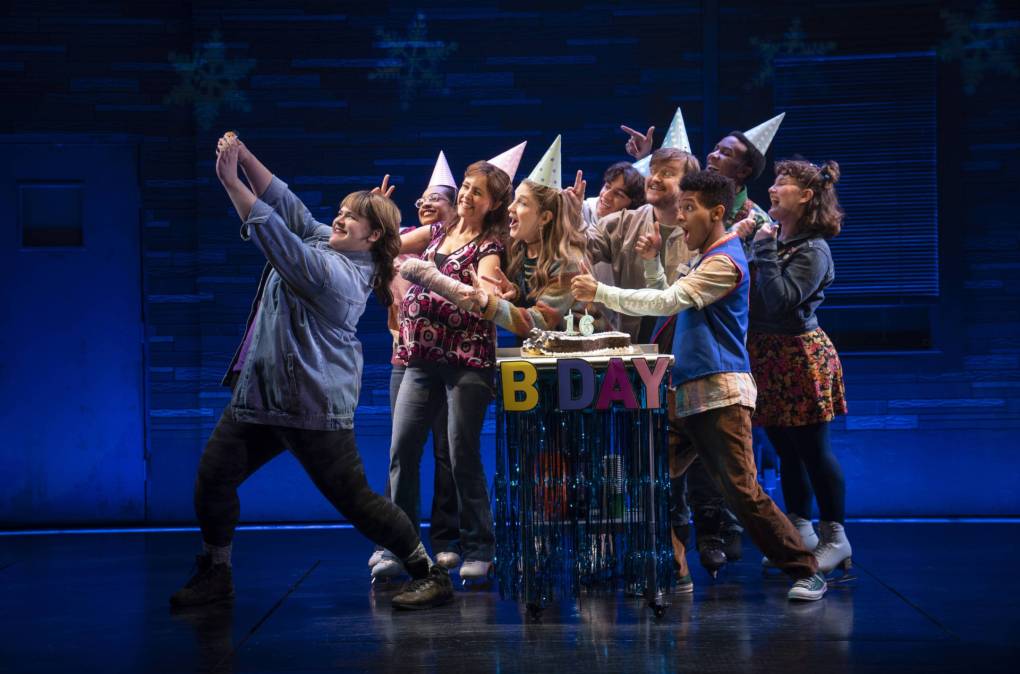
"caption": "5 mysteries and thrillers heading into summer.",
"description": null,
"title": "5 mysteries and thrillers heading into summer.",
"credit": "Meghan Collins Sullivan/NPR",
"status": "inherit",
"altTag": "The covers of five novels, three in the back row, two in the front.",
"isLoading": false,
"fetchFailed": false
},
"arts_13930469": {
"type": "attachments",
"id": "arts_13930469",
"meta": {
"index": "attachments_1716263798",
"site": "arts",
"id": "13930469",
"found": true
},
"parent": 13930468,
"imgSizes": {
"twentyfourteen-full-width": {
"file": "https://ww2.kqed.org/app/uploads/sites/2/2023/06/blackening-unit-211110-00076rc-f375b9e967438826f0cb0986c372ecae944c0283-scaled-e1686765780205-1038x576.jpg",
"width": 1038,
"mimeType": "image/jpeg",
"height": 576
},
"thumbnail": {
"file": "https://ww2.kqed.org/app/uploads/sites/2/2023/06/blackening-unit-211110-00076rc-f375b9e967438826f0cb0986c372ecae944c0283-scaled-e1686765780205-160x120.jpg",
"width": 160,
"mimeType": "image/jpeg",
"height": 120
},
"post-thumbnail": {
"file": "https://ww2.kqed.org/app/uploads/sites/2/2023/06/blackening-unit-211110-00076rc-f375b9e967438826f0cb0986c372ecae944c0283-scaled-e1686765780205-672x372.jpg",
"width": 672,
"mimeType": "image/jpeg",
"height": 372
},
"kqedFullSize": {
"file": "https://ww2.kqed.org/app/uploads/sites/2/2023/06/blackening-unit-211110-00076rc-f375b9e967438826f0cb0986c372ecae944c0283-scaled-e1686765780205.jpg",
"width": 1920,
"height": 1440
},
"2048x2048": {
"file": "https://ww2.kqed.org/app/uploads/sites/2/2023/06/blackening-unit-211110-00076rc-f375b9e967438826f0cb0986c372ecae944c0283-2048x1536.jpg",
"width": 2048,
"mimeType": "image/jpeg",
"height": 1536
},
"large": {
"file": "https://ww2.kqed.org/app/uploads/sites/2/2023/06/blackening-unit-211110-00076rc-f375b9e967438826f0cb0986c372ecae944c0283-scaled-e1686765780205-1020x765.jpg",
"width": 1020,
"mimeType": "image/jpeg",
"height": 765
},
"1536x1536": {
"file": "https://ww2.kqed.org/app/uploads/sites/2/2023/06/blackening-unit-211110-00076rc-f375b9e967438826f0cb0986c372ecae944c0283-scaled-e1686765780205-1536x1152.jpg",
"width": 1536,
"mimeType": "image/jpeg",
"height": 1152
},
"full-width": {
"file": "https://ww2.kqed.org/app/uploads/sites/2/2023/06/blackening-unit-211110-00076rc-f375b9e967438826f0cb0986c372ecae944c0283-1920x1440.jpg",
"width": 1920,
"mimeType": "image/jpeg",
"height": 1440
},
"medium": {
"file": "https://ww2.kqed.org/app/uploads/sites/2/2023/06/blackening-unit-211110-00076rc-f375b9e967438826f0cb0986c372ecae944c0283-scaled-e1686765780205-800x600.jpg",
"width": 800,
"mimeType": "image/jpeg",
"height": 600
},
"medium_large": {
"file": "https://ww2.kqed.org/app/uploads/sites/2/2023/06/blackening-unit-211110-00076rc-f375b9e967438826f0cb0986c372ecae944c0283-scaled-e1686765780205-768x576.jpg",
"width": 768,
"mimeType": "image/jpeg",
"height": 576
}
},
"publishDate": 1686764289,
"modified": 1686765959,
"caption": "In ‘The Blackening,’ Lisa (Antoinette Robertson) and her friends try to survive a weekend getaway turned deadly.",
"description": null,
"title": "In ‘The Blackening,’ Lisa (Antoinette Robertson) and her friends try to survive a weekend getaway turned deadly.",
"credit": "Glen Wilson/ Lionsgate",
"status": "inherit",
"altTag": "A Black woman walks trepidatiously down a staircase, wielding a heavy candlestick like a weapon.",
"isLoading": false,
"fetchFailed": false
},
"arts_13930405": {
"type": "attachments",
"id": "arts_13930405",
"meta": {
"index": "attachments_1716263798",
"site": "arts",
"id": "13930405",
"found": true
},
"parent": 13930404,
"imgSizes": {
"twentyfourteen-full-width": {
"file": "https://ww2.kqed.org/app/uploads/sites/2/2023/06/img_8197_custom-014e72b5287e950b26a79c9a43ee781ffa7baa67-scaled-e1686590618813-1038x576.jpe",
"width": 1038,
"mimeType": "image/jpeg",
"height": 576
},
"thumbnail": {
"file": "https://ww2.kqed.org/app/uploads/sites/2/2023/06/img_8197_custom-014e72b5287e950b26a79c9a43ee781ffa7baa67-scaled-e1686590618813-160x125.jpe",
"width": 160,
"mimeType": "image/jpeg",
"height": 125
},
"post-thumbnail": {
"file": "https://ww2.kqed.org/app/uploads/sites/2/2023/06/img_8197_custom-014e72b5287e950b26a79c9a43ee781ffa7baa67-scaled-e1686590618813-672x372.jpe",
"width": 672,
"mimeType": "image/jpeg",
"height": 372
},
"kqedFullSize": {
"file": "https://ww2.kqed.org/app/uploads/sites/2/2023/06/img_8197_custom-014e72b5287e950b26a79c9a43ee781ffa7baa67-scaled-e1686590618813.jpe",
"width": 1920,
"height": 1502
},
"2048x2048": {
"file": "https://ww2.kqed.org/app/uploads/sites/2/2023/06/img_8197_custom-014e72b5287e950b26a79c9a43ee781ffa7baa67-2048x1602.jpe",
"width": 2048,
"mimeType": "image/jpeg",
"height": 1602
},
"large": {
"file": "https://ww2.kqed.org/app/uploads/sites/2/2023/06/img_8197_custom-014e72b5287e950b26a79c9a43ee781ffa7baa67-scaled-e1686590618813-1020x798.jpe",
"width": 1020,
"mimeType": "image/jpeg",
"height": 798
},
"1536x1536": {
"file": "https://ww2.kqed.org/app/uploads/sites/2/2023/06/img_8197_custom-014e72b5287e950b26a79c9a43ee781ffa7baa67-scaled-e1686590618813-1536x1202.jpe",
"width": 1536,
"mimeType": "image/jpeg",
"height": 1202
},
"full-width": {
"file": "https://ww2.kqed.org/app/uploads/sites/2/2023/06/img_8197_custom-014e72b5287e950b26a79c9a43ee781ffa7baa67-1920x1502.jpe",
"width": 1920,
"mimeType": "image/jpeg",
"height": 1502
},
"medium": {
"file": "https://ww2.kqed.org/app/uploads/sites/2/2023/06/img_8197_custom-014e72b5287e950b26a79c9a43ee781ffa7baa67-scaled-e1686590618813-800x626.jpe",
"width": 800,
"mimeType": "image/jpeg",
"height": 626
},
"medium_large": {
"file": "https://ww2.kqed.org/app/uploads/sites/2/2023/06/img_8197_custom-014e72b5287e950b26a79c9a43ee781ffa7baa67-scaled-e1686590618813-768x601.jpe",
"width": 768,
"mimeType": "image/jpeg",
"height": 601
}
},
"publishDate": 1686590100,
"modified": 1686590749,
"caption": "D'Arcy Drollinger, the country's first drag laureate, poses with the Pride flag outside San Francisco City Hall on June 2, 2023.",
"description": null,
"title": "D'Arcy Drollinger, the country's first drag laureate, poses with the Pride flag outside San Francisco City Hall on June 2, 2023.",
"credit": "Chloe Veltman/ NPR",
"status": "inherit",
"altTag": "A drag performer wearing long blond wig and a skin tight pink and white dress and suit jacket stands on a balcony overlooking San Francisco Civic Center. She is standing next to a rainbow flag.",
"isLoading": false,
"fetchFailed": false
},
"arts_13930395": {
"type": "attachments",
"id": "arts_13930395",
"meta": {
"index": "attachments_1716263798",
"site": "arts",
"id": "13930395",
"found": true
},
"parent": 13930391,
"imgSizes": {
"twentyfourteen-full-width": {
"file": "https://ww2.kqed.org/app/uploads/sites/2/2023/06/kimberlyakimbo1176r_custom-8ab9615de8b733976037b2c46f182c5a563b496e-1-scaled-e1686547470225-1038x576.jpg",
"width": 1038,
"mimeType": "image/jpeg",
"height": 576
},
"thumbnail": {
"file": "https://ww2.kqed.org/app/uploads/sites/2/2023/06/kimberlyakimbo1176r_custom-8ab9615de8b733976037b2c46f182c5a563b496e-1-scaled-e1686547470225-160x106.jpg",
"width": 160,
"mimeType": "image/jpeg",
"height": 106
},
"post-thumbnail": {
"file": "https://ww2.kqed.org/app/uploads/sites/2/2023/06/kimberlyakimbo1176r_custom-8ab9615de8b733976037b2c46f182c5a563b496e-1-scaled-e1686547470225-672x372.jpg",
"width": 672,
"mimeType": "image/jpeg",
"height": 372
},
"kqedFullSize": {
"file": "https://ww2.kqed.org/app/uploads/sites/2/2023/06/kimberlyakimbo1176r_custom-8ab9615de8b733976037b2c46f182c5a563b496e-1-scaled-e1686547470225.jpg",
"width": 1920,
"height": 1268
},
"2048x2048": {
"file": "https://ww2.kqed.org/app/uploads/sites/2/2023/06/kimberlyakimbo1176r_custom-8ab9615de8b733976037b2c46f182c5a563b496e-1-2048x1352.jpg",
"width": 2048,
"mimeType": "image/jpeg",
"height": 1352
},
"large": {
"file": "https://ww2.kqed.org/app/uploads/sites/2/2023/06/kimberlyakimbo1176r_custom-8ab9615de8b733976037b2c46f182c5a563b496e-1-scaled-e1686547470225-1020x674.jpg",
"width": 1020,
"mimeType": "image/jpeg",
"height": 674
},
"1536x1536": {
"file": "https://ww2.kqed.org/app/uploads/sites/2/2023/06/kimberlyakimbo1176r_custom-8ab9615de8b733976037b2c46f182c5a563b496e-1-scaled-e1686547470225-1536x1014.jpg",
"width": 1536,
"mimeType": "image/jpeg",
"height": 1014
},
"full-width": {
"file": "https://ww2.kqed.org/app/uploads/sites/2/2023/06/kimberlyakimbo1176r_custom-8ab9615de8b733976037b2c46f182c5a563b496e-1-1920x1268.jpg",
"width": 1920,
"mimeType": "image/jpeg",
"height": 1268
},
"medium": {
"file": "https://ww2.kqed.org/app/uploads/sites/2/2023/06/kimberlyakimbo1176r_custom-8ab9615de8b733976037b2c46f182c5a563b496e-1-scaled-e1686547470225-800x528.jpg",
"width": 800,
"mimeType": "image/jpeg",
"height": 528
},
"medium_large": {
"file": "https://ww2.kqed.org/app/uploads/sites/2/2023/06/kimberlyakimbo1176r_custom-8ab9615de8b733976037b2c46f182c5a563b496e-1-scaled-e1686547470225-768x507.jpg",
"width": 768,
"mimeType": "image/jpeg",
"height": 507
}
},
"publishDate": 1686546126,
"modified": 1686547605,
"caption": "Kimberly Akimbo won the 2023 Tony Award for best musical, beating out ‘Some Like It Hot,’ ‘Shucked,’ ‘New York, New York’ and ‘& Juliet.’",
"description": null,
"title": "Kimberly Akimbo won the 2023 Tony Award for best musical, beating out ‘Some Like It Hot,’ ‘Shucked,’ ‘New York, New York’ and ‘&Juliet.’",
"credit": "Joan Marcus/Kimberly Akimbo",
"status": "inherit",
"altTag": "A group of people in party hats gather around a table and take a selfie.",
"isLoading": false,
"fetchFailed": false
},
"arts_13930359": {
"type": "attachments",
"id": "arts_13930359",
"meta": {
"index": "attachments_1716263798",
"site": "arts",
"id": "13930359",
"found": true
},
"parent": 13930358,
"imgSizes": {
"twentyfourteen-full-width": {
"file": "https://ww2.kqed.org/app/uploads/sites/2/2023/06/misc_23_019_jm_dsp_0269-3-0-3ff153507640790e5104733cf18e1fcd3b3bde8c-scaled-e1686344883172-1038x576.jpg",
"width": 1038,
"mimeType": "image/jpeg",
"height": 576
},
"thumbnail": {
"file": "https://ww2.kqed.org/app/uploads/sites/2/2023/06/misc_23_019_jm_dsp_0269-3-0-3ff153507640790e5104733cf18e1fcd3b3bde8c-scaled-e1686344883172-160x120.jpg",
"width": 160,
"mimeType": "image/jpeg",
"height": 120
},
"post-thumbnail": {
"file": "https://ww2.kqed.org/app/uploads/sites/2/2023/06/misc_23_019_jm_dsp_0269-3-0-3ff153507640790e5104733cf18e1fcd3b3bde8c-scaled-e1686344883172-672x372.jpg",
"width": 672,
"mimeType": "image/jpeg",
"height": 372
},
"kqedFullSize": {
"file": "https://ww2.kqed.org/app/uploads/sites/2/2023/06/misc_23_019_jm_dsp_0269-3-0-3ff153507640790e5104733cf18e1fcd3b3bde8c-scaled-e1686344883172.jpg",
"width": 1920,
"height": 1441
},
"2048x2048": {
"file": "https://ww2.kqed.org/app/uploads/sites/2/2023/06/misc_23_019_jm_dsp_0269-3-0-3ff153507640790e5104733cf18e1fcd3b3bde8c-2048x1536.jpg",
"width": 2048,
"mimeType": "image/jpeg",
"height": 1536
},
"large": {
"file": "https://ww2.kqed.org/app/uploads/sites/2/2023/06/misc_23_019_jm_dsp_0269-3-0-3ff153507640790e5104733cf18e1fcd3b3bde8c-scaled-e1686344883172-1020x766.jpg",
"width": 1020,
"mimeType": "image/jpeg",
"height": 766
},
"1536x1536": {
"file": "https://ww2.kqed.org/app/uploads/sites/2/2023/06/misc_23_019_jm_dsp_0269-3-0-3ff153507640790e5104733cf18e1fcd3b3bde8c-scaled-e1686344883172-1536x1153.jpg",
"width": 1536,
"mimeType": "image/jpeg",
"height": 1153
},
"full-width": {
"file": "https://ww2.kqed.org/app/uploads/sites/2/2023/06/misc_23_019_jm_dsp_0269-3-0-3ff153507640790e5104733cf18e1fcd3b3bde8c-1920x1440.jpg",
"width": 1920,
"mimeType": "image/jpeg",
"height": 1440
},
"medium": {
"file": "https://ww2.kqed.org/app/uploads/sites/2/2023/06/misc_23_019_jm_dsp_0269-3-0-3ff153507640790e5104733cf18e1fcd3b3bde8c-scaled-e1686344883172-800x600.jpg",
"width": 800,
"mimeType": "image/jpeg",
"height": 600
},
"medium_large": {
"file": "https://ww2.kqed.org/app/uploads/sites/2/2023/06/misc_23_019_jm_dsp_0269-3-0-3ff153507640790e5104733cf18e1fcd3b3bde8c-scaled-e1686344883172-768x576.jpg",
"width": 768,
"mimeType": "image/jpeg",
"height": 576
}
},
"publishDate": 1686344714,
"modified": 1686344993,
"caption": "On her new album, ‘The Age of Pleasure,’ Janelle Monáe concocts a vision of sensuality that is open to complication but goes down easy.",
"description": null,
"title": "On her new album, ‘The Age of Pleasure,’ Janelle Monáe concocts a vision of sensuality that is open to complication but goes down easy.",
"credit": "Mason Rose/Courtesy of the artist",
"status": "inherit",
"altTag": "An attractive Black woman in her thirties stands, shocked expression on her face wearing a round white sun hat. She is topless, her hands covering her breasts.",
"isLoading": false,
"fetchFailed": false
},
"arts_13930288": {
"type": "attachments",
"id": "arts_13930288",
"meta": {
"index": "attachments_1716263798",
"site": "arts",
"id": "13930288",
"found": true
},
"parent": 13930279,
"imgSizes": {
"twentyfourteen-full-width": {
"file": "https://ww2.kqed.org/app/uploads/sites/2/2023/06/Screen-Shot-2023-06-08-at-10.06.04-AM-1038x576.png",
"width": 1038,
"mimeType": "image/png",
"height": 576
},
"thumbnail": {
"file": "https://ww2.kqed.org/app/uploads/sites/2/2023/06/Screen-Shot-2023-06-08-at-10.06.04-AM-160x93.png",
"width": 160,
"mimeType": "image/png",
"height": 93
},
"post-thumbnail": {
"file": "https://ww2.kqed.org/app/uploads/sites/2/2023/06/Screen-Shot-2023-06-08-at-10.06.04-AM-672x372.png",
"width": 672,
"mimeType": "image/png",
"height": 372
},
"kqedFullSize": {
"file": "https://ww2.kqed.org/app/uploads/sites/2/2023/06/Screen-Shot-2023-06-08-at-10.06.04-AM.png",
"width": 1310,
"height": 762
},
"large": {
"file": "https://ww2.kqed.org/app/uploads/sites/2/2023/06/Screen-Shot-2023-06-08-at-10.06.04-AM-1020x593.png",
"width": 1020,
"mimeType": "image/png",
"height": 593
},
"medium": {
"file": "https://ww2.kqed.org/app/uploads/sites/2/2023/06/Screen-Shot-2023-06-08-at-10.06.04-AM-800x465.png",
"width": 800,
"mimeType": "image/png",
"height": 465
},
"medium_large": {
"file": "https://ww2.kqed.org/app/uploads/sites/2/2023/06/Screen-Shot-2023-06-08-at-10.06.04-AM-768x447.png",
"width": 768,
"mimeType": "image/png",
"height": 447
}
},
"publishDate": 1686244022,
"modified": 1686244589,
"caption": "’The Talk’ by Darrin Bell.",
"description": null,
"title": "’The Talk’ by Darrin Bell.",
"credit": "Henry Holt & Co.",
"status": "inherit",
"altTag": "An illustration depicting a young Black man wearing a grey hoodie, head cocked pensively to one side.",
"isLoading": false,
"fetchFailed": false
},
"arts_13930118": {
"type": "attachments",
"id": "arts_13930118",
"meta": {
"index": "attachments_1716263798",
"site": "arts",
"id": "13930118",
"found": true
},
"parent": 13930117,
"imgSizes": {
"twentyfourteen-full-width": {
"file": "https://ww2.kqed.org/app/uploads/sites/2/2023/06/lily-rose-depp_0_wide-a89d2672e905da8b8da775085ad1d860cd7decab-1038x576.jpg",
"width": 1038,
"mimeType": "image/jpeg",
"height": 576
},
"thumbnail": {
"file": "https://ww2.kqed.org/app/uploads/sites/2/2023/06/lily-rose-depp_0_wide-a89d2672e905da8b8da775085ad1d860cd7decab-160x90.jpg",
"width": 160,
"mimeType": "image/jpeg",
"height": 90
},
"post-thumbnail": {
"file": "https://ww2.kqed.org/app/uploads/sites/2/2023/06/lily-rose-depp_0_wide-a89d2672e905da8b8da775085ad1d860cd7decab-672x372.jpg",
"width": 672,
"mimeType": "image/jpeg",
"height": 372
},
"kqedFullSize": {
"file": "https://ww2.kqed.org/app/uploads/sites/2/2023/06/lily-rose-depp_0_wide-a89d2672e905da8b8da775085ad1d860cd7decab.jpg",
"width": 1273,
"height": 717
},
"large": {
"file": "https://ww2.kqed.org/app/uploads/sites/2/2023/06/lily-rose-depp_0_wide-a89d2672e905da8b8da775085ad1d860cd7decab-1020x575.jpg",
"width": 1020,
"mimeType": "image/jpeg",
"height": 575
},
"medium": {
"file": "https://ww2.kqed.org/app/uploads/sites/2/2023/06/lily-rose-depp_0_wide-a89d2672e905da8b8da775085ad1d860cd7decab-800x451.jpg",
"width": 800,
"mimeType": "image/jpeg",
"height": 451
},
"medium_large": {
"file": "https://ww2.kqed.org/app/uploads/sites/2/2023/06/lily-rose-depp_0_wide-a89d2672e905da8b8da775085ad1d860cd7decab-768x433.jpg",
"width": 768,
"mimeType": "image/jpeg",
"height": 433
}
},
"publishDate": 1686073795,
"modified": 1686077379,
"caption": "The troubles of Jocelyn in ‘The Idol’ feel out of step with what's demanded of mainstream music stars in 2023.",
"description": null,
"title": "The troubles of Jocelyn in ‘The Idol’ feel out of step with what's demanded of mainstream music stars in 2023.",
"credit": "HBO",
"status": "inherit",
"altTag": "A young, very slim woman with long blonde hair dyed pink at the edges strokes her hair away from her shoulder. She is wearing a barely-there stage costume that leaves little to the imagination.",
"isLoading": false,
"fetchFailed": false
},
"arts_13930110": {
"type": "attachments",
"id": "arts_13930110",
"meta": {
"index": "attachments_1716263798",
"site": "arts",
"id": "13930110",
"found": true
},
"parent": 13930106,
"imgSizes": {
"twentyfourteen-full-width": {
"file": "https://ww2.kqed.org/app/uploads/sites/2/2023/06/Screen-Shot-2023-06-06-at-10.37.18-AM-1038x576.png",
"width": 1038,
"mimeType": "image/png",
"height": 576
},
"thumbnail": {
"file": "https://ww2.kqed.org/app/uploads/sites/2/2023/06/Screen-Shot-2023-06-06-at-10.37.18-AM-160x98.png",
"width": 160,
"mimeType": "image/png",
"height": 98
},
"post-thumbnail": {
"file": "https://ww2.kqed.org/app/uploads/sites/2/2023/06/Screen-Shot-2023-06-06-at-10.37.18-AM-672x372.png",
"width": 672,
"mimeType": "image/png",
"height": 372
},
"kqedFullSize": {
"file": "https://ww2.kqed.org/app/uploads/sites/2/2023/06/Screen-Shot-2023-06-06-at-10.37.18-AM.png",
"width": 1166,
"height": 716
},
"large": {
"file": "https://ww2.kqed.org/app/uploads/sites/2/2023/06/Screen-Shot-2023-06-06-at-10.37.18-AM-1020x626.png",
"width": 1020,
"mimeType": "image/png",
"height": 626
},
"medium": {
"file": "https://ww2.kqed.org/app/uploads/sites/2/2023/06/Screen-Shot-2023-06-06-at-10.37.18-AM-800x491.png",
"width": 800,
"mimeType": "image/png",
"height": 491
},
"medium_large": {
"file": "https://ww2.kqed.org/app/uploads/sites/2/2023/06/Screen-Shot-2023-06-06-at-10.37.18-AM-768x472.png",
"width": 768,
"mimeType": "image/png",
"height": 472
}
},
"publishDate": 1686073053,
"modified": 1686073089,
"caption": "‘Lesbian Love Story: A Memoir in Archives’ by Amelia Possanza.",
"description": null,
"title": "‘Lesbian Love Story: A Memoir in Archives’ by Amelia Possanza.",
"credit": "Catapult",
"status": "inherit",
"altTag": "A peach-toned background with Lesbian Love Story written in block letters on top.",
"isLoading": false,
"fetchFailed": false
},
"arts_13930073": {
"type": "attachments",
"id": "arts_13930073",
"meta": {
"index": "attachments_1716263798",
"site": "arts",
"id": "13930073",
"found": true
},
"parent": 13930072,
"imgSizes": {
"twentyfourteen-full-width": {
"file": "https://ww2.kqed.org/app/uploads/sites/2/2023/06/tf15_addams-family_sd-3520_custom-d28698aa44185fd344f954061f38c89d45313280-scaled-e1685991924341-1038x576.jpg",
"width": 1038,
"mimeType": "image/jpeg",
"height": 576
},
"thumbnail": {
"file": "https://ww2.kqed.org/app/uploads/sites/2/2023/06/tf15_addams-family_sd-3520_custom-d28698aa44185fd344f954061f38c89d45313280-scaled-e1685991924341-160x109.jpg",
"width": 160,
"mimeType": "image/jpeg",
"height": 109
},
"post-thumbnail": {
"file": "https://ww2.kqed.org/app/uploads/sites/2/2023/06/tf15_addams-family_sd-3520_custom-d28698aa44185fd344f954061f38c89d45313280-scaled-e1685991924341-672x372.jpg",
"width": 672,
"mimeType": "image/jpeg",
"height": 372
},
"kqedFullSize": {
"file": "https://ww2.kqed.org/app/uploads/sites/2/2023/06/tf15_addams-family_sd-3520_custom-d28698aa44185fd344f954061f38c89d45313280-scaled-e1685991924341.jpg",
"width": 1920,
"height": 1308
},
"2048x2048": {
"file": "https://ww2.kqed.org/app/uploads/sites/2/2023/06/tf15_addams-family_sd-3520_custom-d28698aa44185fd344f954061f38c89d45313280-2048x1396.jpg",
"width": 2048,
"mimeType": "image/jpeg",
"height": 1396
},
"large": {
"file": "https://ww2.kqed.org/app/uploads/sites/2/2023/06/tf15_addams-family_sd-3520_custom-d28698aa44185fd344f954061f38c89d45313280-scaled-e1685991924341-1020x695.jpg",
"width": 1020,
"mimeType": "image/jpeg",
"height": 695
},
"1536x1536": {
"file": "https://ww2.kqed.org/app/uploads/sites/2/2023/06/tf15_addams-family_sd-3520_custom-d28698aa44185fd344f954061f38c89d45313280-scaled-e1685991924341-1536x1046.jpg",
"width": 1536,
"mimeType": "image/jpeg",
"height": 1046
},
"full-width": {
"file": "https://ww2.kqed.org/app/uploads/sites/2/2023/06/tf15_addams-family_sd-3520_custom-d28698aa44185fd344f954061f38c89d45313280-1920x1308.jpg",
"width": 1920,
"mimeType": "image/jpeg",
"height": 1308
},
"medium": {
"file": "https://ww2.kqed.org/app/uploads/sites/2/2023/06/tf15_addams-family_sd-3520_custom-d28698aa44185fd344f954061f38c89d45313280-scaled-e1685991924341-800x545.jpg",
"width": 800,
"mimeType": "image/jpeg",
"height": 545
},
"medium_large": {
"file": "https://ww2.kqed.org/app/uploads/sites/2/2023/06/tf15_addams-family_sd-3520_custom-d28698aa44185fd344f954061f38c89d45313280-scaled-e1685991924341-768x523.jpg",
"width": 768,
"mimeType": "image/jpeg",
"height": 523
}
},
"publishDate": 1685990388,
"modified": 1685992068,
"caption": "Spring Woods High School in Houston, Texas, is one of the schools that put on a production of ‘The Addams Family.’",
"description": null,
"title": "Spring Woods High School in Houston, Texas, is one of the schools that put on a production of ‘The Addams Family.’",
"credit": "Susan Doremus/Educational Theatre Associaton",
"status": "inherit",
"altTag": "A teen girl dressed in a yellow floral 1940s-style dress stands on stage holding up jazz hands as a gold bowl seemingly floats in front of her. Other performers are gathered around and behind her.",
"isLoading": false,
"fetchFailed": false
},
"arts_13930049": {
"type": "attachments",
"id": "arts_13930049",
"meta": {
"index": "attachments_1716263798",
"site": "arts",
"id": "13930049",
"found": true
},
"parent": 13930048,
"imgSizes": {
"twentyfourteen-full-width": {
"file": "https://ww2.kqed.org/app/uploads/sites/2/2023/06/succession_kendall-0e29dc92c13a855166e41cdecc57b8bb5075ce87-1038x576.jpg",
"width": 1038,
"mimeType": "image/jpeg",
"height": 576
},
"thumbnail": {
"file": "https://ww2.kqed.org/app/uploads/sites/2/2023/06/succession_kendall-0e29dc92c13a855166e41cdecc57b8bb5075ce87-160x120.jpg",
"width": 160,
"mimeType": "image/jpeg",
"height": 120
},
"post-thumbnail": {
"file": "https://ww2.kqed.org/app/uploads/sites/2/2023/06/succession_kendall-0e29dc92c13a855166e41cdecc57b8bb5075ce87-672x372.jpg",
"width": 672,
"mimeType": "image/jpeg",
"height": 372
},
"kqedFullSize": {
"file": "https://ww2.kqed.org/app/uploads/sites/2/2023/06/succession_kendall-0e29dc92c13a855166e41cdecc57b8bb5075ce87.jpg",
"width": 1766,
"height": 1324
},
"large": {
"file": "https://ww2.kqed.org/app/uploads/sites/2/2023/06/succession_kendall-0e29dc92c13a855166e41cdecc57b8bb5075ce87-1020x765.jpg",
"width": 1020,
"mimeType": "image/jpeg",
"height": 765
},
"1536x1536": {
"file": "https://ww2.kqed.org/app/uploads/sites/2/2023/06/succession_kendall-0e29dc92c13a855166e41cdecc57b8bb5075ce87-1536x1152.jpg",
"width": 1536,
"mimeType": "image/jpeg",
"height": 1152
},
"medium": {
"file": "https://ww2.kqed.org/app/uploads/sites/2/2023/06/succession_kendall-0e29dc92c13a855166e41cdecc57b8bb5075ce87-800x600.jpg",
"width": 800,
"mimeType": "image/jpeg",
"height": 600
},
"medium_large": {
"file": "https://ww2.kqed.org/app/uploads/sites/2/2023/06/succession_kendall-0e29dc92c13a855166e41cdecc57b8bb5075ce87-768x576.jpg",
"width": 768,
"mimeType": "image/jpeg",
"height": 576
}
},
"publishDate": 1685986144,
"modified": 1685987474,
"caption": "In the final scene of ‘Succession,’ Kendall (Jeremy Strong) stares out at the Hudson River while his father's bodyguard looks on. ",
"description": null,
"title": "In the final scene of ‘Succession,’ Kendall (Jeremy Strong) stares out at the Hudson River while his father's bodyguard looks on.",
"credit": "HBO",
"status": "inherit",
"altTag": null,
"isLoading": false,
"fetchFailed": false
},
"arts_13929977": {
"type": "attachments",
"id": "arts_13929977",
"meta": {
"index": "attachments_1716263798",
"site": "arts",
"id": "13929977",
"found": true
},
"parent": 13929970,
"imgSizes": {
"twentyfourteen-full-width": {
"file": "https://ww2.kqed.org/app/uploads/sites/2/2023/06/Screen-Shot-2023-06-01-at-10.41.57-AM-1038x576.png",
"width": 1038,
"mimeType": "image/png",
"height": 576
},
"thumbnail": {
"file": "https://ww2.kqed.org/app/uploads/sites/2/2023/06/Screen-Shot-2023-06-01-at-10.41.57-AM-160x104.png",
"width": 160,
"mimeType": "image/png",
"height": 104
},
"post-thumbnail": {
"file": "https://ww2.kqed.org/app/uploads/sites/2/2023/06/Screen-Shot-2023-06-01-at-10.41.57-AM-672x372.png",
"width": 672,
"mimeType": "image/png",
"height": 372
},
"kqedFullSize": {
"file": "https://ww2.kqed.org/app/uploads/sites/2/2023/06/Screen-Shot-2023-06-01-at-10.41.57-AM.png",
"width": 1160,
"height": 756
},
"large": {
"file": "https://ww2.kqed.org/app/uploads/sites/2/2023/06/Screen-Shot-2023-06-01-at-10.41.57-AM-1020x665.png",
"width": 1020,
"mimeType": "image/png",
"height": 665
},
"medium": {
"file": "https://ww2.kqed.org/app/uploads/sites/2/2023/06/Screen-Shot-2023-06-01-at-10.41.57-AM-800x521.png",
"width": 800,
"mimeType": "image/png",
"height": 521
},
"medium_large": {
"file": "https://ww2.kqed.org/app/uploads/sites/2/2023/06/Screen-Shot-2023-06-01-at-10.41.57-AM-768x501.png",
"width": 768,
"mimeType": "image/png",
"height": 501
}
},
"publishDate": 1685641335,
"modified": 1685641383,
"caption": "John Coltrane (left) and Eric Dolphy on stage at the Village Gate in New York City in the summer of 1961. A recording of the performance, once thought lost, was recently discovered in the New York Public Library.",
"description": null,
"title": "John Coltrane (left) and Eric Dolphy on stage at the Village Gate in New York City in the summer of 1961. A recording of the performance, once thought lost, was recently discovered in the New York Public Library.",
"credit": "Herb Snitzer/Courtesy of Impulse! Records",
"status": "inherit",
"altTag": "A Black man passionately plays saxophone on stage, while another watches on.",
"isLoading": false,
"fetchFailed": false
},
"arts_13929880": {
"type": "attachments",
"id": "arts_13929880",
"meta": {
"index": "attachments_1716263798",
"site": "arts",
"id": "13929880",
"found": true
},
"parent": 13929879,
"imgSizes": {
"twentyfourteen-full-width": {
"file": "https://ww2.kqed.org/app/uploads/sites/2/2023/05/tedlasso_312_02154f_custom-5184a649417998f6ca9f7536fe7bdcfac266b1e9-scaled-e1685556703998-1038x576.jpg",
"width": 1038,
"mimeType": "image/jpeg",
"height": 576
},
"thumbnail": {
"file": "https://ww2.kqed.org/app/uploads/sites/2/2023/05/tedlasso_312_02154f_custom-5184a649417998f6ca9f7536fe7bdcfac266b1e9-scaled-e1685556703998-160x107.jpg",
"width": 160,
"mimeType": "image/jpeg",
"height": 107
},
"post-thumbnail": {
"file": "https://ww2.kqed.org/app/uploads/sites/2/2023/05/tedlasso_312_02154f_custom-5184a649417998f6ca9f7536fe7bdcfac266b1e9-scaled-e1685556703998-672x372.jpg",
"width": 672,
"mimeType": "image/jpeg",
"height": 372
},
"kqedFullSize": {
"file": "https://ww2.kqed.org/app/uploads/sites/2/2023/05/tedlasso_312_02154f_custom-5184a649417998f6ca9f7536fe7bdcfac266b1e9-scaled-e1685556703998.jpg",
"width": 1920,
"height": 1279
},
"2048x2048": {
"file": "https://ww2.kqed.org/app/uploads/sites/2/2023/05/tedlasso_312_02154f_custom-5184a649417998f6ca9f7536fe7bdcfac266b1e9-2048x1364.jpg",
"width": 2048,
"mimeType": "image/jpeg",
"height": 1364
},
"large": {
"file": "https://ww2.kqed.org/app/uploads/sites/2/2023/05/tedlasso_312_02154f_custom-5184a649417998f6ca9f7536fe7bdcfac266b1e9-scaled-e1685556703998-1020x679.jpg",
"width": 1020,
"mimeType": "image/jpeg",
"height": 679
},
"1536x1536": {
"file": "https://ww2.kqed.org/app/uploads/sites/2/2023/05/tedlasso_312_02154f_custom-5184a649417998f6ca9f7536fe7bdcfac266b1e9-scaled-e1685556703998-1536x1023.jpg",
"width": 1536,
"mimeType": "image/jpeg",
"height": 1023
},
"full-width": {
"file": "https://ww2.kqed.org/app/uploads/sites/2/2023/05/tedlasso_312_02154f_custom-5184a649417998f6ca9f7536fe7bdcfac266b1e9-1920x1279.jpg",
"width": 1920,
"mimeType": "image/jpeg",
"height": 1279
},
"medium": {
"file": "https://ww2.kqed.org/app/uploads/sites/2/2023/05/tedlasso_312_02154f_custom-5184a649417998f6ca9f7536fe7bdcfac266b1e9-scaled-e1685556703998-800x533.jpg",
"width": 800,
"mimeType": "image/jpeg",
"height": 533
},
"medium_large": {
"file": "https://ww2.kqed.org/app/uploads/sites/2/2023/05/tedlasso_312_02154f_custom-5184a649417998f6ca9f7536fe7bdcfac266b1e9-scaled-e1685556703998-768x512.jpg",
"width": 768,
"mimeType": "image/jpeg",
"height": 512
}
},
"publishDate": 1685555992,
"modified": 1685556817,
"caption": "Brendan Hunt, Jason Sudeikis, and Brett Goldstein as Richmond coaches Beard, Ted and Roy.",
"description": null,
"title": "Brendan Hunt, Jason Sudeikis, and Brett Goldstein as Richmond coaches Beard, Ted and Roy.",
"credit": "Colin Hutton/ Apple",
"status": "inherit",
"altTag": "Three men stand on the side of a football pitch, stands of spectators seated behind them.",
"isLoading": false,
"fetchFailed": false
}
},
"audioPlayerReducer": {
"postId": "stream_live",
"isPaused": true,
"isPlaying": false,
"pfsActive": false,
"pledgeModalIsOpen": true,
"playerDrawerIsOpen": false,
"liveAudioPlayStartedAt": 0,
"liveAudioPlayContext": ""
},
"authorsReducer": {
"byline_arts_13930584": {
"type": "authors",
"id": "byline_arts_13930584",
"meta": {
"override": true
},
"slug": "byline_arts_13930584",
"name": "Bethanne Patrick",
"isLoading": false
},
"byline_arts_13930468": {
"type": "authors",
"id": "byline_arts_13930468",
"meta": {
"override": true
},
"slug": "byline_arts_13930468",
"name": "Aisha Harris",
"isLoading": false
},
"byline_arts_13930404": {
"type": "authors",
"id": "byline_arts_13930404",
"meta": {
"override": true
},
"slug": "byline_arts_13930404",
"name": "Chloe Veltman",
"isLoading": false
},
"byline_arts_13930358": {
"type": "authors",
"id": "byline_arts_13930358",
"meta": {
"override": true
},
"slug": "byline_arts_13930358",
"name": "Ann Powers",
"isLoading": false
},
"byline_arts_13930279": {
"type": "authors",
"id": "byline_arts_13930279",
"meta": {
"override": true
},
"slug": "byline_arts_13930279",
"name": "Thaneer Oksman",
"isLoading": false
},
"byline_arts_13930117": {
"type": "authors",
"id": "byline_arts_13930117",
"meta": {
"override": true
},
"slug": "byline_arts_13930117",
"name": "Hazel Cills",
"isLoading": false
},
"byline_arts_13930106": {
"type": "authors",
"id": "byline_arts_13930106",
"meta": {
"override": true
},
"slug": "byline_arts_13930106",
"name": "Julie Depenbrock",
"isLoading": false
},
"byline_arts_13930072": {
"type": "authors",
"id": "byline_arts_13930072",
"meta": {
"override": true
},
"slug": "byline_arts_13930072",
"name": "Elizabeth Blair",
"isLoading": false
},
"byline_arts_13930048": {
"type": "authors",
"id": "byline_arts_13930048",
"meta": {
"override": true
},
"slug": "byline_arts_13930048",
"name": "Terry Gross",
"isLoading": false
},
"byline_arts_13929970": {
"type": "authors",
"id": "byline_arts_13929970",
"meta": {
"override": true
},
"slug": "byline_arts_13929970",
"name": "Nate Chinen",
"isLoading": false
},
"byline_arts_13929879": {
"type": "authors",
"id": "byline_arts_13929879",
"meta": {
"override": true
},
"slug": "byline_arts_13929879",
"name": "Linda Holmes",
"isLoading": false
},
"kqedarts": {
"type": "authors",
"id": "92",
"meta": {
"index": "authors_1716337520",
"id": "92",
"found": true
},
"name": "KQED Arts",
"firstName": "KQED",
"lastName": "Arts",
"slug": "kqedarts",
"email": "arts@kqed.org",
"display_author_email": false,
"staff_mastheads": [],
"title": "KQED Staff",
"bio": null,
"avatar": "https://secure.gravatar.com/avatar/321c9ebfeb7736f9e55366a6d3399ab0?s=600&d=blank&r=g",
"twitter": null,
"facebook": null,
"instagram": "https://www.instagram.com/kqed_arts/",
"linkedin": null,
"sites": [
{
"site": "arts",
"roles": [
"contributor"
]
},
{
"site": "pop",
"roles": [
"contributor"
]
},
{
"site": "science",
"roles": [
"author"
]
},
{
"site": "food",
"roles": [
"contributor"
]
}
],
"headData": {
"title": "KQED Arts | KQED",
"description": "KQED Staff",
"ogImgSrc": "https://secure.gravatar.com/avatar/321c9ebfeb7736f9e55366a6d3399ab0?s=600&d=blank&r=g",
"twImgSrc": "https://secure.gravatar.com/avatar/321c9ebfeb7736f9e55366a6d3399ab0?s=600&d=blank&r=g"
},
"isLoading": false,
"link": "/author/kqedarts"
}
},
"pagesReducer": {
"arts_affiliate_npr": {
"type": "terms",
"id": "arts_137",
"meta": {
"index": "terms_1716263798",
"site": "arts",
"id": "137",
"score": 14.257292
},
"featImg": "https://ww2.kqed.org/app/uploads/sites/2/2014/04/logo-npr-lg1.png",
"name": "NPR",
"description": null,
"taxonomy": "affiliate",
"headData": {
"twImgId": null,
"twTitle": null,
"ogTitle": null,
"ogImgId": null,
"twDescription": null,
"description": null,
"title": "NPR Archives | KQED Arts",
"ogDescription": null
},
"ttid": 138,
"slug": "npr",
"isLoading": false,
"title": "NPR",
"pageMeta": {
"site": "arts",
"WpPageTemplate": "page-topic-editorial",
"currentPage": 41
},
"blocks": [
{
"blockName": "kqed/post-list",
"attrs": {
"layout": "cardArticle2",
"query": "posts/arts?affiliate=npr",
"seeMore": false,
"paginated": true,
"page": 41
}
},
{
"blockName": "kqed/ad"
}
]
}
},
"pfsSessionReducer": {},
"postsReducer": {
"stream_live": {
"type": "live",
"id": "stream_live",
"audioUrl": "https://streams.kqed.org/kqedradio",
"title": "Live Stream",
"excerpt": "Live Stream information currently unavailable.",
"link": "/radio",
"featImg": "",
"label": {
"name": "KQED Live",
"link": "/"
}
},
"stream_kqedNewscast": {
"type": "posts",
"id": "stream_kqedNewscast",
"audioUrl": "https://www.kqed.org/.stream/anon/radio/RDnews/newscast.mp3?_=1",
"title": "KQED Newscast",
"featImg": "",
"label": {
"name": "88.5 FM",
"link": "/"
}
},
"arts_13930584": {
"type": "posts",
"id": "arts_13930584",
"meta": {
"index": "posts_1716263798",
"site": "arts",
"id": "13930584",
"score": null,
"sort": [
1686864043000
]
},
"parent": 0,
"labelTerm": {
"site": "arts",
"term": 140
},
"blocks": [],
"publishDate": 1686864043,
"format": "standard",
"title": "5 New Mysteries and Thrillers for the Start of Summer",
"headTitle": "5 New Mysteries and Thrillers for the Start of Summer | KQED",
"content": "\u003cp>Misery, I tell you, it was misery having to choose just five from the incredible number of great mysteries and thrillers publishing in May and June.\u003c/p>\n\u003cp>In this batch below, you might travel from Europe to Africa to the Middle East to Russia and the United States — without leaving your hammock. I hope you are able to read them — and five (or 10 or 20) more.\u003c/p>\n\u003ch3>\u003cem>The Nigerwife\u003c/em> by Vanessa Walters\u003c/h3>\n\u003cp>[aside postid='arts_13929802']Walters sets her debut amid the glamorous people of Lagos, Nigeria. There “Nigerwife” (a foreign-born woman who marries a Nigerian man) Nicole Oruwari’s life seems as well tended as her hair and skin — until she’s kidnapped, and her Auntie Claudine must step in from England to find out why. Nicole and Claudine both have secrets that will wash up as surely as the tide, but only Claudine can choose whether or not hers will remain hidden. The snap-crackle-pop dialogue is a treat, as is Claudine herself, a dignified woman who never lets encounters with both a modernizing world and a country that confuses her get in the way of doing right by her family.\u003c/p>\n\u003ch3>\u003cem>Hope You Are Satisfied\u003c/em> by Tania Malik\u003c/h3>\n\u003cp>Malik (whose \u003cem>Three Bargains\u003c/em> got a starred \u003cem>Publishers Weekly\u003c/em> review) tells the story of guest workers in 1990 Dubai from the perspective of Riya, a young woman from India whose guide position with Discover Arabia Tours keeps her family back home afloat. Saddam Hussein has just invaded Kuwait, and no one knows what comes next, but even with disaster closing in, Riya and her friends have jobs to do and time to fill — and no chance of ever gaining citizenship in a city filled with money. A sketchy import/export magnate offers Riya the chance to make a killing, but the chance carries a lot of risk. As she processes the choice between tequila shots with her fellow young professionals, Riya begins to understand that the gap between them and the rich vacationers they cater to will never really close.\u003c/p>\n\u003ch3>\u003cem>Hidden Pictures \u003c/em>by Jason Rekulak\u003c/h3>\n\u003cp>[aside postid='arts_13929396']Mallory’s chance for a new and stable life post-rehab takes a sinister turn when Teddy, her 5-year-old charge, starts drawing creepy scenes of violence that seem to center on his family’s New Jersey house. Rekulak, who has won an Edgar for \u003cem>The Impossible Fortress\u003c/em>, works in the supernatural vein of Stephen King and Lauren Beukes, bringing readers close to Mallory’s search through Teddy’s sketches. If this were merely a ghost story it would be enough, especially with Teddy’s imaginary friend Anya in the mix, but Rekulak has the chops to push a bit deeper and make readers think about class distinctions and how they affect the people we believe about things we don’t understand.\u003c/p>\n\u003ch3>\u003cem>The Puzzle Master\u003c/em> by Danielle Trussoni\u003c/h3>\n\u003cp>Trussoni’s last novel, \u003cem>The Ancestor,\u003c/em> was wholly unexpected, a gothic horror story set in the remotest mountains of Italy. And her new novel, \u003cem>The Puzzle Master\u003c/em>, which starts in New York’s Hudson Valley (but ventures far afield), is also wholly unexpected, almost three books in one — but three books blended so seamlessly that readers won’t even notice the author’s sleight of hand in turning what seems to be a book about cryptography into a book about hunting down a priceless artifact into a book about monsters. I’ll stop there so as not to risk spoilers. Mike Brink’s post-traumatic-brain-injury Acquired Savant Syndrome expertise in deciphering codes and puzzles makes him a good choice to help a young woman named Jess who is in prison for murdering her boyfriend. He connects a drawing by Jess to an ancient mystery, and then all bets are off, and your summer beach read is a lock.\u003c/p>\n\u003ch3>\u003cem>The Dissident \u003c/em>by Paul Goldberg\u003c/h3>\n\u003cp>[aside postid='arts_13929225']Jewish refusenik Viktor Moroz and his wife Oksana would be living happily in Israel if only the 1976 Soviet Union would allow them to leave. Moroz gets his chance at an exit visa after he’s seen leaving the murder scene of a gay man and a CIA operative; the KGB tells him if he’ll go on trial for the crime, he’ll wind up deported because U. S. Secretary of State Henry Kissinger is about to make a visit to Moscow. Goldberg’s perspective on the realpolitik of his adolescence has plenty of mordant humor to carry readers through long discursive sections on almost everything related to his characters and their milieu; it’s the kind of book you’ll want to savor, and then will wind up finishing too soon. There’s no need to have it set in a near-future dystopia, because late-20th-century Russia actually was a dystopia populated by spies, samizdat publishers, secret police, and citizens so world weary it’s a wonder they can wait in line for a case of vodka.\u003c/p>\n\u003cp>[ad fullwidth]\u003c/p>\n\u003cp>\u003c/p>\n\u003cp>\u003cem>Bethanne Patrick is a freelance writer and critic who tweets \u003ca href=\"https://twitter.com/thebookmaven\">@TheBookMaven\u003c/a> and hosts the podcast Missing Pages.\u003c/em>\u003c/p>\n\u003cdiv class=\"fullattribution\">\u003cem>Copyright 2023 NPR. To see more, \u003ca href=\"https://www.npr.org\">visit NPR\u003c/a>.\u003cimg decoding=\"async\" src=\"https://www.google-analytics.com/__utm.gif?utmac=UA-5828686-4&utmdt=5+new+mysteries+and+thrillers+for+the+start+of+summer&utme=8(APIKey)9(MDAxOTAwOTE4MDEyMTkxMDAzNjczZDljZA004)\">\u003c/em>\u003c/div>\n\n",
"stats": {
"hasVideo": false,
"hasChartOrMap": false,
"hasAudio": false,
"hasPolis": false,
"wordCount": 882,
"hasGoogleForm": false,
"hasGallery": false,
"hasHearkenModule": false,
"iframeSrcs": [],
"paragraphCount": 10
},
"modified": 1705005370,
"excerpt": "These new releases will take you from Europe to Africa to the Middle East to Russia to the US — without leaving your hammock.",
"headData": {
"twImgId": "",
"twTitle": "",
"ogTitle": "",
"ogImgId": "",
"twDescription": "",
"description": "These new releases will take you from Europe to Africa to the Middle East to Russia to the US — without leaving your hammock.",
"title": "5 New Mysteries and Thrillers for the Start of Summer | KQED",
"ogDescription": "",
"schema": {
"@context": "https://schema.org",
"@type": "Article",
"headline": "5 New Mysteries and Thrillers for the Start of Summer",
"datePublished": "2023-06-15T14:20:43-07:00",
"dateModified": "2024-01-11T12:36:10-08:00",
"image": "https://cdn.kqed.org/wp-content/uploads/2020/02/KQED-OG-Image@1x.png"
}
},
"guestAuthors": [],
"slug": "5-new-mysteries-and-thrillers-for-the-start-of-summer",
"status": "publish",
"nprApiLink": "http://api.npr.org/query?id=1181241764&apiKey=MDAxOTAwOTE4MDEyMTkxMDAzNjczZDljZA004",
"templateType": "standard",
"nprStoryDate": "Mon, 12 Jun 2023 09:56:00 -0400",
"excludeFromSiteSearch": "Include",
"nprLastModifiedDate": "Mon, 12 Jun 2023 09:59:56 -0400",
"featuredImageType": "standard",
"nprHtmlLink": "https://www.npr.org/2023/06/12/1181241764/books-5-new-mysteries-and-thrillers-for-the-start-of-summer?ft=nprml&f=1181241764",
"nprImageAgency": "NPR",
"nprStoryId": "1181241764",
"nprByline": "Bethanne Patrick",
"sticky": false,
"nprImageCredit": "Meghan Collins Sullivan",
"showOnAuthorArchivePages": "No",
"articleAge": "0",
"nprRetrievedStory": "1",
"nprPubDate": "Mon, 12 Jun 2023 09:59:00 -0400",
"path": "/arts/13930584/5-new-mysteries-and-thrillers-for-the-start-of-summer",
"audioTrackLength": null,
"parsedContent": [
{
"type": "contentString",
"content": "\u003cdiv class=\"post-body\">\u003cp>\u003cp>Misery, I tell you, it was misery having to choose just five from the incredible number of great mysteries and thrillers publishing in May and June.\u003c/p>\n\u003cp>In this batch below, you might travel from Europe to Africa to the Middle East to Russia and the United States — without leaving your hammock. I hope you are able to read them — and five (or 10 or 20) more.\u003c/p>\n\u003ch3>\u003cem>The Nigerwife\u003c/em> by Vanessa Walters\u003c/h3>\n\u003cp>\u003c/p>\u003c/div>",
"attributes": {
"named": {},
"numeric": []
}
},
{
"type": "component",
"content": "",
"name": "aside",
"attributes": {
"named": {
"postid": "arts_13929802",
"label": ""
},
"numeric": []
}
},
{
"type": "contentString",
"content": "\u003cdiv class=\"post-body\">\u003cp>Walters sets her debut amid the glamorous people of Lagos, Nigeria. There “Nigerwife” (a foreign-born woman who marries a Nigerian man) Nicole Oruwari’s life seems as well tended as her hair and skin — until she’s kidnapped, and her Auntie Claudine must step in from England to find out why. Nicole and Claudine both have secrets that will wash up as surely as the tide, but only Claudine can choose whether or not hers will remain hidden. The snap-crackle-pop dialogue is a treat, as is Claudine herself, a dignified woman who never lets encounters with both a modernizing world and a country that confuses her get in the way of doing right by her family.\u003c/p>\n\u003ch3>\u003cem>Hope You Are Satisfied\u003c/em> by Tania Malik\u003c/h3>\n\u003cp>Malik (whose \u003cem>Three Bargains\u003c/em> got a starred \u003cem>Publishers Weekly\u003c/em> review) tells the story of guest workers in 1990 Dubai from the perspective of Riya, a young woman from India whose guide position with Discover Arabia Tours keeps her family back home afloat. Saddam Hussein has just invaded Kuwait, and no one knows what comes next, but even with disaster closing in, Riya and her friends have jobs to do and time to fill — and no chance of ever gaining citizenship in a city filled with money. A sketchy import/export magnate offers Riya the chance to make a killing, but the chance carries a lot of risk. As she processes the choice between tequila shots with her fellow young professionals, Riya begins to understand that the gap between them and the rich vacationers they cater to will never really close.\u003c/p>\n\u003ch3>\u003cem>Hidden Pictures \u003c/em>by Jason Rekulak\u003c/h3>\n\u003cp>\u003c/p>\u003c/div>",
"attributes": {
"named": {},
"numeric": []
}
},
{
"type": "component",
"content": "",
"name": "aside",
"attributes": {
"named": {
"postid": "arts_13929396",
"label": ""
},
"numeric": []
}
},
{
"type": "contentString",
"content": "\u003cdiv class=\"post-body\">\u003cp>Mallory’s chance for a new and stable life post-rehab takes a sinister turn when Teddy, her 5-year-old charge, starts drawing creepy scenes of violence that seem to center on his family’s New Jersey house. Rekulak, who has won an Edgar for \u003cem>The Impossible Fortress\u003c/em>, works in the supernatural vein of Stephen King and Lauren Beukes, bringing readers close to Mallory’s search through Teddy’s sketches. If this were merely a ghost story it would be enough, especially with Teddy’s imaginary friend Anya in the mix, but Rekulak has the chops to push a bit deeper and make readers think about class distinctions and how they affect the people we believe about things we don’t understand.\u003c/p>\n\u003ch3>\u003cem>The Puzzle Master\u003c/em> by Danielle Trussoni\u003c/h3>\n\u003cp>Trussoni’s last novel, \u003cem>The Ancestor,\u003c/em> was wholly unexpected, a gothic horror story set in the remotest mountains of Italy. And her new novel, \u003cem>The Puzzle Master\u003c/em>, which starts in New York’s Hudson Valley (but ventures far afield), is also wholly unexpected, almost three books in one — but three books blended so seamlessly that readers won’t even notice the author’s sleight of hand in turning what seems to be a book about cryptography into a book about hunting down a priceless artifact into a book about monsters. I’ll stop there so as not to risk spoilers. Mike Brink’s post-traumatic-brain-injury Acquired Savant Syndrome expertise in deciphering codes and puzzles makes him a good choice to help a young woman named Jess who is in prison for murdering her boyfriend. He connects a drawing by Jess to an ancient mystery, and then all bets are off, and your summer beach read is a lock.\u003c/p>\n\u003ch3>\u003cem>The Dissident \u003c/em>by Paul Goldberg\u003c/h3>\n\u003cp>\u003c/p>\u003c/div>",
"attributes": {
"named": {},
"numeric": []
}
},
{
"type": "component",
"content": "",
"name": "aside",
"attributes": {
"named": {
"postid": "arts_13929225",
"label": ""
},
"numeric": []
}
},
{
"type": "contentString",
"content": "\u003cdiv class=\"post-body\">\u003cp>Jewish refusenik Viktor Moroz and his wife Oksana would be living happily in Israel if only the 1976 Soviet Union would allow them to leave. Moroz gets his chance at an exit visa after he’s seen leaving the murder scene of a gay man and a CIA operative; the KGB tells him if he’ll go on trial for the crime, he’ll wind up deported because U. S. Secretary of State Henry Kissinger is about to make a visit to Moscow. Goldberg’s perspective on the realpolitik of his adolescence has plenty of mordant humor to carry readers through long discursive sections on almost everything related to his characters and their milieu; it’s the kind of book you’ll want to savor, and then will wind up finishing too soon. There’s no need to have it set in a near-future dystopia, because late-20th-century Russia actually was a dystopia populated by spies, samizdat publishers, secret police, and citizens so world weary it’s a wonder they can wait in line for a case of vodka.\u003c/p>\n\u003cp>\u003c/p>\u003c/div>",
"attributes": {
"named": {},
"numeric": []
}
},
{
"type": "component",
"content": "",
"name": "ad",
"attributes": {
"named": {
"label": "fullwidth"
},
"numeric": [
"fullwidth"
]
}
},
{
"type": "contentString",
"content": "\u003cdiv class=\"post-body\">\u003cp>\u003c/p>\n\u003cp>\u003c/p>\n\u003cp>\u003cem>Bethanne Patrick is a freelance writer and critic who tweets \u003ca href=\"https://twitter.com/thebookmaven\">@TheBookMaven\u003c/a> and hosts the podcast Missing Pages.\u003c/em>\u003c/p>\n\u003cdiv class=\"fullattribution\">\u003cem>Copyright 2023 NPR. To see more, \u003ca href=\"https://www.npr.org\">visit NPR\u003c/a>.\u003cimg decoding=\"async\" src=\"https://www.google-analytics.com/__utm.gif?utmac=UA-5828686-4&utmdt=5+new+mysteries+and+thrillers+for+the+start+of+summer&utme=8(APIKey)9(MDAxOTAwOTE4MDEyMTkxMDAzNjczZDljZA004)\">\u003c/em>\u003c/div>\n\n\u003c/div>\u003c/p>",
"attributes": {
"named": {},
"numeric": []
}
}
],
"link": "/arts/13930584/5-new-mysteries-and-thrillers-for-the-start-of-summer",
"authors": [
"byline_arts_13930584"
],
"programs": [
"arts_140"
],
"categories": [
"arts_1",
"arts_73",
"arts_75"
],
"tags": [
"arts_5221",
"arts_4567",
"arts_20565",
"arts_585"
],
"affiliates": [
"arts_137"
],
"featImg": "arts_13930585",
"label": "arts_140"
},
"arts_13930468": {
"type": "posts",
"id": "arts_13930468",
"meta": {
"index": "posts_1716263798",
"site": "arts",
"id": "13930468",
"score": null,
"sort": [
1686766820000
]
},
"parent": 0,
"labelTerm": {
"site": "arts",
"term": 137
},
"blocks": [],
"publishDate": 1686766820,
"format": "standard",
"title": "Racist Horror Tropes Are the First to Die in the Slasher Comedy ‘The Blackening’",
"headTitle": "Racist Horror Tropes Are the First to Die in the Slasher Comedy ‘The Blackening’ | KQED",
"content": "\u003cp>When Keenen Ivory Wayans’ \u003cem>Scary Movie \u003c/em>became a huge hit more than 20 years ago, the trope about Black characters in slasher flicks — that they’re usually the first to die or rarely survive until the very end — was already decades old, and still going strong. \u003ca href=\"https://www.youtube.com/watch?v=1N6u4WeDggQ#t=01m32s\">One scene\u003c/a> in the spoof directly references \u003cem>Scream 2\u003c/em>, a movie released just three years earlier, where Jada Pinkett Smith’s character is \u003ca href=\"https://www.youtube.com/watch?v=2OehsddPh3Y&t=0s\">stabbed to death\u003c/a> in front of a movie theater audience before the opening credits have even rolled.\u003c/p>\n\u003cp>[aside postid='pop_6114']The DNA of \u003cem>Scary Movie \u003c/em>can be peeped in \u003cem>The Blackening\u003c/em>, a very funny new horror comedy directed by Tim Story. Like its cinematic ancestor, there’s also a direct reference to Pinkett Smith’s \u003cem>Scream 2 \u003c/em>character and plentiful jokes and gags poking fun at unique aspects of Black culture. Yet much has changed over the last few years as Black creators have found more opportunities and mainstream success exploring Blackness through a horror lens. Black characters are all over this genre now, even triumphing over the bodily threats they face from their horrific predators. \u003cem>The Blackening\u003c/em> acknowledges this and thus poses an apt and ingenious question as its premise: What happens when every main character in the slasher flick is Black?\u003c/p>\n\u003cp>A group of friends comes together for a Juneteenth weekend getaway in a cabin in the woods, bringing with them years’ worth of camaraderie and, in some cases, unresolved tensions stretching back to their college days. Lisa (Antoinette Robertson) and Nnamdi (Sinqua Walls) are exes secretly hooking up again — much to the chagrin of Lisa’s gay best friend Dewayne (Dewayne Perkins, also a co-writer of the screenplay), who can’t forgive Nnamdi for treating her terribly when they were dating.\u003c/p>\n\u003cp>[aside postid='arts_13921951']Allison (Grace Byers) is the biracial friend of the group who seems to have (white) daddy issues; Shanika (X Mayo) is the flamboyant lush; King (Melvin Gregg) has a shady past but appears to have settled comfortably down into Buppie life; and Clifton (Jermaine Fowler) is the nerdy, socially awkward Trump supporter and outsider who nobody else really vibes with.\u003c/p>\n\u003cp>They pop some party drugs and get in maybe half of a game of Spades before things start going sideways. The power goes out, and they stumble upon the house’s game room, which features The Blackening, a trivia board game with the terrifying image of a Sambo as its centerpiece. (“Jim Crow Monopoly!” cracks one of the characters.) Suddenly, a creepy masked figure appears on an old black-and-white TV, warning them that if they refuse to play the game, their other friend Morgan (Yvonne Orji) — who arrived a day early and is now being held hostage in an undisclosed part of the house — will die.\u003c/p>\n\u003cp>[ad fullwidth]\u003c/p>\n\u003cp>https://www.youtube.com/watch?v=moiRCJR4ToY\u003c/p>\n\u003cp>It’s a simple enough setup that’s based on a \u003ca href=\"https://www.youtube.com/watch?v=QOPwQdDu-D8\">sketch\u003c/a> from Perkins’ improv comedy group 3Peat — and there’s a version of \u003cem>The Blackening \u003c/em>that could easily have suffered from the problem of there not being enough \u003cem>there there\u003c/em> to sustain a feature-length film, like so many insufferable SNL skits-turned-movies. But in adapting it for the big screen, Perkins and co-writer Tracy Oliver (\u003cem>Girls Trip\u003c/em>) manage the tricky balancing act of keeping the laughs flowing steadily \u003cem>and \u003c/em>crafting a believable narrative arc.\u003c/p>\n\u003cp>[aside postid='arts_13923159']In a breezy 90 minutes, the crew’s dynamic is clearly established and challenged as grudges are resurfaced, crossbows get flung, and bodies start dropping. The delight is derived from the highly specific comedic details, which consistently manage to take well-worn observations about Black culture — a fraught relationship with the TV show \u003cem>Friends\u003c/em> and how certain signifiers might mark some people as “Blacker” than others, for starters — and stretch them in a myriad of unexpected directions. The ensemble gels well together, settling into a comfortable pattern that reflects the rat-a-tat flow of a viral, meme-filled thread that hasn’t yet drifted from the insular space of Black Twitter and into the wider internet world. (The oft-repeated, melodic inflection that’s deployed every time a character colloquially uses the N-word is itself a thing of comic beauty.)\u003c/p>\n\u003cp>Most refreshing is that these characters are far and away among the smartest would-be victims of a deranged movie stalker. That doesn’t mean less-than-ideal choices aren’t made sometimes or that everyone makes it out alive — you can place your bets ahead of time if you’d like — but it seems safe to say many Black viewers have yelled at the screen for the preposterous decisions made in countless movies like this one. \u003cem>The Blackening\u003c/em> will be a different experience. When Dewayne carefully and nervously shut a door that was mysteriously flung open, I felt proud — no one in their right mind is going to willingly peek out to see what’s going on outside while staying in a cabin in the woods at night. Nope, we’re good on that.\u003c/p>\n\u003cfigure id=\"attachment_13930471\" class=\"wp-caption aligncenter\" style=\"max-width: 800px\">\u003cimg loading=\"lazy\" decoding=\"async\" class=\"size-medium wp-image-13930471\" src=\"https://ww2.kqed.org/app/uploads/sites/2/2023/06/blackening-unit-211026-00336rc2-076391b6a3761be53b09e7fcc4e9d60ceba58e10-scaled-e1686765586708-800x600.jpg\" alt=\"Four Black men and three Black women gather together, all watching something unseen with stunned expressions.\" width=\"800\" height=\"600\" srcset=\"https://cdn.kqed.org/wp-content/uploads/sites/2/2023/06/blackening-unit-211026-00336rc2-076391b6a3761be53b09e7fcc4e9d60ceba58e10-scaled-e1686765586708-800x600.jpg 800w, https://cdn.kqed.org/wp-content/uploads/sites/2/2023/06/blackening-unit-211026-00336rc2-076391b6a3761be53b09e7fcc4e9d60ceba58e10-scaled-e1686765586708-1020x765.jpg 1020w, https://cdn.kqed.org/wp-content/uploads/sites/2/2023/06/blackening-unit-211026-00336rc2-076391b6a3761be53b09e7fcc4e9d60ceba58e10-scaled-e1686765586708-160x120.jpg 160w, https://cdn.kqed.org/wp-content/uploads/sites/2/2023/06/blackening-unit-211026-00336rc2-076391b6a3761be53b09e7fcc4e9d60ceba58e10-scaled-e1686765586708-768x576.jpg 768w, https://cdn.kqed.org/wp-content/uploads/sites/2/2023/06/blackening-unit-211026-00336rc2-076391b6a3761be53b09e7fcc4e9d60ceba58e10-scaled-e1686765586708-1536x1152.jpg 1536w, https://cdn.kqed.org/wp-content/uploads/sites/2/2023/06/blackening-unit-211026-00336rc2-076391b6a3761be53b09e7fcc4e9d60ceba58e10-scaled-e1686765586708.jpg 1920w\" sizes=\"(max-width: 800px) 100vw, 800px\">\u003cfigcaption class=\"wp-caption-text\">Melvin Gregg as King, Grace Byers as Allison, Antoinette Robertson as Lisa, Sinqua Walls as Nnamdi, Jermaine Fowler as Clifton, Dewayne Perkins as Dewayne, and Xochitl Mayo as Shanika in ‘The Blackening.’ \u003ccite>(Glen Wilson/ Lionsgate)\u003c/cite>\u003c/figcaption>\u003c/figure>\n\u003cp>\u003c/p>\n\u003cp>There’s a twist that feels at least partially indebted to the spirit of \u003cem>Get Out\u003c/em> in that it digs a bit deeper on a sociocultural level than most spoofs ever aspire to. (Consider this the urbane, Hillman grad play-cousin to the \u003cem>Scary Movie\u003c/em> franchise’s juvenile middle schooler.) It works while maintaining the film’s edge and silliness until the very end. \u003cem>The Blackening \u003c/em>meets the moment, and it doesn’t feel like a spoiler to say that it boldly imagines a world too few horror movies dared to depict for years — one where Blackness survives and triumphs.\u003c/p>\n\u003cdiv class=\"fullattribution\">\u003cem>Copyright 2023 NPR. To see more, \u003ca href=\"https://www.npr.org\">visit NPR\u003c/a>.\u003cimg decoding=\"async\" src=\"https://www.google-analytics.com/__utm.gif?utmac=UA-5828686-4&utmdt=Racist+horror+tropes+are+the+first+to+die+in+the+slasher+comedy+%27The+Blackening%27&utme=8(APIKey)9(MDAxOTAwOTE4MDEyMTkxMDAzNjczZDljZA004)\">\u003c/em>\u003c/div>\n\n",
"stats": {
"hasVideo": true,
"hasChartOrMap": false,
"hasAudio": false,
"hasPolis": false,
"wordCount": 1028,
"hasGoogleForm": false,
"hasGallery": false,
"hasHearkenModule": false,
"iframeSrcs": [],
"paragraphCount": 11
},
"modified": 1705005380,
"excerpt": "Friends head to a cabin in the woods and are forced to try and outsmart a deranged stalker in this smart and original horror.",
"headData": {
"twImgId": "",
"twTitle": "Racist Horror Tropes are the First to Die in the Slasher Comedy ‘The Blackening’",
"socialTitle": "‘The Blackening’ Movie Refreshingly Subverts Old Horror Tropes%%page%% %%sep%% KQED",
"ogTitle": "Racist Horror Tropes are the First to Die in the Slasher Comedy ‘The Blackening’",
"ogImgId": "",
"twDescription": "",
"description": "Friends head to a cabin in the woods and are forced to try and outsmart a deranged stalker in this smart and original horror.",
"title": "‘The Blackening’ Movie Refreshingly Subverts Old Horror Tropes | KQED",
"ogDescription": "",
"schema": {
"@context": "https://schema.org",
"@type": "Article",
"headline": "Racist Horror Tropes Are the First to Die in the Slasher Comedy ‘The Blackening’",
"datePublished": "2023-06-14T11:20:20-07:00",
"dateModified": "2024-01-11T12:36:20-08:00",
"image": "https://cdn.kqed.org/wp-content/uploads/2020/02/KQED-OG-Image@1x.png"
}
},
"guestAuthors": [],
"slug": "racist-horror-tropes-are-the-first-to-die-in-the-slasher-comedy-the-blackening",
"status": "publish",
"nprApiLink": "http://api.npr.org/query?id=1180561750&apiKey=MDAxOTAwOTE4MDEyMTkxMDAzNjczZDljZA004",
"templateType": "standard",
"nprStoryDate": "Wed, 14 Jun 2023 10:02:51 -0400",
"excludeFromSiteSearch": "Include",
"nprLastModifiedDate": "Wed, 14 Jun 2023 10:02:51 -0400",
"featuredImageType": "standard",
"nprHtmlLink": "https://www.npr.org/2023/06/14/1180561750/the-blackening?ft=nprml&f=1180561750",
"nprImageAgency": "Lionsgate",
"nprStoryId": "1180561750",
"nprByline": "Aisha Harris",
"sticky": false,
"nprImageCredit": "Glen Wilson",
"showOnAuthorArchivePages": "No",
"articleAge": "0",
"nprRetrievedStory": "1",
"nprPubDate": "Wed, 14 Jun 2023 10:02:00 -0400",
"path": "/arts/13930468/racist-horror-tropes-are-the-first-to-die-in-the-slasher-comedy-the-blackening",
"audioTrackLength": null,
"parsedContent": [
{
"type": "contentString",
"content": "\u003cdiv class=\"post-body\">\u003cp>\u003cp>When Keenen Ivory Wayans’ \u003cem>Scary Movie \u003c/em>became a huge hit more than 20 years ago, the trope about Black characters in slasher flicks — that they’re usually the first to die or rarely survive until the very end — was already decades old, and still going strong. \u003ca href=\"https://www.youtube.com/watch?v=1N6u4WeDggQ#t=01m32s\">One scene\u003c/a> in the spoof directly references \u003cem>Scream 2\u003c/em>, a movie released just three years earlier, where Jada Pinkett Smith’s character is \u003ca href=\"https://www.youtube.com/watch?v=2OehsddPh3Y&t=0s\">stabbed to death\u003c/a> in front of a movie theater audience before the opening credits have even rolled.\u003c/p>\n\u003cp>\u003c/p>\u003c/div>",
"attributes": {
"named": {},
"numeric": []
}
},
{
"type": "component",
"content": "",
"name": "aside",
"attributes": {
"named": {
"postid": "pop_6114",
"label": ""
},
"numeric": []
}
},
{
"type": "contentString",
"content": "\u003cdiv class=\"post-body\">\u003cp>The DNA of \u003cem>Scary Movie \u003c/em>can be peeped in \u003cem>The Blackening\u003c/em>, a very funny new horror comedy directed by Tim Story. Like its cinematic ancestor, there’s also a direct reference to Pinkett Smith’s \u003cem>Scream 2 \u003c/em>character and plentiful jokes and gags poking fun at unique aspects of Black culture. Yet much has changed over the last few years as Black creators have found more opportunities and mainstream success exploring Blackness through a horror lens. Black characters are all over this genre now, even triumphing over the bodily threats they face from their horrific predators. \u003cem>The Blackening\u003c/em> acknowledges this and thus poses an apt and ingenious question as its premise: What happens when every main character in the slasher flick is Black?\u003c/p>\n\u003cp>A group of friends comes together for a Juneteenth weekend getaway in a cabin in the woods, bringing with them years’ worth of camaraderie and, in some cases, unresolved tensions stretching back to their college days. Lisa (Antoinette Robertson) and Nnamdi (Sinqua Walls) are exes secretly hooking up again — much to the chagrin of Lisa’s gay best friend Dewayne (Dewayne Perkins, also a co-writer of the screenplay), who can’t forgive Nnamdi for treating her terribly when they were dating.\u003c/p>\n\u003cp>\u003c/p>\u003c/div>",
"attributes": {
"named": {},
"numeric": []
}
},
{
"type": "component",
"content": "",
"name": "aside",
"attributes": {
"named": {
"postid": "arts_13921951",
"label": ""
},
"numeric": []
}
},
{
"type": "contentString",
"content": "\u003cdiv class=\"post-body\">\u003cp>Allison (Grace Byers) is the biracial friend of the group who seems to have (white) daddy issues; Shanika (X Mayo) is the flamboyant lush; King (Melvin Gregg) has a shady past but appears to have settled comfortably down into Buppie life; and Clifton (Jermaine Fowler) is the nerdy, socially awkward Trump supporter and outsider who nobody else really vibes with.\u003c/p>\n\u003cp>They pop some party drugs and get in maybe half of a game of Spades before things start going sideways. The power goes out, and they stumble upon the house’s game room, which features The Blackening, a trivia board game with the terrifying image of a Sambo as its centerpiece. (“Jim Crow Monopoly!” cracks one of the characters.) Suddenly, a creepy masked figure appears on an old black-and-white TV, warning them that if they refuse to play the game, their other friend Morgan (Yvonne Orji) — who arrived a day early and is now being held hostage in an undisclosed part of the house — will die.\u003c/p>\n\u003cp>\u003c/p>\u003c/div>",
"attributes": {
"named": {},
"numeric": []
}
},
{
"type": "component",
"content": "",
"name": "ad",
"attributes": {
"named": {
"label": "fullwidth"
},
"numeric": [
"fullwidth"
]
}
},
{
"type": "contentString",
"content": "\u003cdiv class=\"post-body\">\u003cp>\u003c/p>\u003c/p>\u003cp>\u003cspan class='utils-parseShortcode-shortcodes-__youtubeShortcode__embedYoutube'>\n \u003cspan class='utils-parseShortcode-shortcodes-__youtubeShortcode__embedYoutubeInside'>\n \u003ciframe\n loading='lazy'\n class='utils-parseShortcode-shortcodes-__youtubeShortcode__youtubePlayer'\n type='text/html'\n src='//www.youtube.com/embed/moiRCJR4ToY'\n title='//www.youtube.com/embed/moiRCJR4ToY'\n allowfullscreen='true'\n style='border:0;'>\u003c/iframe>\n \u003c/span>\n \u003c/span>\u003c/p>\u003cp>\u003cp>It’s a simple enough setup that’s based on a \u003ca href=\"https://www.youtube.com/watch?v=QOPwQdDu-D8\">sketch\u003c/a> from Perkins’ improv comedy group 3Peat — and there’s a version of \u003cem>The Blackening \u003c/em>that could easily have suffered from the problem of there not being enough \u003cem>there there\u003c/em> to sustain a feature-length film, like so many insufferable SNL skits-turned-movies. But in adapting it for the big screen, Perkins and co-writer Tracy Oliver (\u003cem>Girls Trip\u003c/em>) manage the tricky balancing act of keeping the laughs flowing steadily \u003cem>and \u003c/em>crafting a believable narrative arc.\u003c/p>\n\u003cp>\u003c/p>\u003c/div>",
"attributes": {
"named": {},
"numeric": []
}
},
{
"type": "component",
"content": "",
"name": "aside",
"attributes": {
"named": {
"postid": "arts_13923159",
"label": ""
},
"numeric": []
}
},
{
"type": "contentString",
"content": "\u003cdiv class=\"post-body\">\u003cp>In a breezy 90 minutes, the crew’s dynamic is clearly established and challenged as grudges are resurfaced, crossbows get flung, and bodies start dropping. The delight is derived from the highly specific comedic details, which consistently manage to take well-worn observations about Black culture — a fraught relationship with the TV show \u003cem>Friends\u003c/em> and how certain signifiers might mark some people as “Blacker” than others, for starters — and stretch them in a myriad of unexpected directions. The ensemble gels well together, settling into a comfortable pattern that reflects the rat-a-tat flow of a viral, meme-filled thread that hasn’t yet drifted from the insular space of Black Twitter and into the wider internet world. (The oft-repeated, melodic inflection that’s deployed every time a character colloquially uses the N-word is itself a thing of comic beauty.)\u003c/p>\n\u003cp>Most refreshing is that these characters are far and away among the smartest would-be victims of a deranged movie stalker. That doesn’t mean less-than-ideal choices aren’t made sometimes or that everyone makes it out alive — you can place your bets ahead of time if you’d like — but it seems safe to say many Black viewers have yelled at the screen for the preposterous decisions made in countless movies like this one. \u003cem>The Blackening\u003c/em> will be a different experience. When Dewayne carefully and nervously shut a door that was mysteriously flung open, I felt proud — no one in their right mind is going to willingly peek out to see what’s going on outside while staying in a cabin in the woods at night. Nope, we’re good on that.\u003c/p>\n\u003cfigure id=\"attachment_13930471\" class=\"wp-caption aligncenter\" style=\"max-width: 800px\">\u003cimg loading=\"lazy\" decoding=\"async\" class=\"size-medium wp-image-13930471\" src=\"https://ww2.kqed.org/app/uploads/sites/2/2023/06/blackening-unit-211026-00336rc2-076391b6a3761be53b09e7fcc4e9d60ceba58e10-scaled-e1686765586708-800x600.jpg\" alt=\"Four Black men and three Black women gather together, all watching something unseen with stunned expressions.\" width=\"800\" height=\"600\" srcset=\"https://cdn.kqed.org/wp-content/uploads/sites/2/2023/06/blackening-unit-211026-00336rc2-076391b6a3761be53b09e7fcc4e9d60ceba58e10-scaled-e1686765586708-800x600.jpg 800w, https://cdn.kqed.org/wp-content/uploads/sites/2/2023/06/blackening-unit-211026-00336rc2-076391b6a3761be53b09e7fcc4e9d60ceba58e10-scaled-e1686765586708-1020x765.jpg 1020w, https://cdn.kqed.org/wp-content/uploads/sites/2/2023/06/blackening-unit-211026-00336rc2-076391b6a3761be53b09e7fcc4e9d60ceba58e10-scaled-e1686765586708-160x120.jpg 160w, https://cdn.kqed.org/wp-content/uploads/sites/2/2023/06/blackening-unit-211026-00336rc2-076391b6a3761be53b09e7fcc4e9d60ceba58e10-scaled-e1686765586708-768x576.jpg 768w, https://cdn.kqed.org/wp-content/uploads/sites/2/2023/06/blackening-unit-211026-00336rc2-076391b6a3761be53b09e7fcc4e9d60ceba58e10-scaled-e1686765586708-1536x1152.jpg 1536w, https://cdn.kqed.org/wp-content/uploads/sites/2/2023/06/blackening-unit-211026-00336rc2-076391b6a3761be53b09e7fcc4e9d60ceba58e10-scaled-e1686765586708.jpg 1920w\" sizes=\"(max-width: 800px) 100vw, 800px\">\u003cfigcaption class=\"wp-caption-text\">Melvin Gregg as King, Grace Byers as Allison, Antoinette Robertson as Lisa, Sinqua Walls as Nnamdi, Jermaine Fowler as Clifton, Dewayne Perkins as Dewayne, and Xochitl Mayo as Shanika in ‘The Blackening.’ \u003ccite>(Glen Wilson/ Lionsgate)\u003c/cite>\u003c/figcaption>\u003c/figure>\n\u003cp>\u003c/p>\n\u003cp>There’s a twist that feels at least partially indebted to the spirit of \u003cem>Get Out\u003c/em> in that it digs a bit deeper on a sociocultural level than most spoofs ever aspire to. (Consider this the urbane, Hillman grad play-cousin to the \u003cem>Scary Movie\u003c/em> franchise’s juvenile middle schooler.) It works while maintaining the film’s edge and silliness until the very end. \u003cem>The Blackening \u003c/em>meets the moment, and it doesn’t feel like a spoiler to say that it boldly imagines a world too few horror movies dared to depict for years — one where Blackness survives and triumphs.\u003c/p>\n\u003cdiv class=\"fullattribution\">\u003cem>Copyright 2023 NPR. To see more, \u003ca href=\"https://www.npr.org\">visit NPR\u003c/a>.\u003cimg decoding=\"async\" src=\"https://www.google-analytics.com/__utm.gif?utmac=UA-5828686-4&utmdt=Racist+horror+tropes+are+the+first+to+die+in+the+slasher+comedy+%27The+Blackening%27&utme=8(APIKey)9(MDAxOTAwOTE4MDEyMTkxMDAzNjczZDljZA004)\">\u003c/em>\u003c/div>\n\n\u003c/div>\u003c/p>",
"attributes": {
"named": {},
"numeric": []
}
}
],
"link": "/arts/13930468/racist-horror-tropes-are-the-first-to-die-in-the-slasher-comedy-the-blackening",
"authors": [
"byline_arts_13930468"
],
"categories": [
"arts_1",
"arts_74",
"arts_75"
],
"tags": [
"arts_5087"
],
"affiliates": [
"arts_137"
],
"featImg": "arts_13930469",
"label": "arts_137"
},
"arts_13930404": {
"type": "posts",
"id": "arts_13930404",
"meta": {
"index": "posts_1716263798",
"site": "arts",
"id": "13930404",
"score": null,
"sort": [
1686593065000
]
},
"guestAuthors": [],
"slug": "drag-laureate-darcy-drollinger-pride-san-francisco-oasis-nightclub",
"title": "D’Arcy Drollinger, Nation’s First Drag Laureate, Boosts SF Pride",
"publishDate": 1686593065,
"format": "standard",
"headTitle": "D’Arcy Drollinger, Nation’s First Drag Laureate, Boosts SF Pride | KQED",
"labelTerm": {
"term": 137,
"site": "arts"
},
"content": "\u003cp>Getting \u003ca href=\"https://www.darcydrollinger.com/\">D’Arcy Drollinger\u003c/a> ready for her first official appearance as San Francisco drag laureate was a production.\u003c/p>\n\u003cp>The artist, night club owner and newly appointed government official stood in the living room of her San Francisco apartment as two helpers grappled with a set of bejeweled, custom-made artificial nails and wedged her into a pair of white patent stilettos and a tight, pink skirt suit. Finally, Drollinger stepped out of the house, and into a very busy schedule.\u003c/p>\n\u003cp>“I am speaking at the San Francisco Arts Commission,” Drollinger said. “I’m also on the same day speaking at the Entertainment Commission. I’m also going to speak at a high school. I’ll be in the parade with the mayor.”\u003c/p>\n\u003cp>The word “laureate” is most often attached to the winner of a Nobel Prize, or a poet whose job it is to mark official occasions in verse. But a “drag laureate” is something new.\u003c/p>\n\u003cfigure id=\"attachment_13930406\" class=\"wp-caption aligncenter\" style=\"max-width: 800px\">\u003cimg loading=\"lazy\" decoding=\"async\" class=\"size-medium wp-image-13930406\" src=\"https://ww2.kqed.org/app/uploads/sites/2/2023/06/img_8177-6fe6530fb505ac502334efa0bfce0d2a859571d2-scaled-e1686590792900-800x600.jpe\" alt=\"A drag queen in a blond wig sits before a stage makeup mirror, lipstick in hand. She is pouting.\" width=\"800\" height=\"600\" srcset=\"https://cdn.kqed.org/wp-content/uploads/sites/2/2023/06/img_8177-6fe6530fb505ac502334efa0bfce0d2a859571d2-scaled-e1686590792900-800x600.jpe 800w, https://cdn.kqed.org/wp-content/uploads/sites/2/2023/06/img_8177-6fe6530fb505ac502334efa0bfce0d2a859571d2-scaled-e1686590792900-1020x765.jpe 1020w, https://cdn.kqed.org/wp-content/uploads/sites/2/2023/06/img_8177-6fe6530fb505ac502334efa0bfce0d2a859571d2-scaled-e1686590792900-160x120.jpe 160w, https://cdn.kqed.org/wp-content/uploads/sites/2/2023/06/img_8177-6fe6530fb505ac502334efa0bfce0d2a859571d2-scaled-e1686590792900-768x576.jpe 768w, https://cdn.kqed.org/wp-content/uploads/sites/2/2023/06/img_8177-6fe6530fb505ac502334efa0bfce0d2a859571d2-scaled-e1686590792900-1536x1152.jpe 1536w, https://cdn.kqed.org/wp-content/uploads/sites/2/2023/06/img_8177-6fe6530fb505ac502334efa0bfce0d2a859571d2-scaled-e1686590792900.jpe 1920w\" sizes=\"(max-width: 800px) 100vw, 800px\">\u003cfigcaption class=\"wp-caption-text\">D’Arcy Drollinger applies lipstick at her apartment in preparation for her inaugural appearance as San Francisco drag laureate. \u003ccite>(Chloe Veltman/ NPR)\u003c/cite>\u003c/figcaption>\u003c/figure>\n\u003cp>The city’s LGBTQ task-force proposed the creation of the \u003ca href=\"https://sf.gov/drag-laureate-program\">drag laureate position\u003c/a> around three years ago during the darkest days of the COVID-19 pandemic.\u003c/p>\n\u003cp>[ad fullwidth]\u003c/p>\n\u003cp>“We’ve been through a really hard time,” said San Francisco Mayor London Breed a few days ahead of the flag-raising ceremony that’s the kick-off to the city’s annual \u003ca href=\"https://sfpride.org/\">Pride celebration\u003c/a>. And so to city officials, a drag laureate seemed to be — if not a cure, at least something of a panacea, thanks to “the creativity, the joy that a drag laureate brings.”\u003c/p>\n\u003cp>[aside postid='arts_13883181']Breed said one of Drollinger’s selling points as a candidate for the job, which comes with an 18-month term and $55,000 stipend, was her track record as a spreader of sparkle.\u003c/p>\n\u003cp>The nightclub owner pivoted during lockdown to run a food delivery service — “Meals on Heels” — out of \u003ca href=\"https://www.sfoasis.com/\">Oasis\u003c/a>, the drag club she owns in downtown San Francisco. Performers in drag from Oasis delivered meals and cocktails to local residents, with a side order of curb-side lip-synching.\u003c/p>\n\u003cp>“It brought a lot of love and excitement,” Breed said of Drollinger’s drag performance-infused food delivery service.\u003c/p>\n\u003cp>https://www.youtube.com/watch?v=oBWRRwJk-jc\u003c/p>\n\u003cp>But Breed said the recent attacks against drag performers, as well as a \u003ca href=\"https://www.npr.org/2023/02/08/1151731736/at-least-10-state-legislatures-trying-restrict-criminalize-drag-shows\">rise in anti-drag legislation\u003c/a> in different parts of the country, now make the appointment of a drag laureate particularly crucial.\u003c/p>\n\u003cp>“In some of those communities where something like this wouldn’t be considered acceptable behavior, there’s a kid that’s thinking, ‘Oh my goodness: she’s like me. I can be myself without fear,'” Breed said.\u003c/p>\n\u003cp>LGBTQ activists around the country are working to fight a slew of anti-drag laws currently under consideration in various states.\u003c/p>\n\u003cp>“It’s scary right now,” said Kylo Freeman, CEO and founder of \u003ca href=\"https://www.forthem.com/\">For Them\u003c/a>, a trans-owned brand that makes apparel for transgender people, and the force behind “Drag is Divine,” an advertising campaign that aims to raise awareness and funding to help fight anti-drag laws. “The backlash is real.”\u003c/p>\n\u003cfigure id=\"attachment_13930407\" class=\"wp-caption aligncenter\" style=\"max-width: 800px\">\u003cimg loading=\"lazy\" decoding=\"async\" class=\"size-medium wp-image-13930407\" src=\"https://ww2.kqed.org/app/uploads/sites/2/2023/06/for-them-campaign-poster_custom-e3a730771e0d2f0f7a6a3ba1bc625714e3432712-800x350.jpg\" alt='A drag king and queen recline together in a tropical green space. Next to them is the text: \"So hot they started a culture war for us.\"' width=\"800\" height=\"350\" srcset=\"https://cdn.kqed.org/wp-content/uploads/sites/2/2023/06/for-them-campaign-poster_custom-e3a730771e0d2f0f7a6a3ba1bc625714e3432712-800x350.jpg 800w, https://cdn.kqed.org/wp-content/uploads/sites/2/2023/06/for-them-campaign-poster_custom-e3a730771e0d2f0f7a6a3ba1bc625714e3432712-1020x446.jpg 1020w, https://cdn.kqed.org/wp-content/uploads/sites/2/2023/06/for-them-campaign-poster_custom-e3a730771e0d2f0f7a6a3ba1bc625714e3432712-160x70.jpg 160w, https://cdn.kqed.org/wp-content/uploads/sites/2/2023/06/for-them-campaign-poster_custom-e3a730771e0d2f0f7a6a3ba1bc625714e3432712-768x336.jpg 768w, https://cdn.kqed.org/wp-content/uploads/sites/2/2023/06/for-them-campaign-poster_custom-e3a730771e0d2f0f7a6a3ba1bc625714e3432712-1536x672.jpg 1536w, https://cdn.kqed.org/wp-content/uploads/sites/2/2023/06/for-them-campaign-poster_custom-e3a730771e0d2f0f7a6a3ba1bc625714e3432712.jpg 1916w\" sizes=\"(max-width: 800px) 100vw, 800px\">\u003cfigcaption class=\"wp-caption-text\">A “Drag is Divine” advertising campaign poster. \u003ccite>(For Them)\u003c/cite>\u003c/figcaption>\u003c/figure>\n\u003cp>Freeman said they’re excited to see local governments highlight drag culture in such a visible way. In West Hollywood, \u003ca href=\"https://www.weho.org/community/arts-and-culture/drag-laureate\">officials plan to appoint a drag laureate\u003c/a> later this month.\u003c/p>\n\u003cp>[aside postid='arts_13835007']“I think it’s a real step forward to have these roles in place, giving us folks that can speak on behalf of the community at a large scale,” Freeman said.\u003c/p>\n\u003cp>But \u003ca href=\"https://legistar.council.nyc.gov/LegislationDetail.aspx?ID=5656533&GUID=5C982F50-33A6-4C4D-A4C3-1AA2F5CE2754\">plans to create a drag laureate in New York\u003c/a>, where Freeman is based, have stalled. And Freeman said they don’t see similar positions cropping up in parts of the country that are less friendly to LGBTQ people anytime soon.\u003c/p>\n\u003cp>“We are so politicized right now,” Freeman said. “And I think we’ve forgotten that this is just a human rights issue.”\u003c/p>\n\u003cp>At the San Francisco Pride kickoff, Drollinger not only assisted the mayor in the traditional unfurling of the Pride flag outside City Hall — she also posed for photos, dispensed hugs and made her first official speech as drag laureate.\u003c/p>\n\u003cfigure id=\"attachment_13930408\" class=\"wp-caption aligncenter\" style=\"max-width: 800px\">\u003cimg loading=\"lazy\" decoding=\"async\" class=\"size-medium wp-image-13930408\" src=\"https://ww2.kqed.org/app/uploads/sites/2/2023/06/img_8204-1976b30214ae7bb4a80a9e172d007c02399ef15e-scaled-e1686591138390-800x600.jpe\" alt=\"A drag queen in a pink and white suit stands at a podium and speaks, with a Black woman in a white suit to her right, and a white man in a grey suit to her lift. A series of flag poles are visible lined up behind her.\" width=\"800\" height=\"600\" srcset=\"https://cdn.kqed.org/wp-content/uploads/sites/2/2023/06/img_8204-1976b30214ae7bb4a80a9e172d007c02399ef15e-scaled-e1686591138390-800x600.jpe 800w, https://cdn.kqed.org/wp-content/uploads/sites/2/2023/06/img_8204-1976b30214ae7bb4a80a9e172d007c02399ef15e-scaled-e1686591138390-1020x765.jpe 1020w, https://cdn.kqed.org/wp-content/uploads/sites/2/2023/06/img_8204-1976b30214ae7bb4a80a9e172d007c02399ef15e-scaled-e1686591138390-160x120.jpe 160w, https://cdn.kqed.org/wp-content/uploads/sites/2/2023/06/img_8204-1976b30214ae7bb4a80a9e172d007c02399ef15e-scaled-e1686591138390-768x576.jpe 768w, https://cdn.kqed.org/wp-content/uploads/sites/2/2023/06/img_8204-1976b30214ae7bb4a80a9e172d007c02399ef15e-scaled-e1686591138390-1536x1152.jpe 1536w, https://cdn.kqed.org/wp-content/uploads/sites/2/2023/06/img_8204-1976b30214ae7bb4a80a9e172d007c02399ef15e-scaled-e1686591138390.jpe 1920w\" sizes=\"(max-width: 800px) 100vw, 800px\">\u003cfigcaption class=\"wp-caption-text\">D’Arcy Drollinger delivers her inaugural speech as drag laureate flanked by California State Senator Scott Wiener, left, and San Francisco Mayor London Breed. \u003ccite>(Chloe Veltman/ NPR)\u003c/cite>\u003c/figcaption>\u003c/figure>\n\u003cp>“Drag is many things,” said Drollinger before the crowd of assembled dignitaries and members of the local LGBTQ community. “Drag is art. Drag is activism. Drag is joy. Drag is instrumental to bringing people together. Drag is fabulous.”\u003c/p>\n\u003cp>[aside postid='arts_13834837']Afterward, Drollinger cheerfully admitted to not feeling quite prepared to meet the demands of her new job. For instance, being on one’s feet at long-winded civic functions isn’t super compatible with the wearing of three-inch stilettos.\u003c/p>\n\u003cp>“I’ll have to rethink my heels,” she said.\u003c/p>\n\u003cp>But the nation’s first ever drag laureate said she’s willing to improvise: “Sometimes you have to lip sync to whatever song gets turned on.”\u003c/p>\n\u003cp>\u003c/p>\n\u003cp>\u003cem>Audio and digital stories edited by \u003c/em>\u003ca href=\"https://www.npr.org/people/1091803881/jennifer-vanasco\">\u003cem>Jennifer Vanasco\u003c/em>\u003c/a>\u003cem>. Audio produced by \u003c/em>\u003ca href=\"https://www.npr.org/people/766798576/isabella-gomez-sarmiento\">\u003cem>Isabella Gomez-Sarmiento\u003c/em>\u003c/a>\u003cem>.\u003c/em>\u003c/p>\n\u003cdiv class=\"fullattribution\">\u003cem>Copyright 2023 NPR. To see more, \u003ca href=\"https://www.npr.org\">visit NPR.\u003c/a>\u003cimg decoding=\"async\" src=\"https://www.google-analytics.com/__utm.gif?utmac=UA-5828686-4&utmdt=Nation%27s+first+%27drag+laureate%27+kicks+off+Pride+in+San+Francisco&utme=8(APIKey)9(MDAxOTAwOTE4MDEyMTkxMDAzNjczZDljZA004)\">\u003c/em>\u003c/div>\n\n",
"blocks": [],
"excerpt": "The club owner, artist and newly elected government official is setting an example for potential drag laureates everywhere.",
"status": "publish",
"parent": 0,
"modified": 1726771103,
"stats": {
"hasAudio": false,
"hasVideo": true,
"hasChartOrMap": false,
"iframeSrcs": [],
"hasGoogleForm": false,
"hasGallery": false,
"hasHearkenModule": false,
"hasPolis": false,
"paragraphCount": 25,
"wordCount": 940
},
"headData": {
"title": "Drag Laureate D’Arcy Drollinger Boosts San Francisco Pride | KQED",
"description": "The club owner, artist and newly elected government official is setting an example for potential drag laureates everywhere.",
"ogTitle": "D'Arcy Drollinger, Nation's First Drag Laureate, Boosts SF Pride",
"ogDescription": "",
"ogImgId": "",
"twTitle": "D'Arcy Drollinger, Nation's First Drag Laureate, Boosts SF Pride",
"twDescription": "",
"twImgId": "",
"socialTitle": "Drag Laureate D’Arcy Drollinger Boosts San Francisco Pride %%page%% %%sep%% KQED",
"schema": {
"@context": "https://schema.org",
"@type": "Article",
"headline": "D’Arcy Drollinger, Nation’s First Drag Laureate, Boosts SF Pride",
"datePublished": "2023-06-12T11:04:25-07:00",
"dateModified": "2024-09-19T11:38:23-07:00",
"image": "https://cdn.kqed.org/wp-content/uploads/2020/02/KQED-OG-Image@1x.png"
}
},
"sticky": false,
"nprImageCredit": "Chloe Veltman",
"nprByline": "Chloe Veltman",
"nprImageAgency": "NPR",
"nprStoryId": "1180901952",
"nprApiLink": "http://api.npr.org/query?id=1180901952&apiKey=MDAxOTAwOTE4MDEyMTkxMDAzNjczZDljZA004",
"nprHtmlLink": "https://www.npr.org/2023/06/12/1180901952/pride-san-francisco-drag-laureate?ft=nprml&f=1180901952",
"nprRetrievedStory": "1",
"nprPubDate": "Mon, 12 Jun 2023 09:56:00 -0400",
"nprStoryDate": "Mon, 12 Jun 2023 05:00:32 -0400",
"nprLastModifiedDate": "Mon, 12 Jun 2023 09:56:30 -0400",
"templateType": "standard",
"featuredImageType": "standard",
"excludeFromSiteSearch": "Include",
"showOnAuthorArchivePages": "No",
"articleAge": "0",
"path": "/arts/13930404/drag-laureate-darcy-drollinger-pride-san-francisco-oasis-nightclub",
"audioTrackLength": null,
"parsedContent": [
{
"type": "contentString",
"content": "\u003cdiv class=\"post-body\">\u003cp>\u003cp>Getting \u003ca href=\"https://www.darcydrollinger.com/\">D’Arcy Drollinger\u003c/a> ready for her first official appearance as San Francisco drag laureate was a production.\u003c/p>\n\u003cp>The artist, night club owner and newly appointed government official stood in the living room of her San Francisco apartment as two helpers grappled with a set of bejeweled, custom-made artificial nails and wedged her into a pair of white patent stilettos and a tight, pink skirt suit. Finally, Drollinger stepped out of the house, and into a very busy schedule.\u003c/p>\n\u003cp>“I am speaking at the San Francisco Arts Commission,” Drollinger said. “I’m also on the same day speaking at the Entertainment Commission. I’m also going to speak at a high school. I’ll be in the parade with the mayor.”\u003c/p>\n\u003cp>The word “laureate” is most often attached to the winner of a Nobel Prize, or a poet whose job it is to mark official occasions in verse. But a “drag laureate” is something new.\u003c/p>\n\u003cfigure id=\"attachment_13930406\" class=\"wp-caption aligncenter\" style=\"max-width: 800px\">\u003cimg loading=\"lazy\" decoding=\"async\" class=\"size-medium wp-image-13930406\" src=\"https://ww2.kqed.org/app/uploads/sites/2/2023/06/img_8177-6fe6530fb505ac502334efa0bfce0d2a859571d2-scaled-e1686590792900-800x600.jpe\" alt=\"A drag queen in a blond wig sits before a stage makeup mirror, lipstick in hand. She is pouting.\" width=\"800\" height=\"600\" srcset=\"https://cdn.kqed.org/wp-content/uploads/sites/2/2023/06/img_8177-6fe6530fb505ac502334efa0bfce0d2a859571d2-scaled-e1686590792900-800x600.jpe 800w, https://cdn.kqed.org/wp-content/uploads/sites/2/2023/06/img_8177-6fe6530fb505ac502334efa0bfce0d2a859571d2-scaled-e1686590792900-1020x765.jpe 1020w, https://cdn.kqed.org/wp-content/uploads/sites/2/2023/06/img_8177-6fe6530fb505ac502334efa0bfce0d2a859571d2-scaled-e1686590792900-160x120.jpe 160w, https://cdn.kqed.org/wp-content/uploads/sites/2/2023/06/img_8177-6fe6530fb505ac502334efa0bfce0d2a859571d2-scaled-e1686590792900-768x576.jpe 768w, https://cdn.kqed.org/wp-content/uploads/sites/2/2023/06/img_8177-6fe6530fb505ac502334efa0bfce0d2a859571d2-scaled-e1686590792900-1536x1152.jpe 1536w, https://cdn.kqed.org/wp-content/uploads/sites/2/2023/06/img_8177-6fe6530fb505ac502334efa0bfce0d2a859571d2-scaled-e1686590792900.jpe 1920w\" sizes=\"(max-width: 800px) 100vw, 800px\">\u003cfigcaption class=\"wp-caption-text\">D’Arcy Drollinger applies lipstick at her apartment in preparation for her inaugural appearance as San Francisco drag laureate. \u003ccite>(Chloe Veltman/ NPR)\u003c/cite>\u003c/figcaption>\u003c/figure>\n\u003cp>The city’s LGBTQ task-force proposed the creation of the \u003ca href=\"https://sf.gov/drag-laureate-program\">drag laureate position\u003c/a> around three years ago during the darkest days of the COVID-19 pandemic.\u003c/p>\n\u003cp>\u003c/p>\u003c/div>",
"attributes": {
"named": {},
"numeric": []
}
},
{
"type": "component",
"content": "",
"name": "ad",
"attributes": {
"named": {
"label": "fullwidth"
},
"numeric": [
"fullwidth"
]
}
},
{
"type": "contentString",
"content": "\u003cdiv class=\"post-body\">\u003cp>\u003c/p>\n\u003cp>“We’ve been through a really hard time,” said San Francisco Mayor London Breed a few days ahead of the flag-raising ceremony that’s the kick-off to the city’s annual \u003ca href=\"https://sfpride.org/\">Pride celebration\u003c/a>. And so to city officials, a drag laureate seemed to be — if not a cure, at least something of a panacea, thanks to “the creativity, the joy that a drag laureate brings.”\u003c/p>\n\u003cp>\u003c/p>\u003c/div>",
"attributes": {
"named": {},
"numeric": []
}
},
{
"type": "component",
"content": "",
"name": "aside",
"attributes": {
"named": {
"postid": "arts_13883181",
"label": ""
},
"numeric": []
}
},
{
"type": "contentString",
"content": "\u003cdiv class=\"post-body\">\u003cp>Breed said one of Drollinger’s selling points as a candidate for the job, which comes with an 18-month term and $55,000 stipend, was her track record as a spreader of sparkle.\u003c/p>\n\u003cp>The nightclub owner pivoted during lockdown to run a food delivery service — “Meals on Heels” — out of \u003ca href=\"https://www.sfoasis.com/\">Oasis\u003c/a>, the drag club she owns in downtown San Francisco. Performers in drag from Oasis delivered meals and cocktails to local residents, with a side order of curb-side lip-synching.\u003c/p>\n\u003cp>“It brought a lot of love and excitement,” Breed said of Drollinger’s drag performance-infused food delivery service.\u003c/p>\u003c/p>\u003cp>\u003cspan class='utils-parseShortcode-shortcodes-__youtubeShortcode__embedYoutube'>\n \u003cspan class='utils-parseShortcode-shortcodes-__youtubeShortcode__embedYoutubeInside'>\n \u003ciframe\n loading='lazy'\n class='utils-parseShortcode-shortcodes-__youtubeShortcode__youtubePlayer'\n type='text/html'\n src='//www.youtube.com/embed/oBWRRwJk-jc'\n title='//www.youtube.com/embed/oBWRRwJk-jc'\n allowfullscreen='true'\n style='border:0;'>\u003c/iframe>\n \u003c/span>\n \u003c/span>\u003c/p>\u003cp>\u003cp>But Breed said the recent attacks against drag performers, as well as a \u003ca href=\"https://www.npr.org/2023/02/08/1151731736/at-least-10-state-legislatures-trying-restrict-criminalize-drag-shows\">rise in anti-drag legislation\u003c/a> in different parts of the country, now make the appointment of a drag laureate particularly crucial.\u003c/p>\n\u003cp>“In some of those communities where something like this wouldn’t be considered acceptable behavior, there’s a kid that’s thinking, ‘Oh my goodness: she’s like me. I can be myself without fear,'” Breed said.\u003c/p>\n\u003cp>LGBTQ activists around the country are working to fight a slew of anti-drag laws currently under consideration in various states.\u003c/p>\n\u003cp>“It’s scary right now,” said Kylo Freeman, CEO and founder of \u003ca href=\"https://www.forthem.com/\">For Them\u003c/a>, a trans-owned brand that makes apparel for transgender people, and the force behind “Drag is Divine,” an advertising campaign that aims to raise awareness and funding to help fight anti-drag laws. “The backlash is real.”\u003c/p>\n\u003cfigure id=\"attachment_13930407\" class=\"wp-caption aligncenter\" style=\"max-width: 800px\">\u003cimg loading=\"lazy\" decoding=\"async\" class=\"size-medium wp-image-13930407\" src=\"https://ww2.kqed.org/app/uploads/sites/2/2023/06/for-them-campaign-poster_custom-e3a730771e0d2f0f7a6a3ba1bc625714e3432712-800x350.jpg\" alt='A drag king and queen recline together in a tropical green space. Next to them is the text: \"So hot they started a culture war for us.\"' width=\"800\" height=\"350\" srcset=\"https://cdn.kqed.org/wp-content/uploads/sites/2/2023/06/for-them-campaign-poster_custom-e3a730771e0d2f0f7a6a3ba1bc625714e3432712-800x350.jpg 800w, https://cdn.kqed.org/wp-content/uploads/sites/2/2023/06/for-them-campaign-poster_custom-e3a730771e0d2f0f7a6a3ba1bc625714e3432712-1020x446.jpg 1020w, https://cdn.kqed.org/wp-content/uploads/sites/2/2023/06/for-them-campaign-poster_custom-e3a730771e0d2f0f7a6a3ba1bc625714e3432712-160x70.jpg 160w, https://cdn.kqed.org/wp-content/uploads/sites/2/2023/06/for-them-campaign-poster_custom-e3a730771e0d2f0f7a6a3ba1bc625714e3432712-768x336.jpg 768w, https://cdn.kqed.org/wp-content/uploads/sites/2/2023/06/for-them-campaign-poster_custom-e3a730771e0d2f0f7a6a3ba1bc625714e3432712-1536x672.jpg 1536w, https://cdn.kqed.org/wp-content/uploads/sites/2/2023/06/for-them-campaign-poster_custom-e3a730771e0d2f0f7a6a3ba1bc625714e3432712.jpg 1916w\" sizes=\"(max-width: 800px) 100vw, 800px\">\u003cfigcaption class=\"wp-caption-text\">A “Drag is Divine” advertising campaign poster. \u003ccite>(For Them)\u003c/cite>\u003c/figcaption>\u003c/figure>\n\u003cp>Freeman said they’re excited to see local governments highlight drag culture in such a visible way. In West Hollywood, \u003ca href=\"https://www.weho.org/community/arts-and-culture/drag-laureate\">officials plan to appoint a drag laureate\u003c/a> later this month.\u003c/p>\n\u003cp>\u003c/p>\u003c/div>",
"attributes": {
"named": {},
"numeric": []
}
},
{
"type": "component",
"content": "",
"name": "aside",
"attributes": {
"named": {
"postid": "arts_13835007",
"label": ""
},
"numeric": []
}
},
{
"type": "contentString",
"content": "\u003cdiv class=\"post-body\">\u003cp>“I think it’s a real step forward to have these roles in place, giving us folks that can speak on behalf of the community at a large scale,” Freeman said.\u003c/p>\n\u003cp>But \u003ca href=\"https://legistar.council.nyc.gov/LegislationDetail.aspx?ID=5656533&GUID=5C982F50-33A6-4C4D-A4C3-1AA2F5CE2754\">plans to create a drag laureate in New York\u003c/a>, where Freeman is based, have stalled. And Freeman said they don’t see similar positions cropping up in parts of the country that are less friendly to LGBTQ people anytime soon.\u003c/p>\n\u003cp>“We are so politicized right now,” Freeman said. “And I think we’ve forgotten that this is just a human rights issue.”\u003c/p>\n\u003cp>At the San Francisco Pride kickoff, Drollinger not only assisted the mayor in the traditional unfurling of the Pride flag outside City Hall — she also posed for photos, dispensed hugs and made her first official speech as drag laureate.\u003c/p>\n\u003cfigure id=\"attachment_13930408\" class=\"wp-caption aligncenter\" style=\"max-width: 800px\">\u003cimg loading=\"lazy\" decoding=\"async\" class=\"size-medium wp-image-13930408\" src=\"https://ww2.kqed.org/app/uploads/sites/2/2023/06/img_8204-1976b30214ae7bb4a80a9e172d007c02399ef15e-scaled-e1686591138390-800x600.jpe\" alt=\"A drag queen in a pink and white suit stands at a podium and speaks, with a Black woman in a white suit to her right, and a white man in a grey suit to her lift. A series of flag poles are visible lined up behind her.\" width=\"800\" height=\"600\" srcset=\"https://cdn.kqed.org/wp-content/uploads/sites/2/2023/06/img_8204-1976b30214ae7bb4a80a9e172d007c02399ef15e-scaled-e1686591138390-800x600.jpe 800w, https://cdn.kqed.org/wp-content/uploads/sites/2/2023/06/img_8204-1976b30214ae7bb4a80a9e172d007c02399ef15e-scaled-e1686591138390-1020x765.jpe 1020w, https://cdn.kqed.org/wp-content/uploads/sites/2/2023/06/img_8204-1976b30214ae7bb4a80a9e172d007c02399ef15e-scaled-e1686591138390-160x120.jpe 160w, https://cdn.kqed.org/wp-content/uploads/sites/2/2023/06/img_8204-1976b30214ae7bb4a80a9e172d007c02399ef15e-scaled-e1686591138390-768x576.jpe 768w, https://cdn.kqed.org/wp-content/uploads/sites/2/2023/06/img_8204-1976b30214ae7bb4a80a9e172d007c02399ef15e-scaled-e1686591138390-1536x1152.jpe 1536w, https://cdn.kqed.org/wp-content/uploads/sites/2/2023/06/img_8204-1976b30214ae7bb4a80a9e172d007c02399ef15e-scaled-e1686591138390.jpe 1920w\" sizes=\"(max-width: 800px) 100vw, 800px\">\u003cfigcaption class=\"wp-caption-text\">D’Arcy Drollinger delivers her inaugural speech as drag laureate flanked by California State Senator Scott Wiener, left, and San Francisco Mayor London Breed. \u003ccite>(Chloe Veltman/ NPR)\u003c/cite>\u003c/figcaption>\u003c/figure>\n\u003cp>“Drag is many things,” said Drollinger before the crowd of assembled dignitaries and members of the local LGBTQ community. “Drag is art. Drag is activism. Drag is joy. Drag is instrumental to bringing people together. Drag is fabulous.”\u003c/p>\n\u003cp>\u003c/p>\u003c/div>",
"attributes": {
"named": {},
"numeric": []
}
},
{
"type": "component",
"content": "",
"name": "aside",
"attributes": {
"named": {
"postid": "arts_13834837",
"label": ""
},
"numeric": []
}
},
{
"type": "contentString",
"content": "\u003cdiv class=\"post-body\">\u003cp>Afterward, Drollinger cheerfully admitted to not feeling quite prepared to meet the demands of her new job. For instance, being on one’s feet at long-winded civic functions isn’t super compatible with the wearing of three-inch stilettos.\u003c/p>\n\u003cp>“I’ll have to rethink my heels,” she said.\u003c/p>\n\u003cp>But the nation’s first ever drag laureate said she’s willing to improvise: “Sometimes you have to lip sync to whatever song gets turned on.”\u003c/p>\n\u003cp>\u003c/p>\n\u003cp>\u003cem>Audio and digital stories edited by \u003c/em>\u003ca href=\"https://www.npr.org/people/1091803881/jennifer-vanasco\">\u003cem>Jennifer Vanasco\u003c/em>\u003c/a>\u003cem>. Audio produced by \u003c/em>\u003ca href=\"https://www.npr.org/people/766798576/isabella-gomez-sarmiento\">\u003cem>Isabella Gomez-Sarmiento\u003c/em>\u003c/a>\u003cem>.\u003c/em>\u003c/p>\n\u003cdiv class=\"fullattribution\">\u003cem>Copyright 2023 NPR. To see more, \u003ca href=\"https://www.npr.org\">visit NPR.\u003c/a>\u003cimg decoding=\"async\" src=\"https://www.google-analytics.com/__utm.gif?utmac=UA-5828686-4&utmdt=Nation%27s+first+%27drag+laureate%27+kicks+off+Pride+in+San+Francisco&utme=8(APIKey)9(MDAxOTAwOTE4MDEyMTkxMDAzNjczZDljZA004)\">\u003c/em>\u003c/div>\n\n\u003c/div>\u003c/p>",
"attributes": {
"named": {},
"numeric": []
}
}
],
"link": "/arts/13930404/drag-laureate-darcy-drollinger-pride-san-francisco-oasis-nightclub",
"authors": [
"byline_arts_13930404"
],
"categories": [
"arts_1",
"arts_235"
],
"tags": [
"arts_1556",
"arts_10278",
"arts_3226",
"arts_4953",
"arts_10555",
"arts_1300"
],
"affiliates": [
"arts_137"
],
"featImg": "arts_13930405",
"label": "arts_137"
},
"arts_13930391": {
"type": "posts",
"id": "arts_13930391",
"meta": {
"index": "posts_1716263798",
"site": "arts",
"id": "13930391",
"score": null,
"sort": [
1686547830000
]
},
"parent": 0,
"labelTerm": {
"site": "arts",
"term": 137
},
"blocks": [],
"publishDate": 1686547830,
"format": "standard",
"title": "Tony Awards 2023: Here's the List of Major Winners With Photos",
"headTitle": "Tony Awards 2023: Here’s the List of Major Winners With Photos | KQED",
"content": "\u003cp>The 76th Tony Awards wrapped up at the United Palace Sunday night. Below is the list of major 2023 Tony Award nominees with winners marked in bold. The complete list of winners is \u003ca href=\"https://www.tonyawards.com/winners/\">here\u003c/a>.\u003c/p>\n\u003ch3>Best Musical\u003c/h3>\n\u003cp>\u003cem>Winner: \u003c/em>\u003ca href=\"https://www.npr.org/2022/11/13/1136342559/composer-jeanine-tesori-on-the-new-broadway-musical-kimberly-akimbo\">\u003cstrong>\u003cem>Kimberly Akimbo\u003c/em>\u003c/strong>\u003c/a>\u003c/p>\n\u003cp>\u003cem>& Juliet\u003cbr>\nNew York, New York\u003cbr>\nShucked\u003cbr>\n\u003c/em>\u003ca href=\"https://www.npr.org/2023/06/09/1181406854/some-like-it-hot-on-broadway-remixes-the-original-1959-charm-for-a-modern-audien\">\u003cem>Some Like It Hot\u003c/em>\u003c/a>\u003c/p>\n\u003ch3>Best Play\u003c/h3>\n\u003cp>\u003cem>Winner: \u003c/em>\u003ca href=\"https://www.npr.org/2022/10/01/1126387837/tom-stoppard-leopoldstadt-broadway\">\u003cstrong>\u003cem>Leopoldstadt\u003c/em>\u003c/strong>\u003c/a>\u003c/p>\n\u003cp>\u003cem>Ain’t No Mo’\u003cbr>\nBetween Riverside and Crazy\u003cbr>\nCost of Living\u003cbr>\n\u003c/em>\u003ca href=\"https://www.npr.org/2022/07/02/1106366826/pulitzer-prize-winning-play-fat-ham-takes-hamlet-in-unexpected-directions\">\u003cem>Fat Ham\u003c/em>\u003c/a>\u003cem>\u003cbr>\n\u003c/em>\u003c/p>\n\u003ch3>Best Revival of a Musical\u003c/h3>\n\u003cp>\u003cem>Winner: \u003c/em>\u003cstrong>\u003cem>Parade\u003c/em>\u003c/strong>\u003c/p>\n\u003cp>[ad fullwidth]\u003c/p>\n\u003cp>\u003cem>Camelot\u003cbr>\n\u003c/em>\u003ca href=\"https://www.npr.org/2022/07/22/1112105706/into-the-woods-broadway\">\u003cem>Into the Woods\u003c/em>\u003c/a>\u003cem>\u003cbr>\n\u003c/em>\u003ca href=\"https://www.npr.org/2023/03/29/1166249500/as-sweeney-todd-returns-to-broadway-4-sweeneys-dish-about-the-difficult-role\">\u003cem>Sweeney Todd: The Demon Barber of Fleet Street\u003c/em>\u003c/a>\u003c/p>\n\u003ch3>Best Revival of a Play\u003c/h3>\n\u003cp>\u003cem>Winner: \u003c/em>\u003cstrong>\u003cem>Topdog/Underdog\u003c/em>\u003c/strong>\u003c/p>\n\u003cfigure id=\"attachment_13930396\" class=\"wp-caption aligncenter\" style=\"max-width: 800px\">\u003cimg loading=\"lazy\" decoding=\"async\" class=\"size-medium wp-image-13930396\" src=\"https://ww2.kqed.org/app/uploads/sites/2/2023/06/gettyimages-1497750243-ffc62254b1729bad46d135758037541235bae251-1-800x600.jpg\" alt=\"A Black woman in a pink dress gasps with joy while accepting a trophy at a podium. Behind her stand three Black men in suits and a woman wearing a gold gown.\" width=\"800\" height=\"600\" srcset=\"https://cdn.kqed.org/wp-content/uploads/sites/2/2023/06/gettyimages-1497750243-ffc62254b1729bad46d135758037541235bae251-1-800x600.jpg 800w, https://cdn.kqed.org/wp-content/uploads/sites/2/2023/06/gettyimages-1497750243-ffc62254b1729bad46d135758037541235bae251-1-1020x765.jpg 1020w, https://cdn.kqed.org/wp-content/uploads/sites/2/2023/06/gettyimages-1497750243-ffc62254b1729bad46d135758037541235bae251-1-160x120.jpg 160w, https://cdn.kqed.org/wp-content/uploads/sites/2/2023/06/gettyimages-1497750243-ffc62254b1729bad46d135758037541235bae251-1-768x576.jpg 768w, https://cdn.kqed.org/wp-content/uploads/sites/2/2023/06/gettyimages-1497750243-ffc62254b1729bad46d135758037541235bae251-1-1536x1152.jpg 1536w, https://cdn.kqed.org/wp-content/uploads/sites/2/2023/06/gettyimages-1497750243-ffc62254b1729bad46d135758037541235bae251-1-2048x1536.jpg 2048w, https://cdn.kqed.org/wp-content/uploads/sites/2/2023/06/gettyimages-1497750243-ffc62254b1729bad46d135758037541235bae251-1-1920x1440.jpg 1920w\" sizes=\"(max-width: 800px) 100vw, 800px\">\u003cfigcaption class=\"wp-caption-text\">Suzan-Lori Parks accepts the award for Best Revival of a Play for ‘Topdog/Underdog’ onstage during The 76th Annual Tony Awards at United Palace Theater on June 11, 2023 in New York City. \u003ccite>(Theo Wargo/Getty Images for Tony Awards Productions)\u003c/cite>\u003c/figcaption>\u003c/figure>\n\u003cp>\u003cem>A Doll’s House\u003cbr>\nThe Piano Lesson\u003cbr>\n\u003c/em>\u003ca href=\"https://www.npr.org/2023/02/11/1155171985/lorraine-hansberry-oscar-isaac-rachel-brosnahan-sign-brustein-window\">\u003cem>The Sign in Sidney Brustein’s Window\u003c/em>\u003c/a>\u003c/p>\n\u003ch3>Best Leading Actress of a Musical\u003c/h3>\n\u003cp>\u003cem>Winner: \u003c/em>\u003cstrong>Victoria Clark, \u003c/strong>\u003ca href=\"https://www.npr.org/2022/11/13/1136342559/composer-jeanine-tesori-on-the-new-broadway-musical-kimberly-akimbo\">\u003cstrong>\u003cem>Kimberly Akimbo\u003c/em>\u003c/strong>\u003c/a>\u003c/p>\n\u003cp>Annaleigh Ashford, \u003ca href=\"https://www.npr.org/2023/03/29/1166249500/as-sweeney-todd-returns-to-broadway-4-sweeneys-dish-about-the-difficult-role\">\u003cem>Sweeney Todd: The Demon Barber of Fleet Street\u003c/em>\u003c/a>\u003cem>\u003cbr>\n\u003c/em>Sara Bareilles, \u003ca href=\"https://www.npr.org/2022/07/22/1112105706/into-the-woods-broadway\">\u003cem>Into the Woods\u003c/em>\u003c/a>\u003cem>\u003cbr>\n\u003c/em>Lorna Courtney, \u003cem>& Juliet\u003cbr>\n\u003c/em>Micaela Diamond, \u003cem>Parade\u003c/em>\u003c/p>\n\u003ch3>Best Leading Actress of a Play\u003c/h3>\n\u003cp>Winner: \u003cstrong>Jodie Comer, \u003c/strong>\u003ca href=\"https://www.npr.org/2023/04/11/1169318356/prima-facie\">\u003cstrong>\u003cem>Prima Facie\u003c/em>\u003c/strong>\u003c/a>\u003c/p>\n\u003cp>Jessica Chastain, \u003cem>A Doll’s House\u003cbr>\n\u003c/em>Jessica Hecht, \u003cem>Summer, 1976\u003cbr>\n\u003c/em>Audra McDonald, \u003ca href=\"https://www.wbur.org/hereandnow/2022/12/20/audra-mcdonald-ohio-state-murders\">\u003cem>Ohio State Murders\u003c/em>\u003c/a>\u003c/p>\n\u003ch3>Best Leading Actor of a Musical\u003c/h3>\n\u003cp>Winner: \u003cstrong>J. Harrison Ghee, \u003c/strong>\u003cstrong>\u003cem>Some Like It Hot\u003c/em>\u003c/strong>\u003c/p>\n\u003cfigure id=\"attachment_13930397\" class=\"wp-caption alignnone\" style=\"max-width: 800px\">\u003cimg loading=\"lazy\" decoding=\"async\" class=\"size-medium wp-image-13930397\" src=\"https://ww2.kqed.org/app/uploads/sites/2/2023/06/gettyimages-1497761638-edac1f1ccea96603676ceb94429fc35a4a5ea1d2-1-scaled-e1686546388359-800x600.jpg\" alt=\"A nonbinary Black person in a powder blue gown and long gloves holds a trophy and leans forward towards a microphone.\" width=\"800\" height=\"600\" srcset=\"https://cdn.kqed.org/wp-content/uploads/sites/2/2023/06/gettyimages-1497761638-edac1f1ccea96603676ceb94429fc35a4a5ea1d2-1-scaled-e1686546388359-800x600.jpg 800w, https://cdn.kqed.org/wp-content/uploads/sites/2/2023/06/gettyimages-1497761638-edac1f1ccea96603676ceb94429fc35a4a5ea1d2-1-scaled-e1686546388359-1020x765.jpg 1020w, https://cdn.kqed.org/wp-content/uploads/sites/2/2023/06/gettyimages-1497761638-edac1f1ccea96603676ceb94429fc35a4a5ea1d2-1-scaled-e1686546388359-160x120.jpg 160w, https://cdn.kqed.org/wp-content/uploads/sites/2/2023/06/gettyimages-1497761638-edac1f1ccea96603676ceb94429fc35a4a5ea1d2-1-scaled-e1686546388359-768x576.jpg 768w, https://cdn.kqed.org/wp-content/uploads/sites/2/2023/06/gettyimages-1497761638-edac1f1ccea96603676ceb94429fc35a4a5ea1d2-1-scaled-e1686546388359-1536x1152.jpg 1536w, https://cdn.kqed.org/wp-content/uploads/sites/2/2023/06/gettyimages-1497761638-edac1f1ccea96603676ceb94429fc35a4a5ea1d2-1-scaled-e1686546388359.jpg 1920w\" sizes=\"(max-width: 800px) 100vw, 800px\">\u003cfigcaption class=\"wp-caption-text\">J. Harrison Ghee accepts the award for Best Leading Actor in a Musical for ‘Some Like It Hot.’ They are the second nonbinary actor to win. \u003ccite>(Theo Wargo/Getty Images for Tony Awards Productions)\u003c/cite>\u003c/figcaption>\u003c/figure>\n\u003cp>Christian Borle, \u003cem>Some Like It Hot\u003cbr>\n\u003c/em>Josh Groban, \u003ca href=\"https://www.npr.org/2023/04/10/1168970326/josh-groban-never-gave-up-his-dream-of-playing-sweeney-todd\">\u003cem>Sweeney Todd: The Demon Barber of Fleet Street\u003c/em>\u003c/a>\u003cem>\u003cbr>\n\u003c/em>Brian D’Arcy James, \u003ca href=\"https://www.npr.org/2022/07/22/1112105706/into-the-woods-broadway\">\u003cem>Into the Woods\u003c/em>\u003c/a>\u003cem>\u003cbr>\n\u003c/em>Ben Platt, \u003cem>Parade\u003cbr>\n\u003c/em>Colton Ryan, \u003cem>New York, New York\u003c/em>\u003c/p>\n\u003ch3>Best Leading Actor of a Play\u003c/h3>\n\u003cp>\u003cem>Winner:\u003c/em> \u003cstrong>Sean Hayes, \u003c/strong>\u003cstrong>\u003cem>Good Night, Oscar\u003c/em>\u003c/strong>\u003c/p>\n\u003cp>Yahya Abdul-Mateen II, \u003cem>Topdog/Underdog\u003cbr>\n\u003c/em>Corey Hawkins, \u003cem>Topdog/Underdog\u003cbr>\n\u003c/em>Stephen McKinley Henderson, \u003cem>Between Riverside and Crazy\u003cbr>\n\u003c/em>Wendell Pierce, \u003ca href=\"https://www.npr.org/2022/10/11/1128092585/too-young-too-old-or-just-a-woman-wendell-pierce-stars-in-death-of-a-salesman\">\u003cem>Death of a Salesman\u003c/em>\u003c/a>\u003c/p>\n\u003ch3>\u003cstrong>Best Featured Actress of a Musical\u003c/strong>\u003c/h3>\n\u003cp>\u003cem>Winner: \u003c/em>\u003cstrong>Bonnie Milligan, \u003c/strong>\u003ca href=\"https://www.npr.org/2022/11/13/1136342559/composer-jeanine-tesori-on-the-new-broadway-musical-kimberly-akimbo\">\u003cstrong>\u003cem>Kimberly Akimbo\u003c/em>\u003c/strong>\u003c/a>\u003c/p>\n\u003cfigure id=\"attachment_13930398\" class=\"wp-caption aligncenter\" style=\"max-width: 800px\">\u003cimg loading=\"lazy\" decoding=\"async\" class=\"size-medium wp-image-13930398\" src=\"https://ww2.kqed.org/app/uploads/sites/2/2023/06/gettyimages-1497712679-f08650cbec59ebf07f8ec068a47336be70b4ff19-1-scaled-e1686546620316-800x600.jpg\" alt=\"A curvy white blonde woman wearing a purple strapless gown stands in front of a wall with TONY written on it.\" width=\"800\" height=\"600\" srcset=\"https://cdn.kqed.org/wp-content/uploads/sites/2/2023/06/gettyimages-1497712679-f08650cbec59ebf07f8ec068a47336be70b4ff19-1-scaled-e1686546620316-800x600.jpg 800w, https://cdn.kqed.org/wp-content/uploads/sites/2/2023/06/gettyimages-1497712679-f08650cbec59ebf07f8ec068a47336be70b4ff19-1-scaled-e1686546620316-1020x765.jpg 1020w, https://cdn.kqed.org/wp-content/uploads/sites/2/2023/06/gettyimages-1497712679-f08650cbec59ebf07f8ec068a47336be70b4ff19-1-scaled-e1686546620316-160x120.jpg 160w, https://cdn.kqed.org/wp-content/uploads/sites/2/2023/06/gettyimages-1497712679-f08650cbec59ebf07f8ec068a47336be70b4ff19-1-scaled-e1686546620316-768x576.jpg 768w, https://cdn.kqed.org/wp-content/uploads/sites/2/2023/06/gettyimages-1497712679-f08650cbec59ebf07f8ec068a47336be70b4ff19-1-scaled-e1686546620316-1536x1152.jpg 1536w, https://cdn.kqed.org/wp-content/uploads/sites/2/2023/06/gettyimages-1497712679-f08650cbec59ebf07f8ec068a47336be70b4ff19-1-scaled-e1686546620316.jpg 1920w\" sizes=\"(max-width: 800px) 100vw, 800px\">\u003cfigcaption class=\"wp-caption-text\">Bonnie Milligan wins the Tony Award for best featured actress in a musical. \u003ccite>(Dimitrios Kambouris/Getty Images for Tony Awards Productions)\u003c/cite>\u003c/figcaption>\u003c/figure>\n\u003cp>Julia Lester, \u003ca href=\"https://www.npr.org/2022/07/22/1112105706/into-the-woods-broadway\">\u003cem>Into the Woods\u003c/em>\u003c/a>\u003cem>\u003cbr>\n\u003c/em>Ruthie Ann Miles, \u003ca href=\"https://www.npr.org/2023/03/29/1166249500/as-sweeney-todd-returns-to-broadway-4-sweeneys-dish-about-the-difficult-role\">\u003cem>Sweeney Todd: The Demon Barber of Fleet Street\u003c/em>\u003c/a>\u003cem>\u003cbr>\n\u003c/em>NaTasha Yvette Williams, \u003cem>Some Like It Hot\u003cbr>\n\u003c/em>Betsy Wolfe, \u003cem>& Juliet\u003c/em>\u003c/p>\n\u003ch3>\u003cstrong>Best Featured Actress of a Play\u003c/strong>\u003c/h3>\n\u003cp>Winner: \u003cstrong>Miriam Silverman, \u003c/strong>\u003ca href=\"https://www.npr.org/2023/02/11/1155171985/lorraine-hansberry-oscar-isaac-rachel-brosnahan-sign-brustein-window\">\u003cstrong>\u003cem>The Sign in Sidney Brustein’s Window\u003c/em>\u003c/strong>\u003c/a>\u003c/p>\n\u003cp>Nikki Crawford, \u003ca href=\"https://www.npr.org/2022/07/02/1106366826/pulitzer-prize-winning-play-fat-ham-takes-hamlet-in-unexpected-directions\">\u003cem>Fat Ham\u003c/em>\u003c/a>\u003cem>\u003cbr>\n\u003c/em>Crystal Lucas-Perry, \u003cem>Ain’t No Mo’\u003cbr>\n\u003c/em>Katy Sullivan, \u003cem>Cost of Living\u003cbr>\n\u003c/em>Kara Young, \u003cem>Cost of Living\u003c/em>\u003c/p>\n\u003ch3>\u003cstrong>Best Featured Actor of a Musical\u003c/strong>\u003c/h3>\n\u003cp>\u003cem>Winner:\u003c/em> \u003cstrong>Alex Newell, \u003c/strong>\u003cstrong>\u003cem>Shucked\u003c/em>\u003c/strong>\u003c/p>\n\u003cfigure id=\"attachment_13930399\" class=\"wp-caption aligncenter\" style=\"max-width: 800px\">\u003cimg loading=\"lazy\" decoding=\"async\" class=\"size-medium wp-image-13930399\" src=\"https://ww2.kqed.org/app/uploads/sites/2/2023/06/gettyimages-1497729655-42819d66171e4b5bd79afe3da4e965eb55a0dddb-1-scaled-e1686546869200-800x600.jpg\" alt=\"A curvy Black woman in a gold gown smiles and strikes a pose in front of a green wall with TONY written on it.\" width=\"800\" height=\"600\" srcset=\"https://cdn.kqed.org/wp-content/uploads/sites/2/2023/06/gettyimages-1497729655-42819d66171e4b5bd79afe3da4e965eb55a0dddb-1-scaled-e1686546869200-800x600.jpg 800w, https://cdn.kqed.org/wp-content/uploads/sites/2/2023/06/gettyimages-1497729655-42819d66171e4b5bd79afe3da4e965eb55a0dddb-1-scaled-e1686546869200-1020x765.jpg 1020w, https://cdn.kqed.org/wp-content/uploads/sites/2/2023/06/gettyimages-1497729655-42819d66171e4b5bd79afe3da4e965eb55a0dddb-1-scaled-e1686546869200-160x120.jpg 160w, https://cdn.kqed.org/wp-content/uploads/sites/2/2023/06/gettyimages-1497729655-42819d66171e4b5bd79afe3da4e965eb55a0dddb-1-scaled-e1686546869200-768x576.jpg 768w, https://cdn.kqed.org/wp-content/uploads/sites/2/2023/06/gettyimages-1497729655-42819d66171e4b5bd79afe3da4e965eb55a0dddb-1-scaled-e1686546869200-1536x1152.jpg 1536w, https://cdn.kqed.org/wp-content/uploads/sites/2/2023/06/gettyimages-1497729655-42819d66171e4b5bd79afe3da4e965eb55a0dddb-1-scaled-e1686546869200.jpg 1920w\" sizes=\"(max-width: 800px) 100vw, 800px\">\u003cfigcaption class=\"wp-caption-text\">Alex Newell wins Best Featured Actor in a musical at The 76th Annual Tony Awards. \u003ccite>(Dominik Bindl/Getty Images)\u003c/cite>\u003c/figcaption>\u003c/figure>\n\u003cp>Kevin Cahoon, \u003cem>Shucked\u003c/em>\u003c/p>\n\u003cp>Justin Cooley, \u003ca href=\"https://www.npr.org/2022/11/13/1136342559/composer-jeanine-tesori-on-the-new-broadway-musical-kimberly-akimbo\">\u003cem>Kimberly Akimbo\u003c/em>\u003c/a>\u003c/p>\n\u003cp>Kevin Del Aguila, \u003cem>Some Like It Hot\u003c/em>\u003c/p>\n\u003cp>Jordan Donica, \u003cem>Camelot\u003c/em>\u003c/p>\n\u003ch3>\u003cstrong>Best Featured Actor of a Play\u003c/strong>\u003c/h3>\n\u003cp>\u003cem>Winner: \u003c/em>\u003cstrong>Brandon Uranowitz, \u003c/strong>\u003ca href=\"https://www.npr.org/2022/10/01/1126387837/tom-stoppard-leopoldstadt-broadway\">\u003cstrong>\u003cem>Leopoldstadt\u003c/em>\u003c/strong>\u003c/a>\u003c/p>\n\u003cfigure id=\"attachment_13930400\" class=\"wp-caption aligncenter\" style=\"max-width: 800px\">\u003cimg loading=\"lazy\" decoding=\"async\" class=\"size-medium wp-image-13930400\" src=\"https://ww2.kqed.org/app/uploads/sites/2/2023/06/gettyimages-1497743195-4007f37be0456575d9c9e9da0473e873229d805b-1-scaled-e1686547067225-800x600.jpg\" alt=\"A man with dark curly hair and beard stands on stage holding a trophy and a sheet of paper. He is smiling broadly.\" width=\"800\" height=\"600\" srcset=\"https://cdn.kqed.org/wp-content/uploads/sites/2/2023/06/gettyimages-1497743195-4007f37be0456575d9c9e9da0473e873229d805b-1-scaled-e1686547067225-800x600.jpg 800w, https://cdn.kqed.org/wp-content/uploads/sites/2/2023/06/gettyimages-1497743195-4007f37be0456575d9c9e9da0473e873229d805b-1-scaled-e1686547067225-1020x765.jpg 1020w, https://cdn.kqed.org/wp-content/uploads/sites/2/2023/06/gettyimages-1497743195-4007f37be0456575d9c9e9da0473e873229d805b-1-scaled-e1686547067225-160x120.jpg 160w, https://cdn.kqed.org/wp-content/uploads/sites/2/2023/06/gettyimages-1497743195-4007f37be0456575d9c9e9da0473e873229d805b-1-scaled-e1686547067225-768x576.jpg 768w, https://cdn.kqed.org/wp-content/uploads/sites/2/2023/06/gettyimages-1497743195-4007f37be0456575d9c9e9da0473e873229d805b-1-scaled-e1686547067225-1536x1152.jpg 1536w, https://cdn.kqed.org/wp-content/uploads/sites/2/2023/06/gettyimages-1497743195-4007f37be0456575d9c9e9da0473e873229d805b-1-scaled-e1686547067225.jpg 1920w\" sizes=\"(max-width: 800px) 100vw, 800px\">\u003cfigcaption class=\"wp-caption-text\">Brandon Uranowitz accepts the award for Best Featured Actor in a Play for ‘Leopoldstadt’ onstage during The 76th Annual Tony Awards. \u003ccite>(Theo Wargo/Getty Images for Tony Awards Productions)\u003c/cite>\u003c/figcaption>\u003c/figure>\n\u003cp>Jordan E. Cooper, \u003cem>Ain’t No Mo’\u003cbr>\n\u003c/em>Samuel L. Jackson, \u003cem>The Piano Lesson\u003cbr>\n\u003c/em>Arian Moayed, \u003cem>A Doll’s House\u003cbr>\n\u003c/em>David Zayas, \u003cem>Cost of Living\u003c/em>\u003c/p>\n\u003ch3>\u003cstrong>Best Direction of a Musical\u003c/strong>\u003c/h3>\n\u003cp>\u003cem>Winner:\u003c/em> \u003cstrong>Michael Arden, \u003c/strong>\u003cstrong>\u003cem>Parade\u003c/em>\u003c/strong>\u003c/p>\n\u003cp>Lear deBessonet, \u003ca href=\"https://www.npr.org/2022/07/22/1112105706/into-the-woods-broadway\">\u003cem>Into the Woods\u003c/em>\u003c/a>\u003cem>\u003cbr>\n\u003c/em>Casey Nicholaw, \u003cem>Some Like It Hot\u003cbr>\n\u003c/em>Jack O’Brien, \u003cem>Shucked\u003cbr>\n\u003c/em>Jessica Stone, \u003ca href=\"https://www.npr.org/2022/11/13/1136342559/composer-jeanine-tesori-on-the-new-broadway-musical-kimberly-akimbo\">\u003cem>Kimberly Akimbo\u003c/em>\u003c/a>\u003c/p>\n\u003ch3>\u003cstrong>Best Direction of a Play\u003c/strong>\u003c/h3>\n\u003cp>\u003cem>Winner:\u003c/em> \u003cstrong>Patrick Marber,\u003c/strong>\u003ca href=\"https://www.npr.org/2022/10/01/1126387837/tom-stoppard-leopoldstadt-broadway\">\u003cstrong>\u003cem> Leopoldstadt\u003c/em>\u003c/strong>\u003c/a>\u003c/p>\n\u003cp>Saheem Ali, \u003ca href=\"https://www.npr.org/2022/07/02/1106366826/pulitzer-prize-winning-play-fat-ham-takes-hamlet-in-unexpected-directions\">\u003cem>Fat Ham\u003c/em>\u003c/a>\u003cem>\u003cbr>\n\u003c/em>Jo Bonney, \u003cem>Cost of Living\u003cbr>\n\u003c/em>Jamie Lloyd, \u003cem>A Doll’s House\u003cbr>\n\u003c/em>Stevie Walker-Webb,\u003cem> Ain’t No Mo\u003cbr>\n\u003c/em>Max Webster, \u003ca href=\"https://www.wbur.org/hereandnow/2022/12/22/life-of-pi-theater\">\u003cem>Life of Pi\u003c/em>\u003c/a>\u003c/p>\n\u003ch3>\u003cstrong>Best Book of a Musical\u003c/strong>\u003c/h3>\n\u003cp>\u003cem>Winner:\u003c/em> \u003cstrong>David Lindsay-Abaire, \u003c/strong>\u003ca href=\"https://www.npr.org/2022/11/13/1136342559/composer-jeanine-tesori-on-the-new-broadway-musical-kimberly-akimbo\">\u003cstrong>\u003cem>Kimberly Akimbo\u003c/em>\u003c/strong>\u003c/a>\u003c/p>\n\u003cp>David West Read,\u003cem> & Juliet\u003cbr>\n\u003c/em>Robert Horn,\u003cem> Shucked\u003cbr>\n\u003c/em>Matthew López and Amber Ruffin,\u003cem> Some Like It Hot\u003cbr>\n\u003c/em>David Thompson and Sharon Washington,\u003cem> New York, New York\u003c/em>\u003c/p>\n\u003ch3>\u003cstrong>Best Original Score\u003c/strong>\u003c/h3>\n\u003cp>\u003cem>Winner: \u003c/em>\u003ca href=\"https://www.npr.org/2022/11/13/1136342559/composer-jeanine-tesori-on-the-new-broadway-musical-kimberly-akimbo\">\u003cstrong>\u003cem>Kimberly Akimbo,\u003c/em>\u003c/strong> \u003c/a>\u003cstrong>music by Jeanine Tesori; lyrics by David Lindsay-Abaire\u003c/strong>\u003c/p>\n\u003cp>\u003cem>Almost Famous, \u003c/em>music by Tom Kitt; lyrics by Cameron Crowe and Tom Kitt\u003cbr>\n\u003ca href=\"https://www.npr.org/2022/11/21/1137813095/kpop-musical-broadway-luna\">\u003cem>KPOP, \u003c/em>\u003c/a>music and lyrics: Helen Park and Max Vernon\u003cbr>\n\u003cem>Shucked\u003c/em>, music and lyrics: Brandy Clark and Shane McAnally\u003cbr>\n\u003cem>Some Like It Hot\u003c/em>, music: Marc Shaiman; lyrics: Scott Wittman & Marc Shaiman\u003c/p>\n\u003ch3>\u003cstrong>Best Choreography\u003c/strong>\u003c/h3>\n\u003cp>\u003cem>Winner:\u003c/em> \u003cstrong>Casey Nicholaw, \u003c/strong>\u003cstrong>\u003cem>Some Like It Hot\u003c/em>\u003c/strong>\u003c/p>\n\u003cp>\u003c/p>\n\u003cp>Steven Hoggett, \u003ca href=\"https://www.npr.org/2023/03/29/1166249500/as-sweeney-todd-returns-to-broadway-4-sweeneys-dish-about-the-difficult-role\">\u003cem>Sweeney Todd: The Demon Barber of Fleet Street\u003c/em>\u003c/a>\u003cem>\u003cbr>\n\u003c/em>Susan Stroman, \u003cem>New York, New York\u003cbr>\n\u003c/em>Jennifer Weber, \u003ca href=\"https://www.npr.org/2022/11/21/1137813095/kpop-musical-broadway-luna\">\u003cem>KPOP\u003c/em>\u003c/a>\u003cem>\u003cbr>\n\u003c/em>Jennifer Weber, \u003cem>& Juliet\u003c/em>\u003c/p>\n\u003cdiv class=\"fullattribution\">\u003cem>Copyright 2023 NPR. To see more, \u003ca href=\"https://www.npr.org\">visit NPR\u003c/a>.\u003cimg decoding=\"async\" src=\"https://www.google-analytics.com/__utm.gif?utmac=UA-5828686-4&utmdt=Tony+Awards+2023%3A+Here%27s+the+list+of+major+winners+with+photos&utme=8(APIKey)9(MDAxOTAwOTE4MDEyMTkxMDAzNjczZDljZA004)\">\u003c/em>\u003c/div>\n\n",
"stats": {
"hasVideo": false,
"hasChartOrMap": false,
"hasAudio": false,
"hasPolis": false,
"wordCount": 754,
"hasGoogleForm": false,
"hasGallery": false,
"hasHearkenModule": false,
"iframeSrcs": [],
"paragraphCount": 40
},
"modified": 1705005388,
"excerpt": "History was made as Alex Newell became the first nonbinary actor to win a Tony and J. Harrison Ghee the second.",
"headData": {
"twImgId": "",
"twTitle": "",
"ogTitle": "",
"ogImgId": "",
"twDescription": "",
"description": "History was made as Alex Newell became the first nonbinary actor to win a Tony and J. Harrison Ghee the second.",
"title": "Tony Awards 2023: Here's the List of Major Winners With Photos | KQED",
"ogDescription": "",
"schema": {
"@context": "https://schema.org",
"@type": "Article",
"headline": "Tony Awards 2023: Here's the List of Major Winners With Photos",
"datePublished": "2023-06-11T22:30:30-07:00",
"dateModified": "2024-01-11T12:36:28-08:00",
"image": "https://cdn.kqed.org/wp-content/uploads/2020/02/KQED-OG-Image@1x.png"
}
},
"guestAuthors": [],
"slug": "tony-awards-2023-list-of-winners-photos",
"status": "publish",
"nprApiLink": "http://api.npr.org/query?id=1180421487&apiKey=MDAxOTAwOTE4MDEyMTkxMDAzNjczZDljZA004",
"templateType": "standard",
"nprStoryDate": "Sun, 11 Jun 2023 19:09:16 -0400",
"excludeFromSiteSearch": "Include",
"nprLastModifiedDate": "Sun, 11 Jun 2023 23:05:01 -0400",
"featuredImageType": "standard",
"nprHtmlLink": "https://www.npr.org/2023/06/11/1180421487/tony-award-winners-2023?ft=nprml&f=1180421487",
"nprImageAgency": "Getty Images for Tony Awards Pro",
"nprStoryId": "1180421487",
"sticky": false,
"nprImageCredit": "Jemal Countess",
"WpOldSlug": "tony-awards-2023-heres-the-list-of-major-winners-with-photos",
"articleAge": "0",
"nprRetrievedStory": "1",
"nprPubDate": "Sun, 11 Jun 2023 23:05:00 -0400",
"path": "/arts/13930391/tony-awards-2023-list-of-winners-photos",
"audioTrackLength": null,
"parsedContent": [
{
"type": "contentString",
"content": "\u003cdiv class=\"post-body\">\u003cp>\u003cp>The 76th Tony Awards wrapped up at the United Palace Sunday night. Below is the list of major 2023 Tony Award nominees with winners marked in bold. The complete list of winners is \u003ca href=\"https://www.tonyawards.com/winners/\">here\u003c/a>.\u003c/p>\n\u003ch3>Best Musical\u003c/h3>\n\u003cp>\u003cem>Winner: \u003c/em>\u003ca href=\"https://www.npr.org/2022/11/13/1136342559/composer-jeanine-tesori-on-the-new-broadway-musical-kimberly-akimbo\">\u003cstrong>\u003cem>Kimberly Akimbo\u003c/em>\u003c/strong>\u003c/a>\u003c/p>\n\u003cp>\u003cem>& Juliet\u003cbr>\nNew York, New York\u003cbr>\nShucked\u003cbr>\n\u003c/em>\u003ca href=\"https://www.npr.org/2023/06/09/1181406854/some-like-it-hot-on-broadway-remixes-the-original-1959-charm-for-a-modern-audien\">\u003cem>Some Like It Hot\u003c/em>\u003c/a>\u003c/p>\n\u003ch3>Best Play\u003c/h3>\n\u003cp>\u003cem>Winner: \u003c/em>\u003ca href=\"https://www.npr.org/2022/10/01/1126387837/tom-stoppard-leopoldstadt-broadway\">\u003cstrong>\u003cem>Leopoldstadt\u003c/em>\u003c/strong>\u003c/a>\u003c/p>\n\u003cp>\u003cem>Ain’t No Mo’\u003cbr>\nBetween Riverside and Crazy\u003cbr>\nCost of Living\u003cbr>\n\u003c/em>\u003ca href=\"https://www.npr.org/2022/07/02/1106366826/pulitzer-prize-winning-play-fat-ham-takes-hamlet-in-unexpected-directions\">\u003cem>Fat Ham\u003c/em>\u003c/a>\u003cem>\u003cbr>\n\u003c/em>\u003c/p>\n\u003ch3>Best Revival of a Musical\u003c/h3>\n\u003cp>\u003cem>Winner: \u003c/em>\u003cstrong>\u003cem>Parade\u003c/em>\u003c/strong>\u003c/p>\n\u003cp>\u003c/p>\u003c/div>",
"attributes": {
"named": {},
"numeric": []
}
},
{
"type": "component",
"content": "",
"name": "ad",
"attributes": {
"named": {
"label": "fullwidth"
},
"numeric": [
"fullwidth"
]
}
},
{
"type": "contentString",
"content": "\u003cdiv class=\"post-body\">\u003cp>\u003c/p>\n\u003cp>\u003cem>Camelot\u003cbr>\n\u003c/em>\u003ca href=\"https://www.npr.org/2022/07/22/1112105706/into-the-woods-broadway\">\u003cem>Into the Woods\u003c/em>\u003c/a>\u003cem>\u003cbr>\n\u003c/em>\u003ca href=\"https://www.npr.org/2023/03/29/1166249500/as-sweeney-todd-returns-to-broadway-4-sweeneys-dish-about-the-difficult-role\">\u003cem>Sweeney Todd: The Demon Barber of Fleet Street\u003c/em>\u003c/a>\u003c/p>\n\u003ch3>Best Revival of a Play\u003c/h3>\n\u003cp>\u003cem>Winner: \u003c/em>\u003cstrong>\u003cem>Topdog/Underdog\u003c/em>\u003c/strong>\u003c/p>\n\u003cfigure id=\"attachment_13930396\" class=\"wp-caption aligncenter\" style=\"max-width: 800px\">\u003cimg loading=\"lazy\" decoding=\"async\" class=\"size-medium wp-image-13930396\" src=\"https://ww2.kqed.org/app/uploads/sites/2/2023/06/gettyimages-1497750243-ffc62254b1729bad46d135758037541235bae251-1-800x600.jpg\" alt=\"A Black woman in a pink dress gasps with joy while accepting a trophy at a podium. Behind her stand three Black men in suits and a woman wearing a gold gown.\" width=\"800\" height=\"600\" srcset=\"https://cdn.kqed.org/wp-content/uploads/sites/2/2023/06/gettyimages-1497750243-ffc62254b1729bad46d135758037541235bae251-1-800x600.jpg 800w, https://cdn.kqed.org/wp-content/uploads/sites/2/2023/06/gettyimages-1497750243-ffc62254b1729bad46d135758037541235bae251-1-1020x765.jpg 1020w, https://cdn.kqed.org/wp-content/uploads/sites/2/2023/06/gettyimages-1497750243-ffc62254b1729bad46d135758037541235bae251-1-160x120.jpg 160w, https://cdn.kqed.org/wp-content/uploads/sites/2/2023/06/gettyimages-1497750243-ffc62254b1729bad46d135758037541235bae251-1-768x576.jpg 768w, https://cdn.kqed.org/wp-content/uploads/sites/2/2023/06/gettyimages-1497750243-ffc62254b1729bad46d135758037541235bae251-1-1536x1152.jpg 1536w, https://cdn.kqed.org/wp-content/uploads/sites/2/2023/06/gettyimages-1497750243-ffc62254b1729bad46d135758037541235bae251-1-2048x1536.jpg 2048w, https://cdn.kqed.org/wp-content/uploads/sites/2/2023/06/gettyimages-1497750243-ffc62254b1729bad46d135758037541235bae251-1-1920x1440.jpg 1920w\" sizes=\"(max-width: 800px) 100vw, 800px\">\u003cfigcaption class=\"wp-caption-text\">Suzan-Lori Parks accepts the award for Best Revival of a Play for ‘Topdog/Underdog’ onstage during The 76th Annual Tony Awards at United Palace Theater on June 11, 2023 in New York City. \u003ccite>(Theo Wargo/Getty Images for Tony Awards Productions)\u003c/cite>\u003c/figcaption>\u003c/figure>\n\u003cp>\u003cem>A Doll’s House\u003cbr>\nThe Piano Lesson\u003cbr>\n\u003c/em>\u003ca href=\"https://www.npr.org/2023/02/11/1155171985/lorraine-hansberry-oscar-isaac-rachel-brosnahan-sign-brustein-window\">\u003cem>The Sign in Sidney Brustein’s Window\u003c/em>\u003c/a>\u003c/p>\n\u003ch3>Best Leading Actress of a Musical\u003c/h3>\n\u003cp>\u003cem>Winner: \u003c/em>\u003cstrong>Victoria Clark, \u003c/strong>\u003ca href=\"https://www.npr.org/2022/11/13/1136342559/composer-jeanine-tesori-on-the-new-broadway-musical-kimberly-akimbo\">\u003cstrong>\u003cem>Kimberly Akimbo\u003c/em>\u003c/strong>\u003c/a>\u003c/p>\n\u003cp>Annaleigh Ashford, \u003ca href=\"https://www.npr.org/2023/03/29/1166249500/as-sweeney-todd-returns-to-broadway-4-sweeneys-dish-about-the-difficult-role\">\u003cem>Sweeney Todd: The Demon Barber of Fleet Street\u003c/em>\u003c/a>\u003cem>\u003cbr>\n\u003c/em>Sara Bareilles, \u003ca href=\"https://www.npr.org/2022/07/22/1112105706/into-the-woods-broadway\">\u003cem>Into the Woods\u003c/em>\u003c/a>\u003cem>\u003cbr>\n\u003c/em>Lorna Courtney, \u003cem>& Juliet\u003cbr>\n\u003c/em>Micaela Diamond, \u003cem>Parade\u003c/em>\u003c/p>\n\u003ch3>Best Leading Actress of a Play\u003c/h3>\n\u003cp>Winner: \u003cstrong>Jodie Comer, \u003c/strong>\u003ca href=\"https://www.npr.org/2023/04/11/1169318356/prima-facie\">\u003cstrong>\u003cem>Prima Facie\u003c/em>\u003c/strong>\u003c/a>\u003c/p>\n\u003cp>Jessica Chastain, \u003cem>A Doll’s House\u003cbr>\n\u003c/em>Jessica Hecht, \u003cem>Summer, 1976\u003cbr>\n\u003c/em>Audra McDonald, \u003ca href=\"https://www.wbur.org/hereandnow/2022/12/20/audra-mcdonald-ohio-state-murders\">\u003cem>Ohio State Murders\u003c/em>\u003c/a>\u003c/p>\n\u003ch3>Best Leading Actor of a Musical\u003c/h3>\n\u003cp>Winner: \u003cstrong>J. Harrison Ghee, \u003c/strong>\u003cstrong>\u003cem>Some Like It Hot\u003c/em>\u003c/strong>\u003c/p>\n\u003cfigure id=\"attachment_13930397\" class=\"wp-caption alignnone\" style=\"max-width: 800px\">\u003cimg loading=\"lazy\" decoding=\"async\" class=\"size-medium wp-image-13930397\" src=\"https://ww2.kqed.org/app/uploads/sites/2/2023/06/gettyimages-1497761638-edac1f1ccea96603676ceb94429fc35a4a5ea1d2-1-scaled-e1686546388359-800x600.jpg\" alt=\"A nonbinary Black person in a powder blue gown and long gloves holds a trophy and leans forward towards a microphone.\" width=\"800\" height=\"600\" srcset=\"https://cdn.kqed.org/wp-content/uploads/sites/2/2023/06/gettyimages-1497761638-edac1f1ccea96603676ceb94429fc35a4a5ea1d2-1-scaled-e1686546388359-800x600.jpg 800w, https://cdn.kqed.org/wp-content/uploads/sites/2/2023/06/gettyimages-1497761638-edac1f1ccea96603676ceb94429fc35a4a5ea1d2-1-scaled-e1686546388359-1020x765.jpg 1020w, https://cdn.kqed.org/wp-content/uploads/sites/2/2023/06/gettyimages-1497761638-edac1f1ccea96603676ceb94429fc35a4a5ea1d2-1-scaled-e1686546388359-160x120.jpg 160w, https://cdn.kqed.org/wp-content/uploads/sites/2/2023/06/gettyimages-1497761638-edac1f1ccea96603676ceb94429fc35a4a5ea1d2-1-scaled-e1686546388359-768x576.jpg 768w, https://cdn.kqed.org/wp-content/uploads/sites/2/2023/06/gettyimages-1497761638-edac1f1ccea96603676ceb94429fc35a4a5ea1d2-1-scaled-e1686546388359-1536x1152.jpg 1536w, https://cdn.kqed.org/wp-content/uploads/sites/2/2023/06/gettyimages-1497761638-edac1f1ccea96603676ceb94429fc35a4a5ea1d2-1-scaled-e1686546388359.jpg 1920w\" sizes=\"(max-width: 800px) 100vw, 800px\">\u003cfigcaption class=\"wp-caption-text\">J. Harrison Ghee accepts the award for Best Leading Actor in a Musical for ‘Some Like It Hot.’ They are the second nonbinary actor to win. \u003ccite>(Theo Wargo/Getty Images for Tony Awards Productions)\u003c/cite>\u003c/figcaption>\u003c/figure>\n\u003cp>Christian Borle, \u003cem>Some Like It Hot\u003cbr>\n\u003c/em>Josh Groban, \u003ca href=\"https://www.npr.org/2023/04/10/1168970326/josh-groban-never-gave-up-his-dream-of-playing-sweeney-todd\">\u003cem>Sweeney Todd: The Demon Barber of Fleet Street\u003c/em>\u003c/a>\u003cem>\u003cbr>\n\u003c/em>Brian D’Arcy James, \u003ca href=\"https://www.npr.org/2022/07/22/1112105706/into-the-woods-broadway\">\u003cem>Into the Woods\u003c/em>\u003c/a>\u003cem>\u003cbr>\n\u003c/em>Ben Platt, \u003cem>Parade\u003cbr>\n\u003c/em>Colton Ryan, \u003cem>New York, New York\u003c/em>\u003c/p>\n\u003ch3>Best Leading Actor of a Play\u003c/h3>\n\u003cp>\u003cem>Winner:\u003c/em> \u003cstrong>Sean Hayes, \u003c/strong>\u003cstrong>\u003cem>Good Night, Oscar\u003c/em>\u003c/strong>\u003c/p>\n\u003cp>Yahya Abdul-Mateen II, \u003cem>Topdog/Underdog\u003cbr>\n\u003c/em>Corey Hawkins, \u003cem>Topdog/Underdog\u003cbr>\n\u003c/em>Stephen McKinley Henderson, \u003cem>Between Riverside and Crazy\u003cbr>\n\u003c/em>Wendell Pierce, \u003ca href=\"https://www.npr.org/2022/10/11/1128092585/too-young-too-old-or-just-a-woman-wendell-pierce-stars-in-death-of-a-salesman\">\u003cem>Death of a Salesman\u003c/em>\u003c/a>\u003c/p>\n\u003ch3>\u003cstrong>Best Featured Actress of a Musical\u003c/strong>\u003c/h3>\n\u003cp>\u003cem>Winner: \u003c/em>\u003cstrong>Bonnie Milligan, \u003c/strong>\u003ca href=\"https://www.npr.org/2022/11/13/1136342559/composer-jeanine-tesori-on-the-new-broadway-musical-kimberly-akimbo\">\u003cstrong>\u003cem>Kimberly Akimbo\u003c/em>\u003c/strong>\u003c/a>\u003c/p>\n\u003cfigure id=\"attachment_13930398\" class=\"wp-caption aligncenter\" style=\"max-width: 800px\">\u003cimg loading=\"lazy\" decoding=\"async\" class=\"size-medium wp-image-13930398\" src=\"https://ww2.kqed.org/app/uploads/sites/2/2023/06/gettyimages-1497712679-f08650cbec59ebf07f8ec068a47336be70b4ff19-1-scaled-e1686546620316-800x600.jpg\" alt=\"A curvy white blonde woman wearing a purple strapless gown stands in front of a wall with TONY written on it.\" width=\"800\" height=\"600\" srcset=\"https://cdn.kqed.org/wp-content/uploads/sites/2/2023/06/gettyimages-1497712679-f08650cbec59ebf07f8ec068a47336be70b4ff19-1-scaled-e1686546620316-800x600.jpg 800w, https://cdn.kqed.org/wp-content/uploads/sites/2/2023/06/gettyimages-1497712679-f08650cbec59ebf07f8ec068a47336be70b4ff19-1-scaled-e1686546620316-1020x765.jpg 1020w, https://cdn.kqed.org/wp-content/uploads/sites/2/2023/06/gettyimages-1497712679-f08650cbec59ebf07f8ec068a47336be70b4ff19-1-scaled-e1686546620316-160x120.jpg 160w, https://cdn.kqed.org/wp-content/uploads/sites/2/2023/06/gettyimages-1497712679-f08650cbec59ebf07f8ec068a47336be70b4ff19-1-scaled-e1686546620316-768x576.jpg 768w, https://cdn.kqed.org/wp-content/uploads/sites/2/2023/06/gettyimages-1497712679-f08650cbec59ebf07f8ec068a47336be70b4ff19-1-scaled-e1686546620316-1536x1152.jpg 1536w, https://cdn.kqed.org/wp-content/uploads/sites/2/2023/06/gettyimages-1497712679-f08650cbec59ebf07f8ec068a47336be70b4ff19-1-scaled-e1686546620316.jpg 1920w\" sizes=\"(max-width: 800px) 100vw, 800px\">\u003cfigcaption class=\"wp-caption-text\">Bonnie Milligan wins the Tony Award for best featured actress in a musical. \u003ccite>(Dimitrios Kambouris/Getty Images for Tony Awards Productions)\u003c/cite>\u003c/figcaption>\u003c/figure>\n\u003cp>Julia Lester, \u003ca href=\"https://www.npr.org/2022/07/22/1112105706/into-the-woods-broadway\">\u003cem>Into the Woods\u003c/em>\u003c/a>\u003cem>\u003cbr>\n\u003c/em>Ruthie Ann Miles, \u003ca href=\"https://www.npr.org/2023/03/29/1166249500/as-sweeney-todd-returns-to-broadway-4-sweeneys-dish-about-the-difficult-role\">\u003cem>Sweeney Todd: The Demon Barber of Fleet Street\u003c/em>\u003c/a>\u003cem>\u003cbr>\n\u003c/em>NaTasha Yvette Williams, \u003cem>Some Like It Hot\u003cbr>\n\u003c/em>Betsy Wolfe, \u003cem>& Juliet\u003c/em>\u003c/p>\n\u003ch3>\u003cstrong>Best Featured Actress of a Play\u003c/strong>\u003c/h3>\n\u003cp>Winner: \u003cstrong>Miriam Silverman, \u003c/strong>\u003ca href=\"https://www.npr.org/2023/02/11/1155171985/lorraine-hansberry-oscar-isaac-rachel-brosnahan-sign-brustein-window\">\u003cstrong>\u003cem>The Sign in Sidney Brustein’s Window\u003c/em>\u003c/strong>\u003c/a>\u003c/p>\n\u003cp>Nikki Crawford, \u003ca href=\"https://www.npr.org/2022/07/02/1106366826/pulitzer-prize-winning-play-fat-ham-takes-hamlet-in-unexpected-directions\">\u003cem>Fat Ham\u003c/em>\u003c/a>\u003cem>\u003cbr>\n\u003c/em>Crystal Lucas-Perry, \u003cem>Ain’t No Mo’\u003cbr>\n\u003c/em>Katy Sullivan, \u003cem>Cost of Living\u003cbr>\n\u003c/em>Kara Young, \u003cem>Cost of Living\u003c/em>\u003c/p>\n\u003ch3>\u003cstrong>Best Featured Actor of a Musical\u003c/strong>\u003c/h3>\n\u003cp>\u003cem>Winner:\u003c/em> \u003cstrong>Alex Newell, \u003c/strong>\u003cstrong>\u003cem>Shucked\u003c/em>\u003c/strong>\u003c/p>\n\u003cfigure id=\"attachment_13930399\" class=\"wp-caption aligncenter\" style=\"max-width: 800px\">\u003cimg loading=\"lazy\" decoding=\"async\" class=\"size-medium wp-image-13930399\" src=\"https://ww2.kqed.org/app/uploads/sites/2/2023/06/gettyimages-1497729655-42819d66171e4b5bd79afe3da4e965eb55a0dddb-1-scaled-e1686546869200-800x600.jpg\" alt=\"A curvy Black woman in a gold gown smiles and strikes a pose in front of a green wall with TONY written on it.\" width=\"800\" height=\"600\" srcset=\"https://cdn.kqed.org/wp-content/uploads/sites/2/2023/06/gettyimages-1497729655-42819d66171e4b5bd79afe3da4e965eb55a0dddb-1-scaled-e1686546869200-800x600.jpg 800w, https://cdn.kqed.org/wp-content/uploads/sites/2/2023/06/gettyimages-1497729655-42819d66171e4b5bd79afe3da4e965eb55a0dddb-1-scaled-e1686546869200-1020x765.jpg 1020w, https://cdn.kqed.org/wp-content/uploads/sites/2/2023/06/gettyimages-1497729655-42819d66171e4b5bd79afe3da4e965eb55a0dddb-1-scaled-e1686546869200-160x120.jpg 160w, https://cdn.kqed.org/wp-content/uploads/sites/2/2023/06/gettyimages-1497729655-42819d66171e4b5bd79afe3da4e965eb55a0dddb-1-scaled-e1686546869200-768x576.jpg 768w, https://cdn.kqed.org/wp-content/uploads/sites/2/2023/06/gettyimages-1497729655-42819d66171e4b5bd79afe3da4e965eb55a0dddb-1-scaled-e1686546869200-1536x1152.jpg 1536w, https://cdn.kqed.org/wp-content/uploads/sites/2/2023/06/gettyimages-1497729655-42819d66171e4b5bd79afe3da4e965eb55a0dddb-1-scaled-e1686546869200.jpg 1920w\" sizes=\"(max-width: 800px) 100vw, 800px\">\u003cfigcaption class=\"wp-caption-text\">Alex Newell wins Best Featured Actor in a musical at The 76th Annual Tony Awards. \u003ccite>(Dominik Bindl/Getty Images)\u003c/cite>\u003c/figcaption>\u003c/figure>\n\u003cp>Kevin Cahoon, \u003cem>Shucked\u003c/em>\u003c/p>\n\u003cp>Justin Cooley, \u003ca href=\"https://www.npr.org/2022/11/13/1136342559/composer-jeanine-tesori-on-the-new-broadway-musical-kimberly-akimbo\">\u003cem>Kimberly Akimbo\u003c/em>\u003c/a>\u003c/p>\n\u003cp>Kevin Del Aguila, \u003cem>Some Like It Hot\u003c/em>\u003c/p>\n\u003cp>Jordan Donica, \u003cem>Camelot\u003c/em>\u003c/p>\n\u003ch3>\u003cstrong>Best Featured Actor of a Play\u003c/strong>\u003c/h3>\n\u003cp>\u003cem>Winner: \u003c/em>\u003cstrong>Brandon Uranowitz, \u003c/strong>\u003ca href=\"https://www.npr.org/2022/10/01/1126387837/tom-stoppard-leopoldstadt-broadway\">\u003cstrong>\u003cem>Leopoldstadt\u003c/em>\u003c/strong>\u003c/a>\u003c/p>\n\u003cfigure id=\"attachment_13930400\" class=\"wp-caption aligncenter\" style=\"max-width: 800px\">\u003cimg loading=\"lazy\" decoding=\"async\" class=\"size-medium wp-image-13930400\" src=\"https://ww2.kqed.org/app/uploads/sites/2/2023/06/gettyimages-1497743195-4007f37be0456575d9c9e9da0473e873229d805b-1-scaled-e1686547067225-800x600.jpg\" alt=\"A man with dark curly hair and beard stands on stage holding a trophy and a sheet of paper. He is smiling broadly.\" width=\"800\" height=\"600\" srcset=\"https://cdn.kqed.org/wp-content/uploads/sites/2/2023/06/gettyimages-1497743195-4007f37be0456575d9c9e9da0473e873229d805b-1-scaled-e1686547067225-800x600.jpg 800w, https://cdn.kqed.org/wp-content/uploads/sites/2/2023/06/gettyimages-1497743195-4007f37be0456575d9c9e9da0473e873229d805b-1-scaled-e1686547067225-1020x765.jpg 1020w, https://cdn.kqed.org/wp-content/uploads/sites/2/2023/06/gettyimages-1497743195-4007f37be0456575d9c9e9da0473e873229d805b-1-scaled-e1686547067225-160x120.jpg 160w, https://cdn.kqed.org/wp-content/uploads/sites/2/2023/06/gettyimages-1497743195-4007f37be0456575d9c9e9da0473e873229d805b-1-scaled-e1686547067225-768x576.jpg 768w, https://cdn.kqed.org/wp-content/uploads/sites/2/2023/06/gettyimages-1497743195-4007f37be0456575d9c9e9da0473e873229d805b-1-scaled-e1686547067225-1536x1152.jpg 1536w, https://cdn.kqed.org/wp-content/uploads/sites/2/2023/06/gettyimages-1497743195-4007f37be0456575d9c9e9da0473e873229d805b-1-scaled-e1686547067225.jpg 1920w\" sizes=\"(max-width: 800px) 100vw, 800px\">\u003cfigcaption class=\"wp-caption-text\">Brandon Uranowitz accepts the award for Best Featured Actor in a Play for ‘Leopoldstadt’ onstage during The 76th Annual Tony Awards. \u003ccite>(Theo Wargo/Getty Images for Tony Awards Productions)\u003c/cite>\u003c/figcaption>\u003c/figure>\n\u003cp>Jordan E. Cooper, \u003cem>Ain’t No Mo’\u003cbr>\n\u003c/em>Samuel L. Jackson, \u003cem>The Piano Lesson\u003cbr>\n\u003c/em>Arian Moayed, \u003cem>A Doll’s House\u003cbr>\n\u003c/em>David Zayas, \u003cem>Cost of Living\u003c/em>\u003c/p>\n\u003ch3>\u003cstrong>Best Direction of a Musical\u003c/strong>\u003c/h3>\n\u003cp>\u003cem>Winner:\u003c/em> \u003cstrong>Michael Arden, \u003c/strong>\u003cstrong>\u003cem>Parade\u003c/em>\u003c/strong>\u003c/p>\n\u003cp>Lear deBessonet, \u003ca href=\"https://www.npr.org/2022/07/22/1112105706/into-the-woods-broadway\">\u003cem>Into the Woods\u003c/em>\u003c/a>\u003cem>\u003cbr>\n\u003c/em>Casey Nicholaw, \u003cem>Some Like It Hot\u003cbr>\n\u003c/em>Jack O’Brien, \u003cem>Shucked\u003cbr>\n\u003c/em>Jessica Stone, \u003ca href=\"https://www.npr.org/2022/11/13/1136342559/composer-jeanine-tesori-on-the-new-broadway-musical-kimberly-akimbo\">\u003cem>Kimberly Akimbo\u003c/em>\u003c/a>\u003c/p>\n\u003ch3>\u003cstrong>Best Direction of a Play\u003c/strong>\u003c/h3>\n\u003cp>\u003cem>Winner:\u003c/em> \u003cstrong>Patrick Marber,\u003c/strong>\u003ca href=\"https://www.npr.org/2022/10/01/1126387837/tom-stoppard-leopoldstadt-broadway\">\u003cstrong>\u003cem> Leopoldstadt\u003c/em>\u003c/strong>\u003c/a>\u003c/p>\n\u003cp>Saheem Ali, \u003ca href=\"https://www.npr.org/2022/07/02/1106366826/pulitzer-prize-winning-play-fat-ham-takes-hamlet-in-unexpected-directions\">\u003cem>Fat Ham\u003c/em>\u003c/a>\u003cem>\u003cbr>\n\u003c/em>Jo Bonney, \u003cem>Cost of Living\u003cbr>\n\u003c/em>Jamie Lloyd, \u003cem>A Doll’s House\u003cbr>\n\u003c/em>Stevie Walker-Webb,\u003cem> Ain’t No Mo\u003cbr>\n\u003c/em>Max Webster, \u003ca href=\"https://www.wbur.org/hereandnow/2022/12/22/life-of-pi-theater\">\u003cem>Life of Pi\u003c/em>\u003c/a>\u003c/p>\n\u003ch3>\u003cstrong>Best Book of a Musical\u003c/strong>\u003c/h3>\n\u003cp>\u003cem>Winner:\u003c/em> \u003cstrong>David Lindsay-Abaire, \u003c/strong>\u003ca href=\"https://www.npr.org/2022/11/13/1136342559/composer-jeanine-tesori-on-the-new-broadway-musical-kimberly-akimbo\">\u003cstrong>\u003cem>Kimberly Akimbo\u003c/em>\u003c/strong>\u003c/a>\u003c/p>\n\u003cp>David West Read,\u003cem> & Juliet\u003cbr>\n\u003c/em>Robert Horn,\u003cem> Shucked\u003cbr>\n\u003c/em>Matthew López and Amber Ruffin,\u003cem> Some Like It Hot\u003cbr>\n\u003c/em>David Thompson and Sharon Washington,\u003cem> New York, New York\u003c/em>\u003c/p>\n\u003ch3>\u003cstrong>Best Original Score\u003c/strong>\u003c/h3>\n\u003cp>\u003cem>Winner: \u003c/em>\u003ca href=\"https://www.npr.org/2022/11/13/1136342559/composer-jeanine-tesori-on-the-new-broadway-musical-kimberly-akimbo\">\u003cstrong>\u003cem>Kimberly Akimbo,\u003c/em>\u003c/strong> \u003c/a>\u003cstrong>music by Jeanine Tesori; lyrics by David Lindsay-Abaire\u003c/strong>\u003c/p>\n\u003cp>\u003cem>Almost Famous, \u003c/em>music by Tom Kitt; lyrics by Cameron Crowe and Tom Kitt\u003cbr>\n\u003ca href=\"https://www.npr.org/2022/11/21/1137813095/kpop-musical-broadway-luna\">\u003cem>KPOP, \u003c/em>\u003c/a>music and lyrics: Helen Park and Max Vernon\u003cbr>\n\u003cem>Shucked\u003c/em>, music and lyrics: Brandy Clark and Shane McAnally\u003cbr>\n\u003cem>Some Like It Hot\u003c/em>, music: Marc Shaiman; lyrics: Scott Wittman & Marc Shaiman\u003c/p>\n\u003ch3>\u003cstrong>Best Choreography\u003c/strong>\u003c/h3>\n\u003cp>\u003cem>Winner:\u003c/em> \u003cstrong>Casey Nicholaw, \u003c/strong>\u003cstrong>\u003cem>Some Like It Hot\u003c/em>\u003c/strong>\u003c/p>\n\u003cp>\u003c/p>\n\u003cp>Steven Hoggett, \u003ca href=\"https://www.npr.org/2023/03/29/1166249500/as-sweeney-todd-returns-to-broadway-4-sweeneys-dish-about-the-difficult-role\">\u003cem>Sweeney Todd: The Demon Barber of Fleet Street\u003c/em>\u003c/a>\u003cem>\u003cbr>\n\u003c/em>Susan Stroman, \u003cem>New York, New York\u003cbr>\n\u003c/em>Jennifer Weber, \u003ca href=\"https://www.npr.org/2022/11/21/1137813095/kpop-musical-broadway-luna\">\u003cem>KPOP\u003c/em>\u003c/a>\u003cem>\u003cbr>\n\u003c/em>Jennifer Weber, \u003cem>& Juliet\u003c/em>\u003c/p>\n\u003cdiv class=\"fullattribution\">\u003cem>Copyright 2023 NPR. To see more, \u003ca href=\"https://www.npr.org\">visit NPR\u003c/a>.\u003cimg decoding=\"async\" src=\"https://www.google-analytics.com/__utm.gif?utmac=UA-5828686-4&utmdt=Tony+Awards+2023%3A+Here%27s+the+list+of+major+winners+with+photos&utme=8(APIKey)9(MDAxOTAwOTE4MDEyMTkxMDAzNjczZDljZA004)\">\u003c/em>\u003c/div>\n\n\u003c/div>\u003c/p>",
"attributes": {
"named": {},
"numeric": []
}
}
],
"link": "/arts/13930391/tony-awards-2023-list-of-winners-photos",
"authors": [
"92"
],
"categories": [
"arts_1",
"arts_967"
],
"tags": [
"arts_8417",
"arts_2347",
"arts_2415",
"arts_13825",
"arts_1072",
"arts_5092"
],
"affiliates": [
"arts_137"
],
"featImg": "arts_13930395",
"label": "arts_137"
},
"arts_13930358": {
"type": "posts",
"id": "arts_13930358",
"meta": {
"index": "posts_1716263798",
"site": "arts",
"id": "13930358",
"score": null,
"sort": [
1686345176000
]
},
"parent": 0,
"labelTerm": {
"site": "arts",
"term": 137
},
"blocks": [],
"publishDate": 1686345176,
"format": "standard",
"title": "Janelle Monáe Wants You ... to Enter the ‘Pleasure’ Zone",
"headTitle": "Janelle Monáe Wants You … to Enter the ‘Pleasure’ Zone | KQED",
"content": "\u003cp>In the already uncomfortably hot summer of 2023, talk of pleasure can hit like a forbidden tonic, providing relief from a steady diet of grief, outrage and anxiety. Janelle Monáe’s new album \u003cem>The Age of Pleasure\u003c/em> presents itself as both that stimulant and a guidebook, a compact compendium of fantasies and pep talks designed to encourage listeners to relax into the dopamine-rushed present tense.\u003c/p>\n\u003cp>“If I could f*** me right here right now I would do that,” the singer-actor-conceptualist turned libertine lifestyle coach sings in “Water Slide,” a reggaefied mid-record romp that plays with swimming metaphors — \u003cem>backstroke, freestyle, surfing on the thing like it’s high tide \u003c/em>— to invoke a tipsy kind of arousal that lingers delightfully, requiring no release. A floating feeling, like being drawn into a swimming pool’s lazy river. Or like getting intimate without an end goal in mind, in a safe space with someone you love. “I could spend the whole day in it,” Monáe swoons, and by “it” she means pleasure itself.\u003c/p>\n\u003cp>https://www.youtube.com/watch?v=Ag7Ul4U_dSI\u003c/p>\n\u003cp>In Monáe’s world pleasure means some obvious things — material comfort, self-love, carefully maintained ties with intimates and an open-ended approach to alluring strangers. Musically, these values find expression in a certain cadence, that \u003cem>clavé \u003c/em>groove that unfolds the way sexual excitement does, slowing time down and speeding it up all at once. Monáe and her collaborators in the Wondaland Arts Society ground \u003cem>The Age of Pleasure\u003c/em> in the complex yet accessible rhythms of \u003ca href=\"https://www.rollingstone.com/music/music-features/afrobeats-global-rise-1282575/\">Afrobeats\u003c/a> (some prefer Afropop), the diasporic dance music that shares sonic borders with global Latin pop and Caribbean riddims.\u003c/p>\n\u003cp>[aside postid='arts_13929970']Afrobeats is the ground of much current mainstream pop, recasting hip-hop on the global stage in ways that are both historically minded — the presence of Nigerian scion\u003ca href=\"https://www.seunkuti.net/\"> Seun Kuti \u003c/a>and Egypt 80 on this album accomplish that goal — and \u003cem>au courant\u003c/em>. Monáe queers the trend with lyrics that celebrate same-sex encounters and polyamory and by filling \u003cem>Pleasure\u003c/em>‘s songs with quick turns, interludes and echoes, creating a sinuous inflorescence evocative of many women’s responsive patterns and the polymorphous attention blur of a friendly orgy.\u003c/p>\n\u003cp>[ad fullwidth]\u003c/p>\n\u003cp>If this sounds like a lot, Monáe and her collaborators make sure it goes down easy. \u003cem>The Age of Pleasure\u003c/em> is just over 30 minutes long and its structure is clean and tight. Supposedly an autobiographical departure from her previous character-driven concept albums, this neat set still displays an actor’s sensibility. It unfolds in three acts, with a bold opening, a complicated middle and a pleasing denouement. But unlike her earlier Cindi Mayweather trilogy, with its hugely detailed world-building and heady ideas about power, race and humanity itself, \u003cem>The Age of Pleasure \u003c/em>is contained, naturalistic and circular. It’s a round, a story that’s not linear but grounded in an ebb and flow, again like a woman’s sensuality — and in service of a utopian eroticism that runs on true mutual recognition.\u003c/p>\n\u003cp>https://www.youtube.com/watch?v=kEaclTJZCKc\u003c/p>\n\u003cp>True to her style and accommodating an instrument that’s more chameleonic than stunningly distinctive, Monáe puts on many voices throughout \u003cem>The Age of Pleasure\u003c/em>. The first four tracks are flexes, runway struts redolent of the ballroom (and, inevitably, Beyoncé’s \u003cem>Renaissance\u003c/em>). The dominant voice here is that of a haughty rapper who also likes to play. Monáe doesn’t walk, she floats; she’s on her champagne s***, phenomenal, so hot she’s \u003cem>haute\u003c/em>. This is the warm-up, the infusion of pride required to pursue pleasure without too much risk of being exploited. “I’m looking at a thousand versions of myself, and we’re all fine as f***,” Monáe spits over an avant-funk beat, ready to grab her besties and go on the prowl. Flipping a line from decadent \u003ca href=\"https://www.youtube.com/watch?v=EZiISc7Ej84&t=90s\">\u003cem>Euphoria\u003c/em>\u003c/a>, she speaks up for seductiveness as a strength instead of a destabilizing element.\u003c/p>\n\u003cp>[aside postid='arts_13930122']Her excursions occupy the album’s middle and most interesting section, a set of mid-tempo grooves that turn inward to describe a queer experience of pleasure. An interlude featuring Saint Grace Jones murmuring in French sets up the section; then comes “Lipstick Lover,” the summery reggae single that hovers in the air like a throwaway while establishing Monáe’s all-important perspective. “I like lipstick on my neck,” Monáe chants in the chorus, not only making clear that she wants queer fun but pointing toward erogenous zones that unseat Afropop and hip-hop’s \u003ca href=\"https://www.teenvogue.com/story/afrobeats-industry-needs-to-confront-its-bias-against-female-artists\">phallocentric tendencies\u003c/a>.\u003c/p>\n\u003cp>Even more effective is “The Rush,” its half time dancehall riddim and airy harmonies sounding like what being turned on feels like, steadily yet sneakily intensifying on a wave of Monáe’s murmurs with extra strokes from \u003ca href=\"https://www.npr.org/1180152530\">Amaarae\u003c/a> and Nia Long. “I get that \u003cem>feelin’\u003c/em>,” she repeats, redirecting her thought processes below her neck over a bed of what the credits describe as “percolating freaquencies.” Feeling becomes a way of thinking. Next comes “Water Slide,” its drenched metaphors accentuating the music’s body consciousness.\u003c/p>\n\u003cp>https://www.youtube.com/watch?v=jppx-EFJ818\u003c/p>\n\u003cp>The final turn in \u003cem>The Age of Pleasure \u003c/em>complicates pleasure by showing how it’s a two- (or three-) way street that can get a little bumpy. The insistence of “Know Better,” a lover’s plea built around densely multi-tracked vocals from Monáe and Nigerian crooner \u003ca href=\"https://www.youtube.com/watch?v=qNbAu0IZhKQ\">Ckay\u003c/a>, reminds the listener that pleasure demands consent. That song drifts right into “Paid In Pleasure,” a sticky allegory that lets in some perversion, turning sex’s sometimes transactional nature into a fetish. (Monáe’s early mentor Prince would have enjoyed this one.) Our sensual hero recovers her wits on the final two tracks — the adorable ode to throupling “Only Have Eyes 42,” which quotes a doo wop classic to swathe polyamory in innocence, and the brief, tender “A Dry Red,” which shows that Monaé can do yearning as convincingly as she can pose or purr, and begins the album’s cycle of awakening, pursuit and connection again.\u003c/p>\n\u003cp>[aside postid='arts_13927403']For all its narrative flair, \u003cem>The Age of Pleasure\u003c/em> is actually more about making space than telling a story, and that’s why this album is more instantly beguiling than her previous releases, whose high concepts could result in a certain chilliness. Monáe has called this space an oasis, and its sheltering vibes are paramount. The album’s rollout, via a \u003cem>Rolling Stone \u003c/em>cover and the \u003ca href=\"https://www.youtube.com/watch?v=Y7S6wLP_vsY\">“Lipstick Lover” video\u003c/a>, has centered on Wondaland West, the communal Los Angeles manse where Monáe is housemother, with its party-ready courtyard that \u003cem>Rolling Stone\u003c/em>‘s Mankaprr Conteh \u003ca href=\"https://www.rollingstone.com/music/music-features/janelle-monae-the-age-of-pleasure-album-interview-1234736254/\">described\u003c/a> as “magnificent, with its tranquil pool in the center and troves of nooks, crannies, outdoor baths, and citrus trees” — an Eden where slipping away with a special someone is as possible as joining in on a group hug. During lockdown, in collaboration with the diasporic roving party Everyday People, Monáe began hosting gatherings. \u003cem>The Age of Pleasure\u003c/em> reflects this communal experience, asserting that the only way pleasure can flower is in well-tended gardens where people can relax into themselves. For BIPOC and queer people, such places have often been difficult to find, and they are currently under siege. \u003cem>The Age of Pleasure \u003c/em>establishes its utopia to illuminate the need for more mundane versions of it to multiply.\u003c/p>\n\u003cp>The term “pleasure zone” has different meanings; it designates sensitive parts of the body, but also spaces where people can step outside the grind of their daily lives and play. Postmodern theory names certain characteristics of these spaces: They are sheltering, flexible and whimsical, allowing visitors to try on customarily unavailable modes of being. Access to such spaces has often been denied BIPOC and queer people; the history of the swimming pool, Monáe’s favorite metaphor, is stained with the blood of racist segregation. That’s why imagining — and creating — such oases matters so much, and why, for all its lightness, \u003cem>The Age of Pleasure\u003c/em> is profoundly political. As these songs move from Lagos polyrhythms to Atlanta \u003ca href=\"https://www.youtube.com/watch?v=vXmqauitBkM\">hip-hop horns\u003c/a> to variations on \u003ca href=\"https://www.youtube.com/watch?v=au7W8tbSFtU\">earlier pop twists\u003c/a> on dance floor innovation like executive producer Diddy’s long-lost project Dirty Money, \u003cem>The Age of Pleasure\u003c/em> conjures a dream of frictionless fluidity where any fantasy might be pursued, any identity embraced, safely. The myriad images of water add to the feeling of escaping gravity — and it’s definitely pool water, teal blue and protected from dangerous undertows, where a leg can press against a thigh on a floatie with no danger of pulling anyone under.\u003c/p>\n\u003cp>[ad floatright]\u003c/p>\n\u003cp>Janelle Monáe’s supreme ability to contain herself, to meld with the roles she takes on, is her main strength and shortcoming as a performer. She has achieved much as an actress by disappearing into roles that \u003ca href=\"https://www.netflix.com/tudum/articles/janelle-monae-character-glass-onion-costumes\">require her to don disguises\u003c/a>, \u003ca href=\"https://www.youtube.com/watch?v=W3FxDJz_HDg\">help others disguise themselves\u003c/a>, keep secrets and find power \u003ca href=\"https://www.youtube.com/watch?v=lXz94_CRzAU\">on the margins\u003c/a>. Her music has sometimes lacked a strong charismatic center as she’s pursued different characters and plotlines. On \u003cem>The Age of Pleasure\u003c/em> she experiments with a new role — that of her own fine self, alive in a body and eager to feel as much as she can. This allows her to put aside the highly dramatic expressiveness to which she’s not suited and instead dwell in that liquid experience of suggestiveness and seduction where gestures speak louder than words. Monáe still seems to resist intense emotions — heartache, for example, doesn’t surface anywhere here, and despite all the kissing and licking and offers to keep her lovers coming, she doesn’t hit any orgasmic notes herself. Instead, she and the Wondaland crew offer an alternative to all that: a wet dream of a better world.\u003c/p>\n\u003cdiv class=\"fullattribution\">\u003cem>Copyright 2023 NPR. To see more, \u003ca href=\"https://www.npr.org\">visit NPR\u003c/a>.\u003cimg decoding=\"async\" src=\"https://www.google-analytics.com/__utm.gif?utmac=UA-5828686-4&utmdt=Janelle+Mon%C3%A1e+wants+you+...+to+enter+the+%27Pleasure%27+zone&utme=8(APIKey)9(MDAxOTAwOTE4MDEyMTkxMDAzNjczZDljZA004)\">\u003c/em>\u003c/div>\n\n",
"stats": {
"hasVideo": true,
"hasChartOrMap": false,
"hasAudio": false,
"hasPolis": false,
"wordCount": 1755,
"hasGoogleForm": false,
"hasGallery": false,
"hasHearkenModule": false,
"iframeSrcs": [],
"paragraphCount": 14
},
"modified": 1705005392,
"excerpt": "On her new album, ‘The Age of Pleasure’, Janelle Monáe wants to stop thinking and start feeling. ",
"headData": {
"twImgId": "",
"twTitle": "",
"ogTitle": "",
"ogImgId": "",
"twDescription": "",
"description": "On her new album, ‘The Age of Pleasure’, Janelle Monáe wants to stop thinking and start feeling. ",
"title": "Janelle Monáe Wants You ... to Enter the ‘Pleasure’ Zone | KQED",
"ogDescription": "",
"schema": {
"@context": "https://schema.org",
"@type": "Article",
"headline": "Janelle Monáe Wants You ... to Enter the ‘Pleasure’ Zone",
"datePublished": "2023-06-09T14:12:56-07:00",
"dateModified": "2024-01-11T12:36:32-08:00",
"image": "https://cdn.kqed.org/wp-content/uploads/2020/02/KQED-OG-Image@1x.png"
}
},
"guestAuthors": [],
"slug": "janelle-monae-wants-you-to-enter-the-pleasure-zone",
"status": "publish",
"nprApiLink": "http://api.npr.org/query?id=1180153004&apiKey=MDAxOTAwOTE4MDEyMTkxMDAzNjczZDljZA004",
"templateType": "standard",
"nprStoryDate": "Thu, 08 Jun 2023 05:11:00 -0400",
"excludeFromSiteSearch": "Include",
"nprLastModifiedDate": "Thu, 08 Jun 2023 05:11:00 -0400",
"featuredImageType": "standard",
"nprHtmlLink": "https://www.npr.org/2023/06/08/1180153004/janelle-monae-the-age-of-pleasure-review?ft=nprml&f=1180153004",
"nprImageAgency": "Courtesy of the artist",
"nprStoryId": "1180153004",
"nprByline": "Ann Powers",
"sticky": false,
"nprImageCredit": "Mason Rose",
"showOnAuthorArchivePages": "No",
"articleAge": "0",
"nprRetrievedStory": "1",
"nprPubDate": "Thu, 08 Jun 2023 05:11:00 -0400",
"path": "/arts/13930358/janelle-monae-wants-you-to-enter-the-pleasure-zone",
"audioTrackLength": null,
"parsedContent": [
{
"type": "contentString",
"content": "\u003cdiv class=\"post-body\">\u003cp>\u003cp>In the already uncomfortably hot summer of 2023, talk of pleasure can hit like a forbidden tonic, providing relief from a steady diet of grief, outrage and anxiety. Janelle Monáe’s new album \u003cem>The Age of Pleasure\u003c/em> presents itself as both that stimulant and a guidebook, a compact compendium of fantasies and pep talks designed to encourage listeners to relax into the dopamine-rushed present tense.\u003c/p>\n\u003cp>“If I could f*** me right here right now I would do that,” the singer-actor-conceptualist turned libertine lifestyle coach sings in “Water Slide,” a reggaefied mid-record romp that plays with swimming metaphors — \u003cem>backstroke, freestyle, surfing on the thing like it’s high tide \u003c/em>— to invoke a tipsy kind of arousal that lingers delightfully, requiring no release. A floating feeling, like being drawn into a swimming pool’s lazy river. Or like getting intimate without an end goal in mind, in a safe space with someone you love. “I could spend the whole day in it,” Monáe swoons, and by “it” she means pleasure itself.\u003c/p>\u003c/p>\u003cp>\u003cspan class='utils-parseShortcode-shortcodes-__youtubeShortcode__embedYoutube'>\n \u003cspan class='utils-parseShortcode-shortcodes-__youtubeShortcode__embedYoutubeInside'>\n \u003ciframe\n loading='lazy'\n class='utils-parseShortcode-shortcodes-__youtubeShortcode__youtubePlayer'\n type='text/html'\n src='//www.youtube.com/embed/Ag7Ul4U_dSI'\n title='//www.youtube.com/embed/Ag7Ul4U_dSI'\n allowfullscreen='true'\n style='border:0;'>\u003c/iframe>\n \u003c/span>\n \u003c/span>\u003c/p>\u003cp>\u003cp>In Monáe’s world pleasure means some obvious things — material comfort, self-love, carefully maintained ties with intimates and an open-ended approach to alluring strangers. Musically, these values find expression in a certain cadence, that \u003cem>clavé \u003c/em>groove that unfolds the way sexual excitement does, slowing time down and speeding it up all at once. Monáe and her collaborators in the Wondaland Arts Society ground \u003cem>The Age of Pleasure\u003c/em> in the complex yet accessible rhythms of \u003ca href=\"https://www.rollingstone.com/music/music-features/afrobeats-global-rise-1282575/\">Afrobeats\u003c/a> (some prefer Afropop), the diasporic dance music that shares sonic borders with global Latin pop and Caribbean riddims.\u003c/p>\n\u003cp>\u003c/p>\u003c/div>",
"attributes": {
"named": {},
"numeric": []
}
},
{
"type": "component",
"content": "",
"name": "aside",
"attributes": {
"named": {
"postid": "arts_13929970",
"label": ""
},
"numeric": []
}
},
{
"type": "contentString",
"content": "\u003cdiv class=\"post-body\">\u003cp>Afrobeats is the ground of much current mainstream pop, recasting hip-hop on the global stage in ways that are both historically minded — the presence of Nigerian scion\u003ca href=\"https://www.seunkuti.net/\"> Seun Kuti \u003c/a>and Egypt 80 on this album accomplish that goal — and \u003cem>au courant\u003c/em>. Monáe queers the trend with lyrics that celebrate same-sex encounters and polyamory and by filling \u003cem>Pleasure\u003c/em>‘s songs with quick turns, interludes and echoes, creating a sinuous inflorescence evocative of many women’s responsive patterns and the polymorphous attention blur of a friendly orgy.\u003c/p>\n\u003cp>\u003c/p>\u003c/div>",
"attributes": {
"named": {},
"numeric": []
}
},
{
"type": "component",
"content": "",
"name": "ad",
"attributes": {
"named": {
"label": "fullwidth"
},
"numeric": [
"fullwidth"
]
}
},
{
"type": "contentString",
"content": "\u003cdiv class=\"post-body\">\u003cp>\u003c/p>\n\u003cp>If this sounds like a lot, Monáe and her collaborators make sure it goes down easy. \u003cem>The Age of Pleasure\u003c/em> is just over 30 minutes long and its structure is clean and tight. Supposedly an autobiographical departure from her previous character-driven concept albums, this neat set still displays an actor’s sensibility. It unfolds in three acts, with a bold opening, a complicated middle and a pleasing denouement. But unlike her earlier Cindi Mayweather trilogy, with its hugely detailed world-building and heady ideas about power, race and humanity itself, \u003cem>The Age of Pleasure \u003c/em>is contained, naturalistic and circular. It’s a round, a story that’s not linear but grounded in an ebb and flow, again like a woman’s sensuality — and in service of a utopian eroticism that runs on true mutual recognition.\u003c/p>\u003c/p>\u003cp>\u003cspan class='utils-parseShortcode-shortcodes-__youtubeShortcode__embedYoutube'>\n \u003cspan class='utils-parseShortcode-shortcodes-__youtubeShortcode__embedYoutubeInside'>\n \u003ciframe\n loading='lazy'\n class='utils-parseShortcode-shortcodes-__youtubeShortcode__youtubePlayer'\n type='text/html'\n src='//www.youtube.com/embed/kEaclTJZCKc'\n title='//www.youtube.com/embed/kEaclTJZCKc'\n allowfullscreen='true'\n style='border:0;'>\u003c/iframe>\n \u003c/span>\n \u003c/span>\u003c/p>\u003cp>\u003cp>True to her style and accommodating an instrument that’s more chameleonic than stunningly distinctive, Monáe puts on many voices throughout \u003cem>The Age of Pleasure\u003c/em>. The first four tracks are flexes, runway struts redolent of the ballroom (and, inevitably, Beyoncé’s \u003cem>Renaissance\u003c/em>). The dominant voice here is that of a haughty rapper who also likes to play. Monáe doesn’t walk, she floats; she’s on her champagne s***, phenomenal, so hot she’s \u003cem>haute\u003c/em>. This is the warm-up, the infusion of pride required to pursue pleasure without too much risk of being exploited. “I’m looking at a thousand versions of myself, and we’re all fine as f***,” Monáe spits over an avant-funk beat, ready to grab her besties and go on the prowl. Flipping a line from decadent \u003ca href=\"https://www.youtube.com/watch?v=EZiISc7Ej84&t=90s\">\u003cem>Euphoria\u003c/em>\u003c/a>, she speaks up for seductiveness as a strength instead of a destabilizing element.\u003c/p>\n\u003cp>\u003c/p>\u003c/div>",
"attributes": {
"named": {},
"numeric": []
}
},
{
"type": "component",
"content": "",
"name": "aside",
"attributes": {
"named": {
"postid": "arts_13930122",
"label": ""
},
"numeric": []
}
},
{
"type": "contentString",
"content": "\u003cdiv class=\"post-body\">\u003cp>Her excursions occupy the album’s middle and most interesting section, a set of mid-tempo grooves that turn inward to describe a queer experience of pleasure. An interlude featuring Saint Grace Jones murmuring in French sets up the section; then comes “Lipstick Lover,” the summery reggae single that hovers in the air like a throwaway while establishing Monáe’s all-important perspective. “I like lipstick on my neck,” Monáe chants in the chorus, not only making clear that she wants queer fun but pointing toward erogenous zones that unseat Afropop and hip-hop’s \u003ca href=\"https://www.teenvogue.com/story/afrobeats-industry-needs-to-confront-its-bias-against-female-artists\">phallocentric tendencies\u003c/a>.\u003c/p>\n\u003cp>Even more effective is “The Rush,” its half time dancehall riddim and airy harmonies sounding like what being turned on feels like, steadily yet sneakily intensifying on a wave of Monáe’s murmurs with extra strokes from \u003ca href=\"https://www.npr.org/1180152530\">Amaarae\u003c/a> and Nia Long. “I get that \u003cem>feelin’\u003c/em>,” she repeats, redirecting her thought processes below her neck over a bed of what the credits describe as “percolating freaquencies.” Feeling becomes a way of thinking. Next comes “Water Slide,” its drenched metaphors accentuating the music’s body consciousness.\u003c/p>\u003c/p>\u003cp>\u003cspan class='utils-parseShortcode-shortcodes-__youtubeShortcode__embedYoutube'>\n \u003cspan class='utils-parseShortcode-shortcodes-__youtubeShortcode__embedYoutubeInside'>\n \u003ciframe\n loading='lazy'\n class='utils-parseShortcode-shortcodes-__youtubeShortcode__youtubePlayer'\n type='text/html'\n src='//www.youtube.com/embed/jppx-EFJ818'\n title='//www.youtube.com/embed/jppx-EFJ818'\n allowfullscreen='true'\n style='border:0;'>\u003c/iframe>\n \u003c/span>\n \u003c/span>\u003c/p>\u003cp>\u003cp>The final turn in \u003cem>The Age of Pleasure \u003c/em>complicates pleasure by showing how it’s a two- (or three-) way street that can get a little bumpy. The insistence of “Know Better,” a lover’s plea built around densely multi-tracked vocals from Monáe and Nigerian crooner \u003ca href=\"https://www.youtube.com/watch?v=qNbAu0IZhKQ\">Ckay\u003c/a>, reminds the listener that pleasure demands consent. That song drifts right into “Paid In Pleasure,” a sticky allegory that lets in some perversion, turning sex’s sometimes transactional nature into a fetish. (Monáe’s early mentor Prince would have enjoyed this one.) Our sensual hero recovers her wits on the final two tracks — the adorable ode to throupling “Only Have Eyes 42,” which quotes a doo wop classic to swathe polyamory in innocence, and the brief, tender “A Dry Red,” which shows that Monaé can do yearning as convincingly as she can pose or purr, and begins the album’s cycle of awakening, pursuit and connection again.\u003c/p>\n\u003cp>\u003c/p>\u003c/div>",
"attributes": {
"named": {},
"numeric": []
}
},
{
"type": "component",
"content": "",
"name": "aside",
"attributes": {
"named": {
"postid": "arts_13927403",
"label": ""
},
"numeric": []
}
},
{
"type": "contentString",
"content": "\u003cdiv class=\"post-body\">\u003cp>For all its narrative flair, \u003cem>The Age of Pleasure\u003c/em> is actually more about making space than telling a story, and that’s why this album is more instantly beguiling than her previous releases, whose high concepts could result in a certain chilliness. Monáe has called this space an oasis, and its sheltering vibes are paramount. The album’s rollout, via a \u003cem>Rolling Stone \u003c/em>cover and the \u003ca href=\"https://www.youtube.com/watch?v=Y7S6wLP_vsY\">“Lipstick Lover” video\u003c/a>, has centered on Wondaland West, the communal Los Angeles manse where Monáe is housemother, with its party-ready courtyard that \u003cem>Rolling Stone\u003c/em>‘s Mankaprr Conteh \u003ca href=\"https://www.rollingstone.com/music/music-features/janelle-monae-the-age-of-pleasure-album-interview-1234736254/\">described\u003c/a> as “magnificent, with its tranquil pool in the center and troves of nooks, crannies, outdoor baths, and citrus trees” — an Eden where slipping away with a special someone is as possible as joining in on a group hug. During lockdown, in collaboration with the diasporic roving party Everyday People, Monáe began hosting gatherings. \u003cem>The Age of Pleasure\u003c/em> reflects this communal experience, asserting that the only way pleasure can flower is in well-tended gardens where people can relax into themselves. For BIPOC and queer people, such places have often been difficult to find, and they are currently under siege. \u003cem>The Age of Pleasure \u003c/em>establishes its utopia to illuminate the need for more mundane versions of it to multiply.\u003c/p>\n\u003cp>The term “pleasure zone” has different meanings; it designates sensitive parts of the body, but also spaces where people can step outside the grind of their daily lives and play. Postmodern theory names certain characteristics of these spaces: They are sheltering, flexible and whimsical, allowing visitors to try on customarily unavailable modes of being. Access to such spaces has often been denied BIPOC and queer people; the history of the swimming pool, Monáe’s favorite metaphor, is stained with the blood of racist segregation. That’s why imagining — and creating — such oases matters so much, and why, for all its lightness, \u003cem>The Age of Pleasure\u003c/em> is profoundly political. As these songs move from Lagos polyrhythms to Atlanta \u003ca href=\"https://www.youtube.com/watch?v=vXmqauitBkM\">hip-hop horns\u003c/a> to variations on \u003ca href=\"https://www.youtube.com/watch?v=au7W8tbSFtU\">earlier pop twists\u003c/a> on dance floor innovation like executive producer Diddy’s long-lost project Dirty Money, \u003cem>The Age of Pleasure\u003c/em> conjures a dream of frictionless fluidity where any fantasy might be pursued, any identity embraced, safely. The myriad images of water add to the feeling of escaping gravity — and it’s definitely pool water, teal blue and protected from dangerous undertows, where a leg can press against a thigh on a floatie with no danger of pulling anyone under.\u003c/p>\n\u003cp>\u003c/p>\u003c/div>",
"attributes": {
"named": {},
"numeric": []
}
},
{
"type": "component",
"content": "",
"name": "ad",
"attributes": {
"named": {
"label": "floatright"
},
"numeric": [
"floatright"
]
}
},
{
"type": "contentString",
"content": "\u003cdiv class=\"post-body\">\u003cp>\u003c/p>\n\u003cp>Janelle Monáe’s supreme ability to contain herself, to meld with the roles she takes on, is her main strength and shortcoming as a performer. She has achieved much as an actress by disappearing into roles that \u003ca href=\"https://www.netflix.com/tudum/articles/janelle-monae-character-glass-onion-costumes\">require her to don disguises\u003c/a>, \u003ca href=\"https://www.youtube.com/watch?v=W3FxDJz_HDg\">help others disguise themselves\u003c/a>, keep secrets and find power \u003ca href=\"https://www.youtube.com/watch?v=lXz94_CRzAU\">on the margins\u003c/a>. Her music has sometimes lacked a strong charismatic center as she’s pursued different characters and plotlines. On \u003cem>The Age of Pleasure\u003c/em> she experiments with a new role — that of her own fine self, alive in a body and eager to feel as much as she can. This allows her to put aside the highly dramatic expressiveness to which she’s not suited and instead dwell in that liquid experience of suggestiveness and seduction where gestures speak louder than words. Monáe still seems to resist intense emotions — heartache, for example, doesn’t surface anywhere here, and despite all the kissing and licking and offers to keep her lovers coming, she doesn’t hit any orgasmic notes herself. Instead, she and the Wondaland crew offer an alternative to all that: a wet dream of a better world.\u003c/p>\n\u003cdiv class=\"fullattribution\">\u003cem>Copyright 2023 NPR. To see more, \u003ca href=\"https://www.npr.org\">visit NPR\u003c/a>.\u003cimg decoding=\"async\" src=\"https://www.google-analytics.com/__utm.gif?utmac=UA-5828686-4&utmdt=Janelle+Mon%C3%A1e+wants+you+...+to+enter+the+%27Pleasure%27+zone&utme=8(APIKey)9(MDAxOTAwOTE4MDEyMTkxMDAzNjczZDljZA004)\">\u003c/em>\u003c/div>\n\n\u003c/div>\u003c/p>",
"attributes": {
"named": {},
"numeric": []
}
}
],
"link": "/arts/13930358/janelle-monae-wants-you-to-enter-the-pleasure-zone",
"authors": [
"byline_arts_13930358"
],
"categories": [
"arts_1",
"arts_69",
"arts_75"
],
"tags": [
"arts_4001",
"arts_3226",
"arts_924",
"arts_956",
"arts_20228"
],
"affiliates": [
"arts_137"
],
"featImg": "arts_13930359",
"label": "arts_137"
},
"arts_13930279": {
"type": "posts",
"id": "arts_13930279",
"meta": {
"index": "posts_1716263798",
"site": "arts",
"id": "13930279",
"score": null,
"sort": [
1686245128000
]
},
"guestAuthors": [],
"slug": "the-talk-darrin-bell-graphic-novel-review-uc-berkeley-los-angeles",
"title": "'The Talk' is an Epic Portrait of an Artist Making His Way Through Hardships",
"publishDate": 1686245128,
"format": "aside",
"headTitle": "‘The Talk’ is an Epic Portrait of an Artist Making His Way Through Hardships | KQED",
"labelTerm": {
"term": 140,
"site": "arts"
},
"content": "\u003cfigure id=\"attachment_13930280\" class=\"wp-caption aligncenter\" style=\"max-width: 800px\">\u003cimg loading=\"lazy\" decoding=\"async\" class=\"size-medium wp-image-13930280\" src=\"https://ww2.kqed.org/app/uploads/sites/2/2023/06/bell_custom-e04492cfa2bdfacc2d1d692703410d3b9267d784-800x1124.jpg\" alt=\"The cover of a graphic novel titled 'The Talk' features an illustration of a Black boy wearing a grey hoodie. \" width=\"800\" height=\"1124\" srcset=\"https://cdn.kqed.org/wp-content/uploads/sites/2/2023/06/bell_custom-e04492cfa2bdfacc2d1d692703410d3b9267d784-800x1124.jpg 800w, https://cdn.kqed.org/wp-content/uploads/sites/2/2023/06/bell_custom-e04492cfa2bdfacc2d1d692703410d3b9267d784-1020x1434.jpg 1020w, https://cdn.kqed.org/wp-content/uploads/sites/2/2023/06/bell_custom-e04492cfa2bdfacc2d1d692703410d3b9267d784-160x225.jpg 160w, https://cdn.kqed.org/wp-content/uploads/sites/2/2023/06/bell_custom-e04492cfa2bdfacc2d1d692703410d3b9267d784-768x1080.jpg 768w, https://cdn.kqed.org/wp-content/uploads/sites/2/2023/06/bell_custom-e04492cfa2bdfacc2d1d692703410d3b9267d784-1093x1536.jpg 1093w, https://cdn.kqed.org/wp-content/uploads/sites/2/2023/06/bell_custom-e04492cfa2bdfacc2d1d692703410d3b9267d784-1457x2048.jpg 1457w, https://cdn.kqed.org/wp-content/uploads/sites/2/2023/06/bell_custom-e04492cfa2bdfacc2d1d692703410d3b9267d784.jpg 1817w\" sizes=\"auto, (max-width: 800px) 100vw, 800px\">\u003cfigcaption class=\"wp-caption-text\">’The Talk’ by Darrin Bell. \u003ccite>(Henry Holt & Co.)\u003c/cite>\u003c/figcaption>\u003c/figure>\n\u003cp>In the prologue to Darrin Bell’s expansive debut graphic memoir, \u003cem>The Talk\u003c/em>, he illustrates, in comics, his memory of being six years old and coming face to face with a pack of snarling, snaggle-toothed dogs. The children around him kneel and hold out their hands to the terrifying animals, but in the moment young Bell can only freeze.\u003c/p>\n\u003cp>[aside postid='arts_13929396']His wide eyes, drawn in simple cartoonish lines that seem nearly to jump off the page, enmesh readers in the scene. The child senses the dogs’ continued pursuit of him for weeks after, though his older brother, Steven, assures him he is just imagining the threat. At the conclusion to this prescient opening, the curly haired boy is drawn sitting safely on a school bus, riding away from what he most fears. He crouches over a piece of paper, red crayon in hand, as the adult Bell recounts of his young self, speaking in the present tense: “I draw the beast I know I saw.”\u003c/p>\n\u003cp>Bell’s galvanizing new work is all about those two interjecting words, “I know.” \u003cem>The Talk \u003c/em>explores the question of how people — in this case, a precocious, geeky, and artistic young man, the child of a white mother and Black father — know what they know. How can you make sense of the world around you when your lived experiences don’t match up with the conflicting things people around you, particularly adults, say or do?\u003c/p>\n\u003cfigure id=\"attachment_13930289\" class=\"wp-caption aligncenter\" style=\"max-width: 800px\">\u003cimg loading=\"lazy\" decoding=\"async\" class=\"size-medium wp-image-13930289\" src=\"https://ww2.kqed.org/app/uploads/sites/2/2023/06/Screen-Shot-2023-06-08-at-10.10.31-AM-800x1143.png\" alt=\"A page from 'The Talk' in which a young Black boy asks his mom why his new water pistol is green and doesn't look anything like a real gun.\" width=\"800\" height=\"1143\" srcset=\"https://cdn.kqed.org/wp-content/uploads/sites/2/2023/06/Screen-Shot-2023-06-08-at-10.10.31-AM-800x1143.png 800w, https://cdn.kqed.org/wp-content/uploads/sites/2/2023/06/Screen-Shot-2023-06-08-at-10.10.31-AM-160x229.png 160w, https://cdn.kqed.org/wp-content/uploads/sites/2/2023/06/Screen-Shot-2023-06-08-at-10.10.31-AM-768x1098.png 768w, https://cdn.kqed.org/wp-content/uploads/sites/2/2023/06/Screen-Shot-2023-06-08-at-10.10.31-AM.png 834w\" sizes=\"auto, (max-width: 800px) 100vw, 800px\">\u003cfigcaption class=\"wp-caption-text\">A page from ‘The Talk.’ \u003ccite>(Darrin Bell/ Henry Holt & Co.)\u003c/cite>\u003c/figcaption>\u003c/figure>\n\u003cp>The first chapter tracks another pivotal, horrifying moment from the same year in the boy’s young life. Bell’s mom holds off on buying her son a water gun for fear of the racialized violence that daily puts Black boys and men disproportionately at risk. When she finally succumbs to her young son’s pleas to join in on the children’s games he sees on the playground, the result, unbeknownst to her, is as disastrous as it is devastating. He is refilling his neon green water gun in a puddle on a street corner, imagining himself a heroic Luke Skywalker in hot pursuit, when a police officer descends on him. The incident stuns the child out of play and into paralysis, and he cannot talk about it for years after. That day, he goes home, dismisses his mother’s inquiries, and sits alone to draw.\u003c/p>\n\u003cp>[aside postid='arts_13929802']\u003cem>The Talk \u003c/em>goes on to trace decisive moments in the cartoonist’s childhood and adolescence as he navigates his way through Los Angeles and Berkeley in the 1980s and ’90s, and into his adult life as a successful professional, a husband and a father. It’s a portrait of an artist coming into his own — Bell is a Pulitzer-prize winning editorial cartoonist as well as the creator of a number of hugely popular syndicated comic strips, including \u003cem>Candorville.\u003c/em> Like Ta-Nehisi Coates’s \u003cem>Between the World and Me\u003c/em>, and Kwame Alexander’s more recent \u003cem>Why Fathers Cry at Night\u003c/em>, the book is in part premised on a parent’s desire to address hard subjects with his young children in mind. He wants not so much to explain how, or why, the world works as it does — though Bell’s imaginative, deeply thoughtful metaphors and analogies for racism and prejudice consistently pepper the book in trenchant ways. Instead readers might think of \u003cem>The Talk \u003c/em>in keeping with Bell’s description of editorial cartooning. Soon after he wins the Pulitzer for his work satirizing Trump and his political machinations, he narrates: “My son asks if I won for saying how to fix it. I tell him, no, I won for pointing out what’s broken.”\u003c/p>\n\u003cfigure id=\"attachment_13930290\" class=\"wp-caption aligncenter\" style=\"max-width: 800px\">\u003cimg loading=\"lazy\" decoding=\"async\" class=\"size-medium wp-image-13930290\" src=\"https://ww2.kqed.org/app/uploads/sites/2/2023/06/Screen-Shot-2023-06-08-at-10.13.33-AM-800x768.png\" alt=\"An illustration of a Black man staring at his reflection in a window. Instead of himself, he sees Trayvon Martin.\" width=\"800\" height=\"768\" srcset=\"https://cdn.kqed.org/wp-content/uploads/sites/2/2023/06/Screen-Shot-2023-06-08-at-10.13.33-AM-800x768.png 800w, https://cdn.kqed.org/wp-content/uploads/sites/2/2023/06/Screen-Shot-2023-06-08-at-10.13.33-AM-1020x979.png 1020w, https://cdn.kqed.org/wp-content/uploads/sites/2/2023/06/Screen-Shot-2023-06-08-at-10.13.33-AM-160x154.png 160w, https://cdn.kqed.org/wp-content/uploads/sites/2/2023/06/Screen-Shot-2023-06-08-at-10.13.33-AM-768x737.png 768w, https://cdn.kqed.org/wp-content/uploads/sites/2/2023/06/Screen-Shot-2023-06-08-at-10.13.33-AM.png 1292w\" sizes=\"auto, (max-width: 800px) 100vw, 800px\">\u003cfigcaption class=\"wp-caption-text\">A page from ‘The Talk.’ \u003ccite>(Darrin Bell/ Henry Holt & Co.)\u003c/cite>\u003c/figcaption>\u003c/figure>\n\u003cp>The book is visually stunning, and propulsive, with an absorbing narrative voice. Divided into almost two dozen chapters, its drawings fluctuate from the whimsically cartoonish to the delightfully painterly. The page layouts are complex and often surprising, with illustrations sometimes splitting at the seams to suggest confusion, or fluctuation. At other times single images swell across pages to convey the overwhelming atmosphere of a caustic memory.\u003c/p>\n\u003cp>[ad fullwidth]\u003c/p>\n\u003cp>[aside postid='arts_13929021']The subject matter is often difficult, as the book gathers episodes taken from years and years of micro and macro aggressions as experienced by the narrator. They are violent words and acts accrued from strangers as well as those who have known him over the years, from a school friend to a white female professor at Berkeley who baselessly accuses Bell of plagiarism at the very end of his senior year.\u003c/p>\n\u003cp>Despite its weighty, multi-tiered approach — this is not, on multiple levels, an easy read — \u003cem>The Talk \u003c/em>is difficult to put down. Reminiscent of longform comics memoirs such as Alison Bechdel’s \u003cem>Fun Home \u003c/em>and Marjane Satrapi’s \u003cem>Persepolis\u003c/em>, stories about young writers and artists finding their ways through both personal and structural hardships and strife, this epic portrait of an artist is a masterpiece. Like the effects of an unduly perceptive editorial cartoon, \u003cem>The Talk \u003c/em>makes a penetrative, and lasting, impression.\u003c/p>\n\u003cfigure id=\"attachment_13930291\" class=\"wp-caption aligncenter\" style=\"max-width: 800px\">\u003cimg loading=\"lazy\" decoding=\"async\" class=\"size-medium wp-image-13930291\" src=\"https://ww2.kqed.org/app/uploads/sites/2/2023/06/Screen-Shot-2023-06-08-at-10.17.13-AM-800x1069.png\" alt=\"An illustration depicts a close up view of an eyeball and eyelashes. Reflected in the eye is a Black man closely embracing an infant. \" width=\"800\" height=\"1069\" srcset=\"https://cdn.kqed.org/wp-content/uploads/sites/2/2023/06/Screen-Shot-2023-06-08-at-10.17.13-AM-800x1069.png 800w, https://cdn.kqed.org/wp-content/uploads/sites/2/2023/06/Screen-Shot-2023-06-08-at-10.17.13-AM-160x214.png 160w, https://cdn.kqed.org/wp-content/uploads/sites/2/2023/06/Screen-Shot-2023-06-08-at-10.17.13-AM-768x1026.png 768w, https://cdn.kqed.org/wp-content/uploads/sites/2/2023/06/Screen-Shot-2023-06-08-at-10.17.13-AM.png 964w\" sizes=\"auto, (max-width: 800px) 100vw, 800px\">\u003cfigcaption class=\"wp-caption-text\">’The Talk’ by Darrin Bell. \u003ccite>(Darrin Bell/Henry Holt & Co.)\u003c/cite>\u003c/figcaption>\u003c/figure>\n\u003cp>\u003c/p>\n\u003cp>\u003cem>Tahneer Oksman is a writer, teacher, and scholar specializing in memoir as well as graphic novels and comics. She lives in Brooklyn, NY.\u003c/em>\u003c/p>\n\u003cdiv class=\"fullattribution\">\u003cem>Copyright 2023 NPR. To see more, \u003ca href=\"https://www.npr.org\">visit NPR\u003c/a>.\u003cimg decoding=\"async\" src=\"https://www.google-analytics.com/__utm.gif?utmac=UA-5828686-4&utmdt=%27The+Talk%27+is+an+epic+portrait+of+an+artist+making+his+way+through+hardships&utme=8(APIKey)9(MDAxOTAwOTE4MDEyMTkxMDAzNjczZDljZA004)\">\u003c/em>\u003c/div>\n\n",
"blocks": [],
"excerpt": "UC Berkeley graduate Darrin Bell has created an expansive, perceptive and impactful debut graphic memoir.",
"status": "publish",
"parent": 0,
"modified": 1769638150,
"stats": {
"hasAudio": false,
"hasVideo": false,
"hasChartOrMap": false,
"iframeSrcs": [],
"hasGoogleForm": false,
"hasGallery": false,
"hasHearkenModule": false,
"hasPolis": false,
"paragraphCount": 11,
"wordCount": 944
},
"headData": {
"title": "‘The Talk‘ by Darrin Bell: A Review of the New Graphic Memoir | KQED",
"description": "UC Berkeley graduate Darrin Bell has created an expansive, perceptive and impactful debut graphic memoir.",
"ogTitle": "'The Talk' is an Epic Portrait of an Artist Making His Way Through Hardships",
"ogDescription": "",
"ogImgId": "",
"twTitle": "'The Talk' is an Epic Portrait of an Artist Making His Way Through Hardships",
"twDescription": "",
"twImgId": "",
"socialTitle": "‘The Talk‘ by Darrin Bell: A Review of the New Graphic Memoir %%page%% %%sep%% KQED",
"schema": {
"@context": "https://schema.org",
"@type": "Article",
"headline": "'The Talk' is an Epic Portrait of an Artist Making His Way Through Hardships",
"datePublished": "2023-06-08T10:25:28-07:00",
"dateModified": "2026-01-28T14:09:10-08:00",
"image": "https://cdn.kqed.org/wp-content/uploads/2020/02/KQED-OG-Image@1x.png"
}
},
"primaryCategory": {
"termId": 73,
"slug": "literature",
"name": "Books"
},
"sticky": false,
"nprByline": "Thaneer Oksman",
"nprImageAgency": "Henry Holt & Co. ",
"nprStoryId": "1180103649",
"nprApiLink": "http://api.npr.org/query?id=1180103649&apiKey=MDAxOTAwOTE4MDEyMTkxMDAzNjczZDljZA004",
"nprHtmlLink": "https://www.npr.org/2023/06/08/1180103649/the-talk-is-an-epic-portrait-of-an-artist-making-his-way-through-hardships?ft=nprml&f=1180103649",
"nprRetrievedStory": "1",
"nprPubDate": "Thu, 08 Jun 2023 06:44:00 -0400",
"nprStoryDate": "Thu, 08 Jun 2023 06:40:00 -0400",
"nprLastModifiedDate": "Thu, 08 Jun 2023 06:44:50 -0400",
"templateType": "standard",
"featuredImageType": "standard",
"excludeFromSiteSearch": "Include",
"showOnAuthorArchivePages": "No",
"articleAge": "0",
"path": "/arts/13930279/the-talk-darrin-bell-graphic-novel-review-uc-berkeley-los-angeles",
"audioTrackLength": null,
"parsedContent": [
{
"type": "contentString",
"content": "\u003cdiv class=\"post-body\">\u003cp>\u003cfigure id=\"attachment_13930280\" class=\"wp-caption aligncenter\" style=\"max-width: 800px\">\u003cimg loading=\"lazy\" decoding=\"async\" class=\"size-medium wp-image-13930280\" src=\"https://ww2.kqed.org/app/uploads/sites/2/2023/06/bell_custom-e04492cfa2bdfacc2d1d692703410d3b9267d784-800x1124.jpg\" alt=\"The cover of a graphic novel titled 'The Talk' features an illustration of a Black boy wearing a grey hoodie. \" width=\"800\" height=\"1124\" srcset=\"https://cdn.kqed.org/wp-content/uploads/sites/2/2023/06/bell_custom-e04492cfa2bdfacc2d1d692703410d3b9267d784-800x1124.jpg 800w, https://cdn.kqed.org/wp-content/uploads/sites/2/2023/06/bell_custom-e04492cfa2bdfacc2d1d692703410d3b9267d784-1020x1434.jpg 1020w, https://cdn.kqed.org/wp-content/uploads/sites/2/2023/06/bell_custom-e04492cfa2bdfacc2d1d692703410d3b9267d784-160x225.jpg 160w, https://cdn.kqed.org/wp-content/uploads/sites/2/2023/06/bell_custom-e04492cfa2bdfacc2d1d692703410d3b9267d784-768x1080.jpg 768w, https://cdn.kqed.org/wp-content/uploads/sites/2/2023/06/bell_custom-e04492cfa2bdfacc2d1d692703410d3b9267d784-1093x1536.jpg 1093w, https://cdn.kqed.org/wp-content/uploads/sites/2/2023/06/bell_custom-e04492cfa2bdfacc2d1d692703410d3b9267d784-1457x2048.jpg 1457w, https://cdn.kqed.org/wp-content/uploads/sites/2/2023/06/bell_custom-e04492cfa2bdfacc2d1d692703410d3b9267d784.jpg 1817w\" sizes=\"auto, (max-width: 800px) 100vw, 800px\">\u003cfigcaption class=\"wp-caption-text\">’The Talk’ by Darrin Bell. \u003ccite>(Henry Holt & Co.)\u003c/cite>\u003c/figcaption>\u003c/figure>\n\u003cp>In the prologue to Darrin Bell’s expansive debut graphic memoir, \u003cem>The Talk\u003c/em>, he illustrates, in comics, his memory of being six years old and coming face to face with a pack of snarling, snaggle-toothed dogs. The children around him kneel and hold out their hands to the terrifying animals, but in the moment young Bell can only freeze.\u003c/p>\n\u003cp>\u003c/p>\u003c/div>",
"attributes": {
"named": {},
"numeric": []
}
},
{
"type": "component",
"content": "",
"name": "aside",
"attributes": {
"named": {
"postid": "arts_13929396",
"label": ""
},
"numeric": []
}
},
{
"type": "contentString",
"content": "\u003cdiv class=\"post-body\">\u003cp>His wide eyes, drawn in simple cartoonish lines that seem nearly to jump off the page, enmesh readers in the scene. The child senses the dogs’ continued pursuit of him for weeks after, though his older brother, Steven, assures him he is just imagining the threat. At the conclusion to this prescient opening, the curly haired boy is drawn sitting safely on a school bus, riding away from what he most fears. He crouches over a piece of paper, red crayon in hand, as the adult Bell recounts of his young self, speaking in the present tense: “I draw the beast I know I saw.”\u003c/p>\n\u003cp>Bell’s galvanizing new work is all about those two interjecting words, “I know.” \u003cem>The Talk \u003c/em>explores the question of how people — in this case, a precocious, geeky, and artistic young man, the child of a white mother and Black father — know what they know. How can you make sense of the world around you when your lived experiences don’t match up with the conflicting things people around you, particularly adults, say or do?\u003c/p>\n\u003cfigure id=\"attachment_13930289\" class=\"wp-caption aligncenter\" style=\"max-width: 800px\">\u003cimg loading=\"lazy\" decoding=\"async\" class=\"size-medium wp-image-13930289\" src=\"https://ww2.kqed.org/app/uploads/sites/2/2023/06/Screen-Shot-2023-06-08-at-10.10.31-AM-800x1143.png\" alt=\"A page from 'The Talk' in which a young Black boy asks his mom why his new water pistol is green and doesn't look anything like a real gun.\" width=\"800\" height=\"1143\" srcset=\"https://cdn.kqed.org/wp-content/uploads/sites/2/2023/06/Screen-Shot-2023-06-08-at-10.10.31-AM-800x1143.png 800w, https://cdn.kqed.org/wp-content/uploads/sites/2/2023/06/Screen-Shot-2023-06-08-at-10.10.31-AM-160x229.png 160w, https://cdn.kqed.org/wp-content/uploads/sites/2/2023/06/Screen-Shot-2023-06-08-at-10.10.31-AM-768x1098.png 768w, https://cdn.kqed.org/wp-content/uploads/sites/2/2023/06/Screen-Shot-2023-06-08-at-10.10.31-AM.png 834w\" sizes=\"auto, (max-width: 800px) 100vw, 800px\">\u003cfigcaption class=\"wp-caption-text\">A page from ‘The Talk.’ \u003ccite>(Darrin Bell/ Henry Holt & Co.)\u003c/cite>\u003c/figcaption>\u003c/figure>\n\u003cp>The first chapter tracks another pivotal, horrifying moment from the same year in the boy’s young life. Bell’s mom holds off on buying her son a water gun for fear of the racialized violence that daily puts Black boys and men disproportionately at risk. When she finally succumbs to her young son’s pleas to join in on the children’s games he sees on the playground, the result, unbeknownst to her, is as disastrous as it is devastating. He is refilling his neon green water gun in a puddle on a street corner, imagining himself a heroic Luke Skywalker in hot pursuit, when a police officer descends on him. The incident stuns the child out of play and into paralysis, and he cannot talk about it for years after. That day, he goes home, dismisses his mother’s inquiries, and sits alone to draw.\u003c/p>\n\u003cp>\u003c/p>\u003c/div>",
"attributes": {
"named": {},
"numeric": []
}
},
{
"type": "component",
"content": "",
"name": "aside",
"attributes": {
"named": {
"postid": "arts_13929802",
"label": ""
},
"numeric": []
}
},
{
"type": "contentString",
"content": "\u003cdiv class=\"post-body\">\u003cp>\u003cem>The Talk \u003c/em>goes on to trace decisive moments in the cartoonist’s childhood and adolescence as he navigates his way through Los Angeles and Berkeley in the 1980s and ’90s, and into his adult life as a successful professional, a husband and a father. It’s a portrait of an artist coming into his own — Bell is a Pulitzer-prize winning editorial cartoonist as well as the creator of a number of hugely popular syndicated comic strips, including \u003cem>Candorville.\u003c/em> Like Ta-Nehisi Coates’s \u003cem>Between the World and Me\u003c/em>, and Kwame Alexander’s more recent \u003cem>Why Fathers Cry at Night\u003c/em>, the book is in part premised on a parent’s desire to address hard subjects with his young children in mind. He wants not so much to explain how, or why, the world works as it does — though Bell’s imaginative, deeply thoughtful metaphors and analogies for racism and prejudice consistently pepper the book in trenchant ways. Instead readers might think of \u003cem>The Talk \u003c/em>in keeping with Bell’s description of editorial cartooning. Soon after he wins the Pulitzer for his work satirizing Trump and his political machinations, he narrates: “My son asks if I won for saying how to fix it. I tell him, no, I won for pointing out what’s broken.”\u003c/p>\n\u003cfigure id=\"attachment_13930290\" class=\"wp-caption aligncenter\" style=\"max-width: 800px\">\u003cimg loading=\"lazy\" decoding=\"async\" class=\"size-medium wp-image-13930290\" src=\"https://ww2.kqed.org/app/uploads/sites/2/2023/06/Screen-Shot-2023-06-08-at-10.13.33-AM-800x768.png\" alt=\"An illustration of a Black man staring at his reflection in a window. Instead of himself, he sees Trayvon Martin.\" width=\"800\" height=\"768\" srcset=\"https://cdn.kqed.org/wp-content/uploads/sites/2/2023/06/Screen-Shot-2023-06-08-at-10.13.33-AM-800x768.png 800w, https://cdn.kqed.org/wp-content/uploads/sites/2/2023/06/Screen-Shot-2023-06-08-at-10.13.33-AM-1020x979.png 1020w, https://cdn.kqed.org/wp-content/uploads/sites/2/2023/06/Screen-Shot-2023-06-08-at-10.13.33-AM-160x154.png 160w, https://cdn.kqed.org/wp-content/uploads/sites/2/2023/06/Screen-Shot-2023-06-08-at-10.13.33-AM-768x737.png 768w, https://cdn.kqed.org/wp-content/uploads/sites/2/2023/06/Screen-Shot-2023-06-08-at-10.13.33-AM.png 1292w\" sizes=\"auto, (max-width: 800px) 100vw, 800px\">\u003cfigcaption class=\"wp-caption-text\">A page from ‘The Talk.’ \u003ccite>(Darrin Bell/ Henry Holt & Co.)\u003c/cite>\u003c/figcaption>\u003c/figure>\n\u003cp>The book is visually stunning, and propulsive, with an absorbing narrative voice. Divided into almost two dozen chapters, its drawings fluctuate from the whimsically cartoonish to the delightfully painterly. The page layouts are complex and often surprising, with illustrations sometimes splitting at the seams to suggest confusion, or fluctuation. At other times single images swell across pages to convey the overwhelming atmosphere of a caustic memory.\u003c/p>\n\u003cp>\u003c/p>\u003c/div>",
"attributes": {
"named": {},
"numeric": []
}
},
{
"type": "component",
"content": "",
"name": "ad",
"attributes": {
"named": {
"label": "fullwidth"
},
"numeric": [
"fullwidth"
]
}
},
{
"type": "contentString",
"content": "\u003cdiv class=\"post-body\">\u003cp>\u003c/p>\n\u003cp>\u003c/p>\u003c/div>",
"attributes": {
"named": {},
"numeric": []
}
},
{
"type": "component",
"content": "",
"name": "aside",
"attributes": {
"named": {
"postid": "arts_13929021",
"label": ""
},
"numeric": []
}
},
{
"type": "contentString",
"content": "\u003cdiv class=\"post-body\">\u003cp>The subject matter is often difficult, as the book gathers episodes taken from years and years of micro and macro aggressions as experienced by the narrator. They are violent words and acts accrued from strangers as well as those who have known him over the years, from a school friend to a white female professor at Berkeley who baselessly accuses Bell of plagiarism at the very end of his senior year.\u003c/p>\n\u003cp>Despite its weighty, multi-tiered approach — this is not, on multiple levels, an easy read — \u003cem>The Talk \u003c/em>is difficult to put down. Reminiscent of longform comics memoirs such as Alison Bechdel’s \u003cem>Fun Home \u003c/em>and Marjane Satrapi’s \u003cem>Persepolis\u003c/em>, stories about young writers and artists finding their ways through both personal and structural hardships and strife, this epic portrait of an artist is a masterpiece. Like the effects of an unduly perceptive editorial cartoon, \u003cem>The Talk \u003c/em>makes a penetrative, and lasting, impression.\u003c/p>\n\u003cfigure id=\"attachment_13930291\" class=\"wp-caption aligncenter\" style=\"max-width: 800px\">\u003cimg loading=\"lazy\" decoding=\"async\" class=\"size-medium wp-image-13930291\" src=\"https://ww2.kqed.org/app/uploads/sites/2/2023/06/Screen-Shot-2023-06-08-at-10.17.13-AM-800x1069.png\" alt=\"An illustration depicts a close up view of an eyeball and eyelashes. Reflected in the eye is a Black man closely embracing an infant. \" width=\"800\" height=\"1069\" srcset=\"https://cdn.kqed.org/wp-content/uploads/sites/2/2023/06/Screen-Shot-2023-06-08-at-10.17.13-AM-800x1069.png 800w, https://cdn.kqed.org/wp-content/uploads/sites/2/2023/06/Screen-Shot-2023-06-08-at-10.17.13-AM-160x214.png 160w, https://cdn.kqed.org/wp-content/uploads/sites/2/2023/06/Screen-Shot-2023-06-08-at-10.17.13-AM-768x1026.png 768w, https://cdn.kqed.org/wp-content/uploads/sites/2/2023/06/Screen-Shot-2023-06-08-at-10.17.13-AM.png 964w\" sizes=\"auto, (max-width: 800px) 100vw, 800px\">\u003cfigcaption class=\"wp-caption-text\">’The Talk’ by Darrin Bell. \u003ccite>(Darrin Bell/Henry Holt & Co.)\u003c/cite>\u003c/figcaption>\u003c/figure>\n\u003cp>\u003c/p>\n\u003cp>\u003cem>Tahneer Oksman is a writer, teacher, and scholar specializing in memoir as well as graphic novels and comics. She lives in Brooklyn, NY.\u003c/em>\u003c/p>\n\u003cdiv class=\"fullattribution\">\u003cem>Copyright 2023 NPR. To see more, \u003ca href=\"https://www.npr.org\">visit NPR\u003c/a>.\u003cimg decoding=\"async\" src=\"https://www.google-analytics.com/__utm.gif?utmac=UA-5828686-4&utmdt=%27The+Talk%27+is+an+epic+portrait+of+an+artist+making+his+way+through+hardships&utme=8(APIKey)9(MDAxOTAwOTE4MDEyMTkxMDAzNjczZDljZA004)\">\u003c/em>\u003c/div>\n\n\u003c/div>\u003c/p>",
"attributes": {
"named": {},
"numeric": []
}
}
],
"link": "/arts/13930279/the-talk-darrin-bell-graphic-novel-review-uc-berkeley-los-angeles",
"authors": [
"byline_arts_13930279"
],
"programs": [
"arts_140"
],
"categories": [
"arts_1",
"arts_73",
"arts_75"
],
"tags": [
"arts_1270",
"arts_10629",
"arts_9054",
"arts_585"
],
"affiliates": [
"arts_137"
],
"featImg": "arts_13930288",
"label": "arts_140"
},
"arts_13930117": {
"type": "posts",
"id": "arts_13930117",
"meta": {
"index": "posts_1716263798",
"site": "arts",
"id": "13930117",
"score": null,
"sort": [
1686080193000
]
},
"parent": 0,
"labelTerm": {
"site": "arts",
"term": 137
},
"blocks": [],
"publishDate": 1686080193,
"format": "standard",
"title": "Why Can't Hollywood Get Pop Stardom Right?",
"headTitle": "Why Can’t Hollywood Get Pop Stardom Right? | KQED",
"content": "\u003cp>These days, according to the parlance of stan armies, you’re either a “main pop girl,” or you’re not. Main pop girl-ism is nebulous, but, like pornography, you know it when you see it. She emerges into the spotlight according to album “eras” (what ancient civilizations once referred to as \u003cem>cycles\u003c/em>). At some point she has, via red carpet outfit or awards performance or interaction with paparazzi, minorly scandalized a nation. “Authenticity” is not a word that appears in her marketing plan. She can often \u003cem>actually dance\u003c/em>. Drag queens impersonate her, and rockists bicker over the number of writers credited to her hits.\u003c/p>\n\u003cp>[aside postid='arts_13891785']She may or may not actually, by pure album sales or streaming numbers or radio plays, be \u003cem>popular\u003c/em>. The domination of her type peaked in the late 2000s to early 2010s, when the American charts were crowded with muscled, alpha entertainers like Britney, Christina, Beyoncé, Rihanna, Gaga etc. But there isn’t just one main pop girl; rather, it’s an \u003ca href=\"https://www.billboard.com/music/music-news/dua-lipa-pop-girl-energy-dazed-interview-1235335755/\">energy\u003c/a> \u003ca href=\"https://www.rollingstone.com/music/music-features/charli-xcx-new-album-crash-alone-together-1297016/\">to embody\u003c/a> — fantasy aware it’s serving fantasy, Bush-era raunch. Music is just one part of her celebrity to consume, along with relationships cataloged in the press, her breakdowns and traumas (to which many documentaries are likely dedicated).\u003c/p>\n\u003cp>Jocelyn, the superstar around whom the plot of the contentious \u003ca href=\"https://www.npr.org/2023/06/05/1180083160/tv-review-hbo-the-idol-premiere\">new HBO show \u003cem>The Idol\u003c/em>\u003c/a> swarms, has main pop girl energy. Played by Lily-Rose Depp, the singer is about to release a new single called “World Class Sinner” (the lyrics of which are about being a freak and not much else, and the quality of which wouldn’t earn a spot on Ava Max’s next record) and is still processing her mothers’ death from cancer. We meet her in the middle of a sexy photoshoot, hospital wristband still on her arm. When a compromising photo of Jocelyn leaks and becomes “the number one trending topic on Twitter,” her team leaps into damage control, worried about her suffering from another “psychotic break.”\u003c/p>\n\u003cp>“I think what Britney and Jocelyn have gone through is really unique, but ultimately universal, you know?” one handler, played by Dan Levy, says. There’s a lot for Jocelyn to prove, from her ability to execute perfect choreography to the illusion of mental stamina (“prioritizing wellness,” one team member calls it). When a shady club-owner played by The Weeknd’s Abel Tesfaye comes into her life, she seems attracted to his honesty when so few people exercise it with her. “When you’re famous, everyone lies to you,” she tells him.\u003c/p>\n\u003cp>https://www.youtube.com/watch?v=xVYUKxF0wMc\u003c/p>\n\u003cp>[ad fullwidth]\u003c/p>\n\u003cp>Jocelyn’s suffering and alienation under the weight of her surveilled pop career feels all too familiar. She’s the young woman ensnared in the music industry machine, coached by handlers, every bit of her body lit flatteringly for the camera, her personality and humanity sanded down for the sake of the brand. You’ve seen her in film or television before. Take, for instance, Natalie Portman’s role as Celeste in 2018’s \u003cem>Vox Lux\u003c/em>, which follows the character as a teenager after she pens a proto-viral track following her survival of a school shooting in the early ’00s. Immediately, she’s signed by a team eager to capitalize on her trauma, whisked away to New York City, then Stockholm. Celeste transforms from innocent into self-destructive megastar, battling drug and alcohol abuse, sneering at journalists and riding fame so immense she can’t walk down the street without being accosted by fans dressed in her image.\u003c/p>\n\u003cp>https://www.youtube.com/watch?v=fMCYE9hKP68\u003c/p>\n\u003cp>The pressure cooker is similarly distressing for Noni (Gugu Mbatha-Raw), the star in 2014’s \u003cem>Beyond the Lights\u003c/em>, a singer in the image of early Rihanna or Ciara (though if she had it her way, she’d be the next Nina Simone.) Groomed for fame by an overbearing momager, Noni’s life is a cycle of producing indecipherable hits, topless photoshoots and a label-orchestrated romance. When she tries to jump off a balcony, she’s stopped by a cop (Nate Parker) and the two fall in love. As her handlers try to contain her image, tainted by her near-suicide, Noni ultimately strips down to her true self, the one who wants to write and perform her own music.\u003c/p>\n\u003cp>https://www.youtube.com/watch?v=rieoWn9BdrQ\u003c/p>\n\u003cp>We see that careful industry transformation in reverse in 2018’s \u003cem>A Star is Born\u003c/em>, as Lady Gaga’s Ally becomes a lip-syncing, orange-haired pop singer, her husband Jackson (Bradley Cooper) disgusted by the artifice that creeps into her performances. It’s never quite clear whether Ally’s transformative choices were her own or that of her new handler, but the film positions the character’s makeover as an affront and a threat to the artistic and romantic bond between her and Jackson. And despite the fact that Ally’s songs, co-written by Gaga, \u003cem>were\u003c/em> bangers (they may have sounded intentionally dated but I won’t tolerate “\u003ca href=\"https://www.youtube.com/watch?v=01nGbIaT4Wk\">Hair Body Face\u003c/a>” slander), the new Ally was positioned as a veneer over the “real” artist lurking still underneath.\u003c/p>\n\u003cp>https://www.youtube.com/watch?v=nSbzyEJ8X9E\u003c/p>\n\u003cp>There’s something exhausting about Hollywood’s copy-paste of the bubblegum star as the vessel through which all the industry’s worst impulses can be articulated or satirized. In Jocelyn’s case, her troubles also don’t feel in step with what’s demanded of mainstream music stars in 2023. The extreme, over-sexed artifice championed by her team hasn’t been en vogue these days among the tween audience I imagine her label is trying to court, who’d sooner find themselves in the lived-in songwriting of stars like Olivia Rodrigo, Lizzy McAlpine, SZA, Lana Del Rey and Taylor Swift.\u003c/p>\n\u003cp>[aside postid='pop_112407']There’s also the issue of what could erupt an artist’s career at Jocelyn’s level; pop stars cancel global tours \u003ca href=\"https://www.theguardian.com/music/2022/sep/22/this-should-not-be-normalised-why-musicians-are-cancelling-tours-to-protect-their-mental-health\">to protect\u003c/a> their “mental health” regularly, after all, and many go so far as to make that mission a marketing angle or the central thesis of a new project. \u003cem>The Idol\u003c/em> may bill itself as a project “from the gutters of Hollywood,” but have Jocelyn’s Hollywood peers ever been tamer? So removed from the glare of any \u003cem>TMZ \u003c/em>camera crew, you’re more likely to be inundated with pap photos of stars carting $14 Erewhon smoothies to pilates than sloppily stumbling out of a club at 4 a.m.? Dua Lipa is too busy \u003ca href=\"https://www.npr.org/2022/04/28/1094567222/in-dua-lipas-ever-expanding-world-theres-no-time-limit-and-theres-no-what-ifs\">podcasting\u003c/a>, anyway.\u003c/p>\n\u003cp>I can’t help but think about what on-screen depictions of messy music superstardom would look like if they turned their gaze away from pop girls like Jocelyn. The genres that soapy TV shows like \u003cem>Nashville \u003c/em>and \u003cem>Empire\u003c/em> first mined nearly a decade ago, country and hip-hop respectively, now indisputably produce America’s most popular music stars. Where is the show about the handling of an artist like Morgan Wallen? The country star was \u003ca href=\"https://www.npr.org/2021/02/03/963664999/country-star-morgan-wallen-suspended-by-label-dropped-by-radio-cmt-after-using-s\">suspended by\u003c/a> his record label, pulled from radio rotation and banned from the CMA Awards after a video surfaced of him using a racial slur. And yet it only seemed to make him \u003cem>more\u003c/em> popular — album sales for his 2021 album \u003cem>Dangerous\u003c/em> \u003ca href=\"https://www.nytimes.com/2021/02/15/arts/music/wallen-dangerous-billboard.html\">increased\u003c/a> after the scandal, and his most recent album \u003cem>One Thing at a Time\u003c/em> \u003ca href=\"https://www.nytimes.com/2023/05/30/arts/music/morgan-wallen-one-thing-at-a-time-chart.html\">dominated\u003c/a> the charts for 12 straight weeks.\u003c/p>\n\u003cp>If we had to hold a contest for who actually embodies “main pop girl” spirit and chaos in the \u003cem>Billboard\u003c/em>-charting set, Drake might actually be closer to the title than any current popstress. Or even The Weeknd himself, who is positioned as a dorky, rat-tailed scumbag in \u003cem>The Idol \u003c/em>rather than a dark, sexy singer prone to debauchery (as he was, briefly stealing Howard Ratner’s girl, in his \u003cem>Uncut Gems\u003c/em> cameo).\u003c/p>\n\u003cp>There is also a wealth of stories worth telling about the music industry’s predations and unspoken rules beyond the cliched respectability web in which Jocelyn and her fictional pop girl brethren are often caught. I’m reminded of the hip-hop drama \u003cem>Atlanta\u003c/em>, its episodes grounded in Donald Glover’s experiences with the music industry. That show depicted the way a local scene could become a viral, global export, and the co-option of hip-hop’s stories and aesthetics by white companies and benefactors Earn and Paper Boi mingle with. An early scene in which the two of them visit a Spotify-type company and witness a rapper dancing atop a table for an audience of white start-up office workers, or episodes like the final season’s “Born 2 Die” in which the concept of the “YWA” (“Young White Avatar”) is introduced as a pathway for Paper Boi out of music-making, feel far more cutting than \u003cem>The Idol\u003c/em>‘s goofy jabs at publicists trying to control a star’s X-rated photo being leaked.\u003c/p>\n\u003cp>[aside postid='arts_13909218']Of course, a more holistic on-screen depiction of the music industry’s careful narrative-building around its stars may not be nearly as titillating to someone like Levinson, whose \u003ca href=\"https://www.npr.org/2022/02/22/1082288241/unlocking-the-sensory-overload-of-euphoria#:~:text=Press-,Unlocking%20the%20sensory%20overload%20of%20'Euphoria'%20%3A%20Pop%20Culture%20Happy,violence%2C%20and%20so%20much%20more.\">body of work\u003c/a> thrives on titillation. \u003cem>The Idol\u003c/em>‘s first episode isn’t about the music industry, so much as it is about carefully maintaining a certain strain of celebrity.\u003c/p>\n\u003cp>“Pop music is the ultimate Trojan Horse,” Tesfaye’s character Tedros tells Jocelyn. “You get people to dance. You get people to sing along.” The issue is that \u003cem>The Idol\u003c/em>‘s thin conception of what pop music sounds like (not to mention the femininity Jocelyn is selling), wouldn’t actually be as popular in today’s landscape as the show’s world makes it out to be. That a character \u003cem>within\u003c/em> the show has to evoke Britney Spears as Jocelyn’s spiritual counterpart confirms Levinson’s dated ideas about stardom and the pop music that facilitates it.\u003c/p>\n\u003cp>[ad floatright]\u003c/p>\n\u003cp>Modern pop music \u003cem>can\u003c/em> be a Trojan Horse for transgressive or revolutionary ideas — \u003ca href=\"https://www.npr.org/2019/12/10/786451710/billie-eilish-is-the-class-of-2019s-weird-achiever\">about identity\u003c/a>, \u003ca href=\"https://www.npr.org/2021/12/28/1068323960/lil-nas-x-pop-revolutionary\">about sex\u003c/a>, about \u003ca href=\"https://www.npr.org/sections/therecord/2016/04/26/475629479/close-to-home-a-conversation-about-beyonc-s-lemonade\">real hardship and trauma\u003c/a>. But \u003cem>The Idol\u003c/em> is yet another project about a fictional star that swerves past reality in favor of a focus on trappings of a fame that feels chained to a bygone era, one where main pop girls reigned supreme.\u003c/p>\n\u003cdiv class=\"fullattribution\">\u003cem>Copyright 2023 NPR. To see more, \u003ca href=\"https://www.npr.org\">visit NPR\u003c/a>.\u003cimg decoding=\"async\" src=\"https://www.google-analytics.com/__utm.gif?utmac=UA-5828686-4&utmdt=Why+can%27t+Hollywood+get+pop+stardom+right%3F&utme=8(APIKey)9(MDAxOTAwOTE4MDEyMTkxMDAzNjczZDljZA004)\">\u003c/em>\u003c/div>\n\n",
"stats": {
"hasVideo": true,
"hasChartOrMap": false,
"hasAudio": false,
"hasPolis": false,
"wordCount": 1816,
"hasGoogleForm": false,
"hasGallery": false,
"hasHearkenModule": false,
"iframeSrcs": [],
"paragraphCount": 17
},
"modified": 1705005411,
"excerpt": "HBO series ‘The Idol’ is awfully familiar — a copy-paste of the pop star as a vessel for the music industry's worst impulses.",
"headData": {
"twImgId": "",
"twTitle": "",
"ogTitle": "",
"ogImgId": "",
"twDescription": "",
"description": "HBO series ‘The Idol’ is awfully familiar — a copy-paste of the pop star as a vessel for the music industry's worst impulses.",
"title": "Why Can't Hollywood Get Pop Stardom Right? | KQED",
"ogDescription": "",
"schema": {
"@context": "https://schema.org",
"@type": "Article",
"headline": "Why Can't Hollywood Get Pop Stardom Right?",
"datePublished": "2023-06-06T12:36:33-07:00",
"dateModified": "2024-01-11T12:36:51-08:00",
"image": "https://cdn.kqed.org/wp-content/uploads/2020/02/KQED-OG-Image@1x.png"
}
},
"guestAuthors": [],
"slug": "why-cant-hollywood-get-pop-stardom-right",
"status": "publish",
"nprApiLink": "http://api.npr.org/query?id=1180140432&apiKey=MDAxOTAwOTE4MDEyMTkxMDAzNjczZDljZA004",
"templateType": "standard",
"nprStoryDate": "Tue, 06 Jun 2023 09:32:46 -0400",
"excludeFromSiteSearch": "Include",
"nprLastModifiedDate": "Tue, 06 Jun 2023 09:32:46 -0400",
"featuredImageType": "standard",
"nprHtmlLink": "https://www.npr.org/2023/06/06/1180140432/why-cant-hollywood-get-pop-stardom-right?ft=nprml&f=1180140432",
"nprImageAgency": "HBO",
"nprStoryId": "1180140432",
"nprByline": "Hazel Cills",
"sticky": false,
"showOnAuthorArchivePages": "No",
"articleAge": "0",
"nprRetrievedStory": "1",
"nprPubDate": "Tue, 06 Jun 2023 09:32:00 -0400",
"path": "/arts/13930117/why-cant-hollywood-get-pop-stardom-right",
"audioTrackLength": null,
"parsedContent": [
{
"type": "contentString",
"content": "\u003cdiv class=\"post-body\">\u003cp>\u003cp>These days, according to the parlance of stan armies, you’re either a “main pop girl,” or you’re not. Main pop girl-ism is nebulous, but, like pornography, you know it when you see it. She emerges into the spotlight according to album “eras” (what ancient civilizations once referred to as \u003cem>cycles\u003c/em>). At some point she has, via red carpet outfit or awards performance or interaction with paparazzi, minorly scandalized a nation. “Authenticity” is not a word that appears in her marketing plan. She can often \u003cem>actually dance\u003c/em>. Drag queens impersonate her, and rockists bicker over the number of writers credited to her hits.\u003c/p>\n\u003cp>\u003c/p>\u003c/div>",
"attributes": {
"named": {},
"numeric": []
}
},
{
"type": "component",
"content": "",
"name": "aside",
"attributes": {
"named": {
"postid": "arts_13891785",
"label": ""
},
"numeric": []
}
},
{
"type": "contentString",
"content": "\u003cdiv class=\"post-body\">\u003cp>She may or may not actually, by pure album sales or streaming numbers or radio plays, be \u003cem>popular\u003c/em>. The domination of her type peaked in the late 2000s to early 2010s, when the American charts were crowded with muscled, alpha entertainers like Britney, Christina, Beyoncé, Rihanna, Gaga etc. But there isn’t just one main pop girl; rather, it’s an \u003ca href=\"https://www.billboard.com/music/music-news/dua-lipa-pop-girl-energy-dazed-interview-1235335755/\">energy\u003c/a> \u003ca href=\"https://www.rollingstone.com/music/music-features/charli-xcx-new-album-crash-alone-together-1297016/\">to embody\u003c/a> — fantasy aware it’s serving fantasy, Bush-era raunch. Music is just one part of her celebrity to consume, along with relationships cataloged in the press, her breakdowns and traumas (to which many documentaries are likely dedicated).\u003c/p>\n\u003cp>Jocelyn, the superstar around whom the plot of the contentious \u003ca href=\"https://www.npr.org/2023/06/05/1180083160/tv-review-hbo-the-idol-premiere\">new HBO show \u003cem>The Idol\u003c/em>\u003c/a> swarms, has main pop girl energy. Played by Lily-Rose Depp, the singer is about to release a new single called “World Class Sinner” (the lyrics of which are about being a freak and not much else, and the quality of which wouldn’t earn a spot on Ava Max’s next record) and is still processing her mothers’ death from cancer. We meet her in the middle of a sexy photoshoot, hospital wristband still on her arm. When a compromising photo of Jocelyn leaks and becomes “the number one trending topic on Twitter,” her team leaps into damage control, worried about her suffering from another “psychotic break.”\u003c/p>\n\u003cp>“I think what Britney and Jocelyn have gone through is really unique, but ultimately universal, you know?” one handler, played by Dan Levy, says. There’s a lot for Jocelyn to prove, from her ability to execute perfect choreography to the illusion of mental stamina (“prioritizing wellness,” one team member calls it). When a shady club-owner played by The Weeknd’s Abel Tesfaye comes into her life, she seems attracted to his honesty when so few people exercise it with her. “When you’re famous, everyone lies to you,” she tells him.\u003c/p>\u003c/p>\u003cp>\u003cspan class='utils-parseShortcode-shortcodes-__youtubeShortcode__embedYoutube'>\n \u003cspan class='utils-parseShortcode-shortcodes-__youtubeShortcode__embedYoutubeInside'>\n \u003ciframe\n loading='lazy'\n class='utils-parseShortcode-shortcodes-__youtubeShortcode__youtubePlayer'\n type='text/html'\n src='//www.youtube.com/embed/xVYUKxF0wMc'\n title='//www.youtube.com/embed/xVYUKxF0wMc'\n allowfullscreen='true'\n style='border:0;'>\u003c/iframe>\n \u003c/span>\n \u003c/span>\u003c/p>\u003cp>\u003cp>\u003c/p>\u003c/div>",
"attributes": {
"named": {},
"numeric": []
}
},
{
"type": "component",
"content": "",
"name": "ad",
"attributes": {
"named": {
"label": "fullwidth"
},
"numeric": [
"fullwidth"
]
}
},
{
"type": "contentString",
"content": "\u003cdiv class=\"post-body\">\u003cp>\u003c/p>\n\u003cp>Jocelyn’s suffering and alienation under the weight of her surveilled pop career feels all too familiar. She’s the young woman ensnared in the music industry machine, coached by handlers, every bit of her body lit flatteringly for the camera, her personality and humanity sanded down for the sake of the brand. You’ve seen her in film or television before. Take, for instance, Natalie Portman’s role as Celeste in 2018’s \u003cem>Vox Lux\u003c/em>, which follows the character as a teenager after she pens a proto-viral track following her survival of a school shooting in the early ’00s. Immediately, she’s signed by a team eager to capitalize on her trauma, whisked away to New York City, then Stockholm. Celeste transforms from innocent into self-destructive megastar, battling drug and alcohol abuse, sneering at journalists and riding fame so immense she can’t walk down the street without being accosted by fans dressed in her image.\u003c/p>\u003c/p>\u003cp>\u003cspan class='utils-parseShortcode-shortcodes-__youtubeShortcode__embedYoutube'>\n \u003cspan class='utils-parseShortcode-shortcodes-__youtubeShortcode__embedYoutubeInside'>\n \u003ciframe\n loading='lazy'\n class='utils-parseShortcode-shortcodes-__youtubeShortcode__youtubePlayer'\n type='text/html'\n src='//www.youtube.com/embed/fMCYE9hKP68'\n title='//www.youtube.com/embed/fMCYE9hKP68'\n allowfullscreen='true'\n style='border:0;'>\u003c/iframe>\n \u003c/span>\n \u003c/span>\u003c/p>\u003cp>\u003cp>The pressure cooker is similarly distressing for Noni (Gugu Mbatha-Raw), the star in 2014’s \u003cem>Beyond the Lights\u003c/em>, a singer in the image of early Rihanna or Ciara (though if she had it her way, she’d be the next Nina Simone.) Groomed for fame by an overbearing momager, Noni’s life is a cycle of producing indecipherable hits, topless photoshoots and a label-orchestrated romance. When she tries to jump off a balcony, she’s stopped by a cop (Nate Parker) and the two fall in love. As her handlers try to contain her image, tainted by her near-suicide, Noni ultimately strips down to her true self, the one who wants to write and perform her own music.\u003c/p>\u003c/p>\u003cp>\u003cspan class='utils-parseShortcode-shortcodes-__youtubeShortcode__embedYoutube'>\n \u003cspan class='utils-parseShortcode-shortcodes-__youtubeShortcode__embedYoutubeInside'>\n \u003ciframe\n loading='lazy'\n class='utils-parseShortcode-shortcodes-__youtubeShortcode__youtubePlayer'\n type='text/html'\n src='//www.youtube.com/embed/rieoWn9BdrQ'\n title='//www.youtube.com/embed/rieoWn9BdrQ'\n allowfullscreen='true'\n style='border:0;'>\u003c/iframe>\n \u003c/span>\n \u003c/span>\u003c/p>\u003cp>\u003cp>We see that careful industry transformation in reverse in 2018’s \u003cem>A Star is Born\u003c/em>, as Lady Gaga’s Ally becomes a lip-syncing, orange-haired pop singer, her husband Jackson (Bradley Cooper) disgusted by the artifice that creeps into her performances. It’s never quite clear whether Ally’s transformative choices were her own or that of her new handler, but the film positions the character’s makeover as an affront and a threat to the artistic and romantic bond between her and Jackson. And despite the fact that Ally’s songs, co-written by Gaga, \u003cem>were\u003c/em> bangers (they may have sounded intentionally dated but I won’t tolerate “\u003ca href=\"https://www.youtube.com/watch?v=01nGbIaT4Wk\">Hair Body Face\u003c/a>” slander), the new Ally was positioned as a veneer over the “real” artist lurking still underneath.\u003c/p>\u003c/p>\u003cp>\u003cspan class='utils-parseShortcode-shortcodes-__youtubeShortcode__embedYoutube'>\n \u003cspan class='utils-parseShortcode-shortcodes-__youtubeShortcode__embedYoutubeInside'>\n \u003ciframe\n loading='lazy'\n class='utils-parseShortcode-shortcodes-__youtubeShortcode__youtubePlayer'\n type='text/html'\n src='//www.youtube.com/embed/nSbzyEJ8X9E'\n title='//www.youtube.com/embed/nSbzyEJ8X9E'\n allowfullscreen='true'\n style='border:0;'>\u003c/iframe>\n \u003c/span>\n \u003c/span>\u003c/p>\u003cp>\u003cp>There’s something exhausting about Hollywood’s copy-paste of the bubblegum star as the vessel through which all the industry’s worst impulses can be articulated or satirized. In Jocelyn’s case, her troubles also don’t feel in step with what’s demanded of mainstream music stars in 2023. The extreme, over-sexed artifice championed by her team hasn’t been en vogue these days among the tween audience I imagine her label is trying to court, who’d sooner find themselves in the lived-in songwriting of stars like Olivia Rodrigo, Lizzy McAlpine, SZA, Lana Del Rey and Taylor Swift.\u003c/p>\n\u003cp>\u003c/p>\u003c/div>",
"attributes": {
"named": {},
"numeric": []
}
},
{
"type": "component",
"content": "",
"name": "aside",
"attributes": {
"named": {
"postid": "pop_112407",
"label": ""
},
"numeric": []
}
},
{
"type": "contentString",
"content": "\u003cdiv class=\"post-body\">\u003cp>There’s also the issue of what could erupt an artist’s career at Jocelyn’s level; pop stars cancel global tours \u003ca href=\"https://www.theguardian.com/music/2022/sep/22/this-should-not-be-normalised-why-musicians-are-cancelling-tours-to-protect-their-mental-health\">to protect\u003c/a> their “mental health” regularly, after all, and many go so far as to make that mission a marketing angle or the central thesis of a new project. \u003cem>The Idol\u003c/em> may bill itself as a project “from the gutters of Hollywood,” but have Jocelyn’s Hollywood peers ever been tamer? So removed from the glare of any \u003cem>TMZ \u003c/em>camera crew, you’re more likely to be inundated with pap photos of stars carting $14 Erewhon smoothies to pilates than sloppily stumbling out of a club at 4 a.m.? Dua Lipa is too busy \u003ca href=\"https://www.npr.org/2022/04/28/1094567222/in-dua-lipas-ever-expanding-world-theres-no-time-limit-and-theres-no-what-ifs\">podcasting\u003c/a>, anyway.\u003c/p>\n\u003cp>I can’t help but think about what on-screen depictions of messy music superstardom would look like if they turned their gaze away from pop girls like Jocelyn. The genres that soapy TV shows like \u003cem>Nashville \u003c/em>and \u003cem>Empire\u003c/em> first mined nearly a decade ago, country and hip-hop respectively, now indisputably produce America’s most popular music stars. Where is the show about the handling of an artist like Morgan Wallen? The country star was \u003ca href=\"https://www.npr.org/2021/02/03/963664999/country-star-morgan-wallen-suspended-by-label-dropped-by-radio-cmt-after-using-s\">suspended by\u003c/a> his record label, pulled from radio rotation and banned from the CMA Awards after a video surfaced of him using a racial slur. And yet it only seemed to make him \u003cem>more\u003c/em> popular — album sales for his 2021 album \u003cem>Dangerous\u003c/em> \u003ca href=\"https://www.nytimes.com/2021/02/15/arts/music/wallen-dangerous-billboard.html\">increased\u003c/a> after the scandal, and his most recent album \u003cem>One Thing at a Time\u003c/em> \u003ca href=\"https://www.nytimes.com/2023/05/30/arts/music/morgan-wallen-one-thing-at-a-time-chart.html\">dominated\u003c/a> the charts for 12 straight weeks.\u003c/p>\n\u003cp>If we had to hold a contest for who actually embodies “main pop girl” spirit and chaos in the \u003cem>Billboard\u003c/em>-charting set, Drake might actually be closer to the title than any current popstress. Or even The Weeknd himself, who is positioned as a dorky, rat-tailed scumbag in \u003cem>The Idol \u003c/em>rather than a dark, sexy singer prone to debauchery (as he was, briefly stealing Howard Ratner’s girl, in his \u003cem>Uncut Gems\u003c/em> cameo).\u003c/p>\n\u003cp>There is also a wealth of stories worth telling about the music industry’s predations and unspoken rules beyond the cliched respectability web in which Jocelyn and her fictional pop girl brethren are often caught. I’m reminded of the hip-hop drama \u003cem>Atlanta\u003c/em>, its episodes grounded in Donald Glover’s experiences with the music industry. That show depicted the way a local scene could become a viral, global export, and the co-option of hip-hop’s stories and aesthetics by white companies and benefactors Earn and Paper Boi mingle with. An early scene in which the two of them visit a Spotify-type company and witness a rapper dancing atop a table for an audience of white start-up office workers, or episodes like the final season’s “Born 2 Die” in which the concept of the “YWA” (“Young White Avatar”) is introduced as a pathway for Paper Boi out of music-making, feel far more cutting than \u003cem>The Idol\u003c/em>‘s goofy jabs at publicists trying to control a star’s X-rated photo being leaked.\u003c/p>\n\u003cp>\u003c/p>\u003c/div>",
"attributes": {
"named": {},
"numeric": []
}
},
{
"type": "component",
"content": "",
"name": "aside",
"attributes": {
"named": {
"postid": "arts_13909218",
"label": ""
},
"numeric": []
}
},
{
"type": "contentString",
"content": "\u003cdiv class=\"post-body\">\u003cp>Of course, a more holistic on-screen depiction of the music industry’s careful narrative-building around its stars may not be nearly as titillating to someone like Levinson, whose \u003ca href=\"https://www.npr.org/2022/02/22/1082288241/unlocking-the-sensory-overload-of-euphoria#:~:text=Press-,Unlocking%20the%20sensory%20overload%20of%20'Euphoria'%20%3A%20Pop%20Culture%20Happy,violence%2C%20and%20so%20much%20more.\">body of work\u003c/a> thrives on titillation. \u003cem>The Idol\u003c/em>‘s first episode isn’t about the music industry, so much as it is about carefully maintaining a certain strain of celebrity.\u003c/p>\n\u003cp>“Pop music is the ultimate Trojan Horse,” Tesfaye’s character Tedros tells Jocelyn. “You get people to dance. You get people to sing along.” The issue is that \u003cem>The Idol\u003c/em>‘s thin conception of what pop music sounds like (not to mention the femininity Jocelyn is selling), wouldn’t actually be as popular in today’s landscape as the show’s world makes it out to be. That a character \u003cem>within\u003c/em> the show has to evoke Britney Spears as Jocelyn’s spiritual counterpart confirms Levinson’s dated ideas about stardom and the pop music that facilitates it.\u003c/p>\n\u003cp>\u003c/p>\u003c/div>",
"attributes": {
"named": {},
"numeric": []
}
},
{
"type": "component",
"content": "",
"name": "ad",
"attributes": {
"named": {
"label": "floatright"
},
"numeric": [
"floatright"
]
}
},
{
"type": "contentString",
"content": "\u003cdiv class=\"post-body\">\u003cp>\u003c/p>\n\u003cp>Modern pop music \u003cem>can\u003c/em> be a Trojan Horse for transgressive or revolutionary ideas — \u003ca href=\"https://www.npr.org/2019/12/10/786451710/billie-eilish-is-the-class-of-2019s-weird-achiever\">about identity\u003c/a>, \u003ca href=\"https://www.npr.org/2021/12/28/1068323960/lil-nas-x-pop-revolutionary\">about sex\u003c/a>, about \u003ca href=\"https://www.npr.org/sections/therecord/2016/04/26/475629479/close-to-home-a-conversation-about-beyonc-s-lemonade\">real hardship and trauma\u003c/a>. But \u003cem>The Idol\u003c/em> is yet another project about a fictional star that swerves past reality in favor of a focus on trappings of a fame that feels chained to a bygone era, one where main pop girls reigned supreme.\u003c/p>\n\u003cdiv class=\"fullattribution\">\u003cem>Copyright 2023 NPR. To see more, \u003ca href=\"https://www.npr.org\">visit NPR\u003c/a>.\u003cimg decoding=\"async\" src=\"https://www.google-analytics.com/__utm.gif?utmac=UA-5828686-4&utmdt=Why+can%27t+Hollywood+get+pop+stardom+right%3F&utme=8(APIKey)9(MDAxOTAwOTE4MDEyMTkxMDAzNjczZDljZA004)\">\u003c/em>\u003c/div>\n\n\u003c/div>\u003c/p>",
"attributes": {
"named": {},
"numeric": []
}
}
],
"link": "/arts/13930117/why-cant-hollywood-get-pop-stardom-right",
"authors": [
"byline_arts_13930117"
],
"categories": [
"arts_1",
"arts_74",
"arts_69",
"arts_75",
"arts_990"
],
"tags": [
"arts_977",
"arts_2797",
"arts_6186"
],
"affiliates": [
"arts_137"
],
"featImg": "arts_13930118",
"label": "arts_137"
},
"arts_13930106": {
"type": "posts",
"id": "arts_13930106",
"meta": {
"index": "posts_1716263798",
"site": "arts",
"id": "13930106",
"score": null,
"sort": [
1686073479000
]
},
"parent": 0,
"labelTerm": {
"site": "arts",
"term": 140
},
"blocks": [],
"publishDate": 1686073479,
"format": "standard",
"title": "'Lesbian Love Story' Unearths a Century of Queer Romance",
"headTitle": "‘Lesbian Love Story’ Unearths a Century of Queer Romance | KQED",
"content": "\u003cp>When publicist and writer Amelia Possanza moved to Brooklyn, N.Y., she found herself, for the first time, surrounded by queer stories — on historical placards, on her LGBTQ swim team and on her television screen.\u003c/p>\n\u003cp>But these stories were rarely about lesbians — and even more rarely — lesbians \u003cem>in love\u003c/em>. So began Possanza’s journey into the archives to uncover the romances and role models written out of history.\u003c/p>\n\u003cp>[aside postid='arts_13930047']“I like to think of this project as me taking on being the publicist for lesbians,” Possanza tells me.\u003c/p>\n\u003cp>Possanza’s book\u003cem> Lesbian Love Story: A Memoir in Archives\u003c/em> focuses on seven couples, each representing a different era in the 20th century. And, for the most part, they are not well-known figures.\u003c/p>\n\u003cp>“It’s not, ‘Oh, here’s the story of how Eleanor Roosevelt was secretly a lesbian,’ or ‘Here is the story of Emily Dickinson, who was maybe in love with her brother’s wife,'” Possanza says.\u003c/p>\n\u003cp>[ad fullwidth]\u003c/p>\n\u003cp>For her research, Possanza dove into the archives, searching for people who, she says, “lived daringly and left some record of living a queer life.”\u003c/p>\n\u003cfigure id=\"attachment_13930108\" class=\"wp-caption aligncenter\" style=\"max-width: 800px\">\u003cimg loading=\"lazy\" decoding=\"async\" class=\"size-medium wp-image-13930108\" src=\"https://ww2.kqed.org/app/uploads/sites/2/2023/06/amelia-possanza-author-photo-c-becca-farsace-for-arcs-and-final-copies-1-ce5cbd23237f9f48a668ae7f329cf30f189455f0-800x600.jpg\" alt=\"A young woman with messy brown shoulder-length hair faces the camera. She is wearing round spectacles.\" width=\"800\" height=\"600\" srcset=\"https://cdn.kqed.org/wp-content/uploads/sites/2/2023/06/amelia-possanza-author-photo-c-becca-farsace-for-arcs-and-final-copies-1-ce5cbd23237f9f48a668ae7f329cf30f189455f0-800x600.jpg 800w, https://cdn.kqed.org/wp-content/uploads/sites/2/2023/06/amelia-possanza-author-photo-c-becca-farsace-for-arcs-and-final-copies-1-ce5cbd23237f9f48a668ae7f329cf30f189455f0-1020x765.jpg 1020w, https://cdn.kqed.org/wp-content/uploads/sites/2/2023/06/amelia-possanza-author-photo-c-becca-farsace-for-arcs-and-final-copies-1-ce5cbd23237f9f48a668ae7f329cf30f189455f0-160x120.jpg 160w, https://cdn.kqed.org/wp-content/uploads/sites/2/2023/06/amelia-possanza-author-photo-c-becca-farsace-for-arcs-and-final-copies-1-ce5cbd23237f9f48a668ae7f329cf30f189455f0-768x576.jpg 768w, https://cdn.kqed.org/wp-content/uploads/sites/2/2023/06/amelia-possanza-author-photo-c-becca-farsace-for-arcs-and-final-copies-1-ce5cbd23237f9f48a668ae7f329cf30f189455f0-1536x1151.jpg 1536w, https://cdn.kqed.org/wp-content/uploads/sites/2/2023/06/amelia-possanza-author-photo-c-becca-farsace-for-arcs-and-final-copies-1-ce5cbd23237f9f48a668ae7f329cf30f189455f0.jpg 1645w\" sizes=\"(max-width: 800px) 100vw, 800px\">\u003cfigcaption class=\"wp-caption-text\">Author Amelia Possanza. \u003ccite>(Catapult)\u003c/cite>\u003c/figcaption>\u003c/figure>\n\u003cp>There’s also a surprising amount about swimming in the book. Part of that, Possanza says, could be her own bias. She swims for a gay and lesbian aquatic team in New York \u003ca href=\"https://www.tnya.org/\">(it’s actually the largest LGBTQ swim team in the world)\u003c/a>.\u003c/p>\n\u003cp>Another part is just feeling free in your own body.\u003c/p>\n\u003cp>[aside postid='arts_13930013']“One sort of unexpected thing that came up for me in writing is there’s so much policing of what women, lesbians, queer people wore — and that policing actually became a way of just policing queerness in general,” Possanza says. “Today we have \u003ca href=\"https://www.npr.org/2023/05/25/1177727539/hamburger-marys-orlando-lawsuit-florida-desantis-drag-show\">drag bans in certain states\u003c/a>. And before those existed — before explicit terminology to ban these things — a lot of it was based on what you wore. And I think the beach was somewhere to be free of that, especially if you found a nude beach, if you could be in the water.”\u003c/p>\n\u003cp>Possanza did not grow up with many stories about lesbians. But, she says they’re right there, even when the word is not used, even when that part of their story is erased.\u003c/p>\n\u003cp>“I come from a really nerdy family of readers. My father is a classicist and my mother is a librarian. And I think they very much raised me to believe that if you’re going to have an experience and you’re nervous about it or you don’t know about it, you can go read a book about it,” she says.\u003c/p>\n\u003cp>It’s easy to find books about transitions that everyone goes through — getting ready for school or moving away from home. Now Possanza’s memoir fills a space long absent from bookshelves.\u003c/p>\n\u003cp>“I realized that there actually weren’t a lot of stories that I had about lesbians to guide me. And so I think doing this project made me start thinking about what gets you remembered, what generates records,” Possanza says. “You know, prisons generate records, governments generate records. Sometimes being in love doesn’t generate records.”\u003c/p>\n\u003cp>[aside postid='arts_13929396']But \u003ca href=\"https://outhistory.org/exhibits/show/casal\">Mary Casal\u003c/a> and \u003ca href=\"https://www.nyclgbtsites.org/site/mabel-hampton-residence/\">Mabel Hampton\u003c/a> did leave records. Casal met the love of her life in a hotel lobby in 1892 — and then wrote her own memoir. Hampton stayed with her partner for 40 years — and lent her voice to the \u003ca href=\"https://lesbianherstoryarchives.org/\">Lesbian Herstory Archives\u003c/a>, a New York City-based museum dedicated to preserving lesbian history.\u003c/p>\n\u003cp>Too often, queer stories end in tragedy. What binds these stories together is how these lesbians create pockets of safety, security and community, even in the most hostile circumstances.\u003c/p>\n\u003cp>\u003c/p>\n\u003cp>\u003cem>The audio and web versions of this story were edited by Reena Advani.\u003c/em>\u003c/p>\n\u003cdiv class=\"fullattribution\">\u003cem>Copyright 2023 NPR. To see more, \u003ca href=\"https://www.npr.org\">visit NPR\u003c/a>\u003cimg decoding=\"async\" src=\"https://www.google-analytics.com/__utm.gif?utmac=UA-5828686-4&utmdt=%27Lesbian+Love+Story%27+unearths+a+century+of+queer+romance&utme=8(APIKey)9(MDAxOTAwOTE4MDEyMTkxMDAzNjczZDljZA004)\">.\u003c/em>\u003c/div>\n\n",
"stats": {
"hasVideo": false,
"hasChartOrMap": false,
"hasAudio": false,
"hasPolis": false,
"wordCount": 679,
"hasGoogleForm": false,
"hasGallery": false,
"hasHearkenModule": false,
"iframeSrcs": [],
"paragraphCount": 18
},
"modified": 1705005413,
"excerpt": "Amelia Possanza's debut book ‘Lesbian Love Story: A Memoir in Archives’ chronicles queer couples throughout the 20th century.",
"headData": {
"twImgId": "",
"twTitle": "",
"ogTitle": "",
"ogImgId": "",
"twDescription": "",
"description": "Amelia Possanza's debut book ‘Lesbian Love Story: A Memoir in Archives’ chronicles queer couples throughout the 20th century.",
"title": "'Lesbian Love Story' Unearths a Century of Queer Romance | KQED",
"ogDescription": "",
"schema": {
"@context": "https://schema.org",
"@type": "Article",
"headline": "'Lesbian Love Story' Unearths a Century of Queer Romance",
"datePublished": "2023-06-06T10:44:39-07:00",
"dateModified": "2024-01-11T12:36:53-08:00",
"image": "https://cdn.kqed.org/wp-content/uploads/2020/02/KQED-OG-Image@1x.png"
}
},
"guestAuthors": [],
"slug": "lesbian-love-story-unearths-a-century-of-queer-romance",
"status": "publish",
"nprApiLink": "http://api.npr.org/query?id=1179622122&apiKey=MDAxOTAwOTE4MDEyMTkxMDAzNjczZDljZA004",
"templateType": "standard",
"nprStoryDate": "Tue, 06 Jun 2023 05:00:29 -0400",
"excludeFromSiteSearch": "Include",
"nprLastModifiedDate": "Tue, 06 Jun 2023 05:00:29 -0400",
"featuredImageType": "standard",
"nprHtmlLink": "https://www.npr.org/2023/06/06/1179622122/lesbian-love-story-unearths-a-century-of-queer-romance?ft=nprml&f=1179622122",
"nprImageAgency": "Catapult",
"nprStoryId": "1179622122",
"nprByline": "Julie Depenbrock",
"sticky": false,
"showOnAuthorArchivePages": "No",
"articleAge": "0",
"nprRetrievedStory": "1",
"nprPubDate": "Tue, 06 Jun 2023 05:00:00 -0400",
"path": "/arts/13930106/lesbian-love-story-unearths-a-century-of-queer-romance",
"audioTrackLength": null,
"parsedContent": [
{
"type": "contentString",
"content": "\u003cdiv class=\"post-body\">\u003cp>\u003cp>When publicist and writer Amelia Possanza moved to Brooklyn, N.Y., she found herself, for the first time, surrounded by queer stories — on historical placards, on her LGBTQ swim team and on her television screen.\u003c/p>\n\u003cp>But these stories were rarely about lesbians — and even more rarely — lesbians \u003cem>in love\u003c/em>. So began Possanza’s journey into the archives to uncover the romances and role models written out of history.\u003c/p>\n\u003cp>\u003c/p>\u003c/div>",
"attributes": {
"named": {},
"numeric": []
}
},
{
"type": "component",
"content": "",
"name": "aside",
"attributes": {
"named": {
"postid": "arts_13930047",
"label": ""
},
"numeric": []
}
},
{
"type": "contentString",
"content": "\u003cdiv class=\"post-body\">\u003cp>“I like to think of this project as me taking on being the publicist for lesbians,” Possanza tells me.\u003c/p>\n\u003cp>Possanza’s book\u003cem> Lesbian Love Story: A Memoir in Archives\u003c/em> focuses on seven couples, each representing a different era in the 20th century. And, for the most part, they are not well-known figures.\u003c/p>\n\u003cp>“It’s not, ‘Oh, here’s the story of how Eleanor Roosevelt was secretly a lesbian,’ or ‘Here is the story of Emily Dickinson, who was maybe in love with her brother’s wife,'” Possanza says.\u003c/p>\n\u003cp>\u003c/p>\u003c/div>",
"attributes": {
"named": {},
"numeric": []
}
},
{
"type": "component",
"content": "",
"name": "ad",
"attributes": {
"named": {
"label": "fullwidth"
},
"numeric": [
"fullwidth"
]
}
},
{
"type": "contentString",
"content": "\u003cdiv class=\"post-body\">\u003cp>\u003c/p>\n\u003cp>For her research, Possanza dove into the archives, searching for people who, she says, “lived daringly and left some record of living a queer life.”\u003c/p>\n\u003cfigure id=\"attachment_13930108\" class=\"wp-caption aligncenter\" style=\"max-width: 800px\">\u003cimg loading=\"lazy\" decoding=\"async\" class=\"size-medium wp-image-13930108\" src=\"https://ww2.kqed.org/app/uploads/sites/2/2023/06/amelia-possanza-author-photo-c-becca-farsace-for-arcs-and-final-copies-1-ce5cbd23237f9f48a668ae7f329cf30f189455f0-800x600.jpg\" alt=\"A young woman with messy brown shoulder-length hair faces the camera. She is wearing round spectacles.\" width=\"800\" height=\"600\" srcset=\"https://cdn.kqed.org/wp-content/uploads/sites/2/2023/06/amelia-possanza-author-photo-c-becca-farsace-for-arcs-and-final-copies-1-ce5cbd23237f9f48a668ae7f329cf30f189455f0-800x600.jpg 800w, https://cdn.kqed.org/wp-content/uploads/sites/2/2023/06/amelia-possanza-author-photo-c-becca-farsace-for-arcs-and-final-copies-1-ce5cbd23237f9f48a668ae7f329cf30f189455f0-1020x765.jpg 1020w, https://cdn.kqed.org/wp-content/uploads/sites/2/2023/06/amelia-possanza-author-photo-c-becca-farsace-for-arcs-and-final-copies-1-ce5cbd23237f9f48a668ae7f329cf30f189455f0-160x120.jpg 160w, https://cdn.kqed.org/wp-content/uploads/sites/2/2023/06/amelia-possanza-author-photo-c-becca-farsace-for-arcs-and-final-copies-1-ce5cbd23237f9f48a668ae7f329cf30f189455f0-768x576.jpg 768w, https://cdn.kqed.org/wp-content/uploads/sites/2/2023/06/amelia-possanza-author-photo-c-becca-farsace-for-arcs-and-final-copies-1-ce5cbd23237f9f48a668ae7f329cf30f189455f0-1536x1151.jpg 1536w, https://cdn.kqed.org/wp-content/uploads/sites/2/2023/06/amelia-possanza-author-photo-c-becca-farsace-for-arcs-and-final-copies-1-ce5cbd23237f9f48a668ae7f329cf30f189455f0.jpg 1645w\" sizes=\"(max-width: 800px) 100vw, 800px\">\u003cfigcaption class=\"wp-caption-text\">Author Amelia Possanza. \u003ccite>(Catapult)\u003c/cite>\u003c/figcaption>\u003c/figure>\n\u003cp>There’s also a surprising amount about swimming in the book. Part of that, Possanza says, could be her own bias. She swims for a gay and lesbian aquatic team in New York \u003ca href=\"https://www.tnya.org/\">(it’s actually the largest LGBTQ swim team in the world)\u003c/a>.\u003c/p>\n\u003cp>Another part is just feeling free in your own body.\u003c/p>\n\u003cp>\u003c/p>\u003c/div>",
"attributes": {
"named": {},
"numeric": []
}
},
{
"type": "component",
"content": "",
"name": "aside",
"attributes": {
"named": {
"postid": "arts_13930013",
"label": ""
},
"numeric": []
}
},
{
"type": "contentString",
"content": "\u003cdiv class=\"post-body\">\u003cp>“One sort of unexpected thing that came up for me in writing is there’s so much policing of what women, lesbians, queer people wore — and that policing actually became a way of just policing queerness in general,” Possanza says. “Today we have \u003ca href=\"https://www.npr.org/2023/05/25/1177727539/hamburger-marys-orlando-lawsuit-florida-desantis-drag-show\">drag bans in certain states\u003c/a>. And before those existed — before explicit terminology to ban these things — a lot of it was based on what you wore. And I think the beach was somewhere to be free of that, especially if you found a nude beach, if you could be in the water.”\u003c/p>\n\u003cp>Possanza did not grow up with many stories about lesbians. But, she says they’re right there, even when the word is not used, even when that part of their story is erased.\u003c/p>\n\u003cp>“I come from a really nerdy family of readers. My father is a classicist and my mother is a librarian. And I think they very much raised me to believe that if you’re going to have an experience and you’re nervous about it or you don’t know about it, you can go read a book about it,” she says.\u003c/p>\n\u003cp>It’s easy to find books about transitions that everyone goes through — getting ready for school or moving away from home. Now Possanza’s memoir fills a space long absent from bookshelves.\u003c/p>\n\u003cp>“I realized that there actually weren’t a lot of stories that I had about lesbians to guide me. And so I think doing this project made me start thinking about what gets you remembered, what generates records,” Possanza says. “You know, prisons generate records, governments generate records. Sometimes being in love doesn’t generate records.”\u003c/p>\n\u003cp>\u003c/p>\u003c/div>",
"attributes": {
"named": {},
"numeric": []
}
},
{
"type": "component",
"content": "",
"name": "aside",
"attributes": {
"named": {
"postid": "arts_13929396",
"label": ""
},
"numeric": []
}
},
{
"type": "contentString",
"content": "\u003cdiv class=\"post-body\">\u003cp>But \u003ca href=\"https://outhistory.org/exhibits/show/casal\">Mary Casal\u003c/a> and \u003ca href=\"https://www.nyclgbtsites.org/site/mabel-hampton-residence/\">Mabel Hampton\u003c/a> did leave records. Casal met the love of her life in a hotel lobby in 1892 — and then wrote her own memoir. Hampton stayed with her partner for 40 years — and lent her voice to the \u003ca href=\"https://lesbianherstoryarchives.org/\">Lesbian Herstory Archives\u003c/a>, a New York City-based museum dedicated to preserving lesbian history.\u003c/p>\n\u003cp>Too often, queer stories end in tragedy. What binds these stories together is how these lesbians create pockets of safety, security and community, even in the most hostile circumstances.\u003c/p>\n\u003cp>\u003c/p>\n\u003cp>\u003cem>The audio and web versions of this story were edited by Reena Advani.\u003c/em>\u003c/p>\n\u003cdiv class=\"fullattribution\">\u003cem>Copyright 2023 NPR. To see more, \u003ca href=\"https://www.npr.org\">visit NPR\u003c/a>\u003cimg decoding=\"async\" src=\"https://www.google-analytics.com/__utm.gif?utmac=UA-5828686-4&utmdt=%27Lesbian+Love+Story%27+unearths+a+century+of+queer+romance&utme=8(APIKey)9(MDAxOTAwOTE4MDEyMTkxMDAzNjczZDljZA004)\">.\u003c/em>\u003c/div>\n\n\u003c/div>\u003c/p>",
"attributes": {
"named": {},
"numeric": []
}
}
],
"link": "/arts/13930106/lesbian-love-story-unearths-a-century-of-queer-romance",
"authors": [
"byline_arts_13930106"
],
"programs": [
"arts_140"
],
"categories": [
"arts_1",
"arts_73",
"arts_7862"
],
"tags": [
"arts_3226",
"arts_3931",
"arts_9054",
"arts_4506",
"arts_585"
],
"affiliates": [
"arts_137"
],
"featImg": "arts_13930110",
"label": "arts_140"
},
"arts_13930072": {
"type": "posts",
"id": "arts_13930072",
"meta": {
"index": "posts_1716263798",
"site": "arts",
"id": "13930072",
"score": null,
"sort": [
1685994187000
]
},
"parent": 0,
"labelTerm": {
"site": "arts",
"term": 137
},
"blocks": [],
"publishDate": 1685994187,
"format": "standard",
"title": "The Most Frequently Performed Plays and Musicals in High Schools This Year",
"headTitle": "The Most Frequently Performed Plays and Musicals in High Schools This Year | KQED",
"content": "\u003cp>The Educational Theatre Association has released its top-10 lists of plays and musicals performed in high schools during the 2022-2023 school year. More than 2,300 public and private high school teachers across the U.S. participated.\u003c/p>\n\u003cp>\u003cem>The Addams Family\u003c/em> topped the list of full-length musicals, followed by \u003cem>Mamma Mia!\u003c/em>\u003c/p>\n\u003cp>The No. 1 full length play was \u003cem>Clue,\u003c/em> followed by \u003cem>Puffs. \u003c/em>Disney’s\u003cem> Frozen JR\u003c/em> held the top spot among short musicals.\u003c/p>\n\u003cp>And \u003cem>10 Ways to Survive the Zombie Apocalypse \u003c/em>tied with \u003cem>Check Please \u003c/em>for the most popular short play.\u003c/p>\n\u003cp>You can see the \u003ca href=\"https://schooltheatre.org/2023-play-survey-reveals-most-popular-high-school-shows\">full list here\u003c/a>.\u003c/p>\n\u003cp>[ad fullwidth]\u003c/p>\n\u003cp>The \u003ca href=\"https://schooltheatre.org/\">EdTA\u003c/a> calls the survey a “snapshot” of both what’s popular with high school theater departments and “the educational climate.” Eighty five percent of respondents reported being, “at least somewhat concerned about censorship” and 67% said that, “censorship concerns” are influencing their selections for next year.\u003c/p>\n\u003ch3>Changing tastes and values reflected in the Play Survey\u003c/h3>\n\u003cp>Jennifer Katona, executive director of EdTA, believes \u003cem>The Addams Family\u003c/em>‘s popularity, “has a lot to do with our students love of the Netflix show \u003cem>Wednesday\u003c/em>.” Another hit this year: \u003cem>The SpongeBob Musical. \u003c/em>“It’s got a lot of music from a lot of different lyricists and musicians, so the students in the schools are really enjoying that one, too\u003cem>.”\u003c/em>\u003c/p>\n\u003cp>This is the first year\u003cem> Mean Girls: High School Version\u003c/em> has been licensed to schools and it jumped to the #10 spot of full-length musicals. It helps that the musical based on \u003ca href=\"https://www.npr.org/2018/04/06/599813454/on-broadway-they-wear-pink-mean-girls-is-now-a-musical\">Tina Fey’s popular movie\u003c/a> had a successful Broadway run not too long ago, and that the cast is largely female. High school theatre programs often attract more girls than boys.\u003c/p>\n\u003cp>[aside postid='education_536534']The annual Play Survey began in 1938. NPR’s Education Desk did an eye-opening \u003ca href=\"https://www.npr.org/sections/ed/2019/07/31/427138970/the-most-popular-high-school-plays-and-musicals\">analysis\u003c/a> of how high school plays have tracked over the survey’s 85 year history.\u003c/p>\n\u003cp>\u003ca href=\"https://www.npr.org/2021/02/13/967600332/returning-to-our-town-why-the-play-still-hits-home-after-80-years\">\u003cem>Our Town\u003c/em>\u003c/a>\u003cem>, \u003c/em>for example\u003cem>, \u003c/em>was consistently among the top 10 plays “by decade,” from the 1940s-2010s. In the last two surveys, Thornton Wilder’s eternal classic held the number 10 spot but didn’t make the list this year. Katona says high school drama departments are “diversifying their repertoires.”\u003c/p>\n\u003cp>“Schools have really made an effort to bring in different playwrights and have different representation of voices on their stages,” she says.\u003c/p>\n\u003ch3>Stymied over censorship concerns\u003c/h3>\n\u003cp>With school boards and local governments \u003ca href=\"https://www.npr.org/2023/03/09/1160731547/spelling-bee-high-school-theater\">cancelling\u003c/a> theater productions and banning books, the EdTA survey also found that drama teachers are nervous.\u003c/p>\n\u003cfigure id=\"attachment_13930074\" class=\"wp-caption aligncenter\" style=\"max-width: 800px\">\u003cimg loading=\"lazy\" decoding=\"async\" class=\"size-medium wp-image-13930074\" src=\"https://ww2.kqed.org/app/uploads/sites/2/2023/06/batb-thurs-283_enl-6230905e3bbe9394e482a55585f9aa1ac477e8ac-800x1202.jpg\" alt=\"A young man sits on the edge of a fake fountain on stage, with a young women resting her head on him. They are dressed in 18th century costume.\" width=\"800\" height=\"1202\" srcset=\"https://cdn.kqed.org/wp-content/uploads/sites/2/2023/06/batb-thurs-283_enl-6230905e3bbe9394e482a55585f9aa1ac477e8ac-800x1202.jpg 800w, https://cdn.kqed.org/wp-content/uploads/sites/2/2023/06/batb-thurs-283_enl-6230905e3bbe9394e482a55585f9aa1ac477e8ac-1020x1532.jpg 1020w, https://cdn.kqed.org/wp-content/uploads/sites/2/2023/06/batb-thurs-283_enl-6230905e3bbe9394e482a55585f9aa1ac477e8ac-160x240.jpg 160w, https://cdn.kqed.org/wp-content/uploads/sites/2/2023/06/batb-thurs-283_enl-6230905e3bbe9394e482a55585f9aa1ac477e8ac-768x1154.jpg 768w, https://cdn.kqed.org/wp-content/uploads/sites/2/2023/06/batb-thurs-283_enl-6230905e3bbe9394e482a55585f9aa1ac477e8ac-1023x1536.jpg 1023w, https://cdn.kqed.org/wp-content/uploads/sites/2/2023/06/batb-thurs-283_enl-6230905e3bbe9394e482a55585f9aa1ac477e8ac-1364x2048.jpg 1364w, https://cdn.kqed.org/wp-content/uploads/sites/2/2023/06/batb-thurs-283_enl-6230905e3bbe9394e482a55585f9aa1ac477e8ac-1920x2884.jpg 1920w, https://cdn.kqed.org/wp-content/uploads/sites/2/2023/06/batb-thurs-283_enl-6230905e3bbe9394e482a55585f9aa1ac477e8ac-scaled.jpg 1704w\" sizes=\"(max-width: 800px) 100vw, 800px\">\u003cfigcaption class=\"wp-caption-text\">Erik Martinez and Shelby Brown in New Albany High School’s production of Disney’s ‘Beauty and the Beast’ in New Albany, Ind. The show tied for fifth place (with ‘The Little Mermaid’) in the full-length musical category. \u003ccite>(Educational Theatre Association)\u003c/cite>\u003c/figcaption>\u003c/figure>\n\u003cp>“Teachers know that they need to be smart about what they’re putting on their stages,” says Katona, “They’re making choices that will allow them to keep their theater programs.” She adds, “Theater has always been a safe space for a lot of our students.”\u003c/p>\n\u003cp>Danny Issa teaches theater at Washington-Liberty High School in Arlington, Va. While he says, while he always involves students in the play selection process, he also makes sure school officials are well aware of content that some might find inappropriate.\u003c/p>\n\u003cp>[aside postid='arts_13928405']“The arts in general are in such a precarious position at all times. Are we going to have funding? Are we going to be able to make it through another season?” Issa reflects. “Just a single complaint from a parent can have a show pulled.” That includes losing, “all the money that you’ve pumped into a production.”\u003c/p>\n\u003cp>Still, Issa’s concerns did not stop him — and lots of other high school theater teachers — from staging \u003cem>Almost, Maine, \u003c/em>a play about love and relationships that includes gay characters\u003cem>. \u003c/em>\u003c/p>\n\u003cp>Despite facing challenges in \u003ca href=\"https://www.record-eagle.com/news/local_news/canceled-show-prompts-outcry/article_d52c9763-7814-5c6e-b7c0-e93de9fecbf5.html\">Michigan\u003c/a> and \u003ca href=\"https://www.wfae.org/arts-culture/2015-01-13/almost-maine-goes-on-without-school-support\">North Carolina\u003c/a> in recent years, \u003cem>Almost, Maine\u003c/em> held the No. 6 spot on this year’s list of full-length plays.\u003c/p>\n\u003ch3>High school theater programs are “rebounding from the pandemic”\u003c/h3>\n\u003cp>Culture wars aside, the Play Survey found that, on average, attendance is up and theater programs are ramping up production.\u003c/p>\n\u003cp>“The average audience size across all performances in a school season increased 13 percent over last year to 1,967,” EdTA writes in a statement.\u003c/p>\n\u003cfigure id=\"attachment_13930077\" class=\"wp-caption aligncenter\" style=\"max-width: 800px\">\u003cimg loading=\"lazy\" decoding=\"async\" class=\"size-medium wp-image-13930077\" src=\"https://ww2.kqed.org/app/uploads/sites/2/2023/06/Screen-Shot-2023-06-05-at-11.56.12-AM-800x514.png\" alt=\"A girl stands on a table in the center of a stage. Around her, other teens are gathered and mid-dance routine. 'Welcome to the Lion's Den' is projected above them on the stage.\" width=\"800\" height=\"514\" srcset=\"https://cdn.kqed.org/wp-content/uploads/sites/2/2023/06/Screen-Shot-2023-06-05-at-11.56.12-AM-800x514.png 800w, https://cdn.kqed.org/wp-content/uploads/sites/2/2023/06/Screen-Shot-2023-06-05-at-11.56.12-AM-1020x656.png 1020w, https://cdn.kqed.org/wp-content/uploads/sites/2/2023/06/Screen-Shot-2023-06-05-at-11.56.12-AM-160x103.png 160w, https://cdn.kqed.org/wp-content/uploads/sites/2/2023/06/Screen-Shot-2023-06-05-at-11.56.12-AM-768x494.png 768w, https://cdn.kqed.org/wp-content/uploads/sites/2/2023/06/Screen-Shot-2023-06-05-at-11.56.12-AM-1536x987.png 1536w, https://cdn.kqed.org/wp-content/uploads/sites/2/2023/06/Screen-Shot-2023-06-05-at-11.56.12-AM.png 1646w\" sizes=\"(max-width: 800px) 100vw, 800px\">\u003cfigcaption class=\"wp-caption-text\">‘Mean Girls: High School Version’ made its debut on the list this year in the full-length musical category. Above, a production at J.J. Pearce High School in Richardson, Texas. \u003ccite>(Educational Theatre Association)\u003c/cite>\u003c/figcaption>\u003c/figure>\n\u003cp>“Coming out of the pandemic, I think everyone was really excited to just be able to see theater again,” says Issa.\u003c/p>\n\u003cp>[aside postid='news_11947769']Washington-Liberty High School’s musical — \u003cem>The Prom\u003c/em> — sold more than $10,000 in tickets, up more than $4,000 from last year’s musical, according to Issa.\u003c/p>\n\u003cp>\u003cem>Almost, Maine\u003c/em> also did well\u003cem>. “\u003c/em>We ended up opening our balcony in the auditorium,” Issa says. “Just because of the sheer number of people that showed up for closing night.”\u003c/p>\n\u003cp>\u003c/p>\n\u003cp>\u003cem>Audio and \u003c/em>\u003ca href=\"http://npr.org/\">\u003cem>NPR.org\u003c/em>\u003c/a>\u003cem> versions of this story were edited by Rose Friedman and adapted to \u003c/em>\u003ca href=\"http://npr.org/\">\u003cem>NPR.org\u003c/em>\u003c/a>\u003cem> by Beth Novey.\u003c/em>\u003c/p>\n\u003cdiv class=\"fullattribution\">\u003cem>Copyright 2023 NPR. To see more, \u003ca href=\"https://www.npr.org\">visit NPR\u003c/a>.\u003cimg decoding=\"async\" src=\"https://www.google-analytics.com/__utm.gif?utmac=UA-5828686-4&utmdt=These+were+the+most+frequently+performed+plays+and+musicals+in+high+schools+this+year&utme=8(APIKey)9(MDAxOTAwOTE4MDEyMTkxMDAzNjczZDljZA004)\">\u003c/em>\u003c/div>\n\n",
"stats": {
"hasVideo": false,
"hasChartOrMap": false,
"hasAudio": false,
"hasPolis": false,
"wordCount": 927,
"hasGoogleForm": false,
"hasGallery": false,
"hasHearkenModule": false,
"iframeSrcs": [],
"paragraphCount": 25
},
"modified": 1705005419,
"excerpt": "‘The Addams Family,’ ‘Mamma Mia!’ and ‘Frozen JR’ were among the most popular shows, according to a new survey.",
"headData": {
"twImgId": "",
"twTitle": "The Most Frequently Performed Plays and Musicals in High Schools This Year",
"socialTitle": "‘The Addams Family’ is 2023’s Most Popular High School Musical %%page%% %%sep%% KQED",
"ogTitle": "The Most Frequently Performed Plays and Musicals in High Schools This Year",
"ogImgId": "",
"twDescription": "",
"description": "‘The Addams Family,’ ‘Mamma Mia!’ and ‘Frozen JR’ were among the most popular shows, according to a new survey.",
"title": "‘The Addams Family’ is 2023’s Most Popular High School Musical | KQED",
"ogDescription": "",
"schema": {
"@context": "https://schema.org",
"@type": "Article",
"headline": "The Most Frequently Performed Plays and Musicals in High Schools This Year",
"datePublished": "2023-06-05T12:43:07-07:00",
"dateModified": "2024-01-11T12:36:59-08:00",
"image": "https://cdn.kqed.org/wp-content/uploads/2020/02/KQED-OG-Image@1x.png"
}
},
"guestAuthors": [],
"slug": "most-popular-high-school-plays-musicals-addams-family-mamma-mia",
"status": "publish",
"nprApiLink": "http://api.npr.org/query?id=1179417838&apiKey=MDAxOTAwOTE4MDEyMTkxMDAzNjczZDljZA004",
"templateType": "standard",
"nprStoryDate": "Mon, 05 Jun 2023 07:01:37 -0400",
"excludeFromSiteSearch": "Include",
"nprLastModifiedDate": "Mon, 05 Jun 2023 07:01:37 -0400",
"featuredImageType": "standard",
"nprHtmlLink": "https://www.npr.org/2023/06/05/1179417838/most-popular-high-school-musical-play-2022-2023?ft=nprml&f=1179417838",
"nprAudio": "https://ondemand.npr.org/anon.npr-mp3/npr/me/2023/06/20230605_me_these_were_the_most_frequently_performed_plays_and_musicals_in_high_schools_this_year.mp3?orgId=1&topicId=1046&d=148&p=3&story=1179417838&ft=nprml&f=1179417838",
"nprImageAgency": "Educational Theatre Associaton",
"nprAudioM3u": "http://api.npr.org/m3u/11180089528-352412.m3u?orgId=1&topicId=1046&d=148&p=3&story=1179417838&ft=nprml&f=1179417838",
"nprStoryId": "1179417838",
"nprByline": "Elizabeth Blair",
"sticky": false,
"nprImageCredit": "Susan Doremus",
"showOnAuthorArchivePages": "No",
"articleAge": "0",
"nprRetrievedStory": "1",
"nprPubDate": "Mon, 05 Jun 2023 07:54:00 -0400",
"path": "/arts/13930072/most-popular-high-school-plays-musicals-addams-family-mamma-mia",
"audioUrl": "https://ondemand.npr.org/anon.npr-mp3/npr/me/2023/06/20230605_me_these_were_the_most_frequently_performed_plays_and_musicals_in_high_schools_this_year.mp3?orgId=1&topicId=1046&d=148&p=3&story=1179417838&ft=nprml&f=1179417838",
"audioTrackLength": null,
"parsedContent": [
{
"type": "contentString",
"content": "\u003cdiv class=\"post-body\">\u003cp>\u003cp>The Educational Theatre Association has released its top-10 lists of plays and musicals performed in high schools during the 2022-2023 school year. More than 2,300 public and private high school teachers across the U.S. participated.\u003c/p>\n\u003cp>\u003cem>The Addams Family\u003c/em> topped the list of full-length musicals, followed by \u003cem>Mamma Mia!\u003c/em>\u003c/p>\n\u003cp>The No. 1 full length play was \u003cem>Clue,\u003c/em> followed by \u003cem>Puffs. \u003c/em>Disney’s\u003cem> Frozen JR\u003c/em> held the top spot among short musicals.\u003c/p>\n\u003cp>And \u003cem>10 Ways to Survive the Zombie Apocalypse \u003c/em>tied with \u003cem>Check Please \u003c/em>for the most popular short play.\u003c/p>\n\u003cp>You can see the \u003ca href=\"https://schooltheatre.org/2023-play-survey-reveals-most-popular-high-school-shows\">full list here\u003c/a>.\u003c/p>\n\u003cp>\u003c/p>\u003c/div>",
"attributes": {
"named": {},
"numeric": []
}
},
{
"type": "component",
"content": "",
"name": "ad",
"attributes": {
"named": {
"label": "fullwidth"
},
"numeric": [
"fullwidth"
]
}
},
{
"type": "contentString",
"content": "\u003cdiv class=\"post-body\">\u003cp>\u003c/p>\n\u003cp>The \u003ca href=\"https://schooltheatre.org/\">EdTA\u003c/a> calls the survey a “snapshot” of both what’s popular with high school theater departments and “the educational climate.” Eighty five percent of respondents reported being, “at least somewhat concerned about censorship” and 67% said that, “censorship concerns” are influencing their selections for next year.\u003c/p>\n\u003ch3>Changing tastes and values reflected in the Play Survey\u003c/h3>\n\u003cp>Jennifer Katona, executive director of EdTA, believes \u003cem>The Addams Family\u003c/em>‘s popularity, “has a lot to do with our students love of the Netflix show \u003cem>Wednesday\u003c/em>.” Another hit this year: \u003cem>The SpongeBob Musical. \u003c/em>“It’s got a lot of music from a lot of different lyricists and musicians, so the students in the schools are really enjoying that one, too\u003cem>.”\u003c/em>\u003c/p>\n\u003cp>This is the first year\u003cem> Mean Girls: High School Version\u003c/em> has been licensed to schools and it jumped to the #10 spot of full-length musicals. It helps that the musical based on \u003ca href=\"https://www.npr.org/2018/04/06/599813454/on-broadway-they-wear-pink-mean-girls-is-now-a-musical\">Tina Fey’s popular movie\u003c/a> had a successful Broadway run not too long ago, and that the cast is largely female. High school theatre programs often attract more girls than boys.\u003c/p>\n\u003cp>\u003c/p>\u003c/div>",
"attributes": {
"named": {},
"numeric": []
}
},
{
"type": "component",
"content": "",
"name": "aside",
"attributes": {
"named": {
"postid": "education_536534",
"label": ""
},
"numeric": []
}
},
{
"type": "contentString",
"content": "\u003cdiv class=\"post-body\">\u003cp>The annual Play Survey began in 1938. NPR’s Education Desk did an eye-opening \u003ca href=\"https://www.npr.org/sections/ed/2019/07/31/427138970/the-most-popular-high-school-plays-and-musicals\">analysis\u003c/a> of how high school plays have tracked over the survey’s 85 year history.\u003c/p>\n\u003cp>\u003ca href=\"https://www.npr.org/2021/02/13/967600332/returning-to-our-town-why-the-play-still-hits-home-after-80-years\">\u003cem>Our Town\u003c/em>\u003c/a>\u003cem>, \u003c/em>for example\u003cem>, \u003c/em>was consistently among the top 10 plays “by decade,” from the 1940s-2010s. In the last two surveys, Thornton Wilder’s eternal classic held the number 10 spot but didn’t make the list this year. Katona says high school drama departments are “diversifying their repertoires.”\u003c/p>\n\u003cp>“Schools have really made an effort to bring in different playwrights and have different representation of voices on their stages,” she says.\u003c/p>\n\u003ch3>Stymied over censorship concerns\u003c/h3>\n\u003cp>With school boards and local governments \u003ca href=\"https://www.npr.org/2023/03/09/1160731547/spelling-bee-high-school-theater\">cancelling\u003c/a> theater productions and banning books, the EdTA survey also found that drama teachers are nervous.\u003c/p>\n\u003cfigure id=\"attachment_13930074\" class=\"wp-caption aligncenter\" style=\"max-width: 800px\">\u003cimg loading=\"lazy\" decoding=\"async\" class=\"size-medium wp-image-13930074\" src=\"https://ww2.kqed.org/app/uploads/sites/2/2023/06/batb-thurs-283_enl-6230905e3bbe9394e482a55585f9aa1ac477e8ac-800x1202.jpg\" alt=\"A young man sits on the edge of a fake fountain on stage, with a young women resting her head on him. They are dressed in 18th century costume.\" width=\"800\" height=\"1202\" srcset=\"https://cdn.kqed.org/wp-content/uploads/sites/2/2023/06/batb-thurs-283_enl-6230905e3bbe9394e482a55585f9aa1ac477e8ac-800x1202.jpg 800w, https://cdn.kqed.org/wp-content/uploads/sites/2/2023/06/batb-thurs-283_enl-6230905e3bbe9394e482a55585f9aa1ac477e8ac-1020x1532.jpg 1020w, https://cdn.kqed.org/wp-content/uploads/sites/2/2023/06/batb-thurs-283_enl-6230905e3bbe9394e482a55585f9aa1ac477e8ac-160x240.jpg 160w, https://cdn.kqed.org/wp-content/uploads/sites/2/2023/06/batb-thurs-283_enl-6230905e3bbe9394e482a55585f9aa1ac477e8ac-768x1154.jpg 768w, https://cdn.kqed.org/wp-content/uploads/sites/2/2023/06/batb-thurs-283_enl-6230905e3bbe9394e482a55585f9aa1ac477e8ac-1023x1536.jpg 1023w, https://cdn.kqed.org/wp-content/uploads/sites/2/2023/06/batb-thurs-283_enl-6230905e3bbe9394e482a55585f9aa1ac477e8ac-1364x2048.jpg 1364w, https://cdn.kqed.org/wp-content/uploads/sites/2/2023/06/batb-thurs-283_enl-6230905e3bbe9394e482a55585f9aa1ac477e8ac-1920x2884.jpg 1920w, https://cdn.kqed.org/wp-content/uploads/sites/2/2023/06/batb-thurs-283_enl-6230905e3bbe9394e482a55585f9aa1ac477e8ac-scaled.jpg 1704w\" sizes=\"(max-width: 800px) 100vw, 800px\">\u003cfigcaption class=\"wp-caption-text\">Erik Martinez and Shelby Brown in New Albany High School’s production of Disney’s ‘Beauty and the Beast’ in New Albany, Ind. The show tied for fifth place (with ‘The Little Mermaid’) in the full-length musical category. \u003ccite>(Educational Theatre Association)\u003c/cite>\u003c/figcaption>\u003c/figure>\n\u003cp>“Teachers know that they need to be smart about what they’re putting on their stages,” says Katona, “They’re making choices that will allow them to keep their theater programs.” She adds, “Theater has always been a safe space for a lot of our students.”\u003c/p>\n\u003cp>Danny Issa teaches theater at Washington-Liberty High School in Arlington, Va. While he says, while he always involves students in the play selection process, he also makes sure school officials are well aware of content that some might find inappropriate.\u003c/p>\n\u003cp>\u003c/p>\u003c/div>",
"attributes": {
"named": {},
"numeric": []
}
},
{
"type": "component",
"content": "",
"name": "aside",
"attributes": {
"named": {
"postid": "arts_13928405",
"label": ""
},
"numeric": []
}
},
{
"type": "contentString",
"content": "\u003cdiv class=\"post-body\">\u003cp>“The arts in general are in such a precarious position at all times. Are we going to have funding? Are we going to be able to make it through another season?” Issa reflects. “Just a single complaint from a parent can have a show pulled.” That includes losing, “all the money that you’ve pumped into a production.”\u003c/p>\n\u003cp>Still, Issa’s concerns did not stop him — and lots of other high school theater teachers — from staging \u003cem>Almost, Maine, \u003c/em>a play about love and relationships that includes gay characters\u003cem>. \u003c/em>\u003c/p>\n\u003cp>Despite facing challenges in \u003ca href=\"https://www.record-eagle.com/news/local_news/canceled-show-prompts-outcry/article_d52c9763-7814-5c6e-b7c0-e93de9fecbf5.html\">Michigan\u003c/a> and \u003ca href=\"https://www.wfae.org/arts-culture/2015-01-13/almost-maine-goes-on-without-school-support\">North Carolina\u003c/a> in recent years, \u003cem>Almost, Maine\u003c/em> held the No. 6 spot on this year’s list of full-length plays.\u003c/p>\n\u003ch3>High school theater programs are “rebounding from the pandemic”\u003c/h3>\n\u003cp>Culture wars aside, the Play Survey found that, on average, attendance is up and theater programs are ramping up production.\u003c/p>\n\u003cp>“The average audience size across all performances in a school season increased 13 percent over last year to 1,967,” EdTA writes in a statement.\u003c/p>\n\u003cfigure id=\"attachment_13930077\" class=\"wp-caption aligncenter\" style=\"max-width: 800px\">\u003cimg loading=\"lazy\" decoding=\"async\" class=\"size-medium wp-image-13930077\" src=\"https://ww2.kqed.org/app/uploads/sites/2/2023/06/Screen-Shot-2023-06-05-at-11.56.12-AM-800x514.png\" alt=\"A girl stands on a table in the center of a stage. Around her, other teens are gathered and mid-dance routine. 'Welcome to the Lion's Den' is projected above them on the stage.\" width=\"800\" height=\"514\" srcset=\"https://cdn.kqed.org/wp-content/uploads/sites/2/2023/06/Screen-Shot-2023-06-05-at-11.56.12-AM-800x514.png 800w, https://cdn.kqed.org/wp-content/uploads/sites/2/2023/06/Screen-Shot-2023-06-05-at-11.56.12-AM-1020x656.png 1020w, https://cdn.kqed.org/wp-content/uploads/sites/2/2023/06/Screen-Shot-2023-06-05-at-11.56.12-AM-160x103.png 160w, https://cdn.kqed.org/wp-content/uploads/sites/2/2023/06/Screen-Shot-2023-06-05-at-11.56.12-AM-768x494.png 768w, https://cdn.kqed.org/wp-content/uploads/sites/2/2023/06/Screen-Shot-2023-06-05-at-11.56.12-AM-1536x987.png 1536w, https://cdn.kqed.org/wp-content/uploads/sites/2/2023/06/Screen-Shot-2023-06-05-at-11.56.12-AM.png 1646w\" sizes=\"(max-width: 800px) 100vw, 800px\">\u003cfigcaption class=\"wp-caption-text\">‘Mean Girls: High School Version’ made its debut on the list this year in the full-length musical category. Above, a production at J.J. Pearce High School in Richardson, Texas. \u003ccite>(Educational Theatre Association)\u003c/cite>\u003c/figcaption>\u003c/figure>\n\u003cp>“Coming out of the pandemic, I think everyone was really excited to just be able to see theater again,” says Issa.\u003c/p>\n\u003cp>\u003c/p>\u003c/div>",
"attributes": {
"named": {},
"numeric": []
}
},
{
"type": "component",
"content": "",
"name": "aside",
"attributes": {
"named": {
"postid": "news_11947769",
"label": ""
},
"numeric": []
}
},
{
"type": "contentString",
"content": "\u003cdiv class=\"post-body\">\u003cp>Washington-Liberty High School’s musical — \u003cem>The Prom\u003c/em> — sold more than $10,000 in tickets, up more than $4,000 from last year’s musical, according to Issa.\u003c/p>\n\u003cp>\u003cem>Almost, Maine\u003c/em> also did well\u003cem>. “\u003c/em>We ended up opening our balcony in the auditorium,” Issa says. “Just because of the sheer number of people that showed up for closing night.”\u003c/p>\n\u003cp>\u003c/p>\n\u003cp>\u003cem>Audio and \u003c/em>\u003ca href=\"http://npr.org/\">\u003cem>NPR.org\u003c/em>\u003c/a>\u003cem> versions of this story were edited by Rose Friedman and adapted to \u003c/em>\u003ca href=\"http://npr.org/\">\u003cem>NPR.org\u003c/em>\u003c/a>\u003cem> by Beth Novey.\u003c/em>\u003c/p>\n\u003cdiv class=\"fullattribution\">\u003cem>Copyright 2023 NPR. To see more, \u003ca href=\"https://www.npr.org\">visit NPR\u003c/a>.\u003cimg decoding=\"async\" src=\"https://www.google-analytics.com/__utm.gif?utmac=UA-5828686-4&utmdt=These+were+the+most+frequently+performed+plays+and+musicals+in+high+schools+this+year&utme=8(APIKey)9(MDAxOTAwOTE4MDEyMTkxMDAzNjczZDljZA004)\">\u003c/em>\u003c/div>\n\n\u003c/div>\u003c/p>",
"attributes": {
"named": {},
"numeric": []
}
}
],
"link": "/arts/13930072/most-popular-high-school-plays-musicals-addams-family-mamma-mia",
"authors": [
"byline_arts_13930072"
],
"categories": [
"arts_1",
"arts_75",
"arts_967"
],
"tags": [
"arts_977",
"arts_13825"
],
"affiliates": [
"arts_137"
],
"featImg": "arts_13930073",
"label": "arts_137"
},
"arts_13930048": {
"type": "posts",
"id": "arts_13930048",
"meta": {
"index": "posts_1716263798",
"site": "arts",
"id": "13930048",
"score": null,
"sort": [
1685988943000
]
},
"parent": 0,
"labelTerm": {
"site": "arts",
"term": 137
},
"blocks": [],
"publishDate": 1685988943,
"format": "standard",
"title": "‘Succession’ Creator Explains Everything About That Shocking Season 4 Finale",
"headTitle": "‘Succession’ Creator Explains Everything About That Shocking Season 4 Finale | KQED",
"content": "\u003cp>\u003cem>The following interview includes plenty of spoilers for the series finale of ‘Succession’.\u003c/em>\u003c/p>\n\u003cp>The much-anticipated series finale of HBO’s \u003ca href=\"https://www.npr.org/series/1045640636/succession-recaps\">\u003cem>Succession\u003c/em>\u003c/a> answered one big question — who would succeed media mogul patriarch Logan Roy — but we still have more: Did the show creator know the end at the beginning? Why didn’t any of the Roy children wind up as CEO of the family conglomerate Waystar Royco? Was Kendall considering jumping into the river at the end? Why was the presidential election left unresolved? And why was Logan in the bathroom in his first and last scenes?\u003c/p>\n\u003cp>Jesse Armstrong is the show’s creator, showrunner and head writer. In the past, he has been reluctant to reveal much about \u003cem>Succession\u003c/em>‘s plotlines or the characters’ motivations. But with the finale behind us, Armstrong is ready to talk. He spoke to Terry Gross, along with \u003ca href=\"https://www.npr.org/2017/04/26/525575857/veep-executive-producer-on-making-a-show-about-the-craven-desire-for-power\">Frank Rich\u003c/a>, an executive producer of the series.\u003c/p>\n\u003cp>\u003cem>This interview has been edited for clarity and length. \u003c/em>\u003c/p>\n\u003cp>\u003cstrong>Terry Gross: Why couldn’t any of the siblings take over the company? \u003c/strong>\u003c/p>\n\u003cp>[ad fullwidth]\u003c/p>\n\u003cp>\u003cstrong>Jesse Armstrong: \u003c/strong>If you were thinking about this as a business situation rather than a piece of drama, they might have slipped through, one of them, for a little while, for probably an unsatisfactory interregnum … as they tanked the share price. It could have happened, but in a drama this felt like the appropriate end.\u003c/p>\n\u003cfigure id=\"attachment_13930051\" class=\"wp-caption aligncenter\" style=\"max-width: 800px\">\u003cimg loading=\"lazy\" decoding=\"async\" class=\"size-medium wp-image-13930051\" src=\"https://ww2.kqed.org/app/uploads/sites/2/2023/06/matthew-macfadyen-sarah-snook_wide-6a0ca1dda18abd6790982717db805a32b1fb2c68-800x450.jpe\" alt=\"A white man in a suit and a white woman wearing black sit in the back of a car, street lights visible through the back window. Her hand gently rests on his in between them.\" width=\"800\" height=\"450\" srcset=\"https://cdn.kqed.org/wp-content/uploads/sites/2/2023/06/matthew-macfadyen-sarah-snook_wide-6a0ca1dda18abd6790982717db805a32b1fb2c68-800x450.jpe 800w, https://cdn.kqed.org/wp-content/uploads/sites/2/2023/06/matthew-macfadyen-sarah-snook_wide-6a0ca1dda18abd6790982717db805a32b1fb2c68-1020x574.jpe 1020w, https://cdn.kqed.org/wp-content/uploads/sites/2/2023/06/matthew-macfadyen-sarah-snook_wide-6a0ca1dda18abd6790982717db805a32b1fb2c68-160x90.jpe 160w, https://cdn.kqed.org/wp-content/uploads/sites/2/2023/06/matthew-macfadyen-sarah-snook_wide-6a0ca1dda18abd6790982717db805a32b1fb2c68-768x432.jpe 768w, https://cdn.kqed.org/wp-content/uploads/sites/2/2023/06/matthew-macfadyen-sarah-snook_wide-6a0ca1dda18abd6790982717db805a32b1fb2c68-1536x864.jpe 1536w, https://cdn.kqed.org/wp-content/uploads/sites/2/2023/06/matthew-macfadyen-sarah-snook_wide-6a0ca1dda18abd6790982717db805a32b1fb2c68.jpe 1909w\" sizes=\"(max-width: 800px) 100vw, 800px\">\u003cfigcaption class=\"wp-caption-text\">‘Succession’ series creator Jesse Armstrong likens Tom (Matthew Macfadyen) and Shiv’s (Sarah Snook) hands in the final episode to the joining of “two pieces of porcelain.” \u003ccite>(HBO)\u003c/cite>\u003c/figcaption>\u003c/figure>\n\u003cp>\u003cstrong>How do you see Shiv Roy at the end – as a prisoner who has weakened her position, or somebody who’s using all of her smarts to still have access to power? \u003c/strong>\u003c/p>\n\u003cp>\u003cstrong>Armstrong: \u003c/strong>Everyone has their own view and I can tell you mine, which is that for me it was a moment of equality. Chilly, rather terrifying equality, but equality, which has never been the case in that relationship before. Tom has always been subservient. Now he has this status, but his status is contingent. That’s kind of what the whole episode has been about. Shiv’s status is as all the kids are – secure. It’s secure in a financial sense. She has billions of dollars. She has wealth that could never diminish, whatever happened to the world. And she also has a name, which will sort of haunt her and make her interesting, to a certain degree, for the rest of her life, and that can’t be taken away from her. Whereas Tom’s position could be taken away in the click of her fingers.\u003c/p>\n\u003cp>[aside postid='arts_13926773']So for me, there’s a very terrifying equality in that, a remarkable dry hand on hand. It’s not really even human contact. It’s a sort of two pieces of porcelain or something. So that’s what it is for me. That isn’t what it would be for everyone. And certainly you could see the situation being a clever stratagem by which Shiv remains in play. Maybe that thought will occur to her tomorrow or the day after. But for me, the show’s ended at this point and the story is over and that’s where I think they end up.\u003c/p>\n\u003cp>\u003cstrong> Frank Rich: \u003c/strong>I’m fascinated to hear Jesse come clean about it. I guess I experienced it as very transitional and very emotional. I felt that she was, in some ways, in emotional shock. When you look at the rapid fire of truly traumatic confrontations and events and the changing over of the business and all of that in a very compressed period of time, my feeling about her is that she’s leaving her options open. She does have this inheritance of a sort in terms of who she is, but also I just can’t imagine when she’s been through that with Kendall and she’s been through that with the company that she wanted to take over and been through everything with her husband, that she has a clear direction. So she’s in the moment, sort of. But there’s a kind of numbness. Part of this to me comes from Sarah [Snook]’s performance. It’s almost like she’s been traumatized, not maybe in the clinical sense, but just she’s in limbo. And I love the fact that it ends with that ambiguity.\u003c/p>\n\u003cfigure id=\"attachment_13930052\" class=\"wp-caption aligncenter\" style=\"max-width: 800px\">\u003cimg loading=\"lazy\" decoding=\"async\" class=\"size-medium wp-image-13930052\" src=\"https://ww2.kqed.org/app/uploads/sites/2/2023/06/kieran-culkin_4-a24701dcda2e3653a3b52f22080abbfcccfd8246-800x600.jpg\" alt=\"A white man in a dark blue shirt sits at a bar, martini glass in front of him.\" width=\"800\" height=\"600\" srcset=\"https://cdn.kqed.org/wp-content/uploads/sites/2/2023/06/kieran-culkin_4-a24701dcda2e3653a3b52f22080abbfcccfd8246-800x600.jpg 800w, https://cdn.kqed.org/wp-content/uploads/sites/2/2023/06/kieran-culkin_4-a24701dcda2e3653a3b52f22080abbfcccfd8246-1020x765.jpg 1020w, https://cdn.kqed.org/wp-content/uploads/sites/2/2023/06/kieran-culkin_4-a24701dcda2e3653a3b52f22080abbfcccfd8246-160x120.jpg 160w, https://cdn.kqed.org/wp-content/uploads/sites/2/2023/06/kieran-culkin_4-a24701dcda2e3653a3b52f22080abbfcccfd8246-768x576.jpg 768w, https://cdn.kqed.org/wp-content/uploads/sites/2/2023/06/kieran-culkin_4-a24701dcda2e3653a3b52f22080abbfcccfd8246-1536x1152.jpg 1536w, https://cdn.kqed.org/wp-content/uploads/sites/2/2023/06/kieran-culkin_4-a24701dcda2e3653a3b52f22080abbfcccfd8246.jpg 1700w\" sizes=\"(max-width: 800px) 100vw, 800px\">\u003cfigcaption class=\"wp-caption-text\">The series finale of ‘Succession’ shows Roman (Kieran Culkin) for what he’s always been: a sad playboy. \u003ccite>(HBO)\u003c/cite>\u003c/figcaption>\u003c/figure>\n\u003cp>\u003cstrong>The last shot of Roman Roy is of him drinking a martini alone at a bar after saying “We’re all bulls—.” Why did you place him at the bar? What does that say to you about Roman in the moment and in the future?\u003c/strong>\u003c/p>\n\u003cp>\u003cstrong>Armstrong: \u003c/strong>The piece in the bar, there was more to it, a little bit more dialogue, but I think when we were in the edit room, Roman’s face, Kieran [Culkin]’s face was so eloquent that we just used a rather extraordinary set of expressions. … Kieran’s character, Roman, he ends up most particularly exactly where he started, which is living the life of a sort of sad playboy, I guess, and sipping a drink, which people might associate with his quasi-love of his life, Gerri, who we’ve often seen sipping a martini.\u003c/p>\n\u003cp>\u003cstrong>In the last shot of the series, we see Kendall Roy sitting on a bench, staring at the Hudson River. Water is such a powerful symbol in the series. (Kendall nearly drowns in a pool in Season 3, and he’s haunted by a deadly car wreck in a river in Season 1.)\u003c/strong> \u003cstrong>Did you know all along that the theme of water would also play out in the final scene? \u003c/strong>\u003c/p>\n\u003cp>\u003cstrong>Armstrong: \u003c/strong>Oh, it’s such a fascinating, knotty question. I guess water can also mean baptism and cleansing and ablution … and a fun swim and splashing in the pool, and we’ve occasionally seen it used that way. It’s developed. There was no sort of image structure that was formulaically laid down at the beginning of the show. … And it was the genius of [director] Mark Mylod and the camera operators and Jeremy that took us right down to the tip of Battery Park, to the tip of Manhattan, and looking at Ellis Island and the Statue of Liberty.\u003c/p>\n\u003cp>\u003cstrong>Do you think he’s contemplating ending his life? \u003c/strong>\u003c/p>\n\u003cp>\u003cstrong>Armstrong: \u003c/strong>For me, no. … I think for me, Kendall, at the end, one of the things he lacks is even the freedom to determine his own course through life. The name and the wealth around him – to lots of us, obviously, it seems extraordinarily fortunate, and it is. But I do believe there is a certain kind of tragedy to a royal name, to a huge business name, to being a Disney or a Windsor or any of those kinds of names, and he can never, ever escape that. And one of the ways he can’t escape that is to have a bubble of protection around him … of money and human beings. In this case, he’s got his dad’s bodyguard right there with him. So even if he is contemplating it, I don’t think it could ever happen to him. And yeah, for me, that’s not the way the story goes for this kind of person.\u003c/p>\n\u003cfigure id=\"attachment_13930059\" class=\"wp-caption aligncenter\" style=\"max-width: 800px\">\u003cimg loading=\"lazy\" decoding=\"async\" class=\"size-medium wp-image-13930059\" src=\"https://ww2.kqed.org/app/uploads/sites/2/2023/06/Screen-Shot-2023-06-05-at-10.55.51-AM-800x532.png\" alt=\"An older man with white hair and beard sits in a leather armchair in an opulent living room. A younger man wearing an overcoat crouches before him.\" width=\"800\" height=\"532\" srcset=\"https://cdn.kqed.org/wp-content/uploads/sites/2/2023/06/Screen-Shot-2023-06-05-at-10.55.51-AM-800x532.png 800w, https://cdn.kqed.org/wp-content/uploads/sites/2/2023/06/Screen-Shot-2023-06-05-at-10.55.51-AM-1020x678.png 1020w, https://cdn.kqed.org/wp-content/uploads/sites/2/2023/06/Screen-Shot-2023-06-05-at-10.55.51-AM-160x106.png 160w, https://cdn.kqed.org/wp-content/uploads/sites/2/2023/06/Screen-Shot-2023-06-05-at-10.55.51-AM-768x510.png 768w, https://cdn.kqed.org/wp-content/uploads/sites/2/2023/06/Screen-Shot-2023-06-05-at-10.55.51-AM-1536x1021.png 1536w, https://cdn.kqed.org/wp-content/uploads/sites/2/2023/06/Screen-Shot-2023-06-05-at-10.55.51-AM.png 1568w\" sizes=\"(max-width: 800px) 100vw, 800px\">\u003cfigcaption class=\"wp-caption-text\">Jeremy Strong, left, as Kendall Roy, and Brian Cox as Logan Roy in ‘Succession.’ \u003ccite>(Peter Kramer/HBO)\u003c/cite>\u003c/figcaption>\u003c/figure>\n\u003cp>\u003cstrong>In an improvised take of that final scene that was not included in the final edit, Jeremy Strong climbs over the railing from the pedestrian side of the river to the riverside, looking as if he’s really maybe about to jump in. Were you there when he improvised that? \u003c/strong>\u003c/p>\n\u003cp>\u003cstrong>Armstrong: \u003c/strong>Yeah. We were there. It was biting cold. I’m there every day, and certainly for that important scene. I was terrified. I was terrified that he might fall in and be injured. … He didn’t look like he was going to jump in. But once he climbed over that barrier — when you film, there are generally a lot of health and safety assessments made, and that was not our plan that day. And normally I know that if we’d even been thinking of that happening, we would have had boats and frogmen and all kinds of safety measures, which we didn’t have. So my first thought was for his physical safety as a human being, not anything about the character. That’s what I felt on the day. Good Lord, above.\u003c/p>\n\u003cp>[aside postid='arts_13906871']\u003cstrong>Rich:\u003c/strong> It was like breaking a barrier, walking through the fourth wall and it was bitterly cold on top of it. Also, everyone was eager for the cold reasons and also for scheduling reasons involving subsequent production, to be done with it. And I think Scott Nicholson, who played [bodyguard] Colin, was also somewhat alarmed and was functioning as a person as much as a character in that moment.\u003c/p>\n\u003cp>\u003cstrong>You haven’t allowed Kendall to grow. Every time I think he’s getting more mature or more responsible, he’s not. Every time I think he’s getting a conscience, he doesn’t. Why not let him grow? \u003c/strong>\u003c/p>\n\u003cp>\u003cstrong>Armstrong: \u003c/strong>It’s not that I don’t think people are capable of change or growth. I guess I would say they happen rarely, slowly and not necessarily all in one direction, in that you’re just as likely to devolve as evolve as a person, unfortunately, I think. There’s a sort of sense about narrative, especially screenplay, that that’s what happens in a script: that people grow, they learn, and that is the shape of the script. And I would gently reject that, I guess. I don’t think that has to be the shape of the story. I don’t think it’s a true shape of all stories. Not that you can’t make a great story out of those things — and I’d like to write some of those — but that isn’t the story of this show. That doesn’t seem to be the truth of these people. And so we had to find story shapes which didn’t follow that particular shape.\u003c/p>\n\u003cp>\u003cstrong>Rich: \u003c/strong>I fundamentally believe that people don’t change that much in real life. Some people do. Sure. But a lot of people don’t, including a lot of people I just know in real life. But look at politics, which I also spent a lot of time looking at as a journalist: There was always a new Nixon. There’s always a political move where some major politician is going to change his spots. I’m talking about ideology. I’m talking about personality and the human quotient. And there’s an analog there, I think, with the corporate world, and people are who they are. And a lot of people, particularly people who want power, whether it be economic or political power, keep doing the same things. And certainly it’s true in the arena where we set our show. It’s not like Murdoch has ever changed, or Sumner Redstone ever changed in terms of how they operate as people.\u003c/p>\n\u003cfigure id=\"attachment_13930054\" class=\"wp-caption aligncenter\" style=\"max-width: 800px\">\u003cimg loading=\"lazy\" decoding=\"async\" class=\"size-medium wp-image-13930054\" src=\"https://ww2.kqed.org/app/uploads/sites/2/2023/06/matthew-macfadyen_3_wide-e9b0535711dd27d06c4e793e5a340507e337a539-800x450.jpg\" alt=\"A man in a grey suit sits, feet up on a desk in front of him, with a facial expression that reflects being deep in thought.\" width=\"800\" height=\"450\" srcset=\"https://cdn.kqed.org/wp-content/uploads/sites/2/2023/06/matthew-macfadyen_3_wide-e9b0535711dd27d06c4e793e5a340507e337a539-800x450.jpg 800w, https://cdn.kqed.org/wp-content/uploads/sites/2/2023/06/matthew-macfadyen_3_wide-e9b0535711dd27d06c4e793e5a340507e337a539-1020x573.jpg 1020w, https://cdn.kqed.org/wp-content/uploads/sites/2/2023/06/matthew-macfadyen_3_wide-e9b0535711dd27d06c4e793e5a340507e337a539-160x90.jpg 160w, https://cdn.kqed.org/wp-content/uploads/sites/2/2023/06/matthew-macfadyen_3_wide-e9b0535711dd27d06c4e793e5a340507e337a539-768x432.jpg 768w, https://cdn.kqed.org/wp-content/uploads/sites/2/2023/06/matthew-macfadyen_3_wide-e9b0535711dd27d06c4e793e5a340507e337a539-1536x864.jpg 1536w, https://cdn.kqed.org/wp-content/uploads/sites/2/2023/06/matthew-macfadyen_3_wide-e9b0535711dd27d06c4e793e5a340507e337a539.jpg 1816w\" sizes=\"(max-width: 800px) 100vw, 800px\">\u003cfigcaption class=\"wp-caption-text\">Frank Rich says that, in a line that didn’t make it into the final cut, someone describes Tom’s face as “sort of like a piece of Wonder Bread with a smile drawn on it.” \u003ccite>(HBO)\u003c/cite>\u003c/figcaption>\u003c/figure>\n\u003cp>\u003cstrong>At what point did you know Tom would end up being the CEO of \u003c/strong> \u003cstrong>Waystar Royco, but he’d still be a puppet, that he’d be the figurehead, and Lukas Matsson\u003c/strong> \u003cstrong>from GoJo would really be pulling the strings?\u003c/strong>\u003c/p>\n\u003cp>\u003cstrong>Armstrong: \u003c/strong>One of the things I like in the show is for things to feel natural, to feel like you could read them in \u003cem>The Wall Street Journal\u003c/em>, \u003cem>The Financial Times\u003c/em>, for them to feel like they fit, they’re congruent with the way that we see business, culture and politics going. And so in a way … it became obvious to me that [Tom] should take over. There are a few of these people who come after. … They have to have certain qualities, the person who can succeed from a founder, and I guess there are few examples in life.\u003c/p>\n\u003cp>There’s a guy, \u003ca href=\"https://www.npr.org/sections/thetwo-way/2016/08/19/490573944/viacom-ceo-out-as-redstone-family-reasserts-control\">Philippe Dauman\u003c/a>, who took over from \u003ca href=\"https://www.npr.org/2020/08/12/375143072/media-titan-sumner-redstone-who-made-viacom-a-global-empire-dies-at-97\">Sumner Redstone\u003c/a> when Shari [Redstone] was also trying to take over in the Viacom CBS empire. He rather floated up and made himself very amenable to power. … We tried to take from all kinds of historical moments. I guess I also thought a little bit about Stalin coming through the middle after Lenin’s death and there being much more glamorous intellectual candidates — Trotsky and Zinoviev — but Stalin arranged things and then slipped through the middle. So there were a bunch of historical and business parallels that started to seem like they were pointing in Tom’s direction.\u003c/p>\n\u003cp>\u003cstrong>Rich: \u003c/strong>I can’t say I was surprised. I mean, I’m sort of delighted, even though, in a line that didn’t make it to the final cut [someone says Tom’s] face is “sort of like a piece of Wonder Bread with a smile drawn on it.” He’s an empty suit, as is said. But, in Hollywood, in the ’30s, in the media companies at that time, it was the joke that “the son-in-law also rises.” And so in some ways it was completely plausible to me. And I also knew that these three kids could not take over for all the reasons we know, the various layers of them as people, as business people, all of it. So yeah, I thought it was an exciting, creative turn.\u003c/p>\n\u003cp>\u003cstrong>The presidential election isn’t decided yet when the series ends because there was a fire in Milwaukee and ballots were burned. Why did you want to end the series without the election actually being resolved?\u003c/strong>\u003c/p>\n\u003cp>\u003cstrong>Armstrong:\u003c/strong> I wrestled with this one quite a lot. I always knew that I wanted to have an election during the show because we’ve seen these characters and we’re interested in their psychology, hopefully. I certainly am. And that’s one strand of the show. But I don’t think we’d be interested in them if they ran a wallpaper factory. It’s because of their influence through the media that they were fascinating to me, and so I wanted to show that, at its most important moment. But I also felt that, especially as a British person, that it wasn’t appropriate for the show to declare on what even our fictional world we think is going to be the fate of the republic. So it was important to me that we left it where it would be. And we worked with very skilled political operatives to figure out the right configuration of story that would both put ATN, their news organization, in a powerful position to affect things, but also would leave things poised.\u003c/p>\n\u003cp>Some people find the episode sort of gut-wrenching and traumatic, and I can imagine because it’s a very serious time for America. I didn’t feel it was appropriate for us to say which way we think things will go. So that was why we left it poised.\u003c/p>\n\u003cfigure id=\"attachment_13930055\" class=\"wp-caption aligncenter\" style=\"max-width: 800px\">\u003cimg loading=\"lazy\" decoding=\"async\" class=\"size-medium wp-image-13930055\" src=\"https://ww2.kqed.org/app/uploads/sites/2/2023/06/brian-cox_wide-dafe26de809f314118e955216ec773f6ead23b35-800x450.jpg\" alt=\"An older man in a suit walks confidently away from a helicopter. He has white hair, a white beard and is wearing sunglasses.\" width=\"800\" height=\"450\" srcset=\"https://cdn.kqed.org/wp-content/uploads/sites/2/2023/06/brian-cox_wide-dafe26de809f314118e955216ec773f6ead23b35-800x450.jpg 800w, https://cdn.kqed.org/wp-content/uploads/sites/2/2023/06/brian-cox_wide-dafe26de809f314118e955216ec773f6ead23b35-1020x573.jpg 1020w, https://cdn.kqed.org/wp-content/uploads/sites/2/2023/06/brian-cox_wide-dafe26de809f314118e955216ec773f6ead23b35-160x90.jpg 160w, https://cdn.kqed.org/wp-content/uploads/sites/2/2023/06/brian-cox_wide-dafe26de809f314118e955216ec773f6ead23b35-768x432.jpg 768w, https://cdn.kqed.org/wp-content/uploads/sites/2/2023/06/brian-cox_wide-dafe26de809f314118e955216ec773f6ead23b35-1536x864.jpg 1536w, https://cdn.kqed.org/wp-content/uploads/sites/2/2023/06/brian-cox_wide-dafe26de809f314118e955216ec773f6ead23b35.jpg 1905w\" sizes=\"(max-width: 800px) 100vw, 800px\">\u003cfigcaption class=\"wp-caption-text\">Jesse Armstrong doesn’t think anyone would have been interested in the story of the Roy family if they’d run a wallpaper factory. “It’s because of their influence through the media that they were fascinating to me,” he says. Above, Brian Cox as media mogul Logan Roy. \u003ccite>(HBO)\u003c/cite>\u003c/figcaption>\u003c/figure>\n\u003cp>\u003cstrong>\u003cem>Succession\u003c/em>\u003c/strong>\u003cstrong> is a very hard to describe mix of satire and drama and tragedy. Did you want to bring in the comedy slowly and not kind of announce itself right away? \u003c/strong>\u003c/p>\n\u003cp>\u003cstrong>Armstrong: \u003c/strong>The tone of the show is kind of how I write. Not that I can’t try and write in different tones, but this one was what seemed appropriate to this show. And I can kind of try and back-engineer how it came about. But the truth is, it just came out, the voices of these characters. … I’m thinking of that George Orwell quote about why I write, which is “there’s some lie I want to expose.” And I guess one impulse was that we have a certain view of these corporate titans in our culture, and it’s sometimes that they are very, very brilliant and can do no wrong. And I don’t want to diminish their talents completely. I don’t think I could do what they do.\u003c/p>\n\u003cp>[aside postid='arts_13928692']But I think that they also have good fortune and often have good fortunes behind them. Rupert Murdoch had many millions in newspapers already before he started. So I guess one of the things I was curious about was showing the ludicrous, the comic, the incongruous, the gross parts of these gilded lives. And so maybe that’s where the impulse to make sure that there was comedy in there came from, because that’s a good register to try and approach some of that stuff.\u003c/p>\n\u003cp>\u003cstrong>The series begins and ends for Logan in the bathroom. The first time we see him, he pees on the rug. Then he dies on his jet in the bathroom. So that seems to be a motif, Logan in the bathroom. Why? \u003c/strong>\u003c/p>\n\u003cp>\u003cstrong>Armstrong: \u003c/strong>One thing is that comedy often works better in small spaces. And so if a scene isn’t working, it’s sometimes worth trying: putting it in a smaller space and seeing what happens when people have to be in each other’s physicality. Apart from that, I guess there is something about, maybe it’s something childish about seeing kings and queens on the toilet. In the U.K., it was meant to be a hard thing to imagine: the late queen being on the toilet. I guess there may be something childlike about seeing great figures doing what all of us must do.\u003c/p>\n\u003cfigure id=\"attachment_13930056\" class=\"wp-caption aligncenter\" style=\"max-width: 800px\">\u003cimg loading=\"lazy\" decoding=\"async\" class=\"size-medium wp-image-13930056\" src=\"https://ww2.kqed.org/app/uploads/sites/2/2023/06/sarah-snook-jeremy-strong-kieran-culkin_wide-9d10cc88c8cbc9c29b68fcab0080840d1aa48b49-800x450.jpg\" alt=\"A woman and two men, all white, huddle around a coffee table, listening closely to a message being relayed.\" width=\"800\" height=\"450\" srcset=\"https://cdn.kqed.org/wp-content/uploads/sites/2/2023/06/sarah-snook-jeremy-strong-kieran-culkin_wide-9d10cc88c8cbc9c29b68fcab0080840d1aa48b49-800x450.jpg 800w, https://cdn.kqed.org/wp-content/uploads/sites/2/2023/06/sarah-snook-jeremy-strong-kieran-culkin_wide-9d10cc88c8cbc9c29b68fcab0080840d1aa48b49-1020x574.jpg 1020w, https://cdn.kqed.org/wp-content/uploads/sites/2/2023/06/sarah-snook-jeremy-strong-kieran-culkin_wide-9d10cc88c8cbc9c29b68fcab0080840d1aa48b49-160x90.jpg 160w, https://cdn.kqed.org/wp-content/uploads/sites/2/2023/06/sarah-snook-jeremy-strong-kieran-culkin_wide-9d10cc88c8cbc9c29b68fcab0080840d1aa48b49-768x432.jpg 768w, https://cdn.kqed.org/wp-content/uploads/sites/2/2023/06/sarah-snook-jeremy-strong-kieran-culkin_wide-9d10cc88c8cbc9c29b68fcab0080840d1aa48b49-1536x864.jpg 1536w, https://cdn.kqed.org/wp-content/uploads/sites/2/2023/06/sarah-snook-jeremy-strong-kieran-culkin_wide-9d10cc88c8cbc9c29b68fcab0080840d1aa48b49.jpg 1920w\" sizes=\"(max-width: 800px) 100vw, 800px\">\u003cfigcaption class=\"wp-caption-text\">Shiv (Sarah Snook), Kendall (Jeremy Strong) and Roman (Kieran Culkin) struggle to be taken seriously by their father and the upper level cronies at Waystar in Season 4’s “Honeymoon States” episode. \u003ccite>(HBO)\u003c/cite>\u003c/figcaption>\u003c/figure>\n\u003cp>\u003cstrong>You have unique writing styles for each of the siblings and for Logan. Can you talk a little bit about coming up with each of their voices? \u003c/strong>\u003c/p>\n\u003cp>\u003cstrong>Armstrong: \u003c/strong>It struck me that powerful people often don’t say so much. And Logan says probably many fewer words than his less powerful colleagues and people who surround him. Indeed, it’s probably true that the people with the least power speak the most. When you think about Tom (before he assumed power) and Greg, they have these great torrents of words because they’re trying to fill in the holes and equivocate and countermand what they’ve just said to precisely express themselves, because they’re worried the power is going to take a dim view of them. So there’s something about literally the quantity of words that you speak and also the volume. Power can often be very quiet and make you lean in until it explodes and makes you lean out. …\u003c/p>\n\u003cp>[aside postid='arts_13928466']We hear [Kendall] first listening to rap music and he has a desire to hit a sort of colloquial but buzzword-infused [way of speaking]. I think he likes language. I think he wants to use interesting language. He’s not a terrible performer. Some people find his rap utterly risible. I find it comic, but also not bad. I think he has a certain verbal felicity, a certain verbal interest, and sometimes that goes over the edge into being ludicrous. Shiv, her tragedy has been that she has sought to modulate her every performance in the sense of what she’s doing in the world to keep her options open. And so there’s a sense in which she does that verbally as well. Roman is explosive and the most close to being a truth teller in that kind of jester role where he can say the unsayable and then claim that he didn’t say it or didn’t mean it. It’s a very powerful position once you start to be able to say, “I didn’t mean it,” after everything, every true thing that you say.\u003c/p>\n\u003cp>https://www.youtube.com/watch?v=ED2pSguRn7U\u003c/p>\n\u003cp>\u003cstrong>The Roy siblings’ cousin Greg has a mixture of cluelessness and formality when he’s on the witness stand during the hearings about the Waystar cruise line sexual harassment scandal. At one point, while being questioned by a senator, Greg answers, “If it is to be said, so it be. So it is.” Can you talk about Greg’s strangely formal way of speaking there?\u003c/strong>\u003c/p>\n\u003cp>\u003cstrong>Armstrong:\u003c/strong> I think there’s a little bit of the kind of 18th century in there, that sort of courtier vibe. But I think there’s also a class thing there, which, you know, is the phrase “hyper correction,” where people who are outside their normal class or social arena sometimes end up being idiotic because they’re trying to be too proper. It happens in our English, class-obsessed society, when people try to change their vocal pitch and nature to try and fit in with posher people and you hypercorrect, and then you become ludicrous by throwing in those extra words or reversing the order and doing things which you think sound like they might have a formality, which is appropriate, but ends up being nonsense. So it’s a very nice thing in life to be comfortable with how you speak.\u003c/p>\n\u003cp>\u003cstrong>Logan is on his way to Norway to complete the deal with GoJo when he dies after suffering some kind of cardiac episode in the plane bathroom. Tom is on the plane and calls the siblings and they each say their goodbyes on the phone to him, even though it seems he’s already dead. Have you ever been in a position like that, of saying your goodbye on the phone?\u003c/strong>\u003c/p>\n\u003cp>\u003cstrong>Armstrong: \u003c/strong>No, honestly, I haven’t. I’ve known sad things and I’ve known people who suffered sad things, and people were generous in the writers room sharing thoughts about those areas, things they knew. … I don’t believe you have to have been through something like that precisely to be able to write it. Often, the terrible thing we imagine in the future can be as vivid as the thing we’ve experienced. … There is something about the modern era, which is that often sad, bad news comes at us like that from nowhere and hits us from nowhere. … The modern sadnesses often happen in this rather disembodied way. And then you’re left in a nowhere state where you’re physically disconnected from the events.\u003c/p>\n\u003cfigure id=\"attachment_13930057\" class=\"wp-caption aligncenter\" style=\"max-width: 800px\">\u003cimg loading=\"lazy\" decoding=\"async\" class=\"size-medium wp-image-13930057\" src=\"https://ww2.kqed.org/app/uploads/sites/2/2023/06/fisher-stevens-kieran-culkin-jeremy-strong-sarah-snook_custom-9a66111cccf03ed30b96adbc44d50bc6d0fa7f9b-800x533.jpg\" alt=\"A man and. woman on a couch sit, looking concerned. Another man in a suit sits opposite them, slumped forward. A fourth man stands nearby. They are in a sitting room area of a yacht.\" width=\"800\" height=\"533\" srcset=\"https://cdn.kqed.org/wp-content/uploads/sites/2/2023/06/fisher-stevens-kieran-culkin-jeremy-strong-sarah-snook_custom-9a66111cccf03ed30b96adbc44d50bc6d0fa7f9b-800x533.jpg 800w, https://cdn.kqed.org/wp-content/uploads/sites/2/2023/06/fisher-stevens-kieran-culkin-jeremy-strong-sarah-snook_custom-9a66111cccf03ed30b96adbc44d50bc6d0fa7f9b-1020x679.jpg 1020w, https://cdn.kqed.org/wp-content/uploads/sites/2/2023/06/fisher-stevens-kieran-culkin-jeremy-strong-sarah-snook_custom-9a66111cccf03ed30b96adbc44d50bc6d0fa7f9b-160x107.jpg 160w, https://cdn.kqed.org/wp-content/uploads/sites/2/2023/06/fisher-stevens-kieran-culkin-jeremy-strong-sarah-snook_custom-9a66111cccf03ed30b96adbc44d50bc6d0fa7f9b-768x511.jpg 768w, https://cdn.kqed.org/wp-content/uploads/sites/2/2023/06/fisher-stevens-kieran-culkin-jeremy-strong-sarah-snook_custom-9a66111cccf03ed30b96adbc44d50bc6d0fa7f9b-1536x1022.jpg 1536w, https://cdn.kqed.org/wp-content/uploads/sites/2/2023/06/fisher-stevens-kieran-culkin-jeremy-strong-sarah-snook_custom-9a66111cccf03ed30b96adbc44d50bc6d0fa7f9b.jpg 1920w\" sizes=\"(max-width: 800px) 100vw, 800px\">\u003cfigcaption class=\"wp-caption-text\">The Roy siblings huddle with the Waystar communications team to craft a statement after learning of their father’s sudden death. \u003ccite>(HBO)\u003c/cite>\u003c/figcaption>\u003c/figure>\n\u003cp>\u003cstrong>You really capture the not knowing what to say aspect in a situation like that — not knowing how to say goodbye, but also the conflicted love-hate relationship they have with their father. Can you talk a little bit about writing those goodbyes? \u003c/strong>\u003c/p>\n\u003cp>\u003cstrong>Armstrong: \u003c/strong>The whole show is such multiple collaborations, but I feel, especially in those moments, [the words] could lie on the page inert if it wasn’t with those brilliant actors doing the scene. I’m a rewriter. I rewrite a lot. We reworked the scripts a lot through production, and it can sometimes be hard for the actors as we change things. But that episode, and especially that long stretch in the middle, I wrote it relatively quickly. And then I tried to be very careful about what I revised because, I don’t often feel this, but it felt like it had a coherence in its incoherence that it felt appropriate, and I wanted to leave it rather raw.\u003c/p>\n\u003cp>[aside postid='arts_13928702']Hopefully our insults and our verbal attacks are believable and characterful, but they’re often more carefully wrought and multi-clause and baroque and the simplicity of the language, the mixture of truth and untruth, the feeling towards the edge of language and what it can express all felt good in the early, early drafts and therefore [we] tried not to change it. And I tried not to change the last things that Logan said, once I sort of knew that they were the last things that Logan said, because I didn’t want them to have the form of a grandiloquent moment of speech, because that didn’t seem appropriate.\u003c/p>\n\u003cp>\u003cstrong>Can you say a few words about the ongoing \u003c/strong>\u003ca href=\"https://www.npr.org/2023/05/02/1172876800/writers-guild-calls-strike\">\u003cstrong>writers’ strike\u003c/strong>\u003c/a>\u003cstrong>?\u003c/strong>\u003c/p>\n\u003cp>\u003cstrong>Armstrong: \u003c/strong> I think about it through the lens of \u003cem>Succession\u003c/em>, which has been basically well supported and a happy show. One of my most favorite parts of the show is the writers’ room. Our room is not one of these mini-rooms, it’s a big, full room and it runs for a long time. And then writers who have written in the writers’ room, many of them come to be on set. Those kinds of things, although they cost money, I think helped to make the show as good as it is, and there’s just a variety of writer who is likely to get cut out of the financial action unless the WGA gets at least some of what it’s asking for. So I’m supportive of the position.\u003c/p>\n\u003cp>\u003cstrong>Rich: \u003c/strong>The fact is that as the business transitioned from the old network linear model to streaming model, writers are often left out in the cold financially and it’s quite unjust. And I hope they win the battle because they really deserve it and they really are underpaid. It’s hard for people to understand how anyone could be underpaid in show business in Hollywood, but actually it does happen as in any other industry.\u003c/p>\n\u003cp>[ad floatright]\u003c/p>\n\u003cp>\u003cem>Lauren Krenzel and Susan Nyakundi produced and edited this interview for broadcast. Bridget Bentz, Molly Seavy-Nesper and Beth Novey adapted it for the web.\u003c/em>\u003c/p>\n\u003cdiv class=\"fullattribution\">\u003cem>Copyright 2023 Fresh Air. To see more, visit \u003ca href=\"http://www.npr.org/programs/fresh-air/\">Fresh Air\u003c/a>.\u003cimg decoding=\"async\" src=\"https://www.google-analytics.com/__utm.gif?utmac=UA-5828686-4&utmdt=We+ask+the+creator+of+%27Succession%27+everything+you+wanted+to+know+about+the+finale&utme=8(APIKey)9(MDAxOTAwOTE4MDEyMTkxMDAzNjczZDljZA004)\">\u003c/em>\u003c/div>\n\n",
"stats": {
"hasVideo": true,
"hasChartOrMap": false,
"hasAudio": false,
"hasPolis": false,
"wordCount": 4601,
"hasGoogleForm": false,
"hasGallery": false,
"hasHearkenModule": false,
"iframeSrcs": [],
"paragraphCount": 50
},
"modified": 1705005420,
"excerpt": "Was Kendall going to jump? Why did we keep seeing Logan in the bathroom? Jesse Armstrong and Frank Rich answer it all.",
"headData": {
"twImgId": "",
"twTitle": "‘Succession’ Creator Explains Everything About That Shocking Season 4 Finale",
"socialTitle": "‘Succession’ Finale Explained in Full by Show Creator %%page%% %%sep%% KQED",
"ogTitle": "‘Succession’ Creator Explains Everything About That Shocking Season 4 Finale",
"ogImgId": "",
"twDescription": "",
"description": "Was Kendall going to jump? Why did we keep seeing Logan in the bathroom? Jesse Armstrong and Frank Rich answer it all.",
"title": "‘Succession’ Finale Explained in Full by Show Creator | KQED",
"ogDescription": "",
"schema": {
"@context": "https://schema.org",
"@type": "Article",
"headline": "‘Succession’ Creator Explains Everything About That Shocking Season 4 Finale",
"datePublished": "2023-06-05T11:15:43-07:00",
"dateModified": "2024-01-11T12:37:00-08:00",
"image": "https://cdn.kqed.org/wp-content/uploads/2020/02/KQED-OG-Image@1x.png"
}
},
"guestAuthors": [],
"slug": "succession-creator-on-finale-jesse-armstrong-shiv-tom-sarah-snook-kieran-culkin",
"status": "publish",
"nprApiLink": "http://api.npr.org/query?id=1179595456&apiKey=MDAxOTAwOTE4MDEyMTkxMDAzNjczZDljZA004",
"templateType": "standard",
"nprStoryDate": "Mon, 05 Jun 2023 07:31:06 -0400",
"excludeFromSiteSearch": "Include",
"nprLastModifiedDate": "Mon, 05 Jun 2023 13:25:21 -0400",
"featuredImageType": "standard",
"nprHtmlLink": "https://www.npr.org/2023/06/05/1179595456/jesse-armstrong-succession-interview?ft=nprml&f=1179595456",
"nprAudio": "https://ondemand.npr.org/anon.npr-mp3/npr/fa/2023/06/20230605_fa_898f4d75-16e8-421c-965a-abedc182be35.mp3?orgId=427869011&topicId=1138&d=2607&p=13&story=1179595456&ft=nprml&f=1179595456",
"nprImageAgency": "HBO",
"nprAudioM3u": "http://api.npr.org/m3u/11180156187-fb4dc3.m3u?orgId=427869011&topicId=1138&d=2607&p=13&story=1179595456&ft=nprml&f=1179595456",
"nprStoryId": "1179595456",
"nprByline": "Terry Gross",
"sticky": false,
"showOnAuthorArchivePages": "No",
"articleAge": "0",
"nprRetrievedStory": "1",
"nprPubDate": "Mon, 05 Jun 2023 13:26:00 -0400",
"path": "/arts/13930048/succession-creator-on-finale-jesse-armstrong-shiv-tom-sarah-snook-kieran-culkin",
"audioUrl": "https://ondemand.npr.org/anon.npr-mp3/npr/fa/2023/06/20230605_fa_898f4d75-16e8-421c-965a-abedc182be35.mp3?orgId=427869011&topicId=1138&d=2607&p=13&story=1179595456&ft=nprml&f=1179595456",
"audioTrackLength": null,
"parsedContent": [
{
"type": "contentString",
"content": "\u003cdiv class=\"post-body\">\u003cp>\u003cp>\u003cem>The following interview includes plenty of spoilers for the series finale of ‘Succession’.\u003c/em>\u003c/p>\n\u003cp>The much-anticipated series finale of HBO’s \u003ca href=\"https://www.npr.org/series/1045640636/succession-recaps\">\u003cem>Succession\u003c/em>\u003c/a> answered one big question — who would succeed media mogul patriarch Logan Roy — but we still have more: Did the show creator know the end at the beginning? Why didn’t any of the Roy children wind up as CEO of the family conglomerate Waystar Royco? Was Kendall considering jumping into the river at the end? Why was the presidential election left unresolved? And why was Logan in the bathroom in his first and last scenes?\u003c/p>\n\u003cp>Jesse Armstrong is the show’s creator, showrunner and head writer. In the past, he has been reluctant to reveal much about \u003cem>Succession\u003c/em>‘s plotlines or the characters’ motivations. But with the finale behind us, Armstrong is ready to talk. He spoke to Terry Gross, along with \u003ca href=\"https://www.npr.org/2017/04/26/525575857/veep-executive-producer-on-making-a-show-about-the-craven-desire-for-power\">Frank Rich\u003c/a>, an executive producer of the series.\u003c/p>\n\u003cp>\u003cem>This interview has been edited for clarity and length. \u003c/em>\u003c/p>\n\u003cp>\u003cstrong>Terry Gross: Why couldn’t any of the siblings take over the company? \u003c/strong>\u003c/p>\n\u003cp>\u003c/p>\u003c/div>",
"attributes": {
"named": {},
"numeric": []
}
},
{
"type": "component",
"content": "",
"name": "ad",
"attributes": {
"named": {
"label": "fullwidth"
},
"numeric": [
"fullwidth"
]
}
},
{
"type": "contentString",
"content": "\u003cdiv class=\"post-body\">\u003cp>\u003c/p>\n\u003cp>\u003cstrong>Jesse Armstrong: \u003c/strong>If you were thinking about this as a business situation rather than a piece of drama, they might have slipped through, one of them, for a little while, for probably an unsatisfactory interregnum … as they tanked the share price. It could have happened, but in a drama this felt like the appropriate end.\u003c/p>\n\u003cfigure id=\"attachment_13930051\" class=\"wp-caption aligncenter\" style=\"max-width: 800px\">\u003cimg loading=\"lazy\" decoding=\"async\" class=\"size-medium wp-image-13930051\" src=\"https://ww2.kqed.org/app/uploads/sites/2/2023/06/matthew-macfadyen-sarah-snook_wide-6a0ca1dda18abd6790982717db805a32b1fb2c68-800x450.jpe\" alt=\"A white man in a suit and a white woman wearing black sit in the back of a car, street lights visible through the back window. Her hand gently rests on his in between them.\" width=\"800\" height=\"450\" srcset=\"https://cdn.kqed.org/wp-content/uploads/sites/2/2023/06/matthew-macfadyen-sarah-snook_wide-6a0ca1dda18abd6790982717db805a32b1fb2c68-800x450.jpe 800w, https://cdn.kqed.org/wp-content/uploads/sites/2/2023/06/matthew-macfadyen-sarah-snook_wide-6a0ca1dda18abd6790982717db805a32b1fb2c68-1020x574.jpe 1020w, https://cdn.kqed.org/wp-content/uploads/sites/2/2023/06/matthew-macfadyen-sarah-snook_wide-6a0ca1dda18abd6790982717db805a32b1fb2c68-160x90.jpe 160w, https://cdn.kqed.org/wp-content/uploads/sites/2/2023/06/matthew-macfadyen-sarah-snook_wide-6a0ca1dda18abd6790982717db805a32b1fb2c68-768x432.jpe 768w, https://cdn.kqed.org/wp-content/uploads/sites/2/2023/06/matthew-macfadyen-sarah-snook_wide-6a0ca1dda18abd6790982717db805a32b1fb2c68-1536x864.jpe 1536w, https://cdn.kqed.org/wp-content/uploads/sites/2/2023/06/matthew-macfadyen-sarah-snook_wide-6a0ca1dda18abd6790982717db805a32b1fb2c68.jpe 1909w\" sizes=\"(max-width: 800px) 100vw, 800px\">\u003cfigcaption class=\"wp-caption-text\">‘Succession’ series creator Jesse Armstrong likens Tom (Matthew Macfadyen) and Shiv’s (Sarah Snook) hands in the final episode to the joining of “two pieces of porcelain.” \u003ccite>(HBO)\u003c/cite>\u003c/figcaption>\u003c/figure>\n\u003cp>\u003cstrong>How do you see Shiv Roy at the end – as a prisoner who has weakened her position, or somebody who’s using all of her smarts to still have access to power? \u003c/strong>\u003c/p>\n\u003cp>\u003cstrong>Armstrong: \u003c/strong>Everyone has their own view and I can tell you mine, which is that for me it was a moment of equality. Chilly, rather terrifying equality, but equality, which has never been the case in that relationship before. Tom has always been subservient. Now he has this status, but his status is contingent. That’s kind of what the whole episode has been about. Shiv’s status is as all the kids are – secure. It’s secure in a financial sense. She has billions of dollars. She has wealth that could never diminish, whatever happened to the world. And she also has a name, which will sort of haunt her and make her interesting, to a certain degree, for the rest of her life, and that can’t be taken away from her. Whereas Tom’s position could be taken away in the click of her fingers.\u003c/p>\n\u003cp>\u003c/p>\u003c/div>",
"attributes": {
"named": {},
"numeric": []
}
},
{
"type": "component",
"content": "",
"name": "aside",
"attributes": {
"named": {
"postid": "arts_13926773",
"label": ""
},
"numeric": []
}
},
{
"type": "contentString",
"content": "\u003cdiv class=\"post-body\">\u003cp>So for me, there’s a very terrifying equality in that, a remarkable dry hand on hand. It’s not really even human contact. It’s a sort of two pieces of porcelain or something. So that’s what it is for me. That isn’t what it would be for everyone. And certainly you could see the situation being a clever stratagem by which Shiv remains in play. Maybe that thought will occur to her tomorrow or the day after. But for me, the show’s ended at this point and the story is over and that’s where I think they end up.\u003c/p>\n\u003cp>\u003cstrong> Frank Rich: \u003c/strong>I’m fascinated to hear Jesse come clean about it. I guess I experienced it as very transitional and very emotional. I felt that she was, in some ways, in emotional shock. When you look at the rapid fire of truly traumatic confrontations and events and the changing over of the business and all of that in a very compressed period of time, my feeling about her is that she’s leaving her options open. She does have this inheritance of a sort in terms of who she is, but also I just can’t imagine when she’s been through that with Kendall and she’s been through that with the company that she wanted to take over and been through everything with her husband, that she has a clear direction. So she’s in the moment, sort of. But there’s a kind of numbness. Part of this to me comes from Sarah [Snook]’s performance. It’s almost like she’s been traumatized, not maybe in the clinical sense, but just she’s in limbo. And I love the fact that it ends with that ambiguity.\u003c/p>\n\u003cfigure id=\"attachment_13930052\" class=\"wp-caption aligncenter\" style=\"max-width: 800px\">\u003cimg loading=\"lazy\" decoding=\"async\" class=\"size-medium wp-image-13930052\" src=\"https://ww2.kqed.org/app/uploads/sites/2/2023/06/kieran-culkin_4-a24701dcda2e3653a3b52f22080abbfcccfd8246-800x600.jpg\" alt=\"A white man in a dark blue shirt sits at a bar, martini glass in front of him.\" width=\"800\" height=\"600\" srcset=\"https://cdn.kqed.org/wp-content/uploads/sites/2/2023/06/kieran-culkin_4-a24701dcda2e3653a3b52f22080abbfcccfd8246-800x600.jpg 800w, https://cdn.kqed.org/wp-content/uploads/sites/2/2023/06/kieran-culkin_4-a24701dcda2e3653a3b52f22080abbfcccfd8246-1020x765.jpg 1020w, https://cdn.kqed.org/wp-content/uploads/sites/2/2023/06/kieran-culkin_4-a24701dcda2e3653a3b52f22080abbfcccfd8246-160x120.jpg 160w, https://cdn.kqed.org/wp-content/uploads/sites/2/2023/06/kieran-culkin_4-a24701dcda2e3653a3b52f22080abbfcccfd8246-768x576.jpg 768w, https://cdn.kqed.org/wp-content/uploads/sites/2/2023/06/kieran-culkin_4-a24701dcda2e3653a3b52f22080abbfcccfd8246-1536x1152.jpg 1536w, https://cdn.kqed.org/wp-content/uploads/sites/2/2023/06/kieran-culkin_4-a24701dcda2e3653a3b52f22080abbfcccfd8246.jpg 1700w\" sizes=\"(max-width: 800px) 100vw, 800px\">\u003cfigcaption class=\"wp-caption-text\">The series finale of ‘Succession’ shows Roman (Kieran Culkin) for what he’s always been: a sad playboy. \u003ccite>(HBO)\u003c/cite>\u003c/figcaption>\u003c/figure>\n\u003cp>\u003cstrong>The last shot of Roman Roy is of him drinking a martini alone at a bar after saying “We’re all bulls—.” Why did you place him at the bar? What does that say to you about Roman in the moment and in the future?\u003c/strong>\u003c/p>\n\u003cp>\u003cstrong>Armstrong: \u003c/strong>The piece in the bar, there was more to it, a little bit more dialogue, but I think when we were in the edit room, Roman’s face, Kieran [Culkin]’s face was so eloquent that we just used a rather extraordinary set of expressions. … Kieran’s character, Roman, he ends up most particularly exactly where he started, which is living the life of a sort of sad playboy, I guess, and sipping a drink, which people might associate with his quasi-love of his life, Gerri, who we’ve often seen sipping a martini.\u003c/p>\n\u003cp>\u003cstrong>In the last shot of the series, we see Kendall Roy sitting on a bench, staring at the Hudson River. Water is such a powerful symbol in the series. (Kendall nearly drowns in a pool in Season 3, and he’s haunted by a deadly car wreck in a river in Season 1.)\u003c/strong> \u003cstrong>Did you know all along that the theme of water would also play out in the final scene? \u003c/strong>\u003c/p>\n\u003cp>\u003cstrong>Armstrong: \u003c/strong>Oh, it’s such a fascinating, knotty question. I guess water can also mean baptism and cleansing and ablution … and a fun swim and splashing in the pool, and we’ve occasionally seen it used that way. It’s developed. There was no sort of image structure that was formulaically laid down at the beginning of the show. … And it was the genius of [director] Mark Mylod and the camera operators and Jeremy that took us right down to the tip of Battery Park, to the tip of Manhattan, and looking at Ellis Island and the Statue of Liberty.\u003c/p>\n\u003cp>\u003cstrong>Do you think he’s contemplating ending his life? \u003c/strong>\u003c/p>\n\u003cp>\u003cstrong>Armstrong: \u003c/strong>For me, no. … I think for me, Kendall, at the end, one of the things he lacks is even the freedom to determine his own course through life. The name and the wealth around him – to lots of us, obviously, it seems extraordinarily fortunate, and it is. But I do believe there is a certain kind of tragedy to a royal name, to a huge business name, to being a Disney or a Windsor or any of those kinds of names, and he can never, ever escape that. And one of the ways he can’t escape that is to have a bubble of protection around him … of money and human beings. In this case, he’s got his dad’s bodyguard right there with him. So even if he is contemplating it, I don’t think it could ever happen to him. And yeah, for me, that’s not the way the story goes for this kind of person.\u003c/p>\n\u003cfigure id=\"attachment_13930059\" class=\"wp-caption aligncenter\" style=\"max-width: 800px\">\u003cimg loading=\"lazy\" decoding=\"async\" class=\"size-medium wp-image-13930059\" src=\"https://ww2.kqed.org/app/uploads/sites/2/2023/06/Screen-Shot-2023-06-05-at-10.55.51-AM-800x532.png\" alt=\"An older man with white hair and beard sits in a leather armchair in an opulent living room. A younger man wearing an overcoat crouches before him.\" width=\"800\" height=\"532\" srcset=\"https://cdn.kqed.org/wp-content/uploads/sites/2/2023/06/Screen-Shot-2023-06-05-at-10.55.51-AM-800x532.png 800w, https://cdn.kqed.org/wp-content/uploads/sites/2/2023/06/Screen-Shot-2023-06-05-at-10.55.51-AM-1020x678.png 1020w, https://cdn.kqed.org/wp-content/uploads/sites/2/2023/06/Screen-Shot-2023-06-05-at-10.55.51-AM-160x106.png 160w, https://cdn.kqed.org/wp-content/uploads/sites/2/2023/06/Screen-Shot-2023-06-05-at-10.55.51-AM-768x510.png 768w, https://cdn.kqed.org/wp-content/uploads/sites/2/2023/06/Screen-Shot-2023-06-05-at-10.55.51-AM-1536x1021.png 1536w, https://cdn.kqed.org/wp-content/uploads/sites/2/2023/06/Screen-Shot-2023-06-05-at-10.55.51-AM.png 1568w\" sizes=\"(max-width: 800px) 100vw, 800px\">\u003cfigcaption class=\"wp-caption-text\">Jeremy Strong, left, as Kendall Roy, and Brian Cox as Logan Roy in ‘Succession.’ \u003ccite>(Peter Kramer/HBO)\u003c/cite>\u003c/figcaption>\u003c/figure>\n\u003cp>\u003cstrong>In an improvised take of that final scene that was not included in the final edit, Jeremy Strong climbs over the railing from the pedestrian side of the river to the riverside, looking as if he’s really maybe about to jump in. Were you there when he improvised that? \u003c/strong>\u003c/p>\n\u003cp>\u003cstrong>Armstrong: \u003c/strong>Yeah. We were there. It was biting cold. I’m there every day, and certainly for that important scene. I was terrified. I was terrified that he might fall in and be injured. … He didn’t look like he was going to jump in. But once he climbed over that barrier — when you film, there are generally a lot of health and safety assessments made, and that was not our plan that day. And normally I know that if we’d even been thinking of that happening, we would have had boats and frogmen and all kinds of safety measures, which we didn’t have. So my first thought was for his physical safety as a human being, not anything about the character. That’s what I felt on the day. Good Lord, above.\u003c/p>\n\u003cp>\u003c/p>\u003c/div>",
"attributes": {
"named": {},
"numeric": []
}
},
{
"type": "component",
"content": "",
"name": "aside",
"attributes": {
"named": {
"postid": "arts_13906871",
"label": ""
},
"numeric": []
}
},
{
"type": "contentString",
"content": "\u003cdiv class=\"post-body\">\u003cp>\u003cstrong>Rich:\u003c/strong> It was like breaking a barrier, walking through the fourth wall and it was bitterly cold on top of it. Also, everyone was eager for the cold reasons and also for scheduling reasons involving subsequent production, to be done with it. And I think Scott Nicholson, who played [bodyguard] Colin, was also somewhat alarmed and was functioning as a person as much as a character in that moment.\u003c/p>\n\u003cp>\u003cstrong>You haven’t allowed Kendall to grow. Every time I think he’s getting more mature or more responsible, he’s not. Every time I think he’s getting a conscience, he doesn’t. Why not let him grow? \u003c/strong>\u003c/p>\n\u003cp>\u003cstrong>Armstrong: \u003c/strong>It’s not that I don’t think people are capable of change or growth. I guess I would say they happen rarely, slowly and not necessarily all in one direction, in that you’re just as likely to devolve as evolve as a person, unfortunately, I think. There’s a sort of sense about narrative, especially screenplay, that that’s what happens in a script: that people grow, they learn, and that is the shape of the script. And I would gently reject that, I guess. I don’t think that has to be the shape of the story. I don’t think it’s a true shape of all stories. Not that you can’t make a great story out of those things — and I’d like to write some of those — but that isn’t the story of this show. That doesn’t seem to be the truth of these people. And so we had to find story shapes which didn’t follow that particular shape.\u003c/p>\n\u003cp>\u003cstrong>Rich: \u003c/strong>I fundamentally believe that people don’t change that much in real life. Some people do. Sure. But a lot of people don’t, including a lot of people I just know in real life. But look at politics, which I also spent a lot of time looking at as a journalist: There was always a new Nixon. There’s always a political move where some major politician is going to change his spots. I’m talking about ideology. I’m talking about personality and the human quotient. And there’s an analog there, I think, with the corporate world, and people are who they are. And a lot of people, particularly people who want power, whether it be economic or political power, keep doing the same things. And certainly it’s true in the arena where we set our show. It’s not like Murdoch has ever changed, or Sumner Redstone ever changed in terms of how they operate as people.\u003c/p>\n\u003cfigure id=\"attachment_13930054\" class=\"wp-caption aligncenter\" style=\"max-width: 800px\">\u003cimg loading=\"lazy\" decoding=\"async\" class=\"size-medium wp-image-13930054\" src=\"https://ww2.kqed.org/app/uploads/sites/2/2023/06/matthew-macfadyen_3_wide-e9b0535711dd27d06c4e793e5a340507e337a539-800x450.jpg\" alt=\"A man in a grey suit sits, feet up on a desk in front of him, with a facial expression that reflects being deep in thought.\" width=\"800\" height=\"450\" srcset=\"https://cdn.kqed.org/wp-content/uploads/sites/2/2023/06/matthew-macfadyen_3_wide-e9b0535711dd27d06c4e793e5a340507e337a539-800x450.jpg 800w, https://cdn.kqed.org/wp-content/uploads/sites/2/2023/06/matthew-macfadyen_3_wide-e9b0535711dd27d06c4e793e5a340507e337a539-1020x573.jpg 1020w, https://cdn.kqed.org/wp-content/uploads/sites/2/2023/06/matthew-macfadyen_3_wide-e9b0535711dd27d06c4e793e5a340507e337a539-160x90.jpg 160w, https://cdn.kqed.org/wp-content/uploads/sites/2/2023/06/matthew-macfadyen_3_wide-e9b0535711dd27d06c4e793e5a340507e337a539-768x432.jpg 768w, https://cdn.kqed.org/wp-content/uploads/sites/2/2023/06/matthew-macfadyen_3_wide-e9b0535711dd27d06c4e793e5a340507e337a539-1536x864.jpg 1536w, https://cdn.kqed.org/wp-content/uploads/sites/2/2023/06/matthew-macfadyen_3_wide-e9b0535711dd27d06c4e793e5a340507e337a539.jpg 1816w\" sizes=\"(max-width: 800px) 100vw, 800px\">\u003cfigcaption class=\"wp-caption-text\">Frank Rich says that, in a line that didn’t make it into the final cut, someone describes Tom’s face as “sort of like a piece of Wonder Bread with a smile drawn on it.” \u003ccite>(HBO)\u003c/cite>\u003c/figcaption>\u003c/figure>\n\u003cp>\u003cstrong>At what point did you know Tom would end up being the CEO of \u003c/strong> \u003cstrong>Waystar Royco, but he’d still be a puppet, that he’d be the figurehead, and Lukas Matsson\u003c/strong> \u003cstrong>from GoJo would really be pulling the strings?\u003c/strong>\u003c/p>\n\u003cp>\u003cstrong>Armstrong: \u003c/strong>One of the things I like in the show is for things to feel natural, to feel like you could read them in \u003cem>The Wall Street Journal\u003c/em>, \u003cem>The Financial Times\u003c/em>, for them to feel like they fit, they’re congruent with the way that we see business, culture and politics going. And so in a way … it became obvious to me that [Tom] should take over. There are a few of these people who come after. … They have to have certain qualities, the person who can succeed from a founder, and I guess there are few examples in life.\u003c/p>\n\u003cp>There’s a guy, \u003ca href=\"https://www.npr.org/sections/thetwo-way/2016/08/19/490573944/viacom-ceo-out-as-redstone-family-reasserts-control\">Philippe Dauman\u003c/a>, who took over from \u003ca href=\"https://www.npr.org/2020/08/12/375143072/media-titan-sumner-redstone-who-made-viacom-a-global-empire-dies-at-97\">Sumner Redstone\u003c/a> when Shari [Redstone] was also trying to take over in the Viacom CBS empire. He rather floated up and made himself very amenable to power. … We tried to take from all kinds of historical moments. I guess I also thought a little bit about Stalin coming through the middle after Lenin’s death and there being much more glamorous intellectual candidates — Trotsky and Zinoviev — but Stalin arranged things and then slipped through the middle. So there were a bunch of historical and business parallels that started to seem like they were pointing in Tom’s direction.\u003c/p>\n\u003cp>\u003cstrong>Rich: \u003c/strong>I can’t say I was surprised. I mean, I’m sort of delighted, even though, in a line that didn’t make it to the final cut [someone says Tom’s] face is “sort of like a piece of Wonder Bread with a smile drawn on it.” He’s an empty suit, as is said. But, in Hollywood, in the ’30s, in the media companies at that time, it was the joke that “the son-in-law also rises.” And so in some ways it was completely plausible to me. And I also knew that these three kids could not take over for all the reasons we know, the various layers of them as people, as business people, all of it. So yeah, I thought it was an exciting, creative turn.\u003c/p>\n\u003cp>\u003cstrong>The presidential election isn’t decided yet when the series ends because there was a fire in Milwaukee and ballots were burned. Why did you want to end the series without the election actually being resolved?\u003c/strong>\u003c/p>\n\u003cp>\u003cstrong>Armstrong:\u003c/strong> I wrestled with this one quite a lot. I always knew that I wanted to have an election during the show because we’ve seen these characters and we’re interested in their psychology, hopefully. I certainly am. And that’s one strand of the show. But I don’t think we’d be interested in them if they ran a wallpaper factory. It’s because of their influence through the media that they were fascinating to me, and so I wanted to show that, at its most important moment. But I also felt that, especially as a British person, that it wasn’t appropriate for the show to declare on what even our fictional world we think is going to be the fate of the republic. So it was important to me that we left it where it would be. And we worked with very skilled political operatives to figure out the right configuration of story that would both put ATN, their news organization, in a powerful position to affect things, but also would leave things poised.\u003c/p>\n\u003cp>Some people find the episode sort of gut-wrenching and traumatic, and I can imagine because it’s a very serious time for America. I didn’t feel it was appropriate for us to say which way we think things will go. So that was why we left it poised.\u003c/p>\n\u003cfigure id=\"attachment_13930055\" class=\"wp-caption aligncenter\" style=\"max-width: 800px\">\u003cimg loading=\"lazy\" decoding=\"async\" class=\"size-medium wp-image-13930055\" src=\"https://ww2.kqed.org/app/uploads/sites/2/2023/06/brian-cox_wide-dafe26de809f314118e955216ec773f6ead23b35-800x450.jpg\" alt=\"An older man in a suit walks confidently away from a helicopter. He has white hair, a white beard and is wearing sunglasses.\" width=\"800\" height=\"450\" srcset=\"https://cdn.kqed.org/wp-content/uploads/sites/2/2023/06/brian-cox_wide-dafe26de809f314118e955216ec773f6ead23b35-800x450.jpg 800w, https://cdn.kqed.org/wp-content/uploads/sites/2/2023/06/brian-cox_wide-dafe26de809f314118e955216ec773f6ead23b35-1020x573.jpg 1020w, https://cdn.kqed.org/wp-content/uploads/sites/2/2023/06/brian-cox_wide-dafe26de809f314118e955216ec773f6ead23b35-160x90.jpg 160w, https://cdn.kqed.org/wp-content/uploads/sites/2/2023/06/brian-cox_wide-dafe26de809f314118e955216ec773f6ead23b35-768x432.jpg 768w, https://cdn.kqed.org/wp-content/uploads/sites/2/2023/06/brian-cox_wide-dafe26de809f314118e955216ec773f6ead23b35-1536x864.jpg 1536w, https://cdn.kqed.org/wp-content/uploads/sites/2/2023/06/brian-cox_wide-dafe26de809f314118e955216ec773f6ead23b35.jpg 1905w\" sizes=\"(max-width: 800px) 100vw, 800px\">\u003cfigcaption class=\"wp-caption-text\">Jesse Armstrong doesn’t think anyone would have been interested in the story of the Roy family if they’d run a wallpaper factory. “It’s because of their influence through the media that they were fascinating to me,” he says. Above, Brian Cox as media mogul Logan Roy. \u003ccite>(HBO)\u003c/cite>\u003c/figcaption>\u003c/figure>\n\u003cp>\u003cstrong>\u003cem>Succession\u003c/em>\u003c/strong>\u003cstrong> is a very hard to describe mix of satire and drama and tragedy. Did you want to bring in the comedy slowly and not kind of announce itself right away? \u003c/strong>\u003c/p>\n\u003cp>\u003cstrong>Armstrong: \u003c/strong>The tone of the show is kind of how I write. Not that I can’t try and write in different tones, but this one was what seemed appropriate to this show. And I can kind of try and back-engineer how it came about. But the truth is, it just came out, the voices of these characters. … I’m thinking of that George Orwell quote about why I write, which is “there’s some lie I want to expose.” And I guess one impulse was that we have a certain view of these corporate titans in our culture, and it’s sometimes that they are very, very brilliant and can do no wrong. And I don’t want to diminish their talents completely. I don’t think I could do what they do.\u003c/p>\n\u003cp>\u003c/p>\u003c/div>",
"attributes": {
"named": {},
"numeric": []
}
},
{
"type": "component",
"content": "",
"name": "aside",
"attributes": {
"named": {
"postid": "arts_13928692",
"label": ""
},
"numeric": []
}
},
{
"type": "contentString",
"content": "\u003cdiv class=\"post-body\">\u003cp>But I think that they also have good fortune and often have good fortunes behind them. Rupert Murdoch had many millions in newspapers already before he started. So I guess one of the things I was curious about was showing the ludicrous, the comic, the incongruous, the gross parts of these gilded lives. And so maybe that’s where the impulse to make sure that there was comedy in there came from, because that’s a good register to try and approach some of that stuff.\u003c/p>\n\u003cp>\u003cstrong>The series begins and ends for Logan in the bathroom. The first time we see him, he pees on the rug. Then he dies on his jet in the bathroom. So that seems to be a motif, Logan in the bathroom. Why? \u003c/strong>\u003c/p>\n\u003cp>\u003cstrong>Armstrong: \u003c/strong>One thing is that comedy often works better in small spaces. And so if a scene isn’t working, it’s sometimes worth trying: putting it in a smaller space and seeing what happens when people have to be in each other’s physicality. Apart from that, I guess there is something about, maybe it’s something childish about seeing kings and queens on the toilet. In the U.K., it was meant to be a hard thing to imagine: the late queen being on the toilet. I guess there may be something childlike about seeing great figures doing what all of us must do.\u003c/p>\n\u003cfigure id=\"attachment_13930056\" class=\"wp-caption aligncenter\" style=\"max-width: 800px\">\u003cimg loading=\"lazy\" decoding=\"async\" class=\"size-medium wp-image-13930056\" src=\"https://ww2.kqed.org/app/uploads/sites/2/2023/06/sarah-snook-jeremy-strong-kieran-culkin_wide-9d10cc88c8cbc9c29b68fcab0080840d1aa48b49-800x450.jpg\" alt=\"A woman and two men, all white, huddle around a coffee table, listening closely to a message being relayed.\" width=\"800\" height=\"450\" srcset=\"https://cdn.kqed.org/wp-content/uploads/sites/2/2023/06/sarah-snook-jeremy-strong-kieran-culkin_wide-9d10cc88c8cbc9c29b68fcab0080840d1aa48b49-800x450.jpg 800w, https://cdn.kqed.org/wp-content/uploads/sites/2/2023/06/sarah-snook-jeremy-strong-kieran-culkin_wide-9d10cc88c8cbc9c29b68fcab0080840d1aa48b49-1020x574.jpg 1020w, https://cdn.kqed.org/wp-content/uploads/sites/2/2023/06/sarah-snook-jeremy-strong-kieran-culkin_wide-9d10cc88c8cbc9c29b68fcab0080840d1aa48b49-160x90.jpg 160w, https://cdn.kqed.org/wp-content/uploads/sites/2/2023/06/sarah-snook-jeremy-strong-kieran-culkin_wide-9d10cc88c8cbc9c29b68fcab0080840d1aa48b49-768x432.jpg 768w, https://cdn.kqed.org/wp-content/uploads/sites/2/2023/06/sarah-snook-jeremy-strong-kieran-culkin_wide-9d10cc88c8cbc9c29b68fcab0080840d1aa48b49-1536x864.jpg 1536w, https://cdn.kqed.org/wp-content/uploads/sites/2/2023/06/sarah-snook-jeremy-strong-kieran-culkin_wide-9d10cc88c8cbc9c29b68fcab0080840d1aa48b49.jpg 1920w\" sizes=\"(max-width: 800px) 100vw, 800px\">\u003cfigcaption class=\"wp-caption-text\">Shiv (Sarah Snook), Kendall (Jeremy Strong) and Roman (Kieran Culkin) struggle to be taken seriously by their father and the upper level cronies at Waystar in Season 4’s “Honeymoon States” episode. \u003ccite>(HBO)\u003c/cite>\u003c/figcaption>\u003c/figure>\n\u003cp>\u003cstrong>You have unique writing styles for each of the siblings and for Logan. Can you talk a little bit about coming up with each of their voices? \u003c/strong>\u003c/p>\n\u003cp>\u003cstrong>Armstrong: \u003c/strong>It struck me that powerful people often don’t say so much. And Logan says probably many fewer words than his less powerful colleagues and people who surround him. Indeed, it’s probably true that the people with the least power speak the most. When you think about Tom (before he assumed power) and Greg, they have these great torrents of words because they’re trying to fill in the holes and equivocate and countermand what they’ve just said to precisely express themselves, because they’re worried the power is going to take a dim view of them. So there’s something about literally the quantity of words that you speak and also the volume. Power can often be very quiet and make you lean in until it explodes and makes you lean out. …\u003c/p>\n\u003cp>\u003c/p>\u003c/div>",
"attributes": {
"named": {},
"numeric": []
}
},
{
"type": "component",
"content": "",
"name": "aside",
"attributes": {
"named": {
"postid": "arts_13928466",
"label": ""
},
"numeric": []
}
},
{
"type": "contentString",
"content": "\u003cdiv class=\"post-body\">\u003cp>We hear [Kendall] first listening to rap music and he has a desire to hit a sort of colloquial but buzzword-infused [way of speaking]. I think he likes language. I think he wants to use interesting language. He’s not a terrible performer. Some people find his rap utterly risible. I find it comic, but also not bad. I think he has a certain verbal felicity, a certain verbal interest, and sometimes that goes over the edge into being ludicrous. Shiv, her tragedy has been that she has sought to modulate her every performance in the sense of what she’s doing in the world to keep her options open. And so there’s a sense in which she does that verbally as well. Roman is explosive and the most close to being a truth teller in that kind of jester role where he can say the unsayable and then claim that he didn’t say it or didn’t mean it. It’s a very powerful position once you start to be able to say, “I didn’t mean it,” after everything, every true thing that you say.\u003c/p>\u003c/p>\u003cp>\u003cspan class='utils-parseShortcode-shortcodes-__youtubeShortcode__embedYoutube'>\n \u003cspan class='utils-parseShortcode-shortcodes-__youtubeShortcode__embedYoutubeInside'>\n \u003ciframe\n loading='lazy'\n class='utils-parseShortcode-shortcodes-__youtubeShortcode__youtubePlayer'\n type='text/html'\n src='//www.youtube.com/embed/ED2pSguRn7U'\n title='//www.youtube.com/embed/ED2pSguRn7U'\n allowfullscreen='true'\n style='border:0;'>\u003c/iframe>\n \u003c/span>\n \u003c/span>\u003c/p>\u003cp>\u003cp>\u003cstrong>The Roy siblings’ cousin Greg has a mixture of cluelessness and formality when he’s on the witness stand during the hearings about the Waystar cruise line sexual harassment scandal. At one point, while being questioned by a senator, Greg answers, “If it is to be said, so it be. So it is.” Can you talk about Greg’s strangely formal way of speaking there?\u003c/strong>\u003c/p>\n\u003cp>\u003cstrong>Armstrong:\u003c/strong> I think there’s a little bit of the kind of 18th century in there, that sort of courtier vibe. But I think there’s also a class thing there, which, you know, is the phrase “hyper correction,” where people who are outside their normal class or social arena sometimes end up being idiotic because they’re trying to be too proper. It happens in our English, class-obsessed society, when people try to change their vocal pitch and nature to try and fit in with posher people and you hypercorrect, and then you become ludicrous by throwing in those extra words or reversing the order and doing things which you think sound like they might have a formality, which is appropriate, but ends up being nonsense. So it’s a very nice thing in life to be comfortable with how you speak.\u003c/p>\n\u003cp>\u003cstrong>Logan is on his way to Norway to complete the deal with GoJo when he dies after suffering some kind of cardiac episode in the plane bathroom. Tom is on the plane and calls the siblings and they each say their goodbyes on the phone to him, even though it seems he’s already dead. Have you ever been in a position like that, of saying your goodbye on the phone?\u003c/strong>\u003c/p>\n\u003cp>\u003cstrong>Armstrong: \u003c/strong>No, honestly, I haven’t. I’ve known sad things and I’ve known people who suffered sad things, and people were generous in the writers room sharing thoughts about those areas, things they knew. … I don’t believe you have to have been through something like that precisely to be able to write it. Often, the terrible thing we imagine in the future can be as vivid as the thing we’ve experienced. … There is something about the modern era, which is that often sad, bad news comes at us like that from nowhere and hits us from nowhere. … The modern sadnesses often happen in this rather disembodied way. And then you’re left in a nowhere state where you’re physically disconnected from the events.\u003c/p>\n\u003cfigure id=\"attachment_13930057\" class=\"wp-caption aligncenter\" style=\"max-width: 800px\">\u003cimg loading=\"lazy\" decoding=\"async\" class=\"size-medium wp-image-13930057\" src=\"https://ww2.kqed.org/app/uploads/sites/2/2023/06/fisher-stevens-kieran-culkin-jeremy-strong-sarah-snook_custom-9a66111cccf03ed30b96adbc44d50bc6d0fa7f9b-800x533.jpg\" alt=\"A man and. woman on a couch sit, looking concerned. Another man in a suit sits opposite them, slumped forward. A fourth man stands nearby. They are in a sitting room area of a yacht.\" width=\"800\" height=\"533\" srcset=\"https://cdn.kqed.org/wp-content/uploads/sites/2/2023/06/fisher-stevens-kieran-culkin-jeremy-strong-sarah-snook_custom-9a66111cccf03ed30b96adbc44d50bc6d0fa7f9b-800x533.jpg 800w, https://cdn.kqed.org/wp-content/uploads/sites/2/2023/06/fisher-stevens-kieran-culkin-jeremy-strong-sarah-snook_custom-9a66111cccf03ed30b96adbc44d50bc6d0fa7f9b-1020x679.jpg 1020w, https://cdn.kqed.org/wp-content/uploads/sites/2/2023/06/fisher-stevens-kieran-culkin-jeremy-strong-sarah-snook_custom-9a66111cccf03ed30b96adbc44d50bc6d0fa7f9b-160x107.jpg 160w, https://cdn.kqed.org/wp-content/uploads/sites/2/2023/06/fisher-stevens-kieran-culkin-jeremy-strong-sarah-snook_custom-9a66111cccf03ed30b96adbc44d50bc6d0fa7f9b-768x511.jpg 768w, https://cdn.kqed.org/wp-content/uploads/sites/2/2023/06/fisher-stevens-kieran-culkin-jeremy-strong-sarah-snook_custom-9a66111cccf03ed30b96adbc44d50bc6d0fa7f9b-1536x1022.jpg 1536w, https://cdn.kqed.org/wp-content/uploads/sites/2/2023/06/fisher-stevens-kieran-culkin-jeremy-strong-sarah-snook_custom-9a66111cccf03ed30b96adbc44d50bc6d0fa7f9b.jpg 1920w\" sizes=\"(max-width: 800px) 100vw, 800px\">\u003cfigcaption class=\"wp-caption-text\">The Roy siblings huddle with the Waystar communications team to craft a statement after learning of their father’s sudden death. \u003ccite>(HBO)\u003c/cite>\u003c/figcaption>\u003c/figure>\n\u003cp>\u003cstrong>You really capture the not knowing what to say aspect in a situation like that — not knowing how to say goodbye, but also the conflicted love-hate relationship they have with their father. Can you talk a little bit about writing those goodbyes? \u003c/strong>\u003c/p>\n\u003cp>\u003cstrong>Armstrong: \u003c/strong>The whole show is such multiple collaborations, but I feel, especially in those moments, [the words] could lie on the page inert if it wasn’t with those brilliant actors doing the scene. I’m a rewriter. I rewrite a lot. We reworked the scripts a lot through production, and it can sometimes be hard for the actors as we change things. But that episode, and especially that long stretch in the middle, I wrote it relatively quickly. And then I tried to be very careful about what I revised because, I don’t often feel this, but it felt like it had a coherence in its incoherence that it felt appropriate, and I wanted to leave it rather raw.\u003c/p>\n\u003cp>\u003c/p>\u003c/div>",
"attributes": {
"named": {},
"numeric": []
}
},
{
"type": "component",
"content": "",
"name": "aside",
"attributes": {
"named": {
"postid": "arts_13928702",
"label": ""
},
"numeric": []
}
},
{
"type": "contentString",
"content": "\u003cdiv class=\"post-body\">\u003cp>Hopefully our insults and our verbal attacks are believable and characterful, but they’re often more carefully wrought and multi-clause and baroque and the simplicity of the language, the mixture of truth and untruth, the feeling towards the edge of language and what it can express all felt good in the early, early drafts and therefore [we] tried not to change it. And I tried not to change the last things that Logan said, once I sort of knew that they were the last things that Logan said, because I didn’t want them to have the form of a grandiloquent moment of speech, because that didn’t seem appropriate.\u003c/p>\n\u003cp>\u003cstrong>Can you say a few words about the ongoing \u003c/strong>\u003ca href=\"https://www.npr.org/2023/05/02/1172876800/writers-guild-calls-strike\">\u003cstrong>writers’ strike\u003c/strong>\u003c/a>\u003cstrong>?\u003c/strong>\u003c/p>\n\u003cp>\u003cstrong>Armstrong: \u003c/strong> I think about it through the lens of \u003cem>Succession\u003c/em>, which has been basically well supported and a happy show. One of my most favorite parts of the show is the writers’ room. Our room is not one of these mini-rooms, it’s a big, full room and it runs for a long time. And then writers who have written in the writers’ room, many of them come to be on set. Those kinds of things, although they cost money, I think helped to make the show as good as it is, and there’s just a variety of writer who is likely to get cut out of the financial action unless the WGA gets at least some of what it’s asking for. So I’m supportive of the position.\u003c/p>\n\u003cp>\u003cstrong>Rich: \u003c/strong>The fact is that as the business transitioned from the old network linear model to streaming model, writers are often left out in the cold financially and it’s quite unjust. And I hope they win the battle because they really deserve it and they really are underpaid. It’s hard for people to understand how anyone could be underpaid in show business in Hollywood, but actually it does happen as in any other industry.\u003c/p>\n\u003cp>\u003c/p>\u003c/div>",
"attributes": {
"named": {},
"numeric": []
}
},
{
"type": "component",
"content": "",
"name": "ad",
"attributes": {
"named": {
"label": "floatright"
},
"numeric": [
"floatright"
]
}
},
{
"type": "contentString",
"content": "\u003cdiv class=\"post-body\">\u003cp>\u003c/p>\n\u003cp>\u003cem>Lauren Krenzel and Susan Nyakundi produced and edited this interview for broadcast. Bridget Bentz, Molly Seavy-Nesper and Beth Novey adapted it for the web.\u003c/em>\u003c/p>\n\u003cdiv class=\"fullattribution\">\u003cem>Copyright 2023 Fresh Air. To see more, visit \u003ca href=\"http://www.npr.org/programs/fresh-air/\">Fresh Air\u003c/a>.\u003cimg decoding=\"async\" src=\"https://www.google-analytics.com/__utm.gif?utmac=UA-5828686-4&utmdt=We+ask+the+creator+of+%27Succession%27+everything+you+wanted+to+know+about+the+finale&utme=8(APIKey)9(MDAxOTAwOTE4MDEyMTkxMDAzNjczZDljZA004)\">\u003c/em>\u003c/div>\n\n\u003c/div>\u003c/p>",
"attributes": {
"named": {},
"numeric": []
}
}
],
"link": "/arts/13930048/succession-creator-on-finale-jesse-armstrong-shiv-tom-sarah-snook-kieran-culkin",
"authors": [
"byline_arts_13930048"
],
"categories": [
"arts_1",
"arts_75",
"arts_990"
],
"tags": [
"arts_11323",
"arts_8350",
"arts_20624",
"arts_8904"
],
"affiliates": [
"arts_137"
],
"featImg": "arts_13930049",
"label": "arts_137"
},
"arts_13929970": {
"type": "posts",
"id": "arts_13929970",
"meta": {
"index": "posts_1716263798",
"site": "arts",
"id": "13929970",
"score": null,
"sort": [
1685641800000
]
},
"parent": 0,
"labelTerm": {
"site": "arts",
"term": 137
},
"blocks": [],
"publishDate": 1685641800,
"format": "standard",
"title": "John Coltrane and Eric Dolphy’s Fearless Experiment Sets a New Album Ablaze",
"headTitle": "John Coltrane and Eric Dolphy’s Fearless Experiment Sets a New Album Ablaze | KQED",
"content": "\u003cp>A little over 60 years ago, the editor-in-chief of \u003cem>DownBeat\u003c/em> magazine asked John Coltrane and Eric Dolphy a deceptively simple question: \u003cem>What are you trying to do? \u003c/em>He rephrased slightly: \u003cem>What are you doing? \u003c/em>The two saxophonists sat for a long 30 seconds before Dolphy broke the silence. “That’s a good question,” he said.\u003c/p>\n\u003cp>The \u003cem>DownBeat \u003c/em>editor, Don DeMicheal, printed this exchange in the April 1962 issue, as part of \u003ca href=\"https://downbeat.com/microsites/prestige/dolphy-interview.html\">a fascinating article\u003c/a> headlined “John Coltrane and Eric Dolphy Answer the \u003ca href=\"https://www.kqed.org/arts/tag/jazz\">Jazz\u003c/a> Critics.” Regular readers of the magazine would have known precisely what provoked this gesture: a scathing review of Coltrane’s quintet with Dolphy, decrying “an anarchistic course in their music that can but be termed anti-jazz.”\u003c/p>\n\u003cp>[aside postid='arts_13929691']1961 had been a prolific and pivotal year for Coltrane. That spring, his sleek, intriguing quartet version of “My Favorite Things,” from \u003cem>The Sound of Music, \u003c/em>became a breakout hit. But later that year, as he signed to a new label, Impulse! Records, he wasn’t putting a premium on commercial success. Instead, he was exploring new sounds and configurations, often testing ideas on the bandstand. One such idea was the addition of Dolphy, a wildly original voice on both reeds and flute, and a close personal friend.\u003c/p>\n\u003cp>The intrepid depth of their musical rapport takes center stage on a stunning new archival release, \u003cem>Evenings at the Village Gate: John Coltrane with Eric Dolphy\u003c/em>, which \u003ca href=\"https://JohnColtrane.lnk.to/Shop\">Impulse! will release on July 14\u003c/a>. Tomorrow the label will share a preview track, “Impressions,” featuring Coltrane on soprano saxophone and Dolphy on alto saxophone and bass clarinet — along with drummer Elvin Jones, pianist McCoy Tyner and bassist Reggie Workman, who together make the song feel something like a runaway train. (Until then, you can hear it — exclusively — here.)\u003c/p>\n\u003cp>https://www.youtube.com/watch?v=DYja5pH7ciM\u003c/p>\n\u003cp>[ad fullwidth]\u003c/p>\n\u003cp>“Any time that we worked with John,” Workman, who is a few weeks shy of 86, tells NPR, “you could always hear transition in his music.” This was maybe never truer than it is here, in a recording made during a month-long residency in late-summer of 1961. \u003cem>Evenings at the Village Gate \u003c/em>actually opens with a version of “My Favorite Things,” and closes with the droning, polyrhythmic churn of “Africa.” Coltrane was in the process of reinventing his language, and by extension the language of jazz.\u003c/p>\n\u003cp>“He was growing into a place where he did not want to be inhibited by the steps and the changes that were prescribed by certain structures,” Workman says, adding: “He wanted us to be about a chant.”\u003c/p>\n\u003cfigure id=\"attachment_13929976\" class=\"wp-caption aligncenter\" style=\"max-width: 800px\">\u003cimg loading=\"lazy\" decoding=\"async\" class=\"size-medium wp-image-13929976\" src=\"https://ww2.kqed.org/app/uploads/sites/2/2023/06/Screen-Shot-2023-06-01-at-10.33.31-AM-800x625.png\" alt=\"\" width=\"800\" height=\"625\" srcset=\"https://cdn.kqed.org/wp-content/uploads/sites/2/2023/06/Screen-Shot-2023-06-01-at-10.33.31-AM-800x625.png 800w, https://cdn.kqed.org/wp-content/uploads/sites/2/2023/06/Screen-Shot-2023-06-01-at-10.33.31-AM-1020x796.png 1020w, https://cdn.kqed.org/wp-content/uploads/sites/2/2023/06/Screen-Shot-2023-06-01-at-10.33.31-AM-160x125.png 160w, https://cdn.kqed.org/wp-content/uploads/sites/2/2023/06/Screen-Shot-2023-06-01-at-10.33.31-AM-768x600.png 768w, https://cdn.kqed.org/wp-content/uploads/sites/2/2023/06/Screen-Shot-2023-06-01-at-10.33.31-AM.png 1158w\" sizes=\"(max-width: 800px) 100vw, 800px\">\u003cfigcaption class=\"wp-caption-text\">A photo of the marquee at the Village Gate in New York, advertising John Coltrane’s performances in the summer of 1961. \u003ccite>(Herb Snitzer/Courtesy of Impulse! Records)\u003c/cite>\u003c/figcaption>\u003c/figure>\n\u003cp>The Village Gate was a large basement room with a growing reputation in 1961, home to folksingers and comedy acts as well as artists like Nina Simone. Coltrane worked there in August as part of a triple bill, alongside groups led by drummer Art Blakey and pianist Horace Silver. (A photograph of the club marquee by Herb Snitzer shows Coltrane billed with a quartet, underscoring how recently Dolphy had joined the fray.)\u003c/p>\n\u003cp>[aside postid='arts_13927947']The Gate had a state-of-the-art sound system, installed by an ambitious young engineer named Richard Alderson. One night during Coltrane’s run, Alderson decided to test the system by capturing the band, using a single RCA ribbon microphone suspended above the stage, with a line running to a reel-to-reel tape recorder. The tapes were never intended for public consumption, and unauthorized in any case, so Alderson set them aside. They found their way to a collection at the New York Public Library for the Performing Arts, where they were recently rediscovered by a Bob Dylan archivist.\u003c/p>\n\u003cfigure id=\"attachment_13929973\" class=\"wp-caption alignright\" style=\"max-width: 200px\">\u003cimg loading=\"lazy\" decoding=\"async\" class=\"size-full wp-image-13929973\" src=\"https://ww2.kqed.org/app/uploads/sites/2/2023/05/jc-ed_3000x3000_packshot_revised_custom-330d48681258a72348dda94428b70420669ce944.jpg\" alt=\"An album cover depicts two men performing on stage, in shadow.\" width=\"200\" height=\"200\" srcset=\"https://cdn.kqed.org/wp-content/uploads/sites/2/2023/05/jc-ed_3000x3000_packshot_revised_custom-330d48681258a72348dda94428b70420669ce944.jpg 200w, https://cdn.kqed.org/wp-content/uploads/sites/2/2023/05/jc-ed_3000x3000_packshot_revised_custom-330d48681258a72348dda94428b70420669ce944-160x160.jpg 160w\" sizes=\"(max-width: 200px) 100vw, 200px\">\u003cfigcaption class=\"wp-caption-text\">‘Evenings at the Village Gate’ by John Coltrane with Eric Dolphy. \u003ccite>(Courtesy of Impulse! Records)\u003c/cite>\u003c/figcaption>\u003c/figure>\n\u003cp>For Coltrane admirers, jazz historians and anyone intrigued by the experimental end of improvisational music, \u003cem>Evenings at the Village Gate \u003c/em>will represent not only a welcome new find but also a link in a chain. The Coltrane-and-Dolphy frontline was short-lived, in part because it faced such strong headwinds from the jazz establishment, but it did leave behind a major testament: \u003cem>Coltrane “Live” at the Village Vanguard, \u003c/em>recorded at a different Greenwich Village club in November 1961, the same month that their unruly output jarred loose the indelible phrase “anti-jazz.”\u003c/p>\n\u003cp>Those Village Vanguard tapes, which later yielded a monumental four-disc set, amount to one of the most mysterious and thrilling documents in jazz history. A couple of years ago, Ben Ratliff, author of \u003cem>Coltrane: The Story of a Sound\u003c/em>, placed this music within a cultural context of “ambivalent possibility,” in a vivid essay for the \u003cem>Washington Post \u003c/em>titled “\u003ca href=\"https://www.washingtonpost.com/arts-entertainment/2021/11/03/john-coltrane-village-vanguard-1961/\">John Coltrane and the Essence of 1961\u003c/a>.” He observes: “The music sounds post-heroic and pre-cynical; interestingly free from grandiosity; full of room for the listener to find a place within it and make up their own mind.”\u003c/p>\n\u003cp>Last week, after hearing the version of “Impressions” from \u003cem>Evenings at the Gate, \u003c/em>Ratliff elaborated on this idea. “It’s very hard to label or encapsulate, but it’s just so ferociously full of life force,” he said of the performance. “The musicians know how good this is, and they know how exciting it is — but beyond that, they don’t really know much, and it hasn’t been called anything yet. There’s a lot of the unknown here.”\u003c/p>\n\u003cfigure id=\"attachment_13929974\" class=\"wp-caption alignright\" style=\"max-width: 200px\">\u003cimg loading=\"lazy\" decoding=\"async\" class=\"size-full wp-image-13929974\" src=\"https://ww2.kqed.org/app/uploads/sites/2/2023/05/1961_johncoltrane_herbsnitzer_photographicprint_2-copy_custom-f56222536ca8d06c927a5cde2b64884d8f143a42.jpg\" alt=\"\" width=\"200\" height=\"247\" srcset=\"https://cdn.kqed.org/wp-content/uploads/sites/2/2023/05/1961_johncoltrane_herbsnitzer_photographicprint_2-copy_custom-f56222536ca8d06c927a5cde2b64884d8f143a42.jpg 200w, https://cdn.kqed.org/wp-content/uploads/sites/2/2023/05/1961_johncoltrane_herbsnitzer_photographicprint_2-copy_custom-f56222536ca8d06c927a5cde2b64884d8f143a42-160x198.jpg 160w\" sizes=\"(max-width: 200px) 100vw, 200px\">\u003cfigcaption class=\"wp-caption-text\">A photograph of Eric Dolphy (left) and John Coltrane taken by Herb Snitzer during a performance at the Village Gate in New York in 1961. \u003ccite>(Herb Snitzer/Courtesy of Impulse! Records)\u003c/cite>\u003c/figcaption>\u003c/figure>\n\u003cp>What came next for Coltrane was the most stable period of his career, as he solidified the personnel of his quartet — Tyner, Jones and bassist Jimmy Garrison, who can be heard on parts of the Village Vanguard corpus — and made venerated albums like \u003cem>Crescent, Ballads \u003c/em>and \u003cem>A Love Supreme.\u003c/em> Parting ways, Dolphy refocused on his own visionary music, making strong statements until his tragically untimely death, of a diabetic coma, in 1964. (Coltrane died only three years later, of liver cancer.) The last several years have brought revelatory archival releases from both saxophonists, but \u003cem>Evenings at the Gate\u003c/em> is a window onto the early bloom of their collaboration, when it must have felt like pure possibility to all involved.\u003c/p>\n\u003cp>The 80-minute album — which will be released in physical formats with illuminating liner essays by Workman, Alderson, Grammy-winning jazz writer Ashley Kahn, and saxophonists Branford Marsalis and Lakecia Benjamin — seems guaranteed to reignite conversation about an incipient phase in Coltrane’s restless evolution. And it’s worth recalling part of the answer he finally gave DeMicheal, for the piece in \u003cem>DownBeat.\u003c/em>\u003c/p>\n\u003cp>[ad floatright]\u003c/p>\n\u003cp>[aside postid='arts_13921584']“I think the main thing a musician would like to do is to give a picture to the listener of the many wonderful things he knows of and senses in the universe,” Coltrane said, sounding not the least bit defensive. “That’s what music is to me — it’s just another way of saying this is a big, beautiful universe we live in, that’s been given to us, and here’s an example of just how magnificent and encompassing it is. That’s what I would like to do. I think that’s one of the greatest things you can do in life, and we all try to do it in some way. The musician’s is through his music.”\u003c/p>\n\u003cdiv class=\"fullattribution\">\u003cem>Copyright 2023 NPR. To see more, \u003ca href=\"https://www.npr.org\">visit NPR\u003c/a>.\u003cimg decoding=\"async\" src=\"https://www.google-analytics.com/__utm.gif?utmac=UA-5828686-4&utmdt=John+Coltrane+and+Eric+Dolphy%27s+fearless+experiment+sets+a+new+album+ablaze+&utme=8(APIKey)9(MDAxOTAwOTE4MDEyMTkxMDAzNjczZDljZA004)\">\u003c/em>\u003c/div>\n\n",
"stats": {
"hasVideo": true,
"hasChartOrMap": false,
"hasAudio": false,
"hasPolis": false,
"wordCount": 1342,
"hasGoogleForm": false,
"hasGallery": false,
"hasHearkenModule": false,
"iframeSrcs": [],
"paragraphCount": 16
},
"modified": 1705005428,
"excerpt": "The recording made at NYC's Village Gate during the summer of 1961 was recently discovered in the New York Public Library.",
"headData": {
"twImgId": "",
"twTitle": "",
"ogTitle": "",
"ogImgId": "",
"twDescription": "",
"description": "The recording made at NYC's Village Gate during the summer of 1961 was recently discovered in the New York Public Library.",
"title": "John Coltrane and Eric Dolphy’s Fearless Experiment Sets a New Album Ablaze | KQED",
"ogDescription": "",
"schema": {
"@context": "https://schema.org",
"@type": "Article",
"headline": "John Coltrane and Eric Dolphy’s Fearless Experiment Sets a New Album Ablaze",
"datePublished": "2023-06-01T10:50:00-07:00",
"dateModified": "2024-01-11T12:37:08-08:00",
"image": "https://cdn.kqed.org/wp-content/uploads/2020/02/KQED-OG-Image@1x.png"
}
},
"guestAuthors": [],
"slug": "john-coltrane-and-eric-dolphy-album-evenings-at-the-village-gate-jazz",
"status": "publish",
"nprApiLink": "http://api.npr.org/query?id=1179098682&apiKey=MDAxOTAwOTE4MDEyMTkxMDAzNjczZDljZA004",
"templateType": "standard",
"nprStoryDate": "Wed, 31 May 2023 16:07:25 -0400",
"excludeFromSiteSearch": "Include",
"nprLastModifiedDate": "Wed, 31 May 2023 20:16:59 -0400",
"featuredImageType": "standard",
"nprHtmlLink": "https://www.npr.org/2023/05/31/1179098682/john-coltrane-eric-dolphy-village-gate-1961-lost-album?ft=nprml&f=1179098682",
"nprAudio": "https://ondemand.npr.org/anon.npr-mp3/npr/atc/2023/05/20230531_atc_john_coltrane_and_eric_dolphys_fearless_experiment_sets_a_new_album_ablaze_.mp3?orgId=1&topicId=1106&d=273&p=2&story=1179098682&ft=nprml&f=1179098682",
"nprImageAgency": "Courtesy of Impulse! Records",
"nprAudioM3u": "http://api.npr.org/m3u/11179241589-72adbf.m3u?orgId=1&topicId=1106&d=273&p=2&story=1179098682&ft=nprml&f=1179098682",
"nprStoryId": "1179098682",
"nprByline": "Nate Chinen",
"sticky": false,
"nprImageCredit": "Herb Snitzer",
"showOnAuthorArchivePages": "No",
"articleAge": "0",
"nprRetrievedStory": "1",
"nprPubDate": "Wed, 31 May 2023 20:16:00 -0400",
"path": "/arts/13929970/john-coltrane-and-eric-dolphy-album-evenings-at-the-village-gate-jazz",
"audioUrl": "https://ondemand.npr.org/anon.npr-mp3/npr/atc/2023/05/20230531_atc_john_coltrane_and_eric_dolphys_fearless_experiment_sets_a_new_album_ablaze_.mp3?orgId=1&topicId=1106&d=273&p=2&story=1179098682&ft=nprml&f=1179098682",
"audioTrackLength": null,
"parsedContent": [
{
"type": "contentString",
"content": "\u003cdiv class=\"post-body\">\u003cp>\u003cp>A little over 60 years ago, the editor-in-chief of \u003cem>DownBeat\u003c/em> magazine asked John Coltrane and Eric Dolphy a deceptively simple question: \u003cem>What are you trying to do? \u003c/em>He rephrased slightly: \u003cem>What are you doing? \u003c/em>The two saxophonists sat for a long 30 seconds before Dolphy broke the silence. “That’s a good question,” he said.\u003c/p>\n\u003cp>The \u003cem>DownBeat \u003c/em>editor, Don DeMicheal, printed this exchange in the April 1962 issue, as part of \u003ca href=\"https://downbeat.com/microsites/prestige/dolphy-interview.html\">a fascinating article\u003c/a> headlined “John Coltrane and Eric Dolphy Answer the \u003ca href=\"https://www.kqed.org/arts/tag/jazz\">Jazz\u003c/a> Critics.” Regular readers of the magazine would have known precisely what provoked this gesture: a scathing review of Coltrane’s quintet with Dolphy, decrying “an anarchistic course in their music that can but be termed anti-jazz.”\u003c/p>\n\u003cp>\u003c/p>\u003c/div>",
"attributes": {
"named": {},
"numeric": []
}
},
{
"type": "component",
"content": "",
"name": "aside",
"attributes": {
"named": {
"postid": "arts_13929691",
"label": ""
},
"numeric": []
}
},
{
"type": "contentString",
"content": "\u003cdiv class=\"post-body\">\u003cp>1961 had been a prolific and pivotal year for Coltrane. That spring, his sleek, intriguing quartet version of “My Favorite Things,” from \u003cem>The Sound of Music, \u003c/em>became a breakout hit. But later that year, as he signed to a new label, Impulse! Records, he wasn’t putting a premium on commercial success. Instead, he was exploring new sounds and configurations, often testing ideas on the bandstand. One such idea was the addition of Dolphy, a wildly original voice on both reeds and flute, and a close personal friend.\u003c/p>\n\u003cp>The intrepid depth of their musical rapport takes center stage on a stunning new archival release, \u003cem>Evenings at the Village Gate: John Coltrane with Eric Dolphy\u003c/em>, which \u003ca href=\"https://JohnColtrane.lnk.to/Shop\">Impulse! will release on July 14\u003c/a>. Tomorrow the label will share a preview track, “Impressions,” featuring Coltrane on soprano saxophone and Dolphy on alto saxophone and bass clarinet — along with drummer Elvin Jones, pianist McCoy Tyner and bassist Reggie Workman, who together make the song feel something like a runaway train. (Until then, you can hear it — exclusively — here.)\u003c/p>\u003c/p>\u003cp>\u003cspan class='utils-parseShortcode-shortcodes-__youtubeShortcode__embedYoutube'>\n \u003cspan class='utils-parseShortcode-shortcodes-__youtubeShortcode__embedYoutubeInside'>\n \u003ciframe\n loading='lazy'\n class='utils-parseShortcode-shortcodes-__youtubeShortcode__youtubePlayer'\n type='text/html'\n src='//www.youtube.com/embed/DYja5pH7ciM'\n title='//www.youtube.com/embed/DYja5pH7ciM'\n allowfullscreen='true'\n style='border:0;'>\u003c/iframe>\n \u003c/span>\n \u003c/span>\u003c/p>\u003cp>\u003cp>\u003c/p>\u003c/div>",
"attributes": {
"named": {},
"numeric": []
}
},
{
"type": "component",
"content": "",
"name": "ad",
"attributes": {
"named": {
"label": "fullwidth"
},
"numeric": [
"fullwidth"
]
}
},
{
"type": "contentString",
"content": "\u003cdiv class=\"post-body\">\u003cp>\u003c/p>\n\u003cp>“Any time that we worked with John,” Workman, who is a few weeks shy of 86, tells NPR, “you could always hear transition in his music.” This was maybe never truer than it is here, in a recording made during a month-long residency in late-summer of 1961. \u003cem>Evenings at the Village Gate \u003c/em>actually opens with a version of “My Favorite Things,” and closes with the droning, polyrhythmic churn of “Africa.” Coltrane was in the process of reinventing his language, and by extension the language of jazz.\u003c/p>\n\u003cp>“He was growing into a place where he did not want to be inhibited by the steps and the changes that were prescribed by certain structures,” Workman says, adding: “He wanted us to be about a chant.”\u003c/p>\n\u003cfigure id=\"attachment_13929976\" class=\"wp-caption aligncenter\" style=\"max-width: 800px\">\u003cimg loading=\"lazy\" decoding=\"async\" class=\"size-medium wp-image-13929976\" src=\"https://ww2.kqed.org/app/uploads/sites/2/2023/06/Screen-Shot-2023-06-01-at-10.33.31-AM-800x625.png\" alt=\"\" width=\"800\" height=\"625\" srcset=\"https://cdn.kqed.org/wp-content/uploads/sites/2/2023/06/Screen-Shot-2023-06-01-at-10.33.31-AM-800x625.png 800w, https://cdn.kqed.org/wp-content/uploads/sites/2/2023/06/Screen-Shot-2023-06-01-at-10.33.31-AM-1020x796.png 1020w, https://cdn.kqed.org/wp-content/uploads/sites/2/2023/06/Screen-Shot-2023-06-01-at-10.33.31-AM-160x125.png 160w, https://cdn.kqed.org/wp-content/uploads/sites/2/2023/06/Screen-Shot-2023-06-01-at-10.33.31-AM-768x600.png 768w, https://cdn.kqed.org/wp-content/uploads/sites/2/2023/06/Screen-Shot-2023-06-01-at-10.33.31-AM.png 1158w\" sizes=\"(max-width: 800px) 100vw, 800px\">\u003cfigcaption class=\"wp-caption-text\">A photo of the marquee at the Village Gate in New York, advertising John Coltrane’s performances in the summer of 1961. \u003ccite>(Herb Snitzer/Courtesy of Impulse! Records)\u003c/cite>\u003c/figcaption>\u003c/figure>\n\u003cp>The Village Gate was a large basement room with a growing reputation in 1961, home to folksingers and comedy acts as well as artists like Nina Simone. Coltrane worked there in August as part of a triple bill, alongside groups led by drummer Art Blakey and pianist Horace Silver. (A photograph of the club marquee by Herb Snitzer shows Coltrane billed with a quartet, underscoring how recently Dolphy had joined the fray.)\u003c/p>\n\u003cp>\u003c/p>\u003c/div>",
"attributes": {
"named": {},
"numeric": []
}
},
{
"type": "component",
"content": "",
"name": "aside",
"attributes": {
"named": {
"postid": "arts_13927947",
"label": ""
},
"numeric": []
}
},
{
"type": "contentString",
"content": "\u003cdiv class=\"post-body\">\u003cp>The Gate had a state-of-the-art sound system, installed by an ambitious young engineer named Richard Alderson. One night during Coltrane’s run, Alderson decided to test the system by capturing the band, using a single RCA ribbon microphone suspended above the stage, with a line running to a reel-to-reel tape recorder. The tapes were never intended for public consumption, and unauthorized in any case, so Alderson set them aside. They found their way to a collection at the New York Public Library for the Performing Arts, where they were recently rediscovered by a Bob Dylan archivist.\u003c/p>\n\u003cfigure id=\"attachment_13929973\" class=\"wp-caption alignright\" style=\"max-width: 200px\">\u003cimg loading=\"lazy\" decoding=\"async\" class=\"size-full wp-image-13929973\" src=\"https://ww2.kqed.org/app/uploads/sites/2/2023/05/jc-ed_3000x3000_packshot_revised_custom-330d48681258a72348dda94428b70420669ce944.jpg\" alt=\"An album cover depicts two men performing on stage, in shadow.\" width=\"200\" height=\"200\" srcset=\"https://cdn.kqed.org/wp-content/uploads/sites/2/2023/05/jc-ed_3000x3000_packshot_revised_custom-330d48681258a72348dda94428b70420669ce944.jpg 200w, https://cdn.kqed.org/wp-content/uploads/sites/2/2023/05/jc-ed_3000x3000_packshot_revised_custom-330d48681258a72348dda94428b70420669ce944-160x160.jpg 160w\" sizes=\"(max-width: 200px) 100vw, 200px\">\u003cfigcaption class=\"wp-caption-text\">‘Evenings at the Village Gate’ by John Coltrane with Eric Dolphy. \u003ccite>(Courtesy of Impulse! Records)\u003c/cite>\u003c/figcaption>\u003c/figure>\n\u003cp>For Coltrane admirers, jazz historians and anyone intrigued by the experimental end of improvisational music, \u003cem>Evenings at the Village Gate \u003c/em>will represent not only a welcome new find but also a link in a chain. The Coltrane-and-Dolphy frontline was short-lived, in part because it faced such strong headwinds from the jazz establishment, but it did leave behind a major testament: \u003cem>Coltrane “Live” at the Village Vanguard, \u003c/em>recorded at a different Greenwich Village club in November 1961, the same month that their unruly output jarred loose the indelible phrase “anti-jazz.”\u003c/p>\n\u003cp>Those Village Vanguard tapes, which later yielded a monumental four-disc set, amount to one of the most mysterious and thrilling documents in jazz history. A couple of years ago, Ben Ratliff, author of \u003cem>Coltrane: The Story of a Sound\u003c/em>, placed this music within a cultural context of “ambivalent possibility,” in a vivid essay for the \u003cem>Washington Post \u003c/em>titled “\u003ca href=\"https://www.washingtonpost.com/arts-entertainment/2021/11/03/john-coltrane-village-vanguard-1961/\">John Coltrane and the Essence of 1961\u003c/a>.” He observes: “The music sounds post-heroic and pre-cynical; interestingly free from grandiosity; full of room for the listener to find a place within it and make up their own mind.”\u003c/p>\n\u003cp>Last week, after hearing the version of “Impressions” from \u003cem>Evenings at the Gate, \u003c/em>Ratliff elaborated on this idea. “It’s very hard to label or encapsulate, but it’s just so ferociously full of life force,” he said of the performance. “The musicians know how good this is, and they know how exciting it is — but beyond that, they don’t really know much, and it hasn’t been called anything yet. There’s a lot of the unknown here.”\u003c/p>\n\u003cfigure id=\"attachment_13929974\" class=\"wp-caption alignright\" style=\"max-width: 200px\">\u003cimg loading=\"lazy\" decoding=\"async\" class=\"size-full wp-image-13929974\" src=\"https://ww2.kqed.org/app/uploads/sites/2/2023/05/1961_johncoltrane_herbsnitzer_photographicprint_2-copy_custom-f56222536ca8d06c927a5cde2b64884d8f143a42.jpg\" alt=\"\" width=\"200\" height=\"247\" srcset=\"https://cdn.kqed.org/wp-content/uploads/sites/2/2023/05/1961_johncoltrane_herbsnitzer_photographicprint_2-copy_custom-f56222536ca8d06c927a5cde2b64884d8f143a42.jpg 200w, https://cdn.kqed.org/wp-content/uploads/sites/2/2023/05/1961_johncoltrane_herbsnitzer_photographicprint_2-copy_custom-f56222536ca8d06c927a5cde2b64884d8f143a42-160x198.jpg 160w\" sizes=\"(max-width: 200px) 100vw, 200px\">\u003cfigcaption class=\"wp-caption-text\">A photograph of Eric Dolphy (left) and John Coltrane taken by Herb Snitzer during a performance at the Village Gate in New York in 1961. \u003ccite>(Herb Snitzer/Courtesy of Impulse! Records)\u003c/cite>\u003c/figcaption>\u003c/figure>\n\u003cp>What came next for Coltrane was the most stable period of his career, as he solidified the personnel of his quartet — Tyner, Jones and bassist Jimmy Garrison, who can be heard on parts of the Village Vanguard corpus — and made venerated albums like \u003cem>Crescent, Ballads \u003c/em>and \u003cem>A Love Supreme.\u003c/em> Parting ways, Dolphy refocused on his own visionary music, making strong statements until his tragically untimely death, of a diabetic coma, in 1964. (Coltrane died only three years later, of liver cancer.) The last several years have brought revelatory archival releases from both saxophonists, but \u003cem>Evenings at the Gate\u003c/em> is a window onto the early bloom of their collaboration, when it must have felt like pure possibility to all involved.\u003c/p>\n\u003cp>The 80-minute album — which will be released in physical formats with illuminating liner essays by Workman, Alderson, Grammy-winning jazz writer Ashley Kahn, and saxophonists Branford Marsalis and Lakecia Benjamin — seems guaranteed to reignite conversation about an incipient phase in Coltrane’s restless evolution. And it’s worth recalling part of the answer he finally gave DeMicheal, for the piece in \u003cem>DownBeat.\u003c/em>\u003c/p>\n\u003cp>\u003c/p>\u003c/div>",
"attributes": {
"named": {},
"numeric": []
}
},
{
"type": "component",
"content": "",
"name": "ad",
"attributes": {
"named": {
"label": "floatright"
},
"numeric": [
"floatright"
]
}
},
{
"type": "contentString",
"content": "\u003cdiv class=\"post-body\">\u003cp>\u003c/p>\n\u003cp>\u003c/p>\u003c/div>",
"attributes": {
"named": {},
"numeric": []
}
},
{
"type": "component",
"content": "",
"name": "aside",
"attributes": {
"named": {
"postid": "arts_13921584",
"label": ""
},
"numeric": []
}
},
{
"type": "contentString",
"content": "\u003cdiv class=\"post-body\">\u003cp>“I think the main thing a musician would like to do is to give a picture to the listener of the many wonderful things he knows of and senses in the universe,” Coltrane said, sounding not the least bit defensive. “That’s what music is to me — it’s just another way of saying this is a big, beautiful universe we live in, that’s been given to us, and here’s an example of just how magnificent and encompassing it is. That’s what I would like to do. I think that’s one of the greatest things you can do in life, and we all try to do it in some way. The musician’s is through his music.”\u003c/p>\n\u003cdiv class=\"fullattribution\">\u003cem>Copyright 2023 NPR. To see more, \u003ca href=\"https://www.npr.org\">visit NPR\u003c/a>.\u003cimg decoding=\"async\" src=\"https://www.google-analytics.com/__utm.gif?utmac=UA-5828686-4&utmdt=John+Coltrane+and+Eric+Dolphy%27s+fearless+experiment+sets+a+new+album+ablaze+&utme=8(APIKey)9(MDAxOTAwOTE4MDEyMTkxMDAzNjczZDljZA004)\">\u003c/em>\u003c/div>\n\n\u003c/div>\u003c/p>",
"attributes": {
"named": {},
"numeric": []
}
}
],
"link": "/arts/13929970/john-coltrane-and-eric-dolphy-album-evenings-at-the-village-gate-jazz",
"authors": [
"byline_arts_13929970"
],
"categories": [
"arts_1",
"arts_7862",
"arts_69"
],
"tags": [
"arts_1420",
"arts_2269"
],
"affiliates": [
"arts_137"
],
"featImg": "arts_13929977",
"label": "arts_137"
},
"arts_13929879": {
"type": "posts",
"id": "arts_13929879",
"meta": {
"index": "posts_1716263798",
"site": "arts",
"id": "13929879",
"score": null,
"sort": [
1685557765000
]
},
"parent": 0,
"labelTerm": {
"site": "arts",
"term": 137
},
"blocks": [],
"publishDate": 1685557765,
"format": "standard",
"title": "Five Great Moments From the ‘Ted Lasso’ Finale",
"headTitle": "Five Great Moments From the ‘Ted Lasso’ Finale | KQED",
"content": "\u003cp>\u003cem>Ted Lasso \u003c/em>had a bit of a \u003ca href=\"https://www.npr.org/2023/04/15/1170074939/ted-lasso-season-3-review\">bumpy third season\u003c/a>, and its final episode (now streaming on Apple TV+) didn’t undo all of those bumps. Nevertheless, the show pulled off some very nice moments that doubtless reminded viewers why they fell in love with it in the first place. It stands to reason, hopefully, that spoilers follow.\u003c/p>\n\u003ch3>1. A song for the coach.\u003c/h3>\n\u003cp>[aside postid='arts_13926462']Richmond AFC’s performance of “So Long, Farewell” from \u003cem>The Sound of Music \u003c/em>called back to the time \u003ca href=\"https://www.youtube.com/watch?v=wMsNLc7KgEU\">we saw the team do “Bye Bye Bye.” \u003c/a>If you know the movie, you were well-prepared for all those heads to pop out and say “cuckoo,” and it was a pure delight. Granted, having seen “Bye Bye Bye,” I’d have loved more dancing from Jamie (Phil Dunster) (my third season MVP), but perhaps it was enough that Roy was mouthing along. Sue me, I love a musical number.\u003c/p>\n\u003ch3>2. Roy asks to become a Diamond Dog.\u003c/h3>\n\u003cp>With Nate back in the fold (despite some misgivings I have about how that story developed), the Diamond Dogs 2.0, now including Trent Crimm, were shocked and flattered when Roy said the words Ted had longed to hear: “Can I be a Diamond Dog?” Part of the charm of \u003cem>Ted Lasso \u003c/em>when it’s at its best is that unabashedly corny things work because of the charm of the performances. And even if it was always inevitable that Roy would give himself up to the loving embrace of his pals, his growth was signaled beautifully by his willingness not simply to say yes when asked, but to ask on his own. Who among us has not felt the need to say, “Can I be your friend?” Or, in this case, “Can I be a Diamond Dog?”\u003c/p>\n\u003cfigure id=\"attachment_13929886\" class=\"wp-caption aligncenter\" style=\"max-width: 800px\">\u003cimg loading=\"lazy\" decoding=\"async\" class=\"size-medium wp-image-13929886\" src=\"https://ww2.kqed.org/app/uploads/sites/2/2023/05/Screen-Shot-2023-05-31-at-11.15.47-AM-800x532.png\" alt=\"A middle aged man in a suit stands alongside two slender blond women. One girlish in a short red dress, the other statuesque and professional in a blue one.\" width=\"800\" height=\"532\" srcset=\"https://cdn.kqed.org/wp-content/uploads/sites/2/2023/05/Screen-Shot-2023-05-31-at-11.15.47-AM-800x532.png 800w, https://cdn.kqed.org/wp-content/uploads/sites/2/2023/05/Screen-Shot-2023-05-31-at-11.15.47-AM-1020x679.png 1020w, https://cdn.kqed.org/wp-content/uploads/sites/2/2023/05/Screen-Shot-2023-05-31-at-11.15.47-AM-160x106.png 160w, https://cdn.kqed.org/wp-content/uploads/sites/2/2023/05/Screen-Shot-2023-05-31-at-11.15.47-AM-768x511.png 768w, https://cdn.kqed.org/wp-content/uploads/sites/2/2023/05/Screen-Shot-2023-05-31-at-11.15.47-AM.png 1160w\" sizes=\"(max-width: 800px) 100vw, 800px\">\u003cfigcaption class=\"wp-caption-text\">Jeremy Swift, Juno Temple and Hannah Waddingham as Leslie, Keeley and Rebecca. \u003ccite>(Luke Varley/Apple)\u003c/cite>\u003c/figcaption>\u003c/figure>\n\u003ch3>3. Rebecca asks Ted to stay.\u003c/h3>\n\u003cp>Ted and Rebecca have had a friendship that has changed the courses of both of their lives. Their relationship is emotionally intimate but not romantic, which is a kind of bond that television often can’t hold in its head when it comes to (as far as we know) a straight man and a straight woman. Rebecca had to make that last ask to him, the best version of “we could stay together” that she could come up with, even though it was not especially reasonable to suggest his wife and son should both change continents. But she had to try. That scene also gave the finale a chance to luxuriate in the stadium seats from the opening credits that have been so much a part of the show’s iconography.\u003c/p>\n\u003ch3>4. The team reassembles the sign.\u003c/h3>\n\u003cp>Look, you were never going to like this show if the sight of all the Greyhounds retrieving their various pieces of the destroyed “BELIEVE” sign and reassembling them made you roll your eyes. Again, corny! But it works! And realizing they’d all hidden them in different places — behind a photo, in a book, in a sock or a sleeve — was a pretty literal but charming representation of how these guys have taken in what Ted was trying to teach them and are capable of recreating it themselves.\u003c/p>\n\u003cfigure id=\"attachment_13929882\" class=\"wp-caption aligncenter\" style=\"max-width: 800px\">\u003cimg loading=\"lazy\" decoding=\"async\" class=\"size-medium wp-image-13929882\" src=\"https://ww2.kqed.org/app/uploads/sites/2/2023/05/tedlasso_312_00185f_custom-c55a39c68b99aa1f4da030c2c722951f3999c96e-scaled-e1685557093165-800x533.jpg\" alt=\"Two men in sports uniforms stand opposite each other in a locker room, double fist bumping in a friendly manner.\" width=\"800\" height=\"533\" srcset=\"https://cdn.kqed.org/wp-content/uploads/sites/2/2023/05/tedlasso_312_00185f_custom-c55a39c68b99aa1f4da030c2c722951f3999c96e-scaled-e1685557093165-800x533.jpg 800w, https://cdn.kqed.org/wp-content/uploads/sites/2/2023/05/tedlasso_312_00185f_custom-c55a39c68b99aa1f4da030c2c722951f3999c96e-scaled-e1685557093165-1020x679.jpg 1020w, https://cdn.kqed.org/wp-content/uploads/sites/2/2023/05/tedlasso_312_00185f_custom-c55a39c68b99aa1f4da030c2c722951f3999c96e-scaled-e1685557093165-160x107.jpg 160w, https://cdn.kqed.org/wp-content/uploads/sites/2/2023/05/tedlasso_312_00185f_custom-c55a39c68b99aa1f4da030c2c722951f3999c96e-scaled-e1685557093165-768x512.jpg 768w, https://cdn.kqed.org/wp-content/uploads/sites/2/2023/05/tedlasso_312_00185f_custom-c55a39c68b99aa1f4da030c2c722951f3999c96e-scaled-e1685557093165-1536x1023.jpg 1536w, https://cdn.kqed.org/wp-content/uploads/sites/2/2023/05/tedlasso_312_00185f_custom-c55a39c68b99aa1f4da030c2c722951f3999c96e-scaled-e1685557093165.jpg 1920w\" sizes=\"(max-width: 800px) 100vw, 800px\">\u003cfigcaption class=\"wp-caption-text\">Phil Dunster as Jamie, left, and Brett Goldstein as Roy. \u003ccite>(Luke Varley/Apple)\u003c/cite>\u003c/figcaption>\u003c/figure>\n\u003ch3>5. Jamie passes the ball.\u003c/h3>\n\u003cp>Jamie Tartt has had the most complete, coherent and satisfying character arc of any character on the show. He has never been anything other than himself (he still has his entire arsenal of body spray, right next to his copy of F. Scott Fitzgerald’s \u003cem>The Beautiful and Damned\u003c/em>), but he has genuinely learned both to have friends (like Roy) and to share in the achievements of a team. By giving up the ball to Dani for the penalty and to Sam when Sam was open — while still scoring — he managed to be both star and cooperative teammate in Richmond’s final game, finally achieving the balance that has so often eluded him.\u003c/p>\n\u003cp>[ad fullwidth]\u003c/p>\n\u003cp>\u003c/p>\n\u003cp>[aside postid='arts_13928322']In the end, it wasn’t entirely clear whether all the futures that we saw, with Roy becoming the manager of AFC Richmond, and with Rebecca ending up with the guy she met in Amsterdam, and with Keeley and Rebecca preparing to start a women’s team, were real. It wasn’t even clear where Ted’s own family life ended up, although it did seem that Dr. Jacob had left the scene. While cast members have said on social media that this was the end of the road, Apple has resisted saying for sure whether we’ll ever return to this world. If we don’t, it’s good that there was some singing and dancing, some good football, and a reminder that this is, at its heart, a show about friendship and camaraderie.\u003c/p>\n\u003cdiv class=\"fullattribution\">\u003cem>Copyright 2023 NPR. To see more, \u003ca href=\"https://www.npr.org\">visit NPR\u003c/a>.\u003cimg decoding=\"async\" src=\"https://www.google-analytics.com/__utm.gif?utmac=UA-5828686-4&utmdt=Five+great+moments+from+the+%27Ted+Lasso%27+finale&utme=8(APIKey)9(MDAxOTAwOTE4MDEyMTkxMDAzNjczZDljZA004)\">\u003c/em>\u003c/div>\n\n",
"stats": {
"hasVideo": false,
"hasChartOrMap": false,
"hasAudio": false,
"hasPolis": false,
"wordCount": 862,
"hasGoogleForm": false,
"hasGallery": false,
"hasHearkenModule": false,
"iframeSrcs": [],
"paragraphCount": 9
},
"modified": 1705005437,
"excerpt": "In the final episode for Apple's decorated show, friendships were cemented, football was played, and signs were everywhere.",
"headData": {
"twImgId": "",
"twTitle": "Five Great Moments From the ‘Ted Lasso’ Finale",
"socialTitle": "‘Ted Lasso’ Finale Highlights%%page%% %%sep%% KQED",
"ogTitle": "Five Great Moments From the ‘Ted Lasso’ Finale",
"ogImgId": "",
"twDescription": "",
"description": "In the final episode for Apple's decorated show, friendships were cemented, football was played, and signs were everywhere.",
"title": "‘Ted Lasso’ Finale Highlights | KQED",
"ogDescription": "",
"schema": {
"@context": "https://schema.org",
"@type": "Article",
"headline": "Five Great Moments From the ‘Ted Lasso’ Finale",
"datePublished": "2023-05-31T11:29:25-07:00",
"dateModified": "2024-01-11T12:37:17-08:00",
"image": "https://cdn.kqed.org/wp-content/uploads/2020/02/KQED-OG-Image@1x.png"
}
},
"guestAuthors": [],
"slug": "five-great-moments-from-the-ted-lasso-finale",
"status": "publish",
"nprApiLink": "http://api.npr.org/query?id=1179117616&apiKey=MDAxOTAwOTE4MDEyMTkxMDAzNjczZDljZA004",
"templateType": "standard",
"nprStoryDate": "Wed, 31 May 2023 12:07:34 -0400",
"excludeFromSiteSearch": "Include",
"nprLastModifiedDate": "Wed, 31 May 2023 12:07:34 -0400",
"featuredImageType": "standard",
"nprHtmlLink": "https://www.npr.org/2023/05/31/1179117616/ted-lasso-finale-recap?ft=nprml&f=1179117616",
"nprImageAgency": "Apple",
"nprStoryId": "1179117616",
"nprByline": "Linda Holmes",
"sticky": false,
"nprImageCredit": "Colin Hutton",
"showOnAuthorArchivePages": "No",
"articleAge": "0",
"nprRetrievedStory": "1",
"nprPubDate": "Wed, 31 May 2023 12:07:00 -0400",
"path": "/arts/13929879/five-great-moments-from-the-ted-lasso-finale",
"audioTrackLength": null,
"parsedContent": [
{
"type": "contentString",
"content": "\u003cdiv class=\"post-body\">\u003cp>\u003cp>\u003cem>Ted Lasso \u003c/em>had a bit of a \u003ca href=\"https://www.npr.org/2023/04/15/1170074939/ted-lasso-season-3-review\">bumpy third season\u003c/a>, and its final episode (now streaming on Apple TV+) didn’t undo all of those bumps. Nevertheless, the show pulled off some very nice moments that doubtless reminded viewers why they fell in love with it in the first place. It stands to reason, hopefully, that spoilers follow.\u003c/p>\n\u003ch3>1. A song for the coach.\u003c/h3>\n\u003cp>\u003c/p>\u003c/div>",
"attributes": {
"named": {},
"numeric": []
}
},
{
"type": "component",
"content": "",
"name": "aside",
"attributes": {
"named": {
"postid": "arts_13926462",
"label": ""
},
"numeric": []
}
},
{
"type": "contentString",
"content": "\u003cdiv class=\"post-body\">\u003cp>Richmond AFC’s performance of “So Long, Farewell” from \u003cem>The Sound of Music \u003c/em>called back to the time \u003ca href=\"https://www.youtube.com/watch?v=wMsNLc7KgEU\">we saw the team do “Bye Bye Bye.” \u003c/a>If you know the movie, you were well-prepared for all those heads to pop out and say “cuckoo,” and it was a pure delight. Granted, having seen “Bye Bye Bye,” I’d have loved more dancing from Jamie (Phil Dunster) (my third season MVP), but perhaps it was enough that Roy was mouthing along. Sue me, I love a musical number.\u003c/p>\n\u003ch3>2. Roy asks to become a Diamond Dog.\u003c/h3>\n\u003cp>With Nate back in the fold (despite some misgivings I have about how that story developed), the Diamond Dogs 2.0, now including Trent Crimm, were shocked and flattered when Roy said the words Ted had longed to hear: “Can I be a Diamond Dog?” Part of the charm of \u003cem>Ted Lasso \u003c/em>when it’s at its best is that unabashedly corny things work because of the charm of the performances. And even if it was always inevitable that Roy would give himself up to the loving embrace of his pals, his growth was signaled beautifully by his willingness not simply to say yes when asked, but to ask on his own. Who among us has not felt the need to say, “Can I be your friend?” Or, in this case, “Can I be a Diamond Dog?”\u003c/p>\n\u003cfigure id=\"attachment_13929886\" class=\"wp-caption aligncenter\" style=\"max-width: 800px\">\u003cimg loading=\"lazy\" decoding=\"async\" class=\"size-medium wp-image-13929886\" src=\"https://ww2.kqed.org/app/uploads/sites/2/2023/05/Screen-Shot-2023-05-31-at-11.15.47-AM-800x532.png\" alt=\"A middle aged man in a suit stands alongside two slender blond women. One girlish in a short red dress, the other statuesque and professional in a blue one.\" width=\"800\" height=\"532\" srcset=\"https://cdn.kqed.org/wp-content/uploads/sites/2/2023/05/Screen-Shot-2023-05-31-at-11.15.47-AM-800x532.png 800w, https://cdn.kqed.org/wp-content/uploads/sites/2/2023/05/Screen-Shot-2023-05-31-at-11.15.47-AM-1020x679.png 1020w, https://cdn.kqed.org/wp-content/uploads/sites/2/2023/05/Screen-Shot-2023-05-31-at-11.15.47-AM-160x106.png 160w, https://cdn.kqed.org/wp-content/uploads/sites/2/2023/05/Screen-Shot-2023-05-31-at-11.15.47-AM-768x511.png 768w, https://cdn.kqed.org/wp-content/uploads/sites/2/2023/05/Screen-Shot-2023-05-31-at-11.15.47-AM.png 1160w\" sizes=\"(max-width: 800px) 100vw, 800px\">\u003cfigcaption class=\"wp-caption-text\">Jeremy Swift, Juno Temple and Hannah Waddingham as Leslie, Keeley and Rebecca. \u003ccite>(Luke Varley/Apple)\u003c/cite>\u003c/figcaption>\u003c/figure>\n\u003ch3>3. Rebecca asks Ted to stay.\u003c/h3>\n\u003cp>Ted and Rebecca have had a friendship that has changed the courses of both of their lives. Their relationship is emotionally intimate but not romantic, which is a kind of bond that television often can’t hold in its head when it comes to (as far as we know) a straight man and a straight woman. Rebecca had to make that last ask to him, the best version of “we could stay together” that she could come up with, even though it was not especially reasonable to suggest his wife and son should both change continents. But she had to try. That scene also gave the finale a chance to luxuriate in the stadium seats from the opening credits that have been so much a part of the show’s iconography.\u003c/p>\n\u003ch3>4. The team reassembles the sign.\u003c/h3>\n\u003cp>Look, you were never going to like this show if the sight of all the Greyhounds retrieving their various pieces of the destroyed “BELIEVE” sign and reassembling them made you roll your eyes. Again, corny! But it works! And realizing they’d all hidden them in different places — behind a photo, in a book, in a sock or a sleeve — was a pretty literal but charming representation of how these guys have taken in what Ted was trying to teach them and are capable of recreating it themselves.\u003c/p>\n\u003cfigure id=\"attachment_13929882\" class=\"wp-caption aligncenter\" style=\"max-width: 800px\">\u003cimg loading=\"lazy\" decoding=\"async\" class=\"size-medium wp-image-13929882\" src=\"https://ww2.kqed.org/app/uploads/sites/2/2023/05/tedlasso_312_00185f_custom-c55a39c68b99aa1f4da030c2c722951f3999c96e-scaled-e1685557093165-800x533.jpg\" alt=\"Two men in sports uniforms stand opposite each other in a locker room, double fist bumping in a friendly manner.\" width=\"800\" height=\"533\" srcset=\"https://cdn.kqed.org/wp-content/uploads/sites/2/2023/05/tedlasso_312_00185f_custom-c55a39c68b99aa1f4da030c2c722951f3999c96e-scaled-e1685557093165-800x533.jpg 800w, https://cdn.kqed.org/wp-content/uploads/sites/2/2023/05/tedlasso_312_00185f_custom-c55a39c68b99aa1f4da030c2c722951f3999c96e-scaled-e1685557093165-1020x679.jpg 1020w, https://cdn.kqed.org/wp-content/uploads/sites/2/2023/05/tedlasso_312_00185f_custom-c55a39c68b99aa1f4da030c2c722951f3999c96e-scaled-e1685557093165-160x107.jpg 160w, https://cdn.kqed.org/wp-content/uploads/sites/2/2023/05/tedlasso_312_00185f_custom-c55a39c68b99aa1f4da030c2c722951f3999c96e-scaled-e1685557093165-768x512.jpg 768w, https://cdn.kqed.org/wp-content/uploads/sites/2/2023/05/tedlasso_312_00185f_custom-c55a39c68b99aa1f4da030c2c722951f3999c96e-scaled-e1685557093165-1536x1023.jpg 1536w, https://cdn.kqed.org/wp-content/uploads/sites/2/2023/05/tedlasso_312_00185f_custom-c55a39c68b99aa1f4da030c2c722951f3999c96e-scaled-e1685557093165.jpg 1920w\" sizes=\"(max-width: 800px) 100vw, 800px\">\u003cfigcaption class=\"wp-caption-text\">Phil Dunster as Jamie, left, and Brett Goldstein as Roy. \u003ccite>(Luke Varley/Apple)\u003c/cite>\u003c/figcaption>\u003c/figure>\n\u003ch3>5. Jamie passes the ball.\u003c/h3>\n\u003cp>Jamie Tartt has had the most complete, coherent and satisfying character arc of any character on the show. He has never been anything other than himself (he still has his entire arsenal of body spray, right next to his copy of F. Scott Fitzgerald’s \u003cem>The Beautiful and Damned\u003c/em>), but he has genuinely learned both to have friends (like Roy) and to share in the achievements of a team. By giving up the ball to Dani for the penalty and to Sam when Sam was open — while still scoring — he managed to be both star and cooperative teammate in Richmond’s final game, finally achieving the balance that has so often eluded him.\u003c/p>\n\u003cp>\u003c/p>\u003c/div>",
"attributes": {
"named": {},
"numeric": []
}
},
{
"type": "component",
"content": "",
"name": "ad",
"attributes": {
"named": {
"label": "fullwidth"
},
"numeric": [
"fullwidth"
]
}
},
{
"type": "contentString",
"content": "\u003cdiv class=\"post-body\">\u003cp>\u003c/p>\n\u003cp>\u003c/p>\n\u003cp>\u003c/p>\u003c/div>",
"attributes": {
"named": {},
"numeric": []
}
},
{
"type": "component",
"content": "",
"name": "aside",
"attributes": {
"named": {
"postid": "arts_13928322",
"label": ""
},
"numeric": []
}
},
{
"type": "contentString",
"content": "\u003cdiv class=\"post-body\">\u003cp>In the end, it wasn’t entirely clear whether all the futures that we saw, with Roy becoming the manager of AFC Richmond, and with Rebecca ending up with the guy she met in Amsterdam, and with Keeley and Rebecca preparing to start a women’s team, were real. It wasn’t even clear where Ted’s own family life ended up, although it did seem that Dr. Jacob had left the scene. While cast members have said on social media that this was the end of the road, Apple has resisted saying for sure whether we’ll ever return to this world. If we don’t, it’s good that there was some singing and dancing, some good football, and a reminder that this is, at its heart, a show about friendship and camaraderie.\u003c/p>\n\u003cdiv class=\"fullattribution\">\u003cem>Copyright 2023 NPR. To see more, \u003ca href=\"https://www.npr.org\">visit NPR\u003c/a>.\u003cimg decoding=\"async\" src=\"https://www.google-analytics.com/__utm.gif?utmac=UA-5828686-4&utmdt=Five+great+moments+from+the+%27Ted+Lasso%27+finale&utme=8(APIKey)9(MDAxOTAwOTE4MDEyMTkxMDAzNjczZDljZA004)\">\u003c/em>\u003c/div>\n\n\u003c/div>\u003c/p>",
"attributes": {
"named": {},
"numeric": []
}
}
],
"link": "/arts/13929879/five-great-moments-from-the-ted-lasso-finale",
"authors": [
"byline_arts_13929879"
],
"categories": [
"arts_1",
"arts_75",
"arts_990"
],
"tags": [
"arts_9222",
"arts_8273",
"arts_4506"
],
"affiliates": [
"arts_137"
],
"featImg": "arts_13929880",
"label": "arts_137"
}
},
"podcastsReducer": {
"isFetching": false,
"fetchFailed": false,
"hasFetched": false,
"podcasts": {}
},
"radioProgramsReducer": {
"isFetching": false,
"fetchFailed": false,
"hasFetched": false,
"radioPrograms": {}
},
"radioSearchSegmentsReducer": {},
"programsReducer": {
"all-things-considered": {
"id": "all-things-considered",
"title": "All Things Considered",
"info": "Every weekday, \u003cem>All Things Considered\u003c/em> hosts Robert Siegel, Audie Cornish, Ari Shapiro, and Kelly McEvers present the program's trademark mix of news, interviews, commentaries, reviews, and offbeat features. Michel Martin hosts on the weekends.",
"airtime": "MON-FRI 1pm-2pm, 4:30pm-6:30pm\u003cbr />SAT-SUN 5pm-6pm",
"imageSrc": "https://cdn.kqed.org/wp-content/uploads/2024/04/All-Things-Considered-Podcast-Tile-360x360-1.jpg",
"officialWebsiteLink": "https://www.npr.org/programs/all-things-considered/",
"meta": {
"site": "news",
"source": "npr"
},
"link": "/radio/program/all-things-considered"
},
"american-suburb-podcast": {
"id": "american-suburb-podcast",
"title": "American Suburb: The Podcast",
"tagline": "The flip side of gentrification, told through one town",
"info": "Gentrification is changing cities across America, forcing people from neighborhoods they have long called home. Call them the displaced. Now those priced out of the Bay Area are looking for a better life in an unlikely place. American Suburb follows this migration to one California town along the Delta, 45 miles from San Francisco. But is this once sleepy suburb ready for them?",
"imageSrc": "https://cdn.kqed.org/wp-content/uploads/2024/04/American-Suburb-Podcast-Tile-703x703-1.jpg",
"officialWebsiteLink": "/news/series/american-suburb-podcast",
"meta": {
"site": "news",
"source": "kqed",
"order": 19
},
"link": "/news/series/american-suburb-podcast/",
"subscribe": {
"npr": "https://rpb3r.app.goo.gl/RBrW",
"apple": "https://itunes.apple.com/WebObjects/MZStore.woa/wa/viewPodcast?mt=2&id=1287748328",
"tuneIn": "https://tunein.com/radio/American-Suburb-p1086805/",
"rss": "https://ww2.kqed.org/news/series/american-suburb-podcast/feed/podcast",
"google": "https://podcasts.google.com/feed/aHR0cHM6Ly9mZWVkcy5tZWdhcGhvbmUuZm0vS1FJTkMzMDExODgxNjA5"
}
},
"baycurious": {
"id": "baycurious",
"title": "Bay Curious",
"tagline": "Exploring the Bay Area, one question at a time",
"info": "KQED’s new podcast, Bay Curious, gets to the bottom of the mysteries — both profound and peculiar — that give the Bay Area its unique identity. And we’ll do it with your help! You ask the questions. You decide what Bay Curious investigates. And you join us on the journey to find the answers.",
"imageSrc": "https://cdn.kqed.org/wp-content/uploads/2024/04/Bay-Curious-Podcast-Tile-703x703-1.jpg",
"imageAlt": "KQED Bay Curious",
"officialWebsiteLink": "/news/series/baycurious",
"meta": {
"site": "news",
"source": "kqed",
"order": 3
},
"link": "/podcasts/baycurious",
"subscribe": {
"apple": "https://podcasts.apple.com/us/podcast/bay-curious/id1172473406",
"npr": "https://www.npr.org/podcasts/500557090/bay-curious",
"rss": "https://ww2.kqed.org/news/category/bay-curious-podcast/feed/podcast",
"amazon": "https://music.amazon.com/podcasts/9a90d476-aa04-455d-9a4c-0871ed6216d4/bay-curious",
"stitcher": "https://www.stitcher.com/podcast/kqed/bay-curious",
"spotify": "https://open.spotify.com/show/6O76IdmhixfijmhTZLIJ8k"
}
},
"bbc-world-service": {
"id": "bbc-world-service",
"title": "BBC World Service",
"info": "The day's top stories from BBC News compiled twice daily in the week, once at weekends.",
"airtime": "MON-FRI 9pm-10pm, TUE-FRI 1am-2am",
"imageSrc": "https://cdn.kqed.org/wp-content/uploads/2024/04/BBC-World-Service-Podcast-Tile-360x360-1.jpg",
"officialWebsiteLink": "https://www.bbc.co.uk/sounds/play/live:bbc_world_service",
"meta": {
"site": "news",
"source": "BBC World Service"
},
"link": "/radio/program/bbc-world-service",
"subscribe": {
"apple": "https://itunes.apple.com/us/podcast/global-news-podcast/id135067274?mt=2",
"tuneIn": "https://tunein.com/radio/BBC-World-Service-p455581/",
"rss": "https://podcasts.files.bbci.co.uk/p02nq0gn.rss"
}
},
"californiareport": {
"id": "californiareport",
"title": "The California Report",
"tagline": "California, day by day",
"info": "KQED’s statewide radio news program providing daily coverage of issues, trends and public policy decisions.",
"imageSrc": "https://cdn.kqed.org/wp-content/uploads/2024/04/The-California-Report-Podcast-Tile-703x703-1.jpg",
"imageAlt": "KQED The California Report",
"officialWebsiteLink": "/californiareport",
"meta": {
"site": "news",
"source": "kqed",
"order": 8
},
"link": "/californiareport",
"subscribe": {
"apple": "https://podcasts.apple.com/us/podcast/kqeds-the-california-report/id79681292",
"amazon": "https://music.amazon.com/podcasts/26099305-72af-4542-9dde-ac1807fe36d5/kqed-s-the-california-report",
"npr": "https://www.npr.org/podcasts/432285393/the-california-report",
"stitcher": "https://www.stitcher.com/podcast/kqedfm-kqeds-the-california-report-podcast-8838",
"rss": "https://ww2.kqed.org/news/tag/tcram/feed/podcast"
}
},
"californiareportmagazine": {
"id": "californiareportmagazine",
"title": "The California Report Magazine",
"tagline": "Your state, your stories",
"info": "Every week, The California Report Magazine takes you on a road trip for the ears: to visit the places and meet the people who make California unique. The in-depth storytelling podcast from the California Report.",
"airtime": "FRI 4:30pm-5pm, 6:30pm-7pm, 11pm-11:30pm",
"imageSrc": "https://cdn.kqed.org/wp-content/uploads/2024/04/The-California-Report-Magazine-Podcast-Tile-703x703-1.jpg",
"imageAlt": "KQED The California Report Magazine",
"officialWebsiteLink": "/californiareportmagazine",
"meta": {
"site": "news",
"source": "kqed",
"order": 10
},
"link": "/californiareportmagazine",
"subscribe": {
"apple": "https://podcasts.apple.com/us/podcast/the-california-report-magazine/id1314750545",
"google": "https://podcasts.google.com/feed/aHR0cHM6Ly9mZWVkcy5tZWdhcGhvbmUuZm0vS1FJTkM3NjkwNjk1OTAz",
"npr": "https://www.npr.org/podcasts/564733126/the-california-report-magazine",
"stitcher": "https://www.stitcher.com/podcast/kqed/the-california-report-magazine",
"rss": "https://ww2.kqed.org/news/tag/tcrmag/feed/podcast"
}
},
"city-arts": {
"id": "city-arts",
"title": "City Arts & Lectures",
"info": "A one-hour radio program to hear celebrated writers, artists and thinkers address contemporary ideas and values, often discussing the creative process. Please note: tapes or transcripts are not available",
"imageSrc": "https://ww2.kqed.org/radio/wp-content/uploads/sites/50/2018/05/cityartsandlecture-300x300.jpg",
"officialWebsiteLink": "https://www.cityarts.net/",
"airtime": "SUN 1pm-2pm, TUE 10pm, WED 1am",
"meta": {
"site": "news",
"source": "City Arts & Lectures"
},
"link": "https://www.cityarts.net",
"subscribe": {
"tuneIn": "https://tunein.com/radio/City-Arts-and-Lectures-p692/",
"rss": "https://www.cityarts.net/feed/"
}
},
"closealltabs": {
"id": "closealltabs",
"title": "Close All Tabs",
"tagline": "Your irreverent guide to the trends redefining our world",
"info": "Close All Tabs breaks down how digital culture shapes our world through thoughtful insights and irreverent humor.",
"imageSrc": "https://cdn.kqed.org/wp-content/uploads/2025/02/CAT_2_Tile-scaled.jpg",
"imageAlt": "KQED Close All Tabs",
"officialWebsiteLink": "/podcasts/closealltabs",
"meta": {
"site": "news",
"source": "kqed",
"order": 1
},
"link": "/podcasts/closealltabs",
"subscribe": {
"apple": "https://podcasts.apple.com/us/podcast/close-all-tabs/id214663465",
"rss": "https://feeds.megaphone.fm/KQINC6993880386",
"amazon": "https://music.amazon.com/podcasts/92d9d4ac-67a3-4eed-b10a-fb45d45b1ef2/close-all-tabs",
"spotify": "https://open.spotify.com/show/6LAJFHnGK1pYXYzv6SIol6?si=deb0cae19813417c"
}
},
"code-switch-life-kit": {
"id": "code-switch-life-kit",
"title": "Code Switch / Life Kit",
"info": "\u003cem>Code Switch\u003c/em>, which listeners will hear in the first part of the hour, has fearless and much-needed conversations about race. Hosted by journalists of color, the show tackles the subject of race head-on, exploring how it impacts every part of society — from politics and pop culture to history, sports and more.\u003cbr />\u003cbr />\u003cem>Life Kit\u003c/em>, which will be in the second part of the hour, guides you through spaces and feelings no one prepares you for — from finances to mental health, from workplace microaggressions to imposter syndrome, from relationships to parenting. The show features experts with real world experience and shares their knowledge. Because everyone needs a little help being human.\u003cbr />\u003cbr />\u003ca href=\"https://www.npr.org/podcasts/510312/codeswitch\">\u003cem>Code Switch\u003c/em> offical site and podcast\u003c/a>\u003cbr />\u003ca href=\"https://www.npr.org/lifekit\">\u003cem>Life Kit\u003c/em> offical site and podcast\u003c/a>\u003cbr />",
"airtime": "SUN 9pm-10pm",
"imageSrc": "https://cdn.kqed.org/wp-content/uploads/2024/04/Code-Switch-Life-Kit-Podcast-Tile-360x360-1.jpg",
"meta": {
"site": "radio",
"source": "npr"
},
"link": "/radio/program/code-switch-life-kit",
"subscribe": {
"apple": "https://podcasts.apple.com/podcast/1112190608?mt=2&at=11l79Y&ct=nprdirectory",
"google": "https://podcasts.google.com/feed/aHR0cHM6Ly93d3cubnByLm9yZy9yc3MvcG9kY2FzdC5waHA_aWQ9NTEwMzEy",
"spotify": "https://open.spotify.com/show/3bExJ9JQpkwNhoHvaIIuyV",
"rss": "https://feeds.npr.org/510312/podcast.xml"
}
},
"commonwealth-club": {
"id": "commonwealth-club",
"title": "Commonwealth Club of California Podcast",
"info": "The Commonwealth Club of California is the nation's oldest and largest public affairs forum. As a non-partisan forum, The Club brings to the public airwaves diverse viewpoints on important topics. The Club's weekly radio broadcast - the oldest in the U.S., dating back to 1924 - is carried across the nation on public radio stations and is now podcasting. Our website archive features audio of our recent programs, as well as selected speeches from our long and distinguished history. This podcast feed is usually updated twice a week and is always un-edited.",
"airtime": "THU 10pm, FRI 1am",
"imageSrc": "https://cdn.kqed.org/wp-content/uploads/2024/04/Commonwealth-Club-Podcast-Tile-360x360-1.jpg",
"officialWebsiteLink": "https://www.commonwealthclub.org/podcasts",
"meta": {
"site": "news",
"source": "Commonwealth Club of California"
},
"link": "/radio/program/commonwealth-club",
"subscribe": {
"apple": "https://itunes.apple.com/us/podcast/commonwealth-club-of-california-podcast/id976334034?mt=2",
"google": "https://podcasts.google.com/feed/aHR0cDovL3d3dy5jb21tb253ZWFsdGhjbHViLm9yZy9hdWRpby9wb2RjYXN0L3dlZWtseS54bWw",
"tuneIn": "https://tunein.com/radio/Commonwealth-Club-of-California-p1060/"
}
},
"forum": {
"id": "forum",
"title": "Forum",
"tagline": "The conversation starts here",
"info": "KQED’s live call-in program discussing local, state, national and international issues, as well as in-depth interviews.",
"airtime": "MON-FRI 9am-11am, 10pm-11pm",
"imageSrc": "https://cdn.kqed.org/wp-content/uploads/2024/04/Forum-Podcast-Tile-703x703-1.jpg",
"imageAlt": "KQED Forum with Mina Kim and Alexis Madrigal",
"officialWebsiteLink": "/forum",
"meta": {
"site": "news",
"source": "kqed",
"order": 9
},
"link": "/forum",
"subscribe": {
"apple": "https://podcasts.apple.com/us/podcast/kqeds-forum/id73329719",
"google": "https://podcasts.google.com/feed/aHR0cHM6Ly9mZWVkcy5tZWdhcGhvbmUuZm0vS1FJTkM5NTU3MzgxNjMz",
"npr": "https://www.npr.org/podcasts/432307980/forum",
"stitcher": "https://www.stitcher.com/podcast/kqedfm-kqeds-forum-podcast",
"rss": "https://feeds.megaphone.fm/KQINC9557381633"
}
},
"freakonomics-radio": {
"id": "freakonomics-radio",
"title": "Freakonomics Radio",
"info": "Freakonomics Radio is a one-hour award-winning podcast and public-radio project hosted by Stephen Dubner, with co-author Steve Levitt as a regular guest. It is produced in partnership with WNYC.",
"imageSrc": "https://ww2.kqed.org/news/wp-content/uploads/sites/10/2018/05/freakonomicsRadio.png",
"officialWebsiteLink": "http://freakonomics.com/",
"airtime": "SUN 1am-2am, SAT 3pm-4pm",
"meta": {
"site": "radio",
"source": "WNYC"
},
"link": "/radio/program/freakonomics-radio",
"subscribe": {
"npr": "https://rpb3r.app.goo.gl/4s8b",
"apple": "https://itunes.apple.com/us/podcast/freakonomics-radio/id354668519",
"tuneIn": "https://tunein.com/podcasts/WNYC-Podcasts/Freakonomics-Radio-p272293/",
"rss": "https://feeds.feedburner.com/freakonomicsradio"
}
},
"fresh-air": {
"id": "fresh-air",
"title": "Fresh Air",
"info": "Hosted by Terry Gross, \u003cem>Fresh Air from WHYY\u003c/em> is the Peabody Award-winning weekday magazine of contemporary arts and issues. One of public radio's most popular programs, Fresh Air features intimate conversations with today's biggest luminaries.",
"airtime": "MON-FRI 7pm-8pm",
"imageSrc": "https://cdn.kqed.org/wp-content/uploads/2024/04/Fresh-Air-Podcast-Tile-360x360-1.jpg",
"officialWebsiteLink": "https://www.npr.org/programs/fresh-air/",
"meta": {
"site": "radio",
"source": "npr"
},
"link": "/radio/program/fresh-air",
"subscribe": {
"npr": "https://rpb3r.app.goo.gl/4s8b",
"apple": "https://itunes.apple.com/WebObjects/MZStore.woa/wa/viewPodcast?s=143441&mt=2&id=214089682&at=11l79Y&ct=nprdirectory",
"tuneIn": "https://tunein.com/radio/Fresh-Air-p17/",
"rss": "https://feeds.npr.org/381444908/podcast.xml"
}
},
"here-and-now": {
"id": "here-and-now",
"title": "Here & Now",
"info": "A live production of NPR and WBUR Boston, in collaboration with stations across the country, Here & Now reflects the fluid world of news as it's happening in the middle of the day, with timely, in-depth news, interviews and conversation. Hosted by Robin Young, Jeremy Hobson and Tonya Mosley.",
"airtime": "MON-THU 11am-12pm",
"imageSrc": "https://cdn.kqed.org/wp-content/uploads/2024/04/Here-And-Now-Podcast-Tile-360x360-1.jpg",
"officialWebsiteLink": "http://www.wbur.org/hereandnow",
"meta": {
"site": "news",
"source": "npr"
},
"link": "/radio/program/here-and-now",
"subsdcribe": {
"apple": "https://itunes.apple.com/WebObjects/MZStore.woa/wa/viewPodcast?mt=2&id=426698661",
"tuneIn": "https://tunein.com/radio/Here--Now-p211/",
"rss": "https://feeds.npr.org/510051/podcast.xml"
}
},
"hidden-brain": {
"id": "hidden-brain",
"title": "Hidden Brain",
"info": "Shankar Vedantam uses science and storytelling to reveal the unconscious patterns that drive human behavior, shape our choices and direct our relationships.",
"imageSrc": "https://ww2.kqed.org/radio/wp-content/uploads/sites/50/2018/05/hiddenbrain.jpg",
"officialWebsiteLink": "https://www.npr.org/series/423302056/hidden-brain",
"airtime": "SUN 7pm-8pm",
"meta": {
"site": "news",
"source": "NPR"
},
"link": "/radio/program/hidden-brain",
"subscribe": {
"apple": "https://itunes.apple.com/us/podcast/hidden-brain/id1028908750?mt=2",
"tuneIn": "https://tunein.com/podcasts/Science-Podcasts/Hidden-Brain-p787503/",
"rss": "https://feeds.npr.org/510308/podcast.xml"
}
},
"how-i-built-this": {
"id": "how-i-built-this",
"title": "How I Built This with Guy Raz",
"info": "Guy Raz dives into the stories behind some of the world's best known companies. How I Built This weaves a narrative journey about innovators, entrepreneurs and idealists—and the movements they built.",
"imageSrc": "https://ww2.kqed.org/news/wp-content/uploads/sites/10/2018/05/howIBuiltThis.png",
"officialWebsiteLink": "https://www.npr.org/podcasts/510313/how-i-built-this",
"airtime": "SUN 7:30pm-8pm",
"meta": {
"site": "news",
"source": "npr"
},
"link": "/radio/program/how-i-built-this",
"subscribe": {
"npr": "https://rpb3r.app.goo.gl/3zxy",
"apple": "https://itunes.apple.com/us/podcast/how-i-built-this-with-guy-raz/id1150510297?mt=2",
"tuneIn": "https://tunein.com/podcasts/Arts--Culture-Podcasts/How-I-Built-This-p910896/",
"rss": "https://feeds.npr.org/510313/podcast.xml"
}
},
"hyphenacion": {
"id": "hyphenacion",
"title": "Hyphenación",
"tagline": "Where conversation and cultura meet",
"info": "What kind of no sabo word is Hyphenación? For us, it’s about living within a hyphenation. Like being a third-gen Mexican-American from the Texas border now living that Bay Area Chicano life. Like Xorje! Each week we bring together a couple of hyphenated Latinos to talk all about personal life choices: family, careers, relationships, belonging … everything is on the table. ",
"imageSrc": "https://cdn.kqed.org/wp-content/uploads/2025/03/Hyphenacion_FinalAssets_PodcastTile.png",
"imageAlt": "KQED Hyphenación",
"officialWebsiteLink": "/podcasts/hyphenacion",
"meta": {
"site": "news",
"source": "kqed",
"order": 15
},
"link": "/podcasts/hyphenacion",
"subscribe": {
"apple": "https://podcasts.apple.com/us/podcast/hyphenaci%C3%B3n/id1191591838",
"spotify": "https://open.spotify.com/show/2p3Fifq96nw9BPcmFdIq0o?si=39209f7b25774f38",
"youtube": "https://www.youtube.com/c/kqedarts",
"amazon": "https://music.amazon.com/podcasts/6c3dd23c-93fb-4aab-97ba-1725fa6315f1/hyphenaci%C3%B3n",
"rss": "https://feeds.megaphone.fm/KQINC2275451163"
}
},
"jerrybrown": {
"id": "jerrybrown",
"title": "The Political Mind of Jerry Brown",
"tagline": "Lessons from a lifetime in politics",
"info": "The Political Mind of Jerry Brown brings listeners the wisdom of the former Governor, Mayor, and presidential candidate. Scott Shafer interviewed Brown for more than 40 hours, covering the former governor's life and half-century in the political game – and Brown has some lessons he'd like to share. ",
"imageSrc": "https://cdn.kqed.org/wp-content/uploads/2024/04/The-Political-Mind-of-Jerry-Brown-Podcast-Tile-703x703-1.jpg",
"imageAlt": "KQED The Political Mind of Jerry Brown",
"officialWebsiteLink": "/podcasts/jerrybrown",
"meta": {
"site": "news",
"source": "kqed",
"order": 18
},
"link": "/podcasts/jerrybrown",
"subscribe": {
"npr": "https://www.npr.org/podcasts/790253322/the-political-mind-of-jerry-brown",
"apple": "https://itunes.apple.com/us/podcast/id1492194549",
"rss": "https://ww2.kqed.org/news/series/jerrybrown/feed/podcast/",
"tuneIn": "http://tun.in/pjGcK",
"stitcher": "https://www.stitcher.com/podcast/kqed/the-political-mind-of-jerry-brown",
"spotify": "https://open.spotify.com/show/54C1dmuyFyKMFttY6X2j6r?si=K8SgRCoISNK6ZbjpXrX5-w",
"amazon": "https://music.amazon.com/podcasts/44420f75-3b0e-4301-ab3b-16da6b09e543/the-political-mind-of-jerry-brown"
}
},
"latino-usa": {
"id": "latino-usa",
"title": "Latino USA",
"airtime": "MON 1am-2am, SUN 6pm-7pm",
"info": "Latino USA, the radio journal of news and culture, is the only national, English-language radio program produced from a Latino perspective.",
"imageSrc": "https://ww2.kqed.org/radio/wp-content/uploads/sites/50/2018/04/latinoUsa.jpg",
"officialWebsiteLink": "http://latinousa.org/",
"meta": {
"site": "news",
"source": "npr"
},
"link": "/radio/program/latino-usa",
"subscribe": {
"npr": "https://rpb3r.app.goo.gl/xtTd",
"apple": "https://itunes.apple.com/WebObjects/MZStore.woa/wa/viewPodcast?s=143441&mt=2&id=79681317&at=11l79Y&ct=nprdirectory",
"tuneIn": "https://tunein.com/radio/Latino-USA-p621/",
"rss": "https://feeds.npr.org/510016/podcast.xml"
}
},
"marketplace": {
"id": "marketplace",
"title": "Marketplace",
"info": "Our flagship program, helmed by Kai Ryssdal, examines what the day in money delivered, through stories, conversations, newsworthy numbers and more. Updated Monday through Friday at about 3:30 p.m. PT.",
"airtime": "MON-FRI 4pm-4:30pm, MON-WED 6:30pm-7pm",
"imageSrc": "https://cdn.kqed.org/wp-content/uploads/2024/04/Marketplace-Podcast-Tile-360x360-1.jpg",
"officialWebsiteLink": "https://www.marketplace.org/",
"meta": {
"site": "news",
"source": "American Public Media"
},
"link": "/radio/program/marketplace",
"subscribe": {
"apple": "https://itunes.apple.com/WebObjects/MZStore.woa/wa/viewPodcast?s=143441&mt=2&id=201853034&at=11l79Y&ct=nprdirectory",
"tuneIn": "https://tunein.com/radio/APM-Marketplace-p88/",
"rss": "https://feeds.publicradio.org/public_feeds/marketplace-pm/rss/rss"
}
},
"masters-of-scale": {
"id": "masters-of-scale",
"title": "Masters of Scale",
"info": "Masters of Scale is an original podcast in which LinkedIn co-founder and Greylock Partner Reid Hoffman sets out to describe and prove theories that explain how great entrepreneurs take their companies from zero to a gazillion in ingenious fashion.",
"airtime": "Every other Wednesday June 12 through October 16 at 8pm (repeats Thursdays at 2am)",
"imageSrc": "https://cdn.kqed.org/wp-content/uploads/2024/04/Masters-of-Scale-Podcast-Tile-360x360-1.jpg",
"officialWebsiteLink": "https://mastersofscale.com/",
"meta": {
"site": "radio",
"source": "WaitWhat"
},
"link": "/radio/program/masters-of-scale",
"subscribe": {
"apple": "http://mastersofscale.app.link/",
"rss": "https://rss.art19.com/masters-of-scale"
}
},
"mindshift": {
"id": "mindshift",
"title": "MindShift",
"tagline": "A podcast about the future of learning and how we raise our kids",
"info": "The MindShift podcast explores the innovations in education that are shaping how kids learn. Hosts Ki Sung and Katrina Schwartz introduce listeners to educators, researchers, parents and students who are developing effective ways to improve how kids learn. We cover topics like how fed-up administrators are developing surprising tactics to deal with classroom disruptions; how listening to podcasts are helping kids develop reading skills; the consequences of overparenting; and why interdisciplinary learning can engage students on all ends of the traditional achievement spectrum. This podcast is part of the MindShift education site, a division of KQED News. KQED is an NPR/PBS member station based in San Francisco. You can also visit the MindShift website for episodes and supplemental blog posts or tweet us \u003ca href=\"https://twitter.com/MindShiftKQED\">@MindShiftKQED\u003c/a> or visit us at \u003ca href=\"/mindshift\">MindShift.KQED.org\u003c/a>",
"imageSrc": "https://cdn.kqed.org/wp-content/uploads/2024/04/Mindshift-Podcast-Tile-703x703-1.jpg",
"imageAlt": "KQED MindShift: How We Will Learn",
"officialWebsiteLink": "/mindshift/",
"meta": {
"site": "news",
"source": "kqed",
"order": 12
},
"link": "/podcasts/mindshift",
"subscribe": {
"apple": "https://podcasts.apple.com/us/podcast/mindshift-podcast/id1078765985",
"google": "https://podcasts.google.com/feed/aHR0cHM6Ly9mZWVkcy5tZWdhcGhvbmUuZm0vS1FJTkM1NzY0NjAwNDI5",
"npr": "https://www.npr.org/podcasts/464615685/mind-shift-podcast",
"stitcher": "https://www.stitcher.com/podcast/kqed/stories-teachers-share",
"spotify": "https://open.spotify.com/show/0MxSpNYZKNprFLCl7eEtyx"
}
},
"morning-edition": {
"id": "morning-edition",
"title": "Morning Edition",
"info": "\u003cem>Morning Edition\u003c/em> takes listeners around the country and the world with multi-faceted stories and commentaries every weekday. Hosts Steve Inskeep, David Greene and Rachel Martin bring you the latest breaking news and features to prepare you for the day.",
"airtime": "MON-FRI 3am-9am",
"imageSrc": "https://cdn.kqed.org/wp-content/uploads/2024/04/Morning-Edition-Podcast-Tile-360x360-1.jpg",
"officialWebsiteLink": "https://www.npr.org/programs/morning-edition/",
"meta": {
"site": "news",
"source": "npr"
},
"link": "/radio/program/morning-edition"
},
"onourwatch": {
"id": "onourwatch",
"title": "On Our Watch",
"tagline": "Deeply-reported investigative journalism",
"info": "For decades, the process for how police police themselves has been inconsistent – if not opaque. In some states, like California, these proceedings were completely hidden. After a new police transparency law unsealed scores of internal affairs files, our reporters set out to examine these cases and the shadow world of police discipline. On Our Watch brings listeners into the rooms where officers are questioned and witnesses are interrogated to find out who this system is really protecting. Is it the officers, or the public they've sworn to serve?",
"imageSrc": "https://cdn.kqed.org/wp-content/uploads/2024/04/On-Our-Watch-Podcast-Tile-703x703-1.jpg",
"imageAlt": "On Our Watch from NPR and KQED",
"officialWebsiteLink": "/podcasts/onourwatch",
"meta": {
"site": "news",
"source": "kqed",
"order": 11
},
"link": "/podcasts/onourwatch",
"subscribe": {
"apple": "https://podcasts.apple.com/podcast/id1567098962",
"google": "https://podcasts.google.com/feed/aHR0cHM6Ly9mZWVkcy5ucHIub3JnLzUxMDM2MC9wb2RjYXN0LnhtbD9zYz1nb29nbGVwb2RjYXN0cw",
"npr": "https://rpb3r.app.goo.gl/onourwatch",
"spotify": "https://open.spotify.com/show/0OLWoyizopu6tY1XiuX70x",
"tuneIn": "https://tunein.com/radio/On-Our-Watch-p1436229/",
"stitcher": "https://www.stitcher.com/show/on-our-watch",
"rss": "https://feeds.npr.org/510360/podcast.xml"
}
},
"on-the-media": {
"id": "on-the-media",
"title": "On The Media",
"info": "Our weekly podcast explores how the media 'sausage' is made, casts an incisive eye on fluctuations in the marketplace of ideas, and examines threats to the freedom of information and expression in America and abroad. For one hour a week, the show tries to lift the veil from the process of \"making media,\" especially news media, because it's through that lens that we see the world and the world sees us",
"airtime": "SUN 2pm-3pm, MON 12am-1am",
"imageSrc": "https://ww2.kqed.org/radio/wp-content/uploads/sites/50/2018/04/onTheMedia.png",
"officialWebsiteLink": "https://www.wnycstudios.org/shows/otm",
"meta": {
"site": "news",
"source": "wnyc"
},
"link": "/radio/program/on-the-media",
"subscribe": {
"apple": "https://itunes.apple.com/us/podcast/on-the-media/id73330715?mt=2",
"tuneIn": "https://tunein.com/radio/On-the-Media-p69/",
"rss": "http://feeds.wnyc.org/onthemedia"
}
},
"pbs-newshour": {
"id": "pbs-newshour",
"title": "PBS NewsHour",
"info": "Analysis, background reports and updates from the PBS NewsHour putting today's news in context.",
"airtime": "MON-FRI 3pm-4pm",
"imageSrc": "https://cdn.kqed.org/wp-content/uploads/2024/04/PBS-News-Hour-Podcast-Tile-360x360-1.jpg",
"officialWebsiteLink": "https://www.pbs.org/newshour/",
"meta": {
"site": "news",
"source": "pbs"
},
"link": "/radio/program/pbs-newshour",
"subscribe": {
"apple": "https://itunes.apple.com/us/podcast/pbs-newshour-full-show/id394432287?mt=2",
"tuneIn": "https://tunein.com/radio/PBS-NewsHour---Full-Show-p425698/",
"rss": "https://www.pbs.org/newshour/feeds/rss/podcasts/show"
}
},
"perspectives": {
"id": "perspectives",
"title": "Perspectives",
"tagline": "KQED's series of daily listener commentaries since 1991",
"info": "KQED's series of daily listener commentaries since 1991.",
"imageSrc": "https://cdn.kqed.org/wp-content/uploads/2025/01/Perspectives_Tile_Final.jpg",
"imageAlt": "KQED Perspectives",
"officialWebsiteLink": "/perspectives/",
"meta": {
"site": "radio",
"source": "kqed",
"order": 14
},
"link": "/perspectives",
"subscribe": {
"apple": "https://podcasts.apple.com/us/podcast/id73801135",
"npr": "https://www.npr.org/podcasts/432309616/perspectives",
"rss": "https://ww2.kqed.org/perspectives/category/perspectives/feed/",
"google": "https://podcasts.google.com/feed/aHR0cHM6Ly93dzIua3FlZC5vcmcvcGVyc3BlY3RpdmVzL2NhdGVnb3J5L3BlcnNwZWN0aXZlcy9mZWVkLw"
}
},
"planet-money": {
"id": "planet-money",
"title": "Planet Money",
"info": "The economy explained. Imagine you could call up a friend and say, Meet me at the bar and tell me what's going on with the economy. Now imagine that's actually a fun evening.",
"airtime": "SUN 3pm-4pm",
"imageSrc": "https://ww2.kqed.org/radio/wp-content/uploads/sites/50/2018/04/planetmoney.jpg",
"officialWebsiteLink": "https://www.npr.org/sections/money/",
"meta": {
"site": "news",
"source": "npr"
},
"link": "/radio/program/planet-money",
"subscribe": {
"npr": "https://rpb3r.app.goo.gl/M4f5",
"apple": "https://itunes.apple.com/us/podcast/planet-money/id290783428?mt=2",
"tuneIn": "https://tunein.com/podcasts/Business--Economics-Podcasts/Planet-Money-p164680/",
"rss": "https://feeds.npr.org/510289/podcast.xml"
}
},
"politicalbreakdown": {
"id": "politicalbreakdown",
"title": "Political Breakdown",
"tagline": "Politics from a personal perspective",
"info": "Political Breakdown is a new series that explores the political intersection of California and the nation. Each week hosts Scott Shafer and Marisa Lagos are joined with a new special guest to unpack politics -- with personality — and offer an insider’s glimpse at how politics happens.",
"airtime": "THU 6:30pm-7pm",
"imageSrc": "https://cdn.kqed.org/wp-content/uploads/2024/04/Political-Breakdown-2024-Podcast-Tile-703x703-1.jpg",
"imageAlt": "KQED Political Breakdown",
"officialWebsiteLink": "/podcasts/politicalbreakdown",
"meta": {
"site": "radio",
"source": "kqed",
"order": 5
},
"link": "/podcasts/politicalbreakdown",
"subscribe": {
"apple": "https://podcasts.apple.com/us/podcast/political-breakdown/id1327641087",
"amazon": "https://music.amazon.com/podcasts/e0c2d153-ad36-4c8d-901d-f1da6a724824/political-breakdown",
"npr": "https://www.npr.org/podcasts/572155894/political-breakdown",
"stitcher": "https://www.stitcher.com/podcast/kqed/political-breakdown",
"spotify": "https://open.spotify.com/show/07RVyIjIdk2WDuVehvBMoN",
"rss": "https://ww2.kqed.org/news/tag/political-breakdown/feed/podcast"
}
},
"possible": {
"id": "possible",
"title": "Possible",
"info": "Possible is hosted by entrepreneur Reid Hoffman and writer Aria Finger. Together in Possible, Hoffman and Finger lead enlightening discussions about building a brighter collective future. The show features interviews with visionary guests like Trevor Noah, Sam Altman and Janette Sadik-Khan. Possible paints an optimistic portrait of the world we can create through science, policy, business, art and our shared humanity. It asks: What if everything goes right for once? How can we get there? Each episode also includes a short fiction story generated by advanced AI GPT-4, serving as a thought-provoking springboard to speculate how humanity could leverage technology for good.",
"airtime": "SUN 2pm",
"imageSrc": "https://cdn.kqed.org/wp-content/uploads/2024/04/Possible-Podcast-Tile-360x360-1.jpg",
"officialWebsiteLink": "https://www.possible.fm/",
"meta": {
"site": "news",
"source": "Possible"
},
"link": "/radio/program/possible",
"subscribe": {
"apple": "https://podcasts.apple.com/us/podcast/possible/id1677184070",
"spotify": "https://open.spotify.com/show/730YpdUSNlMyPQwNnyjp4k"
}
},
"pri-the-world": {
"id": "pri-the-world",
"title": "PRI's The World: Latest Edition",
"info": "Each weekday, host Marco Werman and his team of producers bring you the world's most interesting stories in an hour of radio that reminds us just how small our planet really is.",
"airtime": "MON-FRI 2pm-3pm",
"imageSrc": "https://cdn.kqed.org/wp-content/uploads/2024/04/The-World-Podcast-Tile-360x360-1.jpg",
"officialWebsiteLink": "https://www.pri.org/programs/the-world",
"meta": {
"site": "news",
"source": "PRI"
},
"link": "/radio/program/pri-the-world",
"subscribe": {
"apple": "https://itunes.apple.com/us/podcast/pris-the-world-latest-edition/id278196007?mt=2",
"tuneIn": "https://tunein.com/podcasts/News--Politics-Podcasts/PRIs-The-World-p24/",
"rss": "http://feeds.feedburner.com/pri/theworld"
}
},
"radiolab": {
"id": "radiolab",
"title": "Radiolab",
"info": "A two-time Peabody Award-winner, Radiolab is an investigation told through sounds and stories, and centered around one big idea. In the Radiolab world, information sounds like music and science and culture collide. Hosted by Jad Abumrad and Robert Krulwich, the show is designed for listeners who demand skepticism, but appreciate wonder. WNYC Studios is the producer of other leading podcasts including Freakonomics Radio, Death, Sex & Money, On the Media and many more.",
"airtime": "SUN 12am-1am, SAT 2pm-3pm",
"imageSrc": "https://ww2.kqed.org/radio/wp-content/uploads/sites/50/2018/04/radiolab1400.png",
"officialWebsiteLink": "https://www.wnycstudios.org/shows/radiolab/",
"meta": {
"site": "science",
"source": "WNYC"
},
"link": "/radio/program/radiolab",
"subscribe": {
"apple": "https://itunes.apple.com/us/podcast/radiolab/id152249110?mt=2",
"tuneIn": "https://tunein.com/radio/RadioLab-p68032/",
"rss": "https://feeds.wnyc.org/radiolab"
}
},
"reveal": {
"id": "reveal",
"title": "Reveal",
"info": "Created by The Center for Investigative Reporting and PRX, Reveal is public radios first one-hour weekly radio show and podcast dedicated to investigative reporting. Credible, fact based and without a partisan agenda, Reveal combines the power and artistry of driveway moment storytelling with data-rich reporting on critically important issues. The result is stories that inform and inspire, arming our listeners with information to right injustices, hold the powerful accountable and improve lives.Reveal is hosted by Al Letson and showcases the award-winning work of CIR and newsrooms large and small across the nation. In a radio and podcast market crowded with choices, Reveal focuses on important and often surprising stories that illuminate the world for our listeners.",
"airtime": "SAT 4pm-5pm",
"imageSrc": "https://ww2.kqed.org/radio/wp-content/uploads/sites/50/2018/04/reveal300px.png",
"officialWebsiteLink": "https://www.revealnews.org/episodes/",
"meta": {
"site": "news",
"source": "npr"
},
"link": "/radio/program/reveal",
"subscribe": {
"apple": "https://itunes.apple.com/us/podcast/reveal/id886009669",
"tuneIn": "https://tunein.com/radio/Reveal-p679597/",
"rss": "http://feeds.revealradio.org/revealpodcast"
}
},
"rightnowish": {
"id": "rightnowish",
"title": "Rightnowish",
"tagline": "Art is where you find it",
"info": "Rightnowish digs into life in the Bay Area right now… ish. Journalist Pendarvis Harshaw takes us to galleries painted on the sides of liquor stores in West Oakland. We'll dance in warehouses in the Bayview, make smoothies with kids in South Berkeley, and listen to classical music in a 1984 Cutlass Supreme in Richmond. Every week, Pen talks to movers and shakers about how the Bay Area shapes what they create, and how they shape the place we call home.",
"imageSrc": "https://cdn.kqed.org/wp-content/uploads/2024/04/Rightnowish-Podcast-Tile-500x500-1.jpg",
"imageAlt": "KQED Rightnowish with Pendarvis Harshaw",
"officialWebsiteLink": "/podcasts/rightnowish",
"meta": {
"site": "arts",
"source": "kqed",
"order": 16
},
"link": "/podcasts/rightnowish",
"subscribe": {
"npr": "https://www.npr.org/podcasts/721590300/rightnowish",
"rss": "https://ww2.kqed.org/arts/programs/rightnowish/feed/podcast",
"apple": "https://podcasts.apple.com/us/podcast/rightnowish/id1482187648",
"stitcher": "https://www.stitcher.com/podcast/kqed/rightnowish",
"google": "https://podcasts.google.com/feed/aHR0cHM6Ly9mZWVkcy5tZWdhcGhvbmUuZm0vS1FJTkMxMjU5MTY3NDc4",
"spotify": "https://open.spotify.com/show/7kEJuafTzTVan7B78ttz1I"
}
},
"science-friday": {
"id": "science-friday",
"title": "Science Friday",
"info": "Science Friday is a weekly science talk show, broadcast live over public radio stations nationwide. Each week, the show focuses on science topics that are in the news and tries to bring an educated, balanced discussion to bear on the scientific issues at hand. Panels of expert guests join host Ira Flatow, a veteran science journalist, to discuss science and to take questions from listeners during the call-in portion of the program.",
"airtime": "FRI 11am-1pm",
"imageSrc": "https://cdn.kqed.org/wp-content/uploads/2024/04/Science-Friday-Podcast-Tile-360x360-1.jpg",
"officialWebsiteLink": "https://www.wnycstudios.org/shows/science-friday",
"meta": {
"site": "news",
"source": "npr"
},
"link": "/radio/program/science-friday",
"subscribe": {
"apple": "https://itunes.apple.com/WebObjects/MZStore.woa/wa/viewPodcast?s=143441&mt=2&id=73329284&at=11l79Y&ct=nprdirectory",
"tuneIn": "https://tunein.com/radio/Science-Friday-p394/",
"rss": "http://feeds.wnyc.org/science-friday"
}
},
"snap-judgment": {
"id": "snap-judgment",
"title": "Snap Judgment",
"tagline": "Real stories with killer beats",
"info": "The Snap Judgment radio show and podcast mixes real stories with killer beats to produce cinematic, dramatic radio. Snap's musical brand of storytelling dares listeners to see the world through the eyes of another. This is storytelling... with a BEAT!! Snap first aired on public radio stations nationwide in July 2010. Today, Snap Judgment airs on over 450 public radio stations and is brought to the airwaves by KQED & PRX.",
"airtime": "SAT 1pm-2pm, 9pm-10pm",
"imageSrc": "https://cdn.kqed.org/wp-content/uploads/2024/05/Snap-Judgment-Podcast-Tile-703x703-1.jpg",
"imageAlt": "KQED Snap Judgment",
"officialWebsiteLink": "https://snapjudgment.org",
"meta": {
"site": "arts",
"source": "kqed",
"order": 4
},
"link": "https://snapjudgment.org",
"subscribe": {
"apple": "https://podcasts.apple.com/us/podcast/snap-judgment/id283657561",
"npr": "https://www.npr.org/podcasts/449018144/snap-judgment",
"stitcher": "https://www.pandora.com/podcast/snap-judgment/PC:241?source=stitcher-sunset",
"spotify": "https://open.spotify.com/show/3Cct7ZWmxHNAtLgBTqjC5v",
"rss": "https://snap.feed.snapjudgment.org/"
}
},
"soldout": {
"id": "soldout",
"title": "SOLD OUT: Rethinking Housing in America",
"tagline": "A new future for housing",
"info": "Sold Out: Rethinking Housing in America",
"imageSrc": "https://cdn.kqed.org/wp-content/uploads/2024/04/Sold-Out-Podcast-Tile-703x703-1.jpg",
"imageAlt": "KQED Sold Out: Rethinking Housing in America",
"officialWebsiteLink": "/podcasts/soldout",
"meta": {
"site": "news",
"source": "kqed",
"order": 13
},
"link": "/podcasts/soldout",
"subscribe": {
"npr": "https://www.npr.org/podcasts/911586047/s-o-l-d-o-u-t-a-new-future-for-housing",
"apple": "https://podcasts.apple.com/us/podcast/introducing-sold-out-rethinking-housing-in-america/id1531354937",
"rss": "https://feeds.megaphone.fm/soldout",
"spotify": "https://open.spotify.com/show/38dTBSk2ISFoPiyYNoKn1X",
"stitcher": "https://www.stitcher.com/podcast/kqed/sold-out-rethinking-housing-in-america",
"tunein": "https://tunein.com/radio/SOLD-OUT-Rethinking-Housing-in-America-p1365871/"
}
},
"spooked": {
"id": "spooked",
"title": "Spooked",
"tagline": "True-life supernatural stories",
"info": "",
"imageSrc": "https://cdn.kqed.org/wp-content/uploads/2024/10/Spooked-Podcast-Tile-703x703-1.jpg",
"imageAlt": "KQED Spooked",
"officialWebsiteLink": "https://spookedpodcast.org/",
"meta": {
"site": "news",
"source": "kqed",
"order": 7
},
"link": "https://spookedpodcast.org/",
"subscribe": {
"apple": "https://podcasts.apple.com/us/podcast/spooked/id1279361017",
"npr": "https://www.npr.org/podcasts/549547848/snap-judgment-presents-spooked",
"spotify": "https://open.spotify.com/show/76571Rfl3m7PLJQZKQIGCT",
"rss": "https://feeds.simplecast.com/TBotaapn"
}
},
"tech-nation": {
"id": "tech-nation",
"title": "Tech Nation Radio Podcast",
"info": "Tech Nation is a weekly public radio program, hosted by Dr. Moira Gunn. Founded in 1993, it has grown from a simple interview show to a multi-faceted production, featuring conversations with noted technology and science leaders, and a weekly science and technology-related commentary.",
"airtime": "FRI 10pm",
"imageSrc": "https://cdn.kqed.org/wp-content/uploads/2024/04/Tech-Nation-Radio-Podcast-Tile-360x360-1.jpg",
"officialWebsiteLink": "http://technation.podomatic.com/",
"meta": {
"site": "science",
"source": "Tech Nation Media"
},
"link": "/radio/program/tech-nation",
"subscribe": {
"rss": "https://technation.podomatic.com/rss2.xml"
}
},
"ted-radio-hour": {
"id": "ted-radio-hour",
"title": "TED Radio Hour",
"info": "The TED Radio Hour is a journey through fascinating ideas, astonishing inventions, fresh approaches to old problems, and new ways to think and create.",
"airtime": "SUN 3pm-4pm, SAT 10pm-11pm",
"imageSrc": "https://ww2.kqed.org/radio/wp-content/uploads/sites/50/2018/04/tedRadioHour.jpg",
"officialWebsiteLink": "https://www.npr.org/programs/ted-radio-hour/?showDate=2018-06-22",
"meta": {
"site": "news",
"source": "npr"
},
"link": "/radio/program/ted-radio-hour",
"subscribe": {
"npr": "https://rpb3r.app.goo.gl/8vsS",
"apple": "https://itunes.apple.com/WebObjects/MZStore.woa/wa/viewPodcast?s=143441&mt=2&id=523121474&at=11l79Y&ct=nprdirectory",
"tuneIn": "https://tunein.com/radio/TED-Radio-Hour-p418021/",
"rss": "https://feeds.npr.org/510298/podcast.xml"
}
},
"thebay": {
"id": "thebay",
"title": "The Bay",
"tagline": "Local news to keep you rooted",
"info": "Host Devin Katayama walks you through the biggest story of the day with reporters and newsmakers.",
"imageSrc": "https://cdn.kqed.org/wp-content/uploads/2024/04/The-Bay-Podcast-Tile-703x703-1.jpg",
"imageAlt": "KQED The Bay",
"officialWebsiteLink": "/podcasts/thebay",
"meta": {
"site": "radio",
"source": "kqed",
"order": 2
},
"link": "/podcasts/thebay",
"subscribe": {
"apple": "https://podcasts.apple.com/us/podcast/the-bay/id1350043452",
"amazon": "https://music.amazon.com/podcasts/d800ea4c-7a2c-42f2-b861-edaf78a5db0b/the-bay",
"npr": "https://www.npr.org/podcasts/586725995/the-bay",
"stitcher": "https://www.stitcher.com/podcast/kqed/the-bay",
"spotify": "https://open.spotify.com/show/4BIKBKIujizLHlIlBNaAqQ",
"rss": "https://feeds.megaphone.fm/KQINC8259786327"
}
},
"thelatest": {
"id": "thelatest",
"title": "The Latest",
"tagline": "Trusted local news in real time",
"info": "",
"imageSrc": "https://cdn.kqed.org/wp-content/uploads/2025/05/The-Latest-2025-Podcast-Tile-703x703-1.jpg",
"imageAlt": "KQED The Latest",
"officialWebsiteLink": "/thelatest",
"meta": {
"site": "news",
"source": "kqed",
"order": 6
},
"link": "/thelatest",
"subscribe": {
"apple": "https://podcasts.apple.com/us/podcast/the-latest-from-kqed/id1197721799",
"npr": "https://www.npr.org/podcasts/1257949365/the-latest-from-k-q-e-d",
"spotify": "https://open.spotify.com/show/5KIIXMgM9GTi5AepwOYvIZ?si=bd3053fec7244dba",
"rss": "https://feeds.megaphone.fm/KQINC9137121918"
}
},
"theleap": {
"id": "theleap",
"title": "The Leap",
"tagline": "What if you closed your eyes, and jumped?",
"info": "Stories about people making dramatic, risky changes, told by award-winning public radio reporter Judy Campbell.",
"imageSrc": "https://cdn.kqed.org/wp-content/uploads/2024/04/The-Leap-Podcast-Tile-703x703-1.jpg",
"imageAlt": "KQED The Leap",
"officialWebsiteLink": "/podcasts/theleap",
"meta": {
"site": "news",
"source": "kqed",
"order": 17
},
"link": "/podcasts/theleap",
"subscribe": {
"apple": "https://podcasts.apple.com/us/podcast/the-leap/id1046668171",
"npr": "https://www.npr.org/podcasts/447248267/the-leap",
"stitcher": "https://www.stitcher.com/podcast/kqed/the-leap",
"spotify": "https://open.spotify.com/show/3sSlVHHzU0ytLwuGs1SD1U",
"rss": "https://ww2.kqed.org/news/programs/the-leap/feed/podcast"
}
},
"the-moth-radio-hour": {
"id": "the-moth-radio-hour",
"title": "The Moth Radio Hour",
"info": "Since its launch in 1997, The Moth has presented thousands of true stories, told live and without notes, to standing-room-only crowds worldwide. Moth storytellers stand alone, under a spotlight, with only a microphone and a roomful of strangers. The storyteller and the audience embark on a high-wire act of shared experience which is both terrifying and exhilarating. Since 2008, The Moth podcast has featured many of our favorite stories told live on Moth stages around the country. For information on all of our programs and live events, visit themoth.org.",
"airtime": "SAT 8pm-9pm and SUN 11am-12pm",
"imageSrc": "https://ww2.kqed.org/radio/wp-content/uploads/sites/50/2018/04/theMoth.jpg",
"officialWebsiteLink": "https://themoth.org/",
"meta": {
"site": "arts",
"source": "prx"
},
"link": "/radio/program/the-moth-radio-hour",
"subscribe": {
"apple": "https://itunes.apple.com/us/podcast/the-moth-podcast/id275699983?mt=2",
"tuneIn": "https://tunein.com/radio/The-Moth-p273888/",
"rss": "http://feeds.themoth.org/themothpodcast"
}
},
"the-new-yorker-radio-hour": {
"id": "the-new-yorker-radio-hour",
"title": "The New Yorker Radio Hour",
"info": "The New Yorker Radio Hour is a weekly program presented by the magazine's editor, David Remnick, and produced by WNYC Studios and The New Yorker. Each episode features a diverse mix of interviews, profiles, storytelling, and an occasional burst of humor inspired by the magazine, and shaped by its writers, artists, and editors. This isn't a radio version of a magazine, but something all its own, reflecting the rich possibilities of audio storytelling and conversation. Theme music for the show was composed and performed by Merrill Garbus of tUnE-YArDs.",
"airtime": "SAT 10am-11am",
"imageSrc": "https://cdn.kqed.org/wp-content/uploads/2024/04/The-New-Yorker-Podcast-Tile-360x360-1.jpg",
"officialWebsiteLink": "https://www.wnycstudios.org/shows/tnyradiohour",
"meta": {
"site": "arts",
"source": "WNYC"
},
"link": "/radio/program/the-new-yorker-radio-hour",
"subscribe": {
"apple": "https://itunes.apple.com/us/podcast/id1050430296",
"tuneIn": "https://tunein.com/podcasts/WNYC-Podcasts/New-Yorker-Radio-Hour-p803804/",
"rss": "https://feeds.feedburner.com/newyorkerradiohour"
}
},
"the-sam-sanders-show": {
"id": "the-sam-sanders-show",
"title": "The Sam Sanders Show",
"info": "One of public radio's most dynamic voices, Sam Sanders helped launch The NPR Politics Podcast and hosted NPR's hit show It's Been A Minute. Now, the award-winning host returns with something brand new, The Sam Sanders Show. Every week, Sam Sanders and friends dig into the culture that shapes our lives: what's driving the biggest trends, how artists really think, and even the memes you can't stop scrolling past. Sam is beloved for his way of unpacking the world and bringing you up close to fresh currents and engaging conversations. The Sam Sanders Show is smart, funny and always a good time.",
"airtime": "FRI 12-1pm AND SAT 11am-12pm",
"imageSrc": "https://cdn.kqed.org/wp-content/uploads/2025/11/The-Sam-Sanders-Show-Podcast-Tile-400x400-1.jpg",
"officialWebsiteLink": "https://www.kcrw.com/shows/the-sam-sanders-show/latest",
"meta": {
"site": "arts",
"source": "KCRW"
},
"link": "https://www.kcrw.com/shows/the-sam-sanders-show/latest",
"subscribe": {
"rss": "https://feed.cdnstream1.com/zjb/feed/download/ac/28/59/ac28594c-e1d0-4231-8728-61865cdc80e8.xml"
}
},
"the-splendid-table": {
"id": "the-splendid-table",
"title": "The Splendid Table",
"info": "\u003cem>The Splendid Table\u003c/em> hosts our nation's conversations about cooking, sustainability and food culture.",
"imageSrc": "https://cdn.kqed.org/wp-content/uploads/2024/04/The-Splendid-Table-Podcast-Tile-360x360-1.jpg",
"officialWebsiteLink": "https://www.splendidtable.org/",
"airtime": "SUN 10-11 pm",
"meta": {
"site": "radio",
"source": "npr"
},
"link": "/radio/program/the-splendid-table"
},
"this-american-life": {
"id": "this-american-life",
"title": "This American Life",
"info": "This American Life is a weekly public radio show, heard by 2.2 million people on more than 500 stations. Another 2.5 million people download the weekly podcast. It is hosted by Ira Glass, produced in collaboration with Chicago Public Media, delivered to stations by PRX The Public Radio Exchange, and has won all of the major broadcasting awards.",
"airtime": "SAT 12pm-1pm, 7pm-8pm",
"imageSrc": "https://ww2.kqed.org/radio/wp-content/uploads/sites/50/2018/04/thisAmericanLife.png",
"officialWebsiteLink": "https://www.thisamericanlife.org/",
"meta": {
"site": "news",
"source": "wbez"
},
"link": "/radio/program/this-american-life",
"subscribe": {
"apple": "https://itunes.apple.com/WebObjects/MZStore.woa/wa/viewPodcast?s=143441&mt=2&id=201671138&at=11l79Y&ct=nprdirectory",
"rss": "https://www.thisamericanlife.org/podcast/rss.xml"
}
},
"tinydeskradio": {
"id": "tinydeskradio",
"title": "Tiny Desk Radio",
"info": "We're bringing the best of Tiny Desk to the airwaves, only on public radio.",
"airtime": "SUN 8pm and SAT 9pm",
"imageSrc": "https://cdn.kqed.org/wp-content/uploads/2025/04/300x300-For-Member-Station-Logo-Tiny-Desk-Radio-@2x.png",
"officialWebsiteLink": "https://www.npr.org/series/g-s1-52030/tiny-desk-radio",
"meta": {
"site": "news",
"source": "npr"
},
"link": "/radio/program/tinydeskradio",
"subscribe": {
"rss": "https://feeds.npr.org/g-s1-52030/rss.xml"
}
},
"wait-wait-dont-tell-me": {
"id": "wait-wait-dont-tell-me",
"title": "Wait Wait... Don't Tell Me!",
"info": "Peter Sagal and Bill Kurtis host the weekly NPR News quiz show alongside some of the best and brightest news and entertainment personalities.",
"airtime": "SUN 10am-11am, SAT 11am-12pm, SAT 6pm-7pm",
"imageSrc": "https://cdn.kqed.org/wp-content/uploads/2024/04/Wait-Wait-Podcast-Tile-300x300-1.jpg",
"officialWebsiteLink": "https://www.npr.org/programs/wait-wait-dont-tell-me/",
"meta": {
"site": "news",
"source": "npr"
},
"link": "/radio/program/wait-wait-dont-tell-me",
"subscribe": {
"npr": "https://rpb3r.app.goo.gl/Xogv",
"apple": "https://itunes.apple.com/WebObjects/MZStore.woa/wa/viewPodcast?s=143441&mt=2&id=121493804&at=11l79Y&ct=nprdirectory",
"tuneIn": "https://tunein.com/radio/Wait-Wait-Dont-Tell-Me-p46/",
"rss": "https://feeds.npr.org/344098539/podcast.xml"
}
},
"weekend-edition-saturday": {
"id": "weekend-edition-saturday",
"title": "Weekend Edition Saturday",
"info": "Weekend Edition Saturday wraps up the week's news and offers a mix of analysis and features on a wide range of topics, including arts, sports, entertainment, and human interest stories. The two-hour program is hosted by NPR's Peabody Award-winning Scott Simon.",
"airtime": "SAT 5am-10am",
"imageSrc": "https://cdn.kqed.org/wp-content/uploads/2024/04/Weekend-Edition-Podcast-Tile-360x360-1.jpg",
"officialWebsiteLink": "https://www.npr.org/programs/weekend-edition-saturday/",
"meta": {
"site": "news",
"source": "npr"
},
"link": "/radio/program/weekend-edition-saturday"
},
"weekend-edition-sunday": {
"id": "weekend-edition-sunday",
"title": "Weekend Edition Sunday",
"info": "Weekend Edition Sunday features interviews with newsmakers, artists, scientists, politicians, musicians, writers, theologians and historians. The program has covered news events from Nelson Mandela's 1990 release from a South African prison to the capture of Saddam Hussein.",
"airtime": "SUN 5am-10am",
"imageSrc": "https://cdn.kqed.org/wp-content/uploads/2024/04/Weekend-Edition-Podcast-Tile-360x360-1.jpg",
"officialWebsiteLink": "https://www.npr.org/programs/weekend-edition-sunday/",
"meta": {
"site": "news",
"source": "npr"
},
"link": "/radio/program/weekend-edition-sunday"
}
},
"racesReducer": {},
"racesGenElectionReducer": {},
"racesGenElection2026Reducer": {},
"racesGenElection2026PresidentialReducer": {},
"radioSchedulesReducer": {},
"listsReducer": {
"posts/arts?affiliate=npr": {
"isFetching": false,
"latestQuery": {
"from": 480,
"size": 12
},
"vitalsOnly": false,
"totalRequested": 12,
"isLoading": false,
"isLoadingMore": true,
"total": {
"value": 2513,
"relation": "eq"
},
"items": [
"arts_13930584",
"arts_13930468",
"arts_13930404",
"arts_13930391",
"arts_13930358",
"arts_13930279",
"arts_13930117",
"arts_13930106",
"arts_13930072",
"arts_13930048",
"arts_13929970",
"arts_13929879"
],
"complete": true
}
},
"recallGuideReducer": {
"intros": {},
"policy": {},
"candidates": {}
},
"savedArticleReducer": {
"articles": [],
"status": {}
},
"newslettersReducer": {
"isFetching": false,
"fetchFailed": false,
"hasFetched": false,
"newsletters": {},
"isSubscribing": false,
"isUnsubscribing": false,
"subscribedNewsletters": {}
},
"termsReducer": {
"about": {
"name": "About",
"type": "terms",
"id": "about",
"slug": "about",
"link": "/about",
"taxonomy": "site"
},
"arts": {
"name": "Arts & Culture",
"grouping": [
"arts",
"pop",
"trulyca"
],
"description": "KQED Arts provides daily in-depth coverage of the Bay Area's music, art, film, performing arts, literature and arts news, as well as cultural commentary and criticism.",
"type": "terms",
"id": "arts",
"slug": "arts",
"link": "/arts",
"taxonomy": "site"
},
"artschool": {
"name": "Art School",
"parent": "arts",
"type": "terms",
"id": "artschool",
"slug": "artschool",
"link": "/artschool",
"taxonomy": "site"
},
"bayareabites": {
"name": "KQED food",
"grouping": [
"food",
"bayareabites",
"checkplease"
],
"parent": "food",
"type": "terms",
"id": "bayareabites",
"slug": "bayareabites",
"link": "/food",
"taxonomy": "site"
},
"bayareahiphop": {
"name": "Bay Area Hiphop",
"type": "terms",
"id": "bayareahiphop",
"slug": "bayareahiphop",
"link": "/bayareahiphop",
"taxonomy": "site"
},
"campaign21": {
"name": "Campaign 21",
"type": "terms",
"id": "campaign21",
"slug": "campaign21",
"link": "/campaign21",
"taxonomy": "site"
},
"careers": {
"name": "Careers",
"type": "terms",
"id": "careers",
"slug": "careers",
"link": "/careers",
"taxonomy": "site"
},
"checkplease": {
"name": "KQED food",
"grouping": [
"food",
"bayareabites",
"checkplease"
],
"parent": "food",
"type": "terms",
"id": "checkplease",
"slug": "checkplease",
"link": "/food",
"taxonomy": "site"
},
"education": {
"name": "Education",
"grouping": [
"education"
],
"type": "terms",
"id": "education",
"slug": "education",
"link": "/education",
"taxonomy": "site"
},
"elections": {
"name": "Elections",
"type": "terms",
"id": "elections",
"slug": "elections",
"link": "/elections",
"taxonomy": "site"
},
"events": {
"name": "Events",
"type": "terms",
"id": "events",
"slug": "events",
"link": "/events",
"taxonomy": "site"
},
"event": {
"name": "Event",
"alias": "events",
"type": "terms",
"id": "event",
"slug": "event",
"link": "/event",
"taxonomy": "site"
},
"filmschoolshorts": {
"name": "Film School Shorts",
"type": "terms",
"id": "filmschoolshorts",
"slug": "filmschoolshorts",
"link": "/filmschoolshorts",
"taxonomy": "site"
},
"food": {
"name": "KQED food",
"grouping": [
"food",
"bayareabites",
"checkplease"
],
"type": "terms",
"id": "food",
"slug": "food",
"link": "/food",
"taxonomy": "site"
},
"forum": {
"name": "Forum",
"relatedContentQuery": "posts/forum?",
"parent": "news",
"type": "terms",
"id": "forum",
"slug": "forum",
"link": "/forum",
"taxonomy": "site"
},
"futureofyou": {
"name": "Future of You",
"grouping": [
"science",
"futureofyou"
],
"parent": "science",
"type": "terms",
"id": "futureofyou",
"slug": "futureofyou",
"link": "/futureofyou",
"taxonomy": "site"
},
"jpepinheart": {
"name": "KQED food",
"relatedContentQuery": "posts/food,bayareabites,checkplease",
"parent": "food",
"type": "terms",
"id": "jpepinheart",
"slug": "jpepinheart",
"link": "/food",
"taxonomy": "site"
},
"liveblog": {
"name": "Live Blog",
"type": "terms",
"id": "liveblog",
"slug": "liveblog",
"link": "/liveblog",
"taxonomy": "site"
},
"livetv": {
"name": "Live TV",
"parent": "tv",
"type": "terms",
"id": "livetv",
"slug": "livetv",
"link": "/livetv",
"taxonomy": "site"
},
"lowdown": {
"name": "The Lowdown",
"relatedContentQuery": "posts/lowdown?",
"parent": "news",
"type": "terms",
"id": "lowdown",
"slug": "lowdown",
"link": "/lowdown",
"taxonomy": "site"
},
"mindshift": {
"name": "Mindshift",
"parent": "news",
"description": "MindShift explores the future of education by highlighting the innovative – and sometimes counterintuitive – ways educators and parents are helping all children succeed.",
"type": "terms",
"id": "mindshift",
"slug": "mindshift",
"link": "/mindshift",
"taxonomy": "site"
},
"news": {
"name": "News",
"grouping": [
"news",
"forum"
],
"type": "terms",
"id": "news",
"slug": "news",
"link": "/news",
"taxonomy": "site"
},
"newsletters": {
"name": "newsletters",
"type": "terms",
"id": "newsletters",
"slug": "newsletters",
"link": "/newsletters",
"taxonomy": "site"
},
"perspectives": {
"name": "Perspectives",
"parent": "radio",
"type": "terms",
"id": "perspectives",
"slug": "perspectives",
"link": "/perspectives",
"taxonomy": "site"
},
"podcasts": {
"name": "Podcasts",
"type": "terms",
"id": "podcasts",
"slug": "podcasts",
"link": "/podcasts",
"taxonomy": "site"
},
"pop": {
"name": "Pop",
"parent": "arts",
"type": "terms",
"id": "pop",
"slug": "pop",
"link": "/pop",
"taxonomy": "site"
},
"pressroom": {
"name": "Pressroom",
"type": "terms",
"id": "pressroom",
"slug": "pressroom",
"link": "/pressroom",
"taxonomy": "site"
},
"quest": {
"name": "Quest",
"parent": "science",
"type": "terms",
"id": "quest",
"slug": "quest",
"link": "/quest",
"taxonomy": "site"
},
"radio": {
"name": "Radio",
"grouping": [
"forum",
"perspectives"
],
"description": "Listen to KQED Public Radio – home of Forum and The California Report – on 88.5 FM in San Francisco, 89.3 FM in Sacramento, 88.3 FM in Santa Rosa and 88.1 FM in Martinez.",
"type": "terms",
"id": "radio",
"slug": "radio",
"link": "/radio",
"taxonomy": "site"
},
"root": {
"name": "KQED",
"image": "https://ww2.kqed.org/app/uploads/2020/02/KQED-OG-Image@1x.png",
"imageWidth": 1200,
"imageHeight": 630,
"headData": {
"title": "KQED | News, Radio, Podcasts, TV | Public Media for Northern California",
"description": "KQED provides public radio, television, and independent reporting on issues that matter to the Bay Area. We’re the NPR and PBS member station for Northern California."
},
"type": "terms",
"id": "root",
"slug": "root",
"link": "/root",
"taxonomy": "site"
},
"science": {
"name": "Science",
"grouping": [
"science",
"futureofyou"
],
"description": "KQED Science brings you award-winning science and environment coverage from the Bay Area and beyond.",
"type": "terms",
"id": "science",
"slug": "science",
"link": "/science",
"taxonomy": "site"
},
"stateofhealth": {
"name": "State of Health",
"parent": "science",
"type": "terms",
"id": "stateofhealth",
"slug": "stateofhealth",
"link": "/stateofhealth",
"taxonomy": "site"
},
"support": {
"name": "Support",
"type": "terms",
"id": "support",
"slug": "support",
"link": "/support",
"taxonomy": "site"
},
"thedolist": {
"name": "The Do List",
"parent": "arts",
"type": "terms",
"id": "thedolist",
"slug": "thedolist",
"link": "/thedolist",
"taxonomy": "site"
},
"trulyca": {
"name": "Truly CA",
"grouping": [
"arts",
"pop",
"trulyca"
],
"parent": "arts",
"type": "terms",
"id": "trulyca",
"slug": "trulyca",
"link": "/trulyca",
"taxonomy": "site"
},
"tv": {
"name": "TV",
"type": "terms",
"id": "tv",
"slug": "tv",
"link": "/tv",
"taxonomy": "site"
},
"voterguide": {
"name": "Voter Guide",
"parent": "elections",
"alias": "elections",
"type": "terms",
"id": "voterguide",
"slug": "voterguide",
"link": "/voterguide",
"taxonomy": "site"
},
"guiaelectoral": {
"name": "Guia Electoral",
"parent": "elections",
"alias": "elections",
"type": "terms",
"id": "guiaelectoral",
"slug": "guiaelectoral",
"link": "/guiaelectoral",
"taxonomy": "site"
},
"arts_affiliate_npr": {
"isLoading": true
},
"arts_137": {
"type": "terms",
"id": "arts_137",
"meta": {
"index": "terms_1716263798",
"site": "arts",
"id": "137",
"found": true
},
"relationships": {},
"featImg": "https://ww2.kqed.org/app/uploads/sites/2/2014/04/logo-npr-lg1.png",
"name": "NPR",
"description": null,
"taxonomy": "affiliate",
"headData": {
"twImgId": null,
"twTitle": null,
"ogTitle": null,
"ogImgId": null,
"twDescription": null,
"description": null,
"title": "NPR Archives | KQED Arts",
"ogDescription": null
},
"ttid": 138,
"slug": "npr",
"isLoading": false,
"link": "/arts/affiliate/npr"
},
"arts_140": {
"type": "terms",
"id": "arts_140",
"meta": {
"index": "terms_1716263798",
"site": "arts",
"id": "140",
"found": true
},
"relationships": {},
"name": "The Do List",
"slug": "the-do-list",
"taxonomy": "program",
"description": null,
"featImg": "https://cdn.kqed.org/wp-content/uploads/sites/2/2015/11/The-Do-LIst-logo-2014-horizontal-015.png",
"headData": {
"title": "The Do List Archives | KQED Arts",
"description": null,
"ogTitle": null,
"ogDescription": null,
"ogImgId": null,
"twTitle": null,
"twDescription": null,
"twImgId": null
},
"ttid": 141,
"isLoading": false,
"link": "/arts/program/the-do-list"
},
"arts_1": {
"type": "terms",
"id": "arts_1",
"meta": {
"index": "terms_1716263798",
"site": "arts",
"id": "1",
"found": true
},
"relationships": {},
"featImg": null,
"name": "Arts",
"description": null,
"taxonomy": "category",
"headData": {
"twImgId": null,
"twTitle": null,
"ogTitle": null,
"ogImgId": null,
"twDescription": null,
"description": null,
"title": "Arts Archives | KQED Arts",
"ogDescription": null
},
"ttid": 1,
"slug": "arts",
"isLoading": false,
"link": "/arts/category/arts"
},
"arts_73": {
"type": "terms",
"id": "arts_73",
"meta": {
"index": "terms_1716263798",
"site": "arts",
"id": "73",
"found": true
},
"relationships": {},
"featImg": null,
"name": "Books",
"description": null,
"taxonomy": "category",
"headData": {
"twImgId": null,
"twTitle": null,
"ogTitle": null,
"ogImgId": null,
"twDescription": null,
"description": null,
"title": "Books Archives | KQED Arts",
"ogDescription": null
},
"ttid": 74,
"slug": "literature",
"isLoading": false,
"link": "/arts/category/literature"
},
"arts_75": {
"type": "terms",
"id": "arts_75",
"meta": {
"index": "terms_1716263798",
"site": "arts",
"id": "75",
"found": true
},
"relationships": {},
"featImg": null,
"name": "Pop Culture",
"description": null,
"taxonomy": "category",
"headData": {
"twImgId": null,
"twTitle": null,
"ogTitle": null,
"ogImgId": null,
"twDescription": null,
"description": null,
"title": "Pop Culture Archives | KQED Arts",
"ogDescription": null
},
"ttid": 76,
"slug": "popculture",
"isLoading": false,
"link": "/arts/category/popculture"
},
"arts_5221": {
"type": "terms",
"id": "arts_5221",
"meta": {
"index": "terms_1716263798",
"site": "arts",
"id": "5221",
"found": true
},
"relationships": {},
"featImg": null,
"name": "fiction",
"description": null,
"taxonomy": "tag",
"headData": {
"twImgId": null,
"twTitle": null,
"ogTitle": null,
"ogImgId": null,
"twDescription": null,
"description": null,
"title": "fiction Archives | KQED Arts",
"ogDescription": null
},
"ttid": 5233,
"slug": "fiction",
"isLoading": false,
"link": "/arts/tag/fiction"
},
"arts_4567": {
"type": "terms",
"id": "arts_4567",
"meta": {
"index": "terms_1716263798",
"site": "arts",
"id": "4567",
"found": true
},
"relationships": {},
"featImg": null,
"name": "novels",
"description": null,
"taxonomy": "tag",
"headData": {
"twImgId": null,
"twTitle": null,
"ogTitle": null,
"ogImgId": null,
"twDescription": null,
"description": null,
"title": "novels Archives | KQED Arts",
"ogDescription": null
},
"ttid": 4579,
"slug": "novels",
"isLoading": false,
"link": "/arts/tag/novels"
},
"arts_20565": {
"type": "terms",
"id": "arts_20565",
"meta": {
"index": "terms_1716263798",
"site": "arts",
"id": "20565",
"found": true
},
"relationships": {},
"featImg": null,
"name": "summerguide2023",
"description": null,
"taxonomy": "tag",
"headData": {
"twImgId": null,
"twTitle": null,
"ogTitle": null,
"ogImgId": null,
"twDescription": null,
"description": null,
"title": "summerguide2023 Archives | KQED Arts",
"ogDescription": null
},
"ttid": 20577,
"slug": "summerguide2023",
"isLoading": false,
"link": "/arts/tag/summerguide2023"
},
"arts_585": {
"type": "terms",
"id": "arts_585",
"meta": {
"index": "terms_1716263798",
"site": "arts",
"id": "585",
"found": true
},
"relationships": {},
"featImg": null,
"name": "thedolist",
"description": null,
"taxonomy": "tag",
"headData": {
"twImgId": null,
"twTitle": null,
"ogTitle": null,
"ogImgId": null,
"twDescription": null,
"description": null,
"title": "thedolist Archives | KQED Arts",
"ogDescription": null
},
"ttid": 590,
"slug": "thedolist",
"isLoading": false,
"link": "/arts/tag/thedolist"
},
"arts_74": {
"type": "terms",
"id": "arts_74",
"meta": {
"index": "terms_1716263798",
"site": "arts",
"id": "74",
"found": true
},
"relationships": {},
"featImg": null,
"name": "Movies",
"description": null,
"taxonomy": "category",
"headData": {
"twImgId": null,
"twTitle": null,
"ogTitle": null,
"ogImgId": null,
"twDescription": null,
"description": null,
"title": "Movies Archives | KQED Arts",
"ogDescription": null
},
"ttid": 75,
"slug": "movies",
"isLoading": false,
"link": "/arts/category/movies"
},
"arts_5087": {
"type": "terms",
"id": "arts_5087",
"meta": {
"index": "terms_1716263798",
"site": "arts",
"id": "5087",
"found": true
},
"relationships": {},
"featImg": null,
"name": "horror",
"description": null,
"taxonomy": "tag",
"headData": {
"twImgId": null,
"twTitle": null,
"ogTitle": null,
"ogImgId": null,
"twDescription": null,
"description": null,
"title": "horror Archives | KQED Arts",
"ogDescription": null
},
"ttid": 5099,
"slug": "horror",
"isLoading": false,
"link": "/arts/tag/horror"
},
"arts_235": {
"type": "terms",
"id": "arts_235",
"meta": {
"index": "terms_1716263798",
"site": "arts",
"id": "235",
"found": true
},
"relationships": {},
"featImg": null,
"name": "News",
"description": null,
"taxonomy": "category",
"headData": {
"twImgId": null,
"twTitle": null,
"ogTitle": null,
"ogImgId": null,
"twDescription": null,
"description": null,
"title": "News Archives | KQED Arts",
"ogDescription": null
},
"ttid": 236,
"slug": "news",
"isLoading": false,
"link": "/arts/category/news"
},
"arts_1556": {
"type": "terms",
"id": "arts_1556",
"meta": {
"index": "terms_1716263798",
"site": "arts",
"id": "1556",
"found": true
},
"relationships": {},
"featImg": null,
"name": "drag",
"description": null,
"taxonomy": "tag",
"headData": {
"twImgId": null,
"twTitle": null,
"ogTitle": null,
"ogImgId": null,
"twDescription": null,
"description": null,
"title": "drag Archives | KQED Arts",
"ogDescription": null
},
"ttid": 1568,
"slug": "drag",
"isLoading": false,
"link": "/arts/tag/drag"
},
"arts_10278": {
"type": "terms",
"id": "arts_10278",
"meta": {
"index": "terms_1716263798",
"site": "arts",
"id": "10278",
"found": true
},
"relationships": {},
"featImg": null,
"name": "featured-arts",
"description": null,
"taxonomy": "tag",
"headData": {
"twImgId": null,
"twTitle": null,
"ogTitle": null,
"ogImgId": null,
"twDescription": null,
"description": null,
"title": "featured-arts Archives | KQED Arts",
"ogDescription": null
},
"ttid": 10290,
"slug": "featured-arts",
"isLoading": false,
"link": "/arts/tag/featured-arts"
},
"arts_3226": {
"type": "terms",
"id": "arts_3226",
"meta": {
"index": "terms_1716263798",
"site": "arts",
"id": "3226",
"found": true
},
"relationships": {},
"name": "LGBTQ+",
"slug": "lgbtq",
"taxonomy": "tag",
"description": null,
"featImg": null,
"headData": {
"title": "LGBTQ+ | KQED Arts",
"description": null,
"ogTitle": null,
"ogDescription": null,
"ogImgId": null,
"twTitle": null,
"twDescription": null,
"twImgId": null
},
"ttid": 3238,
"isLoading": false,
"link": "/arts/tag/lgbtq"
},
"arts_4953": {
"type": "terms",
"id": "arts_4953",
"meta": {
"index": "terms_1716263798",
"site": "arts",
"id": "4953",
"found": true
},
"relationships": {},
"featImg": null,
"name": "london breed",
"description": null,
"taxonomy": "tag",
"headData": {
"twImgId": null,
"twTitle": null,
"ogTitle": null,
"ogImgId": null,
"twDescription": null,
"description": null,
"title": "london breed Archives | KQED Arts",
"ogDescription": null
},
"ttid": 4965,
"slug": "london-breed",
"isLoading": false,
"link": "/arts/tag/london-breed"
},
"arts_10555": {
"type": "terms",
"id": "arts_10555",
"meta": {
"index": "terms_1716263798",
"site": "arts",
"id": "10555",
"found": true
},
"relationships": {},
"featImg": null,
"name": "Oasis",
"description": null,
"taxonomy": "tag",
"headData": {
"twImgId": null,
"twTitle": null,
"ogTitle": null,
"ogImgId": null,
"twDescription": null,
"description": null,
"title": "Oasis Archives | KQED Arts",
"ogDescription": null
},
"ttid": 10567,
"slug": "oasis",
"isLoading": false,
"link": "/arts/tag/oasis"
},
"arts_1300": {
"type": "terms",
"id": "arts_1300",
"meta": {
"index": "terms_1716263798",
"site": "arts",
"id": "1300",
"found": true
},
"relationships": {},
"featImg": null,
"name": "San Francisco Arts Commission",
"description": null,
"taxonomy": "tag",
"headData": {
"twImgId": null,
"twTitle": null,
"ogTitle": null,
"ogImgId": null,
"twDescription": null,
"description": null,
"title": "San Francisco Arts Commission Archives | KQED Arts",
"ogDescription": null
},
"ttid": 1312,
"slug": "san-francisco-arts-commission",
"isLoading": false,
"link": "/arts/tag/san-francisco-arts-commission"
},
"arts_967": {
"type": "terms",
"id": "arts_967",
"meta": {
"index": "terms_1716263798",
"site": "arts",
"id": "967",
"found": true
},
"relationships": {},
"featImg": null,
"name": "Theater",
"description": null,
"taxonomy": "category",
"headData": {
"twImgId": null,
"twTitle": null,
"ogTitle": null,
"ogImgId": null,
"twDescription": null,
"description": null,
"title": "Theater Archives | KQED Arts",
"ogDescription": null
},
"ttid": 985,
"slug": "theater",
"isLoading": false,
"link": "/arts/category/theater"
},
"arts_8417": {
"type": "terms",
"id": "arts_8417",
"meta": {
"index": "terms_1716263798",
"site": "arts",
"id": "8417",
"found": true
},
"relationships": {},
"featImg": null,
"name": "awards shows",
"description": null,
"taxonomy": "tag",
"headData": {
"twImgId": null,
"twTitle": null,
"ogTitle": null,
"ogImgId": null,
"twDescription": null,
"description": null,
"title": "awards shows Archives | KQED Arts",
"ogDescription": null
},
"ttid": 8429,
"slug": "awards-shows",
"isLoading": false,
"link": "/arts/tag/awards-shows"
},
"arts_2347": {
"type": "terms",
"id": "arts_2347",
"meta": {
"index": "terms_1716263798",
"site": "arts",
"id": "2347",
"found": true
},
"relationships": {},
"featImg": null,
"name": "broadway",
"description": null,
"taxonomy": "tag",
"headData": {
"twImgId": null,
"twTitle": null,
"ogTitle": null,
"ogImgId": null,
"twDescription": null,
"description": null,
"title": "broadway Archives | KQED Arts",
"ogDescription": null
},
"ttid": 2359,
"slug": "broadway",
"isLoading": false,
"link": "/arts/tag/broadway"
},
"arts_2415": {
"type": "terms",
"id": "arts_2415",
"meta": {
"index": "terms_1716263798",
"site": "arts",
"id": "2415",
"found": true
},
"relationships": {},
"featImg": null,
"name": "folk music",
"description": null,
"taxonomy": "tag",
"headData": {
"twImgId": null,
"twTitle": null,
"ogTitle": null,
"ogImgId": null,
"twDescription": null,
"description": null,
"title": "folk music Archives | KQED Arts",
"ogDescription": null
},
"ttid": 2427,
"slug": "folk-music",
"isLoading": false,
"link": "/arts/tag/folk-music"
},
"arts_13825": {
"type": "terms",
"id": "arts_13825",
"meta": {
"index": "terms_1716263798",
"site": "arts",
"id": "13825",
"found": true
},
"relationships": {},
"featImg": null,
"name": "musicals",
"description": null,
"taxonomy": "tag",
"headData": {
"twImgId": null,
"twTitle": null,
"ogTitle": null,
"ogImgId": null,
"twDescription": null,
"description": null,
"title": "musicals Archives | KQED Arts",
"ogDescription": null
},
"ttid": 13837,
"slug": "musicals",
"isLoading": false,
"link": "/arts/tag/musicals"
},
"arts_1072": {
"type": "terms",
"id": "arts_1072",
"meta": {
"index": "terms_1716263798",
"site": "arts",
"id": "1072",
"found": true
},
"relationships": {},
"featImg": null,
"name": "theater",
"description": null,
"taxonomy": "tag",
"headData": {
"twImgId": null,
"twTitle": null,
"ogTitle": null,
"ogImgId": null,
"twDescription": null,
"description": null,
"title": "theater Archives | KQED Arts",
"ogDescription": null
},
"ttid": 1089,
"slug": "theater",
"isLoading": false,
"link": "/arts/tag/theater"
},
"arts_5092": {
"type": "terms",
"id": "arts_5092",
"meta": {
"index": "terms_1716263798",
"site": "arts",
"id": "5092",
"found": true
},
"relationships": {},
"featImg": null,
"name": "tony awards",
"description": null,
"taxonomy": "tag",
"headData": {
"twImgId": null,
"twTitle": null,
"ogTitle": null,
"ogImgId": null,
"twDescription": null,
"description": null,
"title": "tony awards Archives | KQED Arts",
"ogDescription": null
},
"ttid": 5104,
"slug": "tony-awards",
"isLoading": false,
"link": "/arts/tag/tony-awards"
},
"arts_69": {
"type": "terms",
"id": "arts_69",
"meta": {
"index": "terms_1716263798",
"site": "arts",
"id": "69",
"found": true
},
"relationships": {},
"featImg": null,
"name": "Music",
"description": null,
"taxonomy": "category",
"headData": {
"twImgId": null,
"twTitle": null,
"ogTitle": null,
"ogImgId": null,
"twDescription": null,
"description": null,
"title": "Music Archives | KQED Arts",
"ogDescription": null
},
"ttid": 70,
"slug": "music",
"isLoading": false,
"link": "/arts/category/music"
},
"arts_4001": {
"type": "terms",
"id": "arts_4001",
"meta": {
"index": "terms_1716263798",
"site": "arts",
"id": "4001",
"found": true
},
"relationships": {},
"featImg": null,
"name": "janelle monae",
"description": null,
"taxonomy": "tag",
"headData": {
"twImgId": null,
"twTitle": null,
"ogTitle": null,
"ogImgId": null,
"twDescription": null,
"description": null,
"title": "janelle monae Archives | KQED Arts",
"ogDescription": null
},
"ttid": 4013,
"slug": "janelle-monae",
"isLoading": false,
"link": "/arts/tag/janelle-monae"
},
"arts_924": {
"type": "terms",
"id": "arts_924",
"meta": {
"index": "terms_1716263798",
"site": "arts",
"id": "924",
"found": true
},
"relationships": {},
"featImg": null,
"name": "R&B",
"description": null,
"taxonomy": "tag",
"headData": {
"twImgId": null,
"twTitle": null,
"ogTitle": null,
"ogImgId": null,
"twDescription": null,
"description": null,
"title": "R&B Archives | KQED Arts",
"ogDescription": null
},
"ttid": 942,
"slug": "rb",
"isLoading": false,
"link": "/arts/tag/rb"
},
"arts_956": {
"type": "terms",
"id": "arts_956",
"meta": {
"index": "terms_1716263798",
"site": "arts",
"id": "956",
"found": true
},
"relationships": {},
"featImg": null,
"name": "Soul",
"description": null,
"taxonomy": "tag",
"headData": {
"twImgId": null,
"twTitle": null,
"ogTitle": null,
"ogImgId": null,
"twDescription": null,
"description": null,
"title": "Soul Archives | KQED Arts",
"ogDescription": null
},
"ttid": 974,
"slug": "soul",
"isLoading": false,
"link": "/arts/tag/soul"
},
"arts_20228": {
"type": "terms",
"id": "arts_20228",
"meta": {
"index": "terms_1716263798",
"site": "arts",
"id": "20228",
"found": true
},
"relationships": {},
"featImg": null,
"name": "world music",
"description": null,
"taxonomy": "tag",
"headData": {
"twImgId": null,
"twTitle": null,
"ogTitle": null,
"ogImgId": null,
"twDescription": null,
"description": null,
"title": "world music Archives | KQED Arts",
"ogDescription": null
},
"ttid": 20240,
"slug": "world-music",
"isLoading": false,
"link": "/arts/tag/world-music"
},
"arts_1270": {
"type": "terms",
"id": "arts_1270",
"meta": {
"index": "terms_1716263798",
"site": "arts",
"id": "1270",
"found": true
},
"relationships": {},
"featImg": null,
"name": "Berkeley",
"description": null,
"taxonomy": "tag",
"headData": {
"twImgId": null,
"twTitle": null,
"ogTitle": null,
"ogImgId": null,
"twDescription": null,
"description": null,
"title": "Berkeley Archives | KQED Arts",
"ogDescription": null
},
"ttid": 1282,
"slug": "berkeley",
"isLoading": false,
"link": "/arts/tag/berkeley"
},
"arts_10629": {
"type": "terms",
"id": "arts_10629",
"meta": {
"index": "terms_1716263798",
"site": "arts",
"id": "10629",
"found": true
},
"relationships": {},
"name": "Graphic Novels",
"slug": "graphic-novels",
"taxonomy": "tag",
"description": null,
"featImg": null,
"headData": {
"title": "Graphic Novels | KQED Arts",
"description": null,
"ogTitle": null,
"ogDescription": null,
"ogImgId": null,
"twTitle": null,
"twDescription": null,
"twImgId": null
},
"ttid": 10641,
"isLoading": false,
"link": "/arts/tag/graphic-novels"
},
"arts_9054": {
"type": "terms",
"id": "arts_9054",
"meta": {
"index": "terms_1716263798",
"site": "arts",
"id": "9054",
"found": true
},
"relationships": {},
"featImg": null,
"name": "memoir",
"description": null,
"taxonomy": "tag",
"headData": {
"twImgId": null,
"twTitle": null,
"ogTitle": null,
"ogImgId": null,
"twDescription": null,
"description": null,
"title": "memoir Archives | KQED Arts",
"ogDescription": null
},
"ttid": 9066,
"slug": "memoir",
"isLoading": false,
"link": "/arts/tag/memoir"
},
"arts_990": {
"type": "terms",
"id": "arts_990",
"meta": {
"index": "terms_1716263798",
"site": "arts",
"id": "990",
"found": true
},
"relationships": {},
"featImg": null,
"name": "TV",
"description": null,
"taxonomy": "category",
"headData": {
"twImgId": null,
"twTitle": null,
"ogTitle": null,
"ogImgId": null,
"twDescription": null,
"description": null,
"title": "TV Archives | KQED Arts",
"ogDescription": null
},
"ttid": 1008,
"slug": "tv",
"isLoading": false,
"link": "/arts/category/tv"
},
"arts_977": {
"type": "terms",
"id": "arts_977",
"meta": {
"index": "terms_1716263798",
"site": "arts",
"id": "977",
"found": true
},
"relationships": {},
"name": "Film",
"slug": "film",
"taxonomy": "tag",
"description": null,
"featImg": null,
"headData": {
"title": "Film Archives | KQED Arts",
"description": null,
"ogTitle": null,
"ogDescription": null,
"ogImgId": null,
"twTitle": null,
"twDescription": null,
"twImgId": null
},
"ttid": 995,
"isLoading": false,
"link": "/arts/tag/film"
},
"arts_2797": {
"type": "terms",
"id": "arts_2797",
"meta": {
"index": "terms_1716263798",
"site": "arts",
"id": "2797",
"found": true
},
"relationships": {},
"featImg": null,
"name": "Lady Gaga",
"description": null,
"taxonomy": "tag",
"headData": {
"twImgId": null,
"twTitle": null,
"ogTitle": null,
"ogImgId": null,
"twDescription": null,
"description": null,
"title": "Lady Gaga Archives | KQED Arts",
"ogDescription": null
},
"ttid": 2809,
"slug": "lady-gaga",
"isLoading": false,
"link": "/arts/tag/lady-gaga"
},
"arts_6186": {
"type": "terms",
"id": "arts_6186",
"meta": {
"index": "terms_1716263798",
"site": "arts",
"id": "6186",
"found": true
},
"relationships": {},
"featImg": null,
"name": "natalie portman",
"description": null,
"taxonomy": "tag",
"headData": {
"twImgId": null,
"twTitle": null,
"ogTitle": null,
"ogImgId": null,
"twDescription": null,
"description": null,
"title": "natalie portman Archives | KQED Arts",
"ogDescription": null
},
"ttid": 6198,
"slug": "natalie-portman",
"isLoading": false,
"link": "/arts/tag/natalie-portman"
},
"arts_7862": {
"type": "terms",
"id": "arts_7862",
"meta": {
"index": "terms_1716263798",
"site": "arts",
"id": "7862",
"found": true
},
"relationships": {},
"featImg": null,
"name": "History",
"description": null,
"taxonomy": "category",
"headData": {
"twImgId": null,
"twTitle": null,
"ogTitle": null,
"ogImgId": null,
"twDescription": null,
"description": null,
"title": "History Archives | KQED Arts",
"ogDescription": null
},
"ttid": 7874,
"slug": "history",
"isLoading": false,
"link": "/arts/category/history"
},
"arts_3931": {
"type": "terms",
"id": "arts_3931",
"meta": {
"index": "terms_1716263798",
"site": "arts",
"id": "3931",
"found": true
},
"relationships": {},
"featImg": null,
"name": "love",
"description": null,
"taxonomy": "tag",
"headData": {
"twImgId": null,
"twTitle": null,
"ogTitle": null,
"ogImgId": null,
"twDescription": null,
"description": null,
"title": "love Archives | KQED Arts",
"ogDescription": null
},
"ttid": 3943,
"slug": "love",
"isLoading": false,
"link": "/arts/tag/love"
},
"arts_4506": {
"type": "terms",
"id": "arts_4506",
"meta": {
"index": "terms_1716263798",
"site": "arts",
"id": "4506",
"found": true
},
"relationships": {},
"featImg": null,
"name": "Sports",
"description": null,
"taxonomy": "tag",
"headData": {
"twImgId": null,
"twTitle": null,
"ogTitle": null,
"ogImgId": null,
"twDescription": null,
"description": null,
"title": "Sports Archives | KQED Arts",
"ogDescription": null
},
"ttid": 4518,
"slug": "sports",
"isLoading": false,
"link": "/arts/tag/sports"
},
"arts_11323": {
"type": "terms",
"id": "arts_11323",
"meta": {
"index": "terms_1716263798",
"site": "arts",
"id": "11323",
"found": true
},
"relationships": {},
"featImg": null,
"name": "celebrities",
"description": null,
"taxonomy": "tag",
"headData": {
"twImgId": null,
"twTitle": null,
"ogTitle": null,
"ogImgId": null,
"twDescription": null,
"description": null,
"title": "celebrities Archives | KQED Arts",
"ogDescription": null
},
"ttid": 11335,
"slug": "celebrities",
"isLoading": false,
"link": "/arts/tag/celebrities"
},
"arts_8350": {
"type": "terms",
"id": "arts_8350",
"meta": {
"index": "terms_1716263798",
"site": "arts",
"id": "8350",
"found": true
},
"relationships": {},
"featImg": null,
"name": "HBO",
"description": null,
"taxonomy": "tag",
"headData": {
"twImgId": null,
"twTitle": null,
"ogTitle": null,
"ogImgId": null,
"twDescription": null,
"description": null,
"title": "HBO Archives | KQED Arts",
"ogDescription": null
},
"ttid": 8362,
"slug": "hbo",
"isLoading": false,
"link": "/arts/tag/hbo"
},
"arts_20624": {
"type": "terms",
"id": "arts_20624",
"meta": {
"index": "terms_1716263798",
"site": "arts",
"id": "20624",
"found": true
},
"relationships": {},
"featImg": null,
"name": "Max",
"description": null,
"taxonomy": "tag",
"headData": {
"twImgId": null,
"twTitle": null,
"ogTitle": null,
"ogImgId": null,
"twDescription": null,
"description": null,
"title": "Max Archives | KQED Arts",
"ogDescription": null
},
"ttid": 20636,
"slug": "max",
"isLoading": false,
"link": "/arts/tag/max"
},
"arts_8904": {
"type": "terms",
"id": "arts_8904",
"meta": {
"index": "terms_1716263798",
"site": "arts",
"id": "8904",
"found": true
},
"relationships": {},
"featImg": null,
"name": "Succession",
"description": null,
"taxonomy": "tag",
"headData": {
"twImgId": null,
"twTitle": null,
"ogTitle": null,
"ogImgId": null,
"twDescription": null,
"description": null,
"title": "Succession Archives | KQED Arts",
"ogDescription": null
},
"ttid": 8916,
"slug": "succession",
"isLoading": false,
"link": "/arts/tag/succession"
},
"arts_1420": {
"type": "terms",
"id": "arts_1420",
"meta": {
"index": "terms_1716263798",
"site": "arts",
"id": "1420",
"found": true
},
"relationships": {},
"featImg": null,
"name": "jazz",
"description": null,
"taxonomy": "tag",
"headData": {
"twImgId": null,
"twTitle": null,
"ogTitle": null,
"ogImgId": null,
"twDescription": null,
"description": null,
"title": "jazz Archives | KQED Arts",
"ogDescription": null
},
"ttid": 1432,
"slug": "jazz",
"isLoading": false,
"link": "/arts/tag/jazz"
},
"arts_2269": {
"type": "terms",
"id": "arts_2269",
"meta": {
"index": "terms_1716263798",
"site": "arts",
"id": "2269",
"found": true
},
"relationships": {},
"featImg": null,
"name": "john coltrane",
"description": null,
"taxonomy": "tag",
"headData": {
"twImgId": null,
"twTitle": null,
"ogTitle": null,
"ogImgId": null,
"twDescription": null,
"description": null,
"title": "john coltrane Archives | KQED Arts",
"ogDescription": null
},
"ttid": 2281,
"slug": "john-coltrane",
"isLoading": false,
"link": "/arts/tag/john-coltrane"
},
"arts_9222": {
"type": "terms",
"id": "arts_9222",
"meta": {
"index": "terms_1716263798",
"site": "arts",
"id": "9222",
"found": true
},
"relationships": {},
"featImg": null,
"name": "Apple TV+",
"description": null,
"taxonomy": "tag",
"headData": {
"twImgId": null,
"twTitle": null,
"ogTitle": null,
"ogImgId": null,
"twDescription": null,
"description": null,
"title": "Apple TV+ Archives | KQED Arts",
"ogDescription": null
},
"ttid": 9234,
"slug": "apple-tv",
"isLoading": false,
"link": "/arts/tag/apple-tv"
},
"arts_8273": {
"type": "terms",
"id": "arts_8273",
"meta": {
"index": "terms_1716263798",
"site": "arts",
"id": "8273",
"found": true
},
"relationships": {},
"featImg": null,
"name": "football",
"description": null,
"taxonomy": "tag",
"headData": {
"twImgId": null,
"twTitle": null,
"ogTitle": null,
"ogImgId": null,
"twDescription": null,
"description": null,
"title": "football Archives | KQED Arts",
"ogDescription": null
},
"ttid": 8285,
"slug": "football",
"isLoading": false,
"link": "/arts/tag/football"
}
},
"userPermissionsReducer": {
"wpLoggedIn": false
},
"eventsReducer": {},
"fssReducer": {},
"tvDailyScheduleReducer": {},
"tvWeeklyScheduleReducer": {},
"tvPrimetimeScheduleReducer": {},
"tvMonthlyScheduleReducer": {},
"userAccountReducer": {
"user": {
"email": null,
"emailStatus": "EMAIL_UNVALIDATED",
"loggedStatus": "LOGGED_OUT",
"loggingChecked": false,
"articles": [],
"firstName": null,
"lastName": null,
"phoneNumber": null,
"fetchingMembership": false,
"membershipError": false,
"memberships": [
{
"id": null,
"startDate": null,
"firstName": null,
"lastName": null,
"familyNumber": null,
"memberNumber": null,
"memberSince": null,
"expirationDate": null,
"pfsEligible": false,
"isSustaining": false,
"membershipLevel": "Prospect",
"membershipStatus": "Non Member",
"lastGiftDate": null,
"renewalDate": null,
"lastDonationAmount": null
}
]
},
"authModal": {
"isOpen": false,
"view": "LANDING_VIEW"
},
"error": null
},
"youthMediaReducer": {},
"checkPleaseReducer": {
"filterData": {
"region": {
"key": "Restaurant Region",
"filters": [
"Any Region"
]
},
"cuisine": {
"key": "Restaurant Cuisine",
"filters": [
"Any Cuisine"
]
}
},
"restaurantDataById": {},
"restaurantIdsSorted": [],
"error": null
},
"userAgentReducer": {
"userAgent": "Mozilla/5.0 AppleWebKit/537.36 (KHTML, like Gecko; compatible; ClaudeBot/1.0; +claudebot@anthropic.com)",
"isBot": true
},
"requestOutcomesReducer": {
"notFound": []
}
}