window.__IS_SSR__=true
window.__INITIAL_STATE__={
"attachmentsReducer": {
"audio_0": {
"type": "attachments",
"id": "audio_0",
"imgSizes": {
"kqedFullSize": {
"file": "https://ww2.kqed.org/news/wp-content/themes/KQED-unified/img/audio_bgs/background0.jpg"
}
}
},
"audio_1": {
"type": "attachments",
"id": "audio_1",
"imgSizes": {
"kqedFullSize": {
"file": "https://ww2.kqed.org/news/wp-content/themes/KQED-unified/img/audio_bgs/background1.jpg"
}
}
},
"audio_2": {
"type": "attachments",
"id": "audio_2",
"imgSizes": {
"kqedFullSize": {
"file": "https://ww2.kqed.org/news/wp-content/themes/KQED-unified/img/audio_bgs/background2.jpg"
}
}
},
"audio_3": {
"type": "attachments",
"id": "audio_3",
"imgSizes": {
"kqedFullSize": {
"file": "https://ww2.kqed.org/news/wp-content/themes/KQED-unified/img/audio_bgs/background3.jpg"
}
}
},
"audio_4": {
"type": "attachments",
"id": "audio_4",
"imgSizes": {
"kqedFullSize": {
"file": "https://ww2.kqed.org/news/wp-content/themes/KQED-unified/img/audio_bgs/background4.jpg"
}
}
},
"placeholder": {
"type": "attachments",
"id": "placeholder",
"imgSizes": {
"thumbnail": {
"file": "https://cdn.kqed.org/wp-content/uploads/2024/12/KQED-Default-Image-816638274-2000x1333-1-160x107.jpg",
"width": 160,
"height": 107,
"mimeType": "image/jpeg"
},
"medium": {
"file": "https://cdn.kqed.org/wp-content/uploads/2024/12/KQED-Default-Image-816638274-2000x1333-1-800x533.jpg",
"width": 800,
"height": 533,
"mimeType": "image/jpeg"
},
"medium_large": {
"file": "https://cdn.kqed.org/wp-content/uploads/2024/12/KQED-Default-Image-816638274-2000x1333-1-768x512.jpg",
"width": 768,
"height": 512,
"mimeType": "image/jpeg"
},
"large": {
"file": "https://cdn.kqed.org/wp-content/uploads/2024/12/KQED-Default-Image-816638274-2000x1333-1-1020x680.jpg",
"width": 1020,
"height": 680,
"mimeType": "image/jpeg"
},
"1536x1536": {
"file": "https://cdn.kqed.org/wp-content/uploads/2024/12/KQED-Default-Image-816638274-2000x1333-1-1536x1024.jpg",
"width": 1536,
"height": 1024,
"mimeType": "image/jpeg"
},
"fd-lrg": {
"file": "https://cdn.kqed.org/wp-content/uploads/2024/12/KQED-Default-Image-816638274-2000x1333-1-1536x1024.jpg",
"width": 1536,
"height": 1024,
"mimeType": "image/jpeg"
},
"fd-med": {
"file": "https://cdn.kqed.org/wp-content/uploads/2024/12/KQED-Default-Image-816638274-2000x1333-1-1020x680.jpg",
"width": 1020,
"height": 680,
"mimeType": "image/jpeg"
},
"fd-sm": {
"file": "https://cdn.kqed.org/wp-content/uploads/2024/12/KQED-Default-Image-816638274-2000x1333-1-800x533.jpg",
"width": 800,
"height": 533,
"mimeType": "image/jpeg"
},
"post-thumbnail": {
"file": "https://cdn.kqed.org/wp-content/uploads/2024/12/KQED-Default-Image-816638274-2000x1333-1-672x372.jpg",
"width": 672,
"height": 372,
"mimeType": "image/jpeg"
},
"twentyfourteen-full-width": {
"file": "https://cdn.kqed.org/wp-content/uploads/2024/12/KQED-Default-Image-816638274-2000x1333-1-1038x576.jpg",
"width": 1038,
"height": 576,
"mimeType": "image/jpeg"
},
"xxsmall": {
"file": "https://cdn.kqed.org/wp-content/uploads/2024/12/KQED-Default-Image-816638274-2000x1333-1-160x107.jpg",
"width": 160,
"height": 107,
"mimeType": "image/jpeg"
},
"xsmall": {
"file": "https://cdn.kqed.org/wp-content/uploads/2024/12/KQED-Default-Image-816638274-2000x1333-1-672x372.jpg",
"width": 672,
"height": 372,
"mimeType": "image/jpeg"
},
"small": {
"file": "https://cdn.kqed.org/wp-content/uploads/2024/12/KQED-Default-Image-816638274-2000x1333-1-672x372.jpg",
"width": 672,
"height": 372,
"mimeType": "image/jpeg"
},
"xlarge": {
"file": "https://cdn.kqed.org/wp-content/uploads/2024/12/KQED-Default-Image-816638274-2000x1333-1-1020x680.jpg",
"width": 1020,
"height": 680,
"mimeType": "image/jpeg"
},
"full-width": {
"file": "https://cdn.kqed.org/wp-content/uploads/2024/12/KQED-Default-Image-816638274-2000x1333-1-1920x1280.jpg",
"width": 1920,
"height": 1280,
"mimeType": "image/jpeg"
},
"guest-author-32": {
"file": "https://cdn.kqed.org/wp-content/uploads/2025/01/KQED-Default-Image-816638274-1333x1333-1-160x160.jpg",
"width": 32,
"height": 32,
"mimeType": "image/jpeg"
},
"guest-author-50": {
"file": "https://cdn.kqed.org/wp-content/uploads/2025/01/KQED-Default-Image-816638274-1333x1333-1-160x160.jpg",
"width": 50,
"height": 50,
"mimeType": "image/jpeg"
},
"guest-author-64": {
"file": "https://cdn.kqed.org/wp-content/uploads/2025/01/KQED-Default-Image-816638274-1333x1333-1-160x160.jpg",
"width": 64,
"height": 64,
"mimeType": "image/jpeg"
},
"guest-author-96": {
"file": "https://cdn.kqed.org/wp-content/uploads/2025/01/KQED-Default-Image-816638274-1333x1333-1-160x160.jpg",
"width": 96,
"height": 96,
"mimeType": "image/jpeg"
},
"guest-author-128": {
"file": "https://cdn.kqed.org/wp-content/uploads/2025/01/KQED-Default-Image-816638274-1333x1333-1-160x160.jpg",
"width": 128,
"height": 128,
"mimeType": "image/jpeg"
},
"detail": {
"file": "https://cdn.kqed.org/wp-content/uploads/2025/01/KQED-Default-Image-816638274-1333x1333-1-160x160.jpg",
"width": 160,
"height": 160,
"mimeType": "image/jpeg"
},
"kqedFullSize": {
"file": "https://cdn.kqed.org/wp-content/uploads/2024/12/KQED-Default-Image-816638274-2000x1333-1.jpg",
"width": 2000,
"height": 1333
}
}
},
"stateofhealth_236882": {
"type": "attachments",
"id": "stateofhealth_236882",
"meta": {
"index": "attachments_1716263798",
"site": "stateofhealth",
"id": "236882",
"found": true
},
"parent": 236832,
"imgSizes": {
"twentyfourteen-full-width": {
"file": "https://ww2.kqed.org/app/uploads/sites/27/2016/09/Screen-Shot-2016-09-13-at-2.51.17-PM-1038x576.png",
"width": 1038,
"mimeType": "image/png",
"height": 576
},
"thumbnail": {
"file": "https://ww2.kqed.org/app/uploads/sites/27/2016/09/Screen-Shot-2016-09-13-at-2.51.17-PM-400x184.png",
"width": 400,
"mimeType": "image/png",
"height": 184
},
"fd-sm": {
"file": "https://ww2.kqed.org/app/uploads/sites/27/2016/09/Screen-Shot-2016-09-13-at-2.51.17-PM-960x441.png",
"width": 960,
"mimeType": "image/png",
"height": 441
},
"post-thumbnail": {
"file": "https://ww2.kqed.org/app/uploads/sites/27/2016/09/Screen-Shot-2016-09-13-at-2.51.17-PM-672x372.png",
"width": 672,
"mimeType": "image/png",
"height": 372
},
"kqedFullSize": {
"file": "https://ww2.kqed.org/app/uploads/sites/27/2016/09/Screen-Shot-2016-09-13-at-2.51.17-PM.png",
"width": 1920,
"height": 881
},
"large": {
"file": "https://ww2.kqed.org/app/uploads/sites/27/2016/09/Screen-Shot-2016-09-13-at-2.51.17-PM-1440x661.png",
"width": 1440,
"mimeType": "image/png",
"height": 661
},
"guest-author-50": {
"file": "https://ww2.kqed.org/app/uploads/sites/27/2016/09/Screen-Shot-2016-09-13-at-2.51.17-PM-50x50.png",
"width": 50,
"mimeType": "image/png",
"height": 50
},
"guest-author-96": {
"file": "https://ww2.kqed.org/app/uploads/sites/27/2016/09/Screen-Shot-2016-09-13-at-2.51.17-PM-96x96.png",
"width": 96,
"mimeType": "image/png",
"height": 96
},
"medium": {
"file": "https://ww2.kqed.org/app/uploads/sites/27/2016/09/Screen-Shot-2016-09-13-at-2.51.17-PM-800x367.png",
"width": 800,
"mimeType": "image/png",
"height": 367
},
"guest-author-64": {
"file": "https://ww2.kqed.org/app/uploads/sites/27/2016/09/Screen-Shot-2016-09-13-at-2.51.17-PM-64x64.png",
"width": 64,
"mimeType": "image/png",
"height": 64
},
"guest-author-32": {
"file": "https://ww2.kqed.org/app/uploads/sites/27/2016/09/Screen-Shot-2016-09-13-at-2.51.17-PM-32x32.png",
"width": 32,
"mimeType": "image/png",
"height": 32
},
"jmtc-small-thumb": {
"file": "https://ww2.kqed.org/app/uploads/sites/27/2016/09/Screen-Shot-2016-09-13-at-2.51.17-PM-280x150.png",
"width": 280,
"mimeType": "image/png",
"height": 150
},
"fd-lrg": {
"file": "https://ww2.kqed.org/app/uploads/sites/27/2016/09/Screen-Shot-2016-09-13-at-2.51.17-PM-1920x881.png",
"width": 1920,
"mimeType": "image/png",
"height": 881
},
"fd-med": {
"file": "https://ww2.kqed.org/app/uploads/sites/27/2016/09/Screen-Shot-2016-09-13-at-2.51.17-PM-1180x541.png",
"width": 1180,
"mimeType": "image/png",
"height": 541
},
"detail": {
"file": "https://ww2.kqed.org/app/uploads/sites/27/2016/09/Screen-Shot-2016-09-13-at-2.51.17-PM-150x150.png",
"width": 150,
"mimeType": "image/png",
"height": 150
},
"medium_large": {
"file": "https://ww2.kqed.org/app/uploads/sites/27/2016/09/Screen-Shot-2016-09-13-at-2.51.17-PM-768x352.png",
"width": 768,
"mimeType": "image/png",
"height": 352
},
"guest-author-128": {
"file": "https://ww2.kqed.org/app/uploads/sites/27/2016/09/Screen-Shot-2016-09-13-at-2.51.17-PM-128x128.png",
"width": 128,
"mimeType": "image/png",
"height": 128
}
},
"publishDate": 1473803590,
"modified": 1473803655,
"caption": null,
"description": null,
"title": "Screen Shot 2016-09-13 at 2.51.17 PM",
"credit": "Screenshot/YouTube",
"status": "inherit",
"isLoading": false,
"fetchFailed": false
},
"stateofhealth_235332": {
"type": "attachments",
"id": "stateofhealth_235332",
"meta": {
"index": "attachments_1716263798",
"site": "stateofhealth",
"id": "235332",
"found": true
},
"parent": 235292,
"imgSizes": {
"twentyfourteen-full-width": {
"file": "https://ww2.kqed.org/app/uploads/sites/27/2016/09/iStock_92135955_LARGE-1038x576.jpg",
"width": 1038,
"mimeType": "image/jpeg",
"height": 576
},
"thumbnail": {
"file": "https://ww2.kqed.org/app/uploads/sites/27/2016/09/iStock_92135955_LARGE-400x267.jpg",
"width": 400,
"mimeType": "image/jpeg",
"height": 267
},
"fd-sm": {
"file": "https://ww2.kqed.org/app/uploads/sites/27/2016/09/iStock_92135955_LARGE-960x641.jpg",
"width": 960,
"mimeType": "image/jpeg",
"height": 641
},
"post-thumbnail": {
"file": "https://ww2.kqed.org/app/uploads/sites/27/2016/09/iStock_92135955_LARGE-672x372.jpg",
"width": 672,
"mimeType": "image/jpeg",
"height": 372
},
"kqedFullSize": {
"file": "https://ww2.kqed.org/app/uploads/sites/27/2016/09/iStock_92135955_LARGE.jpg",
"width": 2713,
"height": 1811
},
"large": {
"file": "https://ww2.kqed.org/app/uploads/sites/27/2016/09/iStock_92135955_LARGE-1440x961.jpg",
"width": 1440,
"mimeType": "image/jpeg",
"height": 961
},
"guest-author-50": {
"file": "https://ww2.kqed.org/app/uploads/sites/27/2016/09/iStock_92135955_LARGE-50x50.jpg",
"width": 50,
"mimeType": "image/jpeg",
"height": 50
},
"guest-author-96": {
"file": "https://ww2.kqed.org/app/uploads/sites/27/2016/09/iStock_92135955_LARGE-96x96.jpg",
"width": 96,
"mimeType": "image/jpeg",
"height": 96
},
"medium": {
"file": "https://ww2.kqed.org/app/uploads/sites/27/2016/09/iStock_92135955_LARGE-800x534.jpg",
"width": 800,
"mimeType": "image/jpeg",
"height": 534
},
"guest-author-64": {
"file": "https://ww2.kqed.org/app/uploads/sites/27/2016/09/iStock_92135955_LARGE-64x64.jpg",
"width": 64,
"mimeType": "image/jpeg",
"height": 64
},
"guest-author-32": {
"file": "https://ww2.kqed.org/app/uploads/sites/27/2016/09/iStock_92135955_LARGE-32x32.jpg",
"width": 32,
"mimeType": "image/jpeg",
"height": 32
},
"jmtc-small-thumb": {
"file": "https://ww2.kqed.org/app/uploads/sites/27/2016/09/iStock_92135955_LARGE-280x150.jpg",
"width": 280,
"mimeType": "image/jpeg",
"height": 150
},
"fd-lrg": {
"file": "https://ww2.kqed.org/app/uploads/sites/27/2016/09/iStock_92135955_LARGE-1920x1282.jpg",
"width": 1920,
"mimeType": "image/jpeg",
"height": 1282
},
"fd-med": {
"file": "https://ww2.kqed.org/app/uploads/sites/27/2016/09/iStock_92135955_LARGE-1180x788.jpg",
"width": 1180,
"mimeType": "image/jpeg",
"height": 788
},
"detail": {
"file": "https://ww2.kqed.org/app/uploads/sites/27/2016/09/iStock_92135955_LARGE-150x150.jpg",
"width": 150,
"mimeType": "image/jpeg",
"height": 150
},
"medium_large": {
"file": "https://ww2.kqed.org/app/uploads/sites/27/2016/09/iStock_92135955_LARGE-768x513.jpg",
"width": 768,
"mimeType": "image/jpeg",
"height": 513
},
"guest-author-128": {
"file": "https://ww2.kqed.org/app/uploads/sites/27/2016/09/iStock_92135955_LARGE-128x128.jpg",
"width": 128,
"mimeType": "image/jpeg",
"height": 128
}
},
"publishDate": 1473467093,
"modified": 1473467123,
"caption": null,
"description": null,
"title": "iStock_92135955_LARGE",
"credit": "iStock/Getty images",
"status": "inherit",
"isLoading": false,
"fetchFailed": false
},
"stateofhealth_234308": {
"type": "attachments",
"id": "stateofhealth_234308",
"meta": {
"index": "attachments_1716263798",
"site": "stateofhealth",
"id": "234308",
"found": true
},
"parent": 234004,
"imgSizes": {
"twentyfourteen-full-width": {
"file": "https://ww2.kqed.org/app/uploads/sites/27/2016/09/iStock_47595476_LARGE-1038x576.jpg",
"width": 1038,
"mimeType": "image/jpeg",
"height": 576
},
"thumbnail": {
"file": "https://ww2.kqed.org/app/uploads/sites/27/2016/09/iStock_47595476_LARGE-400x267.jpg",
"width": 400,
"mimeType": "image/jpeg",
"height": 267
},
"fd-sm": {
"file": "https://ww2.kqed.org/app/uploads/sites/27/2016/09/iStock_47595476_LARGE-960x641.jpg",
"width": 960,
"mimeType": "image/jpeg",
"height": 641
},
"post-thumbnail": {
"file": "https://ww2.kqed.org/app/uploads/sites/27/2016/09/iStock_47595476_LARGE-672x372.jpg",
"width": 672,
"mimeType": "image/jpeg",
"height": 372
},
"kqedFullSize": {
"file": "https://ww2.kqed.org/app/uploads/sites/27/2016/09/iStock_47595476_LARGE-e1473269928434.jpg",
"width": 1920,
"height": 1282
},
"large": {
"file": "https://ww2.kqed.org/app/uploads/sites/27/2016/09/iStock_47595476_LARGE-1440x961.jpg",
"width": 1440,
"mimeType": "image/jpeg",
"height": 961
},
"guest-author-50": {
"file": "https://ww2.kqed.org/app/uploads/sites/27/2016/09/iStock_47595476_LARGE-50x50.jpg",
"width": 50,
"mimeType": "image/jpeg",
"height": 50
},
"guest-author-96": {
"file": "https://ww2.kqed.org/app/uploads/sites/27/2016/09/iStock_47595476_LARGE-96x96.jpg",
"width": 96,
"mimeType": "image/jpeg",
"height": 96
},
"medium": {
"file": "https://ww2.kqed.org/app/uploads/sites/27/2016/09/iStock_47595476_LARGE-800x534.jpg",
"width": 800,
"mimeType": "image/jpeg",
"height": 534
},
"guest-author-64": {
"file": "https://ww2.kqed.org/app/uploads/sites/27/2016/09/iStock_47595476_LARGE-64x64.jpg",
"width": 64,
"mimeType": "image/jpeg",
"height": 64
},
"guest-author-32": {
"file": "https://ww2.kqed.org/app/uploads/sites/27/2016/09/iStock_47595476_LARGE-32x32.jpg",
"width": 32,
"mimeType": "image/jpeg",
"height": 32
},
"jmtc-small-thumb": {
"file": "https://ww2.kqed.org/app/uploads/sites/27/2016/09/iStock_47595476_LARGE-280x150.jpg",
"width": 280,
"mimeType": "image/jpeg",
"height": 150
},
"fd-lrg": {
"file": "https://ww2.kqed.org/app/uploads/sites/27/2016/09/iStock_47595476_LARGE-1920x1282.jpg",
"width": 1920,
"mimeType": "image/jpeg",
"height": 1282
},
"fd-med": {
"file": "https://ww2.kqed.org/app/uploads/sites/27/2016/09/iStock_47595476_LARGE-1180x788.jpg",
"width": 1180,
"mimeType": "image/jpeg",
"height": 788
},
"detail": {
"file": "https://ww2.kqed.org/app/uploads/sites/27/2016/09/iStock_47595476_LARGE-150x150.jpg",
"width": 150,
"mimeType": "image/jpeg",
"height": 150
},
"medium_large": {
"file": "https://ww2.kqed.org/app/uploads/sites/27/2016/09/iStock_47595476_LARGE-768x513.jpg",
"width": 768,
"mimeType": "image/jpeg",
"height": 513
},
"guest-author-128": {
"file": "https://ww2.kqed.org/app/uploads/sites/27/2016/09/iStock_47595476_LARGE-128x128.jpg",
"width": 128,
"mimeType": "image/jpeg",
"height": 128
}
},
"publishDate": 1473267744,
"modified": 1473269973,
"caption": "I",
"description": null,
"title": "iStock_47595476_LARGE",
"credit": "IStock/Getty images",
"status": "inherit",
"isLoading": false,
"fetchFailed": false
},
"stateofhealth_227951": {
"type": "attachments",
"id": "stateofhealth_227951",
"meta": {
"index": "attachments_1716263798",
"site": "stateofhealth",
"id": "227951",
"found": true
},
"parent": 227822,
"imgSizes": {
"twentyfourteen-full-width": {
"file": "https://ww2.kqed.org/app/uploads/sites/27/2016/08/RS20820_Connie-qut-1038x576.jpg",
"width": 1038,
"mimeType": "image/jpeg",
"height": 576
},
"thumbnail": {
"file": "https://ww2.kqed.org/app/uploads/sites/27/2016/08/RS20820_Connie-qut-400x281.jpg",
"width": 400,
"mimeType": "image/jpeg",
"height": 281
},
"fd-sm": {
"file": "https://ww2.kqed.org/app/uploads/sites/27/2016/08/RS20820_Connie-qut-960x674.jpg",
"width": 960,
"mimeType": "image/jpeg",
"height": 674
},
"post-thumbnail": {
"file": "https://ww2.kqed.org/app/uploads/sites/27/2016/08/RS20820_Connie-qut-672x372.jpg",
"width": 672,
"mimeType": "image/jpeg",
"height": 372
},
"kqedFullSize": {
"file": "https://ww2.kqed.org/app/uploads/sites/27/2016/08/RS20820_Connie-qut.jpg",
"width": 1920,
"height": 1347
},
"large": {
"file": "https://ww2.kqed.org/app/uploads/sites/27/2016/08/RS20820_Connie-qut-1440x1010.jpg",
"width": 1440,
"mimeType": "image/jpeg",
"height": 1010
},
"guest-author-50": {
"file": "https://ww2.kqed.org/app/uploads/sites/27/2016/08/RS20820_Connie-qut-50x50.jpg",
"width": 50,
"mimeType": "image/jpeg",
"height": 50
},
"guest-author-96": {
"file": "https://ww2.kqed.org/app/uploads/sites/27/2016/08/RS20820_Connie-qut-96x96.jpg",
"width": 96,
"mimeType": "image/jpeg",
"height": 96
},
"medium": {
"file": "https://ww2.kqed.org/app/uploads/sites/27/2016/08/RS20820_Connie-qut-800x561.jpg",
"width": 800,
"mimeType": "image/jpeg",
"height": 561
},
"guest-author-64": {
"file": "https://ww2.kqed.org/app/uploads/sites/27/2016/08/RS20820_Connie-qut-64x64.jpg",
"width": 64,
"mimeType": "image/jpeg",
"height": 64
},
"guest-author-32": {
"file": "https://ww2.kqed.org/app/uploads/sites/27/2016/08/RS20820_Connie-qut-32x32.jpg",
"width": 32,
"mimeType": "image/jpeg",
"height": 32
},
"jmtc-small-thumb": {
"file": "https://ww2.kqed.org/app/uploads/sites/27/2016/08/RS20820_Connie-qut-280x150.jpg",
"width": 280,
"mimeType": "image/jpeg",
"height": 150
},
"fd-lrg": {
"file": "https://ww2.kqed.org/app/uploads/sites/27/2016/08/RS20820_Connie-qut-1920x1347.jpg",
"width": 1920,
"mimeType": "image/jpeg",
"height": 1347
},
"fd-med": {
"file": "https://ww2.kqed.org/app/uploads/sites/27/2016/08/RS20820_Connie-qut-1180x828.jpg",
"width": 1180,
"mimeType": "image/jpeg",
"height": 828
},
"detail": {
"file": "https://ww2.kqed.org/app/uploads/sites/27/2016/08/RS20820_Connie-qut-150x150.jpg",
"width": 150,
"mimeType": "image/jpeg",
"height": 150
},
"medium_large": {
"file": "https://ww2.kqed.org/app/uploads/sites/27/2016/08/RS20820_Connie-qut-768x539.jpg",
"width": 768,
"mimeType": "image/jpeg",
"height": 539
},
"guest-author-128": {
"file": "https://ww2.kqed.org/app/uploads/sites/27/2016/08/RS20820_Connie-qut-128x128.jpg",
"width": 128,
"mimeType": "image/jpeg",
"height": 128
}
},
"publishDate": 1471909553,
"modified": 1471909611,
"caption": "Connie Fuller lives alone in North Oakland. Staff at the Alameda County Care Alliance stop in to check on her and connect her to essential resources, much like a family member would.",
"description": "Connie Fuller lives alone in North Oakland. Staff at the Alameda County Care Alliance stop in to check on her and connect her to essential resources, much like a family member would.",
"title": "RS20820_Connie-qut",
"credit": "Laura Klivans/KQED",
"status": "inherit",
"isLoading": false,
"fetchFailed": false
},
"stateofhealth_231162": {
"type": "attachments",
"id": "stateofhealth_231162",
"meta": {
"index": "attachments_1716263798",
"site": "stateofhealth",
"id": "231162",
"found": true
},
"parent": 231161,
"imgSizes": {
"twentyfourteen-full-width": {
"file": "https://ww2.kqed.org/app/uploads/sites/27/2016/08/10946_transform-1038x576.jpg",
"width": 1038,
"mimeType": "image/jpeg",
"height": 576
},
"thumbnail": {
"file": "https://ww2.kqed.org/app/uploads/sites/27/2016/08/10946_transform-400x251.jpg",
"width": 400,
"mimeType": "image/jpeg",
"height": 251
},
"fd-sm": {
"file": "https://ww2.kqed.org/app/uploads/sites/27/2016/08/10946_transform-960x603.jpg",
"width": 960,
"mimeType": "image/jpeg",
"height": 603
},
"post-thumbnail": {
"file": "https://ww2.kqed.org/app/uploads/sites/27/2016/08/10946_transform-672x372.jpg",
"width": 672,
"mimeType": "image/jpeg",
"height": 372
},
"kqedFullSize": {
"file": "https://ww2.kqed.org/app/uploads/sites/27/2016/08/10946_transform.jpg",
"width": 1920,
"height": 1205
},
"large": {
"file": "https://ww2.kqed.org/app/uploads/sites/27/2016/08/10946_transform-1440x904.jpg",
"width": 1440,
"mimeType": "image/jpeg",
"height": 904
},
"guest-author-50": {
"file": "https://ww2.kqed.org/app/uploads/sites/27/2016/08/10946_transform-50x50.jpg",
"width": 50,
"mimeType": "image/jpeg",
"height": 50
},
"guest-author-96": {
"file": "https://ww2.kqed.org/app/uploads/sites/27/2016/08/10946_transform-96x96.jpg",
"width": 96,
"mimeType": "image/jpeg",
"height": 96
},
"medium": {
"file": "https://ww2.kqed.org/app/uploads/sites/27/2016/08/10946_transform-800x502.jpg",
"width": 800,
"mimeType": "image/jpeg",
"height": 502
},
"guest-author-64": {
"file": "https://ww2.kqed.org/app/uploads/sites/27/2016/08/10946_transform-64x64.jpg",
"width": 64,
"mimeType": "image/jpeg",
"height": 64
},
"guest-author-32": {
"file": "https://ww2.kqed.org/app/uploads/sites/27/2016/08/10946_transform-32x32.jpg",
"width": 32,
"mimeType": "image/jpeg",
"height": 32
},
"jmtc-small-thumb": {
"file": "https://ww2.kqed.org/app/uploads/sites/27/2016/08/10946_transform-280x150.jpg",
"width": 280,
"mimeType": "image/jpeg",
"height": 150
},
"fd-lrg": {
"file": "https://ww2.kqed.org/app/uploads/sites/27/2016/08/10946_transform-1920x1205.jpg",
"width": 1920,
"mimeType": "image/jpeg",
"height": 1205
},
"fd-med": {
"file": "https://ww2.kqed.org/app/uploads/sites/27/2016/08/10946_transform-1180x741.jpg",
"width": 1180,
"mimeType": "image/jpeg",
"height": 741
},
"detail": {
"file": "https://ww2.kqed.org/app/uploads/sites/27/2016/08/10946_transform-150x150.jpg",
"width": 150,
"mimeType": "image/jpeg",
"height": 150
},
"medium_large": {
"file": "https://ww2.kqed.org/app/uploads/sites/27/2016/08/10946_transform-768x482.jpg",
"width": 768,
"mimeType": "image/jpeg",
"height": 482
},
"guest-author-128": {
"file": "https://ww2.kqed.org/app/uploads/sites/27/2016/08/10946_transform-128x128.jpg",
"width": 128,
"mimeType": "image/jpeg",
"height": 128
}
},
"publishDate": 1472599807,
"modified": 1498614596,
"caption": null,
"description": null,
"title": "10946_transform",
"credit": "Andy Warner/KQED",
"status": "inherit",
"isLoading": false,
"fetchFailed": false
},
"stateofhealth_231141": {
"type": "attachments",
"id": "stateofhealth_231141",
"meta": {
"index": "attachments_1716263798",
"site": "stateofhealth",
"id": "231141",
"found": true
},
"parent": 231108,
"imgSizes": {
"jmtc-small-thumb": {
"file": "https://ww2.kqed.org/app/uploads/sites/27/2016/08/elderly-medication-2-280x150.jpg",
"width": 280,
"mimeType": "image/jpeg",
"height": 150
},
"thumbnail": {
"file": "https://ww2.kqed.org/app/uploads/sites/27/2016/08/elderly-medication-2-400x267.jpg",
"width": 400,
"mimeType": "image/jpeg",
"height": 267
},
"post-thumbnail": {
"file": "https://ww2.kqed.org/app/uploads/sites/27/2016/08/elderly-medication-2-672x372.jpg",
"width": 672,
"mimeType": "image/jpeg",
"height": 372
},
"kqedFullSize": {
"file": "https://ww2.kqed.org/app/uploads/sites/27/2016/08/elderly-medication-2.jpg",
"width": 770,
"height": 514
},
"guest-author-50": {
"file": "https://ww2.kqed.org/app/uploads/sites/27/2016/08/elderly-medication-2-50x50.jpg",
"width": 50,
"mimeType": "image/jpeg",
"height": 50
},
"guest-author-96": {
"file": "https://ww2.kqed.org/app/uploads/sites/27/2016/08/elderly-medication-2-96x96.jpg",
"width": 96,
"mimeType": "image/jpeg",
"height": 96
},
"guest-author-64": {
"file": "https://ww2.kqed.org/app/uploads/sites/27/2016/08/elderly-medication-2-64x64.jpg",
"width": 64,
"mimeType": "image/jpeg",
"height": 64
},
"detail": {
"file": "https://ww2.kqed.org/app/uploads/sites/27/2016/08/elderly-medication-2-150x150.jpg",
"width": 150,
"mimeType": "image/jpeg",
"height": 150
},
"guest-author-32": {
"file": "https://ww2.kqed.org/app/uploads/sites/27/2016/08/elderly-medication-2-32x32.jpg",
"width": 32,
"mimeType": "image/jpeg",
"height": 32
},
"medium_large": {
"file": "https://ww2.kqed.org/app/uploads/sites/27/2016/08/elderly-medication-2-768x513.jpg",
"width": 768,
"mimeType": "image/jpeg",
"height": 513
},
"guest-author-128": {
"file": "https://ww2.kqed.org/app/uploads/sites/27/2016/08/elderly-medication-2-128x128.jpg",
"width": 128,
"mimeType": "image/jpeg",
"height": 128
}
},
"publishDate": 1472595653,
"modified": 1472595682,
"caption": "Harriet Diamond at the UCLA Medical Center in Santa Monica, Calif., in May.",
"description": null,
"title": "elderly-medication-2",
"credit": "Heidi de Marco/KHN",
"status": "inherit",
"isLoading": false,
"fetchFailed": false
},
"stateofhealth_228636": {
"type": "attachments",
"id": "stateofhealth_228636",
"meta": {
"index": "attachments_1716263798",
"site": "stateofhealth",
"id": "228636",
"found": true
},
"parent": 228633,
"imgSizes": {
"jmtc-small-thumb": {
"file": "https://ww2.kqed.org/app/uploads/sites/27/2016/08/RS7888_13535-sfi-280x150.jpg",
"width": 280,
"mimeType": "image/jpeg",
"height": 150
},
"thumbnail": {
"file": "https://ww2.kqed.org/app/uploads/sites/27/2016/08/RS7888_13535-sfi-400x244.jpg",
"width": 400,
"mimeType": "image/jpeg",
"height": 244
},
"kqedFullSize": {
"file": "https://ww2.kqed.org/app/uploads/sites/27/2016/08/RS7888_13535-sfi.jpg",
"width": 591,
"height": 360
},
"guest-author-50": {
"file": "https://ww2.kqed.org/app/uploads/sites/27/2016/08/RS7888_13535-sfi-50x50.jpg",
"width": 50,
"mimeType": "image/jpeg",
"height": 50
},
"guest-author-96": {
"file": "https://ww2.kqed.org/app/uploads/sites/27/2016/08/RS7888_13535-sfi-96x96.jpg",
"width": 96,
"mimeType": "image/jpeg",
"height": 96
},
"guest-author-64": {
"file": "https://ww2.kqed.org/app/uploads/sites/27/2016/08/RS7888_13535-sfi-64x64.jpg",
"width": 64,
"mimeType": "image/jpeg",
"height": 64
},
"detail": {
"file": "https://ww2.kqed.org/app/uploads/sites/27/2016/08/RS7888_13535-sfi-150x150.jpg",
"width": 150,
"mimeType": "image/jpeg",
"height": 150
},
"guest-author-32": {
"file": "https://ww2.kqed.org/app/uploads/sites/27/2016/08/RS7888_13535-sfi-32x32.jpg",
"width": 32,
"mimeType": "image/jpeg",
"height": 32
},
"guest-author-128": {
"file": "https://ww2.kqed.org/app/uploads/sites/27/2016/08/RS7888_13535-sfi-128x128.jpg",
"width": 128,
"mimeType": "image/jpeg",
"height": 128
}
},
"publishDate": 1472061133,
"modified": 1472061311,
"caption": "Vials of blood samples.",
"description": "Vials of blood samples.",
"title": "RS7888_13535-sfi",
"credit": "Mandie Mills/Comme",
"status": "inherit",
"isLoading": false,
"fetchFailed": false
},
"stateofhealth_20311": {
"type": "attachments",
"id": "stateofhealth_20311",
"meta": {
"index": "attachments_1716263798",
"site": "stateofhealth",
"id": "20311",
"found": true
},
"parent": 20309,
"imgSizes": {
"twentyfourteen-full-width": {
"file": "https://ww2.kqed.org/app/uploads/sites/27/2014/07/177844339-1038x576.jpg",
"width": 1038,
"mimeType": "image/jpeg",
"height": 576
},
"thumbnail": {
"file": "https://ww2.kqed.org/app/uploads/sites/27/2014/07/177844339-400x309.jpg",
"width": 400,
"mimeType": "image/jpeg",
"height": 309
},
"fd-sm": {
"file": "https://ww2.kqed.org/app/uploads/sites/27/2014/07/177844339-320x248.jpg",
"width": 320,
"mimeType": "image/jpeg",
"height": 248
},
"post-thumbnail": {
"file": "https://ww2.kqed.org/app/uploads/sites/27/2014/07/177844339-672x372.jpg",
"width": 672,
"mimeType": "image/jpeg",
"height": 372
},
"kqedFullSize": {
"file": "https://ww2.kqed.org/app/uploads/sites/27/2014/07/177844339-e1466119499852.jpg",
"width": 1920,
"height": 1485
},
"large": {
"file": "https://ww2.kqed.org/app/uploads/sites/27/2014/07/177844339-1440x1114.jpg",
"width": 1440,
"mimeType": "image/jpeg",
"height": 1114
},
"guest-author-96": {
"file": "https://ww2.kqed.org/app/uploads/sites/27/2014/07/177844339-96x96.jpg",
"width": 96,
"mimeType": "image/jpeg",
"height": 96
},
"medium": {
"file": "https://ww2.kqed.org/app/uploads/sites/27/2014/07/177844339-800x619.jpg",
"width": 800,
"mimeType": "image/jpeg",
"height": 619
},
"guest-author-64": {
"file": "https://ww2.kqed.org/app/uploads/sites/27/2014/07/177844339-64x64.jpg",
"width": 64,
"mimeType": "image/jpeg",
"height": 64
},
"guest-author-32": {
"file": "https://ww2.kqed.org/app/uploads/sites/27/2014/07/177844339-32x32.jpg",
"width": 32,
"mimeType": "image/jpeg",
"height": 32
},
"fd-lrg": {
"file": "https://ww2.kqed.org/app/uploads/sites/27/2014/07/177844339-1180x913.jpg",
"width": 1180,
"mimeType": "image/jpeg",
"height": 913
},
"fd-med": {
"file": "https://ww2.kqed.org/app/uploads/sites/27/2014/07/177844339-768x594.jpg",
"width": 768,
"mimeType": "image/jpeg",
"height": 594
},
"detail": {
"file": "https://ww2.kqed.org/app/uploads/sites/27/2014/07/177844339-75x75.jpg",
"width": 75,
"mimeType": "image/jpeg",
"height": 75
},
"guest-author-128": {
"file": "https://ww2.kqed.org/app/uploads/sites/27/2014/07/177844339-128x128.jpg",
"width": 128,
"mimeType": "image/jpeg",
"height": 128
}
},
"publishDate": 1406131985,
"modified": 1466119533,
"caption": null,
"description": "Cans of sweet drinks, soda, soda tax",
"title": "177844339",
"credit": "Getty Images",
"status": "inherit",
"isLoading": false,
"fetchFailed": false
},
"stateofhealth_224248": {
"type": "attachments",
"id": "stateofhealth_224248",
"meta": {
"index": "attachments_1716263798",
"site": "stateofhealth",
"id": "224248",
"found": true
},
"parent": 224245,
"imgSizes": {
"twentyfourteen-full-width": {
"file": "https://ww2.kqed.org/app/uploads/sites/27/2016/08/iStock_23220815_LARGE-1038x576.jpg",
"width": 1038,
"mimeType": "image/jpeg",
"height": 576
},
"thumbnail": {
"file": "https://ww2.kqed.org/app/uploads/sites/27/2016/08/iStock_23220815_LARGE-400x267.jpg",
"width": 400,
"mimeType": "image/jpeg",
"height": 267
},
"fd-sm": {
"file": "https://ww2.kqed.org/app/uploads/sites/27/2016/08/iStock_23220815_LARGE-960x640.jpg",
"width": 960,
"mimeType": "image/jpeg",
"height": 640
},
"post-thumbnail": {
"file": "https://ww2.kqed.org/app/uploads/sites/27/2016/08/iStock_23220815_LARGE-672x372.jpg",
"width": 672,
"mimeType": "image/jpeg",
"height": 372
},
"kqedFullSize": {
"file": "https://ww2.kqed.org/app/uploads/sites/27/2016/08/iStock_23220815_LARGE.jpg",
"width": 1920,
"height": 1280
},
"large": {
"file": "https://ww2.kqed.org/app/uploads/sites/27/2016/08/iStock_23220815_LARGE-1440x960.jpg",
"width": 1440,
"mimeType": "image/jpeg",
"height": 960
},
"guest-author-50": {
"file": "https://ww2.kqed.org/app/uploads/sites/27/2016/08/iStock_23220815_LARGE-50x50.jpg",
"width": 50,
"mimeType": "image/jpeg",
"height": 50
},
"guest-author-96": {
"file": "https://ww2.kqed.org/app/uploads/sites/27/2016/08/iStock_23220815_LARGE-96x96.jpg",
"width": 96,
"mimeType": "image/jpeg",
"height": 96
},
"medium": {
"file": "https://ww2.kqed.org/app/uploads/sites/27/2016/08/iStock_23220815_LARGE-800x533.jpg",
"width": 800,
"mimeType": "image/jpeg",
"height": 533
},
"guest-author-64": {
"file": "https://ww2.kqed.org/app/uploads/sites/27/2016/08/iStock_23220815_LARGE-64x64.jpg",
"width": 64,
"mimeType": "image/jpeg",
"height": 64
},
"guest-author-32": {
"file": "https://ww2.kqed.org/app/uploads/sites/27/2016/08/iStock_23220815_LARGE-32x32.jpg",
"width": 32,
"mimeType": "image/jpeg",
"height": 32
},
"jmtc-small-thumb": {
"file": "https://ww2.kqed.org/app/uploads/sites/27/2016/08/iStock_23220815_LARGE-280x150.jpg",
"width": 280,
"mimeType": "image/jpeg",
"height": 150
},
"fd-lrg": {
"file": "https://ww2.kqed.org/app/uploads/sites/27/2016/08/iStock_23220815_LARGE-1920x1280.jpg",
"width": 1920,
"mimeType": "image/jpeg",
"height": 1280
},
"fd-med": {
"file": "https://ww2.kqed.org/app/uploads/sites/27/2016/08/iStock_23220815_LARGE-1180x787.jpg",
"width": 1180,
"mimeType": "image/jpeg",
"height": 787
},
"detail": {
"file": "https://ww2.kqed.org/app/uploads/sites/27/2016/08/iStock_23220815_LARGE-150x150.jpg",
"width": 150,
"mimeType": "image/jpeg",
"height": 150
},
"medium_large": {
"file": "https://ww2.kqed.org/app/uploads/sites/27/2016/08/iStock_23220815_LARGE-768x512.jpg",
"width": 768,
"mimeType": "image/jpeg",
"height": 512
},
"guest-author-128": {
"file": "https://ww2.kqed.org/app/uploads/sites/27/2016/08/iStock_23220815_LARGE-128x128.jpg",
"width": 128,
"mimeType": "image/jpeg",
"height": 128
}
},
"publishDate": 1471032313,
"modified": 1471032331,
"caption": "medical doctor holding senior patient's hands and comforting her",
"description": null,
"title": "medical doctor comforting senior patient",
"credit": "Istock/Getty images",
"status": "inherit",
"isLoading": false,
"fetchFailed": false
},
"stateofhealth_224210": {
"type": "attachments",
"id": "stateofhealth_224210",
"meta": {
"index": "attachments_1716263798",
"site": "stateofhealth",
"id": "224210",
"found": true
},
"parent": 224193,
"imgSizes": {
"twentyfourteen-full-width": {
"file": "https://ww2.kqed.org/app/uploads/sites/27/2016/08/kidsmentalhealth-1038x576.jpg",
"width": 1038,
"mimeType": "image/jpeg",
"height": 576
},
"thumbnail": {
"file": "https://ww2.kqed.org/app/uploads/sites/27/2016/08/kidsmentalhealth-400x267.jpg",
"width": 400,
"mimeType": "image/jpeg",
"height": 267
},
"fd-sm": {
"file": "https://ww2.kqed.org/app/uploads/sites/27/2016/08/kidsmentalhealth-960x640.jpg",
"width": 960,
"mimeType": "image/jpeg",
"height": 640
},
"post-thumbnail": {
"file": "https://ww2.kqed.org/app/uploads/sites/27/2016/08/kidsmentalhealth-672x372.jpg",
"width": 672,
"mimeType": "image/jpeg",
"height": 372
},
"kqedFullSize": {
"file": "https://ww2.kqed.org/app/uploads/sites/27/2016/08/kidsmentalhealth.jpg",
"width": 1920,
"height": 1280
},
"large": {
"file": "https://ww2.kqed.org/app/uploads/sites/27/2016/08/kidsmentalhealth-1440x960.jpg",
"width": 1440,
"mimeType": "image/jpeg",
"height": 960
},
"guest-author-50": {
"file": "https://ww2.kqed.org/app/uploads/sites/27/2016/08/kidsmentalhealth-50x50.jpg",
"width": 50,
"mimeType": "image/jpeg",
"height": 50
},
"guest-author-96": {
"file": "https://ww2.kqed.org/app/uploads/sites/27/2016/08/kidsmentalhealth-96x96.jpg",
"width": 96,
"mimeType": "image/jpeg",
"height": 96
},
"medium": {
"file": "https://ww2.kqed.org/app/uploads/sites/27/2016/08/kidsmentalhealth-800x533.jpg",
"width": 800,
"mimeType": "image/jpeg",
"height": 533
},
"guest-author-64": {
"file": "https://ww2.kqed.org/app/uploads/sites/27/2016/08/kidsmentalhealth-64x64.jpg",
"width": 64,
"mimeType": "image/jpeg",
"height": 64
},
"guest-author-32": {
"file": "https://ww2.kqed.org/app/uploads/sites/27/2016/08/kidsmentalhealth-32x32.jpg",
"width": 32,
"mimeType": "image/jpeg",
"height": 32
},
"jmtc-small-thumb": {
"file": "https://ww2.kqed.org/app/uploads/sites/27/2016/08/kidsmentalhealth-280x150.jpg",
"width": 280,
"mimeType": "image/jpeg",
"height": 150
},
"fd-lrg": {
"file": "https://ww2.kqed.org/app/uploads/sites/27/2016/08/kidsmentalhealth-1920x1280.jpg",
"width": 1920,
"mimeType": "image/jpeg",
"height": 1280
},
"fd-med": {
"file": "https://ww2.kqed.org/app/uploads/sites/27/2016/08/kidsmentalhealth-1180x787.jpg",
"width": 1180,
"mimeType": "image/jpeg",
"height": 787
},
"detail": {
"file": "https://ww2.kqed.org/app/uploads/sites/27/2016/08/kidsmentalhealth-150x150.jpg",
"width": 150,
"mimeType": "image/jpeg",
"height": 150
},
"medium_large": {
"file": "https://ww2.kqed.org/app/uploads/sites/27/2016/08/kidsmentalhealth-768x512.jpg",
"width": 768,
"mimeType": "image/jpeg",
"height": 512
},
"guest-author-128": {
"file": "https://ww2.kqed.org/app/uploads/sites/27/2016/08/kidsmentalhealth-128x128.jpg",
"width": 128,
"mimeType": "image/jpeg",
"height": 128
}
},
"publishDate": 1471022039,
"modified": 1471022069,
"caption": null,
"description": null,
"title": "kidsmentalhealth",
"credit": "iStock/Getty images",
"status": "inherit",
"isLoading": false,
"fetchFailed": false
},
"stateofhealth_222467": {
"type": "attachments",
"id": "stateofhealth_222467",
"meta": {
"index": "attachments_1716263798",
"site": "stateofhealth",
"id": "222467",
"found": true
},
"parent": 222466,
"imgSizes": {
"twentyfourteen-full-width": {
"file": "https://ww2.kqed.org/app/uploads/sites/27/2016/08/Gummy-Ring-from-8-6-16-event-1-1038x576.jpg",
"width": 1038,
"mimeType": "image/jpeg",
"height": 576
},
"thumbnail": {
"file": "https://ww2.kqed.org/app/uploads/sites/27/2016/08/Gummy-Ring-from-8-6-16-event-1-400x225.jpg",
"width": 400,
"mimeType": "image/jpeg",
"height": 225
},
"fd-sm": {
"file": "https://ww2.kqed.org/app/uploads/sites/27/2016/08/Gummy-Ring-from-8-6-16-event-1-960x540.jpg",
"width": 960,
"mimeType": "image/jpeg",
"height": 540
},
"post-thumbnail": {
"file": "https://ww2.kqed.org/app/uploads/sites/27/2016/08/Gummy-Ring-from-8-6-16-event-1-672x372.jpg",
"width": 672,
"mimeType": "image/jpeg",
"height": 372
},
"kqedFullSize": {
"file": "https://ww2.kqed.org/app/uploads/sites/27/2016/08/Gummy-Ring-from-8-6-16-event-1.jpg",
"width": 1920,
"height": 1080
},
"large": {
"file": "https://ww2.kqed.org/app/uploads/sites/27/2016/08/Gummy-Ring-from-8-6-16-event-1-1440x810.jpg",
"width": 1440,
"mimeType": "image/jpeg",
"height": 810
},
"guest-author-50": {
"file": "https://ww2.kqed.org/app/uploads/sites/27/2016/08/Gummy-Ring-from-8-6-16-event-1-50x50.jpg",
"width": 50,
"mimeType": "image/jpeg",
"height": 50
},
"guest-author-96": {
"file": "https://ww2.kqed.org/app/uploads/sites/27/2016/08/Gummy-Ring-from-8-6-16-event-1-96x96.jpg",
"width": 96,
"mimeType": "image/jpeg",
"height": 96
},
"medium": {
"file": "https://ww2.kqed.org/app/uploads/sites/27/2016/08/Gummy-Ring-from-8-6-16-event-1-800x450.jpg",
"width": 800,
"mimeType": "image/jpeg",
"height": 450
},
"guest-author-64": {
"file": "https://ww2.kqed.org/app/uploads/sites/27/2016/08/Gummy-Ring-from-8-6-16-event-1-64x64.jpg",
"width": 64,
"mimeType": "image/jpeg",
"height": 64
},
"guest-author-32": {
"file": "https://ww2.kqed.org/app/uploads/sites/27/2016/08/Gummy-Ring-from-8-6-16-event-1-32x32.jpg",
"width": 32,
"mimeType": "image/jpeg",
"height": 32
},
"jmtc-small-thumb": {
"file": "https://ww2.kqed.org/app/uploads/sites/27/2016/08/Gummy-Ring-from-8-6-16-event-1-280x150.jpg",
"width": 280,
"mimeType": "image/jpeg",
"height": 150
},
"fd-lrg": {
"file": "https://ww2.kqed.org/app/uploads/sites/27/2016/08/Gummy-Ring-from-8-6-16-event-1-1920x1080.jpg",
"width": 1920,
"mimeType": "image/jpeg",
"height": 1080
},
"fd-med": {
"file": "https://ww2.kqed.org/app/uploads/sites/27/2016/08/Gummy-Ring-from-8-6-16-event-1-1180x664.jpg",
"width": 1180,
"mimeType": "image/jpeg",
"height": 664
},
"detail": {
"file": "https://ww2.kqed.org/app/uploads/sites/27/2016/08/Gummy-Ring-from-8-6-16-event-1-150x150.jpg",
"width": 150,
"mimeType": "image/jpeg",
"height": 150
},
"medium_large": {
"file": "https://ww2.kqed.org/app/uploads/sites/27/2016/08/Gummy-Ring-from-8-6-16-event-1-768x432.jpg",
"width": 768,
"mimeType": "image/jpeg",
"height": 432
},
"guest-author-128": {
"file": "https://ww2.kqed.org/app/uploads/sites/27/2016/08/Gummy-Ring-from-8-6-16-event-1-128x128.jpg",
"width": 128,
"mimeType": "image/jpeg",
"height": 128
}
},
"publishDate": 1470687180,
"modified": 1470687211,
"caption": null,
"description": null,
"title": "Gummy Ring from 8 6 16 event (1)",
"credit": "San Francisco Department of Health",
"status": "inherit",
"isLoading": false,
"fetchFailed": false
},
"stateofhealth_222388": {
"type": "attachments",
"id": "stateofhealth_222388",
"meta": {
"index": "attachments_1716263798",
"site": "stateofhealth",
"id": "222388",
"found": true
},
"parent": 222385,
"imgSizes": {
"twentyfourteen-full-width": {
"file": "https://ww2.kqed.org/app/uploads/sites/27/2016/08/midwife-1038x576.jpg",
"width": 1038,
"mimeType": "image/jpeg",
"height": 576
},
"thumbnail": {
"file": "https://ww2.kqed.org/app/uploads/sites/27/2016/08/midwife-400x267.jpg",
"width": 400,
"mimeType": "image/jpeg",
"height": 267
},
"fd-sm": {
"file": "https://ww2.kqed.org/app/uploads/sites/27/2016/08/midwife-960x640.jpg",
"width": 960,
"mimeType": "image/jpeg",
"height": 640
},
"post-thumbnail": {
"file": "https://ww2.kqed.org/app/uploads/sites/27/2016/08/midwife-672x372.jpg",
"width": 672,
"mimeType": "image/jpeg",
"height": 372
},
"kqedFullSize": {
"file": "https://ww2.kqed.org/app/uploads/sites/27/2016/08/midwife.jpg",
"width": 1920,
"height": 1280
},
"large": {
"file": "https://ww2.kqed.org/app/uploads/sites/27/2016/08/midwife-1440x960.jpg",
"width": 1440,
"mimeType": "image/jpeg",
"height": 960
},
"guest-author-50": {
"file": "https://ww2.kqed.org/app/uploads/sites/27/2016/08/midwife-50x50.jpg",
"width": 50,
"mimeType": "image/jpeg",
"height": 50
},
"guest-author-96": {
"file": "https://ww2.kqed.org/app/uploads/sites/27/2016/08/midwife-96x96.jpg",
"width": 96,
"mimeType": "image/jpeg",
"height": 96
},
"medium": {
"file": "https://ww2.kqed.org/app/uploads/sites/27/2016/08/midwife-800x533.jpg",
"width": 800,
"mimeType": "image/jpeg",
"height": 533
},
"guest-author-64": {
"file": "https://ww2.kqed.org/app/uploads/sites/27/2016/08/midwife-64x64.jpg",
"width": 64,
"mimeType": "image/jpeg",
"height": 64
},
"guest-author-32": {
"file": "https://ww2.kqed.org/app/uploads/sites/27/2016/08/midwife-32x32.jpg",
"width": 32,
"mimeType": "image/jpeg",
"height": 32
},
"jmtc-small-thumb": {
"file": "https://ww2.kqed.org/app/uploads/sites/27/2016/08/midwife-280x150.jpg",
"width": 280,
"mimeType": "image/jpeg",
"height": 150
},
"fd-lrg": {
"file": "https://ww2.kqed.org/app/uploads/sites/27/2016/08/midwife-1920x1280.jpg",
"width": 1920,
"mimeType": "image/jpeg",
"height": 1280
},
"fd-med": {
"file": "https://ww2.kqed.org/app/uploads/sites/27/2016/08/midwife-1180x787.jpg",
"width": 1180,
"mimeType": "image/jpeg",
"height": 787
},
"detail": {
"file": "https://ww2.kqed.org/app/uploads/sites/27/2016/08/midwife-150x150.jpg",
"width": 150,
"mimeType": "image/jpeg",
"height": 150
},
"medium_large": {
"file": "https://ww2.kqed.org/app/uploads/sites/27/2016/08/midwife-768x512.jpg",
"width": 768,
"mimeType": "image/jpeg",
"height": 512
},
"guest-author-128": {
"file": "https://ww2.kqed.org/app/uploads/sites/27/2016/08/midwife-128x128.jpg",
"width": 128,
"mimeType": "image/jpeg",
"height": 128
}
},
"publishDate": 1470671698,
"modified": 1470671783,
"caption": "Midwife seeing mother for pregnancy CTG examination",
"description": null,
"title": "midwife",
"credit": "iStock/Getty images",
"status": "inherit",
"isLoading": false,
"fetchFailed": false
}
},
"audioPlayerReducer": {
"postId": "stream_live",
"isPaused": true,
"isPlaying": false,
"pfsActive": false,
"pledgeModalIsOpen": true,
"playerDrawerIsOpen": false,
"liveAudioPlayStartedAt": 0,
"liveAudioPlayContext": ""
},
"authorsReducer": {
"byline_stateofhealth_235292": {
"type": "authors",
"id": "byline_stateofhealth_235292",
"meta": {
"override": true
},
"slug": "byline_stateofhealth_235292",
"name": "Angus Chen, NPR Shots",
"isLoading": false
},
"byline_stateofhealth_234330": {
"type": "authors",
"id": "byline_stateofhealth_234330",
"meta": {
"override": true
},
"slug": "byline_stateofhealth_234330",
"name": "\u003cstrong>Julie Rovner\u003cbr />\u003ca href=\"http://californiahealthline.org\"/> California Healthline\u003c/a>\u003c/strong>",
"isLoading": false
},
"byline_stateofhealth_231108": {
"type": "authors",
"id": "byline_stateofhealth_231108",
"meta": {
"override": true
},
"slug": "byline_stateofhealth_231108",
"name": "\u003cstrong>Anna Gorman\u003cbr>\u003ca href=\"http://khn.org/\">Kaiser Health News\u003c/a> \u003c/strong>",
"isLoading": false
},
"byline_stateofhealth_228633": {
"type": "authors",
"id": "byline_stateofhealth_228633",
"meta": {
"override": true
},
"slug": "byline_stateofhealth_228633",
"name": "\u003cstrong> Rebecca Plevin \u003c/br> KPCC \u003c/strong>",
"isLoading": false
},
"byline_stateofhealth_228630": {
"type": "authors",
"id": "byline_stateofhealth_228630",
"meta": {
"override": true
},
"slug": "byline_stateofhealth_228630",
"name": "\u003cstrong>\u003ca href=\"http://www.npr.org/people/143160021/daniel-charles\">Dan Charles\u003c/a>\u003cbr />\u003ca href=\"http://www.npr.org/\">NPR\u003c/a>\u003c/strong>",
"isLoading": false
},
"byline_stateofhealth_224245": {
"type": "authors",
"id": "byline_stateofhealth_224245",
"meta": {
"override": true
},
"slug": "byline_stateofhealth_224245",
"name": "Eryn Brown\u003cbr />\u003ca href=\"http://californiahealthline.org/\">California Healthline\u003c/a>",
"isLoading": false
},
"byline_stateofhealth_224193": {
"type": "authors",
"id": "byline_stateofhealth_224193",
"meta": {
"override": true
},
"slug": "byline_stateofhealth_224193",
"name": " Shefali Luthra \u003cbr />\u003ca href=\"http://khn.org/\">Kaiser Health News\u003c/a>",
"isLoading": false
},
"byline_stateofhealth_222385": {
"type": "authors",
"id": "byline_stateofhealth_222385",
"meta": {
"override": true
},
"slug": "byline_stateofhealth_222385",
"name": "Anna Gorman\u003cbr />\u003ca href=\"http://khn.org/\">Kaiser Health News\u003c/a>",
"isLoading": false
},
"lklivans": {
"type": "authors",
"id": "8648",
"meta": {
"index": "authors_1716337520",
"id": "8648",
"found": true
},
"name": "Laura Klivans",
"firstName": "Laura",
"lastName": "Klivans",
"slug": "lklivans",
"email": "lklivans@kqed.org",
"display_author_email": true,
"staff_mastheads": [
"news",
"science"
],
"title": "Reporter",
"bio": "Laura Klivans is an award-winning science reporter for KQED News, where she covers climate change with an eye on both groundbreaking progress and gaps in action. She is the former host of KQED's blockbuster video series about tiny, amazing animals, \u003cem>Deep Look\u003c/em>. Her work reaches national audiences through NPR, \u003cem>Here & Now, \u003c/em>PRI, and other major outlets. \r\n\r\nLaura’s won five Northern California Area Emmy Awards for Deep Look and First Place in the Greater Bay Area Journalism Awards for a podcast exploring how one Oakland neighborhood teamed up to reduce planet-heating pollution.\r\n\r\nBeyond her reporting, she hosts and moderates events. In the past, she taught audio storytelling at the UC Berkeley Graduate School of Journalism, led international education programs, worked with immigrants and refugees along the Thai-Burmese border, taught high schoolers sex ed, and was an actress. \r\n\r\nShe's a former UC Berkeley Human Rights Fellow, USC Center for Health Journalism's California Fellow and Coro Fellow in Public Affairs. Laura has a master’s in journalism from UC Berkeley, a master’s in education from Harvard, and an undergraduate degree from Northwestern University.\r\n\r\nShe loves trying to riddle the meaning out of vanity license plates.",
"avatar": "https://secure.gravatar.com/avatar/2d2ecd1550a494cc10ad4a503406965585902124739e775a9b3817eebf1d88be?s=600&d=blank&r=g",
"twitter": "lauraklivans",
"bluesky": null,
"facebook": null,
"instagram": null,
"linkedin": null,
"sites": [
{
"site": "news",
"roles": [
"editor"
]
},
{
"site": "stateofhealth",
"roles": [
"contributor",
"editor"
]
},
{
"site": "science",
"roles": [
"editor"
]
},
{
"site": "forum",
"roles": [
"editor"
]
}
],
"headData": {
"title": "Laura Klivans | KQED",
"description": "Reporter",
"ogImgSrc": "https://secure.gravatar.com/avatar/2d2ecd1550a494cc10ad4a503406965585902124739e775a9b3817eebf1d88be?s=600&d=blank&r=g",
"twImgSrc": "https://secure.gravatar.com/avatar/2d2ecd1550a494cc10ad4a503406965585902124739e775a9b3817eebf1d88be?s=600&d=blank&r=g"
},
"isLoading": false,
"link": "/author/lklivans"
},
"lisafine": {
"type": "authors",
"id": "11105",
"meta": {
"index": "authors_1716337520",
"id": "11105",
"found": true
},
"name": "Lisa Fine",
"firstName": "Lisa",
"lastName": "Fine",
"slug": "lisafine",
"email": "lisacfine@gmail.com",
"display_author_email": false,
"staff_mastheads": [],
"title": null,
"bio": "Lisa Fine is a veteran journalist who's written for papers including the Washington Post, Philadelphia Inquirer, Richmond (Va.) Times-Dispatch and Education Week.\r\n\r\n ",
"avatar": "https://secure.gravatar.com/avatar/a9390ffc82e66cee761ae45f61cef865?s=600&d=blank&r=g",
"twitter": "@Lisa_Fine",
"facebook": null,
"instagram": null,
"linkedin": null,
"sites": [
{
"site": "futureofyou",
"roles": [
"author"
]
},
{
"site": "stateofhealth",
"roles": [
"editor"
]
}
],
"headData": {
"title": "Lisa Fine | KQED",
"description": null,
"ogImgSrc": "https://secure.gravatar.com/avatar/a9390ffc82e66cee761ae45f61cef865?s=600&d=blank&r=g",
"twImgSrc": "https://secure.gravatar.com/avatar/a9390ffc82e66cee761ae45f61cef865?s=600&d=blank&r=g"
},
"isLoading": false,
"link": "/author/lisafine"
}
},
"pagesReducer": {
"stateofhealth_category_place-matters": {
"type": "terms",
"id": "stateofhealth_11",
"meta": {
"index": "terms_1716263798",
"site": "stateofhealth",
"id": "11",
"score": 14.406069
},
"featImg": null,
"name": "Community Health",
"description": "\r\n\r\nFrom rural California to urban neighborhoods, where you live affects your health",
"taxonomy": "category",
"headData": {
"twImgId": null,
"twTitle": null,
"ogTitle": null,
"ogImgId": null,
"twDescription": null,
"description": "From rural California to urban neighborhoods, where you live affects your health",
"title": "Community Health Archives | KQED Arts",
"ogDescription": null
},
"ttid": 11,
"slug": "place-matters",
"isLoading": false,
"title": "Community Health",
"pageMeta": {
"site": "stateofhealth",
"WpPageTemplate": "page-topic-editorial",
"currentPage": 7
},
"blocks": [
{
"blockName": "kqed/company-paragraph",
"content": "\r\n\r\nFrom rural California to urban neighborhoods, where you live affects your health"
},
{
"blockName": "kqed/post-list",
"attrs": {
"layout": "cardArticle2",
"query": "posts/stateofhealth?category=place-matters",
"seeMore": false,
"paginated": true,
"page": 7
}
},
{
"blockName": "kqed/ad"
}
]
}
},
"pfsSessionReducer": {},
"postsReducer": {
"stream_live": {
"type": "live",
"id": "stream_live",
"audioUrl": "https://streams.kqed.org/kqedradio",
"title": "Live Stream",
"excerpt": "Live Stream information currently unavailable.",
"link": "/radio",
"featImg": "",
"label": {
"name": "KQED Live",
"link": "/"
}
},
"stream_kqedNewscast": {
"type": "posts",
"id": "stream_kqedNewscast",
"audioUrl": "https://www.kqed.org/.stream/anon/radio/RDnews/newscast.mp3?_=1",
"title": "KQED Newscast",
"featImg": "",
"label": {
"name": "88.5 FM",
"link": "/"
}
},
"stateofhealth_236832": {
"type": "posts",
"id": "stateofhealth_236832",
"meta": {
"index": "posts_1716263798",
"site": "stateofhealth",
"id": "236832",
"score": null,
"sort": [
1473805866000
]
},
"parent": 0,
"labelTerm": {
"site": "stateofhealth"
},
"blocks": [],
"publishDate": 1473805866,
"format": "standard",
"disqusTitle": "Netflix Documentary Features Heartbreaking End-of-Life Care Decisions at an Oakland Hospital",
"title": "Netflix Documentary Features Heartbreaking End-of-Life Care Decisions at an Oakland Hospital",
"headTitle": "State of Health | KQED News",
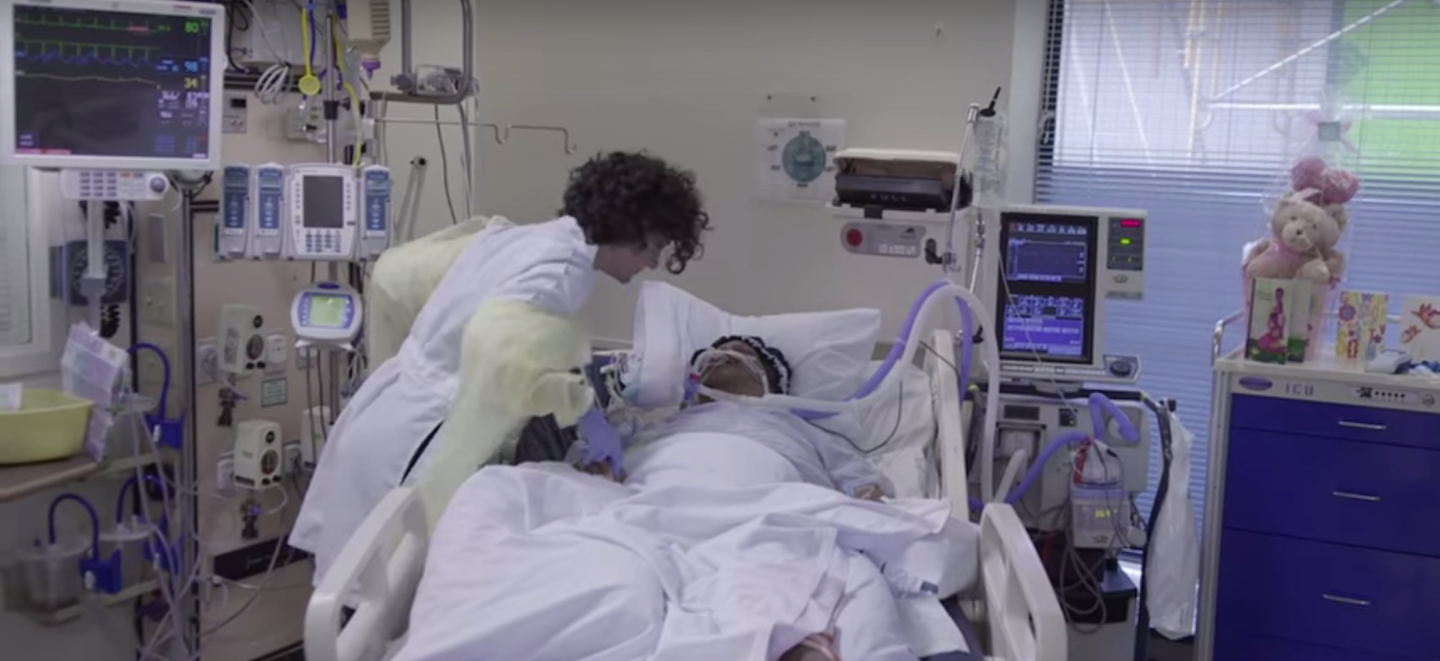
"content": "\u003cp>When is more medical care helpful in end-of-life situations and when does it just lead to more suffering? How do you know when it's time to let someone you love pass away naturally?\u003c/p>\n\u003cp>These choices are heart-wrenching for patients, families, and their doctors.\u003c/p>\n\u003cp>A new Netflix documentary short called \u003ca href=\"https://www.netflix.com/title/80106307\" target=\"_blank\">\u003cem>Extremis\u003c/em>\u003c/a>, which is Latin for \"at the point of death,\" follows doctors, patients and their loved ones in various end-of-life scenarios that play out at the intensive care unit at Oakland's Highland Hospital.\u003c/p>\n\u003cp>https://www.youtube.com/watch?v=TJiY8duVgz0\u003c/p>\n\u003cp>As difficult as these choices are, it's important to figure out if an intervention will change the course for a patient, said Dr. Jessica Nutik Zitter, the Oakland palliative care physician, who is featured in the documentary.\u003c/p>\n\u003cp>[ad fullwidth]\u003c/p>\n\u003cp>\"Here's the reality, we are all gonna die,\" she says to a group of medical staff in the film's trailer. \"Everyone standing in this room is gonna die one day and it's good to have a little bit of a say in how.\"\u003c/p>\n\u003cp>Every day, patients are permanently hooked up to machines, she says in the film.\u003c/p>\n\u003cp>\"My concern is we are going to cause more suffering without likely benefit,\" she tells a patient's loved one in the film. \"The other approach is let her pass naturally.\"\u003c/p>\n\u003cp>It is often difficult for doctors to fight their instinct to treat medical symptoms and know when it's time to stop, she wrote about in the \u003ca href=\"http://well.blogs.nytimes.com/2016/04/14/in-the-hospital-letting-nature-takes-its-course/\" target=\"_blank\">\u003cem>New York Times\u003c/em>\u003c/a> in April.\u003c/p>\n\u003cp>There is a growing movement within the medical field to recognize how important it is for doctors to help patients navigate care and face the end of their lives.\u003c/p>\n\u003cp>Boston surgeon Atul Gawande's recent book and movie called \u003cem>Being Mortal\u003c/em>, revealed how well-meaning doctors are often untrained and unprepared to discuss death with their patients.\u003c/p>\n\u003cp>End-of-life issues have also been at the forefront of public discussion as states like California enact legislation to allow terminally ill patients to take medicines to end their lives.\u003c/p>\n\u003cp>The Netflix documentary shows how difficult the choices are for families who have to make decisions about a dying loved one.\u003c/p>\n\u003cp>Giving consent for doctors to stop medical treatment can feel wrong and provoke tremendous feelings of guilt for a patient's family.\u003c/p>\n\u003cp>\"It would feel like murder to pull her life support,\" says one young woman when faced with this choice.\u003c/p>\n\u003cp>\u003c/p>\n\u003cp>The 24-minute documentary, directed by Dan Krauss, won the Best Documentary Short award this year when it premiered at the 2016 Tribeca Film Festival.\u003c/p>\n\n",
"disqusIdentifier": "236832 http://ww2.kqed.org/stateofhealth/?p=236832",
"disqusUrl": "https://ww2.kqed.org/stateofhealth/2016/09/13/netflix-documentary-features-heartbreaking-end-of-life-care-decisions-at-an-oakland-hospital/",
"stats": {
"hasVideo": true,
"hasChartOrMap": false,
"hasAudio": false,
"hasPolis": false,
"wordCount": 434,
"hasGoogleForm": false,
"hasGallery": false,
"hasHearkenModule": false,
"iframeSrcs": [],
"paragraphCount": 17
},
"modified": 1473866303,
"excerpt": "The film follows doctors, patients and their loved ones in the intensive care unit at Oakland's Highland Hospital.",
"headData": {
"twImgId": "",
"twTitle": "",
"ogTitle": "",
"ogImgId": "",
"twDescription": "",
"description": "The film follows doctors, patients and their loved ones in the intensive care unit at Oakland's Highland Hospital.",
"title": "Netflix Documentary Features Heartbreaking End-of-Life Care Decisions at an Oakland Hospital | KQED",
"ogDescription": "",
"schema": {
"@context": "https://schema.org",
"@type": "Article",
"headline": "Netflix Documentary Features Heartbreaking End-of-Life Care Decisions at an Oakland Hospital",
"datePublished": "2016-09-13T15:31:06-07:00",
"dateModified": "2016-09-14T08:18:23-07:00",
"image": "https://cdn.kqed.org/wp-content/uploads/2020/02/KQED-OG-Image@1x.png"
}
},
"guestAuthors": [],
"slug": "netflix-documentary-features-heartbreaking-end-of-life-care-decisions-at-an-oakland-hospital",
"status": "publish",
"path": "/stateofhealth/236832/netflix-documentary-features-heartbreaking-end-of-life-care-decisions-at-an-oakland-hospital",
"audioTrackLength": null,
"parsedContent": [
{
"type": "contentString",
"content": "\u003cdiv class=\"post-body\">\u003cp>\u003cp>When is more medical care helpful in end-of-life situations and when does it just lead to more suffering? How do you know when it's time to let someone you love pass away naturally?\u003c/p>\n\u003cp>These choices are heart-wrenching for patients, families, and their doctors.\u003c/p>\n\u003cp>A new Netflix documentary short called \u003ca href=\"https://www.netflix.com/title/80106307\" target=\"_blank\">\u003cem>Extremis\u003c/em>\u003c/a>, which is Latin for \"at the point of death,\" follows doctors, patients and their loved ones in various end-of-life scenarios that play out at the intensive care unit at Oakland's Highland Hospital.\u003c/p>\u003c/p>\u003cp>\u003cspan class='utils-parseShortcode-shortcodes-__youtubeShortcode__embedYoutube'>\n \u003cspan class='utils-parseShortcode-shortcodes-__youtubeShortcode__embedYoutubeInside'>\n \u003ciframe\n loading='lazy'\n class='utils-parseShortcode-shortcodes-__youtubeShortcode__youtubePlayer'\n type='text/html'\n src='//www.youtube.com/embed/TJiY8duVgz0'\n title='//www.youtube.com/embed/TJiY8duVgz0'\n allowfullscreen='true'\n style='border:0;'>\u003c/iframe>\n \u003c/span>\n \u003c/span>\u003c/p>\u003cp>\u003cp>As difficult as these choices are, it's important to figure out if an intervention will change the course for a patient, said Dr. Jessica Nutik Zitter, the Oakland palliative care physician, who is featured in the documentary.\u003c/p>\n\u003cp>\u003c/p>\u003c/div>",
"attributes": {
"named": {},
"numeric": []
}
},
{
"type": "component",
"content": "",
"name": "ad",
"attributes": {
"named": {
"label": "fullwidth"
},
"numeric": [
"fullwidth"
]
}
},
{
"type": "contentString",
"content": "\u003cdiv class=\"post-body\">\u003cp>\u003c/p>\n\u003cp>\"Here's the reality, we are all gonna die,\" she says to a group of medical staff in the film's trailer. \"Everyone standing in this room is gonna die one day and it's good to have a little bit of a say in how.\"\u003c/p>\n\u003cp>Every day, patients are permanently hooked up to machines, she says in the film.\u003c/p>\n\u003cp>\"My concern is we are going to cause more suffering without likely benefit,\" she tells a patient's loved one in the film. \"The other approach is let her pass naturally.\"\u003c/p>\n\u003cp>It is often difficult for doctors to fight their instinct to treat medical symptoms and know when it's time to stop, she wrote about in the \u003ca href=\"http://well.blogs.nytimes.com/2016/04/14/in-the-hospital-letting-nature-takes-its-course/\" target=\"_blank\">\u003cem>New York Times\u003c/em>\u003c/a> in April.\u003c/p>\n\u003cp>There is a growing movement within the medical field to recognize how important it is for doctors to help patients navigate care and face the end of their lives.\u003c/p>\n\u003cp>Boston surgeon Atul Gawande's recent book and movie called \u003cem>Being Mortal\u003c/em>, revealed how well-meaning doctors are often untrained and unprepared to discuss death with their patients.\u003c/p>\n\u003cp>End-of-life issues have also been at the forefront of public discussion as states like California enact legislation to allow terminally ill patients to take medicines to end their lives.\u003c/p>\n\u003cp>The Netflix documentary shows how difficult the choices are for families who have to make decisions about a dying loved one.\u003c/p>\n\u003cp>Giving consent for doctors to stop medical treatment can feel wrong and provoke tremendous feelings of guilt for a patient's family.\u003c/p>\n\u003cp>\"It would feel like murder to pull her life support,\" says one young woman when faced with this choice.\u003c/p>\n\u003cp>\u003c/p>\n\u003cp>The 24-minute documentary, directed by Dan Krauss, won the Best Documentary Short award this year when it premiered at the 2016 Tribeca Film Festival.\u003c/p>\n\n\u003c/div>\u003c/p>",
"attributes": {
"named": {},
"numeric": []
}
}
],
"link": "/stateofhealth/236832/netflix-documentary-features-heartbreaking-end-of-life-care-decisions-at-an-oakland-hospital",
"authors": [
"11105"
],
"categories": [
"stateofhealth_11",
"stateofhealth_166"
],
"tags": [
"stateofhealth_40",
"stateofhealth_2808",
"stateofhealth_2907",
"stateofhealth_2906",
"stateofhealth_2908",
"stateofhealth_2519",
"stateofhealth_145"
],
"featImg": "stateofhealth_236882",
"label": "stateofhealth"
},
"stateofhealth_235292": {
"type": "posts",
"id": "stateofhealth_235292",
"meta": {
"index": "posts_1716263798",
"site": "stateofhealth",
"id": "235292",
"score": null,
"sort": [
1473468668000
]
},
"parent": 0,
"labelTerm": {
"site": "stateofhealth"
},
"blocks": [],
"publishDate": 1473468668,
"format": "standard",
"disqusTitle": "Study: High School and College Students Are Not Using Illegal Drugs as Much as Their Parents Once Did",
"title": "Study: High School and College Students Are Not Using Illegal Drugs as Much as Their Parents Once Did",
"headTitle": "State of Health | KQED News",
"content": "\u003cp>High school students and young adults are much less likely to use illicit drugs than their parents, according to data released Thursday. And compared to baby boomers, young adults today look like outright angels. Except for their acceptance of marijuana, that is.\u003c/p>\n\u003cp>This report comes from a running, four-decade-long study of drug, tobacco and alcohol use from the University of Michigan. This most recent iteration shows that people in their 40s and 50s used far more drugs in their youth than do people in their teens and 20s today.\u003c/p>\n\u003cp>\"The proportion of Americans in their 40s and 50s who have experience with illicit drugs is quite shocking,\" says \u003ca href=\"http://home.isr.umich.edu/research/researcher-profiles/lloyd-johnston/\">Lloyd Johnston\u003c/a>, a research scientist at the University of Michigan and the lead investigator on the study. \"It's a great majority.\"\u003c/p>\n\u003cp>Not counting marijuana, over 70 percent of people in their 50s have used illegal drugs in their lifetimes. Including marijuana, the proportion soars to about 85 percent of people in their 50s. Back when these people were in college, nearly half of them were using illegal drugs compared to around 40 percent of college-aged adults today.\u003c/p>\n\u003cp>In fact, young people have been increasingly shunning psychoactive substances for a while now. Cigarette use is at an all-time low, with 20.5 percent of college students saying they smoked in 2015 compared to 44.5 percent in 1999.\u003c/p>\n\u003cdiv id=\"res493140124\" class=\"bucketwrap statichtml\">\u003c/div>\n\u003cp>\"Maybe the most important of all is the decline in narcotic drugs like Vicodin and OxyContin and so forth,\" Johnston says. Use of prescription opioids by college students has dropped from 8.7 percent in 2003 to 3.3 percent in 2015. \"That's despite the fact that we know from the news that the use and misuse of narcotic drugs is a growing problem in the country,\" Johnston says.\u003c/p>\n\u003cp>[ad fullwidth]\u003c/p>\n\u003cp>The reason is not completely clear, Johnston says, but it probably has to do with young people learning to be wary. \"When someone sees a substance is dangerous, they tend to avoid it,\" he says. \"And one of the things we've seen is an increased in perceived risk for a number of drugs.\"\u003c/p>\n\u003cp>But when it comes to marijuana, the trend reverses. \"For the most part, among both college and high school students their perception of how dangerous [cannabis] is has dropped like a rock,\" Johnston says. That tracks closely with how use of cannabis, which has been steadily rising for the past couple of decades.\u003c/p>\n\u003cp>The policy debate around the legalization of recreational and medical marijuana is probably making the drug seem a lot less dangerous, Johnston thinks. \"It's hard to see what else would account for such a dramatic change in perceived risk,\" he says. \u003ca href=\"http://www.centeronaddiction.org/addiction-research/reports/national-survey-american-attitudes-substance-abuse-teens-parents-2011\">Other\u003c/a> \u003ca href=\"http://online.liebertpub.com/doi/full/10.1089/cyber.2014.0620\">studies\u003c/a> have shown that negative messages about cannabis are rare on social media.\u003c/p>\n\u003cp>And negative opinions or information about other drugs floating on the Internet could make them seem more dangerous.\u003c/p>\n\u003cp>Shortly after synthetic marijuana, also called spice, became popular, videos on YouTube and Twitter showed terrifying effects the drug had on users. This report shows an abrupt drop in spice use, from 8.5 percent of college students to 1.5 percent in 2015.\u003c/p>\n\u003cp>\"The use of the Internet has certainly increased information exchange from objective sources and other people the same age,\" Johnston says. \"Perhaps young people today are more informed about things.\"\u003c/p>\n\u003cp>There's also a lot of federal funding available for drug prevention programs that target young people, particularly high school-aged students, says \u003ca href=\"https://www.umass.edu/sphhs/person/faculty/jennifer-m-whitehill\">Jennifer Whitehill\u003c/a>, a public health researcher at the University of Massachusetts, Amherst. And a lot of drug awareness campaigns didn't get started until after the 80s. That could also contribute to the declining use of drugs among young people.\u003c/p>\n\u003cp>Whatever the reason, the declines in illicit drug use don't mean our society is going to become drug-free. The last period of declining drug use was in the late 80s, and Johnston says after that efforts to reduce drug use started dropping off after that. \"Congress spent less time and money on the drug issue and, most importantly, the media dropped the drug issue.\" That gave a bump to drug use in the 90s.\u003c/p>\n\u003cp>\u003c/p>\n\u003cp>The decline right now could just be setting the stage for another resurgence of illegal drug use, Johnston says. \"As we're seeing a period of decline in illicit drugs, there's less attention to the issue, and young people grow up knowing less about why they shouldn't use them.\"\u003c/p>\n\n",
"disqusIdentifier": "235292 http://ww2.kqed.org/stateofhealth/?p=235292",
"disqusUrl": "https://ww2.kqed.org/stateofhealth/2016/09/09/study-high-school-and-college-students-are-not-using-illegal-drugs-as-much-as-their-parents-once-did/",
"stats": {
"hasVideo": false,
"hasChartOrMap": false,
"hasAudio": false,
"hasPolis": false,
"wordCount": 748,
"hasGoogleForm": false,
"hasGallery": false,
"hasHearkenModule": false,
"iframeSrcs": [],
"paragraphCount": 17
},
"modified": 1473468865,
"excerpt": "The reason probably has to do with young people learning to be wary, experts say. ",
"headData": {
"twImgId": "",
"twTitle": "",
"ogTitle": "",
"ogImgId": "",
"twDescription": "",
"description": "The reason probably has to do with young people learning to be wary, experts say. ",
"title": "Study: High School and College Students Are Not Using Illegal Drugs as Much as Their Parents Once Did | KQED",
"ogDescription": "",
"schema": {
"@context": "https://schema.org",
"@type": "Article",
"headline": "Study: High School and College Students Are Not Using Illegal Drugs as Much as Their Parents Once Did",
"datePublished": "2016-09-09T17:51:08-07:00",
"dateModified": "2016-09-09T17:54:25-07:00",
"image": "https://cdn.kqed.org/wp-content/uploads/2020/02/KQED-OG-Image@1x.png"
}
},
"guestAuthors": [],
"slug": "study-high-school-and-college-students-are-not-using-illegal-drugs-as-much-as-their-parents-once-did",
"status": "publish",
"nprByline": "Angus Chen, NPR Shots",
"path": "/stateofhealth/235292/study-high-school-and-college-students-are-not-using-illegal-drugs-as-much-as-their-parents-once-did",
"audioTrackLength": null,
"parsedContent": [
{
"type": "contentString",
"content": "\u003cdiv class=\"post-body\">\u003cp>\u003cp>High school students and young adults are much less likely to use illicit drugs than their parents, according to data released Thursday. And compared to baby boomers, young adults today look like outright angels. Except for their acceptance of marijuana, that is.\u003c/p>\n\u003cp>This report comes from a running, four-decade-long study of drug, tobacco and alcohol use from the University of Michigan. This most recent iteration shows that people in their 40s and 50s used far more drugs in their youth than do people in their teens and 20s today.\u003c/p>\n\u003cp>\"The proportion of Americans in their 40s and 50s who have experience with illicit drugs is quite shocking,\" says \u003ca href=\"http://home.isr.umich.edu/research/researcher-profiles/lloyd-johnston/\">Lloyd Johnston\u003c/a>, a research scientist at the University of Michigan and the lead investigator on the study. \"It's a great majority.\"\u003c/p>\n\u003cp>Not counting marijuana, over 70 percent of people in their 50s have used illegal drugs in their lifetimes. Including marijuana, the proportion soars to about 85 percent of people in their 50s. Back when these people were in college, nearly half of them were using illegal drugs compared to around 40 percent of college-aged adults today.\u003c/p>\n\u003cp>In fact, young people have been increasingly shunning psychoactive substances for a while now. Cigarette use is at an all-time low, with 20.5 percent of college students saying they smoked in 2015 compared to 44.5 percent in 1999.\u003c/p>\n\u003cdiv id=\"res493140124\" class=\"bucketwrap statichtml\">\u003c/div>\n\u003cp>\"Maybe the most important of all is the decline in narcotic drugs like Vicodin and OxyContin and so forth,\" Johnston says. Use of prescription opioids by college students has dropped from 8.7 percent in 2003 to 3.3 percent in 2015. \"That's despite the fact that we know from the news that the use and misuse of narcotic drugs is a growing problem in the country,\" Johnston says.\u003c/p>\n\u003cp>\u003c/p>\u003c/div>",
"attributes": {
"named": {},
"numeric": []
}
},
{
"type": "component",
"content": "",
"name": "ad",
"attributes": {
"named": {
"label": "fullwidth"
},
"numeric": [
"fullwidth"
]
}
},
{
"type": "contentString",
"content": "\u003cdiv class=\"post-body\">\u003cp>\u003c/p>\n\u003cp>The reason is not completely clear, Johnston says, but it probably has to do with young people learning to be wary. \"When someone sees a substance is dangerous, they tend to avoid it,\" he says. \"And one of the things we've seen is an increased in perceived risk for a number of drugs.\"\u003c/p>\n\u003cp>But when it comes to marijuana, the trend reverses. \"For the most part, among both college and high school students their perception of how dangerous [cannabis] is has dropped like a rock,\" Johnston says. That tracks closely with how use of cannabis, which has been steadily rising for the past couple of decades.\u003c/p>\n\u003cp>The policy debate around the legalization of recreational and medical marijuana is probably making the drug seem a lot less dangerous, Johnston thinks. \"It's hard to see what else would account for such a dramatic change in perceived risk,\" he says. \u003ca href=\"http://www.centeronaddiction.org/addiction-research/reports/national-survey-american-attitudes-substance-abuse-teens-parents-2011\">Other\u003c/a> \u003ca href=\"http://online.liebertpub.com/doi/full/10.1089/cyber.2014.0620\">studies\u003c/a> have shown that negative messages about cannabis are rare on social media.\u003c/p>\n\u003cp>And negative opinions or information about other drugs floating on the Internet could make them seem more dangerous.\u003c/p>\n\u003cp>Shortly after synthetic marijuana, also called spice, became popular, videos on YouTube and Twitter showed terrifying effects the drug had on users. This report shows an abrupt drop in spice use, from 8.5 percent of college students to 1.5 percent in 2015.\u003c/p>\n\u003cp>\"The use of the Internet has certainly increased information exchange from objective sources and other people the same age,\" Johnston says. \"Perhaps young people today are more informed about things.\"\u003c/p>\n\u003cp>There's also a lot of federal funding available for drug prevention programs that target young people, particularly high school-aged students, says \u003ca href=\"https://www.umass.edu/sphhs/person/faculty/jennifer-m-whitehill\">Jennifer Whitehill\u003c/a>, a public health researcher at the University of Massachusetts, Amherst. And a lot of drug awareness campaigns didn't get started until after the 80s. That could also contribute to the declining use of drugs among young people.\u003c/p>\n\u003cp>Whatever the reason, the declines in illicit drug use don't mean our society is going to become drug-free. The last period of declining drug use was in the late 80s, and Johnston says after that efforts to reduce drug use started dropping off after that. \"Congress spent less time and money on the drug issue and, most importantly, the media dropped the drug issue.\" That gave a bump to drug use in the 90s.\u003c/p>\n\u003cp>\u003c/p>\n\u003cp>The decline right now could just be setting the stage for another resurgence of illegal drug use, Johnston says. \"As we're seeing a period of decline in illicit drugs, there's less attention to the issue, and young people grow up knowing less about why they shouldn't use them.\"\u003c/p>\n\n\u003c/div>\u003c/p>",
"attributes": {
"named": {},
"numeric": []
}
}
],
"link": "/stateofhealth/235292/study-high-school-and-college-students-are-not-using-illegal-drugs-as-much-as-their-parents-once-did",
"authors": [
"byline_stateofhealth_235292"
],
"categories": [
"stateofhealth_11"
],
"tags": [
"stateofhealth_2893",
"stateofhealth_2894",
"stateofhealth_2892",
"stateofhealth_2808",
"stateofhealth_2895",
"stateofhealth_2519",
"stateofhealth_2896"
],
"featImg": "stateofhealth_235332",
"label": "stateofhealth"
},
"stateofhealth_234330": {
"type": "posts",
"id": "stateofhealth_234330",
"meta": {
"index": "posts_1716263798",
"site": "stateofhealth",
"id": "234330",
"score": null,
"sort": [
1473270271000
]
},
"parent": 0,
"labelTerm": {
"site": "stateofhealth"
},
"blocks": [],
"publishDate": 1473270271,
"format": "standard",
"disqusTitle": "Here's Why the Teen Pregnancy Rate Has Dropped in America",
"title": "Here's Why the Teen Pregnancy Rate Has Dropped in America",
"headTitle": "State of Health | KQED News",
"content": "\u003cp>Teen pregnancy is way down. And a study suggests that the reason is increased, and increasingly effective, use of contraceptives.\u003c/p>\n\u003cp>From 2007 to 2013, births to teens age 15 to 19 dropped by 36 percent; pregnancies fell by 25 percent from 2007 to 2011, according to federal data.\u003c/p>\n\u003cp>But that wasn’t because teens were shunning sex. The amount of sex being had by teenagers during that time period was largely unchanged, says the study, which was published online in the Journal of Adolescent Health. And it wasn’t because they were having more abortions. Abortion has been declining among all age groups, and particularly among teenagers.\u003c/p>\n\u003cp>Rather, the researchers from the Guttmacher Institute and Columbia University found that “improvement in contraceptive use” accounted for the entire reduced risk of pregnancy over the five-year period.\u003c/p>\n\u003cp>“By definition, if teens are having the same amount of sex but getting pregnant less often, it’s because of contraception,” said Laura Lindberg, the study’s lead author and a Guttmacher researcher.\u003c/p>\n\u003cp>[ad fullwidth]\u003c/p>\n\u003cp>No single contraceptive method stood out as singularly effective, said the researchers. Instead, they found that teens were using contraceptives more often, combining methods more often, and using more effective methods, such as the birth control pill, IUDs and implants.\u003c/p>\n\u003cp>Also, the use of any contraceptive at all makes a big difference, said Lindberg. “If a teen uses no method they have an 85 percent chance of getting pregnant [within a year]. Using anything is way more effective than that 85 percent risk.”\u003c/p>\n\u003cp>The downturn in teen births actually dates back to the early 1990s, the authors say, with the rate dropping by 57 percent between 1991 and 2013. The increase in contraceptive use dates to the mid-1990s, with the use of any contraceptive at the most recent sexual encounter rising from 66 to 86 percent from 1995 to 2012.\u003c/p>\n\u003cp>Valerie Huber, who advocates for programs that urge teens to wait to have sex rather than provide information about contraception, says the study is biased toward birth control.\u003c/p>\n\u003cp>“As public health experts and policymakers, we must normalize sexual delay more than we normalize teen sex, even with contraception,” said a statement from Huber, president and CEO of Ascend, a group that promotes abstinence education. “We believe youth deserve the best opportunity for a healthy future.”\u003c/p>\n\u003cp>More recent policy changes could help drop the teen pregnancy rate even more. One is the Affordable Care Act requirement that boosted insurance coverage for contraception, starting in 2012. The other is the 2014 recommendation from the American Academy of Pediatrics that sexually active teenagers be offered “long-acting reversible contraception” methods such as implants and intrauterine devices, which are highly effective and do not require any additional action, such as remembering to take a daily pill.\u003c/p>\n\u003cp>But Lindberg noted that just as for older women, teens should be offered a full choice of contraceptives. “In the end, the best method for anyone is one that they are willing and able to use.”\u003c/p>\n\u003cp>\u003c/p>\n\u003cp>\u003cem>This story was produced by Kaiser Health News, an editorially independent program of the Kaiser Family Foundation.\u003c/em>\u003c/p>\n\n",
"disqusIdentifier": "234330 http://ww2.kqed.org/stateofhealth/?p=234330",
"disqusUrl": "https://ww2.kqed.org/stateofhealth/2016/09/07/heres-why-the-teen-pregnancy-rate-has-dropped-in-america/",
"stats": {
"hasVideo": false,
"hasChartOrMap": false,
"hasAudio": false,
"hasPolis": false,
"wordCount": 535,
"hasGoogleForm": false,
"hasGallery": false,
"hasHearkenModule": false,
"iframeSrcs": [],
"paragraphCount": 15
},
"modified": 1473270271,
"excerpt": "From 2007 to 2013, births to teens age 15 to 19 dropped by 36 percent; pregnancies fell by 25 percent from 2007 to 2011.",
"headData": {
"twImgId": "",
"twTitle": "",
"ogTitle": "",
"ogImgId": "",
"twDescription": "",
"description": "From 2007 to 2013, births to teens age 15 to 19 dropped by 36 percent; pregnancies fell by 25 percent from 2007 to 2011.",
"title": "Here's Why the Teen Pregnancy Rate Has Dropped in America | KQED",
"ogDescription": "",
"schema": {
"@context": "https://schema.org",
"@type": "Article",
"headline": "Here's Why the Teen Pregnancy Rate Has Dropped in America",
"datePublished": "2016-09-07T10:44:31-07:00",
"dateModified": "2016-09-07T10:44:31-07:00",
"image": "https://cdn.kqed.org/wp-content/uploads/2020/02/KQED-OG-Image@1x.png"
}
},
"guestAuthors": [],
"slug": "heres-why-the-teen-pregnancy-rate-has-dropped-in-america",
"status": "publish",
"nprByline": "\u003cstrong>Julie Rovner\u003cbr />\u003ca href=\"http://californiahealthline.org\"/> California Healthline\u003c/a>\u003c/strong>",
"path": "/stateofhealth/234330/heres-why-the-teen-pregnancy-rate-has-dropped-in-america",
"audioTrackLength": null,
"parsedContent": [
{
"type": "contentString",
"content": "\u003cdiv class=\"post-body\">\u003cp>\u003cp>Teen pregnancy is way down. And a study suggests that the reason is increased, and increasingly effective, use of contraceptives.\u003c/p>\n\u003cp>From 2007 to 2013, births to teens age 15 to 19 dropped by 36 percent; pregnancies fell by 25 percent from 2007 to 2011, according to federal data.\u003c/p>\n\u003cp>But that wasn’t because teens were shunning sex. The amount of sex being had by teenagers during that time period was largely unchanged, says the study, which was published online in the Journal of Adolescent Health. And it wasn’t because they were having more abortions. Abortion has been declining among all age groups, and particularly among teenagers.\u003c/p>\n\u003cp>Rather, the researchers from the Guttmacher Institute and Columbia University found that “improvement in contraceptive use” accounted for the entire reduced risk of pregnancy over the five-year period.\u003c/p>\n\u003cp>“By definition, if teens are having the same amount of sex but getting pregnant less often, it’s because of contraception,” said Laura Lindberg, the study’s lead author and a Guttmacher researcher.\u003c/p>\n\u003cp>\u003c/p>\u003c/div>",
"attributes": {
"named": {},
"numeric": []
}
},
{
"type": "component",
"content": "",
"name": "ad",
"attributes": {
"named": {
"label": "fullwidth"
},
"numeric": [
"fullwidth"
]
}
},
{
"type": "contentString",
"content": "\u003cdiv class=\"post-body\">\u003cp>\u003c/p>\n\u003cp>No single contraceptive method stood out as singularly effective, said the researchers. Instead, they found that teens were using contraceptives more often, combining methods more often, and using more effective methods, such as the birth control pill, IUDs and implants.\u003c/p>\n\u003cp>Also, the use of any contraceptive at all makes a big difference, said Lindberg. “If a teen uses no method they have an 85 percent chance of getting pregnant [within a year]. Using anything is way more effective than that 85 percent risk.”\u003c/p>\n\u003cp>The downturn in teen births actually dates back to the early 1990s, the authors say, with the rate dropping by 57 percent between 1991 and 2013. The increase in contraceptive use dates to the mid-1990s, with the use of any contraceptive at the most recent sexual encounter rising from 66 to 86 percent from 1995 to 2012.\u003c/p>\n\u003cp>Valerie Huber, who advocates for programs that urge teens to wait to have sex rather than provide information about contraception, says the study is biased toward birth control.\u003c/p>\n\u003cp>“As public health experts and policymakers, we must normalize sexual delay more than we normalize teen sex, even with contraception,” said a statement from Huber, president and CEO of Ascend, a group that promotes abstinence education. “We believe youth deserve the best opportunity for a healthy future.”\u003c/p>\n\u003cp>More recent policy changes could help drop the teen pregnancy rate even more. One is the Affordable Care Act requirement that boosted insurance coverage for contraception, starting in 2012. The other is the 2014 recommendation from the American Academy of Pediatrics that sexually active teenagers be offered “long-acting reversible contraception” methods such as implants and intrauterine devices, which are highly effective and do not require any additional action, such as remembering to take a daily pill.\u003c/p>\n\u003cp>But Lindberg noted that just as for older women, teens should be offered a full choice of contraceptives. “In the end, the best method for anyone is one that they are willing and able to use.”\u003c/p>\n\u003cp>\u003c/p>\n\u003cp>\u003cem>This story was produced by Kaiser Health News, an editorially independent program of the Kaiser Family Foundation.\u003c/em>\u003c/p>\n\n\u003c/div>\u003c/p>",
"attributes": {
"named": {},
"numeric": []
}
}
],
"link": "/stateofhealth/234330/heres-why-the-teen-pregnancy-rate-has-dropped-in-america",
"authors": [
"byline_stateofhealth_234330"
],
"categories": [
"stateofhealth_11"
],
"tags": [
"stateofhealth_2884",
"stateofhealth_2608",
"stateofhealth_2808",
"stateofhealth_2519",
"stateofhealth_2749"
],
"featImg": "stateofhealth_234308",
"label": "stateofhealth"
},
"stateofhealth_227822": {
"type": "posts",
"id": "stateofhealth_227822",
"meta": {
"index": "posts_1716263798",
"site": "stateofhealth",
"id": "227822",
"score": null,
"sort": [
1473193415000
]
},
"parent": 0,
"labelTerm": {
"site": "stateofhealth"
},
"blocks": [],
"publishDate": 1473193415,
"format": "standard",
"disqusTitle": "Alameda County Churches Help Patients Navigate Social, Health Services",
"title": "Alameda County Churches Help Patients Navigate Social, Health Services",
"headTitle": "State of Health | KQED News",
"content": "\u003cp>Connie Fuller sits on a wood-framed bed in her Oakland apartment. Clear tubes snake from an oxygen machine to her nose. Her essentials are strewn around her, within arms reach. She's confined to her bed due to obesity and lung disease.\u003c/p>\n\u003cp>Fuller needs daily assistance, and because her family is not regularly involved in her care, a program called the \u003ca href=\"http://accarealliance.org/\">Alameda County Care Alliance\u003c/a> helps her manage it. The free program fills the gap for people with advanced illnesses; some live in their homes and others live in facilities. The program serves over 550 people -- most of them are low-income, most African-American.\u003c/p>\n\u003cp>Alexis Owens buzzes in to Fuller's apartment and greets her. Owens is a community care navigator, one of just seven, from the alliance. Her job is something between a family member and unofficial social worker. She doesn’t provide services herself, but connects people with serious illnesses to them. Services can range from Meals on Wheels to occupational therapy.\u003c/p>\n\u003cp>\"Just because you’re in a circumstance where you can only pay a limited amount to your caregivers, that doesn’t mean that you have to settle for mediocre care,\" Owens tells Fuller. \"It can happen and we won’t stop until we find it.\"\u003c/p>\n\u003cp>The Alliance started a few years ago and is centered around five “hub” churches in Alameda County; \u003ca href=\"https://www.allen-temple.org/\">Allen Temple Baptist\u003c/a> in East Oakland is the lead. Funding comes from Kaiser Permanente’s Community Benefit Program, The San Francisco Foundation, and California Health Care Foundation. While the program is non-denominational, being based out of a religious institution has advantages. It helps mobilize volunteers -- over a hundred supplement the work of the community care navigators -- and it allows access to those who are harder-to-reach.\u003c/p>\n\u003cp>[ad fullwidth]\u003c/p>\n\u003cp>\"The faith community really is viewed as a trusted entity,\" says\u003cbr>\nAllen Temple Baptist Church’s Reverend Cynthia Perrilliat, \"particularly in African-American communities.\"\u003c/p>\n\u003cp>Perrilliat heads the alliance, and says she and other partners saw a need for this type of care.\u003c/p>\n\u003cp>\"There are so many folks that are very lonely that have no family support,\" she says. \"Sometimes just having someone that you can connect with, or share with, or listen to you is so important.\"\u003c/p>\n\u003cp>[soundcloud url=\"https://api.soundcloud.com/tracks/281986435\" params=\"color=ff5500&auto_play=false&hide_related=false&show_comments=true&show_user=true&show_reposts=false\" width=\"100%\" height=\"166\" iframe=\"true\" /]\u003c/p>\n\u003cp>The Alameda County Care Alliance is expanding within Alameda County and beginning to build out services in Richmond, too.\u003c/p>\n\u003cp>This way, more folks like Fuller can link to the resources they need. \"I’m here by myself,\" Fuller says, \"but the people that come and see me, that’s my family.\"\u003c/p>\n\u003cp>For those who do want a spiritual component to their care, the alliance can provide it. Today, Fuller chooses this. Owens leads the two in a melodic prayer.\u003c/p>\n\u003cp>\"Thank you god for the life of Connie dear god,\" Owens says. \"Thank you god for all that you have done for her.\"\u003c/p>\n\u003cp>The two keep their eyes closed, heads bowed.\u003c/p>\n\u003cp>\"Amen and thank you god,\" Owens says.\u003c/p>\n\u003cp>Fuller responds, \"Amen.\"\u003c/p>\n\u003cp> \u003c/p>\n\u003cp>\u003c/p>\n\u003cp>[contextly_auto_sidebar]\u003c/p>\n\n",
"disqusIdentifier": "227822 http://ww2.kqed.org/stateofhealth/?p=227822",
"disqusUrl": "https://ww2.kqed.org/stateofhealth/2016/09/06/alameda-county-churches-help-patients-navigate-social-health-services/",
"stats": {
"hasVideo": false,
"hasChartOrMap": false,
"hasAudio": false,
"hasPolis": false,
"wordCount": 549,
"hasGoogleForm": false,
"hasGallery": false,
"hasHearkenModule": false,
"iframeSrcs": [],
"paragraphCount": 19
},
"modified": 1473356557,
"excerpt": "The Alameda County Care Alliance leverages trust in churches to reach people with serious illnesses.",
"headData": {
"twImgId": "",
"twTitle": "",
"ogTitle": "",
"ogImgId": "",
"twDescription": "",
"description": "The Alameda County Care Alliance leverages trust in churches to reach people with serious illnesses.",
"title": "Alameda County Churches Help Patients Navigate Social, Health Services | KQED",
"ogDescription": "",
"schema": {
"@context": "https://schema.org",
"@type": "Article",
"headline": "Alameda County Churches Help Patients Navigate Social, Health Services",
"datePublished": "2016-09-06T13:23:35-07:00",
"dateModified": "2016-09-08T10:42:37-07:00",
"image": "https://cdn.kqed.org/wp-content/uploads/2020/02/KQED-OG-Image@1x.png"
}
},
"guestAuthors": [],
"slug": "alameda-county-churches-help-patients-navigate-social-health-services",
"status": "publish",
"path": "/stateofhealth/227822/alameda-county-churches-help-patients-navigate-social-health-services",
"audioTrackLength": null,
"parsedContent": [
{
"type": "contentString",
"content": "\u003cdiv class=\"post-body\">\u003cp>\u003cp>Connie Fuller sits on a wood-framed bed in her Oakland apartment. Clear tubes snake from an oxygen machine to her nose. Her essentials are strewn around her, within arms reach. She's confined to her bed due to obesity and lung disease.\u003c/p>\n\u003cp>Fuller needs daily assistance, and because her family is not regularly involved in her care, a program called the \u003ca href=\"http://accarealliance.org/\">Alameda County Care Alliance\u003c/a> helps her manage it. The free program fills the gap for people with advanced illnesses; some live in their homes and others live in facilities. The program serves over 550 people -- most of them are low-income, most African-American.\u003c/p>\n\u003cp>Alexis Owens buzzes in to Fuller's apartment and greets her. Owens is a community care navigator, one of just seven, from the alliance. Her job is something between a family member and unofficial social worker. She doesn’t provide services herself, but connects people with serious illnesses to them. Services can range from Meals on Wheels to occupational therapy.\u003c/p>\n\u003cp>\"Just because you’re in a circumstance where you can only pay a limited amount to your caregivers, that doesn’t mean that you have to settle for mediocre care,\" Owens tells Fuller. \"It can happen and we won’t stop until we find it.\"\u003c/p>\n\u003cp>The Alliance started a few years ago and is centered around five “hub” churches in Alameda County; \u003ca href=\"https://www.allen-temple.org/\">Allen Temple Baptist\u003c/a> in East Oakland is the lead. Funding comes from Kaiser Permanente’s Community Benefit Program, The San Francisco Foundation, and California Health Care Foundation. While the program is non-denominational, being based out of a religious institution has advantages. It helps mobilize volunteers -- over a hundred supplement the work of the community care navigators -- and it allows access to those who are harder-to-reach.\u003c/p>\n\u003cp>\u003c/p>\u003c/div>",
"attributes": {
"named": {},
"numeric": []
}
},
{
"type": "component",
"content": "",
"name": "ad",
"attributes": {
"named": {
"label": "fullwidth"
},
"numeric": [
"fullwidth"
]
}
},
{
"type": "contentString",
"content": "\u003cdiv class=\"post-body\">\u003cp>\u003c/p>\n\u003cp>\"The faith community really is viewed as a trusted entity,\" says\u003cbr>\nAllen Temple Baptist Church’s Reverend Cynthia Perrilliat, \"particularly in African-American communities.\"\u003c/p>\n\u003cp>Perrilliat heads the alliance, and says she and other partners saw a need for this type of care.\u003c/p>\n\u003cp>\"There are so many folks that are very lonely that have no family support,\" she says. \"Sometimes just having someone that you can connect with, or share with, or listen to you is so important.\"\u003c/p>\n\u003cp>\u003c/p>\u003cp>\u003cdiv class='utils-parseShortcode-shortcodes-__shortcodes__shortcodeWrapper'>\n \u003ciframe width='100%' height='166'\n scrolling='no' frameborder='no'\n src='https://w.soundcloud.com/player/?url=https://api.soundcloud.com/tracks/281986435&visual=true&color=ff5500&auto_play=false&hide_related=false&show_comments=true&show_user=true&show_reposts=false'\n title='https://api.soundcloud.com/tracks/281986435'>\n \u003c/iframe>\n \u003c/div>\u003c/p>\u003cp>\u003c/p>\n\u003cp>The Alameda County Care Alliance is expanding within Alameda County and beginning to build out services in Richmond, too.\u003c/p>\n\u003cp>This way, more folks like Fuller can link to the resources they need. \"I’m here by myself,\" Fuller says, \"but the people that come and see me, that’s my family.\"\u003c/p>\n\u003cp>For those who do want a spiritual component to their care, the alliance can provide it. Today, Fuller chooses this. Owens leads the two in a melodic prayer.\u003c/p>\n\u003cp>\"Thank you god for the life of Connie dear god,\" Owens says. \"Thank you god for all that you have done for her.\"\u003c/p>\n\u003cp>The two keep their eyes closed, heads bowed.\u003c/p>\n\u003cp>\"Amen and thank you god,\" Owens says.\u003c/p>\n\u003cp>Fuller responds, \"Amen.\"\u003c/p>\n\u003cp> \u003c/p>\n\u003cp>\u003c/p>\n\u003cp>[contextly_auto_sidebar]\u003c/p>\n\n\u003c/div>\u003c/p>",
"attributes": {
"named": {},
"numeric": []
}
}
],
"link": "/stateofhealth/227822/alameda-county-churches-help-patients-navigate-social-health-services",
"authors": [
"8648"
],
"categories": [
"stateofhealth_11"
],
"tags": [
"stateofhealth_2860",
"stateofhealth_2882",
"stateofhealth_2808",
"stateofhealth_2519",
"stateofhealth_2883"
],
"featImg": "stateofhealth_227951",
"label": "stateofhealth"
},
"stateofhealth_231161": {
"type": "posts",
"id": "stateofhealth_231161",
"meta": {
"index": "posts_1716263798",
"site": "stateofhealth",
"id": "231161",
"score": null,
"sort": [
1472668310000
]
},
"parent": 0,
"labelTerm": {
"site": "stateofhealth",
"term": 2492
},
"blocks": [],
"publishDate": 1472668310,
"format": "standard",
"disqusTitle": "Update: Lawmakers Pass Measure to End Surprise Out-of-Network Medical Bills",
"title": "Update: Lawmakers Pass Measure to End Surprise Out-of-Network Medical Bills",
"headTitle": "Price Check | State of Health | KQED News",
"content": "\u003cp>\u003cstrong>Update, 5:00 p.m., Wednesday Aug. 31:\u003c/strong>\u003cbr>\nThe California Assembly passed AB 72 late this afternoon. The bill heads next to Gov. Jerry Brown’s desk. It passed by a huge margin with bipartisan support, unlike a similar bill last year which stalled by three votes on the last day of the 2015 legislative session.\u003c/p>\n\u003cp>\u003cstrong>Original Post:\u003c/strong>\u003cbr>\nWhen Nancy Randle prepared for the birth of her third child, she was careful to play by the health insurance rules: She got referrals and went to her insurer's recommended hospital.\u003c/p>\n\u003cp>What she didn’t know was that some doctors, like the one who did a hearing test on her baby, were out of network. She didn’t think to ask. After she came home, she got a surprise bill for that test: $250.\u003c/p>\n\u003cp>\"I didn’t even realize this was a loophole or that it would affect me,\" Randle said.\u003c/p>\n\u003cp>[soundcloud url=\"https://api.soundcloud.com/tracks/280779549\" params=\"color=ff5500&auto_play=false&hide_related=false&show_comments=true&show_user=true&show_reposts=false\" width=\"100%\" height=\"166\" iframe=\"true\" /]\u003c/p>\n\u003cp>The loophole occurs when out-of-network doctors -- anesthesiologists, radiologists and others -- provide care at a patient's in-network hospital or clinic, but charge their out-of-network fees.\u003c/p>\n\u003cp>[ad fullwidth]\u003c/p>\n\u003cp>To address the issue, a bipartisan group of state legislators introduced AB 72 to put a stop to surprise, out-of-network bills for non-emergency services. Assemblymember Rob Bonta (D-Alameda) is one of the bill's six co-authors.\u003c/p>\n\u003cp>\"This bill will be the first of its kind in terms of strength of consumer protections, and it will be a model for the rest of the nation,\" Bonta said.\u003c/p>\n\u003cp>If signed into law, patients who go to in-network health facilities will pay in-network prices. Insurance companies would compensate out-of-network doctors for treatment, either at the average procedure rate for the region or at 125 percent of what Medicare pays, whichever is greatest.\u003c/p>\n\u003cp>Bill opposition comes from groups representing doctors, like the Association of American Physicians and Surgeons. Dr. Jane Orient is the executive director.\u003c/p>\n\u003cp>\"The quality of care will go down, and patients will have fewer choices,\" Orient said.\u003c/p>\n\u003cp>She says doctors won’t be compensated at the rate they need to keep their practices running.\u003c/p>\n\u003cp>\u003c/p>\n\u003cp>A similar bill failed on the final day of last year’s legislative session, but AB 72 looks like it will see a different outcome, given revisions to last year’s text and wider-ranging support.\u003c/p>\n\n",
"disqusIdentifier": "231161 http://ww2.kqed.org/stateofhealth/?p=231161",
"disqusUrl": "https://ww2.kqed.org/stateofhealth/2016/08/31/lawmakers-take-up-measure-to-end-surprise-out-of-network-medical-bills/",
"stats": {
"hasVideo": false,
"hasChartOrMap": false,
"hasAudio": false,
"hasPolis": false,
"wordCount": 431,
"hasGoogleForm": false,
"hasGallery": false,
"hasHearkenModule": false,
"iframeSrcs": [],
"paragraphCount": 15
},
"modified": 1472688848,
"excerpt": "The Assembly passed AB 72 by a wide margin and with bipartisan support late Wednesday afternoon.",
"headData": {
"twImgId": "",
"twTitle": "",
"ogTitle": "",
"ogImgId": "",
"twDescription": "",
"description": "The Assembly passed AB 72 by a wide margin and with bipartisan support late Wednesday afternoon.",
"title": "Update: Lawmakers Pass Measure to End Surprise Out-of-Network Medical Bills | KQED",
"ogDescription": "",
"schema": {
"@context": "https://schema.org",
"@type": "Article",
"headline": "Update: Lawmakers Pass Measure to End Surprise Out-of-Network Medical Bills",
"datePublished": "2016-08-31T11:31:50-07:00",
"dateModified": "2016-08-31T17:14:08-07:00",
"image": "https://cdn.kqed.org/wp-content/uploads/2020/02/KQED-OG-Image@1x.png"
}
},
"guestAuthors": [],
"slug": "lawmakers-take-up-measure-to-end-surprise-out-of-network-medical-bills",
"status": "publish",
"path": "/stateofhealth/231161/lawmakers-take-up-measure-to-end-surprise-out-of-network-medical-bills",
"audioTrackLength": null,
"parsedContent": [
{
"type": "contentString",
"content": "\u003cdiv class=\"post-body\">\u003cp>\u003cp>\u003cstrong>Update, 5:00 p.m., Wednesday Aug. 31:\u003c/strong>\u003cbr>\nThe California Assembly passed AB 72 late this afternoon. The bill heads next to Gov. Jerry Brown’s desk. It passed by a huge margin with bipartisan support, unlike a similar bill last year which stalled by three votes on the last day of the 2015 legislative session.\u003c/p>\n\u003cp>\u003cstrong>Original Post:\u003c/strong>\u003cbr>\nWhen Nancy Randle prepared for the birth of her third child, she was careful to play by the health insurance rules: She got referrals and went to her insurer's recommended hospital.\u003c/p>\n\u003cp>What she didn’t know was that some doctors, like the one who did a hearing test on her baby, were out of network. She didn’t think to ask. After she came home, she got a surprise bill for that test: $250.\u003c/p>\n\u003cp>\"I didn’t even realize this was a loophole or that it would affect me,\" Randle said.\u003c/p>\n\u003cp>\u003c/p>\u003cp>\u003cdiv class='utils-parseShortcode-shortcodes-__shortcodes__shortcodeWrapper'>\n \u003ciframe width='100%' height='166'\n scrolling='no' frameborder='no'\n src='https://w.soundcloud.com/player/?url=https://api.soundcloud.com/tracks/280779549&visual=true&color=ff5500&auto_play=false&hide_related=false&show_comments=true&show_user=true&show_reposts=false'\n title='https://api.soundcloud.com/tracks/280779549'>\n \u003c/iframe>\n \u003c/div>\u003c/p>\u003cp>\u003c/p>\n\u003cp>The loophole occurs when out-of-network doctors -- anesthesiologists, radiologists and others -- provide care at a patient's in-network hospital or clinic, but charge their out-of-network fees.\u003c/p>\n\u003cp>\u003c/p>\u003c/div>",
"attributes": {
"named": {},
"numeric": []
}
},
{
"type": "component",
"content": "",
"name": "ad",
"attributes": {
"named": {
"label": "fullwidth"
},
"numeric": [
"fullwidth"
]
}
},
{
"type": "contentString",
"content": "\u003cdiv class=\"post-body\">\u003cp>\u003c/p>\n\u003cp>To address the issue, a bipartisan group of state legislators introduced AB 72 to put a stop to surprise, out-of-network bills for non-emergency services. Assemblymember Rob Bonta (D-Alameda) is one of the bill's six co-authors.\u003c/p>\n\u003cp>\"This bill will be the first of its kind in terms of strength of consumer protections, and it will be a model for the rest of the nation,\" Bonta said.\u003c/p>\n\u003cp>If signed into law, patients who go to in-network health facilities will pay in-network prices. Insurance companies would compensate out-of-network doctors for treatment, either at the average procedure rate for the region or at 125 percent of what Medicare pays, whichever is greatest.\u003c/p>\n\u003cp>Bill opposition comes from groups representing doctors, like the Association of American Physicians and Surgeons. Dr. Jane Orient is the executive director.\u003c/p>\n\u003cp>\"The quality of care will go down, and patients will have fewer choices,\" Orient said.\u003c/p>\n\u003cp>She says doctors won’t be compensated at the rate they need to keep their practices running.\u003c/p>\n\u003cp>\u003c/p>\n\u003cp>A similar bill failed on the final day of last year’s legislative session, but AB 72 looks like it will see a different outcome, given revisions to last year’s text and wider-ranging support.\u003c/p>\n\n\u003c/div>\u003c/p>",
"attributes": {
"named": {},
"numeric": []
}
}
],
"link": "/stateofhealth/231161/lawmakers-take-up-measure-to-end-surprise-out-of-network-medical-bills",
"authors": [
"8648"
],
"series": [
"stateofhealth_2492"
],
"categories": [
"stateofhealth_11",
"stateofhealth_2442",
"stateofhealth_14"
],
"tags": [
"stateofhealth_2872",
"stateofhealth_2808",
"stateofhealth_2874",
"stateofhealth_2519",
"stateofhealth_2873"
],
"featImg": "stateofhealth_231162",
"label": "stateofhealth_2492"
},
"stateofhealth_231108": {
"type": "posts",
"id": "stateofhealth_231108",
"meta": {
"index": "posts_1716263798",
"site": "stateofhealth",
"id": "231108",
"score": null,
"sort": [
1472597164000
]
},
"parent": 0,
"labelTerm": {
"site": "stateofhealth"
},
"blocks": [],
"publishDate": 1472597164,
"format": "image",
"disqusTitle": "‘America’s Other Drug Problem’: Copious Prescriptions For Hospitalized Elderly",
"title": "‘America’s Other Drug Problem’: Copious Prescriptions For Hospitalized Elderly",
"headTitle": "State of Health | KQED News",
"content": "\u003cp>Dominick Bailey sat at his computer, scrutinizing the medication lists of patients in the geriatric unit.\u003c/p>\n\u003cp>A doctor had prescribed blood pressure medication for a 99-year-old woman at a dose that could cause her to faint or fall. An 84-year-old woman hospitalized for knee surgery was taking several drugs that were not meant for older patients because of their severe potential side effects.\u003c/p>\n\u003cp>And then there was 74-year-old Lola Cal. She had a long history of health problems, including high blood pressure and respiratory disease. She was in the hospital with pneumonia and had difficulty breathing. Her medical records showed she was on 36 medications.\u003c/p>\n\u003cp>“This is actually a little bit alarming,” Bailey said.\u003c/p>\n\u003cp>He was concerned about the sheer number of drugs, but even more worried that several of them — including ones to treat insomnia and pain — could suppress Cal’s breathing.\u003c/p>\n\u003cp>[ad fullwidth]\u003c/p>\n\u003cp>An increasing number of elderly patients nationwide are on multiple medications to treat chronic diseases, raising their chances of dangerous drug interactions and serious side effects. Often the drugs are prescribed by different specialists who don’t communicate with each other. If those patients are hospitalized, doctors making the rounds add to the list — and some of the drugs they prescribe may be unnecessary or unsuitable.\u003c/p>\n\u003cp>“This is America’s other drug problem — polypharmacy,” said Dr. Maristela Garcia, director of the inpatient geriatric unit at UCLA Medical Center in Santa Monica. “And the problem is huge.”\u003c/p>\n\u003cp>The medical center, where Bailey also works, is intended specifically for treating older people. One of its goals is to ensure that elderly patients are not harmed by drugs meant to heal them.\u003c/p>\n\u003cp>That work falls largely to Bailey, a clinical pharmacist specializing in geriatric care.\u003c/p>\n\u003cp>Some drugs can cause confusion, falling, excessive bleeding, low blood pressure and respiratory complications in older patients, according to \u003ca href=\"http://www.tandfonline.com/doi/full/10.1517/14740338.2013.827660\" target=\"_blank\">research\u003c/a> and experts.\u003c/p>\n\u003cp>Older adults account for about 35 percent of all hospital stays but more than half of the visits that are marred by drug-related complications, according to a 2014 \u003ca href=\"http://health.gov/hcq/pdfs/ADE-Action-Plan-508c.pdf\" target=\"_blank\">action plan\u003c/a> by the U.S. Department of Health and Human Services. Such complications add about three days to the average stay, the agency said.\u003c/p>\n\u003cp>Data on financial losses linked to medication problems among elderly hospital patients is limited. But the \u003ca href=\"https://themgo.com/MGOPublications/QualityMatters/MedicationErrorsIOMReportFall2006.aspx\" target=\"_blank\">Institute of Medicine\u003c/a> determined in 2006 that at least 400,000 preventable “adverse drug events” occur each year in American hospitals. Such events, which can result from the wrong prescription or the wrong dosage, push health care costs up annually by about $3.5 billion (in 2006 dollars).\u003c/p>\n\u003cp>And even if a drug doesn’t cause an adverse reaction, that doesn’t mean the patient necessarily needs it. A \u003ca href=\"http://onlinelibrary.wiley.com/doi/10.1111/j.1532-5415.2005.53523.x/abstract?userIsAuthenticated=false&deniedAccessCustomisedMessage=\" target=\"_blank\">study\u003c/a> of Veterans Affairs hospitals showed that 44 percent of frail elderly patients were given at least one unnecessary drug at discharge.\u003c/p>\n\u003cp>“There are a lot of souvenirs from being in the hospital: medicines they may not need,” said David Reuben, chief of the geriatrics division at UCLA School of Medicine.\u003c/p>\n\u003cp>Some drugs prescribed in the hospital are intended to treat the acute illnesses for which the patients were admitted; others are to prevent problems such as nausea or blood clots. Still others are meant to control side effects of the original medications.\u003c/p>\n\u003cfigure id=\"attachment_231142\" class=\"wp-caption aligncenter\" style=\"max-width: 770px\">\u003cimg class=\"size-full wp-image-231142\" src=\"http://ww2.kqed.org/stateofhealth/wp-content/uploads/sites/27/2016/08/elderly-medication-1.jpg\" alt=\"Pharmacist Dominick Bailey goes over Harriet Diamond’s medications at the UCLA Medical Center in Santa Monica, California, on Thursday, May 5, 2016. Diamond, 84, was hospitalized in the geriatric unit for knee surgery. \" width=\"770\" height=\"514\" srcset=\"https://ww2.kqed.org/app/uploads/sites/27/2016/08/elderly-medication-1.jpg 770w, https://ww2.kqed.org/app/uploads/sites/27/2016/08/elderly-medication-1-400x267.jpg 400w, https://ww2.kqed.org/app/uploads/sites/27/2016/08/elderly-medication-1-768x513.jpg 768w\" sizes=\"(max-width: 770px) 100vw, 770px\">\u003cfigcaption class=\"wp-caption-text\">Pharmacist Dominick Bailey goes over Harriet Diamond’s medications at the UCLA Medical Center in Santa Monica, California, on Thursday, May 5, 2016. Diamond, 84, was hospitalized in the geriatric unit for knee surgery. \u003ccite>(Heidi de Marco/KHN)\u003c/cite>\u003c/figcaption>\u003c/figure>\n\u003cp>University of California, San Francisco researcher and physician Ken Covinsky, said many doctors who prescribe drugs in hospitals don’t consider how long those medications might be needed. “There’s a tendency in medicine every time we start a medicine to never stop it,” Covinsky said.\u003c/p>\n\u003cp>When doctors in the hospital change or add to the list of medications, patients often return home uncertain about what to take. If patients have dementia or are unclear about their medications, and they don’t have a family member or a caregiver to help, the consequences can be disastrous.\u003c/p>\n\u003cp>One \u003ca href=\"http://onlinelibrary.wiley.com/doi/10.1111/jgs.12504/abstract;jsessionid=ACFBFB34316D9D49DE26420DB5E9EE40.f03t02?userIsAuthenticated=false&deniedAccessCustomisedMessage=\" target=\"_blank\">2013 study\u003c/a> found that nearly a fifth of patients discharged had prescription-related medical complications during their first 45 days at home. About 35 percent of those complications were preventable, and 5 percent were life-threatening.\u003c/p>\n\u003cp>UCLA hired Bailey about three years ago, after he completed a residency at University of California, Davis. The idea was to bring a pharmacist into the hospital’s geriatric unit to improve care and reduce readmissions among older patients.\u003c/p>\n\u003cp>Speaking from his hospital bed at UCLA’s Santa Monica hospital, 79-year-old Will Carter said that before he was admitted with intense leg pain, he had been taking about a dozen different drugs for diabetes, high blood pressure and arthritis.\u003c/p>\n\u003cp>Doctors in the hospital lowered the doses of his blood pressure and diabetes medications and added a drug to help him urinate. Bailey carefully explained the changes to him. Still, Carter said he was worried he might take the drugs incorrectly at home and end up back in the hospital.\u003c/p>\n\u003cfigure id=\"attachment_231143\" class=\"wp-caption aligncenter\" style=\"max-width: 770px\">\u003cimg class=\"size-full wp-image-231143\" src=\"http://ww2.kqed.org/stateofhealth/wp-content/uploads/sites/27/2016/08/elderly-medication-4.jpg\" alt=\"Lola Cal, 74, was hospitalized with pneumonia at the UCLA Medical Center in Santa Monica, California. Cal’s medical records showed she was taking 36 medications at the time she was admitted. \" width=\"770\" height=\"514\" srcset=\"https://ww2.kqed.org/app/uploads/sites/27/2016/08/elderly-medication-4.jpg 770w, https://ww2.kqed.org/app/uploads/sites/27/2016/08/elderly-medication-4-400x267.jpg 400w, https://ww2.kqed.org/app/uploads/sites/27/2016/08/elderly-medication-4-768x513.jpg 768w\" sizes=\"(max-width: 770px) 100vw, 770px\">\u003cfigcaption class=\"wp-caption-text\">Lola Cal, 74, was hospitalized with pneumonia at the UCLA Medical Center in Santa Monica, California. Cal’s medical records showed she was taking 36 medications at the time she was admitted. \u003ccite>(Heidi de Marco/KHN)\u003c/cite>\u003c/figcaption>\u003c/figure>\n\u003cp>“I’m very confused about it, to tell you the truth,” he said after talking to Bailey. “It’s complicated. And if the pills are not right, you are in trouble.”\u003c/p>\n\u003cp>Having a pharmacist like Bailey on the team caring for older patients can reduce drug complications and hospitalizations, according to a 2013 \u003ca href=\"http://www.ncbi.nlm.nih.gov/pubmed/23796001\" target=\"_blank\">analysis\u003c/a> of several studies published in the Journal of the American Geriatrics Society.\u003c/p>\n\u003cp>Over a six-month stretch after Bailey started working in UCLA’s Santa Monica geriatric unit, readmissions related to drug problems declined from 22 to three. At the time, patients on the unit were taking an average of about 14 different medications each.\u003c/p>\n\u003cp>Bailey is energetic and constantly on the go. He started one morning recently with a short lecture to medical residents in which he reminded them that many drugs act differently in older patients than in younger ones.\u003c/p>\n\u003cp>“As you know, our elderly are already at risk for an accumulation of drugs in their body,” he told the group. “If you put a drug that has a really long half-life, it is going to last even longer in our elderly.”\u003c/p>\n\u003cp>The geriatric unit has limited beds, so older patients are spread throughout the hospital. Bailey’s services are in demand. He gets paged throughout the day by doctors with questions about which medications are best for older patients or how different drugs interact. And he quickly moves from room to room, reviewing drug lists with patients.\u003c/p>\n\u003cp>Bailey said he tries to answer several questions in order to determine what’s best for a patient. Is the drug needed? Is the dose right? Is it going to cause a problem?\u003c/p>\n\u003cp>One of his go-to references is known as the \u003ca href=\"http://geriatricscareonline.org/ProductAbstract/american-geriatrics-society-updated-beers-criteria-for-potentially-inappropriate-medication-use-in-older-adults/CL001\" target=\"_blank\">Beers list\u003c/a> — a compilation of medications that are potentially harmful for older patients. The list, named for the doctor who created it and produced by the American Geriatrics Society, includes dozens of medications, including some antidepressants and antipsychotics.\u003c/p>\n\u003cp>When he’s not talking to other doctors at the hospital, Bailey is often on the line with other pharmacists, physicians and relatives to make sure his patients’ medication lists are accurate and up to date. He also monitors patients’ new drugs, counsels patients about their prescriptions before they are discharged and calls them afterward to make sure they are taking the medications properly.\u003c/p>\n\u003cp>“Medications only work if you take them,” Bailey said dryly. “If they sit on the shelf, they don’t work.”\u003c/p>\n\u003cp>That was one of his main worries about Cal, the 74-year old with chronic obstructive pulmonary disease. Standing at her bedside, Bailey pored over the list of 36 drugs. Cal told him she only took the medications that she thought seemed important.\u003c/p>\n\u003cp>Bailey explained to Cal that he and the doctors were going to make some changes. They would eliminate unnecessary and duplicate drugs, including some that could inhibit her breathing. Then she should take as prescribed all of the medications that remained on the list.\u003c/p>\n\u003cp>Bailey said he’s constantly weighing the risks versus the benefits of medications for elderly patients like Cal.\u003c/p>\n\u003cp>“It is figuring out what they need,” he said, “versus what they can survive without.”\u003c/p>\n\u003cp>\u003cem>This story was reported while its author, Anna Gorman, participated in a fellowship supported by New America Media, the Gerontological Society of America and The Commonwealth Fund.\u003c/em>\u003c/p>\n\u003cp>[ad floatright]\u003c/p>\n\u003cp>\u003cem>KHN’s coverage of aging and long-term care issues is supported by a grant from \u003ca href=\"http://www.thescanfoundation.org/\" target=\"_blank\">The SCAN Foundation\u003c/a>, and its coverage of late life and geriatric care is supported by \u003ca href=\"http://www.jhartfound.org/\" target=\"_blank\">The John A. Hartford Foundation\u003c/a>.\u003c/em>\u003c/p>\n\n",
"disqusIdentifier": "231108 http://ww2.kqed.org/stateofhealth/?p=231108",
"disqusUrl": "https://ww2.kqed.org/stateofhealth/2016/08/30/americas-other-drug-problem-copious-prescriptions-for-hospitalized-elderly/",
"stats": {
"hasVideo": false,
"hasChartOrMap": false,
"hasAudio": false,
"hasPolis": false,
"wordCount": 1542,
"hasGoogleForm": false,
"hasGallery": false,
"hasHearkenModule": false,
"iframeSrcs": [],
"paragraphCount": 39
},
"modified": 1472598393,
"excerpt": "Miscommunication between doctors is raising the chances that elderly patients have dangerous drug interactions. There's a word for it: polypharmacy.",
"headData": {
"twImgId": "",
"twTitle": "",
"ogTitle": "",
"ogImgId": "",
"twDescription": "",
"description": "Miscommunication between doctors is raising the chances that elderly patients have dangerous drug interactions. There's a word for it: polypharmacy.",
"title": "‘America’s Other Drug Problem’: Copious Prescriptions For Hospitalized Elderly | KQED",
"ogDescription": "",
"schema": {
"@context": "https://schema.org",
"@type": "Article",
"headline": "‘America’s Other Drug Problem’: Copious Prescriptions For Hospitalized Elderly",
"datePublished": "2016-08-30T15:46:04-07:00",
"dateModified": "2016-08-30T16:06:33-07:00",
"image": "https://cdn.kqed.org/wp-content/uploads/2020/02/KQED-OG-Image@1x.png"
}
},
"guestAuthors": [],
"slug": "americas-other-drug-problem-copious-prescriptions-for-hospitalized-elderly",
"status": "publish",
"nprByline": "\u003cstrong>Anna Gorman\u003cbr>\u003ca href=\"http://khn.org/\">Kaiser Health News\u003c/a> \u003c/strong>",
"path": "/stateofhealth/231108/americas-other-drug-problem-copious-prescriptions-for-hospitalized-elderly",
"audioTrackLength": null,
"parsedContent": [
{
"type": "contentString",
"content": "\u003cdiv class=\"post-body\">\u003cp>\u003cp>Dominick Bailey sat at his computer, scrutinizing the medication lists of patients in the geriatric unit.\u003c/p>\n\u003cp>A doctor had prescribed blood pressure medication for a 99-year-old woman at a dose that could cause her to faint or fall. An 84-year-old woman hospitalized for knee surgery was taking several drugs that were not meant for older patients because of their severe potential side effects.\u003c/p>\n\u003cp>And then there was 74-year-old Lola Cal. She had a long history of health problems, including high blood pressure and respiratory disease. She was in the hospital with pneumonia and had difficulty breathing. Her medical records showed she was on 36 medications.\u003c/p>\n\u003cp>“This is actually a little bit alarming,” Bailey said.\u003c/p>\n\u003cp>He was concerned about the sheer number of drugs, but even more worried that several of them — including ones to treat insomnia and pain — could suppress Cal’s breathing.\u003c/p>\n\u003cp>\u003c/p>\u003c/div>",
"attributes": {
"named": {},
"numeric": []
}
},
{
"type": "component",
"content": "",
"name": "ad",
"attributes": {
"named": {
"label": "fullwidth"
},
"numeric": [
"fullwidth"
]
}
},
{
"type": "contentString",
"content": "\u003cdiv class=\"post-body\">\u003cp>\u003c/p>\n\u003cp>An increasing number of elderly patients nationwide are on multiple medications to treat chronic diseases, raising their chances of dangerous drug interactions and serious side effects. Often the drugs are prescribed by different specialists who don’t communicate with each other. If those patients are hospitalized, doctors making the rounds add to the list — and some of the drugs they prescribe may be unnecessary or unsuitable.\u003c/p>\n\u003cp>“This is America’s other drug problem — polypharmacy,” said Dr. Maristela Garcia, director of the inpatient geriatric unit at UCLA Medical Center in Santa Monica. “And the problem is huge.”\u003c/p>\n\u003cp>The medical center, where Bailey also works, is intended specifically for treating older people. One of its goals is to ensure that elderly patients are not harmed by drugs meant to heal them.\u003c/p>\n\u003cp>That work falls largely to Bailey, a clinical pharmacist specializing in geriatric care.\u003c/p>\n\u003cp>Some drugs can cause confusion, falling, excessive bleeding, low blood pressure and respiratory complications in older patients, according to \u003ca href=\"http://www.tandfonline.com/doi/full/10.1517/14740338.2013.827660\" target=\"_blank\">research\u003c/a> and experts.\u003c/p>\n\u003cp>Older adults account for about 35 percent of all hospital stays but more than half of the visits that are marred by drug-related complications, according to a 2014 \u003ca href=\"http://health.gov/hcq/pdfs/ADE-Action-Plan-508c.pdf\" target=\"_blank\">action plan\u003c/a> by the U.S. Department of Health and Human Services. Such complications add about three days to the average stay, the agency said.\u003c/p>\n\u003cp>Data on financial losses linked to medication problems among elderly hospital patients is limited. But the \u003ca href=\"https://themgo.com/MGOPublications/QualityMatters/MedicationErrorsIOMReportFall2006.aspx\" target=\"_blank\">Institute of Medicine\u003c/a> determined in 2006 that at least 400,000 preventable “adverse drug events” occur each year in American hospitals. Such events, which can result from the wrong prescription or the wrong dosage, push health care costs up annually by about $3.5 billion (in 2006 dollars).\u003c/p>\n\u003cp>And even if a drug doesn’t cause an adverse reaction, that doesn’t mean the patient necessarily needs it. A \u003ca href=\"http://onlinelibrary.wiley.com/doi/10.1111/j.1532-5415.2005.53523.x/abstract?userIsAuthenticated=false&deniedAccessCustomisedMessage=\" target=\"_blank\">study\u003c/a> of Veterans Affairs hospitals showed that 44 percent of frail elderly patients were given at least one unnecessary drug at discharge.\u003c/p>\n\u003cp>“There are a lot of souvenirs from being in the hospital: medicines they may not need,” said David Reuben, chief of the geriatrics division at UCLA School of Medicine.\u003c/p>\n\u003cp>Some drugs prescribed in the hospital are intended to treat the acute illnesses for which the patients were admitted; others are to prevent problems such as nausea or blood clots. Still others are meant to control side effects of the original medications.\u003c/p>\n\u003cfigure id=\"attachment_231142\" class=\"wp-caption aligncenter\" style=\"max-width: 770px\">\u003cimg class=\"size-full wp-image-231142\" src=\"http://ww2.kqed.org/stateofhealth/wp-content/uploads/sites/27/2016/08/elderly-medication-1.jpg\" alt=\"Pharmacist Dominick Bailey goes over Harriet Diamond’s medications at the UCLA Medical Center in Santa Monica, California, on Thursday, May 5, 2016. Diamond, 84, was hospitalized in the geriatric unit for knee surgery. \" width=\"770\" height=\"514\" srcset=\"https://ww2.kqed.org/app/uploads/sites/27/2016/08/elderly-medication-1.jpg 770w, https://ww2.kqed.org/app/uploads/sites/27/2016/08/elderly-medication-1-400x267.jpg 400w, https://ww2.kqed.org/app/uploads/sites/27/2016/08/elderly-medication-1-768x513.jpg 768w\" sizes=\"(max-width: 770px) 100vw, 770px\">\u003cfigcaption class=\"wp-caption-text\">Pharmacist Dominick Bailey goes over Harriet Diamond’s medications at the UCLA Medical Center in Santa Monica, California, on Thursday, May 5, 2016. Diamond, 84, was hospitalized in the geriatric unit for knee surgery. \u003ccite>(Heidi de Marco/KHN)\u003c/cite>\u003c/figcaption>\u003c/figure>\n\u003cp>University of California, San Francisco researcher and physician Ken Covinsky, said many doctors who prescribe drugs in hospitals don’t consider how long those medications might be needed. “There’s a tendency in medicine every time we start a medicine to never stop it,” Covinsky said.\u003c/p>\n\u003cp>When doctors in the hospital change or add to the list of medications, patients often return home uncertain about what to take. If patients have dementia or are unclear about their medications, and they don’t have a family member or a caregiver to help, the consequences can be disastrous.\u003c/p>\n\u003cp>One \u003ca href=\"http://onlinelibrary.wiley.com/doi/10.1111/jgs.12504/abstract;jsessionid=ACFBFB34316D9D49DE26420DB5E9EE40.f03t02?userIsAuthenticated=false&deniedAccessCustomisedMessage=\" target=\"_blank\">2013 study\u003c/a> found that nearly a fifth of patients discharged had prescription-related medical complications during their first 45 days at home. About 35 percent of those complications were preventable, and 5 percent were life-threatening.\u003c/p>\n\u003cp>UCLA hired Bailey about three years ago, after he completed a residency at University of California, Davis. The idea was to bring a pharmacist into the hospital’s geriatric unit to improve care and reduce readmissions among older patients.\u003c/p>\n\u003cp>Speaking from his hospital bed at UCLA’s Santa Monica hospital, 79-year-old Will Carter said that before he was admitted with intense leg pain, he had been taking about a dozen different drugs for diabetes, high blood pressure and arthritis.\u003c/p>\n\u003cp>Doctors in the hospital lowered the doses of his blood pressure and diabetes medications and added a drug to help him urinate. Bailey carefully explained the changes to him. Still, Carter said he was worried he might take the drugs incorrectly at home and end up back in the hospital.\u003c/p>\n\u003cfigure id=\"attachment_231143\" class=\"wp-caption aligncenter\" style=\"max-width: 770px\">\u003cimg class=\"size-full wp-image-231143\" src=\"http://ww2.kqed.org/stateofhealth/wp-content/uploads/sites/27/2016/08/elderly-medication-4.jpg\" alt=\"Lola Cal, 74, was hospitalized with pneumonia at the UCLA Medical Center in Santa Monica, California. Cal’s medical records showed she was taking 36 medications at the time she was admitted. \" width=\"770\" height=\"514\" srcset=\"https://ww2.kqed.org/app/uploads/sites/27/2016/08/elderly-medication-4.jpg 770w, https://ww2.kqed.org/app/uploads/sites/27/2016/08/elderly-medication-4-400x267.jpg 400w, https://ww2.kqed.org/app/uploads/sites/27/2016/08/elderly-medication-4-768x513.jpg 768w\" sizes=\"(max-width: 770px) 100vw, 770px\">\u003cfigcaption class=\"wp-caption-text\">Lola Cal, 74, was hospitalized with pneumonia at the UCLA Medical Center in Santa Monica, California. Cal’s medical records showed she was taking 36 medications at the time she was admitted. \u003ccite>(Heidi de Marco/KHN)\u003c/cite>\u003c/figcaption>\u003c/figure>\n\u003cp>“I’m very confused about it, to tell you the truth,” he said after talking to Bailey. “It’s complicated. And if the pills are not right, you are in trouble.”\u003c/p>\n\u003cp>Having a pharmacist like Bailey on the team caring for older patients can reduce drug complications and hospitalizations, according to a 2013 \u003ca href=\"http://www.ncbi.nlm.nih.gov/pubmed/23796001\" target=\"_blank\">analysis\u003c/a> of several studies published in the Journal of the American Geriatrics Society.\u003c/p>\n\u003cp>Over a six-month stretch after Bailey started working in UCLA’s Santa Monica geriatric unit, readmissions related to drug problems declined from 22 to three. At the time, patients on the unit were taking an average of about 14 different medications each.\u003c/p>\n\u003cp>Bailey is energetic and constantly on the go. He started one morning recently with a short lecture to medical residents in which he reminded them that many drugs act differently in older patients than in younger ones.\u003c/p>\n\u003cp>“As you know, our elderly are already at risk for an accumulation of drugs in their body,” he told the group. “If you put a drug that has a really long half-life, it is going to last even longer in our elderly.”\u003c/p>\n\u003cp>The geriatric unit has limited beds, so older patients are spread throughout the hospital. Bailey’s services are in demand. He gets paged throughout the day by doctors with questions about which medications are best for older patients or how different drugs interact. And he quickly moves from room to room, reviewing drug lists with patients.\u003c/p>\n\u003cp>Bailey said he tries to answer several questions in order to determine what’s best for a patient. Is the drug needed? Is the dose right? Is it going to cause a problem?\u003c/p>\n\u003cp>One of his go-to references is known as the \u003ca href=\"http://geriatricscareonline.org/ProductAbstract/american-geriatrics-society-updated-beers-criteria-for-potentially-inappropriate-medication-use-in-older-adults/CL001\" target=\"_blank\">Beers list\u003c/a> — a compilation of medications that are potentially harmful for older patients. The list, named for the doctor who created it and produced by the American Geriatrics Society, includes dozens of medications, including some antidepressants and antipsychotics.\u003c/p>\n\u003cp>When he’s not talking to other doctors at the hospital, Bailey is often on the line with other pharmacists, physicians and relatives to make sure his patients’ medication lists are accurate and up to date. He also monitors patients’ new drugs, counsels patients about their prescriptions before they are discharged and calls them afterward to make sure they are taking the medications properly.\u003c/p>\n\u003cp>“Medications only work if you take them,” Bailey said dryly. “If they sit on the shelf, they don’t work.”\u003c/p>\n\u003cp>That was one of his main worries about Cal, the 74-year old with chronic obstructive pulmonary disease. Standing at her bedside, Bailey pored over the list of 36 drugs. Cal told him she only took the medications that she thought seemed important.\u003c/p>\n\u003cp>Bailey explained to Cal that he and the doctors were going to make some changes. They would eliminate unnecessary and duplicate drugs, including some that could inhibit her breathing. Then she should take as prescribed all of the medications that remained on the list.\u003c/p>\n\u003cp>Bailey said he’s constantly weighing the risks versus the benefits of medications for elderly patients like Cal.\u003c/p>\n\u003cp>“It is figuring out what they need,” he said, “versus what they can survive without.”\u003c/p>\n\u003cp>\u003cem>This story was reported while its author, Anna Gorman, participated in a fellowship supported by New America Media, the Gerontological Society of America and The Commonwealth Fund.\u003c/em>\u003c/p>\n\u003cp>\u003c/p>\u003c/div>",
"attributes": {
"named": {},
"numeric": []
}
},
{
"type": "component",
"content": "",
"name": "ad",
"attributes": {
"named": {
"label": "floatright"
},
"numeric": [
"floatright"
]
}
},
{
"type": "contentString",
"content": "\u003cdiv class=\"post-body\">\u003cp>\u003c/p>\n\u003cp>\u003cem>KHN’s coverage of aging and long-term care issues is supported by a grant from \u003ca href=\"http://www.thescanfoundation.org/\" target=\"_blank\">The SCAN Foundation\u003c/a>, and its coverage of late life and geriatric care is supported by \u003ca href=\"http://www.jhartfound.org/\" target=\"_blank\">The John A. Hartford Foundation\u003c/a>.\u003c/em>\u003c/p>\n\n\u003c/div>\u003c/p>",
"attributes": {
"named": {},
"numeric": []
}
}
],
"link": "/stateofhealth/231108/americas-other-drug-problem-copious-prescriptions-for-hospitalized-elderly",
"authors": [
"byline_stateofhealth_231108"
],
"categories": [
"stateofhealth_11",
"stateofhealth_2746"
],
"tags": [
"stateofhealth_2808"
],
"featImg": "stateofhealth_231141",
"label": "stateofhealth"
},
"stateofhealth_228633": {
"type": "posts",
"id": "stateofhealth_228633",
"meta": {
"index": "posts_1716263798",
"site": "stateofhealth",
"id": "228633",
"score": null,
"sort": [
1472062466000
]
},
"parent": 0,
"labelTerm": {
"site": "stateofhealth",
"term": 2353
},
"blocks": [],
"publishDate": 1472062466,
"format": "standard",
"disqusTitle": "L.A. County Treating Few People for Hepatitis C",
"title": "L.A. County Treating Few People for Hepatitis C",
"headTitle": "KPCC | State of Health | KQED News",
"content": "\u003cp>\"Adolfo\" was addicted to cocaine and heroin for 15 years.\u003c/p>\n\u003cp>\"Drugs are really horrible things,\" says Adolfo, who asked that his real name not be used. \"At the beginning, you do it to have fun but then it turns into a hell.\"\u003c/p>\n\u003cp>Although Adolfo eventually kicked his habit, he's left with the consequences of his IV drug use. He learned about 10 years ago that he has hepatitis C.\u003c/p>\n\u003cp>Today, Adolfo is one of the few patients that the Los Angeles County Department of Health Services has approved to receive powerful new drugs that effectively cure the virus.\u003c/p>\n\u003cp>Health Services, which provides health care for about half a million low-income people, started dispensing these drugs a little over a year ago. As of the beginning of this month, the department had approved hepatitis C treatment for a total of 160 people; 81 have completed or begun treatment.\u003c/p>\n\u003cp>[ad fullwidth]\u003c/p>\n\u003cp>Compare that with the San Francisco Health Network, which serves about 65,000 people overall. It began treating patients for hepatitis C a little less than two years ago. As of late June, it had treated 631 people for hepatitis C.\u003c/p>\n\u003cp>Dr. Hal Yee, L.A. County Health Services' chief medical officer and a liver specialist, personally reviews every treatment request. He defends his approach.\u003c/p>\n\u003cp>\"It's our obligation to offer treatment in a manner that's rational and logical,\" Yee says. \"We identify the individuals for initial treatment right now, based on how we can offer the most care to the most people, who are going to benefit from it the most now.\"\u003c/p>\n\u003cp>Yee has developed a checklist of criteria to determine if patients are eligible for treatment. His guidelines say patients should be drug-free for at least six months before getting hepatitis C medications.\u003c/p>\n\u003cp>\"We believe it is likely that patients who are not using drugs are more likely to complete the treatment than people who are actively using illicit drugs,\" Yee explains.\u003c/p>\n\u003cp>His approach differs from Medi-Cal's; the state Medicaid program expanded its guidelines last year to say active IV drug users should be treated for hepatitis C.\u003c/p>\n\u003cfigure id=\"attachment_228639\" class=\"wp-caption alignnone\" style=\"max-width: 800px\">\u003cimg class=\"size-medium wp-image-228639\" src=\"http://ww2.kqed.org/stateofhealth/wp-content/uploads/sites/27/2016/08/RS11986_137165920-800x537.jpg\" alt=\"pills\" width=\"800\" height=\"537\">\u003cfigcaption class=\"wp-caption-text\">Pills \u003ccite>(Philippe Hugue/AFP/Getty Images)\u003c/cite>\u003c/figcaption>\u003c/figure>\n\u003cp>\"There' a lot of evidence to support treating people who inject drugs, because there's a very likely possibility that they will transmit the virus to someone else if they're sharing equipment for injecting drugs,\" says Emalie Huriaux, director of federal and state affairs for Project Inform, which advocates on behalf of people with hepatitis C.\u003c/p>\n\u003cp>\"One estimate I've seen is that one person with [hepatitis C] who's injecting drugs will transmit the virus to 20 other people,\" she adds.\u003c/p>\n\u003cp>Dr. Yee says he is willing to consider changing his six-month drug-free rule. But he also says that so far, he's had very few IV drug users requesting treatment.\u003c/p>\n\u003cp>Beyond this issue, Yee's general approach to treatment requests is more conservative than most. He doesn't believe everyone with the disease should be treated.\u003c/p>\n\u003cp>The Centers for Disease Control and Prevention says only a relatively small percentage of people with chronic hepatitis C will develop serious complications, such as liver cancer.\u003c/p>\n\u003cp>\"If 70 percent of individuals would live out their lives without any consequences of their hepatitis C infection, none of those people will benefit from treatment,\" Yee says.\u003c/p>\n\u003cp>Here, too, Yee is somewhat of an outlier: The American Association for the Study of Liver Diseases recommends treating all patients with chronic hepatitis C. It says beyond liver problems, these patients are also at higher risk of developing heart and kidney disease.\u003c/p>\n\u003cp>But Yee says that time will validate his approach.\u003c/p>\n\u003cp>\"I know that if you come talk to me in one year, in five years, in ten years, you're going to see these numbers climb, because we've put in infrastructure that I know allows us to provide the kind of care that other counties can't even begin to think about,\" he says.\u003c/p>\n\u003cp>As part of that infrastructure, patients like Adolfo receive an array of services from a team of providers.\u003c/p>\n\u003cp>At a recent class at County-USC Medical Center, Adolfo learns about his virus and the medication he'll be taking. The Department of Health Services requires patients to attend this class before beginning treatment.\u003c/p>\n\u003cp>\"This was a really, really good class that I never expected,\" Adolfo says. \"I was sleeping and the hepatitis is alive.\"\u003c/p>\n\u003cp>Afterward, a clinical pharmacist and a nurse practitioner escort him to the lab, where he undergoes blood and urine tests, and then walk him to the pharmacy, where he will pick up his medication every two weeks.\u003c/p>\n\u003cp>Adolfo is eager to begin his treatment: \"I think this is more important than anything.\"\u003c/p>\n\u003cp>\u003c/p>\n\u003cp>[contextly_auto_sidebar]\u003c/p>\n\n",
"disqusIdentifier": "228633 http://ww2.kqed.org/stateofhealth/?p=228633",
"disqusUrl": "https://ww2.kqed.org/stateofhealth/2016/08/24/l-a-county-treating-few-people-for-hepatitis-c/",
"stats": {
"hasVideo": false,
"hasChartOrMap": false,
"hasAudio": false,
"hasPolis": false,
"wordCount": 791,
"hasGoogleForm": false,
"hasGallery": false,
"hasHearkenModule": false,
"iframeSrcs": [],
"paragraphCount": 28
},
"modified": 1472067317,
"excerpt": "L.A. County says patients should be drug-free for at least six months before getting hepatitis C medication. Medi-Cal recommends treatment for IV drug users.",
"headData": {
"twImgId": "",
"twTitle": "",
"ogTitle": "",
"ogImgId": "",
"twDescription": "",
"description": "L.A. County says patients should be drug-free for at least six months before getting hepatitis C medication. Medi-Cal recommends treatment for IV drug users.",
"title": "L.A. County Treating Few People for Hepatitis C | KQED",
"ogDescription": "",
"schema": {
"@context": "https://schema.org",
"@type": "Article",
"headline": "L.A. County Treating Few People for Hepatitis C",
"datePublished": "2016-08-24T11:14:26-07:00",
"dateModified": "2016-08-24T12:35:17-07:00",
"image": "https://cdn.kqed.org/wp-content/uploads/2020/02/KQED-OG-Image@1x.png"
}
},
"guestAuthors": [],
"slug": "l-a-county-treating-few-people-for-hepatitis-c",
"status": "publish",
"nprByline": "\u003cstrong> Rebecca Plevin \u003c/br> KPCC \u003c/strong>",
"path": "/stateofhealth/228633/l-a-county-treating-few-people-for-hepatitis-c",
"audioTrackLength": null,
"parsedContent": [
{
"type": "contentString",
"content": "\u003cdiv class=\"post-body\">\u003cp>\u003cp>\"Adolfo\" was addicted to cocaine and heroin for 15 years.\u003c/p>\n\u003cp>\"Drugs are really horrible things,\" says Adolfo, who asked that his real name not be used. \"At the beginning, you do it to have fun but then it turns into a hell.\"\u003c/p>\n\u003cp>Although Adolfo eventually kicked his habit, he's left with the consequences of his IV drug use. He learned about 10 years ago that he has hepatitis C.\u003c/p>\n\u003cp>Today, Adolfo is one of the few patients that the Los Angeles County Department of Health Services has approved to receive powerful new drugs that effectively cure the virus.\u003c/p>\n\u003cp>Health Services, which provides health care for about half a million low-income people, started dispensing these drugs a little over a year ago. As of the beginning of this month, the department had approved hepatitis C treatment for a total of 160 people; 81 have completed or begun treatment.\u003c/p>\n\u003cp>\u003c/p>\u003c/div>",
"attributes": {
"named": {},
"numeric": []
}
},
{
"type": "component",
"content": "",
"name": "ad",
"attributes": {
"named": {
"label": "fullwidth"
},
"numeric": [
"fullwidth"
]
}
},
{
"type": "contentString",
"content": "\u003cdiv class=\"post-body\">\u003cp>\u003c/p>\n\u003cp>Compare that with the San Francisco Health Network, which serves about 65,000 people overall. It began treating patients for hepatitis C a little less than two years ago. As of late June, it had treated 631 people for hepatitis C.\u003c/p>\n\u003cp>Dr. Hal Yee, L.A. County Health Services' chief medical officer and a liver specialist, personally reviews every treatment request. He defends his approach.\u003c/p>\n\u003cp>\"It's our obligation to offer treatment in a manner that's rational and logical,\" Yee says. \"We identify the individuals for initial treatment right now, based on how we can offer the most care to the most people, who are going to benefit from it the most now.\"\u003c/p>\n\u003cp>Yee has developed a checklist of criteria to determine if patients are eligible for treatment. His guidelines say patients should be drug-free for at least six months before getting hepatitis C medications.\u003c/p>\n\u003cp>\"We believe it is likely that patients who are not using drugs are more likely to complete the treatment than people who are actively using illicit drugs,\" Yee explains.\u003c/p>\n\u003cp>His approach differs from Medi-Cal's; the state Medicaid program expanded its guidelines last year to say active IV drug users should be treated for hepatitis C.\u003c/p>\n\u003cfigure id=\"attachment_228639\" class=\"wp-caption alignnone\" style=\"max-width: 800px\">\u003cimg class=\"size-medium wp-image-228639\" src=\"http://ww2.kqed.org/stateofhealth/wp-content/uploads/sites/27/2016/08/RS11986_137165920-800x537.jpg\" alt=\"pills\" width=\"800\" height=\"537\">\u003cfigcaption class=\"wp-caption-text\">Pills \u003ccite>(Philippe Hugue/AFP/Getty Images)\u003c/cite>\u003c/figcaption>\u003c/figure>\n\u003cp>\"There' a lot of evidence to support treating people who inject drugs, because there's a very likely possibility that they will transmit the virus to someone else if they're sharing equipment for injecting drugs,\" says Emalie Huriaux, director of federal and state affairs for Project Inform, which advocates on behalf of people with hepatitis C.\u003c/p>\n\u003cp>\"One estimate I've seen is that one person with [hepatitis C] who's injecting drugs will transmit the virus to 20 other people,\" she adds.\u003c/p>\n\u003cp>Dr. Yee says he is willing to consider changing his six-month drug-free rule. But he also says that so far, he's had very few IV drug users requesting treatment.\u003c/p>\n\u003cp>Beyond this issue, Yee's general approach to treatment requests is more conservative than most. He doesn't believe everyone with the disease should be treated.\u003c/p>\n\u003cp>The Centers for Disease Control and Prevention says only a relatively small percentage of people with chronic hepatitis C will develop serious complications, such as liver cancer.\u003c/p>\n\u003cp>\"If 70 percent of individuals would live out their lives without any consequences of their hepatitis C infection, none of those people will benefit from treatment,\" Yee says.\u003c/p>\n\u003cp>Here, too, Yee is somewhat of an outlier: The American Association for the Study of Liver Diseases recommends treating all patients with chronic hepatitis C. It says beyond liver problems, these patients are also at higher risk of developing heart and kidney disease.\u003c/p>\n\u003cp>But Yee says that time will validate his approach.\u003c/p>\n\u003cp>\"I know that if you come talk to me in one year, in five years, in ten years, you're going to see these numbers climb, because we've put in infrastructure that I know allows us to provide the kind of care that other counties can't even begin to think about,\" he says.\u003c/p>\n\u003cp>As part of that infrastructure, patients like Adolfo receive an array of services from a team of providers.\u003c/p>\n\u003cp>At a recent class at County-USC Medical Center, Adolfo learns about his virus and the medication he'll be taking. The Department of Health Services requires patients to attend this class before beginning treatment.\u003c/p>\n\u003cp>\"This was a really, really good class that I never expected,\" Adolfo says. \"I was sleeping and the hepatitis is alive.\"\u003c/p>\n\u003cp>Afterward, a clinical pharmacist and a nurse practitioner escort him to the lab, where he undergoes blood and urine tests, and then walk him to the pharmacy, where he will pick up his medication every two weeks.\u003c/p>\n\u003cp>Adolfo is eager to begin his treatment: \"I think this is more important than anything.\"\u003c/p>\n\u003cp>\u003c/p>\n\u003cp>[contextly_auto_sidebar]\u003c/p>\n\n\u003c/div>\u003c/p>",
"attributes": {
"named": {},
"numeric": []
}
}
],
"link": "/stateofhealth/228633/l-a-county-treating-few-people-for-hepatitis-c",
"authors": [
"byline_stateofhealth_228633"
],
"categories": [
"stateofhealth_11",
"stateofhealth_2746",
"stateofhealth_13"
],
"tags": [
"stateofhealth_2867",
"stateofhealth_2865"
],
"affiliates": [
"stateofhealth_2353"
],
"featImg": "stateofhealth_228636",
"label": "stateofhealth_2353"
},
"stateofhealth_228630": {
"type": "posts",
"id": "stateofhealth_228630",
"meta": {
"index": "posts_1716263798",
"site": "stateofhealth",
"id": "228630",
"score": null,
"sort": [
1472061127000
]
},
"parent": 0,
"labelTerm": {
"site": "stateofhealth"
},
"blocks": [],
"publishDate": 1472061127,
"format": "standard",
"disqusTitle": "Berkeley's Soda Tax Appears to Cut Consumption of Sugary Drinks",
"title": "Berkeley's Soda Tax Appears to Cut Consumption of Sugary Drinks",
"headTitle": "State of Health | KQED News",
"content": "\u003cp>The nation's first \"soda tax\" on sugar-sweetened beverages, which went into effect in Berkeley last year, appears to be working.\u003c/p>\n\u003cp>According to a new \u003ca href=\"http://news.berkeley.edu/2016/08/23/sodadrinking/\">study\u003c/a>, consumption of sugary drinks -- at least in some neighborhoods -- is down by a whopping 20 percent.\u003c/p>\n\u003cp>That estimate results from what \u003ca href=\"http://sph.berkeley.edu/kristine-madsen\">Kristine Madsen\u003c/a>, a researcher at the UC Berkeley's School of Public Health, calls a \"perfect natural experiment.\" In the fall of 2014, voters in Berkeley and San Francisco voted on proposals to tax sugar-sweetened drinks at the rate of one cent per fluid ounce.\u003c/p>\n\u003cp>The proposals were aimed at reducing consumption of these drinks, which are blamed for increasing rates of obesity and Type 2 diabetes.\u003c/p>\n\u003cp>Before the votes, Madsen and a small army of collaborators began laying the groundwork for efforts to measure whether such a tax would actually work.\u003c/p>\n\u003cp>[ad fullwidth]\u003c/p>\n\u003cp>They targeted low-income neighborhoods of each city, as well as Oakland, and carried out surveys of people they met on the street. \"We asked how often they drank various beverages,\" Madsen says.\u003c/p>\n\u003cp>They recorded the answer and waited for the vote.\u003c/p>\n\u003cp>The tax did not pass in San Francisco. But it did in Berkeley. So sugary drinks became more expensive in Berkeley, but not in San Francisco.\u003c/p>\n\u003cp>Madsen and her collaborators then returned to the same neighborhoods, with the same questions. \"I would say, 'How often do you drink regular soda, like a Coke, or Sprite? Once a week? Once a month?' And some people would just say, 'Well, I drink it every day.' And what we were trying to do was get some way of making everybody equal, so that everybody could be expressed as times per day that they drank soda.\"\u003c/p>\n\u003cp>Before the vote, the answers had been very similar in both cities. The average person drank about 1.25 sugary beverages per day.\u003c/p>\n\u003cp>After the vote, those responses diverged. In San Francisco, where there was no tax, people said that they were drinking slightly more sugary beverages. (It was a hot summer.) In Berkeley, though, reported consumption of sugar-sweetened drinks went down by 20 percent.\u003c/p>\n\u003cp>People in Berkeley reported a huge increase in their water consumption. Water consumption increased in San Francisco as well, but not by as much.\u003c/p>\n\u003cp>Madsen says a 20 percent reduction in consumption of sugar-sweetened beverages would be enough to reduce rates of obesity and Type 2 diabetes in years to come. \"This would have a huge public health impact if it were sustained,\" she says.\u003c/p>\n\u003cp>She is not sure it will be sustained. People may be more inclined to react to such a tax when it is new.\u003c/p>\n\u003cp>\u003ca href=\"http://www.human.cornell.edu/bio.cfm?netid=jhc38\">John Cawley\u003c/a>, a professor of public policy and economics at Cornell University, says that a 20 percent drop is more than economists would have predicted, since the tax caused prices of sugary drinks to go up only modestly. \u003ca href=\"http://www.nber.org/papers/w21465\">Cawley\u003c/a> and \u003ca href=\"http://ajph.aphapublications.org/doi/pdf/10.2105/AJPH.2015.302881\">others\u003c/a> found that soda sellers did not pass the full cost of the tax on to consumers, but absorbed somewhere between 30 and 50 percent of the cost themselves.\u003c/p>\n\u003cp>\"This is a big decrease\" in consumption, Cawley says. \"It makes complete sense that, when prices go up, people buy less. That's the law of demand. So I did expect to see some kind of decrease in consumption, but this is a very large decrease.\"\u003c/p>\n\u003cp>Cawley noted that there is a relatively large margin of error in the estimates of beverage consumption. \"It will be interesting, as more information comes in, whether this finding holds up.\"\u003c/p>\n\u003cp>\"This isn't the final answer,\" says \u003ca href=\"http://publichealth.gwu.edu/departments/prevention-and-community-health/michael-long\">Michael Long\u003c/a>, a professor of public health at George Washington University, \"but it is consistent with what we know about how people respond to prices. This definitely adds a lot of information about reductions in reported consumption, and we'll have to look further to see if we're seeing reductions in sales data.\"\u003c/p>\n\u003cp>The American Beverage Association, which represents the soda industry, says that its member companies don't provide detailed data on sales trends within particular cities.\u003c/p>\n\u003cp>\u003ca href=\"http://www.capitolmatrixconsulting.com/team_williams.html\">Brad Williams\u003c/a>, an economist with Capitol Matrix Consulting in Sacramento, who has been a consultant for the beverage industry, told \u003ca href=\"http://www.npr.org/sections/thesalt/\" target=\"_blank\">The Salt\u003c/a> that the successful pro-soda tax campaign in 2014, rather than the tax itself, may have led people to report that they were drinking less soda. \"There's a limited price differential between sugar-sweetened and non-sugar-sweetened beverages, especially in chain stores,\" he says. \"It's not like consumers are getting price signals, so to the extent that consumption was reduced, it was the result of the campaign\" against sugary drinks rather than the tax, he says.\u003c/p>\n\u003cp>The new study was published this week in the \u003cem>\u003ca href=\"http://ajph.aphapublications.org/doi/abs/10.2105/AJPH.2016.303362\" target=\"_blank\">American Journal of Public Health\u003c/a>.\u003c/em> \u003c/p>\n\u003cp>\u003c/p>\n\u003cp>Copyright 2016 NPR. To see more, visit http://www.npr.org/.\u003c/p>\n\n",
"disqusIdentifier": "228630 http://ww2.kqed.org/stateofhealth/?p=228630",
"disqusUrl": "https://ww2.kqed.org/stateofhealth/2016/08/24/berkeleys-soda-tax-appears-to-cut-consumption-of-sugary-drinks/",
"stats": {
"hasVideo": false,
"hasChartOrMap": false,
"hasAudio": false,
"hasPolis": false,
"wordCount": 800,
"hasGoogleForm": false,
"hasGallery": false,
"hasHearkenModule": false,
"iframeSrcs": [],
"paragraphCount": 24
},
"modified": 1475172398,
"excerpt": "According to a new study, the nation's first soda tax succeeded in cutting consumption of sugar-sweetened beverages. But there's uncertainty about whether the effect will be permanent.",
"headData": {
"twImgId": "",
"twTitle": "",
"ogTitle": "",
"ogImgId": "",
"twDescription": "",
"description": "According to a new study, the nation's first soda tax succeeded in cutting consumption of sugar-sweetened beverages. But there's uncertainty about whether the effect will be permanent.",
"title": "Berkeley's Soda Tax Appears to Cut Consumption of Sugary Drinks | KQED",
"ogDescription": "",
"schema": {
"@context": "https://schema.org",
"@type": "Article",
"headline": "Berkeley's Soda Tax Appears to Cut Consumption of Sugary Drinks",
"datePublished": "2016-08-24T10:52:07-07:00",
"dateModified": "2016-09-29T11:06:38-07:00",
"image": "https://cdn.kqed.org/wp-content/uploads/2020/02/KQED-OG-Image@1x.png"
}
},
"guestAuthors": [],
"slug": "berkeleys-soda-tax-appears-to-cut-consumption-of-sugary-drinks",
"status": "publish",
"nprApiLink": "http://api.npr.org/query?id=491104093&apiKey=MDAxOTAwOTE4MDEyMTkxMDAzNjczZDljZA004",
"nprByline": "\u003cstrong>\u003ca href=\"http://www.npr.org/people/143160021/daniel-charles\">Dan Charles\u003c/a>\u003cbr />\u003ca href=\"http://www.npr.org/\">NPR\u003c/a>\u003c/strong>",
"nprStoryDate": "Tue, 23 Aug 2016 19:49:00 -0400",
"nprLastModifiedDate": "Wed, 24 Aug 2016 11:33:32 -0400",
"nprHtmlLink": "http://www.npr.org/sections/thesalt/2016/08/23/491104093/berkeleys-soda-tax-appears-to-cut-consumption-of-sugary-drinks?ft=nprml&f=491104093",
"nprAudio": "https://ondemand.npr.org/anon.npr-mp3/npr/atc/2016/08/20160823_atc_soda_tax_drives_down_sales_in_berkeley_calif.mp3?orgId=1&topicId=1053&d=149&p=2&story=491104093&t=progseg&e=491014243&seg=2&ft=nprml&f=491104093",
"nprImageAgency": "Reuters",
"nprImageCredit": "Robert Galbraith",
"nprAudioM3u": "http://api.npr.org/m3u/1491125302-e1a508.m3u?orgId=1&topicId=1053&d=149&p=2&story=491104093&t=progseg&e=491014243&seg=2&ft=nprml&f=491104093",
"nprStoryId": "491104093",
"nprRetrievedStory": "1",
"nprPubDate": "Wed, 24 Aug 2016 11:33:00 -0400",
"path": "/stateofhealth/228630/berkeleys-soda-tax-appears-to-cut-consumption-of-sugary-drinks",
"audioUrl": "https://ondemand.npr.org/anon.npr-mp3/npr/atc/2016/08/20160823_atc_soda_tax_drives_down_sales_in_berkeley_calif.mp3?orgId=1&topicId=1053&d=149&p=2&story=491104093&t=progseg&e=491014243&seg=2&ft=nprml&f=491104093",
"audioTrackLength": null,
"parsedContent": [
{
"type": "contentString",
"content": "\u003cdiv class=\"post-body\">\u003cp>\u003cp>The nation's first \"soda tax\" on sugar-sweetened beverages, which went into effect in Berkeley last year, appears to be working.\u003c/p>\n\u003cp>According to a new \u003ca href=\"http://news.berkeley.edu/2016/08/23/sodadrinking/\">study\u003c/a>, consumption of sugary drinks -- at least in some neighborhoods -- is down by a whopping 20 percent.\u003c/p>\n\u003cp>That estimate results from what \u003ca href=\"http://sph.berkeley.edu/kristine-madsen\">Kristine Madsen\u003c/a>, a researcher at the UC Berkeley's School of Public Health, calls a \"perfect natural experiment.\" In the fall of 2014, voters in Berkeley and San Francisco voted on proposals to tax sugar-sweetened drinks at the rate of one cent per fluid ounce.\u003c/p>\n\u003cp>The proposals were aimed at reducing consumption of these drinks, which are blamed for increasing rates of obesity and Type 2 diabetes.\u003c/p>\n\u003cp>Before the votes, Madsen and a small army of collaborators began laying the groundwork for efforts to measure whether such a tax would actually work.\u003c/p>\n\u003cp>\u003c/p>\u003c/div>",
"attributes": {
"named": {},
"numeric": []
}
},
{
"type": "component",
"content": "",
"name": "ad",
"attributes": {
"named": {
"label": "fullwidth"
},
"numeric": [
"fullwidth"
]
}
},
{
"type": "contentString",
"content": "\u003cdiv class=\"post-body\">\u003cp>\u003c/p>\n\u003cp>They targeted low-income neighborhoods of each city, as well as Oakland, and carried out surveys of people they met on the street. \"We asked how often they drank various beverages,\" Madsen says.\u003c/p>\n\u003cp>They recorded the answer and waited for the vote.\u003c/p>\n\u003cp>The tax did not pass in San Francisco. But it did in Berkeley. So sugary drinks became more expensive in Berkeley, but not in San Francisco.\u003c/p>\n\u003cp>Madsen and her collaborators then returned to the same neighborhoods, with the same questions. \"I would say, 'How often do you drink regular soda, like a Coke, or Sprite? Once a week? Once a month?' And some people would just say, 'Well, I drink it every day.' And what we were trying to do was get some way of making everybody equal, so that everybody could be expressed as times per day that they drank soda.\"\u003c/p>\n\u003cp>Before the vote, the answers had been very similar in both cities. The average person drank about 1.25 sugary beverages per day.\u003c/p>\n\u003cp>After the vote, those responses diverged. In San Francisco, where there was no tax, people said that they were drinking slightly more sugary beverages. (It was a hot summer.) In Berkeley, though, reported consumption of sugar-sweetened drinks went down by 20 percent.\u003c/p>\n\u003cp>People in Berkeley reported a huge increase in their water consumption. Water consumption increased in San Francisco as well, but not by as much.\u003c/p>\n\u003cp>Madsen says a 20 percent reduction in consumption of sugar-sweetened beverages would be enough to reduce rates of obesity and Type 2 diabetes in years to come. \"This would have a huge public health impact if it were sustained,\" she says.\u003c/p>\n\u003cp>She is not sure it will be sustained. People may be more inclined to react to such a tax when it is new.\u003c/p>\n\u003cp>\u003ca href=\"http://www.human.cornell.edu/bio.cfm?netid=jhc38\">John Cawley\u003c/a>, a professor of public policy and economics at Cornell University, says that a 20 percent drop is more than economists would have predicted, since the tax caused prices of sugary drinks to go up only modestly. \u003ca href=\"http://www.nber.org/papers/w21465\">Cawley\u003c/a> and \u003ca href=\"http://ajph.aphapublications.org/doi/pdf/10.2105/AJPH.2015.302881\">others\u003c/a> found that soda sellers did not pass the full cost of the tax on to consumers, but absorbed somewhere between 30 and 50 percent of the cost themselves.\u003c/p>\n\u003cp>\"This is a big decrease\" in consumption, Cawley says. \"It makes complete sense that, when prices go up, people buy less. That's the law of demand. So I did expect to see some kind of decrease in consumption, but this is a very large decrease.\"\u003c/p>\n\u003cp>Cawley noted that there is a relatively large margin of error in the estimates of beverage consumption. \"It will be interesting, as more information comes in, whether this finding holds up.\"\u003c/p>\n\u003cp>\"This isn't the final answer,\" says \u003ca href=\"http://publichealth.gwu.edu/departments/prevention-and-community-health/michael-long\">Michael Long\u003c/a>, a professor of public health at George Washington University, \"but it is consistent with what we know about how people respond to prices. This definitely adds a lot of information about reductions in reported consumption, and we'll have to look further to see if we're seeing reductions in sales data.\"\u003c/p>\n\u003cp>The American Beverage Association, which represents the soda industry, says that its member companies don't provide detailed data on sales trends within particular cities.\u003c/p>\n\u003cp>\u003ca href=\"http://www.capitolmatrixconsulting.com/team_williams.html\">Brad Williams\u003c/a>, an economist with Capitol Matrix Consulting in Sacramento, who has been a consultant for the beverage industry, told \u003ca href=\"http://www.npr.org/sections/thesalt/\" target=\"_blank\">The Salt\u003c/a> that the successful pro-soda tax campaign in 2014, rather than the tax itself, may have led people to report that they were drinking less soda. \"There's a limited price differential between sugar-sweetened and non-sugar-sweetened beverages, especially in chain stores,\" he says. \"It's not like consumers are getting price signals, so to the extent that consumption was reduced, it was the result of the campaign\" against sugary drinks rather than the tax, he says.\u003c/p>\n\u003cp>The new study was published this week in the \u003cem>\u003ca href=\"http://ajph.aphapublications.org/doi/abs/10.2105/AJPH.2016.303362\" target=\"_blank\">American Journal of Public Health\u003c/a>.\u003c/em> \u003c/p>\n\u003cp>\u003c/p>\n\u003cp>Copyright 2016 NPR. To see more, visit http://www.npr.org/.\u003c/p>\n\n\u003c/div>\u003c/p>",
"attributes": {
"named": {},
"numeric": []
}
}
],
"link": "/stateofhealth/228630/berkeleys-soda-tax-appears-to-cut-consumption-of-sugary-drinks",
"authors": [
"byline_stateofhealth_228630"
],
"categories": [
"stateofhealth_11",
"stateofhealth_12",
"stateofhealth_2746"
],
"tags": [
"stateofhealth_2866",
"stateofhealth_2925",
"stateofhealth_2519",
"stateofhealth_75"
],
"featImg": "stateofhealth_20311",
"label": "stateofhealth"
},
"stateofhealth_224245": {
"type": "posts",
"id": "stateofhealth_224245",
"meta": {
"index": "posts_1716263798",
"site": "stateofhealth",
"id": "224245",
"score": null,
"sort": [
1471032462000
]
},
"parent": 0,
"labelTerm": {
"site": "stateofhealth"
},
"blocks": [],
"publishDate": 1471032462,
"format": "standard",
"disqusTitle": "Nurses Face Major Delays Getting Licenses in California",
"title": "Nurses Face Major Delays Getting Licenses in California",
"headTitle": "State of Health | KQED News",
"content": "\u003cp>Ivana Russo submitted her application for a California nursing license on April 22, nearly a month before she graduated from a nursing program at Brightwood College in San Diego. She expected it to take 10 to 12 weeks for the state to process her paperwork and authorize her to take the licensing exam.\u003c/p>\n\u003cp>As of early August, 15 weeks later, the licensing board still had not reviewed her file and could not tell her when it would. Russo called the agency, often, to ask about the status of her application. It was hard to get a staff member on the phone. When she did, she said, “Every time I got a different story.”\u003c/p>\n\u003cp>State officials claim that hiring new nurses is a crucial workforce concern for California, yet at least 2,000 recent nursing graduates like Russo remain in licensing limbo, with their applications taking as long as 24 weeks for the \u003ca href=\"http://www.rn.ca.gov/\" target=\"_blank\">Board of Registered Nursing\u003c/a> to process.\u003c/p>\n\u003cp>Experienced nurses from other states who apply for California licenses also wait months for the go-ahead to work.\u003c/p>\n\u003cp>The delay is a major inconvenience for the nurses who want jobs and a hassle for the hospitals that want to hire them. And critics say at least some of the problem stems from the flawed $96 million implementation of a computer system called \u003ca href=\"https://www.dca.ca.gov/webapps/breeze/about_breeze.php\" target=\"_blank\">BreEZe\u003c/a> which, as its name suggests, was intended to streamline professional licensing.\u003c/p>\n\u003cp>[ad fullwidth]\u003c/p>\n\u003cp>Patricia McFarland, CEO of the Association of California Nurse Leaders, an advocacy group, described the computer system as poorly conceived and inefficiently deployed, citing it as a significant contributing factor in the delays. Moreover, she said, the licensing board doesn’t have a big enough staff to handle the volume of license applications it receives.\u003cstrong> \u003c/strong>\u003c/p>\n\u003cp>“We can’t license our graduates,” McFarland lamented. “Nurses want to retire, they want to train the next generation. We have hospitals investing in residency programs and they can’t start the new nurses they want to hire. At the end of the day, who’s suffering? Our nurse graduates and our patients.”\u003c/p>\n\u003cp>Veronica Harms, a spokeswoman for the nursing board and for the \u003ca href=\"http://www.dca.ca.gov/\" target=\"_blank\">Department of Consumer Affairs\u003c/a> that oversees it, said the department had resolved early glitches with the new computer system. But she acknowledged that the system is still labor-intensive and time consuming, and she agreed more staff is needed to speed the licensing process.\u003c/p>\n\u003cp>Harms said that the board’s new executive officer, Joseph Morris, who started July 10, “has acknowledged the backlog of applications and is determined to work with [the department] in finding long-term solutions.”\u003c/p>\n\u003cp>The nursing board is responsible for licensing the state’s more than 417,000 registered nurses, or RNs. It conducts background checks, verifies educational bona fides and authorizes nurse graduates to take the National Council Licensure Examination, or NCLEX, which candidates must pass to get their nursing license. In fiscal year 2015-2016, the board issued 23,743 licenses, more than half to new nurses.\u003c/p>\n\u003cp>This year’s delays are not the first at the board, which suffered a slowdown in 2014 after it and nine other state licensing agencies adopted the “off-the-shelf” BreEZe system. Once launched, the system malfunctioned, upending workflow and creating more tasks for staff.\u003c/p>\n\u003cp>A February 2015 \u003ca href=\"https://www.auditor.ca.gov/pdfs/reports/2014-116.pdf\" target=\"_blank\">report\u003c/a> on the system by the California State Auditor concluded that the consumer affairs department “failed to adequately plan, staff and manage the project for developing BreEZe.” The audit recommended that the nursing board analyze its application process to determine its need for additional resources.\u003c/p>\n\u003cp>But McFarland, of the nurse leaders’ association, said the state audit was a “game of dodge ball” in which the consumer affairs department and state IT leaders refused to accept responsibility for a real fix.\u003c/p>\n\u003cp>The audit showed that most of the 10 state boards that implemented BreEze in 2014 were “generally dissatisfied” with it. All 10 were unhappy with the system’s reporting capability, and eight of them said the system actually made their operations less efficient.\u003c/p>\n\u003cp>Today, BreEZe is used by 18 state boards, bureaus and committees, including the Medical Board of California, the Dental Board and the Board of Behavioral sciences.\u003c/p>\n\u003cp>The nursing board reports on its website which applications it is currently reviewing — but only by dates received, not by name. Applicants cannot click to find out where their individual applications stand in the process or how much longer they should expect to wait. And the website warns that “contacting the Board for application status while within these timeframes may cause processing delays.”\u003c/p>\n\u003cp>As of Aug. 8, the board was processing applications filed between March 16 and March 31, according to the \u003ca href=\"http://www.rn.ca.gov/times.shtml\" target=\"_blank\">website\u003c/a>. Nursing graduates said it seems to have been working on March applications for some time.\u003c/p>\n\u003cp>On July 27, Russo asked if showing up in person might help expedite her case. The worker on the phone said she didn’t think so.\u003c/p>\n\u003cp>“I’d drive eight hours up to Sacramento if it meant I could move this forward even one week faster,” Russo said. Promising offers come and go, she said, but she can’t start a job until she has her license.\u003c/p>\n\u003cp>She said she had to withdraw or cancel interviews with a subsidiary of Rady Children’s Hospital-San Diego and the Center for Discovery La Jolla, a residential treatment facility.\u003c/p>\n\u003cp>Other nursing grads are also feeling confused and frustrated as their job searches get mired in the state’s licensing logjam.\u003c/p>\n\u003cp>Lara Golden, who recently earned a Master of Nursing degree from the University of Virginia, applied for her California license on April 13. She had postal receipts, but when she called the board in June they couldn’t find her paperwork. So she flew from Virginia to California to submit a second set of fingerprints in person. Seven weeks and many phone calls later, Golden is still uncertain when her application will be reviewed.\u003c/p>\n\u003cp>Fremont resident Angel Li received her bachelor’s degree in nursing from Washington State University in Spokane in May. She submitted an application to the nursing board on March 15. After hearing nothing for 12 weeks she, too, started calling the agency.\u003c/p>\n\u003cp>“I kept waiting and waiting and calling back, which is not an easy task,” she said. “Sometimes they just hang up due to the high call volume.”\u003c/p>\n\u003cp>In May, Li said she had a promising interview for a pediatrics position at a Southern California hospital. The manager wanted to hire her, but said she couldn’t move ahead until Li had a license.\u003c/p>\n\u003cp>Golden is supposed to start a residency program at a UC hospital but fears she won’t have her license in time.\u003c/p>\n\u003cp>“I have people calling me crying,” said Kathy Harren, regional chief nursing officer at Providence Health and Services, Southern California. “We have positions for them, but we can’t let them in without licenses in hand.”\u003c/p>\n\u003cdiv>\u003c/div>\n\u003cp>Nancy Blake, critical care services director at Children’s Hospital Los Angeles, said that as of Aug. 9, 22 nurses out of the 57 her hospital has hired for its nursing residency program, which starts September 26, still had not been cleared by the nursing board to take the licensing exam. Under normal circumstances, only two or three candidates would not yet have taken the test by this point in the summer, she said.\u003c/p>\n\u003cp>Blake, who hit roadblocks while renewing her own license earlier this year, worries that young nurses will get discouraged — and that hospital staffing will suffer. “A lot of the boomers are retiring,” she said. “I believe we’re on the cusp of a nursing shortage.”\u003c/p>\n\u003cp>A \u003ca href=\"http://www.rn.ca.gov/pdfs/forms/survey2014.pdf\" target=\"_blank\">2014 survey\u003c/a> by the state nursing board acknowledged as much, reporting that nearly half of California’s nurses were over 50 and that many younger nurses were having trouble getting work. It is “essential that recently graduated RNs find employment opportunities so they are prepared to take on the roles of retiring RNs,” the report urged.\u003c/p>\n\u003cp>Susan Odegaard Turner, founder of \u003ca href=\"http://www.turnerhealthcare.com/\" target=\"_blank\">Turner Healthcare Associates\u003c/a>, a consultancy in Thousand Oaks, said California now has more of the newly trained nurses it needs but still has not solved the problem.\u003c/p>\n\u003cp>[ad floatright]\u003c/p>\n\u003cp>“We got more nurses. But now they can’t get their license,” Turner said. “This is a different kind of shortage. We’ve produced them, but they’re not working.”\u003c/p>\n\n",
"disqusIdentifier": "224245 http://ww2.kqed.org/stateofhealth/?p=224245",
"disqusUrl": "https://ww2.kqed.org/stateofhealth/2016/08/12/nurses-face-major-delays-getting-licenses-in-california/",
"stats": {
"hasVideo": false,
"hasChartOrMap": false,
"hasAudio": false,
"hasPolis": false,
"wordCount": 1480,
"hasGoogleForm": false,
"hasGallery": false,
"hasHearkenModule": false,
"iframeSrcs": [],
"paragraphCount": 34
},
"modified": 1471045552,
"excerpt": "At least 2,000 recent nursing graduates are in licensing limbo and experienced nurses from other states wait months for CA licenses.",
"headData": {
"twImgId": "",
"twTitle": "",
"ogTitle": "",
"ogImgId": "",
"twDescription": "",
"description": "At least 2,000 recent nursing graduates are in licensing limbo and experienced nurses from other states wait months for CA licenses.",
"title": "Nurses Face Major Delays Getting Licenses in California | KQED",
"ogDescription": "",
"schema": {
"@context": "https://schema.org",
"@type": "Article",
"headline": "Nurses Face Major Delays Getting Licenses in California",
"datePublished": "2016-08-12T13:07:42-07:00",
"dateModified": "2016-08-12T16:45:52-07:00",
"image": "https://cdn.kqed.org/wp-content/uploads/2020/02/KQED-OG-Image@1x.png"
}
},
"guestAuthors": [],
"slug": "nurses-face-major-delays-getting-licenses-in-california",
"status": "publish",
"nprByline": "Eryn Brown\u003cbr />\u003ca href=\"http://californiahealthline.org/\">California Healthline\u003c/a>",
"path": "/stateofhealth/224245/nurses-face-major-delays-getting-licenses-in-california",
"audioTrackLength": null,
"parsedContent": [
{
"type": "contentString",
"content": "\u003cdiv class=\"post-body\">\u003cp>\u003cp>Ivana Russo submitted her application for a California nursing license on April 22, nearly a month before she graduated from a nursing program at Brightwood College in San Diego. She expected it to take 10 to 12 weeks for the state to process her paperwork and authorize her to take the licensing exam.\u003c/p>\n\u003cp>As of early August, 15 weeks later, the licensing board still had not reviewed her file and could not tell her when it would. Russo called the agency, often, to ask about the status of her application. It was hard to get a staff member on the phone. When she did, she said, “Every time I got a different story.”\u003c/p>\n\u003cp>State officials claim that hiring new nurses is a crucial workforce concern for California, yet at least 2,000 recent nursing graduates like Russo remain in licensing limbo, with their applications taking as long as 24 weeks for the \u003ca href=\"http://www.rn.ca.gov/\" target=\"_blank\">Board of Registered Nursing\u003c/a> to process.\u003c/p>\n\u003cp>Experienced nurses from other states who apply for California licenses also wait months for the go-ahead to work.\u003c/p>\n\u003cp>The delay is a major inconvenience for the nurses who want jobs and a hassle for the hospitals that want to hire them. And critics say at least some of the problem stems from the flawed $96 million implementation of a computer system called \u003ca href=\"https://www.dca.ca.gov/webapps/breeze/about_breeze.php\" target=\"_blank\">BreEZe\u003c/a> which, as its name suggests, was intended to streamline professional licensing.\u003c/p>\n\u003cp>\u003c/p>\u003c/div>",
"attributes": {
"named": {},
"numeric": []
}
},
{
"type": "component",
"content": "",
"name": "ad",
"attributes": {
"named": {
"label": "fullwidth"
},
"numeric": [
"fullwidth"
]
}
},
{
"type": "contentString",
"content": "\u003cdiv class=\"post-body\">\u003cp>\u003c/p>\n\u003cp>Patricia McFarland, CEO of the Association of California Nurse Leaders, an advocacy group, described the computer system as poorly conceived and inefficiently deployed, citing it as a significant contributing factor in the delays. Moreover, she said, the licensing board doesn’t have a big enough staff to handle the volume of license applications it receives.\u003cstrong> \u003c/strong>\u003c/p>\n\u003cp>“We can’t license our graduates,” McFarland lamented. “Nurses want to retire, they want to train the next generation. We have hospitals investing in residency programs and they can’t start the new nurses they want to hire. At the end of the day, who’s suffering? Our nurse graduates and our patients.”\u003c/p>\n\u003cp>Veronica Harms, a spokeswoman for the nursing board and for the \u003ca href=\"http://www.dca.ca.gov/\" target=\"_blank\">Department of Consumer Affairs\u003c/a> that oversees it, said the department had resolved early glitches with the new computer system. But she acknowledged that the system is still labor-intensive and time consuming, and she agreed more staff is needed to speed the licensing process.\u003c/p>\n\u003cp>Harms said that the board’s new executive officer, Joseph Morris, who started July 10, “has acknowledged the backlog of applications and is determined to work with [the department] in finding long-term solutions.”\u003c/p>\n\u003cp>The nursing board is responsible for licensing the state’s more than 417,000 registered nurses, or RNs. It conducts background checks, verifies educational bona fides and authorizes nurse graduates to take the National Council Licensure Examination, or NCLEX, which candidates must pass to get their nursing license. In fiscal year 2015-2016, the board issued 23,743 licenses, more than half to new nurses.\u003c/p>\n\u003cp>This year’s delays are not the first at the board, which suffered a slowdown in 2014 after it and nine other state licensing agencies adopted the “off-the-shelf” BreEZe system. Once launched, the system malfunctioned, upending workflow and creating more tasks for staff.\u003c/p>\n\u003cp>A February 2015 \u003ca href=\"https://www.auditor.ca.gov/pdfs/reports/2014-116.pdf\" target=\"_blank\">report\u003c/a> on the system by the California State Auditor concluded that the consumer affairs department “failed to adequately plan, staff and manage the project for developing BreEZe.” The audit recommended that the nursing board analyze its application process to determine its need for additional resources.\u003c/p>\n\u003cp>But McFarland, of the nurse leaders’ association, said the state audit was a “game of dodge ball” in which the consumer affairs department and state IT leaders refused to accept responsibility for a real fix.\u003c/p>\n\u003cp>The audit showed that most of the 10 state boards that implemented BreEze in 2014 were “generally dissatisfied” with it. All 10 were unhappy with the system’s reporting capability, and eight of them said the system actually made their operations less efficient.\u003c/p>\n\u003cp>Today, BreEZe is used by 18 state boards, bureaus and committees, including the Medical Board of California, the Dental Board and the Board of Behavioral sciences.\u003c/p>\n\u003cp>The nursing board reports on its website which applications it is currently reviewing — but only by dates received, not by name. Applicants cannot click to find out where their individual applications stand in the process or how much longer they should expect to wait. And the website warns that “contacting the Board for application status while within these timeframes may cause processing delays.”\u003c/p>\n\u003cp>As of Aug. 8, the board was processing applications filed between March 16 and March 31, according to the \u003ca href=\"http://www.rn.ca.gov/times.shtml\" target=\"_blank\">website\u003c/a>. Nursing graduates said it seems to have been working on March applications for some time.\u003c/p>\n\u003cp>On July 27, Russo asked if showing up in person might help expedite her case. The worker on the phone said she didn’t think so.\u003c/p>\n\u003cp>“I’d drive eight hours up to Sacramento if it meant I could move this forward even one week faster,” Russo said. Promising offers come and go, she said, but she can’t start a job until she has her license.\u003c/p>\n\u003cp>She said she had to withdraw or cancel interviews with a subsidiary of Rady Children’s Hospital-San Diego and the Center for Discovery La Jolla, a residential treatment facility.\u003c/p>\n\u003cp>Other nursing grads are also feeling confused and frustrated as their job searches get mired in the state’s licensing logjam.\u003c/p>\n\u003cp>Lara Golden, who recently earned a Master of Nursing degree from the University of Virginia, applied for her California license on April 13. She had postal receipts, but when she called the board in June they couldn’t find her paperwork. So she flew from Virginia to California to submit a second set of fingerprints in person. Seven weeks and many phone calls later, Golden is still uncertain when her application will be reviewed.\u003c/p>\n\u003cp>Fremont resident Angel Li received her bachelor’s degree in nursing from Washington State University in Spokane in May. She submitted an application to the nursing board on March 15. After hearing nothing for 12 weeks she, too, started calling the agency.\u003c/p>\n\u003cp>“I kept waiting and waiting and calling back, which is not an easy task,” she said. “Sometimes they just hang up due to the high call volume.”\u003c/p>\n\u003cp>In May, Li said she had a promising interview for a pediatrics position at a Southern California hospital. The manager wanted to hire her, but said she couldn’t move ahead until Li had a license.\u003c/p>\n\u003cp>Golden is supposed to start a residency program at a UC hospital but fears she won’t have her license in time.\u003c/p>\n\u003cp>“I have people calling me crying,” said Kathy Harren, regional chief nursing officer at Providence Health and Services, Southern California. “We have positions for them, but we can’t let them in without licenses in hand.”\u003c/p>\n\u003cdiv>\u003c/div>\n\u003cp>Nancy Blake, critical care services director at Children’s Hospital Los Angeles, said that as of Aug. 9, 22 nurses out of the 57 her hospital has hired for its nursing residency program, which starts September 26, still had not been cleared by the nursing board to take the licensing exam. Under normal circumstances, only two or three candidates would not yet have taken the test by this point in the summer, she said.\u003c/p>\n\u003cp>Blake, who hit roadblocks while renewing her own license earlier this year, worries that young nurses will get discouraged — and that hospital staffing will suffer. “A lot of the boomers are retiring,” she said. “I believe we’re on the cusp of a nursing shortage.”\u003c/p>\n\u003cp>A \u003ca href=\"http://www.rn.ca.gov/pdfs/forms/survey2014.pdf\" target=\"_blank\">2014 survey\u003c/a> by the state nursing board acknowledged as much, reporting that nearly half of California’s nurses were over 50 and that many younger nurses were having trouble getting work. It is “essential that recently graduated RNs find employment opportunities so they are prepared to take on the roles of retiring RNs,” the report urged.\u003c/p>\n\u003cp>Susan Odegaard Turner, founder of \u003ca href=\"http://www.turnerhealthcare.com/\" target=\"_blank\">Turner Healthcare Associates\u003c/a>, a consultancy in Thousand Oaks, said California now has more of the newly trained nurses it needs but still has not solved the problem.\u003c/p>\n\u003cp>\u003c/p>\u003c/div>",
"attributes": {
"named": {},
"numeric": []
}
},
{
"type": "component",
"content": "",
"name": "ad",
"attributes": {
"named": {
"label": "floatright"
},
"numeric": [
"floatright"
]
}
},
{
"type": "contentString",
"content": "\u003cdiv class=\"post-body\">\u003cp>\u003c/p>\n\u003cp>“We got more nurses. But now they can’t get their license,” Turner said. “This is a different kind of shortage. We’ve produced them, but they’re not working.”\u003c/p>\n\n\u003c/div>\u003c/p>",
"attributes": {
"named": {},
"numeric": []
}
}
],
"link": "/stateofhealth/224245/nurses-face-major-delays-getting-licenses-in-california",
"authors": [
"byline_stateofhealth_224245"
],
"categories": [
"stateofhealth_11"
],
"tags": [
"stateofhealth_2852",
"stateofhealth_2519",
"stateofhealth_2851",
"stateofhealth_2853"
],
"featImg": "stateofhealth_224248",
"label": "stateofhealth"
},
"stateofhealth_224193": {
"type": "posts",
"id": "stateofhealth_224193",
"meta": {
"index": "posts_1716263798",
"site": "stateofhealth",
"id": "224193",
"score": null,
"sort": [
1471022683000
]
},
"parent": 0,
"labelTerm": {
"site": "stateofhealth"
},
"blocks": [],
"publishDate": 1471022683,
"format": "standard",
"disqusTitle": "Study: Black and Hispanic Children Less Likely to Receive Mental Health Care",
"title": "Study: Black and Hispanic Children Less Likely to Receive Mental Health Care",
"headTitle": "State of Health | KQED News",
"content": "\u003cp>\u003ca href=\"http://www.nami.org/Learn-More/Mental-Health-By-the-Numbers\" target=\"_blank\">One in five\u003c/a> Americans is estimated to have a mental health condition at any given time. But getting treatment remains difficult — and it’s worse for children, especially those who identify as black or Hispanic.\u003c/p>\n\u003cp>That’s the major finding in \u003ca href=\"http://joh.sagepub.com/content/early/2016/08/11/0020731416662736.abstract\" target=\"_blank\">research published Friday\u003c/a> in the International Journal of Health Services. The study examines how often young adults and children were able to get needed mental health services, based on whether they were black, Hispanic or white. Using a nationally representative sample of federally collected \u003ca href=\"https://meps.ahrq.gov/mepsweb/\" target=\"_blank\">survey data\u003c/a> compiled between 2006 and 2012, researchers sought to determine how often people reported poor mental health and either saw a specialist or had a general practitioner bill for mental health services.\u003c/p>\n\u003cp>“No one is necessarily bigoted — and yet we have a system that creates the kind of discrimination we see in the paper,” said Steffie Woolhandler, a professor at City University of New York School of Public Health, and one of the study’s authors. “Kids are getting half as much mental health treatment — and they have the same level of mental health problems.”\u003c/p>\n\u003cp>Young people in general aren’t likely to see mental health specialists. But the numbers fell further when racial and ethnic backgrounds were factored in. About 5.7 percent of white children and young adults were likely to see a mental health specialist in a given year, compared with about 2.3 percent for black or Hispanic young people.\u003c/p>\n\u003cp>Put another way: Even when controlling for someone’s mental health status, insurance and income, black and Hispanic children saw someone for treatment far less often than did their white counterparts — about 130 fewer visits per thousand subjects. Black young adults visited a mental health specialist about 280 fewer visits per thousand; Hispanics had 244 fewer visits per thousand.\u003c/p>\n\u003cp>[ad fullwidth]\u003c/p>\n\u003cp>But the data indicate that mental illness incidence rates are generally consistent across racial groups, according to the study. Of adults between the ages of 18 and 34, between 4 and 5 percent indicated having fair or poor mental health, regardless of racial background. For children, white and black subjects were reported to need care at about the same rate — between 11 percent and 12 percent — compared with about 7 percent of Hispanic children.\u003c/p>\n\u003cp>The paper outlines a few possible reasons for this disconnect. Different communities may attach greater stigma about mental health care, or they may place less trust in the doctors available. Plus, there is a shortage of child psychiatrists across the country, and black and Hispanic families often live in the most underserved areas.\u003c/p>\n\u003cp>“There are problems of access all around,” said Harold Pincus, vice chair of psychiatry at Columbia University’s College of Physicians and Surgeons. “We have to change the way we do things.”\u003c/p>\n\u003cp>The findings suggest that lawmakers have focused on trying to improve access to mental health care, but “we can’t rest on our laurels,” said Pincus, who wasn’t affiliated with the study. He also noted that treating white children’s level of access as the golden standard is probably unwise, since research suggests they also receive inadequate care.\u003c/p>\n\u003cp>One of the study’s clear messages, argued Woolhandler, is that racial minorities received markedly less care — regardless of socioeconomic or health status. The gap suggests a targeted intervention is needed.\u003c/p>\n\u003cp>The study highlights a need to ensure doctors know how to counsel patients of different racial backgrounds and will do so, said Benjamin Le Cook, an assistant professor of psychiatry at Harvard Medical School, who was also not affiliated with the study. Ending racial and cultural disparities in access to care is a more pressing concern than erasing the stigmas about mental illness in minority communities, he said.\u003c/p>\n\u003cp>That’s especially relevant given minorities are \u003ca href=\"http://www.ncbi.nlm.nih.gov/pubmed/24178249\" target=\"_blank\">less likely to be treated\u003c/a> by doctors of their ethnicity. In addition, research suggests that mental health specialists sometimes discriminate based on race when seeing patients.\u003c/p>\n\u003cp>“It has to do with experiences people in the community have had that haven’t matched their expectations or aligned with problems they’re having,” LeCook said. “Cultural stigma is a factor, but not the main one.”\u003c/p>\n\u003cp>Beyond better training, more funds are needed for resources like community health centers, which often serve black and Hispanic patients, Woolhandler said.\u003c/p>\n\u003cp>“I see these great people trying to work in community mental health, but they need more resources to do their job,” she said.\u003c/p>\n\u003cp>But, the research doesn’t account for other areas where minorities may access mental health services, Pincus noted. Churches and social service agencies, for instance, may be filling some of the void and wouldn’t be accounted for by the survey data.\u003c/p>\n\u003cp>Researchers and policymakers should explore those sectors, he said, to see if they could be better leveraged to help people get connected to care they’ll actually trust. As experts try to bolster the mental health system — both to improve access across the board and also to close race-based gaps — they need to use a multipronged approach, pulling in different kinds of caregivers than those who might normally treat mental illness.\u003c/p>\n\u003cp>\u003c/p>\n\u003cp>“There’s all kinds of ways by which the mental health system doesn’t play a role in helping people,” he said. “Family and community supports, social services — they’re all part of the picture.”\u003c/p>\n\n",
"disqusIdentifier": "224193 http://ww2.kqed.org/stateofhealth/?p=224193",
"disqusUrl": "https://ww2.kqed.org/stateofhealth/2016/08/12/study-black-and-hispanic-children-less-likely-to-receive-mental-health-care/",
"stats": {
"hasVideo": false,
"hasChartOrMap": false,
"hasAudio": false,
"hasPolis": false,
"wordCount": 932,
"hasGoogleForm": false,
"hasGallery": false,
"hasHearkenModule": false,
"iframeSrcs": [],
"paragraphCount": 20
},
"modified": 1471045001,
"excerpt": "Getting mental health treatment remains difficult — and it’s worse for children who identify as black or Hispanic.",
"headData": {
"twImgId": "",
"twTitle": "",
"ogTitle": "",
"ogImgId": "",
"twDescription": "",
"description": "Getting mental health treatment remains difficult — and it’s worse for children who identify as black or Hispanic.",
"title": "Study: Black and Hispanic Children Less Likely to Receive Mental Health Care | KQED",
"ogDescription": "",
"schema": {
"@context": "https://schema.org",
"@type": "Article",
"headline": "Study: Black and Hispanic Children Less Likely to Receive Mental Health Care",
"datePublished": "2016-08-12T10:24:43-07:00",
"dateModified": "2016-08-12T16:36:41-07:00",
"image": "https://cdn.kqed.org/wp-content/uploads/2020/02/KQED-OG-Image@1x.png"
}
},
"guestAuthors": [],
"slug": "study-black-and-hispanic-children-less-likely-to-receive-mental-health-care",
"status": "publish",
"nprByline": " Shefali Luthra \u003cbr />\u003ca href=\"http://khn.org/\">Kaiser Health News\u003c/a>",
"path": "/stateofhealth/224193/study-black-and-hispanic-children-less-likely-to-receive-mental-health-care",
"audioTrackLength": null,
"parsedContent": [
{
"type": "contentString",
"content": "\u003cdiv class=\"post-body\">\u003cp>\u003cp>\u003ca href=\"http://www.nami.org/Learn-More/Mental-Health-By-the-Numbers\" target=\"_blank\">One in five\u003c/a> Americans is estimated to have a mental health condition at any given time. But getting treatment remains difficult — and it’s worse for children, especially those who identify as black or Hispanic.\u003c/p>\n\u003cp>That’s the major finding in \u003ca href=\"http://joh.sagepub.com/content/early/2016/08/11/0020731416662736.abstract\" target=\"_blank\">research published Friday\u003c/a> in the International Journal of Health Services. The study examines how often young adults and children were able to get needed mental health services, based on whether they were black, Hispanic or white. Using a nationally representative sample of federally collected \u003ca href=\"https://meps.ahrq.gov/mepsweb/\" target=\"_blank\">survey data\u003c/a> compiled between 2006 and 2012, researchers sought to determine how often people reported poor mental health and either saw a specialist or had a general practitioner bill for mental health services.\u003c/p>\n\u003cp>“No one is necessarily bigoted — and yet we have a system that creates the kind of discrimination we see in the paper,” said Steffie Woolhandler, a professor at City University of New York School of Public Health, and one of the study’s authors. “Kids are getting half as much mental health treatment — and they have the same level of mental health problems.”\u003c/p>\n\u003cp>Young people in general aren’t likely to see mental health specialists. But the numbers fell further when racial and ethnic backgrounds were factored in. About 5.7 percent of white children and young adults were likely to see a mental health specialist in a given year, compared with about 2.3 percent for black or Hispanic young people.\u003c/p>\n\u003cp>Put another way: Even when controlling for someone’s mental health status, insurance and income, black and Hispanic children saw someone for treatment far less often than did their white counterparts — about 130 fewer visits per thousand subjects. Black young adults visited a mental health specialist about 280 fewer visits per thousand; Hispanics had 244 fewer visits per thousand.\u003c/p>\n\u003cp>\u003c/p>\u003c/div>",
"attributes": {
"named": {},
"numeric": []
}
},
{
"type": "component",
"content": "",
"name": "ad",
"attributes": {
"named": {
"label": "fullwidth"
},
"numeric": [
"fullwidth"
]
}
},
{
"type": "contentString",
"content": "\u003cdiv class=\"post-body\">\u003cp>\u003c/p>\n\u003cp>But the data indicate that mental illness incidence rates are generally consistent across racial groups, according to the study. Of adults between the ages of 18 and 34, between 4 and 5 percent indicated having fair or poor mental health, regardless of racial background. For children, white and black subjects were reported to need care at about the same rate — between 11 percent and 12 percent — compared with about 7 percent of Hispanic children.\u003c/p>\n\u003cp>The paper outlines a few possible reasons for this disconnect. Different communities may attach greater stigma about mental health care, or they may place less trust in the doctors available. Plus, there is a shortage of child psychiatrists across the country, and black and Hispanic families often live in the most underserved areas.\u003c/p>\n\u003cp>“There are problems of access all around,” said Harold Pincus, vice chair of psychiatry at Columbia University’s College of Physicians and Surgeons. “We have to change the way we do things.”\u003c/p>\n\u003cp>The findings suggest that lawmakers have focused on trying to improve access to mental health care, but “we can’t rest on our laurels,” said Pincus, who wasn’t affiliated with the study. He also noted that treating white children’s level of access as the golden standard is probably unwise, since research suggests they also receive inadequate care.\u003c/p>\n\u003cp>One of the study’s clear messages, argued Woolhandler, is that racial minorities received markedly less care — regardless of socioeconomic or health status. The gap suggests a targeted intervention is needed.\u003c/p>\n\u003cp>The study highlights a need to ensure doctors know how to counsel patients of different racial backgrounds and will do so, said Benjamin Le Cook, an assistant professor of psychiatry at Harvard Medical School, who was also not affiliated with the study. Ending racial and cultural disparities in access to care is a more pressing concern than erasing the stigmas about mental illness in minority communities, he said.\u003c/p>\n\u003cp>That’s especially relevant given minorities are \u003ca href=\"http://www.ncbi.nlm.nih.gov/pubmed/24178249\" target=\"_blank\">less likely to be treated\u003c/a> by doctors of their ethnicity. In addition, research suggests that mental health specialists sometimes discriminate based on race when seeing patients.\u003c/p>\n\u003cp>“It has to do with experiences people in the community have had that haven’t matched their expectations or aligned with problems they’re having,” LeCook said. “Cultural stigma is a factor, but not the main one.”\u003c/p>\n\u003cp>Beyond better training, more funds are needed for resources like community health centers, which often serve black and Hispanic patients, Woolhandler said.\u003c/p>\n\u003cp>“I see these great people trying to work in community mental health, but they need more resources to do their job,” she said.\u003c/p>\n\u003cp>But, the research doesn’t account for other areas where minorities may access mental health services, Pincus noted. Churches and social service agencies, for instance, may be filling some of the void and wouldn’t be accounted for by the survey data.\u003c/p>\n\u003cp>Researchers and policymakers should explore those sectors, he said, to see if they could be better leveraged to help people get connected to care they’ll actually trust. As experts try to bolster the mental health system — both to improve access across the board and also to close race-based gaps — they need to use a multipronged approach, pulling in different kinds of caregivers than those who might normally treat mental illness.\u003c/p>\n\u003cp>\u003c/p>\n\u003cp>“There’s all kinds of ways by which the mental health system doesn’t play a role in helping people,” he said. “Family and community supports, social services — they’re all part of the picture.”\u003c/p>\n\n\u003c/div>\u003c/p>",
"attributes": {
"named": {},
"numeric": []
}
}
],
"link": "/stateofhealth/224193/study-black-and-hispanic-children-less-likely-to-receive-mental-health-care",
"authors": [
"byline_stateofhealth_224193"
],
"categories": [
"stateofhealth_11"
],
"tags": [
"stateofhealth_2849",
"stateofhealth_2850",
"stateofhealth_2808",
"stateofhealth_68",
"stateofhealth_2519"
],
"featImg": "stateofhealth_224210",
"label": "stateofhealth"
},
"stateofhealth_222466": {
"type": "posts",
"id": "stateofhealth_222466",
"meta": {
"index": "posts_1716263798",
"site": "stateofhealth",
"id": "222466",
"score": null,
"sort": [
1470690656000
]
},
"parent": 0,
"labelTerm": {
"site": "stateofhealth"
},
"blocks": [],
"publishDate": 1470690656,
"format": "standard",
"disqusTitle": "Candy That Sickened 19 People at San Francisco Birthday Party Contained Marijuana",
"title": "Candy That Sickened 19 People at San Francisco Birthday Party Contained Marijuana",
"headTitle": "State of Health | KQED News",
"content": "\u003cp>A San Francisco birthday party took an upsetting turn on Saturday when guests began feeling ill after consuming orange candy gummy rings that were later found to contain edible marijuana.\u003c/p>\n\u003cp>The candy sickened 19 people who unknowingly ate the marijuana-laced candy at a quinceañera party. They were all taken to area hospitals after experiencing symptoms including rapid heart rate, high blood pressure, dilated pupils, dizziness, light-headedness, nausea, lethargy and confusion, which can occur with edible marijuana consumption, San Francisco Department of Public Health officials said.\u003c/p>\n\u003cp>Thirteen of the patients were aged 18 or younger, ranging in age from 6 to 18, the health department said.\u003c/p>\n\u003cp>Lab results on the orange-colored gummy ring candies along with lab work from 12 of the hospitalized patients showed positive findings for THC, (tetrahydrocannabinol), the main psychoactive ingredient in marijuana, health department officials said.\u003c/p>\n\u003cp>A public health official called the incident \"a strong warning about the dangers of edibles.\"\u003c/p>\n\u003cp>[ad fullwidth]\u003c/p>\n\u003cp>Tomas Aragon, Health Officer for the City and County of San Francisco, said in a written statement that edibles can be \"very potent and hard to control dosage in the best circumstances.\"\u003c/p>\n\u003cp>\u003cspan style=\"line-height: 1.5\">“A situation like this, where they were consumed by unsuspecting people, and many children, is greatly concerning.” Aragon said.\u003c/span>\u003c/p>\n\u003cp>Public health advocates said the incident raised questions about how to safely legalize marijuana.\u003c/p>\n\u003cp>\"The poisoning of a large group is horrifying but not surprising,\" said Larry Cohen, executive director of the Prevention Institute, an Oakland-based public health nonprofit.\u003c/p>\n\u003cp>\"While there is talk about legalizing marijuana it should not imply somehow that it is not a dangerous substance that always needs to be approached with care. Making marijuana edible and in some cases delicious is going to increase the amount that is consumed and is particularly of danger to kids -- especially in cases where it is packaged like children’s candy.\"\u003c/p>\n\u003cp>The party was catered by a company in Oakland. The Alameda County Department of Public Health will also investigate the situation.\u003c/p>\n\u003cp>“The question remains, where did the candies come from?” said Aragon. “We are working with the catering company and our colleagues in Alameda to find out.”\u003c/p>\n\u003cp>\u003c/p>\n\u003cp>\u003cstrong>This post has been updated. \u003c/strong>\u003c/p>\n\n",
"disqusIdentifier": "222466 http://ww2.kqed.org/stateofhealth/?p=222466",
"disqusUrl": "https://ww2.kqed.org/stateofhealth/2016/08/08/gummy-candy-that-sickened-19-people-at-san-francisco-birthday-party-likely-contained-edible-marijuana/",
"stats": {
"hasVideo": false,
"hasChartOrMap": false,
"hasAudio": false,
"hasPolis": false,
"wordCount": 380,
"hasGoogleForm": false,
"hasGallery": false,
"hasHearkenModule": false,
"iframeSrcs": [],
"paragraphCount": 15
},
"modified": 1471386718,
"excerpt": "The unsuspecting guests, many of whom were children, were hospitalized and later released.",
"headData": {
"twImgId": "",
"twTitle": "",
"ogTitle": "",
"ogImgId": "",
"twDescription": "",
"description": "The unsuspecting guests, many of whom were children, were hospitalized and later released.",
"title": "Candy That Sickened 19 People at San Francisco Birthday Party Contained Marijuana | KQED",
"ogDescription": "",
"schema": {
"@context": "https://schema.org",
"@type": "Article",
"headline": "Candy That Sickened 19 People at San Francisco Birthday Party Contained Marijuana",
"datePublished": "2016-08-08T14:10:56-07:00",
"dateModified": "2016-08-16T15:31:58-07:00",
"image": "https://cdn.kqed.org/wp-content/uploads/2020/02/KQED-OG-Image@1x.png"
}
},
"guestAuthors": [],
"slug": "gummy-candy-that-sickened-19-people-at-san-francisco-birthday-party-likely-contained-edible-marijuana",
"status": "publish",
"path": "/stateofhealth/222466/gummy-candy-that-sickened-19-people-at-san-francisco-birthday-party-likely-contained-edible-marijuana",
"audioTrackLength": null,
"parsedContent": [
{
"type": "contentString",
"content": "\u003cdiv class=\"post-body\">\u003cp>\u003cp>A San Francisco birthday party took an upsetting turn on Saturday when guests began feeling ill after consuming orange candy gummy rings that were later found to contain edible marijuana.\u003c/p>\n\u003cp>The candy sickened 19 people who unknowingly ate the marijuana-laced candy at a quinceañera party. They were all taken to area hospitals after experiencing symptoms including rapid heart rate, high blood pressure, dilated pupils, dizziness, light-headedness, nausea, lethargy and confusion, which can occur with edible marijuana consumption, San Francisco Department of Public Health officials said.\u003c/p>\n\u003cp>Thirteen of the patients were aged 18 or younger, ranging in age from 6 to 18, the health department said.\u003c/p>\n\u003cp>Lab results on the orange-colored gummy ring candies along with lab work from 12 of the hospitalized patients showed positive findings for THC, (tetrahydrocannabinol), the main psychoactive ingredient in marijuana, health department officials said.\u003c/p>\n\u003cp>A public health official called the incident \"a strong warning about the dangers of edibles.\"\u003c/p>\n\u003cp>\u003c/p>\u003c/div>",
"attributes": {
"named": {},
"numeric": []
}
},
{
"type": "component",
"content": "",
"name": "ad",
"attributes": {
"named": {
"label": "fullwidth"
},
"numeric": [
"fullwidth"
]
}
},
{
"type": "contentString",
"content": "\u003cdiv class=\"post-body\">\u003cp>\u003c/p>\n\u003cp>Tomas Aragon, Health Officer for the City and County of San Francisco, said in a written statement that edibles can be \"very potent and hard to control dosage in the best circumstances.\"\u003c/p>\n\u003cp>\u003cspan style=\"line-height: 1.5\">“A situation like this, where they were consumed by unsuspecting people, and many children, is greatly concerning.” Aragon said.\u003c/span>\u003c/p>\n\u003cp>Public health advocates said the incident raised questions about how to safely legalize marijuana.\u003c/p>\n\u003cp>\"The poisoning of a large group is horrifying but not surprising,\" said Larry Cohen, executive director of the Prevention Institute, an Oakland-based public health nonprofit.\u003c/p>\n\u003cp>\"While there is talk about legalizing marijuana it should not imply somehow that it is not a dangerous substance that always needs to be approached with care. Making marijuana edible and in some cases delicious is going to increase the amount that is consumed and is particularly of danger to kids -- especially in cases where it is packaged like children’s candy.\"\u003c/p>\n\u003cp>The party was catered by a company in Oakland. The Alameda County Department of Public Health will also investigate the situation.\u003c/p>\n\u003cp>“The question remains, where did the candies come from?” said Aragon. “We are working with the catering company and our colleagues in Alameda to find out.”\u003c/p>\n\u003cp>\u003c/p>\n\u003cp>\u003cstrong>This post has been updated. \u003c/strong>\u003c/p>\n\n\u003c/div>\u003c/p>",
"attributes": {
"named": {},
"numeric": []
}
}
],
"link": "/stateofhealth/222466/gummy-candy-that-sickened-19-people-at-san-francisco-birthday-party-likely-contained-edible-marijuana",
"authors": [
"11105"
],
"categories": [
"stateofhealth_11"
],
"tags": [
"stateofhealth_2841",
"stateofhealth_2840",
"stateofhealth_2808",
"stateofhealth_2519"
],
"featImg": "stateofhealth_222467",
"label": "stateofhealth"
},
"stateofhealth_222385": {
"type": "posts",
"id": "stateofhealth_222385",
"meta": {
"index": "posts_1716263798",
"site": "stateofhealth",
"id": "222385",
"score": null,
"sort": [
1470673667000
]
},
"parent": 0,
"labelTerm": {
"site": "stateofhealth"
},
"blocks": [],
"publishDate": 1470673667,
"format": "standard",
"disqusTitle": "California Lawmakers Consider Allowing Nurse-Midwives to Practice Without Physician Supervision",
"title": "California Lawmakers Consider Allowing Nurse-Midwives to Practice Without Physician Supervision",
"headTitle": "State of Health | KQED News",
"content": "\u003cp>A California \u003ca href=\"https://leginfo.legislature.ca.gov/faces/billNavClient.xhtml?bill_id=201520160AB1306\" target=\"_blank\">bill\u003c/a> that would allow certified nurse-midwives to practice independently is pitting the state’s doctors against its hospitals, even though both sides support the main goal of the legislation.\u003c/p>\n\u003cp>The California Hospital Association and the California Medical Association, which represents doctors, agree that nurse-midwives have the training and qualifications to practice without physician supervision.\u003c/p>\n\u003cp>But they differ sharply over whether hospitals should be able to employ midwives directly — a dispute the certified nurse-midwives fear could derail the proposed law.\u003c/p>\n\u003cp>“We are very much caught in the middle,” said Linda Walsh, president of the California Nurse-Midwives Association.\u003c/p>\n\u003cp>The bill would override an existing law that requires certified nurse-midwives to practice under the supervision of medical doctors. California is one of only six states that requires full supervision. Several other states mandate other forms of collaboration, such as in prescribing medications.\u003c/p>\n\u003cp>[ad fullwidth]\u003c/p>\n\u003cp>The American College of Nurse-Midwives has been chipping away for decades at state laws that require physician supervision, and it has finally passed the tipping point nationally, said Jesse Bushman, director of federal government affairs for the organization. Nurse-midwives aren’t seeking permission to go off and do whatever they want without consulting anyone, Bushman said. “They’re just asking to be able to do what they are trained to do.”\u003c/p>\n\u003cp>In states where nurse-midwives can practice independently, there is more access to care, he said, citing a \u003ca href=\"http://www.whijournal.com/article/S1049-3867%2816%2900025-6/fulltext\" target=\"_blank\">recent report\u003c/a> published by the George Washington University’s Jacobs Institute of Women’s Health.\u003c/p>\n\u003cp>There are more than 11,200 nurse-midwives around the nation, including about 1,200 in California. They provide maternity care, family planning services and other primary care for women.\u003c/p>\n\u003cp>In 2013, California eliminated the physician supervision requirement for licensed midwives, who require significantly less training than nurse-midwives. Unlike licensed midwives, certified nurse-midwives must become registered nurses and obtain a graduate degree in midwifery. They primarily deliver babies in hospitals, while licensed midwives usually work in homes or birth centers.\u003c/p>\n\u003cp>Walsh said her association is trying to make it easier for certified nurse-midwives to practice around the state, especially in areas where there may not be any obstetricians. It can be challenging to find physicians willing to oversee nurse-midwives, because of the responsibility and liability involved, she said.\u003c/p>\n\u003cp>“We have an access issue in California,” Walsh said. “Yet we have this supervisory language that prevents an increase in access for the people who need it most.”\u003c/p>\n\u003cp>Lisa Catterall, who works in a hospital-based midwifery practice at Feather River Hospital in Paradise, Calif., said getting physician supervision is not easy. For one thing, some nurse-midwives have to pay extra malpractice insurance in addition to paying doctors for their supervision. Even with the supervision, the doctors are not required to be present to oversee the care, added Catterall, who delivers about 100 babies a year and sees patients from throughout the rural region north of Sacramento where her hospital is located.\u003c/p>\n\u003cp>The debate between the doctors and the hospitals centers on the state’s prohibition of what’s known as the “corporate practice of medicine.” California does not allow corporations, including hospitals, to hire physicians, though there are several exceptions. The intent of the ban is to avoid undue corporate influence on doctors’ medical judgment and patient care. Under current law, hospitals can hire nurse-midwives, though many don’t.\u003c/p>\n\u003cp>One of the bill’s co-authors, Assemblywoman Autumn Burke, recently withdrew an amendment that would have mirrored the law applying to doctors by barring hospitals from hiring nurse-midwives. With that provision withdrawn, the California Medical Association now opposes the legislation and the California Hospital Association supports it.\u003c/p>\n\u003cp>The physicians’ group believes that the health care decisions of nurse-midwives employed directly by hospitals could be influenced by their administrators, and it says it will only back the bill if the amendment is reinstated.\u003c/p>\n\u003cp>Patients should have the same consumer protections whether they see a nurse-midwife or a doctor, said Juan Thomas, a lobbyist with the medical association. “It should be a level playing field,” he said. “We believe very strongly that the corporate practice of medicine bar language provides an important layer of patient protection.”\u003c/p>\n\u003cp>The California Hospital Association, meanwhile, won’t support the bill if the amendment is reinstated. The association believes hospitals need to retain the freedom to hire nurse-midwives.\u003c/p>\n\u003cp>A ban on hiring would make it more difficult for nurse-midwives to work in hospitals, forcing them into roundabout contracts that are “unduly cumbersome, unduly burdensome and unnecessary,” said Jackie Garman, a vice president of the hospital association.\u003c/p>\n\u003cp>In addition, Garman said, some nurse-midwives are already employed by hospitals. “What happens to them?” she asked.\u003c/p>\n\u003cp>The nonprofit Pacific Business Group on Health recently announced its support of the midwife bill, saying it would help expand women’s choices in pregnancy care and lead to better maternal health. In the spring, the group had sponsored a roundtable with more than 30 organizations from around California to discuss increasing access to nurse-midwives.\u003c/p>\n\u003cp>“It is really hard to argue with the evidence about the value that midwives offer pregnant women,” said Brynn Rubinstein, the group’s senior manager for transforming maternity care. “They are delivering more patient-friendly care, yielding better outcomes and saving money for purchasers,” she said. “But they are not always easy to find.”\u003c/p>\n\u003cp>Research shows that patients of certified nurse-midwives have fewer cesarean deliveries and \u003ca href=\"http://www.whijournal.com/article/S1049-3867(11)00160-5/abstract\" target=\"_blank\">lower epidural rates.\u003c/a>\u003c/p>\n\u003cp>Assemblywoman Burke’s office is continuing to talk to representatives of both the physicians and the hospitals to try and find a solution to the contentious issue of whether hospitals should be allowed to hire nurse-midwives, said Allison Ruff, a senior aide to Burke.\u003c/p>\n\u003cp>“For both of them, it is an issue they don’t want to compromise on,” she said. “The bill became a pawn in the fight between the hospitals and the physicians. It still is.”\u003c/p>\n\u003cp>\u003c/p>\n\u003cp> \u003c/p>\n\u003csection class=\"meta-tags\">\u003c/section>\n\n",
"disqusIdentifier": "222385 http://ww2.kqed.org/stateofhealth/?p=222385",
"disqusUrl": "https://ww2.kqed.org/stateofhealth/2016/08/08/california-nurse-midwives-may-soon-be-allowed-to-practice-without-physician-supervision/",
"stats": {
"hasVideo": false,
"hasChartOrMap": false,
"hasAudio": false,
"hasPolis": false,
"wordCount": 1045,
"hasGoogleForm": false,
"hasGallery": false,
"hasHearkenModule": false,
"iframeSrcs": [],
"paragraphCount": 26
},
"modified": 1470675328,
"excerpt": "In states where nurse-midwives can work independently, there is more access to care, experts say.",
"headData": {
"twImgId": "",
"twTitle": "",
"ogTitle": "",
"ogImgId": "",
"twDescription": "",
"description": "In states where nurse-midwives can work independently, there is more access to care, experts say.",
"title": "California Lawmakers Consider Allowing Nurse-Midwives to Practice Without Physician Supervision | KQED",
"ogDescription": "",
"schema": {
"@context": "https://schema.org",
"@type": "Article",
"headline": "California Lawmakers Consider Allowing Nurse-Midwives to Practice Without Physician Supervision",
"datePublished": "2016-08-08T09:27:47-07:00",
"dateModified": "2016-08-08T09:55:28-07:00",
"image": "https://cdn.kqed.org/wp-content/uploads/2020/02/KQED-OG-Image@1x.png"
}
},
"guestAuthors": [],
"slug": "california-nurse-midwives-may-soon-be-allowed-to-practice-without-physician-supervision",
"status": "publish",
"nprByline": "Anna Gorman\u003cbr />\u003ca href=\"http://khn.org/\">Kaiser Health News\u003c/a>",
"path": "/stateofhealth/222385/california-nurse-midwives-may-soon-be-allowed-to-practice-without-physician-supervision",
"audioTrackLength": null,
"parsedContent": [
{
"type": "contentString",
"content": "\u003cdiv class=\"post-body\">\u003cp>\u003cp>A California \u003ca href=\"https://leginfo.legislature.ca.gov/faces/billNavClient.xhtml?bill_id=201520160AB1306\" target=\"_blank\">bill\u003c/a> that would allow certified nurse-midwives to practice independently is pitting the state’s doctors against its hospitals, even though both sides support the main goal of the legislation.\u003c/p>\n\u003cp>The California Hospital Association and the California Medical Association, which represents doctors, agree that nurse-midwives have the training and qualifications to practice without physician supervision.\u003c/p>\n\u003cp>But they differ sharply over whether hospitals should be able to employ midwives directly — a dispute the certified nurse-midwives fear could derail the proposed law.\u003c/p>\n\u003cp>“We are very much caught in the middle,” said Linda Walsh, president of the California Nurse-Midwives Association.\u003c/p>\n\u003cp>The bill would override an existing law that requires certified nurse-midwives to practice under the supervision of medical doctors. California is one of only six states that requires full supervision. Several other states mandate other forms of collaboration, such as in prescribing medications.\u003c/p>\n\u003cp>\u003c/p>\u003c/div>",
"attributes": {
"named": {},
"numeric": []
}
},
{
"type": "component",
"content": "",
"name": "ad",
"attributes": {
"named": {
"label": "fullwidth"
},
"numeric": [
"fullwidth"
]
}
},
{
"type": "contentString",
"content": "\u003cdiv class=\"post-body\">\u003cp>\u003c/p>\n\u003cp>The American College of Nurse-Midwives has been chipping away for decades at state laws that require physician supervision, and it has finally passed the tipping point nationally, said Jesse Bushman, director of federal government affairs for the organization. Nurse-midwives aren’t seeking permission to go off and do whatever they want without consulting anyone, Bushman said. “They’re just asking to be able to do what they are trained to do.”\u003c/p>\n\u003cp>In states where nurse-midwives can practice independently, there is more access to care, he said, citing a \u003ca href=\"http://www.whijournal.com/article/S1049-3867%2816%2900025-6/fulltext\" target=\"_blank\">recent report\u003c/a> published by the George Washington University’s Jacobs Institute of Women’s Health.\u003c/p>\n\u003cp>There are more than 11,200 nurse-midwives around the nation, including about 1,200 in California. They provide maternity care, family planning services and other primary care for women.\u003c/p>\n\u003cp>In 2013, California eliminated the physician supervision requirement for licensed midwives, who require significantly less training than nurse-midwives. Unlike licensed midwives, certified nurse-midwives must become registered nurses and obtain a graduate degree in midwifery. They primarily deliver babies in hospitals, while licensed midwives usually work in homes or birth centers.\u003c/p>\n\u003cp>Walsh said her association is trying to make it easier for certified nurse-midwives to practice around the state, especially in areas where there may not be any obstetricians. It can be challenging to find physicians willing to oversee nurse-midwives, because of the responsibility and liability involved, she said.\u003c/p>\n\u003cp>“We have an access issue in California,” Walsh said. “Yet we have this supervisory language that prevents an increase in access for the people who need it most.”\u003c/p>\n\u003cp>Lisa Catterall, who works in a hospital-based midwifery practice at Feather River Hospital in Paradise, Calif., said getting physician supervision is not easy. For one thing, some nurse-midwives have to pay extra malpractice insurance in addition to paying doctors for their supervision. Even with the supervision, the doctors are not required to be present to oversee the care, added Catterall, who delivers about 100 babies a year and sees patients from throughout the rural region north of Sacramento where her hospital is located.\u003c/p>\n\u003cp>The debate between the doctors and the hospitals centers on the state’s prohibition of what’s known as the “corporate practice of medicine.” California does not allow corporations, including hospitals, to hire physicians, though there are several exceptions. The intent of the ban is to avoid undue corporate influence on doctors’ medical judgment and patient care. Under current law, hospitals can hire nurse-midwives, though many don’t.\u003c/p>\n\u003cp>One of the bill’s co-authors, Assemblywoman Autumn Burke, recently withdrew an amendment that would have mirrored the law applying to doctors by barring hospitals from hiring nurse-midwives. With that provision withdrawn, the California Medical Association now opposes the legislation and the California Hospital Association supports it.\u003c/p>\n\u003cp>The physicians’ group believes that the health care decisions of nurse-midwives employed directly by hospitals could be influenced by their administrators, and it says it will only back the bill if the amendment is reinstated.\u003c/p>\n\u003cp>Patients should have the same consumer protections whether they see a nurse-midwife or a doctor, said Juan Thomas, a lobbyist with the medical association. “It should be a level playing field,” he said. “We believe very strongly that the corporate practice of medicine bar language provides an important layer of patient protection.”\u003c/p>\n\u003cp>The California Hospital Association, meanwhile, won’t support the bill if the amendment is reinstated. The association believes hospitals need to retain the freedom to hire nurse-midwives.\u003c/p>\n\u003cp>A ban on hiring would make it more difficult for nurse-midwives to work in hospitals, forcing them into roundabout contracts that are “unduly cumbersome, unduly burdensome and unnecessary,” said Jackie Garman, a vice president of the hospital association.\u003c/p>\n\u003cp>In addition, Garman said, some nurse-midwives are already employed by hospitals. “What happens to them?” she asked.\u003c/p>\n\u003cp>The nonprofit Pacific Business Group on Health recently announced its support of the midwife bill, saying it would help expand women’s choices in pregnancy care and lead to better maternal health. In the spring, the group had sponsored a roundtable with more than 30 organizations from around California to discuss increasing access to nurse-midwives.\u003c/p>\n\u003cp>“It is really hard to argue with the evidence about the value that midwives offer pregnant women,” said Brynn Rubinstein, the group’s senior manager for transforming maternity care. “They are delivering more patient-friendly care, yielding better outcomes and saving money for purchasers,” she said. “But they are not always easy to find.”\u003c/p>\n\u003cp>Research shows that patients of certified nurse-midwives have fewer cesarean deliveries and \u003ca href=\"http://www.whijournal.com/article/S1049-3867(11)00160-5/abstract\" target=\"_blank\">lower epidural rates.\u003c/a>\u003c/p>\n\u003cp>Assemblywoman Burke’s office is continuing to talk to representatives of both the physicians and the hospitals to try and find a solution to the contentious issue of whether hospitals should be allowed to hire nurse-midwives, said Allison Ruff, a senior aide to Burke.\u003c/p>\n\u003cp>“For both of them, it is an issue they don’t want to compromise on,” she said. “The bill became a pawn in the fight between the hospitals and the physicians. It still is.”\u003c/p>\n\u003cp>\u003c/p>\n\u003cp> \u003c/p>\n\u003csection class=\"meta-tags\">\u003c/section>\n\n\u003c/div>\u003c/p>",
"attributes": {
"named": {},
"numeric": []
}
}
],
"link": "/stateofhealth/222385/california-nurse-midwives-may-soon-be-allowed-to-practice-without-physician-supervision",
"authors": [
"byline_stateofhealth_222385"
],
"categories": [
"stateofhealth_11"
],
"tags": [
"stateofhealth_2808",
"stateofhealth_2839",
"stateofhealth_2519",
"stateofhealth_349"
],
"featImg": "stateofhealth_222388",
"label": "stateofhealth"
}
},
"podcastsReducer": {
"isFetching": false,
"fetchFailed": false,
"hasFetched": false,
"podcasts": {}
},
"radioProgramsReducer": {
"isFetching": false,
"fetchFailed": false,
"hasFetched": false,
"radioPrograms": {}
},
"radioSearchSegmentsReducer": {},
"programsReducer": {
"all-things-considered": {
"id": "all-things-considered",
"title": "All Things Considered",
"info": "Every weekday, \u003cem>All Things Considered\u003c/em> hosts Robert Siegel, Audie Cornish, Ari Shapiro, and Kelly McEvers present the program's trademark mix of news, interviews, commentaries, reviews, and offbeat features. Michel Martin hosts on the weekends.",
"airtime": "MON-FRI 1pm-2pm, 4:30pm-6:30pm\u003cbr />SAT-SUN 5pm-6pm",
"imageSrc": "https://cdn.kqed.org/wp-content/uploads/2024/04/All-Things-Considered-Podcast-Tile-360x360-1.jpg",
"officialWebsiteLink": "https://www.npr.org/programs/all-things-considered/",
"meta": {
"site": "news",
"source": "npr"
},
"link": "/radio/program/all-things-considered"
},
"american-suburb-podcast": {
"id": "american-suburb-podcast",
"title": "American Suburb: The Podcast",
"tagline": "The flip side of gentrification, told through one town",
"info": "Gentrification is changing cities across America, forcing people from neighborhoods they have long called home. Call them the displaced. Now those priced out of the Bay Area are looking for a better life in an unlikely place. American Suburb follows this migration to one California town along the Delta, 45 miles from San Francisco. But is this once sleepy suburb ready for them?",
"imageSrc": "https://cdn.kqed.org/wp-content/uploads/2024/04/American-Suburb-Podcast-Tile-703x703-1.jpg",
"officialWebsiteLink": "/news/series/american-suburb-podcast",
"meta": {
"site": "news",
"source": "kqed",
"order": 19
},
"link": "/news/series/american-suburb-podcast/",
"subscribe": {
"npr": "https://rpb3r.app.goo.gl/RBrW",
"apple": "https://itunes.apple.com/WebObjects/MZStore.woa/wa/viewPodcast?mt=2&id=1287748328",
"tuneIn": "https://tunein.com/radio/American-Suburb-p1086805/",
"rss": "https://ww2.kqed.org/news/series/american-suburb-podcast/feed/podcast",
"google": "https://podcasts.google.com/feed/aHR0cHM6Ly9mZWVkcy5tZWdhcGhvbmUuZm0vS1FJTkMzMDExODgxNjA5"
}
},
"baycurious": {
"id": "baycurious",
"title": "Bay Curious",
"tagline": "Exploring the Bay Area, one question at a time",
"info": "KQED’s new podcast, Bay Curious, gets to the bottom of the mysteries — both profound and peculiar — that give the Bay Area its unique identity. And we’ll do it with your help! You ask the questions. You decide what Bay Curious investigates. And you join us on the journey to find the answers.",
"imageSrc": "https://cdn.kqed.org/wp-content/uploads/2024/04/Bay-Curious-Podcast-Tile-703x703-1.jpg",
"imageAlt": "KQED Bay Curious",
"officialWebsiteLink": "/news/series/baycurious",
"meta": {
"site": "news",
"source": "kqed",
"order": 3
},
"link": "/podcasts/baycurious",
"subscribe": {
"apple": "https://podcasts.apple.com/us/podcast/bay-curious/id1172473406",
"npr": "https://www.npr.org/podcasts/500557090/bay-curious",
"rss": "https://ww2.kqed.org/news/category/bay-curious-podcast/feed/podcast",
"amazon": "https://music.amazon.com/podcasts/9a90d476-aa04-455d-9a4c-0871ed6216d4/bay-curious",
"stitcher": "https://www.stitcher.com/podcast/kqed/bay-curious",
"spotify": "https://open.spotify.com/show/6O76IdmhixfijmhTZLIJ8k"
}
},
"bbc-world-service": {
"id": "bbc-world-service",
"title": "BBC World Service",
"info": "The day's top stories from BBC News compiled twice daily in the week, once at weekends.",
"airtime": "MON-FRI 9pm-10pm, TUE-FRI 1am-2am",
"imageSrc": "https://cdn.kqed.org/wp-content/uploads/2024/04/BBC-World-Service-Podcast-Tile-360x360-1.jpg",
"officialWebsiteLink": "https://www.bbc.co.uk/sounds/play/live:bbc_world_service",
"meta": {
"site": "news",
"source": "BBC World Service"
},
"link": "/radio/program/bbc-world-service",
"subscribe": {
"apple": "https://itunes.apple.com/us/podcast/global-news-podcast/id135067274?mt=2",
"tuneIn": "https://tunein.com/radio/BBC-World-Service-p455581/",
"rss": "https://podcasts.files.bbci.co.uk/p02nq0gn.rss"
}
},
"californiareport": {
"id": "californiareport",
"title": "The California Report",
"tagline": "California, day by day",
"info": "KQED’s statewide radio news program providing daily coverage of issues, trends and public policy decisions.",
"imageSrc": "https://cdn.kqed.org/wp-content/uploads/2024/04/The-California-Report-Podcast-Tile-703x703-1.jpg",
"imageAlt": "KQED The California Report",
"officialWebsiteLink": "/californiareport",
"meta": {
"site": "news",
"source": "kqed",
"order": 8
},
"link": "/californiareport",
"subscribe": {
"apple": "https://podcasts.apple.com/us/podcast/kqeds-the-california-report/id79681292",
"amazon": "https://music.amazon.com/podcasts/26099305-72af-4542-9dde-ac1807fe36d5/kqed-s-the-california-report",
"npr": "https://www.npr.org/podcasts/432285393/the-california-report",
"stitcher": "https://www.stitcher.com/podcast/kqedfm-kqeds-the-california-report-podcast-8838",
"rss": "https://ww2.kqed.org/news/tag/tcram/feed/podcast"
}
},
"californiareportmagazine": {
"id": "californiareportmagazine",
"title": "The California Report Magazine",
"tagline": "Your state, your stories",
"info": "Every week, The California Report Magazine takes you on a road trip for the ears: to visit the places and meet the people who make California unique. The in-depth storytelling podcast from the California Report.",
"airtime": "FRI 4:30pm-5pm, 6:30pm-7pm, 11pm-11:30pm",
"imageSrc": "https://cdn.kqed.org/wp-content/uploads/2024/04/The-California-Report-Magazine-Podcast-Tile-703x703-1.jpg",
"imageAlt": "KQED The California Report Magazine",
"officialWebsiteLink": "/californiareportmagazine",
"meta": {
"site": "news",
"source": "kqed",
"order": 10
},
"link": "/californiareportmagazine",
"subscribe": {
"apple": "https://podcasts.apple.com/us/podcast/the-california-report-magazine/id1314750545",
"google": "https://podcasts.google.com/feed/aHR0cHM6Ly9mZWVkcy5tZWdhcGhvbmUuZm0vS1FJTkM3NjkwNjk1OTAz",
"npr": "https://www.npr.org/podcasts/564733126/the-california-report-magazine",
"stitcher": "https://www.stitcher.com/podcast/kqed/the-california-report-magazine",
"rss": "https://ww2.kqed.org/news/tag/tcrmag/feed/podcast"
}
},
"city-arts": {
"id": "city-arts",
"title": "City Arts & Lectures",
"info": "A one-hour radio program to hear celebrated writers, artists and thinkers address contemporary ideas and values, often discussing the creative process. Please note: tapes or transcripts are not available",
"imageSrc": "https://ww2.kqed.org/radio/wp-content/uploads/sites/50/2018/05/cityartsandlecture-300x300.jpg",
"officialWebsiteLink": "https://www.cityarts.net/",
"airtime": "SUN 1pm-2pm, TUE 10pm, WED 1am",
"meta": {
"site": "news",
"source": "City Arts & Lectures"
},
"link": "https://www.cityarts.net",
"subscribe": {
"tuneIn": "https://tunein.com/radio/City-Arts-and-Lectures-p692/",
"rss": "https://www.cityarts.net/feed/"
}
},
"closealltabs": {
"id": "closealltabs",
"title": "Close All Tabs",
"tagline": "Your irreverent guide to the trends redefining our world",
"info": "Close All Tabs breaks down how digital culture shapes our world through thoughtful insights and irreverent humor.",
"imageSrc": "https://cdn.kqed.org/wp-content/uploads/2025/02/CAT_2_Tile-scaled.jpg",
"imageAlt": "KQED Close All Tabs",
"officialWebsiteLink": "/podcasts/closealltabs",
"meta": {
"site": "news",
"source": "kqed",
"order": 1
},
"link": "/podcasts/closealltabs",
"subscribe": {
"apple": "https://podcasts.apple.com/us/podcast/close-all-tabs/id214663465",
"rss": "https://feeds.megaphone.fm/KQINC6993880386",
"amazon": "https://music.amazon.com/podcasts/92d9d4ac-67a3-4eed-b10a-fb45d45b1ef2/close-all-tabs",
"spotify": "https://open.spotify.com/show/6LAJFHnGK1pYXYzv6SIol6?si=deb0cae19813417c"
}
},
"code-switch-life-kit": {
"id": "code-switch-life-kit",
"title": "Code Switch / Life Kit",
"info": "\u003cem>Code Switch\u003c/em>, which listeners will hear in the first part of the hour, has fearless and much-needed conversations about race. Hosted by journalists of color, the show tackles the subject of race head-on, exploring how it impacts every part of society — from politics and pop culture to history, sports and more.\u003cbr />\u003cbr />\u003cem>Life Kit\u003c/em>, which will be in the second part of the hour, guides you through spaces and feelings no one prepares you for — from finances to mental health, from workplace microaggressions to imposter syndrome, from relationships to parenting. The show features experts with real world experience and shares their knowledge. Because everyone needs a little help being human.\u003cbr />\u003cbr />\u003ca href=\"https://www.npr.org/podcasts/510312/codeswitch\">\u003cem>Code Switch\u003c/em> offical site and podcast\u003c/a>\u003cbr />\u003ca href=\"https://www.npr.org/lifekit\">\u003cem>Life Kit\u003c/em> offical site and podcast\u003c/a>\u003cbr />",
"airtime": "SUN 9pm-10pm",
"imageSrc": "https://cdn.kqed.org/wp-content/uploads/2024/04/Code-Switch-Life-Kit-Podcast-Tile-360x360-1.jpg",
"meta": {
"site": "radio",
"source": "npr"
},
"link": "/radio/program/code-switch-life-kit",
"subscribe": {
"apple": "https://podcasts.apple.com/podcast/1112190608?mt=2&at=11l79Y&ct=nprdirectory",
"google": "https://podcasts.google.com/feed/aHR0cHM6Ly93d3cubnByLm9yZy9yc3MvcG9kY2FzdC5waHA_aWQ9NTEwMzEy",
"spotify": "https://open.spotify.com/show/3bExJ9JQpkwNhoHvaIIuyV",
"rss": "https://feeds.npr.org/510312/podcast.xml"
}
},
"commonwealth-club": {
"id": "commonwealth-club",
"title": "Commonwealth Club of California Podcast",
"info": "The Commonwealth Club of California is the nation's oldest and largest public affairs forum. As a non-partisan forum, The Club brings to the public airwaves diverse viewpoints on important topics. The Club's weekly radio broadcast - the oldest in the U.S., dating back to 1924 - is carried across the nation on public radio stations and is now podcasting. Our website archive features audio of our recent programs, as well as selected speeches from our long and distinguished history. This podcast feed is usually updated twice a week and is always un-edited.",
"airtime": "THU 10pm, FRI 1am",
"imageSrc": "https://cdn.kqed.org/wp-content/uploads/2024/04/Commonwealth-Club-Podcast-Tile-360x360-1.jpg",
"officialWebsiteLink": "https://www.commonwealthclub.org/podcasts",
"meta": {
"site": "news",
"source": "Commonwealth Club of California"
},
"link": "/radio/program/commonwealth-club",
"subscribe": {
"apple": "https://itunes.apple.com/us/podcast/commonwealth-club-of-california-podcast/id976334034?mt=2",
"google": "https://podcasts.google.com/feed/aHR0cDovL3d3dy5jb21tb253ZWFsdGhjbHViLm9yZy9hdWRpby9wb2RjYXN0L3dlZWtseS54bWw",
"tuneIn": "https://tunein.com/radio/Commonwealth-Club-of-California-p1060/"
}
},
"forum": {
"id": "forum",
"title": "Forum",
"tagline": "The conversation starts here",
"info": "KQED’s live call-in program discussing local, state, national and international issues, as well as in-depth interviews.",
"airtime": "MON-FRI 9am-11am, 10pm-11pm",
"imageSrc": "https://cdn.kqed.org/wp-content/uploads/2024/04/Forum-Podcast-Tile-703x703-1.jpg",
"imageAlt": "KQED Forum with Mina Kim and Alexis Madrigal",
"officialWebsiteLink": "/forum",
"meta": {
"site": "news",
"source": "kqed",
"order": 9
},
"link": "/forum",
"subscribe": {
"apple": "https://podcasts.apple.com/us/podcast/kqeds-forum/id73329719",
"google": "https://podcasts.google.com/feed/aHR0cHM6Ly9mZWVkcy5tZWdhcGhvbmUuZm0vS1FJTkM5NTU3MzgxNjMz",
"npr": "https://www.npr.org/podcasts/432307980/forum",
"stitcher": "https://www.stitcher.com/podcast/kqedfm-kqeds-forum-podcast",
"rss": "https://feeds.megaphone.fm/KQINC9557381633"
}
},
"freakonomics-radio": {
"id": "freakonomics-radio",
"title": "Freakonomics Radio",
"info": "Freakonomics Radio is a one-hour award-winning podcast and public-radio project hosted by Stephen Dubner, with co-author Steve Levitt as a regular guest. It is produced in partnership with WNYC.",
"imageSrc": "https://ww2.kqed.org/news/wp-content/uploads/sites/10/2018/05/freakonomicsRadio.png",
"officialWebsiteLink": "http://freakonomics.com/",
"airtime": "SUN 1am-2am, SAT 3pm-4pm",
"meta": {
"site": "radio",
"source": "WNYC"
},
"link": "/radio/program/freakonomics-radio",
"subscribe": {
"npr": "https://rpb3r.app.goo.gl/4s8b",
"apple": "https://itunes.apple.com/us/podcast/freakonomics-radio/id354668519",
"tuneIn": "https://tunein.com/podcasts/WNYC-Podcasts/Freakonomics-Radio-p272293/",
"rss": "https://feeds.feedburner.com/freakonomicsradio"
}
},
"fresh-air": {
"id": "fresh-air",
"title": "Fresh Air",
"info": "Hosted by Terry Gross, \u003cem>Fresh Air from WHYY\u003c/em> is the Peabody Award-winning weekday magazine of contemporary arts and issues. One of public radio's most popular programs, Fresh Air features intimate conversations with today's biggest luminaries.",
"airtime": "MON-FRI 7pm-8pm",
"imageSrc": "https://cdn.kqed.org/wp-content/uploads/2024/04/Fresh-Air-Podcast-Tile-360x360-1.jpg",
"officialWebsiteLink": "https://www.npr.org/programs/fresh-air/",
"meta": {
"site": "radio",
"source": "npr"
},
"link": "/radio/program/fresh-air",
"subscribe": {
"npr": "https://rpb3r.app.goo.gl/4s8b",
"apple": "https://itunes.apple.com/WebObjects/MZStore.woa/wa/viewPodcast?s=143441&mt=2&id=214089682&at=11l79Y&ct=nprdirectory",
"tuneIn": "https://tunein.com/radio/Fresh-Air-p17/",
"rss": "https://feeds.npr.org/381444908/podcast.xml"
}
},
"here-and-now": {
"id": "here-and-now",
"title": "Here & Now",
"info": "A live production of NPR and WBUR Boston, in collaboration with stations across the country, Here & Now reflects the fluid world of news as it's happening in the middle of the day, with timely, in-depth news, interviews and conversation. Hosted by Robin Young, Jeremy Hobson and Tonya Mosley.",
"airtime": "MON-THU 11am-12pm",
"imageSrc": "https://cdn.kqed.org/wp-content/uploads/2024/04/Here-And-Now-Podcast-Tile-360x360-1.jpg",
"officialWebsiteLink": "http://www.wbur.org/hereandnow",
"meta": {
"site": "news",
"source": "npr"
},
"link": "/radio/program/here-and-now",
"subsdcribe": {
"apple": "https://itunes.apple.com/WebObjects/MZStore.woa/wa/viewPodcast?mt=2&id=426698661",
"tuneIn": "https://tunein.com/radio/Here--Now-p211/",
"rss": "https://feeds.npr.org/510051/podcast.xml"
}
},
"hidden-brain": {
"id": "hidden-brain",
"title": "Hidden Brain",
"info": "Shankar Vedantam uses science and storytelling to reveal the unconscious patterns that drive human behavior, shape our choices and direct our relationships.",
"imageSrc": "https://ww2.kqed.org/radio/wp-content/uploads/sites/50/2018/05/hiddenbrain.jpg",
"officialWebsiteLink": "https://www.npr.org/series/423302056/hidden-brain",
"airtime": "SUN 7pm-8pm",
"meta": {
"site": "news",
"source": "NPR"
},
"link": "/radio/program/hidden-brain",
"subscribe": {
"apple": "https://itunes.apple.com/us/podcast/hidden-brain/id1028908750?mt=2",
"tuneIn": "https://tunein.com/podcasts/Science-Podcasts/Hidden-Brain-p787503/",
"rss": "https://feeds.npr.org/510308/podcast.xml"
}
},
"how-i-built-this": {
"id": "how-i-built-this",
"title": "How I Built This with Guy Raz",
"info": "Guy Raz dives into the stories behind some of the world's best known companies. How I Built This weaves a narrative journey about innovators, entrepreneurs and idealists—and the movements they built.",
"imageSrc": "https://ww2.kqed.org/news/wp-content/uploads/sites/10/2018/05/howIBuiltThis.png",
"officialWebsiteLink": "https://www.npr.org/podcasts/510313/how-i-built-this",
"airtime": "SUN 7:30pm-8pm",
"meta": {
"site": "news",
"source": "npr"
},
"link": "/radio/program/how-i-built-this",
"subscribe": {
"npr": "https://rpb3r.app.goo.gl/3zxy",
"apple": "https://itunes.apple.com/us/podcast/how-i-built-this-with-guy-raz/id1150510297?mt=2",
"tuneIn": "https://tunein.com/podcasts/Arts--Culture-Podcasts/How-I-Built-This-p910896/",
"rss": "https://feeds.npr.org/510313/podcast.xml"
}
},
"hyphenacion": {
"id": "hyphenacion",
"title": "Hyphenación",
"tagline": "Where conversation and cultura meet",
"info": "What kind of no sabo word is Hyphenación? For us, it’s about living within a hyphenation. Like being a third-gen Mexican-American from the Texas border now living that Bay Area Chicano life. Like Xorje! Each week we bring together a couple of hyphenated Latinos to talk all about personal life choices: family, careers, relationships, belonging … everything is on the table. ",
"imageSrc": "https://cdn.kqed.org/wp-content/uploads/2025/03/Hyphenacion_FinalAssets_PodcastTile.png",
"imageAlt": "KQED Hyphenación",
"officialWebsiteLink": "/podcasts/hyphenacion",
"meta": {
"site": "news",
"source": "kqed",
"order": 15
},
"link": "/podcasts/hyphenacion",
"subscribe": {
"apple": "https://podcasts.apple.com/us/podcast/hyphenaci%C3%B3n/id1191591838",
"spotify": "https://open.spotify.com/show/2p3Fifq96nw9BPcmFdIq0o?si=39209f7b25774f38",
"youtube": "https://www.youtube.com/c/kqedarts",
"amazon": "https://music.amazon.com/podcasts/6c3dd23c-93fb-4aab-97ba-1725fa6315f1/hyphenaci%C3%B3n",
"rss": "https://feeds.megaphone.fm/KQINC2275451163"
}
},
"jerrybrown": {
"id": "jerrybrown",
"title": "The Political Mind of Jerry Brown",
"tagline": "Lessons from a lifetime in politics",
"info": "The Political Mind of Jerry Brown brings listeners the wisdom of the former Governor, Mayor, and presidential candidate. Scott Shafer interviewed Brown for more than 40 hours, covering the former governor's life and half-century in the political game – and Brown has some lessons he'd like to share. ",
"imageSrc": "https://cdn.kqed.org/wp-content/uploads/2024/04/The-Political-Mind-of-Jerry-Brown-Podcast-Tile-703x703-1.jpg",
"imageAlt": "KQED The Political Mind of Jerry Brown",
"officialWebsiteLink": "/podcasts/jerrybrown",
"meta": {
"site": "news",
"source": "kqed",
"order": 18
},
"link": "/podcasts/jerrybrown",
"subscribe": {
"npr": "https://www.npr.org/podcasts/790253322/the-political-mind-of-jerry-brown",
"apple": "https://itunes.apple.com/us/podcast/id1492194549",
"rss": "https://ww2.kqed.org/news/series/jerrybrown/feed/podcast/",
"tuneIn": "http://tun.in/pjGcK",
"stitcher": "https://www.stitcher.com/podcast/kqed/the-political-mind-of-jerry-brown",
"spotify": "https://open.spotify.com/show/54C1dmuyFyKMFttY6X2j6r?si=K8SgRCoISNK6ZbjpXrX5-w",
"amazon": "https://music.amazon.com/podcasts/44420f75-3b0e-4301-ab3b-16da6b09e543/the-political-mind-of-jerry-brown"
}
},
"latino-usa": {
"id": "latino-usa",
"title": "Latino USA",
"airtime": "MON 1am-2am, SUN 6pm-7pm",
"info": "Latino USA, the radio journal of news and culture, is the only national, English-language radio program produced from a Latino perspective.",
"imageSrc": "https://ww2.kqed.org/radio/wp-content/uploads/sites/50/2018/04/latinoUsa.jpg",
"officialWebsiteLink": "http://latinousa.org/",
"meta": {
"site": "news",
"source": "npr"
},
"link": "/radio/program/latino-usa",
"subscribe": {
"npr": "https://rpb3r.app.goo.gl/xtTd",
"apple": "https://itunes.apple.com/WebObjects/MZStore.woa/wa/viewPodcast?s=143441&mt=2&id=79681317&at=11l79Y&ct=nprdirectory",
"tuneIn": "https://tunein.com/radio/Latino-USA-p621/",
"rss": "https://feeds.npr.org/510016/podcast.xml"
}
},
"marketplace": {
"id": "marketplace",
"title": "Marketplace",
"info": "Our flagship program, helmed by Kai Ryssdal, examines what the day in money delivered, through stories, conversations, newsworthy numbers and more. Updated Monday through Friday at about 3:30 p.m. PT.",
"airtime": "MON-FRI 4pm-4:30pm, MON-WED 6:30pm-7pm",
"imageSrc": "https://cdn.kqed.org/wp-content/uploads/2024/04/Marketplace-Podcast-Tile-360x360-1.jpg",
"officialWebsiteLink": "https://www.marketplace.org/",
"meta": {
"site": "news",
"source": "American Public Media"
},
"link": "/radio/program/marketplace",
"subscribe": {
"apple": "https://itunes.apple.com/WebObjects/MZStore.woa/wa/viewPodcast?s=143441&mt=2&id=201853034&at=11l79Y&ct=nprdirectory",
"tuneIn": "https://tunein.com/radio/APM-Marketplace-p88/",
"rss": "https://feeds.publicradio.org/public_feeds/marketplace-pm/rss/rss"
}
},
"masters-of-scale": {
"id": "masters-of-scale",
"title": "Masters of Scale",
"info": "Masters of Scale is an original podcast in which LinkedIn co-founder and Greylock Partner Reid Hoffman sets out to describe and prove theories that explain how great entrepreneurs take their companies from zero to a gazillion in ingenious fashion.",
"airtime": "Every other Wednesday June 12 through October 16 at 8pm (repeats Thursdays at 2am)",
"imageSrc": "https://cdn.kqed.org/wp-content/uploads/2024/04/Masters-of-Scale-Podcast-Tile-360x360-1.jpg",
"officialWebsiteLink": "https://mastersofscale.com/",
"meta": {
"site": "radio",
"source": "WaitWhat"
},
"link": "/radio/program/masters-of-scale",
"subscribe": {
"apple": "http://mastersofscale.app.link/",
"rss": "https://rss.art19.com/masters-of-scale"
}
},
"mindshift": {
"id": "mindshift",
"title": "MindShift",
"tagline": "A podcast about the future of learning and how we raise our kids",
"info": "The MindShift podcast explores the innovations in education that are shaping how kids learn. Hosts Ki Sung and Katrina Schwartz introduce listeners to educators, researchers, parents and students who are developing effective ways to improve how kids learn. We cover topics like how fed-up administrators are developing surprising tactics to deal with classroom disruptions; how listening to podcasts are helping kids develop reading skills; the consequences of overparenting; and why interdisciplinary learning can engage students on all ends of the traditional achievement spectrum. This podcast is part of the MindShift education site, a division of KQED News. KQED is an NPR/PBS member station based in San Francisco. You can also visit the MindShift website for episodes and supplemental blog posts or tweet us \u003ca href=\"https://twitter.com/MindShiftKQED\">@MindShiftKQED\u003c/a> or visit us at \u003ca href=\"/mindshift\">MindShift.KQED.org\u003c/a>",
"imageSrc": "https://cdn.kqed.org/wp-content/uploads/2024/04/Mindshift-Podcast-Tile-703x703-1.jpg",
"imageAlt": "KQED MindShift: How We Will Learn",
"officialWebsiteLink": "/mindshift/",
"meta": {
"site": "news",
"source": "kqed",
"order": 12
},
"link": "/podcasts/mindshift",
"subscribe": {
"apple": "https://podcasts.apple.com/us/podcast/mindshift-podcast/id1078765985",
"google": "https://podcasts.google.com/feed/aHR0cHM6Ly9mZWVkcy5tZWdhcGhvbmUuZm0vS1FJTkM1NzY0NjAwNDI5",
"npr": "https://www.npr.org/podcasts/464615685/mind-shift-podcast",
"stitcher": "https://www.stitcher.com/podcast/kqed/stories-teachers-share",
"spotify": "https://open.spotify.com/show/0MxSpNYZKNprFLCl7eEtyx"
}
},
"morning-edition": {
"id": "morning-edition",
"title": "Morning Edition",
"info": "\u003cem>Morning Edition\u003c/em> takes listeners around the country and the world with multi-faceted stories and commentaries every weekday. Hosts Steve Inskeep, David Greene and Rachel Martin bring you the latest breaking news and features to prepare you for the day.",
"airtime": "MON-FRI 3am-9am",
"imageSrc": "https://cdn.kqed.org/wp-content/uploads/2024/04/Morning-Edition-Podcast-Tile-360x360-1.jpg",
"officialWebsiteLink": "https://www.npr.org/programs/morning-edition/",
"meta": {
"site": "news",
"source": "npr"
},
"link": "/radio/program/morning-edition"
},
"onourwatch": {
"id": "onourwatch",
"title": "On Our Watch",
"tagline": "Deeply-reported investigative journalism",
"info": "For decades, the process for how police police themselves has been inconsistent – if not opaque. In some states, like California, these proceedings were completely hidden. After a new police transparency law unsealed scores of internal affairs files, our reporters set out to examine these cases and the shadow world of police discipline. On Our Watch brings listeners into the rooms where officers are questioned and witnesses are interrogated to find out who this system is really protecting. Is it the officers, or the public they've sworn to serve?",
"imageSrc": "https://cdn.kqed.org/wp-content/uploads/2024/04/On-Our-Watch-Podcast-Tile-703x703-1.jpg",
"imageAlt": "On Our Watch from NPR and KQED",
"officialWebsiteLink": "/podcasts/onourwatch",
"meta": {
"site": "news",
"source": "kqed",
"order": 11
},
"link": "/podcasts/onourwatch",
"subscribe": {
"apple": "https://podcasts.apple.com/podcast/id1567098962",
"google": "https://podcasts.google.com/feed/aHR0cHM6Ly9mZWVkcy5ucHIub3JnLzUxMDM2MC9wb2RjYXN0LnhtbD9zYz1nb29nbGVwb2RjYXN0cw",
"npr": "https://rpb3r.app.goo.gl/onourwatch",
"spotify": "https://open.spotify.com/show/0OLWoyizopu6tY1XiuX70x",
"tuneIn": "https://tunein.com/radio/On-Our-Watch-p1436229/",
"stitcher": "https://www.stitcher.com/show/on-our-watch",
"rss": "https://feeds.npr.org/510360/podcast.xml"
}
},
"on-the-media": {
"id": "on-the-media",
"title": "On The Media",
"info": "Our weekly podcast explores how the media 'sausage' is made, casts an incisive eye on fluctuations in the marketplace of ideas, and examines threats to the freedom of information and expression in America and abroad. For one hour a week, the show tries to lift the veil from the process of \"making media,\" especially news media, because it's through that lens that we see the world and the world sees us",
"airtime": "SUN 2pm-3pm, MON 12am-1am",
"imageSrc": "https://ww2.kqed.org/radio/wp-content/uploads/sites/50/2018/04/onTheMedia.png",
"officialWebsiteLink": "https://www.wnycstudios.org/shows/otm",
"meta": {
"site": "news",
"source": "wnyc"
},
"link": "/radio/program/on-the-media",
"subscribe": {
"apple": "https://itunes.apple.com/us/podcast/on-the-media/id73330715?mt=2",
"tuneIn": "https://tunein.com/radio/On-the-Media-p69/",
"rss": "http://feeds.wnyc.org/onthemedia"
}
},
"pbs-newshour": {
"id": "pbs-newshour",
"title": "PBS NewsHour",
"info": "Analysis, background reports and updates from the PBS NewsHour putting today's news in context.",
"airtime": "MON-FRI 3pm-4pm",
"imageSrc": "https://cdn.kqed.org/wp-content/uploads/2024/04/PBS-News-Hour-Podcast-Tile-360x360-1.jpg",
"officialWebsiteLink": "https://www.pbs.org/newshour/",
"meta": {
"site": "news",
"source": "pbs"
},
"link": "/radio/program/pbs-newshour",
"subscribe": {
"apple": "https://itunes.apple.com/us/podcast/pbs-newshour-full-show/id394432287?mt=2",
"tuneIn": "https://tunein.com/radio/PBS-NewsHour---Full-Show-p425698/",
"rss": "https://www.pbs.org/newshour/feeds/rss/podcasts/show"
}
},
"perspectives": {
"id": "perspectives",
"title": "Perspectives",
"tagline": "KQED's series of daily listener commentaries since 1991",
"info": "KQED's series of daily listener commentaries since 1991.",
"imageSrc": "https://cdn.kqed.org/wp-content/uploads/2025/01/Perspectives_Tile_Final.jpg",
"imageAlt": "KQED Perspectives",
"officialWebsiteLink": "/perspectives/",
"meta": {
"site": "radio",
"source": "kqed",
"order": 14
},
"link": "/perspectives",
"subscribe": {
"apple": "https://podcasts.apple.com/us/podcast/id73801135",
"npr": "https://www.npr.org/podcasts/432309616/perspectives",
"rss": "https://ww2.kqed.org/perspectives/category/perspectives/feed/",
"google": "https://podcasts.google.com/feed/aHR0cHM6Ly93dzIua3FlZC5vcmcvcGVyc3BlY3RpdmVzL2NhdGVnb3J5L3BlcnNwZWN0aXZlcy9mZWVkLw"
}
},
"planet-money": {
"id": "planet-money",
"title": "Planet Money",
"info": "The economy explained. Imagine you could call up a friend and say, Meet me at the bar and tell me what's going on with the economy. Now imagine that's actually a fun evening.",
"airtime": "SUN 3pm-4pm",
"imageSrc": "https://ww2.kqed.org/radio/wp-content/uploads/sites/50/2018/04/planetmoney.jpg",
"officialWebsiteLink": "https://www.npr.org/sections/money/",
"meta": {
"site": "news",
"source": "npr"
},
"link": "/radio/program/planet-money",
"subscribe": {
"npr": "https://rpb3r.app.goo.gl/M4f5",
"apple": "https://itunes.apple.com/us/podcast/planet-money/id290783428?mt=2",
"tuneIn": "https://tunein.com/podcasts/Business--Economics-Podcasts/Planet-Money-p164680/",
"rss": "https://feeds.npr.org/510289/podcast.xml"
}
},
"politicalbreakdown": {
"id": "politicalbreakdown",
"title": "Political Breakdown",
"tagline": "Politics from a personal perspective",
"info": "Political Breakdown is a new series that explores the political intersection of California and the nation. Each week hosts Scott Shafer and Marisa Lagos are joined with a new special guest to unpack politics -- with personality — and offer an insider’s glimpse at how politics happens.",
"airtime": "THU 6:30pm-7pm",
"imageSrc": "https://cdn.kqed.org/wp-content/uploads/2024/04/Political-Breakdown-2024-Podcast-Tile-703x703-1.jpg",
"imageAlt": "KQED Political Breakdown",
"officialWebsiteLink": "/podcasts/politicalbreakdown",
"meta": {
"site": "radio",
"source": "kqed",
"order": 5
},
"link": "/podcasts/politicalbreakdown",
"subscribe": {
"apple": "https://podcasts.apple.com/us/podcast/political-breakdown/id1327641087",
"amazon": "https://music.amazon.com/podcasts/e0c2d153-ad36-4c8d-901d-f1da6a724824/political-breakdown",
"npr": "https://www.npr.org/podcasts/572155894/political-breakdown",
"stitcher": "https://www.stitcher.com/podcast/kqed/political-breakdown",
"spotify": "https://open.spotify.com/show/07RVyIjIdk2WDuVehvBMoN",
"rss": "https://ww2.kqed.org/news/tag/political-breakdown/feed/podcast"
}
},
"possible": {
"id": "possible",
"title": "Possible",
"info": "Possible is hosted by entrepreneur Reid Hoffman and writer Aria Finger. Together in Possible, Hoffman and Finger lead enlightening discussions about building a brighter collective future. The show features interviews with visionary guests like Trevor Noah, Sam Altman and Janette Sadik-Khan. Possible paints an optimistic portrait of the world we can create through science, policy, business, art and our shared humanity. It asks: What if everything goes right for once? How can we get there? Each episode also includes a short fiction story generated by advanced AI GPT-4, serving as a thought-provoking springboard to speculate how humanity could leverage technology for good.",
"airtime": "SUN 2pm",
"imageSrc": "https://cdn.kqed.org/wp-content/uploads/2024/04/Possible-Podcast-Tile-360x360-1.jpg",
"officialWebsiteLink": "https://www.possible.fm/",
"meta": {
"site": "news",
"source": "Possible"
},
"link": "/radio/program/possible",
"subscribe": {
"apple": "https://podcasts.apple.com/us/podcast/possible/id1677184070",
"spotify": "https://open.spotify.com/show/730YpdUSNlMyPQwNnyjp4k"
}
},
"pri-the-world": {
"id": "pri-the-world",
"title": "PRI's The World: Latest Edition",
"info": "Each weekday, host Marco Werman and his team of producers bring you the world's most interesting stories in an hour of radio that reminds us just how small our planet really is.",
"airtime": "MON-FRI 2pm-3pm",
"imageSrc": "https://cdn.kqed.org/wp-content/uploads/2024/04/The-World-Podcast-Tile-360x360-1.jpg",
"officialWebsiteLink": "https://www.pri.org/programs/the-world",
"meta": {
"site": "news",
"source": "PRI"
},
"link": "/radio/program/pri-the-world",
"subscribe": {
"apple": "https://itunes.apple.com/us/podcast/pris-the-world-latest-edition/id278196007?mt=2",
"tuneIn": "https://tunein.com/podcasts/News--Politics-Podcasts/PRIs-The-World-p24/",
"rss": "http://feeds.feedburner.com/pri/theworld"
}
},
"radiolab": {
"id": "radiolab",
"title": "Radiolab",
"info": "A two-time Peabody Award-winner, Radiolab is an investigation told through sounds and stories, and centered around one big idea. In the Radiolab world, information sounds like music and science and culture collide. Hosted by Jad Abumrad and Robert Krulwich, the show is designed for listeners who demand skepticism, but appreciate wonder. WNYC Studios is the producer of other leading podcasts including Freakonomics Radio, Death, Sex & Money, On the Media and many more.",
"airtime": "SUN 12am-1am, SAT 2pm-3pm",
"imageSrc": "https://ww2.kqed.org/radio/wp-content/uploads/sites/50/2018/04/radiolab1400.png",
"officialWebsiteLink": "https://www.wnycstudios.org/shows/radiolab/",
"meta": {
"site": "science",
"source": "WNYC"
},
"link": "/radio/program/radiolab",
"subscribe": {
"apple": "https://itunes.apple.com/us/podcast/radiolab/id152249110?mt=2",
"tuneIn": "https://tunein.com/radio/RadioLab-p68032/",
"rss": "https://feeds.wnyc.org/radiolab"
}
},
"reveal": {
"id": "reveal",
"title": "Reveal",
"info": "Created by The Center for Investigative Reporting and PRX, Reveal is public radios first one-hour weekly radio show and podcast dedicated to investigative reporting. Credible, fact based and without a partisan agenda, Reveal combines the power and artistry of driveway moment storytelling with data-rich reporting on critically important issues. The result is stories that inform and inspire, arming our listeners with information to right injustices, hold the powerful accountable and improve lives.Reveal is hosted by Al Letson and showcases the award-winning work of CIR and newsrooms large and small across the nation. In a radio and podcast market crowded with choices, Reveal focuses on important and often surprising stories that illuminate the world for our listeners.",
"airtime": "SAT 4pm-5pm",
"imageSrc": "https://ww2.kqed.org/radio/wp-content/uploads/sites/50/2018/04/reveal300px.png",
"officialWebsiteLink": "https://www.revealnews.org/episodes/",
"meta": {
"site": "news",
"source": "npr"
},
"link": "/radio/program/reveal",
"subscribe": {
"apple": "https://itunes.apple.com/us/podcast/reveal/id886009669",
"tuneIn": "https://tunein.com/radio/Reveal-p679597/",
"rss": "http://feeds.revealradio.org/revealpodcast"
}
},
"rightnowish": {
"id": "rightnowish",
"title": "Rightnowish",
"tagline": "Art is where you find it",
"info": "Rightnowish digs into life in the Bay Area right now… ish. Journalist Pendarvis Harshaw takes us to galleries painted on the sides of liquor stores in West Oakland. We'll dance in warehouses in the Bayview, make smoothies with kids in South Berkeley, and listen to classical music in a 1984 Cutlass Supreme in Richmond. Every week, Pen talks to movers and shakers about how the Bay Area shapes what they create, and how they shape the place we call home.",
"imageSrc": "https://cdn.kqed.org/wp-content/uploads/2024/04/Rightnowish-Podcast-Tile-500x500-1.jpg",
"imageAlt": "KQED Rightnowish with Pendarvis Harshaw",
"officialWebsiteLink": "/podcasts/rightnowish",
"meta": {
"site": "arts",
"source": "kqed",
"order": 16
},
"link": "/podcasts/rightnowish",
"subscribe": {
"npr": "https://www.npr.org/podcasts/721590300/rightnowish",
"rss": "https://ww2.kqed.org/arts/programs/rightnowish/feed/podcast",
"apple": "https://podcasts.apple.com/us/podcast/rightnowish/id1482187648",
"stitcher": "https://www.stitcher.com/podcast/kqed/rightnowish",
"google": "https://podcasts.google.com/feed/aHR0cHM6Ly9mZWVkcy5tZWdhcGhvbmUuZm0vS1FJTkMxMjU5MTY3NDc4",
"spotify": "https://open.spotify.com/show/7kEJuafTzTVan7B78ttz1I"
}
},
"science-friday": {
"id": "science-friday",
"title": "Science Friday",
"info": "Science Friday is a weekly science talk show, broadcast live over public radio stations nationwide. Each week, the show focuses on science topics that are in the news and tries to bring an educated, balanced discussion to bear on the scientific issues at hand. Panels of expert guests join host Ira Flatow, a veteran science journalist, to discuss science and to take questions from listeners during the call-in portion of the program.",
"airtime": "FRI 11am-1pm",
"imageSrc": "https://cdn.kqed.org/wp-content/uploads/2024/04/Science-Friday-Podcast-Tile-360x360-1.jpg",
"officialWebsiteLink": "https://www.wnycstudios.org/shows/science-friday",
"meta": {
"site": "news",
"source": "npr"
},
"link": "/radio/program/science-friday",
"subscribe": {
"apple": "https://itunes.apple.com/WebObjects/MZStore.woa/wa/viewPodcast?s=143441&mt=2&id=73329284&at=11l79Y&ct=nprdirectory",
"tuneIn": "https://tunein.com/radio/Science-Friday-p394/",
"rss": "http://feeds.wnyc.org/science-friday"
}
},
"snap-judgment": {
"id": "snap-judgment",
"title": "Snap Judgment",
"tagline": "Real stories with killer beats",
"info": "The Snap Judgment radio show and podcast mixes real stories with killer beats to produce cinematic, dramatic radio. Snap's musical brand of storytelling dares listeners to see the world through the eyes of another. This is storytelling... with a BEAT!! Snap first aired on public radio stations nationwide in July 2010. Today, Snap Judgment airs on over 450 public radio stations and is brought to the airwaves by KQED & PRX.",
"airtime": "SAT 1pm-2pm, 9pm-10pm",
"imageSrc": "https://cdn.kqed.org/wp-content/uploads/2024/05/Snap-Judgment-Podcast-Tile-703x703-1.jpg",
"imageAlt": "KQED Snap Judgment",
"officialWebsiteLink": "https://snapjudgment.org",
"meta": {
"site": "arts",
"source": "kqed",
"order": 4
},
"link": "https://snapjudgment.org",
"subscribe": {
"apple": "https://podcasts.apple.com/us/podcast/snap-judgment/id283657561",
"npr": "https://www.npr.org/podcasts/449018144/snap-judgment",
"stitcher": "https://www.pandora.com/podcast/snap-judgment/PC:241?source=stitcher-sunset",
"spotify": "https://open.spotify.com/show/3Cct7ZWmxHNAtLgBTqjC5v",
"rss": "https://snap.feed.snapjudgment.org/"
}
},
"soldout": {
"id": "soldout",
"title": "SOLD OUT: Rethinking Housing in America",
"tagline": "A new future for housing",
"info": "Sold Out: Rethinking Housing in America",
"imageSrc": "https://cdn.kqed.org/wp-content/uploads/2024/04/Sold-Out-Podcast-Tile-703x703-1.jpg",
"imageAlt": "KQED Sold Out: Rethinking Housing in America",
"officialWebsiteLink": "/podcasts/soldout",
"meta": {
"site": "news",
"source": "kqed",
"order": 13
},
"link": "/podcasts/soldout",
"subscribe": {
"npr": "https://www.npr.org/podcasts/911586047/s-o-l-d-o-u-t-a-new-future-for-housing",
"apple": "https://podcasts.apple.com/us/podcast/introducing-sold-out-rethinking-housing-in-america/id1531354937",
"rss": "https://feeds.megaphone.fm/soldout",
"spotify": "https://open.spotify.com/show/38dTBSk2ISFoPiyYNoKn1X",
"stitcher": "https://www.stitcher.com/podcast/kqed/sold-out-rethinking-housing-in-america",
"tunein": "https://tunein.com/radio/SOLD-OUT-Rethinking-Housing-in-America-p1365871/"
}
},
"spooked": {
"id": "spooked",
"title": "Spooked",
"tagline": "True-life supernatural stories",
"info": "",
"imageSrc": "https://cdn.kqed.org/wp-content/uploads/2024/10/Spooked-Podcast-Tile-703x703-1.jpg",
"imageAlt": "KQED Spooked",
"officialWebsiteLink": "https://spookedpodcast.org/",
"meta": {
"site": "news",
"source": "kqed",
"order": 7
},
"link": "https://spookedpodcast.org/",
"subscribe": {
"apple": "https://podcasts.apple.com/us/podcast/spooked/id1279361017",
"npr": "https://www.npr.org/podcasts/549547848/snap-judgment-presents-spooked",
"spotify": "https://open.spotify.com/show/76571Rfl3m7PLJQZKQIGCT",
"rss": "https://feeds.simplecast.com/TBotaapn"
}
},
"tech-nation": {
"id": "tech-nation",
"title": "Tech Nation Radio Podcast",
"info": "Tech Nation is a weekly public radio program, hosted by Dr. Moira Gunn. Founded in 1993, it has grown from a simple interview show to a multi-faceted production, featuring conversations with noted technology and science leaders, and a weekly science and technology-related commentary.",
"airtime": "FRI 10pm",
"imageSrc": "https://cdn.kqed.org/wp-content/uploads/2024/04/Tech-Nation-Radio-Podcast-Tile-360x360-1.jpg",
"officialWebsiteLink": "http://technation.podomatic.com/",
"meta": {
"site": "science",
"source": "Tech Nation Media"
},
"link": "/radio/program/tech-nation",
"subscribe": {
"rss": "https://technation.podomatic.com/rss2.xml"
}
},
"ted-radio-hour": {
"id": "ted-radio-hour",
"title": "TED Radio Hour",
"info": "The TED Radio Hour is a journey through fascinating ideas, astonishing inventions, fresh approaches to old problems, and new ways to think and create.",
"airtime": "SUN 3pm-4pm, SAT 10pm-11pm",
"imageSrc": "https://ww2.kqed.org/radio/wp-content/uploads/sites/50/2018/04/tedRadioHour.jpg",
"officialWebsiteLink": "https://www.npr.org/programs/ted-radio-hour/?showDate=2018-06-22",
"meta": {
"site": "news",
"source": "npr"
},
"link": "/radio/program/ted-radio-hour",
"subscribe": {
"npr": "https://rpb3r.app.goo.gl/8vsS",
"apple": "https://itunes.apple.com/WebObjects/MZStore.woa/wa/viewPodcast?s=143441&mt=2&id=523121474&at=11l79Y&ct=nprdirectory",
"tuneIn": "https://tunein.com/radio/TED-Radio-Hour-p418021/",
"rss": "https://feeds.npr.org/510298/podcast.xml"
}
},
"thebay": {
"id": "thebay",
"title": "The Bay",
"tagline": "Local news to keep you rooted",
"info": "Host Devin Katayama walks you through the biggest story of the day with reporters and newsmakers.",
"imageSrc": "https://cdn.kqed.org/wp-content/uploads/2024/04/The-Bay-Podcast-Tile-703x703-1.jpg",
"imageAlt": "KQED The Bay",
"officialWebsiteLink": "/podcasts/thebay",
"meta": {
"site": "radio",
"source": "kqed",
"order": 2
},
"link": "/podcasts/thebay",
"subscribe": {
"apple": "https://podcasts.apple.com/us/podcast/the-bay/id1350043452",
"amazon": "https://music.amazon.com/podcasts/d800ea4c-7a2c-42f2-b861-edaf78a5db0b/the-bay",
"npr": "https://www.npr.org/podcasts/586725995/the-bay",
"stitcher": "https://www.stitcher.com/podcast/kqed/the-bay",
"spotify": "https://open.spotify.com/show/4BIKBKIujizLHlIlBNaAqQ",
"rss": "https://feeds.megaphone.fm/KQINC8259786327"
}
},
"thelatest": {
"id": "thelatest",
"title": "The Latest",
"tagline": "Trusted local news in real time",
"info": "",
"imageSrc": "https://cdn.kqed.org/wp-content/uploads/2025/05/The-Latest-2025-Podcast-Tile-703x703-1.jpg",
"imageAlt": "KQED The Latest",
"officialWebsiteLink": "/thelatest",
"meta": {
"site": "news",
"source": "kqed",
"order": 6
},
"link": "/thelatest",
"subscribe": {
"apple": "https://podcasts.apple.com/us/podcast/the-latest-from-kqed/id1197721799",
"npr": "https://www.npr.org/podcasts/1257949365/the-latest-from-k-q-e-d",
"spotify": "https://open.spotify.com/show/5KIIXMgM9GTi5AepwOYvIZ?si=bd3053fec7244dba",
"rss": "https://feeds.megaphone.fm/KQINC9137121918"
}
},
"theleap": {
"id": "theleap",
"title": "The Leap",
"tagline": "What if you closed your eyes, and jumped?",
"info": "Stories about people making dramatic, risky changes, told by award-winning public radio reporter Judy Campbell.",
"imageSrc": "https://cdn.kqed.org/wp-content/uploads/2024/04/The-Leap-Podcast-Tile-703x703-1.jpg",
"imageAlt": "KQED The Leap",
"officialWebsiteLink": "/podcasts/theleap",
"meta": {
"site": "news",
"source": "kqed",
"order": 17
},
"link": "/podcasts/theleap",
"subscribe": {
"apple": "https://podcasts.apple.com/us/podcast/the-leap/id1046668171",
"npr": "https://www.npr.org/podcasts/447248267/the-leap",
"stitcher": "https://www.stitcher.com/podcast/kqed/the-leap",
"spotify": "https://open.spotify.com/show/3sSlVHHzU0ytLwuGs1SD1U",
"rss": "https://ww2.kqed.org/news/programs/the-leap/feed/podcast"
}
},
"the-moth-radio-hour": {
"id": "the-moth-radio-hour",
"title": "The Moth Radio Hour",
"info": "Since its launch in 1997, The Moth has presented thousands of true stories, told live and without notes, to standing-room-only crowds worldwide. Moth storytellers stand alone, under a spotlight, with only a microphone and a roomful of strangers. The storyteller and the audience embark on a high-wire act of shared experience which is both terrifying and exhilarating. Since 2008, The Moth podcast has featured many of our favorite stories told live on Moth stages around the country. For information on all of our programs and live events, visit themoth.org.",
"airtime": "SAT 8pm-9pm and SUN 11am-12pm",
"imageSrc": "https://ww2.kqed.org/radio/wp-content/uploads/sites/50/2018/04/theMoth.jpg",
"officialWebsiteLink": "https://themoth.org/",
"meta": {
"site": "arts",
"source": "prx"
},
"link": "/radio/program/the-moth-radio-hour",
"subscribe": {
"apple": "https://itunes.apple.com/us/podcast/the-moth-podcast/id275699983?mt=2",
"tuneIn": "https://tunein.com/radio/The-Moth-p273888/",
"rss": "http://feeds.themoth.org/themothpodcast"
}
},
"the-new-yorker-radio-hour": {
"id": "the-new-yorker-radio-hour",
"title": "The New Yorker Radio Hour",
"info": "The New Yorker Radio Hour is a weekly program presented by the magazine's editor, David Remnick, and produced by WNYC Studios and The New Yorker. Each episode features a diverse mix of interviews, profiles, storytelling, and an occasional burst of humor inspired by the magazine, and shaped by its writers, artists, and editors. This isn't a radio version of a magazine, but something all its own, reflecting the rich possibilities of audio storytelling and conversation. Theme music for the show was composed and performed by Merrill Garbus of tUnE-YArDs.",
"airtime": "SAT 10am-11am",
"imageSrc": "https://cdn.kqed.org/wp-content/uploads/2024/04/The-New-Yorker-Podcast-Tile-360x360-1.jpg",
"officialWebsiteLink": "https://www.wnycstudios.org/shows/tnyradiohour",
"meta": {
"site": "arts",
"source": "WNYC"
},
"link": "/radio/program/the-new-yorker-radio-hour",
"subscribe": {
"apple": "https://itunes.apple.com/us/podcast/id1050430296",
"tuneIn": "https://tunein.com/podcasts/WNYC-Podcasts/New-Yorker-Radio-Hour-p803804/",
"rss": "https://feeds.feedburner.com/newyorkerradiohour"
}
},
"the-sam-sanders-show": {
"id": "the-sam-sanders-show",
"title": "The Sam Sanders Show",
"info": "One of public radio's most dynamic voices, Sam Sanders helped launch The NPR Politics Podcast and hosted NPR's hit show It's Been A Minute. Now, the award-winning host returns with something brand new, The Sam Sanders Show. Every week, Sam Sanders and friends dig into the culture that shapes our lives: what's driving the biggest trends, how artists really think, and even the memes you can't stop scrolling past. Sam is beloved for his way of unpacking the world and bringing you up close to fresh currents and engaging conversations. The Sam Sanders Show is smart, funny and always a good time.",
"airtime": "FRI 12-1pm AND SAT 11am-12pm",
"imageSrc": "https://cdn.kqed.org/wp-content/uploads/2025/11/The-Sam-Sanders-Show-Podcast-Tile-400x400-1.jpg",
"officialWebsiteLink": "https://www.kcrw.com/shows/the-sam-sanders-show/latest",
"meta": {
"site": "arts",
"source": "KCRW"
},
"link": "https://www.kcrw.com/shows/the-sam-sanders-show/latest",
"subscribe": {
"rss": "https://feed.cdnstream1.com/zjb/feed/download/ac/28/59/ac28594c-e1d0-4231-8728-61865cdc80e8.xml"
}
},
"the-splendid-table": {
"id": "the-splendid-table",
"title": "The Splendid Table",
"info": "\u003cem>The Splendid Table\u003c/em> hosts our nation's conversations about cooking, sustainability and food culture.",
"imageSrc": "https://cdn.kqed.org/wp-content/uploads/2024/04/The-Splendid-Table-Podcast-Tile-360x360-1.jpg",
"officialWebsiteLink": "https://www.splendidtable.org/",
"airtime": "SUN 10-11 pm",
"meta": {
"site": "radio",
"source": "npr"
},
"link": "/radio/program/the-splendid-table"
},
"this-american-life": {
"id": "this-american-life",
"title": "This American Life",
"info": "This American Life is a weekly public radio show, heard by 2.2 million people on more than 500 stations. Another 2.5 million people download the weekly podcast. It is hosted by Ira Glass, produced in collaboration with Chicago Public Media, delivered to stations by PRX The Public Radio Exchange, and has won all of the major broadcasting awards.",
"airtime": "SAT 12pm-1pm, 7pm-8pm",
"imageSrc": "https://ww2.kqed.org/radio/wp-content/uploads/sites/50/2018/04/thisAmericanLife.png",
"officialWebsiteLink": "https://www.thisamericanlife.org/",
"meta": {
"site": "news",
"source": "wbez"
},
"link": "/radio/program/this-american-life",
"subscribe": {
"apple": "https://itunes.apple.com/WebObjects/MZStore.woa/wa/viewPodcast?s=143441&mt=2&id=201671138&at=11l79Y&ct=nprdirectory",
"rss": "https://www.thisamericanlife.org/podcast/rss.xml"
}
},
"tinydeskradio": {
"id": "tinydeskradio",
"title": "Tiny Desk Radio",
"info": "We're bringing the best of Tiny Desk to the airwaves, only on public radio.",
"airtime": "SUN 8pm and SAT 9pm",
"imageSrc": "https://cdn.kqed.org/wp-content/uploads/2025/04/300x300-For-Member-Station-Logo-Tiny-Desk-Radio-@2x.png",
"officialWebsiteLink": "https://www.npr.org/series/g-s1-52030/tiny-desk-radio",
"meta": {
"site": "news",
"source": "npr"
},
"link": "/radio/program/tinydeskradio",
"subscribe": {
"rss": "https://feeds.npr.org/g-s1-52030/rss.xml"
}
},
"wait-wait-dont-tell-me": {
"id": "wait-wait-dont-tell-me",
"title": "Wait Wait... Don't Tell Me!",
"info": "Peter Sagal and Bill Kurtis host the weekly NPR News quiz show alongside some of the best and brightest news and entertainment personalities.",
"airtime": "SUN 10am-11am, SAT 11am-12pm, SAT 6pm-7pm",
"imageSrc": "https://cdn.kqed.org/wp-content/uploads/2024/04/Wait-Wait-Podcast-Tile-300x300-1.jpg",
"officialWebsiteLink": "https://www.npr.org/programs/wait-wait-dont-tell-me/",
"meta": {
"site": "news",
"source": "npr"
},
"link": "/radio/program/wait-wait-dont-tell-me",
"subscribe": {
"npr": "https://rpb3r.app.goo.gl/Xogv",
"apple": "https://itunes.apple.com/WebObjects/MZStore.woa/wa/viewPodcast?s=143441&mt=2&id=121493804&at=11l79Y&ct=nprdirectory",
"tuneIn": "https://tunein.com/radio/Wait-Wait-Dont-Tell-Me-p46/",
"rss": "https://feeds.npr.org/344098539/podcast.xml"
}
},
"weekend-edition-saturday": {
"id": "weekend-edition-saturday",
"title": "Weekend Edition Saturday",
"info": "Weekend Edition Saturday wraps up the week's news and offers a mix of analysis and features on a wide range of topics, including arts, sports, entertainment, and human interest stories. The two-hour program is hosted by NPR's Peabody Award-winning Scott Simon.",
"airtime": "SAT 5am-10am",
"imageSrc": "https://cdn.kqed.org/wp-content/uploads/2024/04/Weekend-Edition-Podcast-Tile-360x360-1.jpg",
"officialWebsiteLink": "https://www.npr.org/programs/weekend-edition-saturday/",
"meta": {
"site": "news",
"source": "npr"
},
"link": "/radio/program/weekend-edition-saturday"
},
"weekend-edition-sunday": {
"id": "weekend-edition-sunday",
"title": "Weekend Edition Sunday",
"info": "Weekend Edition Sunday features interviews with newsmakers, artists, scientists, politicians, musicians, writers, theologians and historians. The program has covered news events from Nelson Mandela's 1990 release from a South African prison to the capture of Saddam Hussein.",
"airtime": "SUN 5am-10am",
"imageSrc": "https://cdn.kqed.org/wp-content/uploads/2024/04/Weekend-Edition-Podcast-Tile-360x360-1.jpg",
"officialWebsiteLink": "https://www.npr.org/programs/weekend-edition-sunday/",
"meta": {
"site": "news",
"source": "npr"
},
"link": "/radio/program/weekend-edition-sunday"
}
},
"racesReducer": {},
"racesGenElectionReducer": {},
"racesGenElection2026Reducer": {},
"radioSchedulesReducer": {},
"listsReducer": {
"posts/stateofhealth?category=place-matters": {
"isFetching": false,
"latestQuery": {
"from": 72,
"size": 12
},
"vitalsOnly": false,
"totalRequested": 12,
"isLoading": false,
"isLoadingMore": true,
"total": {
"value": 676,
"relation": "eq"
},
"items": [
"stateofhealth_236832",
"stateofhealth_235292",
"stateofhealth_234330",
"stateofhealth_227822",
"stateofhealth_231161",
"stateofhealth_231108",
"stateofhealth_228633",
"stateofhealth_228630",
"stateofhealth_224245",
"stateofhealth_224193",
"stateofhealth_222466",
"stateofhealth_222385"
],
"complete": true
}
},
"recallGuideReducer": {
"intros": {},
"policy": {},
"candidates": {}
},
"savedArticleReducer": {
"articles": [],
"status": {}
},
"newslettersReducer": {
"isFetching": false,
"fetchFailed": false,
"hasFetched": false,
"newsletters": {},
"isSubscribing": false,
"isUnsubscribing": false,
"subscribedNewsletters": {}
},
"termsReducer": {
"about": {
"name": "About",
"type": "terms",
"id": "about",
"slug": "about",
"link": "/about",
"taxonomy": "site"
},
"arts": {
"name": "Arts & Culture",
"grouping": [
"arts",
"pop",
"trulyca"
],
"description": "KQED Arts provides daily in-depth coverage of the Bay Area's music, art, film, performing arts, literature and arts news, as well as cultural commentary and criticism.",
"type": "terms",
"id": "arts",
"slug": "arts",
"link": "/arts",
"taxonomy": "site"
},
"artschool": {
"name": "Art School",
"parent": "arts",
"type": "terms",
"id": "artschool",
"slug": "artschool",
"link": "/artschool",
"taxonomy": "site"
},
"bayareabites": {
"name": "KQED food",
"grouping": [
"food",
"bayareabites",
"checkplease"
],
"parent": "food",
"type": "terms",
"id": "bayareabites",
"slug": "bayareabites",
"link": "/food",
"taxonomy": "site"
},
"bayareahiphop": {
"name": "Bay Area Hiphop",
"type": "terms",
"id": "bayareahiphop",
"slug": "bayareahiphop",
"link": "/bayareahiphop",
"taxonomy": "site"
},
"campaign21": {
"name": "Campaign 21",
"type": "terms",
"id": "campaign21",
"slug": "campaign21",
"link": "/campaign21",
"taxonomy": "site"
},
"careers": {
"name": "Careers",
"type": "terms",
"id": "careers",
"slug": "careers",
"link": "/careers",
"taxonomy": "site"
},
"checkplease": {
"name": "KQED food",
"grouping": [
"food",
"bayareabites",
"checkplease"
],
"parent": "food",
"type": "terms",
"id": "checkplease",
"slug": "checkplease",
"link": "/food",
"taxonomy": "site"
},
"education": {
"name": "Education",
"grouping": [
"education"
],
"type": "terms",
"id": "education",
"slug": "education",
"link": "/education",
"taxonomy": "site"
},
"elections": {
"name": "Elections",
"type": "terms",
"id": "elections",
"slug": "elections",
"link": "/elections",
"taxonomy": "site"
},
"events": {
"name": "Events",
"type": "terms",
"id": "events",
"slug": "events",
"link": "/events",
"taxonomy": "site"
},
"event": {
"name": "Event",
"alias": "events",
"type": "terms",
"id": "event",
"slug": "event",
"link": "/event",
"taxonomy": "site"
},
"filmschoolshorts": {
"name": "Film School Shorts",
"type": "terms",
"id": "filmschoolshorts",
"slug": "filmschoolshorts",
"link": "/filmschoolshorts",
"taxonomy": "site"
},
"food": {
"name": "KQED food",
"grouping": [
"food",
"bayareabites",
"checkplease"
],
"type": "terms",
"id": "food",
"slug": "food",
"link": "/food",
"taxonomy": "site"
},
"forum": {
"name": "Forum",
"relatedContentQuery": "posts/forum?",
"parent": "news",
"type": "terms",
"id": "forum",
"slug": "forum",
"link": "/forum",
"taxonomy": "site"
},
"futureofyou": {
"name": "Future of You",
"grouping": [
"science",
"futureofyou"
],
"parent": "science",
"type": "terms",
"id": "futureofyou",
"slug": "futureofyou",
"link": "/futureofyou",
"taxonomy": "site"
},
"jpepinheart": {
"name": "KQED food",
"relatedContentQuery": "posts/food,bayareabites,checkplease",
"parent": "food",
"type": "terms",
"id": "jpepinheart",
"slug": "jpepinheart",
"link": "/food",
"taxonomy": "site"
},
"liveblog": {
"name": "Live Blog",
"type": "terms",
"id": "liveblog",
"slug": "liveblog",
"link": "/liveblog",
"taxonomy": "site"
},
"livetv": {
"name": "Live TV",
"parent": "tv",
"type": "terms",
"id": "livetv",
"slug": "livetv",
"link": "/livetv",
"taxonomy": "site"
},
"lowdown": {
"name": "The Lowdown",
"relatedContentQuery": "posts/lowdown?",
"parent": "news",
"type": "terms",
"id": "lowdown",
"slug": "lowdown",
"link": "/lowdown",
"taxonomy": "site"
},
"mindshift": {
"name": "Mindshift",
"parent": "news",
"description": "MindShift explores the future of education by highlighting the innovative – and sometimes counterintuitive – ways educators and parents are helping all children succeed.",
"type": "terms",
"id": "mindshift",
"slug": "mindshift",
"link": "/mindshift",
"taxonomy": "site"
},
"news": {
"name": "News",
"grouping": [
"news",
"forum"
],
"type": "terms",
"id": "news",
"slug": "news",
"link": "/news",
"taxonomy": "site"
},
"newsletters": {
"name": "newsletters",
"type": "terms",
"id": "newsletters",
"slug": "newsletters",
"link": "/newsletters",
"taxonomy": "site"
},
"perspectives": {
"name": "Perspectives",
"parent": "radio",
"type": "terms",
"id": "perspectives",
"slug": "perspectives",
"link": "/perspectives",
"taxonomy": "site"
},
"podcasts": {
"name": "Podcasts",
"type": "terms",
"id": "podcasts",
"slug": "podcasts",
"link": "/podcasts",
"taxonomy": "site"
},
"pop": {
"name": "Pop",
"parent": "arts",
"type": "terms",
"id": "pop",
"slug": "pop",
"link": "/pop",
"taxonomy": "site"
},
"pressroom": {
"name": "Pressroom",
"type": "terms",
"id": "pressroom",
"slug": "pressroom",
"link": "/pressroom",
"taxonomy": "site"
},
"quest": {
"name": "Quest",
"parent": "science",
"type": "terms",
"id": "quest",
"slug": "quest",
"link": "/quest",
"taxonomy": "site"
},
"radio": {
"name": "Radio",
"grouping": [
"forum",
"perspectives"
],
"description": "Listen to KQED Public Radio – home of Forum and The California Report – on 88.5 FM in San Francisco, 89.3 FM in Sacramento, 88.3 FM in Santa Rosa and 88.1 FM in Martinez.",
"type": "terms",
"id": "radio",
"slug": "radio",
"link": "/radio",
"taxonomy": "site"
},
"root": {
"name": "KQED",
"image": "https://ww2.kqed.org/app/uploads/2020/02/KQED-OG-Image@1x.png",
"imageWidth": 1200,
"imageHeight": 630,
"headData": {
"title": "KQED | News, Radio, Podcasts, TV | Public Media for Northern California",
"description": "KQED provides public radio, television, and independent reporting on issues that matter to the Bay Area. We’re the NPR and PBS member station for Northern California."
},
"type": "terms",
"id": "root",
"slug": "root",
"link": "/root",
"taxonomy": "site"
},
"science": {
"name": "Science",
"grouping": [
"science",
"futureofyou"
],
"description": "KQED Science brings you award-winning science and environment coverage from the Bay Area and beyond.",
"type": "terms",
"id": "science",
"slug": "science",
"link": "/science",
"taxonomy": "site"
},
"stateofhealth": {
"name": "State of Health",
"parent": "science",
"type": "terms",
"id": "stateofhealth",
"slug": "stateofhealth",
"link": "/stateofhealth",
"taxonomy": "site"
},
"support": {
"name": "Support",
"type": "terms",
"id": "support",
"slug": "support",
"link": "/support",
"taxonomy": "site"
},
"thedolist": {
"name": "The Do List",
"parent": "arts",
"type": "terms",
"id": "thedolist",
"slug": "thedolist",
"link": "/thedolist",
"taxonomy": "site"
},
"trulyca": {
"name": "Truly CA",
"grouping": [
"arts",
"pop",
"trulyca"
],
"parent": "arts",
"type": "terms",
"id": "trulyca",
"slug": "trulyca",
"link": "/trulyca",
"taxonomy": "site"
},
"tv": {
"name": "TV",
"type": "terms",
"id": "tv",
"slug": "tv",
"link": "/tv",
"taxonomy": "site"
},
"voterguide": {
"name": "Voter Guide",
"parent": "elections",
"alias": "elections",
"type": "terms",
"id": "voterguide",
"slug": "voterguide",
"link": "/voterguide",
"taxonomy": "site"
},
"guiaelectoral": {
"name": "Guia Electoral",
"parent": "elections",
"alias": "elections",
"type": "terms",
"id": "guiaelectoral",
"slug": "guiaelectoral",
"link": "/guiaelectoral",
"taxonomy": "site"
},
"stateofhealth_category_place-matters": {
"isLoading": true
},
"stateofhealth_11": {
"type": "terms",
"id": "stateofhealth_11",
"meta": {
"index": "terms_1716263798",
"site": "stateofhealth",
"id": "11",
"found": true
},
"relationships": {},
"featImg": null,
"name": "Community Health",
"description": "\r\n\r\nFrom rural California to urban neighborhoods, where you live affects your health",
"taxonomy": "category",
"headData": {
"twImgId": null,
"twTitle": null,
"ogTitle": null,
"ogImgId": null,
"twDescription": null,
"description": "From rural California to urban neighborhoods, where you live affects your health",
"title": "Community Health Archives | KQED Arts",
"ogDescription": null
},
"ttid": 11,
"slug": "place-matters",
"isLoading": false,
"link": "/stateofhealth/category/place-matters"
},
"stateofhealth_166": {
"type": "terms",
"id": "stateofhealth_166",
"meta": {
"index": "terms_1716263798",
"site": "stateofhealth",
"id": "166",
"found": true
},
"relationships": {},
"featImg": null,
"name": "KQED blogs",
"description": null,
"taxonomy": "category",
"headData": {
"twImgId": null,
"twTitle": null,
"ogTitle": null,
"ogImgId": null,
"twDescription": null,
"description": null,
"title": "KQED blogs Archives | KQED Arts",
"ogDescription": null
},
"ttid": 166,
"slug": "kqed-blogs",
"isLoading": false,
"link": "/stateofhealth/category/kqed-blogs"
},
"stateofhealth_40": {
"type": "terms",
"id": "stateofhealth_40",
"meta": {
"index": "terms_1716263798",
"site": "stateofhealth",
"id": "40",
"found": true
},
"relationships": {},
"featImg": null,
"name": "End of Life Care",
"description": null,
"taxonomy": "tag",
"headData": {
"twImgId": null,
"twTitle": null,
"ogTitle": null,
"ogImgId": null,
"twDescription": null,
"description": null,
"title": "End of Life Care Archives | KQED Arts",
"ogDescription": null
},
"ttid": 40,
"slug": "end-of-life-care",
"isLoading": false,
"link": "/stateofhealth/tag/end-of-life-care"
},
"stateofhealth_2808": {
"type": "terms",
"id": "stateofhealth_2808",
"meta": {
"index": "terms_1716263798",
"site": "stateofhealth",
"id": "2808",
"found": true
},
"relationships": {},
"featImg": null,
"name": "featured",
"description": null,
"taxonomy": "tag",
"headData": {
"twImgId": null,
"twTitle": null,
"ogTitle": null,
"ogImgId": null,
"twDescription": null,
"description": null,
"title": "featured Archives | KQED Arts",
"ogDescription": null
},
"ttid": 2817,
"slug": "featured",
"isLoading": false,
"link": "/stateofhealth/tag/featured"
},
"stateofhealth_2907": {
"type": "terms",
"id": "stateofhealth_2907",
"meta": {
"index": "terms_1716263798",
"site": "stateofhealth",
"id": "2907",
"found": true
},
"relationships": {},
"featImg": null,
"name": "KQED Future of You",
"description": null,
"taxonomy": "tag",
"headData": {
"twImgId": null,
"twTitle": null,
"ogTitle": null,
"ogImgId": null,
"twDescription": null,
"description": null,
"title": "KQED Future of You Archives | KQED Arts",
"ogDescription": null
},
"ttid": 2916,
"slug": "kqed-future-of-you",
"isLoading": false,
"link": "/stateofhealth/tag/kqed-future-of-you"
},
"stateofhealth_2906": {
"type": "terms",
"id": "stateofhealth_2906",
"meta": {
"index": "terms_1716263798",
"site": "stateofhealth",
"id": "2906",
"found": true
},
"relationships": {},
"featImg": null,
"name": "KQED Science",
"description": null,
"taxonomy": "tag",
"headData": {
"twImgId": null,
"twTitle": null,
"ogTitle": null,
"ogImgId": null,
"twDescription": null,
"description": null,
"title": "KQED Science Archives | KQED Arts",
"ogDescription": null
},
"ttid": 2915,
"slug": "kqed-science",
"isLoading": false,
"link": "/stateofhealth/tag/kqed-science"
},
"stateofhealth_2908": {
"type": "terms",
"id": "stateofhealth_2908",
"meta": {
"index": "terms_1716263798",
"site": "stateofhealth",
"id": "2908",
"found": true
},
"relationships": {},
"featImg": null,
"name": "Netflix",
"description": null,
"taxonomy": "tag",
"headData": {
"twImgId": null,
"twTitle": null,
"ogTitle": null,
"ogImgId": null,
"twDescription": null,
"description": null,
"title": "Netflix Archives | KQED Arts",
"ogDescription": null
},
"ttid": 2917,
"slug": "netflix",
"isLoading": false,
"link": "/stateofhealth/tag/netflix"
},
"stateofhealth_2519": {
"type": "terms",
"id": "stateofhealth_2519",
"meta": {
"index": "terms_1716263798",
"site": "stateofhealth",
"id": "2519",
"found": true
},
"relationships": {},
"featImg": null,
"name": "News",
"description": null,
"taxonomy": "tag",
"headData": {
"twImgId": null,
"twTitle": null,
"ogTitle": null,
"ogImgId": null,
"twDescription": null,
"description": null,
"title": "News Archives | KQED Arts",
"ogDescription": null
},
"ttid": 2528,
"slug": "news",
"isLoading": false,
"link": "/stateofhealth/tag/news"
},
"stateofhealth_145": {
"type": "terms",
"id": "stateofhealth_145",
"meta": {
"index": "terms_1716263798",
"site": "stateofhealth",
"id": "145",
"found": true
},
"relationships": {},
"featImg": null,
"name": "Oakland",
"description": null,
"taxonomy": "tag",
"headData": {
"twImgId": null,
"twTitle": null,
"ogTitle": null,
"ogImgId": null,
"twDescription": null,
"description": null,
"title": "Oakland Archives | KQED Arts",
"ogDescription": null
},
"ttid": 145,
"slug": "oakland",
"isLoading": false,
"link": "/stateofhealth/tag/oakland"
},
"stateofhealth_2893": {
"type": "terms",
"id": "stateofhealth_2893",
"meta": {
"index": "terms_1716263798",
"site": "stateofhealth",
"id": "2893",
"found": true
},
"relationships": {},
"featImg": null,
"name": "Baby Boomers",
"description": null,
"taxonomy": "tag",
"headData": {
"twImgId": null,
"twTitle": null,
"ogTitle": null,
"ogImgId": null,
"twDescription": null,
"description": null,
"title": "Baby Boomers Archives | KQED Arts",
"ogDescription": null
},
"ttid": 2902,
"slug": "baby-boomers",
"isLoading": false,
"link": "/stateofhealth/tag/baby-boomers"
},
"stateofhealth_2894": {
"type": "terms",
"id": "stateofhealth_2894",
"meta": {
"index": "terms_1716263798",
"site": "stateofhealth",
"id": "2894",
"found": true
},
"relationships": {},
"featImg": null,
"name": "College",
"description": null,
"taxonomy": "tag",
"headData": {
"twImgId": null,
"twTitle": null,
"ogTitle": null,
"ogImgId": null,
"twDescription": null,
"description": null,
"title": "College Archives | KQED Arts",
"ogDescription": null
},
"ttid": 2903,
"slug": "college",
"isLoading": false,
"link": "/stateofhealth/tag/college"
},
"stateofhealth_2892": {
"type": "terms",
"id": "stateofhealth_2892",
"meta": {
"index": "terms_1716263798",
"site": "stateofhealth",
"id": "2892",
"found": true
},
"relationships": {},
"featImg": null,
"name": "Drugs",
"description": null,
"taxonomy": "tag",
"headData": {
"twImgId": null,
"twTitle": null,
"ogTitle": null,
"ogImgId": null,
"twDescription": null,
"description": null,
"title": "Drugs Archives | KQED Arts",
"ogDescription": null
},
"ttid": 2901,
"slug": "drugs",
"isLoading": false,
"link": "/stateofhealth/tag/drugs"
},
"stateofhealth_2895": {
"type": "terms",
"id": "stateofhealth_2895",
"meta": {
"index": "terms_1716263798",
"site": "stateofhealth",
"id": "2895",
"found": true
},
"relationships": {},
"featImg": null,
"name": "High School",
"description": null,
"taxonomy": "tag",
"headData": {
"twImgId": null,
"twTitle": null,
"ogTitle": null,
"ogImgId": null,
"twDescription": null,
"description": null,
"title": "High School Archives | KQED Arts",
"ogDescription": null
},
"ttid": 2904,
"slug": "high-school",
"isLoading": false,
"link": "/stateofhealth/tag/high-school"
},
"stateofhealth_2896": {
"type": "terms",
"id": "stateofhealth_2896",
"meta": {
"index": "terms_1716263798",
"site": "stateofhealth",
"id": "2896",
"found": true
},
"relationships": {},
"featImg": null,
"name": "Students",
"description": null,
"taxonomy": "tag",
"headData": {
"twImgId": null,
"twTitle": null,
"ogTitle": null,
"ogImgId": null,
"twDescription": null,
"description": null,
"title": "Students Archives | KQED Arts",
"ogDescription": null
},
"ttid": 2905,
"slug": "students",
"isLoading": false,
"link": "/stateofhealth/tag/students"
},
"stateofhealth_2884": {
"type": "terms",
"id": "stateofhealth_2884",
"meta": {
"index": "terms_1716263798",
"site": "stateofhealth",
"id": "2884",
"found": true
},
"relationships": {},
"featImg": null,
"name": "Birth",
"description": null,
"taxonomy": "tag",
"headData": {
"twImgId": null,
"twTitle": null,
"ogTitle": null,
"ogImgId": null,
"twDescription": null,
"description": null,
"title": "Birth Archives | KQED Arts",
"ogDescription": null
},
"ttid": 2893,
"slug": "birth",
"isLoading": false,
"link": "/stateofhealth/tag/birth"
},
"stateofhealth_2608": {
"type": "terms",
"id": "stateofhealth_2608",
"meta": {
"index": "terms_1716263798",
"site": "stateofhealth",
"id": "2608",
"found": true
},
"relationships": {},
"featImg": null,
"name": "Contraception",
"description": null,
"taxonomy": "tag",
"headData": {
"twImgId": null,
"twTitle": null,
"ogTitle": null,
"ogImgId": null,
"twDescription": null,
"description": null,
"title": "Contraception Archives | KQED Arts",
"ogDescription": null
},
"ttid": 2617,
"slug": "contraception",
"isLoading": false,
"link": "/stateofhealth/tag/contraception"
},
"stateofhealth_2749": {
"type": "terms",
"id": "stateofhealth_2749",
"meta": {
"index": "terms_1716263798",
"site": "stateofhealth",
"id": "2749",
"found": true
},
"relationships": {},
"featImg": null,
"name": "Teen Pregnancy",
"description": null,
"taxonomy": "tag",
"headData": {
"twImgId": null,
"twTitle": null,
"ogTitle": null,
"ogImgId": null,
"twDescription": null,
"description": null,
"title": "Teen Pregnancy Archives | KQED Arts",
"ogDescription": null
},
"ttid": 2758,
"slug": "teen-pregnancy",
"isLoading": false,
"link": "/stateofhealth/tag/teen-pregnancy"
},
"stateofhealth_2860": {
"type": "terms",
"id": "stateofhealth_2860",
"meta": {
"index": "terms_1716263798",
"site": "stateofhealth",
"id": "2860",
"found": true
},
"relationships": {},
"featImg": null,
"name": "Alameda County Care Alliance",
"description": null,
"taxonomy": "tag",
"headData": {
"twImgId": null,
"twTitle": null,
"ogTitle": null,
"ogImgId": null,
"twDescription": null,
"description": null,
"title": "Alameda County Care Alliance Archives | KQED Arts",
"ogDescription": null
},
"ttid": 2869,
"slug": "alameda-county-care-alliance",
"isLoading": false,
"link": "/stateofhealth/tag/alameda-county-care-alliance"
},
"stateofhealth_2882": {
"type": "terms",
"id": "stateofhealth_2882",
"meta": {
"index": "terms_1716263798",
"site": "stateofhealth",
"id": "2882",
"found": true
},
"relationships": {},
"featImg": null,
"name": "Church",
"description": null,
"taxonomy": "tag",
"headData": {
"twImgId": null,
"twTitle": null,
"ogTitle": null,
"ogImgId": null,
"twDescription": null,
"description": null,
"title": "Church Archives | KQED Arts",
"ogDescription": null
},
"ttid": 2891,
"slug": "church",
"isLoading": false,
"link": "/stateofhealth/tag/church"
},
"stateofhealth_2883": {
"type": "terms",
"id": "stateofhealth_2883",
"meta": {
"index": "terms_1716263798",
"site": "stateofhealth",
"id": "2883",
"found": true
},
"relationships": {},
"featImg": null,
"name": "Services",
"description": null,
"taxonomy": "tag",
"headData": {
"twImgId": null,
"twTitle": null,
"ogTitle": null,
"ogImgId": null,
"twDescription": null,
"description": null,
"title": "Services Archives | KQED Arts",
"ogDescription": null
},
"ttid": 2892,
"slug": "services",
"isLoading": false,
"link": "/stateofhealth/tag/services"
},
"stateofhealth_2492": {
"type": "terms",
"id": "stateofhealth_2492",
"meta": {
"index": "terms_1716263798",
"site": "stateofhealth",
"id": "2492",
"found": true
},
"relationships": {},
"featImg": null,
"name": "Price Check",
"description": null,
"taxonomy": "series",
"headData": {
"twImgId": null,
"twTitle": null,
"ogTitle": null,
"ogImgId": null,
"twDescription": null,
"description": null,
"title": "Price Check Archives | KQED Arts",
"ogDescription": null
},
"ttid": 802,
"slug": "price-check",
"isLoading": false,
"link": "/stateofhealth/series/price-check"
},
"stateofhealth_2442": {
"type": "terms",
"id": "stateofhealth_2442",
"meta": {
"index": "terms_1716263798",
"site": "stateofhealth",
"id": "2442",
"found": true
},
"relationships": {},
"featImg": null,
"name": "Health Insurance",
"description": null,
"taxonomy": "category",
"headData": {
"twImgId": null,
"twTitle": null,
"ogTitle": null,
"ogImgId": null,
"twDescription": null,
"description": null,
"title": "Health Insurance Archives | KQED Arts",
"ogDescription": null
},
"ttid": 2453,
"slug": "health-insurance",
"isLoading": false,
"link": "/stateofhealth/category/health-insurance"
},
"stateofhealth_14": {
"type": "terms",
"id": "stateofhealth_14",
"meta": {
"index": "terms_1716263798",
"site": "stateofhealth",
"id": "14",
"found": true
},
"relationships": {},
"featImg": null,
"name": "Policy",
"description": "Actions by people in power – lawmakers, regulators and the like – can make a difference to your health, for better or for worse. We keep you informed",
"taxonomy": "category",
"headData": {
"twImgId": null,
"twTitle": null,
"ogTitle": null,
"ogImgId": null,
"twDescription": null,
"description": "Actions by people in power – lawmakers, regulators and the like – can make a difference to your health, for better or for worse. We keep you informed",
"title": "Policy Archives | KQED Arts",
"ogDescription": null
},
"ttid": 14,
"slug": "policy",
"isLoading": false,
"link": "/stateofhealth/category/policy"
},
"stateofhealth_2872": {
"type": "terms",
"id": "stateofhealth_2872",
"meta": {
"index": "terms_1716263798",
"site": "stateofhealth",
"id": "2872",
"found": true
},
"relationships": {},
"featImg": null,
"name": "AB 72",
"description": null,
"taxonomy": "tag",
"headData": {
"twImgId": null,
"twTitle": null,
"ogTitle": null,
"ogImgId": null,
"twDescription": null,
"description": null,
"title": "AB 72 Archives | KQED Arts",
"ogDescription": null
},
"ttid": 2881,
"slug": "ab-72",
"isLoading": false,
"link": "/stateofhealth/tag/ab-72"
},
"stateofhealth_2874": {
"type": "terms",
"id": "stateofhealth_2874",
"meta": {
"index": "terms_1716263798",
"site": "stateofhealth",
"id": "2874",
"found": true
},
"relationships": {},
"featImg": null,
"name": "healthcare",
"description": null,
"taxonomy": "tag",
"headData": {
"twImgId": null,
"twTitle": null,
"ogTitle": null,
"ogImgId": null,
"twDescription": null,
"description": null,
"title": "healthcare Archives | KQED Arts",
"ogDescription": null
},
"ttid": 2883,
"slug": "healthcare",
"isLoading": false,
"link": "/stateofhealth/tag/healthcare"
},
"stateofhealth_2873": {
"type": "terms",
"id": "stateofhealth_2873",
"meta": {
"index": "terms_1716263798",
"site": "stateofhealth",
"id": "2873",
"found": true
},
"relationships": {},
"featImg": null,
"name": "Rob Bonta",
"description": null,
"taxonomy": "tag",
"headData": {
"twImgId": null,
"twTitle": null,
"ogTitle": null,
"ogImgId": null,
"twDescription": null,
"description": null,
"title": "Rob Bonta Archives | KQED Arts",
"ogDescription": null
},
"ttid": 2882,
"slug": "rob-bonta",
"isLoading": false,
"link": "/stateofhealth/tag/rob-bonta"
},
"stateofhealth_2746": {
"type": "terms",
"id": "stateofhealth_2746",
"meta": {
"index": "terms_1716263798",
"site": "stateofhealth",
"id": "2746",
"found": true
},
"relationships": {},
"featImg": null,
"name": "Public Health",
"description": null,
"taxonomy": "category",
"headData": {
"twImgId": null,
"twTitle": null,
"ogTitle": null,
"ogImgId": null,
"twDescription": null,
"description": null,
"title": "Public Health Archives | KQED Arts",
"ogDescription": null
},
"ttid": 2755,
"slug": "public-health",
"isLoading": false,
"link": "/stateofhealth/category/public-health"
},
"stateofhealth_13": {
"type": "terms",
"id": "stateofhealth_13",
"meta": {
"index": "terms_1716263798",
"site": "stateofhealth",
"id": "13",
"found": true
},
"relationships": {},
"featImg": null,
"name": "Tests & Treatments",
"description": "Information and new research about advances in discovering and treating diseases and conditions.",
"taxonomy": "category",
"headData": {
"twImgId": null,
"twTitle": null,
"ogTitle": null,
"ogImgId": null,
"twDescription": null,
"description": "Information and new research about advances in discovering and treating diseases and conditions.",
"title": "Tests & Treatments Archives | KQED Arts",
"ogDescription": null
},
"ttid": 13,
"slug": "tests-treatments",
"isLoading": false,
"link": "/stateofhealth/category/tests-treatments"
},
"stateofhealth_2867": {
"type": "terms",
"id": "stateofhealth_2867",
"meta": {
"index": "terms_1716263798",
"site": "stateofhealth",
"id": "2867",
"found": true
},
"relationships": {},
"featImg": null,
"name": "Hepatitis C",
"description": null,
"taxonomy": "tag",
"headData": {
"twImgId": null,
"twTitle": null,
"ogTitle": null,
"ogImgId": null,
"twDescription": null,
"description": null,
"title": "Hepatitis C Archives | KQED Arts",
"ogDescription": null
},
"ttid": 2876,
"slug": "hepatitis-c",
"isLoading": false,
"link": "/stateofhealth/tag/hepatitis-c"
},
"stateofhealth_2865": {
"type": "terms",
"id": "stateofhealth_2865",
"meta": {
"index": "terms_1716263798",
"site": "stateofhealth",
"id": "2865",
"found": true
},
"relationships": {},
"featImg": null,
"name": "ntv",
"description": null,
"taxonomy": "tag",
"headData": {
"twImgId": null,
"twTitle": null,
"ogTitle": null,
"ogImgId": null,
"twDescription": null,
"description": null,
"title": "ntv Archives | KQED Arts",
"ogDescription": null
},
"ttid": 2874,
"slug": "ntv",
"isLoading": false,
"link": "/stateofhealth/tag/ntv"
},
"stateofhealth_2353": {
"type": "terms",
"id": "stateofhealth_2353",
"meta": {
"index": "terms_1716263798",
"site": "stateofhealth",
"id": "2353",
"found": true
},
"relationships": {},
"featImg": null,
"name": "KPCC",
"description": null,
"taxonomy": "affiliate",
"headData": {
"twImgId": null,
"twTitle": null,
"ogTitle": null,
"ogImgId": null,
"twDescription": null,
"description": null,
"title": "KPCC Archives | KQED Arts",
"ogDescription": null
},
"ttid": 2365,
"slug": "kpcc",
"isLoading": false,
"link": "/stateofhealth/affiliate/kpcc"
},
"stateofhealth_12": {
"type": "terms",
"id": "stateofhealth_12",
"meta": {
"index": "terms_1716263798",
"site": "stateofhealth",
"id": "12",
"found": true
},
"relationships": {},
"featImg": null,
"name": "Living Healthy",
"description": "Health is about much more than medicine. We show you what's new to help you attain and maintain a healthy life",
"taxonomy": "category",
"headData": {
"twImgId": null,
"twTitle": null,
"ogTitle": null,
"ogImgId": null,
"twDescription": null,
"description": "Health is about much more than medicine. We show you what's new to help you attain and maintain a healthy life",
"title": "Living Healthy Archives | KQED Arts",
"ogDescription": null
},
"ttid": 12,
"slug": "living-healthy",
"isLoading": false,
"link": "/stateofhealth/category/living-healthy"
},
"stateofhealth_2866": {
"type": "terms",
"id": "stateofhealth_2866",
"meta": {
"index": "terms_1716263798",
"site": "stateofhealth",
"id": "2866",
"found": true
},
"relationships": {},
"featImg": null,
"name": "berkeley",
"description": null,
"taxonomy": "tag",
"headData": {
"twImgId": null,
"twTitle": null,
"ogTitle": null,
"ogImgId": null,
"twDescription": null,
"description": null,
"title": "berkeley Archives | KQED Arts",
"ogDescription": null
},
"ttid": 2875,
"slug": "berkeley",
"isLoading": false,
"link": "/stateofhealth/tag/berkeley"
},
"stateofhealth_2925": {
"type": "terms",
"id": "stateofhealth_2925",
"meta": {
"index": "terms_1716263798",
"site": "stateofhealth",
"id": "2925",
"found": true
},
"relationships": {},
"featImg": null,
"name": "Election 2016",
"description": null,
"taxonomy": "tag",
"headData": {
"twImgId": null,
"twTitle": null,
"ogTitle": null,
"ogImgId": null,
"twDescription": null,
"description": null,
"title": "Election 2016 Archives | KQED Arts",
"ogDescription": null
},
"ttid": 2934,
"slug": "election-2016",
"isLoading": false,
"link": "/stateofhealth/tag/election-2016"
},
"stateofhealth_75": {
"type": "terms",
"id": "stateofhealth_75",
"meta": {
"index": "terms_1716263798",
"site": "stateofhealth",
"id": "75",
"found": true
},
"relationships": {},
"featImg": null,
"name": "Soda Tax",
"description": null,
"taxonomy": "tag",
"headData": {
"twImgId": null,
"twTitle": null,
"ogTitle": null,
"ogImgId": null,
"twDescription": null,
"description": null,
"title": "Soda Tax Archives | KQED Arts",
"ogDescription": null
},
"ttid": 75,
"slug": "soda-tax",
"isLoading": false,
"link": "/stateofhealth/tag/soda-tax"
},
"stateofhealth_2852": {
"type": "terms",
"id": "stateofhealth_2852",
"meta": {
"index": "terms_1716263798",
"site": "stateofhealth",
"id": "2852",
"found": true
},
"relationships": {},
"featImg": null,
"name": "Liceses",
"description": null,
"taxonomy": "tag",
"headData": {
"twImgId": null,
"twTitle": null,
"ogTitle": null,
"ogImgId": null,
"twDescription": null,
"description": null,
"title": "Liceses Archives | KQED Arts",
"ogDescription": null
},
"ttid": 2861,
"slug": "liceses",
"isLoading": false,
"link": "/stateofhealth/tag/liceses"
},
"stateofhealth_2851": {
"type": "terms",
"id": "stateofhealth_2851",
"meta": {
"index": "terms_1716263798",
"site": "stateofhealth",
"id": "2851",
"found": true
},
"relationships": {},
"featImg": null,
"name": "Nurses",
"description": null,
"taxonomy": "tag",
"headData": {
"twImgId": null,
"twTitle": null,
"ogTitle": null,
"ogImgId": null,
"twDescription": null,
"description": null,
"title": "Nurses Archives | KQED Arts",
"ogDescription": null
},
"ttid": 2860,
"slug": "nurses",
"isLoading": false,
"link": "/stateofhealth/tag/nurses"
},
"stateofhealth_2853": {
"type": "terms",
"id": "stateofhealth_2853",
"meta": {
"index": "terms_1716263798",
"site": "stateofhealth",
"id": "2853",
"found": true
},
"relationships": {},
"featImg": null,
"name": "Shortage",
"description": null,
"taxonomy": "tag",
"headData": {
"twImgId": null,
"twTitle": null,
"ogTitle": null,
"ogImgId": null,
"twDescription": null,
"description": null,
"title": "Shortage Archives | KQED Arts",
"ogDescription": null
},
"ttid": 2862,
"slug": "shortage",
"isLoading": false,
"link": "/stateofhealth/tag/shortage"
},
"stateofhealth_2849": {
"type": "terms",
"id": "stateofhealth_2849",
"meta": {
"index": "terms_1716263798",
"site": "stateofhealth",
"id": "2849",
"found": true
},
"relationships": {},
"featImg": null,
"name": "Access",
"description": null,
"taxonomy": "tag",
"headData": {
"twImgId": null,
"twTitle": null,
"ogTitle": null,
"ogImgId": null,
"twDescription": null,
"description": null,
"title": "Access Archives | KQED Arts",
"ogDescription": null
},
"ttid": 2858,
"slug": "access",
"isLoading": false,
"link": "/stateofhealth/tag/access"
},
"stateofhealth_2850": {
"type": "terms",
"id": "stateofhealth_2850",
"meta": {
"index": "terms_1716263798",
"site": "stateofhealth",
"id": "2850",
"found": true
},
"relationships": {},
"featImg": null,
"name": "Children",
"description": null,
"taxonomy": "tag",
"headData": {
"twImgId": null,
"twTitle": null,
"ogTitle": null,
"ogImgId": null,
"twDescription": null,
"description": null,
"title": "Children Archives | KQED Arts",
"ogDescription": null
},
"ttid": 2859,
"slug": "children",
"isLoading": false,
"link": "/stateofhealth/tag/children"
},
"stateofhealth_68": {
"type": "terms",
"id": "stateofhealth_68",
"meta": {
"index": "terms_1716263798",
"site": "stateofhealth",
"id": "68",
"found": true
},
"relationships": {},
"featImg": null,
"name": "Mental Health",
"description": null,
"taxonomy": "tag",
"headData": {
"twImgId": null,
"twTitle": null,
"ogTitle": null,
"ogImgId": null,
"twDescription": null,
"description": null,
"title": "Mental Health Archives | KQED Arts",
"ogDescription": null
},
"ttid": 68,
"slug": "mental-health",
"isLoading": false,
"link": "/stateofhealth/tag/mental-health"
},
"stateofhealth_2841": {
"type": "terms",
"id": "stateofhealth_2841",
"meta": {
"index": "terms_1716263798",
"site": "stateofhealth",
"id": "2841",
"found": true
},
"relationships": {},
"featImg": null,
"name": "Candy",
"description": null,
"taxonomy": "tag",
"headData": {
"twImgId": null,
"twTitle": null,
"ogTitle": null,
"ogImgId": null,
"twDescription": null,
"description": null,
"title": "Candy Archives | KQED Arts",
"ogDescription": null
},
"ttid": 2850,
"slug": "candy",
"isLoading": false,
"link": "/stateofhealth/tag/candy"
},
"stateofhealth_2840": {
"type": "terms",
"id": "stateofhealth_2840",
"meta": {
"index": "terms_1716263798",
"site": "stateofhealth",
"id": "2840",
"found": true
},
"relationships": {},
"featImg": null,
"name": "Edible Marijuana",
"description": null,
"taxonomy": "tag",
"headData": {
"twImgId": null,
"twTitle": null,
"ogTitle": null,
"ogImgId": null,
"twDescription": null,
"description": null,
"title": "Edible Marijuana Archives | KQED Arts",
"ogDescription": null
},
"ttid": 2849,
"slug": "edible-marijuana",
"isLoading": false,
"link": "/stateofhealth/tag/edible-marijuana"
},
"stateofhealth_2839": {
"type": "terms",
"id": "stateofhealth_2839",
"meta": {
"index": "terms_1716263798",
"site": "stateofhealth",
"id": "2839",
"found": true
},
"relationships": {},
"featImg": null,
"name": "Midwives",
"description": null,
"taxonomy": "tag",
"headData": {
"twImgId": null,
"twTitle": null,
"ogTitle": null,
"ogImgId": null,
"twDescription": null,
"description": null,
"title": "Midwives Archives | KQED Arts",
"ogDescription": null
},
"ttid": 2848,
"slug": "midwives",
"isLoading": false,
"link": "/stateofhealth/tag/midwives"
},
"stateofhealth_349": {
"type": "terms",
"id": "stateofhealth_349",
"meta": {
"index": "terms_1716263798",
"site": "stateofhealth",
"id": "349",
"found": true
},
"relationships": {},
"featImg": null,
"name": "Pregnancy",
"description": null,
"taxonomy": "tag",
"headData": {
"twImgId": null,
"twTitle": null,
"ogTitle": null,
"ogImgId": null,
"twDescription": null,
"description": null,
"title": "Pregnancy Archives | KQED Arts",
"ogDescription": null
},
"ttid": 350,
"slug": "pregnancy",
"isLoading": false,
"link": "/stateofhealth/tag/pregnancy"
}
},
"userPermissionsReducer": {
"wpLoggedIn": false
},
"eventsReducer": {},
"fssReducer": {},
"tvDailyScheduleReducer": {},
"tvWeeklyScheduleReducer": {},
"tvPrimetimeScheduleReducer": {},
"tvMonthlyScheduleReducer": {},
"userAccountReducer": {
"user": {
"email": null,
"emailStatus": "EMAIL_UNVALIDATED",
"loggedStatus": "LOGGED_OUT",
"loggingChecked": false,
"articles": [],
"firstName": null,
"lastName": null,
"phoneNumber": null,
"fetchingMembership": false,
"membershipError": false,
"memberships": [
{
"id": null,
"startDate": null,
"firstName": null,
"lastName": null,
"familyNumber": null,
"memberNumber": null,
"memberSince": null,
"expirationDate": null,
"pfsEligible": false,
"isSustaining": false,
"membershipLevel": "Prospect",
"membershipStatus": "Non Member",
"lastGiftDate": null,
"renewalDate": null,
"lastDonationAmount": null
}
]
},
"authModal": {
"isOpen": false,
"view": "LANDING_VIEW"
},
"error": null
},
"youthMediaReducer": {},
"checkPleaseReducer": {
"filterData": {
"region": {
"key": "Restaurant Region",
"filters": [
"Any Region"
]
},
"cuisine": {
"key": "Restaurant Cuisine",
"filters": [
"Any Cuisine"
]
}
},
"restaurantDataById": {},
"restaurantIdsSorted": [],
"error": null
},
"userAgentReducer": {
"userAgent": "Mozilla/5.0 AppleWebKit/537.36 (KHTML, like Gecko; compatible; ClaudeBot/1.0; +claudebot@anthropic.com)",
"isBot": true
},
"requestOutcomesReducer": {
"notFound": []
}
}