window.__IS_SSR__=true
window.__INITIAL_STATE__={
"attachmentsReducer": {
"audio_0": {
"type": "attachments",
"id": "audio_0",
"imgSizes": {
"kqedFullSize": {
"file": "https://ww2.kqed.org/news/wp-content/themes/KQED-unified/img/audio_bgs/background0.jpg"
}
}
},
"audio_1": {
"type": "attachments",
"id": "audio_1",
"imgSizes": {
"kqedFullSize": {
"file": "https://ww2.kqed.org/news/wp-content/themes/KQED-unified/img/audio_bgs/background1.jpg"
}
}
},
"audio_2": {
"type": "attachments",
"id": "audio_2",
"imgSizes": {
"kqedFullSize": {
"file": "https://ww2.kqed.org/news/wp-content/themes/KQED-unified/img/audio_bgs/background2.jpg"
}
}
},
"audio_3": {
"type": "attachments",
"id": "audio_3",
"imgSizes": {
"kqedFullSize": {
"file": "https://ww2.kqed.org/news/wp-content/themes/KQED-unified/img/audio_bgs/background3.jpg"
}
}
},
"audio_4": {
"type": "attachments",
"id": "audio_4",
"imgSizes": {
"kqedFullSize": {
"file": "https://ww2.kqed.org/news/wp-content/themes/KQED-unified/img/audio_bgs/background4.jpg"
}
}
},
"placeholder": {
"type": "attachments",
"id": "placeholder",
"imgSizes": {
"thumbnail": {
"file": "https://cdn.kqed.org/wp-content/uploads/2024/12/KQED-Default-Image-816638274-2000x1333-1-160x107.jpg",
"width": 160,
"height": 107,
"mimeType": "image/jpeg"
},
"medium": {
"file": "https://cdn.kqed.org/wp-content/uploads/2024/12/KQED-Default-Image-816638274-2000x1333-1-800x533.jpg",
"width": 800,
"height": 533,
"mimeType": "image/jpeg"
},
"medium_large": {
"file": "https://cdn.kqed.org/wp-content/uploads/2024/12/KQED-Default-Image-816638274-2000x1333-1-768x512.jpg",
"width": 768,
"height": 512,
"mimeType": "image/jpeg"
},
"large": {
"file": "https://cdn.kqed.org/wp-content/uploads/2024/12/KQED-Default-Image-816638274-2000x1333-1-1020x680.jpg",
"width": 1020,
"height": 680,
"mimeType": "image/jpeg"
},
"1536x1536": {
"file": "https://cdn.kqed.org/wp-content/uploads/2024/12/KQED-Default-Image-816638274-2000x1333-1-1536x1024.jpg",
"width": 1536,
"height": 1024,
"mimeType": "image/jpeg"
},
"fd-lrg": {
"file": "https://cdn.kqed.org/wp-content/uploads/2024/12/KQED-Default-Image-816638274-2000x1333-1-1536x1024.jpg",
"width": 1536,
"height": 1024,
"mimeType": "image/jpeg"
},
"fd-med": {
"file": "https://cdn.kqed.org/wp-content/uploads/2024/12/KQED-Default-Image-816638274-2000x1333-1-1020x680.jpg",
"width": 1020,
"height": 680,
"mimeType": "image/jpeg"
},
"fd-sm": {
"file": "https://cdn.kqed.org/wp-content/uploads/2024/12/KQED-Default-Image-816638274-2000x1333-1-800x533.jpg",
"width": 800,
"height": 533,
"mimeType": "image/jpeg"
},
"post-thumbnail": {
"file": "https://cdn.kqed.org/wp-content/uploads/2024/12/KQED-Default-Image-816638274-2000x1333-1-672x372.jpg",
"width": 672,
"height": 372,
"mimeType": "image/jpeg"
},
"twentyfourteen-full-width": {
"file": "https://cdn.kqed.org/wp-content/uploads/2024/12/KQED-Default-Image-816638274-2000x1333-1-1038x576.jpg",
"width": 1038,
"height": 576,
"mimeType": "image/jpeg"
},
"xxsmall": {
"file": "https://cdn.kqed.org/wp-content/uploads/2024/12/KQED-Default-Image-816638274-2000x1333-1-160x107.jpg",
"width": 160,
"height": 107,
"mimeType": "image/jpeg"
},
"xsmall": {
"file": "https://cdn.kqed.org/wp-content/uploads/2024/12/KQED-Default-Image-816638274-2000x1333-1-672x372.jpg",
"width": 672,
"height": 372,
"mimeType": "image/jpeg"
},
"small": {
"file": "https://cdn.kqed.org/wp-content/uploads/2024/12/KQED-Default-Image-816638274-2000x1333-1-672x372.jpg",
"width": 672,
"height": 372,
"mimeType": "image/jpeg"
},
"xlarge": {
"file": "https://cdn.kqed.org/wp-content/uploads/2024/12/KQED-Default-Image-816638274-2000x1333-1-1020x680.jpg",
"width": 1020,
"height": 680,
"mimeType": "image/jpeg"
},
"full-width": {
"file": "https://cdn.kqed.org/wp-content/uploads/2024/12/KQED-Default-Image-816638274-2000x1333-1-1920x1280.jpg",
"width": 1920,
"height": 1280,
"mimeType": "image/jpeg"
},
"guest-author-32": {
"file": "https://cdn.kqed.org/wp-content/uploads/2025/01/KQED-Default-Image-816638274-1333x1333-1-160x160.jpg",
"width": 32,
"height": 32,
"mimeType": "image/jpeg"
},
"guest-author-50": {
"file": "https://cdn.kqed.org/wp-content/uploads/2025/01/KQED-Default-Image-816638274-1333x1333-1-160x160.jpg",
"width": 50,
"height": 50,
"mimeType": "image/jpeg"
},
"guest-author-64": {
"file": "https://cdn.kqed.org/wp-content/uploads/2025/01/KQED-Default-Image-816638274-1333x1333-1-160x160.jpg",
"width": 64,
"height": 64,
"mimeType": "image/jpeg"
},
"guest-author-96": {
"file": "https://cdn.kqed.org/wp-content/uploads/2025/01/KQED-Default-Image-816638274-1333x1333-1-160x160.jpg",
"width": 96,
"height": 96,
"mimeType": "image/jpeg"
},
"guest-author-128": {
"file": "https://cdn.kqed.org/wp-content/uploads/2025/01/KQED-Default-Image-816638274-1333x1333-1-160x160.jpg",
"width": 128,
"height": 128,
"mimeType": "image/jpeg"
},
"detail": {
"file": "https://cdn.kqed.org/wp-content/uploads/2025/01/KQED-Default-Image-816638274-1333x1333-1-160x160.jpg",
"width": 160,
"height": 160,
"mimeType": "image/jpeg"
},
"kqedFullSize": {
"file": "https://cdn.kqed.org/wp-content/uploads/2024/12/KQED-Default-Image-816638274-2000x1333-1.jpg",
"width": 2000,
"height": 1333
}
}
},
"stateofhealth_220441": {
"type": "attachments",
"id": "stateofhealth_220441",
"meta": {
"index": "attachments_1716263798",
"site": "stateofhealth",
"id": "220441",
"found": true
},
"parent": 213206,
"imgSizes": {
"twentyfourteen-full-width": {
"file": "https://ww2.kqed.org/app/uploads/sites/27/2016/08/RS20499_IMG_0191-qut-1038x576.jpg",
"width": 1038,
"mimeType": "image/jpeg",
"height": 576
},
"thumbnail": {
"file": "https://ww2.kqed.org/app/uploads/sites/27/2016/08/RS20499_IMG_0191-qut-400x267.jpg",
"width": 400,
"mimeType": "image/jpeg",
"height": 267
},
"fd-sm": {
"file": "https://ww2.kqed.org/app/uploads/sites/27/2016/08/RS20499_IMG_0191-qut-960x640.jpg",
"width": 960,
"mimeType": "image/jpeg",
"height": 640
},
"post-thumbnail": {
"file": "https://ww2.kqed.org/app/uploads/sites/27/2016/08/RS20499_IMG_0191-qut-672x372.jpg",
"width": 672,
"mimeType": "image/jpeg",
"height": 372
},
"kqedFullSize": {
"file": "https://ww2.kqed.org/app/uploads/sites/27/2016/08/RS20499_IMG_0191-qut.jpg",
"width": 1920,
"height": 1280
},
"large": {
"file": "https://ww2.kqed.org/app/uploads/sites/27/2016/08/RS20499_IMG_0191-qut-1440x960.jpg",
"width": 1440,
"mimeType": "image/jpeg",
"height": 960
},
"guest-author-50": {
"file": "https://ww2.kqed.org/app/uploads/sites/27/2016/08/RS20499_IMG_0191-qut-50x50.jpg",
"width": 50,
"mimeType": "image/jpeg",
"height": 50
},
"guest-author-96": {
"file": "https://ww2.kqed.org/app/uploads/sites/27/2016/08/RS20499_IMG_0191-qut-96x96.jpg",
"width": 96,
"mimeType": "image/jpeg",
"height": 96
},
"medium": {
"file": "https://ww2.kqed.org/app/uploads/sites/27/2016/08/RS20499_IMG_0191-qut-800x533.jpg",
"width": 800,
"mimeType": "image/jpeg",
"height": 533
},
"guest-author-64": {
"file": "https://ww2.kqed.org/app/uploads/sites/27/2016/08/RS20499_IMG_0191-qut-64x64.jpg",
"width": 64,
"mimeType": "image/jpeg",
"height": 64
},
"guest-author-32": {
"file": "https://ww2.kqed.org/app/uploads/sites/27/2016/08/RS20499_IMG_0191-qut-32x32.jpg",
"width": 32,
"mimeType": "image/jpeg",
"height": 32
},
"jmtc-small-thumb": {
"file": "https://ww2.kqed.org/app/uploads/sites/27/2016/08/RS20499_IMG_0191-qut-280x150.jpg",
"width": 280,
"mimeType": "image/jpeg",
"height": 150
},
"fd-lrg": {
"file": "https://ww2.kqed.org/app/uploads/sites/27/2016/08/RS20499_IMG_0191-qut-1920x1280.jpg",
"width": 1920,
"mimeType": "image/jpeg",
"height": 1280
},
"fd-med": {
"file": "https://ww2.kqed.org/app/uploads/sites/27/2016/08/RS20499_IMG_0191-qut-1180x787.jpg",
"width": 1180,
"mimeType": "image/jpeg",
"height": 787
},
"detail": {
"file": "https://ww2.kqed.org/app/uploads/sites/27/2016/08/RS20499_IMG_0191-qut-150x150.jpg",
"width": 150,
"mimeType": "image/jpeg",
"height": 150
},
"medium_large": {
"file": "https://ww2.kqed.org/app/uploads/sites/27/2016/08/RS20499_IMG_0191-qut-768x512.jpg",
"width": 768,
"mimeType": "image/jpeg",
"height": 512
},
"guest-author-128": {
"file": "https://ww2.kqed.org/app/uploads/sites/27/2016/08/RS20499_IMG_0191-qut-128x128.jpg",
"width": 128,
"mimeType": "image/jpeg",
"height": 128
}
},
"publishDate": 1470177883,
"modified": 1470178243,
"caption": "Donita Escamilla coaches Isabella, 2, to blow bubbles at a park near their home in the Sacramento area. Escamilla was a single mom of four at the time she decided to care for Isabella, her niece, and says she struggled to balance her family life and job with Isabella's medical needs.",
"description": null,
"title": "RS20499_IMG_0191-qut",
"credit": "Farida Jhabvala Romero/KQED",
"status": "inherit",
"isLoading": false,
"fetchFailed": false
},
"stateofhealth_218573": {
"type": "attachments",
"id": "stateofhealth_218573",
"meta": {
"index": "attachments_1716263798",
"site": "stateofhealth",
"id": "218573",
"found": true
},
"parent": 218549,
"imgSizes": {
"twentyfourteen-full-width": {
"file": "https://ww2.kqed.org/app/uploads/sites/27/2016/07/Nisreen-Katbi_10002189-1038x576.jpg",
"width": 1038,
"mimeType": "image/jpeg",
"height": 576
},
"thumbnail": {
"file": "https://ww2.kqed.org/app/uploads/sites/27/2016/07/Nisreen-Katbi_10002189-400x225.jpg",
"width": 400,
"mimeType": "image/jpeg",
"height": 225
},
"fd-sm": {
"file": "https://ww2.kqed.org/app/uploads/sites/27/2016/07/Nisreen-Katbi_10002189-960x540.jpg",
"width": 960,
"mimeType": "image/jpeg",
"height": 540
},
"post-thumbnail": {
"file": "https://ww2.kqed.org/app/uploads/sites/27/2016/07/Nisreen-Katbi_10002189-672x372.jpg",
"width": 672,
"mimeType": "image/jpeg",
"height": 372
},
"kqedFullSize": {
"file": "https://ww2.kqed.org/app/uploads/sites/27/2016/07/Nisreen-Katbi_10002189.jpg",
"width": 1920,
"height": 1080
},
"large": {
"file": "https://ww2.kqed.org/app/uploads/sites/27/2016/07/Nisreen-Katbi_10002189-1440x810.jpg",
"width": 1440,
"mimeType": "image/jpeg",
"height": 810
},
"guest-author-50": {
"file": "https://ww2.kqed.org/app/uploads/sites/27/2016/07/Nisreen-Katbi_10002189-50x50.jpg",
"width": 50,
"mimeType": "image/jpeg",
"height": 50
},
"guest-author-96": {
"file": "https://ww2.kqed.org/app/uploads/sites/27/2016/07/Nisreen-Katbi_10002189-96x96.jpg",
"width": 96,
"mimeType": "image/jpeg",
"height": 96
},
"medium": {
"file": "https://ww2.kqed.org/app/uploads/sites/27/2016/07/Nisreen-Katbi_10002189-800x450.jpg",
"width": 800,
"mimeType": "image/jpeg",
"height": 450
},
"guest-author-64": {
"file": "https://ww2.kqed.org/app/uploads/sites/27/2016/07/Nisreen-Katbi_10002189-64x64.jpg",
"width": 64,
"mimeType": "image/jpeg",
"height": 64
},
"guest-author-32": {
"file": "https://ww2.kqed.org/app/uploads/sites/27/2016/07/Nisreen-Katbi_10002189-32x32.jpg",
"width": 32,
"mimeType": "image/jpeg",
"height": 32
},
"jmtc-small-thumb": {
"file": "https://ww2.kqed.org/app/uploads/sites/27/2016/07/Nisreen-Katbi_10002189-280x150.jpg",
"width": 280,
"mimeType": "image/jpeg",
"height": 150
},
"fd-lrg": {
"file": "https://ww2.kqed.org/app/uploads/sites/27/2016/07/Nisreen-Katbi_10002189-1920x1080.jpg",
"width": 1920,
"mimeType": "image/jpeg",
"height": 1080
},
"fd-med": {
"file": "https://ww2.kqed.org/app/uploads/sites/27/2016/07/Nisreen-Katbi_10002189-1180x664.jpg",
"width": 1180,
"mimeType": "image/jpeg",
"height": 664
},
"detail": {
"file": "https://ww2.kqed.org/app/uploads/sites/27/2016/07/Nisreen-Katbi_10002189-150x150.jpg",
"width": 150,
"mimeType": "image/jpeg",
"height": 150
},
"medium_large": {
"file": "https://ww2.kqed.org/app/uploads/sites/27/2016/07/Nisreen-Katbi_10002189-768x432.jpg",
"width": 768,
"mimeType": "image/jpeg",
"height": 432
},
"guest-author-128": {
"file": "https://ww2.kqed.org/app/uploads/sites/27/2016/07/Nisreen-Katbi_10002189-128x128.jpg",
"width": 128,
"mimeType": "image/jpeg",
"height": 128
}
},
"publishDate": 1469836056,
"modified": 1469836308,
"caption": "Nisreen Katbi runs a residential rehabilitation center in Amman for war wounded Syrian refugees.",
"description": "Nisreen Katbi runs a residential rehabilitation center in Amman for war wounded Syrian refugees.",
"title": "Nisreen Katbi_10002189",
"credit": "Luisa Conlon and Hanna Miller",
"status": "inherit",
"isLoading": false,
"fetchFailed": false
},
"stateofhealth_215870": {
"type": "attachments",
"id": "stateofhealth_215870",
"meta": {
"index": "attachments_1716263798",
"site": "stateofhealth",
"id": "215870",
"found": true
},
"parent": 213169,
"imgSizes": {
"twentyfourteen-full-width": {
"file": "https://ww2.kqed.org/app/uploads/sites/27/2016/07/FamPhoto2-1038x576.jpg",
"width": 1038,
"mimeType": "image/jpeg",
"height": 576
},
"thumbnail": {
"file": "https://ww2.kqed.org/app/uploads/sites/27/2016/07/FamPhoto2-400x256.jpg",
"width": 400,
"mimeType": "image/jpeg",
"height": 256
},
"fd-sm": {
"file": "https://ww2.kqed.org/app/uploads/sites/27/2016/07/FamPhoto2-960x615.jpg",
"width": 960,
"mimeType": "image/jpeg",
"height": 615
},
"post-thumbnail": {
"file": "https://ww2.kqed.org/app/uploads/sites/27/2016/07/FamPhoto2-672x372.jpg",
"width": 672,
"mimeType": "image/jpeg",
"height": 372
},
"kqedFullSize": {
"file": "https://ww2.kqed.org/app/uploads/sites/27/2016/07/FamPhoto2-e1469230888645.jpg",
"width": 1920,
"height": 1230
},
"large": {
"file": "https://ww2.kqed.org/app/uploads/sites/27/2016/07/FamPhoto2-1440x923.jpg",
"width": 1440,
"mimeType": "image/jpeg",
"height": 923
},
"guest-author-50": {
"file": "https://ww2.kqed.org/app/uploads/sites/27/2016/07/FamPhoto2-50x50.jpg",
"width": 50,
"mimeType": "image/jpeg",
"height": 50
},
"guest-author-96": {
"file": "https://ww2.kqed.org/app/uploads/sites/27/2016/07/FamPhoto2-96x96.jpg",
"width": 96,
"mimeType": "image/jpeg",
"height": 96
},
"medium": {
"file": "https://ww2.kqed.org/app/uploads/sites/27/2016/07/FamPhoto2-800x513.jpg",
"width": 800,
"mimeType": "image/jpeg",
"height": 513
},
"guest-author-64": {
"file": "https://ww2.kqed.org/app/uploads/sites/27/2016/07/FamPhoto2-64x64.jpg",
"width": 64,
"mimeType": "image/jpeg",
"height": 64
},
"guest-author-32": {
"file": "https://ww2.kqed.org/app/uploads/sites/27/2016/07/FamPhoto2-32x32.jpg",
"width": 32,
"mimeType": "image/jpeg",
"height": 32
},
"jmtc-small-thumb": {
"file": "https://ww2.kqed.org/app/uploads/sites/27/2016/07/FamPhoto2-280x150.jpg",
"width": 280,
"mimeType": "image/jpeg",
"height": 150
},
"fd-lrg": {
"file": "https://ww2.kqed.org/app/uploads/sites/27/2016/07/FamPhoto2-1920x1230.jpg",
"width": 1920,
"mimeType": "image/jpeg",
"height": 1230
},
"fd-med": {
"file": "https://ww2.kqed.org/app/uploads/sites/27/2016/07/FamPhoto2-1180x756.jpg",
"width": 1180,
"mimeType": "image/jpeg",
"height": 756
},
"detail": {
"file": "https://ww2.kqed.org/app/uploads/sites/27/2016/07/FamPhoto2-150x150.jpg",
"width": 150,
"mimeType": "image/jpeg",
"height": 150
},
"medium_large": {
"file": "https://ww2.kqed.org/app/uploads/sites/27/2016/07/FamPhoto2-768x492.jpg",
"width": 768,
"mimeType": "image/jpeg",
"height": 492
},
"guest-author-128": {
"file": "https://ww2.kqed.org/app/uploads/sites/27/2016/07/FamPhoto2-128x128.jpg",
"width": 128,
"mimeType": "image/jpeg",
"height": 128
}
},
"publishDate": 1469230777,
"modified": 1469745242,
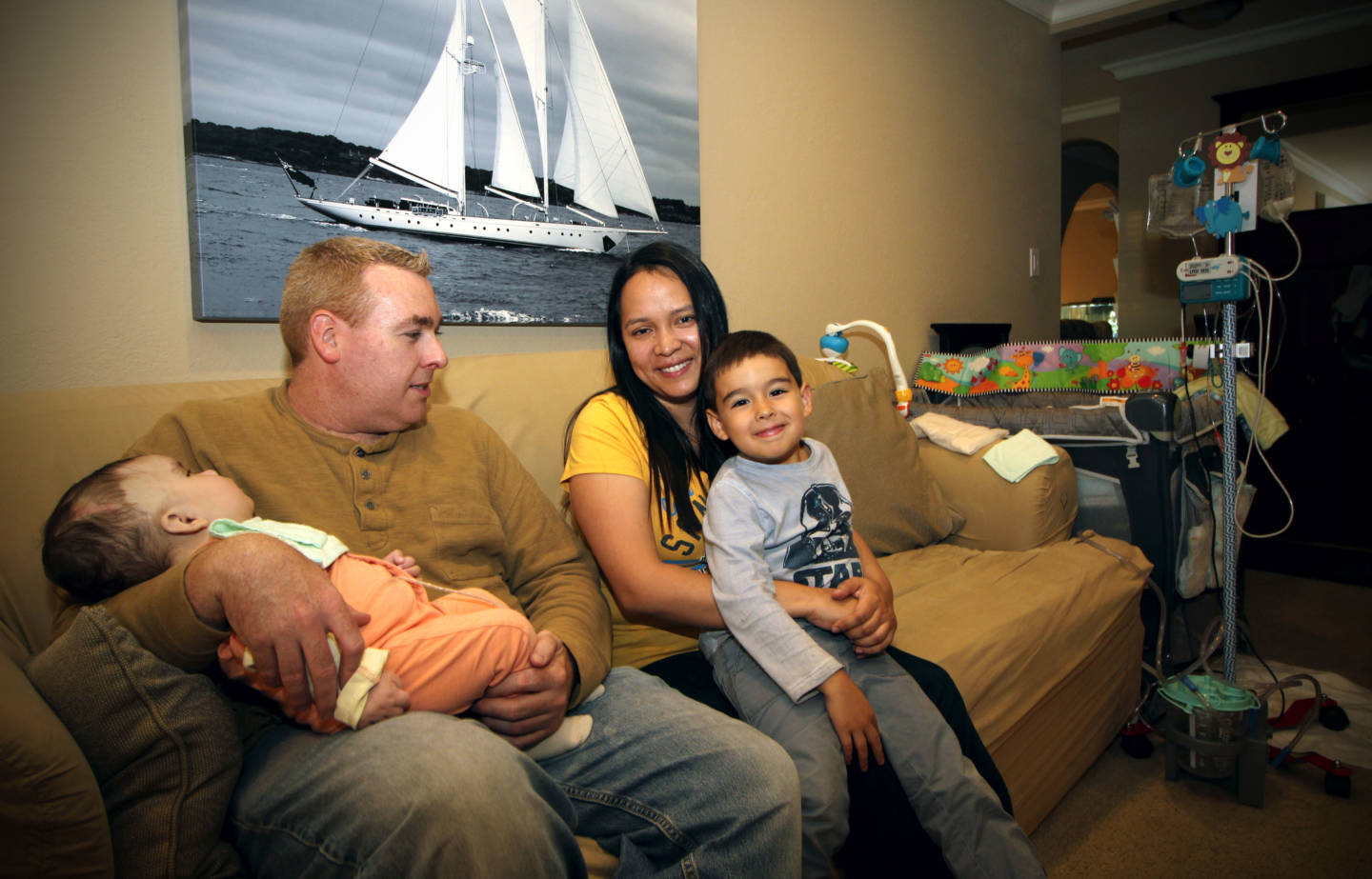
"caption": "Brian Smart (L) holds baby Noah, while his wife, Laura, holds their 5-year-old son, Ethan. Noah was born with a severe congenital heart disease. ",
"description": null,
"title": "FamPhoto2",
"credit": "Jordan Katz",
"status": "inherit",
"isLoading": false,
"fetchFailed": false
},
"stateofhealth_215785": {
"type": "attachments",
"id": "stateofhealth_215785",
"meta": {
"index": "attachments_1716263798",
"site": "stateofhealth",
"id": "215785",
"found": true
},
"parent": 215784,
"imgSizes": {
"twentyfourteen-full-width": {
"file": "https://ww2.kqed.org/app/uploads/sites/27/2016/07/rehab_enl-c7cb79332517b8501208a4cd75fee88051f52e67-1038x576.jpg",
"width": 1038,
"mimeType": "image/jpeg",
"height": 576
},
"thumbnail": {
"file": "https://ww2.kqed.org/app/uploads/sites/27/2016/07/rehab_enl-c7cb79332517b8501208a4cd75fee88051f52e67-400x266.jpg",
"width": 400,
"mimeType": "image/jpeg",
"height": 266
},
"fd-sm": {
"file": "https://ww2.kqed.org/app/uploads/sites/27/2016/07/rehab_enl-c7cb79332517b8501208a4cd75fee88051f52e67-960x639.jpg",
"width": 960,
"mimeType": "image/jpeg",
"height": 639
},
"post-thumbnail": {
"file": "https://ww2.kqed.org/app/uploads/sites/27/2016/07/rehab_enl-c7cb79332517b8501208a4cd75fee88051f52e67-672x372.jpg",
"width": 672,
"mimeType": "image/jpeg",
"height": 372
},
"kqedFullSize": {
"file": "https://ww2.kqed.org/app/uploads/sites/27/2016/07/rehab_enl-c7cb79332517b8501208a4cd75fee88051f52e67-e1469214809167.jpg",
"width": 1920,
"height": 1278
},
"large": {
"file": "https://ww2.kqed.org/app/uploads/sites/27/2016/07/rehab_enl-c7cb79332517b8501208a4cd75fee88051f52e67-1440x959.jpg",
"width": 1440,
"mimeType": "image/jpeg",
"height": 959
},
"guest-author-50": {
"file": "https://ww2.kqed.org/app/uploads/sites/27/2016/07/rehab_enl-c7cb79332517b8501208a4cd75fee88051f52e67-50x50.jpg",
"width": 50,
"mimeType": "image/jpeg",
"height": 50
},
"guest-author-96": {
"file": "https://ww2.kqed.org/app/uploads/sites/27/2016/07/rehab_enl-c7cb79332517b8501208a4cd75fee88051f52e67-96x96.jpg",
"width": 96,
"mimeType": "image/jpeg",
"height": 96
},
"medium": {
"file": "https://ww2.kqed.org/app/uploads/sites/27/2016/07/rehab_enl-c7cb79332517b8501208a4cd75fee88051f52e67-800x533.jpg",
"width": 800,
"mimeType": "image/jpeg",
"height": 533
},
"guest-author-64": {
"file": "https://ww2.kqed.org/app/uploads/sites/27/2016/07/rehab_enl-c7cb79332517b8501208a4cd75fee88051f52e67-64x64.jpg",
"width": 64,
"mimeType": "image/jpeg",
"height": 64
},
"guest-author-32": {
"file": "https://ww2.kqed.org/app/uploads/sites/27/2016/07/rehab_enl-c7cb79332517b8501208a4cd75fee88051f52e67-32x32.jpg",
"width": 32,
"mimeType": "image/jpeg",
"height": 32
},
"jmtc-small-thumb": {
"file": "https://ww2.kqed.org/app/uploads/sites/27/2016/07/rehab_enl-c7cb79332517b8501208a4cd75fee88051f52e67-280x150.jpg",
"width": 280,
"mimeType": "image/jpeg",
"height": 150
},
"fd-lrg": {
"file": "https://ww2.kqed.org/app/uploads/sites/27/2016/07/rehab_enl-c7cb79332517b8501208a4cd75fee88051f52e67-1920x1278.jpg",
"width": 1920,
"mimeType": "image/jpeg",
"height": 1278
},
"fd-med": {
"file": "https://ww2.kqed.org/app/uploads/sites/27/2016/07/rehab_enl-c7cb79332517b8501208a4cd75fee88051f52e67-1180x786.jpg",
"width": 1180,
"mimeType": "image/jpeg",
"height": 786
},
"detail": {
"file": "https://ww2.kqed.org/app/uploads/sites/27/2016/07/rehab_enl-c7cb79332517b8501208a4cd75fee88051f52e67-150x150.jpg",
"width": 150,
"mimeType": "image/jpeg",
"height": 150
},
"medium_large": {
"file": "https://ww2.kqed.org/app/uploads/sites/27/2016/07/rehab_enl-c7cb79332517b8501208a4cd75fee88051f52e67-768x511.jpg",
"width": 768,
"mimeType": "image/jpeg",
"height": 511
},
"guest-author-128": {
"file": "https://ww2.kqed.org/app/uploads/sites/27/2016/07/rehab_enl-c7cb79332517b8501208a4cd75fee88051f52e67-128x128.jpg",
"width": 128,
"mimeType": "image/jpeg",
"height": 128
}
},
"publishDate": 1469214359,
"modified": 1469214866,
"caption": "The physical therapy workouts a rehabilitation facility offers can be a crucial part of healing, doctors say. But a government study finds preventable harm — including bedsores and medication errors — occurring in some of those facilities, too.",
"description": "The physical therapy workouts a rehabilitation facility offers can be a crucial part of healing, doctors say. But a government study finds preventable harm — including bedsores and medication errors — occurring in some of those facilities, too.",
"title": "The physical therapy workouts a rehabilitation facility offers can be a crucial part of healing, doctors say. But a government study finds preventable harm — including bedsores and medication errors — occurring in some of those facilities, too.",
"credit": "Andersen Ross/Blend Images/Getty Images",
"status": "inherit",
"isLoading": false,
"fetchFailed": false
},
"stateofhealth_212219": {
"type": "attachments",
"id": "stateofhealth_212219",
"meta": {
"index": "attachments_1716263798",
"site": "stateofhealth",
"id": "212219",
"found": true
},
"parent": 212218,
"imgSizes": {
"twentyfourteen-full-width": {
"file": "https://ww2.kqed.org/app/uploads/sites/27/2016/07/naloxone-1_enl-d054ef891d807b488412f888149e290c67d63b5d-1024x576.jpg",
"width": 1024,
"mimeType": "image/jpeg",
"height": 576
},
"thumbnail": {
"file": "https://ww2.kqed.org/app/uploads/sites/27/2016/07/naloxone-1_enl-d054ef891d807b488412f888149e290c67d63b5d-400x267.jpg",
"width": 400,
"mimeType": "image/jpeg",
"height": 267
},
"fd-sm": {
"file": "https://ww2.kqed.org/app/uploads/sites/27/2016/07/naloxone-1_enl-d054ef891d807b488412f888149e290c67d63b5d-960x640.jpg",
"width": 960,
"mimeType": "image/jpeg",
"height": 640
},
"post-thumbnail": {
"file": "https://ww2.kqed.org/app/uploads/sites/27/2016/07/naloxone-1_enl-d054ef891d807b488412f888149e290c67d63b5d-672x372.jpg",
"width": 672,
"mimeType": "image/jpeg",
"height": 372
},
"kqedFullSize": {
"file": "https://ww2.kqed.org/app/uploads/sites/27/2016/07/naloxone-1_enl-d054ef891d807b488412f888149e290c67d63b5d.jpg",
"width": 1024,
"height": 683
},
"guest-author-50": {
"file": "https://ww2.kqed.org/app/uploads/sites/27/2016/07/naloxone-1_enl-d054ef891d807b488412f888149e290c67d63b5d-50x50.jpg",
"width": 50,
"mimeType": "image/jpeg",
"height": 50
},
"guest-author-96": {
"file": "https://ww2.kqed.org/app/uploads/sites/27/2016/07/naloxone-1_enl-d054ef891d807b488412f888149e290c67d63b5d-96x96.jpg",
"width": 96,
"mimeType": "image/jpeg",
"height": 96
},
"medium": {
"file": "https://ww2.kqed.org/app/uploads/sites/27/2016/07/naloxone-1_enl-d054ef891d807b488412f888149e290c67d63b5d-800x534.jpg",
"width": 800,
"mimeType": "image/jpeg",
"height": 534
},
"guest-author-64": {
"file": "https://ww2.kqed.org/app/uploads/sites/27/2016/07/naloxone-1_enl-d054ef891d807b488412f888149e290c67d63b5d-64x64.jpg",
"width": 64,
"mimeType": "image/jpeg",
"height": 64
},
"guest-author-32": {
"file": "https://ww2.kqed.org/app/uploads/sites/27/2016/07/naloxone-1_enl-d054ef891d807b488412f888149e290c67d63b5d-32x32.jpg",
"width": 32,
"mimeType": "image/jpeg",
"height": 32
},
"jmtc-small-thumb": {
"file": "https://ww2.kqed.org/app/uploads/sites/27/2016/07/naloxone-1_enl-d054ef891d807b488412f888149e290c67d63b5d-280x150.jpg",
"width": 280,
"mimeType": "image/jpeg",
"height": 150
},
"detail": {
"file": "https://ww2.kqed.org/app/uploads/sites/27/2016/07/naloxone-1_enl-d054ef891d807b488412f888149e290c67d63b5d-150x150.jpg",
"width": 150,
"mimeType": "image/jpeg",
"height": 150
},
"medium_large": {
"file": "https://ww2.kqed.org/app/uploads/sites/27/2016/07/naloxone-1_enl-d054ef891d807b488412f888149e290c67d63b5d-768x512.jpg",
"width": 768,
"mimeType": "image/jpeg",
"height": 512
},
"guest-author-128": {
"file": "https://ww2.kqed.org/app/uploads/sites/27/2016/07/naloxone-1_enl-d054ef891d807b488412f888149e290c67d63b5d-128x128.jpg",
"width": 128,
"mimeType": "image/jpeg",
"height": 128
}
},
"publishDate": 1468431880,
"modified": 1468432060,
"caption": "A woman lobbying Congress holds two versions of naloxone which can be used to reverse an opioid overdose.\n",
"description": "A woman lobbying Congress holds two versions of naloxone which can be used to reverse an opioid overdose.",
"title": "A woman lobbying Congress holds two versions of naloxone which can be used to reverse an opioid overdose.",
"credit": "Al Drago/CQ-Roll Call Inc.",
"status": "inherit",
"isLoading": false,
"fetchFailed": false
},
"stateofhealth_211451": {
"type": "attachments",
"id": "stateofhealth_211451",
"meta": {
"index": "attachments_1716263798",
"site": "stateofhealth",
"id": "211451",
"found": true
},
"parent": 211432,
"imgSizes": {
"jmtc-small-thumb": {
"file": "https://ww2.kqed.org/app/uploads/sites/27/2016/07/Screen-Shot-2016-07-11-at-10.29.15-AM-280x150.png",
"width": 280,
"mimeType": "image/png",
"height": 150
},
"thumbnail": {
"file": "https://ww2.kqed.org/app/uploads/sites/27/2016/07/Screen-Shot-2016-07-11-at-10.29.15-AM-400x226.png",
"width": 400,
"mimeType": "image/png",
"height": 226
},
"post-thumbnail": {
"file": "https://ww2.kqed.org/app/uploads/sites/27/2016/07/Screen-Shot-2016-07-11-at-10.29.15-AM-672x372.png",
"width": 672,
"mimeType": "image/png",
"height": 372
},
"kqedFullSize": {
"file": "https://ww2.kqed.org/app/uploads/sites/27/2016/07/Screen-Shot-2016-07-11-at-10.29.15-AM.png",
"width": 691,
"height": 390
},
"guest-author-50": {
"file": "https://ww2.kqed.org/app/uploads/sites/27/2016/07/Screen-Shot-2016-07-11-at-10.29.15-AM-50x50.png",
"width": 50,
"mimeType": "image/png",
"height": 50
},
"guest-author-96": {
"file": "https://ww2.kqed.org/app/uploads/sites/27/2016/07/Screen-Shot-2016-07-11-at-10.29.15-AM-96x96.png",
"width": 96,
"mimeType": "image/png",
"height": 96
},
"guest-author-64": {
"file": "https://ww2.kqed.org/app/uploads/sites/27/2016/07/Screen-Shot-2016-07-11-at-10.29.15-AM-64x64.png",
"width": 64,
"mimeType": "image/png",
"height": 64
},
"detail": {
"file": "https://ww2.kqed.org/app/uploads/sites/27/2016/07/Screen-Shot-2016-07-11-at-10.29.15-AM-150x150.png",
"width": 150,
"mimeType": "image/png",
"height": 150
},
"guest-author-32": {
"file": "https://ww2.kqed.org/app/uploads/sites/27/2016/07/Screen-Shot-2016-07-11-at-10.29.15-AM-32x32.png",
"width": 32,
"mimeType": "image/png",
"height": 32
},
"guest-author-128": {
"file": "https://ww2.kqed.org/app/uploads/sites/27/2016/07/Screen-Shot-2016-07-11-at-10.29.15-AM-128x128.png",
"width": 128,
"mimeType": "image/png",
"height": 128
}
},
"publishDate": 1468258704,
"modified": 1468344518,
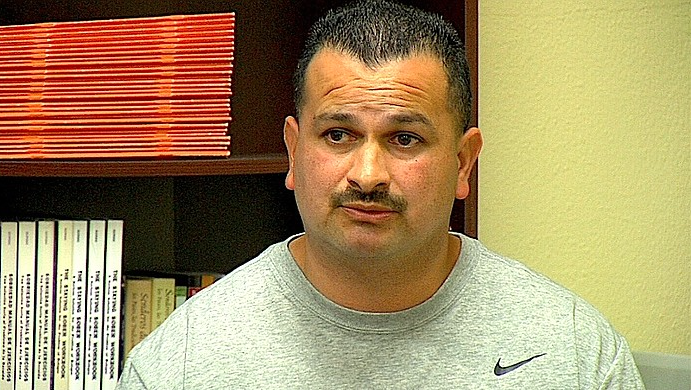
"caption": "Jose Escobedo is a recovering methamphetamine addict. ",
"description": "Jose Escobedo is a recovering methamphetamine addict. ",
"title": "Screen Shot 2016-07-11 at 10.29.15 AM",
"credit": "Nicholas McVicker/KPBS",
"status": "inherit",
"isLoading": false,
"fetchFailed": false
},
"stateofhealth_211449": {
"type": "attachments",
"id": "stateofhealth_211449",
"meta": {
"index": "attachments_1716263798",
"site": "stateofhealth",
"id": "211449",
"found": true
},
"parent": 211432,
"imgSizes": {
"jmtc-small-thumb": {
"file": "https://ww2.kqed.org/app/uploads/sites/27/2016/07/Screen-Shot-2016-07-11-at-10.28.11-AM-280x150.png",
"width": 280,
"mimeType": "image/png",
"height": 150
},
"thumbnail": {
"file": "https://ww2.kqed.org/app/uploads/sites/27/2016/07/Screen-Shot-2016-07-11-at-10.28.11-AM-400x224.png",
"width": 400,
"mimeType": "image/png",
"height": 224
},
"post-thumbnail": {
"file": "https://ww2.kqed.org/app/uploads/sites/27/2016/07/Screen-Shot-2016-07-11-at-10.28.11-AM-672x372.png",
"width": 672,
"mimeType": "image/png",
"height": 372
},
"kqedFullSize": {
"file": "https://ww2.kqed.org/app/uploads/sites/27/2016/07/Screen-Shot-2016-07-11-at-10.28.11-AM.png",
"width": 801,
"height": 449
},
"guest-author-50": {
"file": "https://ww2.kqed.org/app/uploads/sites/27/2016/07/Screen-Shot-2016-07-11-at-10.28.11-AM-50x50.png",
"width": 50,
"mimeType": "image/png",
"height": 50
},
"guest-author-96": {
"file": "https://ww2.kqed.org/app/uploads/sites/27/2016/07/Screen-Shot-2016-07-11-at-10.28.11-AM-96x96.png",
"width": 96,
"mimeType": "image/png",
"height": 96
},
"medium": {
"file": "https://ww2.kqed.org/app/uploads/sites/27/2016/07/Screen-Shot-2016-07-11-at-10.28.11-AM-800x448.png",
"width": 800,
"mimeType": "image/png",
"height": 448
},
"guest-author-64": {
"file": "https://ww2.kqed.org/app/uploads/sites/27/2016/07/Screen-Shot-2016-07-11-at-10.28.11-AM-64x64.png",
"width": 64,
"mimeType": "image/png",
"height": 64
},
"detail": {
"file": "https://ww2.kqed.org/app/uploads/sites/27/2016/07/Screen-Shot-2016-07-11-at-10.28.11-AM-150x150.png",
"width": 150,
"mimeType": "image/png",
"height": 150
},
"guest-author-32": {
"file": "https://ww2.kqed.org/app/uploads/sites/27/2016/07/Screen-Shot-2016-07-11-at-10.28.11-AM-32x32.png",
"width": 32,
"mimeType": "image/png",
"height": 32
},
"medium_large": {
"file": "https://ww2.kqed.org/app/uploads/sites/27/2016/07/Screen-Shot-2016-07-11-at-10.28.11-AM-768x431.png",
"width": 768,
"mimeType": "image/png",
"height": 431
},
"guest-author-128": {
"file": "https://ww2.kqed.org/app/uploads/sites/27/2016/07/Screen-Shot-2016-07-11-at-10.28.11-AM-128x128.png",
"width": 128,
"mimeType": "image/png",
"height": 128
}
},
"publishDate": 1468258689,
"modified": 1468258757,
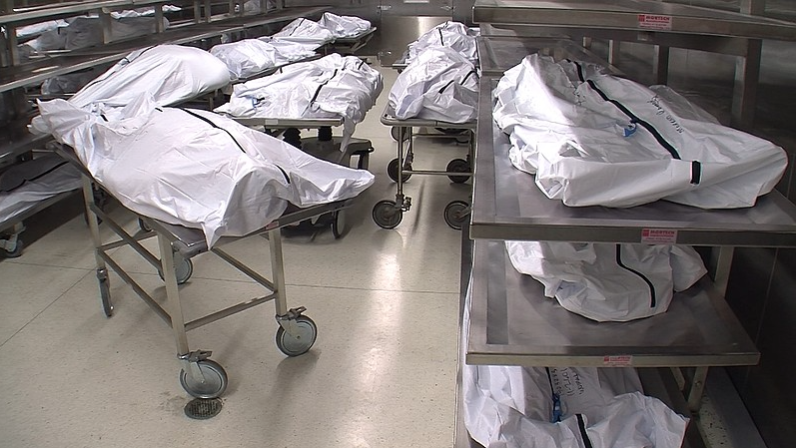
"caption": "Corpses in body bags lie on gurneys in the San Diego County morgue in this undated photo.",
"description": "Corpses in body bags lie on gurneys in the San Diego County morgue in this undated photo.",
"title": "Screen Shot 2016-07-11 at 10.28.11 AM",
"credit": "Nicholas McVicker/KPBS",
"status": "inherit",
"isLoading": false,
"fetchFailed": false
},
"stateofhealth_209824": {
"type": "attachments",
"id": "stateofhealth_209824",
"meta": {
"index": "attachments_1716263798",
"site": "stateofhealth",
"id": "209824",
"found": true
},
"parent": 206910,
"imgSizes": {
"twentyfourteen-full-width": {
"file": "https://ww2.kqed.org/app/uploads/sites/27/2016/07/RS20117_IMG_9778-qut-1-1038x576.jpg",
"width": 1038,
"mimeType": "image/jpeg",
"height": 576
},
"thumbnail": {
"file": "https://ww2.kqed.org/app/uploads/sites/27/2016/07/RS20117_IMG_9778-qut-1-400x267.jpg",
"width": 400,
"mimeType": "image/jpeg",
"height": 267
},
"fd-sm": {
"file": "https://ww2.kqed.org/app/uploads/sites/27/2016/07/RS20117_IMG_9778-qut-1-960x640.jpg",
"width": 960,
"mimeType": "image/jpeg",
"height": 640
},
"post-thumbnail": {
"file": "https://ww2.kqed.org/app/uploads/sites/27/2016/07/RS20117_IMG_9778-qut-1-672x372.jpg",
"width": 672,
"mimeType": "image/jpeg",
"height": 372
},
"kqedFullSize": {
"file": "https://ww2.kqed.org/app/uploads/sites/27/2016/07/RS20117_IMG_9778-qut-1.jpg",
"width": 1920,
"height": 1280
},
"large": {
"file": "https://ww2.kqed.org/app/uploads/sites/27/2016/07/RS20117_IMG_9778-qut-1-1440x960.jpg",
"width": 1440,
"mimeType": "image/jpeg",
"height": 960
},
"guest-author-50": {
"file": "https://ww2.kqed.org/app/uploads/sites/27/2016/07/RS20117_IMG_9778-qut-1-50x50.jpg",
"width": 50,
"mimeType": "image/jpeg",
"height": 50
},
"guest-author-96": {
"file": "https://ww2.kqed.org/app/uploads/sites/27/2016/07/RS20117_IMG_9778-qut-1-96x96.jpg",
"width": 96,
"mimeType": "image/jpeg",
"height": 96
},
"medium": {
"file": "https://ww2.kqed.org/app/uploads/sites/27/2016/07/RS20117_IMG_9778-qut-1-800x533.jpg",
"width": 800,
"mimeType": "image/jpeg",
"height": 533
},
"guest-author-64": {
"file": "https://ww2.kqed.org/app/uploads/sites/27/2016/07/RS20117_IMG_9778-qut-1-64x64.jpg",
"width": 64,
"mimeType": "image/jpeg",
"height": 64
},
"guest-author-32": {
"file": "https://ww2.kqed.org/app/uploads/sites/27/2016/07/RS20117_IMG_9778-qut-1-32x32.jpg",
"width": 32,
"mimeType": "image/jpeg",
"height": 32
},
"jmtc-small-thumb": {
"file": "https://ww2.kqed.org/app/uploads/sites/27/2016/07/RS20117_IMG_9778-qut-1-280x150.jpg",
"width": 280,
"mimeType": "image/jpeg",
"height": 150
},
"fd-lrg": {
"file": "https://ww2.kqed.org/app/uploads/sites/27/2016/07/RS20117_IMG_9778-qut-1-1920x1280.jpg",
"width": 1920,
"mimeType": "image/jpeg",
"height": 1280
},
"fd-med": {
"file": "https://ww2.kqed.org/app/uploads/sites/27/2016/07/RS20117_IMG_9778-qut-1-1180x787.jpg",
"width": 1180,
"mimeType": "image/jpeg",
"height": 787
},
"detail": {
"file": "https://ww2.kqed.org/app/uploads/sites/27/2016/07/RS20117_IMG_9778-qut-1-150x150.jpg",
"width": 150,
"mimeType": "image/jpeg",
"height": 150
},
"medium_large": {
"file": "https://ww2.kqed.org/app/uploads/sites/27/2016/07/RS20117_IMG_9778-qut-1-768x512.jpg",
"width": 768,
"mimeType": "image/jpeg",
"height": 512
},
"guest-author-128": {
"file": "https://ww2.kqed.org/app/uploads/sites/27/2016/07/RS20117_IMG_9778-qut-1-128x128.jpg",
"width": 128,
"mimeType": "image/jpeg",
"height": 128
}
},
"publishDate": 1467912237,
"modified": 1467923344,
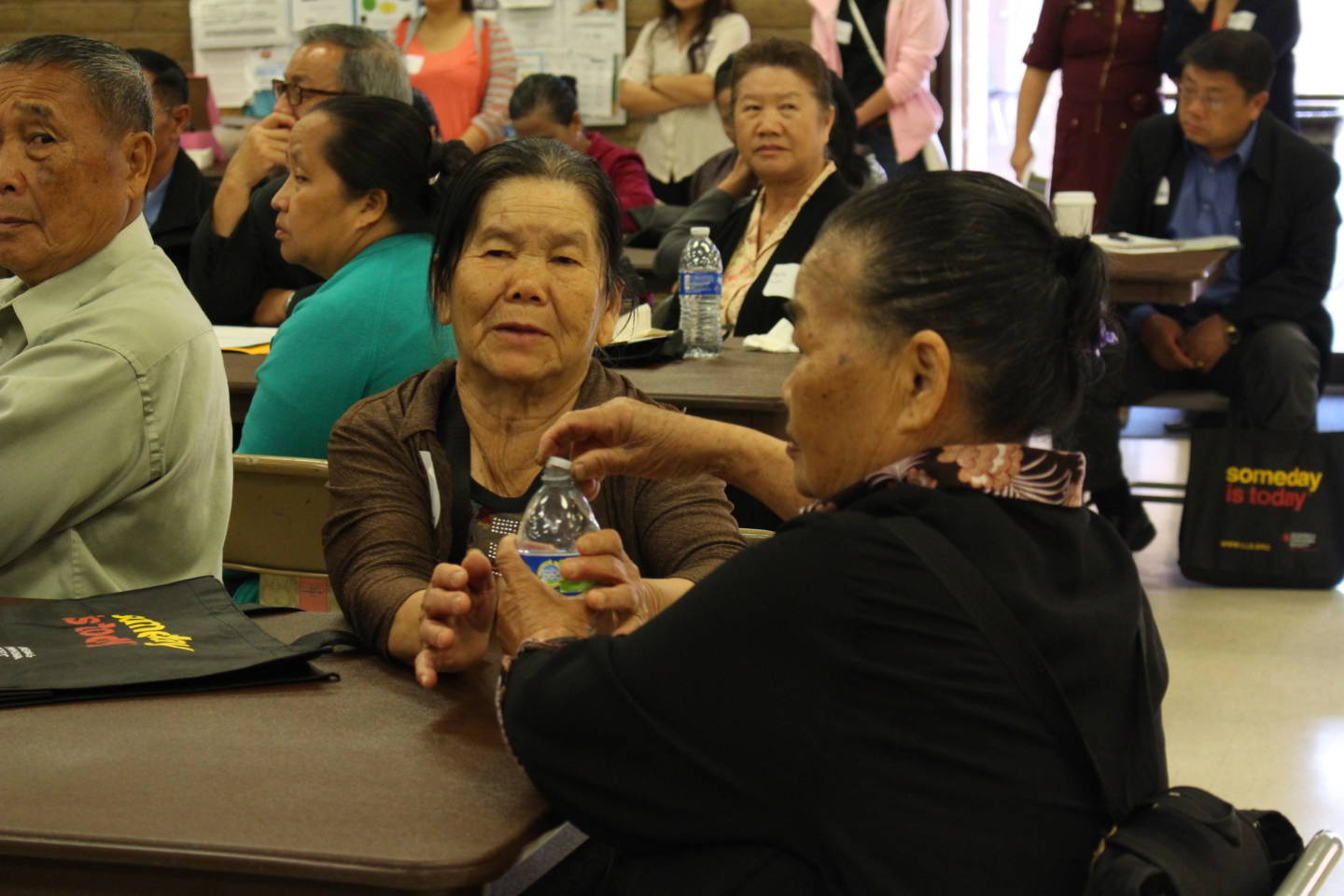
"caption": "Seniors in the Fresno Hmong community attend a health fair promoting early steps for cancer prevention. Health professionals say Hmong seniors sometimes resist undergoing cancer screening tests due to cultural beliefs. ",
"description": null,
"title": "RS20117_IMG_9778-qut (1)",
"credit": "Farida Jhabvala Romero/KQED",
"status": "inherit",
"isLoading": false,
"fetchFailed": false
},
"stateofhealth_206835": {
"type": "attachments",
"id": "stateofhealth_206835",
"meta": {
"index": "attachments_1716263798",
"site": "stateofhealth",
"id": "206835",
"found": true
},
"parent": 206810,
"imgSizes": {
"twentyfourteen-full-width": {
"file": "https://ww2.kqed.org/app/uploads/sites/27/2016/07/iStock_50273828_LARGE-1038x576.jpg",
"width": 1038,
"mimeType": "image/jpeg",
"height": 576
},
"thumbnail": {
"file": "https://ww2.kqed.org/app/uploads/sites/27/2016/07/iStock_50273828_LARGE-400x278.jpg",
"width": 400,
"mimeType": "image/jpeg",
"height": 278
},
"fd-sm": {
"file": "https://ww2.kqed.org/app/uploads/sites/27/2016/07/iStock_50273828_LARGE-960x667.jpg",
"width": 960,
"mimeType": "image/jpeg",
"height": 667
},
"post-thumbnail": {
"file": "https://ww2.kqed.org/app/uploads/sites/27/2016/07/iStock_50273828_LARGE-672x372.jpg",
"width": 672,
"mimeType": "image/jpeg",
"height": 372
},
"kqedFullSize": {
"file": "https://ww2.kqed.org/app/uploads/sites/27/2016/07/iStock_50273828_LARGE-e1467401683849.jpg",
"width": 1920,
"height": 1333
},
"large": {
"file": "https://ww2.kqed.org/app/uploads/sites/27/2016/07/iStock_50273828_LARGE-1440x1000.jpg",
"width": 1440,
"mimeType": "image/jpeg",
"height": 1000
},
"guest-author-50": {
"file": "https://ww2.kqed.org/app/uploads/sites/27/2016/07/iStock_50273828_LARGE-50x50.jpg",
"width": 50,
"mimeType": "image/jpeg",
"height": 50
},
"guest-author-96": {
"file": "https://ww2.kqed.org/app/uploads/sites/27/2016/07/iStock_50273828_LARGE-96x96.jpg",
"width": 96,
"mimeType": "image/jpeg",
"height": 96
},
"medium": {
"file": "https://ww2.kqed.org/app/uploads/sites/27/2016/07/iStock_50273828_LARGE-800x555.jpg",
"width": 800,
"mimeType": "image/jpeg",
"height": 555
},
"guest-author-64": {
"file": "https://ww2.kqed.org/app/uploads/sites/27/2016/07/iStock_50273828_LARGE-64x64.jpg",
"width": 64,
"mimeType": "image/jpeg",
"height": 64
},
"guest-author-32": {
"file": "https://ww2.kqed.org/app/uploads/sites/27/2016/07/iStock_50273828_LARGE-32x32.jpg",
"width": 32,
"mimeType": "image/jpeg",
"height": 32
},
"jmtc-small-thumb": {
"file": "https://ww2.kqed.org/app/uploads/sites/27/2016/07/iStock_50273828_LARGE-280x150.jpg",
"width": 280,
"mimeType": "image/jpeg",
"height": 150
},
"fd-lrg": {
"file": "https://ww2.kqed.org/app/uploads/sites/27/2016/07/iStock_50273828_LARGE-1920x1333.jpg",
"width": 1920,
"mimeType": "image/jpeg",
"height": 1333
},
"fd-med": {
"file": "https://ww2.kqed.org/app/uploads/sites/27/2016/07/iStock_50273828_LARGE-1180x819.jpg",
"width": 1180,
"mimeType": "image/jpeg",
"height": 819
},
"detail": {
"file": "https://ww2.kqed.org/app/uploads/sites/27/2016/07/iStock_50273828_LARGE-150x150.jpg",
"width": 150,
"mimeType": "image/jpeg",
"height": 150
},
"medium_large": {
"file": "https://ww2.kqed.org/app/uploads/sites/27/2016/07/iStock_50273828_LARGE-768x533.jpg",
"width": 768,
"mimeType": "image/jpeg",
"height": 533
},
"guest-author-128": {
"file": "https://ww2.kqed.org/app/uploads/sites/27/2016/07/iStock_50273828_LARGE-128x128.jpg",
"width": 128,
"mimeType": "image/jpeg",
"height": 128
}
},
"publishDate": 1467401665,
"modified": 1467401717,
"caption": null,
"description": "elderly couple",
"title": "iStock_50273828_LARGE",
"credit": "iStockphoto",
"status": "inherit",
"isLoading": false,
"fetchFailed": false
},
"stateofhealth_205170": {
"type": "attachments",
"id": "stateofhealth_205170",
"meta": {
"index": "attachments_1716263798",
"site": "stateofhealth",
"id": "205170",
"found": true
},
"parent": 198989,
"imgSizes": {
"jmtc-small-thumb": {
"file": "https://ww2.kqed.org/app/uploads/sites/27/2016/06/Pam-280x150.jpg",
"width": 280,
"mimeType": "image/jpeg",
"height": 150
},
"thumbnail": {
"file": "https://ww2.kqed.org/app/uploads/sites/27/2016/06/Pam-400x229.jpg",
"width": 400,
"mimeType": "image/jpeg",
"height": 229
},
"kqedFullSize": {
"file": "https://ww2.kqed.org/app/uploads/sites/27/2016/06/Pam.jpg",
"width": 640,
"height": 366
},
"guest-author-50": {
"file": "https://ww2.kqed.org/app/uploads/sites/27/2016/06/Pam-50x50.jpg",
"width": 50,
"mimeType": "image/jpeg",
"height": 50
},
"guest-author-96": {
"file": "https://ww2.kqed.org/app/uploads/sites/27/2016/06/Pam-96x96.jpg",
"width": 96,
"mimeType": "image/jpeg",
"height": 96
},
"guest-author-64": {
"file": "https://ww2.kqed.org/app/uploads/sites/27/2016/06/Pam-64x64.jpg",
"width": 64,
"mimeType": "image/jpeg",
"height": 64
},
"detail": {
"file": "https://ww2.kqed.org/app/uploads/sites/27/2016/06/Pam-150x150.jpg",
"width": 150,
"mimeType": "image/jpeg",
"height": 150
},
"guest-author-32": {
"file": "https://ww2.kqed.org/app/uploads/sites/27/2016/06/Pam-32x32.jpg",
"width": 32,
"mimeType": "image/jpeg",
"height": 32
},
"guest-author-128": {
"file": "https://ww2.kqed.org/app/uploads/sites/27/2016/06/Pam-128x128.jpg",
"width": 128,
"mimeType": "image/jpeg",
"height": 128
}
},
"publishDate": 1467137631,
"modified": 1467137659,
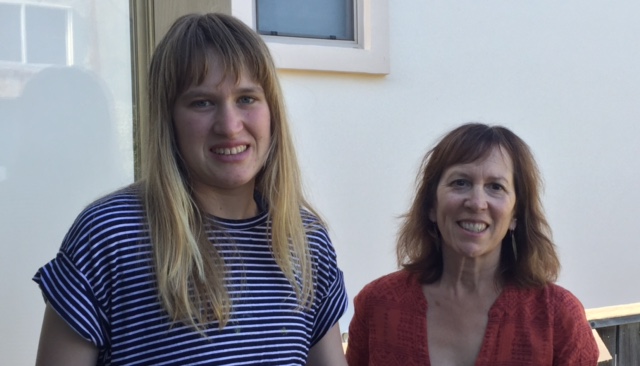
"caption": "Pam Raymond (R) with her daughter, Brianna. ",
"description": "Pam Raymond (R) with her daughter, Brianna. ",
"title": "Pam",
"credit": "Courtesy: Pam Raymond",
"status": "inherit",
"isLoading": false,
"fetchFailed": false
},
"stateofhealth_204667": {
"type": "attachments",
"id": "stateofhealth_204667",
"meta": {
"index": "attachments_1716263798",
"site": "stateofhealth",
"id": "204667",
"found": true
},
"parent": 202879,
"imgSizes": {
"twentyfourteen-full-width": {
"file": "https://ww2.kqed.org/app/uploads/sites/27/2016/06/homeless-hotel-7-1038x576.jpg",
"width": 1038,
"mimeType": "image/jpeg",
"height": 576
},
"thumbnail": {
"file": "https://ww2.kqed.org/app/uploads/sites/27/2016/06/homeless-hotel-7-400x267.jpg",
"width": 400,
"mimeType": "image/jpeg",
"height": 267
},
"fd-sm": {
"file": "https://ww2.kqed.org/app/uploads/sites/27/2016/06/homeless-hotel-7-960x641.jpg",
"width": 960,
"mimeType": "image/jpeg",
"height": 641
},
"post-thumbnail": {
"file": "https://ww2.kqed.org/app/uploads/sites/27/2016/06/homeless-hotel-7-672x372.jpg",
"width": 672,
"mimeType": "image/jpeg",
"height": 372
},
"kqedFullSize": {
"file": "https://ww2.kqed.org/app/uploads/sites/27/2016/06/homeless-hotel-7-e1467050125283.jpg",
"width": 1919,
"height": 1281
},
"large": {
"file": "https://ww2.kqed.org/app/uploads/sites/27/2016/06/homeless-hotel-7-1440x961.jpg",
"width": 1440,
"mimeType": "image/jpeg",
"height": 961
},
"guest-author-50": {
"file": "https://ww2.kqed.org/app/uploads/sites/27/2016/06/homeless-hotel-7-50x50.jpg",
"width": 50,
"mimeType": "image/jpeg",
"height": 50
},
"guest-author-96": {
"file": "https://ww2.kqed.org/app/uploads/sites/27/2016/06/homeless-hotel-7-96x96.jpg",
"width": 96,
"mimeType": "image/jpeg",
"height": 96
},
"medium": {
"file": "https://ww2.kqed.org/app/uploads/sites/27/2016/06/homeless-hotel-7-800x534.jpg",
"width": 800,
"mimeType": "image/jpeg",
"height": 534
},
"guest-author-64": {
"file": "https://ww2.kqed.org/app/uploads/sites/27/2016/06/homeless-hotel-7-64x64.jpg",
"width": 64,
"mimeType": "image/jpeg",
"height": 64
},
"guest-author-32": {
"file": "https://ww2.kqed.org/app/uploads/sites/27/2016/06/homeless-hotel-7-32x32.jpg",
"width": 32,
"mimeType": "image/jpeg",
"height": 32
},
"jmtc-small-thumb": {
"file": "https://ww2.kqed.org/app/uploads/sites/27/2016/06/homeless-hotel-7-280x150.jpg",
"width": 280,
"mimeType": "image/jpeg",
"height": 150
},
"fd-lrg": {
"file": "https://ww2.kqed.org/app/uploads/sites/27/2016/06/homeless-hotel-7-1920x1281.jpg",
"width": 1920,
"mimeType": "image/jpeg",
"height": 1281
},
"fd-med": {
"file": "https://ww2.kqed.org/app/uploads/sites/27/2016/06/homeless-hotel-7-1180x788.jpg",
"width": 1180,
"mimeType": "image/jpeg",
"height": 788
},
"detail": {
"file": "https://ww2.kqed.org/app/uploads/sites/27/2016/06/homeless-hotel-7-150x150.jpg",
"width": 150,
"mimeType": "image/jpeg",
"height": 150
},
"medium_large": {
"file": "https://ww2.kqed.org/app/uploads/sites/27/2016/06/homeless-hotel-7-768x513.jpg",
"width": 768,
"mimeType": "image/jpeg",
"height": 513
},
"guest-author-128": {
"file": "https://ww2.kqed.org/app/uploads/sites/27/2016/06/homeless-hotel-7-128x128.jpg",
"width": 128,
"mimeType": "image/jpeg",
"height": 128
}
},
"publishDate": 1467049563,
"modified": 1467050613,
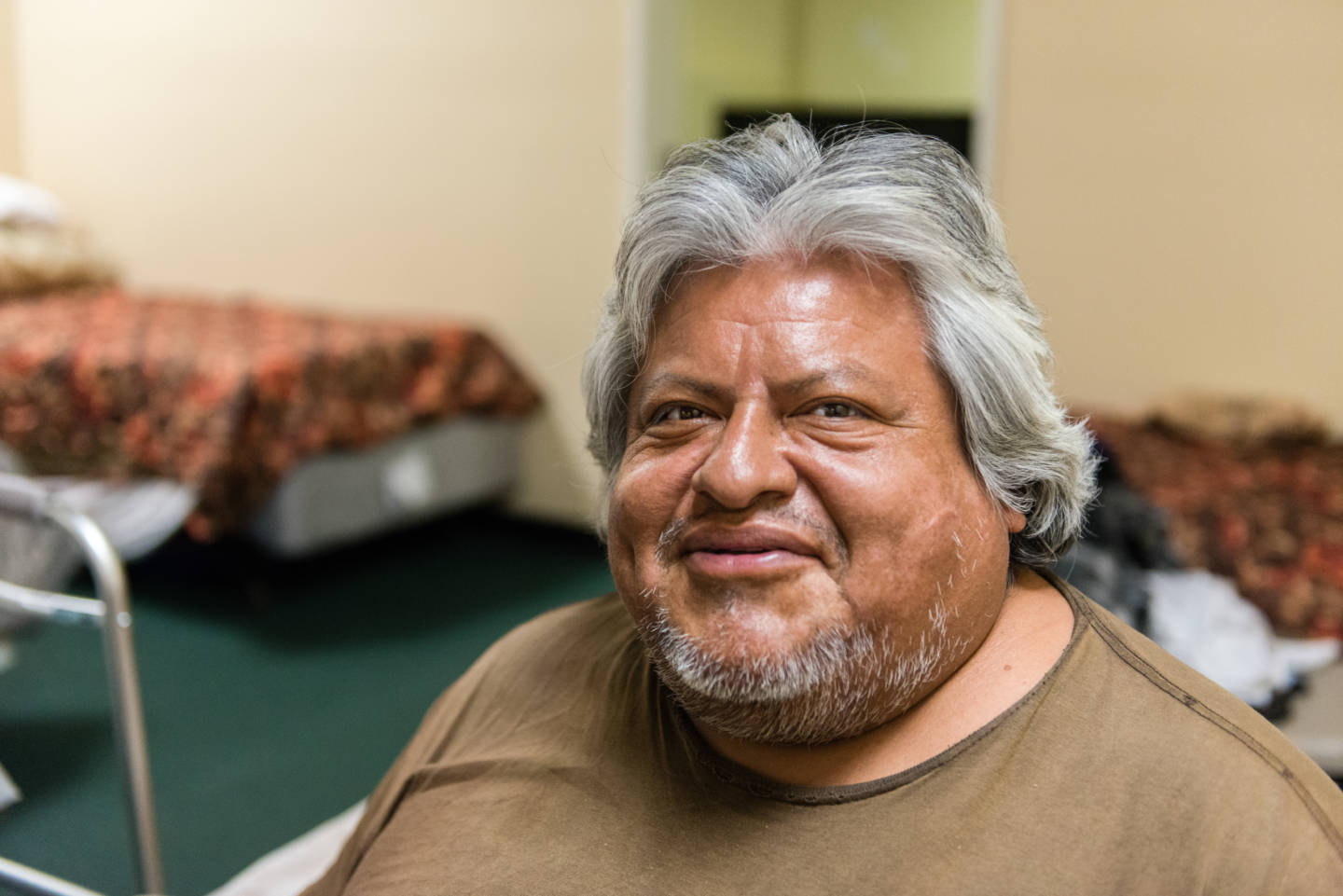
"caption": "Roberto Arce, 47, at the men’s dorm at the Illumination Foundation Recuperative Care iin Santa Fe Springs, Calif., on Friday, February 12, 2016. Arce, a Mexican native, will be at the dorm for 2 weeks after suffering from heart failure.",
"description": "oberto Arce, 47, at the men’s dorm at the Illumination Foundation Recuperative Care iin Santa Fe Springs, Calif., on Friday, February 12, 2016. Arce, a Mexican native, will be at the dorm for 2 weeks after suffering from heart failure.",
"title": "homeless-hotel-7",
"credit": "Heidi de Marco/KHN",
"status": "inherit",
"isLoading": false,
"fetchFailed": false
},
"stateofhealth_199602": {
"type": "attachments",
"id": "stateofhealth_199602",
"meta": {
"index": "attachments_1716263798",
"site": "stateofhealth",
"id": "199602",
"found": true
},
"parent": 199573,
"imgSizes": {
"twentyfourteen-full-width": {
"file": "https://ww2.kqed.org/app/uploads/sites/27/2016/06/RS19874_IMG_0023-qut-1038x576.jpg",
"width": 1038,
"mimeType": "image/jpeg",
"height": 576
},
"thumbnail": {
"file": "https://ww2.kqed.org/app/uploads/sites/27/2016/06/RS19874_IMG_0023-qut-400x267.jpg",
"width": 400,
"mimeType": "image/jpeg",
"height": 267
},
"fd-sm": {
"file": "https://ww2.kqed.org/app/uploads/sites/27/2016/06/RS19874_IMG_0023-qut-960x640.jpg",
"width": 960,
"mimeType": "image/jpeg",
"height": 640
},
"post-thumbnail": {
"file": "https://ww2.kqed.org/app/uploads/sites/27/2016/06/RS19874_IMG_0023-qut-672x372.jpg",
"width": 672,
"mimeType": "image/jpeg",
"height": 372
},
"kqedFullSize": {
"file": "https://ww2.kqed.org/app/uploads/sites/27/2016/06/RS19874_IMG_0023-qut.jpg",
"width": 1920,
"height": 1280
},
"large": {
"file": "https://ww2.kqed.org/app/uploads/sites/27/2016/06/RS19874_IMG_0023-qut-1440x960.jpg",
"width": 1440,
"mimeType": "image/jpeg",
"height": 960
},
"guest-author-50": {
"file": "https://ww2.kqed.org/app/uploads/sites/27/2016/06/RS19874_IMG_0023-qut-50x50.jpg",
"width": 50,
"mimeType": "image/jpeg",
"height": 50
},
"guest-author-96": {
"file": "https://ww2.kqed.org/app/uploads/sites/27/2016/06/RS19874_IMG_0023-qut-96x96.jpg",
"width": 96,
"mimeType": "image/jpeg",
"height": 96
},
"medium": {
"file": "https://ww2.kqed.org/app/uploads/sites/27/2016/06/RS19874_IMG_0023-qut-800x533.jpg",
"width": 800,
"mimeType": "image/jpeg",
"height": 533
},
"guest-author-64": {
"file": "https://ww2.kqed.org/app/uploads/sites/27/2016/06/RS19874_IMG_0023-qut-64x64.jpg",
"width": 64,
"mimeType": "image/jpeg",
"height": 64
},
"guest-author-32": {
"file": "https://ww2.kqed.org/app/uploads/sites/27/2016/06/RS19874_IMG_0023-qut-32x32.jpg",
"width": 32,
"mimeType": "image/jpeg",
"height": 32
},
"jmtc-small-thumb": {
"file": "https://ww2.kqed.org/app/uploads/sites/27/2016/06/RS19874_IMG_0023-qut-280x150.jpg",
"width": 280,
"mimeType": "image/jpeg",
"height": 150
},
"fd-lrg": {
"file": "https://ww2.kqed.org/app/uploads/sites/27/2016/06/RS19874_IMG_0023-qut-1920x1280.jpg",
"width": 1920,
"mimeType": "image/jpeg",
"height": 1280
},
"fd-med": {
"file": "https://ww2.kqed.org/app/uploads/sites/27/2016/06/RS19874_IMG_0023-qut-1180x787.jpg",
"width": 1180,
"mimeType": "image/jpeg",
"height": 787
},
"detail": {
"file": "https://ww2.kqed.org/app/uploads/sites/27/2016/06/RS19874_IMG_0023-qut-150x150.jpg",
"width": 150,
"mimeType": "image/jpeg",
"height": 150
},
"medium_large": {
"file": "https://ww2.kqed.org/app/uploads/sites/27/2016/06/RS19874_IMG_0023-qut-768x512.jpg",
"width": 768,
"mimeType": "image/jpeg",
"height": 512
},
"guest-author-128": {
"file": "https://ww2.kqed.org/app/uploads/sites/27/2016/06/RS19874_IMG_0023-qut-128x128.jpg",
"width": 128,
"mimeType": "image/jpeg",
"height": 128
}
},
"publishDate": 1466204978,
"modified": 1466205128,
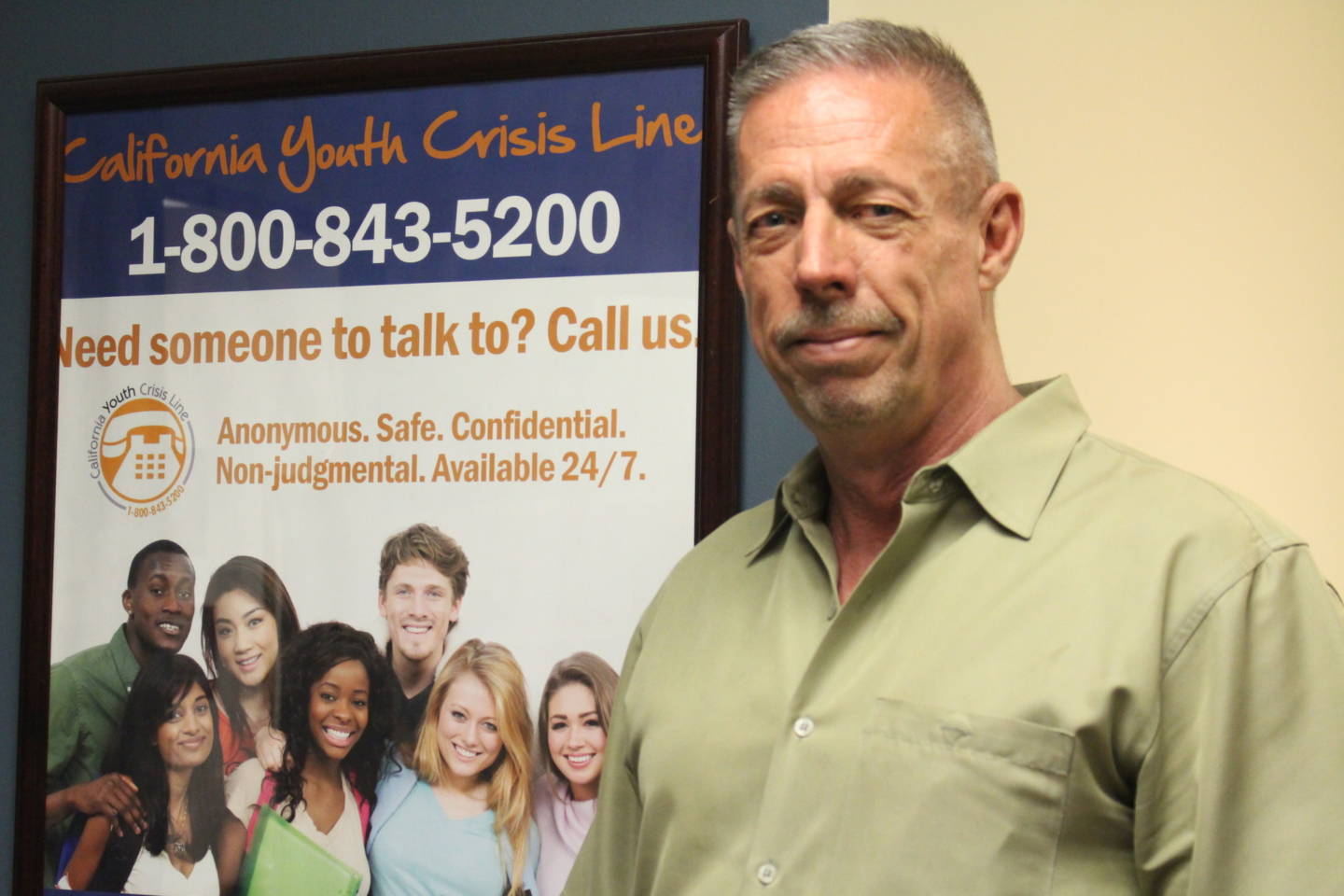
"caption": "Paul Curtis directs the California Coalition for Youth, an advocacy organization based in Sacramento that also runs the state’s youth crisis line. He says youth often have trouble accessing child welfare benefits and services for the general homeless population, and questions how much the new budget deal will benefit youth living on the streets.",
"description": "Paul Curtis directs the California Coalition for Youth.",
"title": "RS19874_IMG_0023-qut",
"credit": "Farida Jhabvala Romero/KQED",
"status": "inherit",
"isLoading": false,
"fetchFailed": false
}
},
"audioPlayerReducer": {
"postId": "stream_live",
"isPaused": true,
"isPlaying": false,
"pfsActive": false,
"pledgeModalIsOpen": true,
"playerDrawerIsOpen": false,
"liveAudioPlayStartedAt": 0,
"liveAudioPlayContext": ""
},
"authorsReducer": {
"byline_stateofhealth_218549": {
"type": "authors",
"id": "byline_stateofhealth_218549",
"meta": {
"override": true
},
"slug": "byline_stateofhealth_218549",
"name": "Lacy Jane Roberts",
"isLoading": false
},
"byline_stateofhealth_218008": {
"type": "authors",
"id": "byline_stateofhealth_218008",
"meta": {
"override": true
},
"slug": "byline_stateofhealth_218008",
"name": "Jordan Katz",
"isLoading": false
},
"byline_stateofhealth_215784": {
"type": "authors",
"id": "byline_stateofhealth_215784",
"meta": {
"override": true
},
"slug": "byline_stateofhealth_215784",
"name": "Marshall Allen\u003cbr />\u003ca href=\"https://www.propublica.org/article/new-report-problem-care-harms-almost-one-third-of-rehab-hospital-patients\">ProPublica\u003c/a> and \u003ca href=\"http://www.npr.org/sections/health-shots/\">NPR Shots\u003c/a>",
"isLoading": false
},
"byline_stateofhealth_212218": {
"type": "authors",
"id": "byline_stateofhealth_212218",
"meta": {
"override": true
},
"slug": "byline_stateofhealth_212218",
"name": "Alison Kodjak\u003cbr />\u003ca href=\"http://www.npr.org/sections/health-shots/\">NPR Shots\u003c/a>",
"isLoading": false
},
"byline_stateofhealth_211809": {
"type": "authors",
"id": "byline_stateofhealth_211809",
"meta": {
"override": true
},
"slug": "byline_stateofhealth_211809",
"name": "Kenny Goldberg\u003cbr />\u003ca href=\"http://www.kpbs.org/news/2016/jun/27/san-diego-addicted-meth/#\">KPBS\u003c/a>",
"isLoading": false
},
"byline_stateofhealth_211432": {
"type": "authors",
"id": "byline_stateofhealth_211432",
"meta": {
"override": true
},
"slug": "byline_stateofhealth_211432",
"name": "Kenny Goldberg\u003cbr />\u003ca href=\"http://www.kpbs.org/news/2016/jun/27/san-diego-addicted-meth/#\">KPBS\u003c/a>",
"isLoading": false
},
"byline_stateofhealth_206810": {
"type": "authors",
"id": "byline_stateofhealth_206810",
"meta": {
"override": true
},
"slug": "byline_stateofhealth_206810",
"name": "Emily Bazar\u003cbr />\u003ca href=\"http://californiahealthline.org/\">California Healthline\u003c/a>",
"isLoading": false
},
"byline_stateofhealth_198989": {
"type": "authors",
"id": "byline_stateofhealth_198989",
"meta": {
"override": true
},
"slug": "byline_stateofhealth_198989",
"name": "Pam Raymond",
"isLoading": false
},
"byline_stateofhealth_202879": {
"type": "authors",
"id": "byline_stateofhealth_202879",
"meta": {
"override": true
},
"slug": "byline_stateofhealth_202879",
"name": "David Gorn\u003cbr />\u003ca href=\"http://khn.org/\">Kaiser Health News\u003c/a>",
"isLoading": false
},
"fjhabvala": {
"type": "authors",
"id": "8659",
"meta": {
"index": "authors_1716337520",
"id": "8659",
"found": true
},
"name": "Farida Jhabvala Romero",
"firstName": "Farida",
"lastName": "Jhabvala Romero",
"slug": "fjhabvala",
"email": "fjhabvala@kqed.org",
"display_author_email": true,
"staff_mastheads": [
"news"
],
"title": "KQED Contributor",
"bio": "Farida Jhabvala Romero is a Labor Correspondent for KQED. She previously covered immigration. Farida was \u003ca href=\"https://www.ccnma.org/2022-most-influential-latina-journalists\">named\u003c/a> one of the 10 Most Influential Latina Journalists in California in 2022 by the California Chicano News Media Association. Her work has won awards from the Society of Professional Journalists (Northern California), as well as a national and regional Edward M. Murrow Award for the collaborative reporting projects “Dangerous Air” and “Graying California.” Before joining KQED, Farida worked as a producer at Radio Bilingüe, a national public radio network. Farida earned her master’s degree in journalism from Stanford University.",
"avatar": "https://secure.gravatar.com/avatar/f9f022d4e2609741874222a1e9d41f48fea74011aa7c615eef91d9a50c944ebe?s=600&d=blank&r=g",
"twitter": "FaridaJhabvala",
"bluesky": null,
"facebook": null,
"instagram": null,
"linkedin": "https://www.linkedin.com/in/faridajhabvala/",
"sites": [
{
"site": "news",
"roles": [
"editor"
]
},
{
"site": "stateofhealth",
"roles": [
"author"
]
},
{
"site": "liveblog",
"roles": [
"author"
]
}
],
"headData": {
"title": "Farida Jhabvala Romero | KQED",
"description": "KQED Contributor",
"ogImgSrc": "https://secure.gravatar.com/avatar/f9f022d4e2609741874222a1e9d41f48fea74011aa7c615eef91d9a50c944ebe?s=600&d=blank&r=g",
"twImgSrc": "https://secure.gravatar.com/avatar/f9f022d4e2609741874222a1e9d41f48fea74011aa7c615eef91d9a50c944ebe?s=600&d=blank&r=g"
},
"isLoading": false,
"link": "/author/fjhabvala"
}
},
"pagesReducer": {
"stateofhealth_category_place-matters": {
"type": "terms",
"id": "stateofhealth_11",
"meta": {
"index": "terms_1716263798",
"site": "stateofhealth",
"id": "11",
"score": 14.406026
},
"featImg": null,
"name": "Community Health",
"description": "\r\n\r\nFrom rural California to urban neighborhoods, where you live affects your health",
"taxonomy": "category",
"headData": {
"twImgId": null,
"twTitle": null,
"ogTitle": null,
"ogImgId": null,
"twDescription": null,
"description": "From rural California to urban neighborhoods, where you live affects your health",
"title": "Community Health Archives | KQED Arts",
"ogDescription": null
},
"ttid": 11,
"slug": "place-matters",
"isLoading": false,
"title": "Community Health",
"pageMeta": {
"site": "stateofhealth",
"WpPageTemplate": "page-topic-editorial",
"currentPage": 8
},
"blocks": [
{
"blockName": "kqed/company-paragraph",
"content": "\r\n\r\nFrom rural California to urban neighborhoods, where you live affects your health"
},
{
"blockName": "kqed/post-list",
"attrs": {
"layout": "cardArticle2",
"query": "posts/stateofhealth?category=place-matters",
"seeMore": false,
"paginated": true,
"page": 8
}
},
{
"blockName": "kqed/ad"
}
]
}
},
"pfsSessionReducer": {},
"postsReducer": {
"stream_live": {
"type": "live",
"id": "stream_live",
"audioUrl": "https://streams.kqed.org/kqedradio",
"title": "Live Stream",
"excerpt": "Live Stream information currently unavailable.",
"link": "/radio",
"featImg": "",
"label": {
"name": "KQED Live",
"link": "/"
}
},
"stream_kqedNewscast": {
"type": "posts",
"id": "stream_kqedNewscast",
"audioUrl": "https://www.kqed.org/.stream/anon/radio/RDnews/newscast.mp3?_=1",
"title": "KQED Newscast",
"featImg": "",
"label": {
"name": "88.5 FM",
"link": "/"
}
},
"stateofhealth_213206": {
"type": "posts",
"id": "stateofhealth_213206",
"meta": {
"index": "posts_1716263798",
"site": "stateofhealth",
"id": "213206",
"score": null,
"sort": [
1470250477000
]
},
"parent": 0,
"labelTerm": {
"site": "stateofhealth"
},
"blocks": [],
"publishDate": 1470250477,
"format": "standard",
"disqusTitle": "California Overhauling Foster Care Rates to Support Family Caregivers",
"title": "California Overhauling Foster Care Rates to Support Family Caregivers",
"headTitle": "State of Health | KQED News",
"content": "\u003cp>After years of complaints, California is drastically changing the way it financially supports foster families. It's a move that aims to prioritize the needs of the state's \u003ca href=\"http://www.kidsdata.org/topic/20/fostercare/table#fmt=16&loc=2,127,347,1763,331,348,336,171,321,345,357,332,324,369,358,362,360,337,327,364,356,217,353,328,354,323,352,320,339,334,365,343,330,367,344,355,366,368,265,349,361,4,273,59,370,326,333,322,341,338,350,342,329,325,359,351,363,340,335&tf=79\" target=\"_blank\">62,000 foster children \u003c/a>and make it easier for grandparents and other relatives to care for them.\u003c/p>\n\u003caside class=\"pullquote alignright\">'This is the very first time in California's history that we will be treating our relatives and our non-relative foster parents equally.' \u003ccite>Angie Schwartz, Alliance for Children's Rights \u003c/cite>\u003c/aside>\n\u003cp>Starting Jan. 1, California's foster care rates will be tied to the health and behavioral needs of each child. In the present system, the income of the home the child was removed from and whether the child was placed with relatives or non-relatives were bigger factors in determining support.\u003c/p>\n\u003cp>The new system will replace a \"tangled mess of rules\" that ends up penalizing thousands of foster children who are cared for by relatives -- even though such children have better educational outcomes and less trauma when cared for by a person with family ties, says Angie Schwartz, policy director for the Alliance for Children's Rights, which advocated for the changes.\u003c/p>\n\u003cp>\"This is a very historic change in California,\" says Schwartz, whose nonprofit provides legal services for children in foster care.\u003c/p>\n\u003cp>\"This is the very first time in California's history that we will be treating our relatives and our non-relative foster parents equally.\"\u003c/p>\n\u003cp>[ad fullwidth]\u003c/p>\n\u003cp>California Gov. Jerry Brown approved the new rate system in June as part of the state budget, and allocated about $40 million to begin implementing the payment changes.\u003c/p>\n\u003cp>\u003cstrong>'Major Transformational Effort'\u003c/strong>\u003c/p>\n\u003cp>The policy is part of a larger effort that has been at least five years in the making to improve how children and youth do in the state's foster care system, the \u003ca href=\"http://www.cdss.ca.gov/cdssweb/PG4869.htm\" target=\"_blank\">Continuum of Care Reform\u003c/a>. The reform also aims to significantly expand mental health and other support services to all foster families, says Greg Rose, who oversees child welfare \u003cspan style=\"font-weight: 400\">at the California Department of Social Services.\u003c/span>\u003c/p>\n\u003cp>\"It is the major transformational effort that we are putting in place so that young people in foster care can have as traditional a family life as reasonably possible,\" says Rose, adding that a goal of the reform is to reduce the use of more expensive institutionalized group homes, where foster youth tend to have the worst outcomes.\u003c/p>\n\u003cp>\"Ultimately, we'll have healthier, happier youth that experience the foster care system,\" says Rose.\u003c/p>\n\u003cp>The foster care rate changes will impact at least 10,000 families statewide who will be able to access similar resources as other foster families, says Rose.\u003c/p>\n\u003cp>[soundcloud url=\"https://api.soundcloud.com/tracks/276496072\" params=\"color=ff5500&auto_play=false&hide_related=false&show_comments=true&show_user=true&show_reposts=false\" width=\"100%\" height=\"166\" iframe=\"true\" /]\u003c/p>\n\u003cp>Over the next several weeks, a stakeholder group will define new rates, says Rose, which are expected to be at least slightly higher than they are at present.\u003c/p>\n\u003cp>Once new rates are established county social workers are expected to begin assessing each child in foster care statewide to determine where the child fits in the new rate structure.\u003c/p>\n\u003cp>\u003cstrong>One Mom's Story\u003c/strong>\u003c/p>\n\u003cp>In California, all foster parents -- whether related to the child or not -- must pass similar licensing and approval standards. But the stipends they receive may vary dramatically depending on whether they are related to the child.\u003c/p>\n\u003cp>Donita Escamilla experienced the discrepancy first hand when she became a foster parent to her niece, Isabella, two years ago.\u003c/p>\n\u003cp>While Escamilla received about $300 monthly to help care for Isabella, she would have received as much as $1,100 more is she were not related to the child.\u003c/p>\n\u003cp>\"I did not ever look at Isabella as a dollar sign. I was ready to take care of Isabella funding or no funding,\" says Escamilla, who was working as a waitress at a casino and already a single mother of four when she took Isabella in.\u003c/p>\n\u003cp>\"I knew that no matter what the struggle for me was, that that’s what was best for her, and that she needed to be with us,\" she says. \"I just couldn’t imagine her going with strangers, with people that we didn’t know.\"\u003c/p>\n\u003cp>The lack of resources was stressful, says Escamilla. Isabella's birth mother had used drugs throughout her pregnancy, and the newborn tested positive for methampethamines which has impacted Isabella's development and lungs. Escamilla spent sleepless nights taking the baby to the emergency room for bouts of asthma and bronchitis.\u003c/p>\n\u003cfigure id=\"attachment_220439\" class=\"wp-caption aligncenter\" style=\"max-width: 1920px\">\u003cimg class=\"wp-image-220439 size-full\" src=\"http://ww2.kqed.org/stateofhealth/wp-content/uploads/sites/27/2016/08/RS20497_IMG_0182-qut.jpg\" alt=\"Stephanie Okada, an occupational therapist, and Isabella look for ants near a playground in the Sacramento area, as part of Isabella's weekly play and speech therapy session. Donita Escamilla, who became a foster parent for Isabella and recently adopted her, says therapy is helping the toddler develop her emotions and social skills.\" width=\"1920\" height=\"1369\" srcset=\"https://ww2.kqed.org/app/uploads/sites/27/2016/08/RS20497_IMG_0182-qut.jpg 1920w, https://ww2.kqed.org/app/uploads/sites/27/2016/08/RS20497_IMG_0182-qut-400x285.jpg 400w, https://ww2.kqed.org/app/uploads/sites/27/2016/08/RS20497_IMG_0182-qut-800x570.jpg 800w, https://ww2.kqed.org/app/uploads/sites/27/2016/08/RS20497_IMG_0182-qut-768x548.jpg 768w, https://ww2.kqed.org/app/uploads/sites/27/2016/08/RS20497_IMG_0182-qut-1440x1027.jpg 1440w, https://ww2.kqed.org/app/uploads/sites/27/2016/08/RS20497_IMG_0182-qut-1180x841.jpg 1180w, https://ww2.kqed.org/app/uploads/sites/27/2016/08/RS20497_IMG_0182-qut-960x685.jpg 960w\" sizes=\"(max-width: 1920px) 100vw, 1920px\">\u003cfigcaption class=\"wp-caption-text\">Isabella and Stephanie Okada, an occupational therapist, look for ants near a playground in the Sacramento area, as part of Isabella's weekly play therapy sessions. Donita Escamilla, who became a foster parent for Isabella and recently adopted her, says the toddler struggles with social interactions and therapy helps to address her needs. \u003ccite>(Farida Jhabvala Romero/KQED)\u003c/cite>\u003c/figcaption>\u003c/figure>\n\u003cp>Isabella's medical needs were covered through Medi-Cal, the state's insurance for low income people. But Escamilla worried about losing her job, and not being there for her other children.\u003c/p>\n\u003cp>\"I was always in this state of trying to balance the needs of my family as a whole, versus Isabella’s medical needs, trying to get people to take her to the doctor for me, not being able to miss work because she was ill,\" she says.\u003c/p>\n\u003cp>Escamilla adapted. She left her casino job and opened a child care center so that she could care for Isabella herself, instead of shuttling her to other caregivers. She takes Isabella weekly for play, speech and other therapy sessions to aid her social and emotional development.\u003c/p>\n\u003cp>\u003c/p>\n\u003cp>Escamilla ended up adopting Isabella, so the new foster rate changes won't affect her, but she considers the development \"a huge victory.\" She says she hopes other relative foster parents in the state won't struggle the way she did.\u003c/p>\n\n",
"disqusIdentifier": "213206 http://ww2.kqed.org/stateofhealth/?p=213206",
"disqusUrl": "https://ww2.kqed.org/stateofhealth/2016/08/03/california-overhauling-foster-care-rates-to-support-family-caregivers/",
"stats": {
"hasVideo": false,
"hasChartOrMap": false,
"hasAudio": false,
"hasPolis": false,
"wordCount": 1018,
"hasGoogleForm": false,
"hasGallery": false,
"hasHearkenModule": false,
"iframeSrcs": [],
"paragraphCount": 27
},
"modified": 1470350004,
"excerpt": "Next year, California adopts new monthly foster care stipends to make it easier for relatives to care for foster children.",
"headData": {
"twImgId": "",
"twTitle": "",
"ogTitle": "",
"ogImgId": "",
"twDescription": "",
"description": "Next year, California adopts new monthly foster care stipends to make it easier for relatives to care for foster children.",
"title": "California Overhauling Foster Care Rates to Support Family Caregivers | KQED",
"ogDescription": "",
"schema": {
"@context": "https://schema.org",
"@type": "Article",
"headline": "California Overhauling Foster Care Rates to Support Family Caregivers",
"datePublished": "2016-08-03T11:54:37-07:00",
"dateModified": "2016-08-04T15:33:24-07:00",
"image": "https://cdn.kqed.org/wp-content/uploads/2020/02/KQED-OG-Image@1x.png"
}
},
"guestAuthors": [],
"slug": "california-overhauling-foster-care-rates-to-support-family-caregivers",
"status": "publish",
"path": "/stateofhealth/213206/california-overhauling-foster-care-rates-to-support-family-caregivers",
"audioTrackLength": null,
"parsedContent": [
{
"type": "contentString",
"content": "\u003cdiv class=\"post-body\">\u003cp>\u003cp>After years of complaints, California is drastically changing the way it financially supports foster families. It's a move that aims to prioritize the needs of the state's \u003ca href=\"http://www.kidsdata.org/topic/20/fostercare/table#fmt=16&loc=2,127,347,1763,331,348,336,171,321,345,357,332,324,369,358,362,360,337,327,364,356,217,353,328,354,323,352,320,339,334,365,343,330,367,344,355,366,368,265,349,361,4,273,59,370,326,333,322,341,338,350,342,329,325,359,351,363,340,335&tf=79\" target=\"_blank\">62,000 foster children \u003c/a>and make it easier for grandparents and other relatives to care for them.\u003c/p>\n\u003caside class=\"pullquote alignright\">'This is the very first time in California's history that we will be treating our relatives and our non-relative foster parents equally.' \u003ccite>Angie Schwartz, Alliance for Children's Rights \u003c/cite>\u003c/aside>\n\u003cp>Starting Jan. 1, California's foster care rates will be tied to the health and behavioral needs of each child. In the present system, the income of the home the child was removed from and whether the child was placed with relatives or non-relatives were bigger factors in determining support.\u003c/p>\n\u003cp>The new system will replace a \"tangled mess of rules\" that ends up penalizing thousands of foster children who are cared for by relatives -- even though such children have better educational outcomes and less trauma when cared for by a person with family ties, says Angie Schwartz, policy director for the Alliance for Children's Rights, which advocated for the changes.\u003c/p>\n\u003cp>\"This is a very historic change in California,\" says Schwartz, whose nonprofit provides legal services for children in foster care.\u003c/p>\n\u003cp>\"This is the very first time in California's history that we will be treating our relatives and our non-relative foster parents equally.\"\u003c/p>\n\u003cp>\u003c/p>\u003c/div>",
"attributes": {
"named": {},
"numeric": []
}
},
{
"type": "component",
"content": "",
"name": "ad",
"attributes": {
"named": {
"label": "fullwidth"
},
"numeric": [
"fullwidth"
]
}
},
{
"type": "contentString",
"content": "\u003cdiv class=\"post-body\">\u003cp>\u003c/p>\n\u003cp>California Gov. Jerry Brown approved the new rate system in June as part of the state budget, and allocated about $40 million to begin implementing the payment changes.\u003c/p>\n\u003cp>\u003cstrong>'Major Transformational Effort'\u003c/strong>\u003c/p>\n\u003cp>The policy is part of a larger effort that has been at least five years in the making to improve how children and youth do in the state's foster care system, the \u003ca href=\"http://www.cdss.ca.gov/cdssweb/PG4869.htm\" target=\"_blank\">Continuum of Care Reform\u003c/a>. The reform also aims to significantly expand mental health and other support services to all foster families, says Greg Rose, who oversees child welfare \u003cspan style=\"font-weight: 400\">at the California Department of Social Services.\u003c/span>\u003c/p>\n\u003cp>\"It is the major transformational effort that we are putting in place so that young people in foster care can have as traditional a family life as reasonably possible,\" says Rose, adding that a goal of the reform is to reduce the use of more expensive institutionalized group homes, where foster youth tend to have the worst outcomes.\u003c/p>\n\u003cp>\"Ultimately, we'll have healthier, happier youth that experience the foster care system,\" says Rose.\u003c/p>\n\u003cp>The foster care rate changes will impact at least 10,000 families statewide who will be able to access similar resources as other foster families, says Rose.\u003c/p>\n\u003cp>\u003c/p>\u003cp>\u003cdiv class='utils-parseShortcode-shortcodes-__shortcodes__shortcodeWrapper'>\n \u003ciframe width='100%' height='166'\n scrolling='no' frameborder='no'\n src='https://w.soundcloud.com/player/?url=https://api.soundcloud.com/tracks/276496072&visual=true&color=ff5500&auto_play=false&hide_related=false&show_comments=true&show_user=true&show_reposts=false'\n title='https://api.soundcloud.com/tracks/276496072'>\n \u003c/iframe>\n \u003c/div>\u003c/p>\u003cp>\u003c/p>\n\u003cp>Over the next several weeks, a stakeholder group will define new rates, says Rose, which are expected to be at least slightly higher than they are at present.\u003c/p>\n\u003cp>Once new rates are established county social workers are expected to begin assessing each child in foster care statewide to determine where the child fits in the new rate structure.\u003c/p>\n\u003cp>\u003cstrong>One Mom's Story\u003c/strong>\u003c/p>\n\u003cp>In California, all foster parents -- whether related to the child or not -- must pass similar licensing and approval standards. But the stipends they receive may vary dramatically depending on whether they are related to the child.\u003c/p>\n\u003cp>Donita Escamilla experienced the discrepancy first hand when she became a foster parent to her niece, Isabella, two years ago.\u003c/p>\n\u003cp>While Escamilla received about $300 monthly to help care for Isabella, she would have received as much as $1,100 more is she were not related to the child.\u003c/p>\n\u003cp>\"I did not ever look at Isabella as a dollar sign. I was ready to take care of Isabella funding or no funding,\" says Escamilla, who was working as a waitress at a casino and already a single mother of four when she took Isabella in.\u003c/p>\n\u003cp>\"I knew that no matter what the struggle for me was, that that’s what was best for her, and that she needed to be with us,\" she says. \"I just couldn’t imagine her going with strangers, with people that we didn’t know.\"\u003c/p>\n\u003cp>The lack of resources was stressful, says Escamilla. Isabella's birth mother had used drugs throughout her pregnancy, and the newborn tested positive for methampethamines which has impacted Isabella's development and lungs. Escamilla spent sleepless nights taking the baby to the emergency room for bouts of asthma and bronchitis.\u003c/p>\n\u003cfigure id=\"attachment_220439\" class=\"wp-caption aligncenter\" style=\"max-width: 1920px\">\u003cimg class=\"wp-image-220439 size-full\" src=\"http://ww2.kqed.org/stateofhealth/wp-content/uploads/sites/27/2016/08/RS20497_IMG_0182-qut.jpg\" alt=\"Stephanie Okada, an occupational therapist, and Isabella look for ants near a playground in the Sacramento area, as part of Isabella's weekly play and speech therapy session. Donita Escamilla, who became a foster parent for Isabella and recently adopted her, says therapy is helping the toddler develop her emotions and social skills.\" width=\"1920\" height=\"1369\" srcset=\"https://ww2.kqed.org/app/uploads/sites/27/2016/08/RS20497_IMG_0182-qut.jpg 1920w, https://ww2.kqed.org/app/uploads/sites/27/2016/08/RS20497_IMG_0182-qut-400x285.jpg 400w, https://ww2.kqed.org/app/uploads/sites/27/2016/08/RS20497_IMG_0182-qut-800x570.jpg 800w, https://ww2.kqed.org/app/uploads/sites/27/2016/08/RS20497_IMG_0182-qut-768x548.jpg 768w, https://ww2.kqed.org/app/uploads/sites/27/2016/08/RS20497_IMG_0182-qut-1440x1027.jpg 1440w, https://ww2.kqed.org/app/uploads/sites/27/2016/08/RS20497_IMG_0182-qut-1180x841.jpg 1180w, https://ww2.kqed.org/app/uploads/sites/27/2016/08/RS20497_IMG_0182-qut-960x685.jpg 960w\" sizes=\"(max-width: 1920px) 100vw, 1920px\">\u003cfigcaption class=\"wp-caption-text\">Isabella and Stephanie Okada, an occupational therapist, look for ants near a playground in the Sacramento area, as part of Isabella's weekly play therapy sessions. Donita Escamilla, who became a foster parent for Isabella and recently adopted her, says the toddler struggles with social interactions and therapy helps to address her needs. \u003ccite>(Farida Jhabvala Romero/KQED)\u003c/cite>\u003c/figcaption>\u003c/figure>\n\u003cp>Isabella's medical needs were covered through Medi-Cal, the state's insurance for low income people. But Escamilla worried about losing her job, and not being there for her other children.\u003c/p>\n\u003cp>\"I was always in this state of trying to balance the needs of my family as a whole, versus Isabella’s medical needs, trying to get people to take her to the doctor for me, not being able to miss work because she was ill,\" she says.\u003c/p>\n\u003cp>Escamilla adapted. She left her casino job and opened a child care center so that she could care for Isabella herself, instead of shuttling her to other caregivers. She takes Isabella weekly for play, speech and other therapy sessions to aid her social and emotional development.\u003c/p>\n\u003cp>\u003c/p>\n\u003cp>Escamilla ended up adopting Isabella, so the new foster rate changes won't affect her, but she considers the development \"a huge victory.\" She says she hopes other relative foster parents in the state won't struggle the way she did.\u003c/p>\n\n\u003c/div>\u003c/p>",
"attributes": {
"named": {},
"numeric": []
}
}
],
"link": "/stateofhealth/213206/california-overhauling-foster-care-rates-to-support-family-caregivers",
"authors": [
"8659"
],
"categories": [
"stateofhealth_11",
"stateofhealth_14"
],
"tags": [
"stateofhealth_96",
"stateofhealth_2808",
"stateofhealth_2544",
"stateofhealth_2519"
],
"featImg": "stateofhealth_220441",
"label": "stateofhealth"
},
"stateofhealth_218549": {
"type": "posts",
"id": "stateofhealth_218549",
"meta": {
"index": "posts_1716263798",
"site": "stateofhealth",
"id": "218549",
"score": null,
"sort": [
1469836473000
]
},
"parent": 0,
"labelTerm": {
"site": "stateofhealth"
},
"blocks": [],
"publishDate": 1469836473,
"format": "standard",
"disqusTitle": "California Mental Health Experts Bring PTSD Training to Jordan",
"title": "California Mental Health Experts Bring PTSD Training to Jordan",
"headTitle": "State of Health | KQED News",
"content": "\u003cp>For a group of mental health professionals in California, watching the Syrian refugee crisis unfold on television was not an option.\u003c/p>\n\u003cp>“We were very, very concerned that there (was) a lot of need, and little available for professional services -- particularly mental health services,” says psychiatrist Dr. Saad Shakir.\u003c/p>\n\u003caside class=\"pullquote alignright\">Seeing all the devastation going on, I want to have an impact in a positive way. \u003ccite> Dr. Saad Shakir, Alalusi Foundation \u003c/cite>\u003c/aside>\n\u003cp>Shakir yearned to do more, and he zeroed in on Jordan. Amman, the country’s capital, is on the front lines of the Syrian refugee crisis, with nearly 1.5 million refugees now living in the country. Many are suffering deeply, but there aren’t nearly enough mental health professionals to serve them. A study from the \u003ca href=\"http://www.who.int/mental_health/evidence/mh_aims_report_jordan_jan_2011_en.pdf\" target=\"_blank\">World Health Organization\u003c/a> says fewer than 100 psychiatrists live in Jordan.\u003c/p>\n\u003cp>In the face of overwhelming need came a creative response from the Alalusi Foundation, a Hayward-based nonprofit focusing on refugee relief and humanitarian projects around the world. The foundation developed the Care Program for Refugees -- or CPR -- to train professionals who work with refugees to provide mental health care.\u003c/p>\n\u003cp>“Being a physician, I'm a humanitarian,” says Shakir. “So seeing all the devastation going on, it's like I want to have an impact in a positive way. We decided the best way we can help is by training the individuals here who provide care for refugees.”\u003c/p>\n\u003cp>[ad fullwidth]\u003c/p>\n\u003cp>Earlier this summer, the group traveled to Amman to hold a weeklong training for Middle Eastern professionals who work with refugees.\u003c/p>\n\u003cp>Shakir and his colleagues prepared intensive trainings on a range of subjects including post-traumatic stress disorder, therapeutic interventions, ethics, and self-care for therapists.\u003c/p>\n\u003cp>[soundcloud url=\"https://api.soundcloud.com/tracks/276000214\" params=\"color=ff5500&auto_play=false&hide_related=false&show_comments=true&show_user=true&show_reposts=false\" width=\"100%\" height=\"166\" iframe=\"true\" /]\u003c/p>\n\u003cp>Saadia Hameed is a school psychologist from Sunnyvale who first heard about CPR after a meeting of the Bay Area Muslim Mental Health Professionals. The group was looking for someone with a background working with children, and she jumped at the chance to get involved.\u003c/p>\n\u003cp>“It’s really important for someone who does want to help to look within themselves to see what skills they have to offer,” says Hameed, while on a break from leading a workshop for 30 people on caring for children who have experienced trauma. The room buzzes with energy, and the discussion alternates between English and Arabic.\u003c/p>\n\u003cp>The workshop is intended for medical professionals, as well as social workers, volunteers, and educators. One of the attendees, Nisreen Katbi is a displaced refugee herself. Now she runs a residential rehabilitation center in Amman called\u003ca href=\"http://souriyat-across-borders.org/\" target=\"_blank\"> Souriyat Across Borders\u003c/a> that cares for Syrian refugees who were injured in the war.\u003c/p>\n\u003cp>“We found ourselves, all of a sudden, in the middle of this crisis,\" she says. \"Those people around us need help, they need help very quickly.\" Because of limited resources, people like Katbi sometimes find themselves given large responsibilities. She is grateful for today’s training.\u003c/p>\n\u003cp>“It’s a critical situation when they came from a war zone,” Katbi says. “So I have to be qualified to deal with them.”\u003c/p>\n\u003cp>The problem is vast. Care Program for Refugees hopes to expand its efforts by holding more trainings and offering webinars to reach other people who work with refugees. And Hameed, the school psychologist, says working with professionals like Katbi has in turn inspired her to dig deeper into treating trauma.\u003c/p>\n\u003cp>“One thing I feel is very motivated,\" she says. \"I want to learn more about how to support children who’ve not just faced trauma but war trauma, and torture and grief and loss.\"\u003c/p>\n\u003cp>Hameed plans to return to Amman for next spring’s training.\u003c/p>\n\u003cp>\u003c/p>\n\u003cp>\u003cem>Luisa Conlon and Hanna Miller contributed to this story.\u003c/em>\u003c/p>\n\n",
"disqusIdentifier": "218549 http://ww2.kqed.org/stateofhealth/?p=218549",
"disqusUrl": "https://ww2.kqed.org/stateofhealth/2016/07/29/california-mental-health-experts-bring-ptsd-training-to-jordan/",
"stats": {
"hasVideo": false,
"hasChartOrMap": false,
"hasAudio": false,
"hasPolis": false,
"wordCount": 663,
"hasGoogleForm": false,
"hasGallery": false,
"hasHearkenModule": false,
"iframeSrcs": [],
"paragraphCount": 19
},
"modified": 1469884945,
"excerpt": "Nearly 1.5 million Syrian refugees live in Jordan. A Bay Area group is training people to provide mental health support. ",
"headData": {
"twImgId": "",
"twTitle": "",
"ogTitle": "",
"ogImgId": "",
"twDescription": "",
"description": "Nearly 1.5 million Syrian refugees live in Jordan. A Bay Area group is training people to provide mental health support. ",
"title": "California Mental Health Experts Bring PTSD Training to Jordan | KQED",
"ogDescription": "",
"schema": {
"@context": "https://schema.org",
"@type": "Article",
"headline": "California Mental Health Experts Bring PTSD Training to Jordan",
"datePublished": "2016-07-29T16:54:33-07:00",
"dateModified": "2016-07-30T06:22:25-07:00",
"image": "https://cdn.kqed.org/wp-content/uploads/2020/02/KQED-OG-Image@1x.png"
}
},
"guestAuthors": [],
"slug": "california-mental-health-experts-bring-ptsd-training-to-jordan",
"status": "publish",
"nprByline": "Lacy Jane Roberts",
"path": "/stateofhealth/218549/california-mental-health-experts-bring-ptsd-training-to-jordan",
"audioTrackLength": null,
"parsedContent": [
{
"type": "contentString",
"content": "\u003cdiv class=\"post-body\">\u003cp>\u003cp>For a group of mental health professionals in California, watching the Syrian refugee crisis unfold on television was not an option.\u003c/p>\n\u003cp>“We were very, very concerned that there (was) a lot of need, and little available for professional services -- particularly mental health services,” says psychiatrist Dr. Saad Shakir.\u003c/p>\n\u003caside class=\"pullquote alignright\">Seeing all the devastation going on, I want to have an impact in a positive way. \u003ccite> Dr. Saad Shakir, Alalusi Foundation \u003c/cite>\u003c/aside>\n\u003cp>Shakir yearned to do more, and he zeroed in on Jordan. Amman, the country’s capital, is on the front lines of the Syrian refugee crisis, with nearly 1.5 million refugees now living in the country. Many are suffering deeply, but there aren’t nearly enough mental health professionals to serve them. A study from the \u003ca href=\"http://www.who.int/mental_health/evidence/mh_aims_report_jordan_jan_2011_en.pdf\" target=\"_blank\">World Health Organization\u003c/a> says fewer than 100 psychiatrists live in Jordan.\u003c/p>\n\u003cp>In the face of overwhelming need came a creative response from the Alalusi Foundation, a Hayward-based nonprofit focusing on refugee relief and humanitarian projects around the world. The foundation developed the Care Program for Refugees -- or CPR -- to train professionals who work with refugees to provide mental health care.\u003c/p>\n\u003cp>“Being a physician, I'm a humanitarian,” says Shakir. “So seeing all the devastation going on, it's like I want to have an impact in a positive way. We decided the best way we can help is by training the individuals here who provide care for refugees.”\u003c/p>\n\u003cp>\u003c/p>\u003c/div>",
"attributes": {
"named": {},
"numeric": []
}
},
{
"type": "component",
"content": "",
"name": "ad",
"attributes": {
"named": {
"label": "fullwidth"
},
"numeric": [
"fullwidth"
]
}
},
{
"type": "contentString",
"content": "\u003cdiv class=\"post-body\">\u003cp>\u003c/p>\n\u003cp>Earlier this summer, the group traveled to Amman to hold a weeklong training for Middle Eastern professionals who work with refugees.\u003c/p>\n\u003cp>Shakir and his colleagues prepared intensive trainings on a range of subjects including post-traumatic stress disorder, therapeutic interventions, ethics, and self-care for therapists.\u003c/p>\n\u003cp>\u003c/p>\u003cp>\u003cdiv class='utils-parseShortcode-shortcodes-__shortcodes__shortcodeWrapper'>\n \u003ciframe width='100%' height='166'\n scrolling='no' frameborder='no'\n src='https://w.soundcloud.com/player/?url=https://api.soundcloud.com/tracks/276000214&visual=true&color=ff5500&auto_play=false&hide_related=false&show_comments=true&show_user=true&show_reposts=false'\n title='https://api.soundcloud.com/tracks/276000214'>\n \u003c/iframe>\n \u003c/div>\u003c/p>\u003cp>\u003c/p>\n\u003cp>Saadia Hameed is a school psychologist from Sunnyvale who first heard about CPR after a meeting of the Bay Area Muslim Mental Health Professionals. The group was looking for someone with a background working with children, and she jumped at the chance to get involved.\u003c/p>\n\u003cp>“It’s really important for someone who does want to help to look within themselves to see what skills they have to offer,” says Hameed, while on a break from leading a workshop for 30 people on caring for children who have experienced trauma. The room buzzes with energy, and the discussion alternates between English and Arabic.\u003c/p>\n\u003cp>The workshop is intended for medical professionals, as well as social workers, volunteers, and educators. One of the attendees, Nisreen Katbi is a displaced refugee herself. Now she runs a residential rehabilitation center in Amman called\u003ca href=\"http://souriyat-across-borders.org/\" target=\"_blank\"> Souriyat Across Borders\u003c/a> that cares for Syrian refugees who were injured in the war.\u003c/p>\n\u003cp>“We found ourselves, all of a sudden, in the middle of this crisis,\" she says. \"Those people around us need help, they need help very quickly.\" Because of limited resources, people like Katbi sometimes find themselves given large responsibilities. She is grateful for today’s training.\u003c/p>\n\u003cp>“It’s a critical situation when they came from a war zone,” Katbi says. “So I have to be qualified to deal with them.”\u003c/p>\n\u003cp>The problem is vast. Care Program for Refugees hopes to expand its efforts by holding more trainings and offering webinars to reach other people who work with refugees. And Hameed, the school psychologist, says working with professionals like Katbi has in turn inspired her to dig deeper into treating trauma.\u003c/p>\n\u003cp>“One thing I feel is very motivated,\" she says. \"I want to learn more about how to support children who’ve not just faced trauma but war trauma, and torture and grief and loss.\"\u003c/p>\n\u003cp>Hameed plans to return to Amman for next spring’s training.\u003c/p>\n\u003cp>\u003c/p>\n\u003cp>\u003cem>Luisa Conlon and Hanna Miller contributed to this story.\u003c/em>\u003c/p>\n\n\u003c/div>\u003c/p>",
"attributes": {
"named": {},
"numeric": []
}
}
],
"link": "/stateofhealth/218549/california-mental-health-experts-bring-ptsd-training-to-jordan",
"authors": [
"byline_stateofhealth_218549"
],
"categories": [
"stateofhealth_11",
"stateofhealth_13"
],
"tags": [
"stateofhealth_68",
"stateofhealth_2519",
"stateofhealth_2831"
],
"featImg": "stateofhealth_218573",
"label": "stateofhealth"
},
"stateofhealth_218008": {
"type": "posts",
"id": "stateofhealth_218008",
"meta": {
"index": "posts_1716263798",
"site": "stateofhealth",
"id": "218008",
"score": null,
"sort": [
1469746048000
]
},
"parent": 0,
"labelTerm": {
"site": "stateofhealth"
},
"blocks": [],
"publishDate": 1469746048,
"format": "standard",
"disqusTitle": "Even with Insurance, Family of Medically Fragile Child Struggles to Find Home Health Care",
"title": "Even with Insurance, Family of Medically Fragile Child Struggles to Find Home Health Care",
"headTitle": "State of Health | KQED News",
"content": "\u003cp>The number of people at Brian and Laura Smart’s San Jose home has been steadily growing since February.\u003c/p>\n\u003cp>By June, it reached six adults: Brian's parents, Laura's mother and an au pair. They're all part of a makeshift medical team aimed at keeping Noah, Brian and Laura's one-year-old son, alive.\u003c/p>\n\u003cp>Last July, Noah was born with \u003ca href=\"http://www.pted.org/?id=shones1\" target=\"_blank\">Shone’s Complex,\u003c/a> a rare congenital heart disease. In February, he suffered a stroke during a surgical procedure, which further disabled him. Noah is now dependent on a ventilator and a gastric tube, and he takes nine medications every day.\u003c/p>\n\u003cp>“We had this little boy who was rolling over and playing with us and now we have this body that vomits and cries, and it’s torture.” Brian says.\u003c/p>\n\u003cfigure id=\"attachment_218054\" class=\"wp-caption alignright\" style=\"max-width: 400px\">\u003cimg class=\"wp-image-218054 size-thumbnail\" src=\"http://ww2.kqed.org/stateofhealth/wp-content/uploads/sites/27/2016/07/NoahSmart-400x250.jpg\" alt=\"Noah Smart was born in July 2015 with a severe congenital heart disease. \" width=\"400\" height=\"250\">\u003cfigcaption class=\"wp-caption-text\">Noah Smart was born in July 2015 with a severe congenital heart disease. \u003ccite>(Jordan Katz)\u003c/cite>\u003c/figcaption>\u003c/figure>\n\u003cp>“What Noah was up until then, Noah is not anymore,” says \u003ca href=\"http://www.stanfordchildrens.org/en/doctor/default?id=meera-sukumaran\" target=\"_blank\">Dr. Meera Sukumaran\u003c/a>. She specializes in pediatric neurodevelopmental disabilities at Stanford, where she treats Noah. After Noah suffered the stroke, he started having seizures and muscles spasms, Sukumaran says. “He would cry out, be very distressed. ... He was having a harder time digesting his milk, so he was throwing up 10 to 20 times a day.\"\u003c/p>\n\u003cp>[ad fullwidth]\u003c/p>\n\u003cp>Noah has a feeding pump, a suction machine, and needs oxygen, his father says. These needs are highly complex, and while some members of Noah's makeshift support system have medical skills -- Brian's mother is a retired registered nurse, the au pair has a nursing license from the Philippines -- everyone agrees this care system is not sustainable.\u003c/p>\n\u003cp>\"Ideally, we would want a nurse 24 hours a day,” Brian says, although he also says they’d take even 8-hour support. But trying to access that level of care has been a months-long odyssey.\u003c/p>\n\u003cp>\u003cspan style=\"font-weight: 400\">Brian and Laura are both employed full time and have health insurance with United Healthcare through Laura's job at Apple. Despite the insurance, they estimate they're paying $5,000 a month, out-of-pocket, for hired care and copays.\u003c/span>\u003c/p>\n\u003cp>The Smarts applied to get an in-home nurse covered by United Healthcare and were denied. The insurance company claimed the care Noah needed was custodial, meaning it was the same as the care that comes with having any baby. They appealed, and were denied again, even though a home nurse would help them avoid emergency room visits that would quickly cost the insurer more than a home nurse.\u003c/p>\n\u003cfigure id=\"attachment_215866\" class=\"wp-caption alignright\" style=\"max-width: 400px\">\u003cimg class=\"size-thumbnail wp-image-215866\" src=\"http://ww2.kqed.org/stateofhealth/wp-content/uploads/sites/27/2016/07/SyringesCU-400x267.jpg\" alt=\"Part of the 15 doses of medication Noah Smart will need each day. \" width=\"400\" height=\"267\">\u003cfigcaption class=\"wp-caption-text\">Part of the 15 doses of medication Noah Smart will need each day. \u003ccite>(Jordan Katz)\u003c/cite>\u003c/figcaption>\u003c/figure>\n\u003cp>The Smarts next turned to Medi-Cal, the state's health insurance generally for people who are low income. Severely disabled children can be deemed eligible for the program, even if their parents’ income exceeds usual limits. This was a waiver the Smarts sought for Noah.\u003c/p>\n\u003cp>But getting a waiver is just the first hurdle and no guarantee Noah will actually be able to get the nursing care he needs. The problem is home health agencies that provide the care have trouble attracting nurses to meet the pressing demand by families, and they blame low Medi-Cal reimbursement rates.\u003c/p>\n\u003cp>“On paper, there are all these pediatric home health agencies,\" says Sherri Sager, chief government and community relations officer of Lucile Packard Children's Hospital at Stanford. “To meet the demand for pediatric home health nurses, the supply is nowhere near what we need.\"\u003c/p>\n\u003cp>At Maxim Healthcare Services, a home health agency that connects families with nurses, Kris Frank says he is finding it harder and harder to recruit and retain registered nurses, because the rates they offer are so low compared to what nurses can earn at hospitals or other skilled nursing facilities.\u003c/p>\n\u003cp>Currently, the average hourly rate for a registered nurse working in the Bay Area is around $65 an hour, according to the \u003ca href=\"http://www.bls.gov/oes/current/oes_41884.htm\" target=\"_blank\">Bureau of Labor Statistics\u003c/a>. The reimbursement rate Maxim says it receives for a registered nurse caring for a Medi-Cal patient is $40.16 an hour.\u003c/p>\n\u003cp>Though Frank says Maxim pays all its nurses the same rate whether the agency is reimbursed by Medi-Cal or another insurer, the net effect of a lower Medi-Cal reimbursement rates to the home health agency is a lower rate overall.\u003c/p>\n\u003cp>“We blend the rates,” Frank explains. \"but costs go up, and we just can’t continue to pay enough for us to fill all the approved shifts.\"\u003c/p>\n\u003cp>Barbara Crane, Maxim's director of clinical services, first came to the agency as a home health nurse after she and her husband moved to the Bay Area from New York. When she arrived, she says she was “taken aback” by the difference in wages.\u003c/p>\n\u003cp>“It was less than half of what I had been making ten years ago in New York,” Crane says. “Caring in the home, where you don’t have other doctors or other nurses around to support your assessment and your decisions, is a bit of a daunting task.\"\u003c/p>\n\u003cp>\"I know this is a different state, but the rates for nursing to be done in the home are just so sub-standard,” she says.\u003c/p>\n\u003cp>Now her job is to convince nurses to work in home health.\u003c/p>\n\u003cp>\"I am in the predicament of trying to get nurses to come here and get them to understand how important home health is, even though it’s not financially rewarding,” Crane says.\u003c/p>\n\u003cp>What’s more, Frank says, the nurses that agencies like Maxim need to recruit are highly-skilled, almost to the level of a hospital neo-natal intensive care unit. “But we’re bringing them in-home,\" he says, \"and some nurses don’t want to work in the home.\" Then when he tells them the rate, he says, they balk. \"They think, ‘Well, heck. I could be making more working as a waitress, or a waiter—a lot more.’”\u003c/p>\n\u003cp>Maxim has been working with Sen. Mike McGuire, D-Healdsburg, to pass legislation that addresses the issue. \u003ca href=\"https://leginfo.legislature.ca.gov/faces/billTextClient.xhtml?bill_id=201520160SB1401\" target=\"_blank\">Senate Bill 1401\u003c/a>, first introduced in March, would establish a three-year pilot program in three regions around California— including the Bay Area. Under the pilot, Medi-Cal reimbursement rates for registered nurses and licensed vocational nurses would be increased 20 percent.\u003c/p>\n\u003cp>In a statement, McGuire pointed out that in-home nursing is cost-effective. “It costs 10 times more each day to care for a child in a hospital,\" he said, \"than it does to care for that child at home.”\u003c/p>\n\u003cp>Tony Cava, spokesman for the Department of Health Care Services which oversees Medi-Cal, said that the agency was \"not aware of any significant access issues\" with home health care for Medi-Cal recipients.\u003c/p>\n\u003cp>If a family is unable to find a home health agency -- or HHA -- to provide prescribed nursing service, Cava said that \"DHCS nurses [would] provide assistance to the family by referring them to other Medi-Cal-approved HHAs, individual nurse providers, and pediatric day health care centers.”\u003c/p>\n\u003cp>But implementing SB 1401 would cost more than $20 million to implement, according to \u003ca href=\"https://leginfo.legislature.ca.gov/faces/billAnalysisClient.xhtml?bill_id=201520160SB1401\" target=\"_blank\">an analysis \u003c/a>presented to the Senate Committee on Appropriations. The bill was ultimately held in the committee earlier this year and cannot be re-introduced until next January.\u003c/p>\n\u003cp>Meanwhile, home health agencies struggle to fill the hours that patients need. “We should be filling 100 percent,\" Frank says, but even when nurses call in sick, \"we have no backup nurses.\"\u003c/p>\n\u003cp>As for the Smarts—after months of phone calls and paperwork, Noah is on track to get Medi-Cal coverage. What's unclear is whether that coverage will make a difference, given the shortage of in-home pediatric nurses.\u003c/p>\n\u003cp>Brian Smart knew that even with coverage, Noah's name might linger on a wait list for care for a year—or more. Still, he decided it was worth a shot.\u003c/p>\n\u003cp>\"I filled out the paperwork as a just-in-case,” Brian says. Even the program coordinator told him it would be a \"long shot\" that he would get an in-home nurse.\u003c/p>\n\u003cp>\"Even if it’s a one-in-a-million chance, at least it’s a chance.\"\u003c/p>\n\u003cp>[ad floatright]\u003c/p>\n\u003cp>For now, the Smarts will have to keep waiting.\u003c/p>\n\n",
"disqusIdentifier": "218008 http://ww2.kqed.org/stateofhealth/?p=218008",
"disqusUrl": "https://ww2.kqed.org/stateofhealth/2016/07/28/even-with-insurance-family-of-medically-fragile-child-struggles-to-find-home-health-care/",
"stats": {
"hasVideo": false,
"hasChartOrMap": false,
"hasAudio": false,
"hasPolis": false,
"wordCount": 1429,
"hasGoogleForm": false,
"hasGallery": false,
"hasHearkenModule": false,
"iframeSrcs": [],
"paragraphCount": 35
},
"modified": 1469756537,
"excerpt": "They were denied coverage with private insurance. Their son qualifies for Medi-Cal, but there simply aren't enough nurses. ",
"headData": {
"twImgId": "",
"twTitle": "",
"ogTitle": "",
"ogImgId": "",
"twDescription": "",
"description": "They were denied coverage with private insurance. Their son qualifies for Medi-Cal, but there simply aren't enough nurses. ",
"title": "Even with Insurance, Family of Medically Fragile Child Struggles to Find Home Health Care | KQED",
"ogDescription": "",
"schema": {
"@context": "https://schema.org",
"@type": "Article",
"headline": "Even with Insurance, Family of Medically Fragile Child Struggles to Find Home Health Care",
"datePublished": "2016-07-28T15:47:28-07:00",
"dateModified": "2016-07-28T18:42:17-07:00",
"image": "https://cdn.kqed.org/wp-content/uploads/2020/02/KQED-OG-Image@1x.png"
}
},
"guestAuthors": [],
"slug": "even-with-insurance-family-of-medically-fragile-child-struggles-to-find-home-health-care",
"status": "publish",
"nprByline": "Jordan Katz",
"path": "/stateofhealth/218008/even-with-insurance-family-of-medically-fragile-child-struggles-to-find-home-health-care",
"audioTrackLength": null,
"parsedContent": [
{
"type": "contentString",
"content": "\u003cdiv class=\"post-body\">\u003cp>\u003cp>The number of people at Brian and Laura Smart’s San Jose home has been steadily growing since February.\u003c/p>\n\u003cp>By June, it reached six adults: Brian's parents, Laura's mother and an au pair. They're all part of a makeshift medical team aimed at keeping Noah, Brian and Laura's one-year-old son, alive.\u003c/p>\n\u003cp>Last July, Noah was born with \u003ca href=\"http://www.pted.org/?id=shones1\" target=\"_blank\">Shone’s Complex,\u003c/a> a rare congenital heart disease. In February, he suffered a stroke during a surgical procedure, which further disabled him. Noah is now dependent on a ventilator and a gastric tube, and he takes nine medications every day.\u003c/p>\n\u003cp>“We had this little boy who was rolling over and playing with us and now we have this body that vomits and cries, and it’s torture.” Brian says.\u003c/p>\n\u003cfigure id=\"attachment_218054\" class=\"wp-caption alignright\" style=\"max-width: 400px\">\u003cimg class=\"wp-image-218054 size-thumbnail\" src=\"http://ww2.kqed.org/stateofhealth/wp-content/uploads/sites/27/2016/07/NoahSmart-400x250.jpg\" alt=\"Noah Smart was born in July 2015 with a severe congenital heart disease. \" width=\"400\" height=\"250\">\u003cfigcaption class=\"wp-caption-text\">Noah Smart was born in July 2015 with a severe congenital heart disease. \u003ccite>(Jordan Katz)\u003c/cite>\u003c/figcaption>\u003c/figure>\n\u003cp>“What Noah was up until then, Noah is not anymore,” says \u003ca href=\"http://www.stanfordchildrens.org/en/doctor/default?id=meera-sukumaran\" target=\"_blank\">Dr. Meera Sukumaran\u003c/a>. She specializes in pediatric neurodevelopmental disabilities at Stanford, where she treats Noah. After Noah suffered the stroke, he started having seizures and muscles spasms, Sukumaran says. “He would cry out, be very distressed. ... He was having a harder time digesting his milk, so he was throwing up 10 to 20 times a day.\"\u003c/p>\n\u003cp>\u003c/p>\u003c/div>",
"attributes": {
"named": {},
"numeric": []
}
},
{
"type": "component",
"content": "",
"name": "ad",
"attributes": {
"named": {
"label": "fullwidth"
},
"numeric": [
"fullwidth"
]
}
},
{
"type": "contentString",
"content": "\u003cdiv class=\"post-body\">\u003cp>\u003c/p>\n\u003cp>Noah has a feeding pump, a suction machine, and needs oxygen, his father says. These needs are highly complex, and while some members of Noah's makeshift support system have medical skills -- Brian's mother is a retired registered nurse, the au pair has a nursing license from the Philippines -- everyone agrees this care system is not sustainable.\u003c/p>\n\u003cp>\"Ideally, we would want a nurse 24 hours a day,” Brian says, although he also says they’d take even 8-hour support. But trying to access that level of care has been a months-long odyssey.\u003c/p>\n\u003cp>\u003cspan style=\"font-weight: 400\">Brian and Laura are both employed full time and have health insurance with United Healthcare through Laura's job at Apple. Despite the insurance, they estimate they're paying $5,000 a month, out-of-pocket, for hired care and copays.\u003c/span>\u003c/p>\n\u003cp>The Smarts applied to get an in-home nurse covered by United Healthcare and were denied. The insurance company claimed the care Noah needed was custodial, meaning it was the same as the care that comes with having any baby. They appealed, and were denied again, even though a home nurse would help them avoid emergency room visits that would quickly cost the insurer more than a home nurse.\u003c/p>\n\u003cfigure id=\"attachment_215866\" class=\"wp-caption alignright\" style=\"max-width: 400px\">\u003cimg class=\"size-thumbnail wp-image-215866\" src=\"http://ww2.kqed.org/stateofhealth/wp-content/uploads/sites/27/2016/07/SyringesCU-400x267.jpg\" alt=\"Part of the 15 doses of medication Noah Smart will need each day. \" width=\"400\" height=\"267\">\u003cfigcaption class=\"wp-caption-text\">Part of the 15 doses of medication Noah Smart will need each day. \u003ccite>(Jordan Katz)\u003c/cite>\u003c/figcaption>\u003c/figure>\n\u003cp>The Smarts next turned to Medi-Cal, the state's health insurance generally for people who are low income. Severely disabled children can be deemed eligible for the program, even if their parents’ income exceeds usual limits. This was a waiver the Smarts sought for Noah.\u003c/p>\n\u003cp>But getting a waiver is just the first hurdle and no guarantee Noah will actually be able to get the nursing care he needs. The problem is home health agencies that provide the care have trouble attracting nurses to meet the pressing demand by families, and they blame low Medi-Cal reimbursement rates.\u003c/p>\n\u003cp>“On paper, there are all these pediatric home health agencies,\" says Sherri Sager, chief government and community relations officer of Lucile Packard Children's Hospital at Stanford. “To meet the demand for pediatric home health nurses, the supply is nowhere near what we need.\"\u003c/p>\n\u003cp>At Maxim Healthcare Services, a home health agency that connects families with nurses, Kris Frank says he is finding it harder and harder to recruit and retain registered nurses, because the rates they offer are so low compared to what nurses can earn at hospitals or other skilled nursing facilities.\u003c/p>\n\u003cp>Currently, the average hourly rate for a registered nurse working in the Bay Area is around $65 an hour, according to the \u003ca href=\"http://www.bls.gov/oes/current/oes_41884.htm\" target=\"_blank\">Bureau of Labor Statistics\u003c/a>. The reimbursement rate Maxim says it receives for a registered nurse caring for a Medi-Cal patient is $40.16 an hour.\u003c/p>\n\u003cp>Though Frank says Maxim pays all its nurses the same rate whether the agency is reimbursed by Medi-Cal or another insurer, the net effect of a lower Medi-Cal reimbursement rates to the home health agency is a lower rate overall.\u003c/p>\n\u003cp>“We blend the rates,” Frank explains. \"but costs go up, and we just can’t continue to pay enough for us to fill all the approved shifts.\"\u003c/p>\n\u003cp>Barbara Crane, Maxim's director of clinical services, first came to the agency as a home health nurse after she and her husband moved to the Bay Area from New York. When she arrived, she says she was “taken aback” by the difference in wages.\u003c/p>\n\u003cp>“It was less than half of what I had been making ten years ago in New York,” Crane says. “Caring in the home, where you don’t have other doctors or other nurses around to support your assessment and your decisions, is a bit of a daunting task.\"\u003c/p>\n\u003cp>\"I know this is a different state, but the rates for nursing to be done in the home are just so sub-standard,” she says.\u003c/p>\n\u003cp>Now her job is to convince nurses to work in home health.\u003c/p>\n\u003cp>\"I am in the predicament of trying to get nurses to come here and get them to understand how important home health is, even though it’s not financially rewarding,” Crane says.\u003c/p>\n\u003cp>What’s more, Frank says, the nurses that agencies like Maxim need to recruit are highly-skilled, almost to the level of a hospital neo-natal intensive care unit. “But we’re bringing them in-home,\" he says, \"and some nurses don’t want to work in the home.\" Then when he tells them the rate, he says, they balk. \"They think, ‘Well, heck. I could be making more working as a waitress, or a waiter—a lot more.’”\u003c/p>\n\u003cp>Maxim has been working with Sen. Mike McGuire, D-Healdsburg, to pass legislation that addresses the issue. \u003ca href=\"https://leginfo.legislature.ca.gov/faces/billTextClient.xhtml?bill_id=201520160SB1401\" target=\"_blank\">Senate Bill 1401\u003c/a>, first introduced in March, would establish a three-year pilot program in three regions around California— including the Bay Area. Under the pilot, Medi-Cal reimbursement rates for registered nurses and licensed vocational nurses would be increased 20 percent.\u003c/p>\n\u003cp>In a statement, McGuire pointed out that in-home nursing is cost-effective. “It costs 10 times more each day to care for a child in a hospital,\" he said, \"than it does to care for that child at home.”\u003c/p>\n\u003cp>Tony Cava, spokesman for the Department of Health Care Services which oversees Medi-Cal, said that the agency was \"not aware of any significant access issues\" with home health care for Medi-Cal recipients.\u003c/p>\n\u003cp>If a family is unable to find a home health agency -- or HHA -- to provide prescribed nursing service, Cava said that \"DHCS nurses [would] provide assistance to the family by referring them to other Medi-Cal-approved HHAs, individual nurse providers, and pediatric day health care centers.”\u003c/p>\n\u003cp>But implementing SB 1401 would cost more than $20 million to implement, according to \u003ca href=\"https://leginfo.legislature.ca.gov/faces/billAnalysisClient.xhtml?bill_id=201520160SB1401\" target=\"_blank\">an analysis \u003c/a>presented to the Senate Committee on Appropriations. The bill was ultimately held in the committee earlier this year and cannot be re-introduced until next January.\u003c/p>\n\u003cp>Meanwhile, home health agencies struggle to fill the hours that patients need. “We should be filling 100 percent,\" Frank says, but even when nurses call in sick, \"we have no backup nurses.\"\u003c/p>\n\u003cp>As for the Smarts—after months of phone calls and paperwork, Noah is on track to get Medi-Cal coverage. What's unclear is whether that coverage will make a difference, given the shortage of in-home pediatric nurses.\u003c/p>\n\u003cp>Brian Smart knew that even with coverage, Noah's name might linger on a wait list for care for a year—or more. Still, he decided it was worth a shot.\u003c/p>\n\u003cp>\"I filled out the paperwork as a just-in-case,” Brian says. Even the program coordinator told him it would be a \"long shot\" that he would get an in-home nurse.\u003c/p>\n\u003cp>\"Even if it’s a one-in-a-million chance, at least it’s a chance.\"\u003c/p>\n\u003cp>\u003c/p>\u003c/div>",
"attributes": {
"named": {},
"numeric": []
}
},
{
"type": "component",
"content": "",
"name": "ad",
"attributes": {
"named": {
"label": "floatright"
},
"numeric": [
"floatright"
]
}
},
{
"type": "contentString",
"content": "\u003cdiv class=\"post-body\">\u003cp>\u003c/p>\n\u003cp>For now, the Smarts will have to keep waiting.\u003c/p>\n\n\u003c/div>\u003c/p>",
"attributes": {
"named": {},
"numeric": []
}
}
],
"link": "/stateofhealth/218008/even-with-insurance-family-of-medically-fragile-child-struggles-to-find-home-health-care",
"authors": [
"byline_stateofhealth_218008"
],
"categories": [
"stateofhealth_11"
],
"tags": [
"stateofhealth_2602",
"stateofhealth_2808",
"stateofhealth_99",
"stateofhealth_2519"
],
"featImg": "stateofhealth_215870",
"label": "stateofhealth"
},
"stateofhealth_215784": {
"type": "posts",
"id": "stateofhealth_215784",
"meta": {
"index": "posts_1716263798",
"site": "stateofhealth",
"id": "215784",
"score": null,
"sort": [
1469214894000
]
},
"parent": 0,
"labelTerm": {
"site": "stateofhealth"
},
"blocks": [],
"publishDate": 1469214894,
"format": "standard",
"disqusTitle": "Rehab Hospitals May Harm A Third Of Patients, Report Finds",
"title": "Rehab Hospitals May Harm A Third Of Patients, Report Finds",
"headTitle": "State of Health | KQED News",
"content": "\u003cp>Patients may go to rehabilitation hospitals to recover from a stroke, injury or recent surgery. But sometimes the care makes things worse.\u003c/p>\n\u003cp>In a government report \u003ca href=\"https://www.documentcloud.org/documents/2995032-HHS-OIG-Adverse-Events-RFs.html\" target=\"_blank\">published\u003c/a> Thursday, 29 percent of patients in rehab facilities suffered a medication error, bedsore, infection or some other type of harm as a result of the care they received.\u003c/p>\n\u003cp>Doctors who reviewed Medicare cases from a broad sampling of rehab facilities say that almost half of the 158 incidents they spotted among 417 patients were clearly or likely preventable.\u003c/p>\n\u003cp>\"This is the latest study over a long time period now that says we still have high rates of harm,\" says \u003ca href=\"https://www.amia.org/about-amia/leadership/acmi-fellow/david-c-classen-md-ms-facmi\" target=\"_blank\">Dr. David Classen\u003c/a>, an infectious disease specialist at the University of Utah School of Medicine who developed the analytic tool used in the report to identify the harm to patients.\u003c/p>\n\u003cp>\"We're fooling ourselves if we say we have made improvement,\" Classen says. \"If the first rule of health care is 'Do no harm,' then we're failing.\"\u003c/p>\n\u003cp>[ad fullwidth]\u003c/p>\n\u003cp>The oversight study, from the \u003ca href=\"https://oig.hhs.gov/\" target=\"_blank\">office of the inspector general\u003c/a> of the U.S. Department of Health and Human Services, focused on rehabilitation facilities that were not associated with hospitals. Rehab facilities generally require that patients be able to undergo at least three hours of physical and occupational therapy per day, five days a week. Patients at these facilities are presumed to be healthier than patients in a more typical hospital or a nursing home.\u003c/p>\n\u003cp>Still, the findings echoed those of previous studies that found that more than a quarter of patients in \u003ca href=\"https://oig.hhs.gov/oei/reports/oei-06-09-00090.pdf\" target=\"_blank\">hospitals\u003c/a> and a third in \u003ca href=\"https://www.propublica.org/article/one-third-of-skilled-nursing-patients-harmed-in-treatment\" target=\"_blank\">skilled nursing facilities\u003c/a> suffered harm related to their care.\u003c/p>\n\u003cp>\"It's important to acknowledge that harm can occur in any type of inpatient setting,\" says Amy Ashcraft, a team leader for the rehabilitation hospital study. \"This is one of the settings that's most likely to be underestimated in terms of what type of harm can occur.\"\u003c/p>\n\u003cp>For the purposes of the study, doctors and nurses identified harm by reviewing the medical records of 417 randomly selected Medicare patients who stayed in U.S. rehabilitation facilities in March 2012. The events they identified varied in severity, ranging from a temporary injury to something that required a longer stay at the facility or that led to permanent disability or death.\u003c/p>\n\u003cp>Almost a quarter of the harmed patients had to be admitted to an acute care hospital, at a cost of about $7.7 million for the month analyzed, the study shows.\u003c/p>\n\u003cp>The physicians who reviewed the cases for the OIG say substandard treatment, inadequate monitoring, and failure to provide needed care caused most of the harm. Almost half the cases, 46 percent, were related to medication errors and included bleeding from gastric ulcers due to blood thinners and a loss of consciousness linked to narcotic painkillers.\u003c/p>\n\u003cp>That high number indicates there's lots of room for improvement, says Dr. Eric Thomas, director of the UT Houston-Memorial Hermann Center for Healthcare Quality and Safety.\u003c/p>\n\u003cp>\"We know a lot about preventing medication errors,\" Thomas says.\u003c/p>\n\u003cp>An additional 40 percent of the cases in which patients were harmed were traced to lapses in routine monitoring that led to bedsores, constipation or falls. These problems almost never contributed to a patient's death but could mean extra days or weeks of recovery, a loss of independence or permanent disability, says Lisa McGiffert, director of the Consumers Union Safe Patient Project.\u003c/p>\n\u003cp>\"It is a domino effect for any person who has had an adverse event,\" says McGiffert, who was not involved in the study.\u003c/p>\n\u003cp>The inspector general is recommending that Medicare and the Agency for Healthcare Research and Quality work together to reduce harm to patients by creating a list of adverse events that occur in rehab hospitals. In their responses to the report, the agencies have pledged to follow that suggestion.\u003c/p>\n\u003cp>Officials from the American Medical Rehabilitation Providers Association, the trade group that represents rehab facilities, say they have not yet seen the report and decline to comment for now.\u003c/p>\n\u003cp>\u003c/p>\n\u003cp>\u003cem>ProPublica is interested in hearing from patients who have been harmed while undergoing medical care, through its\u003c/em> \u003ca href=\"https://www.propublica.org/getinvolved/item/have-you-been-harmed-in-a-medical-facility-share-your-story\" target=\"_blank\">Patient Harm Questionnaire\u003c/a> \u003cem>and\u003c/em> \u003ca href=\"https://www.facebook.com/groups/patientharm/\" target=\"_blank\">Patient Safety Facebook Group\u003c/a>.\u003c/p>\n\u003cdiv class=\"fullattribution\">Copyright 2016 ProPublica. To see more, visit \u003ca>ProPublica\u003c/a>.\u003cimg src=\"http://www.google-analytics.com/__utm.gif?utmac=UA-5828686-4&utmdt=Rehab+Hospitals+May+Harm+A+Third+Of+Patients%2C+Report+Finds&utme=8(APIKey)9(MDAxOTAwOTE4MDEyMTkxMDAzNjczZDljZA004)\">\u003c/div>\n\n",
"disqusIdentifier": "215784 http://ww2.kqed.org/stateofhealth/?p=215784",
"disqusUrl": "https://ww2.kqed.org/stateofhealth/2016/07/22/rehab-hospitals-may-harm-a-third-of-patients-report-finds/",
"stats": {
"hasVideo": false,
"hasChartOrMap": false,
"hasAudio": false,
"hasPolis": false,
"wordCount": 703,
"hasGoogleForm": false,
"hasGallery": false,
"hasHearkenModule": false,
"iframeSrcs": [],
"paragraphCount": 20
},
"modified": 1469214953,
"excerpt": "Patients are sent to rehab facilities to recover from a medical crisis or surgery, but too often suffer additional harm once they get there.",
"headData": {
"twImgId": "",
"twTitle": "",
"ogTitle": "",
"ogImgId": "",
"twDescription": "",
"description": "Patients are sent to rehab facilities to recover from a medical crisis or surgery, but too often suffer additional harm once they get there.",
"title": "Rehab Hospitals May Harm A Third Of Patients, Report Finds | KQED",
"ogDescription": "",
"schema": {
"@context": "https://schema.org",
"@type": "Article",
"headline": "Rehab Hospitals May Harm A Third Of Patients, Report Finds",
"datePublished": "2016-07-22T12:14:54-07:00",
"dateModified": "2016-07-22T12:15:53-07:00",
"image": "https://cdn.kqed.org/wp-content/uploads/2020/02/KQED-OG-Image@1x.png"
}
},
"guestAuthors": [],
"slug": "rehab-hospitals-may-harm-a-third-of-patients-report-finds",
"status": "publish",
"nprApiLink": "http://api.npr.org/query?id=486756178&apiKey=MDAxOTAwOTE4MDEyMTkxMDAzNjczZDljZA004",
"nprByline": "Marshall Allen\u003cbr />\u003ca href=\"https://www.propublica.org/article/new-report-problem-care-harms-almost-one-third-of-rehab-hospital-patients\">ProPublica\u003c/a> and \u003ca href=\"http://www.npr.org/sections/health-shots/\">NPR Shots\u003c/a>",
"nprStoryDate": "Thu, 21 Jul 2016 00:02:00 -0400",
"nprLastModifiedDate": "Thu, 21 Jul 2016 12:25:33 -0400",
"nprHtmlLink": "http://www.npr.org/sections/health-shots/2016/07/21/486756178/rehab-hospitals-may-harm-a-third-of-patients-report-finds?ft=nprml&f=486756178",
"nprImageAgency": "Blend Images/Getty Images",
"nprImageCredit": "Andersen Ross",
"nprStoryId": "486756178",
"nprRetrievedStory": "1",
"nprPubDate": "Thu, 21 Jul 2016 11:35:00 -0400",
"path": "/stateofhealth/215784/rehab-hospitals-may-harm-a-third-of-patients-report-finds",
"audioTrackLength": null,
"parsedContent": [
{
"type": "contentString",
"content": "\u003cdiv class=\"post-body\">\u003cp>\u003cp>Patients may go to rehabilitation hospitals to recover from a stroke, injury or recent surgery. But sometimes the care makes things worse.\u003c/p>\n\u003cp>In a government report \u003ca href=\"https://www.documentcloud.org/documents/2995032-HHS-OIG-Adverse-Events-RFs.html\" target=\"_blank\">published\u003c/a> Thursday, 29 percent of patients in rehab facilities suffered a medication error, bedsore, infection or some other type of harm as a result of the care they received.\u003c/p>\n\u003cp>Doctors who reviewed Medicare cases from a broad sampling of rehab facilities say that almost half of the 158 incidents they spotted among 417 patients were clearly or likely preventable.\u003c/p>\n\u003cp>\"This is the latest study over a long time period now that says we still have high rates of harm,\" says \u003ca href=\"https://www.amia.org/about-amia/leadership/acmi-fellow/david-c-classen-md-ms-facmi\" target=\"_blank\">Dr. David Classen\u003c/a>, an infectious disease specialist at the University of Utah School of Medicine who developed the analytic tool used in the report to identify the harm to patients.\u003c/p>\n\u003cp>\"We're fooling ourselves if we say we have made improvement,\" Classen says. \"If the first rule of health care is 'Do no harm,' then we're failing.\"\u003c/p>\n\u003cp>\u003c/p>\u003c/div>",
"attributes": {
"named": {},
"numeric": []
}
},
{
"type": "component",
"content": "",
"name": "ad",
"attributes": {
"named": {
"label": "fullwidth"
},
"numeric": [
"fullwidth"
]
}
},
{
"type": "contentString",
"content": "\u003cdiv class=\"post-body\">\u003cp>\u003c/p>\n\u003cp>The oversight study, from the \u003ca href=\"https://oig.hhs.gov/\" target=\"_blank\">office of the inspector general\u003c/a> of the U.S. Department of Health and Human Services, focused on rehabilitation facilities that were not associated with hospitals. Rehab facilities generally require that patients be able to undergo at least three hours of physical and occupational therapy per day, five days a week. Patients at these facilities are presumed to be healthier than patients in a more typical hospital or a nursing home.\u003c/p>\n\u003cp>Still, the findings echoed those of previous studies that found that more than a quarter of patients in \u003ca href=\"https://oig.hhs.gov/oei/reports/oei-06-09-00090.pdf\" target=\"_blank\">hospitals\u003c/a> and a third in \u003ca href=\"https://www.propublica.org/article/one-third-of-skilled-nursing-patients-harmed-in-treatment\" target=\"_blank\">skilled nursing facilities\u003c/a> suffered harm related to their care.\u003c/p>\n\u003cp>\"It's important to acknowledge that harm can occur in any type of inpatient setting,\" says Amy Ashcraft, a team leader for the rehabilitation hospital study. \"This is one of the settings that's most likely to be underestimated in terms of what type of harm can occur.\"\u003c/p>\n\u003cp>For the purposes of the study, doctors and nurses identified harm by reviewing the medical records of 417 randomly selected Medicare patients who stayed in U.S. rehabilitation facilities in March 2012. The events they identified varied in severity, ranging from a temporary injury to something that required a longer stay at the facility or that led to permanent disability or death.\u003c/p>\n\u003cp>Almost a quarter of the harmed patients had to be admitted to an acute care hospital, at a cost of about $7.7 million for the month analyzed, the study shows.\u003c/p>\n\u003cp>The physicians who reviewed the cases for the OIG say substandard treatment, inadequate monitoring, and failure to provide needed care caused most of the harm. Almost half the cases, 46 percent, were related to medication errors and included bleeding from gastric ulcers due to blood thinners and a loss of consciousness linked to narcotic painkillers.\u003c/p>\n\u003cp>That high number indicates there's lots of room for improvement, says Dr. Eric Thomas, director of the UT Houston-Memorial Hermann Center for Healthcare Quality and Safety.\u003c/p>\n\u003cp>\"We know a lot about preventing medication errors,\" Thomas says.\u003c/p>\n\u003cp>An additional 40 percent of the cases in which patients were harmed were traced to lapses in routine monitoring that led to bedsores, constipation or falls. These problems almost never contributed to a patient's death but could mean extra days or weeks of recovery, a loss of independence or permanent disability, says Lisa McGiffert, director of the Consumers Union Safe Patient Project.\u003c/p>\n\u003cp>\"It is a domino effect for any person who has had an adverse event,\" says McGiffert, who was not involved in the study.\u003c/p>\n\u003cp>The inspector general is recommending that Medicare and the Agency for Healthcare Research and Quality work together to reduce harm to patients by creating a list of adverse events that occur in rehab hospitals. In their responses to the report, the agencies have pledged to follow that suggestion.\u003c/p>\n\u003cp>Officials from the American Medical Rehabilitation Providers Association, the trade group that represents rehab facilities, say they have not yet seen the report and decline to comment for now.\u003c/p>\n\u003cp>\u003c/p>\n\u003cp>\u003cem>ProPublica is interested in hearing from patients who have been harmed while undergoing medical care, through its\u003c/em> \u003ca href=\"https://www.propublica.org/getinvolved/item/have-you-been-harmed-in-a-medical-facility-share-your-story\" target=\"_blank\">Patient Harm Questionnaire\u003c/a> \u003cem>and\u003c/em> \u003ca href=\"https://www.facebook.com/groups/patientharm/\" target=\"_blank\">Patient Safety Facebook Group\u003c/a>.\u003c/p>\n\u003cdiv class=\"fullattribution\">Copyright 2016 ProPublica. To see more, visit \u003ca>ProPublica\u003c/a>.\u003cimg src=\"http://www.google-analytics.com/__utm.gif?utmac=UA-5828686-4&utmdt=Rehab+Hospitals+May+Harm+A+Third+Of+Patients%2C+Report+Finds&utme=8(APIKey)9(MDAxOTAwOTE4MDEyMTkxMDAzNjczZDljZA004)\">\u003c/div>\n\n\u003c/div>\u003c/p>",
"attributes": {
"named": {},
"numeric": []
}
}
],
"link": "/stateofhealth/215784/rehab-hospitals-may-harm-a-third-of-patients-report-finds",
"authors": [
"byline_stateofhealth_215784"
],
"categories": [
"stateofhealth_11"
],
"tags": [
"stateofhealth_2828",
"stateofhealth_2829",
"stateofhealth_2827"
],
"featImg": "stateofhealth_215785",
"label": "stateofhealth"
},
"stateofhealth_212218": {
"type": "posts",
"id": "stateofhealth_212218",
"meta": {
"index": "posts_1716263798",
"site": "stateofhealth",
"id": "212218",
"score": null,
"sort": [
1468432153000
]
},
"parent": 0,
"labelTerm": {
"site": "stateofhealth"
},
"blocks": [],
"publishDate": 1468432153,
"format": "standard",
"disqusTitle": "Addiction Reframed as Health Problem, Not a Crime, in U.S. Senate Bill",
"title": "Addiction Reframed as Health Problem, Not a Crime, in U.S. Senate Bill",
"headTitle": "State of Health | KQED News",
"content": "\u003cp>The Senate is set to approve a bill intended to change the way police and health care workers treat people struggling with opioid addictions.\u003c/p>\n\u003cp>The \u003ca href=\"https://www.congress.gov/bill/114th-congress/senate-bill/524/text\">bill\u003c/a> is an amalgam of \u003ca href=\"https://www.washingtonpost.com/news/powerpost/wp/2016/05/13/house-passes-opioid-bills-setting-up-negotiations-with-the-senate/\" target=\"_blank\">more than a dozen proposals\u003c/a> passed through the year in the House and Senate. And while it has lots of new policies and provisions — from creating a task force to study how best to treat pain, to encouraging states to create \u003ca href=\"http://www.cdc.gov/drugoverdose/pdmp/\">prescription drug monitoring programs \u003c/a>— it doesn't have much money to put them in place.\u003c/p>\n\u003cp>President Obama had requested $1.1 billion to help pay for more addiction treatment programs and other initiatives. But the version agreed to by House and Senate Republicans last week didn't include all that money. In the end, it will probably get about half that much.\u003c/p>\n\u003cp>\"It's clear that efforts to prevent and treat the opioid epidemic will fall short without additional investments,\" Sen. \u003ca href=\"http://www.murray.senate.gov/public/\">Patty Murray\u003c/a>, D-Washington, said in a statement after House and Senate negotiators hammered out the final bill.\u003c/p>\n\u003cp>But \u003ca href=\"http://www.alexander.senate.gov/public/\" target=\"_blank\">Sen. Lamar Alexander\u003c/a>, R-Tenn., argued that the money for treatment has been rising for three years.\u003c/p>\n\u003cp>[ad fullwidth]\u003c/p>\n\u003cp>\"Our friends on the other side say, you have to fund it. We are funding it,\" he said in a statement on the Senate floor Friday. \"And they helped fund it. We've increased funding for opioids already by 542 percent.\"\u003c/p>\n\u003cp>Still, Democrats are expected to support the bill even without the additional money.\u003c/p>\n\u003cp>And that's a good thing, says \u003ca href=\"http://www.thenationalcouncil.org/about/national-mental-health-association/executives/\">Linda Rosenberg\u003c/a>, president of the National Council for Behavioral Health, because the bill helps expand treatment in significant ways.\u003c/p>\n\u003cp>For example, it allows nurses and physician assistants to treat people with addictions using medications, which is considered the evidence-based standard.\u003c/p>\n\u003cp>\"Treatment capacity is really a crisis. There just isn't enough,\" Rosenberg tells Shots. \"But what this bill does to address that — it expands the kinds of people who can prescribe medications for addictions. And that's a very big deal.\"\u003c/p>\n\u003cp>She says that provision alone can help because nonprofit treatment centers will be able to use nurse practitioners and physician assistants rather than trying to hire doctors, who are both scarce and expensive.\u003c/p>\n\u003cp>The bill also allows the Department of Health and Human Services to give grants to states and community organizations for improving or expanding treatment and recovery programs. It has several provisions that would allow police departments to send people with addiction problems to treatment rather than to jail.\u003c/p>\n\u003cp>In one of the few areas of the bill that includes funding, lawmakers authorized the Department of Justice to spend $100 million a year for five years to find alternatives to jail for opioid abusers, and to allow prisons to use methadone or buprenorphine to treat inmates with opioid addictions.\u003c/p>\n\u003cp>Rosenberg says these measures help change the definition of addiction from a crime to a health problem.\u003c/p>\n\u003cp>\"It's a health care issue and not a moral failing issue,\" she says. That's a big reversal from the \"war on drugs\" campaigns of a few decades ago.\u003c/p>\n\u003cp>And the legislation allows more people to have access to \u003ca href=\"https://medlineplus.gov/druginfo/meds/a612022.html\">naloxone,\u003c/a> the drug that can reverse an opioid overdose, reducing the risk of death. Access would be expanded for people working in schools and community centers.\u003c/p>\n\u003cp>The bill encourage pharmacies to fill standing orders for the drug so that those likely to come in contact with someone suffering an overdose will have the drug on hand, according to Mike Kelly. He is the U.S. president of \u003ca href=\"http://adaptpharma.com/\">Adapt Pharma\u003c/a>, which sells \u003ca href=\"http://www.fda.gov/NewsEvents/Newsroom/PressAnnouncements/ucm473505.htm\">Narcan\u003c/a>, a nasal spray version of naloxone.\u003c/p>\n\u003cp>\u003c/p>\n\u003cp>\"This bill addresses getting Narcan out into the community, outside of emergency and first responders,\" Kelly says. \"The big thing here is this will fund recovery.\"\u003c/p>\n\u003cdiv class=\"fullattribution\">Copyright 2016 NPR. To see more, visit http://www.npr.org/.\u003cimg src=\"http://www.google-analytics.com/__utm.gif?utmac=UA-5828686-4&utmdt=Opioid+Bill+Reframes+Addiction+As+A+Health+Problem%2C+Not+A+Crime&utme=8(APIKey)9(MDAxOTAwOTE4MDEyMTkxMDAzNjczZDljZA004)\">\u003c/div>\n\n",
"disqusIdentifier": "212218 http://ww2.kqed.org/stateofhealth/?p=212218",
"disqusUrl": "https://ww2.kqed.org/stateofhealth/2016/07/13/addiction-reframed-as-health-problem-not-a-crime-in-u-s-senate-bill/",
"stats": {
"hasVideo": false,
"hasChartOrMap": false,
"hasAudio": false,
"hasPolis": false,
"wordCount": 639,
"hasGoogleForm": false,
"hasGallery": false,
"hasHearkenModule": false,
"iframeSrcs": [],
"paragraphCount": 20
},
"modified": 1468432202,
"excerpt": "The bill will expand access to medication-assisted treatment. It also will encourage police to send drug users to treatment rather than to jail.",
"headData": {
"twImgId": "",
"twTitle": "",
"ogTitle": "",
"ogImgId": "",
"twDescription": "",
"description": "The bill will expand access to medication-assisted treatment. It also will encourage police to send drug users to treatment rather than to jail.",
"title": "Addiction Reframed as Health Problem, Not a Crime, in U.S. Senate Bill | KQED",
"ogDescription": "",
"schema": {
"@context": "https://schema.org",
"@type": "Article",
"headline": "Addiction Reframed as Health Problem, Not a Crime, in U.S. Senate Bill",
"datePublished": "2016-07-13T10:49:13-07:00",
"dateModified": "2016-07-13T10:50:02-07:00",
"image": "https://cdn.kqed.org/wp-content/uploads/2020/02/KQED-OG-Image@1x.png"
}
},
"guestAuthors": [],
"slug": "addiction-reframed-as-health-problem-not-a-crime-in-u-s-senate-bill",
"status": "publish",
"nprApiLink": "http://api.npr.org/query?id=485818449&apiKey=MDAxOTAwOTE4MDEyMTkxMDAzNjczZDljZA004",
"nprByline": "Alison Kodjak\u003cbr />\u003ca href=\"http://www.npr.org/sections/health-shots/\">NPR Shots\u003c/a>",
"nprStoryDate": "Wed, 13 Jul 2016 10:51:00 -0400",
"nprLastModifiedDate": "Wed, 13 Jul 2016 12:33:38 -0400",
"nprHtmlLink": "http://www.npr.org/sections/health-shots/2016/07/13/485818449/opioid-bill-reframes-addiction-as-a-health-problem-not-a-crime?ft=nprml&f=485818449",
"nprImageAgency": "CQ-Roll Call Inc.",
"nprImageCredit": "Al Drago",
"nprStoryId": "485818449",
"nprRetrievedStory": "1",
"nprPubDate": "Wed, 13 Jul 2016 12:33:00 -0400",
"path": "/stateofhealth/212218/addiction-reframed-as-health-problem-not-a-crime-in-u-s-senate-bill",
"audioTrackLength": null,
"parsedContent": [
{
"type": "contentString",
"content": "\u003cdiv class=\"post-body\">\u003cp>\u003cp>The Senate is set to approve a bill intended to change the way police and health care workers treat people struggling with opioid addictions.\u003c/p>\n\u003cp>The \u003ca href=\"https://www.congress.gov/bill/114th-congress/senate-bill/524/text\">bill\u003c/a> is an amalgam of \u003ca href=\"https://www.washingtonpost.com/news/powerpost/wp/2016/05/13/house-passes-opioid-bills-setting-up-negotiations-with-the-senate/\" target=\"_blank\">more than a dozen proposals\u003c/a> passed through the year in the House and Senate. And while it has lots of new policies and provisions — from creating a task force to study how best to treat pain, to encouraging states to create \u003ca href=\"http://www.cdc.gov/drugoverdose/pdmp/\">prescription drug monitoring programs \u003c/a>— it doesn't have much money to put them in place.\u003c/p>\n\u003cp>President Obama had requested $1.1 billion to help pay for more addiction treatment programs and other initiatives. But the version agreed to by House and Senate Republicans last week didn't include all that money. In the end, it will probably get about half that much.\u003c/p>\n\u003cp>\"It's clear that efforts to prevent and treat the opioid epidemic will fall short without additional investments,\" Sen. \u003ca href=\"http://www.murray.senate.gov/public/\">Patty Murray\u003c/a>, D-Washington, said in a statement after House and Senate negotiators hammered out the final bill.\u003c/p>\n\u003cp>But \u003ca href=\"http://www.alexander.senate.gov/public/\" target=\"_blank\">Sen. Lamar Alexander\u003c/a>, R-Tenn., argued that the money for treatment has been rising for three years.\u003c/p>\n\u003cp>\u003c/p>\u003c/div>",
"attributes": {
"named": {},
"numeric": []
}
},
{
"type": "component",
"content": "",
"name": "ad",
"attributes": {
"named": {
"label": "fullwidth"
},
"numeric": [
"fullwidth"
]
}
},
{
"type": "contentString",
"content": "\u003cdiv class=\"post-body\">\u003cp>\u003c/p>\n\u003cp>\"Our friends on the other side say, you have to fund it. We are funding it,\" he said in a statement on the Senate floor Friday. \"And they helped fund it. We've increased funding for opioids already by 542 percent.\"\u003c/p>\n\u003cp>Still, Democrats are expected to support the bill even without the additional money.\u003c/p>\n\u003cp>And that's a good thing, says \u003ca href=\"http://www.thenationalcouncil.org/about/national-mental-health-association/executives/\">Linda Rosenberg\u003c/a>, president of the National Council for Behavioral Health, because the bill helps expand treatment in significant ways.\u003c/p>\n\u003cp>For example, it allows nurses and physician assistants to treat people with addictions using medications, which is considered the evidence-based standard.\u003c/p>\n\u003cp>\"Treatment capacity is really a crisis. There just isn't enough,\" Rosenberg tells Shots. \"But what this bill does to address that — it expands the kinds of people who can prescribe medications for addictions. And that's a very big deal.\"\u003c/p>\n\u003cp>She says that provision alone can help because nonprofit treatment centers will be able to use nurse practitioners and physician assistants rather than trying to hire doctors, who are both scarce and expensive.\u003c/p>\n\u003cp>The bill also allows the Department of Health and Human Services to give grants to states and community organizations for improving or expanding treatment and recovery programs. It has several provisions that would allow police departments to send people with addiction problems to treatment rather than to jail.\u003c/p>\n\u003cp>In one of the few areas of the bill that includes funding, lawmakers authorized the Department of Justice to spend $100 million a year for five years to find alternatives to jail for opioid abusers, and to allow prisons to use methadone or buprenorphine to treat inmates with opioid addictions.\u003c/p>\n\u003cp>Rosenberg says these measures help change the definition of addiction from a crime to a health problem.\u003c/p>\n\u003cp>\"It's a health care issue and not a moral failing issue,\" she says. That's a big reversal from the \"war on drugs\" campaigns of a few decades ago.\u003c/p>\n\u003cp>And the legislation allows more people to have access to \u003ca href=\"https://medlineplus.gov/druginfo/meds/a612022.html\">naloxone,\u003c/a> the drug that can reverse an opioid overdose, reducing the risk of death. Access would be expanded for people working in schools and community centers.\u003c/p>\n\u003cp>The bill encourage pharmacies to fill standing orders for the drug so that those likely to come in contact with someone suffering an overdose will have the drug on hand, according to Mike Kelly. He is the U.S. president of \u003ca href=\"http://adaptpharma.com/\">Adapt Pharma\u003c/a>, which sells \u003ca href=\"http://www.fda.gov/NewsEvents/Newsroom/PressAnnouncements/ucm473505.htm\">Narcan\u003c/a>, a nasal spray version of naloxone.\u003c/p>\n\u003cp>\u003c/p>\n\u003cp>\"This bill addresses getting Narcan out into the community, outside of emergency and first responders,\" Kelly says. \"The big thing here is this will fund recovery.\"\u003c/p>\n\u003cdiv class=\"fullattribution\">Copyright 2016 NPR. To see more, visit http://www.npr.org/.\u003cimg src=\"http://www.google-analytics.com/__utm.gif?utmac=UA-5828686-4&utmdt=Opioid+Bill+Reframes+Addiction+As+A+Health+Problem%2C+Not+A+Crime&utme=8(APIKey)9(MDAxOTAwOTE4MDEyMTkxMDAzNjczZDljZA004)\">\u003c/div>\n\n\u003c/div>\u003c/p>",
"attributes": {
"named": {},
"numeric": []
}
}
],
"link": "/stateofhealth/212218/addiction-reframed-as-health-problem-not-a-crime-in-u-s-senate-bill",
"authors": [
"byline_stateofhealth_212218"
],
"categories": [
"stateofhealth_11",
"stateofhealth_13"
],
"tags": [
"stateofhealth_643",
"stateofhealth_68",
"stateofhealth_2656"
],
"featImg": "stateofhealth_212219",
"label": "stateofhealth"
},
"stateofhealth_211809": {
"type": "posts",
"id": "stateofhealth_211809",
"meta": {
"index": "posts_1716263798",
"site": "stateofhealth",
"id": "211809",
"score": null,
"sort": [
1468346198000
]
},
"parent": 0,
"labelTerm": {
"site": "stateofhealth"
},
"blocks": [],
"publishDate": 1468346198,
"format": "standard",
"disqusTitle": "San Diego's Methamphetamine Problem Strains Criminal Justice System",
"title": "San Diego's Methamphetamine Problem Strains Criminal Justice System",
"headTitle": "State of Health | KQED News",
"content": "\u003cp>Jose Escobedo got his first taste of methamphetamine when he was 11-years-old.\u003c/p>\n\u003cp>“I was offered a smoke,\" he says. \"I was just trying to fit in with these guys, and I take the first hit of smoke off some aluminum, and once I did that, it ... took me to another world.”\u003c/p>\n\u003cp>For Escobedo, that one hit was all it took.\u003c/p>\n\u003cp>“It boosted me up, and I felt ... like I was stronger, faster,\" Escobedo says. \"Then I started hallucinating, seeing things.”\u003c/p>\n\u003cp>Escobedo moved in with a dealer. In exchange for running drugs, Escobedo had a non-stop supply of meth at his fingertips.\u003c/p>\n\u003cp>[ad fullwidth]\u003c/p>\n\u003cp>“I would just stay drugged out, I mean for weeks, weeks. And I would sleep for a week straight. ... I was smoking drugs. Smoking, smoking, smoking.”\u003c/p>\n\u003cp>[soundcloud url=\"https://api.soundcloud.com/tracks/273347823\" params=\"color=ff5500&auto_play=false&hide_related=false&show_comments=true&show_user=true&show_reposts=false\" width=\"100%\" height=\"166\" iframe=\"true\" /]\u003c/p>\n\u003cp>Eventually, Escobedo began committing crimes to support his habit. He was sent to prison four times.\u003c/p>\n\u003cp>When Escobedo first started using more than 20 years ago, most of the meth in San Diego County came from makeshift labs. Many of them were in East County.\u003c/p>\n\u003cp>These days, it’s different.\u003c/p>\n\u003cp>The methamphetamine on San Diego's streets today is largely produced in \u003ca href=\"http://news.sky.com/story/1515628/inside-mexicos-infamous-meth-super-labs\" target=\"_blank\">Mexican super labs\u003c/a> controlled by drug cartels.\u003c/p>\n\u003cfigure id=\"attachment_211827\" class=\"wp-caption aligncenter\" style=\"max-width: 770px\">\u003cimg class=\"size-full wp-image-211827\" src=\"http://ww2.kqed.org/stateofhealth/wp-content/uploads/sites/27/2016/07/Screen-Shot-2016-07-12-at-10.29.12-AM.png\" alt=\"The San Ysidro Port of Entry is the busiest land border crossing in the western hemisphere, with 50,000 vehicles and 25,000 pedestrians crossing from Mexico into the U.S. every day. \" width=\"770\" height=\"442\" srcset=\"https://ww2.kqed.org/app/uploads/sites/27/2016/07/Screen-Shot-2016-07-12-at-10.29.12-AM.png 770w, https://ww2.kqed.org/app/uploads/sites/27/2016/07/Screen-Shot-2016-07-12-at-10.29.12-AM-400x230.png 400w, https://ww2.kqed.org/app/uploads/sites/27/2016/07/Screen-Shot-2016-07-12-at-10.29.12-AM-768x441.png 768w\" sizes=\"(max-width: 770px) 100vw, 770px\">\u003cfigcaption class=\"wp-caption-text\">The San Ysidro Port of Entry is the busiest land border crossing in the western hemisphere, with 50,000 vehicles and 25,000 pedestrians crossing from Mexico into the U.S. every day. \u003ccite>( Nicholas McVicker/KPBS)\u003c/cite>\u003c/figcaption>\u003c/figure>\n\u003cp>A lot of it is smuggled through the San Ysidro border crossing -- the busiest in the western hemisphere -- where an estimated 50,000 vehicles and 25,000 pedestrians cross every day from Mexico into the U.S.\u003c/p>\n\u003cp>Sidney Aki, director of \u003ca href=\"https://www.cbp.gov/\" target=\"_blank\">U.S. Customs and Border Protection\u003c/a> at the San Ysidro Port of Entry, said his agents have found meth hidden in virtually every part of a vehicle, from the trunk to the battery. They’ve even discovered liquid meth in gas tanks.\u003c/p>\n\u003cp>And pedestrians?\u003c/p>\n\u003cp>One woman, Aki recalls, \"had a brassiere formed out of narcotics, and actually used as a brassiere, walking across our border.”\u003c/p>\n\u003cp>\u003cstrong>Meth Seizures Up at the Border\u003c/strong>\u003c/p>\n\u003cp>In 2010, customs agents seized roughly 2,500 kilos of meth at the San Ysidro border crossing.\u003c/p>\n\u003cp>In 2014, they confiscated more than double that amount -- 5,800 kilos.\u003c/p>\n\u003cp>One hit of meth is about a quarter of a gram — 5,800 kilos equals 5.8 million hits.\u003c/p>\n\u003cp>That’s how much was confiscated. Nobody knows how much is actually getting in.\u003c/p>\n\u003cp>What's worse is the methamphetamine that’s coming across from Mexico is stronger than ever, and the price on the street is lower than ever. That leads to more meth use and more meth-related problems.\u003c/p>\n\u003cp>\u003cstrong>Meth Users Filling Jail Cells\u003c/strong>\u003c/p>\n\u003cp>Meth users also are taking up a lot of space in the county's jails.\u003c/p>\n\u003cp>According to the \u003ca href=\"http://www.sandag.org/uploads/publicationid/publicationid_1977_19736.pdf\" target=\"_blank\">San Diego Association of Governments\u003c/a> (SANDAG), of the people arrested and jailed in the county in 2014, 53 percent of the women and 40 percent of the men tested positive for meth.\u003c/p>\n\u003cp>“We find that on average, arrestees report that they’ve been using meth for about 16 years,\" Burke said. \"We know that they use it for an average of five days at a time, that they’re using a gram. Many of them smoke it. About one in four report that they’ve injected it.”\u003c/p>\n\u003cfigure id=\"attachment_211828\" class=\"wp-caption aligncenter\" style=\"max-width: 615px\">\u003cimg class=\"size-full wp-image-211828\" src=\"http://ww2.kqed.org/stateofhealth/wp-content/uploads/sites/27/2016/07/Screen-Shot-2016-07-12-at-10.42.03-AM.png\" alt=\"*A positive opiate drug test could indicate use of opiates other than heroin, including morphine, hydrocodone, hydromorphone and Codeine. Source: 2014 Adult Arrestee Drug Use in the San Diego Region from SANDAG \" width=\"615\" height=\"170\" srcset=\"https://ww2.kqed.org/app/uploads/sites/27/2016/07/Screen-Shot-2016-07-12-at-10.42.03-AM.png 615w, https://ww2.kqed.org/app/uploads/sites/27/2016/07/Screen-Shot-2016-07-12-at-10.42.03-AM-400x111.png 400w\" sizes=\"(max-width: 615px) 100vw, 615px\">\u003cfigcaption class=\"wp-caption-text\">*A positive opiate drug test could indicate use of opiates other than heroin, including morphine, hydrocodone, hydromorphone and Codeine. Source: 2014 Adult Arrestee Drug Use in the San Diego Region from SANDAG\u003c/figcaption>\u003c/figure>\n\u003cp>Besides U.S. Customs and Border Protection, other law enforcement agencies involved in the fight against meth include the San Diego County Sheriff’s Department, the county District Attorney's Office and the U.S. Justice Department.\u003c/p>\n\u003cp>But \u003ca href=\"https://www.justice.gov/usao-sdca/meet-us-attorney\" target=\"_blank\">Laura Duffy\u003c/a>, San Diego's U.S. attorney, said others also need to step up.\u003c/p>\n\u003cp>“We are not going to be able to tackle this problem through law enforcement efforts alone,\" Duffy said. \"This is a community problem. This is a health epidemic problem that we all need to come together and put resources towards.”\u003c/p>\n\u003cp>\u003cstrong>Drug Court\u003c/strong>\u003c/p>\n\u003cp>Escobedo, the recovering meth addict, has one thing to show for his more than 20 years of using the drug: a rap sheet, which includes charges of assault with a deadly weapon, DUI, hit and run, burglary.\u003c/p>\n\u003cp>His latest arrest came in January 2014 when he was on parole.\u003c/p>\n\u003cp>The prosecutor on his case gave him a choice: go back to prison for 12 years or try to kick his habit through the county's Drug Court.\u003c/p>\n\u003cp>So Escobedo gave \u003ca href=\"http://www.sdcourt.ca.gov/portal/page?_pageid=55,1643578&_dad=portal\" target=\"_blank\">Drug Court\u003c/a> a shot.\u003c/p>\n\u003cp>[contextly_sidebar id=\"1USwXcMD0UiVMCJfrlMJbWL2ck2P4SP4\"]In March, Escobedo attended the court's 12-step meeting with other hard-core meth addicts. All of the men had criminal records. As part of the recovery process, they’re encouraged to be brutally honest about their addiction.\u003c/p>\n\u003cp>“My addiction is to heroin and methamphetamine,\" one man with heavily tattooed arms said.\u003c/p>\n\u003cp>“My focus was getting high, my focus was being around people who are getting high,\" another addict said.\u003c/p>\n\u003cp>After the men shared their stories, Arturo Molina, the lead substance abuse counselor in the Chula Vista Drug Court, weighed in.\u003c/p>\n\u003cp>“In Drug Court you want to learn how to live life without using drugs,\" he told the men. \"But not only that, OK? Drug Court is like a new way of life.”\u003c/p>\n\u003cp>Daniel Stone, the program manager at the Chula Vista court, said it's a different approach to getting people off of drugs.\u003c/p>\n\u003cp>“The concept of the Drug Court programs is a collaborative, team approach that involves a San Diego Superior Court judge, district attorney, public defender, and case management and treatment team, and law enforcement,\" Stone said.\u003c/p>\n\u003cfigure id=\"attachment_211830\" class=\"wp-caption aligncenter\" style=\"max-width: 798px\">\u003ca href=\"Members%20of%20the%20Drug%20Court%20program%20participate%20in%20a%2012-step%20meeting\">\u003cimg class=\"size-full wp-image-211830\" src=\"http://ww2.kqed.org/stateofhealth/wp-content/uploads/sites/27/2016/07/Screen-Shot-2016-07-12-at-10.52.25-AM.png\" alt=\"Members of the Drug Court program participate in a 12-step meeting.\" width=\"798\" height=\"437\" srcset=\"https://ww2.kqed.org/app/uploads/sites/27/2016/07/Screen-Shot-2016-07-12-at-10.52.25-AM.png 798w, https://ww2.kqed.org/app/uploads/sites/27/2016/07/Screen-Shot-2016-07-12-at-10.52.25-AM-400x219.png 400w, https://ww2.kqed.org/app/uploads/sites/27/2016/07/Screen-Shot-2016-07-12-at-10.52.25-AM-768x421.png 768w\" sizes=\"(max-width: 798px) 100vw, 798px\">\u003c/a>\u003cfigcaption class=\"wp-caption-text\">Members of the Drug Court program participate in a 12-step meeting. \u003ccite>(Nicholas McVicker/KPBS)\u003c/cite>\u003c/figcaption>\u003c/figure>\n\u003cp>People convicted of non-violent drug offenses are eligible for Drug Court. There are four of the courts in San Diego County, and more than 1,600 nationwide.\u003c/p>\n\u003cp>Addicts go through 18 months of hard work and constant supervision.\u003c/p>\n\u003cp>They’re required to go to 12-step meetings five days a week, get individual counseling and get a job. They’re frequently drug tested.\u003c/p>\n\u003cp>And if they test positive? They go to jail.\u003c/p>\n\u003cp>The length of their jail stay “depends on how many times it’s happened,\" Stone said. \"Sometimes it’s a weekend. Sometimes it’s three weeks.”\u003c/p>\n\u003cp>If they screw up enough times, addicts have to serve their original sentence.\u003c/p>\n\u003cp>County officials say 90 percent of Drug Court graduates remain arrest-free two years after completing the program.\u003c/p>\n\u003cp>Escobedo said Drug Court has given him the tools and support to clean up his act. He said there were \"a lot of things I needed to do.\"\u003c/p>\n\u003cp>\"You can’t be in denial,\" Escobedo says. \"You can’t fight the program. You can’t cheat the program, because you’re not actually cheating the program. You’re cheating yourself.”\u003c/p>\n\u003cp>\u003cstrong>Drug Court Graduation\u003c/strong>\u003c/p>\n\u003cp>The Chula Vista Library auditorium is packed for graduation night for nine Drug Court participants. The court's judge welcomes each graduate to the stage.\u003c/p>\n\u003cp>The crowd of family members cheered loudly.\u003c/p>\n\u003cfigure id=\"attachment_211831\" class=\"wp-caption alignright\" style=\"max-width: 400px\">\u003cimg class=\"size-thumbnail wp-image-211831\" src=\"http://ww2.kqed.org/stateofhealth/wp-content/uploads/sites/27/2016/07/Screen-Shot-2016-07-12-at-10.51.51-AM-400x223.png\" alt=\"Jose Escobedo speaks at the Drug Court graduation ceremony in Chula Vista. \" width=\"400\" height=\"223\" srcset=\"https://ww2.kqed.org/app/uploads/sites/27/2016/07/Screen-Shot-2016-07-12-at-10.51.51-AM-400x223.png 400w, https://ww2.kqed.org/app/uploads/sites/27/2016/07/Screen-Shot-2016-07-12-at-10.51.51-AM.png 693w\" sizes=\"(max-width: 400px) 100vw, 400px\">\u003cfigcaption class=\"wp-caption-text\">Jose Escobedo speaks at the Drug Court graduation ceremony in Chula Vista. \u003ccite>(Matthew Bowler)\u003c/cite>\u003c/figcaption>\u003c/figure>\n\u003cp>Some of the graduates cried, incredulous that they actually made it through the program.\u003c/p>\n\u003cp>Then Escobedo took the stage and talked about success. For the first time since he was a boy he’s gone 18 months completely clean and sober.\u003c/p>\n\u003cp>“I have my family here as a witness. I hurt them a lot,\" Escobedo said. \"I plan on staying clean and doing what I gotta do to stay clean, and just keep making them happy. They’re all here: my wife, my kids, ma, my sister Erica, Israel.\"\u003c/p>\n\u003cp>In his closing remarks, Escobedo talked about a new way of life.\u003c/p>\n\u003cp>“I’m happy with everybody who’s in the program. I was able to interact with a lot of people, you know what I mean, and make clean friends,\" he said. \"And it’s something different than going back to the old people, neighborhood, old ways, old ways of thinking. It’s a new way of life, and I plan on staying, and I will be staying clean. And I thank you guys all.”\u003c/p>\n\u003cp>[ad floatright]\u003c/p>\n\u003cp>Amid thundering applause, Escobedo walked off the the stage with a big smile on his face.\u003c/p>\n\n",
"disqusIdentifier": "211809 http://ww2.kqed.org/stateofhealth/?p=211809",
"disqusUrl": "https://ww2.kqed.org/stateofhealth/2016/07/12/san-diegos-methamphetamine-problem-strains-criminal-justice-system/",
"stats": {
"hasVideo": false,
"hasChartOrMap": false,
"hasAudio": false,
"hasPolis": false,
"wordCount": 1493,
"hasGoogleForm": false,
"hasGallery": false,
"hasHearkenModule": false,
"iframeSrcs": [],
"paragraphCount": 60
},
"modified": 1468349025,
"excerpt": "Of people arrested and jailed in San Diego County in 2014, 53 percent of women and 40 percent of men tested positive for meth.",
"headData": {
"twImgId": "",
"twTitle": "",
"ogTitle": "",
"ogImgId": "",
"twDescription": "",
"description": "Of people arrested and jailed in San Diego County in 2014, 53 percent of women and 40 percent of men tested positive for meth.",
"title": "San Diego's Methamphetamine Problem Strains Criminal Justice System | KQED",
"ogDescription": "",
"schema": {
"@context": "https://schema.org",
"@type": "Article",
"headline": "San Diego's Methamphetamine Problem Strains Criminal Justice System",
"datePublished": "2016-07-12T10:56:38-07:00",
"dateModified": "2016-07-12T11:43:45-07:00",
"image": "https://cdn.kqed.org/wp-content/uploads/2020/02/KQED-OG-Image@1x.png"
}
},
"guestAuthors": [],
"slug": "san-diegos-methamphetamine-problem-strains-criminal-justice-system",
"status": "publish",
"nprByline": "Kenny Goldberg\u003cbr />\u003ca href=\"http://www.kpbs.org/news/2016/jun/27/san-diego-addicted-meth/#\">KPBS\u003c/a>",
"path": "/stateofhealth/211809/san-diegos-methamphetamine-problem-strains-criminal-justice-system",
"audioTrackLength": null,
"parsedContent": [
{
"type": "contentString",
"content": "\u003cdiv class=\"post-body\">\u003cp>\u003cp>Jose Escobedo got his first taste of methamphetamine when he was 11-years-old.\u003c/p>\n\u003cp>“I was offered a smoke,\" he says. \"I was just trying to fit in with these guys, and I take the first hit of smoke off some aluminum, and once I did that, it ... took me to another world.”\u003c/p>\n\u003cp>For Escobedo, that one hit was all it took.\u003c/p>\n\u003cp>“It boosted me up, and I felt ... like I was stronger, faster,\" Escobedo says. \"Then I started hallucinating, seeing things.”\u003c/p>\n\u003cp>Escobedo moved in with a dealer. In exchange for running drugs, Escobedo had a non-stop supply of meth at his fingertips.\u003c/p>\n\u003cp>\u003c/p>\u003c/div>",
"attributes": {
"named": {},
"numeric": []
}
},
{
"type": "component",
"content": "",
"name": "ad",
"attributes": {
"named": {
"label": "fullwidth"
},
"numeric": [
"fullwidth"
]
}
},
{
"type": "contentString",
"content": "\u003cdiv class=\"post-body\">\u003cp>\u003c/p>\n\u003cp>“I would just stay drugged out, I mean for weeks, weeks. And I would sleep for a week straight. ... I was smoking drugs. Smoking, smoking, smoking.”\u003c/p>\n\u003cp>\u003c/p>\u003cp>\u003cdiv class='utils-parseShortcode-shortcodes-__shortcodes__shortcodeWrapper'>\n \u003ciframe width='100%' height='166'\n scrolling='no' frameborder='no'\n src='https://w.soundcloud.com/player/?url=https://api.soundcloud.com/tracks/273347823&visual=true&color=ff5500&auto_play=false&hide_related=false&show_comments=true&show_user=true&show_reposts=false'\n title='https://api.soundcloud.com/tracks/273347823'>\n \u003c/iframe>\n \u003c/div>\u003c/p>\u003cp>\u003c/p>\n\u003cp>Eventually, Escobedo began committing crimes to support his habit. He was sent to prison four times.\u003c/p>\n\u003cp>When Escobedo first started using more than 20 years ago, most of the meth in San Diego County came from makeshift labs. Many of them were in East County.\u003c/p>\n\u003cp>These days, it’s different.\u003c/p>\n\u003cp>The methamphetamine on San Diego's streets today is largely produced in \u003ca href=\"http://news.sky.com/story/1515628/inside-mexicos-infamous-meth-super-labs\" target=\"_blank\">Mexican super labs\u003c/a> controlled by drug cartels.\u003c/p>\n\u003cfigure id=\"attachment_211827\" class=\"wp-caption aligncenter\" style=\"max-width: 770px\">\u003cimg class=\"size-full wp-image-211827\" src=\"http://ww2.kqed.org/stateofhealth/wp-content/uploads/sites/27/2016/07/Screen-Shot-2016-07-12-at-10.29.12-AM.png\" alt=\"The San Ysidro Port of Entry is the busiest land border crossing in the western hemisphere, with 50,000 vehicles and 25,000 pedestrians crossing from Mexico into the U.S. every day. \" width=\"770\" height=\"442\" srcset=\"https://ww2.kqed.org/app/uploads/sites/27/2016/07/Screen-Shot-2016-07-12-at-10.29.12-AM.png 770w, https://ww2.kqed.org/app/uploads/sites/27/2016/07/Screen-Shot-2016-07-12-at-10.29.12-AM-400x230.png 400w, https://ww2.kqed.org/app/uploads/sites/27/2016/07/Screen-Shot-2016-07-12-at-10.29.12-AM-768x441.png 768w\" sizes=\"(max-width: 770px) 100vw, 770px\">\u003cfigcaption class=\"wp-caption-text\">The San Ysidro Port of Entry is the busiest land border crossing in the western hemisphere, with 50,000 vehicles and 25,000 pedestrians crossing from Mexico into the U.S. every day. \u003ccite>( Nicholas McVicker/KPBS)\u003c/cite>\u003c/figcaption>\u003c/figure>\n\u003cp>A lot of it is smuggled through the San Ysidro border crossing -- the busiest in the western hemisphere -- where an estimated 50,000 vehicles and 25,000 pedestrians cross every day from Mexico into the U.S.\u003c/p>\n\u003cp>Sidney Aki, director of \u003ca href=\"https://www.cbp.gov/\" target=\"_blank\">U.S. Customs and Border Protection\u003c/a> at the San Ysidro Port of Entry, said his agents have found meth hidden in virtually every part of a vehicle, from the trunk to the battery. They’ve even discovered liquid meth in gas tanks.\u003c/p>\n\u003cp>And pedestrians?\u003c/p>\n\u003cp>One woman, Aki recalls, \"had a brassiere formed out of narcotics, and actually used as a brassiere, walking across our border.”\u003c/p>\n\u003cp>\u003cstrong>Meth Seizures Up at the Border\u003c/strong>\u003c/p>\n\u003cp>In 2010, customs agents seized roughly 2,500 kilos of meth at the San Ysidro border crossing.\u003c/p>\n\u003cp>In 2014, they confiscated more than double that amount -- 5,800 kilos.\u003c/p>\n\u003cp>One hit of meth is about a quarter of a gram — 5,800 kilos equals 5.8 million hits.\u003c/p>\n\u003cp>That’s how much was confiscated. Nobody knows how much is actually getting in.\u003c/p>\n\u003cp>What's worse is the methamphetamine that’s coming across from Mexico is stronger than ever, and the price on the street is lower than ever. That leads to more meth use and more meth-related problems.\u003c/p>\n\u003cp>\u003cstrong>Meth Users Filling Jail Cells\u003c/strong>\u003c/p>\n\u003cp>Meth users also are taking up a lot of space in the county's jails.\u003c/p>\n\u003cp>According to the \u003ca href=\"http://www.sandag.org/uploads/publicationid/publicationid_1977_19736.pdf\" target=\"_blank\">San Diego Association of Governments\u003c/a> (SANDAG), of the people arrested and jailed in the county in 2014, 53 percent of the women and 40 percent of the men tested positive for meth.\u003c/p>\n\u003cp>“We find that on average, arrestees report that they’ve been using meth for about 16 years,\" Burke said. \"We know that they use it for an average of five days at a time, that they’re using a gram. Many of them smoke it. About one in four report that they’ve injected it.”\u003c/p>\n\u003cfigure id=\"attachment_211828\" class=\"wp-caption aligncenter\" style=\"max-width: 615px\">\u003cimg class=\"size-full wp-image-211828\" src=\"http://ww2.kqed.org/stateofhealth/wp-content/uploads/sites/27/2016/07/Screen-Shot-2016-07-12-at-10.42.03-AM.png\" alt=\"*A positive opiate drug test could indicate use of opiates other than heroin, including morphine, hydrocodone, hydromorphone and Codeine. Source: 2014 Adult Arrestee Drug Use in the San Diego Region from SANDAG \" width=\"615\" height=\"170\" srcset=\"https://ww2.kqed.org/app/uploads/sites/27/2016/07/Screen-Shot-2016-07-12-at-10.42.03-AM.png 615w, https://ww2.kqed.org/app/uploads/sites/27/2016/07/Screen-Shot-2016-07-12-at-10.42.03-AM-400x111.png 400w\" sizes=\"(max-width: 615px) 100vw, 615px\">\u003cfigcaption class=\"wp-caption-text\">*A positive opiate drug test could indicate use of opiates other than heroin, including morphine, hydrocodone, hydromorphone and Codeine. Source: 2014 Adult Arrestee Drug Use in the San Diego Region from SANDAG\u003c/figcaption>\u003c/figure>\n\u003cp>Besides U.S. Customs and Border Protection, other law enforcement agencies involved in the fight against meth include the San Diego County Sheriff’s Department, the county District Attorney's Office and the U.S. Justice Department.\u003c/p>\n\u003cp>But \u003ca href=\"https://www.justice.gov/usao-sdca/meet-us-attorney\" target=\"_blank\">Laura Duffy\u003c/a>, San Diego's U.S. attorney, said others also need to step up.\u003c/p>\n\u003cp>“We are not going to be able to tackle this problem through law enforcement efforts alone,\" Duffy said. \"This is a community problem. This is a health epidemic problem that we all need to come together and put resources towards.”\u003c/p>\n\u003cp>\u003cstrong>Drug Court\u003c/strong>\u003c/p>\n\u003cp>Escobedo, the recovering meth addict, has one thing to show for his more than 20 years of using the drug: a rap sheet, which includes charges of assault with a deadly weapon, DUI, hit and run, burglary.\u003c/p>\n\u003cp>His latest arrest came in January 2014 when he was on parole.\u003c/p>\n\u003cp>The prosecutor on his case gave him a choice: go back to prison for 12 years or try to kick his habit through the county's Drug Court.\u003c/p>\n\u003cp>So Escobedo gave \u003ca href=\"http://www.sdcourt.ca.gov/portal/page?_pageid=55,1643578&_dad=portal\" target=\"_blank\">Drug Court\u003c/a> a shot.\u003c/p>\n\u003cp>\u003c/p>\u003cp>\u003c/p>\u003cp>In March, Escobedo attended the court's 12-step meeting with other hard-core meth addicts. All of the men had criminal records. As part of the recovery process, they’re encouraged to be brutally honest about their addiction.\u003c/p>\n\u003cp>“My addiction is to heroin and methamphetamine,\" one man with heavily tattooed arms said.\u003c/p>\n\u003cp>“My focus was getting high, my focus was being around people who are getting high,\" another addict said.\u003c/p>\n\u003cp>After the men shared their stories, Arturo Molina, the lead substance abuse counselor in the Chula Vista Drug Court, weighed in.\u003c/p>\n\u003cp>“In Drug Court you want to learn how to live life without using drugs,\" he told the men. \"But not only that, OK? Drug Court is like a new way of life.”\u003c/p>\n\u003cp>Daniel Stone, the program manager at the Chula Vista court, said it's a different approach to getting people off of drugs.\u003c/p>\n\u003cp>“The concept of the Drug Court programs is a collaborative, team approach that involves a San Diego Superior Court judge, district attorney, public defender, and case management and treatment team, and law enforcement,\" Stone said.\u003c/p>\n\u003cfigure id=\"attachment_211830\" class=\"wp-caption aligncenter\" style=\"max-width: 798px\">\u003ca href=\"Members%20of%20the%20Drug%20Court%20program%20participate%20in%20a%2012-step%20meeting\">\u003cimg class=\"size-full wp-image-211830\" src=\"http://ww2.kqed.org/stateofhealth/wp-content/uploads/sites/27/2016/07/Screen-Shot-2016-07-12-at-10.52.25-AM.png\" alt=\"Members of the Drug Court program participate in a 12-step meeting.\" width=\"798\" height=\"437\" srcset=\"https://ww2.kqed.org/app/uploads/sites/27/2016/07/Screen-Shot-2016-07-12-at-10.52.25-AM.png 798w, https://ww2.kqed.org/app/uploads/sites/27/2016/07/Screen-Shot-2016-07-12-at-10.52.25-AM-400x219.png 400w, https://ww2.kqed.org/app/uploads/sites/27/2016/07/Screen-Shot-2016-07-12-at-10.52.25-AM-768x421.png 768w\" sizes=\"(max-width: 798px) 100vw, 798px\">\u003c/a>\u003cfigcaption class=\"wp-caption-text\">Members of the Drug Court program participate in a 12-step meeting. \u003ccite>(Nicholas McVicker/KPBS)\u003c/cite>\u003c/figcaption>\u003c/figure>\n\u003cp>People convicted of non-violent drug offenses are eligible for Drug Court. There are four of the courts in San Diego County, and more than 1,600 nationwide.\u003c/p>\n\u003cp>Addicts go through 18 months of hard work and constant supervision.\u003c/p>\n\u003cp>They’re required to go to 12-step meetings five days a week, get individual counseling and get a job. They’re frequently drug tested.\u003c/p>\n\u003cp>And if they test positive? They go to jail.\u003c/p>\n\u003cp>The length of their jail stay “depends on how many times it’s happened,\" Stone said. \"Sometimes it’s a weekend. Sometimes it’s three weeks.”\u003c/p>\n\u003cp>If they screw up enough times, addicts have to serve their original sentence.\u003c/p>\n\u003cp>County officials say 90 percent of Drug Court graduates remain arrest-free two years after completing the program.\u003c/p>\n\u003cp>Escobedo said Drug Court has given him the tools and support to clean up his act. He said there were \"a lot of things I needed to do.\"\u003c/p>\n\u003cp>\"You can’t be in denial,\" Escobedo says. \"You can’t fight the program. You can’t cheat the program, because you’re not actually cheating the program. You’re cheating yourself.”\u003c/p>\n\u003cp>\u003cstrong>Drug Court Graduation\u003c/strong>\u003c/p>\n\u003cp>The Chula Vista Library auditorium is packed for graduation night for nine Drug Court participants. The court's judge welcomes each graduate to the stage.\u003c/p>\n\u003cp>The crowd of family members cheered loudly.\u003c/p>\n\u003cfigure id=\"attachment_211831\" class=\"wp-caption alignright\" style=\"max-width: 400px\">\u003cimg class=\"size-thumbnail wp-image-211831\" src=\"http://ww2.kqed.org/stateofhealth/wp-content/uploads/sites/27/2016/07/Screen-Shot-2016-07-12-at-10.51.51-AM-400x223.png\" alt=\"Jose Escobedo speaks at the Drug Court graduation ceremony in Chula Vista. \" width=\"400\" height=\"223\" srcset=\"https://ww2.kqed.org/app/uploads/sites/27/2016/07/Screen-Shot-2016-07-12-at-10.51.51-AM-400x223.png 400w, https://ww2.kqed.org/app/uploads/sites/27/2016/07/Screen-Shot-2016-07-12-at-10.51.51-AM.png 693w\" sizes=\"(max-width: 400px) 100vw, 400px\">\u003cfigcaption class=\"wp-caption-text\">Jose Escobedo speaks at the Drug Court graduation ceremony in Chula Vista. \u003ccite>(Matthew Bowler)\u003c/cite>\u003c/figcaption>\u003c/figure>\n\u003cp>Some of the graduates cried, incredulous that they actually made it through the program.\u003c/p>\n\u003cp>Then Escobedo took the stage and talked about success. For the first time since he was a boy he’s gone 18 months completely clean and sober.\u003c/p>\n\u003cp>“I have my family here as a witness. I hurt them a lot,\" Escobedo said. \"I plan on staying clean and doing what I gotta do to stay clean, and just keep making them happy. They’re all here: my wife, my kids, ma, my sister Erica, Israel.\"\u003c/p>\n\u003cp>In his closing remarks, Escobedo talked about a new way of life.\u003c/p>\n\u003cp>“I’m happy with everybody who’s in the program. I was able to interact with a lot of people, you know what I mean, and make clean friends,\" he said. \"And it’s something different than going back to the old people, neighborhood, old ways, old ways of thinking. It’s a new way of life, and I plan on staying, and I will be staying clean. And I thank you guys all.”\u003c/p>\n\u003cp>\u003c/p>\u003c/div>",
"attributes": {
"named": {},
"numeric": []
}
},
{
"type": "component",
"content": "",
"name": "ad",
"attributes": {
"named": {
"label": "floatright"
},
"numeric": [
"floatright"
]
}
},
{
"type": "contentString",
"content": "\u003cdiv class=\"post-body\">\u003cp>\u003c/p>\n\u003cp>Amid thundering applause, Escobedo walked off the the stage with a big smile on his face.\u003c/p>\n\n\u003c/div>\u003c/p>",
"attributes": {
"named": {},
"numeric": []
}
}
],
"link": "/stateofhealth/211809/san-diegos-methamphetamine-problem-strains-criminal-justice-system",
"authors": [
"byline_stateofhealth_211809"
],
"categories": [
"stateofhealth_11"
],
"tags": [
"stateofhealth_643",
"stateofhealth_2808",
"stateofhealth_2811",
"stateofhealth_2519"
],
"featImg": "stateofhealth_211451",
"label": "stateofhealth"
},
"stateofhealth_211432": {
"type": "posts",
"id": "stateofhealth_211432",
"meta": {
"index": "posts_1716263798",
"site": "stateofhealth",
"id": "211432",
"score": null,
"sort": [
1468260374000
]
},
"parent": 0,
"labelTerm": {
"site": "stateofhealth"
},
"blocks": [],
"publishDate": 1468260374,
"format": "standard",
"disqusTitle": "In San Diego, Methamphetamine Deaths at Highest Level in 20 Years",
"title": "In San Diego, Methamphetamine Deaths at Highest Level in 20 Years",
"headTitle": "State of Health | KQED News",
"content": "\u003cp>Methamphetamine is dangerous.\u003c/p>\n\u003cp>If you want proof, just go to the San Diego County morgue.\u003c/p>\n\u003cp>In 2014, county records show \u003ca href=\"https://www.justice.gov/usao-sdca/file/796391/download\">262\u003c/a> deaths from meth-related causes. That’s more than the number of people who died from the flu and homicides combined that year.\u003c/p>\n\u003cp>[soundcloud url=\"https://api.soundcloud.com/tracks/273144979\" params=\"color=ff5500&auto_play=false&hide_related=false&show_comments=true&show_user=true&show_reposts=false\" width=\"100%\" height=\"166\" iframe=\"true\" /]\u003c/p>\n\u003cp>\u003ca href=\"http://nationalrxdrugabusesummit.org/biographies/dr-jonathan-lucas/\" target=\"_blank\">Dr. Jonathan Lucas\u003c/a>, the county's chief deputy medical examiner, said his office sees meth-related deaths almost every day.\u003c/p>\n\u003cp>[ad fullwidth]\u003c/p>\n\u003cp>“The last couple of years have actually been records for us,\" Lucas said. \"We’ve seen more methamphetamine-related deaths in the last couple of years than we’ve ever seen in the last 20 years.”\u003c/p>\n\u003cp>He said meth abuse isn't confined to young people. It's killing people of all ages.\u003c/p>\n\u003cp>“For example, in 2014, our youngest meth-related death was a 17-year-old girl that jumped out of a second-story window while intoxicated with methamphetamine,\" Lucas said. \"Our oldest was a 70-year-old man who had heart disease, but he was intoxicated with methamphetamine.”\u003c/p>\n\u003cp>Lucas said meth can make underlying health conditions worse. People with heart problems who use the drug, for example, are at even higher risk of dying from a heart attack or a stroke.\u003c/p>\n\u003cp>But he said the high number of meth-related deaths don’t tell the whole story.\u003c/p>\n\u003cp>“The people that come to this office are really just the tip of the iceberg, a small proportion, a small piece of the pie of the methamphetamine problem,\" Lucas said.\u003c/p>\n\u003cfigure id=\"attachment_211453\" class=\"wp-caption aligncenter\" style=\"max-width: 601px\">\u003cimg class=\"size-full wp-image-211453\" src=\"http://ww2.kqed.org/stateofhealth/wp-content/uploads/sites/27/2016/07/Screen-Shot-2016-07-11-at-10.45.33-AM.png\" alt=\"The overdose death numbers do not include drug-related suicides, homicides or other causes of death in which drugs were involved.\" width=\"601\" height=\"341\" srcset=\"https://ww2.kqed.org/app/uploads/sites/27/2016/07/Screen-Shot-2016-07-11-at-10.45.33-AM.png 601w, https://ww2.kqed.org/app/uploads/sites/27/2016/07/Screen-Shot-2016-07-11-at-10.45.33-AM-400x227.png 400w\" sizes=\"(max-width: 601px) 100vw, 601px\">\u003cfigcaption class=\"wp-caption-text\">The overdose death numbers do not include drug-related suicides, homicides or other causes of death in which drugs were involved. \u003ccite>(Brooke Ruth/KPBS The overdose death numbers do not include drug-related suicides, homicides or other causes of death in which drugs were involved.)\u003c/cite>\u003c/figcaption>\u003c/figure>\n\u003cp>\u003cstrong>ER Visits Up Dramatically\u003c/strong>\u003c/p>\n\u003cp>In 2011, patients with meth-related problems accounted for 3,700 ER visits. That number jumped to more than 10,000 in 2014.\u003c/p>\n\u003cp>Dr. Danielle Douglas works in the county’s busiest ER, at \u003ca href=\"http://www.sharp.com/hospitals/grossmont/\">Sharp Grossmont Hospital\u003c/a> in La Mesa. She said the number of meth cases that come through there wears on doctors.\u003c/p>\n\u003cfigure id=\"attachment_211450\" class=\"wp-caption aligncenter\" style=\"max-width: 686px\">\u003cimg class=\"size-full wp-image-211450\" src=\"http://ww2.kqed.org/stateofhealth/wp-content/uploads/sites/27/2016/07/Screen-Shot-2016-07-11-at-10.28.53-AM.png\" alt=\"Dr. Danielle Douglas is in emergency room physician at Sharp Grossmont Hospital in La Mesa.\" width=\"686\" height=\"382\" srcset=\"https://ww2.kqed.org/app/uploads/sites/27/2016/07/Screen-Shot-2016-07-11-at-10.28.53-AM.png 686w, https://ww2.kqed.org/app/uploads/sites/27/2016/07/Screen-Shot-2016-07-11-at-10.28.53-AM-400x223.png 400w\" sizes=\"(max-width: 686px) 100vw, 686px\">\u003cfigcaption class=\"wp-caption-text\">Dr. Danielle Douglas is in emergency room physician at Sharp Grossmont Hospital in La Mesa. \u003ccite>(Kenny Goldberg/KPBS)\u003c/cite>\u003c/figcaption>\u003c/figure>\n\u003cp>\"I mean, yeah, at the end of a shift, and I’m just beat down, and it’s another meth addict?,\" Douglas said. \"And you just kind of want to say, 'What the hell’s going on here?'”\u003c/p>\n\u003cp>What’s going on is the meth that’s being sold on the street is extremely potent and highly addictive. \u003ca href=\"https://www.drugabuse.gov/publications/research-reports/methamphetamine/what-are-long-term-effects-methamphetamine-abuse\">Long-term meth use\u003c/a> also alters the brain, and can cause severe mood swings, violent behavior and delusions.\u003c/p>\n\u003cp>And overdoses and deaths.\u003c/p>\n\u003cp>So what’s the attraction?\u003c/p>\n\u003cp>The high from methamphetamine is incredible, said \u003ca href=\"http://www.methinsideout.com/about/about-UCLA.html\">Tom Freese\u003c/a>, director of training for UCLA's Integrated Substance Abuse Programs.\u003c/p>\n\u003cp>[contextly_sidebar id=\"KqZjdvuYE92XxbkxReZyOI7ekbnln4l6\"]“When it goes inside the brain, it stimulates a release of \u003ca href=\"https://www.psychologytoday.com/basics/dopamine\">dopamine\u003c/a>, the feel-good chemical inside the brain, that’s really unparalleled,\" Freese said. \"There’s really no other way, from either natural or chemically induced kind of phenomenon to reach that peak of dopamine.”\u003c/p>\n\u003cp>Freese said methamphetamine also affects the \u003ca href=\"http://www.medicalnewstoday.com/articles/232248.php\">serotonin\u003c/a> system, another emotional regulator in the brain.\u003c/p>\n\u003cp>Meth also alters a person’s inhibitory control.\u003c/p>\n\u003cp>“That ability to say, 'I want to do that, but I’m not gonna do that,' and to put the brakes on a particular activity,\" Freese said. \"That seems to be damaged, as well, as part of that overall prefrontal cortex, or the front part of the brain, that helps us make good decisions from bad decisions.”\u003c/p>\n\u003cp>\u003cstrong>Chasing the first high\u003c/strong>\u003c/p>\n\u003cp>Jose Escobedo of National City started smoking meth when he was 11.\u003c/p>\n\u003cp>Later on, he snorted it. But Escobedo said the best high was when he injected it.\u003c/p>\n\u003cp>“Shooting up drugs was like bouncing up and down, like it gave me like 10 times more than with smoking,\" Escobedo said. \"So it was like a new experience, like a new thing that took over my life.”\u003c/p>\n\u003cfigure id=\"attachment_211451\" class=\"wp-caption aligncenter\" style=\"max-width: 691px\">\u003cimg class=\"size-full wp-image-211451\" src=\"http://ww2.kqed.org/stateofhealth/wp-content/uploads/sites/27/2016/07/Screen-Shot-2016-07-11-at-10.29.15-AM.png\" alt=\"Jose Escobedo is a recovering methamphetamine addict. \" width=\"691\" height=\"390\" srcset=\"https://ww2.kqed.org/app/uploads/sites/27/2016/07/Screen-Shot-2016-07-11-at-10.29.15-AM.png 691w, https://ww2.kqed.org/app/uploads/sites/27/2016/07/Screen-Shot-2016-07-11-at-10.29.15-AM-400x226.png 400w\" sizes=\"(max-width: 691px) 100vw, 691px\">\u003cfigcaption class=\"wp-caption-text\">Jose Escobedo is a recovering methamphetamine addict. \u003ccite>(Nicholas McVicker/KPBS)\u003c/cite>\u003c/figcaption>\u003c/figure>\n\u003cp>Escobedo was addicted to meth for more than 20 years. At his peak, Escobedo shot up six times a day.\u003c/p>\n\u003cp>\"It wasn’t just to get high. It was just a habit,\" he said. \"I just wanted to see it being drawn into the blood, I just wanted to see it going into my veins, I just wanted to feel it. I guess I was chasing my first high.”\u003c/p>\n\u003cp>\u003c/p>\n\u003cp>He's now a recovering meth addict.\u003c/p>\n\n",
"disqusIdentifier": "211432 http://ww2.kqed.org/stateofhealth/?p=211432",
"disqusUrl": "https://ww2.kqed.org/stateofhealth/2016/07/11/in-san-diego-methamphetamine-deaths-at-highest-level-in-20-years/",
"stats": {
"hasVideo": false,
"hasChartOrMap": false,
"hasAudio": false,
"hasPolis": false,
"wordCount": 825,
"hasGoogleForm": false,
"hasGallery": false,
"hasHearkenModule": false,
"iframeSrcs": [],
"paragraphCount": 32
},
"modified": 1468347353,
"excerpt": "The number of ER visits in San Diego in patients with meth-related problems spiked from 3,700 in 2011 to more than 10,000 in 2014. ",
"headData": {
"twImgId": "",
"twTitle": "",
"ogTitle": "",
"ogImgId": "",
"twDescription": "",
"description": "The number of ER visits in San Diego in patients with meth-related problems spiked from 3,700 in 2011 to more than 10,000 in 2014. ",
"title": "In San Diego, Methamphetamine Deaths at Highest Level in 20 Years | KQED",
"ogDescription": "",
"schema": {
"@context": "https://schema.org",
"@type": "Article",
"headline": "In San Diego, Methamphetamine Deaths at Highest Level in 20 Years",
"datePublished": "2016-07-11T11:06:14-07:00",
"dateModified": "2016-07-12T11:15:53-07:00",
"image": "https://cdn.kqed.org/wp-content/uploads/2020/02/KQED-OG-Image@1x.png"
}
},
"guestAuthors": [],
"slug": "in-san-diego-methamphetamine-deaths-at-highest-level-in-20-years",
"status": "publish",
"nprByline": "Kenny Goldberg\u003cbr />\u003ca href=\"http://www.kpbs.org/news/2016/jun/27/san-diego-addicted-meth/#\">KPBS\u003c/a>",
"path": "/stateofhealth/211432/in-san-diego-methamphetamine-deaths-at-highest-level-in-20-years",
"audioTrackLength": null,
"parsedContent": [
{
"type": "contentString",
"content": "\u003cdiv class=\"post-body\">\u003cp>\u003cp>Methamphetamine is dangerous.\u003c/p>\n\u003cp>If you want proof, just go to the San Diego County morgue.\u003c/p>\n\u003cp>In 2014, county records show \u003ca href=\"https://www.justice.gov/usao-sdca/file/796391/download\">262\u003c/a> deaths from meth-related causes. That’s more than the number of people who died from the flu and homicides combined that year.\u003c/p>\n\u003cp>\u003c/p>\u003cp>\u003cdiv class='utils-parseShortcode-shortcodes-__shortcodes__shortcodeWrapper'>\n \u003ciframe width='100%' height='166'\n scrolling='no' frameborder='no'\n src='https://w.soundcloud.com/player/?url=https://api.soundcloud.com/tracks/273144979&visual=true&color=ff5500&auto_play=false&hide_related=false&show_comments=true&show_user=true&show_reposts=false'\n title='https://api.soundcloud.com/tracks/273144979'>\n \u003c/iframe>\n \u003c/div>\u003c/p>\u003cp>\u003c/p>\n\u003cp>\u003ca href=\"http://nationalrxdrugabusesummit.org/biographies/dr-jonathan-lucas/\" target=\"_blank\">Dr. Jonathan Lucas\u003c/a>, the county's chief deputy medical examiner, said his office sees meth-related deaths almost every day.\u003c/p>\n\u003cp>\u003c/p>\u003c/div>",
"attributes": {
"named": {},
"numeric": []
}
},
{
"type": "component",
"content": "",
"name": "ad",
"attributes": {
"named": {
"label": "fullwidth"
},
"numeric": [
"fullwidth"
]
}
},
{
"type": "contentString",
"content": "\u003cdiv class=\"post-body\">\u003cp>\u003c/p>\n\u003cp>“The last couple of years have actually been records for us,\" Lucas said. \"We’ve seen more methamphetamine-related deaths in the last couple of years than we’ve ever seen in the last 20 years.”\u003c/p>\n\u003cp>He said meth abuse isn't confined to young people. It's killing people of all ages.\u003c/p>\n\u003cp>“For example, in 2014, our youngest meth-related death was a 17-year-old girl that jumped out of a second-story window while intoxicated with methamphetamine,\" Lucas said. \"Our oldest was a 70-year-old man who had heart disease, but he was intoxicated with methamphetamine.”\u003c/p>\n\u003cp>Lucas said meth can make underlying health conditions worse. People with heart problems who use the drug, for example, are at even higher risk of dying from a heart attack or a stroke.\u003c/p>\n\u003cp>But he said the high number of meth-related deaths don’t tell the whole story.\u003c/p>\n\u003cp>“The people that come to this office are really just the tip of the iceberg, a small proportion, a small piece of the pie of the methamphetamine problem,\" Lucas said.\u003c/p>\n\u003cfigure id=\"attachment_211453\" class=\"wp-caption aligncenter\" style=\"max-width: 601px\">\u003cimg class=\"size-full wp-image-211453\" src=\"http://ww2.kqed.org/stateofhealth/wp-content/uploads/sites/27/2016/07/Screen-Shot-2016-07-11-at-10.45.33-AM.png\" alt=\"The overdose death numbers do not include drug-related suicides, homicides or other causes of death in which drugs were involved.\" width=\"601\" height=\"341\" srcset=\"https://ww2.kqed.org/app/uploads/sites/27/2016/07/Screen-Shot-2016-07-11-at-10.45.33-AM.png 601w, https://ww2.kqed.org/app/uploads/sites/27/2016/07/Screen-Shot-2016-07-11-at-10.45.33-AM-400x227.png 400w\" sizes=\"(max-width: 601px) 100vw, 601px\">\u003cfigcaption class=\"wp-caption-text\">The overdose death numbers do not include drug-related suicides, homicides or other causes of death in which drugs were involved. \u003ccite>(Brooke Ruth/KPBS The overdose death numbers do not include drug-related suicides, homicides or other causes of death in which drugs were involved.)\u003c/cite>\u003c/figcaption>\u003c/figure>\n\u003cp>\u003cstrong>ER Visits Up Dramatically\u003c/strong>\u003c/p>\n\u003cp>In 2011, patients with meth-related problems accounted for 3,700 ER visits. That number jumped to more than 10,000 in 2014.\u003c/p>\n\u003cp>Dr. Danielle Douglas works in the county’s busiest ER, at \u003ca href=\"http://www.sharp.com/hospitals/grossmont/\">Sharp Grossmont Hospital\u003c/a> in La Mesa. She said the number of meth cases that come through there wears on doctors.\u003c/p>\n\u003cfigure id=\"attachment_211450\" class=\"wp-caption aligncenter\" style=\"max-width: 686px\">\u003cimg class=\"size-full wp-image-211450\" src=\"http://ww2.kqed.org/stateofhealth/wp-content/uploads/sites/27/2016/07/Screen-Shot-2016-07-11-at-10.28.53-AM.png\" alt=\"Dr. Danielle Douglas is in emergency room physician at Sharp Grossmont Hospital in La Mesa.\" width=\"686\" height=\"382\" srcset=\"https://ww2.kqed.org/app/uploads/sites/27/2016/07/Screen-Shot-2016-07-11-at-10.28.53-AM.png 686w, https://ww2.kqed.org/app/uploads/sites/27/2016/07/Screen-Shot-2016-07-11-at-10.28.53-AM-400x223.png 400w\" sizes=\"(max-width: 686px) 100vw, 686px\">\u003cfigcaption class=\"wp-caption-text\">Dr. Danielle Douglas is in emergency room physician at Sharp Grossmont Hospital in La Mesa. \u003ccite>(Kenny Goldberg/KPBS)\u003c/cite>\u003c/figcaption>\u003c/figure>\n\u003cp>\"I mean, yeah, at the end of a shift, and I’m just beat down, and it’s another meth addict?,\" Douglas said. \"And you just kind of want to say, 'What the hell’s going on here?'”\u003c/p>\n\u003cp>What’s going on is the meth that’s being sold on the street is extremely potent and highly addictive. \u003ca href=\"https://www.drugabuse.gov/publications/research-reports/methamphetamine/what-are-long-term-effects-methamphetamine-abuse\">Long-term meth use\u003c/a> also alters the brain, and can cause severe mood swings, violent behavior and delusions.\u003c/p>\n\u003cp>And overdoses and deaths.\u003c/p>\n\u003cp>So what’s the attraction?\u003c/p>\n\u003cp>The high from methamphetamine is incredible, said \u003ca href=\"http://www.methinsideout.com/about/about-UCLA.html\">Tom Freese\u003c/a>, director of training for UCLA's Integrated Substance Abuse Programs.\u003c/p>\n\u003cp>\u003c/p>\u003cp>\u003c/p>\u003cp>“When it goes inside the brain, it stimulates a release of \u003ca href=\"https://www.psychologytoday.com/basics/dopamine\">dopamine\u003c/a>, the feel-good chemical inside the brain, that’s really unparalleled,\" Freese said. \"There’s really no other way, from either natural or chemically induced kind of phenomenon to reach that peak of dopamine.”\u003c/p>\n\u003cp>Freese said methamphetamine also affects the \u003ca href=\"http://www.medicalnewstoday.com/articles/232248.php\">serotonin\u003c/a> system, another emotional regulator in the brain.\u003c/p>\n\u003cp>Meth also alters a person’s inhibitory control.\u003c/p>\n\u003cp>“That ability to say, 'I want to do that, but I’m not gonna do that,' and to put the brakes on a particular activity,\" Freese said. \"That seems to be damaged, as well, as part of that overall prefrontal cortex, or the front part of the brain, that helps us make good decisions from bad decisions.”\u003c/p>\n\u003cp>\u003cstrong>Chasing the first high\u003c/strong>\u003c/p>\n\u003cp>Jose Escobedo of National City started smoking meth when he was 11.\u003c/p>\n\u003cp>Later on, he snorted it. But Escobedo said the best high was when he injected it.\u003c/p>\n\u003cp>“Shooting up drugs was like bouncing up and down, like it gave me like 10 times more than with smoking,\" Escobedo said. \"So it was like a new experience, like a new thing that took over my life.”\u003c/p>\n\u003cfigure id=\"attachment_211451\" class=\"wp-caption aligncenter\" style=\"max-width: 691px\">\u003cimg class=\"size-full wp-image-211451\" src=\"http://ww2.kqed.org/stateofhealth/wp-content/uploads/sites/27/2016/07/Screen-Shot-2016-07-11-at-10.29.15-AM.png\" alt=\"Jose Escobedo is a recovering methamphetamine addict. \" width=\"691\" height=\"390\" srcset=\"https://ww2.kqed.org/app/uploads/sites/27/2016/07/Screen-Shot-2016-07-11-at-10.29.15-AM.png 691w, https://ww2.kqed.org/app/uploads/sites/27/2016/07/Screen-Shot-2016-07-11-at-10.29.15-AM-400x226.png 400w\" sizes=\"(max-width: 691px) 100vw, 691px\">\u003cfigcaption class=\"wp-caption-text\">Jose Escobedo is a recovering methamphetamine addict. \u003ccite>(Nicholas McVicker/KPBS)\u003c/cite>\u003c/figcaption>\u003c/figure>\n\u003cp>Escobedo was addicted to meth for more than 20 years. At his peak, Escobedo shot up six times a day.\u003c/p>\n\u003cp>\"It wasn’t just to get high. It was just a habit,\" he said. \"I just wanted to see it being drawn into the blood, I just wanted to see it going into my veins, I just wanted to feel it. I guess I was chasing my first high.”\u003c/p>\n\u003cp>\u003c/p>\n\u003cp>He's now a recovering meth addict.\u003c/p>\n\n\u003c/div>\u003c/p>",
"attributes": {
"named": {},
"numeric": []
}
}
],
"link": "/stateofhealth/211432/in-san-diego-methamphetamine-deaths-at-highest-level-in-20-years",
"authors": [
"byline_stateofhealth_211432"
],
"categories": [
"stateofhealth_11",
"stateofhealth_2746"
],
"tags": [
"stateofhealth_643",
"stateofhealth_2811",
"stateofhealth_2519"
],
"featImg": "stateofhealth_211449",
"label": "stateofhealth"
},
"stateofhealth_206910": {
"type": "posts",
"id": "stateofhealth_206910",
"meta": {
"index": "posts_1716263798",
"site": "stateofhealth",
"id": "206910",
"score": null,
"sort": [
1467915183000
]
},
"parent": 0,
"labelTerm": {
"site": "stateofhealth"
},
"blocks": [],
"publishDate": 1467915183,
"format": "standard",
"disqusTitle": "In Fresno, Cancer Screening Advocates Reach Out to Hmong Community",
"title": "In Fresno, Cancer Screening Advocates Reach Out to Hmong Community",
"headTitle": "State of Health | KQED News",
"content": "\u003cp>At a community center in southeast Fresno, dozens of Hmong seniors gather for a health fair. They tentatively approach tables with pamphlets in Hmong and English on breast cancer screenings, how to safely dispose medicine, and other health topics.\u003c/p>\n\u003cp>Later in the day, they'll hear presentations by doctors and nurses about understanding a doctor’s visit and the rights of patients, such as the right to seek a second opinion. The event, organized by the Hmong Cancer Coalition, aims to get seniors and other members of this community more familiar with the health care system, so they can benefit from screenings and diagnostic tests such as mammograms and biopsies to detect cancer early.\u003c/p>\n\u003cp>Older members of the Hmong community, in particular, often resist undergoing screening tests that could save their lives because of cultural beliefs, say health professionals and advocates. \u003ca href=\"http://link.springer.com/article/10.1007/s10900-010-9228-7#/page-1\">Studies\u003c/a> show the Hmong community has a higher cancer mortality rate when compared to other Asian Americans, in part because the disease is diagnosed at a later stage, which greatly reduces chances of survival.\u003c/p>\n\u003cp>[soundcloud url=\"https://api.soundcloud.com/tracks/272617845\" params=\"color=ff5500&auto_play=false&hide_related=false&show_comments=true&show_user=true&show_reposts=false\" width=\"100%\" height=\"166\" iframe=\"true\" /]\u003c/p>\n\u003cp>Part of the issue -- low utilization of cancer screenings -- is rooted in a distrust of invasive medical procedures, says Kay Vu Lee, chair of the Hmong Cancer Coalition and one of the event's organizers.\u003c/p>\n\u003cp>[ad fullwidth]\u003c/p>\n\u003cp>The issue hits home for Lee. Her own father, who is 71, refuses to undergo a biopsy that his doctor recommends to confirm a suspected case of prostate cancer.\u003c/p>\n\u003cp>\"He doesn’t want to do a biopsy because he’s afraid that when they intervene and go into his body, they might accidentally scrape something or break something,\" says Lee.\u003c/p>\n\u003cp>[contextly_sidebar id=\"78z35ZuIRvCGaDtvuQ35zoe4ktMLw4ss\"]Those beliefs are shared by a lot of the seniors in this community, says Lee. Many came to the U.S. as refugees from the remote mountains of Laos in the 1970s and 1980s. They prefer herbal remedies and the advice of a spiritual healer or shaman over seeing a doctor at a clinic or hospital.\u003c/p>\n\u003cp>\"Even though most have been in America for an average of 30, 40 years, going to the doctor is still very new,\" says Lee. \"They don’t believe in it like they do the shaman.\"\u003c/p>\n\u003cp>This preference for traditional healing practices poses big challenges for the early diagnosis and treatment of cancer, says Dr. Amardeep Aulakh, an oncologist in Fresno, home to the second largest Hmong community in the country with 32,000 people.\u003c/p>\n\u003cp>\"It's a barrier towards the best care I can provide,\" says Aulakh. He is currently struggling to convince a Hmong patient with a growing lump in her breast to have a biopsy. \"My hands become tied when (patients) say they don’t want to undergo a procedure to confirm it's cancer.\"\u003c/p>\n\u003cfigure id=\"attachment_209466\" class=\"wp-caption aligncenter\" style=\"max-width: 1920px\">\u003cimg class=\"wp-image-209466 size-full\" src=\"http://ww2.kqed.org/stateofhealth/wp-content/uploads/sites/27/2016/07/RS20050_IMG_9748-qut.jpg\" alt=\"Dr Amardeep Aulakh, an oncologist, speaks with Va Yang as Ko Yang, a lab manager at a private oncology practice listens. \" width=\"1920\" height=\"1280\" srcset=\"https://ww2.kqed.org/app/uploads/sites/27/2016/07/RS20050_IMG_9748-qut.jpg 1920w, https://ww2.kqed.org/app/uploads/sites/27/2016/07/RS20050_IMG_9748-qut-400x267.jpg 400w, https://ww2.kqed.org/app/uploads/sites/27/2016/07/RS20050_IMG_9748-qut-800x533.jpg 800w, https://ww2.kqed.org/app/uploads/sites/27/2016/07/RS20050_IMG_9748-qut-768x512.jpg 768w, https://ww2.kqed.org/app/uploads/sites/27/2016/07/RS20050_IMG_9748-qut-1440x960.jpg 1440w, https://ww2.kqed.org/app/uploads/sites/27/2016/07/RS20050_IMG_9748-qut-1180x787.jpg 1180w, https://ww2.kqed.org/app/uploads/sites/27/2016/07/RS20050_IMG_9748-qut-960x640.jpg 960w\" sizes=\"(max-width: 1920px) 100vw, 1920px\">\u003cfigcaption class=\"wp-caption-text\">Dr Amardeep Aulakh, an oncologist, speaks with Va Yang at the health fair as Ko Yang, a lab manager at a private oncology practice, listens. \u003ccite>(Farida Jhabvala Romero/ KQED)\u003c/cite>\u003c/figcaption>\u003c/figure>\n\u003cp>Aulakh says he attends events like this to talk about the potentially life-saving options that are available to detect and treat cancer.\u003c/p>\n\u003cp>\"Cancer if caught early and treated appropriately is curable,\" he says.\u003c/p>\n\u003cp>It's a message Nao Vang Yang, 80, is now passing on to others in the Hmong community. Eight years ago, the retired truck driver woke up one morning not feeling well. He has nine children, and some of them are physicians who convinced him to get checked. He was diagnosed with an aggressive type of lymphoma.\u003c/p>\n\u003cp>\"The doctor told me I didn’t have a lot of time to live if I didn’t pursue treatment,\" says Yang in Hmong, as the Cancer Coalition's Kay Vu Lee translates.\u003c/p>\n\u003cp>Yang went through months of chemotherapy. He saw the tip of his fingers turn black and his chest get covered in a red rash after each IV treatment. But the ordeal was worth it, he says. He's been cancer free ever since.\u003c/p>\n\u003cfigure id=\"attachment_209465\" class=\"wp-caption aligncenter\" style=\"max-width: 1920px\">\u003cimg class=\"wp-image-209465 size-full\" src=\"http://ww2.kqed.org/stateofhealth/wp-content/uploads/sites/27/2016/07/RS20056_IMG_9788-qut.jpg\" alt=\"Nao Vang Yang, 80, is a cancer survivor who shared his story at the health fair. He hopes other members of the Hmong community will take advantage of cancer screenings.\" width=\"1920\" height=\"1280\" srcset=\"https://ww2.kqed.org/app/uploads/sites/27/2016/07/RS20056_IMG_9788-qut.jpg 1920w, https://ww2.kqed.org/app/uploads/sites/27/2016/07/RS20056_IMG_9788-qut-400x267.jpg 400w, https://ww2.kqed.org/app/uploads/sites/27/2016/07/RS20056_IMG_9788-qut-800x533.jpg 800w, https://ww2.kqed.org/app/uploads/sites/27/2016/07/RS20056_IMG_9788-qut-768x512.jpg 768w, https://ww2.kqed.org/app/uploads/sites/27/2016/07/RS20056_IMG_9788-qut-1440x960.jpg 1440w, https://ww2.kqed.org/app/uploads/sites/27/2016/07/RS20056_IMG_9788-qut-1180x787.jpg 1180w, https://ww2.kqed.org/app/uploads/sites/27/2016/07/RS20056_IMG_9788-qut-960x640.jpg 960w\" sizes=\"(max-width: 1920px) 100vw, 1920px\">\u003cfigcaption class=\"wp-caption-text\">Nao Vang Yang, 80, is a cancer survivor who shared his story at the health fair. He hopes other members of the Hmong community will take advantage of cancer screenings and medical treatment. \u003ccite>(Farida Jhabvala Romero / KQED)\u003c/cite>\u003c/figcaption>\u003c/figure>\n\u003cp>Now, Yang hopes sharing his story will motivate others in his community to avail themselves of screenings and treatments. He believes it's best to find cancer early, when patients still have the strength to fight the disease successfully.\u003c/p>\n\u003cp>Kay Vu Lee wants more Hmong cancer survivors like Yang to come forward with their experiences, so that skeptical members of their community learn about the potential benefits of western medicine in catching cancer early.\u003c/p>\n\u003cp>Lee now plans to bring shamans and doctors together to collaborate more, so their patients benefit from both healing practices.\u003c/p>\n\u003cp>\u003c/p>\n\u003cp>\"If we can get shamans and doctors on the same page to work with each patient, that would help,\" says Lee.\u003c/p>\n\n",
"disqusIdentifier": "206910 http://ww2.kqed.org/stateofhealth/?p=206910",
"disqusUrl": "https://ww2.kqed.org/stateofhealth/2016/07/07/in-fresno-cancer-screening-advocates-reach-out-to-hmong-community/",
"stats": {
"hasVideo": false,
"hasChartOrMap": false,
"hasAudio": false,
"hasPolis": false,
"wordCount": 877,
"hasGoogleForm": false,
"hasGallery": false,
"hasHearkenModule": false,
"iframeSrcs": [],
"paragraphCount": 22
},
"modified": 1467923352,
"excerpt": "The Hmong people have a higher cancer mortality rate than other Asian-Americans. Many are skeptical of western medicine and avoid cancer screening tests.",
"headData": {
"twImgId": "",
"twTitle": "",
"ogTitle": "",
"ogImgId": "",
"twDescription": "",
"description": "The Hmong people have a higher cancer mortality rate than other Asian-Americans. Many are skeptical of western medicine and avoid cancer screening tests.",
"title": "In Fresno, Cancer Screening Advocates Reach Out to Hmong Community | KQED",
"ogDescription": "",
"schema": {
"@context": "https://schema.org",
"@type": "Article",
"headline": "In Fresno, Cancer Screening Advocates Reach Out to Hmong Community",
"datePublished": "2016-07-07T11:13:03-07:00",
"dateModified": "2016-07-07T13:29:12-07:00",
"image": "https://cdn.kqed.org/wp-content/uploads/2020/02/KQED-OG-Image@1x.png"
}
},
"guestAuthors": [],
"slug": "in-fresno-cancer-screening-advocates-reach-out-to-hmong-community",
"status": "publish",
"path": "/stateofhealth/206910/in-fresno-cancer-screening-advocates-reach-out-to-hmong-community",
"audioTrackLength": null,
"parsedContent": [
{
"type": "contentString",
"content": "\u003cdiv class=\"post-body\">\u003cp>\u003cp>At a community center in southeast Fresno, dozens of Hmong seniors gather for a health fair. They tentatively approach tables with pamphlets in Hmong and English on breast cancer screenings, how to safely dispose medicine, and other health topics.\u003c/p>\n\u003cp>Later in the day, they'll hear presentations by doctors and nurses about understanding a doctor’s visit and the rights of patients, such as the right to seek a second opinion. The event, organized by the Hmong Cancer Coalition, aims to get seniors and other members of this community more familiar with the health care system, so they can benefit from screenings and diagnostic tests such as mammograms and biopsies to detect cancer early.\u003c/p>\n\u003cp>Older members of the Hmong community, in particular, often resist undergoing screening tests that could save their lives because of cultural beliefs, say health professionals and advocates. \u003ca href=\"http://link.springer.com/article/10.1007/s10900-010-9228-7#/page-1\">Studies\u003c/a> show the Hmong community has a higher cancer mortality rate when compared to other Asian Americans, in part because the disease is diagnosed at a later stage, which greatly reduces chances of survival.\u003c/p>\n\u003cp>\u003c/p>\u003cp>\u003cdiv class='utils-parseShortcode-shortcodes-__shortcodes__shortcodeWrapper'>\n \u003ciframe width='100%' height='166'\n scrolling='no' frameborder='no'\n src='https://w.soundcloud.com/player/?url=https://api.soundcloud.com/tracks/272617845&visual=true&color=ff5500&auto_play=false&hide_related=false&show_comments=true&show_user=true&show_reposts=false'\n title='https://api.soundcloud.com/tracks/272617845'>\n \u003c/iframe>\n \u003c/div>\u003c/p>\u003cp>\u003c/p>\n\u003cp>Part of the issue -- low utilization of cancer screenings -- is rooted in a distrust of invasive medical procedures, says Kay Vu Lee, chair of the Hmong Cancer Coalition and one of the event's organizers.\u003c/p>\n\u003cp>\u003c/p>\u003c/div>",
"attributes": {
"named": {},
"numeric": []
}
},
{
"type": "component",
"content": "",
"name": "ad",
"attributes": {
"named": {
"label": "fullwidth"
},
"numeric": [
"fullwidth"
]
}
},
{
"type": "contentString",
"content": "\u003cdiv class=\"post-body\">\u003cp>\u003c/p>\n\u003cp>The issue hits home for Lee. Her own father, who is 71, refuses to undergo a biopsy that his doctor recommends to confirm a suspected case of prostate cancer.\u003c/p>\n\u003cp>\"He doesn’t want to do a biopsy because he’s afraid that when they intervene and go into his body, they might accidentally scrape something or break something,\" says Lee.\u003c/p>\n\u003cp>\u003c/p>\u003cp>\u003c/p>\u003cp>Those beliefs are shared by a lot of the seniors in this community, says Lee. Many came to the U.S. as refugees from the remote mountains of Laos in the 1970s and 1980s. They prefer herbal remedies and the advice of a spiritual healer or shaman over seeing a doctor at a clinic or hospital.\u003c/p>\n\u003cp>\"Even though most have been in America for an average of 30, 40 years, going to the doctor is still very new,\" says Lee. \"They don’t believe in it like they do the shaman.\"\u003c/p>\n\u003cp>This preference for traditional healing practices poses big challenges for the early diagnosis and treatment of cancer, says Dr. Amardeep Aulakh, an oncologist in Fresno, home to the second largest Hmong community in the country with 32,000 people.\u003c/p>\n\u003cp>\"It's a barrier towards the best care I can provide,\" says Aulakh. He is currently struggling to convince a Hmong patient with a growing lump in her breast to have a biopsy. \"My hands become tied when (patients) say they don’t want to undergo a procedure to confirm it's cancer.\"\u003c/p>\n\u003cfigure id=\"attachment_209466\" class=\"wp-caption aligncenter\" style=\"max-width: 1920px\">\u003cimg class=\"wp-image-209466 size-full\" src=\"http://ww2.kqed.org/stateofhealth/wp-content/uploads/sites/27/2016/07/RS20050_IMG_9748-qut.jpg\" alt=\"Dr Amardeep Aulakh, an oncologist, speaks with Va Yang as Ko Yang, a lab manager at a private oncology practice listens. \" width=\"1920\" height=\"1280\" srcset=\"https://ww2.kqed.org/app/uploads/sites/27/2016/07/RS20050_IMG_9748-qut.jpg 1920w, https://ww2.kqed.org/app/uploads/sites/27/2016/07/RS20050_IMG_9748-qut-400x267.jpg 400w, https://ww2.kqed.org/app/uploads/sites/27/2016/07/RS20050_IMG_9748-qut-800x533.jpg 800w, https://ww2.kqed.org/app/uploads/sites/27/2016/07/RS20050_IMG_9748-qut-768x512.jpg 768w, https://ww2.kqed.org/app/uploads/sites/27/2016/07/RS20050_IMG_9748-qut-1440x960.jpg 1440w, https://ww2.kqed.org/app/uploads/sites/27/2016/07/RS20050_IMG_9748-qut-1180x787.jpg 1180w, https://ww2.kqed.org/app/uploads/sites/27/2016/07/RS20050_IMG_9748-qut-960x640.jpg 960w\" sizes=\"(max-width: 1920px) 100vw, 1920px\">\u003cfigcaption class=\"wp-caption-text\">Dr Amardeep Aulakh, an oncologist, speaks with Va Yang at the health fair as Ko Yang, a lab manager at a private oncology practice, listens. \u003ccite>(Farida Jhabvala Romero/ KQED)\u003c/cite>\u003c/figcaption>\u003c/figure>\n\u003cp>Aulakh says he attends events like this to talk about the potentially life-saving options that are available to detect and treat cancer.\u003c/p>\n\u003cp>\"Cancer if caught early and treated appropriately is curable,\" he says.\u003c/p>\n\u003cp>It's a message Nao Vang Yang, 80, is now passing on to others in the Hmong community. Eight years ago, the retired truck driver woke up one morning not feeling well. He has nine children, and some of them are physicians who convinced him to get checked. He was diagnosed with an aggressive type of lymphoma.\u003c/p>\n\u003cp>\"The doctor told me I didn’t have a lot of time to live if I didn’t pursue treatment,\" says Yang in Hmong, as the Cancer Coalition's Kay Vu Lee translates.\u003c/p>\n\u003cp>Yang went through months of chemotherapy. He saw the tip of his fingers turn black and his chest get covered in a red rash after each IV treatment. But the ordeal was worth it, he says. He's been cancer free ever since.\u003c/p>\n\u003cfigure id=\"attachment_209465\" class=\"wp-caption aligncenter\" style=\"max-width: 1920px\">\u003cimg class=\"wp-image-209465 size-full\" src=\"http://ww2.kqed.org/stateofhealth/wp-content/uploads/sites/27/2016/07/RS20056_IMG_9788-qut.jpg\" alt=\"Nao Vang Yang, 80, is a cancer survivor who shared his story at the health fair. He hopes other members of the Hmong community will take advantage of cancer screenings.\" width=\"1920\" height=\"1280\" srcset=\"https://ww2.kqed.org/app/uploads/sites/27/2016/07/RS20056_IMG_9788-qut.jpg 1920w, https://ww2.kqed.org/app/uploads/sites/27/2016/07/RS20056_IMG_9788-qut-400x267.jpg 400w, https://ww2.kqed.org/app/uploads/sites/27/2016/07/RS20056_IMG_9788-qut-800x533.jpg 800w, https://ww2.kqed.org/app/uploads/sites/27/2016/07/RS20056_IMG_9788-qut-768x512.jpg 768w, https://ww2.kqed.org/app/uploads/sites/27/2016/07/RS20056_IMG_9788-qut-1440x960.jpg 1440w, https://ww2.kqed.org/app/uploads/sites/27/2016/07/RS20056_IMG_9788-qut-1180x787.jpg 1180w, https://ww2.kqed.org/app/uploads/sites/27/2016/07/RS20056_IMG_9788-qut-960x640.jpg 960w\" sizes=\"(max-width: 1920px) 100vw, 1920px\">\u003cfigcaption class=\"wp-caption-text\">Nao Vang Yang, 80, is a cancer survivor who shared his story at the health fair. He hopes other members of the Hmong community will take advantage of cancer screenings and medical treatment. \u003ccite>(Farida Jhabvala Romero / KQED)\u003c/cite>\u003c/figcaption>\u003c/figure>\n\u003cp>Now, Yang hopes sharing his story will motivate others in his community to avail themselves of screenings and treatments. He believes it's best to find cancer early, when patients still have the strength to fight the disease successfully.\u003c/p>\n\u003cp>Kay Vu Lee wants more Hmong cancer survivors like Yang to come forward with their experiences, so that skeptical members of their community learn about the potential benefits of western medicine in catching cancer early.\u003c/p>\n\u003cp>Lee now plans to bring shamans and doctors together to collaborate more, so their patients benefit from both healing practices.\u003c/p>\n\u003cp>\u003c/p>\n\u003cp>\"If we can get shamans and doctors on the same page to work with each patient, that would help,\" says Lee.\u003c/p>\n\n\u003c/div>\u003c/p>",
"attributes": {
"named": {},
"numeric": []
}
}
],
"link": "/stateofhealth/206910/in-fresno-cancer-screening-advocates-reach-out-to-hmong-community",
"authors": [
"8659"
],
"categories": [
"stateofhealth_11"
],
"tags": [
"stateofhealth_82",
"stateofhealth_2809",
"stateofhealth_2519"
],
"featImg": "stateofhealth_209824",
"label": "stateofhealth"
},
"stateofhealth_206810": {
"type": "posts",
"id": "stateofhealth_206810",
"meta": {
"index": "posts_1716263798",
"site": "stateofhealth",
"id": "206810",
"score": null,
"sort": [
1467822616000
]
},
"parent": 0,
"labelTerm": {
"site": "stateofhealth"
},
"blocks": [],
"publishDate": 1467822616,
"format": "standard",
"disqusTitle": "It's Covered Now: Talking to Your Doctor About End-of-Life Care",
"title": "It's Covered Now: Talking to Your Doctor About End-of-Life Care",
"headTitle": "State of Health | KQED News",
"content": "\u003cp>Millions of Californians are newly eligible for a health care benefit that could determine the treatment they receive in their final days — and most don’t know it.\u003c/p>\n\u003cp>Medi-Cal, which covers more than 13 million Californians, and Medicare, \u003ca href=\"http://kff.org/medicare/state-indicator/total-medicare-beneficiaries/\" target=\"_blank\">with more than 5 million\u003c/a> California enrollees now pay for “advance care planning” discussions with doctors.\u003c/p>\n\u003cp>Advance care planning isn’t about long-term care options, such as nursing homes or assisted living.\u003c/p>\n\u003cp>It’s about “your wishes for your care if you are not able to speak for yourself,” said Helen McNeal, executive director of the \u003ca href=\"https://csupalliativecare.org/\" target=\"_blank\">California State University Institute for Palliative Care\u003c/a>.\u003c/p>\n\u003cp>“If you’re incapacitated, if you need someone to speak for you, who do you want to speak for you? And what would be your medical wishes?” she said.\u003c/p>\n\u003cp>[ad fullwidth]\u003c/p>\n\u003cp>If, for instance, you have a stroke that leaves you unconscious and unable to communicate, with little hope for improvement, would you want to be kept alive with a feeding tube and or ventilator?\u003c/p>\n\u003cp>“These decisions may have consequences for the quality of life you have for the rest of your life. They may also have consequences for whether you live or die,” McNeal said.\u003c/p>\n\u003cp>In other words, they’re important. But many doctors and patients don’t yet realize that talking about these decisions — and possibly putting them into writing — is a covered benefit.\u003c/p>\n\u003cp>Starting in October, Medi-Cal — the state’s version of the federal Medicaid program for low-income residents — began covering advance care planning discussions between doctors (or other qualified providers) and patients (or a family member), said Tony Cava, spokesman for the state Department of Health Care Services, which administers Medi-Cal.\u003c/p>\n\u003cp>Any Medi-Cal recipient can use the coverage regardless of age, he said. Doctors can bill for the conversation twice a year per patient — plus an additional 30 minutes for one of the conversations — before they have to seek authorization for more coverage.\u003c/p>\n\u003cp>Medicare, the federal health insurance program for people 65 and older, and for people younger than 65 who have certain disabilities, started covering the discussions on Jan. 1. \u003ca href=\"https://www.cms.gov/Medicare/Medicare-Fee-for-Service-Payment/PhysicianFeeSched/Downloads/FAQ-Advance-Care-Planning.pdf\" target=\"_blank\">Medicare does not limit\u003c/a> the number of discussions per patient each year.\u003c/p>\n\u003cp>Some private insurance plans cover these discussions and some don’t, McNeal said. Check with your plan.\u003c/p>\n\u003cp>Both Medicare and Medi-Cal will cover the conversations even if patients don’t end up completing an “\u003ca href=\"https://www.nlm.nih.gov/medlineplus/ency/patientinstructions/000472.htm\" target=\"_blank\">advance care directive\u003c/a>” as a result. That’s a document that formalizes your wishes, which should be shared with your family and doctor.\u003c/p>\n\u003cp>McNeal believes that anyone over 18 should have this discussion and complete an advance directive.\u003c/p>\n\u003cp>But don’t expect your doctor to initiate the conversation.\u003c/p>\n\u003cp>“Many physicians may not be very comfortable having this conversation,” said Dr. Richard Thorp, president of the Paradise Medical Group near Chico, and past president of the \u003ca href=\"http://www.cmanet.org/\" target=\"_blank\">California Medical Association\u003c/a>, which represents the state’s doctors.\u003c/p>\n\u003cp>\u003ca href=\"http://www.jhartfound.org/news-events/news/advance-care-planning-poll\" target=\"_blank\">A poll of more than 700 doctors\u003c/a>, released in April, found that nearly half of them feel unsure some or much of the time about what to say when discussing end-of-life care with patients. (The poll was commissioned in part by the California Health Care Foundation. California Healthline is an editorially independent publication of the California Health Care Foundation.)\u003c/p>\n\u003cp>Thorp’s patients are mostly older, so he incorporates advance care planning into their annual \u003ca href=\"https://www.medicare.gov/coverage/preventive-visit-and-yearly-wellness-exams.html\" target=\"_blank\">Medicare Wellness exams\u003c/a>. Medicare reimburses him about $86 for the initial 30-minute discussion, and about $75 for each additional 30 minutes, he said.\u003c/p>\n\u003cp>“There’s an art to having the discussion,” he said. “There’s an art to recognizing when people are uncomfortable.”\u003c/p>\n\u003cp>McNeal’s institute, in partnership with the \u003ca href=\"http://coalitionccc.org/\" target=\"_blank\">Coalition for Compassionate Care of California\u003c/a>, offers online training for doctors about advance care planning. One course specifically focuses on \u003ca href=\"https://csupalliativecare.org/programs/advance-care-planning/fundamentals/\" target=\"_blank\">how to have an effective conversation with patients\u003c/a>.\u003c/p>\n\u003cp>Because many doctors don’t know about this benefit — or may feel uncomfortable broaching the topic — most people should start by \u003ca href=\"http://www.aarp.org/relationships/caregiving-resource-center/info-11-2010/lfm_living_will_and_health_care_power_of_attorney.html\" target=\"_blank\">having a conversation\u003c/a> with family and loved ones, suggested Mark Beach, an AARP spokesman based in Sacramento.\u003c/p>\n\u003cp>After your discussion, write down your wishes, he said.\u003c/p>\n\u003cp>“It’s difficult to discuss, but when you’ve done it, it’s a comfort,” Beach said. “Not only will your wishes be followed, but your loved ones will know what to do.”\u003c/p>\n\u003cp>A variety of forms and templates are available to consumers. Thorp sometimes uses what’s called a “\u003ca href=\"http://www.polst.org/advance-care-planning/polst-and-advance-directives/\" target=\"_blank\">POLST\u003c/a>” form, which is \u003ca href=\"http://www.polst.org/advance-care-planning/faq/\" target=\"_blank\">a medical order\u003c/a> that must be completed and signed by a health care professional.\u003c/p>\n\u003cp>It is typically for seriously ill or frail patients, McNeal said, whereas an advance care directive is a legal document for people of any age or condition.\u003c/p>\n\u003cp>McNeal recommends the “\u003ca href=\"https://agingwithdignity.org/five-wishes\" target=\"_blank\">Five Wishes\u003c/a>” form, which can be personalized and is available online for $5 at \u003ca href=\"http://www.agingwithdignity.org/\" target=\"_blank\">www.AgingWithDignity.org\u003c/a>. Other options for advance directives can be found at \u003ca href=\"http://www.caringinfo.org/i4a/pages/index.cfm?pageid=3289\" target=\"_blank\">www.CaringInfo.org\u003c/a> or \u003ca href=\"http://bit.ly/28TtVVy\" target=\"_blank\">through AARP\u003c/a>. (A lawyer can help you prepare an advance directive, but you usually don’t need an attorney to get it done.)\u003c/p>\n\u003cp>After you have filled out your advance care directive, take it to your doctor and tell her you want to talk with her about it, McNeal said. Don’t forget to give your doctor a copy.\u003c/p>\n\u003cp>“The role of the physician is really to provide information, not to persuade one way or the other,” Beach said.\u003c/p>\n\u003cp>Thorp explains to his patients what it means to be intubated, fed artificially and kept on life-support.\u003c/p>\n\u003cp>Most are open to the discussion, he said, and their responses are mixed. Some older or sicker patients tell him they don’t want any extraordinary measures if they’re incapacitated. Others, who are younger and healthier, say they would probably want medical intervention if they might have a chance to thrive afterward.\u003c/p>\n\u003cp>\u003c/p>\n\u003cp>“Most people don’t want to be kept on life-support indefinitely. They really don’t want that,” Thorp said. “They want to live a productive life.”\u003c/p>\n\n",
"disqusIdentifier": "206810 http://ww2.kqed.org/stateofhealth/?p=206810",
"disqusUrl": "https://ww2.kqed.org/stateofhealth/2016/07/06/its-covered-now-talking-to-your-doctor-about-end-of-life-care/",
"stats": {
"hasVideo": false,
"hasChartOrMap": false,
"hasAudio": false,
"hasPolis": false,
"wordCount": 1082,
"hasGoogleForm": false,
"hasGallery": false,
"hasHearkenModule": false,
"iframeSrcs": [],
"paragraphCount": 33
},
"modified": 1467759897,
"excerpt": "A new health benefit available to millions of Californians encourages people to discuss end-of-life care options with their doctors.",
"headData": {
"twImgId": "",
"twTitle": "",
"ogTitle": "",
"ogImgId": "",
"twDescription": "",
"description": "A new health benefit available to millions of Californians encourages people to discuss end-of-life care options with their doctors.",
"title": "It's Covered Now: Talking to Your Doctor About End-of-Life Care | KQED",
"ogDescription": "",
"schema": {
"@context": "https://schema.org",
"@type": "Article",
"headline": "It's Covered Now: Talking to Your Doctor About End-of-Life Care",
"datePublished": "2016-07-06T09:30:16-07:00",
"dateModified": "2016-07-05T16:04:57-07:00",
"image": "https://cdn.kqed.org/wp-content/uploads/2020/02/KQED-OG-Image@1x.png"
}
},
"guestAuthors": [],
"slug": "its-covered-now-talking-to-your-doctor-about-end-of-life-care",
"status": "publish",
"nprByline": "Emily Bazar\u003cbr />\u003ca href=\"http://californiahealthline.org/\">California Healthline\u003c/a>",
"path": "/stateofhealth/206810/its-covered-now-talking-to-your-doctor-about-end-of-life-care",
"audioTrackLength": null,
"parsedContent": [
{
"type": "contentString",
"content": "\u003cdiv class=\"post-body\">\u003cp>\u003cp>Millions of Californians are newly eligible for a health care benefit that could determine the treatment they receive in their final days — and most don’t know it.\u003c/p>\n\u003cp>Medi-Cal, which covers more than 13 million Californians, and Medicare, \u003ca href=\"http://kff.org/medicare/state-indicator/total-medicare-beneficiaries/\" target=\"_blank\">with more than 5 million\u003c/a> California enrollees now pay for “advance care planning” discussions with doctors.\u003c/p>\n\u003cp>Advance care planning isn’t about long-term care options, such as nursing homes or assisted living.\u003c/p>\n\u003cp>It’s about “your wishes for your care if you are not able to speak for yourself,” said Helen McNeal, executive director of the \u003ca href=\"https://csupalliativecare.org/\" target=\"_blank\">California State University Institute for Palliative Care\u003c/a>.\u003c/p>\n\u003cp>“If you’re incapacitated, if you need someone to speak for you, who do you want to speak for you? And what would be your medical wishes?” she said.\u003c/p>\n\u003cp>\u003c/p>\u003c/div>",
"attributes": {
"named": {},
"numeric": []
}
},
{
"type": "component",
"content": "",
"name": "ad",
"attributes": {
"named": {
"label": "fullwidth"
},
"numeric": [
"fullwidth"
]
}
},
{
"type": "contentString",
"content": "\u003cdiv class=\"post-body\">\u003cp>\u003c/p>\n\u003cp>If, for instance, you have a stroke that leaves you unconscious and unable to communicate, with little hope for improvement, would you want to be kept alive with a feeding tube and or ventilator?\u003c/p>\n\u003cp>“These decisions may have consequences for the quality of life you have for the rest of your life. They may also have consequences for whether you live or die,” McNeal said.\u003c/p>\n\u003cp>In other words, they’re important. But many doctors and patients don’t yet realize that talking about these decisions — and possibly putting them into writing — is a covered benefit.\u003c/p>\n\u003cp>Starting in October, Medi-Cal — the state’s version of the federal Medicaid program for low-income residents — began covering advance care planning discussions between doctors (or other qualified providers) and patients (or a family member), said Tony Cava, spokesman for the state Department of Health Care Services, which administers Medi-Cal.\u003c/p>\n\u003cp>Any Medi-Cal recipient can use the coverage regardless of age, he said. Doctors can bill for the conversation twice a year per patient — plus an additional 30 minutes for one of the conversations — before they have to seek authorization for more coverage.\u003c/p>\n\u003cp>Medicare, the federal health insurance program for people 65 and older, and for people younger than 65 who have certain disabilities, started covering the discussions on Jan. 1. \u003ca href=\"https://www.cms.gov/Medicare/Medicare-Fee-for-Service-Payment/PhysicianFeeSched/Downloads/FAQ-Advance-Care-Planning.pdf\" target=\"_blank\">Medicare does not limit\u003c/a> the number of discussions per patient each year.\u003c/p>\n\u003cp>Some private insurance plans cover these discussions and some don’t, McNeal said. Check with your plan.\u003c/p>\n\u003cp>Both Medicare and Medi-Cal will cover the conversations even if patients don’t end up completing an “\u003ca href=\"https://www.nlm.nih.gov/medlineplus/ency/patientinstructions/000472.htm\" target=\"_blank\">advance care directive\u003c/a>” as a result. That’s a document that formalizes your wishes, which should be shared with your family and doctor.\u003c/p>\n\u003cp>McNeal believes that anyone over 18 should have this discussion and complete an advance directive.\u003c/p>\n\u003cp>But don’t expect your doctor to initiate the conversation.\u003c/p>\n\u003cp>“Many physicians may not be very comfortable having this conversation,” said Dr. Richard Thorp, president of the Paradise Medical Group near Chico, and past president of the \u003ca href=\"http://www.cmanet.org/\" target=\"_blank\">California Medical Association\u003c/a>, which represents the state’s doctors.\u003c/p>\n\u003cp>\u003ca href=\"http://www.jhartfound.org/news-events/news/advance-care-planning-poll\" target=\"_blank\">A poll of more than 700 doctors\u003c/a>, released in April, found that nearly half of them feel unsure some or much of the time about what to say when discussing end-of-life care with patients. (The poll was commissioned in part by the California Health Care Foundation. California Healthline is an editorially independent publication of the California Health Care Foundation.)\u003c/p>\n\u003cp>Thorp’s patients are mostly older, so he incorporates advance care planning into their annual \u003ca href=\"https://www.medicare.gov/coverage/preventive-visit-and-yearly-wellness-exams.html\" target=\"_blank\">Medicare Wellness exams\u003c/a>. Medicare reimburses him about $86 for the initial 30-minute discussion, and about $75 for each additional 30 minutes, he said.\u003c/p>\n\u003cp>“There’s an art to having the discussion,” he said. “There’s an art to recognizing when people are uncomfortable.”\u003c/p>\n\u003cp>McNeal’s institute, in partnership with the \u003ca href=\"http://coalitionccc.org/\" target=\"_blank\">Coalition for Compassionate Care of California\u003c/a>, offers online training for doctors about advance care planning. One course specifically focuses on \u003ca href=\"https://csupalliativecare.org/programs/advance-care-planning/fundamentals/\" target=\"_blank\">how to have an effective conversation with patients\u003c/a>.\u003c/p>\n\u003cp>Because many doctors don’t know about this benefit — or may feel uncomfortable broaching the topic — most people should start by \u003ca href=\"http://www.aarp.org/relationships/caregiving-resource-center/info-11-2010/lfm_living_will_and_health_care_power_of_attorney.html\" target=\"_blank\">having a conversation\u003c/a> with family and loved ones, suggested Mark Beach, an AARP spokesman based in Sacramento.\u003c/p>\n\u003cp>After your discussion, write down your wishes, he said.\u003c/p>\n\u003cp>“It’s difficult to discuss, but when you’ve done it, it’s a comfort,” Beach said. “Not only will your wishes be followed, but your loved ones will know what to do.”\u003c/p>\n\u003cp>A variety of forms and templates are available to consumers. Thorp sometimes uses what’s called a “\u003ca href=\"http://www.polst.org/advance-care-planning/polst-and-advance-directives/\" target=\"_blank\">POLST\u003c/a>” form, which is \u003ca href=\"http://www.polst.org/advance-care-planning/faq/\" target=\"_blank\">a medical order\u003c/a> that must be completed and signed by a health care professional.\u003c/p>\n\u003cp>It is typically for seriously ill or frail patients, McNeal said, whereas an advance care directive is a legal document for people of any age or condition.\u003c/p>\n\u003cp>McNeal recommends the “\u003ca href=\"https://agingwithdignity.org/five-wishes\" target=\"_blank\">Five Wishes\u003c/a>” form, which can be personalized and is available online for $5 at \u003ca href=\"http://www.agingwithdignity.org/\" target=\"_blank\">www.AgingWithDignity.org\u003c/a>. Other options for advance directives can be found at \u003ca href=\"http://www.caringinfo.org/i4a/pages/index.cfm?pageid=3289\" target=\"_blank\">www.CaringInfo.org\u003c/a> or \u003ca href=\"http://bit.ly/28TtVVy\" target=\"_blank\">through AARP\u003c/a>. (A lawyer can help you prepare an advance directive, but you usually don’t need an attorney to get it done.)\u003c/p>\n\u003cp>After you have filled out your advance care directive, take it to your doctor and tell her you want to talk with her about it, McNeal said. Don’t forget to give your doctor a copy.\u003c/p>\n\u003cp>“The role of the physician is really to provide information, not to persuade one way or the other,” Beach said.\u003c/p>\n\u003cp>Thorp explains to his patients what it means to be intubated, fed artificially and kept on life-support.\u003c/p>\n\u003cp>Most are open to the discussion, he said, and their responses are mixed. Some older or sicker patients tell him they don’t want any extraordinary measures if they’re incapacitated. Others, who are younger and healthier, say they would probably want medical intervention if they might have a chance to thrive afterward.\u003c/p>\n\u003cp>\u003c/p>\n\u003cp>“Most people don’t want to be kept on life-support indefinitely. They really don’t want that,” Thorp said. “They want to live a productive life.”\u003c/p>\n\n\u003c/div>\u003c/p>",
"attributes": {
"named": {},
"numeric": []
}
}
],
"link": "/stateofhealth/206810/its-covered-now-talking-to-your-doctor-about-end-of-life-care",
"authors": [
"byline_stateofhealth_206810"
],
"categories": [
"stateofhealth_11",
"stateofhealth_13"
],
"tags": [
"stateofhealth_186",
"stateofhealth_40",
"stateofhealth_2519"
],
"featImg": "stateofhealth_206835",
"label": "stateofhealth"
},
"stateofhealth_198989": {
"type": "posts",
"id": "stateofhealth_198989",
"meta": {
"index": "posts_1716263798",
"site": "stateofhealth",
"id": "198989",
"score": null,
"sort": [
1467139503000
]
},
"parent": 0,
"labelTerm": {
"site": "stateofhealth"
},
"blocks": [],
"publishDate": 1467139503,
"format": "standard",
"disqusTitle": "When Autism Ages Out of the School System",
"title": "When Autism Ages Out of the School System",
"headTitle": "State of Health | KQED News",
"content": "\u003cp>\u003cem>Editor's note: This essay was originally published by the\u003ca href=\"http://www.healthycal.org\" target=\"_blank\"> California Health Report\u003c/a>\u003c/em>.\u003c/p>\n\u003cp>\u003cb>\u003c/b>California’s day programs for adults with autism are underfunded and overcrowded. But with thousands of young people with developmental delays or disabilities about to reach the age at which they can no longer attend a public school and receive the many services offered there, the problem is soon going to get much, much worse.\u003c/p>\n\u003cp>My daughter’s story is just one example of the limited options available for these young adults and the parents who care for them.\u003c/p>\n\u003cp>When Briana’s special education school abruptly closed in the fall, I was faced with the premature task of finding her a placement in an adult day program. Because she is just turning 21, she would only have one more year of special education services under the 1990 \u003ca href=\"https://www.disability.gov/individuals-disabilities-education-act-idea/\" target=\"_blank\">Individuals with Disabilities Educatio\u003c/a>n Act -- or IDEA -- which assures a free and appropriate public education to disabled students to age 22.\u003c/p>\n\u003cp>I had not heard great things about the options out there, primarily because my daughter has a severe form of autism that requires a high staff-to-student ratio just to keep her safe and on task.\u003c/p>\n\u003cp>[ad fullwidth]\u003c/p>\n\u003cp>Several months prior to this I had gotten a small head start by touring a residential and adult day program, in a bucolic setting among redwoods, hills and the quaint downtown streets of Marin County.\u003c/p>\n\u003cp>The feeling I got upon walking through the door was happiness and inclusion. A music session was winding down and most participants were engaged. Several art classes were also going on concurrently, and that was just the beginning. A textile art center was abuzz with some 30 people busy at their looms, while another group was outdoors working on the nearby garden. A residential hall and six group homes were scattered about in neighboring towns where most of the clients live. \"OK,\" I thought. \"This is a program I could see my Briana in. How do I sign her up?\"\u003c/p>\n\u003cp>Not so easy. There is not even a waiting list per se, and the program prefers clients that are more independent than Briana. She still needs help sometimes in the bathroom, and she needs a pair of eyeballs on her at all times due to her wandering tendencies. There really was no space for someone with such great needs.\u003c/p>\n\u003cp>So what else was out there? I began the search again, this time out of urgency due to Briana’s impending loss of school placement. Our social worker at the regional center, a state-funded agency that serves people with disabilities, loosely explained the structure of existing programs. There are behavioral programs in which staff members are trained to deal with severe behaviors, such as wandering, self-injury, aggression, and toileting needs. The staff-to-client ratios in these behavioral programs start at 1:3 – one staff person for every three clients — and if needed can be moved up to 1:2 and even 1:1. In other words clients first have to try the 1:3 and fail, 1:2 and fail to get a 1:1 -- instead of just asking for the 1:1 to begin with. The program I saw in Marin was non-behavioral, so the ratio is more like 1:6.\u003c/p>\n\u003cp>My daughter’s social worker set up more tours, and I dutifully went to each one. The first one, another non-behavioral program, was quite the opposite of the Marin program. I saw 50-plus clients crowded into two run-down rooms, many in wheelchairs parked in front of a big-screen television. It was noisy and chaotic. There were some smiles, but I didn’t picture Briana there at all.\u003c/p>\n\u003cp>I asked the director how often the clients went out in the community. He said once a week and with special arrangements by parents if they wanted activities like swimming.\u003c/p>\n\u003cp>I couldn’t wait to get out of there, but the following two programs, which were behavioral, were not much better. They had greater staff-to-client ratio, but the clients almost never left the building. There was no outdoor space to utilize or enjoy.\u003c/p>\n\u003cp>Briana is outdoorsy, energetic, enthusiastic and for the most part happy. She has her down days just like all of us, but I want her to access the most the community has to offer. I was overwhelmed by a sense of sadness that felt like an open wound for months.\u003c/p>\n\u003cp>These programs, with some exceptions like the well-established one in Marin, are buckling under current conditions, and they are only going to get worse with the increasing number of adults like my daughter about to age out of the school setting.\u003c/p>\n\u003cp>The demand is leading some new programs to open, but they are faced with trying to operate a business without failing. This can mean sub-optimal buildings, and paying low wages to staff.\u003c/p>\n\u003cp>The ratios of staff members to clients are controlled by reimbursement rates by the regional centers. The regional centers receive funding from the state Department of Developmental Services. The pay rates of some of these professionals are on par with what caregivers are paid, which is close to minimum wage. Pet sitters or baristas that serve us our coffee may earn more than we pay those important, compassionate people that care for our loved ones. Are we OK with this?\u003c/p>\n\u003cp>\u003c/p>\n\u003cp>Time is needed to find a good day program for a disabled young adult because there are not enough options. In the next decade, 500,000 children with developmental delays will enter adulthood nationwide, overwhelming a system that is already inadequate for the current numbers. Legislative leaders need to know how bad the problem already is so that plans can be made to avoid this looming public crisis.\u003c/p>\n\n",
"disqusIdentifier": "198989 http://ww2.kqed.org/stateofhealth/?p=198989",
"disqusUrl": "https://ww2.kqed.org/stateofhealth/2016/06/28/when-autism-ages-out-of-the-school-system/",
"stats": {
"hasVideo": false,
"hasChartOrMap": false,
"hasAudio": false,
"hasPolis": false,
"wordCount": 986,
"hasGoogleForm": false,
"hasGallery": false,
"hasHearkenModule": false,
"iframeSrcs": [],
"paragraphCount": 19
},
"modified": 1467139563,
"excerpt": "A mother looks for services as her daughter, who has autism, ages out of school and the services it provides.",
"headData": {
"twImgId": "",
"twTitle": "",
"ogTitle": "",
"ogImgId": "",
"twDescription": "",
"description": "A mother looks for services as her daughter, who has autism, ages out of school and the services it provides.",
"title": "When Autism Ages Out of the School System | KQED",
"ogDescription": "",
"schema": {
"@context": "https://schema.org",
"@type": "Article",
"headline": "When Autism Ages Out of the School System",
"datePublished": "2016-06-28T11:45:03-07:00",
"dateModified": "2016-06-28T11:46:03-07:00",
"image": "https://cdn.kqed.org/wp-content/uploads/2020/02/KQED-OG-Image@1x.png"
}
},
"guestAuthors": [],
"slug": "when-autism-ages-out-of-the-school-system",
"status": "publish",
"nprByline": "Pam Raymond",
"path": "/stateofhealth/198989/when-autism-ages-out-of-the-school-system",
"audioTrackLength": null,
"parsedContent": [
{
"type": "contentString",
"content": "\u003cdiv class=\"post-body\">\u003cp>\u003cp>\u003cem>Editor's note: This essay was originally published by the\u003ca href=\"http://www.healthycal.org\" target=\"_blank\"> California Health Report\u003c/a>\u003c/em>.\u003c/p>\n\u003cp>\u003cb>\u003c/b>California’s day programs for adults with autism are underfunded and overcrowded. But with thousands of young people with developmental delays or disabilities about to reach the age at which they can no longer attend a public school and receive the many services offered there, the problem is soon going to get much, much worse.\u003c/p>\n\u003cp>My daughter’s story is just one example of the limited options available for these young adults and the parents who care for them.\u003c/p>\n\u003cp>When Briana’s special education school abruptly closed in the fall, I was faced with the premature task of finding her a placement in an adult day program. Because she is just turning 21, she would only have one more year of special education services under the 1990 \u003ca href=\"https://www.disability.gov/individuals-disabilities-education-act-idea/\" target=\"_blank\">Individuals with Disabilities Educatio\u003c/a>n Act -- or IDEA -- which assures a free and appropriate public education to disabled students to age 22.\u003c/p>\n\u003cp>I had not heard great things about the options out there, primarily because my daughter has a severe form of autism that requires a high staff-to-student ratio just to keep her safe and on task.\u003c/p>\n\u003cp>\u003c/p>\u003c/div>",
"attributes": {
"named": {},
"numeric": []
}
},
{
"type": "component",
"content": "",
"name": "ad",
"attributes": {
"named": {
"label": "fullwidth"
},
"numeric": [
"fullwidth"
]
}
},
{
"type": "contentString",
"content": "\u003cdiv class=\"post-body\">\u003cp>\u003c/p>\n\u003cp>Several months prior to this I had gotten a small head start by touring a residential and adult day program, in a bucolic setting among redwoods, hills and the quaint downtown streets of Marin County.\u003c/p>\n\u003cp>The feeling I got upon walking through the door was happiness and inclusion. A music session was winding down and most participants were engaged. Several art classes were also going on concurrently, and that was just the beginning. A textile art center was abuzz with some 30 people busy at their looms, while another group was outdoors working on the nearby garden. A residential hall and six group homes were scattered about in neighboring towns where most of the clients live. \"OK,\" I thought. \"This is a program I could see my Briana in. How do I sign her up?\"\u003c/p>\n\u003cp>Not so easy. There is not even a waiting list per se, and the program prefers clients that are more independent than Briana. She still needs help sometimes in the bathroom, and she needs a pair of eyeballs on her at all times due to her wandering tendencies. There really was no space for someone with such great needs.\u003c/p>\n\u003cp>So what else was out there? I began the search again, this time out of urgency due to Briana’s impending loss of school placement. Our social worker at the regional center, a state-funded agency that serves people with disabilities, loosely explained the structure of existing programs. There are behavioral programs in which staff members are trained to deal with severe behaviors, such as wandering, self-injury, aggression, and toileting needs. The staff-to-client ratios in these behavioral programs start at 1:3 – one staff person for every three clients — and if needed can be moved up to 1:2 and even 1:1. In other words clients first have to try the 1:3 and fail, 1:2 and fail to get a 1:1 -- instead of just asking for the 1:1 to begin with. The program I saw in Marin was non-behavioral, so the ratio is more like 1:6.\u003c/p>\n\u003cp>My daughter’s social worker set up more tours, and I dutifully went to each one. The first one, another non-behavioral program, was quite the opposite of the Marin program. I saw 50-plus clients crowded into two run-down rooms, many in wheelchairs parked in front of a big-screen television. It was noisy and chaotic. There were some smiles, but I didn’t picture Briana there at all.\u003c/p>\n\u003cp>I asked the director how often the clients went out in the community. He said once a week and with special arrangements by parents if they wanted activities like swimming.\u003c/p>\n\u003cp>I couldn’t wait to get out of there, but the following two programs, which were behavioral, were not much better. They had greater staff-to-client ratio, but the clients almost never left the building. There was no outdoor space to utilize or enjoy.\u003c/p>\n\u003cp>Briana is outdoorsy, energetic, enthusiastic and for the most part happy. She has her down days just like all of us, but I want her to access the most the community has to offer. I was overwhelmed by a sense of sadness that felt like an open wound for months.\u003c/p>\n\u003cp>These programs, with some exceptions like the well-established one in Marin, are buckling under current conditions, and they are only going to get worse with the increasing number of adults like my daughter about to age out of the school setting.\u003c/p>\n\u003cp>The demand is leading some new programs to open, but they are faced with trying to operate a business without failing. This can mean sub-optimal buildings, and paying low wages to staff.\u003c/p>\n\u003cp>The ratios of staff members to clients are controlled by reimbursement rates by the regional centers. The regional centers receive funding from the state Department of Developmental Services. The pay rates of some of these professionals are on par with what caregivers are paid, which is close to minimum wage. Pet sitters or baristas that serve us our coffee may earn more than we pay those important, compassionate people that care for our loved ones. Are we OK with this?\u003c/p>\n\u003cp>\u003c/p>\n\u003cp>Time is needed to find a good day program for a disabled young adult because there are not enough options. In the next decade, 500,000 children with developmental delays will enter adulthood nationwide, overwhelming a system that is already inadequate for the current numbers. Legislative leaders need to know how bad the problem already is so that plans can be made to avoid this looming public crisis.\u003c/p>\n\n\u003c/div>\u003c/p>",
"attributes": {
"named": {},
"numeric": []
}
}
],
"link": "/stateofhealth/198989/when-autism-ages-out-of-the-school-system",
"authors": [
"byline_stateofhealth_198989"
],
"categories": [
"stateofhealth_11",
"stateofhealth_13"
],
"tags": [
"stateofhealth_155",
"stateofhealth_96",
"stateofhealth_2519"
],
"featImg": "stateofhealth_205170",
"label": "stateofhealth"
},
"stateofhealth_202879": {
"type": "posts",
"id": "stateofhealth_202879",
"meta": {
"index": "posts_1716263798",
"site": "stateofhealth",
"id": "202879",
"score": null,
"sort": [
1467050736000
]
},
"guestAuthors": [],
"slug": "turning-motel-rooms-into-a-recovery-ward-for-the-homeless",
"title": "Turning Motel Rooms into a Recovery Ward for the Homeless",
"publishDate": 1467050736,
"format": "standard",
"headTitle": "Turning Motel Rooms into a Recovery Ward for the Homeless | KQED",
"labelTerm": {
"site": "stateofhealth"
},
"content": "\u003cp>After someone has a health crisis and gets emergency medical care, the patient is sent home to recover. But what if that person has no home? The homeless can’t get well when they go back to the street, and they end up cycling back into expensive hospitals and emergency rooms.\u003c/p>\n\u003cp>Now one program in Southern California has tackled that dilemma by giving people just out of the hospital a place to heal – by turning cheap motels into triage and recovery wards.\u003c/p>\n\u003cp>Just up the freeway from Disneyland, in the city of Buena Park in Orange County, Paul Leon stands outside the beat-up remnant of a seedy motel. Above him, a faded pink sign advertises the Coral Motel – whose rooms back in its prime cost 35 bucks a night.\u003c/p>\n\u003cp>“This particular motel was going to be taken back by the city of Buena Park,” Leon says, “because of the drugs, alcohol, prostitution at the motel.”\u003c/p>\n\u003cfigure id=\"attachment_204668\" class=\"wp-caption aligncenter\" style=\"max-width: 1920px\">\u003cimg loading=\"lazy\" decoding=\"async\" class=\"size-full wp-image-204668\" src=\"http://ww2.kqed.org/stateofhealth/wp-content/uploads/sites/27/2016/06/homeless-hotel-10-e1467050104697.jpg\" alt=\"The Coral Motel in Buena Park, Calif., used by the Illumination Foundation Recuperative Care, serves as a respite for people needing a place to recover after being discharged from the hospital. \" width=\"1920\" height=\"1281\">\u003cfigcaption class=\"wp-caption-text\">The Coral Motel in Buena Park, Calif., used by the Illumination Foundation Recuperative Care, serves as a respite for people needing a place to recover after being discharged from the hospital. \u003ccite>(Heidi de Marco/KHN)\u003c/cite>\u003c/figcaption>\u003c/figure>\n\u003cp>Leon had another idea. As a public health nurse in Orange County, he proposed turning the motel lobby into a triage center and converting the rooms into clean recovery facilities for homeless people recently released from local hospitals.\u003c/p>\n\u003cp>[ad fullwidth]\u003c/p>\n\u003cp>Usually recuperative care centers are pricey to set up — but this, Leon says, was just the opposite.\u003c/p>\n\u003cp>“The beauty of this, it’s the poor man’s recuperative,” Leon says. “They’re not the Hyatt or the Hilton, but they do serve a purpose for us. The costs to run it are much less.”\u003c/p>\n\u003cp>The motel recovery room costs about half as much as a hospital would, that’s about $2,000 less per person for each day. In some ways, it’s better than being at home, because it has a nurse on staff to help supervise care and handle complications.\u003c/p>\n\u003cp>Elvin Quiñones is one of the patients staying at the Coral Motel. He walks me across the motel parking lot so he can show off his previous home -– a small white Datsun B210 sedan.\u003c/p>\n\u003cp>“I’ll show you my house,” he says, “it’s not very big.”\u003cstrong> \u003c/strong>\u003c/p>\n\u003cfigure id=\"attachment_204670\" class=\"wp-caption aligncenter\" style=\"max-width: 1920px\">\u003cimg loading=\"lazy\" decoding=\"async\" class=\"size-full wp-image-204670\" src=\"http://ww2.kqed.org/stateofhealth/wp-content/uploads/sites/27/2016/06/homeless-hotel-13-e1467050409396.jpg\" alt=\"After Elvin Quiñones had gallbladder surgery, he didn’t have anywhere to recover. He ended up at the motel used by the Illumination Foundation Recuperative Care.\" width=\"1920\" height=\"1281\">\u003cfigcaption class=\"wp-caption-text\">After Elvin Quiñones had gallbladder surgery, he didn’t have anywhere to recover. He ended up at the motel used by the Illumination Foundation Recuperative Care. \u003ccite>(Heidi de Marco/KHN)\u003c/cite>\u003c/figcaption>\u003c/figure>\n\u003cp>Quiñones is a solid guy, and it’s hard to picture him crammed in the car along with his two dogs. In the days right after his gall bladder operation, he had a bunch of medical gear, too.\u003c/p>\n\u003cp>“I’ll be honest, I was sleeping in front of Walmart, the 24-hour Walmart, because they had a bathroom,” Quiñones says. “I still had a tube stuck inside me that was draining, so I needed someplace where I could empty out the drain.”\u003c/p>\n\u003cp>\u003cstrong>\u003cem> \u003c/em>\u003c/strong>Being homeless and helpless, he says, is “surreal.”\u003c/p>\n\u003cp>\u003cstrong>\u003cem> \u003c/em>\u003c/strong>“You think you’re going to wake up, and it’ll all be a nightmare. And you wake up and it’s not,” he says. “It’s just the next day.”\u003c/p>\n\u003cp>A week after his medical release, the hospital called and helped place him in the motel. Ginny Ripslinger is a nurse administrator at St. Joseph’s Hospital in the city of Orange.\u003c/p>\n\u003cp>“This is a new model of care for Orange County,” she says.\u003c/p>\n\u003cp>Over and above any state payments from Medi-Cal, California’s health care program for the poor, hospitals and health insurers are happy to pony up some cash, she says. They save money by stabilizing these patients.\u003c/p>\n\u003cp>More than that, Ripslinger says, it’s just the right thing to do.\u003c/p>\n\u003cp>“We don’t want to discharge them to the street,” she says. “And there’s an obligation on the hospitals to provide continuity of care and safe discharges.”\u003c/p>\n\u003cp>While those homeless patients are recovering in the motel room over two or three weeks, there’s a hidden benefit, Ripslinger says.\u003c/p>\n\u003cp>“You might say they’re a captured audience. We can then provide the social services and the linkages to the community for stable housing and get them in a protected environment,” she says.\u003c/p>\n\u003cfigure id=\"attachment_204664\" class=\"wp-caption aligncenter\" style=\"max-width: 1921px\">\u003cimg loading=\"lazy\" decoding=\"async\" class=\"size-full wp-image-204664\" src=\"http://ww2.kqed.org/stateofhealth/wp-content/uploads/sites/27/2016/06/homeless-hotel-2-e1467049303242.jpg\" alt=\"Victor Ramirez, 61, uses his ventilator at the men’s dorm at the Illumination Foundation Recuperative Care in Santa Fe Springs, Calif.\" width=\"1921\" height=\"1282\">\u003cfigcaption class=\"wp-caption-text\">Victor Ramirez, 61, uses his ventilator at the men’s dorm at the Illumination Foundation Recuperative Care in Santa Fe Springs, Calif. \u003ccite>(Heidi de Marco/KHN)\u003c/cite>\u003c/figcaption>\u003c/figure>\n\u003cp>Leon launched the homeless services nonprofit called the Illumination Foundation to help provide those community links and health services.\u003c/p>\n\u003cp>The foundation now has expanded the motel model of care to six sites in four counties –- Orange, Los Angeles, Riverside, San Bernardino — and Leon says he has been working with dozens of cities across the country to establish similar models elsewhere.\u003c/p>\n\u003cp>“If you’re just starting and you don’t have a recuperative care program,” Leon says, “one easy quick method is to use motels. They could basically start within days to house some of the patients that are the most vulnerable.”\u003c/p>\n\u003cp>\u003c/p>\n\u003cp>Every city has a homeless problem, he adds, and every city has its own version of the beat-up Coral Motel. It’s a rare opportunity, Leon says, to turn two big problems into one solution.\u003c/p>\n\n",
"blocks": [],
"excerpt": "What if you had a health crisis, were treated, then sent home to recover -- but you had no home? ",
"status": "publish",
"parent": 0,
"modified": 1721108014,
"stats": {
"hasAudio": false,
"hasVideo": false,
"hasChartOrMap": false,
"iframeSrcs": [],
"hasGoogleForm": false,
"hasGallery": false,
"hasHearkenModule": false,
"hasPolis": false,
"paragraphCount": 25,
"wordCount": 951
},
"headData": {
"title": "Turning Motel Rooms into a Recovery Ward for the Homeless",
"description": "What if you had a health crisis, were treated, then sent home to recover -- but you had no home? ",
"ogTitle": "",
"ogDescription": "",
"ogImgId": "",
"twTitle": "",
"twDescription": "",
"twImgId": "",
"schema": {
"@context": "https://schema.org",
"@type": "Article",
"headline": "Turning Motel Rooms into a Recovery Ward for the Homeless",
"datePublished": "2016-06-27T11:05:36-07:00",
"dateModified": "2024-07-15T22:33:34-07:00",
"image": "https://cdn.kqed.org/wp-content/uploads/2020/02/KQED-OG-Image@1x.png"
}
},
"sticky": false,
"nprByline": "David Gorn\u003cbr />\u003ca href=\"http://khn.org/\">Kaiser Health News\u003c/a>",
"path": "/stateofhealth/202879/turning-motel-rooms-into-a-recovery-ward-for-the-homeless",
"audioTrackLength": null,
"parsedContent": [
{
"type": "contentString",
"content": "\u003cdiv class=\"post-body\">\u003cp>\u003cp>After someone has a health crisis and gets emergency medical care, the patient is sent home to recover. But what if that person has no home? The homeless can’t get well when they go back to the street, and they end up cycling back into expensive hospitals and emergency rooms.\u003c/p>\n\u003cp>Now one program in Southern California has tackled that dilemma by giving people just out of the hospital a place to heal – by turning cheap motels into triage and recovery wards.\u003c/p>\n\u003cp>Just up the freeway from Disneyland, in the city of Buena Park in Orange County, Paul Leon stands outside the beat-up remnant of a seedy motel. Above him, a faded pink sign advertises the Coral Motel – whose rooms back in its prime cost 35 bucks a night.\u003c/p>\n\u003cp>“This particular motel was going to be taken back by the city of Buena Park,” Leon says, “because of the drugs, alcohol, prostitution at the motel.”\u003c/p>\n\u003cfigure id=\"attachment_204668\" class=\"wp-caption aligncenter\" style=\"max-width: 1920px\">\u003cimg loading=\"lazy\" decoding=\"async\" class=\"size-full wp-image-204668\" src=\"http://ww2.kqed.org/stateofhealth/wp-content/uploads/sites/27/2016/06/homeless-hotel-10-e1467050104697.jpg\" alt=\"The Coral Motel in Buena Park, Calif., used by the Illumination Foundation Recuperative Care, serves as a respite for people needing a place to recover after being discharged from the hospital. \" width=\"1920\" height=\"1281\">\u003cfigcaption class=\"wp-caption-text\">The Coral Motel in Buena Park, Calif., used by the Illumination Foundation Recuperative Care, serves as a respite for people needing a place to recover after being discharged from the hospital. \u003ccite>(Heidi de Marco/KHN)\u003c/cite>\u003c/figcaption>\u003c/figure>\n\u003cp>Leon had another idea. As a public health nurse in Orange County, he proposed turning the motel lobby into a triage center and converting the rooms into clean recovery facilities for homeless people recently released from local hospitals.\u003c/p>\n\u003cp>\u003c/p>\u003c/div>",
"attributes": {
"named": {},
"numeric": []
}
},
{
"type": "component",
"content": "",
"name": "ad",
"attributes": {
"named": {
"label": "fullwidth"
},
"numeric": [
"fullwidth"
]
}
},
{
"type": "contentString",
"content": "\u003cdiv class=\"post-body\">\u003cp>\u003c/p>\n\u003cp>Usually recuperative care centers are pricey to set up — but this, Leon says, was just the opposite.\u003c/p>\n\u003cp>“The beauty of this, it’s the poor man’s recuperative,” Leon says. “They’re not the Hyatt or the Hilton, but they do serve a purpose for us. The costs to run it are much less.”\u003c/p>\n\u003cp>The motel recovery room costs about half as much as a hospital would, that’s about $2,000 less per person for each day. In some ways, it’s better than being at home, because it has a nurse on staff to help supervise care and handle complications.\u003c/p>\n\u003cp>Elvin Quiñones is one of the patients staying at the Coral Motel. He walks me across the motel parking lot so he can show off his previous home -– a small white Datsun B210 sedan.\u003c/p>\n\u003cp>“I’ll show you my house,” he says, “it’s not very big.”\u003cstrong> \u003c/strong>\u003c/p>\n\u003cfigure id=\"attachment_204670\" class=\"wp-caption aligncenter\" style=\"max-width: 1920px\">\u003cimg loading=\"lazy\" decoding=\"async\" class=\"size-full wp-image-204670\" src=\"http://ww2.kqed.org/stateofhealth/wp-content/uploads/sites/27/2016/06/homeless-hotel-13-e1467050409396.jpg\" alt=\"After Elvin Quiñones had gallbladder surgery, he didn’t have anywhere to recover. He ended up at the motel used by the Illumination Foundation Recuperative Care.\" width=\"1920\" height=\"1281\">\u003cfigcaption class=\"wp-caption-text\">After Elvin Quiñones had gallbladder surgery, he didn’t have anywhere to recover. He ended up at the motel used by the Illumination Foundation Recuperative Care. \u003ccite>(Heidi de Marco/KHN)\u003c/cite>\u003c/figcaption>\u003c/figure>\n\u003cp>Quiñones is a solid guy, and it’s hard to picture him crammed in the car along with his two dogs. In the days right after his gall bladder operation, he had a bunch of medical gear, too.\u003c/p>\n\u003cp>“I’ll be honest, I was sleeping in front of Walmart, the 24-hour Walmart, because they had a bathroom,” Quiñones says. “I still had a tube stuck inside me that was draining, so I needed someplace where I could empty out the drain.”\u003c/p>\n\u003cp>\u003cstrong>\u003cem> \u003c/em>\u003c/strong>Being homeless and helpless, he says, is “surreal.”\u003c/p>\n\u003cp>\u003cstrong>\u003cem> \u003c/em>\u003c/strong>“You think you’re going to wake up, and it’ll all be a nightmare. And you wake up and it’s not,” he says. “It’s just the next day.”\u003c/p>\n\u003cp>A week after his medical release, the hospital called and helped place him in the motel. Ginny Ripslinger is a nurse administrator at St. Joseph’s Hospital in the city of Orange.\u003c/p>\n\u003cp>“This is a new model of care for Orange County,” she says.\u003c/p>\n\u003cp>Over and above any state payments from Medi-Cal, California’s health care program for the poor, hospitals and health insurers are happy to pony up some cash, she says. They save money by stabilizing these patients.\u003c/p>\n\u003cp>More than that, Ripslinger says, it’s just the right thing to do.\u003c/p>\n\u003cp>“We don’t want to discharge them to the street,” she says. “And there’s an obligation on the hospitals to provide continuity of care and safe discharges.”\u003c/p>\n\u003cp>While those homeless patients are recovering in the motel room over two or three weeks, there’s a hidden benefit, Ripslinger says.\u003c/p>\n\u003cp>“You might say they’re a captured audience. We can then provide the social services and the linkages to the community for stable housing and get them in a protected environment,” she says.\u003c/p>\n\u003cfigure id=\"attachment_204664\" class=\"wp-caption aligncenter\" style=\"max-width: 1921px\">\u003cimg loading=\"lazy\" decoding=\"async\" class=\"size-full wp-image-204664\" src=\"http://ww2.kqed.org/stateofhealth/wp-content/uploads/sites/27/2016/06/homeless-hotel-2-e1467049303242.jpg\" alt=\"Victor Ramirez, 61, uses his ventilator at the men’s dorm at the Illumination Foundation Recuperative Care in Santa Fe Springs, Calif.\" width=\"1921\" height=\"1282\">\u003cfigcaption class=\"wp-caption-text\">Victor Ramirez, 61, uses his ventilator at the men’s dorm at the Illumination Foundation Recuperative Care in Santa Fe Springs, Calif. \u003ccite>(Heidi de Marco/KHN)\u003c/cite>\u003c/figcaption>\u003c/figure>\n\u003cp>Leon launched the homeless services nonprofit called the Illumination Foundation to help provide those community links and health services.\u003c/p>\n\u003cp>The foundation now has expanded the motel model of care to six sites in four counties –- Orange, Los Angeles, Riverside, San Bernardino — and Leon says he has been working with dozens of cities across the country to establish similar models elsewhere.\u003c/p>\n\u003cp>“If you’re just starting and you don’t have a recuperative care program,” Leon says, “one easy quick method is to use motels. They could basically start within days to house some of the patients that are the most vulnerable.”\u003c/p>\n\u003cp>\u003c/p>\n\u003cp>Every city has a homeless problem, he adds, and every city has its own version of the beat-up Coral Motel. It’s a rare opportunity, Leon says, to turn two big problems into one solution.\u003c/p>\n\n\u003c/div>\u003c/p>",
"attributes": {
"named": {},
"numeric": []
}
}
],
"link": "/stateofhealth/202879/turning-motel-rooms-into-a-recovery-ward-for-the-homeless",
"authors": [
"byline_stateofhealth_202879"
],
"categories": [
"stateofhealth_11"
],
"tags": [
"stateofhealth_719",
"stateofhealth_2519"
],
"featImg": "stateofhealth_204667",
"label": "stateofhealth"
},
"stateofhealth_199573": {
"type": "posts",
"id": "stateofhealth_199573",
"meta": {
"index": "posts_1716263798",
"site": "stateofhealth",
"id": "199573",
"score": null,
"sort": [
1466206083000
]
},
"guestAuthors": [],
"slug": "homeless-youth-shortchanged-in-new-state-budget-deal-say-advocates",
"title": "Homeless Youth Shortchanged in New State Budget Deal, Say Advocates",
"publishDate": 1466206083,
"format": "standard",
"headTitle": "Homeless Youth Shortchanged in New State Budget Deal, Say Advocates | KQED",
"labelTerm": {
"site": "stateofhealth"
},
"content": "\u003cp>\u003cstrong>Update, March 26, 2025: \u003c/strong>Timon Curtis has grown and developed a new perspective in the nine years since he relied on homeless services for youth as an 18-year-old in Sacramento.\u003c/p>\n\u003cp>He recently contacted KQED asking to remove this article featuring him. Instead, Curtis agreed to an interview for an update on what’s changed for him since 2016.\u003c/p>\n\u003cp>“To all the people out there, no matter what you want to do in life, no matter how you do it, continue to keep pushing,” he said in a phone interview on March 24. “Continue to chase that dream, don’t ever stop chasing it, and always be humble no matter what.”\u003c/p>\n\u003cp>Curtis is now pursuing a career in music under the rap name Tpuma, and he founded Sayless Records, an LLC, two years ago. He credits a move out of Sacramento to Los Angeles as one of the first steps he took to change his life. It wasn’t easy.\u003c/p>\n\u003cp>“I wanted to give up so many times,” Curtis said. “My real supporters say, don’t give up. Your music is very passionate. Don’t ever give up no matter what.”\u003c/p>\n\u003cp>He talked about his mother’s death in 2004 and the difficulties of being homeless at a young age.\u003c/p>\n\u003cp>“Not a lot of people get to see this type of life,” he said. “At the end of the day, I can’t say it’s a gift, but I’m alive. I’m alive at the age of 27, and I’m blessed to see another day.”\u003c/p>\n\u003cp>Curtis said he is studying music at Los Angeles City College, and he’s looking to transfer to a business of music program.\u003c/p>\n\u003cp>\u003cem>– Alex Emslie, KQED\u003c/em>\u003c/p>\n\u003cp>[ad fullwidth]\u003c/p>\n\u003cp>\u003cstrong>Update, June 30, 12:17 p.m: \u003c/strong>The state legislature gave final approval today to allocate an additional $10 million specifically for homeless youth emergency services over the next five years. Assembly Republicans negotiated the budget increase for shelters, food and counseling for homeless youth — the first one in over 15 years — as part of the No Place Like Home bond, which provides $2 billion for supportive housing for homeless individuals with mental illness. Governor Brown is expected to sign the measure.\u003c/p>\n\u003cp>\u003cstrong>Original Story:\u003c/strong>\u003c/p>\n\u003cp>The Wind Youth Services drop-in center for homeless youth in Sacramento is busiest during lunch time. The air conditioned house in the city’s Oak Park neighborhood has a couple of showers, free meals and a small staff of case managers and counselors. During the day, teens and young adults let themselves in to get cleaned up, rest on the living room couches, and see about potential housing.\u003c/p>\n\u003cp>Timon Curtis has been a frequent visitor since he ran away from home. He’d had enough of his family, he says.\u003c/p>\n\u003cp>[soundcloud url=”https://api.soundcloud.com/tracks/269600852″ params=”color=ff5500&auto_play=false&hide_related=false&show_comments=true&show_user=true&show_reposts=false” width=”100%” height=”166″ iframe=”true” /]\u003c/p>\n\u003cp>“I’ve been abused, neglected, treated like mess,” says Timon, 18. “Been called names such as stupid, dumb retarded. Telling me I’d never make it, and that nobody will take me for who I am.”\u003c/p>\n\u003cp>Timon slept in a random laundry room for months, and dropped out of high school. Then someone told him about the center. From there, he began staying at an overnight shelter he trusts, the only one dedicated for homeless youth in the county.\u003c/p>\n\u003cfigure id=\"attachment_199600\" class=\"wp-caption aligncenter\" style=\"max-width: 1920px\">\u003cimg loading=\"lazy\" decoding=\"async\" class=\"size-full wp-image-199600\" src=\"http://ww2.kqed.org/stateofhealth/wp-content/uploads/sites/27/2016/06/RS19872_IMG_0035-qut.jpg\" alt=\"Timon Curtis, 18, at a drop in center for homeless youth in Sacramento. He is staying overnight at a local shelter for youth under age 24, the only one of its kind in the county.\" width=\"1920\" height=\"1280\" srcset=\"https://cdn.kqed.org/wp-content/uploads/sites/27/2016/06/RS19872_IMG_0035-qut.jpg 1920w, https://cdn.kqed.org/wp-content/uploads/sites/27/2016/06/RS19872_IMG_0035-qut-400x267.jpg 400w, https://cdn.kqed.org/wp-content/uploads/sites/27/2016/06/RS19872_IMG_0035-qut-800x533.jpg 800w, https://cdn.kqed.org/wp-content/uploads/sites/27/2016/06/RS19872_IMG_0035-qut-768x512.jpg 768w, https://cdn.kqed.org/wp-content/uploads/sites/27/2016/06/RS19872_IMG_0035-qut-1440x960.jpg 1440w, https://cdn.kqed.org/wp-content/uploads/sites/27/2016/06/RS19872_IMG_0035-qut-1180x787.jpg 1180w, https://cdn.kqed.org/wp-content/uploads/sites/27/2016/06/RS19872_IMG_0035-qut-960x640.jpg 960w\" sizes=\"auto, (max-width: 1920px) 100vw, 1920px\">\u003cfigcaption class=\"wp-caption-text\">Timon Curtis, 18, at a drop in center for homeless youth in Sacramento. He is staying overnight at a local shelter for youth under age 24, the only one of its kind in the county. \u003ccite>(Farida Jhabvala Romero/KQED)\u003c/cite>\u003c/figcaption>\u003c/figure>\n\u003cp>Timon can stay in the shelter for three months. But case managers back at the drop-in center are helping find him permanent housing.\u003c/p>\n\u003cp>“If this wasn’t here, I’d probably be going to people on the streets asking for money, panhandling, trying to get some food,” he says.\u003c/p>\n\u003cp>Instead, Timon is trying to get a job and go back to high school. He dreams of becoming a radio show host one day, and works diligently writing hip-hop lyrics and recording music.\u003c/p>\n\u003cp>In a way, Timon was lucky to land a bed at all. The county-funded shelter has just a total of 6 beds for 18- to 24-year-olds.\u003c/p>\n\u003cp>\u003cstrong>‘Intense Need’ for Homeless Youth Shelters\u003c/strong>\u003c/p>\n\u003cp>While this year’s state budget deal includes \u003ca href=\"http://www.accoc.org/california-legislature-approves-2016-2017-state-budget/\" target=\"_blank\" rel=\"noopener\">money set aside for housing\u003c/a> and bolsters social safety net programs, advocates question how much of those dollars will actually benefit young people living on the streets. Teens and young adults face barriers to accessing services for the wider homeless population, they say.\u003c/p>\n\u003cp>Most California counties — 38 out of 58 — lack services for homeless youth, according to a 2011 \u003ca href=\"http://cahomelessyouth.library.ca.gov/docs/pdf/SUMMARY-Inventory.pdf\" target=\"_blank\" rel=\"noopener\">survey \u003c/a>by the California Homeless Youth Project. The programs and shelters in the remaining 20 counties are strapped, says Shahera Hyatt, director of the California Homeless Youth Project.\u003c/p>\n\u003cp>At Timon’s shelter in Sacramento, demand outstrips supply, and there’s a months-long waiting list, says Anne Salvatori, from Wind Youth Services, which runs the shelter.\u003c/p>\n\u003cp>“On a bad day, … I would say (we get) between five and 10 calls for youth seeking shelter. Some with babies and kids, some without,” says Salvatori, 38. “[We] have to tell them, ‘Oh gosh, there’s a wait list.’ ”\u003c/p>\n\u003cfigure id=\"attachment_199601\" class=\"wp-caption aligncenter\" style=\"max-width: 1920px\">\u003cimg loading=\"lazy\" decoding=\"async\" class=\"size-full wp-image-199601\" src=\"http://ww2.kqed.org/stateofhealth/wp-content/uploads/sites/27/2016/06/RS19873_IMG_0039-qut.jpg\" alt=\"Daniel Quirk, 24, visits the drop-in center run by Wind Youth Services in Sacramento. Quirk says he was beaten up several times while living on the streets.\" width=\"1920\" height=\"1280\" srcset=\"https://cdn.kqed.org/wp-content/uploads/sites/27/2016/06/RS19873_IMG_0039-qut.jpg 1920w, https://cdn.kqed.org/wp-content/uploads/sites/27/2016/06/RS19873_IMG_0039-qut-400x267.jpg 400w, https://cdn.kqed.org/wp-content/uploads/sites/27/2016/06/RS19873_IMG_0039-qut-800x533.jpg 800w, https://cdn.kqed.org/wp-content/uploads/sites/27/2016/06/RS19873_IMG_0039-qut-768x512.jpg 768w, https://cdn.kqed.org/wp-content/uploads/sites/27/2016/06/RS19873_IMG_0039-qut-1440x960.jpg 1440w, https://cdn.kqed.org/wp-content/uploads/sites/27/2016/06/RS19873_IMG_0039-qut-1180x787.jpg 1180w, https://cdn.kqed.org/wp-content/uploads/sites/27/2016/06/RS19873_IMG_0039-qut-960x640.jpg 960w\" sizes=\"auto, (max-width: 1920px) 100vw, 1920px\">\u003cfigcaption class=\"wp-caption-text\">Daniel Quirk, 24, visits the drop-in center run by Wind Youth Services in Sacramento. Quirk says he was beaten up several times while living on the streets. \u003ccite>(Farida Jhabvala Romero/KQED)\u003c/cite>\u003c/figcaption>\u003c/figure>\n\u003cp>California has the largest share of unaccompanied homeless youth in the country — more than 10,000 people under age 25 not accompanied by a parent, 28 percent of the national total, according \u003ca href=\"https://www.hudexchange.info/resources/documents/2015-AHAR-Part-1.pdf\" target=\"_blank\" rel=\"noopener\">to a federal study. \u003c/a>\u003c/p>\n\u003cp>Homeless teens are often fleeing abuse at home. But living on the streets is not safer, says Salvatori. “From rape to being jumped. A lot of times people get their stuff stolen in the middle of the night,” she says. “We had a youth that was sleeping on the streets, and somebody dropped a cinder block on his head while he was sleeping in the middle of the night.”\u003c/p>\n\u003cp>[soundcloud url=”https://api.soundcloud.com/tracks/269600852″ params=”color=ff5500&auto_play=false&hide_related=false&show_comments=true&show_user=true&show_reposts=false” width=”100%” height=”166″ iframe=”true” /]\u003c/p>\n\u003cp>\u003cstrong>Advocates Worry Not Enough Funds Devoted To Homeless Youth \u003c/strong>\u003c/p>\n\u003cp>Top state legislators say they are helping these efforts by making key investments to fight homelessness in the new budget agreement, which Gov. Jerry Brown has yet to sign. Those include $45 million for sheltering the general population on the streets, and $22 million to prevent homelessness in poor families.\u003c/p>\n\u003cp>But advocates say that youth are being shortchanged since they benefit the most from programs that target their specific age group, instead of the general homeless population.\u003c/p>\n\u003cp>“Our concern is how much of that will specifically go towards serving homeless youth,” says Paul Curtis, with the non-profit California Coalition for Youth. “It all depends how it’s going to be implemented.”\u003c/p>\n\u003cp>Homeless youth on their own often fail to qualify for child welfare, and they won’t go to programs for the older chronically homeless because they don’t feel safe, he says.\u003c/p>\n\u003cp>“They look at the adult homeless population, and they don’t identify with them. And we often don’t want them to go into those adult programs. \u003cspan style=\"font-weight: 400;\">It can be older chronic homeless adults and there’s potential for exploitation and abuse\u003c/span>,” says Curtis.\u003c/p>\n\u003cp>Curtis’ coalition advocated for lawmakers to set aside more funds for the \u003ca href=\"http://www.caloes.ca.gov/GrantsManagementSite/Documents/HX%2013%20done.pdf\" target=\"_blank\" rel=\"noopener\">Homeless Youth and Exploitation Program\u003c/a>, the only dedicated state funding for shelters, food, counseling and other short term services aimed at youth exiting street life who might also be victims of sexual exploitation. The program has received about $1 million annually in state funding for over 15 years.\u003c/p>\n\u003cp>An Assembly budget proposal to add over $12 million to the funding fell through last week during negotiations with the governor’s office and senate, says Assemblymember Phil Ting, D-San Francisco.\u003c/p>\n\u003cp>“We fought for it, but we just weren’t able to get it across the finish line,” says Ting. “We did a lot for homelessness. I personally would like to do even more, but we have financial constraints.”\u003c/p>\n\u003cp>[ad floatright]\u003c/p>\n",
"blocks": [],
"excerpt": "While new state funds target the adult homeless population, that money is unlikely to help homeless youth, advocates worry.",
"status": "publish",
"parent": 0,
"modified": 1743025731,
"stats": {
"hasAudio": false,
"hasVideo": false,
"hasChartOrMap": false,
"iframeSrcs": [],
"hasGoogleForm": false,
"hasGallery": false,
"hasHearkenModule": false,
"hasPolis": false,
"paragraphCount": 39,
"wordCount": 1540
},
"headData": {
"title": "Homeless Youth Shortchanged in New State Budget Deal, Say Advocates",
"description": "While new state funds target the adult homeless population, that money is unlikely to help homeless youth, advocates worry.",
"ogTitle": "",
"ogDescription": "",
"ogImgId": "",
"twTitle": "",
"twDescription": "",
"twImgId": "",
"schema": {
"@context": "https://schema.org",
"@type": "Article",
"headline": "Homeless Youth Shortchanged in New State Budget Deal, Say Advocates",
"datePublished": "2016-06-17T16:28:03-07:00",
"dateModified": "2025-03-26T14:48:51-07:00",
"image": "https://cdn.kqed.org/wp-content/uploads/2020/02/KQED-OG-Image@1x.png"
}
},
"sticky": false,
"templateType": "standard",
"featuredImageType": "standard",
"excludeFromSiteSearch": "Include",
"articleAge": "0",
"path": "/stateofhealth/199573/homeless-youth-shortchanged-in-new-state-budget-deal-say-advocates",
"audioTrackLength": null,
"parsedContent": [
{
"type": "contentString",
"content": "\u003cdiv class=\"post-body\">\u003cp>\u003cp>\u003cstrong>Update, March 26, 2025: \u003c/strong>Timon Curtis has grown and developed a new perspective in the nine years since he relied on homeless services for youth as an 18-year-old in Sacramento.\u003c/p>\n\u003cp>He recently contacted KQED asking to remove this article featuring him. Instead, Curtis agreed to an interview for an update on what’s changed for him since 2016.\u003c/p>\n\u003cp>“To all the people out there, no matter what you want to do in life, no matter how you do it, continue to keep pushing,” he said in a phone interview on March 24. “Continue to chase that dream, don’t ever stop chasing it, and always be humble no matter what.”\u003c/p>\n\u003cp>Curtis is now pursuing a career in music under the rap name Tpuma, and he founded Sayless Records, an LLC, two years ago. He credits a move out of Sacramento to Los Angeles as one of the first steps he took to change his life. It wasn’t easy.\u003c/p>\n\u003cp>“I wanted to give up so many times,” Curtis said. “My real supporters say, don’t give up. Your music is very passionate. Don’t ever give up no matter what.”\u003c/p>\n\u003cp>He talked about his mother’s death in 2004 and the difficulties of being homeless at a young age.\u003c/p>\n\u003cp>“Not a lot of people get to see this type of life,” he said. “At the end of the day, I can’t say it’s a gift, but I’m alive. I’m alive at the age of 27, and I’m blessed to see another day.”\u003c/p>\n\u003cp>Curtis said he is studying music at Los Angeles City College, and he’s looking to transfer to a business of music program.\u003c/p>\n\u003cp>\u003cem>– Alex Emslie, KQED\u003c/em>\u003c/p>\n\u003cp>\u003c/p>\u003c/div>",
"attributes": {
"named": {},
"numeric": []
}
},
{
"type": "component",
"content": "",
"name": "ad",
"attributes": {
"named": {
"label": "fullwidth"
},
"numeric": [
"fullwidth"
]
}
},
{
"type": "contentString",
"content": "\u003cdiv class=\"post-body\">\u003cp>\u003c/p>\n\u003cp>\u003cstrong>Update, June 30, 12:17 p.m: \u003c/strong>The state legislature gave final approval today to allocate an additional $10 million specifically for homeless youth emergency services over the next five years. Assembly Republicans negotiated the budget increase for shelters, food and counseling for homeless youth — the first one in over 15 years — as part of the No Place Like Home bond, which provides $2 billion for supportive housing for homeless individuals with mental illness. Governor Brown is expected to sign the measure.\u003c/p>\n\u003cp>\u003cstrong>Original Story:\u003c/strong>\u003c/p>\n\u003cp>The Wind Youth Services drop-in center for homeless youth in Sacramento is busiest during lunch time. The air conditioned house in the city’s Oak Park neighborhood has a couple of showers, free meals and a small staff of case managers and counselors. During the day, teens and young adults let themselves in to get cleaned up, rest on the living room couches, and see about potential housing.\u003c/p>\n\u003cp>Timon Curtis has been a frequent visitor since he ran away from home. He’d had enough of his family, he says.\u003c/p>\n\u003cp>\u003c/p>\u003cp>\u003cdiv class='utils-parseShortcode-shortcodes-__shortcodes__shortcodeWrapper'>\n \u003ciframe width='”100%”' height='”166″'\n scrolling='no' frameborder='no'\n src='https://w.soundcloud.com/player/?url=”https://api.soundcloud.com/tracks/269600852″&visual=true&”color=ff5500&auto_play=false&hide_related=false&show_comments=true&show_user=true&show_reposts=false”'\n title='”https://api.soundcloud.com/tracks/269600852″'>\n \u003c/iframe>\n \u003c/div>\u003c/p>\u003cp>\u003c/p>\n\u003cp>“I’ve been abused, neglected, treated like mess,” says Timon, 18. “Been called names such as stupid, dumb retarded. Telling me I’d never make it, and that nobody will take me for who I am.”\u003c/p>\n\u003cp>Timon slept in a random laundry room for months, and dropped out of high school. Then someone told him about the center. From there, he began staying at an overnight shelter he trusts, the only one dedicated for homeless youth in the county.\u003c/p>\n\u003cfigure id=\"attachment_199600\" class=\"wp-caption aligncenter\" style=\"max-width: 1920px\">\u003cimg loading=\"lazy\" decoding=\"async\" class=\"size-full wp-image-199600\" src=\"http://ww2.kqed.org/stateofhealth/wp-content/uploads/sites/27/2016/06/RS19872_IMG_0035-qut.jpg\" alt=\"Timon Curtis, 18, at a drop in center for homeless youth in Sacramento. He is staying overnight at a local shelter for youth under age 24, the only one of its kind in the county.\" width=\"1920\" height=\"1280\" srcset=\"https://cdn.kqed.org/wp-content/uploads/sites/27/2016/06/RS19872_IMG_0035-qut.jpg 1920w, https://cdn.kqed.org/wp-content/uploads/sites/27/2016/06/RS19872_IMG_0035-qut-400x267.jpg 400w, https://cdn.kqed.org/wp-content/uploads/sites/27/2016/06/RS19872_IMG_0035-qut-800x533.jpg 800w, https://cdn.kqed.org/wp-content/uploads/sites/27/2016/06/RS19872_IMG_0035-qut-768x512.jpg 768w, https://cdn.kqed.org/wp-content/uploads/sites/27/2016/06/RS19872_IMG_0035-qut-1440x960.jpg 1440w, https://cdn.kqed.org/wp-content/uploads/sites/27/2016/06/RS19872_IMG_0035-qut-1180x787.jpg 1180w, https://cdn.kqed.org/wp-content/uploads/sites/27/2016/06/RS19872_IMG_0035-qut-960x640.jpg 960w\" sizes=\"auto, (max-width: 1920px) 100vw, 1920px\">\u003cfigcaption class=\"wp-caption-text\">Timon Curtis, 18, at a drop in center for homeless youth in Sacramento. He is staying overnight at a local shelter for youth under age 24, the only one of its kind in the county. \u003ccite>(Farida Jhabvala Romero/KQED)\u003c/cite>\u003c/figcaption>\u003c/figure>\n\u003cp>Timon can stay in the shelter for three months. But case managers back at the drop-in center are helping find him permanent housing.\u003c/p>\n\u003cp>“If this wasn’t here, I’d probably be going to people on the streets asking for money, panhandling, trying to get some food,” he says.\u003c/p>\n\u003cp>Instead, Timon is trying to get a job and go back to high school. He dreams of becoming a radio show host one day, and works diligently writing hip-hop lyrics and recording music.\u003c/p>\n\u003cp>In a way, Timon was lucky to land a bed at all. The county-funded shelter has just a total of 6 beds for 18- to 24-year-olds.\u003c/p>\n\u003cp>\u003cstrong>‘Intense Need’ for Homeless Youth Shelters\u003c/strong>\u003c/p>\n\u003cp>While this year’s state budget deal includes \u003ca href=\"http://www.accoc.org/california-legislature-approves-2016-2017-state-budget/\" target=\"_blank\" rel=\"noopener\">money set aside for housing\u003c/a> and bolsters social safety net programs, advocates question how much of those dollars will actually benefit young people living on the streets. Teens and young adults face barriers to accessing services for the wider homeless population, they say.\u003c/p>\n\u003cp>Most California counties — 38 out of 58 — lack services for homeless youth, according to a 2011 \u003ca href=\"http://cahomelessyouth.library.ca.gov/docs/pdf/SUMMARY-Inventory.pdf\" target=\"_blank\" rel=\"noopener\">survey \u003c/a>by the California Homeless Youth Project. The programs and shelters in the remaining 20 counties are strapped, says Shahera Hyatt, director of the California Homeless Youth Project.\u003c/p>\n\u003cp>At Timon’s shelter in Sacramento, demand outstrips supply, and there’s a months-long waiting list, says Anne Salvatori, from Wind Youth Services, which runs the shelter.\u003c/p>\n\u003cp>“On a bad day, … I would say (we get) between five and 10 calls for youth seeking shelter. Some with babies and kids, some without,” says Salvatori, 38. “[We] have to tell them, ‘Oh gosh, there’s a wait list.’ ”\u003c/p>\n\u003cfigure id=\"attachment_199601\" class=\"wp-caption aligncenter\" style=\"max-width: 1920px\">\u003cimg loading=\"lazy\" decoding=\"async\" class=\"size-full wp-image-199601\" src=\"http://ww2.kqed.org/stateofhealth/wp-content/uploads/sites/27/2016/06/RS19873_IMG_0039-qut.jpg\" alt=\"Daniel Quirk, 24, visits the drop-in center run by Wind Youth Services in Sacramento. Quirk says he was beaten up several times while living on the streets.\" width=\"1920\" height=\"1280\" srcset=\"https://cdn.kqed.org/wp-content/uploads/sites/27/2016/06/RS19873_IMG_0039-qut.jpg 1920w, https://cdn.kqed.org/wp-content/uploads/sites/27/2016/06/RS19873_IMG_0039-qut-400x267.jpg 400w, https://cdn.kqed.org/wp-content/uploads/sites/27/2016/06/RS19873_IMG_0039-qut-800x533.jpg 800w, https://cdn.kqed.org/wp-content/uploads/sites/27/2016/06/RS19873_IMG_0039-qut-768x512.jpg 768w, https://cdn.kqed.org/wp-content/uploads/sites/27/2016/06/RS19873_IMG_0039-qut-1440x960.jpg 1440w, https://cdn.kqed.org/wp-content/uploads/sites/27/2016/06/RS19873_IMG_0039-qut-1180x787.jpg 1180w, https://cdn.kqed.org/wp-content/uploads/sites/27/2016/06/RS19873_IMG_0039-qut-960x640.jpg 960w\" sizes=\"auto, (max-width: 1920px) 100vw, 1920px\">\u003cfigcaption class=\"wp-caption-text\">Daniel Quirk, 24, visits the drop-in center run by Wind Youth Services in Sacramento. Quirk says he was beaten up several times while living on the streets. \u003ccite>(Farida Jhabvala Romero/KQED)\u003c/cite>\u003c/figcaption>\u003c/figure>\n\u003cp>California has the largest share of unaccompanied homeless youth in the country — more than 10,000 people under age 25 not accompanied by a parent, 28 percent of the national total, according \u003ca href=\"https://www.hudexchange.info/resources/documents/2015-AHAR-Part-1.pdf\" target=\"_blank\" rel=\"noopener\">to a federal study. \u003c/a>\u003c/p>\n\u003cp>Homeless teens are often fleeing abuse at home. But living on the streets is not safer, says Salvatori. “From rape to being jumped. A lot of times people get their stuff stolen in the middle of the night,” she says. “We had a youth that was sleeping on the streets, and somebody dropped a cinder block on his head while he was sleeping in the middle of the night.”\u003c/p>\n\u003cp>\u003c/p>\u003cp>\u003cdiv class='utils-parseShortcode-shortcodes-__shortcodes__shortcodeWrapper'>\n \u003ciframe width='”100%”' height='”166″'\n scrolling='no' frameborder='no'\n src='https://w.soundcloud.com/player/?url=”https://api.soundcloud.com/tracks/269600852″&visual=true&”color=ff5500&auto_play=false&hide_related=false&show_comments=true&show_user=true&show_reposts=false”'\n title='”https://api.soundcloud.com/tracks/269600852″'>\n \u003c/iframe>\n \u003c/div>\u003c/p>\u003cp>\u003c/p>\n\u003cp>\u003cstrong>Advocates Worry Not Enough Funds Devoted To Homeless Youth \u003c/strong>\u003c/p>\n\u003cp>Top state legislators say they are helping these efforts by making key investments to fight homelessness in the new budget agreement, which Gov. Jerry Brown has yet to sign. Those include $45 million for sheltering the general population on the streets, and $22 million to prevent homelessness in poor families.\u003c/p>\n\u003cp>But advocates say that youth are being shortchanged since they benefit the most from programs that target their specific age group, instead of the general homeless population.\u003c/p>\n\u003cp>“Our concern is how much of that will specifically go towards serving homeless youth,” says Paul Curtis, with the non-profit California Coalition for Youth. “It all depends how it’s going to be implemented.”\u003c/p>\n\u003cp>Homeless youth on their own often fail to qualify for child welfare, and they won’t go to programs for the older chronically homeless because they don’t feel safe, he says.\u003c/p>\n\u003cp>“They look at the adult homeless population, and they don’t identify with them. And we often don’t want them to go into those adult programs. \u003cspan style=\"font-weight: 400;\">It can be older chronic homeless adults and there’s potential for exploitation and abuse\u003c/span>,” says Curtis.\u003c/p>\n\u003cp>Curtis’ coalition advocated for lawmakers to set aside more funds for the \u003ca href=\"http://www.caloes.ca.gov/GrantsManagementSite/Documents/HX%2013%20done.pdf\" target=\"_blank\" rel=\"noopener\">Homeless Youth and Exploitation Program\u003c/a>, the only dedicated state funding for shelters, food, counseling and other short term services aimed at youth exiting street life who might also be victims of sexual exploitation. The program has received about $1 million annually in state funding for over 15 years.\u003c/p>\n\u003cp>An Assembly budget proposal to add over $12 million to the funding fell through last week during negotiations with the governor’s office and senate, says Assemblymember Phil Ting, D-San Francisco.\u003c/p>\n\u003cp>“We fought for it, but we just weren’t able to get it across the finish line,” says Ting. “We did a lot for homelessness. I personally would like to do even more, but we have financial constraints.”\u003c/p>\n\u003cp>\u003c/p>\u003c/div>",
"attributes": {
"named": {},
"numeric": []
}
},
{
"type": "component",
"content": "",
"name": "ad",
"attributes": {
"named": {
"label": "floatright"
},
"numeric": [
"floatright"
]
}
},
{
"type": "contentString",
"content": "\u003cdiv class=\"post-body\">\u003cp>\u003c/p>\n\u003c/div>\u003c/p>",
"attributes": {
"named": {},
"numeric": []
}
}
],
"link": "/stateofhealth/199573/homeless-youth-shortchanged-in-new-state-budget-deal-say-advocates",
"authors": [
"8659"
],
"categories": [
"stateofhealth_11",
"stateofhealth_14"
],
"tags": [
"stateofhealth_96",
"stateofhealth_333",
"stateofhealth_2519"
],
"featImg": "stateofhealth_199602",
"label": "stateofhealth"
}
},
"podcastsReducer": {
"isFetching": false,
"fetchFailed": false,
"hasFetched": false,
"podcasts": {}
},
"radioProgramsReducer": {
"isFetching": false,
"fetchFailed": false,
"hasFetched": false,
"radioPrograms": {}
},
"radioSearchSegmentsReducer": {},
"programsReducer": {
"all-things-considered": {
"id": "all-things-considered",
"title": "All Things Considered",
"info": "Every weekday, \u003cem>All Things Considered\u003c/em> hosts Robert Siegel, Audie Cornish, Ari Shapiro, and Kelly McEvers present the program's trademark mix of news, interviews, commentaries, reviews, and offbeat features. Michel Martin hosts on the weekends.",
"airtime": "MON-FRI 1pm-2pm, 4:30pm-6:30pm\u003cbr />SAT-SUN 5pm-6pm",
"imageSrc": "https://cdn.kqed.org/wp-content/uploads/2024/04/All-Things-Considered-Podcast-Tile-360x360-1.jpg",
"officialWebsiteLink": "https://www.npr.org/programs/all-things-considered/",
"meta": {
"site": "news",
"source": "npr"
},
"link": "/radio/program/all-things-considered"
},
"american-suburb-podcast": {
"id": "american-suburb-podcast",
"title": "American Suburb: The Podcast",
"tagline": "The flip side of gentrification, told through one town",
"info": "Gentrification is changing cities across America, forcing people from neighborhoods they have long called home. Call them the displaced. Now those priced out of the Bay Area are looking for a better life in an unlikely place. American Suburb follows this migration to one California town along the Delta, 45 miles from San Francisco. But is this once sleepy suburb ready for them?",
"imageSrc": "https://cdn.kqed.org/wp-content/uploads/2024/04/American-Suburb-Podcast-Tile-703x703-1.jpg",
"officialWebsiteLink": "/news/series/american-suburb-podcast",
"meta": {
"site": "news",
"source": "kqed",
"order": 19
},
"link": "/news/series/american-suburb-podcast/",
"subscribe": {
"npr": "https://rpb3r.app.goo.gl/RBrW",
"apple": "https://itunes.apple.com/WebObjects/MZStore.woa/wa/viewPodcast?mt=2&id=1287748328",
"tuneIn": "https://tunein.com/radio/American-Suburb-p1086805/",
"rss": "https://ww2.kqed.org/news/series/american-suburb-podcast/feed/podcast",
"google": "https://podcasts.google.com/feed/aHR0cHM6Ly9mZWVkcy5tZWdhcGhvbmUuZm0vS1FJTkMzMDExODgxNjA5"
}
},
"baycurious": {
"id": "baycurious",
"title": "Bay Curious",
"tagline": "Exploring the Bay Area, one question at a time",
"info": "KQED’s new podcast, Bay Curious, gets to the bottom of the mysteries — both profound and peculiar — that give the Bay Area its unique identity. And we’ll do it with your help! You ask the questions. You decide what Bay Curious investigates. And you join us on the journey to find the answers.",
"imageSrc": "https://cdn.kqed.org/wp-content/uploads/2024/04/Bay-Curious-Podcast-Tile-703x703-1.jpg",
"imageAlt": "KQED Bay Curious",
"officialWebsiteLink": "/news/series/baycurious",
"meta": {
"site": "news",
"source": "kqed",
"order": 3
},
"link": "/podcasts/baycurious",
"subscribe": {
"apple": "https://podcasts.apple.com/us/podcast/bay-curious/id1172473406",
"npr": "https://www.npr.org/podcasts/500557090/bay-curious",
"rss": "https://ww2.kqed.org/news/category/bay-curious-podcast/feed/podcast",
"amazon": "https://music.amazon.com/podcasts/9a90d476-aa04-455d-9a4c-0871ed6216d4/bay-curious",
"stitcher": "https://www.stitcher.com/podcast/kqed/bay-curious",
"spotify": "https://open.spotify.com/show/6O76IdmhixfijmhTZLIJ8k"
}
},
"bbc-world-service": {
"id": "bbc-world-service",
"title": "BBC World Service",
"info": "The day's top stories from BBC News compiled twice daily in the week, once at weekends.",
"airtime": "MON-FRI 9pm-10pm, TUE-FRI 1am-2am",
"imageSrc": "https://cdn.kqed.org/wp-content/uploads/2024/04/BBC-World-Service-Podcast-Tile-360x360-1.jpg",
"officialWebsiteLink": "https://www.bbc.co.uk/sounds/play/live:bbc_world_service",
"meta": {
"site": "news",
"source": "BBC World Service"
},
"link": "/radio/program/bbc-world-service",
"subscribe": {
"apple": "https://itunes.apple.com/us/podcast/global-news-podcast/id135067274?mt=2",
"tuneIn": "https://tunein.com/radio/BBC-World-Service-p455581/",
"rss": "https://podcasts.files.bbci.co.uk/p02nq0gn.rss"
}
},
"californiareport": {
"id": "californiareport",
"title": "The California Report",
"tagline": "California, day by day",
"info": "KQED’s statewide radio news program providing daily coverage of issues, trends and public policy decisions.",
"imageSrc": "https://cdn.kqed.org/wp-content/uploads/2024/04/The-California-Report-Podcast-Tile-703x703-1.jpg",
"imageAlt": "KQED The California Report",
"officialWebsiteLink": "/californiareport",
"meta": {
"site": "news",
"source": "kqed",
"order": 8
},
"link": "/californiareport",
"subscribe": {
"apple": "https://podcasts.apple.com/us/podcast/kqeds-the-california-report/id79681292",
"amazon": "https://music.amazon.com/podcasts/26099305-72af-4542-9dde-ac1807fe36d5/kqed-s-the-california-report",
"npr": "https://www.npr.org/podcasts/432285393/the-california-report",
"stitcher": "https://www.stitcher.com/podcast/kqedfm-kqeds-the-california-report-podcast-8838",
"rss": "https://ww2.kqed.org/news/tag/tcram/feed/podcast"
}
},
"californiareportmagazine": {
"id": "californiareportmagazine",
"title": "The California Report Magazine",
"tagline": "Your state, your stories",
"info": "Every week, The California Report Magazine takes you on a road trip for the ears: to visit the places and meet the people who make California unique. The in-depth storytelling podcast from the California Report.",
"airtime": "FRI 4:30pm-5pm, 6:30pm-7pm, 11pm-11:30pm",
"imageSrc": "https://cdn.kqed.org/wp-content/uploads/2024/04/The-California-Report-Magazine-Podcast-Tile-703x703-1.jpg",
"imageAlt": "KQED The California Report Magazine",
"officialWebsiteLink": "/californiareportmagazine",
"meta": {
"site": "news",
"source": "kqed",
"order": 10
},
"link": "/californiareportmagazine",
"subscribe": {
"apple": "https://podcasts.apple.com/us/podcast/the-california-report-magazine/id1314750545",
"google": "https://podcasts.google.com/feed/aHR0cHM6Ly9mZWVkcy5tZWdhcGhvbmUuZm0vS1FJTkM3NjkwNjk1OTAz",
"npr": "https://www.npr.org/podcasts/564733126/the-california-report-magazine",
"stitcher": "https://www.stitcher.com/podcast/kqed/the-california-report-magazine",
"rss": "https://ww2.kqed.org/news/tag/tcrmag/feed/podcast"
}
},
"city-arts": {
"id": "city-arts",
"title": "City Arts & Lectures",
"info": "A one-hour radio program to hear celebrated writers, artists and thinkers address contemporary ideas and values, often discussing the creative process. Please note: tapes or transcripts are not available",
"imageSrc": "https://ww2.kqed.org/radio/wp-content/uploads/sites/50/2018/05/cityartsandlecture-300x300.jpg",
"officialWebsiteLink": "https://www.cityarts.net/",
"airtime": "SUN 1pm-2pm, TUE 10pm, WED 1am",
"meta": {
"site": "news",
"source": "City Arts & Lectures"
},
"link": "https://www.cityarts.net",
"subscribe": {
"tuneIn": "https://tunein.com/radio/City-Arts-and-Lectures-p692/",
"rss": "https://www.cityarts.net/feed/"
}
},
"closealltabs": {
"id": "closealltabs",
"title": "Close All Tabs",
"tagline": "Your irreverent guide to the trends redefining our world",
"info": "Close All Tabs breaks down how digital culture shapes our world through thoughtful insights and irreverent humor.",
"imageSrc": "https://cdn.kqed.org/wp-content/uploads/2025/02/CAT_2_Tile-scaled.jpg",
"imageAlt": "KQED Close All Tabs",
"officialWebsiteLink": "/podcasts/closealltabs",
"meta": {
"site": "news",
"source": "kqed",
"order": 1
},
"link": "/podcasts/closealltabs",
"subscribe": {
"apple": "https://podcasts.apple.com/us/podcast/close-all-tabs/id214663465",
"rss": "https://feeds.megaphone.fm/KQINC6993880386",
"amazon": "https://music.amazon.com/podcasts/92d9d4ac-67a3-4eed-b10a-fb45d45b1ef2/close-all-tabs",
"spotify": "https://open.spotify.com/show/6LAJFHnGK1pYXYzv6SIol6?si=deb0cae19813417c"
}
},
"code-switch-life-kit": {
"id": "code-switch-life-kit",
"title": "Code Switch / Life Kit",
"info": "\u003cem>Code Switch\u003c/em>, which listeners will hear in the first part of the hour, has fearless and much-needed conversations about race. Hosted by journalists of color, the show tackles the subject of race head-on, exploring how it impacts every part of society — from politics and pop culture to history, sports and more.\u003cbr />\u003cbr />\u003cem>Life Kit\u003c/em>, which will be in the second part of the hour, guides you through spaces and feelings no one prepares you for — from finances to mental health, from workplace microaggressions to imposter syndrome, from relationships to parenting. The show features experts with real world experience and shares their knowledge. Because everyone needs a little help being human.\u003cbr />\u003cbr />\u003ca href=\"https://www.npr.org/podcasts/510312/codeswitch\">\u003cem>Code Switch\u003c/em> offical site and podcast\u003c/a>\u003cbr />\u003ca href=\"https://www.npr.org/lifekit\">\u003cem>Life Kit\u003c/em> offical site and podcast\u003c/a>\u003cbr />",
"airtime": "SUN 9pm-10pm",
"imageSrc": "https://cdn.kqed.org/wp-content/uploads/2024/04/Code-Switch-Life-Kit-Podcast-Tile-360x360-1.jpg",
"meta": {
"site": "radio",
"source": "npr"
},
"link": "/radio/program/code-switch-life-kit",
"subscribe": {
"apple": "https://podcasts.apple.com/podcast/1112190608?mt=2&at=11l79Y&ct=nprdirectory",
"google": "https://podcasts.google.com/feed/aHR0cHM6Ly93d3cubnByLm9yZy9yc3MvcG9kY2FzdC5waHA_aWQ9NTEwMzEy",
"spotify": "https://open.spotify.com/show/3bExJ9JQpkwNhoHvaIIuyV",
"rss": "https://feeds.npr.org/510312/podcast.xml"
}
},
"commonwealth-club": {
"id": "commonwealth-club",
"title": "Commonwealth Club of California Podcast",
"info": "The Commonwealth Club of California is the nation's oldest and largest public affairs forum. As a non-partisan forum, The Club brings to the public airwaves diverse viewpoints on important topics. The Club's weekly radio broadcast - the oldest in the U.S., dating back to 1924 - is carried across the nation on public radio stations and is now podcasting. Our website archive features audio of our recent programs, as well as selected speeches from our long and distinguished history. This podcast feed is usually updated twice a week and is always un-edited.",
"airtime": "THU 10pm, FRI 1am",
"imageSrc": "https://cdn.kqed.org/wp-content/uploads/2024/04/Commonwealth-Club-Podcast-Tile-360x360-1.jpg",
"officialWebsiteLink": "https://www.commonwealthclub.org/podcasts",
"meta": {
"site": "news",
"source": "Commonwealth Club of California"
},
"link": "/radio/program/commonwealth-club",
"subscribe": {
"apple": "https://itunes.apple.com/us/podcast/commonwealth-club-of-california-podcast/id976334034?mt=2",
"google": "https://podcasts.google.com/feed/aHR0cDovL3d3dy5jb21tb253ZWFsdGhjbHViLm9yZy9hdWRpby9wb2RjYXN0L3dlZWtseS54bWw",
"tuneIn": "https://tunein.com/radio/Commonwealth-Club-of-California-p1060/"
}
},
"forum": {
"id": "forum",
"title": "Forum",
"tagline": "The conversation starts here",
"info": "KQED’s live call-in program discussing local, state, national and international issues, as well as in-depth interviews.",
"airtime": "MON-FRI 9am-11am, 10pm-11pm",
"imageSrc": "https://cdn.kqed.org/wp-content/uploads/2024/04/Forum-Podcast-Tile-703x703-1.jpg",
"imageAlt": "KQED Forum with Mina Kim and Alexis Madrigal",
"officialWebsiteLink": "/forum",
"meta": {
"site": "news",
"source": "kqed",
"order": 9
},
"link": "/forum",
"subscribe": {
"apple": "https://podcasts.apple.com/us/podcast/kqeds-forum/id73329719",
"google": "https://podcasts.google.com/feed/aHR0cHM6Ly9mZWVkcy5tZWdhcGhvbmUuZm0vS1FJTkM5NTU3MzgxNjMz",
"npr": "https://www.npr.org/podcasts/432307980/forum",
"stitcher": "https://www.stitcher.com/podcast/kqedfm-kqeds-forum-podcast",
"rss": "https://feeds.megaphone.fm/KQINC9557381633"
}
},
"freakonomics-radio": {
"id": "freakonomics-radio",
"title": "Freakonomics Radio",
"info": "Freakonomics Radio is a one-hour award-winning podcast and public-radio project hosted by Stephen Dubner, with co-author Steve Levitt as a regular guest. It is produced in partnership with WNYC.",
"imageSrc": "https://ww2.kqed.org/news/wp-content/uploads/sites/10/2018/05/freakonomicsRadio.png",
"officialWebsiteLink": "http://freakonomics.com/",
"airtime": "SUN 1am-2am, SAT 3pm-4pm",
"meta": {
"site": "radio",
"source": "WNYC"
},
"link": "/radio/program/freakonomics-radio",
"subscribe": {
"npr": "https://rpb3r.app.goo.gl/4s8b",
"apple": "https://itunes.apple.com/us/podcast/freakonomics-radio/id354668519",
"tuneIn": "https://tunein.com/podcasts/WNYC-Podcasts/Freakonomics-Radio-p272293/",
"rss": "https://feeds.feedburner.com/freakonomicsradio"
}
},
"fresh-air": {
"id": "fresh-air",
"title": "Fresh Air",
"info": "Hosted by Terry Gross, \u003cem>Fresh Air from WHYY\u003c/em> is the Peabody Award-winning weekday magazine of contemporary arts and issues. One of public radio's most popular programs, Fresh Air features intimate conversations with today's biggest luminaries.",
"airtime": "MON-FRI 7pm-8pm",
"imageSrc": "https://cdn.kqed.org/wp-content/uploads/2024/04/Fresh-Air-Podcast-Tile-360x360-1.jpg",
"officialWebsiteLink": "https://www.npr.org/programs/fresh-air/",
"meta": {
"site": "radio",
"source": "npr"
},
"link": "/radio/program/fresh-air",
"subscribe": {
"npr": "https://rpb3r.app.goo.gl/4s8b",
"apple": "https://itunes.apple.com/WebObjects/MZStore.woa/wa/viewPodcast?s=143441&mt=2&id=214089682&at=11l79Y&ct=nprdirectory",
"tuneIn": "https://tunein.com/radio/Fresh-Air-p17/",
"rss": "https://feeds.npr.org/381444908/podcast.xml"
}
},
"here-and-now": {
"id": "here-and-now",
"title": "Here & Now",
"info": "A live production of NPR and WBUR Boston, in collaboration with stations across the country, Here & Now reflects the fluid world of news as it's happening in the middle of the day, with timely, in-depth news, interviews and conversation. Hosted by Robin Young, Jeremy Hobson and Tonya Mosley.",
"airtime": "MON-THU 11am-12pm",
"imageSrc": "https://cdn.kqed.org/wp-content/uploads/2024/04/Here-And-Now-Podcast-Tile-360x360-1.jpg",
"officialWebsiteLink": "http://www.wbur.org/hereandnow",
"meta": {
"site": "news",
"source": "npr"
},
"link": "/radio/program/here-and-now",
"subsdcribe": {
"apple": "https://itunes.apple.com/WebObjects/MZStore.woa/wa/viewPodcast?mt=2&id=426698661",
"tuneIn": "https://tunein.com/radio/Here--Now-p211/",
"rss": "https://feeds.npr.org/510051/podcast.xml"
}
},
"hidden-brain": {
"id": "hidden-brain",
"title": "Hidden Brain",
"info": "Shankar Vedantam uses science and storytelling to reveal the unconscious patterns that drive human behavior, shape our choices and direct our relationships.",
"imageSrc": "https://ww2.kqed.org/radio/wp-content/uploads/sites/50/2018/05/hiddenbrain.jpg",
"officialWebsiteLink": "https://www.npr.org/series/423302056/hidden-brain",
"airtime": "SUN 7pm-8pm",
"meta": {
"site": "news",
"source": "NPR"
},
"link": "/radio/program/hidden-brain",
"subscribe": {
"apple": "https://itunes.apple.com/us/podcast/hidden-brain/id1028908750?mt=2",
"tuneIn": "https://tunein.com/podcasts/Science-Podcasts/Hidden-Brain-p787503/",
"rss": "https://feeds.npr.org/510308/podcast.xml"
}
},
"how-i-built-this": {
"id": "how-i-built-this",
"title": "How I Built This with Guy Raz",
"info": "Guy Raz dives into the stories behind some of the world's best known companies. How I Built This weaves a narrative journey about innovators, entrepreneurs and idealists—and the movements they built.",
"imageSrc": "https://ww2.kqed.org/news/wp-content/uploads/sites/10/2018/05/howIBuiltThis.png",
"officialWebsiteLink": "https://www.npr.org/podcasts/510313/how-i-built-this",
"airtime": "SUN 7:30pm-8pm",
"meta": {
"site": "news",
"source": "npr"
},
"link": "/radio/program/how-i-built-this",
"subscribe": {
"npr": "https://rpb3r.app.goo.gl/3zxy",
"apple": "https://itunes.apple.com/us/podcast/how-i-built-this-with-guy-raz/id1150510297?mt=2",
"tuneIn": "https://tunein.com/podcasts/Arts--Culture-Podcasts/How-I-Built-This-p910896/",
"rss": "https://feeds.npr.org/510313/podcast.xml"
}
},
"hyphenacion": {
"id": "hyphenacion",
"title": "Hyphenación",
"tagline": "Where conversation and cultura meet",
"info": "What kind of no sabo word is Hyphenación? For us, it’s about living within a hyphenation. Like being a third-gen Mexican-American from the Texas border now living that Bay Area Chicano life. Like Xorje! Each week we bring together a couple of hyphenated Latinos to talk all about personal life choices: family, careers, relationships, belonging … everything is on the table. ",
"imageSrc": "https://cdn.kqed.org/wp-content/uploads/2025/03/Hyphenacion_FinalAssets_PodcastTile.png",
"imageAlt": "KQED Hyphenación",
"officialWebsiteLink": "/podcasts/hyphenacion",
"meta": {
"site": "news",
"source": "kqed",
"order": 15
},
"link": "/podcasts/hyphenacion",
"subscribe": {
"apple": "https://podcasts.apple.com/us/podcast/hyphenaci%C3%B3n/id1191591838",
"spotify": "https://open.spotify.com/show/2p3Fifq96nw9BPcmFdIq0o?si=39209f7b25774f38",
"youtube": "https://www.youtube.com/c/kqedarts",
"amazon": "https://music.amazon.com/podcasts/6c3dd23c-93fb-4aab-97ba-1725fa6315f1/hyphenaci%C3%B3n",
"rss": "https://feeds.megaphone.fm/KQINC2275451163"
}
},
"jerrybrown": {
"id": "jerrybrown",
"title": "The Political Mind of Jerry Brown",
"tagline": "Lessons from a lifetime in politics",
"info": "The Political Mind of Jerry Brown brings listeners the wisdom of the former Governor, Mayor, and presidential candidate. Scott Shafer interviewed Brown for more than 40 hours, covering the former governor's life and half-century in the political game – and Brown has some lessons he'd like to share. ",
"imageSrc": "https://cdn.kqed.org/wp-content/uploads/2024/04/The-Political-Mind-of-Jerry-Brown-Podcast-Tile-703x703-1.jpg",
"imageAlt": "KQED The Political Mind of Jerry Brown",
"officialWebsiteLink": "/podcasts/jerrybrown",
"meta": {
"site": "news",
"source": "kqed",
"order": 18
},
"link": "/podcasts/jerrybrown",
"subscribe": {
"npr": "https://www.npr.org/podcasts/790253322/the-political-mind-of-jerry-brown",
"apple": "https://itunes.apple.com/us/podcast/id1492194549",
"rss": "https://ww2.kqed.org/news/series/jerrybrown/feed/podcast/",
"tuneIn": "http://tun.in/pjGcK",
"stitcher": "https://www.stitcher.com/podcast/kqed/the-political-mind-of-jerry-brown",
"spotify": "https://open.spotify.com/show/54C1dmuyFyKMFttY6X2j6r?si=K8SgRCoISNK6ZbjpXrX5-w",
"amazon": "https://music.amazon.com/podcasts/44420f75-3b0e-4301-ab3b-16da6b09e543/the-political-mind-of-jerry-brown"
}
},
"latino-usa": {
"id": "latino-usa",
"title": "Latino USA",
"airtime": "MON 1am-2am, SUN 6pm-7pm",
"info": "Latino USA, the radio journal of news and culture, is the only national, English-language radio program produced from a Latino perspective.",
"imageSrc": "https://ww2.kqed.org/radio/wp-content/uploads/sites/50/2018/04/latinoUsa.jpg",
"officialWebsiteLink": "http://latinousa.org/",
"meta": {
"site": "news",
"source": "npr"
},
"link": "/radio/program/latino-usa",
"subscribe": {
"npr": "https://rpb3r.app.goo.gl/xtTd",
"apple": "https://itunes.apple.com/WebObjects/MZStore.woa/wa/viewPodcast?s=143441&mt=2&id=79681317&at=11l79Y&ct=nprdirectory",
"tuneIn": "https://tunein.com/radio/Latino-USA-p621/",
"rss": "https://feeds.npr.org/510016/podcast.xml"
}
},
"marketplace": {
"id": "marketplace",
"title": "Marketplace",
"info": "Our flagship program, helmed by Kai Ryssdal, examines what the day in money delivered, through stories, conversations, newsworthy numbers and more. Updated Monday through Friday at about 3:30 p.m. PT.",
"airtime": "MON-FRI 4pm-4:30pm, MON-WED 6:30pm-7pm",
"imageSrc": "https://cdn.kqed.org/wp-content/uploads/2024/04/Marketplace-Podcast-Tile-360x360-1.jpg",
"officialWebsiteLink": "https://www.marketplace.org/",
"meta": {
"site": "news",
"source": "American Public Media"
},
"link": "/radio/program/marketplace",
"subscribe": {
"apple": "https://itunes.apple.com/WebObjects/MZStore.woa/wa/viewPodcast?s=143441&mt=2&id=201853034&at=11l79Y&ct=nprdirectory",
"tuneIn": "https://tunein.com/radio/APM-Marketplace-p88/",
"rss": "https://feeds.publicradio.org/public_feeds/marketplace-pm/rss/rss"
}
},
"masters-of-scale": {
"id": "masters-of-scale",
"title": "Masters of Scale",
"info": "Masters of Scale is an original podcast in which LinkedIn co-founder and Greylock Partner Reid Hoffman sets out to describe and prove theories that explain how great entrepreneurs take their companies from zero to a gazillion in ingenious fashion.",
"airtime": "Every other Wednesday June 12 through October 16 at 8pm (repeats Thursdays at 2am)",
"imageSrc": "https://cdn.kqed.org/wp-content/uploads/2024/04/Masters-of-Scale-Podcast-Tile-360x360-1.jpg",
"officialWebsiteLink": "https://mastersofscale.com/",
"meta": {
"site": "radio",
"source": "WaitWhat"
},
"link": "/radio/program/masters-of-scale",
"subscribe": {
"apple": "http://mastersofscale.app.link/",
"rss": "https://rss.art19.com/masters-of-scale"
}
},
"mindshift": {
"id": "mindshift",
"title": "MindShift",
"tagline": "A podcast about the future of learning and how we raise our kids",
"info": "The MindShift podcast explores the innovations in education that are shaping how kids learn. Hosts Ki Sung and Katrina Schwartz introduce listeners to educators, researchers, parents and students who are developing effective ways to improve how kids learn. We cover topics like how fed-up administrators are developing surprising tactics to deal with classroom disruptions; how listening to podcasts are helping kids develop reading skills; the consequences of overparenting; and why interdisciplinary learning can engage students on all ends of the traditional achievement spectrum. This podcast is part of the MindShift education site, a division of KQED News. KQED is an NPR/PBS member station based in San Francisco. You can also visit the MindShift website for episodes and supplemental blog posts or tweet us \u003ca href=\"https://twitter.com/MindShiftKQED\">@MindShiftKQED\u003c/a> or visit us at \u003ca href=\"/mindshift\">MindShift.KQED.org\u003c/a>",
"imageSrc": "https://cdn.kqed.org/wp-content/uploads/2024/04/Mindshift-Podcast-Tile-703x703-1.jpg",
"imageAlt": "KQED MindShift: How We Will Learn",
"officialWebsiteLink": "/mindshift/",
"meta": {
"site": "news",
"source": "kqed",
"order": 12
},
"link": "/podcasts/mindshift",
"subscribe": {
"apple": "https://podcasts.apple.com/us/podcast/mindshift-podcast/id1078765985",
"google": "https://podcasts.google.com/feed/aHR0cHM6Ly9mZWVkcy5tZWdhcGhvbmUuZm0vS1FJTkM1NzY0NjAwNDI5",
"npr": "https://www.npr.org/podcasts/464615685/mind-shift-podcast",
"stitcher": "https://www.stitcher.com/podcast/kqed/stories-teachers-share",
"spotify": "https://open.spotify.com/show/0MxSpNYZKNprFLCl7eEtyx"
}
},
"morning-edition": {
"id": "morning-edition",
"title": "Morning Edition",
"info": "\u003cem>Morning Edition\u003c/em> takes listeners around the country and the world with multi-faceted stories and commentaries every weekday. Hosts Steve Inskeep, David Greene and Rachel Martin bring you the latest breaking news and features to prepare you for the day.",
"airtime": "MON-FRI 3am-9am",
"imageSrc": "https://cdn.kqed.org/wp-content/uploads/2024/04/Morning-Edition-Podcast-Tile-360x360-1.jpg",
"officialWebsiteLink": "https://www.npr.org/programs/morning-edition/",
"meta": {
"site": "news",
"source": "npr"
},
"link": "/radio/program/morning-edition"
},
"onourwatch": {
"id": "onourwatch",
"title": "On Our Watch",
"tagline": "Deeply-reported investigative journalism",
"info": "For decades, the process for how police police themselves has been inconsistent – if not opaque. In some states, like California, these proceedings were completely hidden. After a new police transparency law unsealed scores of internal affairs files, our reporters set out to examine these cases and the shadow world of police discipline. On Our Watch brings listeners into the rooms where officers are questioned and witnesses are interrogated to find out who this system is really protecting. Is it the officers, or the public they've sworn to serve?",
"imageSrc": "https://cdn.kqed.org/wp-content/uploads/2024/04/On-Our-Watch-Podcast-Tile-703x703-1.jpg",
"imageAlt": "On Our Watch from NPR and KQED",
"officialWebsiteLink": "/podcasts/onourwatch",
"meta": {
"site": "news",
"source": "kqed",
"order": 11
},
"link": "/podcasts/onourwatch",
"subscribe": {
"apple": "https://podcasts.apple.com/podcast/id1567098962",
"google": "https://podcasts.google.com/feed/aHR0cHM6Ly9mZWVkcy5ucHIub3JnLzUxMDM2MC9wb2RjYXN0LnhtbD9zYz1nb29nbGVwb2RjYXN0cw",
"npr": "https://rpb3r.app.goo.gl/onourwatch",
"spotify": "https://open.spotify.com/show/0OLWoyizopu6tY1XiuX70x",
"tuneIn": "https://tunein.com/radio/On-Our-Watch-p1436229/",
"stitcher": "https://www.stitcher.com/show/on-our-watch",
"rss": "https://feeds.npr.org/510360/podcast.xml"
}
},
"on-the-media": {
"id": "on-the-media",
"title": "On The Media",
"info": "Our weekly podcast explores how the media 'sausage' is made, casts an incisive eye on fluctuations in the marketplace of ideas, and examines threats to the freedom of information and expression in America and abroad. For one hour a week, the show tries to lift the veil from the process of \"making media,\" especially news media, because it's through that lens that we see the world and the world sees us",
"airtime": "SUN 2pm-3pm, MON 12am-1am",
"imageSrc": "https://ww2.kqed.org/radio/wp-content/uploads/sites/50/2018/04/onTheMedia.png",
"officialWebsiteLink": "https://www.wnycstudios.org/shows/otm",
"meta": {
"site": "news",
"source": "wnyc"
},
"link": "/radio/program/on-the-media",
"subscribe": {
"apple": "https://itunes.apple.com/us/podcast/on-the-media/id73330715?mt=2",
"tuneIn": "https://tunein.com/radio/On-the-Media-p69/",
"rss": "http://feeds.wnyc.org/onthemedia"
}
},
"pbs-newshour": {
"id": "pbs-newshour",
"title": "PBS NewsHour",
"info": "Analysis, background reports and updates from the PBS NewsHour putting today's news in context.",
"airtime": "MON-FRI 3pm-4pm",
"imageSrc": "https://cdn.kqed.org/wp-content/uploads/2024/04/PBS-News-Hour-Podcast-Tile-360x360-1.jpg",
"officialWebsiteLink": "https://www.pbs.org/newshour/",
"meta": {
"site": "news",
"source": "pbs"
},
"link": "/radio/program/pbs-newshour",
"subscribe": {
"apple": "https://itunes.apple.com/us/podcast/pbs-newshour-full-show/id394432287?mt=2",
"tuneIn": "https://tunein.com/radio/PBS-NewsHour---Full-Show-p425698/",
"rss": "https://www.pbs.org/newshour/feeds/rss/podcasts/show"
}
},
"perspectives": {
"id": "perspectives",
"title": "Perspectives",
"tagline": "KQED's series of daily listener commentaries since 1991",
"info": "KQED's series of daily listener commentaries since 1991.",
"imageSrc": "https://cdn.kqed.org/wp-content/uploads/2025/01/Perspectives_Tile_Final.jpg",
"imageAlt": "KQED Perspectives",
"officialWebsiteLink": "/perspectives/",
"meta": {
"site": "radio",
"source": "kqed",
"order": 14
},
"link": "/perspectives",
"subscribe": {
"apple": "https://podcasts.apple.com/us/podcast/id73801135",
"npr": "https://www.npr.org/podcasts/432309616/perspectives",
"rss": "https://ww2.kqed.org/perspectives/category/perspectives/feed/",
"google": "https://podcasts.google.com/feed/aHR0cHM6Ly93dzIua3FlZC5vcmcvcGVyc3BlY3RpdmVzL2NhdGVnb3J5L3BlcnNwZWN0aXZlcy9mZWVkLw"
}
},
"planet-money": {
"id": "planet-money",
"title": "Planet Money",
"info": "The economy explained. Imagine you could call up a friend and say, Meet me at the bar and tell me what's going on with the economy. Now imagine that's actually a fun evening.",
"airtime": "SUN 3pm-4pm",
"imageSrc": "https://ww2.kqed.org/radio/wp-content/uploads/sites/50/2018/04/planetmoney.jpg",
"officialWebsiteLink": "https://www.npr.org/sections/money/",
"meta": {
"site": "news",
"source": "npr"
},
"link": "/radio/program/planet-money",
"subscribe": {
"npr": "https://rpb3r.app.goo.gl/M4f5",
"apple": "https://itunes.apple.com/us/podcast/planet-money/id290783428?mt=2",
"tuneIn": "https://tunein.com/podcasts/Business--Economics-Podcasts/Planet-Money-p164680/",
"rss": "https://feeds.npr.org/510289/podcast.xml"
}
},
"politicalbreakdown": {
"id": "politicalbreakdown",
"title": "Political Breakdown",
"tagline": "Politics from a personal perspective",
"info": "Political Breakdown is a new series that explores the political intersection of California and the nation. Each week hosts Scott Shafer and Marisa Lagos are joined with a new special guest to unpack politics -- with personality — and offer an insider’s glimpse at how politics happens.",
"airtime": "THU 6:30pm-7pm",
"imageSrc": "https://cdn.kqed.org/wp-content/uploads/2024/04/Political-Breakdown-2024-Podcast-Tile-703x703-1.jpg",
"imageAlt": "KQED Political Breakdown",
"officialWebsiteLink": "/podcasts/politicalbreakdown",
"meta": {
"site": "radio",
"source": "kqed",
"order": 5
},
"link": "/podcasts/politicalbreakdown",
"subscribe": {
"apple": "https://podcasts.apple.com/us/podcast/political-breakdown/id1327641087",
"amazon": "https://music.amazon.com/podcasts/e0c2d153-ad36-4c8d-901d-f1da6a724824/political-breakdown",
"npr": "https://www.npr.org/podcasts/572155894/political-breakdown",
"stitcher": "https://www.stitcher.com/podcast/kqed/political-breakdown",
"spotify": "https://open.spotify.com/show/07RVyIjIdk2WDuVehvBMoN",
"rss": "https://ww2.kqed.org/news/tag/political-breakdown/feed/podcast"
}
},
"possible": {
"id": "possible",
"title": "Possible",
"info": "Possible is hosted by entrepreneur Reid Hoffman and writer Aria Finger. Together in Possible, Hoffman and Finger lead enlightening discussions about building a brighter collective future. The show features interviews with visionary guests like Trevor Noah, Sam Altman and Janette Sadik-Khan. Possible paints an optimistic portrait of the world we can create through science, policy, business, art and our shared humanity. It asks: What if everything goes right for once? How can we get there? Each episode also includes a short fiction story generated by advanced AI GPT-4, serving as a thought-provoking springboard to speculate how humanity could leverage technology for good.",
"airtime": "SUN 2pm",
"imageSrc": "https://cdn.kqed.org/wp-content/uploads/2024/04/Possible-Podcast-Tile-360x360-1.jpg",
"officialWebsiteLink": "https://www.possible.fm/",
"meta": {
"site": "news",
"source": "Possible"
},
"link": "/radio/program/possible",
"subscribe": {
"apple": "https://podcasts.apple.com/us/podcast/possible/id1677184070",
"spotify": "https://open.spotify.com/show/730YpdUSNlMyPQwNnyjp4k"
}
},
"pri-the-world": {
"id": "pri-the-world",
"title": "PRI's The World: Latest Edition",
"info": "Each weekday, host Marco Werman and his team of producers bring you the world's most interesting stories in an hour of radio that reminds us just how small our planet really is.",
"airtime": "MON-FRI 2pm-3pm",
"imageSrc": "https://cdn.kqed.org/wp-content/uploads/2024/04/The-World-Podcast-Tile-360x360-1.jpg",
"officialWebsiteLink": "https://www.pri.org/programs/the-world",
"meta": {
"site": "news",
"source": "PRI"
},
"link": "/radio/program/pri-the-world",
"subscribe": {
"apple": "https://itunes.apple.com/us/podcast/pris-the-world-latest-edition/id278196007?mt=2",
"tuneIn": "https://tunein.com/podcasts/News--Politics-Podcasts/PRIs-The-World-p24/",
"rss": "http://feeds.feedburner.com/pri/theworld"
}
},
"radiolab": {
"id": "radiolab",
"title": "Radiolab",
"info": "A two-time Peabody Award-winner, Radiolab is an investigation told through sounds and stories, and centered around one big idea. In the Radiolab world, information sounds like music and science and culture collide. Hosted by Jad Abumrad and Robert Krulwich, the show is designed for listeners who demand skepticism, but appreciate wonder. WNYC Studios is the producer of other leading podcasts including Freakonomics Radio, Death, Sex & Money, On the Media and many more.",
"airtime": "SUN 12am-1am, SAT 2pm-3pm",
"imageSrc": "https://ww2.kqed.org/radio/wp-content/uploads/sites/50/2018/04/radiolab1400.png",
"officialWebsiteLink": "https://www.wnycstudios.org/shows/radiolab/",
"meta": {
"site": "science",
"source": "WNYC"
},
"link": "/radio/program/radiolab",
"subscribe": {
"apple": "https://itunes.apple.com/us/podcast/radiolab/id152249110?mt=2",
"tuneIn": "https://tunein.com/radio/RadioLab-p68032/",
"rss": "https://feeds.wnyc.org/radiolab"
}
},
"reveal": {
"id": "reveal",
"title": "Reveal",
"info": "Created by The Center for Investigative Reporting and PRX, Reveal is public radios first one-hour weekly radio show and podcast dedicated to investigative reporting. Credible, fact based and without a partisan agenda, Reveal combines the power and artistry of driveway moment storytelling with data-rich reporting on critically important issues. The result is stories that inform and inspire, arming our listeners with information to right injustices, hold the powerful accountable and improve lives.Reveal is hosted by Al Letson and showcases the award-winning work of CIR and newsrooms large and small across the nation. In a radio and podcast market crowded with choices, Reveal focuses on important and often surprising stories that illuminate the world for our listeners.",
"airtime": "SAT 4pm-5pm",
"imageSrc": "https://ww2.kqed.org/radio/wp-content/uploads/sites/50/2018/04/reveal300px.png",
"officialWebsiteLink": "https://www.revealnews.org/episodes/",
"meta": {
"site": "news",
"source": "npr"
},
"link": "/radio/program/reveal",
"subscribe": {
"apple": "https://itunes.apple.com/us/podcast/reveal/id886009669",
"tuneIn": "https://tunein.com/radio/Reveal-p679597/",
"rss": "http://feeds.revealradio.org/revealpodcast"
}
},
"rightnowish": {
"id": "rightnowish",
"title": "Rightnowish",
"tagline": "Art is where you find it",
"info": "Rightnowish digs into life in the Bay Area right now… ish. Journalist Pendarvis Harshaw takes us to galleries painted on the sides of liquor stores in West Oakland. We'll dance in warehouses in the Bayview, make smoothies with kids in South Berkeley, and listen to classical music in a 1984 Cutlass Supreme in Richmond. Every week, Pen talks to movers and shakers about how the Bay Area shapes what they create, and how they shape the place we call home.",
"imageSrc": "https://cdn.kqed.org/wp-content/uploads/2024/04/Rightnowish-Podcast-Tile-500x500-1.jpg",
"imageAlt": "KQED Rightnowish with Pendarvis Harshaw",
"officialWebsiteLink": "/podcasts/rightnowish",
"meta": {
"site": "arts",
"source": "kqed",
"order": 16
},
"link": "/podcasts/rightnowish",
"subscribe": {
"npr": "https://www.npr.org/podcasts/721590300/rightnowish",
"rss": "https://ww2.kqed.org/arts/programs/rightnowish/feed/podcast",
"apple": "https://podcasts.apple.com/us/podcast/rightnowish/id1482187648",
"stitcher": "https://www.stitcher.com/podcast/kqed/rightnowish",
"google": "https://podcasts.google.com/feed/aHR0cHM6Ly9mZWVkcy5tZWdhcGhvbmUuZm0vS1FJTkMxMjU5MTY3NDc4",
"spotify": "https://open.spotify.com/show/7kEJuafTzTVan7B78ttz1I"
}
},
"science-friday": {
"id": "science-friday",
"title": "Science Friday",
"info": "Science Friday is a weekly science talk show, broadcast live over public radio stations nationwide. Each week, the show focuses on science topics that are in the news and tries to bring an educated, balanced discussion to bear on the scientific issues at hand. Panels of expert guests join host Ira Flatow, a veteran science journalist, to discuss science and to take questions from listeners during the call-in portion of the program.",
"airtime": "FRI 11am-1pm",
"imageSrc": "https://cdn.kqed.org/wp-content/uploads/2024/04/Science-Friday-Podcast-Tile-360x360-1.jpg",
"officialWebsiteLink": "https://www.wnycstudios.org/shows/science-friday",
"meta": {
"site": "news",
"source": "npr"
},
"link": "/radio/program/science-friday",
"subscribe": {
"apple": "https://itunes.apple.com/WebObjects/MZStore.woa/wa/viewPodcast?s=143441&mt=2&id=73329284&at=11l79Y&ct=nprdirectory",
"tuneIn": "https://tunein.com/radio/Science-Friday-p394/",
"rss": "http://feeds.wnyc.org/science-friday"
}
},
"snap-judgment": {
"id": "snap-judgment",
"title": "Snap Judgment",
"tagline": "Real stories with killer beats",
"info": "The Snap Judgment radio show and podcast mixes real stories with killer beats to produce cinematic, dramatic radio. Snap's musical brand of storytelling dares listeners to see the world through the eyes of another. This is storytelling... with a BEAT!! Snap first aired on public radio stations nationwide in July 2010. Today, Snap Judgment airs on over 450 public radio stations and is brought to the airwaves by KQED & PRX.",
"airtime": "SAT 1pm-2pm, 9pm-10pm",
"imageSrc": "https://cdn.kqed.org/wp-content/uploads/2024/05/Snap-Judgment-Podcast-Tile-703x703-1.jpg",
"imageAlt": "KQED Snap Judgment",
"officialWebsiteLink": "https://snapjudgment.org",
"meta": {
"site": "arts",
"source": "kqed",
"order": 4
},
"link": "https://snapjudgment.org",
"subscribe": {
"apple": "https://podcasts.apple.com/us/podcast/snap-judgment/id283657561",
"npr": "https://www.npr.org/podcasts/449018144/snap-judgment",
"stitcher": "https://www.pandora.com/podcast/snap-judgment/PC:241?source=stitcher-sunset",
"spotify": "https://open.spotify.com/show/3Cct7ZWmxHNAtLgBTqjC5v",
"rss": "https://snap.feed.snapjudgment.org/"
}
},
"soldout": {
"id": "soldout",
"title": "SOLD OUT: Rethinking Housing in America",
"tagline": "A new future for housing",
"info": "Sold Out: Rethinking Housing in America",
"imageSrc": "https://cdn.kqed.org/wp-content/uploads/2024/04/Sold-Out-Podcast-Tile-703x703-1.jpg",
"imageAlt": "KQED Sold Out: Rethinking Housing in America",
"officialWebsiteLink": "/podcasts/soldout",
"meta": {
"site": "news",
"source": "kqed",
"order": 13
},
"link": "/podcasts/soldout",
"subscribe": {
"npr": "https://www.npr.org/podcasts/911586047/s-o-l-d-o-u-t-a-new-future-for-housing",
"apple": "https://podcasts.apple.com/us/podcast/introducing-sold-out-rethinking-housing-in-america/id1531354937",
"rss": "https://feeds.megaphone.fm/soldout",
"spotify": "https://open.spotify.com/show/38dTBSk2ISFoPiyYNoKn1X",
"stitcher": "https://www.stitcher.com/podcast/kqed/sold-out-rethinking-housing-in-america",
"tunein": "https://tunein.com/radio/SOLD-OUT-Rethinking-Housing-in-America-p1365871/"
}
},
"spooked": {
"id": "spooked",
"title": "Spooked",
"tagline": "True-life supernatural stories",
"info": "",
"imageSrc": "https://cdn.kqed.org/wp-content/uploads/2024/10/Spooked-Podcast-Tile-703x703-1.jpg",
"imageAlt": "KQED Spooked",
"officialWebsiteLink": "https://spookedpodcast.org/",
"meta": {
"site": "news",
"source": "kqed",
"order": 7
},
"link": "https://spookedpodcast.org/",
"subscribe": {
"apple": "https://podcasts.apple.com/us/podcast/spooked/id1279361017",
"npr": "https://www.npr.org/podcasts/549547848/snap-judgment-presents-spooked",
"spotify": "https://open.spotify.com/show/76571Rfl3m7PLJQZKQIGCT",
"rss": "https://feeds.simplecast.com/TBotaapn"
}
},
"tech-nation": {
"id": "tech-nation",
"title": "Tech Nation Radio Podcast",
"info": "Tech Nation is a weekly public radio program, hosted by Dr. Moira Gunn. Founded in 1993, it has grown from a simple interview show to a multi-faceted production, featuring conversations with noted technology and science leaders, and a weekly science and technology-related commentary.",
"airtime": "FRI 10pm",
"imageSrc": "https://cdn.kqed.org/wp-content/uploads/2024/04/Tech-Nation-Radio-Podcast-Tile-360x360-1.jpg",
"officialWebsiteLink": "http://technation.podomatic.com/",
"meta": {
"site": "science",
"source": "Tech Nation Media"
},
"link": "/radio/program/tech-nation",
"subscribe": {
"rss": "https://technation.podomatic.com/rss2.xml"
}
},
"ted-radio-hour": {
"id": "ted-radio-hour",
"title": "TED Radio Hour",
"info": "The TED Radio Hour is a journey through fascinating ideas, astonishing inventions, fresh approaches to old problems, and new ways to think and create.",
"airtime": "SUN 3pm-4pm, SAT 10pm-11pm",
"imageSrc": "https://ww2.kqed.org/radio/wp-content/uploads/sites/50/2018/04/tedRadioHour.jpg",
"officialWebsiteLink": "https://www.npr.org/programs/ted-radio-hour/?showDate=2018-06-22",
"meta": {
"site": "news",
"source": "npr"
},
"link": "/radio/program/ted-radio-hour",
"subscribe": {
"npr": "https://rpb3r.app.goo.gl/8vsS",
"apple": "https://itunes.apple.com/WebObjects/MZStore.woa/wa/viewPodcast?s=143441&mt=2&id=523121474&at=11l79Y&ct=nprdirectory",
"tuneIn": "https://tunein.com/radio/TED-Radio-Hour-p418021/",
"rss": "https://feeds.npr.org/510298/podcast.xml"
}
},
"thebay": {
"id": "thebay",
"title": "The Bay",
"tagline": "Local news to keep you rooted",
"info": "Host Devin Katayama walks you through the biggest story of the day with reporters and newsmakers.",
"imageSrc": "https://cdn.kqed.org/wp-content/uploads/2024/04/The-Bay-Podcast-Tile-703x703-1.jpg",
"imageAlt": "KQED The Bay",
"officialWebsiteLink": "/podcasts/thebay",
"meta": {
"site": "radio",
"source": "kqed",
"order": 2
},
"link": "/podcasts/thebay",
"subscribe": {
"apple": "https://podcasts.apple.com/us/podcast/the-bay/id1350043452",
"amazon": "https://music.amazon.com/podcasts/d800ea4c-7a2c-42f2-b861-edaf78a5db0b/the-bay",
"npr": "https://www.npr.org/podcasts/586725995/the-bay",
"stitcher": "https://www.stitcher.com/podcast/kqed/the-bay",
"spotify": "https://open.spotify.com/show/4BIKBKIujizLHlIlBNaAqQ",
"rss": "https://feeds.megaphone.fm/KQINC8259786327"
}
},
"thelatest": {
"id": "thelatest",
"title": "The Latest",
"tagline": "Trusted local news in real time",
"info": "",
"imageSrc": "https://cdn.kqed.org/wp-content/uploads/2025/05/The-Latest-2025-Podcast-Tile-703x703-1.jpg",
"imageAlt": "KQED The Latest",
"officialWebsiteLink": "/thelatest",
"meta": {
"site": "news",
"source": "kqed",
"order": 6
},
"link": "/thelatest",
"subscribe": {
"apple": "https://podcasts.apple.com/us/podcast/the-latest-from-kqed/id1197721799",
"npr": "https://www.npr.org/podcasts/1257949365/the-latest-from-k-q-e-d",
"spotify": "https://open.spotify.com/show/5KIIXMgM9GTi5AepwOYvIZ?si=bd3053fec7244dba",
"rss": "https://feeds.megaphone.fm/KQINC9137121918"
}
},
"theleap": {
"id": "theleap",
"title": "The Leap",
"tagline": "What if you closed your eyes, and jumped?",
"info": "Stories about people making dramatic, risky changes, told by award-winning public radio reporter Judy Campbell.",
"imageSrc": "https://cdn.kqed.org/wp-content/uploads/2024/04/The-Leap-Podcast-Tile-703x703-1.jpg",
"imageAlt": "KQED The Leap",
"officialWebsiteLink": "/podcasts/theleap",
"meta": {
"site": "news",
"source": "kqed",
"order": 17
},
"link": "/podcasts/theleap",
"subscribe": {
"apple": "https://podcasts.apple.com/us/podcast/the-leap/id1046668171",
"npr": "https://www.npr.org/podcasts/447248267/the-leap",
"stitcher": "https://www.stitcher.com/podcast/kqed/the-leap",
"spotify": "https://open.spotify.com/show/3sSlVHHzU0ytLwuGs1SD1U",
"rss": "https://ww2.kqed.org/news/programs/the-leap/feed/podcast"
}
},
"the-moth-radio-hour": {
"id": "the-moth-radio-hour",
"title": "The Moth Radio Hour",
"info": "Since its launch in 1997, The Moth has presented thousands of true stories, told live and without notes, to standing-room-only crowds worldwide. Moth storytellers stand alone, under a spotlight, with only a microphone and a roomful of strangers. The storyteller and the audience embark on a high-wire act of shared experience which is both terrifying and exhilarating. Since 2008, The Moth podcast has featured many of our favorite stories told live on Moth stages around the country. For information on all of our programs and live events, visit themoth.org.",
"airtime": "SAT 8pm-9pm and SUN 11am-12pm",
"imageSrc": "https://ww2.kqed.org/radio/wp-content/uploads/sites/50/2018/04/theMoth.jpg",
"officialWebsiteLink": "https://themoth.org/",
"meta": {
"site": "arts",
"source": "prx"
},
"link": "/radio/program/the-moth-radio-hour",
"subscribe": {
"apple": "https://itunes.apple.com/us/podcast/the-moth-podcast/id275699983?mt=2",
"tuneIn": "https://tunein.com/radio/The-Moth-p273888/",
"rss": "http://feeds.themoth.org/themothpodcast"
}
},
"the-new-yorker-radio-hour": {
"id": "the-new-yorker-radio-hour",
"title": "The New Yorker Radio Hour",
"info": "The New Yorker Radio Hour is a weekly program presented by the magazine's editor, David Remnick, and produced by WNYC Studios and The New Yorker. Each episode features a diverse mix of interviews, profiles, storytelling, and an occasional burst of humor inspired by the magazine, and shaped by its writers, artists, and editors. This isn't a radio version of a magazine, but something all its own, reflecting the rich possibilities of audio storytelling and conversation. Theme music for the show was composed and performed by Merrill Garbus of tUnE-YArDs.",
"airtime": "SAT 10am-11am",
"imageSrc": "https://cdn.kqed.org/wp-content/uploads/2024/04/The-New-Yorker-Podcast-Tile-360x360-1.jpg",
"officialWebsiteLink": "https://www.wnycstudios.org/shows/tnyradiohour",
"meta": {
"site": "arts",
"source": "WNYC"
},
"link": "/radio/program/the-new-yorker-radio-hour",
"subscribe": {
"apple": "https://itunes.apple.com/us/podcast/id1050430296",
"tuneIn": "https://tunein.com/podcasts/WNYC-Podcasts/New-Yorker-Radio-Hour-p803804/",
"rss": "https://feeds.feedburner.com/newyorkerradiohour"
}
},
"the-sam-sanders-show": {
"id": "the-sam-sanders-show",
"title": "The Sam Sanders Show",
"info": "One of public radio's most dynamic voices, Sam Sanders helped launch The NPR Politics Podcast and hosted NPR's hit show It's Been A Minute. Now, the award-winning host returns with something brand new, The Sam Sanders Show. Every week, Sam Sanders and friends dig into the culture that shapes our lives: what's driving the biggest trends, how artists really think, and even the memes you can't stop scrolling past. Sam is beloved for his way of unpacking the world and bringing you up close to fresh currents and engaging conversations. The Sam Sanders Show is smart, funny and always a good time.",
"airtime": "FRI 12-1pm AND SAT 11am-12pm",
"imageSrc": "https://cdn.kqed.org/wp-content/uploads/2025/11/The-Sam-Sanders-Show-Podcast-Tile-400x400-1.jpg",
"officialWebsiteLink": "https://www.kcrw.com/shows/the-sam-sanders-show/latest",
"meta": {
"site": "arts",
"source": "KCRW"
},
"link": "https://www.kcrw.com/shows/the-sam-sanders-show/latest",
"subscribe": {
"rss": "https://feed.cdnstream1.com/zjb/feed/download/ac/28/59/ac28594c-e1d0-4231-8728-61865cdc80e8.xml"
}
},
"the-splendid-table": {
"id": "the-splendid-table",
"title": "The Splendid Table",
"info": "\u003cem>The Splendid Table\u003c/em> hosts our nation's conversations about cooking, sustainability and food culture.",
"imageSrc": "https://cdn.kqed.org/wp-content/uploads/2024/04/The-Splendid-Table-Podcast-Tile-360x360-1.jpg",
"officialWebsiteLink": "https://www.splendidtable.org/",
"airtime": "SUN 10-11 pm",
"meta": {
"site": "radio",
"source": "npr"
},
"link": "/radio/program/the-splendid-table"
},
"this-american-life": {
"id": "this-american-life",
"title": "This American Life",
"info": "This American Life is a weekly public radio show, heard by 2.2 million people on more than 500 stations. Another 2.5 million people download the weekly podcast. It is hosted by Ira Glass, produced in collaboration with Chicago Public Media, delivered to stations by PRX The Public Radio Exchange, and has won all of the major broadcasting awards.",
"airtime": "SAT 12pm-1pm, 7pm-8pm",
"imageSrc": "https://ww2.kqed.org/radio/wp-content/uploads/sites/50/2018/04/thisAmericanLife.png",
"officialWebsiteLink": "https://www.thisamericanlife.org/",
"meta": {
"site": "news",
"source": "wbez"
},
"link": "/radio/program/this-american-life",
"subscribe": {
"apple": "https://itunes.apple.com/WebObjects/MZStore.woa/wa/viewPodcast?s=143441&mt=2&id=201671138&at=11l79Y&ct=nprdirectory",
"rss": "https://www.thisamericanlife.org/podcast/rss.xml"
}
},
"tinydeskradio": {
"id": "tinydeskradio",
"title": "Tiny Desk Radio",
"info": "We're bringing the best of Tiny Desk to the airwaves, only on public radio.",
"airtime": "SUN 8pm and SAT 9pm",
"imageSrc": "https://cdn.kqed.org/wp-content/uploads/2025/04/300x300-For-Member-Station-Logo-Tiny-Desk-Radio-@2x.png",
"officialWebsiteLink": "https://www.npr.org/series/g-s1-52030/tiny-desk-radio",
"meta": {
"site": "news",
"source": "npr"
},
"link": "/radio/program/tinydeskradio",
"subscribe": {
"rss": "https://feeds.npr.org/g-s1-52030/rss.xml"
}
},
"wait-wait-dont-tell-me": {
"id": "wait-wait-dont-tell-me",
"title": "Wait Wait... Don't Tell Me!",
"info": "Peter Sagal and Bill Kurtis host the weekly NPR News quiz show alongside some of the best and brightest news and entertainment personalities.",
"airtime": "SUN 10am-11am, SAT 11am-12pm, SAT 6pm-7pm",
"imageSrc": "https://cdn.kqed.org/wp-content/uploads/2024/04/Wait-Wait-Podcast-Tile-300x300-1.jpg",
"officialWebsiteLink": "https://www.npr.org/programs/wait-wait-dont-tell-me/",
"meta": {
"site": "news",
"source": "npr"
},
"link": "/radio/program/wait-wait-dont-tell-me",
"subscribe": {
"npr": "https://rpb3r.app.goo.gl/Xogv",
"apple": "https://itunes.apple.com/WebObjects/MZStore.woa/wa/viewPodcast?s=143441&mt=2&id=121493804&at=11l79Y&ct=nprdirectory",
"tuneIn": "https://tunein.com/radio/Wait-Wait-Dont-Tell-Me-p46/",
"rss": "https://feeds.npr.org/344098539/podcast.xml"
}
},
"weekend-edition-saturday": {
"id": "weekend-edition-saturday",
"title": "Weekend Edition Saturday",
"info": "Weekend Edition Saturday wraps up the week's news and offers a mix of analysis and features on a wide range of topics, including arts, sports, entertainment, and human interest stories. The two-hour program is hosted by NPR's Peabody Award-winning Scott Simon.",
"airtime": "SAT 5am-10am",
"imageSrc": "https://cdn.kqed.org/wp-content/uploads/2024/04/Weekend-Edition-Podcast-Tile-360x360-1.jpg",
"officialWebsiteLink": "https://www.npr.org/programs/weekend-edition-saturday/",
"meta": {
"site": "news",
"source": "npr"
},
"link": "/radio/program/weekend-edition-saturday"
},
"weekend-edition-sunday": {
"id": "weekend-edition-sunday",
"title": "Weekend Edition Sunday",
"info": "Weekend Edition Sunday features interviews with newsmakers, artists, scientists, politicians, musicians, writers, theologians and historians. The program has covered news events from Nelson Mandela's 1990 release from a South African prison to the capture of Saddam Hussein.",
"airtime": "SUN 5am-10am",
"imageSrc": "https://cdn.kqed.org/wp-content/uploads/2024/04/Weekend-Edition-Podcast-Tile-360x360-1.jpg",
"officialWebsiteLink": "https://www.npr.org/programs/weekend-edition-sunday/",
"meta": {
"site": "news",
"source": "npr"
},
"link": "/radio/program/weekend-edition-sunday"
}
},
"racesReducer": {},
"racesGenElectionReducer": {},
"racesGenElection2026Reducer": {},
"radioSchedulesReducer": {},
"listsReducer": {
"posts/stateofhealth?category=place-matters": {
"isFetching": false,
"latestQuery": {
"from": 84,
"size": 12
},
"vitalsOnly": false,
"totalRequested": 12,
"isLoading": false,
"isLoadingMore": true,
"total": {
"value": 676,
"relation": "eq"
},
"items": [
"stateofhealth_213206",
"stateofhealth_218549",
"stateofhealth_218008",
"stateofhealth_215784",
"stateofhealth_212218",
"stateofhealth_211809",
"stateofhealth_211432",
"stateofhealth_206910",
"stateofhealth_206810",
"stateofhealth_198989",
"stateofhealth_202879",
"stateofhealth_199573"
],
"complete": true
}
},
"recallGuideReducer": {
"intros": {},
"policy": {},
"candidates": {}
},
"savedArticleReducer": {
"articles": [],
"status": {}
},
"newslettersReducer": {
"isFetching": false,
"fetchFailed": false,
"hasFetched": false,
"newsletters": {},
"isSubscribing": false,
"isUnsubscribing": false,
"subscribedNewsletters": {}
},
"termsReducer": {
"about": {
"name": "About",
"type": "terms",
"id": "about",
"slug": "about",
"link": "/about",
"taxonomy": "site"
},
"arts": {
"name": "Arts & Culture",
"grouping": [
"arts",
"pop",
"trulyca"
],
"description": "KQED Arts provides daily in-depth coverage of the Bay Area's music, art, film, performing arts, literature and arts news, as well as cultural commentary and criticism.",
"type": "terms",
"id": "arts",
"slug": "arts",
"link": "/arts",
"taxonomy": "site"
},
"artschool": {
"name": "Art School",
"parent": "arts",
"type": "terms",
"id": "artschool",
"slug": "artschool",
"link": "/artschool",
"taxonomy": "site"
},
"bayareabites": {
"name": "KQED food",
"grouping": [
"food",
"bayareabites",
"checkplease"
],
"parent": "food",
"type": "terms",
"id": "bayareabites",
"slug": "bayareabites",
"link": "/food",
"taxonomy": "site"
},
"bayareahiphop": {
"name": "Bay Area Hiphop",
"type": "terms",
"id": "bayareahiphop",
"slug": "bayareahiphop",
"link": "/bayareahiphop",
"taxonomy": "site"
},
"campaign21": {
"name": "Campaign 21",
"type": "terms",
"id": "campaign21",
"slug": "campaign21",
"link": "/campaign21",
"taxonomy": "site"
},
"careers": {
"name": "Careers",
"type": "terms",
"id": "careers",
"slug": "careers",
"link": "/careers",
"taxonomy": "site"
},
"checkplease": {
"name": "KQED food",
"grouping": [
"food",
"bayareabites",
"checkplease"
],
"parent": "food",
"type": "terms",
"id": "checkplease",
"slug": "checkplease",
"link": "/food",
"taxonomy": "site"
},
"education": {
"name": "Education",
"grouping": [
"education"
],
"type": "terms",
"id": "education",
"slug": "education",
"link": "/education",
"taxonomy": "site"
},
"elections": {
"name": "Elections",
"type": "terms",
"id": "elections",
"slug": "elections",
"link": "/elections",
"taxonomy": "site"
},
"events": {
"name": "Events",
"type": "terms",
"id": "events",
"slug": "events",
"link": "/events",
"taxonomy": "site"
},
"event": {
"name": "Event",
"alias": "events",
"type": "terms",
"id": "event",
"slug": "event",
"link": "/event",
"taxonomy": "site"
},
"filmschoolshorts": {
"name": "Film School Shorts",
"type": "terms",
"id": "filmschoolshorts",
"slug": "filmschoolshorts",
"link": "/filmschoolshorts",
"taxonomy": "site"
},
"food": {
"name": "KQED food",
"grouping": [
"food",
"bayareabites",
"checkplease"
],
"type": "terms",
"id": "food",
"slug": "food",
"link": "/food",
"taxonomy": "site"
},
"forum": {
"name": "Forum",
"relatedContentQuery": "posts/forum?",
"parent": "news",
"type": "terms",
"id": "forum",
"slug": "forum",
"link": "/forum",
"taxonomy": "site"
},
"futureofyou": {
"name": "Future of You",
"grouping": [
"science",
"futureofyou"
],
"parent": "science",
"type": "terms",
"id": "futureofyou",
"slug": "futureofyou",
"link": "/futureofyou",
"taxonomy": "site"
},
"jpepinheart": {
"name": "KQED food",
"relatedContentQuery": "posts/food,bayareabites,checkplease",
"parent": "food",
"type": "terms",
"id": "jpepinheart",
"slug": "jpepinheart",
"link": "/food",
"taxonomy": "site"
},
"liveblog": {
"name": "Live Blog",
"type": "terms",
"id": "liveblog",
"slug": "liveblog",
"link": "/liveblog",
"taxonomy": "site"
},
"livetv": {
"name": "Live TV",
"parent": "tv",
"type": "terms",
"id": "livetv",
"slug": "livetv",
"link": "/livetv",
"taxonomy": "site"
},
"lowdown": {
"name": "The Lowdown",
"relatedContentQuery": "posts/lowdown?",
"parent": "news",
"type": "terms",
"id": "lowdown",
"slug": "lowdown",
"link": "/lowdown",
"taxonomy": "site"
},
"mindshift": {
"name": "Mindshift",
"parent": "news",
"description": "MindShift explores the future of education by highlighting the innovative – and sometimes counterintuitive – ways educators and parents are helping all children succeed.",
"type": "terms",
"id": "mindshift",
"slug": "mindshift",
"link": "/mindshift",
"taxonomy": "site"
},
"news": {
"name": "News",
"grouping": [
"news",
"forum"
],
"type": "terms",
"id": "news",
"slug": "news",
"link": "/news",
"taxonomy": "site"
},
"newsletters": {
"name": "newsletters",
"type": "terms",
"id": "newsletters",
"slug": "newsletters",
"link": "/newsletters",
"taxonomy": "site"
},
"perspectives": {
"name": "Perspectives",
"parent": "radio",
"type": "terms",
"id": "perspectives",
"slug": "perspectives",
"link": "/perspectives",
"taxonomy": "site"
},
"podcasts": {
"name": "Podcasts",
"type": "terms",
"id": "podcasts",
"slug": "podcasts",
"link": "/podcasts",
"taxonomy": "site"
},
"pop": {
"name": "Pop",
"parent": "arts",
"type": "terms",
"id": "pop",
"slug": "pop",
"link": "/pop",
"taxonomy": "site"
},
"pressroom": {
"name": "Pressroom",
"type": "terms",
"id": "pressroom",
"slug": "pressroom",
"link": "/pressroom",
"taxonomy": "site"
},
"quest": {
"name": "Quest",
"parent": "science",
"type": "terms",
"id": "quest",
"slug": "quest",
"link": "/quest",
"taxonomy": "site"
},
"radio": {
"name": "Radio",
"grouping": [
"forum",
"perspectives"
],
"description": "Listen to KQED Public Radio – home of Forum and The California Report – on 88.5 FM in San Francisco, 89.3 FM in Sacramento, 88.3 FM in Santa Rosa and 88.1 FM in Martinez.",
"type": "terms",
"id": "radio",
"slug": "radio",
"link": "/radio",
"taxonomy": "site"
},
"root": {
"name": "KQED",
"image": "https://ww2.kqed.org/app/uploads/2020/02/KQED-OG-Image@1x.png",
"imageWidth": 1200,
"imageHeight": 630,
"headData": {
"title": "KQED | News, Radio, Podcasts, TV | Public Media for Northern California",
"description": "KQED provides public radio, television, and independent reporting on issues that matter to the Bay Area. We’re the NPR and PBS member station for Northern California."
},
"type": "terms",
"id": "root",
"slug": "root",
"link": "/root",
"taxonomy": "site"
},
"science": {
"name": "Science",
"grouping": [
"science",
"futureofyou"
],
"description": "KQED Science brings you award-winning science and environment coverage from the Bay Area and beyond.",
"type": "terms",
"id": "science",
"slug": "science",
"link": "/science",
"taxonomy": "site"
},
"stateofhealth": {
"name": "State of Health",
"parent": "science",
"type": "terms",
"id": "stateofhealth",
"slug": "stateofhealth",
"link": "/stateofhealth",
"taxonomy": "site"
},
"support": {
"name": "Support",
"type": "terms",
"id": "support",
"slug": "support",
"link": "/support",
"taxonomy": "site"
},
"thedolist": {
"name": "The Do List",
"parent": "arts",
"type": "terms",
"id": "thedolist",
"slug": "thedolist",
"link": "/thedolist",
"taxonomy": "site"
},
"trulyca": {
"name": "Truly CA",
"grouping": [
"arts",
"pop",
"trulyca"
],
"parent": "arts",
"type": "terms",
"id": "trulyca",
"slug": "trulyca",
"link": "/trulyca",
"taxonomy": "site"
},
"tv": {
"name": "TV",
"type": "terms",
"id": "tv",
"slug": "tv",
"link": "/tv",
"taxonomy": "site"
},
"voterguide": {
"name": "Voter Guide",
"parent": "elections",
"alias": "elections",
"type": "terms",
"id": "voterguide",
"slug": "voterguide",
"link": "/voterguide",
"taxonomy": "site"
},
"guiaelectoral": {
"name": "Guia Electoral",
"parent": "elections",
"alias": "elections",
"type": "terms",
"id": "guiaelectoral",
"slug": "guiaelectoral",
"link": "/guiaelectoral",
"taxonomy": "site"
},
"stateofhealth_category_place-matters": {
"isLoading": true
},
"stateofhealth_11": {
"type": "terms",
"id": "stateofhealth_11",
"meta": {
"index": "terms_1716263798",
"site": "stateofhealth",
"id": "11",
"found": true
},
"relationships": {},
"featImg": null,
"name": "Community Health",
"description": "\r\n\r\nFrom rural California to urban neighborhoods, where you live affects your health",
"taxonomy": "category",
"headData": {
"twImgId": null,
"twTitle": null,
"ogTitle": null,
"ogImgId": null,
"twDescription": null,
"description": "From rural California to urban neighborhoods, where you live affects your health",
"title": "Community Health Archives | KQED Arts",
"ogDescription": null
},
"ttid": 11,
"slug": "place-matters",
"isLoading": false,
"link": "/stateofhealth/category/place-matters"
},
"stateofhealth_14": {
"type": "terms",
"id": "stateofhealth_14",
"meta": {
"index": "terms_1716263798",
"site": "stateofhealth",
"id": "14",
"found": true
},
"relationships": {},
"featImg": null,
"name": "Policy",
"description": "Actions by people in power – lawmakers, regulators and the like – can make a difference to your health, for better or for worse. We keep you informed",
"taxonomy": "category",
"headData": {
"twImgId": null,
"twTitle": null,
"ogTitle": null,
"ogImgId": null,
"twDescription": null,
"description": "Actions by people in power – lawmakers, regulators and the like – can make a difference to your health, for better or for worse. We keep you informed",
"title": "Policy Archives | KQED Arts",
"ogDescription": null
},
"ttid": 14,
"slug": "policy",
"isLoading": false,
"link": "/stateofhealth/category/policy"
},
"stateofhealth_96": {
"type": "terms",
"id": "stateofhealth_96",
"meta": {
"index": "terms_1716263798",
"site": "stateofhealth",
"id": "96",
"found": true
},
"relationships": {},
"featImg": null,
"name": "Children's Health",
"description": null,
"taxonomy": "tag",
"headData": {
"twImgId": null,
"twTitle": null,
"ogTitle": null,
"ogImgId": null,
"twDescription": null,
"description": null,
"title": "Children's Health Archives | KQED Arts",
"ogDescription": null
},
"ttid": 96,
"slug": "childrens-health",
"isLoading": false,
"link": "/stateofhealth/tag/childrens-health"
},
"stateofhealth_2808": {
"type": "terms",
"id": "stateofhealth_2808",
"meta": {
"index": "terms_1716263798",
"site": "stateofhealth",
"id": "2808",
"found": true
},
"relationships": {},
"featImg": null,
"name": "featured",
"description": null,
"taxonomy": "tag",
"headData": {
"twImgId": null,
"twTitle": null,
"ogTitle": null,
"ogImgId": null,
"twDescription": null,
"description": null,
"title": "featured Archives | KQED Arts",
"ogDescription": null
},
"ttid": 2817,
"slug": "featured",
"isLoading": false,
"link": "/stateofhealth/tag/featured"
},
"stateofhealth_2544": {
"type": "terms",
"id": "stateofhealth_2544",
"meta": {
"index": "terms_1716263798",
"site": "stateofhealth",
"id": "2544",
"found": true
},
"relationships": {},
"featImg": null,
"name": "Foster Care",
"description": null,
"taxonomy": "tag",
"headData": {
"twImgId": null,
"twTitle": null,
"ogTitle": null,
"ogImgId": null,
"twDescription": null,
"description": null,
"title": "Foster Care Archives | KQED Arts",
"ogDescription": null
},
"ttid": 2553,
"slug": "foster-care",
"isLoading": false,
"link": "/stateofhealth/tag/foster-care"
},
"stateofhealth_2519": {
"type": "terms",
"id": "stateofhealth_2519",
"meta": {
"index": "terms_1716263798",
"site": "stateofhealth",
"id": "2519",
"found": true
},
"relationships": {},
"featImg": null,
"name": "News",
"description": null,
"taxonomy": "tag",
"headData": {
"twImgId": null,
"twTitle": null,
"ogTitle": null,
"ogImgId": null,
"twDescription": null,
"description": null,
"title": "News Archives | KQED Arts",
"ogDescription": null
},
"ttid": 2528,
"slug": "news",
"isLoading": false,
"link": "/stateofhealth/tag/news"
},
"stateofhealth_13": {
"type": "terms",
"id": "stateofhealth_13",
"meta": {
"index": "terms_1716263798",
"site": "stateofhealth",
"id": "13",
"found": true
},
"relationships": {},
"featImg": null,
"name": "Tests & Treatments",
"description": "Information and new research about advances in discovering and treating diseases and conditions.",
"taxonomy": "category",
"headData": {
"twImgId": null,
"twTitle": null,
"ogTitle": null,
"ogImgId": null,
"twDescription": null,
"description": "Information and new research about advances in discovering and treating diseases and conditions.",
"title": "Tests & Treatments Archives | KQED Arts",
"ogDescription": null
},
"ttid": 13,
"slug": "tests-treatments",
"isLoading": false,
"link": "/stateofhealth/category/tests-treatments"
},
"stateofhealth_68": {
"type": "terms",
"id": "stateofhealth_68",
"meta": {
"index": "terms_1716263798",
"site": "stateofhealth",
"id": "68",
"found": true
},
"relationships": {},
"featImg": null,
"name": "Mental Health",
"description": null,
"taxonomy": "tag",
"headData": {
"twImgId": null,
"twTitle": null,
"ogTitle": null,
"ogImgId": null,
"twDescription": null,
"description": null,
"title": "Mental Health Archives | KQED Arts",
"ogDescription": null
},
"ttid": 68,
"slug": "mental-health",
"isLoading": false,
"link": "/stateofhealth/tag/mental-health"
},
"stateofhealth_2831": {
"type": "terms",
"id": "stateofhealth_2831",
"meta": {
"index": "terms_1716263798",
"site": "stateofhealth",
"id": "2831",
"found": true
},
"relationships": {},
"featImg": null,
"name": "Refugees",
"description": null,
"taxonomy": "tag",
"headData": {
"twImgId": null,
"twTitle": null,
"ogTitle": null,
"ogImgId": null,
"twDescription": null,
"description": null,
"title": "Refugees Archives | KQED Arts",
"ogDescription": null
},
"ttid": 2840,
"slug": "refugees",
"isLoading": false,
"link": "/stateofhealth/tag/refugees"
},
"stateofhealth_2602": {
"type": "terms",
"id": "stateofhealth_2602",
"meta": {
"index": "terms_1716263798",
"site": "stateofhealth",
"id": "2602",
"found": true
},
"relationships": {},
"featImg": null,
"name": "Developmental Disabilities",
"description": null,
"taxonomy": "tag",
"headData": {
"twImgId": null,
"twTitle": null,
"ogTitle": null,
"ogImgId": null,
"twDescription": null,
"description": null,
"title": "Developmental Disabilities Archives | KQED Arts",
"ogDescription": null
},
"ttid": 2611,
"slug": "developmental-disabilities",
"isLoading": false,
"link": "/stateofhealth/tag/developmental-disabilities"
},
"stateofhealth_99": {
"type": "terms",
"id": "stateofhealth_99",
"meta": {
"index": "terms_1716263798",
"site": "stateofhealth",
"id": "99",
"found": true
},
"relationships": {},
"featImg": null,
"name": "Medi-Cal",
"description": null,
"taxonomy": "tag",
"headData": {
"twImgId": null,
"twTitle": null,
"ogTitle": null,
"ogImgId": null,
"twDescription": null,
"description": null,
"title": "Medi-Cal Archives | KQED Arts",
"ogDescription": null
},
"ttid": 99,
"slug": "medi-cal",
"isLoading": false,
"link": "/stateofhealth/tag/medi-cal"
},
"stateofhealth_2828": {
"type": "terms",
"id": "stateofhealth_2828",
"meta": {
"index": "terms_1716263798",
"site": "stateofhealth",
"id": "2828",
"found": true
},
"relationships": {},
"featImg": null,
"name": "Medical Errors",
"description": null,
"taxonomy": "tag",
"headData": {
"twImgId": null,
"twTitle": null,
"ogTitle": null,
"ogImgId": null,
"twDescription": null,
"description": null,
"title": "Medical Errors Archives | KQED Arts",
"ogDescription": null
},
"ttid": 2837,
"slug": "medical-errors",
"isLoading": false,
"link": "/stateofhealth/tag/medical-errors"
},
"stateofhealth_2829": {
"type": "terms",
"id": "stateofhealth_2829",
"meta": {
"index": "terms_1716263798",
"site": "stateofhealth",
"id": "2829",
"found": true
},
"relationships": {},
"featImg": null,
"name": "Nursing Homes",
"description": null,
"taxonomy": "tag",
"headData": {
"twImgId": null,
"twTitle": null,
"ogTitle": null,
"ogImgId": null,
"twDescription": null,
"description": null,
"title": "Nursing Homes Archives | KQED Arts",
"ogDescription": null
},
"ttid": 2838,
"slug": "nursing-homes",
"isLoading": false,
"link": "/stateofhealth/tag/nursing-homes"
},
"stateofhealth_2827": {
"type": "terms",
"id": "stateofhealth_2827",
"meta": {
"index": "terms_1716263798",
"site": "stateofhealth",
"id": "2827",
"found": true
},
"relationships": {},
"featImg": null,
"name": "Rehabilitation",
"description": null,
"taxonomy": "tag",
"headData": {
"twImgId": null,
"twTitle": null,
"ogTitle": null,
"ogImgId": null,
"twDescription": null,
"description": null,
"title": "Rehabilitation Archives | KQED Arts",
"ogDescription": null
},
"ttid": 2836,
"slug": "rehabilitation",
"isLoading": false,
"link": "/stateofhealth/tag/rehabilitation"
},
"stateofhealth_643": {
"type": "terms",
"id": "stateofhealth_643",
"meta": {
"index": "terms_1716263798",
"site": "stateofhealth",
"id": "643",
"found": true
},
"relationships": {},
"featImg": null,
"name": "Addiction",
"description": null,
"taxonomy": "tag",
"headData": {
"twImgId": null,
"twTitle": null,
"ogTitle": null,
"ogImgId": null,
"twDescription": null,
"description": null,
"title": "Addiction Archives | KQED Arts",
"ogDescription": null
},
"ttid": 644,
"slug": "addiction",
"isLoading": false,
"link": "/stateofhealth/tag/addiction"
},
"stateofhealth_2656": {
"type": "terms",
"id": "stateofhealth_2656",
"meta": {
"index": "terms_1716263798",
"site": "stateofhealth",
"id": "2656",
"found": true
},
"relationships": {},
"featImg": null,
"name": "Opioids",
"description": null,
"taxonomy": "tag",
"headData": {
"twImgId": null,
"twTitle": null,
"ogTitle": null,
"ogImgId": null,
"twDescription": null,
"description": null,
"title": "Opioids Archives | KQED Arts",
"ogDescription": null
},
"ttid": 2665,
"slug": "opioids",
"isLoading": false,
"link": "/stateofhealth/tag/opioids"
},
"stateofhealth_2811": {
"type": "terms",
"id": "stateofhealth_2811",
"meta": {
"index": "terms_1716263798",
"site": "stateofhealth",
"id": "2811",
"found": true
},
"relationships": {},
"featImg": null,
"name": "Methamphetamine",
"description": null,
"taxonomy": "tag",
"headData": {
"twImgId": null,
"twTitle": null,
"ogTitle": null,
"ogImgId": null,
"twDescription": null,
"description": null,
"title": "Methamphetamine Archives | KQED Arts",
"ogDescription": null
},
"ttid": 2820,
"slug": "methamphetamine",
"isLoading": false,
"link": "/stateofhealth/tag/methamphetamine"
},
"stateofhealth_2746": {
"type": "terms",
"id": "stateofhealth_2746",
"meta": {
"index": "terms_1716263798",
"site": "stateofhealth",
"id": "2746",
"found": true
},
"relationships": {},
"featImg": null,
"name": "Public Health",
"description": null,
"taxonomy": "category",
"headData": {
"twImgId": null,
"twTitle": null,
"ogTitle": null,
"ogImgId": null,
"twDescription": null,
"description": null,
"title": "Public Health Archives | KQED Arts",
"ogDescription": null
},
"ttid": 2755,
"slug": "public-health",
"isLoading": false,
"link": "/stateofhealth/category/public-health"
},
"stateofhealth_82": {
"type": "terms",
"id": "stateofhealth_82",
"meta": {
"index": "terms_1716263798",
"site": "stateofhealth",
"id": "82",
"found": true
},
"relationships": {},
"featImg": null,
"name": "Cancer Screening",
"description": null,
"taxonomy": "tag",
"headData": {
"twImgId": null,
"twTitle": null,
"ogTitle": null,
"ogImgId": null,
"twDescription": null,
"description": null,
"title": "Cancer Screening Archives | KQED Arts",
"ogDescription": null
},
"ttid": 82,
"slug": "cancer-screening",
"isLoading": false,
"link": "/stateofhealth/tag/cancer-screening"
},
"stateofhealth_2809": {
"type": "terms",
"id": "stateofhealth_2809",
"meta": {
"index": "terms_1716263798",
"site": "stateofhealth",
"id": "2809",
"found": true
},
"relationships": {},
"featImg": null,
"name": "Hmong",
"description": null,
"taxonomy": "tag",
"headData": {
"twImgId": null,
"twTitle": null,
"ogTitle": null,
"ogImgId": null,
"twDescription": null,
"description": null,
"title": "Hmong Archives | KQED Arts",
"ogDescription": null
},
"ttid": 2818,
"slug": "hmong",
"isLoading": false,
"link": "/stateofhealth/tag/hmong"
},
"stateofhealth_186": {
"type": "terms",
"id": "stateofhealth_186",
"meta": {
"index": "terms_1716263798",
"site": "stateofhealth",
"id": "186",
"found": true
},
"relationships": {},
"featImg": null,
"name": "Aging",
"description": null,
"taxonomy": "tag",
"headData": {
"twImgId": null,
"twTitle": null,
"ogTitle": null,
"ogImgId": null,
"twDescription": null,
"description": null,
"title": "Aging Archives | KQED Arts",
"ogDescription": null
},
"ttid": 186,
"slug": "aging",
"isLoading": false,
"link": "/stateofhealth/tag/aging"
},
"stateofhealth_40": {
"type": "terms",
"id": "stateofhealth_40",
"meta": {
"index": "terms_1716263798",
"site": "stateofhealth",
"id": "40",
"found": true
},
"relationships": {},
"featImg": null,
"name": "End of Life Care",
"description": null,
"taxonomy": "tag",
"headData": {
"twImgId": null,
"twTitle": null,
"ogTitle": null,
"ogImgId": null,
"twDescription": null,
"description": null,
"title": "End of Life Care Archives | KQED Arts",
"ogDescription": null
},
"ttid": 40,
"slug": "end-of-life-care",
"isLoading": false,
"link": "/stateofhealth/tag/end-of-life-care"
},
"stateofhealth_155": {
"type": "terms",
"id": "stateofhealth_155",
"meta": {
"index": "terms_1716263798",
"site": "stateofhealth",
"id": "155",
"found": true
},
"relationships": {},
"featImg": null,
"name": "Autism",
"description": null,
"taxonomy": "tag",
"headData": {
"twImgId": null,
"twTitle": null,
"ogTitle": null,
"ogImgId": null,
"twDescription": null,
"description": null,
"title": "Autism Archives | KQED Arts",
"ogDescription": null
},
"ttid": 155,
"slug": "autism",
"isLoading": false,
"link": "/stateofhealth/tag/autism"
},
"stateofhealth_719": {
"type": "terms",
"id": "stateofhealth_719",
"meta": {
"index": "terms_1716263798",
"site": "stateofhealth",
"id": "719",
"found": true
},
"relationships": {},
"featImg": null,
"name": "Homelessness",
"description": null,
"taxonomy": "tag",
"headData": {
"twImgId": null,
"twTitle": null,
"ogTitle": null,
"ogImgId": null,
"twDescription": null,
"description": null,
"title": "Homelessness Archives | KQED Arts",
"ogDescription": null
},
"ttid": 720,
"slug": "homelessness",
"isLoading": false,
"link": "/stateofhealth/tag/homelessness"
},
"stateofhealth_333": {
"type": "terms",
"id": "stateofhealth_333",
"meta": {
"index": "terms_1716263798",
"site": "stateofhealth",
"id": "333",
"found": true
},
"relationships": {},
"featImg": null,
"name": "Homeless",
"description": null,
"taxonomy": "tag",
"headData": {
"twImgId": null,
"twTitle": null,
"ogTitle": null,
"ogImgId": null,
"twDescription": null,
"description": null,
"title": "Homeless Archives | KQED Arts",
"ogDescription": null
},
"ttid": 334,
"slug": "homeless",
"isLoading": false,
"link": "/stateofhealth/tag/homeless"
}
},
"userPermissionsReducer": {
"wpLoggedIn": false
},
"eventsReducer": {},
"fssReducer": {},
"tvDailyScheduleReducer": {},
"tvWeeklyScheduleReducer": {},
"tvPrimetimeScheduleReducer": {},
"tvMonthlyScheduleReducer": {},
"userAccountReducer": {
"user": {
"email": null,
"emailStatus": "EMAIL_UNVALIDATED",
"loggedStatus": "LOGGED_OUT",
"loggingChecked": false,
"articles": [],
"firstName": null,
"lastName": null,
"phoneNumber": null,
"fetchingMembership": false,
"membershipError": false,
"memberships": [
{
"id": null,
"startDate": null,
"firstName": null,
"lastName": null,
"familyNumber": null,
"memberNumber": null,
"memberSince": null,
"expirationDate": null,
"pfsEligible": false,
"isSustaining": false,
"membershipLevel": "Prospect",
"membershipStatus": "Non Member",
"lastGiftDate": null,
"renewalDate": null,
"lastDonationAmount": null
}
]
},
"authModal": {
"isOpen": false,
"view": "LANDING_VIEW"
},
"error": null
},
"youthMediaReducer": {},
"checkPleaseReducer": {
"filterData": {
"region": {
"key": "Restaurant Region",
"filters": [
"Any Region"
]
},
"cuisine": {
"key": "Restaurant Cuisine",
"filters": [
"Any Cuisine"
]
}
},
"restaurantDataById": {},
"restaurantIdsSorted": [],
"error": null
},
"userAgentReducer": {
"userAgent": "Mozilla/5.0 AppleWebKit/537.36 (KHTML, like Gecko; compatible; ClaudeBot/1.0; +claudebot@anthropic.com)",
"isBot": true
},
"requestOutcomesReducer": {
"notFound": []
}
}