window.__IS_SSR__=true
window.__INITIAL_STATE__={
"attachmentsReducer": {
"audio_0": {
"type": "attachments",
"id": "audio_0",
"imgSizes": {
"kqedFullSize": {
"file": "https://ww2.kqed.org/news/wp-content/themes/KQED-unified/img/audio_bgs/background0.jpg"
}
}
},
"audio_1": {
"type": "attachments",
"id": "audio_1",
"imgSizes": {
"kqedFullSize": {
"file": "https://ww2.kqed.org/news/wp-content/themes/KQED-unified/img/audio_bgs/background1.jpg"
}
}
},
"audio_2": {
"type": "attachments",
"id": "audio_2",
"imgSizes": {
"kqedFullSize": {
"file": "https://ww2.kqed.org/news/wp-content/themes/KQED-unified/img/audio_bgs/background2.jpg"
}
}
},
"audio_3": {
"type": "attachments",
"id": "audio_3",
"imgSizes": {
"kqedFullSize": {
"file": "https://ww2.kqed.org/news/wp-content/themes/KQED-unified/img/audio_bgs/background3.jpg"
}
}
},
"audio_4": {
"type": "attachments",
"id": "audio_4",
"imgSizes": {
"kqedFullSize": {
"file": "https://ww2.kqed.org/news/wp-content/themes/KQED-unified/img/audio_bgs/background4.jpg"
}
}
},
"placeholder": {
"type": "attachments",
"id": "placeholder",
"imgSizes": {
"thumbnail": {
"file": "https://cdn.kqed.org/wp-content/uploads/2024/12/KQED-Default-Image-816638274-2000x1333-1-160x107.jpg",
"width": 160,
"height": 107,
"mimeType": "image/jpeg"
},
"medium": {
"file": "https://cdn.kqed.org/wp-content/uploads/2024/12/KQED-Default-Image-816638274-2000x1333-1-800x533.jpg",
"width": 800,
"height": 533,
"mimeType": "image/jpeg"
},
"medium_large": {
"file": "https://cdn.kqed.org/wp-content/uploads/2024/12/KQED-Default-Image-816638274-2000x1333-1-768x512.jpg",
"width": 768,
"height": 512,
"mimeType": "image/jpeg"
},
"large": {
"file": "https://cdn.kqed.org/wp-content/uploads/2024/12/KQED-Default-Image-816638274-2000x1333-1-1020x680.jpg",
"width": 1020,
"height": 680,
"mimeType": "image/jpeg"
},
"1536x1536": {
"file": "https://cdn.kqed.org/wp-content/uploads/2024/12/KQED-Default-Image-816638274-2000x1333-1-1536x1024.jpg",
"width": 1536,
"height": 1024,
"mimeType": "image/jpeg"
},
"fd-lrg": {
"file": "https://cdn.kqed.org/wp-content/uploads/2024/12/KQED-Default-Image-816638274-2000x1333-1-1536x1024.jpg",
"width": 1536,
"height": 1024,
"mimeType": "image/jpeg"
},
"fd-med": {
"file": "https://cdn.kqed.org/wp-content/uploads/2024/12/KQED-Default-Image-816638274-2000x1333-1-1020x680.jpg",
"width": 1020,
"height": 680,
"mimeType": "image/jpeg"
},
"fd-sm": {
"file": "https://cdn.kqed.org/wp-content/uploads/2024/12/KQED-Default-Image-816638274-2000x1333-1-800x533.jpg",
"width": 800,
"height": 533,
"mimeType": "image/jpeg"
},
"post-thumbnail": {
"file": "https://cdn.kqed.org/wp-content/uploads/2024/12/KQED-Default-Image-816638274-2000x1333-1-672x372.jpg",
"width": 672,
"height": 372,
"mimeType": "image/jpeg"
},
"twentyfourteen-full-width": {
"file": "https://cdn.kqed.org/wp-content/uploads/2024/12/KQED-Default-Image-816638274-2000x1333-1-1038x576.jpg",
"width": 1038,
"height": 576,
"mimeType": "image/jpeg"
},
"xxsmall": {
"file": "https://cdn.kqed.org/wp-content/uploads/2024/12/KQED-Default-Image-816638274-2000x1333-1-160x107.jpg",
"width": 160,
"height": 107,
"mimeType": "image/jpeg"
},
"xsmall": {
"file": "https://cdn.kqed.org/wp-content/uploads/2024/12/KQED-Default-Image-816638274-2000x1333-1-672x372.jpg",
"width": 672,
"height": 372,
"mimeType": "image/jpeg"
},
"small": {
"file": "https://cdn.kqed.org/wp-content/uploads/2024/12/KQED-Default-Image-816638274-2000x1333-1-672x372.jpg",
"width": 672,
"height": 372,
"mimeType": "image/jpeg"
},
"xlarge": {
"file": "https://cdn.kqed.org/wp-content/uploads/2024/12/KQED-Default-Image-816638274-2000x1333-1-1020x680.jpg",
"width": 1020,
"height": 680,
"mimeType": "image/jpeg"
},
"full-width": {
"file": "https://cdn.kqed.org/wp-content/uploads/2024/12/KQED-Default-Image-816638274-2000x1333-1-1920x1280.jpg",
"width": 1920,
"height": 1280,
"mimeType": "image/jpeg"
},
"guest-author-32": {
"file": "https://cdn.kqed.org/wp-content/uploads/2025/01/KQED-Default-Image-816638274-1333x1333-1-160x160.jpg",
"width": 32,
"height": 32,
"mimeType": "image/jpeg"
},
"guest-author-50": {
"file": "https://cdn.kqed.org/wp-content/uploads/2025/01/KQED-Default-Image-816638274-1333x1333-1-160x160.jpg",
"width": 50,
"height": 50,
"mimeType": "image/jpeg"
},
"guest-author-64": {
"file": "https://cdn.kqed.org/wp-content/uploads/2025/01/KQED-Default-Image-816638274-1333x1333-1-160x160.jpg",
"width": 64,
"height": 64,
"mimeType": "image/jpeg"
},
"guest-author-96": {
"file": "https://cdn.kqed.org/wp-content/uploads/2025/01/KQED-Default-Image-816638274-1333x1333-1-160x160.jpg",
"width": 96,
"height": 96,
"mimeType": "image/jpeg"
},
"guest-author-128": {
"file": "https://cdn.kqed.org/wp-content/uploads/2025/01/KQED-Default-Image-816638274-1333x1333-1-160x160.jpg",
"width": 128,
"height": 128,
"mimeType": "image/jpeg"
},
"detail": {
"file": "https://cdn.kqed.org/wp-content/uploads/2025/01/KQED-Default-Image-816638274-1333x1333-1-160x160.jpg",
"width": 160,
"height": 160,
"mimeType": "image/jpeg"
},
"kqedFullSize": {
"file": "https://cdn.kqed.org/wp-content/uploads/2024/12/KQED-Default-Image-816638274-2000x1333-1.jpg",
"width": 2000,
"height": 1333
}
}
},
"stateofhealth_24949": {
"type": "attachments",
"id": "stateofhealth_24949",
"meta": {
"index": "attachments_1716263798",
"site": "stateofhealth",
"id": "24949",
"found": true
},
"parent": 24946,
"imgSizes": {
"twentyfourteen-full-width": {
"file": "https://ww2.kqed.org/app/uploads/sites/27/2015/04/RS6837_149948672-e1429144072713-1038x576.jpg",
"width": 1038,
"mimeType": "image/jpeg",
"height": 576
},
"thumbnail": {
"file": "https://ww2.kqed.org/app/uploads/sites/27/2015/04/RS6837_149948672-e1429144072713-400x283.jpg",
"width": 400,
"mimeType": "image/jpeg",
"height": 283
},
"fd-sm": {
"file": "https://ww2.kqed.org/app/uploads/sites/27/2015/04/RS6837_149948672-e1429144072713-320x226.jpg",
"width": 320,
"mimeType": "image/jpeg",
"height": 226
},
"post-thumbnail": {
"file": "https://ww2.kqed.org/app/uploads/sites/27/2015/04/RS6837_149948672-e1429144072713-672x372.jpg",
"width": 672,
"mimeType": "image/jpeg",
"height": 372
},
"kqedFullSize": {
"file": "https://ww2.kqed.org/app/uploads/sites/27/2015/04/RS6837_149948672-e1435682141910.jpg",
"width": 1900,
"height": 1344
},
"large": {
"file": "https://ww2.kqed.org/app/uploads/sites/27/2015/04/RS6837_149948672-e1429144072713-1440x1018.jpg",
"width": 1440,
"mimeType": "image/jpeg",
"height": 1018
},
"guest-author-96": {
"file": "https://ww2.kqed.org/app/uploads/sites/27/2015/04/RS6837_149948672-e1429144072713-96x96.jpg",
"width": 96,
"mimeType": "image/jpeg",
"height": 96
},
"medium": {
"file": "https://ww2.kqed.org/app/uploads/sites/27/2015/04/RS6837_149948672-e1429144072713-800x566.jpg",
"width": 800,
"mimeType": "image/jpeg",
"height": 566
},
"guest-author-64": {
"file": "https://ww2.kqed.org/app/uploads/sites/27/2015/04/RS6837_149948672-e1429144072713-64x64.jpg",
"width": 64,
"mimeType": "image/jpeg",
"height": 64
},
"guest-author-32": {
"file": "https://ww2.kqed.org/app/uploads/sites/27/2015/04/RS6837_149948672-e1429144072713-32x32.jpg",
"width": 32,
"mimeType": "image/jpeg",
"height": 32
},
"fd-lrg": {
"file": "https://ww2.kqed.org/app/uploads/sites/27/2015/04/RS6837_149948672-e1429144072713-1180x834.jpg",
"width": 1180,
"mimeType": "image/jpeg",
"height": 834
},
"fd-med": {
"file": "https://ww2.kqed.org/app/uploads/sites/27/2015/04/RS6837_149948672-e1429144072713-768x543.jpg",
"width": 768,
"mimeType": "image/jpeg",
"height": 543
},
"detail": {
"file": "https://ww2.kqed.org/app/uploads/sites/27/2015/04/RS6837_149948672-e1429144072713-75x75.jpg",
"width": 75,
"mimeType": "image/jpeg",
"height": 75
},
"guest-author-128": {
"file": "https://ww2.kqed.org/app/uploads/sites/27/2015/04/RS6837_149948672-e1429144072713-128x128.jpg",
"width": 128,
"mimeType": "image/jpeg",
"height": 128
}
},
"publishDate": 1429144060,
"modified": 1435683158,
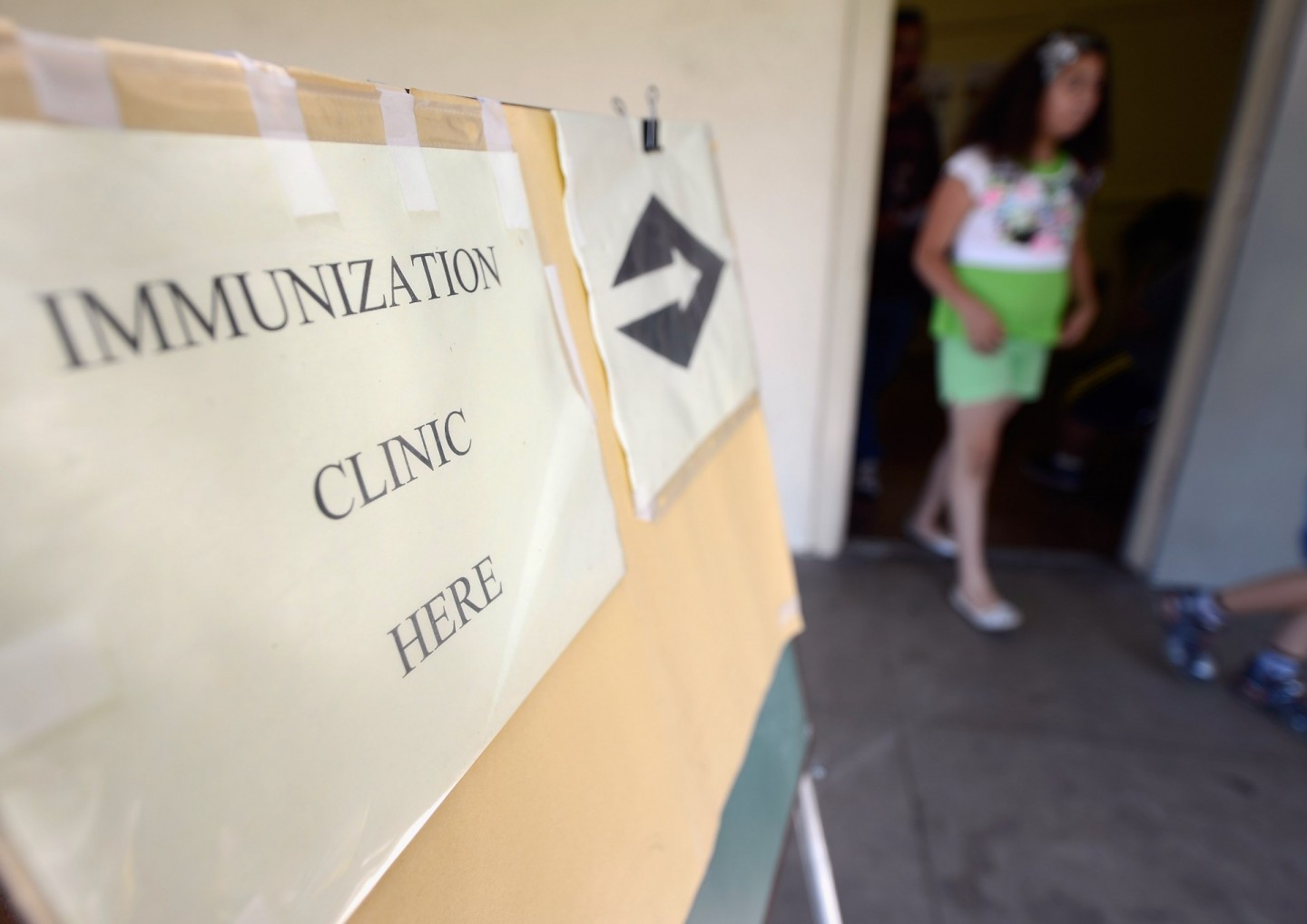
"caption": "Students leave the school nurse office after receiving a vaccine against whooping cough at Mark Twain Middle School, August 7, 2012 in Los Angeles.",
"description": "Students leave the school nurse office after receiving a vaccine against whooping cough at Mark Twain Middle School August 7, 2012 in Los Angeles, California.",
"title": "Whooping Cough Vaccinations Administered In Los Angeles",
"credit": "Kevork Djansezian/Getty Images",
"status": "inherit",
"isLoading": false,
"fetchFailed": false
},
"stateofhealth_26567": {
"type": "attachments",
"id": "stateofhealth_26567",
"meta": {
"index": "attachments_1716263798",
"site": "stateofhealth",
"id": "26567",
"found": true
},
"parent": 25721,
"imgSizes": {
"twentyfourteen-full-width": {
"file": "https://ww2.kqed.org/app/uploads/sites/27/2015/05/RS14070_495311669-1038x576.jpg",
"width": 1038,
"mimeType": "image/jpeg",
"height": 576
},
"thumbnail": {
"file": "https://ww2.kqed.org/app/uploads/sites/27/2015/05/RS14070_495311669-400x285.jpg",
"width": 400,
"mimeType": "image/jpeg",
"height": 285
},
"fd-sm": {
"file": "https://ww2.kqed.org/app/uploads/sites/27/2015/05/RS14070_495311669-960x685.jpg",
"width": 960,
"mimeType": "image/jpeg",
"height": 685
},
"post-thumbnail": {
"file": "https://ww2.kqed.org/app/uploads/sites/27/2015/05/RS14070_495311669-672x372.jpg",
"width": 672,
"mimeType": "image/jpeg",
"height": 372
},
"kqedFullSize": {
"file": "https://ww2.kqed.org/app/uploads/sites/27/2015/05/RS14070_495311669-e1431383620965.jpg",
"width": 1920,
"height": 1369
},
"large": {
"file": "https://ww2.kqed.org/app/uploads/sites/27/2015/05/RS14070_495311669-1440x1027.jpg",
"width": 1440,
"mimeType": "image/jpeg",
"height": 1027
},
"guest-author-96": {
"file": "https://ww2.kqed.org/app/uploads/sites/27/2015/05/RS14070_495311669-96x96.jpg",
"width": 96,
"mimeType": "image/jpeg",
"height": 96
},
"medium": {
"file": "https://ww2.kqed.org/app/uploads/sites/27/2015/05/RS14070_495311669-800x570.jpg",
"width": 800,
"mimeType": "image/jpeg",
"height": 570
},
"guest-author-64": {
"file": "https://ww2.kqed.org/app/uploads/sites/27/2015/05/RS14070_495311669-64x64.jpg",
"width": 64,
"mimeType": "image/jpeg",
"height": 64
},
"guest-author-32": {
"file": "https://ww2.kqed.org/app/uploads/sites/27/2015/05/RS14070_495311669-32x32.jpg",
"width": 32,
"mimeType": "image/jpeg",
"height": 32
},
"fd-med": {
"file": "https://ww2.kqed.org/app/uploads/sites/27/2015/05/RS14070_495311669-1180x841.jpg",
"width": 1180,
"mimeType": "image/jpeg",
"height": 841
},
"detail": {
"file": "https://ww2.kqed.org/app/uploads/sites/27/2015/05/RS14070_495311669-75x75.jpg",
"width": 75,
"mimeType": "image/jpeg",
"height": 75
},
"guest-author-128": {
"file": "https://ww2.kqed.org/app/uploads/sites/27/2015/05/RS14070_495311669-128x128.jpg",
"width": 128,
"mimeType": "image/jpeg",
"height": 128
}
},
"publishDate": 1431383577,
"modified": 1435251228,
"caption": "A dose of measles vaccine. ",
"description": "MIAMI, FL - JUNE 02: A dose of measles vaccine is seen at the Miami Children's Hospital on June 02, 2014 in Miami, Florida. The Centers for Disease Control and Prevention last week announced that in the United States they are seeing the most measles cases in 20 years as they warned clinicians, parents and others to watch for and get vaccinated against the potentially deadly virus. (Photo by Joe Raedle/Getty Images)",
"title": "Center For Disease Control Reports Highest Number Of Measles Cases In 20 Years",
"credit": " Joe Raedle/Getty Images",
"status": "inherit",
"isLoading": false,
"fetchFailed": false
},
"stateofhealth_39671": {
"type": "attachments",
"id": "stateofhealth_39671",
"meta": {
"index": "attachments_1716263798",
"site": "stateofhealth",
"id": "39671",
"found": true
},
"parent": 39089,
"imgSizes": {
"twentyfourteen-full-width": {
"file": "https://ww2.kqed.org/app/uploads/sites/27/2015/06/HIV-1038x576.jpg",
"width": 1038,
"mimeType": "image/jpeg",
"height": 576
},
"thumbnail": {
"file": "https://ww2.kqed.org/app/uploads/sites/27/2015/06/HIV-400x276.jpg",
"width": 400,
"mimeType": "image/jpeg",
"height": 276
},
"fd-sm": {
"file": "https://ww2.kqed.org/app/uploads/sites/27/2015/06/HIV-960x663.jpg",
"width": 960,
"mimeType": "image/jpeg",
"height": 663
},
"post-thumbnail": {
"file": "https://ww2.kqed.org/app/uploads/sites/27/2015/06/HIV-672x372.jpg",
"width": 672,
"mimeType": "image/jpeg",
"height": 372
},
"kqedFullSize": {
"file": "https://ww2.kqed.org/app/uploads/sites/27/2015/06/HIV-e1435175508186.jpg",
"width": 1920,
"height": 1325
},
"large": {
"file": "https://ww2.kqed.org/app/uploads/sites/27/2015/06/HIV-1440x994.jpg",
"width": 1440,
"mimeType": "image/jpeg",
"height": 994
},
"guest-author-96": {
"file": "https://ww2.kqed.org/app/uploads/sites/27/2015/06/HIV-96x96.jpg",
"width": 96,
"mimeType": "image/jpeg",
"height": 96
},
"medium": {
"file": "https://ww2.kqed.org/app/uploads/sites/27/2015/06/HIV-800x552.jpg",
"width": 800,
"mimeType": "image/jpeg",
"height": 552
},
"guest-author-64": {
"file": "https://ww2.kqed.org/app/uploads/sites/27/2015/06/HIV-64x64.jpg",
"width": 64,
"mimeType": "image/jpeg",
"height": 64
},
"guest-author-32": {
"file": "https://ww2.kqed.org/app/uploads/sites/27/2015/06/HIV-32x32.jpg",
"width": 32,
"mimeType": "image/jpeg",
"height": 32
},
"fd-med": {
"file": "https://ww2.kqed.org/app/uploads/sites/27/2015/06/HIV-1180x815.jpg",
"width": 1180,
"mimeType": "image/jpeg",
"height": 815
},
"detail": {
"file": "https://ww2.kqed.org/app/uploads/sites/27/2015/06/HIV-75x75.jpg",
"width": 75,
"mimeType": "image/jpeg",
"height": 75
},
"guest-author-128": {
"file": "https://ww2.kqed.org/app/uploads/sites/27/2015/06/HIV-128x128.jpg",
"width": 128,
"mimeType": "image/jpeg",
"height": 128
}
},
"publishDate": 1435175496,
"modified": 1435175651,
"caption": "FILE PHOTO: Woman in mobile health van in Camden, New Jersey.",
"description": null,
"title": "Camden Combats AIDS One Street At A Time",
"credit": "Spencer Platt/Getty Images",
"status": "inherit",
"isLoading": false,
"fetchFailed": false
},
"stateofhealth_39382": {
"type": "attachments",
"id": "stateofhealth_39382",
"meta": {
"index": "attachments_1716263798",
"site": "stateofhealth",
"id": "39382",
"found": true
},
"parent": 39317,
"imgSizes": {
"twentyfourteen-full-width": {
"file": "https://ww2.kqed.org/app/uploads/sites/27/2015/06/krawitt-1024x576.jpg",
"width": 1024,
"mimeType": "image/jpeg",
"height": 576
},
"thumbnail": {
"file": "https://ww2.kqed.org/app/uploads/sites/27/2015/06/krawitt-400x300.jpg",
"width": 400,
"mimeType": "image/jpeg",
"height": 300
},
"fd-sm": {
"file": "https://ww2.kqed.org/app/uploads/sites/27/2015/06/krawitt-960x720.jpg",
"width": 960,
"mimeType": "image/jpeg",
"height": 720
},
"post-thumbnail": {
"file": "https://ww2.kqed.org/app/uploads/sites/27/2015/06/krawitt-672x372.jpg",
"width": 672,
"mimeType": "image/jpeg",
"height": 372
},
"kqedFullSize": {
"file": "https://ww2.kqed.org/app/uploads/sites/27/2015/06/krawitt.jpg",
"width": 1024,
"height": 768
},
"guest-author-96": {
"file": "https://ww2.kqed.org/app/uploads/sites/27/2015/06/krawitt-96x96.jpg",
"width": 96,
"mimeType": "image/jpeg",
"height": 96
},
"medium": {
"file": "https://ww2.kqed.org/app/uploads/sites/27/2015/06/krawitt-800x600.jpg",
"width": 800,
"mimeType": "image/jpeg",
"height": 600
},
"guest-author-64": {
"file": "https://ww2.kqed.org/app/uploads/sites/27/2015/06/krawitt-64x64.jpg",
"width": 64,
"mimeType": "image/jpeg",
"height": 64
},
"detail": {
"file": "https://ww2.kqed.org/app/uploads/sites/27/2015/06/krawitt-75x75.jpg",
"width": 75,
"mimeType": "image/jpeg",
"height": 75
},
"guest-author-32": {
"file": "https://ww2.kqed.org/app/uploads/sites/27/2015/06/krawitt-32x32.jpg",
"width": 32,
"mimeType": "image/jpeg",
"height": 32
},
"guest-author-128": {
"file": "https://ww2.kqed.org/app/uploads/sites/27/2015/06/krawitt-128x128.jpg",
"width": 128,
"mimeType": "image/jpeg",
"height": 128
}
},
"publishDate": 1435102755,
"modified": 1435102794,
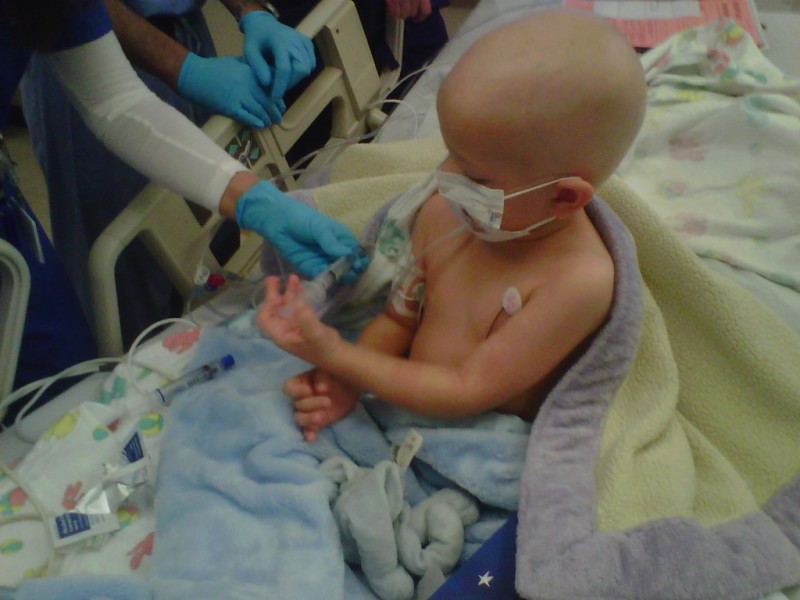
"caption": "Rhett Krawitt, just weeks after starting chemotherapy, in 2010. ",
"description": null,
"title": "krawitt",
"credit": "Courtesy Carl Krawitt",
"status": "inherit",
"isLoading": false,
"fetchFailed": false
},
"stateofhealth_22782": {
"type": "attachments",
"id": "stateofhealth_22782",
"meta": {
"index": "attachments_1716263798",
"site": "stateofhealth",
"id": "22782",
"found": true
},
"parent": 22774,
"imgSizes": {
"twentyfourteen-full-width": {
"file": "https://ww2.kqed.org/app/uploads/sites/27/2014/12/iStock_000045052098_Large-e1417565171908-1038x576.jpg",
"width": 1038,
"mimeType": "image/jpeg",
"height": 576
},
"thumbnail": {
"file": "https://ww2.kqed.org/app/uploads/sites/27/2014/12/iStock_000045052098_Large-e1417565171908-400x266.jpg",
"width": 400,
"mimeType": "image/jpeg",
"height": 266
},
"fd-sm": {
"file": "https://ww2.kqed.org/app/uploads/sites/27/2014/12/iStock_000045052098_Large-e1417565171908-320x213.jpg",
"width": 320,
"mimeType": "image/jpeg",
"height": 213
},
"post-thumbnail": {
"file": "https://ww2.kqed.org/app/uploads/sites/27/2014/12/iStock_000045052098_Large-e1417565171908-672x372.jpg",
"width": 672,
"mimeType": "image/jpeg",
"height": 372
},
"kqedFullSize": {
"file": "https://ww2.kqed.org/app/uploads/sites/27/2014/12/iStock_000045052098_Large-e1417565171908.jpg",
"width": 1441,
"height": 960
},
"large": {
"file": "https://ww2.kqed.org/app/uploads/sites/27/2014/12/iStock_000045052098_Large-e1417565171908-1440x959.jpg",
"width": 1440,
"mimeType": "image/jpeg",
"height": 959
},
"guest-author-96": {
"file": "https://ww2.kqed.org/app/uploads/sites/27/2014/12/iStock_000045052098_Large-e1417565171908-96x96.jpg",
"width": 96,
"mimeType": "image/jpeg",
"height": 96
},
"medium": {
"file": "https://ww2.kqed.org/app/uploads/sites/27/2014/12/iStock_000045052098_Large-e1417565171908-800x533.jpg",
"width": 800,
"mimeType": "image/jpeg",
"height": 533
},
"guest-author-64": {
"file": "https://ww2.kqed.org/app/uploads/sites/27/2014/12/iStock_000045052098_Large-e1417565171908-64x64.jpg",
"width": 64,
"mimeType": "image/jpeg",
"height": 64
},
"guest-author-32": {
"file": "https://ww2.kqed.org/app/uploads/sites/27/2014/12/iStock_000045052098_Large-e1417565171908-32x32.jpg",
"width": 32,
"mimeType": "image/jpeg",
"height": 32
},
"fd-lrg": {
"file": "https://ww2.kqed.org/app/uploads/sites/27/2014/12/iStock_000045052098_Large-e1417565171908-1180x786.jpg",
"width": 1180,
"mimeType": "image/jpeg",
"height": 786
},
"fd-med": {
"file": "https://ww2.kqed.org/app/uploads/sites/27/2014/12/iStock_000045052098_Large-e1417565171908-768x512.jpg",
"width": 768,
"mimeType": "image/jpeg",
"height": 512
},
"detail": {
"file": "https://ww2.kqed.org/app/uploads/sites/27/2014/12/iStock_000045052098_Large-e1417565171908-75x75.jpg",
"width": 75,
"mimeType": "image/jpeg",
"height": 75
},
"guest-author-128": {
"file": "https://ww2.kqed.org/app/uploads/sites/27/2014/12/iStock_000045052098_Large-e1417565171908-128x128.jpg",
"width": 128,
"mimeType": "image/jpeg",
"height": 128
}
},
"publishDate": 1417565161,
"modified": 1435011904,
"caption": null,
"description": "Conceptual medical and healthcare image with a close up of a stethoscope lying on a doctors desk with the hands of the doctor visible behind working on a computer",
"title": "Conceptual medical image with a close up of a stethoscope",
"credit": "iStock",
"status": "inherit",
"isLoading": false,
"fetchFailed": false
},
"stateofhealth_37955": {
"type": "attachments",
"id": "stateofhealth_37955",
"meta": {
"index": "attachments_1716263798",
"site": "stateofhealth",
"id": "37955",
"found": true
},
"parent": 37941,
"imgSizes": {
"twentyfourteen-full-width": {
"file": "https://ww2.kqed.org/app/uploads/sites/27/2015/06/IMG_1544-1038x576.jpg",
"width": 1038,
"mimeType": "image/jpeg",
"height": 576
},
"thumbnail": {
"file": "https://ww2.kqed.org/app/uploads/sites/27/2015/06/IMG_1544-400x300.jpg",
"width": 400,
"mimeType": "image/jpeg",
"height": 300
},
"fd-sm": {
"file": "https://ww2.kqed.org/app/uploads/sites/27/2015/06/IMG_1544-960x720.jpg",
"width": 960,
"mimeType": "image/jpeg",
"height": 720
},
"post-thumbnail": {
"file": "https://ww2.kqed.org/app/uploads/sites/27/2015/06/IMG_1544-672x372.jpg",
"width": 672,
"mimeType": "image/jpeg",
"height": 372
},
"kqedFullSize": {
"file": "https://ww2.kqed.org/app/uploads/sites/27/2015/06/IMG_1544-e1434652323355.jpg",
"width": 1920,
"height": 1440
},
"large": {
"file": "https://ww2.kqed.org/app/uploads/sites/27/2015/06/IMG_1544-1440x1080.jpg",
"width": 1440,
"mimeType": "image/jpeg",
"height": 1080
},
"guest-author-96": {
"file": "https://ww2.kqed.org/app/uploads/sites/27/2015/06/IMG_1544-96x96.jpg",
"width": 96,
"mimeType": "image/jpeg",
"height": 96
},
"medium": {
"file": "https://ww2.kqed.org/app/uploads/sites/27/2015/06/IMG_1544-800x600.jpg",
"width": 800,
"mimeType": "image/jpeg",
"height": 600
},
"guest-author-64": {
"file": "https://ww2.kqed.org/app/uploads/sites/27/2015/06/IMG_1544-64x64.jpg",
"width": 64,
"mimeType": "image/jpeg",
"height": 64
},
"guest-author-32": {
"file": "https://ww2.kqed.org/app/uploads/sites/27/2015/06/IMG_1544-32x32.jpg",
"width": 32,
"mimeType": "image/jpeg",
"height": 32
},
"fd-med": {
"file": "https://ww2.kqed.org/app/uploads/sites/27/2015/06/IMG_1544-1180x885.jpg",
"width": 1180,
"mimeType": "image/jpeg",
"height": 885
},
"detail": {
"file": "https://ww2.kqed.org/app/uploads/sites/27/2015/06/IMG_1544-75x75.jpg",
"width": 75,
"mimeType": "image/jpeg",
"height": 75
},
"guest-author-128": {
"file": "https://ww2.kqed.org/app/uploads/sites/27/2015/06/IMG_1544-128x128.jpg",
"width": 128,
"mimeType": "image/jpeg",
"height": 128
}
},
"publishDate": 1434652312,
"modified": 1434994596,
"caption": "Bertha Swan of San Francisco holds a bubble pack with dozens of pills that she sorts out and administers to her mother.",
"description": "Bertha Swan, of San Francisco, holds a bubble pack with dozens of pills that she sorts out and administers to her mother, who suffers from diabetes as well as heart and kidney problems. ",
"title": "IMG_1544",
"credit": "Tara Siler",
"status": "inherit",
"isLoading": false,
"fetchFailed": false
},
"stateofhealth_37600": {
"type": "attachments",
"id": "stateofhealth_37600",
"meta": {
"index": "attachments_1716263798",
"site": "stateofhealth",
"id": "37600",
"found": true
},
"parent": 37596,
"imgSizes": {
"twentyfourteen-full-width": {
"file": "https://ww2.kqed.org/app/uploads/sites/27/2015/06/iStock_000047393366_Large-1038x576.jpg",
"width": 1038,
"mimeType": "image/jpeg",
"height": 576
},
"thumbnail": {
"file": "https://ww2.kqed.org/app/uploads/sites/27/2015/06/iStock_000047393366_Large-400x267.jpg",
"width": 400,
"mimeType": "image/jpeg",
"height": 267
},
"fd-sm": {
"file": "https://ww2.kqed.org/app/uploads/sites/27/2015/06/iStock_000047393366_Large-960x640.jpg",
"width": 960,
"mimeType": "image/jpeg",
"height": 640
},
"post-thumbnail": {
"file": "https://ww2.kqed.org/app/uploads/sites/27/2015/06/iStock_000047393366_Large-672x372.jpg",
"width": 672,
"mimeType": "image/jpeg",
"height": 372
},
"kqedFullSize": {
"file": "https://ww2.kqed.org/app/uploads/sites/27/2015/06/iStock_000047393366_Large-e1434559952856.jpg",
"width": 1921,
"height": 1280
},
"large": {
"file": "https://ww2.kqed.org/app/uploads/sites/27/2015/06/iStock_000047393366_Large-1440x960.jpg",
"width": 1440,
"mimeType": "image/jpeg",
"height": 960
},
"guest-author-96": {
"file": "https://ww2.kqed.org/app/uploads/sites/27/2015/06/iStock_000047393366_Large-96x96.jpg",
"width": 96,
"mimeType": "image/jpeg",
"height": 96
},
"medium": {
"file": "https://ww2.kqed.org/app/uploads/sites/27/2015/06/iStock_000047393366_Large-800x533.jpg",
"width": 800,
"mimeType": "image/jpeg",
"height": 533
},
"guest-author-64": {
"file": "https://ww2.kqed.org/app/uploads/sites/27/2015/06/iStock_000047393366_Large-64x64.jpg",
"width": 64,
"mimeType": "image/jpeg",
"height": 64
},
"guest-author-32": {
"file": "https://ww2.kqed.org/app/uploads/sites/27/2015/06/iStock_000047393366_Large-32x32.jpg",
"width": 32,
"mimeType": "image/jpeg",
"height": 32
},
"fd-med": {
"file": "https://ww2.kqed.org/app/uploads/sites/27/2015/06/iStock_000047393366_Large-1180x786.jpg",
"width": 1180,
"mimeType": "image/jpeg",
"height": 786
},
"detail": {
"file": "https://ww2.kqed.org/app/uploads/sites/27/2015/06/iStock_000047393366_Large-75x75.jpg",
"width": 75,
"mimeType": "image/jpeg",
"height": 75
},
"guest-author-128": {
"file": "https://ww2.kqed.org/app/uploads/sites/27/2015/06/iStock_000047393366_Large-128x128.jpg",
"width": 128,
"mimeType": "image/jpeg",
"height": 128
}
},
"publishDate": 1434559941,
"modified": 1434559966,
"caption": null,
"description": "Stethoscope",
"title": "Doctor workplace with digital tablet and stethoscope",
"credit": "Getty Images",
"status": "inherit",
"isLoading": false,
"fetchFailed": false
},
"stateofhealth_37322": {
"type": "attachments",
"id": "stateofhealth_37322",
"meta": {
"index": "attachments_1716263798",
"site": "stateofhealth",
"id": "37322",
"found": true
},
"parent": 37288,
"imgSizes": {
"thumbnail": {
"file": "https://ww2.kqed.org/app/uploads/sites/27/2015/06/Screen-Shot-2015-06-16-at-11.52.20-AM-400x262.png",
"width": 400,
"mimeType": "image/png",
"height": 262
},
"post-thumbnail": {
"file": "https://ww2.kqed.org/app/uploads/sites/27/2015/06/Screen-Shot-2015-06-16-at-11.52.20-AM-672x372.png",
"width": 672,
"mimeType": "image/png",
"height": 372
},
"kqedFullSize": {
"file": "https://ww2.kqed.org/app/uploads/sites/27/2015/06/Screen-Shot-2015-06-16-at-11.52.20-AM.png",
"width": 695,
"height": 456
},
"guest-author-96": {
"file": "https://ww2.kqed.org/app/uploads/sites/27/2015/06/Screen-Shot-2015-06-16-at-11.52.20-AM-96x96.png",
"width": 96,
"mimeType": "image/png",
"height": 96
},
"guest-author-64": {
"file": "https://ww2.kqed.org/app/uploads/sites/27/2015/06/Screen-Shot-2015-06-16-at-11.52.20-AM-64x64.png",
"width": 64,
"mimeType": "image/png",
"height": 64
},
"detail": {
"file": "https://ww2.kqed.org/app/uploads/sites/27/2015/06/Screen-Shot-2015-06-16-at-11.52.20-AM-75x75.png",
"width": 75,
"mimeType": "image/png",
"height": 75
},
"guest-author-32": {
"file": "https://ww2.kqed.org/app/uploads/sites/27/2015/06/Screen-Shot-2015-06-16-at-11.52.20-AM-32x32.png",
"width": 32,
"mimeType": "image/png",
"height": 32
},
"guest-author-128": {
"file": "https://ww2.kqed.org/app/uploads/sites/27/2015/06/Screen-Shot-2015-06-16-at-11.52.20-AM-128x128.png",
"width": 128,
"mimeType": "image/png",
"height": 128
}
},
"publishDate": 1434480778,
"modified": 1434480931,
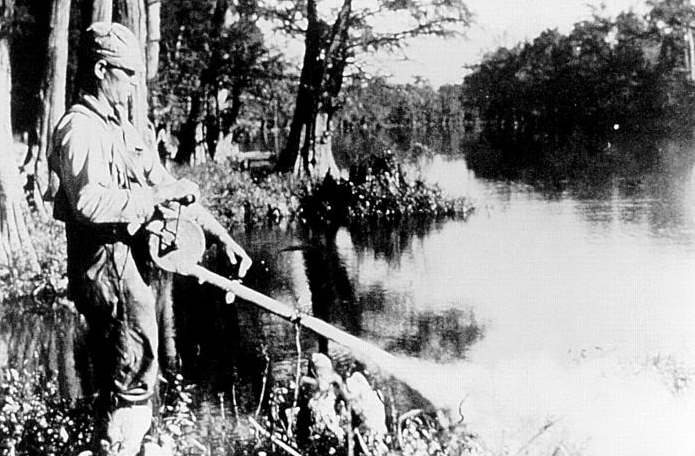
"caption": "1958 United States' National Malaria Eradication Program showing use of DDT for spraying of mosquitoes.",
"description": null,
"title": "Screen Shot 2015-06-16 at 11.52.20 AM",
"credit": "Centers for Disease Control",
"status": "inherit",
"isLoading": false,
"fetchFailed": false
},
"stateofhealth_35559": {
"type": "attachments",
"id": "stateofhealth_35559",
"meta": {
"index": "attachments_1716263798",
"site": "stateofhealth",
"id": "35559",
"found": true
},
"parent": 35558,
"imgSizes": {
"twentyfourteen-full-width": {
"file": "https://ww2.kqed.org/app/uploads/sites/27/2015/06/How-Docs-Die001-copy-1038x576.jpg",
"width": 1038,
"mimeType": "image/jpeg",
"height": 576
},
"thumbnail": {
"file": "https://ww2.kqed.org/app/uploads/sites/27/2015/06/How-Docs-Die001-copy-400x267.jpg",
"width": 400,
"mimeType": "image/jpeg",
"height": 267
},
"fd-sm": {
"file": "https://ww2.kqed.org/app/uploads/sites/27/2015/06/How-Docs-Die001-copy-960x640.jpg",
"width": 960,
"mimeType": "image/jpeg",
"height": 640
},
"post-thumbnail": {
"file": "https://ww2.kqed.org/app/uploads/sites/27/2015/06/How-Docs-Die001-copy-672x372.jpg",
"width": 672,
"mimeType": "image/jpeg",
"height": 372
},
"kqedFullSize": {
"file": "https://ww2.kqed.org/app/uploads/sites/27/2015/06/How-Docs-Die001-copy-e1433955694106.jpg",
"width": 1920,
"height": 1280
},
"large": {
"file": "https://ww2.kqed.org/app/uploads/sites/27/2015/06/How-Docs-Die001-copy-1440x960.jpg",
"width": 1440,
"mimeType": "image/jpeg",
"height": 960
},
"guest-author-96": {
"file": "https://ww2.kqed.org/app/uploads/sites/27/2015/06/How-Docs-Die001-copy-96x96.jpg",
"width": 96,
"mimeType": "image/jpeg",
"height": 96
},
"medium": {
"file": "https://ww2.kqed.org/app/uploads/sites/27/2015/06/How-Docs-Die001-copy-800x533.jpg",
"width": 800,
"mimeType": "image/jpeg",
"height": 533
},
"guest-author-64": {
"file": "https://ww2.kqed.org/app/uploads/sites/27/2015/06/How-Docs-Die001-copy-64x64.jpg",
"width": 64,
"mimeType": "image/jpeg",
"height": 64
},
"guest-author-32": {
"file": "https://ww2.kqed.org/app/uploads/sites/27/2015/06/How-Docs-Die001-copy-32x32.jpg",
"width": 32,
"mimeType": "image/jpeg",
"height": 32
},
"fd-med": {
"file": "https://ww2.kqed.org/app/uploads/sites/27/2015/06/How-Docs-Die001-copy-1180x787.jpg",
"width": 1180,
"mimeType": "image/jpeg",
"height": 787
},
"detail": {
"file": "https://ww2.kqed.org/app/uploads/sites/27/2015/06/How-Docs-Die001-copy-75x75.jpg",
"width": 75,
"mimeType": "image/jpeg",
"height": 75
},
"guest-author-128": {
"file": "https://ww2.kqed.org/app/uploads/sites/27/2015/06/How-Docs-Die001-copy-128x128.jpg",
"width": 128,
"mimeType": "image/jpeg",
"height": 128
}
},
"publishDate": 1433955677,
"modified": 1433955724,
"caption": "Nora Zamichow says if she and her husband, Mark Saylor, had known how doctors die, they may have made different treatment decisions for him at the end of his life.",
"description": null,
"title": "How Docs Die - 1",
"credit": "Maya Sugarman/KPCC",
"status": "inherit",
"isLoading": false,
"fetchFailed": false
},
"stateofhealth_33582": {
"type": "attachments",
"id": "stateofhealth_33582",
"meta": {
"index": "attachments_1716263798",
"site": "stateofhealth",
"id": "33582",
"found": true
},
"parent": 25344,
"imgSizes": {
"twentyfourteen-full-width": {
"file": "https://ww2.kqed.org/app/uploads/sites/27/2015/06/Screen-Shot-2015-06-04-at-12.44.16-PM-1038x576.png",
"width": 1038,
"mimeType": "image/png",
"height": 576
},
"thumbnail": {
"file": "https://ww2.kqed.org/app/uploads/sites/27/2015/06/Screen-Shot-2015-06-04-at-12.44.16-PM-400x225.png",
"width": 400,
"mimeType": "image/png",
"height": 225
},
"fd-sm": {
"file": "https://ww2.kqed.org/app/uploads/sites/27/2015/06/Screen-Shot-2015-06-04-at-12.44.16-PM-960x539.png",
"width": 960,
"mimeType": "image/png",
"height": 539
},
"post-thumbnail": {
"file": "https://ww2.kqed.org/app/uploads/sites/27/2015/06/Screen-Shot-2015-06-04-at-12.44.16-PM-672x372.png",
"width": 672,
"mimeType": "image/png",
"height": 372
},
"kqedFullSize": {
"file": "https://ww2.kqed.org/app/uploads/sites/27/2015/06/Screen-Shot-2015-06-04-at-12.44.16-PM.png",
"width": 1268,
"height": 712
},
"fd-med": {
"file": "https://ww2.kqed.org/app/uploads/sites/27/2015/06/Screen-Shot-2015-06-04-at-12.44.16-PM-1180x663.png",
"width": 1180,
"mimeType": "image/png",
"height": 663
},
"guest-author-96": {
"file": "https://ww2.kqed.org/app/uploads/sites/27/2015/06/Screen-Shot-2015-06-04-at-12.44.16-PM-96x96.png",
"width": 96,
"mimeType": "image/png",
"height": 96
},
"medium": {
"file": "https://ww2.kqed.org/app/uploads/sites/27/2015/06/Screen-Shot-2015-06-04-at-12.44.16-PM-800x449.png",
"width": 800,
"mimeType": "image/png",
"height": 449
},
"guest-author-64": {
"file": "https://ww2.kqed.org/app/uploads/sites/27/2015/06/Screen-Shot-2015-06-04-at-12.44.16-PM-64x64.png",
"width": 64,
"mimeType": "image/png",
"height": 64
},
"detail": {
"file": "https://ww2.kqed.org/app/uploads/sites/27/2015/06/Screen-Shot-2015-06-04-at-12.44.16-PM-75x75.png",
"width": 75,
"mimeType": "image/png",
"height": 75
},
"guest-author-32": {
"file": "https://ww2.kqed.org/app/uploads/sites/27/2015/06/Screen-Shot-2015-06-04-at-12.44.16-PM-32x32.png",
"width": 32,
"mimeType": "image/png",
"height": 32
},
"guest-author-128": {
"file": "https://ww2.kqed.org/app/uploads/sites/27/2015/06/Screen-Shot-2015-06-04-at-12.44.16-PM-128x128.png",
"width": 128,
"mimeType": "image/png",
"height": 128
}
},
"publishDate": 1433447087,
"modified": 1433447129,
"caption": "Maria Martinez (left) works full time as an occupational therapist, then cares for her mother who has Alzheimer's disease.",
"description": null,
"title": "Screen Shot 2015-06-04 at 12.44.16 PM",
"credit": "Lynne Shallcross",
"status": "inherit",
"isLoading": false,
"fetchFailed": false
},
"stateofhealth_32916": {
"type": "attachments",
"id": "stateofhealth_32916",
"meta": {
"index": "attachments_1716263798",
"site": "stateofhealth",
"id": "32916",
"found": true
},
"parent": 32898,
"imgSizes": {
"twentyfourteen-full-width": {
"file": "https://ww2.kqed.org/app/uploads/sites/27/2015/06/riverside-6-1038x576.jpg",
"width": 1038,
"mimeType": "image/jpeg",
"height": 576
},
"thumbnail": {
"file": "https://ww2.kqed.org/app/uploads/sites/27/2015/06/riverside-6-400x267.jpg",
"width": 400,
"mimeType": "image/jpeg",
"height": 267
},
"fd-sm": {
"file": "https://ww2.kqed.org/app/uploads/sites/27/2015/06/riverside-6-960x641.jpg",
"width": 960,
"mimeType": "image/jpeg",
"height": 641
},
"post-thumbnail": {
"file": "https://ww2.kqed.org/app/uploads/sites/27/2015/06/riverside-6-672x372.jpg",
"width": 672,
"mimeType": "image/jpeg",
"height": 372
},
"kqedFullSize": {
"file": "https://ww2.kqed.org/app/uploads/sites/27/2015/06/riverside-6-e1433291000451.jpg",
"width": 1921,
"height": 1282
},
"large": {
"file": "https://ww2.kqed.org/app/uploads/sites/27/2015/06/riverside-6-1440x961.jpg",
"width": 1440,
"mimeType": "image/jpeg",
"height": 961
},
"guest-author-96": {
"file": "https://ww2.kqed.org/app/uploads/sites/27/2015/06/riverside-6-96x96.jpg",
"width": 96,
"mimeType": "image/jpeg",
"height": 96
},
"medium": {
"file": "https://ww2.kqed.org/app/uploads/sites/27/2015/06/riverside-6-800x534.jpg",
"width": 800,
"mimeType": "image/jpeg",
"height": 534
},
"guest-author-64": {
"file": "https://ww2.kqed.org/app/uploads/sites/27/2015/06/riverside-6-64x64.jpg",
"width": 64,
"mimeType": "image/jpeg",
"height": 64
},
"guest-author-32": {
"file": "https://ww2.kqed.org/app/uploads/sites/27/2015/06/riverside-6-32x32.jpg",
"width": 32,
"mimeType": "image/jpeg",
"height": 32
},
"fd-med": {
"file": "https://ww2.kqed.org/app/uploads/sites/27/2015/06/riverside-6-1180x788.jpg",
"width": 1180,
"mimeType": "image/jpeg",
"height": 788
},
"detail": {
"file": "https://ww2.kqed.org/app/uploads/sites/27/2015/06/riverside-6-75x75.jpg",
"width": 75,
"mimeType": "image/jpeg",
"height": 75
},
"guest-author-128": {
"file": "https://ww2.kqed.org/app/uploads/sites/27/2015/06/riverside-6-128x128.jpg",
"width": 128,
"mimeType": "image/jpeg",
"height": 128
}
},
"publishDate": 1433290895,
"modified": 1433291098,
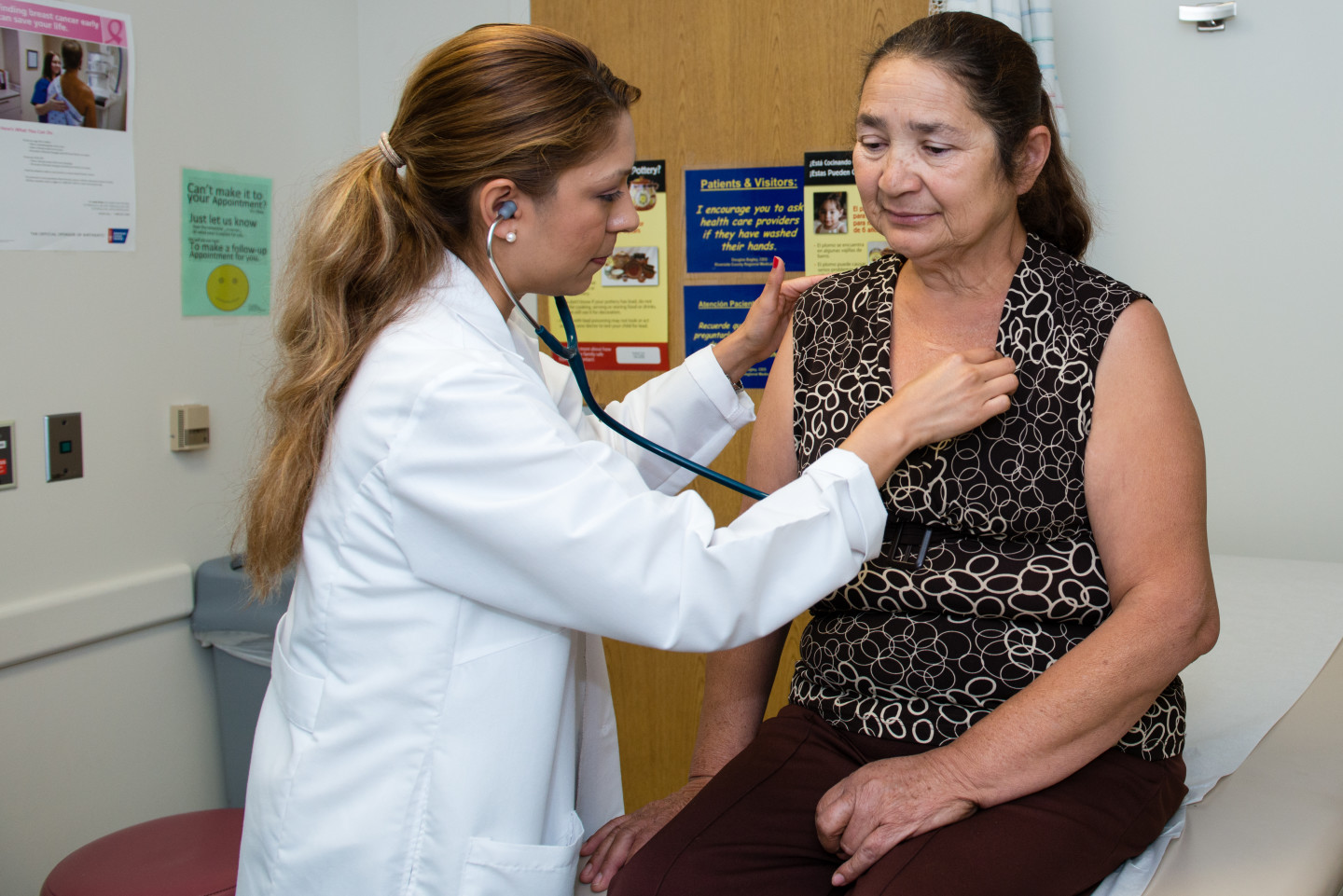
"caption": "Jennifer Vargas, a second year resident at Riverside County’s Regional Medical Center, treats patient Maria Sanchez. Sanchez says she feels comfortable with Vargas because she speaks Spanish.",
"description": "doctor with patient",
"title": "riverside-6",
"credit": "Heidi de Marco/KHN",
"status": "inherit",
"isLoading": false,
"fetchFailed": false
},
"stateofhealth_25328": {
"type": "attachments",
"id": "stateofhealth_25328",
"meta": {
"index": "attachments_1716263798",
"site": "stateofhealth",
"id": "25328",
"found": true
},
"parent": 25323,
"imgSizes": {
"twentyfourteen-full-width": {
"file": "https://ww2.kqed.org/app/uploads/sites/27/2015/05/iStock_000001740510_Medium-1038x576.jpg",
"width": 1038,
"mimeType": "image/jpeg",
"height": 576
},
"thumbnail": {
"file": "https://ww2.kqed.org/app/uploads/sites/27/2015/05/iStock_000001740510_Medium-400x300.jpg",
"width": 400,
"mimeType": "image/jpeg",
"height": 300
},
"fd-sm": {
"file": "https://ww2.kqed.org/app/uploads/sites/27/2015/05/iStock_000001740510_Medium-960x720.jpg",
"width": 960,
"mimeType": "image/jpeg",
"height": 720
},
"post-thumbnail": {
"file": "https://ww2.kqed.org/app/uploads/sites/27/2015/05/iStock_000001740510_Medium-672x372.jpg",
"width": 672,
"mimeType": "image/jpeg",
"height": 372
},
"kqedFullSize": {
"file": "https://ww2.kqed.org/app/uploads/sites/27/2015/05/iStock_000001740510_Medium-e1430934519162.jpg",
"width": 1920,
"height": 1440
},
"large": {
"file": "https://ww2.kqed.org/app/uploads/sites/27/2015/05/iStock_000001740510_Medium-1440x1080.jpg",
"width": 1440,
"mimeType": "image/jpeg",
"height": 1080
},
"guest-author-96": {
"file": "https://ww2.kqed.org/app/uploads/sites/27/2015/05/iStock_000001740510_Medium-96x96.jpg",
"width": 96,
"mimeType": "image/jpeg",
"height": 96
},
"medium": {
"file": "https://ww2.kqed.org/app/uploads/sites/27/2015/05/iStock_000001740510_Medium-800x600.jpg",
"width": 800,
"mimeType": "image/jpeg",
"height": 600
},
"guest-author-64": {
"file": "https://ww2.kqed.org/app/uploads/sites/27/2015/05/iStock_000001740510_Medium-64x64.jpg",
"width": 64,
"mimeType": "image/jpeg",
"height": 64
},
"guest-author-32": {
"file": "https://ww2.kqed.org/app/uploads/sites/27/2015/05/iStock_000001740510_Medium-32x32.jpg",
"width": 32,
"mimeType": "image/jpeg",
"height": 32
},
"fd-med": {
"file": "https://ww2.kqed.org/app/uploads/sites/27/2015/05/iStock_000001740510_Medium-1180x885.jpg",
"width": 1180,
"mimeType": "image/jpeg",
"height": 885
},
"detail": {
"file": "https://ww2.kqed.org/app/uploads/sites/27/2015/05/iStock_000001740510_Medium-75x75.jpg",
"width": 75,
"mimeType": "image/jpeg",
"height": 75
},
"guest-author-128": {
"file": "https://ww2.kqed.org/app/uploads/sites/27/2015/05/iStock_000001740510_Medium-128x128.jpg",
"width": 128,
"mimeType": "image/jpeg",
"height": 128
}
},
"publishDate": 1430934510,
"modified": 1430934549,
"caption": null,
"description": "insurance, health insurance",
"title": "iStock_000001740510_Medium",
"credit": "Getty Images",
"status": "inherit",
"isLoading": false,
"fetchFailed": false
}
},
"audioPlayerReducer": {
"postId": "stream_live",
"isPaused": true,
"isPlaying": false,
"pfsActive": false,
"pledgeModalIsOpen": true,
"playerDrawerIsOpen": false,
"liveAudioPlayStartedAt": 0,
"liveAudioPlayContext": ""
},
"authorsReducer": {
"byline_stateofhealth_39062": {
"type": "authors",
"id": "byline_stateofhealth_39062",
"meta": {
"override": true
},
"slug": "byline_stateofhealth_39062",
"name": "Anna Gorman\u003cbr>Kaiser Health News",
"isLoading": false
},
"byline_stateofhealth_37941": {
"type": "authors",
"id": "byline_stateofhealth_37941",
"meta": {
"override": true
},
"slug": "byline_stateofhealth_37941",
"name": "Tara Siler\u003cbr>\u003ca href=\"http://www.californiahealthline.org/insight/2015/program-targets-superusers--of-health-care-to-lower-costs-increase-quality\">California Healthline\u003c/a>",
"isLoading": false
},
"byline_stateofhealth_37596": {
"type": "authors",
"id": "byline_stateofhealth_37596",
"meta": {
"override": true
},
"slug": "byline_stateofhealth_37596",
"name": "Barbara Feder Ostrov, Kaiser Health News",
"isLoading": false
},
"byline_stateofhealth_35558": {
"type": "authors",
"id": "byline_stateofhealth_35558",
"meta": {
"override": true
},
"slug": "byline_stateofhealth_35558",
"name": "Stephanie O'Neill, KPCC",
"isLoading": false
},
"byline_stateofhealth_25344": {
"type": "authors",
"id": "byline_stateofhealth_25344",
"meta": {
"override": true
},
"slug": "byline_stateofhealth_25344",
"name": "Lynne Shallcross",
"isLoading": false
},
"byline_stateofhealth_32898": {
"type": "authors",
"id": "byline_stateofhealth_32898",
"meta": {
"override": true
},
"slug": "byline_stateofhealth_32898",
"name": "Andrew Wang and Heidi de Marco, Kaiser Health News",
"isLoading": false
},
"byline_stateofhealth_31357": {
"type": "authors",
"id": "byline_stateofhealth_31357",
"meta": {
"override": true
},
"slug": "byline_stateofhealth_31357",
"name": "Anna Gorman, Kaiser Health News",
"isLoading": false
},
"jbrooks": {
"type": "authors",
"id": "80",
"meta": {
"index": "authors_1716337520",
"id": "80",
"found": true
},
"name": "Jon Brooks",
"firstName": "Jon",
"lastName": "Brooks",
"slug": "jbrooks",
"email": "jbrooks@kqed.org",
"display_author_email": true,
"staff_mastheads": [
"science"
],
"title": "Digital Editor",
"bio": "Jon Brooks is a former Digital Editor for KQED Science. He is the former editor of KQED’s daily news blog, News Fix. In 2014, he won a California Journalism Award for his coverage of ride services like Uber and Lyft and the taxi industry. A veteran blogger, he previously worked for Yahoo! in various news writing and editing roles. Jon is also a playwright whose work has been produced in San Francisco, New York, Italy, and around the U.S. He has written about film for his own blog and studied film at Boston University.",
"avatar": "https://secure.gravatar.com/avatar/98887f7ed1c876ed414d4c915e969584?s=600&d=blank&r=g",
"twitter": "jbrooksfoy",
"facebook": null,
"instagram": null,
"linkedin": null,
"sites": [
{
"site": "arts",
"roles": [
"Contributor",
"editor"
]
},
{
"site": "news",
"roles": [
"author"
]
},
{
"site": "futureofyou",
"roles": [
"administrator"
]
},
{
"site": "mindshift",
"roles": [
"editor"
]
},
{
"site": "stateofhealth",
"roles": [
"editor"
]
},
{
"site": "science",
"roles": [
"administrator"
]
},
{
"site": "quest",
"roles": [
"editor"
]
}
],
"headData": {
"title": "Jon Brooks | KQED",
"description": "Digital Editor",
"ogImgSrc": "https://secure.gravatar.com/avatar/98887f7ed1c876ed414d4c915e969584?s=600&d=blank&r=g",
"twImgSrc": "https://secure.gravatar.com/avatar/98887f7ed1c876ed414d4c915e969584?s=600&d=blank&r=g"
},
"isLoading": false,
"link": "/author/jbrooks"
},
"lisaaliferis": {
"type": "authors",
"id": "240",
"meta": {
"index": "authors_1716337520",
"id": "240",
"found": true
},
"name": "Lisa Aliferis",
"firstName": "Lisa",
"lastName": "Aliferis",
"slug": "lisaaliferis",
"email": "laliferis@kqed.org",
"display_author_email": false,
"staff_mastheads": [],
"title": "KQED Contributor",
"bio": "Lisa Aliferis is the founding editor of KQED's \u003cem>State of Health\u003c/em> blog. Since 2011, she's been writing and editing stories for the site. Before taking up blogging, she toiled for many years (more than we can count) producing health stories for television, including\u003cem> Dateline NBC\u003c/em> and San Francisco's CBS affiliate, KPIX-TV. She also wrote up a \u003ca title=\"http://www.kqed.org/news/health/obamacare/obamacare-guide.jsp\" href=\"http://www.kqed.org/news/health/obamacare/obamacare-guide.jsp\">handy guide to the Affordable Care Act\u003c/a>, especially for Californians. Her work has been honored for many awards. Most recently she was a finalist for \"Best Topical Reporting\" from the Online News Association. You can follow her on Twitter: \u003ca title=\"https://twitter.com/laliferis\" href=\"https://twitter.com/laliferis\">@laliferis\u003c/a>",
"avatar": "https://secure.gravatar.com/avatar/86c339d5cdcb0dcd2b6cf5d7c3f5886b?s=600&d=mm&r=g",
"twitter": "laliferis",
"facebook": null,
"instagram": null,
"linkedin": null,
"sites": [
{
"site": "news",
"roles": [
"subscriber"
]
},
{
"site": "futureofyou",
"roles": [
"subscriber"
]
},
{
"site": "stateofhealth",
"roles": [
"subscriber"
]
},
{
"site": "science",
"roles": [
"subscriber"
]
},
{
"site": "food",
"roles": []
}
],
"headData": {
"title": "Lisa Aliferis | KQED",
"description": "KQED Contributor",
"ogImgSrc": "https://secure.gravatar.com/avatar/86c339d5cdcb0dcd2b6cf5d7c3f5886b?s=600&d=mm&r=g",
"twImgSrc": "https://secure.gravatar.com/avatar/86c339d5cdcb0dcd2b6cf5d7c3f5886b?s=600&d=mm&r=g"
},
"isLoading": false,
"link": "/author/lisaaliferis"
}
},
"pagesReducer": {
"stateofhealth_category_place-matters": {
"type": "terms",
"id": "stateofhealth_11",
"meta": {
"index": "terms_1716263798",
"site": "stateofhealth",
"id": "11",
"score": 14.406237
},
"featImg": null,
"name": "Community Health",
"description": "\r\n\r\nFrom rural California to urban neighborhoods, where you live affects your health",
"taxonomy": "category",
"headData": {
"twImgId": null,
"twTitle": null,
"ogTitle": null,
"ogImgId": null,
"twDescription": null,
"description": "From rural California to urban neighborhoods, where you live affects your health",
"title": "Community Health Archives | KQED Arts",
"ogDescription": null
},
"ttid": 11,
"slug": "place-matters",
"isLoading": false,
"title": "Community Health",
"pageMeta": {
"site": "stateofhealth",
"WpPageTemplate": "page-topic-editorial",
"currentPage": 22
},
"blocks": [
{
"blockName": "kqed/company-paragraph",
"content": "\r\n\r\nFrom rural California to urban neighborhoods, where you live affects your health"
},
{
"blockName": "kqed/post-list",
"attrs": {
"layout": "cardArticle2",
"query": "posts/stateofhealth?category=place-matters",
"seeMore": false,
"paginated": true,
"page": 22
}
},
{
"blockName": "kqed/ad"
}
]
}
},
"pfsSessionReducer": {},
"postsReducer": {
"stream_live": {
"type": "live",
"id": "stream_live",
"audioUrl": "https://streams.kqed.org/kqedradio",
"title": "Live Stream",
"excerpt": "Live Stream information currently unavailable.",
"link": "/radio",
"featImg": "",
"label": {
"name": "KQED Live",
"link": "/"
}
},
"stream_kqedNewscast": {
"type": "posts",
"id": "stream_kqedNewscast",
"audioUrl": "https://www.kqed.org/.stream/anon/radio/RDnews/newscast.mp3?_=1",
"title": "KQED Newscast",
"featImg": "",
"label": {
"name": "88.5 FM",
"link": "/"
}
},
"stateofhealth_40138": {
"type": "posts",
"id": "stateofhealth_40138",
"meta": {
"index": "posts_1716263798",
"site": "stateofhealth",
"id": "40138",
"score": null,
"sort": [
1435271092000
]
},
"parent": 0,
"labelTerm": {
"site": "stateofhealth"
},
"blocks": [],
"publishDate": 1435271092,
"format": "standard",
"disqusTitle": "Vaccine Bill: Kids With Existing Personal Belief Exemptions Could Stay in School -- For a Time",
"title": "Vaccine Bill: Kids With Existing Personal Belief Exemptions Could Stay in School -- For a Time",
"headTitle": "State of Health | KQED News",
"content": "\u003cp>SB277, the law passed by the Assembly today, contains language that would allow a certain amount of grandfathering for those who already have personal belief exemptions. To wit, unvaccinated kids can \u003cem>stay\u003c/em> unvaccinated and still remain in school until the next \"grade span,\" as long as their exemption is on file before Jan. 1, 2016. That means children cannot enter preschool, kindergarten or seventh grade without their shots, but can continue to go to school between those junctures.\u003c/p>\n\u003cp>So an unvaccinated child who is in kindergarten, for example, could avoid getting immunized for seven years, until she reaches seventh grade.\u003c/p>\n\u003cp>Jodi Hicks, with the California Academy of Family Physicians, a supporter of the bill, said that if you changed schools, you might also have to prove your child has been vaccinated, no matter which grade you were in.\u003c/p>\n\u003cp>Hicks said the grandfathering was included so schools could implement the new requirements \"with as little disruption as possible,\" retaining all the current \"checkpoints\" at which vaccinations are currently verified.\u003c/p>\n\u003cp>The \u003ca href=\"http://www.mercurynews.com/science/ci_28115461/bill-restricting-vaccine-exemptions-overwhelmingly-passes-state-senate\" target=\"_blank\">Mercury News\u003c/a> had this to stay about this aspect of the bill after it passed the Senate in May:\u003c/p>\n\u003cblockquote>\u003cp>(P)erhaps the most significant compromise was the authors' pledge to \"grandfather in\" many public and private school students whose parents have claimed personal belief exemptions. That would mean that more than 13,000 children who have had no vaccinations by first grade won't have to get their shots until they enter seventh grade. And nearly 10,000 seventh-graders who today aren't fully vaccinated may be able to avoid future shots because the state does not always require them after that grade.\u003c/p>\n\u003cp>The move was aimed at mollifying hundreds of angry California parents who have staged rallies and jammed hearing rooms, citing their concerns over vaccine side effects and asserting their parental rights.\u003c/p>\n\u003cp>\"By scaling back the bill's reach, their chance of success becomes much greater,\" said Dan Schnur, director of the University of Southern California's Unruh Institute of Politics.\u003c/p>\u003c/blockquote>\n\u003cp>Because the bill was amended in the Assembly, it now goes back to the Senate for another vote before it can be sent to Gov. Jerry Brown. The governor has not said directly that he would sign the bill, but there have been indications that he is at least leaning that way.\u003c/p>\n\u003cp>[ad fullwidth]\u003c/p>\n\u003cp>\u003c/p>\n\u003cp>Here's the exact language of the grandfathering section:\u003c/p>\n\u003cblockquote>\u003cp>A pupil who, prior to January 1, 2016, submitted a letter or affidavit on file at a private or public elementary or secondary school, child day care center, day nursery, nursery school, family day care home, or development center stating beliefs opposed to immunization shall be allowed enrollment to any private or public elementary or secondary school, child day care center, day nursery, nursery school, family day care home, or development center within the state until the pupil enrolls in the next grade span.\u003cbr>\n(2) For purposes of this subdivision, “grade span” means each of the following:\u003cbr>\n(A) Birth to preschool.\u003cbr>\n(B) Kindergarten and grades 1 to 6, inclusive, including transitional kindergarten.\u003cbr>\n(C) Grades 7 to 12, inclusive.\u003cbr>\n(3) Except as provided in this subdivision, on and after July 1, 2016, the governing authority shall not unconditionally admit to any of those institutions specified in this subdivision for the first time, or admit or advance any pupil to 7th grade level, unless the pupil has been immunized for his or her age as required by this section.\u003c/p>\u003c/blockquote>\n\n",
"disqusIdentifier": "40138 http://ww2.kqed.org/stateofhealth/?p=40138",
"disqusUrl": "https://ww2.kqed.org/stateofhealth/2015/06/25/vaccine-bill-kids-with-personal-belief-exemptions-could-stay-in-school-for-a-time/",
"stats": {
"hasVideo": false,
"hasChartOrMap": false,
"hasAudio": false,
"hasPolis": false,
"wordCount": 576,
"hasGoogleForm": false,
"hasGallery": false,
"hasHearkenModule": false,
"iframeSrcs": [],
"paragraphCount": 13
},
"modified": 1435275411,
"excerpt": "Those with personal belief exemptions already on file would be grandfathered in until certain 'checkpoints.'",
"headData": {
"twImgId": "",
"twTitle": "",
"ogTitle": "",
"ogImgId": "",
"twDescription": "",
"description": "Those with personal belief exemptions already on file would be grandfathered in until certain 'checkpoints.'",
"title": "Vaccine Bill: Kids With Existing Personal Belief Exemptions Could Stay in School -- For a Time | KQED",
"ogDescription": "",
"schema": {
"@context": "https://schema.org",
"@type": "Article",
"headline": "Vaccine Bill: Kids With Existing Personal Belief Exemptions Could Stay in School -- For a Time",
"datePublished": "2015-06-25T15:24:52-07:00",
"dateModified": "2015-06-25T16:36:51-07:00",
"image": "https://cdn.kqed.org/wp-content/uploads/2020/02/KQED-OG-Image@1x.png"
}
},
"guestAuthors": [],
"slug": "vaccine-bill-kids-with-personal-belief-exemptions-could-stay-in-school-for-a-time",
"status": "publish",
"path": "/stateofhealth/40138/vaccine-bill-kids-with-personal-belief-exemptions-could-stay-in-school-for-a-time",
"audioTrackLength": null,
"parsedContent": [
{
"type": "contentString",
"content": "\u003cdiv class=\"post-body\">\u003cp>\u003cp>SB277, the law passed by the Assembly today, contains language that would allow a certain amount of grandfathering for those who already have personal belief exemptions. To wit, unvaccinated kids can \u003cem>stay\u003c/em> unvaccinated and still remain in school until the next \"grade span,\" as long as their exemption is on file before Jan. 1, 2016. That means children cannot enter preschool, kindergarten or seventh grade without their shots, but can continue to go to school between those junctures.\u003c/p>\n\u003cp>So an unvaccinated child who is in kindergarten, for example, could avoid getting immunized for seven years, until she reaches seventh grade.\u003c/p>\n\u003cp>Jodi Hicks, with the California Academy of Family Physicians, a supporter of the bill, said that if you changed schools, you might also have to prove your child has been vaccinated, no matter which grade you were in.\u003c/p>\n\u003cp>Hicks said the grandfathering was included so schools could implement the new requirements \"with as little disruption as possible,\" retaining all the current \"checkpoints\" at which vaccinations are currently verified.\u003c/p>\n\u003cp>The \u003ca href=\"http://www.mercurynews.com/science/ci_28115461/bill-restricting-vaccine-exemptions-overwhelmingly-passes-state-senate\" target=\"_blank\">Mercury News\u003c/a> had this to stay about this aspect of the bill after it passed the Senate in May:\u003c/p>\n\u003cblockquote>\u003cp>(P)erhaps the most significant compromise was the authors' pledge to \"grandfather in\" many public and private school students whose parents have claimed personal belief exemptions. That would mean that more than 13,000 children who have had no vaccinations by first grade won't have to get their shots until they enter seventh grade. And nearly 10,000 seventh-graders who today aren't fully vaccinated may be able to avoid future shots because the state does not always require them after that grade.\u003c/p>\n\u003cp>The move was aimed at mollifying hundreds of angry California parents who have staged rallies and jammed hearing rooms, citing their concerns over vaccine side effects and asserting their parental rights.\u003c/p>\n\u003cp>\"By scaling back the bill's reach, their chance of success becomes much greater,\" said Dan Schnur, director of the University of Southern California's Unruh Institute of Politics.\u003c/p>\u003c/blockquote>\n\u003cp>Because the bill was amended in the Assembly, it now goes back to the Senate for another vote before it can be sent to Gov. Jerry Brown. The governor has not said directly that he would sign the bill, but there have been indications that he is at least leaning that way.\u003c/p>\n\u003cp>\u003c/p>\u003c/div>",
"attributes": {
"named": {},
"numeric": []
}
},
{
"type": "component",
"content": "",
"name": "ad",
"attributes": {
"named": {
"label": "fullwidth"
},
"numeric": [
"fullwidth"
]
}
},
{
"type": "contentString",
"content": "\u003cdiv class=\"post-body\">\u003cp>\u003c/p>\n\u003cp>\u003c/p>\n\u003cp>Here's the exact language of the grandfathering section:\u003c/p>\n\u003cblockquote>\u003cp>A pupil who, prior to January 1, 2016, submitted a letter or affidavit on file at a private or public elementary or secondary school, child day care center, day nursery, nursery school, family day care home, or development center stating beliefs opposed to immunization shall be allowed enrollment to any private or public elementary or secondary school, child day care center, day nursery, nursery school, family day care home, or development center within the state until the pupil enrolls in the next grade span.\u003cbr>\n(2) For purposes of this subdivision, “grade span” means each of the following:\u003cbr>\n(A) Birth to preschool.\u003cbr>\n(B) Kindergarten and grades 1 to 6, inclusive, including transitional kindergarten.\u003cbr>\n(C) Grades 7 to 12, inclusive.\u003cbr>\n(3) Except as provided in this subdivision, on and after July 1, 2016, the governing authority shall not unconditionally admit to any of those institutions specified in this subdivision for the first time, or admit or advance any pupil to 7th grade level, unless the pupil has been immunized for his or her age as required by this section.\u003c/p>\u003c/blockquote>\n\n\u003c/div>\u003c/p>",
"attributes": {
"named": {},
"numeric": []
}
}
],
"link": "/stateofhealth/40138/vaccine-bill-kids-with-personal-belief-exemptions-could-stay-in-school-for-a-time",
"authors": [
"80"
],
"categories": [
"stateofhealth_11",
"stateofhealth_14",
"stateofhealth_13"
],
"tags": [
"stateofhealth_2400",
"stateofhealth_31"
],
"featImg": "stateofhealth_24949",
"label": "stateofhealth"
},
"stateofhealth_39692": {
"type": "posts",
"id": "stateofhealth_39692",
"meta": {
"index": "posts_1716263798",
"site": "stateofhealth",
"id": "39692",
"score": null,
"sort": [
1435250918000
]
},
"parent": 0,
"labelTerm": {
"site": "stateofhealth"
},
"blocks": [],
"publishDate": 1435250918,
"format": "standard",
"disqusTitle": "California Assembly Votes to End Personal Belief Exemption for Vaccines",
"title": "California Assembly Votes to End Personal Belief Exemption for Vaccines",
"headTitle": "State of Health | KQED News",
"content": "\u003cp>The state Assembly Thursday voted 46-30 to end California's personal belief exemption for vaccinating schoolchildren. The bill, \u003ca href=\"https://leginfo.legislature.ca.gov/faces/billNavClient.xhtml?bill_id=201520160SB277\" target=\"_blank\">SB277\u003c/a>, now goes back to the Senate for a vote before it can be sent to the governor.\u003c/p>\n\u003cp>[contextly_sidebar id=\"1N1Ev5qBIHvvj01FW48IuCB9JdgyA2WC\"]The law would allows kids with existing personal belief exemptions to continue in school until their next \"grade span.\" That means those families can still rely on their exemptions until either entering preschool, kindergarten or seventh grade. Medical exemptions would also still be allowed.\u003c/p>\n\u003cp>The law, if signed, would go into effect Jan. 1, 2016. Starting July 1, 2016, students would need vaccinations to attend school.\u003c/p>\n\u003cp>Gov. Jerry Brown has not taken a position on the bill, but as noted on \u003ca href=\"http://ww2.kqed.org/news/2015/06/19/california-budget-deal-explained-kqed-politics-podcast/\" target=\"_blank\">KQED’s California Politics Podcast last week\u003c/a>, some Capitol observers think the fact that his cabinet secretary, Dana Williamson, testified in support of SB277 at the Assembly’s Health Committee hearing was an indication of which way the wind is blowing, even though Williamson emphasized she was speaking on her own behalf.\u003c/p>\n\u003cp>\u003ca href=\"http://www.npr.org/sections/health-shots/2015/06/25/417489013/california-law-to-curtail-vaccine-exemptions-clears-hurdle\" target=\"_blank\">NPR is reporting\u003c/a> that a spokesman for Brown said via email that the governor \"believes that vaccinations are profoundly important and a major public health benefit and any bill that reaches his desk will be closely considered.\"\u003c/p>\n\u003cp>[ad fullwidth]\u003c/p>\n\u003cp>One option for those opposing the bill, if it's signed, would be to try to undo it through a referendum. But that's easier said than done ...\u003c/p>\n\u003cp>https://twitter.com/johnmyers/status/614134251777339392\u003c/p>\n\u003cp>State Sen. Richard Pan (D-Sacramento), a physician and co-author of the bill, lauded its passage. \"Many of my colleagues have been under a lot of pressure because of the vociferousness of the opposition,\" he told KQED's April Dembosky. \"But when you look at the science and the facts, it's very clear this bill is what we need to do to make sure we protect our communities, protect our children from communicable disease.\"\u003c/p>\n\u003cp>The debate over the bill became a major battleground in the ongoing conflict between those who urge everyone to get vaccinated -- a group that includes the scientific and medical community -- and those who think the decision should remain personal. Many in that category believe vaccines are responsible for the rising autism rate, a proposition that has never been proved but remains an article of faith among some in the anti-vaccine movement.\u003c/p>\n\u003cp>The legislation gained steam in the wake of the measles outbreak that started in Disneyland last December and spread to at least half a dozen additional states. A total of \u003ca href=\"http://www.cdc.gov/measles/cases-outbreaks.html\" target=\"_blank\">117 cases\u003c/a> were associated with the outbreak, which was declared over on April 17 of this year.\u003c/p>\n\u003cp>Ninety percent of parents in California vaccinate their children, but there are pockets in the state where the rate of opting out is high. Marin County, for example, has the \u003ca href=\"http://ww2.kqed.org/news/2013/08/21/marin-vaccinations/\" target=\"_blank\">highest rate of personal belief exemptions in the Bay Area\u003c/a> and among the highest in the state. Last school year, 6.45 percent of Marin’s kindergartners went unvaccinated by invoking it.\u003c/p>\n\u003cp>One Marin family who had no choice but to leave their child unvaccinated during the measles scare is the Krawitts. Their 6-year-old son, Rhett, was in remission from leukemia, but his immune system was still too weak to tolerate vaccination; he had to rely on \u003ca href=\"http://ww2.kqed.org/stateofhealth/2013/08/23/5-things-you-should-know-about-vaccines/\" target=\"_blank\">herd immunity\u003c/a>, a state of protection for even unvaccinated individuals resulting from immunization by enough of the surrounding population. After Carl Krawitt spoke out against those who voluntarily opt out of vaccination, Rhett became a sort of poster child for people with compromised immune systems put at greater risk from a decrease in the vaccination rate.\u003c/p>\n\u003cp>Yesterday in Sacramento, Rhett \u003ca href=\"http://ww2.kqed.org/stateofhealth/2015/06/23/boy-leukemia-patient-weighs-in-as-vote-on-vaccine-bill-nears/\" target=\"_blank\">delivered a petition to the governor\u003c/a>, with more than 32,000 signatures, in support of SB277.\u003c/p>\n\u003cp>\u003c/p>\n\u003cp>\u003cem>April Dembosky and Lisa Aliferis contributed to this post.\u003c/em>\u003c/p>\n\n",
"disqusIdentifier": "39692 http://ww2.kqed.org/stateofhealth/?p=39692",
"disqusUrl": "https://ww2.kqed.org/stateofhealth/2015/06/25/california-vaccine-exemption-bill/",
"stats": {
"hasVideo": false,
"hasChartOrMap": false,
"hasAudio": false,
"hasPolis": false,
"wordCount": 642,
"hasGoogleForm": false,
"hasGallery": false,
"hasHearkenModule": false,
"iframeSrcs": [],
"paragraphCount": 15
},
"modified": 1435334835,
"excerpt": "The bill would end the exemption for schoolchildren.",
"headData": {
"twImgId": "",
"twTitle": "",
"ogTitle": "",
"ogImgId": "",
"twDescription": "",
"description": "The bill would end the exemption for schoolchildren.",
"title": "California Assembly Votes to End Personal Belief Exemption for Vaccines | KQED",
"ogDescription": "",
"schema": {
"@context": "https://schema.org",
"@type": "Article",
"headline": "California Assembly Votes to End Personal Belief Exemption for Vaccines",
"datePublished": "2015-06-25T09:48:38-07:00",
"dateModified": "2015-06-26T09:07:15-07:00",
"image": "https://cdn.kqed.org/wp-content/uploads/2020/02/KQED-OG-Image@1x.png"
}
},
"guestAuthors": [],
"slug": "california-vaccine-exemption-bill",
"status": "publish",
"path": "/stateofhealth/39692/california-vaccine-exemption-bill",
"audioTrackLength": null,
"parsedContent": [
{
"type": "contentString",
"content": "\u003cdiv class=\"post-body\">\u003cp>\u003cp>The state Assembly Thursday voted 46-30 to end California's personal belief exemption for vaccinating schoolchildren. The bill, \u003ca href=\"https://leginfo.legislature.ca.gov/faces/billNavClient.xhtml?bill_id=201520160SB277\" target=\"_blank\">SB277\u003c/a>, now goes back to the Senate for a vote before it can be sent to the governor.\u003c/p>\n\u003cp>\u003c/p>\u003cp>\u003c/p>\u003cp>The law would allows kids with existing personal belief exemptions to continue in school until their next \"grade span.\" That means those families can still rely on their exemptions until either entering preschool, kindergarten or seventh grade. Medical exemptions would also still be allowed.\u003c/p>\n\u003cp>The law, if signed, would go into effect Jan. 1, 2016. Starting July 1, 2016, students would need vaccinations to attend school.\u003c/p>\n\u003cp>Gov. Jerry Brown has not taken a position on the bill, but as noted on \u003ca href=\"http://ww2.kqed.org/news/2015/06/19/california-budget-deal-explained-kqed-politics-podcast/\" target=\"_blank\">KQED’s California Politics Podcast last week\u003c/a>, some Capitol observers think the fact that his cabinet secretary, Dana Williamson, testified in support of SB277 at the Assembly’s Health Committee hearing was an indication of which way the wind is blowing, even though Williamson emphasized she was speaking on her own behalf.\u003c/p>\n\u003cp>\u003ca href=\"http://www.npr.org/sections/health-shots/2015/06/25/417489013/california-law-to-curtail-vaccine-exemptions-clears-hurdle\" target=\"_blank\">NPR is reporting\u003c/a> that a spokesman for Brown said via email that the governor \"believes that vaccinations are profoundly important and a major public health benefit and any bill that reaches his desk will be closely considered.\"\u003c/p>\n\u003cp>\u003c/p>\u003c/div>",
"attributes": {
"named": {},
"numeric": []
}
},
{
"type": "component",
"content": "",
"name": "ad",
"attributes": {
"named": {
"label": "fullwidth"
},
"numeric": [
"fullwidth"
]
}
},
{
"type": "contentString",
"content": "\u003cdiv class=\"post-body\">\u003cp>\u003c/p>\n\u003cp>One option for those opposing the bill, if it's signed, would be to try to undo it through a referendum. But that's easier said than done ...\u003c/p>\u003c/p>\u003c/div>",
"attributes": {
"named": {},
"numeric": []
}
},
{
"type": "component",
"content": "",
"name": "singleTwitterStatus",
"attributes": {
"named": {
"id": "614134251777339392"
},
"numeric": []
}
},
{
"type": "contentString",
"content": "\u003cdiv class=\"post-body\">\u003cp>\n\u003cp>State Sen. Richard Pan (D-Sacramento), a physician and co-author of the bill, lauded its passage. \"Many of my colleagues have been under a lot of pressure because of the vociferousness of the opposition,\" he told KQED's April Dembosky. \"But when you look at the science and the facts, it's very clear this bill is what we need to do to make sure we protect our communities, protect our children from communicable disease.\"\u003c/p>\n\u003cp>The debate over the bill became a major battleground in the ongoing conflict between those who urge everyone to get vaccinated -- a group that includes the scientific and medical community -- and those who think the decision should remain personal. Many in that category believe vaccines are responsible for the rising autism rate, a proposition that has never been proved but remains an article of faith among some in the anti-vaccine movement.\u003c/p>\n\u003cp>The legislation gained steam in the wake of the measles outbreak that started in Disneyland last December and spread to at least half a dozen additional states. A total of \u003ca href=\"http://www.cdc.gov/measles/cases-outbreaks.html\" target=\"_blank\">117 cases\u003c/a> were associated with the outbreak, which was declared over on April 17 of this year.\u003c/p>\n\u003cp>Ninety percent of parents in California vaccinate their children, but there are pockets in the state where the rate of opting out is high. Marin County, for example, has the \u003ca href=\"http://ww2.kqed.org/news/2013/08/21/marin-vaccinations/\" target=\"_blank\">highest rate of personal belief exemptions in the Bay Area\u003c/a> and among the highest in the state. Last school year, 6.45 percent of Marin’s kindergartners went unvaccinated by invoking it.\u003c/p>\n\u003cp>One Marin family who had no choice but to leave their child unvaccinated during the measles scare is the Krawitts. Their 6-year-old son, Rhett, was in remission from leukemia, but his immune system was still too weak to tolerate vaccination; he had to rely on \u003ca href=\"http://ww2.kqed.org/stateofhealth/2013/08/23/5-things-you-should-know-about-vaccines/\" target=\"_blank\">herd immunity\u003c/a>, a state of protection for even unvaccinated individuals resulting from immunization by enough of the surrounding population. After Carl Krawitt spoke out against those who voluntarily opt out of vaccination, Rhett became a sort of poster child for people with compromised immune systems put at greater risk from a decrease in the vaccination rate.\u003c/p>\n\u003cp>Yesterday in Sacramento, Rhett \u003ca href=\"http://ww2.kqed.org/stateofhealth/2015/06/23/boy-leukemia-patient-weighs-in-as-vote-on-vaccine-bill-nears/\" target=\"_blank\">delivered a petition to the governor\u003c/a>, with more than 32,000 signatures, in support of SB277.\u003c/p>\n\u003cp>\u003c/p>\n\u003cp>\u003cem>April Dembosky and Lisa Aliferis contributed to this post.\u003c/em>\u003c/p>\n\n\u003c/div>\u003c/p>",
"attributes": {
"named": {},
"numeric": []
}
}
],
"link": "/stateofhealth/39692/california-vaccine-exemption-bill",
"authors": [
"80"
],
"categories": [
"stateofhealth_11",
"stateofhealth_14",
"stateofhealth_13"
],
"tags": [
"stateofhealth_2400",
"stateofhealth_31"
],
"featImg": "stateofhealth_26567",
"label": "stateofhealth"
},
"stateofhealth_39089": {
"type": "posts",
"id": "stateofhealth_39089",
"meta": {
"index": "posts_1716263798",
"site": "stateofhealth",
"id": "39089",
"score": null,
"sort": [
1435176292000
]
},
"parent": 0,
"labelTerm": {
"site": "stateofhealth"
},
"blocks": [],
"publishDate": 1435176292,
"format": "standard",
"disqusTitle": "National HIV Testing Day: Where to Get a Free Test",
"title": "National HIV Testing Day: Where to Get a Free Test",
"headTitle": "State of Health | KQED News",
"content": "\u003cp>Why get tested for HIV? Here's what amfAR, The Foundation for AIDS Research, has to say:\u003c/p>\n\u003cblockquote>\u003cp>Early diagnosis is crucial in preventing life-threatening health conditions and combating the spread of HIV. Knowing your status will allow you to take steps to protect your health and the health of others. If you know you are HIV-positive and pregnant, you can take medications and other precautions -— such as refraining from breast-feeding -- to significantly reduce the risk of infecting your child.\u003c/p>\u003c/blockquote>\n\u003cp>So if you've been putting off getting an HIV test, now's the time. June 27 is National HIV Testing Day, but you don't have to wait until then to get going.\u003c/p>\n\u003cp>AIDS.gov has a \u003ca href=\"https://locator.aids.gov/\" target=\"_blank\">\u003cstrong>locator tool\u003c/strong>\u003c/a> to find testing sites near you, and Walgreens, in partnership with \u003ca href=\"http://www.greaterthan.org/\" target=\"_blank\">Greater Than AIDS\u003c/a>, is providing free testing at select store locations around the country. Show up at the following times:\u003c/p>\n\u003cul>\n\u003cli>Thursday, June 25, from 3 p.m. to 7 p.m.\u003c/li>\n\u003cli>Friday, June 26, from 3 p.m. to 7 p.m.\u003c/li>\n\u003cli>Saturday, June 27, from 10 a.m. to 2 p.m.\u003c/li>\n\u003c/ul>\n\u003cp>You can find the Walgreens testing sites using \u003ca href=\"http://www.greaterthan.org/get-tested-with-walgreens-and-greater-than-aids/\" target=\"_blank\">this map\u003c/a> or on \u003ca href=\"http://www.greaterthan.org/wp-content/uploads/2015/06/2015_0617_-Content-for-PDF-of-Walgreens-Locations-for-GTA-Website-_-FORMATTED.pdf\" target=\"_blank\">this list\u003c/a>, arranged by state. There are 23 locations in California, including nine in the Los Angeles area and eight in the San Francisco Bay Area. (And if you happen to live in Contra Costa County, the county is providing \u003ca href=\"http://cchealth.org/press-releases/2015/0619-HIV-Testing-Day.php\" target=\"_blank\">free testing on Friday in Richmond\u003c/a>.)\u003c/p>\n\u003cp>You can check out amfAR's \u003ca href=\"http://www.amfar.org/about-hiv-and-aids/hiv-testing/a-practical-guide-to-getting-tested-for-hiv/\" target=\"_blank\">A Practical Guide to Getting Tested for HIV\u003c/a> here.\u003c/p>\n\u003cp>[ad fullwidth]\u003c/p>\u003cp>\u003c/p>\n",
"disqusIdentifier": "39089 http://ww2.kqed.org/stateofhealth/?p=39089",
"disqusUrl": "https://ww2.kqed.org/stateofhealth/2015/06/24/national-hiv-testing-day-where-to-get-a-free-test/",
"stats": {
"hasVideo": false,
"hasChartOrMap": false,
"hasAudio": false,
"hasPolis": false,
"wordCount": 262,
"hasGoogleForm": false,
"hasGallery": false,
"hasHearkenModule": false,
"iframeSrcs": [],
"paragraphCount": 8
},
"modified": 1436464002,
"excerpt": "June 27 is National HIV Testing Day, but you don't have to wait until then to get tested.",
"headData": {
"twImgId": "",
"twTitle": "",
"ogTitle": "",
"ogImgId": "",
"twDescription": "",
"description": "June 27 is National HIV Testing Day, but you don't have to wait until then to get tested.",
"title": "National HIV Testing Day: Where to Get a Free Test | KQED",
"ogDescription": "",
"schema": {
"@context": "https://schema.org",
"@type": "Article",
"headline": "National HIV Testing Day: Where to Get a Free Test",
"datePublished": "2015-06-24T13:04:52-07:00",
"dateModified": "2015-07-09T10:46:42-07:00",
"image": "https://cdn.kqed.org/wp-content/uploads/2020/02/KQED-OG-Image@1x.png"
}
},
"guestAuthors": [],
"slug": "national-hiv-testing-day-where-to-get-a-free-test",
"status": "publish",
"path": "/stateofhealth/39089/national-hiv-testing-day-where-to-get-a-free-test",
"audioTrackLength": null,
"parsedContent": [
{
"type": "contentString",
"content": "\u003cdiv class=\"post-body\">\u003cp>\u003cp>Why get tested for HIV? Here's what amfAR, The Foundation for AIDS Research, has to say:\u003c/p>\n\u003cblockquote>\u003cp>Early diagnosis is crucial in preventing life-threatening health conditions and combating the spread of HIV. Knowing your status will allow you to take steps to protect your health and the health of others. If you know you are HIV-positive and pregnant, you can take medications and other precautions -— such as refraining from breast-feeding -- to significantly reduce the risk of infecting your child.\u003c/p>\u003c/blockquote>\n\u003cp>So if you've been putting off getting an HIV test, now's the time. June 27 is National HIV Testing Day, but you don't have to wait until then to get going.\u003c/p>\n\u003cp>AIDS.gov has a \u003ca href=\"https://locator.aids.gov/\" target=\"_blank\">\u003cstrong>locator tool\u003c/strong>\u003c/a> to find testing sites near you, and Walgreens, in partnership with \u003ca href=\"http://www.greaterthan.org/\" target=\"_blank\">Greater Than AIDS\u003c/a>, is providing free testing at select store locations around the country. Show up at the following times:\u003c/p>\n\u003cul>\n\u003cli>Thursday, June 25, from 3 p.m. to 7 p.m.\u003c/li>\n\u003cli>Friday, June 26, from 3 p.m. to 7 p.m.\u003c/li>\n\u003cli>Saturday, June 27, from 10 a.m. to 2 p.m.\u003c/li>\n\u003c/ul>\n\u003cp>You can find the Walgreens testing sites using \u003ca href=\"http://www.greaterthan.org/get-tested-with-walgreens-and-greater-than-aids/\" target=\"_blank\">this map\u003c/a> or on \u003ca href=\"http://www.greaterthan.org/wp-content/uploads/2015/06/2015_0617_-Content-for-PDF-of-Walgreens-Locations-for-GTA-Website-_-FORMATTED.pdf\" target=\"_blank\">this list\u003c/a>, arranged by state. There are 23 locations in California, including nine in the Los Angeles area and eight in the San Francisco Bay Area. (And if you happen to live in Contra Costa County, the county is providing \u003ca href=\"http://cchealth.org/press-releases/2015/0619-HIV-Testing-Day.php\" target=\"_blank\">free testing on Friday in Richmond\u003c/a>.)\u003c/p>\n\u003cp>You can check out amfAR's \u003ca href=\"http://www.amfar.org/about-hiv-and-aids/hiv-testing/a-practical-guide-to-getting-tested-for-hiv/\" target=\"_blank\">A Practical Guide to Getting Tested for HIV\u003c/a> here.\u003c/p>\n\u003cp>\u003c/p>\u003c/div>",
"attributes": {
"named": {},
"numeric": []
}
},
{
"type": "component",
"content": "",
"name": "ad",
"attributes": {
"named": {
"label": "fullwidth"
},
"numeric": [
"fullwidth"
]
}
},
{
"type": "contentString",
"content": "\u003cdiv class=\"post-body\">\u003cp>\u003c/p>\u003cp>\u003c/p>\n\u003c/div>\u003c/p>",
"attributes": {
"named": {},
"numeric": []
}
}
],
"link": "/stateofhealth/39089/national-hiv-testing-day-where-to-get-a-free-test",
"authors": [
"80"
],
"categories": [
"stateofhealth_11",
"stateofhealth_13"
],
"tags": [
"stateofhealth_64"
],
"featImg": "stateofhealth_39671",
"label": "stateofhealth"
},
"stateofhealth_39317": {
"type": "posts",
"id": "stateofhealth_39317",
"meta": {
"index": "posts_1716263798",
"site": "stateofhealth",
"id": "39317",
"score": null,
"sort": [
1435103016000
]
},
"parent": 0,
"labelTerm": {
"site": "stateofhealth"
},
"blocks": [],
"publishDate": 1435103016,
"format": "standard",
"disqusTitle": "Boy Leukemia Patient Weighs in as Big Vaccine Exemption Vote Nears",
"title": "Boy Leukemia Patient Weighs in as Big Vaccine Exemption Vote Nears",
"headTitle": "State of Health | KQED News",
"content": "\u003cp>Rhett Krawitt, the 6-year-old Marin leukemia patient who became a vaccination poster child during the state measles outbreak that began in Disneyland, is going to Sacramento Wednesday to speak out in favor of \u003ca href=\"http://leginfo.ca.gov/cgi-bin/postquery?bill_number=sb_277&sess=CUR&house=B\" target=\"_blank\">SB277\u003c/a>.\u003c/p>\n\u003cp>[contextly_sidebar id=\"v8Ovi7xz9WGdWEKH3AAQM5EBBRKjmqD0\"]That bill, which would require all California children to be vaccinated in order to attend school, could come up for a floor vote in the state Assembly this week. SB277 has already passed the Senate.\u003c/p>\n\u003cp>Currently, parents can opt out of vaccinations through a personal belief exemption.\u003c/p>\n\u003cp>The debate over the bill has become a major battleground in the ongoing conflict between those who urge everyone to get vaccinated -- a group that includes the scientific and medical community -- and those who think the decision is personal. Many in that category believe vaccines are responsible for the rising autism rate, a proposition that has never been proved in any way, shape or form. As anyone knows who has gone down the rabbit hole of reading user \u003ca href=\"http://ww2.kqed.org/stateofhealth/2015/01/26/not-vaccinated-stay-home-from-school-says-marin-dad-of-leukemia-patient/#comment-1820007057\" target=\"_blank\">comments on certain vaccine posts\u003c/a>, the back-and-forth between the two camps can get mega-vitriolic.\u003c/p>\n\u003cp>One interested party who's been following the progress of SB277 is Carl Krawitt, Rhett's father. Rhett could not be vaccinated during the measles scare because his immune system was still too weak, and was thus dependent on \u003ca href=\"http://www.vaccines.gov/basics/protection\" target=\"_blank\">herd immunity.\u003c/a> So his father publicly chastised those who voluntarily forgo vaccines, \u003ca href=\"http://ww2.kqed.org/stateofhealth/2015/01/26/not-vaccinated-stay-home-from-school-says-marin-dad-of-leukemia-patient/\" target=\"_blank\">telling KQED's Lisa Aliferis\u003c/a>, “If you choose not to immunize your own child and your own child dies because they get measles, OK, that’s your responsibility, that’s your choice. But if your child gets sick and gets my child sick and my child dies,\" he said, \"then … your action has harmed my child.”\u003c/p>\n\u003cp>[ad fullwidth]\u003c/p>\n\u003cp>\u003c!-- iframe plugin v.4.3 wordpress.org/plugins/iframe/ -->\u003cbr>\n\u003ciframe src=\"https://player.vimeo.com/video/118290318\" width=\"500\" height=\"281\" frameborder=\"0\" allowfullscreen=\"allowfullscreen\" scrolling=\"yes\" class=\"iframe-class\">\u003c/iframe>\u003c/p>\n\u003cp>The story was picked up nationally, and the family has been using Rhett's high profile to push for the bill. Tomorrow, Rhett will speak at a press conference given by Assemblyman Marc Levine (D-San Rafael). Rhett will also deliver to the governor a \u003ca href=\"https://www.change.org/p/california-governor-eliminate-the-personal-belief-vaccine-exemption-that-s-putting-sick-california-kids-at-risk?source_location=petition_footer&algorithm=curated_trending\">Change.org petition\u003c/a> with more than 32,000 signatures calling for the bill's passage. (The site has \u003ca href=\"https://www.change.org/search?q=sb277\" target=\"_blank\">many petitions related to the bill\u003c/a>, it should be noted, both for and against.)\u003c/p>\n\u003cp>Carl Krawitt says he thinks the Assembly will pass the bill, but is concerned about Gov. Jerry Brown's position.\u003c/p>\n\u003cp>\"He has been very silent,\" Krawitt says. \"We know that [bill co-sponsor] Sen. Pan’s office has had meetings with the governor’s office, but there is no indication of the governor’s position on this issue. For me that’s troubling, because the governor is very outspoken on other issues of science -- global warming, the drought, for example. And SB277 is really rooted in scientific proof ... .\"\u003c/p>\n\u003cp>That may be true, but as noted on KQED's \u003ca href=\"http://ww2.kqed.org/news/2015/06/19/california-budget-deal-explained-kqed-politics-podcast/\" target=\"_blank\">California Politics Podcast\u003c/a> last week, some Capitol observers think the fact that Brown's cabinet secretary, Dana Williamson, testified in support of SB277 at the Assembly's Health Committee hearing was an indication of which way the wind is blowing, even though Williamson emphasized she was speaking on her own behalf.\u003c/p>\n\u003cp>By the way, Rhett, now 7 and in full remission, \u003ca href=\"http://ww2.kqed.org/stateofhealth/2015/02/13/parents-relieved-as-son-gets-first-post-leukemia-vaccines/\" target=\"_blank\">began his schedule of vaccinations\u003c/a> in February.\u003c/p>\n\u003cp>\"We're very excited he's vaccinated,\" his father says. \"When he wasn't vaccinated, we didn't travel much. ... We avoided crowded places.\u003c/p>\n\u003cp>\u003c/p>\n\u003cp>\"Now that he's vaccinated, I would feel perfectly safe going to Disneyland.\"\u003c/p>\n\n",
"disqusIdentifier": "39317 http://ww2.kqed.org/stateofhealth/?p=39317",
"disqusUrl": "https://ww2.kqed.org/stateofhealth/2015/06/23/boy-leukemia-patient-weighs-in-as-vote-on-vaccine-bill-nears/",
"stats": {
"hasVideo": true,
"hasChartOrMap": true,
"hasAudio": false,
"hasPolis": false,
"wordCount": 580,
"hasGoogleForm": false,
"hasGallery": false,
"hasHearkenModule": false,
"iframeSrcs": [
"https://player.vimeo.com/video/118290318"
],
"paragraphCount": 15
},
"modified": 1435261551,
"excerpt": "Rhett Krawitt couldn't get vaccinated during measles scare, became poster child for mandatory vaccines.",
"headData": {
"twImgId": "",
"twTitle": "",
"ogTitle": "",
"ogImgId": "",
"twDescription": "",
"description": "Rhett Krawitt couldn't get vaccinated during measles scare, became poster child for mandatory vaccines.",
"title": "Boy Leukemia Patient Weighs in as Big Vaccine Exemption Vote Nears | KQED",
"ogDescription": "",
"schema": {
"@context": "https://schema.org",
"@type": "Article",
"headline": "Boy Leukemia Patient Weighs in as Big Vaccine Exemption Vote Nears",
"datePublished": "2015-06-23T16:43:36-07:00",
"dateModified": "2015-06-25T12:45:51-07:00",
"image": "https://cdn.kqed.org/wp-content/uploads/2020/02/KQED-OG-Image@1x.png"
}
},
"guestAuthors": [],
"slug": "boy-leukemia-patient-weighs-in-as-vote-on-vaccine-bill-nears",
"status": "publish",
"path": "/stateofhealth/39317/boy-leukemia-patient-weighs-in-as-vote-on-vaccine-bill-nears",
"audioTrackLength": null,
"parsedContent": [
{
"type": "contentString",
"content": "\u003cdiv class=\"post-body\">\u003cp>\u003cp>Rhett Krawitt, the 6-year-old Marin leukemia patient who became a vaccination poster child during the state measles outbreak that began in Disneyland, is going to Sacramento Wednesday to speak out in favor of \u003ca href=\"http://leginfo.ca.gov/cgi-bin/postquery?bill_number=sb_277&sess=CUR&house=B\" target=\"_blank\">SB277\u003c/a>.\u003c/p>\n\u003cp>\u003c/p>\u003cp>\u003c/p>\u003cp>That bill, which would require all California children to be vaccinated in order to attend school, could come up for a floor vote in the state Assembly this week. SB277 has already passed the Senate.\u003c/p>\n\u003cp>Currently, parents can opt out of vaccinations through a personal belief exemption.\u003c/p>\n\u003cp>The debate over the bill has become a major battleground in the ongoing conflict between those who urge everyone to get vaccinated -- a group that includes the scientific and medical community -- and those who think the decision is personal. Many in that category believe vaccines are responsible for the rising autism rate, a proposition that has never been proved in any way, shape or form. As anyone knows who has gone down the rabbit hole of reading user \u003ca href=\"http://ww2.kqed.org/stateofhealth/2015/01/26/not-vaccinated-stay-home-from-school-says-marin-dad-of-leukemia-patient/#comment-1820007057\" target=\"_blank\">comments on certain vaccine posts\u003c/a>, the back-and-forth between the two camps can get mega-vitriolic.\u003c/p>\n\u003cp>One interested party who's been following the progress of SB277 is Carl Krawitt, Rhett's father. Rhett could not be vaccinated during the measles scare because his immune system was still too weak, and was thus dependent on \u003ca href=\"http://www.vaccines.gov/basics/protection\" target=\"_blank\">herd immunity.\u003c/a> So his father publicly chastised those who voluntarily forgo vaccines, \u003ca href=\"http://ww2.kqed.org/stateofhealth/2015/01/26/not-vaccinated-stay-home-from-school-says-marin-dad-of-leukemia-patient/\" target=\"_blank\">telling KQED's Lisa Aliferis\u003c/a>, “If you choose not to immunize your own child and your own child dies because they get measles, OK, that’s your responsibility, that’s your choice. But if your child gets sick and gets my child sick and my child dies,\" he said, \"then … your action has harmed my child.”\u003c/p>\n\u003cp>\u003c/p>\u003c/div>",
"attributes": {
"named": {},
"numeric": []
}
},
{
"type": "component",
"content": "",
"name": "ad",
"attributes": {
"named": {
"label": "fullwidth"
},
"numeric": [
"fullwidth"
]
}
},
{
"type": "contentString",
"content": "\u003cdiv class=\"post-body\">\u003cp>\u003c/p>\n\u003cp>\u003c!-- iframe plugin v.4.3 wordpress.org/plugins/iframe/ -->\u003cbr>\n\u003ciframe src=\"https://player.vimeo.com/video/118290318\" width=\"500\" height=\"281\" frameborder=\"0\" allowfullscreen=\"allowfullscreen\" scrolling=\"yes\" class=\"iframe-class\">\u003c/iframe>\u003c/p>\n\u003cp>The story was picked up nationally, and the family has been using Rhett's high profile to push for the bill. Tomorrow, Rhett will speak at a press conference given by Assemblyman Marc Levine (D-San Rafael). Rhett will also deliver to the governor a \u003ca href=\"https://www.change.org/p/california-governor-eliminate-the-personal-belief-vaccine-exemption-that-s-putting-sick-california-kids-at-risk?source_location=petition_footer&algorithm=curated_trending\">Change.org petition\u003c/a> with more than 32,000 signatures calling for the bill's passage. (The site has \u003ca href=\"https://www.change.org/search?q=sb277\" target=\"_blank\">many petitions related to the bill\u003c/a>, it should be noted, both for and against.)\u003c/p>\n\u003cp>Carl Krawitt says he thinks the Assembly will pass the bill, but is concerned about Gov. Jerry Brown's position.\u003c/p>\n\u003cp>\"He has been very silent,\" Krawitt says. \"We know that [bill co-sponsor] Sen. Pan’s office has had meetings with the governor’s office, but there is no indication of the governor’s position on this issue. For me that’s troubling, because the governor is very outspoken on other issues of science -- global warming, the drought, for example. And SB277 is really rooted in scientific proof ... .\"\u003c/p>\n\u003cp>That may be true, but as noted on KQED's \u003ca href=\"http://ww2.kqed.org/news/2015/06/19/california-budget-deal-explained-kqed-politics-podcast/\" target=\"_blank\">California Politics Podcast\u003c/a> last week, some Capitol observers think the fact that Brown's cabinet secretary, Dana Williamson, testified in support of SB277 at the Assembly's Health Committee hearing was an indication of which way the wind is blowing, even though Williamson emphasized she was speaking on her own behalf.\u003c/p>\n\u003cp>By the way, Rhett, now 7 and in full remission, \u003ca href=\"http://ww2.kqed.org/stateofhealth/2015/02/13/parents-relieved-as-son-gets-first-post-leukemia-vaccines/\" target=\"_blank\">began his schedule of vaccinations\u003c/a> in February.\u003c/p>\n\u003cp>\"We're very excited he's vaccinated,\" his father says. \"When he wasn't vaccinated, we didn't travel much. ... We avoided crowded places.\u003c/p>\n\u003cp>\u003c/p>\n\u003cp>\"Now that he's vaccinated, I would feel perfectly safe going to Disneyland.\"\u003c/p>\n\n\u003c/div>\u003c/p>",
"attributes": {
"named": {},
"numeric": []
}
}
],
"link": "/stateofhealth/39317/boy-leukemia-patient-weighs-in-as-vote-on-vaccine-bill-nears",
"authors": [
"80"
],
"categories": [
"stateofhealth_11",
"stateofhealth_14"
],
"tags": [
"stateofhealth_726",
"stateofhealth_31"
],
"featImg": "stateofhealth_39382",
"label": "stateofhealth"
},
"stateofhealth_39062": {
"type": "posts",
"id": "stateofhealth_39062",
"meta": {
"index": "posts_1716263798",
"site": "stateofhealth",
"id": "39062",
"score": null,
"sort": [
1435071632000
]
},
"parent": 0,
"labelTerm": {
"site": "stateofhealth"
},
"blocks": [],
"publishDate": 1435071632,
"format": "standard",
"disqusTitle": "Medi-Cal Managed Care Patients Frequently Can't Find Doctors",
"title": "Medi-Cal Managed Care Patients Frequently Can't Find Doctors",
"headTitle": "State of Health | KQED News",
"content": "\u003cp>Terri Anderson signed up for Medi-Cal earlier this year, hoping she’d finally get treatment for her high blood pressure. But the insurer operating her Medicaid plan assigned the 57-year-old to a doctor across town from her Riverside, Calif. home, and she couldn’t get there.\u003c/p>\n\u003cp>“It was just too far away,” said Anderson, adding that she cares for her 90-year-old ill father and can’t leave him alone to make an hour round-trip drive to the doctor. Now she’s crossing her fingers that a health clinic near her house will accept her new insurance.\u003c/p>\n\u003cp>In an effort to control costs in its rapidly expanding Medi-Cal program, California has relied heavily on managed care insurance companies to treat patients like Anderson. The state pays insurers a fixed amount per enrollee and expects the companies to provide access to doctors and comprehensive care. Like Anderson, many enrollees have insurance cards but often have trouble getting in to see doctors.\u003c/p>\n\u003cp>The California audit found the state didn’t verify that insurers’ directories of doctors were accurate or that the plans had enough doctors to meet patients’ needs. The state Department of Health Care Services also didn’t do its own required annual audits of the plans.\u003c/p>\n\u003cp>And thousands of phone calls to an ombudsman’s office — created to investigate complaints — went unanswered every month.\u003c/p>\n\u003cp>[ad fullwidth]\u003c/p>\n\u003cp>The audit focused on three health plans but underscores a broader problem in California: the lack of sufficient oversight of a program that now serves about 12 million beneficiaries, three-quarters of whom are in managed care. Advocates and experts say the state has moved too quickly to shift enrollees into managed care plans and given too much unsupervised responsibility to the companies.\u003c/p>\n\u003cp>The sheer number of enrollees — along with their complexity — means the state needs to do a better job tracking the plans responsible for caring for them, said Gerald Kominski, director of the UCLA Center for Health Policy Research.\u003c/p>\n\u003cp>“The audit indicates now that so many Californians are enrolled, how important it is for the state to have adequate oversight,” Kominski said. “The state has a long way to go to reach that goal.”\u003c/p>\n\u003cp>Aimee Mejia, a single mother in South Gate, just a few miles southeast of downtown Los Angeles, said finding specialists to treat her diabetes and psoriasis was challenging -- some didn’t accept her Medi-Cal insurance and others were too busy to see new patients. She finally found doctors but driving to one takes about 40 minutes and the other more than an hour.\u003c/p>\n\u003cp>“I thought that was normal to be rejected by doctors or to wait for care,” she said. “But there is something wrong here.”\u003c/p>\n\u003cp>New proposed federal regulations designed to improve Medicaid managed care could help by requiring states to ensure patients have enough access to doctors and hospitals, limiting profit margins and establishing a quality rating system for plans. In addition, a proposed bill in California would require plans to provide accurate and up-to-date provider directories.\u003c/p>\n\u003cp>California Department of Health Care Services officials said they already have made some changes and are monitoring doctor networks more thoroughly than the audit found.\u003c/p>\n\u003cp>But even if oversight improves, many argue the state still needs to increase Medi-Cal payments to doctors and other providers so that more will participate. A coalition of unions, doctors and hospitals are pushing to raise rates in California. If that doesn’t happen, more regulation will only go so far, said Sean Wherley, spokesman for SEIU-United Healthcare Workers West.\u003c/p>\n\u003cp>“If there still aren’t doctors taking new Medi-Cal patients, how is that any better for patients?” he said.\u003c/p>\n\u003cp>The issue of managed care oversight isn’t limited to California. Several states have transferred responsibility to managed care insurers but aren’t closely tracking whether Medicaid patients are getting the care they need, said Joan Alker, executive director of the Georgetown University Center for Children and Families.\u003c/p>\n\u003cp>“This is a national problem,” Alker said. “More beneficiaries with chronic and difficult health conditions and more public dollars are going into managed care. We absolutely need more accountability … in how those dollars are being spent.”\u003c/p>\n\u003cp>Oversight efforts have been hurt by state budget cutbacks and the loss of seasoned employees, she said. In addition, more companies taking care of Medicaid patients have a responsibility to return profits to their shareholders. “That comes up against the responsibility of dealing with a population of people who have a lot of health care needs,” Alker said.\u003c/p>\n\u003cp>California didn’t get here overnight. The state has been moving large numbers of poor patients into managed care for decades. Over the past few years, however, the pace has accelerated. Many newer beneficiaries, including seniors and people with disabilities, have multiple chronic illnesses. And people who gained Medi-Cal coverage through the Affordable Care Act also may have gone without treatment for a long time and have serious health needs.\u003c/p>\n\u003cp>Each transition has been rocky, with patients and advocates raising concerns about patients’ inability to find primary care doctors or specialists.\u003c/p>\n\u003cp>Linda Lindsey, 60, lives in Weaverville, a rural town outside Eureka in far northern California with limited numbers of doctors. Lindsey said she was moved into a Medi-Cal managed care plan a few years ago and said she has even fewer options for doctors and pharmacies than she did before.\u003c/p>\n\u003cp>At one point, Lindsey, who has Crohn’s disease, said she drove about 50 miles to see a specialist only to be told that the office didn’t accept her plan. “I was upset, to say the least,” she said.\u003c/p>\n\u003cp>Some of the issues have arisen because Medi-Cal grew much faster and bigger than anybody predicted, said Stan Rosenstein, a consultant and former chief deputy director at the state health care services department. The numbers jumped from 6.6 million enrollees in 2007 to 12.2 million to this year.\u003c/p>\n\u003cp>But he said caring for people through managed care is a vast improvement over the old fee-for-service system, where doctors got paid per visit. In managed care, Rosenstein said, “there is a lot more measurement, a lot more accountability and a lot more contractual requirements than there ever had been.”\u003c/p>\n\u003cp>There are numerous laws on the books requiring state monitoring and sufficient access to doctors. For example, the state is required to determine that plans have enough doctors and that patients don’t have to travel too far to reach them. State officials also must do regular assessments of plans to determine whether they can meet their contractual obligations.\u003c/p>\n\u003cp>But just having laws isn’t enough to ensure that patients’ needs are met, said Abbi Coursolle, a staff attorney at the National Health Law Program. “Those standards are only as good as the state’s ability to enforce them,” she said.\u003c/p>\n\u003cp>[ad floatright]\u003c/p>\n\u003cp>\u003cem>Blue Shield of California Foundation helps fund KHN coverage in California. \u003ca href=\"http://khn.org/\" target=\"_blank\">Kaiser Health News\u003c/a> (KHN) is a nonprofit national health policy news service. \u003c/em>\u003c/p>\n\n",
"disqusIdentifier": "39062 http://ww2.kqed.org/stateofhealth/?p=39062",
"disqusUrl": "https://ww2.kqed.org/stateofhealth/2015/06/23/in-medi-cal-many-managed-care-patients-cant-find-doctors/",
"stats": {
"hasVideo": false,
"hasChartOrMap": false,
"hasAudio": false,
"hasPolis": false,
"wordCount": 1222,
"hasGoogleForm": false,
"hasGallery": false,
"hasHearkenModule": false,
"iframeSrcs": [],
"paragraphCount": 28
},
"modified": 1435017469,
"excerpt": "Audit shows California failing to make sure managed care companies deliver access and comprehensive care.",
"headData": {
"twImgId": "",
"twTitle": "",
"ogTitle": "",
"ogImgId": "",
"twDescription": "",
"description": "Audit shows California failing to make sure managed care companies deliver access and comprehensive care.",
"title": "Medi-Cal Managed Care Patients Frequently Can't Find Doctors | KQED",
"ogDescription": "",
"schema": {
"@context": "https://schema.org",
"@type": "Article",
"headline": "Medi-Cal Managed Care Patients Frequently Can't Find Doctors",
"datePublished": "2015-06-23T08:00:32-07:00",
"dateModified": "2015-06-22T16:57:49-07:00",
"image": "https://cdn.kqed.org/wp-content/uploads/2020/02/KQED-OG-Image@1x.png"
}
},
"guestAuthors": [],
"slug": "in-medi-cal-many-managed-care-patients-cant-find-doctors",
"status": "publish",
"nprByline": "Anna Gorman\u003cbr>Kaiser Health News",
"path": "/stateofhealth/39062/in-medi-cal-many-managed-care-patients-cant-find-doctors",
"audioTrackLength": null,
"parsedContent": [
{
"type": "contentString",
"content": "\u003cdiv class=\"post-body\">\u003cp>\u003cp>Terri Anderson signed up for Medi-Cal earlier this year, hoping she’d finally get treatment for her high blood pressure. But the insurer operating her Medicaid plan assigned the 57-year-old to a doctor across town from her Riverside, Calif. home, and she couldn’t get there.\u003c/p>\n\u003cp>“It was just too far away,” said Anderson, adding that she cares for her 90-year-old ill father and can’t leave him alone to make an hour round-trip drive to the doctor. Now she’s crossing her fingers that a health clinic near her house will accept her new insurance.\u003c/p>\n\u003cp>In an effort to control costs in its rapidly expanding Medi-Cal program, California has relied heavily on managed care insurance companies to treat patients like Anderson. The state pays insurers a fixed amount per enrollee and expects the companies to provide access to doctors and comprehensive care. Like Anderson, many enrollees have insurance cards but often have trouble getting in to see doctors.\u003c/p>\n\u003cp>The California audit found the state didn’t verify that insurers’ directories of doctors were accurate or that the plans had enough doctors to meet patients’ needs. The state Department of Health Care Services also didn’t do its own required annual audits of the plans.\u003c/p>\n\u003cp>And thousands of phone calls to an ombudsman’s office — created to investigate complaints — went unanswered every month.\u003c/p>\n\u003cp>\u003c/p>\u003c/div>",
"attributes": {
"named": {},
"numeric": []
}
},
{
"type": "component",
"content": "",
"name": "ad",
"attributes": {
"named": {
"label": "fullwidth"
},
"numeric": [
"fullwidth"
]
}
},
{
"type": "contentString",
"content": "\u003cdiv class=\"post-body\">\u003cp>\u003c/p>\n\u003cp>The audit focused on three health plans but underscores a broader problem in California: the lack of sufficient oversight of a program that now serves about 12 million beneficiaries, three-quarters of whom are in managed care. Advocates and experts say the state has moved too quickly to shift enrollees into managed care plans and given too much unsupervised responsibility to the companies.\u003c/p>\n\u003cp>The sheer number of enrollees — along with their complexity — means the state needs to do a better job tracking the plans responsible for caring for them, said Gerald Kominski, director of the UCLA Center for Health Policy Research.\u003c/p>\n\u003cp>“The audit indicates now that so many Californians are enrolled, how important it is for the state to have adequate oversight,” Kominski said. “The state has a long way to go to reach that goal.”\u003c/p>\n\u003cp>Aimee Mejia, a single mother in South Gate, just a few miles southeast of downtown Los Angeles, said finding specialists to treat her diabetes and psoriasis was challenging -- some didn’t accept her Medi-Cal insurance and others were too busy to see new patients. She finally found doctors but driving to one takes about 40 minutes and the other more than an hour.\u003c/p>\n\u003cp>“I thought that was normal to be rejected by doctors or to wait for care,” she said. “But there is something wrong here.”\u003c/p>\n\u003cp>New proposed federal regulations designed to improve Medicaid managed care could help by requiring states to ensure patients have enough access to doctors and hospitals, limiting profit margins and establishing a quality rating system for plans. In addition, a proposed bill in California would require plans to provide accurate and up-to-date provider directories.\u003c/p>\n\u003cp>California Department of Health Care Services officials said they already have made some changes and are monitoring doctor networks more thoroughly than the audit found.\u003c/p>\n\u003cp>But even if oversight improves, many argue the state still needs to increase Medi-Cal payments to doctors and other providers so that more will participate. A coalition of unions, doctors and hospitals are pushing to raise rates in California. If that doesn’t happen, more regulation will only go so far, said Sean Wherley, spokesman for SEIU-United Healthcare Workers West.\u003c/p>\n\u003cp>“If there still aren’t doctors taking new Medi-Cal patients, how is that any better for patients?” he said.\u003c/p>\n\u003cp>The issue of managed care oversight isn’t limited to California. Several states have transferred responsibility to managed care insurers but aren’t closely tracking whether Medicaid patients are getting the care they need, said Joan Alker, executive director of the Georgetown University Center for Children and Families.\u003c/p>\n\u003cp>“This is a national problem,” Alker said. “More beneficiaries with chronic and difficult health conditions and more public dollars are going into managed care. We absolutely need more accountability … in how those dollars are being spent.”\u003c/p>\n\u003cp>Oversight efforts have been hurt by state budget cutbacks and the loss of seasoned employees, she said. In addition, more companies taking care of Medicaid patients have a responsibility to return profits to their shareholders. “That comes up against the responsibility of dealing with a population of people who have a lot of health care needs,” Alker said.\u003c/p>\n\u003cp>California didn’t get here overnight. The state has been moving large numbers of poor patients into managed care for decades. Over the past few years, however, the pace has accelerated. Many newer beneficiaries, including seniors and people with disabilities, have multiple chronic illnesses. And people who gained Medi-Cal coverage through the Affordable Care Act also may have gone without treatment for a long time and have serious health needs.\u003c/p>\n\u003cp>Each transition has been rocky, with patients and advocates raising concerns about patients’ inability to find primary care doctors or specialists.\u003c/p>\n\u003cp>Linda Lindsey, 60, lives in Weaverville, a rural town outside Eureka in far northern California with limited numbers of doctors. Lindsey said she was moved into a Medi-Cal managed care plan a few years ago and said she has even fewer options for doctors and pharmacies than she did before.\u003c/p>\n\u003cp>At one point, Lindsey, who has Crohn’s disease, said she drove about 50 miles to see a specialist only to be told that the office didn’t accept her plan. “I was upset, to say the least,” she said.\u003c/p>\n\u003cp>Some of the issues have arisen because Medi-Cal grew much faster and bigger than anybody predicted, said Stan Rosenstein, a consultant and former chief deputy director at the state health care services department. The numbers jumped from 6.6 million enrollees in 2007 to 12.2 million to this year.\u003c/p>\n\u003cp>But he said caring for people through managed care is a vast improvement over the old fee-for-service system, where doctors got paid per visit. In managed care, Rosenstein said, “there is a lot more measurement, a lot more accountability and a lot more contractual requirements than there ever had been.”\u003c/p>\n\u003cp>There are numerous laws on the books requiring state monitoring and sufficient access to doctors. For example, the state is required to determine that plans have enough doctors and that patients don’t have to travel too far to reach them. State officials also must do regular assessments of plans to determine whether they can meet their contractual obligations.\u003c/p>\n\u003cp>But just having laws isn’t enough to ensure that patients’ needs are met, said Abbi Coursolle, a staff attorney at the National Health Law Program. “Those standards are only as good as the state’s ability to enforce them,” she said.\u003c/p>\n\u003cp>\u003c/p>\u003c/div>",
"attributes": {
"named": {},
"numeric": []
}
},
{
"type": "component",
"content": "",
"name": "ad",
"attributes": {
"named": {
"label": "floatright"
},
"numeric": [
"floatright"
]
}
},
{
"type": "contentString",
"content": "\u003cdiv class=\"post-body\">\u003cp>\u003c/p>\n\u003cp>\u003cem>Blue Shield of California Foundation helps fund KHN coverage in California. \u003ca href=\"http://khn.org/\" target=\"_blank\">Kaiser Health News\u003c/a> (KHN) is a nonprofit national health policy news service. \u003c/em>\u003c/p>\n\n\u003c/div>\u003c/p>",
"attributes": {
"named": {},
"numeric": []
}
}
],
"link": "/stateofhealth/39062/in-medi-cal-many-managed-care-patients-cant-find-doctors",
"authors": [
"byline_stateofhealth_39062"
],
"categories": [
"stateofhealth_11"
],
"tags": [
"stateofhealth_99"
],
"featImg": "stateofhealth_22782",
"label": "stateofhealth"
},
"stateofhealth_37941": {
"type": "posts",
"id": "stateofhealth_37941",
"meta": {
"index": "posts_1716263798",
"site": "stateofhealth",
"id": "37941",
"score": null,
"sort": [
1434994402000
]
},
"parent": 0,
"labelTerm": {
"site": "stateofhealth"
},
"blocks": [],
"publishDate": 1434994402,
"format": "standard",
"disqusTitle": "Targeting Heavy Users of Medi-Cal, Program Aims to Lower Costs, Increase Quality",
"title": "Targeting Heavy Users of Medi-Cal, Program Aims to Lower Costs, Increase Quality",
"headTitle": "State of Health | KQED News",
"content": "\u003cp>Bertha Swan is wrestling with a taped-up package she calls a \"bubble pack,\" containing dozens of packets of pills that are different shapes, sizes and colors. On the table is a plastic box with dividers to organize them.\u003c/p>\n\u003cp>\"You just put the medicine in there, morning, noon, evening and night,\" she says.\u003c/p>\n\u003cp>For two years now Swan has been organizing these pills for her 70-year-old mother, whom she gives insulin shots and helps with home dialysis.\u003c/p>\n\u003cp>\"She has a lot going on,\" Swan says. \"She has a lot of medical issues -- a lot of them.\"\u003c/p>\n\u003cp>Her mother, Aroytemise Swan, does indeed have a lot going on. She has diabetes as well as heart and kidney problems. She's asleep during my visit with her daughter -- she sleeps a lot. She also makes frequent visits to the hospital: seven admissions and four trips to the emergency room in just over a year.\u003c/p>\n\u003cp>[ad fullwidth]\u003c/p>\n\u003cp>A very small percentage of people use a significant amount of health care in this country. According to one estimate, 5 percent of the people account for 60 percent of health care costs. In California, health officials are busy drawing up a plan to identify these so-called super-utilizers of the Medi-Cal system.\u003c/p>\n\u003cp>The staff at San Francisco General Hospital has already started looking at these heavy utilizers and is now working extensively with Bertha Swan to help her mother.\u003c/p>\n\u003cp>\"If there's something I need, I can just call them,\" Bertha Swan tells me. \"They help me as far as getting connected to the doctor, doing the email, doing the prescriptions, things like that. So they help me a very lot. Yes they do. They're there for me.\"\u003c/p>\n\u003cp>And since starting dialysis in March, her mother has not been to the hospital. \"Knock on wood,\" Swan says.\u003c/p>\n\u003cp>At San Francisco General Hospital's Adult Medical Clinic, officials estimate just 3 percent of patients account for 35 percent of hospital admissions. And they often come with both multiple chronic conditions and multiple medications.\u003c/p>\n\u003cp>\"They may also be living in a two-bedroom apartment with eight other people,\" notes clinic medical director Dr. Elizabeth Davis. “They may be depressed, and they may also smoke. And that's a lot to deal with.\"\u003c/p>\n\u003cp>And that's why the staff here takes a team approach, using a nurse, a health coach and social workers.\u003c/p>\n\u003cp>It all starts by building trust with the patients, says Marty Lynch. He's the executive director of LifeLong, a community health organization based in Berkeley. Lynch says it's tough work because many in this population have mental health and substance-use disorder issues.\u003c/p>\n\u003cp>\"These case managers who do this kind of work are saints in my opinion,\" Lynch says. \"They have to have really good persistence and also really good personal skills and the ability to respect anyone with any kind of problem and think positively about them.\"\u003c/p>\n\u003cp>Many of the patients, he says, may be homeless. \"The second issue is can we get you housed and if we can get you housed, maybe then we can talk you into coming in and seeing our doctor.\"\u003c/p>\n\u003cp>LifeLong is working with Alta Bates Summit Hospital to provide coordinated care to frequent utilizers. The new state program will depend on just this kind of collaboration.\u003c/p>\n\u003cp>Hannah Katch is with California's Department of Health Care Services. She says the proposed Health Home program, along with other proposals, will provide more than just care coordination.\u003c/p>\n\u003cp>It will \"also help the patient get access to supportive housing,\" Katch says, \"or help the patient get access to a mental health provider, or to support groups, or to food assistance.”\u003c/p>\n\u003cp>The federal government would pay 90 percent of the cost to get this program off the ground. After two years, the Health Homes program will have to cover its costs, Katch says, by making a big dent in hospital admissions and emergency room visits.\u003c/p>\n\u003cp>But providing more services without spending more money is just one metric. \"But really the goal is to try and help these particular high utilizers improve their health,\" Katch said.\u003c/p>\n\u003cp>Since more than half of all services are used so inefficiently by so few people, Katch says this is really the prime opportunity in health care.\u003c/p>\n\u003cp>“That's pretty much the whole ballgame,\" she says.\u003c/p>\n\u003cp>Yet a lot of questions remain: Who exactly will be eligible for the Health Homes program? How well will hospitals, specialists and clinics share information? Marty Lynch from LifeLong is curious how much providers will be reimbursed for reaching this difficult population.\u003c/p>\n\u003cp>“If they want the very toughest people they have to pay a decent rate,” Lynch says.\u003c/p>\n\u003cp>If approved by federal officials this October, the state hopes to launch the Health Homes programs in seven counties beginning in January. The rollout would expand to other counties starting July 2016.\u003c/p>\n\u003cp>\u003c/p>\n\u003cp>\u003ca href=\"http://www.californiahealthline.org/insight/2015/program-targets-superusers--of-health-care-to-lower-costs-increase-quality\" target=\"_blank\">\u003cstrong>Click here to listen to the original audio report.\u003c/strong>\u003c/a>\u003c/p>\n\n",
"disqusIdentifier": "37941 http://ww2.kqed.org/stateofhealth/?p=37941",
"disqusUrl": "https://ww2.kqed.org/stateofhealth/2015/06/22/targeting-heavy-users-of-medi-cal-program-aims-to-lower-costs-increase-quality/",
"stats": {
"hasVideo": false,
"hasChartOrMap": false,
"hasAudio": false,
"hasPolis": false,
"wordCount": 841,
"hasGoogleForm": false,
"hasGallery": false,
"hasHearkenModule": false,
"iframeSrcs": [],
"paragraphCount": 28
},
"modified": 1435009902,
"excerpt": "Proposed program hopes to help patients take better care of themselves and also save health care dollars.",
"headData": {
"twImgId": "",
"twTitle": "",
"ogTitle": "",
"ogImgId": "",
"twDescription": "",
"description": "Proposed program hopes to help patients take better care of themselves and also save health care dollars.",
"title": "Targeting Heavy Users of Medi-Cal, Program Aims to Lower Costs, Increase Quality | KQED",
"ogDescription": "",
"schema": {
"@context": "https://schema.org",
"@type": "Article",
"headline": "Targeting Heavy Users of Medi-Cal, Program Aims to Lower Costs, Increase Quality",
"datePublished": "2015-06-22T10:33:22-07:00",
"dateModified": "2015-06-22T14:51:42-07:00",
"image": "https://cdn.kqed.org/wp-content/uploads/2020/02/KQED-OG-Image@1x.png"
}
},
"guestAuthors": [],
"slug": "targeting-heavy-users-of-medi-cal-program-aims-to-lower-costs-increase-quality",
"status": "publish",
"nprByline": "Tara Siler\u003cbr>\u003ca href=\"http://www.californiahealthline.org/insight/2015/program-targets-superusers--of-health-care-to-lower-costs-increase-quality\">California Healthline\u003c/a>",
"path": "/stateofhealth/37941/targeting-heavy-users-of-medi-cal-program-aims-to-lower-costs-increase-quality",
"audioTrackLength": null,
"parsedContent": [
{
"type": "contentString",
"content": "\u003cdiv class=\"post-body\">\u003cp>\u003cp>Bertha Swan is wrestling with a taped-up package she calls a \"bubble pack,\" containing dozens of packets of pills that are different shapes, sizes and colors. On the table is a plastic box with dividers to organize them.\u003c/p>\n\u003cp>\"You just put the medicine in there, morning, noon, evening and night,\" she says.\u003c/p>\n\u003cp>For two years now Swan has been organizing these pills for her 70-year-old mother, whom she gives insulin shots and helps with home dialysis.\u003c/p>\n\u003cp>\"She has a lot going on,\" Swan says. \"She has a lot of medical issues -- a lot of them.\"\u003c/p>\n\u003cp>Her mother, Aroytemise Swan, does indeed have a lot going on. She has diabetes as well as heart and kidney problems. She's asleep during my visit with her daughter -- she sleeps a lot. She also makes frequent visits to the hospital: seven admissions and four trips to the emergency room in just over a year.\u003c/p>\n\u003cp>\u003c/p>\u003c/div>",
"attributes": {
"named": {},
"numeric": []
}
},
{
"type": "component",
"content": "",
"name": "ad",
"attributes": {
"named": {
"label": "fullwidth"
},
"numeric": [
"fullwidth"
]
}
},
{
"type": "contentString",
"content": "\u003cdiv class=\"post-body\">\u003cp>\u003c/p>\n\u003cp>A very small percentage of people use a significant amount of health care in this country. According to one estimate, 5 percent of the people account for 60 percent of health care costs. In California, health officials are busy drawing up a plan to identify these so-called super-utilizers of the Medi-Cal system.\u003c/p>\n\u003cp>The staff at San Francisco General Hospital has already started looking at these heavy utilizers and is now working extensively with Bertha Swan to help her mother.\u003c/p>\n\u003cp>\"If there's something I need, I can just call them,\" Bertha Swan tells me. \"They help me as far as getting connected to the doctor, doing the email, doing the prescriptions, things like that. So they help me a very lot. Yes they do. They're there for me.\"\u003c/p>\n\u003cp>And since starting dialysis in March, her mother has not been to the hospital. \"Knock on wood,\" Swan says.\u003c/p>\n\u003cp>At San Francisco General Hospital's Adult Medical Clinic, officials estimate just 3 percent of patients account for 35 percent of hospital admissions. And they often come with both multiple chronic conditions and multiple medications.\u003c/p>\n\u003cp>\"They may also be living in a two-bedroom apartment with eight other people,\" notes clinic medical director Dr. Elizabeth Davis. “They may be depressed, and they may also smoke. And that's a lot to deal with.\"\u003c/p>\n\u003cp>And that's why the staff here takes a team approach, using a nurse, a health coach and social workers.\u003c/p>\n\u003cp>It all starts by building trust with the patients, says Marty Lynch. He's the executive director of LifeLong, a community health organization based in Berkeley. Lynch says it's tough work because many in this population have mental health and substance-use disorder issues.\u003c/p>\n\u003cp>\"These case managers who do this kind of work are saints in my opinion,\" Lynch says. \"They have to have really good persistence and also really good personal skills and the ability to respect anyone with any kind of problem and think positively about them.\"\u003c/p>\n\u003cp>Many of the patients, he says, may be homeless. \"The second issue is can we get you housed and if we can get you housed, maybe then we can talk you into coming in and seeing our doctor.\"\u003c/p>\n\u003cp>LifeLong is working with Alta Bates Summit Hospital to provide coordinated care to frequent utilizers. The new state program will depend on just this kind of collaboration.\u003c/p>\n\u003cp>Hannah Katch is with California's Department of Health Care Services. She says the proposed Health Home program, along with other proposals, will provide more than just care coordination.\u003c/p>\n\u003cp>It will \"also help the patient get access to supportive housing,\" Katch says, \"or help the patient get access to a mental health provider, or to support groups, or to food assistance.”\u003c/p>\n\u003cp>The federal government would pay 90 percent of the cost to get this program off the ground. After two years, the Health Homes program will have to cover its costs, Katch says, by making a big dent in hospital admissions and emergency room visits.\u003c/p>\n\u003cp>But providing more services without spending more money is just one metric. \"But really the goal is to try and help these particular high utilizers improve their health,\" Katch said.\u003c/p>\n\u003cp>Since more than half of all services are used so inefficiently by so few people, Katch says this is really the prime opportunity in health care.\u003c/p>\n\u003cp>“That's pretty much the whole ballgame,\" she says.\u003c/p>\n\u003cp>Yet a lot of questions remain: Who exactly will be eligible for the Health Homes program? How well will hospitals, specialists and clinics share information? Marty Lynch from LifeLong is curious how much providers will be reimbursed for reaching this difficult population.\u003c/p>\n\u003cp>“If they want the very toughest people they have to pay a decent rate,” Lynch says.\u003c/p>\n\u003cp>If approved by federal officials this October, the state hopes to launch the Health Homes programs in seven counties beginning in January. The rollout would expand to other counties starting July 2016.\u003c/p>\n\u003cp>\u003c/p>\n\u003cp>\u003ca href=\"http://www.californiahealthline.org/insight/2015/program-targets-superusers--of-health-care-to-lower-costs-increase-quality\" target=\"_blank\">\u003cstrong>Click here to listen to the original audio report.\u003c/strong>\u003c/a>\u003c/p>\n\n\u003c/div>\u003c/p>",
"attributes": {
"named": {},
"numeric": []
}
}
],
"link": "/stateofhealth/37941/targeting-heavy-users-of-medi-cal-program-aims-to-lower-costs-increase-quality",
"authors": [
"byline_stateofhealth_37941"
],
"categories": [
"stateofhealth_11",
"stateofhealth_14"
],
"tags": [
"stateofhealth_99"
],
"featImg": "stateofhealth_37955",
"label": "stateofhealth"
},
"stateofhealth_37596": {
"type": "posts",
"id": "stateofhealth_37596",
"meta": {
"index": "posts_1716263798",
"site": "stateofhealth",
"id": "37596",
"score": null,
"sort": [
1434560044000
]
},
"parent": 0,
"labelTerm": {
"site": "stateofhealth"
},
"blocks": [],
"publishDate": 1434560044,
"format": "standard",
"disqusTitle": "State Auditor Slams Medi-Cal Program Over Inadequate Doctor Networks and More",
"title": "State Auditor Slams Medi-Cal Program Over Inadequate Doctor Networks and More",
"headTitle": "State of Health | KQED News",
"content": "\u003cp>California health officials failed to ensure that more than 9 million residents enrolled in Medi-Cal managed care plans had access to doctors when they needed them, the state auditor said in a stinging \u003ca href=\"https://www.auditor.ca.gov/reports/summary/2014-134\" target=\"_blank\">report\u003c/a> Tuesday. Health officials might have learned about those problems from calls to an ombudsman’s office – but thousands went unanswered every month.\u003c/p>\n\u003cp>Among the report’s findings:\u003c/p>\n\u003cul>\n\u003cul>\n\u003cli>Incorrect or missing data on provider networks meant that state health officials had no idea if the plans had sufficient doctors and specialists, or if patients got the care they needed.\u003c/li>\n\u003cli>An average of 12,500 calls to the program’s ombudsman went unanswered each month for nearly a year, frustrating patients’ efforts to resolve problems.\u003c/li>\n\u003cli>Provider directories for three health plans – Health Net in Los Angeles County, Anthem Blue Cross in Fresno County and Partnership HealthPlan of California in Solano County – contained inaccurate or outdated information, ranging from incorrect telephone numbers for providers to listings for providers who no longer participated.\u003c/li>\n\u003c/ul>\n\u003c/ul>\n\u003cp>Overall, state officials failed to verify insurers’ information about their networks of doctors and hospitals.\u003c/p>\n\u003cp>The audit’s findings come as little surprise to health advocates, who have called attention to these problems as California shifted millions of Medi-Cal recipients from traditional fee-for-service care which enabled enrollees to see most Medi-Cal providers, into managed care programs with prescribed networks of doctors and hospitals.\u003c/p>\n\u003cp>About 76 percent of the \u003ca href=\"https://chhs.data.ca.gov/Healthcare/Medi-Cal-Certified-Eligibles-in-Fee-for-Service-FF/t2tc-57iy#column-menu\" target=\"_blank\">12.2 million adults and children\u003c/a> receiving Medi-Cal, California’s Medicaid program, were enrolled in managed care programs as of March 2015.\u003c/p>\n\u003cp>[ad fullwidth]\u003c/p>\n\u003cp>Eligibility for Medi-Cal, the state-federal health program for the poor, expanded under the Affordable Care Act. Since last year, more than 3.5 million enrollees signed up for the first time. Nearly one in three Californians now receive coverage through the program.\u003c/p>\n\u003cp>“The audit confirms longstanding concerns about issues of oversight of Medicaid managed care plans and of access to Medi-Cal services,” said Anthony Wright, executive director of the statewide advocacy group Health Access. “I think people on Medicaid are very appreciative of the care they get and it’s far preferable to be being uninsured. What’s troubling is the finding that we don’t even know if people have access. We’re two steps away from solving the problems that exist if we don’t know what they are.”\u003c/p>\n\u003cp>The agency “agrees with many of the state auditor’s recommendations” and already has begun to work on improving oversight, Department of Health Care Services Director Jennifer Kent said in a statement.\u003c/p>\n\u003cp>The agency is upgrading the ombudsman’s phone system to handle more calls and is taking other steps to ensure that residents can get medical care when and where they need it, she noted.\u003c/p>\n\u003cp>The state’s Department of Health Care Services contracts with 22 health plans to provide managed health care services to Medi-Cal recipients, who must choose from managed care plans available in their counties.\u003c/p>\n\u003cp>The audit singled out the performance of the Medi-Cal Managed Care Ombudsman’s office, noting that too few staffers, an inadequate telephone system and a glitch-prone computer system kept it from addressing complaints.\u003c/p>\n\u003cp>The telephone system rejected thousands of calls each month, ranging from about 7,000 to more than 45,000, between February 2014 and January 2015.\u003c/p>\n\u003cp>Even when calls got through, staffers were able to answer only a third to a half of them, the audit noted. A database to maintain information on the calls crashed frequently, resulting in further loss of data.\u003c/p>\n\u003cp>Efforts to improve oversight of Medi-Cal managed care plans are underway. The Department of Health Care Services is creating a “dashboard” of plan performance indicators to better identify problems in real time.\u003c/p>\n\u003cp>Pending \u003ca href=\"http://komensandiego.org/wp-content/uploads/2015/03/SB-137-Fact-Sheet.pdf\" target=\"_blank\">legislation\u003c/a> would require health plans to more frequently update their provider lists for all consumers, not just those on Medi-Cal.\u003c/p>\n\u003cp>A new state \u003ca href=\"http://www.leginfo.ca.gov/pub/13-14/bill/sen/sb_0951-1000/sb_964_bill_20140925_chaptered.pdf\" target=\"_blank\">law\u003c/a> also will require health insurers, including those serving Medi-Cal managed care patients, to provide data to regulators on how much time it takes for patients to get appointments with their physicians.\u003c/p>\n\u003cp>The audit noted that the Department of Health Care Services also needs to improve how it reviews primary care provider directories, which can affect children’s ability to get medical care.\u003c/p>\n\u003cp>“With nearly half of all children in California enrolled in Medi-Cal managed care, the state is responsible for ensuring that children are actually able to access needed health services,” said Alison Buist, director of health policy for the Children’s Defense Fund. “The audit confirms what advocates have long suspected: The state is not effectively monitoring whether health plans have enough providers to serve the Medi-Cal population, and the mechanisms to identify challenges beneficiaries face in accessing care are not working as well as they should.”\u003c/p>\n\u003cp>In a statement, California State Sen. Edward Hernandez, chairman of the Senate’s health committee, cited lack of funding as a key factor.\u003c/p>\n\u003cp>\u003c/p>\n\u003cp>“While disappointing, the results of this audit are not surprising,” Hernandez said. “The systematic underfunding of Medi-Cal is making it very difficult for plans to set up adequate networks, and DHCS is not doing enough to make sure the commitments we’ve made to beneficiaries are being honored.”\u003c/p>\n\n",
"disqusIdentifier": "37596 http://ww2.kqed.org/stateofhealth/?p=37596",
"disqusUrl": "https://ww2.kqed.org/stateofhealth/2015/06/17/state-auditor-slams-medi-cal-program-over-inadequate-doctor-networks-and-more/",
"stats": {
"hasVideo": false,
"hasChartOrMap": false,
"hasAudio": false,
"hasPolis": false,
"wordCount": 921,
"hasGoogleForm": false,
"hasGallery": false,
"hasHearkenModule": false,
"iframeSrcs": [],
"paragraphCount": 22
},
"modified": 1434563115,
"excerpt": "Nearly one-third of Californians are now covered by Medi-Cal, but advocates say there are not enough providers to care for them.",
"headData": {
"twImgId": "",
"twTitle": "",
"ogTitle": "",
"ogImgId": "",
"twDescription": "",
"description": "Nearly one-third of Californians are now covered by Medi-Cal, but advocates say there are not enough providers to care for them.",
"title": "State Auditor Slams Medi-Cal Program Over Inadequate Doctor Networks and More | KQED",
"ogDescription": "",
"schema": {
"@context": "https://schema.org",
"@type": "Article",
"headline": "State Auditor Slams Medi-Cal Program Over Inadequate Doctor Networks and More",
"datePublished": "2015-06-17T09:54:04-07:00",
"dateModified": "2015-06-17T10:45:15-07:00",
"image": "https://cdn.kqed.org/wp-content/uploads/2020/02/KQED-OG-Image@1x.png"
}
},
"guestAuthors": [],
"slug": "state-auditor-slams-medi-cal-program-over-inadequate-doctor-networks-and-more",
"status": "publish",
"nprByline": "Barbara Feder Ostrov, Kaiser Health News",
"path": "/stateofhealth/37596/state-auditor-slams-medi-cal-program-over-inadequate-doctor-networks-and-more",
"audioTrackLength": null,
"parsedContent": [
{
"type": "contentString",
"content": "\u003cdiv class=\"post-body\">\u003cp>\u003cp>California health officials failed to ensure that more than 9 million residents enrolled in Medi-Cal managed care plans had access to doctors when they needed them, the state auditor said in a stinging \u003ca href=\"https://www.auditor.ca.gov/reports/summary/2014-134\" target=\"_blank\">report\u003c/a> Tuesday. Health officials might have learned about those problems from calls to an ombudsman’s office – but thousands went unanswered every month.\u003c/p>\n\u003cp>Among the report’s findings:\u003c/p>\n\u003cul>\n\u003cul>\n\u003cli>Incorrect or missing data on provider networks meant that state health officials had no idea if the plans had sufficient doctors and specialists, or if patients got the care they needed.\u003c/li>\n\u003cli>An average of 12,500 calls to the program’s ombudsman went unanswered each month for nearly a year, frustrating patients’ efforts to resolve problems.\u003c/li>\n\u003cli>Provider directories for three health plans – Health Net in Los Angeles County, Anthem Blue Cross in Fresno County and Partnership HealthPlan of California in Solano County – contained inaccurate or outdated information, ranging from incorrect telephone numbers for providers to listings for providers who no longer participated.\u003c/li>\n\u003c/ul>\n\u003c/ul>\n\u003cp>Overall, state officials failed to verify insurers’ information about their networks of doctors and hospitals.\u003c/p>\n\u003cp>The audit’s findings come as little surprise to health advocates, who have called attention to these problems as California shifted millions of Medi-Cal recipients from traditional fee-for-service care which enabled enrollees to see most Medi-Cal providers, into managed care programs with prescribed networks of doctors and hospitals.\u003c/p>\n\u003cp>About 76 percent of the \u003ca href=\"https://chhs.data.ca.gov/Healthcare/Medi-Cal-Certified-Eligibles-in-Fee-for-Service-FF/t2tc-57iy#column-menu\" target=\"_blank\">12.2 million adults and children\u003c/a> receiving Medi-Cal, California’s Medicaid program, were enrolled in managed care programs as of March 2015.\u003c/p>\n\u003cp>\u003c/p>\u003c/div>",
"attributes": {
"named": {},
"numeric": []
}
},
{
"type": "component",
"content": "",
"name": "ad",
"attributes": {
"named": {
"label": "fullwidth"
},
"numeric": [
"fullwidth"
]
}
},
{
"type": "contentString",
"content": "\u003cdiv class=\"post-body\">\u003cp>\u003c/p>\n\u003cp>Eligibility for Medi-Cal, the state-federal health program for the poor, expanded under the Affordable Care Act. Since last year, more than 3.5 million enrollees signed up for the first time. Nearly one in three Californians now receive coverage through the program.\u003c/p>\n\u003cp>“The audit confirms longstanding concerns about issues of oversight of Medicaid managed care plans and of access to Medi-Cal services,” said Anthony Wright, executive director of the statewide advocacy group Health Access. “I think people on Medicaid are very appreciative of the care they get and it’s far preferable to be being uninsured. What’s troubling is the finding that we don’t even know if people have access. We’re two steps away from solving the problems that exist if we don’t know what they are.”\u003c/p>\n\u003cp>The agency “agrees with many of the state auditor’s recommendations” and already has begun to work on improving oversight, Department of Health Care Services Director Jennifer Kent said in a statement.\u003c/p>\n\u003cp>The agency is upgrading the ombudsman’s phone system to handle more calls and is taking other steps to ensure that residents can get medical care when and where they need it, she noted.\u003c/p>\n\u003cp>The state’s Department of Health Care Services contracts with 22 health plans to provide managed health care services to Medi-Cal recipients, who must choose from managed care plans available in their counties.\u003c/p>\n\u003cp>The audit singled out the performance of the Medi-Cal Managed Care Ombudsman’s office, noting that too few staffers, an inadequate telephone system and a glitch-prone computer system kept it from addressing complaints.\u003c/p>\n\u003cp>The telephone system rejected thousands of calls each month, ranging from about 7,000 to more than 45,000, between February 2014 and January 2015.\u003c/p>\n\u003cp>Even when calls got through, staffers were able to answer only a third to a half of them, the audit noted. A database to maintain information on the calls crashed frequently, resulting in further loss of data.\u003c/p>\n\u003cp>Efforts to improve oversight of Medi-Cal managed care plans are underway. The Department of Health Care Services is creating a “dashboard” of plan performance indicators to better identify problems in real time.\u003c/p>\n\u003cp>Pending \u003ca href=\"http://komensandiego.org/wp-content/uploads/2015/03/SB-137-Fact-Sheet.pdf\" target=\"_blank\">legislation\u003c/a> would require health plans to more frequently update their provider lists for all consumers, not just those on Medi-Cal.\u003c/p>\n\u003cp>A new state \u003ca href=\"http://www.leginfo.ca.gov/pub/13-14/bill/sen/sb_0951-1000/sb_964_bill_20140925_chaptered.pdf\" target=\"_blank\">law\u003c/a> also will require health insurers, including those serving Medi-Cal managed care patients, to provide data to regulators on how much time it takes for patients to get appointments with their physicians.\u003c/p>\n\u003cp>The audit noted that the Department of Health Care Services also needs to improve how it reviews primary care provider directories, which can affect children’s ability to get medical care.\u003c/p>\n\u003cp>“With nearly half of all children in California enrolled in Medi-Cal managed care, the state is responsible for ensuring that children are actually able to access needed health services,” said Alison Buist, director of health policy for the Children’s Defense Fund. “The audit confirms what advocates have long suspected: The state is not effectively monitoring whether health plans have enough providers to serve the Medi-Cal population, and the mechanisms to identify challenges beneficiaries face in accessing care are not working as well as they should.”\u003c/p>\n\u003cp>In a statement, California State Sen. Edward Hernandez, chairman of the Senate’s health committee, cited lack of funding as a key factor.\u003c/p>\n\u003cp>\u003c/p>\n\u003cp>“While disappointing, the results of this audit are not surprising,” Hernandez said. “The systematic underfunding of Medi-Cal is making it very difficult for plans to set up adequate networks, and DHCS is not doing enough to make sure the commitments we’ve made to beneficiaries are being honored.”\u003c/p>\n\n\u003c/div>\u003c/p>",
"attributes": {
"named": {},
"numeric": []
}
}
],
"link": "/stateofhealth/37596/state-auditor-slams-medi-cal-program-over-inadequate-doctor-networks-and-more",
"authors": [
"byline_stateofhealth_37596"
],
"categories": [
"stateofhealth_11",
"stateofhealth_14"
],
"tags": [
"stateofhealth_99"
],
"featImg": "stateofhealth_37600",
"label": "stateofhealth"
},
"stateofhealth_37288": {
"type": "posts",
"id": "stateofhealth_37288",
"meta": {
"index": "posts_1716263798",
"site": "stateofhealth",
"id": "37288",
"score": null,
"sort": [
1434480951000
]
},
"parent": 0,
"labelTerm": {
"site": "stateofhealth"
},
"blocks": [],
"publishDate": 1434480951,
"format": "standard",
"disqusTitle": "Oakland Researchers Link Prenatal Exposure to DDT to Higher Breast Cancer Risk Decades Later",
"title": "Oakland Researchers Link Prenatal Exposure to DDT to Higher Breast Cancer Risk Decades Later",
"headTitle": "State of Health | KQED News",
"content": "\u003cp>Women who were exposed to higher amounts of the pesticide DDT while they were in utero are linked to having a nearly four-fold increased risk of breast cancer decades later than women who were exposed to lower levels prenatally, according to a study led by researchers at Oakland's Public Health Institute.\u003c/p>\n\u003cp>The association was made through analysis of an extraordinary data set of more than 20,000 pregnant women who enrolled in a study between 1959-1967. The women, members of (what was then called) Kaiser Foundation Health Plan in and around Oakland, gave blood samples when they were pregnant or in the days following delivery. Now, decades later, the daughters of those women are reaching an age where breast cancer cases would start to be seen in greater numbers.\u003c/p>\n\u003cp>Because of other evidence, researchers had theorized that in utero DDT exposure could increase a woman's breast cancer risk. Of the 9,000 girls born to mothers in the study, researchers ultimately identified 103 cases of women with breast cancer today. They compared each case against three others who did not have cancer and found higher levels of DDT.\u003c/p>\n\u003cp>\u003cstrong>\"Sizeable Association Compared With Other Risks\"\u003c/strong>\u003c/p>\n\u003cp>\"What we found is that women highly exposed in utero had four times the chance of getting diagnosed with breast cancer by the age of 52,\" said lead author Barbara Cohn, Ph.D. of the Public Health Institute in an interview. \"This is a sizeable association compared with other risks that we know.\"\u003c/p>\n\u003cp>[ad fullwidth]\u003c/p>\n\u003cp>Cohn noted that a four-fold increased risk is 400 percent. Another risk, twice-a-day alcohol consumption, is associated with a 40 percent increased risk. Benign breast disease is associated with a 53 percent increased risk.\u003c/p>\n\u003cp>The study was published in the \u003ca href=\"http://press.endocrine.org/doi/10.1210/jc.2015-1841\" target=\"_blank\">Journal of Clinical Endocrinology and Metabolism\u003c/a> and was done in conjunction with researchers at UC Davis and the California Department of Toxic Substances Control.\u003c/p>\n\u003cp>DDT was banned in the U.S. in 1972 and is seen as the issue that launched the modern environmental movement. It was used widely in the 1950s and 1960s.\u003c/p>\n\u003cp>\"It was nearly a ubiquitous exposure, and the levels were high, not just in California, but worldwide,\" Cohn said. \"During that time most, or nearly most, of all humans of that generation were exposed to DDT.\"\u003c/p>\n\u003cp>It was used broadly in consumer products including \"wallpaper impregnated with DDT to control flies,\" Cohn said, as well as bug sprays and sprays on crops.\u003c/p>\n\u003cp>\u003cstrong>Apparent First\u003c/strong>\u003c/p>\n\u003cp>Still, Cohn said more research is needed to confirm this analysis. \"The point of this study is not to be alarmist,\" she said.\u003c/p>\n\u003cp>The breast cancer risk for a 50-year-old woman of being diagnosed with breast cancer in the next 10 years is \u003ca href=\"http://www.cancer.gov/types/breast/risk-fact-sheet\" target=\"_blank\">1 in 42\u003c/a>, according to the National Cancer Institute.\u003c/p>\n\u003cp>In a statement, Elizabeth Ward, Ph.D., and a senior vice president with the American Cancer Society, referred to the \"unique resource\" the researchers had analyzed and noted that the review of in utero exposure to DDT \"appears to be a first.\"\u003c/p>\n\u003cp>Still, Ward added, \"Unfortunately, there may be few opportunities to replicate these findings, and because of the small sample size of the study –- with only 103 breast cancer cases -- the results should be interpreted cautiously.”\u003c/p>\n\u003cp>The gold standard of clinical research is the randomized control trial, but it's not possible ethically to give DDT to people, because of its known risks. Instead, Cohn said, the next step would be animal studies to confirm what was seen in humans is also seen in animals.\u003c/p>\n\u003cp>Many animals go through their life cycles faster than humans, she said. \"Those are the studies that would then be able to discover and better address causation and perhaps find the mechanisms for these effects.\" That would be the first step toward prevention, Cohn said.\u003c/p>\n\u003cp>Previous studies have found that DDT is a hormone disruptor, that it interferes with estrogen's function. Karuna Jaggar, executive director of Breast Cancer Action, an advocacy group, said this study was an important addition to the body of research that \"points firmly in the direction\" of identifying causes of breast cancer.\u003c/p>\n\u003cp>\"DDT is not the only chemical that acts in this way, and if we are concerned about DDT's effect on breast cancer, we should be concerned about many other hormone disruptors' effects on breast cancer,\" Jaggar said. \u003c/p>\n\u003cp>She specifically mentioned bisphenol A (BPA), used in many plastics, and phthalates, commonly used in beauty products, as examples.\u003c/p>\n\u003cp>A meta-analysis -- a \"study of studies\" -- in 2014 found \u003ca href=\"https://www.ncbi.nlm.nih.gov/pmc/articles/PMC4064641/\" target=\"_blank\">no association \u003c/a>between DDT exposure and breast cancer risk for women who were directly exposed. But Cohn said it's likely both are true -- that the critical exposure is in utero, that there is no evidence of risk if exposed later in life.\u003c/p>\n\u003cp>DDT is still used in other parts of the world, especially in Africa and Asia, to control the spread of malaria. Cohn says she is \"not an anti-DDT person,\" but does believe that policymakers should be aware of this potential additional harm of DDT.\u003c/p>\n\u003cp>\u003c/p>\n\u003cp>Meanwhile, Cohn says that additional research using the 50-year-old samples are underway, including looking at the third generation of women -- age of start of menstruation, for example, as well as a study of the impact of stress on breast cancer risk.\u003c/p>\n\n",
"disqusIdentifier": "37288 http://ww2.kqed.org/stateofhealth/?p=37288",
"disqusUrl": "https://ww2.kqed.org/stateofhealth/2015/06/16/oakland-researchers-link-prenatal-exposure-to-ddt-to-higher-breast-cancer-risk-decades-later/",
"stats": {
"hasVideo": false,
"hasChartOrMap": false,
"hasAudio": false,
"hasPolis": false,
"wordCount": 898,
"hasGoogleForm": false,
"hasGallery": false,
"hasHearkenModule": false,
"iframeSrcs": [],
"paragraphCount": 25
},
"modified": 1434490760,
"excerpt": "Researchers reviewed blood samples from pregnant women given decades ago. ",
"headData": {
"twImgId": "",
"twTitle": "",
"ogTitle": "",
"ogImgId": "",
"twDescription": "",
"description": "Researchers reviewed blood samples from pregnant women given decades ago. ",
"title": "Oakland Researchers Link Prenatal Exposure to DDT to Higher Breast Cancer Risk Decades Later | KQED",
"ogDescription": "",
"schema": {
"@context": "https://schema.org",
"@type": "Article",
"headline": "Oakland Researchers Link Prenatal Exposure to DDT to Higher Breast Cancer Risk Decades Later",
"datePublished": "2015-06-16T11:55:51-07:00",
"dateModified": "2015-06-16T14:39:20-07:00",
"image": "https://cdn.kqed.org/wp-content/uploads/2020/02/KQED-OG-Image@1x.png"
}
},
"guestAuthors": [],
"slug": "oakland-researchers-link-prenatal-exposure-to-ddt-to-higher-breast-cancer-risk-decades-later",
"status": "publish",
"path": "/stateofhealth/37288/oakland-researchers-link-prenatal-exposure-to-ddt-to-higher-breast-cancer-risk-decades-later",
"audioTrackLength": null,
"parsedContent": [
{
"type": "contentString",
"content": "\u003cdiv class=\"post-body\">\u003cp>\u003cp>Women who were exposed to higher amounts of the pesticide DDT while they were in utero are linked to having a nearly four-fold increased risk of breast cancer decades later than women who were exposed to lower levels prenatally, according to a study led by researchers at Oakland's Public Health Institute.\u003c/p>\n\u003cp>The association was made through analysis of an extraordinary data set of more than 20,000 pregnant women who enrolled in a study between 1959-1967. The women, members of (what was then called) Kaiser Foundation Health Plan in and around Oakland, gave blood samples when they were pregnant or in the days following delivery. Now, decades later, the daughters of those women are reaching an age where breast cancer cases would start to be seen in greater numbers.\u003c/p>\n\u003cp>Because of other evidence, researchers had theorized that in utero DDT exposure could increase a woman's breast cancer risk. Of the 9,000 girls born to mothers in the study, researchers ultimately identified 103 cases of women with breast cancer today. They compared each case against three others who did not have cancer and found higher levels of DDT.\u003c/p>\n\u003cp>\u003cstrong>\"Sizeable Association Compared With Other Risks\"\u003c/strong>\u003c/p>\n\u003cp>\"What we found is that women highly exposed in utero had four times the chance of getting diagnosed with breast cancer by the age of 52,\" said lead author Barbara Cohn, Ph.D. of the Public Health Institute in an interview. \"This is a sizeable association compared with other risks that we know.\"\u003c/p>\n\u003cp>\u003c/p>\u003c/div>",
"attributes": {
"named": {},
"numeric": []
}
},
{
"type": "component",
"content": "",
"name": "ad",
"attributes": {
"named": {
"label": "fullwidth"
},
"numeric": [
"fullwidth"
]
}
},
{
"type": "contentString",
"content": "\u003cdiv class=\"post-body\">\u003cp>\u003c/p>\n\u003cp>Cohn noted that a four-fold increased risk is 400 percent. Another risk, twice-a-day alcohol consumption, is associated with a 40 percent increased risk. Benign breast disease is associated with a 53 percent increased risk.\u003c/p>\n\u003cp>The study was published in the \u003ca href=\"http://press.endocrine.org/doi/10.1210/jc.2015-1841\" target=\"_blank\">Journal of Clinical Endocrinology and Metabolism\u003c/a> and was done in conjunction with researchers at UC Davis and the California Department of Toxic Substances Control.\u003c/p>\n\u003cp>DDT was banned in the U.S. in 1972 and is seen as the issue that launched the modern environmental movement. It was used widely in the 1950s and 1960s.\u003c/p>\n\u003cp>\"It was nearly a ubiquitous exposure, and the levels were high, not just in California, but worldwide,\" Cohn said. \"During that time most, or nearly most, of all humans of that generation were exposed to DDT.\"\u003c/p>\n\u003cp>It was used broadly in consumer products including \"wallpaper impregnated with DDT to control flies,\" Cohn said, as well as bug sprays and sprays on crops.\u003c/p>\n\u003cp>\u003cstrong>Apparent First\u003c/strong>\u003c/p>\n\u003cp>Still, Cohn said more research is needed to confirm this analysis. \"The point of this study is not to be alarmist,\" she said.\u003c/p>\n\u003cp>The breast cancer risk for a 50-year-old woman of being diagnosed with breast cancer in the next 10 years is \u003ca href=\"http://www.cancer.gov/types/breast/risk-fact-sheet\" target=\"_blank\">1 in 42\u003c/a>, according to the National Cancer Institute.\u003c/p>\n\u003cp>In a statement, Elizabeth Ward, Ph.D., and a senior vice president with the American Cancer Society, referred to the \"unique resource\" the researchers had analyzed and noted that the review of in utero exposure to DDT \"appears to be a first.\"\u003c/p>\n\u003cp>Still, Ward added, \"Unfortunately, there may be few opportunities to replicate these findings, and because of the small sample size of the study –- with only 103 breast cancer cases -- the results should be interpreted cautiously.”\u003c/p>\n\u003cp>The gold standard of clinical research is the randomized control trial, but it's not possible ethically to give DDT to people, because of its known risks. Instead, Cohn said, the next step would be animal studies to confirm what was seen in humans is also seen in animals.\u003c/p>\n\u003cp>Many animals go through their life cycles faster than humans, she said. \"Those are the studies that would then be able to discover and better address causation and perhaps find the mechanisms for these effects.\" That would be the first step toward prevention, Cohn said.\u003c/p>\n\u003cp>Previous studies have found that DDT is a hormone disruptor, that it interferes with estrogen's function. Karuna Jaggar, executive director of Breast Cancer Action, an advocacy group, said this study was an important addition to the body of research that \"points firmly in the direction\" of identifying causes of breast cancer.\u003c/p>\n\u003cp>\"DDT is not the only chemical that acts in this way, and if we are concerned about DDT's effect on breast cancer, we should be concerned about many other hormone disruptors' effects on breast cancer,\" Jaggar said. \u003c/p>\n\u003cp>She specifically mentioned bisphenol A (BPA), used in many plastics, and phthalates, commonly used in beauty products, as examples.\u003c/p>\n\u003cp>A meta-analysis -- a \"study of studies\" -- in 2014 found \u003ca href=\"https://www.ncbi.nlm.nih.gov/pmc/articles/PMC4064641/\" target=\"_blank\">no association \u003c/a>between DDT exposure and breast cancer risk for women who were directly exposed. But Cohn said it's likely both are true -- that the critical exposure is in utero, that there is no evidence of risk if exposed later in life.\u003c/p>\n\u003cp>DDT is still used in other parts of the world, especially in Africa and Asia, to control the spread of malaria. Cohn says she is \"not an anti-DDT person,\" but does believe that policymakers should be aware of this potential additional harm of DDT.\u003c/p>\n\u003cp>\u003c/p>\n\u003cp>Meanwhile, Cohn says that additional research using the 50-year-old samples are underway, including looking at the third generation of women -- age of start of menstruation, for example, as well as a study of the impact of stress on breast cancer risk.\u003c/p>\n\n\u003c/div>\u003c/p>",
"attributes": {
"named": {},
"numeric": []
}
}
],
"link": "/stateofhealth/37288/oakland-researchers-link-prenatal-exposure-to-ddt-to-higher-breast-cancer-risk-decades-later",
"authors": [
"240"
],
"categories": [
"stateofhealth_11",
"stateofhealth_12"
],
"tags": [
"stateofhealth_46",
"stateofhealth_461"
],
"featImg": "stateofhealth_37322",
"label": "stateofhealth"
},
"stateofhealth_35558": {
"type": "posts",
"id": "stateofhealth_35558",
"meta": {
"index": "posts_1716263798",
"site": "stateofhealth",
"id": "35558",
"score": null,
"sort": [
1433956095000
]
},
"parent": 0,
"labelTerm": {
"site": "stateofhealth"
},
"blocks": [],
"publishDate": 1433956095,
"format": "standard",
"disqusTitle": "Knowing How Doctors Die May Help Patients at End of Life",
"title": "Knowing How Doctors Die May Help Patients at End of Life",
"headTitle": "State of Health | KQED News",
"content": "\u003cp class=\"inaugural\">Los Angeles doctor Ken Murray first started thinking about how doctors die roughly ten years ago, when a physician he knew passed away.\u003c/p>\n\u003cp>\"He had died at home and it occurred to me I couldn’t remember any of our colleagues...who had actually died in the hospital,\" he says. \"That struck me as quite odd because I know that most people do die in hospitals.\"\u003c/p>\n\u003cp>Murray then began talking about it with other doctors.\u003c/p>\n\u003cp>\"And I said, 'Have you noticed this phenomenon?'\" he recalls. \"They thought about it and they said, 'You know? You’re right.'\"\u003c/p>\n\u003cp>Five years later, the retired family practice physician shared his observations in an online article entitled, \u003ca href=\"http://www.zocalopublicsquare.org/2011/11/30/how-doctors-die/ideas/nexus/\" target=\"_blank\">\"How Doctors Die.\" \u003c/a>It quickly went viral. In it, Murray told the world that doctors don’t typically die like the rest of us and he doesn't plan to, either.\u003c/p>\n\u003cp>[ad fullwidth]\u003c/p>\n\u003cp>\"I fit with the vast majority of physicians that want to have a gentle death and don’t want extraordinary measures taken when they have no meaning,\" he says.\u003c/p>\n\u003cp>\u003c/p>\n\u003cp>\u003ca title=\"http://www.scpr.org/blogs/health/2015/04/14/18020/terminally-ill-orange-county-mom-says-assisted-sui/\" href=\"http://www.scpr.org/news/2015/05/19/51633/knowing-how-doctors-die-may-help-patients-at-end-o/\" target=\"_blank\">Read the full story via KPCC. \u003c/a>\u003c/p>\n\n",
"disqusIdentifier": "35558 http://ww2.kqed.org/stateofhealth/?p=35558",
"disqusUrl": "https://ww2.kqed.org/stateofhealth/2015/06/10/knowing-how-doctors-die-may-help-patients-at-end-of-life/",
"stats": {
"hasVideo": false,
"hasChartOrMap": false,
"hasAudio": false,
"hasPolis": false,
"wordCount": 191,
"hasGoogleForm": false,
"hasGallery": false,
"hasHearkenModule": false,
"iframeSrcs": [],
"paragraphCount": 8
},
"modified": 1433956095,
"excerpt": "If most doctors prefer to die at home, without heroic measures, why do most patients die in the hospital?",
"headData": {
"twImgId": "",
"twTitle": "",
"ogTitle": "",
"ogImgId": "",
"twDescription": "",
"description": "If most doctors prefer to die at home, without heroic measures, why do most patients die in the hospital?",
"title": "Knowing How Doctors Die May Help Patients at End of Life | KQED",
"ogDescription": "",
"schema": {
"@context": "https://schema.org",
"@type": "Article",
"headline": "Knowing How Doctors Die May Help Patients at End of Life",
"datePublished": "2015-06-10T10:08:15-07:00",
"dateModified": "2015-06-10T10:08:15-07:00",
"image": "https://cdn.kqed.org/wp-content/uploads/2020/02/KQED-OG-Image@1x.png"
}
},
"guestAuthors": [],
"slug": "knowing-how-doctors-die-may-help-patients-at-end-of-life",
"status": "publish",
"nprByline": "Stephanie O'Neill, KPCC",
"path": "/stateofhealth/35558/knowing-how-doctors-die-may-help-patients-at-end-of-life",
"audioTrackLength": null,
"parsedContent": [
{
"type": "contentString",
"content": "\u003cdiv class=\"post-body\">\u003cp>\u003cp class=\"inaugural\">Los Angeles doctor Ken Murray first started thinking about how doctors die roughly ten years ago, when a physician he knew passed away.\u003c/p>\n\u003cp>\"He had died at home and it occurred to me I couldn’t remember any of our colleagues...who had actually died in the hospital,\" he says. \"That struck me as quite odd because I know that most people do die in hospitals.\"\u003c/p>\n\u003cp>Murray then began talking about it with other doctors.\u003c/p>\n\u003cp>\"And I said, 'Have you noticed this phenomenon?'\" he recalls. \"They thought about it and they said, 'You know? You’re right.'\"\u003c/p>\n\u003cp>Five years later, the retired family practice physician shared his observations in an online article entitled, \u003ca href=\"http://www.zocalopublicsquare.org/2011/11/30/how-doctors-die/ideas/nexus/\" target=\"_blank\">\"How Doctors Die.\" \u003c/a>It quickly went viral. In it, Murray told the world that doctors don’t typically die like the rest of us and he doesn't plan to, either.\u003c/p>\n\u003cp>\u003c/p>\u003c/div>",
"attributes": {
"named": {},
"numeric": []
}
},
{
"type": "component",
"content": "",
"name": "ad",
"attributes": {
"named": {
"label": "fullwidth"
},
"numeric": [
"fullwidth"
]
}
},
{
"type": "contentString",
"content": "\u003cdiv class=\"post-body\">\u003cp>\u003c/p>\n\u003cp>\"I fit with the vast majority of physicians that want to have a gentle death and don’t want extraordinary measures taken when they have no meaning,\" he says.\u003c/p>\n\u003cp>\u003c/p>\n\u003cp>\u003ca title=\"http://www.scpr.org/blogs/health/2015/04/14/18020/terminally-ill-orange-county-mom-says-assisted-sui/\" href=\"http://www.scpr.org/news/2015/05/19/51633/knowing-how-doctors-die-may-help-patients-at-end-o/\" target=\"_blank\">Read the full story via KPCC. \u003c/a>\u003c/p>\n\n\u003c/div>\u003c/p>",
"attributes": {
"named": {},
"numeric": []
}
}
],
"link": "/stateofhealth/35558/knowing-how-doctors-die-may-help-patients-at-end-of-life",
"authors": [
"byline_stateofhealth_35558"
],
"categories": [
"stateofhealth_11",
"stateofhealth_13"
],
"tags": [
"stateofhealth_40"
],
"featImg": "stateofhealth_35559",
"label": "stateofhealth"
},
"stateofhealth_25344": {
"type": "posts",
"id": "stateofhealth_25344",
"meta": {
"index": "posts_1716263798",
"site": "stateofhealth",
"id": "25344",
"score": null,
"sort": [
1433867995000
]
},
"parent": 0,
"labelTerm": {
"site": "stateofhealth",
"term": 2363
},
"blocks": [],
"publishDate": 1433867995,
"format": "video",
"disqusTitle": "A Portrait of Caregiving: Devoted Daughter and Her Mother (Video)",
"title": "A Portrait of Caregiving: Devoted Daughter and Her Mother (Video)",
"headTitle": "Vital Signs | State of Health | KQED News",
"content": "\u003cp>As an occupational therapist, Maria Martinez spends her days working with clients of all ages, including older adults dealing\u003cbr>\nwith dementia.\u003c/p>\n\u003cp>But when Martinez's workday is over, she heads to her parents' apartment in San Rafael to continue many of the same tasks\u003cbr>\nshe does all day. Only, at night, she's caring for her own mother, Aurora, who is one of the 5.3 million Americans living with Alzheimer's disease.\u003c/p>\n\u003cp>When Martinez started noticing signs of Alzheimer’s in her mom a few years ago, her father told her she was being overly cautious because of her work as an occupational therapist.\u003c/p>\n\u003cp>While it took Martinez’s father longer to accept the diagnosis, he was certain about one thing. The thought of sending his wife to a nursing home weighed heavily on him, he says, and he decided he wasn’t going to hand his wife over “like an object.”\u003c/p>\n\u003cp>So Martinez, an only child, and her father share the caregiving for her mother. “I never thought in my mind that I would be dealing with my own issues of family caregiving,” Martinez says.\u003c/p>\n\u003cp>[ad fullwidth]\u003c/p>\n\u003cp>Aurora goes to an adult day center five days a week, which Martinez says is indispensable to her mother’s well-being. After Aurora comes home from the center in the evening, Martinez often spends a couple of hours bathing her mother, making sure her medications are in order and keeping up with other caregiving tasks.\u003c/p>\n\u003cp>Despite the tough times — like when Aurora thinks Martinez is her niece, not her daughter — there are good times, Martinez says. “Once in a while, I’ll get that spark and spunkiness. And that’s when I’m like, ‘Oh, that’s my mom.’”\u003c/p>\n\u003cp>\u003c/p>\n\u003cp>\u003cem>This story is part of KQED’s ongoing health series \u003ca title=\"Vital Signs\" href=\"http://ww2.kqed.org/stateofhealth/series/vital-signs/\" target=\"_blank\">Vital Signs\u003c/a>.\u003c/em>\u003c/p>\n\n",
"disqusIdentifier": "25344 http://ww2.kqed.org/stateofhealth/?p=25344",
"disqusUrl": "https://ww2.kqed.org/stateofhealth/2015/06/09/a-portait-of-caregiving-devoted-daughter-and-her-mother-video/",
"stats": {
"hasVideo": false,
"hasChartOrMap": false,
"hasAudio": false,
"hasPolis": false,
"wordCount": 329,
"hasGoogleForm": false,
"hasGallery": false,
"hasHearkenModule": false,
"iframeSrcs": [],
"paragraphCount": 10
},
"modified": 1439909253,
"excerpt": "When Maria Martinez's day of working as an occupational therapist ends, she continues much of the same work -- caring for her mother with Alzheimer's disease.",
"headData": {
"twImgId": "",
"twTitle": "",
"ogTitle": "",
"ogImgId": "",
"twDescription": "",
"description": "When Maria Martinez's day of working as an occupational therapist ends, she continues much of the same work -- caring for her mother with Alzheimer's disease.",
"title": "A Portrait of Caregiving: Devoted Daughter and Her Mother (Video) | KQED",
"ogDescription": "",
"schema": {
"@context": "https://schema.org",
"@type": "Article",
"headline": "A Portrait of Caregiving: Devoted Daughter and Her Mother (Video)",
"datePublished": "2015-06-09T09:39:55-07:00",
"dateModified": "2015-08-18T07:47:33-07:00",
"image": "https://cdn.kqed.org/wp-content/uploads/2020/02/KQED-OG-Image@1x.png"
}
},
"guestAuthors": [],
"slug": "a-portait-of-caregiving-devoted-daughter-and-her-mother-video",
"status": "publish",
"videoEmbed": "https://vimeo.com/101243425",
"nprByline": "Lynne Shallcross",
"path": "/stateofhealth/25344/a-portait-of-caregiving-devoted-daughter-and-her-mother-video",
"audioTrackLength": null,
"parsedContent": [
{
"type": "contentString",
"content": "\u003cdiv class=\"post-body\">\u003cp>\u003cp>As an occupational therapist, Maria Martinez spends her days working with clients of all ages, including older adults dealing\u003cbr>\nwith dementia.\u003c/p>\n\u003cp>But when Martinez's workday is over, she heads to her parents' apartment in San Rafael to continue many of the same tasks\u003cbr>\nshe does all day. Only, at night, she's caring for her own mother, Aurora, who is one of the 5.3 million Americans living with Alzheimer's disease.\u003c/p>\n\u003cp>When Martinez started noticing signs of Alzheimer’s in her mom a few years ago, her father told her she was being overly cautious because of her work as an occupational therapist.\u003c/p>\n\u003cp>While it took Martinez’s father longer to accept the diagnosis, he was certain about one thing. The thought of sending his wife to a nursing home weighed heavily on him, he says, and he decided he wasn’t going to hand his wife over “like an object.”\u003c/p>\n\u003cp>So Martinez, an only child, and her father share the caregiving for her mother. “I never thought in my mind that I would be dealing with my own issues of family caregiving,” Martinez says.\u003c/p>\n\u003cp>\u003c/p>\u003c/div>",
"attributes": {
"named": {},
"numeric": []
}
},
{
"type": "component",
"content": "",
"name": "ad",
"attributes": {
"named": {
"label": "fullwidth"
},
"numeric": [
"fullwidth"
]
}
},
{
"type": "contentString",
"content": "\u003cdiv class=\"post-body\">\u003cp>\u003c/p>\n\u003cp>Aurora goes to an adult day center five days a week, which Martinez says is indispensable to her mother’s well-being. After Aurora comes home from the center in the evening, Martinez often spends a couple of hours bathing her mother, making sure her medications are in order and keeping up with other caregiving tasks.\u003c/p>\n\u003cp>Despite the tough times — like when Aurora thinks Martinez is her niece, not her daughter — there are good times, Martinez says. “Once in a while, I’ll get that spark and spunkiness. And that’s when I’m like, ‘Oh, that’s my mom.’”\u003c/p>\n\u003cp>\u003c/p>\n\u003cp>\u003cem>This story is part of KQED’s ongoing health series \u003ca title=\"Vital Signs\" href=\"http://ww2.kqed.org/stateofhealth/series/vital-signs/\" target=\"_blank\">Vital Signs\u003c/a>.\u003c/em>\u003c/p>\n\n\u003c/div>\u003c/p>",
"attributes": {
"named": {},
"numeric": []
}
}
],
"link": "/stateofhealth/25344/a-portait-of-caregiving-devoted-daughter-and-her-mother-video",
"authors": [
"byline_stateofhealth_25344"
],
"series": [
"stateofhealth_2363"
],
"categories": [
"stateofhealth_11"
],
"featImg": "stateofhealth_33582",
"label": "stateofhealth_2363"
},
"stateofhealth_32898": {
"type": "posts",
"id": "stateofhealth_32898",
"meta": {
"index": "posts_1716263798",
"site": "stateofhealth",
"id": "32898",
"score": null,
"sort": [
1433315534000
]
},
"parent": 0,
"labelTerm": {
"site": "stateofhealth"
},
"blocks": [],
"publishDate": 1433315534,
"format": "standard",
"disqusTitle": "In the Inland Empire, Bringing Doctors to Patients Who Need Them Most",
"title": "In the Inland Empire, Bringing Doctors to Patients Who Need Them Most",
"headTitle": "State of Health | KQED News",
"content": "\u003cp>MORENO VALLEY, Calif. -- Jennifer Vargas’ path toward becoming a doctor took her from Westwood to Guadalajara before it ultimately led back home, to California’s vast Inland Empire east of Los Angeles.\u003c/p>\n\u003cp>When the Chino Hills, Calif. native graduated from medical school in Mexico, her first choice for residency training was Riverside County’s public medical center, which serves among the fastest growing and most medically deprived parts of California.\u003c/p>\n\u003cp>It was just what she wanted: To serve a vulnerable patient population facing high barriers to care, particularly immigrant patients from Mexico who would benefit from a Spanish-speaking physician.\u003c/p>\n\u003cp>“It offered the best fit for me,” said Vargas, 32, a second-year resident in family medicine at Riverside County Regional Medical Center.\u003c/p>\n\u003cp>The Inland Empire – a region roughly the size of Maine, including both Riverside and San Bernardino counties -- needs hundreds more like her. Officials have launched a muscular effort to educate physicians locally and entice doctors from the outside to settle in Southern California’s interior, miles from the famously alluring coast.\u003c/p>\n\u003cp>[ad fullwidth]\u003c/p>\n\u003cp>They’re trying to do more than fix a doctor shortage. They’re attempting to train and attract the right kind of physicians -- mainly primary care providers who relate to disadvantaged patients and want to treat them in their communities, before they become critically or chronically ill.\u003c/p>\n\u003cp>Some see it as an experiment with lessons for other underserved regions of the country – a way to spread out and diversify the next generation of doctors.\u003c/p>\n\u003cp>“Today, our country is largely training the sons and daughters of wealthy people to be physicians,\" said G. Richard Olds, dean of the University of California, Riverside, School of Medicine. “You wonder why we have a problem with people not serving in underserved communities; it’s because they don’t know what an underserved community looks like.”\u003c/p>\n\u003cp>He’s looking for students who grew up in the Inland Empire and want to stay. He also wants people who speak English as a second language, or who were the first in their families to attend college.\u003c/p>\n\u003cp>The Inland Empire has for decades been short of physicians as newcomers poured in. Its population swelled from 1.6 million in 1980 to 4.4 million today. In 2011, it had 43 primary care physicians per 100,000 population, a supply roughly half the level recommended by experts, according to a study published last year by the California Healthcare Foundation.\u003c/p>\n\u003cp>Now, with the expansion of health insurance and Medi-Cal through the Affordable Care Act, many more new patients have spilled into the system.\u003c/p>\n\u003cp>The flow of patients seeking primary care services at the 12 family care clinics run by Riverside County rose 8 percent to 161,000 during the year ended last June 30, said Dr. Geoffrey Leung, the system’s chief of family medicine.\u003c/p>\n\u003cp>Volume has continued to rise since then and now is only limited by the system’s capacity.\u003c/p>\n\u003cp>“If we had more providers, we would have more patients,” Leung said.\u003cbr>\n\u003cstrong>\u003cbr>\nA Bagful Of Drugs, A Long List of Ailments \u003c/strong>\u003c/p>\n\u003cp>On a recent Friday morning, Maria Avelino Ibarra arrived at Riverside County main campus in Moreno Valley after an hour-long bus ride.\u003c/p>\n\u003cp>Ibarra, a 50-year-old Corona resident with diabetes, had come to renew her insulin prescription and get treatment for pain in her right knee, which she injured in a fall last year.\u003c/p>\n\u003cp>But as Dr. Bakr Khalifa Al Omrani, a second-year medical resident, quizzed her about her recent medical history, she added more ailments to the list, including chronic headaches, stomach problems and high cholesterol.\u003c/p>\n\u003cp>As she spoke, Ibarra pulled out a square-foot size zip-lock bag with 15 medication bottles and set them on a small counter in the exam room.\u003c/p>\n\u003cp>“Okay, I will not be able to deal with all of the problems today,” Khalifa told her through a Spanish translator listening in by phone. “Is your knee the most urgent problem?”\u003c/p>\n\u003cp>It was. Khalifa tried to flex her knee, which bent only to about 90 degrees before causing sharp pain.\u003c/p>\n\u003cp>The appointment lasted 35 minutes, about twice as long as primary care visits usually do. It’s a common problem: Because patients have gone without care so long, doctors have to spend more time sorting out their problems. That, in turn, lengthens wait times for other patients seeking appointments.\u003c/p>\n\u003cp>\u003cstrong>Thinking Creatively\u003c/strong>\u003c/p>\n\u003cp>The shortage of doctors, and the pent-up demand for care, is a problem with deep roots.\u003c/p>\n\u003cp>Historically, the region has not cultivated young physicians. The Inland Empire is below the state average in producing high school graduates who go to college. And until the UC Riverside program was founded in 2013, the region had only one medical school, at Loma Linda University.\u003c/p>\n\u003cp>To top it off, Olds said, there aren’t enough slots to train medical residents in the region.\u003c/p>\n\u003cfigure id=\"attachment_33167\" class=\"wp-caption alignright\" style=\"max-width: 400px\">\u003ca href=\"http://ww2.kqed.org/stateofhealth/wp-content/uploads/sites/27/2015/06/riverside-1-e1433354732551.jpg\">\u003cimg class=\"size-thumbnail wp-image-33167\" src=\"http://ww2.kqed.org/stateofhealth/wp-content/uploads/sites/27/2015/06/riverside-1-400x267.jpg\" alt=\"The Riverside County Regional Medical Center is a public teaching hospital in Moreno Valley. \" width=\"400\" height=\"267\">\u003c/a>\u003cfigcaption class=\"wp-caption-text\">The Riverside County Regional Medical Center is a public teaching hospital in Moreno Valley. \u003ccite>(Heidi de Marco/KHN)\u003c/cite>\u003c/figcaption>\u003c/figure>\n\u003cp>All of these obstacles narrow the pipeline of available doctors. “Where you come from is about 40 percent of the decision” of where to practice, the dean said. “And another 40 percent is where you completed residency.”\u003c/p>\n\u003cp>In addition, the Inland Empire has hardly been an attractive destination for doctors from the outside.\u003c/p>\n\u003cp>Reimbursement from public and private payers isn’t as high as in coastal areas, said Leigh Hutchins, CEO of North American Medical Management California Inc., an Ontario-based firm that develops and manages provider networks and helps physicians coordinate care and conduct business. .\u003c/p>\n\u003cp>Even existing doctor groups have trouble covering the start-up costs of bringing on a new doctor, whose practice may take three years to become self-sustaining.\u003c/p>\n\u003cp>“It’s a good $250,000 to $300,000 a year to support a new doctor, by the time you do salary and benefits and other payments,” Hutchins said.\u003c/p>\n\u003cp>The doctor shortage has hit hard at the Inland Empire Health Plan (IEHP), the Medi-Cal managed care organization serving the two counties. Membership passed 1 million in February, up 60 percent from the 623,000 it had in December 2013, according to state figures.\u003c/p>\n\u003cp>“We’ve had to think creatively about how to get more doctors in our plan,” said Dr. Bradley Gilbert, the nonprofit’s CEO.\u003c/p>\n\u003cp>One way is to provide grants -- to private physician groups, hospitals and even the county health systems to defray new doctors’ startup costs.\u003c/p>\n\u003cp>In September, the plan set aside $8 million from its reserves for that purpose, $5 million for primary care doctors and $3 million for specialists.\u003c/p>\n\u003cp>IEHP received applications for some 199 doctors for the grants, which will cover up to $100,000 of a primary physician’s annual costs and up to $150,000 of a specialist’s. As of last month, the health plan had approved grants for 123 physicians, 71 of them in primary care. Hiring has already begun.\u003c/p>\n\u003cp>To boost the long-term supply, UC Riverside is recruiting medical students through “mission-based scholarships.” These cover the entire cost of medical school if students commit to practicing in a needed primary care discipline in the region for five years after residency.\u003c/p>\n\u003cp>“There’s a growing movement,” Leung said. “Young physicians are looking for work that feels meaningful and purposeful.”\u003c/p>\n\u003cp>\u003cstrong>‘I Need You A Lot’\u003c/strong>\u003c/p>\n\u003cp>Vargas knew from age 7 that she wanted to be a doctor.\u003c/p>\n\u003cfigure id=\"attachment_33169\" class=\"wp-caption alignright\" style=\"max-width: 400px\">\u003ca href=\"http://ww2.kqed.org/stateofhealth/wp-content/uploads/sites/27/2015/06/riverside-5-e1433354869110.jpg\">\u003cimg class=\"size-thumbnail wp-image-33169\" src=\"http://ww2.kqed.org/stateofhealth/wp-content/uploads/sites/27/2015/06/riverside-5-400x267.jpg\" alt=\"Patient Maria Sanchez, 54, shares a light moment with her doctor, second year resident, Jennifer Vargas. \" width=\"400\" height=\"267\">\u003c/a>\u003cfigcaption class=\"wp-caption-text\">Patient Maria Sanchez, 54, shares a light moment with her doctor, second year resident, Jennifer Vargas. \u003ccite>(Heidi de Marco/KHN)\u003c/cite>\u003c/figcaption>\u003c/figure>\n\u003cp>One of four children of Mexican immigrant parents, she volunteered at a cancer hospital near her home when she was in high school and continued to volunteer at local hospitals while studying biology and Spanish literature at UCLA. Later, while in Mexico, she and fellow medical students made house calls in small cities and villages.\u003c/p>\n\u003cp>Today, her connection with her patients is obvious.\u003c/p>\n\u003cp>Maria Sanchez, 54, will see only Dr. Vargas.\u003c/p>\n\u003cp>“I understand English, but it’s better when I can express myself in Spanish,” Sanchez said. “It’s easier to understand the advice they give you.”\u003c/p>\n\u003cp>Sanchez, a permanent U.S. resident originally from Nayarit, Mexico, has diabetes, high blood pressure and high cholesterol. After 30 years of working in various factories packing oranges and avocados, the mother of three also suffers from lower back pain and sore feet.\u003c/p>\n\u003cp>But on this day she is seeing Vargas for chest pains, numbness in her right arm and an itchy bump on her cheek.\u003c/p>\n\u003cp>“I’m a junker,” she jokingly tells Vargas.\u003c/p>\n\u003cp>It can be a hassle to get an appointment, said Sanchez. “Sometimes I can be on hold for as long as 30 minutes, only to get disconnected and have to call again.”\u003c/p>\n\u003cp>On this day, the appointment takes 30 minutes. Vargas orders an electrocardiogram, prescribes ointment for her cheek and medication for her chest pain.\u003c/p>\n\u003cp>“Thanks for worrying about me,” Sanchez says in Spanish as she leaves.\u003c/p>\n\u003cp>“Always,” replies Vargas.\u003c/p>\n\u003cp>“Take care of yourself,” Sanchez adds. “I need you a lot.”\u003c/p>\n\u003cp>[ad floatright]\u003c/p>\n\u003cp>\u003ca href=\"http://kaiserhealthnews.org\" target=\"_blank\">Kaiser Health News\u003c/a> is an editorially independent program of the \u003ca href=\"http://kff.org\" target=\"_blank\">Kaiser Family Foundation.\u003c/a>\u003c/p>\n\n",
"disqusIdentifier": "32898 http://ww2.kqed.org/stateofhealth/?p=32898",
"disqusUrl": "https://ww2.kqed.org/stateofhealth/2015/06/03/in-the-inland-empire-bringing-doctors-to-patients-who-need-them-most/",
"stats": {
"hasVideo": false,
"hasChartOrMap": false,
"hasAudio": false,
"hasPolis": false,
"wordCount": 1588,
"hasGoogleForm": false,
"hasGallery": false,
"hasHearkenModule": false,
"iframeSrcs": [],
"paragraphCount": 54
},
"modified": 1433355471,
"excerpt": "Officials have launched a muscular effort to educate physicians locally and entice doctors from elsewhere.",
"headData": {
"twImgId": "",
"twTitle": "",
"ogTitle": "",
"ogImgId": "",
"twDescription": "",
"description": "Officials have launched a muscular effort to educate physicians locally and entice doctors from elsewhere.",
"title": "In the Inland Empire, Bringing Doctors to Patients Who Need Them Most | KQED",
"ogDescription": "",
"schema": {
"@context": "https://schema.org",
"@type": "Article",
"headline": "In the Inland Empire, Bringing Doctors to Patients Who Need Them Most",
"datePublished": "2015-06-03T00:12:14-07:00",
"dateModified": "2015-06-03T11:17:51-07:00",
"image": "https://cdn.kqed.org/wp-content/uploads/2020/02/KQED-OG-Image@1x.png"
}
},
"guestAuthors": [],
"slug": "in-the-inland-empire-bringing-doctors-to-patients-who-need-them-most",
"status": "publish",
"nprByline": "Andrew Wang and Heidi de Marco, Kaiser Health News",
"path": "/stateofhealth/32898/in-the-inland-empire-bringing-doctors-to-patients-who-need-them-most",
"audioTrackLength": null,
"parsedContent": [
{
"type": "contentString",
"content": "\u003cdiv class=\"post-body\">\u003cp>\u003cp>MORENO VALLEY, Calif. -- Jennifer Vargas’ path toward becoming a doctor took her from Westwood to Guadalajara before it ultimately led back home, to California’s vast Inland Empire east of Los Angeles.\u003c/p>\n\u003cp>When the Chino Hills, Calif. native graduated from medical school in Mexico, her first choice for residency training was Riverside County’s public medical center, which serves among the fastest growing and most medically deprived parts of California.\u003c/p>\n\u003cp>It was just what she wanted: To serve a vulnerable patient population facing high barriers to care, particularly immigrant patients from Mexico who would benefit from a Spanish-speaking physician.\u003c/p>\n\u003cp>“It offered the best fit for me,” said Vargas, 32, a second-year resident in family medicine at Riverside County Regional Medical Center.\u003c/p>\n\u003cp>The Inland Empire – a region roughly the size of Maine, including both Riverside and San Bernardino counties -- needs hundreds more like her. Officials have launched a muscular effort to educate physicians locally and entice doctors from the outside to settle in Southern California’s interior, miles from the famously alluring coast.\u003c/p>\n\u003cp>\u003c/p>\u003c/div>",
"attributes": {
"named": {},
"numeric": []
}
},
{
"type": "component",
"content": "",
"name": "ad",
"attributes": {
"named": {
"label": "fullwidth"
},
"numeric": [
"fullwidth"
]
}
},
{
"type": "contentString",
"content": "\u003cdiv class=\"post-body\">\u003cp>\u003c/p>\n\u003cp>They’re trying to do more than fix a doctor shortage. They’re attempting to train and attract the right kind of physicians -- mainly primary care providers who relate to disadvantaged patients and want to treat them in their communities, before they become critically or chronically ill.\u003c/p>\n\u003cp>Some see it as an experiment with lessons for other underserved regions of the country – a way to spread out and diversify the next generation of doctors.\u003c/p>\n\u003cp>“Today, our country is largely training the sons and daughters of wealthy people to be physicians,\" said G. Richard Olds, dean of the University of California, Riverside, School of Medicine. “You wonder why we have a problem with people not serving in underserved communities; it’s because they don’t know what an underserved community looks like.”\u003c/p>\n\u003cp>He’s looking for students who grew up in the Inland Empire and want to stay. He also wants people who speak English as a second language, or who were the first in their families to attend college.\u003c/p>\n\u003cp>The Inland Empire has for decades been short of physicians as newcomers poured in. Its population swelled from 1.6 million in 1980 to 4.4 million today. In 2011, it had 43 primary care physicians per 100,000 population, a supply roughly half the level recommended by experts, according to a study published last year by the California Healthcare Foundation.\u003c/p>\n\u003cp>Now, with the expansion of health insurance and Medi-Cal through the Affordable Care Act, many more new patients have spilled into the system.\u003c/p>\n\u003cp>The flow of patients seeking primary care services at the 12 family care clinics run by Riverside County rose 8 percent to 161,000 during the year ended last June 30, said Dr. Geoffrey Leung, the system’s chief of family medicine.\u003c/p>\n\u003cp>Volume has continued to rise since then and now is only limited by the system’s capacity.\u003c/p>\n\u003cp>“If we had more providers, we would have more patients,” Leung said.\u003cbr>\n\u003cstrong>\u003cbr>\nA Bagful Of Drugs, A Long List of Ailments \u003c/strong>\u003c/p>\n\u003cp>On a recent Friday morning, Maria Avelino Ibarra arrived at Riverside County main campus in Moreno Valley after an hour-long bus ride.\u003c/p>\n\u003cp>Ibarra, a 50-year-old Corona resident with diabetes, had come to renew her insulin prescription and get treatment for pain in her right knee, which she injured in a fall last year.\u003c/p>\n\u003cp>But as Dr. Bakr Khalifa Al Omrani, a second-year medical resident, quizzed her about her recent medical history, she added more ailments to the list, including chronic headaches, stomach problems and high cholesterol.\u003c/p>\n\u003cp>As she spoke, Ibarra pulled out a square-foot size zip-lock bag with 15 medication bottles and set them on a small counter in the exam room.\u003c/p>\n\u003cp>“Okay, I will not be able to deal with all of the problems today,” Khalifa told her through a Spanish translator listening in by phone. “Is your knee the most urgent problem?”\u003c/p>\n\u003cp>It was. Khalifa tried to flex her knee, which bent only to about 90 degrees before causing sharp pain.\u003c/p>\n\u003cp>The appointment lasted 35 minutes, about twice as long as primary care visits usually do. It’s a common problem: Because patients have gone without care so long, doctors have to spend more time sorting out their problems. That, in turn, lengthens wait times for other patients seeking appointments.\u003c/p>\n\u003cp>\u003cstrong>Thinking Creatively\u003c/strong>\u003c/p>\n\u003cp>The shortage of doctors, and the pent-up demand for care, is a problem with deep roots.\u003c/p>\n\u003cp>Historically, the region has not cultivated young physicians. The Inland Empire is below the state average in producing high school graduates who go to college. And until the UC Riverside program was founded in 2013, the region had only one medical school, at Loma Linda University.\u003c/p>\n\u003cp>To top it off, Olds said, there aren’t enough slots to train medical residents in the region.\u003c/p>\n\u003cfigure id=\"attachment_33167\" class=\"wp-caption alignright\" style=\"max-width: 400px\">\u003ca href=\"http://ww2.kqed.org/stateofhealth/wp-content/uploads/sites/27/2015/06/riverside-1-e1433354732551.jpg\">\u003cimg class=\"size-thumbnail wp-image-33167\" src=\"http://ww2.kqed.org/stateofhealth/wp-content/uploads/sites/27/2015/06/riverside-1-400x267.jpg\" alt=\"The Riverside County Regional Medical Center is a public teaching hospital in Moreno Valley. \" width=\"400\" height=\"267\">\u003c/a>\u003cfigcaption class=\"wp-caption-text\">The Riverside County Regional Medical Center is a public teaching hospital in Moreno Valley. \u003ccite>(Heidi de Marco/KHN)\u003c/cite>\u003c/figcaption>\u003c/figure>\n\u003cp>All of these obstacles narrow the pipeline of available doctors. “Where you come from is about 40 percent of the decision” of where to practice, the dean said. “And another 40 percent is where you completed residency.”\u003c/p>\n\u003cp>In addition, the Inland Empire has hardly been an attractive destination for doctors from the outside.\u003c/p>\n\u003cp>Reimbursement from public and private payers isn’t as high as in coastal areas, said Leigh Hutchins, CEO of North American Medical Management California Inc., an Ontario-based firm that develops and manages provider networks and helps physicians coordinate care and conduct business. .\u003c/p>\n\u003cp>Even existing doctor groups have trouble covering the start-up costs of bringing on a new doctor, whose practice may take three years to become self-sustaining.\u003c/p>\n\u003cp>“It’s a good $250,000 to $300,000 a year to support a new doctor, by the time you do salary and benefits and other payments,” Hutchins said.\u003c/p>\n\u003cp>The doctor shortage has hit hard at the Inland Empire Health Plan (IEHP), the Medi-Cal managed care organization serving the two counties. Membership passed 1 million in February, up 60 percent from the 623,000 it had in December 2013, according to state figures.\u003c/p>\n\u003cp>“We’ve had to think creatively about how to get more doctors in our plan,” said Dr. Bradley Gilbert, the nonprofit’s CEO.\u003c/p>\n\u003cp>One way is to provide grants -- to private physician groups, hospitals and even the county health systems to defray new doctors’ startup costs.\u003c/p>\n\u003cp>In September, the plan set aside $8 million from its reserves for that purpose, $5 million for primary care doctors and $3 million for specialists.\u003c/p>\n\u003cp>IEHP received applications for some 199 doctors for the grants, which will cover up to $100,000 of a primary physician’s annual costs and up to $150,000 of a specialist’s. As of last month, the health plan had approved grants for 123 physicians, 71 of them in primary care. Hiring has already begun.\u003c/p>\n\u003cp>To boost the long-term supply, UC Riverside is recruiting medical students through “mission-based scholarships.” These cover the entire cost of medical school if students commit to practicing in a needed primary care discipline in the region for five years after residency.\u003c/p>\n\u003cp>“There’s a growing movement,” Leung said. “Young physicians are looking for work that feels meaningful and purposeful.”\u003c/p>\n\u003cp>\u003cstrong>‘I Need You A Lot’\u003c/strong>\u003c/p>\n\u003cp>Vargas knew from age 7 that she wanted to be a doctor.\u003c/p>\n\u003cfigure id=\"attachment_33169\" class=\"wp-caption alignright\" style=\"max-width: 400px\">\u003ca href=\"http://ww2.kqed.org/stateofhealth/wp-content/uploads/sites/27/2015/06/riverside-5-e1433354869110.jpg\">\u003cimg class=\"size-thumbnail wp-image-33169\" src=\"http://ww2.kqed.org/stateofhealth/wp-content/uploads/sites/27/2015/06/riverside-5-400x267.jpg\" alt=\"Patient Maria Sanchez, 54, shares a light moment with her doctor, second year resident, Jennifer Vargas. \" width=\"400\" height=\"267\">\u003c/a>\u003cfigcaption class=\"wp-caption-text\">Patient Maria Sanchez, 54, shares a light moment with her doctor, second year resident, Jennifer Vargas. \u003ccite>(Heidi de Marco/KHN)\u003c/cite>\u003c/figcaption>\u003c/figure>\n\u003cp>One of four children of Mexican immigrant parents, she volunteered at a cancer hospital near her home when she was in high school and continued to volunteer at local hospitals while studying biology and Spanish literature at UCLA. Later, while in Mexico, she and fellow medical students made house calls in small cities and villages.\u003c/p>\n\u003cp>Today, her connection with her patients is obvious.\u003c/p>\n\u003cp>Maria Sanchez, 54, will see only Dr. Vargas.\u003c/p>\n\u003cp>“I understand English, but it’s better when I can express myself in Spanish,” Sanchez said. “It’s easier to understand the advice they give you.”\u003c/p>\n\u003cp>Sanchez, a permanent U.S. resident originally from Nayarit, Mexico, has diabetes, high blood pressure and high cholesterol. After 30 years of working in various factories packing oranges and avocados, the mother of three also suffers from lower back pain and sore feet.\u003c/p>\n\u003cp>But on this day she is seeing Vargas for chest pains, numbness in her right arm and an itchy bump on her cheek.\u003c/p>\n\u003cp>“I’m a junker,” she jokingly tells Vargas.\u003c/p>\n\u003cp>It can be a hassle to get an appointment, said Sanchez. “Sometimes I can be on hold for as long as 30 minutes, only to get disconnected and have to call again.”\u003c/p>\n\u003cp>On this day, the appointment takes 30 minutes. Vargas orders an electrocardiogram, prescribes ointment for her cheek and medication for her chest pain.\u003c/p>\n\u003cp>“Thanks for worrying about me,” Sanchez says in Spanish as she leaves.\u003c/p>\n\u003cp>“Always,” replies Vargas.\u003c/p>\n\u003cp>“Take care of yourself,” Sanchez adds. “I need you a lot.”\u003c/p>\n\u003cp>\u003c/p>\u003c/div>",
"attributes": {
"named": {},
"numeric": []
}
},
{
"type": "component",
"content": "",
"name": "ad",
"attributes": {
"named": {
"label": "floatright"
},
"numeric": [
"floatright"
]
}
},
{
"type": "contentString",
"content": "\u003cdiv class=\"post-body\">\u003cp>\u003c/p>\n\u003cp>\u003ca href=\"http://kaiserhealthnews.org\" target=\"_blank\">Kaiser Health News\u003c/a> is an editorially independent program of the \u003ca href=\"http://kff.org\" target=\"_blank\">Kaiser Family Foundation.\u003c/a>\u003c/p>\n\n\u003c/div>\u003c/p>",
"attributes": {
"named": {},
"numeric": []
}
}
],
"link": "/stateofhealth/32898/in-the-inland-empire-bringing-doctors-to-patients-who-need-them-most",
"authors": [
"byline_stateofhealth_32898"
],
"categories": [
"stateofhealth_11"
],
"tags": [
"stateofhealth_335"
],
"featImg": "stateofhealth_32916",
"label": "stateofhealth"
},
"stateofhealth_31357": {
"type": "posts",
"id": "stateofhealth_31357",
"meta": {
"index": "posts_1716263798",
"site": "stateofhealth",
"id": "31357",
"score": null,
"sort": [
1432907118000
]
},
"parent": 0,
"labelTerm": {
"site": "stateofhealth"
},
"blocks": [],
"publishDate": 1432907118,
"format": "standard",
"disqusTitle": "Newly Insured Californians Wary of Costs But Embrace Coverage",
"title": "Newly Insured Californians Wary of Costs But Embrace Coverage",
"headTitle": "State of Health | KQED News",
"content": "\u003cp>Many Californians who obtained health insurance last year said they struggled to pay their premiums, although having coverage made them more confident about affording future medical care, according to a survey released Thursday.\u003c/p>\n\u003cp>Nearly half of newly insured adults in the state said it was difficult to afford the monthly premium and more than a third delayed or went without care, according to \u003ca title=\"survey\" href=\"http://kff.org/health-reform/report/coverage-expansions-and-the-remaining-uninsured-a-look-at-california-during-year-one-of-aca-implementation/?utm_campaign=KFF%3A+General&utm_source=hs_email&utm_medium=email&utm_content=17950384&_hsenc=p2ANqtz-9E1EfXAzfT1gKOvsyrLmTQOeHTZcD7TOPGiBb6ZDZ5lO31JWPgUeI3pz622RI0s30e3A00CZCcb9deDngRHLJ6rtj1iQ&_hsmi=17950384\" target=\"_blank\">the survey conducted by the Kaiser Family Foundation. \u003c/a>\u003c/p>\n\u003cp>The data highlight that health care costs continue to be a worry for many low-income Californians, even with more affordable insurance options available through Obamacare.\u003c/p>\n\u003cp>“Most of them are still in somewhat precarious financial positions,” said Rachel Garfield, senior researcher at the foundation. “Any monthly cost … can be difficult for these families to afford.”\u003c/p>\n\u003cp>Nevertheless, newly insured Californians appear to be using their coverage. Nearly 60 percent obtained at least one medical service, and almost half got a check-up, according to the survey.\u003c/p>\n\u003cp>[ad fullwidth]\u003c/p>\n\u003cp>The Affordable Care Act allowed states to expand Medicaid and created health insurance marketplaces in which consumers could receive government financial help to purchase insurance. In California, more than 4 million people obtained coverage through Medi-Cal, the state’s version of Medicaid, and the exchange, known as Covered California.\u003c/p>\n\u003cp>“We are seeing some ongoing challenges,” Garfield said. “But the coverage is working quite well.”\u003c/p>\n\u003cp>Even though the monthly premium was seen as a burden, insured consumers reported that they didn’t have as much trouble paying other medical bills as those who remained uninsured.\u003c/p>\n\u003cp>Covered California Executive Director Peter Lee said he wasn’t surprised that health care is still expensive for consumers, both in and out of the exchange. He said it’s an issue that Covered California is continuing to work on. The insurance exchange is now negotiating 2016 rates with health plans and recently made changes so more of consumers’ medical visits are covered. “It’s not just about keeping premiums low today,” Lee said. “We have to address underlying health care costs.”\u003c/p>\n\u003cp>Lee said he was encouraged by the findings that high percentages of consumers are getting preventive treatment and that most are able to access care easily.\u003c/p>\n\u003cp>Not surprisingly, newly insured adults were more likely than those who remained uninsured to have a regular doctor and a usual place to go for health care, according to the survey. For many consumers, that place was a community health center. Health centers made a significant effort to retain patients and attract new ones, and they opened new sites statewide to meet the need.\u003c/p>\n\u003cp>Some newly insured residents, however, said they had trouble getting medical appointments because of their public or government-subsidized coverage.\u003c/p>\n\u003cp>While only 3 percent of adults with private plans said a doctor wouldn’t see them, 13 percent of those with Covered California plans and 8 percent of those with Medi-Cal said providers turned them away. In addition, about a fifth of newly insured adults changed where they went for medical care, with most citing their insurance as the reason.\u003c/p>\n\u003cp>Sarah de Guia, executive director of the California Pan-Ethnic Health Network, said the survey shows that more emphasis is needed on helping consumers understand their coverage. If people don’t know what their plans cover, they might get stuck with unexpected costs, she said. About two-thirds of newly insured Californians said they understood what their plan covered, compared to about 80 percent of those who had insurance previously, the study reported.\u003c/p>\n\u003cp>Researchers recommended additional education and outreach to those remaining uninsured about their options and to the newly insured about their plans and insurance in general.\u003c/p>\n\u003cp>The statewide survey, funded by the Blue Shield of California Foundation, was based on interviews conducted with 4,555 adults in late 2014. The margin of sampling error was plus or minus two percentage points.\u003c/p>\n\u003cp>\u003c/p>\n\u003cp>\u003cem>Kaiser Health News is an editorially independent program of the Kaiser Family Foundation.\u003c/em>\u003c/p>\n\n",
"disqusIdentifier": "31357 http://ww2.kqed.org/stateofhealth/?p=31357",
"disqusUrl": "https://ww2.kqed.org/stateofhealth/2015/05/29/newly-insured-californians-wary-of-costs-but-embrace-coverage/",
"stats": {
"hasVideo": false,
"hasChartOrMap": false,
"hasAudio": false,
"hasPolis": false,
"wordCount": 680,
"hasGoogleForm": false,
"hasGallery": false,
"hasHearkenModule": false,
"iframeSrcs": [],
"paragraphCount": 19
},
"modified": 1432907118,
"excerpt": "Nearly half of the newly insured said it was difficult to afford the monthly premium.",
"headData": {
"twImgId": "",
"twTitle": "",
"ogTitle": "",
"ogImgId": "",
"twDescription": "",
"description": "Nearly half of the newly insured said it was difficult to afford the monthly premium.",
"title": "Newly Insured Californians Wary of Costs But Embrace Coverage | KQED",
"ogDescription": "",
"schema": {
"@context": "https://schema.org",
"@type": "Article",
"headline": "Newly Insured Californians Wary of Costs But Embrace Coverage",
"datePublished": "2015-05-29T06:45:18-07:00",
"dateModified": "2015-05-29T06:45:18-07:00",
"image": "https://cdn.kqed.org/wp-content/uploads/2020/02/KQED-OG-Image@1x.png"
}
},
"guestAuthors": [],
"slug": "newly-insured-californians-wary-of-costs-but-embrace-coverage",
"status": "publish",
"nprByline": "Anna Gorman, Kaiser Health News",
"path": "/stateofhealth/31357/newly-insured-californians-wary-of-costs-but-embrace-coverage",
"audioTrackLength": null,
"parsedContent": [
{
"type": "contentString",
"content": "\u003cdiv class=\"post-body\">\u003cp>\u003cp>Many Californians who obtained health insurance last year said they struggled to pay their premiums, although having coverage made them more confident about affording future medical care, according to a survey released Thursday.\u003c/p>\n\u003cp>Nearly half of newly insured adults in the state said it was difficult to afford the monthly premium and more than a third delayed or went without care, according to \u003ca title=\"survey\" href=\"http://kff.org/health-reform/report/coverage-expansions-and-the-remaining-uninsured-a-look-at-california-during-year-one-of-aca-implementation/?utm_campaign=KFF%3A+General&utm_source=hs_email&utm_medium=email&utm_content=17950384&_hsenc=p2ANqtz-9E1EfXAzfT1gKOvsyrLmTQOeHTZcD7TOPGiBb6ZDZ5lO31JWPgUeI3pz622RI0s30e3A00CZCcb9deDngRHLJ6rtj1iQ&_hsmi=17950384\" target=\"_blank\">the survey conducted by the Kaiser Family Foundation. \u003c/a>\u003c/p>\n\u003cp>The data highlight that health care costs continue to be a worry for many low-income Californians, even with more affordable insurance options available through Obamacare.\u003c/p>\n\u003cp>“Most of them are still in somewhat precarious financial positions,” said Rachel Garfield, senior researcher at the foundation. “Any monthly cost … can be difficult for these families to afford.”\u003c/p>\n\u003cp>Nevertheless, newly insured Californians appear to be using their coverage. Nearly 60 percent obtained at least one medical service, and almost half got a check-up, according to the survey.\u003c/p>\n\u003cp>\u003c/p>\u003c/div>",
"attributes": {
"named": {},
"numeric": []
}
},
{
"type": "component",
"content": "",
"name": "ad",
"attributes": {
"named": {
"label": "fullwidth"
},
"numeric": [
"fullwidth"
]
}
},
{
"type": "contentString",
"content": "\u003cdiv class=\"post-body\">\u003cp>\u003c/p>\n\u003cp>The Affordable Care Act allowed states to expand Medicaid and created health insurance marketplaces in which consumers could receive government financial help to purchase insurance. In California, more than 4 million people obtained coverage through Medi-Cal, the state’s version of Medicaid, and the exchange, known as Covered California.\u003c/p>\n\u003cp>“We are seeing some ongoing challenges,” Garfield said. “But the coverage is working quite well.”\u003c/p>\n\u003cp>Even though the monthly premium was seen as a burden, insured consumers reported that they didn’t have as much trouble paying other medical bills as those who remained uninsured.\u003c/p>\n\u003cp>Covered California Executive Director Peter Lee said he wasn’t surprised that health care is still expensive for consumers, both in and out of the exchange. He said it’s an issue that Covered California is continuing to work on. The insurance exchange is now negotiating 2016 rates with health plans and recently made changes so more of consumers’ medical visits are covered. “It’s not just about keeping premiums low today,” Lee said. “We have to address underlying health care costs.”\u003c/p>\n\u003cp>Lee said he was encouraged by the findings that high percentages of consumers are getting preventive treatment and that most are able to access care easily.\u003c/p>\n\u003cp>Not surprisingly, newly insured adults were more likely than those who remained uninsured to have a regular doctor and a usual place to go for health care, according to the survey. For many consumers, that place was a community health center. Health centers made a significant effort to retain patients and attract new ones, and they opened new sites statewide to meet the need.\u003c/p>\n\u003cp>Some newly insured residents, however, said they had trouble getting medical appointments because of their public or government-subsidized coverage.\u003c/p>\n\u003cp>While only 3 percent of adults with private plans said a doctor wouldn’t see them, 13 percent of those with Covered California plans and 8 percent of those with Medi-Cal said providers turned them away. In addition, about a fifth of newly insured adults changed where they went for medical care, with most citing their insurance as the reason.\u003c/p>\n\u003cp>Sarah de Guia, executive director of the California Pan-Ethnic Health Network, said the survey shows that more emphasis is needed on helping consumers understand their coverage. If people don’t know what their plans cover, they might get stuck with unexpected costs, she said. About two-thirds of newly insured Californians said they understood what their plan covered, compared to about 80 percent of those who had insurance previously, the study reported.\u003c/p>\n\u003cp>Researchers recommended additional education and outreach to those remaining uninsured about their options and to the newly insured about their plans and insurance in general.\u003c/p>\n\u003cp>The statewide survey, funded by the Blue Shield of California Foundation, was based on interviews conducted with 4,555 adults in late 2014. The margin of sampling error was plus or minus two percentage points.\u003c/p>\n\u003cp>\u003c/p>\n\u003cp>\u003cem>Kaiser Health News is an editorially independent program of the Kaiser Family Foundation.\u003c/em>\u003c/p>\n\n\u003c/div>\u003c/p>",
"attributes": {
"named": {},
"numeric": []
}
}
],
"link": "/stateofhealth/31357/newly-insured-californians-wary-of-costs-but-embrace-coverage",
"authors": [
"byline_stateofhealth_31357"
],
"categories": [
"stateofhealth_11",
"stateofhealth_15"
],
"tags": [
"stateofhealth_368",
"stateofhealth_99"
],
"featImg": "stateofhealth_25328",
"label": "stateofhealth"
}
},
"podcastsReducer": {
"isFetching": false,
"fetchFailed": false,
"hasFetched": false,
"podcasts": {}
},
"radioProgramsReducer": {
"isFetching": false,
"fetchFailed": false,
"hasFetched": false,
"radioPrograms": {}
},
"radioSearchSegmentsReducer": {},
"programsReducer": {
"all-things-considered": {
"id": "all-things-considered",
"title": "All Things Considered",
"info": "Every weekday, \u003cem>All Things Considered\u003c/em> hosts Robert Siegel, Audie Cornish, Ari Shapiro, and Kelly McEvers present the program's trademark mix of news, interviews, commentaries, reviews, and offbeat features. Michel Martin hosts on the weekends.",
"airtime": "MON-FRI 1pm-2pm, 4:30pm-6:30pm\u003cbr />SAT-SUN 5pm-6pm",
"imageSrc": "https://cdn.kqed.org/wp-content/uploads/2024/04/All-Things-Considered-Podcast-Tile-360x360-1.jpg",
"officialWebsiteLink": "https://www.npr.org/programs/all-things-considered/",
"meta": {
"site": "news",
"source": "npr"
},
"link": "/radio/program/all-things-considered"
},
"american-suburb-podcast": {
"id": "american-suburb-podcast",
"title": "American Suburb: The Podcast",
"tagline": "The flip side of gentrification, told through one town",
"info": "Gentrification is changing cities across America, forcing people from neighborhoods they have long called home. Call them the displaced. Now those priced out of the Bay Area are looking for a better life in an unlikely place. American Suburb follows this migration to one California town along the Delta, 45 miles from San Francisco. But is this once sleepy suburb ready for them?",
"imageSrc": "https://cdn.kqed.org/wp-content/uploads/2024/04/American-Suburb-Podcast-Tile-703x703-1.jpg",
"officialWebsiteLink": "/news/series/american-suburb-podcast",
"meta": {
"site": "news",
"source": "kqed",
"order": 19
},
"link": "/news/series/american-suburb-podcast/",
"subscribe": {
"npr": "https://rpb3r.app.goo.gl/RBrW",
"apple": "https://itunes.apple.com/WebObjects/MZStore.woa/wa/viewPodcast?mt=2&id=1287748328",
"tuneIn": "https://tunein.com/radio/American-Suburb-p1086805/",
"rss": "https://ww2.kqed.org/news/series/american-suburb-podcast/feed/podcast",
"google": "https://podcasts.google.com/feed/aHR0cHM6Ly9mZWVkcy5tZWdhcGhvbmUuZm0vS1FJTkMzMDExODgxNjA5"
}
},
"baycurious": {
"id": "baycurious",
"title": "Bay Curious",
"tagline": "Exploring the Bay Area, one question at a time",
"info": "KQED’s new podcast, Bay Curious, gets to the bottom of the mysteries — both profound and peculiar — that give the Bay Area its unique identity. And we’ll do it with your help! You ask the questions. You decide what Bay Curious investigates. And you join us on the journey to find the answers.",
"imageSrc": "https://cdn.kqed.org/wp-content/uploads/2024/04/Bay-Curious-Podcast-Tile-703x703-1.jpg",
"imageAlt": "KQED Bay Curious",
"officialWebsiteLink": "/news/series/baycurious",
"meta": {
"site": "news",
"source": "kqed",
"order": 3
},
"link": "/podcasts/baycurious",
"subscribe": {
"apple": "https://podcasts.apple.com/us/podcast/bay-curious/id1172473406",
"npr": "https://www.npr.org/podcasts/500557090/bay-curious",
"rss": "https://ww2.kqed.org/news/category/bay-curious-podcast/feed/podcast",
"amazon": "https://music.amazon.com/podcasts/9a90d476-aa04-455d-9a4c-0871ed6216d4/bay-curious",
"stitcher": "https://www.stitcher.com/podcast/kqed/bay-curious",
"spotify": "https://open.spotify.com/show/6O76IdmhixfijmhTZLIJ8k"
}
},
"bbc-world-service": {
"id": "bbc-world-service",
"title": "BBC World Service",
"info": "The day's top stories from BBC News compiled twice daily in the week, once at weekends.",
"airtime": "MON-FRI 9pm-10pm, TUE-FRI 1am-2am",
"imageSrc": "https://cdn.kqed.org/wp-content/uploads/2024/04/BBC-World-Service-Podcast-Tile-360x360-1.jpg",
"officialWebsiteLink": "https://www.bbc.co.uk/sounds/play/live:bbc_world_service",
"meta": {
"site": "news",
"source": "BBC World Service"
},
"link": "/radio/program/bbc-world-service",
"subscribe": {
"apple": "https://itunes.apple.com/us/podcast/global-news-podcast/id135067274?mt=2",
"tuneIn": "https://tunein.com/radio/BBC-World-Service-p455581/",
"rss": "https://podcasts.files.bbci.co.uk/p02nq0gn.rss"
}
},
"californiareport": {
"id": "californiareport",
"title": "The California Report",
"tagline": "California, day by day",
"info": "KQED’s statewide radio news program providing daily coverage of issues, trends and public policy decisions.",
"imageSrc": "https://cdn.kqed.org/wp-content/uploads/2024/04/The-California-Report-Podcast-Tile-703x703-1.jpg",
"imageAlt": "KQED The California Report",
"officialWebsiteLink": "/californiareport",
"meta": {
"site": "news",
"source": "kqed",
"order": 8
},
"link": "/californiareport",
"subscribe": {
"apple": "https://podcasts.apple.com/us/podcast/kqeds-the-california-report/id79681292",
"amazon": "https://music.amazon.com/podcasts/26099305-72af-4542-9dde-ac1807fe36d5/kqed-s-the-california-report",
"npr": "https://www.npr.org/podcasts/432285393/the-california-report",
"stitcher": "https://www.stitcher.com/podcast/kqedfm-kqeds-the-california-report-podcast-8838",
"rss": "https://ww2.kqed.org/news/tag/tcram/feed/podcast"
}
},
"californiareportmagazine": {
"id": "californiareportmagazine",
"title": "The California Report Magazine",
"tagline": "Your state, your stories",
"info": "Every week, The California Report Magazine takes you on a road trip for the ears: to visit the places and meet the people who make California unique. The in-depth storytelling podcast from the California Report.",
"airtime": "FRI 4:30pm-5pm, 6:30pm-7pm, 11pm-11:30pm",
"imageSrc": "https://cdn.kqed.org/wp-content/uploads/2024/04/The-California-Report-Magazine-Podcast-Tile-703x703-1.jpg",
"imageAlt": "KQED The California Report Magazine",
"officialWebsiteLink": "/californiareportmagazine",
"meta": {
"site": "news",
"source": "kqed",
"order": 10
},
"link": "/californiareportmagazine",
"subscribe": {
"apple": "https://podcasts.apple.com/us/podcast/the-california-report-magazine/id1314750545",
"google": "https://podcasts.google.com/feed/aHR0cHM6Ly9mZWVkcy5tZWdhcGhvbmUuZm0vS1FJTkM3NjkwNjk1OTAz",
"npr": "https://www.npr.org/podcasts/564733126/the-california-report-magazine",
"stitcher": "https://www.stitcher.com/podcast/kqed/the-california-report-magazine",
"rss": "https://ww2.kqed.org/news/tag/tcrmag/feed/podcast"
}
},
"city-arts": {
"id": "city-arts",
"title": "City Arts & Lectures",
"info": "A one-hour radio program to hear celebrated writers, artists and thinkers address contemporary ideas and values, often discussing the creative process. Please note: tapes or transcripts are not available",
"imageSrc": "https://ww2.kqed.org/radio/wp-content/uploads/sites/50/2018/05/cityartsandlecture-300x300.jpg",
"officialWebsiteLink": "https://www.cityarts.net/",
"airtime": "SUN 1pm-2pm, TUE 10pm, WED 1am",
"meta": {
"site": "news",
"source": "City Arts & Lectures"
},
"link": "https://www.cityarts.net",
"subscribe": {
"tuneIn": "https://tunein.com/radio/City-Arts-and-Lectures-p692/",
"rss": "https://www.cityarts.net/feed/"
}
},
"closealltabs": {
"id": "closealltabs",
"title": "Close All Tabs",
"tagline": "Your irreverent guide to the trends redefining our world",
"info": "Close All Tabs breaks down how digital culture shapes our world through thoughtful insights and irreverent humor.",
"imageSrc": "https://cdn.kqed.org/wp-content/uploads/2025/02/CAT_2_Tile-scaled.jpg",
"imageAlt": "KQED Close All Tabs",
"officialWebsiteLink": "/podcasts/closealltabs",
"meta": {
"site": "news",
"source": "kqed",
"order": 1
},
"link": "/podcasts/closealltabs",
"subscribe": {
"apple": "https://podcasts.apple.com/us/podcast/close-all-tabs/id214663465",
"rss": "https://feeds.megaphone.fm/KQINC6993880386",
"amazon": "https://music.amazon.com/podcasts/92d9d4ac-67a3-4eed-b10a-fb45d45b1ef2/close-all-tabs",
"spotify": "https://open.spotify.com/show/6LAJFHnGK1pYXYzv6SIol6?si=deb0cae19813417c"
}
},
"code-switch-life-kit": {
"id": "code-switch-life-kit",
"title": "Code Switch / Life Kit",
"info": "\u003cem>Code Switch\u003c/em>, which listeners will hear in the first part of the hour, has fearless and much-needed conversations about race. Hosted by journalists of color, the show tackles the subject of race head-on, exploring how it impacts every part of society — from politics and pop culture to history, sports and more.\u003cbr />\u003cbr />\u003cem>Life Kit\u003c/em>, which will be in the second part of the hour, guides you through spaces and feelings no one prepares you for — from finances to mental health, from workplace microaggressions to imposter syndrome, from relationships to parenting. The show features experts with real world experience and shares their knowledge. Because everyone needs a little help being human.\u003cbr />\u003cbr />\u003ca href=\"https://www.npr.org/podcasts/510312/codeswitch\">\u003cem>Code Switch\u003c/em> offical site and podcast\u003c/a>\u003cbr />\u003ca href=\"https://www.npr.org/lifekit\">\u003cem>Life Kit\u003c/em> offical site and podcast\u003c/a>\u003cbr />",
"airtime": "SUN 9pm-10pm",
"imageSrc": "https://cdn.kqed.org/wp-content/uploads/2024/04/Code-Switch-Life-Kit-Podcast-Tile-360x360-1.jpg",
"meta": {
"site": "radio",
"source": "npr"
},
"link": "/radio/program/code-switch-life-kit",
"subscribe": {
"apple": "https://podcasts.apple.com/podcast/1112190608?mt=2&at=11l79Y&ct=nprdirectory",
"google": "https://podcasts.google.com/feed/aHR0cHM6Ly93d3cubnByLm9yZy9yc3MvcG9kY2FzdC5waHA_aWQ9NTEwMzEy",
"spotify": "https://open.spotify.com/show/3bExJ9JQpkwNhoHvaIIuyV",
"rss": "https://feeds.npr.org/510312/podcast.xml"
}
},
"commonwealth-club": {
"id": "commonwealth-club",
"title": "Commonwealth Club of California Podcast",
"info": "The Commonwealth Club of California is the nation's oldest and largest public affairs forum. As a non-partisan forum, The Club brings to the public airwaves diverse viewpoints on important topics. The Club's weekly radio broadcast - the oldest in the U.S., dating back to 1924 - is carried across the nation on public radio stations and is now podcasting. Our website archive features audio of our recent programs, as well as selected speeches from our long and distinguished history. This podcast feed is usually updated twice a week and is always un-edited.",
"airtime": "THU 10pm, FRI 1am",
"imageSrc": "https://cdn.kqed.org/wp-content/uploads/2024/04/Commonwealth-Club-Podcast-Tile-360x360-1.jpg",
"officialWebsiteLink": "https://www.commonwealthclub.org/podcasts",
"meta": {
"site": "news",
"source": "Commonwealth Club of California"
},
"link": "/radio/program/commonwealth-club",
"subscribe": {
"apple": "https://itunes.apple.com/us/podcast/commonwealth-club-of-california-podcast/id976334034?mt=2",
"google": "https://podcasts.google.com/feed/aHR0cDovL3d3dy5jb21tb253ZWFsdGhjbHViLm9yZy9hdWRpby9wb2RjYXN0L3dlZWtseS54bWw",
"tuneIn": "https://tunein.com/radio/Commonwealth-Club-of-California-p1060/"
}
},
"forum": {
"id": "forum",
"title": "Forum",
"tagline": "The conversation starts here",
"info": "KQED’s live call-in program discussing local, state, national and international issues, as well as in-depth interviews.",
"airtime": "MON-FRI 9am-11am, 10pm-11pm",
"imageSrc": "https://cdn.kqed.org/wp-content/uploads/2024/04/Forum-Podcast-Tile-703x703-1.jpg",
"imageAlt": "KQED Forum with Mina Kim and Alexis Madrigal",
"officialWebsiteLink": "/forum",
"meta": {
"site": "news",
"source": "kqed",
"order": 9
},
"link": "/forum",
"subscribe": {
"apple": "https://podcasts.apple.com/us/podcast/kqeds-forum/id73329719",
"google": "https://podcasts.google.com/feed/aHR0cHM6Ly9mZWVkcy5tZWdhcGhvbmUuZm0vS1FJTkM5NTU3MzgxNjMz",
"npr": "https://www.npr.org/podcasts/432307980/forum",
"stitcher": "https://www.stitcher.com/podcast/kqedfm-kqeds-forum-podcast",
"rss": "https://feeds.megaphone.fm/KQINC9557381633"
}
},
"freakonomics-radio": {
"id": "freakonomics-radio",
"title": "Freakonomics Radio",
"info": "Freakonomics Radio is a one-hour award-winning podcast and public-radio project hosted by Stephen Dubner, with co-author Steve Levitt as a regular guest. It is produced in partnership with WNYC.",
"imageSrc": "https://ww2.kqed.org/news/wp-content/uploads/sites/10/2018/05/freakonomicsRadio.png",
"officialWebsiteLink": "http://freakonomics.com/",
"airtime": "SUN 1am-2am, SAT 3pm-4pm",
"meta": {
"site": "radio",
"source": "WNYC"
},
"link": "/radio/program/freakonomics-radio",
"subscribe": {
"npr": "https://rpb3r.app.goo.gl/4s8b",
"apple": "https://itunes.apple.com/us/podcast/freakonomics-radio/id354668519",
"tuneIn": "https://tunein.com/podcasts/WNYC-Podcasts/Freakonomics-Radio-p272293/",
"rss": "https://feeds.feedburner.com/freakonomicsradio"
}
},
"fresh-air": {
"id": "fresh-air",
"title": "Fresh Air",
"info": "Hosted by Terry Gross, \u003cem>Fresh Air from WHYY\u003c/em> is the Peabody Award-winning weekday magazine of contemporary arts and issues. One of public radio's most popular programs, Fresh Air features intimate conversations with today's biggest luminaries.",
"airtime": "MON-FRI 7pm-8pm",
"imageSrc": "https://cdn.kqed.org/wp-content/uploads/2024/04/Fresh-Air-Podcast-Tile-360x360-1.jpg",
"officialWebsiteLink": "https://www.npr.org/programs/fresh-air/",
"meta": {
"site": "radio",
"source": "npr"
},
"link": "/radio/program/fresh-air",
"subscribe": {
"npr": "https://rpb3r.app.goo.gl/4s8b",
"apple": "https://itunes.apple.com/WebObjects/MZStore.woa/wa/viewPodcast?s=143441&mt=2&id=214089682&at=11l79Y&ct=nprdirectory",
"tuneIn": "https://tunein.com/radio/Fresh-Air-p17/",
"rss": "https://feeds.npr.org/381444908/podcast.xml"
}
},
"here-and-now": {
"id": "here-and-now",
"title": "Here & Now",
"info": "A live production of NPR and WBUR Boston, in collaboration with stations across the country, Here & Now reflects the fluid world of news as it's happening in the middle of the day, with timely, in-depth news, interviews and conversation. Hosted by Robin Young, Jeremy Hobson and Tonya Mosley.",
"airtime": "MON-THU 11am-12pm",
"imageSrc": "https://cdn.kqed.org/wp-content/uploads/2024/04/Here-And-Now-Podcast-Tile-360x360-1.jpg",
"officialWebsiteLink": "http://www.wbur.org/hereandnow",
"meta": {
"site": "news",
"source": "npr"
},
"link": "/radio/program/here-and-now",
"subsdcribe": {
"apple": "https://itunes.apple.com/WebObjects/MZStore.woa/wa/viewPodcast?mt=2&id=426698661",
"tuneIn": "https://tunein.com/radio/Here--Now-p211/",
"rss": "https://feeds.npr.org/510051/podcast.xml"
}
},
"hidden-brain": {
"id": "hidden-brain",
"title": "Hidden Brain",
"info": "Shankar Vedantam uses science and storytelling to reveal the unconscious patterns that drive human behavior, shape our choices and direct our relationships.",
"imageSrc": "https://ww2.kqed.org/radio/wp-content/uploads/sites/50/2018/05/hiddenbrain.jpg",
"officialWebsiteLink": "https://www.npr.org/series/423302056/hidden-brain",
"airtime": "SUN 7pm-8pm",
"meta": {
"site": "news",
"source": "NPR"
},
"link": "/radio/program/hidden-brain",
"subscribe": {
"apple": "https://itunes.apple.com/us/podcast/hidden-brain/id1028908750?mt=2",
"tuneIn": "https://tunein.com/podcasts/Science-Podcasts/Hidden-Brain-p787503/",
"rss": "https://feeds.npr.org/510308/podcast.xml"
}
},
"how-i-built-this": {
"id": "how-i-built-this",
"title": "How I Built This with Guy Raz",
"info": "Guy Raz dives into the stories behind some of the world's best known companies. How I Built This weaves a narrative journey about innovators, entrepreneurs and idealists—and the movements they built.",
"imageSrc": "https://ww2.kqed.org/news/wp-content/uploads/sites/10/2018/05/howIBuiltThis.png",
"officialWebsiteLink": "https://www.npr.org/podcasts/510313/how-i-built-this",
"airtime": "SUN 7:30pm-8pm",
"meta": {
"site": "news",
"source": "npr"
},
"link": "/radio/program/how-i-built-this",
"subscribe": {
"npr": "https://rpb3r.app.goo.gl/3zxy",
"apple": "https://itunes.apple.com/us/podcast/how-i-built-this-with-guy-raz/id1150510297?mt=2",
"tuneIn": "https://tunein.com/podcasts/Arts--Culture-Podcasts/How-I-Built-This-p910896/",
"rss": "https://feeds.npr.org/510313/podcast.xml"
}
},
"hyphenacion": {
"id": "hyphenacion",
"title": "Hyphenación",
"tagline": "Where conversation and cultura meet",
"info": "What kind of no sabo word is Hyphenación? For us, it’s about living within a hyphenation. Like being a third-gen Mexican-American from the Texas border now living that Bay Area Chicano life. Like Xorje! Each week we bring together a couple of hyphenated Latinos to talk all about personal life choices: family, careers, relationships, belonging … everything is on the table. ",
"imageSrc": "https://cdn.kqed.org/wp-content/uploads/2025/03/Hyphenacion_FinalAssets_PodcastTile.png",
"imageAlt": "KQED Hyphenación",
"officialWebsiteLink": "/podcasts/hyphenacion",
"meta": {
"site": "news",
"source": "kqed",
"order": 15
},
"link": "/podcasts/hyphenacion",
"subscribe": {
"apple": "https://podcasts.apple.com/us/podcast/hyphenaci%C3%B3n/id1191591838",
"spotify": "https://open.spotify.com/show/2p3Fifq96nw9BPcmFdIq0o?si=39209f7b25774f38",
"youtube": "https://www.youtube.com/c/kqedarts",
"amazon": "https://music.amazon.com/podcasts/6c3dd23c-93fb-4aab-97ba-1725fa6315f1/hyphenaci%C3%B3n",
"rss": "https://feeds.megaphone.fm/KQINC2275451163"
}
},
"jerrybrown": {
"id": "jerrybrown",
"title": "The Political Mind of Jerry Brown",
"tagline": "Lessons from a lifetime in politics",
"info": "The Political Mind of Jerry Brown brings listeners the wisdom of the former Governor, Mayor, and presidential candidate. Scott Shafer interviewed Brown for more than 40 hours, covering the former governor's life and half-century in the political game – and Brown has some lessons he'd like to share. ",
"imageSrc": "https://cdn.kqed.org/wp-content/uploads/2024/04/The-Political-Mind-of-Jerry-Brown-Podcast-Tile-703x703-1.jpg",
"imageAlt": "KQED The Political Mind of Jerry Brown",
"officialWebsiteLink": "/podcasts/jerrybrown",
"meta": {
"site": "news",
"source": "kqed",
"order": 18
},
"link": "/podcasts/jerrybrown",
"subscribe": {
"npr": "https://www.npr.org/podcasts/790253322/the-political-mind-of-jerry-brown",
"apple": "https://itunes.apple.com/us/podcast/id1492194549",
"rss": "https://ww2.kqed.org/news/series/jerrybrown/feed/podcast/",
"tuneIn": "http://tun.in/pjGcK",
"stitcher": "https://www.stitcher.com/podcast/kqed/the-political-mind-of-jerry-brown",
"spotify": "https://open.spotify.com/show/54C1dmuyFyKMFttY6X2j6r?si=K8SgRCoISNK6ZbjpXrX5-w",
"amazon": "https://music.amazon.com/podcasts/44420f75-3b0e-4301-ab3b-16da6b09e543/the-political-mind-of-jerry-brown"
}
},
"latino-usa": {
"id": "latino-usa",
"title": "Latino USA",
"airtime": "MON 1am-2am, SUN 6pm-7pm",
"info": "Latino USA, the radio journal of news and culture, is the only national, English-language radio program produced from a Latino perspective.",
"imageSrc": "https://ww2.kqed.org/radio/wp-content/uploads/sites/50/2018/04/latinoUsa.jpg",
"officialWebsiteLink": "http://latinousa.org/",
"meta": {
"site": "news",
"source": "npr"
},
"link": "/radio/program/latino-usa",
"subscribe": {
"npr": "https://rpb3r.app.goo.gl/xtTd",
"apple": "https://itunes.apple.com/WebObjects/MZStore.woa/wa/viewPodcast?s=143441&mt=2&id=79681317&at=11l79Y&ct=nprdirectory",
"tuneIn": "https://tunein.com/radio/Latino-USA-p621/",
"rss": "https://feeds.npr.org/510016/podcast.xml"
}
},
"marketplace": {
"id": "marketplace",
"title": "Marketplace",
"info": "Our flagship program, helmed by Kai Ryssdal, examines what the day in money delivered, through stories, conversations, newsworthy numbers and more. Updated Monday through Friday at about 3:30 p.m. PT.",
"airtime": "MON-FRI 4pm-4:30pm, MON-WED 6:30pm-7pm",
"imageSrc": "https://cdn.kqed.org/wp-content/uploads/2024/04/Marketplace-Podcast-Tile-360x360-1.jpg",
"officialWebsiteLink": "https://www.marketplace.org/",
"meta": {
"site": "news",
"source": "American Public Media"
},
"link": "/radio/program/marketplace",
"subscribe": {
"apple": "https://itunes.apple.com/WebObjects/MZStore.woa/wa/viewPodcast?s=143441&mt=2&id=201853034&at=11l79Y&ct=nprdirectory",
"tuneIn": "https://tunein.com/radio/APM-Marketplace-p88/",
"rss": "https://feeds.publicradio.org/public_feeds/marketplace-pm/rss/rss"
}
},
"masters-of-scale": {
"id": "masters-of-scale",
"title": "Masters of Scale",
"info": "Masters of Scale is an original podcast in which LinkedIn co-founder and Greylock Partner Reid Hoffman sets out to describe and prove theories that explain how great entrepreneurs take their companies from zero to a gazillion in ingenious fashion.",
"airtime": "Every other Wednesday June 12 through October 16 at 8pm (repeats Thursdays at 2am)",
"imageSrc": "https://cdn.kqed.org/wp-content/uploads/2024/04/Masters-of-Scale-Podcast-Tile-360x360-1.jpg",
"officialWebsiteLink": "https://mastersofscale.com/",
"meta": {
"site": "radio",
"source": "WaitWhat"
},
"link": "/radio/program/masters-of-scale",
"subscribe": {
"apple": "http://mastersofscale.app.link/",
"rss": "https://rss.art19.com/masters-of-scale"
}
},
"mindshift": {
"id": "mindshift",
"title": "MindShift",
"tagline": "A podcast about the future of learning and how we raise our kids",
"info": "The MindShift podcast explores the innovations in education that are shaping how kids learn. Hosts Ki Sung and Katrina Schwartz introduce listeners to educators, researchers, parents and students who are developing effective ways to improve how kids learn. We cover topics like how fed-up administrators are developing surprising tactics to deal with classroom disruptions; how listening to podcasts are helping kids develop reading skills; the consequences of overparenting; and why interdisciplinary learning can engage students on all ends of the traditional achievement spectrum. This podcast is part of the MindShift education site, a division of KQED News. KQED is an NPR/PBS member station based in San Francisco. You can also visit the MindShift website for episodes and supplemental blog posts or tweet us \u003ca href=\"https://twitter.com/MindShiftKQED\">@MindShiftKQED\u003c/a> or visit us at \u003ca href=\"/mindshift\">MindShift.KQED.org\u003c/a>",
"imageSrc": "https://cdn.kqed.org/wp-content/uploads/2024/04/Mindshift-Podcast-Tile-703x703-1.jpg",
"imageAlt": "KQED MindShift: How We Will Learn",
"officialWebsiteLink": "/mindshift/",
"meta": {
"site": "news",
"source": "kqed",
"order": 12
},
"link": "/podcasts/mindshift",
"subscribe": {
"apple": "https://podcasts.apple.com/us/podcast/mindshift-podcast/id1078765985",
"google": "https://podcasts.google.com/feed/aHR0cHM6Ly9mZWVkcy5tZWdhcGhvbmUuZm0vS1FJTkM1NzY0NjAwNDI5",
"npr": "https://www.npr.org/podcasts/464615685/mind-shift-podcast",
"stitcher": "https://www.stitcher.com/podcast/kqed/stories-teachers-share",
"spotify": "https://open.spotify.com/show/0MxSpNYZKNprFLCl7eEtyx"
}
},
"morning-edition": {
"id": "morning-edition",
"title": "Morning Edition",
"info": "\u003cem>Morning Edition\u003c/em> takes listeners around the country and the world with multi-faceted stories and commentaries every weekday. Hosts Steve Inskeep, David Greene and Rachel Martin bring you the latest breaking news and features to prepare you for the day.",
"airtime": "MON-FRI 3am-9am",
"imageSrc": "https://cdn.kqed.org/wp-content/uploads/2024/04/Morning-Edition-Podcast-Tile-360x360-1.jpg",
"officialWebsiteLink": "https://www.npr.org/programs/morning-edition/",
"meta": {
"site": "news",
"source": "npr"
},
"link": "/radio/program/morning-edition"
},
"onourwatch": {
"id": "onourwatch",
"title": "On Our Watch",
"tagline": "Deeply-reported investigative journalism",
"info": "For decades, the process for how police police themselves has been inconsistent – if not opaque. In some states, like California, these proceedings were completely hidden. After a new police transparency law unsealed scores of internal affairs files, our reporters set out to examine these cases and the shadow world of police discipline. On Our Watch brings listeners into the rooms where officers are questioned and witnesses are interrogated to find out who this system is really protecting. Is it the officers, or the public they've sworn to serve?",
"imageSrc": "https://cdn.kqed.org/wp-content/uploads/2024/04/On-Our-Watch-Podcast-Tile-703x703-1.jpg",
"imageAlt": "On Our Watch from NPR and KQED",
"officialWebsiteLink": "/podcasts/onourwatch",
"meta": {
"site": "news",
"source": "kqed",
"order": 11
},
"link": "/podcasts/onourwatch",
"subscribe": {
"apple": "https://podcasts.apple.com/podcast/id1567098962",
"google": "https://podcasts.google.com/feed/aHR0cHM6Ly9mZWVkcy5ucHIub3JnLzUxMDM2MC9wb2RjYXN0LnhtbD9zYz1nb29nbGVwb2RjYXN0cw",
"npr": "https://rpb3r.app.goo.gl/onourwatch",
"spotify": "https://open.spotify.com/show/0OLWoyizopu6tY1XiuX70x",
"tuneIn": "https://tunein.com/radio/On-Our-Watch-p1436229/",
"stitcher": "https://www.stitcher.com/show/on-our-watch",
"rss": "https://feeds.npr.org/510360/podcast.xml"
}
},
"on-the-media": {
"id": "on-the-media",
"title": "On The Media",
"info": "Our weekly podcast explores how the media 'sausage' is made, casts an incisive eye on fluctuations in the marketplace of ideas, and examines threats to the freedom of information and expression in America and abroad. For one hour a week, the show tries to lift the veil from the process of \"making media,\" especially news media, because it's through that lens that we see the world and the world sees us",
"airtime": "SUN 2pm-3pm, MON 12am-1am",
"imageSrc": "https://ww2.kqed.org/radio/wp-content/uploads/sites/50/2018/04/onTheMedia.png",
"officialWebsiteLink": "https://www.wnycstudios.org/shows/otm",
"meta": {
"site": "news",
"source": "wnyc"
},
"link": "/radio/program/on-the-media",
"subscribe": {
"apple": "https://itunes.apple.com/us/podcast/on-the-media/id73330715?mt=2",
"tuneIn": "https://tunein.com/radio/On-the-Media-p69/",
"rss": "http://feeds.wnyc.org/onthemedia"
}
},
"pbs-newshour": {
"id": "pbs-newshour",
"title": "PBS NewsHour",
"info": "Analysis, background reports and updates from the PBS NewsHour putting today's news in context.",
"airtime": "MON-FRI 3pm-4pm",
"imageSrc": "https://cdn.kqed.org/wp-content/uploads/2024/04/PBS-News-Hour-Podcast-Tile-360x360-1.jpg",
"officialWebsiteLink": "https://www.pbs.org/newshour/",
"meta": {
"site": "news",
"source": "pbs"
},
"link": "/radio/program/pbs-newshour",
"subscribe": {
"apple": "https://itunes.apple.com/us/podcast/pbs-newshour-full-show/id394432287?mt=2",
"tuneIn": "https://tunein.com/radio/PBS-NewsHour---Full-Show-p425698/",
"rss": "https://www.pbs.org/newshour/feeds/rss/podcasts/show"
}
},
"perspectives": {
"id": "perspectives",
"title": "Perspectives",
"tagline": "KQED's series of daily listener commentaries since 1991",
"info": "KQED's series of daily listener commentaries since 1991.",
"imageSrc": "https://cdn.kqed.org/wp-content/uploads/2025/01/Perspectives_Tile_Final.jpg",
"imageAlt": "KQED Perspectives",
"officialWebsiteLink": "/perspectives/",
"meta": {
"site": "radio",
"source": "kqed",
"order": 14
},
"link": "/perspectives",
"subscribe": {
"apple": "https://podcasts.apple.com/us/podcast/id73801135",
"npr": "https://www.npr.org/podcasts/432309616/perspectives",
"rss": "https://ww2.kqed.org/perspectives/category/perspectives/feed/",
"google": "https://podcasts.google.com/feed/aHR0cHM6Ly93dzIua3FlZC5vcmcvcGVyc3BlY3RpdmVzL2NhdGVnb3J5L3BlcnNwZWN0aXZlcy9mZWVkLw"
}
},
"planet-money": {
"id": "planet-money",
"title": "Planet Money",
"info": "The economy explained. Imagine you could call up a friend and say, Meet me at the bar and tell me what's going on with the economy. Now imagine that's actually a fun evening.",
"airtime": "SUN 3pm-4pm",
"imageSrc": "https://ww2.kqed.org/radio/wp-content/uploads/sites/50/2018/04/planetmoney.jpg",
"officialWebsiteLink": "https://www.npr.org/sections/money/",
"meta": {
"site": "news",
"source": "npr"
},
"link": "/radio/program/planet-money",
"subscribe": {
"npr": "https://rpb3r.app.goo.gl/M4f5",
"apple": "https://itunes.apple.com/us/podcast/planet-money/id290783428?mt=2",
"tuneIn": "https://tunein.com/podcasts/Business--Economics-Podcasts/Planet-Money-p164680/",
"rss": "https://feeds.npr.org/510289/podcast.xml"
}
},
"politicalbreakdown": {
"id": "politicalbreakdown",
"title": "Political Breakdown",
"tagline": "Politics from a personal perspective",
"info": "Political Breakdown is a new series that explores the political intersection of California and the nation. Each week hosts Scott Shafer and Marisa Lagos are joined with a new special guest to unpack politics -- with personality — and offer an insider’s glimpse at how politics happens.",
"airtime": "THU 6:30pm-7pm",
"imageSrc": "https://cdn.kqed.org/wp-content/uploads/2024/04/Political-Breakdown-2024-Podcast-Tile-703x703-1.jpg",
"imageAlt": "KQED Political Breakdown",
"officialWebsiteLink": "/podcasts/politicalbreakdown",
"meta": {
"site": "radio",
"source": "kqed",
"order": 5
},
"link": "/podcasts/politicalbreakdown",
"subscribe": {
"apple": "https://podcasts.apple.com/us/podcast/political-breakdown/id1327641087",
"amazon": "https://music.amazon.com/podcasts/e0c2d153-ad36-4c8d-901d-f1da6a724824/political-breakdown",
"npr": "https://www.npr.org/podcasts/572155894/political-breakdown",
"stitcher": "https://www.stitcher.com/podcast/kqed/political-breakdown",
"spotify": "https://open.spotify.com/show/07RVyIjIdk2WDuVehvBMoN",
"rss": "https://ww2.kqed.org/news/tag/political-breakdown/feed/podcast"
}
},
"possible": {
"id": "possible",
"title": "Possible",
"info": "Possible is hosted by entrepreneur Reid Hoffman and writer Aria Finger. Together in Possible, Hoffman and Finger lead enlightening discussions about building a brighter collective future. The show features interviews with visionary guests like Trevor Noah, Sam Altman and Janette Sadik-Khan. Possible paints an optimistic portrait of the world we can create through science, policy, business, art and our shared humanity. It asks: What if everything goes right for once? How can we get there? Each episode also includes a short fiction story generated by advanced AI GPT-4, serving as a thought-provoking springboard to speculate how humanity could leverage technology for good.",
"airtime": "SUN 2pm",
"imageSrc": "https://cdn.kqed.org/wp-content/uploads/2024/04/Possible-Podcast-Tile-360x360-1.jpg",
"officialWebsiteLink": "https://www.possible.fm/",
"meta": {
"site": "news",
"source": "Possible"
},
"link": "/radio/program/possible",
"subscribe": {
"apple": "https://podcasts.apple.com/us/podcast/possible/id1677184070",
"spotify": "https://open.spotify.com/show/730YpdUSNlMyPQwNnyjp4k"
}
},
"pri-the-world": {
"id": "pri-the-world",
"title": "PRI's The World: Latest Edition",
"info": "Each weekday, host Marco Werman and his team of producers bring you the world's most interesting stories in an hour of radio that reminds us just how small our planet really is.",
"airtime": "MON-FRI 2pm-3pm",
"imageSrc": "https://cdn.kqed.org/wp-content/uploads/2024/04/The-World-Podcast-Tile-360x360-1.jpg",
"officialWebsiteLink": "https://www.pri.org/programs/the-world",
"meta": {
"site": "news",
"source": "PRI"
},
"link": "/radio/program/pri-the-world",
"subscribe": {
"apple": "https://itunes.apple.com/us/podcast/pris-the-world-latest-edition/id278196007?mt=2",
"tuneIn": "https://tunein.com/podcasts/News--Politics-Podcasts/PRIs-The-World-p24/",
"rss": "http://feeds.feedburner.com/pri/theworld"
}
},
"radiolab": {
"id": "radiolab",
"title": "Radiolab",
"info": "A two-time Peabody Award-winner, Radiolab is an investigation told through sounds and stories, and centered around one big idea. In the Radiolab world, information sounds like music and science and culture collide. Hosted by Jad Abumrad and Robert Krulwich, the show is designed for listeners who demand skepticism, but appreciate wonder. WNYC Studios is the producer of other leading podcasts including Freakonomics Radio, Death, Sex & Money, On the Media and many more.",
"airtime": "SUN 12am-1am, SAT 2pm-3pm",
"imageSrc": "https://ww2.kqed.org/radio/wp-content/uploads/sites/50/2018/04/radiolab1400.png",
"officialWebsiteLink": "https://www.wnycstudios.org/shows/radiolab/",
"meta": {
"site": "science",
"source": "WNYC"
},
"link": "/radio/program/radiolab",
"subscribe": {
"apple": "https://itunes.apple.com/us/podcast/radiolab/id152249110?mt=2",
"tuneIn": "https://tunein.com/radio/RadioLab-p68032/",
"rss": "https://feeds.wnyc.org/radiolab"
}
},
"reveal": {
"id": "reveal",
"title": "Reveal",
"info": "Created by The Center for Investigative Reporting and PRX, Reveal is public radios first one-hour weekly radio show and podcast dedicated to investigative reporting. Credible, fact based and without a partisan agenda, Reveal combines the power and artistry of driveway moment storytelling with data-rich reporting on critically important issues. The result is stories that inform and inspire, arming our listeners with information to right injustices, hold the powerful accountable and improve lives.Reveal is hosted by Al Letson and showcases the award-winning work of CIR and newsrooms large and small across the nation. In a radio and podcast market crowded with choices, Reveal focuses on important and often surprising stories that illuminate the world for our listeners.",
"airtime": "SAT 4pm-5pm",
"imageSrc": "https://ww2.kqed.org/radio/wp-content/uploads/sites/50/2018/04/reveal300px.png",
"officialWebsiteLink": "https://www.revealnews.org/episodes/",
"meta": {
"site": "news",
"source": "npr"
},
"link": "/radio/program/reveal",
"subscribe": {
"apple": "https://itunes.apple.com/us/podcast/reveal/id886009669",
"tuneIn": "https://tunein.com/radio/Reveal-p679597/",
"rss": "http://feeds.revealradio.org/revealpodcast"
}
},
"rightnowish": {
"id": "rightnowish",
"title": "Rightnowish",
"tagline": "Art is where you find it",
"info": "Rightnowish digs into life in the Bay Area right now… ish. Journalist Pendarvis Harshaw takes us to galleries painted on the sides of liquor stores in West Oakland. We'll dance in warehouses in the Bayview, make smoothies with kids in South Berkeley, and listen to classical music in a 1984 Cutlass Supreme in Richmond. Every week, Pen talks to movers and shakers about how the Bay Area shapes what they create, and how they shape the place we call home.",
"imageSrc": "https://cdn.kqed.org/wp-content/uploads/2024/04/Rightnowish-Podcast-Tile-500x500-1.jpg",
"imageAlt": "KQED Rightnowish with Pendarvis Harshaw",
"officialWebsiteLink": "/podcasts/rightnowish",
"meta": {
"site": "arts",
"source": "kqed",
"order": 16
},
"link": "/podcasts/rightnowish",
"subscribe": {
"npr": "https://www.npr.org/podcasts/721590300/rightnowish",
"rss": "https://ww2.kqed.org/arts/programs/rightnowish/feed/podcast",
"apple": "https://podcasts.apple.com/us/podcast/rightnowish/id1482187648",
"stitcher": "https://www.stitcher.com/podcast/kqed/rightnowish",
"google": "https://podcasts.google.com/feed/aHR0cHM6Ly9mZWVkcy5tZWdhcGhvbmUuZm0vS1FJTkMxMjU5MTY3NDc4",
"spotify": "https://open.spotify.com/show/7kEJuafTzTVan7B78ttz1I"
}
},
"science-friday": {
"id": "science-friday",
"title": "Science Friday",
"info": "Science Friday is a weekly science talk show, broadcast live over public radio stations nationwide. Each week, the show focuses on science topics that are in the news and tries to bring an educated, balanced discussion to bear on the scientific issues at hand. Panels of expert guests join host Ira Flatow, a veteran science journalist, to discuss science and to take questions from listeners during the call-in portion of the program.",
"airtime": "FRI 11am-1pm",
"imageSrc": "https://cdn.kqed.org/wp-content/uploads/2024/04/Science-Friday-Podcast-Tile-360x360-1.jpg",
"officialWebsiteLink": "https://www.wnycstudios.org/shows/science-friday",
"meta": {
"site": "news",
"source": "npr"
},
"link": "/radio/program/science-friday",
"subscribe": {
"apple": "https://itunes.apple.com/WebObjects/MZStore.woa/wa/viewPodcast?s=143441&mt=2&id=73329284&at=11l79Y&ct=nprdirectory",
"tuneIn": "https://tunein.com/radio/Science-Friday-p394/",
"rss": "http://feeds.wnyc.org/science-friday"
}
},
"snap-judgment": {
"id": "snap-judgment",
"title": "Snap Judgment",
"tagline": "Real stories with killer beats",
"info": "The Snap Judgment radio show and podcast mixes real stories with killer beats to produce cinematic, dramatic radio. Snap's musical brand of storytelling dares listeners to see the world through the eyes of another. This is storytelling... with a BEAT!! Snap first aired on public radio stations nationwide in July 2010. Today, Snap Judgment airs on over 450 public radio stations and is brought to the airwaves by KQED & PRX.",
"airtime": "SAT 1pm-2pm, 9pm-10pm",
"imageSrc": "https://cdn.kqed.org/wp-content/uploads/2024/05/Snap-Judgment-Podcast-Tile-703x703-1.jpg",
"imageAlt": "KQED Snap Judgment",
"officialWebsiteLink": "https://snapjudgment.org",
"meta": {
"site": "arts",
"source": "kqed",
"order": 4
},
"link": "https://snapjudgment.org",
"subscribe": {
"apple": "https://podcasts.apple.com/us/podcast/snap-judgment/id283657561",
"npr": "https://www.npr.org/podcasts/449018144/snap-judgment",
"stitcher": "https://www.pandora.com/podcast/snap-judgment/PC:241?source=stitcher-sunset",
"spotify": "https://open.spotify.com/show/3Cct7ZWmxHNAtLgBTqjC5v",
"rss": "https://snap.feed.snapjudgment.org/"
}
},
"soldout": {
"id": "soldout",
"title": "SOLD OUT: Rethinking Housing in America",
"tagline": "A new future for housing",
"info": "Sold Out: Rethinking Housing in America",
"imageSrc": "https://cdn.kqed.org/wp-content/uploads/2024/04/Sold-Out-Podcast-Tile-703x703-1.jpg",
"imageAlt": "KQED Sold Out: Rethinking Housing in America",
"officialWebsiteLink": "/podcasts/soldout",
"meta": {
"site": "news",
"source": "kqed",
"order": 13
},
"link": "/podcasts/soldout",
"subscribe": {
"npr": "https://www.npr.org/podcasts/911586047/s-o-l-d-o-u-t-a-new-future-for-housing",
"apple": "https://podcasts.apple.com/us/podcast/introducing-sold-out-rethinking-housing-in-america/id1531354937",
"rss": "https://feeds.megaphone.fm/soldout",
"spotify": "https://open.spotify.com/show/38dTBSk2ISFoPiyYNoKn1X",
"stitcher": "https://www.stitcher.com/podcast/kqed/sold-out-rethinking-housing-in-america",
"tunein": "https://tunein.com/radio/SOLD-OUT-Rethinking-Housing-in-America-p1365871/"
}
},
"spooked": {
"id": "spooked",
"title": "Spooked",
"tagline": "True-life supernatural stories",
"info": "",
"imageSrc": "https://cdn.kqed.org/wp-content/uploads/2024/10/Spooked-Podcast-Tile-703x703-1.jpg",
"imageAlt": "KQED Spooked",
"officialWebsiteLink": "https://spookedpodcast.org/",
"meta": {
"site": "news",
"source": "kqed",
"order": 7
},
"link": "https://spookedpodcast.org/",
"subscribe": {
"apple": "https://podcasts.apple.com/us/podcast/spooked/id1279361017",
"npr": "https://www.npr.org/podcasts/549547848/snap-judgment-presents-spooked",
"spotify": "https://open.spotify.com/show/76571Rfl3m7PLJQZKQIGCT",
"rss": "https://feeds.simplecast.com/TBotaapn"
}
},
"tech-nation": {
"id": "tech-nation",
"title": "Tech Nation Radio Podcast",
"info": "Tech Nation is a weekly public radio program, hosted by Dr. Moira Gunn. Founded in 1993, it has grown from a simple interview show to a multi-faceted production, featuring conversations with noted technology and science leaders, and a weekly science and technology-related commentary.",
"airtime": "FRI 10pm",
"imageSrc": "https://cdn.kqed.org/wp-content/uploads/2024/04/Tech-Nation-Radio-Podcast-Tile-360x360-1.jpg",
"officialWebsiteLink": "http://technation.podomatic.com/",
"meta": {
"site": "science",
"source": "Tech Nation Media"
},
"link": "/radio/program/tech-nation",
"subscribe": {
"rss": "https://technation.podomatic.com/rss2.xml"
}
},
"ted-radio-hour": {
"id": "ted-radio-hour",
"title": "TED Radio Hour",
"info": "The TED Radio Hour is a journey through fascinating ideas, astonishing inventions, fresh approaches to old problems, and new ways to think and create.",
"airtime": "SUN 3pm-4pm, SAT 10pm-11pm",
"imageSrc": "https://ww2.kqed.org/radio/wp-content/uploads/sites/50/2018/04/tedRadioHour.jpg",
"officialWebsiteLink": "https://www.npr.org/programs/ted-radio-hour/?showDate=2018-06-22",
"meta": {
"site": "news",
"source": "npr"
},
"link": "/radio/program/ted-radio-hour",
"subscribe": {
"npr": "https://rpb3r.app.goo.gl/8vsS",
"apple": "https://itunes.apple.com/WebObjects/MZStore.woa/wa/viewPodcast?s=143441&mt=2&id=523121474&at=11l79Y&ct=nprdirectory",
"tuneIn": "https://tunein.com/radio/TED-Radio-Hour-p418021/",
"rss": "https://feeds.npr.org/510298/podcast.xml"
}
},
"thebay": {
"id": "thebay",
"title": "The Bay",
"tagline": "Local news to keep you rooted",
"info": "Host Devin Katayama walks you through the biggest story of the day with reporters and newsmakers.",
"imageSrc": "https://cdn.kqed.org/wp-content/uploads/2024/04/The-Bay-Podcast-Tile-703x703-1.jpg",
"imageAlt": "KQED The Bay",
"officialWebsiteLink": "/podcasts/thebay",
"meta": {
"site": "radio",
"source": "kqed",
"order": 2
},
"link": "/podcasts/thebay",
"subscribe": {
"apple": "https://podcasts.apple.com/us/podcast/the-bay/id1350043452",
"amazon": "https://music.amazon.com/podcasts/d800ea4c-7a2c-42f2-b861-edaf78a5db0b/the-bay",
"npr": "https://www.npr.org/podcasts/586725995/the-bay",
"stitcher": "https://www.stitcher.com/podcast/kqed/the-bay",
"spotify": "https://open.spotify.com/show/4BIKBKIujizLHlIlBNaAqQ",
"rss": "https://feeds.megaphone.fm/KQINC8259786327"
}
},
"thelatest": {
"id": "thelatest",
"title": "The Latest",
"tagline": "Trusted local news in real time",
"info": "",
"imageSrc": "https://cdn.kqed.org/wp-content/uploads/2025/05/The-Latest-2025-Podcast-Tile-703x703-1.jpg",
"imageAlt": "KQED The Latest",
"officialWebsiteLink": "/thelatest",
"meta": {
"site": "news",
"source": "kqed",
"order": 6
},
"link": "/thelatest",
"subscribe": {
"apple": "https://podcasts.apple.com/us/podcast/the-latest-from-kqed/id1197721799",
"npr": "https://www.npr.org/podcasts/1257949365/the-latest-from-k-q-e-d",
"spotify": "https://open.spotify.com/show/5KIIXMgM9GTi5AepwOYvIZ?si=bd3053fec7244dba",
"rss": "https://feeds.megaphone.fm/KQINC9137121918"
}
},
"theleap": {
"id": "theleap",
"title": "The Leap",
"tagline": "What if you closed your eyes, and jumped?",
"info": "Stories about people making dramatic, risky changes, told by award-winning public radio reporter Judy Campbell.",
"imageSrc": "https://cdn.kqed.org/wp-content/uploads/2024/04/The-Leap-Podcast-Tile-703x703-1.jpg",
"imageAlt": "KQED The Leap",
"officialWebsiteLink": "/podcasts/theleap",
"meta": {
"site": "news",
"source": "kqed",
"order": 17
},
"link": "/podcasts/theleap",
"subscribe": {
"apple": "https://podcasts.apple.com/us/podcast/the-leap/id1046668171",
"npr": "https://www.npr.org/podcasts/447248267/the-leap",
"stitcher": "https://www.stitcher.com/podcast/kqed/the-leap",
"spotify": "https://open.spotify.com/show/3sSlVHHzU0ytLwuGs1SD1U",
"rss": "https://ww2.kqed.org/news/programs/the-leap/feed/podcast"
}
},
"the-moth-radio-hour": {
"id": "the-moth-radio-hour",
"title": "The Moth Radio Hour",
"info": "Since its launch in 1997, The Moth has presented thousands of true stories, told live and without notes, to standing-room-only crowds worldwide. Moth storytellers stand alone, under a spotlight, with only a microphone and a roomful of strangers. The storyteller and the audience embark on a high-wire act of shared experience which is both terrifying and exhilarating. Since 2008, The Moth podcast has featured many of our favorite stories told live on Moth stages around the country. For information on all of our programs and live events, visit themoth.org.",
"airtime": "SAT 8pm-9pm and SUN 11am-12pm",
"imageSrc": "https://ww2.kqed.org/radio/wp-content/uploads/sites/50/2018/04/theMoth.jpg",
"officialWebsiteLink": "https://themoth.org/",
"meta": {
"site": "arts",
"source": "prx"
},
"link": "/radio/program/the-moth-radio-hour",
"subscribe": {
"apple": "https://itunes.apple.com/us/podcast/the-moth-podcast/id275699983?mt=2",
"tuneIn": "https://tunein.com/radio/The-Moth-p273888/",
"rss": "http://feeds.themoth.org/themothpodcast"
}
},
"the-new-yorker-radio-hour": {
"id": "the-new-yorker-radio-hour",
"title": "The New Yorker Radio Hour",
"info": "The New Yorker Radio Hour is a weekly program presented by the magazine's editor, David Remnick, and produced by WNYC Studios and The New Yorker. Each episode features a diverse mix of interviews, profiles, storytelling, and an occasional burst of humor inspired by the magazine, and shaped by its writers, artists, and editors. This isn't a radio version of a magazine, but something all its own, reflecting the rich possibilities of audio storytelling and conversation. Theme music for the show was composed and performed by Merrill Garbus of tUnE-YArDs.",
"airtime": "SAT 10am-11am",
"imageSrc": "https://cdn.kqed.org/wp-content/uploads/2024/04/The-New-Yorker-Podcast-Tile-360x360-1.jpg",
"officialWebsiteLink": "https://www.wnycstudios.org/shows/tnyradiohour",
"meta": {
"site": "arts",
"source": "WNYC"
},
"link": "/radio/program/the-new-yorker-radio-hour",
"subscribe": {
"apple": "https://itunes.apple.com/us/podcast/id1050430296",
"tuneIn": "https://tunein.com/podcasts/WNYC-Podcasts/New-Yorker-Radio-Hour-p803804/",
"rss": "https://feeds.feedburner.com/newyorkerradiohour"
}
},
"the-sam-sanders-show": {
"id": "the-sam-sanders-show",
"title": "The Sam Sanders Show",
"info": "One of public radio's most dynamic voices, Sam Sanders helped launch The NPR Politics Podcast and hosted NPR's hit show It's Been A Minute. Now, the award-winning host returns with something brand new, The Sam Sanders Show. Every week, Sam Sanders and friends dig into the culture that shapes our lives: what's driving the biggest trends, how artists really think, and even the memes you can't stop scrolling past. Sam is beloved for his way of unpacking the world and bringing you up close to fresh currents and engaging conversations. The Sam Sanders Show is smart, funny and always a good time.",
"airtime": "FRI 12-1pm AND SAT 11am-12pm",
"imageSrc": "https://cdn.kqed.org/wp-content/uploads/2025/11/The-Sam-Sanders-Show-Podcast-Tile-400x400-1.jpg",
"officialWebsiteLink": "https://www.kcrw.com/shows/the-sam-sanders-show/latest",
"meta": {
"site": "arts",
"source": "KCRW"
},
"link": "https://www.kcrw.com/shows/the-sam-sanders-show/latest",
"subscribe": {
"rss": "https://feed.cdnstream1.com/zjb/feed/download/ac/28/59/ac28594c-e1d0-4231-8728-61865cdc80e8.xml"
}
},
"the-splendid-table": {
"id": "the-splendid-table",
"title": "The Splendid Table",
"info": "\u003cem>The Splendid Table\u003c/em> hosts our nation's conversations about cooking, sustainability and food culture.",
"imageSrc": "https://cdn.kqed.org/wp-content/uploads/2024/04/The-Splendid-Table-Podcast-Tile-360x360-1.jpg",
"officialWebsiteLink": "https://www.splendidtable.org/",
"airtime": "SUN 10-11 pm",
"meta": {
"site": "radio",
"source": "npr"
},
"link": "/radio/program/the-splendid-table"
},
"this-american-life": {
"id": "this-american-life",
"title": "This American Life",
"info": "This American Life is a weekly public radio show, heard by 2.2 million people on more than 500 stations. Another 2.5 million people download the weekly podcast. It is hosted by Ira Glass, produced in collaboration with Chicago Public Media, delivered to stations by PRX The Public Radio Exchange, and has won all of the major broadcasting awards.",
"airtime": "SAT 12pm-1pm, 7pm-8pm",
"imageSrc": "https://ww2.kqed.org/radio/wp-content/uploads/sites/50/2018/04/thisAmericanLife.png",
"officialWebsiteLink": "https://www.thisamericanlife.org/",
"meta": {
"site": "news",
"source": "wbez"
},
"link": "/radio/program/this-american-life",
"subscribe": {
"apple": "https://itunes.apple.com/WebObjects/MZStore.woa/wa/viewPodcast?s=143441&mt=2&id=201671138&at=11l79Y&ct=nprdirectory",
"rss": "https://www.thisamericanlife.org/podcast/rss.xml"
}
},
"tinydeskradio": {
"id": "tinydeskradio",
"title": "Tiny Desk Radio",
"info": "We're bringing the best of Tiny Desk to the airwaves, only on public radio.",
"airtime": "SUN 8pm and SAT 9pm",
"imageSrc": "https://cdn.kqed.org/wp-content/uploads/2025/04/300x300-For-Member-Station-Logo-Tiny-Desk-Radio-@2x.png",
"officialWebsiteLink": "https://www.npr.org/series/g-s1-52030/tiny-desk-radio",
"meta": {
"site": "news",
"source": "npr"
},
"link": "/radio/program/tinydeskradio",
"subscribe": {
"rss": "https://feeds.npr.org/g-s1-52030/rss.xml"
}
},
"wait-wait-dont-tell-me": {
"id": "wait-wait-dont-tell-me",
"title": "Wait Wait... Don't Tell Me!",
"info": "Peter Sagal and Bill Kurtis host the weekly NPR News quiz show alongside some of the best and brightest news and entertainment personalities.",
"airtime": "SUN 10am-11am, SAT 11am-12pm, SAT 6pm-7pm",
"imageSrc": "https://cdn.kqed.org/wp-content/uploads/2024/04/Wait-Wait-Podcast-Tile-300x300-1.jpg",
"officialWebsiteLink": "https://www.npr.org/programs/wait-wait-dont-tell-me/",
"meta": {
"site": "news",
"source": "npr"
},
"link": "/radio/program/wait-wait-dont-tell-me",
"subscribe": {
"npr": "https://rpb3r.app.goo.gl/Xogv",
"apple": "https://itunes.apple.com/WebObjects/MZStore.woa/wa/viewPodcast?s=143441&mt=2&id=121493804&at=11l79Y&ct=nprdirectory",
"tuneIn": "https://tunein.com/radio/Wait-Wait-Dont-Tell-Me-p46/",
"rss": "https://feeds.npr.org/344098539/podcast.xml"
}
},
"weekend-edition-saturday": {
"id": "weekend-edition-saturday",
"title": "Weekend Edition Saturday",
"info": "Weekend Edition Saturday wraps up the week's news and offers a mix of analysis and features on a wide range of topics, including arts, sports, entertainment, and human interest stories. The two-hour program is hosted by NPR's Peabody Award-winning Scott Simon.",
"airtime": "SAT 5am-10am",
"imageSrc": "https://cdn.kqed.org/wp-content/uploads/2024/04/Weekend-Edition-Podcast-Tile-360x360-1.jpg",
"officialWebsiteLink": "https://www.npr.org/programs/weekend-edition-saturday/",
"meta": {
"site": "news",
"source": "npr"
},
"link": "/radio/program/weekend-edition-saturday"
},
"weekend-edition-sunday": {
"id": "weekend-edition-sunday",
"title": "Weekend Edition Sunday",
"info": "Weekend Edition Sunday features interviews with newsmakers, artists, scientists, politicians, musicians, writers, theologians and historians. The program has covered news events from Nelson Mandela's 1990 release from a South African prison to the capture of Saddam Hussein.",
"airtime": "SUN 5am-10am",
"imageSrc": "https://cdn.kqed.org/wp-content/uploads/2024/04/Weekend-Edition-Podcast-Tile-360x360-1.jpg",
"officialWebsiteLink": "https://www.npr.org/programs/weekend-edition-sunday/",
"meta": {
"site": "news",
"source": "npr"
},
"link": "/radio/program/weekend-edition-sunday"
}
},
"racesReducer": {},
"racesGenElectionReducer": {},
"racesGenElection2026Reducer": {},
"racesGenElection2026PresidentialReducer": {},
"radioSchedulesReducer": {},
"listsReducer": {
"posts/stateofhealth?category=place-matters": {
"isFetching": false,
"latestQuery": {
"from": 252,
"size": 12
},
"vitalsOnly": false,
"totalRequested": 12,
"isLoading": false,
"isLoadingMore": true,
"total": {
"value": 676,
"relation": "eq"
},
"items": [
"stateofhealth_40138",
"stateofhealth_39692",
"stateofhealth_39089",
"stateofhealth_39317",
"stateofhealth_39062",
"stateofhealth_37941",
"stateofhealth_37596",
"stateofhealth_37288",
"stateofhealth_35558",
"stateofhealth_25344",
"stateofhealth_32898",
"stateofhealth_31357"
],
"complete": true
}
},
"recallGuideReducer": {
"intros": {},
"policy": {},
"candidates": {}
},
"savedArticleReducer": {
"articles": [],
"status": {}
},
"newslettersReducer": {
"isFetching": false,
"fetchFailed": false,
"hasFetched": false,
"newsletters": {},
"isSubscribing": false,
"isUnsubscribing": false,
"subscribedNewsletters": {}
},
"termsReducer": {
"about": {
"name": "About",
"type": "terms",
"id": "about",
"slug": "about",
"link": "/about",
"taxonomy": "site"
},
"arts": {
"name": "Arts & Culture",
"grouping": [
"arts",
"pop",
"trulyca"
],
"description": "KQED Arts provides daily in-depth coverage of the Bay Area's music, art, film, performing arts, literature and arts news, as well as cultural commentary and criticism.",
"type": "terms",
"id": "arts",
"slug": "arts",
"link": "/arts",
"taxonomy": "site"
},
"artschool": {
"name": "Art School",
"parent": "arts",
"type": "terms",
"id": "artschool",
"slug": "artschool",
"link": "/artschool",
"taxonomy": "site"
},
"bayareabites": {
"name": "KQED food",
"grouping": [
"food",
"bayareabites",
"checkplease"
],
"parent": "food",
"type": "terms",
"id": "bayareabites",
"slug": "bayareabites",
"link": "/food",
"taxonomy": "site"
},
"bayareahiphop": {
"name": "Bay Area Hiphop",
"type": "terms",
"id": "bayareahiphop",
"slug": "bayareahiphop",
"link": "/bayareahiphop",
"taxonomy": "site"
},
"campaign21": {
"name": "Campaign 21",
"type": "terms",
"id": "campaign21",
"slug": "campaign21",
"link": "/campaign21",
"taxonomy": "site"
},
"careers": {
"name": "Careers",
"type": "terms",
"id": "careers",
"slug": "careers",
"link": "/careers",
"taxonomy": "site"
},
"checkplease": {
"name": "KQED food",
"grouping": [
"food",
"bayareabites",
"checkplease"
],
"parent": "food",
"type": "terms",
"id": "checkplease",
"slug": "checkplease",
"link": "/food",
"taxonomy": "site"
},
"education": {
"name": "Education",
"grouping": [
"education"
],
"type": "terms",
"id": "education",
"slug": "education",
"link": "/education",
"taxonomy": "site"
},
"elections": {
"name": "Elections",
"type": "terms",
"id": "elections",
"slug": "elections",
"link": "/elections",
"taxonomy": "site"
},
"events": {
"name": "Events",
"type": "terms",
"id": "events",
"slug": "events",
"link": "/events",
"taxonomy": "site"
},
"event": {
"name": "Event",
"alias": "events",
"type": "terms",
"id": "event",
"slug": "event",
"link": "/event",
"taxonomy": "site"
},
"filmschoolshorts": {
"name": "Film School Shorts",
"type": "terms",
"id": "filmschoolshorts",
"slug": "filmschoolshorts",
"link": "/filmschoolshorts",
"taxonomy": "site"
},
"food": {
"name": "KQED food",
"grouping": [
"food",
"bayareabites",
"checkplease"
],
"type": "terms",
"id": "food",
"slug": "food",
"link": "/food",
"taxonomy": "site"
},
"forum": {
"name": "Forum",
"relatedContentQuery": "posts/forum?",
"parent": "news",
"type": "terms",
"id": "forum",
"slug": "forum",
"link": "/forum",
"taxonomy": "site"
},
"futureofyou": {
"name": "Future of You",
"grouping": [
"science",
"futureofyou"
],
"parent": "science",
"type": "terms",
"id": "futureofyou",
"slug": "futureofyou",
"link": "/futureofyou",
"taxonomy": "site"
},
"jpepinheart": {
"name": "KQED food",
"relatedContentQuery": "posts/food,bayareabites,checkplease",
"parent": "food",
"type": "terms",
"id": "jpepinheart",
"slug": "jpepinheart",
"link": "/food",
"taxonomy": "site"
},
"liveblog": {
"name": "Live Blog",
"type": "terms",
"id": "liveblog",
"slug": "liveblog",
"link": "/liveblog",
"taxonomy": "site"
},
"livetv": {
"name": "Live TV",
"parent": "tv",
"type": "terms",
"id": "livetv",
"slug": "livetv",
"link": "/livetv",
"taxonomy": "site"
},
"lowdown": {
"name": "The Lowdown",
"relatedContentQuery": "posts/lowdown?",
"parent": "news",
"type": "terms",
"id": "lowdown",
"slug": "lowdown",
"link": "/lowdown",
"taxonomy": "site"
},
"mindshift": {
"name": "Mindshift",
"parent": "news",
"description": "MindShift explores the future of education by highlighting the innovative – and sometimes counterintuitive – ways educators and parents are helping all children succeed.",
"type": "terms",
"id": "mindshift",
"slug": "mindshift",
"link": "/mindshift",
"taxonomy": "site"
},
"news": {
"name": "News",
"grouping": [
"news",
"forum"
],
"type": "terms",
"id": "news",
"slug": "news",
"link": "/news",
"taxonomy": "site"
},
"newsletters": {
"name": "newsletters",
"type": "terms",
"id": "newsletters",
"slug": "newsletters",
"link": "/newsletters",
"taxonomy": "site"
},
"perspectives": {
"name": "Perspectives",
"parent": "radio",
"type": "terms",
"id": "perspectives",
"slug": "perspectives",
"link": "/perspectives",
"taxonomy": "site"
},
"podcasts": {
"name": "Podcasts",
"type": "terms",
"id": "podcasts",
"slug": "podcasts",
"link": "/podcasts",
"taxonomy": "site"
},
"pop": {
"name": "Pop",
"parent": "arts",
"type": "terms",
"id": "pop",
"slug": "pop",
"link": "/pop",
"taxonomy": "site"
},
"pressroom": {
"name": "Pressroom",
"type": "terms",
"id": "pressroom",
"slug": "pressroom",
"link": "/pressroom",
"taxonomy": "site"
},
"quest": {
"name": "Quest",
"parent": "science",
"type": "terms",
"id": "quest",
"slug": "quest",
"link": "/quest",
"taxonomy": "site"
},
"radio": {
"name": "Radio",
"grouping": [
"forum",
"perspectives"
],
"description": "Listen to KQED Public Radio – home of Forum and The California Report – on 88.5 FM in San Francisco, 89.3 FM in Sacramento, 88.3 FM in Santa Rosa and 88.1 FM in Martinez.",
"type": "terms",
"id": "radio",
"slug": "radio",
"link": "/radio",
"taxonomy": "site"
},
"root": {
"name": "KQED",
"image": "https://ww2.kqed.org/app/uploads/2020/02/KQED-OG-Image@1x.png",
"imageWidth": 1200,
"imageHeight": 630,
"headData": {
"title": "KQED | News, Radio, Podcasts, TV | Public Media for Northern California",
"description": "KQED provides public radio, television, and independent reporting on issues that matter to the Bay Area. We’re the NPR and PBS member station for Northern California."
},
"type": "terms",
"id": "root",
"slug": "root",
"link": "/root",
"taxonomy": "site"
},
"science": {
"name": "Science",
"grouping": [
"science",
"futureofyou"
],
"description": "KQED Science brings you award-winning science and environment coverage from the Bay Area and beyond.",
"type": "terms",
"id": "science",
"slug": "science",
"link": "/science",
"taxonomy": "site"
},
"stateofhealth": {
"name": "State of Health",
"parent": "science",
"type": "terms",
"id": "stateofhealth",
"slug": "stateofhealth",
"link": "/stateofhealth",
"taxonomy": "site"
},
"support": {
"name": "Support",
"type": "terms",
"id": "support",
"slug": "support",
"link": "/support",
"taxonomy": "site"
},
"thedolist": {
"name": "The Do List",
"parent": "arts",
"type": "terms",
"id": "thedolist",
"slug": "thedolist",
"link": "/thedolist",
"taxonomy": "site"
},
"trulyca": {
"name": "Truly CA",
"grouping": [
"arts",
"pop",
"trulyca"
],
"parent": "arts",
"type": "terms",
"id": "trulyca",
"slug": "trulyca",
"link": "/trulyca",
"taxonomy": "site"
},
"tv": {
"name": "TV",
"type": "terms",
"id": "tv",
"slug": "tv",
"link": "/tv",
"taxonomy": "site"
},
"voterguide": {
"name": "Voter Guide",
"parent": "elections",
"alias": "elections",
"type": "terms",
"id": "voterguide",
"slug": "voterguide",
"link": "/voterguide",
"taxonomy": "site"
},
"guiaelectoral": {
"name": "Guia Electoral",
"parent": "elections",
"alias": "elections",
"type": "terms",
"id": "guiaelectoral",
"slug": "guiaelectoral",
"link": "/guiaelectoral",
"taxonomy": "site"
},
"stateofhealth_category_place-matters": {
"isLoading": true
},
"stateofhealth_11": {
"type": "terms",
"id": "stateofhealth_11",
"meta": {
"index": "terms_1716263798",
"site": "stateofhealth",
"id": "11",
"found": true
},
"relationships": {},
"featImg": null,
"name": "Community Health",
"description": "\r\n\r\nFrom rural California to urban neighborhoods, where you live affects your health",
"taxonomy": "category",
"headData": {
"twImgId": null,
"twTitle": null,
"ogTitle": null,
"ogImgId": null,
"twDescription": null,
"description": "From rural California to urban neighborhoods, where you live affects your health",
"title": "Community Health Archives | KQED Arts",
"ogDescription": null
},
"ttid": 11,
"slug": "place-matters",
"isLoading": false,
"link": "/stateofhealth/category/place-matters"
},
"stateofhealth_14": {
"type": "terms",
"id": "stateofhealth_14",
"meta": {
"index": "terms_1716263798",
"site": "stateofhealth",
"id": "14",
"found": true
},
"relationships": {},
"featImg": null,
"name": "Policy",
"description": "Actions by people in power – lawmakers, regulators and the like – can make a difference to your health, for better or for worse. We keep you informed",
"taxonomy": "category",
"headData": {
"twImgId": null,
"twTitle": null,
"ogTitle": null,
"ogImgId": null,
"twDescription": null,
"description": "Actions by people in power – lawmakers, regulators and the like – can make a difference to your health, for better or for worse. We keep you informed",
"title": "Policy Archives | KQED Arts",
"ogDescription": null
},
"ttid": 14,
"slug": "policy",
"isLoading": false,
"link": "/stateofhealth/category/policy"
},
"stateofhealth_13": {
"type": "terms",
"id": "stateofhealth_13",
"meta": {
"index": "terms_1716263798",
"site": "stateofhealth",
"id": "13",
"found": true
},
"relationships": {},
"featImg": null,
"name": "Tests & Treatments",
"description": "Information and new research about advances in discovering and treating diseases and conditions.",
"taxonomy": "category",
"headData": {
"twImgId": null,
"twTitle": null,
"ogTitle": null,
"ogImgId": null,
"twDescription": null,
"description": "Information and new research about advances in discovering and treating diseases and conditions.",
"title": "Tests & Treatments Archives | KQED Arts",
"ogDescription": null
},
"ttid": 13,
"slug": "tests-treatments",
"isLoading": false,
"link": "/stateofhealth/category/tests-treatments"
},
"stateofhealth_2400": {
"type": "terms",
"id": "stateofhealth_2400",
"meta": {
"index": "terms_1716263798",
"site": "stateofhealth",
"id": "2400",
"found": true
},
"relationships": {},
"featImg": null,
"name": "SB277",
"description": null,
"taxonomy": "tag",
"headData": {
"twImgId": null,
"twTitle": null,
"ogTitle": null,
"ogImgId": null,
"twDescription": null,
"description": null,
"title": "SB277 Archives | KQED Arts",
"ogDescription": null
},
"ttid": 2411,
"slug": "sb277",
"isLoading": false,
"link": "/stateofhealth/tag/sb277"
},
"stateofhealth_31": {
"type": "terms",
"id": "stateofhealth_31",
"meta": {
"index": "terms_1716263798",
"site": "stateofhealth",
"id": "31",
"found": true
},
"relationships": {},
"featImg": null,
"name": "Vaccines",
"description": null,
"taxonomy": "tag",
"headData": {
"twImgId": null,
"twTitle": null,
"ogTitle": null,
"ogImgId": null,
"twDescription": null,
"description": null,
"title": "Vaccines Archives | KQED Arts",
"ogDescription": null
},
"ttid": 31,
"slug": "vaccines",
"isLoading": false,
"link": "/stateofhealth/tag/vaccines"
},
"stateofhealth_64": {
"type": "terms",
"id": "stateofhealth_64",
"meta": {
"index": "terms_1716263798",
"site": "stateofhealth",
"id": "64",
"found": true
},
"relationships": {},
"featImg": null,
"name": "HIV",
"description": null,
"taxonomy": "tag",
"headData": {
"twImgId": null,
"twTitle": null,
"ogTitle": null,
"ogImgId": null,
"twDescription": null,
"description": null,
"title": "HIV Archives | KQED Arts",
"ogDescription": null
},
"ttid": 64,
"slug": "hiv",
"isLoading": false,
"link": "/stateofhealth/tag/hiv"
},
"stateofhealth_726": {
"type": "terms",
"id": "stateofhealth_726",
"meta": {
"index": "terms_1716263798",
"site": "stateofhealth",
"id": "726",
"found": true
},
"relationships": {},
"featImg": null,
"name": "Measles",
"description": null,
"taxonomy": "tag",
"headData": {
"twImgId": null,
"twTitle": null,
"ogTitle": null,
"ogImgId": null,
"twDescription": null,
"description": null,
"title": "Measles Archives | KQED Arts",
"ogDescription": null
},
"ttid": 728,
"slug": "measles",
"isLoading": false,
"link": "/stateofhealth/tag/measles"
},
"stateofhealth_99": {
"type": "terms",
"id": "stateofhealth_99",
"meta": {
"index": "terms_1716263798",
"site": "stateofhealth",
"id": "99",
"found": true
},
"relationships": {},
"featImg": null,
"name": "Medi-Cal",
"description": null,
"taxonomy": "tag",
"headData": {
"twImgId": null,
"twTitle": null,
"ogTitle": null,
"ogImgId": null,
"twDescription": null,
"description": null,
"title": "Medi-Cal Archives | KQED Arts",
"ogDescription": null
},
"ttid": 99,
"slug": "medi-cal",
"isLoading": false,
"link": "/stateofhealth/tag/medi-cal"
},
"stateofhealth_12": {
"type": "terms",
"id": "stateofhealth_12",
"meta": {
"index": "terms_1716263798",
"site": "stateofhealth",
"id": "12",
"found": true
},
"relationships": {},
"featImg": null,
"name": "Living Healthy",
"description": "Health is about much more than medicine. We show you what's new to help you attain and maintain a healthy life",
"taxonomy": "category",
"headData": {
"twImgId": null,
"twTitle": null,
"ogTitle": null,
"ogImgId": null,
"twDescription": null,
"description": "Health is about much more than medicine. We show you what's new to help you attain and maintain a healthy life",
"title": "Living Healthy Archives | KQED Arts",
"ogDescription": null
},
"ttid": 12,
"slug": "living-healthy",
"isLoading": false,
"link": "/stateofhealth/category/living-healthy"
},
"stateofhealth_46": {
"type": "terms",
"id": "stateofhealth_46",
"meta": {
"index": "terms_1716263798",
"site": "stateofhealth",
"id": "46",
"found": true
},
"relationships": {},
"featImg": null,
"name": "Breast Cancer",
"description": null,
"taxonomy": "tag",
"headData": {
"twImgId": null,
"twTitle": null,
"ogTitle": null,
"ogImgId": null,
"twDescription": null,
"description": null,
"title": "Breast Cancer Archives | KQED Arts",
"ogDescription": null
},
"ttid": 46,
"slug": "breast-cancer",
"isLoading": false,
"link": "/stateofhealth/tag/breast-cancer"
},
"stateofhealth_461": {
"type": "terms",
"id": "stateofhealth_461",
"meta": {
"index": "terms_1716263798",
"site": "stateofhealth",
"id": "461",
"found": true
},
"relationships": {},
"featImg": null,
"name": "Science",
"description": null,
"taxonomy": "tag",
"headData": {
"twImgId": null,
"twTitle": null,
"ogTitle": null,
"ogImgId": null,
"twDescription": null,
"description": null,
"title": "Science Archives | KQED Arts",
"ogDescription": null
},
"ttid": 462,
"slug": "science",
"isLoading": false,
"link": "/stateofhealth/tag/science"
},
"stateofhealth_40": {
"type": "terms",
"id": "stateofhealth_40",
"meta": {
"index": "terms_1716263798",
"site": "stateofhealth",
"id": "40",
"found": true
},
"relationships": {},
"featImg": null,
"name": "End of Life Care",
"description": null,
"taxonomy": "tag",
"headData": {
"twImgId": null,
"twTitle": null,
"ogTitle": null,
"ogImgId": null,
"twDescription": null,
"description": null,
"title": "End of Life Care Archives | KQED Arts",
"ogDescription": null
},
"ttid": 40,
"slug": "end-of-life-care",
"isLoading": false,
"link": "/stateofhealth/tag/end-of-life-care"
},
"stateofhealth_2363": {
"type": "terms",
"id": "stateofhealth_2363",
"meta": {
"index": "terms_1716263798",
"site": "stateofhealth",
"id": "2363",
"found": true
},
"relationships": {},
"featImg": null,
"name": "Vital Signs",
"description": "What does health look like for you, your family, and your neighborhood? Share your story about what your community needs to be healthy.\r\n\r\nIf you would like to learn more, please contact KQED's \u003ca href=\"mailto:fjhabvala@kqed.org\" target=\"_blank\">Farida Jhabvala Romero.\u003c/a>",
"taxonomy": "series",
"headData": {
"twImgId": null,
"twTitle": null,
"ogTitle": null,
"ogImgId": null,
"twDescription": null,
"description": "What does health look like for you, your family, and your neighborhood? Share your story about what your community needs to be healthy. If you would like to learn more, please contact KQED's Farida Jhabvala Romero.",
"title": "Vital Signs Archives | KQED Arts",
"ogDescription": null
},
"ttid": 722,
"slug": "vital-signs",
"isLoading": false,
"link": "/stateofhealth/series/vital-signs"
},
"stateofhealth_335": {
"type": "terms",
"id": "stateofhealth_335",
"meta": {
"index": "terms_1716263798",
"site": "stateofhealth",
"id": "335",
"found": true
},
"relationships": {},
"featImg": null,
"name": "Underserved Communities",
"description": null,
"taxonomy": "tag",
"headData": {
"twImgId": null,
"twTitle": null,
"ogTitle": null,
"ogImgId": null,
"twDescription": null,
"description": null,
"title": "Underserved Communities Archives | KQED Arts",
"ogDescription": null
},
"ttid": 336,
"slug": "underserved-communities",
"isLoading": false,
"link": "/stateofhealth/tag/underserved-communities"
},
"stateofhealth_15": {
"type": "terms",
"id": "stateofhealth_15",
"meta": {
"index": "terms_1716263798",
"site": "stateofhealth",
"id": "15",
"found": true
},
"relationships": {},
"featImg": null,
"name": "Obamacare",
"description": "The Affordable Care Act celebrates its seventh birthday this year. California has embraced the law, but will it survive a new Congress and President? \r\n",
"taxonomy": "category",
"headData": {
"twImgId": null,
"twTitle": null,
"ogTitle": null,
"ogImgId": null,
"twDescription": null,
"description": "The Affordable Care Act celebrates its seventh birthday this year. California has embraced the law, but will it survive a new Congress and President?",
"title": "Obamacare Archives | KQED Arts",
"ogDescription": null
},
"ttid": 15,
"slug": "reform",
"isLoading": false,
"link": "/stateofhealth/category/reform"
},
"stateofhealth_368": {
"type": "terms",
"id": "stateofhealth_368",
"meta": {
"index": "terms_1716263798",
"site": "stateofhealth",
"id": "368",
"found": true
},
"relationships": {},
"featImg": null,
"name": "Covered California",
"description": null,
"taxonomy": "tag",
"headData": {
"twImgId": null,
"twTitle": null,
"ogTitle": null,
"ogImgId": null,
"twDescription": null,
"description": null,
"title": "Covered California Archives | KQED Arts",
"ogDescription": null
},
"ttid": 369,
"slug": "covered-california",
"isLoading": false,
"link": "/stateofhealth/tag/covered-california"
}
},
"userPermissionsReducer": {
"wpLoggedIn": false
},
"eventsReducer": {},
"fssReducer": {},
"tvDailyScheduleReducer": {},
"tvWeeklyScheduleReducer": {},
"tvPrimetimeScheduleReducer": {},
"tvMonthlyScheduleReducer": {},
"userAccountReducer": {
"user": {
"email": null,
"emailStatus": "EMAIL_UNVALIDATED",
"loggedStatus": "LOGGED_OUT",
"loggingChecked": false,
"articles": [],
"firstName": null,
"lastName": null,
"phoneNumber": null,
"fetchingMembership": false,
"membershipError": false,
"memberships": [
{
"id": null,
"startDate": null,
"firstName": null,
"lastName": null,
"familyNumber": null,
"memberNumber": null,
"memberSince": null,
"expirationDate": null,
"pfsEligible": false,
"isSustaining": false,
"membershipLevel": "Prospect",
"membershipStatus": "Non Member",
"lastGiftDate": null,
"renewalDate": null,
"lastDonationAmount": null
}
]
},
"authModal": {
"isOpen": false,
"view": "LANDING_VIEW"
},
"error": null
},
"youthMediaReducer": {},
"checkPleaseReducer": {
"filterData": {
"region": {
"key": "Restaurant Region",
"filters": [
"Any Region"
]
},
"cuisine": {
"key": "Restaurant Cuisine",
"filters": [
"Any Cuisine"
]
}
},
"restaurantDataById": {},
"restaurantIdsSorted": [],
"error": null
},
"userAgentReducer": {
"userAgent": "Mozilla/5.0 AppleWebKit/537.36 (KHTML, like Gecko; compatible; ClaudeBot/1.0; +claudebot@anthropic.com)",
"isBot": true
},
"requestOutcomesReducer": {
"notFound": []
}
}