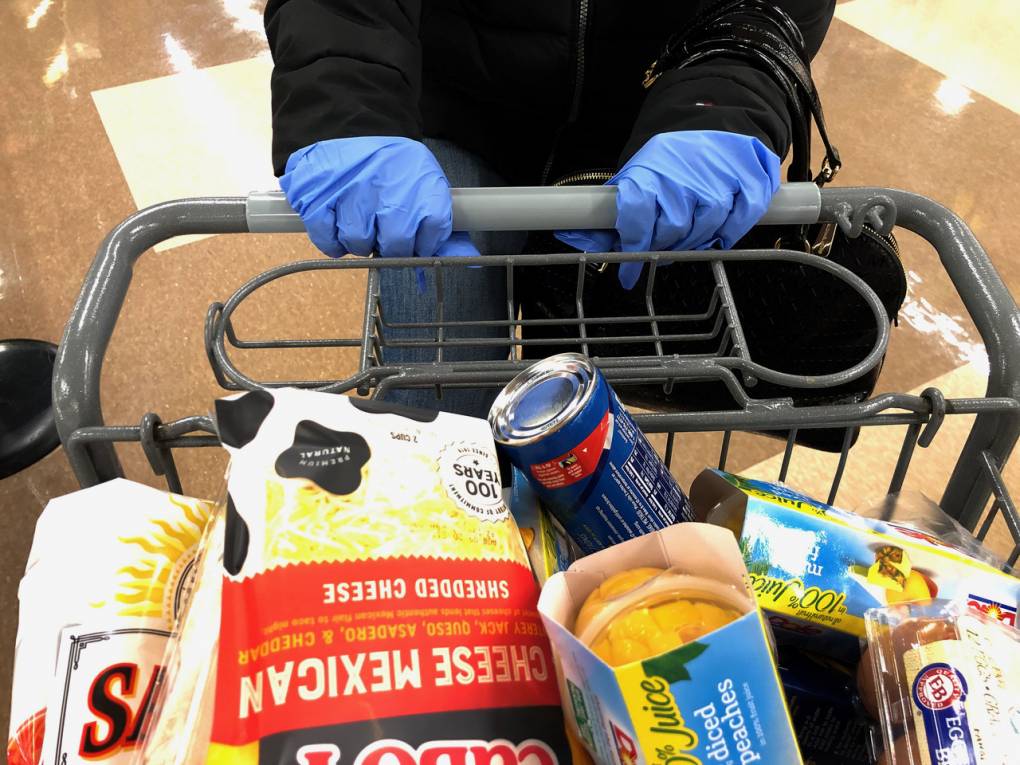
window.__IS_SSR__=true
window.__INITIAL_STATE__={
"attachmentsReducer": {
"audio_0": {
"type": "attachments",
"id": "audio_0",
"imgSizes": {
"kqedFullSize": {
"file": "https://ww2.kqed.org/news/wp-content/themes/KQED-unified/img/audio_bgs/background0.jpg"
}
}
},
"audio_1": {
"type": "attachments",
"id": "audio_1",
"imgSizes": {
"kqedFullSize": {
"file": "https://ww2.kqed.org/news/wp-content/themes/KQED-unified/img/audio_bgs/background1.jpg"
}
}
},
"audio_2": {
"type": "attachments",
"id": "audio_2",
"imgSizes": {
"kqedFullSize": {
"file": "https://ww2.kqed.org/news/wp-content/themes/KQED-unified/img/audio_bgs/background2.jpg"
}
}
},
"audio_3": {
"type": "attachments",
"id": "audio_3",
"imgSizes": {
"kqedFullSize": {
"file": "https://ww2.kqed.org/news/wp-content/themes/KQED-unified/img/audio_bgs/background3.jpg"
}
}
},
"audio_4": {
"type": "attachments",
"id": "audio_4",
"imgSizes": {
"kqedFullSize": {
"file": "https://ww2.kqed.org/news/wp-content/themes/KQED-unified/img/audio_bgs/background4.jpg"
}
}
},
"placeholder": {
"type": "attachments",
"id": "placeholder",
"imgSizes": {
"thumbnail": {
"file": "https://cdn.kqed.org/wp-content/uploads/2024/12/KQED-Default-Image-816638274-2000x1333-1-160x107.jpg",
"width": 160,
"height": 107,
"mimeType": "image/jpeg"
},
"medium": {
"file": "https://cdn.kqed.org/wp-content/uploads/2024/12/KQED-Default-Image-816638274-2000x1333-1-800x533.jpg",
"width": 800,
"height": 533,
"mimeType": "image/jpeg"
},
"medium_large": {
"file": "https://cdn.kqed.org/wp-content/uploads/2024/12/KQED-Default-Image-816638274-2000x1333-1-768x512.jpg",
"width": 768,
"height": 512,
"mimeType": "image/jpeg"
},
"large": {
"file": "https://cdn.kqed.org/wp-content/uploads/2024/12/KQED-Default-Image-816638274-2000x1333-1-1020x680.jpg",
"width": 1020,
"height": 680,
"mimeType": "image/jpeg"
},
"1536x1536": {
"file": "https://cdn.kqed.org/wp-content/uploads/2024/12/KQED-Default-Image-816638274-2000x1333-1-1536x1024.jpg",
"width": 1536,
"height": 1024,
"mimeType": "image/jpeg"
},
"fd-lrg": {
"file": "https://cdn.kqed.org/wp-content/uploads/2024/12/KQED-Default-Image-816638274-2000x1333-1-1536x1024.jpg",
"width": 1536,
"height": 1024,
"mimeType": "image/jpeg"
},
"fd-med": {
"file": "https://cdn.kqed.org/wp-content/uploads/2024/12/KQED-Default-Image-816638274-2000x1333-1-1020x680.jpg",
"width": 1020,
"height": 680,
"mimeType": "image/jpeg"
},
"fd-sm": {
"file": "https://cdn.kqed.org/wp-content/uploads/2024/12/KQED-Default-Image-816638274-2000x1333-1-800x533.jpg",
"width": 800,
"height": 533,
"mimeType": "image/jpeg"
},
"post-thumbnail": {
"file": "https://cdn.kqed.org/wp-content/uploads/2024/12/KQED-Default-Image-816638274-2000x1333-1-672x372.jpg",
"width": 672,
"height": 372,
"mimeType": "image/jpeg"
},
"twentyfourteen-full-width": {
"file": "https://cdn.kqed.org/wp-content/uploads/2024/12/KQED-Default-Image-816638274-2000x1333-1-1038x576.jpg",
"width": 1038,
"height": 576,
"mimeType": "image/jpeg"
},
"xxsmall": {
"file": "https://cdn.kqed.org/wp-content/uploads/2024/12/KQED-Default-Image-816638274-2000x1333-1-160x107.jpg",
"width": 160,
"height": 107,
"mimeType": "image/jpeg"
},
"xsmall": {
"file": "https://cdn.kqed.org/wp-content/uploads/2024/12/KQED-Default-Image-816638274-2000x1333-1-672x372.jpg",
"width": 672,
"height": 372,
"mimeType": "image/jpeg"
},
"small": {
"file": "https://cdn.kqed.org/wp-content/uploads/2024/12/KQED-Default-Image-816638274-2000x1333-1-672x372.jpg",
"width": 672,
"height": 372,
"mimeType": "image/jpeg"
},
"xlarge": {
"file": "https://cdn.kqed.org/wp-content/uploads/2024/12/KQED-Default-Image-816638274-2000x1333-1-1020x680.jpg",
"width": 1020,
"height": 680,
"mimeType": "image/jpeg"
},
"full-width": {
"file": "https://cdn.kqed.org/wp-content/uploads/2024/12/KQED-Default-Image-816638274-2000x1333-1-1920x1280.jpg",
"width": 1920,
"height": 1280,
"mimeType": "image/jpeg"
},
"guest-author-32": {
"file": "https://cdn.kqed.org/wp-content/uploads/2025/01/KQED-Default-Image-816638274-1333x1333-1-160x160.jpg",
"width": 32,
"height": 32,
"mimeType": "image/jpeg"
},
"guest-author-50": {
"file": "https://cdn.kqed.org/wp-content/uploads/2025/01/KQED-Default-Image-816638274-1333x1333-1-160x160.jpg",
"width": 50,
"height": 50,
"mimeType": "image/jpeg"
},
"guest-author-64": {
"file": "https://cdn.kqed.org/wp-content/uploads/2025/01/KQED-Default-Image-816638274-1333x1333-1-160x160.jpg",
"width": 64,
"height": 64,
"mimeType": "image/jpeg"
},
"guest-author-96": {
"file": "https://cdn.kqed.org/wp-content/uploads/2025/01/KQED-Default-Image-816638274-1333x1333-1-160x160.jpg",
"width": 96,
"height": 96,
"mimeType": "image/jpeg"
},
"guest-author-128": {
"file": "https://cdn.kqed.org/wp-content/uploads/2025/01/KQED-Default-Image-816638274-1333x1333-1-160x160.jpg",
"width": 128,
"height": 128,
"mimeType": "image/jpeg"
},
"detail": {
"file": "https://cdn.kqed.org/wp-content/uploads/2025/01/KQED-Default-Image-816638274-1333x1333-1-160x160.jpg",
"width": 160,
"height": 160,
"mimeType": "image/jpeg"
},
"kqedFullSize": {
"file": "https://cdn.kqed.org/wp-content/uploads/2024/12/KQED-Default-Image-816638274-2000x1333-1.jpg",
"width": 2000,
"height": 1333
}
}
},
"science_1961253": {
"type": "attachments",
"id": "science_1961253",
"meta": {
"index": "attachments_1716263798",
"site": "science",
"id": "1961253",
"found": true
},
"parent": 1961243,
"imgSizes": {
"twentyfourteen-full-width": {
"file": "https://ww2.kqed.org/app/uploads/sites/35/2020/12/GettyImages-1206923231gloves-1038x576.jpg",
"width": 1038,
"mimeType": "image/jpeg",
"height": 576
},
"thumbnail": {
"file": "https://ww2.kqed.org/app/uploads/sites/35/2020/12/GettyImages-1206923231gloves-160x120.jpg",
"width": 160,
"mimeType": "image/jpeg",
"height": 120
},
"post-thumbnail": {
"file": "https://ww2.kqed.org/app/uploads/sites/35/2020/12/GettyImages-1206923231gloves-672x372.jpg",
"width": 672,
"mimeType": "image/jpeg",
"height": 372
},
"kqedFullSize": {
"file": "https://ww2.kqed.org/app/uploads/sites/35/2020/12/GettyImages-1206923231gloves.jpg",
"width": 1280,
"height": 960
},
"large": {
"file": "https://ww2.kqed.org/app/uploads/sites/35/2020/12/GettyImages-1206923231gloves-1020x765.jpg",
"width": 1020,
"mimeType": "image/jpeg",
"height": 765
},
"medium": {
"file": "https://ww2.kqed.org/app/uploads/sites/35/2020/12/GettyImages-1206923231gloves-800x600.jpg",
"width": 800,
"mimeType": "image/jpeg",
"height": 600
},
"medium_large": {
"file": "https://ww2.kqed.org/app/uploads/sites/35/2020/12/GettyImages-1206923231gloves-768x576.jpg",
"width": 768,
"mimeType": "image/jpeg",
"height": 576
}
},
"publishDate": 1586306344,
"modified": 1586306527,
"caption": "Because of COVID-19, many customers wear gloves while shopping for food. ",
"description": null,
"title": "US-HEALTH-VIRUS",
"credit": "(Photo by JOSEPH PREZIOSO/AFP via Getty Images)",
"status": "inherit",
"isLoading": false,
"fetchFailed": false
},
"science_1961224": {
"type": "attachments",
"id": "science_1961224",
"meta": {
"index": "attachments_1716263798",
"site": "science",
"id": "1961224",
"found": true
},
"parent": 1961210,
"imgSizes": {
"twentyfourteen-full-width": {
"file": "https://ww2.kqed.org/app/uploads/sites/35/2020/04/covidscam-1038x576.jpeg",
"width": 1038,
"mimeType": "image/jpeg",
"height": 576
},
"thumbnail": {
"file": "https://ww2.kqed.org/app/uploads/sites/35/2020/04/covidscam-160x107.jpeg",
"width": 160,
"mimeType": "image/jpeg",
"height": 107
},
"post-thumbnail": {
"file": "https://ww2.kqed.org/app/uploads/sites/35/2020/04/covidscam-672x372.jpeg",
"width": 672,
"mimeType": "image/jpeg",
"height": 372
},
"kqedFullSize": {
"file": "https://ww2.kqed.org/app/uploads/sites/35/2020/04/covidscam.jpeg",
"width": 1920,
"height": 1280
},
"large": {
"file": "https://ww2.kqed.org/app/uploads/sites/35/2020/04/covidscam-1020x680.jpeg",
"width": 1020,
"mimeType": "image/jpeg",
"height": 680
},
"full-width": {
"file": "https://ww2.kqed.org/app/uploads/sites/35/2020/04/covidscam-1920x1280.jpeg",
"width": 1920,
"mimeType": "image/jpeg",
"height": 1280
},
"medium": {
"file": "https://ww2.kqed.org/app/uploads/sites/35/2020/04/covidscam-800x533.jpeg",
"width": 800,
"mimeType": "image/jpeg",
"height": 533
},
"medium_large": {
"file": "https://ww2.kqed.org/app/uploads/sites/35/2020/04/covidscam-768x512.jpeg",
"width": 768,
"mimeType": "image/jpeg",
"height": 512
}
},
"publishDate": 1586302038,
"modified": 1586364383,
"caption": "Federal prosecutors in L.A. charged a U.K. man with smuggling this purported COVID-19 treatment in mislabeled parcels. ",
"description": null,
"title": "covidscam",
"credit": "U.S. Attorney's office.",
"status": "inherit",
"isLoading": false,
"fetchFailed": false
},
"science_1961140": {
"type": "attachments",
"id": "science_1961140",
"meta": {
"index": "attachments_1716263798",
"site": "science",
"id": "1961140",
"found": true
},
"parent": 1961133,
"imgSizes": {
"twentyfourteen-full-width": {
"file": "https://ww2.kqed.org/app/uploads/sites/35/2020/04/Kermit-Holderman-720x576.jpg",
"width": 720,
"mimeType": "image/jpeg",
"height": 576
},
"thumbnail": {
"file": "https://ww2.kqed.org/app/uploads/sites/35/2020/04/Kermit-Holderman-160x213.jpg",
"width": 160,
"mimeType": "image/jpeg",
"height": 213
},
"post-thumbnail": {
"file": "https://ww2.kqed.org/app/uploads/sites/35/2020/04/Kermit-Holderman-672x372.jpg",
"width": 672,
"mimeType": "image/jpeg",
"height": 372
},
"kqedFullSize": {
"file": "https://ww2.kqed.org/app/uploads/sites/35/2020/04/Kermit-Holderman.jpg",
"width": 720,
"height": 960
}
},
"publishDate": 1586220748,
"modified": 1586220818,
"caption": "Retired English teacher Kermit Holderman with some of his grandchildren. Holderman died after testing positive with COVID-19. ",
"description": "Retired English teacher Kermit Holderman with some of his grandchildren. Holderman died after testing positive with COVID-19. ",
"title": "Retired English teacher Kermit Holderman with some of his grandchildren. Holderman died after testing positive with COVID-19.",
"credit": "courtesy of Zack Holderman/Facebook",
"status": "inherit",
"isLoading": false,
"fetchFailed": false
},
"science_1960956": {
"type": "attachments",
"id": "science_1960956",
"meta": {
"index": "attachments_1716263798",
"site": "science",
"id": "1960956",
"found": true
},
"parent": 1960955,
"imgSizes": {
"twentyfourteen-full-width": {
"file": "https://ww2.kqed.org/app/uploads/sites/35/2020/04/disinfecting-coronavirus_enl-0f90b20bdce88752c25a857921d8967e3f28e379-1038x576.jpg",
"width": 1038,
"mimeType": "image/jpeg",
"height": 576
},
"thumbnail": {
"file": "https://ww2.kqed.org/app/uploads/sites/35/2020/04/disinfecting-coronavirus_enl-0f90b20bdce88752c25a857921d8967e3f28e379-160x107.jpg",
"width": 160,
"mimeType": "image/jpeg",
"height": 107
},
"post-thumbnail": {
"file": "https://ww2.kqed.org/app/uploads/sites/35/2020/04/disinfecting-coronavirus_enl-0f90b20bdce88752c25a857921d8967e3f28e379-672x372.jpg",
"width": 672,
"mimeType": "image/jpeg",
"height": 372
},
"kqedFullSize": {
"file": "https://ww2.kqed.org/app/uploads/sites/35/2020/04/disinfecting-coronavirus_enl-0f90b20bdce88752c25a857921d8967e3f28e379.jpg",
"width": 6656,
"height": 4445
},
"large": {
"file": "https://ww2.kqed.org/app/uploads/sites/35/2020/04/disinfecting-coronavirus_enl-0f90b20bdce88752c25a857921d8967e3f28e379-1020x681.jpg",
"width": 1020,
"mimeType": "image/jpeg",
"height": 681
},
"full-width": {
"file": "https://ww2.kqed.org/app/uploads/sites/35/2020/04/disinfecting-coronavirus_enl-0f90b20bdce88752c25a857921d8967e3f28e379-1920x1282.jpg",
"width": 1920,
"mimeType": "image/jpeg",
"height": 1282
},
"medium": {
"file": "https://ww2.kqed.org/app/uploads/sites/35/2020/04/disinfecting-coronavirus_enl-0f90b20bdce88752c25a857921d8967e3f28e379-800x534.jpg",
"width": 800,
"mimeType": "image/jpeg",
"height": 534
},
"medium_large": {
"file": "https://ww2.kqed.org/app/uploads/sites/35/2020/04/disinfecting-coronavirus_enl-0f90b20bdce88752c25a857921d8967e3f28e379-768x513.jpg",
"width": 768,
"mimeType": "image/jpeg",
"height": 513
}
},
"publishDate": 1585971532,
"modified": 1585971532,
"caption": null,
"description": "A worker cleans an area along the Las Vegas Strip that's now devoid of the usual crowds, with casinos and many other business shuttered.",
"title": "A worker cleans an area along the Las Vegas Strip that's now devoid of the usual crowds, with casinos and many other business shuttered.",
"credit": null,
"status": "inherit",
"isLoading": false,
"fetchFailed": false
},
"science_1960927": {
"type": "attachments",
"id": "science_1960927",
"meta": {
"index": "attachments_1716263798",
"site": "science",
"id": "1960927",
"found": true
},
"parent": 1960866,
"imgSizes": {
"twentyfourteen-full-width": {
"file": "https://ww2.kqed.org/app/uploads/sites/35/2020/04/Handwashing-2-1038x576.jpg",
"width": 1038,
"mimeType": "image/jpeg",
"height": 576
},
"thumbnail": {
"file": "https://ww2.kqed.org/app/uploads/sites/35/2020/04/Handwashing-2-160x120.jpg",
"width": 160,
"mimeType": "image/jpeg",
"height": 120
},
"post-thumbnail": {
"file": "https://ww2.kqed.org/app/uploads/sites/35/2020/04/Handwashing-2-672x372.jpg",
"width": 672,
"mimeType": "image/jpeg",
"height": 372
},
"kqedFullSize": {
"file": "https://ww2.kqed.org/app/uploads/sites/35/2020/04/Handwashing-2.jpg",
"width": 3558,
"height": 2669
},
"large": {
"file": "https://ww2.kqed.org/app/uploads/sites/35/2020/04/Handwashing-2-1020x765.jpg",
"width": 1020,
"mimeType": "image/jpeg",
"height": 765
},
"full-width": {
"file": "https://ww2.kqed.org/app/uploads/sites/35/2020/04/Handwashing-2-1920x1440.jpg",
"width": 1920,
"mimeType": "image/jpeg",
"height": 1440
},
"medium": {
"file": "https://ww2.kqed.org/app/uploads/sites/35/2020/04/Handwashing-2-800x600.jpg",
"width": 800,
"mimeType": "image/jpeg",
"height": 600
},
"medium_large": {
"file": "https://ww2.kqed.org/app/uploads/sites/35/2020/04/Handwashing-2-768x576.jpg",
"width": 768,
"mimeType": "image/jpeg",
"height": 576
}
},
"publishDate": 1585945017,
"modified": 1585945038,
"caption": null,
"description": null,
"title": "Handwashing 2",
"credit": "Peter Arcuni/KQED",
"status": "inherit",
"isLoading": false,
"fetchFailed": false
},
"science_1960838": {
"type": "attachments",
"id": "science_1960838",
"meta": {
"index": "attachments_1716263798",
"site": "science",
"id": "1960838",
"found": true
},
"parent": 1960827,
"imgSizes": {
"twentyfourteen-full-width": {
"file": "https://ww2.kqed.org/app/uploads/sites/35/2020/04/Colin-Finnerty-1038x576.jpg",
"width": 1038,
"mimeType": "image/jpeg",
"height": 576
},
"thumbnail": {
"file": "https://ww2.kqed.org/app/uploads/sites/35/2020/04/Colin-Finnerty-160x110.jpg",
"width": 160,
"mimeType": "image/jpeg",
"height": 110
},
"post-thumbnail": {
"file": "https://ww2.kqed.org/app/uploads/sites/35/2020/04/Colin-Finnerty-672x372.jpg",
"width": 672,
"mimeType": "image/jpeg",
"height": 372
},
"kqedFullSize": {
"file": "https://ww2.kqed.org/app/uploads/sites/35/2020/04/Colin-Finnerty.jpg",
"width": 2847,
"height": 1951
},
"large": {
"file": "https://ww2.kqed.org/app/uploads/sites/35/2020/04/Colin-Finnerty-1020x699.jpg",
"width": 1020,
"mimeType": "image/jpeg",
"height": 699
},
"full-width": {
"file": "https://ww2.kqed.org/app/uploads/sites/35/2020/04/Colin-Finnerty-1920x1316.jpg",
"width": 1920,
"mimeType": "image/jpeg",
"height": 1316
},
"medium": {
"file": "https://ww2.kqed.org/app/uploads/sites/35/2020/04/Colin-Finnerty-800x548.jpg",
"width": 800,
"mimeType": "image/jpeg",
"height": 548
},
"medium_large": {
"file": "https://ww2.kqed.org/app/uploads/sites/35/2020/04/Colin-Finnerty-768x526.jpg",
"width": 768,
"mimeType": "image/jpeg",
"height": 526
}
},
"publishDate": 1585853043,
"modified": 1585882905,
"caption": "Colin Finnerty, resident of Hailey, Idaho, spent six days in the hospital fighting COVID19. ",
"description": null,
"title": "Colin Finnerty",
"credit": "Courtesy of Colin Finnerty",
"status": "inherit",
"isLoading": false,
"fetchFailed": false
},
"science_1960584": {
"type": "attachments",
"id": "science_1960584",
"meta": {
"index": "attachments_1716263798",
"site": "science",
"id": "1960584",
"found": true
},
"parent": 0,
"imgSizes": {
"twentyfourteen-full-width": {
"file": "https://ww2.kqed.org/app/uploads/sites/35/2020/03/SFBB_FI-1038x576.jpg",
"width": 1038,
"mimeType": "image/jpeg",
"height": 576
},
"thumbnail": {
"file": "https://ww2.kqed.org/app/uploads/sites/35/2020/03/SFBB_FI-160x90.jpg",
"width": 160,
"mimeType": "image/jpeg",
"height": 90
},
"post-thumbnail": {
"file": "https://ww2.kqed.org/app/uploads/sites/35/2020/03/SFBB_FI-672x372.jpg",
"width": 672,
"mimeType": "image/jpeg",
"height": 372
},
"kqedFullSize": {
"file": "https://ww2.kqed.org/app/uploads/sites/35/2020/03/SFBB_FI.jpg",
"width": 1920,
"height": 1080
},
"large": {
"file": "https://ww2.kqed.org/app/uploads/sites/35/2020/03/SFBB_FI-1020x574.jpg",
"width": 1020,
"mimeType": "image/jpeg",
"height": 574
},
"full-width": {
"file": "https://ww2.kqed.org/app/uploads/sites/35/2020/03/SFBB_FI-1920x1080.jpg",
"width": 1920,
"mimeType": "image/jpeg",
"height": 1080
},
"medium": {
"file": "https://ww2.kqed.org/app/uploads/sites/35/2020/03/SFBB_FI-800x450.jpg",
"width": 800,
"mimeType": "image/jpeg",
"height": 450
},
"medium_large": {
"file": "https://ww2.kqed.org/app/uploads/sites/35/2020/03/SFBB_FI-768x432.jpg",
"width": 768,
"mimeType": "image/jpeg",
"height": 432
}
},
"publishDate": 1585603867,
"modified": 1585703128,
"caption": "Satellite view of the westbound toll booths on the San Francisco Bay Bridge Mar. 16, 2020, 1:00 p.m. (Planet)",
"description": null,
"title": "SFBB_FI",
"credit": null,
"status": "inherit",
"isLoading": false,
"fetchFailed": false
},
"science_1960694": {
"type": "attachments",
"id": "science_1960694",
"meta": {
"index": "attachments_1716263798",
"site": "science",
"id": "1960694",
"found": true
},
"parent": 1960631,
"imgSizes": {
"twentyfourteen-full-width": {
"file": "https://ww2.kqed.org/app/uploads/sites/35/2020/03/RS42464_GettyImages-1208650113-qut-1038x576.jpg",
"width": 1038,
"mimeType": "image/jpeg",
"height": 576
},
"thumbnail": {
"file": "https://ww2.kqed.org/app/uploads/sites/35/2020/03/RS42464_GettyImages-1208650113-qut-160x107.jpg",
"width": 160,
"mimeType": "image/jpeg",
"height": 107
},
"post-thumbnail": {
"file": "https://ww2.kqed.org/app/uploads/sites/35/2020/03/RS42464_GettyImages-1208650113-qut-672x372.jpg",
"width": 672,
"mimeType": "image/jpeg",
"height": 372
},
"kqedFullSize": {
"file": "https://ww2.kqed.org/app/uploads/sites/35/2020/03/RS42464_GettyImages-1208650113-qut.jpg",
"width": 1920,
"height": 1280
},
"large": {
"file": "https://ww2.kqed.org/app/uploads/sites/35/2020/03/RS42464_GettyImages-1208650113-qut-1020x680.jpg",
"width": 1020,
"mimeType": "image/jpeg",
"height": 680
},
"full-width": {
"file": "https://ww2.kqed.org/app/uploads/sites/35/2020/03/RS42464_GettyImages-1208650113-qut-1920x1280.jpg",
"width": 1920,
"mimeType": "image/jpeg",
"height": 1280
},
"medium": {
"file": "https://ww2.kqed.org/app/uploads/sites/35/2020/03/RS42464_GettyImages-1208650113-qut-800x533.jpg",
"width": 800,
"mimeType": "image/jpeg",
"height": 533
},
"medium_large": {
"file": "https://ww2.kqed.org/app/uploads/sites/35/2020/03/RS42464_GettyImages-1208650113-qut-768x512.jpg",
"width": 768,
"mimeType": "image/jpeg",
"height": 512
}
},
"publishDate": 1585693279,
"modified": 1585693349,
"caption": "In this handout released by the U.S. Navy, Sailors assigned to the hospital ship USNS Mercy (T-AH 19) treat the first patient from Los Angeles medical facilities March 29. ",
"description": null,
"title": "RS42464_GettyImages-1208650113-qut",
"credit": "Photo by U.S. Navy via Getty Images)",
"status": "inherit",
"isLoading": false,
"fetchFailed": false
},
"science_1960701": {
"type": "attachments",
"id": "science_1960701",
"meta": {
"index": "attachments_1716263798",
"site": "science",
"id": "1960701",
"found": true
},
"parent": 1960107,
"imgSizes": {
"twentyfourteen-full-width": {
"file": "https://ww2.kqed.org/app/uploads/sites/35/2020/03/Stay-At-Home-flyer-1038x576.jpg",
"width": 1038,
"mimeType": "image/jpeg",
"height": 576
},
"thumbnail": {
"file": "https://ww2.kqed.org/app/uploads/sites/35/2020/03/Stay-At-Home-flyer-160x120.jpg",
"width": 160,
"mimeType": "image/jpeg",
"height": 120
},
"post-thumbnail": {
"file": "https://ww2.kqed.org/app/uploads/sites/35/2020/03/Stay-At-Home-flyer-672x372.jpg",
"width": 672,
"mimeType": "image/jpeg",
"height": 372
},
"kqedFullSize": {
"file": "https://ww2.kqed.org/app/uploads/sites/35/2020/03/Stay-At-Home-flyer.jpg",
"width": 4032,
"height": 3024
},
"large": {
"file": "https://ww2.kqed.org/app/uploads/sites/35/2020/03/Stay-At-Home-flyer-1020x765.jpg",
"width": 1020,
"mimeType": "image/jpeg",
"height": 765
},
"full-width": {
"file": "https://ww2.kqed.org/app/uploads/sites/35/2020/03/Stay-At-Home-flyer-1920x1440.jpg",
"width": 1920,
"mimeType": "image/jpeg",
"height": 1440
},
"medium": {
"file": "https://ww2.kqed.org/app/uploads/sites/35/2020/03/Stay-At-Home-flyer-800x600.jpg",
"width": 800,
"mimeType": "image/jpeg",
"height": 600
},
"medium_large": {
"file": "https://ww2.kqed.org/app/uploads/sites/35/2020/03/Stay-At-Home-flyer-768x576.jpg",
"width": 768,
"mimeType": "image/jpeg",
"height": 576
}
},
"publishDate": 1585695440,
"modified": 1585695476,
"caption": "\"Stay Home\" flyer posted on doors around San Francisco. ",
"description": "\"Stay Home\" flyer posted on doors around San Francisco. ",
"title": "\"Stay Home\" flyer posted on doors around San Francisco.",
"credit": "Polly Stryker/KQED",
"status": "inherit",
"isLoading": false,
"fetchFailed": false
},
"science_1960619": {
"type": "attachments",
"id": "science_1960619",
"meta": {
"index": "attachments_1716263798",
"site": "science",
"id": "1960619",
"found": true
},
"parent": 1960599,
"imgSizes": {
"twentyfourteen-full-width": {
"file": "https://ww2.kqed.org/app/uploads/sites/35/2020/07/IMG_1089-1038x576.jpg",
"width": 1038,
"mimeType": "image/jpeg",
"height": 576
},
"thumbnail": {
"file": "https://ww2.kqed.org/app/uploads/sites/35/2020/07/IMG_1089-160x120.jpg",
"width": 160,
"mimeType": "image/jpeg",
"height": 120
},
"post-thumbnail": {
"file": "https://ww2.kqed.org/app/uploads/sites/35/2020/07/IMG_1089-672x372.jpg",
"width": 672,
"mimeType": "image/jpeg",
"height": 372
},
"kqedFullSize": {
"file": "https://ww2.kqed.org/app/uploads/sites/35/2020/07/IMG_1089.jpg",
"width": 4032,
"height": 3024
},
"large": {
"file": "https://ww2.kqed.org/app/uploads/sites/35/2020/07/IMG_1089-1020x765.jpg",
"width": 1020,
"mimeType": "image/jpeg",
"height": 765
},
"full-width": {
"file": "https://ww2.kqed.org/app/uploads/sites/35/2020/07/IMG_1089-1920x1440.jpg",
"width": 1920,
"mimeType": "image/jpeg",
"height": 1440
},
"medium": {
"file": "https://ww2.kqed.org/app/uploads/sites/35/2020/07/IMG_1089-800x600.jpg",
"width": 800,
"mimeType": "image/jpeg",
"height": 600
},
"medium_large": {
"file": "https://ww2.kqed.org/app/uploads/sites/35/2020/07/IMG_1089-768x576.jpg",
"width": 768,
"mimeType": "image/jpeg",
"height": 576
}
},
"publishDate": 1585671750,
"modified": 1585671807,
"caption": null,
"description": null,
"title": "IMG_1089",
"credit": "Danielle Venton/KQED",
"status": "inherit",
"isLoading": false,
"fetchFailed": false
},
"science_1943306": {
"type": "attachments",
"id": "science_1943306",
"meta": {
"index": "attachments_1716263798",
"site": "science",
"id": "1943306",
"found": true
},
"parent": 1943302,
"imgSizes": {
"twentyfourteen-full-width": {
"file": "https://ww2.kqed.org/app/uploads/sites/35/2019/06/GettyImages-693524758-1038x576.jpg",
"width": 1038,
"mimeType": "image/jpeg",
"height": 576
},
"thumbnail": {
"file": "https://ww2.kqed.org/app/uploads/sites/35/2019/06/GettyImages-693524758-160x113.jpg",
"width": 160,
"mimeType": "image/jpeg",
"height": 113
},
"post-thumbnail": {
"file": "https://ww2.kqed.org/app/uploads/sites/35/2019/06/GettyImages-693524758-672x372.jpg",
"width": 672,
"mimeType": "image/jpeg",
"height": 372
},
"kqedFullSize": {
"file": "https://ww2.kqed.org/app/uploads/sites/35/2019/06/GettyImages-693524758.jpg",
"width": 2048,
"height": 1447
},
"large": {
"file": "https://ww2.kqed.org/app/uploads/sites/35/2019/06/GettyImages-693524758-1020x721.jpg",
"width": 1020,
"mimeType": "image/jpeg",
"height": 721
},
"complete_open_graph": {
"file": "https://ww2.kqed.org/app/uploads/sites/35/2019/06/GettyImages-693524758-1200x848.jpg",
"width": 1200,
"mimeType": "image/jpeg",
"height": 848
},
"full-width": {
"file": "https://ww2.kqed.org/app/uploads/sites/35/2019/06/GettyImages-693524758-1920x1357.jpg",
"width": 1920,
"mimeType": "image/jpeg",
"height": 1357
},
"medium": {
"file": "https://ww2.kqed.org/app/uploads/sites/35/2019/06/GettyImages-693524758-800x565.jpg",
"width": 800,
"mimeType": "image/jpeg",
"height": 565
},
"medium_large": {
"file": "https://ww2.kqed.org/app/uploads/sites/35/2019/06/GettyImages-693524758-768x543.jpg",
"width": 768,
"mimeType": "image/jpeg",
"height": 543
}
},
"publishDate": 1560371949,
"modified": 1585618805,
"caption": "Jennifer Doudna (Brian Ach/Getty Images)",
"description": null,
"title": "GettyImages-693524758",
"credit": "Brian Ach/Getty Images",
"status": "inherit",
"isLoading": false,
"fetchFailed": false
},
"science_1960457": {
"type": "attachments",
"id": "science_1960457",
"meta": {
"index": "attachments_1716263798",
"site": "science",
"id": "1960457",
"found": true
},
"parent": 1960326,
"imgSizes": {
"twentyfourteen-full-width": {
"file": "https://ww2.kqed.org/app/uploads/sites/35/2029/10/flatten-the-curve-graphic-covid-19-coronavirus-1-1038x576.gif",
"width": 1038,
"mimeType": "image/gif",
"height": 576
},
"thumbnail": {
"file": "https://ww2.kqed.org/app/uploads/sites/35/2029/10/flatten-the-curve-graphic-covid-19-coronavirus-1-160x92.gif",
"width": 160,
"mimeType": "image/gif",
"height": 92
},
"post-thumbnail": {
"file": "https://ww2.kqed.org/app/uploads/sites/35/2029/10/flatten-the-curve-graphic-covid-19-coronavirus-1-672x372.gif",
"width": 672,
"mimeType": "image/gif",
"height": 372
},
"kqedFullSize": {
"file": "https://ww2.kqed.org/app/uploads/sites/35/2029/10/flatten-the-curve-graphic-covid-19-coronavirus-1.gif",
"width": 1360,
"height": 784
},
"large": {
"file": "https://ww2.kqed.org/app/uploads/sites/35/2029/10/flatten-the-curve-graphic-covid-19-coronavirus-1-1020x588.gif",
"width": 1020,
"mimeType": "image/gif",
"height": 588
},
"medium": {
"file": "https://ww2.kqed.org/app/uploads/sites/35/2029/10/flatten-the-curve-graphic-covid-19-coronavirus-1-800x461.gif",
"width": 800,
"mimeType": "image/gif",
"height": 461
},
"medium_large": {
"file": "https://ww2.kqed.org/app/uploads/sites/35/2029/10/flatten-the-curve-graphic-covid-19-coronavirus-1-768x443.gif",
"width": 768,
"mimeType": "image/gif",
"height": 443
}
},
"publishDate": 1585509745,
"modified": 1585514129,
"caption": "Flattening the curve on a graph of the number of COVID-19 cases over time is the goal of the extreme social distancing measures undertaken in California.",
"description": null,
"title": "flatten the curve graphic covid 19 coronavirus",
"credit": "Siouxsie Wiles and Toby Morris",
"status": "inherit",
"isLoading": false,
"fetchFailed": false
}
},
"audioPlayerReducer": {
"postId": "stream_live",
"isPaused": true,
"isPlaying": false,
"pfsActive": false,
"pledgeModalIsOpen": true,
"playerDrawerIsOpen": false,
"liveAudioPlayStartedAt": 0,
"liveAudioPlayContext": ""
},
"authorsReducer": {
"byline_science_1961243": {
"type": "authors",
"id": "byline_science_1961243",
"meta": {
"override": true
},
"slug": "byline_science_1961243",
"name": "Ariana Remmel ",
"isLoading": false
},
"byline_science_1961133": {
"type": "authors",
"id": "byline_science_1961133",
"meta": {
"override": true
},
"slug": "byline_science_1961133",
"name": "Molly Peterson ",
"isLoading": false
},
"byline_science_1960955": {
"type": "authors",
"id": "byline_science_1960955",
"meta": {
"override": true
},
"slug": "byline_science_1960955",
"name": "Terry Gross",
"isLoading": false
},
"byline_science_1960602": {
"type": "authors",
"id": "byline_science_1960602",
"meta": {
"override": true
},
"slug": "byline_science_1960602",
"name": "Matthew Herper \u003cbr />STAT\u003cbr>",
"isLoading": false
},
"laurensommer": {
"type": "authors",
"id": "239",
"meta": {
"index": "authors_1716337520",
"id": "239",
"found": true
},
"name": "Lauren Sommer",
"firstName": "Lauren",
"lastName": "Sommer",
"slug": "laurensommer",
"email": "lsommer@kqed.org",
"display_author_email": false,
"staff_mastheads": [],
"title": "KQED Contributor",
"bio": "Lauren is a radio reporter formerly covering environment, water, and energy for KQED Science. As part of her day job, she has scaled Sierra Nevada peaks, run from charging elephant seals, and desperately tried to get her sea legs - all in pursuit of good radio. Her work has appeared on Marketplace, Living on Earth, Science Friday and NPR's Morning Edition and All Things Considered. You can find her on Twitter at \u003ca href=\"https://twitter.com/lesommer\">@lesommer\u003c/a>.",
"avatar": "https://secure.gravatar.com/avatar/33aa3772bb86c6ad45b8aca6a238bbdf?s=600&d=blank&r=g",
"twitter": null,
"facebook": null,
"instagram": null,
"linkedin": null,
"sites": [
{
"site": "news",
"roles": [
"author"
]
},
{
"site": "science",
"roles": [
"editor",
"manage_content_types",
"manage_taxonomies"
]
},
{
"site": "quest",
"roles": [
"editor"
]
}
],
"headData": {
"title": "Lauren Sommer | KQED",
"description": "KQED Contributor",
"ogImgSrc": "https://secure.gravatar.com/avatar/33aa3772bb86c6ad45b8aca6a238bbdf?s=600&d=blank&r=g",
"twImgSrc": "https://secure.gravatar.com/avatar/33aa3772bb86c6ad45b8aca6a238bbdf?s=600&d=blank&r=g"
},
"isLoading": false,
"link": "/author/laurensommer"
},
"kqedscience": {
"type": "authors",
"id": "6387",
"meta": {
"index": "authors_1716337520",
"id": "6387",
"found": true
},
"name": "KQED Science",
"firstName": "KQED",
"lastName": "Science",
"slug": "kqedscience",
"email": "kqedscience@gmail.com",
"display_author_email": false,
"staff_mastheads": [],
"title": null,
"bio": "KQED Science brings you award-winning science and environment coverage from the Bay Area and beyond by the flagship Northern California PBS and NPR affiliate.",
"avatar": "https://secure.gravatar.com/avatar/5a295ff49cf82a8c0f30937d3f788b2f?s=600&d=blank&r=g",
"twitter": null,
"facebook": null,
"instagram": null,
"linkedin": null,
"sites": [
{
"site": "science",
"roles": [
"contributor"
]
},
{
"site": "quest",
"roles": [
"editor"
]
},
{
"site": "food",
"roles": [
"contributor"
]
}
],
"headData": {
"title": "KQED Science | KQED",
"description": null,
"ogImgSrc": "https://secure.gravatar.com/avatar/5a295ff49cf82a8c0f30937d3f788b2f?s=600&d=blank&r=g",
"twImgSrc": "https://secure.gravatar.com/avatar/5a295ff49cf82a8c0f30937d3f788b2f?s=600&d=blank&r=g"
},
"isLoading": false,
"link": "/author/kqedscience"
},
"lklivans": {
"type": "authors",
"id": "8648",
"meta": {
"index": "authors_1716337520",
"id": "8648",
"found": true
},
"name": "Laura Klivans",
"firstName": "Laura",
"lastName": "Klivans",
"slug": "lklivans",
"email": "lklivans@kqed.org",
"display_author_email": true,
"staff_mastheads": [
"news",
"science"
],
"title": "Reporter",
"bio": "Laura Klivans is an award-winning science reporter for KQED News, where she covers climate change with an eye on both groundbreaking progress and gaps in action. She is the former host of KQED's blockbuster video series about tiny, amazing animals, \u003cem>Deep Look\u003c/em>. Her work reaches national audiences through NPR, \u003cem>Here & Now, \u003c/em>PRI, and other major outlets. \r\n\r\nLaura’s won five Northern California Area Emmy Awards for Deep Look and First Place in the Greater Bay Area Journalism Awards for a podcast exploring how one Oakland neighborhood teamed up to reduce planet-heating pollution.\r\n\r\nBeyond her reporting, she hosts and moderates events. In the past, she taught audio storytelling at the UC Berkeley Graduate School of Journalism, led international education programs, worked with immigrants and refugees along the Thai-Burmese border, taught high schoolers sex ed, and was an actress. \r\n\r\nShe's a former UC Berkeley Human Rights Fellow, USC Center for Health Journalism's California Fellow and Coro Fellow in Public Affairs. Laura has a master’s in journalism from UC Berkeley, a master’s in education from Harvard, and an undergraduate degree from Northwestern University.\r\n\r\nShe loves trying to riddle the meaning out of vanity license plates.",
"avatar": "https://secure.gravatar.com/avatar/2d2ecd1550a494cc10ad4a503406965585902124739e775a9b3817eebf1d88be?s=600&d=blank&r=g",
"twitter": "lauraklivans",
"bluesky": null,
"facebook": null,
"instagram": null,
"linkedin": null,
"sites": [
{
"site": "news",
"roles": [
"editor"
]
},
{
"site": "stateofhealth",
"roles": [
"contributor",
"editor"
]
},
{
"site": "science",
"roles": [
"editor"
]
},
{
"site": "forum",
"roles": [
"editor"
]
}
],
"headData": {
"title": "Laura Klivans | KQED",
"description": "Reporter",
"ogImgSrc": "https://secure.gravatar.com/avatar/2d2ecd1550a494cc10ad4a503406965585902124739e775a9b3817eebf1d88be?s=600&d=blank&r=g",
"twImgSrc": "https://secure.gravatar.com/avatar/2d2ecd1550a494cc10ad4a503406965585902124739e775a9b3817eebf1d88be?s=600&d=blank&r=g"
},
"isLoading": false,
"link": "/author/lklivans"
},
"dventon": {
"type": "authors",
"id": "11088",
"meta": {
"index": "authors_1716337520",
"id": "11088",
"found": true
},
"name": "Danielle Venton",
"firstName": "Danielle",
"lastName": "Venton",
"slug": "dventon",
"email": "dventon@kqed.org",
"display_author_email": true,
"staff_mastheads": [
"science"
],
"title": "Science reporter",
"bio": "Danielle Venton is a reporter for KQED Science. She covers wildfires, space and oceans (though she is prone to sea sickness).\r\n\r\nBefore joining KQED in 2015, Danielle was a staff reporter at KRCB in Sonoma County and a freelancer. She studied science communication at UC Santa Cruz and formerly worked at CERN in Geneva, Switzerland where she wrote about computing. She lives in Sonoma County and enjoys backpacking.",
"avatar": "https://secure.gravatar.com/avatar/37b292b5c40c8d93959c4f48d73b5286f41b7abd8588277e941905a3ed4c801c?s=600&d=blank&r=g",
"twitter": "DanielleVenton",
"bluesky": null,
"facebook": null,
"instagram": null,
"linkedin": null,
"sites": [
{
"site": "arts",
"roles": [
"contributor"
]
},
{
"site": "news",
"roles": [
"editor"
]
},
{
"site": "futureofyou",
"roles": [
"editor"
]
},
{
"site": "science",
"roles": [
"editor"
]
},
{
"site": "liveblog",
"roles": [
"contributor"
]
}
],
"headData": {
"title": "Danielle Venton | KQED",
"description": "Science reporter",
"ogImgSrc": "https://secure.gravatar.com/avatar/37b292b5c40c8d93959c4f48d73b5286f41b7abd8588277e941905a3ed4c801c?s=600&d=blank&r=g",
"twImgSrc": "https://secure.gravatar.com/avatar/37b292b5c40c8d93959c4f48d73b5286f41b7abd8588277e941905a3ed4c801c?s=600&d=blank&r=g"
},
"isLoading": false,
"link": "/author/dventon"
},
"lesleymcclurg": {
"type": "authors",
"id": "11229",
"meta": {
"index": "authors_1716337520",
"id": "11229",
"found": true
},
"name": "Lesley McClurg",
"firstName": "Lesley",
"lastName": "McClurg",
"slug": "lesleymcclurg",
"email": "lmcclurg@KQED.org",
"display_author_email": false,
"staff_mastheads": [
"news",
"science"
],
"title": "KQED Health Correspondent",
"bio": "Lesley McClurg is a health correspondent and fill-in host whose work is regularly rebroadcast on NPR and PBS programs. She’s earned multiple regional Emmy awards, a national and a regional Edward R. Murrow award, and was named Best Beat Reporter by the Association of Health Care Journalists. The Society of Professional Journalists has recognized her work several times, and the Society of Environmental Journalists spotlighted her coverage of California’s historic drought.\r\n\r\nBefore joining KQED in 2016, Lesley covered food and sustainability for Capital Public Radio, environmental issues for Colorado Public Radio, and reported for KUOW and KCTS 9 in Seattle. Away from the newsroom, she loves skiing with her daughter, mountain biking with her partner, and playing with Ollie, the family’s goldendoodle. On deadline, she runs almost entirely on chocolate chips.\r\n\r\n ",
"avatar": "https://secure.gravatar.com/avatar/bab49e972ea10c774fe0f5e29dba1722b158f7c0d58a360923d1389d380b2978?s=600&d=blank&r=g",
"twitter": "lesleywmcclurg",
"bluesky": null,
"facebook": null,
"instagram": null,
"linkedin": null,
"sites": [
{
"site": "arts",
"roles": [
"author"
]
},
{
"site": "news",
"roles": [
"editor"
]
},
{
"site": "futureofyou",
"roles": [
"editor"
]
},
{
"site": "stateofhealth",
"roles": [
"author"
]
},
{
"site": "science",
"roles": [
"editor"
]
},
{
"site": "quest",
"roles": [
"subscriber"
]
},
{
"site": "forum",
"roles": [
"administrator"
]
},
{
"site": "liveblog",
"roles": [
"author"
]
}
],
"headData": {
"title": "Lesley McClurg | KQED",
"description": "KQED Health Correspondent",
"ogImgSrc": "https://secure.gravatar.com/avatar/bab49e972ea10c774fe0f5e29dba1722b158f7c0d58a360923d1389d380b2978?s=600&d=blank&r=g",
"twImgSrc": "https://secure.gravatar.com/avatar/bab49e972ea10c774fe0f5e29dba1722b158f7c0d58a360923d1389d380b2978?s=600&d=blank&r=g"
},
"isLoading": false,
"link": "/author/lesleymcclurg"
},
"parcuni": {
"type": "authors",
"id": "11368",
"meta": {
"index": "authors_1716337520",
"id": "11368",
"found": true
},
"name": "Peter Arcuni",
"firstName": "Peter",
"lastName": "Arcuni",
"slug": "parcuni",
"email": "parcuni@KQED.org",
"display_author_email": false,
"staff_mastheads": [
"science"
],
"title": "Reporter",
"bio": "Peter reports radio and online stories for \u003cem>KQED Science\u003c/em>. His work has also appeared on the \u003cem>The California Report\u003c/em> morning show and \u003cem>KQED News\u003c/em>. His production credits include \u003cem>The California Report, The California Report Magazine\u003c/em> and KQED's local news podcast \u003cem>The Bay\u003c/em>. Other credits include NPR's \u003cem>All Things Considered\u003c/em>, WNYC's \u003cem>Science Friday\u003c/em>, WBUR's \u003cem>Here & Now\u003c/em>, WIRED and SFGate. Peter graduated from Brown University and earned a master's degree in journalism from Stanford. He's covered everything from homelessness to wildfires, health, the environment, arts and Thanksgiving in San Quentin prison. In other lives, he played rock n roll music and studied neuroscience. You can email him at: parcuni@kqed.org",
"avatar": "https://secure.gravatar.com/avatar/d5032f6f27199d478af34ad2e1d98732?s=600&d=blank&r=g",
"twitter": "peterarcuni",
"facebook": null,
"instagram": null,
"linkedin": null,
"sites": [
{
"site": "news",
"roles": [
"editor"
]
},
{
"site": "science",
"roles": [
"editor"
]
}
],
"headData": {
"title": "Peter Arcuni | KQED",
"description": "Reporter",
"ogImgSrc": "https://secure.gravatar.com/avatar/d5032f6f27199d478af34ad2e1d98732?s=600&d=blank&r=g",
"twImgSrc": "https://secure.gravatar.com/avatar/d5032f6f27199d478af34ad2e1d98732?s=600&d=blank&r=g"
},
"isLoading": false,
"link": "/author/parcuni"
},
"thailye": {
"type": "authors",
"id": "11501",
"meta": {
"index": "authors_1716337520",
"id": "11501",
"found": true
},
"name": "Teodros Hailye",
"firstName": "Teodros",
"lastName": "Hailye",
"slug": "thailye",
"email": "thailye@KQED.org",
"display_author_email": false,
"staff_mastheads": [],
"title": "Information Designer",
"bio": null,
"avatar": "https://secure.gravatar.com/avatar/bfb755f5a66ebaccd414e310b7d7c94a?s=600&d=blank&r=g",
"twitter": null,
"facebook": null,
"instagram": null,
"linkedin": null,
"sites": [
{
"site": "science",
"roles": []
}
],
"headData": {
"title": "Teodros Hailye | KQED",
"description": "Information Designer",
"ogImgSrc": "https://secure.gravatar.com/avatar/bfb755f5a66ebaccd414e310b7d7c94a?s=600&d=blank&r=g",
"twImgSrc": "https://secure.gravatar.com/avatar/bfb755f5a66ebaccd414e310b7d7c94a?s=600&d=blank&r=g"
},
"isLoading": false,
"link": "/author/thailye"
},
"kevinstark": {
"type": "authors",
"id": "11608",
"meta": {
"index": "authors_1716337520",
"id": "11608",
"found": true
},
"name": "Kevin Stark",
"firstName": "Kevin",
"lastName": "Stark",
"slug": "kevinstark",
"email": "kstark@kqed.org",
"display_author_email": true,
"staff_mastheads": [
"science"
],
"title": "Senior Editor",
"bio": "Kevin is a senior editor for KQED Science, managing the station's health and climate desks. His journalism career began in the Pacific Northwest, and he later became a lead reporter for the San Francisco Public Press. His work has appeared in Pacific Standard magazine, the Energy News Network, the Center for Investigative Reporting's Reveal and WBEZ in Chicago. Kevin joined KQED in 2019, and has covered issues related to energy, wildfire, climate change and the environment.",
"avatar": "https://secure.gravatar.com/avatar/365aaa4b597d3a8374f67504ff0facd323d7906e8eb4be0a7efd2427408e802c?s=600&d=blank&r=g",
"twitter": "starkkev",
"bluesky": null,
"facebook": null,
"instagram": null,
"linkedin": null,
"sites": [
{
"site": "",
"roles": [
"editor"
]
},
{
"site": "news",
"roles": [
"editor"
]
},
{
"site": "science",
"roles": [
"administrator"
]
}
],
"headData": {
"title": "Kevin Stark | KQED",
"description": "Senior Editor",
"ogImgSrc": "https://secure.gravatar.com/avatar/365aaa4b597d3a8374f67504ff0facd323d7906e8eb4be0a7efd2427408e802c?s=600&d=blank&r=g",
"twImgSrc": "https://secure.gravatar.com/avatar/365aaa4b597d3a8374f67504ff0facd323d7906e8eb4be0a7efd2427408e802c?s=600&d=blank&r=g"
},
"isLoading": false,
"link": "/author/kevinstark"
}
},
"pagesReducer": {
"science_tag_coronavirus": {
"type": "terms",
"id": "science_4329",
"meta": {
"index": "terms_1716263798",
"site": "science",
"id": "4329",
"score": 8.457257
},
"featImg": null,
"name": "Coronavirus",
"description": null,
"taxonomy": "tag",
"headData": {
"twImgId": null,
"twTitle": null,
"ogTitle": null,
"ogImgId": null,
"twDescription": null,
"description": null,
"title": "Coronavirus Archives | KQED Science",
"ogDescription": null
},
"ttid": 4329,
"slug": "coronavirus",
"isLoading": false,
"title": "Coronavirus",
"pageMeta": {
"site": "science",
"WpPageTemplate": "page-topic-editorial",
"currentPage": 18
},
"blocks": [
{
"blockName": "kqed/post-list",
"attrs": {
"layout": "cardArticle2",
"query": "posts/science?tag=coronavirus",
"seeMore": false,
"paginated": true,
"page": 18
}
},
{
"blockName": "kqed/ad"
}
]
}
},
"pfsSessionReducer": {},
"postsReducer": {
"stream_live": {
"type": "live",
"id": "stream_live",
"audioUrl": "https://streams.kqed.org/kqedradio",
"title": "Live Stream",
"excerpt": "Live Stream information currently unavailable.",
"link": "/radio",
"featImg": "",
"label": {
"name": "KQED Live",
"link": "/"
}
},
"stream_kqedNewscast": {
"type": "posts",
"id": "stream_kqedNewscast",
"audioUrl": "https://www.kqed.org/.stream/anon/radio/RDnews/newscast.mp3?_=1",
"title": "KQED Newscast",
"featImg": "",
"label": {
"name": "88.5 FM",
"link": "/"
}
},
"science_1961243": {
"type": "posts",
"id": "science_1961243",
"meta": {
"index": "posts_1716263798",
"site": "science",
"id": "1961243",
"score": null,
"sort": [
1586388978000
]
},
"parent": 0,
"labelTerm": {},
"blocks": [],
"publishDate": 1586388978,
"format": "standard",
"title": "Coronavirus: Here's How to Use Gloves to Help Prevent Infection",
"headTitle": "Coronavirus: Here’s How to Use Gloves to Help Prevent Infection | KQED",
"content": "\u003cp>\u003cspan style=\"font-weight: 400;\">Research has found that the coronavirus survives on different types of surfaces for \u003ca href=\"https://www.kqed.org/science/1959172/coronavirus-how-and-when-to-clean-your-home-and-wash-your-hands\" target=\"_blank\" rel=\"noopener noreferrer\">varying amounts of time\u003c/a>. Which is why you may have seen a lot of people wearing gloves, trying to protect themselves when they touch things like the shopping cart handle at the grocery store, for instance. From disposable medical gloves to winter mittens, people are using whatever they can find to cover their hands.\u003c/span>\u003c/p>\n\u003cp>So, does that work?\u003c/p>\n\u003cp>\u003cspan style=\"font-weight: 400;\">“(A)ctually, they can give a false sense of security,” said Dr. Peter Chin-Hong, an infectious disease specialist with UCSF.\u003c/span>\u003c/p>\n\u003cp>\u003cspan style=\"font-weight: 400;\">Respiratory viruses like the novel coronavirus mostly spread when an infected person coughs or sneezes, expelling a microscopic droplet that carries the virus to the mouth or nose of another person. \u003c/span>\u003c/p>\n\u003cp>\u003cspan style=\"font-weight: 400;\">“The virus doesn’t care about your hands,” Dr. Chin-Hong said. \u003c/span>\u003c/p>\n\u003cp>[ad fullwidth]\u003c/p>\n\u003cp>\u003cspan style=\"font-weight: 400;\">Unless, of course, you touch something where a contaminated droplet has landed. “The hands and the fingers are sort of like transportation. It’s like the Muni of the virus, a free trip to the nose or mouth.”\u003c/span>\u003c/p>\n\u003cp>While gloves can provide a barrier to the coronavirus, if you touch your face, you can still become infected.\u003c/p>\n\u003cp>\u003cspan style=\"font-weight: 400;\">And even if you follow that rule\u003cstrong>,\u003c/strong> gloves have their limits. “Don’t use gloves and think it’s a force shield,” Chin-Hong said. “The glove isn’t going to protect you from getting infected when the main source of infection is someone’s cough or sneezing.”\u003c/span>\u003c/p>\n\u003cp>\u003cspan style=\"font-weight: 400;\">Wearing gloves properly during this pandemic can turn out to be kind of a hassle, he says. “It’s actually much easier to wash your hands than to wear gloves on and off.”\u003c/span>\u003c/p>\n\u003cp>\u003cspan style=\"font-weight: 400;\">Still, Chin-Hong says gloves are a good strategy if used in combination with other preventive measures. The best thing people can do to protect themselves is to follow public health guidelines: Avoid touching your face, wash your hands regularly, and stay at least six feet away from other people. \u003c/span>\u003c/p>\n\u003cp>\u003cspan style=\"font-weight: 400;\">If you do wear gloves, there are some extra rules to follow:\u003c/span>\u003c/p>\n\u003cul>\n\u003cli>\u003cspan style=\"font-weight: 400;\">Always wash your hands before and after wearing gloves.\u003c/span>\u003c/li>\n\u003cli>\u003cspan style=\"font-weight: 400;\">Clean any surface you might have touched with your gloves on, \u003c/span>\u003cspan style=\"font-weight: 400;\">such as your phone, keys, wallet, eyewear or door handles. \u003c/span>\u003c/li>\n\u003cli>\u003cspan style=\"font-weight: 400;\">Throw away used disposable gloves, and wash fabric gloves with soap and water before using them again.\u003c/span>\u003c/li>\n\u003cli>\u003cspan style=\"font-weight: 400;\">Be careful to avoid contamination when taking gloves off.\u003c/span>\u003c/li>\n\u003cli>\u003cspan style=\"font-weight: 400;\">Again, even with gloves on, don’t touch your face, especially your nose or mouth.\u003c/span>\u003c/li>\n\u003c/ul>\n\u003cp>Proper glove removal can actually be a bit tricky and may take some practice. In general, the key is to avoid touching the inside of a glove or your bare hand with the outside of a dirty glove. The Centers for Disease Control and Prevention has published this \u003ca href=\"https://www.cdc.gov/vhf/ebola/pdf/poster-how-to-remove-gloves.pdf\" target=\"_blank\" rel=\"noopener noreferrer\">diagram\u003c/a>, with step by step instructions on how to remove gloves safely.\u003c/p>\n\u003cp>\u003c!-- iframe plugin v.4.3 wordpress.org/plugins/iframe/ -->\u003cbr>\n\u003ciframe loading=\"lazy\" src=\"https://www.cdc.gov/vhf/ebola/pdf/poster-how-to-remove-gloves.pdf\" width=\"75%\" height=\"1000\" scrolling=\"yes\" class=\"iframe-class\" frameborder=\"0\">\u003c/iframe>\u003c/p>\n\u003cp>\u003c/p>\n\u003cp>Whether people choose to wear gloves or not, Chin-Hong says, following public health guidelines is just as important as ever. \u003cspan style=\"font-weight: 400;\">“I think it’s really important to sustain all these wonderful efforts that we’ve been doing as a community and not to lose sight of the fact that we’re all in this together. Every member of the community has a responsibility to protect each other.”\u003c/span>\u003c/p>\n\n",
"stats": {
"hasVideo": false,
"hasChartOrMap": true,
"hasAudio": false,
"hasPolis": false,
"wordCount": 563,
"hasGoogleForm": false,
"hasGallery": false,
"hasHearkenModule": false,
"iframeSrcs": [
"https://www.cdc.gov/vhf/ebola/pdf/poster-how-to-remove-gloves.pdf"
],
"paragraphCount": 16
},
"modified": 1704847587,
"excerpt": "People can wear gloves as an added precaution, as long as they follow a few key guidelines, says a UCSF infectious disease specialist.",
"headData": {
"twImgId": "",
"twTitle": "",
"ogTitle": "",
"ogImgId": "",
"twDescription": "",
"description": "People can wear gloves as an added precaution, as long as they follow a few key guidelines, says a UCSF infectious disease specialist.",
"title": "Coronavirus: Here's How to Use Gloves to Help Prevent Infection | KQED",
"ogDescription": "",
"schema": {
"@context": "https://schema.org",
"@type": "Article",
"headline": "Coronavirus: Here's How to Use Gloves to Help Prevent Infection",
"datePublished": "2020-04-08T16:36:18-07:00",
"dateModified": "2024-01-09T16:46:27-08:00",
"image": "https://cdn.kqed.org/wp-content/uploads/2020/02/KQED-OG-Image@1x.png"
}
},
"guestAuthors": [],
"slug": "coronavirus-heres-how-to-use-gloves-properly-to-help-prevent-infection",
"status": "publish",
"nprByline": "Ariana Remmel ",
"sticky": false,
"source": "Coronavirus",
"path": "/science/1961243/coronavirus-heres-how-to-use-gloves-properly-to-help-prevent-infection",
"audioTrackLength": null,
"parsedContent": [
{
"type": "contentString",
"content": "\u003cdiv class=\"post-body\">\u003cp>\u003cp>\u003cspan style=\"font-weight: 400;\">Research has found that the coronavirus survives on different types of surfaces for \u003ca href=\"https://www.kqed.org/science/1959172/coronavirus-how-and-when-to-clean-your-home-and-wash-your-hands\" target=\"_blank\" rel=\"noopener noreferrer\">varying amounts of time\u003c/a>. Which is why you may have seen a lot of people wearing gloves, trying to protect themselves when they touch things like the shopping cart handle at the grocery store, for instance. From disposable medical gloves to winter mittens, people are using whatever they can find to cover their hands.\u003c/span>\u003c/p>\n\u003cp>So, does that work?\u003c/p>\n\u003cp>\u003cspan style=\"font-weight: 400;\">“(A)ctually, they can give a false sense of security,” said Dr. Peter Chin-Hong, an infectious disease specialist with UCSF.\u003c/span>\u003c/p>\n\u003cp>\u003cspan style=\"font-weight: 400;\">Respiratory viruses like the novel coronavirus mostly spread when an infected person coughs or sneezes, expelling a microscopic droplet that carries the virus to the mouth or nose of another person. \u003c/span>\u003c/p>\n\u003cp>\u003cspan style=\"font-weight: 400;\">“The virus doesn’t care about your hands,” Dr. Chin-Hong said. \u003c/span>\u003c/p>\n\u003cp>\u003c/p>\u003c/div>",
"attributes": {
"named": {},
"numeric": []
}
},
{
"type": "component",
"content": "",
"name": "ad",
"attributes": {
"named": {
"label": "fullwidth"
},
"numeric": [
"fullwidth"
]
}
},
{
"type": "contentString",
"content": "\u003cdiv class=\"post-body\">\u003cp>\u003c/p>\n\u003cp>\u003cspan style=\"font-weight: 400;\">Unless, of course, you touch something where a contaminated droplet has landed. “The hands and the fingers are sort of like transportation. It’s like the Muni of the virus, a free trip to the nose or mouth.”\u003c/span>\u003c/p>\n\u003cp>While gloves can provide a barrier to the coronavirus, if you touch your face, you can still become infected.\u003c/p>\n\u003cp>\u003cspan style=\"font-weight: 400;\">And even if you follow that rule\u003cstrong>,\u003c/strong> gloves have their limits. “Don’t use gloves and think it’s a force shield,” Chin-Hong said. “The glove isn’t going to protect you from getting infected when the main source of infection is someone’s cough or sneezing.”\u003c/span>\u003c/p>\n\u003cp>\u003cspan style=\"font-weight: 400;\">Wearing gloves properly during this pandemic can turn out to be kind of a hassle, he says. “It’s actually much easier to wash your hands than to wear gloves on and off.”\u003c/span>\u003c/p>\n\u003cp>\u003cspan style=\"font-weight: 400;\">Still, Chin-Hong says gloves are a good strategy if used in combination with other preventive measures. The best thing people can do to protect themselves is to follow public health guidelines: Avoid touching your face, wash your hands regularly, and stay at least six feet away from other people. \u003c/span>\u003c/p>\n\u003cp>\u003cspan style=\"font-weight: 400;\">If you do wear gloves, there are some extra rules to follow:\u003c/span>\u003c/p>\n\u003cul>\n\u003cli>\u003cspan style=\"font-weight: 400;\">Always wash your hands before and after wearing gloves.\u003c/span>\u003c/li>\n\u003cli>\u003cspan style=\"font-weight: 400;\">Clean any surface you might have touched with your gloves on, \u003c/span>\u003cspan style=\"font-weight: 400;\">such as your phone, keys, wallet, eyewear or door handles. \u003c/span>\u003c/li>\n\u003cli>\u003cspan style=\"font-weight: 400;\">Throw away used disposable gloves, and wash fabric gloves with soap and water before using them again.\u003c/span>\u003c/li>\n\u003cli>\u003cspan style=\"font-weight: 400;\">Be careful to avoid contamination when taking gloves off.\u003c/span>\u003c/li>\n\u003cli>\u003cspan style=\"font-weight: 400;\">Again, even with gloves on, don’t touch your face, especially your nose or mouth.\u003c/span>\u003c/li>\n\u003c/ul>\n\u003cp>Proper glove removal can actually be a bit tricky and may take some practice. In general, the key is to avoid touching the inside of a glove or your bare hand with the outside of a dirty glove. The Centers for Disease Control and Prevention has published this \u003ca href=\"https://www.cdc.gov/vhf/ebola/pdf/poster-how-to-remove-gloves.pdf\" target=\"_blank\" rel=\"noopener noreferrer\">diagram\u003c/a>, with step by step instructions on how to remove gloves safely.\u003c/p>\n\u003cp>\u003c!-- iframe plugin v.4.3 wordpress.org/plugins/iframe/ -->\u003cbr>\n\u003ciframe loading=\"lazy\" src=\"https://www.cdc.gov/vhf/ebola/pdf/poster-how-to-remove-gloves.pdf\" width=\"75%\" height=\"1000\" scrolling=\"yes\" class=\"iframe-class\" frameborder=\"0\">\u003c/iframe>\u003c/p>\n\u003cp>\u003c/p>\n\u003cp>Whether people choose to wear gloves or not, Chin-Hong says, following public health guidelines is just as important as ever. \u003cspan style=\"font-weight: 400;\">“I think it’s really important to sustain all these wonderful efforts that we’ve been doing as a community and not to lose sight of the fact that we’re all in this together. Every member of the community has a responsibility to protect each other.”\u003c/span>\u003c/p>\n\n\u003c/div>\u003c/p>",
"attributes": {
"named": {},
"numeric": []
}
}
],
"link": "/science/1961243/coronavirus-heres-how-to-use-gloves-properly-to-help-prevent-infection",
"authors": [
"byline_science_1961243"
],
"categories": [
"science_40",
"science_4450"
],
"tags": [
"science_4329",
"science_4368",
"science_4277",
"science_4470",
"science_5155"
],
"featImg": "science_1961253",
"label": "source_science_1961243"
},
"science_1961210": {
"type": "posts",
"id": "science_1961210",
"meta": {
"index": "posts_1716263798",
"site": "science",
"id": "1961210",
"score": null,
"sort": [
1586371679000
]
},
"parent": 0,
"labelTerm": {},
"blocks": [],
"publishDate": 1586371679,
"format": "standard",
"title": "Watch Out for These Coronavirus-Related Scams",
"headTitle": "Watch Out for These Coronavirus-Related Scams | KQED",
"content": "\u003cp>Scammers looking to profit from those anxious for their stimulus check; inflated prices for desperately needed masks; fake coronavirus cures.\u003c/p>\n\u003cp>[pullquote]\u003cstrong>What You Should Be Watching Out For\u003c/strong>\u003c/p>\n\u003cp>* Stimulus scams: The IRS \u003ca href=\"https://www.irs.gov/newsroom/irs-issues-warning-about-coronavirus-related-scams-watch-out-for-schemes-tied-to-economic-impact-payments\" target=\"_blank\" rel=\"noopener noreferrer\">warns\u003c/a> taxpayers, especially retirees, to be on the lookout for calls, email phishing attempts and other schemes tied to stimulus checks, which can lead to tax-related fraud and identity theft. Remember, the official term is “economic impact payment.” So, be cautious of people who use the term “stimulus,” ask you to verify bank or check information online, or suggest they can speed up the process.\u003c/p>\n\u003cp>* Bogus Phone calls: Officials with the FCC \u003ca href=\"https://www.fcc.gov/covid-scams\" target=\"_blank\" rel=\"noopener noreferrer\">report\u003c/a> scam text message campaigns and phone calls with people impersonating federal health workers and offering free home-testing kits, promoting cures and selling fake health insurance.\u003c/p>\n\u003cp>*Utility customer scams: PG&E says its security division has tracked between 5-10 \u003ca href=\"https://www.pge.com/en_US/residential/customer-service/help/scams/scams.page?WT.mc_id=Vanity_scams\" target=\"_blank\" rel=\"noopener noreferrer\">scam\u003c/a> attempts per day over the phone in recent weeks. A call may appear to customers as if it’s from PG&E, when it’s actually a disguised number from outside the company, a subterfuge called spoofing. The utility says scammers, using a copy of an actual PG&E automated call recording, are requesting immediate payment with a debit card on a past due bill.\u003c/p>\n\u003cp>\u003cstrong> *\u003c/strong>Price gouging: The San Francisco district attorney’s office says it has received more than 50 calls or emails from people who report inflated prices for masks, disinfectant wipes and even products like chicken eggs and the vitamin C supplement EmergenC.\u003c/p>\n\u003cp>\u003cstrong>*\u003c/strong>Unproven Cleaning Products: The federal Environmental Protection Agency warns that companies are flooding the market with disinfectants and sanitizer falsely claiming to be effective against the novel coronavirus, The New York Times \u003ca href=\"https://www.nytimes.com/2020/04/03/climate/epa-fake-coronavirus-cleaners.html\" target=\"_blank\" rel=\"noopener noreferrer\">reported\u003c/a>. The agency threatened legal action against businesses that sell the unregistered products. (See here for an \u003ca href=\"https://www.kqed.org/science/1959894/what-works-to-kill-coronavirus-as-you-clean-your-home\" target=\"_blank\" rel=\"noopener noreferrer\">EPA-approved list of coronavirus-killing disinfectants\u003c/a>.)[/pullquote]Officials say these are just some of the cons and illegal attempts at cashing in on the current devastating health emergency.\u003c/p>\n\u003cp>“We’ve really seen a wide variety of scams,” said U.S. Attorney Nicola Hanna.\u003cspan class=\"Apple-converted-space\"> \u003c/span>“As hard as we all work for our money, these folks work equally hard to steal our money. They’re very inventive.”\u003c/p>\n\u003cp>Hanna oversees the Justice Department’s district office in Los Angeles, which covers seven counties and 20 million people. The office recently \u003ca href=\"https://www.justice.gov/usao-cdca/pr/southland-man-arrested-federal-charges-alleging-fraudulent-investment-scheme-featuring\" target=\"_blank\" rel=\"noopener noreferrer\">\u003cspan class=\"s2\">charged\u003c/span>\u003c/a> a man arrested by an undercover FBI agent for allegedly soliciting investors with a fake coronavirus cure, and another man from the U.K. for \u003ca href=\"https://www.justice.gov/usao-cdca/pr/uk-national-charged-shipping-mislabeled-and-unapproved-treatments-patients-suffering\" target=\"_blank\" rel=\"noopener noreferrer\">allegedly importing\u003c/a> a fake COVID-19 treatment in mislabeled packages.\u003c/p>\n\u003cp>But that’s just the beginning. Hanna warns of solicited donations by fake charities and GoFundMe pages, as well as people selling coveted protective equipment like safety masks they don’t actually have.\u003c/p>\n\u003cp>“We’ve seen phishing emails that purport to be from the Centers for Disease Control or the World Health Organization or other legitimate organizations,” Hanna said. “They’re not. And in fact, if you click on the link, it downloads malware onto your system.”\u003c/p>\n\u003cp>The IRS is warning people looking for their $1,200 government stimulus check not to give out personal information over email or the phone. And there is \u003cspan class=\"s1\">no proven vaccine or antiviral treatment for COVID-19, so anyone claiming to have a coronavirus cure is lying.\u003c/span>\u003c/p>\n\u003cp>Not all of these are small-time consumer scams. As governments and hospitals across the nation desperately hunted for protective equipment, SEIU-United Healthcare Workers West \u003ca href=\"https://www.seiu-uhw.org/press/union-locates-massive-supply-of-n95-masks/\" target=\"_blank\" rel=\"noopener noreferrer\">\u003cspan class=\"s2\">announced\u003c/span>\u003c/a> on March 26 that it had found a supplier with 39 million protective masks for its members. But the deal fell apart after officials couldn’t verify and inspect the masks. Kaiser, which had placed an order for millions of them, said it learned the supplier never had them at all, the Los Angeles Times \u003ca href=\"https://www.latimes.com/california/story/2020-04-03/coronavirus-seiu-masks-supplies-investigation\" target=\"_blank\" rel=\"noopener noreferrer\">reported\u003c/a>.\u003c/p>\n\u003cp>\u003cstrong>Selling Bogus Coronavirus Treatments\u003c/strong>\u003c/p>\n\u003cp>Keith “The Real Iron Man” Middlebrook had described himself to his roughly 2.4 million Instagram followers as a “Genius Entrepreneur Icon,” and “Actor Writer Producer,” among other things, according to a federal affidavit prosecutors provided to KQED.\u003c/p>\n\u003cp>Then around March 24, as the coronavirus pandemic ground life to a halt in California, the businessman, bodybuilder and actor who \u003ca href=\"https://www.imdb.com/name/nm3033468/\" target=\"_blank\" rel=\"noopener noreferrer\">\u003cspan class=\"s2\">appeared\u003c/span>\u003c/a> briefly in “Iron Man 3,” “Moneyball” and other movies, crafted a new career: “Inventor: COVID19 Immunity & Coronavirus Cure.”\u003c/p>\n\u003cp>Middlebrook’s social media feeds, usually featuring videos of him \u003ca href=\"https://www.youtube.com/watch?v=Uv3xhMtvPTw\" target=\"_blank\" rel=\"noopener noreferrer\">\u003cspan class=\"s2\">sculpting\u003c/span>\u003c/a> softball-sized biceps or promoting his self-help regime of “xccelerated success,” with praise for Donald Trump sprinkled in, gave way to a new pitch touting an injectable cure for COVID-19 and pills to prevent a person from acquiring it. According to the affidavit,\u003cspan class=\"Apple-converted-space\"> \u003c/span>Middlebrook allegedly solicited investment in a company called Quantum Prevention CV Inc.\u003c/p>\n\u003cp>In text messages, prosecutors charge, Middlebrook claimed a patient from L.A who was sick with the virus “got up and walked out 51 hours after my injection,” boasting that investors could see returns of “$200M – $300M…conservative minimum,” on an investment of $1 million.\u003c/p>\n\u003cp>He also claimed former basketball superstar Earvin “Magic” Johnson was an investor. (Johnson told investigators that wasn’t true.)\u003c/p>\n\u003cp>Officials say Middlebrook was arrested by an undercover FBI agent posing as an investor, making him the first person charged by the federal government for a coronavirus-related crime. A judge set his arraignment for April 16. If convicted as charged, he could face up to 20 years in prison.\u003c/p>\n\u003cp>\u003cspan class=\"s5\">Requests for comment to several of Middlebrook’s email addresses listed on his websites went unreturned.\u003c/span>\u003c/p>\n\u003cp class=\"p6\">\u003cb>Importing a ‘Miracle Cure’\u003cbr>\n\u003c/b>\u003c/p>\n\u003cp class=\"p6\">According to another federal affidavit, 59-year-old Frank Richard Ludlow of West Sussex, England, had been shipping a health concoction called a “Trinity Remedy” for three years to a distributor with addresses in Utah and California.\u003c/p>\n\u003cp>In March, according to the charges, as health officials in California were recommending people stay home from work, Ludlow relabeled the product as “Trinity COVID-19 SARS Antipathogenic Treatment.”\u003c/p>\n\u003cp class=\"p6\">\u003cspan class=\"s3\">The contents of the purported coronavirus kits matched the earlier product — a \u003c/span>powdered “miracle cure” made of vitamin c, potassium thiocyanate, hydrogen peroxide and enzymes,\u003cspan class=\"s3\"> according to the affidavit.\u003c/span>\u003c/p>\n\u003cp class=\"p6\">“A consumer was supposed to add 18 ounces of water, say a prayer, drink half of the solution, take a probiotic along with bee pollen, and then ingest the remainder of the solution,” prosecutors wrote.\u003c/p>\n\u003cp>\u003cspan class=\"s3\">The kits are still being examined. \u003c/span>\u003c/p>\n\u003cp>The FDA, which must approve any drug defined as a “cure,” “mitigation,” or even “treatment” imported into the U.S., according to federal \u003ca href=\"https://www.fda.gov/regulatory-information/laws-enforced-fda/federal-food-drug-and-cosmetic-act-fdc-act\" target=\"_blank\" rel=\"noopener noreferrer\">\u003cspan class=\"s2\">law\u003c/span>\u003c/a>, has not approved the product for any use, let alone to treat COVID-19.\u003c/p>\n\u003cp>On March 18, customs officers seized about 60 of the kits passing through a mail facility in Los Angeles in mislabeled boxes.\u003c/p>\n\u003cp>\u003cspan class=\"s6\">Ludlow was \u003ca href=\"https://www.cityoflondon.police.uk/news/city-of-london/news/2020/march/pipcu/man-charged-with-making-and-selling-fake-covid-19-treatment-kits/\" target=\"_blank\" rel=\"noopener noreferrer\">\u003cspan class=\"s2\">arrested\u003c/span>\u003c/a> in the U.K. for making and selling the kits and remains in custody there, authorities said. \u003c/span>\u003c/p>\n\u003cp class=\"p6\">On April 1, Hanna charged Ludlow with one count of importing a misbranded drug into the U.S. He faces up to three years in federal prison.\u003c/p>\n\u003cp>Federal attorneys urge the public to report coronavirus scammers by calling the National Center for Disaster Fraud hotline (1-866-720-5721) or to the NCDF e-mail address \u003ca href=\"mailto:disaster@leo.gov\">\u003cspan class=\"s2\">disaster@leo.gov\u003c/span>\u003c/a>.\u003c/p>\n\u003cp>https://twitter.com/SFDAOffice/status/1242631955675369472?s=20\u003c/p>\n\u003cp>\u003cem>The Associated Press contributed to this report. \u003c/em>\u003c/p>\n\u003cp>[ad fullwidth]\u003c/p>\n\u003cp>[ad floatright]\u003c/p>\n",
"stats": {
"hasVideo": false,
"hasChartOrMap": false,
"hasAudio": false,
"hasPolis": false,
"wordCount": 1284,
"hasGoogleForm": false,
"hasGallery": false,
"hasHearkenModule": false,
"iframeSrcs": [],
"paragraphCount": 30
},
"modified": 1704847589,
"excerpt": "Scammers looking to profit from people anxious for their stimulus check; inflated prices for desperately needed masks; fake coronavirus cures. These are just some of the cons and illegal schemes trying to cash in on a devastating health emergency.",
"headData": {
"twImgId": "",
"twTitle": "",
"ogTitle": "",
"ogImgId": "",
"twDescription": "",
"description": "Scammers looking to profit from people anxious for their stimulus check; inflated prices for desperately needed masks; fake coronavirus cures. These are just some of the cons and illegal schemes trying to cash in on a devastating health emergency.",
"title": "Watch Out for These Coronavirus-Related Scams | KQED",
"ogDescription": "",
"schema": {
"@context": "https://schema.org",
"@type": "Article",
"headline": "Watch Out for These Coronavirus-Related Scams",
"datePublished": "2020-04-08T11:47:59-07:00",
"dateModified": "2024-01-09T16:46:29-08:00",
"image": "https://cdn.kqed.org/wp-content/uploads/2020/02/KQED-OG-Image@1x.png"
}
},
"guestAuthors": [],
"slug": "watch-out-for-these-coronavirus-related-scams",
"status": "publish",
"audioUrl": "https://traffic.omny.fm/d/clips/0af137ef-751e-4b19-a055-aaef00d2d578/ffca7e9f-6831-41c5-bcaf-aaef00f5a073/bfb83637-2a34-4b98-b8b7-ab98012385de/audio.mp3",
"sticky": false,
"source": "Coronavirus",
"path": "/science/1961210/watch-out-for-these-coronavirus-related-scams",
"audioTrackLength": null,
"parsedContent": [
{
"type": "contentString",
"content": "\u003cdiv class=\"post-body\">\u003cp>\u003cp>Scammers looking to profit from those anxious for their stimulus check; inflated prices for desperately needed masks; fake coronavirus cures.\u003c/p>\n\u003cp>\u003c/p>\u003c/div>",
"attributes": {
"named": {},
"numeric": []
}
},
{
"type": "component",
"content": "\u003cstrong>What You Should Be Watching Out For\u003c/strong>\u003c/p>\n\u003cp>* Stimulus scams: The IRS \u003ca href=\"https://www.irs.gov/newsroom/irs-issues-warning-about-coronavirus-related-scams-watch-out-for-schemes-tied-to-economic-impact-payments\" target=\"_blank\" rel=\"noopener noreferrer\">warns\u003c/a> taxpayers, especially retirees, to be on the lookout for calls, email phishing attempts and other schemes tied to stimulus checks, which can lead to tax-related fraud and identity theft. Remember, the official term is “economic impact payment.” So, be cautious of people who use the term “stimulus,” ask you to verify bank or check information online, or suggest they can speed up the process.\u003c/p>\n\u003cp>* Bogus Phone calls: Officials with the FCC \u003ca href=\"https://www.fcc.gov/covid-scams\" target=\"_blank\" rel=\"noopener noreferrer\">report\u003c/a> scam text message campaigns and phone calls with people impersonating federal health workers and offering free home-testing kits, promoting cures and selling fake health insurance.\u003c/p>\n\u003cp>*Utility customer scams: PG&E says its security division has tracked between 5-10 \u003ca href=\"https://www.pge.com/en_US/residential/customer-service/help/scams/scams.page?WT.mc_id=Vanity_scams\" target=\"_blank\" rel=\"noopener noreferrer\">scam\u003c/a> attempts per day over the phone in recent weeks. A call may appear to customers as if it’s from PG&E, when it’s actually a disguised number from outside the company, a subterfuge called spoofing. The utility says scammers, using a copy of an actual PG&E automated call recording, are requesting immediate payment with a debit card on a past due bill.\u003c/p>\n\u003cp>\u003cstrong> *\u003c/strong>Price gouging: The San Francisco district attorney’s office says it has received more than 50 calls or emails from people who report inflated prices for masks, disinfectant wipes and even products like chicken eggs and the vitamin C supplement EmergenC.\u003c/p>\n\u003cp>\u003cstrong>*\u003c/strong>Unproven Cleaning Products: The federal Environmental Protection Agency warns that companies are flooding the market with disinfectants and sanitizer falsely claiming to be effective against the novel coronavirus, The New York Times \u003ca href=\"https://www.nytimes.com/2020/04/03/climate/epa-fake-coronavirus-cleaners.html\" target=\"_blank\" rel=\"noopener noreferrer\">reported\u003c/a>. The agency threatened legal action against businesses that sell the unregistered products. (See here for an \u003ca href=\"https://www.kqed.org/science/1959894/what-works-to-kill-coronavirus-as-you-clean-your-home\" target=\"_blank\" rel=\"noopener noreferrer\">EPA-approved list of coronavirus-killing disinfectants\u003c/a>.)",
"name": "pullquote",
"attributes": {
"named": {
"label": ""
},
"numeric": []
}
},
{
"type": "contentString",
"content": "\u003cdiv class=\"post-body\">\u003cp>Officials say these are just some of the cons and illegal attempts at cashing in on the current devastating health emergency.\u003c/p>\n\u003cp>“We’ve really seen a wide variety of scams,” said U.S. Attorney Nicola Hanna.\u003cspan class=\"Apple-converted-space\"> \u003c/span>“As hard as we all work for our money, these folks work equally hard to steal our money. They’re very inventive.”\u003c/p>\n\u003cp>Hanna oversees the Justice Department’s district office in Los Angeles, which covers seven counties and 20 million people. The office recently \u003ca href=\"https://www.justice.gov/usao-cdca/pr/southland-man-arrested-federal-charges-alleging-fraudulent-investment-scheme-featuring\" target=\"_blank\" rel=\"noopener noreferrer\">\u003cspan class=\"s2\">charged\u003c/span>\u003c/a> a man arrested by an undercover FBI agent for allegedly soliciting investors with a fake coronavirus cure, and another man from the U.K. for \u003ca href=\"https://www.justice.gov/usao-cdca/pr/uk-national-charged-shipping-mislabeled-and-unapproved-treatments-patients-suffering\" target=\"_blank\" rel=\"noopener noreferrer\">allegedly importing\u003c/a> a fake COVID-19 treatment in mislabeled packages.\u003c/p>\n\u003cp>But that’s just the beginning. Hanna warns of solicited donations by fake charities and GoFundMe pages, as well as people selling coveted protective equipment like safety masks they don’t actually have.\u003c/p>\n\u003cp>“We’ve seen phishing emails that purport to be from the Centers for Disease Control or the World Health Organization or other legitimate organizations,” Hanna said. “They’re not. And in fact, if you click on the link, it downloads malware onto your system.”\u003c/p>\n\u003cp>The IRS is warning people looking for their $1,200 government stimulus check not to give out personal information over email or the phone. And there is \u003cspan class=\"s1\">no proven vaccine or antiviral treatment for COVID-19, so anyone claiming to have a coronavirus cure is lying.\u003c/span>\u003c/p>\n\u003cp>Not all of these are small-time consumer scams. As governments and hospitals across the nation desperately hunted for protective equipment, SEIU-United Healthcare Workers West \u003ca href=\"https://www.seiu-uhw.org/press/union-locates-massive-supply-of-n95-masks/\" target=\"_blank\" rel=\"noopener noreferrer\">\u003cspan class=\"s2\">announced\u003c/span>\u003c/a> on March 26 that it had found a supplier with 39 million protective masks for its members. But the deal fell apart after officials couldn’t verify and inspect the masks. Kaiser, which had placed an order for millions of them, said it learned the supplier never had them at all, the Los Angeles Times \u003ca href=\"https://www.latimes.com/california/story/2020-04-03/coronavirus-seiu-masks-supplies-investigation\" target=\"_blank\" rel=\"noopener noreferrer\">reported\u003c/a>.\u003c/p>\n\u003cp>\u003cstrong>Selling Bogus Coronavirus Treatments\u003c/strong>\u003c/p>\n\u003cp>Keith “The Real Iron Man” Middlebrook had described himself to his roughly 2.4 million Instagram followers as a “Genius Entrepreneur Icon,” and “Actor Writer Producer,” among other things, according to a federal affidavit prosecutors provided to KQED.\u003c/p>\n\u003cp>Then around March 24, as the coronavirus pandemic ground life to a halt in California, the businessman, bodybuilder and actor who \u003ca href=\"https://www.imdb.com/name/nm3033468/\" target=\"_blank\" rel=\"noopener noreferrer\">\u003cspan class=\"s2\">appeared\u003c/span>\u003c/a> briefly in “Iron Man 3,” “Moneyball” and other movies, crafted a new career: “Inventor: COVID19 Immunity & Coronavirus Cure.”\u003c/p>\n\u003cp>Middlebrook’s social media feeds, usually featuring videos of him \u003ca href=\"https://www.youtube.com/watch?v=Uv3xhMtvPTw\" target=\"_blank\" rel=\"noopener noreferrer\">\u003cspan class=\"s2\">sculpting\u003c/span>\u003c/a> softball-sized biceps or promoting his self-help regime of “xccelerated success,” with praise for Donald Trump sprinkled in, gave way to a new pitch touting an injectable cure for COVID-19 and pills to prevent a person from acquiring it. According to the affidavit,\u003cspan class=\"Apple-converted-space\"> \u003c/span>Middlebrook allegedly solicited investment in a company called Quantum Prevention CV Inc.\u003c/p>\n\u003cp>In text messages, prosecutors charge, Middlebrook claimed a patient from L.A who was sick with the virus “got up and walked out 51 hours after my injection,” boasting that investors could see returns of “$200M – $300M…conservative minimum,” on an investment of $1 million.\u003c/p>\n\u003cp>He also claimed former basketball superstar Earvin “Magic” Johnson was an investor. (Johnson told investigators that wasn’t true.)\u003c/p>\n\u003cp>Officials say Middlebrook was arrested by an undercover FBI agent posing as an investor, making him the first person charged by the federal government for a coronavirus-related crime. A judge set his arraignment for April 16. If convicted as charged, he could face up to 20 years in prison.\u003c/p>\n\u003cp>\u003cspan class=\"s5\">Requests for comment to several of Middlebrook’s email addresses listed on his websites went unreturned.\u003c/span>\u003c/p>\n\u003cp class=\"p6\">\u003cb>Importing a ‘Miracle Cure’\u003cbr>\n\u003c/b>\u003c/p>\n\u003cp class=\"p6\">According to another federal affidavit, 59-year-old Frank Richard Ludlow of West Sussex, England, had been shipping a health concoction called a “Trinity Remedy” for three years to a distributor with addresses in Utah and California.\u003c/p>\n\u003cp>In March, according to the charges, as health officials in California were recommending people stay home from work, Ludlow relabeled the product as “Trinity COVID-19 SARS Antipathogenic Treatment.”\u003c/p>\n\u003cp class=\"p6\">\u003cspan class=\"s3\">The contents of the purported coronavirus kits matched the earlier product — a \u003c/span>powdered “miracle cure” made of vitamin c, potassium thiocyanate, hydrogen peroxide and enzymes,\u003cspan class=\"s3\"> according to the affidavit.\u003c/span>\u003c/p>\n\u003cp class=\"p6\">“A consumer was supposed to add 18 ounces of water, say a prayer, drink half of the solution, take a probiotic along with bee pollen, and then ingest the remainder of the solution,” prosecutors wrote.\u003c/p>\n\u003cp>\u003cspan class=\"s3\">The kits are still being examined. \u003c/span>\u003c/p>\n\u003cp>The FDA, which must approve any drug defined as a “cure,” “mitigation,” or even “treatment” imported into the U.S., according to federal \u003ca href=\"https://www.fda.gov/regulatory-information/laws-enforced-fda/federal-food-drug-and-cosmetic-act-fdc-act\" target=\"_blank\" rel=\"noopener noreferrer\">\u003cspan class=\"s2\">law\u003c/span>\u003c/a>, has not approved the product for any use, let alone to treat COVID-19.\u003c/p>\n\u003cp>On March 18, customs officers seized about 60 of the kits passing through a mail facility in Los Angeles in mislabeled boxes.\u003c/p>\n\u003cp>\u003cspan class=\"s6\">Ludlow was \u003ca href=\"https://www.cityoflondon.police.uk/news/city-of-london/news/2020/march/pipcu/man-charged-with-making-and-selling-fake-covid-19-treatment-kits/\" target=\"_blank\" rel=\"noopener noreferrer\">\u003cspan class=\"s2\">arrested\u003c/span>\u003c/a> in the U.K. for making and selling the kits and remains in custody there, authorities said. \u003c/span>\u003c/p>\n\u003cp class=\"p6\">On April 1, Hanna charged Ludlow with one count of importing a misbranded drug into the U.S. He faces up to three years in federal prison.\u003c/p>\n\u003cp>Federal attorneys urge the public to report coronavirus scammers by calling the National Center for Disaster Fraud hotline (1-866-720-5721) or to the NCDF e-mail address \u003ca href=\"mailto:disaster@leo.gov\">\u003cspan class=\"s2\">disaster@leo.gov\u003c/span>\u003c/a>.\u003c/p>\u003c/p>\u003c/div>",
"attributes": {
"named": {},
"numeric": []
}
},
{
"type": "component",
"content": "",
"name": "singleTwitterStatus",
"attributes": {
"named": {
"id": "1242631955675369472"
},
"numeric": []
}
},
{
"type": "contentString",
"content": "\u003cdiv class=\"post-body\">\u003cp>\n\u003cp>\u003cem>The Associated Press contributed to this report. \u003c/em>\u003c/p>\n\u003cp>\u003c/p>\u003c/div>",
"attributes": {
"named": {},
"numeric": []
}
},
{
"type": "component",
"content": "",
"name": "ad",
"attributes": {
"named": {
"label": "fullwidth"
},
"numeric": [
"fullwidth"
]
}
},
{
"type": "contentString",
"content": "\u003cdiv class=\"post-body\">\u003cp>\u003c/p>\n\u003cp>\u003c/p>\u003c/div>",
"attributes": {
"named": {},
"numeric": []
}
},
{
"type": "component",
"content": "",
"name": "ad",
"attributes": {
"named": {
"label": "floatright"
},
"numeric": [
"floatright"
]
}
},
{
"type": "contentString",
"content": "\u003cdiv class=\"post-body\">\u003cp>\u003c/p>\n\u003c/div>\u003c/p>",
"attributes": {
"named": {},
"numeric": []
}
}
],
"link": "/science/1961210/watch-out-for-these-coronavirus-related-scams",
"authors": [
"11608"
],
"categories": [
"science_39",
"science_3890",
"science_40",
"science_4450"
],
"tags": [
"science_4329",
"science_3840",
"science_4470"
],
"featImg": "science_1961224",
"label": "source_science_1961210"
},
"science_1961133": {
"type": "posts",
"id": "science_1961133",
"meta": {
"index": "posts_1716263798",
"site": "science",
"id": "1961133",
"score": null,
"sort": [
1586222419000
]
},
"parent": 0,
"labelTerm": {
"site": "science"
},
"blocks": [],
"publishDate": 1586222419,
"format": "standard",
"title": "'This Virus Is Horrible': A Son's Warning to Heed Public Health Authorities After Losing Dad to COVID-19",
"headTitle": "‘This Virus Is Horrible’: A Son’s Warning to Heed Public Health Authorities After Losing Dad to COVID-19 | KQED",
"content": "\u003cp>As March began, Kermit Holderman was picking up his daughter-in-law Kelley curbside at the airport after a girls’ weekend in Vail, hugging her and helping her put luggage into the car.\u003c/p>\n\u003cp>“My dad had a few things he loved to do. And one of those things was pick us up from the airport,” said Zack Holderman, Kermit’s son. “He’d be at the cell lot 30 minutes before the plane would land.”\u003c/p>\n\u003cp>As the month ended, the Holdermans were saying goodbye to the 73-year-old grandfather, father and retired educator who had in recent years taken steps to be as healthy as he could be. He died after testing positive for COVID-19.\u003c/p>\n\u003cp>The state reports 276 Californians have died as a result of the global pandemic. On the day of that airport pickup, there were none. Over this month, families and the health system that cares for COVID-19 patients are just beginning to make sense of what is happening.\u003c/p>\n\u003cp>Among them are the Holdermans, who hope Kermit’s story motivates people to stay alert to the virus’ threat.\u003c/p>\n\u003cp>[ad fullwidth]\u003c/p>\n\u003cp>“People have called and said, I saw it on CNN. It wasn’t really real,” Zack Holderman says. “And then when I heard about your dad, it became real.”\u003c/p>\n\u003cp>\u003cstrong>‘The Vail Connection Has Just Been Scary’\u003c/strong>\u003c/p>\n\u003cp>Kermit Holderman started to feel ill just a few days after that airport trip, right about the same time that the resort town Kelley visited confirmed its first cases of COVID-19.\u003c/p>\n\u003cp>Colorado health officials now believe Italian snowboarders brought the virus to Vail. The Holdermans believe Kelley brought it home to California. Of 12 women who traveled and stayed in condominiums together, 10 have now tested positive.\u003c/p>\n\u003cp>When Kermit got to the hospital, according to Zack, “they said, you know, this thing is going around. We’re gonna give you a test. You got some other symptoms that are similar.”\u003c/p>\n\u003cp>He found out his father had COVID-19 at about 1:30 in the morning, the first Saturday in March, by text.\u003c/p>\n\u003cp>\u003cstrong>Dominoes Toppling Normal Life\u003c/strong>\u003c/p>\n\u003cp>Kermit Holderman taught English and coached sports over four decades at schools including Holy Cross Abbey in Canyon City, Colorado; Woodside Priory, in Portola Valley; and St. Francis High School, in Mountain View. He spent the final 20 years of his teaching career at Sacred Heart Preparatory in Atherton, where he would sometimes grill outside his classroom as a treat for his students.\u003c/p>\n\u003cp>He taught Zack and his younger brother Dane. An A student generally, Zack says his dad rarely gave out Ds, but he only earned a B-plus from his dad.\u003c/p>\n\u003cp>Where his father was a poet, Zack says he’s a numbers guy; he works in mortgage lending.\u003c/p>\n\u003cp>So to describe how he felt that first week in March, after his father was admitted to the hospital, Zack lists what happened: His wife had tested positive but was healthy; his mother was positive too, and had symptoms, but “not getting better or worse;” the kids were out of school; the family was in self-quarantine; “economy’s going to hell,” he said. “It was just a very tough period of time and every day seemed to get a little bit worse.”\u003c/p>\n\u003cp>On his mind, too, was the emotional burden his wife Kelley felt, that her airport run and close contact with her father-in-law had passed a silent threat on.\u003c/p>\n\u003cp>All of these dominoes toppled normal life in just over a week.\u003c/p>\n\u003cp>“I don’t want to say I was desperate,” Zack says. “I was starting to feel a little scared.”\u003c/p>\n\u003cp>Doctors said Holderman needed a ventilator, so they sedated him. They said it might be three days, maybe a week. But more time intubated raises a patient’s risk: of more infection, and of a more difficult recovery. And Holderman wasn’t getting better.\u003c/p>\n\u003cp>Kermit Holderman turned 73 in the hospital on March 27. Four days later, at the end of March, his wife, and Zack and Kelley, sat bedside layered in PPE — gloves, masks, and gowns — as he slipped away. Holderman’s younger son Dane, whose wife is a doctor in the Sacramento area, made the difficult decision to stay away with his young child.\u003c/p>\n\u003cp>“I have cried more than I’ve ever cried my entire life in the past three weeks, which is not a bad thing,” Zack says.\u003c/p>\n\u003cp>\u003cstrong>‘Just Some Guy From The Sticks of Oklahoma’\u003c/strong>\u003c/p>\n\u003cp>Besides his family, Kermit Holderman leaves behind thousands of students he educated and coached over a 44-year career. One remembers when he showed the movie Airplane in class, but blocked the screen for the naughty parts. Another says he checked on her daily, after a family member died.\u003c/p>\n\u003cp>Kevin Morris, a computer science coordinator and teacher at Sacred Heart, remembers bleacher time at high school sports events, betting Holderman with hot dogs rather than money on which referee would call the most fouls, or whether the final score would be odd or even.\u003c/p>\n\u003cp>“I’ve heard him say hundreds of times, ‘What do I know? I’m just some guy from the sticks of Oklahoma,’” Morris says. “Nothing could be further from the truth.”\u003c/p>\n\u003cp>After graduating from Oklahoma State, Holderman had joined the Peace Corps; Ethiopian food became a lifelong passion.\u003c/p>\n\u003cp>When he taught my brother English, Holderman introduced him to \u003ca href=\"https://www.theguardian.com/food/2018/oct/06/yotam-ottolenghi-eritrean-ethiopian-recipes-berbere-vegetables-teff-flatbread\">berbere\u003c/a>, a north African spice mix. Later, he went back and taught at our high school, and Holderman cooked \u003ca href=\"https://cooking.nytimes.com/recipes/1019079-doro-wat-ethiopian-style-spicy-chicken\">doro wat\u003c/a> with him; later still, he was leaving to go to grad school.\u003c/p>\n\u003cp>“Kermit came up to me in the hallway with an envelope,” Michael Peterson remembers. “And inside of it was a bunch of that dark red berbere powder. And he said, this is the last of the good stuff that I had imported. I put a recipe in there too. A handwritten recipe for his doro wat, which is a recipe I still use today.”\u003c/p>\n\u003cp>Zack says the Holdermans would eat doro wat and \u003ca href=\"https://www.cnn.com/travel/article/ethiopian-food-best-dishes-africa/index.html\">kitfo\u003c/a> at holidays. He doesn’t know who will cook the dishes now.\u003c/p>\n\u003cp>He hopes the end of his father’s life can be of service, just as his father himself was.\u003c/p>\n\u003cp>[ad floatright]\u003c/p>\n\u003cp>“Do what the people who know tell you,” Zack says. “This virus is horrible.”\u003c/p>\n\n",
"stats": {
"hasVideo": false,
"hasChartOrMap": false,
"hasAudio": false,
"hasPolis": false,
"wordCount": 1109,
"hasGoogleForm": false,
"hasGallery": false,
"hasHearkenModule": false,
"iframeSrcs": [],
"paragraphCount": 34
},
"modified": 1704847597,
"excerpt": "Kermit Holderman's family hopes the story of his death will motivate people to 'Do what the people who know tell you.'",
"headData": {
"twImgId": "",
"twTitle": "",
"ogTitle": "",
"ogImgId": "",
"twDescription": "",
"description": "Kermit Holderman's family hopes the story of his death will motivate people to 'Do what the people who know tell you.'",
"title": "'This Virus Is Horrible': A Son's Warning to Heed Public Health Authorities After Losing Dad to COVID-19 | KQED",
"ogDescription": "",
"schema": {
"@context": "https://schema.org",
"@type": "Article",
"headline": "'This Virus Is Horrible': A Son's Warning to Heed Public Health Authorities After Losing Dad to COVID-19",
"datePublished": "2020-04-06T18:20:19-07:00",
"dateModified": "2024-01-09T16:46:37-08:00",
"image": "https://cdn.kqed.org/wp-content/uploads/2020/02/KQED-OG-Image@1x.png"
}
},
"guestAuthors": [],
"slug": "this-virus-is-horrible-a-sons-warning-to-heed-public-health-authorities-after-losing-dad-to-covid-19",
"status": "publish",
"audioUrl": "https://www.kqed.org/.stream/anon/radio/RDnews/2020/04/PetersonCoronavirusDeath.mp3",
"nprByline": "Molly Peterson ",
"sticky": false,
"path": "/science/1961133/this-virus-is-horrible-a-sons-warning-to-heed-public-health-authorities-after-losing-dad-to-covid-19",
"audioDuration": 239000,
"audioTrackLength": null,
"parsedContent": [
{
"type": "contentString",
"content": "\u003cdiv class=\"post-body\">\u003cp>\u003cp>As March began, Kermit Holderman was picking up his daughter-in-law Kelley curbside at the airport after a girls’ weekend in Vail, hugging her and helping her put luggage into the car.\u003c/p>\n\u003cp>“My dad had a few things he loved to do. And one of those things was pick us up from the airport,” said Zack Holderman, Kermit’s son. “He’d be at the cell lot 30 minutes before the plane would land.”\u003c/p>\n\u003cp>As the month ended, the Holdermans were saying goodbye to the 73-year-old grandfather, father and retired educator who had in recent years taken steps to be as healthy as he could be. He died after testing positive for COVID-19.\u003c/p>\n\u003cp>The state reports 276 Californians have died as a result of the global pandemic. On the day of that airport pickup, there were none. Over this month, families and the health system that cares for COVID-19 patients are just beginning to make sense of what is happening.\u003c/p>\n\u003cp>Among them are the Holdermans, who hope Kermit’s story motivates people to stay alert to the virus’ threat.\u003c/p>\n\u003cp>\u003c/p>\u003c/div>",
"attributes": {
"named": {},
"numeric": []
}
},
{
"type": "component",
"content": "",
"name": "ad",
"attributes": {
"named": {
"label": "fullwidth"
},
"numeric": [
"fullwidth"
]
}
},
{
"type": "contentString",
"content": "\u003cdiv class=\"post-body\">\u003cp>\u003c/p>\n\u003cp>“People have called and said, I saw it on CNN. It wasn’t really real,” Zack Holderman says. “And then when I heard about your dad, it became real.”\u003c/p>\n\u003cp>\u003cstrong>‘The Vail Connection Has Just Been Scary’\u003c/strong>\u003c/p>\n\u003cp>Kermit Holderman started to feel ill just a few days after that airport trip, right about the same time that the resort town Kelley visited confirmed its first cases of COVID-19.\u003c/p>\n\u003cp>Colorado health officials now believe Italian snowboarders brought the virus to Vail. The Holdermans believe Kelley brought it home to California. Of 12 women who traveled and stayed in condominiums together, 10 have now tested positive.\u003c/p>\n\u003cp>When Kermit got to the hospital, according to Zack, “they said, you know, this thing is going around. We’re gonna give you a test. You got some other symptoms that are similar.”\u003c/p>\n\u003cp>He found out his father had COVID-19 at about 1:30 in the morning, the first Saturday in March, by text.\u003c/p>\n\u003cp>\u003cstrong>Dominoes Toppling Normal Life\u003c/strong>\u003c/p>\n\u003cp>Kermit Holderman taught English and coached sports over four decades at schools including Holy Cross Abbey in Canyon City, Colorado; Woodside Priory, in Portola Valley; and St. Francis High School, in Mountain View. He spent the final 20 years of his teaching career at Sacred Heart Preparatory in Atherton, where he would sometimes grill outside his classroom as a treat for his students.\u003c/p>\n\u003cp>He taught Zack and his younger brother Dane. An A student generally, Zack says his dad rarely gave out Ds, but he only earned a B-plus from his dad.\u003c/p>\n\u003cp>Where his father was a poet, Zack says he’s a numbers guy; he works in mortgage lending.\u003c/p>\n\u003cp>So to describe how he felt that first week in March, after his father was admitted to the hospital, Zack lists what happened: His wife had tested positive but was healthy; his mother was positive too, and had symptoms, but “not getting better or worse;” the kids were out of school; the family was in self-quarantine; “economy’s going to hell,” he said. “It was just a very tough period of time and every day seemed to get a little bit worse.”\u003c/p>\n\u003cp>On his mind, too, was the emotional burden his wife Kelley felt, that her airport run and close contact with her father-in-law had passed a silent threat on.\u003c/p>\n\u003cp>All of these dominoes toppled normal life in just over a week.\u003c/p>\n\u003cp>“I don’t want to say I was desperate,” Zack says. “I was starting to feel a little scared.”\u003c/p>\n\u003cp>Doctors said Holderman needed a ventilator, so they sedated him. They said it might be three days, maybe a week. But more time intubated raises a patient’s risk: of more infection, and of a more difficult recovery. And Holderman wasn’t getting better.\u003c/p>\n\u003cp>Kermit Holderman turned 73 in the hospital on March 27. Four days later, at the end of March, his wife, and Zack and Kelley, sat bedside layered in PPE — gloves, masks, and gowns — as he slipped away. Holderman’s younger son Dane, whose wife is a doctor in the Sacramento area, made the difficult decision to stay away with his young child.\u003c/p>\n\u003cp>“I have cried more than I’ve ever cried my entire life in the past three weeks, which is not a bad thing,” Zack says.\u003c/p>\n\u003cp>\u003cstrong>‘Just Some Guy From The Sticks of Oklahoma’\u003c/strong>\u003c/p>\n\u003cp>Besides his family, Kermit Holderman leaves behind thousands of students he educated and coached over a 44-year career. One remembers when he showed the movie Airplane in class, but blocked the screen for the naughty parts. Another says he checked on her daily, after a family member died.\u003c/p>\n\u003cp>Kevin Morris, a computer science coordinator and teacher at Sacred Heart, remembers bleacher time at high school sports events, betting Holderman with hot dogs rather than money on which referee would call the most fouls, or whether the final score would be odd or even.\u003c/p>\n\u003cp>“I’ve heard him say hundreds of times, ‘What do I know? I’m just some guy from the sticks of Oklahoma,’” Morris says. “Nothing could be further from the truth.”\u003c/p>\n\u003cp>After graduating from Oklahoma State, Holderman had joined the Peace Corps; Ethiopian food became a lifelong passion.\u003c/p>\n\u003cp>When he taught my brother English, Holderman introduced him to \u003ca href=\"https://www.theguardian.com/food/2018/oct/06/yotam-ottolenghi-eritrean-ethiopian-recipes-berbere-vegetables-teff-flatbread\">berbere\u003c/a>, a north African spice mix. Later, he went back and taught at our high school, and Holderman cooked \u003ca href=\"https://cooking.nytimes.com/recipes/1019079-doro-wat-ethiopian-style-spicy-chicken\">doro wat\u003c/a> with him; later still, he was leaving to go to grad school.\u003c/p>\n\u003cp>“Kermit came up to me in the hallway with an envelope,” Michael Peterson remembers. “And inside of it was a bunch of that dark red berbere powder. And he said, this is the last of the good stuff that I had imported. I put a recipe in there too. A handwritten recipe for his doro wat, which is a recipe I still use today.”\u003c/p>\n\u003cp>Zack says the Holdermans would eat doro wat and \u003ca href=\"https://www.cnn.com/travel/article/ethiopian-food-best-dishes-africa/index.html\">kitfo\u003c/a> at holidays. He doesn’t know who will cook the dishes now.\u003c/p>\n\u003cp>He hopes the end of his father’s life can be of service, just as his father himself was.\u003c/p>\n\u003cp>\u003c/p>\u003c/div>",
"attributes": {
"named": {},
"numeric": []
}
},
{
"type": "component",
"content": "",
"name": "ad",
"attributes": {
"named": {
"label": "floatright"
},
"numeric": [
"floatright"
]
}
},
{
"type": "contentString",
"content": "\u003cdiv class=\"post-body\">\u003cp>\u003c/p>\n\u003cp>“Do what the people who know tell you,” Zack says. “This virus is horrible.”\u003c/p>\n\n\u003c/div>\u003c/p>",
"attributes": {
"named": {},
"numeric": []
}
}
],
"link": "/science/1961133/this-virus-is-horrible-a-sons-warning-to-heed-public-health-authorities-after-losing-dad-to-covid-19",
"authors": [
"byline_science_1961133"
],
"categories": [
"science_39",
"science_40",
"science_4450"
],
"tags": [
"science_4329",
"science_4368"
],
"featImg": "science_1961140",
"label": "science"
},
"science_1960955": {
"type": "posts",
"id": "science_1960955",
"meta": {
"index": "posts_1716263798",
"site": "science",
"id": "1960955",
"score": null,
"sort": [
1585971701000
]
},
"parent": 0,
"labelTerm": {
"site": "science"
},
"blocks": [],
"publishDate": 1585971701,
"format": "standard",
"title": "Fighting COVID-19 Is Like 'Whack-A-Mole,' Says Writer Who Warned Of A Pandemic",
"headTitle": "Fighting COVID-19 Is Like ‘Whack-A-Mole,’ Says Writer Who Warned Of A Pandemic | KQED",
"content": "\u003cp>Two years ago, science writer \u003ca href=\"https://www.npr.org/2016/08/18/490432969/eating-yogurt-is-not-enough-rebalancing-the-ecosystem-of-the-microbes-within-us\">Ed Yong\u003c/a> wrote\u003ca href=\"https://www.theatlantic.com/magazine/archive/2018/07/when-the-next-plague-hits/561734/\"> an article\u003c/a> for \u003cem>The Atlantic\u003c/em> in which he warned that a new global pandemic was inevitable — and that the world would be unprepared for it when it arrived. Now, with the outbreak of \u003ca href=\"https://www.npr.org/sections/goatsandsoda/2020/03/11/814474930/coronavirus-covid-19-is-now-officially-a-pandemic-who-says\">COVID-19\u003c/a>, much of what Yong warned about in his reporting has come true.\u003c/p>\n\u003cp>Yong says scientists are still working to understand how the novel coronavirus travels through air. His\u003ca href=\"https://www.theatlantic.com/health/archive/2020/04/coronavirus-pandemic-airborne-go-outside-masks/609235/\"> latest article\u003c/a> for \u003cem>The Atlantic\u003c/em> concerns whether or not people beyond health care workers and other front-line personnel should be wearing some sort of mask to help prevent spread of the coronavirus.\u003c/p>\n\u003cp>Yong notes that there are two ways in which respiratory viruses typically travel through air: as droplets of fluid and as evaporated specks of fluid called “aerosols.”\u003c/p>\n\u003cp>Yong describes aerosols as “far-drifting” and “long-lasting” viral specks. “There is some growing evidence that aerosol transmission — what people would traditionally describe as being ‘airborne’ — does apply, to some extent, to the new coronavirus,” he says.\u003c/p>\n\u003cp>He adds that it’s not yet clear whether live infectious viral particles remain in the air where infected people have been: “That’s the crucial thing to know,” he says. “And then really, crucially, are there enough of those viral particles to actually start an infection? We don’t know the answer to that yet.”\u003c/p>\n\u003cp>[ad fullwidth]\u003c/p>\n\u003cp>Yong says the experts he has consulted have not come to a consensus regarding whether or not the general population should wear some sort of mask, when in public places. “There is a lot of movement towards recommending widespread mask usage from different countries,” he says. “The CDC appears to be considering it. Health experts I’ve spoken to who were once dismissive about mask use are now edging towards recommending it.”\u003c/p>\n\u003cp>But Yong adds that the short supply of N-95 respirator masks, and even professionally made surgical masks complicates matters.\u003c/p>\n\u003cp>“We’re currently in a situation where masks are already running out in hospital settings and for health care workers, who are the people who need them the most. So any masks — any protective equipment — should go to health care workers as a matter of priority. And only then should we think about whether the general population should be considering wearing masks.”\u003c/p>\n\u003cp>Looking ahead, Yong says that even if masks, frequent hand-washing and social isolation strategies are effective in slowing the virus’ spread, the end to the pandemic is still a long way off: “We are in for this long, protracted game of whack-a-mole with the virus where different places will stamp it out at different times. It will surge back. It will need to be controlled again.”\u003c/p>\n\u003chr>\n\u003ch3>\u003cstrong>Interview Highlights\u003c/strong>\u003c/h3>\n\u003cp>\u003cstrong>On what we know about how the virus travels through the air and how we’re susceptible to inhaling it\u003c/strong>\u003c/p>\n\u003cp>There was one study that just shot virus-laden fluids into a rotating cylinder to create a cloud of aerosols. And they found that within that cloud, the virus remained stable for several hours, which suggests that it can at least survive in the air around us. Now, that’s a pretty artificial setup. That’s probably closer to a medically invasive procedure like intubation, rather than someone just breathing when they’re walking down the street or sitting in a room. So it’s hard to know what to make of that outside the health care setting.\u003c/p>\n\u003cp>But there are other studies that suggest that the coronavirus can be released into the air in less dramatic ways. For example, a new [\u003ca href=\"https://www.unmc.edu/news.cfm?match=25341\">study\u003c/a>] released by the University of Nebraska Medical Center looked for traces of the virus’ genetic material in the rooms of several patients who had COVID-19 — many of whom only had mild symptoms. So they found traces of that genetic material on lots of different surfaces, including hard to reach spots like ventilation grates and the floors beneath beds. That’s consistent with the idea that the virus is moving through the air over distances longer than a droplet might land.\u003c/p>\n\u003cp>What we don’t know is whether there are actually live infectious viral particles in the air. The presence of genetic material doesn’t indicate that. It’s like finding a fingerprint in a crime scene. It means that the culprit was once there, but they might have long gone. So that’s the crucial thing to know. … And, [in each case], are there enough of those viral particles to actually start an infection? We don’t know the answer to that yet. And that’s a really crucial piece of the puzzle.\u003c/p>\n\u003cp>\u003cstrong>On how thinking about masks for the general population might be changing\u003c/strong>\u003c/p>\n\u003cp>Confusion is completely understandable, because even among the experts who I’ve spoken to — including people who’ve studied airborne transmission and its possibility — opinion is divided on the role of masks and how much protection they can provide. There’s just a mess of data on whether masks worn by the general population will provide protection against respiratory illnesses in general; whether masks prevent you, if you are infected, from infecting other people. I think that’s a little clearer, both from the evidence and just through common sense. And that might matter a lot for a disease like COVID-19.\u003c/p>\n\u003cp>We know that the virus behind it can spread from one person to another before they show symptoms, and that is perhaps the strongest argument for widespread usage of masks. Even if you aren’t currently coughing or sneezing or breaking into a fever, you might not know that you have a virus, and wearing a mask might stop you from spreading that virus to someone else.\u003c/p>\n\u003cp>\u003cstrong>On why touching your mask negates its protection \u003c/strong>\u003c/p>\n\u003cp>One of the reasons why some people are still on the fence about recommending widespread mask usage is this idea that people who wear masks and aren’t used to them kind of futz around with them. They fidget with the masks, they touch their faces. There’s not a huge amount of data on this … but almost everyone I’ve spoken to who has experience of actually using the masks properly, whenever they’ve seen people use them in more casual ways, people almost always get it wrong. They pull the mask over their chin, wipe their faces. They touch the masks constantly. They’re always adjusting it. And that carries a risk, and maybe the risk is that you do lure yourself into a false sense of security, thinking you’re safe, but in a situation when you’re actually increasing the likelihood of infection.\u003cstrong> \u003c/strong>\u003c/p>\n\u003cp>\u003cstrong>On how American hubris and exceptionalism have contributed to the slow response \u003c/strong>\u003c/p>\n\u003cp>[A virus] has no interest in people’s terror, only their cells. It just wants hosts to infect and doesn’t care whether you’re feeling brave or not. And I think that some aspects of America’s national character do seem to have made it harder for people to take the necessary measures to slow the spread of the pandemic. And not just this sense of resilience, of being brave in the face of fearful threats, but also the sense of individualism and exceptionalism. This idea that “I have the freedom to do what I want to do,” which stops people from just staying indoors and heeding advice about isolating yourselves when it’s necessary. And I think that the country’s famed exceptionalism — the idea that this is the greatest country in the world — that, I think, contributed to a delay in the nation’s response.\u003c/p>\n\u003cp>COVID-19 was \u003ca href=\"https://www.npr.org/sections/goatsandsoda/2020/01/24/798661901/wuhan-coronavirus-101-what-we-do-and-dont-know-about-a-newly-identified-disease\">taking off in China\u003c/a> for at least a month before it first reached U.S. shores. And during that month, not much actually happened [in the U.S.]. A lot of preparedness measures could have been launched. The country could have sprung into action, ready for this, for the virus to eventually reach it. But if anything, America more or less sat idle. It was sluggish. And I do wonder if that propensity to think of itself as being truly exceptional, that slight hubris, left it more unprepared than it needed to be. And I think that even though many people had warned about this for a long time, the underwhelming nature of America’s response to this threat has really surprised even people who had been warning, who had been issuing alarms.\u003c/p>\n\u003cp>There is a thing called the \u003ca href=\"https://www.ghsindex.org/\">Global Health Security Index,\u003c/a> which ranks different countries according to their levels of preparedness for pandemics, according to 140 different criteria, based on regulations from the World Health Organization. And out of all the countries that were assessed, the United States has the highest score — 83.5, a solid B. But if you look at how the country has actually reacted to the pandemic, I think we probably get something like an F. This nation that was meant to be the most prepared of all has really flubbed its response, and I think, to a degree, that has shocked even the most alarmed or pessimistic people who I’d spoken to before, in my earlier reporting.\u003c/p>\n\u003cp>\u003cstrong>On what happened to the medical supply chain for masks and swabs \u003c/strong>\u003c/p>\n\u003cp>The medical system runs on a just-in-time economy, much like the rest of the world, and products are made to order and they depend on these very long international supply chains, many of which have fractured in this pandemic. So, for example, Hubei Province, where the pandemic first took off in China, is also one of the world’s leading centers for manufacturing medical masks. So the fact that the pandemic hit that region first and hardest really exacerbated the shortage of medical supplies. There’s also now a shortage of the swabs that people used to collect viral samples as the very first step of testing. And one of the companies that leads the manufacture of those swabs is based in northern Italy, which is one of the centers of the pandemic in Europe. …\u003c/p>\n\u003cp>It’s really bad luck that both of those regions were particularly hit, but you could envisage the same problems for all sorts of other areas. I think this is what happens when you rely on a medical system that depends on these large international chains and that really don’t have a lot of capacity to flex and surge in the event of a crisis. And that’s especially bad now, because the pandemic has spread so quickly that the entire world is facing down the same problem at the same time and is after the same supplies at the same time — which really has stretched many of these supply chains to a breaking point. Everyone is after the same supplies and there aren’t enough of those supplies to go around. Everyone is competing with each other instead of cooperating, because the crisis has spread so quickly.\u003c/p>\n\u003cp>\u003cstrong>On rolling out a COVID-19 vaccine \u003c/strong>\u003c/p>\n\u003cp>The first steps so far have actually been encouragingly quick. A vaccine candidate has already entered early safety trials after a record-breakingly short time from actually identifying and sequencing the genome of this new virus. But the journey from these first trials to actually having a product that you can shoot into people’s arms is very long and hard to shortcut. You need to know whether the vaccine is safe, whether it triggers an immune reaction. Then you need to know whether it’s actually effective at preventing infections. You need to know what dose to use, how many doses to use, whether it also works in elderly people who are more at risk. All of these steps take time, and if you don’t go through them, you might run the risk of creating a product that has really severe side effects or that is rolled out widely but just doesn’t work.\u003c/p>\n\u003cp>So the experts I’ve spoken to feel that it will probably take between 12 and 18 months to even develop a working vaccine, let alone then to create the manufacturing capacity to create enough doses and then to distribute those doses and to actually inject them into people. This is not going to be a fast process. And until that process is complete, COVID-19 is going to be a part of our lives.\u003c/p>\n\u003cp>\u003cstrong>On the different methods being used to develop a vaccine for COVID-19\u003c/strong>\u003c/p>\n\u003cp>Most existing vaccines [against other viruses] use a dead or weakened virus or a fragment of that virus. So the idea is, you show that to the immune system, [and] the immune system can prepare defenses ahead of time. [One new vaccine candidate in development against the coronavirus] works in a slightly different way. It uses a piece of the virus’ genetic material, its RNA. You inject that up into a person in the hope that that person then can build their own fragments of the virus using the instructions in that genetic material and that those sorts of homegrown fragments can then train the immune system. These RNA vaccines are a new technology. They have the potential to be really important and to be much faster. But the caveat is that no such vaccines have ever been taken to the market before. So we’re breaking new ground and there aren’t facilities already available that can manufacture such vaccines in the quantities that are needed.\u003c/p>\n\u003cp>By contrast, other teams are using more traditional approaches. For example, there’s one group in France that is trying to repurpose the existing measles vaccine to instead target the new coronavirus. That might take a longer time at the front end. But on the plus side, if that actually works, then the world knows how to make measles vaccines in large quantities. So it’s unclear which of … these solutions will end up being quickest. But it’s certainly reassuring that a lot of different options are being tried — not just these two, but but many others. And we’ll just have to wait and see which gets to the finish line soonest.\u003c/p>\n\u003cp>\u003cstrong>On the idea that the spread of the coronavirus might slow down in the summer \u003c/strong>\u003c/p>\n\u003cp>So, traditionally, coronaviruses and a lot of other respiratory viruses, like flu, do go away in the summer, and there are many possible reasons for that. Certainly, humidity and heat makes it easier for the cells of our airways to clear out a virus, and some of the immune response to these respiratory viruses appear to be stronger under those climatic conditions.\u003c/p>\n\u003cp>Now, is this new coronavirus going to behave in the same way? Possibly. Is that going to make a difference with the pandemic? I’m not sure. And the reason for that is that the virus is circulating through a global population that is completely immunologically naive to it. Our immune systems are not ready to deal with something like this. And so the virus has a large proportion of hosts among whom it can easily spread. To hope that the summer is going to downplay those dynamics far enough to contain the pandemic is, I think, wishful thinking. … We’re seeing transmission in places like Australia, which is just coming out of its summer, or Singapore, which is hot and humid in the tropics. And what that tells us is that it’s probably wishful thinking to hope for heat and humidity to be the things that contain this virus. They may help, but only if we can slow its spread in other ways, such as through social distancing.\u003c/p>\n\u003cp>\u003cstrong>On being prepared for COVID-19 to come back \u003c/strong>\u003c/p>\n\u003cp>I think that’s very likely. I think most experts would expect some kind of resurgence once current social distancing measures are released. That’s sort of in the nature of these viruses. It’s definitely likely because the pandemic is now so widespread that unless the entire world simultaneously brings the virus to heel, there are always going to be pockets where outbreaks are still ongoing, and that can seed [and] can reignite sparks of infection in places where outbreaks had already been extinguished. …\u003c/p>\n\u003cp>And so we’re likely looking at multiple rounds of social distancing, multiple bouts of social upheaval. Now, it’s possible if we get our act together and if we do well in this first wave, that those subsequent bouts will be less dramatic and less uprooting than this current period of time has been, and that may well just be because of that uneven spread. So currently the virus is everywhere. It’s hitting everywhere … at more or less the same time. If different places can get it under control, there might be less potential for that sort of explosive worldwide spread. And then, over time, one would hope that surveillance measures would be better. We become better at testing for the virus and working out who’s immune to it, at building up the necessary supplies to protect health care workers. All of those measures might mean that we can get a little bit more sophisticated in where social distancing is being rolled out, in the nature of those measures. But I think it’s very clear that that is going to be a long game.\u003c/p>\n\u003cp>\u003cstrong>On how the pandemic has hit society’s most vulnerable \u003c/strong>\u003c/p>\n\u003cp>Clearly, the economic implications of this are going to be profound. I think, as with many disasters, it’s going to hit people in different ways that are magnified by existing inequalities; people from low income groups, people from marginalized groups are going to feel the effects of this far more.\u003c/p>\n\u003cp>Pandemics often expose existing fault lines in societies, and they reveal whom a society cares about and whom it often ignores.\u003cstrong> \u003c/strong>The people who are still having to serve on the front lines of society while everyone else is sheltering indoors, people like grocery store workers, janitors, they are currently risking their lives because many of them don’t have a choice. The elderly who have often been marginalized in the fringes of society are now [being asked to] isolate themselves even more, deepening the loneliness that many of them have already felt. People with mental health disorders, people with anxiety and obsessive compulsive disorder who have long been grappling with worries about infection and cleanliness, are now seeing some of their worst nightmares playing out around them and are struggling in a context where they don’t have access to their usual support networks or therapists.\u003c/p>\n\u003cp>So a lot of societal dynamics which were already being overlooked and which were already fraying are going to fray even more. I think it’s important to be wary of [that unraveling]\u003cstrong> \u003c/strong>and to look out for the people who are most going to need help. A pandemic causes a wave of physical suffering, but following that, there is also economic suffering, mental suffering, emotional suffering. We will need to be wary of all of those things when society rebuilds in the wake of this crisis.\u003c/p>\n\u003cp>\u003cstrong>On the potential of the pandemic to inspire positive change \u003c/strong>\u003c/p>\n\u003cp>I think that this is the time to be imagining what a better world might look like and to start actively working towards it. These periods of great social upheaval carry with them great risk and tragedy, but also great potential. So on a very simple level, after HIV spread throughout the world and the ’80s, it led to better awareness of sexual health that led to mainstreaming of condom use, of testing [for sexually transmitted infections]. And perhaps the COVID-19 pandemic will lead to a normalization of health behaviors that have been quite difficult to get people to take up, like regular hand-washing for 20 seconds — sometimes a rarity even in hospital settings, let alone in homes. And now all of us — well, many of us, hopefully — [are]\u003cstrong> \u003c/strong>washing our hands on a regular basis every day. Hopefully that will become a normal part of our culture in the future.\u003c/p>\n\u003cp>I also really hope that a lot of the ethic of cooperation that we’re starting to see, of people in communities looking out for each other, coming together at a moment of crisis, will continue through the rest of this long-haul pandemic and beyond. I think we’re going to need that if we’re going to be better-prepared for what’s to come. We need that sense of cooperation between neighbors in a community, between states, in a country and between countries —\u003cstrong> \u003c/strong>an international community.\u003c/p>\n\u003cp>[ad floatright]\u003c/p>\n\u003cp>\u003cem>Amy Salit and Seth Kelley produced and edited the audio of this interview. Bridget Bentz, Molly Seavy-Nesper and Deborah Franklin adapted it for the Web.\u003c/em> \u003c/p>\n\u003cdiv class=\"fullattribution\">Copyright 2020 Fresh Air. To see more, visit \u003ca href=\"http://www.npr.org/programs/fresh-air/\">Fresh Air\u003c/a>.\u003cimg decoding=\"async\" src=\"https://www.google-analytics.com/__utm.gif?utmac=UA-5828686-4&utmdt=Fighting+COVID-19+Is+Like+%27Whack-A-Mole%2C%27+Says+Writer+Who+Warned+Of+A+Pandemic&utme=8(APIKey)9(MDAxOTAwOTE4MDEyMTkxMDAzNjczZDljZA004)\">\u003c/div>\n\n",
"stats": {
"hasVideo": false,
"hasChartOrMap": false,
"hasAudio": false,
"hasPolis": false,
"wordCount": 3594,
"hasGoogleForm": false,
"hasGallery": false,
"hasHearkenModule": false,
"iframeSrcs": [],
"paragraphCount": 47
},
"modified": 1704847598,
"excerpt": "\u003cem>Atlantic \u003c/em>writer Ed Yong warned of a global pandemic two years ago\u003cem>.\u003c/em> He says scientists are still working to understand how COVID-19 travels through air — and whether more of us should be wearing masks.",
"headData": {
"twImgId": "",
"twTitle": "",
"ogTitle": "",
"ogImgId": "",
"twDescription": "",
"description": "Atlantic writer Ed Yong warned of a global pandemic two years ago. He says scientists are still working to understand how COVID-19 travels through air — and whether more of us should be wearing masks.",
"title": "Fighting COVID-19 Is Like 'Whack-A-Mole,' Says Writer Who Warned Of A Pandemic | KQED",
"ogDescription": "",
"schema": {
"@context": "https://schema.org",
"@type": "Article",
"headline": "Fighting COVID-19 Is Like 'Whack-A-Mole,' Says Writer Who Warned Of A Pandemic",
"datePublished": "2020-04-03T20:41:41-07:00",
"dateModified": "2024-01-09T16:46:38-08:00",
"image": "https://cdn.kqed.org/wp-content/uploads/2020/02/KQED-OG-Image@1x.png"
}
},
"guestAuthors": [],
"slug": "fighting-covid-19-is-like-whack-a-mole-says-writer-who-warned-of-a-pandemic",
"status": "publish",
"nprApiLink": "http://api.npr.org/query?id=825179922&apiKey=MDAxOTAwOTE4MDEyMTkxMDAzNjczZDljZA004",
"nprStoryDate": "Wed, 01 Apr 2020 15:47:00 -0400",
"nprLastModifiedDate": "Wed, 01 Apr 2020 17:41:55 -0400",
"nprHtmlLink": "https://www.npr.org/sections/health-shots/2020/04/01/825179922/fighting-covid-19-is-like-whack-a-mole-says-writer-who-warned-of-pandemic?ft=nprml&f=825179922",
"nprAudio": "https://ondemand.npr.org/anon.npr-mp3/npr/fa/2020/04/20200401_fa_01.mp3?orgId=427869011&topicId=1128&aggIds=812054919&d=2563&p=13&story=825179922&ft=nprml&f=825179922",
"nprImageAgency": "AP",
"nprAudioM3u": "http://api.npr.org/m3u/1825486095-6d585d.m3u?orgId=427869011&topicId=1128&aggIds=812054919&d=2563&p=13&story=825179922&ft=nprml&f=825179922",
"nprStoryId": "825179922",
"nprByline": "Terry Gross",
"sticky": false,
"nprImageCredit": "John Locher",
"nprRetrievedStory": "1",
"nprPubDate": "Wed, 01 Apr 2020 17:26:00 -0400",
"path": "/science/1960955/fighting-covid-19-is-like-whack-a-mole-says-writer-who-warned-of-a-pandemic",
"audioUrl": "https://ondemand.npr.org/anon.npr-mp3/npr/fa/2020/04/20200401_fa_01.mp3?orgId=427869011&topicId=1128&aggIds=812054919&d=2563&p=13&story=825179922&ft=nprml&f=825179922",
"audioTrackLength": null,
"parsedContent": [
{
"type": "contentString",
"content": "\u003cdiv class=\"post-body\">\u003cp>\u003cp>Two years ago, science writer \u003ca href=\"https://www.npr.org/2016/08/18/490432969/eating-yogurt-is-not-enough-rebalancing-the-ecosystem-of-the-microbes-within-us\">Ed Yong\u003c/a> wrote\u003ca href=\"https://www.theatlantic.com/magazine/archive/2018/07/when-the-next-plague-hits/561734/\"> an article\u003c/a> for \u003cem>The Atlantic\u003c/em> in which he warned that a new global pandemic was inevitable — and that the world would be unprepared for it when it arrived. Now, with the outbreak of \u003ca href=\"https://www.npr.org/sections/goatsandsoda/2020/03/11/814474930/coronavirus-covid-19-is-now-officially-a-pandemic-who-says\">COVID-19\u003c/a>, much of what Yong warned about in his reporting has come true.\u003c/p>\n\u003cp>Yong says scientists are still working to understand how the novel coronavirus travels through air. His\u003ca href=\"https://www.theatlantic.com/health/archive/2020/04/coronavirus-pandemic-airborne-go-outside-masks/609235/\"> latest article\u003c/a> for \u003cem>The Atlantic\u003c/em> concerns whether or not people beyond health care workers and other front-line personnel should be wearing some sort of mask to help prevent spread of the coronavirus.\u003c/p>\n\u003cp>Yong notes that there are two ways in which respiratory viruses typically travel through air: as droplets of fluid and as evaporated specks of fluid called “aerosols.”\u003c/p>\n\u003cp>Yong describes aerosols as “far-drifting” and “long-lasting” viral specks. “There is some growing evidence that aerosol transmission — what people would traditionally describe as being ‘airborne’ — does apply, to some extent, to the new coronavirus,” he says.\u003c/p>\n\u003cp>He adds that it’s not yet clear whether live infectious viral particles remain in the air where infected people have been: “That’s the crucial thing to know,” he says. “And then really, crucially, are there enough of those viral particles to actually start an infection? We don’t know the answer to that yet.”\u003c/p>\n\u003cp>\u003c/p>\u003c/div>",
"attributes": {
"named": {},
"numeric": []
}
},
{
"type": "component",
"content": "",
"name": "ad",
"attributes": {
"named": {
"label": "fullwidth"
},
"numeric": [
"fullwidth"
]
}
},
{
"type": "contentString",
"content": "\u003cdiv class=\"post-body\">\u003cp>\u003c/p>\n\u003cp>Yong says the experts he has consulted have not come to a consensus regarding whether or not the general population should wear some sort of mask, when in public places. “There is a lot of movement towards recommending widespread mask usage from different countries,” he says. “The CDC appears to be considering it. Health experts I’ve spoken to who were once dismissive about mask use are now edging towards recommending it.”\u003c/p>\n\u003cp>But Yong adds that the short supply of N-95 respirator masks, and even professionally made surgical masks complicates matters.\u003c/p>\n\u003cp>“We’re currently in a situation where masks are already running out in hospital settings and for health care workers, who are the people who need them the most. So any masks — any protective equipment — should go to health care workers as a matter of priority. And only then should we think about whether the general population should be considering wearing masks.”\u003c/p>\n\u003cp>Looking ahead, Yong says that even if masks, frequent hand-washing and social isolation strategies are effective in slowing the virus’ spread, the end to the pandemic is still a long way off: “We are in for this long, protracted game of whack-a-mole with the virus where different places will stamp it out at different times. It will surge back. It will need to be controlled again.”\u003c/p>\n\u003chr>\n\u003ch3>\u003cstrong>Interview Highlights\u003c/strong>\u003c/h3>\n\u003cp>\u003cstrong>On what we know about how the virus travels through the air and how we’re susceptible to inhaling it\u003c/strong>\u003c/p>\n\u003cp>There was one study that just shot virus-laden fluids into a rotating cylinder to create a cloud of aerosols. And they found that within that cloud, the virus remained stable for several hours, which suggests that it can at least survive in the air around us. Now, that’s a pretty artificial setup. That’s probably closer to a medically invasive procedure like intubation, rather than someone just breathing when they’re walking down the street or sitting in a room. So it’s hard to know what to make of that outside the health care setting.\u003c/p>\n\u003cp>But there are other studies that suggest that the coronavirus can be released into the air in less dramatic ways. For example, a new [\u003ca href=\"https://www.unmc.edu/news.cfm?match=25341\">study\u003c/a>] released by the University of Nebraska Medical Center looked for traces of the virus’ genetic material in the rooms of several patients who had COVID-19 — many of whom only had mild symptoms. So they found traces of that genetic material on lots of different surfaces, including hard to reach spots like ventilation grates and the floors beneath beds. That’s consistent with the idea that the virus is moving through the air over distances longer than a droplet might land.\u003c/p>\n\u003cp>What we don’t know is whether there are actually live infectious viral particles in the air. The presence of genetic material doesn’t indicate that. It’s like finding a fingerprint in a crime scene. It means that the culprit was once there, but they might have long gone. So that’s the crucial thing to know. … And, [in each case], are there enough of those viral particles to actually start an infection? We don’t know the answer to that yet. And that’s a really crucial piece of the puzzle.\u003c/p>\n\u003cp>\u003cstrong>On how thinking about masks for the general population might be changing\u003c/strong>\u003c/p>\n\u003cp>Confusion is completely understandable, because even among the experts who I’ve spoken to — including people who’ve studied airborne transmission and its possibility — opinion is divided on the role of masks and how much protection they can provide. There’s just a mess of data on whether masks worn by the general population will provide protection against respiratory illnesses in general; whether masks prevent you, if you are infected, from infecting other people. I think that’s a little clearer, both from the evidence and just through common sense. And that might matter a lot for a disease like COVID-19.\u003c/p>\n\u003cp>We know that the virus behind it can spread from one person to another before they show symptoms, and that is perhaps the strongest argument for widespread usage of masks. Even if you aren’t currently coughing or sneezing or breaking into a fever, you might not know that you have a virus, and wearing a mask might stop you from spreading that virus to someone else.\u003c/p>\n\u003cp>\u003cstrong>On why touching your mask negates its protection \u003c/strong>\u003c/p>\n\u003cp>One of the reasons why some people are still on the fence about recommending widespread mask usage is this idea that people who wear masks and aren’t used to them kind of futz around with them. They fidget with the masks, they touch their faces. There’s not a huge amount of data on this … but almost everyone I’ve spoken to who has experience of actually using the masks properly, whenever they’ve seen people use them in more casual ways, people almost always get it wrong. They pull the mask over their chin, wipe their faces. They touch the masks constantly. They’re always adjusting it. And that carries a risk, and maybe the risk is that you do lure yourself into a false sense of security, thinking you’re safe, but in a situation when you’re actually increasing the likelihood of infection.\u003cstrong> \u003c/strong>\u003c/p>\n\u003cp>\u003cstrong>On how American hubris and exceptionalism have contributed to the slow response \u003c/strong>\u003c/p>\n\u003cp>[A virus] has no interest in people’s terror, only their cells. It just wants hosts to infect and doesn’t care whether you’re feeling brave or not. And I think that some aspects of America’s national character do seem to have made it harder for people to take the necessary measures to slow the spread of the pandemic. And not just this sense of resilience, of being brave in the face of fearful threats, but also the sense of individualism and exceptionalism. This idea that “I have the freedom to do what I want to do,” which stops people from just staying indoors and heeding advice about isolating yourselves when it’s necessary. And I think that the country’s famed exceptionalism — the idea that this is the greatest country in the world — that, I think, contributed to a delay in the nation’s response.\u003c/p>\n\u003cp>COVID-19 was \u003ca href=\"https://www.npr.org/sections/goatsandsoda/2020/01/24/798661901/wuhan-coronavirus-101-what-we-do-and-dont-know-about-a-newly-identified-disease\">taking off in China\u003c/a> for at least a month before it first reached U.S. shores. And during that month, not much actually happened [in the U.S.]. A lot of preparedness measures could have been launched. The country could have sprung into action, ready for this, for the virus to eventually reach it. But if anything, America more or less sat idle. It was sluggish. And I do wonder if that propensity to think of itself as being truly exceptional, that slight hubris, left it more unprepared than it needed to be. And I think that even though many people had warned about this for a long time, the underwhelming nature of America’s response to this threat has really surprised even people who had been warning, who had been issuing alarms.\u003c/p>\n\u003cp>There is a thing called the \u003ca href=\"https://www.ghsindex.org/\">Global Health Security Index,\u003c/a> which ranks different countries according to their levels of preparedness for pandemics, according to 140 different criteria, based on regulations from the World Health Organization. And out of all the countries that were assessed, the United States has the highest score — 83.5, a solid B. But if you look at how the country has actually reacted to the pandemic, I think we probably get something like an F. This nation that was meant to be the most prepared of all has really flubbed its response, and I think, to a degree, that has shocked even the most alarmed or pessimistic people who I’d spoken to before, in my earlier reporting.\u003c/p>\n\u003cp>\u003cstrong>On what happened to the medical supply chain for masks and swabs \u003c/strong>\u003c/p>\n\u003cp>The medical system runs on a just-in-time economy, much like the rest of the world, and products are made to order and they depend on these very long international supply chains, many of which have fractured in this pandemic. So, for example, Hubei Province, where the pandemic first took off in China, is also one of the world’s leading centers for manufacturing medical masks. So the fact that the pandemic hit that region first and hardest really exacerbated the shortage of medical supplies. There’s also now a shortage of the swabs that people used to collect viral samples as the very first step of testing. And one of the companies that leads the manufacture of those swabs is based in northern Italy, which is one of the centers of the pandemic in Europe. …\u003c/p>\n\u003cp>It’s really bad luck that both of those regions were particularly hit, but you could envisage the same problems for all sorts of other areas. I think this is what happens when you rely on a medical system that depends on these large international chains and that really don’t have a lot of capacity to flex and surge in the event of a crisis. And that’s especially bad now, because the pandemic has spread so quickly that the entire world is facing down the same problem at the same time and is after the same supplies at the same time — which really has stretched many of these supply chains to a breaking point. Everyone is after the same supplies and there aren’t enough of those supplies to go around. Everyone is competing with each other instead of cooperating, because the crisis has spread so quickly.\u003c/p>\n\u003cp>\u003cstrong>On rolling out a COVID-19 vaccine \u003c/strong>\u003c/p>\n\u003cp>The first steps so far have actually been encouragingly quick. A vaccine candidate has already entered early safety trials after a record-breakingly short time from actually identifying and sequencing the genome of this new virus. But the journey from these first trials to actually having a product that you can shoot into people’s arms is very long and hard to shortcut. You need to know whether the vaccine is safe, whether it triggers an immune reaction. Then you need to know whether it’s actually effective at preventing infections. You need to know what dose to use, how many doses to use, whether it also works in elderly people who are more at risk. All of these steps take time, and if you don’t go through them, you might run the risk of creating a product that has really severe side effects or that is rolled out widely but just doesn’t work.\u003c/p>\n\u003cp>So the experts I’ve spoken to feel that it will probably take between 12 and 18 months to even develop a working vaccine, let alone then to create the manufacturing capacity to create enough doses and then to distribute those doses and to actually inject them into people. This is not going to be a fast process. And until that process is complete, COVID-19 is going to be a part of our lives.\u003c/p>\n\u003cp>\u003cstrong>On the different methods being used to develop a vaccine for COVID-19\u003c/strong>\u003c/p>\n\u003cp>Most existing vaccines [against other viruses] use a dead or weakened virus or a fragment of that virus. So the idea is, you show that to the immune system, [and] the immune system can prepare defenses ahead of time. [One new vaccine candidate in development against the coronavirus] works in a slightly different way. It uses a piece of the virus’ genetic material, its RNA. You inject that up into a person in the hope that that person then can build their own fragments of the virus using the instructions in that genetic material and that those sorts of homegrown fragments can then train the immune system. These RNA vaccines are a new technology. They have the potential to be really important and to be much faster. But the caveat is that no such vaccines have ever been taken to the market before. So we’re breaking new ground and there aren’t facilities already available that can manufacture such vaccines in the quantities that are needed.\u003c/p>\n\u003cp>By contrast, other teams are using more traditional approaches. For example, there’s one group in France that is trying to repurpose the existing measles vaccine to instead target the new coronavirus. That might take a longer time at the front end. But on the plus side, if that actually works, then the world knows how to make measles vaccines in large quantities. So it’s unclear which of … these solutions will end up being quickest. But it’s certainly reassuring that a lot of different options are being tried — not just these two, but but many others. And we’ll just have to wait and see which gets to the finish line soonest.\u003c/p>\n\u003cp>\u003cstrong>On the idea that the spread of the coronavirus might slow down in the summer \u003c/strong>\u003c/p>\n\u003cp>So, traditionally, coronaviruses and a lot of other respiratory viruses, like flu, do go away in the summer, and there are many possible reasons for that. Certainly, humidity and heat makes it easier for the cells of our airways to clear out a virus, and some of the immune response to these respiratory viruses appear to be stronger under those climatic conditions.\u003c/p>\n\u003cp>Now, is this new coronavirus going to behave in the same way? Possibly. Is that going to make a difference with the pandemic? I’m not sure. And the reason for that is that the virus is circulating through a global population that is completely immunologically naive to it. Our immune systems are not ready to deal with something like this. And so the virus has a large proportion of hosts among whom it can easily spread. To hope that the summer is going to downplay those dynamics far enough to contain the pandemic is, I think, wishful thinking. … We’re seeing transmission in places like Australia, which is just coming out of its summer, or Singapore, which is hot and humid in the tropics. And what that tells us is that it’s probably wishful thinking to hope for heat and humidity to be the things that contain this virus. They may help, but only if we can slow its spread in other ways, such as through social distancing.\u003c/p>\n\u003cp>\u003cstrong>On being prepared for COVID-19 to come back \u003c/strong>\u003c/p>\n\u003cp>I think that’s very likely. I think most experts would expect some kind of resurgence once current social distancing measures are released. That’s sort of in the nature of these viruses. It’s definitely likely because the pandemic is now so widespread that unless the entire world simultaneously brings the virus to heel, there are always going to be pockets where outbreaks are still ongoing, and that can seed [and] can reignite sparks of infection in places where outbreaks had already been extinguished. …\u003c/p>\n\u003cp>And so we’re likely looking at multiple rounds of social distancing, multiple bouts of social upheaval. Now, it’s possible if we get our act together and if we do well in this first wave, that those subsequent bouts will be less dramatic and less uprooting than this current period of time has been, and that may well just be because of that uneven spread. So currently the virus is everywhere. It’s hitting everywhere … at more or less the same time. If different places can get it under control, there might be less potential for that sort of explosive worldwide spread. And then, over time, one would hope that surveillance measures would be better. We become better at testing for the virus and working out who’s immune to it, at building up the necessary supplies to protect health care workers. All of those measures might mean that we can get a little bit more sophisticated in where social distancing is being rolled out, in the nature of those measures. But I think it’s very clear that that is going to be a long game.\u003c/p>\n\u003cp>\u003cstrong>On how the pandemic has hit society’s most vulnerable \u003c/strong>\u003c/p>\n\u003cp>Clearly, the economic implications of this are going to be profound. I think, as with many disasters, it’s going to hit people in different ways that are magnified by existing inequalities; people from low income groups, people from marginalized groups are going to feel the effects of this far more.\u003c/p>\n\u003cp>Pandemics often expose existing fault lines in societies, and they reveal whom a society cares about and whom it often ignores.\u003cstrong> \u003c/strong>The people who are still having to serve on the front lines of society while everyone else is sheltering indoors, people like grocery store workers, janitors, they are currently risking their lives because many of them don’t have a choice. The elderly who have often been marginalized in the fringes of society are now [being asked to] isolate themselves even more, deepening the loneliness that many of them have already felt. People with mental health disorders, people with anxiety and obsessive compulsive disorder who have long been grappling with worries about infection and cleanliness, are now seeing some of their worst nightmares playing out around them and are struggling in a context where they don’t have access to their usual support networks or therapists.\u003c/p>\n\u003cp>So a lot of societal dynamics which were already being overlooked and which were already fraying are going to fray even more. I think it’s important to be wary of [that unraveling]\u003cstrong> \u003c/strong>and to look out for the people who are most going to need help. A pandemic causes a wave of physical suffering, but following that, there is also economic suffering, mental suffering, emotional suffering. We will need to be wary of all of those things when society rebuilds in the wake of this crisis.\u003c/p>\n\u003cp>\u003cstrong>On the potential of the pandemic to inspire positive change \u003c/strong>\u003c/p>\n\u003cp>I think that this is the time to be imagining what a better world might look like and to start actively working towards it. These periods of great social upheaval carry with them great risk and tragedy, but also great potential. So on a very simple level, after HIV spread throughout the world and the ’80s, it led to better awareness of sexual health that led to mainstreaming of condom use, of testing [for sexually transmitted infections]. And perhaps the COVID-19 pandemic will lead to a normalization of health behaviors that have been quite difficult to get people to take up, like regular hand-washing for 20 seconds — sometimes a rarity even in hospital settings, let alone in homes. And now all of us — well, many of us, hopefully — [are]\u003cstrong> \u003c/strong>washing our hands on a regular basis every day. Hopefully that will become a normal part of our culture in the future.\u003c/p>\n\u003cp>I also really hope that a lot of the ethic of cooperation that we’re starting to see, of people in communities looking out for each other, coming together at a moment of crisis, will continue through the rest of this long-haul pandemic and beyond. I think we’re going to need that if we’re going to be better-prepared for what’s to come. We need that sense of cooperation between neighbors in a community, between states, in a country and between countries —\u003cstrong> \u003c/strong>an international community.\u003c/p>\n\u003cp>\u003c/p>\u003c/div>",
"attributes": {
"named": {},
"numeric": []
}
},
{
"type": "component",
"content": "",
"name": "ad",
"attributes": {
"named": {
"label": "floatright"
},
"numeric": [
"floatright"
]
}
},
{
"type": "contentString",
"content": "\u003cdiv class=\"post-body\">\u003cp>\u003c/p>\n\u003cp>\u003cem>Amy Salit and Seth Kelley produced and edited the audio of this interview. Bridget Bentz, Molly Seavy-Nesper and Deborah Franklin adapted it for the Web.\u003c/em> \u003c/p>\n\u003cdiv class=\"fullattribution\">Copyright 2020 Fresh Air. To see more, visit \u003ca href=\"http://www.npr.org/programs/fresh-air/\">Fresh Air\u003c/a>.\u003cimg decoding=\"async\" src=\"https://www.google-analytics.com/__utm.gif?utmac=UA-5828686-4&utmdt=Fighting+COVID-19+Is+Like+%27Whack-A-Mole%2C%27+Says+Writer+Who+Warned+Of+A+Pandemic&utme=8(APIKey)9(MDAxOTAwOTE4MDEyMTkxMDAzNjczZDljZA004)\">\u003c/div>\n\n\u003c/div>\u003c/p>",
"attributes": {
"named": {},
"numeric": []
}
}
],
"link": "/science/1960955/fighting-covid-19-is-like-whack-a-mole-says-writer-who-warned-of-a-pandemic",
"authors": [
"byline_science_1960955"
],
"categories": [
"science_39",
"science_4450"
],
"tags": [
"science_4329",
"science_5181"
],
"featImg": "science_1960956",
"label": "science"
},
"science_1960866": {
"type": "posts",
"id": "science_1960866",
"meta": {
"index": "posts_1716263798",
"site": "science",
"id": "1960866",
"score": null,
"sort": [
1585945276000
]
},
"guestAuthors": [],
"slug": "why-washing-your-hands-works-so-well-and-how-to-do-it-right",
"title": "Why Washing Your Hands Works So Well, and How To Do It Right",
"publishDate": 1585945276,
"format": "standard",
"headTitle": "Why Washing Your Hands Works So Well, and How To Do It Right | KQED",
"labelTerm": {},
"content": "\u003cp>One of the reasons “wash your hands” became the mantra of the coronavirus epidemic, is that the virus has a knack for \u003ca href=\"https://www.kqed.org/science/1959462/durable-coronavirus-survives-for-days-on-some-surfaces-heres-how-to-protect-yourself\" target=\"_blank\" rel=\"noopener noreferrer\">sticking around on surfaces\u003c/a> and can be \u003ca href=\"https://www.nytimes.com/2020/03/31/health/coronavirus-asymptomatic-transmission.html\" target=\"_blank\" rel=\"noopener noreferrer\">transmitted\u003c/a> from an infected person before they have symptoms, or from someone who is infected but may not ever develop symptoms.\u003c/p>\n\u003cp>And while your friends may be lamenting the lack of hand sanitizer, it’s not really hand sanitizer that’s going to do the best job–it’s washing your hands, scrubbing with soap and water, for 20 seconds. The Centers for Disease Control and Prevention \u003ca href=\"https://www.cdc.gov/handwashing/when-how-handwashing.html\" target=\"_blank\" rel=\"noopener noreferrer\">recommends\u003c/a> this not because it’s some arbitrary length of time, but because there’s actually science behind why it works.\u003c/p>\n\u003cp>What’s going on during that 20 seconds, if you happen to have picked up any viral hitchhikers on your hands, is that soap is breaking down the novel coronavirus and others like it by removing the fatty membrane – or envelope – that surrounds it.\u003c/p>\n\u003cp>One end of the soap molecule is attracted to that membrane, and the other is attracted to water. So when you wash your hands, the soap attaches to the fatty membrane and pulls on it, and the virus falls apart, making it inactive.\u003c/p>\n\u003cblockquote class=\"twitter-tweet\">\n\u003cp dir=\"ltr\" lang=\"en\">1/25 Part 1 – Why does soap work so well on the SARS-CoV-2, the coronavirus and indeed most viruses? Because it is a self-assembled nanoparticle in which the weakest link is the lipid (fatty) bilayer. A two part thread about soap, viruses and supramolecular chemistry \u003ca href=\"https://twitter.com/hashtag/COVID19?src=hash&ref_src=twsrc%5Etfw\">#COVID19\u003c/a> \u003ca href=\"https://t.co/OCwqPjO5Ht\">pic.twitter.com/OCwqPjO5Ht\u003c/a>\u003c/p>\n\u003cp>— Palli Thordarson (@PalliThordarson) \u003ca href=\"https://twitter.com/PalliThordarson/status/1236549305189597189?ref_src=twsrc%5Etfw\">March 8, 2020\u003c/a>\u003c/p>\u003c/blockquote>\n\u003cblockquote class=\"twitter-tweet\">\n\u003cp dir=\"ltr\" lang=\"en\">2/25 The soap dissolves the fat membrane and the virus falls apart like a house of cards and “dies”, or rather, we should say it becomes inactive as viruses aren’t really alive. Viruses can be active outside the body for hours, even days.\u003c/p>\n\u003cp>— Palli Thordarson (@PalliThordarson) \u003ca href=\"https://twitter.com/PalliThordarson/status/1236549307525808128?ref_src=twsrc%5Etfw\">March 8, 2020\u003c/a>\u003c/p>\u003c/blockquote>\n\u003cp>The process is similar to the way soap attacks oils and grease.\u003c/p>\n\u003cp>Rubbing your soapy hands together also creates friction that removes germs from your skin and sends them down the drain.\u003c/p>\n\u003cp>All this takes time, which is why infectious disease experts say to wash your hands with soap and water for 20 seconds.\u003c/p>\n\u003cp>\u003ca href=\"https://www.cdc.gov/handwashing/show-me-the-science-handwashing.html\" target=\"_blank\" rel=\"noopener noreferrer\">Studies\u003c/a> have shown that regular soap is generally just as effective as antibacterial soap, and doctors say warm or cold water both work just fine.\u003c/p>\n\u003cp>Here’s a quick guide to getting it right:\u003c/p>\n\u003cp>Wet your hands with clean, running water (warm or cold), then turn off the tap and apply soap.\u003c/p>\n\u003cp>Lather your hands by rubbing them together with the soap. Be sure to get the back of your hands, between your fingers and under nails. Don’t forget your thumbs!\u003c/p>\n\u003cp>Scrub for at least 20 seconds. You probably know that’s Happy Birthday (twice) or the ABCs all the way through. One of my favorites is the last song on The Beatles’ Abbey Road album, \u003ca href=\"https://www.youtube.com/watch?v=Mh1hKt5kQ_4\" target=\"_blank\" rel=\"noopener noreferrer\">“Her Majesty.”\u003c/a> It times out perfectly.\u003c/p>\n\u003cp>Rinse well under clean, running water.\u003c/p>\n\u003cp>Dry your hands with a clean towel – germs are transferred more easily to and from wet hands.\u003c/p>\n\u003cp>Good times to wash your hands are whenever you’ve been in a public place, or brought stuff into your home – like mail or groceries – and definitely after coughing or blowing your nose. You should also wash them before preparing or eating food and before and after caring for someone who is sick.\u003c/p>\n\u003cp>And remember, don’t touch your face with unwashed hands!\u003c/p>\n\u003cp>Get more guidelines and tips from the CDC \u003ca href=\"https://www.cdc.gov/handwashing/\" target=\"_blank\" rel=\"noopener noreferrer\">here\u003c/a>.\u003c/p>\n\u003cp>[ad fullwidth]\u003c/p>\n\u003cp>\u003c/p>\n",
"blocks": [],
"excerpt": "This decidedly low-tech protective measure is the mantra of the coronavirus epidemic, and there's science behind why it works.",
"status": "publish",
"parent": 0,
"modified": 1725576213,
"stats": {
"hasAudio": false,
"hasVideo": false,
"hasChartOrMap": false,
"iframeSrcs": [],
"hasGoogleForm": false,
"hasGallery": false,
"hasHearkenModule": false,
"hasPolis": false,
"paragraphCount": 21,
"wordCount": 616
},
"headData": {
"title": "Why Washing Your Hands Works So Well, and How To Do It Right | KQED",
"description": "This decidedly low-tech protective measure is the mantra of the coronavirus epidemic, and there's science behind why it works.",
"ogTitle": "",
"ogDescription": "",
"ogImgId": "",
"twTitle": "",
"twDescription": "",
"twImgId": "",
"schema": {
"@context": "https://schema.org",
"@type": "Article",
"headline": "Why Washing Your Hands Works So Well, and How To Do It Right",
"datePublished": "2020-04-03T13:21:16-07:00",
"dateModified": "2024-09-05T15:43:33-07:00",
"image": "https://cdn.kqed.org/wp-content/uploads/2020/02/KQED-OG-Image@1x.png"
}
},
"source": "Coronavirus",
"audioUrl": "https://www.kqed.org/.stream/anon/radio/science/2020/04/ArcuniVentonHandWashing.mp3",
"sticky": false,
"path": "/science/1960866/why-washing-your-hands-works-so-well-and-how-to-do-it-right",
"audioTrackLength": null,
"parsedContent": [
{
"type": "contentString",
"content": "\u003cdiv class=\"post-body\">\u003cp>\u003cp>One of the reasons “wash your hands” became the mantra of the coronavirus epidemic, is that the virus has a knack for \u003ca href=\"https://www.kqed.org/science/1959462/durable-coronavirus-survives-for-days-on-some-surfaces-heres-how-to-protect-yourself\" target=\"_blank\" rel=\"noopener noreferrer\">sticking around on surfaces\u003c/a> and can be \u003ca href=\"https://www.nytimes.com/2020/03/31/health/coronavirus-asymptomatic-transmission.html\" target=\"_blank\" rel=\"noopener noreferrer\">transmitted\u003c/a> from an infected person before they have symptoms, or from someone who is infected but may not ever develop symptoms.\u003c/p>\n\u003cp>And while your friends may be lamenting the lack of hand sanitizer, it’s not really hand sanitizer that’s going to do the best job–it’s washing your hands, scrubbing with soap and water, for 20 seconds. The Centers for Disease Control and Prevention \u003ca href=\"https://www.cdc.gov/handwashing/when-how-handwashing.html\" target=\"_blank\" rel=\"noopener noreferrer\">recommends\u003c/a> this not because it’s some arbitrary length of time, but because there’s actually science behind why it works.\u003c/p>\n\u003cp>What’s going on during that 20 seconds, if you happen to have picked up any viral hitchhikers on your hands, is that soap is breaking down the novel coronavirus and others like it by removing the fatty membrane – or envelope – that surrounds it.\u003c/p>\n\u003cp>One end of the soap molecule is attracted to that membrane, and the other is attracted to water. So when you wash your hands, the soap attaches to the fatty membrane and pulls on it, and the virus falls apart, making it inactive.\u003c/p>\n\u003cblockquote class=\"twitter-tweet\">\n\u003cp dir=\"ltr\" lang=\"en\">1/25 Part 1 – Why does soap work so well on the SARS-CoV-2, the coronavirus and indeed most viruses? Because it is a self-assembled nanoparticle in which the weakest link is the lipid (fatty) bilayer. A two part thread about soap, viruses and supramolecular chemistry \u003ca href=\"https://twitter.com/hashtag/COVID19?src=hash&ref_src=twsrc%5Etfw\">#COVID19\u003c/a> \u003ca href=\"https://t.co/OCwqPjO5Ht\">pic.twitter.com/OCwqPjO5Ht\u003c/a>\u003c/p>\n\u003cp>— Palli Thordarson (@PalliThordarson) \u003ca href=\"https://twitter.com/PalliThordarson/status/1236549305189597189?ref_src=twsrc%5Etfw\">March 8, 2020\u003c/a>\u003c/p>\u003c/blockquote>\n\u003cblockquote class=\"twitter-tweet\">\n\u003cp dir=\"ltr\" lang=\"en\">2/25 The soap dissolves the fat membrane and the virus falls apart like a house of cards and “dies”, or rather, we should say it becomes inactive as viruses aren’t really alive. Viruses can be active outside the body for hours, even days.\u003c/p>\n\u003cp>— Palli Thordarson (@PalliThordarson) \u003ca href=\"https://twitter.com/PalliThordarson/status/1236549307525808128?ref_src=twsrc%5Etfw\">March 8, 2020\u003c/a>\u003c/p>\u003c/blockquote>\n\u003cp>The process is similar to the way soap attacks oils and grease.\u003c/p>\n\u003cp>Rubbing your soapy hands together also creates friction that removes germs from your skin and sends them down the drain.\u003c/p>\n\u003cp>All this takes time, which is why infectious disease experts say to wash your hands with soap and water for 20 seconds.\u003c/p>\n\u003cp>\u003ca href=\"https://www.cdc.gov/handwashing/show-me-the-science-handwashing.html\" target=\"_blank\" rel=\"noopener noreferrer\">Studies\u003c/a> have shown that regular soap is generally just as effective as antibacterial soap, and doctors say warm or cold water both work just fine.\u003c/p>\n\u003cp>Here’s a quick guide to getting it right:\u003c/p>\n\u003cp>Wet your hands with clean, running water (warm or cold), then turn off the tap and apply soap.\u003c/p>\n\u003cp>Lather your hands by rubbing them together with the soap. Be sure to get the back of your hands, between your fingers and under nails. Don’t forget your thumbs!\u003c/p>\n\u003cp>Scrub for at least 20 seconds. You probably know that’s Happy Birthday (twice) or the ABCs all the way through. One of my favorites is the last song on The Beatles’ Abbey Road album, \u003ca href=\"https://www.youtube.com/watch?v=Mh1hKt5kQ_4\" target=\"_blank\" rel=\"noopener noreferrer\">“Her Majesty.”\u003c/a> It times out perfectly.\u003c/p>\n\u003cp>Rinse well under clean, running water.\u003c/p>\n\u003cp>Dry your hands with a clean towel – germs are transferred more easily to and from wet hands.\u003c/p>\n\u003cp>Good times to wash your hands are whenever you’ve been in a public place, or brought stuff into your home – like mail or groceries – and definitely after coughing or blowing your nose. You should also wash them before preparing or eating food and before and after caring for someone who is sick.\u003c/p>\n\u003cp>And remember, don’t touch your face with unwashed hands!\u003c/p>\n\u003cp>Get more guidelines and tips from the CDC \u003ca href=\"https://www.cdc.gov/handwashing/\" target=\"_blank\" rel=\"noopener noreferrer\">here\u003c/a>.\u003c/p>\n\u003cp>\u003c/p>\u003c/div>",
"attributes": {
"named": {},
"numeric": []
}
},
{
"type": "component",
"content": "",
"name": "ad",
"attributes": {
"named": {
"label": "fullwidth"
},
"numeric": [
"fullwidth"
]
}
},
{
"type": "contentString",
"content": "\u003cdiv class=\"post-body\">\u003cp>\u003c/p>\n\u003cp>\u003c/p>\n\u003c/div>\u003c/p>",
"attributes": {
"named": {},
"numeric": []
}
}
],
"link": "/science/1960866/why-washing-your-hands-works-so-well-and-how-to-do-it-right",
"authors": [
"11368"
],
"categories": [
"science_39",
"science_4450"
],
"tags": [
"science_4329",
"science_5181",
"science_4470"
],
"featImg": "science_1960927",
"label": "source_science_1960866"
},
"science_1960827": {
"type": "posts",
"id": "science_1960827",
"meta": {
"index": "posts_1716263798",
"site": "science",
"id": "1960827",
"score": null,
"sort": [
1585918820000
]
},
"parent": 0,
"labelTerm": {
"site": "science"
},
"blocks": [],
"publishDate": 1585918820,
"format": "audio",
"title": "Vaping May Increase COVID-19 Risk, Even for the Young & Healthy",
"headTitle": "Vaping May Increase COVID-19 Risk, Even for the Young & Healthy | KQED",
"content": "\u003cp>\u003cspan style=\"font-weight: 400\">The coronavirus continues to hit people in their 70s and 80s the hardest, but officials say it is a mistake for young people to think they can downplay their risk of getting COVID-19. \u003c/span>\u003c/p>\n\u003cp>\u003cspan style=\"font-weight: 400\">A \u003ca href=\"https://www.aljazeera.com/news/2020/04/week-dies-coronavirus-death-toll-crosses-5000-200402064226778.html\" target=\"_blank\" rel=\"noopener noreferrer\">six-week-old baby\u003c/a> from Connecticut and a \u003ca href=\"https://www.nytimes.com/2020/03/24/us/california-coronavirus-death-child.html\" target=\"_blank\" rel=\"noopener noreferrer\">17-year-old\u003c/a> from Los Angeles are two of the youngest victims in the U.S. to die of COVID19.\u003c/span>\u003c/p>\n\u003cp>\u003cspan style=\"font-weight: 400\">A recent \u003c/span>\u003ca href=\"https://www.cdc.gov/mmwr/volumes/69/wr/mm6912e2.htm?s_cid=mm6912e2_w\">\u003cspan style=\"font-weight: 400\">report\u003c/span>\u003c/a>\u003cspan style=\"font-weight: 400\"> from the Center for Disease Control and Prevention shows that around 40 percent of individuals hospitalized by the virus are between 20 to 54-years-old. And, currently about \u003c/span>\u003ca href=\"https://www.cdph.ca.gov/Programs/CID/DCDC/Pages/Immunization/nCOV2019.aspx#COVID-19%20by%20the%20Numbers\">\u003cspan style=\"font-weight: 400\">half\u003c/span>\u003c/a>\u003cspan style=\"font-weight: 400\"> of the positive cases in California are people under the age of 50. \u003c/span>\u003c/p>\n\u003cp>\u003cspan style=\"font-weight: 400\">“A low risk should never be confused with no risk,” says Dr. Irving Steinberg, associate professor of clinical pharmacy and pediatrics at the University of Southern California.\u003c/span>\u003c/p>\n\u003cp>\u003cspan style=\"font-weight: 400\">Steinberg says young people with pre-existing conditions like cystic fibrosis, asthma or pulmonary problems; as well as patients who are taking steroids for various conditions, are likely at a higher risk to the coronavirus. \u003c/span>\u003c/p>\n\u003cp>[ad fullwidth]\u003c/p>\n\u003cp>\u003cspan style=\"font-weight: 400\">He also suggests vaping or smoking could be a risk factor. \u003c/span>\u003c/p>\n\u003cp>\u003cspan style=\"font-weight: 400\">“Anything that might be trashing the lungs in terms of their ability to withstand infection or in terms of the tissue integrity of that lung surface would be a risk category that we should be looking at carefully,” Steinberg says. \u003c/span>\u003c/p>\n\u003cp>\u003cspan style=\"font-weight: 400\">\u003cstrong>“One of the most difficult weeks of my life.”\u003c/strong>\u003c/span>\u003c/p>\n\u003cp>\u003cspan style=\"font-weight: 400\">Colin Finnerty wonders if his nicotine habit could be why he nearly lost his life to COVID19. \u003c/span>\u003c/p>\n\u003cp>\u003cspan style=\"font-weight: 400\">“I did vape and I did smoke and it did hit me super, super, super violently,” says Finnerty. \u003c/span>\u003c/p>\n\u003cfigure id=\"attachment_1960835\" class=\"wp-caption alignright\" style=\"max-width: 720px\">\u003cimg loading=\"lazy\" decoding=\"async\" class=\"wp-image-1960835 size-full\" title=\"Courtesy of Colin Finnerty\" src=\"https://ww2.kqed.org/app/uploads/sites/35/2020/04/IMG_4211.jpg\" alt=\"\" width=\"720\" height=\"720\" data-wp-editing=\"1\" srcset=\"https://cdn.kqed.org/wp-content/uploads/sites/35/2020/04/IMG_4211.jpg 720w, https://cdn.kqed.org/wp-content/uploads/sites/35/2020/04/IMG_4211-160x160.jpg 160w\" sizes=\"(max-width: 720px) 100vw, 720px\">\u003cfigcaption class=\"wp-caption-text\">Colin Finnerty snowboarding in Sun Valley, Idaho. \u003ccite>(Courtesy of Colin Finnerty)\u003c/cite>\u003c/figcaption>\u003c/figure>\n\u003cp>\u003cspan style=\"font-weight: 400\">The blond, athletic 21-year-old lives in a coronavirus \u003ca href=\"https://www.npr.org/2020/03/30/824021984/a-resort-town-becomes-a-covid-19-hot-spot-and-says-stay-away\">hotspot\u003c/a> in south central Idaho. Until he fell ill, he was a lift operator at Sun Valley Ski Resort.\u003c/span>\u003c/p>\n\u003cp>\u003cspan style=\"font-weight: 400\">Initially, Finnerty felt like he caught a cold. \u003c/span>\u003c/p>\n\u003cp>\u003cspan style=\"font-weight: 400\">“Like an everyday thing,” says Finnerty. “I really didn’t think twice about it.”\u003c/span>\u003c/p>\n\u003cp>\u003cspan style=\"font-weight: 400\">A few days passed, and then suddenly he woke up early one night drenched in sweat. \u003c/span>\u003c/p>\n\u003cp>\u003cspan style=\"font-weight: 400\">“I feel like I’m in a sauna,” says Finnerty. “I felt like I was melting, like my brain was like trying to force its way out of my skull.”\u003c/span>\u003c/p>\n\u003cp>\u003cspan style=\"font-weight: 400\">He was overcome by waves of dizziness, delusion and nausea. Finnerty’s temperature spiked to 103.9 °F. He spent seven hours slouched over a toilet vomiting until he dry heaved painfully. \u003c/span>\u003c/p>\n\u003cp>\u003cspan style=\"font-weight: 400\">“So I started to panic,” he says. “I was freaking out.”\u003c/span>\u003c/p>\n\u003cp>\u003cspan style=\"font-weight: 400\">It started to register that this could be COVID19, but it was hard to believe, because he had heard over and over that people his age are not generally at risk. \u003c/span>\u003c/p>\n\u003cp>\u003cspan style=\"font-weight: 400\">Eventually, Finnerty’s mother begged him to go to the hospital. He was diagnosed with mild pneumonia in one lung. A nurse collected a sample to test for COVID19 and urged him to self-quarantine. He was discharged with a bottle of antibiotics. \u003c/span>\u003c/p>\n\u003cp>\u003cspan style=\"font-weight: 400\">Two days later, Finnerty raced back to the emergency room. \u003c/span>\u003c/p>\n\u003cp>\u003cspan style=\"font-weight: 400\">“He looked like he wanted to jump out of his skin, clearly afraid of what was going on,” says Dr. Terry O’Connor, an emergency room physician at St. Luke’s Wood River Medical Center. “This does not look like anything else you’ve really seen before.”\u003c/span>\u003c/p>\n\u003cp>\u003cspan style=\"font-weight: 400\">Nurses ordered morphine to relieve Finnerty’s pain. Further testing revealed pneumonia in \u003cem>both\u003c/em> lungs. They put him on oxygen support, and an ambulance rushed Finnerty to a larger urban hospital three hours east in Boise, Idaho. \u003c/span>\u003c/p>\n\u003cp>\u003cspan style=\"font-weight: 400\">He spent the next six days coughing up blood, suffering from extreme dehydration, high fevers and body aches. \u003c/span>\u003c/p>\n\u003cp>\u003cspan style=\"font-weight: 400\">“This was one of the most difficult weeks of my life,” says Finnerty. “Not only physically the pain, but also mentally being in isolation.”\u003c/span>\u003c/p>\n\u003cp>\u003cspan style=\"font-weight: 400\">His family members were not allowed to visit, and medical staff limited rounds in an effort to preserve masks and gowns. Finnerty says nurses only delivered water, food and pain meds about every four hours. \u003c/span>\u003c/p>\n\u003cp>\u003cspan style=\"font-weight: 400\">A positive test result for COVID19 didn’t arrive until a few days after he was discharged. \u003c/span>\u003c/p>\n\u003cp>As he lies in bed at home recovering, surrounded by Pokémon and Donkey Kong figurines, Finnerty kicks himself for vaping for so long.\u003c/p>\n\u003cp>\u003cstrong>Scientists Worry Vaping and COVID19 Are A Bad Combo\u003c/strong>\u003c/p>\n\u003cp>\u003cspan style=\"font-weight: 400\">Dr. Nora Volkow, director of the National Institute on Drug Abuse, warned in a recent \u003c/span>\u003ca href=\"https://www.drugabuse.gov/about-nida/noras-blog/2020/03/covid-19-potential-implications-individuals-substance-use-disorders\">\u003cspan style=\"font-weight: 400\">blog\u003c/span>\u003c/a>\u003cspan style=\"font-weight: 400\"> post that people who vape might suffer more from the virus because it attacks the respiratory system. She wrote, “Vaping, like smoking, may also harm lung health. Whether it can lead to COPD is still unknown, but emerging evidence suggests that exposure to aerosols from e-cigarettes harms the cells of the lung and diminishes the ability to respond to infection.”\u003c/span>\u003c/p>\n\u003cp>\u003cspan style=\"font-weight: 400\">A recent \u003cem>British Medical Journal\u003c/em> \u003ca href=\"https://www.bmj.com/content/366/bmj.l5275\" target=\"_blank\" rel=\"noopener noreferrer\">review\u003c/a> of the research on the respiratory effects of e-cigarettes concludes that, “… e-cigarette aerosol can negatively affect multiple aspects of lung cellular and organ physiology and immune function, e-cigarettes will likely prove to have at least some pulmonary toxicity with chronic and possibly even short term use.” \u003c/span>\u003c/p>\n\u003cp>\u003cspan style=\"font-weight: 400\">“\u003c/span>\u003cspan style=\"font-weight: 400\">If people are injuring their lungs with either cigarette smoking or vaping or aerosolized marijuana,” says \u003c/span>\u003cspan style=\"font-weight: 400\">Dr. Michael Schivo, pulmonologist at UC Davis Health. \u003c/span>\u003cspan style=\"font-weight: 400\">“I would definitely think that that could predispose them to worse infections and worse clinical disease when they’re exposed to the respiratory virus,” he says. \u003c/span>\u003c/p>\n\u003cp>\u003cspan style=\"font-weight: 400\">Schivo emphasizes that concrete data on the coronavirus and \u003c/span>\u003cspan style=\"font-weight: 400\">vaping doesn’t exist yet\u003c/span>\u003cspan style=\"font-weight: 400\">. \u003c/span>But he assumes that vaping could lead to worse disease.\u003c/p>\n\u003cp>“It would not surprise me in the least to discover that vaping was a serious risk factor for severity as well as the amount of viral shedding (a public health concern),” said Dr. Jeffrey Gotts, a pulmonologist at UCSF in an email. “But as a clinician and scientist, we need to wait to see what the studies show.”\u003c/p>\n\u003cp>\u003cspan style=\"font-weight: 400\">Anti-vaping advocates worry kids might turn to nicotine devices more than usual right now due to boredom, anxiety and social isolation. \u003c/span>\u003c/p>\n\u003cp>\u003cspan style=\"font-weight: 400\">\u003cspan data-pm-slice='1 1 [\"paragraph-wrapper\",null,\"paragraph\",null]'>“W\u003c/span>\u003c/span>e won’t know what the unintended consequences of the shutdown is,” s\u003cspan style=\"font-weight: 400\">\u003cspan data-pm-slice='1 1 [\"paragraph-wrapper\",null,\"paragraph\",null]'>ays Dr. Elisa Tong, an internal medicine doctor at UC Davis. “Kids are\u003c/span>\u003c/span> already experimenting with nicotine and marijuana at school in pretty shockingly high numbers. So now with no adult supervision, it will be interesting to see what happens in the next school surveys.”\u003c/p>\n\u003cp>[ad floatright]\u003c/p>\n\u003cp>Colin Finnerty, the young skier in Idaho, decided to quit his vaping habit for good.\u003c/p>\n\n",
"stats": {
"hasVideo": false,
"hasChartOrMap": false,
"hasAudio": false,
"hasPolis": false,
"wordCount": 1151,
"hasGoogleForm": false,
"hasGallery": false,
"hasHearkenModule": false,
"iframeSrcs": [],
"paragraphCount": 38
},
"modified": 1704847602,
"excerpt": "“I felt like I was melting, like my brain was like trying to force its way out of my skull.” -- 21-year-old Colin Finnerty, on falling ill with COVID-19. ",
"headData": {
"twImgId": "",
"twTitle": "",
"ogTitle": "",
"ogImgId": "",
"twDescription": "",
"description": "“I felt like I was melting, like my brain was like trying to force its way out of my skull.” -- 21-year-old Colin Finnerty, on falling ill with COVID-19. ",
"title": "Vaping May Increase COVID-19 Risk, Even for the Young & Healthy | KQED",
"ogDescription": "",
"schema": {
"@context": "https://schema.org",
"@type": "Article",
"headline": "Vaping May Increase COVID-19 Risk, Even for the Young & Healthy",
"datePublished": "2020-04-03T06:00:20-07:00",
"dateModified": "2024-01-09T16:46:42-08:00",
"image": "https://cdn.kqed.org/wp-content/uploads/2020/02/KQED-OG-Image@1x.png"
}
},
"guestAuthors": [],
"slug": "vaping-may-increase-covid-19-risk-even-for-the-young-healthy",
"status": "publish",
"audioUrl": "https://traffic.omny.fm/d/clips/0af137ef-751e-4b19-a055-aaef00d2d578/ffca7e9f-6831-41c5-bcaf-aaef00f5a073/8c7c9d9f-c771-46fd-8afe-ab95014cb3ea/audio.mp3",
"sticky": false,
"path": "/science/1960827/vaping-may-increase-covid-19-risk-even-for-the-young-healthy",
"audioTrackLength": null,
"parsedContent": [
{
"type": "contentString",
"content": "\u003cdiv class=\"post-body\">\u003cp>\u003cp>\u003cspan style=\"font-weight: 400\">The coronavirus continues to hit people in their 70s and 80s the hardest, but officials say it is a mistake for young people to think they can downplay their risk of getting COVID-19. \u003c/span>\u003c/p>\n\u003cp>\u003cspan style=\"font-weight: 400\">A \u003ca href=\"https://www.aljazeera.com/news/2020/04/week-dies-coronavirus-death-toll-crosses-5000-200402064226778.html\" target=\"_blank\" rel=\"noopener noreferrer\">six-week-old baby\u003c/a> from Connecticut and a \u003ca href=\"https://www.nytimes.com/2020/03/24/us/california-coronavirus-death-child.html\" target=\"_blank\" rel=\"noopener noreferrer\">17-year-old\u003c/a> from Los Angeles are two of the youngest victims in the U.S. to die of COVID19.\u003c/span>\u003c/p>\n\u003cp>\u003cspan style=\"font-weight: 400\">A recent \u003c/span>\u003ca href=\"https://www.cdc.gov/mmwr/volumes/69/wr/mm6912e2.htm?s_cid=mm6912e2_w\">\u003cspan style=\"font-weight: 400\">report\u003c/span>\u003c/a>\u003cspan style=\"font-weight: 400\"> from the Center for Disease Control and Prevention shows that around 40 percent of individuals hospitalized by the virus are between 20 to 54-years-old. And, currently about \u003c/span>\u003ca href=\"https://www.cdph.ca.gov/Programs/CID/DCDC/Pages/Immunization/nCOV2019.aspx#COVID-19%20by%20the%20Numbers\">\u003cspan style=\"font-weight: 400\">half\u003c/span>\u003c/a>\u003cspan style=\"font-weight: 400\"> of the positive cases in California are people under the age of 50. \u003c/span>\u003c/p>\n\u003cp>\u003cspan style=\"font-weight: 400\">“A low risk should never be confused with no risk,” says Dr. Irving Steinberg, associate professor of clinical pharmacy and pediatrics at the University of Southern California.\u003c/span>\u003c/p>\n\u003cp>\u003cspan style=\"font-weight: 400\">Steinberg says young people with pre-existing conditions like cystic fibrosis, asthma or pulmonary problems; as well as patients who are taking steroids for various conditions, are likely at a higher risk to the coronavirus. \u003c/span>\u003c/p>\n\u003cp>\u003c/p>\u003c/div>",
"attributes": {
"named": {},
"numeric": []
}
},
{
"type": "component",
"content": "",
"name": "ad",
"attributes": {
"named": {
"label": "fullwidth"
},
"numeric": [
"fullwidth"
]
}
},
{
"type": "contentString",
"content": "\u003cdiv class=\"post-body\">\u003cp>\u003c/p>\n\u003cp>\u003cspan style=\"font-weight: 400\">He also suggests vaping or smoking could be a risk factor. \u003c/span>\u003c/p>\n\u003cp>\u003cspan style=\"font-weight: 400\">“Anything that might be trashing the lungs in terms of their ability to withstand infection or in terms of the tissue integrity of that lung surface would be a risk category that we should be looking at carefully,” Steinberg says. \u003c/span>\u003c/p>\n\u003cp>\u003cspan style=\"font-weight: 400\">\u003cstrong>“One of the most difficult weeks of my life.”\u003c/strong>\u003c/span>\u003c/p>\n\u003cp>\u003cspan style=\"font-weight: 400\">Colin Finnerty wonders if his nicotine habit could be why he nearly lost his life to COVID19. \u003c/span>\u003c/p>\n\u003cp>\u003cspan style=\"font-weight: 400\">“I did vape and I did smoke and it did hit me super, super, super violently,” says Finnerty. \u003c/span>\u003c/p>\n\u003cfigure id=\"attachment_1960835\" class=\"wp-caption alignright\" style=\"max-width: 720px\">\u003cimg loading=\"lazy\" decoding=\"async\" class=\"wp-image-1960835 size-full\" title=\"Courtesy of Colin Finnerty\" src=\"https://ww2.kqed.org/app/uploads/sites/35/2020/04/IMG_4211.jpg\" alt=\"\" width=\"720\" height=\"720\" data-wp-editing=\"1\" srcset=\"https://cdn.kqed.org/wp-content/uploads/sites/35/2020/04/IMG_4211.jpg 720w, https://cdn.kqed.org/wp-content/uploads/sites/35/2020/04/IMG_4211-160x160.jpg 160w\" sizes=\"(max-width: 720px) 100vw, 720px\">\u003cfigcaption class=\"wp-caption-text\">Colin Finnerty snowboarding in Sun Valley, Idaho. \u003ccite>(Courtesy of Colin Finnerty)\u003c/cite>\u003c/figcaption>\u003c/figure>\n\u003cp>\u003cspan style=\"font-weight: 400\">The blond, athletic 21-year-old lives in a coronavirus \u003ca href=\"https://www.npr.org/2020/03/30/824021984/a-resort-town-becomes-a-covid-19-hot-spot-and-says-stay-away\">hotspot\u003c/a> in south central Idaho. Until he fell ill, he was a lift operator at Sun Valley Ski Resort.\u003c/span>\u003c/p>\n\u003cp>\u003cspan style=\"font-weight: 400\">Initially, Finnerty felt like he caught a cold. \u003c/span>\u003c/p>\n\u003cp>\u003cspan style=\"font-weight: 400\">“Like an everyday thing,” says Finnerty. “I really didn’t think twice about it.”\u003c/span>\u003c/p>\n\u003cp>\u003cspan style=\"font-weight: 400\">A few days passed, and then suddenly he woke up early one night drenched in sweat. \u003c/span>\u003c/p>\n\u003cp>\u003cspan style=\"font-weight: 400\">“I feel like I’m in a sauna,” says Finnerty. “I felt like I was melting, like my brain was like trying to force its way out of my skull.”\u003c/span>\u003c/p>\n\u003cp>\u003cspan style=\"font-weight: 400\">He was overcome by waves of dizziness, delusion and nausea. Finnerty’s temperature spiked to 103.9 °F. He spent seven hours slouched over a toilet vomiting until he dry heaved painfully. \u003c/span>\u003c/p>\n\u003cp>\u003cspan style=\"font-weight: 400\">“So I started to panic,” he says. “I was freaking out.”\u003c/span>\u003c/p>\n\u003cp>\u003cspan style=\"font-weight: 400\">It started to register that this could be COVID19, but it was hard to believe, because he had heard over and over that people his age are not generally at risk. \u003c/span>\u003c/p>\n\u003cp>\u003cspan style=\"font-weight: 400\">Eventually, Finnerty’s mother begged him to go to the hospital. He was diagnosed with mild pneumonia in one lung. A nurse collected a sample to test for COVID19 and urged him to self-quarantine. He was discharged with a bottle of antibiotics. \u003c/span>\u003c/p>\n\u003cp>\u003cspan style=\"font-weight: 400\">Two days later, Finnerty raced back to the emergency room. \u003c/span>\u003c/p>\n\u003cp>\u003cspan style=\"font-weight: 400\">“He looked like he wanted to jump out of his skin, clearly afraid of what was going on,” says Dr. Terry O’Connor, an emergency room physician at St. Luke’s Wood River Medical Center. “This does not look like anything else you’ve really seen before.”\u003c/span>\u003c/p>\n\u003cp>\u003cspan style=\"font-weight: 400\">Nurses ordered morphine to relieve Finnerty’s pain. Further testing revealed pneumonia in \u003cem>both\u003c/em> lungs. They put him on oxygen support, and an ambulance rushed Finnerty to a larger urban hospital three hours east in Boise, Idaho. \u003c/span>\u003c/p>\n\u003cp>\u003cspan style=\"font-weight: 400\">He spent the next six days coughing up blood, suffering from extreme dehydration, high fevers and body aches. \u003c/span>\u003c/p>\n\u003cp>\u003cspan style=\"font-weight: 400\">“This was one of the most difficult weeks of my life,” says Finnerty. “Not only physically the pain, but also mentally being in isolation.”\u003c/span>\u003c/p>\n\u003cp>\u003cspan style=\"font-weight: 400\">His family members were not allowed to visit, and medical staff limited rounds in an effort to preserve masks and gowns. Finnerty says nurses only delivered water, food and pain meds about every four hours. \u003c/span>\u003c/p>\n\u003cp>\u003cspan style=\"font-weight: 400\">A positive test result for COVID19 didn’t arrive until a few days after he was discharged. \u003c/span>\u003c/p>\n\u003cp>As he lies in bed at home recovering, surrounded by Pokémon and Donkey Kong figurines, Finnerty kicks himself for vaping for so long.\u003c/p>\n\u003cp>\u003cstrong>Scientists Worry Vaping and COVID19 Are A Bad Combo\u003c/strong>\u003c/p>\n\u003cp>\u003cspan style=\"font-weight: 400\">Dr. Nora Volkow, director of the National Institute on Drug Abuse, warned in a recent \u003c/span>\u003ca href=\"https://www.drugabuse.gov/about-nida/noras-blog/2020/03/covid-19-potential-implications-individuals-substance-use-disorders\">\u003cspan style=\"font-weight: 400\">blog\u003c/span>\u003c/a>\u003cspan style=\"font-weight: 400\"> post that people who vape might suffer more from the virus because it attacks the respiratory system. She wrote, “Vaping, like smoking, may also harm lung health. Whether it can lead to COPD is still unknown, but emerging evidence suggests that exposure to aerosols from e-cigarettes harms the cells of the lung and diminishes the ability to respond to infection.”\u003c/span>\u003c/p>\n\u003cp>\u003cspan style=\"font-weight: 400\">A recent \u003cem>British Medical Journal\u003c/em> \u003ca href=\"https://www.bmj.com/content/366/bmj.l5275\" target=\"_blank\" rel=\"noopener noreferrer\">review\u003c/a> of the research on the respiratory effects of e-cigarettes concludes that, “… e-cigarette aerosol can negatively affect multiple aspects of lung cellular and organ physiology and immune function, e-cigarettes will likely prove to have at least some pulmonary toxicity with chronic and possibly even short term use.” \u003c/span>\u003c/p>\n\u003cp>\u003cspan style=\"font-weight: 400\">“\u003c/span>\u003cspan style=\"font-weight: 400\">If people are injuring their lungs with either cigarette smoking or vaping or aerosolized marijuana,” says \u003c/span>\u003cspan style=\"font-weight: 400\">Dr. Michael Schivo, pulmonologist at UC Davis Health. \u003c/span>\u003cspan style=\"font-weight: 400\">“I would definitely think that that could predispose them to worse infections and worse clinical disease when they’re exposed to the respiratory virus,” he says. \u003c/span>\u003c/p>\n\u003cp>\u003cspan style=\"font-weight: 400\">Schivo emphasizes that concrete data on the coronavirus and \u003c/span>\u003cspan style=\"font-weight: 400\">vaping doesn’t exist yet\u003c/span>\u003cspan style=\"font-weight: 400\">. \u003c/span>But he assumes that vaping could lead to worse disease.\u003c/p>\n\u003cp>“It would not surprise me in the least to discover that vaping was a serious risk factor for severity as well as the amount of viral shedding (a public health concern),” said Dr. Jeffrey Gotts, a pulmonologist at UCSF in an email. “But as a clinician and scientist, we need to wait to see what the studies show.”\u003c/p>\n\u003cp>\u003cspan style=\"font-weight: 400\">Anti-vaping advocates worry kids might turn to nicotine devices more than usual right now due to boredom, anxiety and social isolation. \u003c/span>\u003c/p>\n\u003cp>\u003cspan style=\"font-weight: 400\">\u003cspan data-pm-slice='1 1 [\"paragraph-wrapper\",null,\"paragraph\",null]'>“W\u003c/span>\u003c/span>e won’t know what the unintended consequences of the shutdown is,” s\u003cspan style=\"font-weight: 400\">\u003cspan data-pm-slice='1 1 [\"paragraph-wrapper\",null,\"paragraph\",null]'>ays Dr. Elisa Tong, an internal medicine doctor at UC Davis. “Kids are\u003c/span>\u003c/span> already experimenting with nicotine and marijuana at school in pretty shockingly high numbers. So now with no adult supervision, it will be interesting to see what happens in the next school surveys.”\u003c/p>\n\u003cp>\u003c/p>\u003c/div>",
"attributes": {
"named": {},
"numeric": []
}
},
{
"type": "component",
"content": "",
"name": "ad",
"attributes": {
"named": {
"label": "floatright"
},
"numeric": [
"floatright"
]
}
},
{
"type": "contentString",
"content": "\u003cdiv class=\"post-body\">\u003cp>\u003c/p>\n\u003cp>Colin Finnerty, the young skier in Idaho, decided to quit his vaping habit for good.\u003c/p>\n\n\u003c/div>\u003c/p>",
"attributes": {
"named": {},
"numeric": []
}
}
],
"link": "/science/1960827/vaping-may-increase-covid-19-risk-even-for-the-young-healthy",
"authors": [
"11229"
],
"categories": [
"science_39",
"science_3890",
"science_4450"
],
"tags": [
"science_4329",
"science_4368",
"science_3370",
"science_4417",
"science_5181",
"science_4277"
],
"featImg": "science_1960838",
"label": "science"
},
"science_1960578": {
"type": "posts",
"id": "science_1960578",
"meta": {
"index": "posts_1716263798",
"site": "science",
"id": "1960578",
"score": null,
"sort": [
1585767652000
]
},
"parent": 0,
"labelTerm": {
"site": "science"
},
"blocks": [],
"publishDate": 1585767652,
"format": "image",
"title": "Coronavirus: Before and After from Space",
"headTitle": "Coronavirus: Before and After from Space | KQED",
"content": "\u003cp>The coronavirus pandemic has dramatically changed the landscape of California and the United States. Places that were regularly crowded are now empty. Landmarks and freeways that teemed with thousands of people every day before the outbreak are now mostly quiet. The satellite views below are from Planet, a San Francisco company.\u003c/p>\n\u003ctable border=\"0\" width=\"100%\" cellspacing=\"0\" cellpadding=\"0\">\n\u003ctbody>\n\u003ctr>\n\u003ctd>\u003c/td>\n\u003c/tr>\n\u003ctr>\n\u003ctd width=\"100%\">\n\u003cp style=\"text-align: center\">\u003cstrong>San Francisco Bay Bridge\u003c/strong>\u003cbr>\nBefore: Feb. 19 2019, 10:30 a.m.\u003cbr>\nAfter: Mar. 16, 2020, 1:00 p.m.\u003c/p>\n\u003c/td>\n\u003c/tr>\n\u003ctr>\n\u003ctd width=\"100%\">\n\u003c!-- iframe plugin v.4.3 wordpress.org/plugins/iframe/ -->\u003cbr>\n\u003ciframe loading=\"lazy\" width=\"100%\" scrolling=\"no\" cellspacing=\"0\" cellpadding=\"0\" src=\"https://cdn.knightlab.com/libs/juxtapose/latest/embed/index.html?uid=c85eb9c4-73f0-11ea-b9b8-0edaf8f81e27\" height=\"500\" class=\"iframe-class\" frameborder=\"0\">\u003c/iframe>\n\u003c/td>\n\u003c/tr>\n\u003ctr>\n\u003ctd width=\"100%\" height=\"1\">\u003c/td>\n\u003c/tr>\n\u003ctr>\n\u003ctd width=\"100%\">\n\u003cp style=\"text-align: center\">\u003cstrong>San Francisco International Airport\u003c/strong>\u003cbr>\nBefore: Jan. 7, 2020\u003cbr>\nAfter: Mar. 20, 2020\u003c/p>\n\u003c/td>\n\u003c/tr>\n\u003ctr>\n\u003ctd width=\"100%\">\n\u003c!-- iframe plugin v.4.3 wordpress.org/plugins/iframe/ -->\u003cbr>\n\u003ciframe loading=\"lazy\" width=\"100%\" scrolling=\"no\" cellspacing=\"0\" cellpadding=\"0\" src=\"https://cdn.knightlab.com/libs/juxtapose/latest/embed/index.html?uid=4dfed3e2-73f2-11ea-b9b8-0edaf8f81e27\" height=\"500\" class=\"iframe-class\" frameborder=\"0\">\u003c/iframe>\n\u003c/td>\n\u003c/tr>\n\u003ctr>\n\u003ctd width=\"100%\" height=\"1\">\u003c/td>\n\u003c/tr>\n\u003ctr>\n\u003ctd width=\"100%\">\n\u003cp style=\"text-align: center\">\u003cstrong>Luxor Hotel & Casino, Las Vegas\u003c/strong>\u003cbr>\nBefore: Jan. 26, 2020\u003cbr>\nAfter: Mar. 17, 2020\u003c/p>\n\u003c/td>\n\u003c/tr>\n\u003ctr>\n\u003ctd width=\"100%\">\n\u003c!-- iframe plugin v.4.3 wordpress.org/plugins/iframe/ -->\u003cbr>\n\u003ciframe loading=\"lazy\" width=\"100%\" scrolling=\"no\" cellspacing=\"0\" cellpadding=\"0\" src=\"https://cdn.knightlab.com/libs/juxtapose/latest/embed/index.html?uid=0a25e936-73f1-11ea-b9b8-0edaf8f81e27\" height=\"500\" class=\"iframe-class\" frameborder=\"0\">\u003c/iframe>\n\u003c/td>\n\u003c/tr>\n\u003ctr>\n\u003ctd width=\"100%\" height=\"1\">\u003c/td>\n\u003c/tr>\n\u003ctr>\n\u003ctd width=\"100%\">\n\u003cp style=\"text-align: center\">\u003cstrong>Hollywood Freeway\u003c/strong>\u003cbr>\nBefore: Feb. 6 2020\u003cbr>\nAfter: Mar. 18 2020\u003c/p>\n\u003c/td>\n\u003c/tr>\n\u003ctr>\n\u003ctd width=\"100%\">\n\u003c!-- iframe plugin v.4.3 wordpress.org/plugins/iframe/ -->\u003cbr>\n\u003ciframe loading=\"lazy\" width=\"100%\" scrolling=\"no\" cellspacing=\"0\" cellpadding=\"0\" src=\"https://cdn.knightlab.com/libs/juxtapose/latest/embed/index.html?uid=2ada6102-73f1-11ea-b9b8-0edaf8f81e27\" height=\"500\" class=\"iframe-class\" frameborder=\"0\">\u003c/iframe>\n\u003c/td>\n\u003c/tr>\n\u003ctr>\n\u003ctd width=\"100%\">\n\u003cp style=\"text-align: center\">\u003cstrong>Disneyworld Orlando\u003c/strong>\u003cbr>\nBefore: Jan. 6 2020\u003cbr>\nAfter: Mar. 3 2020\u003c/p>\n\u003c/td>\n\u003c/tr>\n\u003ctr>\n\u003ctd width=\"100%\">\n\u003c!-- iframe plugin v.4.3 wordpress.org/plugins/iframe/ -->\u003cbr>\n\u003ciframe loading=\"lazy\" width=\"100%\" scrolling=\"no\" cellspacing=\"0\" cellpadding=\"0\" src=\"https://cdn.knightlab.com/libs/juxtapose/latest/embed/index.html?uid=4cb283c2-7455-11ea-b9b8-0edaf8f81e27\" height=\"500\" class=\"iframe-class\" frameborder=\"0\">\u003c/iframe>\n\u003c/td>\n\u003c/tr>\n\u003ctr>\n\u003ctd width=\"100%\">\n\u003cp style=\"text-align: center\">\u003cstrong>Miami Beach\u003c/strong>\u003cbr>\nBefore: Nov. 27 2019\u003cbr>\nAfter: Mar. 20 2020\u003c/p>\n\u003c/td>\n\u003c/tr>\n\u003ctr>\n\u003ctd width=\"100%\">\n\u003c!-- iframe plugin v.4.3 wordpress.org/plugins/iframe/ -->\u003cbr>\n\u003ciframe loading=\"lazy\" width=\"100%\" scrolling=\"no\" cellspacing=\"0\" cellpadding=\"0\" src=\"https://cdn.knightlab.com/libs/juxtapose/latest/embed/index.html?uid=69e30c82-73f1-11ea-b9b8-0edaf8f81e27\" height=\"500\" class=\"iframe-class\" frameborder=\"0\">\u003c/iframe>\n\u003c/td>\n\u003c/tr>\n\u003c/tbody>\n\u003c/table>\n\u003cp>[ad fullwidth]\u003c/p>\u003cp>\u003c/p>\n",
"stats": {
"hasVideo": false,
"hasChartOrMap": true,
"hasAudio": false,
"hasPolis": false,
"wordCount": 129,
"hasGoogleForm": false,
"hasGallery": false,
"hasHearkenModule": false,
"iframeSrcs": [
"https://cdn.knightlab.com/libs/juxtapose/latest/embed/index.html"
],
"paragraphCount": 3
},
"modified": 1704847605,
"excerpt": "You can see the impact of the stay-at-home orders on freeways and landmark vacation spots in satellite.",
"headData": {
"twImgId": "",
"twTitle": "",
"ogTitle": "",
"ogImgId": "",
"twDescription": "",
"description": "You can see the impact of the stay-at-home orders on freeways and landmark vacation spots in satellite.",
"title": "Coronavirus: Before and After from Space | KQED",
"ogDescription": "",
"schema": {
"@context": "https://schema.org",
"@type": "Article",
"headline": "Coronavirus: Before and After from Space",
"datePublished": "2020-04-01T12:00:52-07:00",
"dateModified": "2024-01-09T16:46:45-08:00",
"image": "https://cdn.kqed.org/wp-content/uploads/2020/02/KQED-OG-Image@1x.png"
}
},
"guestAuthors": [],
"slug": "coronavirus-before-and-after-from-space",
"status": "publish",
"sticky": false,
"path": "/science/1960578/coronavirus-before-and-after-from-space",
"audioTrackLength": null,
"parsedContent": [
{
"type": "contentString",
"content": "\u003cdiv class=\"post-body\">\u003cp>\u003cp>The coronavirus pandemic has dramatically changed the landscape of California and the United States. Places that were regularly crowded are now empty. Landmarks and freeways that teemed with thousands of people every day before the outbreak are now mostly quiet. The satellite views below are from Planet, a San Francisco company.\u003c/p>\n\u003ctable border=\"0\" width=\"100%\" cellspacing=\"0\" cellpadding=\"0\">\n\u003ctbody>\n\u003ctr>\n\u003ctd>\u003c/td>\n\u003c/tr>\n\u003ctr>\n\u003ctd width=\"100%\">\n\u003cp style=\"text-align: center\">\u003cstrong>San Francisco Bay Bridge\u003c/strong>\u003cbr>\nBefore: Feb. 19 2019, 10:30 a.m.\u003cbr>\nAfter: Mar. 16, 2020, 1:00 p.m.\u003c/p>\n\u003c/td>\n\u003c/tr>\n\u003ctr>\n\u003ctd width=\"100%\">\n\u003c!-- iframe plugin v.4.3 wordpress.org/plugins/iframe/ -->\u003cbr>\n\u003ciframe loading=\"lazy\" width=\"100%\" scrolling=\"no\" cellspacing=\"0\" cellpadding=\"0\" src=\"https://cdn.knightlab.com/libs/juxtapose/latest/embed/index.html?uid=c85eb9c4-73f0-11ea-b9b8-0edaf8f81e27\" height=\"500\" class=\"iframe-class\" frameborder=\"0\">\u003c/iframe>\n\u003c/td>\n\u003c/tr>\n\u003ctr>\n\u003ctd width=\"100%\" height=\"1\">\u003c/td>\n\u003c/tr>\n\u003ctr>\n\u003ctd width=\"100%\">\n\u003cp style=\"text-align: center\">\u003cstrong>San Francisco International Airport\u003c/strong>\u003cbr>\nBefore: Jan. 7, 2020\u003cbr>\nAfter: Mar. 20, 2020\u003c/p>\n\u003c/td>\n\u003c/tr>\n\u003ctr>\n\u003ctd width=\"100%\">\n\u003c!-- iframe plugin v.4.3 wordpress.org/plugins/iframe/ -->\u003cbr>\n\u003ciframe loading=\"lazy\" width=\"100%\" scrolling=\"no\" cellspacing=\"0\" cellpadding=\"0\" src=\"https://cdn.knightlab.com/libs/juxtapose/latest/embed/index.html?uid=4dfed3e2-73f2-11ea-b9b8-0edaf8f81e27\" height=\"500\" class=\"iframe-class\" frameborder=\"0\">\u003c/iframe>\n\u003c/td>\n\u003c/tr>\n\u003ctr>\n\u003ctd width=\"100%\" height=\"1\">\u003c/td>\n\u003c/tr>\n\u003ctr>\n\u003ctd width=\"100%\">\n\u003cp style=\"text-align: center\">\u003cstrong>Luxor Hotel & Casino, Las Vegas\u003c/strong>\u003cbr>\nBefore: Jan. 26, 2020\u003cbr>\nAfter: Mar. 17, 2020\u003c/p>\n\u003c/td>\n\u003c/tr>\n\u003ctr>\n\u003ctd width=\"100%\">\n\u003c!-- iframe plugin v.4.3 wordpress.org/plugins/iframe/ -->\u003cbr>\n\u003ciframe loading=\"lazy\" width=\"100%\" scrolling=\"no\" cellspacing=\"0\" cellpadding=\"0\" src=\"https://cdn.knightlab.com/libs/juxtapose/latest/embed/index.html?uid=0a25e936-73f1-11ea-b9b8-0edaf8f81e27\" height=\"500\" class=\"iframe-class\" frameborder=\"0\">\u003c/iframe>\n\u003c/td>\n\u003c/tr>\n\u003ctr>\n\u003ctd width=\"100%\" height=\"1\">\u003c/td>\n\u003c/tr>\n\u003ctr>\n\u003ctd width=\"100%\">\n\u003cp style=\"text-align: center\">\u003cstrong>Hollywood Freeway\u003c/strong>\u003cbr>\nBefore: Feb. 6 2020\u003cbr>\nAfter: Mar. 18 2020\u003c/p>\n\u003c/td>\n\u003c/tr>\n\u003ctr>\n\u003ctd width=\"100%\">\n\u003c!-- iframe plugin v.4.3 wordpress.org/plugins/iframe/ -->\u003cbr>\n\u003ciframe loading=\"lazy\" width=\"100%\" scrolling=\"no\" cellspacing=\"0\" cellpadding=\"0\" src=\"https://cdn.knightlab.com/libs/juxtapose/latest/embed/index.html?uid=2ada6102-73f1-11ea-b9b8-0edaf8f81e27\" height=\"500\" class=\"iframe-class\" frameborder=\"0\">\u003c/iframe>\n\u003c/td>\n\u003c/tr>\n\u003ctr>\n\u003ctd width=\"100%\">\n\u003cp style=\"text-align: center\">\u003cstrong>Disneyworld Orlando\u003c/strong>\u003cbr>\nBefore: Jan. 6 2020\u003cbr>\nAfter: Mar. 3 2020\u003c/p>\n\u003c/td>\n\u003c/tr>\n\u003ctr>\n\u003ctd width=\"100%\">\n\u003c!-- iframe plugin v.4.3 wordpress.org/plugins/iframe/ -->\u003cbr>\n\u003ciframe loading=\"lazy\" width=\"100%\" scrolling=\"no\" cellspacing=\"0\" cellpadding=\"0\" src=\"https://cdn.knightlab.com/libs/juxtapose/latest/embed/index.html?uid=4cb283c2-7455-11ea-b9b8-0edaf8f81e27\" height=\"500\" class=\"iframe-class\" frameborder=\"0\">\u003c/iframe>\n\u003c/td>\n\u003c/tr>\n\u003ctr>\n\u003ctd width=\"100%\">\n\u003cp style=\"text-align: center\">\u003cstrong>Miami Beach\u003c/strong>\u003cbr>\nBefore: Nov. 27 2019\u003cbr>\nAfter: Mar. 20 2020\u003c/p>\n\u003c/td>\n\u003c/tr>\n\u003ctr>\n\u003ctd width=\"100%\">\n\u003c!-- iframe plugin v.4.3 wordpress.org/plugins/iframe/ -->\u003cbr>\n\u003ciframe loading=\"lazy\" width=\"100%\" scrolling=\"no\" cellspacing=\"0\" cellpadding=\"0\" src=\"https://cdn.knightlab.com/libs/juxtapose/latest/embed/index.html?uid=69e30c82-73f1-11ea-b9b8-0edaf8f81e27\" height=\"500\" class=\"iframe-class\" frameborder=\"0\">\u003c/iframe>\n\u003c/td>\n\u003c/tr>\n\u003c/tbody>\n\u003c/table>\n\u003cp>\u003c/p>\u003c/div>",
"attributes": {
"named": {},
"numeric": []
}
},
{
"type": "component",
"content": "",
"name": "ad",
"attributes": {
"named": {
"label": "fullwidth"
},
"numeric": [
"fullwidth"
]
}
},
{
"type": "contentString",
"content": "\u003cdiv class=\"post-body\">\u003cp>\u003c/p>\u003cp>\u003c/p>\n\u003c/div>\u003c/p>",
"attributes": {
"named": {},
"numeric": []
}
}
],
"link": "/science/1960578/coronavirus-before-and-after-from-space",
"authors": [
"11501"
],
"categories": [
"science_39",
"science_40",
"science_3947"
],
"tags": [
"science_4329",
"science_5181"
],
"featImg": "science_1960584",
"label": "science"
},
"science_1960631": {
"type": "posts",
"id": "science_1960631",
"meta": {
"index": "posts_1716263798",
"site": "science",
"id": "1960631",
"score": null,
"sort": [
1585735253000
]
},
"parent": 0,
"labelTerm": {},
"blocks": [],
"publishDate": 1585735253,
"format": "standard",
"title": "Experts Say Crucial Hospital Statistics Are Missing From Reports on Spread of Coronavirus",
"headTitle": "Experts Say Crucial Hospital Statistics Are Missing From Reports on Spread of Coronavirus | KQED",
"content": "\u003cp>With coronavirus testing still limited in California, epidemiologists say the best way to track the spread of the virus and its potential impact on the health care system is to watch what’s happening at the state’s hospitals: how many COVID-19 patients are being admitted and how many are under treatment in intensive care units.\u003c/p>\n\u003cp>But counties around the Bay Area have been slow to publicly release that information, if they release it at all. And most health care providers aren’t disclosing data, in some cases citing patient privacy rules.\u003c/p>\n\u003cp>“We’re not getting hospitalizations consistently from all the counties,” said Steven Goodman, an epidemiologist at Stanford University.\u003c/p>\n\u003cp>The data the counties all release on a daily basis — featuring updated numbers of confirmed coronavirus cases — is skewed because of the inconsistent nature of testing for the disease, he says.\u003c/p>\n\u003cp>The total case numbers “should be almost completely ignored, because it is so dependent on the availability of testing, which is increasing every day, and the highly variable criteria used for testing,” Goodman said.\u003c/p>\n\u003cp>[ad fullwidth]\u003c/p>\n\u003cp>“The more reliable numbers, aside from the number of deaths, are how many people get sick enough to be in the hospital and in the ICU,” he said. “That’s what we need to know.”\u003c/p>\n\u003cp>If epidemiologists have a clear hospitalization rate, they can predict how many people may eventually die from this coronavirus and estimate how many beds a hospital system will need as the virus spreads.\u003c/p>\n\u003cp>“So as long as people aren’t being turned away, we must focus on hospitalizations and ICU cases,” Goodman said.\u003c/p>\n\u003cp>Under pressure from public health experts and the media, the state has begun releasing some overall numbers on the number of patients admitted to hospitals with COVID-19. As of Tuesday, the California Department of Public Health said the statewide count stood at 1,617 hospitalizations for the disease, including 657 patients being treated in ICUs.\u003c/p>\n\u003cp>The state says another 3,400 patients have been admitted with suspected COVID-19 symptoms, with 600 or so in that group also in ICUs.\u003c/p>\n\u003cp>Newsom began mentioning specific hospitalization numbers last weekend. But that was well after other jurisdictions experiencing major outbreaks, like \u003ca href=\"https://www1.nyc.gov/site/doh/covid/covid-19-data.page\" target=\"_blank\" rel=\"noopener noreferrer\">New York City\u003c/a>, \u003ca href=\"http://ldh.la.gov/Coronavirus/\" target=\"_blank\" rel=\"noopener noreferrer\">Louisiana\u003c/a> and \u003ca href=\"https://experience.arcgis.com/experience/96dd742462124fa0b38ddedb9b25e429\" target=\"_blank\" rel=\"noopener noreferrer\">Florida\u003c/a> began posting detailed data on testing and hospitalizations.\u003c/p>\n\u003cp>Although the Bay Area has led the nation in \u003ca href=\"https://www.kqed.org/science/1957877/live-updates-coronavirus-in-the-san-francisco-bay-area#0331lockdown\" target=\"_blank\" rel=\"noopener noreferrer\">adopting aggressive social distancing measures\u003c/a>, detailed information on hospitalizations in the region is relatively scarce:\u003c/p>\n\u003cul>\n\u003cli style=\"list-style-type: none\">\n\u003cul>\n\u003cli>\u003cstrong>Alameda County\u003c/strong>: Does not report hospitalizations related to COVID-19.\u003c/li>\n\u003cli>\u003cstrong>Contra Costa County\u003c/strong>: 23 hospitalizations related to COVID-19 as of March 30.\u003c/li>\n\u003c/ul>\n\u003c/li>\n\u003c/ul>\n\u003cp>\u003c!-- iframe plugin v.4.3 wordpress.org/plugins/iframe/ -->\u003cbr>\n\u003ciframe loading=\"lazy\" title=\"Contra Costa County COVID-19 Numbers\" aria-label=\"Interactive line chart\" src=\"//datawrapper.dwcdn.net/PSBq2/1/\" scrolling=\"no\" frameborder=\"0\" style=\"border: none;\" width=\"600\" height=\"400\" class=\"iframe-class\">\u003c/iframe>\u003c/p>\n\u003cul>\n\u003cli style=\"list-style-type: none\">\n\u003cul>\n\u003cli>\u003cstrong>Marin County\u003c/strong>: 14 hospitalizations related to COVID-19 as of March 30.\u003c/li>\n\u003cli>\u003cstrong>Napa County\u003c/strong>: Does not report hospitalizations related to COVID-19.\u003c/li>\n\u003cli>\u003cstrong>San Mateo County\u003c/strong>: Does not report hospitalizations related to COVID-19.\u003c/li>\n\u003cli>\u003cstrong>Santa Clara County\u003c/strong>: 152 hospitalizations as of March 31.\u003c/li>\n\u003c/ul>\n\u003c/li>\n\u003c/ul>\n\u003cp>\u003c!-- iframe plugin v.4.3 wordpress.org/plugins/iframe/ -->\u003cbr>\n\u003ciframe loading=\"lazy\" title=\"Santa Clara County's COVID-19 Numbers\" aria-label=\"Interactive line chart\" src=\"//datawrapper.dwcdn.net/nWiWL/4/\" scrolling=\"no\" frameborder=\"0\" style=\"border: none;\" width=\"600\" height=\"500\" class=\"iframe-class\">\u003c/iframe>\u003c/p>\n\u003cul>\n\u003cli>\u003cstrong>San Francisco County\u003c/strong>: 58 hospitalizations related to COVID-19 as of March 30.\u003c/li>\n\u003cli>\u003cstrong>Sonoma County\u003c/strong>: 17 hospitalizations related to COVID-19 as of March 31.\u003c/li>\n\u003cli>\u003cstrong>Solano County\u003c/strong>:13 hospitalizations related to COVID-19 as of March 31.\u003c/li>\n\u003c/ul>\n\u003cp>\u003cstrong>A Call for More and Better Data\u003c/strong>\u003c/p>\n\u003cp>Public health experts and reporters are \u003ca href=\"https://www.kqed.org/forum/2010101876720/some-public-health-experts-call-for-more-transparency-for-coronavirus-data\" target=\"_blank\" rel=\"noopener noreferrer\">calling\u003c/a> for more transparency around the state’s coronavirus data.\u003c/p>\n\u003cp>In a response to a reporter’s question Monday about why the state health department is not providing county hospitalization totals, Newsom said: “We will provide that information. We will make sure you get it.”\u003c/p>\n\u003cp>Some places will report the latest hospital numbers when it’s requested, including San Francisco and Contra Costa counties. Other jurisdictions have begun to push their data through online dashboards, including Sonoma, Marin and Solano counties.\u003c/p>\n\u003cp>While some counties have released data, it’s not enough to paint a clear picture of what is happening at hospitals around the Bay Area.\u003c/p>\n\u003cp>Making the picture harder to interpret, some counties, like Solano a report their total number of hospitalizations over the course of the pandemic, while Contra Costa and other counties track the daily total. Other places aren’t reporting hospitalizations at all.\u003c/p>\n\u003cp>“We don’t have the capacity to extract information and provide to the media or the public,” said Preston Merchant, public information officer with San Mateo County.\u003c/p>\n\u003cp>Santa Clara, the hardest hit county in the Bay Area, was \u003ca href=\"https://www.mercurynews.com/2020/03/24/coronavirus-when-will-bay-area-hospitals-see-surge-in-patients/\" target=\"_blank\" rel=\"noopener noreferrer\">posting\u003c/a> daily public hospitalization numbers, but stopped doing that last week after introducing a streamlined \u003ca href=\"https://www.sccgov.org/sites/phd/DiseaseInformation/novel-coronavirus/Pages/home.aspx?utm_campaign=coronavirus&utm_source=scchomepage&utm_medium=banner\" target=\"_blank\" rel=\"noopener noreferrer\">data dashboard\u003c/a>.\u003c/p>\n\u003cp>County health officials said in an emailed statement that they “know the public is interested in receiving up-to-date information regarding hospital utilization and capacity in anticipation for the surge in COVID-19 cases. We are working to provide that information as quickly as possible. We plan to release additional elements of our data dashboard in the coming days.”\u003c/p>\n\u003cp>In contrast to Bay Area counties, Southern California jurisdictions have been posting daily updates on the number of people hospitalized with COVID-19. On Tuesday, for instance, Los Angeles County \u003ca href=\"http://publichealth.lacounty.gov/media/Coronavirus/locations.htm\" target=\"_blank\" rel=\"noopener noreferrer\">reported\u003c/a> a total of 594 hospitalizations to date — up from 160 on March 25.\u003c/p>\n\u003cp>Similarly, \u003ca href=\"https://www.sandiegocounty.gov/content/sdc/hhsa/programs/phs/community_epidemiology/dc/2019-nCoV/status.html#Table\" target=\"_blank\" rel=\"noopener noreferrer\">San Diego\u003c/a>, \u003ca href=\"https://occovid19.ochealthinfo.com/coronavirus-in-oc\" target=\"_blank\" rel=\"noopener noreferrer\">Orange\u003c/a>, \u003ca href=\"https://www.vcemergency.com/\" target=\"_blank\" rel=\"noopener noreferrer\">Ventura\u003c/a> and \u003ca href=\"https://publichealthsbc.org/status-reports/\" target=\"_blank\" rel=\"noopener noreferrer\">Santa Barbara\u003c/a> counties are all posting patient numbers.\u003c/p>\n\u003cp>Some health care providers say they won’t provide data on the number of COVID-19 hospitalizations they’re seeing, citing patient privacy laws.\u003c/p>\n\u003cp>Sutter Health spokeswoman Angie Sheets said the company cannot release such data “out of respect for patient and employee privacy.”\u003c/p>\n\u003cp>“Even in times of emergency, HIPAA (a federal health care law) still applies, and it is our duty to protect patient, staff and clinician privacy,” she said.\u003c/p>\n\u003cp>Kaiser Permanente, which operates more Northern California’s biggest hospital network, also declined to report its coronavirus patient numbers.\u003c/p>\n\u003cp>But according to internal Kaiser information obtained by NPR, as of Monday evening, 184 coronavirus patients were hospitalized in Kaiser’s Northern California hospitals. Sixty-three of those patients are in Kaiser ICUs.\u003c/p>\n\u003cp>Not all hospitals are declining to disclose their numbers.\u003c/p>\n\u003cp>Zuckerberg San Francisco General Hospital reports 15 patients with the virus.\u003c/p>\n\u003cp>At UCSF, Dr. Bob Wachter, chair of the school’s department of medicine, has been tweeting out the number of patients in that hospital system each day. As of Monday, it was 14.\u003c/p>\n\u003cp>https://twitter.com/Bob_Wachter/status/1244812876935598080?s=20\u003c/p>\n\u003cp>\u003c/p>\n\u003cp>\u003cem>NPR’s Lauren Sommer contributed to this report. \u003c/em>\u003c/p>\n\n",
"stats": {
"hasVideo": false,
"hasChartOrMap": true,
"hasAudio": false,
"hasPolis": false,
"wordCount": 1073,
"hasGoogleForm": false,
"hasGallery": false,
"hasHearkenModule": false,
"iframeSrcs": [
"//datawrapper.dwcdn.net/PSBq2/1/",
"//datawrapper.dwcdn.net/nWiWL/4/"
],
"paragraphCount": 36
},
"modified": 1704847607,
"excerpt": "Epidemiologists say that as the COVID-19 outbreak accelerates, it's crucial to know how many people are being hospitalized. But that data is hard to come by. ",
"headData": {
"twImgId": "",
"twTitle": "",
"ogTitle": "",
"ogImgId": "",
"twDescription": "",
"description": "Epidemiologists say that as the COVID-19 outbreak accelerates, it's crucial to know how many people are being hospitalized. But that data is hard to come by. ",
"title": "Experts Say Crucial Hospital Statistics Are Missing From Reports on Spread of Coronavirus | KQED",
"ogDescription": "",
"schema": {
"@context": "https://schema.org",
"@type": "Article",
"headline": "Experts Say Crucial Hospital Statistics Are Missing From Reports on Spread of Coronavirus",
"datePublished": "2020-04-01T03:00:53-07:00",
"dateModified": "2024-01-09T16:46:47-08:00",
"image": "https://cdn.kqed.org/wp-content/uploads/2020/02/KQED-OG-Image@1x.png"
}
},
"guestAuthors": [],
"slug": "experts-say-crucial-hospital-statistics-are-missing-from-reports-on-spread-of-coronavirus",
"status": "publish",
"audioUrl": "https://traffic.omny.fm/d/clips/0af137ef-751e-4b19-a055-aaef00d2d578/ffca7e9f-6831-41c5-bcaf-aaef00f5a073/c871ef4d-98dc-4a23-a27d-ab9001264828/audio.mp3",
"sticky": false,
"source": "coronavirus",
"path": "/science/1960631/experts-say-crucial-hospital-statistics-are-missing-from-reports-on-spread-of-coronavirus",
"audioTrackLength": null,
"parsedContent": [
{
"type": "contentString",
"content": "\u003cdiv class=\"post-body\">\u003cp>\u003cp>With coronavirus testing still limited in California, epidemiologists say the best way to track the spread of the virus and its potential impact on the health care system is to watch what’s happening at the state’s hospitals: how many COVID-19 patients are being admitted and how many are under treatment in intensive care units.\u003c/p>\n\u003cp>But counties around the Bay Area have been slow to publicly release that information, if they release it at all. And most health care providers aren’t disclosing data, in some cases citing patient privacy rules.\u003c/p>\n\u003cp>“We’re not getting hospitalizations consistently from all the counties,” said Steven Goodman, an epidemiologist at Stanford University.\u003c/p>\n\u003cp>The data the counties all release on a daily basis — featuring updated numbers of confirmed coronavirus cases — is skewed because of the inconsistent nature of testing for the disease, he says.\u003c/p>\n\u003cp>The total case numbers “should be almost completely ignored, because it is so dependent on the availability of testing, which is increasing every day, and the highly variable criteria used for testing,” Goodman said.\u003c/p>\n\u003cp>\u003c/p>\u003c/div>",
"attributes": {
"named": {},
"numeric": []
}
},
{
"type": "component",
"content": "",
"name": "ad",
"attributes": {
"named": {
"label": "fullwidth"
},
"numeric": [
"fullwidth"
]
}
},
{
"type": "contentString",
"content": "\u003cdiv class=\"post-body\">\u003cp>\u003c/p>\n\u003cp>“The more reliable numbers, aside from the number of deaths, are how many people get sick enough to be in the hospital and in the ICU,” he said. “That’s what we need to know.”\u003c/p>\n\u003cp>If epidemiologists have a clear hospitalization rate, they can predict how many people may eventually die from this coronavirus and estimate how many beds a hospital system will need as the virus spreads.\u003c/p>\n\u003cp>“So as long as people aren’t being turned away, we must focus on hospitalizations and ICU cases,” Goodman said.\u003c/p>\n\u003cp>Under pressure from public health experts and the media, the state has begun releasing some overall numbers on the number of patients admitted to hospitals with COVID-19. As of Tuesday, the California Department of Public Health said the statewide count stood at 1,617 hospitalizations for the disease, including 657 patients being treated in ICUs.\u003c/p>\n\u003cp>The state says another 3,400 patients have been admitted with suspected COVID-19 symptoms, with 600 or so in that group also in ICUs.\u003c/p>\n\u003cp>Newsom began mentioning specific hospitalization numbers last weekend. But that was well after other jurisdictions experiencing major outbreaks, like \u003ca href=\"https://www1.nyc.gov/site/doh/covid/covid-19-data.page\" target=\"_blank\" rel=\"noopener noreferrer\">New York City\u003c/a>, \u003ca href=\"http://ldh.la.gov/Coronavirus/\" target=\"_blank\" rel=\"noopener noreferrer\">Louisiana\u003c/a> and \u003ca href=\"https://experience.arcgis.com/experience/96dd742462124fa0b38ddedb9b25e429\" target=\"_blank\" rel=\"noopener noreferrer\">Florida\u003c/a> began posting detailed data on testing and hospitalizations.\u003c/p>\n\u003cp>Although the Bay Area has led the nation in \u003ca href=\"https://www.kqed.org/science/1957877/live-updates-coronavirus-in-the-san-francisco-bay-area#0331lockdown\" target=\"_blank\" rel=\"noopener noreferrer\">adopting aggressive social distancing measures\u003c/a>, detailed information on hospitalizations in the region is relatively scarce:\u003c/p>\n\u003cul>\n\u003cli style=\"list-style-type: none\">\n\u003cul>\n\u003cli>\u003cstrong>Alameda County\u003c/strong>: Does not report hospitalizations related to COVID-19.\u003c/li>\n\u003cli>\u003cstrong>Contra Costa County\u003c/strong>: 23 hospitalizations related to COVID-19 as of March 30.\u003c/li>\n\u003c/ul>\n\u003c/li>\n\u003c/ul>\n\u003cp>\u003c!-- iframe plugin v.4.3 wordpress.org/plugins/iframe/ -->\u003cbr>\n\u003ciframe loading=\"lazy\" title=\"Contra Costa County COVID-19 Numbers\" aria-label=\"Interactive line chart\" src=\"//datawrapper.dwcdn.net/PSBq2/1/\" scrolling=\"no\" frameborder=\"0\" style=\"border: none;\" width=\"600\" height=\"400\" class=\"iframe-class\">\u003c/iframe>\u003c/p>\n\u003cul>\n\u003cli style=\"list-style-type: none\">\n\u003cul>\n\u003cli>\u003cstrong>Marin County\u003c/strong>: 14 hospitalizations related to COVID-19 as of March 30.\u003c/li>\n\u003cli>\u003cstrong>Napa County\u003c/strong>: Does not report hospitalizations related to COVID-19.\u003c/li>\n\u003cli>\u003cstrong>San Mateo County\u003c/strong>: Does not report hospitalizations related to COVID-19.\u003c/li>\n\u003cli>\u003cstrong>Santa Clara County\u003c/strong>: 152 hospitalizations as of March 31.\u003c/li>\n\u003c/ul>\n\u003c/li>\n\u003c/ul>\n\u003cp>\u003c!-- iframe plugin v.4.3 wordpress.org/plugins/iframe/ -->\u003cbr>\n\u003ciframe loading=\"lazy\" title=\"Santa Clara County's COVID-19 Numbers\" aria-label=\"Interactive line chart\" src=\"//datawrapper.dwcdn.net/nWiWL/4/\" scrolling=\"no\" frameborder=\"0\" style=\"border: none;\" width=\"600\" height=\"500\" class=\"iframe-class\">\u003c/iframe>\u003c/p>\n\u003cul>\n\u003cli>\u003cstrong>San Francisco County\u003c/strong>: 58 hospitalizations related to COVID-19 as of March 30.\u003c/li>\n\u003cli>\u003cstrong>Sonoma County\u003c/strong>: 17 hospitalizations related to COVID-19 as of March 31.\u003c/li>\n\u003cli>\u003cstrong>Solano County\u003c/strong>:13 hospitalizations related to COVID-19 as of March 31.\u003c/li>\n\u003c/ul>\n\u003cp>\u003cstrong>A Call for More and Better Data\u003c/strong>\u003c/p>\n\u003cp>Public health experts and reporters are \u003ca href=\"https://www.kqed.org/forum/2010101876720/some-public-health-experts-call-for-more-transparency-for-coronavirus-data\" target=\"_blank\" rel=\"noopener noreferrer\">calling\u003c/a> for more transparency around the state’s coronavirus data.\u003c/p>\n\u003cp>In a response to a reporter’s question Monday about why the state health department is not providing county hospitalization totals, Newsom said: “We will provide that information. We will make sure you get it.”\u003c/p>\n\u003cp>Some places will report the latest hospital numbers when it’s requested, including San Francisco and Contra Costa counties. Other jurisdictions have begun to push their data through online dashboards, including Sonoma, Marin and Solano counties.\u003c/p>\n\u003cp>While some counties have released data, it’s not enough to paint a clear picture of what is happening at hospitals around the Bay Area.\u003c/p>\n\u003cp>Making the picture harder to interpret, some counties, like Solano a report their total number of hospitalizations over the course of the pandemic, while Contra Costa and other counties track the daily total. Other places aren’t reporting hospitalizations at all.\u003c/p>\n\u003cp>“We don’t have the capacity to extract information and provide to the media or the public,” said Preston Merchant, public information officer with San Mateo County.\u003c/p>\n\u003cp>Santa Clara, the hardest hit county in the Bay Area, was \u003ca href=\"https://www.mercurynews.com/2020/03/24/coronavirus-when-will-bay-area-hospitals-see-surge-in-patients/\" target=\"_blank\" rel=\"noopener noreferrer\">posting\u003c/a> daily public hospitalization numbers, but stopped doing that last week after introducing a streamlined \u003ca href=\"https://www.sccgov.org/sites/phd/DiseaseInformation/novel-coronavirus/Pages/home.aspx?utm_campaign=coronavirus&utm_source=scchomepage&utm_medium=banner\" target=\"_blank\" rel=\"noopener noreferrer\">data dashboard\u003c/a>.\u003c/p>\n\u003cp>County health officials said in an emailed statement that they “know the public is interested in receiving up-to-date information regarding hospital utilization and capacity in anticipation for the surge in COVID-19 cases. We are working to provide that information as quickly as possible. We plan to release additional elements of our data dashboard in the coming days.”\u003c/p>\n\u003cp>In contrast to Bay Area counties, Southern California jurisdictions have been posting daily updates on the number of people hospitalized with COVID-19. On Tuesday, for instance, Los Angeles County \u003ca href=\"http://publichealth.lacounty.gov/media/Coronavirus/locations.htm\" target=\"_blank\" rel=\"noopener noreferrer\">reported\u003c/a> a total of 594 hospitalizations to date — up from 160 on March 25.\u003c/p>\n\u003cp>Similarly, \u003ca href=\"https://www.sandiegocounty.gov/content/sdc/hhsa/programs/phs/community_epidemiology/dc/2019-nCoV/status.html#Table\" target=\"_blank\" rel=\"noopener noreferrer\">San Diego\u003c/a>, \u003ca href=\"https://occovid19.ochealthinfo.com/coronavirus-in-oc\" target=\"_blank\" rel=\"noopener noreferrer\">Orange\u003c/a>, \u003ca href=\"https://www.vcemergency.com/\" target=\"_blank\" rel=\"noopener noreferrer\">Ventura\u003c/a> and \u003ca href=\"https://publichealthsbc.org/status-reports/\" target=\"_blank\" rel=\"noopener noreferrer\">Santa Barbara\u003c/a> counties are all posting patient numbers.\u003c/p>\n\u003cp>Some health care providers say they won’t provide data on the number of COVID-19 hospitalizations they’re seeing, citing patient privacy laws.\u003c/p>\n\u003cp>Sutter Health spokeswoman Angie Sheets said the company cannot release such data “out of respect for patient and employee privacy.”\u003c/p>\n\u003cp>“Even in times of emergency, HIPAA (a federal health care law) still applies, and it is our duty to protect patient, staff and clinician privacy,” she said.\u003c/p>\n\u003cp>Kaiser Permanente, which operates more Northern California’s biggest hospital network, also declined to report its coronavirus patient numbers.\u003c/p>\n\u003cp>But according to internal Kaiser information obtained by NPR, as of Monday evening, 184 coronavirus patients were hospitalized in Kaiser’s Northern California hospitals. Sixty-three of those patients are in Kaiser ICUs.\u003c/p>\n\u003cp>Not all hospitals are declining to disclose their numbers.\u003c/p>\n\u003cp>Zuckerberg San Francisco General Hospital reports 15 patients with the virus.\u003c/p>\n\u003cp>At UCSF, Dr. Bob Wachter, chair of the school’s department of medicine, has been tweeting out the number of patients in that hospital system each day. As of Monday, it was 14.\u003c/p>\u003c/p>\u003c/div>",
"attributes": {
"named": {},
"numeric": []
}
},
{
"type": "component",
"content": "",
"name": "singleTwitterStatus",
"attributes": {
"named": {
"id": "1244812876935598080"
},
"numeric": []
}
},
{
"type": "contentString",
"content": "\u003cdiv class=\"post-body\">\u003cp>\n\u003cp>\u003c/p>\n\u003cp>\u003cem>NPR’s Lauren Sommer contributed to this report. \u003c/em>\u003c/p>\n\n\u003c/div>\u003c/p>",
"attributes": {
"named": {},
"numeric": []
}
}
],
"link": "/science/1960631/experts-say-crucial-hospital-statistics-are-missing-from-reports-on-spread-of-coronavirus",
"authors": [
"11608",
"239"
],
"categories": [
"science_39",
"science_40"
],
"tags": [
"science_4329",
"science_4368",
"science_4417",
"science_5181"
],
"featImg": "science_1960694",
"label": "source_science_1960631"
},
"science_1960107": {
"type": "posts",
"id": "science_1960107",
"meta": {
"index": "posts_1716263798",
"site": "science",
"id": "1960107",
"score": null,
"sort": [
1585695621000
]
},
"parent": 0,
"labelTerm": {
"site": "science"
},
"blocks": [],
"publishDate": 1585695621,
"format": "standard",
"title": "So You Tested Positive for the Coronavirus. How Long Should You Isolate Yourself?",
"headTitle": "So You Tested Positive for the Coronavirus. How Long Should You Isolate Yourself? | KQED",
"content": "\u003cp>\u003cem>Updated July 8\u003c/em>\u003c/p>\n\u003cp>Even before Candace Palmerlee tested positive for the coronavirus, she began isolating herself at home, not wanting to pass the infection on to others.\u003c/p>\n\u003cp>When her positive test result was confirmed on March 16, she says she and her family were given three different timelines for how long they would need to stay within the confines of their Walnut Creek home. One nurse instructed Palmerlee to wait two weeks from the date of her first symptom, another advised her to wait two weeks from the date her test was taken, and county literature said a minimum of seven days was required, plus an additional three after all symptoms subsided.\u003c/p>\n\u003cp>“If you look at all three of those different lines of advice, you come up with very different dates for when I’m released,” says Palmerlee.\u003c/p>\n\u003cp>She decided to go with the most conservative instructions.\u003c/p>\n\u003cp>[ad fullwidth]\u003c/p>\n\u003cp>When her isolation is over, she plans to honor the shelter-at-home directives, but she wonders about when those lift, and if it will be okay to return to work as an orthopedic manual therapist, where she has human-to-human contact. “I work with a large geriatric population in my private practice and I cannot be shedding virus when I go back to work,” she said. “We need to be really clear that I am no longer contagious. So how do I how do I find that out?”\u003c/p>\n\u003cp>Dr. Sajan Patel of the University of California San Francisco says the guidelines for how long to isolate after testing positive for COVID-19 are changing rapidly, so it’s important to seek out the most up-to-date information. When you do, he says, refer to the \u003ca href=\"https://www.cdc.gov/coronavirus/2019-ncov/if-you-are-sick/steps-when-sick.html\" target=\"_blank\" rel=\"noopener noreferrer\">Centers for Disease Control and Prevention (CDC) guidelines\u003c/a>.\u003c/p>\n\u003cp>The CDC recommends you follow\u003ca href=\"https://www.cdc.gov/coronavirus/2019-ncov/if-you-are-sick/end-home-isolation.html?CDC_AA_refVal=https%3A%2F%2Fwww.cdc.gov%2Fcoronavirus%2F2019-ncov%2Fprevent-getting-sick%2Fwhen-its-safe.html\" target=\"_blank\" rel=\"noopener noreferrer\"> these guidelines\u003c/a> before you discontinue home isolation, depending on your circumstance:\u003c/p>\n\u003cp>\u003cem>\u003cstrong>If you think or know you had COVID-19, and had symptoms\u003c/strong>\u003c/em>\u003c/p>\n\u003cp>You can end home isolation when:\u003c/p>\n\u003col>\n\u003cli>You have had no fever for at least 72 hours (that is three full days of no fever without the use of medicine that reduces fevers) AND\u003c/li>\n\u003cli>respiratory symptoms have improved (for example, when your cough or shortness of breath have improved) AND\u003c/li>\n\u003cli>at least 10 days have passed since your symptoms first appeared\u003c/li>\n\u003c/ol>\n\u003cp>Dr. Patel emphasizes that “you need all three.”\u003c/p>\n\u003cp>Alternatively, if tests are available, you can end home isolation when:\u003c/p>\n\u003col>\n\u003cli>You have no fever AND\u003c/li>\n\u003cli>respiratory symptoms have improved AND\u003c/li>\n\u003cli>you receive two negative test results in a row, at least 24 hours apart\u003c/li>\n\u003c/ol>\n\u003cp>\u003cem>\u003cstrong>If you tested positive for COVID-19 but had no symptoms\u003c/strong>\u003c/em>\u003c/p>\n\u003cp>You can end home isolation when:\u003c/p>\n\u003col>\n\u003cli>10 days have passed since your positive test, and you’ve continued to have no symptoms.\u003c/li>\n\u003c/ol>\n\u003cp>Alternatively, if tests are available, you can end home isolation when:\u003c/p>\n\u003col>\n\u003cli>You receive two negative test results in a row, at least 24 hours apart.\u003c/li>\n\u003c/ol>\n\u003cp>\u003cem>\u003cstrong>If you have a weakened immune system (immunocompromised) due to a health condition or medication\u003c/strong>\u003c/em>\u003c/p>\n\u003cp>You may need to stay home longer than 10 days. It’s important to consult your healthcare provider. They may recommend follow-up testing if it’s available, in which case you can end home isolation after you receive two negative test results in a row, at least 24 hours apart.\u003c/p>\n\u003cp>\u003c/p>\n\u003cp>When these conditions are met, Dr. Patel said, “It is not permission to jump back into society. It is, ‘I don’t have to be stuck in one room using one bathroom, wiping down every single thing, every moment.'” Social-distancing and local and state orders still apply to people who are no longer contagious.\u003c/p>\n\n",
"stats": {
"hasVideo": false,
"hasChartOrMap": false,
"hasAudio": false,
"hasPolis": false,
"wordCount": 623,
"hasGoogleForm": false,
"hasGallery": false,
"hasHearkenModule": false,
"iframeSrcs": [],
"paragraphCount": 20
},
"modified": 1704847609,
"excerpt": "Guidelines are often changing, so experts say follow up-to-date CDC instructions.",
"headData": {
"twImgId": "",
"twTitle": "",
"ogTitle": "",
"ogImgId": "",
"twDescription": "",
"description": "Guidelines are often changing, so experts say follow up-to-date CDC instructions.",
"title": "So You Tested Positive for the Coronavirus. How Long Should You Isolate Yourself? | KQED",
"ogDescription": "",
"schema": {
"@context": "https://schema.org",
"@type": "Article",
"headline": "So You Tested Positive for the Coronavirus. How Long Should You Isolate Yourself?",
"datePublished": "2020-03-31T16:00:21-07:00",
"dateModified": "2024-01-09T16:46:49-08:00",
"image": "https://cdn.kqed.org/wp-content/uploads/2020/02/KQED-OG-Image@1x.png"
}
},
"guestAuthors": [],
"slug": "so-you-tested-positive-for-covid-19-how-long-should-you-isolate-yourself",
"status": "publish",
"sticky": false,
"path": "/science/1960107/so-you-tested-positive-for-covid-19-how-long-should-you-isolate-yourself",
"audioTrackLength": null,
"parsedContent": [
{
"type": "contentString",
"content": "\u003cdiv class=\"post-body\">\u003cp>\u003cp>\u003cem>Updated July 8\u003c/em>\u003c/p>\n\u003cp>Even before Candace Palmerlee tested positive for the coronavirus, she began isolating herself at home, not wanting to pass the infection on to others.\u003c/p>\n\u003cp>When her positive test result was confirmed on March 16, she says she and her family were given three different timelines for how long they would need to stay within the confines of their Walnut Creek home. One nurse instructed Palmerlee to wait two weeks from the date of her first symptom, another advised her to wait two weeks from the date her test was taken, and county literature said a minimum of seven days was required, plus an additional three after all symptoms subsided.\u003c/p>\n\u003cp>“If you look at all three of those different lines of advice, you come up with very different dates for when I’m released,” says Palmerlee.\u003c/p>\n\u003cp>She decided to go with the most conservative instructions.\u003c/p>\n\u003cp>\u003c/p>\u003c/div>",
"attributes": {
"named": {},
"numeric": []
}
},
{
"type": "component",
"content": "",
"name": "ad",
"attributes": {
"named": {
"label": "fullwidth"
},
"numeric": [
"fullwidth"
]
}
},
{
"type": "contentString",
"content": "\u003cdiv class=\"post-body\">\u003cp>\u003c/p>\n\u003cp>When her isolation is over, she plans to honor the shelter-at-home directives, but she wonders about when those lift, and if it will be okay to return to work as an orthopedic manual therapist, where she has human-to-human contact. “I work with a large geriatric population in my private practice and I cannot be shedding virus when I go back to work,” she said. “We need to be really clear that I am no longer contagious. So how do I how do I find that out?”\u003c/p>\n\u003cp>Dr. Sajan Patel of the University of California San Francisco says the guidelines for how long to isolate after testing positive for COVID-19 are changing rapidly, so it’s important to seek out the most up-to-date information. When you do, he says, refer to the \u003ca href=\"https://www.cdc.gov/coronavirus/2019-ncov/if-you-are-sick/steps-when-sick.html\" target=\"_blank\" rel=\"noopener noreferrer\">Centers for Disease Control and Prevention (CDC) guidelines\u003c/a>.\u003c/p>\n\u003cp>The CDC recommends you follow\u003ca href=\"https://www.cdc.gov/coronavirus/2019-ncov/if-you-are-sick/end-home-isolation.html?CDC_AA_refVal=https%3A%2F%2Fwww.cdc.gov%2Fcoronavirus%2F2019-ncov%2Fprevent-getting-sick%2Fwhen-its-safe.html\" target=\"_blank\" rel=\"noopener noreferrer\"> these guidelines\u003c/a> before you discontinue home isolation, depending on your circumstance:\u003c/p>\n\u003cp>\u003cem>\u003cstrong>If you think or know you had COVID-19, and had symptoms\u003c/strong>\u003c/em>\u003c/p>\n\u003cp>You can end home isolation when:\u003c/p>\n\u003col>\n\u003cli>You have had no fever for at least 72 hours (that is three full days of no fever without the use of medicine that reduces fevers) AND\u003c/li>\n\u003cli>respiratory symptoms have improved (for example, when your cough or shortness of breath have improved) AND\u003c/li>\n\u003cli>at least 10 days have passed since your symptoms first appeared\u003c/li>\n\u003c/ol>\n\u003cp>Dr. Patel emphasizes that “you need all three.”\u003c/p>\n\u003cp>Alternatively, if tests are available, you can end home isolation when:\u003c/p>\n\u003col>\n\u003cli>You have no fever AND\u003c/li>\n\u003cli>respiratory symptoms have improved AND\u003c/li>\n\u003cli>you receive two negative test results in a row, at least 24 hours apart\u003c/li>\n\u003c/ol>\n\u003cp>\u003cem>\u003cstrong>If you tested positive for COVID-19 but had no symptoms\u003c/strong>\u003c/em>\u003c/p>\n\u003cp>You can end home isolation when:\u003c/p>\n\u003col>\n\u003cli>10 days have passed since your positive test, and you’ve continued to have no symptoms.\u003c/li>\n\u003c/ol>\n\u003cp>Alternatively, if tests are available, you can end home isolation when:\u003c/p>\n\u003col>\n\u003cli>You receive two negative test results in a row, at least 24 hours apart.\u003c/li>\n\u003c/ol>\n\u003cp>\u003cem>\u003cstrong>If you have a weakened immune system (immunocompromised) due to a health condition or medication\u003c/strong>\u003c/em>\u003c/p>\n\u003cp>You may need to stay home longer than 10 days. It’s important to consult your healthcare provider. They may recommend follow-up testing if it’s available, in which case you can end home isolation after you receive two negative test results in a row, at least 24 hours apart.\u003c/p>\n\u003cp>\u003c/p>\n\u003cp>When these conditions are met, Dr. Patel said, “It is not permission to jump back into society. It is, ‘I don’t have to be stuck in one room using one bathroom, wiping down every single thing, every moment.'” Social-distancing and local and state orders still apply to people who are no longer contagious.\u003c/p>\n\n\u003c/div>\u003c/p>",
"attributes": {
"named": {},
"numeric": []
}
}
],
"link": "/science/1960107/so-you-tested-positive-for-covid-19-how-long-should-you-isolate-yourself",
"authors": [
"8648"
],
"categories": [
"science_39",
"science_40"
],
"tags": [
"science_4329",
"science_5181",
"science_4470"
],
"featImg": "science_1960701",
"label": "science"
},
"science_1960599": {
"type": "posts",
"id": "science_1960599",
"meta": {
"index": "posts_1716263798",
"site": "science",
"id": "1960599",
"score": null,
"sort": [
1585680308000
]
},
"parent": 0,
"labelTerm": {},
"blocks": [],
"publishDate": 1585680308,
"format": "standard",
"title": "So You Can't Find Any Hand Sanitizer ... Relax",
"headTitle": "So You Can’t Find Any Hand Sanitizer … Relax | KQED",
"content": "\u003cp>\u003cspan style=\"font-weight: 400;\">Alrighty, I know some people love hand sanitizers. And while, normally, I’m a live and let live kind of person, I need to burst your bubble a bit: It’s just not as good as washing your hands! \u003c/span>\u003c/p>\n\u003cp>\u003cspan style=\"font-weight: 400;\">“Running water and soap actually removes those viruses and bacteria off your hands,” said Akrum Tamimi, a professor in the Department of Agricultural and Biosystems Engineering at the University of Arizona. “The hand sanitizer, it tries to inactivate them and kill the bacteria and the viruses and sometimes it is successful and sometimes it is not.” \u003c/span>\u003c/p>\n\u003cp>\u003cspan style=\"font-weight: 400;\">Soap breaks down viruses by pulling apart the envelope that holds it together.\u003c/span>\u003c/p>\n\u003cp>\u003cspan style=\"font-weight: 400;\">One end of the soap molecule is attracted to a cell’s fatty membrane and the other to water. So when we wash our hands, the soap dissolves the membrane,the virus falls apart and rinses away. \u003c/span>\u003c/p>\n\u003cp>\u003cspan style=\"font-weight: 400;\">That means, while soap is all about getting viruses and bacteria \u003c/span>\u003ci>\u003cspan style=\"font-weight: 400;\">off you\u003c/span>\u003c/i>\u003cspan style=\"font-weight: 400;\">, hand sanitizer leaves them there. \u003c/span>\u003c/p>\n\u003cp>[ad fullwidth]\u003c/p>\n\u003cp>\u003cspan style=\"font-weight: 400;\">Tamimi has studied how well alcohol-based hand sanitizers work protecting against viruses. He says it’s better than nothing when you don’t have other options: “If you are in a car, if you are traveling, if you are in a supermarket, if you are on the outside, then you can use hand sanitizer.” \u003c/span>\u003c/p>\n\u003cp>\u003cspan style=\"font-weight: 400;\">It should be made with at least 60 percent alcohol. However, if your hands are dirty or greasy, sanitizer will be largely ineffective. It does not do well at removing dirt and grease, which viral particles can cling to. \u003c/span>\u003c/p>\n\u003cp>\u003cspan style=\"font-weight: 400;\">You also need to use the sanitizer correctly. Read the label to know the correct amount. Rub all over both hands until your hands are dry. \u003c/span>\u003c/p>\n\u003cp>\u003cspan style=\"font-weight: 400;\">Some products claim to inactivate 99.9% of pathogens. Assuming that’s true, some viable cells will remain on your hands. \u003c/span>\u003c/p>\n\u003cp>\u003cspan style=\"font-weight: 400;\">“For example,” says Tamimi, “if you have a million pathogens on your hands and you use a sanitizer, the million becomes 10,000.”\u003c/span>\u003c/p>\n\u003cp>\u003cspan style=\"font-weight: 400;\">Will that be low enough to prevent you from getting sick if you touch your eyes, nose or mouth? It depends on the virus or bacteria. Having fewer pathogens on your hands doesn’t hurt. \u003c/span>\u003c/p>\n\u003cp>\u003cspan style=\"font-weight: 400;\">So, let’s say you can’t find any in the stores, should you make your own? Instructions are all over the internet. \u003c/span>\u003c/p>\n\u003cp>\u003cspan style=\"font-weight: 400;\">Experts caution that if you don’t get the ratio right, you might not be protecting yourself. \u003c/span>\u003c/p>\n\u003cp>\u003cspan style=\"font-weight: 400;\">Tamimi suggests something a little simpler and more fool-proof than the DIY recipes: “Just have a small bottle of alcohol, 70 percent rubbing alcohol.”\u003c/span>\u003c/p>\n\u003cp>\u003cspan style=\"font-weight: 400;\">He suggests carrying it with you, pouring some on your hands when needed, rubbing them together until dry and then applying some hand lotion. (One safety note: Don’t leave a bottle of rubbing alcohol in a hot car, it could explode!)\u003c/span>\u003c/p>\n\u003cp>\u003cspan style=\"font-weight: 400;\">This is still a temporary solution for cleaning your hands. Once you’re near a sink again, wash ’em!\u003c/span>\u003c/p>\n\u003cp>\u003cspan style=\"font-weight: 400;\">And one last point, you may have seen some people joking online about being desperate for a drink and looking at their hand sanitizer. Please don’t try it. It can cause alcohol poisoning and will taste terrible. \u003c/span>\u003c/p>\n\u003cp>\u003cspan style=\"font-weight: 400;\">Be safe out there. \u003c/span>\u003c/p>\n\u003cp>\u003c/p>\n\u003cp> \u003c/p>\n\n",
"stats": {
"hasVideo": false,
"hasChartOrMap": false,
"hasAudio": false,
"hasPolis": false,
"wordCount": 573,
"hasGoogleForm": false,
"hasGallery": false,
"hasHearkenModule": false,
"iframeSrcs": [],
"paragraphCount": 20
},
"modified": 1704847610,
"excerpt": "We know a lot of you love hand sanitizer -- it's just -- it's not the thing that will best protect you.",
"headData": {
"twImgId": "",
"twTitle": "",
"ogTitle": "",
"ogImgId": "",
"twDescription": "",
"description": "We know a lot of you love hand sanitizer -- it's just -- it's not the thing that will best protect you.",
"title": "So You Can't Find Any Hand Sanitizer ... Relax | KQED",
"ogDescription": "",
"schema": {
"@context": "https://schema.org",
"@type": "Article",
"headline": "So You Can't Find Any Hand Sanitizer ... Relax",
"datePublished": "2020-03-31T11:45:08-07:00",
"dateModified": "2024-01-09T16:46:50-08:00",
"image": "https://cdn.kqed.org/wp-content/uploads/2020/02/KQED-OG-Image@1x.png"
}
},
"guestAuthors": [],
"slug": "so-you-cant-find-any-hand-sanitizer-relax",
"status": "publish",
"sticky": false,
"source": "Coronavirus",
"path": "/science/1960599/so-you-cant-find-any-hand-sanitizer-relax",
"audioTrackLength": null,
"parsedContent": [
{
"type": "contentString",
"content": "\u003cdiv class=\"post-body\">\u003cp>\u003cp>\u003cspan style=\"font-weight: 400;\">Alrighty, I know some people love hand sanitizers. And while, normally, I’m a live and let live kind of person, I need to burst your bubble a bit: It’s just not as good as washing your hands! \u003c/span>\u003c/p>\n\u003cp>\u003cspan style=\"font-weight: 400;\">“Running water and soap actually removes those viruses and bacteria off your hands,” said Akrum Tamimi, a professor in the Department of Agricultural and Biosystems Engineering at the University of Arizona. “The hand sanitizer, it tries to inactivate them and kill the bacteria and the viruses and sometimes it is successful and sometimes it is not.” \u003c/span>\u003c/p>\n\u003cp>\u003cspan style=\"font-weight: 400;\">Soap breaks down viruses by pulling apart the envelope that holds it together.\u003c/span>\u003c/p>\n\u003cp>\u003cspan style=\"font-weight: 400;\">One end of the soap molecule is attracted to a cell’s fatty membrane and the other to water. So when we wash our hands, the soap dissolves the membrane,the virus falls apart and rinses away. \u003c/span>\u003c/p>\n\u003cp>\u003cspan style=\"font-weight: 400;\">That means, while soap is all about getting viruses and bacteria \u003c/span>\u003ci>\u003cspan style=\"font-weight: 400;\">off you\u003c/span>\u003c/i>\u003cspan style=\"font-weight: 400;\">, hand sanitizer leaves them there. \u003c/span>\u003c/p>\n\u003cp>\u003c/p>\u003c/div>",
"attributes": {
"named": {},
"numeric": []
}
},
{
"type": "component",
"content": "",
"name": "ad",
"attributes": {
"named": {
"label": "fullwidth"
},
"numeric": [
"fullwidth"
]
}
},
{
"type": "contentString",
"content": "\u003cdiv class=\"post-body\">\u003cp>\u003c/p>\n\u003cp>\u003cspan style=\"font-weight: 400;\">Tamimi has studied how well alcohol-based hand sanitizers work protecting against viruses. He says it’s better than nothing when you don’t have other options: “If you are in a car, if you are traveling, if you are in a supermarket, if you are on the outside, then you can use hand sanitizer.” \u003c/span>\u003c/p>\n\u003cp>\u003cspan style=\"font-weight: 400;\">It should be made with at least 60 percent alcohol. However, if your hands are dirty or greasy, sanitizer will be largely ineffective. It does not do well at removing dirt and grease, which viral particles can cling to. \u003c/span>\u003c/p>\n\u003cp>\u003cspan style=\"font-weight: 400;\">You also need to use the sanitizer correctly. Read the label to know the correct amount. Rub all over both hands until your hands are dry. \u003c/span>\u003c/p>\n\u003cp>\u003cspan style=\"font-weight: 400;\">Some products claim to inactivate 99.9% of pathogens. Assuming that’s true, some viable cells will remain on your hands. \u003c/span>\u003c/p>\n\u003cp>\u003cspan style=\"font-weight: 400;\">“For example,” says Tamimi, “if you have a million pathogens on your hands and you use a sanitizer, the million becomes 10,000.”\u003c/span>\u003c/p>\n\u003cp>\u003cspan style=\"font-weight: 400;\">Will that be low enough to prevent you from getting sick if you touch your eyes, nose or mouth? It depends on the virus or bacteria. Having fewer pathogens on your hands doesn’t hurt. \u003c/span>\u003c/p>\n\u003cp>\u003cspan style=\"font-weight: 400;\">So, let’s say you can’t find any in the stores, should you make your own? Instructions are all over the internet. \u003c/span>\u003c/p>\n\u003cp>\u003cspan style=\"font-weight: 400;\">Experts caution that if you don’t get the ratio right, you might not be protecting yourself. \u003c/span>\u003c/p>\n\u003cp>\u003cspan style=\"font-weight: 400;\">Tamimi suggests something a little simpler and more fool-proof than the DIY recipes: “Just have a small bottle of alcohol, 70 percent rubbing alcohol.”\u003c/span>\u003c/p>\n\u003cp>\u003cspan style=\"font-weight: 400;\">He suggests carrying it with you, pouring some on your hands when needed, rubbing them together until dry and then applying some hand lotion. (One safety note: Don’t leave a bottle of rubbing alcohol in a hot car, it could explode!)\u003c/span>\u003c/p>\n\u003cp>\u003cspan style=\"font-weight: 400;\">This is still a temporary solution for cleaning your hands. Once you’re near a sink again, wash ’em!\u003c/span>\u003c/p>\n\u003cp>\u003cspan style=\"font-weight: 400;\">And one last point, you may have seen some people joking online about being desperate for a drink and looking at their hand sanitizer. Please don’t try it. It can cause alcohol poisoning and will taste terrible. \u003c/span>\u003c/p>\n\u003cp>\u003cspan style=\"font-weight: 400;\">Be safe out there. \u003c/span>\u003c/p>\n\u003cp>\u003c/p>\n\u003cp> \u003c/p>\n\n\u003c/div>\u003c/p>",
"attributes": {
"named": {},
"numeric": []
}
}
],
"link": "/science/1960599/so-you-cant-find-any-hand-sanitizer-relax",
"authors": [
"11088"
],
"categories": [
"science_39"
],
"tags": [
"science_4329",
"science_5181"
],
"featImg": "science_1960619",
"label": "source_science_1960599"
},
"science_1960602": {
"type": "posts",
"id": "science_1960602",
"meta": {
"index": "posts_1716263798",
"site": "science",
"id": "1960602",
"score": null,
"sort": [
1585619271000
]
},
"parent": 0,
"labelTerm": {},
"blocks": [],
"publishDate": 1585619271,
"format": "standard",
"title": "CRISPR Pioneer Opens Bay Area Lab to Test for Coronavirus",
"headTitle": "CRISPR Pioneer Opens Bay Area Lab to Test for Coronavirus | KQED",
"content": "\u003cp>\u003cspan class=\"big-cap-wrap\">\u003cspan class=\"big-cap\">A \u003c/span>\u003c/span>team of academic and industry researchers led by Jennifer Doudna, the researcher best known for her role in the discovery of the gene editing technology called CRISPR, has turned a 2,500-square-foot scientific laboratory into a facility for running medical tests to detect the novel coronavirus that causes COVID-19.\u003c/p>\n\u003cp>The laboratory, which plans to serve hospitals in the San Francisco Bay Area, says it will be able to process more than 1,000 patient samples a day with a 24-hour turnaround, Doudna announced Monday. The lab will ramp up to processing 3,000 samples a day if necessary.\u003c/p>\n\u003cp>“This is a big, big issue here in the U.S.,” said Doudna. “We need to ramp up testing very fast. It’s been problematic for various reasons. And so we are building and implementing a clinical testing laboratory on the UC Berkeley campus to do exactly that.”\u003c/p>\n\u003cp>The effort is one more sign of the desperation in major metropolitan areas to ramp up testing for the coronavirus, called SARS-CoV-2. Two weeks ago, the U.S. had only processed 42,000 tests over the course of the coronavirus pandemic, according to the \u003ca href=\"https://covidtracking.com/\" target=\"_blank\" rel=\"noopener noreferrer\">Covid Tracking Project,\u003c/a> a volunteer effort. As of this week, the total number of test results returned has risen to nearly 900,000.\u003c/p>\n\u003cp>Doudna’s effort isn’t the first in academia. The Broad Institute in Cambridge, Mass., \u003ca href=\"https://www.broadinstitute.org/news/how-broad-institute-helping-understand-and-overcome-covid-19\" target=\"_blank\" rel=\"noopener noreferrer\">began processing test results last week\u003c/a>, and said it would be able to process 2,000 tests a day with a 12-hour turnaround.\u003c/p>\n\u003cp>[ad fullwidth]\u003c/p>\n\u003cp>The new lab is housed at the University of California, Berkeley’s Innovative Genomics Institute, where Doudna is the executive director. It is being run by more than 50 volunteers from Berkeley and its environs, including the chief scientific officer of lab equipment giant Thermo Fisher, team members from Salesforce, the head of commercial at laboratory information analysis firm Third Wave Analytics, and workers from Hamilton Corp., a maker of laboratory robots, two of which are used in the laboratory.\u003c/p>\n\u003cp>“It’s unbelievable to see how fast this is coming together and people writing software just overnight to put such a complicated pipeline in place and ensure that it’s secure,” Doudna said. “It’s really quite amazing.”\u003c/p>\n\u003cp>Doudna said that the Food and Drug Administration and the state of California had been willing to relax normal rules to get the effort going. The lab aims to have certification under the Clinical Laboratory Improvement Amendments (or CLIA) program, the federal regulator of diagnostic labs, by next week, at which point it will begin testing samples. At first, the laboratory will test 300 samples at once, at first working with UC Berkeley’s medical center.\u003c/p>\n\u003cp>The effort to develop a test began on March 13. The Genomics Institute had been planning to use the space for experiments involving CRISPR, but it already met the safety specifications a laboratory would need in order to handle a contagious virus like SARS-CoV-2.\u003c/p>\n\u003cp>The test is based on the COVID-19 test developed by ThermoFisher, which has received emergency clearance from regulators. and uses a process to conduct the polymerase chain reaction, the basis for all the widely used tests to detect the virus. But the researchers designed a way to use the test on two Hamilton laboratory robots that allowed them to automate the process.\u003c/p>\n\u003cp>“The throughput numbers assume only one thing: that Thermo supplies and kits do not run out,” said Fyodor Urnov, the genomics institute’s scientific director. He said that the group has already paid a hefty sum for 10,000 of the kits.\u003c/p>\n\u003cp>Doudna said that her group did a survey of local laboratories, and said that a number of them were running the testing reactions manually.\u003c/p>\n\u003cp>“Think about that,” she said. “They have no robotics at all. And their turnaround times as a result are up to seven days.”\u003c/p>\n\u003cp>There is no way, she said, that a manual approach could meet current capacity needs. (Many larger labs are using ready-made systems, such as those made by Roche, Hologic, or ThermoFisher, that are automated.)\u003c/p>\n\u003cp>\u003c/p>\n\u003cp>“We’ve never faced this before, where clinical labs needed to very quickly be able to ramp up a test so fast,” Doudna said.\u003cbr>\n\u003cem>\u003cbr>\nThis \u003ca href=\"https://www.statnews.com/2020/03/30/crispr-pioneer-doudna-opens-lab-to-run-covid-19-tests/\" target=\"_blank\" rel=\"noopener noreferrer\">story\u003c/a> was originally published by \u003ca href=\"https://www.statnews.com/\">STAT\u003c/a>, an online publication of Boston Globe Media that covers health, medicine, and scientific discovery.\u003c/em>\u003c/p>\n\n",
"stats": {
"hasVideo": false,
"hasChartOrMap": false,
"hasAudio": false,
"hasPolis": false,
"wordCount": 767,
"hasGoogleForm": false,
"hasGallery": false,
"hasHearkenModule": false,
"iframeSrcs": [],
"paragraphCount": 17
},
"modified": 1704847614,
"excerpt": null,
"headData": {
"twImgId": "",
"twTitle": "",
"ogTitle": "",
"ogImgId": "",
"twDescription": "",
"description": "A team of academic and industry researchers led by Jennifer Doudna, the researcher best known for her role in the discovery of the gene editing technology called CRISPR, has turned a 2,500-square-foot scientific laboratory into a facility for running medical tests to detect the novel coronavirus that causes COVID-19. The laboratory, which plans to serve",
"title": "CRISPR Pioneer Opens Bay Area Lab to Test for Coronavirus | KQED",
"ogDescription": "",
"schema": {
"@context": "https://schema.org",
"@type": "Article",
"headline": "CRISPR Pioneer Opens Bay Area Lab to Test for Coronavirus",
"datePublished": "2020-03-30T18:47:51-07:00",
"dateModified": "2024-01-09T16:46:54-08:00",
"image": "https://cdn.kqed.org/wp-content/uploads/2020/02/KQED-OG-Image@1x.png"
}
},
"guestAuthors": [],
"slug": "crispr-pioneer-opens-bay-area-lab-to-test-for-coronavirus",
"status": "publish",
"nprByline": "Matthew Herper \u003cbr />STAT\u003cbr>",
"sticky": false,
"source": "STAT",
"path": "/science/1960602/crispr-pioneer-opens-bay-area-lab-to-test-for-coronavirus",
"audioTrackLength": null,
"parsedContent": [
{
"type": "contentString",
"content": "\u003cdiv class=\"post-body\">\u003cp>\u003cp>\u003cspan class=\"big-cap-wrap\">\u003cspan class=\"big-cap\">A \u003c/span>\u003c/span>team of academic and industry researchers led by Jennifer Doudna, the researcher best known for her role in the discovery of the gene editing technology called CRISPR, has turned a 2,500-square-foot scientific laboratory into a facility for running medical tests to detect the novel coronavirus that causes COVID-19.\u003c/p>\n\u003cp>The laboratory, which plans to serve hospitals in the San Francisco Bay Area, says it will be able to process more than 1,000 patient samples a day with a 24-hour turnaround, Doudna announced Monday. The lab will ramp up to processing 3,000 samples a day if necessary.\u003c/p>\n\u003cp>“This is a big, big issue here in the U.S.,” said Doudna. “We need to ramp up testing very fast. It’s been problematic for various reasons. And so we are building and implementing a clinical testing laboratory on the UC Berkeley campus to do exactly that.”\u003c/p>\n\u003cp>The effort is one more sign of the desperation in major metropolitan areas to ramp up testing for the coronavirus, called SARS-CoV-2. Two weeks ago, the U.S. had only processed 42,000 tests over the course of the coronavirus pandemic, according to the \u003ca href=\"https://covidtracking.com/\" target=\"_blank\" rel=\"noopener noreferrer\">Covid Tracking Project,\u003c/a> a volunteer effort. As of this week, the total number of test results returned has risen to nearly 900,000.\u003c/p>\n\u003cp>Doudna’s effort isn’t the first in academia. The Broad Institute in Cambridge, Mass., \u003ca href=\"https://www.broadinstitute.org/news/how-broad-institute-helping-understand-and-overcome-covid-19\" target=\"_blank\" rel=\"noopener noreferrer\">began processing test results last week\u003c/a>, and said it would be able to process 2,000 tests a day with a 12-hour turnaround.\u003c/p>\n\u003cp>\u003c/p>\u003c/div>",
"attributes": {
"named": {},
"numeric": []
}
},
{
"type": "component",
"content": "",
"name": "ad",
"attributes": {
"named": {
"label": "fullwidth"
},
"numeric": [
"fullwidth"
]
}
},
{
"type": "contentString",
"content": "\u003cdiv class=\"post-body\">\u003cp>\u003c/p>\n\u003cp>The new lab is housed at the University of California, Berkeley’s Innovative Genomics Institute, where Doudna is the executive director. It is being run by more than 50 volunteers from Berkeley and its environs, including the chief scientific officer of lab equipment giant Thermo Fisher, team members from Salesforce, the head of commercial at laboratory information analysis firm Third Wave Analytics, and workers from Hamilton Corp., a maker of laboratory robots, two of which are used in the laboratory.\u003c/p>\n\u003cp>“It’s unbelievable to see how fast this is coming together and people writing software just overnight to put such a complicated pipeline in place and ensure that it’s secure,” Doudna said. “It’s really quite amazing.”\u003c/p>\n\u003cp>Doudna said that the Food and Drug Administration and the state of California had been willing to relax normal rules to get the effort going. The lab aims to have certification under the Clinical Laboratory Improvement Amendments (or CLIA) program, the federal regulator of diagnostic labs, by next week, at which point it will begin testing samples. At first, the laboratory will test 300 samples at once, at first working with UC Berkeley’s medical center.\u003c/p>\n\u003cp>The effort to develop a test began on March 13. The Genomics Institute had been planning to use the space for experiments involving CRISPR, but it already met the safety specifications a laboratory would need in order to handle a contagious virus like SARS-CoV-2.\u003c/p>\n\u003cp>The test is based on the COVID-19 test developed by ThermoFisher, which has received emergency clearance from regulators. and uses a process to conduct the polymerase chain reaction, the basis for all the widely used tests to detect the virus. But the researchers designed a way to use the test on two Hamilton laboratory robots that allowed them to automate the process.\u003c/p>\n\u003cp>“The throughput numbers assume only one thing: that Thermo supplies and kits do not run out,” said Fyodor Urnov, the genomics institute’s scientific director. He said that the group has already paid a hefty sum for 10,000 of the kits.\u003c/p>\n\u003cp>Doudna said that her group did a survey of local laboratories, and said that a number of them were running the testing reactions manually.\u003c/p>\n\u003cp>“Think about that,” she said. “They have no robotics at all. And their turnaround times as a result are up to seven days.”\u003c/p>\n\u003cp>There is no way, she said, that a manual approach could meet current capacity needs. (Many larger labs are using ready-made systems, such as those made by Roche, Hologic, or ThermoFisher, that are automated.)\u003c/p>\n\u003cp>\u003c/p>\n\u003cp>“We’ve never faced this before, where clinical labs needed to very quickly be able to ramp up a test so fast,” Doudna said.\u003cbr>\n\u003cem>\u003cbr>\nThis \u003ca href=\"https://www.statnews.com/2020/03/30/crispr-pioneer-doudna-opens-lab-to-run-covid-19-tests/\" target=\"_blank\" rel=\"noopener noreferrer\">story\u003c/a> was originally published by \u003ca href=\"https://www.statnews.com/\">STAT\u003c/a>, an online publication of Boston Globe Media that covers health, medicine, and scientific discovery.\u003c/em>\u003c/p>\n\n\u003c/div>\u003c/p>",
"attributes": {
"named": {},
"numeric": []
}
}
],
"link": "/science/1960602/crispr-pioneer-opens-bay-area-lab-to-test-for-coronavirus",
"authors": [
"byline_science_1960602"
],
"categories": [
"science_39",
"science_3890",
"science_40"
],
"tags": [
"science_4329",
"science_3838",
"science_3977"
],
"featImg": "science_1943306",
"label": "source_science_1960602"
},
"science_1960326": {
"type": "posts",
"id": "science_1960326",
"meta": {
"index": "posts_1716263798",
"site": "science",
"id": "1960326",
"score": null,
"sort": [
1585551702000
]
},
"guestAuthors": [],
"slug": "coronavirus-when-will-we-know-if-california-is-flattening-the-curve",
"title": "Coronavirus: When Will We Know if California Is Flattening the Curve?",
"publishDate": 1585551702,
"format": "aside",
"headTitle": "Coronavirus: When Will We Know if California Is Flattening the Curve? | KQED",
"labelTerm": {},
"content": "\u003cfigure id=\"attachment_1960457\" class=\"wp-caption alignnone\" style=\"max-width: 1360px\">\u003cimg loading=\"lazy\" decoding=\"async\" class=\"size-full wp-image-1960457\" src=\"https://ww2.kqed.org/app/uploads/sites/35/2029/10/flatten-the-curve-graphic-covid-19-coronavirus-1.gif\" alt=\"\" width=\"1360\" height=\"784\">\u003cfigcaption class=\"wp-caption-text\">Flattening the curve on a graph of the number of COVID-19 cases over time is the goal of the extreme social distancing measures undertaken in California. \u003ccite>(Siouxsie Wiles and Toby Morris)\u003c/cite>\u003c/figcaption>\u003c/figure>\n\u003cp>Experts are telling us that staying home is the one way to “flatten the curve” of the number of COVID-19 cases and prevent an overload of hospitalizations. But when will we know if this massive change to our daily lives is having enough of an impact?\u003c/p>\n\u003cp>KQED’s Brian Watt spoke with \u003cstrong>\u003ca href=\"https://publichealth.berkeley.edu/people/john-swartzberg/\" target=\"_blank\" rel=\"noopener noreferrer\">Dr. John Swartzberg\u003c/a>,\u003c/strong> an infectious disease expert at the UC Berkeley School of Public Health, to find out. The following excerpts from the interview have been edited for length and clarity.\u003c/p>\n\u003cp>\u003cb>How Well Are We Doing With Social Distancing and Is It Working?\u003c/b>\u003c/p>\n\u003cp>I think we’re doing pretty well. In terms of–is it going to make a difference?–we’re going to have to wait and see. Right now really reflects what’s happened about two weeks ago. We’re going to have to wait a couple more weeks to really see how well this social distancing is working, or at least to get a preliminary idea.\u003c/p>\n\u003cp>\u003cstrong>How Do Scientists Predict How Many People Might Become Infected, or Die?\u003c/strong>\u003c/p>\n\u003cp>Modeling is done by looking at the results of testing both positive and negative tests. Also, depending upon the modeling, things like hospitalizations, people in the ICU, people dying. So it compiles a lot of this data.\u003c/p>\n\u003cp>But they’re only as good as the data that goes into them. We’ve been very behind the eight ball in terms of the number of people we’ve tested. It’ll go down as one of the tragedies in the United States that we so failed early in this pandemic to not test our population. If we don’t test a large number of people, it makes the data that we use more suspect.\u003c/p>\n\u003cp>\u003cb>Do We Have Any Idea How Long a Surge in Patients Could Last, Once It Starts?\u003c/b>\u003c/p>\n\u003cp>Unfortunately, I think the chances of a surge not beginning are very, very small. The question is how bad is it going to be? \u003cb>\u003c/b>And, I’m cautiously optimistic that the sheltering in place is going to help change the slope of that curve, so, we’re not going to see a terrible surge. If we look at China, they started to plateau, and then started to decline, and that took place over around three weeks or so. So if we’re going to experience what China has seen, we would say that the surge starts to plateau, it could be, around three weeks or so.\u003c/p>\n\u003cp>\u003cb>If We Don’t See a Surge in Numbers, Would It Mean We Did Something Right?\u003c/b>\u003c/p>\n\u003cp>Absolutely. I think that the major intervention that we have done in terms of prevention has been sheltering in place. There’s every reason to think it would work, both theoretically and we saw it — although it was draconian what the Chinese did — but we saw it worked in China as well. So I think that we can, and we should, anticipate that the sheltering-in-place will work, but it’s going to take a while for it to show up.\u003c/p>\n\u003cp>\u003cb>\u003c/b>\u003cstrong>Why Do You Think Things Have Played Out So Differently in California and New York? \u003c/strong>\u003c/p>\n\u003cp>California instituted shelter in place five to seven days before New York did. And I know people are going to think, ‘Well, that’s not much.’ \u003cb>\u003c/b>But in terms of how fast this virus is spreading through our population, it’s a lot of time.\u003c/p>\n\u003cp>New York has roughly about 28,000 people per square mile. San Francisco has about 17,000 people per square mile. The more dense the population is, the more opportunity virus has to spread. And once the virus spreads to a nonimmune person, on average, that person is going to spread it to about three more people. So you can see how quickly you get an exponential curve.\u003c/p>\n\u003cp>[ad fullwidth]\u003c/p>\n\u003cp>\u003c/p>\n",
"blocks": [],
"excerpt": "Experts are telling us that staying home is the one way to 'flatten the curve' of the number of cases of COVID-19. But when will we know if this massive change to our daily lives is having enough of an impact?",
"status": "publish",
"parent": 0,
"modified": 1727135499,
"stats": {
"hasAudio": false,
"hasVideo": false,
"hasChartOrMap": false,
"iframeSrcs": [],
"hasGoogleForm": false,
"hasGallery": false,
"hasHearkenModule": false,
"hasPolis": false,
"paragraphCount": 16,
"wordCount": 703
},
"headData": {
"title": "Coronavirus: When Will We Know if California Is Flattening the Curve? | KQED",
"description": "Experts are telling us that staying home is the one way to 'flatten the curve' of the number of cases of COVID-19. But when will we know if this massive change to our daily lives is having enough of an impact?",
"ogTitle": "",
"ogDescription": "",
"ogImgId": "",
"twTitle": "",
"twDescription": "",
"twImgId": "",
"schema": {
"@context": "https://schema.org",
"@type": "Article",
"headline": "Coronavirus: When Will We Know if California Is Flattening the Curve?",
"datePublished": "2020-03-30T00:01:42-07:00",
"dateModified": "2024-09-23T16:51:39-07:00",
"image": "https://cdn.kqed.org/wp-content/uploads/2020/02/KQED-OG-Image@1x.png"
}
},
"source": "Coronavirus",
"audioUrl": "https://traffic.omny.fm/d/clips/0af137ef-751e-4b19-a055-aaef00d2d578/ffca7e9f-6831-41c5-bcaf-aaef00f5a073/62df2dce-d75b-49bc-a63b-ab8e013a6786/audio.mp3",
"sticky": false,
"path": "/science/1960326/coronavirus-when-will-we-know-if-california-is-flattening-the-curve",
"audioDuration": 272000,
"audioTrackLength": null,
"parsedContent": [
{
"type": "contentString",
"content": "\u003cdiv class=\"post-body\">\u003cp>\u003cfigure id=\"attachment_1960457\" class=\"wp-caption alignnone\" style=\"max-width: 1360px\">\u003cimg loading=\"lazy\" decoding=\"async\" class=\"size-full wp-image-1960457\" src=\"https://ww2.kqed.org/app/uploads/sites/35/2029/10/flatten-the-curve-graphic-covid-19-coronavirus-1.gif\" alt=\"\" width=\"1360\" height=\"784\">\u003cfigcaption class=\"wp-caption-text\">Flattening the curve on a graph of the number of COVID-19 cases over time is the goal of the extreme social distancing measures undertaken in California. \u003ccite>(Siouxsie Wiles and Toby Morris)\u003c/cite>\u003c/figcaption>\u003c/figure>\n\u003cp>Experts are telling us that staying home is the one way to “flatten the curve” of the number of COVID-19 cases and prevent an overload of hospitalizations. But when will we know if this massive change to our daily lives is having enough of an impact?\u003c/p>\n\u003cp>KQED’s Brian Watt spoke with \u003cstrong>\u003ca href=\"https://publichealth.berkeley.edu/people/john-swartzberg/\" target=\"_blank\" rel=\"noopener noreferrer\">Dr. John Swartzberg\u003c/a>,\u003c/strong> an infectious disease expert at the UC Berkeley School of Public Health, to find out. The following excerpts from the interview have been edited for length and clarity.\u003c/p>\n\u003cp>\u003cb>How Well Are We Doing With Social Distancing and Is It Working?\u003c/b>\u003c/p>\n\u003cp>I think we’re doing pretty well. In terms of–is it going to make a difference?–we’re going to have to wait and see. Right now really reflects what’s happened about two weeks ago. We’re going to have to wait a couple more weeks to really see how well this social distancing is working, or at least to get a preliminary idea.\u003c/p>\n\u003cp>\u003cstrong>How Do Scientists Predict How Many People Might Become Infected, or Die?\u003c/strong>\u003c/p>\n\u003cp>Modeling is done by looking at the results of testing both positive and negative tests. Also, depending upon the modeling, things like hospitalizations, people in the ICU, people dying. So it compiles a lot of this data.\u003c/p>\n\u003cp>But they’re only as good as the data that goes into them. We’ve been very behind the eight ball in terms of the number of people we’ve tested. It’ll go down as one of the tragedies in the United States that we so failed early in this pandemic to not test our population. If we don’t test a large number of people, it makes the data that we use more suspect.\u003c/p>\n\u003cp>\u003cb>Do We Have Any Idea How Long a Surge in Patients Could Last, Once It Starts?\u003c/b>\u003c/p>\n\u003cp>Unfortunately, I think the chances of a surge not beginning are very, very small. The question is how bad is it going to be? \u003cb>\u003c/b>And, I’m cautiously optimistic that the sheltering in place is going to help change the slope of that curve, so, we’re not going to see a terrible surge. If we look at China, they started to plateau, and then started to decline, and that took place over around three weeks or so. So if we’re going to experience what China has seen, we would say that the surge starts to plateau, it could be, around three weeks or so.\u003c/p>\n\u003cp>\u003cb>If We Don’t See a Surge in Numbers, Would It Mean We Did Something Right?\u003c/b>\u003c/p>\n\u003cp>Absolutely. I think that the major intervention that we have done in terms of prevention has been sheltering in place. There’s every reason to think it would work, both theoretically and we saw it — although it was draconian what the Chinese did — but we saw it worked in China as well. So I think that we can, and we should, anticipate that the sheltering-in-place will work, but it’s going to take a while for it to show up.\u003c/p>\n\u003cp>\u003cb>\u003c/b>\u003cstrong>Why Do You Think Things Have Played Out So Differently in California and New York? \u003c/strong>\u003c/p>\n\u003cp>California instituted shelter in place five to seven days before New York did. And I know people are going to think, ‘Well, that’s not much.’ \u003cb>\u003c/b>But in terms of how fast this virus is spreading through our population, it’s a lot of time.\u003c/p>\n\u003cp>New York has roughly about 28,000 people per square mile. San Francisco has about 17,000 people per square mile. The more dense the population is, the more opportunity virus has to spread. And once the virus spreads to a nonimmune person, on average, that person is going to spread it to about three more people. So you can see how quickly you get an exponential curve.\u003c/p>\n\u003cp>\u003c/p>\u003c/div>",
"attributes": {
"named": {},
"numeric": []
}
},
{
"type": "component",
"content": "",
"name": "ad",
"attributes": {
"named": {
"label": "fullwidth"
},
"numeric": [
"fullwidth"
]
}
},
{
"type": "contentString",
"content": "\u003cdiv class=\"post-body\">\u003cp>\u003c/p>\n\u003cp>\u003c/p>\n\u003c/div>\u003c/p>",
"attributes": {
"named": {},
"numeric": []
}
}
],
"link": "/science/1960326/coronavirus-when-will-we-know-if-california-is-flattening-the-curve",
"authors": [
"6387"
],
"programs": [
"science_5376"
],
"categories": [
"science_30",
"science_39",
"science_3890",
"science_40",
"science_5141",
"science_3423"
],
"tags": [
"science_4329",
"science_4368",
"science_4414",
"science_5181"
],
"featImg": "science_1960457",
"label": "source_science_1960326"
}
},
"podcastsReducer": {
"isFetching": false,
"fetchFailed": false,
"hasFetched": false,
"podcasts": {}
},
"radioProgramsReducer": {
"isFetching": false,
"fetchFailed": false,
"hasFetched": false,
"radioPrograms": {}
},
"radioSearchSegmentsReducer": {},
"programsReducer": {
"all-things-considered": {
"id": "all-things-considered",
"title": "All Things Considered",
"info": "Every weekday, \u003cem>All Things Considered\u003c/em> hosts Robert Siegel, Audie Cornish, Ari Shapiro, and Kelly McEvers present the program's trademark mix of news, interviews, commentaries, reviews, and offbeat features. Michel Martin hosts on the weekends.",
"airtime": "MON-FRI 1pm-2pm, 4:30pm-6:30pm\u003cbr />SAT-SUN 5pm-6pm",
"imageSrc": "https://cdn.kqed.org/wp-content/uploads/2024/04/All-Things-Considered-Podcast-Tile-360x360-1.jpg",
"officialWebsiteLink": "https://www.npr.org/programs/all-things-considered/",
"meta": {
"site": "news",
"source": "npr"
},
"link": "/radio/program/all-things-considered"
},
"american-suburb-podcast": {
"id": "american-suburb-podcast",
"title": "American Suburb: The Podcast",
"tagline": "The flip side of gentrification, told through one town",
"info": "Gentrification is changing cities across America, forcing people from neighborhoods they have long called home. Call them the displaced. Now those priced out of the Bay Area are looking for a better life in an unlikely place. American Suburb follows this migration to one California town along the Delta, 45 miles from San Francisco. But is this once sleepy suburb ready for them?",
"imageSrc": "https://cdn.kqed.org/wp-content/uploads/2024/04/American-Suburb-Podcast-Tile-703x703-1.jpg",
"officialWebsiteLink": "/news/series/american-suburb-podcast",
"meta": {
"site": "news",
"source": "kqed",
"order": 19
},
"link": "/news/series/american-suburb-podcast/",
"subscribe": {
"npr": "https://rpb3r.app.goo.gl/RBrW",
"apple": "https://itunes.apple.com/WebObjects/MZStore.woa/wa/viewPodcast?mt=2&id=1287748328",
"tuneIn": "https://tunein.com/radio/American-Suburb-p1086805/",
"rss": "https://ww2.kqed.org/news/series/american-suburb-podcast/feed/podcast",
"google": "https://podcasts.google.com/feed/aHR0cHM6Ly9mZWVkcy5tZWdhcGhvbmUuZm0vS1FJTkMzMDExODgxNjA5"
}
},
"baycurious": {
"id": "baycurious",
"title": "Bay Curious",
"tagline": "Exploring the Bay Area, one question at a time",
"info": "KQED’s new podcast, Bay Curious, gets to the bottom of the mysteries — both profound and peculiar — that give the Bay Area its unique identity. And we’ll do it with your help! You ask the questions. You decide what Bay Curious investigates. And you join us on the journey to find the answers.",
"imageSrc": "https://cdn.kqed.org/wp-content/uploads/2024/04/Bay-Curious-Podcast-Tile-703x703-1.jpg",
"imageAlt": "KQED Bay Curious",
"officialWebsiteLink": "/news/series/baycurious",
"meta": {
"site": "news",
"source": "kqed",
"order": 3
},
"link": "/podcasts/baycurious",
"subscribe": {
"apple": "https://podcasts.apple.com/us/podcast/bay-curious/id1172473406",
"npr": "https://www.npr.org/podcasts/500557090/bay-curious",
"rss": "https://ww2.kqed.org/news/category/bay-curious-podcast/feed/podcast",
"amazon": "https://music.amazon.com/podcasts/9a90d476-aa04-455d-9a4c-0871ed6216d4/bay-curious",
"stitcher": "https://www.stitcher.com/podcast/kqed/bay-curious",
"spotify": "https://open.spotify.com/show/6O76IdmhixfijmhTZLIJ8k"
}
},
"bbc-world-service": {
"id": "bbc-world-service",
"title": "BBC World Service",
"info": "The day's top stories from BBC News compiled twice daily in the week, once at weekends.",
"airtime": "MON-FRI 9pm-10pm, TUE-FRI 1am-2am",
"imageSrc": "https://cdn.kqed.org/wp-content/uploads/2024/04/BBC-World-Service-Podcast-Tile-360x360-1.jpg",
"officialWebsiteLink": "https://www.bbc.co.uk/sounds/play/live:bbc_world_service",
"meta": {
"site": "news",
"source": "BBC World Service"
},
"link": "/radio/program/bbc-world-service",
"subscribe": {
"apple": "https://itunes.apple.com/us/podcast/global-news-podcast/id135067274?mt=2",
"tuneIn": "https://tunein.com/radio/BBC-World-Service-p455581/",
"rss": "https://podcasts.files.bbci.co.uk/p02nq0gn.rss"
}
},
"californiareport": {
"id": "californiareport",
"title": "The California Report",
"tagline": "California, day by day",
"info": "KQED’s statewide radio news program providing daily coverage of issues, trends and public policy decisions.",
"imageSrc": "https://cdn.kqed.org/wp-content/uploads/2024/04/The-California-Report-Podcast-Tile-703x703-1.jpg",
"imageAlt": "KQED The California Report",
"officialWebsiteLink": "/californiareport",
"meta": {
"site": "news",
"source": "kqed",
"order": 8
},
"link": "/californiareport",
"subscribe": {
"apple": "https://podcasts.apple.com/us/podcast/kqeds-the-california-report/id79681292",
"amazon": "https://music.amazon.com/podcasts/26099305-72af-4542-9dde-ac1807fe36d5/kqed-s-the-california-report",
"npr": "https://www.npr.org/podcasts/432285393/the-california-report",
"stitcher": "https://www.stitcher.com/podcast/kqedfm-kqeds-the-california-report-podcast-8838",
"rss": "https://ww2.kqed.org/news/tag/tcram/feed/podcast"
}
},
"californiareportmagazine": {
"id": "californiareportmagazine",
"title": "The California Report Magazine",
"tagline": "Your state, your stories",
"info": "Every week, The California Report Magazine takes you on a road trip for the ears: to visit the places and meet the people who make California unique. The in-depth storytelling podcast from the California Report.",
"airtime": "FRI 4:30pm-5pm, 6:30pm-7pm, 11pm-11:30pm",
"imageSrc": "https://cdn.kqed.org/wp-content/uploads/2024/04/The-California-Report-Magazine-Podcast-Tile-703x703-1.jpg",
"imageAlt": "KQED The California Report Magazine",
"officialWebsiteLink": "/californiareportmagazine",
"meta": {
"site": "news",
"source": "kqed",
"order": 10
},
"link": "/californiareportmagazine",
"subscribe": {
"apple": "https://podcasts.apple.com/us/podcast/the-california-report-magazine/id1314750545",
"google": "https://podcasts.google.com/feed/aHR0cHM6Ly9mZWVkcy5tZWdhcGhvbmUuZm0vS1FJTkM3NjkwNjk1OTAz",
"npr": "https://www.npr.org/podcasts/564733126/the-california-report-magazine",
"stitcher": "https://www.stitcher.com/podcast/kqed/the-california-report-magazine",
"rss": "https://ww2.kqed.org/news/tag/tcrmag/feed/podcast"
}
},
"city-arts": {
"id": "city-arts",
"title": "City Arts & Lectures",
"info": "A one-hour radio program to hear celebrated writers, artists and thinkers address contemporary ideas and values, often discussing the creative process. Please note: tapes or transcripts are not available",
"imageSrc": "https://ww2.kqed.org/radio/wp-content/uploads/sites/50/2018/05/cityartsandlecture-300x300.jpg",
"officialWebsiteLink": "https://www.cityarts.net/",
"airtime": "SUN 1pm-2pm, TUE 10pm, WED 1am",
"meta": {
"site": "news",
"source": "City Arts & Lectures"
},
"link": "https://www.cityarts.net",
"subscribe": {
"tuneIn": "https://tunein.com/radio/City-Arts-and-Lectures-p692/",
"rss": "https://www.cityarts.net/feed/"
}
},
"closealltabs": {
"id": "closealltabs",
"title": "Close All Tabs",
"tagline": "Your irreverent guide to the trends redefining our world",
"info": "Close All Tabs breaks down how digital culture shapes our world through thoughtful insights and irreverent humor.",
"imageSrc": "https://cdn.kqed.org/wp-content/uploads/2025/02/CAT_2_Tile-scaled.jpg",
"imageAlt": "KQED Close All Tabs",
"officialWebsiteLink": "/podcasts/closealltabs",
"meta": {
"site": "news",
"source": "kqed",
"order": 1
},
"link": "/podcasts/closealltabs",
"subscribe": {
"apple": "https://podcasts.apple.com/us/podcast/close-all-tabs/id214663465",
"rss": "https://feeds.megaphone.fm/KQINC6993880386",
"amazon": "https://music.amazon.com/podcasts/92d9d4ac-67a3-4eed-b10a-fb45d45b1ef2/close-all-tabs",
"spotify": "https://open.spotify.com/show/6LAJFHnGK1pYXYzv6SIol6?si=deb0cae19813417c"
}
},
"code-switch-life-kit": {
"id": "code-switch-life-kit",
"title": "Code Switch / Life Kit",
"info": "\u003cem>Code Switch\u003c/em>, which listeners will hear in the first part of the hour, has fearless and much-needed conversations about race. Hosted by journalists of color, the show tackles the subject of race head-on, exploring how it impacts every part of society — from politics and pop culture to history, sports and more.\u003cbr />\u003cbr />\u003cem>Life Kit\u003c/em>, which will be in the second part of the hour, guides you through spaces and feelings no one prepares you for — from finances to mental health, from workplace microaggressions to imposter syndrome, from relationships to parenting. The show features experts with real world experience and shares their knowledge. Because everyone needs a little help being human.\u003cbr />\u003cbr />\u003ca href=\"https://www.npr.org/podcasts/510312/codeswitch\">\u003cem>Code Switch\u003c/em> offical site and podcast\u003c/a>\u003cbr />\u003ca href=\"https://www.npr.org/lifekit\">\u003cem>Life Kit\u003c/em> offical site and podcast\u003c/a>\u003cbr />",
"airtime": "SUN 9pm-10pm",
"imageSrc": "https://cdn.kqed.org/wp-content/uploads/2024/04/Code-Switch-Life-Kit-Podcast-Tile-360x360-1.jpg",
"meta": {
"site": "radio",
"source": "npr"
},
"link": "/radio/program/code-switch-life-kit",
"subscribe": {
"apple": "https://podcasts.apple.com/podcast/1112190608?mt=2&at=11l79Y&ct=nprdirectory",
"google": "https://podcasts.google.com/feed/aHR0cHM6Ly93d3cubnByLm9yZy9yc3MvcG9kY2FzdC5waHA_aWQ9NTEwMzEy",
"spotify": "https://open.spotify.com/show/3bExJ9JQpkwNhoHvaIIuyV",
"rss": "https://feeds.npr.org/510312/podcast.xml"
}
},
"commonwealth-club": {
"id": "commonwealth-club",
"title": "Commonwealth Club of California Podcast",
"info": "The Commonwealth Club of California is the nation's oldest and largest public affairs forum. As a non-partisan forum, The Club brings to the public airwaves diverse viewpoints on important topics. The Club's weekly radio broadcast - the oldest in the U.S., dating back to 1924 - is carried across the nation on public radio stations and is now podcasting. Our website archive features audio of our recent programs, as well as selected speeches from our long and distinguished history. This podcast feed is usually updated twice a week and is always un-edited.",
"airtime": "THU 10pm, FRI 1am",
"imageSrc": "https://cdn.kqed.org/wp-content/uploads/2024/04/Commonwealth-Club-Podcast-Tile-360x360-1.jpg",
"officialWebsiteLink": "https://www.commonwealthclub.org/podcasts",
"meta": {
"site": "news",
"source": "Commonwealth Club of California"
},
"link": "/radio/program/commonwealth-club",
"subscribe": {
"apple": "https://itunes.apple.com/us/podcast/commonwealth-club-of-california-podcast/id976334034?mt=2",
"google": "https://podcasts.google.com/feed/aHR0cDovL3d3dy5jb21tb253ZWFsdGhjbHViLm9yZy9hdWRpby9wb2RjYXN0L3dlZWtseS54bWw",
"tuneIn": "https://tunein.com/radio/Commonwealth-Club-of-California-p1060/"
}
},
"forum": {
"id": "forum",
"title": "Forum",
"tagline": "The conversation starts here",
"info": "KQED’s live call-in program discussing local, state, national and international issues, as well as in-depth interviews.",
"airtime": "MON-FRI 9am-11am, 10pm-11pm",
"imageSrc": "https://cdn.kqed.org/wp-content/uploads/2024/04/Forum-Podcast-Tile-703x703-1.jpg",
"imageAlt": "KQED Forum with Mina Kim and Alexis Madrigal",
"officialWebsiteLink": "/forum",
"meta": {
"site": "news",
"source": "kqed",
"order": 9
},
"link": "/forum",
"subscribe": {
"apple": "https://podcasts.apple.com/us/podcast/kqeds-forum/id73329719",
"google": "https://podcasts.google.com/feed/aHR0cHM6Ly9mZWVkcy5tZWdhcGhvbmUuZm0vS1FJTkM5NTU3MzgxNjMz",
"npr": "https://www.npr.org/podcasts/432307980/forum",
"stitcher": "https://www.stitcher.com/podcast/kqedfm-kqeds-forum-podcast",
"rss": "https://feeds.megaphone.fm/KQINC9557381633"
}
},
"freakonomics-radio": {
"id": "freakonomics-radio",
"title": "Freakonomics Radio",
"info": "Freakonomics Radio is a one-hour award-winning podcast and public-radio project hosted by Stephen Dubner, with co-author Steve Levitt as a regular guest. It is produced in partnership with WNYC.",
"imageSrc": "https://ww2.kqed.org/news/wp-content/uploads/sites/10/2018/05/freakonomicsRadio.png",
"officialWebsiteLink": "http://freakonomics.com/",
"airtime": "SUN 1am-2am, SAT 3pm-4pm",
"meta": {
"site": "radio",
"source": "WNYC"
},
"link": "/radio/program/freakonomics-radio",
"subscribe": {
"npr": "https://rpb3r.app.goo.gl/4s8b",
"apple": "https://itunes.apple.com/us/podcast/freakonomics-radio/id354668519",
"tuneIn": "https://tunein.com/podcasts/WNYC-Podcasts/Freakonomics-Radio-p272293/",
"rss": "https://feeds.feedburner.com/freakonomicsradio"
}
},
"fresh-air": {
"id": "fresh-air",
"title": "Fresh Air",
"info": "Hosted by Terry Gross, \u003cem>Fresh Air from WHYY\u003c/em> is the Peabody Award-winning weekday magazine of contemporary arts and issues. One of public radio's most popular programs, Fresh Air features intimate conversations with today's biggest luminaries.",
"airtime": "MON-FRI 7pm-8pm",
"imageSrc": "https://cdn.kqed.org/wp-content/uploads/2024/04/Fresh-Air-Podcast-Tile-360x360-1.jpg",
"officialWebsiteLink": "https://www.npr.org/programs/fresh-air/",
"meta": {
"site": "radio",
"source": "npr"
},
"link": "/radio/program/fresh-air",
"subscribe": {
"npr": "https://rpb3r.app.goo.gl/4s8b",
"apple": "https://itunes.apple.com/WebObjects/MZStore.woa/wa/viewPodcast?s=143441&mt=2&id=214089682&at=11l79Y&ct=nprdirectory",
"tuneIn": "https://tunein.com/radio/Fresh-Air-p17/",
"rss": "https://feeds.npr.org/381444908/podcast.xml"
}
},
"here-and-now": {
"id": "here-and-now",
"title": "Here & Now",
"info": "A live production of NPR and WBUR Boston, in collaboration with stations across the country, Here & Now reflects the fluid world of news as it's happening in the middle of the day, with timely, in-depth news, interviews and conversation. Hosted by Robin Young, Jeremy Hobson and Tonya Mosley.",
"airtime": "MON-THU 11am-12pm",
"imageSrc": "https://cdn.kqed.org/wp-content/uploads/2024/04/Here-And-Now-Podcast-Tile-360x360-1.jpg",
"officialWebsiteLink": "http://www.wbur.org/hereandnow",
"meta": {
"site": "news",
"source": "npr"
},
"link": "/radio/program/here-and-now",
"subsdcribe": {
"apple": "https://itunes.apple.com/WebObjects/MZStore.woa/wa/viewPodcast?mt=2&id=426698661",
"tuneIn": "https://tunein.com/radio/Here--Now-p211/",
"rss": "https://feeds.npr.org/510051/podcast.xml"
}
},
"hidden-brain": {
"id": "hidden-brain",
"title": "Hidden Brain",
"info": "Shankar Vedantam uses science and storytelling to reveal the unconscious patterns that drive human behavior, shape our choices and direct our relationships.",
"imageSrc": "https://ww2.kqed.org/radio/wp-content/uploads/sites/50/2018/05/hiddenbrain.jpg",
"officialWebsiteLink": "https://www.npr.org/series/423302056/hidden-brain",
"airtime": "SUN 7pm-8pm",
"meta": {
"site": "news",
"source": "NPR"
},
"link": "/radio/program/hidden-brain",
"subscribe": {
"apple": "https://itunes.apple.com/us/podcast/hidden-brain/id1028908750?mt=2",
"tuneIn": "https://tunein.com/podcasts/Science-Podcasts/Hidden-Brain-p787503/",
"rss": "https://feeds.npr.org/510308/podcast.xml"
}
},
"how-i-built-this": {
"id": "how-i-built-this",
"title": "How I Built This with Guy Raz",
"info": "Guy Raz dives into the stories behind some of the world's best known companies. How I Built This weaves a narrative journey about innovators, entrepreneurs and idealists—and the movements they built.",
"imageSrc": "https://ww2.kqed.org/news/wp-content/uploads/sites/10/2018/05/howIBuiltThis.png",
"officialWebsiteLink": "https://www.npr.org/podcasts/510313/how-i-built-this",
"airtime": "SUN 7:30pm-8pm",
"meta": {
"site": "news",
"source": "npr"
},
"link": "/radio/program/how-i-built-this",
"subscribe": {
"npr": "https://rpb3r.app.goo.gl/3zxy",
"apple": "https://itunes.apple.com/us/podcast/how-i-built-this-with-guy-raz/id1150510297?mt=2",
"tuneIn": "https://tunein.com/podcasts/Arts--Culture-Podcasts/How-I-Built-This-p910896/",
"rss": "https://feeds.npr.org/510313/podcast.xml"
}
},
"hyphenacion": {
"id": "hyphenacion",
"title": "Hyphenación",
"tagline": "Where conversation and cultura meet",
"info": "What kind of no sabo word is Hyphenación? For us, it’s about living within a hyphenation. Like being a third-gen Mexican-American from the Texas border now living that Bay Area Chicano life. Like Xorje! Each week we bring together a couple of hyphenated Latinos to talk all about personal life choices: family, careers, relationships, belonging … everything is on the table. ",
"imageSrc": "https://cdn.kqed.org/wp-content/uploads/2025/03/Hyphenacion_FinalAssets_PodcastTile.png",
"imageAlt": "KQED Hyphenación",
"officialWebsiteLink": "/podcasts/hyphenacion",
"meta": {
"site": "news",
"source": "kqed",
"order": 15
},
"link": "/podcasts/hyphenacion",
"subscribe": {
"apple": "https://podcasts.apple.com/us/podcast/hyphenaci%C3%B3n/id1191591838",
"spotify": "https://open.spotify.com/show/2p3Fifq96nw9BPcmFdIq0o?si=39209f7b25774f38",
"youtube": "https://www.youtube.com/c/kqedarts",
"amazon": "https://music.amazon.com/podcasts/6c3dd23c-93fb-4aab-97ba-1725fa6315f1/hyphenaci%C3%B3n",
"rss": "https://feeds.megaphone.fm/KQINC2275451163"
}
},
"jerrybrown": {
"id": "jerrybrown",
"title": "The Political Mind of Jerry Brown",
"tagline": "Lessons from a lifetime in politics",
"info": "The Political Mind of Jerry Brown brings listeners the wisdom of the former Governor, Mayor, and presidential candidate. Scott Shafer interviewed Brown for more than 40 hours, covering the former governor's life and half-century in the political game – and Brown has some lessons he'd like to share. ",
"imageSrc": "https://cdn.kqed.org/wp-content/uploads/2024/04/The-Political-Mind-of-Jerry-Brown-Podcast-Tile-703x703-1.jpg",
"imageAlt": "KQED The Political Mind of Jerry Brown",
"officialWebsiteLink": "/podcasts/jerrybrown",
"meta": {
"site": "news",
"source": "kqed",
"order": 18
},
"link": "/podcasts/jerrybrown",
"subscribe": {
"npr": "https://www.npr.org/podcasts/790253322/the-political-mind-of-jerry-brown",
"apple": "https://itunes.apple.com/us/podcast/id1492194549",
"rss": "https://ww2.kqed.org/news/series/jerrybrown/feed/podcast/",
"tuneIn": "http://tun.in/pjGcK",
"stitcher": "https://www.stitcher.com/podcast/kqed/the-political-mind-of-jerry-brown",
"spotify": "https://open.spotify.com/show/54C1dmuyFyKMFttY6X2j6r?si=K8SgRCoISNK6ZbjpXrX5-w",
"amazon": "https://music.amazon.com/podcasts/44420f75-3b0e-4301-ab3b-16da6b09e543/the-political-mind-of-jerry-brown"
}
},
"latino-usa": {
"id": "latino-usa",
"title": "Latino USA",
"airtime": "MON 1am-2am, SUN 6pm-7pm",
"info": "Latino USA, the radio journal of news and culture, is the only national, English-language radio program produced from a Latino perspective.",
"imageSrc": "https://ww2.kqed.org/radio/wp-content/uploads/sites/50/2018/04/latinoUsa.jpg",
"officialWebsiteLink": "http://latinousa.org/",
"meta": {
"site": "news",
"source": "npr"
},
"link": "/radio/program/latino-usa",
"subscribe": {
"npr": "https://rpb3r.app.goo.gl/xtTd",
"apple": "https://itunes.apple.com/WebObjects/MZStore.woa/wa/viewPodcast?s=143441&mt=2&id=79681317&at=11l79Y&ct=nprdirectory",
"tuneIn": "https://tunein.com/radio/Latino-USA-p621/",
"rss": "https://feeds.npr.org/510016/podcast.xml"
}
},
"marketplace": {
"id": "marketplace",
"title": "Marketplace",
"info": "Our flagship program, helmed by Kai Ryssdal, examines what the day in money delivered, through stories, conversations, newsworthy numbers and more. Updated Monday through Friday at about 3:30 p.m. PT.",
"airtime": "MON-FRI 4pm-4:30pm, MON-WED 6:30pm-7pm",
"imageSrc": "https://cdn.kqed.org/wp-content/uploads/2024/04/Marketplace-Podcast-Tile-360x360-1.jpg",
"officialWebsiteLink": "https://www.marketplace.org/",
"meta": {
"site": "news",
"source": "American Public Media"
},
"link": "/radio/program/marketplace",
"subscribe": {
"apple": "https://itunes.apple.com/WebObjects/MZStore.woa/wa/viewPodcast?s=143441&mt=2&id=201853034&at=11l79Y&ct=nprdirectory",
"tuneIn": "https://tunein.com/radio/APM-Marketplace-p88/",
"rss": "https://feeds.publicradio.org/public_feeds/marketplace-pm/rss/rss"
}
},
"masters-of-scale": {
"id": "masters-of-scale",
"title": "Masters of Scale",
"info": "Masters of Scale is an original podcast in which LinkedIn co-founder and Greylock Partner Reid Hoffman sets out to describe and prove theories that explain how great entrepreneurs take their companies from zero to a gazillion in ingenious fashion.",
"airtime": "Every other Wednesday June 12 through October 16 at 8pm (repeats Thursdays at 2am)",
"imageSrc": "https://cdn.kqed.org/wp-content/uploads/2024/04/Masters-of-Scale-Podcast-Tile-360x360-1.jpg",
"officialWebsiteLink": "https://mastersofscale.com/",
"meta": {
"site": "radio",
"source": "WaitWhat"
},
"link": "/radio/program/masters-of-scale",
"subscribe": {
"apple": "http://mastersofscale.app.link/",
"rss": "https://rss.art19.com/masters-of-scale"
}
},
"mindshift": {
"id": "mindshift",
"title": "MindShift",
"tagline": "A podcast about the future of learning and how we raise our kids",
"info": "The MindShift podcast explores the innovations in education that are shaping how kids learn. Hosts Ki Sung and Katrina Schwartz introduce listeners to educators, researchers, parents and students who are developing effective ways to improve how kids learn. We cover topics like how fed-up administrators are developing surprising tactics to deal with classroom disruptions; how listening to podcasts are helping kids develop reading skills; the consequences of overparenting; and why interdisciplinary learning can engage students on all ends of the traditional achievement spectrum. This podcast is part of the MindShift education site, a division of KQED News. KQED is an NPR/PBS member station based in San Francisco. You can also visit the MindShift website for episodes and supplemental blog posts or tweet us \u003ca href=\"https://twitter.com/MindShiftKQED\">@MindShiftKQED\u003c/a> or visit us at \u003ca href=\"/mindshift\">MindShift.KQED.org\u003c/a>",
"imageSrc": "https://cdn.kqed.org/wp-content/uploads/2024/04/Mindshift-Podcast-Tile-703x703-1.jpg",
"imageAlt": "KQED MindShift: How We Will Learn",
"officialWebsiteLink": "/mindshift/",
"meta": {
"site": "news",
"source": "kqed",
"order": 12
},
"link": "/podcasts/mindshift",
"subscribe": {
"apple": "https://podcasts.apple.com/us/podcast/mindshift-podcast/id1078765985",
"google": "https://podcasts.google.com/feed/aHR0cHM6Ly9mZWVkcy5tZWdhcGhvbmUuZm0vS1FJTkM1NzY0NjAwNDI5",
"npr": "https://www.npr.org/podcasts/464615685/mind-shift-podcast",
"stitcher": "https://www.stitcher.com/podcast/kqed/stories-teachers-share",
"spotify": "https://open.spotify.com/show/0MxSpNYZKNprFLCl7eEtyx"
}
},
"morning-edition": {
"id": "morning-edition",
"title": "Morning Edition",
"info": "\u003cem>Morning Edition\u003c/em> takes listeners around the country and the world with multi-faceted stories and commentaries every weekday. Hosts Steve Inskeep, David Greene and Rachel Martin bring you the latest breaking news and features to prepare you for the day.",
"airtime": "MON-FRI 3am-9am",
"imageSrc": "https://cdn.kqed.org/wp-content/uploads/2024/04/Morning-Edition-Podcast-Tile-360x360-1.jpg",
"officialWebsiteLink": "https://www.npr.org/programs/morning-edition/",
"meta": {
"site": "news",
"source": "npr"
},
"link": "/radio/program/morning-edition"
},
"onourwatch": {
"id": "onourwatch",
"title": "On Our Watch",
"tagline": "Deeply-reported investigative journalism",
"info": "For decades, the process for how police police themselves has been inconsistent – if not opaque. In some states, like California, these proceedings were completely hidden. After a new police transparency law unsealed scores of internal affairs files, our reporters set out to examine these cases and the shadow world of police discipline. On Our Watch brings listeners into the rooms where officers are questioned and witnesses are interrogated to find out who this system is really protecting. Is it the officers, or the public they've sworn to serve?",
"imageSrc": "https://cdn.kqed.org/wp-content/uploads/2024/04/On-Our-Watch-Podcast-Tile-703x703-1.jpg",
"imageAlt": "On Our Watch from NPR and KQED",
"officialWebsiteLink": "/podcasts/onourwatch",
"meta": {
"site": "news",
"source": "kqed",
"order": 11
},
"link": "/podcasts/onourwatch",
"subscribe": {
"apple": "https://podcasts.apple.com/podcast/id1567098962",
"google": "https://podcasts.google.com/feed/aHR0cHM6Ly9mZWVkcy5ucHIub3JnLzUxMDM2MC9wb2RjYXN0LnhtbD9zYz1nb29nbGVwb2RjYXN0cw",
"npr": "https://rpb3r.app.goo.gl/onourwatch",
"spotify": "https://open.spotify.com/show/0OLWoyizopu6tY1XiuX70x",
"tuneIn": "https://tunein.com/radio/On-Our-Watch-p1436229/",
"stitcher": "https://www.stitcher.com/show/on-our-watch",
"rss": "https://feeds.npr.org/510360/podcast.xml"
}
},
"on-the-media": {
"id": "on-the-media",
"title": "On The Media",
"info": "Our weekly podcast explores how the media 'sausage' is made, casts an incisive eye on fluctuations in the marketplace of ideas, and examines threats to the freedom of information and expression in America and abroad. For one hour a week, the show tries to lift the veil from the process of \"making media,\" especially news media, because it's through that lens that we see the world and the world sees us",
"airtime": "SUN 2pm-3pm, MON 12am-1am",
"imageSrc": "https://ww2.kqed.org/radio/wp-content/uploads/sites/50/2018/04/onTheMedia.png",
"officialWebsiteLink": "https://www.wnycstudios.org/shows/otm",
"meta": {
"site": "news",
"source": "wnyc"
},
"link": "/radio/program/on-the-media",
"subscribe": {
"apple": "https://itunes.apple.com/us/podcast/on-the-media/id73330715?mt=2",
"tuneIn": "https://tunein.com/radio/On-the-Media-p69/",
"rss": "http://feeds.wnyc.org/onthemedia"
}
},
"pbs-newshour": {
"id": "pbs-newshour",
"title": "PBS NewsHour",
"info": "Analysis, background reports and updates from the PBS NewsHour putting today's news in context.",
"airtime": "MON-FRI 3pm-4pm",
"imageSrc": "https://cdn.kqed.org/wp-content/uploads/2024/04/PBS-News-Hour-Podcast-Tile-360x360-1.jpg",
"officialWebsiteLink": "https://www.pbs.org/newshour/",
"meta": {
"site": "news",
"source": "pbs"
},
"link": "/radio/program/pbs-newshour",
"subscribe": {
"apple": "https://itunes.apple.com/us/podcast/pbs-newshour-full-show/id394432287?mt=2",
"tuneIn": "https://tunein.com/radio/PBS-NewsHour---Full-Show-p425698/",
"rss": "https://www.pbs.org/newshour/feeds/rss/podcasts/show"
}
},
"perspectives": {
"id": "perspectives",
"title": "Perspectives",
"tagline": "KQED's series of daily listener commentaries since 1991",
"info": "KQED's series of daily listener commentaries since 1991.",
"imageSrc": "https://cdn.kqed.org/wp-content/uploads/2025/01/Perspectives_Tile_Final.jpg",
"imageAlt": "KQED Perspectives",
"officialWebsiteLink": "/perspectives/",
"meta": {
"site": "radio",
"source": "kqed",
"order": 14
},
"link": "/perspectives",
"subscribe": {
"apple": "https://podcasts.apple.com/us/podcast/id73801135",
"npr": "https://www.npr.org/podcasts/432309616/perspectives",
"rss": "https://ww2.kqed.org/perspectives/category/perspectives/feed/",
"google": "https://podcasts.google.com/feed/aHR0cHM6Ly93dzIua3FlZC5vcmcvcGVyc3BlY3RpdmVzL2NhdGVnb3J5L3BlcnNwZWN0aXZlcy9mZWVkLw"
}
},
"planet-money": {
"id": "planet-money",
"title": "Planet Money",
"info": "The economy explained. Imagine you could call up a friend and say, Meet me at the bar and tell me what's going on with the economy. Now imagine that's actually a fun evening.",
"airtime": "SUN 3pm-4pm",
"imageSrc": "https://ww2.kqed.org/radio/wp-content/uploads/sites/50/2018/04/planetmoney.jpg",
"officialWebsiteLink": "https://www.npr.org/sections/money/",
"meta": {
"site": "news",
"source": "npr"
},
"link": "/radio/program/planet-money",
"subscribe": {
"npr": "https://rpb3r.app.goo.gl/M4f5",
"apple": "https://itunes.apple.com/us/podcast/planet-money/id290783428?mt=2",
"tuneIn": "https://tunein.com/podcasts/Business--Economics-Podcasts/Planet-Money-p164680/",
"rss": "https://feeds.npr.org/510289/podcast.xml"
}
},
"politicalbreakdown": {
"id": "politicalbreakdown",
"title": "Political Breakdown",
"tagline": "Politics from a personal perspective",
"info": "Political Breakdown is a new series that explores the political intersection of California and the nation. Each week hosts Scott Shafer and Marisa Lagos are joined with a new special guest to unpack politics -- with personality — and offer an insider’s glimpse at how politics happens.",
"airtime": "THU 6:30pm-7pm",
"imageSrc": "https://cdn.kqed.org/wp-content/uploads/2024/04/Political-Breakdown-2024-Podcast-Tile-703x703-1.jpg",
"imageAlt": "KQED Political Breakdown",
"officialWebsiteLink": "/podcasts/politicalbreakdown",
"meta": {
"site": "radio",
"source": "kqed",
"order": 5
},
"link": "/podcasts/politicalbreakdown",
"subscribe": {
"apple": "https://podcasts.apple.com/us/podcast/political-breakdown/id1327641087",
"amazon": "https://music.amazon.com/podcasts/e0c2d153-ad36-4c8d-901d-f1da6a724824/political-breakdown",
"npr": "https://www.npr.org/podcasts/572155894/political-breakdown",
"stitcher": "https://www.stitcher.com/podcast/kqed/political-breakdown",
"spotify": "https://open.spotify.com/show/07RVyIjIdk2WDuVehvBMoN",
"rss": "https://ww2.kqed.org/news/tag/political-breakdown/feed/podcast"
}
},
"possible": {
"id": "possible",
"title": "Possible",
"info": "Possible is hosted by entrepreneur Reid Hoffman and writer Aria Finger. Together in Possible, Hoffman and Finger lead enlightening discussions about building a brighter collective future. The show features interviews with visionary guests like Trevor Noah, Sam Altman and Janette Sadik-Khan. Possible paints an optimistic portrait of the world we can create through science, policy, business, art and our shared humanity. It asks: What if everything goes right for once? How can we get there? Each episode also includes a short fiction story generated by advanced AI GPT-4, serving as a thought-provoking springboard to speculate how humanity could leverage technology for good.",
"airtime": "SUN 2pm",
"imageSrc": "https://cdn.kqed.org/wp-content/uploads/2024/04/Possible-Podcast-Tile-360x360-1.jpg",
"officialWebsiteLink": "https://www.possible.fm/",
"meta": {
"site": "news",
"source": "Possible"
},
"link": "/radio/program/possible",
"subscribe": {
"apple": "https://podcasts.apple.com/us/podcast/possible/id1677184070",
"spotify": "https://open.spotify.com/show/730YpdUSNlMyPQwNnyjp4k"
}
},
"pri-the-world": {
"id": "pri-the-world",
"title": "PRI's The World: Latest Edition",
"info": "Each weekday, host Marco Werman and his team of producers bring you the world's most interesting stories in an hour of radio that reminds us just how small our planet really is.",
"airtime": "MON-FRI 2pm-3pm",
"imageSrc": "https://cdn.kqed.org/wp-content/uploads/2024/04/The-World-Podcast-Tile-360x360-1.jpg",
"officialWebsiteLink": "https://www.pri.org/programs/the-world",
"meta": {
"site": "news",
"source": "PRI"
},
"link": "/radio/program/pri-the-world",
"subscribe": {
"apple": "https://itunes.apple.com/us/podcast/pris-the-world-latest-edition/id278196007?mt=2",
"tuneIn": "https://tunein.com/podcasts/News--Politics-Podcasts/PRIs-The-World-p24/",
"rss": "http://feeds.feedburner.com/pri/theworld"
}
},
"radiolab": {
"id": "radiolab",
"title": "Radiolab",
"info": "A two-time Peabody Award-winner, Radiolab is an investigation told through sounds and stories, and centered around one big idea. In the Radiolab world, information sounds like music and science and culture collide. Hosted by Jad Abumrad and Robert Krulwich, the show is designed for listeners who demand skepticism, but appreciate wonder. WNYC Studios is the producer of other leading podcasts including Freakonomics Radio, Death, Sex & Money, On the Media and many more.",
"airtime": "SUN 12am-1am, SAT 2pm-3pm",
"imageSrc": "https://ww2.kqed.org/radio/wp-content/uploads/sites/50/2018/04/radiolab1400.png",
"officialWebsiteLink": "https://www.wnycstudios.org/shows/radiolab/",
"meta": {
"site": "science",
"source": "WNYC"
},
"link": "/radio/program/radiolab",
"subscribe": {
"apple": "https://itunes.apple.com/us/podcast/radiolab/id152249110?mt=2",
"tuneIn": "https://tunein.com/radio/RadioLab-p68032/",
"rss": "https://feeds.wnyc.org/radiolab"
}
},
"reveal": {
"id": "reveal",
"title": "Reveal",
"info": "Created by The Center for Investigative Reporting and PRX, Reveal is public radios first one-hour weekly radio show and podcast dedicated to investigative reporting. Credible, fact based and without a partisan agenda, Reveal combines the power and artistry of driveway moment storytelling with data-rich reporting on critically important issues. The result is stories that inform and inspire, arming our listeners with information to right injustices, hold the powerful accountable and improve lives.Reveal is hosted by Al Letson and showcases the award-winning work of CIR and newsrooms large and small across the nation. In a radio and podcast market crowded with choices, Reveal focuses on important and often surprising stories that illuminate the world for our listeners.",
"airtime": "SAT 4pm-5pm",
"imageSrc": "https://ww2.kqed.org/radio/wp-content/uploads/sites/50/2018/04/reveal300px.png",
"officialWebsiteLink": "https://www.revealnews.org/episodes/",
"meta": {
"site": "news",
"source": "npr"
},
"link": "/radio/program/reveal",
"subscribe": {
"apple": "https://itunes.apple.com/us/podcast/reveal/id886009669",
"tuneIn": "https://tunein.com/radio/Reveal-p679597/",
"rss": "http://feeds.revealradio.org/revealpodcast"
}
},
"rightnowish": {
"id": "rightnowish",
"title": "Rightnowish",
"tagline": "Art is where you find it",
"info": "Rightnowish digs into life in the Bay Area right now… ish. Journalist Pendarvis Harshaw takes us to galleries painted on the sides of liquor stores in West Oakland. We'll dance in warehouses in the Bayview, make smoothies with kids in South Berkeley, and listen to classical music in a 1984 Cutlass Supreme in Richmond. Every week, Pen talks to movers and shakers about how the Bay Area shapes what they create, and how they shape the place we call home.",
"imageSrc": "https://cdn.kqed.org/wp-content/uploads/2024/04/Rightnowish-Podcast-Tile-500x500-1.jpg",
"imageAlt": "KQED Rightnowish with Pendarvis Harshaw",
"officialWebsiteLink": "/podcasts/rightnowish",
"meta": {
"site": "arts",
"source": "kqed",
"order": 16
},
"link": "/podcasts/rightnowish",
"subscribe": {
"npr": "https://www.npr.org/podcasts/721590300/rightnowish",
"rss": "https://ww2.kqed.org/arts/programs/rightnowish/feed/podcast",
"apple": "https://podcasts.apple.com/us/podcast/rightnowish/id1482187648",
"stitcher": "https://www.stitcher.com/podcast/kqed/rightnowish",
"google": "https://podcasts.google.com/feed/aHR0cHM6Ly9mZWVkcy5tZWdhcGhvbmUuZm0vS1FJTkMxMjU5MTY3NDc4",
"spotify": "https://open.spotify.com/show/7kEJuafTzTVan7B78ttz1I"
}
},
"science-friday": {
"id": "science-friday",
"title": "Science Friday",
"info": "Science Friday is a weekly science talk show, broadcast live over public radio stations nationwide. Each week, the show focuses on science topics that are in the news and tries to bring an educated, balanced discussion to bear on the scientific issues at hand. Panels of expert guests join host Ira Flatow, a veteran science journalist, to discuss science and to take questions from listeners during the call-in portion of the program.",
"airtime": "FRI 11am-1pm",
"imageSrc": "https://cdn.kqed.org/wp-content/uploads/2024/04/Science-Friday-Podcast-Tile-360x360-1.jpg",
"officialWebsiteLink": "https://www.wnycstudios.org/shows/science-friday",
"meta": {
"site": "news",
"source": "npr"
},
"link": "/radio/program/science-friday",
"subscribe": {
"apple": "https://itunes.apple.com/WebObjects/MZStore.woa/wa/viewPodcast?s=143441&mt=2&id=73329284&at=11l79Y&ct=nprdirectory",
"tuneIn": "https://tunein.com/radio/Science-Friday-p394/",
"rss": "http://feeds.wnyc.org/science-friday"
}
},
"snap-judgment": {
"id": "snap-judgment",
"title": "Snap Judgment",
"tagline": "Real stories with killer beats",
"info": "The Snap Judgment radio show and podcast mixes real stories with killer beats to produce cinematic, dramatic radio. Snap's musical brand of storytelling dares listeners to see the world through the eyes of another. This is storytelling... with a BEAT!! Snap first aired on public radio stations nationwide in July 2010. Today, Snap Judgment airs on over 450 public radio stations and is brought to the airwaves by KQED & PRX.",
"airtime": "SAT 1pm-2pm, 9pm-10pm",
"imageSrc": "https://cdn.kqed.org/wp-content/uploads/2024/05/Snap-Judgment-Podcast-Tile-703x703-1.jpg",
"imageAlt": "KQED Snap Judgment",
"officialWebsiteLink": "https://snapjudgment.org",
"meta": {
"site": "arts",
"source": "kqed",
"order": 4
},
"link": "https://snapjudgment.org",
"subscribe": {
"apple": "https://podcasts.apple.com/us/podcast/snap-judgment/id283657561",
"npr": "https://www.npr.org/podcasts/449018144/snap-judgment",
"stitcher": "https://www.pandora.com/podcast/snap-judgment/PC:241?source=stitcher-sunset",
"spotify": "https://open.spotify.com/show/3Cct7ZWmxHNAtLgBTqjC5v",
"rss": "https://snap.feed.snapjudgment.org/"
}
},
"soldout": {
"id": "soldout",
"title": "SOLD OUT: Rethinking Housing in America",
"tagline": "A new future for housing",
"info": "Sold Out: Rethinking Housing in America",
"imageSrc": "https://cdn.kqed.org/wp-content/uploads/2024/04/Sold-Out-Podcast-Tile-703x703-1.jpg",
"imageAlt": "KQED Sold Out: Rethinking Housing in America",
"officialWebsiteLink": "/podcasts/soldout",
"meta": {
"site": "news",
"source": "kqed",
"order": 13
},
"link": "/podcasts/soldout",
"subscribe": {
"npr": "https://www.npr.org/podcasts/911586047/s-o-l-d-o-u-t-a-new-future-for-housing",
"apple": "https://podcasts.apple.com/us/podcast/introducing-sold-out-rethinking-housing-in-america/id1531354937",
"rss": "https://feeds.megaphone.fm/soldout",
"spotify": "https://open.spotify.com/show/38dTBSk2ISFoPiyYNoKn1X",
"stitcher": "https://www.stitcher.com/podcast/kqed/sold-out-rethinking-housing-in-america",
"tunein": "https://tunein.com/radio/SOLD-OUT-Rethinking-Housing-in-America-p1365871/"
}
},
"spooked": {
"id": "spooked",
"title": "Spooked",
"tagline": "True-life supernatural stories",
"info": "",
"imageSrc": "https://cdn.kqed.org/wp-content/uploads/2024/10/Spooked-Podcast-Tile-703x703-1.jpg",
"imageAlt": "KQED Spooked",
"officialWebsiteLink": "https://spookedpodcast.org/",
"meta": {
"site": "news",
"source": "kqed",
"order": 7
},
"link": "https://spookedpodcast.org/",
"subscribe": {
"apple": "https://podcasts.apple.com/us/podcast/spooked/id1279361017",
"npr": "https://www.npr.org/podcasts/549547848/snap-judgment-presents-spooked",
"spotify": "https://open.spotify.com/show/76571Rfl3m7PLJQZKQIGCT",
"rss": "https://feeds.simplecast.com/TBotaapn"
}
},
"tech-nation": {
"id": "tech-nation",
"title": "Tech Nation Radio Podcast",
"info": "Tech Nation is a weekly public radio program, hosted by Dr. Moira Gunn. Founded in 1993, it has grown from a simple interview show to a multi-faceted production, featuring conversations with noted technology and science leaders, and a weekly science and technology-related commentary.",
"airtime": "FRI 10pm",
"imageSrc": "https://cdn.kqed.org/wp-content/uploads/2024/04/Tech-Nation-Radio-Podcast-Tile-360x360-1.jpg",
"officialWebsiteLink": "http://technation.podomatic.com/",
"meta": {
"site": "science",
"source": "Tech Nation Media"
},
"link": "/radio/program/tech-nation",
"subscribe": {
"rss": "https://technation.podomatic.com/rss2.xml"
}
},
"ted-radio-hour": {
"id": "ted-radio-hour",
"title": "TED Radio Hour",
"info": "The TED Radio Hour is a journey through fascinating ideas, astonishing inventions, fresh approaches to old problems, and new ways to think and create.",
"airtime": "SUN 3pm-4pm, SAT 10pm-11pm",
"imageSrc": "https://ww2.kqed.org/radio/wp-content/uploads/sites/50/2018/04/tedRadioHour.jpg",
"officialWebsiteLink": "https://www.npr.org/programs/ted-radio-hour/?showDate=2018-06-22",
"meta": {
"site": "news",
"source": "npr"
},
"link": "/radio/program/ted-radio-hour",
"subscribe": {
"npr": "https://rpb3r.app.goo.gl/8vsS",
"apple": "https://itunes.apple.com/WebObjects/MZStore.woa/wa/viewPodcast?s=143441&mt=2&id=523121474&at=11l79Y&ct=nprdirectory",
"tuneIn": "https://tunein.com/radio/TED-Radio-Hour-p418021/",
"rss": "https://feeds.npr.org/510298/podcast.xml"
}
},
"thebay": {
"id": "thebay",
"title": "The Bay",
"tagline": "Local news to keep you rooted",
"info": "Host Devin Katayama walks you through the biggest story of the day with reporters and newsmakers.",
"imageSrc": "https://cdn.kqed.org/wp-content/uploads/2024/04/The-Bay-Podcast-Tile-703x703-1.jpg",
"imageAlt": "KQED The Bay",
"officialWebsiteLink": "/podcasts/thebay",
"meta": {
"site": "radio",
"source": "kqed",
"order": 2
},
"link": "/podcasts/thebay",
"subscribe": {
"apple": "https://podcasts.apple.com/us/podcast/the-bay/id1350043452",
"amazon": "https://music.amazon.com/podcasts/d800ea4c-7a2c-42f2-b861-edaf78a5db0b/the-bay",
"npr": "https://www.npr.org/podcasts/586725995/the-bay",
"stitcher": "https://www.stitcher.com/podcast/kqed/the-bay",
"spotify": "https://open.spotify.com/show/4BIKBKIujizLHlIlBNaAqQ",
"rss": "https://feeds.megaphone.fm/KQINC8259786327"
}
},
"thelatest": {
"id": "thelatest",
"title": "The Latest",
"tagline": "Trusted local news in real time",
"info": "",
"imageSrc": "https://cdn.kqed.org/wp-content/uploads/2025/05/The-Latest-2025-Podcast-Tile-703x703-1.jpg",
"imageAlt": "KQED The Latest",
"officialWebsiteLink": "/thelatest",
"meta": {
"site": "news",
"source": "kqed",
"order": 6
},
"link": "/thelatest",
"subscribe": {
"apple": "https://podcasts.apple.com/us/podcast/the-latest-from-kqed/id1197721799",
"npr": "https://www.npr.org/podcasts/1257949365/the-latest-from-k-q-e-d",
"spotify": "https://open.spotify.com/show/5KIIXMgM9GTi5AepwOYvIZ?si=bd3053fec7244dba",
"rss": "https://feeds.megaphone.fm/KQINC9137121918"
}
},
"theleap": {
"id": "theleap",
"title": "The Leap",
"tagline": "What if you closed your eyes, and jumped?",
"info": "Stories about people making dramatic, risky changes, told by award-winning public radio reporter Judy Campbell.",
"imageSrc": "https://cdn.kqed.org/wp-content/uploads/2024/04/The-Leap-Podcast-Tile-703x703-1.jpg",
"imageAlt": "KQED The Leap",
"officialWebsiteLink": "/podcasts/theleap",
"meta": {
"site": "news",
"source": "kqed",
"order": 17
},
"link": "/podcasts/theleap",
"subscribe": {
"apple": "https://podcasts.apple.com/us/podcast/the-leap/id1046668171",
"npr": "https://www.npr.org/podcasts/447248267/the-leap",
"stitcher": "https://www.stitcher.com/podcast/kqed/the-leap",
"spotify": "https://open.spotify.com/show/3sSlVHHzU0ytLwuGs1SD1U",
"rss": "https://ww2.kqed.org/news/programs/the-leap/feed/podcast"
}
},
"the-moth-radio-hour": {
"id": "the-moth-radio-hour",
"title": "The Moth Radio Hour",
"info": "Since its launch in 1997, The Moth has presented thousands of true stories, told live and without notes, to standing-room-only crowds worldwide. Moth storytellers stand alone, under a spotlight, with only a microphone and a roomful of strangers. The storyteller and the audience embark on a high-wire act of shared experience which is both terrifying and exhilarating. Since 2008, The Moth podcast has featured many of our favorite stories told live on Moth stages around the country. For information on all of our programs and live events, visit themoth.org.",
"airtime": "SAT 8pm-9pm and SUN 11am-12pm",
"imageSrc": "https://ww2.kqed.org/radio/wp-content/uploads/sites/50/2018/04/theMoth.jpg",
"officialWebsiteLink": "https://themoth.org/",
"meta": {
"site": "arts",
"source": "prx"
},
"link": "/radio/program/the-moth-radio-hour",
"subscribe": {
"apple": "https://itunes.apple.com/us/podcast/the-moth-podcast/id275699983?mt=2",
"tuneIn": "https://tunein.com/radio/The-Moth-p273888/",
"rss": "http://feeds.themoth.org/themothpodcast"
}
},
"the-new-yorker-radio-hour": {
"id": "the-new-yorker-radio-hour",
"title": "The New Yorker Radio Hour",
"info": "The New Yorker Radio Hour is a weekly program presented by the magazine's editor, David Remnick, and produced by WNYC Studios and The New Yorker. Each episode features a diverse mix of interviews, profiles, storytelling, and an occasional burst of humor inspired by the magazine, and shaped by its writers, artists, and editors. This isn't a radio version of a magazine, but something all its own, reflecting the rich possibilities of audio storytelling and conversation. Theme music for the show was composed and performed by Merrill Garbus of tUnE-YArDs.",
"airtime": "SAT 10am-11am",
"imageSrc": "https://cdn.kqed.org/wp-content/uploads/2024/04/The-New-Yorker-Podcast-Tile-360x360-1.jpg",
"officialWebsiteLink": "https://www.wnycstudios.org/shows/tnyradiohour",
"meta": {
"site": "arts",
"source": "WNYC"
},
"link": "/radio/program/the-new-yorker-radio-hour",
"subscribe": {
"apple": "https://itunes.apple.com/us/podcast/id1050430296",
"tuneIn": "https://tunein.com/podcasts/WNYC-Podcasts/New-Yorker-Radio-Hour-p803804/",
"rss": "https://feeds.feedburner.com/newyorkerradiohour"
}
},
"the-sam-sanders-show": {
"id": "the-sam-sanders-show",
"title": "The Sam Sanders Show",
"info": "One of public radio's most dynamic voices, Sam Sanders helped launch The NPR Politics Podcast and hosted NPR's hit show It's Been A Minute. Now, the award-winning host returns with something brand new, The Sam Sanders Show. Every week, Sam Sanders and friends dig into the culture that shapes our lives: what's driving the biggest trends, how artists really think, and even the memes you can't stop scrolling past. Sam is beloved for his way of unpacking the world and bringing you up close to fresh currents and engaging conversations. The Sam Sanders Show is smart, funny and always a good time.",
"airtime": "FRI 12-1pm AND SAT 11am-12pm",
"imageSrc": "https://cdn.kqed.org/wp-content/uploads/2025/11/The-Sam-Sanders-Show-Podcast-Tile-400x400-1.jpg",
"officialWebsiteLink": "https://www.kcrw.com/shows/the-sam-sanders-show/latest",
"meta": {
"site": "arts",
"source": "KCRW"
},
"link": "https://www.kcrw.com/shows/the-sam-sanders-show/latest",
"subscribe": {
"rss": "https://feed.cdnstream1.com/zjb/feed/download/ac/28/59/ac28594c-e1d0-4231-8728-61865cdc80e8.xml"
}
},
"the-splendid-table": {
"id": "the-splendid-table",
"title": "The Splendid Table",
"info": "\u003cem>The Splendid Table\u003c/em> hosts our nation's conversations about cooking, sustainability and food culture.",
"imageSrc": "https://cdn.kqed.org/wp-content/uploads/2024/04/The-Splendid-Table-Podcast-Tile-360x360-1.jpg",
"officialWebsiteLink": "https://www.splendidtable.org/",
"airtime": "SUN 10-11 pm",
"meta": {
"site": "radio",
"source": "npr"
},
"link": "/radio/program/the-splendid-table"
},
"this-american-life": {
"id": "this-american-life",
"title": "This American Life",
"info": "This American Life is a weekly public radio show, heard by 2.2 million people on more than 500 stations. Another 2.5 million people download the weekly podcast. It is hosted by Ira Glass, produced in collaboration with Chicago Public Media, delivered to stations by PRX The Public Radio Exchange, and has won all of the major broadcasting awards.",
"airtime": "SAT 12pm-1pm, 7pm-8pm",
"imageSrc": "https://ww2.kqed.org/radio/wp-content/uploads/sites/50/2018/04/thisAmericanLife.png",
"officialWebsiteLink": "https://www.thisamericanlife.org/",
"meta": {
"site": "news",
"source": "wbez"
},
"link": "/radio/program/this-american-life",
"subscribe": {
"apple": "https://itunes.apple.com/WebObjects/MZStore.woa/wa/viewPodcast?s=143441&mt=2&id=201671138&at=11l79Y&ct=nprdirectory",
"rss": "https://www.thisamericanlife.org/podcast/rss.xml"
}
},
"tinydeskradio": {
"id": "tinydeskradio",
"title": "Tiny Desk Radio",
"info": "We're bringing the best of Tiny Desk to the airwaves, only on public radio.",
"airtime": "SUN 8pm and SAT 9pm",
"imageSrc": "https://cdn.kqed.org/wp-content/uploads/2025/04/300x300-For-Member-Station-Logo-Tiny-Desk-Radio-@2x.png",
"officialWebsiteLink": "https://www.npr.org/series/g-s1-52030/tiny-desk-radio",
"meta": {
"site": "news",
"source": "npr"
},
"link": "/radio/program/tinydeskradio",
"subscribe": {
"rss": "https://feeds.npr.org/g-s1-52030/rss.xml"
}
},
"wait-wait-dont-tell-me": {
"id": "wait-wait-dont-tell-me",
"title": "Wait Wait... Don't Tell Me!",
"info": "Peter Sagal and Bill Kurtis host the weekly NPR News quiz show alongside some of the best and brightest news and entertainment personalities.",
"airtime": "SUN 10am-11am, SAT 11am-12pm, SAT 6pm-7pm",
"imageSrc": "https://cdn.kqed.org/wp-content/uploads/2024/04/Wait-Wait-Podcast-Tile-300x300-1.jpg",
"officialWebsiteLink": "https://www.npr.org/programs/wait-wait-dont-tell-me/",
"meta": {
"site": "news",
"source": "npr"
},
"link": "/radio/program/wait-wait-dont-tell-me",
"subscribe": {
"npr": "https://rpb3r.app.goo.gl/Xogv",
"apple": "https://itunes.apple.com/WebObjects/MZStore.woa/wa/viewPodcast?s=143441&mt=2&id=121493804&at=11l79Y&ct=nprdirectory",
"tuneIn": "https://tunein.com/radio/Wait-Wait-Dont-Tell-Me-p46/",
"rss": "https://feeds.npr.org/344098539/podcast.xml"
}
},
"weekend-edition-saturday": {
"id": "weekend-edition-saturday",
"title": "Weekend Edition Saturday",
"info": "Weekend Edition Saturday wraps up the week's news and offers a mix of analysis and features on a wide range of topics, including arts, sports, entertainment, and human interest stories. The two-hour program is hosted by NPR's Peabody Award-winning Scott Simon.",
"airtime": "SAT 5am-10am",
"imageSrc": "https://cdn.kqed.org/wp-content/uploads/2024/04/Weekend-Edition-Podcast-Tile-360x360-1.jpg",
"officialWebsiteLink": "https://www.npr.org/programs/weekend-edition-saturday/",
"meta": {
"site": "news",
"source": "npr"
},
"link": "/radio/program/weekend-edition-saturday"
},
"weekend-edition-sunday": {
"id": "weekend-edition-sunday",
"title": "Weekend Edition Sunday",
"info": "Weekend Edition Sunday features interviews with newsmakers, artists, scientists, politicians, musicians, writers, theologians and historians. The program has covered news events from Nelson Mandela's 1990 release from a South African prison to the capture of Saddam Hussein.",
"airtime": "SUN 5am-10am",
"imageSrc": "https://cdn.kqed.org/wp-content/uploads/2024/04/Weekend-Edition-Podcast-Tile-360x360-1.jpg",
"officialWebsiteLink": "https://www.npr.org/programs/weekend-edition-sunday/",
"meta": {
"site": "news",
"source": "npr"
},
"link": "/radio/program/weekend-edition-sunday"
}
},
"racesReducer": {},
"racesGenElectionReducer": {},
"racesGenElection2026Reducer": {},
"radioSchedulesReducer": {},
"listsReducer": {
"posts/science?tag=coronavirus": {
"isFetching": false,
"latestQuery": {
"from": 204,
"size": 12
},
"vitalsOnly": false,
"totalRequested": 12,
"isLoading": false,
"isLoadingMore": true,
"total": {
"value": 277,
"relation": "eq"
},
"items": [
"science_1961243",
"science_1961210",
"science_1961133",
"science_1960955",
"science_1960866",
"science_1960827",
"science_1960578",
"science_1960631",
"science_1960107",
"science_1960599",
"science_1960602",
"science_1960326"
],
"complete": true
}
},
"recallGuideReducer": {
"intros": {},
"policy": {},
"candidates": {}
},
"savedArticleReducer": {
"articles": [],
"status": {}
},
"newslettersReducer": {
"isFetching": false,
"fetchFailed": false,
"hasFetched": false,
"newsletters": {},
"isSubscribing": false,
"isUnsubscribing": false,
"subscribedNewsletters": {}
},
"termsReducer": {
"about": {
"name": "About",
"type": "terms",
"id": "about",
"slug": "about",
"link": "/about",
"taxonomy": "site"
},
"arts": {
"name": "Arts & Culture",
"grouping": [
"arts",
"pop",
"trulyca"
],
"description": "KQED Arts provides daily in-depth coverage of the Bay Area's music, art, film, performing arts, literature and arts news, as well as cultural commentary and criticism.",
"type": "terms",
"id": "arts",
"slug": "arts",
"link": "/arts",
"taxonomy": "site"
},
"artschool": {
"name": "Art School",
"parent": "arts",
"type": "terms",
"id": "artschool",
"slug": "artschool",
"link": "/artschool",
"taxonomy": "site"
},
"bayareabites": {
"name": "KQED food",
"grouping": [
"food",
"bayareabites",
"checkplease"
],
"parent": "food",
"type": "terms",
"id": "bayareabites",
"slug": "bayareabites",
"link": "/food",
"taxonomy": "site"
},
"bayareahiphop": {
"name": "Bay Area Hiphop",
"type": "terms",
"id": "bayareahiphop",
"slug": "bayareahiphop",
"link": "/bayareahiphop",
"taxonomy": "site"
},
"campaign21": {
"name": "Campaign 21",
"type": "terms",
"id": "campaign21",
"slug": "campaign21",
"link": "/campaign21",
"taxonomy": "site"
},
"careers": {
"name": "Careers",
"type": "terms",
"id": "careers",
"slug": "careers",
"link": "/careers",
"taxonomy": "site"
},
"checkplease": {
"name": "KQED food",
"grouping": [
"food",
"bayareabites",
"checkplease"
],
"parent": "food",
"type": "terms",
"id": "checkplease",
"slug": "checkplease",
"link": "/food",
"taxonomy": "site"
},
"education": {
"name": "Education",
"grouping": [
"education"
],
"type": "terms",
"id": "education",
"slug": "education",
"link": "/education",
"taxonomy": "site"
},
"elections": {
"name": "Elections",
"type": "terms",
"id": "elections",
"slug": "elections",
"link": "/elections",
"taxonomy": "site"
},
"events": {
"name": "Events",
"type": "terms",
"id": "events",
"slug": "events",
"link": "/events",
"taxonomy": "site"
},
"event": {
"name": "Event",
"alias": "events",
"type": "terms",
"id": "event",
"slug": "event",
"link": "/event",
"taxonomy": "site"
},
"filmschoolshorts": {
"name": "Film School Shorts",
"type": "terms",
"id": "filmschoolshorts",
"slug": "filmschoolshorts",
"link": "/filmschoolshorts",
"taxonomy": "site"
},
"food": {
"name": "KQED food",
"grouping": [
"food",
"bayareabites",
"checkplease"
],
"type": "terms",
"id": "food",
"slug": "food",
"link": "/food",
"taxonomy": "site"
},
"forum": {
"name": "Forum",
"relatedContentQuery": "posts/forum?",
"parent": "news",
"type": "terms",
"id": "forum",
"slug": "forum",
"link": "/forum",
"taxonomy": "site"
},
"futureofyou": {
"name": "Future of You",
"grouping": [
"science",
"futureofyou"
],
"parent": "science",
"type": "terms",
"id": "futureofyou",
"slug": "futureofyou",
"link": "/futureofyou",
"taxonomy": "site"
},
"jpepinheart": {
"name": "KQED food",
"relatedContentQuery": "posts/food,bayareabites,checkplease",
"parent": "food",
"type": "terms",
"id": "jpepinheart",
"slug": "jpepinheart",
"link": "/food",
"taxonomy": "site"
},
"liveblog": {
"name": "Live Blog",
"type": "terms",
"id": "liveblog",
"slug": "liveblog",
"link": "/liveblog",
"taxonomy": "site"
},
"livetv": {
"name": "Live TV",
"parent": "tv",
"type": "terms",
"id": "livetv",
"slug": "livetv",
"link": "/livetv",
"taxonomy": "site"
},
"lowdown": {
"name": "The Lowdown",
"relatedContentQuery": "posts/lowdown?",
"parent": "news",
"type": "terms",
"id": "lowdown",
"slug": "lowdown",
"link": "/lowdown",
"taxonomy": "site"
},
"mindshift": {
"name": "Mindshift",
"parent": "news",
"description": "MindShift explores the future of education by highlighting the innovative – and sometimes counterintuitive – ways educators and parents are helping all children succeed.",
"type": "terms",
"id": "mindshift",
"slug": "mindshift",
"link": "/mindshift",
"taxonomy": "site"
},
"news": {
"name": "News",
"grouping": [
"news",
"forum"
],
"type": "terms",
"id": "news",
"slug": "news",
"link": "/news",
"taxonomy": "site"
},
"newsletters": {
"name": "newsletters",
"type": "terms",
"id": "newsletters",
"slug": "newsletters",
"link": "/newsletters",
"taxonomy": "site"
},
"perspectives": {
"name": "Perspectives",
"parent": "radio",
"type": "terms",
"id": "perspectives",
"slug": "perspectives",
"link": "/perspectives",
"taxonomy": "site"
},
"podcasts": {
"name": "Podcasts",
"type": "terms",
"id": "podcasts",
"slug": "podcasts",
"link": "/podcasts",
"taxonomy": "site"
},
"pop": {
"name": "Pop",
"parent": "arts",
"type": "terms",
"id": "pop",
"slug": "pop",
"link": "/pop",
"taxonomy": "site"
},
"pressroom": {
"name": "Pressroom",
"type": "terms",
"id": "pressroom",
"slug": "pressroom",
"link": "/pressroom",
"taxonomy": "site"
},
"quest": {
"name": "Quest",
"parent": "science",
"type": "terms",
"id": "quest",
"slug": "quest",
"link": "/quest",
"taxonomy": "site"
},
"radio": {
"name": "Radio",
"grouping": [
"forum",
"perspectives"
],
"description": "Listen to KQED Public Radio – home of Forum and The California Report – on 88.5 FM in San Francisco, 89.3 FM in Sacramento, 88.3 FM in Santa Rosa and 88.1 FM in Martinez.",
"type": "terms",
"id": "radio",
"slug": "radio",
"link": "/radio",
"taxonomy": "site"
},
"root": {
"name": "KQED",
"image": "https://ww2.kqed.org/app/uploads/2020/02/KQED-OG-Image@1x.png",
"imageWidth": 1200,
"imageHeight": 630,
"headData": {
"title": "KQED | News, Radio, Podcasts, TV | Public Media for Northern California",
"description": "KQED provides public radio, television, and independent reporting on issues that matter to the Bay Area. We’re the NPR and PBS member station for Northern California."
},
"type": "terms",
"id": "root",
"slug": "root",
"link": "/root",
"taxonomy": "site"
},
"science": {
"name": "Science",
"grouping": [
"science",
"futureofyou"
],
"description": "KQED Science brings you award-winning science and environment coverage from the Bay Area and beyond.",
"type": "terms",
"id": "science",
"slug": "science",
"link": "/science",
"taxonomy": "site"
},
"stateofhealth": {
"name": "State of Health",
"parent": "science",
"type": "terms",
"id": "stateofhealth",
"slug": "stateofhealth",
"link": "/stateofhealth",
"taxonomy": "site"
},
"support": {
"name": "Support",
"type": "terms",
"id": "support",
"slug": "support",
"link": "/support",
"taxonomy": "site"
},
"thedolist": {
"name": "The Do List",
"parent": "arts",
"type": "terms",
"id": "thedolist",
"slug": "thedolist",
"link": "/thedolist",
"taxonomy": "site"
},
"trulyca": {
"name": "Truly CA",
"grouping": [
"arts",
"pop",
"trulyca"
],
"parent": "arts",
"type": "terms",
"id": "trulyca",
"slug": "trulyca",
"link": "/trulyca",
"taxonomy": "site"
},
"tv": {
"name": "TV",
"type": "terms",
"id": "tv",
"slug": "tv",
"link": "/tv",
"taxonomy": "site"
},
"voterguide": {
"name": "Voter Guide",
"parent": "elections",
"alias": "elections",
"type": "terms",
"id": "voterguide",
"slug": "voterguide",
"link": "/voterguide",
"taxonomy": "site"
},
"guiaelectoral": {
"name": "Guia Electoral",
"parent": "elections",
"alias": "elections",
"type": "terms",
"id": "guiaelectoral",
"slug": "guiaelectoral",
"link": "/guiaelectoral",
"taxonomy": "site"
},
"science_tag_coronavirus": {
"isLoading": true
},
"science_4329": {
"type": "terms",
"id": "science_4329",
"meta": {
"index": "terms_1716263798",
"site": "science",
"id": "4329",
"found": true
},
"relationships": {},
"featImg": null,
"name": "Coronavirus",
"description": null,
"taxonomy": "tag",
"headData": {
"twImgId": null,
"twTitle": null,
"ogTitle": null,
"ogImgId": null,
"twDescription": null,
"description": null,
"title": "Coronavirus Archives | KQED Science",
"ogDescription": null
},
"ttid": 4329,
"slug": "coronavirus",
"isLoading": false,
"link": "/science/tag/coronavirus"
},
"source_science_1961243": {
"type": "terms",
"id": "source_science_1961243",
"meta": {
"override": true
},
"name": "Coronavirus",
"isLoading": false
},
"source_science_1961210": {
"type": "terms",
"id": "source_science_1961210",
"meta": {
"override": true
},
"name": "Coronavirus",
"isLoading": false
},
"source_science_1960866": {
"type": "terms",
"id": "source_science_1960866",
"meta": {
"override": true
},
"name": "Coronavirus",
"isLoading": false
},
"source_science_1960631": {
"type": "terms",
"id": "source_science_1960631",
"meta": {
"override": true
},
"name": "coronavirus",
"isLoading": false
},
"source_science_1960599": {
"type": "terms",
"id": "source_science_1960599",
"meta": {
"override": true
},
"name": "Coronavirus",
"isLoading": false
},
"source_science_1960602": {
"type": "terms",
"id": "source_science_1960602",
"meta": {
"override": true
},
"name": "STAT",
"isLoading": false
},
"source_science_1960326": {
"type": "terms",
"id": "source_science_1960326",
"meta": {
"override": true
},
"name": "Coronavirus",
"isLoading": false
},
"science_40": {
"type": "terms",
"id": "science_40",
"meta": {
"index": "terms_1716263798",
"site": "science",
"id": "40",
"found": true
},
"relationships": {},
"featImg": null,
"name": "News",
"description": null,
"taxonomy": "category",
"headData": {
"twImgId": null,
"twTitle": null,
"ogTitle": null,
"ogImgId": null,
"twDescription": null,
"description": null,
"title": "News Archives | KQED Science",
"ogDescription": null
},
"ttid": 42,
"slug": "news",
"isLoading": false,
"link": "/science/category/news"
},
"science_4450": {
"type": "terms",
"id": "science_4450",
"meta": {
"index": "terms_1716263798",
"site": "science",
"id": "4450",
"found": true
},
"relationships": {},
"featImg": null,
"name": "Science",
"description": null,
"taxonomy": "category",
"headData": {
"twImgId": null,
"twTitle": null,
"ogTitle": null,
"ogImgId": null,
"twDescription": null,
"description": null,
"title": "Science Archives | KQED Science",
"ogDescription": null
},
"ttid": 4450,
"slug": "science",
"isLoading": false,
"link": "/science/category/science"
},
"science_4368": {
"type": "terms",
"id": "science_4368",
"meta": {
"index": "terms_1716263798",
"site": "science",
"id": "4368",
"found": true
},
"relationships": {},
"featImg": null,
"name": "COVID-19",
"description": null,
"taxonomy": "tag",
"headData": {
"twImgId": null,
"twTitle": null,
"ogTitle": null,
"ogImgId": null,
"twDescription": null,
"description": null,
"title": "COVID-19 Archives | KQED Science",
"ogDescription": null
},
"ttid": 4368,
"slug": "covid-19",
"isLoading": false,
"link": "/science/tag/covid-19"
},
"science_4277": {
"type": "terms",
"id": "science_4277",
"meta": {
"index": "terms_1716263798",
"site": "science",
"id": "4277",
"found": true
},
"relationships": {},
"featImg": null,
"name": "Public health",
"description": null,
"taxonomy": "tag",
"headData": {
"twImgId": null,
"twTitle": null,
"ogTitle": null,
"ogImgId": null,
"twDescription": null,
"description": null,
"title": "Public health Archives | KQED Science",
"ogDescription": null
},
"ttid": 4277,
"slug": "public-health",
"isLoading": false,
"link": "/science/tag/public-health"
},
"science_4470": {
"type": "terms",
"id": "science_4470",
"meta": {
"index": "terms_1716263798",
"site": "science",
"id": "4470",
"found": true
},
"relationships": {},
"featImg": null,
"name": "resource",
"description": null,
"taxonomy": "tag",
"headData": {
"twImgId": null,
"twTitle": null,
"ogTitle": null,
"ogImgId": null,
"twDescription": null,
"description": null,
"title": "resource Archives | KQED Science",
"ogDescription": null
},
"ttid": 4470,
"slug": "resource",
"isLoading": false,
"link": "/science/tag/resource"
},
"science_5155": {
"type": "terms",
"id": "science_5155",
"meta": {
"index": "terms_1716263798",
"site": "science",
"id": "5155",
"found": true
},
"relationships": {},
"featImg": null,
"name": "UCSF",
"description": null,
"taxonomy": "tag",
"headData": {
"twImgId": null,
"twTitle": null,
"ogTitle": null,
"ogImgId": null,
"twDescription": null,
"description": null,
"title": "UCSF Archives | KQED Science",
"ogDescription": null
},
"ttid": 5155,
"slug": "ucsf",
"isLoading": false,
"link": "/science/tag/ucsf"
},
"science_39": {
"type": "terms",
"id": "science_39",
"meta": {
"index": "terms_1716263798",
"site": "science",
"id": "39",
"found": true
},
"relationships": {},
"featImg": null,
"name": "Health",
"description": null,
"taxonomy": "category",
"headData": {
"twImgId": null,
"twTitle": null,
"ogTitle": null,
"ogImgId": null,
"twDescription": null,
"description": null,
"title": "Health Archives | KQED Science",
"ogDescription": null
},
"ttid": 41,
"slug": "health",
"isLoading": false,
"link": "/science/category/health"
},
"science_3890": {
"type": "terms",
"id": "science_3890",
"meta": {
"index": "terms_1716263798",
"site": "science",
"id": "3890",
"found": true
},
"relationships": {},
"featImg": null,
"name": "Medical Science",
"description": null,
"taxonomy": "category",
"headData": {
"twImgId": null,
"twTitle": null,
"ogTitle": null,
"ogImgId": null,
"twDescription": null,
"description": null,
"title": "Medical Science Archives | KQED Science",
"ogDescription": null
},
"ttid": 3890,
"slug": "medical-science",
"isLoading": false,
"link": "/science/category/medical-science"
},
"science_3840": {
"type": "terms",
"id": "science_3840",
"meta": {
"index": "terms_1716263798",
"site": "science",
"id": "3840",
"found": true
},
"relationships": {},
"featImg": null,
"name": "daily",
"description": null,
"taxonomy": "tag",
"headData": {
"twImgId": null,
"twTitle": null,
"ogTitle": null,
"ogImgId": null,
"twDescription": null,
"description": null,
"title": "daily Archives | KQED Science",
"ogDescription": null
},
"ttid": 3840,
"slug": "daily",
"isLoading": false,
"link": "/science/tag/daily"
},
"science_5181": {
"type": "terms",
"id": "science_5181",
"meta": {
"index": "terms_1716263798",
"site": "science",
"id": "5181",
"found": true
},
"relationships": {},
"featImg": null,
"name": "health",
"description": null,
"taxonomy": "tag",
"headData": {
"twImgId": null,
"twTitle": null,
"ogTitle": null,
"ogImgId": null,
"twDescription": null,
"description": null,
"title": "health Archives | KQED Science",
"ogDescription": null
},
"ttid": 5181,
"slug": "health",
"isLoading": false,
"link": "/science/tag/health"
},
"science_3370": {
"type": "terms",
"id": "science_3370",
"meta": {
"index": "terms_1716263798",
"site": "science",
"id": "3370",
"found": true
},
"relationships": {},
"featImg": null,
"name": "featured",
"description": null,
"taxonomy": "tag",
"headData": {
"twImgId": null,
"twTitle": null,
"ogTitle": null,
"ogImgId": null,
"twDescription": null,
"description": null,
"title": "featured Archives | KQED Science",
"ogDescription": null
},
"ttid": 3370,
"slug": "featured",
"isLoading": false,
"link": "/science/tag/featured"
},
"science_4417": {
"type": "terms",
"id": "science_4417",
"meta": {
"index": "terms_1716263798",
"site": "science",
"id": "4417",
"found": true
},
"relationships": {},
"featImg": null,
"name": "featured-news",
"description": null,
"taxonomy": "tag",
"headData": {
"twImgId": null,
"twTitle": null,
"ogTitle": null,
"ogImgId": null,
"twDescription": null,
"description": null,
"title": "featured-news Archives | KQED Science",
"ogDescription": null
},
"ttid": 4417,
"slug": "featured-news",
"isLoading": false,
"link": "/science/tag/featured-news"
},
"science_3947": {
"type": "terms",
"id": "science_3947",
"meta": {
"index": "terms_1716263798",
"site": "science",
"id": "3947",
"found": true
},
"relationships": {},
"featImg": null,
"name": "Space",
"description": null,
"taxonomy": "category",
"headData": {
"twImgId": null,
"twTitle": null,
"ogTitle": null,
"ogImgId": null,
"twDescription": null,
"description": null,
"title": "Space Archives | KQED Science",
"ogDescription": null
},
"ttid": 3947,
"slug": "space",
"isLoading": false,
"link": "/science/category/space"
},
"science_3838": {
"type": "terms",
"id": "science_3838",
"meta": {
"index": "terms_1716263798",
"site": "science",
"id": "3838",
"found": true
},
"relationships": {},
"featImg": null,
"name": "ingest",
"description": null,
"taxonomy": "tag",
"headData": {
"twImgId": null,
"twTitle": null,
"ogTitle": null,
"ogImgId": null,
"twDescription": null,
"description": null,
"title": "ingest Archives | KQED Science",
"ogDescription": null
},
"ttid": 3838,
"slug": "ingest",
"isLoading": false,
"link": "/science/tag/ingest"
},
"science_3977": {
"type": "terms",
"id": "science_3977",
"meta": {
"index": "terms_1716263798",
"site": "science",
"id": "3977",
"found": true
},
"relationships": {},
"featImg": null,
"name": "STAT",
"description": null,
"taxonomy": "tag",
"headData": {
"twImgId": null,
"twTitle": null,
"ogTitle": null,
"ogImgId": null,
"twDescription": null,
"description": null,
"title": "STAT Archives | KQED Science",
"ogDescription": null
},
"ttid": 3977,
"slug": "stat",
"isLoading": false,
"link": "/science/tag/stat"
},
"science_5376": {
"type": "terms",
"id": "science_5376",
"meta": {
"index": "terms_1716263798",
"site": "science",
"id": "5376",
"found": true
},
"relationships": {},
"name": "Science Podcast",
"slug": "science-podcast",
"taxonomy": "program",
"description": null,
"featImg": null,
"headData": {
"title": "Science Podcast | KQED Science",
"description": null,
"ogTitle": null,
"ogDescription": null,
"ogImgId": null,
"twTitle": null,
"twDescription": null,
"twImgId": null
},
"ttid": 5376,
"isLoading": false,
"link": "/science/program/science-podcast"
},
"science_30": {
"type": "terms",
"id": "science_30",
"meta": {
"index": "terms_1716263798",
"site": "science",
"id": "30",
"found": true
},
"relationships": {},
"featImg": null,
"name": "Biology",
"description": null,
"taxonomy": "category",
"headData": {
"twImgId": null,
"twTitle": null,
"ogTitle": null,
"ogImgId": null,
"twDescription": null,
"description": null,
"title": "Biology Archives | KQED Science",
"ogDescription": null
},
"ttid": 32,
"slug": "biology",
"isLoading": false,
"link": "/science/category/biology"
},
"science_5141": {
"type": "terms",
"id": "science_5141",
"meta": {
"index": "terms_1716263798",
"site": "science",
"id": "5141",
"found": true
},
"relationships": {},
"featImg": null,
"name": "Podcast",
"description": null,
"taxonomy": "category",
"headData": {
"twImgId": null,
"twTitle": null,
"ogTitle": null,
"ogImgId": null,
"twDescription": null,
"description": null,
"title": "Podcast Archives | KQED Science",
"ogDescription": null
},
"ttid": 5141,
"slug": "podcast",
"isLoading": false,
"link": "/science/category/podcast"
},
"science_3423": {
"type": "terms",
"id": "science_3423",
"meta": {
"index": "terms_1716263798",
"site": "science",
"id": "3423",
"found": true
},
"relationships": {},
"featImg": null,
"name": "Science Podcast",
"description": null,
"taxonomy": "category",
"headData": {
"twImgId": null,
"twTitle": null,
"socialTitle": "Bay Area Science: Stories & Insights with KQED's Science Podcasts",
"ogTitle": null,
"ogImgId": null,
"twDescription": null,
"description": "Our captivating podcasts take you on a journey through the Bay Area's vibrant scientific landscape. Discover groundbreaking research & hear expert insights.",
"title": "Bay Area Science: Stories & Insights with KQED's Science Podcasts",
"ogDescription": null
},
"ttid": 3423,
"slug": "science-podcast",
"isLoading": false,
"link": "/science/category/science-podcast"
},
"science_4414": {
"type": "terms",
"id": "science_4414",
"meta": {
"index": "terms_1716263798",
"site": "science",
"id": "4414",
"found": true
},
"relationships": {},
"featImg": null,
"name": "featured-science",
"description": null,
"taxonomy": "tag",
"headData": {
"twImgId": null,
"twTitle": null,
"ogTitle": null,
"ogImgId": null,
"twDescription": null,
"description": null,
"title": "featured-science Archives | KQED Science",
"ogDescription": null
},
"ttid": 4414,
"slug": "featured-science",
"isLoading": false,
"link": "/science/tag/featured-science"
}
},
"userPermissionsReducer": {
"wpLoggedIn": false
},
"eventsReducer": {},
"fssReducer": {},
"tvDailyScheduleReducer": {},
"tvWeeklyScheduleReducer": {},
"tvPrimetimeScheduleReducer": {},
"tvMonthlyScheduleReducer": {},
"userAccountReducer": {
"user": {
"email": null,
"emailStatus": "EMAIL_UNVALIDATED",
"loggedStatus": "LOGGED_OUT",
"loggingChecked": false,
"articles": [],
"firstName": null,
"lastName": null,
"phoneNumber": null,
"fetchingMembership": false,
"membershipError": false,
"memberships": [
{
"id": null,
"startDate": null,
"firstName": null,
"lastName": null,
"familyNumber": null,
"memberNumber": null,
"memberSince": null,
"expirationDate": null,
"pfsEligible": false,
"isSustaining": false,
"membershipLevel": "Prospect",
"membershipStatus": "Non Member",
"lastGiftDate": null,
"renewalDate": null,
"lastDonationAmount": null
}
]
},
"authModal": {
"isOpen": false,
"view": "LANDING_VIEW"
},
"error": null
},
"youthMediaReducer": {},
"checkPleaseReducer": {
"filterData": {
"region": {
"key": "Restaurant Region",
"filters": [
"Any Region"
]
},
"cuisine": {
"key": "Restaurant Cuisine",
"filters": [
"Any Cuisine"
]
}
},
"restaurantDataById": {},
"restaurantIdsSorted": [],
"error": null
},
"userAgentReducer": {
"userAgent": "Mozilla/5.0 AppleWebKit/537.36 (KHTML, like Gecko; compatible; ClaudeBot/1.0; +claudebot@anthropic.com)",
"isBot": true
},
"requestOutcomesReducer": {
"notFound": []
}
}