window.__IS_SSR__=true
window.__INITIAL_STATE__={
"attachmentsReducer": {
"audio_0": {
"type": "attachments",
"id": "audio_0",
"imgSizes": {
"kqedFullSize": {
"file": "https://ww2.kqed.org/news/wp-content/themes/KQED-unified/img/audio_bgs/background0.jpg"
}
}
},
"audio_1": {
"type": "attachments",
"id": "audio_1",
"imgSizes": {
"kqedFullSize": {
"file": "https://ww2.kqed.org/news/wp-content/themes/KQED-unified/img/audio_bgs/background1.jpg"
}
}
},
"audio_2": {
"type": "attachments",
"id": "audio_2",
"imgSizes": {
"kqedFullSize": {
"file": "https://ww2.kqed.org/news/wp-content/themes/KQED-unified/img/audio_bgs/background2.jpg"
}
}
},
"audio_3": {
"type": "attachments",
"id": "audio_3",
"imgSizes": {
"kqedFullSize": {
"file": "https://ww2.kqed.org/news/wp-content/themes/KQED-unified/img/audio_bgs/background3.jpg"
}
}
},
"audio_4": {
"type": "attachments",
"id": "audio_4",
"imgSizes": {
"kqedFullSize": {
"file": "https://ww2.kqed.org/news/wp-content/themes/KQED-unified/img/audio_bgs/background4.jpg"
}
}
},
"placeholder": {
"type": "attachments",
"id": "placeholder",
"imgSizes": {
"thumbnail": {
"file": "https://cdn.kqed.org/wp-content/uploads/2024/12/KQED-Default-Image-816638274-2000x1333-1-160x107.jpg",
"width": 160,
"height": 107,
"mimeType": "image/jpeg"
},
"medium": {
"file": "https://cdn.kqed.org/wp-content/uploads/2024/12/KQED-Default-Image-816638274-2000x1333-1-800x533.jpg",
"width": 800,
"height": 533,
"mimeType": "image/jpeg"
},
"medium_large": {
"file": "https://cdn.kqed.org/wp-content/uploads/2024/12/KQED-Default-Image-816638274-2000x1333-1-768x512.jpg",
"width": 768,
"height": 512,
"mimeType": "image/jpeg"
},
"large": {
"file": "https://cdn.kqed.org/wp-content/uploads/2024/12/KQED-Default-Image-816638274-2000x1333-1-1020x680.jpg",
"width": 1020,
"height": 680,
"mimeType": "image/jpeg"
},
"1536x1536": {
"file": "https://cdn.kqed.org/wp-content/uploads/2024/12/KQED-Default-Image-816638274-2000x1333-1-1536x1024.jpg",
"width": 1536,
"height": 1024,
"mimeType": "image/jpeg"
},
"fd-lrg": {
"file": "https://cdn.kqed.org/wp-content/uploads/2024/12/KQED-Default-Image-816638274-2000x1333-1-1536x1024.jpg",
"width": 1536,
"height": 1024,
"mimeType": "image/jpeg"
},
"fd-med": {
"file": "https://cdn.kqed.org/wp-content/uploads/2024/12/KQED-Default-Image-816638274-2000x1333-1-1020x680.jpg",
"width": 1020,
"height": 680,
"mimeType": "image/jpeg"
},
"fd-sm": {
"file": "https://cdn.kqed.org/wp-content/uploads/2024/12/KQED-Default-Image-816638274-2000x1333-1-800x533.jpg",
"width": 800,
"height": 533,
"mimeType": "image/jpeg"
},
"post-thumbnail": {
"file": "https://cdn.kqed.org/wp-content/uploads/2024/12/KQED-Default-Image-816638274-2000x1333-1-672x372.jpg",
"width": 672,
"height": 372,
"mimeType": "image/jpeg"
},
"twentyfourteen-full-width": {
"file": "https://cdn.kqed.org/wp-content/uploads/2024/12/KQED-Default-Image-816638274-2000x1333-1-1038x576.jpg",
"width": 1038,
"height": 576,
"mimeType": "image/jpeg"
},
"xxsmall": {
"file": "https://cdn.kqed.org/wp-content/uploads/2024/12/KQED-Default-Image-816638274-2000x1333-1-160x107.jpg",
"width": 160,
"height": 107,
"mimeType": "image/jpeg"
},
"xsmall": {
"file": "https://cdn.kqed.org/wp-content/uploads/2024/12/KQED-Default-Image-816638274-2000x1333-1-672x372.jpg",
"width": 672,
"height": 372,
"mimeType": "image/jpeg"
},
"small": {
"file": "https://cdn.kqed.org/wp-content/uploads/2024/12/KQED-Default-Image-816638274-2000x1333-1-672x372.jpg",
"width": 672,
"height": 372,
"mimeType": "image/jpeg"
},
"xlarge": {
"file": "https://cdn.kqed.org/wp-content/uploads/2024/12/KQED-Default-Image-816638274-2000x1333-1-1020x680.jpg",
"width": 1020,
"height": 680,
"mimeType": "image/jpeg"
},
"full-width": {
"file": "https://cdn.kqed.org/wp-content/uploads/2024/12/KQED-Default-Image-816638274-2000x1333-1-1920x1280.jpg",
"width": 1920,
"height": 1280,
"mimeType": "image/jpeg"
},
"guest-author-32": {
"file": "https://cdn.kqed.org/wp-content/uploads/2025/01/KQED-Default-Image-816638274-1333x1333-1-160x160.jpg",
"width": 32,
"height": 32,
"mimeType": "image/jpeg"
},
"guest-author-50": {
"file": "https://cdn.kqed.org/wp-content/uploads/2025/01/KQED-Default-Image-816638274-1333x1333-1-160x160.jpg",
"width": 50,
"height": 50,
"mimeType": "image/jpeg"
},
"guest-author-64": {
"file": "https://cdn.kqed.org/wp-content/uploads/2025/01/KQED-Default-Image-816638274-1333x1333-1-160x160.jpg",
"width": 64,
"height": 64,
"mimeType": "image/jpeg"
},
"guest-author-96": {
"file": "https://cdn.kqed.org/wp-content/uploads/2025/01/KQED-Default-Image-816638274-1333x1333-1-160x160.jpg",
"width": 96,
"height": 96,
"mimeType": "image/jpeg"
},
"guest-author-128": {
"file": "https://cdn.kqed.org/wp-content/uploads/2025/01/KQED-Default-Image-816638274-1333x1333-1-160x160.jpg",
"width": 128,
"height": 128,
"mimeType": "image/jpeg"
},
"detail": {
"file": "https://cdn.kqed.org/wp-content/uploads/2025/01/KQED-Default-Image-816638274-1333x1333-1-160x160.jpg",
"width": 160,
"height": 160,
"mimeType": "image/jpeg"
},
"kqedFullSize": {
"file": "https://cdn.kqed.org/wp-content/uploads/2024/12/KQED-Default-Image-816638274-2000x1333-1.jpg",
"width": 2000,
"height": 1333
}
}
},
"science_1994825": {
"type": "attachments",
"id": "science_1994825",
"meta": {
"index": "attachments_1716263798",
"site": "science",
"id": "1994825",
"found": true
},
"title": "240909-BoylesFire-40-BL_qed",
"publishDate": 1729189053,
"status": "inherit",
"parent": 1994822,
"modified": 1729189093,
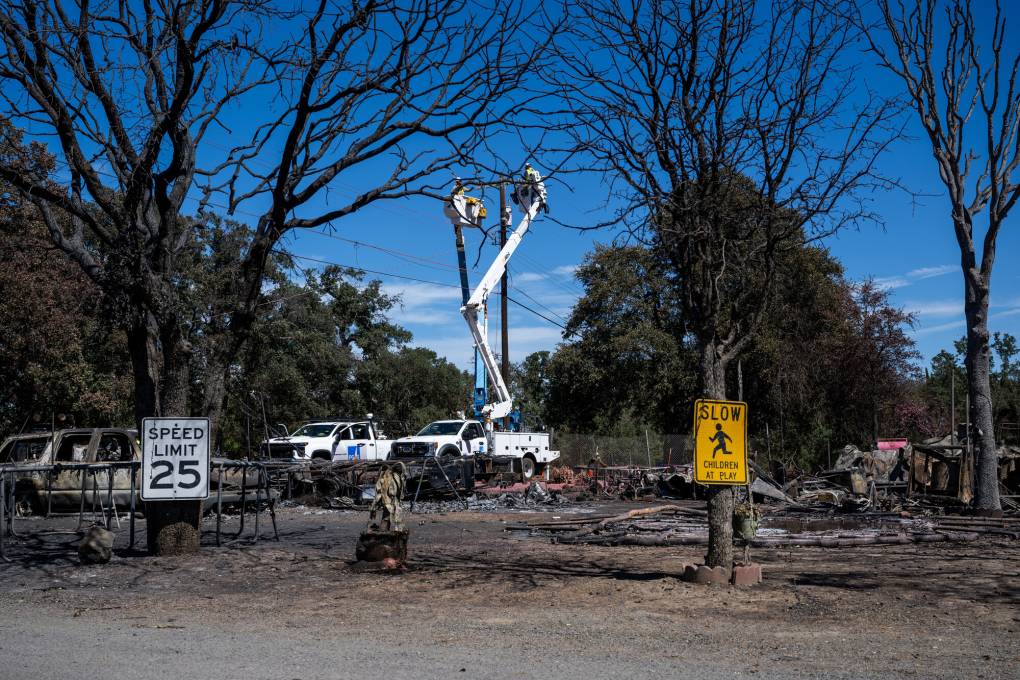
"caption": "PG&E crews work in Clearlake on Sept. 9, 2024, after the Boyles Fire swept through the area on Sept. 8. This week, PG&E has warned 20,000 customers of planned power outages to prevent its infrastructure from igniting wildfires as Northern California is forecast to see strong gusts.",
"credit": "Beth LaBerge/KQED",
"altTag": null,
"description": null,
"imgSizes": {
"medium": {
"file": "https://cdn.kqed.org/wp-content/uploads/sites/35/2024/10/240909-BoylesFire-40-BL_qed-800x533.jpg",
"width": 800,
"height": 533,
"mimeType": "image/jpeg"
},
"large": {
"file": "https://cdn.kqed.org/wp-content/uploads/sites/35/2024/10/240909-BoylesFire-40-BL_qed-1020x680.jpg",
"width": 1020,
"height": 680,
"mimeType": "image/jpeg"
},
"thumbnail": {
"file": "https://cdn.kqed.org/wp-content/uploads/sites/35/2024/10/240909-BoylesFire-40-BL_qed-160x107.jpg",
"width": 160,
"height": 107,
"mimeType": "image/jpeg"
},
"medium_large": {
"file": "https://cdn.kqed.org/wp-content/uploads/sites/35/2024/10/240909-BoylesFire-40-BL_qed-768x512.jpg",
"width": 768,
"height": 512,
"mimeType": "image/jpeg"
},
"1536x1536": {
"file": "https://cdn.kqed.org/wp-content/uploads/sites/35/2024/10/240909-BoylesFire-40-BL_qed-1536x1024.jpg",
"width": 1536,
"height": 1024,
"mimeType": "image/jpeg"
},
"post-thumbnail": {
"file": "https://cdn.kqed.org/wp-content/uploads/sites/35/2024/10/240909-BoylesFire-40-BL_qed-672x372.jpg",
"width": 672,
"height": 372,
"mimeType": "image/jpeg"
},
"twentyfourteen-full-width": {
"file": "https://cdn.kqed.org/wp-content/uploads/sites/35/2024/10/240909-BoylesFire-40-BL_qed-1038x576.jpg",
"width": 1038,
"height": 576,
"mimeType": "image/jpeg"
},
"full-width": {
"file": "https://cdn.kqed.org/wp-content/uploads/sites/35/2024/10/240909-BoylesFire-40-BL_qed-1920x1280.jpg",
"width": 1920,
"height": 1280,
"mimeType": "image/jpeg"
},
"kqedFullSize": {
"file": "https://cdn.kqed.org/wp-content/uploads/sites/35/2024/10/240909-BoylesFire-40-BL_qed.jpg",
"width": 2000,
"height": 1333
}
},
"isLoading": false,
"fetchFailed": false
},
"science_1994767": {
"type": "attachments",
"id": "science_1994767",
"meta": {
"index": "attachments_1716263798",
"site": "science",
"id": "1994767",
"found": true
},
"title": "Federal Grand Jury Finds PG&E Guilty Of Obstructing Justice In San Bruno Explosion Investigation",
"publishDate": 1729024619,
"status": "inherit",
"parent": 1994759,
"modified": 1729024896,
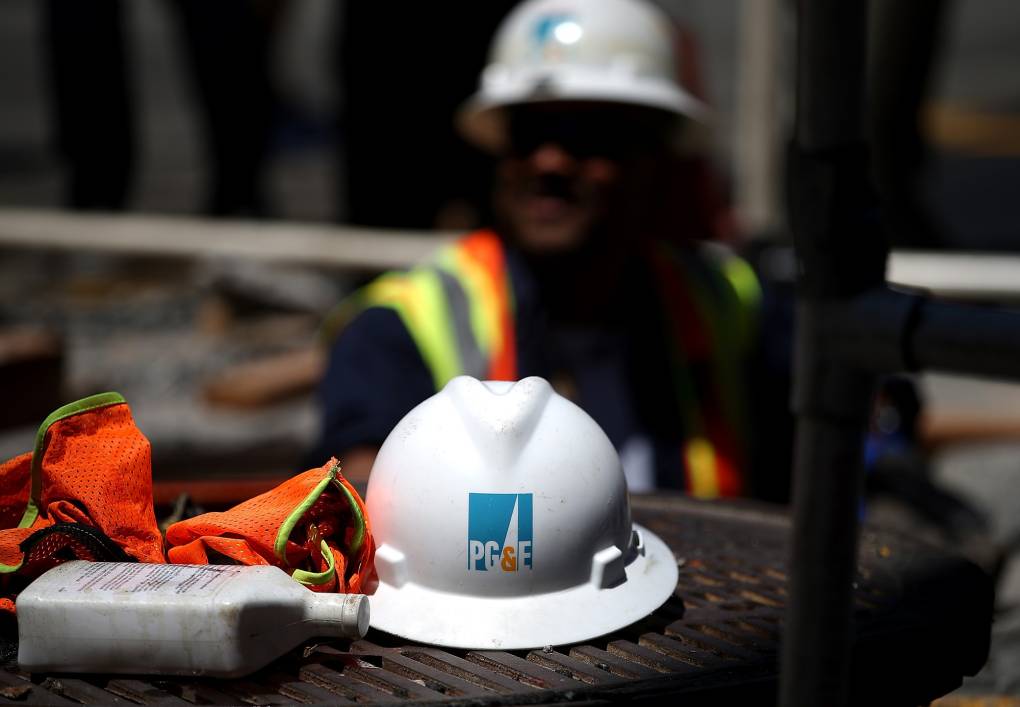
"caption": "Dry, windy conditions across California are elevating fire risks, with forecasters warning that gusts up to 70 mph and dry grasses could fuel rapid wildfire growth. PG&E announced that customers in 30 counties may face temporary power shutoffs by week's end due to the heightened danger.",
"credit": "Justin Sullivan/Getty Images",
"altTag": null,
"description": null,
"imgSizes": {
"medium": {
"file": "https://cdn.kqed.org/wp-content/uploads/sites/35/2024/10/PGE-800x554.jpg",
"width": 800,
"height": 554,
"mimeType": "image/jpeg"
},
"large": {
"file": "https://cdn.kqed.org/wp-content/uploads/sites/35/2024/10/PGE-1020x707.jpg",
"width": 1020,
"height": 707,
"mimeType": "image/jpeg"
},
"thumbnail": {
"file": "https://cdn.kqed.org/wp-content/uploads/sites/35/2024/10/PGE-160x111.jpg",
"width": 160,
"height": 111,
"mimeType": "image/jpeg"
},
"medium_large": {
"file": "https://cdn.kqed.org/wp-content/uploads/sites/35/2024/10/PGE-768x532.jpg",
"width": 768,
"height": 532,
"mimeType": "image/jpeg"
},
"1536x1536": {
"file": "https://cdn.kqed.org/wp-content/uploads/sites/35/2024/10/PGE-1536x1064.jpg",
"width": 1536,
"height": 1064,
"mimeType": "image/jpeg"
},
"post-thumbnail": {
"file": "https://cdn.kqed.org/wp-content/uploads/sites/35/2024/10/PGE-672x372.jpg",
"width": 672,
"height": 372,
"mimeType": "image/jpeg"
},
"twentyfourteen-full-width": {
"file": "https://cdn.kqed.org/wp-content/uploads/sites/35/2024/10/PGE-1038x576.jpg",
"width": 1038,
"height": 576,
"mimeType": "image/jpeg"
},
"full-width": {
"file": "https://cdn.kqed.org/wp-content/uploads/sites/35/2024/10/PGE-1920x1331.jpg",
"width": 1920,
"height": 1331,
"mimeType": "image/jpeg"
},
"kqedFullSize": {
"file": "https://cdn.kqed.org/wp-content/uploads/sites/35/2024/10/PGE.jpg",
"width": 2000,
"height": 1386
}
},
"isLoading": false,
"fetchFailed": false
},
"science_1994717": {
"type": "attachments",
"id": "science_1994717",
"meta": {
"index": "attachments_1716263798",
"site": "science",
"id": "1994717",
"found": true
},
"title": "KQEDClimateBookClub_Assets_1200x630",
"publishDate": 1728580488,
"status": "inherit",
"parent": 1994714,
"modified": 1728581122,
"caption": null,
"credit": "KQED Creative",
"altTag": "An illustration of a landscape with a tree on the right and a title that says \"KQED Climate Book Club.\"",
"description": null,
"imgSizes": {
"medium": {
"file": "https://cdn.kqed.org/wp-content/uploads/sites/35/2024/10/KQEDClimateBookClub_Assets_1200x630-800x420.png",
"width": 800,
"height": 420,
"mimeType": "image/png"
},
"large": {
"file": "https://cdn.kqed.org/wp-content/uploads/sites/35/2024/10/KQEDClimateBookClub_Assets_1200x630-1020x536.png",
"width": 1020,
"height": 536,
"mimeType": "image/png"
},
"thumbnail": {
"file": "https://cdn.kqed.org/wp-content/uploads/sites/35/2024/10/KQEDClimateBookClub_Assets_1200x630-160x84.png",
"width": 160,
"height": 84,
"mimeType": "image/png"
},
"medium_large": {
"file": "https://cdn.kqed.org/wp-content/uploads/sites/35/2024/10/KQEDClimateBookClub_Assets_1200x630-768x403.png",
"width": 768,
"height": 403,
"mimeType": "image/png"
},
"1536x1536": {
"file": "https://cdn.kqed.org/wp-content/uploads/sites/35/2024/10/KQEDClimateBookClub_Assets_1200x630-1536x807.png",
"width": 1536,
"height": 807,
"mimeType": "image/png"
},
"2048x2048": {
"file": "https://cdn.kqed.org/wp-content/uploads/sites/35/2024/10/KQEDClimateBookClub_Assets_1200x630-2048x1075.png",
"width": 2048,
"height": 1075,
"mimeType": "image/png"
},
"post-thumbnail": {
"file": "https://cdn.kqed.org/wp-content/uploads/sites/35/2024/10/KQEDClimateBookClub_Assets_1200x630-672x372.png",
"width": 672,
"height": 372,
"mimeType": "image/png"
},
"twentyfourteen-full-width": {
"file": "https://cdn.kqed.org/wp-content/uploads/sites/35/2024/10/KQEDClimateBookClub_Assets_1200x630-1038x576.png",
"width": 1038,
"height": 576,
"mimeType": "image/png"
},
"full-width": {
"file": "https://cdn.kqed.org/wp-content/uploads/sites/35/2024/10/KQEDClimateBookClub_Assets_1200x630-1920x1008.png",
"width": 1920,
"height": 1008,
"mimeType": "image/png"
},
"kqedFullSize": {
"file": "https://cdn.kqed.org/wp-content/uploads/sites/35/2024/10/KQEDClimateBookClub_Assets_1200x630-e1773868125949.png",
"width": 2000,
"height": 1050
}
},
"isLoading": false,
"fetchFailed": false
},
"science_1994689": {
"type": "attachments",
"id": "science_1994689",
"meta": {
"index": "attachments_1716263798",
"site": "science",
"id": "1994689",
"found": true
},
"title": "20240711_HeatFeatures-6_qed",
"publishDate": 1728496624,
"status": "inherit",
"parent": 1994685,
"modified": 1754590027,
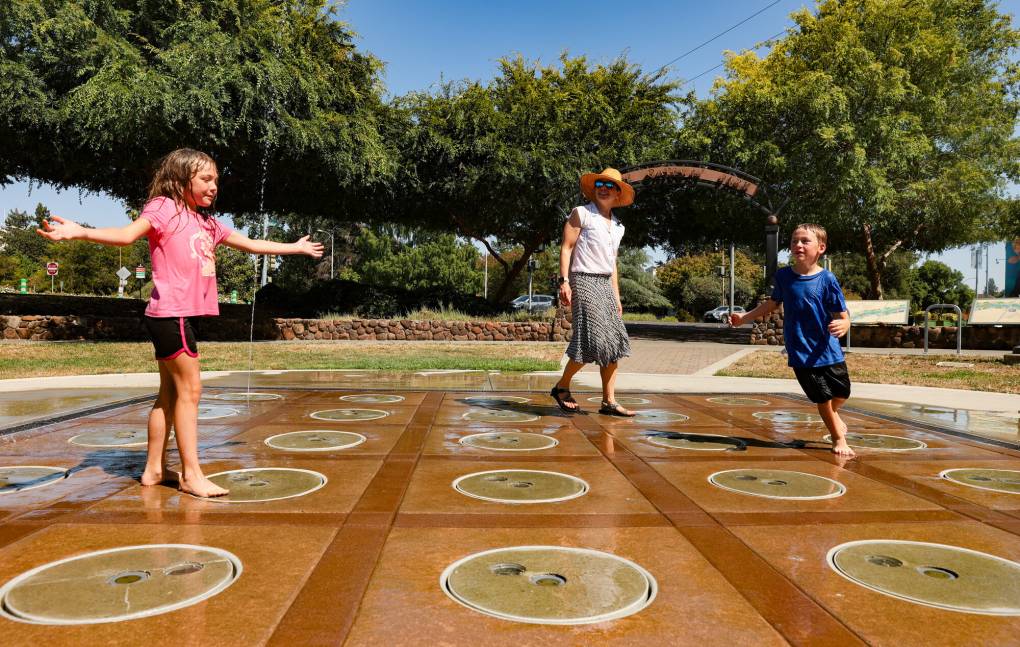
"caption": "Children enjoy the spray grounds at Prince Gateway Park in Santa Rosa as the temperature reached 100 degrees on July 11, 2024. ",
"credit": "Gina Castro/KQED",
"altTag": null,
"description": null,
"imgSizes": {
"medium": {
"file": "https://cdn.kqed.org/wp-content/uploads/sites/35/2024/10/20240711_HeatFeatures-6_qed-800x507.jpg",
"width": 800,
"height": 507,
"mimeType": "image/jpeg"
},
"large": {
"file": "https://cdn.kqed.org/wp-content/uploads/sites/35/2024/10/20240711_HeatFeatures-6_qed-1020x647.jpg",
"width": 1020,
"height": 647,
"mimeType": "image/jpeg"
},
"thumbnail": {
"file": "https://cdn.kqed.org/wp-content/uploads/sites/35/2024/10/20240711_HeatFeatures-6_qed-160x101.jpg",
"width": 160,
"height": 101,
"mimeType": "image/jpeg"
},
"medium_large": {
"file": "https://cdn.kqed.org/wp-content/uploads/sites/35/2024/10/20240711_HeatFeatures-6_qed-768x487.jpg",
"width": 768,
"height": 487,
"mimeType": "image/jpeg"
},
"1536x1536": {
"file": "https://cdn.kqed.org/wp-content/uploads/sites/35/2024/10/20240711_HeatFeatures-6_qed-1536x974.jpg",
"width": 1536,
"height": 974,
"mimeType": "image/jpeg"
},
"post-thumbnail": {
"file": "https://cdn.kqed.org/wp-content/uploads/sites/35/2024/10/20240711_HeatFeatures-6_qed-672x372.jpg",
"width": 672,
"height": 372,
"mimeType": "image/jpeg"
},
"twentyfourteen-full-width": {
"file": "https://cdn.kqed.org/wp-content/uploads/sites/35/2024/10/20240711_HeatFeatures-6_qed-1038x576.jpg",
"width": 1038,
"height": 576,
"mimeType": "image/jpeg"
},
"full-width": {
"file": "https://cdn.kqed.org/wp-content/uploads/sites/35/2024/10/20240711_HeatFeatures-6_qed-1920x1217.jpg",
"width": 1920,
"height": 1217,
"mimeType": "image/jpeg"
},
"kqedFullSize": {
"file": "https://cdn.kqed.org/wp-content/uploads/sites/35/2024/10/20240711_HeatFeatures-6_qed.jpg",
"width": 2000,
"height": 1268
}
},
"isLoading": false,
"fetchFailed": false
},
"science_1994666": {
"type": "attachments",
"id": "science_1994666",
"meta": {
"index": "attachments_1716263798",
"site": "science",
"id": "1994666",
"found": true
},
"title": "California Heat",
"publishDate": 1728330586,
"status": "inherit",
"parent": 1994657,
"modified": 1728330606,
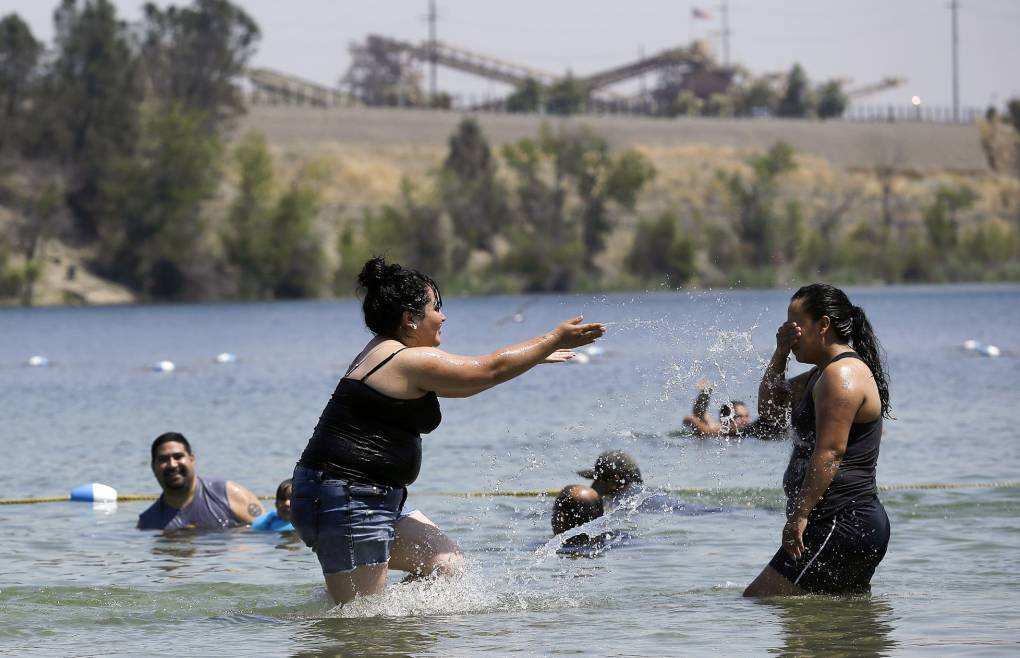
"caption": "Two women play in the water at Shadow Cliffs Regional Recreation Area in Pleasanton, California, on Aug. 17, 2015. The record-breaking heat wave that gripped the Bay Area for over a week has begun to ease, with relief expected inland early this week.",
"credit": "Jeff Chiu/AP Photo",
"altTag": null,
"description": null,
"imgSizes": {
"medium": {
"file": "https://cdn.kqed.org/wp-content/uploads/sites/35/2024/10/CALIFORNIAHEATWAVEAP-KQED-800x516.jpg",
"width": 800,
"height": 516,
"mimeType": "image/jpeg"
},
"large": {
"file": "https://cdn.kqed.org/wp-content/uploads/sites/35/2024/10/CALIFORNIAHEATWAVEAP-KQED-1020x658.jpg",
"width": 1020,
"height": 658,
"mimeType": "image/jpeg"
},
"thumbnail": {
"file": "https://cdn.kqed.org/wp-content/uploads/sites/35/2024/10/CALIFORNIAHEATWAVEAP-KQED-160x103.jpg",
"width": 160,
"height": 103,
"mimeType": "image/jpeg"
},
"medium_large": {
"file": "https://cdn.kqed.org/wp-content/uploads/sites/35/2024/10/CALIFORNIAHEATWAVEAP-KQED-768x496.jpg",
"width": 768,
"height": 496,
"mimeType": "image/jpeg"
},
"1536x1536": {
"file": "https://cdn.kqed.org/wp-content/uploads/sites/35/2024/10/CALIFORNIAHEATWAVEAP-KQED-1536x991.jpg",
"width": 1536,
"height": 991,
"mimeType": "image/jpeg"
},
"post-thumbnail": {
"file": "https://cdn.kqed.org/wp-content/uploads/sites/35/2024/10/CALIFORNIAHEATWAVEAP-KQED-672x372.jpg",
"width": 672,
"height": 372,
"mimeType": "image/jpeg"
},
"twentyfourteen-full-width": {
"file": "https://cdn.kqed.org/wp-content/uploads/sites/35/2024/10/CALIFORNIAHEATWAVEAP-KQED-1038x576.jpg",
"width": 1038,
"height": 576,
"mimeType": "image/jpeg"
},
"full-width": {
"file": "https://cdn.kqed.org/wp-content/uploads/sites/35/2024/10/CALIFORNIAHEATWAVEAP-KQED-1920x1239.jpg",
"width": 1920,
"height": 1239,
"mimeType": "image/jpeg"
},
"kqedFullSize": {
"file": "https://cdn.kqed.org/wp-content/uploads/sites/35/2024/10/CALIFORNIAHEATWAVEAP-KQED.jpg",
"width": 1956,
"height": 1262
}
},
"isLoading": false,
"fetchFailed": false
},
"science_1994646": {
"type": "attachments",
"id": "science_1994646",
"meta": {
"index": "attachments_1716263798",
"site": "science",
"id": "1994646",
"found": true
},
"title": "San Francisco Bay Area to get warmest temps of the year",
"publishDate": 1728065455,
"status": "inherit",
"parent": 1994643,
"modified": 1728065670,
"caption": "The sun sets over San Francisco International Airport on May 8, 2024. The Bay Area experienced record-breaking heat waves this week, marking October as one of the hottest months of the year.",
"credit": "Tayfun Coskun/Anadolu via Getty Images",
"altTag": null,
"description": null,
"imgSizes": {
"medium": {
"file": "https://cdn.kqed.org/wp-content/uploads/sites/35/2024/10/SFHeatWaveGetty2-800x533.jpg",
"width": 800,
"height": 533,
"mimeType": "image/jpeg"
},
"large": {
"file": "https://cdn.kqed.org/wp-content/uploads/sites/35/2024/10/SFHeatWaveGetty2-1020x679.jpg",
"width": 1020,
"height": 679,
"mimeType": "image/jpeg"
},
"thumbnail": {
"file": "https://cdn.kqed.org/wp-content/uploads/sites/35/2024/10/SFHeatWaveGetty2-160x107.jpg",
"width": 160,
"height": 107,
"mimeType": "image/jpeg"
},
"medium_large": {
"file": "https://cdn.kqed.org/wp-content/uploads/sites/35/2024/10/SFHeatWaveGetty2-768x511.jpg",
"width": 768,
"height": 511,
"mimeType": "image/jpeg"
},
"1536x1536": {
"file": "https://cdn.kqed.org/wp-content/uploads/sites/35/2024/10/SFHeatWaveGetty2-1536x1023.jpg",
"width": 1536,
"height": 1023,
"mimeType": "image/jpeg"
},
"post-thumbnail": {
"file": "https://cdn.kqed.org/wp-content/uploads/sites/35/2024/10/SFHeatWaveGetty2-672x372.jpg",
"width": 672,
"height": 372,
"mimeType": "image/jpeg"
},
"twentyfourteen-full-width": {
"file": "https://cdn.kqed.org/wp-content/uploads/sites/35/2024/10/SFHeatWaveGetty2-1038x576.jpg",
"width": 1038,
"height": 576,
"mimeType": "image/jpeg"
},
"full-width": {
"file": "https://cdn.kqed.org/wp-content/uploads/sites/35/2024/10/SFHeatWaveGetty2-1920x1279.jpg",
"width": 1920,
"height": 1279,
"mimeType": "image/jpeg"
},
"kqedFullSize": {
"file": "https://cdn.kqed.org/wp-content/uploads/sites/35/2024/10/SFHeatWaveGetty2.jpg",
"width": 2000,
"height": 1332
}
},
"isLoading": false,
"fetchFailed": false
},
"science_1994634": {
"type": "attachments",
"id": "science_1994634",
"meta": {
"index": "attachments_1716263798",
"site": "science",
"id": "1994634",
"found": true
},
"title": "California Heat",
"publishDate": 1727976378,
"status": "inherit",
"parent": 1994632,
"modified": 1727976651,
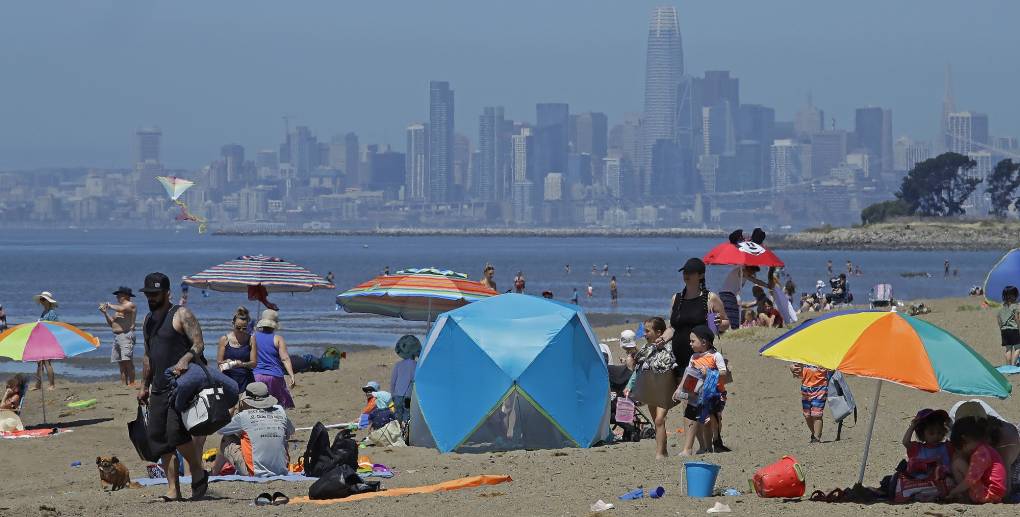
"caption": "People gather at Robert W. Crown Memorial State Beach in Alameda, California, with the San Francisco skyline in the background on May 26, 2020. This week's Bay Area heat wave, fueled by a persistent high-pressure ridge, is now expected to last through the weekend. Officials urge residents to stay hydrated and seek shade as temperatures remain elevated longer than forecast.",
"credit": "Ben Margot/AP Photo",
"altTag": null,
"description": null,
"imgSizes": {
"medium": {
"file": "https://cdn.kqed.org/wp-content/uploads/sites/35/2024/10/BayAreaHeatAP-800x405.jpg",
"width": 800,
"height": 405,
"mimeType": "image/jpeg"
},
"large": {
"file": "https://cdn.kqed.org/wp-content/uploads/sites/35/2024/10/BayAreaHeatAP-1020x517.jpg",
"width": 1020,
"height": 517,
"mimeType": "image/jpeg"
},
"thumbnail": {
"file": "https://cdn.kqed.org/wp-content/uploads/sites/35/2024/10/BayAreaHeatAP-160x81.jpg",
"width": 160,
"height": 81,
"mimeType": "image/jpeg"
},
"medium_large": {
"file": "https://cdn.kqed.org/wp-content/uploads/sites/35/2024/10/BayAreaHeatAP-768x389.jpg",
"width": 768,
"height": 389,
"mimeType": "image/jpeg"
},
"1536x1536": {
"file": "https://cdn.kqed.org/wp-content/uploads/sites/35/2024/10/BayAreaHeatAP-1536x778.jpg",
"width": 1536,
"height": 778,
"mimeType": "image/jpeg"
},
"post-thumbnail": {
"file": "https://cdn.kqed.org/wp-content/uploads/sites/35/2024/10/BayAreaHeatAP-672x372.jpg",
"width": 672,
"height": 372,
"mimeType": "image/jpeg"
},
"twentyfourteen-full-width": {
"file": "https://cdn.kqed.org/wp-content/uploads/sites/35/2024/10/BayAreaHeatAP-1038x576.jpg",
"width": 1038,
"height": 576,
"mimeType": "image/jpeg"
},
"full-width": {
"file": "https://cdn.kqed.org/wp-content/uploads/sites/35/2024/10/BayAreaHeatAP-1920x972.jpg",
"width": 1920,
"height": 972,
"mimeType": "image/jpeg"
},
"kqedFullSize": {
"file": "https://cdn.kqed.org/wp-content/uploads/sites/35/2024/10/BayAreaHeatAP.jpg",
"width": 2000,
"height": 1013
}
},
"isLoading": false,
"fetchFailed": false
},
"science_1994619": {
"type": "attachments",
"id": "science_1994619",
"meta": {
"index": "attachments_1716263798",
"site": "science",
"id": "1994619",
"found": true
},
"title": "20241002_PajaroLeveeGroundbreak_GC-32",
"publishDate": 1727908407,
"status": "inherit",
"parent": 1994596,
"modified": 1727908534,
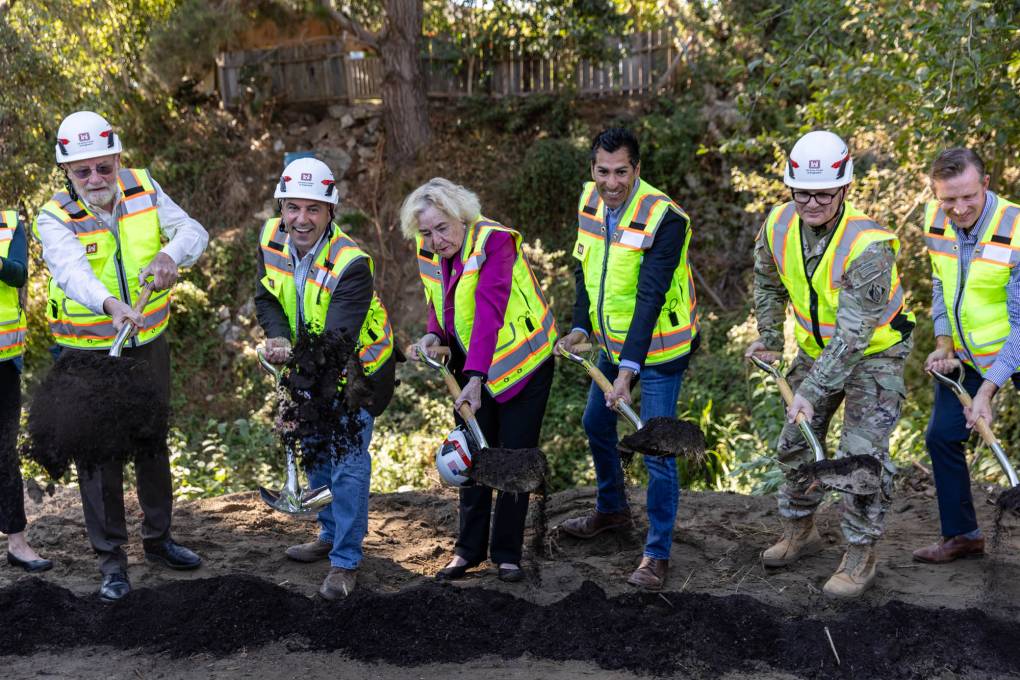
"caption": "Officials from the U.S. Army Corps of Engineers, Pajaro River Flood Management Agency, and state and local governments don helmets and safety vests as they shovel dirt at the groundbreaking ceremony for a new Pajaro River levee in Watsonville on Oct. 2, 2024. ",
"credit": "Gina Castro/KQED",
"altTag": null,
"description": null,
"imgSizes": {
"medium": {
"file": "https://cdn.kqed.org/wp-content/uploads/sites/35/2024/10/20241002_PajaroLeveeGroundbreak_GC-32-800x533.jpg",
"width": 800,
"height": 533,
"mimeType": "image/jpeg"
},
"large": {
"file": "https://cdn.kqed.org/wp-content/uploads/sites/35/2024/10/20241002_PajaroLeveeGroundbreak_GC-32-1020x680.jpg",
"width": 1020,
"height": 680,
"mimeType": "image/jpeg"
},
"thumbnail": {
"file": "https://cdn.kqed.org/wp-content/uploads/sites/35/2024/10/20241002_PajaroLeveeGroundbreak_GC-32-160x107.jpg",
"width": 160,
"height": 107,
"mimeType": "image/jpeg"
},
"medium_large": {
"file": "https://cdn.kqed.org/wp-content/uploads/sites/35/2024/10/20241002_PajaroLeveeGroundbreak_GC-32-768x512.jpg",
"width": 768,
"height": 512,
"mimeType": "image/jpeg"
},
"1536x1536": {
"file": "https://cdn.kqed.org/wp-content/uploads/sites/35/2024/10/20241002_PajaroLeveeGroundbreak_GC-32-1536x1024.jpg",
"width": 1536,
"height": 1024,
"mimeType": "image/jpeg"
},
"post-thumbnail": {
"file": "https://cdn.kqed.org/wp-content/uploads/sites/35/2024/10/20241002_PajaroLeveeGroundbreak_GC-32-672x372.jpg",
"width": 672,
"height": 372,
"mimeType": "image/jpeg"
},
"twentyfourteen-full-width": {
"file": "https://cdn.kqed.org/wp-content/uploads/sites/35/2024/10/20241002_PajaroLeveeGroundbreak_GC-32-1038x576.jpg",
"width": 1038,
"height": 576,
"mimeType": "image/jpeg"
},
"full-width": {
"file": "https://cdn.kqed.org/wp-content/uploads/sites/35/2024/10/20241002_PajaroLeveeGroundbreak_GC-32-1920x1280.jpg",
"width": 1920,
"height": 1280,
"mimeType": "image/jpeg"
},
"kqedFullSize": {
"file": "https://cdn.kqed.org/wp-content/uploads/sites/35/2024/10/20241002_PajaroLeveeGroundbreak_GC-32.jpg",
"width": 2000,
"height": 1333
}
},
"isLoading": false,
"fetchFailed": false
},
"science_1994592": {
"type": "attachments",
"id": "science_1994592",
"meta": {
"index": "attachments_1716263798",
"site": "science",
"id": "1994592",
"found": true
},
"title": "Heat Wave Hits San Francisco",
"publishDate": 1727803472,
"status": "inherit",
"parent": 1994591,
"modified": 1727803721,
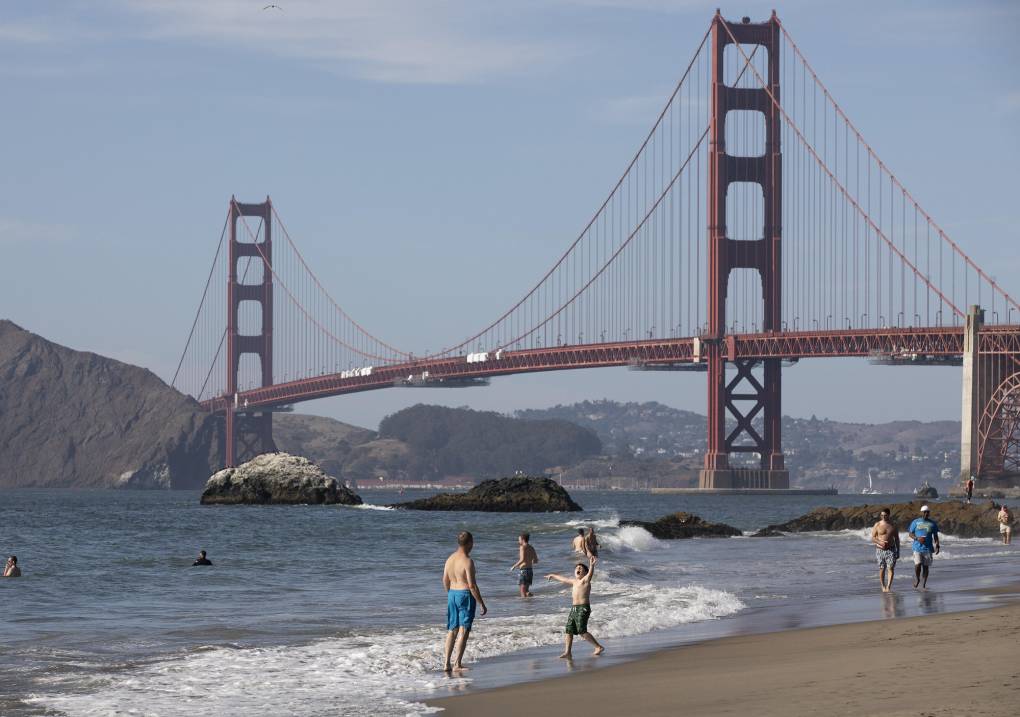
"caption": "People cool off on the Baker Beach in San Francisco on Aug. 15, 2020. The National Weather Service says this week's heat wave is nearing the record set in 1980, when San Francisco hit 97 degrees, with even higher temperatures inland. An excessive heat advisory is in effect for San Francisco until 8 p.m. Tuesday, followed by a heat advisory starting Wednesday.",
"credit": "Liu Guanguan/China News Service via Getty Images",
"altTag": null,
"description": null,
"imgSizes": {
"medium": {
"file": "https://cdn.kqed.org/wp-content/uploads/sites/35/2024/10/SFHeatWaveGetty1-800x562.jpg",
"width": 800,
"height": 562,
"mimeType": "image/jpeg"
},
"large": {
"file": "https://cdn.kqed.org/wp-content/uploads/sites/35/2024/10/SFHeatWaveGetty1-1020x717.jpg",
"width": 1020,
"height": 717,
"mimeType": "image/jpeg"
},
"thumbnail": {
"file": "https://cdn.kqed.org/wp-content/uploads/sites/35/2024/10/SFHeatWaveGetty1-160x112.jpg",
"width": 160,
"height": 112,
"mimeType": "image/jpeg"
},
"medium_large": {
"file": "https://cdn.kqed.org/wp-content/uploads/sites/35/2024/10/SFHeatWaveGetty1-768x540.jpg",
"width": 768,
"height": 540,
"mimeType": "image/jpeg"
},
"1536x1536": {
"file": "https://cdn.kqed.org/wp-content/uploads/sites/35/2024/10/SFHeatWaveGetty1-1536x1079.jpg",
"width": 1536,
"height": 1079,
"mimeType": "image/jpeg"
},
"post-thumbnail": {
"file": "https://cdn.kqed.org/wp-content/uploads/sites/35/2024/10/SFHeatWaveGetty1-672x372.jpg",
"width": 672,
"height": 372,
"mimeType": "image/jpeg"
},
"twentyfourteen-full-width": {
"file": "https://cdn.kqed.org/wp-content/uploads/sites/35/2024/10/SFHeatWaveGetty1-1038x576.jpg",
"width": 1038,
"height": 576,
"mimeType": "image/jpeg"
},
"full-width": {
"file": "https://cdn.kqed.org/wp-content/uploads/sites/35/2024/10/SFHeatWaveGetty1-1920x1349.jpg",
"width": 1920,
"height": 1349,
"mimeType": "image/jpeg"
},
"kqedFullSize": {
"file": "https://cdn.kqed.org/wp-content/uploads/sites/35/2024/10/SFHeatWaveGetty1.jpg",
"width": 2000,
"height": 1405
}
},
"isLoading": false,
"fetchFailed": false
},
"science_1994498": {
"type": "attachments",
"id": "science_1994498",
"meta": {
"index": "attachments_1716263798",
"site": "science",
"id": "1994498",
"found": true
},
"title": "Los Vaqueros Reservoir",
"publishDate": 1727205623,
"status": "inherit",
"parent": 1994496,
"modified": 1727216711,
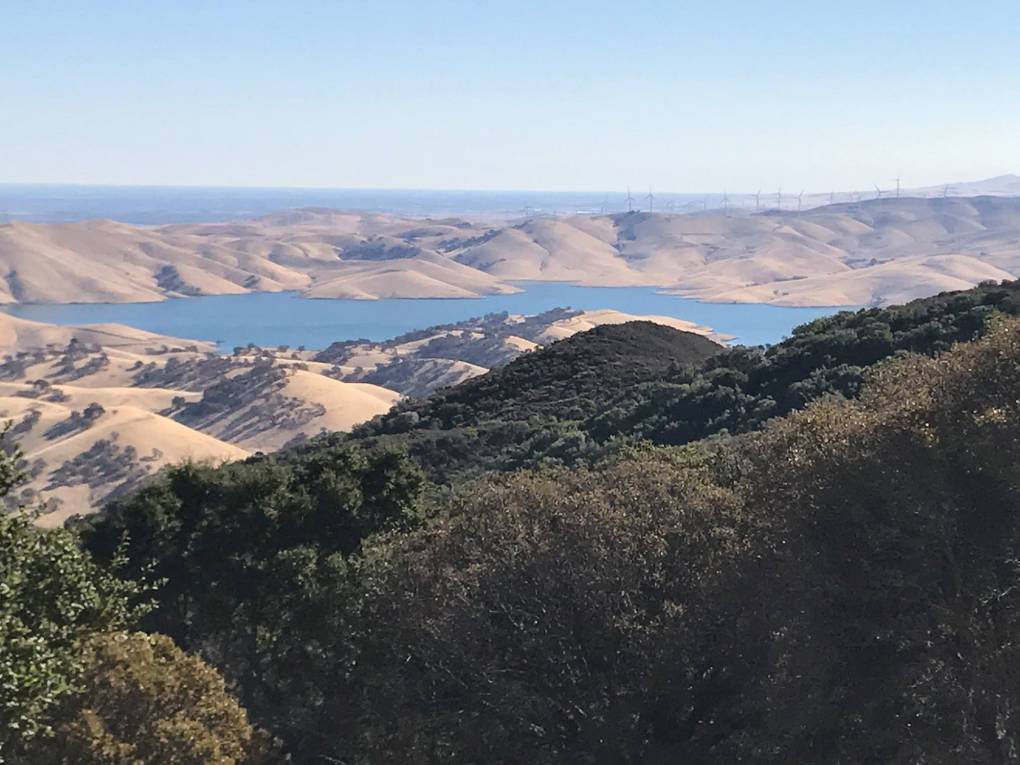
"caption": "Contra Costa Water District has ended a yearslong, $1.5 billion project to expand Los Vaqueros Reservoir, a major setback for Bay Area water storage efforts. The project received nearly $500 million in state funding in 2018 following the passage of Proposition 1.",
"credit": "Courtesy Linda Wingerd Meamber",
"altTag": null,
"description": null,
"imgSizes": {
"medium": {
"file": "https://cdn.kqed.org/wp-content/uploads/sites/35/2024/09/Los-Vaqueros-Reservoir-800x600.jpg",
"width": 800,
"height": 600,
"mimeType": "image/jpeg"
},
"large": {
"file": "https://cdn.kqed.org/wp-content/uploads/sites/35/2024/09/Los-Vaqueros-Reservoir-1020x765.jpg",
"width": 1020,
"height": 765,
"mimeType": "image/jpeg"
},
"thumbnail": {
"file": "https://cdn.kqed.org/wp-content/uploads/sites/35/2024/09/Los-Vaqueros-Reservoir-160x120.jpg",
"width": 160,
"height": 120,
"mimeType": "image/jpeg"
},
"medium_large": {
"file": "https://cdn.kqed.org/wp-content/uploads/sites/35/2024/09/Los-Vaqueros-Reservoir-768x576.jpg",
"width": 768,
"height": 576,
"mimeType": "image/jpeg"
},
"1536x1536": {
"file": "https://cdn.kqed.org/wp-content/uploads/sites/35/2024/09/Los-Vaqueros-Reservoir-1536x1152.jpg",
"width": 1536,
"height": 1152,
"mimeType": "image/jpeg"
},
"post-thumbnail": {
"file": "https://cdn.kqed.org/wp-content/uploads/sites/35/2024/09/Los-Vaqueros-Reservoir-672x372.jpg",
"width": 672,
"height": 372,
"mimeType": "image/jpeg"
},
"twentyfourteen-full-width": {
"file": "https://cdn.kqed.org/wp-content/uploads/sites/35/2024/09/Los-Vaqueros-Reservoir-1038x576.jpg",
"width": 1038,
"height": 576,
"mimeType": "image/jpeg"
},
"full-width": {
"file": "https://cdn.kqed.org/wp-content/uploads/sites/35/2024/09/Los-Vaqueros-Reservoir-1920x1440.jpg",
"width": 1920,
"height": 1440,
"mimeType": "image/jpeg"
},
"kqedFullSize": {
"file": "https://cdn.kqed.org/wp-content/uploads/sites/35/2024/09/Los-Vaqueros-Reservoir.jpg",
"width": 2000,
"height": 1500
}
},
"isLoading": false,
"fetchFailed": false
},
"science_1993248": {
"type": "attachments",
"id": "science_1993248",
"meta": {
"index": "attachments_1716263798",
"site": "science",
"id": "1993248",
"found": true
},
"title": "Bay Area Experiences Record Temperatures In First Heat Wave Of The Year",
"publishDate": 1718042299,
"status": "inherit",
"parent": 1993242,
"modified": 1727478500,
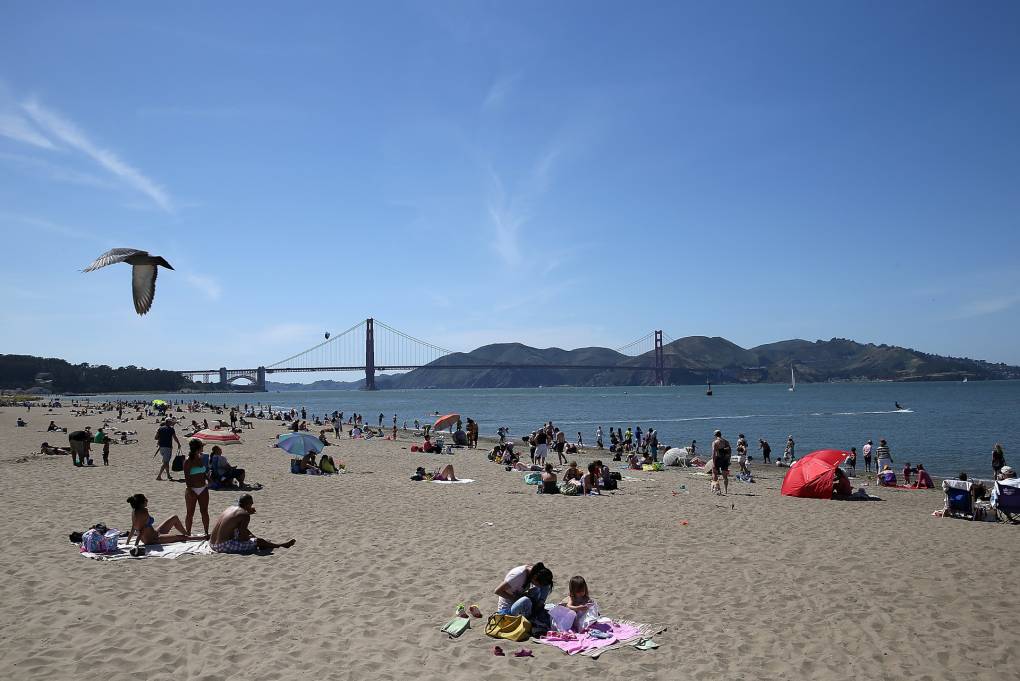
"caption": "Beachgoers hang out on the beach at Crissy Field on May 14, 2014, in San Francisco. ",
"credit": "Justin Sullivan/Getty Images",
"altTag": null,
"description": null,
"imgSizes": {
"medium": {
"file": "https://cdn.kqed.org/wp-content/uploads/sites/35/2024/06/GettyImages-490568719_qut-800x534.jpg",
"width": 800,
"height": 534,
"mimeType": "image/jpeg"
},
"large": {
"file": "https://cdn.kqed.org/wp-content/uploads/sites/35/2024/06/GettyImages-490568719_qut-1020x681.jpg",
"width": 1020,
"height": 681,
"mimeType": "image/jpeg"
},
"thumbnail": {
"file": "https://cdn.kqed.org/wp-content/uploads/sites/35/2024/06/GettyImages-490568719_qut-160x107.jpg",
"width": 160,
"height": 107,
"mimeType": "image/jpeg"
},
"medium_large": {
"file": "https://cdn.kqed.org/wp-content/uploads/sites/35/2024/06/GettyImages-490568719_qut-768x512.jpg",
"width": 768,
"height": 512,
"mimeType": "image/jpeg"
},
"1536x1536": {
"file": "https://cdn.kqed.org/wp-content/uploads/sites/35/2024/06/GettyImages-490568719_qut-1536x1025.jpg",
"width": 1536,
"height": 1025,
"mimeType": "image/jpeg"
},
"post-thumbnail": {
"file": "https://cdn.kqed.org/wp-content/uploads/sites/35/2024/06/GettyImages-490568719_qut-672x372.jpg",
"width": 672,
"height": 372,
"mimeType": "image/jpeg"
},
"twentyfourteen-full-width": {
"file": "https://cdn.kqed.org/wp-content/uploads/sites/35/2024/06/GettyImages-490568719_qut-1038x576.jpg",
"width": 1038,
"height": 576,
"mimeType": "image/jpeg"
},
"kqedFullSize": {
"file": "https://cdn.kqed.org/wp-content/uploads/sites/35/2024/06/GettyImages-490568719_qut.jpg",
"width": 1920,
"height": 1281
}
},
"isLoading": false,
"fetchFailed": false
},
"science_1994457": {
"type": "attachments",
"id": "science_1994457",
"meta": {
"index": "attachments_1716263798",
"site": "science",
"id": "1994457",
"found": true
},
"title": "Marin City can be seen from Alta Trail in Sausalito on March 1, 2022.",
"publishDate": 1726856120,
"status": "inherit",
"parent": 0,
"modified": 1726860410,
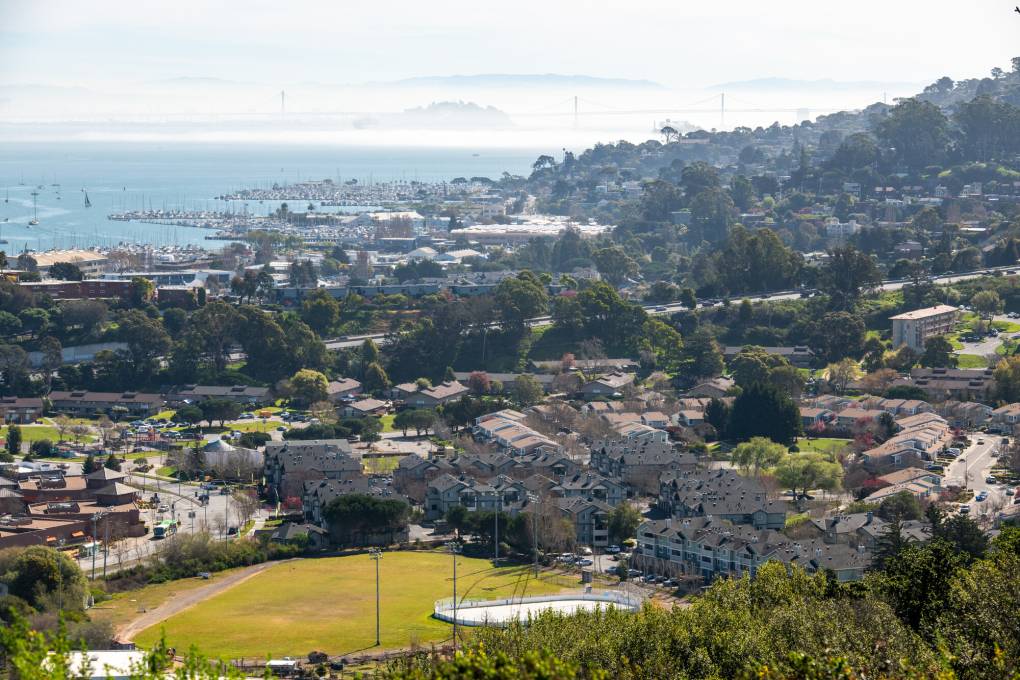
"caption": "Marin City can be seen from Alta Trail in Sausalito on March 1, 2022. The federal government recently chose to help Marin City with a fully funded solution for the Marin County unincorporated town's flooding issues. The agency will help streamline a solution of up to $13.5 million.",
"credit": "Beth LaBerge/KQED",
"altTag": null,
"description": null,
"imgSizes": {
"medium": {
"file": "https://cdn.kqed.org/wp-content/uploads/sites/35/2024/09/054_KQED_MarinCityWaterTesting_03012022_qed-800x533.jpg",
"width": 800,
"height": 533,
"mimeType": "image/jpeg"
},
"large": {
"file": "https://cdn.kqed.org/wp-content/uploads/sites/35/2024/09/054_KQED_MarinCityWaterTesting_03012022_qed-1020x680.jpg",
"width": 1020,
"height": 680,
"mimeType": "image/jpeg"
},
"thumbnail": {
"file": "https://cdn.kqed.org/wp-content/uploads/sites/35/2024/09/054_KQED_MarinCityWaterTesting_03012022_qed-160x107.jpg",
"width": 160,
"height": 107,
"mimeType": "image/jpeg"
},
"medium_large": {
"file": "https://cdn.kqed.org/wp-content/uploads/sites/35/2024/09/054_KQED_MarinCityWaterTesting_03012022_qed-768x512.jpg",
"width": 768,
"height": 512,
"mimeType": "image/jpeg"
},
"1536x1536": {
"file": "https://cdn.kqed.org/wp-content/uploads/sites/35/2024/09/054_KQED_MarinCityWaterTesting_03012022_qed-1536x1024.jpg",
"width": 1536,
"height": 1024,
"mimeType": "image/jpeg"
},
"post-thumbnail": {
"file": "https://cdn.kqed.org/wp-content/uploads/sites/35/2024/09/054_KQED_MarinCityWaterTesting_03012022_qed-672x372.jpg",
"width": 672,
"height": 372,
"mimeType": "image/jpeg"
},
"twentyfourteen-full-width": {
"file": "https://cdn.kqed.org/wp-content/uploads/sites/35/2024/09/054_KQED_MarinCityWaterTesting_03012022_qed-1038x576.jpg",
"width": 1038,
"height": 576,
"mimeType": "image/jpeg"
},
"full-width": {
"file": "https://cdn.kqed.org/wp-content/uploads/sites/35/2024/09/054_KQED_MarinCityWaterTesting_03012022_qed-1920x1280.jpg",
"width": 1920,
"height": 1280,
"mimeType": "image/jpeg"
},
"kqedFullSize": {
"file": "https://cdn.kqed.org/wp-content/uploads/sites/35/2024/09/054_KQED_MarinCityWaterTesting_03012022_qed.jpg",
"width": 2000,
"height": 1333
}
},
"isLoading": false,
"fetchFailed": false
}
},
"audioPlayerReducer": {
"postId": "stream_live",
"isPaused": true,
"isPlaying": false,
"pfsActive": false,
"pledgeModalIsOpen": true,
"playerDrawerIsOpen": false,
"liveAudioPlayStartedAt": 0,
"liveAudioPlayContext": ""
},
"authorsReducer": {
"lklivans": {
"type": "authors",
"id": "8648",
"meta": {
"index": "authors_1716337520",
"id": "8648",
"found": true
},
"name": "Laura Klivans",
"firstName": "Laura",
"lastName": "Klivans",
"slug": "lklivans",
"email": "lklivans@kqed.org",
"display_author_email": true,
"staff_mastheads": [
"news",
"science"
],
"title": "Reporter",
"bio": "Laura Klivans is an award-winning science reporter for KQED News, where she covers climate change with an eye on both groundbreaking progress and gaps in action. She is the former host of KQED's blockbuster video series about tiny, amazing animals, \u003cem>Deep Look\u003c/em>. Her work reaches national audiences through NPR, \u003cem>Here & Now, \u003c/em>PRI, and other major outlets. \r\n\r\nLaura’s won five Northern California Area Emmy Awards for Deep Look and First Place in the Greater Bay Area Journalism Awards for a podcast exploring how one Oakland neighborhood teamed up to reduce planet-heating pollution.\r\n\r\nBeyond her reporting, she hosts and moderates events. In the past, she taught audio storytelling at the UC Berkeley Graduate School of Journalism, led international education programs, worked with immigrants and refugees along the Thai-Burmese border, taught high schoolers sex ed, and was an actress. \r\n\r\nShe's a former UC Berkeley Human Rights Fellow, USC Center for Health Journalism's California Fellow and Coro Fellow in Public Affairs. Laura has a master’s in journalism from UC Berkeley, a master’s in education from Harvard, and an undergraduate degree from Northwestern University.\r\n\r\nShe loves trying to riddle the meaning out of vanity license plates.",
"avatar": "https://secure.gravatar.com/avatar/2d2ecd1550a494cc10ad4a503406965585902124739e775a9b3817eebf1d88be?s=600&d=blank&r=g",
"twitter": "lauraklivans",
"bluesky": null,
"facebook": null,
"instagram": null,
"linkedin": null,
"sites": [
{
"site": "news",
"roles": [
"editor"
]
},
{
"site": "stateofhealth",
"roles": [
"contributor",
"editor"
]
},
{
"site": "science",
"roles": [
"editor"
]
},
{
"site": "forum",
"roles": [
"editor"
]
}
],
"headData": {
"title": "Laura Klivans | KQED",
"description": "Reporter",
"ogImgSrc": "https://secure.gravatar.com/avatar/2d2ecd1550a494cc10ad4a503406965585902124739e775a9b3817eebf1d88be?s=600&d=blank&r=g",
"twImgSrc": "https://secure.gravatar.com/avatar/2d2ecd1550a494cc10ad4a503406965585902124739e775a9b3817eebf1d88be?s=600&d=blank&r=g"
},
"isLoading": false,
"link": "/author/lklivans"
},
"dventon": {
"type": "authors",
"id": "11088",
"meta": {
"index": "authors_1716337520",
"id": "11088",
"found": true
},
"name": "Danielle Venton",
"firstName": "Danielle",
"lastName": "Venton",
"slug": "dventon",
"email": "dventon@kqed.org",
"display_author_email": true,
"staff_mastheads": [
"science"
],
"title": "Science reporter",
"bio": "Danielle Venton is a reporter for KQED Science. She covers wildfires, space and oceans (though she is prone to sea sickness).\r\n\r\nBefore joining KQED in 2015, Danielle was a staff reporter at KRCB in Sonoma County and a freelancer. She studied science communication at UC Santa Cruz and formerly worked at CERN in Geneva, Switzerland where she wrote about computing. She lives in Sonoma County and enjoys backpacking.",
"avatar": "https://secure.gravatar.com/avatar/37b292b5c40c8d93959c4f48d73b5286f41b7abd8588277e941905a3ed4c801c?s=600&d=blank&r=g",
"twitter": "DanielleVenton",
"bluesky": null,
"facebook": null,
"instagram": null,
"linkedin": null,
"sites": [
{
"site": "arts",
"roles": [
"contributor"
]
},
{
"site": "news",
"roles": [
"editor"
]
},
{
"site": "futureofyou",
"roles": [
"editor"
]
},
{
"site": "science",
"roles": [
"editor"
]
},
{
"site": "liveblog",
"roles": [
"contributor"
]
}
],
"headData": {
"title": "Danielle Venton | KQED",
"description": "Science reporter",
"ogImgSrc": "https://secure.gravatar.com/avatar/37b292b5c40c8d93959c4f48d73b5286f41b7abd8588277e941905a3ed4c801c?s=600&d=blank&r=g",
"twImgSrc": "https://secure.gravatar.com/avatar/37b292b5c40c8d93959c4f48d73b5286f41b7abd8588277e941905a3ed4c801c?s=600&d=blank&r=g"
},
"isLoading": false,
"link": "/author/dventon"
},
"dcronin": {
"type": "authors",
"id": "11362",
"meta": {
"index": "authors_1716337520",
"id": "11362",
"found": true
},
"name": "Dana Cronin",
"firstName": "Dana",
"lastName": "Cronin",
"slug": "dcronin",
"email": "dcronin@KQED.org",
"display_author_email": true,
"staff_mastheads": [],
"title": "KQED Contributor",
"bio": "Dana Cronin is a reporter for KQED News. She loves writing stories about climate change, environmental issues, food and agriculture. She's reported across the country, from Colorado to Washington D.C. to Illinois, and has won numerous awards for her coverage. Her work is regularly featured on national broadcasts, including NPR’s Morning Edition, All Things Considered, PBS Newshour and Science Friday. She lives in Oakland and has an avocado tree in her back yard.",
"avatar": "https://secure.gravatar.com/avatar/bcf89e3455ff7235f96ab6fa7258dd95?s=600&d=blank&r=g",
"twitter": "DanaHCronin",
"facebook": null,
"instagram": null,
"linkedin": null,
"sites": [
{
"site": "arts",
"roles": [
"author"
]
},
{
"site": "news",
"roles": [
"editor"
]
},
{
"site": "science",
"roles": [
"author"
]
},
{
"site": "liveblog",
"roles": [
"author"
]
}
],
"headData": {
"title": "Dana Cronin | KQED",
"description": "KQED Contributor",
"ogImgSrc": "https://secure.gravatar.com/avatar/bcf89e3455ff7235f96ab6fa7258dd95?s=600&d=blank&r=g",
"twImgSrc": "https://secure.gravatar.com/avatar/bcf89e3455ff7235f96ab6fa7258dd95?s=600&d=blank&r=g"
},
"isLoading": false,
"link": "/author/dcronin"
},
"kevinstark": {
"type": "authors",
"id": "11608",
"meta": {
"index": "authors_1716337520",
"id": "11608",
"found": true
},
"name": "Kevin Stark",
"firstName": "Kevin",
"lastName": "Stark",
"slug": "kevinstark",
"email": "kstark@kqed.org",
"display_author_email": true,
"staff_mastheads": [
"science"
],
"title": "Senior Editor",
"bio": "Kevin is a senior editor for KQED Science, managing the station's health and climate desks. His journalism career began in the Pacific Northwest, and he later became a lead reporter for the San Francisco Public Press. His work has appeared in Pacific Standard magazine, the Energy News Network, the Center for Investigative Reporting's Reveal and WBEZ in Chicago. Kevin joined KQED in 2019, and has covered issues related to energy, wildfire, climate change and the environment.",
"avatar": "https://secure.gravatar.com/avatar/365aaa4b597d3a8374f67504ff0facd323d7906e8eb4be0a7efd2427408e802c?s=600&d=blank&r=g",
"twitter": "starkkev",
"bluesky": null,
"facebook": null,
"instagram": null,
"linkedin": null,
"sites": [
{
"site": "",
"roles": [
"editor"
]
},
{
"site": "news",
"roles": [
"editor"
]
},
{
"site": "science",
"roles": [
"administrator"
]
}
],
"headData": {
"title": "Kevin Stark | KQED",
"description": "Senior Editor",
"ogImgSrc": "https://secure.gravatar.com/avatar/365aaa4b597d3a8374f67504ff0facd323d7906e8eb4be0a7efd2427408e802c?s=600&d=blank&r=g",
"twImgSrc": "https://secure.gravatar.com/avatar/365aaa4b597d3a8374f67504ff0facd323d7906e8eb4be0a7efd2427408e802c?s=600&d=blank&r=g"
},
"isLoading": false,
"link": "/author/kevinstark"
},
"eromero": {
"type": "authors",
"id": "11746",
"meta": {
"index": "authors_1716337520",
"id": "11746",
"found": true
},
"name": "Ezra David Romero",
"firstName": "Ezra David",
"lastName": "Romero",
"slug": "eromero",
"email": "eromero@kqed.org",
"display_author_email": true,
"staff_mastheads": [
"news",
"science"
],
"title": "Climate Reporter",
"bio": "Ezra David Romero is a climate reporter for KQED News. He covers the absence and excess of water in the Bay Area — think sea level rise, flooding and drought. For nearly a decade he’s covered how warming temperatures are altering the lives of Californians. He’s reported on farmers worried their pistachio trees aren’t getting enough sleep, families desperate for water, scientists studying dying giant sequoias, and alongside firefighters containing wildfires. His work has appeared on local stations across California and nationally on public radio shows like Morning Edition, Here and Now, All Things Considered and Science Friday. ",
"avatar": "https://secure.gravatar.com/avatar/c76404d287c10ed40224227551ac36e24352c7306f106632caf6fead76f8801f?s=600&d=blank&r=g",
"twitter": "ezraromero",
"bluesky": null,
"facebook": null,
"instagram": null,
"linkedin": null,
"sites": [
{
"site": "arts",
"roles": [
"editor"
]
},
{
"site": "news",
"roles": [
"editor"
]
},
{
"site": "science",
"roles": [
"editor"
]
},
{
"site": "liveblog",
"roles": [
"author"
]
}
],
"headData": {
"title": "Ezra David Romero | KQED",
"description": "Climate Reporter",
"ogImgSrc": "https://secure.gravatar.com/avatar/c76404d287c10ed40224227551ac36e24352c7306f106632caf6fead76f8801f?s=600&d=blank&r=g",
"twImgSrc": "https://secure.gravatar.com/avatar/c76404d287c10ed40224227551ac36e24352c7306f106632caf6fead76f8801f?s=600&d=blank&r=g"
},
"isLoading": false,
"link": "/author/eromero"
}
},
"pagesReducer": {
"science_tag_climate-change": {
"type": "terms",
"id": "science_194",
"meta": {
"index": "terms_1716263798",
"site": "science",
"id": "194",
"score": 7.946677
},
"featImg": null,
"name": "climate change",
"description": null,
"taxonomy": "tag",
"headData": {
"twImgId": null,
"twTitle": null,
"ogTitle": null,
"ogImgId": null,
"twDescription": null,
"description": null,
"title": "climate change Archives | KQED Science",
"ogDescription": null
},
"ttid": 198,
"slug": "climate-change",
"isLoading": false,
"title": "climate change",
"pageMeta": {
"site": "science",
"WpPageTemplate": "page-topic-editorial",
"currentPage": 7
},
"blocks": [
{
"blockName": "kqed/post-list",
"attrs": {
"layout": "cardArticle2",
"query": "posts/science?tag=climate-change",
"seeMore": false,
"paginated": true,
"page": 7
}
},
{
"blockName": "kqed/ad"
}
]
}
},
"pfsSessionReducer": {},
"postsReducer": {
"stream_live": {
"type": "live",
"id": "stream_live",
"audioUrl": "https://streams.kqed.org/kqedradio",
"title": "Live Stream",
"excerpt": "Live Stream information currently unavailable.",
"link": "/radio",
"featImg": "",
"label": {
"name": "KQED Live",
"link": "/"
}
},
"stream_kqedNewscast": {
"type": "posts",
"id": "stream_kqedNewscast",
"audioUrl": "https://www.kqed.org/.stream/anon/radio/RDnews/newscast.mp3?_=1",
"title": "KQED Newscast",
"featImg": "",
"label": {
"name": "88.5 FM",
"link": "/"
}
},
"science_1994822": {
"type": "posts",
"id": "science_1994822",
"meta": {
"index": "posts_1716263798",
"site": "science",
"id": "1994822",
"score": null,
"sort": [
1729194617000
]
},
"guestAuthors": [],
"slug": "bay-area-braces-for-wicked-winds-pge-power-cuts-heres-when-to-expect-them",
"title": "Bay Area Braces for Wicked Winds, PG&E Power Cuts. Here’s When to Expect Them",
"publishDate": 1729194617,
"format": "standard",
"headTitle": "Bay Area Braces for Wicked Winds, PG&E Power Cuts. Here’s When to Expect Them | KQED",
"labelTerm": {
"site": "science"
},
"content": "\u003cp>\u003cem>Update: \u003ca href=\"https://www.kqed.org/science/1994844/pge-cuts-power-to-15000-customers-as-dry-winds-whip-across-california\">PG&E Cuts Power to 15,000 Customers as Dry Winds Whip Across California\u003c/a>\u003c/em>\u003c/p>\n\u003cp>With Halloween just around the corner, this week won’t be a good time to decorate front yards with inflatable pumpkins or apartment stoops with giant skeletons. The entire Bay Area is in for \u003ca href=\"https://www.kqed.org/science/1994759/high-california-fire-risk-pge-power-outages-30-counties-this-week\">a few days of extreme wind\u003c/a>, forecasters warn, and \u003ca href=\"https://www.kqed.org/news/11836990/pge-shutoffs-are-here-again-what-to-know-about-power-outages-today\">PG&E has already begun to cut power\u003c/a> to customers in the region to prevent downed trees or branches from sparking a fire.\u003c/p>\n\u003cp>“People are starting to decorate for some of the different festivities and will certainly want to make sure they’ve got those items secure,” said Lamont Bain, a meteorologist with the National Weather Service’s Bay Area office.\u003c/p>\n\u003cp>Forecasters expect a significant wind event to bring strong gusts and high fire danger to most of the Bay Area, starting around 11 p.m. Thursday and ending Saturday at 5 p.m. The agency said the change in weather could bring offshore winds of 25–35 mph with gusts of up to 50 mph. At the highest peaks, gusts could reach nearly 65 mph.\u003c/p>\n\u003cp>[ad fullwidth]\u003c/p>\n\u003cp>“We’re already starting to see the sort of the first vestiges of those strong winds,” Bain said Thursday morning. “The San Francisco [International] Airport is starting to gust upwards of 25 miles an hour as we speak.”\u003c/p>\n\u003cp>The winds are caused by a storm system sliding down the Sierra Nevada with pressure that is higher than the pressure on the coastline. That pressure difference will force strong winds to flow from inland areas toward the Bay Area — offshore winds that are especially dangerous for fire because they tend to be drier, stronger and warmer than coastal breezes.\u003c/p>\n\u003cp>https://twitter.com/NWSBayArea/status/1846978883234775539\u003c/p>\n\u003cp>The conditions have led the National Weather Service to issue a red flag warning for the entire Bay Area, Central Coast and northern Central Valley. In response, PG&E is warning \u003ca href=\"https://www.pgecurrents.com/articles/4063-psps-update-week-october-14-2024\">as many as 20,000 customers across two dozen counties\u003c/a> that it may need to shut off their power this week.\u003c/p>\n\u003cp>“Windy conditions create elevated wildfire risk and the risk of debris or vegetation flying into our lines and potentially causing ignitions,” said Jake Zigelman, PG&E vice president of the Bay Area region.\u003c/p>\n\u003cp>PG&E equipment has been found responsible for starting several wildfires in recent years, including the deadliest and most destructive wildfire in California history. The Camp Fire, which was \u003ca href=\"https://www.kqed.org/news/11747485/cal-fires-official-finding-pge-equipment-touched-off-camp-fire\">sparked by a malfunctioning PG&E transmission line\u003c/a> in Butte County, killed 85 people and destroyed nearly 14,000 homes — leading to a $13.5 billion settlement with victims and liabilities that temporarily \u003ca href=\"https://www.kqed.org/news/11879943/a-year-after-pge-left-bankruptcy-spending-by-fire-victim-trust-remains-a-mystery\">pushed the utility into bankruptcy protection\u003c/a>.\u003c/p>\n\u003cp>[aside postID=news_11836990 hero='https://cdn.kqed.org/wp-content/uploads/sites/10/2020/09/RS43113_GettyImages-1188966941-qut-1020x680.jpg']\u003c/p>\n\u003cp>“Power disruptions are a challenge for our customers, but we’re squarely focused on safety and ensuring the safety of our part of the public and the communities we serve,” Zigelman said.\u003c/p>\n\u003cp>PG&E said potential shut-offs could happen at some point Thursday in these counties: Alameda, Colusa, Contra Costa, Glenn, Lake, Mendocino, Napa, Santa Clara, Shasta, Solano, Sonoma, Tehama and Yolo. On Friday, the company could also turn off power to residents in these counties: Butte, Fresno, Madera, Mariposa, Merced, Monterey, Pluma, San Benito, Santa Barbara, Santa Cruz and Stanislaus.\u003c/p>\n\u003cp>While the potential wind impacts are spread across the Bay Area, Zigelman said, “the largest chunk of potential customers” who could lose power are in Napa and Solano counties.\u003c/p>\n\u003cp>Residents are encouraged to exercise extreme caution because the wind and low relative humidity will make it easier for a fire to start and rapidly spread.\u003c/p>\n\u003cp>People should refrain from activities that could start a fire, Bain said, adding that “burning may actually be illegal” in areas under the red flag warning.\u003c/p>\n\u003cp>“Don’t throw cigarette butts out the window; secure tire chains because when they drag, they can be efficient at creating a spark,” he said.\u003c/p>\n\u003cp>\u003c/p>\n",
"blocks": [],
"excerpt": "PG&E has warned 20,000 customers of planned power outages to prevent its infrastructure from igniting wildfires as Northern California is forecast to see strong gusts.",
"status": "publish",
"parent": 0,
"modified": 1729264250,
"stats": {
"hasAudio": false,
"hasVideo": false,
"hasChartOrMap": false,
"iframeSrcs": [],
"hasGoogleForm": false,
"hasGallery": false,
"hasHearkenModule": false,
"hasPolis": false,
"paragraphCount": 18,
"wordCount": 694
},
"headData": {
"title": "Bay Area Braces for Wicked Winds, PG&E Power Cuts. Here’s When to Expect Them | KQED",
"description": "PG&E has warned 20,000 customers of planned power outages to prevent its infrastructure from igniting wildfires as Northern California is forecast to see strong gusts.",
"ogTitle": "",
"ogDescription": "",
"ogImgId": "",
"twTitle": "",
"twDescription": "",
"twImgId": "",
"schema": {
"@context": "https://schema.org",
"@type": "Article",
"headline": "Bay Area Braces for Wicked Winds, PG&E Power Cuts. Here’s When to Expect Them",
"datePublished": "2024-10-17T12:50:17-07:00",
"dateModified": "2024-10-18T08:10:50-07:00",
"image": "https://cdn.kqed.org/wp-content/uploads/2020/02/KQED-OG-Image@1x.png"
}
},
"sticky": false,
"nprStoryId": "kqed-1994822",
"excludeFromSiteSearch": "Include",
"articleAge": "0",
"path": "/science/1994822/bay-area-braces-for-wicked-winds-pge-power-cuts-heres-when-to-expect-them",
"audioTrackLength": null,
"parsedContent": [
{
"type": "contentString",
"content": "\u003cdiv class=\"post-body\">\u003cp>\u003cp>\u003cem>Update: \u003ca href=\"https://www.kqed.org/science/1994844/pge-cuts-power-to-15000-customers-as-dry-winds-whip-across-california\">PG&E Cuts Power to 15,000 Customers as Dry Winds Whip Across California\u003c/a>\u003c/em>\u003c/p>\n\u003cp>With Halloween just around the corner, this week won’t be a good time to decorate front yards with inflatable pumpkins or apartment stoops with giant skeletons. The entire Bay Area is in for \u003ca href=\"https://www.kqed.org/science/1994759/high-california-fire-risk-pge-power-outages-30-counties-this-week\">a few days of extreme wind\u003c/a>, forecasters warn, and \u003ca href=\"https://www.kqed.org/news/11836990/pge-shutoffs-are-here-again-what-to-know-about-power-outages-today\">PG&E has already begun to cut power\u003c/a> to customers in the region to prevent downed trees or branches from sparking a fire.\u003c/p>\n\u003cp>“People are starting to decorate for some of the different festivities and will certainly want to make sure they’ve got those items secure,” said Lamont Bain, a meteorologist with the National Weather Service’s Bay Area office.\u003c/p>\n\u003cp>Forecasters expect a significant wind event to bring strong gusts and high fire danger to most of the Bay Area, starting around 11 p.m. Thursday and ending Saturday at 5 p.m. The agency said the change in weather could bring offshore winds of 25–35 mph with gusts of up to 50 mph. At the highest peaks, gusts could reach nearly 65 mph.\u003c/p>\n\u003cp>\u003c/p>\u003c/div>",
"attributes": {
"named": {},
"numeric": []
}
},
{
"type": "component",
"content": "",
"name": "ad",
"attributes": {
"named": {
"label": "fullwidth"
},
"numeric": [
"fullwidth"
]
}
},
{
"type": "contentString",
"content": "\u003cdiv class=\"post-body\">\u003cp>\u003c/p>\n\u003cp>“We’re already starting to see the sort of the first vestiges of those strong winds,” Bain said Thursday morning. “The San Francisco [International] Airport is starting to gust upwards of 25 miles an hour as we speak.”\u003c/p>\n\u003cp>The winds are caused by a storm system sliding down the Sierra Nevada with pressure that is higher than the pressure on the coastline. That pressure difference will force strong winds to flow from inland areas toward the Bay Area — offshore winds that are especially dangerous for fire because they tend to be drier, stronger and warmer than coastal breezes.\u003c/p>\u003c/p>\u003c/div>",
"attributes": {
"named": {},
"numeric": []
}
},
{
"type": "component",
"content": "",
"name": "singleTwitterStatus",
"attributes": {
"named": {
"id": "1846978883234775539"
},
"numeric": []
}
},
{
"type": "contentString",
"content": "\u003cdiv class=\"post-body\">\u003cp>\n\u003cp>The conditions have led the National Weather Service to issue a red flag warning for the entire Bay Area, Central Coast and northern Central Valley. In response, PG&E is warning \u003ca href=\"https://www.pgecurrents.com/articles/4063-psps-update-week-october-14-2024\">as many as 20,000 customers across two dozen counties\u003c/a> that it may need to shut off their power this week.\u003c/p>\n\u003cp>“Windy conditions create elevated wildfire risk and the risk of debris or vegetation flying into our lines and potentially causing ignitions,” said Jake Zigelman, PG&E vice president of the Bay Area region.\u003c/p>\n\u003cp>PG&E equipment has been found responsible for starting several wildfires in recent years, including the deadliest and most destructive wildfire in California history. The Camp Fire, which was \u003ca href=\"https://www.kqed.org/news/11747485/cal-fires-official-finding-pge-equipment-touched-off-camp-fire\">sparked by a malfunctioning PG&E transmission line\u003c/a> in Butte County, killed 85 people and destroyed nearly 14,000 homes — leading to a $13.5 billion settlement with victims and liabilities that temporarily \u003ca href=\"https://www.kqed.org/news/11879943/a-year-after-pge-left-bankruptcy-spending-by-fire-victim-trust-remains-a-mystery\">pushed the utility into bankruptcy protection\u003c/a>.\u003c/p>\n\u003cp>\u003c/p>\u003c/div>",
"attributes": {
"named": {},
"numeric": []
}
},
{
"type": "component",
"content": "",
"name": "aside",
"attributes": {
"named": {
"postid": "news_11836990",
"hero": "https://cdn.kqed.org/wp-content/uploads/sites/10/2020/09/RS43113_GettyImages-1188966941-qut-1020x680.jpg",
"label": ""
},
"numeric": []
}
},
{
"type": "contentString",
"content": "\u003cdiv class=\"post-body\">\u003cp>\u003c/p>\n\u003cp>“Power disruptions are a challenge for our customers, but we’re squarely focused on safety and ensuring the safety of our part of the public and the communities we serve,” Zigelman said.\u003c/p>\n\u003cp>PG&E said potential shut-offs could happen at some point Thursday in these counties: Alameda, Colusa, Contra Costa, Glenn, Lake, Mendocino, Napa, Santa Clara, Shasta, Solano, Sonoma, Tehama and Yolo. On Friday, the company could also turn off power to residents in these counties: Butte, Fresno, Madera, Mariposa, Merced, Monterey, Pluma, San Benito, Santa Barbara, Santa Cruz and Stanislaus.\u003c/p>\n\u003cp>While the potential wind impacts are spread across the Bay Area, Zigelman said, “the largest chunk of potential customers” who could lose power are in Napa and Solano counties.\u003c/p>\n\u003cp>Residents are encouraged to exercise extreme caution because the wind and low relative humidity will make it easier for a fire to start and rapidly spread.\u003c/p>\n\u003cp>People should refrain from activities that could start a fire, Bain said, adding that “burning may actually be illegal” in areas under the red flag warning.\u003c/p>\n\u003cp>“Don’t throw cigarette butts out the window; secure tire chains because when they drag, they can be efficient at creating a spark,” he said.\u003c/p>\n\u003cp>\u003c/p>\n\u003c/div>\u003c/p>",
"attributes": {
"named": {},
"numeric": []
}
}
],
"link": "/science/1994822/bay-area-braces-for-wicked-winds-pge-power-cuts-heres-when-to-expect-them",
"authors": [
"11746"
],
"categories": [
"science_31",
"science_33",
"science_40"
],
"tags": [
"science_2924",
"science_182",
"science_194",
"science_4417",
"science_4414",
"science_112",
"science_136",
"science_5235",
"science_365",
"science_5347",
"science_187"
],
"featImg": "science_1994825",
"label": "science"
},
"science_1994759": {
"type": "posts",
"id": "science_1994759",
"meta": {
"index": "posts_1716263798",
"site": "science",
"id": "1994759",
"score": null,
"sort": [
1729025110000
]
},
"guestAuthors": [],
"slug": "high-california-fire-risk-pge-power-outages-30-counties-this-week",
"title": "High California Fire Risk Could Lead to PG&E Power Outages in 30 Counties This Week",
"publishDate": 1729025110,
"format": "standard",
"headTitle": "High California Fire Risk Could Lead to PG&E Power Outages in 30 Counties This Week | KQED",
"labelTerm": {
"site": "science"
},
"content": "\u003cp>\u003ca href=\"https://www.kqed.org/pge\">PG&E\u003c/a> customers in 30 \u003ca href=\"https://www.kqed.org/california\">California\u003c/a> counties could temporarily lose their electricity by the end of the week because of elevated fire risk across the state, the utility said Tuesday.\u003c/p>\n\u003cp>The \u003ca href=\"https://pgealerts.alerts.pge.com/psps-updates/7day/\">potential power shutoffs\u003c/a> are meant to avoid sparking a fire during critical conditions. The company reports that a “fully cured grass crop” is abundant at all elevations and that extra windy conditions could help a wildfire spread exceptionally quickly if a fire ignites.\u003c/p>\n\u003cp>The company’s meteorologists “are tracking a weather system that may bring strong winds up to 70 mph across parts of our service area,” said Megan McFarland, a public information officer for PG&E.\u003c/p>\n\u003cp>[ad fullwidth]\u003c/p>\n\u003cp>The National Weather Service has issued a red flag warning for the entire Central Coast, the Bay Area — including the San Francisco Bay shoreline — and the northern Central Valley. Dalton Behringer, a meteorologist with the agency’s Bay Area offices, said Californians should take extreme precautions because the dry and extra windy conditions will create perfect conditions for a wildfire to grow out of control.\u003c/p>\n\u003cp>“We’re not out of the woods,” Behringer said. “We’re getting closer to the wet season, but we still have to be vigilant, even if there’s rain on the horizon.”\u003c/p>\n\u003cp>https://twitter.com/NWSBayArea/status/1846243799082979588\u003c/p>\n\u003cp>Behringer said winds could reach 40 mph over mountain passes. In the Bay Area, the greatest threat is in the higher elevations of the North Bay, East Bay, Central Coast and Santa Cruz Mountains.\u003c/p>\n\u003cp>“By Thursday, the wind ramps up and then really switches around to that offshore direction by Thursday night,” Behringer said. “Friday and Saturday is when we see the driest conditions along with the wind.”\u003c/p>\n\u003cp>[aside postID=news_11993386 hero='https://cdn.kqed.org/wp-content/uploads/sites/10/2024/07/ThompsonFireOrovilleAP1-1020x680.jpg']\u003c/p>\n\u003cp>Starting Thursday, PG&E could cut power to customers in 12 counties: Alameda, Colusa, Contra Costa, Glenn, Lake, Mendocino, Napa, Shasta, Solano, Sonoma, Tehama and Yolo.\u003c/p>\n\u003cp>As the fire risk grows into the weekend, customers in 30 counties could go without power on Friday and Saturday in these counties: Alameda, Alpine, Amador, Butte, Calaveras, Colusa, Contra Costa, El Dorado, Fresno, Glenn, Lake, Madera, Mariposa, Mendocino, Merced, Monterey, Napa, Nevada, Placer, Plumas, San Luis Obispo, Santa Barbara, Shasta, Sierra, Solano, Sonoma, Stanislaus, Tehama, Tuolumne and Yolo.\u003c/p>\n\u003cp>At this point, the potential power shutoff is just a warning, and McFarland said customers will be notified by email, phone or text “to help them plan and prepare for a potential” planned power outage.\u003c/p>\n\u003cp>McFarland said PG&E opened its emergency operations center in Vacaville on Tuesday before the potential power shutoff.\u003c/p>\n\u003cp>\u003c/p>\n",
"blocks": [],
"excerpt": "Dry, windy conditions will elevate fire risk across California as forecasters warn that strong winds up to 70 mph and dry grasses could easily lead to a wildfire growing out of control.",
"status": "publish",
"parent": 0,
"modified": 1729026179,
"stats": {
"hasAudio": false,
"hasVideo": false,
"hasChartOrMap": false,
"iframeSrcs": [],
"hasGoogleForm": false,
"hasGallery": false,
"hasHearkenModule": false,
"hasPolis": false,
"paragraphCount": 14,
"wordCount": 462
},
"headData": {
"title": "High California Fire Risk Could Lead to PG&E Power Outages in 30 Counties This Week | KQED",
"description": "Dry, windy conditions will elevate fire risk across California as forecasters warn that strong winds up to 70 mph and dry grasses could easily lead to a wildfire growing out of control.",
"ogTitle": "",
"ogDescription": "",
"ogImgId": "",
"twTitle": "",
"twDescription": "",
"twImgId": "",
"schema": {
"@context": "https://schema.org",
"@type": "Article",
"headline": "High California Fire Risk Could Lead to PG&E Power Outages in 30 Counties This Week",
"datePublished": "2024-10-15T13:45:10-07:00",
"dateModified": "2024-10-15T14:02:59-07:00",
"image": "https://cdn.kqed.org/wp-content/uploads/2020/02/KQED-OG-Image@1x.png"
}
},
"sticky": false,
"nprStoryId": "kqed-1994759",
"excludeFromSiteSearch": "Include",
"articleAge": "0",
"path": "/science/1994759/high-california-fire-risk-pge-power-outages-30-counties-this-week",
"audioTrackLength": null,
"parsedContent": [
{
"type": "contentString",
"content": "\u003cdiv class=\"post-body\">\u003cp>\u003cp>\u003ca href=\"https://www.kqed.org/pge\">PG&E\u003c/a> customers in 30 \u003ca href=\"https://www.kqed.org/california\">California\u003c/a> counties could temporarily lose their electricity by the end of the week because of elevated fire risk across the state, the utility said Tuesday.\u003c/p>\n\u003cp>The \u003ca href=\"https://pgealerts.alerts.pge.com/psps-updates/7day/\">potential power shutoffs\u003c/a> are meant to avoid sparking a fire during critical conditions. The company reports that a “fully cured grass crop” is abundant at all elevations and that extra windy conditions could help a wildfire spread exceptionally quickly if a fire ignites.\u003c/p>\n\u003cp>The company’s meteorologists “are tracking a weather system that may bring strong winds up to 70 mph across parts of our service area,” said Megan McFarland, a public information officer for PG&E.\u003c/p>\n\u003cp>\u003c/p>\u003c/div>",
"attributes": {
"named": {},
"numeric": []
}
},
{
"type": "component",
"content": "",
"name": "ad",
"attributes": {
"named": {
"label": "fullwidth"
},
"numeric": [
"fullwidth"
]
}
},
{
"type": "contentString",
"content": "\u003cdiv class=\"post-body\">\u003cp>\u003c/p>\n\u003cp>The National Weather Service has issued a red flag warning for the entire Central Coast, the Bay Area — including the San Francisco Bay shoreline — and the northern Central Valley. Dalton Behringer, a meteorologist with the agency’s Bay Area offices, said Californians should take extreme precautions because the dry and extra windy conditions will create perfect conditions for a wildfire to grow out of control.\u003c/p>\n\u003cp>“We’re not out of the woods,” Behringer said. “We’re getting closer to the wet season, but we still have to be vigilant, even if there’s rain on the horizon.”\u003c/p>\u003c/p>\u003c/div>",
"attributes": {
"named": {},
"numeric": []
}
},
{
"type": "component",
"content": "",
"name": "singleTwitterStatus",
"attributes": {
"named": {
"id": "1846243799082979588"
},
"numeric": []
}
},
{
"type": "contentString",
"content": "\u003cdiv class=\"post-body\">\u003cp>\n\u003cp>Behringer said winds could reach 40 mph over mountain passes. In the Bay Area, the greatest threat is in the higher elevations of the North Bay, East Bay, Central Coast and Santa Cruz Mountains.\u003c/p>\n\u003cp>“By Thursday, the wind ramps up and then really switches around to that offshore direction by Thursday night,” Behringer said. “Friday and Saturday is when we see the driest conditions along with the wind.”\u003c/p>\n\u003cp>\u003c/p>\u003c/div>",
"attributes": {
"named": {},
"numeric": []
}
},
{
"type": "component",
"content": "",
"name": "aside",
"attributes": {
"named": {
"postid": "news_11993386",
"hero": "https://cdn.kqed.org/wp-content/uploads/sites/10/2024/07/ThompsonFireOrovilleAP1-1020x680.jpg",
"label": ""
},
"numeric": []
}
},
{
"type": "contentString",
"content": "\u003cdiv class=\"post-body\">\u003cp>\u003c/p>\n\u003cp>Starting Thursday, PG&E could cut power to customers in 12 counties: Alameda, Colusa, Contra Costa, Glenn, Lake, Mendocino, Napa, Shasta, Solano, Sonoma, Tehama and Yolo.\u003c/p>\n\u003cp>As the fire risk grows into the weekend, customers in 30 counties could go without power on Friday and Saturday in these counties: Alameda, Alpine, Amador, Butte, Calaveras, Colusa, Contra Costa, El Dorado, Fresno, Glenn, Lake, Madera, Mariposa, Mendocino, Merced, Monterey, Napa, Nevada, Placer, Plumas, San Luis Obispo, Santa Barbara, Shasta, Sierra, Solano, Sonoma, Stanislaus, Tehama, Tuolumne and Yolo.\u003c/p>\n\u003cp>At this point, the potential power shutoff is just a warning, and McFarland said customers will be notified by email, phone or text “to help them plan and prepare for a potential” planned power outage.\u003c/p>\n\u003cp>McFarland said PG&E opened its emergency operations center in Vacaville on Tuesday before the potential power shutoff.\u003c/p>\n\u003cp>\u003c/p>\n\u003c/div>\u003c/p>",
"attributes": {
"named": {},
"numeric": []
}
}
],
"link": "/science/1994759/high-california-fire-risk-pge-power-outages-30-counties-this-week",
"authors": [
"11746"
],
"categories": [
"science_31",
"science_40",
"science_4450"
],
"tags": [
"science_2924",
"science_5178",
"science_182",
"science_194",
"science_4414",
"science_136",
"science_5235",
"science_309",
"science_365",
"science_5347"
],
"featImg": "science_1994767",
"label": "science"
},
"science_1994714": {
"type": "posts",
"id": "science_1994714",
"meta": {
"index": "posts_1716263798",
"site": "science",
"id": "1994714",
"score": null,
"sort": [
1728586834000
]
},
"guestAuthors": [],
"slug": "join-kqeds-climate-book-club-to-explore-solutions-in-the-ministry-for-the-future",
"title": "Join KQED's Climate Book Club to Explore Solutions in 'The Ministry for the Future'",
"publishDate": 1728586834,
"format": "standard",
"headTitle": "Join KQED’s Climate Book Club to Explore Solutions in ‘The Ministry for the Future’ | KQED",
"labelTerm": {
"site": "science"
},
"content": "\u003cp>The fingerprint of climate change is all over the current news. If considering the destruction now seen from Hurricanes Milton, Helene and the wildfires in the West this year feels hard, you’re not alone.\u003c/p>\n\u003cp>But let me offer an idea. Learning more about climate change, with the support of others, can help. It can make us feel less helpless, less overwhelmed, more engaged, able to talk about solutions with our friends and families and take action in our own lives.\u003c/p>\n\u003cp>That’s the idea behind the KQED Climate Book Club, which I host. Currently, we are reading “The Ministry for the Future” by Kim Stanley Robinson. The book is a work of climate fiction set in the near future, where climate change has worsened.[aside postID=\"mindshift_64855,science_1994643\" label=\"Relates Stories\"] It follows an international organization – a bureaucratic supergroup – that advocates for the long-term survival and well-being of future generations. It examines a range of solutions we might do once we finally get serious about fixing climate change. Former President Barack Obama selected it as one of his favorite books from the year 2020.\u003c/p>\n\u003cp>For a taste of Kim Stanley Robinson’s verve and imagination in solving the climate crisis, sample this “letter from the future” from the TED YouTube channel.\u003c/p>\n\u003cp>https://www.youtube.com/watch?v=dzWRHi-Bmuk&ab_channel=TED\u003c/p>\n\u003cp>[ad fullwidth]\u003c/p>\n\u003cp>\u003c/p>\n\u003cp>I’m thrilled that the author has agreed to join us for the final discussion of the book, \u003ca href=\"https://www.kqed.org/event/4659\">live at KQED\u003c/a> headquarters on Dec. 18. We will also meet up on Oct. 19 at KQED, during \u003ca href=\"https://www.kqed.org/kqed-fest-2024\">KQED Fest\u003c/a>, for a chat about the first half of the book. And we have an ongoing discussion aboard \u003ca href=\"http://discord.gg/kqed\">KQED Forum’s Discord\u003c/a>.\u003c/p>\n\n",
"blocks": [],
"excerpt": "Learning more about climate change, with the support of others, can make us feel less helpless, less overwhelmed, more engaged, able to talk about solutions with our friends and families and take action in our own lives. ",
"status": "publish",
"parent": 0,
"modified": 1728593508,
"stats": {
"hasAudio": false,
"hasVideo": true,
"hasChartOrMap": false,
"iframeSrcs": [],
"hasGoogleForm": false,
"hasGallery": false,
"hasHearkenModule": false,
"hasPolis": false,
"paragraphCount": 7,
"wordCount": 297
},
"headData": {
"title": "Join KQED's Climate Book Club to Explore Solutions in 'The Ministry for the Future' | KQED",
"description": "Learning more about climate change, with the support of others, can make us feel less helpless, less overwhelmed, more engaged, able to talk about solutions with our friends and families and take action in our own lives. ",
"ogTitle": "",
"ogDescription": "",
"ogImgId": "",
"twTitle": "",
"twDescription": "",
"twImgId": "",
"schema": {
"@context": "https://schema.org",
"@type": "Article",
"headline": "Join KQED's Climate Book Club to Explore Solutions in 'The Ministry for the Future'",
"datePublished": "2024-10-10T12:00:34-07:00",
"dateModified": "2024-10-10T13:51:48-07:00",
"image": "https://cdn.kqed.org/wp-content/uploads/2020/02/KQED-OG-Image@1x.png"
}
},
"sticky": false,
"nprStoryId": "kqed-1994714",
"excludeFromSiteSearch": "Include",
"articleAge": "0",
"path": "/science/1994714/join-kqeds-climate-book-club-to-explore-solutions-in-the-ministry-for-the-future",
"audioTrackLength": null,
"parsedContent": [
{
"type": "contentString",
"content": "\u003cdiv class=\"post-body\">\u003cp>\u003cp>The fingerprint of climate change is all over the current news. If considering the destruction now seen from Hurricanes Milton, Helene and the wildfires in the West this year feels hard, you’re not alone.\u003c/p>\n\u003cp>But let me offer an idea. Learning more about climate change, with the support of others, can help. It can make us feel less helpless, less overwhelmed, more engaged, able to talk about solutions with our friends and families and take action in our own lives.\u003c/p>\n\u003cp>That’s the idea behind the KQED Climate Book Club, which I host. Currently, we are reading “The Ministry for the Future” by Kim Stanley Robinson. The book is a work of climate fiction set in the near future, where climate change has worsened.\u003c/p>\u003c/div>",
"attributes": {
"named": {},
"numeric": []
}
},
{
"type": "component",
"content": "",
"name": "aside",
"attributes": {
"named": {
"postid": "mindshift_64855,science_1994643",
"label": "Relates Stories "
},
"numeric": []
}
},
{
"type": "contentString",
"content": "\u003cdiv class=\"post-body\">\u003cp> It follows an international organization – a bureaucratic supergroup – that advocates for the long-term survival and well-being of future generations. It examines a range of solutions we might do once we finally get serious about fixing climate change. Former President Barack Obama selected it as one of his favorite books from the year 2020.\u003c/p>\n\u003cp>For a taste of Kim Stanley Robinson’s verve and imagination in solving the climate crisis, sample this “letter from the future” from the TED YouTube channel.\u003c/p>\u003c/p>\u003cp>\u003cspan class='utils-parseShortcode-shortcodes-__youtubeShortcode__embedYoutube'>\n \u003cspan class='utils-parseShortcode-shortcodes-__youtubeShortcode__embedYoutubeInside'>\n \u003ciframe\n loading='lazy'\n class='utils-parseShortcode-shortcodes-__youtubeShortcode__youtubePlayer'\n type='text/html'\n src='//www.youtube.com/embed/dzWRHi-Bmuk'\n title='//www.youtube.com/embed/dzWRHi-Bmuk'\n allowfullscreen='true'\n style='border:0;'>\u003c/iframe>\n \u003c/span>\n \u003c/span>\u003c/p>\u003cp>\u003cp>\u003c/p>\u003c/div>",
"attributes": {
"named": {},
"numeric": []
}
},
{
"type": "component",
"content": "",
"name": "ad",
"attributes": {
"named": {
"label": "fullwidth"
},
"numeric": [
"fullwidth"
]
}
},
{
"type": "contentString",
"content": "\u003cdiv class=\"post-body\">\u003cp>\u003c/p>\n\u003cp>\u003c/p>\n\u003cp>I’m thrilled that the author has agreed to join us for the final discussion of the book, \u003ca href=\"https://www.kqed.org/event/4659\">live at KQED\u003c/a> headquarters on Dec. 18. We will also meet up on Oct. 19 at KQED, during \u003ca href=\"https://www.kqed.org/kqed-fest-2024\">KQED Fest\u003c/a>, for a chat about the first half of the book. And we have an ongoing discussion aboard \u003ca href=\"http://discord.gg/kqed\">KQED Forum’s Discord\u003c/a>.\u003c/p>\n\n\u003c/div>\u003c/p>",
"attributes": {
"named": {},
"numeric": []
}
}
],
"link": "/science/1994714/join-kqeds-climate-book-club-to-explore-solutions-in-the-ministry-for-the-future",
"authors": [
"11088"
],
"categories": [
"science_31",
"science_40",
"science_4450"
],
"tags": [
"science_182",
"science_194",
"science_3253"
],
"featImg": "science_1994717",
"label": "science"
},
"science_1994685": {
"type": "posts",
"id": "science_1994685",
"meta": {
"index": "posts_1716263798",
"site": "science",
"id": "1994685",
"score": null,
"sort": [
1728570611000
]
},
"guestAuthors": [],
"slug": "san-jose-just-had-its-hottest-week-ever-a-harbinger-of-things-to-come",
"title": "San José Just Had Its Hottest Week Ever, ‘A Harbinger of Things to Come’",
"publishDate": 1728570611,
"format": "standard",
"headTitle": "San José Just Had Its Hottest Week Ever, ‘A Harbinger of Things to Come’ | KQED",
"labelTerm": {
"site": "science"
},
"content": "\u003cp>The early October \u003ca href=\"https://www.kqed.org/science/1994657/bay-area-braces-for-last-day-of-record-breaking-aug-tober-heat-wave\">heat wave is now over\u003c/a>. The National Weather Service reports that the high temperatures broke major records in two \u003ca href=\"https://www.kqed.org/news/tag/bay-area\">Bay Area\u003c/a> cities.\u003c/p>\n\u003cp>San José had its hottest seven-day heat wave ever recorded, and San Francisco had its second warmest string of above-average heat, said Nicole Sarment, a meteorologist at the weather service’s Bay Area office.\u003c/p>\n\u003cp>“It was the hottest overall,” she said of San José. “It’s definitely significant and especially significant for the time of year.”\u003c/p>\n\u003cp>[ad fullwidth]\u003c/p>\n\u003cp>San José, a city of nearly a million people, notched an average temperature of 83.4 degrees from Sep. 30 to Oct. 7. Further north in San Francisco, the city recorded an average temperature of 76.9 degrees, falling short of the record-breaking week of heat back in 1939 when the average temperature was 79.3 degrees.\u003c/p>\n\u003cp>Sarment said that cities like San José and San Francisco “generally run warmer than areas without dark pavement and tall buildings” during heat waves. However, scientists believe these \u003ca href=\"https://www.kqed.org/science/1994643/yes-these-california-heat-waves-are-connected-to-climate-change-heres-how\">future heat waves will likely top these records\u003c/a> because of the effects of climate change brought on by humans burning fossil fuels.\u003c/p>\n\u003cfigure id=\"attachment_1994690\" class=\"wp-caption aligncenter\" style=\"max-width: 2000px\">\u003cimg loading=\"lazy\" decoding=\"async\" class=\"size-full wp-image-1994690\" src=\"https://cdn.kqed.org/wp-content/uploads/sites/35/2024/10/20230801-SJCityHall-11-JY_qed.jpg\" alt=\"\" width=\"2000\" height=\"1333\" srcset=\"https://cdn.kqed.org/wp-content/uploads/sites/35/2024/10/20230801-SJCityHall-11-JY_qed.jpg 2000w, https://cdn.kqed.org/wp-content/uploads/sites/35/2024/10/20230801-SJCityHall-11-JY_qed-800x533.jpg 800w, https://cdn.kqed.org/wp-content/uploads/sites/35/2024/10/20230801-SJCityHall-11-JY_qed-1020x680.jpg 1020w, https://cdn.kqed.org/wp-content/uploads/sites/35/2024/10/20230801-SJCityHall-11-JY_qed-160x107.jpg 160w, https://cdn.kqed.org/wp-content/uploads/sites/35/2024/10/20230801-SJCityHall-11-JY_qed-768x512.jpg 768w, https://cdn.kqed.org/wp-content/uploads/sites/35/2024/10/20230801-SJCityHall-11-JY_qed-1536x1024.jpg 1536w, https://cdn.kqed.org/wp-content/uploads/sites/35/2024/10/20230801-SJCityHall-11-JY_qed-1920x1280.jpg 1920w\" sizes=\"(max-width: 2000px) 100vw, 2000px\">\u003cfigcaption class=\"wp-caption-text\">City Hall in San José, California, on Aug. 1, 2023. San José residents lived through the city’s hottest weeklong heat wave since historical records began, reports the National Weather Service. \u003ccite>(Juliana Yamada/KQED)\u003c/cite>\u003c/figcaption>\u003c/figure>\n\u003cp>This summer was the hottest on record for San José, California and the world. The excessively hot summer and the beginning of fall point to climate change in action, said Eugene Cordero, a meteorology and climate science professor at San José State University.\u003c/p>\n\u003cp>“This unusually warm period of time here in October is a harbinger of things to come,” Cordero said. “This is what the climate models have been predicting, and this is what we’re seeing all around the world.”\u003c/p>\n\u003cp>While it’s hard to immediately tell for certain how much climate change is amping up any individual heat wave, Cordero said the frequency of heat waves is increasing. Some parts of the state, including the Bay Area, are experiencing four to five times the number of heat waves they did back in the 1960s.\u003c/p>\n\u003cfigure id=\"attachment_1994691\" class=\"wp-caption aligncenter\" style=\"max-width: 2000px\">\u003cimg loading=\"lazy\" decoding=\"async\" class=\"size-full wp-image-1994691\" src=\"https://cdn.kqed.org/wp-content/uploads/sites/35/2024/10/SFHeatWaveGetty3.jpg\" alt=\"\" width=\"2000\" height=\"1500\" srcset=\"https://cdn.kqed.org/wp-content/uploads/sites/35/2024/10/SFHeatWaveGetty3.jpg 2000w, https://cdn.kqed.org/wp-content/uploads/sites/35/2024/10/SFHeatWaveGetty3-800x600.jpg 800w, https://cdn.kqed.org/wp-content/uploads/sites/35/2024/10/SFHeatWaveGetty3-1020x765.jpg 1020w, https://cdn.kqed.org/wp-content/uploads/sites/35/2024/10/SFHeatWaveGetty3-160x120.jpg 160w, https://cdn.kqed.org/wp-content/uploads/sites/35/2024/10/SFHeatWaveGetty3-768x576.jpg 768w, https://cdn.kqed.org/wp-content/uploads/sites/35/2024/10/SFHeatWaveGetty3-1536x1152.jpg 1536w, https://cdn.kqed.org/wp-content/uploads/sites/35/2024/10/SFHeatWaveGetty3-1920x1440.jpg 1920w\" sizes=\"(max-width: 2000px) 100vw, 2000px\">\u003cfigcaption class=\"wp-caption-text\">People enjoy the warm weather at San Francisco’s Baker Beach on June 4, 2024, as a heat wave warning sweeps across California. \u003ccite>(Tayfun Coskun/Anadolu via Getty Images)\u003c/cite>\u003c/figcaption>\u003c/figure>\n\u003cp>“There’s a very clear pattern that a warmer world comes with longer heat waves, more intense heat waves, and even warmer winters,” he said.\u003c/p>\n\u003cp>“Many scientists, including myself, feel increasingly frustrated at the lack of public action,” Cordero added. “We’ve fundamentally changed the energy exchange in our atmosphere because of extra carbon dioxide and other greenhouse gasses. The planet is warmer, and these outbreaks of high temperatures are going to become more and more frequent.”\u003c/p>\n\u003cp>[aside postID=science_1994538 hero='https://cdn.kqed.org/wp-content/uploads/sites/35/2024/09/SanJoseHeatGetty-1020x680.jpg']\u003c/p>\n\u003cp>Karen McKinnon studies heat waves at the UCLA Institute of the Environment and Sustainability. This week, she published \u003ca href=\"https://www.pnas.org/doi/full/10.1073/pnas.2406143121\">a study looking at extreme summer heat waves\u003c/a>. She\u003cb data-stringify-type=\"bold\"> \u003c/b>found that record heat waves showcase how extreme climate change has already become.\u003c/p>\n\u003cp>“We certainly expect to see these record-breaking events because everything is warming with climate change,” she said.\u003c/p>\n\u003cp>While her study doesn’t delve into the Bay Area or Coastal California, where major heat waves often happen in early autumn, she expects “similar findings” if she studied the region. “We need to be quite humble as climate scientists because our system is changing before our eyes,” she said.\u003c/p>\n\u003cp>McKinnon said one string of hot days in isolation doesn’t alone tell the story of how climate change is intensifying heat waves and continued study over time is needed to truly understand.\u003c/p>\n\u003cp>While the heat wave is still in the minds of residents of San José and San Francisco, city leaders have a short window of opportunity to link it to climate change for residents, said \u003ca href=\"https://profiles.stanford.edu/209361\">Gabrielle Wong-Parodi\u003c/a>, an assistant professor in Stanford’s Department of Earth System Science who studies how people respond to global environmental change, such as heat waves.\u003c/p>\n\u003cp>“These types of events are focusing events that draw attention not just of policymakers, but also of individual citizens,” she said. “This draws their attention away from other things where our attention is constantly and helps focus people on the climate change happening here in their own backyard.”\u003c/p>\n\u003cp>\u003c/p>\n",
"blocks": [],
"excerpt": "The early October heat wave is over. The National Weather Service confirms San José endured its hottest week on record, while San Francisco experienced its second-warmest stretch of scorching days.",
"status": "publish",
"parent": 0,
"modified": 1728595967,
"stats": {
"hasAudio": false,
"hasVideo": false,
"hasChartOrMap": false,
"iframeSrcs": [],
"hasGoogleForm": false,
"hasGallery": false,
"hasHearkenModule": false,
"hasPolis": false,
"paragraphCount": 19,
"wordCount": 785
},
"headData": {
"title": "San José Just Had Its Hottest Week Ever, ‘A Harbinger of Things to Come’ | KQED",
"description": "The early October heat wave is over. The National Weather Service confirms San José endured its hottest week on record, while San Francisco experienced its second-warmest stretch of scorching days.",
"ogTitle": "",
"ogDescription": "",
"ogImgId": "",
"twTitle": "",
"twDescription": "",
"twImgId": "",
"schema": {
"@context": "https://schema.org",
"@type": "Article",
"headline": "San José Just Had Its Hottest Week Ever, ‘A Harbinger of Things to Come’",
"datePublished": "2024-10-10T07:30:11-07:00",
"dateModified": "2024-10-10T14:32:47-07:00",
"image": "https://cdn.kqed.org/wp-content/uploads/2020/02/KQED-OG-Image@1x.png"
}
},
"sticky": false,
"nprStoryId": "kqed-1994685",
"excludeFromSiteSearch": "Include",
"articleAge": "0",
"path": "/science/1994685/san-jose-just-had-its-hottest-week-ever-a-harbinger-of-things-to-come",
"audioTrackLength": null,
"parsedContent": [
{
"type": "contentString",
"content": "\u003cdiv class=\"post-body\">\u003cp>\u003cp>The early October \u003ca href=\"https://www.kqed.org/science/1994657/bay-area-braces-for-last-day-of-record-breaking-aug-tober-heat-wave\">heat wave is now over\u003c/a>. The National Weather Service reports that the high temperatures broke major records in two \u003ca href=\"https://www.kqed.org/news/tag/bay-area\">Bay Area\u003c/a> cities.\u003c/p>\n\u003cp>San José had its hottest seven-day heat wave ever recorded, and San Francisco had its second warmest string of above-average heat, said Nicole Sarment, a meteorologist at the weather service’s Bay Area office.\u003c/p>\n\u003cp>“It was the hottest overall,” she said of San José. “It’s definitely significant and especially significant for the time of year.”\u003c/p>\n\u003cp>\u003c/p>\u003c/div>",
"attributes": {
"named": {},
"numeric": []
}
},
{
"type": "component",
"content": "",
"name": "ad",
"attributes": {
"named": {
"label": "fullwidth"
},
"numeric": [
"fullwidth"
]
}
},
{
"type": "contentString",
"content": "\u003cdiv class=\"post-body\">\u003cp>\u003c/p>\n\u003cp>San José, a city of nearly a million people, notched an average temperature of 83.4 degrees from Sep. 30 to Oct. 7. Further north in San Francisco, the city recorded an average temperature of 76.9 degrees, falling short of the record-breaking week of heat back in 1939 when the average temperature was 79.3 degrees.\u003c/p>\n\u003cp>Sarment said that cities like San José and San Francisco “generally run warmer than areas without dark pavement and tall buildings” during heat waves. However, scientists believe these \u003ca href=\"https://www.kqed.org/science/1994643/yes-these-california-heat-waves-are-connected-to-climate-change-heres-how\">future heat waves will likely top these records\u003c/a> because of the effects of climate change brought on by humans burning fossil fuels.\u003c/p>\n\u003cfigure id=\"attachment_1994690\" class=\"wp-caption aligncenter\" style=\"max-width: 2000px\">\u003cimg loading=\"lazy\" decoding=\"async\" class=\"size-full wp-image-1994690\" src=\"https://cdn.kqed.org/wp-content/uploads/sites/35/2024/10/20230801-SJCityHall-11-JY_qed.jpg\" alt=\"\" width=\"2000\" height=\"1333\" srcset=\"https://cdn.kqed.org/wp-content/uploads/sites/35/2024/10/20230801-SJCityHall-11-JY_qed.jpg 2000w, https://cdn.kqed.org/wp-content/uploads/sites/35/2024/10/20230801-SJCityHall-11-JY_qed-800x533.jpg 800w, https://cdn.kqed.org/wp-content/uploads/sites/35/2024/10/20230801-SJCityHall-11-JY_qed-1020x680.jpg 1020w, https://cdn.kqed.org/wp-content/uploads/sites/35/2024/10/20230801-SJCityHall-11-JY_qed-160x107.jpg 160w, https://cdn.kqed.org/wp-content/uploads/sites/35/2024/10/20230801-SJCityHall-11-JY_qed-768x512.jpg 768w, https://cdn.kqed.org/wp-content/uploads/sites/35/2024/10/20230801-SJCityHall-11-JY_qed-1536x1024.jpg 1536w, https://cdn.kqed.org/wp-content/uploads/sites/35/2024/10/20230801-SJCityHall-11-JY_qed-1920x1280.jpg 1920w\" sizes=\"(max-width: 2000px) 100vw, 2000px\">\u003cfigcaption class=\"wp-caption-text\">City Hall in San José, California, on Aug. 1, 2023. San José residents lived through the city’s hottest weeklong heat wave since historical records began, reports the National Weather Service. \u003ccite>(Juliana Yamada/KQED)\u003c/cite>\u003c/figcaption>\u003c/figure>\n\u003cp>This summer was the hottest on record for San José, California and the world. The excessively hot summer and the beginning of fall point to climate change in action, said Eugene Cordero, a meteorology and climate science professor at San José State University.\u003c/p>\n\u003cp>“This unusually warm period of time here in October is a harbinger of things to come,” Cordero said. “This is what the climate models have been predicting, and this is what we’re seeing all around the world.”\u003c/p>\n\u003cp>While it’s hard to immediately tell for certain how much climate change is amping up any individual heat wave, Cordero said the frequency of heat waves is increasing. Some parts of the state, including the Bay Area, are experiencing four to five times the number of heat waves they did back in the 1960s.\u003c/p>\n\u003cfigure id=\"attachment_1994691\" class=\"wp-caption aligncenter\" style=\"max-width: 2000px\">\u003cimg loading=\"lazy\" decoding=\"async\" class=\"size-full wp-image-1994691\" src=\"https://cdn.kqed.org/wp-content/uploads/sites/35/2024/10/SFHeatWaveGetty3.jpg\" alt=\"\" width=\"2000\" height=\"1500\" srcset=\"https://cdn.kqed.org/wp-content/uploads/sites/35/2024/10/SFHeatWaveGetty3.jpg 2000w, https://cdn.kqed.org/wp-content/uploads/sites/35/2024/10/SFHeatWaveGetty3-800x600.jpg 800w, https://cdn.kqed.org/wp-content/uploads/sites/35/2024/10/SFHeatWaveGetty3-1020x765.jpg 1020w, https://cdn.kqed.org/wp-content/uploads/sites/35/2024/10/SFHeatWaveGetty3-160x120.jpg 160w, https://cdn.kqed.org/wp-content/uploads/sites/35/2024/10/SFHeatWaveGetty3-768x576.jpg 768w, https://cdn.kqed.org/wp-content/uploads/sites/35/2024/10/SFHeatWaveGetty3-1536x1152.jpg 1536w, https://cdn.kqed.org/wp-content/uploads/sites/35/2024/10/SFHeatWaveGetty3-1920x1440.jpg 1920w\" sizes=\"(max-width: 2000px) 100vw, 2000px\">\u003cfigcaption class=\"wp-caption-text\">People enjoy the warm weather at San Francisco’s Baker Beach on June 4, 2024, as a heat wave warning sweeps across California. \u003ccite>(Tayfun Coskun/Anadolu via Getty Images)\u003c/cite>\u003c/figcaption>\u003c/figure>\n\u003cp>“There’s a very clear pattern that a warmer world comes with longer heat waves, more intense heat waves, and even warmer winters,” he said.\u003c/p>\n\u003cp>“Many scientists, including myself, feel increasingly frustrated at the lack of public action,” Cordero added. “We’ve fundamentally changed the energy exchange in our atmosphere because of extra carbon dioxide and other greenhouse gasses. The planet is warmer, and these outbreaks of high temperatures are going to become more and more frequent.”\u003c/p>\n\u003cp>\u003c/p>\u003c/div>",
"attributes": {
"named": {},
"numeric": []
}
},
{
"type": "component",
"content": "",
"name": "aside",
"attributes": {
"named": {
"postid": "science_1994538",
"hero": "https://cdn.kqed.org/wp-content/uploads/sites/35/2024/09/SanJoseHeatGetty-1020x680.jpg",
"label": ""
},
"numeric": []
}
},
{
"type": "contentString",
"content": "\u003cdiv class=\"post-body\">\u003cp>\u003c/p>\n\u003cp>Karen McKinnon studies heat waves at the UCLA Institute of the Environment and Sustainability. This week, she published \u003ca href=\"https://www.pnas.org/doi/full/10.1073/pnas.2406143121\">a study looking at extreme summer heat waves\u003c/a>. She\u003cb data-stringify-type=\"bold\"> \u003c/b>found that record heat waves showcase how extreme climate change has already become.\u003c/p>\n\u003cp>“We certainly expect to see these record-breaking events because everything is warming with climate change,” she said.\u003c/p>\n\u003cp>While her study doesn’t delve into the Bay Area or Coastal California, where major heat waves often happen in early autumn, she expects “similar findings” if she studied the region. “We need to be quite humble as climate scientists because our system is changing before our eyes,” she said.\u003c/p>\n\u003cp>McKinnon said one string of hot days in isolation doesn’t alone tell the story of how climate change is intensifying heat waves and continued study over time is needed to truly understand.\u003c/p>\n\u003cp>While the heat wave is still in the minds of residents of San José and San Francisco, city leaders have a short window of opportunity to link it to climate change for residents, said \u003ca href=\"https://profiles.stanford.edu/209361\">Gabrielle Wong-Parodi\u003c/a>, an assistant professor in Stanford’s Department of Earth System Science who studies how people respond to global environmental change, such as heat waves.\u003c/p>\n\u003cp>“These types of events are focusing events that draw attention not just of policymakers, but also of individual citizens,” she said. “This draws their attention away from other things where our attention is constantly and helps focus people on the climate change happening here in their own backyard.”\u003c/p>\n\u003cp>\u003c/p>\n\u003c/div>\u003c/p>",
"attributes": {
"named": {},
"numeric": []
}
}
],
"link": "/science/1994685/san-jose-just-had-its-hottest-week-ever-a-harbinger-of-things-to-come",
"authors": [
"11746"
],
"categories": [
"science_31",
"science_40",
"science_4450"
],
"tags": [
"science_2924",
"science_182",
"science_194",
"science_4417",
"science_4414",
"science_2184",
"science_383",
"science_5183",
"science_5177",
"science_309",
"science_365"
],
"featImg": "science_1994689",
"label": "science"
},
"science_1994657": {
"type": "posts",
"id": "science_1994657",
"meta": {
"index": "posts_1716263798",
"site": "science",
"id": "1994657",
"score": null,
"sort": [
1728325478000
]
},
"guestAuthors": [],
"slug": "bay-area-braces-for-last-day-of-record-breaking-aug-tober-heat-wave",
"title": "Bay Area Braces for Last Day of Record-Breaking ‘Aug-tober’ Heat Wave",
"publishDate": 1728325478,
"format": "standard",
"headTitle": "Bay Area Braces for Last Day of Record-Breaking ‘Aug-tober’ Heat Wave | KQED",
"labelTerm": {
"site": "science"
},
"content": "\u003cp>It’s day eight of the “Aug-tober” heat wave that’s \u003ca href=\"https://www.kqed.org/science/1994591/bay-area-heat-wave-will-be-hotter-and-longer-echoing-the-1980-scorcher\">baked the entire Bay Area\u003c/a> with record-breaking temperatures from Ocean Beach to inland valleys, and the end is finally near.\u003c/p>\n\u003cp>“The longevity and the actual magnitude of the heat wave is pretty uncommon,” said Roger Gass, a meteorologist with the National Weather Service’s Bay area office.\u003c/p>\n\u003cp>Sunday was particularly hot, and the weather service reports that the heat \u003ca href=\"https://www.kqed.org/science/1994538/3-bay-area-cities-had-hottest-summer-in-history-as-climate-change-pushes-temps-up\">shattered daily high-temperature records\u003c/a> across the region, including records that had stood since 1930 in Santa Rosa, Napa and Kentfield.\u003c/p>\n\u003cp>[ad fullwidth]\u003c/p>\n\u003cp>Gass said some relief is on the way as temperatures gradually decrease this week, with the possibility of light rain by the weekend in the north.\u003c/p>\n\u003cp>“We were forecasting it to be warm, but the widespread-ness of the heat is what caught us off guard,” Gass said.\u003c/p>\n\u003cp>https://twitter.com/NWSBayArea/status/1843096767061184579\u003c/p>\n\u003cp>The average number of heat waves in the U.S. has \u003ca href=\"https://www.kqed.org/science/1994643/yes-these-california-heat-waves-are-connected-to-climate-change-heres-how\">doubled since the 1980s\u003c/a>, partly because of human-caused climate change caused by burning fossil fuels.\u003c/p>\n\u003cp>Gass expects another day of record-breaking heat with temperatures nearing the triple digits for much of the inland Bay Area on Monday.\u003c/p>\n\u003cp>“We’ll definitely break a few,” Gass said.\u003c/p>\n\u003cp>Temperatures will “slightly cool” along the coast, Gass said, allowing the agency to drop its excessive heat warning. However, a heat advisory is in effect for much of the Bay Area.\u003c/p>\n\u003cp>https://twitter.com/NWSBayArea/status/1843253752792523007\u003c/p>\n\u003cp>Forecasters expect the heat wave to break on Tuesday as temperatures decrease by nearly 15 degrees in coastal areas. Gass said cities like San Francisco will get a necessary reprieve from days of nearly triple-digit heat.\u003c/p>\n\u003cp>[aside postID=news_11878134 hero='https://cdn.kqed.org/wp-content/uploads/sites/10/2024/09/GettyImages-2175344883-1020x680.jpg']\u003c/p>\n\u003cp>“The heat wave will meet an abrupt end tomorrow as we expect temperatures in the city to cool to around 71 or 72 and the bay shoreline to be in the upper 70s to low 80s,” Gass said.\u003c/p>\n\u003cp>After over a week of blazing hot days, fire danger is still quite high across the region. But Gass said a lack of wind has helped decrease the potential spread of fires that start.\u003c/p>\n\u003cp>“Grasses and soil are very dry, so try not to do anything that would start a fire,” he said.\u003c/p>\n\u003cp>As temperatures cool into the 70s for much of the Bay Area as the week lingers, a cold front could bring a chance of rain in the North Bay. But Gass is hesitant to say the upcoming cooldown is the end of October’s heat because temperatures look to be “above average” for the next two weeks.\u003c/p>\n\u003cp>“It’s just too early to tell,” he said.\u003c/p>\n\u003cp>\u003c/p>\n",
"blocks": [],
"excerpt": "The heat wave baking Northern California for over a week will likely come to an abrupt end on Tuesday as temperatures drop across the region.",
"status": "publish",
"parent": 0,
"modified": 1728330609,
"stats": {
"hasAudio": false,
"hasVideo": false,
"hasChartOrMap": false,
"iframeSrcs": [],
"hasGoogleForm": false,
"hasGallery": false,
"hasHearkenModule": false,
"hasPolis": false,
"paragraphCount": 18,
"wordCount": 481
},
"headData": {
"title": "Bay Area Braces for Last Day of Record-Breaking ‘Aug-tober’ Heat Wave | KQED",
"description": "The heat wave baking Northern California for over a week will likely come to an abrupt end on Tuesday as temperatures drop across the region.",
"ogTitle": "",
"ogDescription": "",
"ogImgId": "",
"twTitle": "",
"twDescription": "",
"twImgId": "",
"schema": {
"@context": "https://schema.org",
"@type": "Article",
"headline": "Bay Area Braces for Last Day of Record-Breaking ‘Aug-tober’ Heat Wave",
"datePublished": "2024-10-07T11:24:38-07:00",
"dateModified": "2024-10-07T12:50:09-07:00",
"image": "https://cdn.kqed.org/wp-content/uploads/2020/02/KQED-OG-Image@1x.png"
}
},
"sticky": false,
"nprStoryId": "kqed-1994657",
"excludeFromSiteSearch": "Include",
"articleAge": "0",
"path": "/science/1994657/bay-area-braces-for-last-day-of-record-breaking-aug-tober-heat-wave",
"audioTrackLength": null,
"parsedContent": [
{
"type": "contentString",
"content": "\u003cdiv class=\"post-body\">\u003cp>\u003cp>It’s day eight of the “Aug-tober” heat wave that’s \u003ca href=\"https://www.kqed.org/science/1994591/bay-area-heat-wave-will-be-hotter-and-longer-echoing-the-1980-scorcher\">baked the entire Bay Area\u003c/a> with record-breaking temperatures from Ocean Beach to inland valleys, and the end is finally near.\u003c/p>\n\u003cp>“The longevity and the actual magnitude of the heat wave is pretty uncommon,” said Roger Gass, a meteorologist with the National Weather Service’s Bay area office.\u003c/p>\n\u003cp>Sunday was particularly hot, and the weather service reports that the heat \u003ca href=\"https://www.kqed.org/science/1994538/3-bay-area-cities-had-hottest-summer-in-history-as-climate-change-pushes-temps-up\">shattered daily high-temperature records\u003c/a> across the region, including records that had stood since 1930 in Santa Rosa, Napa and Kentfield.\u003c/p>\n\u003cp>\u003c/p>\u003c/div>",
"attributes": {
"named": {},
"numeric": []
}
},
{
"type": "component",
"content": "",
"name": "ad",
"attributes": {
"named": {
"label": "fullwidth"
},
"numeric": [
"fullwidth"
]
}
},
{
"type": "contentString",
"content": "\u003cdiv class=\"post-body\">\u003cp>\u003c/p>\n\u003cp>Gass said some relief is on the way as temperatures gradually decrease this week, with the possibility of light rain by the weekend in the north.\u003c/p>\n\u003cp>“We were forecasting it to be warm, but the widespread-ness of the heat is what caught us off guard,” Gass said.\u003c/p>\u003c/p>\u003c/div>",
"attributes": {
"named": {},
"numeric": []
}
},
{
"type": "component",
"content": "",
"name": "singleTwitterStatus",
"attributes": {
"named": {
"id": "1843096767061184579"
},
"numeric": []
}
},
{
"type": "contentString",
"content": "\u003cdiv class=\"post-body\">\u003cp>\n\u003cp>The average number of heat waves in the U.S. has \u003ca href=\"https://www.kqed.org/science/1994643/yes-these-california-heat-waves-are-connected-to-climate-change-heres-how\">doubled since the 1980s\u003c/a>, partly because of human-caused climate change caused by burning fossil fuels.\u003c/p>\n\u003cp>Gass expects another day of record-breaking heat with temperatures nearing the triple digits for much of the inland Bay Area on Monday.\u003c/p>\n\u003cp>“We’ll definitely break a few,” Gass said.\u003c/p>\n\u003cp>Temperatures will “slightly cool” along the coast, Gass said, allowing the agency to drop its excessive heat warning. However, a heat advisory is in effect for much of the Bay Area.\u003c/p>\u003c/p>\u003c/div>",
"attributes": {
"named": {},
"numeric": []
}
},
{
"type": "component",
"content": "",
"name": "singleTwitterStatus",
"attributes": {
"named": {
"id": "1843253752792523007"
},
"numeric": []
}
},
{
"type": "contentString",
"content": "\u003cdiv class=\"post-body\">\u003cp>\n\u003cp>Forecasters expect the heat wave to break on Tuesday as temperatures decrease by nearly 15 degrees in coastal areas. Gass said cities like San Francisco will get a necessary reprieve from days of nearly triple-digit heat.\u003c/p>\n\u003cp>\u003c/p>\u003c/div>",
"attributes": {
"named": {},
"numeric": []
}
},
{
"type": "component",
"content": "",
"name": "aside",
"attributes": {
"named": {
"postid": "news_11878134",
"hero": "https://cdn.kqed.org/wp-content/uploads/sites/10/2024/09/GettyImages-2175344883-1020x680.jpg",
"label": ""
},
"numeric": []
}
},
{
"type": "contentString",
"content": "\u003cdiv class=\"post-body\">\u003cp>\u003c/p>\n\u003cp>“The heat wave will meet an abrupt end tomorrow as we expect temperatures in the city to cool to around 71 or 72 and the bay shoreline to be in the upper 70s to low 80s,” Gass said.\u003c/p>\n\u003cp>After over a week of blazing hot days, fire danger is still quite high across the region. But Gass said a lack of wind has helped decrease the potential spread of fires that start.\u003c/p>\n\u003cp>“Grasses and soil are very dry, so try not to do anything that would start a fire,” he said.\u003c/p>\n\u003cp>As temperatures cool into the 70s for much of the Bay Area as the week lingers, a cold front could bring a chance of rain in the North Bay. But Gass is hesitant to say the upcoming cooldown is the end of October’s heat because temperatures look to be “above average” for the next two weeks.\u003c/p>\n\u003cp>“It’s just too early to tell,” he said.\u003c/p>\n\u003cp>\u003c/p>\n\u003c/div>\u003c/p>",
"attributes": {
"named": {},
"numeric": []
}
}
],
"link": "/science/1994657/bay-area-braces-for-last-day-of-record-breaking-aug-tober-heat-wave",
"authors": [
"11746"
],
"categories": [
"science_31",
"science_40",
"science_4450"
],
"tags": [
"science_856",
"science_2924",
"science_5178",
"science_182",
"science_194",
"science_4417",
"science_4414",
"science_2184",
"science_383",
"science_5183",
"science_309",
"science_365"
],
"featImg": "science_1994666",
"label": "science"
},
"science_1994643": {
"type": "posts",
"id": "science_1994643",
"meta": {
"index": "posts_1716263798",
"site": "science",
"id": "1994643",
"score": null,
"sort": [
1728072913000
]
},
"guestAuthors": [],
"slug": "yes-these-california-heat-waves-are-connected-to-climate-change-heres-how",
"title": "Yes, These California Heat Waves Are Connected to Climate Change. Here’s How",
"publishDate": 1728072913,
"format": "standard",
"headTitle": "Yes, These California Heat Waves Are Connected to Climate Change. Here’s How | KQED",
"labelTerm": {
"site": "science"
},
"content": "\u003cp>At \u003ca href=\"https://www.kqed.org/news/tag/san-francisco\">San Francisco\u003c/a>’s Ocean Beach, you normally need layers to fight back the wind and the chill. Not just a hoodie but a jacket, a hat — the whole nine yards.\u003c/p>\n\u003cp>But this early October week, crowds flocked to the beach \u003ca href=\"https://www.kqed.org/science/1994632/bay-area-heat-wave-is-sticking-around-with-scorching-temperatures-into-the-weekend\">like it was Florida\u003c/a>, setting up umbrellas, lying out in bikinis and going for a swim in water that was, thankfully, still frigid.\u003c/p>\n\u003cp>San Francisco resident Vincent Arenas was at the beach for the second day in a row with his 3-year-old son and wife to escape their sunny, warm apartment. “We really gotta get out,” he said.\u003c/p>\n\u003cp>Camryn Gill came to the beach with her boyfriend. “We live in Bayview, and it’s super hot over there; it’s like 15 degrees hotter than it is right here at the beach,” Gill said. “Each year, it is getting hotter and hotter in the summers.”\u003c/p>\n\u003cp>[ad fullwidth]\u003c/p>\n\u003cp>The early October heat wave \u003ca href=\"https://www.kqed.org/science/1994591/bay-area-heat-wave-will-be-hotter-and-longer-echoing-the-1980-scorcher\">broke daily records\u003c/a> in many parts of the Bay Area with unseasonably high temperatures.\u003c/p>\n\u003cp>“Folks have been joking that it’s currently ‘Aug-tober,’” said climate scientist Daniel Swain.\u003c/p>\n\u003cp>“Literally, in many parts of the West, temperatures are, in fact, closer to August values than October values. And yet, here we are, the same month as Halloween, and we’re still talking about midsummer-like peak heat,” Swain said during his public \u003ca href=\"https://www.youtube.com/live/Jc5BkmkeUMY?feature=shared\">office hours \u003c/a>on Tuesday.\u003c/p>\n\u003cfigure id=\"attachment_1994634\" class=\"wp-caption aligncenter\" style=\"max-width: 2000px\">\u003cimg loading=\"lazy\" decoding=\"async\" class=\"size-full wp-image-1994634\" src=\"https://cdn.kqed.org/wp-content/uploads/sites/35/2024/10/BayAreaHeatAP.jpg\" alt=\"\" width=\"2000\" height=\"1013\" srcset=\"https://cdn.kqed.org/wp-content/uploads/sites/35/2024/10/BayAreaHeatAP.jpg 2000w, https://cdn.kqed.org/wp-content/uploads/sites/35/2024/10/BayAreaHeatAP-800x405.jpg 800w, https://cdn.kqed.org/wp-content/uploads/sites/35/2024/10/BayAreaHeatAP-1020x517.jpg 1020w, https://cdn.kqed.org/wp-content/uploads/sites/35/2024/10/BayAreaHeatAP-160x81.jpg 160w, https://cdn.kqed.org/wp-content/uploads/sites/35/2024/10/BayAreaHeatAP-768x389.jpg 768w, https://cdn.kqed.org/wp-content/uploads/sites/35/2024/10/BayAreaHeatAP-1536x778.jpg 1536w, https://cdn.kqed.org/wp-content/uploads/sites/35/2024/10/BayAreaHeatAP-1920x972.jpg 1920w\" sizes=\"(max-width: 2000px) 100vw, 2000px\">\u003cfigcaption class=\"wp-caption-text\">People gather at Robert W. Crown Memorial State Beach in Alameda, California, with the San Francisco skyline in the background on May 26, 2020. This week’s Bay Area heat wave, fueled by a persistent high-pressure ridge, is now expected to last through the weekend. Officials urge residents to stay hydrated and seek shade as temperatures remain elevated longer than forecast. \u003ccite>(Ben Margot/AP Photo)\u003c/cite>\u003c/figcaption>\u003c/figure>\n\u003cp>Although a fall heat wave is not unusual, the temperature highs, duration and far reach of this one are.\u003c/p>\n\u003cp>Such a trend tracks with what climate scientists have long expressed: Human-caused global warming has increased the frequency, length, intensity and reach of prolonged heat events.\u003c/p>\n\u003cp>Here’s what you need to know about the connection between heat waves and climate change in California and how extreme heat affects your health.\u003c/p>\n\u003ch2>How much is California heating up?\u003c/h2>\n\u003cp>On average, California has warmed by around \u003ca href=\"https://oehha.ca.gov/climate-change/epic-2022/changes-climate/air-temperatures#:~:text=Annual%20mean%20temperatures%20have%20increased,over%20the%20past%2050%20years.&text=Statewide%20annual%20mean%20temperatures%20have,(%C2%B0F)%20since%201895.\">2.5\u003c/a> to \u003ca href=\"https://www.ncei.noaa.gov/access/monitoring/climate-at-a-glance/statewide/time-series/4/tavg/24/7/1900-2024?base_prd=true&begbaseyear=1901&endbaseyear=2000&trend=true&trend_base=10&begtrendyear=1895&endtrendyear=2024\">3 degrees\u003c/a> Fahrenheit since the early 1900s. The rate of warming has accelerated over the past several decades relative to the mid-20th century.\u003c/p>\n\u003cp>In general, California’s inland regions are warming faster than statewide averages, and coastal areas are warming more slowly. Cold ocean water helps cool the coast, while inland mountains trap warm air.\u003c/p>\n\u003ch2>How is the frequency of heat waves changing?\u003c/h2>\n\u003cp>The average number of heat waves the U.S. experiences today has \u003ca href=\"https://nca2023.globalchange.gov/chapter/2/\">doubled since the 1980s\u003c/a>.\u003c/p>\n\u003cfigure id=\"attachment_1994109\" class=\"wp-caption aligncenter\" style=\"max-width: 2000px\">\u003cimg loading=\"lazy\" decoding=\"async\" class=\"size-full wp-image-1994109\" src=\"https://cdn.kqed.org/wp-content/uploads/sites/35/2024/09/SFEnergyGridGetty1.jpg\" alt=\"\" width=\"2000\" height=\"1333\" srcset=\"https://cdn.kqed.org/wp-content/uploads/sites/35/2024/09/SFEnergyGridGetty1.jpg 2000w, https://cdn.kqed.org/wp-content/uploads/sites/35/2024/09/SFEnergyGridGetty1-800x533.jpg 800w, https://cdn.kqed.org/wp-content/uploads/sites/35/2024/09/SFEnergyGridGetty1-1020x680.jpg 1020w, https://cdn.kqed.org/wp-content/uploads/sites/35/2024/09/SFEnergyGridGetty1-160x107.jpg 160w, https://cdn.kqed.org/wp-content/uploads/sites/35/2024/09/SFEnergyGridGetty1-768x512.jpg 768w, https://cdn.kqed.org/wp-content/uploads/sites/35/2024/09/SFEnergyGridGetty1-1536x1024.jpg 1536w, https://cdn.kqed.org/wp-content/uploads/sites/35/2024/09/SFEnergyGridGetty1-1920x1280.jpg 1920w\" sizes=\"(max-width: 2000px) 100vw, 2000px\">\u003cfigcaption class=\"wp-caption-text\">The sun shines over towers carrying electrical lines in South San Francisco. With a Bay Area heat wave starting this week, California’s grid operator has ordered providers to delay maintenance to handle the surge in electricity demand. \u003ccite>(Justin Sullivan/Getty Images)\u003c/cite>\u003c/figcaption>\u003c/figure>\n\u003cp>Although it’s very hard for scientists to pin down exact numbers, heat events are projected to occur \u003ca href=\"https://resources.ca.gov/-/media/CNRA-Website/Files/Initiatives/Climate-Resilience/2022-Final-Extreme-Heat-Action-Plan.pdf\">four to 10 times more\u003c/a> often in the Northern Sierra region by 2050, for example.\u003c/p>\n\u003cp>Additionally, concurrent heat waves are happening more often. In the Northern Hemisphere, we’ve seen a \u003ca href=\"https://journals.ametsoc.org/view/journals/clim/35/3/JCLI-D-21-0200.1.xml\">roughly sixfold increase\u003c/a> in the frequency of concurrent heat waves from 1979 to 2019.\u003c/p>\n\u003ch2>How much longer are heat waves lasting?\u003c/h2>\n\u003cp>By 2050, heat waves that negatively affect public health are projected to last \u003ca href=\"https://resources.ca.gov/-/media/CNRA-Website/Files/Initiatives/Climate-Resilience/2022-Final-Extreme-Heat-Action-Plan.pdf\">two weeks longer\u003c/a> in the Central Valley.\u003c/p>\n\u003cp>The \u003ca href=\"https://www.globalchange.gov/indicators/heat-waves\">length of the season\u003c/a> (the number of days between the first heat wave of the year and the last) has increased as well. In the U.S., it’s up from \u003ca href=\"https://nca2023.globalchange.gov/chapter/2/\">about 40 days to roughly 70\u003c/a> — leaving people exposed to dangerous heat for longer.\u003c/p>\n\u003ch2>How dangerous is extreme heat?\u003c/h2>\n\u003cp>Extreme heat is the \u003ca href=\"https://www.weather.gov/hazstat/\">deadliest form of extreme weather\u003c/a> in the United States, causing more deaths than any other weather-related hazard.\u003c/p>\n\u003cp>[aside postID=news_11878134 hero='https://cdn.kqed.org/wp-content/uploads/sites/10/2024/09/GettyImages-2175344883-1020x680.jpg']\u003c/p>\n\u003cp>Extreme heat \u003ca href=\"https://nca2023.globalchange.gov/chapter/28/\">threatens our health\u003c/a>. Higher temperatures are linked to negative pregnancy and birth outcomes, worse mental health and increased ER and hospital visits for ailments beyond heat stroke (cardiovascular disease, diabetes, respiratory illnesses).\u003c/p>\n\u003cp>\u003ca href=\"https://www.climatecentral.org/climate-matters/sweltering-summer-nights-2023\">Overnight temperatures\u003c/a> are rising more quickly than daytime temperatures. That is dangerous because it limits our bodies’ abilities to cool off and recover before another day of heat arrives, leaving a person more prone to heat illnesses.\u003c/p>\n\u003cp>Adults over 65, children, people with disabilities, people with substance abuse disorders, pregnant people and those who lack access to cooling or work outside are the most vulnerable to extreme heat. Minority groups, historically redlined and urban communities are disproportionately exposed to heat. Low-income and unhoused people are also exposed.\u003c/p>\n\u003ch2>How do I stay safe?\u003c/h2>\n\u003cp>During a heat wave, stay hydrated, avoid strenuous activity and direct exposure to the sun, and check on your neighbors. Cool off with baths, showers or wet towels, and watch for signs of heat illness like cramps, headaches, nausea, tiredness or dizziness. Never leave kids or pets in a car, which can heat up quickly.\u003c/p>\n\u003cp>\u003ca href=\"https://www.kqed.org/news/11878134/bay-area-heat-wave-how-to-stay-safe-during-dangerously-hot-weather\">We have much more information here\u003c/a>.\u003c/p>\n\u003cp>\u003c/p>\n",
"blocks": [],
"excerpt": "Human-caused global warming has made heat waves like the one baking the Bay Area more frequent, longer, more intense and farther-reaching.",
"status": "publish",
"parent": 0,
"modified": 1728073344,
"stats": {
"hasAudio": false,
"hasVideo": false,
"hasChartOrMap": false,
"iframeSrcs": [],
"hasGoogleForm": false,
"hasGallery": false,
"hasHearkenModule": false,
"hasPolis": false,
"paragraphCount": 26,
"wordCount": 903
},
"headData": {
"title": "Yes, These California Heat Waves Are Connected to Climate Change. Here’s How | KQED",
"description": "Human-caused global warming has made heat waves like the one baking the Bay Area more frequent, longer, more intense and farther-reaching.",
"ogTitle": "",
"ogDescription": "",
"ogImgId": "",
"twTitle": "",
"twDescription": "",
"twImgId": "",
"schema": {
"@context": "https://schema.org",
"@type": "Article",
"headline": "Yes, These California Heat Waves Are Connected to Climate Change. Here’s How",
"datePublished": "2024-10-04T13:15:13-07:00",
"dateModified": "2024-10-04T13:22:24-07:00",
"image": "https://cdn.kqed.org/wp-content/uploads/2020/02/KQED-OG-Image@1x.png"
}
},
"sticky": false,
"nprStoryId": "kqed-1994643",
"excludeFromSiteSearch": "Include",
"articleAge": "0",
"path": "/science/1994643/yes-these-california-heat-waves-are-connected-to-climate-change-heres-how",
"audioTrackLength": null,
"parsedContent": [
{
"type": "contentString",
"content": "\u003cdiv class=\"post-body\">\u003cp>\u003cp>At \u003ca href=\"https://www.kqed.org/news/tag/san-francisco\">San Francisco\u003c/a>’s Ocean Beach, you normally need layers to fight back the wind and the chill. Not just a hoodie but a jacket, a hat — the whole nine yards.\u003c/p>\n\u003cp>But this early October week, crowds flocked to the beach \u003ca href=\"https://www.kqed.org/science/1994632/bay-area-heat-wave-is-sticking-around-with-scorching-temperatures-into-the-weekend\">like it was Florida\u003c/a>, setting up umbrellas, lying out in bikinis and going for a swim in water that was, thankfully, still frigid.\u003c/p>\n\u003cp>San Francisco resident Vincent Arenas was at the beach for the second day in a row with his 3-year-old son and wife to escape their sunny, warm apartment. “We really gotta get out,” he said.\u003c/p>\n\u003cp>Camryn Gill came to the beach with her boyfriend. “We live in Bayview, and it’s super hot over there; it’s like 15 degrees hotter than it is right here at the beach,” Gill said. “Each year, it is getting hotter and hotter in the summers.”\u003c/p>\n\u003cp>\u003c/p>\u003c/div>",
"attributes": {
"named": {},
"numeric": []
}
},
{
"type": "component",
"content": "",
"name": "ad",
"attributes": {
"named": {
"label": "fullwidth"
},
"numeric": [
"fullwidth"
]
}
},
{
"type": "contentString",
"content": "\u003cdiv class=\"post-body\">\u003cp>\u003c/p>\n\u003cp>The early October heat wave \u003ca href=\"https://www.kqed.org/science/1994591/bay-area-heat-wave-will-be-hotter-and-longer-echoing-the-1980-scorcher\">broke daily records\u003c/a> in many parts of the Bay Area with unseasonably high temperatures.\u003c/p>\n\u003cp>“Folks have been joking that it’s currently ‘Aug-tober,’” said climate scientist Daniel Swain.\u003c/p>\n\u003cp>“Literally, in many parts of the West, temperatures are, in fact, closer to August values than October values. And yet, here we are, the same month as Halloween, and we’re still talking about midsummer-like peak heat,” Swain said during his public \u003ca href=\"https://www.youtube.com/live/Jc5BkmkeUMY?feature=shared\">office hours \u003c/a>on Tuesday.\u003c/p>\n\u003cfigure id=\"attachment_1994634\" class=\"wp-caption aligncenter\" style=\"max-width: 2000px\">\u003cimg loading=\"lazy\" decoding=\"async\" class=\"size-full wp-image-1994634\" src=\"https://cdn.kqed.org/wp-content/uploads/sites/35/2024/10/BayAreaHeatAP.jpg\" alt=\"\" width=\"2000\" height=\"1013\" srcset=\"https://cdn.kqed.org/wp-content/uploads/sites/35/2024/10/BayAreaHeatAP.jpg 2000w, https://cdn.kqed.org/wp-content/uploads/sites/35/2024/10/BayAreaHeatAP-800x405.jpg 800w, https://cdn.kqed.org/wp-content/uploads/sites/35/2024/10/BayAreaHeatAP-1020x517.jpg 1020w, https://cdn.kqed.org/wp-content/uploads/sites/35/2024/10/BayAreaHeatAP-160x81.jpg 160w, https://cdn.kqed.org/wp-content/uploads/sites/35/2024/10/BayAreaHeatAP-768x389.jpg 768w, https://cdn.kqed.org/wp-content/uploads/sites/35/2024/10/BayAreaHeatAP-1536x778.jpg 1536w, https://cdn.kqed.org/wp-content/uploads/sites/35/2024/10/BayAreaHeatAP-1920x972.jpg 1920w\" sizes=\"(max-width: 2000px) 100vw, 2000px\">\u003cfigcaption class=\"wp-caption-text\">People gather at Robert W. Crown Memorial State Beach in Alameda, California, with the San Francisco skyline in the background on May 26, 2020. This week’s Bay Area heat wave, fueled by a persistent high-pressure ridge, is now expected to last through the weekend. Officials urge residents to stay hydrated and seek shade as temperatures remain elevated longer than forecast. \u003ccite>(Ben Margot/AP Photo)\u003c/cite>\u003c/figcaption>\u003c/figure>\n\u003cp>Although a fall heat wave is not unusual, the temperature highs, duration and far reach of this one are.\u003c/p>\n\u003cp>Such a trend tracks with what climate scientists have long expressed: Human-caused global warming has increased the frequency, length, intensity and reach of prolonged heat events.\u003c/p>\n\u003cp>Here’s what you need to know about the connection between heat waves and climate change in California and how extreme heat affects your health.\u003c/p>\n\u003ch2>How much is California heating up?\u003c/h2>\n\u003cp>On average, California has warmed by around \u003ca href=\"https://oehha.ca.gov/climate-change/epic-2022/changes-climate/air-temperatures#:~:text=Annual%20mean%20temperatures%20have%20increased,over%20the%20past%2050%20years.&text=Statewide%20annual%20mean%20temperatures%20have,(%C2%B0F)%20since%201895.\">2.5\u003c/a> to \u003ca href=\"https://www.ncei.noaa.gov/access/monitoring/climate-at-a-glance/statewide/time-series/4/tavg/24/7/1900-2024?base_prd=true&begbaseyear=1901&endbaseyear=2000&trend=true&trend_base=10&begtrendyear=1895&endtrendyear=2024\">3 degrees\u003c/a> Fahrenheit since the early 1900s. The rate of warming has accelerated over the past several decades relative to the mid-20th century.\u003c/p>\n\u003cp>In general, California’s inland regions are warming faster than statewide averages, and coastal areas are warming more slowly. Cold ocean water helps cool the coast, while inland mountains trap warm air.\u003c/p>\n\u003ch2>How is the frequency of heat waves changing?\u003c/h2>\n\u003cp>The average number of heat waves the U.S. experiences today has \u003ca href=\"https://nca2023.globalchange.gov/chapter/2/\">doubled since the 1980s\u003c/a>.\u003c/p>\n\u003cfigure id=\"attachment_1994109\" class=\"wp-caption aligncenter\" style=\"max-width: 2000px\">\u003cimg loading=\"lazy\" decoding=\"async\" class=\"size-full wp-image-1994109\" src=\"https://cdn.kqed.org/wp-content/uploads/sites/35/2024/09/SFEnergyGridGetty1.jpg\" alt=\"\" width=\"2000\" height=\"1333\" srcset=\"https://cdn.kqed.org/wp-content/uploads/sites/35/2024/09/SFEnergyGridGetty1.jpg 2000w, https://cdn.kqed.org/wp-content/uploads/sites/35/2024/09/SFEnergyGridGetty1-800x533.jpg 800w, https://cdn.kqed.org/wp-content/uploads/sites/35/2024/09/SFEnergyGridGetty1-1020x680.jpg 1020w, https://cdn.kqed.org/wp-content/uploads/sites/35/2024/09/SFEnergyGridGetty1-160x107.jpg 160w, https://cdn.kqed.org/wp-content/uploads/sites/35/2024/09/SFEnergyGridGetty1-768x512.jpg 768w, https://cdn.kqed.org/wp-content/uploads/sites/35/2024/09/SFEnergyGridGetty1-1536x1024.jpg 1536w, https://cdn.kqed.org/wp-content/uploads/sites/35/2024/09/SFEnergyGridGetty1-1920x1280.jpg 1920w\" sizes=\"(max-width: 2000px) 100vw, 2000px\">\u003cfigcaption class=\"wp-caption-text\">The sun shines over towers carrying electrical lines in South San Francisco. With a Bay Area heat wave starting this week, California’s grid operator has ordered providers to delay maintenance to handle the surge in electricity demand. \u003ccite>(Justin Sullivan/Getty Images)\u003c/cite>\u003c/figcaption>\u003c/figure>\n\u003cp>Although it’s very hard for scientists to pin down exact numbers, heat events are projected to occur \u003ca href=\"https://resources.ca.gov/-/media/CNRA-Website/Files/Initiatives/Climate-Resilience/2022-Final-Extreme-Heat-Action-Plan.pdf\">four to 10 times more\u003c/a> often in the Northern Sierra region by 2050, for example.\u003c/p>\n\u003cp>Additionally, concurrent heat waves are happening more often. In the Northern Hemisphere, we’ve seen a \u003ca href=\"https://journals.ametsoc.org/view/journals/clim/35/3/JCLI-D-21-0200.1.xml\">roughly sixfold increase\u003c/a> in the frequency of concurrent heat waves from 1979 to 2019.\u003c/p>\n\u003ch2>How much longer are heat waves lasting?\u003c/h2>\n\u003cp>By 2050, heat waves that negatively affect public health are projected to last \u003ca href=\"https://resources.ca.gov/-/media/CNRA-Website/Files/Initiatives/Climate-Resilience/2022-Final-Extreme-Heat-Action-Plan.pdf\">two weeks longer\u003c/a> in the Central Valley.\u003c/p>\n\u003cp>The \u003ca href=\"https://www.globalchange.gov/indicators/heat-waves\">length of the season\u003c/a> (the number of days between the first heat wave of the year and the last) has increased as well. In the U.S., it’s up from \u003ca href=\"https://nca2023.globalchange.gov/chapter/2/\">about 40 days to roughly 70\u003c/a> — leaving people exposed to dangerous heat for longer.\u003c/p>\n\u003ch2>How dangerous is extreme heat?\u003c/h2>\n\u003cp>Extreme heat is the \u003ca href=\"https://www.weather.gov/hazstat/\">deadliest form of extreme weather\u003c/a> in the United States, causing more deaths than any other weather-related hazard.\u003c/p>\n\u003cp>\u003c/p>\u003c/div>",
"attributes": {
"named": {},
"numeric": []
}
},
{
"type": "component",
"content": "",
"name": "aside",
"attributes": {
"named": {
"postid": "news_11878134",
"hero": "https://cdn.kqed.org/wp-content/uploads/sites/10/2024/09/GettyImages-2175344883-1020x680.jpg",
"label": ""
},
"numeric": []
}
},
{
"type": "contentString",
"content": "\u003cdiv class=\"post-body\">\u003cp>\u003c/p>\n\u003cp>Extreme heat \u003ca href=\"https://nca2023.globalchange.gov/chapter/28/\">threatens our health\u003c/a>. Higher temperatures are linked to negative pregnancy and birth outcomes, worse mental health and increased ER and hospital visits for ailments beyond heat stroke (cardiovascular disease, diabetes, respiratory illnesses).\u003c/p>\n\u003cp>\u003ca href=\"https://www.climatecentral.org/climate-matters/sweltering-summer-nights-2023\">Overnight temperatures\u003c/a> are rising more quickly than daytime temperatures. That is dangerous because it limits our bodies’ abilities to cool off and recover before another day of heat arrives, leaving a person more prone to heat illnesses.\u003c/p>\n\u003cp>Adults over 65, children, people with disabilities, people with substance abuse disorders, pregnant people and those who lack access to cooling or work outside are the most vulnerable to extreme heat. Minority groups, historically redlined and urban communities are disproportionately exposed to heat. Low-income and unhoused people are also exposed.\u003c/p>\n\u003ch2>How do I stay safe?\u003c/h2>\n\u003cp>During a heat wave, stay hydrated, avoid strenuous activity and direct exposure to the sun, and check on your neighbors. Cool off with baths, showers or wet towels, and watch for signs of heat illness like cramps, headaches, nausea, tiredness or dizziness. Never leave kids or pets in a car, which can heat up quickly.\u003c/p>\n\u003cp>\u003ca href=\"https://www.kqed.org/news/11878134/bay-area-heat-wave-how-to-stay-safe-during-dangerously-hot-weather\">We have much more information here\u003c/a>.\u003c/p>\n\u003cp>\u003c/p>\n\u003c/div>\u003c/p>",
"attributes": {
"named": {},
"numeric": []
}
}
],
"link": "/science/1994643/yes-these-california-heat-waves-are-connected-to-climate-change-heres-how",
"authors": [
"8648"
],
"categories": [
"science_31",
"science_40",
"science_4450"
],
"tags": [
"science_856",
"science_2924",
"science_5178",
"science_182",
"science_194",
"science_4414",
"science_556",
"science_2184",
"science_383"
],
"featImg": "science_1994646",
"label": "science"
},
"science_1994632": {
"type": "posts",
"id": "science_1994632",
"meta": {
"index": "posts_1716263798",
"site": "science",
"id": "1994632",
"score": null,
"sort": [
1727983519000
]
},
"guestAuthors": [],
"slug": "bay-area-heat-wave-is-sticking-around-with-scorching-temperatures-into-the-weekend",
"title": "Bay Area Heat Wave Is Sticking Around With Scorching Temperatures Into the Weekend",
"publishDate": 1727983519,
"format": "standard",
"headTitle": "Bay Area Heat Wave Is Sticking Around With Scorching Temperatures Into the Weekend | KQED",
"labelTerm": {
"site": "science"
},
"content": "\u003cp>The \u003ca href=\"https://www.kqed.org/science/1994591/bay-area-heat-wave-will-be-hotter-and-longer-echoing-the-1980-scorcher\">Bay Area’s Aug-tober heat wave\u003c/a> was supposed to have backed off by now, according to forecasts early in the week.\u003c/p>\n\u003cp>But that relief has just barely materialized, which was obvious to anyone who stepped outside or stuck their hand out of an air-conditioned car window and felt that still, hot air on Thursday morning.\u003c/p>\n\u003cp>It’s very warm, and it will be into the upcoming weekend.\u003c/p>\n\u003cp>[ad fullwidth]\u003c/p>\n\u003cp>“The big picture still remains the same: high pressure overhead, clear skies, little to no marine layer, warm airmass all contributing to another impactful day with dangerous heat,” the National Weather Service’s Bay Area office wrote in its morning forecast discussion.\u003c/p>\n\u003cp>Forecasters noted that, yes, “it did technically” cool down from the peak of this heat wave on Tuesday and Wednesday, but temperatures were still very warm overnight across the region and “provided another night with little to no relief.”\u003c/p>\n\u003cp>https://twitter.com/NWSBayArea/status/1841683019536732291\u003c/p>\n\u003cp>An excessive heat warning, which notes \u003ca href=\"https://www.kqed.org/news/11878134/bay-area-heat-wave-how-to-stay-safe-during-dangerously-hot-weather\">potentially life-threatening conditions\u003c/a> or major impacts to travel, is extended through 11 p.m. Friday for the inland Bay Area and Central Coast, with highs that could approach 110 degrees. Meanwhile, a heat advisory covers the coastline and city of San Francisco.\u003c/p>\n\u003cp>All this heat is being caused by a high-pressure system, which ocean air will begin to nudge out — but not until the end of the week. Crystal Oudit, meteorologist with the weather service in the Bay Area, told KQED that people will begin to feel relief by Sunday and Monday.\u003c/p>\n\u003cp>[aside postID=news_11878134 hero='https://cdn.kqed.org/wp-content/uploads/sites/10/2022/09/RS66615_GettyImages-1280969852-qut.jpg']\u003c/p>\n\u003cp>“Temperatures decrease by a couple of degrees each day into the weekend, and things start to look better on Monday depending on where you are,” she said. “Especially for coastal areas, you’ll start seeing that cooldown again.”\u003c/p>\n\u003cp>The long heat wave has also dialed up the fire risk by baking forests and brush across the region, which will linger into next week.\u003c/p>\n\u003cp>Thankfully, winds have remained relatively light in most places.\u003c/p>\n\u003cp>The National Interagency Fire Center \u003ca href=\"https://gacc.nifc.gov/oncc/predictive/weather/7Day.pdf\">noted in its latest outlook\u003c/a> that, because of the warm nights, vegetation across “all areas east of the coast” has not had a chance to really recover from the hot afternoon temperatures, especially in the foothills and at higher elevations.\u003c/p>\n\u003cp>The weather service has a red flag warning remaining in effect for the interior of Monterey and San Benito counties until 8 p.m. Thursday.\u003c/p>\n\u003cp>“Elsewhere, near critical fire weather conditions remain,” the forecast said.\u003c/p>\n\u003cp>\u003c/p>\n",
"blocks": [],
"excerpt": "Northern California’s hot conditions were supposed to have backed off by now, according to forecasts earlier in the week. But that relief has just barely materialized.",
"status": "publish",
"parent": 0,
"modified": 1727984826,
"stats": {
"hasAudio": false,
"hasVideo": false,
"hasChartOrMap": false,
"iframeSrcs": [],
"hasGoogleForm": false,
"hasGallery": false,
"hasHearkenModule": false,
"hasPolis": false,
"paragraphCount": 16,
"wordCount": 450
},
"headData": {
"title": "Bay Area Heat Wave Is Sticking Around With Scorching Temperatures Into the Weekend | KQED",
"description": "Northern California’s hot conditions were supposed to have backed off by now, according to forecasts earlier in the week. But that relief has just barely materialized.",
"ogTitle": "",
"ogDescription": "",
"ogImgId": "",
"twTitle": "",
"twDescription": "",
"twImgId": "",
"schema": {
"@context": "https://schema.org",
"@type": "Article",
"headline": "Bay Area Heat Wave Is Sticking Around With Scorching Temperatures Into the Weekend",
"datePublished": "2024-10-03T12:25:19-07:00",
"dateModified": "2024-10-03T12:47:06-07:00",
"image": "https://cdn.kqed.org/wp-content/uploads/2020/02/KQED-OG-Image@1x.png"
}
},
"sticky": false,
"nprStoryId": "kqed-1994632",
"excludeFromSiteSearch": "Include",
"articleAge": "0",
"path": "/science/1994632/bay-area-heat-wave-is-sticking-around-with-scorching-temperatures-into-the-weekend",
"audioTrackLength": null,
"parsedContent": [
{
"type": "contentString",
"content": "\u003cdiv class=\"post-body\">\u003cp>\u003cp>The \u003ca href=\"https://www.kqed.org/science/1994591/bay-area-heat-wave-will-be-hotter-and-longer-echoing-the-1980-scorcher\">Bay Area’s Aug-tober heat wave\u003c/a> was supposed to have backed off by now, according to forecasts early in the week.\u003c/p>\n\u003cp>But that relief has just barely materialized, which was obvious to anyone who stepped outside or stuck their hand out of an air-conditioned car window and felt that still, hot air on Thursday morning.\u003c/p>\n\u003cp>It’s very warm, and it will be into the upcoming weekend.\u003c/p>\n\u003cp>\u003c/p>\u003c/div>",
"attributes": {
"named": {},
"numeric": []
}
},
{
"type": "component",
"content": "",
"name": "ad",
"attributes": {
"named": {
"label": "fullwidth"
},
"numeric": [
"fullwidth"
]
}
},
{
"type": "contentString",
"content": "\u003cdiv class=\"post-body\">\u003cp>\u003c/p>\n\u003cp>“The big picture still remains the same: high pressure overhead, clear skies, little to no marine layer, warm airmass all contributing to another impactful day with dangerous heat,” the National Weather Service’s Bay Area office wrote in its morning forecast discussion.\u003c/p>\n\u003cp>Forecasters noted that, yes, “it did technically” cool down from the peak of this heat wave on Tuesday and Wednesday, but temperatures were still very warm overnight across the region and “provided another night with little to no relief.”\u003c/p>\u003c/p>\u003c/div>",
"attributes": {
"named": {},
"numeric": []
}
},
{
"type": "component",
"content": "",
"name": "singleTwitterStatus",
"attributes": {
"named": {
"id": "1841683019536732291"
},
"numeric": []
}
},
{
"type": "contentString",
"content": "\u003cdiv class=\"post-body\">\u003cp>\n\u003cp>An excessive heat warning, which notes \u003ca href=\"https://www.kqed.org/news/11878134/bay-area-heat-wave-how-to-stay-safe-during-dangerously-hot-weather\">potentially life-threatening conditions\u003c/a> or major impacts to travel, is extended through 11 p.m. Friday for the inland Bay Area and Central Coast, with highs that could approach 110 degrees. Meanwhile, a heat advisory covers the coastline and city of San Francisco.\u003c/p>\n\u003cp>All this heat is being caused by a high-pressure system, which ocean air will begin to nudge out — but not until the end of the week. Crystal Oudit, meteorologist with the weather service in the Bay Area, told KQED that people will begin to feel relief by Sunday and Monday.\u003c/p>\n\u003cp>\u003c/p>\u003c/div>",
"attributes": {
"named": {},
"numeric": []
}
},
{
"type": "component",
"content": "",
"name": "aside",
"attributes": {
"named": {
"postid": "news_11878134",
"hero": "https://cdn.kqed.org/wp-content/uploads/sites/10/2022/09/RS66615_GettyImages-1280969852-qut.jpg",
"label": ""
},
"numeric": []
}
},
{
"type": "contentString",
"content": "\u003cdiv class=\"post-body\">\u003cp>\u003c/p>\n\u003cp>“Temperatures decrease by a couple of degrees each day into the weekend, and things start to look better on Monday depending on where you are,” she said. “Especially for coastal areas, you’ll start seeing that cooldown again.”\u003c/p>\n\u003cp>The long heat wave has also dialed up the fire risk by baking forests and brush across the region, which will linger into next week.\u003c/p>\n\u003cp>Thankfully, winds have remained relatively light in most places.\u003c/p>\n\u003cp>The National Interagency Fire Center \u003ca href=\"https://gacc.nifc.gov/oncc/predictive/weather/7Day.pdf\">noted in its latest outlook\u003c/a> that, because of the warm nights, vegetation across “all areas east of the coast” has not had a chance to really recover from the hot afternoon temperatures, especially in the foothills and at higher elevations.\u003c/p>\n\u003cp>The weather service has a red flag warning remaining in effect for the interior of Monterey and San Benito counties until 8 p.m. Thursday.\u003c/p>\n\u003cp>“Elsewhere, near critical fire weather conditions remain,” the forecast said.\u003c/p>\n\u003cp>\u003c/p>\n\u003c/div>\u003c/p>",
"attributes": {
"named": {},
"numeric": []
}
}
],
"link": "/science/1994632/bay-area-heat-wave-is-sticking-around-with-scorching-temperatures-into-the-weekend",
"authors": [
"11608"
],
"categories": [
"science_31",
"science_40",
"science_4450"
],
"tags": [
"science_856",
"science_2924",
"science_5178",
"science_182",
"science_194",
"science_4414",
"science_2184",
"science_383",
"science_309",
"science_365"
],
"featImg": "science_1994634",
"label": "science"
},
"science_1994596": {
"type": "posts",
"id": "science_1994596",
"meta": {
"index": "posts_1716263798",
"site": "science",
"id": "1994596",
"score": null,
"sort": [
1727910410000
]
},
"guestAuthors": [],
"slug": "pajaro-river-levee-project-breaks-ground-as-winter-flood-concerns-loom",
"title": "Pajaro River Levee Project Breaks Ground As Winter Flood Concerns Loom",
"publishDate": 1727910410,
"format": "standard",
"headTitle": "Pajaro River Levee Project Breaks Ground As Winter Flood Concerns Loom | KQED",
"labelTerm": {
"site": "science"
},
"content": "\u003cp>Over a year and a half after the \u003ca href=\"https://www.kqed.org/news/tag/pajaro-river\">Pajaro River\u003c/a> levee burst, inundating \u003ca href=\"https://www.kqed.org/science/1984643/reluctant-retreat-one-familys-fight-against-climate-induced-flooding\">nearly 300 homes\u003c/a> in Monterey County with chocolate milk-colored water, flood agencies broke ground on Wednesday on a massive levee project to protect the river valley from future storms.\u003c/p>\n\u003cp>“We’re turning the page from decades of fighting for a project [to] now just a handful of years of constructing a project for a new safe and secure Pajaro Valley,” Santa Cruz County Supervisor Zach Friend said.\u003c/p>\n\u003cp>The nearly 14-mile levee project, managed by the U.S. Army Corps of Engineers in partnership with the Pajaro Regional Flood Management Agency, is expected to be finished early next decade.\u003c/p>\n\u003cp>[ad fullwidth]\u003c/p>\n\u003cp>It will improve flood risk in Watsonville, Pajaro and surrounding agricultural areas. The agencies will construct and enhance levees along the lower Pajaro River and its tributaries. However, the agencies won’t begin on the groundwork in the area for several winters, and residents fear another flood could interrupt their lives.\u003c/p>\n\u003cp>Pajaro is a community of around 3,000 people who work primarily in the Central Coast’s agricultural sector. The levee wasn’t adequately designed for the small storms that dump rain on the region, and storms have been made worse by human-caused climate change.\u003c/p>\n\u003cfigure id=\"attachment_1994625\" class=\"wp-caption aligncenter\" style=\"max-width: 928px\">\u003cimg loading=\"lazy\" decoding=\"async\" class=\"size-full wp-image-1994625\" src=\"https://cdn.kqed.org/wp-content/uploads/sites/35/2024/10/PajaroProjectMap.jpg\" alt=\"\" width=\"928\" height=\"602\" srcset=\"https://cdn.kqed.org/wp-content/uploads/sites/35/2024/10/PajaroProjectMap.jpg 928w, https://cdn.kqed.org/wp-content/uploads/sites/35/2024/10/PajaroProjectMap-800x519.jpg 800w, https://cdn.kqed.org/wp-content/uploads/sites/35/2024/10/PajaroProjectMap-160x104.jpg 160w, https://cdn.kqed.org/wp-content/uploads/sites/35/2024/10/PajaroProjectMap-768x498.jpg 768w\" sizes=\"(max-width: 928px) 100vw, 928px\">\u003cfigcaption class=\"wp-caption-text\">A map of the Pajaro River Flood Risk Management Project. \u003ccite>(Courtesy Tammy L. Reed via U.S. Army Corps of Engineers)\u003c/cite>\u003c/figcaption>\u003c/figure>\n\u003cp>“This should’ve happened long ago,” Assembly Speaker Robert Rivas (D-Salinas) said at a Wednesday press conference to launch the project. “The Pajaro Valley is a community that never gives up. You all here know how to work hard, but more importantly, know you know how to work together.\u003c/p>\n\u003cp>“We got the job done together, and that’s a testament to this community.”\u003c/p>\n\u003cp>Years before the \u003ca href=\"https://www.kqed.org/news/11943316/pajaro-river-levee-breached-where-to-find-evacuation-shelters\">2023 flood\u003c/a>, the Corps had officially rated the levee along the Pajaro River a “moderate” risk of flooding. The truth is that for decades, officials knew it needed repair. The Corps determined that the town wasn’t worth protecting because property values were too low, according to levee records and interviews with several officials.\u003c/p>\n\u003cfigure id=\"attachment_1994620\" class=\"wp-caption aligncenter\" style=\"max-width: 2000px\">\u003cimg loading=\"lazy\" decoding=\"async\" class=\"size-full wp-image-1994620\" src=\"https://cdn.kqed.org/wp-content/uploads/sites/35/2024/10/04282023_pajaroupdate-599_qed.jpg\" alt=\"\" width=\"2000\" height=\"1331\" srcset=\"https://cdn.kqed.org/wp-content/uploads/sites/35/2024/10/04282023_pajaroupdate-599_qed.jpg 2000w, https://cdn.kqed.org/wp-content/uploads/sites/35/2024/10/04282023_pajaroupdate-599_qed-800x532.jpg 800w, https://cdn.kqed.org/wp-content/uploads/sites/35/2024/10/04282023_pajaroupdate-599_qed-1020x679.jpg 1020w, https://cdn.kqed.org/wp-content/uploads/sites/35/2024/10/04282023_pajaroupdate-599_qed-160x106.jpg 160w, https://cdn.kqed.org/wp-content/uploads/sites/35/2024/10/04282023_pajaroupdate-599_qed-768x511.jpg 768w, https://cdn.kqed.org/wp-content/uploads/sites/35/2024/10/04282023_pajaroupdate-599_qed-1536x1022.jpg 1536w, https://cdn.kqed.org/wp-content/uploads/sites/35/2024/10/04282023_pajaroupdate-599_qed-1920x1278.jpg 1920w\" sizes=\"(max-width: 2000px) 100vw, 2000px\">\u003cfigcaption class=\"wp-caption-text\">Denia Escutia and her mother, Carla, pose for a portrait inside the family’s home in Pajaro, California, on April 28, 2023. In the weeks since a levee breach flooded their neighborhood back in March, the Escutia’s have moved out of the house and into a trailer in the driveway. \u003ccite>(Kori Suzuki/KQED)\u003c/cite>\u003c/figcaption>\u003c/figure>\n\u003cp>Almost 300 homes were damaged or destroyed, including Denia Escutia’s family home. Escutia, 19, delayed attending college because her family couldn’t find a home outside of Pajaro, so they \u003ca href=\"https://www.kqed.org/science/1994168/the-pajaro-flood-forced-them-to-flee-californias-high-rents-forced-them-to-return\">moved across the street from the house the Pajaro River claimed as its own\u003c/a>.\u003c/p>\n\u003cp>“We have another house, and I fear we’ll have to leave this one, too,” she said.\u003c/p>\n\u003cp>According to flood officials, the project, which will cost about $600 million, is fully funded by federal and state agencies.\u003c/p>\n\u003cfigure id=\"attachment_1994621\" class=\"wp-caption aligncenter\" style=\"max-width: 2000px\">\u003cimg loading=\"lazy\" decoding=\"async\" class=\"size-full wp-image-1994621\" src=\"https://cdn.kqed.org/wp-content/uploads/sites/35/2024/10/20241002_PajaroLeveeGroundbreak_GC-26.jpg\" alt=\"\" width=\"2000\" height=\"1333\" srcset=\"https://cdn.kqed.org/wp-content/uploads/sites/35/2024/10/20241002_PajaroLeveeGroundbreak_GC-26.jpg 2000w, https://cdn.kqed.org/wp-content/uploads/sites/35/2024/10/20241002_PajaroLeveeGroundbreak_GC-26-800x533.jpg 800w, https://cdn.kqed.org/wp-content/uploads/sites/35/2024/10/20241002_PajaroLeveeGroundbreak_GC-26-1020x680.jpg 1020w, https://cdn.kqed.org/wp-content/uploads/sites/35/2024/10/20241002_PajaroLeveeGroundbreak_GC-26-160x107.jpg 160w, https://cdn.kqed.org/wp-content/uploads/sites/35/2024/10/20241002_PajaroLeveeGroundbreak_GC-26-768x512.jpg 768w, https://cdn.kqed.org/wp-content/uploads/sites/35/2024/10/20241002_PajaroLeveeGroundbreak_GC-26-1536x1024.jpg 1536w, https://cdn.kqed.org/wp-content/uploads/sites/35/2024/10/20241002_PajaroLeveeGroundbreak_GC-26-1920x1280.jpg 1920w\" sizes=\"(max-width: 2000px) 100vw, 2000px\">\u003cfigcaption class=\"wp-caption-text\">Sen. John Laird speaks during a groundbreaking ceremony for a new levee for the Pajaro River, a Pajaro River Flood Risk Management Project, in Watsonville on Oct. 2, 2024. \u003ccite>(Gina Castro/KQED)\u003c/cite>\u003c/figcaption>\u003c/figure>\n\u003cp>“Pajaro was a special case, and that’s why we stepped up for them,” state Sen. John Laird (D-Santa Cruz) said. “Let’s pray again that this project gets online before it’s really needed.”\u003c/p>\n\u003cp>The Corps’ plan will prepare the most populated areas for a 1-in-100-year flood, yet \u003ca href=\"https://www.kqed.org/science/1982513/experts-call-for-doubled-levee-protection-to-battle-climate-change-in-california\">some experts believe that is only half the needed protection\u003c/a>. Rivas said that when the new levee is complete, it will be better “suited to meet the challenges of severe storms that we have seen more frequently due to climate change.\u003cem>”\u003c/em>\u003c/p>\n\u003cp>Work will start along Corralitos Creek on the northeastern edge of Watsonville. Flood officials said it’s the most at-risk area along the river.\u003c/p>\n\u003cfigure id=\"attachment_1994623\" class=\"wp-caption aligncenter\" style=\"max-width: 2000px\">\u003cimg loading=\"lazy\" decoding=\"async\" class=\"size-full wp-image-1994623\" src=\"https://cdn.kqed.org/wp-content/uploads/sites/35/2024/10/20241002_PajaroLeveeGroundbreak_GC-23.jpg\" alt=\"\" width=\"2000\" height=\"1333\" srcset=\"https://cdn.kqed.org/wp-content/uploads/sites/35/2024/10/20241002_PajaroLeveeGroundbreak_GC-23.jpg 2000w, https://cdn.kqed.org/wp-content/uploads/sites/35/2024/10/20241002_PajaroLeveeGroundbreak_GC-23-800x533.jpg 800w, https://cdn.kqed.org/wp-content/uploads/sites/35/2024/10/20241002_PajaroLeveeGroundbreak_GC-23-1020x680.jpg 1020w, https://cdn.kqed.org/wp-content/uploads/sites/35/2024/10/20241002_PajaroLeveeGroundbreak_GC-23-160x107.jpg 160w, https://cdn.kqed.org/wp-content/uploads/sites/35/2024/10/20241002_PajaroLeveeGroundbreak_GC-23-768x512.jpg 768w, https://cdn.kqed.org/wp-content/uploads/sites/35/2024/10/20241002_PajaroLeveeGroundbreak_GC-23-1536x1024.jpg 1536w, https://cdn.kqed.org/wp-content/uploads/sites/35/2024/10/20241002_PajaroLeveeGroundbreak_GC-23-1920x1280.jpg 1920w\" sizes=\"(max-width: 2000px) 100vw, 2000px\">\u003cfigcaption class=\"wp-caption-text\">U.S. Army Corps members hold shovels during a groundbreaking ceremony for a new levee for the Pajaro River, a Pajaro River Flood Risk Management Project, in Watsonville on Oct. 2, 2024. \u003ccite>(Gina Castro/KQED)\u003c/cite>\u003c/figcaption>\u003c/figure>\n\u003cp>“This segment doesn’t have any levees right now,” said Mark Strudley, executive director of the Pajaro Regional Flood Management Agency. “It is unprotected. It flooded four times and overtopped its banks four times in 2023.”\u003c/p>\n\u003cp>The area that crumbled in March 2023, about 3 miles east of Pajaro, is still in the design phase. Officials want to set the new levee back 100 feet from where it is today to give the river room to expand during storms.\u003c/p>\n\u003cp>[aside postID=science_1994496 hero='https://cdn.kqed.org/wp-content/uploads/sites/35/2024/09/Los-Vaqueros-Reservoir-1020x765.jpg']\u003c/p>\n\u003cp>Under pressure from lawmakers, the local flood agency quickly rebuilt the 400 feet of levee that ruptured after the flood. This summer, the portion of the levee was reconstructed again. It has the same amount of flood protection as the failed levee, meaning Pajaro will remain vulnerable every rainy season until the new levee is built.\u003c/p>\n\u003cp>“Downstream will still remain relatively unprotected until we improve those levees as well, but it’s a huge step for us,” Strudley said. “We are going to be working our hardest to make sure it doesn’t flood or break. But at the end of the day, it’s still an undersized, vulnerable system.”\u003c/p>\n\u003cp>The reality that the makeshift levee could fail again worries Nancy Faulstich, director of the nonprofit group Regeneración — Pájaro Valley Climate Action.\u003c/p>\n\u003cp>“It’s a ticking time bomb,” Faulstich said. “We all know there are vulnerabilities here, and with the acceleration of climate change, all bets are off.”\u003c/p>\n\u003cp>\u003c/p>\n",
"blocks": [],
"excerpt": "The nearly 14-mile Pajaro River levee project is expected to be finished early next decade. Residents fear another flood could interrupt their lives before then. ",
"status": "publish",
"parent": 0,
"modified": 1727914352,
"stats": {
"hasAudio": false,
"hasVideo": false,
"hasChartOrMap": false,
"iframeSrcs": [],
"hasGoogleForm": false,
"hasGallery": false,
"hasHearkenModule": false,
"hasPolis": false,
"paragraphCount": 23,
"wordCount": 989
},
"headData": {
"title": "Pajaro River Levee Project Breaks Ground As Winter Flood Concerns Loom | KQED",
"description": "The nearly 14-mile Pajaro River levee project is expected to be finished early next decade. Residents fear another flood could interrupt their lives before then. ",
"ogTitle": "",
"ogDescription": "",
"ogImgId": "",
"twTitle": "",
"twDescription": "",
"twImgId": "",
"schema": {
"@context": "https://schema.org",
"@type": "Article",
"headline": "Pajaro River Levee Project Breaks Ground As Winter Flood Concerns Loom",
"datePublished": "2024-10-02T16:06:50-07:00",
"dateModified": "2024-10-02T17:12:32-07:00",
"image": "https://cdn.kqed.org/wp-content/uploads/2020/02/KQED-OG-Image@1x.png"
}
},
"sticky": false,
"nprStoryId": "kqed-1994596",
"excludeFromSiteSearch": "Include",
"articleAge": "0",
"path": "/science/1994596/pajaro-river-levee-project-breaks-ground-as-winter-flood-concerns-loom",
"audioTrackLength": null,
"parsedContent": [
{
"type": "contentString",
"content": "\u003cdiv class=\"post-body\">\u003cp>\u003cp>Over a year and a half after the \u003ca href=\"https://www.kqed.org/news/tag/pajaro-river\">Pajaro River\u003c/a> levee burst, inundating \u003ca href=\"https://www.kqed.org/science/1984643/reluctant-retreat-one-familys-fight-against-climate-induced-flooding\">nearly 300 homes\u003c/a> in Monterey County with chocolate milk-colored water, flood agencies broke ground on Wednesday on a massive levee project to protect the river valley from future storms.\u003c/p>\n\u003cp>“We’re turning the page from decades of fighting for a project [to] now just a handful of years of constructing a project for a new safe and secure Pajaro Valley,” Santa Cruz County Supervisor Zach Friend said.\u003c/p>\n\u003cp>The nearly 14-mile levee project, managed by the U.S. Army Corps of Engineers in partnership with the Pajaro Regional Flood Management Agency, is expected to be finished early next decade.\u003c/p>\n\u003cp>\u003c/p>\u003c/div>",
"attributes": {
"named": {},
"numeric": []
}
},
{
"type": "component",
"content": "",
"name": "ad",
"attributes": {
"named": {
"label": "fullwidth"
},
"numeric": [
"fullwidth"
]
}
},
{
"type": "contentString",
"content": "\u003cdiv class=\"post-body\">\u003cp>\u003c/p>\n\u003cp>It will improve flood risk in Watsonville, Pajaro and surrounding agricultural areas. The agencies will construct and enhance levees along the lower Pajaro River and its tributaries. However, the agencies won’t begin on the groundwork in the area for several winters, and residents fear another flood could interrupt their lives.\u003c/p>\n\u003cp>Pajaro is a community of around 3,000 people who work primarily in the Central Coast’s agricultural sector. The levee wasn’t adequately designed for the small storms that dump rain on the region, and storms have been made worse by human-caused climate change.\u003c/p>\n\u003cfigure id=\"attachment_1994625\" class=\"wp-caption aligncenter\" style=\"max-width: 928px\">\u003cimg loading=\"lazy\" decoding=\"async\" class=\"size-full wp-image-1994625\" src=\"https://cdn.kqed.org/wp-content/uploads/sites/35/2024/10/PajaroProjectMap.jpg\" alt=\"\" width=\"928\" height=\"602\" srcset=\"https://cdn.kqed.org/wp-content/uploads/sites/35/2024/10/PajaroProjectMap.jpg 928w, https://cdn.kqed.org/wp-content/uploads/sites/35/2024/10/PajaroProjectMap-800x519.jpg 800w, https://cdn.kqed.org/wp-content/uploads/sites/35/2024/10/PajaroProjectMap-160x104.jpg 160w, https://cdn.kqed.org/wp-content/uploads/sites/35/2024/10/PajaroProjectMap-768x498.jpg 768w\" sizes=\"(max-width: 928px) 100vw, 928px\">\u003cfigcaption class=\"wp-caption-text\">A map of the Pajaro River Flood Risk Management Project. \u003ccite>(Courtesy Tammy L. Reed via U.S. Army Corps of Engineers)\u003c/cite>\u003c/figcaption>\u003c/figure>\n\u003cp>“This should’ve happened long ago,” Assembly Speaker Robert Rivas (D-Salinas) said at a Wednesday press conference to launch the project. “The Pajaro Valley is a community that never gives up. You all here know how to work hard, but more importantly, know you know how to work together.\u003c/p>\n\u003cp>“We got the job done together, and that’s a testament to this community.”\u003c/p>\n\u003cp>Years before the \u003ca href=\"https://www.kqed.org/news/11943316/pajaro-river-levee-breached-where-to-find-evacuation-shelters\">2023 flood\u003c/a>, the Corps had officially rated the levee along the Pajaro River a “moderate” risk of flooding. The truth is that for decades, officials knew it needed repair. The Corps determined that the town wasn’t worth protecting because property values were too low, according to levee records and interviews with several officials.\u003c/p>\n\u003cfigure id=\"attachment_1994620\" class=\"wp-caption aligncenter\" style=\"max-width: 2000px\">\u003cimg loading=\"lazy\" decoding=\"async\" class=\"size-full wp-image-1994620\" src=\"https://cdn.kqed.org/wp-content/uploads/sites/35/2024/10/04282023_pajaroupdate-599_qed.jpg\" alt=\"\" width=\"2000\" height=\"1331\" srcset=\"https://cdn.kqed.org/wp-content/uploads/sites/35/2024/10/04282023_pajaroupdate-599_qed.jpg 2000w, https://cdn.kqed.org/wp-content/uploads/sites/35/2024/10/04282023_pajaroupdate-599_qed-800x532.jpg 800w, https://cdn.kqed.org/wp-content/uploads/sites/35/2024/10/04282023_pajaroupdate-599_qed-1020x679.jpg 1020w, https://cdn.kqed.org/wp-content/uploads/sites/35/2024/10/04282023_pajaroupdate-599_qed-160x106.jpg 160w, https://cdn.kqed.org/wp-content/uploads/sites/35/2024/10/04282023_pajaroupdate-599_qed-768x511.jpg 768w, https://cdn.kqed.org/wp-content/uploads/sites/35/2024/10/04282023_pajaroupdate-599_qed-1536x1022.jpg 1536w, https://cdn.kqed.org/wp-content/uploads/sites/35/2024/10/04282023_pajaroupdate-599_qed-1920x1278.jpg 1920w\" sizes=\"(max-width: 2000px) 100vw, 2000px\">\u003cfigcaption class=\"wp-caption-text\">Denia Escutia and her mother, Carla, pose for a portrait inside the family’s home in Pajaro, California, on April 28, 2023. In the weeks since a levee breach flooded their neighborhood back in March, the Escutia’s have moved out of the house and into a trailer in the driveway. \u003ccite>(Kori Suzuki/KQED)\u003c/cite>\u003c/figcaption>\u003c/figure>\n\u003cp>Almost 300 homes were damaged or destroyed, including Denia Escutia’s family home. Escutia, 19, delayed attending college because her family couldn’t find a home outside of Pajaro, so they \u003ca href=\"https://www.kqed.org/science/1994168/the-pajaro-flood-forced-them-to-flee-californias-high-rents-forced-them-to-return\">moved across the street from the house the Pajaro River claimed as its own\u003c/a>.\u003c/p>\n\u003cp>“We have another house, and I fear we’ll have to leave this one, too,” she said.\u003c/p>\n\u003cp>According to flood officials, the project, which will cost about $600 million, is fully funded by federal and state agencies.\u003c/p>\n\u003cfigure id=\"attachment_1994621\" class=\"wp-caption aligncenter\" style=\"max-width: 2000px\">\u003cimg loading=\"lazy\" decoding=\"async\" class=\"size-full wp-image-1994621\" src=\"https://cdn.kqed.org/wp-content/uploads/sites/35/2024/10/20241002_PajaroLeveeGroundbreak_GC-26.jpg\" alt=\"\" width=\"2000\" height=\"1333\" srcset=\"https://cdn.kqed.org/wp-content/uploads/sites/35/2024/10/20241002_PajaroLeveeGroundbreak_GC-26.jpg 2000w, https://cdn.kqed.org/wp-content/uploads/sites/35/2024/10/20241002_PajaroLeveeGroundbreak_GC-26-800x533.jpg 800w, https://cdn.kqed.org/wp-content/uploads/sites/35/2024/10/20241002_PajaroLeveeGroundbreak_GC-26-1020x680.jpg 1020w, https://cdn.kqed.org/wp-content/uploads/sites/35/2024/10/20241002_PajaroLeveeGroundbreak_GC-26-160x107.jpg 160w, https://cdn.kqed.org/wp-content/uploads/sites/35/2024/10/20241002_PajaroLeveeGroundbreak_GC-26-768x512.jpg 768w, https://cdn.kqed.org/wp-content/uploads/sites/35/2024/10/20241002_PajaroLeveeGroundbreak_GC-26-1536x1024.jpg 1536w, https://cdn.kqed.org/wp-content/uploads/sites/35/2024/10/20241002_PajaroLeveeGroundbreak_GC-26-1920x1280.jpg 1920w\" sizes=\"(max-width: 2000px) 100vw, 2000px\">\u003cfigcaption class=\"wp-caption-text\">Sen. John Laird speaks during a groundbreaking ceremony for a new levee for the Pajaro River, a Pajaro River Flood Risk Management Project, in Watsonville on Oct. 2, 2024. \u003ccite>(Gina Castro/KQED)\u003c/cite>\u003c/figcaption>\u003c/figure>\n\u003cp>“Pajaro was a special case, and that’s why we stepped up for them,” state Sen. John Laird (D-Santa Cruz) said. “Let’s pray again that this project gets online before it’s really needed.”\u003c/p>\n\u003cp>The Corps’ plan will prepare the most populated areas for a 1-in-100-year flood, yet \u003ca href=\"https://www.kqed.org/science/1982513/experts-call-for-doubled-levee-protection-to-battle-climate-change-in-california\">some experts believe that is only half the needed protection\u003c/a>. Rivas said that when the new levee is complete, it will be better “suited to meet the challenges of severe storms that we have seen more frequently due to climate change.\u003cem>”\u003c/em>\u003c/p>\n\u003cp>Work will start along Corralitos Creek on the northeastern edge of Watsonville. Flood officials said it’s the most at-risk area along the river.\u003c/p>\n\u003cfigure id=\"attachment_1994623\" class=\"wp-caption aligncenter\" style=\"max-width: 2000px\">\u003cimg loading=\"lazy\" decoding=\"async\" class=\"size-full wp-image-1994623\" src=\"https://cdn.kqed.org/wp-content/uploads/sites/35/2024/10/20241002_PajaroLeveeGroundbreak_GC-23.jpg\" alt=\"\" width=\"2000\" height=\"1333\" srcset=\"https://cdn.kqed.org/wp-content/uploads/sites/35/2024/10/20241002_PajaroLeveeGroundbreak_GC-23.jpg 2000w, https://cdn.kqed.org/wp-content/uploads/sites/35/2024/10/20241002_PajaroLeveeGroundbreak_GC-23-800x533.jpg 800w, https://cdn.kqed.org/wp-content/uploads/sites/35/2024/10/20241002_PajaroLeveeGroundbreak_GC-23-1020x680.jpg 1020w, https://cdn.kqed.org/wp-content/uploads/sites/35/2024/10/20241002_PajaroLeveeGroundbreak_GC-23-160x107.jpg 160w, https://cdn.kqed.org/wp-content/uploads/sites/35/2024/10/20241002_PajaroLeveeGroundbreak_GC-23-768x512.jpg 768w, https://cdn.kqed.org/wp-content/uploads/sites/35/2024/10/20241002_PajaroLeveeGroundbreak_GC-23-1536x1024.jpg 1536w, https://cdn.kqed.org/wp-content/uploads/sites/35/2024/10/20241002_PajaroLeveeGroundbreak_GC-23-1920x1280.jpg 1920w\" sizes=\"(max-width: 2000px) 100vw, 2000px\">\u003cfigcaption class=\"wp-caption-text\">U.S. Army Corps members hold shovels during a groundbreaking ceremony for a new levee for the Pajaro River, a Pajaro River Flood Risk Management Project, in Watsonville on Oct. 2, 2024. \u003ccite>(Gina Castro/KQED)\u003c/cite>\u003c/figcaption>\u003c/figure>\n\u003cp>“This segment doesn’t have any levees right now,” said Mark Strudley, executive director of the Pajaro Regional Flood Management Agency. “It is unprotected. It flooded four times and overtopped its banks four times in 2023.”\u003c/p>\n\u003cp>The area that crumbled in March 2023, about 3 miles east of Pajaro, is still in the design phase. Officials want to set the new levee back 100 feet from where it is today to give the river room to expand during storms.\u003c/p>\n\u003cp>\u003c/p>\u003c/div>",
"attributes": {
"named": {},
"numeric": []
}
},
{
"type": "component",
"content": "",
"name": "aside",
"attributes": {
"named": {
"postid": "science_1994496",
"hero": "https://cdn.kqed.org/wp-content/uploads/sites/35/2024/09/Los-Vaqueros-Reservoir-1020x765.jpg",
"label": ""
},
"numeric": []
}
},
{
"type": "contentString",
"content": "\u003cdiv class=\"post-body\">\u003cp>\u003c/p>\n\u003cp>Under pressure from lawmakers, the local flood agency quickly rebuilt the 400 feet of levee that ruptured after the flood. This summer, the portion of the levee was reconstructed again. It has the same amount of flood protection as the failed levee, meaning Pajaro will remain vulnerable every rainy season until the new levee is built.\u003c/p>\n\u003cp>“Downstream will still remain relatively unprotected until we improve those levees as well, but it’s a huge step for us,” Strudley said. “We are going to be working our hardest to make sure it doesn’t flood or break. But at the end of the day, it’s still an undersized, vulnerable system.”\u003c/p>\n\u003cp>The reality that the makeshift levee could fail again worries Nancy Faulstich, director of the nonprofit group Regeneración — Pájaro Valley Climate Action.\u003c/p>\n\u003cp>“It’s a ticking time bomb,” Faulstich said. “We all know there are vulnerabilities here, and with the acceleration of climate change, all bets are off.”\u003c/p>\n\u003cp>\u003c/p>\n\u003c/div>\u003c/p>",
"attributes": {
"named": {},
"numeric": []
}
}
],
"link": "/science/1994596/pajaro-river-levee-project-breaks-ground-as-winter-flood-concerns-loom",
"authors": [
"11746"
],
"categories": [
"science_31",
"science_40",
"science_98"
],
"tags": [
"science_5178",
"science_182",
"science_194",
"science_4414",
"science_2830",
"science_268",
"science_309",
"science_206"
],
"featImg": "science_1994619",
"label": "science"
},
"science_1994591": {
"type": "posts",
"id": "science_1994591",
"meta": {
"index": "posts_1716263798",
"site": "science",
"id": "1994591",
"score": null,
"sort": [
1727823493000
]
},
"guestAuthors": [],
"slug": "bay-area-heat-wave-will-be-hotter-and-longer-echoing-the-1980-scorcher",
"title": "Bay Area Heat Wave Will Be Hotter and Longer, Echoing the 1980 Scorcher",
"publishDate": 1727823493,
"format": "standard",
"headTitle": "Bay Area Heat Wave Will Be Hotter and Longer, Echoing the 1980 Scorcher | KQED",
"labelTerm": {
"site": "science"
},
"content": "\u003cp>\u003cem>Updated 3:57 p.m. Tuesday\u003c/em>\u003c/p>\n\u003cp>This week’s early autumn \u003ca href=\"https://www.kqed.org/news/11878134/bay-area-heat-wave-how-to-stay-safe-during-dangerously-hot-weather\">heat wave\u003c/a> is beginning to feel a lot like one that set records across the \u003ca href=\"https://www.kqed.org/news/tag/bay-area\">Bay Area\u003c/a> more than four decades ago, according to a National Weather Service meteorologist.\u003c/p>\n\u003cp>“The last time we had this level of atmospheric heat in October, it was a significant event; we just crossed that threshold this morning,” said Dylan Flynn of the NWS Bay Area office. “This is very similar to that 1980 heat wave, and some places are going to break their record.”\u003c/p>\n\u003cp>Flynn said this week’s heat wave will be hotter than \u003ca href=\"https://www.kqed.org/science/1994574/bay-area-faces-another-heat-wave-this-week-as-fire-risk-rises\">originally predicted\u003c/a> and “drag out into the weekend.”\u003c/p>\n\u003cp>[ad fullwidth]\u003c/p>\n\u003cp>Tuesday was forecast to be the hottest day of the week at 92 degrees in San Francisco, 95 in Oakland, 101 in San José and 104 in Livermore.\u003c/p>\n\u003cp>With temperatures already in the mid-90s by Tuesday afternoon, the weather service extended an excessive heat warning in San Francisco through 11 p.m. Wednesday.\u003c/p>\n\u003cp>“The southeast portion of the city has already hit 96 degrees,” said Joe Merchant, a meteorologist with the weather service’s Bay Area office.\u003c/p>\n\u003cp>Although it’s not likely to break the record of 97 degrees set in 1980 at the downtown San Francisco official climate recording station, temperatures could be the second hottest on record for the day, Flynn said.\u003c/p>\n\u003cp>https://twitter.com/NWSBayArea/status/1841148785327816727\u003c/p>\n\u003cp>An excessive heat warning is also in effect until 11 p.m. Wednesday for the North Bay Mountains, Santa Lucia Mountains, the Marin Coastal Range, Alameda County, Santa Clara County and Contra Costa County.\u003c/p>\n\u003cp>A heat advisory, which is less severe than an excessive heat warning, continues through 11 p.m. Wednesday for the Central Coast, portions of the North Bay valleys, San Benito County and Monterey Bay.\u003c/p>\n\u003cp>Daily high-temperature records were broken Monday in San Rafael, San José, Santa Rosa, Kentfield, Livermore and Redwood City. Similar areas could break daily records again Tuesday, and even Half Moon Bay could be added to the list as temperatures reach the 80s and 90s along the coast.\u003c/p>\n\u003cp>Flynn said an October heat wave isn’t abnormal, but human-caused climate change brought on by burning fossil fuels raises the average temperature. That played a part in \u003ca href=\"https://www.kqed.org/science/1994538/3-bay-area-cities-had-hottest-summer-in-history-as-climate-change-pushes-temps-up\">San José, Livermore and Napa, which are all having their hottest summers on record\u003c/a> this year, following a state and global trend.\u003c/p>\n\u003cp>A heat wave that pushes temperatures in San Francisco to 95 degrees, “if it happened a hundred years ago, it would probably only be something like 92 degrees,” Flynn said. “It’s not that the heat wave wouldn’t have happened. We would still have heat waves. It’s just that everything is a little bit warmer now.”\u003c/p>\n\u003cp>[aside postID=news_11878134 hero='https://cdn.kqed.org/wp-content/uploads/sites/10/2022/09/RS66615_GettyImages-1280969852-qut.jpg']\u003c/p>\n\u003cp>The weather service has also issued a red flag warning for portions of Monterey and San Benito counties for very low humidity and gusty offshore winds on Wednesday through Thursday.\u003c/p>\n\u003cp>“The fire weather danger is very high,” Flynn said. “Since we don’t have extreme wind speeds, we might not see widespread red flag warnings, but the fuels are really easy to burn.”\u003c/p>\n\u003cp>Forecasters warn people to find shade or cool relief whenever possible because the temperature could feel much hotter depending on how humid an area is to the human body, UC Berkeley climate physics professor David Romps said.\u003c/p>\n\u003cp>“As the temperature increases, that increased humidity is impairing the body’s ability to stay cool, and so our body gets more and more stressed physiologically,” he said.\u003c/p>\n\u003cp>The heat is expected to stay through Sunday, but coastal areas may begin to “get some relief” by Thursday as temperatures drop slightly due to the return of onshore winds.\u003c/p>\n\u003cp>“We’re seeing signs the weather pattern is going to be a bit more stagnant. Coastal locations will get a little reprieve from the marine layer beginning Thursday,” Merchant said.\u003c/p>\n\u003cp>\u003c/p>\n",
"blocks": [],
"excerpt": "Northern California’s autumn heat wave is breaking temperature records this week, with more likely to shatter as the heat peaks on Tuesday.",
"status": "publish",
"parent": 0,
"modified": 1727825080,
"stats": {
"hasAudio": false,
"hasVideo": false,
"hasChartOrMap": false,
"iframeSrcs": [],
"hasGoogleForm": false,
"hasGallery": false,
"hasHearkenModule": false,
"hasPolis": false,
"paragraphCount": 22,
"wordCount": 701
},
"headData": {
"title": "Bay Area Heat Wave Will Be Hotter and Longer, Echoing the 1980 Scorcher | KQED",
"description": "Northern California’s autumn heat wave is breaking temperature records this week, with more likely to shatter as the heat peaks on Tuesday.",
"ogTitle": "",
"ogDescription": "",
"ogImgId": "",
"twTitle": "",
"twDescription": "",
"twImgId": "",
"schema": {
"@context": "https://schema.org",
"@type": "Article",
"headline": "Bay Area Heat Wave Will Be Hotter and Longer, Echoing the 1980 Scorcher",
"datePublished": "2024-10-01T15:58:13-07:00",
"dateModified": "2024-10-01T16:24:40-07:00",
"image": "https://cdn.kqed.org/wp-content/uploads/2020/02/KQED-OG-Image@1x.png"
}
},
"sticky": false,
"nprStoryId": "kqed-1994591",
"excludeFromSiteSearch": "Include",
"articleAge": "0",
"path": "/science/1994591/bay-area-heat-wave-will-be-hotter-and-longer-echoing-the-1980-scorcher",
"audioTrackLength": null,
"parsedContent": [
{
"type": "contentString",
"content": "\u003cdiv class=\"post-body\">\u003cp>\u003cp>\u003cem>Updated 3:57 p.m. Tuesday\u003c/em>\u003c/p>\n\u003cp>This week’s early autumn \u003ca href=\"https://www.kqed.org/news/11878134/bay-area-heat-wave-how-to-stay-safe-during-dangerously-hot-weather\">heat wave\u003c/a> is beginning to feel a lot like one that set records across the \u003ca href=\"https://www.kqed.org/news/tag/bay-area\">Bay Area\u003c/a> more than four decades ago, according to a National Weather Service meteorologist.\u003c/p>\n\u003cp>“The last time we had this level of atmospheric heat in October, it was a significant event; we just crossed that threshold this morning,” said Dylan Flynn of the NWS Bay Area office. “This is very similar to that 1980 heat wave, and some places are going to break their record.”\u003c/p>\n\u003cp>Flynn said this week’s heat wave will be hotter than \u003ca href=\"https://www.kqed.org/science/1994574/bay-area-faces-another-heat-wave-this-week-as-fire-risk-rises\">originally predicted\u003c/a> and “drag out into the weekend.”\u003c/p>\n\u003cp>\u003c/p>\u003c/div>",
"attributes": {
"named": {},
"numeric": []
}
},
{
"type": "component",
"content": "",
"name": "ad",
"attributes": {
"named": {
"label": "fullwidth"
},
"numeric": [
"fullwidth"
]
}
},
{
"type": "contentString",
"content": "\u003cdiv class=\"post-body\">\u003cp>\u003c/p>\n\u003cp>Tuesday was forecast to be the hottest day of the week at 92 degrees in San Francisco, 95 in Oakland, 101 in San José and 104 in Livermore.\u003c/p>\n\u003cp>With temperatures already in the mid-90s by Tuesday afternoon, the weather service extended an excessive heat warning in San Francisco through 11 p.m. Wednesday.\u003c/p>\n\u003cp>“The southeast portion of the city has already hit 96 degrees,” said Joe Merchant, a meteorologist with the weather service’s Bay Area office.\u003c/p>\n\u003cp>Although it’s not likely to break the record of 97 degrees set in 1980 at the downtown San Francisco official climate recording station, temperatures could be the second hottest on record for the day, Flynn said.\u003c/p>\u003c/p>\u003c/div>",
"attributes": {
"named": {},
"numeric": []
}
},
{
"type": "component",
"content": "",
"name": "singleTwitterStatus",
"attributes": {
"named": {
"id": "1841148785327816727"
},
"numeric": []
}
},
{
"type": "contentString",
"content": "\u003cdiv class=\"post-body\">\u003cp>\n\u003cp>An excessive heat warning is also in effect until 11 p.m. Wednesday for the North Bay Mountains, Santa Lucia Mountains, the Marin Coastal Range, Alameda County, Santa Clara County and Contra Costa County.\u003c/p>\n\u003cp>A heat advisory, which is less severe than an excessive heat warning, continues through 11 p.m. Wednesday for the Central Coast, portions of the North Bay valleys, San Benito County and Monterey Bay.\u003c/p>\n\u003cp>Daily high-temperature records were broken Monday in San Rafael, San José, Santa Rosa, Kentfield, Livermore and Redwood City. Similar areas could break daily records again Tuesday, and even Half Moon Bay could be added to the list as temperatures reach the 80s and 90s along the coast.\u003c/p>\n\u003cp>Flynn said an October heat wave isn’t abnormal, but human-caused climate change brought on by burning fossil fuels raises the average temperature. That played a part in \u003ca href=\"https://www.kqed.org/science/1994538/3-bay-area-cities-had-hottest-summer-in-history-as-climate-change-pushes-temps-up\">San José, Livermore and Napa, which are all having their hottest summers on record\u003c/a> this year, following a state and global trend.\u003c/p>\n\u003cp>A heat wave that pushes temperatures in San Francisco to 95 degrees, “if it happened a hundred years ago, it would probably only be something like 92 degrees,” Flynn said. “It’s not that the heat wave wouldn’t have happened. We would still have heat waves. It’s just that everything is a little bit warmer now.”\u003c/p>\n\u003cp>\u003c/p>\u003c/div>",
"attributes": {
"named": {},
"numeric": []
}
},
{
"type": "component",
"content": "",
"name": "aside",
"attributes": {
"named": {
"postid": "news_11878134",
"hero": "https://cdn.kqed.org/wp-content/uploads/sites/10/2022/09/RS66615_GettyImages-1280969852-qut.jpg",
"label": ""
},
"numeric": []
}
},
{
"type": "contentString",
"content": "\u003cdiv class=\"post-body\">\u003cp>\u003c/p>\n\u003cp>The weather service has also issued a red flag warning for portions of Monterey and San Benito counties for very low humidity and gusty offshore winds on Wednesday through Thursday.\u003c/p>\n\u003cp>“The fire weather danger is very high,” Flynn said. “Since we don’t have extreme wind speeds, we might not see widespread red flag warnings, but the fuels are really easy to burn.”\u003c/p>\n\u003cp>Forecasters warn people to find shade or cool relief whenever possible because the temperature could feel much hotter depending on how humid an area is to the human body, UC Berkeley climate physics professor David Romps said.\u003c/p>\n\u003cp>“As the temperature increases, that increased humidity is impairing the body’s ability to stay cool, and so our body gets more and more stressed physiologically,” he said.\u003c/p>\n\u003cp>The heat is expected to stay through Sunday, but coastal areas may begin to “get some relief” by Thursday as temperatures drop slightly due to the return of onshore winds.\u003c/p>\n\u003cp>“We’re seeing signs the weather pattern is going to be a bit more stagnant. Coastal locations will get a little reprieve from the marine layer beginning Thursday,” Merchant said.\u003c/p>\n\u003cp>\u003c/p>\n\u003c/div>\u003c/p>",
"attributes": {
"named": {},
"numeric": []
}
}
],
"link": "/science/1994591/bay-area-heat-wave-will-be-hotter-and-longer-echoing-the-1980-scorcher",
"authors": [
"11746"
],
"categories": [
"science_31",
"science_40",
"science_4450"
],
"tags": [
"science_856",
"science_2924",
"science_182",
"science_194",
"science_4414",
"science_3301",
"science_2184",
"science_383",
"science_309",
"science_365"
],
"featImg": "science_1994592",
"label": "science"
},
"science_1994496": {
"type": "posts",
"id": "science_1994496",
"meta": {
"index": "posts_1716263798",
"site": "science",
"id": "1994496",
"score": null,
"sort": [
1727215267000
]
},
"guestAuthors": [],
"slug": "major-east-bay-reservoir-expansion-is-axed-after-years-of-rising-costs-waning-interest",
"title": "Major East Bay Reservoir Expansion Is Axed After Years of Rising Costs, Waning Interest",
"publishDate": 1727215267,
"format": "standard",
"headTitle": "Major East Bay Reservoir Expansion Is Axed After Years of Rising Costs, Waning Interest | KQED",
"labelTerm": {
"site": "science"
},
"content": "\u003cp>A long-percolating expansion of Los Vaqueros Reservoir in Contra Costa County will not move forward after costs and delays mounted in recent years, ending a project that would have significantly boosted the Bay Area’s water supply.\u003c/p>\n\u003cp>The project, first proposed in 2017, would have increased the reservoir’s capacity by more than 70% and distributed water to residents across the Bay Area. In a statement on Monday, Contra Costa Water District Board President Ernesto A. Avila announced the agency \u003ca href=\"https://www.ccwater.com/CivicAlerts.aspx?AID=1082\">would end its participation\u003c/a> in the project, citing increasing costs and declining participation from other local water agencies.\u003c/p>\n\u003cp>“As difficult as the decision was … we have reached the point where the facts show that this well-intended project is not viable,” he wrote.\u003c/p>\n\u003cp>The project’s costs have grown steadily over the years, from $980 million in 2017 to nearly $1.6 billion, due to inflation and scheduling delays.\u003c/p>\n\u003cp>[ad fullwidth]\u003c/p>\n\u003cp>“We need to be very responsible with public dollars,” said Jennifer Allen, director of public affairs for the Contra Costa Water District. “If we see that there is no path to go forward with this expansion, it is important to have that discussion now.”\u003c/p>\n\u003cp>On top of the increased costs, the California Department of Fish and Wildlife recently updated the district’s incidental take permit, which dictates how much water it can divert from the Sacramento-San Joaquin River Delta to fill the reservoir.\u003c/p>\n\u003cp>“Because of additional restrictions to maintain more water in the Delta for aquatic species, we saw a decrease in yield by up to 30%,” Allen said.\u003c/p>\n\u003cp>[aside postID=science_1994454 hero='https://cdn.kqed.org/wp-content/uploads/sites/35/2024/09/054_KQED_MarinCityWaterTesting_03012022_qed-1020x680.jpg']\u003c/p>\n\u003cp>The project was governed by a conglomerate of Bay Area water agencies, including the Alameda County Water District, East Bay Municipal Utility District, San Francisco Public Utilities Commission, Valley Water and others.\u003c/p>\n\u003cp>Over time, Allen said, those agencies pulled back on their requests for storage.\u003c/p>\n\u003cp>“We went from being oversubscribed to being undersubscribed, and pretty significantly in a short period of time,” she said.\u003c/p>\n\u003cp>Water agencies also disagreed on who should shoulder any additional costs. Contra Costa Water District thought it should be the partners.\u003c/p>\n\u003cp>“We’d already built the original reservoir,” Allen said. “The expansion was to the benefit of the partners. And so those costs would have been directed at the partners.”\u003c/p>\n\u003cp>“There were definitely some challenges and issues that came up around that concept,” she said.\u003c/p>\n\u003cp>Los Vaqueros Reservoir underwent a previous expansion that was completed in 2012, which expanded storage from 100,000 to 160,000 acre-feet. This second phase would have expanded the reservoir to 275,000 acre-feet.\u003c/p>\n\u003cp>The news comes as Gov. Gavin Newsom’s administration works to expand reservoir capacity in the state, including the Sites Reservoir in the Sacramento Valley.\u003c/p>\n\u003cp>“These are projects that will address our state’s biggest challenges faster, and the Sites Reservoir is fully representative of that goal – making sure Californians have access to clean drinking water and making sure we’re more resilient against future droughts,” Newsom \u003ca href=\"https://www.gov.ca.gov/2023/11/06/governor-newsom-streamlines-major-water-storage-project/\">said in a statement.\u003c/a>\u003c/p>\n\u003cp>Allen, the Contra Costa Water District spokesperson, said agencies are starting to look at other ways to fortify the Bay Area’s water supply.\u003c/p>\n\u003cp>“Even though we don’t see a path for this project to move forward, we are still dedicated to working with partners to look at regional solutions,” Allen said.\u003c/p>\n\u003cp>\u003cem>KQED’s \u003ca href=\"https://www.kqed.org/author/kmonahan\">Katherine Monahan\u003c/a> contributed to this story.\u003c/em>\u003c/p>\n\u003cp>\u003c/p>\n",
"blocks": [],
"excerpt": "The nearly $1.6 billion project to expand Los Vaqueros Reservoir in Contra Costa County would have greatly expanded the Bay Area’s water capacity. ",
"status": "publish",
"parent": 0,
"modified": 1727217848,
"stats": {
"hasAudio": false,
"hasVideo": false,
"hasChartOrMap": false,
"iframeSrcs": [],
"hasGoogleForm": false,
"hasGallery": false,
"hasHearkenModule": false,
"hasPolis": false,
"paragraphCount": 22,
"wordCount": 610
},
"headData": {
"title": "Major East Bay Reservoir Expansion Is Axed After Years of Rising Costs, Waning Interest | KQED",
"description": "The nearly $1.6 billion project to expand Los Vaqueros Reservoir in Contra Costa County would have greatly expanded the Bay Area’s water capacity. ",
"ogTitle": "",
"ogDescription": "",
"ogImgId": "",
"twTitle": "",
"twDescription": "",
"twImgId": "",
"schema": {
"@context": "https://schema.org",
"@type": "Article",
"headline": "Major East Bay Reservoir Expansion Is Axed After Years of Rising Costs, Waning Interest",
"datePublished": "2024-09-24T15:01:07-07:00",
"dateModified": "2024-09-24T15:44:08-07:00",
"image": "https://cdn.kqed.org/wp-content/uploads/2020/02/KQED-OG-Image@1x.png"
}
},
"sticky": false,
"nprStoryId": "kqed-1994496",
"excludeFromSiteSearch": "Include",
"articleAge": "0",
"path": "/science/1994496/major-east-bay-reservoir-expansion-is-axed-after-years-of-rising-costs-waning-interest",
"audioTrackLength": null,
"parsedContent": [
{
"type": "contentString",
"content": "\u003cdiv class=\"post-body\">\u003cp>\u003cp>A long-percolating expansion of Los Vaqueros Reservoir in Contra Costa County will not move forward after costs and delays mounted in recent years, ending a project that would have significantly boosted the Bay Area’s water supply.\u003c/p>\n\u003cp>The project, first proposed in 2017, would have increased the reservoir’s capacity by more than 70% and distributed water to residents across the Bay Area. In a statement on Monday, Contra Costa Water District Board President Ernesto A. Avila announced the agency \u003ca href=\"https://www.ccwater.com/CivicAlerts.aspx?AID=1082\">would end its participation\u003c/a> in the project, citing increasing costs and declining participation from other local water agencies.\u003c/p>\n\u003cp>“As difficult as the decision was … we have reached the point where the facts show that this well-intended project is not viable,” he wrote.\u003c/p>\n\u003cp>The project’s costs have grown steadily over the years, from $980 million in 2017 to nearly $1.6 billion, due to inflation and scheduling delays.\u003c/p>\n\u003cp>\u003c/p>\u003c/div>",
"attributes": {
"named": {},
"numeric": []
}
},
{
"type": "component",
"content": "",
"name": "ad",
"attributes": {
"named": {
"label": "fullwidth"
},
"numeric": [
"fullwidth"
]
}
},
{
"type": "contentString",
"content": "\u003cdiv class=\"post-body\">\u003cp>\u003c/p>\n\u003cp>“We need to be very responsible with public dollars,” said Jennifer Allen, director of public affairs for the Contra Costa Water District. “If we see that there is no path to go forward with this expansion, it is important to have that discussion now.”\u003c/p>\n\u003cp>On top of the increased costs, the California Department of Fish and Wildlife recently updated the district’s incidental take permit, which dictates how much water it can divert from the Sacramento-San Joaquin River Delta to fill the reservoir.\u003c/p>\n\u003cp>“Because of additional restrictions to maintain more water in the Delta for aquatic species, we saw a decrease in yield by up to 30%,” Allen said.\u003c/p>\n\u003cp>\u003c/p>\u003c/div>",
"attributes": {
"named": {},
"numeric": []
}
},
{
"type": "component",
"content": "",
"name": "aside",
"attributes": {
"named": {
"postid": "science_1994454",
"hero": "https://cdn.kqed.org/wp-content/uploads/sites/35/2024/09/054_KQED_MarinCityWaterTesting_03012022_qed-1020x680.jpg",
"label": ""
},
"numeric": []
}
},
{
"type": "contentString",
"content": "\u003cdiv class=\"post-body\">\u003cp>\u003c/p>\n\u003cp>The project was governed by a conglomerate of Bay Area water agencies, including the Alameda County Water District, East Bay Municipal Utility District, San Francisco Public Utilities Commission, Valley Water and others.\u003c/p>\n\u003cp>Over time, Allen said, those agencies pulled back on their requests for storage.\u003c/p>\n\u003cp>“We went from being oversubscribed to being undersubscribed, and pretty significantly in a short period of time,” she said.\u003c/p>\n\u003cp>Water agencies also disagreed on who should shoulder any additional costs. Contra Costa Water District thought it should be the partners.\u003c/p>\n\u003cp>“We’d already built the original reservoir,” Allen said. “The expansion was to the benefit of the partners. And so those costs would have been directed at the partners.”\u003c/p>\n\u003cp>“There were definitely some challenges and issues that came up around that concept,” she said.\u003c/p>\n\u003cp>Los Vaqueros Reservoir underwent a previous expansion that was completed in 2012, which expanded storage from 100,000 to 160,000 acre-feet. This second phase would have expanded the reservoir to 275,000 acre-feet.\u003c/p>\n\u003cp>The news comes as Gov. Gavin Newsom’s administration works to expand reservoir capacity in the state, including the Sites Reservoir in the Sacramento Valley.\u003c/p>\n\u003cp>“These are projects that will address our state’s biggest challenges faster, and the Sites Reservoir is fully representative of that goal – making sure Californians have access to clean drinking water and making sure we’re more resilient against future droughts,” Newsom \u003ca href=\"https://www.gov.ca.gov/2023/11/06/governor-newsom-streamlines-major-water-storage-project/\">said in a statement.\u003c/a>\u003c/p>\n\u003cp>Allen, the Contra Costa Water District spokesperson, said agencies are starting to look at other ways to fortify the Bay Area’s water supply.\u003c/p>\n\u003cp>“Even though we don’t see a path for this project to move forward, we are still dedicated to working with partners to look at regional solutions,” Allen said.\u003c/p>\n\u003cp>\u003cem>KQED’s \u003ca href=\"https://www.kqed.org/author/kmonahan\">Katherine Monahan\u003c/a> contributed to this story.\u003c/em>\u003c/p>\n\u003cp>\u003c/p>\n\u003c/div>\u003c/p>",
"attributes": {
"named": {},
"numeric": []
}
}
],
"link": "/science/1994496/major-east-bay-reservoir-expansion-is-axed-after-years-of-rising-costs-waning-interest",
"authors": [
"11362"
],
"categories": [
"science_31",
"science_40",
"science_4450"
],
"tags": [
"science_5178",
"science_3905",
"science_182",
"science_194",
"science_192",
"science_4414",
"science_1196",
"science_309"
],
"featImg": "science_1994498",
"label": "science"
},
"science_1994482": {
"type": "posts",
"id": "science_1994482",
"meta": {
"index": "posts_1716263798",
"site": "science",
"id": "1994482",
"score": null,
"sort": [
1727114203000
]
},
"guestAuthors": [],
"slug": "bay-area-braces-for-above-average-heat-during-first-week-of-fall",
"title": "Bay Area Braces for Above-Average Heat During 1st Week of Fall",
"publishDate": 1727114203,
"format": "standard",
"headTitle": "Bay Area Braces for Above-Average Heat During 1st Week of Fall | KQED",
"labelTerm": {
"site": "science"
},
"content": "\u003cp>It’s the first full day of fall, and pumpkin patches are popping up around the \u003ca href=\"https://www.kqed.org/news/tag/bay-area\">Bay Area\u003c/a>. But the crisp, cool air of autumn that usually accompanies fall activities will disappear for a few days this week as temperatures are forecast to spike in inland parts of the Bay Area and the Sacramento Valley.\u003c/p>\n\u003cp>“This is easily the warmest part of our month, but the heat we’re seeing is a little higher than our seasonal average,” said Dial Hoang, a meteorologist with the National Weather Service’s Bay Area office.\u003c/p>\n\u003cp>The weather service has issued a heat advisory through Monday at 8 p.m. for the interior East Bay, South Bay and Santa Cruz Mountains. Another heat advisory begins Tuesday at 11 a.m. for the East Bay hills and interior valleys and ends in the evening. Forecasters expect places like Livermore, Concord and Cloverdale to reach close to 100 degrees — 15 to 20 degrees above the seasonal average — and Sacramento to reach the triple digits.\u003c/p>\n\u003cp>[ad fullwidth]\u003c/p>\n\u003cp>Hoang said temperatures in San Francisco could spike into the 80s, which San Franciscans are used to in what many call the start of the city’s summer. Temperatures in San José could peak in the 90s.\u003c/p>\n\u003cp>“We encourage people to drink plenty of water, try to avoid outdoor activities during the afternoon and evening hours, and never leave children or pets unattended in vehicles,” said Hoang.\u003c/p>\n\u003cp>https://twitter.com/NWSBayArea/status/1838179992242442706\u003c/p>\n\u003cp>The sudden shift in temperature isn’t odd for this time of year. Forecasters said the warm-up is caused by a high-pressure system rotating counterclockwise north of the state and a low-pressure system spinning clockwise above Southern California. As these two systems spin, they push wind from onshore toward the ocean and decrease the amount of cooling coastal fog.\u003c/p>\n\u003cp>[aside postID=science_1994454 hero='https://cdn.kqed.org/wp-content/uploads/sites/35/2024/09/054_KQED_MarinCityWaterTesting_03012022_qed-1020x680.jpg']\u003c/p>\n\u003cp>Farther inland in the Sacramento Valley and the Sierra Nevada foothills, highs could reach into the triple digits, said Kate Forrest, a meteorologist with the weather service’s Sacramento office.\u003c/p>\n\u003cp>“Temperatures might get a little steamy before we see a cooldown,” she said. “We also have some elevated fire weather concerns today and tomorrow.”\u003c/p>\n\u003cp>Forrest expects temperatures to be five to 10 degrees higher than the seasonal average in the Sacramento region. But the heat across Northern California will be short-lived — at least for now — because late Tuesday, a sea breeze will likely begin to drop temperatures by around 10 degrees along the coast and five degrees inland.\u003c/p>\n\u003cp>But the heat could return. As fall deepens, Forrest said the region is in a period of above-normal temperatures, “potentially even into the early first week of October.”\u003c/p>\n\u003cp>\u003c/p>\n",
"blocks": [],
"excerpt": "It’s the first full day of fall, but temperatures across much of the inland Bay Area could be up to 20 degrees above average. Forecasters expect the heat to be short-lived — for now.",
"status": "publish",
"parent": 0,
"modified": 1727133199,
"stats": {
"hasAudio": false,
"hasVideo": false,
"hasChartOrMap": false,
"iframeSrcs": [],
"hasGoogleForm": false,
"hasGallery": false,
"hasHearkenModule": false,
"hasPolis": false,
"paragraphCount": 13,
"wordCount": 482
},
"headData": {
"title": "Bay Area Braces for Above-Average Heat During 1st Week of Fall | KQED",
"description": "It’s the first full day of fall, but temperatures across much of the inland Bay Area could be up to 20 degrees above average. Forecasters expect the heat to be short-lived — for now.",
"ogTitle": "",
"ogDescription": "",
"ogImgId": "",
"twTitle": "",
"twDescription": "",
"twImgId": "",
"schema": {
"@context": "https://schema.org",
"@type": "Article",
"headline": "Bay Area Braces for Above-Average Heat During 1st Week of Fall",
"datePublished": "2024-09-23T10:56:43-07:00",
"dateModified": "2024-09-23T16:13:19-07:00",
"image": "https://cdn.kqed.org/wp-content/uploads/2020/02/KQED-OG-Image@1x.png"
}
},
"sticky": false,
"nprStoryId": "kqed-1994482",
"excludeFromSiteSearch": "Include",
"articleAge": "0",
"path": "/science/1994482/bay-area-braces-for-above-average-heat-during-first-week-of-fall",
"audioTrackLength": null,
"parsedContent": [
{
"type": "contentString",
"content": "\u003cdiv class=\"post-body\">\u003cp>\u003cp>It’s the first full day of fall, and pumpkin patches are popping up around the \u003ca href=\"https://www.kqed.org/news/tag/bay-area\">Bay Area\u003c/a>. But the crisp, cool air of autumn that usually accompanies fall activities will disappear for a few days this week as temperatures are forecast to spike in inland parts of the Bay Area and the Sacramento Valley.\u003c/p>\n\u003cp>“This is easily the warmest part of our month, but the heat we’re seeing is a little higher than our seasonal average,” said Dial Hoang, a meteorologist with the National Weather Service’s Bay Area office.\u003c/p>\n\u003cp>The weather service has issued a heat advisory through Monday at 8 p.m. for the interior East Bay, South Bay and Santa Cruz Mountains. Another heat advisory begins Tuesday at 11 a.m. for the East Bay hills and interior valleys and ends in the evening. Forecasters expect places like Livermore, Concord and Cloverdale to reach close to 100 degrees — 15 to 20 degrees above the seasonal average — and Sacramento to reach the triple digits.\u003c/p>\n\u003cp>\u003c/p>\u003c/div>",
"attributes": {
"named": {},
"numeric": []
}
},
{
"type": "component",
"content": "",
"name": "ad",
"attributes": {
"named": {
"label": "fullwidth"
},
"numeric": [
"fullwidth"
]
}
},
{
"type": "contentString",
"content": "\u003cdiv class=\"post-body\">\u003cp>\u003c/p>\n\u003cp>Hoang said temperatures in San Francisco could spike into the 80s, which San Franciscans are used to in what many call the start of the city’s summer. Temperatures in San José could peak in the 90s.\u003c/p>\n\u003cp>“We encourage people to drink plenty of water, try to avoid outdoor activities during the afternoon and evening hours, and never leave children or pets unattended in vehicles,” said Hoang.\u003c/p>\u003c/p>\u003c/div>",
"attributes": {
"named": {},
"numeric": []
}
},
{
"type": "component",
"content": "",
"name": "singleTwitterStatus",
"attributes": {
"named": {
"id": "1838179992242442706"
},
"numeric": []
}
},
{
"type": "contentString",
"content": "\u003cdiv class=\"post-body\">\u003cp>\n\u003cp>The sudden shift in temperature isn’t odd for this time of year. Forecasters said the warm-up is caused by a high-pressure system rotating counterclockwise north of the state and a low-pressure system spinning clockwise above Southern California. As these two systems spin, they push wind from onshore toward the ocean and decrease the amount of cooling coastal fog.\u003c/p>\n\u003cp>\u003c/p>\u003c/div>",
"attributes": {
"named": {},
"numeric": []
}
},
{
"type": "component",
"content": "",
"name": "aside",
"attributes": {
"named": {
"postid": "science_1994454",
"hero": "https://cdn.kqed.org/wp-content/uploads/sites/35/2024/09/054_KQED_MarinCityWaterTesting_03012022_qed-1020x680.jpg",
"label": ""
},
"numeric": []
}
},
{
"type": "contentString",
"content": "\u003cdiv class=\"post-body\">\u003cp>\u003c/p>\n\u003cp>Farther inland in the Sacramento Valley and the Sierra Nevada foothills, highs could reach into the triple digits, said Kate Forrest, a meteorologist with the weather service’s Sacramento office.\u003c/p>\n\u003cp>“Temperatures might get a little steamy before we see a cooldown,” she said. “We also have some elevated fire weather concerns today and tomorrow.”\u003c/p>\n\u003cp>Forrest expects temperatures to be five to 10 degrees higher than the seasonal average in the Sacramento region. But the heat across Northern California will be short-lived — at least for now — because late Tuesday, a sea breeze will likely begin to drop temperatures by around 10 degrees along the coast and five degrees inland.\u003c/p>\n\u003cp>But the heat could return. As fall deepens, Forrest said the region is in a period of above-normal temperatures, “potentially even into the early first week of October.”\u003c/p>\n\u003cp>\u003c/p>\n\u003c/div>\u003c/p>",
"attributes": {
"named": {},
"numeric": []
}
}
],
"link": "/science/1994482/bay-area-braces-for-above-average-heat-during-first-week-of-fall",
"authors": [
"11746"
],
"categories": [
"science_31",
"science_40",
"science_4450"
],
"tags": [
"science_856",
"science_2924",
"science_182",
"science_194",
"science_4414",
"science_2184",
"science_383",
"science_365"
],
"featImg": "science_1993248",
"label": "science"
},
"science_1994454": {
"type": "posts",
"id": "science_1994454",
"meta": {
"index": "posts_1716263798",
"site": "science",
"id": "1994454",
"score": null,
"sort": [
1726860866000
]
},
"guestAuthors": [],
"slug": "marin-city-has-long-felt-its-flooding-woes-were-neglected-thats-about-to-change",
"title": "Marin City Has Long Felt Its Flooding Woes Were Neglected. That’s About to Change",
"publishDate": 1726860866,
"format": "standard",
"headTitle": "Marin City Has Long Felt Its Flooding Woes Were Neglected. That’s About to Change | KQED",
"labelTerm": {
"site": "science"
},
"content": "\u003cp>Marin City is one step closer to a solution for the \u003ca href=\"https://www.kqed.org/science/1980525/it-comes-to-race-marin-city-residents-demand-flood-protections\">floodwaters that often block the neighborhood’s only entrance and exit\u003c/a> after the federal government formalized a partnership with local advocates to completely fund a potential fix of up to $13.5 million.\u003c/p>\n\u003cp>Residents in the unincorporated Marin County community — a bowl of a town sandwiched between steep mountains and Highway 101, just 5 miles north of the Golden Gate Bridge — have advocated for solutions for decades. But with a historic Black population and generations’ worth of concerns over racial inequities, many have long felt neglected by government officials.\u003c/p>\n\u003cp>“Things are lining up, and all I know is that too many folks have to walk through all of this contaminated water,” said Terrie Harris-Green, executive director of Marin City Climate Resilience and Health Justice.\u003c/p>\n\u003cp>[ad fullwidth]\u003c/p>\n\u003cp>Harris-Green’s nonprofit and the Marin City Community Services District, where she sits as a board member, submitted a proposal to a U.S. Army Corps of Engineers program that will pay the total cost of selected small public works projects. The proposal was \u003ca href=\"https://www.usace.army.mil/Media/News/NewsSearch/Article/3890408/\">one of a dozen nationwide\u003c/a> — and the only one in California — to be chosen out of a pool of 196.\u003c/p>\n\u003cp>This week, the Corps walked Marin City with community members to discuss the flooding issues and next steps, knowing that other agencies are already working on potential solutions.\u003c/p>\n\u003cfigure id=\"attachment_1994465\" class=\"wp-caption aligncenter\" style=\"max-width: 2000px\">\u003cimg loading=\"lazy\" decoding=\"async\" class=\"size-full wp-image-1994465\" src=\"https://cdn.kqed.org/wp-content/uploads/sites/35/2024/09/004_KQED_MarinCity_04072022_qed.jpg\" alt=\"\" width=\"2000\" height=\"1333\" srcset=\"https://cdn.kqed.org/wp-content/uploads/sites/35/2024/09/004_KQED_MarinCity_04072022_qed.jpg 2000w, https://cdn.kqed.org/wp-content/uploads/sites/35/2024/09/004_KQED_MarinCity_04072022_qed-800x533.jpg 800w, https://cdn.kqed.org/wp-content/uploads/sites/35/2024/09/004_KQED_MarinCity_04072022_qed-1020x680.jpg 1020w, https://cdn.kqed.org/wp-content/uploads/sites/35/2024/09/004_KQED_MarinCity_04072022_qed-160x107.jpg 160w, https://cdn.kqed.org/wp-content/uploads/sites/35/2024/09/004_KQED_MarinCity_04072022_qed-768x512.jpg 768w, https://cdn.kqed.org/wp-content/uploads/sites/35/2024/09/004_KQED_MarinCity_04072022_qed-1536x1024.jpg 1536w, https://cdn.kqed.org/wp-content/uploads/sites/35/2024/09/004_KQED_MarinCity_04072022_qed-1920x1280.jpg 1920w\" sizes=\"(max-width: 2000px) 100vw, 2000px\">\u003cfigcaption class=\"wp-caption-text\">Supervisor Stephanie Moulton-Peters and Senator Mike McGuire speak during a community meeting to address issues of flooding in Marin City on April 7, 2022. \u003ccite>(Beth LaBerge/KQED)\u003c/cite>\u003c/figcaption>\u003c/figure>\n\u003cp>The main area that floods during storms is off Donahue Street and impedes access to the Highway 101 ramps.\u003c/p>\n\u003cp>Juanita Edwards, acting general manager for the Marin City Community Services District, wrote in the proposal that the project “is about alleviating the persistent anxiety our community faces when it comes to accessing essential services outside our area.”\u003c/p>\n\u003cp>In a supporting letter to the Corps, Marin County Supervisor Stephanie Moulton-Peters said “the proper drainage infrastructure was never installed” in Marin City, and flooding occurs “even during non-rain events due to high tides, which are occurring with more frequency due to climate change.”\u003c/p>\n\u003ch2>‘Almost 100 years of flooding’\u003c/h2>\n\u003cp>Nearly 3,000 people — 63% people of color — dwell within Marin City’s 344 acres. About 13% live below the poverty line, according to U.S. Census Bureau data, even though the area is part of Marin County, one of the richest in the country.\u003c/p>\n\u003cp>In the 1940s, shipbuilders constructed rows of motel-style apartments to house thousands of workers who built warships in Sausalito for the Navy during World War II. Many families, including Harris-Green’s, migrated to Marin City from the Midwest and the South for work in the shipyards, then stayed after the war.\u003c/p>\n\u003cfigure id=\"attachment_1980603\" class=\"wp-caption aligncenter\" style=\"max-width: 1920px\">\u003cimg loading=\"lazy\" decoding=\"async\" class=\"size-full wp-image-1980603\" src=\"https://cdn.kqed.org/wp-content/uploads/sites/35/2022/10/001_KQEDScience_MarinCityTerrieGreen_04072022.jpg\" alt=\"\" width=\"1920\" height=\"1280\" srcset=\"https://cdn.kqed.org/wp-content/uploads/sites/35/2022/10/001_KQEDScience_MarinCityTerrieGreen_04072022.jpg 1920w, https://cdn.kqed.org/wp-content/uploads/sites/35/2022/10/001_KQEDScience_MarinCityTerrieGreen_04072022-800x533.jpg 800w, https://cdn.kqed.org/wp-content/uploads/sites/35/2022/10/001_KQEDScience_MarinCityTerrieGreen_04072022-1020x680.jpg 1020w, https://cdn.kqed.org/wp-content/uploads/sites/35/2022/10/001_KQEDScience_MarinCityTerrieGreen_04072022-160x107.jpg 160w, https://cdn.kqed.org/wp-content/uploads/sites/35/2022/10/001_KQEDScience_MarinCityTerrieGreen_04072022-768x512.jpg 768w, https://cdn.kqed.org/wp-content/uploads/sites/35/2022/10/001_KQEDScience_MarinCityTerrieGreen_04072022-1536x1024.jpg 1536w\" sizes=\"(max-width: 1920px) 100vw, 1920px\">\u003cfigcaption class=\"wp-caption-text\">Terrie Harris-Green poses for a portrait near a pond in Marin City on April 7, 2022, after a community meeting with Senator Mike McGuire to discuss flooding issues in the area. \u003ccite>(Beth LaBerge/KQED)\u003c/cite>\u003c/figcaption>\u003c/figure>\n\u003cp>Harris-Green has advocated for flood solutions for decades, to little avail, she said — but now the hard work is beginning to pay off.\u003c/p>\n\u003cp>“It’s almost 100 years now of flooding that’s been happening in Marin City,” she said. “I’m 75 and have had to splash through all this water. Thank God the Army Corps will address this issue for us.”\u003c/p>\n\u003cp>Even with the federal funding being officially announced, Harris-Green said she would remain dogged about making sure the project becomes a reality because the community has been promised funding and solutions in the past that never came to fruition.\u003c/p>\n\u003cp>“I appreciate that we have allies; it’s just so refreshing,” she said. “People know that we haven’t gotten anywhere, and there are so many discriminatory things that have happened to us. I’m going to continue to fight on behalf of Marin City. I hope this project brings life back to the people of Marin City.”\u003c/p>\n\u003cp>Marin City wasn’t originally on the list of the places the Corps was considering funding. But Rep. Jared Huffman (D-San Rafael) helped convince the agency to include it with a letter of support, noting that the community was redlined and “qualifies for reparations and should be given high priority” because of the racism that residents “have suffered for many generations.”\u003c/p>\n\u003cfigure id=\"attachment_1980605\" class=\"wp-caption aligncenter\" style=\"max-width: 2560px\">\u003cimg loading=\"lazy\" decoding=\"async\" class=\"wp-image-1980605 size-full\" src=\"https://cdn.kqed.org/wp-content/uploads/sites/35/2022/10/GettyImages-1348745966-scaled.jpg\" alt=\"Two people in neon yellow rain gear reach into a flooded storm drain. Behind them is a playground and a stream of water in a grey cement culvert. The water is brown.\" width=\"2560\" height=\"1707\" srcset=\"https://cdn.kqed.org/wp-content/uploads/sites/35/2022/10/GettyImages-1348745966-scaled.jpg 2560w, https://cdn.kqed.org/wp-content/uploads/sites/35/2022/10/GettyImages-1348745966-800x533.jpg 800w, https://cdn.kqed.org/wp-content/uploads/sites/35/2022/10/GettyImages-1348745966-1020x680.jpg 1020w, https://cdn.kqed.org/wp-content/uploads/sites/35/2022/10/GettyImages-1348745966-160x107.jpg 160w, https://cdn.kqed.org/wp-content/uploads/sites/35/2022/10/GettyImages-1348745966-768x512.jpg 768w, https://cdn.kqed.org/wp-content/uploads/sites/35/2022/10/GettyImages-1348745966-1536x1024.jpg 1536w, https://cdn.kqed.org/wp-content/uploads/sites/35/2022/10/GettyImages-1348745966-2048x1365.jpg 2048w, https://cdn.kqed.org/wp-content/uploads/sites/35/2022/10/GettyImages-1348745966-1920x1280.jpg 1920w\" sizes=\"(max-width: 2560px) 100vw, 2560px\">\u003cfigcaption class=\"wp-caption-text\">Workers try to divert water into drains as rain pours down on Oct. 24, 2021, in Marin City, California. \u003ccite>(Justin Sullivan/Getty Images)\u003c/cite>\u003c/figcaption>\u003c/figure>\n\u003cp>Huffman said he is excited about the project because Marin City residents will have a direct say in planning for future flooding.\u003c/p>\n\u003cp>“This grant is going to the community; it’s not going to the county or anyone higher up in the bureaucracy,” he said. “They will be at the table driving feasibility studies and plans for the design and construction of a solution in their own community.\u003cem>”\u003c/em>\u003c/p>\n\u003cp>The first step of the Corps’ work is collecting data from all the entities already working on flooding issues in Marin City, including Marin County, Caltrans and community groups. After the Corps completes the community work, it will create a project feasibility report, and shovels on the ground could occur in a few years, said Jessica Ludy, flood risk program manager and environmental justice coordinator with the San Francisco District of the Army Corps of Engineers.\u003c/p>\n\u003cp>“The moment that we got word that this project was selected, I was beside myself with joy and so much hope,” Ludy said. “It’s awesome that we are able to remove the barrier of cost for Marin City.”\u003c/p>\n\u003cp>Ludy, who is spearheading the project for the Corps, said her first goal is to understand what work each agency is already doing and to speed up the process for a solution for Marin City’s flooding woes. Over the past few years, she and her colleagues have become “Marin City champions” and will do “everything they can to ensure the project is a success,” she said.\u003c/p>\n\u003ch2>Reducing flood risk\u003c/h2>\n\u003cp>Marin City is among the most vulnerable to climate-driven flooding in the Bay Area. The neighborhood of primarily one-story homes and apartments abuts Richardson Bay, separated from the water by Highway 101 and a narrow bike trail. A single tidal gate allows water to escape into the bay, and it’s regularly filled with sand and debris. When atmospheric rivers dump rainwater, the water from the gate backs up into the channel under the freeway and floods the only road in and out of Marin City, rendering it impassable by car.\u003c/p>\n\u003cp>In October 2021, \u003ca href=\"https://www.weather.gov/mtr/AtmosphericRiver_10_24-25_2021\">an atmospheric river parked over Marin City\u003c/a>, turning looping residential streets into rivers, swamping Donahue Street, and filling the freeway underpass and the only entrance into the city. Residents were forced to walk through the floodwaters to enter the neighborhood.\u003c/p>\n\u003cp>[aside postID=science_1980525 hero='https://ww2.kqed.org/app/uploads/sites/35/2022/10/GettyImages-1348806842-1020x691.jpg']\u003c/p>\n\u003cp>By the end of the century, \u003ca href=\"https://www.sciencedirect.com/science/article/pii/S2212094722000275\">climate change may make these deluges from the sky up to 37% wetter\u003c/a>, according to a June 2022 study by Bay Area climate scientists, and the flooding in Marin City far worse. At the same time, warming temperatures could push San Francisco Bay up from sea level rise — \u003ca href=\"https://opc.ca.gov/wp-content/uploads/2024/05/California-Sea-Level-Rise-Guidance-2024-508.pdf\">more than 6 feet by the end of the century\u003c/a> in the extreme scenarios.\u003c/p>\n\u003cp>Local and state agencies are working on at least two other existing projects to shore up the flooding in Marin City. Earlier this year, the Marin County Flood Control and Water Conservation District began a $2.5 million project, with some state funding, \u003ca href=\"https://publicworks.marincounty.org/marin-city-portable-pump-station/\">to install a temporary portable pump station to reduce the severity of flooding on Donahue Street\u003c/a>. The idea is that before a big storm, crews would deploy the pumps to remove water from the street and dump it into a nearby pond. The county notes the portable pump station could be operating mid-winter.\u003c/p>\n\u003cp>While the portable pumps are only an interim solution, the district is pursuing a long-lasting solution — a permanent pump station, a floodwall and storm drainage upgrades — costing around $12 million. Separate from these efforts, the district also has a watershed-wide Marin City Stormwater Plan with \u003ca href=\"https://marinflooddistrict.org/marin-city-stormwater-plan/\">a list of projects \u003c/a>needing funding.\u003c/p>\n\u003cp>Caltrans is also reenvisioning the \u003ca href=\"https://dot.ca.gov/caltrans-near-me/district-4/d4-projects/d4-marin-sea-level-rise\">flood-prone stretch of Highway 101 along Richardson Bay\u003c/a> between Marin City and Tamalpais Valley. This project could include the area that floods in Marin City. Some ideas could transform a popular bike path into a levee and raise Highway 101 to prevent flooding. The project is years out, and the reconstruction could cost nearly $2 billion. The agency is currently seeking funding for the project.\u003c/p>\n\u003cp>Ludy, with the Corps, said her job now is to work with the community, the county and agencies to speed up a solution for Marin City with federal funding.\u003c/p>\n\u003cp>“Ideally, we want to leverage one another’s resources for the best possible outcome for Marin City,” she said. “We intend to provide support and help take meaningful action to reduce flood risk in a community that’s been dealing with flood challenges for way too long.”\u003c/p>\n\u003cp>[ad floatright]\u003c/p>\n",
"blocks": [],
"excerpt": "The federal government is partnering with climate advocates to fund a $13.5 million fix for the floodwaters that regularly block the neighborhood’s only entrance and exit.",
"status": "publish",
"parent": 0,
"modified": 1726862806,
"stats": {
"hasAudio": false,
"hasVideo": false,
"hasChartOrMap": false,
"iframeSrcs": [],
"hasGoogleForm": false,
"hasGallery": false,
"hasHearkenModule": false,
"hasPolis": false,
"paragraphCount": 31,
"wordCount": 1588
},
"headData": {
"title": "Marin City Has Long Felt Its Flooding Woes Were Neglected. That’s About to Change | KQED",
"description": "The federal government is partnering with climate advocates to fund a $13.5 million fix for the floodwaters that regularly block the neighborhood’s only entrance and exit.",
"ogTitle": "",
"ogDescription": "",
"ogImgId": "",
"twTitle": "",
"twDescription": "",
"twImgId": "",
"schema": {
"@context": "https://schema.org",
"@type": "Article",
"headline": "Marin City Has Long Felt Its Flooding Woes Were Neglected. That’s About to Change",
"datePublished": "2024-09-20T12:34:26-07:00",
"dateModified": "2024-09-20T13:06:46-07:00",
"image": "https://cdn.kqed.org/wp-content/uploads/2020/02/KQED-OG-Image@1x.png"
}
},
"sticky": false,
"nprStoryId": "kqed-1994454",
"excludeFromSiteSearch": "Include",
"articleAge": "0",
"path": "/science/1994454/marin-city-has-long-felt-its-flooding-woes-were-neglected-thats-about-to-change",
"audioTrackLength": null,
"parsedContent": [
{
"type": "contentString",
"content": "\u003cdiv class=\"post-body\">\u003cp>\u003cp>Marin City is one step closer to a solution for the \u003ca href=\"https://www.kqed.org/science/1980525/it-comes-to-race-marin-city-residents-demand-flood-protections\">floodwaters that often block the neighborhood’s only entrance and exit\u003c/a> after the federal government formalized a partnership with local advocates to completely fund a potential fix of up to $13.5 million.\u003c/p>\n\u003cp>Residents in the unincorporated Marin County community — a bowl of a town sandwiched between steep mountains and Highway 101, just 5 miles north of the Golden Gate Bridge — have advocated for solutions for decades. But with a historic Black population and generations’ worth of concerns over racial inequities, many have long felt neglected by government officials.\u003c/p>\n\u003cp>“Things are lining up, and all I know is that too many folks have to walk through all of this contaminated water,” said Terrie Harris-Green, executive director of Marin City Climate Resilience and Health Justice.\u003c/p>\n\u003cp>\u003c/p>\u003c/div>",
"attributes": {
"named": {},
"numeric": []
}
},
{
"type": "component",
"content": "",
"name": "ad",
"attributes": {
"named": {
"label": "fullwidth"
},
"numeric": [
"fullwidth"
]
}
},
{
"type": "contentString",
"content": "\u003cdiv class=\"post-body\">\u003cp>\u003c/p>\n\u003cp>Harris-Green’s nonprofit and the Marin City Community Services District, where she sits as a board member, submitted a proposal to a U.S. Army Corps of Engineers program that will pay the total cost of selected small public works projects. The proposal was \u003ca href=\"https://www.usace.army.mil/Media/News/NewsSearch/Article/3890408/\">one of a dozen nationwide\u003c/a> — and the only one in California — to be chosen out of a pool of 196.\u003c/p>\n\u003cp>This week, the Corps walked Marin City with community members to discuss the flooding issues and next steps, knowing that other agencies are already working on potential solutions.\u003c/p>\n\u003cfigure id=\"attachment_1994465\" class=\"wp-caption aligncenter\" style=\"max-width: 2000px\">\u003cimg loading=\"lazy\" decoding=\"async\" class=\"size-full wp-image-1994465\" src=\"https://cdn.kqed.org/wp-content/uploads/sites/35/2024/09/004_KQED_MarinCity_04072022_qed.jpg\" alt=\"\" width=\"2000\" height=\"1333\" srcset=\"https://cdn.kqed.org/wp-content/uploads/sites/35/2024/09/004_KQED_MarinCity_04072022_qed.jpg 2000w, https://cdn.kqed.org/wp-content/uploads/sites/35/2024/09/004_KQED_MarinCity_04072022_qed-800x533.jpg 800w, https://cdn.kqed.org/wp-content/uploads/sites/35/2024/09/004_KQED_MarinCity_04072022_qed-1020x680.jpg 1020w, https://cdn.kqed.org/wp-content/uploads/sites/35/2024/09/004_KQED_MarinCity_04072022_qed-160x107.jpg 160w, https://cdn.kqed.org/wp-content/uploads/sites/35/2024/09/004_KQED_MarinCity_04072022_qed-768x512.jpg 768w, https://cdn.kqed.org/wp-content/uploads/sites/35/2024/09/004_KQED_MarinCity_04072022_qed-1536x1024.jpg 1536w, https://cdn.kqed.org/wp-content/uploads/sites/35/2024/09/004_KQED_MarinCity_04072022_qed-1920x1280.jpg 1920w\" sizes=\"(max-width: 2000px) 100vw, 2000px\">\u003cfigcaption class=\"wp-caption-text\">Supervisor Stephanie Moulton-Peters and Senator Mike McGuire speak during a community meeting to address issues of flooding in Marin City on April 7, 2022. \u003ccite>(Beth LaBerge/KQED)\u003c/cite>\u003c/figcaption>\u003c/figure>\n\u003cp>The main area that floods during storms is off Donahue Street and impedes access to the Highway 101 ramps.\u003c/p>\n\u003cp>Juanita Edwards, acting general manager for the Marin City Community Services District, wrote in the proposal that the project “is about alleviating the persistent anxiety our community faces when it comes to accessing essential services outside our area.”\u003c/p>\n\u003cp>In a supporting letter to the Corps, Marin County Supervisor Stephanie Moulton-Peters said “the proper drainage infrastructure was never installed” in Marin City, and flooding occurs “even during non-rain events due to high tides, which are occurring with more frequency due to climate change.”\u003c/p>\n\u003ch2>‘Almost 100 years of flooding’\u003c/h2>\n\u003cp>Nearly 3,000 people — 63% people of color — dwell within Marin City’s 344 acres. About 13% live below the poverty line, according to U.S. Census Bureau data, even though the area is part of Marin County, one of the richest in the country.\u003c/p>\n\u003cp>In the 1940s, shipbuilders constructed rows of motel-style apartments to house thousands of workers who built warships in Sausalito for the Navy during World War II. Many families, including Harris-Green’s, migrated to Marin City from the Midwest and the South for work in the shipyards, then stayed after the war.\u003c/p>\n\u003cfigure id=\"attachment_1980603\" class=\"wp-caption aligncenter\" style=\"max-width: 1920px\">\u003cimg loading=\"lazy\" decoding=\"async\" class=\"size-full wp-image-1980603\" src=\"https://cdn.kqed.org/wp-content/uploads/sites/35/2022/10/001_KQEDScience_MarinCityTerrieGreen_04072022.jpg\" alt=\"\" width=\"1920\" height=\"1280\" srcset=\"https://cdn.kqed.org/wp-content/uploads/sites/35/2022/10/001_KQEDScience_MarinCityTerrieGreen_04072022.jpg 1920w, https://cdn.kqed.org/wp-content/uploads/sites/35/2022/10/001_KQEDScience_MarinCityTerrieGreen_04072022-800x533.jpg 800w, https://cdn.kqed.org/wp-content/uploads/sites/35/2022/10/001_KQEDScience_MarinCityTerrieGreen_04072022-1020x680.jpg 1020w, https://cdn.kqed.org/wp-content/uploads/sites/35/2022/10/001_KQEDScience_MarinCityTerrieGreen_04072022-160x107.jpg 160w, https://cdn.kqed.org/wp-content/uploads/sites/35/2022/10/001_KQEDScience_MarinCityTerrieGreen_04072022-768x512.jpg 768w, https://cdn.kqed.org/wp-content/uploads/sites/35/2022/10/001_KQEDScience_MarinCityTerrieGreen_04072022-1536x1024.jpg 1536w\" sizes=\"(max-width: 1920px) 100vw, 1920px\">\u003cfigcaption class=\"wp-caption-text\">Terrie Harris-Green poses for a portrait near a pond in Marin City on April 7, 2022, after a community meeting with Senator Mike McGuire to discuss flooding issues in the area. \u003ccite>(Beth LaBerge/KQED)\u003c/cite>\u003c/figcaption>\u003c/figure>\n\u003cp>Harris-Green has advocated for flood solutions for decades, to little avail, she said — but now the hard work is beginning to pay off.\u003c/p>\n\u003cp>“It’s almost 100 years now of flooding that’s been happening in Marin City,” she said. “I’m 75 and have had to splash through all this water. Thank God the Army Corps will address this issue for us.”\u003c/p>\n\u003cp>Even with the federal funding being officially announced, Harris-Green said she would remain dogged about making sure the project becomes a reality because the community has been promised funding and solutions in the past that never came to fruition.\u003c/p>\n\u003cp>“I appreciate that we have allies; it’s just so refreshing,” she said. “People know that we haven’t gotten anywhere, and there are so many discriminatory things that have happened to us. I’m going to continue to fight on behalf of Marin City. I hope this project brings life back to the people of Marin City.”\u003c/p>\n\u003cp>Marin City wasn’t originally on the list of the places the Corps was considering funding. But Rep. Jared Huffman (D-San Rafael) helped convince the agency to include it with a letter of support, noting that the community was redlined and “qualifies for reparations and should be given high priority” because of the racism that residents “have suffered for many generations.”\u003c/p>\n\u003cfigure id=\"attachment_1980605\" class=\"wp-caption aligncenter\" style=\"max-width: 2560px\">\u003cimg loading=\"lazy\" decoding=\"async\" class=\"wp-image-1980605 size-full\" src=\"https://cdn.kqed.org/wp-content/uploads/sites/35/2022/10/GettyImages-1348745966-scaled.jpg\" alt=\"Two people in neon yellow rain gear reach into a flooded storm drain. Behind them is a playground and a stream of water in a grey cement culvert. The water is brown.\" width=\"2560\" height=\"1707\" srcset=\"https://cdn.kqed.org/wp-content/uploads/sites/35/2022/10/GettyImages-1348745966-scaled.jpg 2560w, https://cdn.kqed.org/wp-content/uploads/sites/35/2022/10/GettyImages-1348745966-800x533.jpg 800w, https://cdn.kqed.org/wp-content/uploads/sites/35/2022/10/GettyImages-1348745966-1020x680.jpg 1020w, https://cdn.kqed.org/wp-content/uploads/sites/35/2022/10/GettyImages-1348745966-160x107.jpg 160w, https://cdn.kqed.org/wp-content/uploads/sites/35/2022/10/GettyImages-1348745966-768x512.jpg 768w, https://cdn.kqed.org/wp-content/uploads/sites/35/2022/10/GettyImages-1348745966-1536x1024.jpg 1536w, https://cdn.kqed.org/wp-content/uploads/sites/35/2022/10/GettyImages-1348745966-2048x1365.jpg 2048w, https://cdn.kqed.org/wp-content/uploads/sites/35/2022/10/GettyImages-1348745966-1920x1280.jpg 1920w\" sizes=\"(max-width: 2560px) 100vw, 2560px\">\u003cfigcaption class=\"wp-caption-text\">Workers try to divert water into drains as rain pours down on Oct. 24, 2021, in Marin City, California. \u003ccite>(Justin Sullivan/Getty Images)\u003c/cite>\u003c/figcaption>\u003c/figure>\n\u003cp>Huffman said he is excited about the project because Marin City residents will have a direct say in planning for future flooding.\u003c/p>\n\u003cp>“This grant is going to the community; it’s not going to the county or anyone higher up in the bureaucracy,” he said. “They will be at the table driving feasibility studies and plans for the design and construction of a solution in their own community.\u003cem>”\u003c/em>\u003c/p>\n\u003cp>The first step of the Corps’ work is collecting data from all the entities already working on flooding issues in Marin City, including Marin County, Caltrans and community groups. After the Corps completes the community work, it will create a project feasibility report, and shovels on the ground could occur in a few years, said Jessica Ludy, flood risk program manager and environmental justice coordinator with the San Francisco District of the Army Corps of Engineers.\u003c/p>\n\u003cp>“The moment that we got word that this project was selected, I was beside myself with joy and so much hope,” Ludy said. “It’s awesome that we are able to remove the barrier of cost for Marin City.”\u003c/p>\n\u003cp>Ludy, who is spearheading the project for the Corps, said her first goal is to understand what work each agency is already doing and to speed up the process for a solution for Marin City’s flooding woes. Over the past few years, she and her colleagues have become “Marin City champions” and will do “everything they can to ensure the project is a success,” she said.\u003c/p>\n\u003ch2>Reducing flood risk\u003c/h2>\n\u003cp>Marin City is among the most vulnerable to climate-driven flooding in the Bay Area. The neighborhood of primarily one-story homes and apartments abuts Richardson Bay, separated from the water by Highway 101 and a narrow bike trail. A single tidal gate allows water to escape into the bay, and it’s regularly filled with sand and debris. When atmospheric rivers dump rainwater, the water from the gate backs up into the channel under the freeway and floods the only road in and out of Marin City, rendering it impassable by car.\u003c/p>\n\u003cp>In October 2021, \u003ca href=\"https://www.weather.gov/mtr/AtmosphericRiver_10_24-25_2021\">an atmospheric river parked over Marin City\u003c/a>, turning looping residential streets into rivers, swamping Donahue Street, and filling the freeway underpass and the only entrance into the city. Residents were forced to walk through the floodwaters to enter the neighborhood.\u003c/p>\n\u003cp>\u003c/p>\u003c/div>",
"attributes": {
"named": {},
"numeric": []
}
},
{
"type": "component",
"content": "",
"name": "aside",
"attributes": {
"named": {
"postid": "science_1980525",
"hero": "https://ww2.kqed.org/app/uploads/sites/35/2022/10/GettyImages-1348806842-1020x691.jpg",
"label": ""
},
"numeric": []
}
},
{
"type": "contentString",
"content": "\u003cdiv class=\"post-body\">\u003cp>\u003c/p>\n\u003cp>By the end of the century, \u003ca href=\"https://www.sciencedirect.com/science/article/pii/S2212094722000275\">climate change may make these deluges from the sky up to 37% wetter\u003c/a>, according to a June 2022 study by Bay Area climate scientists, and the flooding in Marin City far worse. At the same time, warming temperatures could push San Francisco Bay up from sea level rise — \u003ca href=\"https://opc.ca.gov/wp-content/uploads/2024/05/California-Sea-Level-Rise-Guidance-2024-508.pdf\">more than 6 feet by the end of the century\u003c/a> in the extreme scenarios.\u003c/p>\n\u003cp>Local and state agencies are working on at least two other existing projects to shore up the flooding in Marin City. Earlier this year, the Marin County Flood Control and Water Conservation District began a $2.5 million project, with some state funding, \u003ca href=\"https://publicworks.marincounty.org/marin-city-portable-pump-station/\">to install a temporary portable pump station to reduce the severity of flooding on Donahue Street\u003c/a>. The idea is that before a big storm, crews would deploy the pumps to remove water from the street and dump it into a nearby pond. The county notes the portable pump station could be operating mid-winter.\u003c/p>\n\u003cp>While the portable pumps are only an interim solution, the district is pursuing a long-lasting solution — a permanent pump station, a floodwall and storm drainage upgrades — costing around $12 million. Separate from these efforts, the district also has a watershed-wide Marin City Stormwater Plan with \u003ca href=\"https://marinflooddistrict.org/marin-city-stormwater-plan/\">a list of projects \u003c/a>needing funding.\u003c/p>\n\u003cp>Caltrans is also reenvisioning the \u003ca href=\"https://dot.ca.gov/caltrans-near-me/district-4/d4-projects/d4-marin-sea-level-rise\">flood-prone stretch of Highway 101 along Richardson Bay\u003c/a> between Marin City and Tamalpais Valley. This project could include the area that floods in Marin City. Some ideas could transform a popular bike path into a levee and raise Highway 101 to prevent flooding. The project is years out, and the reconstruction could cost nearly $2 billion. The agency is currently seeking funding for the project.\u003c/p>\n\u003cp>Ludy, with the Corps, said her job now is to work with the community, the county and agencies to speed up a solution for Marin City with federal funding.\u003c/p>\n\u003cp>“Ideally, we want to leverage one another’s resources for the best possible outcome for Marin City,” she said. “We intend to provide support and help take meaningful action to reduce flood risk in a community that’s been dealing with flood challenges for way too long.”\u003c/p>\n\u003cp>\u003c/p>\u003c/div>",
"attributes": {
"named": {},
"numeric": []
}
},
{
"type": "component",
"content": "",
"name": "ad",
"attributes": {
"named": {
"label": "floatright"
},
"numeric": [
"floatright"
]
}
},
{
"type": "contentString",
"content": "\u003cdiv class=\"post-body\">\u003cp>\u003c/p>\n\u003c/div>\u003c/p>",
"attributes": {
"named": {},
"numeric": []
}
}
],
"link": "/science/1994454/marin-city-has-long-felt-its-flooding-woes-were-neglected-thats-about-to-change",
"authors": [
"11746"
],
"categories": [
"science_31",
"science_40",
"science_4450"
],
"tags": [
"science_2455",
"science_182",
"science_194",
"science_4414",
"science_2114",
"science_4833",
"science_309",
"science_206"
],
"featImg": "science_1994457",
"label": "science"
}
},
"podcastsReducer": {
"isFetching": false,
"fetchFailed": false,
"hasFetched": false,
"podcasts": {}
},
"radioProgramsReducer": {
"isFetching": false,
"fetchFailed": false,
"hasFetched": false,
"radioPrograms": {}
},
"radioSearchSegmentsReducer": {},
"programsReducer": {
"all-things-considered": {
"id": "all-things-considered",
"title": "All Things Considered",
"info": "Every weekday, \u003cem>All Things Considered\u003c/em> hosts Robert Siegel, Audie Cornish, Ari Shapiro, and Kelly McEvers present the program's trademark mix of news, interviews, commentaries, reviews, and offbeat features. Michel Martin hosts on the weekends.",
"airtime": "MON-FRI 1pm-2pm, 4:30pm-6:30pm\u003cbr />SAT-SUN 5pm-6pm",
"imageSrc": "https://cdn.kqed.org/wp-content/uploads/2024/04/All-Things-Considered-Podcast-Tile-360x360-1.jpg",
"officialWebsiteLink": "https://www.npr.org/programs/all-things-considered/",
"meta": {
"site": "news",
"source": "npr"
},
"link": "/radio/program/all-things-considered"
},
"american-suburb-podcast": {
"id": "american-suburb-podcast",
"title": "American Suburb: The Podcast",
"tagline": "The flip side of gentrification, told through one town",
"info": "Gentrification is changing cities across America, forcing people from neighborhoods they have long called home. Call them the displaced. Now those priced out of the Bay Area are looking for a better life in an unlikely place. American Suburb follows this migration to one California town along the Delta, 45 miles from San Francisco. But is this once sleepy suburb ready for them?",
"imageSrc": "https://cdn.kqed.org/wp-content/uploads/2024/04/American-Suburb-Podcast-Tile-703x703-1.jpg",
"officialWebsiteLink": "/news/series/american-suburb-podcast",
"meta": {
"site": "news",
"source": "kqed",
"order": 19
},
"link": "/news/series/american-suburb-podcast/",
"subscribe": {
"npr": "https://rpb3r.app.goo.gl/RBrW",
"apple": "https://itunes.apple.com/WebObjects/MZStore.woa/wa/viewPodcast?mt=2&id=1287748328",
"tuneIn": "https://tunein.com/radio/American-Suburb-p1086805/",
"rss": "https://ww2.kqed.org/news/series/american-suburb-podcast/feed/podcast",
"google": "https://podcasts.google.com/feed/aHR0cHM6Ly9mZWVkcy5tZWdhcGhvbmUuZm0vS1FJTkMzMDExODgxNjA5"
}
},
"baycurious": {
"id": "baycurious",
"title": "Bay Curious",
"tagline": "Exploring the Bay Area, one question at a time",
"info": "KQED’s new podcast, Bay Curious, gets to the bottom of the mysteries — both profound and peculiar — that give the Bay Area its unique identity. And we’ll do it with your help! You ask the questions. You decide what Bay Curious investigates. And you join us on the journey to find the answers.",
"imageSrc": "https://cdn.kqed.org/wp-content/uploads/2024/04/Bay-Curious-Podcast-Tile-703x703-1.jpg",
"imageAlt": "KQED Bay Curious",
"officialWebsiteLink": "/news/series/baycurious",
"meta": {
"site": "news",
"source": "kqed",
"order": 3
},
"link": "/podcasts/baycurious",
"subscribe": {
"apple": "https://podcasts.apple.com/us/podcast/bay-curious/id1172473406",
"npr": "https://www.npr.org/podcasts/500557090/bay-curious",
"rss": "https://ww2.kqed.org/news/category/bay-curious-podcast/feed/podcast",
"amazon": "https://music.amazon.com/podcasts/9a90d476-aa04-455d-9a4c-0871ed6216d4/bay-curious",
"stitcher": "https://www.stitcher.com/podcast/kqed/bay-curious",
"spotify": "https://open.spotify.com/show/6O76IdmhixfijmhTZLIJ8k"
}
},
"bbc-world-service": {
"id": "bbc-world-service",
"title": "BBC World Service",
"info": "The day's top stories from BBC News compiled twice daily in the week, once at weekends.",
"airtime": "MON-FRI 9pm-10pm, TUE-FRI 1am-2am",
"imageSrc": "https://cdn.kqed.org/wp-content/uploads/2024/04/BBC-World-Service-Podcast-Tile-360x360-1.jpg",
"officialWebsiteLink": "https://www.bbc.co.uk/sounds/play/live:bbc_world_service",
"meta": {
"site": "news",
"source": "BBC World Service"
},
"link": "/radio/program/bbc-world-service",
"subscribe": {
"apple": "https://itunes.apple.com/us/podcast/global-news-podcast/id135067274?mt=2",
"tuneIn": "https://tunein.com/radio/BBC-World-Service-p455581/",
"rss": "https://podcasts.files.bbci.co.uk/p02nq0gn.rss"
}
},
"californiareport": {
"id": "californiareport",
"title": "The California Report",
"tagline": "California, day by day",
"info": "KQED’s statewide radio news program providing daily coverage of issues, trends and public policy decisions.",
"imageSrc": "https://cdn.kqed.org/wp-content/uploads/2024/04/The-California-Report-Podcast-Tile-703x703-1.jpg",
"imageAlt": "KQED The California Report",
"officialWebsiteLink": "/californiareport",
"meta": {
"site": "news",
"source": "kqed",
"order": 8
},
"link": "/californiareport",
"subscribe": {
"apple": "https://podcasts.apple.com/us/podcast/kqeds-the-california-report/id79681292",
"amazon": "https://music.amazon.com/podcasts/26099305-72af-4542-9dde-ac1807fe36d5/kqed-s-the-california-report",
"npr": "https://www.npr.org/podcasts/432285393/the-california-report",
"stitcher": "https://www.stitcher.com/podcast/kqedfm-kqeds-the-california-report-podcast-8838",
"rss": "https://ww2.kqed.org/news/tag/tcram/feed/podcast"
}
},
"californiareportmagazine": {
"id": "californiareportmagazine",
"title": "The California Report Magazine",
"tagline": "Your state, your stories",
"info": "Every week, The California Report Magazine takes you on a road trip for the ears: to visit the places and meet the people who make California unique. The in-depth storytelling podcast from the California Report.",
"airtime": "FRI 4:30pm-5pm, 6:30pm-7pm, 11pm-11:30pm",
"imageSrc": "https://cdn.kqed.org/wp-content/uploads/2024/04/The-California-Report-Magazine-Podcast-Tile-703x703-1.jpg",
"imageAlt": "KQED The California Report Magazine",
"officialWebsiteLink": "/californiareportmagazine",
"meta": {
"site": "news",
"source": "kqed",
"order": 10
},
"link": "/californiareportmagazine",
"subscribe": {
"apple": "https://podcasts.apple.com/us/podcast/the-california-report-magazine/id1314750545",
"google": "https://podcasts.google.com/feed/aHR0cHM6Ly9mZWVkcy5tZWdhcGhvbmUuZm0vS1FJTkM3NjkwNjk1OTAz",
"npr": "https://www.npr.org/podcasts/564733126/the-california-report-magazine",
"stitcher": "https://www.stitcher.com/podcast/kqed/the-california-report-magazine",
"rss": "https://ww2.kqed.org/news/tag/tcrmag/feed/podcast"
}
},
"city-arts": {
"id": "city-arts",
"title": "City Arts & Lectures",
"info": "A one-hour radio program to hear celebrated writers, artists and thinkers address contemporary ideas and values, often discussing the creative process. Please note: tapes or transcripts are not available",
"imageSrc": "https://ww2.kqed.org/radio/wp-content/uploads/sites/50/2018/05/cityartsandlecture-300x300.jpg",
"officialWebsiteLink": "https://www.cityarts.net/",
"airtime": "SUN 1pm-2pm, TUE 10pm, WED 1am",
"meta": {
"site": "news",
"source": "City Arts & Lectures"
},
"link": "https://www.cityarts.net",
"subscribe": {
"tuneIn": "https://tunein.com/radio/City-Arts-and-Lectures-p692/",
"rss": "https://www.cityarts.net/feed/"
}
},
"closealltabs": {
"id": "closealltabs",
"title": "Close All Tabs",
"tagline": "Your irreverent guide to the trends redefining our world",
"info": "Close All Tabs breaks down how digital culture shapes our world through thoughtful insights and irreverent humor.",
"imageSrc": "https://cdn.kqed.org/wp-content/uploads/2025/02/CAT_2_Tile-scaled.jpg",
"imageAlt": "KQED Close All Tabs",
"officialWebsiteLink": "/podcasts/closealltabs",
"meta": {
"site": "news",
"source": "kqed",
"order": 1
},
"link": "/podcasts/closealltabs",
"subscribe": {
"apple": "https://podcasts.apple.com/us/podcast/close-all-tabs/id214663465",
"rss": "https://feeds.megaphone.fm/KQINC6993880386",
"amazon": "https://music.amazon.com/podcasts/92d9d4ac-67a3-4eed-b10a-fb45d45b1ef2/close-all-tabs",
"spotify": "https://open.spotify.com/show/6LAJFHnGK1pYXYzv6SIol6?si=deb0cae19813417c"
}
},
"code-switch-life-kit": {
"id": "code-switch-life-kit",
"title": "Code Switch / Life Kit",
"info": "\u003cem>Code Switch\u003c/em>, which listeners will hear in the first part of the hour, has fearless and much-needed conversations about race. Hosted by journalists of color, the show tackles the subject of race head-on, exploring how it impacts every part of society — from politics and pop culture to history, sports and more.\u003cbr />\u003cbr />\u003cem>Life Kit\u003c/em>, which will be in the second part of the hour, guides you through spaces and feelings no one prepares you for — from finances to mental health, from workplace microaggressions to imposter syndrome, from relationships to parenting. The show features experts with real world experience and shares their knowledge. Because everyone needs a little help being human.\u003cbr />\u003cbr />\u003ca href=\"https://www.npr.org/podcasts/510312/codeswitch\">\u003cem>Code Switch\u003c/em> offical site and podcast\u003c/a>\u003cbr />\u003ca href=\"https://www.npr.org/lifekit\">\u003cem>Life Kit\u003c/em> offical site and podcast\u003c/a>\u003cbr />",
"airtime": "SUN 9pm-10pm",
"imageSrc": "https://cdn.kqed.org/wp-content/uploads/2024/04/Code-Switch-Life-Kit-Podcast-Tile-360x360-1.jpg",
"meta": {
"site": "radio",
"source": "npr"
},
"link": "/radio/program/code-switch-life-kit",
"subscribe": {
"apple": "https://podcasts.apple.com/podcast/1112190608?mt=2&at=11l79Y&ct=nprdirectory",
"google": "https://podcasts.google.com/feed/aHR0cHM6Ly93d3cubnByLm9yZy9yc3MvcG9kY2FzdC5waHA_aWQ9NTEwMzEy",
"spotify": "https://open.spotify.com/show/3bExJ9JQpkwNhoHvaIIuyV",
"rss": "https://feeds.npr.org/510312/podcast.xml"
}
},
"commonwealth-club": {
"id": "commonwealth-club",
"title": "Commonwealth Club of California Podcast",
"info": "The Commonwealth Club of California is the nation's oldest and largest public affairs forum. As a non-partisan forum, The Club brings to the public airwaves diverse viewpoints on important topics. The Club's weekly radio broadcast - the oldest in the U.S., dating back to 1924 - is carried across the nation on public radio stations and is now podcasting. Our website archive features audio of our recent programs, as well as selected speeches from our long and distinguished history. This podcast feed is usually updated twice a week and is always un-edited.",
"airtime": "THU 10pm, FRI 1am",
"imageSrc": "https://cdn.kqed.org/wp-content/uploads/2024/04/Commonwealth-Club-Podcast-Tile-360x360-1.jpg",
"officialWebsiteLink": "https://www.commonwealthclub.org/podcasts",
"meta": {
"site": "news",
"source": "Commonwealth Club of California"
},
"link": "/radio/program/commonwealth-club",
"subscribe": {
"apple": "https://itunes.apple.com/us/podcast/commonwealth-club-of-california-podcast/id976334034?mt=2",
"google": "https://podcasts.google.com/feed/aHR0cDovL3d3dy5jb21tb253ZWFsdGhjbHViLm9yZy9hdWRpby9wb2RjYXN0L3dlZWtseS54bWw",
"tuneIn": "https://tunein.com/radio/Commonwealth-Club-of-California-p1060/"
}
},
"forum": {
"id": "forum",
"title": "Forum",
"tagline": "The conversation starts here",
"info": "KQED’s live call-in program discussing local, state, national and international issues, as well as in-depth interviews.",
"airtime": "MON-FRI 9am-11am, 10pm-11pm",
"imageSrc": "https://cdn.kqed.org/wp-content/uploads/2024/04/Forum-Podcast-Tile-703x703-1.jpg",
"imageAlt": "KQED Forum with Mina Kim and Alexis Madrigal",
"officialWebsiteLink": "/forum",
"meta": {
"site": "news",
"source": "kqed",
"order": 9
},
"link": "/forum",
"subscribe": {
"apple": "https://podcasts.apple.com/us/podcast/kqeds-forum/id73329719",
"google": "https://podcasts.google.com/feed/aHR0cHM6Ly9mZWVkcy5tZWdhcGhvbmUuZm0vS1FJTkM5NTU3MzgxNjMz",
"npr": "https://www.npr.org/podcasts/432307980/forum",
"stitcher": "https://www.stitcher.com/podcast/kqedfm-kqeds-forum-podcast",
"rss": "https://feeds.megaphone.fm/KQINC9557381633"
}
},
"freakonomics-radio": {
"id": "freakonomics-radio",
"title": "Freakonomics Radio",
"info": "Freakonomics Radio is a one-hour award-winning podcast and public-radio project hosted by Stephen Dubner, with co-author Steve Levitt as a regular guest. It is produced in partnership with WNYC.",
"imageSrc": "https://ww2.kqed.org/news/wp-content/uploads/sites/10/2018/05/freakonomicsRadio.png",
"officialWebsiteLink": "http://freakonomics.com/",
"airtime": "SUN 1am-2am, SAT 3pm-4pm",
"meta": {
"site": "radio",
"source": "WNYC"
},
"link": "/radio/program/freakonomics-radio",
"subscribe": {
"npr": "https://rpb3r.app.goo.gl/4s8b",
"apple": "https://itunes.apple.com/us/podcast/freakonomics-radio/id354668519",
"tuneIn": "https://tunein.com/podcasts/WNYC-Podcasts/Freakonomics-Radio-p272293/",
"rss": "https://feeds.feedburner.com/freakonomicsradio"
}
},
"fresh-air": {
"id": "fresh-air",
"title": "Fresh Air",
"info": "Hosted by Terry Gross, \u003cem>Fresh Air from WHYY\u003c/em> is the Peabody Award-winning weekday magazine of contemporary arts and issues. One of public radio's most popular programs, Fresh Air features intimate conversations with today's biggest luminaries.",
"airtime": "MON-FRI 7pm-8pm",
"imageSrc": "https://cdn.kqed.org/wp-content/uploads/2024/04/Fresh-Air-Podcast-Tile-360x360-1.jpg",
"officialWebsiteLink": "https://www.npr.org/programs/fresh-air/",
"meta": {
"site": "radio",
"source": "npr"
},
"link": "/radio/program/fresh-air",
"subscribe": {
"npr": "https://rpb3r.app.goo.gl/4s8b",
"apple": "https://itunes.apple.com/WebObjects/MZStore.woa/wa/viewPodcast?s=143441&mt=2&id=214089682&at=11l79Y&ct=nprdirectory",
"tuneIn": "https://tunein.com/radio/Fresh-Air-p17/",
"rss": "https://feeds.npr.org/381444908/podcast.xml"
}
},
"here-and-now": {
"id": "here-and-now",
"title": "Here & Now",
"info": "A live production of NPR and WBUR Boston, in collaboration with stations across the country, Here & Now reflects the fluid world of news as it's happening in the middle of the day, with timely, in-depth news, interviews and conversation. Hosted by Robin Young, Jeremy Hobson and Tonya Mosley.",
"airtime": "MON-THU 11am-12pm",
"imageSrc": "https://cdn.kqed.org/wp-content/uploads/2024/04/Here-And-Now-Podcast-Tile-360x360-1.jpg",
"officialWebsiteLink": "http://www.wbur.org/hereandnow",
"meta": {
"site": "news",
"source": "npr"
},
"link": "/radio/program/here-and-now",
"subsdcribe": {
"apple": "https://itunes.apple.com/WebObjects/MZStore.woa/wa/viewPodcast?mt=2&id=426698661",
"tuneIn": "https://tunein.com/radio/Here--Now-p211/",
"rss": "https://feeds.npr.org/510051/podcast.xml"
}
},
"hidden-brain": {
"id": "hidden-brain",
"title": "Hidden Brain",
"info": "Shankar Vedantam uses science and storytelling to reveal the unconscious patterns that drive human behavior, shape our choices and direct our relationships.",
"imageSrc": "https://ww2.kqed.org/radio/wp-content/uploads/sites/50/2018/05/hiddenbrain.jpg",
"officialWebsiteLink": "https://www.npr.org/series/423302056/hidden-brain",
"airtime": "SUN 7pm-8pm",
"meta": {
"site": "news",
"source": "NPR"
},
"link": "/radio/program/hidden-brain",
"subscribe": {
"apple": "https://itunes.apple.com/us/podcast/hidden-brain/id1028908750?mt=2",
"tuneIn": "https://tunein.com/podcasts/Science-Podcasts/Hidden-Brain-p787503/",
"rss": "https://feeds.npr.org/510308/podcast.xml"
}
},
"how-i-built-this": {
"id": "how-i-built-this",
"title": "How I Built This with Guy Raz",
"info": "Guy Raz dives into the stories behind some of the world's best known companies. How I Built This weaves a narrative journey about innovators, entrepreneurs and idealists—and the movements they built.",
"imageSrc": "https://ww2.kqed.org/news/wp-content/uploads/sites/10/2018/05/howIBuiltThis.png",
"officialWebsiteLink": "https://www.npr.org/podcasts/510313/how-i-built-this",
"airtime": "SUN 7:30pm-8pm",
"meta": {
"site": "news",
"source": "npr"
},
"link": "/radio/program/how-i-built-this",
"subscribe": {
"npr": "https://rpb3r.app.goo.gl/3zxy",
"apple": "https://itunes.apple.com/us/podcast/how-i-built-this-with-guy-raz/id1150510297?mt=2",
"tuneIn": "https://tunein.com/podcasts/Arts--Culture-Podcasts/How-I-Built-This-p910896/",
"rss": "https://feeds.npr.org/510313/podcast.xml"
}
},
"hyphenacion": {
"id": "hyphenacion",
"title": "Hyphenación",
"tagline": "Where conversation and cultura meet",
"info": "What kind of no sabo word is Hyphenación? For us, it’s about living within a hyphenation. Like being a third-gen Mexican-American from the Texas border now living that Bay Area Chicano life. Like Xorje! Each week we bring together a couple of hyphenated Latinos to talk all about personal life choices: family, careers, relationships, belonging … everything is on the table. ",
"imageSrc": "https://cdn.kqed.org/wp-content/uploads/2025/03/Hyphenacion_FinalAssets_PodcastTile.png",
"imageAlt": "KQED Hyphenación",
"officialWebsiteLink": "/podcasts/hyphenacion",
"meta": {
"site": "news",
"source": "kqed",
"order": 15
},
"link": "/podcasts/hyphenacion",
"subscribe": {
"apple": "https://podcasts.apple.com/us/podcast/hyphenaci%C3%B3n/id1191591838",
"spotify": "https://open.spotify.com/show/2p3Fifq96nw9BPcmFdIq0o?si=39209f7b25774f38",
"youtube": "https://www.youtube.com/c/kqedarts",
"amazon": "https://music.amazon.com/podcasts/6c3dd23c-93fb-4aab-97ba-1725fa6315f1/hyphenaci%C3%B3n",
"rss": "https://feeds.megaphone.fm/KQINC2275451163"
}
},
"jerrybrown": {
"id": "jerrybrown",
"title": "The Political Mind of Jerry Brown",
"tagline": "Lessons from a lifetime in politics",
"info": "The Political Mind of Jerry Brown brings listeners the wisdom of the former Governor, Mayor, and presidential candidate. Scott Shafer interviewed Brown for more than 40 hours, covering the former governor's life and half-century in the political game – and Brown has some lessons he'd like to share. ",
"imageSrc": "https://cdn.kqed.org/wp-content/uploads/2024/04/The-Political-Mind-of-Jerry-Brown-Podcast-Tile-703x703-1.jpg",
"imageAlt": "KQED The Political Mind of Jerry Brown",
"officialWebsiteLink": "/podcasts/jerrybrown",
"meta": {
"site": "news",
"source": "kqed",
"order": 18
},
"link": "/podcasts/jerrybrown",
"subscribe": {
"npr": "https://www.npr.org/podcasts/790253322/the-political-mind-of-jerry-brown",
"apple": "https://itunes.apple.com/us/podcast/id1492194549",
"rss": "https://ww2.kqed.org/news/series/jerrybrown/feed/podcast/",
"tuneIn": "http://tun.in/pjGcK",
"stitcher": "https://www.stitcher.com/podcast/kqed/the-political-mind-of-jerry-brown",
"spotify": "https://open.spotify.com/show/54C1dmuyFyKMFttY6X2j6r?si=K8SgRCoISNK6ZbjpXrX5-w",
"amazon": "https://music.amazon.com/podcasts/44420f75-3b0e-4301-ab3b-16da6b09e543/the-political-mind-of-jerry-brown"
}
},
"latino-usa": {
"id": "latino-usa",
"title": "Latino USA",
"airtime": "MON 1am-2am, SUN 6pm-7pm",
"info": "Latino USA, the radio journal of news and culture, is the only national, English-language radio program produced from a Latino perspective.",
"imageSrc": "https://ww2.kqed.org/radio/wp-content/uploads/sites/50/2018/04/latinoUsa.jpg",
"officialWebsiteLink": "http://latinousa.org/",
"meta": {
"site": "news",
"source": "npr"
},
"link": "/radio/program/latino-usa",
"subscribe": {
"npr": "https://rpb3r.app.goo.gl/xtTd",
"apple": "https://itunes.apple.com/WebObjects/MZStore.woa/wa/viewPodcast?s=143441&mt=2&id=79681317&at=11l79Y&ct=nprdirectory",
"tuneIn": "https://tunein.com/radio/Latino-USA-p621/",
"rss": "https://feeds.npr.org/510016/podcast.xml"
}
},
"marketplace": {
"id": "marketplace",
"title": "Marketplace",
"info": "Our flagship program, helmed by Kai Ryssdal, examines what the day in money delivered, through stories, conversations, newsworthy numbers and more. Updated Monday through Friday at about 3:30 p.m. PT.",
"airtime": "MON-FRI 4pm-4:30pm, MON-WED 6:30pm-7pm",
"imageSrc": "https://cdn.kqed.org/wp-content/uploads/2024/04/Marketplace-Podcast-Tile-360x360-1.jpg",
"officialWebsiteLink": "https://www.marketplace.org/",
"meta": {
"site": "news",
"source": "American Public Media"
},
"link": "/radio/program/marketplace",
"subscribe": {
"apple": "https://itunes.apple.com/WebObjects/MZStore.woa/wa/viewPodcast?s=143441&mt=2&id=201853034&at=11l79Y&ct=nprdirectory",
"tuneIn": "https://tunein.com/radio/APM-Marketplace-p88/",
"rss": "https://feeds.publicradio.org/public_feeds/marketplace-pm/rss/rss"
}
},
"masters-of-scale": {
"id": "masters-of-scale",
"title": "Masters of Scale",
"info": "Masters of Scale is an original podcast in which LinkedIn co-founder and Greylock Partner Reid Hoffman sets out to describe and prove theories that explain how great entrepreneurs take their companies from zero to a gazillion in ingenious fashion.",
"airtime": "Every other Wednesday June 12 through October 16 at 8pm (repeats Thursdays at 2am)",
"imageSrc": "https://cdn.kqed.org/wp-content/uploads/2024/04/Masters-of-Scale-Podcast-Tile-360x360-1.jpg",
"officialWebsiteLink": "https://mastersofscale.com/",
"meta": {
"site": "radio",
"source": "WaitWhat"
},
"link": "/radio/program/masters-of-scale",
"subscribe": {
"apple": "http://mastersofscale.app.link/",
"rss": "https://rss.art19.com/masters-of-scale"
}
},
"mindshift": {
"id": "mindshift",
"title": "MindShift",
"tagline": "A podcast about the future of learning and how we raise our kids",
"info": "The MindShift podcast explores the innovations in education that are shaping how kids learn. Hosts Ki Sung and Katrina Schwartz introduce listeners to educators, researchers, parents and students who are developing effective ways to improve how kids learn. We cover topics like how fed-up administrators are developing surprising tactics to deal with classroom disruptions; how listening to podcasts are helping kids develop reading skills; the consequences of overparenting; and why interdisciplinary learning can engage students on all ends of the traditional achievement spectrum. This podcast is part of the MindShift education site, a division of KQED News. KQED is an NPR/PBS member station based in San Francisco. You can also visit the MindShift website for episodes and supplemental blog posts or tweet us \u003ca href=\"https://twitter.com/MindShiftKQED\">@MindShiftKQED\u003c/a> or visit us at \u003ca href=\"/mindshift\">MindShift.KQED.org\u003c/a>",
"imageSrc": "https://cdn.kqed.org/wp-content/uploads/2024/04/Mindshift-Podcast-Tile-703x703-1.jpg",
"imageAlt": "KQED MindShift: How We Will Learn",
"officialWebsiteLink": "/mindshift/",
"meta": {
"site": "news",
"source": "kqed",
"order": 12
},
"link": "/podcasts/mindshift",
"subscribe": {
"apple": "https://podcasts.apple.com/us/podcast/mindshift-podcast/id1078765985",
"google": "https://podcasts.google.com/feed/aHR0cHM6Ly9mZWVkcy5tZWdhcGhvbmUuZm0vS1FJTkM1NzY0NjAwNDI5",
"npr": "https://www.npr.org/podcasts/464615685/mind-shift-podcast",
"stitcher": "https://www.stitcher.com/podcast/kqed/stories-teachers-share",
"spotify": "https://open.spotify.com/show/0MxSpNYZKNprFLCl7eEtyx"
}
},
"morning-edition": {
"id": "morning-edition",
"title": "Morning Edition",
"info": "\u003cem>Morning Edition\u003c/em> takes listeners around the country and the world with multi-faceted stories and commentaries every weekday. Hosts Steve Inskeep, David Greene and Rachel Martin bring you the latest breaking news and features to prepare you for the day.",
"airtime": "MON-FRI 3am-9am",
"imageSrc": "https://cdn.kqed.org/wp-content/uploads/2024/04/Morning-Edition-Podcast-Tile-360x360-1.jpg",
"officialWebsiteLink": "https://www.npr.org/programs/morning-edition/",
"meta": {
"site": "news",
"source": "npr"
},
"link": "/radio/program/morning-edition"
},
"onourwatch": {
"id": "onourwatch",
"title": "On Our Watch",
"tagline": "Deeply-reported investigative journalism",
"info": "For decades, the process for how police police themselves has been inconsistent – if not opaque. In some states, like California, these proceedings were completely hidden. After a new police transparency law unsealed scores of internal affairs files, our reporters set out to examine these cases and the shadow world of police discipline. On Our Watch brings listeners into the rooms where officers are questioned and witnesses are interrogated to find out who this system is really protecting. Is it the officers, or the public they've sworn to serve?",
"imageSrc": "https://cdn.kqed.org/wp-content/uploads/2024/04/On-Our-Watch-Podcast-Tile-703x703-1.jpg",
"imageAlt": "On Our Watch from NPR and KQED",
"officialWebsiteLink": "/podcasts/onourwatch",
"meta": {
"site": "news",
"source": "kqed",
"order": 11
},
"link": "/podcasts/onourwatch",
"subscribe": {
"apple": "https://podcasts.apple.com/podcast/id1567098962",
"google": "https://podcasts.google.com/feed/aHR0cHM6Ly9mZWVkcy5ucHIub3JnLzUxMDM2MC9wb2RjYXN0LnhtbD9zYz1nb29nbGVwb2RjYXN0cw",
"npr": "https://rpb3r.app.goo.gl/onourwatch",
"spotify": "https://open.spotify.com/show/0OLWoyizopu6tY1XiuX70x",
"tuneIn": "https://tunein.com/radio/On-Our-Watch-p1436229/",
"stitcher": "https://www.stitcher.com/show/on-our-watch",
"rss": "https://feeds.npr.org/510360/podcast.xml"
}
},
"on-the-media": {
"id": "on-the-media",
"title": "On The Media",
"info": "Our weekly podcast explores how the media 'sausage' is made, casts an incisive eye on fluctuations in the marketplace of ideas, and examines threats to the freedom of information and expression in America and abroad. For one hour a week, the show tries to lift the veil from the process of \"making media,\" especially news media, because it's through that lens that we see the world and the world sees us",
"airtime": "SUN 2pm-3pm, MON 12am-1am",
"imageSrc": "https://ww2.kqed.org/radio/wp-content/uploads/sites/50/2018/04/onTheMedia.png",
"officialWebsiteLink": "https://www.wnycstudios.org/shows/otm",
"meta": {
"site": "news",
"source": "wnyc"
},
"link": "/radio/program/on-the-media",
"subscribe": {
"apple": "https://itunes.apple.com/us/podcast/on-the-media/id73330715?mt=2",
"tuneIn": "https://tunein.com/radio/On-the-Media-p69/",
"rss": "http://feeds.wnyc.org/onthemedia"
}
},
"pbs-newshour": {
"id": "pbs-newshour",
"title": "PBS NewsHour",
"info": "Analysis, background reports and updates from the PBS NewsHour putting today's news in context.",
"airtime": "MON-FRI 3pm-4pm",
"imageSrc": "https://cdn.kqed.org/wp-content/uploads/2024/04/PBS-News-Hour-Podcast-Tile-360x360-1.jpg",
"officialWebsiteLink": "https://www.pbs.org/newshour/",
"meta": {
"site": "news",
"source": "pbs"
},
"link": "/radio/program/pbs-newshour",
"subscribe": {
"apple": "https://itunes.apple.com/us/podcast/pbs-newshour-full-show/id394432287?mt=2",
"tuneIn": "https://tunein.com/radio/PBS-NewsHour---Full-Show-p425698/",
"rss": "https://www.pbs.org/newshour/feeds/rss/podcasts/show"
}
},
"perspectives": {
"id": "perspectives",
"title": "Perspectives",
"tagline": "KQED's series of daily listener commentaries since 1991",
"info": "KQED's series of daily listener commentaries since 1991.",
"imageSrc": "https://cdn.kqed.org/wp-content/uploads/2025/01/Perspectives_Tile_Final.jpg",
"imageAlt": "KQED Perspectives",
"officialWebsiteLink": "/perspectives/",
"meta": {
"site": "radio",
"source": "kqed",
"order": 14
},
"link": "/perspectives",
"subscribe": {
"apple": "https://podcasts.apple.com/us/podcast/id73801135",
"npr": "https://www.npr.org/podcasts/432309616/perspectives",
"rss": "https://ww2.kqed.org/perspectives/category/perspectives/feed/",
"google": "https://podcasts.google.com/feed/aHR0cHM6Ly93dzIua3FlZC5vcmcvcGVyc3BlY3RpdmVzL2NhdGVnb3J5L3BlcnNwZWN0aXZlcy9mZWVkLw"
}
},
"planet-money": {
"id": "planet-money",
"title": "Planet Money",
"info": "The economy explained. Imagine you could call up a friend and say, Meet me at the bar and tell me what's going on with the economy. Now imagine that's actually a fun evening.",
"airtime": "SUN 3pm-4pm",
"imageSrc": "https://ww2.kqed.org/radio/wp-content/uploads/sites/50/2018/04/planetmoney.jpg",
"officialWebsiteLink": "https://www.npr.org/sections/money/",
"meta": {
"site": "news",
"source": "npr"
},
"link": "/radio/program/planet-money",
"subscribe": {
"npr": "https://rpb3r.app.goo.gl/M4f5",
"apple": "https://itunes.apple.com/us/podcast/planet-money/id290783428?mt=2",
"tuneIn": "https://tunein.com/podcasts/Business--Economics-Podcasts/Planet-Money-p164680/",
"rss": "https://feeds.npr.org/510289/podcast.xml"
}
},
"politicalbreakdown": {
"id": "politicalbreakdown",
"title": "Political Breakdown",
"tagline": "Politics from a personal perspective",
"info": "Political Breakdown is a new series that explores the political intersection of California and the nation. Each week hosts Scott Shafer and Marisa Lagos are joined with a new special guest to unpack politics -- with personality — and offer an insider’s glimpse at how politics happens.",
"airtime": "THU 6:30pm-7pm",
"imageSrc": "https://cdn.kqed.org/wp-content/uploads/2024/04/Political-Breakdown-2024-Podcast-Tile-703x703-1.jpg",
"imageAlt": "KQED Political Breakdown",
"officialWebsiteLink": "/podcasts/politicalbreakdown",
"meta": {
"site": "radio",
"source": "kqed",
"order": 5
},
"link": "/podcasts/politicalbreakdown",
"subscribe": {
"apple": "https://podcasts.apple.com/us/podcast/political-breakdown/id1327641087",
"amazon": "https://music.amazon.com/podcasts/e0c2d153-ad36-4c8d-901d-f1da6a724824/political-breakdown",
"npr": "https://www.npr.org/podcasts/572155894/political-breakdown",
"stitcher": "https://www.stitcher.com/podcast/kqed/political-breakdown",
"spotify": "https://open.spotify.com/show/07RVyIjIdk2WDuVehvBMoN",
"rss": "https://ww2.kqed.org/news/tag/political-breakdown/feed/podcast"
}
},
"possible": {
"id": "possible",
"title": "Possible",
"info": "Possible is hosted by entrepreneur Reid Hoffman and writer Aria Finger. Together in Possible, Hoffman and Finger lead enlightening discussions about building a brighter collective future. The show features interviews with visionary guests like Trevor Noah, Sam Altman and Janette Sadik-Khan. Possible paints an optimistic portrait of the world we can create through science, policy, business, art and our shared humanity. It asks: What if everything goes right for once? How can we get there? Each episode also includes a short fiction story generated by advanced AI GPT-4, serving as a thought-provoking springboard to speculate how humanity could leverage technology for good.",
"airtime": "SUN 2pm",
"imageSrc": "https://cdn.kqed.org/wp-content/uploads/2024/04/Possible-Podcast-Tile-360x360-1.jpg",
"officialWebsiteLink": "https://www.possible.fm/",
"meta": {
"site": "news",
"source": "Possible"
},
"link": "/radio/program/possible",
"subscribe": {
"apple": "https://podcasts.apple.com/us/podcast/possible/id1677184070",
"spotify": "https://open.spotify.com/show/730YpdUSNlMyPQwNnyjp4k"
}
},
"pri-the-world": {
"id": "pri-the-world",
"title": "PRI's The World: Latest Edition",
"info": "Each weekday, host Marco Werman and his team of producers bring you the world's most interesting stories in an hour of radio that reminds us just how small our planet really is.",
"airtime": "MON-FRI 2pm-3pm",
"imageSrc": "https://cdn.kqed.org/wp-content/uploads/2024/04/The-World-Podcast-Tile-360x360-1.jpg",
"officialWebsiteLink": "https://www.pri.org/programs/the-world",
"meta": {
"site": "news",
"source": "PRI"
},
"link": "/radio/program/pri-the-world",
"subscribe": {
"apple": "https://itunes.apple.com/us/podcast/pris-the-world-latest-edition/id278196007?mt=2",
"tuneIn": "https://tunein.com/podcasts/News--Politics-Podcasts/PRIs-The-World-p24/",
"rss": "http://feeds.feedburner.com/pri/theworld"
}
},
"radiolab": {
"id": "radiolab",
"title": "Radiolab",
"info": "A two-time Peabody Award-winner, Radiolab is an investigation told through sounds and stories, and centered around one big idea. In the Radiolab world, information sounds like music and science and culture collide. Hosted by Jad Abumrad and Robert Krulwich, the show is designed for listeners who demand skepticism, but appreciate wonder. WNYC Studios is the producer of other leading podcasts including Freakonomics Radio, Death, Sex & Money, On the Media and many more.",
"airtime": "SUN 12am-1am, SAT 2pm-3pm",
"imageSrc": "https://ww2.kqed.org/radio/wp-content/uploads/sites/50/2018/04/radiolab1400.png",
"officialWebsiteLink": "https://www.wnycstudios.org/shows/radiolab/",
"meta": {
"site": "science",
"source": "WNYC"
},
"link": "/radio/program/radiolab",
"subscribe": {
"apple": "https://itunes.apple.com/us/podcast/radiolab/id152249110?mt=2",
"tuneIn": "https://tunein.com/radio/RadioLab-p68032/",
"rss": "https://feeds.wnyc.org/radiolab"
}
},
"reveal": {
"id": "reveal",
"title": "Reveal",
"info": "Created by The Center for Investigative Reporting and PRX, Reveal is public radios first one-hour weekly radio show and podcast dedicated to investigative reporting. Credible, fact based and without a partisan agenda, Reveal combines the power and artistry of driveway moment storytelling with data-rich reporting on critically important issues. The result is stories that inform and inspire, arming our listeners with information to right injustices, hold the powerful accountable and improve lives.Reveal is hosted by Al Letson and showcases the award-winning work of CIR and newsrooms large and small across the nation. In a radio and podcast market crowded with choices, Reveal focuses on important and often surprising stories that illuminate the world for our listeners.",
"airtime": "SAT 4pm-5pm",
"imageSrc": "https://ww2.kqed.org/radio/wp-content/uploads/sites/50/2018/04/reveal300px.png",
"officialWebsiteLink": "https://www.revealnews.org/episodes/",
"meta": {
"site": "news",
"source": "npr"
},
"link": "/radio/program/reveal",
"subscribe": {
"apple": "https://itunes.apple.com/us/podcast/reveal/id886009669",
"tuneIn": "https://tunein.com/radio/Reveal-p679597/",
"rss": "http://feeds.revealradio.org/revealpodcast"
}
},
"rightnowish": {
"id": "rightnowish",
"title": "Rightnowish",
"tagline": "Art is where you find it",
"info": "Rightnowish digs into life in the Bay Area right now… ish. Journalist Pendarvis Harshaw takes us to galleries painted on the sides of liquor stores in West Oakland. We'll dance in warehouses in the Bayview, make smoothies with kids in South Berkeley, and listen to classical music in a 1984 Cutlass Supreme in Richmond. Every week, Pen talks to movers and shakers about how the Bay Area shapes what they create, and how they shape the place we call home.",
"imageSrc": "https://cdn.kqed.org/wp-content/uploads/2024/04/Rightnowish-Podcast-Tile-500x500-1.jpg",
"imageAlt": "KQED Rightnowish with Pendarvis Harshaw",
"officialWebsiteLink": "/podcasts/rightnowish",
"meta": {
"site": "arts",
"source": "kqed",
"order": 16
},
"link": "/podcasts/rightnowish",
"subscribe": {
"npr": "https://www.npr.org/podcasts/721590300/rightnowish",
"rss": "https://ww2.kqed.org/arts/programs/rightnowish/feed/podcast",
"apple": "https://podcasts.apple.com/us/podcast/rightnowish/id1482187648",
"stitcher": "https://www.stitcher.com/podcast/kqed/rightnowish",
"google": "https://podcasts.google.com/feed/aHR0cHM6Ly9mZWVkcy5tZWdhcGhvbmUuZm0vS1FJTkMxMjU5MTY3NDc4",
"spotify": "https://open.spotify.com/show/7kEJuafTzTVan7B78ttz1I"
}
},
"science-friday": {
"id": "science-friday",
"title": "Science Friday",
"info": "Science Friday is a weekly science talk show, broadcast live over public radio stations nationwide. Each week, the show focuses on science topics that are in the news and tries to bring an educated, balanced discussion to bear on the scientific issues at hand. Panels of expert guests join host Ira Flatow, a veteran science journalist, to discuss science and to take questions from listeners during the call-in portion of the program.",
"airtime": "FRI 11am-1pm",
"imageSrc": "https://cdn.kqed.org/wp-content/uploads/2024/04/Science-Friday-Podcast-Tile-360x360-1.jpg",
"officialWebsiteLink": "https://www.wnycstudios.org/shows/science-friday",
"meta": {
"site": "news",
"source": "npr"
},
"link": "/radio/program/science-friday",
"subscribe": {
"apple": "https://itunes.apple.com/WebObjects/MZStore.woa/wa/viewPodcast?s=143441&mt=2&id=73329284&at=11l79Y&ct=nprdirectory",
"tuneIn": "https://tunein.com/radio/Science-Friday-p394/",
"rss": "http://feeds.wnyc.org/science-friday"
}
},
"snap-judgment": {
"id": "snap-judgment",
"title": "Snap Judgment",
"tagline": "Real stories with killer beats",
"info": "The Snap Judgment radio show and podcast mixes real stories with killer beats to produce cinematic, dramatic radio. Snap's musical brand of storytelling dares listeners to see the world through the eyes of another. This is storytelling... with a BEAT!! Snap first aired on public radio stations nationwide in July 2010. Today, Snap Judgment airs on over 450 public radio stations and is brought to the airwaves by KQED & PRX.",
"airtime": "SAT 1pm-2pm, 9pm-10pm",
"imageSrc": "https://cdn.kqed.org/wp-content/uploads/2024/05/Snap-Judgment-Podcast-Tile-703x703-1.jpg",
"imageAlt": "KQED Snap Judgment",
"officialWebsiteLink": "https://snapjudgment.org",
"meta": {
"site": "arts",
"source": "kqed",
"order": 4
},
"link": "https://snapjudgment.org",
"subscribe": {
"apple": "https://podcasts.apple.com/us/podcast/snap-judgment/id283657561",
"npr": "https://www.npr.org/podcasts/449018144/snap-judgment",
"stitcher": "https://www.pandora.com/podcast/snap-judgment/PC:241?source=stitcher-sunset",
"spotify": "https://open.spotify.com/show/3Cct7ZWmxHNAtLgBTqjC5v",
"rss": "https://snap.feed.snapjudgment.org/"
}
},
"soldout": {
"id": "soldout",
"title": "SOLD OUT: Rethinking Housing in America",
"tagline": "A new future for housing",
"info": "Sold Out: Rethinking Housing in America",
"imageSrc": "https://cdn.kqed.org/wp-content/uploads/2024/04/Sold-Out-Podcast-Tile-703x703-1.jpg",
"imageAlt": "KQED Sold Out: Rethinking Housing in America",
"officialWebsiteLink": "/podcasts/soldout",
"meta": {
"site": "news",
"source": "kqed",
"order": 13
},
"link": "/podcasts/soldout",
"subscribe": {
"npr": "https://www.npr.org/podcasts/911586047/s-o-l-d-o-u-t-a-new-future-for-housing",
"apple": "https://podcasts.apple.com/us/podcast/introducing-sold-out-rethinking-housing-in-america/id1531354937",
"rss": "https://feeds.megaphone.fm/soldout",
"spotify": "https://open.spotify.com/show/38dTBSk2ISFoPiyYNoKn1X",
"stitcher": "https://www.stitcher.com/podcast/kqed/sold-out-rethinking-housing-in-america",
"tunein": "https://tunein.com/radio/SOLD-OUT-Rethinking-Housing-in-America-p1365871/"
}
},
"spooked": {
"id": "spooked",
"title": "Spooked",
"tagline": "True-life supernatural stories",
"info": "",
"imageSrc": "https://cdn.kqed.org/wp-content/uploads/2024/10/Spooked-Podcast-Tile-703x703-1.jpg",
"imageAlt": "KQED Spooked",
"officialWebsiteLink": "https://spookedpodcast.org/",
"meta": {
"site": "news",
"source": "kqed",
"order": 7
},
"link": "https://spookedpodcast.org/",
"subscribe": {
"apple": "https://podcasts.apple.com/us/podcast/spooked/id1279361017",
"npr": "https://www.npr.org/podcasts/549547848/snap-judgment-presents-spooked",
"spotify": "https://open.spotify.com/show/76571Rfl3m7PLJQZKQIGCT",
"rss": "https://feeds.simplecast.com/TBotaapn"
}
},
"tech-nation": {
"id": "tech-nation",
"title": "Tech Nation Radio Podcast",
"info": "Tech Nation is a weekly public radio program, hosted by Dr. Moira Gunn. Founded in 1993, it has grown from a simple interview show to a multi-faceted production, featuring conversations with noted technology and science leaders, and a weekly science and technology-related commentary.",
"airtime": "FRI 10pm",
"imageSrc": "https://cdn.kqed.org/wp-content/uploads/2024/04/Tech-Nation-Radio-Podcast-Tile-360x360-1.jpg",
"officialWebsiteLink": "http://technation.podomatic.com/",
"meta": {
"site": "science",
"source": "Tech Nation Media"
},
"link": "/radio/program/tech-nation",
"subscribe": {
"rss": "https://technation.podomatic.com/rss2.xml"
}
},
"ted-radio-hour": {
"id": "ted-radio-hour",
"title": "TED Radio Hour",
"info": "The TED Radio Hour is a journey through fascinating ideas, astonishing inventions, fresh approaches to old problems, and new ways to think and create.",
"airtime": "SUN 3pm-4pm, SAT 10pm-11pm",
"imageSrc": "https://ww2.kqed.org/radio/wp-content/uploads/sites/50/2018/04/tedRadioHour.jpg",
"officialWebsiteLink": "https://www.npr.org/programs/ted-radio-hour/?showDate=2018-06-22",
"meta": {
"site": "news",
"source": "npr"
},
"link": "/radio/program/ted-radio-hour",
"subscribe": {
"npr": "https://rpb3r.app.goo.gl/8vsS",
"apple": "https://itunes.apple.com/WebObjects/MZStore.woa/wa/viewPodcast?s=143441&mt=2&id=523121474&at=11l79Y&ct=nprdirectory",
"tuneIn": "https://tunein.com/radio/TED-Radio-Hour-p418021/",
"rss": "https://feeds.npr.org/510298/podcast.xml"
}
},
"thebay": {
"id": "thebay",
"title": "The Bay",
"tagline": "Local news to keep you rooted",
"info": "Host Devin Katayama walks you through the biggest story of the day with reporters and newsmakers.",
"imageSrc": "https://cdn.kqed.org/wp-content/uploads/2024/04/The-Bay-Podcast-Tile-703x703-1.jpg",
"imageAlt": "KQED The Bay",
"officialWebsiteLink": "/podcasts/thebay",
"meta": {
"site": "radio",
"source": "kqed",
"order": 2
},
"link": "/podcasts/thebay",
"subscribe": {
"apple": "https://podcasts.apple.com/us/podcast/the-bay/id1350043452",
"amazon": "https://music.amazon.com/podcasts/d800ea4c-7a2c-42f2-b861-edaf78a5db0b/the-bay",
"npr": "https://www.npr.org/podcasts/586725995/the-bay",
"stitcher": "https://www.stitcher.com/podcast/kqed/the-bay",
"spotify": "https://open.spotify.com/show/4BIKBKIujizLHlIlBNaAqQ",
"rss": "https://feeds.megaphone.fm/KQINC8259786327"
}
},
"thelatest": {
"id": "thelatest",
"title": "The Latest",
"tagline": "Trusted local news in real time",
"info": "",
"imageSrc": "https://cdn.kqed.org/wp-content/uploads/2025/05/The-Latest-2025-Podcast-Tile-703x703-1.jpg",
"imageAlt": "KQED The Latest",
"officialWebsiteLink": "/thelatest",
"meta": {
"site": "news",
"source": "kqed",
"order": 6
},
"link": "/thelatest",
"subscribe": {
"apple": "https://podcasts.apple.com/us/podcast/the-latest-from-kqed/id1197721799",
"npr": "https://www.npr.org/podcasts/1257949365/the-latest-from-k-q-e-d",
"spotify": "https://open.spotify.com/show/5KIIXMgM9GTi5AepwOYvIZ?si=bd3053fec7244dba",
"rss": "https://feeds.megaphone.fm/KQINC9137121918"
}
},
"theleap": {
"id": "theleap",
"title": "The Leap",
"tagline": "What if you closed your eyes, and jumped?",
"info": "Stories about people making dramatic, risky changes, told by award-winning public radio reporter Judy Campbell.",
"imageSrc": "https://cdn.kqed.org/wp-content/uploads/2024/04/The-Leap-Podcast-Tile-703x703-1.jpg",
"imageAlt": "KQED The Leap",
"officialWebsiteLink": "/podcasts/theleap",
"meta": {
"site": "news",
"source": "kqed",
"order": 17
},
"link": "/podcasts/theleap",
"subscribe": {
"apple": "https://podcasts.apple.com/us/podcast/the-leap/id1046668171",
"npr": "https://www.npr.org/podcasts/447248267/the-leap",
"stitcher": "https://www.stitcher.com/podcast/kqed/the-leap",
"spotify": "https://open.spotify.com/show/3sSlVHHzU0ytLwuGs1SD1U",
"rss": "https://ww2.kqed.org/news/programs/the-leap/feed/podcast"
}
},
"the-moth-radio-hour": {
"id": "the-moth-radio-hour",
"title": "The Moth Radio Hour",
"info": "Since its launch in 1997, The Moth has presented thousands of true stories, told live and without notes, to standing-room-only crowds worldwide. Moth storytellers stand alone, under a spotlight, with only a microphone and a roomful of strangers. The storyteller and the audience embark on a high-wire act of shared experience which is both terrifying and exhilarating. Since 2008, The Moth podcast has featured many of our favorite stories told live on Moth stages around the country. For information on all of our programs and live events, visit themoth.org.",
"airtime": "SAT 8pm-9pm and SUN 11am-12pm",
"imageSrc": "https://ww2.kqed.org/radio/wp-content/uploads/sites/50/2018/04/theMoth.jpg",
"officialWebsiteLink": "https://themoth.org/",
"meta": {
"site": "arts",
"source": "prx"
},
"link": "/radio/program/the-moth-radio-hour",
"subscribe": {
"apple": "https://itunes.apple.com/us/podcast/the-moth-podcast/id275699983?mt=2",
"tuneIn": "https://tunein.com/radio/The-Moth-p273888/",
"rss": "http://feeds.themoth.org/themothpodcast"
}
},
"the-new-yorker-radio-hour": {
"id": "the-new-yorker-radio-hour",
"title": "The New Yorker Radio Hour",
"info": "The New Yorker Radio Hour is a weekly program presented by the magazine's editor, David Remnick, and produced by WNYC Studios and The New Yorker. Each episode features a diverse mix of interviews, profiles, storytelling, and an occasional burst of humor inspired by the magazine, and shaped by its writers, artists, and editors. This isn't a radio version of a magazine, but something all its own, reflecting the rich possibilities of audio storytelling and conversation. Theme music for the show was composed and performed by Merrill Garbus of tUnE-YArDs.",
"airtime": "SAT 10am-11am",
"imageSrc": "https://cdn.kqed.org/wp-content/uploads/2024/04/The-New-Yorker-Podcast-Tile-360x360-1.jpg",
"officialWebsiteLink": "https://www.wnycstudios.org/shows/tnyradiohour",
"meta": {
"site": "arts",
"source": "WNYC"
},
"link": "/radio/program/the-new-yorker-radio-hour",
"subscribe": {
"apple": "https://itunes.apple.com/us/podcast/id1050430296",
"tuneIn": "https://tunein.com/podcasts/WNYC-Podcasts/New-Yorker-Radio-Hour-p803804/",
"rss": "https://feeds.feedburner.com/newyorkerradiohour"
}
},
"the-sam-sanders-show": {
"id": "the-sam-sanders-show",
"title": "The Sam Sanders Show",
"info": "One of public radio's most dynamic voices, Sam Sanders helped launch The NPR Politics Podcast and hosted NPR's hit show It's Been A Minute. Now, the award-winning host returns with something brand new, The Sam Sanders Show. Every week, Sam Sanders and friends dig into the culture that shapes our lives: what's driving the biggest trends, how artists really think, and even the memes you can't stop scrolling past. Sam is beloved for his way of unpacking the world and bringing you up close to fresh currents and engaging conversations. The Sam Sanders Show is smart, funny and always a good time.",
"airtime": "FRI 12-1pm AND SAT 11am-12pm",
"imageSrc": "https://cdn.kqed.org/wp-content/uploads/2025/11/The-Sam-Sanders-Show-Podcast-Tile-400x400-1.jpg",
"officialWebsiteLink": "https://www.kcrw.com/shows/the-sam-sanders-show/latest",
"meta": {
"site": "arts",
"source": "KCRW"
},
"link": "https://www.kcrw.com/shows/the-sam-sanders-show/latest",
"subscribe": {
"rss": "https://feed.cdnstream1.com/zjb/feed/download/ac/28/59/ac28594c-e1d0-4231-8728-61865cdc80e8.xml"
}
},
"the-splendid-table": {
"id": "the-splendid-table",
"title": "The Splendid Table",
"info": "\u003cem>The Splendid Table\u003c/em> hosts our nation's conversations about cooking, sustainability and food culture.",
"imageSrc": "https://cdn.kqed.org/wp-content/uploads/2024/04/The-Splendid-Table-Podcast-Tile-360x360-1.jpg",
"officialWebsiteLink": "https://www.splendidtable.org/",
"airtime": "SUN 10-11 pm",
"meta": {
"site": "radio",
"source": "npr"
},
"link": "/radio/program/the-splendid-table"
},
"this-american-life": {
"id": "this-american-life",
"title": "This American Life",
"info": "This American Life is a weekly public radio show, heard by 2.2 million people on more than 500 stations. Another 2.5 million people download the weekly podcast. It is hosted by Ira Glass, produced in collaboration with Chicago Public Media, delivered to stations by PRX The Public Radio Exchange, and has won all of the major broadcasting awards.",
"airtime": "SAT 12pm-1pm, 7pm-8pm",
"imageSrc": "https://ww2.kqed.org/radio/wp-content/uploads/sites/50/2018/04/thisAmericanLife.png",
"officialWebsiteLink": "https://www.thisamericanlife.org/",
"meta": {
"site": "news",
"source": "wbez"
},
"link": "/radio/program/this-american-life",
"subscribe": {
"apple": "https://itunes.apple.com/WebObjects/MZStore.woa/wa/viewPodcast?s=143441&mt=2&id=201671138&at=11l79Y&ct=nprdirectory",
"rss": "https://www.thisamericanlife.org/podcast/rss.xml"
}
},
"tinydeskradio": {
"id": "tinydeskradio",
"title": "Tiny Desk Radio",
"info": "We're bringing the best of Tiny Desk to the airwaves, only on public radio.",
"airtime": "SUN 8pm and SAT 9pm",
"imageSrc": "https://cdn.kqed.org/wp-content/uploads/2025/04/300x300-For-Member-Station-Logo-Tiny-Desk-Radio-@2x.png",
"officialWebsiteLink": "https://www.npr.org/series/g-s1-52030/tiny-desk-radio",
"meta": {
"site": "news",
"source": "npr"
},
"link": "/radio/program/tinydeskradio",
"subscribe": {
"rss": "https://feeds.npr.org/g-s1-52030/rss.xml"
}
},
"wait-wait-dont-tell-me": {
"id": "wait-wait-dont-tell-me",
"title": "Wait Wait... Don't Tell Me!",
"info": "Peter Sagal and Bill Kurtis host the weekly NPR News quiz show alongside some of the best and brightest news and entertainment personalities.",
"airtime": "SUN 10am-11am, SAT 11am-12pm, SAT 6pm-7pm",
"imageSrc": "https://cdn.kqed.org/wp-content/uploads/2024/04/Wait-Wait-Podcast-Tile-300x300-1.jpg",
"officialWebsiteLink": "https://www.npr.org/programs/wait-wait-dont-tell-me/",
"meta": {
"site": "news",
"source": "npr"
},
"link": "/radio/program/wait-wait-dont-tell-me",
"subscribe": {
"npr": "https://rpb3r.app.goo.gl/Xogv",
"apple": "https://itunes.apple.com/WebObjects/MZStore.woa/wa/viewPodcast?s=143441&mt=2&id=121493804&at=11l79Y&ct=nprdirectory",
"tuneIn": "https://tunein.com/radio/Wait-Wait-Dont-Tell-Me-p46/",
"rss": "https://feeds.npr.org/344098539/podcast.xml"
}
},
"weekend-edition-saturday": {
"id": "weekend-edition-saturday",
"title": "Weekend Edition Saturday",
"info": "Weekend Edition Saturday wraps up the week's news and offers a mix of analysis and features on a wide range of topics, including arts, sports, entertainment, and human interest stories. The two-hour program is hosted by NPR's Peabody Award-winning Scott Simon.",
"airtime": "SAT 5am-10am",
"imageSrc": "https://cdn.kqed.org/wp-content/uploads/2024/04/Weekend-Edition-Podcast-Tile-360x360-1.jpg",
"officialWebsiteLink": "https://www.npr.org/programs/weekend-edition-saturday/",
"meta": {
"site": "news",
"source": "npr"
},
"link": "/radio/program/weekend-edition-saturday"
},
"weekend-edition-sunday": {
"id": "weekend-edition-sunday",
"title": "Weekend Edition Sunday",
"info": "Weekend Edition Sunday features interviews with newsmakers, artists, scientists, politicians, musicians, writers, theologians and historians. The program has covered news events from Nelson Mandela's 1990 release from a South African prison to the capture of Saddam Hussein.",
"airtime": "SUN 5am-10am",
"imageSrc": "https://cdn.kqed.org/wp-content/uploads/2024/04/Weekend-Edition-Podcast-Tile-360x360-1.jpg",
"officialWebsiteLink": "https://www.npr.org/programs/weekend-edition-sunday/",
"meta": {
"site": "news",
"source": "npr"
},
"link": "/radio/program/weekend-edition-sunday"
}
},
"racesReducer": {},
"racesGenElectionReducer": {},
"racesGenElection2026Reducer": {},
"radioSchedulesReducer": {},
"listsReducer": {
"posts/science?tag=climate-change": {
"isFetching": false,
"latestQuery": {
"from": 72,
"size": 12
},
"vitalsOnly": false,
"totalRequested": 12,
"isLoading": false,
"isLoadingMore": true,
"total": {
"value": 634,
"relation": "eq"
},
"items": [
"science_1994822",
"science_1994759",
"science_1994714",
"science_1994685",
"science_1994657",
"science_1994643",
"science_1994632",
"science_1994596",
"science_1994591",
"science_1994496",
"science_1994482",
"science_1994454"
],
"complete": true
}
},
"recallGuideReducer": {
"intros": {},
"policy": {},
"candidates": {}
},
"savedArticleReducer": {
"articles": [],
"status": {}
},
"newslettersReducer": {
"isFetching": false,
"fetchFailed": false,
"hasFetched": false,
"newsletters": {},
"isSubscribing": false,
"isUnsubscribing": false,
"subscribedNewsletters": {}
},
"termsReducer": {
"about": {
"name": "About",
"type": "terms",
"id": "about",
"slug": "about",
"link": "/about",
"taxonomy": "site"
},
"arts": {
"name": "Arts & Culture",
"grouping": [
"arts",
"pop",
"trulyca"
],
"description": "KQED Arts provides daily in-depth coverage of the Bay Area's music, art, film, performing arts, literature and arts news, as well as cultural commentary and criticism.",
"type": "terms",
"id": "arts",
"slug": "arts",
"link": "/arts",
"taxonomy": "site"
},
"artschool": {
"name": "Art School",
"parent": "arts",
"type": "terms",
"id": "artschool",
"slug": "artschool",
"link": "/artschool",
"taxonomy": "site"
},
"bayareabites": {
"name": "KQED food",
"grouping": [
"food",
"bayareabites",
"checkplease"
],
"parent": "food",
"type": "terms",
"id": "bayareabites",
"slug": "bayareabites",
"link": "/food",
"taxonomy": "site"
},
"bayareahiphop": {
"name": "Bay Area Hiphop",
"type": "terms",
"id": "bayareahiphop",
"slug": "bayareahiphop",
"link": "/bayareahiphop",
"taxonomy": "site"
},
"campaign21": {
"name": "Campaign 21",
"type": "terms",
"id": "campaign21",
"slug": "campaign21",
"link": "/campaign21",
"taxonomy": "site"
},
"careers": {
"name": "Careers",
"type": "terms",
"id": "careers",
"slug": "careers",
"link": "/careers",
"taxonomy": "site"
},
"checkplease": {
"name": "KQED food",
"grouping": [
"food",
"bayareabites",
"checkplease"
],
"parent": "food",
"type": "terms",
"id": "checkplease",
"slug": "checkplease",
"link": "/food",
"taxonomy": "site"
},
"education": {
"name": "Education",
"grouping": [
"education"
],
"type": "terms",
"id": "education",
"slug": "education",
"link": "/education",
"taxonomy": "site"
},
"elections": {
"name": "Elections",
"type": "terms",
"id": "elections",
"slug": "elections",
"link": "/elections",
"taxonomy": "site"
},
"events": {
"name": "Events",
"type": "terms",
"id": "events",
"slug": "events",
"link": "/events",
"taxonomy": "site"
},
"event": {
"name": "Event",
"alias": "events",
"type": "terms",
"id": "event",
"slug": "event",
"link": "/event",
"taxonomy": "site"
},
"filmschoolshorts": {
"name": "Film School Shorts",
"type": "terms",
"id": "filmschoolshorts",
"slug": "filmschoolshorts",
"link": "/filmschoolshorts",
"taxonomy": "site"
},
"food": {
"name": "KQED food",
"grouping": [
"food",
"bayareabites",
"checkplease"
],
"type": "terms",
"id": "food",
"slug": "food",
"link": "/food",
"taxonomy": "site"
},
"forum": {
"name": "Forum",
"relatedContentQuery": "posts/forum?",
"parent": "news",
"type": "terms",
"id": "forum",
"slug": "forum",
"link": "/forum",
"taxonomy": "site"
},
"futureofyou": {
"name": "Future of You",
"grouping": [
"science",
"futureofyou"
],
"parent": "science",
"type": "terms",
"id": "futureofyou",
"slug": "futureofyou",
"link": "/futureofyou",
"taxonomy": "site"
},
"jpepinheart": {
"name": "KQED food",
"relatedContentQuery": "posts/food,bayareabites,checkplease",
"parent": "food",
"type": "terms",
"id": "jpepinheart",
"slug": "jpepinheart",
"link": "/food",
"taxonomy": "site"
},
"liveblog": {
"name": "Live Blog",
"type": "terms",
"id": "liveblog",
"slug": "liveblog",
"link": "/liveblog",
"taxonomy": "site"
},
"livetv": {
"name": "Live TV",
"parent": "tv",
"type": "terms",
"id": "livetv",
"slug": "livetv",
"link": "/livetv",
"taxonomy": "site"
},
"lowdown": {
"name": "The Lowdown",
"relatedContentQuery": "posts/lowdown?",
"parent": "news",
"type": "terms",
"id": "lowdown",
"slug": "lowdown",
"link": "/lowdown",
"taxonomy": "site"
},
"mindshift": {
"name": "Mindshift",
"parent": "news",
"description": "MindShift explores the future of education by highlighting the innovative – and sometimes counterintuitive – ways educators and parents are helping all children succeed.",
"type": "terms",
"id": "mindshift",
"slug": "mindshift",
"link": "/mindshift",
"taxonomy": "site"
},
"news": {
"name": "News",
"grouping": [
"news",
"forum"
],
"type": "terms",
"id": "news",
"slug": "news",
"link": "/news",
"taxonomy": "site"
},
"newsletters": {
"name": "newsletters",
"type": "terms",
"id": "newsletters",
"slug": "newsletters",
"link": "/newsletters",
"taxonomy": "site"
},
"perspectives": {
"name": "Perspectives",
"parent": "radio",
"type": "terms",
"id": "perspectives",
"slug": "perspectives",
"link": "/perspectives",
"taxonomy": "site"
},
"podcasts": {
"name": "Podcasts",
"type": "terms",
"id": "podcasts",
"slug": "podcasts",
"link": "/podcasts",
"taxonomy": "site"
},
"pop": {
"name": "Pop",
"parent": "arts",
"type": "terms",
"id": "pop",
"slug": "pop",
"link": "/pop",
"taxonomy": "site"
},
"pressroom": {
"name": "Pressroom",
"type": "terms",
"id": "pressroom",
"slug": "pressroom",
"link": "/pressroom",
"taxonomy": "site"
},
"quest": {
"name": "Quest",
"parent": "science",
"type": "terms",
"id": "quest",
"slug": "quest",
"link": "/quest",
"taxonomy": "site"
},
"radio": {
"name": "Radio",
"grouping": [
"forum",
"perspectives"
],
"description": "Listen to KQED Public Radio – home of Forum and The California Report – on 88.5 FM in San Francisco, 89.3 FM in Sacramento, 88.3 FM in Santa Rosa and 88.1 FM in Martinez.",
"type": "terms",
"id": "radio",
"slug": "radio",
"link": "/radio",
"taxonomy": "site"
},
"root": {
"name": "KQED",
"image": "https://ww2.kqed.org/app/uploads/2020/02/KQED-OG-Image@1x.png",
"imageWidth": 1200,
"imageHeight": 630,
"headData": {
"title": "KQED | News, Radio, Podcasts, TV | Public Media for Northern California",
"description": "KQED provides public radio, television, and independent reporting on issues that matter to the Bay Area. We’re the NPR and PBS member station for Northern California."
},
"type": "terms",
"id": "root",
"slug": "root",
"link": "/root",
"taxonomy": "site"
},
"science": {
"name": "Science",
"grouping": [
"science",
"futureofyou"
],
"description": "KQED Science brings you award-winning science and environment coverage from the Bay Area and beyond.",
"type": "terms",
"id": "science",
"slug": "science",
"link": "/science",
"taxonomy": "site"
},
"stateofhealth": {
"name": "State of Health",
"parent": "science",
"type": "terms",
"id": "stateofhealth",
"slug": "stateofhealth",
"link": "/stateofhealth",
"taxonomy": "site"
},
"support": {
"name": "Support",
"type": "terms",
"id": "support",
"slug": "support",
"link": "/support",
"taxonomy": "site"
},
"thedolist": {
"name": "The Do List",
"parent": "arts",
"type": "terms",
"id": "thedolist",
"slug": "thedolist",
"link": "/thedolist",
"taxonomy": "site"
},
"trulyca": {
"name": "Truly CA",
"grouping": [
"arts",
"pop",
"trulyca"
],
"parent": "arts",
"type": "terms",
"id": "trulyca",
"slug": "trulyca",
"link": "/trulyca",
"taxonomy": "site"
},
"tv": {
"name": "TV",
"type": "terms",
"id": "tv",
"slug": "tv",
"link": "/tv",
"taxonomy": "site"
},
"voterguide": {
"name": "Voter Guide",
"parent": "elections",
"alias": "elections",
"type": "terms",
"id": "voterguide",
"slug": "voterguide",
"link": "/voterguide",
"taxonomy": "site"
},
"guiaelectoral": {
"name": "Guia Electoral",
"parent": "elections",
"alias": "elections",
"type": "terms",
"id": "guiaelectoral",
"slug": "guiaelectoral",
"link": "/guiaelectoral",
"taxonomy": "site"
},
"science_tag_climate-change": {
"isLoading": true
},
"science_194": {
"type": "terms",
"id": "science_194",
"meta": {
"index": "terms_1716263798",
"site": "science",
"id": "194",
"found": true
},
"relationships": {},
"featImg": null,
"name": "climate change",
"description": null,
"taxonomy": "tag",
"headData": {
"twImgId": null,
"twTitle": null,
"ogTitle": null,
"ogImgId": null,
"twDescription": null,
"description": null,
"title": "climate change Archives | KQED Science",
"ogDescription": null
},
"ttid": 198,
"slug": "climate-change",
"isLoading": false,
"link": "/science/tag/climate-change"
},
"science_31": {
"type": "terms",
"id": "science_31",
"meta": {
"index": "terms_1716263798",
"site": "science",
"id": "31",
"found": true
},
"relationships": {},
"featImg": null,
"name": "Climate",
"description": null,
"taxonomy": "category",
"headData": {
"twImgId": null,
"twTitle": null,
"ogTitle": null,
"ogImgId": null,
"twDescription": null,
"description": null,
"title": "Climate Archives | KQED Science",
"ogDescription": null
},
"ttid": 33,
"slug": "climate",
"isLoading": false,
"link": "/science/category/climate"
},
"science_33": {
"type": "terms",
"id": "science_33",
"meta": {
"index": "terms_1716263798",
"site": "science",
"id": "33",
"found": true
},
"relationships": {},
"featImg": null,
"name": "Energy",
"description": null,
"taxonomy": "category",
"headData": {
"twImgId": null,
"twTitle": null,
"ogTitle": null,
"ogImgId": null,
"twDescription": null,
"description": null,
"title": "Energy Archives | KQED Science",
"ogDescription": null
},
"ttid": 35,
"slug": "energy",
"isLoading": false,
"link": "/science/category/energy"
},
"science_40": {
"type": "terms",
"id": "science_40",
"meta": {
"index": "terms_1716263798",
"site": "science",
"id": "40",
"found": true
},
"relationships": {},
"featImg": null,
"name": "News",
"description": null,
"taxonomy": "category",
"headData": {
"twImgId": null,
"twTitle": null,
"ogTitle": null,
"ogImgId": null,
"twDescription": null,
"description": null,
"title": "News Archives | KQED Science",
"ogDescription": null
},
"ttid": 42,
"slug": "news",
"isLoading": false,
"link": "/science/category/news"
},
"science_2924": {
"type": "terms",
"id": "science_2924",
"meta": {
"index": "terms_1716263798",
"site": "science",
"id": "2924",
"found": true
},
"relationships": {},
"featImg": null,
"name": "Bay Area weather",
"description": null,
"taxonomy": "tag",
"headData": {
"twImgId": null,
"twTitle": null,
"ogTitle": null,
"ogImgId": null,
"twDescription": null,
"description": null,
"title": "Bay Area weather Archives | KQED Science",
"ogDescription": null
},
"ttid": 2924,
"slug": "bay-area-weather",
"isLoading": false,
"link": "/science/tag/bay-area-weather"
},
"science_182": {
"type": "terms",
"id": "science_182",
"meta": {
"index": "terms_1716263798",
"site": "science",
"id": "182",
"found": true
},
"relationships": {},
"featImg": null,
"name": "climate",
"description": null,
"taxonomy": "tag",
"headData": {
"twImgId": null,
"twTitle": null,
"ogTitle": null,
"ogImgId": null,
"twDescription": null,
"description": null,
"title": "climate Archives | KQED Science",
"ogDescription": null
},
"ttid": 186,
"slug": "climate-2",
"isLoading": false,
"link": "/science/tag/climate-2"
},
"science_4417": {
"type": "terms",
"id": "science_4417",
"meta": {
"index": "terms_1716263798",
"site": "science",
"id": "4417",
"found": true
},
"relationships": {},
"featImg": null,
"name": "featured-news",
"description": null,
"taxonomy": "tag",
"headData": {
"twImgId": null,
"twTitle": null,
"ogTitle": null,
"ogImgId": null,
"twDescription": null,
"description": null,
"title": "featured-news Archives | KQED Science",
"ogDescription": null
},
"ttid": 4417,
"slug": "featured-news",
"isLoading": false,
"link": "/science/tag/featured-news"
},
"science_4414": {
"type": "terms",
"id": "science_4414",
"meta": {
"index": "terms_1716263798",
"site": "science",
"id": "4414",
"found": true
},
"relationships": {},
"featImg": null,
"name": "featured-science",
"description": null,
"taxonomy": "tag",
"headData": {
"twImgId": null,
"twTitle": null,
"ogTitle": null,
"ogImgId": null,
"twDescription": null,
"description": null,
"title": "featured-science Archives | KQED Science",
"ogDescription": null
},
"ttid": 4414,
"slug": "featured-science",
"isLoading": false,
"link": "/science/tag/featured-science"
},
"science_112": {
"type": "terms",
"id": "science_112",
"meta": {
"index": "terms_1716263798",
"site": "science",
"id": "112",
"found": true
},
"relationships": {},
"featImg": null,
"name": "fire",
"description": null,
"taxonomy": "tag",
"headData": {
"twImgId": null,
"twTitle": null,
"ogTitle": null,
"ogImgId": null,
"twDescription": null,
"description": null,
"title": "fire Archives | KQED Science",
"ogDescription": null
},
"ttid": 116,
"slug": "fire",
"isLoading": false,
"link": "/science/tag/fire"
},
"science_136": {
"type": "terms",
"id": "science_136",
"meta": {
"index": "terms_1716263798",
"site": "science",
"id": "136",
"found": true
},
"relationships": {},
"featImg": null,
"name": "PG&E",
"description": null,
"taxonomy": "tag",
"headData": {
"twImgId": null,
"twTitle": null,
"ogTitle": null,
"ogImgId": null,
"twDescription": null,
"description": null,
"title": "PG&E Archives | KQED Science",
"ogDescription": null
},
"ttid": 140,
"slug": "pge",
"isLoading": false,
"link": "/science/tag/pge"
},
"science_5235": {
"type": "terms",
"id": "science_5235",
"meta": {
"index": "terms_1716263798",
"site": "science",
"id": "5235",
"found": true
},
"relationships": {},
"featImg": null,
"name": "power outage",
"description": null,
"taxonomy": "tag",
"headData": {
"twImgId": null,
"twTitle": null,
"ogTitle": null,
"ogImgId": null,
"twDescription": null,
"description": null,
"title": "power outage Archives | KQED Science",
"ogDescription": null
},
"ttid": 5235,
"slug": "power-outage",
"isLoading": false,
"link": "/science/tag/power-outage"
},
"science_365": {
"type": "terms",
"id": "science_365",
"meta": {
"index": "terms_1716263798",
"site": "science",
"id": "365",
"found": true
},
"relationships": {},
"featImg": null,
"name": "weather",
"description": null,
"taxonomy": "tag",
"headData": {
"twImgId": null,
"twTitle": null,
"ogTitle": null,
"ogImgId": null,
"twDescription": null,
"description": null,
"title": "weather Archives | KQED Science",
"ogDescription": null
},
"ttid": 371,
"slug": "weather",
"isLoading": false,
"link": "/science/tag/weather"
},
"science_5347": {
"type": "terms",
"id": "science_5347",
"meta": {
"index": "terms_1716263798",
"site": "science",
"id": "5347",
"found": true
},
"relationships": {},
"name": "wildfires",
"slug": "wildfires",
"taxonomy": "tag",
"description": null,
"featImg": null,
"headData": {
"title": "wildfires Archives | KQED Science",
"description": null,
"ogTitle": null,
"ogDescription": null,
"ogImgId": null,
"twTitle": null,
"twDescription": null,
"twImgId": null
},
"ttid": 5347,
"isLoading": false,
"link": "/science/tag/wildfires"
},
"science_187": {
"type": "terms",
"id": "science_187",
"meta": {
"index": "terms_1716263798",
"site": "science",
"id": "187",
"found": true
},
"relationships": {},
"featImg": null,
"name": "wind",
"description": null,
"taxonomy": "tag",
"headData": {
"twImgId": null,
"twTitle": null,
"ogTitle": null,
"ogImgId": null,
"twDescription": null,
"description": null,
"title": "wind Archives | KQED Science",
"ogDescription": null
},
"ttid": 191,
"slug": "wind",
"isLoading": false,
"link": "/science/tag/wind"
},
"science_5217": {
"type": "terms",
"id": "science_5217",
"meta": {
"index": "terms_1716263798",
"site": "science",
"id": "5217",
"found": true
},
"relationships": {},
"featImg": null,
"name": "California",
"description": null,
"taxonomy": "interest",
"headData": {
"twImgId": null,
"twTitle": null,
"ogTitle": null,
"ogImgId": null,
"twDescription": null,
"description": null,
"title": "California Archives | KQED Science",
"ogDescription": null
},
"ttid": 5217,
"slug": "california",
"isLoading": false,
"link": "/science/interest/california"
},
"science_5229": {
"type": "terms",
"id": "science_5229",
"meta": {
"index": "terms_1716263798",
"site": "science",
"id": "5229",
"found": true
},
"relationships": {},
"featImg": null,
"name": "Climate",
"description": null,
"taxonomy": "interest",
"headData": {
"twImgId": null,
"twTitle": null,
"ogTitle": null,
"ogImgId": null,
"twDescription": null,
"description": null,
"title": "Climate Archives | KQED Science",
"ogDescription": null
},
"ttid": 5229,
"slug": "climate",
"isLoading": false,
"link": "/science/interest/climate"
},
"science_5212": {
"type": "terms",
"id": "science_5212",
"meta": {
"index": "terms_1716263798",
"site": "science",
"id": "5212",
"found": true
},
"relationships": {},
"featImg": null,
"name": "News",
"description": null,
"taxonomy": "interest",
"headData": {
"twImgId": null,
"twTitle": null,
"ogTitle": null,
"ogImgId": null,
"twDescription": null,
"description": null,
"title": "News Archives | KQED Science",
"ogDescription": null
},
"ttid": 5212,
"slug": "news",
"isLoading": false,
"link": "/science/interest/news"
},
"science_4450": {
"type": "terms",
"id": "science_4450",
"meta": {
"index": "terms_1716263798",
"site": "science",
"id": "4450",
"found": true
},
"relationships": {},
"featImg": null,
"name": "Science",
"description": null,
"taxonomy": "category",
"headData": {
"twImgId": null,
"twTitle": null,
"ogTitle": null,
"ogImgId": null,
"twDescription": null,
"description": null,
"title": "Science Archives | KQED Science",
"ogDescription": null
},
"ttid": 4450,
"slug": "science",
"isLoading": false,
"link": "/science/category/science"
},
"science_5178": {
"type": "terms",
"id": "science_5178",
"meta": {
"index": "terms_1716263798",
"site": "science",
"id": "5178",
"found": true
},
"relationships": {},
"featImg": null,
"name": "California",
"description": null,
"taxonomy": "tag",
"headData": {
"twImgId": null,
"twTitle": null,
"ogTitle": null,
"ogImgId": null,
"twDescription": null,
"description": null,
"title": "California Archives | KQED Science",
"ogDescription": null
},
"ttid": 5178,
"slug": "california",
"isLoading": false,
"link": "/science/tag/california"
},
"science_309": {
"type": "terms",
"id": "science_309",
"meta": {
"index": "terms_1716263798",
"site": "science",
"id": "309",
"found": true
},
"relationships": {},
"featImg": null,
"name": "science",
"description": null,
"taxonomy": "tag",
"headData": {
"twImgId": null,
"twTitle": null,
"ogTitle": null,
"ogImgId": null,
"twDescription": null,
"description": null,
"title": "science Archives | KQED Science",
"ogDescription": null
},
"ttid": 314,
"slug": "science",
"isLoading": false,
"link": "/science/tag/science"
},
"science_3253": {
"type": "terms",
"id": "science_3253",
"meta": {
"index": "terms_1716263798",
"site": "science",
"id": "3253",
"found": true
},
"relationships": {},
"featImg": null,
"name": "climate science",
"description": null,
"taxonomy": "tag",
"headData": {
"twImgId": null,
"twTitle": null,
"ogTitle": null,
"ogImgId": null,
"twDescription": null,
"description": null,
"title": "climate science Archives | KQED Science",
"ogDescription": null
},
"ttid": 3253,
"slug": "climate-science",
"isLoading": false,
"link": "/science/tag/climate-science"
},
"science_5216": {
"type": "terms",
"id": "science_5216",
"meta": {
"index": "terms_1716263798",
"site": "science",
"id": "5216",
"found": true
},
"relationships": {},
"featImg": null,
"name": "Science",
"description": null,
"taxonomy": "interest",
"headData": {
"twImgId": null,
"twTitle": null,
"ogTitle": null,
"ogImgId": null,
"twDescription": null,
"description": null,
"title": "Science Archives | KQED Science",
"ogDescription": null
},
"ttid": 5216,
"slug": "science",
"isLoading": false,
"link": "/science/interest/science"
},
"science_2184": {
"type": "terms",
"id": "science_2184",
"meta": {
"index": "terms_1716263798",
"site": "science",
"id": "2184",
"found": true
},
"relationships": {},
"featImg": null,
"name": "heat",
"description": null,
"taxonomy": "tag",
"headData": {
"twImgId": null,
"twTitle": null,
"ogTitle": null,
"ogImgId": null,
"twDescription": null,
"description": null,
"title": "heat Archives | KQED Science",
"ogDescription": null
},
"ttid": 2196,
"slug": "heat",
"isLoading": false,
"link": "/science/tag/heat"
},
"science_383": {
"type": "terms",
"id": "science_383",
"meta": {
"index": "terms_1716263798",
"site": "science",
"id": "383",
"found": true
},
"relationships": {},
"featImg": null,
"name": "heat wave",
"description": null,
"taxonomy": "tag",
"headData": {
"twImgId": null,
"twTitle": null,
"ogTitle": null,
"ogImgId": null,
"twDescription": null,
"description": null,
"title": "heat wave Archives | KQED Science",
"ogDescription": null
},
"ttid": 389,
"slug": "heat-wave",
"isLoading": false,
"link": "/science/tag/heat-wave"
},
"science_5183": {
"type": "terms",
"id": "science_5183",
"meta": {
"index": "terms_1716263798",
"site": "science",
"id": "5183",
"found": true
},
"relationships": {},
"featImg": null,
"name": "San Francisco",
"description": null,
"taxonomy": "tag",
"headData": {
"twImgId": null,
"twTitle": null,
"ogTitle": null,
"ogImgId": null,
"twDescription": null,
"description": null,
"title": "San Francisco Archives | KQED Science",
"ogDescription": null
},
"ttid": 5183,
"slug": "san-francisco",
"isLoading": false,
"link": "/science/tag/san-francisco"
},
"science_5177": {
"type": "terms",
"id": "science_5177",
"meta": {
"index": "terms_1716263798",
"site": "science",
"id": "5177",
"found": true
},
"relationships": {},
"featImg": null,
"name": "San Jose",
"description": null,
"taxonomy": "tag",
"headData": {
"twImgId": null,
"twTitle": null,
"ogTitle": null,
"ogImgId": null,
"twDescription": null,
"description": null,
"title": "San Jose Archives | KQED Science",
"ogDescription": null
},
"ttid": 5177,
"slug": "san-jose",
"isLoading": false,
"link": "/science/tag/san-jose"
},
"science_856": {
"type": "terms",
"id": "science_856",
"meta": {
"index": "terms_1716263798",
"site": "science",
"id": "856",
"found": true
},
"relationships": {},
"featImg": null,
"name": "bay area",
"description": null,
"taxonomy": "tag",
"headData": {
"twImgId": null,
"twTitle": null,
"ogTitle": null,
"ogImgId": null,
"twDescription": null,
"description": null,
"title": "bay area Archives | KQED Science",
"ogDescription": null
},
"ttid": 862,
"slug": "bay-area",
"isLoading": false,
"link": "/science/tag/bay-area"
},
"science_556": {
"type": "terms",
"id": "science_556",
"meta": {
"index": "terms_1716263798",
"site": "science",
"id": "556",
"found": true
},
"relationships": {},
"featImg": null,
"name": "global warming",
"description": null,
"taxonomy": "tag",
"headData": {
"twImgId": null,
"twTitle": null,
"ogTitle": null,
"ogImgId": null,
"twDescription": null,
"description": null,
"title": "global warming Archives | KQED Science",
"ogDescription": null
},
"ttid": 562,
"slug": "global-warming",
"isLoading": false,
"link": "/science/tag/global-warming"
},
"science_98": {
"type": "terms",
"id": "science_98",
"meta": {
"index": "terms_1716263798",
"site": "science",
"id": "98",
"found": true
},
"relationships": {},
"featImg": null,
"name": "Water",
"description": null,
"taxonomy": "category",
"headData": {
"twImgId": null,
"twTitle": null,
"ogTitle": null,
"ogImgId": null,
"twDescription": null,
"description": null,
"title": "Water Archives | KQED Science",
"ogDescription": null
},
"ttid": 102,
"slug": "water",
"isLoading": false,
"link": "/science/category/water"
},
"science_2830": {
"type": "terms",
"id": "science_2830",
"meta": {
"index": "terms_1716263798",
"site": "science",
"id": "2830",
"found": true
},
"relationships": {},
"featImg": null,
"name": "levees",
"description": null,
"taxonomy": "tag",
"headData": {
"twImgId": null,
"twTitle": null,
"ogTitle": null,
"ogImgId": null,
"twDescription": null,
"description": null,
"title": "levees Archives | KQED Science",
"ogDescription": null
},
"ttid": 2830,
"slug": "levees",
"isLoading": false,
"link": "/science/tag/levees"
},
"science_268": {
"type": "terms",
"id": "science_268",
"meta": {
"index": "terms_1716263798",
"site": "science",
"id": "268",
"found": true
},
"relationships": {},
"featImg": null,
"name": "Monterey Bay",
"description": null,
"taxonomy": "tag",
"headData": {
"twImgId": null,
"twTitle": null,
"ogTitle": null,
"ogImgId": null,
"twDescription": null,
"description": null,
"title": "Monterey Bay Archives | KQED Science",
"ogDescription": null
},
"ttid": 272,
"slug": "monterey-bay",
"isLoading": false,
"link": "/science/tag/monterey-bay"
},
"science_206": {
"type": "terms",
"id": "science_206",
"meta": {
"index": "terms_1716263798",
"site": "science",
"id": "206",
"found": true
},
"relationships": {},
"featImg": null,
"name": "sea level rise",
"description": null,
"taxonomy": "tag",
"headData": {
"twImgId": null,
"twTitle": null,
"ogTitle": null,
"ogImgId": null,
"twDescription": null,
"description": null,
"title": "sea level rise Archives | KQED Science",
"ogDescription": null
},
"ttid": 210,
"slug": "sea-level-rise",
"isLoading": false,
"link": "/science/tag/sea-level-rise"
},
"science_3301": {
"type": "terms",
"id": "science_3301",
"meta": {
"index": "terms_1716263798",
"site": "science",
"id": "3301",
"found": true
},
"relationships": {},
"featImg": null,
"name": "fossil fuels",
"description": null,
"taxonomy": "tag",
"headData": {
"twImgId": null,
"twTitle": null,
"ogTitle": null,
"ogImgId": null,
"twDescription": null,
"description": null,
"title": "fossil fuels Archives | KQED Science",
"ogDescription": null
},
"ttid": 3301,
"slug": "fossil-fuels",
"isLoading": false,
"link": "/science/tag/fossil-fuels"
},
"science_5208": {
"type": "terms",
"id": "science_5208",
"meta": {
"index": "terms_1716263798",
"site": "science",
"id": "5208",
"found": true
},
"relationships": {},
"featImg": null,
"name": "San Francisco",
"description": null,
"taxonomy": "interest",
"headData": {
"twImgId": null,
"twTitle": null,
"ogTitle": null,
"ogImgId": null,
"twDescription": null,
"description": null,
"title": "San Francisco Archives | KQED Science",
"ogDescription": null
},
"ttid": 5208,
"slug": "san-francisco",
"isLoading": false,
"link": "/science/interest/san-francisco"
},
"science_3905": {
"type": "terms",
"id": "science_3905",
"meta": {
"index": "terms_1716263798",
"site": "science",
"id": "3905",
"found": true
},
"relationships": {},
"featImg": null,
"name": "California water",
"description": null,
"taxonomy": "tag",
"headData": {
"twImgId": null,
"twTitle": null,
"ogTitle": null,
"ogImgId": null,
"twDescription": null,
"description": null,
"title": "California water Archives | KQED Science",
"ogDescription": null
},
"ttid": 3905,
"slug": "california-water",
"isLoading": false,
"link": "/science/tag/california-water"
},
"science_192": {
"type": "terms",
"id": "science_192",
"meta": {
"index": "terms_1716263798",
"site": "science",
"id": "192",
"found": true
},
"relationships": {},
"featImg": null,
"name": "environment",
"description": null,
"taxonomy": "tag",
"headData": {
"twImgId": null,
"twTitle": null,
"ogTitle": null,
"ogImgId": null,
"twDescription": null,
"description": null,
"title": "environment Archives | KQED Science",
"ogDescription": null
},
"ttid": 196,
"slug": "environment-2",
"isLoading": false,
"link": "/science/tag/environment-2"
},
"science_1196": {
"type": "terms",
"id": "science_1196",
"meta": {
"index": "terms_1716263798",
"site": "science",
"id": "1196",
"found": true
},
"relationships": {},
"featImg": null,
"name": "reservoirs",
"description": null,
"taxonomy": "tag",
"headData": {
"twImgId": null,
"twTitle": null,
"ogTitle": null,
"ogImgId": null,
"twDescription": null,
"description": null,
"title": "reservoirs Archives | KQED Science",
"ogDescription": null
},
"ttid": 1205,
"slug": "reservoirs",
"isLoading": false,
"link": "/science/tag/reservoirs"
},
"science_2455": {
"type": "terms",
"id": "science_2455",
"meta": {
"index": "terms_1716263798",
"site": "science",
"id": "2455",
"found": true
},
"relationships": {},
"featImg": null,
"name": "California climate",
"description": null,
"taxonomy": "tag",
"headData": {
"twImgId": null,
"twTitle": null,
"ogTitle": null,
"ogImgId": null,
"twDescription": null,
"description": null,
"title": "California climate Archives | KQED Science",
"ogDescription": null
},
"ttid": 2467,
"slug": "california-climate",
"isLoading": false,
"link": "/science/tag/california-climate"
},
"science_2114": {
"type": "terms",
"id": "science_2114",
"meta": {
"index": "terms_1716263798",
"site": "science",
"id": "2114",
"found": true
},
"relationships": {},
"featImg": null,
"name": "flooding",
"description": null,
"taxonomy": "tag",
"headData": {
"twImgId": null,
"twTitle": null,
"ogTitle": null,
"ogImgId": null,
"twDescription": null,
"description": null,
"title": "flooding Archives | KQED Science",
"ogDescription": null
},
"ttid": 2125,
"slug": "flooding",
"isLoading": false,
"link": "/science/tag/flooding"
},
"science_4833": {
"type": "terms",
"id": "science_4833",
"meta": {
"index": "terms_1716263798",
"site": "science",
"id": "4833",
"found": true
},
"relationships": {},
"featImg": null,
"name": "rising sea levels",
"description": null,
"taxonomy": "tag",
"headData": {
"twImgId": null,
"twTitle": null,
"ogTitle": null,
"ogImgId": null,
"twDescription": null,
"description": null,
"title": "rising sea levels Archives | KQED Science",
"ogDescription": null
},
"ttid": 4833,
"slug": "rising-sea-levels",
"isLoading": false,
"link": "/science/tag/rising-sea-levels"
}
},
"userPermissionsReducer": {
"wpLoggedIn": false
},
"eventsReducer": {},
"fssReducer": {},
"tvDailyScheduleReducer": {},
"tvWeeklyScheduleReducer": {},
"tvPrimetimeScheduleReducer": {},
"tvMonthlyScheduleReducer": {},
"userAccountReducer": {
"user": {
"email": null,
"emailStatus": "EMAIL_UNVALIDATED",
"loggedStatus": "LOGGED_OUT",
"loggingChecked": false,
"articles": [],
"firstName": null,
"lastName": null,
"phoneNumber": null,
"fetchingMembership": false,
"membershipError": false,
"memberships": [
{
"id": null,
"startDate": null,
"firstName": null,
"lastName": null,
"familyNumber": null,
"memberNumber": null,
"memberSince": null,
"expirationDate": null,
"pfsEligible": false,
"isSustaining": false,
"membershipLevel": "Prospect",
"membershipStatus": "Non Member",
"lastGiftDate": null,
"renewalDate": null,
"lastDonationAmount": null
}
]
},
"authModal": {
"isOpen": false,
"view": "LANDING_VIEW"
},
"error": null
},
"youthMediaReducer": {},
"checkPleaseReducer": {
"filterData": {
"region": {
"key": "Restaurant Region",
"filters": [
"Any Region"
]
},
"cuisine": {
"key": "Restaurant Cuisine",
"filters": [
"Any Cuisine"
]
}
},
"restaurantDataById": {},
"restaurantIdsSorted": [],
"error": null
},
"userAgentReducer": {
"userAgent": "Mozilla/5.0 AppleWebKit/537.36 (KHTML, like Gecko; compatible; ClaudeBot/1.0; +claudebot@anthropic.com)",
"isBot": true
},
"requestOutcomesReducer": {
"notFound": []
}
}