window.__IS_SSR__=true
window.__INITIAL_STATE__={
"attachmentsReducer": {
"audio_0": {
"type": "attachments",
"id": "audio_0",
"imgSizes": {
"kqedFullSize": {
"file": "https://ww2.kqed.org/news/wp-content/themes/KQED-unified/img/audio_bgs/background0.jpg"
}
}
},
"audio_1": {
"type": "attachments",
"id": "audio_1",
"imgSizes": {
"kqedFullSize": {
"file": "https://ww2.kqed.org/news/wp-content/themes/KQED-unified/img/audio_bgs/background1.jpg"
}
}
},
"audio_2": {
"type": "attachments",
"id": "audio_2",
"imgSizes": {
"kqedFullSize": {
"file": "https://ww2.kqed.org/news/wp-content/themes/KQED-unified/img/audio_bgs/background2.jpg"
}
}
},
"audio_3": {
"type": "attachments",
"id": "audio_3",
"imgSizes": {
"kqedFullSize": {
"file": "https://ww2.kqed.org/news/wp-content/themes/KQED-unified/img/audio_bgs/background3.jpg"
}
}
},
"audio_4": {
"type": "attachments",
"id": "audio_4",
"imgSizes": {
"kqedFullSize": {
"file": "https://ww2.kqed.org/news/wp-content/themes/KQED-unified/img/audio_bgs/background4.jpg"
}
}
},
"placeholder": {
"type": "attachments",
"id": "placeholder",
"imgSizes": {
"thumbnail": {
"file": "https://cdn.kqed.org/wp-content/uploads/2024/12/KQED-Default-Image-816638274-2000x1333-1-160x107.jpg",
"width": 160,
"height": 107,
"mimeType": "image/jpeg"
},
"medium": {
"file": "https://cdn.kqed.org/wp-content/uploads/2024/12/KQED-Default-Image-816638274-2000x1333-1-800x533.jpg",
"width": 800,
"height": 533,
"mimeType": "image/jpeg"
},
"medium_large": {
"file": "https://cdn.kqed.org/wp-content/uploads/2024/12/KQED-Default-Image-816638274-2000x1333-1-768x512.jpg",
"width": 768,
"height": 512,
"mimeType": "image/jpeg"
},
"large": {
"file": "https://cdn.kqed.org/wp-content/uploads/2024/12/KQED-Default-Image-816638274-2000x1333-1-1020x680.jpg",
"width": 1020,
"height": 680,
"mimeType": "image/jpeg"
},
"1536x1536": {
"file": "https://cdn.kqed.org/wp-content/uploads/2024/12/KQED-Default-Image-816638274-2000x1333-1-1536x1024.jpg",
"width": 1536,
"height": 1024,
"mimeType": "image/jpeg"
},
"fd-lrg": {
"file": "https://cdn.kqed.org/wp-content/uploads/2024/12/KQED-Default-Image-816638274-2000x1333-1-1536x1024.jpg",
"width": 1536,
"height": 1024,
"mimeType": "image/jpeg"
},
"fd-med": {
"file": "https://cdn.kqed.org/wp-content/uploads/2024/12/KQED-Default-Image-816638274-2000x1333-1-1020x680.jpg",
"width": 1020,
"height": 680,
"mimeType": "image/jpeg"
},
"fd-sm": {
"file": "https://cdn.kqed.org/wp-content/uploads/2024/12/KQED-Default-Image-816638274-2000x1333-1-800x533.jpg",
"width": 800,
"height": 533,
"mimeType": "image/jpeg"
},
"post-thumbnail": {
"file": "https://cdn.kqed.org/wp-content/uploads/2024/12/KQED-Default-Image-816638274-2000x1333-1-672x372.jpg",
"width": 672,
"height": 372,
"mimeType": "image/jpeg"
},
"twentyfourteen-full-width": {
"file": "https://cdn.kqed.org/wp-content/uploads/2024/12/KQED-Default-Image-816638274-2000x1333-1-1038x576.jpg",
"width": 1038,
"height": 576,
"mimeType": "image/jpeg"
},
"xxsmall": {
"file": "https://cdn.kqed.org/wp-content/uploads/2024/12/KQED-Default-Image-816638274-2000x1333-1-160x107.jpg",
"width": 160,
"height": 107,
"mimeType": "image/jpeg"
},
"xsmall": {
"file": "https://cdn.kqed.org/wp-content/uploads/2024/12/KQED-Default-Image-816638274-2000x1333-1-672x372.jpg",
"width": 672,
"height": 372,
"mimeType": "image/jpeg"
},
"small": {
"file": "https://cdn.kqed.org/wp-content/uploads/2024/12/KQED-Default-Image-816638274-2000x1333-1-672x372.jpg",
"width": 672,
"height": 372,
"mimeType": "image/jpeg"
},
"xlarge": {
"file": "https://cdn.kqed.org/wp-content/uploads/2024/12/KQED-Default-Image-816638274-2000x1333-1-1020x680.jpg",
"width": 1020,
"height": 680,
"mimeType": "image/jpeg"
},
"full-width": {
"file": "https://cdn.kqed.org/wp-content/uploads/2024/12/KQED-Default-Image-816638274-2000x1333-1-1920x1280.jpg",
"width": 1920,
"height": 1280,
"mimeType": "image/jpeg"
},
"guest-author-32": {
"file": "https://cdn.kqed.org/wp-content/uploads/2025/01/KQED-Default-Image-816638274-1333x1333-1-160x160.jpg",
"width": 32,
"height": 32,
"mimeType": "image/jpeg"
},
"guest-author-50": {
"file": "https://cdn.kqed.org/wp-content/uploads/2025/01/KQED-Default-Image-816638274-1333x1333-1-160x160.jpg",
"width": 50,
"height": 50,
"mimeType": "image/jpeg"
},
"guest-author-64": {
"file": "https://cdn.kqed.org/wp-content/uploads/2025/01/KQED-Default-Image-816638274-1333x1333-1-160x160.jpg",
"width": 64,
"height": 64,
"mimeType": "image/jpeg"
},
"guest-author-96": {
"file": "https://cdn.kqed.org/wp-content/uploads/2025/01/KQED-Default-Image-816638274-1333x1333-1-160x160.jpg",
"width": 96,
"height": 96,
"mimeType": "image/jpeg"
},
"guest-author-128": {
"file": "https://cdn.kqed.org/wp-content/uploads/2025/01/KQED-Default-Image-816638274-1333x1333-1-160x160.jpg",
"width": 128,
"height": 128,
"mimeType": "image/jpeg"
},
"detail": {
"file": "https://cdn.kqed.org/wp-content/uploads/2025/01/KQED-Default-Image-816638274-1333x1333-1-160x160.jpg",
"width": 160,
"height": 160,
"mimeType": "image/jpeg"
},
"kqedFullSize": {
"file": "https://cdn.kqed.org/wp-content/uploads/2024/12/KQED-Default-Image-816638274-2000x1333-1.jpg",
"width": 2000,
"height": 1333
}
}
},
"science_1996670": {
"type": "attachments",
"id": "science_1996670",
"meta": {
"index": "attachments_1716263798",
"site": "science",
"id": "1996670",
"found": true
},
"title": "20250422_EARTHDAYRALLY_GC-12-KQED",
"publishDate": 1745410334,
"status": "inherit",
"parent": 0,
"modified": 1745410479,
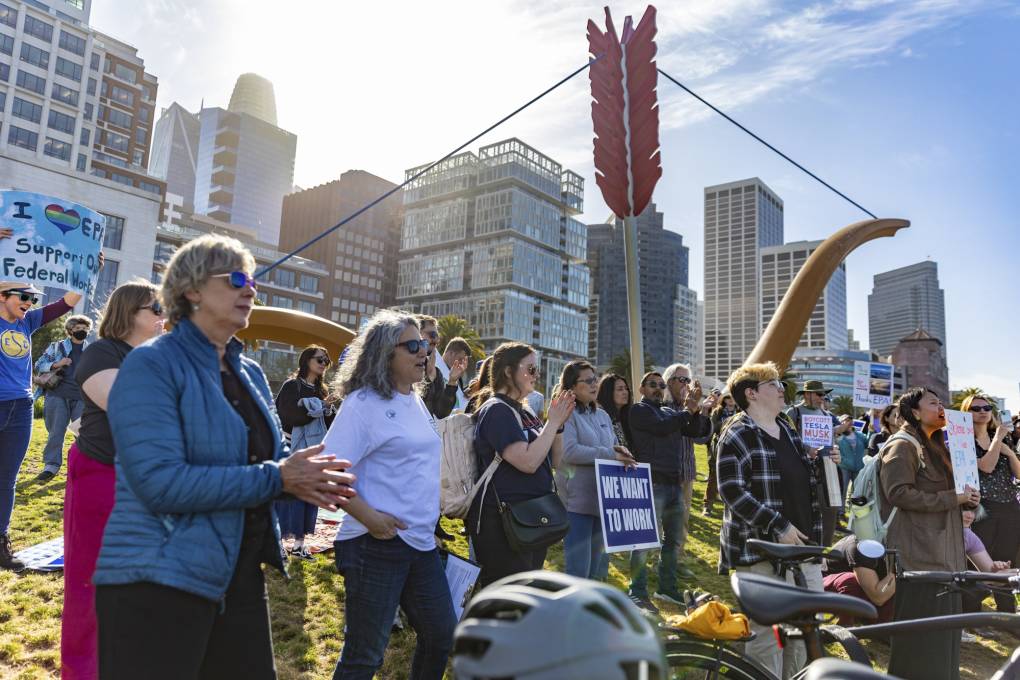
"caption": "Over 100 environmental workers and protesters gathered during an Earth Day celebration rally in San Francisco's Rincon Park on April 22, 2025, to tell the Trump administration that they aren’t giving up on the mission of the Environmental Protection Agency.",
"credit": "Gina Castro/KQED",
"altTag": null,
"description": null,
"imgSizes": {
"medium": {
"file": "https://cdn.kqed.org/wp-content/uploads/sites/35/2025/04/20250422_EARTHDAYRALLY_GC-12-KQED-800x533.jpg",
"width": 800,
"height": 533,
"mimeType": "image/jpeg"
},
"large": {
"file": "https://cdn.kqed.org/wp-content/uploads/sites/35/2025/04/20250422_EARTHDAYRALLY_GC-12-KQED-1020x680.jpg",
"width": 1020,
"height": 680,
"mimeType": "image/jpeg"
},
"thumbnail": {
"file": "https://cdn.kqed.org/wp-content/uploads/sites/35/2025/04/20250422_EARTHDAYRALLY_GC-12-KQED-160x107.jpg",
"width": 160,
"height": 107,
"mimeType": "image/jpeg"
},
"medium_large": {
"file": "https://cdn.kqed.org/wp-content/uploads/sites/35/2025/04/20250422_EARTHDAYRALLY_GC-12-KQED-768x512.jpg",
"width": 768,
"height": 512,
"mimeType": "image/jpeg"
},
"1536x1536": {
"file": "https://cdn.kqed.org/wp-content/uploads/sites/35/2025/04/20250422_EARTHDAYRALLY_GC-12-KQED-1536x1024.jpg",
"width": 1536,
"height": 1024,
"mimeType": "image/jpeg"
},
"post-thumbnail": {
"file": "https://cdn.kqed.org/wp-content/uploads/sites/35/2025/04/20250422_EARTHDAYRALLY_GC-12-KQED-672x372.jpg",
"width": 672,
"height": 372,
"mimeType": "image/jpeg"
},
"twentyfourteen-full-width": {
"file": "https://cdn.kqed.org/wp-content/uploads/sites/35/2025/04/20250422_EARTHDAYRALLY_GC-12-KQED-1038x576.jpg",
"width": 1038,
"height": 576,
"mimeType": "image/jpeg"
},
"full-width": {
"file": "https://cdn.kqed.org/wp-content/uploads/sites/35/2025/04/20250422_EARTHDAYRALLY_GC-12-KQED-1920x1280.jpg",
"width": 1920,
"height": 1280,
"mimeType": "image/jpeg"
},
"kqedFullSize": {
"file": "https://cdn.kqed.org/wp-content/uploads/sites/35/2025/04/20250422_EARTHDAYRALLY_GC-12-KQED.jpg",
"width": 2000,
"height": 1333
}
},
"isLoading": false,
"fetchFailed": false
},
"science_1996591": {
"type": "attachments",
"id": "science_1996591",
"meta": {
"index": "attachments_1716263798",
"site": "science",
"id": "1996591",
"found": true
},
"title": "California's Wildflower Superbloom Arrives",
"publishDate": 1744052150,
"status": "inherit",
"parent": 1996589,
"modified": 1744065060,
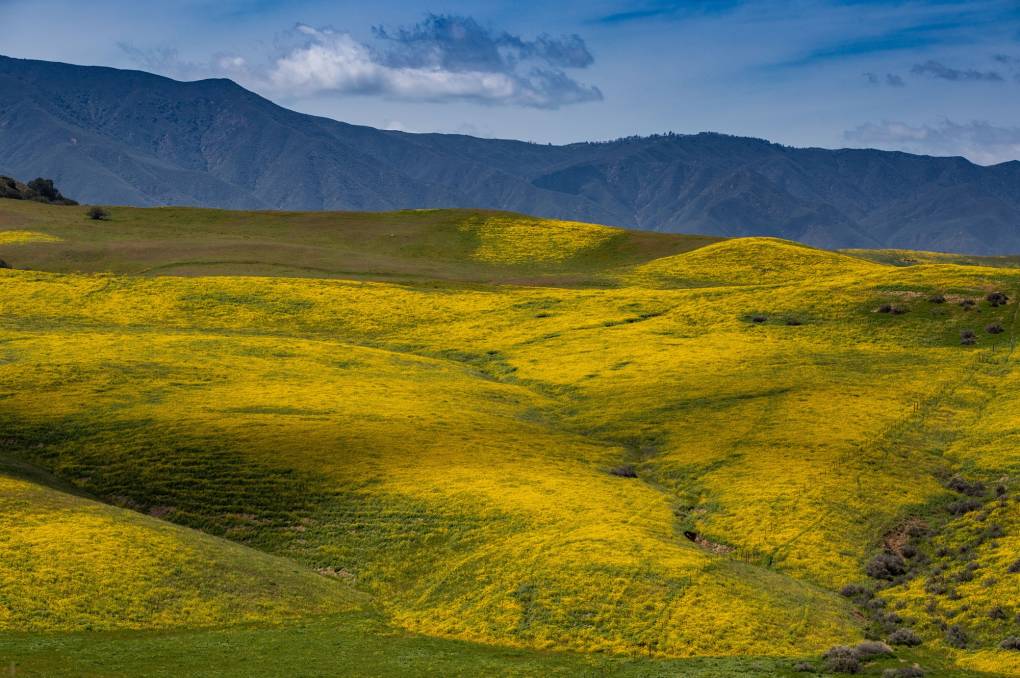
"caption": "Following recent heavy rains, the hillsides and pastures are covered in a carpet of goldfields and other wildflowers, drawing thousands of visitors to this remote part of California on March 26, 2023, near Cuyama, California. ",
"credit": "George Rose/Getty Images",
"altTag": null,
"description": null,
"imgSizes": {
"medium": {
"file": "https://cdn.kqed.org/wp-content/uploads/sites/35/2025/04/WildflowersGetty-800x532.jpg",
"width": 800,
"height": 532,
"mimeType": "image/jpeg"
},
"large": {
"file": "https://cdn.kqed.org/wp-content/uploads/sites/35/2025/04/WildflowersGetty-1020x678.jpg",
"width": 1020,
"height": 678,
"mimeType": "image/jpeg"
},
"thumbnail": {
"file": "https://cdn.kqed.org/wp-content/uploads/sites/35/2025/04/WildflowersGetty-160x106.jpg",
"width": 160,
"height": 106,
"mimeType": "image/jpeg"
},
"medium_large": {
"file": "https://cdn.kqed.org/wp-content/uploads/sites/35/2025/04/WildflowersGetty-768x511.jpg",
"width": 768,
"height": 511,
"mimeType": "image/jpeg"
},
"1536x1536": {
"file": "https://cdn.kqed.org/wp-content/uploads/sites/35/2025/04/WildflowersGetty-1536x1021.jpg",
"width": 1536,
"height": 1021,
"mimeType": "image/jpeg"
},
"post-thumbnail": {
"file": "https://cdn.kqed.org/wp-content/uploads/sites/35/2025/04/WildflowersGetty-672x372.jpg",
"width": 672,
"height": 372,
"mimeType": "image/jpeg"
},
"twentyfourteen-full-width": {
"file": "https://cdn.kqed.org/wp-content/uploads/sites/35/2025/04/WildflowersGetty-1038x576.jpg",
"width": 1038,
"height": 576,
"mimeType": "image/jpeg"
},
"full-width": {
"file": "https://cdn.kqed.org/wp-content/uploads/sites/35/2025/04/WildflowersGetty-1920x1277.jpg",
"width": 1920,
"height": 1277,
"mimeType": "image/jpeg"
},
"kqedFullSize": {
"file": "https://cdn.kqed.org/wp-content/uploads/sites/35/2025/04/WildflowersGetty.jpg",
"width": 2000,
"height": 1330
}
},
"isLoading": false,
"fetchFailed": false
},
"science_1996283": {
"type": "attachments",
"id": "science_1996283",
"meta": {
"index": "attachments_1716263798",
"site": "science",
"id": "1996283",
"found": true
},
"title": "19 1115_0531.NEF",
"publishDate": 1741799242,
"status": "inherit",
"parent": 0,
"modified": 1741972214,
"caption": "A subterranean giant: The Des Plaines tunnel, a one-mile stretch of Chicago’s ambitious Tunnel and Reservoir Plan (TARP), spans 20 feet in diameter and sits 250 feet underground. This massive tunnel, photographed on Nov. 15, 2019, is a crucial link to the McCook Reservoir, designed to combat flooding and improve water quality by capturing stormwater and sewer overflows.",
"credit": "Courtesy of Dan Wendt/MWRDGC",
"altTag": null,
"description": null,
"imgSizes": {
"medium": {
"file": "https://cdn.kqed.org/wp-content/uploads/sites/35/2025/03/19-1115_0531-800x532.jpg",
"width": 800,
"height": 532,
"mimeType": "image/jpeg"
},
"large": {
"file": "https://cdn.kqed.org/wp-content/uploads/sites/35/2025/03/19-1115_0531-1020x679.jpg",
"width": 1020,
"height": 679,
"mimeType": "image/jpeg"
},
"thumbnail": {
"file": "https://cdn.kqed.org/wp-content/uploads/sites/35/2025/03/19-1115_0531-160x106.jpg",
"width": 160,
"height": 106,
"mimeType": "image/jpeg"
},
"medium_large": {
"file": "https://cdn.kqed.org/wp-content/uploads/sites/35/2025/03/19-1115_0531-768x511.jpg",
"width": 768,
"height": 511,
"mimeType": "image/jpeg"
},
"1536x1536": {
"file": "https://cdn.kqed.org/wp-content/uploads/sites/35/2025/03/19-1115_0531-1536x1022.jpg",
"width": 1536,
"height": 1022,
"mimeType": "image/jpeg"
},
"post-thumbnail": {
"file": "https://cdn.kqed.org/wp-content/uploads/sites/35/2025/03/19-1115_0531-672x372.jpg",
"width": 672,
"height": 372,
"mimeType": "image/jpeg"
},
"twentyfourteen-full-width": {
"file": "https://cdn.kqed.org/wp-content/uploads/sites/35/2025/03/19-1115_0531-1038x576.jpg",
"width": 1038,
"height": 576,
"mimeType": "image/jpeg"
},
"full-width": {
"file": "https://cdn.kqed.org/wp-content/uploads/sites/35/2025/03/19-1115_0531-1920x1278.jpg",
"width": 1920,
"height": 1278,
"mimeType": "image/jpeg"
},
"kqedFullSize": {
"file": "https://cdn.kqed.org/wp-content/uploads/sites/35/2025/03/19-1115_0531.jpg",
"width": 2000,
"height": 1331
}
},
"isLoading": false,
"fetchFailed": false
},
"science_1996156": {
"type": "attachments",
"id": "science_1996156",
"meta": {
"index": "attachments_1716263798",
"site": "science",
"id": "1996156",
"found": true
},
"title": "250210-SurferSewage-05-BL",
"publishDate": 1739402225,
"status": "inherit",
"parent": 1996145,
"modified": 1739402352,
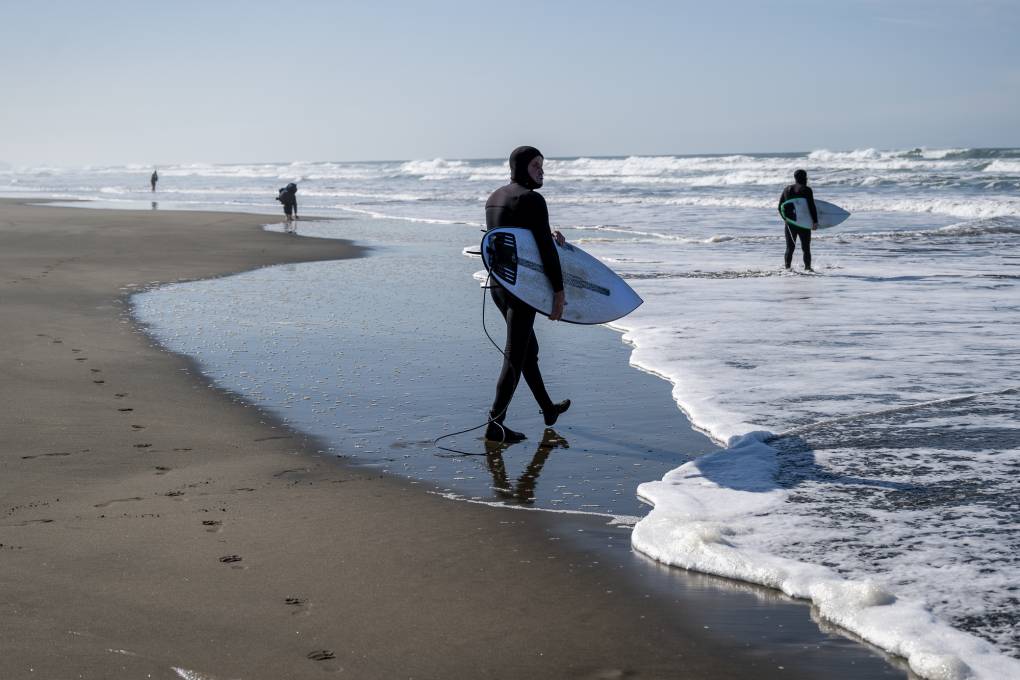
"caption": "Nick Heldfond heads into the water to surf at Ocean Beach in San Francisco on Feb. 10, 2025.",
"credit": "Beth LaBerge/KQED",
"altTag": "A person in a full body wetsuit, with hood, holding a surfboard under his arm, walks into the ocean.",
"description": null,
"imgSizes": {
"medium": {
"file": "https://cdn.kqed.org/wp-content/uploads/sites/35/2025/02/250210-SurferSewage-05-BL-800x533.jpg",
"width": 800,
"height": 533,
"mimeType": "image/jpeg"
},
"large": {
"file": "https://cdn.kqed.org/wp-content/uploads/sites/35/2025/02/250210-SurferSewage-05-BL-1020x680.jpg",
"width": 1020,
"height": 680,
"mimeType": "image/jpeg"
},
"thumbnail": {
"file": "https://cdn.kqed.org/wp-content/uploads/sites/35/2025/02/250210-SurferSewage-05-BL-160x107.jpg",
"width": 160,
"height": 107,
"mimeType": "image/jpeg"
},
"medium_large": {
"file": "https://cdn.kqed.org/wp-content/uploads/sites/35/2025/02/250210-SurferSewage-05-BL-768x512.jpg",
"width": 768,
"height": 512,
"mimeType": "image/jpeg"
},
"1536x1536": {
"file": "https://cdn.kqed.org/wp-content/uploads/sites/35/2025/02/250210-SurferSewage-05-BL-1536x1024.jpg",
"width": 1536,
"height": 1024,
"mimeType": "image/jpeg"
},
"post-thumbnail": {
"file": "https://cdn.kqed.org/wp-content/uploads/sites/35/2025/02/250210-SurferSewage-05-BL-672x372.jpg",
"width": 672,
"height": 372,
"mimeType": "image/jpeg"
},
"twentyfourteen-full-width": {
"file": "https://cdn.kqed.org/wp-content/uploads/sites/35/2025/02/250210-SurferSewage-05-BL-1038x576.jpg",
"width": 1038,
"height": 576,
"mimeType": "image/jpeg"
},
"full-width": {
"file": "https://cdn.kqed.org/wp-content/uploads/sites/35/2025/02/250210-SurferSewage-05-BL-1920x1280.jpg",
"width": 1920,
"height": 1280,
"mimeType": "image/jpeg"
},
"kqedFullSize": {
"file": "https://cdn.kqed.org/wp-content/uploads/sites/35/2025/02/250210-SurferSewage-05-BL.jpg",
"width": 2000,
"height": 1333
}
},
"isLoading": false,
"fetchFailed": false
},
"science_1996117": {
"type": "attachments",
"id": "science_1996117",
"meta": {
"index": "attachments_1716263798",
"site": "science",
"id": "1996117",
"found": true
},
"title": "GettyImages-1238313931",
"publishDate": 1739321153,
"status": "inherit",
"parent": 1996110,
"modified": 1739325218,
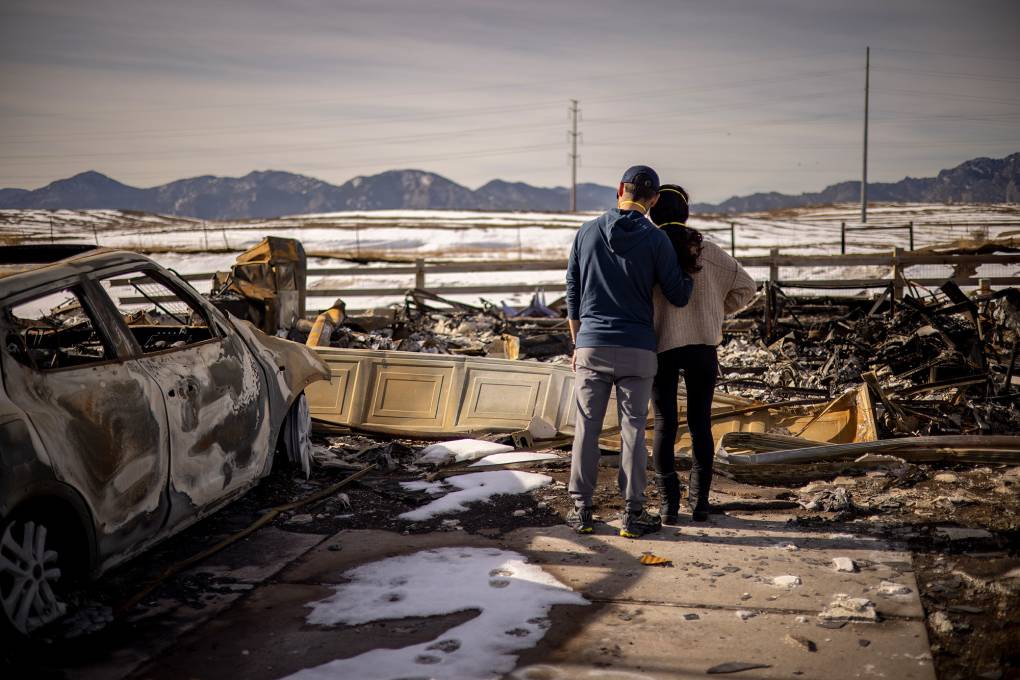
"caption": "Erica and Jon Solove look at the remains of their home in Superior, Colorado, for the first time on Jan. 13, 2022, after the Marshall Fire destroyed it.",
"credit": "Chet Strange/Washington Post via Getty Images",
"altTag": "A couple holds each other while looking at a burned-down building.",
"description": null,
"imgSizes": {
"medium": {
"file": "https://cdn.kqed.org/wp-content/uploads/sites/35/2025/02/GettyImages-1238313931-800x534.jpg",
"width": 800,
"height": 534,
"mimeType": "image/jpeg"
},
"large": {
"file": "https://cdn.kqed.org/wp-content/uploads/sites/35/2025/02/GettyImages-1238313931-1020x680.jpg",
"width": 1020,
"height": 680,
"mimeType": "image/jpeg"
},
"thumbnail": {
"file": "https://cdn.kqed.org/wp-content/uploads/sites/35/2025/02/GettyImages-1238313931-160x107.jpg",
"width": 160,
"height": 107,
"mimeType": "image/jpeg"
},
"medium_large": {
"file": "https://cdn.kqed.org/wp-content/uploads/sites/35/2025/02/GettyImages-1238313931-768x512.jpg",
"width": 768,
"height": 512,
"mimeType": "image/jpeg"
},
"1536x1536": {
"file": "https://cdn.kqed.org/wp-content/uploads/sites/35/2025/02/GettyImages-1238313931-1536x1025.jpg",
"width": 1536,
"height": 1025,
"mimeType": "image/jpeg"
},
"post-thumbnail": {
"file": "https://cdn.kqed.org/wp-content/uploads/sites/35/2025/02/GettyImages-1238313931-672x372.jpg",
"width": 672,
"height": 372,
"mimeType": "image/jpeg"
},
"twentyfourteen-full-width": {
"file": "https://cdn.kqed.org/wp-content/uploads/sites/35/2025/02/GettyImages-1238313931-1038x576.jpg",
"width": 1038,
"height": 576,
"mimeType": "image/jpeg"
},
"full-width": {
"file": "https://cdn.kqed.org/wp-content/uploads/sites/35/2025/02/GettyImages-1238313931-1920x1281.jpg",
"width": 1920,
"height": 1281,
"mimeType": "image/jpeg"
},
"kqedFullSize": {
"file": "https://cdn.kqed.org/wp-content/uploads/sites/35/2025/02/GettyImages-1238313931.jpg",
"width": 2000,
"height": 1334
}
},
"isLoading": false,
"fetchFailed": false
},
"science_1995511": {
"type": "attachments",
"id": "science_1995511",
"meta": {
"index": "attachments_1716263798",
"site": "science",
"id": "1995511",
"found": true
},
"title": "025_KQEDScience_IntCommunitySchoolOakland_10202022_qed",
"publishDate": 1738264785,
"status": "inherit",
"parent": 1995508,
"modified": 1738264801,
"caption": "A monarch butterfly lands on a plant growing in the schoolyard at International Community School in Oakland on Oct. 20, 2022.",
"credit": "Beth LaBerge/KQED",
"altTag": null,
"description": null,
"imgSizes": {
"medium": {
"file": "https://cdn.kqed.org/wp-content/uploads/sites/35/2025/01/025_KQEDScience_IntCommunitySchoolOakland_10202022_qed-800x533.jpg",
"width": 800,
"height": 533,
"mimeType": "image/jpeg"
},
"large": {
"file": "https://cdn.kqed.org/wp-content/uploads/sites/35/2025/01/025_KQEDScience_IntCommunitySchoolOakland_10202022_qed-1020x680.jpg",
"width": 1020,
"height": 680,
"mimeType": "image/jpeg"
},
"thumbnail": {
"file": "https://cdn.kqed.org/wp-content/uploads/sites/35/2025/01/025_KQEDScience_IntCommunitySchoolOakland_10202022_qed-160x107.jpg",
"width": 160,
"height": 107,
"mimeType": "image/jpeg"
},
"medium_large": {
"file": "https://cdn.kqed.org/wp-content/uploads/sites/35/2025/01/025_KQEDScience_IntCommunitySchoolOakland_10202022_qed-768x512.jpg",
"width": 768,
"height": 512,
"mimeType": "image/jpeg"
},
"1536x1536": {
"file": "https://cdn.kqed.org/wp-content/uploads/sites/35/2025/01/025_KQEDScience_IntCommunitySchoolOakland_10202022_qed-1536x1024.jpg",
"width": 1536,
"height": 1024,
"mimeType": "image/jpeg"
},
"post-thumbnail": {
"file": "https://cdn.kqed.org/wp-content/uploads/sites/35/2025/01/025_KQEDScience_IntCommunitySchoolOakland_10202022_qed-672x372.jpg",
"width": 672,
"height": 372,
"mimeType": "image/jpeg"
},
"twentyfourteen-full-width": {
"file": "https://cdn.kqed.org/wp-content/uploads/sites/35/2025/01/025_KQEDScience_IntCommunitySchoolOakland_10202022_qed-1038x576.jpg",
"width": 1038,
"height": 576,
"mimeType": "image/jpeg"
},
"full-width": {
"file": "https://cdn.kqed.org/wp-content/uploads/sites/35/2025/01/025_KQEDScience_IntCommunitySchoolOakland_10202022_qed-1920x1280.jpg",
"width": 1920,
"height": 1280,
"mimeType": "image/jpeg"
},
"kqedFullSize": {
"file": "https://cdn.kqed.org/wp-content/uploads/sites/35/2025/01/025_KQEDScience_IntCommunitySchoolOakland_10202022_qed.jpg",
"width": 2000,
"height": 1333
}
},
"isLoading": false,
"fetchFailed": false
},
"science_1995294": {
"type": "attachments",
"id": "science_1995294",
"meta": {
"index": "attachments_1716263798",
"site": "science",
"id": "1995294",
"found": true
},
"title": "StanfordUniversity",
"publishDate": 1733862242,
"status": "inherit",
"parent": 1995286,
"modified": 1733862283,
"caption": "Hoover Tower on the Stanford University campus on April 9, 2019. ",
"credit": "Rachael Myrow/KQED",
"altTag": null,
"description": null,
"imgSizes": {
"medium": {
"file": "https://cdn.kqed.org/wp-content/uploads/sites/35/2024/12/StanfordUniversity-800x600.jpg",
"width": 800,
"height": 600,
"mimeType": "image/jpeg"
},
"large": {
"file": "https://cdn.kqed.org/wp-content/uploads/sites/35/2024/12/StanfordUniversity-1020x764.jpg",
"width": 1020,
"height": 764,
"mimeType": "image/jpeg"
},
"thumbnail": {
"file": "https://cdn.kqed.org/wp-content/uploads/sites/35/2024/12/StanfordUniversity-160x120.jpg",
"width": 160,
"height": 120,
"mimeType": "image/jpeg"
},
"medium_large": {
"file": "https://cdn.kqed.org/wp-content/uploads/sites/35/2024/12/StanfordUniversity-768x576.jpg",
"width": 768,
"height": 576,
"mimeType": "image/jpeg"
},
"1536x1536": {
"file": "https://cdn.kqed.org/wp-content/uploads/sites/35/2024/12/StanfordUniversity-1536x1151.jpg",
"width": 1536,
"height": 1151,
"mimeType": "image/jpeg"
},
"post-thumbnail": {
"file": "https://cdn.kqed.org/wp-content/uploads/sites/35/2024/12/StanfordUniversity-672x372.jpg",
"width": 672,
"height": 372,
"mimeType": "image/jpeg"
},
"twentyfourteen-full-width": {
"file": "https://cdn.kqed.org/wp-content/uploads/sites/35/2024/12/StanfordUniversity-1038x576.jpg",
"width": 1038,
"height": 576,
"mimeType": "image/jpeg"
},
"full-width": {
"file": "https://cdn.kqed.org/wp-content/uploads/sites/35/2024/12/StanfordUniversity-1920x1439.jpg",
"width": 1920,
"height": 1439,
"mimeType": "image/jpeg"
},
"kqedFullSize": {
"file": "https://cdn.kqed.org/wp-content/uploads/sites/35/2024/12/StanfordUniversity.jpg",
"width": 2000,
"height": 1499
}
},
"isLoading": false,
"fetchFailed": false
},
"science_1995142": {
"type": "attachments",
"id": "science_1995142",
"meta": {
"index": "attachments_1716263798",
"site": "science",
"id": "1995142",
"found": true
},
"title": "Election 2024 Trump",
"publishDate": 1731436898,
"status": "inherit",
"parent": 1995140,
"modified": 1743106536,
"caption": "President Donald Trump shakes hands with former Rep. Lee Zeldin, R-New York, during a roundtable at the Drexelbrook Catering & Event Center on Oct. 29, 2024, in Drexel Hill, Pennsylvania.",
"credit": "Julia Demaree Nikhinson/AP Photo",
"altTag": null,
"description": null,
"imgSizes": {
"medium": {
"file": "https://cdn.kqed.org/wp-content/uploads/sites/35/2024/11/TrumpLeeZeldinAP-800x533.jpg",
"width": 800,
"height": 533,
"mimeType": "image/jpeg"
},
"large": {
"file": "https://cdn.kqed.org/wp-content/uploads/sites/35/2024/11/TrumpLeeZeldinAP-1020x680.jpg",
"width": 1020,
"height": 680,
"mimeType": "image/jpeg"
},
"thumbnail": {
"file": "https://cdn.kqed.org/wp-content/uploads/sites/35/2024/11/TrumpLeeZeldinAP-160x107.jpg",
"width": 160,
"height": 107,
"mimeType": "image/jpeg"
},
"medium_large": {
"file": "https://cdn.kqed.org/wp-content/uploads/sites/35/2024/11/TrumpLeeZeldinAP-768x512.jpg",
"width": 768,
"height": 512,
"mimeType": "image/jpeg"
},
"1536x1536": {
"file": "https://cdn.kqed.org/wp-content/uploads/sites/35/2024/11/TrumpLeeZeldinAP-1536x1024.jpg",
"width": 1536,
"height": 1024,
"mimeType": "image/jpeg"
},
"post-thumbnail": {
"file": "https://cdn.kqed.org/wp-content/uploads/sites/35/2024/11/TrumpLeeZeldinAP-672x372.jpg",
"width": 672,
"height": 372,
"mimeType": "image/jpeg"
},
"twentyfourteen-full-width": {
"file": "https://cdn.kqed.org/wp-content/uploads/sites/35/2024/11/TrumpLeeZeldinAP-1038x576.jpg",
"width": 1038,
"height": 576,
"mimeType": "image/jpeg"
},
"full-width": {
"file": "https://cdn.kqed.org/wp-content/uploads/sites/35/2024/11/TrumpLeeZeldinAP-1920x1280.jpg",
"width": 1920,
"height": 1280,
"mimeType": "image/jpeg"
},
"kqedFullSize": {
"file": "https://cdn.kqed.org/wp-content/uploads/sites/35/2024/11/TrumpLeeZeldinAP.jpg",
"width": 2000,
"height": 1333
}
},
"isLoading": false,
"fetchFailed": false
},
"science_1978931": {
"type": "attachments",
"id": "science_1978931",
"meta": {
"index": "attachments_1716263798",
"site": "science",
"id": "1978931",
"found": true
},
"title": "controlled burn, wildfire",
"publishDate": 1648686708,
"status": "inherit",
"parent": 1978929,
"modified": 1729809830,
"caption": "A U.S. Forest Service forestry technician removes vegetation during a controlled burn along Highway 89 in the Christmas Valley area near South Lake Tahoe in September 2021. ",
"credit": "Jane Tyska/Digital First Media/East Bay Times via Getty Images",
"altTag": "A man in a hard hat, wearing heavy brown pants, a gold shirt and work gloves, is on the side of a two-lane highway with smoky air obscuring trees in the distance. He has just tossed a large branch toward a pile of branches as part of clearing vegetation during a controlled burn.",
"description": "A U.S. Forest Service forestry technician removes vegetation during a controlled burn along Highway 89 in the Christmas Valley area near South Lake Tahoe in September 2021. ",
"imgSizes": {
"medium": {
"file": "https://cdn.kqed.org/wp-content/uploads/sites/35/2022/03/RS54892_GettyImages-1338215530-qut-800x543.jpg",
"width": 800,
"height": 543,
"mimeType": "image/jpeg"
},
"large": {
"file": "https://cdn.kqed.org/wp-content/uploads/sites/35/2022/03/RS54892_GettyImages-1338215530-qut-1020x693.jpg",
"width": 1020,
"height": 693,
"mimeType": "image/jpeg"
},
"thumbnail": {
"file": "https://cdn.kqed.org/wp-content/uploads/sites/35/2022/03/RS54892_GettyImages-1338215530-qut-160x109.jpg",
"width": 160,
"height": 109,
"mimeType": "image/jpeg"
},
"medium_large": {
"file": "https://cdn.kqed.org/wp-content/uploads/sites/35/2022/03/RS54892_GettyImages-1338215530-qut-768x522.jpg",
"width": 768,
"height": 522,
"mimeType": "image/jpeg"
},
"1536x1536": {
"file": "https://cdn.kqed.org/wp-content/uploads/sites/35/2022/03/RS54892_GettyImages-1338215530-qut-1536x1043.jpg",
"width": 1536,
"height": 1043,
"mimeType": "image/jpeg"
},
"post-thumbnail": {
"file": "https://cdn.kqed.org/wp-content/uploads/sites/35/2022/03/RS54892_GettyImages-1338215530-qut-672x372.jpg",
"width": 672,
"height": 372,
"mimeType": "image/jpeg"
},
"twentyfourteen-full-width": {
"file": "https://cdn.kqed.org/wp-content/uploads/sites/35/2022/03/RS54892_GettyImages-1338215530-qut-1038x576.jpg",
"width": 1038,
"height": 576,
"mimeType": "image/jpeg"
},
"kqedFullSize": {
"file": "https://cdn.kqed.org/wp-content/uploads/sites/35/2022/03/RS54892_GettyImages-1338215530-qut.jpg",
"width": 1920,
"height": 1304
}
},
"isLoading": false,
"fetchFailed": false
},
"science_1994946": {
"type": "attachments",
"id": "science_1994946",
"meta": {
"index": "attachments_1716263798",
"site": "science",
"id": "1994946",
"found": true
},
"title": "022_KQED_StormSanFrancisco_01102023_qed",
"publishDate": 1729702545,
"status": "inherit",
"parent": 1994941,
"modified": 1729702829,
"caption": "Two Mission District residents work to open a clogged drain on Mission and 21st streets in San Francisco on Jan. 10, 2023.",
"credit": "Beth LaBerge/KQED",
"altTag": "Two people in rain gear stand on a flooded San Francisco street, using rods to unclog a storm drain.",
"description": null,
"imgSizes": {
"medium": {
"file": "https://cdn.kqed.org/wp-content/uploads/sites/35/2024/10/022_KQED_StormSanFrancisco_01102023_qed-800x533.jpg",
"width": 800,
"height": 533,
"mimeType": "image/jpeg"
},
"large": {
"file": "https://cdn.kqed.org/wp-content/uploads/sites/35/2024/10/022_KQED_StormSanFrancisco_01102023_qed-1020x680.jpg",
"width": 1020,
"height": 680,
"mimeType": "image/jpeg"
},
"thumbnail": {
"file": "https://cdn.kqed.org/wp-content/uploads/sites/35/2024/10/022_KQED_StormSanFrancisco_01102023_qed-160x107.jpg",
"width": 160,
"height": 107,
"mimeType": "image/jpeg"
},
"medium_large": {
"file": "https://cdn.kqed.org/wp-content/uploads/sites/35/2024/10/022_KQED_StormSanFrancisco_01102023_qed-768x512.jpg",
"width": 768,
"height": 512,
"mimeType": "image/jpeg"
},
"1536x1536": {
"file": "https://cdn.kqed.org/wp-content/uploads/sites/35/2024/10/022_KQED_StormSanFrancisco_01102023_qed-1536x1024.jpg",
"width": 1536,
"height": 1024,
"mimeType": "image/jpeg"
},
"post-thumbnail": {
"file": "https://cdn.kqed.org/wp-content/uploads/sites/35/2024/10/022_KQED_StormSanFrancisco_01102023_qed-672x372.jpg",
"width": 672,
"height": 372,
"mimeType": "image/jpeg"
},
"twentyfourteen-full-width": {
"file": "https://cdn.kqed.org/wp-content/uploads/sites/35/2024/10/022_KQED_StormSanFrancisco_01102023_qed-1038x576.jpg",
"width": 1038,
"height": 576,
"mimeType": "image/jpeg"
},
"full-width": {
"file": "https://cdn.kqed.org/wp-content/uploads/sites/35/2024/10/022_KQED_StormSanFrancisco_01102023_qed-1920x1280.jpg",
"width": 1920,
"height": 1280,
"mimeType": "image/jpeg"
},
"kqedFullSize": {
"file": "https://cdn.kqed.org/wp-content/uploads/sites/35/2024/10/022_KQED_StormSanFrancisco_01102023_qed.jpg",
"width": 2000,
"height": 1333
}
},
"isLoading": false,
"fetchFailed": false
},
"science_1994910": {
"type": "attachments",
"id": "science_1994910",
"meta": {
"index": "attachments_1716263798",
"site": "science",
"id": "1994910",
"found": true
},
"title": "CarbonCapture1",
"publishDate": 1729624242,
"status": "inherit",
"parent": 0,
"modified": 1729627363,
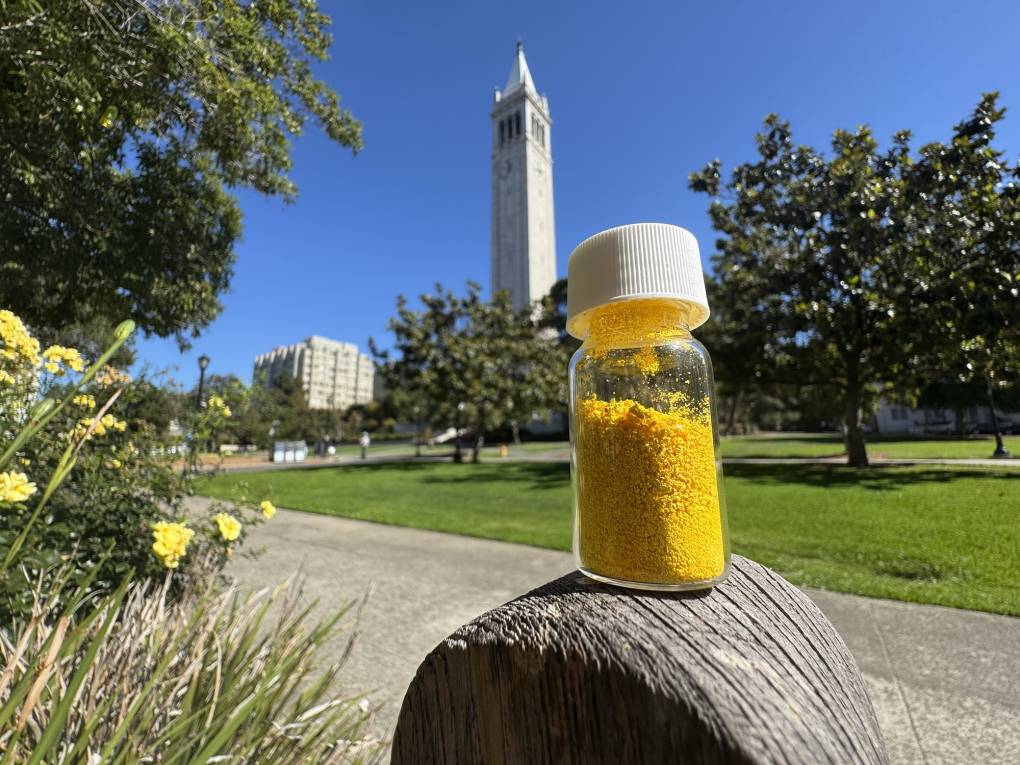
"caption": "UC Berkeley scientists say roughly half a pound of this yellow material can remove as much carbon dioxide from the atmosphere as a tree annually.",
"credit": "Courtesy Zihui Zhou",
"altTag": null,
"description": null,
"imgSizes": {
"medium": {
"file": "https://cdn.kqed.org/wp-content/uploads/sites/35/2024/10/CarbonCapture1-800x600.jpg",
"width": 800,
"height": 600,
"mimeType": "image/jpeg"
},
"large": {
"file": "https://cdn.kqed.org/wp-content/uploads/sites/35/2024/10/CarbonCapture1-1020x765.jpg",
"width": 1020,
"height": 765,
"mimeType": "image/jpeg"
},
"thumbnail": {
"file": "https://cdn.kqed.org/wp-content/uploads/sites/35/2024/10/CarbonCapture1-160x120.jpg",
"width": 160,
"height": 120,
"mimeType": "image/jpeg"
},
"medium_large": {
"file": "https://cdn.kqed.org/wp-content/uploads/sites/35/2024/10/CarbonCapture1-768x576.jpg",
"width": 768,
"height": 576,
"mimeType": "image/jpeg"
},
"1536x1536": {
"file": "https://cdn.kqed.org/wp-content/uploads/sites/35/2024/10/CarbonCapture1-1536x1152.jpg",
"width": 1536,
"height": 1152,
"mimeType": "image/jpeg"
},
"post-thumbnail": {
"file": "https://cdn.kqed.org/wp-content/uploads/sites/35/2024/10/CarbonCapture1-672x372.jpg",
"width": 672,
"height": 372,
"mimeType": "image/jpeg"
},
"twentyfourteen-full-width": {
"file": "https://cdn.kqed.org/wp-content/uploads/sites/35/2024/10/CarbonCapture1-1038x576.jpg",
"width": 1038,
"height": 576,
"mimeType": "image/jpeg"
},
"full-width": {
"file": "https://cdn.kqed.org/wp-content/uploads/sites/35/2024/10/CarbonCapture1-1920x1440.jpg",
"width": 1920,
"height": 1440,
"mimeType": "image/jpeg"
},
"kqedFullSize": {
"file": "https://cdn.kqed.org/wp-content/uploads/sites/35/2024/10/CarbonCapture1.jpg",
"width": 2000,
"height": 1500
}
},
"isLoading": false,
"fetchFailed": false
},
"science_1994928": {
"type": "attachments",
"id": "science_1994928",
"meta": {
"index": "attachments_1716263798",
"site": "science",
"id": "1994928",
"found": true
},
"title": "240612-SFMayoralDebate-55-BL_qed",
"publishDate": 1729644783,
"status": "inherit",
"parent": 1994926,
"modified": 1729657798,
"caption": "San Francisco mayoral candidates (from left) Supervisor Asha Safaí, former Mayor Mark Farrell, nonprofit leader Daniel Lurie, Mayor London Breed and Supervisor Aaron Peskin participate in a debate moderated by civic organizer Manny Yekutiel and New York Times reporter Heather Knight at the Sydney Goldstein Theater on June 12, 2024.",
"credit": "Beth LaBerge/KQED",
"altTag": "Four men and one woman stand behind podiums on a dark stage.",
"description": null,
"imgSizes": {
"medium": {
"file": "https://cdn.kqed.org/wp-content/uploads/sites/35/2024/10/240612-SFMayoralDebate-55-BL_qed-800x533.jpg",
"width": 800,
"height": 533,
"mimeType": "image/jpeg"
},
"large": {
"file": "https://cdn.kqed.org/wp-content/uploads/sites/35/2024/10/240612-SFMayoralDebate-55-BL_qed-1020x680.jpg",
"width": 1020,
"height": 680,
"mimeType": "image/jpeg"
},
"thumbnail": {
"file": "https://cdn.kqed.org/wp-content/uploads/sites/35/2024/10/240612-SFMayoralDebate-55-BL_qed-160x107.jpg",
"width": 160,
"height": 107,
"mimeType": "image/jpeg"
},
"medium_large": {
"file": "https://cdn.kqed.org/wp-content/uploads/sites/35/2024/10/240612-SFMayoralDebate-55-BL_qed-768x512.jpg",
"width": 768,
"height": 512,
"mimeType": "image/jpeg"
},
"1536x1536": {
"file": "https://cdn.kqed.org/wp-content/uploads/sites/35/2024/10/240612-SFMayoralDebate-55-BL_qed-1536x1024.jpg",
"width": 1536,
"height": 1024,
"mimeType": "image/jpeg"
},
"post-thumbnail": {
"file": "https://cdn.kqed.org/wp-content/uploads/sites/35/2024/10/240612-SFMayoralDebate-55-BL_qed-672x372.jpg",
"width": 672,
"height": 372,
"mimeType": "image/jpeg"
},
"twentyfourteen-full-width": {
"file": "https://cdn.kqed.org/wp-content/uploads/sites/35/2024/10/240612-SFMayoralDebate-55-BL_qed-1038x576.jpg",
"width": 1038,
"height": 576,
"mimeType": "image/jpeg"
},
"full-width": {
"file": "https://cdn.kqed.org/wp-content/uploads/sites/35/2024/10/240612-SFMayoralDebate-55-BL_qed-1920x1280.jpg",
"width": 1920,
"height": 1280,
"mimeType": "image/jpeg"
},
"kqedFullSize": {
"file": "https://cdn.kqed.org/wp-content/uploads/sites/35/2024/10/240612-SFMayoralDebate-55-BL_qed.jpg",
"width": 2000,
"height": 1333
}
},
"isLoading": false,
"fetchFailed": false
}
},
"audioPlayerReducer": {
"postId": "stream_live",
"isPaused": true,
"isPlaying": false,
"pfsActive": false,
"pledgeModalIsOpen": true,
"playerDrawerIsOpen": false,
"liveAudioPlayStartedAt": 0,
"liveAudioPlayContext": ""
},
"authorsReducer": {
"lklivans": {
"type": "authors",
"id": "8648",
"meta": {
"index": "authors_1716337520",
"id": "8648",
"found": true
},
"name": "Laura Klivans",
"firstName": "Laura",
"lastName": "Klivans",
"slug": "lklivans",
"email": "lklivans@kqed.org",
"display_author_email": true,
"staff_mastheads": [
"news",
"science"
],
"title": "Reporter",
"bio": "Laura Klivans is an award-winning science reporter for KQED News, where she covers climate change with an eye on both groundbreaking progress and gaps in action. She is the former host of KQED's blockbuster video series about tiny, amazing animals, \u003cem>Deep Look\u003c/em>. Her work reaches national audiences through NPR, \u003cem>Here & Now, \u003c/em>PRI, and other major outlets. \r\n\r\nLaura’s won five Northern California Area Emmy Awards for Deep Look and First Place in the Greater Bay Area Journalism Awards for a podcast exploring how one Oakland neighborhood teamed up to reduce planet-heating pollution.\r\n\r\nBeyond her reporting, she hosts and moderates events. In the past, she taught audio storytelling at the UC Berkeley Graduate School of Journalism, led international education programs, worked with immigrants and refugees along the Thai-Burmese border, taught high schoolers sex ed, and was an actress. \r\n\r\nShe's a former UC Berkeley Human Rights Fellow, USC Center for Health Journalism's California Fellow and Coro Fellow in Public Affairs. Laura has a master’s in journalism from UC Berkeley, a master’s in education from Harvard, and an undergraduate degree from Northwestern University.\r\n\r\nShe loves trying to riddle the meaning out of vanity license plates.",
"avatar": "https://secure.gravatar.com/avatar/2d2ecd1550a494cc10ad4a503406965585902124739e775a9b3817eebf1d88be?s=600&d=blank&r=g",
"twitter": "lauraklivans",
"bluesky": null,
"facebook": null,
"instagram": null,
"linkedin": null,
"sites": [
{
"site": "news",
"roles": [
"editor"
]
},
{
"site": "stateofhealth",
"roles": [
"contributor",
"editor"
]
},
{
"site": "science",
"roles": [
"editor"
]
},
{
"site": "forum",
"roles": [
"editor"
]
}
],
"headData": {
"title": "Laura Klivans | KQED",
"description": "Reporter",
"ogImgSrc": "https://secure.gravatar.com/avatar/2d2ecd1550a494cc10ad4a503406965585902124739e775a9b3817eebf1d88be?s=600&d=blank&r=g",
"twImgSrc": "https://secure.gravatar.com/avatar/2d2ecd1550a494cc10ad4a503406965585902124739e775a9b3817eebf1d88be?s=600&d=blank&r=g"
},
"isLoading": false,
"link": "/author/lklivans"
},
"dventon": {
"type": "authors",
"id": "11088",
"meta": {
"index": "authors_1716337520",
"id": "11088",
"found": true
},
"name": "Danielle Venton",
"firstName": "Danielle",
"lastName": "Venton",
"slug": "dventon",
"email": "dventon@kqed.org",
"display_author_email": true,
"staff_mastheads": [
"science"
],
"title": "Science reporter",
"bio": "Danielle Venton is a reporter for KQED Science. She covers wildfires, space and oceans (though she is prone to sea sickness).\r\n\r\nBefore joining KQED in 2015, Danielle was a staff reporter at KRCB in Sonoma County and a freelancer. She studied science communication at UC Santa Cruz and formerly worked at CERN in Geneva, Switzerland where she wrote about computing. She lives in Sonoma County and enjoys backpacking.",
"avatar": "https://secure.gravatar.com/avatar/37b292b5c40c8d93959c4f48d73b5286f41b7abd8588277e941905a3ed4c801c?s=600&d=blank&r=g",
"twitter": "DanielleVenton",
"bluesky": null,
"facebook": null,
"instagram": null,
"linkedin": null,
"sites": [
{
"site": "arts",
"roles": [
"contributor"
]
},
{
"site": "news",
"roles": [
"editor"
]
},
{
"site": "futureofyou",
"roles": [
"editor"
]
},
{
"site": "science",
"roles": [
"editor"
]
},
{
"site": "liveblog",
"roles": [
"contributor"
]
}
],
"headData": {
"title": "Danielle Venton | KQED",
"description": "Science reporter",
"ogImgSrc": "https://secure.gravatar.com/avatar/37b292b5c40c8d93959c4f48d73b5286f41b7abd8588277e941905a3ed4c801c?s=600&d=blank&r=g",
"twImgSrc": "https://secure.gravatar.com/avatar/37b292b5c40c8d93959c4f48d73b5286f41b7abd8588277e941905a3ed4c801c?s=600&d=blank&r=g"
},
"isLoading": false,
"link": "/author/dventon"
},
"kevinstark": {
"type": "authors",
"id": "11608",
"meta": {
"index": "authors_1716337520",
"id": "11608",
"found": true
},
"name": "Kevin Stark",
"firstName": "Kevin",
"lastName": "Stark",
"slug": "kevinstark",
"email": "kstark@kqed.org",
"display_author_email": true,
"staff_mastheads": [
"science"
],
"title": "Senior Editor",
"bio": "Kevin is a senior editor for KQED Science, managing the station's health and climate desks. His journalism career began in the Pacific Northwest, and he later became a lead reporter for the San Francisco Public Press. His work has appeared in Pacific Standard magazine, the Energy News Network, the Center for Investigative Reporting's Reveal and WBEZ in Chicago. Kevin joined KQED in 2019, and has covered issues related to energy, wildfire, climate change and the environment.",
"avatar": "https://secure.gravatar.com/avatar/365aaa4b597d3a8374f67504ff0facd323d7906e8eb4be0a7efd2427408e802c?s=600&d=blank&r=g",
"twitter": "starkkev",
"bluesky": null,
"facebook": null,
"instagram": null,
"linkedin": null,
"sites": [
{
"site": "",
"roles": [
"editor"
]
},
{
"site": "news",
"roles": [
"editor"
]
},
{
"site": "science",
"roles": [
"administrator"
]
}
],
"headData": {
"title": "Kevin Stark | KQED",
"description": "Senior Editor",
"ogImgSrc": "https://secure.gravatar.com/avatar/365aaa4b597d3a8374f67504ff0facd323d7906e8eb4be0a7efd2427408e802c?s=600&d=blank&r=g",
"twImgSrc": "https://secure.gravatar.com/avatar/365aaa4b597d3a8374f67504ff0facd323d7906e8eb4be0a7efd2427408e802c?s=600&d=blank&r=g"
},
"isLoading": false,
"link": "/author/kevinstark"
},
"smohamad": {
"type": "authors",
"id": "11631",
"meta": {
"index": "authors_1716337520",
"id": "11631",
"found": true
},
"name": "Sarah Mohamad",
"firstName": "Sarah",
"lastName": "Mohamad",
"slug": "smohamad",
"email": "smohamad@KQED.org",
"display_author_email": true,
"staff_mastheads": [],
"title": "Engagement Producer and Reporter, KQED Science",
"bio": "Sarah Mohamad is an audience engagement reporter and producer for KQED Science. She reports on audience-focused science and environment stories and manages the team's social media, newsletter, and engagement efforts. Prior to this role, she played a key role as project manager for NSF's \u003ca href=\"https://www.kqed.org/crackingthecode\">\u003cem>Cracking the Code: Influencing Millennial Science Engagement\u003c/em> \u003c/a>audience research.",
"avatar": "https://secure.gravatar.com/avatar/e6224957cd82d015183756ddde1f928013a563d7ca2e4565f8c4de1ec64886c5?s=600&d=blank&r=g",
"twitter": "sarahkmohamad",
"bluesky": null,
"facebook": null,
"instagram": null,
"linkedin": null,
"sites": [
{
"site": "",
"roles": [
"editor"
]
},
{
"site": "arts",
"roles": [
"editor"
]
},
{
"site": "news",
"roles": [
"editor"
]
},
{
"site": "about",
"roles": [
"editor"
]
},
{
"site": "science",
"roles": [
"editor"
]
}
],
"headData": {
"title": "Sarah Mohamad | KQED",
"description": "Engagement Producer and Reporter, KQED Science",
"ogImgSrc": "https://secure.gravatar.com/avatar/e6224957cd82d015183756ddde1f928013a563d7ca2e4565f8c4de1ec64886c5?s=600&d=blank&r=g",
"twImgSrc": "https://secure.gravatar.com/avatar/e6224957cd82d015183756ddde1f928013a563d7ca2e4565f8c4de1ec64886c5?s=600&d=blank&r=g"
},
"isLoading": false,
"link": "/author/smohamad"
},
"eromero": {
"type": "authors",
"id": "11746",
"meta": {
"index": "authors_1716337520",
"id": "11746",
"found": true
},
"name": "Ezra David Romero",
"firstName": "Ezra David",
"lastName": "Romero",
"slug": "eromero",
"email": "eromero@kqed.org",
"display_author_email": true,
"staff_mastheads": [
"news",
"science"
],
"title": "Climate Reporter",
"bio": "Ezra David Romero is a climate reporter for KQED News. He covers the absence and excess of water in the Bay Area — think sea level rise, flooding and drought. For nearly a decade he’s covered how warming temperatures are altering the lives of Californians. He’s reported on farmers worried their pistachio trees aren’t getting enough sleep, families desperate for water, scientists studying dying giant sequoias, and alongside firefighters containing wildfires. His work has appeared on local stations across California and nationally on public radio shows like Morning Edition, Here and Now, All Things Considered and Science Friday. ",
"avatar": "https://secure.gravatar.com/avatar/c76404d287c10ed40224227551ac36e24352c7306f106632caf6fead76f8801f?s=600&d=blank&r=g",
"twitter": "ezraromero",
"bluesky": null,
"facebook": null,
"instagram": null,
"linkedin": null,
"sites": [
{
"site": "arts",
"roles": [
"editor"
]
},
{
"site": "news",
"roles": [
"editor"
]
},
{
"site": "science",
"roles": [
"editor"
]
},
{
"site": "liveblog",
"roles": [
"author"
]
}
],
"headData": {
"title": "Ezra David Romero | KQED",
"description": "Climate Reporter",
"ogImgSrc": "https://secure.gravatar.com/avatar/c76404d287c10ed40224227551ac36e24352c7306f106632caf6fead76f8801f?s=600&d=blank&r=g",
"twImgSrc": "https://secure.gravatar.com/avatar/c76404d287c10ed40224227551ac36e24352c7306f106632caf6fead76f8801f?s=600&d=blank&r=g"
},
"isLoading": false,
"link": "/author/eromero"
}
},
"pagesReducer": {
"science_tag_climate-change": {
"type": "terms",
"id": "science_194",
"meta": {
"index": "terms_1716263798",
"site": "science",
"id": "194",
"score": 7.946677
},
"featImg": null,
"name": "climate change",
"description": null,
"taxonomy": "tag",
"headData": {
"twImgId": null,
"twTitle": null,
"ogTitle": null,
"ogImgId": null,
"twDescription": null,
"description": null,
"title": "climate change Archives | KQED Science",
"ogDescription": null
},
"ttid": 198,
"slug": "climate-change",
"isLoading": false,
"title": "climate change",
"pageMeta": {
"site": "science",
"WpPageTemplate": "page-topic-editorial",
"currentPage": 6
},
"blocks": [
{
"blockName": "kqed/post-list",
"attrs": {
"layout": "cardArticle2",
"query": "posts/science?tag=climate-change",
"seeMore": false,
"paginated": true,
"page": 6
}
},
{
"blockName": "kqed/ad"
}
]
}
},
"pfsSessionReducer": {},
"postsReducer": {
"stream_live": {
"type": "live",
"id": "stream_live",
"audioUrl": "https://streams.kqed.org/kqedradio",
"title": "Live Stream",
"excerpt": "Live Stream information currently unavailable.",
"link": "/radio",
"featImg": "",
"label": {
"name": "KQED Live",
"link": "/"
}
},
"stream_kqedNewscast": {
"type": "posts",
"id": "stream_kqedNewscast",
"audioUrl": "https://www.kqed.org/.stream/anon/radio/RDnews/newscast.mp3?_=1",
"title": "KQED Newscast",
"featImg": "",
"label": {
"name": "88.5 FM",
"link": "/"
}
},
"science_1996664": {
"type": "posts",
"id": "science_1996664",
"meta": {
"index": "posts_1716263798",
"site": "science",
"id": "1996664",
"score": null,
"sort": [
1745435887000
]
},
"guestAuthors": [],
"slug": "earth-day-bay-area-epa-workers-rally-constant-threat-termination",
"title": "On Earth Day, Bay Area EPA Workers Rally Due to ‘Constant Threat of Termination’",
"publishDate": 1745435887,
"format": "standard",
"headTitle": "On Earth Day, Bay Area EPA Workers Rally Due to ‘Constant Threat of Termination’ | KQED",
"labelTerm": {
"site": "science"
},
"content": "\u003cp>Under the shadow of a giant sculpture of a bow-and-arrow along San Francisco’s Embarcadero, more than 100 federal \u003ca href=\"https://www.kqed.org/news/12032873/hundreds-rally-sf-support-epa-trump-cuts-climate-funds\">environmental workers and protesters\u003c/a> gathered late Tuesday afternoon to send off an arrow of their own aimed at the Trump administration.\u003c/p>\n\u003cp>They rallied in defense of the U.S. Environmental Protection Agency and its mission, warning that the administration’s plans to dismantle it would significantly harm residents of the Bay Area.\u003c/p>\n\u003cp>Many of the protesters work for the EPA’s Pacific Southwest office, a few blocks away, responsible for enforcing federal environmental laws throughout California, Arizona, Hawaii, Nevada, the Pacific Islands and about 150 Native American tribes.\u003c/p>\n\u003cp>[ad fullwidth]\u003c/p>\n\u003cp>“I have seen more people in tears in the last 100 days than I’ve seen in 20 years,” said Zac Appleton, an EPA employee and lead steward for Chapter 295 National Treasury Employees Union, one of at least three unions representing workers at the Pacific Southwest office. “It’s an absolutely shocking, abusive display of power that’s creating a very hostile work environment.”\u003c/p>\n\u003cp>Appleton said as many as 60 employees received notifications Monday about looming staffing reductions and a reorganization. Organizers of Tuesday’s rally said in a release that they are concerned that the president will \u003ca href=\"https://www.kqed.org/news/12033338/bay-area-air-traffic-control-is-down-to-1-meteorologist-after-trumps-hiring-freeze\">lay off more employees\u003c/a> and “recklessly endanger the health and safety of all Americans.”\u003c/p>\n\u003cfigure id=\"attachment_1996671\" class=\"wp-caption aligncenter\" style=\"max-width: 2000px\">\u003cimg loading=\"lazy\" decoding=\"async\" class=\"wp-image-1996671 size-full\" src=\"https://cdn.kqed.org/wp-content/uploads/sites/35/2025/04/20250422_EARTHDAYRALLY_GC-18-KQED.jpg\" alt=\"\" width=\"2000\" height=\"1333\" srcset=\"https://cdn.kqed.org/wp-content/uploads/sites/35/2025/04/20250422_EARTHDAYRALLY_GC-18-KQED.jpg 2000w, https://cdn.kqed.org/wp-content/uploads/sites/35/2025/04/20250422_EARTHDAYRALLY_GC-18-KQED-800x533.jpg 800w, https://cdn.kqed.org/wp-content/uploads/sites/35/2025/04/20250422_EARTHDAYRALLY_GC-18-KQED-1020x680.jpg 1020w, https://cdn.kqed.org/wp-content/uploads/sites/35/2025/04/20250422_EARTHDAYRALLY_GC-18-KQED-160x107.jpg 160w, https://cdn.kqed.org/wp-content/uploads/sites/35/2025/04/20250422_EARTHDAYRALLY_GC-18-KQED-768x512.jpg 768w, https://cdn.kqed.org/wp-content/uploads/sites/35/2025/04/20250422_EARTHDAYRALLY_GC-18-KQED-1536x1024.jpg 1536w, https://cdn.kqed.org/wp-content/uploads/sites/35/2025/04/20250422_EARTHDAYRALLY_GC-18-KQED-1920x1280.jpg 1920w\" sizes=\"auto, (max-width: 2000px) 100vw, 2000px\">\u003cfigcaption class=\"wp-caption-text\">Dozens of Environmental Protection Agency (EPA) workers and supporters attend an Earth Day celebration rally to highlight the work they’ve done and to demand that the Trump administration stop dismantling the agency, in Rincon Park, in San Francisco, on April 22, 2025. \u003ccite>(Gina Castro/KQED)\u003c/cite>\u003c/figcaption>\u003c/figure>\n\u003cp>“These past three months under the Trump administration have been hell,” said Kelly Andreuzzi, an EPA employee who works in the agency’s tribal clean water sector. “Every day we go to work for the good of our country under the constant threat of termination.”\u003c/p>\n\u003cp>Gutting the EPA would harm Americans across the country, protesters said, particularly in the Bay Area, where the agency plays a significant role in cleaning up toxic sites, approving climate adaptation projects and reducing pollutants that cause air quality and water pollution issues.[aside postID=news_12036063 hero='https://cdn.kqed.org/wp-content/uploads/sites/10/2025/04/GavinNewsom1AP-1020x680.jpg']“Once we are gone, the work that we do for the American people is gone, and none of us wants that work to stop,” said Bethany Dreyfus, president of the American Federation of Government Employees Local 1236, which represents many of the at-risk EPA employees in San Francisco.\u003c/p>\n\u003cp>Administration officials have targeted diversity, equity and inclusion programs, calling them wasteful spending that needs to be cut to align with orders from President Donald Trump. The agency shuttered its environmental justice offices nationwide, including in San Francisco.\u003c/p>\n\u003cp>EPA press officials said they were unaware of Tuesday’s rally.\u003c/p>\n\u003cp>EPA Administrator Lee Zeldin has said that environmental justice has been used as an “excuse to fund left-wing activists instead of actually spending those dollars to directly remediate environmental issues for those communities.”\u003c/p>\n\u003cp>Dreyfus said “all the workers who do environmental justice” were “basically given layoff notices letting them know that very soon they will be told that there’s no work for them at the EPA anymore,” after many were put on administrative leave earlier this year.\u003c/p>\n\u003cfigure id=\"attachment_1996668\" class=\"wp-caption aligncenter\" style=\"max-width: 2000px\">\u003cimg loading=\"lazy\" decoding=\"async\" class=\"size-full wp-image-1996668\" src=\"https://cdn.kqed.org/wp-content/uploads/sites/35/2025/04/20250422_EARTHDAYRALLY_GC-5-KQED.jpg\" alt=\"\" width=\"2000\" height=\"1333\" srcset=\"https://cdn.kqed.org/wp-content/uploads/sites/35/2025/04/20250422_EARTHDAYRALLY_GC-5-KQED.jpg 2000w, https://cdn.kqed.org/wp-content/uploads/sites/35/2025/04/20250422_EARTHDAYRALLY_GC-5-KQED-800x533.jpg 800w, https://cdn.kqed.org/wp-content/uploads/sites/35/2025/04/20250422_EARTHDAYRALLY_GC-5-KQED-1020x680.jpg 1020w, https://cdn.kqed.org/wp-content/uploads/sites/35/2025/04/20250422_EARTHDAYRALLY_GC-5-KQED-160x107.jpg 160w, https://cdn.kqed.org/wp-content/uploads/sites/35/2025/04/20250422_EARTHDAYRALLY_GC-5-KQED-768x512.jpg 768w, https://cdn.kqed.org/wp-content/uploads/sites/35/2025/04/20250422_EARTHDAYRALLY_GC-5-KQED-1536x1024.jpg 1536w, https://cdn.kqed.org/wp-content/uploads/sites/35/2025/04/20250422_EARTHDAYRALLY_GC-5-KQED-1920x1280.jpg 1920w\" sizes=\"auto, (max-width: 2000px) 100vw, 2000px\">\u003cfigcaption class=\"wp-caption-text\">Dozens of Environmental Protection Agency (EPA) workers and supporters attend an Earth Day celebration rally in Rincon Park, in San Francisco on April 22, 2025. \u003ccite>(Gina Castro/KQED)\u003c/cite>\u003c/figcaption>\u003c/figure>\n\u003cp>In February, EPA officials \u003ca href=\"https://www.kqed.org/news/12031373/a-radically-reshaped-epa-takes-its-toll-on-bay-area-environmental-justice-efforts\">terminated $20 billion in climate grants\u003c/a> issued by the Biden administration. The money was meant to finance clean energy and environmental projects through a so-called green bank. Environmental groups filed a lawsuit in response.\u003c/p>\n\u003cp>Among the billions of dollars in funding terminated by the agency in recent months were 63 grants representing nearly $260 million for projects and organizations across California, according to a \u003ca href=\"https://www.kqed.org/science/1996483/never-before-seen-documents-reveal-epa-canceled-63-grants-across-california\">KQED analysis of a list\u003c/a> compiled by a group of Democratic senators.\u003c/p>\n\u003cp>Climate groups across the Bay Area have seen federal grants canceled or frozen over the last few months. Some \u003ca href=\"https://www.kqed.org/science/1996440/uncertainty-looms-over-bay-area-climate-projects-under-trump\">told KQED they do not know their funding status\u003c/a> because agency staffers have been ordered not to communicate with them. Others are blindly billing for their projects with no assurance that they will be reimbursed.\u003c/p>\n\u003cp>Zeldin also announced 31 actions aimed at assigning more authority to the states and relaxing federal regulations. The administration argued that this would lower the cost of living while supporting the energy and automobile industries.\u003c/p>\n\u003cp>“We are driving a dagger straight into the heart of the climate change religion to drive down cost of living for American families, unleash American energy, bring auto jobs back to the U.S. and more,” Zeldin said.\u003c/p>\n\u003cp>\u003c/p>\n",
"blocks": [],
"excerpt": "Over 100 environmental workers and protesters rallied in San Francisco to tell the Trump administration they aren’t giving up on the mission of the Environmental Protection Agency.",
"status": "publish",
"parent": 0,
"modified": 1745439237,
"stats": {
"hasAudio": false,
"hasVideo": false,
"hasChartOrMap": false,
"iframeSrcs": [],
"hasGoogleForm": false,
"hasGallery": false,
"hasHearkenModule": false,
"hasPolis": false,
"paragraphCount": 18,
"wordCount": 820
},
"headData": {
"title": "On Earth Day, Bay Area EPA Workers Rally Due to ‘Constant Threat of Termination’ | KQED",
"description": "Over 100 environmental workers and protesters rallied in San Francisco to tell the Trump administration they aren’t giving up on the mission of the Environmental Protection Agency.",
"ogTitle": "",
"ogDescription": "",
"ogImgId": "",
"twTitle": "",
"twDescription": "",
"twImgId": "",
"schema": {
"@context": "https://schema.org",
"@type": "Article",
"headline": "On Earth Day, Bay Area EPA Workers Rally Due to ‘Constant Threat of Termination’",
"datePublished": "2025-04-23T12:18:07-07:00",
"dateModified": "2025-04-23T13:13:57-07:00",
"image": "https://cdn.kqed.org/wp-content/uploads/2020/02/KQED-OG-Image@1x.png"
}
},
"sticky": false,
"nprStoryId": "kqed-1996664",
"templateType": "standard",
"featuredImageType": "standard",
"excludeFromSiteSearch": "Include",
"articleAge": "0",
"path": "/science/1996664/earth-day-bay-area-epa-workers-rally-constant-threat-termination",
"audioTrackLength": null,
"parsedContent": [
{
"type": "contentString",
"content": "\u003cdiv class=\"post-body\">\u003cp>\u003cp>Under the shadow of a giant sculpture of a bow-and-arrow along San Francisco’s Embarcadero, more than 100 federal \u003ca href=\"https://www.kqed.org/news/12032873/hundreds-rally-sf-support-epa-trump-cuts-climate-funds\">environmental workers and protesters\u003c/a> gathered late Tuesday afternoon to send off an arrow of their own aimed at the Trump administration.\u003c/p>\n\u003cp>They rallied in defense of the U.S. Environmental Protection Agency and its mission, warning that the administration’s plans to dismantle it would significantly harm residents of the Bay Area.\u003c/p>\n\u003cp>Many of the protesters work for the EPA’s Pacific Southwest office, a few blocks away, responsible for enforcing federal environmental laws throughout California, Arizona, Hawaii, Nevada, the Pacific Islands and about 150 Native American tribes.\u003c/p>\n\u003cp>\u003c/p>\u003c/div>",
"attributes": {
"named": {},
"numeric": []
}
},
{
"type": "component",
"content": "",
"name": "ad",
"attributes": {
"named": {
"label": "fullwidth"
},
"numeric": [
"fullwidth"
]
}
},
{
"type": "contentString",
"content": "\u003cdiv class=\"post-body\">\u003cp>\u003c/p>\n\u003cp>“I have seen more people in tears in the last 100 days than I’ve seen in 20 years,” said Zac Appleton, an EPA employee and lead steward for Chapter 295 National Treasury Employees Union, one of at least three unions representing workers at the Pacific Southwest office. “It’s an absolutely shocking, abusive display of power that’s creating a very hostile work environment.”\u003c/p>\n\u003cp>Appleton said as many as 60 employees received notifications Monday about looming staffing reductions and a reorganization. Organizers of Tuesday’s rally said in a release that they are concerned that the president will \u003ca href=\"https://www.kqed.org/news/12033338/bay-area-air-traffic-control-is-down-to-1-meteorologist-after-trumps-hiring-freeze\">lay off more employees\u003c/a> and “recklessly endanger the health and safety of all Americans.”\u003c/p>\n\u003cfigure id=\"attachment_1996671\" class=\"wp-caption aligncenter\" style=\"max-width: 2000px\">\u003cimg loading=\"lazy\" decoding=\"async\" class=\"wp-image-1996671 size-full\" src=\"https://cdn.kqed.org/wp-content/uploads/sites/35/2025/04/20250422_EARTHDAYRALLY_GC-18-KQED.jpg\" alt=\"\" width=\"2000\" height=\"1333\" srcset=\"https://cdn.kqed.org/wp-content/uploads/sites/35/2025/04/20250422_EARTHDAYRALLY_GC-18-KQED.jpg 2000w, https://cdn.kqed.org/wp-content/uploads/sites/35/2025/04/20250422_EARTHDAYRALLY_GC-18-KQED-800x533.jpg 800w, https://cdn.kqed.org/wp-content/uploads/sites/35/2025/04/20250422_EARTHDAYRALLY_GC-18-KQED-1020x680.jpg 1020w, https://cdn.kqed.org/wp-content/uploads/sites/35/2025/04/20250422_EARTHDAYRALLY_GC-18-KQED-160x107.jpg 160w, https://cdn.kqed.org/wp-content/uploads/sites/35/2025/04/20250422_EARTHDAYRALLY_GC-18-KQED-768x512.jpg 768w, https://cdn.kqed.org/wp-content/uploads/sites/35/2025/04/20250422_EARTHDAYRALLY_GC-18-KQED-1536x1024.jpg 1536w, https://cdn.kqed.org/wp-content/uploads/sites/35/2025/04/20250422_EARTHDAYRALLY_GC-18-KQED-1920x1280.jpg 1920w\" sizes=\"auto, (max-width: 2000px) 100vw, 2000px\">\u003cfigcaption class=\"wp-caption-text\">Dozens of Environmental Protection Agency (EPA) workers and supporters attend an Earth Day celebration rally to highlight the work they’ve done and to demand that the Trump administration stop dismantling the agency, in Rincon Park, in San Francisco, on April 22, 2025. \u003ccite>(Gina Castro/KQED)\u003c/cite>\u003c/figcaption>\u003c/figure>\n\u003cp>“These past three months under the Trump administration have been hell,” said Kelly Andreuzzi, an EPA employee who works in the agency’s tribal clean water sector. “Every day we go to work for the good of our country under the constant threat of termination.”\u003c/p>\n\u003cp>Gutting the EPA would harm Americans across the country, protesters said, particularly in the Bay Area, where the agency plays a significant role in cleaning up toxic sites, approving climate adaptation projects and reducing pollutants that cause air quality and water pollution issues.\u003c/p>\u003c/div>",
"attributes": {
"named": {},
"numeric": []
}
},
{
"type": "component",
"content": "",
"name": "aside",
"attributes": {
"named": {
"postid": "news_12036063",
"hero": "https://cdn.kqed.org/wp-content/uploads/sites/10/2025/04/GavinNewsom1AP-1020x680.jpg",
"label": ""
},
"numeric": []
}
},
{
"type": "contentString",
"content": "\u003cdiv class=\"post-body\">\u003cp>“Once we are gone, the work that we do for the American people is gone, and none of us wants that work to stop,” said Bethany Dreyfus, president of the American Federation of Government Employees Local 1236, which represents many of the at-risk EPA employees in San Francisco.\u003c/p>\n\u003cp>Administration officials have targeted diversity, equity and inclusion programs, calling them wasteful spending that needs to be cut to align with orders from President Donald Trump. The agency shuttered its environmental justice offices nationwide, including in San Francisco.\u003c/p>\n\u003cp>EPA press officials said they were unaware of Tuesday’s rally.\u003c/p>\n\u003cp>EPA Administrator Lee Zeldin has said that environmental justice has been used as an “excuse to fund left-wing activists instead of actually spending those dollars to directly remediate environmental issues for those communities.”\u003c/p>\n\u003cp>Dreyfus said “all the workers who do environmental justice” were “basically given layoff notices letting them know that very soon they will be told that there’s no work for them at the EPA anymore,” after many were put on administrative leave earlier this year.\u003c/p>\n\u003cfigure id=\"attachment_1996668\" class=\"wp-caption aligncenter\" style=\"max-width: 2000px\">\u003cimg loading=\"lazy\" decoding=\"async\" class=\"size-full wp-image-1996668\" src=\"https://cdn.kqed.org/wp-content/uploads/sites/35/2025/04/20250422_EARTHDAYRALLY_GC-5-KQED.jpg\" alt=\"\" width=\"2000\" height=\"1333\" srcset=\"https://cdn.kqed.org/wp-content/uploads/sites/35/2025/04/20250422_EARTHDAYRALLY_GC-5-KQED.jpg 2000w, https://cdn.kqed.org/wp-content/uploads/sites/35/2025/04/20250422_EARTHDAYRALLY_GC-5-KQED-800x533.jpg 800w, https://cdn.kqed.org/wp-content/uploads/sites/35/2025/04/20250422_EARTHDAYRALLY_GC-5-KQED-1020x680.jpg 1020w, https://cdn.kqed.org/wp-content/uploads/sites/35/2025/04/20250422_EARTHDAYRALLY_GC-5-KQED-160x107.jpg 160w, https://cdn.kqed.org/wp-content/uploads/sites/35/2025/04/20250422_EARTHDAYRALLY_GC-5-KQED-768x512.jpg 768w, https://cdn.kqed.org/wp-content/uploads/sites/35/2025/04/20250422_EARTHDAYRALLY_GC-5-KQED-1536x1024.jpg 1536w, https://cdn.kqed.org/wp-content/uploads/sites/35/2025/04/20250422_EARTHDAYRALLY_GC-5-KQED-1920x1280.jpg 1920w\" sizes=\"auto, (max-width: 2000px) 100vw, 2000px\">\u003cfigcaption class=\"wp-caption-text\">Dozens of Environmental Protection Agency (EPA) workers and supporters attend an Earth Day celebration rally in Rincon Park, in San Francisco on April 22, 2025. \u003ccite>(Gina Castro/KQED)\u003c/cite>\u003c/figcaption>\u003c/figure>\n\u003cp>In February, EPA officials \u003ca href=\"https://www.kqed.org/news/12031373/a-radically-reshaped-epa-takes-its-toll-on-bay-area-environmental-justice-efforts\">terminated $20 billion in climate grants\u003c/a> issued by the Biden administration. The money was meant to finance clean energy and environmental projects through a so-called green bank. Environmental groups filed a lawsuit in response.\u003c/p>\n\u003cp>Among the billions of dollars in funding terminated by the agency in recent months were 63 grants representing nearly $260 million for projects and organizations across California, according to a \u003ca href=\"https://www.kqed.org/science/1996483/never-before-seen-documents-reveal-epa-canceled-63-grants-across-california\">KQED analysis of a list\u003c/a> compiled by a group of Democratic senators.\u003c/p>\n\u003cp>Climate groups across the Bay Area have seen federal grants canceled or frozen over the last few months. Some \u003ca href=\"https://www.kqed.org/science/1996440/uncertainty-looms-over-bay-area-climate-projects-under-trump\">told KQED they do not know their funding status\u003c/a> because agency staffers have been ordered not to communicate with them. Others are blindly billing for their projects with no assurance that they will be reimbursed.\u003c/p>\n\u003cp>Zeldin also announced 31 actions aimed at assigning more authority to the states and relaxing federal regulations. The administration argued that this would lower the cost of living while supporting the energy and automobile industries.\u003c/p>\n\u003cp>“We are driving a dagger straight into the heart of the climate change religion to drive down cost of living for American families, unleash American energy, bring auto jobs back to the U.S. and more,” Zeldin said.\u003c/p>\n\u003cp>\u003c/p>\n\u003c/div>\u003c/p>",
"attributes": {
"named": {},
"numeric": []
}
}
],
"link": "/science/1996664/earth-day-bay-area-epa-workers-rally-constant-threat-termination",
"authors": [
"11746"
],
"categories": [
"science_31",
"science_40",
"science_4450"
],
"tags": [
"science_856",
"science_182",
"science_194",
"science_3253",
"science_3221",
"science_1537",
"science_4414",
"science_5375",
"science_5183"
],
"featImg": "science_1996670",
"label": "science"
},
"science_1996589": {
"type": "posts",
"id": "science_1996589",
"meta": {
"index": "posts_1716263798",
"site": "science",
"id": "1996589",
"score": null,
"sort": [
1744122609000
]
},
"guestAuthors": [],
"slug": "can-nasa-help-predict-wildflower-super-blooms",
"title": "Can NASA Help Predict Wildflower Super Blooms?",
"publishDate": 1744122609,
"format": "standard",
"headTitle": "Can NASA Help Predict Wildflower Super Blooms? | KQED",
"labelTerm": {
"site": "science"
},
"content": "\u003cp>\u003cem>Updated 9:09 a.m. Tuesday\u003c/em>\u003c/p>\n\u003cp>What if scientists could accurately predict when and where a \u003ca href=\"https://www.kqed.org/science/1996323/where-to-see-wildflowers-near-you-in-the-bay-area\">wildflower super bloom\u003c/a> will occur?\u003c/p>\n\u003cp>NASA researchers are working to do just that — with the help of a fancy device they call an imaging spectrometer. The advanced camera maps and tracks blooms across landscapes in California.\u003c/p>\n\u003cp>These scientists analyzed native California wildflowers for a \u003ca href=\"https://doi.org/10.1002/ecs2.70127\">recent study\u003c/a> and found that both space-based and airborne sensors can monitor the seasonal cycles of blooming plants by detecting one of their signature traits: colors.\u003c/p>\n\u003cp>[ad fullwidth]\u003c/p>\n\u003cp>“This camera has the capability to let us see what we don’t see as humans with our vision,” said Yoseline Angel, a scientist at NASA’s Goddard Space Flight Center and lead researcher of the study. “Our vision is limited.”\u003c/p>\n\u003cp>This kind of data could become a powerful tool for farmers, ecologists and conservationists who rely on flowering plants for food production and ecosystem health. It could even help wildflower enthusiasts track local blooms with scientific precision.\u003c/p>\n\u003cfigure id=\"attachment_1996592\" class=\"wp-caption aligncenter\" style=\"max-width: 1747px\">\u003cimg loading=\"lazy\" decoding=\"async\" class=\"size-full wp-image-1996592\" src=\"https://cdn.kqed.org/wp-content/uploads/sites/35/2025/04/KingsRiver-2025-03-26-Landsat-89.jpg\" alt=\"\" width=\"1747\" height=\"940\" srcset=\"https://cdn.kqed.org/wp-content/uploads/sites/35/2025/04/KingsRiver-2025-03-26-Landsat-89.jpg 1747w, https://cdn.kqed.org/wp-content/uploads/sites/35/2025/04/KingsRiver-2025-03-26-Landsat-89-800x430.jpg 800w, https://cdn.kqed.org/wp-content/uploads/sites/35/2025/04/KingsRiver-2025-03-26-Landsat-89-1020x549.jpg 1020w, https://cdn.kqed.org/wp-content/uploads/sites/35/2025/04/KingsRiver-2025-03-26-Landsat-89-160x86.jpg 160w, https://cdn.kqed.org/wp-content/uploads/sites/35/2025/04/KingsRiver-2025-03-26-Landsat-89-768x413.jpg 768w, https://cdn.kqed.org/wp-content/uploads/sites/35/2025/04/KingsRiver-2025-03-26-Landsat-89-1536x826.jpg 1536w\" sizes=\"auto, (max-width: 1747px) 100vw, 1747px\">\u003cfigcaption class=\"wp-caption-text\">Overview of yellow and orange wildflower blooms around Pine Flat Lake hillsides and along Kings River, California, on March 26, 2025. \u003ccite>(Satellite Image Landsat 8&9/OLI, NASA Worldview)\u003c/cite>\u003c/figcaption>\u003c/figure>\n\u003cp>To collect the data, the research team used a state-of-the-art \u003ca href=\"https://avirisng.jpl.nasa.gov/\">spectrometer\u003c/a> developed by NASA’s Jet Propulsion Laboratory in Pasadena. Mounted on an aircraft, the sensor flew over \u003ca href=\"https://www.jpl.nasa.gov/news/california-field-campaign-helping-scientists-protect-diverse-ecosystems/\">two California nature reserves between February and June 2022\u003c/a> and captured hundreds of wavelengths of light — far beyond what the human eye can see — allowing researchers to monitor the wildflower bloom and its fade throughout the season.\u003c/p>\n\u003cp>At the same time, scientists on the ground with handheld devices measured how the different flowers reflect light, building a library for each flower type.[aside postID=science_1996323 hero='https://cdn.kqed.org/wp-content/uploads/sites/35/2023/03/GettyImages-1141101456-1020x680.jpg']By comparing the spectrometer’s data with ground measurements, researchers were able to determine where flowers were blooming in the aerial images and create maps that show blooming patterns over time.\u003c/p>\n\u003cp>Researchers had never before used the instrument to monitor blooming vegetation for an entire growing season, collecting images each week, \u003ca href=\"https://www.jpl.nasa.gov/news/nasa-takes-to-the-air-to-study-wildflowers/\">said David Schimel, a research scientist with NASA JPL\u003c/a>.\u003c/p>\n\u003cp>Flowers have a bigger impact on the landscape’s appearance in aerial images than the scientists expected. The team was able to differentiate between flowers, leaves and background cover with 97% accuracy and determine different flowering stages with 80% certainty.\u003c/p>\n\u003cp>Spectral imaging could be a game-changer for tracking blooms on a regional or even global scale — without needing to hike through every field.\u003c/p>\n\u003cp>A challenge was differentiating flower colors from leaves, soil and shadows. “Compared to other parts of a plant, flowers can be pretty ephemeral,” Angel said. “They may last only a few weeks.”\u003c/p>\n\u003cfigure id=\"attachment_1996594\" class=\"wp-caption alignleft\" style=\"max-width: 800px\">\u003cimg loading=\"lazy\" decoding=\"async\" class=\"size-full wp-image-1996594\" src=\"https://cdn.kqed.org/wp-content/uploads/sites/35/2025/04/nasa-takes-to-the-air-2.jpg\" alt=\"\" width=\"800\" height=\"530\" srcset=\"https://cdn.kqed.org/wp-content/uploads/sites/35/2025/04/nasa-takes-to-the-air-2.jpg 800w, https://cdn.kqed.org/wp-content/uploads/sites/35/2025/04/nasa-takes-to-the-air-2-160x106.jpg 160w, https://cdn.kqed.org/wp-content/uploads/sites/35/2025/04/nasa-takes-to-the-air-2-768x509.jpg 768w\" sizes=\"auto, (max-width: 800px) 100vw, 800px\">\u003cfigcaption class=\"wp-caption-text\">NASA’s AVIRIS sensors have been used to study wildfires, World Trade Center wreckage, and critical minerals, among numerous airborne missions over the years. AVIRIS-3 is seen here on a field campaign in Panama, where it helped analyze vegetation in many wavelengths of light not visible to human eyes. \u003ccite>(Courtesy of NASA/Shawn Serbin)\u003c/cite>\u003c/figcaption>\u003c/figure>\n\u003cp>Flowering plants, from crops to desert shrubs, synchronize their bloom cycles with seasonal changes in temperature, \u003ca href=\"https://science.nasa.gov/earth/water-on-earth/nasa-study-crops-forests-responding-to-changing-rainfall-patterns/\">rainfall\u003c/a> and daylight. However, these patterns are shifting due to climate change, and scientists are eager to track how rising temperatures impact plant life.\u003c/p>\n\u003cp>Flowers produce pigments that absorb and reflect light in unique ways. Spectrometers can detect these light signatures and identify plants based on their distinct \u003ca href=\"https://avirisng.jpl.nasa.gov/science.html\">chemical “fingerprints.”\u003c/a> This technology has been used for \u003ca href=\"https://microdevices.jpl.nasa.gov/capabilities/imaging-spectroscopy/\">decades\u003c/a> to analyze planetary surfaces — including Earth — and is now proving valuable for monitoring plant life from above.\u003c/p>\n\u003cp>“These sensors are helping us to see what pollinators see,” Angel said, adding that pollinators like bees, birds or butterflies see through different spectral ranges than humans.\u003c/p>\n\u003cp>The implications extend far beyond wildflowers. Around 90% of land plants are flowering species, many of which are crucial to agriculture.\u003c/p>\n\u003cp>Understanding their bloom patterns could help farmers plan harvests and track crop development, assist conservationists in managing habitats and support climate scientists tracking changes over time.\u003c/p>\n\u003cfigure id=\"attachment_1996595\" class=\"wp-caption aligncenter\" style=\"max-width: 1320px\">\u003cimg loading=\"lazy\" decoding=\"async\" class=\"size-full wp-image-1996595\" src=\"https://cdn.kqed.org/wp-content/uploads/sites/35/2025/04/1-Wildflower-Field-work-.width-1320.jpg\" alt=\"\" width=\"1320\" height=\"742\" srcset=\"https://cdn.kqed.org/wp-content/uploads/sites/35/2025/04/1-Wildflower-Field-work-.width-1320.jpg 1320w, https://cdn.kqed.org/wp-content/uploads/sites/35/2025/04/1-Wildflower-Field-work-.width-1320-800x450.jpg 800w, https://cdn.kqed.org/wp-content/uploads/sites/35/2025/04/1-Wildflower-Field-work-.width-1320-1020x573.jpg 1020w, https://cdn.kqed.org/wp-content/uploads/sites/35/2025/04/1-Wildflower-Field-work-.width-1320-160x90.jpg 160w, https://cdn.kqed.org/wp-content/uploads/sites/35/2025/04/1-Wildflower-Field-work-.width-1320-768x432.jpg 768w\" sizes=\"auto, (max-width: 1320px) 100vw, 1320px\">\u003cfigcaption class=\"wp-caption-text\">Researcher Ann Raiho measures sunlight interacting with yellow Coreopsis gigantea flowers during field work in the Jack and Laura Dangermond Preserve in California’s Santa Barbara County in 2022. \u003ccite>(Courtesy of NASA/Yoseline Angel)\u003c/cite>\u003c/figcaption>\u003c/figure>\n\u003cp>Angel and her team are now analyzing data from a \u003ca href=\"https://earth.jpl.nasa.gov/emit/\">spectrometer\u003c/a> aboard the International Space Station, originally designed to map Earth’s desert minerals. By combining those images with environmental conditions, scientists hope to predict when and where massive super blooms — those rare, breathtaking explosions of desert flowers — will occur.\u003c/p>\n\u003cp>Beyond scientific research, the project has sparked excitement among citizen scientists. Angel, who follows wildflower updates through social media, believes public enthusiasm can complement NASA’s data collection.\u003c/p>\n\u003cp>“People can help us to observe and report flowers. If they see something like a bloom or super bloom happening, they can always help us to try to enhance our models and [contribute to] science,” Angel said.\u003c/p>\n\u003cp>Apps like \u003ca href=\"https://observer.globe.gov/about/get-the-app\">GLOBE\u003c/a> and \u003ca href=\"https://www.inaturalist.org/\">iNaturalist\u003c/a> let people be part of the science — by snapping photos and logging what plants or flowers they see, users help scientists study changes in nature and the environment over time.\u003c/p>\n\u003cp>\u003c/p>\n",
"blocks": [],
"excerpt": "Scientists at NASA are mapping flower blooms to better understand our ever-changing planet. ",
"status": "publish",
"parent": 0,
"modified": 1744302499,
"stats": {
"hasAudio": false,
"hasVideo": false,
"hasChartOrMap": false,
"iframeSrcs": [],
"hasGoogleForm": false,
"hasGallery": false,
"hasHearkenModule": false,
"hasPolis": false,
"paragraphCount": 23,
"wordCount": 900
},
"headData": {
"title": "Can NASA Help Predict Wildflower Super Blooms? | KQED",
"description": "Scientists at NASA are mapping flower blooms to better understand our ever-changing planet. ",
"ogTitle": "",
"ogDescription": "",
"ogImgId": "",
"twTitle": "",
"twDescription": "",
"twImgId": "",
"schema": {
"@context": "https://schema.org",
"@type": "Article",
"headline": "Can NASA Help Predict Wildflower Super Blooms?",
"datePublished": "2025-04-08T07:30:09-07:00",
"dateModified": "2025-04-10T09:28:19-07:00",
"image": "https://cdn.kqed.org/wp-content/uploads/2020/02/KQED-OG-Image@1x.png"
}
},
"sticky": false,
"nprStoryId": "kqed-1996589",
"templateType": "standard",
"featuredImageType": "standard",
"excludeFromSiteSearch": "Include",
"articleAge": "0",
"path": "/science/1996589/can-nasa-help-predict-wildflower-super-blooms",
"audioTrackLength": null,
"parsedContent": [
{
"type": "contentString",
"content": "\u003cdiv class=\"post-body\">\u003cp>\u003cp>\u003cem>Updated 9:09 a.m. Tuesday\u003c/em>\u003c/p>\n\u003cp>What if scientists could accurately predict when and where a \u003ca href=\"https://www.kqed.org/science/1996323/where-to-see-wildflowers-near-you-in-the-bay-area\">wildflower super bloom\u003c/a> will occur?\u003c/p>\n\u003cp>NASA researchers are working to do just that — with the help of a fancy device they call an imaging spectrometer. The advanced camera maps and tracks blooms across landscapes in California.\u003c/p>\n\u003cp>These scientists analyzed native California wildflowers for a \u003ca href=\"https://doi.org/10.1002/ecs2.70127\">recent study\u003c/a> and found that both space-based and airborne sensors can monitor the seasonal cycles of blooming plants by detecting one of their signature traits: colors.\u003c/p>\n\u003cp>\u003c/p>\u003c/div>",
"attributes": {
"named": {},
"numeric": []
}
},
{
"type": "component",
"content": "",
"name": "ad",
"attributes": {
"named": {
"label": "fullwidth"
},
"numeric": [
"fullwidth"
]
}
},
{
"type": "contentString",
"content": "\u003cdiv class=\"post-body\">\u003cp>\u003c/p>\n\u003cp>“This camera has the capability to let us see what we don’t see as humans with our vision,” said Yoseline Angel, a scientist at NASA’s Goddard Space Flight Center and lead researcher of the study. “Our vision is limited.”\u003c/p>\n\u003cp>This kind of data could become a powerful tool for farmers, ecologists and conservationists who rely on flowering plants for food production and ecosystem health. It could even help wildflower enthusiasts track local blooms with scientific precision.\u003c/p>\n\u003cfigure id=\"attachment_1996592\" class=\"wp-caption aligncenter\" style=\"max-width: 1747px\">\u003cimg loading=\"lazy\" decoding=\"async\" class=\"size-full wp-image-1996592\" src=\"https://cdn.kqed.org/wp-content/uploads/sites/35/2025/04/KingsRiver-2025-03-26-Landsat-89.jpg\" alt=\"\" width=\"1747\" height=\"940\" srcset=\"https://cdn.kqed.org/wp-content/uploads/sites/35/2025/04/KingsRiver-2025-03-26-Landsat-89.jpg 1747w, https://cdn.kqed.org/wp-content/uploads/sites/35/2025/04/KingsRiver-2025-03-26-Landsat-89-800x430.jpg 800w, https://cdn.kqed.org/wp-content/uploads/sites/35/2025/04/KingsRiver-2025-03-26-Landsat-89-1020x549.jpg 1020w, https://cdn.kqed.org/wp-content/uploads/sites/35/2025/04/KingsRiver-2025-03-26-Landsat-89-160x86.jpg 160w, https://cdn.kqed.org/wp-content/uploads/sites/35/2025/04/KingsRiver-2025-03-26-Landsat-89-768x413.jpg 768w, https://cdn.kqed.org/wp-content/uploads/sites/35/2025/04/KingsRiver-2025-03-26-Landsat-89-1536x826.jpg 1536w\" sizes=\"auto, (max-width: 1747px) 100vw, 1747px\">\u003cfigcaption class=\"wp-caption-text\">Overview of yellow and orange wildflower blooms around Pine Flat Lake hillsides and along Kings River, California, on March 26, 2025. \u003ccite>(Satellite Image Landsat 8&9/OLI, NASA Worldview)\u003c/cite>\u003c/figcaption>\u003c/figure>\n\u003cp>To collect the data, the research team used a state-of-the-art \u003ca href=\"https://avirisng.jpl.nasa.gov/\">spectrometer\u003c/a> developed by NASA’s Jet Propulsion Laboratory in Pasadena. Mounted on an aircraft, the sensor flew over \u003ca href=\"https://www.jpl.nasa.gov/news/california-field-campaign-helping-scientists-protect-diverse-ecosystems/\">two California nature reserves between February and June 2022\u003c/a> and captured hundreds of wavelengths of light — far beyond what the human eye can see — allowing researchers to monitor the wildflower bloom and its fade throughout the season.\u003c/p>\n\u003cp>At the same time, scientists on the ground with handheld devices measured how the different flowers reflect light, building a library for each flower type.\u003c/p>\u003c/div>",
"attributes": {
"named": {},
"numeric": []
}
},
{
"type": "component",
"content": "",
"name": "aside",
"attributes": {
"named": {
"postid": "science_1996323",
"hero": "https://cdn.kqed.org/wp-content/uploads/sites/35/2023/03/GettyImages-1141101456-1020x680.jpg",
"label": ""
},
"numeric": []
}
},
{
"type": "contentString",
"content": "\u003cdiv class=\"post-body\">\u003cp>By comparing the spectrometer’s data with ground measurements, researchers were able to determine where flowers were blooming in the aerial images and create maps that show blooming patterns over time.\u003c/p>\n\u003cp>Researchers had never before used the instrument to monitor blooming vegetation for an entire growing season, collecting images each week, \u003ca href=\"https://www.jpl.nasa.gov/news/nasa-takes-to-the-air-to-study-wildflowers/\">said David Schimel, a research scientist with NASA JPL\u003c/a>.\u003c/p>\n\u003cp>Flowers have a bigger impact on the landscape’s appearance in aerial images than the scientists expected. The team was able to differentiate between flowers, leaves and background cover with 97% accuracy and determine different flowering stages with 80% certainty.\u003c/p>\n\u003cp>Spectral imaging could be a game-changer for tracking blooms on a regional or even global scale — without needing to hike through every field.\u003c/p>\n\u003cp>A challenge was differentiating flower colors from leaves, soil and shadows. “Compared to other parts of a plant, flowers can be pretty ephemeral,” Angel said. “They may last only a few weeks.”\u003c/p>\n\u003cfigure id=\"attachment_1996594\" class=\"wp-caption alignleft\" style=\"max-width: 800px\">\u003cimg loading=\"lazy\" decoding=\"async\" class=\"size-full wp-image-1996594\" src=\"https://cdn.kqed.org/wp-content/uploads/sites/35/2025/04/nasa-takes-to-the-air-2.jpg\" alt=\"\" width=\"800\" height=\"530\" srcset=\"https://cdn.kqed.org/wp-content/uploads/sites/35/2025/04/nasa-takes-to-the-air-2.jpg 800w, https://cdn.kqed.org/wp-content/uploads/sites/35/2025/04/nasa-takes-to-the-air-2-160x106.jpg 160w, https://cdn.kqed.org/wp-content/uploads/sites/35/2025/04/nasa-takes-to-the-air-2-768x509.jpg 768w\" sizes=\"auto, (max-width: 800px) 100vw, 800px\">\u003cfigcaption class=\"wp-caption-text\">NASA’s AVIRIS sensors have been used to study wildfires, World Trade Center wreckage, and critical minerals, among numerous airborne missions over the years. AVIRIS-3 is seen here on a field campaign in Panama, where it helped analyze vegetation in many wavelengths of light not visible to human eyes. \u003ccite>(Courtesy of NASA/Shawn Serbin)\u003c/cite>\u003c/figcaption>\u003c/figure>\n\u003cp>Flowering plants, from crops to desert shrubs, synchronize their bloom cycles with seasonal changes in temperature, \u003ca href=\"https://science.nasa.gov/earth/water-on-earth/nasa-study-crops-forests-responding-to-changing-rainfall-patterns/\">rainfall\u003c/a> and daylight. However, these patterns are shifting due to climate change, and scientists are eager to track how rising temperatures impact plant life.\u003c/p>\n\u003cp>Flowers produce pigments that absorb and reflect light in unique ways. Spectrometers can detect these light signatures and identify plants based on their distinct \u003ca href=\"https://avirisng.jpl.nasa.gov/science.html\">chemical “fingerprints.”\u003c/a> This technology has been used for \u003ca href=\"https://microdevices.jpl.nasa.gov/capabilities/imaging-spectroscopy/\">decades\u003c/a> to analyze planetary surfaces — including Earth — and is now proving valuable for monitoring plant life from above.\u003c/p>\n\u003cp>“These sensors are helping us to see what pollinators see,” Angel said, adding that pollinators like bees, birds or butterflies see through different spectral ranges than humans.\u003c/p>\n\u003cp>The implications extend far beyond wildflowers. Around 90% of land plants are flowering species, many of which are crucial to agriculture.\u003c/p>\n\u003cp>Understanding their bloom patterns could help farmers plan harvests and track crop development, assist conservationists in managing habitats and support climate scientists tracking changes over time.\u003c/p>\n\u003cfigure id=\"attachment_1996595\" class=\"wp-caption aligncenter\" style=\"max-width: 1320px\">\u003cimg loading=\"lazy\" decoding=\"async\" class=\"size-full wp-image-1996595\" src=\"https://cdn.kqed.org/wp-content/uploads/sites/35/2025/04/1-Wildflower-Field-work-.width-1320.jpg\" alt=\"\" width=\"1320\" height=\"742\" srcset=\"https://cdn.kqed.org/wp-content/uploads/sites/35/2025/04/1-Wildflower-Field-work-.width-1320.jpg 1320w, https://cdn.kqed.org/wp-content/uploads/sites/35/2025/04/1-Wildflower-Field-work-.width-1320-800x450.jpg 800w, https://cdn.kqed.org/wp-content/uploads/sites/35/2025/04/1-Wildflower-Field-work-.width-1320-1020x573.jpg 1020w, https://cdn.kqed.org/wp-content/uploads/sites/35/2025/04/1-Wildflower-Field-work-.width-1320-160x90.jpg 160w, https://cdn.kqed.org/wp-content/uploads/sites/35/2025/04/1-Wildflower-Field-work-.width-1320-768x432.jpg 768w\" sizes=\"auto, (max-width: 1320px) 100vw, 1320px\">\u003cfigcaption class=\"wp-caption-text\">Researcher Ann Raiho measures sunlight interacting with yellow Coreopsis gigantea flowers during field work in the Jack and Laura Dangermond Preserve in California’s Santa Barbara County in 2022. \u003ccite>(Courtesy of NASA/Yoseline Angel)\u003c/cite>\u003c/figcaption>\u003c/figure>\n\u003cp>Angel and her team are now analyzing data from a \u003ca href=\"https://earth.jpl.nasa.gov/emit/\">spectrometer\u003c/a> aboard the International Space Station, originally designed to map Earth’s desert minerals. By combining those images with environmental conditions, scientists hope to predict when and where massive super blooms — those rare, breathtaking explosions of desert flowers — will occur.\u003c/p>\n\u003cp>Beyond scientific research, the project has sparked excitement among citizen scientists. Angel, who follows wildflower updates through social media, believes public enthusiasm can complement NASA’s data collection.\u003c/p>\n\u003cp>“People can help us to observe and report flowers. If they see something like a bloom or super bloom happening, they can always help us to try to enhance our models and [contribute to] science,” Angel said.\u003c/p>\n\u003cp>Apps like \u003ca href=\"https://observer.globe.gov/about/get-the-app\">GLOBE\u003c/a> and \u003ca href=\"https://www.inaturalist.org/\">iNaturalist\u003c/a> let people be part of the science — by snapping photos and logging what plants or flowers they see, users help scientists study changes in nature and the environment over time.\u003c/p>\n\u003cp>\u003c/p>\n\u003c/div>\u003c/p>",
"attributes": {
"named": {},
"numeric": []
}
}
],
"link": "/science/1996589/can-nasa-help-predict-wildflower-super-blooms",
"authors": [
"11631"
],
"categories": [
"science_31",
"science_35",
"science_40",
"science_4450",
"science_3947"
],
"tags": [
"science_5178",
"science_2455",
"science_182",
"science_194",
"science_4414",
"science_5175",
"science_3338",
"science_2371"
],
"featImg": "science_1996591",
"label": "science"
},
"science_1996303": {
"type": "posts",
"id": "science_1996303",
"meta": {
"index": "posts_1716263798",
"site": "science",
"id": "1996303",
"score": null,
"sort": [
1742209209000
]
},
"guestAuthors": [],
"slug": "lessons-from-elsewhere-managing-san-franciscos-stormwater-sewage-mess",
"title": "Lessons From Elsewhere: Managing San Francisco's Stormwater and Sewage Mess",
"publishDate": 1742209209,
"format": "standard",
"headTitle": "Lessons From Elsewhere: Managing San Francisco’s Stormwater and Sewage Mess | KQED",
"labelTerm": {
"site": "science"
},
"content": "\u003cp>San Francisco shares one nasty thing in common with New York, Chicago and Milwaukee. When big storms soak each city, \u003ca href=\"http://kqed.org/science/1996145/sf-dumps-millions-of-gallons-of-sewage-during-big-storms-surfers-say-that-needs-to-stop\">millions of gallons of stormwater and raw sewage pour\u003c/a> into nearby waterways.\u003c/p>\n\u003cp>It’s a legacy of how the cities were built over a century ago. Sewage and stormwater flow through the same pipes, and during large storms, the combined systems overflow, spilling into rivers, lakes and oceans. The federal government has mandated that the four cities clean up the water pollution.\u003c/p>\n\u003cp>San Francisco has spent billions of dollars to improve its system, but it has a long way to go, especially with the growing intensity of storms due to human-caused climate change. Water experts suggest the city can learn from the successes of other cities.\u003c/p>\n\u003cp>[ad fullwidth]\u003c/p>\n\u003cp>New York has invested in green infrastructure, turning its concrete jungle into a sponge to soak up water. Chicago and Milwaukee both dug massive tunnels deep in the earth to capture water flows while also leading the way with adaptation strategies.\u003c/p>\n\u003cp>San Francisco has upgraded parts of the combined sewer and stormwater system, installed collection boxes across the city and created hundreds of small green infrastructure projects, all to capture hundreds of millions of gallons of water annually, reducing overflows by 80% since the 1970s.\u003c/p>\n\u003cfigure id=\"attachment_1996294\" class=\"wp-caption aligncenter\" style=\"max-width: 2000px\">\u003cimg loading=\"lazy\" decoding=\"async\" class=\"size-full wp-image-1996294\" src=\"https://cdn.kqed.org/wp-content/uploads/sites/35/2025/03/250228-WaterCitiesSF-04-BL.jpg\" alt=\"\" width=\"2000\" height=\"1333\" srcset=\"https://cdn.kqed.org/wp-content/uploads/sites/35/2025/03/250228-WaterCitiesSF-04-BL.jpg 2000w, https://cdn.kqed.org/wp-content/uploads/sites/35/2025/03/250228-WaterCitiesSF-04-BL-800x533.jpg 800w, https://cdn.kqed.org/wp-content/uploads/sites/35/2025/03/250228-WaterCitiesSF-04-BL-1020x680.jpg 1020w, https://cdn.kqed.org/wp-content/uploads/sites/35/2025/03/250228-WaterCitiesSF-04-BL-160x107.jpg 160w, https://cdn.kqed.org/wp-content/uploads/sites/35/2025/03/250228-WaterCitiesSF-04-BL-768x512.jpg 768w, https://cdn.kqed.org/wp-content/uploads/sites/35/2025/03/250228-WaterCitiesSF-04-BL-1536x1024.jpg 1536w, https://cdn.kqed.org/wp-content/uploads/sites/35/2025/03/250228-WaterCitiesSF-04-BL-1920x1280.jpg 1920w\" sizes=\"auto, (max-width: 2000px) 100vw, 2000px\">\u003cfigcaption class=\"wp-caption-text\">A greener, safer corridor: Trees line the center median of Cesar Chavez Street in San Francisco on Feb. 28, 2025, as part of a streetscape project that transformed the area with widened sidewalks, stormwater planters and redesigned intersections to enhance pedestrian safety and urban greenery. \u003ccite>(Beth LaBerge/KQED)\u003c/cite>\u003c/figcaption>\u003c/figure>\n\u003cp>Most of the year, the system works well, treating all of the city’s wastewater with little issue. However, during the rainy season, the city discharges nearly \u003ca href=\"https://www.epa.gov/system/files/documents/2024-05/3-24-cv-02594-city-county-san-francisco-complaint-2024-05-01.pdf\">2 billion gallons of sewage water\u003c/a> into the ocean and San Francisco Bay, according to the Federal Environmental Protection Agency.\u003c/p>\n\u003cp>\u003ca href=\"https://www.kqed.org/science/1996145/sf-dumps-millions-of-gallons-of-sewage-during-big-storms-surfers-say-that-needs-to-stop\">Surfers and environmentalists\u003c/a> are pressing the city to reduce pollution further and say they avoid the ocean on rainy days because swimming in the murky water can lead to ear and skin infections.\u003c/p>\n\u003cp>Last winter, sewers spilled into the bay 15 times, according to the San Francisco Public Utilities Commission. In an email to KQED, city officials wrote that all its fixes “alone are not a solution for reducing the impact of the increasingly intense storms that climate change brings.”\u003c/p>\n\u003cfigure id=\"attachment_1996293\" class=\"wp-caption aligncenter\" style=\"max-width: 2000px\">\u003cimg loading=\"lazy\" decoding=\"async\" class=\"wp-image-1996293 size-full\" src=\"https://cdn.kqed.org/wp-content/uploads/sites/35/2025/03/250228-WaterCitiesSF-37-BL.jpg\" alt=\"\" width=\"2000\" height=\"1333\" srcset=\"https://cdn.kqed.org/wp-content/uploads/sites/35/2025/03/250228-WaterCitiesSF-37-BL.jpg 2000w, https://cdn.kqed.org/wp-content/uploads/sites/35/2025/03/250228-WaterCitiesSF-37-BL-800x533.jpg 800w, https://cdn.kqed.org/wp-content/uploads/sites/35/2025/03/250228-WaterCitiesSF-37-BL-1020x680.jpg 1020w, https://cdn.kqed.org/wp-content/uploads/sites/35/2025/03/250228-WaterCitiesSF-37-BL-160x107.jpg 160w, https://cdn.kqed.org/wp-content/uploads/sites/35/2025/03/250228-WaterCitiesSF-37-BL-768x512.jpg 768w, https://cdn.kqed.org/wp-content/uploads/sites/35/2025/03/250228-WaterCitiesSF-37-BL-1536x1024.jpg 1536w, https://cdn.kqed.org/wp-content/uploads/sites/35/2025/03/250228-WaterCitiesSF-37-BL-1920x1280.jpg 1920w\" sizes=\"auto, (max-width: 2000px) 100vw, 2000px\">\u003cfigcaption class=\"wp-caption-text\">Revitalizing a historic alley: Trees line Spofford Alley in San Francisco’s Chinatown on Feb. 28, 2025, as part of the Chinatown Spofford Living Alley project. The project includes flow-through planters that manage stormwater, pedestrian lighting for safety and bench seating for visitors to rest and take in the area. \u003ccite>(Beth LaBerge/KQED)\u003c/cite>\u003c/figcaption>\u003c/figure>\n\u003cp>The dispute over water pollution in San Francisco reached the Supreme Court after the EPA alleged the city repeatedly violated the Clean Water Act.\u003c/p>\n\u003cp>San Francisco sued in response, claiming the regulations were too vague. The conservative-leaning court \u003ca href=\"https://www.kqed.org/news/12029553/supreme-court-sides-with-san-francisco-against-epa-sewage-lawsuit\">largely sided with the city\u003c/a> in an opinion released in early March.\u003c/p>\n\u003cp>There’s no simple or cheap solution for San Francisco’s sewage woes, and no city has implemented a perfect fix, but Chicago, Milwaukee and New York’s efforts to soak up the rain provide a potential model for how to tackle the problem.\u003c/p>\n\u003ch2>Chicago — ‘Waterways are cleaner than ever’\u003c/h2>\n\u003cp>Chicago has a long history of water quality issues. In the late 1800s, the Chicago River was essentially the city’s latrine and flowed directly into Lake Michigan.\u003c/p>\n\u003cp>“We soon started to see massive outbreaks of typhoid and other waterborne diseases,” said Karl Rockne, an environmental engineering professor at the University of Illinois Chicago. “We recognized that we had to do something here in Chicago.”\u003c/p>\n\u003cfigure id=\"attachment_1996291\" class=\"wp-caption aligncenter\" style=\"max-width: 2000px\">\u003cimg loading=\"lazy\" decoding=\"async\" class=\"size-full wp-image-1996291\" src=\"https://cdn.kqed.org/wp-content/uploads/sites/35/2025/03/23-0201_daily_historical_1904_0922_2958_000.jpg\" alt=\"\" width=\"2000\" height=\"1258\" srcset=\"https://cdn.kqed.org/wp-content/uploads/sites/35/2025/03/23-0201_daily_historical_1904_0922_2958_000.jpg 2000w, https://cdn.kqed.org/wp-content/uploads/sites/35/2025/03/23-0201_daily_historical_1904_0922_2958_000-800x503.jpg 800w, https://cdn.kqed.org/wp-content/uploads/sites/35/2025/03/23-0201_daily_historical_1904_0922_2958_000-1020x642.jpg 1020w, https://cdn.kqed.org/wp-content/uploads/sites/35/2025/03/23-0201_daily_historical_1904_0922_2958_000-160x101.jpg 160w, https://cdn.kqed.org/wp-content/uploads/sites/35/2025/03/23-0201_daily_historical_1904_0922_2958_000-768x483.jpg 768w, https://cdn.kqed.org/wp-content/uploads/sites/35/2025/03/23-0201_daily_historical_1904_0922_2958_000-1536x966.jpg 1536w, https://cdn.kqed.org/wp-content/uploads/sites/35/2025/03/23-0201_daily_historical_1904_0922_2958_000-1920x1208.jpg 1920w\" sizes=\"auto, (max-width: 2000px) 100vw, 2000px\">\u003cfigcaption class=\"wp-caption-text\">Grit and progress: Laborers pause for a photograph on Sept. 22, 1904, during construction of the Chicago Sanitary and Ship Canal extension. Covered in drilling mud, they stand beside compressed air rock drills used to bore holes for explosives. Built from 1903 to 1907, the four-mile extension connected Lockport to Joliet, enabling full navigation from Lake Michigan to the Des Plaines River and replacing the aging I&M Canal. \u003ccite>(Courtesy of the Metropolitan Water Reclamation District of Greater Chicago)\u003c/cite>\u003c/figcaption>\u003c/figure>\n\u003cp>To prevent sewage from reaching Lake Michigan, the city \u003ca href=\"https://www.youtube.com/watch?app=desktop&v=kSsrrKMwPzQ&feature=youtu.be\">reversed the river’s flow\u003c/a> on \u003ca href=\"https://mwrd.org/news/chicago-rivers-reversal-1900-was-engineering-triumph-transformed-our-city-chicago-sun-times\">Jan. 2, 1900\u003c/a>. The city later built an elaborate maze of sewers and treatment plants and by 1930, according to the \u003ca href=\"https://www.chipublib.org/fa-chicago-sewers-collection/#:~:text=Later%2C%20the%20establishment%20of%20the,most%20extensive%20in%20the%20world.\">Sewers Collection\u003c/a> at the Chicago Library, it had the most extensive system in the world.\u003c/p>\n\u003cp>But that was not enough, and in the 1970s, the Windy City still discharged sewage into waterways about 100 times a year. The federal government required Chicago to clean up its act.\u003c/p>\n\u003cp>Since then, Chicago has reduced its smelly water issues by digging massive tunnels up to 300 feet below the Chicago River and others that flow around the city.\u003c/p>\n\u003cp>[aside postID=news_12029553 hero='https://cdn.kqed.org/wp-content/uploads/sites/10/2017/08/cleaner-1180x787.jpg']\u003c/p>\n\u003cp>The city also captures runoff and sewage in three above-ground reservoirs, storing the water until it can be treated and released. The current system can store 11 billion gallons of water and will have the capacity to hold 17.5 billion gallons by 2029.\u003c/p>\n\u003cp>“It is working, but there is always going to be some storm that will create problems,” said Marcelo Garcia, professor of civil and environmental engineering at the University of Illinois at Urbana-Champaign. “When the tunnels and reservoirs fill up, and you get another storm that takes you basically back to ground zero.”\u003c/p>\n\u003cp>Today, the city discharges about 10 times annually, about the same as San Francisco. The Metropolitan Water Reclamation District of Greater Chicago hopes discharges will decrease when the new reservoir is finished.\u003c/p>\n\u003cp>“The pollution load has drastically decreased,” said Kevin Fitzpatrick, assistant director of engineering for Chicago’s reclamation district. But storms are testing the system, he added, which was designed before the current effects of climate change.\u003c/p>\n\u003cfigure id=\"attachment_1996295\" class=\"wp-caption aligncenter\" style=\"max-width: 2000px\">\u003cimg loading=\"lazy\" decoding=\"async\" class=\"size-full wp-image-1996295\" src=\"https://cdn.kqed.org/wp-content/uploads/sites/35/2025/03/481300323_938424718481344_7313946279226847448_n-e1741972639259.jpg\" alt=\"\" width=\"2000\" height=\"1254\">\u003cfigcaption class=\"wp-caption-text\">Building Chicago’s infrastructure: Workers construct the Calumet Sag Sewer near 127th Street and the Little Calumet River on July 20, 1921. This vital project helped expand the city’s sewer system, supporting flood control and wastewater management in the growing region. \u003ccite>(Courtesy of the Metropolitan Water Reclamation District of Greater Chicago)\u003c/cite>\u003c/figcaption>\u003c/figure>\n\u003cp>“The waterways are cleaner than ever, but we still have flooding,” Fitzpatrick said. “So we realize [the tunnels and reservoirs] aren’t the only solution.” The agency also manages porous parking lots and hundreds of other projects that allow rainwater to infiltrate into the ground.\u003c/p>\n\u003cp>What can San Francisco learn from Chicago regarding reducing dirty flows? Garcia said tunnels are an “obvious thing to do,” but it is important to remember that Chicago has many times the open space and can store 16 times more water than San Francisco.\u003c/p>\n\u003cp>The SFPUC said digging tunnels would significantly raise water bills for San Franciscans. In a fact sheet, the agency wrote the 7-by-7 mile-wide city would need 13 miles of tunnels 24 feet in diameter to capture overflows just on the city’s bayside each year but noted it still wouldn’t prevent discharges “in the biggest storms.”\u003c/p>\n\u003ch2>New York — ‘An all-the-above strategy’\u003c/h2>\n\u003cp>In 2005, the federal government cited New York City for violating the Clean Water Act because its sewer systems \u003ca href=\"https://dec.ny.gov/environmental-protection/water/cso/nyc-cso\">spewed contaminated water\u003c/a> into Flushing Bay, Jamaica Bay and tributaries to the East River, Long Island Sound and Outer Harbor. Around 60% of New York City’s sewers are part of a combined system.\u003c/p>\n\u003cp>Unlike Chicago, which sits on massive amounts of limestone that it was able to dig into, New York City has limited subterranean space, extensive underground infrastructure and a high water table.\u003c/p>\n\u003cfigure id=\"attachment_1996288\" class=\"wp-caption aligncenter\" style=\"max-width: 2000px\">\u003cimg loading=\"lazy\" decoding=\"async\" class=\"size-full wp-image-1996288\" src=\"https://cdn.kqed.org/wp-content/uploads/sites/35/2025/03/20250307_Water-Cities_JB_254.jpg\" alt=\"\" width=\"2000\" height=\"1331\" srcset=\"https://cdn.kqed.org/wp-content/uploads/sites/35/2025/03/20250307_Water-Cities_JB_254.jpg 2000w, https://cdn.kqed.org/wp-content/uploads/sites/35/2025/03/20250307_Water-Cities_JB_254-800x532.jpg 800w, https://cdn.kqed.org/wp-content/uploads/sites/35/2025/03/20250307_Water-Cities_JB_254-1020x679.jpg 1020w, https://cdn.kqed.org/wp-content/uploads/sites/35/2025/03/20250307_Water-Cities_JB_254-160x106.jpg 160w, https://cdn.kqed.org/wp-content/uploads/sites/35/2025/03/20250307_Water-Cities_JB_254-768x511.jpg 768w, https://cdn.kqed.org/wp-content/uploads/sites/35/2025/03/20250307_Water-Cities_JB_254-1536x1022.jpg 1536w, https://cdn.kqed.org/wp-content/uploads/sites/35/2025/03/20250307_Water-Cities_JB_254-1920x1278.jpg 1920w\" sizes=\"auto, (max-width: 2000px) 100vw, 2000px\">\u003cfigcaption class=\"wp-caption-text\">A living landscape: The green roof at Greenpoint Public Library in Brooklyn, New York, on March 7, 2025. Completed in 2020 as part of the library’s Environmental Education Center, the space features soil beds for horticultural programs, solar panels for renewable energy and permeable paving to manage rainwater sustainably. \u003ccite>(Jack Beal for KQED)\u003c/cite>\u003c/figcaption>\u003c/figure>\n\u003cp>The Big Apple has instead invested in more than 13,000 rain gardens, green roofs, permeable pavement and other infrastructure projects.\u003c/p>\n\u003cp>“New York City is not the first city to use green infrastructure, but it is the first city to broadly implement it specifically for this purpose of combined sewer overflow management,” said Bernice Rosenzweig\u003cstrong>, \u003c/strong>professor of environmental science at Sarah Lawrence College.\u003c/p>\n\u003cp>While New York still grapples with reducing its discharges, Rosenzweig thinks San Francisco can learn a lot from it.\u003c/p>\n\u003cfigure id=\"attachment_1996289\" class=\"wp-caption aligncenter\" style=\"max-width: 2000px\">\u003cimg loading=\"lazy\" decoding=\"async\" class=\"size-full wp-image-1996289\" src=\"https://cdn.kqed.org/wp-content/uploads/sites/35/2025/03/NYC_Map-e1741973347558.png\" alt=\"\" width=\"2000\" height=\"1355\">\u003cfigcaption class=\"wp-caption-text\">Mapping sustainability: The Green Infrastructure Program map, created by New York City’s Department of Environmental Protection, offers an interactive tool for users to explore green infrastructure projects across the city’s five boroughs, highlighting efforts to manage stormwater and promote environmental resilience. \u003ccite>(Courtesy of New York City Department of Environmental Protection)\u003c/cite>\u003c/figcaption>\u003c/figure>\n\u003cp>“New York City and San Francisco have a lot of similarities,” Rosenzweig said — even though New York’s population is more than 10 times bigger. “They’re some of the densest communities in the United States, and they both rely on subterranean infrastructure.”\u003c/p>\n\u003cp>Building green infrastructure has the effect of punching “holes” in the hard concrete landscape to “create sponges” so rainwater can be absorbed into the ground, said Jennifer Cherrier, an earth and environmental sciences professor at City University of New York.\u003c/p>\n\u003cp>The city isn’t relying solely on green infrastructure; it also has plans that include holding tanks, sewer improvements and marsh restoration.\u003c/p>\n\u003cfigure id=\"attachment_1996290\" class=\"wp-caption aligncenter\" style=\"max-width: 2000px\">\u003cimg loading=\"lazy\" decoding=\"async\" class=\"wp-image-1996290 size-full\" src=\"https://cdn.kqed.org/wp-content/uploads/sites/35/2025/03/20250307_Water-Cities_JB_121_duo.jpg\" alt=\"\" width=\"2000\" height=\"659\" srcset=\"https://cdn.kqed.org/wp-content/uploads/sites/35/2025/03/20250307_Water-Cities_JB_121_duo.jpg 2000w, https://cdn.kqed.org/wp-content/uploads/sites/35/2025/03/20250307_Water-Cities_JB_121_duo-800x264.jpg 800w, https://cdn.kqed.org/wp-content/uploads/sites/35/2025/03/20250307_Water-Cities_JB_121_duo-1020x336.jpg 1020w, https://cdn.kqed.org/wp-content/uploads/sites/35/2025/03/20250307_Water-Cities_JB_121_duo-160x53.jpg 160w, https://cdn.kqed.org/wp-content/uploads/sites/35/2025/03/20250307_Water-Cities_JB_121_duo-768x253.jpg 768w, https://cdn.kqed.org/wp-content/uploads/sites/35/2025/03/20250307_Water-Cities_JB_121_duo-1536x506.jpg 1536w, https://cdn.kqed.org/wp-content/uploads/sites/35/2025/03/20250307_Water-Cities_JB_121_duo-1920x633.jpg 1920w\" sizes=\"auto, (max-width: 2000px) 100vw, 2000px\">\u003cfigcaption class=\"wp-caption-text\">Nature’s solutions: (Left) A rain garden at Saint Mary’s Park in the Bronx, New York, in March 2025, captures runoff from the recreation center’s roof, gradually releasing it to irrigate the garden while easing the strain on the city’s drainage system. The curb cuts direct water from the pavement into the ground. (Right) Snowdrops bloom in a rain garden beside permeable pavers at the Gil Hodges Community Garden in Brooklyn, New York, in March 2025. This rain garden, paired with permeable pavers, captures and reuses over 285,000 gallons of rainwater annually, promoting sustainable stormwater management. \u003ccite>(Jack Beal for KQED)\u003c/cite>\u003c/figcaption>\u003c/figure>\n\u003cp>“Our waters are getting a lot cleaner,” Cherrier said. “We have great white shark nursery grounds showing up again. We have had whales underneath the Brooklyn Bridge.”\u003c/p>\n\u003cp>Still, the advocacy group Save the Sound estimates that more than 21 billion gallons of raw sewage enter New York City’s coastal waters annually, more than 10 times that of San Francisco.\u003c/p>\n\u003cp>“We really do need an all-of-the-above strategy, and the strategies that are implemented are going to vary across the city,” Rosenzweig said.\u003c/p>\n\u003ch2>Milwaukee — ‘Every drop of water counts’\u003c/h2>\n\u003cp>At the height of a water quality crisis in the 1970s, Milwaukee poured millions of gallons of sewage and stormwater into Lake Michigan an average of 60 times a year. Kevin Shafer, executive director of the Milwaukee Metropolitan Sewerage District, described the rivers in the region “as big, open sewers.”\u003c/p>\n\u003cp>However, over time, the city brought down the number of discharges; last year, it had only one.\u003c/p>\n\u003cp>“The goal was zero, and we had one,” Shafer said. “That’s not good enough.”\u003c/p>\n\u003cfigure id=\"attachment_1996284\" class=\"wp-caption aligncenter\" style=\"max-width: 2000px\">\u003cimg loading=\"lazy\" decoding=\"async\" class=\"wp-image-1996284 size-full\" src=\"https://cdn.kqed.org/wp-content/uploads/sites/35/2025/03/23-0515_0005.jpg\" alt=\"\" width=\"2000\" height=\"1121\" srcset=\"https://cdn.kqed.org/wp-content/uploads/sites/35/2025/03/23-0515_0005.jpg 2000w, https://cdn.kqed.org/wp-content/uploads/sites/35/2025/03/23-0515_0005-800x448.jpg 800w, https://cdn.kqed.org/wp-content/uploads/sites/35/2025/03/23-0515_0005-1020x572.jpg 1020w, https://cdn.kqed.org/wp-content/uploads/sites/35/2025/03/23-0515_0005-160x90.jpg 160w, https://cdn.kqed.org/wp-content/uploads/sites/35/2025/03/23-0515_0005-768x430.jpg 768w, https://cdn.kqed.org/wp-content/uploads/sites/35/2025/03/23-0515_0005-1536x861.jpg 1536w, https://cdn.kqed.org/wp-content/uploads/sites/35/2025/03/23-0515_0005-1920x1076.jpg 1920w\" sizes=\"auto, (max-width: 2000px) 100vw, 2000px\">\u003cfigcaption class=\"wp-caption-text\">Lessons from Chicago’s infrastructure: The McCook Reservoir, stages 1 and 2, part of Chicago’s Tunnel and Reservoir Plan (TARP), photographed on May 15, 2023, during excavation. This critical infrastructure project is designed to prevent pollution and manage stormwater, helping to protect the city from flooding and improve water quality. \u003ccite>(Courtesy of Dan Wendt/MWRDGC)\u003c/cite>\u003c/figcaption>\u003c/figure>\n\u003cp>Milwaukee applied the strategies pioneered in Chicago, digging miles of deep tunnels. It’s also developed more green infrastructure, like New York, transforming more than 5 square miles of land into a watershed and deploying rain barrels and green roofs to capture billions of gallons of water.\u003c/p>\n\u003cp>“Tunnels are the backbone of everything we do,” he said.\u003c/p>\n\u003cp>The agency also sends alerts for residents to reduce water use during storms to “preserve the tunnels for the big events by cutting off the water at the surface.”\u003c/p>\n\u003cfigure id=\"attachment_1996321\" class=\"wp-caption aligncenter\" style=\"max-width: 2000px\">\u003cimg loading=\"lazy\" decoding=\"async\" class=\"wp-image-1996321 size-full\" src=\"https://cdn.kqed.org/wp-content/uploads/sites/35/2025/03/250228-WaterCitiesSF-19-BL_qed.jpg\" alt=\"\" width=\"2000\" height=\"1333\" srcset=\"https://cdn.kqed.org/wp-content/uploads/sites/35/2025/03/250228-WaterCitiesSF-19-BL_qed.jpg 2000w, https://cdn.kqed.org/wp-content/uploads/sites/35/2025/03/250228-WaterCitiesSF-19-BL_qed-800x533.jpg 800w, https://cdn.kqed.org/wp-content/uploads/sites/35/2025/03/250228-WaterCitiesSF-19-BL_qed-1020x680.jpg 1020w, https://cdn.kqed.org/wp-content/uploads/sites/35/2025/03/250228-WaterCitiesSF-19-BL_qed-160x107.jpg 160w, https://cdn.kqed.org/wp-content/uploads/sites/35/2025/03/250228-WaterCitiesSF-19-BL_qed-768x512.jpg 768w, https://cdn.kqed.org/wp-content/uploads/sites/35/2025/03/250228-WaterCitiesSF-19-BL_qed-1536x1024.jpg 1536w, https://cdn.kqed.org/wp-content/uploads/sites/35/2025/03/250228-WaterCitiesSF-19-BL_qed-1920x1280.jpg 1920w\" sizes=\"auto, (max-width: 2000px) 100vw, 2000px\">\u003cfigcaption class=\"wp-caption-text\">A step toward sustainability: A green infrastructure installation at San Francisco State University on Feb. 28, 2025, outside the science building. This basin captures and infiltrates stormwater through a spillway, channeling runoff into a swale that directs water to an outlet drain, enhancing the campus’s resilience to heavy rainfall. \u003ccite>(Beth LaBerge/KQED)\u003c/cite>\u003c/figcaption>\u003c/figure>\n\u003cp>“When we started it, we were laughed at,” Shafer said. “Now we have people actively signing up.”\u003c/p>\n\u003cp>The SFPUC said San Francisco’s water use is low compared to other cities, and the city has enough capacity to not issue household alerts. “We’re more worried about the rain coming down rather than people flushing their toilets; we can generally handle that,” said Joel Prather, the SFPUC’s assistant general manager for wastewater enterprise.\u003c/p>\n\u003cp>While Shafer understands San Francisco is geographically different, he thinks the city could learn from Milwaukee’s success at reducing pollution in Lake Michigan.\u003c/p>\n\u003cp>“I think you have to take this approach that every drop of water counts, no matter where it hits the surface,” he said.\u003c/p>\n\u003cp>[ad floatright]\u003c/p>\n",
"blocks": [],
"excerpt": "San Francisco’s aging sewer system overflows during storms, polluting the ocean and bay. Other big cities have tackled the issue with tunnels, green development and holistic water management. ",
"status": "publish",
"parent": 0,
"modified": 1743175630,
"stats": {
"hasAudio": false,
"hasVideo": false,
"hasChartOrMap": false,
"iframeSrcs": [],
"hasGoogleForm": false,
"hasGallery": false,
"hasHearkenModule": false,
"hasPolis": false,
"paragraphCount": 47,
"wordCount": 2264
},
"headData": {
"title": "Lessons From Elsewhere: Managing San Francisco's Stormwater and Sewage Mess | KQED",
"description": "San Francisco’s aging sewer system overflows during storms, polluting the ocean and bay. Other big cities have tackled the issue with tunnels, green development and holistic water management. ",
"ogTitle": "",
"ogDescription": "",
"ogImgId": "",
"twTitle": "",
"twDescription": "",
"twImgId": "",
"schema": {
"@context": "https://schema.org",
"@type": "Article",
"headline": "Lessons From Elsewhere: Managing San Francisco's Stormwater and Sewage Mess",
"datePublished": "2025-03-17T04:00:09-07:00",
"dateModified": "2025-03-28T08:27:10-07:00",
"image": "https://cdn.kqed.org/wp-content/uploads/2020/02/KQED-OG-Image@1x.png"
}
},
"sticky": false,
"nprStoryId": "kqed-1996303",
"templateType": "standard",
"featuredImageType": "standard",
"excludeFromSiteSearch": "Include",
"articleAge": "0",
"path": "/science/1996303/lessons-from-elsewhere-managing-san-franciscos-stormwater-sewage-mess",
"audioTrackLength": null,
"parsedContent": [
{
"type": "contentString",
"content": "\u003cdiv class=\"post-body\">\u003cp>\u003cp>San Francisco shares one nasty thing in common with New York, Chicago and Milwaukee. When big storms soak each city, \u003ca href=\"http://kqed.org/science/1996145/sf-dumps-millions-of-gallons-of-sewage-during-big-storms-surfers-say-that-needs-to-stop\">millions of gallons of stormwater and raw sewage pour\u003c/a> into nearby waterways.\u003c/p>\n\u003cp>It’s a legacy of how the cities were built over a century ago. Sewage and stormwater flow through the same pipes, and during large storms, the combined systems overflow, spilling into rivers, lakes and oceans. The federal government has mandated that the four cities clean up the water pollution.\u003c/p>\n\u003cp>San Francisco has spent billions of dollars to improve its system, but it has a long way to go, especially with the growing intensity of storms due to human-caused climate change. Water experts suggest the city can learn from the successes of other cities.\u003c/p>\n\u003cp>\u003c/p>\u003c/div>",
"attributes": {
"named": {},
"numeric": []
}
},
{
"type": "component",
"content": "",
"name": "ad",
"attributes": {
"named": {
"label": "fullwidth"
},
"numeric": [
"fullwidth"
]
}
},
{
"type": "contentString",
"content": "\u003cdiv class=\"post-body\">\u003cp>\u003c/p>\n\u003cp>New York has invested in green infrastructure, turning its concrete jungle into a sponge to soak up water. Chicago and Milwaukee both dug massive tunnels deep in the earth to capture water flows while also leading the way with adaptation strategies.\u003c/p>\n\u003cp>San Francisco has upgraded parts of the combined sewer and stormwater system, installed collection boxes across the city and created hundreds of small green infrastructure projects, all to capture hundreds of millions of gallons of water annually, reducing overflows by 80% since the 1970s.\u003c/p>\n\u003cfigure id=\"attachment_1996294\" class=\"wp-caption aligncenter\" style=\"max-width: 2000px\">\u003cimg loading=\"lazy\" decoding=\"async\" class=\"size-full wp-image-1996294\" src=\"https://cdn.kqed.org/wp-content/uploads/sites/35/2025/03/250228-WaterCitiesSF-04-BL.jpg\" alt=\"\" width=\"2000\" height=\"1333\" srcset=\"https://cdn.kqed.org/wp-content/uploads/sites/35/2025/03/250228-WaterCitiesSF-04-BL.jpg 2000w, https://cdn.kqed.org/wp-content/uploads/sites/35/2025/03/250228-WaterCitiesSF-04-BL-800x533.jpg 800w, https://cdn.kqed.org/wp-content/uploads/sites/35/2025/03/250228-WaterCitiesSF-04-BL-1020x680.jpg 1020w, https://cdn.kqed.org/wp-content/uploads/sites/35/2025/03/250228-WaterCitiesSF-04-BL-160x107.jpg 160w, https://cdn.kqed.org/wp-content/uploads/sites/35/2025/03/250228-WaterCitiesSF-04-BL-768x512.jpg 768w, https://cdn.kqed.org/wp-content/uploads/sites/35/2025/03/250228-WaterCitiesSF-04-BL-1536x1024.jpg 1536w, https://cdn.kqed.org/wp-content/uploads/sites/35/2025/03/250228-WaterCitiesSF-04-BL-1920x1280.jpg 1920w\" sizes=\"auto, (max-width: 2000px) 100vw, 2000px\">\u003cfigcaption class=\"wp-caption-text\">A greener, safer corridor: Trees line the center median of Cesar Chavez Street in San Francisco on Feb. 28, 2025, as part of a streetscape project that transformed the area with widened sidewalks, stormwater planters and redesigned intersections to enhance pedestrian safety and urban greenery. \u003ccite>(Beth LaBerge/KQED)\u003c/cite>\u003c/figcaption>\u003c/figure>\n\u003cp>Most of the year, the system works well, treating all of the city’s wastewater with little issue. However, during the rainy season, the city discharges nearly \u003ca href=\"https://www.epa.gov/system/files/documents/2024-05/3-24-cv-02594-city-county-san-francisco-complaint-2024-05-01.pdf\">2 billion gallons of sewage water\u003c/a> into the ocean and San Francisco Bay, according to the Federal Environmental Protection Agency.\u003c/p>\n\u003cp>\u003ca href=\"https://www.kqed.org/science/1996145/sf-dumps-millions-of-gallons-of-sewage-during-big-storms-surfers-say-that-needs-to-stop\">Surfers and environmentalists\u003c/a> are pressing the city to reduce pollution further and say they avoid the ocean on rainy days because swimming in the murky water can lead to ear and skin infections.\u003c/p>\n\u003cp>Last winter, sewers spilled into the bay 15 times, according to the San Francisco Public Utilities Commission. In an email to KQED, city officials wrote that all its fixes “alone are not a solution for reducing the impact of the increasingly intense storms that climate change brings.”\u003c/p>\n\u003cfigure id=\"attachment_1996293\" class=\"wp-caption aligncenter\" style=\"max-width: 2000px\">\u003cimg loading=\"lazy\" decoding=\"async\" class=\"wp-image-1996293 size-full\" src=\"https://cdn.kqed.org/wp-content/uploads/sites/35/2025/03/250228-WaterCitiesSF-37-BL.jpg\" alt=\"\" width=\"2000\" height=\"1333\" srcset=\"https://cdn.kqed.org/wp-content/uploads/sites/35/2025/03/250228-WaterCitiesSF-37-BL.jpg 2000w, https://cdn.kqed.org/wp-content/uploads/sites/35/2025/03/250228-WaterCitiesSF-37-BL-800x533.jpg 800w, https://cdn.kqed.org/wp-content/uploads/sites/35/2025/03/250228-WaterCitiesSF-37-BL-1020x680.jpg 1020w, https://cdn.kqed.org/wp-content/uploads/sites/35/2025/03/250228-WaterCitiesSF-37-BL-160x107.jpg 160w, https://cdn.kqed.org/wp-content/uploads/sites/35/2025/03/250228-WaterCitiesSF-37-BL-768x512.jpg 768w, https://cdn.kqed.org/wp-content/uploads/sites/35/2025/03/250228-WaterCitiesSF-37-BL-1536x1024.jpg 1536w, https://cdn.kqed.org/wp-content/uploads/sites/35/2025/03/250228-WaterCitiesSF-37-BL-1920x1280.jpg 1920w\" sizes=\"auto, (max-width: 2000px) 100vw, 2000px\">\u003cfigcaption class=\"wp-caption-text\">Revitalizing a historic alley: Trees line Spofford Alley in San Francisco’s Chinatown on Feb. 28, 2025, as part of the Chinatown Spofford Living Alley project. The project includes flow-through planters that manage stormwater, pedestrian lighting for safety and bench seating for visitors to rest and take in the area. \u003ccite>(Beth LaBerge/KQED)\u003c/cite>\u003c/figcaption>\u003c/figure>\n\u003cp>The dispute over water pollution in San Francisco reached the Supreme Court after the EPA alleged the city repeatedly violated the Clean Water Act.\u003c/p>\n\u003cp>San Francisco sued in response, claiming the regulations were too vague. The conservative-leaning court \u003ca href=\"https://www.kqed.org/news/12029553/supreme-court-sides-with-san-francisco-against-epa-sewage-lawsuit\">largely sided with the city\u003c/a> in an opinion released in early March.\u003c/p>\n\u003cp>There’s no simple or cheap solution for San Francisco’s sewage woes, and no city has implemented a perfect fix, but Chicago, Milwaukee and New York’s efforts to soak up the rain provide a potential model for how to tackle the problem.\u003c/p>\n\u003ch2>Chicago — ‘Waterways are cleaner than ever’\u003c/h2>\n\u003cp>Chicago has a long history of water quality issues. In the late 1800s, the Chicago River was essentially the city’s latrine and flowed directly into Lake Michigan.\u003c/p>\n\u003cp>“We soon started to see massive outbreaks of typhoid and other waterborne diseases,” said Karl Rockne, an environmental engineering professor at the University of Illinois Chicago. “We recognized that we had to do something here in Chicago.”\u003c/p>\n\u003cfigure id=\"attachment_1996291\" class=\"wp-caption aligncenter\" style=\"max-width: 2000px\">\u003cimg loading=\"lazy\" decoding=\"async\" class=\"size-full wp-image-1996291\" src=\"https://cdn.kqed.org/wp-content/uploads/sites/35/2025/03/23-0201_daily_historical_1904_0922_2958_000.jpg\" alt=\"\" width=\"2000\" height=\"1258\" srcset=\"https://cdn.kqed.org/wp-content/uploads/sites/35/2025/03/23-0201_daily_historical_1904_0922_2958_000.jpg 2000w, https://cdn.kqed.org/wp-content/uploads/sites/35/2025/03/23-0201_daily_historical_1904_0922_2958_000-800x503.jpg 800w, https://cdn.kqed.org/wp-content/uploads/sites/35/2025/03/23-0201_daily_historical_1904_0922_2958_000-1020x642.jpg 1020w, https://cdn.kqed.org/wp-content/uploads/sites/35/2025/03/23-0201_daily_historical_1904_0922_2958_000-160x101.jpg 160w, https://cdn.kqed.org/wp-content/uploads/sites/35/2025/03/23-0201_daily_historical_1904_0922_2958_000-768x483.jpg 768w, https://cdn.kqed.org/wp-content/uploads/sites/35/2025/03/23-0201_daily_historical_1904_0922_2958_000-1536x966.jpg 1536w, https://cdn.kqed.org/wp-content/uploads/sites/35/2025/03/23-0201_daily_historical_1904_0922_2958_000-1920x1208.jpg 1920w\" sizes=\"auto, (max-width: 2000px) 100vw, 2000px\">\u003cfigcaption class=\"wp-caption-text\">Grit and progress: Laborers pause for a photograph on Sept. 22, 1904, during construction of the Chicago Sanitary and Ship Canal extension. Covered in drilling mud, they stand beside compressed air rock drills used to bore holes for explosives. Built from 1903 to 1907, the four-mile extension connected Lockport to Joliet, enabling full navigation from Lake Michigan to the Des Plaines River and replacing the aging I&M Canal. \u003ccite>(Courtesy of the Metropolitan Water Reclamation District of Greater Chicago)\u003c/cite>\u003c/figcaption>\u003c/figure>\n\u003cp>To prevent sewage from reaching Lake Michigan, the city \u003ca href=\"https://www.youtube.com/watch?app=desktop&v=kSsrrKMwPzQ&feature=youtu.be\">reversed the river’s flow\u003c/a> on \u003ca href=\"https://mwrd.org/news/chicago-rivers-reversal-1900-was-engineering-triumph-transformed-our-city-chicago-sun-times\">Jan. 2, 1900\u003c/a>. The city later built an elaborate maze of sewers and treatment plants and by 1930, according to the \u003ca href=\"https://www.chipublib.org/fa-chicago-sewers-collection/#:~:text=Later%2C%20the%20establishment%20of%20the,most%20extensive%20in%20the%20world.\">Sewers Collection\u003c/a> at the Chicago Library, it had the most extensive system in the world.\u003c/p>\n\u003cp>But that was not enough, and in the 1970s, the Windy City still discharged sewage into waterways about 100 times a year. The federal government required Chicago to clean up its act.\u003c/p>\n\u003cp>Since then, Chicago has reduced its smelly water issues by digging massive tunnels up to 300 feet below the Chicago River and others that flow around the city.\u003c/p>\n\u003cp>\u003c/p>\u003c/div>",
"attributes": {
"named": {},
"numeric": []
}
},
{
"type": "component",
"content": "",
"name": "aside",
"attributes": {
"named": {
"postid": "news_12029553",
"hero": "https://cdn.kqed.org/wp-content/uploads/sites/10/2017/08/cleaner-1180x787.jpg",
"label": ""
},
"numeric": []
}
},
{
"type": "contentString",
"content": "\u003cdiv class=\"post-body\">\u003cp>\u003c/p>\n\u003cp>The city also captures runoff and sewage in three above-ground reservoirs, storing the water until it can be treated and released. The current system can store 11 billion gallons of water and will have the capacity to hold 17.5 billion gallons by 2029.\u003c/p>\n\u003cp>“It is working, but there is always going to be some storm that will create problems,” said Marcelo Garcia, professor of civil and environmental engineering at the University of Illinois at Urbana-Champaign. “When the tunnels and reservoirs fill up, and you get another storm that takes you basically back to ground zero.”\u003c/p>\n\u003cp>Today, the city discharges about 10 times annually, about the same as San Francisco. The Metropolitan Water Reclamation District of Greater Chicago hopes discharges will decrease when the new reservoir is finished.\u003c/p>\n\u003cp>“The pollution load has drastically decreased,” said Kevin Fitzpatrick, assistant director of engineering for Chicago’s reclamation district. But storms are testing the system, he added, which was designed before the current effects of climate change.\u003c/p>\n\u003cfigure id=\"attachment_1996295\" class=\"wp-caption aligncenter\" style=\"max-width: 2000px\">\u003cimg loading=\"lazy\" decoding=\"async\" class=\"size-full wp-image-1996295\" src=\"https://cdn.kqed.org/wp-content/uploads/sites/35/2025/03/481300323_938424718481344_7313946279226847448_n-e1741972639259.jpg\" alt=\"\" width=\"2000\" height=\"1254\">\u003cfigcaption class=\"wp-caption-text\">Building Chicago’s infrastructure: Workers construct the Calumet Sag Sewer near 127th Street and the Little Calumet River on July 20, 1921. This vital project helped expand the city’s sewer system, supporting flood control and wastewater management in the growing region. \u003ccite>(Courtesy of the Metropolitan Water Reclamation District of Greater Chicago)\u003c/cite>\u003c/figcaption>\u003c/figure>\n\u003cp>“The waterways are cleaner than ever, but we still have flooding,” Fitzpatrick said. “So we realize [the tunnels and reservoirs] aren’t the only solution.” The agency also manages porous parking lots and hundreds of other projects that allow rainwater to infiltrate into the ground.\u003c/p>\n\u003cp>What can San Francisco learn from Chicago regarding reducing dirty flows? Garcia said tunnels are an “obvious thing to do,” but it is important to remember that Chicago has many times the open space and can store 16 times more water than San Francisco.\u003c/p>\n\u003cp>The SFPUC said digging tunnels would significantly raise water bills for San Franciscans. In a fact sheet, the agency wrote the 7-by-7 mile-wide city would need 13 miles of tunnels 24 feet in diameter to capture overflows just on the city’s bayside each year but noted it still wouldn’t prevent discharges “in the biggest storms.”\u003c/p>\n\u003ch2>New York — ‘An all-the-above strategy’\u003c/h2>\n\u003cp>In 2005, the federal government cited New York City for violating the Clean Water Act because its sewer systems \u003ca href=\"https://dec.ny.gov/environmental-protection/water/cso/nyc-cso\">spewed contaminated water\u003c/a> into Flushing Bay, Jamaica Bay and tributaries to the East River, Long Island Sound and Outer Harbor. Around 60% of New York City’s sewers are part of a combined system.\u003c/p>\n\u003cp>Unlike Chicago, which sits on massive amounts of limestone that it was able to dig into, New York City has limited subterranean space, extensive underground infrastructure and a high water table.\u003c/p>\n\u003cfigure id=\"attachment_1996288\" class=\"wp-caption aligncenter\" style=\"max-width: 2000px\">\u003cimg loading=\"lazy\" decoding=\"async\" class=\"size-full wp-image-1996288\" src=\"https://cdn.kqed.org/wp-content/uploads/sites/35/2025/03/20250307_Water-Cities_JB_254.jpg\" alt=\"\" width=\"2000\" height=\"1331\" srcset=\"https://cdn.kqed.org/wp-content/uploads/sites/35/2025/03/20250307_Water-Cities_JB_254.jpg 2000w, https://cdn.kqed.org/wp-content/uploads/sites/35/2025/03/20250307_Water-Cities_JB_254-800x532.jpg 800w, https://cdn.kqed.org/wp-content/uploads/sites/35/2025/03/20250307_Water-Cities_JB_254-1020x679.jpg 1020w, https://cdn.kqed.org/wp-content/uploads/sites/35/2025/03/20250307_Water-Cities_JB_254-160x106.jpg 160w, https://cdn.kqed.org/wp-content/uploads/sites/35/2025/03/20250307_Water-Cities_JB_254-768x511.jpg 768w, https://cdn.kqed.org/wp-content/uploads/sites/35/2025/03/20250307_Water-Cities_JB_254-1536x1022.jpg 1536w, https://cdn.kqed.org/wp-content/uploads/sites/35/2025/03/20250307_Water-Cities_JB_254-1920x1278.jpg 1920w\" sizes=\"auto, (max-width: 2000px) 100vw, 2000px\">\u003cfigcaption class=\"wp-caption-text\">A living landscape: The green roof at Greenpoint Public Library in Brooklyn, New York, on March 7, 2025. Completed in 2020 as part of the library’s Environmental Education Center, the space features soil beds for horticultural programs, solar panels for renewable energy and permeable paving to manage rainwater sustainably. \u003ccite>(Jack Beal for KQED)\u003c/cite>\u003c/figcaption>\u003c/figure>\n\u003cp>The Big Apple has instead invested in more than 13,000 rain gardens, green roofs, permeable pavement and other infrastructure projects.\u003c/p>\n\u003cp>“New York City is not the first city to use green infrastructure, but it is the first city to broadly implement it specifically for this purpose of combined sewer overflow management,” said Bernice Rosenzweig\u003cstrong>, \u003c/strong>professor of environmental science at Sarah Lawrence College.\u003c/p>\n\u003cp>While New York still grapples with reducing its discharges, Rosenzweig thinks San Francisco can learn a lot from it.\u003c/p>\n\u003cfigure id=\"attachment_1996289\" class=\"wp-caption aligncenter\" style=\"max-width: 2000px\">\u003cimg loading=\"lazy\" decoding=\"async\" class=\"size-full wp-image-1996289\" src=\"https://cdn.kqed.org/wp-content/uploads/sites/35/2025/03/NYC_Map-e1741973347558.png\" alt=\"\" width=\"2000\" height=\"1355\">\u003cfigcaption class=\"wp-caption-text\">Mapping sustainability: The Green Infrastructure Program map, created by New York City’s Department of Environmental Protection, offers an interactive tool for users to explore green infrastructure projects across the city’s five boroughs, highlighting efforts to manage stormwater and promote environmental resilience. \u003ccite>(Courtesy of New York City Department of Environmental Protection)\u003c/cite>\u003c/figcaption>\u003c/figure>\n\u003cp>“New York City and San Francisco have a lot of similarities,” Rosenzweig said — even though New York’s population is more than 10 times bigger. “They’re some of the densest communities in the United States, and they both rely on subterranean infrastructure.”\u003c/p>\n\u003cp>Building green infrastructure has the effect of punching “holes” in the hard concrete landscape to “create sponges” so rainwater can be absorbed into the ground, said Jennifer Cherrier, an earth and environmental sciences professor at City University of New York.\u003c/p>\n\u003cp>The city isn’t relying solely on green infrastructure; it also has plans that include holding tanks, sewer improvements and marsh restoration.\u003c/p>\n\u003cfigure id=\"attachment_1996290\" class=\"wp-caption aligncenter\" style=\"max-width: 2000px\">\u003cimg loading=\"lazy\" decoding=\"async\" class=\"wp-image-1996290 size-full\" src=\"https://cdn.kqed.org/wp-content/uploads/sites/35/2025/03/20250307_Water-Cities_JB_121_duo.jpg\" alt=\"\" width=\"2000\" height=\"659\" srcset=\"https://cdn.kqed.org/wp-content/uploads/sites/35/2025/03/20250307_Water-Cities_JB_121_duo.jpg 2000w, https://cdn.kqed.org/wp-content/uploads/sites/35/2025/03/20250307_Water-Cities_JB_121_duo-800x264.jpg 800w, https://cdn.kqed.org/wp-content/uploads/sites/35/2025/03/20250307_Water-Cities_JB_121_duo-1020x336.jpg 1020w, https://cdn.kqed.org/wp-content/uploads/sites/35/2025/03/20250307_Water-Cities_JB_121_duo-160x53.jpg 160w, https://cdn.kqed.org/wp-content/uploads/sites/35/2025/03/20250307_Water-Cities_JB_121_duo-768x253.jpg 768w, https://cdn.kqed.org/wp-content/uploads/sites/35/2025/03/20250307_Water-Cities_JB_121_duo-1536x506.jpg 1536w, https://cdn.kqed.org/wp-content/uploads/sites/35/2025/03/20250307_Water-Cities_JB_121_duo-1920x633.jpg 1920w\" sizes=\"auto, (max-width: 2000px) 100vw, 2000px\">\u003cfigcaption class=\"wp-caption-text\">Nature’s solutions: (Left) A rain garden at Saint Mary’s Park in the Bronx, New York, in March 2025, captures runoff from the recreation center’s roof, gradually releasing it to irrigate the garden while easing the strain on the city’s drainage system. The curb cuts direct water from the pavement into the ground. (Right) Snowdrops bloom in a rain garden beside permeable pavers at the Gil Hodges Community Garden in Brooklyn, New York, in March 2025. This rain garden, paired with permeable pavers, captures and reuses over 285,000 gallons of rainwater annually, promoting sustainable stormwater management. \u003ccite>(Jack Beal for KQED)\u003c/cite>\u003c/figcaption>\u003c/figure>\n\u003cp>“Our waters are getting a lot cleaner,” Cherrier said. “We have great white shark nursery grounds showing up again. We have had whales underneath the Brooklyn Bridge.”\u003c/p>\n\u003cp>Still, the advocacy group Save the Sound estimates that more than 21 billion gallons of raw sewage enter New York City’s coastal waters annually, more than 10 times that of San Francisco.\u003c/p>\n\u003cp>“We really do need an all-of-the-above strategy, and the strategies that are implemented are going to vary across the city,” Rosenzweig said.\u003c/p>\n\u003ch2>Milwaukee — ‘Every drop of water counts’\u003c/h2>\n\u003cp>At the height of a water quality crisis in the 1970s, Milwaukee poured millions of gallons of sewage and stormwater into Lake Michigan an average of 60 times a year. Kevin Shafer, executive director of the Milwaukee Metropolitan Sewerage District, described the rivers in the region “as big, open sewers.”\u003c/p>\n\u003cp>However, over time, the city brought down the number of discharges; last year, it had only one.\u003c/p>\n\u003cp>“The goal was zero, and we had one,” Shafer said. “That’s not good enough.”\u003c/p>\n\u003cfigure id=\"attachment_1996284\" class=\"wp-caption aligncenter\" style=\"max-width: 2000px\">\u003cimg loading=\"lazy\" decoding=\"async\" class=\"wp-image-1996284 size-full\" src=\"https://cdn.kqed.org/wp-content/uploads/sites/35/2025/03/23-0515_0005.jpg\" alt=\"\" width=\"2000\" height=\"1121\" srcset=\"https://cdn.kqed.org/wp-content/uploads/sites/35/2025/03/23-0515_0005.jpg 2000w, https://cdn.kqed.org/wp-content/uploads/sites/35/2025/03/23-0515_0005-800x448.jpg 800w, https://cdn.kqed.org/wp-content/uploads/sites/35/2025/03/23-0515_0005-1020x572.jpg 1020w, https://cdn.kqed.org/wp-content/uploads/sites/35/2025/03/23-0515_0005-160x90.jpg 160w, https://cdn.kqed.org/wp-content/uploads/sites/35/2025/03/23-0515_0005-768x430.jpg 768w, https://cdn.kqed.org/wp-content/uploads/sites/35/2025/03/23-0515_0005-1536x861.jpg 1536w, https://cdn.kqed.org/wp-content/uploads/sites/35/2025/03/23-0515_0005-1920x1076.jpg 1920w\" sizes=\"auto, (max-width: 2000px) 100vw, 2000px\">\u003cfigcaption class=\"wp-caption-text\">Lessons from Chicago’s infrastructure: The McCook Reservoir, stages 1 and 2, part of Chicago’s Tunnel and Reservoir Plan (TARP), photographed on May 15, 2023, during excavation. This critical infrastructure project is designed to prevent pollution and manage stormwater, helping to protect the city from flooding and improve water quality. \u003ccite>(Courtesy of Dan Wendt/MWRDGC)\u003c/cite>\u003c/figcaption>\u003c/figure>\n\u003cp>Milwaukee applied the strategies pioneered in Chicago, digging miles of deep tunnels. It’s also developed more green infrastructure, like New York, transforming more than 5 square miles of land into a watershed and deploying rain barrels and green roofs to capture billions of gallons of water.\u003c/p>\n\u003cp>“Tunnels are the backbone of everything we do,” he said.\u003c/p>\n\u003cp>The agency also sends alerts for residents to reduce water use during storms to “preserve the tunnels for the big events by cutting off the water at the surface.”\u003c/p>\n\u003cfigure id=\"attachment_1996321\" class=\"wp-caption aligncenter\" style=\"max-width: 2000px\">\u003cimg loading=\"lazy\" decoding=\"async\" class=\"wp-image-1996321 size-full\" src=\"https://cdn.kqed.org/wp-content/uploads/sites/35/2025/03/250228-WaterCitiesSF-19-BL_qed.jpg\" alt=\"\" width=\"2000\" height=\"1333\" srcset=\"https://cdn.kqed.org/wp-content/uploads/sites/35/2025/03/250228-WaterCitiesSF-19-BL_qed.jpg 2000w, https://cdn.kqed.org/wp-content/uploads/sites/35/2025/03/250228-WaterCitiesSF-19-BL_qed-800x533.jpg 800w, https://cdn.kqed.org/wp-content/uploads/sites/35/2025/03/250228-WaterCitiesSF-19-BL_qed-1020x680.jpg 1020w, https://cdn.kqed.org/wp-content/uploads/sites/35/2025/03/250228-WaterCitiesSF-19-BL_qed-160x107.jpg 160w, https://cdn.kqed.org/wp-content/uploads/sites/35/2025/03/250228-WaterCitiesSF-19-BL_qed-768x512.jpg 768w, https://cdn.kqed.org/wp-content/uploads/sites/35/2025/03/250228-WaterCitiesSF-19-BL_qed-1536x1024.jpg 1536w, https://cdn.kqed.org/wp-content/uploads/sites/35/2025/03/250228-WaterCitiesSF-19-BL_qed-1920x1280.jpg 1920w\" sizes=\"auto, (max-width: 2000px) 100vw, 2000px\">\u003cfigcaption class=\"wp-caption-text\">A step toward sustainability: A green infrastructure installation at San Francisco State University on Feb. 28, 2025, outside the science building. This basin captures and infiltrates stormwater through a spillway, channeling runoff into a swale that directs water to an outlet drain, enhancing the campus’s resilience to heavy rainfall. \u003ccite>(Beth LaBerge/KQED)\u003c/cite>\u003c/figcaption>\u003c/figure>\n\u003cp>“When we started it, we were laughed at,” Shafer said. “Now we have people actively signing up.”\u003c/p>\n\u003cp>The SFPUC said San Francisco’s water use is low compared to other cities, and the city has enough capacity to not issue household alerts. “We’re more worried about the rain coming down rather than people flushing their toilets; we can generally handle that,” said Joel Prather, the SFPUC’s assistant general manager for wastewater enterprise.\u003c/p>\n\u003cp>While Shafer understands San Francisco is geographically different, he thinks the city could learn from Milwaukee’s success at reducing pollution in Lake Michigan.\u003c/p>\n\u003cp>“I think you have to take this approach that every drop of water counts, no matter where it hits the surface,” he said.\u003c/p>\n\u003cp>\u003c/p>\u003c/div>",
"attributes": {
"named": {},
"numeric": []
}
},
{
"type": "component",
"content": "",
"name": "ad",
"attributes": {
"named": {
"label": "floatright"
},
"numeric": [
"floatright"
]
}
},
{
"type": "contentString",
"content": "\u003cdiv class=\"post-body\">\u003cp>\u003c/p>\n\u003c/div>\u003c/p>",
"attributes": {
"named": {},
"numeric": []
}
}
],
"link": "/science/1996303/lessons-from-elsewhere-managing-san-franciscos-stormwater-sewage-mess",
"authors": [
"11746"
],
"categories": [
"science_31",
"science_4550",
"science_40",
"science_4450"
],
"tags": [
"science_5178",
"science_3905",
"science_182",
"science_194",
"science_4417",
"science_4414",
"science_2114",
"science_490",
"science_1213",
"science_1126",
"science_5183",
"science_5399",
"science_2581",
"science_201"
],
"featImg": "science_1996283",
"label": "science"
},
"science_1996145": {
"type": "posts",
"id": "science_1996145",
"meta": {
"index": "posts_1716263798",
"site": "science",
"id": "1996145",
"score": null,
"sort": [
1739448001000
]
},
"guestAuthors": [],
"slug": "sf-dumps-millions-of-gallons-of-sewage-during-big-storms-surfers-say-that-needs-to-stop",
"title": "SF Dumps Millions of Gallons of Sewage During Big Storms. Surfers Say That Needs to Stop",
"publishDate": 1739448001,
"format": "standard",
"headTitle": "SF Dumps Millions of Gallons of Sewage During Big Storms. Surfers Say That Needs to Stop | KQED",
"labelTerm": {
"site": "science"
},
"content": "\u003cp>Nina Atkind loves surfing, but she’s also a detective of sorts. During storms — like the \u003ca href=\"https://www.kqed.org/news/12025572/storm-stalls-over-bay-area-raising-risk-flooding-potential-tornado-warning\">massive systems that recently rocked the Bay Area\u003c/a> — she cloaks herself in an apple-red rain jacket and pulls up her tan gaiters before wading out into the swirling water at San Francisco’s Ocean Beach.\u003c/p>\n\u003cp>During one recent storm in mid-December, Atkind dips a glass jar into the ocean as angry waves crash against the beach, frothy brown rollers pushing up towards the dunes at Vicente Street. The jar fills with the cloudy water, and she screws on a black cap.\u003c/p>\n\u003cp>“It looks yucky with a bunch of debris,” Atkind said. “I see microplastic in there.”\u003c/p>\n\u003cp>Atkind manages the Surfrider Foundation’s San Francisco chapter and delivers the water to a lab where it will be analyzed.\u003c/p>\n\u003cp>“We’re testing for poop in the water,” Atkind said. “The water is everything. It’s so important that those who want to go in the water can and not get sick from it. You don’t want to get sick from doing what you love.”\u003c/p>\n\u003cfigure id=\"attachment_1996159\" class=\"wp-caption alignnone\" style=\"max-width: 2000px\">\u003ca href=\"https://cdn.kqed.org/wp-content/uploads/sites/35/2025/02/250206-SurferSewage-18-BL.jpg\">\u003cimg loading=\"lazy\" decoding=\"async\" class=\"wp-image-1996159 size-full\" src=\"https://cdn.kqed.org/wp-content/uploads/sites/35/2025/02/250206-SurferSewage-18-BL.jpg\" alt=\"A man stands at a table, next to a seated man and woman, with a blue banner that says 'Surfrider Foundation' on the wall behind him.\" width=\"2000\" height=\"1333\" srcset=\"https://cdn.kqed.org/wp-content/uploads/sites/35/2025/02/250206-SurferSewage-18-BL.jpg 2000w, https://cdn.kqed.org/wp-content/uploads/sites/35/2025/02/250206-SurferSewage-18-BL-800x533.jpg 800w, https://cdn.kqed.org/wp-content/uploads/sites/35/2025/02/250206-SurferSewage-18-BL-1020x680.jpg 1020w, https://cdn.kqed.org/wp-content/uploads/sites/35/2025/02/250206-SurferSewage-18-BL-160x107.jpg 160w, https://cdn.kqed.org/wp-content/uploads/sites/35/2025/02/250206-SurferSewage-18-BL-768x512.jpg 768w, https://cdn.kqed.org/wp-content/uploads/sites/35/2025/02/250206-SurferSewage-18-BL-1536x1024.jpg 1536w, https://cdn.kqed.org/wp-content/uploads/sites/35/2025/02/250206-SurferSewage-18-BL-1920x1280.jpg 1920w\" sizes=\"auto, (max-width: 2000px) 100vw, 2000px\">\u003c/a>\u003cfigcaption class=\"wp-caption-text\">Drew Madsen (right), lead of the Blue Water Task Force, a volunteer water quality testing group, works with Justin James and Nina Atkind at the Surfrider Foundation’s lab in San Francisco’s Outer Sunset neighborhood on Feb. 6, 2025. \u003ccite>(Beth LaBerge/KQED)\u003c/cite>\u003c/figcaption>\u003c/figure>\n\u003ch2>An overwhelmed system\u003c/h2>\n\u003cp>Surfrider publishes the results to alert local surfers of pollution problems. The reporting also serves as a backstop to official tests conducted by the San Francisco Public Utilities Commission, which found that the microorganism enterococcus, a bacteria indicating fecal matter, was\u003ca href=\"https://webapps.sfpuc.org/sapps/beachesandbay.html\"> above the state’s posting threshold\u003c/a> in coastal waters on Dec. 14, 2024 — making water recreation that day inadvisable. Those levels subsided the following day, the agency noted.\u003c/p>\n\u003cp>[ad fullwidth]\u003c/p>\n\u003cp>Atmospheric rivers almost guarantee one thing for San Francisco: millions of gallons of stormwater and raw sewage will get poured into the Pacific Ocean and San Francisco Bay.\u003c/p>\n\u003cp>In San Francisco, sewage and stormwater flow through the same pipes as part of a combined system. The problem is that large enough storms cause the system to overflow, which the city said typically happens less than 10 times a year.\u003c/p>\n\u003cp>Back at her car, Atkind wipes the rain off her face before pulling her phone out to check if sewage water is spewing into waterways in any other spots. The SFPUC and the city’s Department of Public Health sample from more than 20 sites each week and monitor discharges from the sewer during storms. The results are posted on \u003ca href=\"https://webapps.sfpuc.org/sapps/beachesandbay.html\">a map on its website\u003c/a> — if sewage is discharged at any site, it’s indicated with a blinking triangle.\u003c/p>\n\u003cfigure id=\"attachment_1996158\" class=\"wp-caption alignnone\" style=\"max-width: 2000px\">\u003ca href=\"https://cdn.kqed.org/wp-content/uploads/sites/35/2025/02/250206-SurferSewage-32-BL.jpg\">\u003cimg loading=\"lazy\" decoding=\"async\" class=\"wp-image-1996158 size-full\" src=\"https://cdn.kqed.org/wp-content/uploads/sites/35/2025/02/250206-SurferSewage-32-BL.jpg\" alt=\"\" width=\"2000\" height=\"1333\" srcset=\"https://cdn.kqed.org/wp-content/uploads/sites/35/2025/02/250206-SurferSewage-32-BL.jpg 2000w, https://cdn.kqed.org/wp-content/uploads/sites/35/2025/02/250206-SurferSewage-32-BL-800x533.jpg 800w, https://cdn.kqed.org/wp-content/uploads/sites/35/2025/02/250206-SurferSewage-32-BL-1020x680.jpg 1020w, https://cdn.kqed.org/wp-content/uploads/sites/35/2025/02/250206-SurferSewage-32-BL-160x107.jpg 160w, https://cdn.kqed.org/wp-content/uploads/sites/35/2025/02/250206-SurferSewage-32-BL-768x512.jpg 768w, https://cdn.kqed.org/wp-content/uploads/sites/35/2025/02/250206-SurferSewage-32-BL-1536x1024.jpg 1536w, https://cdn.kqed.org/wp-content/uploads/sites/35/2025/02/250206-SurferSewage-32-BL-1920x1280.jpg 1920w\" sizes=\"auto, (max-width: 2000px) 100vw, 2000px\">\u003c/a>\u003cfigcaption class=\"wp-caption-text\">An overflow pipe near the Oceanside Water Pollution Control Plant, also known as the Oceanside Treatment Plant, at Ocean Beach in San Francisco on Feb. 10, 2025. Erosion is damaging the overflow pipes along Ocean Beach. \u003ccite>(Beth LaBerge/KQED)\u003c/cite>\u003c/figcaption>\u003c/figure>\n\u003cp>“Every single spot on the map is now flashing red with the little triangle,” Atkind said. “It’s definitely alarming to see this happen so many times per year, especially on the east side where the water doesn’t move as much as it does on the west side.”\u003c/p>\n\u003cp>Environmental groups and the state of California argue that the city is discharging too frequently and at such high volumes that it taints the waterways with bacteria that can cause illness if people come into contact with it.\u003c/p>\n\u003cp>“When their system is operating properly, it’s a very well-working system,” said Sejal Choksi-Chugh, executive director of San Francisco Baykeeper. “The problem is when we have heavy rains, their system is not built to hold all those flows. That means the system gets overwhelmed, creating contaminated spots that are harmful for public access.”\u003c/p>\n\u003cfigure id=\"attachment_1996153\" class=\"wp-caption alignnone\" style=\"max-width: 1075px\">\u003ca href=\"https://cdn.kqed.org/wp-content/uploads/sites/35/2025/02/Discharges.png\">\u003cimg loading=\"lazy\" decoding=\"async\" class=\"wp-image-1996153 size-full\" src=\"https://cdn.kqed.org/wp-content/uploads/sites/35/2025/02/Discharges.png\" alt=\"A map of SF showing sewage/wastewater discharge locations.\" width=\"1075\" height=\"744\" srcset=\"https://cdn.kqed.org/wp-content/uploads/sites/35/2025/02/Discharges.png 1075w, https://cdn.kqed.org/wp-content/uploads/sites/35/2025/02/Discharges-800x554.png 800w, https://cdn.kqed.org/wp-content/uploads/sites/35/2025/02/Discharges-1020x706.png 1020w, https://cdn.kqed.org/wp-content/uploads/sites/35/2025/02/Discharges-160x111.png 160w, https://cdn.kqed.org/wp-content/uploads/sites/35/2025/02/Discharges-768x532.png 768w\" sizes=\"auto, (max-width: 1075px) 100vw, 1075px\">\u003c/a>\u003cfigcaption class=\"wp-caption-text\">A screenshot of an \u003ca href=\"https://webapps.sfpuc.org/sapps/beachesandbay.html\">SFPUC map\u003c/a> from Feb. 5, 2025, showing stormwater discharges that happened over the previous 72 hours. \u003ccite>(SFPUC)\u003c/cite>\u003c/figcaption>\u003c/figure>\n\u003cp>Ryan Seelbach, who has surfed Ocean Beach for three decades, said he actively avoids the beach during and right after storms to prevent himself from getting sick, even though the curling waves he sees from the shore taunt him. He said surfers often develop cold symptoms and ear infections after swimming in the polluted water.\u003c/p>\n\u003ch2>‘It gets funky’\u003c/h2>\n\u003cp>“Where the water comes out during storm events, it gets funky and has a musty smell,” he said, wrinkling his nose.\u003c/p>\n\u003cp>Seelbach wants San Francisco to reduce the number of discharges so he can enjoy the more than 3-mile stretch of water that surfers worldwide flock to in the winter.\u003c/p>\n\u003cp>“I think every human deserves to be able to access and use a clean ocean,” he said.\u003c/p>\n\u003cp>But it’s not just surfers upset about water quality. The federal Environmental Protection Agency and California State Water Resources Control Board filed a civil complaint in federal court against San Francisco last May, \u003ca href=\"https://www.epa.gov/ca/city-and-county-san-francisco-complaint\">alleging numerous Clean Water Act violations\u003c/a> over the last decade. The agencies are seeking “financial penalties and improvements to remedy San Francisco’s repeated and widespread failures” in operating its sewer systems and water treatment plants.\u003c/p>\n\u003cp>The suit claims that since 2016, the city has annually discharged more than 1.8 billion gallons of untreated sewage into local waterways. That tainted water can contain pathogens like E. coli and cause severe illness if ingested.\u003c/p>\n\u003cp>A related but separate lawsuit recently reached the U.S. Supreme Court, which heard oral arguments in October. \u003ca href=\"https://www.supremecourt.gov/docket/docketfiles/html/public/23-753.html\">San Francisco sued the federal EPA\u003c/a>, claiming its discharge regulations were \u003ca href=\"https://www.kqed.org/science/1993067/amid-long-and-costly-legal-battles-sf-urged-to-update-wastewater-system-fix-sewage-discharges\">too vague\u003c/a> — an argument that the 9th U.S. Circuit Court of Appeals rejected. The Supreme Court could issue its decision by June.\u003c/p>\n\u003cp>In a letter to the city last September, environmentalists urged San Francisco to drop the case. They accused the city of trying to dismantle the Clean Water Act, which they argued would “permanently stain the city’s reputation as a protector of the public and the environment” if their effort was successful.\u003c/p>\n\u003cfigure id=\"attachment_1996157\" class=\"wp-caption alignnone\" style=\"max-width: 2000px\">\u003ca href=\"https://cdn.kqed.org/wp-content/uploads/sites/35/2025/02/250210-SurferSewage-16-BL.jpg\">\u003cimg loading=\"lazy\" decoding=\"async\" class=\"wp-image-1996157 size-full\" src=\"https://cdn.kqed.org/wp-content/uploads/sites/35/2025/02/250210-SurferSewage-16-BL.jpg\" alt=\"A surfer in a full-body wetsuit surfs a wave in the ocean.\" width=\"2000\" height=\"1333\" srcset=\"https://cdn.kqed.org/wp-content/uploads/sites/35/2025/02/250210-SurferSewage-16-BL.jpg 2000w, https://cdn.kqed.org/wp-content/uploads/sites/35/2025/02/250210-SurferSewage-16-BL-800x533.jpg 800w, https://cdn.kqed.org/wp-content/uploads/sites/35/2025/02/250210-SurferSewage-16-BL-1020x680.jpg 1020w, https://cdn.kqed.org/wp-content/uploads/sites/35/2025/02/250210-SurferSewage-16-BL-160x107.jpg 160w, https://cdn.kqed.org/wp-content/uploads/sites/35/2025/02/250210-SurferSewage-16-BL-768x512.jpg 768w, https://cdn.kqed.org/wp-content/uploads/sites/35/2025/02/250210-SurferSewage-16-BL-1536x1024.jpg 1536w, https://cdn.kqed.org/wp-content/uploads/sites/35/2025/02/250210-SurferSewage-16-BL-1920x1280.jpg 1920w\" sizes=\"auto, (max-width: 2000px) 100vw, 2000px\">\u003c/a>\u003cfigcaption class=\"wp-caption-text\">A surfer catches a wave at Ocean Beach in San Francisco on Feb. 10, 2025. \u003ccite>(Beth LaBerge/KQED)\u003c/cite>\u003c/figcaption>\u003c/figure>\n\u003cp>Wastewater experts believe a decision in San Francisco’s favor could have huge repercussions beyond the city’s borders.\u003c/p>\n\u003cp>“The folks who work for the city of San Francisco would tell you they’re just as committed to the environment as they ever were,” said David Sedlak, a water quality expert and professor of environmental engineering at UC Berkeley.\u003c/p>\n\u003cp>“But certainly to the outside world, if the case ends up overturning a lot of the approaches that are used now to protect our waters, people will wonder about San Francisco’s role in making that happen.”\u003c/p>\n\u003cp>[aside label=\"related coverage\" tag=\"wastewater\"]San Francisco City Attorney David Chiu pushed back on the criticism, arguing the permits don’t limit the number of discharges that can take place in a year. “This case was never about challenging or seeking any change to the Clean Water Act, nor disputing EPA’s ability to enforce environmental protections,” Chiu said in a statement. “I am confident we made the right choice to protect San Franciscans.”\u003c/p>\n\u003cp>The SFPUC argues that the exact amount of sewage that ends up in waterways varies based on each storm, and some of the pollution could come from other sources. Officials maintain that only a small percentage — less than 10% — of water discharged during storms is partially treated sewage. Most of the year, the system dispenses clean water, they say.\u003c/p>\n\u003cp>“I liken it to drinking a martini,” said Joel Prather, the SFPUC’s assistant general manager for wastewater enterprise. “I’m drinking the mixture of whatever alcohol I choose and the vermouth. And so, by the same token, there is a mix in there, but it’s designed to settle the solids out. And as it’s being discharged, it is primarily stormwater being discharged.”\u003c/p>\n\u003ch2>\u003cstrong>‘The problem has definitely grown worse’\u003c/strong>\u003c/h2>\n\u003cp>During last week’s storms, at least 20 sites discharged polluted water near Ocean Beach, Crissy Field, the Financial District, Mission Creek and Hunters Point, according to the \u003ca href=\"https://webapps.sfpuc.org/sapps/beachesandbay.html\">SFPUC’s beach water quality map\u003c/a>.\u003c/p>\n\u003cp>SF Baykeeper captured images of dirty water containing fecal matter and trash overflowing into Mission Creek on Feb. 4.\u003c/p>\n\u003cp>Choksi-Chugh said these areas are “sacrifice zones” where the city has nowhere else to release polluted water.\u003c/p>\n\u003cp>“The problem has definitely grown worse,” she said. “They’re not allowed to be discharging this much bacteria and pollution into the bay, yet they are doing it.”\u003c/p>\n\u003cp>The issue is deepening because storms are often more intense than they used to be and can easily overwhelm the system first established more than a century ago. Scientists predict storms could become up to \u003ca href=\"https://www.sciencedirect.com/science/article/pii/S2212094722000275\">37% wetter by the end of the century\u003c/a>.\u003c/p>\n\u003cp>“We are seeing significant storms, and we’re not alone here; the entire world is seeing stronger storms and having to deal with them,” Prather said. “We’re a combined system, so it’s designed to discharge before it floods on the street. But these large storms are overcoming everything.”\u003c/p>\n\u003cp>Entirely revamping the city’s aging sewage and stormwater infrastructure would cost San Francisco ratepayers well over $10 billion on the bayside alone, which “would require major increases to wastewater bills,” according to the SFPUC.\u003c/p>\n\u003cfigure id=\"attachment_1996155\" class=\"wp-caption alignnone\" style=\"max-width: 2000px\">\u003ca href=\"https://cdn.kqed.org/wp-content/uploads/sites/35/2025/02/250206-SurferSewage-01-BL.jpg\">\u003cimg loading=\"lazy\" decoding=\"async\" class=\"wp-image-1996155 size-full\" src=\"https://cdn.kqed.org/wp-content/uploads/sites/35/2025/02/250206-SurferSewage-01-BL.jpg\" alt=\"\" width=\"2000\" height=\"1333\" srcset=\"https://cdn.kqed.org/wp-content/uploads/sites/35/2025/02/250206-SurferSewage-01-BL.jpg 2000w, https://cdn.kqed.org/wp-content/uploads/sites/35/2025/02/250206-SurferSewage-01-BL-800x533.jpg 800w, https://cdn.kqed.org/wp-content/uploads/sites/35/2025/02/250206-SurferSewage-01-BL-1020x680.jpg 1020w, https://cdn.kqed.org/wp-content/uploads/sites/35/2025/02/250206-SurferSewage-01-BL-160x107.jpg 160w, https://cdn.kqed.org/wp-content/uploads/sites/35/2025/02/250206-SurferSewage-01-BL-768x512.jpg 768w, https://cdn.kqed.org/wp-content/uploads/sites/35/2025/02/250206-SurferSewage-01-BL-1536x1024.jpg 1536w, https://cdn.kqed.org/wp-content/uploads/sites/35/2025/02/250206-SurferSewage-01-BL-1920x1280.jpg 1920w\" sizes=\"auto, (max-width: 2000px) 100vw, 2000px\">\u003c/a>\u003cfigcaption class=\"wp-caption-text\">Drew Madsen, the head of Blue Water Task Force, a volunteer-run water quality testing program, holds water samples taken from India Basin at the Surfrider Foundation’s lab in San Francisco’s Outer Sunset neighborhood on Thursday, Feb. 6, 2025. The samples are mixed with a reagent, which gives them a yellow color and reacts with bacteria, causing the samples to glow under UV light. \u003ccite>(Beth LaBerge/KQED)\u003c/cite>\u003c/figcaption>\u003c/figure>\n\u003cp>Chicago significantly reduced its discharges by digging giant tunnels underground to catch stormwater in the days after a storm. However, Prather said digging under densely populated San Francisco is unrealistic and would not pencil out.\u003c/p>\n\u003cp>“You’re talking tens of billions of dollars. You’re also talking about ripping up every street in San Francisco and putting new plumbing in,” he said.\u003c/p>\n\u003cp>San Francisco has invested $2 billion to reduce discharges by 80% of the 7.6 billion gallons it released annually half a century ago, Prather said. The agency has planned for nearly $4.9 billion in wastewater projects in its \u003ca href=\"https://www.sfpuc.gov/sites/default/files/about-us/policies-reports/10yrCapBudget_FY2023-24_FY2032-33.pdf\">10-year capital plan\u003c/a>, approved in 2023, including sewer system improvements, treatment facility updates and a Treasure Island treatment plant.\u003c/p>\n\u003ch2>‘Best we can with the resources we have’\u003c/h2>\n\u003cp>“At the end of the day, it’s just doing the best we can with the resources we have right now to be prepared for those storms,” he said.\u003c/p>\n\u003cp>During regular rain storms, the city collects rainwater at its two plants. Collection boxes can hold 200 million gallons of water before spilling. The agency aims to capture a billion gallons of stormwater annually using green infrastructure by 2050.\u003c/p>\n\u003cp>“Rainwater or street runoff hits the green infrastructure and percolates into the ground before going on to either groundwater or our treatment facilities,” Prather said.\u003c/p>\n\u003cp>The agency also offers a grant program for \u003ca href=\"https://www.sfpuc.gov/programs/grants/floodwater-management-grant-program\">residents experiencing flooding\u003c/a> on their properties.\u003c/p>\n\u003cp>“We’re not sitting on our hands doing nothing,” he said.\u003c/p>\n\u003cp>Sedlak, of UC Berkeley, said San Francisco needs to prioritize its combined sewer overflow problem. “At this point, I’m not seeing the combined sewer overflow challenge as their highest priority,” he said.\u003c/p>\n\u003cp>He added that storms would only worsen with human-caused climate change, making hydroclimate whiplash — \u003ca href=\"https://www.kqed.org/science/1995420/climate-scientists-warn-of-growing-whiplash-effect-on-weather-patterns\">fast swings between alarmingly wet and seriously dry weather\u003c/a> — more intense, and said San Francisco would have to make some sort of compromise.\u003c/p>\n\u003cp>[ad floatright]\u003c/p>\n\u003cp>“The real question for San Franciscans and people who enjoy the bay is what are we willing to pay to reduce the number of combined sewer overflows?” he said. “Is it just the people who live in San Francisco who pay the water and sewer bills there? Or is it something the whole state is interested in taking care of?”\u003c/p>\n\n",
"blocks": [],
"excerpt": "Atmospheric rivers almost guarantee that San Francisco, with its sewage system, will dump millions of gallons of raw sewage into the Pacific Ocean and San Francisco Bay. That’s a big deal for surfers who love the giant waves that the storms create.",
"status": "publish",
"parent": 0,
"modified": 1741297455,
"stats": {
"hasAudio": false,
"hasVideo": false,
"hasChartOrMap": false,
"iframeSrcs": [],
"hasGoogleForm": false,
"hasGallery": false,
"hasHearkenModule": false,
"hasPolis": false,
"paragraphCount": 46,
"wordCount": 2101
},
"headData": {
"title": "SF Dumps Millions of Gallons of Sewage During Big Storms. Surfers Say That Needs to Stop | KQED",
"description": "Atmospheric rivers almost guarantee that San Francisco, with its sewage system, will dump millions of gallons of raw sewage into the Pacific Ocean and San Francisco Bay. That’s a big deal for surfers who love the giant waves that the storms create.",
"ogTitle": "",
"ogDescription": "",
"ogImgId": "",
"twTitle": "",
"twDescription": "",
"twImgId": "",
"schema": {
"@context": "https://schema.org",
"@type": "Article",
"headline": "SF Dumps Millions of Gallons of Sewage During Big Storms. Surfers Say That Needs to Stop",
"datePublished": "2025-02-13T04:00:01-08:00",
"dateModified": "2025-03-06T13:44:15-08:00",
"image": "https://cdn.kqed.org/wp-content/uploads/2020/02/KQED-OG-Image@1x.png"
}
},
"audioUrl": "https://traffic.omny.fm/d/clips/0af137ef-751e-4b19-a055-aaef00d2d578/ffca7e9f-6831-41c5-bcaf-aaef00f5a073/2aa890b2-d7d2-49ab-8831-b28301173d51/audio.mp3",
"sticky": false,
"nprStoryId": "kqed-1996145",
"templateType": "standard",
"featuredImageType": "standard",
"excludeFromSiteSearch": "Include",
"articleAge": "0",
"path": "/science/1996145/sf-dumps-millions-of-gallons-of-sewage-during-big-storms-surfers-say-that-needs-to-stop",
"audioTrackLength": null,
"parsedContent": [
{
"type": "contentString",
"content": "\u003cdiv class=\"post-body\">\u003cp>\u003cp>Nina Atkind loves surfing, but she’s also a detective of sorts. During storms — like the \u003ca href=\"https://www.kqed.org/news/12025572/storm-stalls-over-bay-area-raising-risk-flooding-potential-tornado-warning\">massive systems that recently rocked the Bay Area\u003c/a> — she cloaks herself in an apple-red rain jacket and pulls up her tan gaiters before wading out into the swirling water at San Francisco’s Ocean Beach.\u003c/p>\n\u003cp>During one recent storm in mid-December, Atkind dips a glass jar into the ocean as angry waves crash against the beach, frothy brown rollers pushing up towards the dunes at Vicente Street. The jar fills with the cloudy water, and she screws on a black cap.\u003c/p>\n\u003cp>“It looks yucky with a bunch of debris,” Atkind said. “I see microplastic in there.”\u003c/p>\n\u003cp>Atkind manages the Surfrider Foundation’s San Francisco chapter and delivers the water to a lab where it will be analyzed.\u003c/p>\n\u003cp>“We’re testing for poop in the water,” Atkind said. “The water is everything. It’s so important that those who want to go in the water can and not get sick from it. You don’t want to get sick from doing what you love.”\u003c/p>\n\u003cfigure id=\"attachment_1996159\" class=\"wp-caption alignnone\" style=\"max-width: 2000px\">\u003ca href=\"https://cdn.kqed.org/wp-content/uploads/sites/35/2025/02/250206-SurferSewage-18-BL.jpg\">\u003cimg loading=\"lazy\" decoding=\"async\" class=\"wp-image-1996159 size-full\" src=\"https://cdn.kqed.org/wp-content/uploads/sites/35/2025/02/250206-SurferSewage-18-BL.jpg\" alt=\"A man stands at a table, next to a seated man and woman, with a blue banner that says 'Surfrider Foundation' on the wall behind him.\" width=\"2000\" height=\"1333\" srcset=\"https://cdn.kqed.org/wp-content/uploads/sites/35/2025/02/250206-SurferSewage-18-BL.jpg 2000w, https://cdn.kqed.org/wp-content/uploads/sites/35/2025/02/250206-SurferSewage-18-BL-800x533.jpg 800w, https://cdn.kqed.org/wp-content/uploads/sites/35/2025/02/250206-SurferSewage-18-BL-1020x680.jpg 1020w, https://cdn.kqed.org/wp-content/uploads/sites/35/2025/02/250206-SurferSewage-18-BL-160x107.jpg 160w, https://cdn.kqed.org/wp-content/uploads/sites/35/2025/02/250206-SurferSewage-18-BL-768x512.jpg 768w, https://cdn.kqed.org/wp-content/uploads/sites/35/2025/02/250206-SurferSewage-18-BL-1536x1024.jpg 1536w, https://cdn.kqed.org/wp-content/uploads/sites/35/2025/02/250206-SurferSewage-18-BL-1920x1280.jpg 1920w\" sizes=\"auto, (max-width: 2000px) 100vw, 2000px\">\u003c/a>\u003cfigcaption class=\"wp-caption-text\">Drew Madsen (right), lead of the Blue Water Task Force, a volunteer water quality testing group, works with Justin James and Nina Atkind at the Surfrider Foundation’s lab in San Francisco’s Outer Sunset neighborhood on Feb. 6, 2025. \u003ccite>(Beth LaBerge/KQED)\u003c/cite>\u003c/figcaption>\u003c/figure>\n\u003ch2>An overwhelmed system\u003c/h2>\n\u003cp>Surfrider publishes the results to alert local surfers of pollution problems. The reporting also serves as a backstop to official tests conducted by the San Francisco Public Utilities Commission, which found that the microorganism enterococcus, a bacteria indicating fecal matter, was\u003ca href=\"https://webapps.sfpuc.org/sapps/beachesandbay.html\"> above the state’s posting threshold\u003c/a> in coastal waters on Dec. 14, 2024 — making water recreation that day inadvisable. Those levels subsided the following day, the agency noted.\u003c/p>\n\u003cp>\u003c/p>\u003c/div>",
"attributes": {
"named": {},
"numeric": []
}
},
{
"type": "component",
"content": "",
"name": "ad",
"attributes": {
"named": {
"label": "fullwidth"
},
"numeric": [
"fullwidth"
]
}
},
{
"type": "contentString",
"content": "\u003cdiv class=\"post-body\">\u003cp>\u003c/p>\n\u003cp>Atmospheric rivers almost guarantee one thing for San Francisco: millions of gallons of stormwater and raw sewage will get poured into the Pacific Ocean and San Francisco Bay.\u003c/p>\n\u003cp>In San Francisco, sewage and stormwater flow through the same pipes as part of a combined system. The problem is that large enough storms cause the system to overflow, which the city said typically happens less than 10 times a year.\u003c/p>\n\u003cp>Back at her car, Atkind wipes the rain off her face before pulling her phone out to check if sewage water is spewing into waterways in any other spots. The SFPUC and the city’s Department of Public Health sample from more than 20 sites each week and monitor discharges from the sewer during storms. The results are posted on \u003ca href=\"https://webapps.sfpuc.org/sapps/beachesandbay.html\">a map on its website\u003c/a> — if sewage is discharged at any site, it’s indicated with a blinking triangle.\u003c/p>\n\u003cfigure id=\"attachment_1996158\" class=\"wp-caption alignnone\" style=\"max-width: 2000px\">\u003ca href=\"https://cdn.kqed.org/wp-content/uploads/sites/35/2025/02/250206-SurferSewage-32-BL.jpg\">\u003cimg loading=\"lazy\" decoding=\"async\" class=\"wp-image-1996158 size-full\" src=\"https://cdn.kqed.org/wp-content/uploads/sites/35/2025/02/250206-SurferSewage-32-BL.jpg\" alt=\"\" width=\"2000\" height=\"1333\" srcset=\"https://cdn.kqed.org/wp-content/uploads/sites/35/2025/02/250206-SurferSewage-32-BL.jpg 2000w, https://cdn.kqed.org/wp-content/uploads/sites/35/2025/02/250206-SurferSewage-32-BL-800x533.jpg 800w, https://cdn.kqed.org/wp-content/uploads/sites/35/2025/02/250206-SurferSewage-32-BL-1020x680.jpg 1020w, https://cdn.kqed.org/wp-content/uploads/sites/35/2025/02/250206-SurferSewage-32-BL-160x107.jpg 160w, https://cdn.kqed.org/wp-content/uploads/sites/35/2025/02/250206-SurferSewage-32-BL-768x512.jpg 768w, https://cdn.kqed.org/wp-content/uploads/sites/35/2025/02/250206-SurferSewage-32-BL-1536x1024.jpg 1536w, https://cdn.kqed.org/wp-content/uploads/sites/35/2025/02/250206-SurferSewage-32-BL-1920x1280.jpg 1920w\" sizes=\"auto, (max-width: 2000px) 100vw, 2000px\">\u003c/a>\u003cfigcaption class=\"wp-caption-text\">An overflow pipe near the Oceanside Water Pollution Control Plant, also known as the Oceanside Treatment Plant, at Ocean Beach in San Francisco on Feb. 10, 2025. Erosion is damaging the overflow pipes along Ocean Beach. \u003ccite>(Beth LaBerge/KQED)\u003c/cite>\u003c/figcaption>\u003c/figure>\n\u003cp>“Every single spot on the map is now flashing red with the little triangle,” Atkind said. “It’s definitely alarming to see this happen so many times per year, especially on the east side where the water doesn’t move as much as it does on the west side.”\u003c/p>\n\u003cp>Environmental groups and the state of California argue that the city is discharging too frequently and at such high volumes that it taints the waterways with bacteria that can cause illness if people come into contact with it.\u003c/p>\n\u003cp>“When their system is operating properly, it’s a very well-working system,” said Sejal Choksi-Chugh, executive director of San Francisco Baykeeper. “The problem is when we have heavy rains, their system is not built to hold all those flows. That means the system gets overwhelmed, creating contaminated spots that are harmful for public access.”\u003c/p>\n\u003cfigure id=\"attachment_1996153\" class=\"wp-caption alignnone\" style=\"max-width: 1075px\">\u003ca href=\"https://cdn.kqed.org/wp-content/uploads/sites/35/2025/02/Discharges.png\">\u003cimg loading=\"lazy\" decoding=\"async\" class=\"wp-image-1996153 size-full\" src=\"https://cdn.kqed.org/wp-content/uploads/sites/35/2025/02/Discharges.png\" alt=\"A map of SF showing sewage/wastewater discharge locations.\" width=\"1075\" height=\"744\" srcset=\"https://cdn.kqed.org/wp-content/uploads/sites/35/2025/02/Discharges.png 1075w, https://cdn.kqed.org/wp-content/uploads/sites/35/2025/02/Discharges-800x554.png 800w, https://cdn.kqed.org/wp-content/uploads/sites/35/2025/02/Discharges-1020x706.png 1020w, https://cdn.kqed.org/wp-content/uploads/sites/35/2025/02/Discharges-160x111.png 160w, https://cdn.kqed.org/wp-content/uploads/sites/35/2025/02/Discharges-768x532.png 768w\" sizes=\"auto, (max-width: 1075px) 100vw, 1075px\">\u003c/a>\u003cfigcaption class=\"wp-caption-text\">A screenshot of an \u003ca href=\"https://webapps.sfpuc.org/sapps/beachesandbay.html\">SFPUC map\u003c/a> from Feb. 5, 2025, showing stormwater discharges that happened over the previous 72 hours. \u003ccite>(SFPUC)\u003c/cite>\u003c/figcaption>\u003c/figure>\n\u003cp>Ryan Seelbach, who has surfed Ocean Beach for three decades, said he actively avoids the beach during and right after storms to prevent himself from getting sick, even though the curling waves he sees from the shore taunt him. He said surfers often develop cold symptoms and ear infections after swimming in the polluted water.\u003c/p>\n\u003ch2>‘It gets funky’\u003c/h2>\n\u003cp>“Where the water comes out during storm events, it gets funky and has a musty smell,” he said, wrinkling his nose.\u003c/p>\n\u003cp>Seelbach wants San Francisco to reduce the number of discharges so he can enjoy the more than 3-mile stretch of water that surfers worldwide flock to in the winter.\u003c/p>\n\u003cp>“I think every human deserves to be able to access and use a clean ocean,” he said.\u003c/p>\n\u003cp>But it’s not just surfers upset about water quality. The federal Environmental Protection Agency and California State Water Resources Control Board filed a civil complaint in federal court against San Francisco last May, \u003ca href=\"https://www.epa.gov/ca/city-and-county-san-francisco-complaint\">alleging numerous Clean Water Act violations\u003c/a> over the last decade. The agencies are seeking “financial penalties and improvements to remedy San Francisco’s repeated and widespread failures” in operating its sewer systems and water treatment plants.\u003c/p>\n\u003cp>The suit claims that since 2016, the city has annually discharged more than 1.8 billion gallons of untreated sewage into local waterways. That tainted water can contain pathogens like E. coli and cause severe illness if ingested.\u003c/p>\n\u003cp>A related but separate lawsuit recently reached the U.S. Supreme Court, which heard oral arguments in October. \u003ca href=\"https://www.supremecourt.gov/docket/docketfiles/html/public/23-753.html\">San Francisco sued the federal EPA\u003c/a>, claiming its discharge regulations were \u003ca href=\"https://www.kqed.org/science/1993067/amid-long-and-costly-legal-battles-sf-urged-to-update-wastewater-system-fix-sewage-discharges\">too vague\u003c/a> — an argument that the 9th U.S. Circuit Court of Appeals rejected. The Supreme Court could issue its decision by June.\u003c/p>\n\u003cp>In a letter to the city last September, environmentalists urged San Francisco to drop the case. They accused the city of trying to dismantle the Clean Water Act, which they argued would “permanently stain the city’s reputation as a protector of the public and the environment” if their effort was successful.\u003c/p>\n\u003cfigure id=\"attachment_1996157\" class=\"wp-caption alignnone\" style=\"max-width: 2000px\">\u003ca href=\"https://cdn.kqed.org/wp-content/uploads/sites/35/2025/02/250210-SurferSewage-16-BL.jpg\">\u003cimg loading=\"lazy\" decoding=\"async\" class=\"wp-image-1996157 size-full\" src=\"https://cdn.kqed.org/wp-content/uploads/sites/35/2025/02/250210-SurferSewage-16-BL.jpg\" alt=\"A surfer in a full-body wetsuit surfs a wave in the ocean.\" width=\"2000\" height=\"1333\" srcset=\"https://cdn.kqed.org/wp-content/uploads/sites/35/2025/02/250210-SurferSewage-16-BL.jpg 2000w, https://cdn.kqed.org/wp-content/uploads/sites/35/2025/02/250210-SurferSewage-16-BL-800x533.jpg 800w, https://cdn.kqed.org/wp-content/uploads/sites/35/2025/02/250210-SurferSewage-16-BL-1020x680.jpg 1020w, https://cdn.kqed.org/wp-content/uploads/sites/35/2025/02/250210-SurferSewage-16-BL-160x107.jpg 160w, https://cdn.kqed.org/wp-content/uploads/sites/35/2025/02/250210-SurferSewage-16-BL-768x512.jpg 768w, https://cdn.kqed.org/wp-content/uploads/sites/35/2025/02/250210-SurferSewage-16-BL-1536x1024.jpg 1536w, https://cdn.kqed.org/wp-content/uploads/sites/35/2025/02/250210-SurferSewage-16-BL-1920x1280.jpg 1920w\" sizes=\"auto, (max-width: 2000px) 100vw, 2000px\">\u003c/a>\u003cfigcaption class=\"wp-caption-text\">A surfer catches a wave at Ocean Beach in San Francisco on Feb. 10, 2025. \u003ccite>(Beth LaBerge/KQED)\u003c/cite>\u003c/figcaption>\u003c/figure>\n\u003cp>Wastewater experts believe a decision in San Francisco’s favor could have huge repercussions beyond the city’s borders.\u003c/p>\n\u003cp>“The folks who work for the city of San Francisco would tell you they’re just as committed to the environment as they ever were,” said David Sedlak, a water quality expert and professor of environmental engineering at UC Berkeley.\u003c/p>\n\u003cp>“But certainly to the outside world, if the case ends up overturning a lot of the approaches that are used now to protect our waters, people will wonder about San Francisco’s role in making that happen.”\u003c/p>\n\u003cp>\u003c/p>\u003c/div>",
"attributes": {
"named": {},
"numeric": []
}
},
{
"type": "component",
"content": "",
"name": "aside",
"attributes": {
"named": {
"label": "related coverage ",
"tag": "wastewater"
},
"numeric": []
}
},
{
"type": "contentString",
"content": "\u003cdiv class=\"post-body\">\u003cp>San Francisco City Attorney David Chiu pushed back on the criticism, arguing the permits don’t limit the number of discharges that can take place in a year. “This case was never about challenging or seeking any change to the Clean Water Act, nor disputing EPA’s ability to enforce environmental protections,” Chiu said in a statement. “I am confident we made the right choice to protect San Franciscans.”\u003c/p>\n\u003cp>The SFPUC argues that the exact amount of sewage that ends up in waterways varies based on each storm, and some of the pollution could come from other sources. Officials maintain that only a small percentage — less than 10% — of water discharged during storms is partially treated sewage. Most of the year, the system dispenses clean water, they say.\u003c/p>\n\u003cp>“I liken it to drinking a martini,” said Joel Prather, the SFPUC’s assistant general manager for wastewater enterprise. “I’m drinking the mixture of whatever alcohol I choose and the vermouth. And so, by the same token, there is a mix in there, but it’s designed to settle the solids out. And as it’s being discharged, it is primarily stormwater being discharged.”\u003c/p>\n\u003ch2>\u003cstrong>‘The problem has definitely grown worse’\u003c/strong>\u003c/h2>\n\u003cp>During last week’s storms, at least 20 sites discharged polluted water near Ocean Beach, Crissy Field, the Financial District, Mission Creek and Hunters Point, according to the \u003ca href=\"https://webapps.sfpuc.org/sapps/beachesandbay.html\">SFPUC’s beach water quality map\u003c/a>.\u003c/p>\n\u003cp>SF Baykeeper captured images of dirty water containing fecal matter and trash overflowing into Mission Creek on Feb. 4.\u003c/p>\n\u003cp>Choksi-Chugh said these areas are “sacrifice zones” where the city has nowhere else to release polluted water.\u003c/p>\n\u003cp>“The problem has definitely grown worse,” she said. “They’re not allowed to be discharging this much bacteria and pollution into the bay, yet they are doing it.”\u003c/p>\n\u003cp>The issue is deepening because storms are often more intense than they used to be and can easily overwhelm the system first established more than a century ago. Scientists predict storms could become up to \u003ca href=\"https://www.sciencedirect.com/science/article/pii/S2212094722000275\">37% wetter by the end of the century\u003c/a>.\u003c/p>\n\u003cp>“We are seeing significant storms, and we’re not alone here; the entire world is seeing stronger storms and having to deal with them,” Prather said. “We’re a combined system, so it’s designed to discharge before it floods on the street. But these large storms are overcoming everything.”\u003c/p>\n\u003cp>Entirely revamping the city’s aging sewage and stormwater infrastructure would cost San Francisco ratepayers well over $10 billion on the bayside alone, which “would require major increases to wastewater bills,” according to the SFPUC.\u003c/p>\n\u003cfigure id=\"attachment_1996155\" class=\"wp-caption alignnone\" style=\"max-width: 2000px\">\u003ca href=\"https://cdn.kqed.org/wp-content/uploads/sites/35/2025/02/250206-SurferSewage-01-BL.jpg\">\u003cimg loading=\"lazy\" decoding=\"async\" class=\"wp-image-1996155 size-full\" src=\"https://cdn.kqed.org/wp-content/uploads/sites/35/2025/02/250206-SurferSewage-01-BL.jpg\" alt=\"\" width=\"2000\" height=\"1333\" srcset=\"https://cdn.kqed.org/wp-content/uploads/sites/35/2025/02/250206-SurferSewage-01-BL.jpg 2000w, https://cdn.kqed.org/wp-content/uploads/sites/35/2025/02/250206-SurferSewage-01-BL-800x533.jpg 800w, https://cdn.kqed.org/wp-content/uploads/sites/35/2025/02/250206-SurferSewage-01-BL-1020x680.jpg 1020w, https://cdn.kqed.org/wp-content/uploads/sites/35/2025/02/250206-SurferSewage-01-BL-160x107.jpg 160w, https://cdn.kqed.org/wp-content/uploads/sites/35/2025/02/250206-SurferSewage-01-BL-768x512.jpg 768w, https://cdn.kqed.org/wp-content/uploads/sites/35/2025/02/250206-SurferSewage-01-BL-1536x1024.jpg 1536w, https://cdn.kqed.org/wp-content/uploads/sites/35/2025/02/250206-SurferSewage-01-BL-1920x1280.jpg 1920w\" sizes=\"auto, (max-width: 2000px) 100vw, 2000px\">\u003c/a>\u003cfigcaption class=\"wp-caption-text\">Drew Madsen, the head of Blue Water Task Force, a volunteer-run water quality testing program, holds water samples taken from India Basin at the Surfrider Foundation’s lab in San Francisco’s Outer Sunset neighborhood on Thursday, Feb. 6, 2025. The samples are mixed with a reagent, which gives them a yellow color and reacts with bacteria, causing the samples to glow under UV light. \u003ccite>(Beth LaBerge/KQED)\u003c/cite>\u003c/figcaption>\u003c/figure>\n\u003cp>Chicago significantly reduced its discharges by digging giant tunnels underground to catch stormwater in the days after a storm. However, Prather said digging under densely populated San Francisco is unrealistic and would not pencil out.\u003c/p>\n\u003cp>“You’re talking tens of billions of dollars. You’re also talking about ripping up every street in San Francisco and putting new plumbing in,” he said.\u003c/p>\n\u003cp>San Francisco has invested $2 billion to reduce discharges by 80% of the 7.6 billion gallons it released annually half a century ago, Prather said. The agency has planned for nearly $4.9 billion in wastewater projects in its \u003ca href=\"https://www.sfpuc.gov/sites/default/files/about-us/policies-reports/10yrCapBudget_FY2023-24_FY2032-33.pdf\">10-year capital plan\u003c/a>, approved in 2023, including sewer system improvements, treatment facility updates and a Treasure Island treatment plant.\u003c/p>\n\u003ch2>‘Best we can with the resources we have’\u003c/h2>\n\u003cp>“At the end of the day, it’s just doing the best we can with the resources we have right now to be prepared for those storms,” he said.\u003c/p>\n\u003cp>During regular rain storms, the city collects rainwater at its two plants. Collection boxes can hold 200 million gallons of water before spilling. The agency aims to capture a billion gallons of stormwater annually using green infrastructure by 2050.\u003c/p>\n\u003cp>“Rainwater or street runoff hits the green infrastructure and percolates into the ground before going on to either groundwater or our treatment facilities,” Prather said.\u003c/p>\n\u003cp>The agency also offers a grant program for \u003ca href=\"https://www.sfpuc.gov/programs/grants/floodwater-management-grant-program\">residents experiencing flooding\u003c/a> on their properties.\u003c/p>\n\u003cp>“We’re not sitting on our hands doing nothing,” he said.\u003c/p>\n\u003cp>Sedlak, of UC Berkeley, said San Francisco needs to prioritize its combined sewer overflow problem. “At this point, I’m not seeing the combined sewer overflow challenge as their highest priority,” he said.\u003c/p>\n\u003cp>He added that storms would only worsen with human-caused climate change, making hydroclimate whiplash — \u003ca href=\"https://www.kqed.org/science/1995420/climate-scientists-warn-of-growing-whiplash-effect-on-weather-patterns\">fast swings between alarmingly wet and seriously dry weather\u003c/a> — more intense, and said San Francisco would have to make some sort of compromise.\u003c/p>\n\u003cp>\u003c/p>\u003c/div>",
"attributes": {
"named": {},
"numeric": []
}
},
{
"type": "component",
"content": "",
"name": "ad",
"attributes": {
"named": {
"label": "floatright"
},
"numeric": [
"floatright"
]
}
},
{
"type": "contentString",
"content": "\u003cdiv class=\"post-body\">\u003cp>\u003c/p>\n\u003cp>“The real question for San Franciscans and people who enjoy the bay is what are we willing to pay to reduce the number of combined sewer overflows?” he said. “Is it just the people who live in San Francisco who pay the water and sewer bills there? Or is it something the whole state is interested in taking care of?”\u003c/p>\n\n\u003c/div>\u003c/p>",
"attributes": {
"named": {},
"numeric": []
}
}
],
"link": "/science/1996145/sf-dumps-millions-of-gallons-of-sewage-during-big-storms-surfers-say-that-needs-to-stop",
"authors": [
"11746"
],
"categories": [
"science_35",
"science_40",
"science_4450"
],
"tags": [
"science_2227",
"science_194",
"science_4417",
"science_4414",
"science_5183",
"science_208",
"science_5399",
"science_2878"
],
"featImg": "science_1996156",
"label": "science"
},
"science_1996110": {
"type": "posts",
"id": "science_1996110",
"meta": {
"index": "posts_1716263798",
"site": "science",
"id": "1996110",
"score": null,
"sort": [
1739361603000
]
},
"guestAuthors": [],
"slug": "how-these-former-wildfire-survivors-are-supporting-victims-of-the-la-blazes",
"title": "How These Former Wildfire Survivors Are Supporting Victims of the LA Blazes",
"publishDate": 1739361603,
"format": "audio",
"headTitle": "How These Former Wildfire Survivors Are Supporting Victims of the LA Blazes | KQED",
"labelTerm": {
"site": "science"
},
"content": "\u003cp>Jeff and Jodi Moreno took turns staying awake late into the night of Tuesday, Jan. 7; their eyes cemented to the Watch Duty app on their phones, which showed real-time updates and alerts for the fast-moving Eaton Fire.\u003c/p>\n\u003cp>The winds howled so strongly that the Morenos worried a tree might crash through the bedroom windows of their Altadena home they had just remodeled. So, their three daughters slept on makeshift beds in the living room, just in case.\u003c/p>\n\u003cp>At 2:15 a.m., the couple heard people calling over a PA system from outside, instructing them to evacuate. The family of five loaded their cars and left the home they’ve lived in for the past 19 years.\u003c/p>\n\u003cp>When they turned down their street the next afternoon, no houses came into view, just the stark, vertical lines of chimney after chimney.\u003c/p>\n\u003cp>“The shock was almost too much to feel much of anything,” Jeff Moreno said.\u003c/p>\n\u003cp>[ad fullwidth]\u003c/p>\n\u003cp>It’s a kind of loss that’s hard to relate to unless you’ve been through it before. And given that extreme weather disasters are becoming more frequent due to climate change, a growing number of people are actually able to understand this feeling.\u003c/p>\n\u003cp>No one asks to join the club of extreme weather survivors, but being a member makes you uniquely suited to help others once you are out of an acute crisis.\u003c/p>\n\u003cfigure id=\"attachment_1996121\" class=\"wp-caption alignnone\" style=\"max-width: 2000px\">\u003ca href=\"https://cdn.kqed.org/wp-content/uploads/sites/35/2025/02/IMG_5331_duo.jpg\">\u003cimg loading=\"lazy\" decoding=\"async\" class=\"size-full wp-image-1996121\" src=\"https://cdn.kqed.org/wp-content/uploads/sites/35/2025/02/IMG_5331_duo.jpg\" alt=\"A before and after picture of a small, one-story, nicely kept home, and the remains of it after it was burned down.\" width=\"2000\" height=\"990\" srcset=\"https://cdn.kqed.org/wp-content/uploads/sites/35/2025/02/IMG_5331_duo.jpg 2000w, https://cdn.kqed.org/wp-content/uploads/sites/35/2025/02/IMG_5331_duo-800x396.jpg 800w, https://cdn.kqed.org/wp-content/uploads/sites/35/2025/02/IMG_5331_duo-1020x505.jpg 1020w, https://cdn.kqed.org/wp-content/uploads/sites/35/2025/02/IMG_5331_duo-160x79.jpg 160w, https://cdn.kqed.org/wp-content/uploads/sites/35/2025/02/IMG_5331_duo-768x380.jpg 768w, https://cdn.kqed.org/wp-content/uploads/sites/35/2025/02/IMG_5331_duo-1536x760.jpg 1536w, https://cdn.kqed.org/wp-content/uploads/sites/35/2025/02/IMG_5331_duo-1920x950.jpg 1920w\" sizes=\"auto, (max-width: 2000px) 100vw, 2000px\">\u003c/a>\u003cfigcaption class=\"wp-caption-text\">The Moreno’s home in Altadena, California, before and after the Eaton Fire ravaged the community in January. \u003ccite>(Courtesy of Moreno family)\u003c/cite>\u003c/figcaption>\u003c/figure>\n\u003cp>A nonprofit called \u003ca href=\"https://www.extremeweathersurvivors.org/\">Extreme Weather Survivors\u003c/a> links these veteran survivors with the newest ranks.\u003c/p>\n\u003cp>The group has put together a Slack community for \u003ca href=\"https://www.kqed.org/news/tag/los-angeles-fires\">Los Angeles wildfire victims\u003c/a>, with sections devoted to insurance, debris removal and mental health. Doctors and scientists are involved in answering questions about smoke damage and children’s health.\u003c/p>\n\u003cp>The more than 800 L.A. wildfire victims using the resource can also get advice from survivors of past wildfires who have walked this road before.\u003c/p>\n\u003cp>“Right away from interacting with it, I was like, ‘Wow, there’s people on the other side of this,’” said Jodi Moreno, Jeff’s wife.\u003c/p>\n\u003cp>“We can emotionally connect with all of our friends who are surviving this,” Jeff said. “But none of us know what the next step is.”\u003c/p>\n\u003cfigure id=\"attachment_1996129\" class=\"wp-caption alignright\" style=\"max-width: 800px\">\u003ca href=\"https://cdn.kqed.org/wp-content/uploads/sites/35/2025/02/JodiEditBonus-1.jpg\">\u003cimg loading=\"lazy\" decoding=\"async\" class=\"size-medium wp-image-1996129\" src=\"https://cdn.kqed.org/wp-content/uploads/sites/35/2025/02/JodiEditBonus-1-800x1000.jpg\" alt=\"A portrait of a wife and husband and three daughters.\" width=\"800\" height=\"1000\" srcset=\"https://cdn.kqed.org/wp-content/uploads/sites/35/2025/02/JodiEditBonus-1-800x1000.jpg 800w, https://cdn.kqed.org/wp-content/uploads/sites/35/2025/02/JodiEditBonus-1-1020x1275.jpg 1020w, https://cdn.kqed.org/wp-content/uploads/sites/35/2025/02/JodiEditBonus-1-160x200.jpg 160w, https://cdn.kqed.org/wp-content/uploads/sites/35/2025/02/JodiEditBonus-1-768x960.jpg 768w, https://cdn.kqed.org/wp-content/uploads/sites/35/2025/02/JodiEditBonus-1-1229x1536.jpg 1229w, https://cdn.kqed.org/wp-content/uploads/sites/35/2025/02/JodiEditBonus-1.jpg 1600w\" sizes=\"auto, (max-width: 800px) 100vw, 800px\">\u003c/a>\u003cfigcaption class=\"wp-caption-text\">Jeff and Jodi Moreno (center) and their daughters. \u003ccite>(Courtesy of the Moreno family)\u003c/cite>\u003c/figcaption>\u003c/figure>\n\u003cp>While most L.A. wildfire survivors are connecting asynchronously online, which can work well in the unsteady early days after displacement, the Morenos recently connected to a former wildfire survivor in real time over Zoom.\u003c/p>\n\u003cp>Erica Solove lost her home to Colorado’s \u003ca href=\"https://research.noaa.gov/looking-back-at-colorados-marshall-fire/\">Marshall Fire\u003c/a> in December 2021. The blaze moved so quickly that Solove’s husband was the only member of their family of four who had time to put shoes on before fleeing.\u003c/p>\n\u003cp>Solove and her family rebuilt their home and moved back a year and a half later, a relatively quick timeline. She attributes that speed to a strong community and an outpouring of care and assistance from both friends and strangers.\u003c/p>\n\u003cp>In one instance, Solove met a woman who’d also lost a home in a wildfire. The two spoke for just a few minutes, but having “a person who had that shared human experience to reassure me meant everything,” Solove said.\u003c/p>\n\u003cp>Solove recently began working for Extreme Weather Survivors after volunteering with the group for months.\u003c/p>\n\u003cp>In their call, Solove and the Morenos spoke about feelings: the surge of adrenaline in the first few days and then slowing down as a new reality sets in. They talked about kids: how to emotionally support them in the short and long term.\u003c/p>\n\u003cp>And the Morenos asked questions that only someone who’s been in their position could answer. Things like, if you do decide to move back, do you ever regain a sense of safety?\u003c/p>\n\u003cp>Solove said she, too, had feared that she wouldn’t. But the night her family moved into their new home, she felt “the purest joy and pride,” she said. “The only other life experience I could compare it to was giving birth to my two children.”\u003c/p>\n\u003cp>Solove does, at times, get nervous when there are strong winds, but overall, she is satisfied with her family’s decision.\u003c/p>\n\u003cp>As the three spoke, Jodi Moreno held back tears. “There’s a knowingness in the way you’re talking that is deeply comforting,” she said. And while it’s likely too soon for survivors of the L.A. fires to feel this, Solove said she is actually grateful for the life experience of living through a catastrophic wildfire. She has learned how to comfort people during crises and that she, her family, and her community are stronger than she realized.\u003c/p>\n\u003cfigure id=\"attachment_1996120\" class=\"wp-caption alignnone\" style=\"max-width: 2000px\">\u003ca href=\"https://cdn.kqed.org/wp-content/uploads/sites/35/2025/02/PXL_20210315_182808193.jpg\">\u003cimg loading=\"lazy\" decoding=\"async\" class=\"size-full wp-image-1996120\" src=\"https://cdn.kqed.org/wp-content/uploads/sites/35/2025/02/PXL_20210315_182808193.jpg\" alt=\"A two-story home, with snow covering the yard in front.\" width=\"2000\" height=\"1500\" srcset=\"https://cdn.kqed.org/wp-content/uploads/sites/35/2025/02/PXL_20210315_182808193.jpg 2000w, https://cdn.kqed.org/wp-content/uploads/sites/35/2025/02/PXL_20210315_182808193-800x600.jpg 800w, https://cdn.kqed.org/wp-content/uploads/sites/35/2025/02/PXL_20210315_182808193-1020x765.jpg 1020w, https://cdn.kqed.org/wp-content/uploads/sites/35/2025/02/PXL_20210315_182808193-160x120.jpg 160w, https://cdn.kqed.org/wp-content/uploads/sites/35/2025/02/PXL_20210315_182808193-768x576.jpg 768w, https://cdn.kqed.org/wp-content/uploads/sites/35/2025/02/PXL_20210315_182808193-1536x1152.jpg 1536w, https://cdn.kqed.org/wp-content/uploads/sites/35/2025/02/PXL_20210315_182808193-1920x1440.jpg 1920w\" sizes=\"auto, (max-width: 2000px) 100vw, 2000px\">\u003c/a>\u003cfigcaption class=\"wp-caption-text\">The former home of Erica and Jon Solove in Superior, Colorado, the winter before it burned down in the 2021 Marshall Fire. \u003ccite>(Courtesy of the Solove family)\u003c/cite>\u003c/figcaption>\u003c/figure>\n\u003cp>The disaster also put things into focus. “I have forever changed my perspective on what is or isn’t important, what I value and what I hope to do and accomplish with my time here,” Solove said.\u003c/p>\n\u003cp>Solove wasn’t able to save anything from her home that burned down, except for one partially melted mug salvaged from the ashes.\u003c/p>\n\u003cp>When she moved into her rebuilt home, she planted a succulent in the damaged mug. She keeps it in the center of her family’s kitchen table.\u003c/p>\n\u003cp>\u003c/p>\n\u003cp>It is scarred, yet fostering life. It represents resilience.\u003c/p>\n\n",
"blocks": [],
"excerpt": "No one asks to join the club of extreme weather survivors, but being a member makes you uniquely suited to helping others. The nonprofit Extreme Weather Survivors links veteran survivors with the newest ranks.",
"status": "publish",
"parent": 0,
"modified": 1739402597,
"stats": {
"hasAudio": false,
"hasVideo": false,
"hasChartOrMap": false,
"iframeSrcs": [],
"hasGoogleForm": false,
"hasGallery": false,
"hasHearkenModule": false,
"hasPolis": false,
"paragraphCount": 28,
"wordCount": 955
},
"headData": {
"title": "How These Former Wildfire Survivors Are Supporting Victims of the LA Blazes | KQED",
"description": "No one asks to join the club of extreme weather survivors, but being a member makes you uniquely suited to helping others. The nonprofit Extreme Weather Survivors links veteran survivors with the newest ranks.",
"ogTitle": "",
"ogDescription": "",
"ogImgId": "",
"twTitle": "",
"twDescription": "",
"twImgId": "",
"schema": {
"@context": "https://schema.org",
"@type": "Article",
"headline": "How These Former Wildfire Survivors Are Supporting Victims of the LA Blazes",
"datePublished": "2025-02-12T04:00:03-08:00",
"dateModified": "2025-02-12T15:23:17-08:00",
"image": "https://cdn.kqed.org/wp-content/uploads/2020/02/KQED-OG-Image@1x.png"
}
},
"audioUrl": "https://traffic.omny.fm/d/clips/0af137ef-751e-4b19-a055-aaef00d2d578/ffca7e9f-6831-4[…]f-aaef00f5a073/f4dcfab4-fd42-4aba-aca7-b280010ed1f8/audio.mp3",
"sticky": false,
"nprStoryId": "kqed-1996110",
"excludeFromSiteSearch": "Include",
"articleAge": "0",
"path": "/science/1996110/how-these-former-wildfire-survivors-are-supporting-victims-of-the-la-blazes",
"audioTrackLength": null,
"parsedContent": [
{
"type": "contentString",
"content": "\u003cdiv class=\"post-body\">\u003cp>\u003cp>Jeff and Jodi Moreno took turns staying awake late into the night of Tuesday, Jan. 7; their eyes cemented to the Watch Duty app on their phones, which showed real-time updates and alerts for the fast-moving Eaton Fire.\u003c/p>\n\u003cp>The winds howled so strongly that the Morenos worried a tree might crash through the bedroom windows of their Altadena home they had just remodeled. So, their three daughters slept on makeshift beds in the living room, just in case.\u003c/p>\n\u003cp>At 2:15 a.m., the couple heard people calling over a PA system from outside, instructing them to evacuate. The family of five loaded their cars and left the home they’ve lived in for the past 19 years.\u003c/p>\n\u003cp>When they turned down their street the next afternoon, no houses came into view, just the stark, vertical lines of chimney after chimney.\u003c/p>\n\u003cp>“The shock was almost too much to feel much of anything,” Jeff Moreno said.\u003c/p>\n\u003cp>\u003c/p>\u003c/div>",
"attributes": {
"named": {},
"numeric": []
}
},
{
"type": "component",
"content": "",
"name": "ad",
"attributes": {
"named": {
"label": "fullwidth"
},
"numeric": [
"fullwidth"
]
}
},
{
"type": "contentString",
"content": "\u003cdiv class=\"post-body\">\u003cp>\u003c/p>\n\u003cp>It’s a kind of loss that’s hard to relate to unless you’ve been through it before. And given that extreme weather disasters are becoming more frequent due to climate change, a growing number of people are actually able to understand this feeling.\u003c/p>\n\u003cp>No one asks to join the club of extreme weather survivors, but being a member makes you uniquely suited to help others once you are out of an acute crisis.\u003c/p>\n\u003cfigure id=\"attachment_1996121\" class=\"wp-caption alignnone\" style=\"max-width: 2000px\">\u003ca href=\"https://cdn.kqed.org/wp-content/uploads/sites/35/2025/02/IMG_5331_duo.jpg\">\u003cimg loading=\"lazy\" decoding=\"async\" class=\"size-full wp-image-1996121\" src=\"https://cdn.kqed.org/wp-content/uploads/sites/35/2025/02/IMG_5331_duo.jpg\" alt=\"A before and after picture of a small, one-story, nicely kept home, and the remains of it after it was burned down.\" width=\"2000\" height=\"990\" srcset=\"https://cdn.kqed.org/wp-content/uploads/sites/35/2025/02/IMG_5331_duo.jpg 2000w, https://cdn.kqed.org/wp-content/uploads/sites/35/2025/02/IMG_5331_duo-800x396.jpg 800w, https://cdn.kqed.org/wp-content/uploads/sites/35/2025/02/IMG_5331_duo-1020x505.jpg 1020w, https://cdn.kqed.org/wp-content/uploads/sites/35/2025/02/IMG_5331_duo-160x79.jpg 160w, https://cdn.kqed.org/wp-content/uploads/sites/35/2025/02/IMG_5331_duo-768x380.jpg 768w, https://cdn.kqed.org/wp-content/uploads/sites/35/2025/02/IMG_5331_duo-1536x760.jpg 1536w, https://cdn.kqed.org/wp-content/uploads/sites/35/2025/02/IMG_5331_duo-1920x950.jpg 1920w\" sizes=\"auto, (max-width: 2000px) 100vw, 2000px\">\u003c/a>\u003cfigcaption class=\"wp-caption-text\">The Moreno’s home in Altadena, California, before and after the Eaton Fire ravaged the community in January. \u003ccite>(Courtesy of Moreno family)\u003c/cite>\u003c/figcaption>\u003c/figure>\n\u003cp>A nonprofit called \u003ca href=\"https://www.extremeweathersurvivors.org/\">Extreme Weather Survivors\u003c/a> links these veteran survivors with the newest ranks.\u003c/p>\n\u003cp>The group has put together a Slack community for \u003ca href=\"https://www.kqed.org/news/tag/los-angeles-fires\">Los Angeles wildfire victims\u003c/a>, with sections devoted to insurance, debris removal and mental health. Doctors and scientists are involved in answering questions about smoke damage and children’s health.\u003c/p>\n\u003cp>The more than 800 L.A. wildfire victims using the resource can also get advice from survivors of past wildfires who have walked this road before.\u003c/p>\n\u003cp>“Right away from interacting with it, I was like, ‘Wow, there’s people on the other side of this,’” said Jodi Moreno, Jeff’s wife.\u003c/p>\n\u003cp>“We can emotionally connect with all of our friends who are surviving this,” Jeff said. “But none of us know what the next step is.”\u003c/p>\n\u003cfigure id=\"attachment_1996129\" class=\"wp-caption alignright\" style=\"max-width: 800px\">\u003ca href=\"https://cdn.kqed.org/wp-content/uploads/sites/35/2025/02/JodiEditBonus-1.jpg\">\u003cimg loading=\"lazy\" decoding=\"async\" class=\"size-medium wp-image-1996129\" src=\"https://cdn.kqed.org/wp-content/uploads/sites/35/2025/02/JodiEditBonus-1-800x1000.jpg\" alt=\"A portrait of a wife and husband and three daughters.\" width=\"800\" height=\"1000\" srcset=\"https://cdn.kqed.org/wp-content/uploads/sites/35/2025/02/JodiEditBonus-1-800x1000.jpg 800w, https://cdn.kqed.org/wp-content/uploads/sites/35/2025/02/JodiEditBonus-1-1020x1275.jpg 1020w, https://cdn.kqed.org/wp-content/uploads/sites/35/2025/02/JodiEditBonus-1-160x200.jpg 160w, https://cdn.kqed.org/wp-content/uploads/sites/35/2025/02/JodiEditBonus-1-768x960.jpg 768w, https://cdn.kqed.org/wp-content/uploads/sites/35/2025/02/JodiEditBonus-1-1229x1536.jpg 1229w, https://cdn.kqed.org/wp-content/uploads/sites/35/2025/02/JodiEditBonus-1.jpg 1600w\" sizes=\"auto, (max-width: 800px) 100vw, 800px\">\u003c/a>\u003cfigcaption class=\"wp-caption-text\">Jeff and Jodi Moreno (center) and their daughters. \u003ccite>(Courtesy of the Moreno family)\u003c/cite>\u003c/figcaption>\u003c/figure>\n\u003cp>While most L.A. wildfire survivors are connecting asynchronously online, which can work well in the unsteady early days after displacement, the Morenos recently connected to a former wildfire survivor in real time over Zoom.\u003c/p>\n\u003cp>Erica Solove lost her home to Colorado’s \u003ca href=\"https://research.noaa.gov/looking-back-at-colorados-marshall-fire/\">Marshall Fire\u003c/a> in December 2021. The blaze moved so quickly that Solove’s husband was the only member of their family of four who had time to put shoes on before fleeing.\u003c/p>\n\u003cp>Solove and her family rebuilt their home and moved back a year and a half later, a relatively quick timeline. She attributes that speed to a strong community and an outpouring of care and assistance from both friends and strangers.\u003c/p>\n\u003cp>In one instance, Solove met a woman who’d also lost a home in a wildfire. The two spoke for just a few minutes, but having “a person who had that shared human experience to reassure me meant everything,” Solove said.\u003c/p>\n\u003cp>Solove recently began working for Extreme Weather Survivors after volunteering with the group for months.\u003c/p>\n\u003cp>In their call, Solove and the Morenos spoke about feelings: the surge of adrenaline in the first few days and then slowing down as a new reality sets in. They talked about kids: how to emotionally support them in the short and long term.\u003c/p>\n\u003cp>And the Morenos asked questions that only someone who’s been in their position could answer. Things like, if you do decide to move back, do you ever regain a sense of safety?\u003c/p>\n\u003cp>Solove said she, too, had feared that she wouldn’t. But the night her family moved into their new home, she felt “the purest joy and pride,” she said. “The only other life experience I could compare it to was giving birth to my two children.”\u003c/p>\n\u003cp>Solove does, at times, get nervous when there are strong winds, but overall, she is satisfied with her family’s decision.\u003c/p>\n\u003cp>As the three spoke, Jodi Moreno held back tears. “There’s a knowingness in the way you’re talking that is deeply comforting,” she said. And while it’s likely too soon for survivors of the L.A. fires to feel this, Solove said she is actually grateful for the life experience of living through a catastrophic wildfire. She has learned how to comfort people during crises and that she, her family, and her community are stronger than she realized.\u003c/p>\n\u003cfigure id=\"attachment_1996120\" class=\"wp-caption alignnone\" style=\"max-width: 2000px\">\u003ca href=\"https://cdn.kqed.org/wp-content/uploads/sites/35/2025/02/PXL_20210315_182808193.jpg\">\u003cimg loading=\"lazy\" decoding=\"async\" class=\"size-full wp-image-1996120\" src=\"https://cdn.kqed.org/wp-content/uploads/sites/35/2025/02/PXL_20210315_182808193.jpg\" alt=\"A two-story home, with snow covering the yard in front.\" width=\"2000\" height=\"1500\" srcset=\"https://cdn.kqed.org/wp-content/uploads/sites/35/2025/02/PXL_20210315_182808193.jpg 2000w, https://cdn.kqed.org/wp-content/uploads/sites/35/2025/02/PXL_20210315_182808193-800x600.jpg 800w, https://cdn.kqed.org/wp-content/uploads/sites/35/2025/02/PXL_20210315_182808193-1020x765.jpg 1020w, https://cdn.kqed.org/wp-content/uploads/sites/35/2025/02/PXL_20210315_182808193-160x120.jpg 160w, https://cdn.kqed.org/wp-content/uploads/sites/35/2025/02/PXL_20210315_182808193-768x576.jpg 768w, https://cdn.kqed.org/wp-content/uploads/sites/35/2025/02/PXL_20210315_182808193-1536x1152.jpg 1536w, https://cdn.kqed.org/wp-content/uploads/sites/35/2025/02/PXL_20210315_182808193-1920x1440.jpg 1920w\" sizes=\"auto, (max-width: 2000px) 100vw, 2000px\">\u003c/a>\u003cfigcaption class=\"wp-caption-text\">The former home of Erica and Jon Solove in Superior, Colorado, the winter before it burned down in the 2021 Marshall Fire. \u003ccite>(Courtesy of the Solove family)\u003c/cite>\u003c/figcaption>\u003c/figure>\n\u003cp>The disaster also put things into focus. “I have forever changed my perspective on what is or isn’t important, what I value and what I hope to do and accomplish with my time here,” Solove said.\u003c/p>\n\u003cp>Solove wasn’t able to save anything from her home that burned down, except for one partially melted mug salvaged from the ashes.\u003c/p>\n\u003cp>When she moved into her rebuilt home, she planted a succulent in the damaged mug. She keeps it in the center of her family’s kitchen table.\u003c/p>\n\u003cp>\u003c/p>\n\u003cp>It is scarred, yet fostering life. It represents resilience.\u003c/p>\n\n\u003c/div>\u003c/p>",
"attributes": {
"named": {},
"numeric": []
}
}
],
"link": "/science/1996110/how-these-former-wildfire-survivors-are-supporting-victims-of-the-la-blazes",
"authors": [
"8648"
],
"categories": [
"science_40",
"science_4450"
],
"tags": [
"science_194",
"science_4417",
"science_3779",
"science_3464",
"science_5347"
],
"featImg": "science_1996117",
"label": "science"
},
"science_1995508": {
"type": "posts",
"id": "science_1995508",
"meta": {
"index": "posts_1716263798",
"site": "science",
"id": "1995508",
"score": null,
"sort": [
1738274440000
]
},
"guestAuthors": [],
"slug": "monarch-butterflies-are-on-the-decline-in-california-heres-why",
"title": "Monarch Butterflies Are on the Decline in California. Here’s Why",
"publishDate": 1738274440,
"format": "standard",
"headTitle": "Monarch Butterflies Are on the Decline in California. Here’s Why | KQED",
"labelTerm": {
"site": "science"
},
"content": "\u003cp>California’s iconic monarch butterfly population saw a sharp decline this year, which biologists attribute to the hot summer and fall temperatures across the state affecting the species’ migratory path.\u003c/p>\n\u003cp>The latest Western Monarch Count by Xerces Society recorded 9,119 overwintering monarch butterflies — those that travel to warmer climates in the winter — in California, marking the second-lowest population since tracking began in 1997. This sharp decline follows three consecutive years of over 200,000 monarchs and remains well below the \u003ca href=\"https://westernmonarchcount.org/the-current-status-of-western-monarch-butterflies-by-the-numbers/\">millions observed in the 1980s\u003c/a>.\u003c/p>\n\u003cp>“The specific drop we saw this year largely attributed to the really hot temperatures and the drought that we saw across the West in July, somewhat into August and again in September and October, when that migratory generation should be making its way to the overwintering sites,” said Emma Pelton, an endangered species biologist with the Xerces Society for Invertebrate Conservation.\u003c/p>\n\u003cp>Santa Cruz County had the most overwintering monarch clusters this year, with Lighthouse Field State Park reporting 1,406 butterflies, Natural Bridges State Park counting 1,400, and Moran Lake recording 645. The fourth-largest site was Pismo Beach Monarch Butterfly Grove in San Luis Obispo County, with 556 monarchs recorded in late November. Skywest Golf Course in Hayward ranked fifth with 477 butterflies.\u003c/p>\n\u003cp>Other locations with higher densities of monarchs include the Pacific Grove Butterfly Sanctuary in Monterey County, which had 228, and UC Gill Tract Community Farm in Alameda, which recorded 196 and was one of the few sites to see a population increase this year.\u003c/p>\n\u003cp>[ad fullwidth]\u003c/p>\n\u003cp>Meanwhile, some historically significant sites experienced drastic declines. The Goleta Monarch Butterfly Grove at Ellwood Mesa had almost no clusters, with only three monarchs spotted across multiple locations. A privately-owned Santa Barbara site managed by The Nature Conservancy, which hosted 33,200 monarchs last winter, dramatically dropped to 198 this season.\u003c/p>\n\u003cp>Experts say the decline is caused by habitat loss, pesticide exposure, and climate change. Record-high temperatures and drought throughout the summer and fall months last year likely also contributed to the drop. In January, fires in Los Angeles County burned tree groves where monarchs overwinter, including a site in Lower Topanga Canyon.\u003c/p>\n\u003cp>The western monarch population, which migrates separately from eastern monarchs overwintering in Mexico, relies on California’s coastal tree groves for shelter. Experts say voluntary efforts like pollinator gardens have helped prevent even steeper declines but that broader policy changes are needed.\u003c/p>\n\u003cp>[aside label='Related Coverage' tag='science']\u003c/p>\n\u003cp>“There’s a huge number of people that care about monarchs and are planting habitat or trying to protect the species. But the evidence points to how we need this work done at a much higher level,” Pelton said, referring to the \u003ca href=\"https://www.fws.gov/press-release/2024-12/monarch-butterfly-proposed-endangered-species-act-protection\">U.S. Fish and Wildlife Service’s proposal\u003c/a> to list monarchs as a threatened species under the Endangered Species Act.\u003c/p>\n\u003cp>\u003c/p>\n\u003cp>If approved, the proposal would provide improved protection for monarch overwintering habitat in California and more incentives for habitat restoration. A \u003ca href=\"https://www.fws.gov/initiative/pollinators/save-monarch\">public comment period on the listing is open\u003c/a> until March 12, and Xerces Society is asking individuals \u003ca href=\"https://win.newmode.net/xerces-fws-monarch\">to sign on to support the listing\u003c/a>.\u003c/p>\n\n",
"blocks": [],
"excerpt": "The latest Western Monarch Count by the Xerces Society marks the second-lowest population since tracking began in 1997. Biologists say hot temperatures and drought are to blame.",
"status": "publish",
"parent": 0,
"modified": 1738268329,
"stats": {
"hasAudio": false,
"hasVideo": false,
"hasChartOrMap": false,
"iframeSrcs": [],
"hasGoogleForm": false,
"hasGallery": false,
"hasHearkenModule": false,
"hasPolis": false,
"paragraphCount": 13,
"wordCount": 529
},
"headData": {
"title": "Monarch Butterflies Are on the Decline in California. Here’s Why | KQED",
"description": "The latest Western Monarch Count by the Xerces Society marks the second-lowest population since tracking began in 1997. Biologists say hot temperatures and drought are to blame.",
"ogTitle": "",
"ogDescription": "",
"ogImgId": "",
"twTitle": "",
"twDescription": "",
"twImgId": "",
"schema": {
"@context": "https://schema.org",
"@type": "Article",
"headline": "Monarch Butterflies Are on the Decline in California. Here’s Why",
"datePublished": "2025-01-30T14:00:40-08:00",
"dateModified": "2025-01-30T12:18:49-08:00",
"image": "https://cdn.kqed.org/wp-content/uploads/2020/02/KQED-OG-Image@1x.png"
}
},
"sticky": false,
"excludeFromSiteSearch": "Include",
"articleAge": "0",
"path": "/science/1995508/monarch-butterflies-are-on-the-decline-in-california-heres-why",
"audioTrackLength": null,
"parsedContent": [
{
"type": "contentString",
"content": "\u003cdiv class=\"post-body\">\u003cp>\u003cp>California’s iconic monarch butterfly population saw a sharp decline this year, which biologists attribute to the hot summer and fall temperatures across the state affecting the species’ migratory path.\u003c/p>\n\u003cp>The latest Western Monarch Count by Xerces Society recorded 9,119 overwintering monarch butterflies — those that travel to warmer climates in the winter — in California, marking the second-lowest population since tracking began in 1997. This sharp decline follows three consecutive years of over 200,000 monarchs and remains well below the \u003ca href=\"https://westernmonarchcount.org/the-current-status-of-western-monarch-butterflies-by-the-numbers/\">millions observed in the 1980s\u003c/a>.\u003c/p>\n\u003cp>“The specific drop we saw this year largely attributed to the really hot temperatures and the drought that we saw across the West in July, somewhat into August and again in September and October, when that migratory generation should be making its way to the overwintering sites,” said Emma Pelton, an endangered species biologist with the Xerces Society for Invertebrate Conservation.\u003c/p>\n\u003cp>Santa Cruz County had the most overwintering monarch clusters this year, with Lighthouse Field State Park reporting 1,406 butterflies, Natural Bridges State Park counting 1,400, and Moran Lake recording 645. The fourth-largest site was Pismo Beach Monarch Butterfly Grove in San Luis Obispo County, with 556 monarchs recorded in late November. Skywest Golf Course in Hayward ranked fifth with 477 butterflies.\u003c/p>\n\u003cp>Other locations with higher densities of monarchs include the Pacific Grove Butterfly Sanctuary in Monterey County, which had 228, and UC Gill Tract Community Farm in Alameda, which recorded 196 and was one of the few sites to see a population increase this year.\u003c/p>\n\u003cp>\u003c/p>\u003c/div>",
"attributes": {
"named": {},
"numeric": []
}
},
{
"type": "component",
"content": "",
"name": "ad",
"attributes": {
"named": {
"label": "fullwidth"
},
"numeric": [
"fullwidth"
]
}
},
{
"type": "contentString",
"content": "\u003cdiv class=\"post-body\">\u003cp>\u003c/p>\n\u003cp>Meanwhile, some historically significant sites experienced drastic declines. The Goleta Monarch Butterfly Grove at Ellwood Mesa had almost no clusters, with only three monarchs spotted across multiple locations. A privately-owned Santa Barbara site managed by The Nature Conservancy, which hosted 33,200 monarchs last winter, dramatically dropped to 198 this season.\u003c/p>\n\u003cp>Experts say the decline is caused by habitat loss, pesticide exposure, and climate change. Record-high temperatures and drought throughout the summer and fall months last year likely also contributed to the drop. In January, fires in Los Angeles County burned tree groves where monarchs overwinter, including a site in Lower Topanga Canyon.\u003c/p>\n\u003cp>The western monarch population, which migrates separately from eastern monarchs overwintering in Mexico, relies on California’s coastal tree groves for shelter. Experts say voluntary efforts like pollinator gardens have helped prevent even steeper declines but that broader policy changes are needed.\u003c/p>\n\u003cp>\u003c/p>\u003c/div>",
"attributes": {
"named": {},
"numeric": []
}
},
{
"type": "component",
"content": "",
"name": "aside",
"attributes": {
"named": {
"label": "Related Coverage ",
"tag": "science"
},
"numeric": []
}
},
{
"type": "contentString",
"content": "\u003cdiv class=\"post-body\">\u003cp>\u003c/p>\n\u003cp>“There’s a huge number of people that care about monarchs and are planting habitat or trying to protect the species. But the evidence points to how we need this work done at a much higher level,” Pelton said, referring to the \u003ca href=\"https://www.fws.gov/press-release/2024-12/monarch-butterfly-proposed-endangered-species-act-protection\">U.S. Fish and Wildlife Service’s proposal\u003c/a> to list monarchs as a threatened species under the Endangered Species Act.\u003c/p>\n\u003cp>\u003c/p>\n\u003cp>If approved, the proposal would provide improved protection for monarch overwintering habitat in California and more incentives for habitat restoration. A \u003ca href=\"https://www.fws.gov/initiative/pollinators/save-monarch\">public comment period on the listing is open\u003c/a> until March 12, and Xerces Society is asking individuals \u003ca href=\"https://win.newmode.net/xerces-fws-monarch\">to sign on to support the listing\u003c/a>.\u003c/p>\n\n\u003c/div>\u003c/p>",
"attributes": {
"named": {},
"numeric": []
}
}
],
"link": "/science/1995508/monarch-butterflies-are-on-the-decline-in-california-heres-why",
"authors": [
"11631"
],
"categories": [
"science_30",
"science_31",
"science_35",
"science_40",
"science_4450"
],
"tags": [
"science_194",
"science_261",
"science_2053"
],
"featImg": "science_1995511",
"label": "science"
},
"science_1995286": {
"type": "posts",
"id": "science_1995286",
"meta": {
"index": "posts_1716263798",
"site": "science",
"id": "1995286",
"score": null,
"sort": [
1733862510000
]
},
"guestAuthors": [],
"slug": "stanford-ai-predicts-scorching-future-even-greenhouse-gas-goals-met",
"title": "Stanford AI Predicts a Scorching Future — Even If Greenhouse Gas Goals Are Met",
"publishDate": 1733862510,
"format": "standard",
"headTitle": "Stanford AI Predicts a Scorching Future — Even If Greenhouse Gas Goals Are Met | KQED",
"labelTerm": {
"site": "science"
},
"content": "\u003cp>Even after some of Earth’s warmest years in history, two new climate studies from \u003ca href=\"https://www.kqed.org/news/tag/stanford-university\">Stanford University\u003c/a> suggest that the hottest years ahead will likely shatter existing records — even if greenhouse gas emissions are slashed.\u003c/p>\n\u003cp>The research comes as this year is likely on track to beat out 2023 as Earth’s hottest year on record. This summer was the warmest in the world for California and at least \u003ca href=\"https://www.kqed.org/science/1994538/3-bay-area-cities-had-hottest-summer-in-history-as-climate-change-pushes-temps-up\">three Bay Area cities\u003c/a>. And as average temperatures continue to climb, more extreme \u003ca href=\"https://www.kqed.org/climate\">climate conditions\u003c/a> will be likely.\u003c/p>\n\u003cp>For the first study, published in \u003ca href=\"https://agupubs.onlinelibrary.wiley.com/doi/full/10.1029/2024GL111832\">\u003cem>Geophysical Research Letters\u003c/em>\u003c/a>, the researchers trained artificial intelligence using historical temperature observations alongside a range of temperature and greenhouse gas data from global climate models.\u003c/p>\n\u003cp>[ad fullwidth]\u003c/p>\n\u003cp>They found that “the world’s virtually certain to cross” the Paris Climate Agreement’s threshold of limiting global temperature increases to 1.5 degrees Celsius to curb the worst impacts of climate change. They also found about a 50% chance of crossing the 2 degrees Celsius threshold. That’s even if humanity meets current goals of rapidly reducing greenhouse gas emissions to net zero by 2050.\u003c/p>\n\u003cp>“We’ll likely have an individual year that is at least as hot as what we faced in 2023,” said Noah Diffenbaugh, a Stanford climate scientist and coauthor of both studies. The record-breaking heat of 2023 influenced climate patterns, leading to marine heat waves, droughts, wildfires and significant flooding worldwide.\u003c/p>\n\u003cp>[aside postID=news_12017333 hero='https://cdn.kqed.org/wp-content/uploads/sites/10/2024/12/LuigiMangioneAP1-1020x680.jpg']\u003c/p>\n\u003cp>“We’re arguably not keeping up with the climate change that’s already occurred,” he added.\u003c/p>\n\u003cp>For the second study, published in \u003ca href=\"https://iopscience.iop.org/article/10.1088/1748-9326/ad91ca\">\u003cem>Environmental Research Letters\u003c/em>\u003c/a>, the researchers trained artificial intelligence to predict how long until different regions reach different warming thresholds. They found that western North America has a high likelihood of meeting the 2-degree Celsius threshold by around 2030 and is “virtually certain” to reach that level by 2040.\u003c/p>\n\u003cp>“This is earlier than what has been projected based on just the climate model projections,” Diffenbaugh said. “We find a narrower uncertainty and, in many cases, an earlier crossing of these warming thresholds.”\u003c/p>\n\u003cp>Diffenbaugh said the findings are a big deal for California and the Bay Area because he expects \u003ca href=\"https://www.kqed.org/news/12016676/intense-california-storm-caused-2-6-million-damage-sonoma-county\">flood-inducing storms\u003c/a>, \u003ca href=\"https://www.kqed.org/news/12016813/bay-area-now-has-first-ever-regional-sea-level-rise-plan\">sea level rise\u003c/a>, \u003ca href=\"https://www.kqed.org/science/1994643/yes-these-california-heat-waves-are-connected-to-climate-change-heres-how\">heat waves\u003c/a> and \u003ca href=\"https://www.kqed.org/news/12016806/congress-oks-long-awaited-tax-relief-california-wildfire-victims\">wildfires\u003c/a> to worsen as climate change heats the planet.\u003c/p>\n\u003cp>That means state and local governments, as well as communities, will need to prepare for a warmer world and more extreme weather scenarios in the coming years.\u003c/p>\n\u003cp>“These results suggest that even in the best-case scenario for reducing emissions, people in ecosystems are still very likely to face conditions much more severe than what we’ve been exposed to so far,” he said.\u003c/p>\n\u003cp>\u003c/p>\n",
"blocks": [],
"excerpt": "Two new Stanford University studies using artificial intelligence suggest Earth’s hottest years ahead will likely shatter records, leading to more extreme climate conditions for California.",
"status": "publish",
"parent": 0,
"modified": 1733868868,
"stats": {
"hasAudio": false,
"hasVideo": false,
"hasChartOrMap": false,
"iframeSrcs": [],
"hasGoogleForm": false,
"hasGallery": false,
"hasHearkenModule": false,
"hasPolis": false,
"paragraphCount": 14,
"wordCount": 483
},
"headData": {
"title": "Stanford AI Predicts a Scorching Future — Even If Greenhouse Gas Goals Are Met | KQED",
"description": "Two new Stanford University studies using artificial intelligence suggest Earth’s hottest years ahead will likely shatter records, leading to more extreme climate conditions for California.",
"ogTitle": "",
"ogDescription": "",
"ogImgId": "",
"twTitle": "",
"twDescription": "",
"twImgId": "",
"schema": {
"@context": "https://schema.org",
"@type": "Article",
"headline": "Stanford AI Predicts a Scorching Future — Even If Greenhouse Gas Goals Are Met",
"datePublished": "2024-12-10T12:28:30-08:00",
"dateModified": "2024-12-10T14:14:28-08:00",
"image": "https://cdn.kqed.org/wp-content/uploads/2020/02/KQED-OG-Image@1x.png"
}
},
"sticky": false,
"nprStoryId": "kqed-1995286",
"excludeFromSiteSearch": "Include",
"articleAge": "0",
"path": "/science/1995286/stanford-ai-predicts-scorching-future-even-greenhouse-gas-goals-met",
"audioTrackLength": null,
"parsedContent": [
{
"type": "contentString",
"content": "\u003cdiv class=\"post-body\">\u003cp>\u003cp>Even after some of Earth’s warmest years in history, two new climate studies from \u003ca href=\"https://www.kqed.org/news/tag/stanford-university\">Stanford University\u003c/a> suggest that the hottest years ahead will likely shatter existing records — even if greenhouse gas emissions are slashed.\u003c/p>\n\u003cp>The research comes as this year is likely on track to beat out 2023 as Earth’s hottest year on record. This summer was the warmest in the world for California and at least \u003ca href=\"https://www.kqed.org/science/1994538/3-bay-area-cities-had-hottest-summer-in-history-as-climate-change-pushes-temps-up\">three Bay Area cities\u003c/a>. And as average temperatures continue to climb, more extreme \u003ca href=\"https://www.kqed.org/climate\">climate conditions\u003c/a> will be likely.\u003c/p>\n\u003cp>For the first study, published in \u003ca href=\"https://agupubs.onlinelibrary.wiley.com/doi/full/10.1029/2024GL111832\">\u003cem>Geophysical Research Letters\u003c/em>\u003c/a>, the researchers trained artificial intelligence using historical temperature observations alongside a range of temperature and greenhouse gas data from global climate models.\u003c/p>\n\u003cp>\u003c/p>\u003c/div>",
"attributes": {
"named": {},
"numeric": []
}
},
{
"type": "component",
"content": "",
"name": "ad",
"attributes": {
"named": {
"label": "fullwidth"
},
"numeric": [
"fullwidth"
]
}
},
{
"type": "contentString",
"content": "\u003cdiv class=\"post-body\">\u003cp>\u003c/p>\n\u003cp>They found that “the world’s virtually certain to cross” the Paris Climate Agreement’s threshold of limiting global temperature increases to 1.5 degrees Celsius to curb the worst impacts of climate change. They also found about a 50% chance of crossing the 2 degrees Celsius threshold. That’s even if humanity meets current goals of rapidly reducing greenhouse gas emissions to net zero by 2050.\u003c/p>\n\u003cp>“We’ll likely have an individual year that is at least as hot as what we faced in 2023,” said Noah Diffenbaugh, a Stanford climate scientist and coauthor of both studies. The record-breaking heat of 2023 influenced climate patterns, leading to marine heat waves, droughts, wildfires and significant flooding worldwide.\u003c/p>\n\u003cp>\u003c/p>\u003c/div>",
"attributes": {
"named": {},
"numeric": []
}
},
{
"type": "component",
"content": "",
"name": "aside",
"attributes": {
"named": {
"postid": "news_12017333",
"hero": "https://cdn.kqed.org/wp-content/uploads/sites/10/2024/12/LuigiMangioneAP1-1020x680.jpg",
"label": ""
},
"numeric": []
}
},
{
"type": "contentString",
"content": "\u003cdiv class=\"post-body\">\u003cp>\u003c/p>\n\u003cp>“We’re arguably not keeping up with the climate change that’s already occurred,” he added.\u003c/p>\n\u003cp>For the second study, published in \u003ca href=\"https://iopscience.iop.org/article/10.1088/1748-9326/ad91ca\">\u003cem>Environmental Research Letters\u003c/em>\u003c/a>, the researchers trained artificial intelligence to predict how long until different regions reach different warming thresholds. They found that western North America has a high likelihood of meeting the 2-degree Celsius threshold by around 2030 and is “virtually certain” to reach that level by 2040.\u003c/p>\n\u003cp>“This is earlier than what has been projected based on just the climate model projections,” Diffenbaugh said. “We find a narrower uncertainty and, in many cases, an earlier crossing of these warming thresholds.”\u003c/p>\n\u003cp>Diffenbaugh said the findings are a big deal for California and the Bay Area because he expects \u003ca href=\"https://www.kqed.org/news/12016676/intense-california-storm-caused-2-6-million-damage-sonoma-county\">flood-inducing storms\u003c/a>, \u003ca href=\"https://www.kqed.org/news/12016813/bay-area-now-has-first-ever-regional-sea-level-rise-plan\">sea level rise\u003c/a>, \u003ca href=\"https://www.kqed.org/science/1994643/yes-these-california-heat-waves-are-connected-to-climate-change-heres-how\">heat waves\u003c/a> and \u003ca href=\"https://www.kqed.org/news/12016806/congress-oks-long-awaited-tax-relief-california-wildfire-victims\">wildfires\u003c/a> to worsen as climate change heats the planet.\u003c/p>\n\u003cp>That means state and local governments, as well as communities, will need to prepare for a warmer world and more extreme weather scenarios in the coming years.\u003c/p>\n\u003cp>“These results suggest that even in the best-case scenario for reducing emissions, people in ecosystems are still very likely to face conditions much more severe than what we’ve been exposed to so far,” he said.\u003c/p>\n\u003cp>\u003c/p>\n\u003c/div>\u003c/p>",
"attributes": {
"named": {},
"numeric": []
}
}
],
"link": "/science/1995286/stanford-ai-predicts-scorching-future-even-greenhouse-gas-goals-met",
"authors": [
"11746"
],
"categories": [
"science_31",
"science_40",
"science_4450"
],
"tags": [
"science_3663",
"science_5178",
"science_2455",
"science_4790",
"science_194",
"science_4414",
"science_1490",
"science_556",
"science_5187"
],
"featImg": "science_1995294",
"label": "science"
},
"science_1995140": {
"type": "posts",
"id": "science_1995140",
"meta": {
"index": "posts_1716263798",
"site": "science",
"id": "1995140",
"score": null,
"sort": [
1731454272000
]
},
"guestAuthors": [],
"slug": "bay-area-environmentalists-criticize-trumps-pick-lead-epa",
"title": "Bay Area Environmentalists Criticize Trump’s Pick to Lead EPA",
"publishDate": 1731454272,
"format": "standard",
"headTitle": "Bay Area Environmentalists Criticize Trump’s Pick to Lead EPA | KQED",
"labelTerm": {
"site": "science"
},
"content": "\u003cp>Bay Area environmentalists are shaking their heads at \u003ca href=\"https://www.kqed.org/news/tag/donald-trump\">President-elect Donald Trump\u003c/a>’s tapping of a former New York congressman to run the federal Environmental Protection Agency with marching orders to ensure “fair and swift deregulatory decisions that will be enacted in a way to unleash the power of American businesses.”\u003c/p>\n\u003cp>His pick, Lee Zeldin, served four terms in the House, during which he was a vocal defender of Trump and sat on the Veterans’ Affairs, Foreign Affairs and Financial Services committees — but had little experience with environmental or climate-related issues.\u003c/p>\n\u003cp>He would take charge of the EPA as the incoming Trump administration is almost certain to \u003ca href=\"https://www.kqed.org/forum/2010101907787/what-the-trump-administration-could-mean-for-our-climate\">clash with California\u003c/a> over oil and gas regulation as well as rules meant to combat climate change and protect environmental resources.\u003c/p>\n\u003cp>Zeldin, in his own statement posted to social media, promised to “restore US energy dominance, revitalize our auto industry to bring back American jobs and make the US the global leader of AI. We will do so while protecting access to clean air and water.”\u003c/p>\n\u003cp>[ad fullwidth]\u003c/p>\n\u003cp>Environmental leaders expressed concern that Trump’s choice all but confirmed a deregulatory shift at the federal level.\u003c/p>\n\u003cp>“We are disappointed but not surprised,” Sejal Choksi-Chugh, executive director of San Francisco Baykeeper, told KQED. “[Zeldin] has very little environmental experience, but that also seems to be the reason he was chosen. It looks like he’s going to be very pro-fossil fuels, pro-pollution and just trying to get rid of the regulations that protect human health across the country.\u003c/p>\n\u003cfigure id=\"attachment_1994372\" class=\"wp-caption aligncenter\" style=\"max-width: 2000px\">\u003cimg loading=\"lazy\" decoding=\"async\" class=\"wp-image-1994372 size-full\" src=\"https://cdn.kqed.org/wp-content/uploads/sites/35/2024/09/MethaneFlaresScienceGetty1.jpg\" alt=\"\" width=\"2000\" height=\"1125\" srcset=\"https://cdn.kqed.org/wp-content/uploads/sites/35/2024/09/MethaneFlaresScienceGetty1.jpg 2000w, https://cdn.kqed.org/wp-content/uploads/sites/35/2024/09/MethaneFlaresScienceGetty1-800x450.jpg 800w, https://cdn.kqed.org/wp-content/uploads/sites/35/2024/09/MethaneFlaresScienceGetty1-1020x574.jpg 1020w, https://cdn.kqed.org/wp-content/uploads/sites/35/2024/09/MethaneFlaresScienceGetty1-160x90.jpg 160w, https://cdn.kqed.org/wp-content/uploads/sites/35/2024/09/MethaneFlaresScienceGetty1-768x432.jpg 768w, https://cdn.kqed.org/wp-content/uploads/sites/35/2024/09/MethaneFlaresScienceGetty1-1536x864.jpg 1536w, https://cdn.kqed.org/wp-content/uploads/sites/35/2024/09/MethaneFlaresScienceGetty1-1920x1080.jpg 1920w\" sizes=\"(max-width: 2000px) 100vw, 2000px\">\u003cfigcaption class=\"wp-caption-text\">Flames from a flaring pit near a well in the Bakken Oil Field. \u003ccite>(Orjan F. Ellingvag/Corbis via Getty Images)\u003c/cite>\u003c/figcaption>\u003c/figure>\n\u003cp>“We’re expecting from day one the administration [will propose] rollbacks and a lot of anti-climate deregulation that’s going to impact the entire country,” Choksi-Chugh said. “Every single person in the country is going to be harmed by the increased pollution that we’re going to see if they succeed in getting the oil industry to expand and in deregulating power plants. It’s just going to be a mess.”\u003c/p>\n\u003cp>The Oakland-based Sierra Club said in a statement that Zeldin is an unqualified and anti-American choice who will be terrible for the nation’s air and water.\u003c/p>\n\u003cp>“Our lives, our livelihoods, and our collective future cannot afford Lee Zeldin — or anyone who seeks to carry out a mission antithetical to the EPA’s mission,” the environmental organization said.\u003c/p>\n\u003cp>[aside postID=news_12014032 hero='https://cdn.kqed.org/wp-content/uploads/sites/10/2024/11/20161109_203307_qed-1020x765.jpg']\u003c/p>\n\u003cp>Local leaders have been discussing for several months what a second Trump term could mean for the Bay Area environment and are prepared for years of litigation to defend climate rules, Choksi-Chugh said.\u003c/p>\n\u003cp>During the first Trump administration, California was involved in dozens of major legal cases, most directly on issues of the environment, according to a \u003ca href=\"https://attorneysgeneral.org/multistate-lawsuits-vs-the-federal-government/\">tracker\u003c/a> developed by a Marquette University political scientist, including the federal government’s effort to roll back \u003ca href=\"https://www.kqed.org/science/1923269/california-sues-over-plan-to-scrap-car-emission-standards\">emission standards\u003c/a>, its \u003ca href=\"https://www.kqed.org/science/1956060/epa-rolls-back-obama-era-rules-protecting-rivers-and-wetlands\">justification for new water rules\u003c/a>, and its push to ease methane regulations, for example.\u003c/p>\n\u003cp>California won injunctions, policy reversals or other favorable rulings on the vast majority of its major environmental cases.\u003c/p>\n\u003cp>Mary Nichols, former chair of the California Air Resources Board, was the architect of much of California’s resistance to the Trump administration’s environmental deregulation.\u003c/p>\n\u003cp>She told KQED that “he was particularly focused on California as the enemy because we have been so out in front, both in terms of pollution regulation over many years, and also because we had taken a strong stand on climate change.”\u003c/p>\n\u003cp>Nichols noted that Trump’s victory this time is different because it puts numerous new clean-air rules in jeopardy, as the state is still awaiting waivers from federal regulators at the EPA.\u003c/p>\n\u003cp>“Unfortunately for the Trump agenda, it takes as much work to deregulate as it does to regulate,” she said. “You still have to go through a lot of hoops in order to make that happen. It won’t happen overnight.”\u003c/p>\n\u003cp>The nomination for EPA administrator will need confirmation from the Senate, where Republicans are poised to hold a majority of seats next term.\u003c/p>\n\u003cp>\u003c/p>\n",
"blocks": [],
"excerpt": "As President-elect Donald Trump tapped former Rep. Lee Zeldin, environmental leaders say they have been planning for months on how to push back against swift environmental deregulation.",
"status": "publish",
"parent": 0,
"modified": 1731458851,
"stats": {
"hasAudio": false,
"hasVideo": false,
"hasChartOrMap": false,
"iframeSrcs": [],
"hasGoogleForm": false,
"hasGallery": false,
"hasHearkenModule": false,
"hasPolis": false,
"paragraphCount": 20,
"wordCount": 739
},
"headData": {
"title": "Bay Area Environmentalists Criticize Trump’s Pick to Lead EPA | KQED",
"description": "As President-elect Donald Trump tapped former Rep. Lee Zeldin, environmental leaders say they have been planning for months on how to push back against swift environmental deregulation.",
"ogTitle": "",
"ogDescription": "",
"ogImgId": "",
"twTitle": "",
"twDescription": "",
"twImgId": "",
"schema": {
"@context": "https://schema.org",
"@type": "Article",
"headline": "Bay Area Environmentalists Criticize Trump’s Pick to Lead EPA",
"datePublished": "2024-11-12T15:31:12-08:00",
"dateModified": "2024-11-12T16:47:31-08:00",
"image": "https://cdn.kqed.org/wp-content/uploads/2020/02/KQED-OG-Image@1x.png"
}
},
"sticky": false,
"nprStoryId": "kqed-1995140",
"excludeFromSiteSearch": "Include",
"articleAge": "0",
"path": "/science/1995140/bay-area-environmentalists-criticize-trumps-pick-lead-epa",
"audioTrackLength": null,
"parsedContent": [
{
"type": "contentString",
"content": "\u003cdiv class=\"post-body\">\u003cp>\u003cp>Bay Area environmentalists are shaking their heads at \u003ca href=\"https://www.kqed.org/news/tag/donald-trump\">President-elect Donald Trump\u003c/a>’s tapping of a former New York congressman to run the federal Environmental Protection Agency with marching orders to ensure “fair and swift deregulatory decisions that will be enacted in a way to unleash the power of American businesses.”\u003c/p>\n\u003cp>His pick, Lee Zeldin, served four terms in the House, during which he was a vocal defender of Trump and sat on the Veterans’ Affairs, Foreign Affairs and Financial Services committees — but had little experience with environmental or climate-related issues.\u003c/p>\n\u003cp>He would take charge of the EPA as the incoming Trump administration is almost certain to \u003ca href=\"https://www.kqed.org/forum/2010101907787/what-the-trump-administration-could-mean-for-our-climate\">clash with California\u003c/a> over oil and gas regulation as well as rules meant to combat climate change and protect environmental resources.\u003c/p>\n\u003cp>Zeldin, in his own statement posted to social media, promised to “restore US energy dominance, revitalize our auto industry to bring back American jobs and make the US the global leader of AI. We will do so while protecting access to clean air and water.”\u003c/p>\n\u003cp>\u003c/p>\u003c/div>",
"attributes": {
"named": {},
"numeric": []
}
},
{
"type": "component",
"content": "",
"name": "ad",
"attributes": {
"named": {
"label": "fullwidth"
},
"numeric": [
"fullwidth"
]
}
},
{
"type": "contentString",
"content": "\u003cdiv class=\"post-body\">\u003cp>\u003c/p>\n\u003cp>Environmental leaders expressed concern that Trump’s choice all but confirmed a deregulatory shift at the federal level.\u003c/p>\n\u003cp>“We are disappointed but not surprised,” Sejal Choksi-Chugh, executive director of San Francisco Baykeeper, told KQED. “[Zeldin] has very little environmental experience, but that also seems to be the reason he was chosen. It looks like he’s going to be very pro-fossil fuels, pro-pollution and just trying to get rid of the regulations that protect human health across the country.\u003c/p>\n\u003cfigure id=\"attachment_1994372\" class=\"wp-caption aligncenter\" style=\"max-width: 2000px\">\u003cimg loading=\"lazy\" decoding=\"async\" class=\"wp-image-1994372 size-full\" src=\"https://cdn.kqed.org/wp-content/uploads/sites/35/2024/09/MethaneFlaresScienceGetty1.jpg\" alt=\"\" width=\"2000\" height=\"1125\" srcset=\"https://cdn.kqed.org/wp-content/uploads/sites/35/2024/09/MethaneFlaresScienceGetty1.jpg 2000w, https://cdn.kqed.org/wp-content/uploads/sites/35/2024/09/MethaneFlaresScienceGetty1-800x450.jpg 800w, https://cdn.kqed.org/wp-content/uploads/sites/35/2024/09/MethaneFlaresScienceGetty1-1020x574.jpg 1020w, https://cdn.kqed.org/wp-content/uploads/sites/35/2024/09/MethaneFlaresScienceGetty1-160x90.jpg 160w, https://cdn.kqed.org/wp-content/uploads/sites/35/2024/09/MethaneFlaresScienceGetty1-768x432.jpg 768w, https://cdn.kqed.org/wp-content/uploads/sites/35/2024/09/MethaneFlaresScienceGetty1-1536x864.jpg 1536w, https://cdn.kqed.org/wp-content/uploads/sites/35/2024/09/MethaneFlaresScienceGetty1-1920x1080.jpg 1920w\" sizes=\"(max-width: 2000px) 100vw, 2000px\">\u003cfigcaption class=\"wp-caption-text\">Flames from a flaring pit near a well in the Bakken Oil Field. \u003ccite>(Orjan F. Ellingvag/Corbis via Getty Images)\u003c/cite>\u003c/figcaption>\u003c/figure>\n\u003cp>“We’re expecting from day one the administration [will propose] rollbacks and a lot of anti-climate deregulation that’s going to impact the entire country,” Choksi-Chugh said. “Every single person in the country is going to be harmed by the increased pollution that we’re going to see if they succeed in getting the oil industry to expand and in deregulating power plants. It’s just going to be a mess.”\u003c/p>\n\u003cp>The Oakland-based Sierra Club said in a statement that Zeldin is an unqualified and anti-American choice who will be terrible for the nation’s air and water.\u003c/p>\n\u003cp>“Our lives, our livelihoods, and our collective future cannot afford Lee Zeldin — or anyone who seeks to carry out a mission antithetical to the EPA’s mission,” the environmental organization said.\u003c/p>\n\u003cp>\u003c/p>\u003c/div>",
"attributes": {
"named": {},
"numeric": []
}
},
{
"type": "component",
"content": "",
"name": "aside",
"attributes": {
"named": {
"postid": "news_12014032",
"hero": "https://cdn.kqed.org/wp-content/uploads/sites/10/2024/11/20161109_203307_qed-1020x765.jpg",
"label": ""
},
"numeric": []
}
},
{
"type": "contentString",
"content": "\u003cdiv class=\"post-body\">\u003cp>\u003c/p>\n\u003cp>Local leaders have been discussing for several months what a second Trump term could mean for the Bay Area environment and are prepared for years of litigation to defend climate rules, Choksi-Chugh said.\u003c/p>\n\u003cp>During the first Trump administration, California was involved in dozens of major legal cases, most directly on issues of the environment, according to a \u003ca href=\"https://attorneysgeneral.org/multistate-lawsuits-vs-the-federal-government/\">tracker\u003c/a> developed by a Marquette University political scientist, including the federal government’s effort to roll back \u003ca href=\"https://www.kqed.org/science/1923269/california-sues-over-plan-to-scrap-car-emission-standards\">emission standards\u003c/a>, its \u003ca href=\"https://www.kqed.org/science/1956060/epa-rolls-back-obama-era-rules-protecting-rivers-and-wetlands\">justification for new water rules\u003c/a>, and its push to ease methane regulations, for example.\u003c/p>\n\u003cp>California won injunctions, policy reversals or other favorable rulings on the vast majority of its major environmental cases.\u003c/p>\n\u003cp>Mary Nichols, former chair of the California Air Resources Board, was the architect of much of California’s resistance to the Trump administration’s environmental deregulation.\u003c/p>\n\u003cp>She told KQED that “he was particularly focused on California as the enemy because we have been so out in front, both in terms of pollution regulation over many years, and also because we had taken a strong stand on climate change.”\u003c/p>\n\u003cp>Nichols noted that Trump’s victory this time is different because it puts numerous new clean-air rules in jeopardy, as the state is still awaiting waivers from federal regulators at the EPA.\u003c/p>\n\u003cp>“Unfortunately for the Trump agenda, it takes as much work to deregulate as it does to regulate,” she said. “You still have to go through a lot of hoops in order to make that happen. It won’t happen overnight.”\u003c/p>\n\u003cp>The nomination for EPA administrator will need confirmation from the Senate, where Republicans are poised to hold a majority of seats next term.\u003c/p>\n\u003cp>\u003c/p>\n\u003c/div>\u003c/p>",
"attributes": {
"named": {},
"numeric": []
}
}
],
"link": "/science/1995140/bay-area-environmentalists-criticize-trumps-pick-lead-epa",
"authors": [
"11608"
],
"categories": [
"science_31",
"science_35",
"science_40"
],
"tags": [
"science_5178",
"science_182",
"science_194",
"science_3221",
"science_5383",
"science_192",
"science_2080",
"science_4417",
"science_4414",
"science_5375"
],
"featImg": "science_1995142",
"label": "science"
},
"science_1994972": {
"type": "posts",
"id": "science_1994972",
"meta": {
"index": "posts_1716263798",
"site": "science",
"id": "1994972",
"score": null,
"sort": [
1729808926000
]
},
"guestAuthors": [],
"slug": "forest-service-halts-prescribed-burns-california-worth-risk",
"title": "Forest Service Halts Prescribed Burns in California. Is It Worth the Risk?",
"publishDate": 1729808926,
"format": "standard",
"headTitle": "Forest Service Halts Prescribed Burns in California. Is It Worth the Risk? | KQED",
"labelTerm": {
"site": "science"
},
"content": "\u003cp>\u003cem>\u003cstrong>[Jan. 10:\u003c/strong> \u003cstrong>This story was published in October. KQED followed up with \u003ca href=\"https://www.kqed.org/news/12021125/la-fires-renew-debate-over-prescribed-burns-and-fire-preparedness-in-california\">more reporting on prescribed burns\u003c/a> and why they likely would not have prevented January’s wildfires in Los Angeles\u003c/strong>.]\u003c/em>\u003c/p>\n\u003cp>This week, the U.S. Forest Service directed its employees in \u003ca href=\"https://www.kqed.org/news/tag/california\">California\u003c/a> to stop prescribed burning “for the foreseeable future,” a directive that officials said is meant to preserve staff and equipment to fight \u003ca href=\"https://www.kqed.org/wildfires\">wildfires\u003c/a> if needed.\u003c/p>\n\u003cp>The pause comes amid the crucial fall window for planned, controlled burns, which remove fuel and can protect homes from future wildfires — raising concerns that the move will increase long-term fire risks.\u003c/p>\n\u003cp>“There are two times in the year when it’s safe to do prescribed fire: in the fall right before the rains come, and in the spring when things are dry enough to burn but not dry enough to burn it in a dangerous way,” said Michael Wara, energy and climate expert at Stanford University. He worries half of the prescribed fire season on federal lands will be sacrificed because of this decision.\u003c/p>\n\u003cp>“There is a risk aversion here that’s really damaging. The reality is, if there are mistakes on prescribed fires, people are likely to face consequences, even when those mistakes turn out to be positive,” Wara said.\u003c/p>\n\u003cp>[ad fullwidth]\u003c/p>\n\u003cp>He pointed to the Caples fire, which started as an escaped prescribed burn in 2019 but then \u003ca href=\"https://sierranevada.ca.gov/good-fire-project-protects-caples-watershed-from-caldor-fire/\">protected the community of Kirkwood\u003c/a>, near Tahoe, from the Caldor fire in 2021.\u003c/p>\n\u003cp>“I think the Forest Service is worried about the risk of something bad happening [with a prescribed burn]. And they’re willing to trade that risk — which they will be blamed for — for increased risks on wildfires,” Wara said. In the event of a wildfire, “if something bad happens, they’re much less likely to be blamed because they can point the finger at Mother Nature.”\u003c/p>\n\u003cfigure id=\"attachment_1977052\" class=\"wp-caption aligncenter\" style=\"max-width: 1920px\">\u003cimg loading=\"lazy\" decoding=\"async\" class=\"size-full wp-image-1977052\" src=\"https://cdn.kqed.org/wp-content/uploads/sites/35/2021/10/RS51740_IMG_1817-1-qut.jpg\" alt=\"\" width=\"1920\" height=\"1280\" srcset=\"https://cdn.kqed.org/wp-content/uploads/sites/35/2021/10/RS51740_IMG_1817-1-qut.jpg 1920w, https://cdn.kqed.org/wp-content/uploads/sites/35/2021/10/RS51740_IMG_1817-1-qut-800x533.jpg 800w, https://cdn.kqed.org/wp-content/uploads/sites/35/2021/10/RS51740_IMG_1817-1-qut-1020x680.jpg 1020w, https://cdn.kqed.org/wp-content/uploads/sites/35/2021/10/RS51740_IMG_1817-1-qut-160x107.jpg 160w, https://cdn.kqed.org/wp-content/uploads/sites/35/2021/10/RS51740_IMG_1817-1-qut-768x512.jpg 768w, https://cdn.kqed.org/wp-content/uploads/sites/35/2021/10/RS51740_IMG_1817-1-qut-1536x1024.jpg 1536w\" sizes=\"auto, (max-width: 1920px) 100vw, 1920px\">\u003cfigcaption class=\"wp-caption-text\">Cut stumps in the forest near South Lake Tahoe show where preventative forest thinning took place before the Caldor Fire burned the area. \u003ccite>(Danielle Venton/KQED)\u003c/cite>\u003c/figcaption>\u003c/figure>\n\u003cp>A Forest Service spokesperson said that while the agency wanted to return to burning as soon as feasible, too many California-based crews were away fighting wildfires in other parts of the country to safely implement prescribed fire within the state.\u003c/p>\n\u003cp>“We’re hoping it’s a very temporary blip here. We just don’t have great climatic conditions right now,” said Adrienne Freeman, Region 5 public information officer.\u003c/p>\n\u003cp>While it’s not uncommon, nor especially disruptive, for individual planned burns to be put on pause due to weather conditions or lack of available resources, a blanket prohibition puts the stops on all federal work around the state. For some observers, that’s frustrating.\u003c/p>\n\u003cp>“It’s just a reminder that year after year, the Forest Service shuts down their prescribed fire program during really good burn windows,” said Lenya Quinn-Davidson, director of the University of California Ag and Natural Resources Fire Network.\u003c/p>\n\u003cp>[aside postID=science_1994867 hero='https://cdn.kqed.org/wp-content/uploads/sites/35/2024/10/image.png']\u003c/p>\n\u003cp>“Basically, everyone is burning, except for the feds right now. I’m looking around at my fire friends — the state is burning, the tribes are burning, the prescribed burn associations are burning. And we haven’t seen much from the federal agencies burning. And then to get this notice just seems almost laughable in the face of seeing what’s going on in the private sector.”\u003c/p>\n\u003cp>Long term, the risks to communities are much worse if we don’t see prescribed fire on the ground, Quinn-Davidson said.\u003c/p>\n\u003cp>As an example of the effectiveness of prescribed fire in protecting communities, Wara pointed to the burn done by Forest Service crews in the San Bernardino National Forest just five months before \u003ca href=\"https://www.vvdailypress.com/story/news/local/2024/10/20/preventative-efforts-helped-save-angelus-oaks-from-the-line-fire/75766982007/\">the Line Fire\u003c/a>, which threatened the community of Angelus Oaks last month.\u003c/p>\n\u003cp>In a post on Facebook this week, the Forest Service said that the burn “created a fuel break that helped slow the fire’s intensity.” With the work of fire crews, the Line Fire “never crossed any of the fuel breaks,” the agency said.\u003c/p>\n\u003cp>As recently as last week, it appeared that prescribed burning was forecast to go ahead as normal on federal land. On Oct. 16, the Forest Service Region 5, covering California and Hawaii, posted a \u003ca href=\"https://www.fs.usda.gov/detail/r5/news-events/?cid=FSEPRD1210479\">press release\u003c/a> on its website titled “U.S. Forest Service Poised to Start Fall Prescribed Burning.”\u003c/p>\n\u003cfigure id=\"attachment_1976585\" class=\"wp-caption aligncenter\" style=\"max-width: 1998px\">\u003cimg loading=\"lazy\" decoding=\"async\" class=\"size-full wp-image-1976585\" src=\"https://cdn.kqed.org/wp-content/uploads/sites/35/2021/08/winter-oak-woodland-burning-2b67dc9298069f3e95da35a79dcd1b2aa432876f.jpg\" alt=\"A firefighter lights a prescribed burn in Humboldt County to reduce the underbrush without killing trees.\" width=\"1998\" height=\"1499\" srcset=\"https://cdn.kqed.org/wp-content/uploads/sites/35/2021/08/winter-oak-woodland-burning-2b67dc9298069f3e95da35a79dcd1b2aa432876f.jpg 1998w, https://cdn.kqed.org/wp-content/uploads/sites/35/2021/08/winter-oak-woodland-burning-2b67dc9298069f3e95da35a79dcd1b2aa432876f-800x600.jpg 800w, https://cdn.kqed.org/wp-content/uploads/sites/35/2021/08/winter-oak-woodland-burning-2b67dc9298069f3e95da35a79dcd1b2aa432876f-1020x765.jpg 1020w, https://cdn.kqed.org/wp-content/uploads/sites/35/2021/08/winter-oak-woodland-burning-2b67dc9298069f3e95da35a79dcd1b2aa432876f-160x120.jpg 160w, https://cdn.kqed.org/wp-content/uploads/sites/35/2021/08/winter-oak-woodland-burning-2b67dc9298069f3e95da35a79dcd1b2aa432876f-768x576.jpg 768w, https://cdn.kqed.org/wp-content/uploads/sites/35/2021/08/winter-oak-woodland-burning-2b67dc9298069f3e95da35a79dcd1b2aa432876f-1536x1152.jpg 1536w, https://cdn.kqed.org/wp-content/uploads/sites/35/2021/08/winter-oak-woodland-burning-2b67dc9298069f3e95da35a79dcd1b2aa432876f-1920x1440.jpg 1920w\" sizes=\"auto, (max-width: 1998px) 100vw, 1998px\">\u003cfigcaption class=\"wp-caption-text\">Prescribed burns, like this one in Humboldt County, California, reduce the underbrush without destroying trees. \u003ccite>(Lenya Quinn-Davidson/NPR)\u003c/cite>\u003c/figcaption>\u003c/figure>\n\u003cp>“We set a record for number of prescribed acres burned last year, and we will continue to lead the way in accomplishing this important work,” Pacific Southwest Region Fire Director Jaime Gamboa said in the statement.\u003c/p>\n\u003cp>However, conditions don’t seem to have lined up with what the federal agency was expecting.\u003c/p>\n\u003cp>[aside postID=news_12010708 hero='https://cdn.kqed.org/wp-content/uploads/sites/10/2024/10/004_BoulderCreek_BigBasinRedwoods_08172021_qed-1020x680.jpg']\u003c/p>\n\u003cp>“I think we all expected a little more moisture last week,” Freeman said, noting that, with longer night hours, conditions for safe intentional burns were increasing while conditions for wildfires were decreasing. “We’re going to start to see that change. And everybody’s goal is to get on these [prescribed burn] projects just as quickly as possible.”\u003c/p>\n\u003cp>In the letter to employees dated Oct. 22, Deputy Regional Forester Kara Chadwick acknowledged this pause would affect accomplishments for the year but said, “The reality is that our national response capability is facing significant pressure for this time of year. Many of our resources are on emergency response outside the Region. We have a drawdown in resources both within and outside of the Region.”\u003c/p>\n\u003cp>The Forest Service emphasizes that its staff and equipment are shared nationally when needed. However, some prescribed fire advocates feel that cautious safeguarding means the agency will never be able to escape focusing on suppression in exchange for being proactive on forest resilience.\u003c/p>\n\u003cp>“They’re backed into a corner, but they’ve backed themselves into a corner,” Quinn-Davidson said. “They’re not leading, and it seems like they’re not capable of leading on prescribed fire, given the nature of politics and how they do business — always choosing short-term risk over long-term vision and strategy.”\u003c/p>\n\u003cp>She calls for a rethinking of how prescribed burns can be applied on federal lands.\u003c/p>\n\u003cp>“If the Forest Service is consistently not able to do the work, how can we lean on local resources — tribes and prescribed burn associations, for example — to get that work done?”\u003c/p>\n\u003cp>[ad floatright]\u003c/p>\n",
"blocks": [],
"excerpt": "Pausing the beneficial burns to keep crews available for wildfires merely delays and exacerbates fire risk to communities, critics say.",
"status": "publish",
"parent": 0,
"modified": 1736795195,
"stats": {
"hasAudio": false,
"hasVideo": false,
"hasChartOrMap": false,
"iframeSrcs": [],
"hasGoogleForm": false,
"hasGallery": false,
"hasHearkenModule": false,
"hasPolis": false,
"paragraphCount": 28,
"wordCount": 1155
},
"headData": {
"title": "Forest Service Halts Prescribed Burns in California. Is It Worth the Risk? | KQED",
"description": "Pausing the beneficial burns to keep crews available for wildfires merely delays and exacerbates fire risk to communities, critics say.",
"ogTitle": "",
"ogDescription": "",
"ogImgId": "",
"twTitle": "",
"twDescription": "",
"twImgId": "",
"schema": {
"@context": "https://schema.org",
"@type": "Article",
"headline": "Forest Service Halts Prescribed Burns in California. Is It Worth the Risk?",
"datePublished": "2024-10-24T15:28:46-07:00",
"dateModified": "2025-01-13T11:06:35-08:00",
"image": "https://cdn.kqed.org/wp-content/uploads/2020/02/KQED-OG-Image@1x.png"
}
},
"sticky": false,
"nprStoryId": "kqed-1994972",
"excludeFromSiteSearch": "Include",
"articleAge": "0",
"path": "/science/1994972/forest-service-halts-prescribed-burns-california-worth-risk",
"audioTrackLength": null,
"parsedContent": [
{
"type": "contentString",
"content": "\u003cdiv class=\"post-body\">\u003cp>\u003cp>\u003cem>\u003cstrong>[Jan. 10:\u003c/strong> \u003cstrong>This story was published in October. KQED followed up with \u003ca href=\"https://www.kqed.org/news/12021125/la-fires-renew-debate-over-prescribed-burns-and-fire-preparedness-in-california\">more reporting on prescribed burns\u003c/a> and why they likely would not have prevented January’s wildfires in Los Angeles\u003c/strong>.]\u003c/em>\u003c/p>\n\u003cp>This week, the U.S. Forest Service directed its employees in \u003ca href=\"https://www.kqed.org/news/tag/california\">California\u003c/a> to stop prescribed burning “for the foreseeable future,” a directive that officials said is meant to preserve staff and equipment to fight \u003ca href=\"https://www.kqed.org/wildfires\">wildfires\u003c/a> if needed.\u003c/p>\n\u003cp>The pause comes amid the crucial fall window for planned, controlled burns, which remove fuel and can protect homes from future wildfires — raising concerns that the move will increase long-term fire risks.\u003c/p>\n\u003cp>“There are two times in the year when it’s safe to do prescribed fire: in the fall right before the rains come, and in the spring when things are dry enough to burn but not dry enough to burn it in a dangerous way,” said Michael Wara, energy and climate expert at Stanford University. He worries half of the prescribed fire season on federal lands will be sacrificed because of this decision.\u003c/p>\n\u003cp>“There is a risk aversion here that’s really damaging. The reality is, if there are mistakes on prescribed fires, people are likely to face consequences, even when those mistakes turn out to be positive,” Wara said.\u003c/p>\n\u003cp>\u003c/p>\u003c/div>",
"attributes": {
"named": {},
"numeric": []
}
},
{
"type": "component",
"content": "",
"name": "ad",
"attributes": {
"named": {
"label": "fullwidth"
},
"numeric": [
"fullwidth"
]
}
},
{
"type": "contentString",
"content": "\u003cdiv class=\"post-body\">\u003cp>\u003c/p>\n\u003cp>He pointed to the Caples fire, which started as an escaped prescribed burn in 2019 but then \u003ca href=\"https://sierranevada.ca.gov/good-fire-project-protects-caples-watershed-from-caldor-fire/\">protected the community of Kirkwood\u003c/a>, near Tahoe, from the Caldor fire in 2021.\u003c/p>\n\u003cp>“I think the Forest Service is worried about the risk of something bad happening [with a prescribed burn]. And they’re willing to trade that risk — which they will be blamed for — for increased risks on wildfires,” Wara said. In the event of a wildfire, “if something bad happens, they’re much less likely to be blamed because they can point the finger at Mother Nature.”\u003c/p>\n\u003cfigure id=\"attachment_1977052\" class=\"wp-caption aligncenter\" style=\"max-width: 1920px\">\u003cimg loading=\"lazy\" decoding=\"async\" class=\"size-full wp-image-1977052\" src=\"https://cdn.kqed.org/wp-content/uploads/sites/35/2021/10/RS51740_IMG_1817-1-qut.jpg\" alt=\"\" width=\"1920\" height=\"1280\" srcset=\"https://cdn.kqed.org/wp-content/uploads/sites/35/2021/10/RS51740_IMG_1817-1-qut.jpg 1920w, https://cdn.kqed.org/wp-content/uploads/sites/35/2021/10/RS51740_IMG_1817-1-qut-800x533.jpg 800w, https://cdn.kqed.org/wp-content/uploads/sites/35/2021/10/RS51740_IMG_1817-1-qut-1020x680.jpg 1020w, https://cdn.kqed.org/wp-content/uploads/sites/35/2021/10/RS51740_IMG_1817-1-qut-160x107.jpg 160w, https://cdn.kqed.org/wp-content/uploads/sites/35/2021/10/RS51740_IMG_1817-1-qut-768x512.jpg 768w, https://cdn.kqed.org/wp-content/uploads/sites/35/2021/10/RS51740_IMG_1817-1-qut-1536x1024.jpg 1536w\" sizes=\"auto, (max-width: 1920px) 100vw, 1920px\">\u003cfigcaption class=\"wp-caption-text\">Cut stumps in the forest near South Lake Tahoe show where preventative forest thinning took place before the Caldor Fire burned the area. \u003ccite>(Danielle Venton/KQED)\u003c/cite>\u003c/figcaption>\u003c/figure>\n\u003cp>A Forest Service spokesperson said that while the agency wanted to return to burning as soon as feasible, too many California-based crews were away fighting wildfires in other parts of the country to safely implement prescribed fire within the state.\u003c/p>\n\u003cp>“We’re hoping it’s a very temporary blip here. We just don’t have great climatic conditions right now,” said Adrienne Freeman, Region 5 public information officer.\u003c/p>\n\u003cp>While it’s not uncommon, nor especially disruptive, for individual planned burns to be put on pause due to weather conditions or lack of available resources, a blanket prohibition puts the stops on all federal work around the state. For some observers, that’s frustrating.\u003c/p>\n\u003cp>“It’s just a reminder that year after year, the Forest Service shuts down their prescribed fire program during really good burn windows,” said Lenya Quinn-Davidson, director of the University of California Ag and Natural Resources Fire Network.\u003c/p>\n\u003cp>\u003c/p>\u003c/div>",
"attributes": {
"named": {},
"numeric": []
}
},
{
"type": "component",
"content": "",
"name": "aside",
"attributes": {
"named": {
"postid": "science_1994867",
"hero": "https://cdn.kqed.org/wp-content/uploads/sites/35/2024/10/image.png",
"label": ""
},
"numeric": []
}
},
{
"type": "contentString",
"content": "\u003cdiv class=\"post-body\">\u003cp>\u003c/p>\n\u003cp>“Basically, everyone is burning, except for the feds right now. I’m looking around at my fire friends — the state is burning, the tribes are burning, the prescribed burn associations are burning. And we haven’t seen much from the federal agencies burning. And then to get this notice just seems almost laughable in the face of seeing what’s going on in the private sector.”\u003c/p>\n\u003cp>Long term, the risks to communities are much worse if we don’t see prescribed fire on the ground, Quinn-Davidson said.\u003c/p>\n\u003cp>As an example of the effectiveness of prescribed fire in protecting communities, Wara pointed to the burn done by Forest Service crews in the San Bernardino National Forest just five months before \u003ca href=\"https://www.vvdailypress.com/story/news/local/2024/10/20/preventative-efforts-helped-save-angelus-oaks-from-the-line-fire/75766982007/\">the Line Fire\u003c/a>, which threatened the community of Angelus Oaks last month.\u003c/p>\n\u003cp>In a post on Facebook this week, the Forest Service said that the burn “created a fuel break that helped slow the fire’s intensity.” With the work of fire crews, the Line Fire “never crossed any of the fuel breaks,” the agency said.\u003c/p>\n\u003cp>As recently as last week, it appeared that prescribed burning was forecast to go ahead as normal on federal land. On Oct. 16, the Forest Service Region 5, covering California and Hawaii, posted a \u003ca href=\"https://www.fs.usda.gov/detail/r5/news-events/?cid=FSEPRD1210479\">press release\u003c/a> on its website titled “U.S. Forest Service Poised to Start Fall Prescribed Burning.”\u003c/p>\n\u003cfigure id=\"attachment_1976585\" class=\"wp-caption aligncenter\" style=\"max-width: 1998px\">\u003cimg loading=\"lazy\" decoding=\"async\" class=\"size-full wp-image-1976585\" src=\"https://cdn.kqed.org/wp-content/uploads/sites/35/2021/08/winter-oak-woodland-burning-2b67dc9298069f3e95da35a79dcd1b2aa432876f.jpg\" alt=\"A firefighter lights a prescribed burn in Humboldt County to reduce the underbrush without killing trees.\" width=\"1998\" height=\"1499\" srcset=\"https://cdn.kqed.org/wp-content/uploads/sites/35/2021/08/winter-oak-woodland-burning-2b67dc9298069f3e95da35a79dcd1b2aa432876f.jpg 1998w, https://cdn.kqed.org/wp-content/uploads/sites/35/2021/08/winter-oak-woodland-burning-2b67dc9298069f3e95da35a79dcd1b2aa432876f-800x600.jpg 800w, https://cdn.kqed.org/wp-content/uploads/sites/35/2021/08/winter-oak-woodland-burning-2b67dc9298069f3e95da35a79dcd1b2aa432876f-1020x765.jpg 1020w, https://cdn.kqed.org/wp-content/uploads/sites/35/2021/08/winter-oak-woodland-burning-2b67dc9298069f3e95da35a79dcd1b2aa432876f-160x120.jpg 160w, https://cdn.kqed.org/wp-content/uploads/sites/35/2021/08/winter-oak-woodland-burning-2b67dc9298069f3e95da35a79dcd1b2aa432876f-768x576.jpg 768w, https://cdn.kqed.org/wp-content/uploads/sites/35/2021/08/winter-oak-woodland-burning-2b67dc9298069f3e95da35a79dcd1b2aa432876f-1536x1152.jpg 1536w, https://cdn.kqed.org/wp-content/uploads/sites/35/2021/08/winter-oak-woodland-burning-2b67dc9298069f3e95da35a79dcd1b2aa432876f-1920x1440.jpg 1920w\" sizes=\"auto, (max-width: 1998px) 100vw, 1998px\">\u003cfigcaption class=\"wp-caption-text\">Prescribed burns, like this one in Humboldt County, California, reduce the underbrush without destroying trees. \u003ccite>(Lenya Quinn-Davidson/NPR)\u003c/cite>\u003c/figcaption>\u003c/figure>\n\u003cp>“We set a record for number of prescribed acres burned last year, and we will continue to lead the way in accomplishing this important work,” Pacific Southwest Region Fire Director Jaime Gamboa said in the statement.\u003c/p>\n\u003cp>However, conditions don’t seem to have lined up with what the federal agency was expecting.\u003c/p>\n\u003cp>\u003c/p>\u003c/div>",
"attributes": {
"named": {},
"numeric": []
}
},
{
"type": "component",
"content": "",
"name": "aside",
"attributes": {
"named": {
"postid": "news_12010708",
"hero": "https://cdn.kqed.org/wp-content/uploads/sites/10/2024/10/004_BoulderCreek_BigBasinRedwoods_08172021_qed-1020x680.jpg",
"label": ""
},
"numeric": []
}
},
{
"type": "contentString",
"content": "\u003cdiv class=\"post-body\">\u003cp>\u003c/p>\n\u003cp>“I think we all expected a little more moisture last week,” Freeman said, noting that, with longer night hours, conditions for safe intentional burns were increasing while conditions for wildfires were decreasing. “We’re going to start to see that change. And everybody’s goal is to get on these [prescribed burn] projects just as quickly as possible.”\u003c/p>\n\u003cp>In the letter to employees dated Oct. 22, Deputy Regional Forester Kara Chadwick acknowledged this pause would affect accomplishments for the year but said, “The reality is that our national response capability is facing significant pressure for this time of year. Many of our resources are on emergency response outside the Region. We have a drawdown in resources both within and outside of the Region.”\u003c/p>\n\u003cp>The Forest Service emphasizes that its staff and equipment are shared nationally when needed. However, some prescribed fire advocates feel that cautious safeguarding means the agency will never be able to escape focusing on suppression in exchange for being proactive on forest resilience.\u003c/p>\n\u003cp>“They’re backed into a corner, but they’ve backed themselves into a corner,” Quinn-Davidson said. “They’re not leading, and it seems like they’re not capable of leading on prescribed fire, given the nature of politics and how they do business — always choosing short-term risk over long-term vision and strategy.”\u003c/p>\n\u003cp>She calls for a rethinking of how prescribed burns can be applied on federal lands.\u003c/p>\n\u003cp>“If the Forest Service is consistently not able to do the work, how can we lean on local resources — tribes and prescribed burn associations, for example — to get that work done?”\u003c/p>\n\u003cp>\u003c/p>\u003c/div>",
"attributes": {
"named": {},
"numeric": []
}
},
{
"type": "component",
"content": "",
"name": "ad",
"attributes": {
"named": {
"label": "floatright"
},
"numeric": [
"floatright"
]
}
},
{
"type": "contentString",
"content": "\u003cdiv class=\"post-body\">\u003cp>\u003c/p>\n\u003c/div>\u003c/p>",
"attributes": {
"named": {},
"numeric": []
}
}
],
"link": "/science/1994972/forest-service-halts-prescribed-burns-california-worth-risk",
"authors": [
"11088"
],
"categories": [
"science_31",
"science_35",
"science_40",
"science_4450"
],
"tags": [
"science_5178",
"science_182",
"science_194",
"science_763",
"science_959",
"science_5347"
],
"featImg": "science_1978931",
"label": "science"
},
"science_1994941": {
"type": "posts",
"id": "science_1994941",
"meta": {
"index": "posts_1716263798",
"site": "science",
"id": "1994941",
"score": null,
"sort": [
1729710095000
]
},
"guestAuthors": [],
"slug": "san-franciscos-top-mayoral-candidates-debate-climate-solutions",
"title": "Here's How SF Mayoral Candidates Plan to Address Climate Impacts on the City",
"publishDate": 1729710095,
"format": "standard",
"headTitle": "Here’s How SF Mayoral Candidates Plan to Address Climate Impacts on the City | KQED",
"labelTerm": {
"site": "science"
},
"content": "\u003cp>The \u003ca href=\"https://www.kqed.org/news/12005315/watch-san-francisco-mayoral-debate-live-kqed\">race for San Francisco’s next mayor\u003c/a> is nearing its end. The candidates have campaigned on big-ticket issues like \u003ca href=\"https://www.kqed.org/news/12005576/san-francisco-mayoral-candidates-clash-as-breed-faces-attacks-from-farrell-lurie\">homelessness and political scandals\u003c/a>, but they \u003ca href=\"https://www.kqed.org/science/1994926/climate-change-is-already-impacting-sf-so-why-arent-the-mayoral-candidates-talking-about-it\">haven’t discussed much about how human-caused climate change is wreaking havoc\u003c/a> on the city or their plans for the future.\u003c/p>\n\u003cp>[aside postID=\"science_1994926\" hero='https://cdn.kqed.org/wp-content/uploads/sites/35/2024/10/240612-SFMayoralDebate-55-BL_qed-1020x680.jpg']\u003c/p>\n\u003cp>As the world continues to warm, San Franciscans will experience hotter heat waves, more intense rainstorms, leading to flooded streets and a reshaped shoreline as rising seas threaten the hard edge of the city.\u003c/p>\n\u003cp>“We have to be talking seriously about adaptation because the ship has sailed on climate change in many ways,” said Mark Lubell, a professor of environmental science and policy at UC Davis. “Even if we did reduce emissions to zero right now, we would have a lot of climate impacts baked in, including sea-level rise.”\u003c/p>\n\u003cp>Lubell said the role of the mayor is to lead the city with a clear vision of how to adapt San Francisco for the far wetter future, sometimes drier and sweltering temperatures that scientists predict for the decades to come.\u003c/p>\n\u003cp>[ad fullwidth]\u003c/p>\n\u003cp>“Bad stuff is going to happen,” Lubell said. “The city needs to be prepared for that at the level of city infrastructure and make sure that the residents of the city have the appropriate awareness, knowledge and tools that they need to be able to be as healthy as possible in the case of extreme heat or flooding or smoke impacts.”\u003c/p>\n\u003cp>KQED asked the top five candidates in the race for mayor — \u003ca href=\"#breed\">Mayor London Breed\u003c/a>, \u003ca href=\"#farrell\">Former Mayor Mark Farrell\u003c/a>, \u003ca href=\"#peskin\">Supervisor Aaron Peskin\u003c/a>, \u003ca href=\"#safai\">Supervisor Ahsha Safaí\u003c/a> and nonprofit founder \u003ca href=\"#lurie\">Daniel Lurie\u003c/a> — about their vision for ensuring the city withstands climate change’s effects.\u003c/p>\n\u003cp>[aside label=\"From the 2024 Voter Guide\" link1='https://www.kqed.org/voterguide/sanfrancisco,San Francisco: Your Voter Guide to Navigate the Candidates and Issues on Your Ballot' hero=https://cdn.kqed.org/wp-content/uploads/sites/80/2024/02/Aside-Voter-Guide-Local-Elections-San-Francisco-1200x1200-1.png]\u003cbr>\nThree of the five — Lurie, Peskin and Safaí — said they would advocate for a climate tech hub as part of an effort to fill vacant buildings downtown.\u003c/p>\n\u003cp>“The job that I see as my role as mayor is to make the conditions so that entrepreneurs and innovators can thrive, especially around climate change,” Lurie said.\u003c/p>\n\u003cp>But Mayor London Breed told KQED that focusing on a climate hub downtown is “backward thinking” because all policies — from electrifying buildings to enhancing stormwater infrastructure — need to have climate change at their core. She said there can’t just be one big focus on the climate downtown.\u003c/p>\n\u003cp>“There is no need for a hub,” she said. “There’s only a need to ensure that climate is always incorporated into every decision we make as a city, so we’re past that.”\u003c/p>\n\u003ch2>\u003ca id=\"breed\">\u003c/a>Mayor London Breed\u003c/h2>\n\u003cfigure id=\"attachment_1994957\" class=\"wp-caption alignnone\" style=\"max-width: 2000px\">\u003ca href=\"https://cdn.kqed.org/wp-content/uploads/sites/35/2024/10/241003-LONDON-BREED-ON-PB-MD-01-KQED_1.jpg\">\u003cimg loading=\"lazy\" decoding=\"async\" class=\"size-full wp-image-1994957\" src=\"https://cdn.kqed.org/wp-content/uploads/sites/35/2024/10/241003-LONDON-BREED-ON-PB-MD-01-KQED_1.jpg\" alt=\"A woman in a suit poses for a photo.\" width=\"2000\" height=\"1333\" srcset=\"https://cdn.kqed.org/wp-content/uploads/sites/35/2024/10/241003-LONDON-BREED-ON-PB-MD-01-KQED_1.jpg 2000w, https://cdn.kqed.org/wp-content/uploads/sites/35/2024/10/241003-LONDON-BREED-ON-PB-MD-01-KQED_1-800x533.jpg 800w, https://cdn.kqed.org/wp-content/uploads/sites/35/2024/10/241003-LONDON-BREED-ON-PB-MD-01-KQED_1-1020x680.jpg 1020w, https://cdn.kqed.org/wp-content/uploads/sites/35/2024/10/241003-LONDON-BREED-ON-PB-MD-01-KQED_1-160x107.jpg 160w, https://cdn.kqed.org/wp-content/uploads/sites/35/2024/10/241003-LONDON-BREED-ON-PB-MD-01-KQED_1-768x512.jpg 768w, https://cdn.kqed.org/wp-content/uploads/sites/35/2024/10/241003-LONDON-BREED-ON-PB-MD-01-KQED_1-1536x1024.jpg 1536w, https://cdn.kqed.org/wp-content/uploads/sites/35/2024/10/241003-LONDON-BREED-ON-PB-MD-01-KQED_1-1920x1280.jpg 1920w\" sizes=\"(max-width: 2000px) 100vw, 2000px\">\u003c/a>\u003cfigcaption class=\"wp-caption-text\">San Francisco Mayor London Breed at KQED Headquarters in San Francisco on Oct. 3, 2024. \u003ccite>(Beth LaBerge/KQED)\u003c/cite>\u003c/figcaption>\u003c/figure>\n\u003cp>Breed said the city faces a suite of climate threats, from flooding to sea-level rise.\u003c/p>\n\u003cp>She credits her 2021 climate action plan as a holistic way of combating climate change. She has discussed the issue in this race through “conversations around housing and the need to build in San Francisco” with a more dense footprint, “which cuts back on carbon emissions,” shortening commutes.\u003c/p>\n\u003cp>“It’s about all of us,” she said. “San Francisco has been a leader on climate. And I am very proud that a lot of the work we’re doing sets our city up for success in the future. And my goal is to build upon that success in my next term.”\u003c/p>\n\u003cp>She touted her goal to build dense housing and secure millions of dollars in funding for climate initiatives. She said her team planted 1,500 trees across the city, argued San Francisco has begun to address flooding woes in its most at-risk areas and helped spearhead a draft plan to address sea-level rise along the city’s waterfront. Breed also said her administration created “72% of all the protected bike lanes” across the city.\u003c/p>\n\u003cp>“Everything we are doing right now in this city as a whole is all about climate,” she said. “Moving forward in the future, everything has to incorporate some sort of commitment or improvements to the environment as a way to honor our climate action plan. And I’m proud that as mayor, I have led the way on this.”\u003c/p>\n\u003ch2>\u003ca id=\"farrell\">\u003c/a>Former Mayor Mark Farrell\u003c/h2>\n\u003cfigure id=\"attachment_1994955\" class=\"wp-caption alignnone\" style=\"max-width: 2000px\">\u003ca href=\"https://cdn.kqed.org/wp-content/uploads/sites/35/2024/10/240808-MARK-FARRELL-ON-PB-MD-01-KQED.jpg\">\u003cimg loading=\"lazy\" decoding=\"async\" class=\"size-full wp-image-1994955\" src=\"https://cdn.kqed.org/wp-content/uploads/sites/35/2024/10/240808-MARK-FARRELL-ON-PB-MD-01-KQED.jpg\" alt=\"A man in a suit poses for a photo.\" width=\"2000\" height=\"1333\" srcset=\"https://cdn.kqed.org/wp-content/uploads/sites/35/2024/10/240808-MARK-FARRELL-ON-PB-MD-01-KQED.jpg 2000w, https://cdn.kqed.org/wp-content/uploads/sites/35/2024/10/240808-MARK-FARRELL-ON-PB-MD-01-KQED-800x533.jpg 800w, https://cdn.kqed.org/wp-content/uploads/sites/35/2024/10/240808-MARK-FARRELL-ON-PB-MD-01-KQED-1020x680.jpg 1020w, https://cdn.kqed.org/wp-content/uploads/sites/35/2024/10/240808-MARK-FARRELL-ON-PB-MD-01-KQED-160x107.jpg 160w, https://cdn.kqed.org/wp-content/uploads/sites/35/2024/10/240808-MARK-FARRELL-ON-PB-MD-01-KQED-768x512.jpg 768w, https://cdn.kqed.org/wp-content/uploads/sites/35/2024/10/240808-MARK-FARRELL-ON-PB-MD-01-KQED-1536x1024.jpg 1536w, https://cdn.kqed.org/wp-content/uploads/sites/35/2024/10/240808-MARK-FARRELL-ON-PB-MD-01-KQED-1920x1280.jpg 1920w\" sizes=\"(max-width: 2000px) 100vw, 2000px\">\u003c/a>\u003cfigcaption class=\"wp-caption-text\">San Francisco mayoral candidate Mark Farrell in KQED’s office in San Francisco on Aug. 8, 2024. \u003ccite>(Beth LaBerge/KQED)\u003c/cite>\u003c/figcaption>\u003c/figure>\n\u003cp>After Mayor Ed Lee died of a heart attack in late 2017, the Board of Supervisors voted to install Mark Farrell as a replacement in January 2018. He succeeded Breed, who had been acting mayor for a few weeks. His brief tenure ended when voters elected Breed to fill the office.\u003c/p>\n\u003cp>A few months into his short time as mayor, he \u003ca href=\"https://www.sfenvironment.org/press/mayor-mark-farrell-announces-historic-commitment-net-zero-emissions-2050\">committed the city to reaching net-zero greenhouse gas emissions by 2050\u003c/a>. He considers the move foundational in aligning the city with the Paris Climate Agreement.\u003c/p>\n\u003cp>Farrell said he would like to lead the climate charge by creating more housing density, and he would like to see more people rely on public transportation.\u003c/p>\n\u003cp>“It’s one of the best things we can do for our environment going forward,” he said. “I also believe we need to focus on public transportation and get people out of their cars and onto Muni, but in order to do so, we need to make Muni more reliable and safe once again.”\u003c/p>\n\u003cp>He would also like to “massively incentivize” new electric vehicle charging across the city by creating public-private partnerships to expand access to charging.\u003c/p>\n\u003cp>Lastly, Farrell would like to “hit the city’s zero waste goal” by bringing Recology, the city’s trash company, under the oversight of the San Francisco Public Utilities Commission. The reorganization, Farrell said, will “reduce costs for residents” and “bring it under the agency primarily tasked with hitting our climate change goals.”\u003c/p>\n\u003ch2>\u003ca id=\"peskin\">\u003c/a>Supervisor Aaron Peskin\u003c/h2>\n\u003cfigure id=\"attachment_1994956\" class=\"wp-caption alignnone\" style=\"max-width: 2000px\">\u003ca href=\"https://cdn.kqed.org/wp-content/uploads/sites/35/2024/10/240905-AARONPESKINPB-02-BL-KQED.jpg\">\u003cimg loading=\"lazy\" decoding=\"async\" class=\"size-full wp-image-1994956\" src=\"https://cdn.kqed.org/wp-content/uploads/sites/35/2024/10/240905-AARONPESKINPB-02-BL-KQED.jpg\" alt=\"A white man with gray hair and a gray beard, wearing glasses and a navy suit, poses for a photo.\" width=\"2000\" height=\"1333\" srcset=\"https://cdn.kqed.org/wp-content/uploads/sites/35/2024/10/240905-AARONPESKINPB-02-BL-KQED.jpg 2000w, https://cdn.kqed.org/wp-content/uploads/sites/35/2024/10/240905-AARONPESKINPB-02-BL-KQED-800x533.jpg 800w, https://cdn.kqed.org/wp-content/uploads/sites/35/2024/10/240905-AARONPESKINPB-02-BL-KQED-1020x680.jpg 1020w, https://cdn.kqed.org/wp-content/uploads/sites/35/2024/10/240905-AARONPESKINPB-02-BL-KQED-160x107.jpg 160w, https://cdn.kqed.org/wp-content/uploads/sites/35/2024/10/240905-AARONPESKINPB-02-BL-KQED-768x512.jpg 768w, https://cdn.kqed.org/wp-content/uploads/sites/35/2024/10/240905-AARONPESKINPB-02-BL-KQED-1536x1024.jpg 1536w, https://cdn.kqed.org/wp-content/uploads/sites/35/2024/10/240905-AARONPESKINPB-02-BL-KQED-1920x1280.jpg 1920w\" sizes=\"(max-width: 2000px) 100vw, 2000px\">\u003c/a>\u003cfigcaption class=\"wp-caption-text\">San Francisco Board of Supervisors President Aaron Peskin poses for a photo at the KQED offices in San Francisco on Sept. 5, 2024. \u003ccite>(Beth LaBerge/KQED)\u003c/cite>\u003c/figcaption>\u003c/figure>\n\u003cp>Aaron Peskin, current president of the board of supervisors, wants to lead San Francisco and the region in dealing with rising seas. He would also like to establish a climate tech hub in vacant buildings in downtown San Francisco.\u003c/p>\n\u003cp>“Climate is at the top of my agenda,” he said. “San Francisco has been at the forefront of climate change planning, but it has not gotten the level of hands-on attention and oversight from the actual mayor of San Francisco that it needs and deserves.”\u003c/p>\n\u003cp>In the past few decades, Peskin said he helped “reduce fossil fuel use in San Francisco” by actively participating in the closure of “polluting power plants” in the Bayview and Potrero Hill neighborhoods.\u003c/p>\n\u003cp>Peskin serves on several governmental bodies focused on adapting the region to climate effects that currently and will plague the area. He serves on the Bay Conservation & Development Commission, San Francisco’s City’s Capital Planning Committee and San Francisco’s Disaster Council.\u003c/p>\n\u003cp>As a previous commissioner on the California Coastal Commission and a leader for San Francisco’s sea wall project, he wants the city to take a sped-up and well-thought-out approach to addressing future sea-level rise.\u003c/p>\n\u003cp>“We have to invest now; cannot wait until we are knee-deep in water,” he said. “There’s going to be tough decisions that we collectively have to make as to what areas we will armor from sea-level rise, what the billions and billions of dollars and costs will be, and what areas we have to think about having plans to retreat from.”\u003c/p>\n\u003ch2>\u003ca id=\"safai\">\u003c/a>Supervisor Ahsha Safaí\u003c/h2>\n\u003cfigure id=\"attachment_1994958\" class=\"wp-caption alignnone\" style=\"max-width: 2000px\">\u003ca href=\"https://cdn.kqed.org/wp-content/uploads/sites/35/2024/10/241009-FORUMAHSHASAFAI-04-BL-KQED.jpg\">\u003cimg loading=\"lazy\" decoding=\"async\" class=\"size-full wp-image-1994958\" src=\"https://cdn.kqed.org/wp-content/uploads/sites/35/2024/10/241009-FORUMAHSHASAFAI-04-BL-KQED.jpg\" alt=\"A man in a suit poses for a photo.\" width=\"2000\" height=\"1333\" srcset=\"https://cdn.kqed.org/wp-content/uploads/sites/35/2024/10/241009-FORUMAHSHASAFAI-04-BL-KQED.jpg 2000w, https://cdn.kqed.org/wp-content/uploads/sites/35/2024/10/241009-FORUMAHSHASAFAI-04-BL-KQED-800x533.jpg 800w, https://cdn.kqed.org/wp-content/uploads/sites/35/2024/10/241009-FORUMAHSHASAFAI-04-BL-KQED-1020x680.jpg 1020w, https://cdn.kqed.org/wp-content/uploads/sites/35/2024/10/241009-FORUMAHSHASAFAI-04-BL-KQED-160x107.jpg 160w, https://cdn.kqed.org/wp-content/uploads/sites/35/2024/10/241009-FORUMAHSHASAFAI-04-BL-KQED-768x512.jpg 768w, https://cdn.kqed.org/wp-content/uploads/sites/35/2024/10/241009-FORUMAHSHASAFAI-04-BL-KQED-1536x1024.jpg 1536w, https://cdn.kqed.org/wp-content/uploads/sites/35/2024/10/241009-FORUMAHSHASAFAI-04-BL-KQED-1920x1280.jpg 1920w\" sizes=\"(max-width: 2000px) 100vw, 2000px\">\u003c/a>\u003cfigcaption class=\"wp-caption-text\">San Francisco Supervisor Ahsha Safaí poses for a portrait at the KQED offices in San Francisco on Oct. 9, 2024. \u003ccite>(Beth LaBerge/KQED)\u003c/cite>\u003c/figcaption>\u003c/figure>\n\u003cp>When addressing how climate change alters the city, Supervisor Ahsha Safaí said he would focus on three areas: flooding, energy, and rising sea levels. Safaí has been in local government for more than 15 years. As part of the city’s budget committee, he said he worked on the project to raise the sea wall and helped secure bonds to deal with sea-level rise along the Embarcadero.\u003c/p>\n\u003cp>[aside label=\"more on climate change\" tag=\"climate-change\"]“Decreasing our waste energy use and sea-level rise are things we can be very aggressive about,” he said.\u003c/p>\n\u003cp>If elected, he would like to shore up the city’s flooding issues. Safaí said he helped create a grant program for backflow preventers to stop water from flowing up pipes into homes in his district. He would like to come up with other grant programs to help San Franciscans move to deal with different climate-related issues, like installing solar or reducing emissions by replacing gas water heat systems with electric systems.\u003c/p>\n\u003cp>He would also like to establish a climate tech hub in downtown San Francisco that could occupy office buildings left vacant during the pandemic. Safaí is behind an effort that saw more than 3,000 trees planted during his eight years in office.\u003c/p>\n\u003cp>“If I hadn’t planted those trees, San Francisco’s tree canopy would have gone down,” he said. “I want to plant over 50,000 trees citywide, and then by the end of my second term, I would plant 100,000 trees.”\u003c/p>\n\u003ch2>\u003ca id=\"lurie\">\u003c/a>Nonprofit founder Daniel Lurie\u003c/h2>\n\u003cfigure id=\"attachment_1994954\" class=\"wp-caption alignnone\" style=\"max-width: 1920px\">\u003ca href=\"https://cdn.kqed.org/wp-content/uploads/sites/35/2024/10/240604-DANIEL-LURIE-ON-PB-MD-05_qut.jpg\">\u003cimg loading=\"lazy\" decoding=\"async\" class=\"size-full wp-image-1994954\" src=\"https://cdn.kqed.org/wp-content/uploads/sites/35/2024/10/240604-DANIEL-LURIE-ON-PB-MD-05_qut.jpg\" alt=\"A man in a white button-down shirt poses for a photo.\" width=\"1920\" height=\"1280\" srcset=\"https://cdn.kqed.org/wp-content/uploads/sites/35/2024/10/240604-DANIEL-LURIE-ON-PB-MD-05_qut.jpg 1920w, https://cdn.kqed.org/wp-content/uploads/sites/35/2024/10/240604-DANIEL-LURIE-ON-PB-MD-05_qut-800x533.jpg 800w, https://cdn.kqed.org/wp-content/uploads/sites/35/2024/10/240604-DANIEL-LURIE-ON-PB-MD-05_qut-1020x680.jpg 1020w, https://cdn.kqed.org/wp-content/uploads/sites/35/2024/10/240604-DANIEL-LURIE-ON-PB-MD-05_qut-160x107.jpg 160w, https://cdn.kqed.org/wp-content/uploads/sites/35/2024/10/240604-DANIEL-LURIE-ON-PB-MD-05_qut-768x512.jpg 768w, https://cdn.kqed.org/wp-content/uploads/sites/35/2024/10/240604-DANIEL-LURIE-ON-PB-MD-05_qut-1536x1024.jpg 1536w\" sizes=\"(max-width: 1920px) 100vw, 1920px\">\u003c/a>\u003cfigcaption class=\"wp-caption-text\">San Francisco mayoral candidate Daniel Lurie at KQED on June 4, 2024.\u003c/figcaption>\u003c/figure>\n\u003cp>Nonprofit founder Daniel Lurie feels like San Francisco leaders have “given up the mantle of being a leader on climate,” and he wants to reverse course.\u003c/p>\n\u003cp>“It’s a shame that I’m the only candidate who’s been proactively talking about the climate emergency,” he said. “We need to address crime and homelessness and protect our residents from both current and future climate threats.”\u003c/p>\n\u003cp>His main goal regarding climate change is to create a climate tech hub downtown. He wants to incentivize entrepreneurs and innovators to move or expand their businesses into the city’s economic heart.\u003c/p>\n\u003cp>“Let’s combine forces and lead again on climate, get the smartest people in the world back into San Francisco so we can once again lead on climate,” he said.\u003c/p>\n\u003cp>Lurie said sea-level rise, flooding and extreme heat are the biggest climate threats to San Francisco. As the only candidate without a history in city politics, he added that the “city hall insiders have “failed to not only keep pace but to make sure that San Francisco is on the forefront” of addressing climate change.\u003c/p>\n\u003cp>[ad floatright]\u003c/p>\n\u003cp>“We have to prepare our residents better,” he said. “This matters down to the smallest things, like making sure that sandbags are prepared upfront and ready to deploy for our small businesses and residents especially.”\u003c/p>\n\n",
"blocks": [],
"excerpt": "KQED asked the five top mayoral candidates how they plan to address the harmful climate effects — like flooding and extreme heat — already impacting the city.",
"status": "publish",
"parent": 0,
"modified": 1729711167,
"stats": {
"hasAudio": false,
"hasVideo": false,
"hasChartOrMap": false,
"iframeSrcs": [],
"hasGoogleForm": false,
"hasGallery": false,
"hasHearkenModule": false,
"hasPolis": false,
"paragraphCount": 41,
"wordCount": 1960
},
"headData": {
"title": "Here's How SF Mayoral Candidates Plan to Address Climate Impacts on the City | KQED",
"description": "KQED asked the five top mayoral candidates how they plan to address the harmful climate effects — like flooding and extreme heat — already impacting the city.",
"ogTitle": "",
"ogDescription": "",
"ogImgId": "",
"twTitle": "",
"twDescription": "",
"twImgId": "",
"schema": {
"@context": "https://schema.org",
"@type": "Article",
"headline": "Here's How SF Mayoral Candidates Plan to Address Climate Impacts on the City",
"datePublished": "2024-10-23T12:01:35-07:00",
"dateModified": "2024-10-23T12:19:27-07:00",
"image": "https://cdn.kqed.org/wp-content/uploads/2020/02/KQED-OG-Image@1x.png"
}
},
"sticky": false,
"nprStoryId": "kqed-1994941",
"excludeFromSiteSearch": "Include",
"articleAge": "0",
"path": "/science/1994941/san-franciscos-top-mayoral-candidates-debate-climate-solutions",
"audioTrackLength": null,
"parsedContent": [
{
"type": "contentString",
"content": "\u003cdiv class=\"post-body\">\u003cp>\u003cp>The \u003ca href=\"https://www.kqed.org/news/12005315/watch-san-francisco-mayoral-debate-live-kqed\">race for San Francisco’s next mayor\u003c/a> is nearing its end. The candidates have campaigned on big-ticket issues like \u003ca href=\"https://www.kqed.org/news/12005576/san-francisco-mayoral-candidates-clash-as-breed-faces-attacks-from-farrell-lurie\">homelessness and political scandals\u003c/a>, but they \u003ca href=\"https://www.kqed.org/science/1994926/climate-change-is-already-impacting-sf-so-why-arent-the-mayoral-candidates-talking-about-it\">haven’t discussed much about how human-caused climate change is wreaking havoc\u003c/a> on the city or their plans for the future.\u003c/p>\n\u003cp>\u003c/p>\u003c/div>",
"attributes": {
"named": {},
"numeric": []
}
},
{
"type": "component",
"content": "",
"name": "aside",
"attributes": {
"named": {
"postid": "science_1994926",
"hero": "https://cdn.kqed.org/wp-content/uploads/sites/35/2024/10/240612-SFMayoralDebate-55-BL_qed-1020x680.jpg",
"label": ""
},
"numeric": []
}
},
{
"type": "contentString",
"content": "\u003cdiv class=\"post-body\">\u003cp>\u003c/p>\n\u003cp>As the world continues to warm, San Franciscans will experience hotter heat waves, more intense rainstorms, leading to flooded streets and a reshaped shoreline as rising seas threaten the hard edge of the city.\u003c/p>\n\u003cp>“We have to be talking seriously about adaptation because the ship has sailed on climate change in many ways,” said Mark Lubell, a professor of environmental science and policy at UC Davis. “Even if we did reduce emissions to zero right now, we would have a lot of climate impacts baked in, including sea-level rise.”\u003c/p>\n\u003cp>Lubell said the role of the mayor is to lead the city with a clear vision of how to adapt San Francisco for the far wetter future, sometimes drier and sweltering temperatures that scientists predict for the decades to come.\u003c/p>\n\u003cp>\u003c/p>\u003c/div>",
"attributes": {
"named": {},
"numeric": []
}
},
{
"type": "component",
"content": "",
"name": "ad",
"attributes": {
"named": {
"label": "fullwidth"
},
"numeric": [
"fullwidth"
]
}
},
{
"type": "contentString",
"content": "\u003cdiv class=\"post-body\">\u003cp>\u003c/p>\n\u003cp>“Bad stuff is going to happen,” Lubell said. “The city needs to be prepared for that at the level of city infrastructure and make sure that the residents of the city have the appropriate awareness, knowledge and tools that they need to be able to be as healthy as possible in the case of extreme heat or flooding or smoke impacts.”\u003c/p>\n\u003cp>KQED asked the top five candidates in the race for mayor — \u003ca href=\"#breed\">Mayor London Breed\u003c/a>, \u003ca href=\"#farrell\">Former Mayor Mark Farrell\u003c/a>, \u003ca href=\"#peskin\">Supervisor Aaron Peskin\u003c/a>, \u003ca href=\"#safai\">Supervisor Ahsha Safaí\u003c/a> and nonprofit founder \u003ca href=\"#lurie\">Daniel Lurie\u003c/a> — about their vision for ensuring the city withstands climate change’s effects.\u003c/p>\n\u003cp>\u003c/p>\u003c/div>",
"attributes": {
"named": {},
"numeric": []
}
},
{
"type": "component",
"content": "",
"name": "aside",
"attributes": {
"named": {
"label": "From the 2024 Voter Guide ",
"link1": "https://www.kqed.org/voterguide/sanfrancisco,San Francisco: Your Voter Guide to Navigate the Candidates and Issues on Your Ballot",
"hero": "https://cdn.kqed.org/wp-content/uploads/sites/80/2024/02/Aside-Voter-Guide-Local-Elections-San-Francisco-1200x1200-1.png"
},
"numeric": []
}
},
{
"type": "contentString",
"content": "\u003cdiv class=\"post-body\">\u003cp>\u003cbr>\nThree of the five — Lurie, Peskin and Safaí — said they would advocate for a climate tech hub as part of an effort to fill vacant buildings downtown.\u003c/p>\n\u003cp>“The job that I see as my role as mayor is to make the conditions so that entrepreneurs and innovators can thrive, especially around climate change,” Lurie said.\u003c/p>\n\u003cp>But Mayor London Breed told KQED that focusing on a climate hub downtown is “backward thinking” because all policies — from electrifying buildings to enhancing stormwater infrastructure — need to have climate change at their core. She said there can’t just be one big focus on the climate downtown.\u003c/p>\n\u003cp>“There is no need for a hub,” she said. “There’s only a need to ensure that climate is always incorporated into every decision we make as a city, so we’re past that.”\u003c/p>\n\u003ch2>\u003ca id=\"breed\">\u003c/a>Mayor London Breed\u003c/h2>\n\u003cfigure id=\"attachment_1994957\" class=\"wp-caption alignnone\" style=\"max-width: 2000px\">\u003ca href=\"https://cdn.kqed.org/wp-content/uploads/sites/35/2024/10/241003-LONDON-BREED-ON-PB-MD-01-KQED_1.jpg\">\u003cimg loading=\"lazy\" decoding=\"async\" class=\"size-full wp-image-1994957\" src=\"https://cdn.kqed.org/wp-content/uploads/sites/35/2024/10/241003-LONDON-BREED-ON-PB-MD-01-KQED_1.jpg\" alt=\"A woman in a suit poses for a photo.\" width=\"2000\" height=\"1333\" srcset=\"https://cdn.kqed.org/wp-content/uploads/sites/35/2024/10/241003-LONDON-BREED-ON-PB-MD-01-KQED_1.jpg 2000w, https://cdn.kqed.org/wp-content/uploads/sites/35/2024/10/241003-LONDON-BREED-ON-PB-MD-01-KQED_1-800x533.jpg 800w, https://cdn.kqed.org/wp-content/uploads/sites/35/2024/10/241003-LONDON-BREED-ON-PB-MD-01-KQED_1-1020x680.jpg 1020w, https://cdn.kqed.org/wp-content/uploads/sites/35/2024/10/241003-LONDON-BREED-ON-PB-MD-01-KQED_1-160x107.jpg 160w, https://cdn.kqed.org/wp-content/uploads/sites/35/2024/10/241003-LONDON-BREED-ON-PB-MD-01-KQED_1-768x512.jpg 768w, https://cdn.kqed.org/wp-content/uploads/sites/35/2024/10/241003-LONDON-BREED-ON-PB-MD-01-KQED_1-1536x1024.jpg 1536w, https://cdn.kqed.org/wp-content/uploads/sites/35/2024/10/241003-LONDON-BREED-ON-PB-MD-01-KQED_1-1920x1280.jpg 1920w\" sizes=\"(max-width: 2000px) 100vw, 2000px\">\u003c/a>\u003cfigcaption class=\"wp-caption-text\">San Francisco Mayor London Breed at KQED Headquarters in San Francisco on Oct. 3, 2024. \u003ccite>(Beth LaBerge/KQED)\u003c/cite>\u003c/figcaption>\u003c/figure>\n\u003cp>Breed said the city faces a suite of climate threats, from flooding to sea-level rise.\u003c/p>\n\u003cp>She credits her 2021 climate action plan as a holistic way of combating climate change. She has discussed the issue in this race through “conversations around housing and the need to build in San Francisco” with a more dense footprint, “which cuts back on carbon emissions,” shortening commutes.\u003c/p>\n\u003cp>“It’s about all of us,” she said. “San Francisco has been a leader on climate. And I am very proud that a lot of the work we’re doing sets our city up for success in the future. And my goal is to build upon that success in my next term.”\u003c/p>\n\u003cp>She touted her goal to build dense housing and secure millions of dollars in funding for climate initiatives. She said her team planted 1,500 trees across the city, argued San Francisco has begun to address flooding woes in its most at-risk areas and helped spearhead a draft plan to address sea-level rise along the city’s waterfront. Breed also said her administration created “72% of all the protected bike lanes” across the city.\u003c/p>\n\u003cp>“Everything we are doing right now in this city as a whole is all about climate,” she said. “Moving forward in the future, everything has to incorporate some sort of commitment or improvements to the environment as a way to honor our climate action plan. And I’m proud that as mayor, I have led the way on this.”\u003c/p>\n\u003ch2>\u003ca id=\"farrell\">\u003c/a>Former Mayor Mark Farrell\u003c/h2>\n\u003cfigure id=\"attachment_1994955\" class=\"wp-caption alignnone\" style=\"max-width: 2000px\">\u003ca href=\"https://cdn.kqed.org/wp-content/uploads/sites/35/2024/10/240808-MARK-FARRELL-ON-PB-MD-01-KQED.jpg\">\u003cimg loading=\"lazy\" decoding=\"async\" class=\"size-full wp-image-1994955\" src=\"https://cdn.kqed.org/wp-content/uploads/sites/35/2024/10/240808-MARK-FARRELL-ON-PB-MD-01-KQED.jpg\" alt=\"A man in a suit poses for a photo.\" width=\"2000\" height=\"1333\" srcset=\"https://cdn.kqed.org/wp-content/uploads/sites/35/2024/10/240808-MARK-FARRELL-ON-PB-MD-01-KQED.jpg 2000w, https://cdn.kqed.org/wp-content/uploads/sites/35/2024/10/240808-MARK-FARRELL-ON-PB-MD-01-KQED-800x533.jpg 800w, https://cdn.kqed.org/wp-content/uploads/sites/35/2024/10/240808-MARK-FARRELL-ON-PB-MD-01-KQED-1020x680.jpg 1020w, https://cdn.kqed.org/wp-content/uploads/sites/35/2024/10/240808-MARK-FARRELL-ON-PB-MD-01-KQED-160x107.jpg 160w, https://cdn.kqed.org/wp-content/uploads/sites/35/2024/10/240808-MARK-FARRELL-ON-PB-MD-01-KQED-768x512.jpg 768w, https://cdn.kqed.org/wp-content/uploads/sites/35/2024/10/240808-MARK-FARRELL-ON-PB-MD-01-KQED-1536x1024.jpg 1536w, https://cdn.kqed.org/wp-content/uploads/sites/35/2024/10/240808-MARK-FARRELL-ON-PB-MD-01-KQED-1920x1280.jpg 1920w\" sizes=\"(max-width: 2000px) 100vw, 2000px\">\u003c/a>\u003cfigcaption class=\"wp-caption-text\">San Francisco mayoral candidate Mark Farrell in KQED’s office in San Francisco on Aug. 8, 2024. \u003ccite>(Beth LaBerge/KQED)\u003c/cite>\u003c/figcaption>\u003c/figure>\n\u003cp>After Mayor Ed Lee died of a heart attack in late 2017, the Board of Supervisors voted to install Mark Farrell as a replacement in January 2018. He succeeded Breed, who had been acting mayor for a few weeks. His brief tenure ended when voters elected Breed to fill the office.\u003c/p>\n\u003cp>A few months into his short time as mayor, he \u003ca href=\"https://www.sfenvironment.org/press/mayor-mark-farrell-announces-historic-commitment-net-zero-emissions-2050\">committed the city to reaching net-zero greenhouse gas emissions by 2050\u003c/a>. He considers the move foundational in aligning the city with the Paris Climate Agreement.\u003c/p>\n\u003cp>Farrell said he would like to lead the climate charge by creating more housing density, and he would like to see more people rely on public transportation.\u003c/p>\n\u003cp>“It’s one of the best things we can do for our environment going forward,” he said. “I also believe we need to focus on public transportation and get people out of their cars and onto Muni, but in order to do so, we need to make Muni more reliable and safe once again.”\u003c/p>\n\u003cp>He would also like to “massively incentivize” new electric vehicle charging across the city by creating public-private partnerships to expand access to charging.\u003c/p>\n\u003cp>Lastly, Farrell would like to “hit the city’s zero waste goal” by bringing Recology, the city’s trash company, under the oversight of the San Francisco Public Utilities Commission. The reorganization, Farrell said, will “reduce costs for residents” and “bring it under the agency primarily tasked with hitting our climate change goals.”\u003c/p>\n\u003ch2>\u003ca id=\"peskin\">\u003c/a>Supervisor Aaron Peskin\u003c/h2>\n\u003cfigure id=\"attachment_1994956\" class=\"wp-caption alignnone\" style=\"max-width: 2000px\">\u003ca href=\"https://cdn.kqed.org/wp-content/uploads/sites/35/2024/10/240905-AARONPESKINPB-02-BL-KQED.jpg\">\u003cimg loading=\"lazy\" decoding=\"async\" class=\"size-full wp-image-1994956\" src=\"https://cdn.kqed.org/wp-content/uploads/sites/35/2024/10/240905-AARONPESKINPB-02-BL-KQED.jpg\" alt=\"A white man with gray hair and a gray beard, wearing glasses and a navy suit, poses for a photo.\" width=\"2000\" height=\"1333\" srcset=\"https://cdn.kqed.org/wp-content/uploads/sites/35/2024/10/240905-AARONPESKINPB-02-BL-KQED.jpg 2000w, https://cdn.kqed.org/wp-content/uploads/sites/35/2024/10/240905-AARONPESKINPB-02-BL-KQED-800x533.jpg 800w, https://cdn.kqed.org/wp-content/uploads/sites/35/2024/10/240905-AARONPESKINPB-02-BL-KQED-1020x680.jpg 1020w, https://cdn.kqed.org/wp-content/uploads/sites/35/2024/10/240905-AARONPESKINPB-02-BL-KQED-160x107.jpg 160w, https://cdn.kqed.org/wp-content/uploads/sites/35/2024/10/240905-AARONPESKINPB-02-BL-KQED-768x512.jpg 768w, https://cdn.kqed.org/wp-content/uploads/sites/35/2024/10/240905-AARONPESKINPB-02-BL-KQED-1536x1024.jpg 1536w, https://cdn.kqed.org/wp-content/uploads/sites/35/2024/10/240905-AARONPESKINPB-02-BL-KQED-1920x1280.jpg 1920w\" sizes=\"(max-width: 2000px) 100vw, 2000px\">\u003c/a>\u003cfigcaption class=\"wp-caption-text\">San Francisco Board of Supervisors President Aaron Peskin poses for a photo at the KQED offices in San Francisco on Sept. 5, 2024. \u003ccite>(Beth LaBerge/KQED)\u003c/cite>\u003c/figcaption>\u003c/figure>\n\u003cp>Aaron Peskin, current president of the board of supervisors, wants to lead San Francisco and the region in dealing with rising seas. He would also like to establish a climate tech hub in vacant buildings in downtown San Francisco.\u003c/p>\n\u003cp>“Climate is at the top of my agenda,” he said. “San Francisco has been at the forefront of climate change planning, but it has not gotten the level of hands-on attention and oversight from the actual mayor of San Francisco that it needs and deserves.”\u003c/p>\n\u003cp>In the past few decades, Peskin said he helped “reduce fossil fuel use in San Francisco” by actively participating in the closure of “polluting power plants” in the Bayview and Potrero Hill neighborhoods.\u003c/p>\n\u003cp>Peskin serves on several governmental bodies focused on adapting the region to climate effects that currently and will plague the area. He serves on the Bay Conservation & Development Commission, San Francisco’s City’s Capital Planning Committee and San Francisco’s Disaster Council.\u003c/p>\n\u003cp>As a previous commissioner on the California Coastal Commission and a leader for San Francisco’s sea wall project, he wants the city to take a sped-up and well-thought-out approach to addressing future sea-level rise.\u003c/p>\n\u003cp>“We have to invest now; cannot wait until we are knee-deep in water,” he said. “There’s going to be tough decisions that we collectively have to make as to what areas we will armor from sea-level rise, what the billions and billions of dollars and costs will be, and what areas we have to think about having plans to retreat from.”\u003c/p>\n\u003ch2>\u003ca id=\"safai\">\u003c/a>Supervisor Ahsha Safaí\u003c/h2>\n\u003cfigure id=\"attachment_1994958\" class=\"wp-caption alignnone\" style=\"max-width: 2000px\">\u003ca href=\"https://cdn.kqed.org/wp-content/uploads/sites/35/2024/10/241009-FORUMAHSHASAFAI-04-BL-KQED.jpg\">\u003cimg loading=\"lazy\" decoding=\"async\" class=\"size-full wp-image-1994958\" src=\"https://cdn.kqed.org/wp-content/uploads/sites/35/2024/10/241009-FORUMAHSHASAFAI-04-BL-KQED.jpg\" alt=\"A man in a suit poses for a photo.\" width=\"2000\" height=\"1333\" srcset=\"https://cdn.kqed.org/wp-content/uploads/sites/35/2024/10/241009-FORUMAHSHASAFAI-04-BL-KQED.jpg 2000w, https://cdn.kqed.org/wp-content/uploads/sites/35/2024/10/241009-FORUMAHSHASAFAI-04-BL-KQED-800x533.jpg 800w, https://cdn.kqed.org/wp-content/uploads/sites/35/2024/10/241009-FORUMAHSHASAFAI-04-BL-KQED-1020x680.jpg 1020w, https://cdn.kqed.org/wp-content/uploads/sites/35/2024/10/241009-FORUMAHSHASAFAI-04-BL-KQED-160x107.jpg 160w, https://cdn.kqed.org/wp-content/uploads/sites/35/2024/10/241009-FORUMAHSHASAFAI-04-BL-KQED-768x512.jpg 768w, https://cdn.kqed.org/wp-content/uploads/sites/35/2024/10/241009-FORUMAHSHASAFAI-04-BL-KQED-1536x1024.jpg 1536w, https://cdn.kqed.org/wp-content/uploads/sites/35/2024/10/241009-FORUMAHSHASAFAI-04-BL-KQED-1920x1280.jpg 1920w\" sizes=\"(max-width: 2000px) 100vw, 2000px\">\u003c/a>\u003cfigcaption class=\"wp-caption-text\">San Francisco Supervisor Ahsha Safaí poses for a portrait at the KQED offices in San Francisco on Oct. 9, 2024. \u003ccite>(Beth LaBerge/KQED)\u003c/cite>\u003c/figcaption>\u003c/figure>\n\u003cp>When addressing how climate change alters the city, Supervisor Ahsha Safaí said he would focus on three areas: flooding, energy, and rising sea levels. Safaí has been in local government for more than 15 years. As part of the city’s budget committee, he said he worked on the project to raise the sea wall and helped secure bonds to deal with sea-level rise along the Embarcadero.\u003c/p>\n\u003cp>\u003c/p>\u003c/div>",
"attributes": {
"named": {},
"numeric": []
}
},
{
"type": "component",
"content": "",
"name": "aside",
"attributes": {
"named": {
"label": "more on climate change ",
"tag": "climate-change"
},
"numeric": []
}
},
{
"type": "contentString",
"content": "\u003cdiv class=\"post-body\">\u003cp>“Decreasing our waste energy use and sea-level rise are things we can be very aggressive about,” he said.\u003c/p>\n\u003cp>If elected, he would like to shore up the city’s flooding issues. Safaí said he helped create a grant program for backflow preventers to stop water from flowing up pipes into homes in his district. He would like to come up with other grant programs to help San Franciscans move to deal with different climate-related issues, like installing solar or reducing emissions by replacing gas water heat systems with electric systems.\u003c/p>\n\u003cp>He would also like to establish a climate tech hub in downtown San Francisco that could occupy office buildings left vacant during the pandemic. Safaí is behind an effort that saw more than 3,000 trees planted during his eight years in office.\u003c/p>\n\u003cp>“If I hadn’t planted those trees, San Francisco’s tree canopy would have gone down,” he said. “I want to plant over 50,000 trees citywide, and then by the end of my second term, I would plant 100,000 trees.”\u003c/p>\n\u003ch2>\u003ca id=\"lurie\">\u003c/a>Nonprofit founder Daniel Lurie\u003c/h2>\n\u003cfigure id=\"attachment_1994954\" class=\"wp-caption alignnone\" style=\"max-width: 1920px\">\u003ca href=\"https://cdn.kqed.org/wp-content/uploads/sites/35/2024/10/240604-DANIEL-LURIE-ON-PB-MD-05_qut.jpg\">\u003cimg loading=\"lazy\" decoding=\"async\" class=\"size-full wp-image-1994954\" src=\"https://cdn.kqed.org/wp-content/uploads/sites/35/2024/10/240604-DANIEL-LURIE-ON-PB-MD-05_qut.jpg\" alt=\"A man in a white button-down shirt poses for a photo.\" width=\"1920\" height=\"1280\" srcset=\"https://cdn.kqed.org/wp-content/uploads/sites/35/2024/10/240604-DANIEL-LURIE-ON-PB-MD-05_qut.jpg 1920w, https://cdn.kqed.org/wp-content/uploads/sites/35/2024/10/240604-DANIEL-LURIE-ON-PB-MD-05_qut-800x533.jpg 800w, https://cdn.kqed.org/wp-content/uploads/sites/35/2024/10/240604-DANIEL-LURIE-ON-PB-MD-05_qut-1020x680.jpg 1020w, https://cdn.kqed.org/wp-content/uploads/sites/35/2024/10/240604-DANIEL-LURIE-ON-PB-MD-05_qut-160x107.jpg 160w, https://cdn.kqed.org/wp-content/uploads/sites/35/2024/10/240604-DANIEL-LURIE-ON-PB-MD-05_qut-768x512.jpg 768w, https://cdn.kqed.org/wp-content/uploads/sites/35/2024/10/240604-DANIEL-LURIE-ON-PB-MD-05_qut-1536x1024.jpg 1536w\" sizes=\"(max-width: 1920px) 100vw, 1920px\">\u003c/a>\u003cfigcaption class=\"wp-caption-text\">San Francisco mayoral candidate Daniel Lurie at KQED on June 4, 2024.\u003c/figcaption>\u003c/figure>\n\u003cp>Nonprofit founder Daniel Lurie feels like San Francisco leaders have “given up the mantle of being a leader on climate,” and he wants to reverse course.\u003c/p>\n\u003cp>“It’s a shame that I’m the only candidate who’s been proactively talking about the climate emergency,” he said. “We need to address crime and homelessness and protect our residents from both current and future climate threats.”\u003c/p>\n\u003cp>His main goal regarding climate change is to create a climate tech hub downtown. He wants to incentivize entrepreneurs and innovators to move or expand their businesses into the city’s economic heart.\u003c/p>\n\u003cp>“Let’s combine forces and lead again on climate, get the smartest people in the world back into San Francisco so we can once again lead on climate,” he said.\u003c/p>\n\u003cp>Lurie said sea-level rise, flooding and extreme heat are the biggest climate threats to San Francisco. As the only candidate without a history in city politics, he added that the “city hall insiders have “failed to not only keep pace but to make sure that San Francisco is on the forefront” of addressing climate change.\u003c/p>\n\u003cp>\u003c/p>\u003c/div>",
"attributes": {
"named": {},
"numeric": []
}
},
{
"type": "component",
"content": "",
"name": "ad",
"attributes": {
"named": {
"label": "floatright"
},
"numeric": [
"floatright"
]
}
},
{
"type": "contentString",
"content": "\u003cdiv class=\"post-body\">\u003cp>\u003c/p>\n\u003cp>“We have to prepare our residents better,” he said. “This matters down to the smallest things, like making sure that sandbags are prepared upfront and ready to deploy for our small businesses and residents especially.”\u003c/p>\n\n\u003c/div>\u003c/p>",
"attributes": {
"named": {},
"numeric": []
}
}
],
"link": "/science/1994941/san-franciscos-top-mayoral-candidates-debate-climate-solutions",
"authors": [
"11746"
],
"categories": [
"science_31",
"science_40",
"science_4450"
],
"tags": [
"science_5386",
"science_5388",
"science_194",
"science_5387",
"science_5383",
"science_5385",
"science_5389",
"science_5384"
],
"featImg": "science_1994946",
"label": "science"
},
"science_1994906": {
"type": "posts",
"id": "science_1994906",
"meta": {
"index": "posts_1716263798",
"site": "science",
"id": "1994906",
"score": null,
"sort": [
1729695654000
]
},
"guestAuthors": [],
"slug": "uc-berkeley-scientists-create-turmeric-like-powder-suck-carbon-from-air",
"title": "This Yellow Powder Made at UC Berkeley Can Suck Carbon From the Air",
"publishDate": 1729695654,
"format": "standard",
"headTitle": "This Yellow Powder Made at UC Berkeley Can Suck Carbon From the Air | KQED",
"labelTerm": {
"site": "science"
},
"content": "\u003cp>\u003ca href=\"https://www.kqed.org/science/1993898/california-needs-to-pull-carbon-from-the-air-to-meet-climate-goals-this-bill-promises-a-plan\">Removing carbon dioxide from the air\u003c/a> has become an essential part of the world’s battle against human-caused climate change. California alone will need to capture or remove about \u003ca href=\"https://ww2.arb.ca.gov/sites/default/files/2022-11/2022-sp.pdf\">100 million tons\u003c/a> of carbon dioxide each year — roughly equivalent to \u003ca href=\"https://ww2.arb.ca.gov/sites/default/files/2022-11/2022-sp.pdf\">the pollution created by 250 gas-power plants\u003c/a> — to meet its ambitious \u003ca href=\"https://ww2.arb.ca.gov/sites/default/files/2022-11/2022-sp.pdf\">climate goals\u003c/a>, which include becoming carbon-neutral by 2045.\u003c/p>\n\u003cp>While some of that can be done through natural means, such as restoring wetlands, technology must fill the gap where natural systems fall short. Scientists at UC Berkeley have developed a material they believe will greatly improve direct air capture — the term for removing carbon dioxide from the air at any location, as opposed to carbon capture, which focuses directly on sources of pollution like smokestacks.\u003c/p>\n\u003cp>The new material, which is a deep yellow powder that almost resembles ground turmeric, is called a covalent organic framework (COF). COFs have existed for nearly 20 years, but the latest spin on them has excited chemists. The version created at Berkeley can pull relatively large amounts of carbon dioxide from the ambient air with what scientists believe to be incredible effectiveness.\u003c/p>\n\u003cp>[ad fullwidth]\u003c/p>\n\u003cp>“It’s basically the best material out there for direct air capture,” said Omar Yaghi, a chemistry professor at UC Berkeley and senior author of a paper published Wednesday in the journal \u003cem>Nature \u003c/em>about the new COF.\u003c/p>\n\u003cp>A bit less than half a pound of the stuff can remove about as much carbon dioxide annually as a tree, according to UC Berkeley graduate student Zihui Zhou, who is the first author on the paper.\u003c/p>\n\u003cfigure id=\"attachment_1994911\" class=\"wp-caption alignleft\" style=\"max-width: 800px\">\u003cimg loading=\"lazy\" decoding=\"async\" class=\"size-medium wp-image-1994911\" src=\"https://cdn.kqed.org/wp-content/uploads/sites/35/2024/10/CarbonCapture3-800x1055.jpg\" alt=\"\" width=\"800\" height=\"1055\" srcset=\"https://cdn.kqed.org/wp-content/uploads/sites/35/2024/10/CarbonCapture3-800x1055.jpg 800w, https://cdn.kqed.org/wp-content/uploads/sites/35/2024/10/CarbonCapture3-1020x1345.jpg 1020w, https://cdn.kqed.org/wp-content/uploads/sites/35/2024/10/CarbonCapture3-160x211.jpg 160w, https://cdn.kqed.org/wp-content/uploads/sites/35/2024/10/CarbonCapture3-768x1013.jpg 768w, https://cdn.kqed.org/wp-content/uploads/sites/35/2024/10/CarbonCapture3-1165x1536.jpg 1165w, https://cdn.kqed.org/wp-content/uploads/sites/35/2024/10/CarbonCapture3-1553x2048.jpg 1553w, https://cdn.kqed.org/wp-content/uploads/sites/35/2024/10/CarbonCapture3-1920x2532.jpg 1920w, https://cdn.kqed.org/wp-content/uploads/sites/35/2024/10/CarbonCapture3-scaled.jpg 1941w\" sizes=\"(max-width: 800px) 100vw, 800px\">\u003cfigcaption class=\"wp-caption-text\">An illustration of an atomic-level look at the new material. The hexagonal channels make the material porous. They are coated with polyamines, which bind with carbon dioxide molecules, as shown by the blue and orange balls. \u003ccite>(Courtesy Chaoyang Zhao)\u003c/cite>\u003c/figcaption>\u003c/figure>\n\u003cp>The material works similar to a sponge: When exposed to air, it sucks up carbon dioxide until it is saturated. It’s essentially then wrung out, with scientists capturing that carbon dioxide and storing it away for a significant amount of time, ideally thousands of years. Then, the material is deployed again to absorb more carbon dioxide.\u003c/p>\n\u003cp>In laboratory tests, Zhou said the team filled a small column about the size of a drinking straw with the COF. They used a pump to push outdoor air through the column until the material was saturated with carbon dioxide.\u003c/p>\n\u003cp>“It cleaned the air entirely of CO2. Everything,” Yaghi said.\u003c/p>\n\u003cp>The team then heated the tube to 140 degrees Fahrenheit, which released the gas. They could then use the same material and tube to repeat the process.\u003c/p>\n\u003cp>The material stands out from previous iterations because it did not degrade when it came into contact with water (or humidity in the air) and remained structurally stable even after 100 uses.\u003c/p>\n\u003cp>Older versions of COFs absorbed carbon dioxide well from the air that was very saturated with it, like exhaust from power plants, but not well from the ambient air, where concentrations are lower. This new, porous material is lined with molecules called amines that act like microscopic magnets, drawing carbon dioxide to them from air anywhere.\u003c/p>\n\u003cp>“It’s always exciting when new materials are developed with increased CO2 capacities,” said Jennifer Wilcox, chemical engineering and energy policy professor at the University of Pennsylvania, who was impressed by how the material performed when exposed to water, that it did not use any critical minerals, and required a relatively low temperature to release carbon dioxide. But, she said, “how does this material perform in a system, in a process?”\u003c/p>\n\u003cp>[aside postID=news_12009493 hero='https://cdn.kqed.org/wp-content/uploads/sites/10/2024/10/SanRafaelMarinCountGetty-1020x715.jpg']\u003c/p>\n\u003cp>Wilcox, who was not involved in the research, said half of the equation is the engineering of how to use the high-performing material. “Ultimately, we have to scale these materials up to capture significant amounts of carbon dioxide,” she said. “And when you start to scale them up, you have to think about what the system looks like.”\u003c/p>\n\u003cp>Zhou and colleagues are working on models of that system right now. One version is a roughly 6.5-foot cube that would be stacked with layers of the COF and tubing for water. Wind or fans would blow ambient air through the box.\u003c/p>\n\u003cp>The water tubes would control the temperature inside. Once the material inside is saturated with carbon dioxide, engineers warm the box and vacuum out the gas, readying the cube to absorb more of the gas from the air.\u003c/p>\n\u003cp>“Currently, there are lots of colleagues from engineering departments that have already designed the whole process,” Zhou said. He is hopeful that he and colleagues can simply sub in the new material and that it could be ready for deployment at a larger scale in 1–2 years.\u003c/p>\n\u003cp>Wilcox, in her own right, has seen similarly quick deployments of new technologies in the past.\u003c/p>\n\u003cp>\u003c/p>\n",
"blocks": [],
"excerpt": "UC Berkeley chemists developed a material that absorbs carbon dioxide — a key part of the battle against climate change — but whether it can do this cheaply and at scale remains to be seen.",
"status": "publish",
"parent": 0,
"modified": 1729701138,
"stats": {
"hasAudio": false,
"hasVideo": false,
"hasChartOrMap": false,
"iframeSrcs": [],
"hasGoogleForm": false,
"hasGallery": false,
"hasHearkenModule": false,
"hasPolis": false,
"paragraphCount": 20,
"wordCount": 844
},
"headData": {
"title": "This Yellow Powder Made at UC Berkeley Can Suck Carbon From the Air | KQED",
"description": "UC Berkeley chemists developed a material that absorbs carbon dioxide — a key part of the battle against climate change — but whether it can do this cheaply and at scale remains to be seen.",
"ogTitle": "",
"ogDescription": "",
"ogImgId": "",
"twTitle": "",
"twDescription": "",
"twImgId": "",
"schema": {
"@context": "https://schema.org",
"@type": "Article",
"headline": "This Yellow Powder Made at UC Berkeley Can Suck Carbon From the Air",
"datePublished": "2024-10-23T08:00:54-07:00",
"dateModified": "2024-10-23T09:32:18-07:00",
"image": "https://cdn.kqed.org/wp-content/uploads/2020/02/KQED-OG-Image@1x.png"
}
},
"sticky": false,
"nprStoryId": "kqed-1994906",
"excludeFromSiteSearch": "Include",
"articleAge": "0",
"path": "/science/1994906/uc-berkeley-scientists-create-turmeric-like-powder-suck-carbon-from-air",
"audioTrackLength": null,
"parsedContent": [
{
"type": "contentString",
"content": "\u003cdiv class=\"post-body\">\u003cp>\u003cp>\u003ca href=\"https://www.kqed.org/science/1993898/california-needs-to-pull-carbon-from-the-air-to-meet-climate-goals-this-bill-promises-a-plan\">Removing carbon dioxide from the air\u003c/a> has become an essential part of the world’s battle against human-caused climate change. California alone will need to capture or remove about \u003ca href=\"https://ww2.arb.ca.gov/sites/default/files/2022-11/2022-sp.pdf\">100 million tons\u003c/a> of carbon dioxide each year — roughly equivalent to \u003ca href=\"https://ww2.arb.ca.gov/sites/default/files/2022-11/2022-sp.pdf\">the pollution created by 250 gas-power plants\u003c/a> — to meet its ambitious \u003ca href=\"https://ww2.arb.ca.gov/sites/default/files/2022-11/2022-sp.pdf\">climate goals\u003c/a>, which include becoming carbon-neutral by 2045.\u003c/p>\n\u003cp>While some of that can be done through natural means, such as restoring wetlands, technology must fill the gap where natural systems fall short. Scientists at UC Berkeley have developed a material they believe will greatly improve direct air capture — the term for removing carbon dioxide from the air at any location, as opposed to carbon capture, which focuses directly on sources of pollution like smokestacks.\u003c/p>\n\u003cp>The new material, which is a deep yellow powder that almost resembles ground turmeric, is called a covalent organic framework (COF). COFs have existed for nearly 20 years, but the latest spin on them has excited chemists. The version created at Berkeley can pull relatively large amounts of carbon dioxide from the ambient air with what scientists believe to be incredible effectiveness.\u003c/p>\n\u003cp>\u003c/p>\u003c/div>",
"attributes": {
"named": {},
"numeric": []
}
},
{
"type": "component",
"content": "",
"name": "ad",
"attributes": {
"named": {
"label": "fullwidth"
},
"numeric": [
"fullwidth"
]
}
},
{
"type": "contentString",
"content": "\u003cdiv class=\"post-body\">\u003cp>\u003c/p>\n\u003cp>“It’s basically the best material out there for direct air capture,” said Omar Yaghi, a chemistry professor at UC Berkeley and senior author of a paper published Wednesday in the journal \u003cem>Nature \u003c/em>about the new COF.\u003c/p>\n\u003cp>A bit less than half a pound of the stuff can remove about as much carbon dioxide annually as a tree, according to UC Berkeley graduate student Zihui Zhou, who is the first author on the paper.\u003c/p>\n\u003cfigure id=\"attachment_1994911\" class=\"wp-caption alignleft\" style=\"max-width: 800px\">\u003cimg loading=\"lazy\" decoding=\"async\" class=\"size-medium wp-image-1994911\" src=\"https://cdn.kqed.org/wp-content/uploads/sites/35/2024/10/CarbonCapture3-800x1055.jpg\" alt=\"\" width=\"800\" height=\"1055\" srcset=\"https://cdn.kqed.org/wp-content/uploads/sites/35/2024/10/CarbonCapture3-800x1055.jpg 800w, https://cdn.kqed.org/wp-content/uploads/sites/35/2024/10/CarbonCapture3-1020x1345.jpg 1020w, https://cdn.kqed.org/wp-content/uploads/sites/35/2024/10/CarbonCapture3-160x211.jpg 160w, https://cdn.kqed.org/wp-content/uploads/sites/35/2024/10/CarbonCapture3-768x1013.jpg 768w, https://cdn.kqed.org/wp-content/uploads/sites/35/2024/10/CarbonCapture3-1165x1536.jpg 1165w, https://cdn.kqed.org/wp-content/uploads/sites/35/2024/10/CarbonCapture3-1553x2048.jpg 1553w, https://cdn.kqed.org/wp-content/uploads/sites/35/2024/10/CarbonCapture3-1920x2532.jpg 1920w, https://cdn.kqed.org/wp-content/uploads/sites/35/2024/10/CarbonCapture3-scaled.jpg 1941w\" sizes=\"(max-width: 800px) 100vw, 800px\">\u003cfigcaption class=\"wp-caption-text\">An illustration of an atomic-level look at the new material. The hexagonal channels make the material porous. They are coated with polyamines, which bind with carbon dioxide molecules, as shown by the blue and orange balls. \u003ccite>(Courtesy Chaoyang Zhao)\u003c/cite>\u003c/figcaption>\u003c/figure>\n\u003cp>The material works similar to a sponge: When exposed to air, it sucks up carbon dioxide until it is saturated. It’s essentially then wrung out, with scientists capturing that carbon dioxide and storing it away for a significant amount of time, ideally thousands of years. Then, the material is deployed again to absorb more carbon dioxide.\u003c/p>\n\u003cp>In laboratory tests, Zhou said the team filled a small column about the size of a drinking straw with the COF. They used a pump to push outdoor air through the column until the material was saturated with carbon dioxide.\u003c/p>\n\u003cp>“It cleaned the air entirely of CO2. Everything,” Yaghi said.\u003c/p>\n\u003cp>The team then heated the tube to 140 degrees Fahrenheit, which released the gas. They could then use the same material and tube to repeat the process.\u003c/p>\n\u003cp>The material stands out from previous iterations because it did not degrade when it came into contact with water (or humidity in the air) and remained structurally stable even after 100 uses.\u003c/p>\n\u003cp>Older versions of COFs absorbed carbon dioxide well from the air that was very saturated with it, like exhaust from power plants, but not well from the ambient air, where concentrations are lower. This new, porous material is lined with molecules called amines that act like microscopic magnets, drawing carbon dioxide to them from air anywhere.\u003c/p>\n\u003cp>“It’s always exciting when new materials are developed with increased CO2 capacities,” said Jennifer Wilcox, chemical engineering and energy policy professor at the University of Pennsylvania, who was impressed by how the material performed when exposed to water, that it did not use any critical minerals, and required a relatively low temperature to release carbon dioxide. But, she said, “how does this material perform in a system, in a process?”\u003c/p>\n\u003cp>\u003c/p>\u003c/div>",
"attributes": {
"named": {},
"numeric": []
}
},
{
"type": "component",
"content": "",
"name": "aside",
"attributes": {
"named": {
"postid": "news_12009493",
"hero": "https://cdn.kqed.org/wp-content/uploads/sites/10/2024/10/SanRafaelMarinCountGetty-1020x715.jpg",
"label": ""
},
"numeric": []
}
},
{
"type": "contentString",
"content": "\u003cdiv class=\"post-body\">\u003cp>\u003c/p>\n\u003cp>Wilcox, who was not involved in the research, said half of the equation is the engineering of how to use the high-performing material. “Ultimately, we have to scale these materials up to capture significant amounts of carbon dioxide,” she said. “And when you start to scale them up, you have to think about what the system looks like.”\u003c/p>\n\u003cp>Zhou and colleagues are working on models of that system right now. One version is a roughly 6.5-foot cube that would be stacked with layers of the COF and tubing for water. Wind or fans would blow ambient air through the box.\u003c/p>\n\u003cp>The water tubes would control the temperature inside. Once the material inside is saturated with carbon dioxide, engineers warm the box and vacuum out the gas, readying the cube to absorb more of the gas from the air.\u003c/p>\n\u003cp>“Currently, there are lots of colleagues from engineering departments that have already designed the whole process,” Zhou said. He is hopeful that he and colleagues can simply sub in the new material and that it could be ready for deployment at a larger scale in 1–2 years.\u003c/p>\n\u003cp>Wilcox, in her own right, has seen similarly quick deployments of new technologies in the past.\u003c/p>\n\u003cp>\u003c/p>\n\u003c/div>\u003c/p>",
"attributes": {
"named": {},
"numeric": []
}
}
],
"link": "/science/1994906/uc-berkeley-scientists-create-turmeric-like-powder-suck-carbon-from-air",
"authors": [
"8648"
],
"categories": [
"science_31",
"science_40",
"science_4450"
],
"tags": [
"science_5178",
"science_2856",
"science_1627",
"science_5360",
"science_182",
"science_194",
"science_192",
"science_4414",
"science_309",
"science_190"
],
"featImg": "science_1994910",
"label": "science"
},
"science_1994926": {
"type": "posts",
"id": "science_1994926",
"meta": {
"index": "posts_1716263798",
"site": "science",
"id": "1994926",
"score": null,
"sort": [
1729681219000
]
},
"guestAuthors": [],
"slug": "climate-change-is-already-impacting-sf-so-why-arent-the-mayoral-candidates-talking-about-it",
"title": "Climate Change Is Already Impacting SF. So Why Aren't the Mayoral Candidates Talking About It?",
"publishDate": 1729681219,
"format": "standard",
"headTitle": "Climate Change Is Already Impacting SF. So Why Aren’t the Mayoral Candidates Talking About It? | KQED",
"labelTerm": {
"site": "science"
},
"content": "\u003cp>Housing. \u003ca href=\"https://www.kqed.org/news/12008970/its-maddening-addiction-experts-cry-foul-at-mayoral-candidates-push-for-drug-arrests\">Homelessness\u003c/a>. Public safety. \u003ca href=\"https://www.kqed.org/news/12004703/ethics-questions-swirl-as-sf-mayors-race-heats-up\">Ethics scandals\u003c/a>. San Francisco’s candidates for mayor \u003ca href=\"https://www.kqed.org/news/12005642/5-takeaways-from-kqed-and-san-francisco-chronicles-mayoral-debate\">loudly argued over each of these issues\u003c/a>. But they have yet to have a clear conversation about how climate change alters the city’s fabric.\u003c/p>\n\u003cp>With Election Day just weeks away, it is bewildering why the candidates have largely avoided such a big topic for San Franciscans, especially since the city just this month roasted through \u003ca href=\"https://www.kqed.org/science/1994685/san-jose-just-had-its-hottest-week-ever-a-harbinger-of-things-to-come\">its hottest heat wave in 85 years\u003c/a>. That’s after enduring \u003ca href=\"https://www.kqed.org/science/1993278/san-franciscos-aging-infrastructure-ill-prepared-for-future-flooding-report-warns\">back-to-back years of flooding\u003c/a>, as it faces an uncertain future because of sea-level rise.\u003c/p>\n\u003cp>[aside postID=\"science_1994941\" hero='https://cdn.kqed.org/wp-content/uploads/sites/35/2024/10/022_KQED_StormSanFrancisco_01102023_qed-1020x680.jpg']\u003c/p>\n\u003cp>“It is head scratching,” said Mark Lubell, a professor of environmental science and policy at UC Davis. “They’re not making it much of an issue, despite the fact that it’s important for all the issues they are talking about, and they could brag about it. They could have debated with each other about who’s got the strongest record.”\u003c/p>\n\u003cp>KQED asked each of the candidates about their policies, and they all largely agreed that focusing on climate change is imperative for the city’s success. Most are critical of Mayor London Breed’s climate record, claiming she has not done enough to prepare the city for extreme storms. Breed refuted these critiques, arguing she incorporates climate into all of her policies, from addressing a lack of housing to curing flood woes in the city’s most at-risk neighborhoods.\u003c/p>\n\u003cp>[ad fullwidth]\u003c/p>\n\u003cp>She used a similar argument to explain why she did not position the issue as a major part of her reelection campaign.\u003c/p>\n\u003cp>“We shouldn’t be talking about climate change as a separate issue from housing, transportation networks and infrastructure,” she told KQED. “It needs to be embedded in everything that we do.”\u003c/p>\n\u003cp>Still, climate policy experts said that not clearly talking about climate change as a focus in the race reflects how the next mayor will lead.\u003c/p>\n\u003cp>This is San Francisco, after all, and all the mayoral candidates have said that they believe in climate change. Many have created policies that affect San Franciscans, and any of the five candidates could be “a real sustainability rock star,” said Daniel Kammen, a professor of energy at UC Berkeley.\u003c/p>\n\u003cp>The challenge for the candidates during this campaign — and why Kammen said they’ve downplayed the issue of climate — is that the city has a “serious image problem” and needs to address “big ticket problems” like housing and homelessness.[aside label=\"From the 2024 Voter Guide\" link1='https://www.kqed.org/voterguide/sanfrancisco,San Francisco: Your Voter Guide to Navigate the Candidates and Issues on Your Ballot' hero=https://cdn.kqed.org/wp-content/uploads/sites/80/2024/02/Aside-Voter-Guide-Local-Elections-San-Francisco-1200x1200-1.png]\u003cbr>\n“All of these issues are key, but if you don’t put climate at the center of your agenda and you’re trying to be the mayor of a major U.S. city, you are simply rearranging deck chairs on the Titanic,” he said.\u003c/p>\n\u003cp>By publicly focusing very little on their climate policies, most candidates, including Mayor Breed, missed a pivotal moment to convince voters that they care about the city’s future in a warming world, Kammen said.\u003c/p>\n\u003cp>“I don’t think there’s any excuse not to make this a lead story except that politics is all about the whac-a-mole story,” he said. “Climate is a simmering crisis, and with the recent heat wave, it’s literally and figuratively a simmering crisis.”\u003c/p>\n\u003ch2>\u003cb>‘Real room for the candidates to differ’\u003c/b>\u003c/h2>\n\u003cp>The five leading candidates in the race — Mayor London Breed, former Mayor Mark Farrell, Supervisor Aaron Peskin, Supervisor Ahsha Safaí and nonprofit founder Daniel Lurie — told KQED climate change is an integral part of their campaigns. Lurie is the only candidate who lists climate change as a priority on his website and said, “It’s a shame” that none of his opponents have done so.\u003c/p>\n\u003cp>Lurie has centered much of his candidacy around issues of housing and homelessness, but he told KQED that “you can walk and chew gum at the same time. And we need to address crime and homelessness and protect our residents from both current and future climate threats.”\u003c/p>\n\u003cp>The candidates agree that whoever voters elect as mayor must lead the city in preparing for sea-level rise, protecting vulnerable populations from floodwaters and extreme heat. Read more about \u003ca href=\"https://www.kqed.org/science/1994941/san-franciscos-top-mayoral-candidates-debate-climate-solutions\">each of the candidates’ positions here\u003c/a>.\u003c/p>\n\u003cp>Breed’s opponents have all found common ground in attacking the incumbent mayor, arguing she has not done enough to protect San Franciscans from the climate effects — especially flooding — that impact a large swath of the city.\u003c/p>\n\u003cp>“We need a mayor who is mature enough to take all of that into account rather than blindly going down one path at the expense of not considering all of the impacts that good science is already telling us about,” Peskin said.\u003c/p>\n\u003cp>Breed dismissed these criticisms and pointed to her creation of several clear climate policies. In 2021, she released \u003ca href=\"https://www.sfenvironment.org/press/mayor-london-breed-releases-new-climate-action-plan-make-san-francisco-net-zero-emissions\">the city’s climate action plan\u003c/a> outlining 174 measures to achieve net-zero emissions by 2040. Her Environment Department secured \u003ca href=\"https://www.sf.gov/news/mayor-breed-kicks-earth-month-and-celebrates-san-franciscos-global-environmental-leadership\">more than $45.8 million in mostly grant funding\u003c/a> for climate initiatives to reduce emissions from city buildings, energy efficiency programs and food waste. She said her recreation and park department planted more than 1,500 trees over the past year, and Breed helped establish a study with the Port of San Francisco researching how \u003ca href=\"https://www.sfport.com/about/news/port-san-francisco-us-army-corps-engineers-release-draft-plan-build-citys-flood-defenses\">to reinvent 7.5 miles of the bayshore for rising seas\u003c/a>.\u003c/p>\n\u003cp>But some of her opponents, such as Farrell, don’t think Breed has taken climate issues like “flooding seriously,” and that’s “symptomatic of the underlying issues at City Hall” under her leadership.\u003c/p>\n\u003cp>“It doesn’t appear to be a priority, planning for future extreme weather events,” Farrell said. “There has been talk, but no action on day-to-day climate issues that we can handle in San Francisco and that can make a difference in our residents’ lives.”\u003c/p>\n\u003cp>In early 2023, \u003ca href=\"https://www.kqed.org/news/11937089/storms-pummel-the-bay-area-with-more-to-come\">back-to-back atmospheric rivers flooded parts of the city\u003c/a>. Extreme rainfall caused localized flooding, inundated streets and soaked homes and businesses. Storms regularly cause millions of gallons of wastewater to flow into the streets and the bay, an \u003ca href=\"https://www.kqed.org/news/12009496/san-francisco-challenges-epa-in-supreme-court-over-water-pollution-standards\">issue that has the city siding with fossil fuel and other industry groups against the federal EPA in hugely consequential litigation currently before the Supreme Court\u003c/a>.\u003c/p>\n\u003cp>[aside label=\"more climate coverage\" tag=\"climate-change\"]At the only mayoral debate in September, \u003ca href=\"https://www.kqed.org/events/4435/san-francisco-mayoral-debate\">Safaí criticized Breed for getting on a plane “to go party in Las Vegas\u003c/a>” during back-to-back atmospheric rivers that flooded the city in early 2023.\u003c/p>\n\u003cp>“I wouldn’t leave the city when we have the worst flood in over 75 years,” he said. “I would be on the ground with those impacted. Some significant sewer replacement projects need to be advanced and moved and implemented aggressively.”\u003c/p>\n\u003cp>Peskin doubled down on how Breed has addressed flooding and said she lacks “direct engagement with the communities that are ground zero” regarding flooding.\u003c/p>\n\u003cp>“What used to be 100-year floods are now 10-year floods,” he said. “The city needs to start putting together plans about whether or not it makes more economic sense to have an orderly retreat from those areas than to armor or artificially raise the heights of those areas.”\u003c/p>\n\u003cp>Breed told KQED her opponent’s criticism of how she has dealt with flooding is an “unfortunate assessment,” adding that the city is investing \u003ca href=\"https://www.sf.gov/news/mayor-breed-announces-completion-wawona-area-stormwater-improvement-project-part-critical\">$634 million into capital projects to unclog flooding woes\u003c/a> in three parts of the city: the Wawona area, the 17th and Folsom neighborhood and the area near Lower Alemany.\u003c/p>\n\u003cp>“These projects are well on their way,” she said. “We also understand that this problem in the past was neglected, and a lot of attention wasn’t given to it until I stepped in to ensure that we are making the adjustments and fixing it.”\u003c/p>\n\u003cp>Two reports in the past couple of years point out that the city’s infrastructure isn’t ready for the storms of the future. A 2023 San Francisco Public Utilities Commission study found the city needs \u003ca href=\"https://www.kqed.org/science/1983299/san-franciscos-aging-infrastructure-isnt-ready-for-its-wetter-future\">to dramatically update its stormwater infrastructure\u003c/a> to handle future deluges. In June, the San Francisco Civil Grand Jury released a report that \u003ca href=\"https://www.kqed.org/science/1993278/san-franciscos-aging-infrastructure-ill-prepared-for-future-flooding-report-warns\">argued bureaucracy is hindering the city from adapting to worsening flood risk\u003c/a> due to human-caused climate change.\u003c/p>\n\u003cp>While Breed’s opponents are attacking her on her climate record, UC Berkeley’s Kammen said she’s done a lot to prepare the city for climate change, including launching \u003ca href=\"https://www.sfcta.org/blogs/san-francisco-climate-action-plan-roadmap-net-zero-emissions\">the city’s climate action plan\u003c/a> to help the city achieve net-zero carbon emissions by 2040.\u003c/p>\n\u003cp>He said whoever San Franciscans elect as mayor has an opportunity to build upon the positive work San Francisco leaders have already accomplished.\u003c/p>\n\u003cp>[ad floatright]\u003c/p>\n\u003cp>“There is meat on the bones,” he said. “San Francisco’s climate action plan is a key start. But there are so many things that the city has not done or the city’s behind on. So there is real reason and real room for the candidates to differ.”\u003c/p>\n\n",
"blocks": [],
"excerpt": "While San Francisco's top mayoral candidates have argued over a wide range of pressing societal issues, they have yet to engage in a meaningful conversation about climate change and its alarming impacts on the city.",
"status": "publish",
"parent": 0,
"modified": 1731953359,
"stats": {
"hasAudio": false,
"hasVideo": false,
"hasChartOrMap": false,
"iframeSrcs": [],
"hasGoogleForm": false,
"hasGallery": false,
"hasHearkenModule": false,
"hasPolis": false,
"paragraphCount": 33,
"wordCount": 1639
},
"headData": {
"title": "Climate Change Is Already Impacting SF. So Why Aren't the Mayoral Candidates Talking About It? | KQED",
"description": "While San Francisco's top mayoral candidates have argued over a wide range of pressing societal issues, they have yet to engage in a meaningful conversation about climate change and its alarming impacts on the city.",
"ogTitle": "",
"ogDescription": "",
"ogImgId": "",
"twTitle": "",
"twDescription": "",
"twImgId": "",
"schema": {
"@context": "https://schema.org",
"@type": "Article",
"headline": "Climate Change Is Already Impacting SF. So Why Aren't the Mayoral Candidates Talking About It?",
"datePublished": "2024-10-23T04:00:19-07:00",
"dateModified": "2024-11-18T10:09:19-08:00",
"image": "https://cdn.kqed.org/wp-content/uploads/2020/02/KQED-OG-Image@1x.png"
}
},
"audioUrl": "https://traffic.omny.fm/d/clips/0af137ef-751e-4b19-a055-aaef00d2d578/ffca7e9f-6831-41c5-bcaf-aaef00f5a073/86a37de2-f83d-44c9-b6b5-b21b010ee18a/audio.mp3",
"sticky": false,
"nprStoryId": "kqed-1994926",
"excludeFromSiteSearch": "Include",
"articleAge": "0",
"path": "/science/1994926/climate-change-is-already-impacting-sf-so-why-arent-the-mayoral-candidates-talking-about-it",
"audioTrackLength": null,
"parsedContent": [
{
"type": "contentString",
"content": "\u003cdiv class=\"post-body\">\u003cp>\u003cp>Housing. \u003ca href=\"https://www.kqed.org/news/12008970/its-maddening-addiction-experts-cry-foul-at-mayoral-candidates-push-for-drug-arrests\">Homelessness\u003c/a>. Public safety. \u003ca href=\"https://www.kqed.org/news/12004703/ethics-questions-swirl-as-sf-mayors-race-heats-up\">Ethics scandals\u003c/a>. San Francisco’s candidates for mayor \u003ca href=\"https://www.kqed.org/news/12005642/5-takeaways-from-kqed-and-san-francisco-chronicles-mayoral-debate\">loudly argued over each of these issues\u003c/a>. But they have yet to have a clear conversation about how climate change alters the city’s fabric.\u003c/p>\n\u003cp>With Election Day just weeks away, it is bewildering why the candidates have largely avoided such a big topic for San Franciscans, especially since the city just this month roasted through \u003ca href=\"https://www.kqed.org/science/1994685/san-jose-just-had-its-hottest-week-ever-a-harbinger-of-things-to-come\">its hottest heat wave in 85 years\u003c/a>. That’s after enduring \u003ca href=\"https://www.kqed.org/science/1993278/san-franciscos-aging-infrastructure-ill-prepared-for-future-flooding-report-warns\">back-to-back years of flooding\u003c/a>, as it faces an uncertain future because of sea-level rise.\u003c/p>\n\u003cp>\u003c/p>\u003c/div>",
"attributes": {
"named": {},
"numeric": []
}
},
{
"type": "component",
"content": "",
"name": "aside",
"attributes": {
"named": {
"postid": "science_1994941",
"hero": "https://cdn.kqed.org/wp-content/uploads/sites/35/2024/10/022_KQED_StormSanFrancisco_01102023_qed-1020x680.jpg",
"label": ""
},
"numeric": []
}
},
{
"type": "contentString",
"content": "\u003cdiv class=\"post-body\">\u003cp>\u003c/p>\n\u003cp>“It is head scratching,” said Mark Lubell, a professor of environmental science and policy at UC Davis. “They’re not making it much of an issue, despite the fact that it’s important for all the issues they are talking about, and they could brag about it. They could have debated with each other about who’s got the strongest record.”\u003c/p>\n\u003cp>KQED asked each of the candidates about their policies, and they all largely agreed that focusing on climate change is imperative for the city’s success. Most are critical of Mayor London Breed’s climate record, claiming she has not done enough to prepare the city for extreme storms. Breed refuted these critiques, arguing she incorporates climate into all of her policies, from addressing a lack of housing to curing flood woes in the city’s most at-risk neighborhoods.\u003c/p>\n\u003cp>\u003c/p>\u003c/div>",
"attributes": {
"named": {},
"numeric": []
}
},
{
"type": "component",
"content": "",
"name": "ad",
"attributes": {
"named": {
"label": "fullwidth"
},
"numeric": [
"fullwidth"
]
}
},
{
"type": "contentString",
"content": "\u003cdiv class=\"post-body\">\u003cp>\u003c/p>\n\u003cp>She used a similar argument to explain why she did not position the issue as a major part of her reelection campaign.\u003c/p>\n\u003cp>“We shouldn’t be talking about climate change as a separate issue from housing, transportation networks and infrastructure,” she told KQED. “It needs to be embedded in everything that we do.”\u003c/p>\n\u003cp>Still, climate policy experts said that not clearly talking about climate change as a focus in the race reflects how the next mayor will lead.\u003c/p>\n\u003cp>This is San Francisco, after all, and all the mayoral candidates have said that they believe in climate change. Many have created policies that affect San Franciscans, and any of the five candidates could be “a real sustainability rock star,” said Daniel Kammen, a professor of energy at UC Berkeley.\u003c/p>\n\u003cp>The challenge for the candidates during this campaign — and why Kammen said they’ve downplayed the issue of climate — is that the city has a “serious image problem” and needs to address “big ticket problems” like housing and homelessness.\u003c/p>\u003c/div>",
"attributes": {
"named": {},
"numeric": []
}
},
{
"type": "component",
"content": "",
"name": "aside",
"attributes": {
"named": {
"label": "From the 2024 Voter Guide ",
"link1": "https://www.kqed.org/voterguide/sanfrancisco,San Francisco: Your Voter Guide to Navigate the Candidates and Issues on Your Ballot",
"hero": "https://cdn.kqed.org/wp-content/uploads/sites/80/2024/02/Aside-Voter-Guide-Local-Elections-San-Francisco-1200x1200-1.png"
},
"numeric": []
}
},
{
"type": "contentString",
"content": "\u003cdiv class=\"post-body\">\u003cp>\u003cbr>\n“All of these issues are key, but if you don’t put climate at the center of your agenda and you’re trying to be the mayor of a major U.S. city, you are simply rearranging deck chairs on the Titanic,” he said.\u003c/p>\n\u003cp>By publicly focusing very little on their climate policies, most candidates, including Mayor Breed, missed a pivotal moment to convince voters that they care about the city’s future in a warming world, Kammen said.\u003c/p>\n\u003cp>“I don’t think there’s any excuse not to make this a lead story except that politics is all about the whac-a-mole story,” he said. “Climate is a simmering crisis, and with the recent heat wave, it’s literally and figuratively a simmering crisis.”\u003c/p>\n\u003ch2>\u003cb>‘Real room for the candidates to differ’\u003c/b>\u003c/h2>\n\u003cp>The five leading candidates in the race — Mayor London Breed, former Mayor Mark Farrell, Supervisor Aaron Peskin, Supervisor Ahsha Safaí and nonprofit founder Daniel Lurie — told KQED climate change is an integral part of their campaigns. Lurie is the only candidate who lists climate change as a priority on his website and said, “It’s a shame” that none of his opponents have done so.\u003c/p>\n\u003cp>Lurie has centered much of his candidacy around issues of housing and homelessness, but he told KQED that “you can walk and chew gum at the same time. And we need to address crime and homelessness and protect our residents from both current and future climate threats.”\u003c/p>\n\u003cp>The candidates agree that whoever voters elect as mayor must lead the city in preparing for sea-level rise, protecting vulnerable populations from floodwaters and extreme heat. Read more about \u003ca href=\"https://www.kqed.org/science/1994941/san-franciscos-top-mayoral-candidates-debate-climate-solutions\">each of the candidates’ positions here\u003c/a>.\u003c/p>\n\u003cp>Breed’s opponents have all found common ground in attacking the incumbent mayor, arguing she has not done enough to protect San Franciscans from the climate effects — especially flooding — that impact a large swath of the city.\u003c/p>\n\u003cp>“We need a mayor who is mature enough to take all of that into account rather than blindly going down one path at the expense of not considering all of the impacts that good science is already telling us about,” Peskin said.\u003c/p>\n\u003cp>Breed dismissed these criticisms and pointed to her creation of several clear climate policies. In 2021, she released \u003ca href=\"https://www.sfenvironment.org/press/mayor-london-breed-releases-new-climate-action-plan-make-san-francisco-net-zero-emissions\">the city’s climate action plan\u003c/a> outlining 174 measures to achieve net-zero emissions by 2040. Her Environment Department secured \u003ca href=\"https://www.sf.gov/news/mayor-breed-kicks-earth-month-and-celebrates-san-franciscos-global-environmental-leadership\">more than $45.8 million in mostly grant funding\u003c/a> for climate initiatives to reduce emissions from city buildings, energy efficiency programs and food waste. She said her recreation and park department planted more than 1,500 trees over the past year, and Breed helped establish a study with the Port of San Francisco researching how \u003ca href=\"https://www.sfport.com/about/news/port-san-francisco-us-army-corps-engineers-release-draft-plan-build-citys-flood-defenses\">to reinvent 7.5 miles of the bayshore for rising seas\u003c/a>.\u003c/p>\n\u003cp>But some of her opponents, such as Farrell, don’t think Breed has taken climate issues like “flooding seriously,” and that’s “symptomatic of the underlying issues at City Hall” under her leadership.\u003c/p>\n\u003cp>“It doesn’t appear to be a priority, planning for future extreme weather events,” Farrell said. “There has been talk, but no action on day-to-day climate issues that we can handle in San Francisco and that can make a difference in our residents’ lives.”\u003c/p>\n\u003cp>In early 2023, \u003ca href=\"https://www.kqed.org/news/11937089/storms-pummel-the-bay-area-with-more-to-come\">back-to-back atmospheric rivers flooded parts of the city\u003c/a>. Extreme rainfall caused localized flooding, inundated streets and soaked homes and businesses. Storms regularly cause millions of gallons of wastewater to flow into the streets and the bay, an \u003ca href=\"https://www.kqed.org/news/12009496/san-francisco-challenges-epa-in-supreme-court-over-water-pollution-standards\">issue that has the city siding with fossil fuel and other industry groups against the federal EPA in hugely consequential litigation currently before the Supreme Court\u003c/a>.\u003c/p>\n\u003cp>\u003c/p>\u003c/div>",
"attributes": {
"named": {},
"numeric": []
}
},
{
"type": "component",
"content": "",
"name": "aside",
"attributes": {
"named": {
"label": "more climate coverage ",
"tag": "climate-change"
},
"numeric": []
}
},
{
"type": "contentString",
"content": "\u003cdiv class=\"post-body\">\u003cp>At the only mayoral debate in September, \u003ca href=\"https://www.kqed.org/events/4435/san-francisco-mayoral-debate\">Safaí criticized Breed for getting on a plane “to go party in Las Vegas\u003c/a>” during back-to-back atmospheric rivers that flooded the city in early 2023.\u003c/p>\n\u003cp>“I wouldn’t leave the city when we have the worst flood in over 75 years,” he said. “I would be on the ground with those impacted. Some significant sewer replacement projects need to be advanced and moved and implemented aggressively.”\u003c/p>\n\u003cp>Peskin doubled down on how Breed has addressed flooding and said she lacks “direct engagement with the communities that are ground zero” regarding flooding.\u003c/p>\n\u003cp>“What used to be 100-year floods are now 10-year floods,” he said. “The city needs to start putting together plans about whether or not it makes more economic sense to have an orderly retreat from those areas than to armor or artificially raise the heights of those areas.”\u003c/p>\n\u003cp>Breed told KQED her opponent’s criticism of how she has dealt with flooding is an “unfortunate assessment,” adding that the city is investing \u003ca href=\"https://www.sf.gov/news/mayor-breed-announces-completion-wawona-area-stormwater-improvement-project-part-critical\">$634 million into capital projects to unclog flooding woes\u003c/a> in three parts of the city: the Wawona area, the 17th and Folsom neighborhood and the area near Lower Alemany.\u003c/p>\n\u003cp>“These projects are well on their way,” she said. “We also understand that this problem in the past was neglected, and a lot of attention wasn’t given to it until I stepped in to ensure that we are making the adjustments and fixing it.”\u003c/p>\n\u003cp>Two reports in the past couple of years point out that the city’s infrastructure isn’t ready for the storms of the future. A 2023 San Francisco Public Utilities Commission study found the city needs \u003ca href=\"https://www.kqed.org/science/1983299/san-franciscos-aging-infrastructure-isnt-ready-for-its-wetter-future\">to dramatically update its stormwater infrastructure\u003c/a> to handle future deluges. In June, the San Francisco Civil Grand Jury released a report that \u003ca href=\"https://www.kqed.org/science/1993278/san-franciscos-aging-infrastructure-ill-prepared-for-future-flooding-report-warns\">argued bureaucracy is hindering the city from adapting to worsening flood risk\u003c/a> due to human-caused climate change.\u003c/p>\n\u003cp>While Breed’s opponents are attacking her on her climate record, UC Berkeley’s Kammen said she’s done a lot to prepare the city for climate change, including launching \u003ca href=\"https://www.sfcta.org/blogs/san-francisco-climate-action-plan-roadmap-net-zero-emissions\">the city’s climate action plan\u003c/a> to help the city achieve net-zero carbon emissions by 2040.\u003c/p>\n\u003cp>He said whoever San Franciscans elect as mayor has an opportunity to build upon the positive work San Francisco leaders have already accomplished.\u003c/p>\n\u003cp>\u003c/p>\u003c/div>",
"attributes": {
"named": {},
"numeric": []
}
},
{
"type": "component",
"content": "",
"name": "ad",
"attributes": {
"named": {
"label": "floatright"
},
"numeric": [
"floatright"
]
}
},
{
"type": "contentString",
"content": "\u003cdiv class=\"post-body\">\u003cp>\u003c/p>\n\u003cp>“There is meat on the bones,” he said. “San Francisco’s climate action plan is a key start. But there are so many things that the city has not done or the city’s behind on. So there is real reason and real room for the candidates to differ.”\u003c/p>\n\n\u003c/div>\u003c/p>",
"attributes": {
"named": {},
"numeric": []
}
}
],
"link": "/science/1994926/climate-change-is-already-impacting-sf-so-why-arent-the-mayoral-candidates-talking-about-it",
"authors": [
"11746"
],
"categories": [
"science_31",
"science_40",
"science_4450"
],
"tags": [
"science_5386",
"science_5388",
"science_194",
"science_5387",
"science_5383",
"science_4417",
"science_4414",
"science_5385",
"science_5389",
"science_5375",
"science_5384"
],
"featImg": "science_1994928",
"label": "science"
}
},
"podcastsReducer": {
"isFetching": false,
"fetchFailed": false,
"hasFetched": false,
"podcasts": {}
},
"radioProgramsReducer": {
"isFetching": false,
"fetchFailed": false,
"hasFetched": false,
"radioPrograms": {}
},
"radioSearchSegmentsReducer": {},
"programsReducer": {
"all-things-considered": {
"id": "all-things-considered",
"title": "All Things Considered",
"info": "Every weekday, \u003cem>All Things Considered\u003c/em> hosts Robert Siegel, Audie Cornish, Ari Shapiro, and Kelly McEvers present the program's trademark mix of news, interviews, commentaries, reviews, and offbeat features. Michel Martin hosts on the weekends.",
"airtime": "MON-FRI 1pm-2pm, 4:30pm-6:30pm\u003cbr />SAT-SUN 5pm-6pm",
"imageSrc": "https://cdn.kqed.org/wp-content/uploads/2024/04/All-Things-Considered-Podcast-Tile-360x360-1.jpg",
"officialWebsiteLink": "https://www.npr.org/programs/all-things-considered/",
"meta": {
"site": "news",
"source": "npr"
},
"link": "/radio/program/all-things-considered"
},
"american-suburb-podcast": {
"id": "american-suburb-podcast",
"title": "American Suburb: The Podcast",
"tagline": "The flip side of gentrification, told through one town",
"info": "Gentrification is changing cities across America, forcing people from neighborhoods they have long called home. Call them the displaced. Now those priced out of the Bay Area are looking for a better life in an unlikely place. American Suburb follows this migration to one California town along the Delta, 45 miles from San Francisco. But is this once sleepy suburb ready for them?",
"imageSrc": "https://cdn.kqed.org/wp-content/uploads/2024/04/American-Suburb-Podcast-Tile-703x703-1.jpg",
"officialWebsiteLink": "/news/series/american-suburb-podcast",
"meta": {
"site": "news",
"source": "kqed",
"order": 19
},
"link": "/news/series/american-suburb-podcast/",
"subscribe": {
"npr": "https://rpb3r.app.goo.gl/RBrW",
"apple": "https://itunes.apple.com/WebObjects/MZStore.woa/wa/viewPodcast?mt=2&id=1287748328",
"tuneIn": "https://tunein.com/radio/American-Suburb-p1086805/",
"rss": "https://ww2.kqed.org/news/series/american-suburb-podcast/feed/podcast",
"google": "https://podcasts.google.com/feed/aHR0cHM6Ly9mZWVkcy5tZWdhcGhvbmUuZm0vS1FJTkMzMDExODgxNjA5"
}
},
"baycurious": {
"id": "baycurious",
"title": "Bay Curious",
"tagline": "Exploring the Bay Area, one question at a time",
"info": "KQED’s new podcast, Bay Curious, gets to the bottom of the mysteries — both profound and peculiar — that give the Bay Area its unique identity. And we’ll do it with your help! You ask the questions. You decide what Bay Curious investigates. And you join us on the journey to find the answers.",
"imageSrc": "https://cdn.kqed.org/wp-content/uploads/2024/04/Bay-Curious-Podcast-Tile-703x703-1.jpg",
"imageAlt": "KQED Bay Curious",
"officialWebsiteLink": "/news/series/baycurious",
"meta": {
"site": "news",
"source": "kqed",
"order": 3
},
"link": "/podcasts/baycurious",
"subscribe": {
"apple": "https://podcasts.apple.com/us/podcast/bay-curious/id1172473406",
"npr": "https://www.npr.org/podcasts/500557090/bay-curious",
"rss": "https://ww2.kqed.org/news/category/bay-curious-podcast/feed/podcast",
"amazon": "https://music.amazon.com/podcasts/9a90d476-aa04-455d-9a4c-0871ed6216d4/bay-curious",
"stitcher": "https://www.stitcher.com/podcast/kqed/bay-curious",
"spotify": "https://open.spotify.com/show/6O76IdmhixfijmhTZLIJ8k"
}
},
"bbc-world-service": {
"id": "bbc-world-service",
"title": "BBC World Service",
"info": "The day's top stories from BBC News compiled twice daily in the week, once at weekends.",
"airtime": "MON-FRI 9pm-10pm, TUE-FRI 1am-2am",
"imageSrc": "https://cdn.kqed.org/wp-content/uploads/2024/04/BBC-World-Service-Podcast-Tile-360x360-1.jpg",
"officialWebsiteLink": "https://www.bbc.co.uk/sounds/play/live:bbc_world_service",
"meta": {
"site": "news",
"source": "BBC World Service"
},
"link": "/radio/program/bbc-world-service",
"subscribe": {
"apple": "https://itunes.apple.com/us/podcast/global-news-podcast/id135067274?mt=2",
"tuneIn": "https://tunein.com/radio/BBC-World-Service-p455581/",
"rss": "https://podcasts.files.bbci.co.uk/p02nq0gn.rss"
}
},
"californiareport": {
"id": "californiareport",
"title": "The California Report",
"tagline": "California, day by day",
"info": "KQED’s statewide radio news program providing daily coverage of issues, trends and public policy decisions.",
"imageSrc": "https://cdn.kqed.org/wp-content/uploads/2024/04/The-California-Report-Podcast-Tile-703x703-1.jpg",
"imageAlt": "KQED The California Report",
"officialWebsiteLink": "/californiareport",
"meta": {
"site": "news",
"source": "kqed",
"order": 8
},
"link": "/californiareport",
"subscribe": {
"apple": "https://podcasts.apple.com/us/podcast/kqeds-the-california-report/id79681292",
"amazon": "https://music.amazon.com/podcasts/26099305-72af-4542-9dde-ac1807fe36d5/kqed-s-the-california-report",
"npr": "https://www.npr.org/podcasts/432285393/the-california-report",
"stitcher": "https://www.stitcher.com/podcast/kqedfm-kqeds-the-california-report-podcast-8838",
"rss": "https://ww2.kqed.org/news/tag/tcram/feed/podcast"
}
},
"californiareportmagazine": {
"id": "californiareportmagazine",
"title": "The California Report Magazine",
"tagline": "Your state, your stories",
"info": "Every week, The California Report Magazine takes you on a road trip for the ears: to visit the places and meet the people who make California unique. The in-depth storytelling podcast from the California Report.",
"airtime": "FRI 4:30pm-5pm, 6:30pm-7pm, 11pm-11:30pm",
"imageSrc": "https://cdn.kqed.org/wp-content/uploads/2024/04/The-California-Report-Magazine-Podcast-Tile-703x703-1.jpg",
"imageAlt": "KQED The California Report Magazine",
"officialWebsiteLink": "/californiareportmagazine",
"meta": {
"site": "news",
"source": "kqed",
"order": 10
},
"link": "/californiareportmagazine",
"subscribe": {
"apple": "https://podcasts.apple.com/us/podcast/the-california-report-magazine/id1314750545",
"google": "https://podcasts.google.com/feed/aHR0cHM6Ly9mZWVkcy5tZWdhcGhvbmUuZm0vS1FJTkM3NjkwNjk1OTAz",
"npr": "https://www.npr.org/podcasts/564733126/the-california-report-magazine",
"stitcher": "https://www.stitcher.com/podcast/kqed/the-california-report-magazine",
"rss": "https://ww2.kqed.org/news/tag/tcrmag/feed/podcast"
}
},
"city-arts": {
"id": "city-arts",
"title": "City Arts & Lectures",
"info": "A one-hour radio program to hear celebrated writers, artists and thinkers address contemporary ideas and values, often discussing the creative process. Please note: tapes or transcripts are not available",
"imageSrc": "https://ww2.kqed.org/radio/wp-content/uploads/sites/50/2018/05/cityartsandlecture-300x300.jpg",
"officialWebsiteLink": "https://www.cityarts.net/",
"airtime": "SUN 1pm-2pm, TUE 10pm, WED 1am",
"meta": {
"site": "news",
"source": "City Arts & Lectures"
},
"link": "https://www.cityarts.net",
"subscribe": {
"tuneIn": "https://tunein.com/radio/City-Arts-and-Lectures-p692/",
"rss": "https://www.cityarts.net/feed/"
}
},
"closealltabs": {
"id": "closealltabs",
"title": "Close All Tabs",
"tagline": "Your irreverent guide to the trends redefining our world",
"info": "Close All Tabs breaks down how digital culture shapes our world through thoughtful insights and irreverent humor.",
"imageSrc": "https://cdn.kqed.org/wp-content/uploads/2025/02/CAT_2_Tile-scaled.jpg",
"imageAlt": "KQED Close All Tabs",
"officialWebsiteLink": "/podcasts/closealltabs",
"meta": {
"site": "news",
"source": "kqed",
"order": 1
},
"link": "/podcasts/closealltabs",
"subscribe": {
"apple": "https://podcasts.apple.com/us/podcast/close-all-tabs/id214663465",
"rss": "https://feeds.megaphone.fm/KQINC6993880386",
"amazon": "https://music.amazon.com/podcasts/92d9d4ac-67a3-4eed-b10a-fb45d45b1ef2/close-all-tabs",
"spotify": "https://open.spotify.com/show/6LAJFHnGK1pYXYzv6SIol6?si=deb0cae19813417c"
}
},
"code-switch-life-kit": {
"id": "code-switch-life-kit",
"title": "Code Switch / Life Kit",
"info": "\u003cem>Code Switch\u003c/em>, which listeners will hear in the first part of the hour, has fearless and much-needed conversations about race. Hosted by journalists of color, the show tackles the subject of race head-on, exploring how it impacts every part of society — from politics and pop culture to history, sports and more.\u003cbr />\u003cbr />\u003cem>Life Kit\u003c/em>, which will be in the second part of the hour, guides you through spaces and feelings no one prepares you for — from finances to mental health, from workplace microaggressions to imposter syndrome, from relationships to parenting. The show features experts with real world experience and shares their knowledge. Because everyone needs a little help being human.\u003cbr />\u003cbr />\u003ca href=\"https://www.npr.org/podcasts/510312/codeswitch\">\u003cem>Code Switch\u003c/em> offical site and podcast\u003c/a>\u003cbr />\u003ca href=\"https://www.npr.org/lifekit\">\u003cem>Life Kit\u003c/em> offical site and podcast\u003c/a>\u003cbr />",
"airtime": "SUN 9pm-10pm",
"imageSrc": "https://cdn.kqed.org/wp-content/uploads/2024/04/Code-Switch-Life-Kit-Podcast-Tile-360x360-1.jpg",
"meta": {
"site": "radio",
"source": "npr"
},
"link": "/radio/program/code-switch-life-kit",
"subscribe": {
"apple": "https://podcasts.apple.com/podcast/1112190608?mt=2&at=11l79Y&ct=nprdirectory",
"google": "https://podcasts.google.com/feed/aHR0cHM6Ly93d3cubnByLm9yZy9yc3MvcG9kY2FzdC5waHA_aWQ9NTEwMzEy",
"spotify": "https://open.spotify.com/show/3bExJ9JQpkwNhoHvaIIuyV",
"rss": "https://feeds.npr.org/510312/podcast.xml"
}
},
"commonwealth-club": {
"id": "commonwealth-club",
"title": "Commonwealth Club of California Podcast",
"info": "The Commonwealth Club of California is the nation's oldest and largest public affairs forum. As a non-partisan forum, The Club brings to the public airwaves diverse viewpoints on important topics. The Club's weekly radio broadcast - the oldest in the U.S., dating back to 1924 - is carried across the nation on public radio stations and is now podcasting. Our website archive features audio of our recent programs, as well as selected speeches from our long and distinguished history. This podcast feed is usually updated twice a week and is always un-edited.",
"airtime": "THU 10pm, FRI 1am",
"imageSrc": "https://cdn.kqed.org/wp-content/uploads/2024/04/Commonwealth-Club-Podcast-Tile-360x360-1.jpg",
"officialWebsiteLink": "https://www.commonwealthclub.org/podcasts",
"meta": {
"site": "news",
"source": "Commonwealth Club of California"
},
"link": "/radio/program/commonwealth-club",
"subscribe": {
"apple": "https://itunes.apple.com/us/podcast/commonwealth-club-of-california-podcast/id976334034?mt=2",
"google": "https://podcasts.google.com/feed/aHR0cDovL3d3dy5jb21tb253ZWFsdGhjbHViLm9yZy9hdWRpby9wb2RjYXN0L3dlZWtseS54bWw",
"tuneIn": "https://tunein.com/radio/Commonwealth-Club-of-California-p1060/"
}
},
"forum": {
"id": "forum",
"title": "Forum",
"tagline": "The conversation starts here",
"info": "KQED’s live call-in program discussing local, state, national and international issues, as well as in-depth interviews.",
"airtime": "MON-FRI 9am-11am, 10pm-11pm",
"imageSrc": "https://cdn.kqed.org/wp-content/uploads/2024/04/Forum-Podcast-Tile-703x703-1.jpg",
"imageAlt": "KQED Forum with Mina Kim and Alexis Madrigal",
"officialWebsiteLink": "/forum",
"meta": {
"site": "news",
"source": "kqed",
"order": 9
},
"link": "/forum",
"subscribe": {
"apple": "https://podcasts.apple.com/us/podcast/kqeds-forum/id73329719",
"google": "https://podcasts.google.com/feed/aHR0cHM6Ly9mZWVkcy5tZWdhcGhvbmUuZm0vS1FJTkM5NTU3MzgxNjMz",
"npr": "https://www.npr.org/podcasts/432307980/forum",
"stitcher": "https://www.stitcher.com/podcast/kqedfm-kqeds-forum-podcast",
"rss": "https://feeds.megaphone.fm/KQINC9557381633"
}
},
"freakonomics-radio": {
"id": "freakonomics-radio",
"title": "Freakonomics Radio",
"info": "Freakonomics Radio is a one-hour award-winning podcast and public-radio project hosted by Stephen Dubner, with co-author Steve Levitt as a regular guest. It is produced in partnership with WNYC.",
"imageSrc": "https://ww2.kqed.org/news/wp-content/uploads/sites/10/2018/05/freakonomicsRadio.png",
"officialWebsiteLink": "http://freakonomics.com/",
"airtime": "SUN 1am-2am, SAT 3pm-4pm",
"meta": {
"site": "radio",
"source": "WNYC"
},
"link": "/radio/program/freakonomics-radio",
"subscribe": {
"npr": "https://rpb3r.app.goo.gl/4s8b",
"apple": "https://itunes.apple.com/us/podcast/freakonomics-radio/id354668519",
"tuneIn": "https://tunein.com/podcasts/WNYC-Podcasts/Freakonomics-Radio-p272293/",
"rss": "https://feeds.feedburner.com/freakonomicsradio"
}
},
"fresh-air": {
"id": "fresh-air",
"title": "Fresh Air",
"info": "Hosted by Terry Gross, \u003cem>Fresh Air from WHYY\u003c/em> is the Peabody Award-winning weekday magazine of contemporary arts and issues. One of public radio's most popular programs, Fresh Air features intimate conversations with today's biggest luminaries.",
"airtime": "MON-FRI 7pm-8pm",
"imageSrc": "https://cdn.kqed.org/wp-content/uploads/2024/04/Fresh-Air-Podcast-Tile-360x360-1.jpg",
"officialWebsiteLink": "https://www.npr.org/programs/fresh-air/",
"meta": {
"site": "radio",
"source": "npr"
},
"link": "/radio/program/fresh-air",
"subscribe": {
"npr": "https://rpb3r.app.goo.gl/4s8b",
"apple": "https://itunes.apple.com/WebObjects/MZStore.woa/wa/viewPodcast?s=143441&mt=2&id=214089682&at=11l79Y&ct=nprdirectory",
"tuneIn": "https://tunein.com/radio/Fresh-Air-p17/",
"rss": "https://feeds.npr.org/381444908/podcast.xml"
}
},
"here-and-now": {
"id": "here-and-now",
"title": "Here & Now",
"info": "A live production of NPR and WBUR Boston, in collaboration with stations across the country, Here & Now reflects the fluid world of news as it's happening in the middle of the day, with timely, in-depth news, interviews and conversation. Hosted by Robin Young, Jeremy Hobson and Tonya Mosley.",
"airtime": "MON-THU 11am-12pm",
"imageSrc": "https://cdn.kqed.org/wp-content/uploads/2024/04/Here-And-Now-Podcast-Tile-360x360-1.jpg",
"officialWebsiteLink": "http://www.wbur.org/hereandnow",
"meta": {
"site": "news",
"source": "npr"
},
"link": "/radio/program/here-and-now",
"subsdcribe": {
"apple": "https://itunes.apple.com/WebObjects/MZStore.woa/wa/viewPodcast?mt=2&id=426698661",
"tuneIn": "https://tunein.com/radio/Here--Now-p211/",
"rss": "https://feeds.npr.org/510051/podcast.xml"
}
},
"hidden-brain": {
"id": "hidden-brain",
"title": "Hidden Brain",
"info": "Shankar Vedantam uses science and storytelling to reveal the unconscious patterns that drive human behavior, shape our choices and direct our relationships.",
"imageSrc": "https://ww2.kqed.org/radio/wp-content/uploads/sites/50/2018/05/hiddenbrain.jpg",
"officialWebsiteLink": "https://www.npr.org/series/423302056/hidden-brain",
"airtime": "SUN 7pm-8pm",
"meta": {
"site": "news",
"source": "NPR"
},
"link": "/radio/program/hidden-brain",
"subscribe": {
"apple": "https://itunes.apple.com/us/podcast/hidden-brain/id1028908750?mt=2",
"tuneIn": "https://tunein.com/podcasts/Science-Podcasts/Hidden-Brain-p787503/",
"rss": "https://feeds.npr.org/510308/podcast.xml"
}
},
"how-i-built-this": {
"id": "how-i-built-this",
"title": "How I Built This with Guy Raz",
"info": "Guy Raz dives into the stories behind some of the world's best known companies. How I Built This weaves a narrative journey about innovators, entrepreneurs and idealists—and the movements they built.",
"imageSrc": "https://ww2.kqed.org/news/wp-content/uploads/sites/10/2018/05/howIBuiltThis.png",
"officialWebsiteLink": "https://www.npr.org/podcasts/510313/how-i-built-this",
"airtime": "SUN 7:30pm-8pm",
"meta": {
"site": "news",
"source": "npr"
},
"link": "/radio/program/how-i-built-this",
"subscribe": {
"npr": "https://rpb3r.app.goo.gl/3zxy",
"apple": "https://itunes.apple.com/us/podcast/how-i-built-this-with-guy-raz/id1150510297?mt=2",
"tuneIn": "https://tunein.com/podcasts/Arts--Culture-Podcasts/How-I-Built-This-p910896/",
"rss": "https://feeds.npr.org/510313/podcast.xml"
}
},
"hyphenacion": {
"id": "hyphenacion",
"title": "Hyphenación",
"tagline": "Where conversation and cultura meet",
"info": "What kind of no sabo word is Hyphenación? For us, it’s about living within a hyphenation. Like being a third-gen Mexican-American from the Texas border now living that Bay Area Chicano life. Like Xorje! Each week we bring together a couple of hyphenated Latinos to talk all about personal life choices: family, careers, relationships, belonging … everything is on the table. ",
"imageSrc": "https://cdn.kqed.org/wp-content/uploads/2025/03/Hyphenacion_FinalAssets_PodcastTile.png",
"imageAlt": "KQED Hyphenación",
"officialWebsiteLink": "/podcasts/hyphenacion",
"meta": {
"site": "news",
"source": "kqed",
"order": 15
},
"link": "/podcasts/hyphenacion",
"subscribe": {
"apple": "https://podcasts.apple.com/us/podcast/hyphenaci%C3%B3n/id1191591838",
"spotify": "https://open.spotify.com/show/2p3Fifq96nw9BPcmFdIq0o?si=39209f7b25774f38",
"youtube": "https://www.youtube.com/c/kqedarts",
"amazon": "https://music.amazon.com/podcasts/6c3dd23c-93fb-4aab-97ba-1725fa6315f1/hyphenaci%C3%B3n",
"rss": "https://feeds.megaphone.fm/KQINC2275451163"
}
},
"jerrybrown": {
"id": "jerrybrown",
"title": "The Political Mind of Jerry Brown",
"tagline": "Lessons from a lifetime in politics",
"info": "The Political Mind of Jerry Brown brings listeners the wisdom of the former Governor, Mayor, and presidential candidate. Scott Shafer interviewed Brown for more than 40 hours, covering the former governor's life and half-century in the political game – and Brown has some lessons he'd like to share. ",
"imageSrc": "https://cdn.kqed.org/wp-content/uploads/2024/04/The-Political-Mind-of-Jerry-Brown-Podcast-Tile-703x703-1.jpg",
"imageAlt": "KQED The Political Mind of Jerry Brown",
"officialWebsiteLink": "/podcasts/jerrybrown",
"meta": {
"site": "news",
"source": "kqed",
"order": 18
},
"link": "/podcasts/jerrybrown",
"subscribe": {
"npr": "https://www.npr.org/podcasts/790253322/the-political-mind-of-jerry-brown",
"apple": "https://itunes.apple.com/us/podcast/id1492194549",
"rss": "https://ww2.kqed.org/news/series/jerrybrown/feed/podcast/",
"tuneIn": "http://tun.in/pjGcK",
"stitcher": "https://www.stitcher.com/podcast/kqed/the-political-mind-of-jerry-brown",
"spotify": "https://open.spotify.com/show/54C1dmuyFyKMFttY6X2j6r?si=K8SgRCoISNK6ZbjpXrX5-w",
"amazon": "https://music.amazon.com/podcasts/44420f75-3b0e-4301-ab3b-16da6b09e543/the-political-mind-of-jerry-brown"
}
},
"latino-usa": {
"id": "latino-usa",
"title": "Latino USA",
"airtime": "MON 1am-2am, SUN 6pm-7pm",
"info": "Latino USA, the radio journal of news and culture, is the only national, English-language radio program produced from a Latino perspective.",
"imageSrc": "https://ww2.kqed.org/radio/wp-content/uploads/sites/50/2018/04/latinoUsa.jpg",
"officialWebsiteLink": "http://latinousa.org/",
"meta": {
"site": "news",
"source": "npr"
},
"link": "/radio/program/latino-usa",
"subscribe": {
"npr": "https://rpb3r.app.goo.gl/xtTd",
"apple": "https://itunes.apple.com/WebObjects/MZStore.woa/wa/viewPodcast?s=143441&mt=2&id=79681317&at=11l79Y&ct=nprdirectory",
"tuneIn": "https://tunein.com/radio/Latino-USA-p621/",
"rss": "https://feeds.npr.org/510016/podcast.xml"
}
},
"marketplace": {
"id": "marketplace",
"title": "Marketplace",
"info": "Our flagship program, helmed by Kai Ryssdal, examines what the day in money delivered, through stories, conversations, newsworthy numbers and more. Updated Monday through Friday at about 3:30 p.m. PT.",
"airtime": "MON-FRI 4pm-4:30pm, MON-WED 6:30pm-7pm",
"imageSrc": "https://cdn.kqed.org/wp-content/uploads/2024/04/Marketplace-Podcast-Tile-360x360-1.jpg",
"officialWebsiteLink": "https://www.marketplace.org/",
"meta": {
"site": "news",
"source": "American Public Media"
},
"link": "/radio/program/marketplace",
"subscribe": {
"apple": "https://itunes.apple.com/WebObjects/MZStore.woa/wa/viewPodcast?s=143441&mt=2&id=201853034&at=11l79Y&ct=nprdirectory",
"tuneIn": "https://tunein.com/radio/APM-Marketplace-p88/",
"rss": "https://feeds.publicradio.org/public_feeds/marketplace-pm/rss/rss"
}
},
"masters-of-scale": {
"id": "masters-of-scale",
"title": "Masters of Scale",
"info": "Masters of Scale is an original podcast in which LinkedIn co-founder and Greylock Partner Reid Hoffman sets out to describe and prove theories that explain how great entrepreneurs take their companies from zero to a gazillion in ingenious fashion.",
"airtime": "Every other Wednesday June 12 through October 16 at 8pm (repeats Thursdays at 2am)",
"imageSrc": "https://cdn.kqed.org/wp-content/uploads/2024/04/Masters-of-Scale-Podcast-Tile-360x360-1.jpg",
"officialWebsiteLink": "https://mastersofscale.com/",
"meta": {
"site": "radio",
"source": "WaitWhat"
},
"link": "/radio/program/masters-of-scale",
"subscribe": {
"apple": "http://mastersofscale.app.link/",
"rss": "https://rss.art19.com/masters-of-scale"
}
},
"mindshift": {
"id": "mindshift",
"title": "MindShift",
"tagline": "A podcast about the future of learning and how we raise our kids",
"info": "The MindShift podcast explores the innovations in education that are shaping how kids learn. Hosts Ki Sung and Katrina Schwartz introduce listeners to educators, researchers, parents and students who are developing effective ways to improve how kids learn. We cover topics like how fed-up administrators are developing surprising tactics to deal with classroom disruptions; how listening to podcasts are helping kids develop reading skills; the consequences of overparenting; and why interdisciplinary learning can engage students on all ends of the traditional achievement spectrum. This podcast is part of the MindShift education site, a division of KQED News. KQED is an NPR/PBS member station based in San Francisco. You can also visit the MindShift website for episodes and supplemental blog posts or tweet us \u003ca href=\"https://twitter.com/MindShiftKQED\">@MindShiftKQED\u003c/a> or visit us at \u003ca href=\"/mindshift\">MindShift.KQED.org\u003c/a>",
"imageSrc": "https://cdn.kqed.org/wp-content/uploads/2024/04/Mindshift-Podcast-Tile-703x703-1.jpg",
"imageAlt": "KQED MindShift: How We Will Learn",
"officialWebsiteLink": "/mindshift/",
"meta": {
"site": "news",
"source": "kqed",
"order": 12
},
"link": "/podcasts/mindshift",
"subscribe": {
"apple": "https://podcasts.apple.com/us/podcast/mindshift-podcast/id1078765985",
"google": "https://podcasts.google.com/feed/aHR0cHM6Ly9mZWVkcy5tZWdhcGhvbmUuZm0vS1FJTkM1NzY0NjAwNDI5",
"npr": "https://www.npr.org/podcasts/464615685/mind-shift-podcast",
"stitcher": "https://www.stitcher.com/podcast/kqed/stories-teachers-share",
"spotify": "https://open.spotify.com/show/0MxSpNYZKNprFLCl7eEtyx"
}
},
"morning-edition": {
"id": "morning-edition",
"title": "Morning Edition",
"info": "\u003cem>Morning Edition\u003c/em> takes listeners around the country and the world with multi-faceted stories and commentaries every weekday. Hosts Steve Inskeep, David Greene and Rachel Martin bring you the latest breaking news and features to prepare you for the day.",
"airtime": "MON-FRI 3am-9am",
"imageSrc": "https://cdn.kqed.org/wp-content/uploads/2024/04/Morning-Edition-Podcast-Tile-360x360-1.jpg",
"officialWebsiteLink": "https://www.npr.org/programs/morning-edition/",
"meta": {
"site": "news",
"source": "npr"
},
"link": "/radio/program/morning-edition"
},
"onourwatch": {
"id": "onourwatch",
"title": "On Our Watch",
"tagline": "Deeply-reported investigative journalism",
"info": "For decades, the process for how police police themselves has been inconsistent – if not opaque. In some states, like California, these proceedings were completely hidden. After a new police transparency law unsealed scores of internal affairs files, our reporters set out to examine these cases and the shadow world of police discipline. On Our Watch brings listeners into the rooms where officers are questioned and witnesses are interrogated to find out who this system is really protecting. Is it the officers, or the public they've sworn to serve?",
"imageSrc": "https://cdn.kqed.org/wp-content/uploads/2024/04/On-Our-Watch-Podcast-Tile-703x703-1.jpg",
"imageAlt": "On Our Watch from NPR and KQED",
"officialWebsiteLink": "/podcasts/onourwatch",
"meta": {
"site": "news",
"source": "kqed",
"order": 11
},
"link": "/podcasts/onourwatch",
"subscribe": {
"apple": "https://podcasts.apple.com/podcast/id1567098962",
"google": "https://podcasts.google.com/feed/aHR0cHM6Ly9mZWVkcy5ucHIub3JnLzUxMDM2MC9wb2RjYXN0LnhtbD9zYz1nb29nbGVwb2RjYXN0cw",
"npr": "https://rpb3r.app.goo.gl/onourwatch",
"spotify": "https://open.spotify.com/show/0OLWoyizopu6tY1XiuX70x",
"tuneIn": "https://tunein.com/radio/On-Our-Watch-p1436229/",
"stitcher": "https://www.stitcher.com/show/on-our-watch",
"rss": "https://feeds.npr.org/510360/podcast.xml"
}
},
"on-the-media": {
"id": "on-the-media",
"title": "On The Media",
"info": "Our weekly podcast explores how the media 'sausage' is made, casts an incisive eye on fluctuations in the marketplace of ideas, and examines threats to the freedom of information and expression in America and abroad. For one hour a week, the show tries to lift the veil from the process of \"making media,\" especially news media, because it's through that lens that we see the world and the world sees us",
"airtime": "SUN 2pm-3pm, MON 12am-1am",
"imageSrc": "https://ww2.kqed.org/radio/wp-content/uploads/sites/50/2018/04/onTheMedia.png",
"officialWebsiteLink": "https://www.wnycstudios.org/shows/otm",
"meta": {
"site": "news",
"source": "wnyc"
},
"link": "/radio/program/on-the-media",
"subscribe": {
"apple": "https://itunes.apple.com/us/podcast/on-the-media/id73330715?mt=2",
"tuneIn": "https://tunein.com/radio/On-the-Media-p69/",
"rss": "http://feeds.wnyc.org/onthemedia"
}
},
"pbs-newshour": {
"id": "pbs-newshour",
"title": "PBS NewsHour",
"info": "Analysis, background reports and updates from the PBS NewsHour putting today's news in context.",
"airtime": "MON-FRI 3pm-4pm",
"imageSrc": "https://cdn.kqed.org/wp-content/uploads/2024/04/PBS-News-Hour-Podcast-Tile-360x360-1.jpg",
"officialWebsiteLink": "https://www.pbs.org/newshour/",
"meta": {
"site": "news",
"source": "pbs"
},
"link": "/radio/program/pbs-newshour",
"subscribe": {
"apple": "https://itunes.apple.com/us/podcast/pbs-newshour-full-show/id394432287?mt=2",
"tuneIn": "https://tunein.com/radio/PBS-NewsHour---Full-Show-p425698/",
"rss": "https://www.pbs.org/newshour/feeds/rss/podcasts/show"
}
},
"perspectives": {
"id": "perspectives",
"title": "Perspectives",
"tagline": "KQED's series of daily listener commentaries since 1991",
"info": "KQED's series of daily listener commentaries since 1991.",
"imageSrc": "https://cdn.kqed.org/wp-content/uploads/2025/01/Perspectives_Tile_Final.jpg",
"imageAlt": "KQED Perspectives",
"officialWebsiteLink": "/perspectives/",
"meta": {
"site": "radio",
"source": "kqed",
"order": 14
},
"link": "/perspectives",
"subscribe": {
"apple": "https://podcasts.apple.com/us/podcast/id73801135",
"npr": "https://www.npr.org/podcasts/432309616/perspectives",
"rss": "https://ww2.kqed.org/perspectives/category/perspectives/feed/",
"google": "https://podcasts.google.com/feed/aHR0cHM6Ly93dzIua3FlZC5vcmcvcGVyc3BlY3RpdmVzL2NhdGVnb3J5L3BlcnNwZWN0aXZlcy9mZWVkLw"
}
},
"planet-money": {
"id": "planet-money",
"title": "Planet Money",
"info": "The economy explained. Imagine you could call up a friend and say, Meet me at the bar and tell me what's going on with the economy. Now imagine that's actually a fun evening.",
"airtime": "SUN 3pm-4pm",
"imageSrc": "https://ww2.kqed.org/radio/wp-content/uploads/sites/50/2018/04/planetmoney.jpg",
"officialWebsiteLink": "https://www.npr.org/sections/money/",
"meta": {
"site": "news",
"source": "npr"
},
"link": "/radio/program/planet-money",
"subscribe": {
"npr": "https://rpb3r.app.goo.gl/M4f5",
"apple": "https://itunes.apple.com/us/podcast/planet-money/id290783428?mt=2",
"tuneIn": "https://tunein.com/podcasts/Business--Economics-Podcasts/Planet-Money-p164680/",
"rss": "https://feeds.npr.org/510289/podcast.xml"
}
},
"politicalbreakdown": {
"id": "politicalbreakdown",
"title": "Political Breakdown",
"tagline": "Politics from a personal perspective",
"info": "Political Breakdown is a new series that explores the political intersection of California and the nation. Each week hosts Scott Shafer and Marisa Lagos are joined with a new special guest to unpack politics -- with personality — and offer an insider’s glimpse at how politics happens.",
"airtime": "THU 6:30pm-7pm",
"imageSrc": "https://cdn.kqed.org/wp-content/uploads/2024/04/Political-Breakdown-2024-Podcast-Tile-703x703-1.jpg",
"imageAlt": "KQED Political Breakdown",
"officialWebsiteLink": "/podcasts/politicalbreakdown",
"meta": {
"site": "radio",
"source": "kqed",
"order": 5
},
"link": "/podcasts/politicalbreakdown",
"subscribe": {
"apple": "https://podcasts.apple.com/us/podcast/political-breakdown/id1327641087",
"amazon": "https://music.amazon.com/podcasts/e0c2d153-ad36-4c8d-901d-f1da6a724824/political-breakdown",
"npr": "https://www.npr.org/podcasts/572155894/political-breakdown",
"stitcher": "https://www.stitcher.com/podcast/kqed/political-breakdown",
"spotify": "https://open.spotify.com/show/07RVyIjIdk2WDuVehvBMoN",
"rss": "https://ww2.kqed.org/news/tag/political-breakdown/feed/podcast"
}
},
"possible": {
"id": "possible",
"title": "Possible",
"info": "Possible is hosted by entrepreneur Reid Hoffman and writer Aria Finger. Together in Possible, Hoffman and Finger lead enlightening discussions about building a brighter collective future. The show features interviews with visionary guests like Trevor Noah, Sam Altman and Janette Sadik-Khan. Possible paints an optimistic portrait of the world we can create through science, policy, business, art and our shared humanity. It asks: What if everything goes right for once? How can we get there? Each episode also includes a short fiction story generated by advanced AI GPT-4, serving as a thought-provoking springboard to speculate how humanity could leverage technology for good.",
"airtime": "SUN 2pm",
"imageSrc": "https://cdn.kqed.org/wp-content/uploads/2024/04/Possible-Podcast-Tile-360x360-1.jpg",
"officialWebsiteLink": "https://www.possible.fm/",
"meta": {
"site": "news",
"source": "Possible"
},
"link": "/radio/program/possible",
"subscribe": {
"apple": "https://podcasts.apple.com/us/podcast/possible/id1677184070",
"spotify": "https://open.spotify.com/show/730YpdUSNlMyPQwNnyjp4k"
}
},
"pri-the-world": {
"id": "pri-the-world",
"title": "PRI's The World: Latest Edition",
"info": "Each weekday, host Marco Werman and his team of producers bring you the world's most interesting stories in an hour of radio that reminds us just how small our planet really is.",
"airtime": "MON-FRI 2pm-3pm",
"imageSrc": "https://cdn.kqed.org/wp-content/uploads/2024/04/The-World-Podcast-Tile-360x360-1.jpg",
"officialWebsiteLink": "https://www.pri.org/programs/the-world",
"meta": {
"site": "news",
"source": "PRI"
},
"link": "/radio/program/pri-the-world",
"subscribe": {
"apple": "https://itunes.apple.com/us/podcast/pris-the-world-latest-edition/id278196007?mt=2",
"tuneIn": "https://tunein.com/podcasts/News--Politics-Podcasts/PRIs-The-World-p24/",
"rss": "http://feeds.feedburner.com/pri/theworld"
}
},
"radiolab": {
"id": "radiolab",
"title": "Radiolab",
"info": "A two-time Peabody Award-winner, Radiolab is an investigation told through sounds and stories, and centered around one big idea. In the Radiolab world, information sounds like music and science and culture collide. Hosted by Jad Abumrad and Robert Krulwich, the show is designed for listeners who demand skepticism, but appreciate wonder. WNYC Studios is the producer of other leading podcasts including Freakonomics Radio, Death, Sex & Money, On the Media and many more.",
"airtime": "SUN 12am-1am, SAT 2pm-3pm",
"imageSrc": "https://ww2.kqed.org/radio/wp-content/uploads/sites/50/2018/04/radiolab1400.png",
"officialWebsiteLink": "https://www.wnycstudios.org/shows/radiolab/",
"meta": {
"site": "science",
"source": "WNYC"
},
"link": "/radio/program/radiolab",
"subscribe": {
"apple": "https://itunes.apple.com/us/podcast/radiolab/id152249110?mt=2",
"tuneIn": "https://tunein.com/radio/RadioLab-p68032/",
"rss": "https://feeds.wnyc.org/radiolab"
}
},
"reveal": {
"id": "reveal",
"title": "Reveal",
"info": "Created by The Center for Investigative Reporting and PRX, Reveal is public radios first one-hour weekly radio show and podcast dedicated to investigative reporting. Credible, fact based and without a partisan agenda, Reveal combines the power and artistry of driveway moment storytelling with data-rich reporting on critically important issues. The result is stories that inform and inspire, arming our listeners with information to right injustices, hold the powerful accountable and improve lives.Reveal is hosted by Al Letson and showcases the award-winning work of CIR and newsrooms large and small across the nation. In a radio and podcast market crowded with choices, Reveal focuses on important and often surprising stories that illuminate the world for our listeners.",
"airtime": "SAT 4pm-5pm",
"imageSrc": "https://ww2.kqed.org/radio/wp-content/uploads/sites/50/2018/04/reveal300px.png",
"officialWebsiteLink": "https://www.revealnews.org/episodes/",
"meta": {
"site": "news",
"source": "npr"
},
"link": "/radio/program/reveal",
"subscribe": {
"apple": "https://itunes.apple.com/us/podcast/reveal/id886009669",
"tuneIn": "https://tunein.com/radio/Reveal-p679597/",
"rss": "http://feeds.revealradio.org/revealpodcast"
}
},
"rightnowish": {
"id": "rightnowish",
"title": "Rightnowish",
"tagline": "Art is where you find it",
"info": "Rightnowish digs into life in the Bay Area right now… ish. Journalist Pendarvis Harshaw takes us to galleries painted on the sides of liquor stores in West Oakland. We'll dance in warehouses in the Bayview, make smoothies with kids in South Berkeley, and listen to classical music in a 1984 Cutlass Supreme in Richmond. Every week, Pen talks to movers and shakers about how the Bay Area shapes what they create, and how they shape the place we call home.",
"imageSrc": "https://cdn.kqed.org/wp-content/uploads/2024/04/Rightnowish-Podcast-Tile-500x500-1.jpg",
"imageAlt": "KQED Rightnowish with Pendarvis Harshaw",
"officialWebsiteLink": "/podcasts/rightnowish",
"meta": {
"site": "arts",
"source": "kqed",
"order": 16
},
"link": "/podcasts/rightnowish",
"subscribe": {
"npr": "https://www.npr.org/podcasts/721590300/rightnowish",
"rss": "https://ww2.kqed.org/arts/programs/rightnowish/feed/podcast",
"apple": "https://podcasts.apple.com/us/podcast/rightnowish/id1482187648",
"stitcher": "https://www.stitcher.com/podcast/kqed/rightnowish",
"google": "https://podcasts.google.com/feed/aHR0cHM6Ly9mZWVkcy5tZWdhcGhvbmUuZm0vS1FJTkMxMjU5MTY3NDc4",
"spotify": "https://open.spotify.com/show/7kEJuafTzTVan7B78ttz1I"
}
},
"science-friday": {
"id": "science-friday",
"title": "Science Friday",
"info": "Science Friday is a weekly science talk show, broadcast live over public radio stations nationwide. Each week, the show focuses on science topics that are in the news and tries to bring an educated, balanced discussion to bear on the scientific issues at hand. Panels of expert guests join host Ira Flatow, a veteran science journalist, to discuss science and to take questions from listeners during the call-in portion of the program.",
"airtime": "FRI 11am-1pm",
"imageSrc": "https://cdn.kqed.org/wp-content/uploads/2024/04/Science-Friday-Podcast-Tile-360x360-1.jpg",
"officialWebsiteLink": "https://www.wnycstudios.org/shows/science-friday",
"meta": {
"site": "news",
"source": "npr"
},
"link": "/radio/program/science-friday",
"subscribe": {
"apple": "https://itunes.apple.com/WebObjects/MZStore.woa/wa/viewPodcast?s=143441&mt=2&id=73329284&at=11l79Y&ct=nprdirectory",
"tuneIn": "https://tunein.com/radio/Science-Friday-p394/",
"rss": "http://feeds.wnyc.org/science-friday"
}
},
"snap-judgment": {
"id": "snap-judgment",
"title": "Snap Judgment",
"tagline": "Real stories with killer beats",
"info": "The Snap Judgment radio show and podcast mixes real stories with killer beats to produce cinematic, dramatic radio. Snap's musical brand of storytelling dares listeners to see the world through the eyes of another. This is storytelling... with a BEAT!! Snap first aired on public radio stations nationwide in July 2010. Today, Snap Judgment airs on over 450 public radio stations and is brought to the airwaves by KQED & PRX.",
"airtime": "SAT 1pm-2pm, 9pm-10pm",
"imageSrc": "https://cdn.kqed.org/wp-content/uploads/2024/05/Snap-Judgment-Podcast-Tile-703x703-1.jpg",
"imageAlt": "KQED Snap Judgment",
"officialWebsiteLink": "https://snapjudgment.org",
"meta": {
"site": "arts",
"source": "kqed",
"order": 4
},
"link": "https://snapjudgment.org",
"subscribe": {
"apple": "https://podcasts.apple.com/us/podcast/snap-judgment/id283657561",
"npr": "https://www.npr.org/podcasts/449018144/snap-judgment",
"stitcher": "https://www.pandora.com/podcast/snap-judgment/PC:241?source=stitcher-sunset",
"spotify": "https://open.spotify.com/show/3Cct7ZWmxHNAtLgBTqjC5v",
"rss": "https://snap.feed.snapjudgment.org/"
}
},
"soldout": {
"id": "soldout",
"title": "SOLD OUT: Rethinking Housing in America",
"tagline": "A new future for housing",
"info": "Sold Out: Rethinking Housing in America",
"imageSrc": "https://cdn.kqed.org/wp-content/uploads/2024/04/Sold-Out-Podcast-Tile-703x703-1.jpg",
"imageAlt": "KQED Sold Out: Rethinking Housing in America",
"officialWebsiteLink": "/podcasts/soldout",
"meta": {
"site": "news",
"source": "kqed",
"order": 13
},
"link": "/podcasts/soldout",
"subscribe": {
"npr": "https://www.npr.org/podcasts/911586047/s-o-l-d-o-u-t-a-new-future-for-housing",
"apple": "https://podcasts.apple.com/us/podcast/introducing-sold-out-rethinking-housing-in-america/id1531354937",
"rss": "https://feeds.megaphone.fm/soldout",
"spotify": "https://open.spotify.com/show/38dTBSk2ISFoPiyYNoKn1X",
"stitcher": "https://www.stitcher.com/podcast/kqed/sold-out-rethinking-housing-in-america",
"tunein": "https://tunein.com/radio/SOLD-OUT-Rethinking-Housing-in-America-p1365871/"
}
},
"spooked": {
"id": "spooked",
"title": "Spooked",
"tagline": "True-life supernatural stories",
"info": "",
"imageSrc": "https://cdn.kqed.org/wp-content/uploads/2024/10/Spooked-Podcast-Tile-703x703-1.jpg",
"imageAlt": "KQED Spooked",
"officialWebsiteLink": "https://spookedpodcast.org/",
"meta": {
"site": "news",
"source": "kqed",
"order": 7
},
"link": "https://spookedpodcast.org/",
"subscribe": {
"apple": "https://podcasts.apple.com/us/podcast/spooked/id1279361017",
"npr": "https://www.npr.org/podcasts/549547848/snap-judgment-presents-spooked",
"spotify": "https://open.spotify.com/show/76571Rfl3m7PLJQZKQIGCT",
"rss": "https://feeds.simplecast.com/TBotaapn"
}
},
"tech-nation": {
"id": "tech-nation",
"title": "Tech Nation Radio Podcast",
"info": "Tech Nation is a weekly public radio program, hosted by Dr. Moira Gunn. Founded in 1993, it has grown from a simple interview show to a multi-faceted production, featuring conversations with noted technology and science leaders, and a weekly science and technology-related commentary.",
"airtime": "FRI 10pm",
"imageSrc": "https://cdn.kqed.org/wp-content/uploads/2024/04/Tech-Nation-Radio-Podcast-Tile-360x360-1.jpg",
"officialWebsiteLink": "http://technation.podomatic.com/",
"meta": {
"site": "science",
"source": "Tech Nation Media"
},
"link": "/radio/program/tech-nation",
"subscribe": {
"rss": "https://technation.podomatic.com/rss2.xml"
}
},
"ted-radio-hour": {
"id": "ted-radio-hour",
"title": "TED Radio Hour",
"info": "The TED Radio Hour is a journey through fascinating ideas, astonishing inventions, fresh approaches to old problems, and new ways to think and create.",
"airtime": "SUN 3pm-4pm, SAT 10pm-11pm",
"imageSrc": "https://ww2.kqed.org/radio/wp-content/uploads/sites/50/2018/04/tedRadioHour.jpg",
"officialWebsiteLink": "https://www.npr.org/programs/ted-radio-hour/?showDate=2018-06-22",
"meta": {
"site": "news",
"source": "npr"
},
"link": "/radio/program/ted-radio-hour",
"subscribe": {
"npr": "https://rpb3r.app.goo.gl/8vsS",
"apple": "https://itunes.apple.com/WebObjects/MZStore.woa/wa/viewPodcast?s=143441&mt=2&id=523121474&at=11l79Y&ct=nprdirectory",
"tuneIn": "https://tunein.com/radio/TED-Radio-Hour-p418021/",
"rss": "https://feeds.npr.org/510298/podcast.xml"
}
},
"thebay": {
"id": "thebay",
"title": "The Bay",
"tagline": "Local news to keep you rooted",
"info": "Host Devin Katayama walks you through the biggest story of the day with reporters and newsmakers.",
"imageSrc": "https://cdn.kqed.org/wp-content/uploads/2024/04/The-Bay-Podcast-Tile-703x703-1.jpg",
"imageAlt": "KQED The Bay",
"officialWebsiteLink": "/podcasts/thebay",
"meta": {
"site": "radio",
"source": "kqed",
"order": 2
},
"link": "/podcasts/thebay",
"subscribe": {
"apple": "https://podcasts.apple.com/us/podcast/the-bay/id1350043452",
"amazon": "https://music.amazon.com/podcasts/d800ea4c-7a2c-42f2-b861-edaf78a5db0b/the-bay",
"npr": "https://www.npr.org/podcasts/586725995/the-bay",
"stitcher": "https://www.stitcher.com/podcast/kqed/the-bay",
"spotify": "https://open.spotify.com/show/4BIKBKIujizLHlIlBNaAqQ",
"rss": "https://feeds.megaphone.fm/KQINC8259786327"
}
},
"thelatest": {
"id": "thelatest",
"title": "The Latest",
"tagline": "Trusted local news in real time",
"info": "",
"imageSrc": "https://cdn.kqed.org/wp-content/uploads/2025/05/The-Latest-2025-Podcast-Tile-703x703-1.jpg",
"imageAlt": "KQED The Latest",
"officialWebsiteLink": "/thelatest",
"meta": {
"site": "news",
"source": "kqed",
"order": 6
},
"link": "/thelatest",
"subscribe": {
"apple": "https://podcasts.apple.com/us/podcast/the-latest-from-kqed/id1197721799",
"npr": "https://www.npr.org/podcasts/1257949365/the-latest-from-k-q-e-d",
"spotify": "https://open.spotify.com/show/5KIIXMgM9GTi5AepwOYvIZ?si=bd3053fec7244dba",
"rss": "https://feeds.megaphone.fm/KQINC9137121918"
}
},
"theleap": {
"id": "theleap",
"title": "The Leap",
"tagline": "What if you closed your eyes, and jumped?",
"info": "Stories about people making dramatic, risky changes, told by award-winning public radio reporter Judy Campbell.",
"imageSrc": "https://cdn.kqed.org/wp-content/uploads/2024/04/The-Leap-Podcast-Tile-703x703-1.jpg",
"imageAlt": "KQED The Leap",
"officialWebsiteLink": "/podcasts/theleap",
"meta": {
"site": "news",
"source": "kqed",
"order": 17
},
"link": "/podcasts/theleap",
"subscribe": {
"apple": "https://podcasts.apple.com/us/podcast/the-leap/id1046668171",
"npr": "https://www.npr.org/podcasts/447248267/the-leap",
"stitcher": "https://www.stitcher.com/podcast/kqed/the-leap",
"spotify": "https://open.spotify.com/show/3sSlVHHzU0ytLwuGs1SD1U",
"rss": "https://ww2.kqed.org/news/programs/the-leap/feed/podcast"
}
},
"the-moth-radio-hour": {
"id": "the-moth-radio-hour",
"title": "The Moth Radio Hour",
"info": "Since its launch in 1997, The Moth has presented thousands of true stories, told live and without notes, to standing-room-only crowds worldwide. Moth storytellers stand alone, under a spotlight, with only a microphone and a roomful of strangers. The storyteller and the audience embark on a high-wire act of shared experience which is both terrifying and exhilarating. Since 2008, The Moth podcast has featured many of our favorite stories told live on Moth stages around the country. For information on all of our programs and live events, visit themoth.org.",
"airtime": "SAT 8pm-9pm and SUN 11am-12pm",
"imageSrc": "https://ww2.kqed.org/radio/wp-content/uploads/sites/50/2018/04/theMoth.jpg",
"officialWebsiteLink": "https://themoth.org/",
"meta": {
"site": "arts",
"source": "prx"
},
"link": "/radio/program/the-moth-radio-hour",
"subscribe": {
"apple": "https://itunes.apple.com/us/podcast/the-moth-podcast/id275699983?mt=2",
"tuneIn": "https://tunein.com/radio/The-Moth-p273888/",
"rss": "http://feeds.themoth.org/themothpodcast"
}
},
"the-new-yorker-radio-hour": {
"id": "the-new-yorker-radio-hour",
"title": "The New Yorker Radio Hour",
"info": "The New Yorker Radio Hour is a weekly program presented by the magazine's editor, David Remnick, and produced by WNYC Studios and The New Yorker. Each episode features a diverse mix of interviews, profiles, storytelling, and an occasional burst of humor inspired by the magazine, and shaped by its writers, artists, and editors. This isn't a radio version of a magazine, but something all its own, reflecting the rich possibilities of audio storytelling and conversation. Theme music for the show was composed and performed by Merrill Garbus of tUnE-YArDs.",
"airtime": "SAT 10am-11am",
"imageSrc": "https://cdn.kqed.org/wp-content/uploads/2024/04/The-New-Yorker-Podcast-Tile-360x360-1.jpg",
"officialWebsiteLink": "https://www.wnycstudios.org/shows/tnyradiohour",
"meta": {
"site": "arts",
"source": "WNYC"
},
"link": "/radio/program/the-new-yorker-radio-hour",
"subscribe": {
"apple": "https://itunes.apple.com/us/podcast/id1050430296",
"tuneIn": "https://tunein.com/podcasts/WNYC-Podcasts/New-Yorker-Radio-Hour-p803804/",
"rss": "https://feeds.feedburner.com/newyorkerradiohour"
}
},
"the-sam-sanders-show": {
"id": "the-sam-sanders-show",
"title": "The Sam Sanders Show",
"info": "One of public radio's most dynamic voices, Sam Sanders helped launch The NPR Politics Podcast and hosted NPR's hit show It's Been A Minute. Now, the award-winning host returns with something brand new, The Sam Sanders Show. Every week, Sam Sanders and friends dig into the culture that shapes our lives: what's driving the biggest trends, how artists really think, and even the memes you can't stop scrolling past. Sam is beloved for his way of unpacking the world and bringing you up close to fresh currents and engaging conversations. The Sam Sanders Show is smart, funny and always a good time.",
"airtime": "FRI 12-1pm AND SAT 11am-12pm",
"imageSrc": "https://cdn.kqed.org/wp-content/uploads/2025/11/The-Sam-Sanders-Show-Podcast-Tile-400x400-1.jpg",
"officialWebsiteLink": "https://www.kcrw.com/shows/the-sam-sanders-show/latest",
"meta": {
"site": "arts",
"source": "KCRW"
},
"link": "https://www.kcrw.com/shows/the-sam-sanders-show/latest",
"subscribe": {
"rss": "https://feed.cdnstream1.com/zjb/feed/download/ac/28/59/ac28594c-e1d0-4231-8728-61865cdc80e8.xml"
}
},
"the-splendid-table": {
"id": "the-splendid-table",
"title": "The Splendid Table",
"info": "\u003cem>The Splendid Table\u003c/em> hosts our nation's conversations about cooking, sustainability and food culture.",
"imageSrc": "https://cdn.kqed.org/wp-content/uploads/2024/04/The-Splendid-Table-Podcast-Tile-360x360-1.jpg",
"officialWebsiteLink": "https://www.splendidtable.org/",
"airtime": "SUN 10-11 pm",
"meta": {
"site": "radio",
"source": "npr"
},
"link": "/radio/program/the-splendid-table"
},
"this-american-life": {
"id": "this-american-life",
"title": "This American Life",
"info": "This American Life is a weekly public radio show, heard by 2.2 million people on more than 500 stations. Another 2.5 million people download the weekly podcast. It is hosted by Ira Glass, produced in collaboration with Chicago Public Media, delivered to stations by PRX The Public Radio Exchange, and has won all of the major broadcasting awards.",
"airtime": "SAT 12pm-1pm, 7pm-8pm",
"imageSrc": "https://ww2.kqed.org/radio/wp-content/uploads/sites/50/2018/04/thisAmericanLife.png",
"officialWebsiteLink": "https://www.thisamericanlife.org/",
"meta": {
"site": "news",
"source": "wbez"
},
"link": "/radio/program/this-american-life",
"subscribe": {
"apple": "https://itunes.apple.com/WebObjects/MZStore.woa/wa/viewPodcast?s=143441&mt=2&id=201671138&at=11l79Y&ct=nprdirectory",
"rss": "https://www.thisamericanlife.org/podcast/rss.xml"
}
},
"tinydeskradio": {
"id": "tinydeskradio",
"title": "Tiny Desk Radio",
"info": "We're bringing the best of Tiny Desk to the airwaves, only on public radio.",
"airtime": "SUN 8pm and SAT 9pm",
"imageSrc": "https://cdn.kqed.org/wp-content/uploads/2025/04/300x300-For-Member-Station-Logo-Tiny-Desk-Radio-@2x.png",
"officialWebsiteLink": "https://www.npr.org/series/g-s1-52030/tiny-desk-radio",
"meta": {
"site": "news",
"source": "npr"
},
"link": "/radio/program/tinydeskradio",
"subscribe": {
"rss": "https://feeds.npr.org/g-s1-52030/rss.xml"
}
},
"wait-wait-dont-tell-me": {
"id": "wait-wait-dont-tell-me",
"title": "Wait Wait... Don't Tell Me!",
"info": "Peter Sagal and Bill Kurtis host the weekly NPR News quiz show alongside some of the best and brightest news and entertainment personalities.",
"airtime": "SUN 10am-11am, SAT 11am-12pm, SAT 6pm-7pm",
"imageSrc": "https://cdn.kqed.org/wp-content/uploads/2024/04/Wait-Wait-Podcast-Tile-300x300-1.jpg",
"officialWebsiteLink": "https://www.npr.org/programs/wait-wait-dont-tell-me/",
"meta": {
"site": "news",
"source": "npr"
},
"link": "/radio/program/wait-wait-dont-tell-me",
"subscribe": {
"npr": "https://rpb3r.app.goo.gl/Xogv",
"apple": "https://itunes.apple.com/WebObjects/MZStore.woa/wa/viewPodcast?s=143441&mt=2&id=121493804&at=11l79Y&ct=nprdirectory",
"tuneIn": "https://tunein.com/radio/Wait-Wait-Dont-Tell-Me-p46/",
"rss": "https://feeds.npr.org/344098539/podcast.xml"
}
},
"weekend-edition-saturday": {
"id": "weekend-edition-saturday",
"title": "Weekend Edition Saturday",
"info": "Weekend Edition Saturday wraps up the week's news and offers a mix of analysis and features on a wide range of topics, including arts, sports, entertainment, and human interest stories. The two-hour program is hosted by NPR's Peabody Award-winning Scott Simon.",
"airtime": "SAT 5am-10am",
"imageSrc": "https://cdn.kqed.org/wp-content/uploads/2024/04/Weekend-Edition-Podcast-Tile-360x360-1.jpg",
"officialWebsiteLink": "https://www.npr.org/programs/weekend-edition-saturday/",
"meta": {
"site": "news",
"source": "npr"
},
"link": "/radio/program/weekend-edition-saturday"
},
"weekend-edition-sunday": {
"id": "weekend-edition-sunday",
"title": "Weekend Edition Sunday",
"info": "Weekend Edition Sunday features interviews with newsmakers, artists, scientists, politicians, musicians, writers, theologians and historians. The program has covered news events from Nelson Mandela's 1990 release from a South African prison to the capture of Saddam Hussein.",
"airtime": "SUN 5am-10am",
"imageSrc": "https://cdn.kqed.org/wp-content/uploads/2024/04/Weekend-Edition-Podcast-Tile-360x360-1.jpg",
"officialWebsiteLink": "https://www.npr.org/programs/weekend-edition-sunday/",
"meta": {
"site": "news",
"source": "npr"
},
"link": "/radio/program/weekend-edition-sunday"
}
},
"racesReducer": {},
"racesGenElectionReducer": {},
"racesGenElection2026Reducer": {},
"radioSchedulesReducer": {},
"listsReducer": {
"posts/science?tag=climate-change": {
"isFetching": false,
"latestQuery": {
"from": 60,
"size": 12
},
"vitalsOnly": false,
"totalRequested": 12,
"isLoading": false,
"isLoadingMore": true,
"total": {
"value": 634,
"relation": "eq"
},
"items": [
"science_1996664",
"science_1996589",
"science_1996303",
"science_1996145",
"science_1996110",
"science_1995508",
"science_1995286",
"science_1995140",
"science_1994972",
"science_1994941",
"science_1994906",
"science_1994926"
],
"complete": true
}
},
"recallGuideReducer": {
"intros": {},
"policy": {},
"candidates": {}
},
"savedArticleReducer": {
"articles": [],
"status": {}
},
"newslettersReducer": {
"isFetching": false,
"fetchFailed": false,
"hasFetched": false,
"newsletters": {},
"isSubscribing": false,
"isUnsubscribing": false,
"subscribedNewsletters": {}
},
"termsReducer": {
"about": {
"name": "About",
"type": "terms",
"id": "about",
"slug": "about",
"link": "/about",
"taxonomy": "site"
},
"arts": {
"name": "Arts & Culture",
"grouping": [
"arts",
"pop",
"trulyca"
],
"description": "KQED Arts provides daily in-depth coverage of the Bay Area's music, art, film, performing arts, literature and arts news, as well as cultural commentary and criticism.",
"type": "terms",
"id": "arts",
"slug": "arts",
"link": "/arts",
"taxonomy": "site"
},
"artschool": {
"name": "Art School",
"parent": "arts",
"type": "terms",
"id": "artschool",
"slug": "artschool",
"link": "/artschool",
"taxonomy": "site"
},
"bayareabites": {
"name": "KQED food",
"grouping": [
"food",
"bayareabites",
"checkplease"
],
"parent": "food",
"type": "terms",
"id": "bayareabites",
"slug": "bayareabites",
"link": "/food",
"taxonomy": "site"
},
"bayareahiphop": {
"name": "Bay Area Hiphop",
"type": "terms",
"id": "bayareahiphop",
"slug": "bayareahiphop",
"link": "/bayareahiphop",
"taxonomy": "site"
},
"campaign21": {
"name": "Campaign 21",
"type": "terms",
"id": "campaign21",
"slug": "campaign21",
"link": "/campaign21",
"taxonomy": "site"
},
"careers": {
"name": "Careers",
"type": "terms",
"id": "careers",
"slug": "careers",
"link": "/careers",
"taxonomy": "site"
},
"checkplease": {
"name": "KQED food",
"grouping": [
"food",
"bayareabites",
"checkplease"
],
"parent": "food",
"type": "terms",
"id": "checkplease",
"slug": "checkplease",
"link": "/food",
"taxonomy": "site"
},
"education": {
"name": "Education",
"grouping": [
"education"
],
"type": "terms",
"id": "education",
"slug": "education",
"link": "/education",
"taxonomy": "site"
},
"elections": {
"name": "Elections",
"type": "terms",
"id": "elections",
"slug": "elections",
"link": "/elections",
"taxonomy": "site"
},
"events": {
"name": "Events",
"type": "terms",
"id": "events",
"slug": "events",
"link": "/events",
"taxonomy": "site"
},
"event": {
"name": "Event",
"alias": "events",
"type": "terms",
"id": "event",
"slug": "event",
"link": "/event",
"taxonomy": "site"
},
"filmschoolshorts": {
"name": "Film School Shorts",
"type": "terms",
"id": "filmschoolshorts",
"slug": "filmschoolshorts",
"link": "/filmschoolshorts",
"taxonomy": "site"
},
"food": {
"name": "KQED food",
"grouping": [
"food",
"bayareabites",
"checkplease"
],
"type": "terms",
"id": "food",
"slug": "food",
"link": "/food",
"taxonomy": "site"
},
"forum": {
"name": "Forum",
"relatedContentQuery": "posts/forum?",
"parent": "news",
"type": "terms",
"id": "forum",
"slug": "forum",
"link": "/forum",
"taxonomy": "site"
},
"futureofyou": {
"name": "Future of You",
"grouping": [
"science",
"futureofyou"
],
"parent": "science",
"type": "terms",
"id": "futureofyou",
"slug": "futureofyou",
"link": "/futureofyou",
"taxonomy": "site"
},
"jpepinheart": {
"name": "KQED food",
"relatedContentQuery": "posts/food,bayareabites,checkplease",
"parent": "food",
"type": "terms",
"id": "jpepinheart",
"slug": "jpepinheart",
"link": "/food",
"taxonomy": "site"
},
"liveblog": {
"name": "Live Blog",
"type": "terms",
"id": "liveblog",
"slug": "liveblog",
"link": "/liveblog",
"taxonomy": "site"
},
"livetv": {
"name": "Live TV",
"parent": "tv",
"type": "terms",
"id": "livetv",
"slug": "livetv",
"link": "/livetv",
"taxonomy": "site"
},
"lowdown": {
"name": "The Lowdown",
"relatedContentQuery": "posts/lowdown?",
"parent": "news",
"type": "terms",
"id": "lowdown",
"slug": "lowdown",
"link": "/lowdown",
"taxonomy": "site"
},
"mindshift": {
"name": "Mindshift",
"parent": "news",
"description": "MindShift explores the future of education by highlighting the innovative – and sometimes counterintuitive – ways educators and parents are helping all children succeed.",
"type": "terms",
"id": "mindshift",
"slug": "mindshift",
"link": "/mindshift",
"taxonomy": "site"
},
"news": {
"name": "News",
"grouping": [
"news",
"forum"
],
"type": "terms",
"id": "news",
"slug": "news",
"link": "/news",
"taxonomy": "site"
},
"newsletters": {
"name": "newsletters",
"type": "terms",
"id": "newsletters",
"slug": "newsletters",
"link": "/newsletters",
"taxonomy": "site"
},
"perspectives": {
"name": "Perspectives",
"parent": "radio",
"type": "terms",
"id": "perspectives",
"slug": "perspectives",
"link": "/perspectives",
"taxonomy": "site"
},
"podcasts": {
"name": "Podcasts",
"type": "terms",
"id": "podcasts",
"slug": "podcasts",
"link": "/podcasts",
"taxonomy": "site"
},
"pop": {
"name": "Pop",
"parent": "arts",
"type": "terms",
"id": "pop",
"slug": "pop",
"link": "/pop",
"taxonomy": "site"
},
"pressroom": {
"name": "Pressroom",
"type": "terms",
"id": "pressroom",
"slug": "pressroom",
"link": "/pressroom",
"taxonomy": "site"
},
"quest": {
"name": "Quest",
"parent": "science",
"type": "terms",
"id": "quest",
"slug": "quest",
"link": "/quest",
"taxonomy": "site"
},
"radio": {
"name": "Radio",
"grouping": [
"forum",
"perspectives"
],
"description": "Listen to KQED Public Radio – home of Forum and The California Report – on 88.5 FM in San Francisco, 89.3 FM in Sacramento, 88.3 FM in Santa Rosa and 88.1 FM in Martinez.",
"type": "terms",
"id": "radio",
"slug": "radio",
"link": "/radio",
"taxonomy": "site"
},
"root": {
"name": "KQED",
"image": "https://ww2.kqed.org/app/uploads/2020/02/KQED-OG-Image@1x.png",
"imageWidth": 1200,
"imageHeight": 630,
"headData": {
"title": "KQED | News, Radio, Podcasts, TV | Public Media for Northern California",
"description": "KQED provides public radio, television, and independent reporting on issues that matter to the Bay Area. We’re the NPR and PBS member station for Northern California."
},
"type": "terms",
"id": "root",
"slug": "root",
"link": "/root",
"taxonomy": "site"
},
"science": {
"name": "Science",
"grouping": [
"science",
"futureofyou"
],
"description": "KQED Science brings you award-winning science and environment coverage from the Bay Area and beyond.",
"type": "terms",
"id": "science",
"slug": "science",
"link": "/science",
"taxonomy": "site"
},
"stateofhealth": {
"name": "State of Health",
"parent": "science",
"type": "terms",
"id": "stateofhealth",
"slug": "stateofhealth",
"link": "/stateofhealth",
"taxonomy": "site"
},
"support": {
"name": "Support",
"type": "terms",
"id": "support",
"slug": "support",
"link": "/support",
"taxonomy": "site"
},
"thedolist": {
"name": "The Do List",
"parent": "arts",
"type": "terms",
"id": "thedolist",
"slug": "thedolist",
"link": "/thedolist",
"taxonomy": "site"
},
"trulyca": {
"name": "Truly CA",
"grouping": [
"arts",
"pop",
"trulyca"
],
"parent": "arts",
"type": "terms",
"id": "trulyca",
"slug": "trulyca",
"link": "/trulyca",
"taxonomy": "site"
},
"tv": {
"name": "TV",
"type": "terms",
"id": "tv",
"slug": "tv",
"link": "/tv",
"taxonomy": "site"
},
"voterguide": {
"name": "Voter Guide",
"parent": "elections",
"alias": "elections",
"type": "terms",
"id": "voterguide",
"slug": "voterguide",
"link": "/voterguide",
"taxonomy": "site"
},
"guiaelectoral": {
"name": "Guia Electoral",
"parent": "elections",
"alias": "elections",
"type": "terms",
"id": "guiaelectoral",
"slug": "guiaelectoral",
"link": "/guiaelectoral",
"taxonomy": "site"
},
"science_tag_climate-change": {
"isLoading": true
},
"science_194": {
"type": "terms",
"id": "science_194",
"meta": {
"index": "terms_1716263798",
"site": "science",
"id": "194",
"found": true
},
"relationships": {},
"featImg": null,
"name": "climate change",
"description": null,
"taxonomy": "tag",
"headData": {
"twImgId": null,
"twTitle": null,
"ogTitle": null,
"ogImgId": null,
"twDescription": null,
"description": null,
"title": "climate change Archives | KQED Science",
"ogDescription": null
},
"ttid": 198,
"slug": "climate-change",
"isLoading": false,
"link": "/science/tag/climate-change"
},
"science_31": {
"type": "terms",
"id": "science_31",
"meta": {
"index": "terms_1716263798",
"site": "science",
"id": "31",
"found": true
},
"relationships": {},
"featImg": null,
"name": "Climate",
"description": null,
"taxonomy": "category",
"headData": {
"twImgId": null,
"twTitle": null,
"ogTitle": null,
"ogImgId": null,
"twDescription": null,
"description": null,
"title": "Climate Archives | KQED Science",
"ogDescription": null
},
"ttid": 33,
"slug": "climate",
"isLoading": false,
"link": "/science/category/climate"
},
"science_40": {
"type": "terms",
"id": "science_40",
"meta": {
"index": "terms_1716263798",
"site": "science",
"id": "40",
"found": true
},
"relationships": {},
"featImg": null,
"name": "News",
"description": null,
"taxonomy": "category",
"headData": {
"twImgId": null,
"twTitle": null,
"ogTitle": null,
"ogImgId": null,
"twDescription": null,
"description": null,
"title": "News Archives | KQED Science",
"ogDescription": null
},
"ttid": 42,
"slug": "news",
"isLoading": false,
"link": "/science/category/news"
},
"science_4450": {
"type": "terms",
"id": "science_4450",
"meta": {
"index": "terms_1716263798",
"site": "science",
"id": "4450",
"found": true
},
"relationships": {},
"featImg": null,
"name": "Science",
"description": null,
"taxonomy": "category",
"headData": {
"twImgId": null,
"twTitle": null,
"ogTitle": null,
"ogImgId": null,
"twDescription": null,
"description": null,
"title": "Science Archives | KQED Science",
"ogDescription": null
},
"ttid": 4450,
"slug": "science",
"isLoading": false,
"link": "/science/category/science"
},
"science_856": {
"type": "terms",
"id": "science_856",
"meta": {
"index": "terms_1716263798",
"site": "science",
"id": "856",
"found": true
},
"relationships": {},
"featImg": null,
"name": "bay area",
"description": null,
"taxonomy": "tag",
"headData": {
"twImgId": null,
"twTitle": null,
"ogTitle": null,
"ogImgId": null,
"twDescription": null,
"description": null,
"title": "bay area Archives | KQED Science",
"ogDescription": null
},
"ttid": 862,
"slug": "bay-area",
"isLoading": false,
"link": "/science/tag/bay-area"
},
"science_182": {
"type": "terms",
"id": "science_182",
"meta": {
"index": "terms_1716263798",
"site": "science",
"id": "182",
"found": true
},
"relationships": {},
"featImg": null,
"name": "climate",
"description": null,
"taxonomy": "tag",
"headData": {
"twImgId": null,
"twTitle": null,
"ogTitle": null,
"ogImgId": null,
"twDescription": null,
"description": null,
"title": "climate Archives | KQED Science",
"ogDescription": null
},
"ttid": 186,
"slug": "climate-2",
"isLoading": false,
"link": "/science/tag/climate-2"
},
"science_3253": {
"type": "terms",
"id": "science_3253",
"meta": {
"index": "terms_1716263798",
"site": "science",
"id": "3253",
"found": true
},
"relationships": {},
"featImg": null,
"name": "climate science",
"description": null,
"taxonomy": "tag",
"headData": {
"twImgId": null,
"twTitle": null,
"ogTitle": null,
"ogImgId": null,
"twDescription": null,
"description": null,
"title": "climate science Archives | KQED Science",
"ogDescription": null
},
"ttid": 3253,
"slug": "climate-science",
"isLoading": false,
"link": "/science/tag/climate-science"
},
"science_3221": {
"type": "terms",
"id": "science_3221",
"meta": {
"index": "terms_1716263798",
"site": "science",
"id": "3221",
"found": true
},
"relationships": {},
"featImg": null,
"name": "Donald Trump",
"description": null,
"taxonomy": "tag",
"headData": {
"twImgId": null,
"twTitle": null,
"ogTitle": null,
"ogImgId": null,
"twDescription": null,
"description": null,
"title": "Donald Trump Archives | KQED Science",
"ogDescription": null
},
"ttid": 3221,
"slug": "donald-trump",
"isLoading": false,
"link": "/science/tag/donald-trump"
},
"science_1537": {
"type": "terms",
"id": "science_1537",
"meta": {
"index": "terms_1716263798",
"site": "science",
"id": "1537",
"found": true
},
"relationships": {},
"featImg": null,
"name": "Earth Day",
"description": null,
"taxonomy": "tag",
"headData": {
"twImgId": null,
"twTitle": null,
"ogTitle": null,
"ogImgId": null,
"twDescription": null,
"description": null,
"title": "Earth Day Archives | KQED Science",
"ogDescription": null
},
"ttid": 1546,
"slug": "earth-day",
"isLoading": false,
"link": "/science/tag/earth-day"
},
"science_4414": {
"type": "terms",
"id": "science_4414",
"meta": {
"index": "terms_1716263798",
"site": "science",
"id": "4414",
"found": true
},
"relationships": {},
"featImg": null,
"name": "featured-science",
"description": null,
"taxonomy": "tag",
"headData": {
"twImgId": null,
"twTitle": null,
"ogTitle": null,
"ogImgId": null,
"twDescription": null,
"description": null,
"title": "featured-science Archives | KQED Science",
"ogDescription": null
},
"ttid": 4414,
"slug": "featured-science",
"isLoading": false,
"link": "/science/tag/featured-science"
},
"science_5375": {
"type": "terms",
"id": "science_5375",
"meta": {
"index": "terms_1716263798",
"site": "science",
"id": "5375",
"found": true
},
"relationships": {},
"name": "politics",
"slug": "politics",
"taxonomy": "tag",
"description": null,
"featImg": null,
"headData": {
"title": "politics | KQED Science",
"description": null,
"ogTitle": null,
"ogDescription": null,
"ogImgId": null,
"twTitle": null,
"twDescription": null,
"twImgId": null
},
"ttid": 5375,
"isLoading": false,
"link": "/science/tag/politics"
},
"science_5183": {
"type": "terms",
"id": "science_5183",
"meta": {
"index": "terms_1716263798",
"site": "science",
"id": "5183",
"found": true
},
"relationships": {},
"featImg": null,
"name": "San Francisco",
"description": null,
"taxonomy": "tag",
"headData": {
"twImgId": null,
"twTitle": null,
"ogTitle": null,
"ogImgId": null,
"twDescription": null,
"description": null,
"title": "San Francisco Archives | KQED Science",
"ogDescription": null
},
"ttid": 5183,
"slug": "san-francisco",
"isLoading": false,
"link": "/science/tag/san-francisco"
},
"science_5217": {
"type": "terms",
"id": "science_5217",
"meta": {
"index": "terms_1716263798",
"site": "science",
"id": "5217",
"found": true
},
"relationships": {},
"featImg": null,
"name": "California",
"description": null,
"taxonomy": "interest",
"headData": {
"twImgId": null,
"twTitle": null,
"ogTitle": null,
"ogImgId": null,
"twDescription": null,
"description": null,
"title": "California Archives | KQED Science",
"ogDescription": null
},
"ttid": 5217,
"slug": "california",
"isLoading": false,
"link": "/science/interest/california"
},
"science_5229": {
"type": "terms",
"id": "science_5229",
"meta": {
"index": "terms_1716263798",
"site": "science",
"id": "5229",
"found": true
},
"relationships": {},
"featImg": null,
"name": "Climate",
"description": null,
"taxonomy": "interest",
"headData": {
"twImgId": null,
"twTitle": null,
"ogTitle": null,
"ogImgId": null,
"twDescription": null,
"description": null,
"title": "Climate Archives | KQED Science",
"ogDescription": null
},
"ttid": 5229,
"slug": "climate",
"isLoading": false,
"link": "/science/interest/climate"
},
"science_5212": {
"type": "terms",
"id": "science_5212",
"meta": {
"index": "terms_1716263798",
"site": "science",
"id": "5212",
"found": true
},
"relationships": {},
"featImg": null,
"name": "News",
"description": null,
"taxonomy": "interest",
"headData": {
"twImgId": null,
"twTitle": null,
"ogTitle": null,
"ogImgId": null,
"twDescription": null,
"description": null,
"title": "News Archives | KQED Science",
"ogDescription": null
},
"ttid": 5212,
"slug": "news",
"isLoading": false,
"link": "/science/interest/news"
},
"science_5216": {
"type": "terms",
"id": "science_5216",
"meta": {
"index": "terms_1716263798",
"site": "science",
"id": "5216",
"found": true
},
"relationships": {},
"featImg": null,
"name": "Science",
"description": null,
"taxonomy": "interest",
"headData": {
"twImgId": null,
"twTitle": null,
"ogTitle": null,
"ogImgId": null,
"twDescription": null,
"description": null,
"title": "Science Archives | KQED Science",
"ogDescription": null
},
"ttid": 5216,
"slug": "science",
"isLoading": false,
"link": "/science/interest/science"
},
"science_35": {
"type": "terms",
"id": "science_35",
"meta": {
"index": "terms_1716263798",
"site": "science",
"id": "35",
"found": true
},
"relationships": {},
"featImg": null,
"name": "Environment",
"description": null,
"taxonomy": "category",
"headData": {
"twImgId": null,
"twTitle": null,
"ogTitle": null,
"ogImgId": null,
"twDescription": null,
"description": null,
"title": "Environment Archives | KQED Science",
"ogDescription": null
},
"ttid": 37,
"slug": "environment",
"isLoading": false,
"link": "/science/category/environment"
},
"science_3947": {
"type": "terms",
"id": "science_3947",
"meta": {
"index": "terms_1716263798",
"site": "science",
"id": "3947",
"found": true
},
"relationships": {},
"featImg": null,
"name": "Space",
"description": null,
"taxonomy": "category",
"headData": {
"twImgId": null,
"twTitle": null,
"ogTitle": null,
"ogImgId": null,
"twDescription": null,
"description": null,
"title": "Space Archives | KQED Science",
"ogDescription": null
},
"ttid": 3947,
"slug": "space",
"isLoading": false,
"link": "/science/category/space"
},
"science_5178": {
"type": "terms",
"id": "science_5178",
"meta": {
"index": "terms_1716263798",
"site": "science",
"id": "5178",
"found": true
},
"relationships": {},
"featImg": null,
"name": "California",
"description": null,
"taxonomy": "tag",
"headData": {
"twImgId": null,
"twTitle": null,
"ogTitle": null,
"ogImgId": null,
"twDescription": null,
"description": null,
"title": "California Archives | KQED Science",
"ogDescription": null
},
"ttid": 5178,
"slug": "california",
"isLoading": false,
"link": "/science/tag/california"
},
"science_2455": {
"type": "terms",
"id": "science_2455",
"meta": {
"index": "terms_1716263798",
"site": "science",
"id": "2455",
"found": true
},
"relationships": {},
"featImg": null,
"name": "California climate",
"description": null,
"taxonomy": "tag",
"headData": {
"twImgId": null,
"twTitle": null,
"ogTitle": null,
"ogImgId": null,
"twDescription": null,
"description": null,
"title": "California climate Archives | KQED Science",
"ogDescription": null
},
"ttid": 2467,
"slug": "california-climate",
"isLoading": false,
"link": "/science/tag/california-climate"
},
"science_5175": {
"type": "terms",
"id": "science_5175",
"meta": {
"index": "terms_1716263798",
"site": "science",
"id": "5175",
"found": true
},
"relationships": {},
"featImg": null,
"name": "NASA",
"description": null,
"taxonomy": "tag",
"headData": {
"twImgId": null,
"twTitle": null,
"ogTitle": null,
"ogImgId": null,
"twDescription": null,
"description": null,
"title": "NASA Archives | KQED Science",
"ogDescription": null
},
"ttid": 5175,
"slug": "nasa",
"isLoading": false,
"link": "/science/tag/nasa"
},
"science_3338": {
"type": "terms",
"id": "science_3338",
"meta": {
"index": "terms_1716263798",
"site": "science",
"id": "3338",
"found": true
},
"relationships": {},
"featImg": null,
"name": "superbloom",
"description": null,
"taxonomy": "tag",
"headData": {
"twImgId": null,
"twTitle": null,
"ogTitle": null,
"ogImgId": null,
"twDescription": null,
"description": null,
"title": "superbloom Archives | KQED Science",
"ogDescription": null
},
"ttid": 3338,
"slug": "superbloom",
"isLoading": false,
"link": "/science/tag/superbloom"
},
"science_2371": {
"type": "terms",
"id": "science_2371",
"meta": {
"index": "terms_1716263798",
"site": "science",
"id": "2371",
"found": true
},
"relationships": {},
"featImg": null,
"name": "wildflowers",
"description": null,
"taxonomy": "tag",
"headData": {
"twImgId": null,
"twTitle": null,
"ogTitle": null,
"ogImgId": null,
"twDescription": null,
"description": null,
"title": "wildflowers Archives | KQED Science",
"ogDescription": null
},
"ttid": 2383,
"slug": "wildflowers",
"isLoading": false,
"link": "/science/tag/wildflowers"
},
"science_4550": {
"type": "terms",
"id": "science_4550",
"meta": {
"index": "terms_1716263798",
"site": "science",
"id": "4550",
"found": true
},
"relationships": {},
"featImg": null,
"name": "Local",
"description": null,
"taxonomy": "category",
"headData": {
"twImgId": null,
"twTitle": null,
"ogTitle": null,
"ogImgId": null,
"twDescription": null,
"description": null,
"title": "Local Archives | KQED Science",
"ogDescription": null
},
"ttid": 4550,
"slug": "local",
"isLoading": false,
"link": "/science/category/local"
},
"science_3905": {
"type": "terms",
"id": "science_3905",
"meta": {
"index": "terms_1716263798",
"site": "science",
"id": "3905",
"found": true
},
"relationships": {},
"featImg": null,
"name": "California water",
"description": null,
"taxonomy": "tag",
"headData": {
"twImgId": null,
"twTitle": null,
"ogTitle": null,
"ogImgId": null,
"twDescription": null,
"description": null,
"title": "California water Archives | KQED Science",
"ogDescription": null
},
"ttid": 3905,
"slug": "california-water",
"isLoading": false,
"link": "/science/tag/california-water"
},
"science_4417": {
"type": "terms",
"id": "science_4417",
"meta": {
"index": "terms_1716263798",
"site": "science",
"id": "4417",
"found": true
},
"relationships": {},
"featImg": null,
"name": "featured-news",
"description": null,
"taxonomy": "tag",
"headData": {
"twImgId": null,
"twTitle": null,
"ogTitle": null,
"ogImgId": null,
"twDescription": null,
"description": null,
"title": "featured-news Archives | KQED Science",
"ogDescription": null
},
"ttid": 4417,
"slug": "featured-news",
"isLoading": false,
"link": "/science/tag/featured-news"
},
"science_2114": {
"type": "terms",
"id": "science_2114",
"meta": {
"index": "terms_1716263798",
"site": "science",
"id": "2114",
"found": true
},
"relationships": {},
"featImg": null,
"name": "flooding",
"description": null,
"taxonomy": "tag",
"headData": {
"twImgId": null,
"twTitle": null,
"ogTitle": null,
"ogImgId": null,
"twDescription": null,
"description": null,
"title": "flooding Archives | KQED Science",
"ogDescription": null
},
"ttid": 2125,
"slug": "flooding",
"isLoading": false,
"link": "/science/tag/flooding"
},
"science_490": {
"type": "terms",
"id": "science_490",
"meta": {
"index": "terms_1716263798",
"site": "science",
"id": "490",
"found": true
},
"relationships": {},
"featImg": null,
"name": "groundwater",
"description": null,
"taxonomy": "tag",
"headData": {
"twImgId": null,
"twTitle": null,
"ogTitle": null,
"ogImgId": null,
"twDescription": null,
"description": null,
"title": "groundwater Archives | KQED Science",
"ogDescription": null
},
"ttid": 496,
"slug": "groundwater",
"isLoading": false,
"link": "/science/tag/groundwater"
},
"science_1213": {
"type": "terms",
"id": "science_1213",
"meta": {
"index": "terms_1716263798",
"site": "science",
"id": "1213",
"found": true
},
"relationships": {},
"featImg": null,
"name": "rain",
"description": null,
"taxonomy": "tag",
"headData": {
"twImgId": null,
"twTitle": null,
"ogTitle": null,
"ogImgId": null,
"twDescription": null,
"description": null,
"title": "rain Archives | KQED Science",
"ogDescription": null
},
"ttid": 1222,
"slug": "rain",
"isLoading": false,
"link": "/science/tag/rain"
},
"science_1126": {
"type": "terms",
"id": "science_1126",
"meta": {
"index": "terms_1716263798",
"site": "science",
"id": "1126",
"found": true
},
"relationships": {},
"featImg": null,
"name": "rainfall",
"description": null,
"taxonomy": "tag",
"headData": {
"twImgId": null,
"twTitle": null,
"ogTitle": null,
"ogImgId": null,
"twDescription": null,
"description": null,
"title": "rainfall Archives | KQED Science",
"ogDescription": null
},
"ttid": 1134,
"slug": "rainfall",
"isLoading": false,
"link": "/science/tag/rainfall"
},
"science_5399": {
"type": "terms",
"id": "science_5399",
"meta": {
"index": "terms_1716263798",
"site": "science",
"id": "5399",
"found": true
},
"relationships": {},
"name": "sewage",
"slug": "sewage",
"taxonomy": "tag",
"description": null,
"featImg": null,
"headData": {
"title": "sewage | KQED Science",
"description": null,
"ogTitle": null,
"ogDescription": null,
"ogImgId": null,
"twTitle": null,
"twDescription": null,
"twImgId": null
},
"ttid": 5399,
"isLoading": false,
"link": "/science/tag/sewage"
},
"science_2581": {
"type": "terms",
"id": "science_2581",
"meta": {
"index": "terms_1716263798",
"site": "science",
"id": "2581",
"found": true
},
"relationships": {},
"featImg": null,
"name": "wastewater",
"description": null,
"taxonomy": "tag",
"headData": {
"twImgId": null,
"twTitle": null,
"ogTitle": null,
"ogImgId": null,
"twDescription": null,
"description": null,
"title": "wastewater Archives | KQED Science",
"ogDescription": null
},
"ttid": 2593,
"slug": "wastewater",
"isLoading": false,
"link": "/science/tag/wastewater"
},
"science_201": {
"type": "terms",
"id": "science_201",
"meta": {
"index": "terms_1716263798",
"site": "science",
"id": "201",
"found": true
},
"relationships": {},
"featImg": null,
"name": "water",
"description": null,
"taxonomy": "tag",
"headData": {
"twImgId": null,
"twTitle": null,
"ogTitle": null,
"ogImgId": null,
"twDescription": null,
"description": null,
"title": "water Archives | KQED Science",
"ogDescription": null
},
"ttid": 205,
"slug": "water-2",
"isLoading": false,
"link": "/science/tag/water-2"
},
"science_2227": {
"type": "terms",
"id": "science_2227",
"meta": {
"index": "terms_1716263798",
"site": "science",
"id": "2227",
"found": true
},
"relationships": {},
"featImg": null,
"name": "atmospheric river",
"description": null,
"taxonomy": "tag",
"headData": {
"twImgId": null,
"twTitle": null,
"ogTitle": null,
"ogImgId": null,
"twDescription": null,
"description": null,
"title": "atmospheric river Archives | KQED Science",
"ogDescription": null
},
"ttid": 2239,
"slug": "atmospheric-river",
"isLoading": false,
"link": "/science/tag/atmospheric-river"
},
"science_208": {
"type": "terms",
"id": "science_208",
"meta": {
"index": "terms_1716263798",
"site": "science",
"id": "208",
"found": true
},
"relationships": {},
"featImg": null,
"name": "San Francisco Bay",
"description": null,
"taxonomy": "tag",
"headData": {
"twImgId": null,
"twTitle": null,
"ogTitle": null,
"ogImgId": null,
"twDescription": null,
"description": null,
"title": "San Francisco Bay Archives | KQED Science",
"ogDescription": null
},
"ttid": 212,
"slug": "san-francisco-bay",
"isLoading": false,
"link": "/science/tag/san-francisco-bay"
},
"science_2878": {
"type": "terms",
"id": "science_2878",
"meta": {
"index": "terms_1716263798",
"site": "science",
"id": "2878",
"found": true
},
"relationships": {},
"featImg": null,
"name": "storms",
"description": null,
"taxonomy": "tag",
"headData": {
"twImgId": null,
"twTitle": null,
"ogTitle": null,
"ogImgId": null,
"twDescription": null,
"description": null,
"title": "storms Archives | KQED Science",
"ogDescription": null
},
"ttid": 2878,
"slug": "storms",
"isLoading": false,
"link": "/science/tag/storms"
},
"science_5208": {
"type": "terms",
"id": "science_5208",
"meta": {
"index": "terms_1716263798",
"site": "science",
"id": "5208",
"found": true
},
"relationships": {},
"featImg": null,
"name": "San Francisco",
"description": null,
"taxonomy": "interest",
"headData": {
"twImgId": null,
"twTitle": null,
"ogTitle": null,
"ogImgId": null,
"twDescription": null,
"description": null,
"title": "San Francisco Archives | KQED Science",
"ogDescription": null
},
"ttid": 5208,
"slug": "san-francisco",
"isLoading": false,
"link": "/science/interest/san-francisco"
},
"science_3779": {
"type": "terms",
"id": "science_3779",
"meta": {
"index": "terms_1716263798",
"site": "science",
"id": "3779",
"found": true
},
"relationships": {},
"featImg": null,
"name": "housing",
"description": null,
"taxonomy": "tag",
"headData": {
"twImgId": null,
"twTitle": null,
"ogTitle": null,
"ogImgId": null,
"twDescription": null,
"description": null,
"title": "housing Archives | KQED Science",
"ogDescription": null
},
"ttid": 3779,
"slug": "housing",
"isLoading": false,
"link": "/science/tag/housing"
},
"science_3464": {
"type": "terms",
"id": "science_3464",
"meta": {
"index": "terms_1716263798",
"site": "science",
"id": "3464",
"found": true
},
"relationships": {},
"featImg": null,
"name": "northern california wildfires",
"description": null,
"taxonomy": "tag",
"headData": {
"twImgId": null,
"twTitle": null,
"ogTitle": null,
"ogImgId": null,
"twDescription": null,
"description": null,
"title": "northern california wildfires Archives | KQED Science",
"ogDescription": null
},
"ttid": 3464,
"slug": "northern-california-wildfires",
"isLoading": false,
"link": "/science/tag/northern-california-wildfires"
},
"science_5347": {
"type": "terms",
"id": "science_5347",
"meta": {
"index": "terms_1716263798",
"site": "science",
"id": "5347",
"found": true
},
"relationships": {},
"name": "wildfires",
"slug": "wildfires",
"taxonomy": "tag",
"description": null,
"featImg": null,
"headData": {
"title": "wildfires Archives | KQED Science",
"description": null,
"ogTitle": null,
"ogDescription": null,
"ogImgId": null,
"twTitle": null,
"twDescription": null,
"twImgId": null
},
"ttid": 5347,
"isLoading": false,
"link": "/science/tag/wildfires"
},
"science_5218": {
"type": "terms",
"id": "science_5218",
"meta": {
"index": "terms_1716263798",
"site": "science",
"id": "5218",
"found": true
},
"relationships": {},
"featImg": null,
"name": "Housing",
"description": null,
"taxonomy": "interest",
"headData": {
"twImgId": null,
"twTitle": null,
"ogTitle": null,
"ogImgId": null,
"twDescription": null,
"description": null,
"title": "Housing Archives | KQED Science",
"ogDescription": null
},
"ttid": 5218,
"slug": "housing",
"isLoading": false,
"link": "/science/interest/housing"
},
"science_30": {
"type": "terms",
"id": "science_30",
"meta": {
"index": "terms_1716263798",
"site": "science",
"id": "30",
"found": true
},
"relationships": {},
"featImg": null,
"name": "Biology",
"description": null,
"taxonomy": "category",
"headData": {
"twImgId": null,
"twTitle": null,
"ogTitle": null,
"ogImgId": null,
"twDescription": null,
"description": null,
"title": "Biology Archives | KQED Science",
"ogDescription": null
},
"ttid": 32,
"slug": "biology",
"isLoading": false,
"link": "/science/category/biology"
},
"science_261": {
"type": "terms",
"id": "science_261",
"meta": {
"index": "terms_1716263798",
"site": "science",
"id": "261",
"found": true
},
"relationships": {},
"featImg": null,
"name": "endangered species",
"description": null,
"taxonomy": "tag",
"headData": {
"twImgId": null,
"twTitle": null,
"ogTitle": null,
"ogImgId": null,
"twDescription": null,
"description": null,
"title": "endangered species Archives | KQED Science",
"ogDescription": null
},
"ttid": 265,
"slug": "endangered-species",
"isLoading": false,
"link": "/science/tag/endangered-species"
},
"science_2053": {
"type": "terms",
"id": "science_2053",
"meta": {
"index": "terms_1716263798",
"site": "science",
"id": "2053",
"found": true
},
"relationships": {},
"featImg": null,
"name": "monarch butterflies",
"description": null,
"taxonomy": "tag",
"headData": {
"twImgId": null,
"twTitle": null,
"ogTitle": null,
"ogImgId": null,
"twDescription": null,
"description": null,
"title": "monarch butterflies Archives | KQED Science",
"ogDescription": null
},
"ttid": 2064,
"slug": "monarch-butterflies",
"isLoading": false,
"link": "/science/tag/monarch-butterflies"
},
"science_3663": {
"type": "terms",
"id": "science_3663",
"meta": {
"index": "terms_1716263798",
"site": "science",
"id": "3663",
"found": true
},
"relationships": {},
"featImg": null,
"name": "artificial intelligence",
"description": null,
"taxonomy": "tag",
"headData": {
"twImgId": null,
"twTitle": null,
"ogTitle": null,
"ogImgId": null,
"twDescription": null,
"description": null,
"title": "artificial intelligence Archives | KQED Science",
"ogDescription": null
},
"ttid": 3663,
"slug": "artificial-intelligence",
"isLoading": false,
"link": "/science/tag/artificial-intelligence"
},
"science_4790": {
"type": "terms",
"id": "science_4790",
"meta": {
"index": "terms_1716263798",
"site": "science",
"id": "4790",
"found": true
},
"relationships": {},
"featImg": null,
"name": "climate action",
"description": null,
"taxonomy": "tag",
"headData": {
"twImgId": null,
"twTitle": null,
"ogTitle": null,
"ogImgId": null,
"twDescription": null,
"description": null,
"title": "climate action Archives | KQED Science",
"ogDescription": null
},
"ttid": 4790,
"slug": "climate-action",
"isLoading": false,
"link": "/science/tag/climate-action"
},
"science_1490": {
"type": "terms",
"id": "science_1490",
"meta": {
"index": "terms_1716263798",
"site": "science",
"id": "1490",
"found": true
},
"relationships": {},
"featImg": null,
"name": "global climate change",
"description": null,
"taxonomy": "tag",
"headData": {
"twImgId": null,
"twTitle": null,
"ogTitle": null,
"ogImgId": null,
"twDescription": null,
"description": null,
"title": "global climate change Archives | KQED Science",
"ogDescription": null
},
"ttid": 1499,
"slug": "global-climate-change",
"isLoading": false,
"link": "/science/tag/global-climate-change"
},
"science_556": {
"type": "terms",
"id": "science_556",
"meta": {
"index": "terms_1716263798",
"site": "science",
"id": "556",
"found": true
},
"relationships": {},
"featImg": null,
"name": "global warming",
"description": null,
"taxonomy": "tag",
"headData": {
"twImgId": null,
"twTitle": null,
"ogTitle": null,
"ogImgId": null,
"twDescription": null,
"description": null,
"title": "global warming Archives | KQED Science",
"ogDescription": null
},
"ttid": 562,
"slug": "global-warming",
"isLoading": false,
"link": "/science/tag/global-warming"
},
"science_5187": {
"type": "terms",
"id": "science_5187",
"meta": {
"index": "terms_1716263798",
"site": "science",
"id": "5187",
"found": true
},
"relationships": {},
"featImg": null,
"name": "Stanford University",
"description": null,
"taxonomy": "tag",
"headData": {
"twImgId": null,
"twTitle": null,
"ogTitle": null,
"ogImgId": null,
"twDescription": null,
"description": null,
"title": "Stanford University Archives | KQED Science",
"ogDescription": null
},
"ttid": 5187,
"slug": "stanford-university",
"isLoading": false,
"link": "/science/tag/stanford-university"
},
"science_5383": {
"type": "terms",
"id": "science_5383",
"meta": {
"index": "terms_1716263798",
"site": "science",
"id": "5383",
"found": true
},
"relationships": {},
"name": "Election 2024",
"slug": "election-2024",
"taxonomy": "tag",
"description": null,
"featImg": null,
"headData": {
"title": "Election 2024 | KQED Science",
"description": null,
"ogTitle": null,
"ogDescription": null,
"ogImgId": null,
"twTitle": null,
"twDescription": null,
"twImgId": null
},
"ttid": 5383,
"isLoading": false,
"link": "/science/tag/election-2024"
},
"science_192": {
"type": "terms",
"id": "science_192",
"meta": {
"index": "terms_1716263798",
"site": "science",
"id": "192",
"found": true
},
"relationships": {},
"featImg": null,
"name": "environment",
"description": null,
"taxonomy": "tag",
"headData": {
"twImgId": null,
"twTitle": null,
"ogTitle": null,
"ogImgId": null,
"twDescription": null,
"description": null,
"title": "environment Archives | KQED Science",
"ogDescription": null
},
"ttid": 196,
"slug": "environment-2",
"isLoading": false,
"link": "/science/tag/environment-2"
},
"science_2080": {
"type": "terms",
"id": "science_2080",
"meta": {
"index": "terms_1716263798",
"site": "science",
"id": "2080",
"found": true
},
"relationships": {},
"featImg": null,
"name": "EPA",
"description": null,
"taxonomy": "tag",
"headData": {
"twImgId": null,
"twTitle": null,
"ogTitle": null,
"ogImgId": null,
"twDescription": null,
"description": null,
"title": "EPA Archives | KQED Science",
"ogDescription": null
},
"ttid": 2091,
"slug": "epa",
"isLoading": false,
"link": "/science/tag/epa"
},
"science_5213": {
"type": "terms",
"id": "science_5213",
"meta": {
"index": "terms_1716263798",
"site": "science",
"id": "5213",
"found": true
},
"relationships": {},
"featImg": null,
"name": "Local Politics",
"description": null,
"taxonomy": "interest",
"headData": {
"twImgId": null,
"twTitle": null,
"ogTitle": null,
"ogImgId": null,
"twDescription": null,
"description": null,
"title": "Local Politics Archives | KQED Science",
"ogDescription": null
},
"ttid": 5213,
"slug": "local-politics",
"isLoading": false,
"link": "/science/interest/local-politics"
},
"science_763": {
"type": "terms",
"id": "science_763",
"meta": {
"index": "terms_1716263798",
"site": "science",
"id": "763",
"found": true
},
"relationships": {},
"featImg": null,
"name": "forest service",
"description": null,
"taxonomy": "tag",
"headData": {
"twImgId": null,
"twTitle": null,
"ogTitle": null,
"ogImgId": null,
"twDescription": null,
"description": null,
"title": "forest service Archives | KQED Science",
"ogDescription": null
},
"ttid": 770,
"slug": "forest-service",
"isLoading": false,
"link": "/science/tag/forest-service"
},
"science_959": {
"type": "terms",
"id": "science_959",
"meta": {
"index": "terms_1716263798",
"site": "science",
"id": "959",
"found": true
},
"relationships": {},
"featImg": null,
"name": "prescribed burning",
"description": null,
"taxonomy": "tag",
"headData": {
"twImgId": null,
"twTitle": null,
"ogTitle": null,
"ogImgId": null,
"twDescription": null,
"description": null,
"title": "prescribed burning Archives | KQED Science",
"ogDescription": null
},
"ttid": 966,
"slug": "prescribed-burning",
"isLoading": false,
"link": "/science/tag/prescribed-burning"
},
"science_5386": {
"type": "terms",
"id": "science_5386",
"meta": {
"index": "terms_1716263798",
"site": "science",
"id": "5386",
"found": true
},
"relationships": {},
"name": "Aaron Peskin",
"slug": "aaron-peskin",
"taxonomy": "tag",
"description": null,
"featImg": null,
"headData": {
"title": "Aaron Peskin | KQED Science",
"description": null,
"ogTitle": null,
"ogDescription": null,
"ogImgId": null,
"twTitle": null,
"twDescription": null,
"twImgId": null
},
"ttid": 5386,
"isLoading": false,
"link": "/science/tag/aaron-peskin"
},
"science_5388": {
"type": "terms",
"id": "science_5388",
"meta": {
"index": "terms_1716263798",
"site": "science",
"id": "5388",
"found": true
},
"relationships": {},
"name": "Ahsha Safai",
"slug": "ahsha-safai",
"taxonomy": "tag",
"description": null,
"featImg": null,
"headData": {
"title": "Ahsha Safai | KQED Science",
"description": null,
"ogTitle": null,
"ogDescription": null,
"ogImgId": null,
"twTitle": null,
"twDescription": null,
"twImgId": null
},
"ttid": 5388,
"isLoading": false,
"link": "/science/tag/ahsha-safai"
},
"science_5387": {
"type": "terms",
"id": "science_5387",
"meta": {
"index": "terms_1716263798",
"site": "science",
"id": "5387",
"found": true
},
"relationships": {},
"name": "Daniel Lurie",
"slug": "daniel-lurie",
"taxonomy": "tag",
"description": null,
"featImg": null,
"headData": {
"title": "Daniel Lurie | KQED Science",
"description": null,
"ogTitle": null,
"ogDescription": null,
"ogImgId": null,
"twTitle": null,
"twDescription": null,
"twImgId": null
},
"ttid": 5387,
"isLoading": false,
"link": "/science/tag/daniel-lurie"
},
"science_5385": {
"type": "terms",
"id": "science_5385",
"meta": {
"index": "terms_1716263798",
"site": "science",
"id": "5385",
"found": true
},
"relationships": {},
"name": "London Breed",
"slug": "london-breed",
"taxonomy": "tag",
"description": null,
"featImg": null,
"headData": {
"title": "London Breed | KQED Science",
"description": null,
"ogTitle": null,
"ogDescription": null,
"ogImgId": null,
"twTitle": null,
"twDescription": null,
"twImgId": null
},
"ttid": 5385,
"isLoading": false,
"link": "/science/tag/london-breed"
},
"science_5389": {
"type": "terms",
"id": "science_5389",
"meta": {
"index": "terms_1716263798",
"site": "science",
"id": "5389",
"found": true
},
"relationships": {},
"name": "Mark Farrell",
"slug": "mark-farrell",
"taxonomy": "tag",
"description": null,
"featImg": null,
"headData": {
"title": "Mark Farrell | KQED Science",
"description": null,
"ogTitle": null,
"ogDescription": null,
"ogImgId": null,
"twTitle": null,
"twDescription": null,
"twImgId": null
},
"ttid": 5389,
"isLoading": false,
"link": "/science/tag/mark-farrell"
},
"science_5384": {
"type": "terms",
"id": "science_5384",
"meta": {
"index": "terms_1716263798",
"site": "science",
"id": "5384",
"found": true
},
"relationships": {},
"name": "San Francisco Mayor Election",
"slug": "san-francisco-mayor-election",
"taxonomy": "tag",
"description": null,
"featImg": null,
"headData": {
"title": "San Francisco Mayor Election | KQED Science",
"description": null,
"ogTitle": null,
"ogDescription": null,
"ogImgId": null,
"twTitle": null,
"twDescription": null,
"twImgId": null
},
"ttid": 5384,
"isLoading": false,
"link": "/science/tag/san-francisco-mayor-election"
},
"science_2856": {
"type": "terms",
"id": "science_2856",
"meta": {
"index": "terms_1716263798",
"site": "science",
"id": "2856",
"found": true
},
"relationships": {},
"featImg": null,
"name": "carbon capture",
"description": null,
"taxonomy": "tag",
"headData": {
"twImgId": null,
"twTitle": null,
"ogTitle": null,
"ogImgId": null,
"twDescription": null,
"description": null,
"title": "carbon capture Archives | KQED Science",
"ogDescription": null
},
"ttid": 2856,
"slug": "carbon-capture",
"isLoading": false,
"link": "/science/tag/carbon-capture"
},
"science_1627": {
"type": "terms",
"id": "science_1627",
"meta": {
"index": "terms_1716263798",
"site": "science",
"id": "1627",
"found": true
},
"relationships": {},
"featImg": null,
"name": "carbon emissions",
"description": null,
"taxonomy": "tag",
"headData": {
"twImgId": null,
"twTitle": null,
"ogTitle": null,
"ogImgId": null,
"twDescription": null,
"description": null,
"title": "carbon emissions Archives | KQED Science",
"ogDescription": null
},
"ttid": 1636,
"slug": "carbon-emissions",
"isLoading": false,
"link": "/science/tag/carbon-emissions"
},
"science_5360": {
"type": "terms",
"id": "science_5360",
"meta": {
"index": "terms_1716263798",
"site": "science",
"id": "5360",
"found": true
},
"relationships": {},
"name": "carbon removal",
"slug": "carbon-removal",
"taxonomy": "tag",
"description": null,
"featImg": null,
"headData": {
"title": "carbon removal Archives | KQED Science",
"description": null,
"ogTitle": null,
"ogDescription": null,
"ogImgId": null,
"twTitle": null,
"twDescription": null,
"twImgId": null
},
"ttid": 5360,
"isLoading": false,
"link": "/science/tag/carbon-removal"
},
"science_309": {
"type": "terms",
"id": "science_309",
"meta": {
"index": "terms_1716263798",
"site": "science",
"id": "309",
"found": true
},
"relationships": {},
"featImg": null,
"name": "science",
"description": null,
"taxonomy": "tag",
"headData": {
"twImgId": null,
"twTitle": null,
"ogTitle": null,
"ogImgId": null,
"twDescription": null,
"description": null,
"title": "science Archives | KQED Science",
"ogDescription": null
},
"ttid": 314,
"slug": "science",
"isLoading": false,
"link": "/science/tag/science"
},
"science_190": {
"type": "terms",
"id": "science_190",
"meta": {
"index": "terms_1716263798",
"site": "science",
"id": "190",
"found": true
},
"relationships": {},
"featImg": null,
"name": "UC Berkeley",
"description": null,
"taxonomy": "tag",
"headData": {
"twImgId": null,
"twTitle": null,
"ogTitle": null,
"ogImgId": null,
"twDescription": null,
"description": null,
"title": "UC Berkeley Archives | KQED Science",
"ogDescription": null
},
"ttid": 194,
"slug": "uc-berkeley",
"isLoading": false,
"link": "/science/tag/uc-berkeley"
}
},
"userPermissionsReducer": {
"wpLoggedIn": false
},
"eventsReducer": {},
"fssReducer": {},
"tvDailyScheduleReducer": {},
"tvWeeklyScheduleReducer": {},
"tvPrimetimeScheduleReducer": {},
"tvMonthlyScheduleReducer": {},
"userAccountReducer": {
"user": {
"email": null,
"emailStatus": "EMAIL_UNVALIDATED",
"loggedStatus": "LOGGED_OUT",
"loggingChecked": false,
"articles": [],
"firstName": null,
"lastName": null,
"phoneNumber": null,
"fetchingMembership": false,
"membershipError": false,
"memberships": [
{
"id": null,
"startDate": null,
"firstName": null,
"lastName": null,
"familyNumber": null,
"memberNumber": null,
"memberSince": null,
"expirationDate": null,
"pfsEligible": false,
"isSustaining": false,
"membershipLevel": "Prospect",
"membershipStatus": "Non Member",
"lastGiftDate": null,
"renewalDate": null,
"lastDonationAmount": null
}
]
},
"authModal": {
"isOpen": false,
"view": "LANDING_VIEW"
},
"error": null
},
"youthMediaReducer": {},
"checkPleaseReducer": {
"filterData": {
"region": {
"key": "Restaurant Region",
"filters": [
"Any Region"
]
},
"cuisine": {
"key": "Restaurant Cuisine",
"filters": [
"Any Cuisine"
]
}
},
"restaurantDataById": {},
"restaurantIdsSorted": [],
"error": null
},
"userAgentReducer": {
"userAgent": "Mozilla/5.0 AppleWebKit/537.36 (KHTML, like Gecko; compatible; ClaudeBot/1.0; +claudebot@anthropic.com)",
"isBot": true
},
"requestOutcomesReducer": {
"notFound": []
}
}